Selection

Selection is one of the most important process in human resource management. Selection is the process of choosing or selecting the right candidate with requisite qualification and competence to fill the vacant job position in the organisation. In other words, it is the process of examining or interviewing the candidates, evaluating their qualities and choosing the best candidate for a specific job. Selection is a negative process as it eliminates unqualified or unsuitable applicants inorder to identify the right candidate. As we know selecting a right candidate for a particular position will be an asset for the organisation and this will further help the organisation in reaching its objectives. Selection always succeeds recruitment. As we know that recruitment and selection work hand-in-hand and both play a vital role in the growth of an organisation. The basic objective of selection is to choose best out of the available candidates. Selection is one of the most important process in an organisation as hiring a good candidate can help the organisation in increasing its organisational performance and if we select a wrong candidate it may harm our organisation. A good selection process will ensure that the organisation gets the right set of employees with the right attitude. It helps in selecting the best candidate for the requirement of a vacant position in an organisation. Selection adopts the process through which more and more candidate are rejected and fewer candidates are selected or sometimes even not a single candidate is selected. Therefore, it is known as negative or rejection process. In selection process, highly specialised techniques are required. Therefore, in the selection process, only personnel with specific skills like expertise in using selection test, conducting interviews, etc are involved. Selection process always leads to contract of service between employer and the selected candidate. The outcome of selection process is in the form of finalising candidates who will be offered job. There are many factors which affect our selection process and they are:-

Internal Environmental Factors-

Internal Environmental Factors includes first size of the organisation. As this affects our selection process. If our organisation is small, the more informal our selection decision will be. Second, type of the organisation. If an organisation is more complex it will require more sophisticated selection technique. Third is speed of decision making. The time available to make a selection decision can have major effect on the selection process.

External Environmental Factors –

External Environmental Factors which influence selection process includes first nature of the labour market, second trade union and last one is government regulations.

The selection process is very important and its importance is as follows:-

  • Selecting Suitable Candidate – Selection helps the organisation in picking up the most suitable candidate who would meet the requirements of the job.
  • Places Right Candidate at Right Job – The main aim of selection is to place right candidate at right job so that they can make effective and worthwhile contribution to an organisation.
  • Provides Information about Candidate – Selection process helps in generating information about candidate which can be used in making comparison with other candidate. It can help in assisting in decision making process.
  • Save Cost – Making an effective selection by constant monitoring of the fit between person and the job and helps in saving cost.

Everything has some problems associated with it. There are some problems associated with effective selection they are as follows:-

  • Diversity of Approaches – The diversity of selection approaches and test shows that there is no perfect way to select employees.
  • Perception – Selection process demands to assess and compare competencies of other, with the main aim of choosing the right person for the job. But for this process we all perceive the world.
  • Pressure on Selectors – Politicians, relatives and friends put pressure on the selector to select a particular candidate. And it is always seen that the candidate selected because of compulsion are not the right one.

So an effective selection should be done for the welfare of the organisation.
Why Protest?

Protests are public expressions of discontent, disagreement, or objection to an authority, idea, or things that have public impacts. Our country has seen a large number of public protests and upheavals in the past one year. Globally, we have been living in times of great change and public displays of dissent in the recent past, from the Hongkong protests to the Black Lives Matter movement. Many are skeptical of protests and their ability to bring change. Protests have been considered as inherently violent and anti-establishment, and hence something that should be stayed away from. What can marches and slogans do anyway, is the attitude of many who stay on the sidelines. However, a quick look into history can reveal that protests have been an integral part of multiple struggles that have brought in moral progress and change to our societies. The manner of conduct and how those involved acted might vary but there is no doubt that such displays of disapproval have brought in changes big and small.

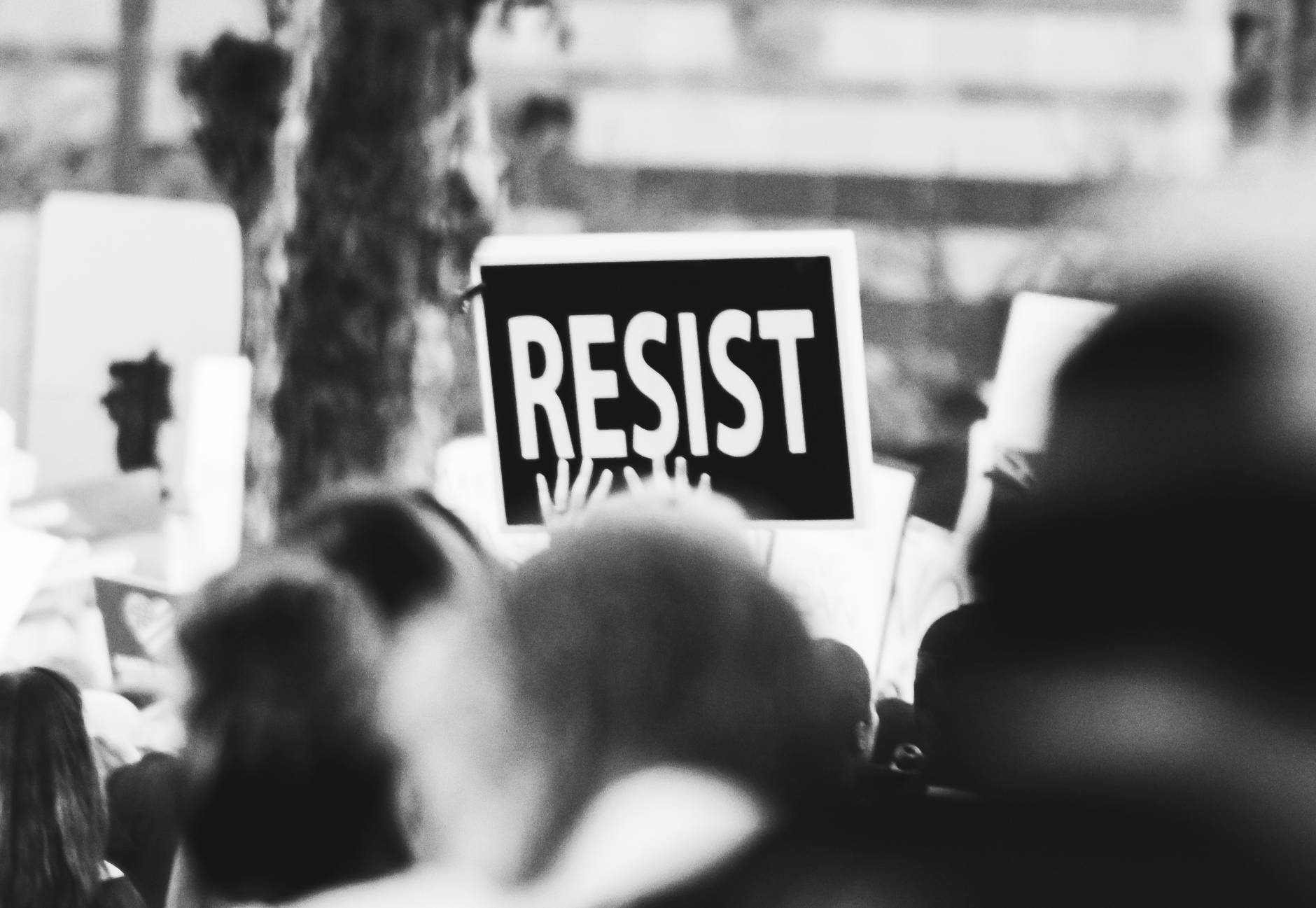
monochrome photo of resist signage
Photo by Sides Imagery on Pexels.com

The right to protest is one of the most important rights in a democracy since it ensures that the people’s voice is heard. The form of democracy that we practice in India is representative democracy, where people are represented by elected individuals in parliament. This means that the voice of a huge population is given a hearing through this one person. We cannot discount the biases and affiliations of these individuals when they present their demands, even though on paper we reassert that they are to represent the voice of the people even if they disagree themselves. Democracy is considered the rule of the people: a governing system for the people, by the people, and of the people. One of the downsides of democracy is the fact that it is often only the majority voice that gets to be heard and accepted, while there would be multiple other opinions which might be statistically a little less in number that goes unheeded. This is all the more dangerous if the voice of the majority turns out to be bigoted and discriminatory.

Protests are fundamental precisely because people have the right to disagree and do so freely without fear of repercussions. Protests bring people together as a group and imbibe a sense of strength and unity. They realize that they are not alone in their cause and that there will be others who will stand along. Protests are vital to create spaces of engagement, debate, and dialogue. It also provides minorities with an opportunity to voice their concerns, especially when they have no representation and are suffering from perpetual marginalization. The anger that often accompanies protesting voices is the expression of prolonged frustration by those who have suffered under the system. Those who tone-police by saying that people should not sound so angry are more concerned about the manner of protest than the reasons that force people out onto the streets. It is a sign of great privilege that one can live their everyday lives without having to demand anything that has been denied to them over the years. It is usually those who have not been affected at all by what is happening who ask why protest at all or give the excuse that protests are violent. People protest because they need to be heard, and because the system has so often failed them that waiting for change to come through office paperwork if they do not exert any outside pressure is almost illusory.

Protests are often not violent till force is exerted on them by state machinery. And using the excuse that protests tend to turn violent and so they should not be allowed is a way of discounting all the good that a protest can potentially do. One cannot use a deviant illustration to invalidate an entire expression. Being able to dissent and having the right to challenge authority, if taken away, would spell the death of democracy. Protests are not so much about winning an argument or agenda as they are about the right to disagree freely and make the voices of the people heard.  It might take decades to create any change but protests provide people with the strength to fight and the assurance that they are part of a larger whole. It enables those on the fringes of society to stand up for their rights and those who seek the attention of the authorities to do it quicker. At this time, we have to be vigilant that this right itself is not taken away from us and it is imperative that we understand the position that protests hold in a democracy.

The Impact of COVID-19 on Education


All of us should be on survival mode for the near future because we have to make sure we get over this crisis.

– Mohandas Pai

The petrifying and severe impact of COVID-19 has shaken the world to its core. The Covid-19 pandemic has had a major impact on education – both negative and positive. What exactly are the risks and opportunities brought about by Coronavirus?

Unfortunately, most of the countries around the globe have temporarily closed nearly all the educational institutions in an attempt to arrest the spread of the COVID-19 pandemic amongst the people of that particular country. In India too, the government as a part of the nationwide lockdown has closed all educational institutions, as a consequence of which students and learners ranging from school going children to doctoral students, are adversely affected.

These nationwide closures are impacting over 91% of the worlds’ student population as per the data stated by the UNESCO. Several other countries have implemented localized closures adversely affecting a huge no of additional learners. India has nearly 300 million kids enrolled in about 1.4 million schools. In India, almost 70% of the schools are run and managed by government bodies. This data alertly indicates that India and its old age education system are in verge of a major crisis. Scholars, leaders, intellectuals, social workers and policy makers should have to take this matter seriously like any other priorities they are tackling with on a war footing basis. In fact, this is the worst nightmare of the 21st century wherein if taken lightly would tremendously affect the progress of a nation for 3 generations. Education is the backbone of a great nation, and if education is affected the quality of human resource automatically gets affected.

We will also have to look at the impact from two lenses – an urban lens and a rural one. In urban centres, I do not foresee a lot of negative impact. Majority of schools have moved to online classes and are continuing as per their academic calendar. Students at home have access to the internet and in some cases their own individual device as well. The only thing expected from them and their parents is self discipline. Which I understand is a lot to ask for. It may therefore lead to some gaps in learning and may have an impact on the academic scores of students this year. But in the longer run, this is not very serious as I am sure these students will more than make up for it.

Once you look at it from the rural lens, the situation is not so good. While urban students have access to online learning from school and so many apps to keep them entertained, the government school kids have no such sources of learning or engagement. When the lockdown was announced, we spoke to a lot of our government school teachers, who sounded really worried. They feared that if students do not come to school, they may get absorbed in unsocial activities which may harm their lives. The girl students would be heavily involved in household chores leaving them with no time to study. And many students they feared may never return to school.

Nevertheless, Covid-19 has prompted experts to rethink the conventional mode of education. Digital education appears to be a viable solution to fill in the void for classroom education for a period of three to four months while minimizing the chances of any infection to students until classes resume, but isn’t a long-term solution. Universities require high-speed internet and education delivery platforms or learning management systems, besides stable IT infrastructure and faculty members who are comfortable teaching online. Students also need high-speed internet and computers/mobiles to attend these sessions or watch pre-recorded classes. l

On the greener side, the situation has also stimulated immediate activation of certain long-pending changes in imparting education in India. Virtual labs/ tutorial videos have entered the curriculum of higher-degree courses and school education and students can better relate with the possibilities of conceptual learning. There has also been a shift in paradigm to focus more on concepts rather than rote-learning and students have also got time to work on their problem-solving skills by practice. Need is the mother of invention and traditional educators who were wary of advanced online teaching courses are now realizing the potential of online resources. Their scepticism about online resources and tools are also wading off and they are embracing the change in teaching methods without losing essence of classical teaching methods. Students are being encouraged to learn with project-based learning methods and instead of getting embroiled in the rat-race of numbers, students are exploring the benefits of the extension of concept-learning through these projects.

Although the sudden emergence of pandemic and emergency measures to restrict assemblies has thwarted the school-educational system, it can also be a potential catalyst for realizing the need to slowly and steadily revamp our educational structure and curriculum for the benefit of students. The present situation might be a good opportunity to concise the school educational curriculum, focus only on the essential concepts, incorporate self-tutoring learning resources and restructure a evaluative curriculum for students so that even students from rural areas bereft of access to online-resources are not adversely affected. These necessary changes will subside anxiety and usher in optimism (even at psychological level) for students struggling to recuperate with the prevalent conditions forced by the pandemic. A more palatable curriculum is the need of the hour.

To conclude, we all know that the pandemic is here to stay for some time. The situation may force educational institutions to come up with innovative ways in which the current challenges of imparting online education can be addressed. Alternatively, India could finally witness a much needed change in its educational system where practical application of concepts is given a higher priority than theoretical “rote learning”.

Trend of Nuclear Family

Family is the fundamental group of human consisting of parents, children and those closely related by blood. It is fundamental unit of society. Family is most important part of human life. We can say that a person is to the family, by the family, for the family.

Now in recent years, the trend of Nuclear family has increasing. Firstly, the nuclear family is consist of only parents and their children(generally 4-5 members). Approx 54% of household are following nuclear family system. The trend of the nuclear family in urban India, these households are small in size—88% have 3-4 members and there are no senior citizens in these households. The trend of Nuclear family is increasing because of

1) Improved lifestyle – It is thought that in nuclear family one have more money, more luxurious items i.e car, phone, bungalow etc. More options to enjoy the minutes.

2) financial stability – most of parents think that when they opt this family system they will well stable in financial condition. The can save more and spend in proper manner according to their needs.

3) Social obligation – In modern life people wants to less obligations. So it is less obligations in the nuclear family.

4) Declining relationship – due to divorce, declined relationship one have to follow the this system.

5) Privacy and Independence – human need more Privacy and Independence, in nuclear family there less responsibilities and one can enjoy it’s own decisions and particular lifestyle.

There are some other aspects i.e the children of the nuclear family is self centered and selfish tendencies. It can create narrow view to the society. In the emergency situation these got in crisis and cannot be meet their all expectations. There is also problem that these have not emotional support. If we have extended family then everyone is with us and we never feel alone. In the extended family we have found to learn about various view on a particular conflicts/problems which lacks in a Nuclear family.

We must follow such family system in which all members of family feels happy i.e family of Mankind. Now, we can say that whole world is a family.

Thanks

REFUGEES

There are over 79.5 million people who are forcefully displaced from their homes due to persecution, violence, the outbreak of wars or oppressive regimes to find stability, safety or refuge. The united nations describe a refugee as a person who flees their country and is unable to return due to conflict or ongoing persecution. Refugees are divided into internally displaced persons and refugees. Internally displaced persons are much difficult to help as they don’t come under international law and are much difficult to assist. Refugees seek asylum in different countries where are recognized legally as a refugee and they receive legal and material protection.
The 1951 refugee convention is the main legal instrument for refugee law. The 1967 protocol is also used as one of the documents for refugee law. The convention for the first time gave us the definition of a refugee, its legal protection, material assistance and those displaced persons who don’t classify as refugees. The 1967 protocol expanded the range of the definition and legal assistance. The 1989 convention on rights of the child which isn’t particularly for children but was used while dealing with minor refugees, the convention elucidated the rights of children in a country. The African countries follow the organization of African Unity of Convention Governing the Specific Aspect of refugees. In 1984, the Latin American countries signed the convention to follow the Cartagena Declaration of Refugees.
The process of recognition of displaced persons into refugees depends upon the state. Where the country is unwilling to do the process, UNHRC does the process. Refugees entitled to basic human rights where they have right to freedom from degrading treatment, freedom of rights of freedom of opinion and expression, freedom of thought, religion, right to life and liberty, the right to freedom from discrimination on basis of race, colour or gender and more importantly right to asylum. International law also forbids the countries to resettle the refugees in their own country where they may seemingly be persecuted for their race, religion or by a political group. Refugees are required to keep with them all the time a refugee identity certificate which is either issued by the UNHRC or by the state where they are seeking asylum, this is their legal document for identification. All states that have signed the 1951 refugee convention have to provide refugees with the freedom to the process of an identification certificate. Refugees are also issued with a refugee travel document which substitutes as a passport for international travel because they cannot get a passport for their country. According to the convention of 1951 chapter 3, all refugees are allowed to gain legal employment. But the main goal of a refugee is to return home . as most of them leave their own homes in a hurry to escape wars or violence but they can’t due to the rampant violence in their countries. Refugees either stay in camps with little hope of going back to their countries or they move to different camps in different countries trying to gain asylum.
In conclusion, refugees are the world’s most harrowing humanitarian crisis. There are strides taken to protect the rights of the refugees but it has proven to be difficult. Countries who have used to receive refugees have now at their limit. The efforts made by the international bodies and states are recognized but need more innovative methods to deal with it. The influx of refugees have over the years have increased which only means that violence and war in the world have increased with no signs of slowing down.

HISTORICAL DAYS OF INDIA


As we all know that India’s history is full of amazing things…but there are also some days in India on which a history has created or there are some days from which everything has changed in India..there are several days which made a remarkable impact on history of India……which are as follows:
15 AUGUST: This day in India is celebrated as INDEPENDENCE DAY. Because on 15 august 1947 India got freedom from the British rulers . after so many sacrifices, struggle, and handwork ,India become free from the British rule.


26 JANUARY: 26 January is celebrated as REPUBLIC DAY of India. Though the Constitution of India was adopted on 26 November, 1949 by the Constituent Assembly of India it became was formally made effective on 26 January, 1950. It took exactly 2 years, 11 months and 18 days to finally adopt the Constitution with the necessary amendments.
On January 26, 1950, when the Indian Constitution came into effect thus making India one of the biggest democracies in the world. It was on this day when India was declared as a sovereign, socialist, secular, democratic republic. And to honor this day, the Indian Republic Day is celebrated with great fervor throughout the country every year on January 26.


8 AUGUST: On 7 to 8 August 1942, the All India Congress Committee met in Bombay and ratified the ‘Quit India’ resolution. Gandhi called for ‘Do or Die’. The next day, on 9 August 1942, Gandhi, members of the Congress Working Committee and other Congress leaders were arrested by the British Government under the Defense of India Rules. The ‘Quit India’ movement, more than anything, united the Indian people against British rule.
Although most demonstrations had been suppressed by 1944, upon his release in 1944 Gandhi continued his resistance and went on a 21-day fast. By the end of the Second World War, Britain’s place in the world had changed dramatically and the demand for independence could no longer be ignored.


1853: First Railway line opened between Bombay and Thane and a Telegraph line in Calcutta.


1974: India Smiling Buddha first nuclear device in underground test.


1983: India won World Cup for the first time, in one day international Cricket led by Kapil Dev.


2008: In October India successfully launches its first mission to the moon, the unmanned lunar probe Chandrayaan-1.

2011: In April India wins cricket world cup after 28 years under the captaincy of Mahendra Singh Dhoni.


5 November 2013: Mars Orbiter Mission, is successfully launched into Mars orbit by the Indian Space Research Organization (ISRO).


30 June 2017: The Goods and Services Tax (GST) launched the biggest tax reform in history of India.


5 August 2019: The state of Jammu and Kashmir was divided into two separate union territories known as Jammu Kashmir and Ladakh by Scrapping Article 370 of Indian constitution.

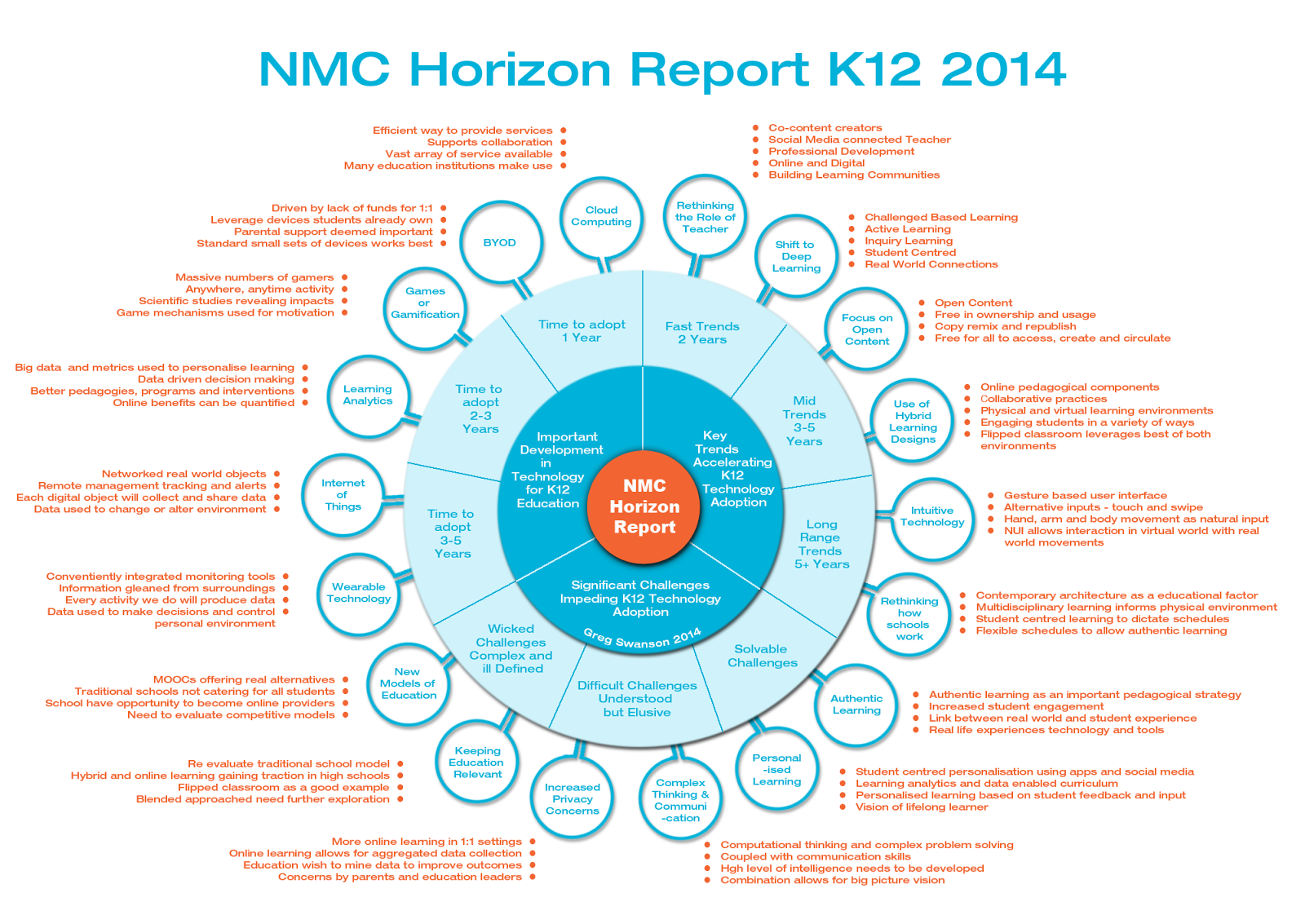
NMC Horizon Report Summary

I was re-reading the Horizon Report the other day when it occurred to me that it could be easily summarised. This has helped me consolidate the main elements of the article in my own mind. It is always interesting to reflect on where your school or region is at in this whole process. I hope this is helpful for you too. Please feel free to use and share.

Education :the biggest tool for progress

Education is very important tool for everyone to succeed in life and get something different.

help a lot in lessening the challenges of life. Knowledge gained through out the education periods enables each and every individual confident about their life. It opens various door to the opportunities of achieving better prospects in life so promote career growth. Many awareness programmes has been run by the government has been run enhance the value of education is in rural areas. It brings feelings of equality among all people in the society and promotes growth and development of the country.

Education plays a role in the modern technology world. Now a days there are many ways to enhance the educational level. The whole criteria of education have been changed now. We can study through the distance learning programs after 12 standard together with the job. Education is not so costly anyone with less money may study continuously. We can get admission in the big and popular universities with fewer fees the distance of learning. Other small training institutes are providing education to enhance the skill level in particular field education is must for both men and women equally as both together make a healthy educated society. It is an essential tool for getting bright future as well as plays a most important role in the development and progress of the country. Citizen of the country became responsible for the better future and development of the country. Highly educated people become the base of the developed country so proper education makes the bright future of both the individual and the country. So, proper education makes the bright future of both the individual and the country it is only educated leaders who build the nation and lead it to the height of success and progress. Education makes people as perfect and noble as possible.

Good education give many purpose to the life such as enhancement of the personal advancement increase social status increased social health economical progress success to the nation set goals of Life make us a way to work towards many social issues and give solution to solve environmental problem and other related issue. Now a days education has become very simple and easy because of the implementation of distance learning program. Modern education system is fully capable to remove the social issues of illiteracy and inequality among people of different religion and caste.

Education developed the people’s mind to great level and help in removing all the differences in the society. It makes us able to become a good learner and understand very aspect on life. It provides ability to understand all the human rights social rights duties and responsibilities towards the country.

How To build a better mental health

UNDERSTANDING GOOD MENTAL HEALTH

Your mental health includes what you think, feel and behave in your daily lifestyle. It also affects your capability to deal with stress, how you deal or overcome challenges, how you build relationships, and how you recover from your life problems.

Strong mental health not just the absence of mental health problems. Strong mental health is just being mentally or emotionally healthy is much more than being free of depression, anxiety or other phychological issues.

Bull market and Bear Market

Bull and Bear is the indicators which shows the situation of the Market. Bull market refers to Market situation where price of shares are going up and expected move in uptrend. Where the country’s economy is good, employment rate is good and price of every marketable securities are in uptrend. This is called as Bull Market. Bear market is the situation where price of shares are falling down and expected to fall, Country’s economy is falling and unemployment rate is increasing. This is called as Bear market. In Bull market situation price of shares will go in uptrend and investors will purchase the more and more shares. In Bear market the price of shares are falling so investors take back their money from the market.

Gym or no Gym….?

As we all know in this modern scenario of the year 2020 which is a really mean one to be honest,we all come across that dilemma as a student,a working class person ,a house wife or a stay at home dad,octogenarians and anybody cross the fifty part as her or his age as should we go to the gymnasium or not well I don’ now about other countries but I’m sure about the Indian pat that lot of people have a lot of misconception about going to the gymnasiums. Well we all can agree that teenagers or adults till their mid thirties are not so worried about these misconceptions except a few who do it on purpose, but trust me okay if not me then facts,science and psychology to help your body get that maximum concern and sculpting which it always asked for

6 yards of history

saree is a women’s garment from the India that consists of an unstitched drape varying from 4.5 to 9 metres (15 to 30 feet) in length and 600 to 1,200 millimetres (24 to 47 inches) in breadth which is typically wrapped around the waist, with one end draped over the shoulder, covering a larger portion of the midriff. There are various styles of sari manufacture and draping, the most common being the Nivi style, which originated in the Deccan region. The sari is worn with a fitted bodicecbodice called a choli (ravike in southern India, and cholo in Nepal) and a petticoat called ghagra, parkar or ul-pavadai. In the modern Indian subcontinent, the sari is considered a cultural icon.

History of sari-like drapery is traced back to the Indus valley civilization flourished during 2800–1800 BCE around the northwestern part of the Indian subcontinentCotton was first cultivated and woven in Indian subcontinent around 5th millennium BCE. Dyes used during this period are still in use, particularly indigolacred madder and turmeric. Silk was woven around 2450 BCE and 2000 BCE.

The word ‘sari’ evolved from ‘saatikaa’ (sanskrit: शाटिका) mentioned in earliest Hindu literature as women’s attire. The Sari or Sattika evolved from a three-piece ensemble comprising the Antriya, the lower garment; the Uttariya; a veil worn over the shoulder or the head; and the Stanapatta, a chestband. This ensemble is mentioned in Sanskrit literature and Buddhist Pali literature during the 6th century BCE. This complete three-piece dress was known as Poshak, generic term for costume. Ancient Antriya closely resembled dothi wrap in the “fishtail” version which was passed through legs, covered the legs loosely and then flowed into a long, decorative pleats at front of the legs. It further evolved into Bhairnivasani skirt, today known as ghagri and lehenga. Uttariya was a shawl-like veil worn over the shoulder or head, it evolved into what is known today known as dupatta and ghoonghat. Likewise, Stanapatta evolved into choli by 1st century CE.

The ancient Sanskrit work, Kadambari by Banabhatta and ancient Tamil poetry, such as the Silappadhikaram, describes women in exquisite drapery or sari. In ancient India, although women wore saris that bared the midriff, the Dharmasastra writers stated that women should be dressed such that the navel would never become visible. By which for some time the navel exposure became a taboo and the navel was concealed. In ancient Indian tradition and the Natya Shastra (an ancient Indian treatise describing ancient dance and costumes), the navel of the Supreme Being is considered to be the source of life and creativity, hence the midriff is to be left bare by the sari.

It is generally accepted that wrapped sari-like garments for lower body and sometimes shawls or scarf like garment called ‘uttariya’ for upper body, have been worn by Indian women for a long time, and that they have been worn in their current form for hundreds of years. In ancient couture the lower garment was called ‘nivi’ or ‘nivi bandha’, while the upper body was mostly left bare. The works of Kalidasa mentions ‘Kurpasika’ a form of tight fitting breast band that simply covered the breasts. It was also sometimes referred to as ‘Uttarasanga’ or ‘Stanapatta’.

Poetic references from works like Silappadikaram indicate that during the Sangam period in ancient Tamil Nadu in southern India, a single piece of clothing served as both lower garment and head covering, leaving the midriff completely uncovered. Similar styles of the sari are recorded paintings by Raja Ravi Varma in Kerala. Numerous sources say that everyday costume in ancient India and till recent times in Kerala consisted of a pleated dhoti or (sarong) wrap, combined with a breast band called ‘Kurpasika’ or ‘Stanapatta’ and occasionally a wrap called ‘Uttariya’ that could at times be used to cover the upper body or head. The two-piece Kerala mundum neryathum (mundu, a dhoti or sarong, neryath, a shawl, in Malayalam) is a survival of ancient clothing styles. The one-piece sari in Kerala is derived from neighboring Tamil Nadu or Deccan during medieval period based on its appearance on various temple murals in medieval Kerala.

Early Sanskrit literature has a wide vocabulary of terms for the veiling used by women, such as Avagunthana (oguntheti/oguṇthikā), meaning cloak-veil, Uttariya meaning shoulder-veil, Mukha-pata meaning face-veil and Sirovas-tra meaning head-veil. In the Pratimānātaka, a play by Bhāsa describes in context of Avagunthana veil that “ladies may be seen without any blame (for the parties concerned) in a religious session, in marriage festivities, during a calamity and in a forest”. The same sentiment is more generically expressed in later Sanskrit literature. Śūdraka, the author of Mṛcchakatika set in fifth century BCE says that the Avagaunthaha was not used by women everyday and at every time. He says that a married lady was expected to put on a veil while moving in the public.This may indicate that it was not necessary for unmarried females to put on a veil. This form of veiling by married women is still prevalent in Hindi-speaking areas, and is known as ghoonghat where the loose end of a sari is pulled over the head to act as a facial veil.

Based on sculptures and paintings, tight bodices or cholis are believed have evolved between 2nd century BCE to 6th century CE in various regional styles. Early cholis were front covering tied at the back; this style was more common in parts of ancient northern India. This ancient form of bodice or choli are still common in the state of Rajasthan today. Varies styles of decorative traditional embroidery like gota patti, mochi, pakko, kharak, suf, kathi, phulkari and gamthi are done on cholis. In Southern parts of India, choli is known as ravikie which is tied at the front instead of back, kasuti is traditional form of embroidery used for cholis in this region. In Nepal, choli is known as cholo or chaubandi cholo and is traditionally tied at the front.

Red is most favored colour for wedding saris and are traditional garment choice for brides in Indian culture. Women traditionally wore various types of regional fabrics-ikkat, block-print, embroidery and tie-dye textiles. Most sought after brocade silk saris are Banasari, Kanchipuram, Gadwal, Paithani, Mysore, Uppada, Bagalpuri, Balchuri, Maheshwari, Chanderi, Mekhela, Ghicha, Narayan pet and Eri etc. are traditionally worn for festive and formal occasions. Silk Ikat and cotton saris known as Patola, Pochampally, Bomkai, Khandua, Sambalpuri, Gadwal, Berhampuri, Bargarh, Jamdani, Tant, Mangalagiri, Guntur, Narayan pet, Chanderi, Maheshwari, Nuapatn, Tussar, Ilkal, Kotpad and Manipuri were worn for both festive and everyday attire. Tie-dyed and block-print saris known as Bandhani, Leheria/Leheriya, Bagru, Ajrakh, Sungudi, Kota Dabu/Dabu print, Bagh and Kalamkari were traditionally worn during monsoon season. Gota Patti is popular form of traditional embroidery used on saris for formal occasions, various other types of traditional folk embroidery such mochi, pakko, kharak, suf, kathi, phulkari and gamthi are also commonly used for both informal and formal occasion.Today, modern fabrics like polyester, georgette and charmeuse are also commonly used.

An interesting piece of History: The Abduction of Art

The entire world has been a witness to the tyranny and totalitarian nature of Kim dynasty in North Korea which prevails to this date. The insanely toxic obsession to become the most dangerous nuclear power at the cost of letting its own people die due to poverty and hunger is what makes the Kim leaders so diabolical. But did you know that Kim Jong-il, the second supreme leader of North Korea, planned and executed the abduction of a South Korean film producer and director along with his wife to fetch worldwide recognition for North Korea’s filmmaking?

Shin Sang-ok (1926-2006) is a highly celebrated South Korean film producer and director who worked prolifically to adorn the “Golden Age of South Korean Cinema” with some of the best jewels like The Evil Night (1952), A Flower in Hell (1958), Prince Yeonsan (1961) and 3 Ninjas Knuckle Up (1995) to name a few. Shin Sang-ok is often called “The Prince of South Korean Cinema” for his contribution in the 1950s and 1960s. But little did he know that his own life would become the most incredible story that none of his movies could ever tell.

In 1966, Kim Jong-il, North Korea’s future dictator, became director of the Motion Picture and Arts Division. He was a big fan of films and is known to have a dedicated library of approximately 15,000 movies at his disposal. He produced and directed films that were specifically designed to put his father, Kim Il-sung, as the ultimate messiah of the subjects of North Korea. But he was frustrated with his films in the 1970s. He felt they were lifeless and stiff as compared to the global counterparts. This was the point where it all began. The desperation to gain global appreciation in showbiz led him to kidnap South Korean actress Choi Eun-hee in 1978 from Hong Kong. According to a proposition Choi Eun-hee was in Hong Kong to direct a film. She arrived in Nampo Harbour, North Korea on 22 January 1978. She was housed in a luxurious villa and several tours were arranged for her to visit important spots of the city. Kim Jong-il took her to various movie shows, theatres, operas, and musicals for her perspective on the

Is Our Earth Sustainable?

One of the most familiar word we hear in our day to day life and many within and beyond academia and in the more developed and developing parts of the world is “SUSTAINABLE DEVELOPMENT”. It is another principle that emerged after the development of UNCLOS.The Sustainable Development resources refers to the mutual promotion of Economy, Ecology and Society to develop Sustainable Development. It is a development model that consider the Environment when achieving balanced growth with efficiency and fairness. What is Sustainable Development? The development that meets the needs of the present without Compromising the ability of Future Generations to meet their own needs. Achieving Sustainable Development in the 21th Century is not an option but am Imperative.

The journey of four World Summits from “Stockholm to Johannesburg ” they have decided that Sustainable Development is an Imperative. During the year 1972 UN conference in Stockholm highlighted the “concerns for preserving and enhancing the environmentand its biodiversity to ensure Human Rights to a healthy and Productive world”,In 1982 the United Nations commission on Environment and Development was created .During the period 1972-1992 over 200 Regional and International Agreements and Conventions for Environment Protection were Adopted. Non Government Organizations from around the world also collaborates and Deliberated Strategies for Sustainable Development. In 2012 the United Nations conference met to discuss and develop a set of goals to work towards on Sustainable Development. This Sustainable Development came up with a list of 17 items. The 1st Sustainable Development Emphasizes the coordinate development between Resource Utilization and Economic growth and The 2nd Sustainable Development Emphasizes moderate development taking into account the Environment carrying Capacity while using Natural Resources,Finally the main Goal of the Sustainable Development theory is to improve the quality of Human life i.e In which people can live and work in Peace and Contentment and have a high quality of Life. Sustainable Development Characterised by three P’s People, Planet and Profit. At the core of Idea of Sustainable is the matter of meeting people needs for the home,job etc,.If we dont take care of Environment in which we live now,we wont have anything to leave behind us for Future Generations. ” IS OUR EARTH SUSTAINABLE FOR FUTURE GENERATIONS?”.

‘Untouchables’

‘Untouchables’

Our economy is being ruined between inefficient government and sluggish opposition, if the situation does not improve then we will become the new ‘untouchables’

Untouchability has been a stigma for our country for centuries. Ambedkar, who fought for his whole life, claimed that there is enough evidence to suggest that it has been going on since 400 BC and it has always been the way of Indians to live.
This is the reason why devout Hindus on one hand and committed inclusionist Gandhi, on the other hand, believed that it is good for us to end this deadly practice. And Nehru, who relied on social justice, had said that India will never reach its true height until we end the caste system and ensure equality for all Indians.

This is the motive that our constitution made untouchability illicit and considered it a punishable offence.
But is it over? No.
Untouchability is deeply ingrained in our thinking and is seen openly. Its ugliness has recently increased, which has been promoted by some political parties, who want to keep it alive to achieve ruthless majoritarianism.

Now only the lower castes, Dalits are not suffering from it. In some parts of India, poor people belonging to a particular community have become new untouchables. So in some parts, some tribes are the new untouchables, who have been left marginalized by governments to grab land, forest and mineral wealth from them.

And now, after this pandemic in the country, we see a new class of untouchables is emerging. These are sick, migrant labourers, unemployed and extremely impoverished people. Their connection with the cities is broken and their villages do not want to take them back because they are unemployed and miserable and additionally there is a risk of health issues.

Today the suffering/affected people are being boycotted openly. Their wives and children are not allowed to be home quarantined as per the regulations. People are getting them out of the village, throwing them along with their family members from trains, refusing to burn in the crematorium when one dies. Dead bodies are being collected in hospital corridors. Nobody wants to accept them, not even own family. The corpses are placed next to the patients being treated. It is like a return to the fierce plague.

But, today who is the frustrated-indigent?
No, not the farmers who commit suicide every year due to poverty. Now, these dispirited poor are those who were working in our factories, offices and our homes till back in the days. It also includes small traders, food carts, autorickshaw drivers, small restaurant workers, multiplexes and security guards standing outside malls.

Viruses and lockdowns left them unemployed, homeless and nearly devastated. And now about 14 crores middle-class families have also been associated with them. According to research, their savings will end by the end of July. That is, they will be poverty-stricken.

A recent survey shows that 84 per cent of the households have suffered severe loss of income after lockdown. They are living on their savings right now. By the end of this month, with the increase in rains, many middle-class families will fall into the category of destitute.

They will also be unable to spend on treatment or meet basic family needs. They will have to leave the rented house, sell their goods and borrow money at such a rate, which will become impossible for them to repay later. They are also worried pensioners who relied on interest from the bank, as banks have reduced interest rates.

Those who counted on their children working abroad are also trapped because their children have lost their jobs or lost wages. Meanwhile, the prices of petrol and diesel are continuously increasing, while the prices should have been reduced based on the global trend. This is going to make everything expensive.

Overall, the pace of the wave is not stopping and more and more people will continue to drown. The government is refusing to provide cash in their hands, as some other countries are doing. These are the new untouchables. Nobody has time for these and the government has the least interest in their future or prospect. Instead, govt is making hefty policies of millions for billions, which will never reach out to these people.

An economy that was ready for a better future, is being wrecked.

Demand Forecasting

Demand in simple words can be defined as the want of something plus the ability to pay, that is, purchasing power of the customer. The law of demand which is extensively used in microeconomics  states that price and demand are inversely proportional to each other.

Forecasting is used in various circumstances to get more insights about data. It is one of the important tool used for predicting future demand based on demand information.

Forecasting is used for:

  • Strategic Planning (long range planning)
  • Finance and Accounting (Budget and Control Costs)
  • Marketing (Future sales, new product launches, campaigns designs)
  • Production
  • Operation (Supply chain Management)

Demand Forecasting is the process in which historical sales data is used to develop an estimate of an expected forecast of customer demand. To businesses, Demand Forecasting provides an estimate of the amount of goods and services that its customers will purchase in the foreseeable future. There are various factors that are involved in demand forecasting such as data required, time period, purpose, nature of commodity, nature of competition etc.

How to choose the right college for you

Chosing the perfect college for you can be a daunting task but with these few tips that I’m about to share with you, the process of picking the right college will become a lot simplier.

1. You have to list your priorities- This will help you eliminate the schools that don’t fit you’re requirements. So, I would sit down and do some research as soon as you’re done listing you’re priorities down.

2. Figure what you want to do once you’re done with your college program. You have to think whether going to this college will help you achieve that goal if it won’t then that’s not the school for you. For example if you want to work at a big tech firm then you should go to a college near Silicon Valley. Do some self searching and figure out what you want to do once your out of college.

3. College Ranking- This could help you figure out whether the college is well known by other people and it could help you figure out whether the major you want to do is good at that particular college. The most reputable college ranking and the most accurate is the QS world university ranking system. Rankings help students compare different colleges in a more effective and accurate way.

4. Amount of financial aid i

PROTECTION OF INTEREST OF HOME BUYERS — EDUindex News

The law on real estate has not been properly organisaed in the past, which has left the home buyers in lurch, as they ended up paying their hard earned money in the hands of fraudulent builders. We analyse various options under prevailing laws: The Real Estate Regulation Act, 2016 The Insolvency and Bankruptcy Code, 2016 […]

PROTECTION OF INTEREST OF HOME BUYERS — EDUindex News

Selfie-Esteem: The relationship between physical dissatisfaction with Adolescent Social Media and young women — EDUindex News

Social media platforms such as Instagram and Facebook have become very popular in the lives of many people. With adolescents and young adults, especially young women, being the first users of such platforms, it is an important question whether the use of social media contributes to self-esteem, self-esteem, body image, and physical dissatisfaction. Researchers have […]

Selfie-Esteem: The relationship between physical dissatisfaction with Adolescent Social Media and young women — EDUindex News

BULLYING; a known DEVIL — EDUindex News

One of the biggest problems that people face these days is bullying. Right from children to adults everyone has faced bullying some or the other way. Bullying is unwanted, aggressive behaviour among school-aged children that involves a real or perceived power imbalance. The behaviour is repeated, or has the potential to be repeated, over time. […]

BULLYING; a known DEVIL — EDUindex News

Patriarchy — EDUindex News

It refers to the hierarchical relations between men and women whereby men dominates and control over women’s sexuality. Structures of patriarchy According to Sylvia walby patriarchy as a system of social structure where men are in the dominant position to exploit and opress women. She talks about six structures of patriarchy; 1. Patriarchal mode of production, 2. […]

Patriarchy — EDUindex News

Women’s empowerment — EDUindex News

Most of the time we discuss about this topic Women’s empowerment do you think that now women have there right and compete with men in every field. women’s empowerment is a critical aspect of achieving gender equality. It includes increasing a woman’s sense of self-worth, her decision-making power, her access to opportunities and resources, her […]

Women’s empowerment — EDUindex News

Employees expectations from employer — EDUindex News

If you want to attract and retain great employees, it pays to be a great boss. Here are some simple expectations that the best employees have of their bosses: 1. Be consistent with meaningful communication. Smart employees want clear expectations and communication when it comes to what’s expected of them. The No. 1 problem people cite with their […]

Employees expectations from employer — EDUindex News

Impact from social media — EDUindex News

Social media are interactive computer-mediated technologies that facilitate the creation or sharing of information, ideas, career interests and other forms of expression via virtual communities and networks.The variety of stand-alone and built-in social media services currently available introduces challenges of definition; however, there are some common features: Social media are interactive Web 2.0Internet-based applications. User-generated content such as text posts or […]

Impact from social media — EDUindex News

Assam floods: Over 50,000 people take shelter at relief camps — EDUindex News

In flood hit Assam, over 50 thousand displaced people are taking shelter at relief camps. The current wave of floods affected 28 lakh people and washed away houses, cattle stock. 1.28 lakh hectare crop areas are also under water. 96 people lost their lives due to floods so far. Majority portion of national parks and […]

Assam floods: Over 50,000 people take shelter at relief camps — EDUindex News

Job satisfaction and motivation — EDUindex News

Productivity is defined as the efficient and effective use of resources with minimum waste and effort to achieve outcome. We live in a world that has limited resources. The health care industry faces this limitation more than any other industry. With these challenges facing health care administrators, the concept of productivity, job satisfaction and motivation […]

Job satisfaction and motivation — EDUindex News

Air India brings back 2.5 lakh Indians from 53 countries under Vande Bharat Mission — EDUindex News

Air India has brought back more than 2.5 lakh Indians from 53 countries under the Vande Bharat Mission. In a tweet, Air India said, phase-5 of Vande Bharat Mission will be launched from 1st August of next month. It said, Air India has added many more flights to several International destinations for which details will […]

Air India brings back 2.5 lakh Indians from 53 countries under Vande Bharat Mission — EDUindex News

Govt extends domestic airfare cap till Nov 24 — EDUindex News

Civil Aviation Ministry has extended its order imposing curbs on airfare till 24th November. The order was issued on 21st May after airlines were allowed to operate after the lockdown. It had prescribed a range for airfare depending on the flight distance. In the wake of coronavirus outbreak, the Ministry had implemented a cap on […]

Govt extends domestic airfare cap till Nov 24 — EDUindex News

India conducts record number of 4,20,000 COVID-19 tests in single day — EDUindex News

India has achieved a remarkable feat by conducting a record number of 4 lakh 20 thousand COVID-19 tests in a single day yesterday. In a tweet, Health and Family Welfare Ministry said, India has ramped up its testing facilities within a span of few months. As of now, more than 1300 laboratories are conducting the […]

India conducts record number of 4,20,000 COVID-19 tests in single day — EDUindex News

Center asks nine high Covid caseload states to ramp up testing with special focus on containment zones — EDUindex News

Centre has asked nine high Covid caseload states to ramp up testing with special focus on containment zones. These states are Andhra Pradesh, Bihar, Telangana, Odisha, West Bengal, Assam, Karnataka, Jharkhand and Uttar Pradesh. These nine States are driving the present spurt of the active caseload in the country. Cabinet Secretary chaired a high level […]

Center asks nine high Covid caseload states to ramp up testing with special focus on containment zones — EDUindex News

Satti pratha: a dark side — EDUindex News

The ancient Hindu tradition called ‘sati’ (or ‘suttee’), wherein a widow would burn herself to death on her husband’s pyre, was initially a voluntary act that was considered to be quite courageous and heroic, but it later became a forced practice. Although sati is now banned all over India and no longer practised, it has […]

Satti pratha: a dark side — EDUindex News

The HR Industry in India — EDUindex News

Human resources is the set of the people who make up the workforce of an organization, business sector, industry, or economy. A narrower concept is human capital, the knowledge which the individuals embody. Similar terms include manpower, labour, personnel, associates or simply people. A human-resources department (HR department) of an organization performs human resource management, […]

The HR Industry in India — EDUindex News

China’s Wuhan Institute signs covert deal with Pak military for bio-warfare capabilities against India — EDUindex News

China’s Wuhan Institute signs covert deal with Pak military for bio-warfare capabilities against India China and Pakistan, the all-weather friends, have entered a three-year deal to expand potential bio-warfare capabilities against India, including several research projects related to the deadly agent anthrax. The deal has been inked between Wuhan Institute of Virology and Pakistan military’s […]

China’s Wuhan Institute signs covert deal with Pak military for bio-warfare capabilities against India — EDUindex News

Indian Postal Service — EDUindex News

The Department of Posts (DOP),trading as India Post, is a government-operated postal system in India, which is a subsidiary of the Ministry of Communications. Generally called “the Post Office” in India, it is the most widely distributed postal system in the world. Founded in 1854 by Lord Dalhousie who laid the foundation for the modern […]

Indian Postal Service — EDUindex News

DGCA extends fare capping, restricted operations of domestic passenger flights till November 24 — EDUindex News

Earlier, the aviation secretary Pradeep Singh Kharola had said that the base minimum airfare of domestic flights ranges from Rs 2,000 to Rs 6,500, and the maximum range from Rs 6,000 to Rs 18,600. Airlines have to make available 40 per cent of total seats in an aircraft at less than the mid-point price between […]

DGCA extends fare capping, restricted operations of domestic passenger flights till November 24 — EDUindex News

Kolkata airport suspends passenger flight operations from July 25 to July 29 — EDUindex News

Kolkata airport suspends passenger flight operations from July 25 to July 29 Passenger flight operations to and from Kolkata Airport have been suspended from July 25 to July 29 after the West Bengal government requested for the suspension of services, news agency ANI reported quoting West Bengal Airport sources. The West Bengal government has decided […]

Kolkata airport suspends passenger flight operations from July 25 to July 29 — EDUindex News

The Entire Earth Is Vibrating Less Due to COVID-19 Lockdowns, Study Reveals — EDUindex News

In a study conducted in 117 countries, researchers have found that the world is experiencing the most dramatic reduction in the seismic noise (the hum of vibrations in the planet’s crust) in recorded history due to global Covid-19 lockdowns. Measured by instruments called seismometers, seismic noise is caused by vibrations within the Earth, which travel […]

The Entire Earth Is Vibrating Less Due to COVID-19 Lockdowns, Study Reveals — EDUindex News

Restriction on domestic flights to remain in effect till November 24 — EDUindex News

The civil aviation ministry on Thursday extended the restrictions on domestic flights till November 24 in the view of the coronavirus pandemic. A notification by the ministry issued in the evening also said that the domestic airfare cap, too, will remain in place till November 24 or until further orders. Domestic flights were suspended on […]

Restriction on domestic flights to remain in effect till November 24 — EDUindex News

Asia’s largest Solar Power Plant in Madhya Pradesh — EDUindex News

By Udbhav Bhargava Madhya Pradesh chief minister Shivraj Singh Chouhan had laid the foundation stone in December 2017. The solar plant will generate 750 MW electricity and was established with an investment of Rs 4,500 crore. WHO DEVELOPED THE PROJECT? The solar park was founded by Rewa Ultra Mega Solar Ltd (RUMSL), a joint venture […]

Asia’s largest Solar Power Plant in Madhya Pradesh — EDUindex News

Khudol Initiative — EDUindex News

By Udbhav Bhargava The UN Secretary-General ‘s Youth Envoy has listed Manipur’s Khudol among the top 10 global initiatives for an inclusive fight against the COVID-19 pandemic. Envoy of the United Nations Secretary-General on Youth The Envoy of the Secretary-General on Youth serves as a global advocate for addressing the needs and rights of young […]

Khudol Initiative — EDUindex News

CASTE POLITICS IN INDIA — EDUindex News

Caste is a social marvel of Indian culture. By taking an interest in the cutting edge political framework, standing is presently presented to troublesome impacts and another type of joining coming about because of another plan of universalist-particularity connections. caste has increased a compelling situation in India legislative issues.From one viewpoint, a structure of divisions […]

CASTE POLITICS IN INDIA — EDUindex News

Development and Environment Protection Together? — EDUindex News

Mahatma Gandhi once said that “Earth provides enough to satisfy every man’s needs, but not every man’s greed.” and this statement gives us reflect about the sort of advancement we need as an individual, one which can satisfy our necessities or one which can satisfy our covetousness. in the event that we need to get […]

Development and Environment Protection Together? — EDUindex News

Keys to become RICH faster, in your 20’s *Practical Steps* — EDUindex News

Everybody wants to become RICH one day. Still, how is it that some people have all the answers? How do the rich keeping getting richer while the poor keep getting poorer? Is the game actually rigged against us? Are we, in fact, doomed to live ordinary lives, merely controlled by our hedonistic desires and pleasures, […]

Keys to become RICH faster, in your 20’s *Practical Steps* — EDUindex News

Role of Technology in India

“Technology will not replace great teacher’s but technology in the hands of great teacher’s can be transformed”

Education is a form of learning where we can see the transmission of knowledge, skills from generation to generation. 21st century is also regarded as century if technology. Technology brings education to student’s doorstep.

Technology in education can be classified as:

E-LEARNING A WAY OF STUDYING DURING THIS COVID-19 PANDAMIC!!

Today the whole World is experiencing an extraordinary situation emerging out of this Global Pandemic and this consequent lockdown. Amid of this unpredictable lockdown has resulted into an abrupt halt, with the GDP curve falling flatter week by week one might have thought the academic world would suffer a lot. For the future is in the hands of learning ones.


In such times students across the world are losing their valuable time in their education during the imposed lockdown amidst fear of pandemic. Because of the forced closer of education institutions, the entire higher education system has been badly affected mainly the board year students and the final year ones.
No wonder, how emotionally and psychologically it might have drained within the children as well as their parents. Thus at this junction the educational institutions are in the need for a rapid evolutions and adaption of the advanced technology. It’s the time for emerging of online learning (or E-Learning), the most effective option for both students/ teachers as well as the college/university management.

E-LEARNING A WAY OF STUDYING DURING THIS COVID-19 PANDAMIC

Today the whole World is experiencing an extraordinary situation emerging out of this Global Pandemic and this consequent lockdown. Amid of this unpredictable lockdown has resulted into an abrupt halt, with the GDP curve falling flatter week by week one might have thought the academic world would suffer a lot. For the future is in the hands of learning ones.

In such times students across the world are losing their valuable time in their education during the imposed lockdown amidst fear of pandemic. Because of the forced closer of education institutions, the entire higher education system has been badly affected mainly the board year students and the final year ones.

No wonder, how emotionally and psychologically it might have drained within the children as well as their parents. Thus at this junction the educational institutions are in the need for a rapid evolutions and adaption of the advanced technology. It’s the time for emerging of online learning (or E-Learning), the most effective option for both students/ teachers as well as the college/university management.

BENIFITS OF ONLINE LEARNING:

  • Competency-Based Education: By Online Education platforms one can learn transferable skills and competencies. This kind of learning provides required knowledge and it is learner-focused teaching. It acknowledges the fact that every student has a different learning style and their own pace of absorbing what is being taught. In this kind of learning every student gets an equal chance to put up question without the hesitation.
  • Skill Development: In today’s competitive world one may aspire to acquire skills more than their regular course. Thus for a better career growth online learning has made it much easier for students to develop new skills with continuing with their regular course at a college/university. Online Learning is the key and the best path to upgrade ones skill. It also provided training programmes to make students familiar with practical usage of such skills.
  • Quick Assessments:
    This platform provides teachers an easy and quick access to the learning of the students while they are teaching. It even motivates a shy student to actively participating in giving answers for chats avoid the fear of “What will others think if the answers go wrong?” It also enables teachers to know their students in a friendlier manner and host questions rounds to insure a regular learning.
  • Less of Distractions:
    Since online learning does not invite friends to be beside them and parents can keep a regular check over the involvement of their child in the class it decreases the chance of peer distractions. Away from competitions and dominating students there is an increase in active participation of students in asking doubts and initiating interactions with their fellow mates. Moreover, some concepts are better taught online. The teachers and students can interact with each other at any time without any limitation of day or night time for study material, clearing doubts or taking test looking into the convince of both the parties.
  • Traceable learning:
    The performance of the students can easy be accessed by online records. Since the online mode store data of every student individually it helps in reducing any misunderstanding and is digitally track able which can’t be done in a face to face learning. The analytic tool provides detailed report of each student’s performance and growth. It also benefits the parents to keep a regular check over their child’s behaviour and progress. Enabling teachers to adapt changes into their teaching techniques according to the learning patterns of their students.
  • Working platforms:
    It provides students to apply for different online jobs like part-time, internships, full time etc and earn experience certificate for their future benefits and learning new ways of working. It also provides opportunities to earn for themselves in monetary terms. These kinds of jobs don’t seek for qualifications to a large extent but benefit students to improve their CV.
  • Transportation charges:
    This kind of educations benefits the most in terms of location problems. Any student from a remote area can study from their own house with a good network connection and a personal computer. It avoids long distance travelling for classes and avoiding the need to pay for transportation charges. All the more, they won’t feel tired due to travelling. Students can fix their online classes times according to their pace and time. This clearly portrays a graph of less pressure and intensity.
  • Budget friendly:
    There are numerous courses and resources available for free access which can get rid of any financial issues faced during the lockdown period in respect of fee payments.

It’s a wonderful opportunity for every academician and researcher to create their own Open Educational Recourses which would not only serve the purpose of student’s education but also servers to enhance their professional self-image.
INOVATION LEAD TO DEVELOPMENTS

Are we happier than our forefathers?

If we think that happiness consisits of material comforts,we are happier than our forefathers. However, if we consider happiness as a state of well being characterized by contentment and joy, our forefathers were far happier than we are.

If our forefathers woke up from their eternal skeep, they would be wonderstruck at the change drought about by their children in this world

STOP TOBACCO CONSUMPTION

Tobacco smoking can lead to lung cancer, chronic bronchitis, and emphysema. It increases the risk of heart disease, which can lead to stroke or heart attack. Smoking has also been linked to other cancers, leukemia, cataracts, and pneumonia. Smokeless tobacco increases the risk of cancer, especially mouth cancers.

Smokers are more likely than nonsmokers to develop heart disease, stroke, and lung cancer.

  • Estimates show smoking increases the risk:
    • For coronary heart disease by 2 to 4 times
    • For stroke by 2 to 4 times
    • Of men developing lung cancer by 25 times
    • Of women developing lung cancer by 25.7 times
  • Smoking causes diminished overall health, increased absenteeism from work, and increased health care utilization and cost.

Smoking and Cardiovascular Disease

Smokers are at greater risk for diseases that affect the heart and blood vessels (cardiovascular disease).

  • Smoking causes stroke and coronary heart disease, which are among the leading causes of death in the United States.
  • Even people who smoke fewer than five cigarettes a day can have early signs of cardiovascular disease.
  • Smoking damages blood vessels and can make them thicken and grow narrower. This makes your heart beat faster and your blood pressure go up. Clots can also form.
  • A stroke occurs when:
    • A clot blocks the blood flow to part of your brain;
    • A blood vessel in or around your brain bursts.
  • Blockages caused by smoking can also reduce blood flow to your legs and skin.

Smoking and Respiratory Disease

Smoking can cause lung disease by damaging your airways and the small air sacs (alveoli) found in your lungs.

  • Lung diseases caused by smoking include COPD, which includes emphysema and chronic bronchitis.
  • Cigarette smoking causes most cases of lung cancer.
  • If you have asthma, tobacco smoke can trigger an attack or make an attack worse.
  • Smokers are 12 to 13 times more likely to die from COPD than nonsmokers.

Smoking and Cancer

Smoking can cause cancer almost anywhere in your body:

  • Bladder
  • Blood (acute myeloid leukemia)
  • Cervix
  • Colon and rectum (colorectal)
  • Esophagus
  • Kidney and ureter
  • Larynx
  • Liver
  • Oropharynx (includes parts of the throat, tongue, soft palate, and the tonsils)
  • Pancreas
  • Stomach
  • Trachea, bronchus, and lung

Smoking also increases the risk of dying from cancer and other diseases in cancer patients and survivors.

If nobody smoked, one of every three cancer deaths in the United States would not happen.

Smoking and Other Health Risks

Smoking harms nearly every organ of the body and affects a person’s overall health.

  • Smoking can make it harder for a woman to become pregnant. It can also affect her baby’s health before and after birth. Smoking increases risks for:
    • Preterm (early) delivery
    • Stillbirth (death of the baby before birth)
    • Low birth weight
    • Sudden infant death syndrome (known as SIDS or crib death)
    • Ectopic pregnancy
    • Orofacial clefts in infants
  • Smoking can also affect men’s sperm, which can reduce fertility and also increase risks for birth defects and miscarriage.
  • Smoking can affect bone health.
    • Women past childbearing years who smoke have weaker bones than women who never smoked. They are also at greater risk for broken bones.
  • Smoking affects the health of your teeth and gums and can cause tooth loss.
  • Smoking can increase your risk for cataracts (clouding of the eye’s lens that makes it hard for you to see). It can also cause age-related macular degeneration (AMD). AMD is damage to a small spot near the center of the retina, the part of the eye needed for central vision.
  • Smoking is a cause of type 2 diabetes mellitus and can make it harder to control. The risk of developing diabetes is 30–40% higher for active smokers than nonsmokers.
  • Smoking causes general adverse effects on the body, including inflammation and decreased immune function.
  • Smoking is a cause of rheumatoid arthritis.

Quitting and Reduced Risks

  • Quitting smoking cuts cardiovascular risks. Just 1 year after quitting smoking, your risk for a heart attack drops sharply.
  • Within 2 to 5 years after quitting smoking, your risk for stroke may reduce to about that of a nonsmoker’s.
  • If you quit smoking, your risks for cancers of the mouth, throat, esophagus, and bladder drop by half within 5 years.
  • Ten years after you quit smoking, your risk for dying from lung cancer drops by half.

Who is most likely to become addicted?

Anyone who starts using tobacco can become addicted to nicotine. Studies show that smoking is most likely to become a habit during the teen years. The younger you are when you begin to smoke, the more likely you are to become addicted to nicotine.

According to the 2014 Surgeon General’s Report,(SGR) nearly 9 out of 10 adult smokers started before age 18, and nearly all started by age 26. The report estimates that about 3 out of 4 high school smokers will become adult smokers – even if they intend to quit in a few years.

According to the 2012 Surgeon General’s Report:

“Of every 3 young smokers, only 1 will quit, and 1 of those remaining smokers will die from tobacco-related causes. Most of these young people never considered the long-term health consequences associated with tobacco use when they started smoking; and nicotine, a highly addictive drug, causes many to continue smoking well into adulthood, often with deadly consequences.”

Amazing examples of mutualism that exist in nature

Nature is God’s best creation. It is indeed the best gift God has given to us. Sometimes,I am wonderstruck to see how systematically nature activities go on. Mutualistic relationship which exists in nature often amazes me.

Mutualistic relationships are defined as interactions between organisms of two different species, in which each organism benefits from the interaction in some way. These types of interaction are common and ubiquitous throughout all ecosystems, and scientists are increasingly recognizing the important role that they play in ecology.

Mutualism in nature

Cleaner fish and larger fish share a mutualistic relationship. This is because the cleaner fish eats harmful parasites and other small sources of food off of the large fish. This gives the cleaner fish a meal, the larger fish is helped because it no longer has these parasites on them. Often times larger fish wait in “cleaning stations” for the cleaner fish to come and get these things off of them. Some small shrimp can also be cleaners. The picture below shows a cleaner shrimp cleaning a large fish that would normally eat the shrimp if it wasn’t for this mutualism.

Mutualisms may involve either the exchange of resources, such as shelter, food and other nutrients, or they may involve the exchange of services, such as protection, transportation or healthcare.

Image result for cleaner shrimp

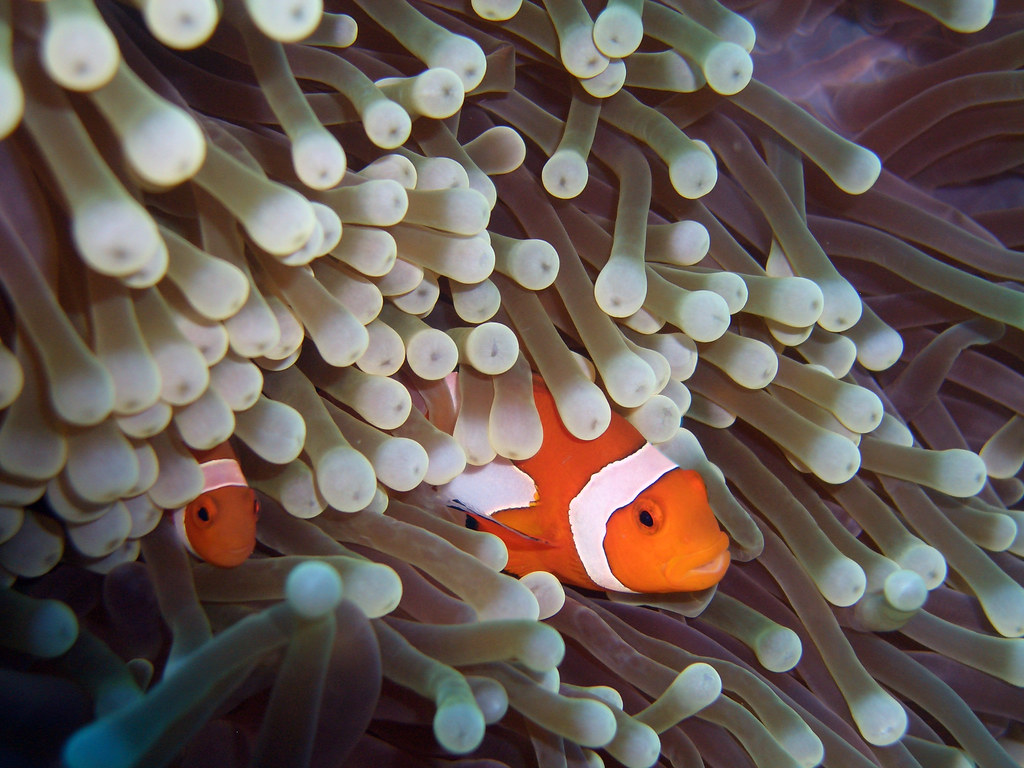
Image result for clownfish and anemone

“Clownfish and Sea Anemone” by Samuel Chow under Flickr

Although there are many more mutualistic relationships between marine animals, the last one that I will talk about is the relationship between the Boxer Crab and anemones. In this relationship, the Boxer Crab carries around two anemones that sting and it uses them for protection. The anemones are benefited because since the crab carries them around, it allows them to be mobile which increases their options for finding food.

Image result for boxer crab and sea anemone
BOXING (POM POM) CRAB” BY  LIQUIDGURU UNDER VIMEO

PARASITISM

Parasitism is not a mutualistic relationship because only one of the species is benefited. The parasite gains from the relationship while the other species involved is harmed.

One example of a parasitic relationship is between fish lice and small fish hosts. The fish can be killed if there are too many fish lice attached to it. The lice benefits from the fish by feeding off of their bodily fluids.

File:Sea lice on salmon.jpg
“SEA LICE ON SALMON” BY 7BARRYM0RE UNDER  PUBLIC DOMAIN

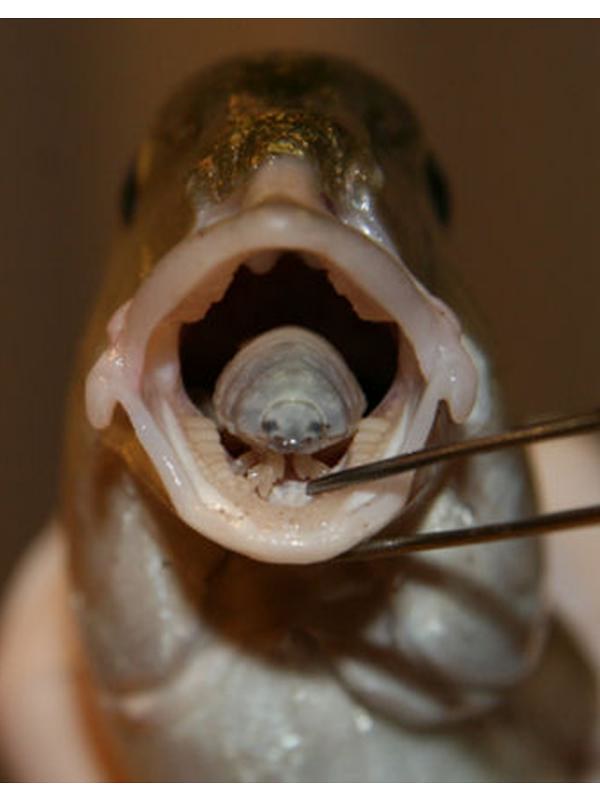
Isopods can also cause a parasitic relationship. Some isopods will eat the fishes tongue and then live in the fishes mouth so it they can eat whatever the fish is attempting to eat.

Image result for isopod in fish mouth
“BETTY IN MOUTH” BY UNIVERSITY OF SALFORD PRESS OFFICE UNDER FLICKR

COMMENSALISM

Commensalism is a relationship where one species benefits from another species. The other species  is neither harmed nor helped in this relationship. There are many examples of commensalism in the ocean.

One example of commensalism among marine life are jellyfish and small fish. The small fish will typically hide inside of the jellyfish’s stinging tentacles if the stinging does not effect them. The tentacles provide protection for the fish from larger predators. This relationship has no effect on the jellyfish.

Image result for small fish hiding in jellyfish
“BABY FISH TAKE SHELTER IN JELLYFISH” BY EARTH TOUCH NEWS NETWORK

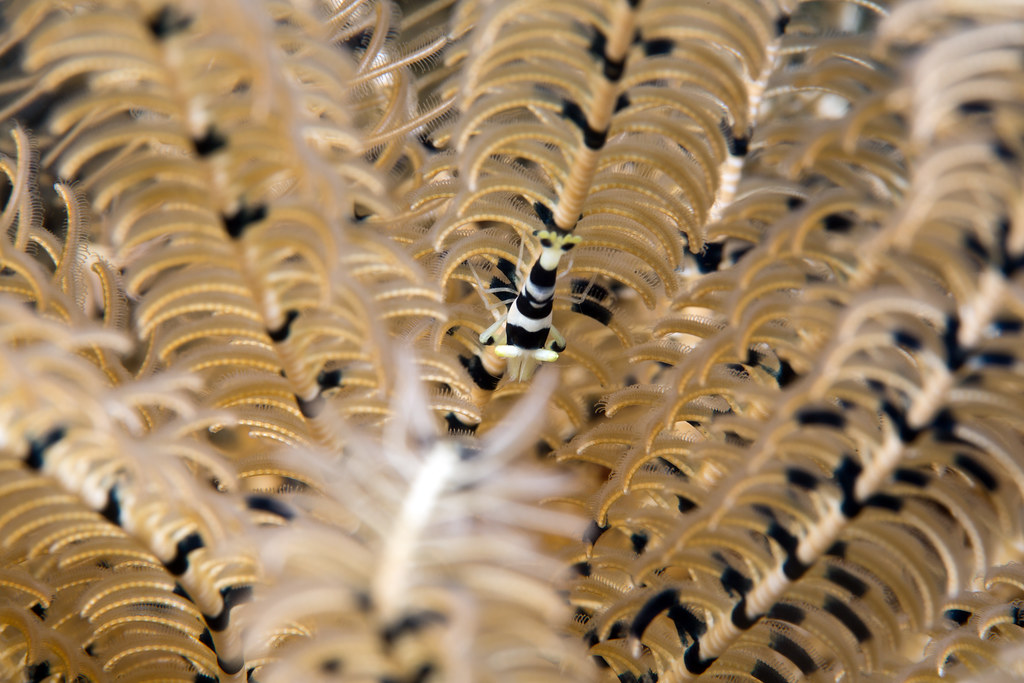
Another relationship is between shrimp and a featherstar. The shrimp will blend in with the featherstar and use it for protection. As you can see in the picture below, it is very difficult to find the shrimp hiding in there.

Image result for shrimp and featherstar

“Shrimp in Featherstar” by prilfish under Flickr

MIMICRY

The last kind of symbiotic relationship is mimicry. Mimicry is when one organism that is harmless evolves to look similar to another organism that is poisonous. This stops predators from eating them because they think they are the poisonous species. They can also use mimicry to appear larger than they really are.

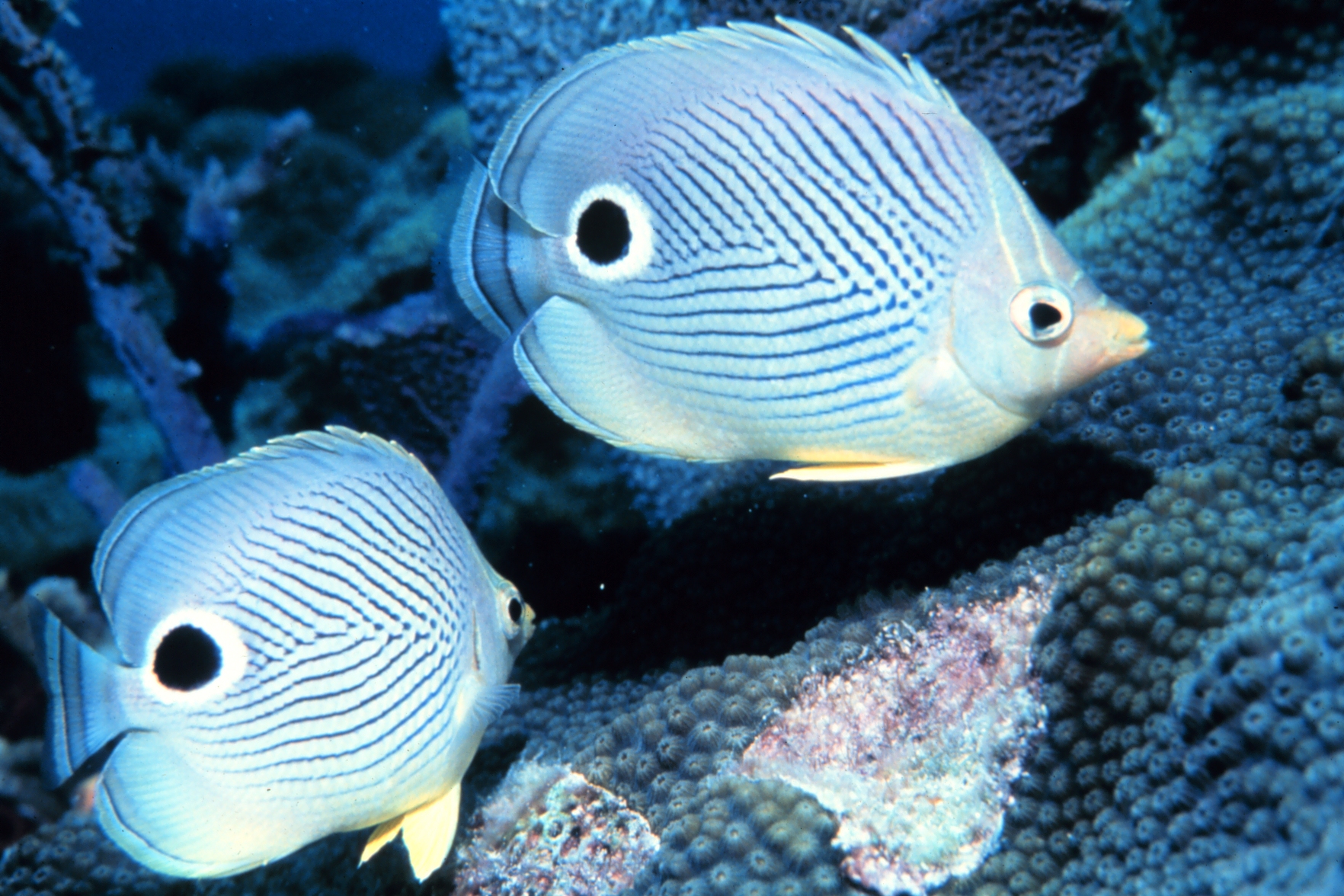
The four-eye butterflyfish uses a large eye spot in order to appear larger to predators.

Image result for foureye butterflyfish
“CHAETODON CAPISTRATUS1” BY CHRIS HUSS UNDER  PUBLIC DOMAIN

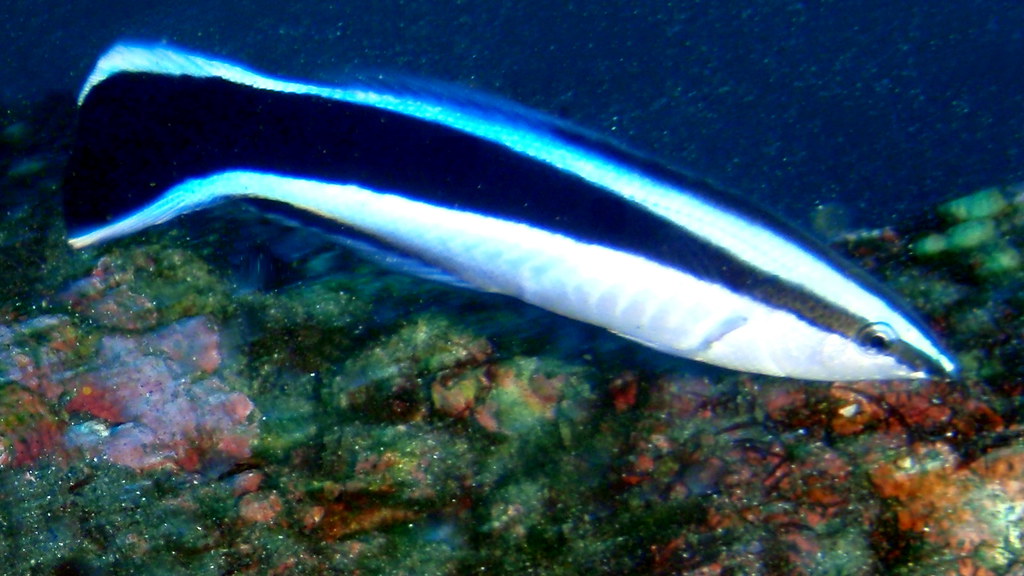
Another example of mimicry is between the Sabre-tooth Blenny and Cleaner Wrasses. The Cleaner Wrasse have a mutualistic relationship with larger fish so they don’t get eaten, and the Sabre-tooth Blenny takes advantage of this relationship by evolving to look very similar to the Cleaner Wrasse. Instead of cleaning the larger fish, the Sabre-tooth Blenny will take a bite out the the large fish’s flesh and swim away.

Image result for cleaner wrasse
Image result for sabre tooth blenny
“BLUESTREAK CLEANER WRASSE” BY NEMO’S GREAT UNCLE UNDER FLICKR
“SABRE-TOOTH BLENNY” BY FISH INDEX

On the top there is a bluestreak cleaner wrasse and on the bottom is a sabre-tooth blenny. You can see how similar they look and how fish could mistake them.

SHARE THIS:

RELATED

Coral Bleaching

Christmas Tree WormsWith 6 comments

The Importance of BioluminescenceWith 4 comments3 Comments

3 THOUGHTS ON “SYMBIOTIC RELATIONSHIPS IN THE OCEAN”

  1. KCANGIALBeautiful examples and images of mutualisms here! The sabre-tooth blenny is apparently an ectoparasite, so interesting! And a very cool example of aggressive mimicry! I love the gif of the crab with anemone pom-poms!LikeReply
    1. AOLENDORFEPORTThanks! I also thought that the sabre-tooth blenny was interesting. The gif is my favorite part of this post!Liked by 1 personReply
  2. HALEYZANGAI loved the images in this post! It really showed the affects of the different symbiotic relationships around. Easy to follow and easy to read.Liked by 1 personReply

LEAVE A REPLY

Logged in as Janhvi SinghLog out?

Comment 

 Notify me of new comments via email.

 Notify me of new posts via email.

POST NAVIGATION

← Screencast 1: Coral ReefsScreencast 2: Overfishing- identifying the problem →

Create a free website or blog at WordPress.com.Privacy & Cookies: This site uses cookies. By continuing to use this website, you agree to their use.
To find out more, including how to control cookies, see here: Cookie Policy

As Indians, we ensure that spices form the base of any dish. We are not satisfied with a dash of salt and a squeeze of sour lime, we need spices.

If spices are consumed in moderation you can derive health benefits, but an overdose of any spice can lead to indigestion or even ulcers. Media portals are flooded with the health benefits of turmeric or haldi, but today we list out other Indian spices that are healthy and are kept under wraps.
Cinnamon:
This spice is aromatic and has a refreshing taste. You can add cinnamon in curries, pulao and even desserts; it adds spark to a bland dish. But research on this woody spice tells us that it is also diabetes-friendly and if you show symptoms of insulin resistance, cinnamon will help reduce it.
Besides, cinnamon is used to give you relief from indigestion, common cold, diarrhea, poor blood circulation and tension during menstruation.

Cloves:
Every Indian knows that clove is the spice to treat tooth problems since it contains anti-inflammatory and anti-bacterial properties. Due to these healthy characteristics cloves are an important ingredient in natural tooth pastes.

Perfumers use the oil extract from cloves but it has its health benefits. If you are feeling queasy after indulging in too much food or alcohol, cloves have the properties to put you at ease. Cloves can relieve you from vomiting, indigestion, an upset digestive tract and loose motions.

Cumin:
Tempered cumin or jeera adds the spice that dal fry needs. Most dishes are incomplete without cumin. All the better for us, as cumin is known to relieve you from digestive problems, reduce your chances of anemia and alleviate common cold.

Surprisingly jeera can reduce the problem of piles, serves as a laxative and provides your body with iron, manganese that helps in the absorption of calcium and controls blood pressure.

Black Cardamom:
Do not confuse it with green cardamom; black cardamom is a common spice in briyani. Apparently this spice is also used as anti-venom for snakes and scorpions, but try it out at your own risk.

Black cardamom eases out digestive problems and reduces flatulence, it is known to relieve you from throat problems, chest congestion, and gum infection. Due to its anti-inflammatory properties and the fact that it can alleviate muscle spasms, black cardamom is a saving grace for asthmatics. It is a great ingredient for respiratory problems.
Saffron:
Kashmir is synonymous with the production of the best quality of saffron in India. This ingredient adds colour and spice to briyani or dessert. Saffron is expensive but the health benefits are priceless.

Saffron has the ability to treat depression, prevents loss of vision, and improves memory. The stigma of the flower can relieve you from digestive issues with the help of anti-inflammatory, antioxidant and anti-depressant properties.

Nutmeg:

As Indians, we ensure that spices form the base of any dish. We are not satisfied with a dash of salt and a squeeze of sour lime, we need spices.

If spices are consumed in moderation you can derive health benefits, but an overdose of any spice can lead to indigestion or even ulcers. Media portals are flooded with the health benefits of turmeric or haldi, but today we list out other Indian spices that are healthy and are kept under wraps.
Cinnamon:
This spice is aromatic and has a refreshing taste. You can add cinnamon in curries, pulao and even desserts; it adds spark to a bland dish. But research on this woody spice tells us that it is also diabetes-friendly and if you show symptoms of insulin resistance, cinnamon will help reduce it.
Besides, cinnamon is used to give you relief from indigestion, common cold, diarrhea, poor blood circulation and tension during menstruation.

Cloves:
Every Indian knows that clove is the spice to treat tooth problems since it contains anti-inflammatory and anti-bacterial properties. Due to these healthy characteristics cloves are an important ingredient in natural tooth pastes.

Perfumers use the oil extract from cloves but it has its health benefits. If you are feeling queasy after indulging in too much food or alcohol, cloves have the properties to put you at ease. Cloves can relieve you from vomiting, indigestion, an upset digestive tract and loose motions.

Cumin:
Tempered cumin or jeera adds the spice that dal fry needs. Most dishes are incomplete without cumin. All the better for us, as cumin is known to relieve you from digestive problems, reduce your chances of anemia and alleviate common cold.

Surprisingly jeera can reduce the problem of piles, serves as a laxative and provides your body with iron, manganese that helps in the absorption of calcium and controls blood pressure.

Black Cardamom:
Do not confuse it with green cardamom; black cardamom is a common spice in briyani. Apparently this spice is also used as anti-venom for snakes and scorpions, but try it out at your own risk.

Black cardamom eases out digestive problems and reduces flatulence, it is known to relieve you from throat problems, chest congestion, and gum infection. Due to its anti-inflammatory properties and the fact that it can alleviate muscle spasms, black cardamom is a saving grace for asthmatics. It is a great ingredient for respiratory problems.
Saffron:
Kashmir is synonymous with the production of the best quality of saffron in India. This ingredient adds colour and spice to briyani or dessert. Saffron is expensive but the health benefits are priceless.

Saffron has the ability to treat depression, prevents loss of vision, and improves memory. The stigma of the flower can relieve you from digestive issues with the help of anti-inflammatory, antioxidant and anti-depressant properties.

Nutmeg:
Like cloves, nutmeg too has anti-bacterial properties. It helps fight tooth decay. Besides, nutmeg can fight Alzheimer’s and improves your memory. This lesser known spice has the ability to reduce flatulence and improve appetite – a problem that all mothers face when it comes to their child’s fussy eating habits. It can also release the tension in your muscle.

According to the Chinese, this spice can improve impotence; worth a try for those looking for a natural alternative.

Black Pepper:
Once upon a time, black pepper was considered gold, a precious commodity for trade. A dash of pepper can create an explosion of flavours to a bland dish. But consume this fiery spice in moderation.
Black pepper has the ability to increase the production of hydrochloric acid that the stomach needs to help in digestion. You can save yourself from digestive problems, flatulence and constipation. It is also anti – bacterial in nature, reduces blood pressure and contains iron that is beneficial for the body.

NEWS IN
BRIEF 

YOGA

yoga is a group of physical, mental,and spritual practice or disciplines which orientation in ancient india .yoga is one of the six Astika school of hindu philosophical traditions .there is a board variety of yoga schools, practice, and goal of Hinduism , buddhism and Jainism.

the practice of yoga was starting during the indus-sarasvati civilization in northern india over 5000 year ago .it was first mentioned in rig vada a collection of texts that consisted of ,rituals,mantras ,and songs which was mainly used by brahmans , the vedic priests.

Media Shoots, Police Shoots–Case Closed

After having staged the most dramatic arrest (indirectly a well sponsored surrender), Kanpur’s famous gangster Vikas Dubey was sure of escaping an encounter at the hands of Uttar Pradesh police using his political and administrative connections. Within 24 hours of being arrested by the Ujjain police and handover to Special Task Force team, Vikas Dubey lay dead on a hospital stretcher with overwhelmed reporters desperate to shoot his body with their cameras.

Among all this chaos the most unfortunate thing was the lack of element of surprise because almost everyone was convinced that Vikas Dubey would not reach Kanpur alive. Uttar Pradesh police had played it cards well and definitely did not care an inch about the questions that media and public would raise. Stopping media vehicles just minutes before the accident, a herd of buffaloes causing just one vehicle to crash although it was a caravan and our antagonist escaping pretty easily from a turned over vehicle along with a police pistol makes up for a perfect Rohit shetty style script and a tangy media debate. But raising questions on this scandalous encounter is not something this piece of writing intends to do.

This article tries to throw light on the public sentiments and reactions over extrajudicial killings. A major section of the society including journalists, politicians, former administrators and the public seemed to have been glorifying the practice of encountering criminals by the police as a righteous act of imparting speedy justice. Who can forget the splendid sight of the brave and courageous policemen of Hyderabad being showered with rose petals as they marched along the city’s roads after having encountered the rapists of a 26-year-old veterinary doctor whose charred body was found on the outskirts of Hyderabad just 7 days ago.

The heinousness of that case immediately brought back the memories of 16 December, 2013 when another daughter of India was brutually raped in the country’s capital. Nirbhaya succumbed to her injuries but her parents’ extraordinary 8 year long battle finally payed off when the accused men were hanged in Tihar jail on 20 March, 2020. The society that day was not only brightened by the sun but also by the inspiring struggle of Nirbhaya’s parents who made brought their daughter’s tormentors to justice not by a police encounter but by a court of law.

The justice brought down by pistols and guns lasts for a few days but when justice is imparted by the ink of pen , even without any noise that struggle remains till the end of time.

Lessons we learned from the coronavirus pandemic

Do face masks really reduce coronavirus spread? Experts have mixed answers.  | Live Science

Coronavirus has already created a havoc in the world by taking the lives of around 571,574 people. Where as till now almost 13,036,587 people have been infected by COVID-19. This is the first mega pandemic which has caused so much panic among the people. This virus doesn’t know how to discriminate people and has ended up infecting all kinds of people from all sides of the world. It successfully forced some powerful countries with the largest economy to impose shutdown. many people in their lifetime might have never witnessed something like this, which can force the world to shutdown.

But don’t you think this pandemic happened because of we people only ? Can we say that this is the karma we are facing for destroying our environment and killing poor animals ? We people have always taken our environment for granted. some scientists think that corona virus originated in bats and could have been transmitted from that. Also huge amount of corona virus traces were found in the meat market of wuhan and the city had to stop the trade of live animal sales because that’s where COVID-19 started. So basically people like us are the reason behind this pandemic. By considering the brightest part of this situation we have rediscovered some values, because we realized that everyone in the world is vulnerable to crises, irrespective of religion, wealth and economy. So let’s know what are the lessons we learned from corona virus pandemic.

SOME MAJOR LESSONS LEARNED :

How to wash your hands and how long it takes to get clean - Insider
  • Hygiene habits : A habit which we are well aware of now. We have all been taught to wash our hands everytime we have been to a place. Earlier we didn’t wash our hands from time to time but now this pandemic has forced us to get few of our good habits back. Rather on today’s date washing hands is a game changer habit to keep the virus away from you. Washing hands with just water in not just enough rather we learned to wash our hands more often with soap, which plays a vital role in killing germs and viruses. Hence we rediscovered the value of washing hands again!
Health Report
  • focus on personal health : Before pandemic we never bothered about our health, we were more into junk foods and less into healthy foods. This pandemic has made us realized the importance of our own health. The more careless we are towards our health the more problems we invite. During this pandemic we have started living a healthy life. people now exercise more often and go for healthy drinks and foods. Because now we understand the importance of having a strong immune system and therefore now we are more conscious about our health. Now we understand the real meaning of “Health Is Wealth” , because money might not save you but a strong immune system can.
Before-and-after photos that show how lockdowns reduced air pollution -  Insider
  • Responsibility towards environment : We all can see how our environment is healing during this pandemic. We people are the reason behind the calamities that take place in our earth. Our irresponsibility and carelessness are the only reason for what we are facing today. But the shutdown has given our environment ample time to heal and ample time to we people to think about the destruction we have caused to our planet. The sky and water bodies are more cleaner now, animals and birds are roaming freely without getting scared because there are less cars in the streets, yes the nature is healing as there is less pollution now.

We have taken extreme measures and have changed the way we live our lives to fight for the survival. All these changes have created a positive chain of reaction and it is definitely saving lives.The coronavirus has changed our perception toward’s life.

We might all pay for it unless we take this NEW state of the world as a lesson! A lesson we are capable of taking extreme steps to save lives, A lesson we are capable of reversing our environmental mistake. Once we win against COVID-19, we should not forget the lessons we learned during this pandemic then only we will be in our way to a safer future.

Bhubaneswar An Ideal City

Bhubaneswar the capital and largest city of the state Odisha often known as the temple city of India was formally established in 1948. The city of Bhubaneswar has numbers of temple with amazing architecture which might make you stand and admire it’s beauty. But unfortunately not many are aware of this beautiful city, even though it is a capital of a state. Some identify Bhubaneswar as a capital of one of the poorest state where as some don’t even know that a city of this name even exists. But trust me this city is more than what you think and is well developed like any other mega city.

Not many know that Bhubaneswar which got it’s name form Tribhubaneswara ( lord of three worlds) was designed by a German architect and was considered as one the modern and India’s first well planned city but unlike other mega cities this city lacked recognition. Before analyzing the topic i wanted the readers to have an idea about the city and how ideal it can be.

Bhubaneswar with a population of around 8 lac provides a lot of opportunities for people with creative business ideas. A city which is also know as the start up hub has become a great choice for people to start their venture. For somebody who does not want to start a business in a metro city, Bhubaneswar a tier-II city of India is developing fast and is offering great opportunities for them to grow their business.This city was ranked as the best place to do business in India by the world bank in 2014. Also known as the IT hub, bhubaneswar has got some major IT companies such as TCS , INFOSYS, WIPRO and many more which makes this city favourable for young professionals who wants to enjoy their job in a not so expensive city, yes you heard me right bhubaneswar is not at all expensive and is quite affordable .

did you know that this city is also an educational hub, infact has some elite institutions such as IIT , NISER, AIIMS and NIFT. This city provides a variety of options and scope to students and is also known for it’s quality education. Some people might be surprised to know that Bhubaneswar has a literacy rate of 93.15 % which is significantly higher than the national average literacy rate 74.04 %.

In 2017 The times of India listed bhubaneswar in the top 10 city list, i am pretty sure it will soon make it to top of the list. This beautiful city has come a long way from being called as a temple city to a smart city, no doubt this city will become more advanced in the near future.

THE NEW AGE OF MARKETING

How User Interviews Will Improve Your Customer Journey—and Your Sales -  Salesforce Canada Blog

gone are those days when sellers ruled the market,and decided what a customer should buy . Sellers then focused more on their profit and never bothered about their customer satisfaction. Thankfully those days are gone and the new era of marketing has already started. the new age of marketing is way more advanced and systematic . Now customers decide, what a seller should sell and have equal power to control the market. “There is a famous saying that says” customer is the king , no doubt that in today’s scenario customers are more than king, rather they are now worshiped as God.

21st century is all about customer satisfaction. Now marketing is not just about selling the products but it is about selling the right product, to right person at right price and at right time.Today we have various marketing strategies which helps the companies and entrepreneurs to know their customer first, before developing a product or a service. They focus more on communication and consumer choices and then decide the price and the design of the product. so basically we can say that consumer are the geese who lay golden eggs everyday.

Now a whole lot of system is developed just to track the consumers needs to satisfy them. Isn’t it great that a company spends so much money just to keep their customers happy ? But that doesn’t mean the company is not making profit, well the company which takes care of their customers eventually end up having more profit. if a company has great marketing strategies and have loyal customers then it can easily grow and can also run for long term.

Apart from customer satisfaction today’s marketing is also all about going digital. Yes, so here i would be stating the importance of digital marketing in today’s era . Digital marketing has evolved a lot more in these years, with the help of this skill one can not only track their customer’s needs but, can also make money out of it. digital marketing helps the company to grow their brand and also helps the companies to understand their customers in a more easy way. In order to make a product unique digital marketing plays a crucial role.

Change in marketing concepts shows how far marketing has changed. starting from production concept to marketing concept everything has changed and have changed for good. i don’t know how the future of marketing will be but i am sure it will be more scientific , more valuable and more customer oriented.

Students And The Pandemic

Amid COVID-19 pandemic, record 98.82 per cent students pass in ...

the coronavirus pandemic has already affected atleast 188 countries with more than 14.5 million confirmed cases. The virus has not only killed 6 lac people but has also made countries experience their worst economic crises. The pandemic has indirectly affected people in many ways, starting from poor to rich, everyone is facing one or more problems. It has forced some powerful countries with largest economy to impose lockdown which has affected many communities, not because the government wants to destroy their own economy but because there is no other choice left to save people. Countries now are in their worst condition, as they are in situation where they know that in order to save lives, their decisions and strategies will indirectly affect many communities.

Among all other communities, students are one such community who are also facing a lot of problems. Yes it is true that their difficulties and issues might not be greater and even equal to the difficulties faced by health officials, police forces, daily-wage earners, LGBTQ community or any other human being who is seriously affected due to the pandemic, but yet we can not ignore the problems faced by the students since they are the future of the country.

It has already been 4 months since the lockdown was declared for the first time in India. So probably 23rd of march was the last day for students at their schools and college. school students were then very happy about the 15 day lockdown since they thought they will be joining their respective schools after this mini vacation but little did they know that this little vacation of theirs will go on forever.

All sort of educational institutions were forced to close their doors for the safety of their students,but students are atleast now able to cope up with their studies through virtual classes. But unfortunately not all are able to access online classes since it requires good connectivity and most of the students are unable to attend their classes because of poor network. Especially students living in remote or rural areas are facing this particular problem. Government has failed to address this issue since students can only depend upon internet to continue learning. Apart from that we understand that online classes are a good option to continue learning but not the best when compared to classroom learning.

The Dangers of Keeping the Schools Closed – AIER

Student – teacher interaction is something which is lacking in online classes, and hence it decreases their motivation to study. It is quite understandable that such problems will arise in such a situation and it can not be avoided. Students have to manage their studies during this crises, since there is no other option left. This pandemic has also left final year students in a great confusion as they are not sure whether they will be having exams or not. Most of the companies have also withdrawn their offer letters from the students which is another sad thing faced by the final year students. Till now nobody addressed these issues faced by the students and no serious decisions are taken regarding this.

All i know is, that it took a whole pandemic to make students realize the importance of classroom teaching. Nobody knows for how long educational institutions will remain closed, but i am sure all of them are badly waiting for that day when they will be able to learn in their classrooms.