Art of Giving Compliments: Spreading Positivity One Word at a Time

Daily writing prompt
What was the best compliment you’ve received?

By Kavita Dehalwar

In a world where negativity often seems to dominate conversations and interactions, the power of a genuine compliment can be transformative. A well-timed compliment has the ability to lift spirits, boost confidence, and create connections between people. Yet, despite its simplicity, giving compliments is an art that is often overlooked or underutilized in our daily lives.

Photo by ALINA MATVEYCHEVA on Pexels.com

Complimenting someone is more than just offering flattery or superficial praise. It is about recognizing and acknowledging the value, effort, or qualities of another person in a sincere and meaningful way. Whether it’s praising someone’s creativity, intelligence, kindness, or even their sense of style, a thoughtful compliment can have a lasting impact on both the giver and the recipient.

One of the most beautiful aspects of giving compliments is its universality. Compliments transcend cultural and linguistic barriers, making them a powerful tool for fostering understanding and goodwill among people from different backgrounds. A genuine compliment can bridge divides, dissolve tensions, and bring people closer together, creating a sense of warmth and inclusivity in any social setting.

However, while the benefits of giving compliments are clear, many people still struggle to express their admiration or appreciation for others. Some may fear coming across as insincere or ingratiating, while others may simply feel uncomfortable or unsure of how to deliver a compliment effectively. Nevertheless, with a little practice and mindfulness, anyone can master the art of giving compliments and harness its positive impact.

The key to giving compliments that resonate lies in their authenticity. A genuine compliment is one that is heartfelt, specific, and tailored to the individual recipient. Rather than resorting to generic or clichรฉd phrases, take the time to observe and appreciate the unique qualities or actions of the person you wish to compliment. Whether it’s a colleague who went above and beyond on a project, a friend who always knows how to make you laugh, or a stranger whose kindness brightened your day, find something specific to acknowledge and celebrate.

Furthermore, it’s important to deliver compliments with sincerity and confidence. Avoid being overly effusive or overly critical, as insincere compliments can ring hollow and even backfire, causing the recipient to question your intentions. Instead, speak from the heart and be genuine in your praise, allowing your words to convey your true admiration and respect for the person you are complimenting.

Timing is also crucial when giving compliments. While it’s never too late to express appreciation, offering compliments in a timely manner can enhance their impact and relevance. Whether it’s immediately after witnessing a commendable action or achievement, or during a casual conversation when you notice something admirable about the other person, seize the moment to share your admiration and uplift their spirits.

In addition to brightening someone else’s day, giving compliments can also have profound benefits for the giver. Studies have shown that expressing gratitude and appreciation for others can boost one’s own mood and overall well-being. By focusing on the positive attributes of those around us, we cultivate a mindset of abundance and generosity that enriches our own lives as well as the lives of others.

In conclusion, the art of giving compliments is a simple yet powerful way to spread positivity and foster connections in our daily lives. By offering genuine, specific, and timely praise to those around us, we not only uplift the spirits of others but also enhance our own sense of gratitude and well-being. So, let us embrace the beauty of compliments and make it a habit to celebrate the goodness in others, one kind word at a time.

References

McDermott, P., Falk-Ross, F., & Medow, S. (2017). Using the visual and performing arts to complement young adolescentsโ€™โ€œclose readingโ€ of texts.ย Middle School Journal,ย 48(1), 27-33.

Suter, E., & Baylin, D. (2007). Choosing art as a complement to healing.ย Applied nursing research,ย 20(1), 32-38.

Wikstrรถm, B. M. (2001). Works of art: a complement to theoretical knowledge when teaching nursing care.ย Journal of Clinical Nursing,ย 10(1), 25-32.

Top 10 Researchers of the Social Sciences

Daily writing prompt
Who is the most confident person you know?

It’s important to note that determining the “top ten” researchers in social sciences can be subjective and may vary depending on the criteria used (e.g., citations, impact, contributions to the field). However, here’s a list of ten influential researchers in the field of social sciences as of my last update:

  1. Daniel Kahneman: A Nobel laureate in Economics, Kahneman is renowned for his work in behavioral economics and cognitive psychology. His research on decision-making processes and heuristics has had a profound impact on understanding human behavior in various social contexts.
  2. Amartya Sen: An Indian economist and philosopher, Sen has made significant contributions to welfare economics, social choice theory, and development economics. His work on poverty, inequality, and capability approach has influenced policy-making globally.
  3. Noam Chomsky: A prominent linguist, philosopher, and social critic, Chomsky’s theories on language acquisition, cognitive science, and political analysis have shaped fields ranging from linguistics to political science. His critique of media and advocacy for human rights have had a lasting impact.
  4. Michel Foucault: A French philosopher and social theorist, Foucault’s work on power, discourse, and the relationship between knowledge and power has been highly influential in sociology, anthropology, and cultural studies. His ideas continue to be debated and applied across various disciplines.
  5. Judith Butler: An American philosopher and gender theorist, Butler is known for her work on gender performativity and queer theory. Her writings on identity, power, and subversion have reshaped feminist discourse and influenced fields such as cultural studies and sociology.
  6. Robert Putnam: An American political scientist, Putnam’s research on social capital and its implications for democracy and civic engagement has been widely cited. His book “Bowling Alone” highlighted the decline of social connectedness in modern societies, sparking discussions on community and social cohesion.
  7. Pierre Bourdieu: A French sociologist, Bourdieu’s theories on cultural capital, habitus, and social reproduction have had a profound impact on sociology, anthropology, and cultural studies. His empirical research on education, cultural practices, and social stratification remains influential.
  8. Susan Fiske: An American social psychologist, Fiske has made significant contributions to understanding social cognition, stereotypes, and intergroup relations. Her work on the stereotype content model and the fundamental dimensions of social perception has advanced the field of social psychology.
  9. Richard Thaler: An economist and behavioral scientist, Thaler is known for his contributions to behavioral economics and the theory of nudges. His research on bounded rationality and decision-making biases has influenced policy-making, particularly in the areas of finance and public policy.
  10. Carol S. Dweck: An American psychologist, Dweck is renowned for her research on mindset theory and the concept of growth mindset. Her work on the psychology of motivation and achievement has had implications for education, organizational behavior, and personal development.

These researchers have made significant contributions to understanding human behavior, society, and culture, shaping the landscape of social sciences and influencing various fields within it.

Navigating Plagiarism Checking Services for Scholars: A Comprehensive Overview

Daily writing prompt
What strategies do you use to cope with negative feelings?

By Shashikant Nishant Sharma

In the realm of academia, maintaining academic integrity is paramount. Plagiarism, the act of using someone else’s work without proper acknowledgment, undermines the very foundation of scholarly pursuits. To combat this issue, various plagiarism checking services have emerged, offering scholars the means to ensure their work is original and properly cited. In this article, we’ll explore some prominent plagiarism checking services, focusing on Turnitin and others, to understand their features, functionalities, and effectiveness in maintaining academic integrity.

Photo by Yan Krukau on Pexels.com

Turnitin: Turnitin is perhaps one of the most widely recognized plagiarism detection services in academia. It offers a comprehensive platform for educators and students alike to check the originality of academic papers and assignments. Turnitin employs an extensive database of academic content, including journals, publications, and student submissions, to compare the submitted work against.

Key Features:

  1. Database: Turnitin boasts a vast repository of academic content, making it adept at identifying similarities between submitted work and existing sources.
  2. Originality Reports: Users receive detailed reports highlighting any instances of potential plagiarism, along with similarity percentages and links to the original sources.
  3. Feedback and Grading: Educators can provide feedback directly within Turnitin’s interface, facilitating a streamlined grading process while addressing plagiarism concerns.
  4. Integration: Turnitin integrates seamlessly with learning management systems (LMS), making it convenient for educators to incorporate plagiarism checks into their courses.

Limitations:

  1. Subscription-based: Turnitin typically requires a subscription, which may present a financial barrier for individual scholars or institutions with limited budgets.
  2. False Positives: Like any automated system, Turnitin may occasionally flag instances as plagiarism incorrectly, necessitating manual review and verification.

Other Plagiarism Checking Services: While Turnitin is a prominent player in the field, several other plagiarism checking services offer similar functionalities. Some notable alternatives include:

  1. Grammarly: While primarily known as a grammar checking tool, Grammarly also offers plagiarism detection features. It scans text against a vast database of web pages and academic papers to identify potential instances of plagiarism.
  2. Copyscape: Popular among website owners and content creators, Copyscape specializes in detecting duplicate content on the web. While not as comprehensive as Turnitin for academic purposes, it can still be useful for verifying originality.
  3. Plagscan: Plagscan offers a user-friendly interface and customizable settings for plagiarism detection. It allows users to upload documents directly or check web content by entering URLs.

Choosing the Right Tool: Selecting the most suitable plagiarism checking service depends on various factors, including budget, specific requirements, and integration capabilities with existing systems. While Turnitin remains a top choice for academic institutions, alternative services like Grammarly and Copyscape offer valuable features for individual scholars and content creators.

Conclusion: In the pursuit of academic excellence, maintaining integrity and originality in scholarly work is non-negotiable. Plagiarism checking services play a crucial role in upholding these standards by providing scholars with the means to verify the originality of their work and ensure proper attribution to sources. Whether it’s Turnitin, Grammarly, or another tool, leveraging these services empowers scholars to contribute to knowledge dissemination ethically and responsibly in the academic community.

References

Chandere, V., Satish, S., & Lakshminarayanan, R. (2021). Online plagiarism detection tools in the digital age: a review.ย Annals of the Romanian Society for Cell Biology, 7110-7119.

Chuda, D., & Navrat, P. (2010). Support for checking plagiarism in e-learning.ย Procedia-Social and Behavioral Sciences,ย 2(2), 3140-3144.

Geravand, S., & Ahmadi, M. (2014). An efficient and scalable plagiarism checking system using bloom filters.ย Computers & Electrical Engineering,ย 40(6), 1789-1800.

Naik, R. R., Landge, M. B., & Mahender, C. N. (2015). A review on plagiarism detection tools.ย International Journal of Computer Applications,ย 125(11).

Strategies for Coping with Negative Feelings

Daily writing prompt
What strategies do you use to cope with negative feelings?

Coping with negative feelings is essential for maintaining mental well-being. Here are some strategies people commonly use:

Photo by Nataliya Vaitkevich on Pexels.com
  1. Mindfulness and Meditation: Practicing mindfulness and meditation can help you become more aware of your thoughts and feelings without judgment, allowing you to better manage them.
  2. Physical Exercise: Engaging in regular physical activity can release endorphins, which are natural mood lifters. Exercise also helps reduce stress and anxiety.
  3. Healthy Lifestyle: Maintaining a balanced diet, getting enough sleep, and avoiding excessive alcohol and caffeine intake can all contribute to better emotional regulation.
  4. Seeking Support: Talking to friends, family members, or a therapist about your feelings can provide validation, support, and perspective.
  5. Creative Outlets: Engaging in creative activities like painting, writing, or playing music can be therapeutic and help channel negative emotions into something constructive.
  6. Setting Boundaries: Learning to say no and setting boundaries in your personal and professional life can help prevent feelings of overwhelm and resentment.
  7. Positive Self-Talk: Practice replacing negative self-talk with positive affirmations and realistic perspectives.
  8. Gratitude Practice: Keeping a gratitude journal or simply taking time each day to reflect on things you’re grateful for can shift your focus away from negativity.
  9. Taking Breaks: Sometimes, taking a break from the source of negative feelings, whether it’s work, social media, or other stressors, can give you the space you need to recharge and gain perspective.
  10. Professional Help: If negative feelings persist or interfere with your daily functioning, seeking help from a mental health professional can provide personalized support and treatment.

Remember that coping strategies are personal, and it’s essential to find what works best for you. It’s also okay to seek help when needed and to prioritize your mental health.

What are Different Sociological Theories

Daily writing prompt
If you had the power to change one law, what would it be and why?

By Shashikant Nishant Sharma

Photo Credit to Kelly on Pexels.com

Sociological theories provide frameworks for understanding various aspects of society, including social behavior, institutions, and relationships. Here’s a list of some prominent sociological theories:

  1. Structural Functionalism: This theory views society as a complex system composed of interrelated parts that function together to maintain stability and order. It emphasizes the importance of social institutions in maintaining social cohesion.
  2. Conflict Theory: Conflict theory posits that society is characterized by inequality and competition for limited resources. It focuses on power dynamics, social stratification, and how these lead to conflict and social change.
  3. Symbolic Interactionism: This theory explores how individuals interact through symbols (e.g., language, gestures) to create and interpret meaning in social interactions. It emphasizes the subjective interpretation of symbols and the role of communication in shaping social behavior.
  4. Social Exchange Theory: Social exchange theory examines social interactions as transactions involving rewards and costs. It suggests that individuals engage in behavior that maximizes rewards and minimizes costs, leading to the formation and maintenance of relationships.
  5. Rational Choice Theory: This theory applies principles of rational decision-making to social phenomena, suggesting that individuals make choices that maximize their self-interest. It examines how individuals weigh alternatives and make decisions in various social contexts.
  6. Feminist Theory: Feminist theory focuses on the social, political, and economic inequality between genders. It explores how gender roles, stereotypes, and power dynamics shape social institutions and interactions, advocating for gender equality and social justice.
  7. Critical Theory: Critical theory examines society through a lens of critique, questioning the underlying structures and power dynamics that produce social inequalities and injustices. It aims to challenge dominant ideologies and promote social transformation.
  8. Post-structuralism: Post-structuralist theories deconstruct traditional notions of social reality, emphasizing the fluidity and multiplicity of meanings. They critique the idea of fixed identities and challenge binary oppositions, such as male/female or self/other.
  9. Postmodernism: Postmodernist theories reject the idea of objective truth and question the grand narratives of modernity. They emphasize the fragmented nature of contemporary society and the proliferation of diverse perspectives and cultural influences.
  10. Phenomenology: Phenomenological theories focus on the subjective experiences of individuals and how they perceive and interpret the social world. They emphasize the importance of understanding social phenomena from the perspective of those involved.

These are just a few examples of the diverse range of sociological theories that researchers use to analyze and interpret social phenomena.

References

Merton, R. K. (1945). Sociological theory.ย American Journal of Sociology,ย 50(6), 462-473.

Parsons, T. (2010).ย Essays in sociological theory. Simon and Schuster.

Ritzer, G., & Stepnisky, J. (2017).ย Sociological theory. Sage publications.

SHARMA, S. N. (2015). Introduction to Sociology.ย Journal for Studies in Management and Planning,ย 1(8), 32-36.

Sharma, S. N. (2016). Introduction to Sociology.ย New Perspectives in Sociology and Allied Fields, 1.

Turner, J. H. (2012). Contemporary sociological theory.

Sociology and Sociological Imaginations

Daily writing prompt
Describe your most ideal day from beginning to end.

By Kavita Dehalwar

Sociology is the scientific study of society, human social behavior, and the structures and processes that shape and influence it. It is a discipline that seeks to understand the patterns and dynamics of human interaction, social institutions, and the broader social forces that impact individuals and groups. Sociology examines how societies are organized, how they change over time, and how individuals are shaped by their social environments.

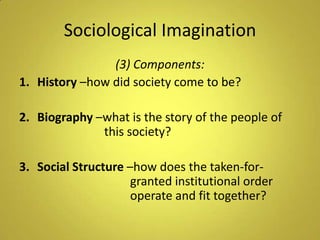
One key concept in sociology is the sociological imagination, which was introduced by American sociologist C. Wright Mills in his 1959 book of the same name. The sociological imagination encourages individuals to connect their personal experiences to larger social issues and historical contexts. Mills argued that people should be able to see the intersection between their private lives and the broader social structures in which they exist. This perspective helps individuals understand how personal troubles are often connected to public issues and how societal factors influence personal experiences.

The sociological imagination involves the ability to view one’s own life and the lives of others from a sociological perspective. It requires considering the broader social, historical, and cultural context in which individuals live. This perspective enables individuals to move beyond personal anecdotes and recognize the social forces at play in shaping their lives.

Key components of the sociological imagination include:

  1. Biography and History: Understanding the interplay between personal experiences (biography) and historical and social contexts (history). It involves recognizing that personal choices and experiences are influenced by societal structures and historical developments.
  2. Social Structure: Examining the overarching patterns and structures that organize society, such as institutions, social classes, and power dynamics. Social structure influences individuals and shapes their opportunities and constraints.
  3. Culture and Society: Recognizing the role of culture in shaping values, beliefs, norms, and practices within a society. Sociological imagination involves understanding how culture influences individual behavior and societal trends.
  4. Critical Thinking: Developing a critical and reflective mindset to question assumptions, challenge common beliefs, and analyze social phenomena. This involves looking beyond individual experiences to identify broader social patterns and inequalities.

Sociological imagination is a powerful tool for both sociological research and personal development. It encourages individuals to go beyond individualistic explanations for their circumstances and consider the broader social context. By understanding the societal forces at play, individuals can develop a more informed and critical perspective on their own lives and the world around them.

In the field of sociology, researchers use the sociological imagination to conduct studies and analyze social issues. Sociologists explore topics such as inequality, crime, education, family dynamics, and more, aiming to understand the underlying social structures and processes that contribute to these phenomena. This sociological perspective is crucial for developing insights into societal problems and proposing solutions that address root causes rather than merely addressing symptoms.

References

Dehalwar, K., & Sharma, S. N. (2023). Fate of Slums of Bhopal-A Tale of Struggle and Resilience.ย Think India Journal,ย 26(4), 12-18.

Harvey, D. (2005). The sociological and geographical imaginations.ย International journal of politics, culture, and society,ย 18, 211-255.
Hughes, E. C. (1963). Race relations and the sociological imagination.ย American Sociological Review, 879-890.

Mills, C. W. (2023). The sociological imagination. Inย Social Workย (pp. 105-108). Routledge.

Sharma, S. N. (Ed.). (2016).ย New perspectives in sociology and allied fields. EduPedia Publications (P) Ltd.

Thomson, R. (2014). Generational research: between historical and sociological imaginations.ย International Journal of Social Research Methodology,ย 17(2), 147-156.

Best Practices for Ensuring Total Sanitation in Bhopal

Bloganuary writing prompt
Write about a few of your favorite family traditions.

By Kavita Dehalwar

Bhopal, the capital city of Madhya Pradesh, is a thriving metropolis with a rich cultural heritage. While the city has seen significant growth and development, ensuring total sanitation remains a crucial challenge. Adopting best practices for sanitation is essential for the well-being of its residents and the overall development of the city. This article explores some key strategies and initiatives that can be implemented to achieve total sanitation in Bhopal.

  1. Community Engagement and Awareness:
    • Develop comprehensive awareness campaigns to educate residents about the importance of sanitation and its impact on public health.
    • Encourage community participation in cleanliness drives and waste management initiatives.
    • Establish partnerships with local NGOs, schools, and community leaders to amplify the reach of sanitation awareness programs.
  2. Proper Waste Management:
    • Implement a robust waste management system that includes waste segregation at source, efficient collection, transportation, and disposal.
    • Promote the use of composting and recycling to reduce the burden on landfills.
    • Enforce strict penalties for illegal dumping and encourage responsible waste disposal practices.
  3. Public Toilet Facilities:
    • Increase the number of public toilets in key areas to provide accessible and clean facilities for residents and visitors.
    • Regular maintenance and cleanliness checks should be conducted to ensure the hygiene of public toilets.
    • Implement community-led initiatives for the maintenance and upkeep of public toilet facilities.
  4. Promote Sustainable Practices:
    • Encourage the use of eco-friendly products and packaging to reduce environmental impact.
    • Initiate tree plantation drives to enhance green cover and improve air quality.
    • Implement water conservation measures to ensure sustainable use of water resources.
  5. Smart Technology Integration:
    • Utilize technology for monitoring and managing sanitation services, such as smart waste bins that send alerts when they are full.
    • Implement a city-wide sanitation app to report issues, request services, and provide feedback on sanitation conditions.
    • Use data analytics to identify areas with high sanitation needs and optimize resource allocation.
  6. Collaboration with Stakeholders:
    • Collaborate with local businesses, industries, and educational institutions to create a unified approach to sanitation.
    • Engage with government agencies, civic bodies, and private sector organizations to pool resources for large-scale sanitation projects.
    • Foster partnerships with international organizations and experts to gain insights into global best practices.
  7. Regular Monitoring and Evaluation:
    • Establish a monitoring system to track the progress of sanitation initiatives regularly.
    • Conduct periodic assessments of sanitation infrastructure, services, and public satisfaction.
    • Use feedback from residents and stakeholders to make continuous improvements to sanitation programs.
  8. Legislation and Enforcement:
    • Develop and enforce strict sanitation regulations to ensure compliance with cleanliness standards.
    • Impose fines for violations and non-compliance to create a deterrent for irresponsible sanitation practices.
    • Regularly update and adapt legislation to address emerging sanitation challenges.

Conclusion:

Achieving total sanitation in Bhopal requires a concerted effort from the government, businesses, communities, and individuals. By implementing these best practices, Bhopal can work towards creating a clean, healthy, and sustainable environment for its residents, setting an example for other cities to follow. Total sanitation is not just a goal; it’s a collective responsibility that, when achieved, contributes significantly to the overall well-being and progress of the city.

References

Agarwal, S., & Sharma, S. N. Universal Design to Ensure Equitable Society.ย International Journal of Engineering and Technical Research (IJETR),ย 1.

Ayub, J. (2022, December 13). Garbage piles up as Bhopal Municipal Corporation workers go on indefinite strike over vacant posts. Times Of India. https://timesofindia.indiatimes.com/city/bhopal/garbage-piles-up-as-bmc-workers-go-on-indefinite-strike-over-vacant-posts/articleshow/96186484.cms

Bathran, R. (2011). Indian sanitation.

Dehalwar, K., & Singh, J. (2015). A Critical Evaluation of the main Causes of Water Management Problems in Indian Urban Areas.ย International Research Journal of Environment Sciences. 4,ย 8.

Dehalwar, K., & Sharma, S. N. (2023). Fate of Slums of Bhopal-A Tale of Struggle and Resilience.ย Think India Journal,ย 26(4), 12-18.

Pardeshi, G. (2009). Women in total sanitation campaign: a case study from Yavatmal district, Maharashtra, India.ย Journal of human ecology,ย 25(2), 79-85.

Galvin, M. (2015). Talking shit: is Communityโ€Led Total Sanitation a radical and revolutionary approach to sanitation?.ย Wiley Interdisciplinary Reviews: Water,ย 2(1), 9-20.

Pardeshi, G., Shirke, A., & Jagtap, M. (2008). SWOT analysis of total sanitation campaign in Yavatmal district of Maharashtra.ย Indian journal of community medicine: official publication of Indian Association of Preventive & Social Medicine,ย 33(4), 255.

Sharma, S. N. (2014). Fate of Rural Sanitation Scheme.ย International Journal of Research (IJR),ย 1(2).

Sharma, S. N., & Biswas, A. (2016). Best practices for ensuring total sanitation.ย International Journal for Social Studies, ISSN, 2455-3220.

World Health Organization. (2020). Achieving quality health services for all, through better water, sanitation and hygiene: lessons from three African countries.

Understanding the Distinction: Quantitative vs. Qualitative Research

Bloganuary writing prompt
If you could make your pet understand one thing, what would it be?

By Shashikant Nishant Sharma

Research is a fundamental component of advancing knowledge and understanding various phenomena. In the realm of research, two primary methodologies, quantitative and qualitative, serve distinct purposes and contribute uniquely to the exploration of diverse topics. This article aims to delve into the differences between quantitative and qualitative research, highlighting their characteristics, methodologies, and the advantages they bring to the research process.

Quantitative Research:

Quantitative research is a systematic, empirical investigation that employs statistical, mathematical, or computational techniques to collect and analyze numerical data. This method aims to quantify relationships, patterns, and trends within a population or sample. Key characteristics of quantitative research include:

  1. Objective Measurement: Quantitative research relies on objective measurement and numerical data. Researchers use structured instruments such as surveys, questionnaires, or experiments to gather information.
  2. Statistical Analysis: Data collected in quantitative research is subjected to statistical analysis. This involves the use of mathematical models to identify patterns, correlations, and trends in the data.
  3. Large Sample Sizes: Quantitative studies often involve large sample sizes to ensure the generalizability of findings to a broader population.
  4. Replicability: The emphasis on numerical data and statistical analysis allows for the replication of studies by other researchers to validate or challenge the initial findings.

Quantitative research is particularly valuable in fields such as psychology, economics, and public health where numerical data can provide precise insights into patterns and trends.

Qualitative Research:

Qualitative research, on the other hand, focuses on exploring and understanding the complexities of human experiences, behaviors, and social phenomena through non-numerical data. This method aims to uncover the underlying meanings, motivations, and cultural contexts associated with a particular subject. Key characteristics of qualitative research include:

  1. In-depth Exploration: Qualitative research emphasizes in-depth exploration and understanding of the subject matter. Researchers use methods like interviews, focus groups, and participant observation to gather rich, descriptive data.
  2. Subjectivity and Context: Qualitative research acknowledges the subjective nature of human experiences and considers the influence of context on behaviors and perceptions.
  3. Emergent Design: Unlike the rigid structure of quantitative research, qualitative studies often have an emergent design, allowing researchers to adapt their approach based on ongoing analysis and findings.
  4. Small Sample Sizes: Qualitative studies typically involve smaller sample sizes, allowing for a detailed examination of individual cases.

Qualitative research is particularly valuable in fields such as anthropology, sociology, and psychology where a deep understanding of human behavior and social phenomena is essential.

Comparative Analysis:

While both methodologies contribute valuable insights to the research landscape, they have distinct strengths and limitations. Quantitative research provides objective, generalizable data suitable for statistical analysis and hypothesis testing. In contrast, qualitative research offers a nuanced understanding of complex human phenomena, capturing the depth and context often missed by quantitative methods.

Below is a comparative table highlighting the key differences between quantitative and qualitative research methodologies:

AspectQuantitative ResearchQualitative Research
Data TypeNumerical data (quantifiable and measurable)Non-numerical data (textual, visual, narrative)
ObjectiveObjectively measures relationships, patterns, and trendsSubjectively explores meanings, motivations, and contexts
MethodologyStructured and standardized instruments (surveys, experiments)Unstructured and flexible methods (interviews, focus groups, observation)
Sample SizeLarge sample sizes for generalizabilitySmall sample sizes for in-depth exploration
Statistical AnalysisExtensive use of statistical analysis for patterns and correlationsLimited or no statistical analysis; emphasis on interpretation
ReplicabilityHighly replicable due to standardized methods and statistical rigorLimited replicability; context-dependent findings
PurposeTesting hypotheses, making predictions, establishing causationExploring complex phenomena, understanding context and meaning
ValidityHigh internal and external validity due to controlled environmentsHigh ecological validity, capturing real-world contexts
FlexibilityRigidity in research design and data collection proceduresFlexibility in research design, allowing for emergent insights
Research SettingsOften conducted in controlled settings (labs, surveys)Conducted in natural settings (fieldwork, real-world contexts)
Common FieldsPsychology, economics, public healthSociology, anthropology, psychology, humanities
Data RepresentationCharts, graphs, statistical tablesQuotes, narratives, themes, visual representations
Ethical ConsiderationsFocus on confidentiality, informed consent, and protection of participantsEmphasis on participant voices, ethical considerations in interpretation

This table provides a concise overview of the main distinctions between quantitative and qualitative research methodologies. It’s important to note that researchers often choose a methodology based on the nature of their research questions and objectives, and a combination of both methods (mixed methods) is increasingly common in contemporary research practice.

Conclusion:

In conclusion, the choice between quantitative and qualitative research depends on the research question, objectives, and the nature of the phenomena under investigation. Researchers often employ a mixed-methods approach, combining both methodologies to gain a comprehensive understanding of their research topic. The dynamic interplay between quantitative and qualitative research continues to shape our understanding of diverse disciplines, fostering a holistic approach to knowledge generation and advancement.

References

Clark, V. L. P., Creswell, J. W., Green, D. O. N., & Shope, R. J. (2008). Mixing quantitative and qualitative approaches.ย Handbook of emergent methods,ย 363, 363-387.

Cook, T. D., & Reichardt, C. S. (Eds.). (1979).ย Qualitative and quantitative methods in evaluation researchย (Vol. 1). Beverly Hills, CA: Sage publications.

Dehalwar, K., & Sharma, S. N. (2023). Fundamentals of Research Writing and Uses of Research Methodologies.

Dehalwar, K., & Singh, J. (2015). A Critical Evaluation of the main Causes of Water Management Problems in Indian Urban Areas.ย International Research Journal of Environment Sciences. 4,ย 8.

Gerring, J. (2017). Qualitative methods.ย Annual review of political science,ย 20, 15-36.

McEvoy, P., & Richards, D. (2006). A critical realist rationale for using a combination of quantitative and qualitative methods.ย Journal of research in nursing,ย 11(1), 66-78.

Punch, K. F. (2008). Quantitative and qualitative approaches.ย The Sociology of Healthcare: A Reader for Health Professionals, 51.

Roessner, D. (2000). Quantitative and qualitative methods and measures in the evaluation of research.ย Research Evaluation,ย 9(2), 125-132.

Sechrest, L., & Sidani, S. (1995). Quantitative and qualitative methods:: Is There an Alternative?.ย Evaluation and program planning,ย 18(1), 77-87.

Sharma, S. N., Chatterjee, S., & Dehalwar, K. (2023). Mahatma Gandhi National Rural Employment Guarantee Scheme: Challenges and Opportunities.ย Think India Journal,ย 26(1), 7-15.

Sharma, S. N. (2016). Introduction to Sociology.ย New Perspectives in Sociology and Allied Fields, 1.

Sharma, S. N. Techniques of Meta-Analysis for Unlocking Knowledge.

Sharma, S. N. (2015). Introduction to Sociology.ย Journal for Studies in Management and Planning,ย 1(8), 32-36.

Watzlawik, M., & Born, A. (Eds.). (2007).ย Capturing identity: Quantitative and qualitative methods. University Press of America.

Yousefi Nooraie, R., Sale, J. E., Marin, A., & Ross, L. E. (2020). Social network analysis: An example of fusion between quantitative and qualitative methods.ย Journal of Mixed Methods Research,ย 14(1), 110-124.

What is Focus Group Discussion Research Technique

Bloganuary writing prompt
Think back on your most memorable road trip.

By Shashikant Nishant Sharma

Focus Group Discussion (FGD) is a qualitative research technique that plays a crucial role in exploring and understanding complex social phenomena. This method brings together a small, diverse group of participants to discuss a specific topic under the guidance of a skilled moderator. Through open and dynamic interaction, FGDs provide researchers with rich insights into participants’ perspectives, attitudes, and experiences.

Key Components of Focus Group Discussions:

  1. Participants:
    • FGDs typically involve 6 to 12 participants who share common characteristics relevant to the research question. Participants are selected to ensure diversity in opinions and experiences.
  2. Moderator:
    • A skilled moderator facilitates the discussion, guiding participants through the conversation while encouraging openness. Moderators use a predetermined set of open-ended questions to explore various aspects of the research topic.
  3. Focus Group Guide:
    • A carefully crafted set of questions, known as a focus group guide, serves as the backbone of the discussion. These questions are open-ended, allowing participants to express their thoughts freely.
  4. Setting:
    • FGDs are conducted in a conducive environment that promotes open communication. The setting should be comfortable, neutral, and free from distractions to encourage participants to share their thoughts openly.
  5. Recording:
    • Sessions are often recorded, either through audio or video, to capture the richness of the discussion. This allows researchers to revisit and analyze the data more thoroughly.

The Focus Group Discussion Process:

  1. Introduction:
    • The session begins with a warm welcome and an introduction to the purpose of the discussion. Participants are encouraged to express their opinions freely, creating a comfortable atmosphere.
  2. Warm-up Questions:
    • To ease participants into the discussion, moderators start with broad and non-threatening questions. This helps build rapport and sets the tone for more in-depth exploration.
  3. Main Discussion:
    • The moderator guides the conversation using the focus group guide, allowing participants to express their thoughts and react to each other’s comments. This interactive process often leads to the emergence of shared understandings and diverse perspectives.
  4. Probing and Clarification:
    • Moderators use probing techniques to delve deeper into participants’ responses, seeking clarification and encouraging a more detailed exploration of ideas. This helps uncover nuanced insights.
  5. Closing:
    • The session concludes with a summary of key points and a debriefing with participants. This provides an opportunity for participants to reflect on the discussion and ask any final questions.

Advantages of Focus Group Discussions:

  1. Rich Data:
    • FGDs generate in-depth qualitative data, capturing the complexity and nuances of participants’ perspectives.
  2. Group Dynamics:
    • Interactions within the group can reveal social dynamics, shared beliefs, and divergent opinions that may not surface in individual interviews.
  3. Real-time Insights:
    • The dynamic nature of FGDs allows researchers to capture real-time reactions and responses, providing a more authentic understanding of participants’ perspectives.
  4. Exploratory Nature:
    • FGDs are particularly useful in the early stages of research when exploring new topics or generating hypotheses.
  5. Cost-Effective:
    • Compared to one-on-one interviews, FGDs can be a more cost-effective way to gather insights from multiple participants simultaneously.

Challenges and Considerations:

  1. Group Influence:
    • Group dynamics may lead to conformity or hesitation in expressing dissenting opinions. Skilled moderation is crucial to mitigate these effects.
  2. Moderator Bias:
    • Moderators must be aware of their biases and strive to maintain neutrality to ensure the discussion remains participant-driven.
  3. Data Analysis Complexity:
    • Analyzing FGD data can be complex due to the multitude of perspectives. Thorough analysis involves identifying patterns, themes, and divergent viewpoints.
  4. Generalization Limitations:
    • Findings from FGDs are often context-specific and may not be easily generalized to larger populations. Therefore, researchers should complement FGDs with other research methods for a more comprehensive understanding.

In conclusion, Focus Group Discussions are a powerful qualitative research technique that provides valuable insights into the social, cultural, and behavioral dimensions of a research question. When conducted with careful planning, skilled moderation, and thoughtful analysis, FGDs contribute significantly to the depth and richness of qualitative research. Researchers across various disciplines continue to embrace this method as an essential tool in unraveling the complexities of human experience and perception.

References

Bohnsack, R. (2004). Group discussion and focus groups.ย A companion to qualitative research, 214-221.

Dehalwar, K., & Sharma, S. N. (2023). Fundamentals of Research Writing and Uses of Research Methodologies.

Dehalwar, K., & Singh, J. (2015). A Critical Evaluation of the main Causes of Water Management Problems in Indian Urban Areas.ย International Research Journal of Environment Sciences. 4,ย 8.

Hennink, M. M. (2013).ย Focus group discussions. Oxford University Press.

Moretti, F., van Vliet, L., Bensing, J., Deledda, G., Mazzi, M., Rimondini, M., … & Fletcher, I. (2011). A standardized approach to qualitative content analysis of focus group discussions from different countries.ย Patient education and counseling,ย 82(3), 420-428.

O. Nyumba, T., Wilson, K., Derrick, C. J., & Mukherjee, N. (2018). The use of focus group discussion methodology: Insights from two decades of application in conservation.ย Methods in Ecology and evolution,ย 9(1), 20-32.

Sharma, S. N., Chatterjee, S., & Dehalwar, K. (2023). Mahatma Gandhi National Rural Employment Guarantee Scheme: Challenges and Opportunities.ย Think India Journal,ย 26(1), 7-15.

Wong, L. P. (2008). Focus group discussion: a tool for health and medical research.ย Singapore Med J,ย 49(3), 256-60.

The Power of Meta-Analysis in Research

Daily writing prompt
What is your mission?

By Kavita Dehalwar

Meta-analysis, a statistical technique that combines and synthesizes data from multiple independent studies, has become a cornerstone in scientific research. By aggregating findings from various studies on a specific topic, meta-analysis provides a more comprehensive and robust understanding of the subject matter. This article explores the concept of meta-analysis, its methodology, advantages, and limitations, emphasizing its crucial role in advancing research across diverse disciplines.

Understanding Meta-Analysis:

Meta-analysis involves the systematic review and quantitative synthesis of data from multiple studies. The primary goal is to pool data to draw more accurate and reliable conclusions than those possible from individual studies alone. This approach helps researchers overcome limitations associated with small sample sizes, variability in study designs, and potential publication biases.

Key Components of Meta-Analysis:

  1. Literature Review: Conducting a thorough literature review is the first step in meta-analysis. Researchers identify relevant studies, ensuring a comprehensive understanding of the existing body of work on the chosen topic.
  2. Study Selection Criteria: Establishing clear inclusion and exclusion criteria is crucial to ensure the selected studies are comparable and relevant to the research question. This step helps maintain the integrity of the meta-analysis.
  3. Data Extraction: Data from each included study are systematically extracted. This involves collecting information on study design, participant characteristics, interventions or exposures, outcomes, and statistical results.
  4. Effect Size Calculation: The effect size quantifies the magnitude of the relationship between variables or the intervention’s impact. Common effect size measures include odds ratios, risk ratios, and standardized mean differences.
  5. Statistical Analysis: Meta-analysis employs statistical techniques to combine the results of individual studies. Weighting is applied to account for study size, and heterogeneity tests assess the variability between studies.

Advantages of Meta-Analysis:

  1. Increased Statistical Power: Meta-analysis enhances statistical power by combining data from multiple studies, allowing researchers to detect smaller effect sizes that may be overlooked in individual studies.
  2. Generalizability: Pooling data from diverse studies increases the generalizability of findings, providing a more comprehensive understanding of the research question across different populations and contexts.
  3. Identifying Patterns and Trends: Meta-analysis enables the identification of patterns or trends that may not be evident in individual studies, offering a more holistic view of the research landscape.
  4. Resolution of Inconsistencies: Conflicting findings in individual studies can be reconciled through meta-analysis. By exploring sources of heterogeneity, researchers can identify factors contributing to discrepancies and refine their interpretations.

Limitations of Meta-Analysis:

  1. Publication Bias: Meta-analyses are susceptible to publication bias, as studies with significant or positive results are more likely to be published. This bias can distort the overall findings and affect the validity of the meta-analysis.
  2. Heterogeneity: Variability in study designs, participant characteristics, and methodologies can contribute to heterogeneity, challenging the synthesis of results. Researchers must carefully assess and address heterogeneity in their analyses.
  3. Quality of Included Studies: Meta-analyses are only as robust as the studies included. If the quality of the individual studies is low, the overall meta-analysis may be compromised.

Conclusion:

Meta-analysis stands as a powerful tool in the researcher’s arsenal, offering a methodical and quantitative approach to synthesizing evidence from diverse studies. While it has its limitations, when conducted rigorously, meta-analysis provides a valuable means of drawing more reliable conclusions and advancing our understanding of complex phenomena across various disciplines. As research methodologies continue to evolve, meta-analysis remains a key player in the pursuit of knowledge and scientific progress.

References

Dehalwar, K., & Singh, J. (2015). A Critical Evaluation of the main Causes of Water Management Problems in Indian Urban Areas.ย International Research Journal of Environment Sciences. 4,ย 8.

Dehalwar, K., & Sharma, S. N. (2023). Fundamentals of Research Writing and Uses of Research Methodologies.

Sharma, S. N. (2019). Review of most used urban growth models.ย International Journal of Advanced Research in Engineering and Technology (IJARET),ย 10(3), 397-405.

Sharma, S. N. Techniques of Meta-Analysis for Unlocking Knowledge.

A Note on Swarna Jayanti Shahari Rozgar Yojana (SJSRY)

By: Kavita Dehalwar

Swarna Jayanti Shahari Rozgar Yojana (SJSRY) is a government scheme in India aimed at promoting employment opportunities and improving the quality of life for urban poor individuals. It was launched on 1st December 1997, on the occasion of the 25th anniversary of India’s independence, and is part of the broader National Urban Livelihoods Mission (NULM).

Key Objectives of Swarna Jayanti Shahari Rozgar Yojana:

  1. Employment Generation: The primary goal of SJSRY is to generate sustainable employment opportunities for the urban poor, with a specific focus on skill development and self-employment ventures.
  2. Skill Development: The scheme emphasizes the importance of skill enhancement and training for individuals from marginalized urban communities. By imparting relevant skills, the program aims to enhance employability and income-generating capabilities.
  3. Self-Employment: SJSRY promotes self-employment among the urban poor by providing financial assistance and support for starting small businesses or enterprises. This aspect of the program is crucial for fostering entrepreneurship and economic independence.
  4. Urban Poverty Alleviation: The scheme is designed to address the challenges of urban poverty by creating a conducive environment for income generation, thereby contributing to the overall improvement of living standards in urban areas.

Components of Swarna Jayanti Shahari Rozgar Yojana:

The SJSRY is broadly divided into two sub-components:

  1. Urban Self-Employment Program (USEP): This component focuses on providing financial assistance and skill training to individuals interested in starting their own ventures. The financial aid is intended to cover a portion of the project cost.
  2. Urban Wage Employment Program (UWEP): UWEP is aimed at providing wage employment opportunities for the urban poor. This involves the creation of temporary employment through various community-based projects.

Implementation and Monitoring:

The implementation of the Swarna Jayanti Shahari Rozgar Yojana involves collaboration between the central government, state governments, and urban local bodies. The program is monitored by the Ministry of Housing and Urban Affairs, Government of India, to ensure effective implementation and adherence to the program’s objectives.

It’s important to note that policies and schemes may undergo changes and updates over time. For the most current and detailed information on the Swarna Jayanti Shahari Rozgar Yojana, it is advisable to refer to official government sources or recent publications related to urban development in India.

References

Rajkonwar, A. B. (2005). Swama Jayanti Shahari Rozgar Yojana: A study on effectiveness in Dibrugarh. SEDME (Small Enterprises Development, Management & Extension Journal), 32(4), 23-42.

Sharma, S. N. (2020). A Review of Swarna Jayanti Shahari Rozgar Yojana. Think India Journal, 23(1), 26-32.

Shobha, K. (2007). Performance of women beneficiaries of the Prime Minister’s Rozgar Yojana in Coimbatore City (Doctoral dissertation, Avinashilingam University for Women (India)).

Benefits of Open Access Publication Database ScienceOPEN

By Shashikant Nishant Sharma

ScienceOpen is an open-access research networking platform that aims to foster collaboration and visibility in the scientific community. Please note that the features and benefits of platforms like ScienceOpen may evolve over time, so it’s a good idea to check the latest information on their website or other reliable sources. Here are some potential benefits associated with ScienceOpen:

  1. Open Access Content: ScienceOpen provides access to a wide range of open-access scholarly content, including articles, conference proceedings, and other academic materials. Open access promotes the free dissemination of knowledge and facilitates collaboration among researchers.
  2. Interdisciplinary Research: The platform is designed to break down disciplinary silos by covering a broad spectrum of research areas. This can encourage interdisciplinary collaboration, allowing researchers from different fields to discover and engage with each other’s work.
  3. Discoverability and Visibility: Researchers can enhance the visibility of their work by sharing and promoting their publications on ScienceOpen. The platform provides tools for researchers to create profiles, showcase their publications, and connect with other researchers, potentially increasing the impact of their research.
  4. Post-Publication Peer Review: ScienceOpen supports post-publication peer review, enabling researchers to contribute comments, reviews, and discussions on published articles. This transparent and collaborative review process can provide additional insights and perspectives on the research.
  5. Research Networking: The platform facilitates networking among researchers by allowing them to connect with peers, follow their work, and stay updated on the latest research in their fields of interest. Building a professional network is crucial for collaboration and staying informed about advancements in specific areas.
  6. Altmetrics and Impact Tracking: ScienceOpen provides metrics to help researchers track the impact of their work. This includes traditional citation metrics as well as alternative metrics (altmetrics) that consider the broader influence of research through social media, online discussions, and other channels.
  7. Integration with ORCID: ScienceOpen integrates with ORCID, a persistent digital identifier for researchers. This integration helps ensure proper attribution of research contributions and enhances the credibility and accuracy of researchers’ profiles.
  8. Custom Collections and Projects: Researchers and institutions can create custom collections or projects on ScienceOpen to curate and organize research content. This feature allows for the creation of thematic collections, making it easier for users to discover relevant research within specific topics.

For Publishers

ScienceOpen offers content hosting, context building and marketing services for publishers. See our tailored offerings

For Institutions

ScienceOpen offers state-of-the-art technology and a range of solutions and services

For Researchers

Make an impact and build your research profile in the open with ScienceOpen

It’s important to verify the current features and benefits of ScienceOpen by visiting their official website or contacting them directly, as the platform may have introduced new functionalities or undergone changes since my last update.

References

Aspesi, C., & Brand, A. (2020). In pursuit of open science, open access is not enough.ย Science,ย 368(6491), 574-577.

Burgelman, J. C., Pascu, C., Szkuta, K., Von Schomberg, R., Karalopoulos, A., Repanas, K., & Schouppe, M. (2019). Open science, open data, and open scholarship: European policies to make science fit for the twenty-first century.ย Frontiers in big data,ย 2, 43.

Gonzรกlez, A. G. (2005). Open science: open source licenses in scientific research.ย NCJL & Tech.,ย 7, 321.

Sharma, S. N. (2023). Understanding Citations: A Crucial Element of Academic Writing.

Stodden, V. C. (2011). Trust your science? Open your data and code.

National Urban Policy Framework (NUPF) 2018

By Kavita Dehalwar

India is undergoing one of the worldโ€™s fastest urban transitions. By 2030, nearly 600 million Indians are expected to live in urban areas, contributing around 70% of the national GDP. This transformation brings both opportunities and challenges: rapid economic growth, innovation, and cultural vibrancy, but also rising inequality, housing shortages, pollution, congestion, and inadequate infrastructure.

Photo by RDNE Stock project on Pexels.com

Recognizing the need for a coherent national approach, the National Urban Policy Framework (NUPF) 2018 was introduced as a guiding document for cities to become sustainable engines of growth, aligned with the goals of inclusive development, improved quality of life, and economic competitiveness.


2. Vision of NUPF

The vision of the NUPF 2018 is to create โ€œSustainable, Inclusive, Productive, and Resilient Urban Developmentโ€ in India.
It seeks to reimagine Indian cities as:

  • Engines of economic growth
  • Inclusive hubs that provide opportunities for all, especially marginalized communities
  • Resilient spaces capable of addressing climate change and disaster risks
  • Livable cities that improve the quality of life for residents

3. Guiding Principles

The framework rests on certain guiding principles:

  1. Sustainability: Promoting environmentally responsible urbanization.
  2. Inclusiveness: Ensuring equitable access to housing, services, and opportunities.
  3. Integration: Coordinating across sectors and levels of governance.
  4. Participation: Engaging citizens, communities, and stakeholders in planning.
  5. Resilience: Building adaptive capacity to handle shocks and stresses.

4. The Ten Sutras (Core Pillars) of NUPF

The NUPF identifies 10 sutras (thematic pillars) that define the scope of urban transformation in India:

  1. Sustainable & Inclusive Cities โ€“ Cities that balance growth with equity and environment.
  2. Cities as Engines of Growth โ€“ Leveraging urban areas to drive national economic progress.
  3. Housing & Inclusiveness โ€“ Affordable, adequate, and safe housing for all sections of society.
  4. Productivity & Prosperity โ€“ Enhancing economic efficiency and competitiveness of cities.
  5. Urban Infrastructure & Resilience โ€“ Strengthening transport, water, sanitation, energy, and resilience to climate risks.
  6. Urban Governance & Institutional Framework โ€“ Clear roles, empowered institutions, and capacity-building at city level.
  7. Smart Cities & Technology โ€“ Harnessing ICT for better service delivery, transparency, and citizen engagement.
  8. Urban Planning & Design โ€“ Compact, transit-oriented, and livable urban forms.
  9. Housing for All & Slum-Free Cities โ€“ Integration of slum redevelopment and affordable housing programs.
  10. Implementation & Performance Management โ€“ Strong monitoring, evaluation, and outcome-based governance.

5. Key Areas of Intervention

To operationalize the framework, NUPF suggests interventions in the following areas:

  • Urban Housing Policy: Expand rental housing, cooperative housing, and slum redevelopment.
  • Infrastructure Development: Public transport, water supply, sanitation, energy efficiency.
  • Climate & Environment: Green spaces, renewable energy, disaster risk management.
  • Urban Economy: Skill development, local economic zones, entrepreneurship.
  • Social Inclusion: Gender-sensitive urban planning, welfare for migrants and informal workers.
  • Governance: Empowered municipal governments, financial autonomy, and capacity building.

6. Alignment with Global Agendas

The NUPF 2018 aligns with:

  • UN Sustainable Development Goals (SDG 11: Sustainable Cities and Communities)
  • Paris Climate Agreement (low-carbon pathways for cities)
  • New Urban Agenda (Habitat III) by UN-Habitat
    This ensures Indiaโ€™s urban development policies resonate with global commitments.

7. Implementation Strategy

The framework emphasizes multi-level governance and partnerships:

  • Central Government: Provides broad policy directions, funding, and coordination.
  • State Governments: Adapt the framework to regional contexts.
  • Urban Local Bodies (ULBs): Implement policies on the ground with autonomy and accountability.
  • Private Sector & Civil Society: Collaborate in infrastructure, housing, and innovation.

8. Expected Outcomes

If effectively implemented, the NUPF 2018 aims to achieve:

  • Affordable housing and improved living standards.
  • Efficient and sustainable urban infrastructure.
  • Economic vibrancy through strong urban economies.
  • Cleaner, greener, and resilient cities.
  • Strong local governments capable of leading urban transformation.

9. Challenges in Implementation

  • Inadequate capacity of ULBs in planning and finance.
  • Lack of coordination between government departments.
  • Resistance to land and housing reforms.
  • Financing constraints for large-scale infrastructure.
  • Growing inequality and informal settlements.

10. Conclusion

The National Urban Policy Framework (2018) is a landmark step towards a holistic and integrated approach to urbanization in India. By focusing on inclusivity, sustainability, and resilience, it provides a roadmap for Indian cities to transform into dynamic centers of growth and innovation. However, its success depends on effective governance, strong local institutions, and continuous citizen participation.

References

Asibey, M. O., Mintah, F., Adutwum, I. O., Wireko-Gyebi, R. S., Tagnan, J. N., Yevugah, L. L., … & Abdul-Salam, A. J. (2022). Beyond rhetoric: urban planning-climate change resilience conundrum in Accra, Ghana.ย Cities,ย 131, 103950.

Adjei-Boadi, D., Agyei-Mensah, S., Adamkiewicz, G., Rodriguez, J. I., Gemmell, E., Ezzati, M., … & Owusu, G. (2022). Neighbourhood, built environment and childrenโ€™s outdoor play spaces in urban Ghana: Review of policies and challenges.ย Landscape and urban planning,ย 218, 104288.

Acharya, P., Gupta, A. K., Singh, S., Mani, N., & Wajih, S. (2023). Mainstreaming peri-urban ecosystems for urban resilience through policy-planning framework: an opportunity analysis for Indian cities. Inย Ecosystem Restoration: Towards Sustainability and Resilient Developmentย (pp. 57-74). Singapore: Springer Nature Singapore.

Kundu, D. (2020). Urbanisation in India: Towards a national urban policy framework and smart cities. Inย Developing National Urban Policies: Ways Forward to Green and Smart Citiesย (pp. 89-119). Singapore: Springer Nature Singapore.

Sharma, S. N. (2018). Review of National Urban Policy Framework 2018.ย Think India Journal,ย 21(3), 74-81.

Sharma, S. N. (2019). Review of most used urban growth models.ย International Journal of Advanced Research in Engineering and Technology (IJARET),ย 10(3), 397-405.

Sharma, S. N. (2014). Urban forms in planning and design.ย International Journal of Research,ย 1(1), 7-16.

Sharma, S. N. (2014).ย Participatory Planning in Plan Preparation. BookCountry.

Sharma, S. N., Dehalwar, K., Yadav, K., & Verma, D. (2025). Urban Street Canyon Turbulence and Vehicular Pollution Dispersion.ย Applied Journal of Earth and Environmental Research, 14-19.

Proposal for the Establishment of a Council of Planning

By Kavita Dehalwar

Effective planning is essential to ensure the sustainable development, efficient use of resources, and coordinated decision-making within our organization/community. At present, planning activities are fragmented across different units, leading to overlaps, gaps, and missed opportunities. To address this, it is proposed that a Council of Planning be established as a central coordinating body to guide, oversee, and harmonize planning processes.

Photo by Jonathan Borba on Pexels.com

2. Purpose of the Council

The Council of Planning will serve as a strategic advisory and coordinating body. Its purpose is to:

  • Provide a structured forum for long-term and short-term planning.
  • Ensure alignment of departmental/sectoral plans with overall organizational or community goals.
  • Promote transparency, accountability, and efficiency in the use of resources.
  • Facilitate collaboration between stakeholders, avoiding duplication of efforts.
  • Anticipate future challenges and propose proactive strategies.

3. Objectives

The Council of Planning will:

  1. Develop and periodically review a comprehensive planning framework.
  2. Advise leadership on policy priorities and strategic directions.
  3. Oversee the integration of financial, physical, and human resource planning.
  4. Recommend best practices for sustainable development and innovation.
  5. Monitor the implementation of approved plans and provide progress reports.

4. Composition

The Council shall consist of representatives drawn from relevant sectors, departments, and stakeholder groups, including but not limited to:

  • Senior leadership/management representatives
  • Heads of key departments (finance, infrastructure, environment, social development, etc.)
  • Technical experts and planners
  • Representatives of community/stakeholder groups (where applicable)

A Chairperson will be appointed/elected to preside over meetings, and a Secretariat will be established to provide administrative support.

5. Functions and Responsibilities

The Council will:

  • Convene regular meetings to deliberate on planning matters.
  • Prepare a consolidated planning document for submission to leadership/authorities.
  • Establish thematic working groups (e.g., infrastructure, social services, environment, technology).
  • Provide recommendations to resolve conflicts in planning priorities.
  • Promote stakeholder engagement and participatory planning.

6. Governance and Decision-Making

  • Decisions of the Council shall be made through consensus where possible, or by simple majority vote.
  • The Council will submit its recommendations to the leadership/board for approval and implementation.
  • A code of conduct and terms of reference will be developed to guide the Councilโ€™s work.

7. Expected Outcomes

  • Streamlined, coordinated, and inclusive planning processes.
  • Increased efficiency in resource allocation.
  • Stronger alignment of plans with long-term strategic goals.
  • Enhanced stakeholder confidence and transparency.
  • More resilient and adaptive organizational/community development.

8. Implementation Plan

  • Phase 1: Approval of the proposal and endorsement by leadership.
  • Phase 2: Appointment of Council members and establishment of Secretariat.
  • Phase 3: Development of terms of reference and planning framework.
  • Phase 4: First Council meeting and preparation of initial consolidated plan.

9. Conclusion

The establishment of a Council of Planning will provide a vital platform for integrated, participatory, and forward-looking decision-making. By creating this body, we will strengthen our capacity to meet present needs and anticipate future challenges, ensuring sustainable growth and development.

References

Council, L. C., & Gold, J. R. (2015).ย The planning of a new town. Routledge.

Rosen, G., & Avni, N. (2023). Negotiating urban redevelopment: Exploring the neighborhood council planning model.ย Journal of Planning Education and Research,ย 43(2), 416-427.

Sharma, S. N., & Dehalwar, K. (2023). Council of Planning for Promoting Planning Education and Planning Professionals.ย Journal of Planning Education & Research,ย 43(4).

Sharma, S. N., Dehalwar, K., Kumar, G., & Vyas, S. (2023). Redefining peri-urban urban areas.ย Thematics Journal of Geography,ย 12(3), 7-13.

Sharma, S. N. (2013). Sustainable development strategies and approaches.ย International Journal of Engineering and Technical Research (IJETR),ย 2.

Sharma, S. N. (2019). Review of most used urban growth models.ย International Journal of Advanced Research in Engineering and Technology (IJARET),ย 10(3), 397-405.

Tewdwr-Jones, M. (1998). Rural government and community participation: The planning role of community councils.ย Journal of Rural Studies,ย 14(1), 51-62.

60th Foundation Day of Indian Institute of Foreign Trade

Daily writing prompt
If you didn’t need sleep, what would you do with all the extra time?

By Shashikant Nishant Sharma

The Indian Institute of Foreign Trade (IIFT) was established in 1963 by the Government of India with the objective of contributing to the country’s foreign trade management and increasing exports by developing human resources, providing research-based consultancy, and conducting research. The institute was initially set up in collaboration with the United Nations Conference on Trade and Development (UNCTAD) and was located in Delhi’s Qutub Institutional Area.

The first Director of IIFT was R.K. Gupta, who played a crucial role in establishing the institute’s foundation. Under his leadership, IIFT evolved from a think tank to a recognized center of excellence in international trade and business. Over the years, IIFT has diversified its activities from conducting training programs for Indian Trade Service officers to offering various programs in international business management, trade research, and analysis.

In the initial years, IIFT functioned as an autonomous organization under the Ministry of Commerce and Industry, Government of India. In 1983, IIFT was declared a deemed university under Section 3 of the University Grants Commission (UGC) Act, 1956. The institute was granted the status of a deemed university in recognition of its significant contributions to the field of foreign trade management and research.

The Indian Institute of Foreign Trade (IIFT) in New Delhi celebrated its 60th Foundation Day, which also marked its Diamond Jubilee. During the occasion, Prof. Satinder Bhatia, the Vice-Chancellor of IIFT, paid tribute to the institute’s founding Director General, Late Shri HD Shourie, who laid the foundation of IIFT with the motto “Excellence is a way of life.” She regarded him as a father figure to IIFTians.

Prof. Bhatia emphasized the need to recognize those who have contributed to IIFT’s growth and its status among the top B-schools in India. She mentioned the academic and administrative improvements made at IIFT’s Delhi and Kolkata campuses and expressed confidence in the newly inaugurated Kakinada campus’s potential for excellence. Prof. Bhatia also mentioned IIFT’s collaborations and partnerships, which help the institute continue in the direction of its vision and mission, and make it an attractive destination for industries, students, and other stakeholders.

Since its establishment in 1963, IIFT has evolved from a think tank to a leading repository of knowledge in international trade, besides being India’s premier business school. It has achieved many milestones, including AACSB accreditation and consistent rankings among the top business schools. IIFT has also diversified its role and offers innovative programs to enhance the skills of business professionals. Moreover, IIFT’s growth rate in the first two decades of the new millennium has been phenomenal. In addition, the institute’s campus in GIFT City, Gujarat, will be operational from July 2023.

IIFT has come a long way since its inception and has established itself as one of the leading business schools in India, specializing in international trade and business. It has expanded its operations by establishing campuses in Kolkata and Kakinada, and plans to open a campus in Gujarat’s GIFT City in July 2023. IIFT has also received accreditation from various global accreditation bodies, including AACSB, which is a testament to its commitment to academic excellence.

Today, IIFT continues to provide research-based consultancy services, conduct training programs, and offer various academic programs in the field of international business management and research. Its alumni network includes prominent business leaders, entrepreneurs, and policymakers, who have made significant contributions to the development of the country’s foreign trade and business sectors.

Job Opening: Skill Trainer

Job Opening: Skill Trainer

Organization: Track2Training (An NGO Initiative)
Location: Multiple locations / Remote (as per program requirement)
Job Type: Full-Time / Part-Time / Contractual


About Track2Training

Track2Training is a not-for-profit organization committed to empowering communities through education, training, and capacity-building programs. We work with youth, women, and vulnerable groups to enhance livelihood opportunities, skill improvement, disaster resilience, and community development. Through our specialized training initiatives, we aim to equip individuals with practical knowledge and hands-on skills to become self-reliant and resilient in the face of challenges.


Position Overview

We are seeking passionate and dedicated Skill Trainers to join our team. The trainers will be responsible for delivering livelihood-oriented skill training, conducting workshops for skill development and improvement, and facilitating community-based resilience programs. The role requires individuals who are enthusiastic about capacity building, vocational education, and disaster preparedness, and who can motivate trainees to achieve their learning and career goals.


Key Responsibilities

  • Conduct structured training programs in livelihood skills, entrepreneurship, vocational skills, and disaster resilience.
  • Develop innovative and participatory training modules for youth, women, and marginalized communities.
  • Facilitate sessions on life skills, employability, communication, and digital literacy.
  • Provide hands-on demonstrations, group exercises, and interactive learning methods.
  • Train communities on disaster risk reduction (DRR), emergency preparedness, and resilience strategies.
  • Monitor progress of trainees and assess skill development outcomes.
  • Support beneficiaries in accessing livelihood opportunities, self-employment, and micro-entrepreneurship.
  • Prepare training reports, maintain attendance, and document success stories.
  • Collaborate with local partners, NGOs, and government agencies to maximize outreach and impact.

Desired Skills and Qualifications

  • Graduate / Postgraduate in Social Work, Education, Rural Development, Vocational Training, Disaster Management, or related fields.
  • Professional certification or experience in vocational skills training, entrepreneurship, or disaster resilience will be an added advantage.
  • Strong facilitation and communication skills in English and local languages.
  • Ability to motivate and mentor trainees from diverse backgrounds.
  • Knowledge of livelihood programs, community development, and skill-building initiatives.
  • Experience in working with NGOs, skill development missions, or government livelihood programs preferred.
  • Proficiency in MS Office, digital training tools, and online learning platforms.

Why Join Us?

  • Be part of a mission-driven NGO creating real social impact.
  • Opportunity to empower marginalized communities through sustainable skill development.
  • Work on innovative projects in livelihood training, digital empowerment, and disaster resilience.
  • Exposure to national and international collaborations in development initiatives.
  • Flexible and supportive work culture.

Remuneration

  • Competitive salary based on qualifications and experience.
  • Additional benefits as per NGO norms and project-based funding support.

How to Apply

Interested candidates are invited to send their CV, cover letter, and a brief note on their training experience to:

๐Ÿ“ง careers@track2training.org
๐Ÿ“… Application Deadline: 16 June 2022


๐Ÿ‘‰ Join Track2Training and contribute to building stronger, skilled, and resilient communities.

Managing Cities and Towns, Urban Governance, Local Government, and Planning & Development Agencies/Organizations

1. Introduction

Cities and towns are complex systems that require effective management to ensure orderly development, efficient infrastructure, and improved quality of life for residents. Rapid urbanization in many countries, particularly in developing nations like India, has increased the demand for effective urban management and governance. Managing urban areas involves coordinating land use, infrastructure development, transportation systems, housing, environmental protection, and public services.

Urban governance refers to the processes, institutions, and mechanisms through which cities and towns are planned, managed, and administered. It involves collaboration between government authorities, private organizations, and community stakeholders to achieve sustainable urban development.

Photo by Alvin & Chelsea on Pexels.com

2. Managing Cities and Towns

Managing cities and towns involves the administration and regulation of urban areas to ensure efficient functioning and development. Urban management includes activities such as planning land use, providing infrastructure, maintaining public services, and enforcing development regulations.

Key Functions of Urban Management

Urban management generally involves the following activities:

  • Land-use planning and regulation
  • Infrastructure development and maintenance
  • Transportation management
  • Housing and urban development
  • Environmental protection and waste management
  • Public health and sanitation services
  • Disaster management and resilience planning

Effective urban management requires coordination among multiple agencies and institutions.


3. Urban Governance

Urban governance refers to the system of decision-making and administrative processes used to manage urban areas. It involves the interaction between government institutions, private sector organizations, and citizens.

Urban governance focuses on ensuring transparency, accountability, participation, and efficiency in managing cities.

Principles of Urban Governance

Good urban governance is based on several key principles:

  • Participation: Involving citizens and stakeholders in decision-making processes.
  • Transparency: Ensuring openness in government activities and policies.
  • Accountability: Holding authorities responsible for their actions and decisions.
  • Efficiency: Delivering public services effectively and efficiently.
  • Equity: Ensuring fair distribution of resources and services among all communities.

Urban governance helps create democratic and responsive urban management systems.


4. Role of Local Government in Urban Development

Local governments play a central role in managing cities and towns. They are responsible for implementing development policies, providing basic services, and regulating urban growth.

Urban Local Bodies (ULBs)

Urban local bodies are the main institutions responsible for urban governance in cities and towns. They operate at the local level and address the specific needs of urban communities.

Examples include:

  • Municipal corporations (large cities)
  • Municipal councils or municipalities (medium-sized towns)
  • Nagar panchayats (smaller urban areas)

These institutions function under the framework of decentralization established by the 74th Constitutional Amendment Act of 1992 in India.


Functions of Urban Local Governments

Urban local governments perform several important functions, including:

  • Preparation and implementation of development plans
  • Provision of water supply and sanitation services
  • Solid waste management
  • Maintenance of roads and public spaces
  • Regulation of building construction and land use
  • Public health and environmental management

These functions help ensure the smooth functioning of urban areas.


5. Planning and Development Agencies

Urban planning and development often require specialized agencies and organizations that assist governments in preparing plans, implementing projects, and managing infrastructure.

Town and Country Planning Organizations

These organizations provide technical expertise in land-use planning, urban design, and regional planning.

Their responsibilities include:

  • Preparation of master plans and development plans
  • Conducting urban surveys and research
  • Advising governments on planning policies

Development Authorities

Development authorities are specialized agencies established to manage large urban development projects.

Their functions include:

  • Preparation of master plans
  • Development of housing and infrastructure projects
  • Regulation of land development
  • Acquisition and development of land for urban expansion

Examples include urban development authorities established in major cities.


Metropolitan Planning Authorities

In large metropolitan regions, specialized authorities coordinate development across multiple municipalities and administrative areas.

Their responsibilities include:

  • Regional transportation planning
  • Infrastructure development
  • Environmental management
  • Coordination between local governments

Housing Boards

Housing boards are responsible for planning and developing housing projects, particularly for low-income and middle-income groups.

They work to address housing shortages and improve urban living conditions.


6. Role of Other Stakeholders

Urban governance involves not only government institutions but also various other stakeholders.

Private Sector

Private developers and investors play an important role in infrastructure development, housing projects, and commercial development.

Non-Governmental Organizations (NGOs)

NGOs contribute to urban development through community participation, social programs, and environmental initiatives.

Community Participation

Local communities and residents are important participants in urban governance. Public consultations and participatory planning processes help ensure that development projects address local needs.


7. Challenges in Urban Governance

Despite the importance of urban governance, several challenges affect the effective management of cities and towns.

Rapid Urbanization

Fast population growth in cities increases the demand for housing, infrastructure, and services.

Institutional Fragmentation

Multiple agencies may have overlapping responsibilities, leading to coordination problems.

Financial Constraints

Urban local bodies often face limited financial resources to implement development projects.

Infrastructure Deficits

Many cities struggle to provide adequate infrastructure and services to growing populations.

Addressing these challenges requires improved institutional coordination, stronger governance frameworks, and innovative planning strategies.


8. Importance of Effective Urban Governance

Effective urban governance contributes to:

  • Improved infrastructure and public services
  • Sustainable urban development
  • Better environmental management
  • Economic growth and investment
  • Improved quality of life for urban residents

Good governance ensures that cities remain livable, resilient, and inclusive.


9. Conclusion

Managing cities and towns requires coordinated efforts from urban governance institutions, local governments, and planning agencies. Urban governance provides the framework through which cities are administered, policies are implemented, and development is guided.

Local governments play a central role in providing services and managing urban growth, while planning and development agencies assist in preparing plans and implementing infrastructure projects. Collaboration between government institutions, private sector organizations, and communities is essential for effective urban management.

As urbanization continues to increase, strengthening urban governance systems and improving institutional capacity will be crucial for achieving sustainable and inclusive urban development.

Daily writing prompt
What activities do you lose yourself in?

Faculty Development Program (FDP) conducted by Track2Training 10 June to 20 June 2020

Daily writing prompt
What time do you go to bed and wake up currently?

 The Faculty Development Program (FDP) conducted by Track2Training from June 10 to June 20, 2020, was a comprehensive and immersive online event designed to enhance the skills and competencies of educators in various aspects of teaching and learning. Here is a detailed overview of the program:

Overview

Event: Faculty Development Program
Dates: June 10 – June 20, 2020
Mode: Online
Organizer: Track2Training
Objective: To equip faculty members with modern teaching methodologies, technological tools, and innovative strategies to improve educational delivery and student engagement.

Key Components

  1. Curriculum and Content:
    • The program covered a broad range of topics relevant to contemporary educational practices.
    • Sessions included pedagogical innovations, assessment and evaluation techniques, curriculum design, and integration of technology in teaching.
  2. Schedule and Structure:
    • The FDP was structured over 10 days, with daily sessions divided into lectures, workshops, and interactive discussions.
    • Each day consisted of multiple sessions, including keynotes from industry experts, hands-on training, and Q&A segments.
  3. Learning Management System:
    • The program was facilitated through a robust online learning management system (LMS) that provided seamless access to resources, recorded sessions, and interactive tools.
    • Participants had access to a dashboard for tracking progress, submitting assignments, and engaging with peers and instructors.
  4. Expert Speakers and Facilitators:
    • The FDP featured a lineup of distinguished speakers and facilitators from academia and industry.
    • Experts shared insights on various educational trends, technological advancements, and best practices in teaching.
  5. Interactive and Practical Approach:
    • The sessions emphasized active learning through case studies, group activities, and role-playing exercises.
    • Participants were encouraged to share their experiences and apply new strategies in simulated classroom environments.
  6. Assessment and Feedback:
    • Participants underwent periodic assessments to gauge their understanding and application of the content.
    • Feedback mechanisms were in place to provide constructive criticism and guide improvement.

Detailed Session Breakdown

  1. Day 1-2: Introduction to Modern Pedagogy
    • Overview of current trends in education.
    • Understanding student-centered learning.
    • Techniques for fostering critical thinking and problem-solving skills.
  2. Day 3-4: Technology Integration in Teaching
    • Utilizing digital tools for effective teaching.
    • Introduction to e-learning platforms and virtual classrooms.
    • Best practices for creating engaging multimedia content.
  3. Day 5-6: Curriculum Development and Assessment
    • Principles of curriculum design and alignment with learning outcomes.
    • Innovative assessment techniques for measuring student performance.
    • Designing effective rubrics and feedback mechanisms.
  4. Day 7-8: Enhancing Student Engagement
    • Strategies for motivating and engaging students.
    • Incorporating gamification and interactive elements in lessons.
    • Understanding diverse learning styles and adapting teaching methods.
  5. Day 9: Research and Innovation in Education
    • Encouraging research-based teaching practices.
    • Exploring opportunities for educational research and publication.
    • Introduction to grant writing and research funding.
  6. Day 10: Reflection and Future Directions
    • Reflecting on learning outcomes and personal growth.
    • Developing action plans for implementing new strategies.
    • Networking and collaboration opportunities with fellow educators.

Outcomes and Benefits

  • Enhanced Skill Set: Participants gained practical skills in curriculum development, technology integration, and student engagement.
  • Professional Development: The program contributed to participants’ professional growth, enhancing their teaching effectiveness and career prospects.
  • Networking Opportunities: Attendees connected with peers, experts, and industry leaders, fostering collaboration and knowledge exchange.
  • Certification: Participants received a certificate of completion, validating their participation and newly acquired competencies.

The Faculty Development Program organized by Track2Training from June 10 to June 20, 2020, was a highly impactful initiative that equipped educators with essential skills and knowledge to navigate the evolving landscape of education. Through a blend of theoretical insights and practical applications, the program successfully addressed the challenges faced by modern educators and provided a platform for continuous learning and professional advancement.

Top-Down and Bottom-Up Approaches in Planning

1. Introduction

Planning approaches determine how decisions are made and implemented in the development process. In development planning, particularly in urban and rural planning, two major approaches are commonly discussed: the Top-Down approach and the Bottom-Up approach. These approaches differ mainly in terms of decision-making authority, participation of stakeholders, and implementation methods.

Photo by Alena Darmel on Pexels.com

The top-down approach focuses on centralized decision-making by higher authorities, whereas the bottom-up approach emphasizes participation and involvement of local communities in planning processes. Both approaches have advantages and limitations, and modern planning practices often try to combine elements of both to achieve effective and inclusive development.


2. Top-Down Approach

Definition

The Top-Down approach refers to a planning method where decisions are made by higher authorities such as national governments, central planning agencies, or senior administrators, and then implemented at lower levels such as states, districts, cities, or villages.

In this approach, policies, strategies, and development programs are designed at the top level and passed down to lower administrative levels for execution.


Characteristics of the Top-Down Approach

  • Decision-making is centralized.
  • Planning policies are developed by higher authorities or experts.
  • Local communities have limited participation in decision-making.
  • Implementation occurs through government institutions and administrative systems.
  • Emphasis is placed on large-scale national or regional development goals.

Examples

Examples of top-down planning include:

  • National development policies formulated by central governments.
  • Large infrastructure projects such as highways, dams, and industrial corridors planned at national or state levels.
  • Early Five-Year Plans in India where development priorities were determined by central planning authorities.

Advantages of the Top-Down Approach

  1. Efficient Decision-Making
    Centralized planning allows faster decision-making and implementation of large-scale projects.
  2. Availability of Expertise
    Experts and planners with specialized knowledge can design comprehensive policies.
  3. Coordination Across Regions
    It helps coordinate development across multiple regions and sectors.
  4. Strategic National Planning
    Important for national development strategies such as infrastructure expansion and economic policies.

Limitations of the Top-Down Approach

  • Limited involvement of local communities.
  • Plans may not reflect local needs and priorities.
  • Risk of bureaucratic delays.
  • Implementation challenges at local levels due to lack of community participation.

3. Bottom-Up Approach

Definition

The Bottom-Up approach is a planning method where local communities, grassroots organizations, and local governments actively participate in the planning process. In this approach, development ideas originate from the local level and are gradually integrated into higher-level planning frameworks.

The bottom-up approach emphasizes community participation and local knowledge.


Characteristics of the Bottom-Up Approach

  • Planning begins at the grassroots level.
  • Local communities identify their needs and priorities.
  • Decision-making is decentralized.
  • Strong participation of stakeholders.
  • Plans reflect local social, economic, and environmental conditions.

Examples

Examples of bottom-up planning include:

  • Village development plans prepared by local communities.
  • Participatory rural development programs.
  • Local area planning initiatives in urban neighborhoods.

In India, the Panchayati Raj system encourages bottom-up planning through village-level governance.


Advantages of the Bottom-Up Approach

  1. Community Participation
    Local residents participate in decision-making and planning processes.
  2. Better Understanding of Local Needs
    Local communities have better knowledge of their problems and priorities.
  3. Greater Accountability
    Community involvement increases transparency and accountability in development projects.
  4. Sustainable Development
    Local ownership of projects improves long-term sustainability.

Limitations of the Bottom-Up Approach

  • Lack of technical expertise at local levels.
  • Limited financial and administrative resources.
  • Coordination challenges between local and higher-level planning institutions.
  • Possible conflicts between different community interests.

4. Comparison Between Top-Down and Bottom-Up Approaches

AspectTop-Down ApproachBottom-Up Approach
Decision-makingCentralizedDecentralized
ParticipationLimited community involvementStrong community participation
Planning levelNational or regional levelLocal or grassroots level
ImplementationGovernment-drivenCommunity-driven
FlexibilityLess flexibleMore adaptable to local needs

5. Integrated Planning Approach

Modern planning practices increasingly recognize the importance of combining both approaches.

An integrated planning approach allows:

  • Strategic direction from higher authorities.
  • Active participation from local communities.
  • Coordination between different levels of governance.

This combination ensures that development policies are both technically sound and socially inclusive.


6. Conclusion

The top-down and bottom-up approaches represent two different methods of planning and development. The top-down approach relies on centralized decision-making and expert-driven policies, while the bottom-up approach emphasizes community participation and decentralized planning.

Both approaches have their advantages and limitations. While top-down planning is useful for large-scale national development projects, bottom-up planning ensures that local needs and priorities are considered. In modern planning systems, integrating both approaches helps achieve more effective, inclusive, and sustainable development outcomes.

Daily writing prompt
Are you superstitious?

Town and Country Planning: Definitions, Goals, and Objectives of Planning

1. Introduction

Town and country planning is an important discipline that focuses on the organized development and management of both urban and rural areas. It aims to ensure the efficient use of land, proper infrastructure development, environmental protection, and improved quality of life for communities. Planning helps guide the growth of cities, towns, and rural settlements in a systematic manner so that development occurs in a balanced, sustainable, and equitable way.

With increasing population growth, urbanization, and industrialization, planning has become essential to address problems such as housing shortages, traffic congestion, environmental degradation, and uneven regional development. Town and country planning provides a framework for coordinating social, economic, and physical development within a region.

Photo by Tom Fisk on Pexels.com

2. Meaning of Town and Country Planning

Town and country planning refers to the process of organizing and controlling the development of land and resources in both urban and rural areas. It includes the planning of settlements, infrastructure, transportation systems, public services, and environmental management.

The term โ€œtown planningโ€ generally refers to the planning of urban areas such as cities and towns, while โ€œcountry planningโ€ focuses on rural areas including villages, agricultural land, forests, and natural resources.

Together, town and country planning aims to create well-organized and sustainable environments for human activities.


3. Definitions of Town and Country Planning

Various scholars and planning organizations have defined town and country planning in different ways.

Lewis Keeble

Lewis Keeble defined town planning as:

โ€œThe art and science of ordering the use of land and the siting of buildings and communication routes so as to secure the maximum practicable degree of economy, convenience and beauty.โ€

This definition highlights the importance of efficient land use, functional design, and aesthetic quality in urban development.


Patrick Geddes

Patrick Geddes emphasized the importance of understanding the relationship between people, environment, and economic activities. He introduced the idea that planning should be based on comprehensive surveys of social and environmental conditions.

His approach is often summarized through the concept of โ€œPlace, Work, and Folk.โ€


Town and Country Planning Association

According to the Town and Country Planning Association, planning is:

โ€œThe process of guiding the development and use of land in order to improve the quality of life and promote sustainable development.โ€


General Definition

In general terms, town and country planning can be defined as:

โ€œA systematic process of organizing land use, infrastructure, and development activities in urban and rural areas to achieve orderly growth, economic efficiency, social welfare, and environmental sustainability.โ€


4. Goals of Planning

The goals of planning represent the broad outcomes that planning aims to achieve. These goals guide the development strategies and policies prepared by planners.

Sustainable Development

One of the major goals of planning is to promote sustainable development by balancing economic growth, social welfare, and environmental protection.

Balanced Regional Development

Planning aims to reduce disparities between urban and rural areas and promote balanced development across regions.

Efficient Use of Land and Resources

Planning ensures that land and natural resources are used efficiently and responsibly.

Improved Quality of Life

Providing better housing, infrastructure, public services, and environmental conditions helps improve the overall quality of life for residents.

Environmental Protection

Planning aims to conserve natural resources, protect ecosystems, and reduce pollution.


5. Objectives of Planning

While goals represent broad aspirations, objectives are specific targets that help achieve these goals.

Orderly Urban Development

Planning ensures that cities and towns grow in a planned and organized manner rather than through uncontrolled expansion.

Efficient Land Use

Land-use planning helps allocate land for different purposes such as residential, commercial, industrial, and recreational activities.

Infrastructure Development

Planning focuses on providing adequate infrastructure including roads, water supply, sewage systems, electricity, and public transportation.

Housing Provision

Ensuring access to safe and affordable housing is a key objective of planning.

Social Welfare

Planning aims to improve social services such as education, healthcare, recreation, and community facilities.

Economic Development

Planning supports economic growth by promoting industries, businesses, and employment opportunities.

Environmental Sustainability

Protecting natural resources and maintaining ecological balance are essential objectives of planning.


6. Importance of Town and Country Planning

Town and country planning plays an essential role in managing development and improving living conditions.

Managing Urban Growth

Planning helps control urban expansion and prevents problems such as overcrowding and slum development.

Infrastructure Coordination

Planning ensures that infrastructure systems are developed in coordination with population growth and land use.

Environmental Management

Planning helps protect natural resources and reduce environmental degradation.

Social Equity

Planning promotes equitable access to housing, services, and economic opportunities.


7. Conclusion

Town and country planning is a comprehensive discipline that guides the development and management of urban and rural areas. It involves organizing land use, infrastructure, transportation, and public services in a systematic manner to achieve sustainable and balanced development.

Various scholars such as Lewis Keeble and Patrick Geddes have defined planning as both an art and a science that integrates social, economic, and environmental considerations. The goals of planning include sustainable development, balanced regional growth, and improved quality of life, while the objectives focus on efficient land use, infrastructure provision, housing development, and environmental protection.

Effective planning is essential for creating organized, livable, and sustainable settlements that meet the needs of present and future generations.

Daily writing prompt
What activities do you lose yourself in?

Urban and Rural India: Planning Concerns of Cities, Towns, and Villages

1. Introduction

India is characterized by a diverse settlement system consisting of large metropolitan cities, medium and small towns, and a vast network of villages. According to demographic patterns, India has historically been a predominantly rural country, although urbanization has been steadily increasing. Both urban and rural areas play significant roles in national development, and planning must address the specific needs and challenges of each type of settlement.

Urban areas are centers of industry, commerce, education, and services, while rural areas are primarily associated with agriculture, natural resource management, and traditional livelihoods. Effective planning in India requires an integrated approach that considers the development of cities, towns, and villages together rather than in isolation. Balanced development helps reduce regional disparities, improve living standards, and promote sustainable growth.

Photo by Markus Winkler on Pexels.com

2. Urban and Rural Structure in India

Indiaโ€™s settlement pattern includes three main categories:

  • Cities and metropolitan areas
  • Towns and small urban centers
  • Villages and rural settlements

Each category has different economic activities, population characteristics, infrastructure requirements, and development challenges.

Urban areas generally have higher population density, diverse economic activities, and developed infrastructure, whereas rural areas have lower population density and depend largely on agriculture and natural resources.


3. Planning Concerns of Cities

Cities are large and complex settlements that serve as economic and administrative centers. Rapid urbanization in India has created several planning challenges.

3.1 Housing and Urban Poverty

One of the major concerns in cities is the shortage of affordable housing. Rapid population growth and migration from rural areas have resulted in the expansion of slums and informal settlements.

Urban planning must focus on providing affordable housing, improving living conditions, and reducing homelessness.

3.2 Infrastructure and Basic Services

Cities require extensive infrastructure such as:

  • Water supply systems
  • Sewerage and sanitation networks
  • Electricity supply
  • Solid waste management
  • Transportation systems

In many Indian cities, infrastructure development has not kept pace with population growth.

3.3 Transportation and Mobility

Traffic congestion is a major issue in many urban areas. Efficient public transportation systems, pedestrian infrastructure, and traffic management strategies are essential for improving urban mobility.

3.4 Environmental Management

Urban areas face environmental challenges such as air pollution, water pollution, and loss of green spaces. Sustainable urban planning must include environmental protection and climate resilience.

3.5 Land Use Management

Efficient land-use planning is necessary to prevent unplanned development and ensure balanced distribution of residential, commercial, industrial, and recreational areas.


4. Planning Concerns of Towns

Towns serve as important intermediate settlements between cities and villages. They often function as regional service centers and support surrounding rural areas.

4.1 Infrastructure Development

Many towns in India lack adequate infrastructure such as proper roads, water supply, sanitation systems, and public transportation.

Planning must focus on improving basic infrastructure to support population growth and economic activities.

4.2 Economic Development

Towns play an important role in regional economic development by supporting small industries, markets, and service sectors.

Planning strategies should promote local economic activities and employment opportunities.

4.3 Urban Governance

Many towns face challenges related to weak administrative capacity and limited financial resources.

Strengthening local governance institutions is essential for effective planning and development.

4.4 Balanced Regional Development

Towns can help reduce migration to large cities by providing employment opportunities and essential services within smaller urban centers.


5. Planning Concerns of Villages

Villages are the backbone of rural India and are primarily dependent on agriculture and natural resources.

5.1 Agricultural Development

Planning in rural areas must focus on improving agricultural productivity through better irrigation systems, modern farming techniques, and access to markets.

5.2 Rural Infrastructure

Rural development requires improved infrastructure such as:

  • Rural roads
  • Electricity supply
  • Drinking water facilities
  • Sanitation systems
  • Healthcare and education facilities

These improvements help enhance the quality of life in rural communities.

5.3 Employment and Livelihoods

Many rural areas face challenges related to unemployment and underemployment. Planning must promote rural industries, agro-based enterprises, and skill development programs.

5.4 Rural Housing

Providing adequate housing in villages is another important planning concern. Rural housing programs aim to improve living conditions and ensure access to basic amenities.

5.5 Environmental Sustainability

Rural planning must also focus on sustainable management of natural resources such as land, forests, and water bodies.


6. Ruralโ€“Urban Linkages

Urban and rural areas are interconnected through economic, social, and transportation networks.

Cities depend on rural areas for:

  • Agricultural products
  • Natural resources
  • Labor supply

Rural areas depend on cities for:

  • Markets for agricultural goods
  • Employment opportunities
  • Education and healthcare services

Strengthening ruralโ€“urban linkages is essential for balanced regional development.


7. Integrated Planning for Urban and Rural Development

Integrated planning approaches aim to coordinate development between urban and rural areas.

Key strategies include:

  • Development of small and medium towns to reduce pressure on large cities
  • Promotion of regional planning to address spatial inequalities
  • Improvement of transportation networks connecting rural and urban areas
  • Encouraging rural industrialization and economic diversification

Such approaches help create a balanced settlement system.


8. Government Initiatives for Urban and Rural Development

The Government of India has introduced several programs to address planning concerns in both urban and rural areas.

Examples include:

Urban Development Programs

  • Smart Cities Mission
  • AMRUT (Atal Mission for Rejuvenation and Urban Transformation)
  • Pradhan Mantri Awas Yojana (Urban)

Rural Development Programs

  • Mahatma Gandhi National Rural Employment Guarantee Act (MGNREGA)
  • Pradhan Mantri Awas Yojana (Gramin)
  • National Rural Livelihood Mission

These programs aim to improve infrastructure, housing, employment, and service delivery.


9. Conclusion

Urban and rural India together form a complex settlement system that requires comprehensive and integrated planning. Cities face challenges related to housing, infrastructure, transportation, and environmental management. Towns require improved infrastructure and economic development to serve as regional growth centers. Villages need better agricultural productivity, rural infrastructure, employment opportunities, and resource management.

Effective planning must address the specific needs of cities, towns, and villages while strengthening ruralโ€“urban linkages. By promoting balanced regional development and improving infrastructure and services across all types of settlements, planners can contribute to sustainable and inclusive development in India.

Daily writing prompt
Which animal would you compare yourself to and why?

Five-Year Plans in India (Development Approaches)

1. Introduction

After gaining independence in 1947, India adopted a planned development strategy to address the challenges of poverty, economic backwardness, unemployment, and regional disparities. To guide national development, the Government of India introduced Five-Year Plans, which were comprehensive economic development programs prepared for a period of five years.

The Five-Year Plans were formulated by the Planning Commission, established in 1950. These plans focused on the systematic allocation of resources and implementation of policies to achieve economic growth, social welfare, and balanced regional development. Each plan emphasized specific development priorities depending on the economic and social conditions of the country at the time.

Photo by Tima Miroshnichenko on Pexels.com

The Five-Year Planning model was inspired by the planning system used in the Soviet Union, but India adopted a mixed economic approach, combining public sector planning with private sector participation.


2. Objectives of Five-Year Plans

The Five-Year Plans were designed to achieve several key development objectives, including:

  • Economic growth and industrial development
  • Reduction of poverty and unemployment
  • Improvement of agriculture and food production
  • Development of infrastructure such as transportation, energy, and irrigation
  • Balanced regional development
  • Improvement of education, healthcare, and social welfare

These objectives aimed to improve the overall quality of life for the population and promote national development.


3. Development Approaches in Five-Year Plans

Over time, the development approach of the Five-Year Plans evolved depending on the economic priorities and challenges faced by the country.

Major approaches included:

  • Agricultural development
  • Industrialization
  • Poverty alleviation
  • Infrastructure development
  • Human development and inclusive growth

4. First Five-Year Plan (1951โ€“1956)

Development Approach: Agricultural Development

The First Five-Year Plan focused primarily on agriculture and irrigation because India faced severe food shortages after independence.

Key priorities included:

  • Agricultural development
  • Irrigation and flood control projects
  • Community development programs
  • Improvement of rural infrastructure

Major projects such as Bhakra-Nangal Dam and Hirakud Dam were initiated during this period.

The plan was largely successful and helped stabilize the Indian economy.


5. Second Five-Year Plan (1956โ€“1961)

Development Approach: Industrialization

The Second Plan emphasized rapid industrialization, particularly the development of heavy industries.

It was based on the Mahalanobis Model, which focused on expanding the public sector and building industrial capacity.

Key initiatives included:

  • Development of steel plants
  • Expansion of heavy industries
  • Growth of machine-building industries

Major steel plants were established in Bhilai, Rourkela, and Durgapur.


6. Third Five-Year Plan (1961โ€“1966)

Development Approach: Self-Sufficiency

The Third Plan aimed to achieve self-sufficiency in food production and economic growth.

Major priorities included:

  • Agricultural development
  • Expansion of industries
  • Strengthening of infrastructure

However, the plan was affected by wars with China (1962) and Pakistan (1965) and severe droughts.

Due to economic difficulties, the plan did not achieve its targets.


7. Plan Holiday (1966โ€“1969)

After the Third Plan, India experienced economic instability. Instead of launching a new Five-Year Plan, the government introduced three annual plans between 1966 and 1969.

The focus during this period was on stabilizing the economy and improving agricultural production.


8. Fourth Five-Year Plan (1969โ€“1974)

Development Approach: Growth with Stability

The Fourth Plan aimed to achieve economic growth while maintaining stability and controlling inflation.

Key priorities included:

  • Agricultural development
  • Industrial growth
  • Poverty reduction

During this period, the Green Revolution significantly increased agricultural productivity.


9. Fifth Five-Year Plan (1974โ€“1979)

Development Approach: Poverty Removal

The Fifth Plan emphasized poverty alleviation and self-reliance.

The major slogan of the plan was โ€œGaribi Hataoโ€ (Remove Poverty).

Key initiatives included:

  • Employment generation programs
  • Expansion of agricultural production
  • Public distribution systems

The plan was terminated early due to political changes.


10. Sixth Five-Year Plan (1980โ€“1985)

Development Approach: Poverty Reduction and Technological Development

The Sixth Plan focused on reducing poverty and improving technological capabilities.

Major priorities included:

  • Rural development
  • Employment generation
  • Infrastructure expansion
  • Technological modernization

Economic growth improved during this period.


11. Seventh Five-Year Plan (1985โ€“1990)

Development Approach: Productivity and Employment

The Seventh Plan focused on improving productivity, employment, and modernization of industries.

Key sectors included:

  • Agriculture
  • Energy
  • Transportation
  • Social services

The plan aimed to strengthen the economy and improve living standards.


12. Eighth Five-Year Plan (1992โ€“1997)

Development Approach: Economic Liberalization

The Eighth Plan was implemented after economic reforms introduced in 1991.

It emphasized:

  • Economic liberalization
  • Private sector participation
  • Human development
  • Expansion of infrastructure

The plan encouraged market-oriented economic policies.


13. Ninth Five-Year Plan (1997โ€“2002)

Development Approach: Growth with Social Justice

The Ninth Plan aimed to promote economic growth while ensuring social equity.

Key priorities included:

  • Poverty reduction
  • Rural development
  • Agricultural growth
  • Employment generation

The plan focused on improving living standards in rural areas.


14. Tenth Five-Year Plan (2002โ€“2007)

Development Approach: High Economic Growth

The Tenth Plan aimed to achieve 8% annual economic growth and reduce poverty.

Key objectives included:

  • Improving infrastructure
  • Expanding education and healthcare
  • Increasing employment opportunities

15. Eleventh Five-Year Plan (2007โ€“2012)

Development Approach: Inclusive Growth

The Eleventh Plan emphasized inclusive growth, ensuring that economic benefits reach all sections of society.

Key areas included:

  • Education and health services
  • Rural development
  • Infrastructure expansion
  • Environmental sustainability

16. Twelfth Five-Year Plan (2012โ€“2017)

Development Approach: Faster, Sustainable and More Inclusive Growth

The Twelfth Plan focused on sustainable and inclusive development.

Major priorities included:

  • Infrastructure development
  • Energy security
  • Skill development
  • Environmental protection

After 2017, the Five-Year Plan system was discontinued, and the Planning Commission was replaced by NITI Aayog.


17. Importance of Five-Year Plans

The Five-Year Plans played an important role in shaping India’s development strategy.

They helped:

  • Promote industrial and agricultural growth
  • Develop infrastructure such as roads, dams, and power plants
  • Reduce poverty and unemployment
  • Improve social services like education and healthcare

These plans laid the foundation for India’s economic development.


18. Conclusion

The Five-Year Plans were central to India’s development strategy after independence. Through systematic planning and resource allocation, these plans guided economic growth, agricultural development, industrial expansion, and social welfare programs.

Over time, the development approach evolved from agricultural development to industrialization, poverty reduction, economic liberalization, and inclusive growth. Although the Five-Year Plan system has now been replaced by new policy frameworks under NITI Aayog, its contributions remain significant in shaping India’s economic and developmental trajectory.

Daily writing prompt
Which animal would you compare yourself to and why?

Urbanisation in India

Urbanisation in India

1. Introduction

Urbanisation refers to the process by which an increasing proportion of a country’s population lives in urban areas such as cities and towns. It involves the growth and expansion of urban settlements due to factors such as industrialization, economic development, improved infrastructure, and migration from rural areas. Urbanisation is considered an important indicator of economic and social development because cities serve as centers of trade, industry, education, and innovation.

In India, urbanisation has been steadily increasing since independence. Although India still has a large rural population, cities are expanding rapidly due to economic opportunities and improved connectivity. Urbanisation has contributed significantly to economic growth, but it has also created challenges related to housing, infrastructure, environment, and social inequality.


2. Meaning of Urbanisation

Urbanisation can be defined as the increase in the proportion of population living in urban areas and the expansion of urban settlements due to economic and social changes.

Urbanisation involves several processes such as:

  • Growth of cities and towns
  • Rural-to-urban migration
  • Expansion of urban boundaries
  • Transformation of rural settlements into urban areas
  • Increase in urban economic activities

It reflects the shift from an agricultural economy to an industrial and service-based economy.


3. Trends of Urbanisation in India

Urbanisation in India has increased gradually over the last century. At the time of independence in 1947, India was largely rural with a small percentage of the population living in urban areas. However, economic development, industrialization, and modernization have accelerated urban growth.

Growth of Urban Population

The urban population of India has grown steadily due to natural population increase and migration from rural areas. Large metropolitan cities have experienced rapid expansion, while many small towns have also developed into urban centers.

Growth of Metropolitan Cities

Major cities such as:

  • Delhi
  • Mumbai
  • Kolkata
  • Chennai
  • Bengaluru
  • Hyderabad

have become major economic and administrative centers with large populations and extensive infrastructure.

Emergence of Megacities

Several Indian cities have developed into megacities with populations exceeding ten million. These cities play a significant role in national economic development.

Expansion of Urban Areas

Urban areas are expanding beyond their traditional boundaries into surrounding rural regions. This process, known as urban sprawl, leads to the development of suburban areas and peri-urban zones.


4. Causes of Urbanisation in India

Urbanisation in India is influenced by several economic, social, and technological factors.

Industrialization

Industrial development attracts workers from rural areas seeking employment in factories and industries. Industrial zones and manufacturing hubs contribute to the growth of cities.

Economic Opportunities

Cities offer better job opportunities in sectors such as services, information technology, trade, and finance. This attracts people from rural areas and smaller towns.

Ruralโ€“Urban Migration

Many people migrate to cities in search of improved living standards, education, healthcare, and employment opportunities.

Educational and Healthcare Facilities

Urban areas provide better access to educational institutions, hospitals, and specialized services.

Infrastructure Development

Improved transportation networks, communication systems, and public services encourage the growth of cities.

Government Policies

Government initiatives such as industrial corridors, special economic zones, and urban development programs also contribute to urban growth.


5. Characteristics of Urbanisation in India

Urbanisation in India has several distinctive features.

Rapid Growth of Large Cities

A significant proportion of the urban population is concentrated in large metropolitan cities.

Growth of Informal Settlements

Due to housing shortages and rapid migration, many urban residents live in informal settlements or slums.

Expansion of Urban Peripheries

Cities are expanding outward into rural areas, leading to the growth of suburban settlements.

Increasing Role of Service Sector

The service sector has become a major contributor to urban employment and economic growth.


6. Urban Problems Associated with Urbanisation

Rapid and unplanned urbanisation has created several challenges for Indian cities.

Housing Shortage and Slums

The rapid influx of migrants increases the demand for housing. Many people are unable to afford formal housing and live in slums or informal settlements.

Traffic Congestion

Increasing numbers of vehicles and inadequate public transportation systems lead to severe traffic congestion in major cities.

Inadequate Infrastructure

Urban infrastructure such as water supply, sewage systems, and waste management often fails to keep pace with population growth.

Environmental Pollution

Urbanisation contributes to air pollution, water pollution, and solid waste problems.

Urban Poverty

Despite economic growth, many urban residents live in poverty and work in the informal sector with low wages and limited job security.

Urban Sprawl

Uncontrolled expansion of cities leads to inefficient land use, loss of agricultural land, and increased transportation costs.


7. Role of Urban Planning in Managing Urbanisation

Urban planning plays a crucial role in managing the challenges of urbanisation.

Planning strategies include:

  • Preparation of master plans and development plans
  • Promotion of affordable housing programs
  • Development of public transportation systems
  • Protection of green spaces and natural resources
  • Improvement of urban infrastructure and services

Planning initiatives such as smart cities, sustainable mobility plans, and transit-oriented development (TOD) are being implemented to improve urban living conditions.


8. Government Initiatives for Urban Development

The Government of India has launched several programs to improve urban infrastructure and governance.

Examples include:

  • Smart Cities Mission
  • AMRUT (Atal Mission for Rejuvenation and Urban Transformation)
  • Pradhan Mantri Awas Yojana (Housing for All)
  • Swachh Bharat Mission

These programs aim to enhance urban infrastructure, housing, sanitation, and service delivery.


9. Conclusion

Urbanisation in India is a significant process that reflects the country’s economic transformation and social development. The growth of cities has contributed to economic opportunities, technological advancement, and improved access to services. However, rapid and unplanned urbanisation has also created serious challenges such as housing shortages, infrastructure pressure, environmental degradation, and social inequality.

Effective urban planning, sustainable development strategies, and strong governance are essential to manage urban growth and improve the quality of life in cities. By adopting integrated planning approaches and investing in infrastructure and social services, India can ensure that urbanisation becomes a driver of inclusive and sustainable development.

Daily writing prompt
Which animal would you compare yourself to and why?

Natural Resources and Planning

1. Introduction

Natural resources play a fundamental role in the development and planning of cities, regions, and nations. They include elements of the natural environment such as land, water, forests, minerals, energy sources, and biodiversity that are essential for human survival and economic activities. The availability and management of natural resources significantly influence patterns of settlement, economic development, infrastructure planning, and environmental sustainability.

Planning must ensure that natural resources are used efficiently while maintaining ecological balance and sustainability for future generations. In modern planning practice, the integration of natural resource management into development planning is considered essential to achieve sustainable development and environmental protection.

Photo by ThisIsEngineering on Pexels.com

2. Meaning of Natural Resources

Natural resources are materials and environmental components that occur naturally and are utilized by humans for various purposes. These resources provide the foundation for economic development, industrial growth, agricultural production, and human settlements.

Natural resources are broadly categorized into the following types:

Renewable Resources

These resources can be replenished naturally over time. Examples include:

  • Forests
  • Water resources
  • Solar energy
  • Wind energy
  • Agricultural land

Proper management is required to ensure their sustainability.

Non-Renewable Resources

These resources are finite and cannot be replenished within a short period of time. Examples include:

  • Coal
  • Petroleum
  • Natural gas
  • Minerals and metals

Excessive exploitation of non-renewable resources can lead to depletion and environmental degradation.


3. Importance of Natural Resources in Planning

Natural resources play a crucial role in planning because they influence the location and development of settlements, industries, and infrastructure.

Resource-Based Development

Many cities and regions develop around natural resources. For example:

  • Mining towns develop near mineral deposits.
  • Agricultural settlements develop in fertile regions.
  • Port cities develop near coastal areas.

The availability of natural resources often determines economic specialization and regional development patterns.

Environmental Sustainability

Planning must ensure that natural resources are used responsibly to prevent environmental degradation. Sustainable planning practices aim to balance economic growth with environmental conservation.

Infrastructure Development

Infrastructure systems such as water supply, energy production, and transportation networks depend heavily on natural resources.


4. Role of Natural Resources in Urban and Regional Planning

Land Resources

Land is one of the most important natural resources in planning. Land-use planning determines how land is allocated for various activities such as residential areas, industrial zones, commercial centers, agriculture, and open spaces.

Efficient land-use planning helps prevent problems such as urban sprawl, land degradation, and environmental damage.

Water Resources

Water is essential for domestic use, agriculture, industries, and ecosystem health. Urban planners must ensure the availability and management of water resources through:

  • Water supply systems
  • Watershed management
  • Protection of rivers, lakes, and wetlands
  • Stormwater drainage systems

Water resource planning is particularly important in rapidly growing cities.

Forest Resources

Forests contribute to ecological balance, climate regulation, and biodiversity conservation. Urban planning must incorporate green spaces, urban forests, and protected natural areas to maintain environmental quality.

Mineral and Energy Resources

Mineral resources support industrial development and economic growth. Planning decisions must consider the location of mineral deposits and ensure responsible extraction practices.

Energy resources such as coal, oil, natural gas, and renewable energy sources influence industrial location and infrastructure development.


5. Natural Resource Conservation in Planning

Effective planning must include strategies for conserving natural resources and minimizing environmental impacts.

Sustainable Land Use

Planning policies should promote sustainable land use by protecting agricultural land, forests, and ecologically sensitive areas.

Environmental Impact Assessment (EIA)

Before implementing major development projects, environmental impact assessments are conducted to evaluate potential environmental consequences.

Protection of Ecosystems

Planning should protect ecosystems such as wetlands, forests, and coastal areas that provide essential ecological services.

Promotion of Renewable Energy

Encouraging renewable energy sources such as solar and wind power can reduce dependence on non-renewable resources and minimize environmental pollution.


6. Natural Resource Planning at Different Levels

Natural resource management must be integrated into planning at various levels.

National Level

At the national level, policies and strategies are developed to manage natural resources and ensure sustainable development.

Regional Level

Regional planning focuses on managing resources across large geographic areas such as river basins, forest regions, and agricultural zones.

Local Level

Local planning ensures the efficient use of land, water, and other resources within cities and towns.


7. Challenges in Natural Resource Planning

Despite the importance of natural resources, several challenges affect their management.

Overexploitation

Rapid population growth and economic development often lead to excessive exploitation of natural resources.

Environmental Degradation

Deforestation, pollution, and land degradation threaten the sustainability of natural ecosystems.

Climate Change

Climate change affects water availability, agricultural productivity, and ecosystem stability.

Urban Expansion

Unplanned urban expansion often encroaches on agricultural land, forests, and wetlands.

These challenges highlight the need for sustainable planning strategies.


8. Sustainable Resource Management in Planning

Modern planning emphasizes sustainable resource management to ensure long-term environmental and economic stability.

Important strategies include:

  • Integrated land-use planning
  • Conservation of biodiversity
  • Sustainable water management
  • Promotion of renewable energy
  • Protection of environmentally sensitive areas

Such strategies help balance development needs with environmental protection.


9. Conclusion

Natural resources are essential for the development and sustainability of cities and regions. They influence settlement patterns, economic activities, infrastructure development, and environmental quality. Effective planning must ensure that natural resources are used efficiently while protecting ecosystems and maintaining ecological balance.

Integrating natural resource management into planning processes is crucial for achieving sustainable development. Through responsible resource management, environmental conservation, and sustainable planning strategies, societies can ensure that natural resources remain available for future generations while supporting economic and social development.

Daily writing prompt
Are you superstitious?

Integration of knowledge of all subjects to understand dynamics ofย  planning projects small and big

๐ŸŒ Integration of Knowledge in Planning Projects

Planning projectsโ€”ranging from a small park to a large urban developmentโ€”require a holistic understanding that combines multiple fields. Successful planning is not just about drawing maps or designing buildings; itโ€™s about understanding people, space, environment, and systems together.


1๏ธโƒฃ Core Disciplines Involved

๐Ÿ”น a) Urban & Regional Planning

  • Zoning, land use, and urban design.
  • Planning frameworks, regulations, and development controls.
  • Site analysis and location assessment.

๐Ÿ”น b) Architecture & Design

  • Building forms, scale, and aesthetics.
  • Functional layouts of buildings and open spaces.
  • Interior planning and ergonomics.

๐Ÿ”น c) Environmental Science

  • Climate-responsive design.
  • Water management, drainage, and green infrastructure.
  • Biodiversity and natural resource management.

๐Ÿ”น d) Sociology & Human Geography

  • Understanding communities, demographics, and social behavior.
  • Cultural practices affecting space usage.
  • Public participation and stakeholder engagement.

๐Ÿ”น e) Economics & Infrastructure

  • Cost estimation and budget planning.
  • Transport networks, energy systems, and utilities.
  • Land value and economic feasibility studies.

๐Ÿ”น f) Engineering & Technology

  • Structural engineering for building safety.
  • Civil engineering for roads, bridges, and water systems.
  • GIS, remote sensing, and data analytics for site planning.

2๏ธโƒฃ Integration for Small Projects

  • Example: Community park
    • Landscape design โ†’ aesthetic and functional open space.
    • Environmental knowledge โ†’ tree species, water management.
    • Sociology โ†’ seating arrangement for different user groups.
    • Urban planning โ†’ location accessibility, parking, connectivity.
    • Economics โ†’ budget allocation for materials and maintenance.

Integration ensures the park is functional, sustainable, and user-friendly.


3๏ธโƒฃ Integration for Large Projects

  • Example: Urban housing or industrial township
    • Urban planning โ†’ zoning, land-use allocation, circulation networks.
    • Architecture & Engineering โ†’ high-rise buildings, structural safety.
    • Environmental science โ†’ stormwater management, energy-efficient design.
    • Sociology โ†’ designing public spaces, social amenities, schools, hospitals.
    • Economics โ†’ phasing development, affordability, financing models.
    • Technology & Data โ†’ GIS-based site analysis, traffic modeling, environmental impact assessment.

Integration ensures efficiency, sustainability, social equity, and long-term resilience.


4๏ธโƒฃ Dynamic Understanding

Planning is dynamic because:

  • Stakeholder needs evolve.
  • Environmental and economic conditions change.
  • Technology introduces new possibilities.

By integrating knowledge from multiple disciplines, planners can adapt, anticipate, and optimize project outcomes.


5๏ธโƒฃ Key Benefits of Knowledge Integration

AspectBenefit
Multidisciplinary approachHolistic design solutions
Data-driven decisionsAccuracy and reliability
Community-centered designEnhanced user satisfaction
Sustainability focusLong-term environmental and social resilience
Efficient resource useCost-effective projects

โœ… In summary:

  • Small projects โ†’ integration improves usability, comfort, and aesthetics.
  • Large projects โ†’ integration ensures functional, sustainable, and economically viable urban development.
  • Planners must combine planning, architecture, environmental science, sociology, economics, and engineering for informed, dynamic decision-making.

Economics, Social and Physical Planning

1. Introduction

Planning is a comprehensive process that aims to guide the development of cities, regions, and communities in a balanced and sustainable manner. In order to achieve effective development, planning must consider various aspects of society including economic growth, social welfare, and the physical organization of land and infrastructure. These three componentsโ€”economic planning, social planning, and physical planningโ€”are closely interrelated and together form the foundation of modern planning practice.

Photo by Ron Lach on Pexels.com

Economic planning focuses on the efficient use of resources and economic development, social planning emphasizes improvement in the quality of life and social welfare, while physical planning deals with the spatial arrangement of land uses and infrastructure. When integrated effectively, these three types of planning contribute to the creation of sustainable and livable communities.


2. Economic Planning

Economic planning refers to the process of organizing and directing economic resources and activities to achieve development goals. It focuses on the efficient allocation of resources such as land, labor, capital, and technology in order to promote economic growth and improve living standards.

Objectives of Economic Planning

The main objectives of economic planning include:

  • Promoting economic growth and development
  • Generating employment opportunities
  • Reducing poverty and income inequality
  • Ensuring efficient use of resources
  • Strengthening industrial and commercial activities

Economic planning also plays a significant role in determining investment priorities and infrastructure development.

Role in Urban and Regional Development

Economic planning influences the spatial development of cities and regions by determining the location of industries, commercial centers, and economic activities. For example, industrial zones are often located near transportation networks to reduce production and transportation costs.

Economic planning also guides the development of infrastructure such as transportation systems, energy supply, and communication networks, which support economic activities.


3. Social Planning

Social planning focuses on improving the welfare and quality of life of individuals and communities. It addresses social issues such as housing, healthcare, education, employment, and social equity.

The goal of social planning is to create inclusive and equitable communities where all individuals have access to basic services and opportunities.

Objectives of Social Planning

Key objectives include:

  • Improving living conditions
  • Providing affordable housing
  • Ensuring access to education and healthcare
  • Promoting social justice and equality
  • Strengthening community development

Social planning also aims to reduce social disparities and improve the well-being of vulnerable groups.

Social Infrastructure

Social planning emphasizes the provision of essential social infrastructure such as:

  • Schools and universities
  • Hospitals and healthcare facilities
  • Community centers
  • Parks and recreational areas
  • Public safety services

These facilities contribute to the overall development and well-being of communities.


4. Physical Planning

Physical planning refers to the spatial organization and development of land uses, infrastructure, and built environments. It focuses on how land and physical resources are arranged and utilized within cities and regions.

Physical planning aims to create organized and functional urban environments by guiding land use, transportation networks, housing development, and infrastructure provision.

Objectives of Physical Planning

The primary objectives of physical planning include:

  • Efficient land-use management
  • Provision of infrastructure and public services
  • Development of transportation networks
  • Protection of environmental resources
  • Creation of well-organized urban spaces

Physical planning also helps control urban growth and prevent unplanned development.

Components of Physical Planning

Physical planning involves several key components:

  • Land-use planning
  • Transportation planning
  • Housing development
  • Infrastructure planning
  • Environmental management

Through these components, planners organize the spatial structure of cities and regions.


5. Relationship Between Economic, Social, and Physical Planning

Economic, social, and physical planning are closely interconnected and must be integrated to achieve sustainable development.

Economic Planning and Physical Planning

Economic activities require physical infrastructure and land resources. Therefore, economic planning influences the spatial distribution of industries, commercial centers, and employment zones.

Physical planning translates economic development strategies into spatial arrangements through land-use planning and infrastructure development.

Social Planning and Physical Planning

Social planning ensures that urban development meets the needs of communities by providing housing, education, healthcare, and recreational facilities.

Physical planning supports social planning by allocating land for these facilities and integrating them into urban layouts.

Integrated Planning Approach

Effective planning requires the integration of economic, social, and physical aspects to create balanced and sustainable urban development.

For example:

  • Economic planning may promote industrial growth.
  • Social planning ensures employment and housing for workers.
  • Physical planning organizes land use and infrastructure to support these activities.

6. Importance of Integrated Planning

Integrating economic, social, and physical planning provides several benefits.

Balanced Development

It ensures that economic growth is accompanied by social welfare and efficient infrastructure development.

Efficient Resource Use

Integrated planning helps utilize land, infrastructure, and financial resources effectively.

Improved Quality of Life

By addressing social needs and providing adequate infrastructure, integrated planning improves living conditions.

Sustainable Development

Environmental protection and sustainable resource management can be better achieved through coordinated planning efforts.


7. Challenges in Integrating Planning Approaches

Although integration is essential, several challenges may arise.

  • Lack of coordination between planning agencies
  • Limited availability of reliable data
  • Conflicting interests among stakeholders
  • Institutional and administrative barriers

Addressing these challenges requires strong governance systems and interdisciplinary collaboration.


8. Conclusion

Economic, social, and physical planning together form the foundation of comprehensive planning. Economic planning focuses on resource allocation and economic growth, social planning emphasizes human welfare and community development, and physical planning organizes the spatial structure of cities and regions.

The integration of these three planning approaches is essential for achieving balanced and sustainable development. By coordinating economic activities, social welfare initiatives, and spatial development strategies, planners can create urban environments that are efficient, inclusive, and environmentally sustainable.

Daily writing prompt
Are you superstitious?

Defining Planning as a Discipline, Its Multidisciplinary Nature, and the Role of a Planner

1. Introduction

Planning is a systematic and organized approach to guiding the development of human settlements and regions in order to improve the quality of life for people. With rapid urbanization, population growth, and increasing economic activities, cities and regions face complex challenges such as congestion, environmental degradation, housing shortages, and unequal access to resources. Planning helps address these issues by providing a structured framework for managing land use, infrastructure, transportation systems, environmental resources, and socio-economic development.

Planning is not limited to designing physical spaces; it also involves understanding social needs, economic development, environmental sustainability, and governance mechanisms. Because of this broad scope, planning has developed into a distinct academic and professional discipline that integrates knowledge from multiple fields.


2. Defining Planning as a Discipline

Planning as a discipline refers to the systematic process of analyzing present conditions, predicting future needs, and preparing strategies or policies to guide the development and management of land, infrastructure, and resources for the welfare of society.

Urban and regional planning focuses on organizing the physical environment in a way that supports economic growth, social equity, and environmental sustainability. It involves the preparation of development plans, policies, and projects that guide the orderly growth of cities, towns, and regions.

Several scholars and institutions have defined planning in different ways:

  • Lewis Keeble defined town planning as โ€œthe art and science of ordering the use of land and the siting of buildings and communication routes so as to secure the maximum practicable degree of economy, convenience and beauty.โ€
  • Patrick Geddes, a pioneer of modern planning, emphasized that planning should consider the relationship between place, work, and people, and that thorough surveys should be conducted before preparing plans.
  • Planning is often described as both a scientific and creative discipline because it combines analytical techniques with design and policy-making.

Thus, planning as a discipline involves technical analysis, spatial design, policy formulation, and community engagement.


3. Multidisciplinary Nature of Planning

Planning is inherently multidisciplinary because cities and regions function as complex systems influenced by multiple factors such as population growth, economic activities, environmental conditions, transportation systems, and governance structures. To address these complex interactions, planners must integrate knowledge from several disciplines.

3.1 Geography

Geography helps planners understand spatial patterns of land use, population distribution, climate, and natural resources. Geographic Information Systems (GIS) are widely used for spatial analysis and mapping.

3.2 Economics

Economic principles help planners analyze development trends, employment opportunities, investment patterns, and the financial feasibility of projects.

3.3 Sociology

Sociology provides insights into social structures, cultural practices, community needs, and demographic characteristics. Understanding social dynamics helps planners design inclusive and equitable communities.

3.4 Environmental Science

Environmental science is essential for sustainable planning. It helps planners address issues such as pollution control, climate change, biodiversity conservation, and natural resource management.

3.5 Transportation Engineering

Transportation engineering helps planners design efficient mobility systems including roads, public transport networks, pedestrian pathways, and cycling infrastructure.

3.6 Architecture and Urban Design

Architecture and urban design contribute to the physical form and aesthetics of cities, including building design, public spaces, and street layouts.

3.7 Public Administration and Governance

Planning policies are implemented through government institutions and legal frameworks. Knowledge of governance systems and administrative processes is therefore essential for effective planning.

Because of these diverse influences, planning acts as a bridge between technical sciences, social sciences, and design disciplines.


4. Role of a Planner

A planner plays an important role in shaping the development of cities and regions. The planner acts as an analyst, strategist, coordinator, and facilitator in the planning process.

4.1 Data Collection and Analysis

Planners begin by collecting and analyzing information about population, land use, infrastructure, environment, and economic activities. This data helps identify existing problems and opportunities.

4.2 Visioning and Strategic Planning

Planners develop long-term visions and strategies for urban and regional development. They prepare master plans, development plans, regional plans, and policy frameworks that guide future growth.

4.3 Land Use Planning

One of the key responsibilities of planners is organizing land use in a city or region. This involves allocating land for residential, commercial, industrial, recreational, and institutional purposes.

4.4 Infrastructure Planning

Planners ensure that essential infrastructure such as roads, water supply, sewage systems, electricity, and public transport systems are developed efficiently.

4.5 Environmental Protection

Modern planners must address environmental concerns by promoting sustainable development, protecting natural resources, and reducing pollution.

4.6 Public Participation

Planning increasingly involves participation from local communities and stakeholders. Planners engage with residents, organizations, and government agencies to incorporate public input into planning decisions.

4.7 Policy Formulation and Implementation

Planners help governments formulate policies related to housing, transportation, land use, and environmental protection. They also monitor the implementation of development plans.


5. Skills Required for Planners

To perform these roles effectively, planners require a combination of technical and interpersonal skills.

Important skills include:

  • Spatial analysis and GIS mapping
  • Research and data analysis
  • Communication and negotiation skills
  • Policy analysis and governance knowledge
  • Urban design understanding
  • Project management

These skills enable planners to manage complex urban systems and coordinate development activities.


6. Importance of Planning in Modern Society

Planning is essential for managing urban growth and improving living conditions. Without proper planning, cities may face problems such as overcrowding, traffic congestion, environmental degradation, and inadequate infrastructure.

Effective planning helps achieve:

  • Efficient land use
  • Improved infrastructure and services
  • Sustainable environmental management
  • Economic growth and investment
  • Social equity and inclusive development

Planning therefore plays a crucial role in creating cities that are livable, sustainable, and resilient.


7. Conclusion

Planning is a dynamic and multidisciplinary discipline that integrates knowledge from various fields to guide the development of cities and regions. It involves analyzing existing conditions, forecasting future needs, and preparing strategies that promote sustainable and equitable development.

The multidisciplinary nature of planning allows planners to address complex urban challenges by combining insights from geography, economics, sociology, environmental science, transportation engineering, architecture, and governance. The role of a planner extends beyond technical analysis to include visioning, coordination, policy formulation, and community engagement.

As urban populations continue to grow and environmental challenges increase, the importance of planning will continue to expand. Effective planning ensures that urban development is organized, efficient, and beneficial for society as a whole.

Daily writing prompt
Which animal would you compare yourself to and why?

Contributions of Leading Masters (Thinkers and Town Planners) in Planning

1. Introduction

Urban planning as a discipline has evolved through the ideas and contributions of several influential thinkers, planners, and architects. These individuals played a significant role in shaping modern planning principles by proposing innovative concepts, planning models, and urban design strategies. Their ideas emerged in response to the social, economic, and environmental challenges of their times, particularly during periods of rapid urbanization and industrialization.

The contributions of leading planning masters laid the foundation for modern urban and regional planning. Their work addressed issues such as urban congestion, housing shortages, transportation systems, environmental quality, and social welfare. Many of their ideas, such as the Garden City concept, regional planning, neighborhood planning, and urban design principles, continue to influence contemporary planning practices.

Photo by Mohammad Husaini on Pexels.com

2. Ebenezer Howard (1850โ€“1928)

Ebenezer Howard is one of the most influential figures in the history of urban planning. He is best known for introducing the Garden City concept, which aimed to combine the advantages of both urban and rural living.

Key Contributions

  • Proposed the Garden City model in his book โ€œTo-Morrow: A Peaceful Path to Real Reformโ€ (1898).
  • Suggested the development of self-contained towns surrounded by green belts.
  • Advocated balanced development with residential, industrial, and agricultural areas.
  • Promoted healthy living conditions through open spaces and planned communities.

Impact

Howardโ€™s ideas led to the development of Letchworth and Welwyn Garden City in England and influenced the planning of new towns and suburban developments around the world.


3. Patrick Geddes (1854โ€“1932)

Patrick Geddes was a Scottish biologist, sociologist, and town planner who emphasized the relationship between people, environment, and economic activities.

Key Contributions

  • Introduced the concept of โ€œSurvey before Plan.โ€
  • Developed the regional planning approach.
  • Emphasized the interrelationship between place, work, and folk.
  • Advocated conservation of historical urban areas rather than complete demolition.

Impact

Geddesโ€™ ideas greatly influenced modern urban planning and regional planning. His approach emphasized comprehensive analysis of social, economic, and environmental conditions before preparing development plans.


4. Le Corbusier (1887โ€“1965)

Le Corbusier was a Swiss-French architect and urban planner who proposed radical ideas for modern city planning.

Key Contributions

  • Proposed the concept of the Radiant City (Ville Radieuse).
  • Advocated high-rise buildings surrounded by open green spaces.
  • Emphasized functional zoning for residential, commercial, and industrial areas.
  • Promoted efficient transportation systems and modern infrastructure.

Impact

Le Corbusierโ€™s ideas influenced modernist urban planning and the design of several cities. He also played an important role in the planning of Chandigarh in India, which became an example of modern planned cities.


5. Clarence Perry (1872โ€“1944)

Clarence Perry was an American planner who introduced the concept of the Neighborhood Unit, which became an important model for residential planning.

Key Contributions

  • Developed the Neighborhood Unit concept.
  • Proposed that residential communities should be designed around elementary schools.
  • Emphasized safe pedestrian circulation and reduced traffic within neighborhoods.
  • Suggested the use of neighborhood parks and community facilities.

Impact

The Neighborhood Unit concept influenced the planning of residential areas in many cities and is still used as a guiding principle in neighborhood design.


6. Daniel Burnham (1846โ€“1912)

Daniel Burnham was a prominent American architect and planner associated with the City Beautiful movement.

Key Contributions

  • Advocated the creation of beautiful and orderly cities through monumental architecture and grand boulevards.
  • Played a major role in the Chicago Plan of 1909, one of the earliest comprehensive city plans in the United States.
  • Promoted large public parks, civic centers, and wide avenues.

Impact

Burnhamโ€™s work helped establish the importance of urban design and aesthetics in city planning and influenced many urban improvement projects.


7. Arturo Soria y Mata (1844โ€“1920)

Arturo Soria y Mata was a Spanish urban planner known for proposing the Linear City concept.

Key Contributions

  • Proposed the development of cities along linear transportation corridors.
  • Suggested that urban growth should occur along railways or roads.
  • Emphasized efficient transportation and distribution of urban services.

Impact

Although fully linear cities were rarely developed, the concept influenced modern urban planning ideas related to transport corridors and linear development patterns.


8. Lewis Mumford (1895โ€“1990)

Lewis Mumford was an American historian, sociologist, and urban critic who contributed significantly to planning theory.

Key Contributions

  • Criticized uncontrolled urban growth and industrial urbanization.
  • Supported regional planning and balanced urban development.
  • Advocated human-centered urban design and sustainable communities.
  • Promoted integration of technology, culture, and environment in urban development.

Impact

Mumfordโ€™s writings influenced modern urban planning philosophy and emphasized the importance of social and environmental considerations.


9. Sir Patrick Abercrombie (1879โ€“1957)

Patrick Abercrombie was a British planner known for his work in regional planning and urban reconstruction after World War II.

Key Contributions

  • Prepared the Greater London Plan (1944).
  • Proposed the development of new towns around London to reduce congestion.
  • Promoted green belts to control urban expansion.
  • Integrated transportation, housing, and land-use planning.

Impact

His planning ideas influenced modern metropolitan planning and regional development strategies.


10. Kevin Lynch (1918โ€“1984)

Kevin Lynch was an American urban planner and author known for his work on urban design and city perception.

Key Contributions

  • Introduced the concept of urban imageability in his book โ€œThe Image of the City.โ€
  • Identified five key elements of city form:
    • Paths
    • Edges
    • Districts
    • Nodes
    • Landmarks
  • Emphasized the importance of how people perceive and navigate urban environments.

Impact

Lynchโ€™s work greatly influenced urban design and the understanding of how people interact with cities.


11. Contributions of Indian Planning Thinkers

India has also seen contributions from several planners who shaped urban development.

M. N. Buch

  • Contributed to urban planning administration and policy development in India.
  • Played an important role in strengthening planning institutions.

Charles Correa

  • Prominent Indian architect and planner.
  • Designed several urban projects and advocated climate-responsive architecture.

B. V. Doshi

  • Contributed to housing and urban design in India.
  • Promoted sustainable architecture and community-oriented development.

12. Importance of Planning Thinkers

The contributions of these planning masters have shaped the development of modern planning theory and practice.

Their ideas helped introduce:

  • Planned urban growth
  • Neighborhood planning concepts
  • Integration of land use and transportation
  • Environmental sustainability
  • Human-centered urban design

These principles continue to influence contemporary urban planning and development policies.


13. Conclusion

The development of urban planning as a discipline owes much to the ideas and innovations of leading thinkers and planners. Individuals such as Ebenezer Howard, Patrick Geddes, Le Corbusier, Clarence Perry, Daniel Burnham, and others introduced influential planning concepts that addressed the challenges of urban growth and industrialization.

Their contributions established important planning principles including garden cities, regional planning, neighborhood units, modernist city design, and aesthetic urban planning. These ideas continue to guide contemporary planning practices and inspire planners to create sustainable, functional, and livable urban environments.

By studying the work of these planning masters, planners can gain valuable insights into the evolution of planning thought and apply these lessons to address modern urban challenges.

Daily writing prompt
What activities do you lose yourself in?