Illiteracy is basically defined as the inability of a person to read and write. People with this inability and with lack of knowledge in a particular field or subject are called illiterates. Going to school and studying is such a common activity for most of us that sometimes we don’t realise what a privilege we have. There are still places in our country where the children don’t even have the access to basic education. This, as well as other compounded factors, have led to a high rate of illiteracy in India.
“The Right to Education” act was passed in 2009, which specified that those children between 6-14 ages, will be given free education and all necessary things. Many other initiatives have been started by the Government to ensure that there is increase in the literacy rate in India. Today, literacy rate in India is at 74.04%. More efforts are still being made and finally there will be a day in future when illiteracy in India will be completely non-existent.
Causes for Illiteracy in India: • The root cause for high illiteracy rate in India is Poverty. Parents with poor financial background are unable to send their children even to government schools since they cannot afford to buy their books and other necessities. • Lack of awareness and gender inequality is another reason for illiteracy in India among girl children in most rural areas.
It is true to say that only government cannot handle the difficult mission of eliminating illiteracy in India. People have to volunteer to carry out this national obligation so that the drive of eradicating the illiteracy in India can turn into a huge mass movement. Assuredly, India can rank behind over the socio-economic development in comparison to the other nations if the intellectuals of the nations do not think sincerely over this harmful sickness of illiteracy in India.
Bruce Jun Fan Lee (Lee Siu Loong) was brought into the world in 1940 in San Francisco, CA while his folks were on visit with the Chinese Opera. At last brought up in Hong Kong, Bruce Lee was a youngster entertainer showing up in excess of 20 movies. At 13 years old, Bruce took up the investigation of wing chun gung fu under prestigious wing chun ace, Yip Man.
Bruce left Hong Kong at 18 years old, went to the United States and advanced toward Seattle, Washington where he worked in the eatery of a family companion. He before long took on the University of Washington where he sought after a degree in way of thinking. Bruce started to educate gung fu in Seattle and before long opened his first school, the Jun Fan Gung Fu Institute. Two additional schools continued in Oakland and Los Angeles. Simultaneously Bruce wedded his significant other, Linda and had his two kids, Brandon and Shannon. During the sixties, Bruce was found while doing a display at the Long Beach Internationals and a job as Kato in the television series The Green Hornet before long followed. During this time, Bruce was additionally fostering his own military craftsmanship, which he eventually named Jeet Kune Do.
Bruce’s specialty was saturated with a philosophical establishment and didn’t follow since quite a while ago held military practices. Rather it had at its center the thoughts of straightforwardness, certainty and individual flexibility. After The Green Hornet series was dropped, Bruce experienced obstruction while working in Hollywood thus went to Hong Kong to seek after a movie vocation. In Hong Kong he made 3 movies, which continuously broke all film industry records and displayed hand to hand fighting in an altogether new way. Hollywood paid heed and soon Bruce was making the primary Hollywood/Hong Kong coproduction with a film called Enter the Dragon. Tragically, Bruce Lee passed on in 1973 preceding this film was delivered. This film launch him to worldwide distinction. Today Bruce Lee’s tradition of self articulation, correspondence, and spearheading development keeps on moving individuals from one side of the planet to the other.
Thomas Newcomen, a Devonshire blacksmith, developed the first successful steam engine in the world and used it to pump water from mines. His engine was a development of the thermic siphon built by Thomas Savery, whose surface condensation patents blocked his own designs. Newcomen’s engine allowed steam to condense inside a water-cooled cylinder, the vacuum produced by this condensation being used to draw down a tightly fitting piston that was connected by chains to one end of a huge, wooden, centrally pivoted beam. The other end of the beam was attached by chains to a pump at the bottom of the mine. The whole system was run safely at near atmospheric pressure, the weight of the atmosphere being used to depress the piston into the evacuated cylinder.
Newcomen’s first atmospheric steam engine worked at conygree in the west midlands of England. Many more were built in the next seventy years, the initial brass cylinders being replaced by larger cast iron ones, some up to 6 feet (1.8 m) in diameter. The engine was relatively inefficient, and in areas where coal was not plentiful was eventually replaced by double-acting engines designed by James Watt. These used both sides of the cylinder for power strokes and usually had separate condensers. James watt was responsible for some of the most important advances in steam engine technology.
James Watt’s steam engine, 1764
In 1765 watt made the first working model of his most important contribution to the development of steam power, he patented it in 1769. His innovation was an engine in which steam condensed outside the main cylinder in a separate condenser. The cylinder remained at working temperature at all times. Watt made several other technological improvements to increase the power and efficiency of his engines. For example, he realized that, within a closed cylinder, low pressure steam could push the piston instead of atmospheric air. It took only a short mental leap for watt to design double-acting engine in which steam pushed the piston first one way, then the other, increasing efficiency still further.
Watt’s influence in the history of steam engine technology owes as much to his business partner, Matthew Boulton, as it does to his own ingenuity. The two men formed a partnership in 1775, and Boulton poured huge amount of money into watt’s innovations. From 1781, Boulton and watt began making and selling steam engines that produced rotary motion. All the previous engines had been restricted to a vertical, pumping action. Rotary steam engines were soon the most common source of power for factories, becoming a major driving force behind Britain’s industrial revolution.
The world’s first locomotive by Richard Trevithick,1804
By the age of nineteen, Cornishman Richard Trevithick worked for the Cornish mining industry as a consultant engineer. The mine owners were attempting to skirt around the patents owned by James Watt. William Murdoch had developed a model steam carriage, starting in 1784, and demonstrated it to Trevithick in 1794. Trevithick thus knew that recent improvements in the manufacturing of boilers meant that they could now cope with much higher steam pressure than before. By using high pressure steam in his experimental engines, Trevithick was able to make them smaller, lighter, and more manageable.
Trevithick constructed high pressure working models of both stationary and locomotive engines that were so successful that in 1799 he built a full scale, high pressure engine for hoisting ore. The used steam was vented out through a chimney into the atmosphere, bypassing watt’s patents. Later, he built a full size locomotive that he called puffing devil. On December 24, 1801, this bizarre-looking machine successfully carried several passengers on a journey up Camborne hill in Cornwall. Despite objections from watt and others about dangers of high pressure steam, Trevithick’s work ushered in a new era of mechanical power and transport.
The term “child labour” is often defined as work that deprives children of their childhood, their potential, and their dignity, and that is harmful to physical and mental development. It refers to work that :
Is mentally physically, socially, or morally dangerous or harmful to children and/or
interferes with their schoolingby depriving them of the opportunity to attend school; obliging them to leave school prematurely; or requiring them to attempt to combine school attendance with excessively long and heavy work.
Image Source : PTI
Key facts
The number of children in child labour has risen to 160 million worldwide – an increase of 8.4 million children in the last four years – with 9 million additional children at risk due to the impact of COVID-19.
Progress to end child labour has stalled for the first time in 20 years, reversing the previous downward trend that saw child labour fall by 94 million between 2000 and 2016.
The incidence of hazardous work in countries affected by armed conflict is 50% higher than the global average.
30 million children live outside their country of birth, increasing their risk of being trafficked for sexual exploitation and other work.
Child labour in India According to data from Census 2011, the number of child labourers in India is 10.1 million of which 5.6 million are boys and 4.5 million are girls. A total of 152 million children – 64 million girls and 88 million boys – are estimated to be in child labour globally, accounting for almost one in ten of all children worldwide. Despite rates of child labour declining over the last few years, children are still being used in some severe forms of child labour such as bonded labour, child soldiers, and trafficking. Across India, child labourers can be found in a variety of industries: brick kilns, carpet weaving, garment making, domestic service, food and refreshment services (such as tea stalls), agriculture, fisheries, and mining. Children are also at risk of various other forms of exploitation including sexual exploitation and production of child pornography, including online. Child labor and exploitation are the results of many factors, including poverty, social norms condoning them, lack of decent work opportunities for adults and adolescents, migration, and emergencies. These factors are not only the cause but also a consequence of social inequities reinforced by discrimination.
India has the world’s largest educational system, yet faces the hurdles of low literacy, due to low enrolment. Organizations like Save the Children execute several initiatives to boost children’s enrolment in schools. The organization maps out-of-school children and those who are at risk of dropping out and ensures that they enter into the fold of education.
More stringent laws and effective implementation
Policymaking is essential to long-lasting social change, and lobbying for better laws involves demonstrating how change can bring considerable benefit. The government should be strict with all the laws and take heavy actions against the lawbreakers.
Spread awareness
Parental awareness of the evils of child labor can prevent disruption in schooling and the pushing of children into labor. Lack of understanding on the part of parents creates situations where traffickers prey upon children and many trafficked children end up in child labor. Aware communities can comprehend and respond to children’s issues much more effectively.
Discouraging people to employ children in homes, shops, factories, etc
Child labor gets a resounding approval when Indian businesses openly use it, in industries like retail, hospitality, and menial work. NGOs today sensitize trade organizations to end this social evil and educate locals about reporting instances of child labor at businesses and homes. Save the Children has to its credit getting India’s biggest IT market declared child-labor-free.
2018 has already been a great year in the history of digital marketing .User generated content and influence strategies are still among 2018 most popular digital marketing trends.
“MARKETING HAS EVOLVED, HUMAN BEHAVIOR HAS CHANGED AND MARKETERS SHOULD KEEP UP.”
We’ll get through the roots of the reason behind 4.0 becoming today’s buzzword, a look at it’s predecessors might give us a perspective on how this revolution in particular is different, trends that will explode 2019 digital awareness.
Now coming to[ what is 4.0?], it’s a term often used to refer to the developmental process in promotional or marketing industry. The term also refers to the forth revolution.this term was first introduced in 2011 under an initiative to enhance the digital industry. In this era we are entering into 4th digital marketing framework.
‘The third industrial revolution’. Perhaps the third industrial revolution is much more familiar to us than the rest revolution’s as most people living today are familiar with industries leaning on digital technologies in production.This is referred to as Digital Revolution and came about the change from analog and mechanical systems to digital ones.It’s even called as information age too.
The forth industrial revolution takes the automation of manufacturing processes to a new level by introducing customized , flexible technologies. #More integrated Global Marketing ; eg. someone reads blog article on your site follows it up with an e mail sharing or more meaningful content. # A focus on account based marketing [B2B] # Evolving marketing roles # Omnichannel marketing strategy # More integrated global marketing ; no one software can save the day,considering full stack and improving skills about how can it work together.
Trends that will explode digital branding awareness in 2019
The paradigm has shifted and what worked for you last year won’t work for you this year # Relevancy wins war ; Its no longer collecting most e mail address or leads, its about building grater intimacy and relevance with the leads. Overall its about providing right solution to the right people, at right time. # Attention is the new Currency ; If you are not capturing the right attention your losing your game ; if yes, you’re capturing their loyalty and wallet. # one platform id not enough ; eg. your leads on facebook are not on youtube. # Marketing funnel needs to be evolved ; scarcity or countdown time no longer works, instead you need to feed your audience the right content according to awareness and engagement level. # Focus on invisible ROI ; you need to become top of mind.
FINAL THOUGHTS
This concept will push global digital users to a new level of optimization and productivity.The economic reward is immense.The overall pitcher is promising but still security, employment, privacy needs more study. but approach is truly revolutionary.
Self Esteem can be defined as simply as having confidence in one’s owns abilities. It’s about believing in yourself and and being able to evaluate your own self-worth. In other words or in simpler words self esteem is how much you appreciate yourself and like yourself.
If you’d like to evaluate your own self-esteem, read till the end and solve the self-evaluation quiz at the end of this article.
Importance of Self-Esteem.
Any and every decision you make is directly or indirectly influenced by your self-esteem. It plays a very important role in self-motivation and success. A person who has a good self-esteem is more likely to understand his strengths, weaknesses and abilities and hence make use of different opportunities based on them.
People with high self-esteem are those who are motivated to constantly work hard towards achieving their goals. On the other hand, people who have low self-esteem don’t regard themselves worthy of seizing opportunities and achieving goals. They might have a hard time gathering confidence and courage.
Self esteem can be the difference between success and failure. It affects how you think and act, your confidence and happiness. If you don’t value yourself then don’t expect others to value you.
High Self-Esteem:
A person having high self-esteem thinks well of himself and is confident in his actions.They appreciate themselves and other people.They enjoy growing as a person and finding fulfillment and meaning in their lives.They are able to dig deep within themselves and be creative.They make their own decisions and conform to what others tell them to be and do only when they agree.They see the world in realistic terms, accepting other people the way they are.
Signs of Good Self-Esteem:
Having confidence in yourself and your actions.
Having a positive attitude and positive outlook in every situation.
Taking responsibility of your life.
Not letting small negatives affect your overall perspective. (Avoiding Pessimism)
Being honest and valuing honesty in self and others. Dishonesty and self-esteem are like oil and water.
Ability to express your needs and feelings effectively.
Being able to say no whenever necessary.
Low Self-Esteem:
Low self-esteem is the lack or absence of self esteem. People with low self-esteem always feel awkward, left-out, lack confidence and are pessimistic. Having low self esteem can greatly hinder your chances of success and achieving goals. In fact, people with low self esteem often lack goals and monotonous with their life.
Signs of Low Self-Esteem:
Lacking confidence in yourself.
Having negative outlook and negative attitude towards every situation.
Focusing on your weakness and not your strengths.
Unaccepting of criticism as well as positive positive feedback.
Placing others in front of yourself and your needs.
Fearing Failure.
Inability to express yourself, your thoughts and your needs.
Improving your self-esteem:
Here are a few tips to help for you to work on in order to improve your self-esteem.
Be nice to yourself.
Don’t go too hard on yourself, reward yourself for every good thing you do and keep telling yourself that you can do it.
Stay Positive.
Think positively and surround yourself with positive people. Having a positive outlook will greatly impact your decision making and will help you achieve more.
Eat healthy and Exercise often.
Choosing foods that are more nutritious and lower in sugar and fat can boost your energy, cut down on sugar crashes, and improve your overall health.
Don’t Compare.
Do not compare yourself with others. Remember that no one is perfect. Comparing yourself to others will only lead to depressing thoughts which you don’t need.
Focus on what you can change.
Focus on things that are under your influences. Make a list of your concerns and try to focus on only those which you can do something about. If you can’t control it, forget it.
But Remember:
Like all things in life too much of anything is bad. Having too much self-esteem is also an issue. It makes you arrogant and boastful. It results in over confidence and makes you egoistic and will always result in downfall and failure.
Now you must be wondering, how much is too much? Here’s a way to identify that.
ASSESS YOUR SELF-ESTEEM:
Before you can determine what changes to make in your life, it’s a good idea to get a better sense of how you see yourself at this time. Answer each question as honestly as you can. Rate yourself on each question, using the following numbering system:
Almost Always — 4 points.
Often — 3 points.
Seldom — 2 points .
Almost Never — 1 point.
Questions:
______ I feel good about my personality.
______ I am pleased with my appearance.
______ I feel confident about my abilities.
______ On the whole, I am satisfied with myself.
______ When I make a mistake, I learn from it and move on.
______ I feel as smart as others.
______ I find it easy to admit when I don’t understand something.
______ I openly express my opinions to others.
______ Overall, I believe I am successful in life.
______ I think about myself with positive and encouraging thoughts.
Scoring:
If you scored between 10 and 19 points, your self-esteem is very low, and you don’t respect yourself or have much regard for yourself. If you scored between 20 and 29 points, you are beginning to feel capable in meeting life’s everyday challenges, but you still hold back, unsure that you can be successful in different aspects of your life.If you scored between 30 and 40 points, you are well on your way to developing high self-esteem. You feel comfortable with yourself and have confidence in your ability to set and reach goals. You are still growing and can reach an even higher level of self-esteem.
Artificial intelligence (AI) is an area of computer science that emphasizes the creation of intelligent machines that work and react like humans. Some of the activities computers with artificial intelligence are designed for include:
Problem-solving, visual perception, speech recognition, decision-making, and translation between languages.
Types of A.I:-
Reactive Machines AI. …
Limited Memory AI. …
Theory of Mind AI. …
Self-aware AI. …
Artificial Narrow Intelligence (ANI) …
Artificial General Intelligence (AGI) …
Artificial Superhuman Intelligence (ASI)
Top 10 companies in abroad using A.I technology effectively.
1. AIBrain
Based in California, AIBrain is an artificial intelligence company that builds AI solutions for smartphones and robotics applications. It three products: AICoRE, the AI agent, iRSP, an intelligent robot software platform, and Futurable, a future simulation AI game where every character is a fully autonomous AI. The focus of their work is to develop artificial intelligence infused with the human skill set of problem solving, learning and memory.
2. Amazon
The online retail giant offers both consumer and business-oriented AI products and services. Amazon Echo brings artificial intelligence into the home through the intelligent voice server, Alexa. For AWS, the company has three primary services: Lex, a business version of Alexa, Polly, which turns text to speech,and Recognition, an image recognition service.
3. Anki
Anki is dedicated to bringing consumer robotics into everyday life through its Cozmo and Anki Overdrive products. Cozmo is Anki’s flagship robot. Cozmo has been described as one of the most sophisticated consumer robots to date due to its emotional responses while Overdrive is a car racing game complete with track.
4. Apple
Apple has acquired four artificial intelligence startups within the past two years, demonstrating its big step into the artificial intelligence sphere. One of them became the bases for Face ID, a facial recognition security system. The bulk of the company’s work is around Siri, Apple’s virtual assistant, but as usual Apple is tight-lipped about plans. It recently poached Google’s AI chief,which will undoubtedly help its efforts and further the acrimony with Google.
5. Banjo
Raising over $100 million last year, Banjo makes use of artificial intelligence to comb through social media and identify real-time events and situations that are important to its partners. The startup was developed after the Boston Marathon bombing in 2013 as a way for companies to analyze social media to make better decisions, move faster, and change the way they understand and interact with people all over the world.
6. Cloud Minds
Cloud Minds is developing what it calls an end-to-end cloud intelligence (CI)system called Human Augmented Robotics Intelligence (HARI) platform for robots. CI is different from AI in that it combines machines with humans rather than treating them as separate entities. This allows the robot to be controlled by human beings. It also offers the Mobile Intranet Cloud Services (MCS),provides information security for remote robot control.
7. Deep mind
Not a product company, Deep mind is nonetheless a major leader because of its role in AI research. Based in London, it recruits heavily from Oxford and Cambridge, which are leading the way in AI and ML research. Its research papers are widely read as soon as they are published. Google (see below)acquired Deep Mind.
8. Facebook
Facebook AI Research (FAIR) has four artificial intelligence labs around the world all designed to give better understanding to how people communicate.The company has also made four recent AI-related acquisitions, the most recent being Ozlo, to help Messenger build out a more elaborate virtual assistant for users.
9. Google
Google, clearly a leader in AI, is on a massive AI acquisition binge, having acquired 12 AI startups in four years. Google is deeply invested in further in artificial intelligence capabilities. Rather than selling a product to the market,Google’s AI efforts are all oriented toward improving its services. It has a major software project in Tensor Flow as well as its own Tensor AI chip project.
10. H2O
Used by more than 100,000 data scientists at more than 12,600 organizations worldwide, H2O claims to be “the world’s leading open source deep learning platform.” The company’s products include its H2O platform, the Deep Water interface that unites leading open source deep learning tools with H2O, the Sparkling Water framework that combines H2O and Spark, the Steam AI Engine for developers, and Driver-less AI, which promises “AI to do AI.” Its customer list includes large enterprises like Capital One, Progressive Insurance,Trans-america, Comcast, Macy’s and Walgreen’s.
Top 10 companies in India using a.i effectively.
1. Active.ai
Active.ai is one of the FinTech artificial intelligence startups that uses ai todeliver conversational banking services to bring automation and insightfulcustomer engagement to banks. Their advanced technology helps customershave natural dialogues over messaging, voice or IO devices.Headquarters: Singapore
Founded In: 2016
Founders: Parikshit Paspulati, Ravi Shankar, Shankar Narayanan
2. AIndra Systems
AIndra Systems is a technology ai startup that builds products in the artificial intelligence domain that can solve high impact problems. They are focused in the area of artificial intelligence, and specifically computer vision. Some of their products include Smart Attendance Campus and Smart Verify Health.
Headquarters: Bengaluru
Founded In: 2012
Founders: Adarsh Natarajan, Abhishek Mishra
3. Artivatic Data Labs
Artivatic Data Labs helps individuals make better personalized decisions. They provide an unparalleled view into an individual’s personalized interest, taste,health, lifestyle, fitness, eating, entertainment and physiologic response in real time.
Headquarters: Bangalore
Founded In: 2016
Founders: Layak Singh
4. Arya.ai
Arya.ai is one of the best artificial intelligence companies that provides tools to simplify the process of building intelligent systems. They want to enable developer to build strong AI systems and products in the shortest period possible to help solve complex issues.
Headquarters: Mumbai
Founded In: 2013
Founders: Vinay Kumar Sankarapu, Deekshith Marla
5. Braina AI assistant
Braina is a virtual personal assistant and voice recognition software for Windows PC that lets users interact with their computers with voice commands in English. They have an Android app with built-in speech recognition that allows users to interact with their PC from anywhere in the house.
Founded In: 2013
Founders: Akash Shastri
6. CruxIQ
CruxIQ is an artificial intelligence startup that helps you analyze legal contracts and extract information to help you keep important clauses at your fingertips.Their features include contract organization, deviation analysis, RAG analysis.
Headquarters: Chennai, Tamil Nadu
Founded In: 2014
Founders: Krishna Sundaresan
7. Fluid AI
Fluid AI believes in the power of artificial intelligence to solve the most unique and biggest problems in different sectors like web, government, finance, and marketing. Their solutions also include a highly accurate facial recognition service.
Headquarters: Mumbai
Founders: Abhinav Aggarwal
8. Formcept
Formcept is a data analysis platform that provides companies with actionable insights quickly and affordably. It can be used by decision makers, data Stewards, analysts/scientists.Their platform is available on premise and on AI disillusion, programmatic for the privileged and Google smart homes.
Here at MFG Labs we actively follow the latest news and opinion about Artificial Intelligence. Most articles are about the AI revolution, its miracles, and all the potential it opens to the average person and companies.
Indeed collective thinking is telling us AI is trendy and it will solve any given problem. It makes us believe AI’s miracles will next generate art, compose the news, take care of companies’ strategy or even develop relationships with us. At the same time, the Film and TV industries have created science fiction worlds and icons: Star Wars, Her, Terminator… indirectly generating a lot of expectations. However the ways is still long before reaching SF robots and you won’t meet R2D2 tomorrow. Some voices are rising saying AI is sometimes overkill, or its promises could finally be deceptive. Today AI manages complex tasks such as driving a car, detecting toxic comments on the web and more, but it actually remains just software. The next generation of algorithms will tell us if (human) intelligence can grow out of these advanced software’s we have today.
When privileged arise inside the programmatic world Google decided to meet us directly on the street. You are getting annoyed waiting for you bus? Let’s test the last features of Google home! Thanks to a partnership with JCDecaux Google transformed Chicago bus shelters into smart homes where you can change the temperature, light up the ‘kitchen’ or ask for a song. Snap makes a bet: text is over, camera is king Snap has a vision, a vision where communication system is shifting: in the future, communication is about visual, text is so 2016. Snap is betting on the rise of visual, and decides to base its whole strategy on it. Today, through the different social media we exchange with a mix of both picture and text, we’ll see how it evolves. But is writing really going to go away?
Persistent IDs are the new cookies Cookies used to be THE solution to target users. Today people use their mobile, desktop, tablet in a same day making it difficult to follow their web journey. Cookies seem to have reach their limit. This article promote a new solution: let’s discover persistent ID’s.
Made in Israel: An engineer in one of the world’s largest desalination plants, located in Israel, where even waste water is reused.By CAMERON COOPER its population is just 8.5 million, but Israel has become a high-tech start-up powerhouse and is attracting major Japanese and Chinese players on the hunt for ingenuity.To begin, to understand Israel’s remarkable rise as a magnet for technology start-ups, it is worth listening to serial entrepreneur Eynat Guez.“In Israel, you execute first. You say ‘I can deliver this’ and you think about how to do it afterwards,” says the founder of Papaya Global, a Tel Aviv business that automates international companies’ workforce and payroll management.
Guez is one of a large cohort of intelligent, ambitious business people in Israel who are cementing the small Middle Eastern country’s status as a serious rival to other technology and venture capital ecosystems such as California’s Silicon Valley, Shanghai and London. Just don’t expect the focus in Israel to be on carefully executed business plans. The Israeli emphasis is on ideas, speed and roll out. If that means the innovations are slightly unformed, so be it. If that means some entrepreneurs crash and burn, no problem.“You can say it proudly,” Guez says. “Failing in a venture in Israel is not something you try to hide. It’s part of your growth.”Eighteen months after its launch, Papaya Global has plenty of customers on its books, but it’s now finalising a Series a round of financing (the first significant round of venture capital funding) to help its workforce management platforms become a big international hit.
It is the latest venture for Guez, who says start-ups in Israel are willing to take “very big risks”.“They will not spend their time on risk management – only the really necessary things that they need to do,” she explains.A start-up formula made in Israel the formula is working for Israel. Despite having a population of just 8.5 million people and once being better known as the home of the kibbutz, the nation has developed more high-tech start-ups than all of Europe in recent years, and trails only the US on that score.Silicon Wadi (wadi means valley in Arabic) is an area around Tel Aviv on the country’s coastal plain that has a cluster of high-tech industries built around military, start-up and venture-capital communities. The Da-Vinci drone from Eibit Systems is displayed at the Israel Homeland Security and Cyber 2016 conference in Tel Aviv. Israel is a world leader in drone technology.
Dun and Bradstreet counted 4750 high-tech start-ups in Israel in 2016, and those start-ups are clearly on the radar of the world’s tech giants. In March 2017, Intel bought Mobileye, a leader in computer vision for driverless car technology, and paid US$15.3 billion, the biggest high-tech deal in Israeli history.Companies such as IBM, Google, Facebook, HP and Oracle have a presence in the region and are using their ties with Silicon Wadi enterprises to enhance their innovation, and research and development strategies.
Rising stars of the digital world are also taking their cues from Israel. Tim Fung, co-founder of Australian mobile marketplace Airtasker, visited Israel a couple of years ago on an Investec Global Entrepreneurs rip, organised by Investec and the South Africa-Israel Forum. He was impressed by the ambition of his Israeli counterparts, and the integration of the military and technology sectors.Related: 10 daring thinkers who defied the rules“People in Israel really support each other’s companies,” he says. “They believe they can make it, and talk about success a lot. This is a super-important factor and I think something that we Aussies can improve on.”Fung adds that Israel has the chutzpah of superpowers such as the US and China and knows it must pursue international business products and services.
Bengaluru, Karnataka, India Business Wire India Mass limits and business uncommon arrangements on a wide scope of business determination on Amazon Business. Wide scope of business items in classifications like cell phones, apparatuses, televisions, shopper hardware, PCs, laptops, home kitchen and more from top brands. Reward 5 cashback on orders above INR 50K. Set aside to 40 additional on mass buys on lakhs of items. Uncommon Corporate Giving Store to oblige all the giving necessities of organizations and their office organizations.
Wide scope of business items in classifications like cell phones, machines, televisions, shopper hardware, workstations, laptops, home and kitchen, and more from top brands.
• Reward 5% cashback on orders above INR 50K.
• Set aside to 40% more on mass buys on lakhs of items.
• Uncommon ‘Corporate Giving Store’ to oblige all the giving necessities of organizations and their office organizations. Organizations can mass buy corporate presents effortlessly and comfort.
Amazon. in’s greatest extended festival the Incomparable Indian Celebration that began on Oct third, brings a large group of never-seen bargains and offers on novel items from lakhs of venders, Little and Medium Organizations (SMBs), and well known brands. Amazon Business clients can get astounding arrangements on the most extensive choice of items from top brands across classifications including cell phones, machines, televisions, customer gadgets, workstations, computers, home and kitchen, and that’s just the beginning.
Moreover, business clients approach new dispatches and can get uncommon proposals on business-significant choice for both giving and own utilization by signing in to their Amazon Business account. With more than 15 Cr GST empowered determination, organizations can set aside to 28% more. Organizations purchasing in build can benefit of up to 40% in amount limits. They can likewise profit of an uncommon 5% cashback on an acquisition of above INR 50,000.
Alongside the arrangements during the Incomparable Indian Celebration, Amazon Business has likewise acquainted a ‘Corporate Giving Store’ with take into account business giving necessities. Through this store, clients can mass buy corporate presents effortlessly and accommodation. Organizations will likewise have the choice to redo and customize corporate gifts as per their necessities.
20-Minute Workout To Maximize Your Time Power movements can add a lot to your workout program. They build strength, are extremely metabolic, and are a great way to change things up. They’re also a great option to burn an insane amount of calories in a short amount of time. So if you don’t have a lot of gym time, this 20-minute power workout is a great choice. These four sets will be performed AMRAP which means “as many rounds as possible.” Try to keep a steady pace during each set with no break for four straight minutes That will really maximize your time and create a great workout. Take a 1-minute break between sets.
First Set 4 min 10 Front Squats 10 Box Jumps (1 min break) Second Set 4 min 10 Lunge Pass (10 each leg)10 In Out Power Push-Ups (1 min break) Third Set 4 min 10 Alternating Swing (10 each arm)10 Hop Knee Drive (10 each leg) (1 min break) Fourth Set 4 min 10 Burpee 10 Double Slam You’re done! Way to work.
The term “white hat” in Internet slang refers to an ethical computer hacker, or a computer security expert, who specializes in penetration testing and in other testing methodologies that ensures the security of an organization’s information systems.
[1] Ethical hacking is a term meant to imply a broader category than just penetration testing.
[2] Contrasted with black hat, a malicious hacker, the name comes from Western films, where heroic and antagonistic cowboys might traditionally wear a white and a black hat respectively
.[3] While a white hat hacker hacks under good intentions with permission, and a black hat hacker has malicious intent, there is a third kind known as a grey hat hacker who hacks with good intentions without permission.[Symantec Group ] White hat hackers may also work in teams called “sneakers”.
[4] Red teams, or tiger teams. One of the first instances of an ethical hack being used was a “security evaluation” conducted by the United States Air Force, in which the Multics operating systems was tested for “potential use as a two-level (secret/top secret) system.” The evaluation determined that while Multics was “significantly better than other conventional systems,” it also had “… vulnerabilities in hardware security, software security and procedural security” that could be uncovered with “a relatively low level of effort.”
[5] The authors performed their tests under a guideline of realism, so their results would accurately represent the kinds of access an intruder could potentially achieve. They performed tests involving simple information-gathering exercises, as well as outright attacks upon the system that might damage its integrity; both results were of interest to the target audience. There are several other now unclassified reports describing ethical hacking activities within the US military.
The idea to bring this tactic of ethical hacking to assess security of systems was formulated by Dan Farmer and Wietse Venema. With the goal of raising the overall level of security on the Internet and intranets, they proceeded to describe how they were able to gather enough information about their targets to have been able to compromise security if they had chosen to do so. They provided several specific examples of how this information could be gathered and exploited to gain control of the target, and how such an attack could be prevented. They gathered up all the tools they had used during their work, packaged them in a single, easy-to-use application, and gave it away to anyone who chose to download it. Their program, called Security Administrator Tool for Analyzing Networks, or SATAN, was met with a great amount of media attention around the world in 1992.
What is SEO Today? SEO Setting change day by day in Google, the opportunity is too visible in search engine changed.The Fundamental things remain same very consistently but The Bunch Of Things to need you to technically, correctly in order to visible, crawler-able, index-able to google and There are Bunch of things the harm your website visibility. The mistake you make and you need to avoid that mistake to index your website in google search. You make your website in the fashion of the reader or visitor of website or blog needed for engagement and amplification. If you Content ( Blog Article ) is awesome, amicable and if you forget the optimization of Your website or the fundamental and technical SEO in order to search engine required I mean SEO then you never showed in the results of google search. You need to focus on your content or article or blog as well as SEO. both are most important for indexing your website in google searches algorithms.if you ignore either one then if you do not compete your competitor websites.
Your (Website) Visibility Is Overall Your Brand Visibility
For Popularity of your business or website, you do to Promote your website or Brand with the help of Advertisement, social sharing (Share in social media). Events .these think is also matters for your ranking for becoming more popular in your region by driving more people to look at your content.
List Of Important Thinks For Making A Website 1) Your Domain Is Related to your Business or Brand Name. Eg. Your brand name is TheOnlyMyHealth then you choose the domain like this. http://www.theonlymyhealth.com or http://www.theonlymyhealth.in
2) Make Your Website look for Eye Catching.
3) Make a List of your Competitor ( what site rank in google search where you wish to show or index your website) Look your Competitors moves and Follow their moves and think what you do best then your competitors. In short, You completely analyze your competitor’s website and there working and SEO strategy.
4) For Popularity of website, you do Promote your website or Brand with the help of Advertisement, social sharing (Share in social media).
5) What Is Backlink? Link of your website listing on other highly popular, trust-able, good website Super relevant to your topics. What relevancy of backlinks matter for your Site? Make your backlink with very smartly, genuinely related to your topic of the website. Insert your link with different website which Is super relevant to your niche (topic) but carefully and with the help of following things make your backlink to other websites.
Websites should be Trusted
The popularity of the website should be high.
Your and other websites owner (where you need backlink) relation good. Note: Don’t make your backlink to any unknown, un-trustable and fake website which is mostly responsible for your website downranking in a search engine like google.
Check List For Publishing A content in Your Website
Pure Accessibility
Should check your targeting keyword for rank which has potential to rank in web search How judge the potential of keyword: how long your content in which how many times you repeat your keywords.
Onsite optimization
Include links on some word for more detailing the meaning of that words
Your content length should long with shorts paragraph, which is reader-friendly. Importance of ranking a keywords Rand Fishkin mostly use 3 things which is….
Value: how many people are searching for.
Difficulties: how hard is to rank for us.
Opportunity: what things are top resulting website ignore than that is our opportunity.
Relevant to my business or Important to my Business (optional).
The secret of Popularity (Golden Key): Make your website into a mobile app and this mobile app share into Facebook, Instagram, google plus, twitter, play store as well as an advertisement is most user attractive thing to help to gain more and more visitor to your website.
Machine learning (ML) is the scientific study of algorithms and statistical models that computer systems use to effectively perform a specific task without using explicit instructions, relying on models and inference instead. It is seen as a subset of artificial intelligence. Machine learning algorithms build a mathematical model of sample data, known as “training data”, in order to make predictions or decisions without being explicitly programmed to perform the task. Machine learning algorithms are used in the applications of email filtering, detection of network intruders, and computer vision, where it is infeasible to develop an algorithm of specific instructions for performing the task. Machine learning is closely related to computational statistics, which focuses on making predictions using computers.
The study of mathematical optimization delivers methods, theory and application domains to the field of machine learning. Data mining is a field of study within machine learning, and focuses on exploratory data analysis through unsupervised learning. In its application across business problems, machine learning is also referred to as predictive analytics.How we split data in Machine Learning? Training Data: The part of data we use to train our model. This is the data which your model actually sees(both input and output) and learn from.Validation Data: The part of data which is used to do a frequent evaluation of model, fit on training dataset along with improving involved hyperparameters (initially set parameters before the model begins learning). This data plays it’s part when the model is actually training.
Testing Data: Once our model is completely trained, testing data provides the unbiased evaluation. When we feed in the inputs of Testing data, our model will predict some values(without seeing actual output). After prediction, we evaluate our model by comparing it with actual output present in the testing data. This is how we evaluate and see how much our model has learned from the experiences feed in as training data, set at the time of training.Difference between Machine learning and Artificial Intelligence: Artificial Intelligence : The word Artificial Intelligence comprises of two words “Artificial” and “Intelligence”. Artificial refers to something which is made by human or non natural thing and Intelligence means ability to understand or think. There is a misconception that Artificial Intelligence is a system, but it is not a system .AI is implemented in the system. There can be so many definition of AI, one definition can be “It is the study of how to train the computers so that computers can do things which at present human can do better.”Therefore It is a intelligence where we want to add all the capabilities to machine that human contain.
Machine Learning : Machine Learning is the learning in which machine can learn by its own without being explicitly programmed. It is an application of AI that provide system the ability to automatically learn and improve from experience. Here we can generate a program by integrating input and output of that program. One of the simple definition of the Machine Learning is “Machine Learning is said to learn from experience E w.r.t some class of task T and a performance measure P if learners performance at the task in the class as measured by P improves with experiences.”
Speech Recognition (Natural Language Processing in more technical terms) : You talk to Cortana on Windows Devices. But how does it understand what you say? Along comes the field of Natural Language Processing, or N.L.P. It deals with the study of interactions between Machines and Humans, via Linguistics. Guess what is at the heart of NLP: Machine Learning Algorithms and Systems ( Hidden Markov Models being one).
Computer Vision : Computer Vision is a subfield of AI which deals with a Machine’s (probable) interpretation of the Real World. In other words, all Facial Recognition, Pattern Recognition, Character Recognition Techniques belong to Computer Vision. And Machine Learning once again, with it wide range of Algorithms, is at the heart of Computer Vision.
Google’s Self Driving Car : Well. You can imagine what drives it actually. More Machine Learning goodness.
But these were expected applications. Even a naysayer would have a good insight about these feats of technology being brought to life by some “mystical (and extremely hard) mind crunching Computer wizardry”.
Aviation science- Aviation science refers to aircraft operations and support systems. In addition to flight operations, it includes aircraft maintenance, air traffic control, airport and airline management.
Information-The aerospace and aviation industry includes a wide range of careers requiring a variety of skill sets. Aviation science is the study of the basic components required for a career in this industry. Aviation science includes all the support systems that keep airlines running in a safe, efficient and orderly fashion, including air traffic control, airport operations, airline management, maintenance and piloting an aircraft.
Aviation, or air transport, refers to the activities surrounding mechanical flight and the aircraft industry. Aircraft includes fixed-wing and rotary-wing types, morphable wings, wing-less lifting bodies, as well as lighter-than-air craft such as balloons and airships.
Aviation began in the 18th century with the development of the hot air balloon, an apparatus capable of atmospheric displacement through buoyancy. Some of the most significant advancements in aviation technology came with the controlled gliding flying of Otto Lilienthal in 1896; then a large step in significance came with the construction of the first powered airplane by the Wright brothers in the early 1900s. Since that time, aviation has been technologically revolutionized by the introduction of the jet which permitted a major form of transport throughout the world.
Program Aviation-A program in aviation science will cover a wide range of topics relevant to the aviation industry. Topics may include aircraft design, instrumentation and aviation communications systems. Aviation science programs also discuss Federal Aviation Administration (FAA) regulations, environmental concerns, human resource management and airline procedures. Airport or airline operations are also covered.
Degree Options
There are various degrees available in aviation science, ranging from associate’s degrees to bachelor’s, master’s and even doctoral degrees. Most students will choose a program or a concentration that focuses on a specific area, such as aircraft maintenance or commercial piloting. Associate’s degree programs in aviation science prepare students for entry-level positions or further study in the industry within two years.
Bachelor’s degree programs provide a wider focus, typically including liberal arts and management courses. These degrees are often designed to prepare those who complete the degree for entry-level employment within the aviation industry. Some also include coursework that readies students for graduate-level study in a master’s or doctoral degree program. Some bachelor’s degree programs lead to a commercial pilot’s license.
Graduate aviation science programs explore advanced topics in-depth, such as research and development of aerospace equipment. They combine business administration skills with aviation industry knowledge for upper-level management positions.
On the 14 feb 2019, a convoy of vehicles of CRPF personnel on jammu shrinagar national highway was attacked by a vehicle-brone sucide bomber at Lethpora near Awantipora in pulwama district ,jammu and Kashmir the attack resulted in the death of 40 CRPF personnel and attacker. The responsibility of the attack was claimed by the Pakistan based militant group jaish-e-mohammed .
The after effects: After the huge attack by the militants the Indian government has to take the strict step of air strike by the INDIAN AIR FORCE which was made on the midnight 26 feb 2019 with help of 12 mirage 2000h of the Indian airforce inside the Pakistan in Balakot where the training camp of jaish-e-mhommed was located.
According to news its said that around 300 terrorist were killed in the strike. The strike longed for 21 mins only. Which made Pakistan to retaliate and soon on the 27 feb the four F-16 aircrafts of Pakistan targeted the Indian army northern command in Kashmir but the Indian airforce quickly responded and aerial engagement between mig21 of IAF and F-16 of PAF resulted the shot down of F-16 of PAF ,but unfortunately the mig 21 of wing commander Abhinandan was hit and resulted his ejection in pakistian.
ARREST of wing commander Abhinandan- After the news of wing commander missing in action soon Pakistan claimed the arrest of wing commander Abhinandan which was proven but the ill behavior and violation of GENVA convection by Pakistan on wing commander Abhinandan was not acceptable and bearable according to international law for POWs hence under the name of peace Pakistan returned India its wing commander Abhinandan within 24 hours.
Key points: The Indian air-force crossed the Pakistan’s airspace for the first time after 1971. The world record is setup by the wing commander Abhinandan and IAF for shooting down 4th generation fighter aircraft F-16 of PAF by 2nd generation Mig 21 of Indian airforce. It is said that the chief of jaish-e-mhommaed has been injured in the airstrike and died later in the hospital and also his brother in law is killed in same airstrike.
We have big goals! If you’re wanting to start your own digital marketing agency, then follow this following rules to start a Digital Marketing Agencies.
Step 1: Educate Yourself Learn as much as you can about Digital Marketing and get a better understanding of the industry before trying to sell your service Have a solid understanding of running email marketing campaigns, what SEO and PPC are, what design and development are, how to create online funnels, how to find clients, outsourcing, pricing, and selling your services. CE uses a process called SWEPS. These are the major parts of Digital Marketing that you have to understand in order to run a successful Digital Marketing Agency. Social Media Marketing Website Design Email Marketing Pay-Per-Click Marketing Search Engine Optimization.
Step 2: Pricing Your Services: Create Pricing Tiers based on services provided. Tier 1 – $999 [Management Fee + $500 Ad Spend – %25 Fee] = $1399 Make sure you are getting paid. Do NOT Give away services for FREE Charge a Minimum $500+ Tier 2 – $1999 Tier 3 – $4999.
Step 3: Create Business Plan Come up with your company name, determine what industry or niche, and service offering.
Step 4: Approach Businesses This can be done through cold calling, networking events or even doing digital marketing audits for businesses.
Step 5: Getting Results Once you land clients and you are getting new business you have to be able to prove to current clients and any future clients that you get results.
Step 6: Build Your Team: Once you get some clients paying at least $3000 per month, building a team is going to be essential. Find people to create content, edit your video content, copywriters, graphic designers.
SEO Predictions & Best Practices (The Founder Of MOZ.COM )
Full Form Of SEO: Search Engine Optimization
What is SEO Today?
SEO Settings change day by day in Google, the opportunity is too visible in search engine changed. The Fundamental things remain same very consistently but the ‘Bunch Of Things’ you need technically, correctly in order to be visible, crawler-able, index-able to google and there are Bunch of things the harm your website visibility. The mistake you make and you need to avoid that mistake to index your website in google search. You make your website in the fashion of the reader or visitor of website or blog needed for engagement and amplification.
If you Content ( Blog Article ) is awesome, amicable and if you forget the optimization of Your website or the fundamental and technical SEO in order to search engine required I mean SEO then you never showed in the results of google search. You need to focus on your content or article or blog as well as SEO. both are most important for indexing your website in google searches algorithms.if you ignore either one then if you do not compete your competitor websites.
Your (Website) Visibility Is Overall Your Brand Visibility
For Popularity of your business or website, you do to Promote your website or Brand with the help of Advertisement, social sharing (Share in social media). Events, these think is also matters for your ranking for becoming more popular in your region by driving more people to look at your content.
List Of Important Thinks For Making A Website 1) Your Domain Is Related to your Business or Brand Name. Eg. Your brand name is TheOnlyMyHealth then you choose the domain like this. http://www.theonlymyhealth.com or http://www.theonlymyhealth.in. 2) Make Your Website look for Eye Catching. 3) Make a List of your Competitor ( what site rank in google search where you wish to show or index your website) Look your Competitors moves and Follow their moves and think what you do best then your competitors. In short, You completely analyze your competitor’s website and there working and SEO strategy.
4) For Popularity of website, you do Promote your website or Brand with the help of Advertisement, social sharing (Share in social media).
What Is Backlink? Link of your website listing on other highly popular, trust-able, good website Super relevant to your topics. What relevancy of backlinks matter for your Site? Make your backlink with very smartly, genuinely related to your topic of the website. Insert your link with different website which Is super relevant to your niche (topic) but carefully and with the help of following things make your backlink to other websites.
Websites should be Trusted
The popularity of the website should be high.
Your and other websites owner (where you need backlink) relation good. Note: Don’t make your backlink to any unknown, un-trustable and fake website which is mostly responsible for your website downranking in a search engine like google.
Check List For Publishing A content in Your Website
Pure Accessibility
Should check your targeting keyword for rank which has potential to rank in web search. How judge the potential of keyword: how long your content in which how many times you repeat your keywords.
Onsite optimization include links on some word for more detailing the meaning of that words. Your content length should be long with short paragraph, which is reader-friendly. Importance of ranking a keywords Rand Fishkin mostly use 3 things which is…
Value: how many people are searching for.
Difficulties: how hard is to rank for us.
Opportunity: what things are top resulting website ignore than that is our opportunity
Relevant to my business or Important to my Business (optional)
The secret of Popularity (Golden Key): Make your website into a mobile app and this mobile app share into Facebook, Instagram, google plus, twitter, play store as well as an advertisement is most user attractive thing to help to gain more and more visitor to your website.
Hyper Spectral imagery to track the suspicious movements in dense foliage areas. The Indian air force has commissioned the development of an aerial surveillance system for monitoring suspicious movements under dense foliage cover along the international border and some parts within the country. This hyper spectral imagery program, a first for the country, seeks to locate and identify suspicious movements and is expected to be operational in the next two years. What the program would mean is that the data gathered from aerial sources would be processed within minutes , and researchers would be able to tell security forces on the ground of “unwanted” human presence in the area,their numbers and location, among other inputs.
The IAF is spending 13 crore INR for the program in which human resources from premier research and education institutions across the country are being put together , and has roped in senior researcher and led technologist of Indian origin from the National Aeronautics and Space Administration (NASA) as the chief technologist for the program. “for the first time, we will be having multi-sensor data fusion that will help identify and adversary . we have mandate to change the way we fight the war.The IAF is willing to wait for the couple of years to reap the benefits,” said a senior in IAF’s Air Warfare Strategy Cell.some agencies in India tried to work on the technology, but have not succedded”, sources added.
The IAF, which had traced the work of Houston based senior scientist Kumar Krishen’s work for nearly three years, finally roped him in after he quit NASA in September 2018. “This is unique patent application, which will help detect or identify the presence of human below trees,dense foliage , shrubs or inside a structure ,whether it is day or night. It can detect human presence from air even if there a cloud cover.”
As we all are familiar with words coding and programming but very few people knows what is the difference between coding and programming. so let’s see coding: Coding simple means writing codes and a coder is an individual who codes from one language to another. Coding is also programming but it’s used to implement the initial steps of computer programming. … They are more of a language oriented programmers who translate logic into machine-readable codes.Their work is to just create software. Coder is just to translate logic or ideas into machine readable language.This is where programming comes into picture.
programming: programmer’s job is to solve the given problem by his own logic or idea. A programmer creates things, develops logic, and analyzes a problem. Writing code is just the beginning steps of what makes up the tasks of a programmer. While a coder codes at an intermediate level, a programmer works actively on the abstract solutions to a potential problem that may or may not pertain along the process. The idea is to rectify even the slightest problem that can possibly ruin the code and lay out the perfect plan accordingly to navigate the project through its successful implementation without any bugs and errors. The job of a programmer is to craft solutions to problems that may or may not occur. It takes years for an individual to become a professional programmer. They can work as developers, coders, analysts, and more. There are two types of programming languages, which can be categorized into the following ways:
Low level language
a) Machine language (1GL) b) Assembly language (2GL)
High level language a) Procedural-Oriented language (3GL) b) Problem-Oriented language (4GL) c) Natural language (5GL)
Low level language This language is the most understandable language used by computer to perform its operations. It can be further categorized into: a) Machine Language (1GL) Machine language consists of strings of binary numbers (i.e. 0s and 1s) and it is the only one language, the processor directly understands. Machine language has an Merits of very fast execution speed and efficient use of primary memory.
Merits: ¨ It is directly understood by the processor so has faster execution time since the programs written in this language need not to be translated. ¨ It doesn’t need larger memory.
Demerits: ¨ It is very difficult to program using 1GL since all the instructions are to be represented by 0s and 1s. ¨ Use of this language makes programming time consuming. ¨ It is difficult to find error and to debug. ¨ It can be used by experts only. b) Assembly Language Assembly language is also known as low-level language because to design a program programmer requires detailed knowledge of hardware specification. This language uses mnemonics code (symbolic operation code like ‘ADD’ for addition) in place of 0s and 1s. The program is converted into machine code by assembler. The resulting program is reffered to as an object code.
Merits: ¨ It is makes programming easier than 1GL since it uses mnemonics code for programming. Eg: ADD for addition, SUB for subtraction, DIV for division, etc. ¨ It makes programming process faster. ¨ Error can be identified much easily compared to 1GL. ¨ It is easier to debug than machine language. Demerits: ¨ Programs written in this language is not directly understandable by computer so translators should be used. ¨ It is hardware dependent language so programmers are forced to think in terms of computer’s architecture rather than to the problem being solved. ¨ Being machine dependent language, programs written in this language are very less or not protable. ¨ Programmers must know its mnemonics codes to perform any task.
High level language Instructions of this language closely resembles to human language or English like words. It uses mathematical notations to perform the task. The high level language is easier to learn. It requires less time to write and is easier to maintain the errors. The high level language is converted into machine language by one of the two different languages translator programs; interpreter or compiler.
High level language can be further categorized as: a) Procedural-Oriented language (3GL) The procedural programming language is used to execute a sequence of statements which lead to a result. Typically, this type of programming language uses multiple variables, heavy loops and other elements, which separates them from functional programming languages. Functions of procedural language may control variables, other than function’s value returns. For example, printing out information. Procedural Programming is a methodology for modeling the problem being solved, by determining the steps and the order of those steps that must be followed in order to reach a desired outcome or specific program state. These languages are designed to express the logic and the procedure of a problem to be solved. It includes languages such as Pascal, COBOL, C, FORTAN, etc.
Merits: ¨ Because of their flexibility, procedural languages are able to solve a variety of problems. ¨ Programmer does not need to think in term of computer architecture which makes them focused on the problem. ¨ Programs written in this language are portable.
Demerits: ¨ It is easier but needs higher processor and larger memory. ¨ It needs to be translated therefore its execution time is more. b) Problem-Oriented language (4GL) It allows the users to specify what the output should be, without describing all the details of how the data should be manupulated to produce the result. This is one step ahead from 3GL. These are result oriented and include database query language. Eg: Visual Basic, C#, PHP, etc. The objectives of 4GL are to: Ø Increase the speed of developing programs. Ø Minimize user’s effort to botain information from computer. Ø Reduce errors while writing programs.
Merits: ¨ Programmer need not to think about the procedure of the program. So, programming is much easier. Demerits: ¨ It is easier but needs higher processor and larger memory. ¨ It needs to be translated therefore its execution time is more. c) Natural language (5GL) Natural language are stil in developing stage where we could write statrments that would look like normal sentences.
Merits: ¨ Easy to program. ¨ Since, the program uses normal sentences, they are easy to understand. ¨ The programs designed using 5GL will have artificial intelligence (AI). ¨ The programs would be much more interactive and interesting. Demerits: ¨ It is slower than previous generation language as it should be completely translated into binary code which is a tedious task. ¨ Highly advanced and expensive electronic devices are required to run programs developed in 5GL. Therefore, it is an expensive approach Some other important types as follows: 1]Functional Programming Language Functional programming language typically uses stored data, frequently avoiding loops in favor of recursive functions.The functional programming’s primary focus is on the return values of functions, and side effects and different suggests that storing state are powerfully discouraged. For example, in an exceedingly pure useful language, if a function is termed, it’s expected that the function not modify or perform any o/p. It may, however, build algorithmic calls and alter the parameters of these calls. Functional languages are usually easier and build it easier to figure on abstract issues, however, they’ll even be “further from the machine” therein their programming model makes it difficult to know precisely, but the code is decoded into machine language (which are often problematic for system programming).
2]Object-oriented Programming Language This programming language views the world as a group of objects that have internal data and external accessing parts of that data. The aim this programming language is to think about the fault by separating it into a collection of objects that offer services which can be used to solve a specific problem. One of the main principle of object oriented programming language is encapsulation that everything an object will need must be inside of the object. This language also emphasizes reusability through inheritance and the capacity to spread current implementations without having to change a great deal of code by using polymorphism.
3]Scripting Programming Language These programming languages are often procedural and may comprise object-oriented language elements, but they fall into their own category as they are normally not full-fledged programming languages with support for development of large systems. For example, they may not have compile-time type checking. Usually, these languages require tiny syntax to get started.
4]Logic Programming Language These types of languages let programmers make declarative statements and then allow the machine to reason about the consequences of those statements. In a sense, this language doesn’t tell the computer how to do something, but employing restrictions on what it must consider doing. To call these groups ” types of language ” is really a bit confusing. It’s easy to program in an object-oriented style in C language. In truth, most of the languages include ideas and features from various domains, which only helps to increase the usefulness of these types of languages. Nevertheless, most of the programming languages do not best in all styles of programming. Even if you didn’t got the all meaning of all terms mentioned above, don’t werry…. If you will learn programming language slowly you will get all the terms.
THEIR USES: 1]Python: a] Program the back end of websites like you tube ,Instagram , pinterest, and quora,etc. b] Machine learning c ] Artificial intelligence d] API 2] c# language: a] Building windows desktop applications and games b] Web applications and mobile application too 3 ]Java: a] Big data b] Android applications c] Used to create software’s d] Server apps e] Used in embedded programming f] Used in web for creating applets.
4]JavaScript and css (cascading style sheets): a] css describes how HTML elements are to be displayed on screen ,paper ,or in other media. CSS saves a lot of work. It can control the layout of multiple web pages all at one. b]HTML provides the basic structure of sites which is enhanced and modified by other technology like CSS and JavaScript. c] Javascript is used to control the behavior of different elements. It is most commonly used as a client side scripting language. 5] PHP (personal home page): a] Used to create web pages written in HTML. b] Widely used to create dynamic web content. c] Images used on websites. 6] Swift (developed by apple.Inc): a] IOS or mac OS apps development 7] c++: a]operating system b]games c]embedded softwares d]autonomous car e]medical technology f]companies like facebook and google use c++
8]C language: a]Used in all operating system in computer and cellphone b]Used in robotics 9]Ruby: a]Used in web apps. 10]SQL (structured query language): a]To operate database b]It includes storing ,manipulating, and retrieving data stored in a relational database. c]SQL keeps data precise and secure and it also helps in maintaining the integrity of databases, irrespective of its size. d]It is used today across web frameworks and database application.
Lets start !!!!! So what exactly is data science ? Data science is a multidisciplinary blend of data inference, algorithm development, and technology in order to solve analytically complex problems.
What is The history behind this ? In 2001,William S. Cleveland wanted to bring Data Mining to another level so he did that by combining computer science and data mining basically he made statistics a lot more technical which he believed to expand the possibilities of data mining and produce a powerful force for innovation, now you can take advantage to compute power of statistics and he called this combo as data science. What does a data scientist do? Job of data scientist is to solve real complicated problems of company using data. Why there is so much demand for data scientist these days ? The short answer is that over the last decade there’s been a massive explosion in both the data generated and retained by companies, as well as you and me. Sometimes we call this “big data,” and like a pile of lumber we’d like to build something with it. Data scientists are the people who make sense out of all this data and figure out just what can be done with it.
We‘re going to have three main objectives as follows:
Difference between value trading and value investing
The difference between asset and liability
Who created value insvesting
Well to understand this concept let’s assume the trade life of Mr.wilson.
Mr. Wilson started with a home business of selling toffees, then he added upon with bigger candies then the cookies, cup cakes, cakes and so on…
He got it that each item started giving up more value clear up to a big buzzy shop that he owned with time.
Now this is a big question was Mr. Wilson was conducting value trading or value investing?
Let’s reveal! He was actually making it up with value trading. There is a pretty much difference between value trading and value investing.
Value investing is a type of tactic where stocks are selected which appears to trade for less than their intrinsic or trade values. Investors who use this strategy thing that the market overreacts to the good and bad news , resulting in stock price movements which do not corresponds to the company’s fundamentals.
Now to understand this you must be able to individualize between assets and liabilities.
In above examples the car and the bungalow lie under liabilities where as the microwave and the apartmental building lies under the assets, longing for the explanation here it is.
Asset is something that helps gaining you profit after a initial investment where as liabilities are the one who even after investments there are no return’s through it we still have to invest money to keep ourselves up with those. As here the car and the bungalow needs timely servicing, petrol/diesel investment whereas the apartment can be given on rent and create extra income, the oven can be used for baking and selling those items and generating an income. This difference between asset and liabilities if we got to get lead over this concept it proves a great deal while investing.
Who started this value investing? many of them assuming it with one of the great investors Warren Buffet get it on wrong track but even he learned it from BENJAMIN GRAHAM(professor at the Colombia business school) through his two very famous books ‘the intelligent’ investor and ‘security analysis’.
Learn how to succeed early and make the most of the first hour of your day with The 5 AM Club summary.
Learn how to succeed early and make the most of the first hour of your day with The 5 AM Club summuthor, Robin Sharma introduced The 5 am Club concept over twenty years ago. Sharma’s 5 am club is based on a revolutionary morning routine that has helped his clients maximize their productivity and activate their best health.
The three key lessons from The 5 AM Club are:
The solitude of 5 am will help your brain work at it’s best
To fully utilize 5 am, you need to sleep
Use the 20/20/20 formula to get the most out of your morning.
Lesson One: The solitude of 5 am will help your brain work at it’s best
Think of your cognitive capacity like a phone battery. You start at 100% and slowly throughout the day, your battery runs out before charging it again overnight.
Waking up at 5 am ensures that you spend time on one high-level activity without distraction. In a world of constant distraction, this is so important.
Also, at a peaceful 5 am start, the part of your brain which tackles rational thought, the pre-frontal cortex is inactive. This means that you stop over-analyzing everything and you stop worrying.
This combined with the dopamine hit of sunrise ensures that you automatically enter a state of flow, where your brain is working at it’s best.
This state of flow means that you will be more focused and more productive throughout the day, not just in the morning.
Lesson two: To fully utilize 5 am, you need to sleep
I know what you’re thinking…. yes, 5 am is fucking early.
So, in order to make sure you’re a functioning human at 5 am, you need rest.
In fact, the curse of the side-hustler and entrepreneur is that you try to hustle your way though life, and sleep becomes less of a priority.
But to work effectively, you need to understand that growth doesn’t just happen through the work phase, it also happens through the recovery phase.
Talk to any farmer, or even any bodybuilder.
Their growth doesn’t happen in the hours they’re working, the development also happens during recovery.
The same is true for any high performer. You cannot work at the same efficiency 24 hours a day. In fact, you probably become busier but less effective.
So, you need to make sure that you are fully rested so you can make the most of the hours that you are working.
To ensure you are rested, stop using devices at 8 pm. Yes, 8 pm.
The blue light that comes from screens is a key contributor to disrupting sleep. Instead, read, talk to loved ones, meditate, exercise… whatever you need to do.
From there, look to go to bed at no later than 10 pm, so you can be ready to produce at 5 am the next day.
Lesson three: Use the 20/20/20 formula to get the most out of your morning
So even if you do wake up early, what is to say you don’t waste most of it scrolling though social media and checking emails?
The best way to combat wasting your extra hour, is to use the 20/20/20 formula.
That means for your hour, you should look to move for 20 minutes, reflect for 20 minutes, and grow for 20 minutes.
Look to exercise for 20 minutes as it helps your mind think more clearly; Sweat gets rid of cortisol, which is the hormone of fear. Sweat also produces protein BDNF, which repairs brain cells and quickens the formation of neural connection. So, sweat literally makes you think better!
From there, look to reflect. This can be in form of a journal and a mediation session. Using the quiet time to be alone with your thoughts grounds you for the day.
Finally, look to grow and learn something. This could be reading a book, watching a documentary, listening to a podcast, or any other activity which helps you learn.
The proper response to life is applause.’ ~William Carlos Williams
The Gradual Method
The best method for changing the time you wake up is to do it gradually — 10-15 minutes earlier for 2-4 days, until you feel used to it, and then repeat. If you get up at 8 a.m. normally, don’t suddenly change it to 6 a.m. Try 7:45 a.m. first.
3 Steps to Actually Get Up
So you’ve set your alarm for 10-15 minutes earlier than normal, and maybe got through the first few days, then set it another 10-15 minutes earlier, and soon you’re at 30-45 minutes earlier than usual … but now you have the tendency to hit the snooze alarm and stay in bed (sometimes awake) without getting up.
Here’s how to beat that in 3 steps:
Get excited. The night before, think of one thing you’d like to do in the morning that excites you. It could be something you want to write, or a new yoga routine, or meditation, or something you’d like to read, or a work project that’s got you fired up. In the morning, when you wake up, remember that exciting thing, and that will help motivate you to get up.
Jump out of bed. Yes, jump out of bed. With enthusiasm. Jump up and spread your arms wide as if to say, “Yes! I am alive! Ready to tackle the day with open arms and the gusto of a driven maniac.” Seriously, it works.
Put your alarm across the room. If it’s right next to you, you’ll hit the snooze button. So put it on the other side of the room, so you’ll have to get up (or jump up) to turn it off. Then, get into the habit of going straight to the bathroom to pee once you’ve turned it off. Once you’re done peeing, you’re much less likely to go back to bed. At this point, remember your exciting thing. If you didn’t jump out of bed, at least stretch your arms wide and greet the day.
What to Do When You Get Up
First, things not to do with your newfound early-morning time: don’t check email, news, social media, blogs. Don’t waste this new time doing the same thing you always do.
Here are some other things that are better, in my experience:
Drink a glass of water. You’re dehydrated from not drinking any water all night. Drink a full glass of water if you can. It’ll make you feel more awake.
Meditate. Even just for 3 minutes. It’s such a great way to start your day — doing nothing, just sitting, and practicing mindful focus.
Write. Or do some other kind of creating.
Exercise. Go for a walk or a run, or do a home workout. Even just 10 minutes.
Enjoy a cup of coffee or tea. Either one of these makes the morning better.
The signs were gotten utilizing the world’s most impressive radio recieving wire, the Low-Recurrence Exhibit (LOFAR) arranged in the Netherlands.
The new strategy of spotting stowed away planets could allude to the chance of life in the framework, which stays the greatest inquiry in stargazing. It is safe to say that we are distant from everyone else? The signs were distinguished by Dr Benjamin Pope from the College of Queensland and his partners at the Dutch public observatory ASTRON. The stargazers have been looking for planets utilizing LOFAR.
The stargazers have distinguished signs from 19 far off red diminutive people, four of which are best clarified by the presence of planets circling them. “We’ve since quite a while ago realized that the planets of our own planetary group discharge incredible radio waves as their attractive fields collaborate with the sun powered breeze, however radio signs from planets outside our planetary group still couldn’t seem to be gotten,” the stargazers said in an assertion.
Prior, space experts were simply ready to distinguish the very closest stars in consistent radio outflow while all the other things in the radio sky was interstellar gas or dark openings. Radio cosmologists are presently ready to see regular stars when they mention their observable facts as the group focussed on red small stars, which are a lot more modest than the Sun and known to have an extreme attractive action that drives heavenly flares and radio emanation.
A woman must have money and a room of her own if she is to write fiction.
Adeline Virginia Stephen, popularly known as Virginia woolf was born in 1882 in London, England. Her father was a famous literary figure and her mother was someone with artistic connections. Virginia grew up with 3 of her own siblings and 3 half siblings playing and bickering with them.
In 1891, Virginia and her siblings started Hyde Park Gate News recounting the shenanigans of the Stephen family. Virginia ran this paper until 1895, when her mother died. 2 years later her half sister, Stella Duckworth died as well. This was also the year when Virginia started keeping a diary. In 1904, her father passed away, after which the Stephen siblings moved away from their half siblings and started living on their own. They would host weekly gatherings. In 1906, her brother Thoby died of typhoid fever, which made Virginia lose her brother to a disease and then later she “lost” Vanessa when she got engaged.
Virginia was secretly writing “Reminiscences” in which she describes the loss of her mother. This was published in 1908. She had seen a lot of death in her family and was almost always grieving for one of them.
In 1912, Virginia married Leanord Woolf and continued working on her first novel.
her novel the voyage out involves the protagonist going on a trip to south America and finds out about herself. A lot of characters in her novels are based on real life people, mostly her siblings. Her novel “the voyage out” was published in 1915 .
Virginia attempted to kill herself in 1913, because she felt unloved by her sister and her husband and was consumed with self doubt, feeling that she is not a good enough writer. Later in life, she never encountered such thoughts.
In 1917, the wool’s bought a printing press and the same year jointly published Two Stories.
Woolf was a very skilled and innovative writer of the 20th century. Mrs Dalloway, one of her most famous novels published in 1925, revolves around a day in the life of Clarissa Dalloway. She goes around the city in the morning reminiscing about her youth and pondering over her choices.
In 1927 she published To the Lighthouse , about a family’s visit to Scotland.
Woolf experimented with a lot of genres in her lifetime and her writing is characterized by absolutely fine and also fluid narrative. Her writing style is quite modernist, meaning a style of writing which is characterized by “self conscious breaks with traditional ways of writing”.
Woolf published a novel Between the Acts in 1941 and received good reviews but despite that she felt that this novel was not enough considering at that time England was at the brink of invasion. This rendered her depressed and unable to write. The thoughts she had encountered during her first suicide attempt all came back to her.
in march, 1941 she walked behind a monk’s house, filled her pockets with stones and drowned herself. Her novel Between the Acts was published posthumously later that same year.
Immunizations for jungle fever and dengue, tropical mosquito-borne diseases, could require two to four years to hit the Indian market, say industry insiders.
As of now, there are a few up-and-comers underway with the Serum Institute of India (SII), Bharat Biotech, and Zydus Cadila all chipping away at one or the other creating or assembling against malarial antibodies.
With respect to dengue, French firm Sanofi and Japan’s Takeda are hoping to bring their antibodies here.
SII, the world’s biggest immunization creator, and Novavax are teaming up for stage 3 clinical preliminaries of the Oxford University’s Jenner Institute’s intestinal sickness antibody on more than 4,800 youngsters in four African nations. It has shown 77% viability in preliminaries on babies, the main immunization to cross the World Health Organization’s (WHO) focus of 75% adequacy.
“Work has started over the most recent couple of months on this,” said a source near the turn of events, without revealing subtleties on India-explicit plans. Industry insiders say controllers would require neighborhood preliminary information prior to permitting it.
“Information on security and immunogenicity, regardless of whether on a little associate, would be looked for by the controller here regardless of whether they choose to put together their choice of endorsement with respect to worldwide adequacy preliminary information,” said a senior authority of an immunization firm. This could expand the timetables for accessibility here.
Adar Poonawalla, CEO of SII, couldn’t be gone after a remark on when he wished to begin the Indian arm of the preliminary.
Furthermore, the majority of the immunizations being created, truth be told, are designated at African nations. GSK’s plasmodium falciparum jungle fever antibody (RTS,S/AS01E likely marked Mosquirix), which Bharat Biotech will create will at first go to African nations. The tech move of the immunization has started. The antigen RTS,S will be made by Bharat Biotech, while GSK will supply the adjuvant.
GSK, which has fostered the immunization more than 30 years, is presently directing it in Ghana, Kenya, and Malawi under the Malaria Vaccine Implementation Program (MVIP). The WHO said last week that it has suggested far reaching utilization of the GSK immunization for kids in sub-Saharan Africa.
Sources near the improvement said Bharat Biotech is as of now dealing with setting up the assembling site. Thus, it would require a couple of years before the antibody opens up either in African countries or in India. Bharat Biotech will be the sole provider of the immunization till 2029 and will supply 15 million portions yearly to these African nations.
“Another office is being developed at Bhubaneswar for assembling the intestinal sickness antibody. The course of innovation move has effectively begun,” said a source near the turn of events. The individual added that it would require a few years before the antibody is prepared.
“Bharat Biotech should take administrative endorsements from the Indian medication controllers prior to assembling,” the source added.
Closer home, Zydus Cadila also has a possibility for jungle fever, being created by its Vaccine Technology Center in Ahmedabad. It is likewise chipping away at immunizations for Haemorrhagic Congo Fever, Ebola, and Japanese Encephalitis, among others.
Sharvil Patel, Zydus Cadila’s overseeing chief, let Business Standard know that the firm is dealing with both an antibody and a treatment. “We are chipping away at both an intestinal sickness antibody and a medication,” Patel said, without uncovering further subtleties.
We the people of new, technologically developed world have a way around the advance, next-gen, electronic in such a fashion that it has started affecting our health to the extent of the worst. The toll that excessive screen-time can have on being’s health is of major concern in today’s highly advanced times. Be it a small town or a big city, be it a young kid or an old man, be it the middle-class or the rich, be it a third-world citizen or a first world citizen, everyone has an excessively disturbing effect on health. With the rays that are responsible of the operation of these electronics are said to be harmful as that causing a heart-attack. Along with many other health- problems the cutting- off from the real world around has to be one of the most unwanted affect. As the world moves forward in the digital world, it moves backward in the health status in the real world.
Ramifications
There are numerous effects in a variety of ways on the human being because of the too much interaction with the virtual world. These effects are not only too harmful but sometimes even life-threatening.
Repercussions on Physical health=
The prolonged hours in front of the screen can lead to a number of physical health problems. These can cause health issues like obesity, weak eyesight, neck and back problems.
With people sitting in front of the screens for hours in the same place can lead them to eat unhealthily and excessively. They become more prone to junk food as an instant food is better than the one taking time to cook. The unhealthy food habits that develop because of the increased hours of sitting, makes the person obese sometimes to the extent of no return to a healthy body.
Weakening of the eyesight is one of the most disturbing affect when more than enough hours are spent in front of the screen. The blue light from the screen can cause problems like eye fatigue and blurry vision. Fatigue can cause inability to look clearly at night.
People usually sit in one place for hours while using screen and those positions can cause neck and back problems as sitting in not so comfortable positions can lead to neck, shoulder and back pains, these pains can be higher than we think. Too much screen time snatches away the person of the sleep that comes to them naturally. As studies have found that people generally tend to stretch their screen time by spending time late at nights, causing sleep related problems, generally loss of sleep.
Mental health =
Depression has been indicated as one of the worst effects of increased screen time along with anxiety. The use of too much of phones, laptops, etc can lead to drop in mental health as they tend to damage the brain cells and thereby making the case of one’s mental health further worse.
Students have generally experienced lack of concentration while studying as the excess of screen time robs them off their focus while learning something new and for the first time. The attention span reduces and the sitting hour for actually learning or studying suffers.
With sleep deprivation and lack of focus as is the effect of some drug addiction, screen time leads to irritable behaviour along with person becoming an emotional wreck. People usually involved in screen time addiction end up staying alone for hours and there by affecting their mental stability and health.
Detoxification
The screen time usage can be restrained by detoxification. There are a number of ways of detoxifying, which is the act of staying away from the screen for a specific period of time so as to reduce the effects that it might have on physical and or mental health.
Switching off the applications is proved to be one of the best ways of staying away from the screen when not so required. Turning them off gives people to more time to spend on other things than just the screen.
Resorting to other activities whenever the person finds some free time instead of gadgets can help them restore their concentration and focus. With recreational activities such as reading, writing, painting, playing any instrument etc can be beneficial for the recharging of the brains.
Making a proper routine to follow including the correction of sleep cycle has to be one of the best ways to regain the lost mental and physical health. With a good night sleep, the less strain on the eyes could bring down the eyes fatigue and irritability levels.
Physically being active is very important if you spend hours in front of the screen. Exercising has been a proven treatment to a lot of health problems and here too definitely is going to be beneficial. With the hours of sitting at least one hour of exercise makes the person gain the lost stamina and physical abilities.
Yoga and meditation have had been famous in India now for quite a long time. These two have proved to be the best cure for most the mental health related problems. Thus even only fifteen to twenty minutes of meditation shows tremendous positive effect on mental health of a being.
Every year alcohol is being consumed by young teenagers. Alcohol is not being seen as a bad decision they rather see it as pure satisfaction. Alcohol is being advertised everywhere. Sooner or later teenagers are bound to use it. Alcohol can quickly lead to the horrifying world of addiction not only that, but it could also destroy many lives. Just drinking a few beers could lead to someone to become an alcoholic at a very young age. If someone becomes an alcoholic their whole world could fall apart in a blink of an eye.
Teenage alcohol abuse is one of the major problems that affect academic performance, cause health problems and is responsible for the death of teenage drivers and sometime their passengers. Many teens drink because they think it is cool and do not understand the dangers of drinking alcohol. Teens and drinking have been an issue for some time and it continues to persist, attracting many young individuals. Whether it’s the pleasure or the ability to forget problems drinking as a teen has become a problem in society with many alcohol related issues. However, that sensation of being able to forget problems soon enters a cycle of many other issues such as consequences to the physical development and to the body itself, which is not able to handle the alcohol properly.
Alcohol abuse is extremely harmful to ones body, especially to a teenagers. It affects almost every organ system, either directly or indirectly. Unfortunately, drinkers often do not think about what kind of effect alcohol will have on them when they get older; so many people end up learning the hard way. Teenagers that abuse alcohol often develop problems with their liver, heart, stomach, kidneys, and/or mouth and throat. Teens should realize that drinking does not make them cool or help them fit in. Alcohol use is associated with a variety of negative consequences, including increased risk of serious drug use later in life, school failure, and poor judgment puts teens at risk for accidents, violence, unplanned and unsafe sex, and suicide.
Astrology is the investigation of positions and parts of divine bodies in the conviction that they impact the course of regular natural events and human issues. The investigation of crystal gazing might appear to be a world loaded with magic and vulnerability. It is normal to find out if an individual’s character qualities can be dictated via planet arrangement; After all it appears to be fantastical. Soothsaying and zodiac are considerably more intricate than the normal individual.
In old occasions, crystal gazing was firmly connected to such fields as space science, theory, and medication. Crystal gazing is a wide-running point with profound roots ever, which ought to be broken to completely get it. The normal individual just thinks about the indications of his Sun; This is the start of just a single zodiac profile. Every planet in our planetary group addresses a specific part of life. For the most dependable perusing of your zodiac, you should know which image was influencing every planet at that point and season of your introduction to the world. It very well may be just about as explicit as the level of which the planet is influenced by its separate image.
Crystal gazing has a long queue of history and a splendid future. Indications of Zodiac include: Aries, Taurus, Gemini, Cancer, Leo, Virgo, Libra, Scorpio, Sagittarius, Capricorn, Aquarius and Pisces. Soothsayers likewise guarantee that the planets assume a part in many central point. We will likewise consider crystal gazing to be a science; One way of foreseeing and control our lives and our fate.
Indeed, even today, Astrology is a fascinating profession for adolescents. Tragically, the examination is as yet in the advancement stages.
Books are alluded to as a man’s dearest companion. They are extremely useful for humanity and have helped it advance. There is a force to be reckoned with of data and information. Books give us such countless things without requesting anything as a trade off. Books leave a profound effect on us and are answerable for elevating our disposition.
Books are the assortment of words which structure various sorts of stories, sonnets, articles on various issues, point savvy expositions, accommodating rules or numerous other information based data identified with any sort of fanciful or existing things in this world. Books are drawn in by all time of individuals that are intrigued and sharp in getting data or information by perusing books. Great books are the genuine companion of us which never requests or misleads us, they just needs some time from us and fill information and intelligence inside us. Books can be demonstrated as best aide, motivation, moral ally and furthermore at some point a defining moment for the coming life as propensity for perusing great books empowers you to turn out to be very much educated and taught likewise assemble your way of life with extraordinary changes of physical and mental wellness and adaptability. The scholars of good books give the best of their musings in the books composed by them. To have such books as associates is to have the best musings as friends. Nothing can be worthier than that. It would be the best utilization of one’s time.
In this quickest developing world, we were unable to get some an ideal opportunity for ourselves. Book gives us a lot of euphoria, by perusing books we simply include into it and for quite a while we fail to remember the severe reality of realty. Books are the genuine companion of us; they neither interest nor let us be. Perusing great books is a pleasant side interest for all and we as a whole ought to get some an ideal opportunity for going through with the books for the advancement of ourselves.
A historic environmental movement took place in the Chamoli district of Uttarakhand in India. It was started by Amrita Devi and lead by environmentalist Sunderlal Bahuguna. People involved in developmental projects ordered their workers to chop off the woods situated in Chamoli. The forest resources contributed greatly to the livelihood of the villagers. Their predominant occupation included, food gathering, forestry, farming, pastoral work, etc. Hence, these locals heavily relied upon the forest. The developmental officials intended to industrialize the area for improvement in transport and communication. But, the locals disagreed upon their plans. In the month of April 1973, contractors and workers visited the site to begin with felling of the woods. But, the locals gathered in masses and hugged the tress in protest. Women in large numbers too came forward to lead a non-violent struggle. Therefore, the movement came to be known as ‘The Chipko Movement’ (English Translation – ‘Hug The Tree Movement’) This unique movement gathered a lot of praise as the workers had to retreat due to the mass protest. The villagers thus gained success in eliminating deforestation.
A very similar protest occurred in the Aarey Forest in Mumbai city of India, which is an urban green space spread across 800 acres of land. This green landscape is popularly known as the ‘Green Lungs of Mumbai’. It is one of the only areas with a natural forest cover in Mumbai. A multi-crore metro rail project was launched in the city to ferry 13.9 lac passengers daily. Bharatiya Janata Party ( an Indian political party) announced a controversial decision to construct a car shed for Mumbai Metro line-3 at Aarey Forest. For this project, 2141 trees were cut down. Shivsena (political party) opposed the move of the BMC Tree Authority to allow felling of the trees, while other parties such as NCB and BJP were in favour. Mumbaikars were highly agitated with the decision taken. Protests regarding the same, legally gained pace when environmental activist, Zoru Bathena signed a petition at the Bombay High Court against the Tree Authority for giving clearance to the proposal.
The MD OF MMRCL claimed that the plus points of the developmental project will outweigh the felling of trees. Upon receiving all such actions and statements, not just politicians and environmentalists but also the Bollywood actors came on ground to protest against the decision. The ‘SAVE AAREY’ campaign gained popularity with social media hashtags, posters, slogans and blogs. People from NGO’s, celebs, youtubers, influencers and the civil public gathered in the Aarey Milk Colony, Goregaon to lead agitations. As a part of duty, men and women in uniform had to detain, charge and arrest people for indulging in an unlawful assembly, under Section 144 which was imposed during that time period.
All of this gained favorable outcomes when, the Maharashtra Chief Minister, Mr. Uddhav Thackeray announced the declaration of 800 acres of land in the Aarey as forest premises, which will remain unharmed pertaining to any developmental work in the future as well. The cases filed against the protesters were also taken back by the court. CM Thakeray also announced that the Metro car shed for Phase III be shifted to a land in Kanjurmarg (suburbs of Mumbai), owned by the State Government. The land will be used free of cost as a property of the State. In this manner, the green patch of Aarey was treasured by a cohesive movement. Hence, we can conclude by stating that, this Save Aarey Movement 2020 was much similar to the Chipko Movement 1973.
“The Earth provides enough to satisfy every man’s need but not every man’s greed”
– Mahatma Gandhi
Sustainable use of natural resources and prevention of environmental degradation is essential. Mass consciousness in this regard is leading to environmental actions and movements. Thus, human evolution and environmental protection must go hand in hand.
In 1834, Robert Anderson of Scotland created the first electric car carriage. The following year, a small electric car was built by the team of professor Stratingh of Groningen, Holland and his assistant, Christopher Becker. More practical electric vehicles were brought onto the road by both American Thomas davenport and Scotsman Robert Davidson in 1842. Both of these inventors introduced non rechargeable electric cells in the electric car. The Parisian engineer Charles Jentaud fitted a carriage with an electric motor in 1881. William Edward Ayrton and John Perry, professors at the London’s city and guilds institute, began road trails with an electrical tricycle in 1882; Three years later a battery-driven electric cab serviced Brighton.
Electric cars during 1890s in the United States
Around 1900, internal combustion engines were only one of three competing technologies for propelling cars. Steam engines were used, while electric vehicles were clean, quiet, and did not smell. In the United States, electric cabs dominated in major cities for several years. The electric vehicle did not fail because of the limited range of batteries or their weight. Historian Michel Schiffer and others maintain, rather, that failed business strategies were more important. Thus, most moor cars in the twentieth century relied on internal combustion, except for niche applications such as urban deliveries. At the end of the century, after several efforts from small manufactures, general motors’ made available on all electric vehicle called EV1 from 1996 to 2003. In the late 1990s, Toyota and Honda introduced hybrid vehicles combining internal combustion engines and batteries.
How Tesla was created?
Entrepreneur Elon Musk is the man behind many modern innovations. It includes the digital payment service PayPal, the independent space travel company SpaceX, and the electric car company Tesla motors. Tesla motors is named after Nikola Tesla, a Serbian American inventor who contributed to the development f alternating current electricity. In 2003 two Silicon Valley engineers, Martin Eberhard and Marc Tarpenning sold their eBook business for 187 million dollars and started Tesla to build a greener car. Elon musk joined as an early investor leading the series finance and taking on several other roles as well. Tesla’s plan was simple but potentially genius. They focused on lithium-ion batteries which they expected to get cheaper and more powerful for many years. They planned to start their journey with a high margin, high performance sports car. Tesla also planned to integrate energy generation and storage in the home and develop other emerging technologies like autonomous vehicles.
Tesla Gigafactory in Tilburg, Netherlands
With this plan set, the company was ready to build a high performance low volume sports car, the roadster. Finally in 2008 Tesla motors released its first car, the completely electric roadster. In 2008, Martin and Marc left the company, and eventually Elon Musk took over as CEO. He made drastic changes, raising 40 million of debt financing and borrowed 465 million from the US government. In 2012 Tesla started focusing on two new cars, model S and model X. beginning in 2012, Tesla built stations called supercharges in the United States and Europe, designed for charging batteries quickly and at no extra cost to Tesla owners. These two models were poised for success but the high cost of lithium ion batteries made it a luxury item. To compensate this, in 2013, Tesla began building large factories called Gigafactories to produce lithium ion batteries and cars n large scale. It made Tesla cars ultimately cheaper than gas powered vehicles. Then Tesla gave autopilot system for its model S which gives semi autonomous capacities. By the end of 2017 Tesla passed ford in market value. Tesla released another crossover he model Y, in 2020. The model Y was smaller and less expensive than the model X and shared many parts with the model 3. Tesla announced several models to be released in the future, including a second version of the Roadster, a Semi trailer truck, a Pick-up truck and the Cybertruck.
Substance abuse also known as drug abuse refers to the harmful or hazardous use of psychoactive substances, including alcohol and illicit drugs. The use of psychoactive substances causes significant health and social problems for the people who use them, and also for others in their families and communities. Substances of abuse include alcohol, opiates, cocaine, amphetamines, hallucinogens, prescription, and over-the-counter drug abuse. (Psychoactive substances are substances that, when taken in or administered into one’s system, affect mental processes).
Psychoactive substance use poses a significant threat to the health, social and economic aspects of families, communities, and nations. Globally, the prevalence of alcohol use disorders is significantly higher than the prevalence of drug use disorders. Generally, alcohol and drug use disorders are more common among males than among females. According to the World Health Organisation Report 2002 (WHO), 8.9% of the total burden of disease is due to the use of psychoactive substances; tobacco accounted for 4.1%, alcohol 4%, and illicit drugs 0.8% of the burden of disease. There are 2 billion alcohol users, 1.3 billion smokers, and 185 million drug users globally (WHO 2002). These three psychoactive substances have different disease burdens on different age groups. Illicit drug use causes mortality earliest in life, alcohol also mainly (65%) before the age of 60, while 70% of the tobacco deaths occur after the age of 60.
In India
Today, no part of the world is free from the curse of drug trafficking and drug addiction. Millions of drug addicts, all over the world, are leading miserable lives, between life and death. India too is caught in this vicious circle of drug abuse, and the numbers of drug addicts are increasing day by day. According to a UN report, One million heroin addicts are registered in India, and unofficially there are as many as five million. What started as casual use among a minuscule population of high-income group youth in the metro has permeated to all sections of society. Inhalation of heroin alone has given way to intravenous drug use, that too in combination with other sedatives and painkillers. This has increased the intensity of the effect, hastened the process of addiction, and complicated the process of recovery. Cannabis, heroin, and Indian-produced pharmaceutical drugs are the most frequently abused drugs in India. Cannabis products, often called charas, bhang, or ganja, are abused throughout the country because it has attained some amount of religious sanctity because of its association with some Hindu deities. The International Narcotics Control Board in its 2002 report released in Vienna pointed out that in India persons addicted to opiates are shifting their drug of choice from opium to heroin.
Adolescent drug abuse is one of the major areas of concern in adolescent and young people’s behavior. It is estimated that, in India, by the time most boys reach the ninth grade, about 50 percent of them have tried at least one of the substances of abuse nature. In the last three decades, many epidemiological surveys have been carried out in India to assess the prevalence of substance abuse.
Most would agree with me when I say, Steve Jobs was one of the most brilliant people, who went on to become an innovator and entrepreneur and a co-founder of Apple then worked for Pixar too.
Today, for the first time, I watched a motivating speech given by him.
What he said, and how he said is no doubt invaluable. But the points he made is what makes it so great, making it an inspiring array of words aimed for people from all walks of life.
Perhaps that is the reason, this video on YouTube had more than 1.3 crore views. And this was not even the original one, it had been edited to create a story. But the lessons he has learnt and the three stories he told made all the difference.
We all know the successful reviews of Apple company from their over priced gadgets which no doubt never fail to deliver what they promise. But the penance behind it’s creation is perhaps more interesting to know and yet many are not aware of it.
From what I understood, Jobs talked of circumstances that lead you to a place. The dots that you can connect months, years or sometimes even decades. He also talked of failure as a teacher, and the lessons it teaches.
Now all of these were a good expressions of wisdom, because most of would have heard of it or have been told about while growing up. In some cases, you must have felt them to be true as well.
But the last one, the quote that he read at the age of 17, which impacted him for the next 33 years when he gave the speech and probably till his death 5 years later.
“If you live each day as if it were your last, someday you’ll most certainly be right.”
-unknown
He questioned himself every morning, if he was going to do the things he would be doing if it were his last?
And facing yourself in the mirror when you answer. Because everything we do daily has an impact for the rest of our lives.
Living our life as a boon, living each moment as if it is the last will no doubt make us more happy if not more successful. Because then you are free of all the chains that bind your potential. The fears and thoughts that hinder your growth.
You are not only less self conscious (as you have few hours left to live) but you become an outgoing individual. You grab the chances, even the unseen opportunities that come your way.
You live the day to its fullest.
Carpe Diem becomes your mantra. Keeps you going through the ups and downs.
Just look at what Jobs managed to do all by himself. There are countless other people who have managed to become great personalities despite the troubles they had to live through.
And that my friend is how you can unlock your true potential. Wishing you all the very best all of your life’s endeavours.
One of the most prominent 19th century poet, who sharpened her skill with self reflection and seclusion and made such a huge impact in literature
Emily Elizabeth Dickinson born in 1830, in Amherst, Massachusetts, U.S. her father Edward Dickinson was a Whig lawyer and her mother was a docile housekeeper. Her parents were loving but strict with their 3 children. So Emily and her siblings Austin and Lavinia got closer. The 2 sisters never got married and stayed at home.
Emily was a well behaved, docile little girl just like anyone would expect a 19th century girl to be like. All the siblings went to the same school where Emily excelled academically and was particularly good in music and composition and she also played the piano.
Emily’s family was highly religious and she grew up with religious faith all around her household and it inspired some of her work as well. Contrary to her family’s beliefs, Emily herself was not particularly religious and was the only member from her family who did not join Amherst’s First Congregational Church.
Dickinson was introduced to the works of William Wordsworth, Ralph Waldo Emerson by one of her father’s friends Benjamin Franklin Newton, who she also talks about in one of her poems.
It was during her late teens when Dickinson started writing poetry consistently. And later her poems took the form of letters assorted with a little bit of humor which she sent to her brother and her friends, one of whom was married to Austin. She was especially close with Susan Gilbert, her brother’s wife and sent more than 300 letters to her. Susan was very supportive of Dickinson’s work and was a very dear friend.
Her poems also possessed a sense of alienation and seclusion as she faced loss of friends in her life.
As time passed Emily withdrew to herself and became isolated from the outside world. This was because of her mother’s illness and someone had to stay with her at all times. During this time she found comfort in reading and writing. In 1858, she started rewriting her previously written poems. Between 1858 and 1865 she wrote around 800 poems, which no one was aware of until after her death. These are the works that Dickinson is most famous for.
Dickinson’s work possessed a certain melancholy to it, the kind that can also be seen in Sylvia Plath’s work, which shows that Plath was inspired by Dickinson. Her poems mostly revolved around death, which for some weird reason she seemed aggressive, self reflection and immortality. Her poems have been punctuated with dashes that critics are still not sure as to why they were used by the poet.
The last few years of Emily’s life were extremely tough for the Dickinsons; one death followed another. In an 1884 poem she wrote “The Dyings have been too deep for me, and before I could raise my Heart from one, another has come.” In 1886 she died, her physician gave the cause of her death as Bright’s disease. Before her death she asked her sister Lavinia to burn all her poems. Lavinia found 1800 poems after her sister’s death. Her first volume of poems was published four years after her death and Thomas H. Johnson published Dickinson’s Complete Poems in 1955.
Moving out, has to be a difficult choice especially if you live in a small town, moving to a big, metropolitan city could be one hell of ride. These metropolises can have a toll on the new, moved in person’s mind as they entail the feeling of racing through the life for a goal so far away to reach. The kid of 16-17 that moves out having a different perspective for everything that came across them changes as soon as that teenager finds himself/herself walking on the streets of a totally unknown place all alone. The innocence and purity that small town had taught to a person is soon discovered to be a fragile characteristic for a person who needs to compete in the rat race with other strong headed people. This rat race robs the person’s inner capability that was enlightening enough to him/her but not for others. The difference in lifestyle varies on whole new level and adjusting to that can be a sport in itself.
The Problems
Whenever a person from a small town moves into a different city there are a number of problems that they have to face and difficulties that they have to go through. These problems as some might feel hinder the development as compared to the natives. For a person moving into a new city, leaving behind the comfort home, living away from their beloved has to be a different sport altogether. They are on their own for at least three years, adjusting to the situations and circumstances all alone. The fear of uncertainty and aloofness stares right into the eyes of the migrated. The difference in culture, lifestyle, sometimes language and ethnicity is something that may further make the migrated anxious the fear of unknown. Further, for someone coming from a middle class of a small town shifting to a big city might become a financial constraint, a thing that definitely affects their overall development and growth for what they actually shift or migrate. The most important issue that the migrated ones face is discrimination. They are treated with the stereotypes that have existed for forever now. The immigrants aren’t treated with equal respect and dignity sometimes because of the small town origin. Immigrants are offered low-paying jobs because of the thinking that the standard of education is not so up to the mark that they might fit in the top positions.
The Bright Side
Though all these problems might be prevalent in the big cities even today but there have been a change in attitude in past few years. Today, globalization has reduced all sorts of gaps and hence, the standard of living in small towns has come near close to that of big cities. The settlers in new cities are judged for their capabilities and talents rather than their original cities. Although financial constrain still poses a big problem for the immigrants but the promise of a better and bright future makes them take the risk and mostly succeed in it. The peace that they find at home and among the people they love still might be missing in the new city but they do get the peace that they always aspire for. The rat race they become part of unknowingly might not be as beneficial as they believe it to be but it could still open the door to the illuminated path which turns out to be their real passion and the better career.
Squid Game is a highly bingeable nine-episode show that can be described as a variation of the Hunger Games series (albeit better, less generic, and even more brutal). It is a dystopian flick that nobody wanted until everybody did—with this ruthless South Korean hit trending as #1 on Netflix. I can’t say that it is one of my all-time favorite shows, nor would I necessarily consider it to be “high art” per se. But I do recommend it. To me, it seems that there are two main types of popular television: the cheesy shows that consist mostly of instant gratification, and the anomalies that not only generate insane traffic but are also well-done. Moreover, the show features some scintillating social commentary on the rich vs. the poor. This—combined with equally striking action—renders a scrumptious blockbuster.
The pilot episode takes a while to draw viewers in, with some backstory that dragged at times. But once you’re in, you will remain on the edge of your seat. The central plot is as follows: 456 people (particularly people facing insurmountable debt) are lured into an elaborate game on a secret island with a prize of nearly $40 million. The rules are simple. 1. Contestants play children’s games. 2. There are six rounds, each containing its own game. 3. Each round, those who lose will be eliminated until only one winner emerges from the final round. The assumption is that losers will simply leave. Little did they know that “elimination” entails something far more nefarious: death, which they don’t discover until over 200 people are killed in cold blood. Another interesting facet is the guards. They too are moved around like cannon fodder by the elites who run this sick, elaborate spectacle.
Squid Game has plenty of redeeming factors. The quality of the acting, which I found too histrionic in the beginning, is ultimately believable. The screenwriting is as sharp as it is creative. The cinematography paints a surreal, colorful world that feels like the backdrop of a video game, all exaggerated shapes, sizes, and harsh edges. Also, the characters are compelling; you find yourself rooting for some to win triumphantly and others to fail dramatically. Many of them undergo enormous trauma and transformation, and the actors rise to the challenge of portraying believable emotions in an unbelievable setting. To be fair, this show will not go down in my head as a “classic,” but it was enough to lure me into devouring all nine episodes in less than 24 hours. Granted, Squid Game is too graphic for even some of you who tolerated the Hunger Games series. Otherwise, this is truly an immersive and stupendous experience with some crazy twists that will leave you shocked.
The soaring prices of petrol and diesel has time and again highlighted the question of whether bringing it under the goods and services tax (GST) regime will prove beneficial for the consumers. The much debated and speculated issue might finally come to a conclusion on Friday when the 45th GST Council meets in Lucknow. For the first time in 20 months, the GST council will be conducting a physical meeting. After December 18, 2019, all the GST Council meetings were done in virtual mode.
“We are not saying that we should bring petrol and diesel under GST immediately, we are basically asking states to suggest a timeline,” a government source told TOI ahead of the crucial meeting of the GST Council on Friday. When GST was introduced in July 2017, five commodities — crude oil, natural gas, petrol, diesel and aviation turbine fuel (ATF) — were kept out of the GST purview, considering the revenue dependence of the central and state governments on them.
As demand recovered, the spike in global oil prices pushed petrol and diesel prices to an all-time high, leading to demand for bringing it under GST. Fuel prices have been hovering at record levels on account of 41 increases in its retail rates since April this year. However, since the past 11 days there has been no revision in prices of petrol and diesel as oil marketing companies (OMCs) kept a tab on global oil prices. Accordingly, in Delhi a litre of petrol costs Rs 101.19 and diesel costs Rs 88.62. Similarly, price of petrol in Mumbai, Chennai and Kolkata stood unchanged at Rs 107.26, Rs 98.96, Rs 101.62 per litre, respectively.
Diesel price also remained unchanged. In Delhi, Mumbai, Chennai and Kolkata, the fuel was sold for Rs 88.62, Rs 96.19, Rs 93.26 and Rs 91.71 per litre respectively.
Prices are largely going to remain unchanged or get some relief by way of a cut in days ahead as global oil is expected to soften again. Oil cartel Opec and its allies have agreed to gradually raise production levels that should prevent upward price movement.
The history of rocketry dates back to around 900 C.E., but the use of rockets as highly destructive missiles able to carry large payloads of explosives was not feasible until the late 1930s. War has been the catalyst for many inventions, both benevolent and destructive. The ballistic missile is intriguing because it can be both of these things. It has made possible some of the greatest deeds mankind has ever achieved, and also some of the worst. German Walter Dornberger and his team began developing rockets in 1938, but it was not until 1944 that the first ballistic missile, the aggregate-4 or V-2 rocket, was ready for use. V-2 was used extensively by the Nazis at the end of World War II, primarily as an error weapon against civilian targets. They were powerful and imposing: 46 feet (14m) long, able to reach speeds of around 3,500 miles per hour (5600 kph) and deliver a warhead of around 2,200 pounds (1000 kg) at a range of 200 miles (320 km).
The German V-1 of World War II was the world’s first guided missile.
Ballistic missiles follow a ballistic flight path, determined by the brief initial powered phase of the missile’s flight. This is unlike guided missiles, such as cruise missiles, which are essentially unmanned airplanes packed with explosives. This meant that the early V-2 flew inaccurately, so they were of most use in attacking large, city sized targets such as London, Paris, and Antwerp. The Nazi ballistic missile program has had both a great and a terrible legacy. Ballistic missiles such as the V-2 were scaled up to produce intercontinental ballistic missiles with a variety of warheads, but also the craft that have carried people into space. Ballistic missiles may have led us to the point of self destruction, but to venture beyond our atmosphere.
The intercontinental ballistic missiles (ICBM)
Intercontinental ballistic missiles (ICBM) were first developed by the United States in 1959. It is a guided ballistic missile with a minimum range of 5500 kilometres primarily designed for nuclear weapon. United States, China, France, India, United Kingdom and North Korea are the only countries that have operational ICBMs. The ICBMs has a three stage booster, during the boost phase the rocket get the missile airborne, this phase last around 2 to 5 minutes until the ICBM has reached space. ICBMs have up to three rocket phases with each one ejected or discarded after it burns out.
The DF-41 is currently the most powerful Intercontinental Ballistic Missile (ICBM), developed in China
They use either liquid or solid propellant. The Liquid fuel rockets tend to burn longer in the boost phase than the solid propellant. The second phase of the ICBMs is the point where the rocket has reached space, here it continues along is ballistic trajectory. At this point the rocket will be travelling anywhere from 24,140 and 27,360 kilometres an hour. The final phase is the ICBM’s final separation and re- entry into earth’s atmosphere. The nose cone section carrying the warhead separates from the final rocket booster and drops back to earth. If the ICBM has rocket thrusters, those will be used at this point to orient itself towards the target. It is important that ICBMs have adequate heat shields to survive reentry, if not they burn up and fall apart. It’s important to note that although countries have ICBMs, none have ever been fired in anger against another country.
“This third day of October, 1942, is the first of a new era in transportation that of space travel.” –Walter Dornberger
The Bloody Tower was one of the many towers that together constituted the Tower of London Complex. It was built in the early 1220s as part of the first wave of modifications of the Tower of London under the watchful gaze of King Henry III. The Tower was originally named Garden Tower because the upper storey opened on the parade ground which was formerly the Constable’s Garden. Notable people who suffered imprisonment and death include the Tudor Archbishop Cranmer, Bishops Ridley and Latimer, Protestant martyrs, a Lord Chancellor and Sir Walter Raleigh. Later on, the tower became synonymous with a gruesome murder that stained its legacy forever.
The Murder and noteworthy suspects
The then thirteen-year-old Edward V and his brother, Richard Duke of York, were confined to the tower on the orders of their uncle, who was later crowned King Richard III. The mystery surrounding the tower continues to fascinate as well as baffle historians to this day. On one such fateful day in 1483, the Yorkist princes completely disappeared off the face of the earth, never to be heard of again. It is believed that the princes were killed in cold blood by their uncle. Since they were next in line to the throne, others vying for the royal seat viewed them as inconvenient roadblocks that needed to be obliterated. Richard was away from court on a progression through the Yorkist heartlands at the time the princes disappeared. If they had truly died at that time, he would have been unable to murder them in person. Instead, he must have dispatched one of his men to do the deed.
However, revisionists argue that Richard was portrayed as the villain owing to Tudor propaganda and that his successor, Henry VII, had the same reason for removing the two boys.
Some, regard Buckingham as a very plausible suspect since he had a number of potential motives. After his rebellion against Richard in October 1483 and his subsequent execution, it could be surmised that he and the king had fallen out, possibly due to Richard’s decision to murder the princes without Buckingham’s knowledge.
Many years hence, in 1674, bones presumed to belong to the young brothers were found when a staircase leading to the White Tower was demolished. The bones were later removed at the command of Charles II.
In popular culture
According to local legends, the tower is haunted by the young boys’ spirits. Guards in the late fifteenth century had reported that when they passed the Bloody Tower, they caught sight of the shadows of two small figures, gliding down the stairs, still wearing the white nightshirts they had on the night they disappeared. The mystery of the Princes in the Tower has spawned best-selling novels such as Josephine Tey’s The Daughter of Time and four novels in Philippa Gregory’s Cousins’ War series, which has attracted the attention of historians and novelists alive.
Presently, the tower is a popular tourist destination. The stories surrounding it piques the curiosity of many individuals, luring them to the enigma that the tower poses.
Corruption in India is an issue that affects the economy of central, state, and local government agencies in many ways. Corruption is blamed for stunting the economy of India. A study conducted by Transparency International in 2005 recorded that more than 62% of Indians had at some point or another paid a bribe to a public official to get a job done. In 2008, another report showed that about 50% of Indians had first-hand experience of paying bribes or using contacts to get services performed by public offices, however, in 2020 their Corruption Perceptions Index ranked the country 86th place out of 180, reflecting a steady decline in the perception of corruption among people.
My personal experience with corruption. (I have changed the designation and events places since I don’t want to be in trouble) It was back in February when I went to DTO(District Transport Office) to get the form for my driving license. I took the form and filled out the details, went to the counter to submit the form but I was told that the official would come on the next day. I came back the next day and the same thing happened to me all the time. After visiting the office for a week finally, the official had come and I submitted my form to him and all he responded was that the process would take up to 3 weeks to 2 months. It was already a month and I had no response for my form, I went to the office to get inquired but I found out that they had not even checked the form yet. Another official came and told me to come tomorrow for the clicking of photograph and I went there the next day. My photo was taken and processing of my form had begun. Later on the same week I had got the call that I had to appear for the driving test. I went for the test, I had seen many people outside the hall talking to the instructor but they didn’t enter inside. The instructor came inside and asked me some basic road rules, I knew the answers easily so it didn’t take me much time. And I was told again to wait for a month for a response. I came back after a month and found out that I had failed the test, I reappeared again and I failed it again. It was my third attempt now and I didn’t want to lose it, I asked the instructor that even if my answers are correct, why did I failed but he didn’t answer me. Then outside I met a man who asked me the purpose to come to this office, I told him everything about me failing the test. He replied calmly that if I don’t pay the officials 4000 rupees, they will not let me pass the test and get my license.
In India in every office there is a bit of corruption till the date, the officials won’t do the what they are given salaries for, instead, they would ask for bribes for doing the work. A study conducted between 2004 and 2005 found that India’s driver licensing procedure was a hugely distorted bureaucratic process and allows drivers to be licensed despite their low driving ability through promoting the usage of agents. Individuals with the willingness to pay make a significant payment above the official fee and most of these extra payments are made to agents, who act as an intermediary between bureaucrats and applicants The average licensee paid Rs 1,080, approximately 2.5 times the official fee of Rs 450, to obtain a license. On average, those who hired agents had a lower driving ability, with agents helping unqualified drivers obtain licenses and bypass the legally required driving examination. Among the surveyed individuals, approximately 60% of the license holders did not even take the licensing exam and 54% of those license holders failed an independent driving test. Agents are the channels of corruption in this bureaucratic driver licensing system, facilitating access to licenses among those who are unqualified to drive. Some of the failures of this licensing system are caused by corrupt bureaucrats who collaborate with agents by creating additional barriers within the system against those who did not hire agents.
(Written with reference to : Wikipedia and transparency international)
Health is wealth: this is an adage that is forever true. We are living in an age where everyone lives life in the fast lane. People want to get everything done quickly and on the go. Unfortunately, this attitude is also being applied to our eating habits, which has given rise to fast foods, aka. junk foods.
Of course, junk foods are extremely tasty and offer you a palatable taste and quickly satiate your hunger. They are easily available and have the ability to suit a wide variety of taste buds. But, taste is not everything, and researchers have pointed out that a diet consisting primarily of junk food can lead to many health problems.
Avoiding junk food once you’re used to it can be very difficult, but certainly not impossible. There are many healthy alternatives to junk food that can satisfy your palate as well as provide the essential nutrients that are required for the smooth functioning of the body and mind.
Adopting a diet that is free of junk food brings about many benefits such as weight loss, stronger bones, better digestion, sharper memory and a healthy heart. So, ditch that urge for fast food and hop on to the healthy-eating bandwagon.
A knowledge repository is an online database that systematically captures, organizes, and categorizes knowledge-based information. Knowledge repositories are most often private databases that manage enterprise and proprietary information, but public repositories also exist to manage public domain intelligence. They are also referred to as Digital Learning Repositories, Digital Object Repositories and Electronic Performance Support Systems.
OVERVIEW
Retaining and sharing corporate knowledge has become a critical objective for companies, regardless of their size and industry. The proliferation of digital resources such as online databases and corporate intranets enable training organizations to create and maintain knowledge repositories for the benefit of employees and customers alike.
Knowledge repositories help organizations connect people with information and expertise globally via online searchable libraries, discussion forums and other elements. They provide a central location to collect, contribute and share digital learning resources for use in instructional design and content development for both traditional and non-traditional learning environments. They have become an integral part of corporate-wide knowledge management programs and a valuable stimulant of social and informal learning activities.
Along with providing centralized hosting and access, repositories enable users to share digital objects or files while also allowing administrators to set permissions and controls for access to content, and to protect the integrity and intellectual property rights of content owners and creators. They also invite collaboration among facilitators and students.
Knowledge repositories have evolved from static archives of published documents; they are now dynamic online communities that facilitate search and navigation of relevant information within agile learning platforms. Along with being a vehicle for just-in-time learning, knowledge repositories also enable post-training support and assessment.
Numerous software providers serve the fast-growing marketplace for digital repositories. They include suppliers of learning content management systems (LCMS), Microsoft Corporation’s SharePoint collaboration tool, an open source content management package called Drupal, and Pearson Education’s Equella solution.
KEY FEATURES
There are several key features of effective digital knowledge repositories:
Centralization. A wide variety of digital courseware, and content curated from multiple sources, can be housed in a central location where it can be tagged, shared and commented upon globally within one consistent interface.
Content management. The breadth of learning content can include audio visual files, simulations, data, learning modules, articles, blogs, YouTube videos, best practices guidance, monitoring capabilities and contact information. Content is searchable by key words, learning outcomes, and other vehicles.
Cost savings. Repositories can potentially reduce the cost of training and education by making affordable course materials accessible, reducing the need for classroom training and stimulating productive informal learning.
Access control. By restricting individual content pieces via password authentication and other security functionality, curators can accomplish various goals. Access controls often involve safeguarding proprietary information and protecting intellectual property. Some, but not all, repositories employ digital rights management (DRM) to protect and monetize intellectual property in the market.
Record management. Repositories can integrate with learning management systems to blend seamlessly into learning and talent management programs.
BEST PRACTICES
A variety of best practices are employed by training organizations to facilitate learning while also protecting proprietary information and intellectual property.
Ensure quality over quantity. To protect and maintain the integrity of information contained in repositories, organizations often create a system of “stewards” — subject matter experts who accept responsibilities over specific areas or communities. Stewards often moderate posts, respond to questions and, when advisable, coach and mentor learners and host webinars.
Provide oversight and control. To ensure that knowledge sharing objectives are established and executed, organizations can create a cross-functional committee of valued employees and training professionals. The panels are tasked with ensuring that repositories become a valued aspect of a holistic learning experience for intended internal and external audiences. That means making certain that the right people can acquire the right knowledge at the right time. Other priorities include gauging the effectiveness of e-learning modules created to teach important skills and modifying them, as needed.
Protect intellectual property. Knowledge repositories are required to protect the integrity and relevance of IP. Organizations can do so most effectively by building copyright compliance and digital rights management (DRM) into systems so that administrators can track content usage. Most current repositories lack DRM capabilities, a major limitation that impacts content creators and other IP holders, and stunts the growth of the platforms.
Knowledge Management infrastructure reflects the long-term foundations for knowledge management. In an organizational context, knowledge management infrastructure includes five major components:
organization culture
organization structure
organisation’s information technology infrastructure
common knowledge, and
physical environment (Becerra-Fernandez and Sabherwal, 2010).
Organization culture reflects the norms and beliefs that guide the behaviour of the organization’s members. It is an important enabler of knowledge management in organizations.
Attributes of enabling organizational culture include understanding the value of knowledge management practices, managing support for knowledge management at all levels, incentives that reward knowledge sharing, and encouragement of interaction for the creation and sharing of knowledge (Ambrect et al, 2001 as cited in Becerra-Fernandez and Sabherwal, 2010).
Professional ethics are principles that govern the behaviour of a person or group in a business environment. Like values, professional ethics provide rules on how a person should act towards other people and institutions in such an environment.
The Code is an example of a codified set of professional ethics for those who choose to enter the immigration advice profession.
Ethical principles
Ethical principles underpin all professional codes of conduct. Ethical principles may differ depending on the profession; for example, professional ethics that relate to medical practitioners will differ from those that relate to lawyers or real estate agents.
However, there are some universal ethical principles that apply across all professions, including:
honesty
trustworthiness
loyalty
respect for others
adherence to the law
doing good and avoiding harm to others
accountability.
Codes of conduct
Professional codes of conduct draw on these professional ethical principles as the basis for prescribing required standards of behaviour for members of a profession. They also seek to set out the expectations that the profession and society have of its members.
The intention of codes of conduct is to provide guidelines for the minimum standard of appropriate behaviour in a professional context. Codes of conduct sit alongside the general law of the land and the personal values of members of the profession.
Professional codes of conduct provide benefits to:
the public, as they build confidence in the profession’s trustworthiness
clients, as they provide greater transparency and certainty about how their affairs will be handled
members of the profession, as they provide a supporting framework for resisting pressure to act inappropriately, and for making acceptable decisions in what may be ‘grey areas’
the profession as a whole, as they provide a common understanding of acceptable practice which builds collegiality and allows for fairer disciplinary procedures
others dealing with the profession, as the profession will be seen as more reliable and easier to deal with.
Other contributors to professional ethics
Fiduciary duties
When an adviser agrees to assist a client, they agree to take on a level of responsibility for that person and their immigration matter. The client becomes dependent on the adviser in relation to that assistance. This is a fiduciary relationship between the fiduciary (the adviser) and a principal (the client). Even without a Code this fiduciary relationship means the adviser has certain obligations to their client.
Contractual obligations
When an adviser enters into a contract (or written agreement) with a client this creates legally binding obligations to perform the terms of the contract in a particular way. This includes a duty to act with diligence, due care and skill, and also implies obligations such as confidentiality and honesty, even if they are not specifically set out in the contract.
Many ethical issues are likely to stem from advisers’ relationships with clients. Most of these can be overcome by having clear terms in a written agreement about how certain matters will be dealt with, such as the sharing of confidential information, the use of interpreters, refunds and invoicing. More information on written agreements can be found in the code of conduct toolkit.
Other laws
As well as New Zealand immigration legislation, advisers should also be aware of other relevant laws that seek to regulate how service providers must behave. In New Zealand this could include the Consumer Guarantees Act 1993. Advisers operating outside of New Zealand should make sure that they are familiar with any equivalent legislation that governs the behaviour of service providers there.
Environment refers to the natural surroundings and conditions in which we live. Unfortunately, this Environment has come under serious threat. This threat is almost entirely due to human activities. These human activities have certainly caused serious damage to the Environment. Most noteworthy, this damage risks the survival of living things on Earth. Therefore, there is an urgent need to save the Environment.
Ways of Saving Environment
First of all, planting trees should be given massive attention. Above all, a tree is the source of oxygen. Unfortunately, due to construction, many trees have been cut down. This certainly reduces the amount of oxygen in the environment. Growing more trees means more oxygen. Hence, growing more trees would mean better life quality.
Similarly, people must give attention to forest conservation. Forests are vital for the Environment. However, deforestation certainly reduces the area of forests around the World. The government must launch programs to conserve the forests. The government must make harming forests a criminal offense.
Soil conservation is yet another important way to save the Environment. For this, there must be control of landslides, floods, and soil erosion . Furthermore, there should also be afforestation and tree plantation to conserve the soil. Also, terrace farming and using natural fertilizers are some more ways.
Waste management is a powerful way of protecting the environment. There must be proper disposal of wastes. Most noteworthy, this would help to keep the surroundings healthy. The government must ensure to clean the streets and other polluted land areas. Furthermore, there should be toilets in every house. Also, the government must provide enough public toilets.
Pollution is probably the biggest danger to the Environment. Smoke, dust, and harmful gases cause air pollution. These causes of air pollution come from industries and vehicles mostly. Furthermore, Chemicals and pesticides cause land and water pollution.
Saving Environment would certainly protect the animals. Extinction of many species will not take place due to saving Environment. Many endangered species would also increase in population.
The water level would rise. Damage to Environment has severely reduced the level of groundwater. Furthermore, there is a scarcity of clean drinking water around the World. Due to this, many people fell ill and die. Saving Environment would certainly avoid such problems.
In conclusion, Environment is a precious gift on this planet. Our Environment is facing a big danger. Saving Environment is the need of the hour. Probably, it is the biggest concern of Humanity right now. Any delay in this regard could be disastrous.
A recent news report revealed that not a single girl was born in 132 villages in Uttarkashi district in Uttarakhand in the previous three months. Census 2011 had indicated that the child sex ratio of girls to boys (0-6 years) had deteriorated to 919 girls per thousand boys from 927 girls per 1000 boys in 2001. The adverse sex ratio is the result of a patriarchal mindset due to which families do not want to give birth to a daughter and raise her to fulfil her potential. How can we convince people of the importance of the girl child in India? How can we make everybody celebrate daughters?
Girl Child Protection- the need for Beti Zindabad
The struggle of a girl child begins even before the day she is conceived. In India, female foeticide is a worrying practice, as cheap abortion technology allows households to exercise their preference for sons over daughters. She is ‘lucky’ if she is allowed to be born. Even after birth, the girl child faces discrimination and oppression. She is not provided with proper nutrition compared to her male siblings, her education is not given much importance and in many cases, parents prefer that their sons continue schooling, and want their daughters to stay at home and do household work. After marriage, the trials faced by women do not end as she continues to face oppression and even violence in her marital home. We, at ActionAid Association, launched Beti Zindabad –a nation-wide campaign to tackle the adverse sex ratio. The campaign has grown since its inception and come to address a wide variety of issues of violence against women, the need to recognize and celebrate women’s place in the world of work, and efforts to ensure women’s access to the property, including housing and agricultural land. Through all our interventions at ActionAid Association, we seek to reach out to the women in the communities we work with. We encourage them to take up positions of leadership in the family and the community. When we support the creation of collectives or community-based organisations in these communities or in our partner civil society we actively look for strong women community leaders and empower them to take up key positions in these groups. Our allies and partners are encouraged to take pride in their daughters and value the contributions of the women in their communities. This can be seen through programmes like the Beti Utsav where communities celebrate the birth of a girl child amongst them.
The Government is also concerned with declining child sex ratio and in 2015 it launched ” Beti Bachao Beti Padhao” Scheme, to create awareness on the need to protect the girl child and focus on their education. We at ActionAid have welcomed this scheme and wish to support the government’s initiatives through our interventions. We seek to work with communities to celebrate the girl child and ensure the protection of the girl child.
How can we save girl children in India?
Bhimrao Ramji Ambedkar, the architect of the Constitution of India has said, “I measure the progress of a community by the degree of progress which women have achieved.” A country that empowers women empowers every individual! We have to start with protecting the girl child, ensuring that her birth is greeted with joy and she receives all the care and love needed to grow to her full potential. As a woman, we need to work to ensure that she gets every opportunity to realise her potential. By celebrating, protecting and educating the girl child, we empower her. By empowering our daughters we empower their communities which means empowering the nation! We must start making significant steps in the following directions:
Spread awareness and change mindsets to ensure that communities and families welcome and celebrate daughters.
Education for all girl children.
Create a safe environment for all women and support women’s resistance to violence.
Mobilize society, private enterprise and the government to recognize and celebrate women in the world of work.
Recognize, redistribute and reduce care work.
Ensure decent work, fair and equal wages and a safe working environment for women.
Ensure that women have access to the property, including house and land.
Why it is important to save and educate girls In order to achieve true women empowerment, it is important that we begin with the girl children. This is because girls of today are the women of tomorrow. The role of social welfare organizations is critical here as it is not possible for the government to reach every nook and corner of the country. As the aware citizens, we can support organizations which work for the eradication of female infanticide and women empowerment. Donations to them serve two purposes: driving change in the society and providing tax benefit to the donor.
Some yardsticks of women empowerment are:
Helping women carve a positive self-image and increase their confidence level
Enabling them to develop the ability to think critically.
Ensuring that they have equal participation in decision making, whether it’s in the family or at the community level
Providing economic independence to women
The mindset that a girl is a liability needs to be changed and this requires happening at the grass root level. While spreading awareness is critical, there is a need of stricter laws in place which deter people from resorting to female foeticide.
The role of education is extremely important here and goes a long way in empowering women. And the process of education has to begin early in life. More and more girl children need to be sent to school, provided quality and holistic education. Numerous benefits come with educating girls the right way. Educated girls are able to take the right decisions in life. For example, when an educated girl falls sick, she will have better understanding and awareness to avail proper healthcare services. At the same time, a society in which girls are educated will see less child marriages, decreased levels of poverty and heightened participation of women in socio-economic processes. Educating a girl has far-reaching impacts. It is rightly said that when a woman is educated, an entire generation benefits from it.
Conclusion There is an urgent need to change this archaic mindset of the patriarchal Indian society which views girls as liabilities. It needs to be established that girls are in no way less than boys. When given the right chances to nurture their talent and skills, they have it in them to excel in different areas of life. It is therefore imperative that both government and non-government organizations work in cohesion to spread the message of saving and educating the girl child. You can donate online to NGOs to lend your support to this movement.
First consider what you want to achieve, and then commit to it. Set SMART (specific, measureable, attainable, relevant and time-bound) goals that motivate you and write them down to make them feel tangible. Then plan the steps you must take to realize your goal, and cross off each one as you work through them.
Goal setting is a powerful process for thinking about your ideal future, and for motivating yourself to turn your vision of this future into reality.
The process of setting goals helps you choose where you want to go in life. By knowing precisely what you want to achieve, you know where you have to concentrate your efforts. You’ll also quickly spot the distractions that can, so easily, lead you astray.
Why Set Goals?
Top-level athletes, successful businesspeople and achievers in all fields all set goals. Setting goals gives you long-term vision and short-term motivation. It focuses your acquisition of knowledge, and helps you to organize your time and your resources so that you can make the most of your life.
By setting sharp, clearly defined goals, you can measure and take pride in the achievement of those goals, and you’ll see forward progress in what might previously have seemed a long pointless grind. You will also raise your self confidence, as you recognize your own ability and competence in achieving the goals that you’ve set.
Starting to Set Personal Goals
You set your goals on a number of levels:
First you create your “big picture” of what you want to do with your life (or over, say, the next 10 years), and identify the large-scale goals that you want to achieve.
Then, you break these down into the smaller and smaller targets that you must hit to reach your lifetime goals.
Finally, once you have your plan, you start working on it to achieve these goals.
This is why we start the process of setting goals by looking at your lifetime goals. Then, we work down to the things that you can do in, say, the next five years, then next year, next month, next week, and today, to start moving towards them.
Step 1: Setting Lifetime Goals
The first step in setting personal goals is to consider what you want to achieve in your lifetime (or at least, by a significant and distant age in the future). Setting lifetime goals gives you the overall perspective that shapes all other aspects of your decision making.
To give a broad, balanced coverage of all important areas in your life, try to set goals in some of the following categories (or in other categories of your own, where these are important to you):
Career – What level do you want to reach in your career, or what do you want to achieve?
Financial – How much do you want to earn, by what stage? How is this related to your career goals?
Education – Is there any knowledge you want to acquire in particular? What information and skills will you need to have in order to achieve other goals?
Family – Do you want to be a parent? If so, how are you going to be a good parent? How do you want to be seen by a partner or by members of your extended family?
Artistic – Do you want to achieve any artistic goals?
Attitude – Is any part of your mindset holding you back? Is there any part of the way that you behave that upsets you? (If so, set a goal to improve your behavior or find a solution to the problem.)
Physical – Are there any athletic goals that you want to achieve, or do you want good health deep into old age? What steps are you going to take to achieve this?
Pleasure – How do you want to enjoy yourself? (You should ensure that some of your life is for you!)
Public Service – Do you want to make the world a better place? If so, how?
Spend some time brainstorming these things, and then select one or more goals in each category that best reflect what you want to do. Then consider trimming again so that you have a small number of really significant goals that you can focus on.
As you do this, make sure that the goals that you have set are ones that you genuinely want to achieve, not ones that your parents, family, or employers might want. (If you have a partner, you probably want to consider what he or she wants – however, make sure that you also remain true to yourself!
Step 2: Setting Smaller Goals
Once you have set your lifetime goals, set a five-year plan of smaller goals that you need to complete if you are to reach your lifetime plan.
Then create a one-year plan, six-month plan, and a one-month plan of progressively smaller goals that you should reach to achieve your lifetime goals. Each of these should be based on the previous plan.
Then create a daily To_Do_List of things that you should do today to work towards your lifetime goals.
At an early stage, your smaller goals might be to read books and gather information on the achievement of your higher level goals. This will help you to improve the quality and realism of your goal setting.
Finally, review your plans, and make sure that they fit the way in which you want to live your life.
Memory strength is just like muscular strength. The more you use it, the stronger it gets. But you can’t lift the same size weight every day and expect to get stronger. You’ll need to keep your brain constantly challenged. Learning a new skill is an excellent way to strengthen your brain’s memory capacity.
There are many activities to choose from, but most importantly, you’ll need to find something that forces you out of your comfort zone and commands your full attention.
Here are some examples:
learn a new instrument
make pottery
play mind games, like Sudoku or chess
learn a new type of dance, like the tango
learn a new language
2. Repeat and retrieve
Any time you learn a new piece of information, you’re more likely to mentally record that information if it’s repeated.
Repetition reinforces the connections we create between neurons. Repeat what you hear out loud. Try using it in a sentence. Write it down and read it aloud.
But the work doesn’t stop there. Research shows that simple repetition is an ineffective learning tool if used on its own. You’ll need to sit back down later and actively try to retrieve the information without looking at where you wrote it down. Testing yourself to retrieve the information is better than repeated studying. Practicing retrieval creates more long-term and meaningful learning experiences.
3. Try acronyms , abbreviations, and mnemonic
Mnemonic devices can be in the form of acronyms, abbreviations, songs, or rhymes.
Mnemonics have been tested since the 1960s as an effective strategy for students. You’ve probably been taught a few mnemonic devices for remembering long lists. For example, the colors of the spectrum can be remembered with the name ROY G. BIV (Red, Orange, Yellow, Green, Blue, Indigo, Violet).
4. “Group” or “Group” or “Chunk” information
Grouping or chunking refers to the process of dividing newly learned information into chunks to produce fewer, larger chunks of information. For example, you may have noticed that it’s much easier to remember a phone number if the 10 digits are grouped into three separate chunk
5. Construct a “mind palace”
The mind palace technique is often used by memory champions. In this ancient technique, you create a visual and complex place to store a set of memories.
Concentration and memory work together, but one does not lead to the other. To concentrate is to direct your mental powers, or efforts, towards a particular activity, subject, or problem. Memory is the ability to remember information, experiences, and people. There are some specific skills that can be learned to enhance both concentration and memory. Practicing these skills is likely to improve one’s success as a student.
Once something is stored in our brains, we never forget it. We may, however, have difficulty recalling the information. It is also possible that the information we are trying to recall was never stored. This program will help you understand the structure of memory and also suggest some skills you can use to try to improve your memory.
Good concentration will enhance memory. If we only practice skills that improve our memory but never look at factors that enhance concentration, our efforts will only be marginally successful. For this reason, tips for improving concentration will also be discussed.
Memory Basics
Creating conditions for better concentration is likely to improve the quality of your studying; however, it is also necessary to implement skills that will enhance your ability to remember the material you are studying.
All living things including, plants, animals and human beings need water to live and to carry out different cellular activities.
Have you ever imagined a day without water?
No, we have not and it is hard to imagine. We all use water for different kinds of day to day activities, such as cleaning, washing, bathing, cooking, drinking and other domestic and industrial uses.
Water is a precious, essential and an abiotic component of the ecosystem. Today we all are heading toward the scarcity of water, and this is mainly because of the lack of water conservation and pollution of water bodies. So, let us not waste a drop of water and start conserving water for further use.
Also read: Water
There are different methods used for conserving water, here let us learn about the rainwater harvesting system.
What is Rainwater harvesting?
Rainwater harvesting is the simple process or technology used to conserve Rainwater by collecting, storing, conveying and purifying of Rainwater that runs off from rooftops, parks, roads, open grounds, etc. for later use.
How to Harvest the Rainwater?
Rainwater harvesting systems consists of the following components:
Catchment- Used to collect and store the captured Rainwater.
Conveyance system – It is used to transport the harvested water from the catchment to the recharge zone.
Flush- It is used to flush out the first spell of rain.
Filter – Used for filtering the collected Rainwater and remove pollutants.
Tanks and the recharge structures: Used to store the filtered water which is ready to use.
The process of rainwater harvesting involves the collection and the storage of rainwater with the help of artificially designed systems that run off naturally or man-made catchment areas like- the rooftop, compounds, rock surface, hill slopes, artificially repaired impervious or semi-pervious land surface.
Several factors play a vital role in the amount of water harvested. Some of these factors are:
The quantum of runoff
Features of the catchments
Impact on the environment
Availability of the technology
The capacity of the storage tanks
Types of the roof, its slope and its materials
The frequency, quantity and the quality of the rainfall
The speed and ease with which the Rainwater penetrates through the subsoil to recharge the groundwater.
Why do we Harvest Rainwater?
The rainwater harvesting system is one of the best methods practised and followed to support the conservation of water. Today, scarcity of good quality water has become a significant cause of concern. However, Rainwater, which is pure and of good quality, can be used for irrigation, washing, cleaning, bathing, cooking and also for other livestock requirements.
Advantages of Rainwater Harvesting
The benefits of rainwater harvesting system are listed below.
Less cost.
Helps in reducing the water bill.
Decreases the demand for water.
Reduces the need for imported water.
Promotes both water and energy conservation.
Improves the quality and quantity of groundwater.
Does not require a filtration system for landscape irrigation.
This technology is relatively simple, easy to install and operate.
It reduces soil erosion, stormwater runoff, flooding, and pollution of surface water with fertilizers, pesticides, metals and other sediments.
It is an excellent source of water for landscape irrigation with no chemicals and dissolved salts and free from all minerals.
Every engineer understands the value of code knowledge management. I doubt many developers repeatedly say to themselves: “There’s too much documentation here.” Yet, most of the existing knowledge management tools do not answer our requirements, and we’re left with tedious, manual processes. As a result, documenting code has become like going to the gym. Once we’re into it, we understand the value, but it’s hard to get us up and running.
As a VP R&D who is co-founding a startup, and a tech lead at Guradicore just last year, I believe knowledge management is at the core of making good decisions and being productive. Here are four requirements I look for when shopping for a code knowledge management tool.
4 Code Knowledge Management Tool Requirements
1. Covers Multiple Use Cases
A good code knowledge management tool will single-handedly cover a wide span of use cases, from onboarding to code reviews to component installation. To do so, the tool should be able to include tutorials, algorithm explanations, information about why certain technologies were chosen, etc. If these different documentation formats are distributed between different tools, adoption will be scarce and usage will be non-efficient.
2. Available On-demand
Tools like Discord , Confluence and Notion are useful for managing discussions and projects. They can be used for looking back into why certain decisions were made. But a good documentation tool needs to be able to provide answers on-demand, without the digging (and the time that goes into it).
Developers need to be able to immediately find out what a code line means, why a decision was made, how to install a component, why files are divided the way they are, which research was done on the feature, etc. Trying to find out by retrieving lists from Jira or Confluence does not yield high-quality results. If getting the answers is too difficult or takes too much time, they will not use the tool and go back to asking others or move forward to the best of their understanding.
3. Answers theWhatand theWhy
Today, most tools either explain what they did with the code, or why they did it. Code snippets, service contracts, in-line documentation – they all explain what happened in the code. Wikipedias, emails, chats – cover the why. But more often than not, this is not documented anywhere.
To really understand the code and how to use it, our engineers need to understand both what was done and why it took place. Blog posts are a good way to cover this, as they provide technical tutorials and explanations. But they are not scalable in large organizations, and they could also be difficult to find answers in, if they are not structured well. So, we need a tool that shows us the code, and the entire story behind developing it – from design through research and up to programming.
4. Fit For Beginnersand Senior Engineers
Too often we think of documentation only for one audience: new developers. More specifically, when they’re onboarded to the company. As a result, we lack the right infrastructure for more senior developers. For example, when they work together on a new feature a service they’re not familiar with. Or when they have to gain observability into dependencies.
Therefore, good documentation needs to be usable and understandable for beginners, intermediate developers and our advanced developers who (think they’ve) seen everything. It should include beginner and advanced explanations, enable high-level and in-depth understanding, and enable integration into existing developer tools.
Several years on from the so called ‘war’ for talent, most organisations agree that having the biggest share of the right people is crucial when it comes to achieving a competitive edge.
Research completed by McKinsey & Company found that 86% of senior executives believe that talent is the single biggest contributor towards profitability and bottom line performance. At the same time, over half of those same executives admitted that they do not spend enough time on key talent matters, including:
How to recruit more of the right people
How to identify potential stars and high performers within an organisation more accurately
How to identify and develop leadership skills, behaviours and traits
How to prepare for management and leadership succession
How to prevent derailment and failure
How to deal with the people implications of structural business change, growth and evolving customer expectations
IDENTIFYING WINNERS AND FUTURE POTENTIAL
Since our launch in 1993, Quo have been a global pioneer when it comes to helping organisations address the above challenges. Blending applied psychology, commercial best practices and our core expertise in behavioural science, we have helped hundreds of organisations identify, develop and retain the right people at all levels, from front line colleagues and team managers to senior leaders and the next Chief Executive.
Over two decades we have developed a globally unique assessment approach (PfAM) which allows organisations to accurately project the likely career paths of their most talented people, significantly increasing internal succession numbers and reducing recruitment costs.
We have pioneered the application of the Assessment for Development Centre, enabling large numbers of high potential colleagues to build on their core strengths and address development needs, while increasing future leader pools significantly.
We have developed ground breaking screening and assessment tools, including psychometric assessment, innovative 360 degree evaluation, thinking styles, complexity exercises and 1:1 interview techniques. Our global partnership with Hogan Assessments and the bespoke application of the Hogan Suite of psychometric questionnaires has played a significant role in helping organisations resource, screen and develop the right people, while planning with greater certainty for future succession.
Organisations including Warner Bros, Johnson & Johnson, Align Technology, Cancer Research UK and Berendsen PLC have worked with Quo to address their biggest talent challenges. To arrange an initial consultation please contact us at the number listed above.
Recent research on the subject of talent and potential
Internally appointed staff members are 3 times more likely to remain with the organisation (than external hires) according to research completed by Hogan Assessments
In the next 10 years there will be a 25% increase in the demand for talent within the 35-45 age range. At the same time, due to changing demographics in recent decades, the supply of talent within this age range will decrease by 15% (research by McKinsey & Company)
The cost of losing top performing staff can equate to a financial sum up to 500 times greater than the cost of their replacement (in lost revenues)
Staff who have taken up structured personal ’Development Plans’ have been twice as likely to remain with an organisation than those who have not
Early motivation theories were based on the assumptions and sometime these theories were not supported by strong evidence. Maslow’s hierarchy of needs is a good example of this approach. Therefore, alternative theories of motivation have been put forward over time.
Self-determination theory
Self-determination theory of motivation and argues that people often seek control of their actions.
Goal setting theory
Goal setting theory is based on the view that challenging objectives should aid and improve workplace performance. In this theory, it is assumed that an employee is committed to the firm’s goals and desires to make a positive contribution. It is important that the set goals are also perceived as achievable.
Self-efficacy theory
Self-efficacy theory is based upon an employee’s view about their ability to perform the tasks of their job role. This theory is also known as social learning theory or social cognitive theory.
If an employee has a high self-efficacy, then they will be more confident and have a greater chance of success. In more challenging situations, employees with a low self-efficacy will often have a reduction in their job performance levels.
According to the Albert Bandura, self-efficacy can be increased by four ways such as:
Vicarious modeling
Enactive mastery
Arousal
Verbal persuasion
Reinforcement theory
Reinforcement theory refers that to behavior or an attitude is a function of its outcomes or consequences. That is, the theory suggests that the outcomes of behaviour (positive or negative) will either reinforce (or modify if a negative outcome) ongoing behavior.
Equity theory
Equity theory is where employees compare their job inputs and outputs with others in the organisation – primarily in an attempt to reduce the perceived inequities.
If the employees find inequities they seek resolve them by:
Changing the inputs
Changing the outcomes
Distorting perceptions of themselves
Distorting perceptions of others
Quitting their job
Expectancy theory
Expectancy theory is the tendency to act in a particular way based upon a preconceived expectation of the likely outcome.
Recruitment refers to the process of identifying, attracting, interviewing, selecting, hiring and onboarding employees. In other words, it involves everything from the identification of a staffing need to filling it.
Depending on the size of an organization, recruitment is the responsibility of a range of workers. Larger organizations may have entire teams of recruiters, while others only a single recruiter. In small outfits, the hiring manager may be responsible for recruiting. In addition, many organizations outsource recruiting to outside firms. Companies almost always recruit candidates for new positions via advertisements, job boards, social media sites, and others. Many companies utilise recruiting software to more effectively and efficiently source top candidates. Regardless, recruitment typically works in conjunction with, or as a part of Human Resources.
What is recruiting in HRM?
Human Resource Management, otherwise known as HRM or HR for short, is the function of people management within an organization. HR is responsible for facilitating the overall goals of the organization through effective administration of human capital — focusing on employees as the company’s most important asset.
Recruitment is the first step in building an organization’s human capital. At a high level, the goals are to locate and hire the best candidates, on time, and on budget.
What does recruitment involve?
While the recruitment process is unique to each organization, there are 15 essential steps of the hiring process. We’ve listed them here, but for a detailed exploration of these steps, check out our page on Hiring processing steps
Identify the hiring need
Devise a recruitment plan
Write a job description
Advertise the position
Recruit the position
Review applications
Phone Interview/Initial Screening
Interviews
Applicant Assessment
Background Check
Decision
Reference Check
Job offer
Hiring
Onboarding.
Types of recruiting
There are several types of recruiting. Here’s an overview:
Internal Recruiting: internal recruiting involves filling vacancies with existing employees from within an organization.
Retained Recruiting: When organization hire a recruiting firm, there are several ways to do so; retained recruiting is a common one. When an organization retains a recruiting firm to fill a vacancy, they pay an upfront fee to fill the position. The firm is responsible for finding candidates until the position is filled. The organization also agrees to work exclusively with the firm. Companies cannot, in other words, hire multiple recruiting firms to fill the same position.
Contingency Recruiting: like retained recruiting, contingency recruiting requires an outside firm. Unlike retained recruiting, there is no upfront fee with contingency. Instead, the recruitment company receives payment only when the clients they represent are hired by an organization.
Staffing Recruiting: staffing recruiters work for staffing agencies. Staffing recruiting matches qualified applicants with qualified job openings. Moreover, staffing agencies typically focus on short-term or temporary employment positions.
Outplacement Recruiting: outplacement is typically an employer-sponsored benefit which helps former employees transition into new jobs. Outplacement recruiting is designed to provide displaced employees with the resources to find new positions or careers.
Reverse Recruiting: refers to the process whereby an employee is encouraged to seek employment with a different organization that offers a better fit for their skill set. We offer Reverse recruiting days to help workers with this process. At our Reverse Recruiting Days we review resumes, conduct mock interviews, and offer deep dives into specific job roles.
Definition: The Selection is a process of picking the right candidate with prerequisite qualifications and capabilities to fill the jobs in the organization.
The selection process is quite lengthy and complex as it involves a series of steps before making the final selection. The procedure of selection may vary from industry to industry, company to company and even from department to department. Every organization designs its selection process, keeping in mind the urgency of hiring people and the prerequisites for the job vacancy.
Selection Process
The selection procedure comprises of following systematic steps:
Preliminary Interview: The preliminary interview is also called as a screening interview wherein those candidates are eliminated from the further selection process who do not meet the minimum eligibility criteria as required by the organization.Here, the individuals are checked for their academic qualifications, skill sets, family backgrounds and their interest in working with the firm. The preliminary interview is less formal and is basically done to weed out the unsuitable candidates very much before proceeding with a full-fledged selection process.
Receiving Applications: Once the individual qualifies the preliminary interview he is required to fill in the application form in the prescribed format. This application contains the candidate data such as age, qualification, experience, etc. This information helps the interviewer to get the fair idea about the candidate and formulate questions to get more information about him.
Screening Applications: Once the applications are received, these are screened by the screening committee, who then prepare a list of those applicants whom they find suitable for the interviews. The shortlisting criteria could be the age, sex, qualification, experience of an individual. Once the list is prepared, the qualified candidates are called for the interview either through a registered mail or e-mails.
Employment Tests: In order to check the mental ability and skill set of an individual, several tests are conducted. Such as intelligence tests, aptitude tests, interest tests, psychological tests, personality tests, etc. These tests are conducted to judge the suitability of the candidate for the job.
Employment Interview: The one on one session with the candidate is conducted to gain more insights about him. Here, the interviewer asks questions from the applicant to discover more about him and to give him the accurate picture of the kind of a job he is required to perform.Also, the briefing of certain organizational policies is done, which is crucial in the performance of the job. Through an interview, it is easier for the employer to understand the candidate’s expectations from the job and also his communication skills along with the confidence level can be checked at this stage.
Checking References: The firms usually ask for the references from the candidate to cross check the authenticity of the information provided by him. These references could be from the education institute from where the candidate has completed his studies or from his previous employment where he was formerly engaged. These references are checked to know the conduct and behavior of an individual and also his potential of learning new jobs.
Medical Examination: Here the physical and mental fitness of the candidate are checked to ensure that he is capable of performing the job. In some organizations, the medical examination is done at the very beginning of the selection process while in some cases it is done after the final selection.Thus, this stage is not rigid and can take place anywhere in the process. The medical examination is an important step in the selection process as it helps in ascertaining the applicant’s physical ability to fulfill the job requirements.
Final Selection: Finally, the candidate who qualifies all the rounds of a selection process is given the appointment letter to join the firm.
Industrial operators widely recognised preventative maintenance extends the life of assets, increases productivity, improves overall efficiency and reduces maintenance costs, with a significant margin on a run-to-failure maintenance approach..
But proper preventative maintenance is difficult to achieve, because it involves putting the seemingly non-urgent things before the fires that need to be fought in everyday production.
Today, we’ll take a look at a time-honoured tool in the business world,the Time Management Matrix, to show how it can help industrial operators move towards a preventative maintenance The good news is, It’s surprisingly simple.
Mathis and Jackson (1999) view job analysis as a systematic way to gather and analyze information about the content and human requirements of jobs and the context in which jobs are performed.
Dessier (2005) defines job analysis as the procedure through which job analyst determines the duties of different positions of an’ organization and the characteristics of the people to hire them.
Dale Yoder (1983) defines job analysis as “a process in which jobs are studied to determine what tasks and responsibilities they include their relationships to other jobs, the conditions under which work is performed, and the personnel capabilities required for satisfactory performance.”
In the opinion of Strauss and Sayles (1977), job analysis consists of two parts, a statement of work to be done (Job description) and the skills and knowledge which must be possessed by anyone filling the job (Job Specification)”.
According to Gary Dessler, “Job analysis is the procedure for determining the duties and skills requirements of a job and the kind of person who should be hired for it.”
According to Edwin B. Flippo, “Job Analysis is the process of studying and collecting information relating to the operation and responsibilities of a specific job.”
“Job analysis is a systematic way to gather and analyze information about the content and the human requirements of jobs and the context in which jobs are performed.” – Decenzo and Robbins.
Job analysis involves collecting data about the performance of the job in an organization.
However, this definition is probably too simplistic when all of the different types of information that must be collected are considered.
For example, the data collected should clearly describe exactly what is required to perform a specific job.
This should include the:
Knowledge: Knowledge is defined as the degree to which a job holder must know specific technical material.
Skill: Skill is defined as adequate performance on tasks requiring tools, equipment, and machinery.
Abilities: Abilities refers to the physical and material capabilities needed to perform tasks not requiring the use of tools, equipment, and machinery. Further, where the job is completed must be considered.
So the types of information to be collected by a job analysis are shown below:
Work activities.
Work-oriented activities.
Machines, tools, equipment, and work aids are used.
Job-related tangible and intangible.
Work performance.
Job context.
Personal requirement.
So. job analysis is the process of determining and reporting pertinent information relating to the nature of a specific job. It is the determination of the tasks that comprise the job and the skills, knowledge, abilities, and responsibilities required of the holder for successful job performance.
The end product of a job analysis is a written description of the actual requirements of the job.
Learning organisation is the one that has developed the capacity to continuously learn, adapt, and change”. — B. P. Robbins and M. Coulter
Organisations operate in the dynamic environment. There are continuous innovations in information and computer technologies. Markets are global and customers are spread worldwide. Though the world has become global, customers all over the world are not the same. They are guided by their country’s culture, attitudes and beliefs.
In order to be successful, organisations should learn and respond to changes quickly. They learn about effectively challenging conventional wisdom, manage the organisation’s knowledge base and make the desired changes. All organisational members take active part in identifying and resolving work- related issues. In a learning organisation, employees practice knowledge management.
They continuously acquire, share and apply new knowledge in making decisions. In today’s world of competition, organisations that learn and apply new concepts have edge over competitors. “All organisations learn, whether they consciously choose to or not — it is a fundamental requirement for their sustained existence”.
Learning organisations:
a. Learn from experience
b. Adopt continuous development programmes.
c. Solve problems through systematic techniques
d. Transfer knowledge throughout the organisation through formal training programmes.
e. Create space and formal mechanism for people to think, ask questions, reflect and learn, encourage them to challenge the existing way of working and suggest improvements.
It “provides a healthy environment for natural learning.” It identifies individual needs, develops skills of people through training, reviews organisational policies and learns from experiences of its members. It makes use of experiences of managers to meet its strategies needs. Learning organisations are associated with internal renewal of the organisation in the face of competitive environment.
The existence of human lifestyles on the planet is not possible with out the equal participation of both women and men. They are similarly responsible for the survival of the human race on this planet. They are also accountable for the development and growth of a nation. However, the lifestyles of the girl is for greater essential than men. Because with out her we can’t consider our lifestyles.
Girl toddler is a blessing. There are some societies where gender discrimination exits until today. Uneducated and illiterate people do not recognise that girls are similarly essential for the social equilibrium. In many societies it’s far observed that ladies enjoy much less rights compared to guys. People’s attitude has grown so terrible that they started out to differentiate among little children. Girls were understood as fabric or stranger man or woman but no longer as a daughter of own residence. Such sort of human beings are satisfied and have a good time the delivery of a son whilst they’re blessed with a daughter, the complete house is in silence or grief. They even mourn for the delivery of a female child. Many cases have been located in our united states of america that the newly born female infant has been dumped in an unwanted and stranger location. Also, from time to time they have been admitted to the orphanage, although their mother and father still exist on earth.
We can’t deny the value of a lady toddler, she plays her position within the form of a mother, wife, daughter or sister. Government is taking strict measures to do away with the crime towards women.










 First Set 4 min 10 Front Squats 10 Box Jumps (1 min break)
  Second Set 4 min 10 Lunge Pass (10 each leg)10 In Out Power Push-Ups (1 min break)
  Third Set 4 min 10 Alternating Swing (10 each arm)10 Hop Knee Drive (10 each leg) (1 min break)
  Fourth Set 4 min 10 Burpee 10 Double Slam You’re done! Way to work.










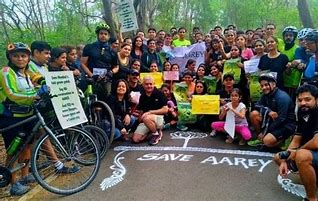

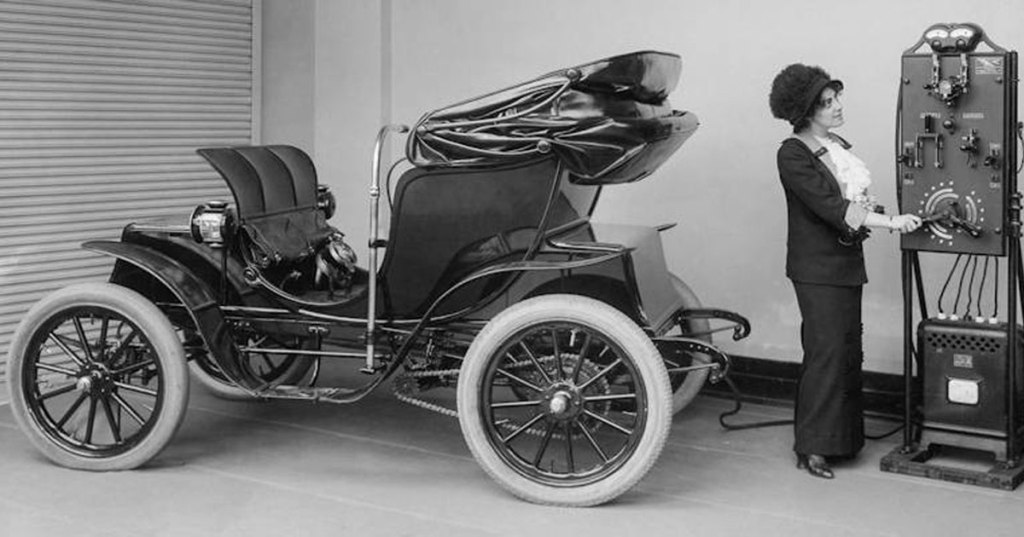









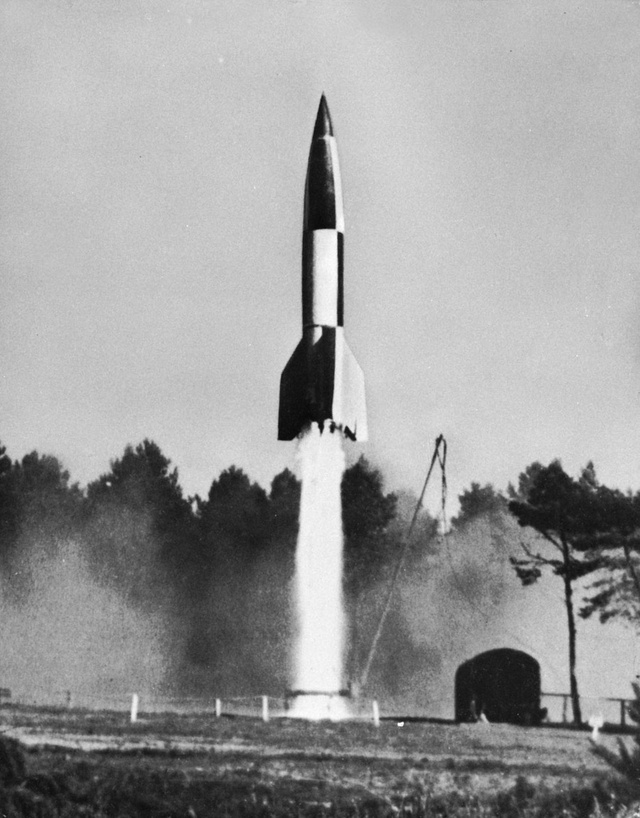
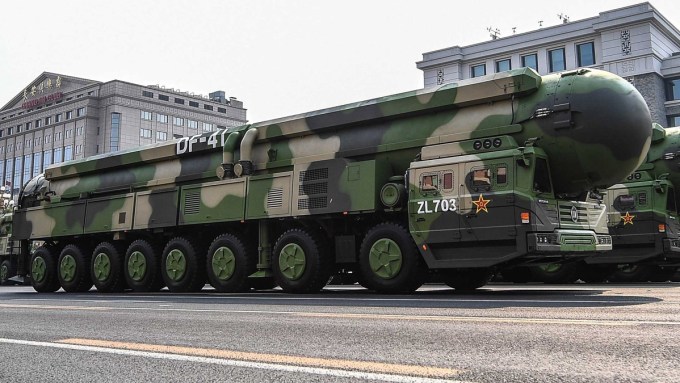




 Track2Training
You must be logged in to post a comment.