EduPub (Edupedia Publications Pvt Ltd) is a company dedicated to the development of the education, learning, research and innovation in the field of the research and books publication. We are pioneer in providing wide range of services to educational institutions, government agencies, individuals and corporates in the field of training and education, research and development, research and innovation. research and publication.
In the present scenario, most of us live the ultra-modern lifestyle. This means that we set unrealistic goals for ourselves and to pursue those larger than life dreams we stretch ourselves thin, often to the extent of depreciating our well being and manipulating with our healthy lifestyle.
Time for a reality check…more often than not, you skip breakfast, ignore the mid day hunger pangs that creep up between an important presentation, binge an extra loaded cheese sandwich to compensate for a healthy lunch, drive straight into a pub after work to unwind the load of a hectic day, return home to gorge on a cold frozen dinner and head straight to bed when it is already past midnight and still struggle to sleep!
This is what slowly kills our capacity to work better. Sleep plays a major role in improving our work efficiency. Think of a machine, if not given proper rest, it will overheat and break down.
To put it simply, you cannot expect to deliver your best at work, if your body is un-rested and under nourished. While a number of modern vitamin and health supplements flooding the markets may make up for the deficiency in vitamins, there is absolutely no substitute for good sleep.
On going in detail about the science of sleep nourishment, When we are off to sleep, our brain removes the toxic proteins from its neurons that are by products of neural activity when we are awake and our brains are functioning. Our brain can engage in this cleansing activity only when we are asleep and most of the nerves are resting. Sleep deprivation would mean missing out on this important cleansing regime. When we deprive our bodies of sleep, the brain cannot drive out or sanitize the nerve cells, hampering our thinking and cognitive abilities to a large extent.
Revisit the old adage ‘Take care of the pennies and the pounds will take care of themselves’ with a new perception. Yes, you take care of your health and quintessential sleep and everything else will fall into place-your health, your lifestyle, your emotions, your relationships, your job and not to forget -your applaudable performance at the boardroom!
Politics work with inthe constitution of India.India is a parliamentary democratic republic in which the president of India is the head of state and the prime minister of India is the head of government.
POLITICAL PARTY IN INDIA:-
As per 23, September 2021 the election commission of India total number of parties registered was 2858, with 8 national parties, 54 state parties and 2796 unrecognised parties.
THREE BRANCHES OF INDIAN GOVERNMENT:-
* Executive.
*Legislative.
* Judiciary.
EXECUTIVE:-
Executive type of Indian government include,
* president of india.
* prime minister of India.
* union cabinet.
* council of ministers.
* Bureaucrats.
PRESIDENT OF INDIA:-
President of India is the highest post and is the constitutional head of the country. According to our constitution, President is the first citizen of our country and a symbol of unity and integrity.President is also responsible for appointing other executives and judicial members in the country like the Chief Justice of India, Judges of all the High courts, the Election Commissioner of India and states too. President of India is also the Commander in Chief of all the Indian forces i.e. Indian Army, Indian Navy, and Indian Air force.
PRIME MINISTER OF INDIA:-
Prime Minister is the chief of the Central government of India and also acts as the advisor of President. He is also head of the Council of Ministers and is responsible for appointing or dismissing any minister from the council. In case Prime Minister resigns from his office or dies during his tenure then the cabinet will automatically dissolve.
UNION CABINET:-
Union Cabinet consists of the Prime Minister and Cabinet Ministers. This is the decision making body in the central government.The Cabinet Minister cannot make a law concerning his department on its own, he can only propose the decision and then the Union Cabinet will make the final law.
COUNCIL OF MINISTERS:-
Council of Ministers works under the Union Cabinet. All the members of the Union Cabinet are members of the Council of Ministers and here the Minister of States appointed by the President on the advice of the Prime Minister.
BUREAUCRATS:-
Bureaucrats are selected and appointed by Union Public Service Commission and for states there is a State Public Service Commission. They are responsible for implementing the laws and all the other functions of government. Bureaucrats consist of IAS, IPS, IFS and other officials leading various government agencies.
LEGISLATIVE:-
Legislative type of government include president,lok sabha also known as lower house,Rajya sabha also known as upper house.
LOK SABHA:-
Lok Sabha is more powerful in both the houses. Members of Lok Sabha are elected directly by citizens of India. There are total 530 members from the states and 20 members from the union territories. They are elected in general election. Their term is five years.
RAJYA SABHA:-
There cannot be more than 250 members in the Rajya Sabha. Members of Rajya Sabha are elected by state legislative assemblies out of which 12 members are directly appointed by President who come from different backgrounds like Literature, Art, Social Services etc.
JUDICIARY:-
Judiciary type of government includes supreme court,high court and district court.
SUPREME COURT:-
Supreme Court is the highest judicial body of the country. The decision by Supreme Court of India is acceptable by all judicial bodies and no other judicial body has the power to change a decision by Supreme Court. Indian judiciary is an independent body and is not affected by Legislature or Executive. Supreme Court has the power to question any decision made by Legislative Bodies or Executive if the decision is not in accordance with the Constitution of India.supreme court of india consists of 34 judges maximum in which there can be a Chief Justice and 33 other judges.
HIGH COURT:-
The High Court is the highest judicial body of a state. High court functions under Supreme Court. High court maintains the rule of law in the particular state and in case of two small states there can be one common High court.
DISTRICT COURT:-
District court or sub-ordinate courts function under High court. They maintain rule of law in a particular district or locality in which they function. They look after the civil and criminal matters of that particular region.
Reading is an immersive experience that often rewards you with a great story and good vocabulary. There are books across several genres one can choose from to indulge in a wonderful reading experience. But there are some books that fall under the category of ‘classics’ as their themes, characters, and plot lines become relevant for ages to come. These are written by some of the brilliant literary minds that became popular and they went on to influence many modern works of literature.
The story begins with a typical farm being run by a human with a variety of animals living in it. The farm animals are often mistreated, overworked and ignored by the human which agitates them. Hoping to overthrow the human race and reaping all the benefits of their work, they drive the human out of the farm. What follows is a satirical allegory to the events that happened during and after the Russian Revolution of 1917.
Although the story revolves around farm animals, its themes of corruption, slavery, dicatorship, class distinction, and characters, makes the readers draw parallels with the current political scenario. It is a must-read for a better understanding of the Russian revolution and an engaging experience.
The Great Gatsby- The Jazz age novel
The Great Gatsby is a 1925 novel written by F. Scott Fitzgerald. It follows the life of a self-made millionaire named Jay Gatsby who is in pursuit of his long lost lover named Daisy Buchanan. The novel however, has little scope for romance and represents America in the 1920s. It highlights the era of unrivalled wealth and materialistic access.
The novel upon its release didn’t gain commercial success. Critics believed that it did not amount to Fitzgerald’s earlier novels. However, it began to gain popularity during World War II as free copies were distributed among American soldiers who were serving overseas. The Great Gatsby went on to become an important part of America’s educational curriculum and pop culture.
The novel continues to attract scholarly attention and is a contender for the title of ‘The Great American Novel’.
Harry Potter and the Philosopher’s stone- You Know Who
This book can be considered as J.K Rowlings’ stepping stone to success. After being rejected by 11 publications and finally being published by Bloomsbury publication, upon the request of the chief executive’s 8 year old daughter. Harry Potter and the Philosopher’s stone went on to be translated into 73 languages and sold 120 million copies. Becoming the second best-selling novel of all time.
The story follows Harry Potter and the readers’ introduction to the world of magic, following Harry’s discovery of his magical heritage and acceptance into the Hogwarts School of Witchcraft and Wizardry. As the readers alongside Harry manage to grasp the revelation of a whole new world of possibilities, worthy opponents and dangers show up on whom magic must be used to defeat and protect.
Reading is an immersive experience that often rewards you with a great story and good vocabulary. There are books across several genres one can choose from to indulge in a wonderful reading experience. But there are some books that fall under the category of ‘classics’ as their themes, characters, and plot lines become relevant for ages to come. These are written by some of the brilliant literary minds that became popular and they went on to influence many modern works of literature.
The book thief is a 21st century novel that uses the Nazi regime in Germany as its background. Although it has its fair share of horror and despair. The Book Thief delivers hope to its readers through love and tranquility among family and friends.
The novel follows the life of Liesel, who moves into her new foster parents’ home following her brother’s death. As she goes on to witness the dangers posed by the Nazi regime, Liesel adopts her newly found passion for reading by stealing books from the rubbles and also the Mayor’s house. One of the pivotal characters in the novel is death itself as it narrates the entire story.
The Lion, The Witch, and The Wardrobe- A world of fantasy
Open the book to a whole new world of fantasy, mythical creatures and magic. When 4 siblings are relocated to a large house in the countryside due to wartime evacuation. They discover a wardrobe in the house which had more than just clothes hanging inside. The 4 siblings venture into the world of dreams upon entering the wardrobe. They go on to encounter the witch and the lion, and participate in an impending war to end the evil’s oppression over the good.
This fantasy novel was the first to be published among the 7 volumes known as The Chronicles of Narnia. C.S Lewis wrote this novel as a dedication to his goddaughter named Lucy Barfield.
Here are some of the classic novels from the 20th century across different genres to enhance your reading pleasure.
The term ‘To-Do List’ evokes different images for different people. For some it is that of a never-ending-ever-growing scroll of magic paper that gives them nightmares. For others it might come across as something only the boring folks, who schedule even their loo breaks, do. And then there is another bunch who considers it to be their life saviour which keeps them sane through the madness of their daily chores and tasks.
Whatever be the image that you have conjured up, a fact that one cannot deny is that an effective to-do list is one of the simplest yet powerful productivity tools that can work wonders in increasing your overall productivity.
Though it is one of the best and most efficient productivity techniques around, the success of it depends on how effectively it is being used. Moreover, if not used in the correct way, it can do more harm than good.
So, let’s now see some of the strategies to help you kick-start your art-of-making-the-perfect-list journey
Pick a suitable medium
Choosing a medium that you are comfortable with is the first and foremost thing to be considered while making a list. It may differ according to the personal preferences of people. It doesn’t matter whether you choose an app or the good old pen and paper, what is important is to stick to the one that you have chosen.Having your tasks scattered across different mediums makes managing and tracking the tasks difficult.
Dump all those tasks eating up your brain to the list
Transfer all those ideas, goals and tasks to the medium that you have chosen. Don’t bother assessing its value or prioritising it (yet). For now, just dig out every single thing from your brain and dump it onto your list.
Identify the ones which align with your purpose
It’s important that you need to have a clear idea about what you want to accomplish in life and accordingly pick tasks that’ll help you realise your goals. Write down clearly why you need to do the task and how it adds value to your life. Identifying your whys gives the brain the much needed motivation and energy to tackle the task.
Break the list into multiple lists
So now you have a big list of all the items that aligns with your long-term goals listed right in front of you. This list will contain all your goals listed out together. Let’s now split them into separate lists . Three basic lists that you can use are :
The Master List , where you keep a list of your long term goals .For eg: Write a novel. Here, you could categorise the goals as personal, professional, finance, health etc.
The Weekly List contains all those items that need to be ticked off by the end of the week. This would essentially contain tasks which would help in achieving your long term goals, plus other things that need your attention during the week.
High Impact List is the one that contains the tasks which are of the highest priority and needs your immediate attention. These might or might not be related to the other two lists.
Apart from these you could also keep a separate list for the daily activities that you need to track. For eg : If Doing exercise is something that you want to track on a daily basis, then instead of adding this item to your high impact list, add it to a separate list which is meant solely for daily activities.
You can come up with as many lists as you want. But I would suggest not to overdo it (then you might end up having to come up with another list to track the list of lists ! ).
List down tasks, not goals on your list
Your master list is the one where you have all the goals listed and when it comes to creating weekly lists, you need to make sure that you break your goals down into actionable items and put those on the list. In this way, you get clarity on how to go about with achieving the long term goals. Make it as specific as possible.
Prioritize
From the weekly list, identify the items that are of the highest priority and move them to the High Impact List. This is the list that you need to follow to keep track of the items that need to be completed by the end of the day. Sit with your list and identify the ones that are urgent and important and rank them accordingly. Setting priorities makes sure that you don’t end up cleaning your kitchen drawer when you have an important assignment due for the day.
One of the mistakes people make while creating a list is to cram up the list with as many items as they can think of. By doing so chances are high that you may end up not finishing most of the tasks on your list. And, there is nothing more depressing than staring at a long list of pending tasks at the end of the day. So keep it short. There is no hard and fast rule as to the maximum number of items that you can put on your list. Start with as low as three and experiment and find out the number that works for you.
Set a time limit for each task and measure the time taken
Each person has a different pace at which he works. To find out yours, roughly estimate the time you think you would need to complete a task and once you are done with the task, compare it with the actual time taken. This way, you will have a realistic idea about how many tasks you can complete in a day and can accordingly decide the length of your list.
Break bigger tasks into a set of smaller tasks
While you time your tasks, you might come across some tasks which need more time.Say for example, writing a blog post might not fit into the two hour window that has been allotted to it. In such cases, break the task down into a number of smaller tasks – research the topic, write, edit, select pictures etc. By breaking it down, you will have a clear step-by-step strategy listed right in front of you.Also, instead of waiting to check off that one big monstrous item, you can now check off 3-4 small items. That’s a pleasure in itself, isn’t it ?
Create a May-Be-Later-If-I-Feel-Like list
This is one of my personal favourites. All those items that you want to do but which are neither urgent nor important go on this list. Say for eg: learn to knit, may be something you might want to do but definitely not when you have a project release coming up the following week.
Always expect the unexpected
As much as we all want everything to go as planned, in reality that’s not always possible. At times, unexpected events may pop up. So, it’s always a good idea to leave a bit of cushion time between your tasks. Not just that it leaves you with some wiggle room in case of emergencies but also provides you that much needed breather from the tasks on normal days.
Always always always make sure to take some time out of your schedule to relax. Burnout is real ! So it’s really important that you find time to pause, breathe and relax. Adding break time to your list is essential to help the brain maintain its focus and energy levels.
Revisit and Re-evaluate your list periodically
Constant evaluations and reevaluations are needed for this productivity tool to work effectively. At the end of each day set aside some time to sit with your list and reflect on what worked and what didn’t. Move those items which you feel are of low priority to your may-be list. Re-prioritise the list, play around with it and you will eventually figure out a strategy that works best for you. It’s all about experimenting, buddy !
Make the list the day before
Though it is not a rule that you should make the list on the previous day, it is always better if you can do so. At the end of each day, after you evaluate your list for that day, you would already be in a state of mind where it is easier for you to figure out what items need to go on the list for the next day. Also, if you have a list of tasks ready right in front of you in the morning, you know exactly what’s on your plate for the day and hence you can use your morning energy on productive stuff rather than wasting it on planning your day.
Create a Done List
Even if you hate every other list mentioned above, this is one list that you are gonna love. It is a list of all the tasks that you have accomplished. Once you complete a task, along with crossing it off from the main list, add it to your Done List. That’s double the euphoria, you see ! This list is a reminder to yourself of how close you have come to your end goal and is an instant mood booster on days you feel low. Also, do not forget to celebrate even the smallest of your milestones.
Bottom line
Learning to make an effective to do list is not something that you can master overnight. It takes a lot of experimenting to figure out the strategies that work for you. There are no hard and fast rules here. Remember not to obsess too much with the idea of making that perfect list in the first go. Have patience and keep experimenting until you figure out a strategy that best suits your needs. Good Luck !
Children are called as the leaders of the future generations. They are also known to be the torch bearers for the future of the human society. Universal Children’s Day is celebrated every year on the 20th of November as an observance to promote children rights and welfare. Every year, the United Nations (UN) provides a particular theme for this day to improve the conditions of children and build a better environment for them. It was first celebrated in the year 1954 to encourage unity and friendliness among children across various nations. In the year 1959, the United Nations General Assembly accepted the Declaration of the children’s rights on the 20th of November. Therefore, this day is celebrated as Universal Children’s Day.
The theme
The theme for this year by UNICEF is to help children to recover from interruptions and learning losses experienced through the pandemic in the last two years and contribute towards the betterment of the children. Hence, the UNICEF has started a #GoBlue Campaign to highlight the issues faced by children due to the COVID-19 pandemic. This pandemic has shown us how unequal and unfair things have been for the children of the nation. From climate change to racism, many children have been deprived from their basic rights and the youngsters have been raising their voices against such injustices to lead the world towards a better future. Hence, the UNGA has requested several countries to support this cause so the children will be able to lead a better life. To support this cause, the United Nations Children’s Fund (UNICEF) will be holding a parliamentary meeting today at 7:30 pm to raise awareness regarding such issues.
India’s Contribution
IMAGE: ANI
India has also supported this campaign by illuminating monuments like Qutub Minar and Rashtrapati Bhavan with blue lights. The parliament buildings like North block and south block have also been lit up in the capital city of India on the occasion of World Children’s Day.
Conclusion
This purpose of this year’s theme is to encourage children and youngsters to highlight the issues faced by them and urges adults to understand and take the required actions for the future generations’ well-being. This World Children’s Day, it is extremely important to raise awareness against the discrimination and the racism faced by little children. it is more important than ever, that the leaders listen to their ideas and demands and take actions accordingly. It is our responsibility as a human being to create and build a better world for the children and we must work extremely hard towards achieving that goal.
Education is one of the important thing in this world.Without education we cannot lead a good life.Education is the key to success in life.
Education plays the significant role in the human race.Educated people are responsible for the better future for Society and country.An educated person has the ability to decision making.Education teaches us writing and reading.Reading and writing is the first step in education.Education improves the person mentally to handle the difficult situation.
Education improve the humans personality.Educated person is brave, confident to face any situation.Most of the well known persons are educated.Education helps in the development and innovation of technology.
The technology,science, millitary all are improved because of the education.Without education nothing happened in this world.Education help us to acquire knowledge.knowledge can be used to make better living.Education is the weapon which cannot be break by anyone.
Education teaches us to be honest and polite.Educated peoples are always respected in the society.
Education teaches us to be civilized. Education helps us to understand the feelings.It provides the manpower like police, doctor and millitary.Education improves us mentally strong to face the hard situation in both outer and inner life.Education brings peace in the world.
Peer pressure is the direct influence on people by peers, or an individual who gets encouraged to follow their peers by changing their attitude, values or behaviour just for the sake of acceptance. The section of society which is most vulnerable to the effects of peer pressure is teenagers. The fact of peer pressure is that when your peers start trying to get you do things which you otherwise wouldn’t do. For instance, in our society we have people who pressurise us to do things we don’t want to do, hence causing us to not being able to think for ourselves. If you neglect being able to think for yourself and let others do that job then it could have a good outcome for them, but for your well being and for you as a person it can turn out to be a disaster.
Ill effects and Impact
Peer pressure can harm the group by making it too uniform. When all the members think and act alike, the group does not have access to alternative opinions creating a barrier in solving problems.
Peer pressure is a rite of passage that all of us go through but its impact varies from person to person. Some are able to brush it off without any issues while it negatively impacts others. Peer pressure affects the lives of teenagers in a number of ways. It can take a self-confident child and make him or her someone who is not sure about themselves and has a low self esteem. It affects their academic skills too because despite being capable of performing well, they choose not to because in the eyes of their peers, it would seem uncool. In an effort to fit in with their peer group, they place more emphasis on being social rather than working on their academics.
Adolescence and Peer Pressure
The desire to be accepted by their peer group is one of the strongest motivating forces during adolescence. The reason that negative peer pressure happens, especially during adolescence, is because humans are social beings and ‘WE’ want to belong. We do what we believe others want us to do for the sake of acceptance and to ‘fit in’. Extreme peer pressure may lead you to follow what your peers feel right, thereby, you end up losing your own identity.
Conclusion
It honestly depends on the people you surround yourself with. Peer pressure is influenced from a members peers. So it is up to you who you hang around with. It is only a bad thing if you make it one.
Communication is the integral part of our life.It is the process of share whatever we want and sharing ideas,feelings. communication is the key to directing function of the management.
TYPES OF COMMUNICATION:-
There are three types of communication:-
* Formal communication.
* Informal communication.
FORMAL COMMUNICATION:-
Formal communication divided into two types,
* Horizontal communication.
* Vertical communication.
Formal communication is usually takes between the manager to sub manager,sub manager to manager.Who are in the same level of post.
HORIZONTAL COMMUNICATION:-
It is also called as lateral communication.It takes place between one division to another division.
VERTICAL COMMUNICATION:-
Vertical communication as the name suggests flows vertically upwards or downwards through formal channels. Upward communication refers to the flow of communication from a subordinate to a superior whereas downward communication flows from a superior to a subordinate.
INFORMAL COMMUNICATION:-
Informal communication is nothing but the communication takes place without following the formal types is called informal communication.It is also called as grapevine.
HOW COMMUNICATION IS EFFECTIVE:-
Communication is very effective tool.With communication we can able to understand others feelings And delivery of message.If false message delivered it becomes rumor and cause problems in life.
IMPORTANCE OF COMMUNICATION:-
* Basis of Decision-Making and Planning.
* Smooth and Efficient Working of an Organisation.
National Princess Day comes around annually on November 18, so clear your schedule and prepare for a magical day of pampering and fabulousness. Everyone has a favorite princess (real or fake) and dreams of being treated like one (at least for a day). A dream is a wish your heart makes, and it’s time to make that wish come true.
HISTORY
The first princess to come to our TV screens was Snow White in 1937’s Snow White and the Seven Dwarfs. Based on the fairy tale by the Brothers Grimm, this movie was also the first full length traditional animation film as well as the earliest Disney animated feature film. When Xena: Warrior Princess came out in 1995 and Mulan was released in 1998, they showed everyone that a princess can do more than wear a pretty dress. These two iconic women let children everywhere know that a princess can also be a strong and adventurous warrior. New wave princesses like Moana and Frozen’s Elsa show us that you can still be a princess while maintaining your independence.
We all grew up with animated, and live action, princesses guiding us through life. When thinking of our favorite princesses, our minds instantly go to Disney. However, when it comes to National Princess Day, Disney had very little involvement in its inception. Nest Family Entertainment, a Texas based entertainment company, teamed up with Rich Animation in 1994 to create the animated film The Swan Princess, a musical adaptation of Swan Lake. The studio wanted people of every age to have a day to celebrate like royalty, embodying the kindness and grace that we all associated with princess at the time — and thus, National Princess Day was created.
The definition of a princess is constantly changing. From the 1930s until the 1990s, princesses were meant to be saved by a prince and live happily ever after. Nowadays, princesses create their own happily ever after, save the prince, and then put the prince squarely in the friend zone. So basically, embodying a princess on National Princess Day is to embody, what the kids call, the G.O.A.T (greatest of all time)
FACTS
Almost everyone is fascinated by princesses but few people know everything there is to know about some of the famous fictional princesses of all time. That’s why we’re listing some of the top facts about princesses below.
The only Disney princesses based on a real person is Pocahontas.
Almost all Disney princesses wear blue.
Snow White is the youngest princess and is 14-years old.
Jasmine is the next youngest princess and is 15-years old.
The oldest princesses are Cinderella and Tiana and both of them are 19-years old.
Snow White And Rapunzel are both from Bavaria.
PATHWAY
TIME MAGAZINE RECOGNIZED THIS PRINCESS INFLUENCE – 2013
Princess Kate made Time’s “100 Most Influential People in the World” list for the second time.
PRETTY SMART PRINCESS – 2012
After earning a B.A. in International Relations at Sukhothai Thammatirat University and a Masters of Law and Doctor of Juridical Science degree at Cornell Law School, Princess Bajrakitiyabha of Thailand received an honorary Doctor of Law degree.
A HUMANITARIAN AWARD – 2011
Princess Ameera, a Saudi Arabian princess, received the ITP Special Humanitarian Award for her work with the Alwaleed Bin Talal Foundation.
THIS POPULAR PRINCESS ADVOCATED FOR AIDS – 1987
Princess Diana opened the first hospital unit dedicated to AIDS in Middlesex Hospital. This is the same location where she famously hugged an AIDS patient four years later.
PRINCESS ANN TOOK ON CAUSE – 1970
Princess Ann of England served as president of the Save the Children organization, an non-governmental group that advocates for children rights and supports children in developing countries.
Data scientists combine mathematics, statistics and the use of computer science to extract,analyze data from thousands of data sources in order to build creative and innovative business solutions.Data Scientist’s job involves solving the problems of his or her client by providing solutions using real time data and tools and algorithms.
Industries and Departments in which Data Scientist are hired:-
Data scientists and analysts are largely employed by IT companies, marketing, finance and retail sectors. Companies use Data Scientists to give them a report on what their clients demands and needs and give them innovative solutions on how to cater to them. Oil, gas and telecommunication companies also have started employing data scientists to better cater to their clients. Other sectors and departments that employ data scientists are ● NHS ● Government offices ● Research institutions and universities.
The roles and responsibilities of a data scientist:-
● To handle vast amounts of data and choose reliable sources.
● Developing prediction models and advanced machine learning algorithms
● Verifying data using data investigation and data analysis.
● Using data visualization techniques to present findings.
● Finding solutions to business problems by working with data engineers and data analysts.
Educational qualification For data scientist:-
● Should have a BSc/BA degree in the field of Computer Science/ Software Engineering/Information Science/Mathematics.
● Should have a postgraduate degree/diploma certification in Data Science/Machine Learning.
Career growth of a Data Scientist:-
The life of a Data Scientist starts from an associate data analyst and can go up to the role of Chief Data Scientist.Promotion can take two to five years it is based on the performance.After some experience they get into some higher position.
CONCLUSION:-
Data Scientists are one of the most in demand people in the world. They can skyrocket companies’ shares and make them reach new heights.Data Science is a very high paying industry thus finding a job with a seven-figure salary won’t be a problem. Data Science as an industry has a very bright future.Data Scientists have the ability to change the world’s future.
Food secure future is a significant issue for the United Arab Emirates (UAE) yet in addition for India. Worldwide Food Policy Research Institute (IFPRI), truth be told, cautions that evolving environment, developing worldwide populace, rising food costs and natural stressors will uncertainly affect food security in the coming many years. Notwithstanding, industry specialists and strategy creators accept that the UAE and India can up their synergistic endeavors to handle food security issues towards accomplishing food independence.
This is because the United Arab Emirates is India’s third largest trading partner with the bilateral trade of US$ 59.1 billion in 2019-20. Furthermore, it is a well-known fact that India wants to work very closely with the UAE as a reliable partner in food security. India’s food corridor is slated to attract investments to the tune of US$ 7 billion. Dubai can be a gateway for Indian companies in agriculture and food processing sector to take their products and services globally. This is the opinion of Dr Aman Puri council general of India.
According to him the UA should not be looked at as just a market of 10 million consumers rather it is is beneficial to the entire middle East and North African region. It is considered food secure due to its ability to import food from international markets.
The food technology valley aims at promoting innovation in agriculture to achieve food security from sustainable sources. Dubai is already adopting the new age farming technologies, vertical farming, smart farming, aeroponics, hydroponics, LOT and other new technologies have resulted in a 53% increase in output in agriculture.
The capital intensive nature of the Emirates aptly suits India which needs funding infusions for infrastructure creation. All the sovereign wealth funds have an investor bill capacity of around US$ 1.2 trillion which is growing at a rate of 18 % per annum.
India is on the threshold of a landmark change in the nature of food processing it is now moving towards value-added process and ready to eat foods. Thus, there has never been a better time for the Indian companies to tap the opportunities that the UAE and Dubai throw up. With the peceeding opportunities, both UAE and India face a common challengeas well, in the creation of value chain perspective, that is, end-to-end, farm-to-fork. So, moving forward, the two countries can deepen their collaboration and help each other in achieving this goal.
NEW DELHI: The end of the Diwali week marked a steady increase in new Covid-19 infections. India recorded 80,614 new cases of the coronavirus this week. With 10,789 new cases in the last 24 hours.
While cases in the southern states, namely Kerela and Tamil Nadu continue to gradually drop, a number of states observed a significant spike in cases. Jammu & Kashmir recorded a 34% increase in new cases in the past week.
Other states where the count increased in the current week are Karnataka, with a 17% increase, Maharashtra, Punjab, Delhi, Uttar Pradesh, Bengal, Rajasthan. Experts claim the increase in cases is a result of increased contact among people in the festive period. A major credit for the over-all spike can also be credited to increase in population in the markets. As most people connect the festival with an incentive to shop.
In India, poverty is presently estimated by fixing a poverty line based on a differentiated calorie-norm. This means that the level of poverty depends upon the capacity of a person to purchase food and a person who can buy specific amount of food to cross the poverty line margin for nutrients and calorie intake is above the poverty line. Whereas, the person who cannot buy enough food to meet the required nutrition value of calories and carbohydrates is below the poverty line. This level is not the correct parameter to check the level of poverty.
A task force of the Planning Commission in 1979 defined the poverty line as that per capita expenditure at which the average per capita per day calorie intake was 2400 calories in rural areas and 2100 calories in urban areas. Average per capita expenditures incurred by that population group in each State which consumed these quantities of calories, as per the 1973-74 survey of NSSO, were used as the poverty lines.
The debate on the extent of poverty in India has been a matter of global interest in the recent years. The primary reason for the global interest in the debate is that the levels of poverty in India and China have come to exert significant influence over the trends in world poverty itself.
Within India too, there has been growing contestation around poverty estimates, particularly in the period of economic reforms. First, there are persistent disagreements among economists on whether the rate of poverty decline after economic reforms was slower than in the preceding period. Secondly, the shift to targeted, rather than universal, welfare schemes has witnessed the use of poverty estimates to decide on the number of households eligible to access these schemes. The report of the Expert Group on the estimation of poverty, chaired by Suresh Tendulkar, is the latest input to the “Great Indian Poverty Debate.”
It is to be noted here that many subsidies and programs are launched by the government but these additional increments do not reach the actual people that are in need of them. Instead it is sent back to the businessman and thus a lot of profit is earned on these subsidized goods. Thus, to lower the level of poverty in India, schemes have to be launched in order to directly benefit the people in need.
The Hindu states that, “A final issue with the report, of much long-term consequence, relates to the wisdom of abandoning the calorie norm. It is indeed true that the levels of calorie intakes are not well correlated with nutritional outcomes. However, abandoning the calorie norm altogether and taking solace from the fortuitous fact that calorie intakes appear adequate at the new poverty lines is an arbitrary proposition. It is unclear whether there is any basis, theoretical or empirical, for this relationship to hold true across time.”
the Tendulkar Committee has pitched for a policy position that is stranded between the harsh realities of poverty in India and the fiscal conservativeness of a neo-liberal framework. The real challenge lies in preserving the positives from the report, and strongly persisting with the demand for a universal social security system.
This 1981 novel Tar Baby by Toni Morrison explores the mythic image of Tar Baby to evoke the racial stereotyping. The novel brings together different oppositions like white and black, high and low culture, north and south etc. The title of the novel suggests the folk tale of Tar baby. The fable is an archetypal trickster tale and it describes how a fox entraps a rabbit by using the tar figure. The doll or ‘tar baby’ is made by Br’er fox and placed in the roadside to trap his archenemy Br’er Rabbit. Br’er Rabbit speaks to the doll or tar baby and gets angry as it is not responding, and strikes it and get struck. The more the Br’er Rabbit kicks, the more he becomes attached. In the modern scenario, we can consider this theme as a problematic situation that is only aggravated by additional involvement with it.
In the novel Morrison portrays the love and relation between central characters Jadine and Son, two African Americans, with the social background of a racial hierarchy and high and low cultures. Jadine is a beautiful fashion model, who has been sponsored by Valerian Street, a white man , candy manufacturer who marries Margaret Street, the principle beauty of Maine. When the novel begins Valerian is spending his life on the Caribbean island, Isle des Chevaliers. Son is a strong minded man, who washes up on the streets. Ondine and her husband Sydney, through their dialogues reveal the fact that, they have devoted most of their life serving Valerian Street, who considers them as “good Negroes”. There is another major mysterious character named Charlie, who never appears on the course of events of the novel. The novel progresses through the events that happened after the arrival of Son in the island.
The novel revolves around themes like nature v/s civilization, the subordinate black life and the shades of femininity. Morrison made the novel rich with dialogue episodes, symbolism and mythological involvement. Tar Baby powerfully portrays the plight and struggle of African Americans for livelihood in the second half of twentieth century. And this makes Tar Baby an essential read in the historical and cultural writings of American literature.
Gaming addiction is a type of mental disorder leads to insomnia,stress, pressure.Gaming is not a waste of time limited time of playing games can reduce pressure.
SIGN OF GAMING ADDICTION:-
* Thinking about game for lot of time.
* Feeling bad when you are not playing games.
* Want to spend more time in games to feel good.
* Having problems in school, office,work because of games.
ALTERNATION OF GAMES:-
In place of playing games you can replace it with:
* Arts ,dance,music.
* playing outside.
* playing indoor games like chess,carrom etc.
* you can do exercise,martial arts.
EFFECT OF GAMING ADDICTION:-
* It leads to mental disorder.
* sleepless.
* It creates lack of social interaction.
* Feeling lonely.
IS GAMING A ADDICTION:-
Gaming is not a addiction it is a type of mental disorder.It leads to psychological problems like insomnia,lack of social interaction.By research a normal healthy person can play less than 5 hours per day.
RELIVE FROM GAMING ADDICTION:-
* Schedule your time for Playing games and follow it.
* Replace the video games with the outdoor games.
* Talk to your friends, family.
* uninstall your game from the mobile or computer.
The credo of Indian Military Academy – ‘ The safety, honour, and welfare of your country comes first, always and every time. The honour, comfort and safety of the man you command comes next. Your own ease, comfort & safety comes last, always and every time.’ – is a mantra that every Indian soldier lives by. The commitment of a soldier to his duty and his sheer determination to fulfill it is something that sets him apart from the rest of the crowd. Company Havildar Major Piru Singh, the hero of battle of Darapari, was no different.
Early Life
Piru Singh was born on 20th May 1918, in Rampura village, Churu, Rajasthan.He came from an agricultural family of the warrior clan of the Rajputs. His father Lal Singh and mother Tarawati Kanwar (Jarav Devi) had seven children – three boys and four girls – with Singh being the youngest. Even as a young boy, he loved outdoor life and had an aversion to restricted environments. Singh discontinued schooling at a young age. The rest of his childhood was spent helping his father in his farm. Right from his younger days he had an inclination to join the army. Despite being rejected twice, Singh never gave up and eventually got selected on his third attempt. He joined the British Indian Army coincidentally on his 18th birthday on 20th May 1936.
On joining, Singh was initially assigned to the 10th Battalion of the 1st Punjab Regiment at Jhelum. After completion of his training, he was transferred to the 5th Battalion of the same regiment on 1st May 1937. Surprisingly, the boy who despised school and had no interest in studies had transformed into a committed soldier who took serious interest in education. He cleared the Indian Army Class Certificate of Education and a series of other army examinations and got promoted to the rank of lance Naik within a brief span. He served on the North-West Frontier during his tenure with the 5th Battalion of the 1st Punjab regiment. It took less than a year before he was promoted from Lance Naik to the rank of Naik. In September 1941, he was posted to the Punjab Regiment Centre at Jhelum, as an instructor.
Singh was also a wonderful sportsman and represented his regiment in basketball, hockey and cross-country running at the inter-regimental and national level championships. In February 1942, he was promoted to Havildar and later to the rank of Company Havildar Major in May 1945. Until October 1945, he served the army as an instructor. He was deployed to Japan as part of the British Commonwealth Occupation Force after the Second World War, where he served until September 1947. By the time he returned from Japan, India had been partitioned and therefore the Indian army had undergone reorganization. Consequently CHM Piru Singh was transferred to the 6th Battalion of the Rajputana Rifles Regiment.
Battle of Darapari : Background
It was during this time around that the tensions between India and Pakistan were escalating, over the control of the princely state of Jammu & Kashmir. Eventually in October 1947, war broke out between the two countries.The Spring of 1948 was utilised, by the Indian Army, to rid the Kashmir valley of the infiltrators. General Thimayya, General Officer commanding Sri division, decided to launch the offensive with the main thrust along the Uri-Domel road by 161 Infantry Brigade under Brigadier L.P Sen. 163 Infantry Brigade under Brigadier Harbaksh Singh was detailed to carry out a divisionary operation towards Tithwal from Handwara. To deal with the enemy forces around the Bagh area, the Poonch Brigade was assigned to carry out a battalion operation towards Bagh. In the third week of May, Dogarpur, Trehagam and Chokibal were captured and on 22nd May, Tithwal sector was captured by the Indian forces.
Source: Wikimedia Commons
Pakistan, enraged by the setback in the Tithwal sector, launched repeated counter attacks and recaptured the village of Tithwal in the hills of Jammu and Kashmir. The Pakistani raiders launched offensive strikes in this region and captured a ring contour on the 8th of July 1948. The enemy pushed to seize control over the positions across the river Kishanganga and the Indian Army was forced to vacate their forward positions across the river. In the wake of this setback , in order to strengthen the advance on the Tithwal sector, Piru Singh’s unit – the 6th Battalion of Rajputana Rifles – was moved from Uri to Tithwal and was assigned to the 163rd Brigade. The unit took position on the Tithwal bridge.
The attacks commenced on the 11th of July. The operation went on for four days till the 15th of July. However, according to the reconnaissance report, the Pakistanis were still in command of two strategically important positions. The capture of these two positions was essential for making any further advancement. The task of securing these two features was assigned to the 6th Rajputana Rifles. Two companies – Charlie ( C ) and Delta ( D ) – were assigned to the operation. The C company was in charge of securing the second position after the D company had captured the first.
Battle of Darapari : The Day of Action
The D Company, of which CHM Piru Singh was a part, was sent to capture the Darapari feature in Tithwal sector. Darapari is a hill feature located at an altitude of over 11000 feet. The path leading to the position held by the Pakistanis had deep ravines on either side and was just about one meter wide. According to the intelligence reports received, the battalion was told that the enemy had not had enough time to dig-in intensively and hence could be dislodged without much struggle. This however proved to be inaccurate. The narrow path through which the battalion was advancing was overlooked by five hidden Pakistani bunkers ,which gave the defending troops a clear advantage in terms of position. The time constraints restricted the battalion from having a proper reconnaissance of the enemy position. In order to take advantage of the darkness, the attack to secure Darapari was planned to take place after the moon had set and was launched at 01.30 a.m on the 18th of July. As the attack advanced, the company was subjected to heavy shelling and within a matter of about half an hour, the casualty count had reached to a whooping 51. The platoon commander Subedar Bhika Singh was hit. A sinking feeling of panic had swept over them and there was absolute chaos amidst the rest of the team. It was then that Piru Singh rose to the occasion and took charge of the team and led his platoon with a determination that not even the raging bullets from the rival MMG posts could waver.
The enemy medium machine guns had been sited to cover all possible approaches. The platoon led by Singh was met with heavy firing from both flanks and a volley of grenades from the bunkers. Neither the murderous firing nor the fact that half of his platoon was either dead or wounded, could falter him. With the battle cry of ‘Raja Ramachandra ki Jai’, he rushed forward to crush the MMG post which was playing havoc with his troops. His exceptional leadership motivated the rest of the crew to follow their leader ferociously. With the curtain of grenades tearing through him, wounding him at several places, he continued to advance. He rushed to the MMG which was causing the maximum destruction and bayoneted the men on guard and occupied the post.
By this time the rest of his men were either dead or wounded and he was the sole survivor of his company. Alone and injured, but with a never-say-die attitude, Singh inched forward to achieve the objective assigned. While advancing towards the second MMG post, a grenade was thrown at him, which wounded him in the face. Neither the blood dripping from his face nor an empty reserve of ammunition could kill his spirits. He crawled out of the trench, hurling grenades at the next enemy post and then jumped to the next trench bayonetting two Pakistani soldiers to death. As Singh emerged out of the trench to attack the third bunker, he was hit in the head by a bullet. Just before he succumbed to his injuries, he had managed to throw a grenade into the enemy trench, which did a perfect job of wiping off the enemies. CHM Piru Singh had thus bravely and selflessly completed his mission before he closed his eyes for the final time.
Source: Wikimedia Commons
Param Vir Chakra
His act of bravery was witnessed by the commander of the C company, who was directing fire in support of the D company. Inspired by Singh’s actions the rest of the company put up a ferocious fight and Darapari was captured against death defying odds.
CHM Piru Singh was awarded the Param Vir Chakra for his single-handed bravery, exceptional leadership and extreme devotion to duty, posthumously. In remembrance of this brave soldier, his unit – 6 Rajputana Rifles – commemorates the Battle of Darapari every year.
Every soldier has a story buried under his gravestone and Piru Singh’s is that of his extreme courage, supreme sacrifice, exemplary leadership and above all his unconditional love for his motherland.
For India, right now, the victory of cashless economy is as far as the eyes see. India is becoming a large middle income country, too complex, and varied to be controlled centrally. The government will need to withdraw from occupying the commanding heights of the economy, confining itself to providing public goods and the governing framework and, leaving economic activity to the people.
To harness their collective energy, India will need many such reforms in the years o come if it is to grow rapidly in a sustainable and equitable way. These were the words of our former RBI Chief Mr. Raghuram Rajan.
GST and Demonetisation
If our country’s people are still under the influence of the infamous twin-shock of GST and demonetisation, then how can we consider the thought of cashless economy at such a tender stage. This is not just a rhetoric, it is the fuming question with only one answer, NO.
Why is India not ready yet?
Enough of the statements from the philosophical jar, lets talk facts.
India is an economy where 98 per cent of all transactions are in cash. This is due to the large informal sector, which employs 90 per cent of the workforce. The overwhelming majority of them are not hoarders of black money. And yet, India cannot become a cashless society unless its mammoth informal sector transitions to digital payments.
Lack Of Cyber Security
And right now with hackers giving proofs of how one can misuse Aadhar details by stealing a real life example of none other than the TRAI Chief, I am saying that India will be ready for a cashless economy but definitely it is not now.
We need to built homogenous network of digital security to take the baby steps for a walk which has a long road.
“A cashless economy needs robust cyber security capabilities and India isn’t ready” – KPMG INDIA CHIEF, Arun M. Kumar.
The English language is generally considered as the global language. There are various reasons for the spread of English and its worldwide acceptance. David Crystal in his work titled “English as a Global Language” analyzes the major reasons behind this global status.
According to David Crystal “ a language achieves a genuinely global status when it develops a special role that is recognized in every country.” This special role is achieved mainly by the use of language in speaking as a mother tongue.As in the case of English in Britain, Canada, U S, Ireland, New zeleand etc. This status is also achieved by other two ways even though it is not used as a mother tongue.Firstly the acceptance of a language as the official language of a country and secondly attaining priority in foreign language teaching even though it has no official status. As in the case of India, the acceptance of English as the official language is an example for this special role. And it can be used as the medium for communication in certain domains such as government, education, law courts, media etc. Other countries like Singapore, Nigeria, Vanuatu and Ghana also accepted English as their official language. It can also be a semi official language by using only in certain domains. The second way for attaining a special role is in the priority in foreign language teaching. The political expediency, desire for commerce, cultural historical contact etc can be considered for choosing foreign language.
Then arises the question: why do we need a global language? In earlier times translation played a major role in international meetings and conversations. But later it is solved by finding a “lingua- franca” or common language. But there was a geographical limitation for the use of this “lingua – franca” . It can be used only on certain ethnic group of the part of a country as in the case of West Africa. Towards the 1950s various international meetings increased and this led to the need for a single lingua franca. The U N was established in 1945 and other political bodies like UNESCO, UNICEF,WHO established during the second half of the twentieth century. There was a great expense for translation and this strengthened the need for a global language. Apart from these international meetings and travel, with the advancement of technology and the internet people started to communicate to people of various countries simply sitting in their home. This also benefited the growth of the global language. There was a huge development in the second half of the twentieth century in technical, political, social and international domains. The number of countries in the UN increased during this period. So all these are the criteria for the need of a global language.
The use of a global language provides a lot of advantages. This reduces the gap between countries as there is no language or communication barrier. And it forms a strong relationship with nations. Through these relations international trades such as exporting and importing increases and benefits in growth of economy. It also helps in the tourism departments by the communication between people from various countries and natives. Even though there are advantages of having a global language it has some dangers too. One is Linguistic power. Those who speak a global language as a mother tongue will be automatically in a position of power compared with those who learned this as a second language or official language and this prevents them from carrying out their creative works. Linguistic complacency is the next disadvantage. It happens when a global language threatens to potentially eliminate the motivation for adults to learn other languages. The Linguistic death also happens as a result of a global language. With the emergence of a global language, the disappearance of minority languages occurs and this may cause linguistic death. This mostly occurs when an ethnic community comes to be assimilated within a more dominated society and adopting its language. But nowadays a lot of protests happen for the protection of minority languages and its literature.
English possesses all these qualities to be a global language and it is widely considered as a global language.The cultural and historical factors of English language is the reason behind this. In the history of England we can see that many conquerors came to England and played a significant role in the making of the English language. While other countries invaded neighbouring countries for expanding their power, England being an island began to find new lands and expanded its power. Thus became the biggest empire. This power is the major reason behind the acceptance of English as a global language. They made colonies all over the globe and influenced the culture of these colonies.By the 17th century industrial revolution happened and this paved the way for the spread of the English language. Most of the innovations of the industrial revolution were of English origin. With the advancements in technology , new words have been added to the English lexicon. By the 19th century England also became an economical power. Towards the twentieth century most of the inventions of the society was by England. Pop culture also affected this. This can be the answer to the question of why English is the global language.
While discussing the future of English as a global language David Crystal says that there are a lot of possibilities for a change in the future of the English language. A significant change in the balance of power can occur and this could affect the standing of other languages. Thus that language becomes more attractive and takes over the position of English. Political factors also make a group of people in a country antagonistic to English. It is evident in the post colonial era. Another factor which may lead to the diminishing of English is the need for expressing the community identity. David Crystal says that the power of English is related to America as it became the dominant element in many of the domains. The US is more involved with international developments and new industrial revolution. Thus the US has more influence in the English language.
So English has played a vital role in many domains all over the globe. Its position and power as the global language is noteworthy.
Catastrophe (Disasters) are classified into three types: naturals, man‐made, and hybrid disasters. A natural disaster is a major adverse event resulting from natural processes of the Earth; examples include firestorms, dust storms, floods, hurricanes, tornadoes, volcanic eruptions, earthquakes, tsunamis, storms, and other geologic processes. A normal calamity can cause misfortune of life or harm property, and ordinarily clears out a few financial harm in its wake, the seriousness of which depends on the influenced population’s versatility and on the framework accessible.
A landslide is depicted as an outward and descending slant development of an wealth of slope-forming materials counting shake, soil, manufactured materials, or a combination of these. An seismic tremor is the result of a sudden discharge of vitality within the Earth’s hull that makes seismic waves. At the Earth’s surface, seismic tremors show themselves by vibration, shaking, and in some cases relocation of the ground. Volcanoes can cause far reaching pulverization and resulting catastrophe in a few ways. One danger is the volcanic emission itself, with the constrain of the blast and falling rocks able to cause hurt. Dust storm may be a spread of tidy in dry regions. A manmade disaster is more cascading than a natural disaster an example of natural disaster is Bhopal Gas Tragedy.
Bhopal Gas Tragedy, India : Imagine waking up in the middle of the night in agonizing pain with your eyes and lungs burning. You wonder if you’re going to make it. Many don’t. That was the experience countless residents of Bhopal, India had on December 2, 1984 when the Union Carbide India Limited pesticide plant sprang a gas leak. Over 500,000 people were exposed to methyl isocyanine gas and other chemicals. Thousands of people died within the first hours of the leak, but estimates between 5,000 to upwards of 16,000 deaths resulted from the leak overall.
Deepwater Skyline Oil Spill, Inlet of Mexico It’s difficult to disregard the most noticeably awful and biggest oil spill in human history since it as it were happened less than three a long time prior. It begun on April 20, 2010 when an blast on BP’s Deepwater Skyline oilrig murdered 11 specialists, harmed 17 others, and cleared out the well spouting oil. Initially, BP claimed the spill was fair 1,000 barrels per day, concealing the reality that the well was spilling anyplace from 40,000 to 162,000 barrels a day.
Worldwide Warming, Third Planet from the Sun: Global warming is one of the foremost neglected and continuous man-made fiascos — one that will have the most noteworthy long-term affect on humankind. Over the top sums of nursery gasses, especially CO2, presented into the air have expanded normal worldwide temperatures determining a number of desperate results. Impacts from rising ocean levels, desertification, and harm from strongly super storms like Typhoon Katrina have already created a few of the primary bunches of climate-change outcasts and a few appraise that number to rise to 150 million by 2050.
Hybrid disaster is the third type of disaster. A crossover catastrophe may be a artificial one, when powers of nature are unleashed as a result of specialized disappointment or disrupt. There are disasters that result from both human mistake and normal strengths. These are crossover catastrophes. An case of a crossover disaster is the broad clearing of wildernesses causing soil disintegration, and hence overwhelming rain causing avalanches.
Disaster management is how we deal with the human, material, economic or environmental impacts of said disaster, it is the process of how we “prepare for, respond to and learn from the effects of major failures”
Disaster management has three stages which include disaster prevention, disaster preparedness, and disaster response/relief UNISDR sees Calamity Anticipation as the concept of locks in in exercises which proposed to anticipate or dodge potential unfavorable impacts through activity taken in development, exercises planned to supply security from the event of catastrophes. WCPT so also highlight that whereas not all catastrophes can be avoided, great hazard administration, clearing plans, natural arranging and plan benchmarks can decrease chance of misfortune of life and harm relief. The HYOGO System was one such Worldwide Arrange for common Calamity Hazard Decrease, which was received in 2005 as a 10 year Worldwide Arrange, marked by understanding with 168 Governments which advertised directing standards, needs for activity and viable implies for accomplishing fiasco versatility for defenseless communities.
“The information and capacities created by governments, proficient reaction and recuperation organizations, communities and people to successfully expect, react to, and recoup from, the impacts of likely, inescapable or current danger occasions or conditions” “The provision of emergency services and public assistance during or immediately after a disaster in order to save lives, reduce health impacts, ensure public safety and meet the basic subsistence needs of the people affected”
The lingering effects of unexpected emergencies and disasters are different for everyone. Knowing what to do after an emergency can help reduce stress and aid in a quicker recovery. Recovery is a process the process to repair and restore your life after an emergency or disaster is not easy and takes time, flexibility and patience. Examples of recovery include: removing waste and debris, contacting your insurance company, replacing lost or destroyed documentation, finding a new home, getting mental health support etc.
A classroom is method of using cell phones and computers to make teacher and student in connection.This method of education is popularized during the corona.
ONLINE EDUCATION IS EFFECTIVE:-
In my perception online education is not that much effective when compare to the offline classes.Because we started schooling in offline class,Immediate change in method is not acceptable.In offline class we can ask doubts.But in online classes some not get good network.
ADVANTAGES OF ONLINE EDUCATION:-
* It reduce financial costs for students in transportation,meals.
* we can feel more comfortable than offline class.
* Another advantage of online education is that it allows students to attend classes from any location of their choice.
* online lectures can be recorded, archived, and shared for future reference.
DISADVANTAGES OF ONLINE EDUCATION:-
* Little or no face-to-face interaction.
* In online education we have to see screen more time cause headache,damage eyes.
* Another disadvantage is some have network issues unable to ask questions.
* Online courses require more time than on-campus classes.
Sex education is the most important factor which lacks in every individual, especially in India. In India, sex education was considered as some taboo and people were shameful to speak openly about it. But nowadays there is a shift from this norm and now people are free to discuss about sex, sexuality and other related things. Many schools have started teaching students and they give an orientation to children even from a very young age, which include some topics like good touch, bad touch etc.
Sex education involves topics related to human development, relationships, orientation about reproduction sexuality, puberty, gender identity, sexual behavior, sexual health which include knowledge of sexually transmitted diseases, contraception and pregnancy. Sex education also includes the discussion on sexuality in society and culture which include gender roles, diversity etc. WHO defines sex education as “broad program that aims to build a strong foundation for lifelong sexual health by acquiring information and attitude, beliefs and values about one’s identity, relationships and intimacy”.
The importance of sex education increases in this scenario, as the teachers are not willing to take up topics related to sexuality, even though these topics are present in the curriculum and adolescents gather information about sexuality from other ways. This is harmful for them. To tackle this misinformation and ignorance, young students need to get an awareness about sexuality and sexual orientation. They should also be aware about different gender minorities, LGBTQIA, like trans- sexual people, homosexual communities like gay, lesbians etc. They should also respect every gender. Sex education also provides the knowledge to differentiate between ‘sex’ and ‘gender’, as one is the biological aspect and another one is socio cultural to oneself. Gender is the identity one perceives apart from the biological aspect. Sex education is important to know diverse communities and also it enables one to understand about one’s own body. In this way sex education also helps to decrease crimes related to sex.
So sex education is a very important factor in the development of a society. It helps citizens to understand about themselves and others and provides knowledge which helps to decrease many crimes related to sex. As sex is the vital factor in the development of a society, sex education is also vital.
There is no denying that globalization has brought about a paradigm shift in the nature and scope of public administration. It has virtually unshackled the discipline from the classical bondage of structure and paved the way for a more flexible, less hierarchical, and accommodative kind of discipline and encouraged a few sceptics and self-styled analysts to proclaim an imminent death of public administration.
However, more than two decades down the line, ever since globalization was first thrust upon nation-states, public administration has not shown absolutely any signs of receding.
On the contrary, rendering those doomsday predictions wrong, public administration has reincarnated in a readjusted form to cope with the new set of challenges.
Traditional notion of public administration
In fact, globalization had increased the urgency of having a more proactive public administration. However, the traditional notion of public administration with a sheltered bureaucracy, rigid hierarchy, and organizational principle no longer exists today. Both structurally and functionally, public administration has experienced a metamorphosis of sorts. Structurally speaking, thanks to the sweeping social – economic – political transformation under globalization, the rigid, hierarchical, and bureaucratic form of governance has given way to a more flexible, dehierarchal, and post – bureaucratic form of governance based on networks and partnership. Similarly, at the functional level, public administration has witnessed a profound transformation in the form of delivery of public goods and services. Until recently, the delivery of goods and services was considered as one of the important functions of public administration. But the onset of globalisation and the eventual rolling back the welfare state ushered in a new collaborative form of public administration, where state administration has had to readjust itself to deliver public goods and services in collaboration with the innumerable other players and NGOs functioning at the societal level.
Hence, public administration in the era of globalisation has been donning a new robe of the ‘enabler’ or ‘facilitator’ by privatizing the substantial part of welfare delivery, namely, contracting out, encouraging private provision, introducing quasimarkets, mobilizing voluntary sectors, and the like.
Reference :
Public Administration in a Globalizing world by Chakrabarty and Kandpal
R K Narayan is arguably one of the brilliant storytellers who could create stories and characters that were relatable yet intriguing. He was one among the few writers of his era, who could weave magic with simple words and effortlessly spin a tale out of the mundane everyday events.
Born as Rasipuram Krishnaswami Iyyer NarayanaSwami in Madras, R K Narayan spent a part of his childhood in Madras with his grandmother and later moved to Mysore when his father, a school headmaster, was posted to the Maharajah’s College High School. An avid reader, he devoured the works of Dickens, Wodehouse, Thomas Hardy and Arthur Conan Doyle during his boyhood.
If you were to observe the trajectory of R K Narayan’s life, you would find that he wasn’t someone who has had a smooth ride. From failing his university entrance exam, taking an extra year to complete his bachelor’s degree, quitting his rather short stint as a school teacher, remaining jobless for a very long time to being ridiculed for his writing and facing a series of initial rejections, setbacks were a part and parcel of his life. Through all these, what kept him going was his intense passion for writing.
During his initial days as a writer, he wrote occasionally for local publications. His first short story Dodo – about a boy who wanted to earn pocket money to roam about and buy peanuts – was published by The Merry magazine. Thereafter he managed to get several other of his works printed by the magazine and by the Hindu. Later, he had also worked as a reporter for The Justice, a Madras-based paper, after his marriage to the love of his life, Rajam.
When he wrote his first book, Swami and Friends, it went through a string of rejections that, after a point, Narayan lost hope and asked his friend Kittu Purna in Oxford (whose address he had given as return address for the manuscript), to weigh manuscript down with rocks and drown it in the Thames if it were to be rejected again. Well, the novel did get rejected but his friend had a better idea than drowning it. He took it to Graham Greene, a writer who he had met in Oxford, who ended up loving it and even found a publisher for the book. The literary world would forever be indebted to Kittu Purna for not complying to his friend’s request or else the magical town of Malgudi would have forever remained hidden in the depths of the Thames.
Around the time when he was gradually making a mark as a writer, life was not being particularly kind to him on the personal front. He lost his father and his wife within a gap of merely a couple of years, which left him devastated. In the face of losses, it was the world of words that held his hands and he managed to channel his grief into creating masterpieces in literature. The English Teacher, as he later acknowledged, was a reflection of his emotions during the time of his wife’s death.He went on to write several other novels and short stories during his career and most of them were set in Narayan’s very own Malgudi.
Image Credit: Farnaz Fever
Narayan was a brilliant storyteller who could capture the essence of the mundane everyday life and turn it into a literary masterpiece.Through simple words, punctuated cleverly by just the right amount of humour, he found his way into the hearts of millions of readers.
During the course of his literary career, he won various awards including the Sahitya Akademi Award for The Guide and the AC Benson Medal by the British Royal Society of Literature. He was also awarded Padma Bhushan and Padma Vibhushan for his contributions to the country.
He was a man of simple needs (well, except for that coffee, which he needed exactly the way he liked it ! ) and just like his characters lived a rather simple life. He always made sure to keep himself rooted in reality.Even during his later years, he never missed the chance to have a chat with the people who he used to meet during his afternoon strolls. He treated these walks as his office hours for that is where he often met his characters.
Narayan was a person who valued friendships more than anything else. Much of his later years were spent in having warm conversations and the perfect Narayan-style coffees with the people he treasured the most. Perhaps those were the things that kept him going after he lost his daughter to cancer. His final novel, Grandmother’s Talewas dedicated to his daughter Hema. He was a writer who was so invested in his craft that he used to write around 1000 words daily, even while travelling (aspiring writers please make a note !). Even a few hours before he was shifted to the ventilator, all he wanted was for his friend, N. Ram, to get him a notebook for the next novel that he was planning to write. Unfortunately for the readers, that novel never got materialised as he passed away soon after, at the age of 94.
R K Narayan will always be remembered as one of the finest storytellers who inspired many generations of writers to discover the beauty of their own backyards and his legacy will live on through every reader, who secretly wish to pack their bags and move to Malgudi.
Time is precious, it’s a saying that is reiterated often by everyone! We all are gifted with 24 hours everyday and many more during our whole lives. But often we don’t know how to utilize them. We understand how precious time is only when it passes away, leaving us with only a few hours left to turn in an assignment! This doesn’t have to repeat because here are some ways you can make the best use of time.
Keep track of your time
When time passes you in a whiff, leaving you with the feeling of having nothing done from your ‘to do list’. The moment has come to identify how you have been utilizing your time. A simple note making activity along the week can do the trick. Keep tabs on the activities you do on a regular basis across different time periods. You can do this the old school way by writing down in a notebook or the modern way by typing in your smartphone. The aim of the activity is to figure out the tasks that waste your time by the end of the week and curb the duration of indulging in such activities.
For example if using your mobile phone or watching television is eating up your time, leaving you with no time to do what is necessary. Keeping track of your time will help you understand this mishap and rectify your actions. Thus helping you to make the best use of time.
Make a ‘To do list’, but avoid listing a ton of items.
Making a ‘To do list’ is supposed to motivate us to get things done for the day. But listing a ton of tasks kills the motivation to do the same. Listing even 3 important items to do for the day can help you get things done and motivate you to do more. Three tasks might seem very less, but it accounts for a day well spent as you accomplish the 3 most important tasks that need to be done, rather than listing 10 items in your ‘to do list’ and get nothing finished.
Doing less also helps you focus and spend adequate time over your important tasks, making you less prone to make errors and getting things done efficiently.
Plan your day before time
We all have heard the famous words of Benjamin Franklin, “If you fail to plan, you are planning to fail.” Although it sounds daunting and negative, it makes a lot of sense when you try to make the best use of time. When you haven’t given a thought about the day ahead, you end up spending the day doing mundane things that take up the majority of your time.
It is best to plan the next day before going to bed or during the early hours of the day to make the best use of time. This helps you to remember the important things to be done for the day and keep you occupied.
We all develop some habits in our lives that are harmful or keep us from being productive. You might probably take your love for music to the next level by having your earphones plugged in for several hours. This could be harmful to your ears or reduce efficiency as you listen to music in the background while doing something important. Hence, it becomes necessary to fix a duration for plugging in some music rather than doing so all the time.
Similarly, you can curb other time consuming habits by spending less time over them or putting them away during your time of productivity.
Put your phone away to resist the urge for checking messages while you study or work on an assignment.
Turn off the Wifi or mobile data on your phone to prevent notifications from interrupting your work schedule.
Begin with the most important task for the day
Although it sounds intimidating, waking up after the right duration of sleep leaves you with great energy and potential to complete important tasks that you have planned for the day. Maybe that’s why schools, colleges and offices expect people to arrive in the morning as they are equipped with sufficient energy for conveyance and other important things.
Finishing the significant tasks in the morning such as studying or attending meetings, equips you with the necessary information and a sense of accomplishment to carry on with the rest of the day. Thus making the best use of time.
Figure out what is important to you in the long run
Finally, it’s all in the bigger picture. You need to figure out what carries significance in your life. Some may want to explore while the others may want to settle down. What is important to you would determine your actions.
Do tasks that provide good returns.
Taking a break during the day from your studies or work is something you deserve. As you plan your activities and ‘to do lists’, it is also necessary to plan your time of leisure. Playing video games or watching television for 4 hours straight can be tempting, but it prevents you from reading the book you were planning on reading or meeting up with a good friend.
It is better to limit your time over tasks that provide less returns and focus more on tasks that add value to your life. So pick an interesting book while you feel the urge to binge watch or initiate a meet-up with friends which you have been putting off for a while.
Because making the best use of time is to learn new things and add new experiences to your life.
The Ganges is the largest river in India with a profound religious significance. It is known by several names, including Jahnavi, Gange, Shubhra, Sapteshwari, Nikita, Bhagirathi, Alaknanda, and Vishnupadi. Nothing can match the ever-lasting divinity of the holy River Ganga; the sacred river is a true mother by all means.
HISTORY
Bhagiratha was a legendary king of the Ikshvaku dynasty. He brought the River Ganga to Earth from the heavens because only shecould bestow nirvana to Bhagiratha’s ancestors who were cursed by Sage Kapila. After years of great penance, River Ganga descended on Earth and Lord Shiva agreed to channelize her flow. Therefore, River Ganga flowed from Lord Shiva’s hair. The place where the sacred river originated is known as Gangotri in present times, and since the river originated from Lord Shiva’s Jata (hair) it is also called Jatashankari.
While flowing, the Ganga demolished the ashram of sage Jahna who became furious and stopped her movement. On Bhagirath’s appeal, the sage freed her; therefore, Ganga is also called Jahnavi. The Ganga then reached sage Kapil’s ashram, where Bhagirath’s ancestors were burnt to ashes and liberated to rest in peace.
HOLY RIVER
The Ganga is the only river that flows from all the three worlds – Heaven/Swarga, Earth/Prithvi, and Hell/Patala. The person who has traveled to all three worlds is addressed as Tripathaga in the Sanskrit language.
In Hinduism, the holy River Ganga is personified and personalized as the Goddess Ganga. The followers of the Hindu religion believe that bathing in the pious Ganga can help wash all sins. People also believe that a mere touch of the river can help attain moksha (salvation) and so the ashes of the dead are immersed in the sacred river.
THE GANGA AARTI
The famous Ganga Aarti takes place at twilight every day and is an incredibly moving ceremony. All the ghats are filled with the aroma of flowers and the fragrance of incense sticks. Several priests perform this ritual by carrying deepam and moving it up and down in a rhythmic tune of bhajans. Many Sodha Travelers have communicated that the Aarti was a profound highlight of their Indian experience, and we agree!
THE GANGA GHATS
A ghat is a series of steps that lead to the river, and Hindus believe that bathing in Ganga is truly auspicious and will wash away all sins. Travelers often visit these ghats to bathe and witness the funeral rites. A funeral ghat is a place where families gather to cremate the bodies of their loved ones. Later, their ashes are offered to the river. The Manikarnika Ghat in Varanasi is a famous funeral ghat.
“GANGA TO ME IS THE SYMBOL OF INDIA’S MEMORABLE PAST WHICH HAS BEEN FLOWING INTO PRESENT AND CONTINUES TO FLOW TOWARDS THE OCEAN OF THE FUTURE”
The concept of Innovation was conceived in the era of the industrial revolution in the late 19th century. This revolution created a whole new space that demanded newer and more efficient ideas to potentially lead to better results. Innovation proves the ability of human brains to find multiple ways of doing things through creative […]
There are a lot of benefits some foods serve us. Like mustard contains manganese and phosphorus, which contribute to strong bones and teeth so help prevent osteoporosis. Many other foods have similar preventive powers such as:
Asparagus for high blood pressure.
Asparagus contains the natural diuretic asparagine, which helps your body get rid of excess salt and fluid. For people with oedema caused by high blood pressure, eating asparagus can be very helpful. Asparagus also has B-vitamins that help fight early cognitive decline and depression.
Onions For lung cancer
Studies have found that dietary flavonoids that are found in onions, reduce risk of lung cancer. Onions may also help boost your good cholesterol.
Cheese for dental health.
The fat that is naturally present in cheese coats your teeth and acts like a natural barrier against bacteria. Cheese also contains caesin, a protein that provides protection.
Lemons and limes for kidney stones
Lemons and lime contain citric acid that helps reduce the excretion of calcium in urine so it prevents kidney stones from forming. Lemon rinds are also rich in a component called rutin, which helps strengthen the walls of the capillaries, potentially reducing the pain and severity of varicose veins.
Papayas for arthritis
Papaya is an excellent source for vitamin C. Thus help prevent the ailment, if consumed regularly.
Beets for a better brain.
Beets produce nitric oxide, which helps blood flow throughout your body and brain. Which decreases the risk of developing Alzheimer’s disease and vascular dementia.
We often are annoyed when we find someone wanting all the attention, regardless of the causes and consequences, being extremely sensitive to anyone’s remarks. To handle them cautiously is advised, as those might be signs of a narcissistic personality disorder.
What is Narcissism and Narcissistic Personality disorder?
Narcissism, often described as increased importance given to own physical self, has been developed from the Greek example of Narcissus to a cultural conception in the United States labeled as a mental disorder by the late 20th century (Jauk et.al, 2021).
We might also notice people wanting to stand out because of low confidence, feelings of loneliness, being vulnerable to remarks, which are features profound in Eastern Countries (Jauk et. al, 2021)
The narcissist meaning and definition goes beyond culture, into certain common traits, divided into different criteria by the Diagnostic and Statistical Manual of Mental Disorders:
The idea of being unique
Attention seeking
Wanting special treatment
Lacking the will to understand others
Feeling shamefulness and humiliation
Hating criticism
These broad signs of a narcissist: portraying the need for creating a false sense of an impressive personality and the lack of relating to others, cause an alarm of concern, as they also stem from internal factors of low self-worth, lonely and sensitive feelings (Ronningstam, 2010)
Sub – divisions of Narcissistic Personality Disorder
The diverse nature of humans cannot be reduced to certain common traits. Caligor et. al (2015) analyze specific case studies to understand the sub-variations and severities that characterize narcissistic behavior:
The grandiose overt narcissists: those seen as attention seekers and arrogant over their ability to charm others, coming off as dominative, with a lack of concern for others.
The vulnerable covert narcissists: those who might respond negatively to criticism, often being disturbed over it, but might also compare themselves to others due to feeling inadequate or jealous.
The high functioning and autonomous narcissists: They share traits with the grandiose overt types, but they also use them for their development, so being competitive and sexually advanced also fall under their category. As they come across like any other human, their cases are rare to come out.
The malignant narcissists: the extreme kind, as their standoffish nature might turn to sadistic tendencies that they derive satisfaction from. The need to treat them and the difficulty faced thus increases.
It is important to note that individuals carrying narcissistic personalities also communicate and form relationships, subject to the same socialization process. Vaknin (2004) explains the influences, varying from birth to them being adults, as markers of the narcissistic relationship:
Those with narcissistic parents are often bound to share the same tendencies due to control seen in a positive light or opposite traits due to control seen in a negative light. This can also manifest as wanting to be with a narcissist, influenced by their upbringing.
The narcissist, prone to known influences being the right way, may often mistake their abuse for love and understand criticism as hate.
So, what might seem like a narcissistic abuse relationship, is their inability to form a meaningful connection. The need to control turns into an unstable relationship.
The recent statistics of population segments that identify with narcissistic traits are patients seeking mental help, military servers, and medical students. Under therapy, it’s not unusual to find other conditions like depression, substance use, bipolar, and eating disorders (Hull,2021).
Yakeley (2018) explains the problem faced during therapies involving narcissists:
The narcissists seek therapy due to the fault or difficulties they find in others that bother them, willing to less reflect on themselves. The therapist’s advice might strike the wrong side, leading back to square one of them being receptive to criticism.
The willingness to have the upper hand for the narcissist might also affect the therapist who would have to deal with the pointed error of their ways or criticism to get to the healing process.
So, how do we treat those suffering from this disorder? Weinberg and Ronningstam (2020) analyze various patterns of therapies and suggest ways that can work better:
If the patient ever faces difficulties starting or even continuing the treatment, finding the causes behind them to create a healthy response to further development might help. Here, lining out an agreement or providing ultimatums that keep a constant check on their progress works.
To handle a patient’s criticism effectively that a therapist might face initially.
To provide clear-cut goals and achievable alternatives so that the therapist and the patient can work together.
To motivate the patients to work on themselves so they recognize the positive outcome of it.
Once patients are aware of broadening their perception, the process of recognizing their strengths and weaknesses, can be initiated in an open-minded way.
Conclusion
So, to be aware and not promote the tendencies that make a narcissist more confident should be discouraged, pointing out the abuse and seeking help should be recognized and applied practically and constructively. Along with therapies, daily communication also goes a long way.[1]
This article highlights the markers of someone having NPD, the cultural and psychological factors, the diagnosis and treatment for a varied population that falls under this category. To recognize and know the disorder, researching and learning about it, is the first step. Change starts when reflecting and acting becomes a norm with abnormality and harm.
References
Caligor, E., Levy, K. N., & Yeomans, F. E. (2015). Narcissistic personality disorder: Diagnostic and clinical challenges. American Journal of Psychiatry, 172(5), 415-422.
Jauk, E., Breyer, D., Kanske, P., & Wakabayashi, A. (2021). Narcissism in independent and interdependent cultures. Personality and Individual Differences, 177, 110716.
Ronningstam, E. (2010). Narcissistic personality disorder: A current review. Current psychiatry reports, 12(1), 68-75.
Vaknin, S. (2010). Excerpts and Case Studies from the Archives of the Narcissistic Abuse Study Group. Narcissus Publishing.
Weinberg, I., & Ronningstam, E. (2020). Dos and don’ts in treatments of patients with narcissistic personality disorder. Journal of personality disorders, 34(Supplement), 122-142.
Yakeley, J. (2018). Current understanding of narcissism and narcissistic personality disorder. BJPsych advances, 24(5), 305-315.
Environmental issues harmful to human beings, animals and plants.They are environmental issues like pollution, deforestation, climate change, Ozone depletion, waste management.
MAJOR TYPES OF ENVIRONMENTAL ISSUES:-
* Climate change
* Deforestation
* Ozone depletion
* Biodiversity Loss
* Acid rain
* Human overpopulation
* Global warming
CLIMATE CHANGE:-
Climate change is the long-term alteration of temperature and typical weather patterns in a place. It is both natural or artificial.But most of the it is because of humans.By burning of fossil fuels and natural gases like oil,coal which causes the release of green house gases leads to the alternation of climate.
DEFORESTATION:-
Deforestation is defined as removal of large amount of trees from forest and destroying agricultural lands for human deforestation is one of the major problem causes soil erosion,no rain, disturb water cycle and natural habitats.
OZONE DEPLETION:-
ozone depletion, gradual thinning of Earth’s ozone layer in the upper atmosphere caused by the release of chemical compounds containing gaseous chlorine or bromine from industry and other human activities.ozone depletion cause increase in uv radiation leads to skin cancer,eye cataracts,immune defeciency.It also affect plants growth and reduce agricultural productivity.In survey of 2020 17 percentage of ozone is destroyed.
BIODIVERSITY LOSS:-
Biodiversity loss includes the extinction of species worldwide, as well as the local reduction of species in a certain habitat, resulting in a loss of biological biodiversity loss is caused by habitat loss, invasive species,ove exploitation, climate change and global warming.some example for biodiversity loss is extinction of plants and animals.Redicing rate of amphibians are some examples.
ACID RAIN:-
Acid rain, or acid deposition, is a broad term that includes any form of precipitation with acidic components, such as sulfuric or nitric acid that fall to the ground from the atmosphere in wet or dry forms.Acid rain is caused due to the chemical reaction with sulphur dioxide and nitrogen oxides introduced in air.It pollutes air and soil.It have impact on soil, freshwater cause killing aquatic life forms.It cause corrosion of steel structures.
HUMAN OVERPOPULATION:-
Human overpopulation means that human population becoming very large.It is mainly in developing countries like India,china . Human overpopulation is because of birth rate is higher than that of death rate.Human overpopulation leads toenvironmental issues, silently aggravating the forces behind global warming, environmental pollution, habitat loss, the sixth mass extinction, intensive farming practices and the consumption of finite natural resources.
GLOBAL WARMING:-
The excess heat in the atmosphere which causes the rise in temperature is called global warming.Global warming is mainly caused by climate change, industries and the green house gases.It is serious threat to life on earth in the forms of widespread flooding and extreme weather.Reduce water supply, Decrease agricultural yields , rise in temperature and drought.It is harmful to all living organisms in the earth.
“Earth is like a pressure cooker it controls itself only to limit If it exceeds everything is destroyed”.
The WHO declared Covid 19 as a global pandemic on 11th March 2020. It is obvious that we all have been affected in an adverse manner. All parameters of society was unstable as a result of the outbreak of this pandemic. But the challenges faced by each individuals different according to their social status. For example, the digital age helped a lot of people to work during this pandemic. While some people tried to adopt to the current situation, through the advantage of technology, some other sections of the society was under a huge economic and mental stress. This stress even continues even after one year of the outbreak. The situation is similar with educational sector also. Students were largely affected by the pandemic as the government decided to temporarily close educational institutions in an attempt to reduce the spread of COVID 19. Even though online mode of education is provided by majority of educational institutions, there are many limitations to this mode.
Even though online education is significant during the pandemic, it has certain advantage and disadvantage. The major factor is the access to online study materials. Most of the students, especially college students use smartphones for accessing study materials. And the use of laptops and computers are less compared to smartphones. It is obvious that some students, who are from financially backward families, find it very difficult to access online study materials in time. And this adversely affects the consistency of their studies also. So the students who learn the given study materials on a regular basis are very less. Another problem faced by students during online classes is the connectivity issues. Many of them face connectivity issues, insufficient data and unfavorable environment. Even though online education permits students to sit in their comfortable environment at home, many students do not have suitable environment at home. Many families have more than one or two students at home and this is one of the reason for unfavorable environment and lack of privacy. And as per the result majority students go through mental stress.
Some educational institutions provide recorded classes to students, so that they can access them at their convenient time. And majority students prefer recorded classes than live classes so that their connectivity issues and insufficient data will not limit their learning.
While analyzing the impact of COVID 19, lockdown and online mode of education with respect to the life of students, it is evident that most of the students prefer offline education. It is good for learning, knowledge and mental health. Many students suffer from stress which is increased than pre covid times. More than learning offline classes helps the students to attain social skills by learning with their peers. To tackle this mental stress interactive counseling sessions with students, systematic scheduling of class hours and classwork will help.
In its first physical meeting in two years, the GST Council on Friday effected several long-pending tweaks in tax rates including an increase in the GST levied on footwear costing less than ₹1,000 as well as readymade garments and fabrics to 12% from 5%.
The new rates on these products, a decision on which had been deferred by the Council over the past year owing to the pandemic’s impact on households, will come into effect from January 1, Finance Minister Nirmala Sitharaman said.
The Council approved a special composition scheme for brick kilns with a turnover threshold of ₹20 lakh, from April 1, 2022. Bricks would attract GST at the rate of 6% without input tax credits under the scheme, or 12% with input credits.
While this will please States like Uttar Pradesh that had sought a special scheme for brick kilns, a decision on extending such a scheme for other evasion-prone sectors like pan masala, gutkha and sand mining was put off.
The Council also decided to extend the concessional tax rates granted for COVID-19 medicines like Amphotericin B and Remdesivir till December 31, but similar sops offered by the Council at its last meeting in June for equipment like oxygen concentrators will expire on September 30.
The GST rate on seven more drugs useful for COVID-19 patients has been slashed till December 31 to 5% from 12%, including Itolizumab, Posaconazole and Favipiravir. The GST rate on Keytruda medicine for treatment of cancer has been reduced from 12% to 5%.
Life-saving drugs Zolgensma and Viltepso used in the treatment of spinal muscular atrophy, particularly for children, has been exempted from GST when imported for personal use. These medicines cost about ₹16 crore, Ms. Sitharaman said.
Food delivery tax shift: The Council also decided to make food delivery apps like Swiggy and Zomato liable to collect and remit the taxes on food orders, as opposed to the current system where restaurants providing the food remit the tax.
Revenue Secretary Tarun Bajaj stressed this did not constitute a new or extra tax, just the tax that was payable by restaurants would now be paid by aggregators. Some restaurants were avoiding paying the GST even though it was billed to customers.
“The decision to make food aggregators pay tax on supplies made by restaurants from January 1, 2022, seems to have been done based on empirical data of under reporting by restaurants, despite having collected tax on supplies of food to customers,” said Mahesh Jaising, Partner, Deloitte India.
“The impact on the end consumer is expected to be neutral where the restaurant is a registered one. For those supplies from unregistered, there could be a 5% GST going forward,” he added.
Aircraft on lease: The GST Council has exempted Integrated GST levied on import of aircraft on lease basis. This will help the aviation industry avoid double taxation, the Finance Minister said, and will also be granted for aircraft lessors who are located in Special Economic Zones.
Goods supplied at Indo-Bangladesh border haats have also been exempted from GST.
Carbon Markets: Carbon markets facilitate the trading of emission reductions. Such a market allows countries, or industries, to earn carbon credits for the emission reductions they make in excess of their targets. These carbon credits can be traded to the highest bidder in exchange of money. The buyers of carbon credits can show the emission reductions as their own and use them to meet their reduction targets. Carbon markets are considered a very important and effective instrument to reduce overall emissions.
A carbon market existed under Kyoto Protocol but is no longer there because the Protocol itself expired last year. A new market under Paris Agreement is yet to become functional. Developing countries like India, China or Brazil have large amounts of carbon credits left over because of the lack of demand as many countries abandoned their emission reduction targets. The developing countries wanted their unused carbon credits to be transitioned to the new market, something that the developed nations had been opposing on the grounds that the quality of these credits — the question whether these credits represent actual emission reductions — was a suspect. A deadlock over this had been holding up the finalisation of the rules and procedures of the Paris Agreement.
The Glasgow Pact has offered some reprieve to the developing nations. It has allowed these carbon credits to be used in meeting countries’ first NDC targets. These cannot be used for meeting targets in subsequent NDCs. That means, if a developed country wants to buy these credits to meet its own emission reduction targets, it can do so till 2025. Most countries have presented climate targets for 2025 in their first NDCs.
The resolution of the deadlock over carbon markets represents one of the major successes of COP26.
Mitigation: The Glasgow agreement has emphasised that stronger action in the current decade was most critical to achieving the 1.5-degree target. Accordingly, it has:
1. Asked countries to strengthen their 2030 climate action plans, or NDCs (nationally-determined contributions), by next year.
2. Established a work programme to urgently scale-up mitigation ambition and implementation.
3. Decided to convene an annual meeting of ministers to raise ambition of 2030 climate actions.
4. Called for an annual synthesis report on what countries were doing.
5. Requested the UN Secretary General to convene a meeting of world leaders in 2023 to scale-up ambition of climate action.
6. Asked countries to make efforts to reduce usage of coal as a source of fuel, and abolish “inefficient” subsidies on fossil fuels Has called for a phase-down of coal, and phase-out of fossil fuels. This is the first time that coal has been explicitly mentioned in any COP decision. It also led to big fracas at the end, with a group of countries led by India and China forcing an amendment to the word “phase-out” in relation to coal changed to “phase-down”. The initial language on this provision was much more direct. It called on all parties to accelerate phase-out of coal and fossil fuel subsidies. It was watered down in subsequent drafts to read phase-out of “unabated” coal power and “inefficient” fossil fuel subsidies. But even this was not liking to the developing countries who then got it changed to “phase down unabated coal power and phase out inefficient fossil fuel subsidies while providing targeted support to the poorest and the most vulnerable in line with national circumstances…”. Despite the dilution, the inclusion of language on reduction of coal power is being seen as a significant movement forward.
Adaptation: Most of the countries, especially the smaller and poorer ones, and the small island states, consider adaptation to be the most important component of climate action. These countries, due to their lower capacities, are already facing the worst impacts of climate change, and require immediate money, technology and capacity building for their adaptation activities.
As such, the Glasgow Climate Pact has:
Asked the developed countries to at least double the money being provided for adaptation by 2025 from the 2019 levels. In 2019, about $15 billion was made available for adaptation that was less than 20 per cent of the total climate finance flows. Developing countries have been demanding that at least half of all climate finance should be directed towards adaptation efforts.
Created a two-year work programme to define a global goal on adaptation. The Paris Agreement has a global goal on mitigation — reduce greenhouse gas emissions deep enough to keep the temperature rise within 2 degree Celsius of pre-industrial times. A similar global goal on adaptation has been missing, primarily because of the difficulty in defining such a target. Unlike mitigation efforts that bring global benefits, the benefits from adaptation are local or regional. There are no uniform global criteria against which adaptation targets can be set and measured. However, this has been a long-pending demand of developing countries and the Paris Agreement also asks for defining such a goal.
Finance: Every climate action has financial implications. It is now estimated that trillions of dollars are required every year to fund all the actions necessary to achieve the climate targets. But, money has been in short supply. Developed countries are under an obligation, due to their historical responsibility in emitting greenhouse gases, to provide finance and technology to the developing nations to help them deal with climate change. In 2009, developed countries had promised to mobilise at least $100 billion every year from 2020. This promise was reaffirmed during the Paris Agreement, which also asked the developed countries to scale up this amount from 2025. The 2020 deadline has long passed but the $100 billion promise has not been fulfilled. The developed nations have now said that they will arrange this amount by 2023.
Following are the major observations of the Glasgow Summit :
1. A deal aimed at staving off dangerous climate change has been struck at the COP26 summit in Glasgow.
2. Expressed “deep regrets” over the failure of the developed countries to deliver on their $100 billion promise. It has asked them to arrange this money urgently and in every year till 2025.
3. Initiated discussions on setting the new target for climate finance, beyond $100 billion for the post-2025 period.
4. Asked the developed countries to provide transparent information about the money they plan to provide.
5. Loss and Damage: The frequency of climate disasters has been rising rapidly, and many of these cause largescale devastation. The worst affected are the poor and small countries, and the island states. There is no institutional mechanism to compensate these nations for the losses, or provide them help in the form of relief and rehabilitation. The loss and damage provision in the Paris Agreement seeks to address that.
Introduced eight years ago in Warsaw, the provision hasn’t received much attention at the COPs, mainly because it was seen as an effort requiring huge sums of money. However, the affected countries have been demanding some meaningful action on this front. Thanks to a push from many nations, substantive discussions on loss and damage could take place in Glasgow. One of the earlier drafts included a provision for setting up of a facility to coordinate loss and damage activities. However, the final agreement, which has acknowledged the problem and dealt with the subject at substantial length, has only established a “dialogue” to discuss arrangements for funding of such activities. This is being seen as a major let-down.
Carbon Markets: Carbon markets facilitate the trading of emission reductions. Such a market allows countries, or industries, to earn carbon credits for the emission reductions they make in excess of their targets. These carbon credits can be traded to the highest bidder in exchange of money. The buyers of carbon credits can show the emission reductions as their own and use them to meet their reduction targets. Carbon markets are considered a very important and effective instrument to reduce overall emissions.
A carbon market existed under Kyoto Protocol but is no longer there because the Protocol itself expired last year. A new market under Paris Agreement is yet to become functional. Developing countries like India, China or Brazil have large amounts of carbon credits left over because of the lack of demand as many countries abandoned their emission reduction targets. The developing countries wanted their unused carbon credits to be transitioned to the new market, something that the developed nations had been opposing on the grounds that the quality of these credits — the question whether these credits represent actual emission reductions — was a suspect. A deadlock over this had been holding up the finalisation of the rules and procedures of the Paris Agreement.
The Glasgow Pact has offered some reprieve to the developing nations. It has allowed these carbon credits to be used in meeting countries’ first NDC targets. These cannot be used for meeting targets in subsequent NDCs. That means, if a developed country wants to buy these credits to meet its own emission reduction targets, it can do so till 2025. Most countries have presented climate targets for 2025 in their first NDCs.
The resolution of the deadlock over carbon markets represents one of the major successes of COP26.
Malayalam movies are getting wider audience attention since the development of OTT platforms. Even before that Malayalam film industry was also considered as one of the best industries among Indian film industries. Joji (2021) is one of such movie which gained worldwide attention through its plot, making and casting. This 2021 film was written by Shyam Pushkaran and directed by Dileesh Pothan. In the title itself the makers said it is ” inspired from Shakespeare’s Macbeth”.
The plot revolves around a wealthy family of three sons, their father , daughter in law and grandson Poppy in Kerala. Joji , the character played by Fahad Faasil is the youngest son of the family is the protagonist of the movie who has a negative shade. Joji along with his elder brothers Jomon and Jaison lead a submissive life under their dominating father Panachel Kuttappan. Bincy (Unnimaya Prasad) is the daughter in law of the family. Though the father of the family is old, he is fit and active in the family affairs. The elder sons aids him in agriculture and business, but Joji is financially dependent on the father and running unsuccessful ventures, where Bincy, wife of Jaison manages the household chores and is always in the kitchen. As the movie progresses Kuttappan meets with an accident while engaging in affairs in pond and become paralyzes. However Kuttappan returns home bed ridden and unable to speak. Joji was happy for this but his other brothers arrange for his last rites. But after a surgery the father’s condition gets improved. At this all both sons ask money from him for their ventures , but he rejects. Here, we can see that Bincy is the brain behind these actions by Joji and Jaison. Bincy shares her frustration and also triggers Joji by saying that ” your good days will be wasted on this kitchen slab”. Joji finally decides to kill the father. Then Joji replaces father’s daily medication, and this is witnessed by Bincy. Bincy and Jaison too secretly wishes for the death of their father. Finally the father, Kuttappan dies soon. After the death, Dr Felix, a family friend presides for the partition of the dead father’s estate. After this an encounter with an employer of the plantation results in the death of Jomon. This was also a murder by Joji. Over the next few days the family members finds that Joji is the killer of Jomon, but Joji denies the claim. Towards the end Joji attempts suicide by firing the same air gun he used for killing Jomon. In the suicide note left by Joji he blames the family members and society for all his acts. In the final scenes we can see that Joji survives in the hospital bed , while the police officer asks Joji to confess his crime by blinking his eyes, Joji forcefully does not blink and at this the movie comes to an end.
While analyzing Joji in the light of Macbeth, Joji can be identified as Macbeth, with his aim towards power. The tragic flaw of Macbeth was over ambition. Here Joji’s character also shows this same ambition and power and he needed independence from the dominating power of his father. Macbeth’s ambition began from the moment, when he witnessed and heard the witches. Their prediction was one of the reason for his change. In the same way Dr Felix addressed Joji as “rich” and this triggered Joji. Whereas the character of Bincy (Unnimaya) who is Joji’s sister in law, resembles all the characteristics of Lady Macbeth. By being a mute witness to Joji’s acts, she agrees to all his acts. While Joji longs for power and money, Bincy’s motive behind these acts are independence from the patriarchal family. Like Macbeth and Lady Macbeth, Joji and Bincy are the powerful characters who shares same dependence. Bincy clearly knows the state of mind of Joji. That’s why she says to Joji in his father’s funeral to “wear a mask and come”. Whereas other son Jomon is loyal to their father like Banquo, who was loyal to King Duncan, and in many ways Macbeth’s opposite.
After the murder Joji feels the same kind of frustration and confusion, which Macbeth felt. But on the other hand Bincy is portrayed as powerful than Joji. The dream of dead father, resembles Macbeth’s three apparitions and visions. His soliloquies in the closed room (Joji’s Palace) also resembles that of Macbeth’s. But he was not ready to reveal and confess his crime, that’s why he blamed the society for all his acts. There is a slight deviation in the characteristics of Joji from Macbeth. Macbeth is the one who always was the winner, and this made him greed. He believed that with his greatness in the battlefield he deserves the throne of Scotland. But on the other hand Joji is the one who is an engineering dropout, who doesn’t have any ambition, but only greed.
Towards the end Macbeth is stripped of “honor, love, obedience, troops of friends” and there is a kind of sympathy towards Macbeth in the end. But in this film, the police says to Joji that “you didn’t die, so it is trouble for you and us as well”. Even though Joji resembles the plot and narrative aspect of theatre, there are a lot of variations. With the praiseworthy performance of Fahad Fasil, Unnimaya, Sunny and other casts, Joji fits in the universe of Macbeth. Dileesh Pothan brilliantly fits Macbeth in the twenty first century universe with Joji’s palace. The music and cinematography makes this film a classic one.
The main task for COP26 was to finalise the rules and procedures for implementation of the Paris Agreement. Most of these rules had been finalised by 2018, but a few provisions, like the one relating to creation of new carbon markets, had remained unresolved.
After two weeks of negotiations with governments debating over provisions on phasing out coal, cutting greenhouse gas emissions and providing money to the poor world, the annual climate change summit came to an end on Saturday night with the adoption of a weaker-than-expected agreement called the Glasgow Climate Pact.
The Glasgow meeting was the 26th session of the Conference of Parties to the UN Framework Convention on Climate Change, or COP26. The main task for COP26 was to finalise the rules and procedures for implementation of the Paris Agreement. Most of these rules had been finalised by 2018, but a few provisions, like the one relating to creation of new carbon markets, had remained unresolved. However, due to clear evidence of worsening of the climate crisis in the six years since the Paris Agreement was finalised, host country United Kingdom was keen to ensure that Glasgow, instead of becoming merely a “procedural” COP, was a turning point in enhancing climate actions. The effort was to push for an agreement that could put the world on a 1.5 degree Celsius pathway, instead of the 2 degree Celsius trajectory which is the main objective of the Paris Agreement.
Pollution is defined as introduction of harmful particles in the environment.It can be man made or natural.The reason for pollution is many like toxic gas from industry, plastics in water,sound from vehicles etc.
TYPES OF POLLUTION:-
* Land pollution
* Noise pollution
* Water pollution
* Air pollution
* Light pollution.
LAND POLLUTION:-
Land pollution means that contamination of soil or land. Land pollution leads to contamination of ground water.Land pollution is caused due to urbanization, deforestation, mining and throwing plastics in the land.
NOISE POLLUTION:-
Noise is,defined as unwanted sound. Sound which pleases the listeners is music and that which causes pain and annoyance is noise.Noise pollution is majorly from vehicles,industrial works.Noise pollution leads to hearing problems, sleepless,cardio vascular issues and psychological problems.
WATER POLLUTION:-
Water pollution is defined as introduction of unwanted materials in the water.It is one of the serious type of pollution Harmful to human, plants and animals.water pollution is caused by industrial waste,oil spills,marine dumping plastics,sewage,mining activities.It leads to serious problems like cancer,diarrheal disease, respiratory disease, neurological disorder and cardiovascular disease.
AIR POLLUTION:-
Air pollution is a mixture of solid particles and gases in the air. Car emissions, chemicals from factories, dust, and mold spores may be suspended as particles. Ozone, a gas, is a major part of air pollution in cities.Some air pollutants are poisonous.It is harmful to all living organisms in the world.Air pollution leads to breathing problems, asthma, heart attack and stroke.
LIGHT POLLUTION:-
Light pollution is unwanted over usage of artificial light.It wash out star light in the night, disturb ecosystem,interferes with space research.Light pollution alters their night time environment by turning night into day.spark from artificial lights can also impact wetland habitats that are home to amphibians such as frogs and toads.
CONTROLLING MEASURES FOR POLLUTION:-
* By controlling wastes.
* With the practice of recycle.
* Going with natural ways.
* Using eco friendly products instead of plastics.
With increasing awareness and demand for drastic measure to avert the crisis of climate change. It might actually be possible to keep the impacts well below disastrous. The world is making progress in the right direction as we join hands and unite with agreements such as the Kyoto protocol, Paris agreements to a name a few.
Plant Based Meat.
Although, the biggest culprit in global warming is deemed to be carbon dioxide. Other gases such as nitrous oxide and methane are a lot more potent and thus are a cause of major concern. Methane is largely released during livestock farming. As demand for meat has exponentially increased in the past years, it is without a doubt that if things went on the same as they are. The hope to keep temperature rise well below 2c will merely remain a dream. But with a new innovation of plant based meat. The turnover to eating largely plant based may not seem impossible. A faux meat – made entirely out of plant based ingredients- is intended to taste and look exactly like meat. It is believed that in 30 years or so, all meat and dairy will be replaced and only plant based products will triumph. These plant based substitutes have close to negligible carbon footprint and therefore, it is a sound solution.
Renewable Energy
The demand for energy is ever on the rise. But this demand is being fulfilled mainly by renewable energy sources. In the past years, renewable energy sources like solar panels and wind turbines have been a lot cheaper to install than they used to be a decade ago. Thus, more and more countries are looking to utilize mainly renewable energy sources to fulfil their energy demands. India, also, has promised to increase share of renewable energy to 50% by the year 2030 in the conference held at Glasgow, COP26.
Afforestation.
Deforestation of forests for farming, timber production etc alone contributes to about 15% of greenhouse gas emissions. The amount of trees cut has roughly doubled since the past decade and this a cause for major concern. But steps in the right direction are talking place. Countries like Brazil and Indonesia have invested money to fund agricultural subsidies. And with the efforts of China, India and South Korea alone have managed to sever close to 12 billion tons of carbon dioxide from the atmosphere.
Electric Cars
Electric cars have also been on the rise as a green solution to reducing pollution cause by cars. Countries have also announced future bans on fossil-fueled cars. Car companies like Jaguar, Volvo, Land rover are all looking to end production of fuel based cars.
There is a lot of hope that countries will follow through and estimated control will be very much possible. Green economic growth is the only long term goal.
Its been six years of the advent of the Companies Act, of 2013 that obligated companies to contribute over a specific size and profitability, a portion of their profits or benefits towards societal development, discourses about corporate social responsibility, or CSR, is all over the place. There have been workshops, seminars, meetings, newspaper articles, and award distribution ceremonies galore on the matter. Today, CSR has become an important aspect for all companies in contributing towards both, society as well as increasing the brand value reputation of the companies. As corporate social responsibility (CSR) is not compulsory, many companies might not prioritize it or engage in it. However, there are many companies ranging from middle-class companies to highly valued companies who have contributed a lot to CSR and continue to contribute, knowing its importance. The top 6 companies with the best CSR reputation are:
INFOSYS LIMITED
Image credit: Alamy
Infosys Limited is ranked as the top company in India, contributing the most towards CSR. Being an early adopter of corporate social responsibility (CSR) initiatives, its contributions to the environment and society have been key factors in the holistic growth of its business.
The company spent nearly Rs. 360 crores on various CSR schemes in the financial year 2019-20[1]. It has contributed to many covid relief works and among its main CSR initiatives in the financial year, 2019-20 were a 100-bed quarantine set up in Bengaluru in partnership with Narayana Health City, and another one which had 182 beds for COVID-19 patients for Bowring and Lady Curzon Medical College & Research Institute[2]. This company has also established the Infosys foundation— a nonprofit nodal body aimed at contributing toward community and society development and betterment and also fulfilling its CSR commitments. Infosys Foundation has worked with many non-government organizations for implementing its projects. Highlights of the Foundation’s interventions in the past include the introduction of Aarohan Social Innovation Awards, restoration of water bodies in Karnataka, enabling the pursuit of access and excellence in sports through the GoSports Foundation, and disaster relief efforts in Tamil Nadu, Karnataka, and Kerala[3].
Image credit: The CSR journal
The above graph shows CSR spending of Infosys Ltd. in the last 5 years[4]
ROLEX WATCH CO. LTD.
Image credit: prezi.com
Rolex has been on the top 10 list of the most reputable companies in the world for four consecutive years. Rolex’s success is attributed to the authenticity and longevity of its charity work. By investing in and committing to long-term social enterprise projects, Rolex has an impressive record of over forty years of philanthropic work[5]. The Rolex Awards for Enterprise which were established to commemorate the 50th anniversary of the Oyster Chronometer is a great example of CSR activity carried out by the company. All the individuals who demonstrate leadership and entrepreneurialism in the areas of technology, applied sciences, and the environment are presented with these awards. Since the inception of the Awards, 33,000 people from over 190 countries have applied, and 140 laureates have been selected[6]. These laureates have worked on projects benefitting millions of people in 60 countries across the globe[7]. Several initiatives under the Rolex Perpetual Planet have been taken up for upgrading our environment. These include watching over the Earth’s blue heart, Heroes of the Oceans, and Paula Kahumbu: defending rights for elephants.
MAHINDRA AND MAHINDRA LTD.
Image credit: Avinash Chandra
Mahindra and Mahindra ltd. is known for its contributions to climate change and sustainable business practices. The company spent INR 93.50 crores on CSR initiatives during the financial year 2018-19[8]. The biggest CSR project for educating girls in India known as Nanhi Kali was conducted by Mr. Mahindra. This project provides free education to girls, who belong to low-income backgrounds and also empowers their families. The group works closely with non-profits like Naandi Foundation, which feeds over 1.3 million government school children every[9]. This project also encourages environment-friendly farming practices by working with many small farmers. Mahindra and Mahindra Ltd. has also won the award for India’s best CSR project in the Environment and Sustainability category for its green initiative of project Hariyali, which aims at planting 1 million trees on India’s green cover every year. In the financial year 2019-20, Mahindra & Mahindra planted 1.32 million trees, taking the total tally to 17.93 million trees[10]. Of these, 10.78 million trees have been planted in the Araku Valley, which besides greening the environment, also provides livelihood support to tribal farmers growing coffee in the region[11]. The company’s other CSR projects include Mahindra Pride schools: a unique 90-day livelihood training program for youths from socially and financially disadvantaged communities, Integrated Watershed Management Programme, saving a life with safer roads, employee social options, and covid-19 releif[12].
Image credit: The CSR Journal
The above graph shows the CSR Spends of Mahindra and Mahindra Limited for the last five years.
WALT DISNEY COMPANY
Image credit: Money Inc
Considering the Walt Disney company CSR report, it can be said that it is well organized, and consistent, and is in connection with the global reporting initiative (GRI) too. The company has contributed a lot towards renewable energy, workforce investment, community engagement, charitable giving, and diversity and inclusion. In the financial year of 2019-20, Disney brought online a massive 270-acre, 50+-megawatt solar facility onsite in Orlando, in collaboration with the Reedy Creek Improvement District and Origis Energy USA[13]. The facility generates enough power from the sun to operate two of the four theme parks at Walt Disney World annually[14]. This, along with other initiatives, helped to reduce the net emissions by 47% in FY19 from 2012 levels[15].
Disney has also donated a lot towards workforce investment, supporting the long-term career goals of its employees through education.
The company is investing $150 million over the first five years to cover 100% of employee tuition, books, and education fees[16].
Disney also gave $338.2 million in cash and in-kind donations to non-profit organizations that bring comfort, inspiration, and opportunity to kids, families, and communities around the world[17].
Image credit: Slideshare
COCA- COLA COMPANY
Image credit: India Frontline
Coca-Cola aims to create a sustainable and better future. For this, they follow various activities like Focusing on a World Without Waste, Maximising water conservation, reducing carbon footprint, etc.
In addition to this, all the countries where coca-cola has its market, have increased employment and helped to raise the standard of living which has, in turn, helped to strengthen the national economy.
The company has also launched its project known as the last mile, which aims to expand access to HIV and malaria medicines across Africa. The Coca-Cola Foundation recently awarded a $2 million grant to Project Last Mile—$1 million for South Africa and $1 million for additional countries across the continent—as part of the foundation’s $20 million “Stop the Spread” fund[18]. An additional $500,000 grant from The Coca-Cola Foundation has supported COVAX, a program co-led by the World Health Organization (WHO) to ensure equitable global access to COVID-19 vaccine tests and treatments in the world’s poorest countries[19].
The company also aims at making all its packaging 100% recyclable and also reduce its carbon emissions 25% by 2030 from a 2015 base year[20]
Image credit: research-methodology.net
TATA CHEMICALS LTD.
Image credit: csrbox.org
The CSR model of Tata chemicals limited is very unique. Although the prescribed CSR for 2019-2020 was 21.39 Crores, the company went on to spend 37.81 crores on community development projects[21]. Tata Chemicals spends INR 12 crores on CSR annually, and wildlife conservation accounts for 30% of the budget of the TCSRD[22]. The company has also established the Tata Chemicals society for rural development. The company’s CSR agenda also focuses on empowerment, inclusion—especially of women and socially backward communities, volunteering, technology, innovation, etc. At Okhai, the company provides sustainable livelihood to 900 rural women artisans by applying their traditional handicraft-making skills to create marketable products[23].
Blossom: Promotion and development of native handicrafts •Enhance: Overall enhancing the quality of life, Aspire: Education and vocational skill development, Conserve: Investment in Bio-diversity, natural resource, and climate change management leading to increase in environmental sustainability, Nurture: Health care, sanitary solutions, and safe drinking water are some of the other projects taken up by Tata chemicals ltd[24].
Built by Raja Raja Chola I in 1010 AD, is an ancient temple at Thanjavur in Tamil Nadu. The deity of the temple is Lord Shiva—in his dancing pose—who is called the Nataraj. The temple is also known as Rajeswara Temple, Rajarajeswaram and Periya Kovil. The temple was built, like a fortress on the shores of a river, by the king to grace the Chola Empire. This thousand-year-old temple is now part of the UNESCO World Heritage Site adding to its exceptional historical and cultural value.
FEATURES
The Big Temple of Tanjavore is a stunning monument that speaks oodles about the architectural mastery of the Chola era. This 212 ft (64.8 meter) towering Shiva temple is home to one of the largest Shiva Lingas of the country. A majestic Nandhi (bull), measuring a gigantic 19.4 ‘ x 8.23’ x 12’ (5.94 x 2.51 x 3.66 in meters) stands guard over the temple. This is the second largest Nandhi in India and is carved out of a single stone. Everything about this temple is big, majestic. No wonder it is referred as The Big Temple.
King Raja Raja Cholan had the main temple built completely with granite. It is hard to imagine how, in that age, more than 130,000 tones of granite was brought to the temple site, especially given that there is no granite quarry within a hundred kilometers of the temple site. Another stunning architectural feat is the Vimana / Shikhara – the spire atop the temple. The beautiful lotus shaped stone of the Big Temple weighs a stunning 80 tons. We can but marvel at the engineering mastermind who managed to hoist an 80 ton carved rock up a 212 feet tower back in the 11th century.
The chief architect of the temple was Kunjara Mallan Raja Raja Perunthachan. The layout of the temple is based on the principles of Vastu Shastra, the ancient Hindus science of architecture and construction and Agamas, the ancient scripts that define principles behind temple construction. The central temple site is surrounded by a rectangular boundary 885 ‘ x 450 ‘ (270 m by 140 m). The temple boundary holds many sub shrines besides the main temple and the Nandi.
The niches on three sides of the temple hold images of Shiva, Vishnu and Durga. The southern wall has sculptures of Ganesha, Vishnu with his consorts Sridevi and Bhudevi, Lakshmi, a pair of Dvarapalas, Vishnu anugraha murti, Bhikshatana, Virabhadra, Dakshinamurti, Kalanta and Nataraja. On the west side there are images of Harihara, Ardhanarishvara, a pair of dvarapalas and two Chandrasekharas, one with and the other without halo. On the north, in the lower series, the depiction of Adhanarisvara, Gangadhara, a pair of dvarapalas, Virabhadra (with a sword and a shield), Alingana Chandrasekhara, Siva holding a Sula (spear), a pair of dvarapalas, Sarasvati, Mahishasuramardini and Bhairava. The north series shows a number of Tripurantakas repeated in each niche. In the small circular space of the top niches are present the carvings of Ganesha, Vrishabavahana, Bhikshatana, Narasimha and Varaha.
Besides these, each wall of the temple and the surrounding architecture are filled to the brim with carvings and paintings depicting the rich history of art, culture, mythology and science of the era.
“IF HAD A TIME MACHINE ,I WOULD GO BACK 1000 YEARS FOR CHOLA PERIOD TO SEE HOW THEY BUILT A BRIHADEESWARAR TEMPLE(BIG TEMPLE)“
A solar eclipse occurs when a moon is directly between earth and sun. which fully or partially blocks sunlight.During this earth,moon and sun are in a alignment. Such alignment coincides with a new moon indicating the Moon is closest to the ecliptic plane.
TYPES OF SOLAR ECLIPSE:-
* Total eclipse
* Annular eclipse
* Hybrid eclipse
* Partial eclipse.
TOTAL ECLIPSE:-
A total eclipse occurs when the dark side of the Moon completely observe the bright light of the Sun.During total eclipse totality occurs at only in a narrow track on the surface of Earth. This narrow track is called the path of totality.
ANNULAR ECLIPSE:-
An annular eclipse occurs when the sun and moon are exactly in line with earth but one side of the moon is smaller than that of sun.so that region looks very bright.
HYBRID ECLIPSE:-
It is very rare type of eclipse shifts between the total eclipse and the annular eclipse.sometimes it appears as a total eclipse on other side it appears as annular eclipse.A hybrid eclipse occurs when the magnitude of an eclipse changes during the event from less to greater than one.
PARTIAL ECLIPSE:-
A partial eclipse occurs when the Sun and Moon are not exactly in alignment with the Earth. One partial side of the moon observe the bright light of the sun.The phenomenon is called partial eclipse.It seen most part of the earth.
HISTORICAL SOLAR ECLIPSE:-
The first appearance of a solar eclipse can be found in the Rig Veda, the oldest document from India dated to between 1700 and 1400 BC.
The longest solar eclipse in history is 6 minutes 53 seconds on July 11,1991.
IMPACT OF SOLAR ECLIPSE:-
When in total solar eclipse moon is between earth and the sun. It creates unusual weather conditions.It cause drop in temperature and lack of light.It have impact on weather, animals and plants.
Effect in plants
IMPACT ON HUMAN:-
Eye injury: Viewing the eclipse with naked eyes can damage your retina and even lead to blindness.
Digestive issue: The eclipse is believed to disturb the digestive system. For the reason, eating or drinking during the eclipse is to be avoided.
SAFETY MEASURES:-
Projecting the Sun through a box projector, or we can see using binoculars or telescope, or simply 2 pieces of card is a safe and easy way to view a solar eclipse.
Bio diversity is the biological variability of life on earth. It is the variation of animal, plants, fungi and microorganisms like bacteria. Biodiversity is a variation in the genetic, species, and ecosystem level. Terrestrial biodiversity is usually greater near to the equator. Biodiversity is not equally distributed on earth. There are only 10% of tropical evergreen forests on earth but they contain about 90% of world species. Marine Biodiversity is greater is usually higher along the coast in western pacific where the sea temperature is highest. Biodiversity generally tends to cluster in hotspots and has been increasing through time. Biodiversity supports everything in nature that we need to survive: food, clean water, medicine, and shelter.
But as people put expanding weight on the planet, utilizing and devouring more assets than ever some time recently, we hazard disquieting the adjust of biological systems and losing biodiversity. Quick natural changes regularly cause mass terminations. More than 99.9 percent of all species that ever lived on Soil, producing to over five billion species, are evaluated to be terminated. In 2006, numerous species were formally classified as uncommon or imperiled or undermined; in addition, researchers have assessed that millions more species are at chance which have not been formally recognized. Approximately 40 percent of the 40,177 species surveyed utilizing the IUCN Ruddy List criteria are presently recorded as undermined with extinction—a add up to of 16,119.
The factors affecting the biodiversity are Residential & commercial development, Farming activities, Energy production & mining, Transportation & service corridors and human activities. Pollution is an another major cause of loss of biodiversity causing habitat destruction. Territory devastation has played a key part in terminations, particularly in connection to tropical woodland pulverization. Components contributing to living space misfortune incorporate: overconsumption, overpopulation, arrive utilize alter, deforestation, contamination (discuss contamination, water contamination, soil defilement) and worldwide warming or climate alter.
Climate change is the long-term alteration of temperature and normal climate designs in short. Climate alter might allude to a specific area or the planet as a entire. Climate alter may cause climate designs to be less unsurprising. These unforeseen climate designs can make it troublesome to preserve and develop crops in districts that depend on cultivating since anticipated temperature and rainfall levels can now not be depended on. Climate alter has too been associated with other harming climate occasions such as more visit and more seriously tropical storms, surges, deluges, and winter storms.
Effects of climate change are Hotter temperatures Nearly all land areas are seeing more hot days and heat waves; 2020 was one of the hottest years on record. Higher temperatures increase heat-related illnesses and can make it more difficult to work and move around. Wildfires start more easily and spread more rapidly when conditions are hotter. More extreme storms Changes in temperature cause changes in precipitation. This comes about in more extreme and visit storms. They cause flooding and avalanches, pulverizing homes and communities, and costing billions of dollars. Many more effects like Droughts, Rise in the level of oceans, shortage of food and more health problems.
Securing biodiversity could be a exceptionally complex errand since most of human’s activities have a negative impact on biological systems by overexploiting them. For occurrence, human exercises create contamination that influences living species. Deforestation crushes the living space of numerous animals, reptiles, and plants. Limiting deforestation Reducing the artificialization of natural environments and preserve natural areas as much as possible Reduce air pollution (by limiting our use of transport and our energy consumption, by switching to renewable energies) Fighting global warming by creating regulations for activities that contribute to the greenhouse effect. Making changes in the way industrial agriculture works and using more agroecology methods.
Administration is a part and parcel of our daily lives. The food we eat, the clothes we wear, the goods we buy, the streets and highways on which we travel, the automobiles in which we ride, and the many services we enjoy – education, medical care, housing, facility, entertainment, protection of our lives and property, and many others – are made possible by administration.
Public administration, at least in its embryonic form, was born primarily and principally to regulate group action and behaviour. When a group of people started living together and emerged as a community some common problems made themselves felt which needed collective resolution. One such concern has been the maintenance of peace and prevention of crime. It was in this category of needs that for the first time public administration was born.
Regulation of group action was as inescapable a necessity as was the need for group living. It was only at a much later stage in the course of its evolution that it found itself engaged in carrying out positive functions intended to promote happiness and welfare of the people.
Origin Of Public Administration
Public administration in the beginning was necessarily measly in size, its functions being absolutely minimal. We do not have figures of the government employees in India when the crown took over the East India Company in 1858. What we know is that the Government of India employed nearly 11 lakh just prior to the year 1947, when the country had not become partitioned and divided. The United States of America could perhaps be an apt example.
Public Administration is as old as our ancient civilization. But as an independent discipline Public Administration cannot claim for a long history.
Public Administration as an academic discipline is barely 131 years old but as an aspect of governmental activity, public administration has been co-existing with every political system as the action part of government for the fulfillment of the objectives set by the political decision makers.
Meaning And Definitions
• L.D. White defines Public Administration in the broader terms. He said, “Public Administration consists of all those operations having for their purpose the fulfillment or enforcement of public policy.”
• Luther Gulick, on the other hand, views Public Administration as embracing the executive branch of government only. “Public Administration”, he writes, “is that part of the science of administration which has to do with government and, thus, concerns itself primarily with the executive branch, where the work of government is done though there are obviously administrative problems also in connection with the legislative and judicial branches.”
• John M. Pfiffner defines it as “Public Administration consists of doing the work of government, whether it be running X-Ray machine in a health laboratory or coming money in the mint.”
• Woodrow Wilson, the father of Public Administration defines, “Public Administration is the detailed and systematic application of law. Every particular application of law is an act of administration.”
Significance of Public Administration
Public Administration plays an important role in the modern society. First of all, it is an instrument for providing services. It protects the life and property of people by maintaining law and order. It provides a number of services for people such as public health, education, housing, and social security, among others.
The various services provided by public administration affect the life of every citizen from birth to death.
Public Administration is also responsible for implementing laws and policies of the government. It is an instrument of socioeconomic change and national integration. It is the public administration that translates the decisions of the government into reality.
To sum up, public administration plays an important role in modern society.
It is an instrument to formulate and implement public policies. It maintains law and order. It is an instrument of social change and economic development.
In the era of liberalization and privatization, there is a change in the role and scope of public administration. Now it has to promote and encourage as well as regulate the private sector in order to protect public interest.
In Public Administration, good sense would seem to require that public expectation be kept at the lowest possible level in order to minimize eventual disappointment.
John Kenneth Galbraith
Reference
1. Public Administration In A Globalizing World By Chakrabarty and Kandpal
2. Public Administration By Avasthi and Maheshwari
Each year, National Donor Sabbath is observed two weekends before Thanksgiving Day, from November 12 to November 14 this year. The concept behind this day is to unite the different people of different religions, while learning how to save a life by donating vital organs to those in need. America is a land of great diversity — there are people from different races, backgrounds, and nations. There may be huge differences in their lifestyles and ideas, but one thing all these people have in common is belief in humanity or human kindness. National Donor Sabbath is a three-day observance of prayers, worship, and coming together of the leaders of different faiths to participate in services, programs, and initiatives. Time is taken to talk about the importance and public need of saving lives through organ and tissue donation. Organ donations transfers life to others via transplantation so that the recipient has the chance of a full, long life, free of diseased organs such as kidneys, hearts, and even eyes. These organs are donated by the families of loved ones who pass away in accidents and the like, with their organs intact, thus giving people with organ problems a second chance in life.
HISTORY
The National Donor Sabbath spreads awareness on the topic of organ donations. The concept of organ donations comes from a century old goal of healing patients and saving lives by transplanting organs from a donor to a recipient. Starting off as a minor side study pursuit, it soon began to expand as cases of people needing organ transplant started surfacing. In 1906, doctors were able to perform the first ever successful cornea transplant in a patient who was completely blind in one eye. This proved to be a major milestone in the history of organ transplant and paved the way for future transplant to happen. As medical advancements were made, doctors started performing effective transplants of lungs, liver, kidney, bone marrow and other vital organs from deceased donors.
By 1968, the first initiative to register donors and give them a donor card was made under the Uniform Anatomical Gift Act. This led to the first-ever observance of the National Organ and Tissue Donor Awareness Week, which is dedicated to spreading awareness of the need to donate the organs after death to save the lives of others. Soon, another act was passed by the Congress which made the sale and purchase of organs illegal in the U.S. This act was the National Organ Transplant Act. Organ donations are voluntary, free and usually based on decisions made to be a donor ahead of time, and communicated with family members or in the written last will of a person.
Finally, in 1997 as part of the national donation initiative, National Donor Sabbath was announced by the U.S. Department of Health and Human Services, and since 1997 it has been celebrated every year when leaders of different faiths stand together to spread awareness about the campaign.
PATHWAY
THE FIRST SUCCESSFUL CORNEA TRANSPLANT – 1906
This is the first success story of organ transplant,which in future would pave the way for more successful and advanced transparent procedures.
ORGAN PROCUREMENT AGENCY IS FORMED – 1968
The organ procurement organization(OPO) is established in New England,Boston.
FIRST ORGAN AND TISSUE DONOR AWARENESS WEEK – 1983
Congress declares the first National Organ and Tissue Donor Awareness Week, meant to spread awareness on the need of registering oneself as a donor.
NATIONAL ORGAN TRANSPLANT NETWORK – 1984
A system of Organ Procurement and Transplantation Network (O.P.T.N.) is launched to make sure that the organs are being allocated fairly and to the people who need them.
NATIONAL DONOR SABBATH IS LAUNCHED – 1997
The theme of “GIVE THANKS.GIVE LIFE” is main focal point.
*******DONATING ORGANS IS A GESTURE OF LOVE*******
We all enjoy doing certain things in our free time. What you choose to do with you free time directly reflects on what kind of person you are. Your hobbies and interests define the kind of person you are and the personality you have. It is really good to pickup a new hobby.
Learn how to draw.
Drawing, for example is a great hobby to pick up. If you don’t already, I suggest you start drawing. It doesn’t matter whether you are good at it or not. Just draw. Drawing is a medium to express oneself. At first you might be bad at it. You might want to give up and abandon the drawing. But don’t. Work on it, look at things more objectively and use your skills to figure out how to improve. In doing so you will be fully engaging your mind and learning how to draw better, practicing will make you feel more content. Enjoy the learning experience. It will take time but it will be fun. When you look back at how far you’ve come. You will feel a sense of accomplishment and looking back at old drawing will be a lovely feeling.
Learn a new language
Learning a new language is of course difficult at first. But once you get into the flow of it and start leaning more and more vocabulary it becomes enjoyable just as fast. Being able to communicate with people of a foreign nation, appreciate their culture, art would make things a lot more interesting once you learn a new language. That’s what adds spice to life. It is a great exercise for your brain as well, as it is challenging to properly converse in new language. Thus, you improve your memory and thinking skills.
Play a new instrument.
There are numerous benefits of picking up a new instrument. Not only does it increase your cognitive ability and mind-body coordination. It is also extremely fun. It makes you more creative and makes you appreciate other things even more. Learning a new instrument also improves memories. And it is also a pretty impressive skill to have. Learning how to play an instrument also requires patience and determination to excel at it. Which will teach you so many things once you start.
Joining a new sport.
Sports as we know it is great for your physical health. Not only does it keep your body fit, but your mind too. As it requires strategizing and devising game plans in order to win. It is also a great way to socialize and meet other people. Collaborate and play with others. Occupying your free time with sports is immensely fun.
Pursuing a new hobby helps you cultivate curiosity, and engages your mind and keeps you happy. It also makes you a more interesting person. A lot of people usually give up when they don’t do so well in the beginning. But if you can make it past the initial failure and work on improving, that’s where the fun begins. Besides no one has ever really gone far with just natural talent. A little effort is required in all domains of life. There’s a lot to learn and a sea of options to pick from!
Social media marketing means selling or promoting the products of the company by using social media.For example social medias like Facebook Twitter Instagram Pinterest etc.
Uses of social media marketing:-
* It is used to sell or promote the products in the world level.
* With a strong social media strategy and the ability to create engaging content, marketers can engage their audience
* social media marketing allow people to get what they want.
EFFECTIVE TYPE OF SOCIAL MEDIA MARKETING:-
* Facebook advertising
* Twitter advertising
* Instagram advertising
* you tube advertising
* Pinterest advertising
* LinkedIn advertising.
BENEFITS OF SOCIAL MEDIA MARKETING:-
* Grow your sales and your fanbase.
* Use customer generated content for ads (which perform better, too!).
* Better target new and regular customers so the waste can be reduced.
DISADVANTAGES OF SOCIAL MEDIA MARKETING:-
* The main disadvantage of social media marketing is highly rely on ads.
* No direct interaction with the people to solve problems.
* One of main issue is security and privacy policy.Many of us can be faced.
CONCLUSION:-
There is no better marketing strategy for selling and promoting products than social media advertising. No other strategies can deliver consistent, scalable, quality leads and customers from day one that can supplement any promotional marketing.
Agriculture is our wisest pursuit, because it will in the end contribute most to real wealth, good morals, and happiness. Animal husbandry is the branch of agriculture where animals are reared, bred and raised for meat, fiber, eggs, milk and other food essentials. It refers to livestock raising and selective breeding. A large number of farmers rely on animal husbandry for their livelihood.
Food is necessary for the development and survival of all the organisms. To deal with the need of food with the increasing population, it is necessary to increase food production. There are many technologies which increase yield such as plant breeding, animal husbandry and modern technologies like tissue culture, genetic engineering, embryo transfer.
Types Of Animal Husbandry
Out of many methodologies, there are four major types of animal husbandry practiced in the world today. An elaborated description of the same has been stated under: Dairy Farming – It is mostly concerned with the long term production of milk, which is then processed to obtain dairy products such as curd, cheese, yoghurt, butter, cream and so on and so forth. Poultry farming – It is concerned with raising and breeding of birds for commercial purposes. The eggs and meat hence produced are a rich source of protein. Fish farming – It is the process of raising fish in closed tanks or ponds for commercial purposes. Another name one can call it is pisciculture. Fish farming or pisciculture is of two types, namely: Extensive aquaculture, based on the local photosynthetic production. Intensive aquaculture, based on the external food supply given to fishes. Bee farming – Also known as apiculture, is the practice of maintaining bee colonies by humans in man-made hives.
Role Of Animal Husbandry In Human Welfare
• Animal husbandry is beneficial to human beings in a decent number of ways, one of which is production of dairy products. • Animals such as cows, goats, sheep are the major source of milk and milk products such as yoghurt, cheese, butter, etc. • Meat is another very important product yielding via husbandry of animals such as pigs and goats. • Animals also produce fibres or textiles such as wool and leather. Just as sheep are reared for wool whereas leather can be obtained from camel.
Strategies For Enhancement Of Food Production
An improved variety can be produced by induced mutation and by selecting improved mutants. Genetic engineering is also an option.
Main Steps Required For Developing New Varieties
The first involves collection of variability, genetic variability, being the main reason behind breeding. Akin to this fact, evaluation and selection of parents certainly becomes equally as essential.
Hybridisation, which is the process of making cross between two genetically diverse parents to obtain a progeny with desired superior traits, is the third and a very important step for developing new varieties. The fourth step involves selection and testing of superior recombination, which is more or less as the term suggests. It comprises selecting, among the progeny of the hybrids, to be specific, those plants that have the desired character combination. This is the crucial step for the success of breeding objectives and requires careful scientific evaluation of progeny.
Plant breeding is one of the shortest and most effective routes to improve global health through better nutrition.
Everyone of us, at some point in our lives, would have faced criticism in one form or the other (except of course if we’ve chosen to shut ourselves up in a room and not attempt anything at all in life). It might be about anything – about what you have said or done or not done or the way you dress or about your work, the list just goes on. Criticism pops up everywhere. It’s as much a part and parcel of our lives as the air we breathe, and hence learning how to deal with it gracefully is an important life skill to have.
Is Criticism good for you ?
Criticism, wrapped up and delivered even in the best of the packaging, is not something that anybody actually enjoys. The instant reaction to it in most cases is to close ourselves up and get into defensive mode. So identifying whether it’s constructive or destructive is a key step that’ll help you in figuring out whether it’s good or bad for you.
So, what exactly is Constructive and Destructive criticism ?
Constructive Criticism is a way of giving feedback with an intention of helping you improve yourself. It not just points out your mistakes and weaknesses, but also includes suggestions for improvement and the actions that need to be taken. It can be considered as that much needed reality check which we all need from time to time.
Destructive Criticism on the other hand is given with the sole intention of tearing you down. The reasons for doing that may be many – jealousy, insecurities, ignorance, complexes, boredom etc. Here, instead of commenting on the actions of a person, the focus mainly is on attacking the person and pulling him down. The critic in this case, is not in the least interested in your well being or improvement.
So, as you might have figured out by now, constructive criticism more often than not, represents an opportunity. It helps you in identifying your weaknesses, which you might otherwise be unaware of and enables you to see things from a different perspective. Whereas destructive criticism is more or less an attempt by a person to let his steam off at the expense of others.
How do you identify them ?
Honestly, when you are out there at the receiving end, identifying whether it’s constructive or destructive would probably be the last thing on your mind. But before you pounce on your critic, just pause and take a deep breath. Wait, what ? Yes you read it right. Pause and take a deep breath (Remember, deep breath not an annoyed sigh !You don’t want to worsen the situation, do you ?) Let the emotions flow through you. Do not restrict it but also do not take it out on the other person.It’s not easy but it’s definitely doable. If you find it hard to refrain yourself from blowing a fuse, excuse yourself and take some time out before responding. Setting your emotions aside and getting into a frame of mind where you are calm enough to analyse the situation rationally, is the most difficult but important step to take, while facing criticism.
Once you have calmed yourself down, listen to the other person without interrupting. By listening, I meant active listening and not just nodding along while thinking about ways on how to attack the critic back. Allow the other person to share their thoughts and comments completely. While listening, focus on the content of the comment and not on the tone. Sometimes even the best intended criticisms may sound harsh or even worse, the most toxic comments may be presented in the most tactful manner. So it’s very important that you detach the content from the tone.
At this point, you can try and repeat back what you have heard and understood. Be careful to do that in a non aggressive tone. By repeating back, you are not only making sure that you aren’t misinterpreting their comments, but also helping yourself understand the comment better. When you take a step back and remove yourself from the equation and focus just on the comment, chances are that you may be able to view it through a different lens. At this stage, by analysing it objectively, you will be able to figure out the intention behind it – whether you are actually being attacked or is it just your ego playing tricks on you.
If you are still confused, seek clarification. Break it down and ask questions. When you are asking questions, do it with an open mind and not with an intention to prove the other person wrong. You can ask for specific examples to get better clarity on the issue raised or ask for suggestions on how the situation could have been handled differently. Be genuinely curious in finding the intention. If the critic actually means well, he’ll be able to give you answers or suggestions or atleast give you valid and logical reasons to back his comment, which might help you to see things from the critic’s perspective. Destructive criticism shatters under scrutiny – no logic, no reasons, nothing but just a set of toxic statements thrown at you with the sole intention of hurting your self-esteem and pulling you down.
So now that you have calmly analysed the issue and identified whether the criticism was meant to help you or to tear you down, it’s time to take action.
Okay, but before that, you may now take a moment to appreciate yourself for successfully pulling off the I-Can-Be-Calm-No-Matter-What version of you. A little bit of self appreciation always helps to put that vulnerable little child inside you in a better mood.
Alright, now that you are slightly in a better mood, let’s get to business. Let’s say you have identified the criticism to be toxic, what do you think you should do next ? Tell them that their points are baseless ? Make them understand that you are right and argue until you prove your point ? Or give them a taste of their own medicine and criticise them ? Well, the best course of action here would be to ignore. Ignore ? Seriously? But how can you just walk away when somebody is attacking you and challenging your self worth?
Well, it might sound all philosophical and seem like something that only people roaming about with a halo around their heads can do. But trust me, it is the most logical thing to do, given such a situation. Think about it, here is a person who is trying to derogate and destroy your self-esteem, confidence and reputation using some baseless and illogical set of arguments. Do you think if that person was logical enough he would have stooped to this level ? No matter what you do, understand that he has come with a closed mindset and a fixed agenda, that is,to insult you. Nothing you say or do is going to knock sense into that person’s head. And moreover it’s not even your responsibility to do that.There’s no point in wasting your time and energy on such people, so just let it go. Politely excuse yourself, thank the person for the feedback and move on with your life.
Now, let’s come to constructive criticism. When you receive it, ask yourself ‘Does this align with my priorities ?’ For example, you might be criticised for not making that perfect pasta or for being lousy at tennis. Ask yourself, does it really matter ? Is this really a priority in your life ? Well, depending upon your goals, it might or might not be. In any case it is important that you identify that. And if the suggestion doesn’t align with your priorities, even though it is constructive, there is no point investing too much of your time in it. So, take note of it and ask for suggestions on how to improve, if you feel a need for that and move on.And hey, don’t forget to thank your critic !
Now, what if it aligns with your priorities ? Then set your ego aside and ask yourself – ‘Deep down, do I agree with what is being said ?’ If you can’t bring yourself to agree to it, respectfully disagree. Present your side of the story. Engage in a constructive discussion.Chances are that when you do it, the other person may understand your perspective or vice-versa.Either way it’s a win-win. However, there are chances that you both might not come to a conclusion at all. Accept the fact that everyone is entitled to have their own opinions and perspectives and it’s perfectly okay not to be on the same page always. So just agree to disagree and peacefully move on.
Finally, let’s say that the little voice inside your head secretly agrees to all the charges that you are accused of. In that case, buckle up, it’s time for action. If you find that there is truth in what the other person has said, then do not shy away from acknowledging it. Analyse the comment, deconstruct it and figure out what needs to be addressed and what measures need to be taken to learn and evolve from your mistakes. You may even take suggestions from your critic on the steps that need to be taken. Accepting your mistakes and learning from them is a great way to kick-start your journey of self improvement.
Bottom Line
Criticism comes in all shapes and forms. Neither can you avoid it nor can you control the way others perceive you. The only thing you have control over is your attitude towards it and the way you choose to respond to it. It is important that you identify the intent behind it and take action accordingly. And depending on it, you can either use the criticism as a foundation to build a better future for yourself or choose to ignore it if it’s not worthy of your time and energy. Having said that, I also want you to know that developing a positive attitude towards criticism is not something that comes easy. It takes time, patience and hell a lot of practice. So be gentle with yourself; take it one step at a time. And while you are at it, don’t forget to acknowledge and celebrate even the smallest of your milestones. Good Luck !
Metaverse is a frictionless integration of various technological components that include virtual reality, as well as augmented reality and videos. All intended to create a digital world, which users can exist in. This allows the user to be almost anywhere they want, but of course, digitally.
Companies like Meta (formerly known as Facebook), Microsoft, Roblox, Epic Games and more are already looking into building this immersive experience and creating this digital world of tomorrow. As impressive as it sounds, to what extend does it stop being glorious and fascinating and only contribute to decay our society?
The metaverse brings us closer to the dystopian future we’ve until now, only heard and read about. A world where users are free to create any identity they please through characters and virtual possessions. Making it easier to escape reality. It is highly possible that individuals will use this as a way to escape their real life, avoid the problems and emerge into a state of ignorance. They will want to completely immerse themselves in this virtual world as it much nicer than real life. It can distort our sense of reality. We will grow to become unable to perceive reality, lose the ability to talk to people and all in all, become lazy and unimaginative. Kill our creativity and lose our sense of curiosity to explore the real world and our openness to new experience. As we allow algorithms to do their magic, collect data and perfectly curate personalized suggestions for us. Basically, letting our past dictate our future. Users will gladly accept this false reality a third-party fabricates.
It’s also bound to make us more anxious, irritable and paranoid. We are already slaves to our devices. Indulging in a system that makes it even harder to step away from and have real-life interactions will only make us more miserable. Social isolation is inevitable, when one can create their own personalized individual bubble. It will create a vast divide.
“You’ll be able to hang out with friends, work, play, learn, shop, create, and more. It’s not necessarily about spending more time online — it’s about making the time you do spend online more meaningful,” – Meta
But? What’s wrong with the way we already do those things? The only difference is true quality is snatched away and replaced by a sense of distorted glory.
Technological advancements are an integral part of our future and the reason for it is to make our lives easier, simpler, better. Of course, there are domains that benefit wonderfully by these advancements. For example, using VR for training pilots or using integrated virtual augmentation system to train the soldiers is a great economic and efficient way to tackle insurance of quality training. If used properly technology is a great tool. But it is just as easy to drown in it’s quicksand.
Subhash Chandra Bose is fondly remembered as one of the greatest freedom fighters of India, and popularly known by the name of ‘Netaji’ (Respected Leader). He was strongly influenced by Swami Vivekananda’s teachings, and also believed that the Bhagavad Gita was a great source of inspiration for the struggle against the British. Bose was an Indian nationalist, and a prominent figure of the Indian independence movement. He was superior head for Indian National Army during World War II. He always pitched for complete and unconditional independence of India from the British Rule.
CHILDHOOD
Subhash Chandra Bose was born to Prabhavati Devi and Janakinath Bose on January 23 in 1897 in Odisha. He took admission into the Protestant European School which was run by the Baptist Mission. He did B A in Philosophy from the Presidency College in Calcutta, and was later expelled for assaulting Professor for the latter’s anti-India remarks. After the incident, Bose was considered as one of the rebel-Indians.During his college days, he gradually developed nationalistic temperament, and became socially and politically aware.
POLITICAL LIFE
THE GREAT FREEDOM FIGHTER
After a few years, Bose returned to India as he resigned from his civil service job in April 1921, and later joined the Indian National Congress to fight for the independence of India. Subhash Chandra Bose started the newspaper known as ‘Swaraj’, and took charge of publicity for the Bengal Provincial Congress Committee. In 1923, Bose was elected as the President of All India Youth Congress and as the Secretary of Bengal State Congress. He was also editor of the newspaper called ‘Forward’, founded by his mentor Chittaranjan Das, and he served as the CEO of the Calcutta Municipal Corporation. By December 1927, Bose was appointed as the General Secretary of the INC.
In November 1934, he wrote the first part of his book ‘The Indian Struggle’, which was about nationalism and India’s independence movement during 1920–1934, but the British government banned the book. By 1938, he agreed to accept nomination as the Congress President, and presided over the Haripur session. However, due to his strong differences with Mahatma Gandhi and Jawaharlal Nehru, he resigned in 1939.
ROLE IN INDIAN INDEPENDENCE
S C Bose was always in favour of armed revolution in order to expel the Britishers from India. During the time when the Second World War took place, Bose form the Indian National Army (INA) with the help of the Imperial Japanese Army, and also founded an Indian Radio Station called ‘Azad Hind Radio’.
A few years later, he travelled to Japan, where more soldiers and civilians joined the INA. Even when faced with military reverses, Bose was able to maintain support for the Azad Hind movement. In Europe, S C Bose sought help from Adolf Hitler and Benito Mussolini for the liberation of India. Bose had struck an alliance with Japan and Germany as he felt that his presence in the East would help India in the freedom struggle against the British.
MEMORIAL
Bose was featured on the stamps in India from 1964, 1993, 1997, 2001, 2016 and 2018.Bose was also featured in ₹2 coin in 1996 and 1997, ₹ 75 coin in 2018and ₹125 coin in 2021. Netaji Subhash Chandra Bose international Airport at Kolkata, Netaji Subhash Chandra Bose Island, formerly Ross Island and many other institutions in India are named after him. On 23 August 2007,Japanese Prime minister visited the Subhas Chandra Bose memorial hall in Kolkata. Abe said to Bose’s family “The Japanese are deeply moved by Bose’s strong will to have led the Indian Independence Movement from British rule. Netaji is a much respected name in Japan.
In 2021, the Government of India declared 23 January as Parakram Divas to commemorate the birth anniversary of Subhas Chandra Bose. Political party, Trinamool Congress and the All India Forward Bloc demanded that the day should be observed as DESHPREM Divas.
*****MY HERO IS SUBHAS CHANDRA BOSE THIS ARTICLE IS DEDICATED TO YOU*****
“JAI HIND” this slogan is said by Subhas Chandra Bose .
On November 8, 2021, UNESCO designated Srinagar a creative city. Srinagar became the sixth city after Mumbai, Chennai, Hyderabad, Varanasi, and Jaipur to achieve such distinction. With this, the capital city of Jammu and Kashmir has entered the club of 295 creative cities network across the world.
The UNESCO Creative Cities Network is a project launched by UNESCO in 2004 to “promote cooperation among cities which recognized creativity as a strategic factor in their urban development”. According to UNESCO, the cities designated as creative cities work together towards a common objective of “placing creativity and cultural industries at the heart of their development plans at the local level and cooperating actively at the international level”.
On Monday, UNESCO designated 49 cities as part of the creative cities network. With this, the total number of creative cities in the world has reached 295 across 90 countries. The Srinagar city had applied in 2018 also but the application was rejected then.
UNESCO designates the creative cities in seven fields — Craft, Folk Art, Media Arts, Film Design, Gastronomy, Literature, and Music. The Srinagar city has been designated the creative city in Crafts and Folk Arts — the only second city in India in this category after Jaipur. While Mumbai has been honored in the film category, Chennai and Varanasi have been made part of UCCN for their music. Hyderabad is a UCCN city in the gastronomy category.
Do you know, What is the easiest thing to do in the world? Think a bit. What is the easiest thing to do? It is to say these two words,”I Quit”. A few decades ago. There was a young man, who saw a big dream. He wanted to climb, the world’s highest mountain. The mighty Mount Everest. Everyone told him, it cannot be done. It was impossible to climb Mount Everest. No human has never done it before. However, the young man was determined. His name was Edmund Hillary. And on 29 May 1953.. he achieved his dream. Edmund Hillary and Tenzing Norgay became the first humans to reach the top of Mount Everest.People across the world, lauded their triumph. They both accomplished what was the earlier called as ‘impossible’. But what happened a few days later puzzled the newspapers. Edmund Hillary and Tenzing Norgay had taken 7 weeks to climb Mount Everest. But can you guess. How many weeks they took to climb down from the to pand return back to the base? They took… 6 weeks? 5 weeks? Or 3 weeks?”NO”. They took only 3 days to return to their base camp. A 7-week journey while climbing up. Was done in mere days, while they were coming down. Few journalists were shocked.How is this possible? How they came back in just 3 days? Edmund Hillary replied…The most important factor of him reaching the top and returning early, was not climbing. It was “MOTIVATION”. In his 7-week journey, here were days he felt scared. There were days, he doubted himself. He thought about, what others had told him before, How Everest was unconquerable. But, amidst all this internal turmoil. He did one simple thing. He kept himself motivated to keep on moving forward. Even with all self-doubts, and all the fears. He didn’t stop. And once they reached the top, all the fears and doubts, went away, As their mission was now complete. While coming down, the journey which took 7 weeks to climb up was reduced to only 3 days not only because now they were climbing down,But also because, now they were climbing down without the burden of fears and doubts. They were climbing down without the burden of failure. In our lives, we also carry the burden of fear and self-doubt. That burden makes it harder… to continue.
That burden makes us want to say..”I Quit”.
But let me tell you one important fact from my own life experience. We often quit by justifying to ourselves, that there were obstacles, there were the problems and I had to quit. But the fact is, No obstacle has the power to stop you. No problem has the strength, to make you stop. Before leaving just remember , this simple life lesson.It is very easy to Quit anything. But real courage is when even after facing all the challenges you stand tall. Real courage is when even after facing failures again and again, you keep on trying harder. Real courage is when you DON’T STOP moving ahead. That’s real courage. So please.. DON’T STOP.
“Only you can stop yourself. If you continue, you might fail or succeed. But if you stop, turn back from your goal you will fail 100 %.”
Far away, there was a village, A “CURSED” village. It was known to everyone that whoever will cross this village boundary will “DIE” instantly. Generations passed, and no one crossed the boundary of the village. One day an innocent little boy mistakenly crossed the village boundary. His mother screamed at the sight of losing her beloved child. Hearing the scream all the villagers gathered at the spot and they were all SHOCKED. “There they saw the little boy was standing across the boundary and he was safe and smiling back at them. That was the moment, they all realized. There was no curse on the village.” It was all a LIE. But in reality, there was one CURSE on their village. The curse, which made them FEAR the unknown. The CURSE which TRAPPED each of them inside the village. That curse was only in their MIND and Nowhere else. Your MIND is a symphony of thoughts. Your MIND is the valley of wonders. It can visualize your greatest dreams. It can conceive the greatest ideas and make the biggest discoveries. But sometimes, It also LIES to you. It scares you makes you afraid. Your mind tells you, you are wrong. Your mind tells you it cannot be done. It tells you, you are NOT GOOD enough. It tells you to STOP and quit. Your mind wants you, to not take any chances. To never try anything new. It tells you, you will FAIL if you will hurry. You will FAIL if you take action. Your mind DEMANDS you to take time. To achieve perfection, even before trying. You know one thing, Your mind is LYING all along. Not because it is our enemy. But because it is filled with fear. It is fearful of all failures that might come. It is fearful of what others might say. It is fearful that your hope and dreams shall be shattered. It wants to stop you from taking any action. Because if you don’t act, you will never fail. It wants an existence without pain, grief, and failures. But what’s life without taking action towards your dream. What’s life without tears and joy. What’s life without its ups and downs.
So tell your mind NOT TO WORRY. Tell your mind to NOT TO SCARED. To NOT OVERTHINK your worst fears. “Just take ACTION towards your goal and BREAK FREE from the clutches of your fearful mind. “
“If you spend too much time thinking about something.. you’ll never be able to make it, a REALITY.”
Once upon a time, a psychologist was teaching stress management to the audience. She raised a cup of water and asked everyone. How heavy do you think this glass of water is? Expecting another half- full/half empty questions, The crowd gave various answers from 50 gm to 400 gms. But she said the absolute weight of the glass doesn’t matter. It actually depends on how long I hold it. A minute won’t be a problem. After an hour, I might feel a dull ache. If I hold it a day, my arm would feel paralyzed. But, The weight of the water never changed the longer I hold , the heavier it felt. Then she said, the stresses and worries of our life are just like the cup of water.Think about them all day and you’ll feel paralysed and helpless. It’s important to remember to let go of your stresses. Don’t carry them for hours and days and months. Remember to put down the glass!
Moral:”Think about them for a while nothing happens. Think about them longer, it starts to hurt.”
Mr.Chris Myler, an elderly carpenter who was ready to retire. He told his employer of his plans to leave the house of building business to live a more leisurely life with his wife and enjoyed his extended family. He would miss the pay cheque each week but he wanted to retire. The employer was sorry to see his good worker go and asked if he could build just one more house as a personal favour. The carpenter agreed and started working on the last project of his life. Since it was his last project, he worked half-heartedly. He said goodbye to overtime. He did not consider to find the best cement mixture. He did not consider having a swimming pool in this project. He did not use quality wood for doors. The furniture was not good quality. The employer called the carpenter in his office and gave the keys of this newly built house to the carpenter saying, “ This is my gift to you for your such a commendable service over 15 years. The carpenter was shocked. What a shame! If he had only known he was building his own house, he would have done it all so differently. So it is with us. We build our lives a day at a lime, often pulling less than our best into the building. Then, with a shock we realise we have to live in the house we have built. If we could do it over, we would do it much differently. But you cannot go back, you are the carpenter and every day you hammer a nail, place a board or erect a wall. Someone once said, “ life is a do-it-yourself project”. Your attitude and the choices you make today, help build the house you live in tomorrow. Therefore, build wisely!.
Unless you take risks. Nothing. Nelson Mandela said: “ There is no passion to be found playing small, in settling for a life that’s less than the one you’re capable of living. I am sure in your experiences in school in applying to college. In picking your major, in deciding what you want to do with life, people have told you to make sure you have something to “fall back on”. Make sure you got something to fall back on, honey. But I never understood that concept have something to fall back on. If I’m going to fall, I don’t want to fall back on anything except my faith. I want to fall forward. I figure at least this way I’ll see what I’m going to hit. Full forward, this is what I mean. Reggie Jackson struck out 2600 times in his career the most in the history of baseball. But you don’t hear about the strikeouts. People remember the home runs. Fall forward. Thomas Edison conducted 1000 failed experiments. Did you know that, I didn’t either because 1001 was the light bulb. Fall forward. Every failed experiment is one step closer to success. It’s good for you to go take your place in the world, have some ambition; have a vision; have a goal; have a strategy. Try to be a good person and not because it’s your duty precisely because that’s the proper way to live. We’re in danger of undermining all of that. And it’s not good for people. One of the things that I’ve really learned, for example, recently, is that learned to articulate better is that there’s a very tight relationship between aspiration and responsibility. So let’s say, well, the first question might be do you need to aspire to something? An answer is, well, yes, because you have to do something. If you just sit there, you’ll die. You can’t just sit there. You have to go act out in the world. Ok, so act towards what? Well, that’s whatever your aspiration is. You have to have an aim. Ok, well, what should the aim be? Well, it should be something worth doing, let’s say. Why do something that you don’t feel is worth doing? What do you think’s worth doing? Well, if you watch other people and you judge when they’re doing something worthwhile, usually judge them positively, if you see that they’re taking responsibility at least for themselves. What do you want to be completely useless so other people have to take care of you? That’s pretty pathetic and may be you could get your act together. So you’re taking care of yourself and your family and maybe you could even do better than that and your family and your community. I know I’ve gone on stage infront of 10000 people and I thought I should have more PowerPoint. I should have more reminders, and I just remember walking out and saying, I’m here to help rise these people up, to give them capabilities to change their life. It’s my vision, it’s my goal. It’s my obligation to use my unique ability to just help these people and live for my heart. All I think is changing these people’s lives. And when I got out there, I wasn’t perfect on stage. I wasn’t robotic and say the right things, and I didn’t have the crisp, clear PowerPoint. But when I spoke from the heart, it overcame all of that and I get to be one of the best presenters wherever I go because I speak from the heart. Now you might say that, Deen that’s your unique ability and may be that is. But I know for you in life there are circumstances where you have to prepare. You have to do a PowerPoint, you have to do presentation and I want to tell you passion and from the heart. Always wins over over prepared and thinking from the head. Well, let me just ask you something right now in the crazy presidential race, the GOP race. You know, Ben Carson is probably the smartest guy when it comes to Booksmart out of the whole group. And I don’t watch the news a lot, but I just read a lot. And somebody said this the other day and it just hit me. Someone said, Man, Ben Carson is probably the smartest guy in that GOP race that’s going on. Whatever I’m going to share my opinion. But you know that, the guy said when he was done, he’s like, We all know the smartest guy never wins. And I was like, Wow, we all know that the smartest guy never wins. And what does that mean. And it’s kind of what I’m sharing today. I’m not saying you shouldn’t be smart. I’m sure, so many of you were probably way smarter than I am. But what I want to tell you is enthusiasm and passion and living from your heart. To me, one hundred percent of this time. Outweighs being over-prepared and robotic and trying to think what to say. I hope I’m getting the right message across today. I’ve had this question from so many people. How are you so easy to talk on camera on stage? And I never have a good answer, and I really fought through it. And that’s the answer. I am here right now doing this video for you because each week I want to delivery you a nugget that you can just place into your life and make a tiny shift towards a better life. So I don’t need a teleprompter. I don’t need a script. I come here and just want to deliver, and it’s coming from your heart. Now I have practise. I’ve been on video for 15 years. I’ve been doing these for 7-8 years, and maybe that’s not what you do, but you’re still going to have these circumstances where you have to talk to your children, talk to your owner, talk to your employees and talk to your employer. And if you get stuck in your head, that’s when you get worried. That’s when you try to remember what to say and you leave and go, Oh, why did I say that? Or why didn’t I say more? Well, if you can go in and say, Why am I going in and live with passion and have it come from your heart, then that’s truly you, and you’re giving the answers you’re supposed to do from the real you, not the facade that sometimes life makes us where. One of the challenges I think many people have is really the discernment of information. It’s really difficult to know what’s the truth anymore just because information is so accessible. And I used to say that in an age of information, ignorance is a choice. And now we have to confront a whole another level and that is the information that we’re getting. It is actually supporting us or is it something that really is an incentive to to cause us to make choices? So for me, I think the biggest challenge has been ust really an awakening to what kind of information I want to expose myself to. And I think it’s now more than ever a challenge for a lot of people in the world. You don’t have to be perfect to inspire others. You can inspire people by how you deal with your imperfections. Don’t feel that you have to have it all. Know it all to make an impact? You don’t. You just need a soul full of desire and compassion, right? It was Martin Luther King who said, “ You don’t need a college degree to serve. You don’t need to know how to fill a sentence to serve. All of you need is a heart full of soul, right? And a half and have compassion. That’s all that’s needed. That’s what we need to focus on. Let’s not be limited by feeling. We need other resources apart from love and compassion to make an impact. Because we don’t right? You actually don’t need them. We are going to create a baseline for ourselves that’s based on intention. This is around 1989, when I’d read Gary Zuka book called The Seat of the Soul, and that book was life changing for me because in it, he talked about the power of intention and that cause and effect. What goes out comes back is determined by your intention. The energy of your intention is what determines your life. Most people don’t think about their intention, they just think about what they want to do. Most people don’t think about why they want to do it, but what’s going to come back to you? The energy that’s going to come back to you is the real why of why you did it. And so I then said to my producers, we’re not going to do any shows that are intentional. So don’t bring me an idea. Unless you have an intention for the show that you want the outcome to be, and we’re going to strive to see if we can live up to our intentions. And so around the late 80’s, we started a pre-show to talk about what the intention was. And then it polls show, after every single show to say, Did we fulfill that intention? And that’s about the time I realize this is bigger than me.
BA in English Literature is an undergraduate course that is opted for following the completion of the 10+2 formal schooling. Do you have a knack for analysing poetry or writing one? Are you keen about learning the history and evolution of different forms of arts and literature? Then a BA in English Literature was an ideal choice for your graduation. Many great inventions today across different fields such as astronomy, engineering and medicine are influenced by ancient literature and several art forms.
For example, Nicolaus Copernicus’ book “The revolutions of the celestial spheres” popularised the heliocentric theory that proposed the sun as the centre of the universe. With the majority of students opting for medical, engineering or legal degrees, Bachelor of Arts as a degree course is often undermined. There are a lot of common misconceptions and stigmas surrounding this graduation course.
Students studying BA in English Literature are assumed to lackluster in studies.
It is a course often idealised as suitable for women.
Students opting for BA in English LIterature can only become a teacher or professor.
Many students graduate in English Literature as they are passionate about what the course has to offer. Although women are the majority among English Literature graduates, Men also specialise in this field and go on to pursue post graduation alongside women.
As we have debunked some of the misconceptions and stigmas surrounding BA in English Literature, let us look at the doors of opportunities this course leads us to.
Courses to take up after BA In English Literature
BA in English Literature is a three year graduation course that familiarises you with the evolution of English language and its literature through plays, different forms of poems, novels and theatre. Its curriculum consists of literary analysis, literary criticism and communication skills. Graduating in English Literature qualifies you for several job opportunities and higher studies.
For further specialisation or better job opportunities, doing a Masters course following BA in English Literature might be an ideal choice.
Here are the following courses you can consider following your graduation in English Literature.
MA in Communication is a postgraduate program for the duration of 2 years which equips students with information regarding transmitting messages and principles of communication.
This masters course prepares its candidates for professions such as film directors, producers, screenwriters, journalists, public relations officers, and other professional careers.
Eligibility
Minimum requirement for admission to MA in Communication is a Bachelor’s degree in any stream from a recognized university.
Students must have secured 50% in their bachelor’s degree course.
Candidates may be required to pass entrance exams conducted by specific colleges or universities.
Employment Opportunities
Choosing MA in Communication following BA in English Literature can set you up for the following employment roles.
MA in Sociology is a postgraduate program like MA in Communication. Students keen about social studies, politics and economics can pursue this masters course following BA in English Literature. The MA Sociology curriculum consists of the study of religion and society, political society, Indian society, economy and society, social development, and research in sociology.
Eligibility
Interested candidates must be graduated in any stream of education from a reputed university.
Candidates must have scored a minimum of 50% in the undergraduate level.
Some colleges expect students to be a graduate in psychology while the others accept candidates across different streams.
Colleges conduct entrance exams that need to be cleared by the admission seeking candidates.
Employment Opportunities
MA in Sociology opens doors to an expansive range of career opportunities after your graduation in English Literature. Following are some of the job profiles that might get you interested.
Nothing seems more appropriate than studying for MA in English Literature post your graduation from BA in English Literature. This post graduation course in English Literature is the study of ancient and modern English literature, consisting of poetry, drama and fiction. Literature in the English language is not only written by English authors from England but also writers from across the world.
Post graduation in English Literature sets you up for job profiles such as a teacher or a journalist. Candidates interested in writing and translating for agencies can also benefit from this masters course.
Eligibility
Already being a graduate in English Literature, one needs to make sure that he or she has earned upto 50% marks to be qualified for admission.
Your graduation course should be from a recognized university.
Admissions can be provided on both merit basis as well as clearance of entrance exams.
Employment Opportunities
Upon completion of your post graduation course, you will be qualified for the following job profiles.
Bachelor of Law is a popular choice for higher studies among graduates of English Literature. A degree in LLB familiarises students with environmental law, consumer protection act, arbitration, and insurance law including others. Following the completion of Bachelor in Law, candidates can opt to study LLM (Masters of Law) for further specialisation, practice law after registering with certain agencies or take up careers as legal professionals in public or private sectors.
Eligibility
Students aspiring to study Bachelor of Law must have graduated from a recognized university with an aggregate of 45% in any stream.
Selection for the course is based on the results from entrance exams such as SLAT, CUET, and CLAT.
Employment Opportunities
Careers after a Bachelor of Law are not confined to courtroom duties involving defending clients. Law graduates today have scope for job profiles in corporate firms, legal agencies, IT firms, and administrative services. Following are some of the job profiles mentioned below.
Graduates who want to begin a career in the field of teaching can further study Bachelor of Education. This post graduation course acquaints the candidates with different learning methods and Pedagogy of a school subject. The course lasts for a duration of 3 to 4 years.
After the completion of B.Ed, clearing aptitude tests such as TET and CTET will qualify you for teaching in primary and secondary schools.
Eligibility
A bachelor’s degree from a recognized university with 50% aggregate marks.
A master’s degree from a recognized university with 50% aggregate marks.
Aspirants for B.Ed must be at least 21 years old, irrespective of their graduation or post graduation.
Job Profiles
Job profiles for B.Ed graduates are usually related to the field of teaching. One can become a teacher with specialisation in a particular subject or head teacher in a primary or secondary school.
Happy Learning!
References
Vinayak Kashyap, mycourseguru.in/courses after ba english/
Team Careers360 | Updated on Sep 29, 2021 – 3:32 p.m. IST career360.com/10 best career options to progress with after llb degree/
The era of Indian Independence Struggle is one of the most painful and shattering phases in the country’s history. But it was also a period which saw the emergence of some of the finest leaders of the country.
Captain Lakshmi Sehgal is one such leader who ardently fought for the freedom of India. At a time when most Indian women rarely stepped outside of their society approved roles, here was a woman who not only broke all the social conventions but also aced her roles as a firebrand revolutionary and a medical practitioner.
Source: thetalentedindian.com
Early Life
Born to a progressive family in Madras, to S.Swaminathan, a criminal lawyer at Madras High Court and A.V Ammukutty, a renowned social worker and activist, Lakshmi Sehgal aka Captain Lakshmi was an iron lady who dedicated her entire life to public service in various capacities. She wore many hats: she was the commander of Rani of Jhansi regiment – the all-women regiment of the Indian National Army, a doctor, social activist and a member of the Communist Party of India (Marxist).
Right from her childhood, she never missed a chance to voice her opinions or rebel against the social evils. She came from a family of active Gandhi supporters who had strong nationalist leanings, so it was only natural that she was drawn into the ongoing freedom struggle.
Lakshmi Swaminathan to Captain Lakshmi – The Journey
In 1940, she left for Singapore, where she set up a clinic with a focus on making medical treatment and facilities available for people from all walks of life. Meanwhile, she also joined the Indian Independence League, formed by Rashbehari Bose. It was around this time, in 1942, that an army for Indian independence was formed by Captain Mohan Singh and a few other Indian war prisoners in Singapore. The army was slowly losing its initial momentumdue to the lack of a firm commitment from the Japanese side regarding their participation in the war. It was the arrival of Subhash Chandra Bose which proved to be a real game changer for the Indian independence movement in Singapore.
Captain Lakshmi was one among the many who had gathered to listen to Bose while he addressed the crowd in 1943 at Singapore. He was keen on forming an army not only composed of Indian war prisoners but also of civilian Indians settled in Malaysia, Singapore and Thailand. He also wanted to create an all-women regiment.
Rani of Jhansi Regiment
The turning point in Lakshmi Sehgal’s life came when she was asked by Netaji to form and lead the all-women regiment. Whether it was healing wounds or holding firearms, she always put her heart and soul into whatever she did. This young woman took charge and managed to mobilise around 25-30 women for the regiment. These were mostly second or third generation Indian women who had grown up in South East Asia, who were fighting for the freedom of their motherland that they hadn’t even seen. Her ability to galvanize such a group of civilians, train them and form a regiment speaks volumes about her determination and charisma.That was the beginning of the Rani of Jhansi regiment and her life as Captain Lakshmi.
Source:edtimes.in
The INA marched to Burma in 1944, but before they could enter Imphal they had to beat a retreat and she, along with others, was captured by the British army. She was placed under house arrest in Burma and was later sent to India in 1946.
She was a woman of mettle and nothing could ever dampen her spirits. She continued to fight for the freedom of the country once she was back in India and actively campaigned for the release and rehabilitation of the imprisoned INA personnel. Her fight for freedom continued even after the release of the war prisoners, including Col.Prem Kumar Sehgal, in March 1947. Later she got married to Col.Prem Kumar Sehgal and moved to Kanpur.
Later Life
For a person as enthusiastic and passionate as her, every day was a new opportunity to serve her country and its people. She continued her medical practice in Kanpur and was actively involved in providing aid for the refugees pouring into the country following the partition.
In the early 1970s, through her daughter Subhashini who had joined CPI(M), it was brought to her attention the need for doctors and medical supplies for the refugees from Bangladesh. She didn’t have to think twice before packing up enough supplies, clothes and medicines and leaving for Calcutta to provide her service in the Bangladesh refugee camps along the border areas.Her ideologies were inherently communist, and hence, she joined the Communist Party of India (Marxist) in 1971 and represented the party in Rajya Sabha.
Source: penbugs.com
She never shied away from going out onto the streets of Kanpur during the anti-Sikh riots of 1984, to confront the anti-Sikh mobs and to ensure the safety of the Sikhs and Sikh establishments near her clinic. She participated actively in the restoration of peace during the riots.
She was rightly called Captain Lakshmi for she was a born leader. Be it leading the campaigns and activities of the All India Democratic Women’s Association or the medical camps in Bhopal following the Gas Tragedy, she conducted it all with ardent passion and dedication.
Her charisma, dedication and undying spirit to fight for what she believes in were a few of the many reasons why she was selected jointly by all four leftist parties as the sole opponent of Dr. APJ Abdul Kalam in the 2002 Presidential elections. In spite of knowing that her chances of winning are slim, she took that as a golden opportunity to scrutinise a political system that allowed the weeds of poverty and injustice to grow by feeding divisive and irrational thoughts to the society.
At an age when most people retired to the comforts of their homes, she regularly treated patients at her clinic. Service to humanity was the motto of her life and she never let her age get in the way of service.
She was honoured with Padma Vibhushan in 1998 and was also bestowed with an honorary doctorate by Calicut University.
source:thebetterindia.com
Captain Lakshmi was one such person who was hard to box in by the conventions of the society. During the course of her entire life, which was only a couple of years short of a century, she had seen it all – the colonial rule, India’s struggle for independence and the post-independence nation building and transformation of the country. And through it all, she had been an active contributor to the society, who always positioned herself firmly on the side of the oppressed and needy.
Captain Lakshmi passed away on 23rd July 2012 following a cardiac arrest, but not before leaving behind her a legacy of sheer will, compassion and valour, which continues to inspire thousands of people across the country.



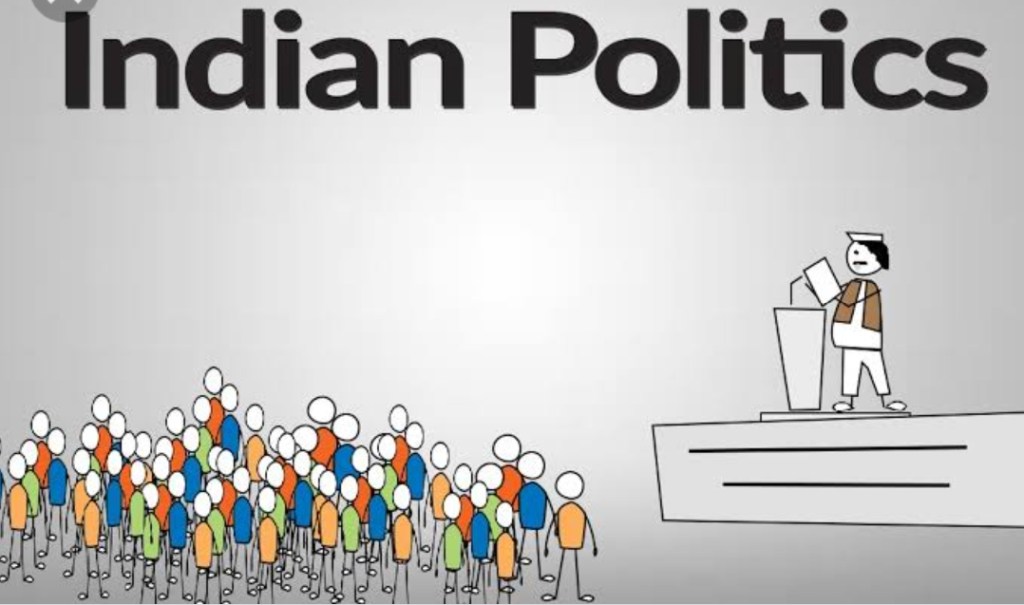


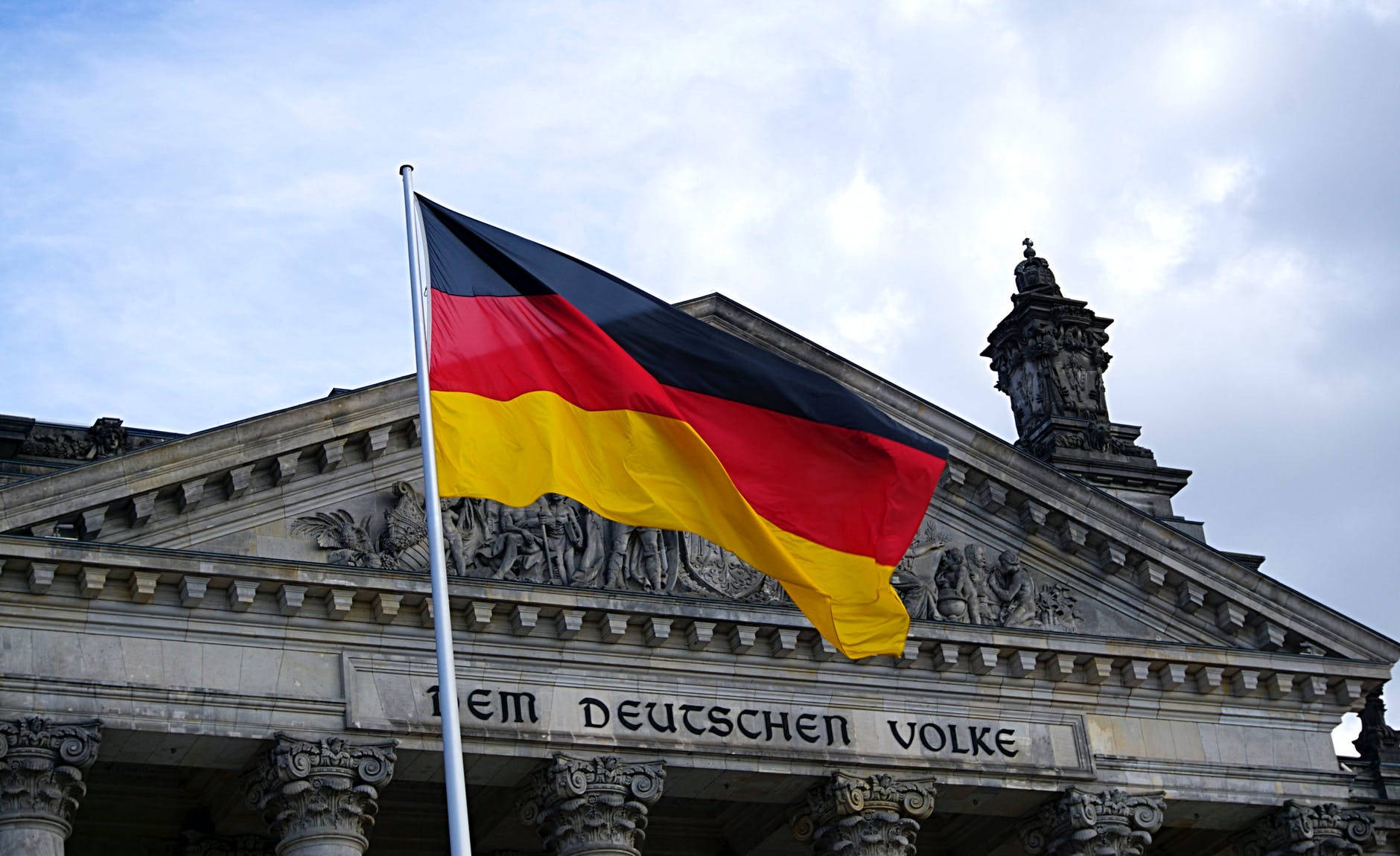


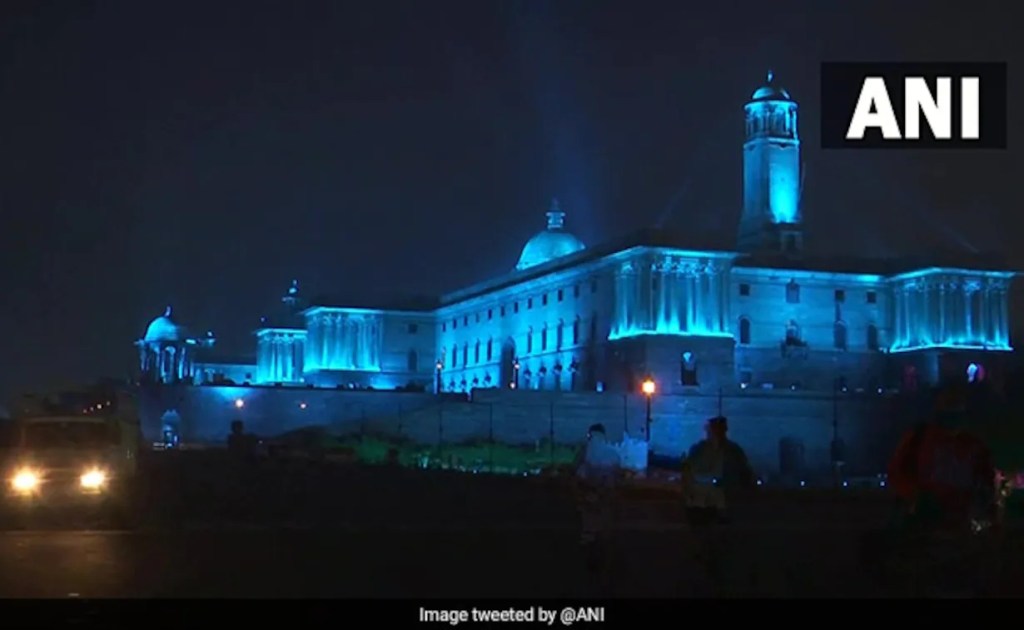






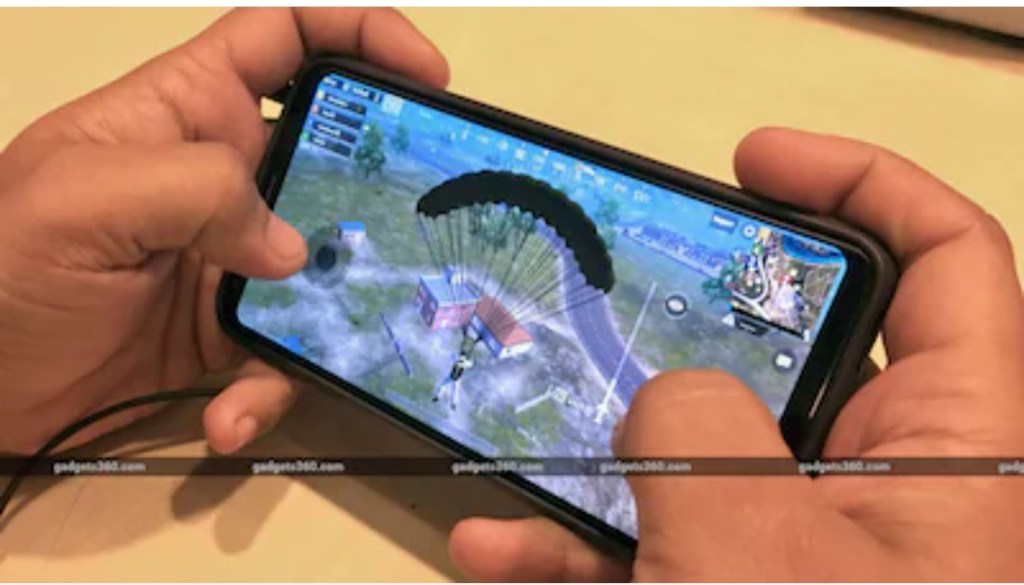






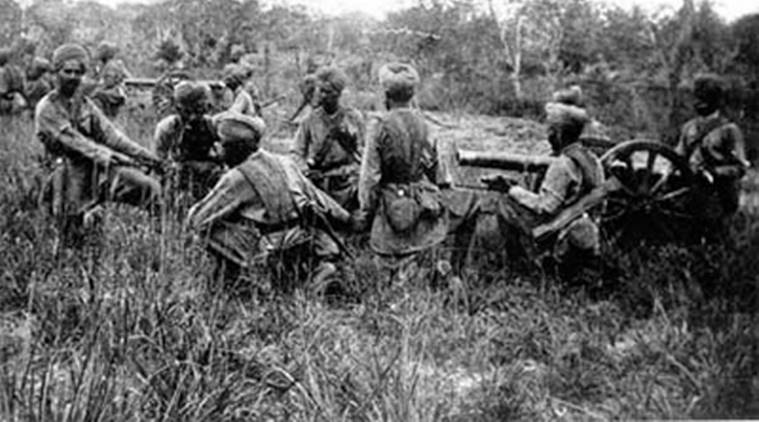

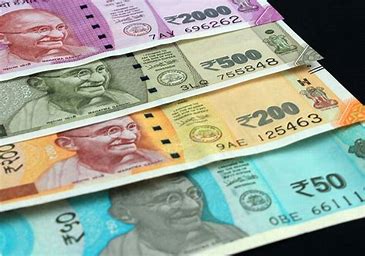




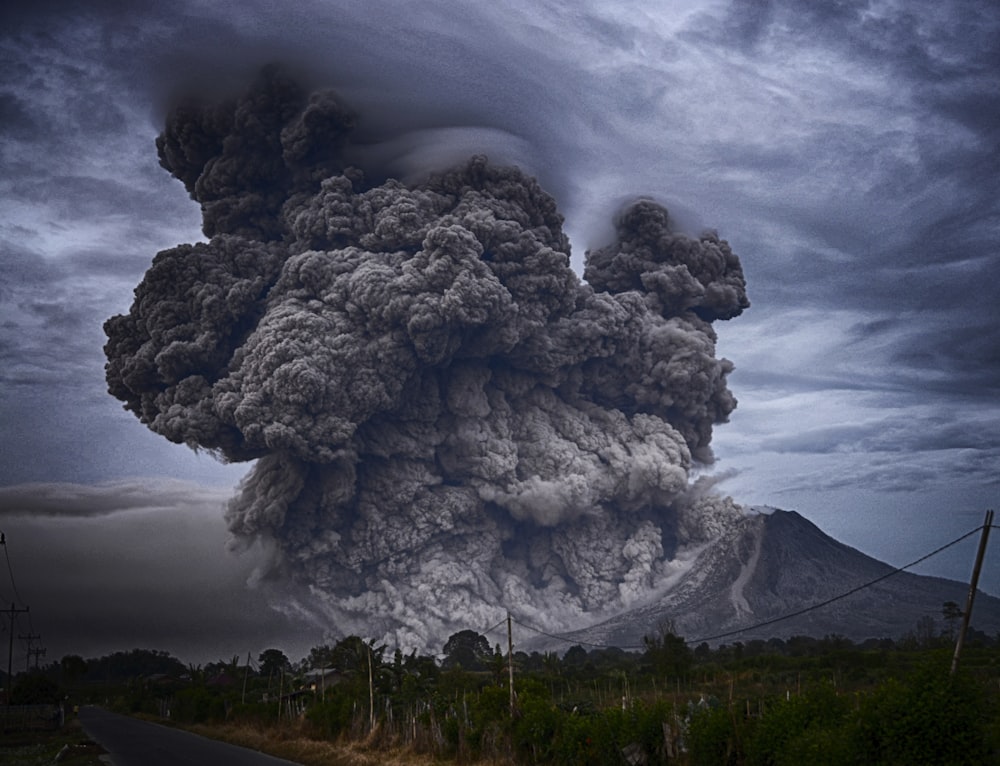







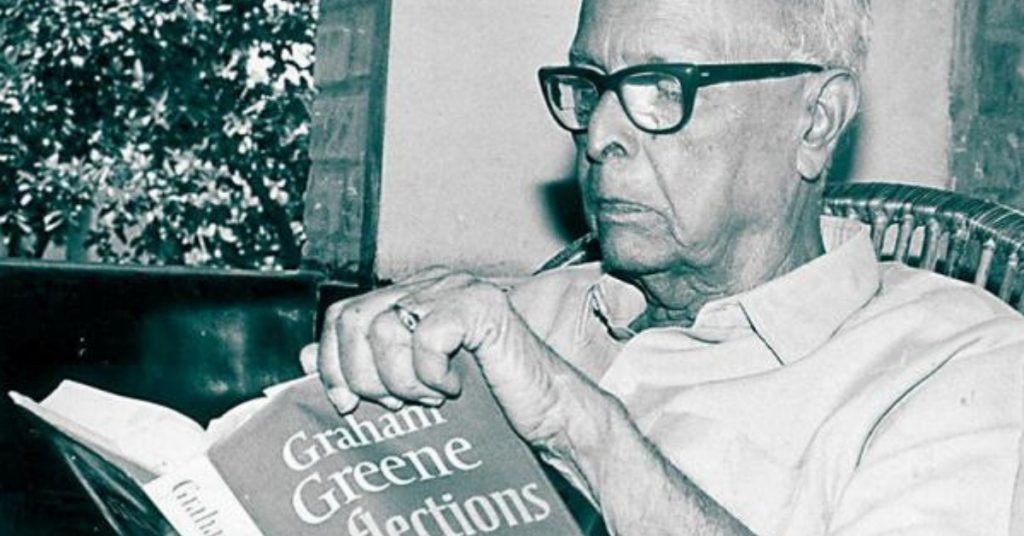




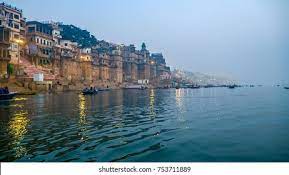
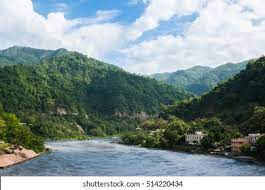


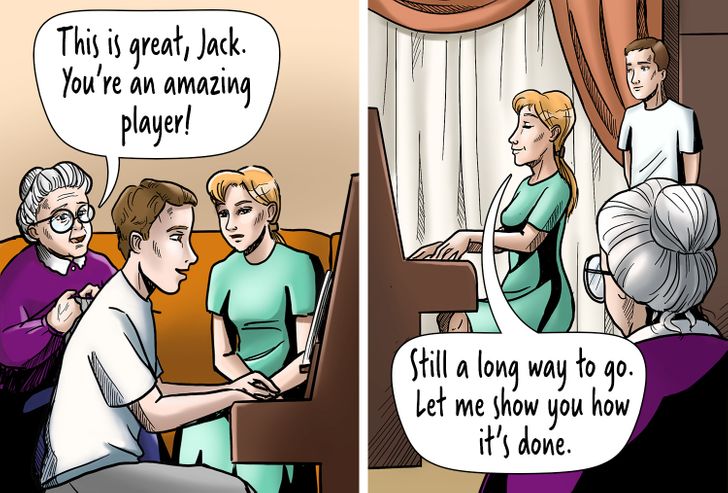
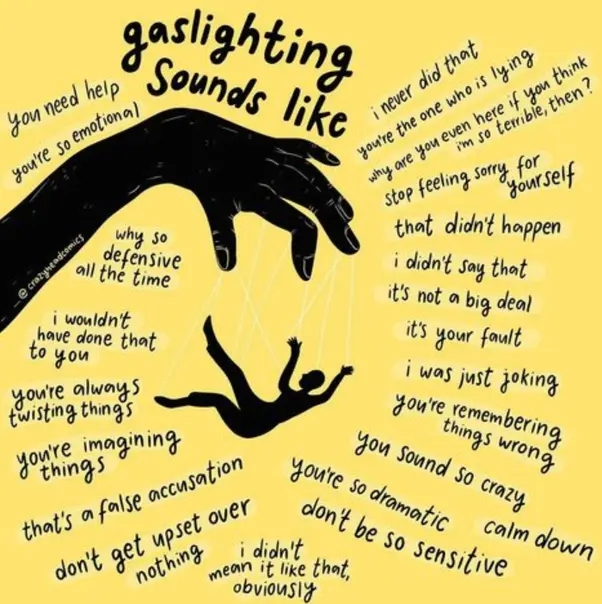




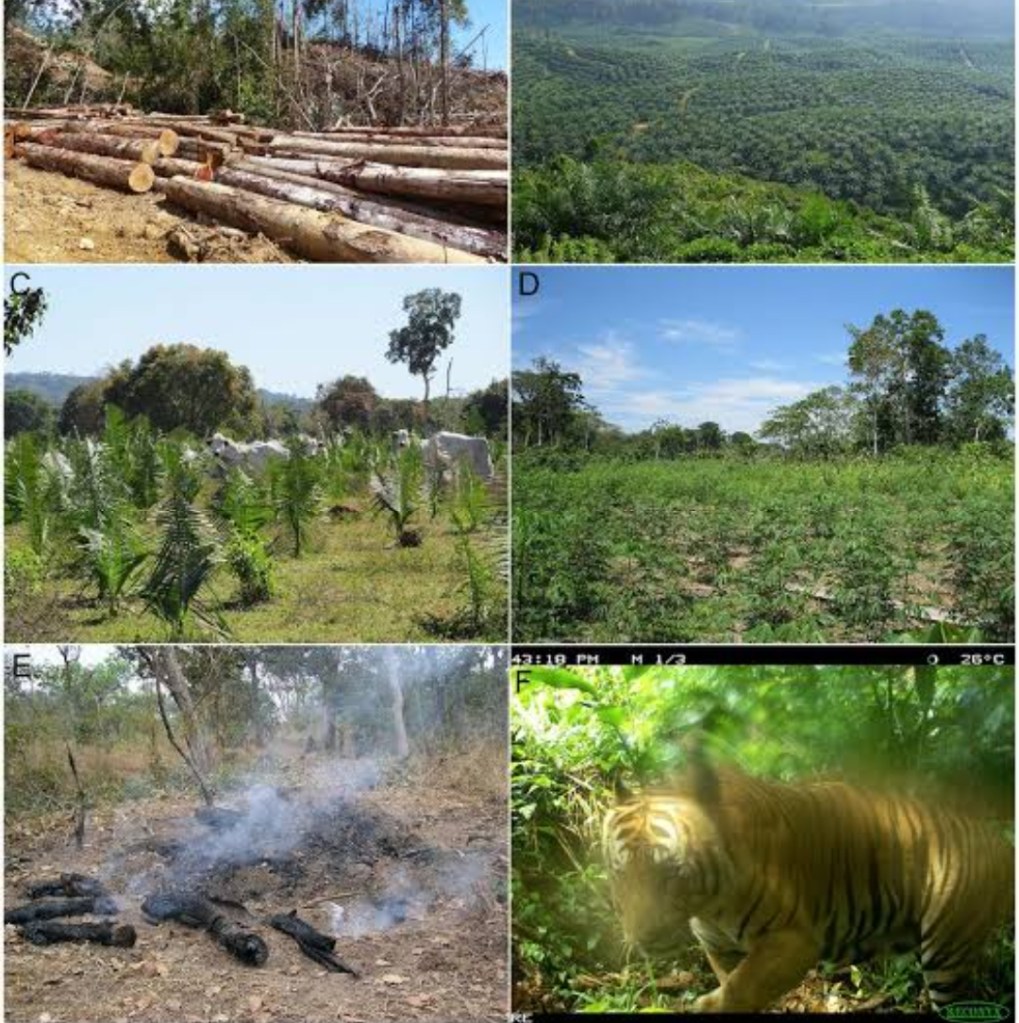

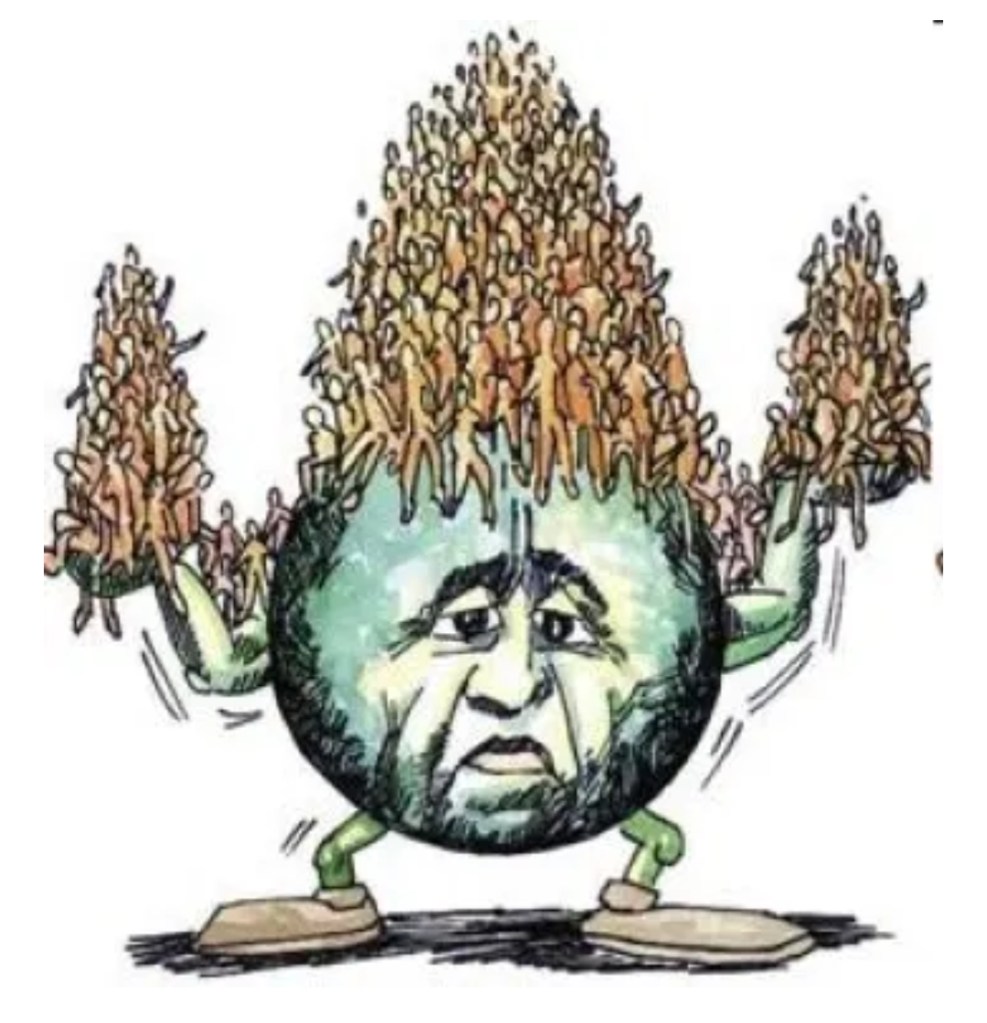









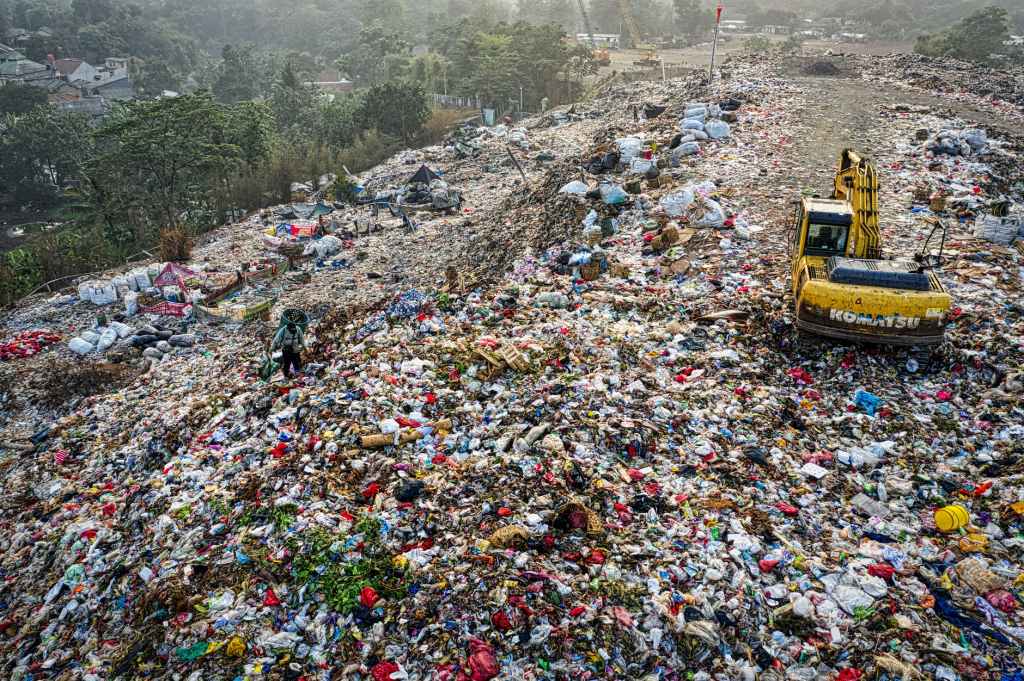

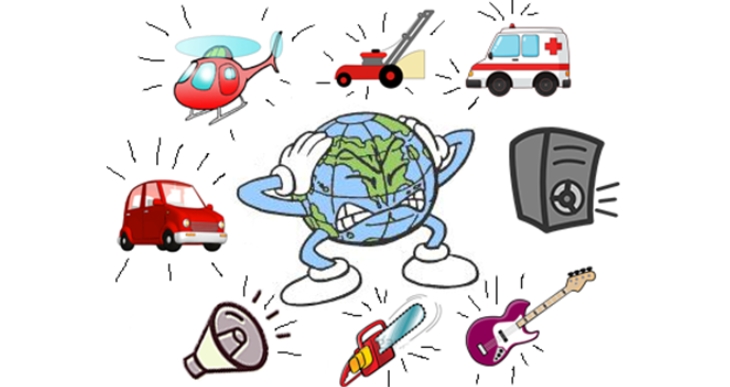













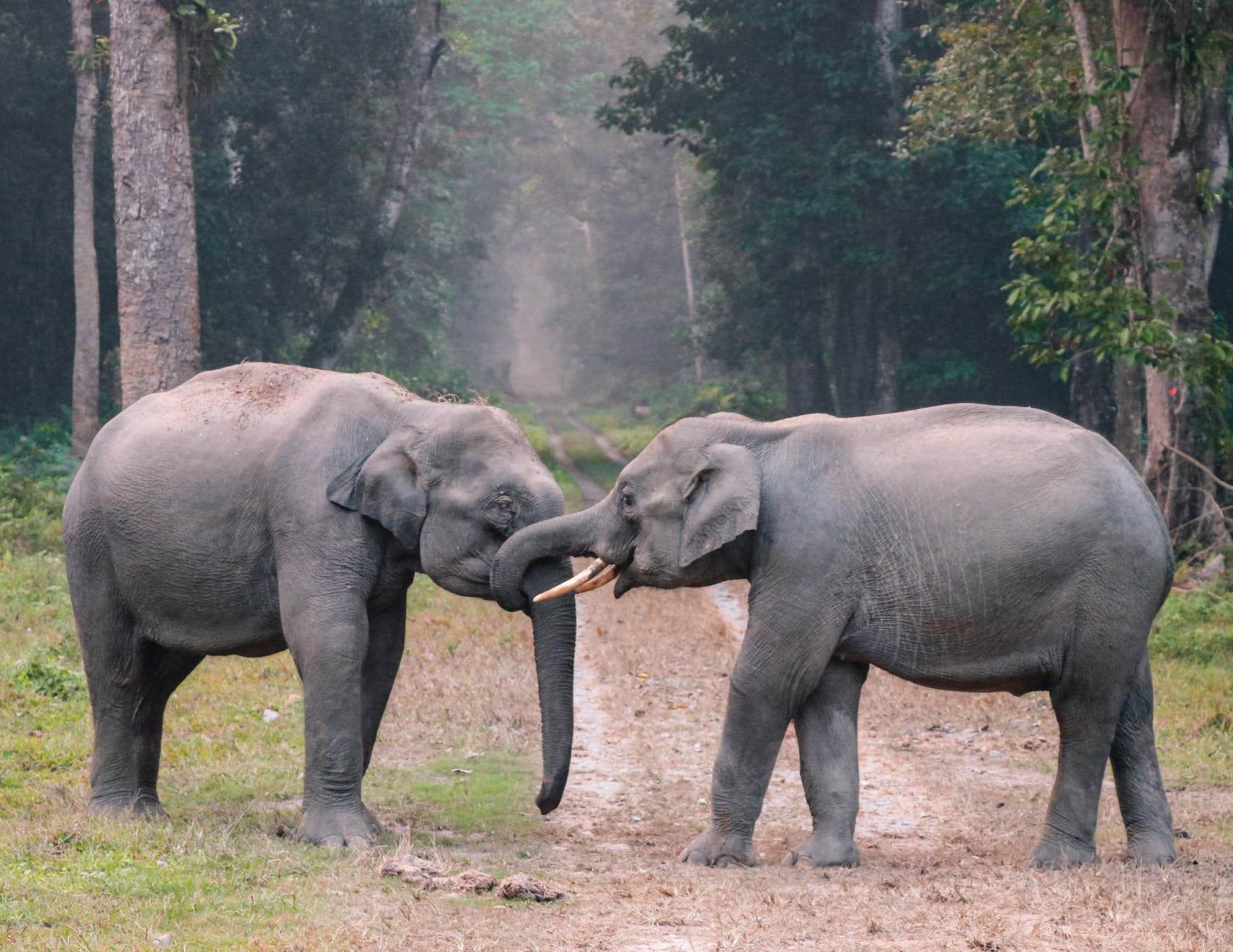








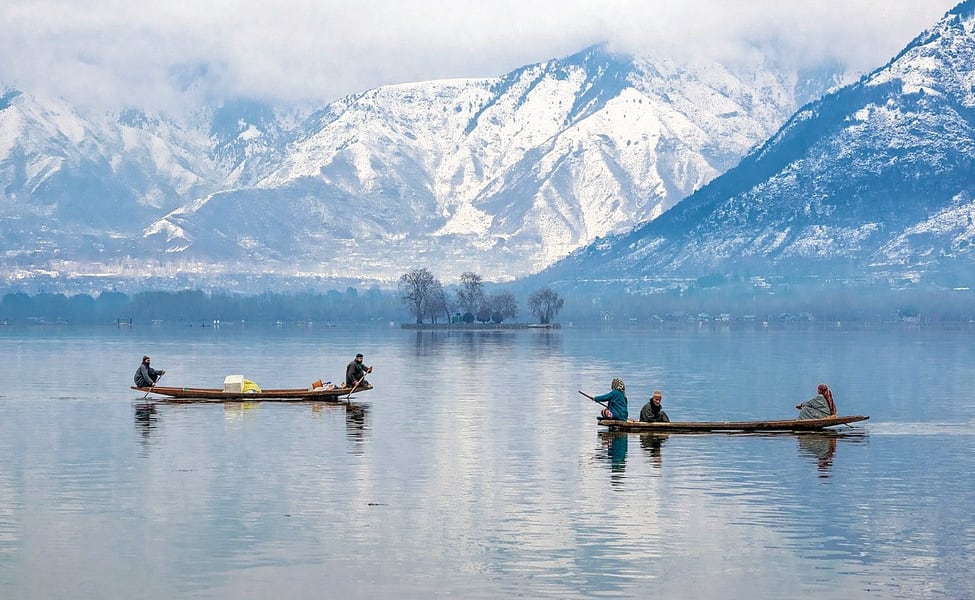
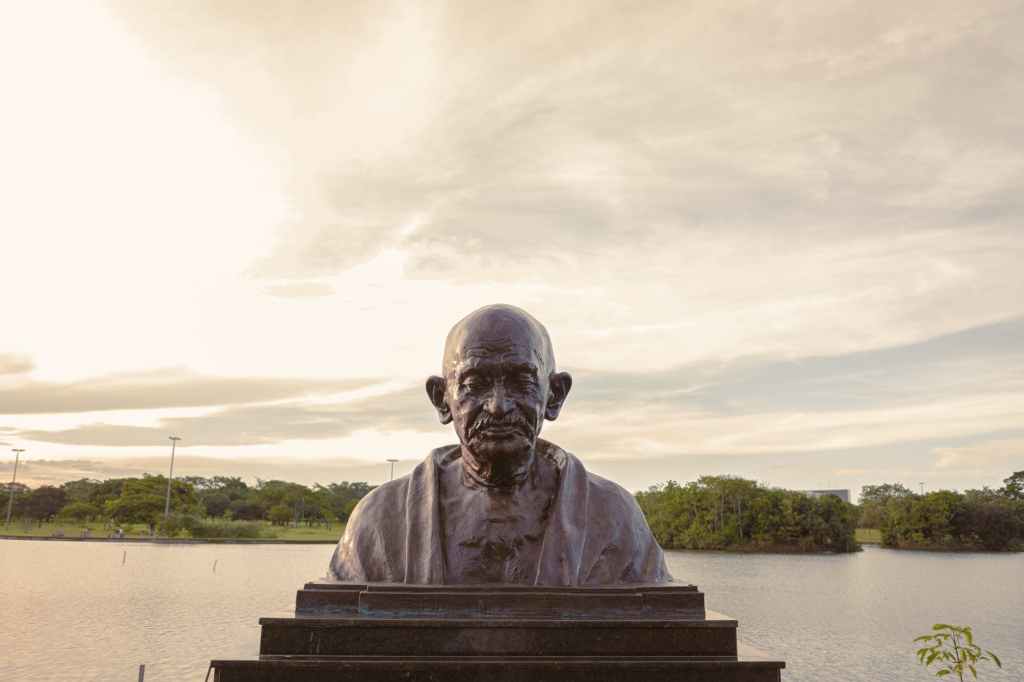








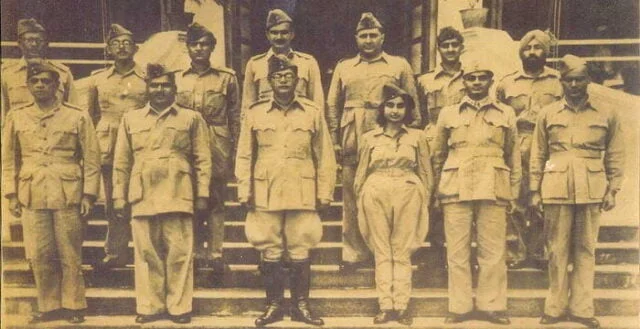
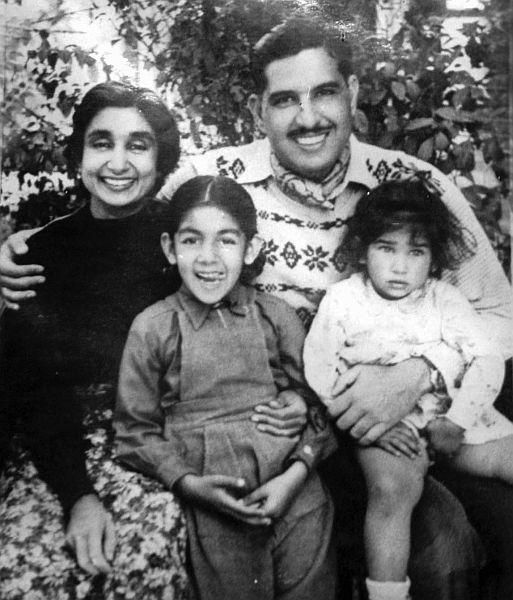
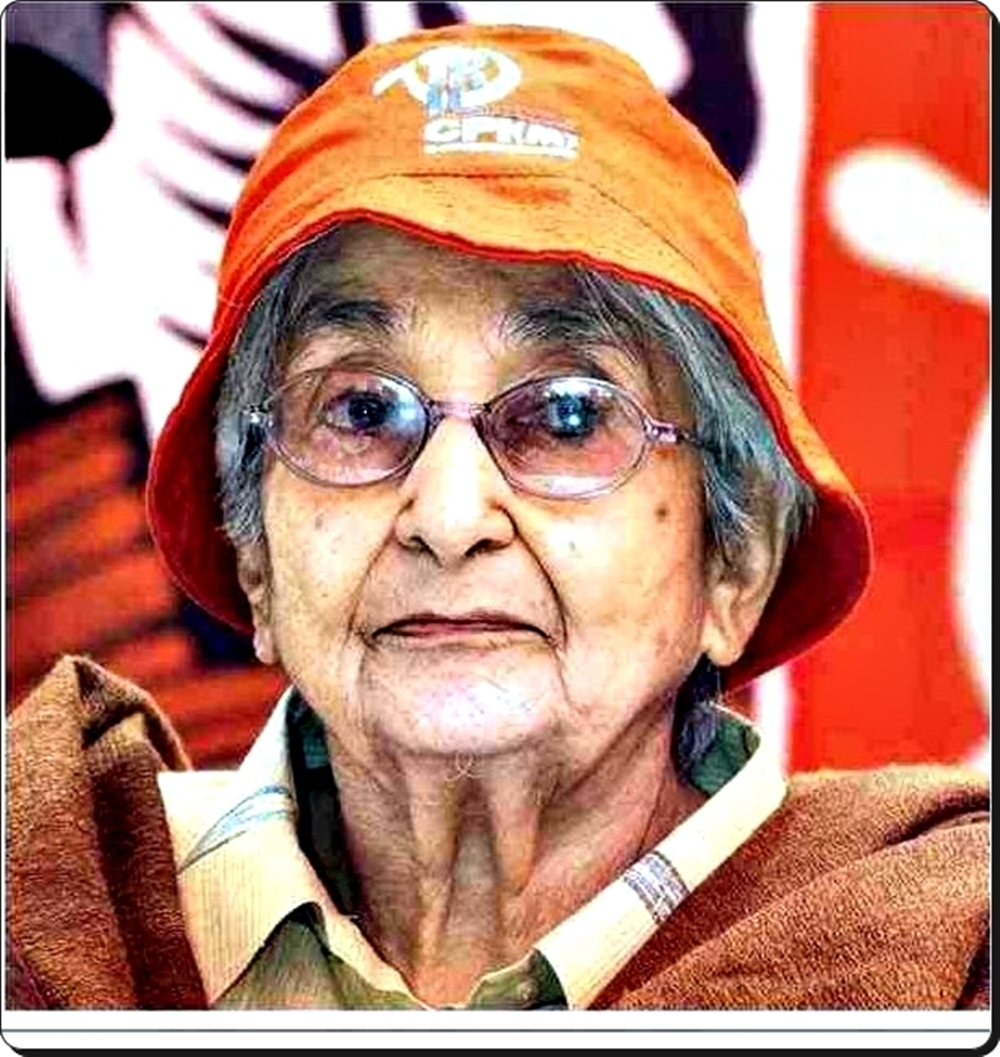
 Track2Training
You must be logged in to post a comment.