Social Evils that prevail in India

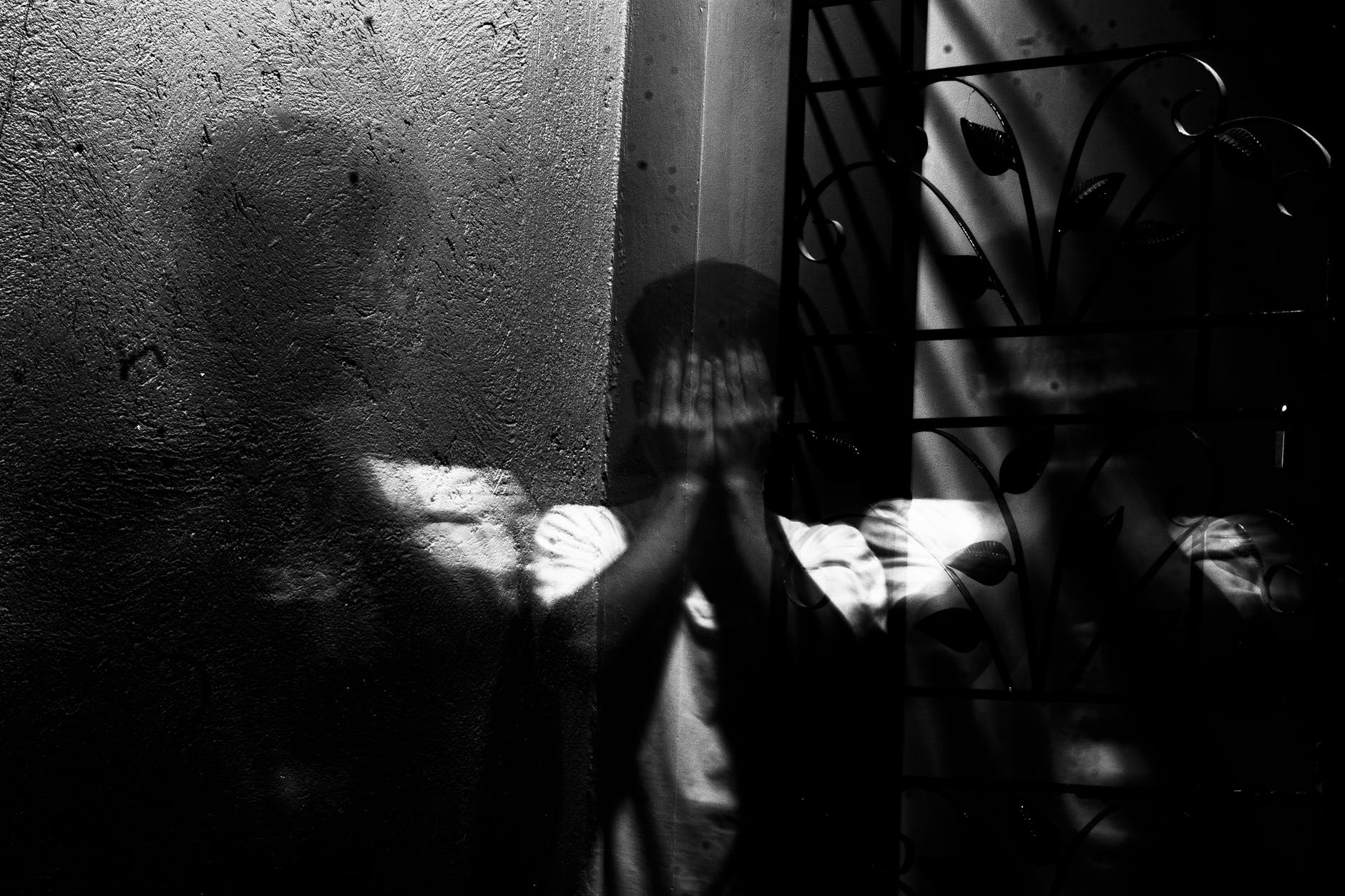
Photo by Nothing Ahead on Pexels.com

India is a country which is known for its diverse heritage and mesmerizing culture. However, it also has some unavoidable rigid belief systems or evils which, if not reformed, can be really harmful for the Indian society. Such social evils can also be harmful for the growth and progress of the society.

Social evils can be defined as the toxic beliefs due to which the societal progress is hindered. Such evils can be born out of sheer ignorance or blind faith in religion or culture or both. These evils are not only harmful for the believers themselves but for the society as a whole.

There have been several personalities who, in order to bring reforms in the society, tackled and attempted to remove the practices of some rigid belief systems which, in turn, brought reforms in the society.

Here are some evils that either prevailed or still prevail in India due to the stiff nature of the society:

The Caste system:

The caste system has its roots in the ancient Indian society where the common folks were divided into four categories on the basis of their skills and abilities. Those categories consisted of Brahmin, Kshatriya, Vaishya and Shudra.

But as the time passed, this system became so rigid that the people belonging to the higher castes were seen as superior to those of the lower castes. Brahmins were known to be next to God and were respected by almost everybody. On the other hand, the Shudras were discriminated and were considered as ‘Untouchables’. Although the Indian Constitution has outlawed the practice of Untouchability, it still exists in some parts of the Indian Society.

The Dowry system:

The word ‘dowry’ means payment (of property or money) from the bride’s parents to the groom or his family at the time of marriage. This stems from the belief that a daughter is a liability for her parents and for her bright future she has to be married off to a decent groom. In order to get a good marriage prospect, the bride’s family starts saving money as soon as the daughter is born. This puts an unimaginable of amount of burden on the bride’s family.

This system has also made many Indian women victims of the atrocious crimes by the groom and his family. There have been many cases where crimes against women were committed by their husbands or their in-laws. In such cases, women had to go through unimaginable physical and emotional abuse.

Although we have laws in the constitution against the practice of the Dowry System, it is still practised in some of India. The government is taking measures to eradicate this system by bringing in policies to educate and the girls and parents of the country. They have also started schemes to aware the parents about the negative outcomes of the Dowry system.

Female Infanticide:

Female infanticide is the intentional and deliberate killing of a baby girl once she is born due to the preference for a baby boy. Even though this is an illegal practice, people in some parts of India still practice it. According to a census in 2001, there are only 933 females to every 1000 men. Another census in the year 2011 showed a decline in the Child Sex Ratio (CSR) where there were only 918 females to every 1000 men.

Female infanticide is more prevalent than male infanticide in south Asian countries like India and China due to cultural reasons. In the Indian Society, some families kill their new born daughters to avoid the burden of paying Dowry to the groom or his family. For families with several daughters, it can be a huge financial burden and hence, killing the baby girl seems like an easier option to them.

The Indian government has tried to take several initiatives to tackle and eradicate this issue. In several Indian states, the government took the responsibility of educating the girl child which, in turn, freed the parents from their financial burden.

These are some of the dreadful evils in the Indian society which need to be tackled and solved so that a better and more reformed society can be created. However, there are more such evils like Poverty, superstitions and corruption. These issues have become pretty common in the Indian Society.

With the years passing by, these issues have risen instead of coming to an end. Therefore, proper action must be taken by the government and the society to change the mindset of the existing society.


Google honors Dr. Kamal Ranadive with a Google doodle on her birthday

IMAGE: GOOGLE

On the occasion of the 104th birth anniversary of Dr Kamal Ranadive, an Indian biomedical researcher, Google dedicated a Google doodle to her where she can be seen holding a microscope. She is well-known for her revolutionary cancer research and her commitment towards promoting social justice through education and science.

Dr. Kamal Ranadive was born in Pune on November 8, 1917. Her father, who was a biologist, encouraged her to study medicine but she had different aspirations. She decided to study botany and zoology as her main subjects and got her Bachelor of Science (B.Sc) in the same field from Fergusson College in Pune. She then moved to the Agriculture College in Pune for her post-graduation.

She successfully won a doctorate in Cytology (also known as cell studies) in the same year as working as a researcher at the Indian Cancer Research Center (ICRC), and thereafter, was qualified to gain a fellowship at Johns Hopkins University in Baltimore, USA. She thereafter returned to India and established the first tissue culture laboratory in the country in Mumbai.

She closely examined the links between cancer and different viruses, and also the link between breast cancer and heredity. She also studied Mycobacterium leprae (a type of bacterium that causes leprosy) and gave her contribution in the development of a leprosy vaccine.

Dr. Kamal Ranadive and a few of her workmates initiated the establishment of the Indian Women Scientists’ Association (IWSA) in the year 1973 to promote women in the scientific field. The organization as of now has 11 branches across the country. It provides scholarships and childcare to women in working or researching in the scientific area.

Ranadive received the Padma Bhushan, the third highest civilian award, in 1982 for her contributions to medicine. In 1964, the Medical Council of India presented her with the first Silver Jubilee Research Award. This award comprised of a gold medal and an amount of Rs. 15000. Another award that she received was the G. J. Watumal Foundation Prize in 1964 for her work in leprosy.

Dr Kamal Ranadive was loved and admired by many of her students and colleagues. They fondly called her ‘bai’. She always encouraged her colleagues and students to work and do various scientific researches in their own country. She also worked in rural Maharashtra after her retirement, training women as healthcare professionals and teaching them about health and nutrition.

Dr. Kamal Ranadive passed away in the year 2001 but she still continues to inspire the youth especially the women of this country to work hard and be an inspiration for many.

A man called Ove: Review

A book beyond the principles of judgment and society, barring the barriers of age, this masterpiece will remold your soul towards the kvetches in your life. A man called Ove, Created and written miraculously by Fredrick Backman, is a thin but infinitely everlasting book that will always stay with you once you turn the last page. As described on the cover page, it is a story about a man called Ove, and the short but satisfactory chronicles of his life. Being a cranky curmudgeon, he has a big habit of floccinaucinihillipilliphication. Big word, isn’t it? Google it (secretly gushing). He basically thinks every new technological thing that he cannot understand is paltry. His neighbors, His friends, everyone thinks he is an old trout. Well, when you are always seen with disgust and disappointment searing in your eyes, you wouldn’t expect much. But if you get to know the man who is called ‘the sorehead’, there is something irresistibly beautiful about Ove.

The story starts with a pouty old man who is seen buying an IPad or at least trying to buy an IPad, with a ‘you just broke my most precious possession and now I am going to kill you’ look. At that moment, the bewitching chronicle takes its first step into a beautiful tale about love, lived and lost.

Ove is a man who believes in practicality. Inaccuracy. In reality. Having a mighty adoration for tools, he was a straightforward man with no tolerance for nonsense, contrasting opinions, or even a happy sunshiny personality. Even after all this, there were so many things about Ove that were magnificent and adorable. That man’s life was simply great, he was arrogant, but down to earth. A man with a heart too big.

You’ll only feel the inklings of dismay and somewhat a sigh as the right side of the gem grows thinner page by page. The words start to reach the deepest core of our hearts, the dark noir on the crisp paper seems like the only world to exist. This little infinite tale will make you laugh out loud, and cry till you can’t breathe. My heart goes out to the author who has created such a magical fable, such an everlasting magnet of love and appreciation. Thank you. Fredrick Backman. Well done. Overall, I recommend this book to you, and I will do it again and again. Believe me.

it is worth it.

About the author: L.M. Montgomery

the creator of thoughtful grins on little souls, the molder of a legend, the light of an eye-blinding ray of literature, Lucy Maud Montgomery, or better known as L.M Montgomery is one of THE most phenomenal and unparalleled authors I have ever known. the beauty of her writing is miraculous, the plot of her stories is out of this world. She is honestly my crush and will be lifelong. Bloomed into this world on the 30th of November, 1874 in the chilly town of Clifton to Clara Woolner Macneill Montgomery and  Hugh John Montgomery. Hardly had she reached her 2nd year in the world, when her mother, Clara, passed away suffering from Tuberculosis. Since then, she was lonesome and quiet. A blessed child, the seven-year-old lucy, moved to Prince Albert to lead her childhood with her grandparents, when she found her imaginary friends holding her hand, later, that time of her existence was credited as a development and expansion of her creativity. In 1887, the witty and bright lucy of 13, wrote in her diary that she had, quoting, “early dreams of future fame”, she didn’t know that fate took her ‘early dreams’ very seriously.

the year 1883 was spent with her attending the Prince of Wales college to get a teacher’s license, and slowly, her love for Prince Edward Island grew as she strolled solitarily through the tranquil and starry paths down the countryside. Remarkably extraordinary as she was, Lucy completed her two-year teaching program in one year, clearly a prodigy. After, she explored the fields of literature at Dalhousie University, Halifax, nova scotia.

A part of her life was spent teaching in various schools located in Prince Edward Island after she left dalhousie university. Though Not a fan of teaching, it lent her the time to write, a hobby she loved more than herself. The spree of resplendent writing began in the year 1887 when she started publishing her short creations in several newspapers and magazines. And look how it turned out, over a hundred stories were published and hence started her journey to endless fame and love.

A gorgeous beauty, she was known to own her ‘good looks’. Those good looks resulted in many love interests in Lucy’s life. At the blooming age of fourteen, a boy named Nate Lockhart gained her affection, In response, she got the same too. Their liking turned into a relationship, for lucy, the relationship meant merely a humourous and witty friendship. Unfortunately, the love between the two birds ended abruptly when she refused his proposal.

The year 1908 can be called THE BIG BREAK for Montgomery. It is the divine and holy year ANNE OF THE GREEN GABLES was published. No surprise an immediate success, by November 1909, It had accomplished more than 6 printings. Still alive in the shelves of bibliophiles and the history of literature, We can still feel each emotion throbbing through every page we turn in the book. Every sentence is magical, some parts of the story representing real circumstances in Montgomery’s life, it is partly fictional, The plot of it almost real. This light, funny, and beautiful story is the epitome of a relax read with fun and philosophical expressions. You’ll laugh, you’ll cry, you’ll have a new perspective of seeing things. The readers can feel the author’s soul which is put into it.

So many years have passed, so many revolutions the earth has taken, and still, here I am, writing about this miraculous phenomenon whom we know as our beloved L.M Montgomery.

Remembering Savitri Khanolkar, The Designer of Param Vir Chakra

Param Vir Chakra is India’s highest gallantry award.From Major Somnath Sharma to Captain Vikram Batra, 21 brave hearts of the Indian Armed Forces have so far received the prestigious Param Vir Chakra award. When Major Somnath Sharma, the first recipient of this award, laid down his life while defending his motherland, this award actually did not exist. It was later, when India became a republic in 1950, that the award was introduced, but with effect from 15th August 1947.

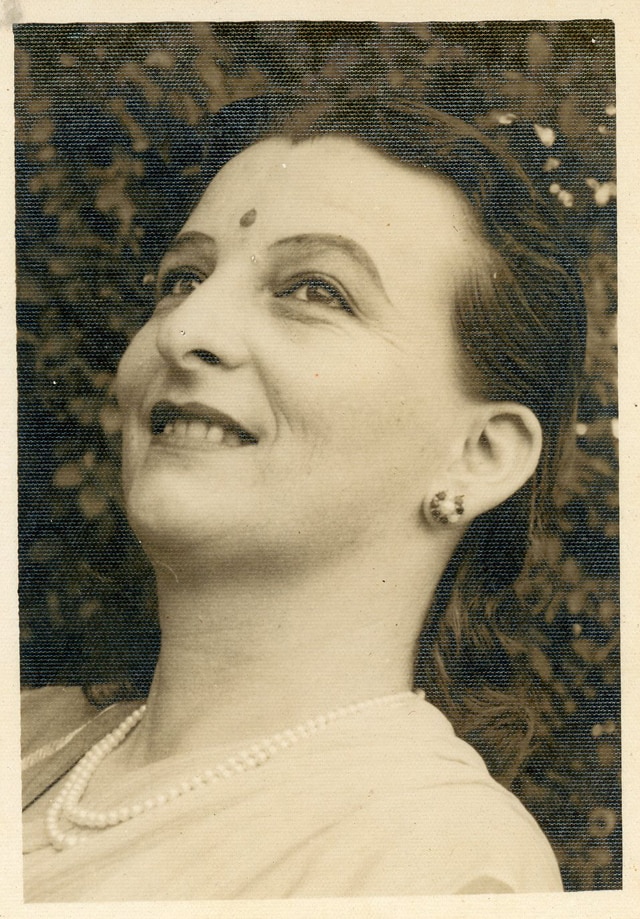
I’m sure most of you might have heard about this award, but what many are unaware of is that India’s highest military decoration was designed by a Swiss-born woman Eve Yvonne Maday de Maros aka Savitri Bhai Khanolkar. 

Image source: dnaindia.com

Life as Eve Yvonne Maday de Maros

Eve was born in Neuchatel, Switzerland, to a Hungarian father Andre de Maday and a Russian mother Marthe Hentzelt, on the 20th of July 1913. She was raised by her father, after her mother’s death. She spent her early childhood in Geneva. As a child, she loved nature and liked being outdoors. 

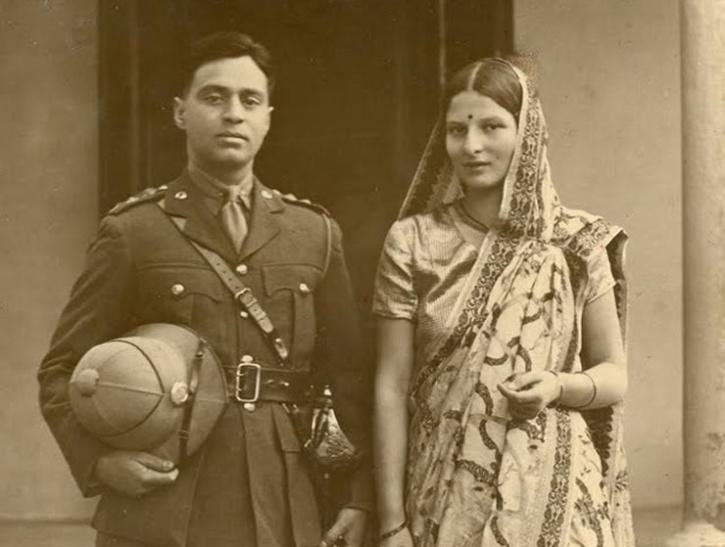
A turning point in her life was when in the winter of 1929, on a skiing holiday, she met Vikram Ramji Khanolkar, a young Indian Army cadet. Vikram, at that time was undergoing training at the Royal Military Academy, Sandhurst and was holidaying in  Switzerland during a team break. The meeting was just the beginning of what later blossomed into a cross country love story. Neither Vikram’s age nor her father’s disapproval stopped her from pursuing her love. She moved to India a few years later and got married to the love of her life in 1932. She converted to Hinduism and adopted the name Savitri Bhai Khanolkar after moving to India.

Life as Savitri Khanolkar

Savitri Khanolkar was a European lady with an Indian soul. She loved everything about India and its culture, which made her cross-cultural transition rather smooth and comfortable. She picked up Hindi, Marathi and Sanskrit within a couple of years and could converse fluently in all the three. She was keenly interested in India’s history and culture and devoted herself to learning more about the country’s mythology, traditions and religious scriptures. She was a talented artist and made a series of paintings depicting the various ideals and principles of Vedanta and Hindu philosophy. She also wrote two books – ‘Sanskrit Dictionary of Names’ and ‘Saints of Maharashtra.’ Those who knew her personally described her as a warm and compassionate person with a great passion for the Hindu philosophy.

Maj General Vikram Khanolkar and Savitri Khanolkar | Image Source: indiatimes.com

Designer of Param Vir Chakra

After India became independent in 1947, especially in the light of the Indo-Pak war that had broken out, there was a pressing need to create new military honours and awards for independent India. Adjutant General Major General Hira Lal Atal had been assigned this responsibility. Major Atal hardly needed to think twice before choosing Savitri Bhai for the task. Her passion for Indian culture and Vedanta philosophy, talent as an artist  and her in-depth knowledge of the country’s ancient history and traditions made her an ideal candidate for the job. Her military association as an army wife was an added bonus. She was asked to design the Indian equivalent of the British Victoria Cross – the Param Vir Chakra.

Param Vir Chakra : Design Inspiration

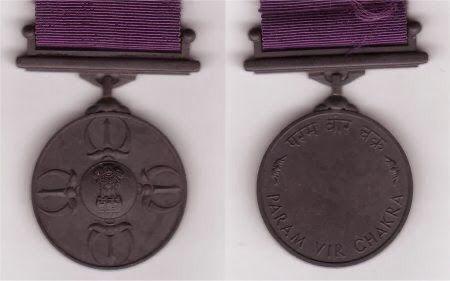
Savitri Bhai took inspiration from India’s ancient puranic literature and legends to design the Param Vir Chakra medal.She selected Indra’s weapon, the Vajra, which was made from the bones of Maharshi Dadhichi for the design. Maharshi Dadhichi was known for the ultimate sacrifice that he had made by giving up his body and thereby enabling the Gods to fashion the deadly weapon Vajra from his bones. The presence of Vajra in the medal is symbolic of the power and the selfless sacrifices of our legendary war heroes. 

The final design consisted of the National emblem embossed in the centre, surrounded by four replicas of the double Vajra imprinted on the medal face and the rear side had the words ‘Param Vir Chakra’ inscribed both in English and Hindi, separated by Lotus flowers.The medal was cast in bronze and held by a purple ribbon.

Apart from the Param Vir Chakra, she also designed other gallantry medals including Ashok Chakra, Maha Vir Chakra, Kirti Chakra, Vir Chakra and Shaurya Chakra.

Coincidentally, the first PVC recipient turned out to be Savitri Bhai’s future son-in-law’s brother, Major Somnath Sharma.

Image Source : twitter

Later life 

During the course of her life, Savitri Bhai always found time to engage in social work. She was a follower of Sri Ramakrishna and she immersed herself in numerous social activities through Ramakrishna Mission. She also worked for the welfare of Jawans and their families and refugees who had been displaced during partition. She lost her husband to a heart attack in 1952, after which she found solace in spirituality and retired to Ramakrishna Math.

The life of Savitri Bhai Khanolkar was truly a remarkable one. Be it joining the North India Flying Club or learning Indian classical dance and music or attending Patna university, she enjoyed every bit of her life as an Indian woman. She passed away on 26th November 1990, after leading a full life.

Things to know before taking up Mass Media and Communication courses.

Photo by Caleb Oquendo on Pexels.com

Let’s begin by knowing what Mass Media or Mass Communication is. Mass media refers to the media technologies such as movies, songs, news, podcasts, advertisements and photos, that are utilized to carry information to the masses. 

Importance of Mass Media

This blog you are reading is helping you gain knowledge about Mass Media and communication. Hence this blog becomes a media technology and educating you in the field of Mass Media defines its importance. From applying for a job to reaching out to a friend on your phone, everything becomes a portion of Mass Media as they help users pass on information from one place to another or one person to another. 

Here are some advantages of Mass Media to highlight its importance. 

  • It becomes a voice for the voiceless: Mass Media provides every individual with an opportunity to practice their freedom of speech and spread their ideas among the world. YouTube is a great example of Mass Media. As a platform in this 21st century it helps both small and large creators publish their videos for everybody to watch. 
  • Enables widespread communication: Today, the world is often referred to as a global village. This is made possible due to several types of mass media technologies such as social media, internet, and other digital content. It helps governments, businesses and organizations to communicate with each other and stay connected. 
  • Diversifying culture: Mass Media helps in diversifying languages and cultures beyond its place of origin. A good internet connection and a mobile phone or a computer is all you need to learn a new language or gain knowledge about a new culture. You can even take a peek around the world without leaving your home. 

The Evolution of Mass Media

Mass Media can be traced back to the 800 AD which consisted of prehistoric arts, writings and some basic printing technology. The introduction of Gutenberg’s printing press in the 1450s helped art and literature gain a wider reach among the people.The year 1605 witnessed the publishing of the first weekly newspaper in Antwerp, known as ‘Relation’. This was followed by the inventions of radio and television in 1895 and 1925 respectively. Finally in 1990, the world wide web was introduced by Tim Berners Lee. 

The number of people benefiting from these media technologies witnessed a steady growth from a handful, to thousands, and millions with the introduction of newspapers, radios and televisions. Today, due to the internet, these numbers are reaching billions. In 2018, the number of  World Wide Web’s users was estimated to be 4 billion. 

The 21st century has introduced the ability for even individuals to broadcast a customised message for thousands across the globe. You no longer need to be a part of some huge networking channel to do so. A good internet connection and a hand held device can do the job. 

The functions of Mass Media

Mass Media, in the form of writing, podcasting, and publishing, has a significant effect on the masses. Commercials on television, billboards and social media influence the audience into buying a product or availing a service. Hence companies across the world look for suitable mediums such as social media, blogs, forums, or video streaming platforms to convey their messages based on their businesses. Once they find the right mass media technology, they conduct campaigns to communicate their ideas. 

Majority of the companies today create and maintain their social media pages, maintain blog posts on their websites, and run advertisements on video streaming platforms to educate viewers about their products or to entertain them. These define the functionality of Mass Media. 

Courses in the field of Mass Media and communication

Photo by Redrecords u00a9ufe0f on Pexels.com

After addressing the ‘Wh’ questions of Mass Media, let us dive into the courses one can opt for in the field of Mass Media and communication. There are three kinds of courses available for aspiring students in the field of Mass Media and communication. Courses at undergraduate, postgraduate and diploma levels.

Both the course levels familiarise students both practically and theoretically in the field of Mass Media and Communication. 

Eligibility for courses in Mass Media and communication (UG PG) 

A student aspiring to seek admission in a Bachelor of Arts in Mass Communication course, he or she must fulfil some eligibility criterias. 

  • The applicant should have completed senior secondary schooling (10+2) from a recognized university. 
  • The applicant must have scored a minimum of 50% from the aggregate in their senior secondary schooling. 

Similarly, students aspiring for seeking admission in the Master of Arts in Mass Communication course must fulfil the following eligibility criterias. 

  • The applicant must have a Bachelor’s degree in any stream from a recognized university. 
  • The applicant must have scored a minimum of 50% from the aggregates in their Bachelor’s degree. 

Institutes may also require you to give an entrance exam to fulfil the admission process.

Here’s what you will learn from Mass Media and Communication courses

Courses in Mass Media helps you get acquainted with subjects such as Public Relations, Design and Graphics, Digital Media, Reporting and Editing for Print Media, Data Journalism, Photojournalism, Event Management, and Media Law and Ethics. The courses are inclusive of Computer based learning, Guest Lectures, Seminars, Workshops, Massive Open Online Courses, Individual and Group projects, and community based projects. 

Scope for Mass Media courses under employment prospect.

Photo by Pixabay on Pexels.com

With an increase in media technologies following new inventions and establishments such as Television Channels, Radio Stations, Advertising Agencies, PR Agencies, etc. Scope in this field is also parallely increasing. Here are some of the job profiles candidates can look out for upon completion of the course. 

  • Journalism
  • Public Relations
  • Advertising
  • Media Planner
  • Broadcasting and Production
  • Event Manager

Conclusion

Mass Media and Communication as a field in academics has a great scope in India and overseas. Freshers with expertise in specific areas and sufficient experience will be hired by prominent media companies for different job profiles. Individuals with good communication skills, writing proficiency, and passion for learning can pursue an undergraduate or a postgraduate course in Mass Media and Communication. 

References

Ritika Shrivastava, May 17, 2021 09:36 IST, shiksha.com

Akanksha Sirohi, July 15 2020, collegedekho.com

https://www.careers360.com/courses/mass-communication-course

THIS RACE CALLED LIFE

Once upon a time, there was a young athletic boy hungry for success for whom winning was everything and success was measured just by winning. One day, the boy was preparing himself for a running competition in his small village, himself and two other young boys to compete. A large crowd had gathered to witness the sporting spectacle and a wise old man, upon hearing of the little boy, had travelled far to bear witness also. The race commenced, looking like a level heat at the finishing line, but sure enough the boy dug deep and called on his determination, strength and power. He took the winning line and was first. The crowd was ecstatic and cheered and waved at the boy. The wise man remained still and calm expressing no sentiment. The little boy, however felt proud and important. A second race was called, and two new young fit, challenges came forward, to run with the little boy. The race was started and sure enough the little boy came through and finished first once again. The crowd was ecstatic again and cheered and waved at the boy. The wise man remained still and calm again expressing no sentiment. The little boy, however felt proud and important. “Another race, another race!” pleaded the little boy. The wise old man stepped forward and presented the little boy with two new challenges an elderly frail lady and a blind man. “What is this?”, quizzed the little boy. “This is no race” he exclaimed. “Race!”, said the wise man. The race was started and the boy was the only finisher, the other two challengers left standing at the starting line. The little boy was ecstatic, he raised his arms in delight. The crowd however were silent, showing no sentiment toward the little boy. “What has happened? Why not do the people join in my success?” he asked the wise old man. “Race again”, replied the wise man, “ this time, finish together, all three of you, finish together” continued the wise man. The little boy thought a little stood in the middle of the blind man and the frail old lady, and then look the two challengers by the hand. The race began and the little boy walked slowly, ever so slowly, to the finishing line and crossed it. The crowd were ecstatic and cheered and waved at the boy. The wise man smiled, gently nodding his head. The little boy felt proud and important. “old man, I understand not! Who are the crowd cheering for? Which one of us three?” asked the little boy. The wise old man looked into the little boy’s eyes, placing his hands on the boy’s shoulders, and replied softly.

HOW TO DEVELOP SELF CONFIDENCE 

Confidence isn’t walking into a room thinking that you’re better than anyone. It’s walking in knowing. That you don’t want to COMPARE yourself to anyone. Comparing yourself to another person that isn’t even in your system. There’s no thought of comparisons. There is no competition with any other human. You are not below anyone that’s confidence. When you can get to the place in your life. Where comparison is dead. When you are good enough not to others. But to yourself that is confidence and you can be good enough right now. Because you are good right now. You might just need to change your mindset.” CONFIDENCE “can be developed in many ways. You can start with your physiology, your posture. If I asked you what a confident person looked like would you be able to tell me? Of course you would they look strong, sure of themselves. How are they standing? They are standing TALL. How are their shoulders? They are BACK, upright. They make eye contact their head is up, not down. Now a SHY or introverted person might say. Yeah, well that’s all good for outgoing people but I will never be confident. Anyone can develop confidence. Some might have to work on it harder than others because they have conditioned themselves into a lack of confidence for much of their life but anyone can develop confidence. Even the majority of shy people have moments where they aren’t shy like around people they trust may be family, friends or their partner. Moments where they can be themselves fully. So the shyness is selective which means you can make confidence permanent. If you CONSCIOUSLY decide to be the person and do the things you do not just around those you trust the most, but all the time. Being confident doesn’t mean you are LOUD. It isn’t about being the one that has to be noticed. I’s the opposite, it’s knowing you’re great, without having to be seen. It’s the silent winner. It’s the humble champion. If you lack confidence, you can change. If you lack anything, YOU CAN CHANGE. You can be anything in life including radical personality change. IF you are COMMITTED to finding the answers. “UNLOCK THE GREATEST VERSION OF YOURSELF”. Your true nature of confidence of pure positive energy. Unlock your authentic power today.

Major Somnath Sharma – The Hero of Battle of Badgam

The day November 3rd 2021, marked the 75th anniversary of the Battle of Badgam. This battle was one of the most prominent defensive encounters which took place at Badgam in Kashmir valley, between troops of the Indian Army and Pakistani tribal raiders, on the 3rd of November 1947.

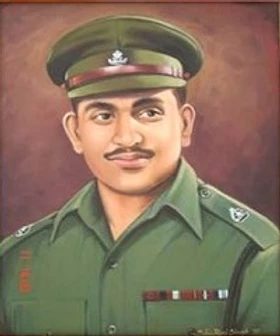
On this occasion, let’s take a look at the life of the legendary war hero, Major Somnath Sharma whose name has become synonymous with the Battle of Badgam. Major Sharma was martyred in action during the battle, while repulsing the infiltrators. He made history by becoming the first recipient of Param Vir Chakra, India’s highest military decoration, for his exemplary leadership and gallantry.

Early life

Major Somnath Sharma was born on 31st January 1923 at Dadh, Kangra (present day Himachal Pradesh).He was a second generation army officer. His father Amar Nath Sharma was an Army Medical Corps Officer and several of siblings have also served in the military services. His uncle Captain K. D Vasudeva, who had died during the Malayan Campaign in World War II, was also a great influence throughout his career.

Somnath, fondly called as Somi, and his brother, called as Tindy in the army circles, were sent  to Hampton Court Convent Mussoorie at a young age, as their father was sent to England for a medical course. The brothers then went on to pursue their studies together in Sherwood College, Nainital. Somnath was enrolled in Prince of Wales Royal Military College in Dehradun after his schooling. After passing out from there, he joined the Indian Military Academy, in 1941 but the military training program had to be stopped in between due to the World War.

Major Somnath Sharma. Source: Honourpoint

“The enemies are only 50 yards from us. We are heavily outnumbered. We are under devastating fire. I shall not withdraw an inch but will fight to our last man and our last round.”

Param Vir Chakra Citation

Military Life

After a rigorous training of 9 months, in February 1942, he was assigned to the 8th Battalion, 19th Hyderabad Regiment(which later came to be known as 4th Battalion, Kumaon Regiment), at the age of 19.

Arakan Campaign

Under the command of Col. K.S. Thimmayya, he saw action against the Japanese in Burma. Once during a deadly combat with Japan, when a saw a wounded Kumaoni soldier who was stranded on the field due to his injury, Somnath picked him up and carried him on his back through the Japanese shelling to a safe place. He was mentioned in dispatches for many such acts of bravery exhibited during the Arakan campaign.

Battle of Badgam

On the 22nd of October 1942 the Kashmir valley was invaded by Pakistan. In response to that, on 27th October 1942, a contingent of troops of the Indian army was airlifted to Srinagar. Around this time, Major Somnath Sharma had returned to India and was an adjutant in 4 Kumaon, where he had picked up his duty to ensure internal security of Punjab. That and his experience in working with the police and administration during the 1947 unrest, qualified him to be chosen as a commander of D company of the 4th Battalion of Kumaon Regiment. Somnath at this time, was recovering from an injury sustained previously on the hockey field and his left hand was still in plaster cast and hence initially, the commanding officer of 4th Battalion  Kumaon was hesitant in sending Somnath along with the troops, but ultimately had to give in to Somnath’s persistence.On 31st October, D Company of 4 Kumaon Regiment was flown to Srinagar.

On November 3rd 1942, a batch of 3 companies – A and D company of 4 Kumaon, led by Major.Sharma and 1 Para Kumaon commanded by Captain Ronald Wood –  was deployed to Badgam to search for the infiltrators and stem their advance towards Srinagar. 

Major Somnath’s company had taken position and dug trenches on a hill west of  the village and 1 Para Kumaon had positioned themselves  in the south east part of the village. According to the Major’s report, the village seemed calm and eerily quiet. Detecting no enemy movements, 1 Para Kumaon was instructed to take a round of the east and go back to the airbase in Srinagar. By around 2 p.m, A company was also removed from the field and D company was instructed to stay in position until 3 p.m. 

Meanwhile, on the other side of the border, the Lashkar, under the leadership of a Pakistani major was planning an attack on the Indian soldiers patrolling the area and was accumulating in small units, to avoid suspicion.

Half an hour after the withdrawal of A company, a group of villagers who had gathered around a nala (water body), began to move around and disperse in different directions. Little did the Kumaonis know that these were the infiltrators disguised as civilians with their weapons hidden inside their loose cloaks.The company was hence shocked when firing commenced from the houses in the village. In order not to endanger the lives of innocent civilians, counter-fire was not ordered. While Major Sharma was reporting the changed situation in the village, a large group of around 700 odd raiders barged in and surrounded the company from three sides. The enemy opened heavy mortar fire on the company.

The company suffered heavy casualties from the attack and were vastly outnumbered by a ratio 7:1. Realising that the city of Srinagar and the airfield would be vulnerable if they failed to engage the raiders, Major Sharma held onto his position and urged his men to fight tenaciously. Even when he knew that his company wouldn’t be able to stop the enemy for long, he and men fought ferociously. It was a real challenge to keep up the spirits of his men alive in the given circumstances. This is when he displayed his exemplary leadership skills by rushing from one post to another boosting the team’s morale and motivating them to put up a brave defense. He laid out panels to guide the Indian aircrafts, which were coming for their aid, to the enemy targets. On realising that his company’s firing power had been adversely affected as a result of the heavy casualties suffered, he took up the task of filling the magazines and issuing them to his men operating on light machine guns. While he was at it, a mortar shell exploded on a pile of ammunition right next to him, leading to his death.

His exceptional courage set an example for his men, who continued to fight even after his death with all the vigour that they had. However, by the time reinforcements arrived, the company had suffered severe damage including the death of Major Somnath Sharma, one Junior Commissioned Officer and 20 other soldiers. Sharma’s company was successful in inflicting much heavier losses on the enemy. The raiders had lost over 200 men and their leader had been incapacitated, which resulted in their movement losing its momentum. The fierce resistance of Sharma’s company delayed the enemy for 6 crucial hours, thus giving the Indian Air Force enough time to get into position and thus preventing the infiltrators from gaining the airfield. 

For his exceptional valour, exemplary leadership and supreme sacrifice, Major Somnath Sharma was awarded the Param Vir Chakra posthumously, on June 21st 1950.

On the 75th ‘Battle of Badgam Day’, November 3rd 2021, the Indian Army paid tribute to this brave son of India who laid down his life to defend his motherland.

THINK LIKE A BILLIONARE

“If you follow the crowd, you will certainly be lost in it. If you think like everyone, how will you create your own identity”. Why many entrepreneurs get confined to just a street corner? And why only a few, move ahead to create massive business empires? There is only one difference between these two groups. “The difference is thinking!”. Thinking has the power, to transform a blank page into a new invention. Thinking has the power to transform a blank page into the night sky.So stop blaming your luck or destiny. Business is a race where winning companies are miles ahead. But still, there is a strategy that can defeat these masters of business. This strategy is taught at Stanford, Harvard, IIM’s. If you can master this strategy, success will certainly follow you. Business is not just a ladder of success, it is also a bed of thorns. No new restaurant can beat McDonald’s 65 years of experience. No new IT company can compete with the 52 year old TCS. There is only one chance for these new companies to succeed. Instead of competing, the new company can make the competition irrelevant. Do something that you will change the rules of business. In the mobile network industry, there is a long queue of salesman to get every new customer. In the same industry, Jio adopted the strategy of Business Model Transformation. Jio changed the rules of the mobile network industry. Where other mobile networks were focussed on phone calls. Jio came and made the whole story about Internet Data. By bringing transformational change in the industry, If you also want to create transformational change, don’t think what business you will do. Rather think, how can you transform the whole industry, iTunes transformed the music industry. Netflix brought changes in the television and film industry. As time changes every moment. Evry industry can also be changed, just changemakers are required. Transforming the industry can be very easy and the most difficult just find out the unfulfilled needs of the customers, and fulfill them. The need to get an instant taxi was fulfilled by Uber. The need to shop at home was fulfilled by Amazon. Similarly, in every product round you. There is a possibility of new business. Just open your eyes. Don’t participate in the competition. Create something new. Because on a crowded street, you will never reach far. Move ahead in the path, which no one has chosen. In the end, this new path will make you reach the pinnacle of success. Therefore, think different from the rest. People who think differently from the crowd Make History.

“Winners don’t cry and give in to the fate”.

How To Break The Procrastination Cycle & Get Things Done

It’s 9 in the morning. You are fresh and focused and all set to work on that challenging project which needs to be completed urgently. You sit at your desk and fire up the laptop and while waiting for it to boot, you reach for your phone and then, as if on auto pilot, you find yourself opening Instagram (or Facebook or YouTube or news or whatever that is that you are obsessed with!) and start scrolling, and bam, the next thing you realise is it’s already 11, you are exhausted and you haven’t even logged in. Sounds familiar ? What exactly do you think happened here? Where did all that morning energy go ? Did the time just fly ? Well, this trap that most of us fall into is nothing but procrastination. 

What is Procrastination ?

Procrastination usually involves doing something easy or enjoyable instead of the unpleasant but important things that you are supposed to be doing. It is the irrational avoidance of a task or an activity. Most of the time we confuse it with laziness. Though outwardly both of them may seem similar and produce almost the same outcomes, they are fundamentally different.

Procrastination vs Laziness

Laziness is when a person is unwilling to put in the effort or energy needed to carry out a task. It is about avoiding responsibilities completely.Procrastination, on the other hand, is when a person has an intense desire to do the task and is even willing to put in the effort needed, but is stopped by an inner resistance or barrier that has been put up between his mind and the task at hand. Say for example, on a Sunday if you decide that you are not going to do anything but curl up on the couch and binge watch your favourite show, then you are deliberately making a choice not to do anything else at all on that day. On the other hand when you have an important assignment to submit and the deadline is fast approaching but you decide to put it off and  watch Netflix instead, then that’s a classic example of procrastination.

Effects of Long Term Procrastination

Long term procrastination can have serious adverse effects on our mental and physical health.The longer you procrastinate, the more overwhelming the task becomes, which in turn may cause anxiety, guilt and stress. Overall productivity of the individual decreases over time with procrastination and this might even lead to depression. As our mental health and physical health are deeply intertwined, a decline in one can have a serious negative impact on the other. Over time, chronic procrastination not only has productivity costs but also impacts our physical and mental wellbeing adversely.

Causes of Procrastination

Procrastination may stem from the need of the emotional part of our brain for instant rewards. When you have to deal with a task that is overwhelming or boring or unpleasant, the brain tries to find out ways to avoid doing it by replacing it with something easy or comfortable or instantly gratifying. And the momentary relief that the brain feels while putting off the task is the reward it gets for procrastination. And it’s our natural tendency to repeat things that we are rewarded for and thus this becomes a cycle rather than a one-off behaviour.

Procrastination may also be due to underlying mental health issues. People with ADHD (Attention Deficit Hyperactivity Disorder) find it hard to stay organized and have difficulties with time management which can make a task seem overwhelming. 

Those suffering from depression tend to have low self esteem which makes them doubt their ability to successfully complete a task. Anxiety also plays similar tricks on the brain and instills a fear of failure and lack of confidence in the person. 

Surprisingly, perfectionists are often procrastinators.The fear of doing a task imperfectly can lead them to putting off the task indefinitely. 

Certain other traits like poor decision making skills, lack of structure, ambiguity, absence of personal meaning and lack of instant gratification may also lead to procrastination.

How to Overcome Procrastination ?

  • If you are procrastinating because you find it boring or unpleasant, then try to focus on the long term benefits of completing the task. Identifying the long term benefits would help in aligning your present self with the future self. Also, it is equally important to focus on the consequences of putting off the task.  Think about all the ways in which not doing this task would affect you. Listing down the impact of avoidance of the task in the major areas of your life would give a realistic view about the situation and give the brain that necessary push to get you started on the task.
  • The brain finds it easier to deal with tasks which are unambiguous and properly structured. When you have a pile of half finished or pending  tasks, your brain goes into a state of panic, which makes focusing even on a single task difficult. Setting a roadmap with well defined milestones and breaking down the task into tiny manageable units can help in tackling those tasks which might otherwise seem overwhelming. Knowing what, how and when to do a task brings about a structure and clarity to the task.
  • More often than not, procrastination may also be a result of underlying mental health issues. Emotional regulation and stress management under the guidance of a therapist may be the best course of action in such cases.
  • In most cases, the biggest challenge one may face is in getting started on a task. For those struggling with the starting trouble, taking the tiniest possible first step would help in overcoming the inertia. Keep a timer for 5 minutes and tell yourself that you would stop after 5 minutes and get started on the task. Once you are successful in getting the brain to stay focused for those 5 minutes, then you are most likely to get into the flow of the task and continue doing the task. Just push yourself to take that initial step and the rest will follow.
  • Fear in any form – The fear of failure, fear of judgement or fear of rejection- holds you back from getting out of your comfort zone and is yet another reason why most people procrastinate. List down all possible fears and  worst case scenarios that you have conjured up in your mind. Once you have it all listed out right in front of you, analyse each of the scenarios. If you feel that your fear is logical and rational, then try and find ways to combat it. Cross out the irrational ones. Think about your whys and about what really matters to you. Ask yourself – Would you rather do it and face the consequences or give in to your fears and regret not doing it, years later ? 
  • The brain often looks for instant rewards. Putting off a boring or difficult task provides a relief which gives the brain the much needed instant gratification. Unless you give the brain a better offer, it continues to find ways to satisfy its craving for quick rewards. So rewarding yourself with a treat after the completion of a milestone would be a good idea to trick the brain into doing similar difficult tasks. Also focusing on and internalising the ‘feel good vibes’ that you get once you complete a difficult task would make the brain crave for such similar experiences which would eventually help in breaking the procrastination loop.
  • Thanks to scroll-culture, the attention span of most of us today has reached almost to the level of a goldfish’s. It just takes a beep from the phone or a mail pop up or even the sound of our own internal voices for us to get distracted. Not surprisingly, people who have difficulty in staying focussed on the task at hand tend to be master procrastinators. So stay away from the phone, close all those unnecessary tabs and if possible disconnect from the internet before you start an important task. When it comes to the constant chatter of your mind, try and find ways to calm it down through meditation or other calming techniques. You can also try writing down the random thoughts that come to your mind during a task so that they can be dealt with later. Assuring the brain that you have set aside a certain amount of time to deal with those thoughts will help in calming it down and bringing the focus back to the work that you are doing.
  • Last but not the least, rephrase your inner dialogue. When you tell yourself that you have to or you need to do a task, it creates an internal pressure on you to do it. The phrases ‘Have to’ or ‘Need to’ creates an impression that you have no choice but to do the task. Most of us do not like it when somebody forces us to work, even if we like the task. The rebel in you starts to resist and finds ways to avoid doing it. The conflict here is between you and your internal voice. So, be it any task,  rephrasing the internal dialogue to ‘I want to’ or ‘I choose to’ , puts you in a position of power. Here, you are not doing it because you have to, rather you are doing it because you want to. It makes you feel more in control and you start owning the work. Once this change in perception happens, it’s much easier to do the task, because hey, you are the boss and you are doing only those things that you really want.

To sum up, procrastination can be best described as the constant conflict between your present self and the future self. While the future self  has big dreams and goals for you and constantly comes up with ideas and plans for your bigger and better future, the present self pulls you towards the most instantly gratifying and comfortable option available. To break out of this habit loop, it is important that you learn how to manage your emotions and moods. I hope and wish that the tips mentioned above would help you kick-start your journey towards curbing procrastination. Good Luck !

START BELIEVING- IT HAPPENS FOR THE BEST

Once upon a time there were two college friends they formed a new company and soon their business started growing but both of them had other plans they wanted to study, travel and not spend the rest of their lives running a business one day they approached a big company and asked for one million dollars to sell their successful startup that big company was not interested they simply said no later the friends approached other companies but all of them declined the friends felt sad they thought why their wish is not coming true they just want to sell their venture and start a new life but they were unaware that destiny had already made other plans for them later they both continued running their business and with each passing year the company kept on growing bigger and bigger their business reached every part of the world now after two decades the company which they failed to sell for one million dollars is now worth over one trillion dollars we all know their company as “GOOGLE”. In your life you always make plans, you always make goals, you desire some things to happen as per your wish but sometimes it’s better if your wish does not come true because there might be something better coming your way something better beyond your imagination.That reason causes a change  in you” sometimes this change hurts sometimes,this change will make you cry,but do remember in the end;this change will make you stronger, this change will make you move forward,this change will make you grow in life,this change has the power to make you rich and this change has the power to make your dreams come true.”

Therefore whatever happens  in life do remember it’s all for the best.  

“Because in life-Everything happens for a reason”

Delhi: JNU VC made appointments ‘without authority’.

HC restrains chairpersons from taking major decisions.


The division bench of Justice Rajiv Shakdher and Justice Talwant Singh said that the power to appoint chairpersons is expressly conferred upon the executive council and not the vice-chancellor. Rejecting the varsity’s argument that the VC had exercised the powers under Statue 4(5) of the Statute of the university, the court said that the VC can exercise such powers only when immediate action is required “on account of emergent situation”, which then is reported to the concerned authority for obtaining its approval.

Observing that Sood had objected to the agenda for the 296th meeting of the executive council and informed the latter that the appointments made by the VC are flawed, the court said therefore prima facie the authorities were put to notice that the course on which they were proceeding was perhaps not the correct one.


“Despite this, respondent no.2 (VC), it appears, went on to appoint the Chairpersons of the concerned Centres/Special Centres,” reads the order.

The division bench also noted a submission made by Sood’s counsel Abhik Chimni that after a single bench of the high court refused to stay the nine appointments made by the VC, he went ahead with the appointment of another person as chairperson of Centre of Spanish, Portuguese, Italian and Latin American Studies/School of Language, Literature & Cultural Studies on October 08, again exercising the emergency powers vested in him.

Observing that the vice-chancellor of Jawaharlal Nehru University (JNU) is not vested with the power to appoint chairpersons of centres, the Delhi High Court has restrained the nine chairpersons appointed by Prof M Jagadesh Kumar from taking any major decisions, including those relating to the convening of selection committees or carrying out selections concerning the centres or special centres.

The division bench of Justice Rajiv Shakdher and Justice Talwant Singh said that the power to appoint chairpersons is expressly conferred upon the executive council and not the VC.


“Therefore, prima facie, respondent no.2 could not have exercised the power to appoint Chairpersons of Centres/Special Centres,” said the court, adding that the appointments made by the VC prima facie are without authority.

The court was hearing a matter relating to the appointment of professors as chairpersons of the centres or special centres by the VC. Professor Atul Sood has approached the court with a petition challenging the approval granted by the executive council to the nine appointments made by the VC. It has been argued before the court that the appointments cannot emanate from the VC.

Written by: Ananya Kaushal

Technological Determinism

Technological determinism is a reductionist theory that aims to provide a causative link between technology and a society’s nature. It tries to explain as to whom or what could have a controlling power in human affairs. The theory questions the degree to which human thought or action is influenced by technological factors.


The term ‘technological determinism’ was coined by Thorstein Veblen and this theory revolves around the proposition that technology in any given society defines its nature. Technology is viewed as the driving force of culture in a society and it determines its course of history.

Karl Marx believed that technological progress lead to newer ways of production in a society and this ultimately influenced the cultural, political and economic aspects of a society, thereby inevitably changing society itself. He explained this statement with the example of how a feudal society that used a hand mill slowly changed into an industrial capitalist society with the introduction of the steam mill.

WINNER’S HYPOTHESES

Langdon Winner provided two hypotheses for this theory:

The technology of a given society is a fundamental influencer of the various ways in which a society exists
Changes in technology are the primary and most important source that leads to change in the society
An offshoot of the above hypotheses which is not as extreme is the belief that technology influences the various choices that we make and therefore a changed society can be traced back to changed technologies.

Technological determinism manifests itself at various levels initially it starts with the introduction of newer technologies introduces various changes and at times these changes can also lead to a loss of existing knowledge as well. For example, the introduction of newer agricultural tools and methods has seen the gradual loss of knowledge of traditional means of farming. Therefore technology is also influencing the level of knowledge in a society.

Examples of Technological determinism

History shows us numerous examples to explain why technology is considered to be determining the society that we live in. The invention of the gun changed how disputes were sorted out and changed the face of combat. A gun required minimum effort and skill to be used successfully and could be used from a safe distance. This when compared to how earlier wars were fought with swords and archery lead to a radical change in the weapons used in war. Today with the discovery .

Today with the discovery of nuclear energy, future wars will be fought with nuclear arsenal. Each new discovery causes a transition to a different society. The discovery of steam power let to the development of the industrial society and the introduction of computers has led to the dawn of the information age.
Technological Drift

Winner believed that changes in technology sometimes had unintended or unexpected results and effects as well. Winner called this phenomenon as ‘technological drift’ where people start drifting more and more among a sea of unpredictable and uncertain consequences. According to Winner, technology is not the slave of the human being but rather humans are slaves to technology as they are forced to adapt to the technological environment that surrounds them.

Forms of Technological Determinism

An alternative weaker view of technological determinism says that technology is serving a mediating function because despite it leading to changes in culture, it is actually controlled by human beings. When control of technology slowly reduces from being in the hands of few human beings, it passes completely into the control of technology itself. This view of humans having no control is referred to as ‘autonomous technological determinism.’

Technological Determinism and Media

New media are not only an addition to existing media, they are also new technologies and therefore do have a deterministic factor as well. Marshall McLuhan made a famous statement that “the medium is the message.” This means that the medium used to communicate influences the mind of the receiver. The introduction of news print, television and the internet have all shown how technological advances have an impact on the society in which we live in.

Criticism of Technological Determinism

A critique of technological determinism is that technology never forces itself on members of the society. Man creates technology and chooses to use them. He invents television and chooses to view it. There is no imposition on the part of the technology to be used rather technology requires people to participate or involve themselves at some point or another to use a car or a microwave. The choice of using technology and experiencing its effects therefore lies in the hand of a human being.

Written by: Ananya Kaushal

Logical Reasoning and Analytical Ability.

This is an image for logical reasoning
Photo by Pixabay on Pexels.com

Although it sounds complex, Logical Reasoning is a simple process that involves effective thinking. It is put into action when we ask questions like, “If this is true, what else is true?, If this isn’t true, what else couldn’t be true?” These questions raised are inferences, they form connections between the given primary sentence and the secondary sentence. There are rigid rules that determine if something can be considered an inference or not. 

For Example:

If there are puddles of water on the road, it rained yesterday.

Considering this sentence to be true, the following sentence could also be true. 

  • If there are no puddles of water on the road, it wouldn’t have rained yesterday.
  • Just because there are puddles of water on the road, it doesn’t mean that it rained yesterday. 

Ludwig Wittgenstein states that, “Logic takes care of itself; all we have to do is to look and see how it does it.” 

There are two types of Logical reasoning that are categorized by their respective inferences. 

Deductive Logical Reasoning:

Deductive logical reasoning is identified when the secondary sentence in accordance with the primary sentence, must be true. For example, if it is true that there are always puddles of water while it rains and it’s true that it rained. Then it must be true that there will be puddles of water. Obviously the world doesn’t always conform to the conditions of deductive logical reasoning. There wouldn’t be a puddles of water every time or everywhere it rains as mentioned in the above example But deductive logical reasoning is an important quotient in fields such as law, science, and engineering that possess rigid principles.

Inductive Logical Reasoning

Inductive logical reasoning can be associated with when the secondary sentence, which is in accordance with the primary sentence, could probably be true. The secondary statement in Inductive reasoning is less definitive in comparison with deductive reasoning. But this kind of reasoning proves to be more useful. Induction helps us to guess what will happen in the near future. We observe how things are happening, how things had happened before, and draw conclusions about how things will happen in the future. However these conclusions are based on estimations and not certaninity. For example, there is a probability that it will rain tomorrow. But it is not certain as there are several other factors that could have caused the formation of dark clouds. 

Importance of Logical Reasoning

Logical Reasoning, in accordance with Analytical Ability, is useful in everyday situations. It helps you make decisions, identify truths, and arrive at solutions while solving complex problems. It also helps you formulate new ideas and set achievable goals. Logical reasoning is also an important factor for testing intelligence in IQ tests. 

Analytical Ability

This is an image for Analytical Ability
Photo by Lukas on Pexels.com

Analytical ability is a skill which helps you understand the complexities of a problem and provide solutions for it. Analytical thinking is a process involving utilization of existing resources to accurately assess situations. Analytical ability heavily focuses on the cause and effect relationship that predicts the impacts of different solutions. Employers expect their potential employees to possess the skill of analyzing as it is important for making decisions that benefit their company. 

Here are some common factors of analytical ability that can be put to fair use:

  1. Attention to detail: This is an important factor of analytical ability that involves identifying specific details, picking up on social cues, and finding subtle patterns in an aspect that helps you stock up on data necessary to think analytically. 
  2. Research: A factor of analytical ability that helps in identifying relevant information and reliable sources for the information through research. It further enhances the ability to analyze. 
  3. Data mining: Data mining involves looking through large sets of data and finding patterns among them to make analytical projections about situations in the future. 
  4. Data analysis: Data analysis is the process of using information uncovered by data mining to make models, tables, and other visual representations to help others understand your analysis. 
  5. Diagnostics: Diagnosing the cause of a problem and clearly defining it forms an integral part of analytical ability. 
  6. Organising: Organising information into different categories makes it easier to access the most relevant information and create convenient patterns for analysing information. 
  7. Problem-Solving: Problem-solving is an analytical ability that involves utilising the information gathered on real-world situations to arrive at solutions. 
  8. Forecasting: This process involves making predictions about the future with the information in hand. It encourages further analysis to create plans for handling foreseen challenges. 
  9. Decision making: Taking a course of decision adds credibility to your analysis as it shifts the focus from theories to strategies. 

Importance of Analytical Ability

Analytical ability is important because it helps people to arrive at a solution while dealing with complex problems by taking necessary decisions and fruitful actions. This ability comprises several related skills such as decision making, critical thinking, attention to detail, research skills, etc as mentioned above. 

References:

Philosophical terms/logical reasoning

https://www.thebalancecareers.com/analytical-skills-list-2063729

Expression

Every person has their own language of expression. Each being express themselves in a way that is so unique to them and that way gives them next level comfort and warmth. Every morning they find one or other way of letting people know what they are feeling but the best way they can and should and mostly express themselves is through their love language. A language that makes them more of themselves and less of everyone else, a language that describes them in the most perfect way, a language that makes them free, independent and illuminated. This language is so pure and pious. And this language as said, have many forms and states but with each different personality these forms and states of this language also becomes different making it not only unique but special in its own way.

Poetry has to be the one that is close to my heart and special to my personality. But as mentioned, it might not necessarily be same poetry as someone else. I might write in way that not only describes my state of mind but also my insecurities or even the thoughts that are deep engraved in by sub-conscious. My language has to be poetry, it is the way I express myself. My poetries not only make me free but also lead me out of the dark tunnel of silence in to the world that has bright sunny day of full of thoughts and intellect. I express only grief, anger, or despair through my poetries but also, love, compassion and even bliss through it. Every emotion finds its place in my poetry and just fit well in its position to portray myself being just the way I want to.

Some people have painting as their language. They communicate their thoughts, feelings through painting them in colours. They choose red for love and green for happiness and black for grief and they go for white to describe peace. These colours express them way better than words could ever. They paint the canvas of their life with these colours of emotions and passion and at the same convey their opinions in the most colourful way to the person across the room. They have colour for each occasion and they have the best strokes to kill the heart breaking moments of life. Their paintings not only describe them as the painter who knows how well to use colours but those pieces are the reflection of their inner self and that they paint a part of themselves with each of their painting and say it out loud in those art works just as perfectly anybody could through writing.

Along with these languages that mostly involve the imagination in their expression, there come are languages that help beings express themselves through the moves of their body. Dance as they say, one must dance to express, not to impress has to be one of the most powerful of expressing and channeling their inner energy in conveying what they want to. With all the gloomy days taking a toll on the dancers they become quite and choose to perform only for themselves or on the music that fits their conditions but sometimes, their performance has a glow that shows us how happy or contended they are. This dance language is the language that makes us express through our body, a language that makes us believe in the beauty of this self that god created.

JOB CHARACTERISTIC MODEL

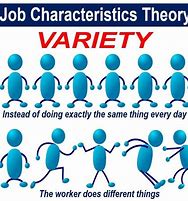
In the 1960’s, a research conducted by industrial psychologists and management theorists stated that repetitive tasks given to employees were leading to demotivation in them and the mundane technique of production line work was resulting in lesser productivity among the workforce. Hackman and Oldham, designed a corporate psychology model named – The Job Characteristics Model, based on this research. These two psychologists proclaimed that job tasks are itself a motivation for the employees. Their theory also approved the fact that, monotonous job work causes dissatisfaction among people, whereas a challenging job enhances motivation. The Job Characteristics Model incorporates five core constituents – Skill Variety, Task Identity, Task Significance, Autonomy and Feedback.

  • SKILL VARIETY – It incorporates questions related to, job variety, if the job is challenging enough and whether the job profile monotonous and too easy for the employee. Generally, an employee does perceive a benefit if he/she gets a job profile consisting of various skills sets. A variety in skills at a workplace helps one to work better, learn more, create a happier corporate environment and also encourages one to get creative while tackling different situations.

For Instance – A construction site painter has a lesser skill variety than a corporate event planner who regularly gets in touch with new people, plans and executes several events.

  • TASK IDENTITY – Being able to identify with the work given and taking pride in outcome of the work completed, is essential to build a satisfied employee. Rather than constantly rendering employees with a single portion of a project, allowing them to handle the entire project, results in a happier employee. The degree of noticeable work completed by a single employee and him being identified by it, is an essential component of Task Identity.

For Instance – The Aston Martin cars designed by Ford Motors in England, has its every engine handmade and autographed by a single craftsman after 16 weeks of completion of the model.

  • TASK SIGNIFICANCE – It refers to the degree to which a worker feels his/her job contributes to the overall efforts of the organization and to the world at large. The workers perceive their job as meaningful when the significance of the task performed by them is high and vice versa. Research explains how increasing task significance is connected to enhancement of job performance.

For Instance – A web designer who curates a corporate web profile for XYZ firm single handedly, experiences a greater task significance than a worker working in a product assembly line.

  • AUTONOMY – It is associated with the freedom that a worker gets in an organization. The independence to plan the workday and set up new procedures that one would like to follow, increases the sense of responsibility in employee, which in turn contributes to a greater motivational force. Allowing the employees to decide their pace of work, order of task completion or even letting them have a greater control over their tasks encourages them to work better. So, as long as the standards of work are met and the work gets completed within the stipulated period of time, it is upto the individual employee to decide how the work can be carried out.

For Instance – The firm ‘Google’ is known for the autonomy that it provides to the staff. This has helped them to foster a happier work environment by ensuring that the staff feels valued.

  • FEEDBACK – It is a constructive method to ensure a steady development in the work. Effective feedback given by seniors is essential for employees to understand their current level of performance, provides a sense of engagement and activity and lets them know what can be done by them to reach a higher level. It helps promote positive changes, set new bars for the team, and gives an individual an overall realistic view of the happenings in the firm.

For Instance – Employing Positive, Negative or Corrective forms of feedback is said to create a clear and honest flow of communication between various levels of employees.

Several companies face the issues of employee absenteeism, higher rates of employee turnover, late marks and at times lower levels of employee productivity. The only modus operandi of tackling these issues is – ‘Employee Satisfaction’. Job Satisfaction helps the employees to work passionately, deliver their level best and stick to the organization even in the worst case scenarios. Doug Conant has rightly said, “To win in the marketplace, you must first win in the workplace”.

The Unknown

What is the unknown and why is one so afraid of it?

We humans are usually afraid of the dark, of what we cannot see and in the physical world tend to set boundaries and limitations. We often have second thoughts about things before we do or perform them, subconsciously making our mind think twice whether it would be a right decision or not. This is where most of us are often wrong because sometimes there are no right or wrong. They say ‘take a leap’ or ‘you never know until you try’ because life really is unpredictable. Some things that you thought would be difficult might not always be. But how would you know if you never give it a try?

If you ask an old aged man about his life he will probably tell you he doesn’t know how he get there but he sure is happy of all his experiences. To paint a bigger picture, Who are you? And what do you want in life? Can you be 100% sure of what your life would be in 10years? Can you guarantee that your love life will straight up perfect, a lovely family with beautiful little children?  

You need to understand and accept the fact that nobody is perfect in life. Or else you would have a miserable life, a lemon that you make yourself take.

One should never be too hard on himself and blame himself for the regretful things he have done. Nay, do away with what is called ‘regret’. Life is to go on and you gotta carry on living it. Don’t make it complicated for yourself

Teal Swan, a well  known mental and spiritual counselor once said “You don’t feel the unknown”. Its true, one cannot touch or know the feeling of what is not known. Its human nature that some days we don’t feel confident. Some days we isolate ourselves because we think nobody understands us and some days we become aggressive to everything that we came into contact with. And I understand some days we feel that all the ones around us don’t care about our feelings. But “The unknown is unknown, its nothing” she says. One should not be afraid to take the first step and not be afraid if people are gonna take advantage of you or not. This is life, we need to learn how to bypass the pangs of life, hold no grudge for others.

If people can do it, why can’t you?


SIX THINKING HATS

Edward Charles Francis Publius de Bono, a Maltese physician, psychologist, philosopher and consultant, scripted the book ‘ Six Thinking Hats’. The conceptualization of this book has helped many organizations to boost their firm’s productivity by dividing the job profiles of the employees based on their styles of thinking. Each person takes up the role of a hat ensuring that all viewpoints and styles are covered efficiently. Accordingly, people can cohesively pool in their thoughts based on their area of interpretation. Often, firms arrange for activities wherein employees are divided into teams of different hat colours and are asked to speak about the firm’s newly launched product or idea based on the colour of their hat. This provides stimulus for gathering opinions.

WHITE HAT – It is also called as the Factual Hat. The white hat is associated with facts and information. It represents gathering of information. Discussions related to information available, information needed, missing facts, source of information are conducted. It deals with knowledge and insights at the beginning or end of a session.

GREEN HAT – It is also known as the Creative Thinking Hat. It represents growth and movement in an organisation. Lateral thinkers metaphorically wear this hat to show that they are looking for new ideas and solutions. It deals with openness to ideas, proposals, suggestions, ways to solve difficulties, and other alternative opinions.

BLUE HAT – It is also known as the Director’s Hat. It symbolizes limitless performance, calmness and control over oneself. It is generally worn by the facilitators during a discussion. It deals with management and organization. The blue hat wearers ask for summaries, decisions, conclusions and are the ideal people to set the agenda of thinking. Therefore, analyzing the information and reaching a logical conclusion is the central idea of this hat.

RED HAT – It is also known as the Hat for the Heart. It represents feelings, emotions, and instincts rather than logical reasoning. When one is involved in this arena of though process, he may express his feelings without having to give a logical reason behind it. It is a complete opposite of the White Hat which is entirely fact based. While working, employees do experience intuitions about another colleague as disloyal to the firm. The red hat allows a person to voice such sixth sense emotions with an appropriate label.

YELLOW HAT – It is also known as the Optimist’s Hat. Yellow hat thinkers reflect positive attitudes and scope for new opportunities. Such thinkers assess a plan and notice the benefits in it. Entrepreneurs and risk taking employees are involved in the group of yellow hat thinkers. The hat focuses on value, benefits and the positive speculation of why a venture may work.

BLACK HAT – It is also known as The Hat of Caution. It prevents an individual from indulging into immoral, illegal or unprofitable ventures. Employing a critical judgement to assess the risks involved in a plan is the task of black hat holders. It is often regarded as the most powerful hat because it assists in spotting shortcomings, giving reasons as to why a plan may not workout and giving out suggestions to overcome the drawbacks.

The concept of Six Thinking Hats developed by Edward de Bono, can be used as a powerful tool for inculcating the ideas of being more productive, focused and mindfully involved in the working of an organization. This tool can help an organization, to develop leadership skills, creative thinking, critical analysis and improve the overall performance of the establishment.

THE ART OF PUBLIC SPEAKING

Man is not born with the latent ability of oration, it is developed over a significant period of time with experience and practice. The act of speaking face to face with a live audience is included in oratory practices. It is one of the most essential skills that an individual must imbibe within himself. Public speakers do have the potential to bring about a revolution in a society. Speakers from various places across the globe have played a crucial role in motivating their audiences in dark times. It can be called as an art that is used for teaching, persuasion or entertainment of listeners. Speakers who communicate with audiences to teach them something, often make use of jargons and anecdotes which will boost the learning ability and performance of the audience. Whereas speakers who wish to persuade their niche audience into doing something, put hyperbole, metaphors and persuasive literary tools into their speech.

Fortunate ones are immune to the fear of public speaking, but there are people with poised personalities and good literary skills and are yet low on confidence if made to face an audience. One need not feel worried about how to tackle the anxiety that builds up while delivering a speech. There are certainly a few tips and tricks that one can carry up his sleeve.

KNOW YOUR NICHE AUDIENCE BEFOREHAND

One needs to use alternative speaking styles while interacting with listeners belonging to different age groups, genders, societal strata, etc. Crafting the speech based on the type of audience which will be attending the session, will certainly help to maintain cordiality and smoothness in the oration.

FOR INSTANCE – While delivering a speech for a formal session, with businessmen and industrial expertise as the audience, one does not make use of comical references or satirical expressions.

USE OF APPROPRIATE GESTURES

Making sure that your bodily gestures do not portray that you are anxious from within, is important. Clasping of hands, standing in the same stance for a longer time, rubbing of palms, tapping of feet should be avoided. Standing in an erect stance, with an amiable expression and making eye to eye contact with the audience present is essential. Simple confident hand gestures and displaying counting of points on fingertips from time to time, will attract the audience to follow along. An appropriate body language helps the speaker to engage well with the audience.

FOR INSTANCE – Distracting hand gesture such as fidgeting prevents the audience from absorbing what the speakers is trying to explain.

VOCABULARY BUILDING

To attain a sufficient level of mastery in usage of words and arranging them into sentences, reading does play a major role. Getting your hands on various genres of write-ups, hunting for meanings of less comprehensible words and jotting down those words on flashcards or sticky notes is one of the techniques to improvise on your vocabulary. Attempting to communicate with people possessing admirable literary skills, will help one to carefully pay attention to pronunciation of a plethora of words. Not everybody gets the privilege of interacting with literary expertise, but one can definitely listen to podcasts, songs, speeches and other audio visual means of learning.

FOR INSTANCE – Glancing through the Thesaurus such as the Oxford Dictionary on a regular basis, is beneficial to improve the vocabulary.

ENDLESS HOURS OF PRACTICE

We have all come across the quote, “Practice makes a man perfect.” One does not necessarily require an audience to practice public speaking. Many present day orators must have practiced their speeches in front of the mirror as newbies. Including personal experiences, explanation of real life stories, subtle humour can be used to craft a speech. After the script has been finalized, beginners can practice speaking against the mirror or a small group and record what is being spoken. But, one must not constantly make use of the mirror as a tool because the concept of public speaking in itself states that a speech has to be delivered in front of an audience. Hence, a mirror cannot create an audience like impact for the speaker. Thus, regular practice will help one to analyse his/her shortcomings and can make alterations accordingly.

FOR INSTANCE – Practicing in front of a mirror, will help an individual to focus on his gestures and he can thereby try to eliminate under confident bodily motions.

Man cannot gain absolute perfection in all the tasks throughout his journey of life. But one can definitely attempt to minimize the flaws or shortcomings within oneself. This blog strives to highlight the methods through which one can build up spoken skills and the confidence required to conquer the fear of Public Speaking.

PORTRAYAL OF WOMEN IN INDIAN MEDIA

Media plays such a major role in the lives of human beings. Over the last decade, media has become a powerful tool that mirrors social life of commoners and celebrities. However, the role that media plays in portraying gender democracy is still a matter of debate. Media has a significant impact on how social and cultural norms relating to women form and evolve. Over the past couple of decades audiences have been exposed to women in strong and independent roles in the media. This propagates the sense that western modernity and increased presence of free market promotes gender equality in a India.

PORTRAYAL OF WOMEN IN DAILY SOAPS

  • It does seem a little bizarre to see contemporary TV serials and soaps projecting women more as models of expensive costumes, jewellery or heavy sarees. 
  • Moreover, the stereotypes used such as a wronged wife, a dominating mother-in-law, bitter relationships between sister-in-laws, portray women in conflicting roles.
  •  Also, daily soaps fail to include all the career options that are now being taken up by Indian women, new modes of lifestyle being adopted and remain stuck up in certain deep-rooted notions that are hard to be erased.
Mother-in-laws are often portrayed as ill wishers of the daughter-in-laws

PORTRAYAL OF WOMEN IN ADVERTISEMENTS

PAST SCENARIOPRESENT SCENARIO
1. In the past, women were portrayed as subjects of mockery and were allotted with submissive roles in television commercials. 1. In the present scenario, women are often shown playing lead roles in television commercials.
2. Women were deliberately depicted subordinate to their male counterparts. 2. Males and females are equally portrayed in brand endorsements.
3. The looks of a women were made use of, to endorse a product. Hence, females were said to be openly objectified in advertisements. 3. Women are rarely seen doing stereotypical roles, instead they are shown as heads of a family, position holders at workplace, achievers of glory in sports and ultimately independent.
TVC IN THE PAST ‘Stereotypical role’
CURRENT TVC – ‘Portrayal of gender equality’

PORTRAYAL OF WOMEN IN MOVIES

  • Bollywood has shaped and expressed the changing scenarios of modern India.
  • It has influenced the way in which people perceive various aspects of the society. 
  •  Despite the progress that bollywood films have made and the, things haven not changed much for Indian women, as objectification of women still continues in most of the Indian movies.
  • In many movies of present times, female characters are needlessly under represented. Also, publisizing vulgar lyrics and dances in the name of item songs is very derogatory for women.
  •  Women are shown as helpless victims or cunning villains. Generally, the lead hero is the one who solves everyone’s including heroine’s problems.
  • Movies depict actresses as unrealistically beautiful. This causes a lot of trauma and insecurity in the female audience. Laymen are generally unaware about the number of beautification surgeries and make up procedures which the actresses undergo to look perfect.
  • In movies, stalking and eve-teasing is depicted as love in Indian movies. In many movies, female characters are attracted towards these abusers. Due to this, several young men indulge into harassing women in the name of love.
Stalking and eve teasing is often normalized in Bollywood movies

In conclusion, we can say that media has successfully stereotyped women in a negative way. It is true that women’s participation and presentation has advanced in various dimensions of social and political life but we still have a long way to go. It is high time that we learn to voice our disapproval against such practices and stand up for positive portrayals of women. The real women inspirations of India shall be depicted on all such platforms.

The admirable women of India

EVILS OF BULLYING

All of us may have been a part of or may have experienced subtle or extreme bullying in our lives. Now, what exactly is the idea or thought process behind bullying ? It is the use of force, psychological abuse, threats or aggressive domination on another person, mostly the vulnerable ones. It involves a hostile intent of a person over a period of time. This can impact a person negatively, taking a toll on their mental, emotional or physical health. It may be done by a single person or a mob. Such a culture generally develops at school, workplace or in a neighborhood. Several types of Bullying are prevalent in the society.
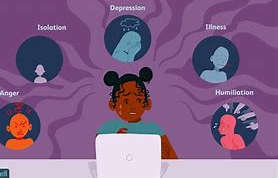
PHYSICAL BULLYING

It is one of the most common methods of bullying. It involves usage of physical actions which are disliked and highly unappreciated by the victim. Use of actions such as hitting, pinching, shoving, pushing, or causing damage to the property of an individual comes under Physical Bullying. The attacker, better known as the bully is in a dominating position, thus the victim remains vulnerable in such cases.

VERBAL BULLYING

It does not involve any physical contact or harm, but the scars of physical bullying are deeper and generally go unnoticed. Use of verbal techniques such as speaking or displaying a demeaning body language is a part of Verbal Bullying. Victims are made to face threats, rude tone of voice, mockery of oneself, insults, slurs, or constant criticism. According to a study, females are more likely to bully an individual verbally, in order to display superiority.

CYBER BULLYING

This new era method of bullying is coming into the spotlight day by day. Laymen are well informed with the term Online Bullying. Using Internet as a tool to harass somebody has become a typical behavior among the teenagers. Lack of courage to let out derogatory remarks about somebody, pulls these people towards devices which can aid to bully someone. The culture of Cyber Bullying involves spread of rumours, stalking, hate speech, defamation through leaking of audio or video clips without permission or shaming.

AFTERMATH OF BULLYING ON THE LIFE OF AN INDIVIDUAL

  • Mental disorders such as anxiety, inferiority complex or depression that creeps gradually into adulthood
  • Low academic performance among students
  • An individual may indulge into alcohol /smoking / drugs to escape from the negative reality of life
  • Persons who have been victims of bullying skip school or workdays and prefer confiding themselves within their homes
  • Emotional turmoil leading to low self esteem and loneliness
  • Isolation of oneself from peers or even family members
  • Experience of physical problems such as muscle aches, nausea, head aches
  • Extreme experience of bullying may ultimately even lead to self harm or suicidal attempts

We can conclude by stating that bullying must not go unnoticed. Anti-bullying related values must be imparted from the grass root levels. Schools must employ specialized counsellors and mental health professionals to combat the evils of bullying. Moral values of harmony, team building and co-existence must be advocated at all times.

All about self care: Therapy by yourself(bonus motivation!)

Self care, A topic most ignore amidst the hustle-bustle of their worlds is a vital part of your life, whether you know it or not. There are astonishingly few people in the globe that understand how vital it is, and ironically, the cruelly competitive GEN-Z, get it the most. Otherwise, the beings of other generations have daily routines that do not involve any time for themselves. Its all Work, Family, and more work, a worn drill. However busy your routine is, you need to provide justice to yourself and your mind. should you not, lest you’ll go mad. seriously. it is important to understand how much your body gives you, how much your body tries to not burn yourself in this society of lunacy. Your mind is the one of the most important organs of your body, it functions all the other organs including itself, WITHOUT A BREAK. you at least could steady it with some specific activities. For exactly that, I am here to guide you through the process of rejuvenating yourself.

So let’s get straight to the point, we all know that life is an endless cycle of goals and desires, but to calm our agile mind, we can do some simple activities for an hour or even a handful of minutes per day and we’ll get so much clarity in our spry intellect. Meditation, art, affirmations, dance, music, reading, journaling, talking to people, doodling, even scribbling can calm your mind. there are unfathomable options. You just need to find your thing, and live in it. Believe in it. But remember, it is something that cannot be forced. you will have to have full faith in yourself that it will work, it will make you better. Better in life, better in mind.

Dance is personally, the best for me. grooving to the beat, jiving to the music is just my thing. If you are anything like me, just do it. Feel your body make beauty, make art. tap to every beat, jump to every song, close your eyes and just dance. swing your leg, twirl your hip, create stars in the air, and just dance.

Art, is something I have seen as a therapy for most of the people I know, I am trying it too! And you know what, it works magically. Though I am still a newbie and have a lot to learn about it, I can say that whether my drawing is beautiful or miserable, no matter what the result it, the process through it calms me beyond words.

journaling is just writing your thoughts to your best friend, informally and honestly, without striving for the ‘appropriate’ or fancy words. Write just as if you’re talking to your most favorite person in the world, fantasy or reality. describe your thoughts without hesitation and insecurity. make a diary and start journaling every night before bed. Describe the perils and chronicles of your day, slander if you want to, just relieve your brain of all those flurry contemplations out of your head. let it breathe. deeply.

My personal and most common advice to you would be to just take a break. you do enough. believe that. you are enough. see who you are, set your limits and work upon yourself. this is your life, and only you can decide how to live it. no one else will do it for you, know that. No angel is going to come to make your life all unicorns and rainbows unless you believe that there is a future of hope and light. Until you live for it, Until you thrive for it. Just go on, take an hour out of your day just for yourself, do nothing. Absolutely nothing. sit idle, concentrate on that tired thing inside you. let it rest, after a good long sleep, wake it up, give it motivation, give it confidence, give it courage, and say, get up. get up, get up, get up. You can do this, you are confident, valiant and breathtakingly strong. GET UP. You are made to be you, to be unique. it’s okay to have breaks, it’s okay to rest, but do not give up. never give up. No matter how much you are shattered, how much of you are just tape and glue. own it. Hang in there. everything’s temporary. Just smile and do what you love. I assure you, it is going to be okay.

दुनिया के चाहने पर खत्म होगी महामारी: WHO


विश्व स्वास्थ्य संगठन के प्रमुख ट्रेडोस ऐडनोम घेबरियस ने बर्लिन में आयोजित अपने एक वर्ल्डहेल्थ समिट को संबोधित करते हुए कहा कि जब सभी देश उपलब्ध स्वास्थ्य उपकरणों का प्रभावी ढंग से उपयोग करना शुरू कर देंगे,तब जाकर कोरोना महामारी खत्म हो जाएगी। उन्होंने कहा कि जब दुनिया इसे खत्म करना चाहेगी, तब यह समाप्त होगा। यह हमारे हाथों में है। वह सभी उपकरण हमारे पास मौजूद है,चाहे प्रभावी सार्वजनिक स्वास्थ्य उपकरण हो या प्रभावी चिकित्सा उपकरण,जिनकी हमे अवश्यकता है। परंतु दुनिया ने इसका अच्छी तरीके से उपयोग नहीं किया।एक सप्ताह में करीब 50 हज़ार मौतें हुईं हैं तो अभी महामारी खत्म नहीं हुई।


उन्होंने सम्मेलन में बोलते हुए कहा कि वह को भी ने टीकाकरण के लिए एक वैश्विक रणनीति शुरू करने के लिए WHO प्रमुख में शामिल हुए,जो सभी देशों में लोगों को टीके वितरित करने के लिए एक लागत और विश्वसनीय प्रभावी योजना का सुझाव देता है।

WHO प्रमुख ने जी 20 देशों का पहले से ही 40% अपनी आबादी को कोवैक्स तंत्र में सक्रिय रूप से संलग्न कर देने के लिए भी आव्हान किया। रविवार को संयुक्त राष्ट्र महासचिव एंटोनियो गुटेरेस ने जी-20 देशों से पूरी दुनिया में कोविड-19 के टीका का उचित वितरण सुनिश्चित करने के लिए 8 बिलियन अमेरिकी डॉलर इकट्ठा करने में मदद का एलान किया।

बता दें, WHO पहले से भी कोरोना को लेकर पूरी दुनिया को चेतावनी देता रहा है। एक बार फिर से भारत में कोरोना से मरने वालों की संख्या में इजाफा देखा गया है। पिछले 24 घंटों में 443 लोगों की मौतें हुई है। वहीं एक दिन में 14,306 कोरोना के नए मामले सामने आए हैं।

अनन्या कौशल द्वारा संपादित।

SIMPLE LIVING HIGH THINKING

Haven’t we all been a part of the mad rat race to acquire money? Humans keep running behind wealth throughout their lives and eventually when they reach old age, they realize the importance of peace in life. Not always, luxury is based on looks or garments. Real richness is reflected through a person’s values and mannerisms. Bringing positive changes in the lives of others shall be taken into consideration more than bringing materialistic changes in one’s lives. It is not money that is of utmost importance but generosity and the act of giving back to the society is important. Life resembles a steadily flowing stream of water and what we do while being a part of that flow of water will matter in the end. In our day to day living we may notice the amount of clutter that is spread on our study desks inspite of the fact that, the only commodity that we use daily might be a laptop or a book, at the dining table, many food items are often seen lying for days together which later on get disposed off, in our wardrobes, numerous clothes often remain unused. What does this tell us? We humans keep running in the blind race of materialism without even considering whether something is really needed by us or not.

Siddhartha Gautama better known as a Gautam Buddha, renounced his life as a wealthy prince and instead left his palace to seek inner peace as an ascetic. He gave up on his comforts because at the age of 29, he realized that mere wealth cannot bring home happiness. He also came across the sufferings of people, hence wanted to find out ways on how human suffering can be ended. According to Buddha, ‘Desire’ is the root cause of suffering. In today’s times, eliminating desires is not quite possible but limiting them certainly is. The Wisdom of Frugality, states how living a simple living leads to good virtues and ultimately good virtues lead to happiness. In simple words, if a person chooses to live life without any extravaganza, he may not have to take up a stressful job. When he does not experience stress and overtime at his workplace, he gets more time for leisure, which in turn generates happiness.

A minimalist lifestyle involves living with fewer resources whether in terms of a house or possession. Minimalist livers prefer to have a simple lifestyle and yet be satisfied in life. A minimalist lifestyle is by no means a radical lifestyle but rather an optimal one. Minimalistic living involves a high thinking. For instance, rather than buying an expensive television set, a phone or an air conditioner, buying a cheaper one and spending rest of the money on buying basic necessities for the underprivileged displays the real wealth that a man possesses. Pioneers such as A.P.J Abdul Kalam, Sudha Murty, Mahatma Gandhi and many more idolizing personalities have opted to live in a simple manner and possess a benevolent, generous and humane disposition.

Are more women dying of Covid-19 in India?

New research by a group of scientists in India and US shows that although men make up the majority of infections, women face a higher risk of dying from the coronavirus than men.


The study, based on Covid-19 deaths in India until 20 May, shows early estimates that 3.3% of all women contracting the infection in India were dying compared to 2.9% of all men. (India had a caseload of more than 110,000 with 3,433 deaths and a fatality rate of 3.1% when the study was conducted.)In the 40-49 age group, 3.2% of the infected women have died, compared to 2.1% of men. Only females have died in the 5-19 age group.

Five key questions about India’s rising Covid-19 infections
I asked SV Subramanian, a professor of population health at Harvard University and one of the leader authors of the study, what this implied.


He told me that the narrative of calculating the Covid-19 fatality rate by groups has conflated two key metrics – mortality risk and mortality burden.

Mortality risk measures the probability of death in a specific group- in this case, total number of deaths of women divided by confirmed infections among women.

On the other hand, mortality burden gives you the number of deaths among women as a percentage share of the total deaths, both men and women.Prof Subramanian says for the large part, the statistics have looked at the latter – men having a greater share of total deaths (63% in India, hewing to international data) – but “inferred the former risk”.


“Our overall conclusion is that, when infected, women do not seem to have any specific survival advantage [in India],” says Prof Subramanian.

“How much of this can be attributable to biological factors and how much of this is associated with social factors is unclear. Gender can be a critical factor in Indian settings,” he says.

The ‘mystery’ of lndia’s low Covid-19 death rates
But the findings are certainly striking because they run counter to what has been observed elsewhere in the world.

For one, men are more likely to suffer from co-morbidities or underlying health conditions, like cardio-vascular disease and hypertension, says Kunihiro Matsushita, a professor of epidemiology at the Johns Hopkins Bloomberg School of Public Health.

Men also smoke more than women in many countries, and some studies have shown that men wash their hands less frequently than women.

Prof Matsushita says that studies he had participated in had shown that male patients have a higher risk of contracting severe Covid-19 infection.

Scientists also believe that women have a lower mortality risk because of sturdier immune defences. And have hormones like oestrogen which has “beneficial effects on upper and lower airways and is associated with stimulation of the immune response to upper airway infections”.

“In that regard, a higher case fatality rate in women than men in this report is certainly unique,” Prof Matsushita told me.

But he says the research data needs to be scrutinised in the context of how Covid-19 is diagnosed in India. “For example, is the opportunity to get a test same between men and women?” he wonders.There could be more to this puzzle than what meets the eye.

Women outlive men in India and there are more older women than men. Is this leading to more deaths among women, as elderly people are vulnerable to the infection?

Also, women in India are more likely to delay going to doctors, and often self-medicate at home. And a woman’s health is more likely to be ignored in a household. So are women arriving late for testing and treatment?

Homemaker caregivers are more prone to contracting the infection – during the 1918 Spanish flu more women in India – relatively undernourished, cooped up in unhygienic and ill-ventilated dwellings, and nursing the sick – died than men.


“We need to dissect the gender data to find out more about what’s going on,” says T Jacob John, a retired professor of virology at Christian Medical College, Vellore.

Researchers agree. “We will keep a close watch and keep updating the results,” Prof Subramanian says.

Written by: Ananya Kaushal

INDIA ACHIEVES A MILESTONE – News Update

The Indian Prime Minister, Mr.Narendra Modi has recently announced that the country remains a steadfast partner in global efforts to combat the Covid pandemic. The government’s results have resulted in a positive impact against the battle with the deadly Corona Virus. India made a 100 Crore Vaccine jabs milestone on 22nd October, 2021. Thousands of health care workers and people from the government sector joined hands to achieve this mark. There had been no such mass vaccination drive in the country prior to the pandemic. Indians were not made to wait endlessly for these jabs due to vaccine makers such as The Bharat Biotech and Serum Institute. Within a short duration of time amidst the Covid – 19 waves, these manufacturers came to the rescue and supplied indigenous doses.

After several episodes of complete and partial lockdowns in the nation, the authorities began permitting to open up different sectors, trains, educational institutes and shopping malls, with the mandatory restriction of complete vaccination of an individual. The date 16th of July, will be engraved in the history of India’s achievements, as this is the day when the very first vaccines were administered to the frontliners. The civilians were initially hesitant with administration of the jabs because of several inhibitions and rumours. Gradually, the public started pre-booking their slots in order to get vaccinated. In about only 9 months, India is basking in glory with the milestone that has been achieved.

The country not just secured itself from the virus, but also worked for humanitarian causes by supplying these vaccines to other nations such as Bangladesh, Myanmar, Nepal, Oman, South Africa, Afghanistan and many more. There were times when the government did receive backlash for supplying vaccines and this move was also being called as a risky diplomacy. Inspite of hardships, the country did supply approximately 361 lakh doses of the Covid-19 vaccine to other nations.

With the completion of this landmark, a gesture of gratitude towards the frontline warriors was displayed by lighting up of 100 monuments in India, ins colour of the Indian tri-colour. This initiative was lead by the Archaeological Survey Of India. Therefore, to offer a vote of thanks to all the doctors, nurses, sanitation staff, police officers, monuments including the Konark Temple, Agra Fort, Red Fort, Shanivar Wada, Khajurao, Fatehpur Sikri, Qutb Minar, Kumbalgarh, Nalanda, St. Francis Church, Dholavira, etc were illuminated. This expression of gratefulness towards the relentless efforts of the essential workers took place on the night of 21st October, 2021.

The National COVID-19 vaccination drive of India is the world’s largest vaccination drive and has been unprecedented in both scale and reach. India alertly imposed restrictions on the movement of people and quickly arranged for hospital like setups to provide timely health care. A series of sessions were conducted by the Prime Minister to advice the citizens regarding the ongoing crisis. India scored high on communications with health care workers during a public health emergency, trade and travel restrictions, laboratory systems, immunization, and socioeconomic resilience.

No Judgement Club

Being out of the box and not following being a part of the rat race is the new black.

Being trapped inside the box of “log kya kahenge” is something that we all have faced and we still do even if we deny it. With the parents and guardians being supportive and the youth being overtly conscious and aware of their rights, we, as a generation, as a club of the 2000’s, the “gen-z club” are trying to freely reign the things that we want to do ignoring any type of judgement and pushing away the people who pull us down.   

We are conquering the world of nonlinear growth pattern and not focusing on the aligned growth pattern which means that we do not focus on just the “conservative” idea of growth. We do not indulge into working like a robot but focus on a nonaligned growth pattern which means that we not only love to work but also focus on our mental health. We understand that we are not in a rat race and believe in living our lives in a comfortable manner.

Why is mental health important? 

There is a clear connection between mental health and academic
performance. Mental health is important for person’s growth just like
a person’s physical health. Imagine working with a broken arm, will
you be able to work? No. Then why should someone with anxiety
disorders, paranoia, depression, etc., are expected to work efficiently
when they can’t even process their mind the way they want to.

Social media and positivity 

Being a generation with extreme activeness on the social media, we have made social media a happy, comforting place for everyone. Social media positivity helps us bear things. With innumerable creators creating content that helps us ignore the negativity and LIVE. 

Log kya hi keh lenge! 

When we start, when we initiate, the paradigm shifts, the pattern starts changing. We have to hold hands and work together. We all can shift the attention from “log kya kahenge” to “log kya hi keh lenge” and then see how the world changes, how we conquer the art of living and being a generation that creates better adults. 

MASS MEDIA

As the name itself suggests, Mass Media refers to an array of methods which help to promote a variety of things/messages/ideas among the masses through different communication outlets. In today’s times, the various kinds of mass media include, Cinema, Radio, Television, Internet, Print, Recordings, Mobile phones, etc. People may opt for a particular medium of communication based on the availability of technology, type of message/product to endorse and ease of mass communication.

CINEMA

Movie making is certainly gaining a lot of popularity in this era. Cinema Media has a lot of potential to create an impact on the society at large. The film industry inclusive of Hollywood, Bollywood, Tollywood, so on and so forth manifests the reflection of society in the past and the present. Today, the youth does look up to movies for recreation. A good cinema can entertain, educate and inspire the viewer in several ways.

EXAMPLE – The movie JOKER, impacted it’s audience with inspirations like, leaning to forgive, succeeding despite having mental issues, never giving up on your dreams, etc.

RADIO

The credit of being able to enjoy broadcasting in the earlier times and today as well, goes to Guglielmo Marconi, the developer of the first radio transmitter and receiver. With scarce means of recreation in the olden times, Radio bound families, peers, neighbors together. The auditory mode of communication, Radio is also used to maintain contacts with the flights and ships that are out in the air and water. Radio is also an essential element used at war zones to transmit information through morse codes.

EXAMPLE – Africa considers radio as the most important too of communication. Radio is quite cost efficient, does not need any expensive data package, helps to reach out to a broader audience and is also easily portable.

TELEVISION

Television is an audio visual type of Mass medium. It is used by broadcasters to air sports, daily soap, movies, news, etc. The progress of the T.V is easily noticeable, as it started from the black and white version and has now developed to a very high extent in the form of OLED, LCD, LED, and HD. It is used by direction and production houses to entertain, inform and educate viewers. It can be considered as an ultimate Pandora’s Box.

EXAMPLE – Viewers ranging from the kids to the elderly at home, are often seen glued to the television for the purpose of entertainment.

INTERNET

Sharing information and communication has become a piece of cake since the invention of the Internet. This mass medium has bypassed almost all other media of communication. Internet is now considered as a boon to e-sellers, social media influencers, researchers and all the other end users as well. The Internet has become a global networking platform which anyone can access at any point of time.

EXAMPLE – People do resort to the Internet to pay their bills, listen to music, manage finances, to shop online or even to communicate with people all across the globe.

Mass Media plays a significant role in this era. Making appropriate usage of it will give us fruitful results. Mass media helps in transmitting values, heritage, cultures and information and acts as a watchdog on society.

Any Limit?


Photo by Soubhagya Maharana on Pexels.com

Today, when the sun comes up the main hotly debated issue that individuals could pick from the news segments that could give some reprieve to the detestable, tattle cherishing individual inside them is the update about people living in the b-town. Directly from the primary cup of tea of the day, individuals need their portion of reports, some evident other bogus with regards to the big names working in the film business of India explicitly and others as a rule, to the last feast of the day, every one of these tattle sharing creatures care about is the most recent embarrassment that happened even a second prior. Indians have been so energetic about the littlest of the insights regarding each huge or little occasion occurring in the existences of the entertainers extraordinarily working in the Hindi entertainment world that they now and then even complain when an entertainer isn’t that public with regards to their own lives. They become so reveled the existences of the bollywood stars that they barely have any track of their own lives.

With the new paparazzi culture growing quick in India, the interest of next move of these stars have ascended to another level. With paparazzi catching them in the neighborhood city similarly as they move, it has become simpler for individuals to follow them and go all function over them. Each spending day the frenzy for the information about the film entertainers increment. Each new undertaking of their cherished VIP works like a caffeinated drink for their tattle adoring personalities. A smallest of fire of undertaking of two big names is sufficient to consume the place of reality to remains and accept the talk. The data regarding whose dating whom, whose getting hitched to whom, who is having children with whom, who is getting most endorsement on their tryouts, whose been dismissed frequently, who is into medications and who follows which god or religion, fills in as the cold pieces on their newly requested pizza just to consume their tongues later.

This poisonous conduct of following everything about their dearest superstar life which in the end transforms into fixation is unsafe for both the VIP and individuals fixated on them. These supporters become so involved into the existences of these enormous town stars that they are influenced to the outrageous levels when they gain proficiency with the truth around one or other of these entertainers which is certainly not the same as what they had anticipated that it should be. They in a real sense love these entertainers to the degree that they even become prepared to surrender their lives only so to have a selfie with them. With the passings of some well known and truly respected stars this year the passings of their fans in their recognition has lead to the stunning and startling harmfulness that this after to the alcove culture has created. Individuals need to retreat from this over inclusion, interest, energy for the big name they follow to give them and themselves the space for breathing into the solid culture of adoring and respecting somebody however not getting so fascinated that they transform into some neurotic supporter who knows no limits.

No Boundaries

Today, as soon as the sun comes up the only hot topic that people could pick from the news sections that could give some respite to the evil, gossip loving person inside them is the update about humans living in the b-town. Right from the first cup of tea of the day, people want their dose of rumors, some true other false about the celebrities working in the movie industry of India specifically and others in general, to the last meal of the day, all these gossip sharing beings care about is the latest scandal that happened even a second ago. Indians have been so passionate about the tiniest of the details about every big or small event taking place in the lives of the actors specially working in the Hindi film industry that they sometimes even take offence when an actor is not that public about their personal lives. They become so indulged the lives of the bollywood stars that they hardly have any track of their own lives.

With the new paparazzi culture developing ever so fast in India, the curiosity of next move of these stars have risen to another level. With paparazzi capturing them in the local city just as they move, it has become easier for people to track them and go all gala over them. Each passing day the craze for the knowledge about the movie actors increase. Every new project of their favorite celebrity works like an energy drink for their gossip loving minds. A slightest of fire of affair of two celebrities is enough to burn the house of reality to ashes and believe the rumor. The information about whose dating whom, whose getting married to whom, who is having kids with whom, who is getting most approval on their auditions, whose been rejected most often, who is into drugs and who follows which god or religion, serves as the chilly-flakes on their freshly ordered pizza only to burn their tongues later.

This toxic behavior of following every detail in their beloved celebrity life which eventually turns into obsession is harmful for both the celebrity and the people obsessed with them. These followers become so involved into the lives of these big town stars that they are affected to the extreme levels when they learn the reality about one or other of these actors which is definitely different from what they had expected it to be. They literally worship these actors to the extent that they even become ready to give up their lives just so to have a selfie with them. With the deaths of some famous and really admired stars this year the deaths of their fans in their remembrance has lead to the shocking and unexpected toxicity that this following to the nook culture has developed. People need to back out from this over involvement, fascination, passion for the celebrity they follow so as to give them and themselves the space for breathing into the healthy culture of loving and admiring someone but not getting so engrossed that they turn into some maniac follower who knows no boundaries.

Picture Credits: https://bit.ly/2ZbrY4j

Its never too late

Life is a book loaded with promising circumstances and another part can start anytime throughout everyday life. One is never too youthful to even think about getting everything rolling with new things, likewise one is never too old to even consider beginning again. Dreams have no age limit. With strive after progress and the assurance to accomplish it, one can start with new pursuits anytime throughout everyday life. With a similar idea and determination, there are numerous fruitful individuals who started their new excursion in a later point throughout everyday life. These two notorious brand proprietors likewise began their excursion of progress when they were moderately aged.

COLONEL SANDERS

Harland David Sanders of Indiana, took up a few positions at an early age because of his dad’s demise, when he was six. He did various positions, including, being a piece of the military, functioning as a trolley conductor, a rail street fire fighter and a protection sales rep. He bombed various occasions and was terminated on a large number of the positions that he had taken up. He lost expectations on his vocation and resigned at age 65. He then, at that point, begun selling seared chicken cooked in his own formula, house to house. He opened up a bistro, named Sander’s Bistro and advertised his dishes well. In 1952, Sanders diversified his mysterious formula to Pete Harman, who worked one of the city’s biggest eateries. After acquiring accomplishment with this endeavor, Sanders visited numerous different eateries to establishment his singed chicken formula. Before long, Kentucky’s Singed Chicken (KFC) acquired tremendous achievement. Sanders was overpowered with his chain of food outlets, spread around 600 better places. At 73 years old, Sanders sold his evolved way of life brand for 2 million dollars. Today, KFC is one of the biggest fast help natural pecking orders on the planet, esteemed over 5.1 billion USD.

Beam KROC

Raymond Albert Kroc was brought into the world in a group of Czech beginning. Since a youthful age, he started giving his hands a shot undertakings, for example, opening a lemonade stand and working at a soft drink wellspring place. He functioned as a sales rep for Lily Tulip and his work culture got him associated with Lord Ruler, the creator of a multi blend milkshake machine. Beam left Lily Tulip and began selling those multi blend machines and paper cups the nation over. Kroc ran over a café which was obviously claimed by Dick and Macintosh McDonald. They sold burgers, french fries and shakes. Kroc had just visited this spot to supply his multi combination shakes machine, however was exceptionally dazzled with the working of their café. He before long took up their establishment as a specialist however needed more speculation pay to purchase the whole partnership. Beam set up the McDonald Partnership in 1955. With the assistance of MC Partnership’s first President, he had the option to make an out and out acquisition of the brand from McDonald Siblings at age 52. Under his possession, he kept up with severe proprietorship in regards to his staff, bundling, size of bits, cooking techniques and lay an accentuation on developments. This added to the glory of the brand. Indeed, even in the current occasions, McDonald’s Organization is the world’s driving worldwide food administration retailer with a total assets of $180.91 B in 2021.

It is evident that, disappointments are the venturing stone to progress. One might fall multiple times yet getting up the eighth time is a genuine accomplishment, which one should accomplish. Likewise, there is no age bar in the first place your enthusiasm. One should cheerfully finish the excursion of life by following his/her fantasies.

Real Meaning of Women Empowernment

Oppression ladies is uncontrolled all around the world even in this 21st century. Despite the fact that around half of the total populace comprises of ladies, yet tragically the vast majority of them are denied fundamental privileges schooling, the right to speak freely of discourse, casting a ballot power and surprisingly autonomous personality.

In India, in principle, ladies partake in a status of uniformity with the men according to established and legitimate arrangements. Apparently, our nation has taken gigantic steps towards incorporation of ladies with the more attractive sex dominating in assorted fields, from writing to astronomy to back. Yet, with title texts about share killing, female foeticides and abusive behavior at home actually making the papers, put a quiet question mark behind the two words.

Which means of Ladies Strengthening

In case it is to be clarified past the two clear as crystal words, ‘Ladies Strengthening’ alludes to finish liberation of ladies from financial shackles of dependancy and hardships. Regularly made interchangeable to sex balance, the term ladies strengthening incorporates a lot bigger arrangement of rules that needs sincere consideration.

Strengthening of ladies would mean empowering ladies to act naturally dependent, monetarily free, have positive confidence, create certainty to confront any tough spot and actuate dynamic investment in different socio-political improvement tries. The developing inner voice is to acknowledge ladies as people fit for settling on normal and instructed choices about them just as the general public, expanding and working on the monetary, political and lawful strength of the ladies, to guarantee equivalent right as men, accomplish universally concurred objectives for advancement and manageability, and work on the personal satisfaction for their families and networks.

The different features of ladies strengthening that should be tended to for a balanced advancement are recorded as:

Common freedoms and Individual Privileges:

A lady has the privilege to offer her viewpoints and suppositions unreservedly, with practically no limitation. Individual strengthening might be accomplished by conferring self-assurance to explain and declare the force of free dynamic. Ladies ought to know about their freedoms and social places that they are qualified for unavoidably.

Social Strengthening of Ladies:

The most basic part of social strengthening of ladies is the advancement of sexual orientation value. Sexual orientation fairness infers that in the public arena ladies and men partake in similar freedoms, results, privileges and commitments in all circles of life.

Instructive Strengthening of Ladies:

It implies empowering ladies to snatch the information, abilities and self-assurance important to take an interest completely in the advancement interaction. Giving inclination to the young lady youngster for instructive freedoms is a beginning.

Financial Strengthening of Ladies:

It implies lessening the monetary reliance of ladies on their mate partners by making them a huge piece of the HR. A superior nature of material life, inside the family just as for the general society, can be accomplished through advancement of supportable livelihoods like house ventures, little pioneering endeavors possessed and oversaw by ladies.

Strengthening Through Lawful Information:

In addition to the fact that it suggests the arrangement of a viable legitimate construction which is steady of ladies strengthening, there likewise is the need to spread mindfulness among ladies about their lawful privileges and laws forestalling their double-dealing. It implies tending to the holes between what the law endorsed and what really happens.

Political Strengthening of Ladies:

The presence of a political framework empowering the investment of ladies in the political dynamic cycle and in administration. Indian constitution has given the ramparts to sex correspondence in the country in the accompanying articles:

Article 14: Fairness under the steady gaze of law “The State will not deny to any individual balance under the steady gaze of the law or the equivalent insurance of the laws inside the domain of India Disallowance of segregation on gatherings of religion, race, standing, sex or spot of birth”.

Article 16 (2): Equivalent freedoms “No resident will, on grounds just of religion, race, standing, sex, plunge, spot of birth, home or any of them, be ineligible for, or oppressed in regard or, any work or office under the state”.

Article 23: Denial of traffic in individuals and constrained work.

Article 39(a): The resident, men and ladies similarly reserve the privilege to a satisfactory method for vocation.

Article 40 (after the 73rd Amendment): 1/third of seats in panchayats will be saved for ladies.

Article 42: State will make arrangements for just and compassionate working conditions and maternity alleviation.

Article 51 A (e): One of the obligations of each resident is to disavow rehearses deprecatory to the respect of lady.

Government Laws and its resulting corrections have seen bigger consideration of ladies as for their remaining in the general public and furthermore there many demonstrations which are forestalling polygamy and plural marriage, and their severe authorizations has generally contributed towards decreasing ladies abuse. Different government plans like Rastriya Mahila Kosh and STEP (Backing to preparing cum Work for ladies) have figured out how to bring monetary improvement of country ladies through self-supportable business. Too “Kanyashree” conspire which is in West Bengal, has been positioned first around the world for ladies strengthening. The Public Arrangement of Strengthening of Ladies (2001) is pointed toward tending to all types of savagery against ladies including physical, mental and that emerging from customs and customs.

Why Lady Strengthening is Significant?

A solid man centric culture with profound socio-social qualities keeps on influencing the advancement of ladies’ strengthening in the country. The need of great importance is a libertarian culture. Where there ought to be a bad situation for sex prevalence. Point of government arrangements ought to be to recognize and wipe out powers that are coordinated towards keeping the practice of male strength over its female partner alive.

Ladies strengthening in its really is inseparable from complete advancement of the general public. An informed lady, with information about wellbeing, cleanliness, neatness is fit for establishing a superior sickness free climate for her family. An independently employed lady is fit for contributing not exclusively to her family’s accounts, yet in addition contributes towards augmentation of the country’s general Gross domestic product. What’s more, numerous things which can be accomplished.

All we need is a coordinated methodology from the Public authority and law implementation organizations of the country focussed the correct way that would rest just with the freedom of ladies from all types of fiendishness.

Leader by Birth

It is the account of a youthful visionary that tells the adventure of cognizance, battle and accomplishment in each eye; one who has the ability to tear the ground with his arms; one who discusses making an opening in the sky; one who is restless to accomplish his objectives; one who doesn’t acknowledge anything free of charge; and assuming he needs opportunity, he is prepared to spill his blood.

Photo by Thirdman on Pexels.com

Subhash Chandra Bose, prominently known as “Netaji”, an extraordinary aggressor, political dissident and loyalist was brought into the world at Cuttack, Orissa on January 23, 1897 to Janakinath Bose and Prabhavati Devi. Janakinath was a notable attorney. Prabhavati Devi was a strict and God-dreading woman.He was firmly affected by Master Vivekananda’s lessons and was referred to for his energetic energy as an understudy. Subhash Chandra was a splendid understudy from the earliest starting point and was first in the legitimacy rundown of fruitful.

Allahabad: A city of literary doyen

Allahabad is a venue for Urdu-Hindi literary feat.

A feast for the lovers of art and literature, Allahabad is a venue for Urdu-Hindi literary feat. Allahabad is a cradle of the Hindi and Urdu literary world which attracts writers, poets and scholars from all over the world. 

Allahabad has been a political hub since the very beginning and has also contributed to the making of at least six prime ministers, namely Jawaharlal Nehru, Indira and Rajiv Gandhi, Lal Bahadur Shastri, VP Singh and Chandrashekhar and it is very well known that politics leads to creation and invention of different forms art, poetry, stories.  

Art and writing, poems and stories, basically any form of art is revolutionary and hence, there was also a literary movement taking place during the time when politics was at its peak in Allahabad. One of the contributing factors was the Allahabad University, which was for a long while referred to by the proud alumni as the “Oxford of the East”. 

The city is also associated with some of the literary giants of the Hindi-Urdu world in the last century. Some of the legends are mentioned below: 

1.Sumitranandan Pant: Sumitranandan Pant was an Indian poet. He was one of the most celebrated 20th century poets of the Hindi language and was known for romanticism in his poems which were inspired by nature, people and beauty within. 

He is considered one of the major poets of the Chhayavaadi school of Hindi literature. Pant mostly wrote in Sanskritized Hindi. Pant authored twenty-eight published works including poetry, verse plays and essays. Apart from Chhayavaadi poems, Pant also wrote progressive, socialist, humanist poems and philosophical (influenced by Sri Aurobindo) poems. Pant eventually moved beyond this style. As the late scholar and translator of Pant, David Rubin, writes, “In the early forties the new psychological and experimental “schools” were emerging. It was typical of both Nirala and Pant that they themselves anticipated these trends and, by the time the new approaches were in vogue, they had already moved on to newer areas of experimentation.” 

2.Mahadevi Varma: Mahadevi Varma was an Indian Hindi-language poet and a novelist. She is considered one of the four major pillars of the Chhayawadi era in Hindi literature. She has been also addressed as the Modern Meera.  Poet Nirala had once called her “Saraswati in the vast temple of Hindi Literature”. Varma had witnessed India both before and after independence. She was one of those poets who worked for the wider society of India. Not only her poetry but also her social upliftment work and welfare development among women were also depicted deeply in her writings. These largely influenced not only the readers but also the critics especially through her novel Deepshikha. Varma was a feminist par-excellence even before the term became trendy in public discourse. She was turned down by her husband only a few years after marriage. Her looks were not the kind that the fashion industry portrays as desirable, but the physicality of being has little to do with the beauty of her soul and intellect. 

3.Firaq Gorakhpuri: Raghupati Sahay, better known under his pen name Firaq Gorakhpuri, was a writer, critic, and, according to one commentator, one of the most noted contemporary Urdu poets from India. He established himself among peers including Muhammad Iqbal, Yagana Changezi, Jigar Moradabadi and Josh Malihabadi. Some of his works are as followed, 

  • Gul-e-Naghma 
  • Gul-e-Ra’naa 
  • Mash’aal 
  • Rooh-e-Kaayenaat 
  • Roop   

4. Harivansh Rai Bachchan: Harivansh Rai Bachchan was an Indian poet and writer of the Nayi Kavita literary movement (romantic upsurge) of early 20th century Hindi literature. He was also a poet of the Hindi Kavi Sammelan. He is best known for his early work Madhushala. He is also the husband of social activist, Teji Bachchan, father of Amitabh Bachchan and Ajitabh Bachchan, and grandfather of Abhishek Bachchan. In 1976, he received the Padma Bhushan for his service to Hindi literature. 

As the river Saraswati flows in the city and is regarded as the goddess of education according to the Hindu scriptures, hence, Allahabad is gifted with literature. The city is buffet of art and literature and is a feast for explorers. 

Hanumangarh

Hanumangarh is a city in the Indian territory of Rajasthan, arranged on the banks of the stream Ghaggar additionally recognized as Antiquated Sarasvati waterway, situated around 400 km from Delhi. It is the managerial seat of Hanumangarh Area. The city was once called Bhatner (then again spelled Bhatnair) on the grounds that it was established by lord Bhupat in 255 Advertisement. It stayed in the control of the Rajputs of Bhati group and confronted a notable attack by Timur in Late 14th century, during which the Bhatti Rajput lord Rao Dulachand lost the fortification for a short time. The stronghold was subsequently involved by Rao Jetsa of Bikaner.

Photo by Rachel Claire on Pexels.com

As per 2011 Indian Statistics, Hanumangarh had an all out populace of 150,958, of which 79,709 were guys and 71,249 were females. Populace inside the age gathering of 0 to 6 years was 18,094. The absolute number of literates in Hanumangarh was 102,149, which comprised 67.7% of the populace with male education of 73.6% and female proficiency of 61.1%. The compelling proficiency pace of 7+ populace of Hanumangarh was 76.9%, of which male education rate was 83.8% and female proficiency rate was 69.28%. The Booked Positions and Planned Clans populace was 25,486 and 2,463 separately. Hanumangarh had 30022 families in 2011.

Starting at 2001 India enumeration, Hanumangarh had a populace of 129,654. Guys comprise 69,583 of the populace and females 60,071. The sex proportion was 863 females to 1000 guys. Populace in the age scope of 0–6 years was 18,669. 83,923 individuals were literates in Hanumangarh which is 64.7% of the complete populace. The compelling education of individuals 7 years and over old enough was 75.6%.

YOGA – ORIGIN AND BENEFITS

Yogasana has its roots in ancient India. The Rig Veda, a sacred book for the Indian Hindu community, mentioned the word Yoga, for the very first time, around 5,000 years ago. The word was coined from the Sanskrit word ‘Yuj’, which means to join or to unite. Yoga is among the six schools of philosophy of Hinduism and is also a major part of Buddhism. The practice of Yoga is considered as a subtle harmony between the mind and the body. This science was developed by the ancient sages to overcome all kinds of sufferings and attain Moksha (liberation). The Hindu God Shiva, is called as the ‘Adiyogi’ for being the first preacher of Yoga. He was the supreme one to spread the knowledge of the bodily art form among the saints, who later took it across various places and people. Later on, the Brahmanic scholars, documented these practices in the Upanishads (Indian Sacred Literature). The westerners believed Yoga to be postured based physical activity which helps relieve stress. Yoga is also classified by different religions, into different forms such as Classical Yoga, Advaita Vedanta, Buddhist Yoga, Jain Yoga, Tantric Yoga, Hatha Yoga, Laya Yoga, etc.

Practice Of Yogasanas is extremely beneficial in several ways :

  • Yoga does help in attaining a sufficient level of flexibility. In the beginning, one may feel a pull in their hamstrings or tendons. But gradually, over hours of dedicated practice, one can attain flexibility, which is essential for a good posture.
  • Yoga helps in maintaining a stable heart rate. Practice of yoga daily, improves cardiovascular functioning. People who are engaged into Pranayama (breathing exercise) on a regular basis are able to perform several activities even with a lesser amount of oxygen supply.
  • Yoga helps one to calm the mind and relax the senses. Thus, a calmness in mind, in turn helps in better concentration. This assists in improvement of the I.Q levels and helps maintain a steady focus.
  • Yoga along with breathing techniques such as Ocean Breathing can help cure Insomnia. It can help a person to fall asleep quicker than usual, sleep for a longer duration and feel relaxed after waking up.
  • Yoga is also beneficial for boosting one’s self esteem and confidence. It trains a person to be more patient, maintain perseverance and gives the strength to work tiredlessly towards one’s goal.
  • Yoga tends to make people happier. According to various reports, even a single class can begin to change your brain chemistry. The increased blood flow in the body, helps keep Cortisol (a stress hormone) at bay. Thus, all of this adds up to making a person happy.

Yoga can be termed as a medicine that can cure nearly every human problem. Lifelong commitment to Yoga can improve mental and physical well being. The Bhagvad Gita states, “Yoga is the journey of the self, through the self, to the self.” Imparting knowledge about Yoga, shall begin from the foundation years of children, to inculcate lifelong values of discipline and endurance in them.

Council raises GST on low-cost footwear, garments to 12%

In its first physical meeting in two years, the GST Council on Friday effected several long-pending tweaks in tax rates including an increase in the GST levied on footwear costing less than ₹1,000 as well as readymade garments and fabrics to 12% from 5%.

The new rates on these products, a decision on which had been deferred by the Council over the past year owing to the pandemic’s impact on households, will come into effect from January 1, Finance Minister Nirmala Sitharaman said.

The Council approved a special composition scheme for brick kilns with a turnover threshold of ₹20 lakh, from April 1, 2022. Bricks would attract GST at the rate of 6% without input tax credits under the scheme, or 12% with input credits.

While this will please States like Uttar Pradesh that had sought a special scheme for brick kilns, a decision on extending such a scheme for other evasion-prone sectors like pan masala, gutkha and sand mining was put off.


The Council also decided to extend the concessional tax rates granted for COVID-19 medicines like Amphotericin B and Remdesivir till December 31, but similar sops offered by the Council at its last meeting in June for equipment like oxygen concentrators will expire on September 30.

The GST rate on seven more drugs useful for COVID-19 patients has been slashed till December 31 to 5% from 12%, including Itolizumab, Posaconazole and Favipiravir. The GST rate on Keytruda medicine for treatment of cancer has been reduced from 12% to 5%.

Life-saving drugs Zolgensma and Viltepso used in the treatment of spinal muscular atrophy, particularly for children, has been exempted from GST when imported for personal use. These medicines cost about ₹16 crore, Ms. Sitharaman said.

Food delivery tax shift
The Council also decided to make food delivery apps like Swiggy and Zomato liable to collect and remit the taxes on food orders, as opposed to the current system where restaurants providing the food remit the tax.

Revenue Secretary Tarun Bajaj stressed this did not constitute a new or extra tax, just the tax that was payable by restaurants would now be paid by aggregators. Some restaurants were avoiding paying the GST even though it was billed to customers.

“The decision to make food aggregators pay tax on supplies made by restaurants from January 1, 2022, seems to have been done based on empirical data of under reporting by restaurants, despite having collected tax on supplies of food to customers,” said Mahesh Jaising, Partner, Deloitte India.

“The impact on the end consumer is expected to be neutral where the restaurant is a registered one. For those supplies from unregistered, there could be a 5% GST going forward,” he added.

Aircraft on lease
The GST Council has exempted Integrated GST levied on import of aircraft on lease basis. This will help the aviation industry avoid double taxation, the Finance Minister said, and will also be granted for aircraft lessors who are located in Special Economic Zones.

Goods supplied at Indo-Bangladesh border haats have also been exempted from GST.

Written by: Ananya Kaushal

THE POWER OF YOUR SUBCONSCIOUS MIND – BOOK REVIEW

Dr. Joseph Murphy has constructively written this book which intends to imbibe within the readers, the idea of – if you believe in something and picture it in the back of your mind, you remove the subconscious obstacles that prevent you from achieving your aim and your belief then turns into reality. Dr. Murphy’s book is inclusive of real life case studies and anecdotes, which adds to the facts check. The book serves as a manual to self confidence, unshakable self esteem, techniques to strengthen marriages, create true friendships, give up on bad habits, conquer inhibitions, earn wealth and get recognition. The book endorses techniques to remove fear from the mind and pave the road to success. Dr.Murphy has provided the readers with the golden tips to succeed at life.

The book consists of several chapters such as :

  1. The treasure house within you
  2. How your own mind works
  3. The miracle working power of your subconscious
  4. Mental healing in ancient times
  5. Mental healing in modern times
  6. Practical techniques in mental healing
  7. The tendency of the subconscious is lifeward
  8. How to get the results you want
  9. How to use the power of your subconscious for wealth
  10. Your right to be rich
  11. Your subconscious mind as a partner in success
  12. Scientists use the subconscious mind
  13. Your subconscious and the wonders of sleep
  14. Your subconscious mind and marital problems
  15. Your subconscious mind and your happiness
  16. Your subconscious mind and harmonious human relations
  17. How to us your subconscious mind for forgiveness
  18. How your subconscious removes mental blocks
  19. How to use your subconscious mind to remove fear
  20. How to stay young in spirit forever

The book has accurately explained about the two functions of the human mind – ‘conscious and subconscious’ and how both are necessary to be developed for well-being. It helped me realize how getting acquainted with both the aspects and working to strengthen them is essential. Understanding the things said to you be people on a daily basis, helps you to look at yourself from a different perspective altogether. This book has helped me convey the ideas of a can-do attitude, self evaluation and a will to complete my aims, to my conscious mind. It assisted me in understanding what enormous power one’s subconscious mind withholds. During my years of schooling, I had never purchased a philosophical guide because of the misinterpretation, that a mere book cannot be of much help, for one to make amendments in his or her life. Later I came across this particular book and slowly got engrossed into Dr. Murphy’s strategies of having faith in your subconscious mind. This book has the potential to answer many of our doubts which we are at times, unable to ask others. The examples listed out in the book, make the theories more believable and meaningful. The author has beautifully crafted the content by mentioning real life incidents wherein people have used their subconscious minds to resolve the problems faced by them. According to the Audience Rating Summary, this book has received 4.7/5 stars, which is commendable. In my opinion, The Power Of Your Subconscious Mind is definitely a must read for all bibliophiles.

Gilmore Girls: A Legacy of its own.

A show which inspired, optimized and enthralled its audience, Gilmore Girls is the quintessence of a dreamy, thrilling, and congenial TV show. Beginning its way back from the first year of the 21st century, it is a beautiful story of a quirky mother Lorelai and her goofy daughter also Lorelai (but called Rory), starring Lauren Graham and Alexis Bledel fighting the odds, and living a life they adore in a bewitching town named Stars hollow. The story starts with the three main characters, Lorelai, Rory, lounging at the diner, and our beloved, Luke, the owner of the diner, serving them coffee as he has and will be doing forever, taunting them for not taking care of their body, which, both the girls, pleasingly ignore, a glimmer in their eyes, a smile on their faces, and the tale begins. Rory’s main goal in life is to go to Harvard. To do so, she performs arduous efforts, and relentless tries, when she finally gets into a private school, Chilton. But as soon as she is closer to the dream, like every other TV show, a boy comes into her life, and she wishes to settle for her old school. But after sometime, Unlike every other TV show, she decides to go on her way, the right way, for her mum, for herself, for Harvard. Chilton, A herd of snobs in a castle of arrogance. The innocent girl steps in the school with as much courage as she could gather, and survives.

The supporting cast includes, Melissa McCarthy( Sookie), Scott Patterson (Luke), Kelly Bishop (Emily Gilmore), Edward Hermann ( Richard Gilmore), Keiko Agena, (Lane Kim), Yanic Truesdale (Michael Gerard)and many many more.

The show thrived for 7 years before its stop on the small screen, which was much refused and procrastinated by the audience. Still, it lived on, partly through the gen-Y, else mostly through Netflix. Millions of people, regardless of age, watch this show, all around the globe, which has highly shot up it’s viewing compared to just being aired on the American television.

This marvelous tale takes us through ups and downs of their life, some romance, some passion, some fun. The crazy girls are so much more than just what they are defined as, we can see that vividly as we go along from one episode to the next. And in the end, they still are the Gilmore Girls, together, forever. you know, where you lead, I will follow, anywhere! This show will definitely stay in a little corner of your heart for as long as you live. It really is a legacy.

Netaji Subhash Chandra Bose – A Born Leader

02_Ankana_10's avatarTrack2Training

It is the story of a young dreamer that tells the saga of consciousness, struggle and success in every eye; one who has the power to rip the ground with his arms; one who talks about making a hole in the sky; one who is anxious to achieve his goals; one who does not accept anything for free; and if he wants freedom, he is ready to spill his blood.


Subhash Chandra Bose, popularly known as “Netaji”, a great militant, freedom fighter and patriot was born at Cuttack, Orissa on January 23, 1897 to Janakinath Bose and Prabhavati Devi. Janakinath was a well- known lawyer. Prabhavati Devi was a religious and God-fearing woman.He was strongly influenced by Swami Vivekananda’s teachings and was known for his patriotic zeal as a student. Subhash Chandra was a brilliant student from the very beginning and was first in the merit list of successful…

View original post 1,063 more words

NEVER TOO LATE TO SUCCEED

Life is a book full of opportunities and a new chapter can begin at any point in life. One is never too young to get started with new things, also one is never too old to start again. Dreams have no age limit. With hunger for success and the determination to achieve it, one can begin with new ventures at any point in life. With the same thought and will power, there are many successful people who begun their new journey in a later point in life. These two iconic brand owners also did start their journey of success when they were middle-aged.

COLONEL SANDERS

Harland David Sanders of Indiana, took up several jobs at an early age due to his father’s death, when he was six. He did numerous jobs, including, being a part of the army, working as a streetcar conductor, a rail road fireman and an insurance salesman. He failed numerous times and was fired on many of the jobs that he had taken up. He lost hopes on his career and retired at age sixty-five. He then started selling fried chicken cooked in his own recipe, door to door. He opened up a cafe, named Sander’s Cafe and marketed his dishes well. In 1952, Sanders franchised his secret recipe to Pete Harman, who operated one of the city’s largest restaurants. Upon gaining success with this venture, Sanders visited many other restaurants to franchise his fried chicken recipe. Soon, Kentucky’s Fried Chicken (KFC) gained enormous success. Sanders was overwhelmed with his chain of food outlets, spread around 600 different places. At the age of 73, Sanders sold his food chain brand for 2 million dollars. Today, KFC is one of the largest quick service food chains in the world, valued over 5.1 billion USD.

RAY KROC

Raymond Albert Kroc was born in a family of Czech origin. Since a young age, he began trying his hands on business ventures such as opening a lemonade stand and working at a soda fountain place. He worked as a salesman for Lily Tulip and his work culture got him connected with Earl Prince, the inventor of a multi mixture milkshake machine. Ray resigned from Lily Tulip and started selling those multi mixture machines and paper cups across the country. Kroc came across a restaurant which was apparently owned by Dick and Mac McDonald. They sold burgers, french fries and shakes. Kroc had only visited this place to supply his multi mixture shakes machine, but was highly impressed with the working of their restaurant. He soon took up their franchise as an agent but did not have enough investment income to buy the entire corporation. Ray set up the McDonald Corporation in 1955. With the help of MC Corporation’s first President, he was able to make an outright purchase of the brand from McDonald Brothers at age 52. Under his ownership, he maintained strict ownership regarding his staff, packaging, size of portions, cooking methods and lay an emphasis on innovations. All this contributed to the grandeur of the brand. Even in the present times, McDonald’s Corporation is the world’s leading global food service retailer with a net worth of $180.91 B in 2021.

It is apparent that, failures are the stepping stone to success. One may fall seven times but getting up the eighth time is a real feat, which one must achieve. Also, there is no age bar to begin with your passion. One must happily complete the journey of life by following his/her dreams.

Obesity

By – Supriya

It is not an abnormal sight these days – the sight of individuals huffing and puffing after carrying the gross weight of their own bodies . With pizzas, french fries, chowmein , burgers, cold drinks and much more flooding the market, the problem of obesity is not only restricted to a middle aged few who are suffering from diseases . It is fast spreading in children as well who gorge on these items and end up looking like pumpkins. Sedentary lifestyle, peer pressure to eat junk food to appear modern and trendy , food addiction , wrong food choices , stress , thyroid problem – factors are umpteen for this growing problem. With both parents working , there is hardly any time to cook food and the increasing number of eating outlets available in the vicinity has become an easy option. So, while parents ‘order’ something for breakfast at office, children happily munch a ‘ take away’ burger with delicious cheese to solve the problem for the day. Due to paucity of time, this one day affair turns into a daily routine which becomes the cause of worry.
In this world of advertisements and packaging, children are drawn to ‘ tasty’ food in comparison to healthy food. Such habits when persisted over a period of time result in disastrous consequences. We are what we eat. Unhealthy food gets reflected in the ailments that our body develops. Obesity increase the risk of diseases like hypertension, heart attack , diabetes , cancer , blood pressure , liver and gall bladder diseases. According to a newspaper report, kids as young as 10 are at the risk of heart disease due to obesity . A study published in the Lancet medical journal recently said that almost 1 in 5 Indian men and over 1 in 6 Indian women are overnight.
Proper exercise and adopting good eating habits is the only solution to this problem. Dancing , aerobics, swimming,gumming , jogging ,yoga or sports – there are various ways through which we can keep ourselves healthy and fit. Besides improving energy level and physical health, exercise also works wonders for mental health. Studies reveal that exercise leads to the secretion of endorphin and other ‘ happy hormones’ in the body. A study at the Laval University in Sainte- Foy Quebec suggests that those who exercise are less likely to lose their mental abilities or develop dementia , including Alzheimer’s. A regular exercise regime is the sure shot way to cope with depression , anxiety and stress. For more obesity due to thyroid or hormonal problems , proper medication and doctor’ s help is advisable. God has gifted us with this body, an instrument of expression and identity , to showcase our talents and communicate with the outer world. It is important that we maintain healthy bodies to enjoy the beauty of life.

THANKYOU!

Let It Out

We the creatures of this planet are born with numerous feelings and emotions and as soon as we get hold of ourselves we decide for ourselves if a certain emotions are important for us or not. And the emotion that gets the last place in this not so perfect ranking is the feeling that portray us as sentimental, weak, and quite vulnerable that of crying, venting out all that we have deep buried inside us through our eyes, tears as people call them are what we find the heaviest to let out and yet heavier to carry within us. The vulnerability that we believe surrounds us every time we emit sentiments or feelings that are emotionally draining turns us into some being that isn’t comfortable about their own emotions and consequently we crawl further into ourselves becoming more of an emotional wreck than an emotional person.

The salty water that is emitted every time we experience any sort of emotional trouble or low can actually turn in to the best kind of respite from the burden that this world puts on us. The relieving of our tensions through our eyes is quite normal and in fact healthy. Taking into the acceptance that we are having a bad day and that crying it out might be the best part of the day then one must do that. With all the responsibilities and tensions of the world we definitely need some type of respite from that hectic schedule and mostly people want to run away from it but crying can actually be the medicine we need on a long day. Though different people have different ways of getting themselves back after a heavy day but if letting out the tears is your way you must not shy away from it.

A common stereotype that makes people control their tears to the extent that they start getting uneasy and it becomes unhealthy is that of crying being associated with weakness, while in reality it has to be quite strong of a person to be vulnerable enough to own this emotional self that they make of themselves. Physical health has always got priority over mental health for a very long time in the past. But now as the times are changing and we as human beings are evolving the significance of taking care of our mental health has been increasing to the extent that people are normalizing the act of crying as the perfect humanly behavior and no connection whatsoever with it being the deed of the coward or the weak. In fact keeping it in is considered much less brave and as more of the action of those who are not familiar with their own weak side and in consequence do not know themselves inside out.

There is no insistence on crying out loud in front of the people we know or not know, but rather it is about letting out of the fear which resides within us, the fear of losing it all, the fear of staying the emotional wreck for the rest of our lives, the fear of going away from sanity, the fear of knowing the weak, vulnerable person that we actually are, the fear of people knowing or seeing our not so perfect side, the fear of getting everything to its worst end, the fear of not making ourselves what we thought of, the fear of not getting back on our feet, the fear of unknown, the fear that makes us let it out.

Photo by Kat Jayne on Pexels.com

LISTENING

Listening is the key to understanding, they say. It’s not just about listening to what people say. One listens to learn, one listens to understand and one listens to gain knowledge. Listen to your deepest thoughts, figure out the things you desire most and what makes you happy because when you listen to your inner self, you will come to a realiasation that everything else that mattered most in your life might not be the best choices for you afterall and perhaps that will resolve the problems you have.

When a child makes a mistake, you ask them to ‘listen’ to you. When a friend asks for an advice you tell him/her to listen to his/her heart. And while in a heated argument you tend to say, ‘Listen to me’. It is important to listen. One who listens, never fails to overcome the battle of his life because life itself really is a battle.

Remember, comedian, show host, celebrities, millionaires, governs, all who manage to secure successful business nad careers are in their best position because they listen.

‘Listening awakens your subconsciousness’

Nancy Touthang


A TIMELINE OF INDIA’S MOST PROMINENT AGRARIAN PROTESTS

Vaish's avatarTrack2Training

The four-month-old farmer’s protests in India took a violent turn on January 26, 2021, when farmers stormed the streets of Delhi, demanding the abolition of the three new farm bills. Farmers were greeted with tear gas, water guns, and abuse as they rode their tractors onto the roads. These agrarian demonstrations, on the other hand, are not the first in India’s history. For a large portion of India’s independent existence, farmers have been protesting. The majority of protests arose as a result of promises of economic growth eluding farmers and general disillusionment with a government that is unresponsive to their plight. “Large-scale protests have been taking place against a background of widespread and growing unrest in India’s vast countryside, often rooted in the discontent caused by agricultural stagnation and unemployment,” writes Alf Gunvald Nilsen, professor of sociology at the University of Pretoria. Here is a timeline of some of India’s…

View original post 497 more words

Why has October been so rainy ?

Explained : Although the monsoon season ends in September, a delayed withdrawal and other factors have been causing severe rainfall in several states.

Western disturbances, which begin to have significant interference in local weather over the extreme northern parts of India, commonly cause either rain or snowfall. Since late last week, Ladakh, the higher reaches of Kashmir and Uttarakhand have reported the season’s first snowfall.

Last week, two low-pressure systems were active simultaneously, one each over the Arabian Sea and the Bay of Bengal regions. Collectively, these triggered severe weather events over Kerala, Tamil Nadu, Andhra Pradesh, Telangana, Delhi, Madhya Pradesh, Uttarakhand, Odisha and West Bengal.

Delayed monsoon withdrawal

The four-month southwest monsoon season normally withdraws completely by early October. During the withdrawal phase, it causes thunderstorms and localised heavy rainfall.

This year, however, the withdrawal began only on October 6 against a normal of September 17. So far, the monsoon has withdrawn completely from the Western, Northern, Central and Eastern India regions. But it remains active over the southern peninsula. Thus, Kerala, Tamil Nadu, Telangana, Karnataka and Andhra Pradesh have had significant rainfall during the last 10 days.

Until Monday, the monsoon had not withdrawn from Manipur, Mizoram, Tripura, parts of West Bengal and Odisha and entire southern peninsular India.

“As there has been a delay in the southwest monsoon withdrawal, good rainfall has continued over Odisha, the Northeast and south India,” said Mrutyunjay Mohaptra, director general, India Meteorological Department (IMD).


Normally, by mid-October, the monsoon winds reverse their direction of flow from the southwest to the northeast.

“Even though the easterlies are beginning to replace the westerlies, the former is yet strengthen and fully establish. The easterly winds indicate the arrival of the northeast monsoon,” said D Sivanand Pai, head, Climate Research and Services, IMD, Pune.

This year, conditions for the onset of the northeast monsoon are expected to develop around October 25.

Extreme rains

For most days last week, at least two low-pressure systems remained active along the east and west coasts and over central India, bringing rains over large parts of the country.

Delhi received 87.9mm (over a 24-hour period) between Sunday and Monday, making it the fourth wettest October day for the national capital since 1901. The month of October has also been the fourth wettest so far. It has received 94.6 mm rains this month so far, which is next only to the 238.2 mm it received in 1954, the 236.2 mm in 1956, and 186.9 mm in the entire Octobers of 1910.

Likewise, Balasore in Odisha recorded 210mm in a day and it was only the second such occasion in a decade for this month.

While Tamil Nadu normally receives good rainfall between October and December, mainly during the northeast monsoon, Coimbatore (110mm) witnessed its wettest October day in a decade even before the onset of the northeast monsoon.

The Western Ghats, northeast and central India are known as high-rainfall receiving regions. However, in recent years, it has been noted that intense spells during a short time span are increasingly becoming frequent.

“Due to climate change, there is definitely a rising frequency in the extreme weather events round the year. But these specific occurrences of heavy to very heavy rains that we are seeing right now can be attributed to the formation of low-pressure systems,” said Mohaptra.

“Whenever there is a low-pressure system, depending on its strength, it results in heavy to very heavy rainfall activity. In addition, when a low-pressure system interacts with western disturbance, further intense rainfall occurs,” he said.

Extreme rainfall in Kerala

A low-pressure system that formed in the east-central Arabian Sea moved and sustained over Kerala between October 15 and17.

Simultaneously, another low-pressure system prevailed over the north Andhra Pradesh coast and southern Odisha. The interaction between them strengthened the southwest winds which brought extreme rainfall over central and southern Kerala during the last weekend.

At some places in Idukki, Ernakulam, Kollam and Kottayam districts, the 24-hour rainfall was over 200 mm. As many of these districts are hilly and covered with dense forests, the water run-off triggered landslides and mudslides.

Rainy days ahead

The low-pressure system that affected Kerala has weakened now. But a similar system is still active over central India, because of which northern India is likely to received good rainfall this week.

Heavy rainfall events are predicted over Western Uttar Pradesh, Uttarakhand and Himachal Pradesh for Tuesday, with a ‘red’ alert having been issued by IMD for these regions.


Another low pressure — located over Northern Odisha and Gangetic West Bengal — is active and its interaction with the moist easterly winds from the Bay of Bengal is expected to bring heavy rain over West Bengal, Odisha, Sikkim, and Bihar until Wednesday. The maximum impact in terms of extremely heavy rain (more than 204 mm in 24 hours) is likely over some places in West Bengal and Sikkim on Tuesday.

Written by : Ananya Kaushal

The incredible journey of Elon Musk’s SpaceX – The engineering masterpiece

The Falcon super heavy launch vehicle was designed to transport people, spaceships, and various cargos into space. Such a powerful unit wasn’t created instantly and it also had its predecessors. The history of the Falcon family of vehicles began with the creation of the Falcon 1- a lightweight launch vehicle with a length of 21.3 meters and a diameter of 1.7 meters and a launch mass of 27.6 tones; the rocket could carry 420 kilograms or 926 pounds of payload on board. It became the first private device that was able to bring cargo into low earth orbit. Construction of the Falcon 1 of only two stages, the first of them consisted of a supporting element with fuel tanks, an engine and a parachute system. They chose kerosene as the fuel and liquid oxygen became its oxidizing agent.

The falcon heavy side boosters landings -SpaceX

The second stage also contains fuel tanks and an engine; though the latter had less thrust compared to the one in the first stage despite the huge launch cost $7.9 million. Totally five attempts were made to send the Falcon 1 beyond the of our planet nut not all of them were successful. During the debut launch of the rocket, a fire started in the first stage engine; this led to a loss of pressure which caused the engine to shut down in the 34th second of flight. The second attempt to start the Falcon 1 incurred a problem with the fuel system of the second stage fuels stopped flowing into its engine at 474 second of flight it shut down as well. The third time of the Falcon 1 went on a flight, it wasn’t alone of the serious cargo the rocket carried onboard the trailblazer satellites and to NASA micro-satellites. In phase one with the first stage he flight went normally but when the time came to separate the stages, the first hit the second when it started engine, so the second stage couldn’t continue its flight.

 The fourth and fifth launches showed good results but that wasn’t enough. The main problem with Falcon 1 was low demand due to its low payload abilities. For this reason, they designed Falcon 9; this device can carry on onboard 23 tons of cargo. It’s also a two stage launch vehicle and uses kerosene and l liquid oxygen as fuel. The device is currently in operation and the cost of its launch is equal to $62 million. The first stage of the rocket is reusable; it can return to earth and can be used again. The Falcon 9 is designed to not only launch commercial communication satellites but also to deliver dragon 1 to the ISS. Dragon 1 can carry a six ton payload from the earth, this drone supplies the ISS with everything they needs and it also takes goods back.

The prototype of SpaceX starship had its first free flight on July 25, 2019

The dragon 2 is designed to deliver a crew of four people to the ISS and back to earth. Now there is an ultra heavy launch vehicle with a payload capacity of almost 64 tones. It is the most powerful and heavier device called the Falcon heavy. This rocket was first launched on February 6th 2018 and the test was successful. The rocket sent Elon Musk’s car into space- a red Tesla Roadster. After this debut subsequent launches were also conducted without problem. The launch cost is estimated to $150 million.

The first stage of the Falcon heavy consists f three parts. There are three blocks contain 27 incredibly powerful engines in nine each one. The thrust created when takeoff is comparable to 18 Boeing 747s at full power. The second stage is equipped with a single engine. It is planned that the device would be used for missions to the moon and mars. Currently, SpaceX working on the star-ship manned spacecraft.  According to its creators, this device will be much larger and heavier than all of the company’s existing rockets. This device will able to deliver cargo into space weighing more than a hundred tons. The launch of star-ship into pace is planned for 2022 to mars with a payload. Who knows, one of the mankind’s largest dreams may come true within the next year.

“When something is important enough, you do it even if the odds are not in your favor.”Elon Musk

Rhetoric: the art of persuasion

Rhetoric, a term often used in the English language referring to cynicism or a way of not believing in something. But the people who use this word with this meaning do not know the real definition of this word. the word actually means ‘word’ itself. Rhetoric is the opposite of cynicism, it believes in persuasion, in motivation for something, no matter whether its right or wrong, it is the quintessence of convincing someone to do something. And as a result, it is mostly used in speeches, primarily of politicians and debaters, convincing people to favor their party, or organization and disregard the opposition. The art of rhetoric was first found around 367-347 BCE by Aristotle, in Athens. since then, it has never left the world, even before that, it was there, just it didn’t have a particular term referring to it. If you see carefully, you can find rhetoric almost everywhere. suppose when a school is advertising for its high quality education, it is persisting you to believe that it is the best educational facility for your child, hence rhetoric, it may not be in a verbal way, but it is still considered rhetoric. Every advertisement, every political speech, every motivational speech even, can be pointed out as rhetoric. It is as common as a pair of jeans in a garment store, a bad metaphor, but I didn’t get anything else in the spur of the moment, as long as you get what I am saying, it is good.

there are three further sub-categories in this field, namely logos, ethos, and pathos. They form what is called the rhetorical triangle. The first is logos, which is the appeal to reason. It uses the help of logical reasoning to help the audience. We often categories it in two modes of appealing, inductive reasoning and deductive reasoning, the latter regularly used with syllogism. The second is ethos, or ‘the ethical appeal’. It often refers to the establishing the credibility of a speaker or a writer. It is often deployed indirectly. The third mode of appeal is pathos, the appeal to the audience’s emotions. These can be positive emotions, like pride or hope, or negative ones, like fear or hatred.

So lets talk about the structure of the a rhetoric thesis. Classical rhetoric divided a composition into five parts: (1) exordium, the introduction; (2) narratio, the statement of the context or situation; (3) confirmatio, the presentation of arguments and facts; (4) refutatio, the presentation and refuting of counterarguments; and (5) peroratio, the conclusion.

you can see many rhetorical modes of appealing in some famous speeches. for example, ‘I have a dream’ by Martin Luther King Jr. Gun control speech by Sarah brady, the inauguration speech by Ronald Reagan, and endless other pieces.

YOUNG MINDS – BIG REVOLUTIONS

It is rightly said, there is no age bar to make a difference in the world. It just needs an ignition and the willingness to do something different, for the betterment of the society. One might feel, it is a daunting task to initiate alone and make amendments, but a single person with grit and determination is sufficient enough to make the world a a better place. Mother Teresa states, “I cannot alone change the world, but I can cast a stone across the waters to create many ripples.” There are many such youth personalities, who came forward to make a difference.

Malala Yousafzai

Female education activist and Nobel Peace Prize awardee, Malala Yousafzai was born in a family where education to girl child was encouraged. Gaining inspiration from her father’s humanitarian work, she decided to get into female education activism. The terrorist group, Tehrik-i-Taliban, was agitated by the her attempts to encourage education for the women. Malala, along with two other girls were shot by gunmen from the same terrorist organization to retaliate against her activism. Even after facing such a violent attack at a tender age of just 15, she did not halt her deeds. She started a fund raising organisation with her own name after recovery. She was then featured in the Times Magazine as one of the Most Influential People in the world and was asked to address the House of Commons at Canada.

Isra Hisri

Isra Hisri, the daughter of Ilhan Omar (U.S Congresswoman), is an American Environmental Activist. She began gaining awareness bout concepts related to the environment in her freshman year when she became a part of her High School’s Environmental Club. In the Club, she was the only girl who had a dark complexion, hence she would feel left out amongst the whites. She played her part in co-ordination of student led strikes related to environmental protection in spite of being neglected by many of her fellow mates. Hisri has made it her goal to use her advocacy in environmental and anti-racial matters since the age of 16. She co-founded and served the Youth Climate Strike and has been awarded the Brower Youth Award.

Nkosi Johnson

Nkosi Johnson, hailing from South Africa was born with HIV-AIDS. He was adopted by another woman, as his mother could no longer nurture him since she herself was suffering from the disease. He lost his mother when he had begun with his schooling years. His school did not permit him to secure admission and attend classes when they became aware of what he was suffering from. Nkosi addressed at the International Aids Conference, encouraging Aids patients to be outspoken about the disease and seek medical aid. Nkosi’s Haven, a refuge for HIV Positive mothers and children was founded by him with the help of his adoptive mother. He lost his life in the year 2001 due to brain damage complications. He was declared as the awardee of International Children’s Peace Prize. His refuge was donated with USD 1,00,000 by Kids Right Foundation. Author, Jim Wooten, wrote a book on Nkosi’s journey of life and named it as We Are All The Same.

“BE THE CHANGE, YOU WANT TO SEE IN THE WORLD” – M.K Gandhi

There are several other youth personalities such as Greta Thunberg, Jaylen Arnold, Param Jaggi, Marley Dias and many more. The youth is not just the leaders of tomorrow but can be the leaders of today as well. Developing and nurturing social values is what the youth must try to contribute in today’s times. Young minds do have the energy and coherent ideas to bring about a change in society, therefore must strive for it. It is time for all the budding minds to realise their eureka moment and create a revolutionary change across the seven seas.

Child Abuse

By – Supriya

According to Child Abuse Prevention and Treatment Act (CAPTA) ,” child abuse” can be defined as – ” Any recent act or failure to act on the part of a parent or caretaker , which results in death , serious physical or emotional harm, sexual abuse , or exploitation , or an act or failure to act which presents an imminent risk of serious harm to the child.” WHO defines it as : ” Child Abuse or maltreatment constitutes all forms of physical and / or emotional ill – treatment , sexual abuse , neglect or negligent treatment or commercial or other exploitation, resulting in actual or potential harm to the child’s health , survival , development or dignity in the context of a relationship of responsibility , trust or power.”

Child abuse is one of the most heinous and inhuman crimes. It means to maltreat a child physically or emotionally . Thus , any commission or omission of an act by a parent which leads to a harm or possibility of harm to the child can be categorised as child abuse. Not only the parents but also those who happen to be in the social circle of a child can be a cause of this I’ll treatment. In India, many gruesome incidents of child abuse have been recorded in the past . In 2010, the National Commission for Protection of Child Rights received 75 cases of child abuse in India up to October 31, including cases of corporal punishment , with the highest number being reported from the national capital and Uttar Pradesh . Especially , those in the age group of 5-12 years reported higher levels of abuse. Ranging from incest , rapes , sexual abuse, digital rape , sodomy , inappropriate touch to sexual assaults , India has a higher category of child sexual abuse than other kind of abuses.

The worst part is that a stunning majority of these cases go unreported . Also, reasons like shame , plain depravity and family honour contribute towards shunning and covering the cases of child abuse . According to a government commissioned survey, more than 53% of children in India are subjected to sexual abuse, but most don’t report the assaults to anyone. The survey covered different forms of child abuse- physical , sexual and emotional – as well as female child neglect and found that two out of every three children are physically abused . The report , which surveyed 12447 children , found that 52.94 per cent of victims were boys.It also revealed that ironically parents and relatives , persons known to the child or in a position of trust and responsibility were mostly found to be the perpetrators of child sexual abuse in the country. The report also brings into light that harmful traditional practices like child marriage, caste system, discrimination against the girl child, child labour and Devadasi tradition impact negatively on children and increase their vulnerability to abuse and neglect. Children on street , children at work and children in institutional care reported the highest incidence of sexual assault. Child abuse traumatizes a child in various ways. From not providing required environment for a healthy growth , inflicting physical torture, mental trauma to sexually maltreating a child . While choking, burning , hitting and striking comprise physical abuse , any kind of sexual association in any form between a child and an adult results into sexual abuse. Emotionally depraving a child , hurting his self esteem or inflicting any other kind of mental trauma is a physiological abuse against the child. Child Abuse may also include not providing required food, shelter , clothing , education and an environment to the child that is necessary for an overall development of child’s personality.
Cultural norms, unsuccessful marriage and drug addiction of parents comprise as the main causes of child abuse. In an unhappy marriage, spouses vent the entire frustration on the child. Sometimes a child might also be inflicted to abuse without it being in the notice of the parents , for example , at the school , at the hands of some relative or the immediate neighborhood . It can be both, intentional or unintentional. Presently, though India has the highest number of sexually abused children in the world, there is no special law in India dealing with child abuse and child sexual abuse. The Indian Penal Code does not spell out the definition of child abuse as a specific offence ; neither does it offer legal remedy and punishment for ” child abuse”. However, to fight against this heinous crime, in 2011, Union minister of women and child development has introduced the Protection of Children from Sexual Offences Bill in Rajya Sabha. This means India will soon have a comprehensive law to deal with sexual offences against children. Defining what constitutes such offences , the proposed law aims at protecting children against penetrative sexual assault, sexual harassment , pornography and also provide for establishment of special courts for speedy trail. It will provide for stringent punishment of up to 10 years jail term , which may even be extended to life imprisonment , if warranted.

THANKYOU!

About that Artist – Jan van Eyck

Jan Van Eyck was one of the earliest Netherlandish painters, most renowned for his religious and naturalistic oil paintings in the 1400s and is also believed to be the inventor of oil paintings. His work includes portraits, single panels, triptychs and polyptychs, most of them are speculated to be painted in the 1430s. He paid special attention to the religious subjects and realism. 

Even though the exact year and place of Jan van Eyck’s birth is unknown but is believed to be born in the 1390s in Maaseik, a territory that belonged to the Holy Roman Empire, a city now known as Belgium. He is classified under the Flemish painters (artists who were active during the 15th and 16th centuries in Flanders). He was working in Hague somewhere between the years 1422 and 1424. Van Eyck, was the official painter to John of Bavaria, Count of Holland and continued to to work in the palace of Hague until 1325, the year in which the Count died.

After the Count’s death, he began working for Philip the Good, duke of Burgundy and worked for the duke until his death. Under Philip the Good, he did not just work as a painter but was also given political and diplomatic tasks, for which Van Eyck travelled all around Europe.

He took a lot of trips around the continent on Philip the Good’s behalf working on projects that were kept a secret and was given a salary for the same and his income did not depend solely on commissions.

It is believed that Van Eyck came from a family of painters. His brother Hubert van Eyck and he collaborated on perhaps one of Jan’s famous works Ghent Altarpiece, a polyptych altarpiece in St Bavo’s Cathedral, Ghent, Belgium which is considered as one of the most profound oil paintings. It began in 1420 and was completed about 12 years later in 1432. 

In around 1431 Jan Van Eyck, bought a house in Burges and married a lady, Margaret with whom he had 2 children. The prime of his career began in the mid 1430s, a time during which he painted Madonna of Chancellor Rolin, Lucca Madonna and Virgin and Child with Canon van der Paele.

Madonna of Chancellor Rolin, in which Virgin Mary is being crowned by an angel while holding Jesus in her lap and presenting him to Rolin. This painting was kept in a church in  Notre-Dame-du-Chastel in Autun until a fire burnt the church down in 1793 and then later, it was moved to Musée du Louvre, Paris.

Lucca Madonna, an oil painting depicting Mary sitting on a throne with Jesus Christ sitting on her lap.

In July, 1441, Van Eyck passed away and was buried in the Church of St Donatian’s graveyard. After the artist’s death, his widow was paid Van Eyck’s annual salary by Philip as a sign of utmost respect towards the artist. His reputation continued to grow after his death and many of his unfinished works were completed after his death. His brother Lambert van Eyck conducted a workshop after his death as well. 

About 20 paintings are known to be made by him in the 21st century and all of them are still waiting for the mystery that encompasses them to unwind itself.

Stephen Hawking’s final theory of black holes -The Hawking radiation

When a massive star dies, it leaves a small but dense remnant core in its wake. If the mass of the core is more than 3 times the mass of the sun, the force of gravity overwhelms all other forces and a black hole is formed. Imagine the size of a star is 10 times more massive than our sun being squeezed into a sphere with a diameter equal to the size of New York City. The result is a celestial object whose gravitational field is so strong that nothing, not even light can escape it. The history of black holes was started with the father of all physics, Isaac Newton. In 1687, Newton gave the first description of gravity in his publication, Principia mathematica, that would change the world.

Then 100 years later, John Michelle proposed the idea that there could exist a structure that would be massive enough and not even light would be able to escape its gravitational pull. In 1796, the famous French scientist Pierre-Simon Laplace made an important prediction about the nature of black holes. He suggested that because even the speed of light was slower than the escape velocity of black hole, the massive objects would be invisible. In 1915, Albert Einstein changed physics forever by publishing his theory of general relativity. In this theory, he explained space time curvature and gave a mathematical description of a black hole. And in 1964, john wheeler gave these objects the name, the black hole.

The Gargantua in Interstellar is an incredibly close representation of an actual black hole

In classical physics, the mass of a black hole cannot decrease; it can either stay the same or get larger, because nothing can escape a black hole. If mass and energy are added to a black hole, then its radius and surface area also should get bigger. For a black hole, the radius is called the Schwarzschild radius. The second law of thermodynamics states that, an entropy of a closed system is always increases or remains the same. In 1974, Stephen hawking– an English theoretical physicists and cosmologist, proposed a groundbreaking theory regarding a special kind of radiation, which later became known as hawking radiation. So hawking postulated an analogous theorem for black holes called the second law of black hole mechanics that in any natural process, the surface area of the event horizon of a black hole always increase, or remains constant. It never decreases. In thermodynamics, black bodies doesn’t transmit or reflect any radiation, it only absorbs radiation.

When Stephen hawking saw these ideas, he found the idea of shining black holes to be preposterous.  But when he applied the laws of quantum mechanics to general relativity, he found the opposite to be true. He realized that stuff can come out near the event horizon. In 1974, he published a paper where outlined a mechanism for this shine. This is based on the Heisenberg uncertainty Principe. According to the principle of quantum mechanisms, for every particle throughout the universe, there exists an antiparticle. These particles always exist in pairs, and continually pop in and out of existence everywhere in the universe. Typically, these particles don’t last long because as soon as possible and its antiparticle pop into existence, they annihilate each other and cease to exist almost immediately after their creation.

In the event horizon that the point which nothing can escape its gravity. If a virtual particle pair blip into existence very close to the event horizon of a black hole, one of the particles could fall into the black hole while the other escapes. The one that falls into the black hole effectively has negative energy, which is, in Layman’s terms, akin to subtracting energy from the black hole, or taking mass away from the black hole. The other particle of the pair that escapes the black hole has positive energy, and is referred to as hawking radiation.

The first-ever image of a black hole by the Event Horizon Telescope (EHT), 2019

Due to the presence of hawking radiation, a black hole continues to loss mass and continues shrinking until the point where it loses all its mass and evaporates. It is not clearly established what an evaporating black hole would actually look like. The hawking radiation itself would contain highly energetic particles, antiparticles and gamma rays. Such radiation is invisible to the naked eye, so an evaporating black hole might not look like anything at all. It also possible that hawking radiation might power a hadronic fireball, which could degrade the radiation into gamma rays and particles of less extreme energy, which would make an evaporating black hoe visible. Scientists and cosmologists still don’t completely understand how quantum mechanics explains gravity, but hawking radiation continues to inspire research and provide clues into the nature of gravity and how it relates to other forces of nature.

CYBER CRIME CASE STUDY IN INDIA

Computer Crime Cyber crime encompasses any criminal act dealing with computers and networks (called hacking).Additionally, cyber crime also includes traditional crimes conducted through the internet. For example; The computer may be used as a tool in the following kinds of activity- financial crimes, sale of illegal articles, pornography, online gambling, intellectual property crime, e-mail spoofing, forgery, cyber defamation, cyber stalking.The computer may however be target for unlawful acts in the following cases- unauthorized access to computer/ computer system/ computer networks, theft of information contained in the electronic form, e-mail bombing, Trojan attacks, internet time thefts, theft of computer system, physically damaging the computer system

Cyber Law is the law governing cyberspace. Cyberspace is a wide term and includes computers, networks,software, data storage devices (such as hard disks, USB disks), the Internet, websites, emails and even electronic devices such as cell phones, ATM machines etc.

Computer crimes encompass a broad range of potentially illegal activities. Generally, however, it may be divided into one of two types of categories

(1) Crimes that target computer networks or devices directly; Examples – Malware and malicious code, Denial-of-service attacks and Computing viruses.

(2) Crimes facilitated by computer networks or devices, the primary target of which is independent of the computer network or device. Examples – Cyber stalking, Fraud and identity theft, Phishing scams and Information warfare.

CASE STUDIES

Case no:1 Hosting Obscene Profiles (Tamil Nadu)

The case is about the hosting obscene profiles. This case has solved by the investigation team in Tamil Nadu. The complainant was a girl and the suspect was her college mate. In this case the suspect will create some fake profile of the complainant and put in some dating website. He did this as a revenge for not accepting his marriage proposal. So this is the background of the case.

Investigation Process

Let’s get into the investigation process. As per the complaint of the girls the investigators started investigation and analyze the webpage where her profile and details. And they log in to that fake profile by determining its credentials, and they find out from where these profiles were created by using access log. They identified 2 IP addresses, and also identified the ISP. From that ISP detail they determine that those details are uploaded from a café. So the investigators went to that café and from the register and determine suspect name. Then he got arrested and examining his SIM the investigators found number of the complainant.

Conclusion

The suspect was convicted of the crime, and he sentenced to two years of imprisonment as well as fine.

Case no:2 Illegal money transfer (Maharashtra)

ThIS case is about an illegal money transfer. This case is happened in Maharashtra. The accused in this case is a person who is worked in a BPO. He is handling the business of a multinational bank. So, he had used some confidential information of the banks customers and transferred huge sum of money from the accounts.

Investigation Process

Let’s see the investigation process of the case. As per the complaint received from the frim they analysed and studied the systems of the firm to determine the source of data theft. During the investigation the system server logs of BPO were collected, and they find that the illegal transfer were made by tracing the IP address to the internet service provider and it is ultimately through cyber café and they also found that they made illegal transfer by using swift codes. Almost has been  The registers made in cyber café assisted in identifying the accused in the case. Almost 17 accused were arrested.

Conclusion

Trail for this case is not completed, its pending trial in the court.

Case no:3 Creating Fake Profile (Andhra Pradesh)

The next case is of creating fake profile. This case is happened in Andhra Pradesh. The complainant received obscene email from unknown email IDs. The suspect also noticed that obscene profiles and pictures are posted in matrimonial sites.

Investigation Process

The investigators collect the original email of the suspect and determine its IP address. From the IP address he could confirm the internet service provider, and its leads the investigating officer to the accused house. Then they search the accused house and seized a desktop computer and a handicam. By analysing and examining the desktop computer and handicam they find the obscene email and they find an identical copy of the uploaded photos from the handicam. The accused was the divorced husband of the suspect.

Conclusion

Based on the evidence collected from the handicam and desktop computer charge sheet has been filed against accused and case is currently pending trial.

Hacking is a widespread crime nowadays due to the rapid development of the computer technologies. In order to protect from hacking there are numerous brand new technologies which are updated every day, but very often it is difficult to stand the hacker’s attack effectively. With some of these case studies, one is expected to learn about the cause and effect of hacking and then evaluate the whole impact of the hacker on the individual or the organization.

The history of surgery and its advancements today

Treating illness by using tools to remove or manipulate parts of the human body is an old idea. Even the minor operations carried high risks, but that doesn’t mean all early surgery failed. Indian doctors, at the beginning centuries before the birth of Christ, successfully removed tumors and performed amputations and other operations. They developed dozens of metal tools, relied on alcohol to dull the patient, and controlled bleeding with hot oil and tar. The 20th century brought even more radical change through technology. Advances in fiber optic technology and the miniaturization of video equipment have revolutionized surgery. The laparoscopy is the James Bond like gadget of the surgeon’s repertoire of instruments. Only a small incision through the patient’s abdominal wall is made into which the surgeon puffs carbon dioxide to open up the passage.

 Using a laparoscope, a visual assessment and diagnosis, and even surgery causes less physiological damage, reduces patient’s pain and speeds their recovery leading to shorter hospital stays. In the early 1900s, Germany’s George Kelling developed a surgical technique in which he injected air into the abdominal cavity and inserted a cytoscope – a tube like viewing scope to assess the patient’s innards. In late 1901, he began experimenting and successfully peered into a dog’s abdominal cavity using the technique. Without cameras, laparoscopy’s use limited to diagnostic procedures carried out by gynecologists and gastroenterologists.

By the 1980s, improvements in miniature video devices and fiber optics inspired surgeons to embrace minimally invasive surgery. In 1996, the first live broadcast of a laparoscopy took place. A year later, Dr. J. Himpens used a computer controlled robotic system to aid in laparoscopy. This type of surgery is now used for gallbladder removal as well as for the diagnosis and surgeries of fertility disorder, cancer, and hernias.

Hypothermia is a drop in body temperature significantly below normal can be life threatening, as in the case of overexposure to severe wintry conditions. But in some cases, like that of Kevin Everett of the buffalo bills, hypothermia can be lifesaver. Everett fell to the ground with a potentially crippling spinal cord injury during a 2007 football game. Doctors treating him on the field immediately injected his body with a cooling fluid. At the hospital, they inserted a cooling catheter to lower his body temperature by roughly five degrees, at the same time proceeding with surgery to fix his fractured spine. Despite fears that he would be paralyzed, Everett has regained his ability to walk, and advocates of therapeutic hypothermia feel his lowered body temperature may have made the difference.

Robotic surgery allows surgeons to perform complex rectal cancer surgery

Therapeutic hypothermia is still a controversial procedure. The side effects of excessive cooling include heart problems, blood clotting, and increased infection risk. On the other hand, supporters claim, it slows down cell damage, swelling, and other destructive processes well enough that it can mean successful surgery after a catastrophic injury. Surgical lasers can generate heat up to 10,000°F on a pinhead size spot, sealing blood vessels and sterilizing. Surgical robots and virtual computer technology are changing medical practice. Robotic surgical tools increase precision. In 1998, heart surgeons at Paris’s Broussais hospital performed the first robotic surgery. New technology allows an enhanced views and precise control of instruments.

“After a complex laparoscopic operation, the 65-year-old patient was home in time for dinner”. – Elisa Birnbaum, surgeon

Can we fix our Ozone layer? The Montreal protocol

Imagine that one day our Ozone layer was disappeared. What will happen? How long can we survive without it?  The Ozone layer is a region of Earth’s atmosphere that contains a high concentration of Ozone (O3). Ozone is a highly reactive gas composed of three oxygen atoms. It is found in the lower portion of Earth’s atmosphere. It absorbs 97 to 99 percent of the Sun’s ultraviolet rays. Direct exposure to UV rays can cause serious skin problems including sun burn, skin cancer, premature ageing of the skin, solar elastosis. It can also cause eye problems and can ruin our immune system.

  The depletion of ozone layer was first observed by a Dutch chemist Paul crutzen. He described the Ozone depletion by demonstrating the reaction of nitrogen oxide with oxygen atoms which slowing the creation of Ozone (O3). Later in 1974, American chemists Mario Molina and F. Sherwood Rowland observed that chlorofluorocarbon (CFC) molecules emitted by man-made machines like refrigerators, air conditioners and airplanes could be the major source of chlorine in the atmosphere. One chlorine atom can destroy 100,000 ozone molecules.

Not all chlorine molecules contribute to ozone layer depletion; chlorine from swimming pool, sea salt, industrial plants, and volcanoes does not reach the stratosphere. The ozone hole in Antarctica is one of the largest and deepest depletion which was discovered by the British scientists. This became worldwide headlines after that. According to NASA scientist Paul Newman, if this depletion continues in this rate our ozone layer can be likely disappeared in 2065. If that happens UV rays from sun directly reach earth and cause severe health issues, Humans can last 3 months and plants may die in 2 weeks because of heavy UV radiation. Thus Earth will become inhabitable.

 Fortunately in 1987, Montreal protocol was made that bans chlorofluorocarbon and other chemicals that cause ozone depletion. Surprisingly it works, researches made in 2018 tells that the ozone layer is repairing itself at a rate of 1% to 3% per decade since 2000. Still it will take at least 50 years for complete recovery. The greenhouse effect allows the short wave radiation of sunlight to pass through the atmosphere to earth’s surface but makes it difficult for heat in the form of long wave radiation to escape. This effect blankets the earth and keeps our planet at a reasonable temperature to support life. Earth radiated energy, of which about 90 percent is absorbed by atmospheric gases like water vapor, carbon dioxide, ozone, methane, nitrous oxide, and others. Absorbed energy is radiated back to the surface and warms earth’s lower atmosphere.

The gases have come to be called greenhouse gases because they hold in light and heat, just as a greenhouse does for the sake of the plants inside. Greenhouse gases are essential to life, not only at an appropriate balance point. These gases increased during the 20th century due to industrial activity and fossil fuel emissions. For example, the concentration of carbon dioxide I the atmosphere have recently been growing by about 1.4 percent annually. This increase in greenhouse gases is one of the contributors to be observed patterns of global warming. On September 16th world ozone day, we can celebrate our success. But we must all push to keep hold of these gains, in particular by remaining vigilant and tackling any illegal sources of ozone depleting substances as they arise, says UN ozone-secretariat. So without the Montreal protocol, life on earth could be a question mark, so keep working hard. “OZONE FOR LIFE”.

ORGANIC FARMING

An agricultural system that uses fertilizers of organic origin such as compost manure, green manure, and bone meal and involves farming methods such crop rotation and companion planting is Organic Farming. The term ‘Organic’ was popularized by Howard and Rodale. This type of farming is inclusive of usage of biodiversity, while preserving natural resources and ensuring animal welfare. Organic Farming is highly beneficial in all terms.

BENEFITS OF ORGANIC FARMING

MAINTAINS PURITY OF WATER

An extensive use of chemical pesticides and insecticides, contributes in polluting water bodies and underground water. Organic farming replaces such toxic substances with natural fertilizers such as manure, compost, animal waste, which help in soil retention and quality. In places where, the incidences of water pollution are more, organic farming must be brought into practice.

PRODUCTION OF HEALTHY FOOD

Organic Farming enhances the nutrients in the soil because use of toxic elements is prohibited. The quality of food is determined with the amount of vitamins and minerals that are embedded in it. Organic food is much richer in nutrients than food grown through conventional methods.

POCKET FRIENDLY

Organic food products are not grown with the use of inputs like expensive pesticides, chemicals, insecticide sprays, etc. Instead, it makes use of everything that is available naturally with no or minimal capital cost. There is yet a buzz that Organic products are costly, which is not true.

SAFE TO PRACTICE

Organic Farming is safe to practice than conventional methods. Annually 44% of the world’s farming population dies, due to poisoning while using harmful pesticides. Farmers are routinely exposed to high levels of pesticides, usually much greater than those of consumers. Farmers’ exposure mainly occurs during the preparation and application of the pesticide spray solutions and during the cleaning-up of spraying equipment. But, Organic farming is very safe to practice because of it’s natural methods.

BETTER TASTE

Farmers producing organic farm products are extremely careful about the quality of their soil and do practice soil care methods. Soil with high nutritional value tends to produce better farm products. Chefs and food experts actually do believe that organic farm products taste much better than the conventional ones.

METHODS OF ORGANIC FARMING

  • Vermicomposting
  • Green Manures
  • Animal Manures
  • Crop Rotation
  • Livestock Management
  • Soil Supervision
  • Weed Control
  • Genetic Modification

Hence, in conclusion, we can state that, Organic Farming is the best alternative for traditional farming. There are so many positives to Organic Farming. Today, Organic Agriculture is practiced in 187 countries by about 1.3 million farmers globally. Environmental consciousness has further given rise to the practice of Organic Farming.

Club Culture

By – Supriya

A club or society exists to enable one to pursue a specific activity. The opportunity to participate in a particular activity is the main reason that attracts people to a club or society. A camera club offers its members information and know – how regarding the art of photography, a scout troop pursues outdoor activities and a computer club allows its members to learn the intricacies and Marvels of the modern – age computer. Each person is a unique being and has different likes and dislikes. Some people would prefer to go swimming than staring at a video display. Yet other may prefer to read a book quietly than to kick a football. Thus we have dozens of clubs and societies in school as well as outside that cater to our varied tastes and fancies. Besides enabling us to do the things that interest us, a club also provides us the opportunity to meet others , to socialize and develop our own character. For example, a martial arts club teaches its particular form of self – defense. There, a member learns the skills and techniques taught in the club. More importantly he learns to discipline himself. The martial arts is not just learning how to knock down the other guy. On the contrary, it teaches one to exercise self – control and develop respect for his opponents. Those who learn this, stay long with the club; those who don’t soon become disillusioned and leave.So, it is with other clubs. Some members learn and grow with the club. They are the ones who will benefit. Some inevitably leave to pursue other activities in other clubs.

I must admit that our age plays a great part in our decision to join a club.When I was a young boy, being a club member seemed like the greatest thing on earth. Later on, my interests grew and being a scout became the most important thing in my life. Now, almost at the end of my school days, those feelings have more or less vanished . Club scouts are just happy memories , never to be relived again. Now computers and astronomy seem infinitely more interesting . After that I cannot even imagine what will catch my fancy. A club that can carry out its intended purpose is a club worth joining. However, many clubs become the victims of squabbles and infighting among its members.The struggle for power is indeed a common thing. It is also the cause of break – ups and failures in the club. To be with a group of people sharing a common interesting activity is the most pleasant experience , so long as the group keeps doing so. It is unfortunate that often, some members of the group will make a grab for power. The will to dominate others rears its ugly head. The moment somebody makes the move, others will follow and soon a struggle for power consumes everyone and the original activity of the club is forgotten. When this happens , it is time for me to leave. I do not like to involve myself in the club politics. I joined the club to pursue an activity that I like, not to quarrel with other people. As age has mellowed my attiy , I find that I can pursue a lot of interesting things on my own. I don’t have to necessarily join a club to do them. I can play badminton in my friend’s court with a few other friends. I can take pictures without having to join a photographic club. I can go swimming in the sea instead of a club’s swimming pool. Granted that I will miss out on a lot of things a club has to offer, but at least I will be spared the agony of strained relationships. The wisest thing to do then would be to join a club only when it is necessary to do so. Otherwise, it would be far better to do things on your own or with a few friends.

THANKYOU !

Fashion Mania

By – Supriya

Each one of us is born unique. There are no two persons who are exactly alike. Yet, despite our unique individuality , we constantly become slaves to whatever that is currently in fashion. As a result, even though we are different, we strive to dress Alike , use the same slangs , eat the same food and share the same hobbies . So much so, that many times even our thought and behaviour patterns are also governed by the ruling fashion – rage. Then in the midst of such mental slavery , if a bright individual strikes out on his own in another direction, then others see him, admire him and then join him. It becomes fashionable to be like him.His individuality gives birth to another fashion statement. Before the emergence of ‘rock and roll’ in the fifties , it was fashionable to listen to melodious music and to dance the rhumba.It was the in thing then. However, such a fashion  could not last forever. Elvis Presley and the other rockers burst into the scene and created an uproar. Youngsters started wearing drain – pipe trousers and did slicked-back hair. Leather jackets and steel – studded shoes became the vogue.
Every young boy wanted to be Elvis. The sale of guitars shot up. Slavery to the Elvis trend bred young rebels. However, these young rebels , in the process of asserting their individuality , rather became slaves to rock and roll .These rock and roll slaves can still be seen around , even though now they have gone bald and their grandchildren rebel against their drain – pipe trousers. ‘ Be a rebel ‘ – again became a style statement in the sixties when the hippies and the flower people made the taking of marijuana (ganja) and LSD the fashionable thing to do. Gurus – real and false – appeared all over the place. The ‘in’ thing was to go against the establishment and social order. It was fashionable to dress in rags and have babies out of wedlock . Nobody over thirty was trusted . It was the age of long hair and to get ‘ stoned’ was considered cool. The hippies have more or less faded from the scene. They are no longer fashionable . However, they left behind a drug culture that continued till the eighties.In fact, even today, drug menace is one of the greatest scourges of the present world.
It is still fashionable to take drugs – despite its devastating effects. Anybody who gets addicted to drugs is doomed to a life of hell. Unless he can get rid of his addiction , there is not much hope for him. For society as a whole, unless drug – taking goes out of the fashion , addicts will abound and the associated problems will persist. Thus we can see the impact of a powerful drive of fashion. One fashion paves the way for its successor and the chain goes on endlessly . Though with time, fashion style keeps changing , but fashion maniacs are forever caught by the claws of current trend. In the process of trying to be different from others , fashion enthusiasts end up becoming replicas of one another. Only a rare succeed in retaining the originality of their personality. So, next time you take a trip to town , reflect on the clothes you are going to eat, the things you are going to buy and the thoughts you are thinking . Notice how many of these things are influenced by the current wave of fashion. See if you can find anything you can genuinely call your own.

THANKYOU !

The Genius of da Vinci- 3

Leonardo and Science                                                                       

Leonardo’s genius went beyond art and paintings, he shared just as much of a connection with science as he did with his art if not more. His contribution to science and scientific inventions were most probably a result of his artistic abilities.             

Leonardo studied anatomy, botany, light, chemistry, astronomy, mathematics, to name a few without receiving any sort of formal education.                                                    

Leonardo kept a log of his ideas, observations, and scientific drawings. According to him science and art shared a resemblance with each other which is quite evident from his journals that seem to blend art and science together.

FACTOID  Leonardo sometimes wrote from right to left because he was a lefty. Therefore most of his writing is in mirror image.

Leonardo learned the basics of anatomy and the human body when he was working for Verrocchio. Leonardo dissected about 30 human corpses in his lifetime. The hospitals in Italy let him continue his studies for research purposes after he established himself as a great artist.

In his dissection studies, he would pull on different muscles to see the effect it would have on the movement of other muscles. His anatomy research also included his studies of facial features. He studied the changes that different emotions caused in the facial features and those of people with a facial deformity or a sickness as well. He studied the human skeleton and pointed out that the sacrum (a bony structure in the vertebral column) is a fusion of 5 bones, which now holds to be true. He did all of this back then, when relatively close to no resources existed.

He studied the human heart and figured out how the valves of the heart work but couldn’t figure out the whole circulation system. In 2005, a heart surgeon in The UK took aid from Leonardo’s journals of the human heart. His studies are being used by top surgeons in the 21st century, over 500 years later.

Leonardo da Vinci was granted the permission to perform his experiments and do all this research after establishing himself as a profound artist during that time. The hospital gave him corpses to dissect and so he did.

Leonardo’s journals contain drawings of some flying machines that he was working on at that time. One such machine had wings that resembled the wings of a bat. Though his drawings were not fully correct and would not have worked in practicality, it is still exceptional that a man like him without major resources could do so much. 

His journals contain much more than whatever has been mentioned so far and will probably remain alien to the world or even if someone is able to somehow get their hands on said journal will also need the intellect to understand it.

Leonardo was much more than an artist but sadly that’s exactly what most people know him as. His ability to blend art and science made him extremely special. Imagine the things he could have achieved if he were born in today’s time. We would know so much more about the things unknown to mankind. He was an artist ahead of his time and needs to be recognized not just for his art but his true genius.