EduPub (Edupedia Publications Pvt Ltd) is a company dedicated to the development of the education, learning, research and innovation in the field of the research and books publication. We are pioneer in providing wide range of services to educational institutions, government agencies, individuals and corporates in the field of training and education, research and development, research and innovation. research and publication.
One of the many paintings that Leonardo left unfinished, that is a skill all artists possess. The painting portrays the Virgin Mary with her chid and the Magi (the three wise men who paid homage to Jesus as the king of Jews) kneeling in adoration in front of them. Behind them, some ruins along with a few horsemen that appear to be fighting and a palm tree which holds a significance in the Bible.
This unfinished masterpiece now resides at the Uffizi Gallery in Florence, Italy.
The Last Supper
The Last Supper is a mural painting that depicts Jesus having his last supper (the last meal of Jesus with his disciples in Jerusalem before he was arrested and crucified). In the painting, Jesus’ Apostles can be seen reacting to him saying “one of you will betray me”, “one of you”, referring to one of his apostles. This was painted by Leonardo in the late 15th century and started to deteriorate quite quickly, due to humidity and the painting techniques used by the artist. It took a long time to restore this painting with the final restoration being done in 1999 and was then returned back to where it belongs- Convent of Santa Maria Delle Grazie in Milan, Italy.
Salvator Mundi
In this painting, Leonardo shows Jesus wearing a robe, with the fingers of his right hand forming a cross pointing upwards while holding a crystal ball in his left.
This painting was sold for $450 million to Badr Bin Abdullah, a Saudi minister, in 2017. What makes it worth $450 million?
Well, you see no piece of art is only famous for its artistic grandeur, most pieces of art involved in some sort of controversy have a tendency to embark themselves in textbooks. Salvator Mundi went through it’s fair share of controversies. There were multiple times since the birth of this painting when it was thought to be destroyed. The painting vanished from the public eye in the year 1763 and was found in the 1900s in a rather impaired condition. Then in 2005, a group of individuals bought this painting for about $10,000 and was densely overpainted which made it look like a knock-off. Dianne Dwyer Modestini was given the job to restore this painting and the process came to an end around 2010.
Even now, theories exist about the whereabouts of this piece which adds to the fascination.
Mona Lisa
One of the greatest paintings to ever be painted. Mona Lisa is a portrait painting of an Italian woman Lisa Gherardini painted in the early 1500s. The painting shows the woman looking directly at the observer. The woman in the painting possesses a certain amount of poise and grace. The landscape shown by Leonardo looks very surreal making the painting all the more captivating. The lady’s smile has been a subject of discussion among art lovers but a 2003 study suggested that the smile vanishes when you look directly at her mouth and reappears when you observe the face as a whole. Leonardo used a technique called ‘sfumato’ with this one which is a technique involving the blending of colors into one another making the transition between different tones easier and giving life to the painting. Mona Lisa is housed by the Louvre museum in France
Reasearch says, about 7 lac people die of suicide annually, with approximately 132 suicides daily. An alarming rate, isn’t it? At times, we as humans may fail to understand what another individual might be facing. For every death by suicide, there are many more people who attempt it. Globally, ingestion of toxic substances, hanging and firearms are the most common methods of committing a suicide.
Emile Durkheim, a French sociologist and scholar, identified four different types of Suicides. Durkheim stated that, there are no societies in this world, where suicides do not occur. It includes, Egoistic Suicide, Altruistic Suicide, Anomic Suicide and Fatalistic Suicide. We can understand the core of these four forms of suicide, with further expansion of each term.
1. EGOISTIC SUICIDE
Durkheim states, when a man becomes socially isolated or feels that he has no place in society, he destroys himself. It is committed by people in order to find a route of escape from loneliness and introversion. Such individuals are devoid of proper care and empathy from the people in their lives. They are not socialists, hence they find it difficult to mingle in groups. This leads them to feel unhappy, alone and helpless in this world. Cutting off from the mainstream is the main cause of suicide in this case.
EXAMPLE – Person A, is an employee of a firm and is working most of the time in his day. He does not mingle with his relatives and friends or attend any social functions. Due to this, the ties with his family members are getting estranged day after day. His spouse argues with him regarding the same complaints. He now begins to feel alone. Ultimately, there arrives a day when he’s fed up with all the querulous complaints and fights, thus takes his own life.
2. ALTRUISTIC SUICIDE
Durkheim states, it is a sacrifice of one’s life to save or benefit others, for the betterment of society. It is quite an opposite of Egoistic Suicide. An over integration with society may lead to extreme benevolence in an individual. The individual regards suicide as a sacrifice that he/she is making for the good of a group or society as a whole. People committing suicide due to such a reason may consider their act as courageous and selfless.
Example – In the olden times, Indian women used to lay themselves on the funeral pyre of their husbands in order to follow the cultural rituals.
3. ANOMIC SUICIDE
Durkheim states, a moral confusion within an individual and inability to comprehend social direction may cause an upheaval in the life of an individual. An individual feels bewildered about the position that he holds in society and goes through a lack of self regulation. A sudden change in societal dimensions or ups and downs in a person’s personal life, may contribute to disappointment in his/her life.
Example – A once wealthy businessman, invests in a venture, but the venture fails miserably, he suffers a tremendous loss and goes bankrupt. Unable to deal with the sudden change in status and overall situation, he plans to end his life.
4. FATALISTIC SUICIDE
Durkheim states, Fatalistic suicide is caused from excessive regulation, that of persons with futures, pitilessly blocked and passions violently choked by oppressive discipline. Burden of mental and physical oppression by other people on oneself may lead to a constant feeling of hopelessness. Finding oneself under strict norms, rules, high civil expectations and regulations may lead to depression in oneself, eventually causing the person to end his/her life.
Example – A famous singer feels extremely conscious about her image in the society. She experiences a burden from society’s expectations from her and thus fears failure and poor performance. She fails to handle this undue pressure and has thoughts about ending her life.
In my opinion, suicides do have societal roots. The reason for any person to commit suicide does not solely lie with him, but with the society as well. We are all directly or indirectly dependent on each other for materialistic and emotional needs. Materialistic needs can be fulfilled in some or the other way but emotional needs rarely come to the forefront. Rightly approaching those experiencing stressful situations, intervening and empathizing can greatly contribute in prevention. Suicides are preventable, with individual, community and national support.
Leonardo da Vinci, a Renaissance man born in Italy in 1452, considered as one of the greatest painters the world has ever witnessed, was not just a painter but a man of great intellect. His scientific journals and studies way ahead of their time are to this date used by scientists to get a better understanding of them . In addition to being a painter, a sculptor, he was an anatomist and was well known in the field of engineering, architecture and astronomy as well. da Vinci was unmatched, the only artist who was able to get close to his art was the sculptor of the statue David Michelangelo. The fascinating thing is that he was able to do all this without being exposed to a speck of formal education or training in any field except in painting. He was taught how to read and do basic mathematics all the rest was his own creation.
Leonardo was a genius to say the least, he possessed curiosity ever so great. Maybe, this is what made him so great, his desire for knowledge.
His scientific evaluations and anatomic studies are very much evident in his paintings. He used his scientific knowledge to better himself as an artist, and so he did.
Here, we are going to take a look at a few of his paintings and some of his contributions in the milieu of science.
Leonardo da Vinci was born in a town in Vinci, Florence. His father was a Florence based legal notary and his mother belonged to a lower class. Not much is known about his family.
PAINTINGS
Leonardo is undoubtedly one of the greatest artists to have ever lived, but where did he start his artistic journey from?
Leonardo worked as an apprentice under Andrea del Verrocchio, an Italian painter, and sculptor of the 15th century. Leonardo first got introduced to Verrocchio at one of his workshops. He learned a plethora of skills by working for Verrocchio and later also collaborated with him for a painting called The Baptism of Christ around 1475.
Baptism of Christwas a collaborative effort of Andrea del Verrocchio and his student Leonardo da Vinci. This painting depicts Jesus being baptized (the Christian act of sprinkling water on someone, symbolizing purification), with two angels beside him, kneeling. The one performing Jesus’ baptism is John the Baptist, who can be seen with a golden cross and a halo over his head. The pair of hands shown above Jesus’ head is God’s representing approval and acceptance. A dove can also be seen above Jesus’ head as well, symbolizing the Holy Spirit.
Saint Jerome in the Wilderness Another unfinished yet wonderful piece by da Vinci portrays Saint Jerome, a Latin priest in the Christian Church, in the middle of the desert, kneeling, looking fixedly upwards with his arm extending outwards. A lion can be seen resting on the ground looking at the Saint. The lion’s presence can be accounted for by the fact that Saint Jerome helped a lion that entered the monastery where he stayed once, by removing a thorn from the lion’s paw.
Leonardo used a method called tempera for this painting, which involves mixing of painting pigments with water-soluble emulsions, along with classic oil painting techniques.
This painting is currently present at the Vatican museum in Rome.
Expressing oneself through art seems a universal human impulse, while the style of that expression is one of the distinguishing marks of a culture. As difficult as it to define, art typically involves a skilled, imaginative creator, whose creation is pleasing to the senses and often symbolically significant or useful. Art can be verbal, as in poetry, storytelling or literature or can take the form of music and dance. The oldest stories, passed down orally may be lost to us now, but thanks to writing, tales such as the epic of Gilgamesh or the Lliad entered the record and still hold meaning today. Visual art dates back 30,000 years, when Paleolithic humans decorated themselves with beads and shells. Then as now, skilled artisans often mixed aesthetic effect with symbolic meaning.
A masterpiece of Johannes Vermeer, 1665 –“Girl with a Pearl Earring”.
In an existence that centered on hunting, ancient Australians carved animal and bird tracks into their rocks. Early cave artists in Lascaux, France, painted or engraved more than 2,000 real and mythical animals. Ancient Africans created stirring masks, highly stylized depictions of animals and spirits that allow the wearer to embody the spiritual power of those beings. Even when creating tools or kitchen items, people seem unable to resist decorating or shaping them for beauty. Ancient hunters carved the ivory handles of their knives. Ming dynasty ceramists embellished plates with graceful dragons. Modern pueblo Indians incorporates traditional motifs in to their carved and painted pots. The western fine arts tradition values beauty and message. Once heavily influenced by Christianity and classical mythology, painting and sculptures has more recently moved toward personal expression and abstraction.
Humans have probably been molding clay- one of the most widely available materials in the world- since the earliest times. The era of ceramics began, however, only after the discovery of that very high heat renders clay hard enough to be impervious to water. As societies grew more complex and settled, the need for ways to store water, food, and other commodities increased. In Japan, the Jomon people were making ceramics as early as 11,000 B.C. by about the seventh millennium B.C.; kilns were in use in the Middle East and china, achieving temperatures above 1832°F. Mesopotamians were the first to develop true glazes, through the art of glazing arguably reached its highest expression in the celadon and three color glazes of the medieval china. In the new world, although potters never reached the heights of technology seen elsewhere, Moche, Maya, Aztec, and Puebloan artists created a diversity of expressive figurines and glazed vessels.
The prehistoric cave paintings of El Castillo, Spain were almost 40,800 years old
When Spanish nobleman Marcelino Sanz de Sautuola described the paintings he discovered in a cave in Altamira, contemporizes declared the whole thing a modern fraud. Subsequent finds confirmed the validity of his claims and proved that Paleolithic people were skilled artists. Early artists used stone tools to engrave shapes into walls. They used pigments from hematite, manganese dioxide, and evergreens to achieve red, yelled, brown, and black colors. Brushes were made from feathers, leaves, and animal hair. Artists also used blowpipes to spray paint around hands and stencils.
“History is remembered by its art, not its war machines” –James Rosenquist
The social evils and superstitions that dominated the society over the centuries made social reforms imperative for the development of the society and the masses.In the 19th century, the newly educated increasingly revolted against the rigid social conventions and outdated customs.They could no longer tolerate irrational and de – humanizing social practices. Moreover, the backward features of Indian society, such as the caste system or inequality of the sexes had religious sanctions in the past . Therefore, it was necessary to reform religious practices as well. The condition of women was pathetic . The various religions practised in India as well as the personal laws based on them consigned women to a status inferior to that of men. Polygamy , Purdah system , Sati, ban on widow remarriage , no education for female child , female infanticide and child marriage were some of the evils that had a strong grip over the society. It thus became necessary to take women out of this degraded position and help her to realise her true potential. The problems of female foeticide , sexual harassment at work place and their lack of education are still prevalent , which are responsible for marginalized status of women in the society. Futile glorification of Sati practice and role of women confined to the four walls of the house , should be checked combat evils like dowry system, female foeticide, decline in sex ratio, harrassment of women etc. This can be achieved by educating women and making them financially independent. Rajasthan has been in the news recently and for all the wrong reasons. Firstly, due to disappearing tigers , then for a guidebook that referred to sati – sites as tourist destinations , and finally for promoting child marriages for political reasons. The legal age for marriage in India is 18 years for women and 21 years for men. Marriage of a person younger than this is banned in India under the Child Marriage Prevention Act of 1929. But child marriages still take place in India, particularly around the Hindu holy day of Akshay Tritiya (also knows as Akha Teej) . It is a religious tradition in many places in India and therefore, difficult to change. People feel that traditions are valuable and should not be changed, especially religious traditions, since changing these would put forth a challenge to their existing beliefs.Dowry in India, the practice of endowing gifts to the groom by the bride’s family, is a tradition which changed its meaning from willingly offering gifts to demanding astronomical amounts. It not only puts immense pressure on parents but also brings them under the burden of huge debt. The inhumane circumstances created by groom’s family push many girls to suicide or murder. The moral and ethical code of conduct of eminent personalities concerns our society as their behaviour is keenly watched by the people. The present cause of concern is the decline of values in public figures. In such a situation , the representative of the people have to set high standards of behaviour in public life. Members of Parliament not only represent the society but also lead it. Therefore, they have to function as a role models and this naturally casts on them a heavy responsibility . Our freedom fighters and national leaders had set high ethical and moral standards in public life and they scrupulously followed those principles . This tendency , it is painfully observed , is now on decline. There has been a wide and critical collapse of moral values in all walks of life which is adversely affecting our global , political and trade relations and national economy. Increasing development has also increased discontent , corruption , unemployment, violence , communal and racial discord and has added to human distress, destruction and disillusionment. Barring this, the caste system , is another curse in society . Though not so rigid in urban areas, it is still practised in rural areas with the same degree of rigidness. Caste decides man’s marriage , social circle and profession. The untouchables suffer from numerous disabilities and restrictions . Their dress , food , place of residence , all are in degraded state. Not only is it humiliating and inhuman and against the democratic principle of equality by birth , it is also a cause of social disintegration. Thus, it has to be fought against. Another problem that our society faces is the rapid criminalization of the polity, this could be the result of the fact that criminals have understood the mechanics of the electoral process and have themselves become contenders for power. Earlier , politicians patronized criminals and provided them protection from the law – enforcement agencies in exchange for the use of their muscle power during elections. And now it is the opposite , with the criminals themselves taking over the reigns of power to meet their selfish ends and patronizing the politicians and their parties. Of late, there has been an increasing exposure of the criminals in the governing system of the country, to the extent that it alienates the common people from power.The criminalization of politics is a reflection of , and a factor that aggregates the crisis of the political system. Only a qualitative change that transforms the system from its very roots can resolve this problem for the betterment of people. In the rural economy, both unemployment and under employment exist side by side and the distinction between them is by no means sharp. In rural areas, increasing population implies an increasing pressure on land . This pressure on land has resulted in an increase in the number of agriculturists , and this has largely contributed to the problem of unutilized labour or disguised unemployment in the agricultural sector. A large labour force accumulates around primary occupations . A general inelasticity of occupational structure prevents any large movement to other occupations in periods of slack demand. This also leads to seasonal unemployment . In short, the major feature of rural unemployment is the existence of unemployment in the form of disguised unemployment and seasonal unemployment rather than open unemployment that exists in the urban areas
Robert Frost, most famous among us for his poem The Road not Taken which a lot of us might remember reading in school is one considered as one of the most famous poets in the world.
Early Life
Robert Lee Frost was born in 1874, in San Francisco, California and later moved to Lawrence, Massachusetts in 1885 after his father’s death. Frost’s father was a journalist and he died in 1885 due to tuberculosis. Frost’s mother took him and his sibling to their grandparents in Massachusetts.
Frost graduated from high school in 1892 and was at the top of his class. He showed an interest in poetry from an early age which he continued to pursue even after his graduation.
Robert got into Dartmouth College and in 1894, his first piece of work was published “My Butterfly: An Elegy” in a weekly newsletter named The Independent. Frost dropped out of college in less than a year because the routine was too monotonous for him and he had grown tired of it. In 1895, he married his high school sweetheart Elinor Miriam White who shared the interest of poetry with frost.
Adult Life
In 1897, Frost went to Harvard University but was forced to leave 2 years later in 1898 due to illness. Between 1900 and 1909 Frost worked on a farm near Derry, New Hampshire, which his grandmother had left for him before he died. He also worked as an english teacher in Pinkerton Academy while working on the farm and raising poultry there. During this time Frost wrote a lot of poems which were published later on and later became famous for as well.
In 1912, Frost and his family set sail for England and settled there. The very next year he published his first book of poetry titled “A Boy’s Will” which included poems such as Storm Fear,“”The Tuft of Flowers”. The next year he published another book of poetry North of Boston which included “Mending Wall,” “The Death of the Hired Man,” “Home Burial” and a lot more famous poems of his.
Publications and Success
During World War I the family had to move back to America where an edition of A Boy’s Will which went on to become the best seller.
Frost was awarded 4 Pulitzer Prizes throughout his career for New Hampshire in 1924, Collected Poems in 1931, A Further Range in 1937 and A Witness Tree in 1943. Frost served as a resident poet in multiple colleges and universities between 1939 and 1963.
After having an extremely successful career and making a profound impact in the world of poetry he died in 1963 at the age of 88 due to some complications from a surgery. He is survived by his eternal multitude of work.
Frost’s work revolved around despair that follows existence. His poems are described as poems that are a reflection of common people. He used poetic vocabulary and beautiful metaphors to describe some of the most common yet stark things of human life. He could write about one of the most abject experiences in one of the most beautiful of ways.
This poem has been penned down by a Welsh poet and writer, William H Davies. He took first hand experience of being a poor man by travelling as a tramp or a hobo and singing on the streets to earn money. The present poem -Money, expresses the joy of being poor.
The poet intends to tell his readers that, when he possessed a lot of money, many friends would come knocking at his door to spend time with him. These were not his true friends as they were only stooped on his wealth and had got nothing to do with his friendship. His so called ‘friends’ would come over to his place, to grab advantage of his possessions and luxury. He did not realise their motive, until he got poor by giving up his affluence.
While he was rich, he would feel bound with social restrictions and unnecessary etiquettes. He used to feel trapped under the burden of mannerisms of the high classed. He described this feeling of his, by writing that, he felt like a child who owns a trumpet, but is disallowed to blow it as a man was dead. The poet does not wish to let his feelings be known by the outer world, because people are already under the influence that money is the sole route to happiness.
He wholeheartedly wishes, that the rich men must try going down to the status of poor men in order to experience real joy of life. According to him, the poor ones need to go up to the level of the rich men, because they are already enjoying the real happiness in life. He has noticed that, the rich men have a very vinegar aspect, they control their laughter and happiness in order to display themselves as composed and well mannered. But, the hearts of poor men are always light, since they express their contentment as they wish to, without the concern of what image they are portraying to the world.
Also, the people who used to visit the poet’s house masked as friends, all vanished after the poet gave up on his money. Hence, he realised that, those friends of his, were all untrue, since they were only interested in his money. After giving up all the wealth, he remained with a very few number of friends but those were all genuine ones.
Through this piece of writing, we can infer that happiness is the ultimate goal of life and money plays a minor role in it. This poem attempts to make us aware about the situations and ways in which one can experience the real happiness in life, apart from materialistic joy.
“I don’t care that they stole my idea, I care that they don’t have any of their own”, said by one of the greatest inventors to have ever lived, the Serbian inventor Nikola Tesla who developed the framework for modern-day electrical engineering. When Nikola Tesla began work at Edison’s DC (direct current) power plant in the United States, his new employer was not interested in his ideas for a new type of power called AC (alternating current). At the time DC was the only electrical supply, but it could only be transmitted across short distances before it lost power. To Edison, AC sounded like competition and he persuaded Tesla to work on improving his DC system by offering him a huge sum of money. But when Tesla had done what he had been asked, Edison reneged on his promise. Tesla resigned and returned to his AC power concepts. DC power is constant and moves in one direction and the resistance in wires causes it to lose power over distance. AC power does not have this problem as it varies in current so the resistance is less, and yet it varies in current so the resistance is less, and yet it delivers the same amount of power.
How AC current works?
In an atom, the negatively charged electrons are bound to the nucleus due to their electromagnetic attraction to the oppositely charged nucleus. But the electrons in the outer most shell called valence shell can sometimes become free due to external forces. These electrons that escape from the valence shell are called free electrons and they can move from one atom to another. This movement is called charge and the flow of electric charge is called electricity. Materials that allows many electrons to move freely are conductors and don’t allow are called insulators. That why copper is a great conductor. Alternating current would flow back and forth 50-60 times per second, this is called the frequency. Even though Thomas Edison one of the famous and powerful men of the 19th century, he tried his best to compete with Tesla. The mathematic formula of the current is P = I×V, with this formula, the same amount of power can be transmitted either at high current and low voltage or low current and high voltage. But when you transmit current through wires, there will be also loss of heat. To overcome this problem, we have to higher the voltage to reduce the heat loss.
In modern electric power grids, electricity is transmitted at hundreds of thousands of volts. But the voltage cannot be this high when it arrives at your home. So a transformer steps down this high voltage to typically between 100 and 240 volts. The step down process of AC current is way easier than the DC current. Transformers require a time varying voltage to function, and since direct current is constant, and only alternating current is time varying, transformers like these only work with AC electricity. In Edison and Tesla’s time, there was no easy way to transform voltage with direct current. And this is the primary reason Tesla’s AC won out over Edison’s DC in the early era of electrical transmission.
AC current – a scientific breakthrough
This made AC power more cost effective, as fewer power plants were needed. Entrepreneur George Westinghouse saw the potential of Tesla’s AC power and bought his patents for AC motors. Edison began a propaganda war in an attempt to keep DC power on top, but it was inevitable that ac power would win. Almost all electricity is now delivered as Tesla’s AC power. Edison’s place in history as an inventor and electrician is secure. But in many ways Tesla went even further. He envisioned fluorescent lights, technology of the radio, and remote control. Nikola Tesla was one of the most forward thinking, and dynamic visionaries that ever lived.
“If your hate could be turned into electricity, it would light up the whole world”. – Nikola Tesla
Archaeological findings suggest that glass was first created during the Bronze Age in the Middle East. To the southeast, in Egypt, glass beads have seen found dating back to about 2500 B.C.E. Glass is made from a mixture of silica sand, calcium oxide, soda, and magnesium, which is melted in a furnace at 2,730°F (1,500°C). Most early furnaces produced insufficient heat to melt the glass properly, so glass was a luxury item that few people could afford. This situation changed in the first century B.C.E. when the blowpipe was discovered. Glass manufacturing spread throughout the Roman Empire in such quantities that glass was no longer a luxury. It flourished in Venice in the fifteenth century, where soda lime glass, known as ‘cristallo’, was developed. Venetian glass objects were said to be the most delicate and graceful in the world.
How glass was made?
It all begins in the earth’s crust, where the two most common elements are silicon and oxygen. These react together to form silicon dioxide, whose molecules arrange themselves into a regular crystalline form known as quartz. Quartz is commonly found in sand, where it often makes up most of the grains and is the main ingredient in most types of glass. You probably noticed that glass isn’t made of multiple tiny bits of quartz and for good reason. The edges of the rigidly formed grains and smaller defects within the crystal structure reflect and disperse light that hits them. But when the quartz is heated high enough, the extra energy makes the molecules vibrate until they break the bonds holding them together and become a flowing liquid, the same way that ice melts into water. Unlike water, though, liquid silicon dioxide does not reform into a crystal solid when it cools. Instead, as the molecules lose energy, they are less and less able to move into an ordered position, and the result is what is called an amorphous solid. A solid material with the chaotic structure of a liquid, which allows the molecules to freely fill in any gaps, this makes the surface of lass uniform on a microscopic level, allowing light to strike it without being scattered in different directions.
How glass is transparent?
Ancient glass materials found in Rome.
Why light is able to pass through glass rather than being absorbed as with most solids? You may know that an atom consists of a nucleus with electrons orbiting around it, but you may not know that an atom has a lot of empty space. So, light passes through these atoms easily without hitting any of these particles. Then why aren’t all materials transparent? This is because, the different energy levels those electrons in an atom can have. Consider an atom of an iron, an electron in it initially assigned to move in a certain orbit. But if it had the enough energy; it could reach the exited state and jump to a closer orbit. So, one of the light photons passing through can provide the needed energy. But there is one thing; the energy from the photon has to be the right amount to get an electron to the next orbit. Otherwise, it will just let the photon pass by, and it just so happens that in glass, the electrons are placed so far from each other, that the photons of visible light can’t provide enough energy for an electron. Photons from ultra violet light give just the right amount of energy, and are absorbed. That’s why you can’t get a suntan through glass. This amazing property of being both solid and transparent has given glass many uses throughout the centuries.
In the 1950s Sir Alastair Pilkington introduced ‘float glass production”, a revolutionary method still used to make glass. Other developments have included safety glass, heat resistant glass, and fiber optics, where light pulses are sent along thin fibers of glass. Fiber optic devices are used in telecommunications and in medicine for viewing inaccessible parts of the human body.
The impact of coronavirus pandemic on India has been largely disruptive in terms of economic activity as well as a loss of human lives. Almost all the sectors have been adversely affected as domestic demand and exports sharply plummeted with some notable exceptions where high growth was observed. An attempt is made to analyze the impact and possible solutions for some key sectors.
Food & Agriculture
Since agriculture is the backbone of the country and a part of the government announced essential category, the impact is likely to be low on both primary agricultural production and usage of agro-inputs. Several state governments have already allowed free movement of fruits, vegetables, milk etc. Online food grocery platforms are heavily impacted due to unclear restrictions on movements and stoppage of logistics vehicles. RBI and Finance Minister announced measures will help the industry and the employees in the short term. Insulating the rural food production areas in the coming weeks will hold a great answer to the macro impact of COVID-19 on Indian food sector as well as larger economy.
Aviation & Tourism
The contribution of the Aviation Sector and Tourism to our GDP stands at about 2.4% and 9.2% respectively. The Tourism sector served approximately 43 million people in FY 18-19. Aviation and Tourism were the first industries that were hit significantly by the pandemic. The common consensus seems to be that COVID will hit these industries harder than 9/11 and the Financial Crisis of 2008. These two industries have been dealing with severe cash flow issues since the start of the pandemic and are staring at a potential 38 million lay-offs, which translates to 70 per cent of the total workforce. The impact is going to fall on both, White and Blue collar jobs. According to IATO estimates, these industries may incur losses of about 85 billion Rupees due to travel restrictions. The Pandemic has also brought about a wave of innovation in the fields of contactless boarding and travel technologies.
Telecom
There has been a significant amount of changes in the telecom sector of India even before the Covid-19 due to brief price wars between the service providers. Most essential services and sectors have continued to run during the pandemic thanks to the implementation of the ‘work from home’ due to restrictions. With over 1 billion connections as of 2019, the telecom sector contributes about 6.5 per cent of GDP and employs almost 4 million people. Increased broadband usage had a direct impact and resulted in pressure on the network. Demand has been increased by about 10%. However, the Telco’s are bracing for a sharp drop in adding new subscribers. As a policy recommendation, the government can aid the sector by relaxing the regulatory compliances and provide moratorium for spectrum dues, which can be used for network expansions by the companies.
Pharmaceuticals
The pharmaceutical industry has been on the rise since the start of the Covid-19 pandemic, especially in India, the largest producer of generic drugs globally. With a market size of $55 billion during the beginning of 2020, it has been surging in India, exporting Hydroxychloroquine to the world, esp. to the US, UK, Canada, and the Middle-East.
There has been a recent rise in the prices of raw materials imported from China due to the pandemic. Generic drugs are the most impacted due to heavy reliance on imports, disrupted supply-chain, and labour unavailability in the industry, caused by social distancing. Simultaneously, the pharmaceutical industry is struggling because of the government-imposed bans on the export of critical drugs, equipment, and PPE kits to ensure sufficient quantities for the country. The increasing demand for these drugs, coupled with hindered accessibility is making things harder. Easing the financial stress on the pharmaceutical companies, tax-relaxations, and addressing the labour force shortage could be the differentiating factors in such a desperate time.
Oil and Gas
The Indian Oil & Gas industry is quite significant in the global context – it is the third-largest energy consumer only behind USA and Chine and contributes to 5.2% of the global oil demand. The complete lockdown across the country slowed down the demand of transport fuels (accounting for 2/3rd demand in oil & gas sector) as auto & industrial manufacturing declined and goods & passenger movement (both bulk & personal) fell. Though the crude prices dipped in this period, the government increased the excise and special excise duty to make up for the revenue loss, additionally, road cess was raised too. As a policy recommendation, the government may think of passing on the benefits of decreased crude prices to end consumers at retail outlets to stimulate demand.
Beyond Covid: The new normal
In view of the scale of disruption caused by the pandemic, it is evident that the current downturn is fundamentally different from recessions. The sudden shrinkage in demand & increased unemployment is going to alter the business landscape. Adopting new principles like ‘shift towards localization, cash conservation, supply chain resilience and innovation’ will help businesses in treading a new path in this uncertain environment.
Coronavirus (COVID-19), a virus that grew stealthily has become one of the deadliest viruses that are killing people worldwide. This virus took birth in Wuhan city of China and since then have traveled to more than 160 countries. The World Health Organization (WHO) has declared Coronavirus as a pandemic. It has become a mass scare and is leading to the deaths of thousands of people in numerous countries including China, Italy, Iran, Spain, the US, and many more. In India, this pandemic started on 30 January 2020 by affecting an individual who had a travel history from Wuhan, China.
The world economy is seeing its greatest fall ever. Coronavirus has largely impacted the growth of almost every country and is responsible for the slump in GDP worldwide. Like other countries, India is also impacted by this virus but not largely. Almost every industry sector has seen a fall in their sales and revenue. India’s GDP growth has fallen to 4.7% in the third quarter of 2020.
Inflation and Affected Industry:
China is one of the largest exporters of many raw materials to India. Shutting down of factories has damaged the supply chain resulting in a drastic surge in the prices of raw materials. Some of the other products that have seen a rise in their prices are gold, masks, sanitizers, smartphones, medicines, consumer durables, etc. The aviation sector and automobile companies are the hardest hit among the rest. With no airplane landings or take-offs globally and restricted travel has brought the aviation and travel industry to a halt.
Slump in Share market: Share markets that include Sensex and Nifty are on nose dive since the occurrence of this pandemic (COVID-19). Sensex has declined close to 8000 points in a month. As of 12 March 2020, share market investors have lost approximately Rs. 33 lakh crore rupees in a month. This could be the beginning of a recession that the Indian market will never want to witness. Investors are advised to stay safe and invested in this virus-infected stock market. Few industries that can benefit from novel coronavirus during the time of the market crash are pharmaceuticals, healthcare, and Fast Moving Consumer Goods (FMCG).
Cash flow Issue: Due to this outbreak, almost 80% of Indian companies have witnessed cash flow difficulty and over 50% of companies are facing operations issues. As per the Federation of Indian Chambers of Commerce and Industry (FICCI), 53% of companies are impacted by COVID-19. Slow economic activity is resulting in cash flow problems eventually impacting repayments, interest, taxes, etc.
Coronavirus (COVID-19), a virus that grew stealthily has become one of the deadliest viruses that are killing people worldwide. This virus took birth in Wuhan city of China and since then have traveled to more than 160 countries. The World Health Organization (WHO) has declared Coronavirus as a pandemic. It has become a mass scare and is leading to the deaths of thousands of people in numerous countries including China, Italy, Iran, Spain, the US, and many more. In India, this pandemic started on 30 January 2020 by affecting an individual who had a travel history from Wuhan, China.
The world economy is seeing its greatest fall ever. Coronavirus has largely impacted the growth of almost every country and is responsible for the slump in GDP worldwide. Like other countries, India is also impacted by this virus but not largely. Almost every industry sector has seen a fall in their sales and revenue. India’s GDP growth has fallen to 4.7% in the third quarter of 2020.
Efforts from CII and Govt. of India: Confederation of Indian Industry (CII) has suggested the RBI reduce repo rate up to 50 basis points and also asked for a reduction of 50 basis points on the cash reserve ratio. The government is planning to set up an amount to support MSMEs to overcome the crisis during this phase of shut down, cash flow difficulty, and working capital issues.
A large explosion tore through a Shi’ite mosque in the southern Afghan city of Kandahar during Friday prayers, killing at least seven people and wounding 13, officials and provincial leaders said.
Qari Saeed Khosti said authorities were collecting details of the explosion, which took place days after a suicide bomb attack claimed by Islamic State on a Shi’ite mosque in the northern city of Kunduz that killed scores of people.
Photographs posted by journalists on social media showed many people apparently dead or seriously wounded on the floor of the mosque.
Nematullah Wafa, a former member of the provincial council, said the blast occurred at the Imam Bargah mosque and caused heavy casualties but there were no immediate confirmation of the number of dead and wounded.
Eyewitnesses said three back-to-back explosions hit Imam Bargah mosque in Kandahar, one of the biggest mosques in the city, causing high casualties.#TOLOnewspic.twitter.com/Z2owaWzxrF
The blast, coming so soon after the Kunduz attack underlined the increasingly uncertain security in Afghanistan as Islamic State has stepped up operations following the Taliban victory over the Western-backed government in Kabul in August.
Childhood is the most memorable time in any person’s life and among all other things the television shows had to be the best part of the evenings in those days. All the different characters, with so simple yet entertaining story lines let us enjoy our little make believe world so much so that we would wait for school to get over and be home and watch those shows. With development and advancement in technology and easier accessibility to the shows any time, any where the butterflies that waiting for those shows would give the children in those days do not easily come to children these days. These shows were sometimes superficial and most of the time fiction still made our childhood better and more fun. Here are some the most loved and remembered shows of those times:
SHARARAT
If you are true magic fan you definitely loved SHARARAT. This was a show with three generations engaging in magic and living their lives as PARIS. With Jia being the main protagonist who would always mess up her magic spells and get herself and people around her in trouble and her NANI coming to her rescue, always cleaning her mess and thereby giving a life lesson with the beauty of magic had to give us the most funny moments of all the times.
AGADAM BAGDAM TIGDAM
Do you think you have the craziest family? Wait till you meet a family that has apples as their phones and has smoke coming out of their ears now and then and belong to a planet named ZOLTAR, now this is what you call actual crazy. This show revolves around the MALHOTRAS who happen to be aliens looking like humans surviving on Earth while trying to keep their secret safe come what may. The show aired in 2007 and though might not have been as famous as others but was one of kind, first among the science fiction in the children dramas.
KYA MAST HAI LIFE
If you follow Shaheer Sheikh you definitely know him from the days of this show. This had five main characters, all enjoying their college lives while being the coolest group in the college. There is no denying that this show raised our hopes for the perfect college life while we end up attending our farewells crawled up in blankets. The show made us fall in love with Shaheer way before we even knew the meaning of love. With actor like Shweta Tripathi reaching all the heights today still remains the cute Zeeniya who solved everyday problems of her friend Ritu telling us what true friendships are for us.
SHAKE IT UP
Though very few know or talk about this show now, but this was one of the first dance programmes that lit the fire of being a dancer on growing up in every child that saw it. The show is about two teenage boys who love dancing and even excel in it so much so that become a part of a dance reality show along with the troubles that they encounter and try and solve them all by themselves. It might not have been huge hit but still has to be a hidden gem.
All these shows were the coolest thing back in early 2000s and they gave us major streaming goals. we can only thank the makers of the shows for making our childhood more fun and giving us memories of a lifetime. We owe it to these shows.
Advertisements have the potential to change human thoughts, behaviour and actions. They can do a lot more than just promoting brands. Through visual and auditory modes, advertisements have the competency to bring about a societal change and provoke a positive impact on people. Readers can have a glance at such impactful advertisements through the examples listed out in this blog.
Red Label (Tea Brand)
A man visits a store to place an order for a Ganesh idol (A Hindu God). The shopkeeper exhibits the different idols created by him to the man. While having a conversation with the buyer the shopkeeper also illustrates the meaning behind the different forms of the Ganesh idols. To the buyer, this shopkeeper seems to be a very knowledgeable man, who has much information about the Hindu worship and reverence. While conversing with the buyer, the shopkeeper puts on the Kufi (skullcap worn by Muslims). The Hindu buyer is taken aback after realising that the shopkeeper selling the Ganesh idols is a Muslim by religion. He attempts to cancel his order and go to his workplace. The Muslim shopkeeper offers him a cup of tea before leaving. The vendor explains him that , work is worship too, one need not compulsorily pray. The Muslim man was in fact worshipping God, by creating his idol. The buyer takes a sip of tea and plans to change his mind. He does not cancel his order and amiably buys the idol from that vendor on that day itself. The Brand, Red Label intends to portray that their product attempts to create harmonious relations between different religions.
Kaun Banega Crorepati (Reality Game Show)
Six years ago, KBC came up with a phenomenal ad campaign featuring communal unity. In the ad it has been shown that, a Hindu boy had been selected for the episode. His family members were all set to bid him a goodbye as he was about to step out of his home, while his Muslim neighbors were watching him from the floor above. Just as the Hindu boy was about to step out, his neighbor sneezes. Sneezing while someone is about to leave from the doorstep is considered as a bad omen in the Hindu community. The Hindu boy’s family members feel agitated at the neighbor for sneezing and they misinterpret that, he had done it deliberately. Hours later, while facing a difficult question on the show, the Hindu participant decides to use the option of ‘Phone A Friend’ (According to the game’s format, this option is availed to all participants only once, whenever they wish to make use of it). He then rings up the same Muslim family and asks them the question i.e ‘What is the meaning of As-Salaam-Alaikum ?’ The man is overwhelmed by such a trustworthy gesture by the young boy. He answers his question accurately and assists him in winning the prize amount. This advertisement touched the hearts of many Indians. It indeed reflected the idea of communal harmony.
Surf Excel (Cloth Detergent Brand)
The advertisement broadcasted by this brand, intends to portray how Indian festivals are secular in nature. An individual from any community can enjoy a festivity according to his/her discretion. It is shown that, on the day of the Hindu festival of Holi (people celebrate this festival by applying colour on each other and splashing water with waterguns/waterballoons), a little boy wearing a white robe is hesitant to step out of his house. A girl of the same age as his, notices this and challenges her friends around, to smear all their colours on her. Her friends do accordingly, by throwing all the colour on her, from the floors above, as she waits down on her little bicycle. By doing so, she makes them use all their colour supplies on her and no colours are left out with them. Later, she offers to drop the boy to the place where he wants to go. It is then shown that, she drops him to the mosque, where he wanted to go to offer Namaaz (Islamic prayers). She also jests that, after he’s done with his prayers, the other kids will not leave him without including him in the merry festivities. He agrees to join them in the Holi celebrations after his prayers are done. The ad tagline said, “Rang Laaye Sang, Daag Acche Hai” (colours bind people together, such stains should be cherished). This advertisement depicts how mutual respect for each other’s religion can bring about unity. The principles of unity in diversity must be inculcated in children from their grassroot years, so that peace and harmony prevails in the society.
Advertisements can have a huge impact over the society, in terms of patriotism, unity, cohesiveness and peace-keeping. Various brands are positioning their ad campaigns around the pivot of National Unity in today’s times as the audience nowadays is readily accepting things which were not accepted earlier. Brands thus, not only create a name in the market with their products but also with their ad campaigns promoting social values and messages.
The mass media are seen today as playing a key role in enhancing globalization, facilitating culture exchange and multiple flows of information and image between countries through international news broadcasts, television programming, new technologies, film and music. If before the 1990’s mainstream media systems in most countries of the world were relatively national in scope, since then most communication media have become increasingly global, extending their reach beyond the nation-state to conquer audiences worldwide.
International flows of information have been largely assisted by the development of global capitalism, new technologies and the increasing commercialisation of global television, which has occurred as a consequence of the deregulation policies adopted by various countries in Europe and the US in order to permit the proliferation of cable and satellite channels. Globalization theorists have discussed how the cultural dimension of globalization has exercised a profound impact on the whole globalization process.
The rapid expansion of global communications in the 21st century can be traced back to the mechanical advancements of technologies during the course of the 18th and 19th centuries, which started mainly with the invention of the telegraph in 1837, and included the growth in postal services, cross-border telephone and radio communications and the creation of a modern mass circulation press in Europe. It was however the evolution of technologies capable of transmitting messages via electromagnetic waves that marked a turning point in advancing the globalization of communications.
The emergence of international news agencies in the 19th century, such as Reuters, paved the way for the beginnings of a global system of codification. Nonetheless, it was not until the 1960’s, with the launch of the first geo-stationary communication satellites, that communication by electromagnetic transmission became fully global, thus making the globalization of communications a distinctive phenomena of the 20th century.
Key theories in international communications grew out of international relation studies. The “modernization” or development” theory in the area of communication research emerged in the Cold War context and were largely preoccupied with the ways in which the media could help transform traditional societies to include them into the capitalism orbit. Among the key theorists in this tradition was Wilbur Schramm with his sponsored UNESCO work, Mass Media and national development – the role of information in the developing countries.
The idea was that international communication media could be used as a tool to transfer the political-economic model of the West to the growing independent societies of the South. Schramm’s views was that the mass media could be used by elites to raise the ambitions of the populations in developing countries, who would cease to be narrow-minded and conformist and would be active in their own self-development. The dependency theories the 1960’s and 1970’s were perceived as an alternative approach grounded in neo-Marxism, and which adopted a theoretical framework that saw capitalism and inequality as a key perspective in understanding the impact of power relations on global communications. According to the argument, transnational corporations based in the North engaged in a web of interdependency with the economies of the South, setting the terms of global trade, dominating markets, production and labour.
Dependency theorists and Latin American scholars argued that these economic relations worked within an exploitative dependency model that promoted American capitalist mentality in developing countries (Mattelart, 1979). Development was thus shaped in a way that benefitted largely the developed nations, maintaining the peripheral countries in a continuous position of dependence. Latin American scholars stressed that it was Western media companies that were reaping the rewards of the modernization programmes, and that they were actually reaching out to the South in order to conquer new markets for their products.
Globalization is thus seen as having consequences for the distribution of power and wealth both within and between countries. Cultural imperialism theories of the 1970’s and 1980’s highlighted how the media in developing countries imported foreign news, cultural and television genre formats (i.e. talk-shows, sitcoms) and also values of capitalist consumerism and individualism. The core critique of the imperialism thesis was that the developing countries had established a relationship of subordination.
In the simplest of terms cryptocurrency is a digital currency used to make transactions. It is currently not being used to make transactions but can be potentially used to do so. Before jumping to cryptocurrency let’s clear our basics.
Understanding currency
Think of cryptocurrency as any other currency, we use currency to fulfil our needs and we exchange currency because we are aware that we will be provided with goods and services in return. Now, this currency is not limited to just notes or coins but can be anything. Like in olden times barter system existed where people would exchange goods and services for other goods and services in return but this concept had a lot of limitations so currency started evolving. We moved to commodity money i.e., gold, silver then to metal money then paper money then plastic money(cards) and now we are moving towards crypto. These currencies evolved because the previous methods of transaction had their own drawbacks.
Like any other method, the method of transaction that the world operates on now also has drawbacks like centralisation, elasticity, the ease with which it can be issued to name a few.
Need for Crypto
Now, this is where cryptocurrency comes into play. It is a virtual form of currency that uses blockchain technology. Blockchain technology is a virtual decentralised ledger that keeps a record of transactions. Cryptocurrency is secured by cryptography which is a secure communication technique.
Now, keep in mind that it does not physically exist, one can’t hold up a bitcoin because it is based on a network distributed across computers. So you don’t have to carry it around, kind of like net banking or online transactions but online transactions are made through banks and can be monitored by any authority. Now, imagine you want to transfer your friends 5 bitcoins. You can do it without a bank or an intermediary interfering. It can be done anonymously with your privacy being protected. And since no authority controls it, that currency cannot be altered either.
With paper currency, the government can print as much money as they want because they control it and printing a lot of money causes inflation but that is not the case with cryptocurrency because only a limited number exists.
For example, only 21 million bitcoins exist on the web. Bitcoin is a form of cryptocurrency created allegedly by a Japanese fellow Satoshi Nakamoto. Now , this could be a pseudonym or perhaps more than one person was involved in the development of said currency. However, for the most part that person’s identity still remains anonymous.
Now, this number of 21 million cannot be changed, it is constant. There will always exist 21 million bitcoins and can be found out through miing. This is done by solving puzzles. The more puzzles you solve, the more bitcoin you get. As more and more bitcoins are mined, the puzzles get tougher. These bitcoins are not easy to find and it is definitely not easy to solve the puzzles. Perhaps, that is why Bitcoin is so valuable.
It is possible that somewhere in the not so far future we would not be using paper currency but crypto. For now, cryptocurrency is highly volatile and is used only for investing money.
Claude Monet is considered as the initiator of impressionism along with Pierre-Auguste Renoir, Alfred Sisley, and Frédéric Bazille, who he met while studying under Charles Gleyre.
Early Life
Oscar Claude Monet was a French painter born in 1840 in France. Monet was the eldest kid in his family. He grew up around the coast, which plays a significant role in some of his works. In 1851, Monet got into Le Havre secondary school of the arts. In his early years Monet started to show inclination towards art and would draw caricatures, which brought him initial success at the age of 15.
In 1858, he met Eugène Boudin through whom he was introduced to multiple techniques namely “en plein air” or painting in open air which he would go on to use in most of his paintings throughout his painting career .
Introduction to Art
In 1858, Monet started studying in Paris where he was introduced to artists like Charles Daubigny and Constant Troyon. Monet was called for military service under Chasseurs d’Afrique
In Algeria. Every experience, every scene for an artist has the potential to serve as an inspiration for an artist and his time in Algeria did exactly that. The colors of Northern Africa were an inspiration for his later research. He was forced to return to Le Havre in 1862 due to illness. He met Johan Barthold Jongkind, who also played an important role and shaped his artistic perception along with Boudin.
In 1867 Monet had a child whom he named Jean with Camille Pissarro.
A lot of his success comes from the work that he produced between 1865-75. One of those works include Le Déjeuner sur l’herbe which he finished in 1866 which shows a group of well dressed people enjoying a picnic. His paintings from this period portrayed very trivial, domestic scenes.
Some of his paintings from this period include The Beach at Sainte-Adresse(1867), The Woman in the Green Dress (1866), Portrait of Claude Monet, Carolus-Duran (1867).
In 1972, Monet came across Japanese paintings which influenced his later paintings. Since then, his paintings revolved around nature. Monet is most known for his series of motifs that he started creating in the 1880s, these were impressionist paintings.
Later Years
In 1883, Monet moved to Giverny with his family. Here he started working on a series of paintings mostly inspired by his surroundings. These paintings represented the River Thames, Charing Cross. During this time Monet frequently traveled to Lomdon and Venice. In 1893, Monet started to assemble a water lily garden and soon this garden became a subject of his later paintings. Most of his work in the 1900s remained unknown to a large population till the mid 20th century. In the later years of his life, his eyesight began to deteriorate despite that he did not stop painting, he painted almost all his life. In 1923, he went through a cataract surgery which improved his sense of sight a bit and went back to some of his older unfinished paintings. In 1926, Monet passed away. Hw spent most of his later years grieving for his friends who he had lost in World War I and perhaps this grief resulted in a series he called Weeping Willow which is regarded as one of his most beautiful series that he painted
Most of us might have had this idea, that magnets attract each other in opposite poles, so why can’t we use this to create free energy. Like placing a magnet or a metal in a car and attach the other magnet with a rod or something and place it in front of the car that keeps them attract each other. With this idea, we can move the car without any energy, forever. A perpetual motion machine is a device that is supposed to work indefinitely without any external energy source. Imagine a windmill that produced the breeze it needed to keep rotating or a light bulb whose glow provided its own electricity. These devices have captured many inventers’ imaginations because they could transform our relationship with energy. It sounds cool right? But there is only one problem, it won’t work.
In countless instances in history, people have claimed that they have made a perpetual motion machine. Around 1159 A.D. a mathematician called Bhaskara the learned sketched a design for a wheel containing curved reservoirs of mercury. He reasoned that as the wheels spun, the mercury would flow to the bottom of each reservoir, leaving one side of the wheel perpetually heavier than the other. The imbalance would keep the wheel turning forever. Bhaskara’s drawing was one of the earliest designs for a perpetual motion machine. And more people have claimed that they made a perpetual motion machine, like Zimara’s self blowing windmill in the1500s, the capillary bowl where capillary action forces the water upwards, the oxford electric bell, which takes back and forth due to charge repulsion, and so on. In fact the US patent office stopped granting patents for perpetual motion machines without a working prototype.
Why perpetual motion machines won’t work?
Ideas of perpetual motion machine all violate one or more fundamental laws of thermodynamics. These laws describe the relationship between different forms of energy. The first law of thermodynamics says that “Energy neither be created nor be destroyed”. You can’t get out more energy than you put in. that rules out a useful perpetual motion machine right away because a machine could only ever produce as much as it consumed. There wouldn’t be any leftover energy to power a car or charge a phone. But what if you just wanted the machine to keep itself moving? Let’s take the Bhaskara’s wheel, the moving parts that make one side of the wheel heavier also shift its center of mass downward below the axle. With a low center of mass, the wheel just swings back and forth like a pendulum and will stop. In the 17th century, Robert Boyle came up with an idea for a self watering pot. He theorized that capillary action, the attraction between liquids and surfaces that pulls water through thin tubes, might keep the water cycling around the bowl. But if the capillary action is strong enough to overcome gravity and draw the water up, it would also prevent it from falling back into the bowl.
John Keely’s perpetual motion machine
For each of these machines to keep moving, they had to create some extra energy to nudge the system past its stopping point, breaking the first law of thermodynamics. There are ones that seems to keep moving, but in reality, they invariably turn out to be drawing energy from some external source. Even if engineers could design a machine that didn’t violate the first law of thermodynamics, it still wouldn’t work in the real world because of the second law. The second law of thermodynamics tells us that energy tends to spread out through processes like friction, heating. Any real machine would have moving parts or interactions with air or liquid molecules that would generate tiny amount of friction and heat, even in a vacuum. That heat is energy escaping, and it would keep leeching out, reducing the energy available to move the system itself until the machine inevitably stopped. Like I said about the idea of a car with magnets, the magnets in it won’t able to move the car. Even if the magnet is so powerful to move the car, the friction came into action and will eventually stops the car. So these two laws of thermodynamics will destroy every idea for perpetual motion. With these, we can conclude that perpetual motion machines are impossible.
“A house divided against itself cannot stand together” is an old saying and it holds true in the present context of increasing communal disharmony in the society as these dividing forces weaken and mutilate the society.The culture , civilization and tradition of India is approximately 12000 years old. The spirit of tolerance and assimilation has made it possible for our civilization to survive the test of time. But with passage of time, the growing attachment to one’s own ethnic, religious, racial or cultural group rather than being a part of a wider circle of the entire social milieu, has posed one of the gravest problems of modern times. Somehow with the increase in science and technology, the man who should have opened up to assimilation and integration has receded into his own cells and has become more conservative and protective towards his own culture and community. Fear, suspicion and insecurity towards other communities have given rise to hatred , which acts as fuel feeding the flame of communalism. Communal harmony can be achieved by making the people realise the significance of oneness. People should be awakened to the fact that the differences of ethnic and religious origins have no foundations at all and these feelings should be discouraged if a nation has to survive , and on a larger scale if humanity has to survive. Roses alone cannot make a garden . It is the variety of different coloured and perfumed flowers that lends beauty to a garden. Yet, all flowers have their own essence. Fostering the spirit of brotherhood and mutual trust is the most challenging task that our country has to accomplish . We have to make every possible effort to eradicate vestiges of communal hatred and prejudice . One way of accomplishing this huge task in India is by promoting scientific temperament and smoothing the cobwebs of caste and religious prejudices. We also need to encourage the educated strata to continually participate in the work of social integration by educating the masses. It is the illiterate masses that fall an easy victims to the anti – social forces as they are gullible and in turn render the entire society vulnerable . India has had a long and proud history of mutual co – operation and trust . People belonging to various ethnic groups, races , religions, creed , cultures have come and settled on this land and since centuries have made it their home. But the divide and rule policy that has taken its roots deeper than what the colonial masters could have imagined , shows its predatory signs time and again.These seeds of communal divide, sown to meet short term selfish political ends , are now deep – rooted and threatening to uproot the century – old harmony and unity of the country. This hatred was at its worst during the I’ll – fated partition of the country. The articulation of the two – nation theory and the creation of the state of Pakistan implied that the enmity between the two communities was so great that it was virtually impossible for them to live together in peace as the same nation. Even today India’s fragile peace is shattered by a communal riot anytime. During the British rule, riots were triggered to either district attention from the growing freedom movement, or else to dilute and weaken the unity of Hindus and Muslims who were fighting jointly against the British. In contrast, Hindu-Muslim unity has always been one of the essential pillars of any progressive national movement. India’s valiant attempt to build a secular polity in a desperately impoverished nation was a step of profound importance , and key to the rehabilitation of the Indian people from two centuries of bondage to an exploitative alien power. But the task of reconstruction has not been easy at all , and from time to time the unity of the Indian people has been challenged by the anti – social and anti – secular elements of the society who feel their purpose is defeated in the face of growing unity and understanding among people of different communities and cultures; hence they try to instigate the hatred of a common man to serve their own selfish and ulterior motives.
The recent genocide of Gujarat , the anti- sikh campaigns during the mid -80s , the Mumbai Riots, the Ayodhya episode, the evaluation of Kashmiri Pandits, the attacks on the pilgrims on their way to pilgrimage are all blots on the secular fabric of the country. The nation should take lessons from its past and pledge not to let the domen of communal clash ever rise again. We, as responsible citizens, should continuously and ferociously guard our great secular heritage. Communal differences should be nipped in the bud itself and not be allowed to rise and flourish . The children should be taught to appreciate the diversity of the country. They should be taught to learn divergent cultures and ways of living. Religious snobbery, fanaticism and conservation should be discouraged and scorned at. One cannot and should not make a sweeping judgement about India’s secular nature just by browsing through a few shameful incidents of hatred, which are registered on the pages of history. Yet, one cannot ignore that it is during such times that the secular minded citizens of the country have joined hands together to fight against the forces of dissension. Although a handful of anti – social elements try to create an atmosphere of turmoil, turbulence and fear, yet time and again, the entire nation has risen against those handful to guard and protect the peace and harmony of the country. Moreover, a few power hungry political parties, sects and communities for their vested interests try to use diversity as a weapon to maintain their status – quo. Their greed makes them so short – sighted that they fail to see that they are in turn digging their own graves.
The road to peace and harmony can never be smooth. Every nation has had its share of violence in order to create a society where all can have equal rights and can live with respect and dignity. Who can forget the bloody civil war of America, the division of Germany and Korea, the Bolshevik Revolution, the violence after the French revolution, the prevailing disturbances in the Middle East , Israel – Palestine problem etc — the list is endless and the instances bloodier and more violent than the other. India has emerged as a stronger nation every time communal forces have tried to test its secular foundations. One cannot sit back and relax at such times rather one has to work persistently against such forces that pose danger to the idea of a united nation. This cannot happen by the waving a magical wand. It is we, the people of the nation, who have to rise above these forces of dissent and division , so that India becomes a nation where religion of humanity is superior to every other religion. According to the census Data 2001, India is the home of 80.5% Hindus, 13.4% Muslims, 2.3% Christianity , 1.9% Sikhs,0.8% Buddhists, 0.4% Jains , and 0.7% persons of other religions are the other major religions followed by the people of India. However, India being the largest democracy in the world with a civilization more than five thousand years old boasts of multiple cultural origins. Despite multiple religious, linguistic , cultural , regional and caste identities , Modern India presents a picture of unity in diversity where people of different faiths and beliefs live together in peace and harmony.
Oscar Wilde, a writer and a dramatist, this name noticeably sits on the plays that he wrote in the last decade of his life.
Oscar Fingal O’Flahertie Wills Wilde, was an Irish poet and a playwright born in 1854 in Dublin, Ireland. Oscar’s father, William Wilde was Ireland’s foremost ear and eye surgeon, his mother was an Irish poet who wrote under the pseudonym Speranza which is “hope” in Italian. Wilde was homeschooled till he was 9 and learnt German and French. Later he went to the Portora Royal School with his brother Willie. At school, Wilde was exceptional, academically and was also popular among his peers for his funny stories.
After attending the Portora School Wilde got into Trinity College, Dublin through multiple scholarships and later to Magdalen College, Oxford.
During his time in Magdalen College he wrote a poem Ravenna which won the Newdigate Prize.
Here is an excerpt from Ravenna
“Taken from life where life and love were new,
He lies beneath God’s seamless veil of blue;
Tall lance-like reeds wave sadly o’er his head,
And oleanders bloom to deeper red,
Where his bright youth flowed crimson on the ground”
He was highly inspired by the likes of John Ruskin, a writer and philosopher of the Victorian era and Walter Pater, who was a writer and an art critic, just like many others in his time.
Wilde had established himself in the world of literature in the early 1880s.
In 1881, he published his first book “Poems” , which received quite jumbled reviews. A periodical called “Punch” was at the forefront of this criticism and made him out to be a caricature.
After a few years of the release of “Poems’ ‘, he went to America to deliver a few lectures and was more accepted by the American readers.
Wilde got married in 1884, to Constance Lloyd and gave birth to two children Cyril and Vyvyan.
He became the editor of Woman’s World, a fashion magazine in 1887. During his time as an editor he published The Happy Prince and Other Tales (1888), which is a collection of stories for children though it consists of some stories that do not pertain to the young readers. The Happy Prince and Other Tales received positive reviews overall and Wilde was even validated by Walter Pater, who wrote to him praising the book.
In 1889, after giving up the editorship at the Woman’s World Wilde started working on The Picture of Dorian Gray, which is a philosophical novel with witty dialogues, wilde was able to blend gothic themes with French decadence. Despite all his great, articulately written novels his success is attributed to his dramas. He wrote over 10 plays in his lifetime, some of the most famous being Lady Windermere’s Fan (1893), A Woman of No Importance (1893), An Ideal Husband (1899). These plays were all societal comedies, most of them but one Salomé , which offended a lot of people for it’s violent acts and the representation of biblical characters.
After the essay “The Decay of Lying” was published in 1889 , Wilde was accused of indulging in sodomy and was found guilty 4 years later. He was released in 1897, and had gone bankrupt. A year after his release, he died due to acute meningitis followed by an ear infection.
Fruits that are not native and are cultivated at their place of origin are known as exotic fruits, simply they are unusual or different. There are several fruits around the world that are found in a particular place, collected from the wild and usually eaten by the locals. nowadays, exotic fruits have found their way to the international audience. India too is an abode to some fruits that are different from the usual fruits like mango, banana and are rare, found in particular places.
Thanks to social media star fruit has become a known fruit among indian locals and is quite popular. Also known as five fingers, carambola is the native to southeast asia and is consumed in many parts of the world. The whole fruits is edible, and is fleshy, crunchy and firm. It is consumed when the fruit leaves all traces of green and turns yellow, it tastes sweet and sour. It is a source of a good number of nutrients, especially vitamin C and fiber. despite being anutritiuos fruit star fruit can have negative effects on some poeple due to availability of high oxalate content.
Buddha’s Hands (fingered citron)
An unusual hand like fruit which is given as an offering in buddhist temples, and it is believed that buddha prefers fingers that are closed rather than open as they resemble praying hands. In chinese religion it is a symbol of happiness, longitivity and good fortune. It is a very fragrant fruit an is used to add fragnance to rooms and clothes, specifically in china japan and malaysia. although citrus fruits are juicy but most variety of buddha’s hands contain no pulp and usually known for their aroma and texture. It is used as a flavouring agent in dishes, desserts and beverages. It is also a part of traditional medicine.
Phalsa (Indian sherbet berries)
Phalsa is a small dark purple fruit and is helpful in balancing sweet and sour flavors. It is a good cooling agent and perfect for hot weather. It is a good source of calcium, magnesium, potassium, iron, phosphorus and vitamin C. It cures diarrhea, stomachache, builds immunity and supports smooth digestion. It is also consumed in the form of squash or sugar syrup and despite numerous benefits it is a very less known fruit in India.
Bael (wood apple)
One of the most popular summer fruit, bael is a highly effective against the scorching heat of the sun. The outer covering of the fruit is hard but the inner part is sweet and soft. Every part of the plant is good for human body, high in fibre, vitamins and other essential nutrients, it cures ulcers and piles, prevents constipation, is a good source of energy and equally effective against respiratory issues. The number of benefits it provides are uncountable.
Chalta (elephant apple)
Large sized shrub that is native to southeastern asia and the fruit of this plant is loved by the local elephants hence the fruit is known as elephant apple. It is consumed in both ripe and unripe form and is usually used is usually used for making jam, chutney or pickled dishes. The fruit has a large greenish-yellow shape and consists of 15-20 carpels, the fruit pulp is bitter-sour. It consists of numerous health benefits, like lowering blood pressure, fighting flu,cold and other infections, it is also good for eyes, has vitmin C and also cures stomach related problems.
There has always been this intricate debate among readers about what is a better option – A Physical book or a Kindle. The retail shopping company, Amazon, introduced the first e-reader device into the market on November 19, 2007. This device had an escalating demand within five hours of it’s launch. It remained out of stock for a very long while due to tremendous amount of sales. This blog will attempt to illustrate whether this craze for purchase of Kindles was justified or whether physical books rule the hearts of readers till date.
PHYSICAL BOOKS
Charging – Physical books do not require any charging. They can be read as long as a reader wishes to read it. They do not have an internal battery which may drain out. Innumerable people can use it until it gets worn off.
No Network Requirement – Physical books can be read without a network connection. There is absolutely no requirement of a wifi connection or mobile data for the same. Content can be read during power cut-offs as well. During prolonged electricity cutoffs people turn to newspapers and books for recreation. Simply opening a book and reading it is what an individual needs to do.
Reuse– There are numerous shops in the market which offer second-hand copies. These copies can be bought by individuals at a very cheap rate. Thus, a large amount of paperback books can be read by a person, without having to pay a huge price, by purchasing used copies readily available in shops.
Feel and Smell – This might sound very vague to people who are not fond of reading books. Bibliophiles definitely know how heavenly is the texture and smell of a fresh book. Avid readers are really fond of holding a physical copy and reading it in a metro, at the park or while lazing on the couch. It is a different experience all together.
Less Safety Concern – Since, a book is less expensive than an electronic device, the chances of it being stolen are few. One need not feel anxious about forgetting a book somewhere. They will find it in the same place where they had left it as thieves generally avoid casting their eye on such commodities.
KINDLE
Portability – The Kindle is extremely portable in nature. This one device helps one to carry over a thousand e-books in his/her bag which is otherwise not possible. It is light weight, hence very easy to carry around.
Interpret Meanings – The Kindle has a very user friendly feature in it through which we can browse Wikipedia, Translator and Dictionaries. By simple long pressing on a word, the meaning and usage in a sentence for the word appears on the screen. There is also a Vocabulary Builder feature available, through which one can store the list of words that he has browsed for, while reading a particular content. Hence, while reading any story or novel on the Kindle one need not keep a separate dictionary alongside.
Light Modification – This reading device has a paper display technology. This means, it gives an experience that is very similar to reading printed ink on a paper. Through the light adjustment feature, it is feasible for anyone to read content in the dark as well. Another bonus element of this device is that, it does not put any strain on the eyes as it is glare free unlike other screen gadgets.
Environment Friendly – It is said that, 24 trees need to be chopped down to produce 1 tonne of paper. By using such electronic reading devices, one can contribute in lessening the amount of trees that need to be deforested to make books.
Easy to Decipher – In the Kindle, one can easily increase or decrease the Font size according to their convenience. Also, by adjusting the level of brightness, a reader can find it easier to read content.
Easy Downloads – It is quite simple to download a book from the Kindle. One need not physically visit a library or bookstore and hunt for the book or wait for it to arrive at home after placing an order. Many cost free books are available in the device if one does not wish to pay an amount to read. While, paid books are at a rate lower than that of physical books.
The debate regarding which one is a better option is a never ending one. Just as every coin has two sides, both the options i.e Books and Kindle have their own merits and demerits. This blog aimed at illustrating the pros of both the options available. A reader can choose a better option for himself/herself by weighing the pros and cons for it according to his/her practicality and convenience.
Thomas Newcomen, a Devonshire blacksmith, developed the first successful steam engine in the world and used it to pump water from mines. His engine was a development of the thermic siphon built by Thomas Savery, whose surface condensation patents blocked his own designs. Newcomen’s engine allowed steam to condense inside a water-cooled cylinder, the vacuum produced by this condensation being used to draw down a tightly fitting piston that was connected by chains to one end of a huge, wooden, centrally pivoted beam. The other end of the beam was attached by chains to a pump at the bottom of the mine. The whole system was run safely at near atmospheric pressure, the weight of the atmosphere being used to depress the piston into the evacuated cylinder.
Newcomen’s first atmospheric steam engine worked at conygree in the west midlands of England. Many more were built in the next seventy years, the initial brass cylinders being replaced by larger cast iron ones, some up to 6 feet (1.8 m) in diameter. The engine was relatively inefficient, and in areas where coal was not plentiful was eventually replaced by double-acting engines designed by James Watt. These used both sides of the cylinder for power strokes and usually had separate condensers. James watt was responsible for some of the most important advances in steam engine technology.
James Watt’s steam engine, 1764
In 1765 watt made the first working model of his most important contribution to the development of steam power, he patented it in 1769. His innovation was an engine in which steam condensed outside the main cylinder in a separate condenser. The cylinder remained at working temperature at all times. Watt made several other technological improvements to increase the power and efficiency of his engines. For example, he realized that, within a closed cylinder, low pressure steam could push the piston instead of atmospheric air. It took only a short mental leap for watt to design double-acting engine in which steam pushed the piston first one way, then the other, increasing efficiency still further.
Watt’s influence in the history of steam engine technology owes as much to his business partner, Matthew Boulton, as it does to his own ingenuity. The two men formed a partnership in 1775, and Boulton poured huge amount of money into watt’s innovations. From 1781, Boulton and watt began making and selling steam engines that produced rotary motion. All the previous engines had been restricted to a vertical, pumping action. Rotary steam engines were soon the most common source of power for factories, becoming a major driving force behind Britain’s industrial revolution.
The world’s first locomotive by Richard Trevithick,1804
By the age of nineteen, Cornishman Richard Trevithick worked for the Cornish mining industry as a consultant engineer. The mine owners were attempting to skirt around the patents owned by James Watt. William Murdoch had developed a model steam carriage, starting in 1784, and demonstrated it to Trevithick in 1794. Trevithick thus knew that recent improvements in the manufacturing of boilers meant that they could now cope with much higher steam pressure than before. By using high pressure steam in his experimental engines, Trevithick was able to make them smaller, lighter, and more manageable.
Trevithick constructed high pressure working models of both stationary and locomotive engines that were so successful that in 1799 he built a full scale, high pressure engine for hoisting ore. The used steam was vented out through a chimney into the atmosphere, bypassing watt’s patents. Later, he built a full size locomotive that he called puffing devil. On December 24, 1801, this bizarre-looking machine successfully carried several passengers on a journey up Camborne hill in Cornwall. Despite objections from watt and others about dangers of high pressure steam, Trevithick’s work ushered in a new era of mechanical power and transport.
2018 has already been a great year in the history of digital marketing .User generated content and influence strategies are still among 2018 most popular digital marketing trends.
“MARKETING HAS EVOLVED, HUMAN BEHAVIOR HAS CHANGED AND MARKETERS SHOULD KEEP UP.”
We’ll get through the roots of the reason behind 4.0 becoming today’s buzzword, a look at it’s predecessors might give us a perspective on how this revolution in particular is different, trends that will explode 2019 digital awareness.
Now coming to[ what is 4.0?], it’s a term often used to refer to the developmental process in promotional or marketing industry. The term also refers to the forth revolution.this term was first introduced in 2011 under an initiative to enhance the digital industry. In this era we are entering into 4th digital marketing framework.
‘The third industrial revolution’. Perhaps the third industrial revolution is much more familiar to us than the rest revolution’s as most people living today are familiar with industries leaning on digital technologies in production.This is referred to as Digital Revolution and came about the change from analog and mechanical systems to digital ones.It’s even called as information age too.
The forth industrial revolution takes the automation of manufacturing processes to a new level by introducing customized , flexible technologies. #More integrated Global Marketing ; eg. someone reads blog article on your site follows it up with an e mail sharing or more meaningful content. # A focus on account based marketing [B2B] # Evolving marketing roles # Omnichannel marketing strategy # More integrated global marketing ; no one software can save the day,considering full stack and improving skills about how can it work together.
Trends that will explode digital branding awareness in 2019
The paradigm has shifted and what worked for you last year won’t work for you this year # Relevancy wins war ; Its no longer collecting most e mail address or leads, its about building grater intimacy and relevance with the leads. Overall its about providing right solution to the right people, at right time. # Attention is the new Currency ; If you are not capturing the right attention your losing your game ; if yes, you’re capturing their loyalty and wallet. # one platform id not enough ; eg. your leads on facebook are not on youtube. # Marketing funnel needs to be evolved ; scarcity or countdown time no longer works, instead you need to feed your audience the right content according to awareness and engagement level. # Focus on invisible ROI ; you need to become top of mind.
FINAL THOUGHTS
This concept will push global digital users to a new level of optimization and productivity.The economic reward is immense.The overall pitcher is promising but still security, employment, privacy needs more study. but approach is truly revolutionary.
Self Esteem can be defined as simply as having confidence in one’s owns abilities. It’s about believing in yourself and and being able to evaluate your own self-worth. In other words or in simpler words self esteem is how much you appreciate yourself and like yourself.
If you’d like to evaluate your own self-esteem, read till the end and solve the self-evaluation quiz at the end of this article.
Importance of Self-Esteem.
Any and every decision you make is directly or indirectly influenced by your self-esteem. It plays a very important role in self-motivation and success. A person who has a good self-esteem is more likely to understand his strengths, weaknesses and abilities and hence make use of different opportunities based on them.
People with high self-esteem are those who are motivated to constantly work hard towards achieving their goals. On the other hand, people who have low self-esteem don’t regard themselves worthy of seizing opportunities and achieving goals. They might have a hard time gathering confidence and courage.
Self esteem can be the difference between success and failure. It affects how you think and act, your confidence and happiness. If you don’t value yourself then don’t expect others to value you.
High Self-Esteem:
A person having high self-esteem thinks well of himself and is confident in his actions.They appreciate themselves and other people.They enjoy growing as a person and finding fulfillment and meaning in their lives.They are able to dig deep within themselves and be creative.They make their own decisions and conform to what others tell them to be and do only when they agree.They see the world in realistic terms, accepting other people the way they are.
Signs of Good Self-Esteem:
Having confidence in yourself and your actions.
Having a positive attitude and positive outlook in every situation.
Taking responsibility of your life.
Not letting small negatives affect your overall perspective. (Avoiding Pessimism)
Being honest and valuing honesty in self and others. Dishonesty and self-esteem are like oil and water.
Ability to express your needs and feelings effectively.
Being able to say no whenever necessary.
Low Self-Esteem:
Low self-esteem is the lack or absence of self esteem. People with low self-esteem always feel awkward, left-out, lack confidence and are pessimistic. Having low self esteem can greatly hinder your chances of success and achieving goals. In fact, people with low self esteem often lack goals and monotonous with their life.
Signs of Low Self-Esteem:
Lacking confidence in yourself.
Having negative outlook and negative attitude towards every situation.
Focusing on your weakness and not your strengths.
Unaccepting of criticism as well as positive positive feedback.
Placing others in front of yourself and your needs.
Fearing Failure.
Inability to express yourself, your thoughts and your needs.
Improving your self-esteem:
Here are a few tips to help for you to work on in order to improve your self-esteem.
Be nice to yourself.
Don’t go too hard on yourself, reward yourself for every good thing you do and keep telling yourself that you can do it.
Stay Positive.
Think positively and surround yourself with positive people. Having a positive outlook will greatly impact your decision making and will help you achieve more.
Eat healthy and Exercise often.
Choosing foods that are more nutritious and lower in sugar and fat can boost your energy, cut down on sugar crashes, and improve your overall health.
Don’t Compare.
Do not compare yourself with others. Remember that no one is perfect. Comparing yourself to others will only lead to depressing thoughts which you don’t need.
Focus on what you can change.
Focus on things that are under your influences. Make a list of your concerns and try to focus on only those which you can do something about. If you can’t control it, forget it.
But Remember:
Like all things in life too much of anything is bad. Having too much self-esteem is also an issue. It makes you arrogant and boastful. It results in over confidence and makes you egoistic and will always result in downfall and failure.
Now you must be wondering, how much is too much? Here’s a way to identify that.
ASSESS YOUR SELF-ESTEEM:
Before you can determine what changes to make in your life, it’s a good idea to get a better sense of how you see yourself at this time. Answer each question as honestly as you can. Rate yourself on each question, using the following numbering system:
Almost Always — 4 points.
Often — 3 points.
Seldom — 2 points .
Almost Never — 1 point.
Questions:
______ I feel good about my personality.
______ I am pleased with my appearance.
______ I feel confident about my abilities.
______ On the whole, I am satisfied with myself.
______ When I make a mistake, I learn from it and move on.
______ I feel as smart as others.
______ I find it easy to admit when I don’t understand something.
______ I openly express my opinions to others.
______ Overall, I believe I am successful in life.
______ I think about myself with positive and encouraging thoughts.
Scoring:
If you scored between 10 and 19 points, your self-esteem is very low, and you don’t respect yourself or have much regard for yourself. If you scored between 20 and 29 points, you are beginning to feel capable in meeting life’s everyday challenges, but you still hold back, unsure that you can be successful in different aspects of your life.If you scored between 30 and 40 points, you are well on your way to developing high self-esteem. You feel comfortable with yourself and have confidence in your ability to set and reach goals. You are still growing and can reach an even higher level of self-esteem.
Artificial intelligence (AI) is an area of computer science that emphasizes the creation of intelligent machines that work and react like humans. Some of the activities computers with artificial intelligence are designed for include:
Problem-solving, visual perception, speech recognition, decision-making, and translation between languages.
Types of A.I:-
Reactive Machines AI. …
Limited Memory AI. …
Theory of Mind AI. …
Self-aware AI. …
Artificial Narrow Intelligence (ANI) …
Artificial General Intelligence (AGI) …
Artificial Superhuman Intelligence (ASI)
Top 10 companies in abroad using A.I technology effectively.
1. AIBrain
Based in California, AIBrain is an artificial intelligence company that builds AI solutions for smartphones and robotics applications. It three products: AICoRE, the AI agent, iRSP, an intelligent robot software platform, and Futurable, a future simulation AI game where every character is a fully autonomous AI. The focus of their work is to develop artificial intelligence infused with the human skill set of problem solving, learning and memory.
2. Amazon
The online retail giant offers both consumer and business-oriented AI products and services. Amazon Echo brings artificial intelligence into the home through the intelligent voice server, Alexa. For AWS, the company has three primary services: Lex, a business version of Alexa, Polly, which turns text to speech,and Recognition, an image recognition service.
3. Anki
Anki is dedicated to bringing consumer robotics into everyday life through its Cozmo and Anki Overdrive products. Cozmo is Anki’s flagship robot. Cozmo has been described as one of the most sophisticated consumer robots to date due to its emotional responses while Overdrive is a car racing game complete with track.
4. Apple
Apple has acquired four artificial intelligence startups within the past two years, demonstrating its big step into the artificial intelligence sphere. One of them became the bases for Face ID, a facial recognition security system. The bulk of the company’s work is around Siri, Apple’s virtual assistant, but as usual Apple is tight-lipped about plans. It recently poached Google’s AI chief,which will undoubtedly help its efforts and further the acrimony with Google.
5. Banjo
Raising over $100 million last year, Banjo makes use of artificial intelligence to comb through social media and identify real-time events and situations that are important to its partners. The startup was developed after the Boston Marathon bombing in 2013 as a way for companies to analyze social media to make better decisions, move faster, and change the way they understand and interact with people all over the world.
6. Cloud Minds
Cloud Minds is developing what it calls an end-to-end cloud intelligence (CI)system called Human Augmented Robotics Intelligence (HARI) platform for robots. CI is different from AI in that it combines machines with humans rather than treating them as separate entities. This allows the robot to be controlled by human beings. It also offers the Mobile Intranet Cloud Services (MCS),provides information security for remote robot control.
7. Deep mind
Not a product company, Deep mind is nonetheless a major leader because of its role in AI research. Based in London, it recruits heavily from Oxford and Cambridge, which are leading the way in AI and ML research. Its research papers are widely read as soon as they are published. Google (see below)acquired Deep Mind.
8. Facebook
Facebook AI Research (FAIR) has four artificial intelligence labs around the world all designed to give better understanding to how people communicate.The company has also made four recent AI-related acquisitions, the most recent being Ozlo, to help Messenger build out a more elaborate virtual assistant for users.
9. Google
Google, clearly a leader in AI, is on a massive AI acquisition binge, having acquired 12 AI startups in four years. Google is deeply invested in further in artificial intelligence capabilities. Rather than selling a product to the market,Google’s AI efforts are all oriented toward improving its services. It has a major software project in Tensor Flow as well as its own Tensor AI chip project.
10. H2O
Used by more than 100,000 data scientists at more than 12,600 organizations worldwide, H2O claims to be “the world’s leading open source deep learning platform.” The company’s products include its H2O platform, the Deep Water interface that unites leading open source deep learning tools with H2O, the Sparkling Water framework that combines H2O and Spark, the Steam AI Engine for developers, and Driver-less AI, which promises “AI to do AI.” Its customer list includes large enterprises like Capital One, Progressive Insurance,Trans-america, Comcast, Macy’s and Walgreen’s.
Top 10 companies in India using a.i effectively.
1. Active.ai
Active.ai is one of the FinTech artificial intelligence startups that uses ai todeliver conversational banking services to bring automation and insightfulcustomer engagement to banks. Their advanced technology helps customershave natural dialogues over messaging, voice or IO devices.Headquarters: Singapore
Founded In: 2016
Founders: Parikshit Paspulati, Ravi Shankar, Shankar Narayanan
2. AIndra Systems
AIndra Systems is a technology ai startup that builds products in the artificial intelligence domain that can solve high impact problems. They are focused in the area of artificial intelligence, and specifically computer vision. Some of their products include Smart Attendance Campus and Smart Verify Health.
Headquarters: Bengaluru
Founded In: 2012
Founders: Adarsh Natarajan, Abhishek Mishra
3. Artivatic Data Labs
Artivatic Data Labs helps individuals make better personalized decisions. They provide an unparalleled view into an individual’s personalized interest, taste,health, lifestyle, fitness, eating, entertainment and physiologic response in real time.
Headquarters: Bangalore
Founded In: 2016
Founders: Layak Singh
4. Arya.ai
Arya.ai is one of the best artificial intelligence companies that provides tools to simplify the process of building intelligent systems. They want to enable developer to build strong AI systems and products in the shortest period possible to help solve complex issues.
Headquarters: Mumbai
Founded In: 2013
Founders: Vinay Kumar Sankarapu, Deekshith Marla
5. Braina AI assistant
Braina is a virtual personal assistant and voice recognition software for Windows PC that lets users interact with their computers with voice commands in English. They have an Android app with built-in speech recognition that allows users to interact with their PC from anywhere in the house.
Founded In: 2013
Founders: Akash Shastri
6. CruxIQ
CruxIQ is an artificial intelligence startup that helps you analyze legal contracts and extract information to help you keep important clauses at your fingertips.Their features include contract organization, deviation analysis, RAG analysis.
Headquarters: Chennai, Tamil Nadu
Founded In: 2014
Founders: Krishna Sundaresan
7. Fluid AI
Fluid AI believes in the power of artificial intelligence to solve the most unique and biggest problems in different sectors like web, government, finance, and marketing. Their solutions also include a highly accurate facial recognition service.
Headquarters: Mumbai
Founders: Abhinav Aggarwal
8. Formcept
Formcept is a data analysis platform that provides companies with actionable insights quickly and affordably. It can be used by decision makers, data Stewards, analysts/scientists.Their platform is available on premise and on AI disillusion, programmatic for the privileged and Google smart homes.
Here at MFG Labs we actively follow the latest news and opinion about Artificial Intelligence. Most articles are about the AI revolution, its miracles, and all the potential it opens to the average person and companies.
Indeed collective thinking is telling us AI is trendy and it will solve any given problem. It makes us believe AI’s miracles will next generate art, compose the news, take care of companies’ strategy or even develop relationships with us. At the same time, the Film and TV industries have created science fiction worlds and icons: Star Wars, Her, Terminator… indirectly generating a lot of expectations. However the ways is still long before reaching SF robots and you won’t meet R2D2 tomorrow. Some voices are rising saying AI is sometimes overkill, or its promises could finally be deceptive. Today AI manages complex tasks such as driving a car, detecting toxic comments on the web and more, but it actually remains just software. The next generation of algorithms will tell us if (human) intelligence can grow out of these advanced software’s we have today.
When privileged arise inside the programmatic world Google decided to meet us directly on the street. You are getting annoyed waiting for you bus? Let’s test the last features of Google home! Thanks to a partnership with JCDecaux Google transformed Chicago bus shelters into smart homes where you can change the temperature, light up the ‘kitchen’ or ask for a song. Snap makes a bet: text is over, camera is king Snap has a vision, a vision where communication system is shifting: in the future, communication is about visual, text is so 2016. Snap is betting on the rise of visual, and decides to base its whole strategy on it. Today, through the different social media we exchange with a mix of both picture and text, we’ll see how it evolves. But is writing really going to go away?
Persistent IDs are the new cookies Cookies used to be THE solution to target users. Today people use their mobile, desktop, tablet in a same day making it difficult to follow their web journey. Cookies seem to have reach their limit. This article promote a new solution: let’s discover persistent ID’s.
Made in Israel: An engineer in one of the world’s largest desalination plants, located in Israel, where even waste water is reused.By CAMERON COOPER its population is just 8.5 million, but Israel has become a high-tech start-up powerhouse and is attracting major Japanese and Chinese players on the hunt for ingenuity.To begin, to understand Israel’s remarkable rise as a magnet for technology start-ups, it is worth listening to serial entrepreneur Eynat Guez.“In Israel, you execute first. You say ‘I can deliver this’ and you think about how to do it afterwards,” says the founder of Papaya Global, a Tel Aviv business that automates international companies’ workforce and payroll management.
Guez is one of a large cohort of intelligent, ambitious business people in Israel who are cementing the small Middle Eastern country’s status as a serious rival to other technology and venture capital ecosystems such as California’s Silicon Valley, Shanghai and London. Just don’t expect the focus in Israel to be on carefully executed business plans. The Israeli emphasis is on ideas, speed and roll out. If that means the innovations are slightly unformed, so be it. If that means some entrepreneurs crash and burn, no problem.“You can say it proudly,” Guez says. “Failing in a venture in Israel is not something you try to hide. It’s part of your growth.”Eighteen months after its launch, Papaya Global has plenty of customers on its books, but it’s now finalising a Series a round of financing (the first significant round of venture capital funding) to help its workforce management platforms become a big international hit.
It is the latest venture for Guez, who says start-ups in Israel are willing to take “very big risks”.“They will not spend their time on risk management – only the really necessary things that they need to do,” she explains.A start-up formula made in Israel the formula is working for Israel. Despite having a population of just 8.5 million people and once being better known as the home of the kibbutz, the nation has developed more high-tech start-ups than all of Europe in recent years, and trails only the US on that score.Silicon Wadi (wadi means valley in Arabic) is an area around Tel Aviv on the country’s coastal plain that has a cluster of high-tech industries built around military, start-up and venture-capital communities. The Da-Vinci drone from Eibit Systems is displayed at the Israel Homeland Security and Cyber 2016 conference in Tel Aviv. Israel is a world leader in drone technology.
Dun and Bradstreet counted 4750 high-tech start-ups in Israel in 2016, and those start-ups are clearly on the radar of the world’s tech giants. In March 2017, Intel bought Mobileye, a leader in computer vision for driverless car technology, and paid US$15.3 billion, the biggest high-tech deal in Israeli history.Companies such as IBM, Google, Facebook, HP and Oracle have a presence in the region and are using their ties with Silicon Wadi enterprises to enhance their innovation, and research and development strategies.
Rising stars of the digital world are also taking their cues from Israel. Tim Fung, co-founder of Australian mobile marketplace Airtasker, visited Israel a couple of years ago on an Investec Global Entrepreneurs rip, organised by Investec and the South Africa-Israel Forum. He was impressed by the ambition of his Israeli counterparts, and the integration of the military and technology sectors.Related: 10 daring thinkers who defied the rules“People in Israel really support each other’s companies,” he says. “They believe they can make it, and talk about success a lot. This is a super-important factor and I think something that we Aussies can improve on.”Fung adds that Israel has the chutzpah of superpowers such as the US and China and knows it must pursue international business products and services.
20-Minute Workout To Maximize Your Time Power movements can add a lot to your workout program. They build strength, are extremely metabolic, and are a great way to change things up. They’re also a great option to burn an insane amount of calories in a short amount of time. So if you don’t have a lot of gym time, this 20-minute power workout is a great choice. These four sets will be performed AMRAP which means “as many rounds as possible.” Try to keep a steady pace during each set with no break for four straight minutes That will really maximize your time and create a great workout. Take a 1-minute break between sets.
First Set 4 min 10 Front Squats 10 Box Jumps (1 min break) Second Set 4 min 10 Lunge Pass (10 each leg)10 In Out Power Push-Ups (1 min break) Third Set 4 min 10 Alternating Swing (10 each arm)10 Hop Knee Drive (10 each leg) (1 min break) Fourth Set 4 min 10 Burpee 10 Double Slam You’re done! Way to work.
The term “white hat” in Internet slang refers to an ethical computer hacker, or a computer security expert, who specializes in penetration testing and in other testing methodologies that ensures the security of an organization’s information systems.
[1] Ethical hacking is a term meant to imply a broader category than just penetration testing.
[2] Contrasted with black hat, a malicious hacker, the name comes from Western films, where heroic and antagonistic cowboys might traditionally wear a white and a black hat respectively
.[3] While a white hat hacker hacks under good intentions with permission, and a black hat hacker has malicious intent, there is a third kind known as a grey hat hacker who hacks with good intentions without permission.[Symantec Group ] White hat hackers may also work in teams called “sneakers”.
[4] Red teams, or tiger teams. One of the first instances of an ethical hack being used was a “security evaluation” conducted by the United States Air Force, in which the Multics operating systems was tested for “potential use as a two-level (secret/top secret) system.” The evaluation determined that while Multics was “significantly better than other conventional systems,” it also had “… vulnerabilities in hardware security, software security and procedural security” that could be uncovered with “a relatively low level of effort.”
[5] The authors performed their tests under a guideline of realism, so their results would accurately represent the kinds of access an intruder could potentially achieve. They performed tests involving simple information-gathering exercises, as well as outright attacks upon the system that might damage its integrity; both results were of interest to the target audience. There are several other now unclassified reports describing ethical hacking activities within the US military.
The idea to bring this tactic of ethical hacking to assess security of systems was formulated by Dan Farmer and Wietse Venema. With the goal of raising the overall level of security on the Internet and intranets, they proceeded to describe how they were able to gather enough information about their targets to have been able to compromise security if they had chosen to do so. They provided several specific examples of how this information could be gathered and exploited to gain control of the target, and how such an attack could be prevented. They gathered up all the tools they had used during their work, packaged them in a single, easy-to-use application, and gave it away to anyone who chose to download it. Their program, called Security Administrator Tool for Analyzing Networks, or SATAN, was met with a great amount of media attention around the world in 1992.
What is SEO Today? SEO Setting change day by day in Google, the opportunity is too visible in search engine changed.The Fundamental things remain same very consistently but The Bunch Of Things to need you to technically, correctly in order to visible, crawler-able, index-able to google and There are Bunch of things the harm your website visibility. The mistake you make and you need to avoid that mistake to index your website in google search. You make your website in the fashion of the reader or visitor of website or blog needed for engagement and amplification. If you Content ( Blog Article ) is awesome, amicable and if you forget the optimization of Your website or the fundamental and technical SEO in order to search engine required I mean SEO then you never showed in the results of google search. You need to focus on your content or article or blog as well as SEO. both are most important for indexing your website in google searches algorithms.if you ignore either one then if you do not compete your competitor websites.
Your (Website) Visibility Is Overall Your Brand Visibility
For Popularity of your business or website, you do to Promote your website or Brand with the help of Advertisement, social sharing (Share in social media). Events .these think is also matters for your ranking for becoming more popular in your region by driving more people to look at your content.
List Of Important Thinks For Making A Website 1) Your Domain Is Related to your Business or Brand Name. Eg. Your brand name is TheOnlyMyHealth then you choose the domain like this. http://www.theonlymyhealth.com or http://www.theonlymyhealth.in
2) Make Your Website look for Eye Catching.
3) Make a List of your Competitor ( what site rank in google search where you wish to show or index your website) Look your Competitors moves and Follow their moves and think what you do best then your competitors. In short, You completely analyze your competitor’s website and there working and SEO strategy.
4) For Popularity of website, you do Promote your website or Brand with the help of Advertisement, social sharing (Share in social media).
5) What Is Backlink? Link of your website listing on other highly popular, trust-able, good website Super relevant to your topics. What relevancy of backlinks matter for your Site? Make your backlink with very smartly, genuinely related to your topic of the website. Insert your link with different website which Is super relevant to your niche (topic) but carefully and with the help of following things make your backlink to other websites.
Websites should be Trusted
The popularity of the website should be high.
Your and other websites owner (where you need backlink) relation good. Note: Don’t make your backlink to any unknown, un-trustable and fake website which is mostly responsible for your website downranking in a search engine like google.
Check List For Publishing A content in Your Website
Pure Accessibility
Should check your targeting keyword for rank which has potential to rank in web search How judge the potential of keyword: how long your content in which how many times you repeat your keywords.
Onsite optimization
Include links on some word for more detailing the meaning of that words
Your content length should long with shorts paragraph, which is reader-friendly. Importance of ranking a keywords Rand Fishkin mostly use 3 things which is….
Value: how many people are searching for.
Difficulties: how hard is to rank for us.
Opportunity: what things are top resulting website ignore than that is our opportunity.
Relevant to my business or Important to my Business (optional).
The secret of Popularity (Golden Key): Make your website into a mobile app and this mobile app share into Facebook, Instagram, google plus, twitter, play store as well as an advertisement is most user attractive thing to help to gain more and more visitor to your website.
Machine learning (ML) is the scientific study of algorithms and statistical models that computer systems use to effectively perform a specific task without using explicit instructions, relying on models and inference instead. It is seen as a subset of artificial intelligence. Machine learning algorithms build a mathematical model of sample data, known as “training data”, in order to make predictions or decisions without being explicitly programmed to perform the task. Machine learning algorithms are used in the applications of email filtering, detection of network intruders, and computer vision, where it is infeasible to develop an algorithm of specific instructions for performing the task. Machine learning is closely related to computational statistics, which focuses on making predictions using computers.
The study of mathematical optimization delivers methods, theory and application domains to the field of machine learning. Data mining is a field of study within machine learning, and focuses on exploratory data analysis through unsupervised learning. In its application across business problems, machine learning is also referred to as predictive analytics.How we split data in Machine Learning? Training Data: The part of data we use to train our model. This is the data which your model actually sees(both input and output) and learn from.Validation Data: The part of data which is used to do a frequent evaluation of model, fit on training dataset along with improving involved hyperparameters (initially set parameters before the model begins learning). This data plays it’s part when the model is actually training.
Testing Data: Once our model is completely trained, testing data provides the unbiased evaluation. When we feed in the inputs of Testing data, our model will predict some values(without seeing actual output). After prediction, we evaluate our model by comparing it with actual output present in the testing data. This is how we evaluate and see how much our model has learned from the experiences feed in as training data, set at the time of training.Difference between Machine learning and Artificial Intelligence: Artificial Intelligence : The word Artificial Intelligence comprises of two words “Artificial” and “Intelligence”. Artificial refers to something which is made by human or non natural thing and Intelligence means ability to understand or think. There is a misconception that Artificial Intelligence is a system, but it is not a system .AI is implemented in the system. There can be so many definition of AI, one definition can be “It is the study of how to train the computers so that computers can do things which at present human can do better.”Therefore It is a intelligence where we want to add all the capabilities to machine that human contain.
Machine Learning : Machine Learning is the learning in which machine can learn by its own without being explicitly programmed. It is an application of AI that provide system the ability to automatically learn and improve from experience. Here we can generate a program by integrating input and output of that program. One of the simple definition of the Machine Learning is “Machine Learning is said to learn from experience E w.r.t some class of task T and a performance measure P if learners performance at the task in the class as measured by P improves with experiences.”
Speech Recognition (Natural Language Processing in more technical terms) : You talk to Cortana on Windows Devices. But how does it understand what you say? Along comes the field of Natural Language Processing, or N.L.P. It deals with the study of interactions between Machines and Humans, via Linguistics. Guess what is at the heart of NLP: Machine Learning Algorithms and Systems ( Hidden Markov Models being one).
Computer Vision : Computer Vision is a subfield of AI which deals with a Machine’s (probable) interpretation of the Real World. In other words, all Facial Recognition, Pattern Recognition, Character Recognition Techniques belong to Computer Vision. And Machine Learning once again, with it wide range of Algorithms, is at the heart of Computer Vision.
Google’s Self Driving Car : Well. You can imagine what drives it actually. More Machine Learning goodness.
But these were expected applications. Even a naysayer would have a good insight about these feats of technology being brought to life by some “mystical (and extremely hard) mind crunching Computer wizardry”.
Aviation science- Aviation science refers to aircraft operations and support systems. In addition to flight operations, it includes aircraft maintenance, air traffic control, airport and airline management.
Information-The aerospace and aviation industry includes a wide range of careers requiring a variety of skill sets. Aviation science is the study of the basic components required for a career in this industry. Aviation science includes all the support systems that keep airlines running in a safe, efficient and orderly fashion, including air traffic control, airport operations, airline management, maintenance and piloting an aircraft.
Aviation, or air transport, refers to the activities surrounding mechanical flight and the aircraft industry. Aircraft includes fixed-wing and rotary-wing types, morphable wings, wing-less lifting bodies, as well as lighter-than-air craft such as balloons and airships.
Aviation began in the 18th century with the development of the hot air balloon, an apparatus capable of atmospheric displacement through buoyancy. Some of the most significant advancements in aviation technology came with the controlled gliding flying of Otto Lilienthal in 1896; then a large step in significance came with the construction of the first powered airplane by the Wright brothers in the early 1900s. Since that time, aviation has been technologically revolutionized by the introduction of the jet which permitted a major form of transport throughout the world.
Program Aviation-A program in aviation science will cover a wide range of topics relevant to the aviation industry. Topics may include aircraft design, instrumentation and aviation communications systems. Aviation science programs also discuss Federal Aviation Administration (FAA) regulations, environmental concerns, human resource management and airline procedures. Airport or airline operations are also covered.
Degree Options
There are various degrees available in aviation science, ranging from associate’s degrees to bachelor’s, master’s and even doctoral degrees. Most students will choose a program or a concentration that focuses on a specific area, such as aircraft maintenance or commercial piloting. Associate’s degree programs in aviation science prepare students for entry-level positions or further study in the industry within two years.
Bachelor’s degree programs provide a wider focus, typically including liberal arts and management courses. These degrees are often designed to prepare those who complete the degree for entry-level employment within the aviation industry. Some also include coursework that readies students for graduate-level study in a master’s or doctoral degree program. Some bachelor’s degree programs lead to a commercial pilot’s license.
Graduate aviation science programs explore advanced topics in-depth, such as research and development of aerospace equipment. They combine business administration skills with aviation industry knowledge for upper-level management positions.
On the 14 feb 2019, a convoy of vehicles of CRPF personnel on jammu shrinagar national highway was attacked by a vehicle-brone sucide bomber at Lethpora near Awantipora in pulwama district ,jammu and Kashmir the attack resulted in the death of 40 CRPF personnel and attacker. The responsibility of the attack was claimed by the Pakistan based militant group jaish-e-mohammed .
The after effects: After the huge attack by the militants the Indian government has to take the strict step of air strike by the INDIAN AIR FORCE which was made on the midnight 26 feb 2019 with help of 12 mirage 2000h of the Indian airforce inside the Pakistan in Balakot where the training camp of jaish-e-mhommed was located.
According to news its said that around 300 terrorist were killed in the strike. The strike longed for 21 mins only. Which made Pakistan to retaliate and soon on the 27 feb the four F-16 aircrafts of Pakistan targeted the Indian army northern command in Kashmir but the Indian airforce quickly responded and aerial engagement between mig21 of IAF and F-16 of PAF resulted the shot down of F-16 of PAF ,but unfortunately the mig 21 of wing commander Abhinandan was hit and resulted his ejection in pakistian.
ARREST of wing commander Abhinandan- After the news of wing commander missing in action soon Pakistan claimed the arrest of wing commander Abhinandan which was proven but the ill behavior and violation of GENVA convection by Pakistan on wing commander Abhinandan was not acceptable and bearable according to international law for POWs hence under the name of peace Pakistan returned India its wing commander Abhinandan within 24 hours.
Key points: The Indian air-force crossed the Pakistan’s airspace for the first time after 1971. The world record is setup by the wing commander Abhinandan and IAF for shooting down 4th generation fighter aircraft F-16 of PAF by 2nd generation Mig 21 of Indian airforce. It is said that the chief of jaish-e-mhommaed has been injured in the airstrike and died later in the hospital and also his brother in law is killed in same airstrike.
We have big goals! If you’re wanting to start your own digital marketing agency, then follow this following rules to start a Digital Marketing Agencies.
Step 1: Educate Yourself Learn as much as you can about Digital Marketing and get a better understanding of the industry before trying to sell your service Have a solid understanding of running email marketing campaigns, what SEO and PPC are, what design and development are, how to create online funnels, how to find clients, outsourcing, pricing, and selling your services. CE uses a process called SWEPS. These are the major parts of Digital Marketing that you have to understand in order to run a successful Digital Marketing Agency. Social Media Marketing Website Design Email Marketing Pay-Per-Click Marketing Search Engine Optimization.
Step 2: Pricing Your Services: Create Pricing Tiers based on services provided. Tier 1 – $999 [Management Fee + $500 Ad Spend – %25 Fee] = $1399 Make sure you are getting paid. Do NOT Give away services for FREE Charge a Minimum $500+ Tier 2 – $1999 Tier 3 – $4999.
Step 3: Create Business Plan Come up with your company name, determine what industry or niche, and service offering.
Step 4: Approach Businesses This can be done through cold calling, networking events or even doing digital marketing audits for businesses.
Step 5: Getting Results Once you land clients and you are getting new business you have to be able to prove to current clients and any future clients that you get results.
Step 6: Build Your Team: Once you get some clients paying at least $3000 per month, building a team is going to be essential. Find people to create content, edit your video content, copywriters, graphic designers.
SEO Predictions & Best Practices (The Founder Of MOZ.COM )
Full Form Of SEO: Search Engine Optimization
What is SEO Today?
SEO Settings change day by day in Google, the opportunity is too visible in search engine changed. The Fundamental things remain same very consistently but the ‘Bunch Of Things’ you need technically, correctly in order to be visible, crawler-able, index-able to google and there are Bunch of things the harm your website visibility. The mistake you make and you need to avoid that mistake to index your website in google search. You make your website in the fashion of the reader or visitor of website or blog needed for engagement and amplification.
If you Content ( Blog Article ) is awesome, amicable and if you forget the optimization of Your website or the fundamental and technical SEO in order to search engine required I mean SEO then you never showed in the results of google search. You need to focus on your content or article or blog as well as SEO. both are most important for indexing your website in google searches algorithms.if you ignore either one then if you do not compete your competitor websites.
Your (Website) Visibility Is Overall Your Brand Visibility
For Popularity of your business or website, you do to Promote your website or Brand with the help of Advertisement, social sharing (Share in social media). Events, these think is also matters for your ranking for becoming more popular in your region by driving more people to look at your content.
List Of Important Thinks For Making A Website 1) Your Domain Is Related to your Business or Brand Name. Eg. Your brand name is TheOnlyMyHealth then you choose the domain like this. http://www.theonlymyhealth.com or http://www.theonlymyhealth.in. 2) Make Your Website look for Eye Catching. 3) Make a List of your Competitor ( what site rank in google search where you wish to show or index your website) Look your Competitors moves and Follow their moves and think what you do best then your competitors. In short, You completely analyze your competitor’s website and there working and SEO strategy.
4) For Popularity of website, you do Promote your website or Brand with the help of Advertisement, social sharing (Share in social media).
What Is Backlink? Link of your website listing on other highly popular, trust-able, good website Super relevant to your topics. What relevancy of backlinks matter for your Site? Make your backlink with very smartly, genuinely related to your topic of the website. Insert your link with different website which Is super relevant to your niche (topic) but carefully and with the help of following things make your backlink to other websites.
Websites should be Trusted
The popularity of the website should be high.
Your and other websites owner (where you need backlink) relation good. Note: Don’t make your backlink to any unknown, un-trustable and fake website which is mostly responsible for your website downranking in a search engine like google.
Check List For Publishing A content in Your Website
Pure Accessibility
Should check your targeting keyword for rank which has potential to rank in web search. How judge the potential of keyword: how long your content in which how many times you repeat your keywords.
Onsite optimization include links on some word for more detailing the meaning of that words. Your content length should be long with short paragraph, which is reader-friendly. Importance of ranking a keywords Rand Fishkin mostly use 3 things which is…
Value: how many people are searching for.
Difficulties: how hard is to rank for us.
Opportunity: what things are top resulting website ignore than that is our opportunity
Relevant to my business or Important to my Business (optional)
The secret of Popularity (Golden Key): Make your website into a mobile app and this mobile app share into Facebook, Instagram, google plus, twitter, play store as well as an advertisement is most user attractive thing to help to gain more and more visitor to your website.
Hyper Spectral imagery to track the suspicious movements in dense foliage areas. The Indian air force has commissioned the development of an aerial surveillance system for monitoring suspicious movements under dense foliage cover along the international border and some parts within the country. This hyper spectral imagery program, a first for the country, seeks to locate and identify suspicious movements and is expected to be operational in the next two years. What the program would mean is that the data gathered from aerial sources would be processed within minutes , and researchers would be able to tell security forces on the ground of “unwanted” human presence in the area,their numbers and location, among other inputs.
The IAF is spending 13 crore INR for the program in which human resources from premier research and education institutions across the country are being put together , and has roped in senior researcher and led technologist of Indian origin from the National Aeronautics and Space Administration (NASA) as the chief technologist for the program. “for the first time, we will be having multi-sensor data fusion that will help identify and adversary . we have mandate to change the way we fight the war.The IAF is willing to wait for the couple of years to reap the benefits,” said a senior in IAF’s Air Warfare Strategy Cell.some agencies in India tried to work on the technology, but have not succedded”, sources added.
The IAF, which had traced the work of Houston based senior scientist Kumar Krishen’s work for nearly three years, finally roped him in after he quit NASA in September 2018. “This is unique patent application, which will help detect or identify the presence of human below trees,dense foliage , shrubs or inside a structure ,whether it is day or night. It can detect human presence from air even if there a cloud cover.”
As we all are familiar with words coding and programming but very few people knows what is the difference between coding and programming. so let’s see coding: Coding simple means writing codes and a coder is an individual who codes from one language to another. Coding is also programming but it’s used to implement the initial steps of computer programming. … They are more of a language oriented programmers who translate logic into machine-readable codes.Their work is to just create software. Coder is just to translate logic or ideas into machine readable language.This is where programming comes into picture.
programming: programmer’s job is to solve the given problem by his own logic or idea. A programmer creates things, develops logic, and analyzes a problem. Writing code is just the beginning steps of what makes up the tasks of a programmer. While a coder codes at an intermediate level, a programmer works actively on the abstract solutions to a potential problem that may or may not pertain along the process. The idea is to rectify even the slightest problem that can possibly ruin the code and lay out the perfect plan accordingly to navigate the project through its successful implementation without any bugs and errors. The job of a programmer is to craft solutions to problems that may or may not occur. It takes years for an individual to become a professional programmer. They can work as developers, coders, analysts, and more. There are two types of programming languages, which can be categorized into the following ways:
Low level language
a) Machine language (1GL) b) Assembly language (2GL)
High level language a) Procedural-Oriented language (3GL) b) Problem-Oriented language (4GL) c) Natural language (5GL)
Low level language This language is the most understandable language used by computer to perform its operations. It can be further categorized into: a) Machine Language (1GL) Machine language consists of strings of binary numbers (i.e. 0s and 1s) and it is the only one language, the processor directly understands. Machine language has an Merits of very fast execution speed and efficient use of primary memory.
Merits: ¨ It is directly understood by the processor so has faster execution time since the programs written in this language need not to be translated. ¨ It doesn’t need larger memory.
Demerits: ¨ It is very difficult to program using 1GL since all the instructions are to be represented by 0s and 1s. ¨ Use of this language makes programming time consuming. ¨ It is difficult to find error and to debug. ¨ It can be used by experts only. b) Assembly Language Assembly language is also known as low-level language because to design a program programmer requires detailed knowledge of hardware specification. This language uses mnemonics code (symbolic operation code like ‘ADD’ for addition) in place of 0s and 1s. The program is converted into machine code by assembler. The resulting program is reffered to as an object code.
Merits: ¨ It is makes programming easier than 1GL since it uses mnemonics code for programming. Eg: ADD for addition, SUB for subtraction, DIV for division, etc. ¨ It makes programming process faster. ¨ Error can be identified much easily compared to 1GL. ¨ It is easier to debug than machine language. Demerits: ¨ Programs written in this language is not directly understandable by computer so translators should be used. ¨ It is hardware dependent language so programmers are forced to think in terms of computer’s architecture rather than to the problem being solved. ¨ Being machine dependent language, programs written in this language are very less or not protable. ¨ Programmers must know its mnemonics codes to perform any task.
High level language Instructions of this language closely resembles to human language or English like words. It uses mathematical notations to perform the task. The high level language is easier to learn. It requires less time to write and is easier to maintain the errors. The high level language is converted into machine language by one of the two different languages translator programs; interpreter or compiler.
High level language can be further categorized as: a) Procedural-Oriented language (3GL) The procedural programming language is used to execute a sequence of statements which lead to a result. Typically, this type of programming language uses multiple variables, heavy loops and other elements, which separates them from functional programming languages. Functions of procedural language may control variables, other than function’s value returns. For example, printing out information. Procedural Programming is a methodology for modeling the problem being solved, by determining the steps and the order of those steps that must be followed in order to reach a desired outcome or specific program state. These languages are designed to express the logic and the procedure of a problem to be solved. It includes languages such as Pascal, COBOL, C, FORTAN, etc.
Merits: ¨ Because of their flexibility, procedural languages are able to solve a variety of problems. ¨ Programmer does not need to think in term of computer architecture which makes them focused on the problem. ¨ Programs written in this language are portable.
Demerits: ¨ It is easier but needs higher processor and larger memory. ¨ It needs to be translated therefore its execution time is more. b) Problem-Oriented language (4GL) It allows the users to specify what the output should be, without describing all the details of how the data should be manupulated to produce the result. This is one step ahead from 3GL. These are result oriented and include database query language. Eg: Visual Basic, C#, PHP, etc. The objectives of 4GL are to: Ø Increase the speed of developing programs. Ø Minimize user’s effort to botain information from computer. Ø Reduce errors while writing programs.
Merits: ¨ Programmer need not to think about the procedure of the program. So, programming is much easier. Demerits: ¨ It is easier but needs higher processor and larger memory. ¨ It needs to be translated therefore its execution time is more. c) Natural language (5GL) Natural language are stil in developing stage where we could write statrments that would look like normal sentences.
Merits: ¨ Easy to program. ¨ Since, the program uses normal sentences, they are easy to understand. ¨ The programs designed using 5GL will have artificial intelligence (AI). ¨ The programs would be much more interactive and interesting. Demerits: ¨ It is slower than previous generation language as it should be completely translated into binary code which is a tedious task. ¨ Highly advanced and expensive electronic devices are required to run programs developed in 5GL. Therefore, it is an expensive approach Some other important types as follows: 1]Functional Programming Language Functional programming language typically uses stored data, frequently avoiding loops in favor of recursive functions.The functional programming’s primary focus is on the return values of functions, and side effects and different suggests that storing state are powerfully discouraged. For example, in an exceedingly pure useful language, if a function is termed, it’s expected that the function not modify or perform any o/p. It may, however, build algorithmic calls and alter the parameters of these calls. Functional languages are usually easier and build it easier to figure on abstract issues, however, they’ll even be “further from the machine” therein their programming model makes it difficult to know precisely, but the code is decoded into machine language (which are often problematic for system programming).
2]Object-oriented Programming Language This programming language views the world as a group of objects that have internal data and external accessing parts of that data. The aim this programming language is to think about the fault by separating it into a collection of objects that offer services which can be used to solve a specific problem. One of the main principle of object oriented programming language is encapsulation that everything an object will need must be inside of the object. This language also emphasizes reusability through inheritance and the capacity to spread current implementations without having to change a great deal of code by using polymorphism.
3]Scripting Programming Language These programming languages are often procedural and may comprise object-oriented language elements, but they fall into their own category as they are normally not full-fledged programming languages with support for development of large systems. For example, they may not have compile-time type checking. Usually, these languages require tiny syntax to get started.
4]Logic Programming Language These types of languages let programmers make declarative statements and then allow the machine to reason about the consequences of those statements. In a sense, this language doesn’t tell the computer how to do something, but employing restrictions on what it must consider doing. To call these groups ” types of language ” is really a bit confusing. It’s easy to program in an object-oriented style in C language. In truth, most of the languages include ideas and features from various domains, which only helps to increase the usefulness of these types of languages. Nevertheless, most of the programming languages do not best in all styles of programming. Even if you didn’t got the all meaning of all terms mentioned above, don’t werry…. If you will learn programming language slowly you will get all the terms.
THEIR USES: 1]Python: a] Program the back end of websites like you tube ,Instagram , pinterest, and quora,etc. b] Machine learning c ] Artificial intelligence d] API 2] c# language: a] Building windows desktop applications and games b] Web applications and mobile application too 3 ]Java: a] Big data b] Android applications c] Used to create software’s d] Server apps e] Used in embedded programming f] Used in web for creating applets.
4]JavaScript and css (cascading style sheets): a] css describes how HTML elements are to be displayed on screen ,paper ,or in other media. CSS saves a lot of work. It can control the layout of multiple web pages all at one. b]HTML provides the basic structure of sites which is enhanced and modified by other technology like CSS and JavaScript. c] Javascript is used to control the behavior of different elements. It is most commonly used as a client side scripting language. 5] PHP (personal home page): a] Used to create web pages written in HTML. b] Widely used to create dynamic web content. c] Images used on websites. 6] Swift (developed by apple.Inc): a] IOS or mac OS apps development 7] c++: a]operating system b]games c]embedded softwares d]autonomous car e]medical technology f]companies like facebook and google use c++
8]C language: a]Used in all operating system in computer and cellphone b]Used in robotics 9]Ruby: a]Used in web apps. 10]SQL (structured query language): a]To operate database b]It includes storing ,manipulating, and retrieving data stored in a relational database. c]SQL keeps data precise and secure and it also helps in maintaining the integrity of databases, irrespective of its size. d]It is used today across web frameworks and database application.
Lets start !!!!! So what exactly is data science ? Data science is a multidisciplinary blend of data inference, algorithm development, and technology in order to solve analytically complex problems.
What is The history behind this ? In 2001,William S. Cleveland wanted to bring Data Mining to another level so he did that by combining computer science and data mining basically he made statistics a lot more technical which he believed to expand the possibilities of data mining and produce a powerful force for innovation, now you can take advantage to compute power of statistics and he called this combo as data science. What does a data scientist do? Job of data scientist is to solve real complicated problems of company using data. Why there is so much demand for data scientist these days ? The short answer is that over the last decade there’s been a massive explosion in both the data generated and retained by companies, as well as you and me. Sometimes we call this “big data,” and like a pile of lumber we’d like to build something with it. Data scientists are the people who make sense out of all this data and figure out just what can be done with it.
We‘re going to have three main objectives as follows:
Difference between value trading and value investing
The difference between asset and liability
Who created value insvesting
Well to understand this concept let’s assume the trade life of Mr.wilson.
Mr. Wilson started with a home business of selling toffees, then he added upon with bigger candies then the cookies, cup cakes, cakes and so on…
He got it that each item started giving up more value clear up to a big buzzy shop that he owned with time.
Now this is a big question was Mr. Wilson was conducting value trading or value investing?
Let’s reveal! He was actually making it up with value trading. There is a pretty much difference between value trading and value investing.
Value investing is a type of tactic where stocks are selected which appears to trade for less than their intrinsic or trade values. Investors who use this strategy thing that the market overreacts to the good and bad news , resulting in stock price movements which do not corresponds to the company’s fundamentals.
Now to understand this you must be able to individualize between assets and liabilities.
In above examples the car and the bungalow lie under liabilities where as the microwave and the apartmental building lies under the assets, longing for the explanation here it is.
Asset is something that helps gaining you profit after a initial investment where as liabilities are the one who even after investments there are no return’s through it we still have to invest money to keep ourselves up with those. As here the car and the bungalow needs timely servicing, petrol/diesel investment whereas the apartment can be given on rent and create extra income, the oven can be used for baking and selling those items and generating an income. This difference between asset and liabilities if we got to get lead over this concept it proves a great deal while investing.
Who started this value investing? many of them assuming it with one of the great investors Warren Buffet get it on wrong track but even he learned it from BENJAMIN GRAHAM(professor at the Colombia business school) through his two very famous books ‘the intelligent’ investor and ‘security analysis’.
Learn how to succeed early and make the most of the first hour of your day with The 5 AM Club summary.
Learn how to succeed early and make the most of the first hour of your day with The 5 AM Club summuthor, Robin Sharma introduced The 5 am Club concept over twenty years ago. Sharma’s 5 am club is based on a revolutionary morning routine that has helped his clients maximize their productivity and activate their best health.
The three key lessons from The 5 AM Club are:
The solitude of 5 am will help your brain work at it’s best
To fully utilize 5 am, you need to sleep
Use the 20/20/20 formula to get the most out of your morning.
Lesson One: The solitude of 5 am will help your brain work at it’s best
Think of your cognitive capacity like a phone battery. You start at 100% and slowly throughout the day, your battery runs out before charging it again overnight.
Waking up at 5 am ensures that you spend time on one high-level activity without distraction. In a world of constant distraction, this is so important.
Also, at a peaceful 5 am start, the part of your brain which tackles rational thought, the pre-frontal cortex is inactive. This means that you stop over-analyzing everything and you stop worrying.
This combined with the dopamine hit of sunrise ensures that you automatically enter a state of flow, where your brain is working at it’s best.
This state of flow means that you will be more focused and more productive throughout the day, not just in the morning.
Lesson two: To fully utilize 5 am, you need to sleep
I know what you’re thinking…. yes, 5 am is fucking early.
So, in order to make sure you’re a functioning human at 5 am, you need rest.
In fact, the curse of the side-hustler and entrepreneur is that you try to hustle your way though life, and sleep becomes less of a priority.
But to work effectively, you need to understand that growth doesn’t just happen through the work phase, it also happens through the recovery phase.
Talk to any farmer, or even any bodybuilder.
Their growth doesn’t happen in the hours they’re working, the development also happens during recovery.
The same is true for any high performer. You cannot work at the same efficiency 24 hours a day. In fact, you probably become busier but less effective.
So, you need to make sure that you are fully rested so you can make the most of the hours that you are working.
To ensure you are rested, stop using devices at 8 pm. Yes, 8 pm.
The blue light that comes from screens is a key contributor to disrupting sleep. Instead, read, talk to loved ones, meditate, exercise… whatever you need to do.
From there, look to go to bed at no later than 10 pm, so you can be ready to produce at 5 am the next day.
Lesson three: Use the 20/20/20 formula to get the most out of your morning
So even if you do wake up early, what is to say you don’t waste most of it scrolling though social media and checking emails?
The best way to combat wasting your extra hour, is to use the 20/20/20 formula.
That means for your hour, you should look to move for 20 minutes, reflect for 20 minutes, and grow for 20 minutes.
Look to exercise for 20 minutes as it helps your mind think more clearly; Sweat gets rid of cortisol, which is the hormone of fear. Sweat also produces protein BDNF, which repairs brain cells and quickens the formation of neural connection. So, sweat literally makes you think better!
From there, look to reflect. This can be in form of a journal and a mediation session. Using the quiet time to be alone with your thoughts grounds you for the day.
Finally, look to grow and learn something. This could be reading a book, watching a documentary, listening to a podcast, or any other activity which helps you learn.
The proper response to life is applause.’ ~William Carlos Williams
The Gradual Method
The best method for changing the time you wake up is to do it gradually — 10-15 minutes earlier for 2-4 days, until you feel used to it, and then repeat. If you get up at 8 a.m. normally, don’t suddenly change it to 6 a.m. Try 7:45 a.m. first.
3 Steps to Actually Get Up
So you’ve set your alarm for 10-15 minutes earlier than normal, and maybe got through the first few days, then set it another 10-15 minutes earlier, and soon you’re at 30-45 minutes earlier than usual … but now you have the tendency to hit the snooze alarm and stay in bed (sometimes awake) without getting up.
Here’s how to beat that in 3 steps:
Get excited. The night before, think of one thing you’d like to do in the morning that excites you. It could be something you want to write, or a new yoga routine, or meditation, or something you’d like to read, or a work project that’s got you fired up. In the morning, when you wake up, remember that exciting thing, and that will help motivate you to get up.
Jump out of bed. Yes, jump out of bed. With enthusiasm. Jump up and spread your arms wide as if to say, “Yes! I am alive! Ready to tackle the day with open arms and the gusto of a driven maniac.” Seriously, it works.
Put your alarm across the room. If it’s right next to you, you’ll hit the snooze button. So put it on the other side of the room, so you’ll have to get up (or jump up) to turn it off. Then, get into the habit of going straight to the bathroom to pee once you’ve turned it off. Once you’re done peeing, you’re much less likely to go back to bed. At this point, remember your exciting thing. If you didn’t jump out of bed, at least stretch your arms wide and greet the day.
What to Do When You Get Up
First, things not to do with your newfound early-morning time: don’t check email, news, social media, blogs. Don’t waste this new time doing the same thing you always do.
Here are some other things that are better, in my experience:
Drink a glass of water. You’re dehydrated from not drinking any water all night. Drink a full glass of water if you can. It’ll make you feel more awake.
Meditate. Even just for 3 minutes. It’s such a great way to start your day — doing nothing, just sitting, and practicing mindful focus.
Write. Or do some other kind of creating.
Exercise. Go for a walk or a run, or do a home workout. Even just 10 minutes.
Enjoy a cup of coffee or tea. Either one of these makes the morning better.
A woman must have money and a room of her own if she is to write fiction.
Adeline Virginia Stephen, popularly known as Virginia woolf was born in 1882 in London, England. Her father was a famous literary figure and her mother was someone with artistic connections. Virginia grew up with 3 of her own siblings and 3 half siblings playing and bickering with them.
In 1891, Virginia and her siblings started Hyde Park Gate News recounting the shenanigans of the Stephen family. Virginia ran this paper until 1895, when her mother died. 2 years later her half sister, Stella Duckworth died as well. This was also the year when Virginia started keeping a diary. In 1904, her father passed away, after which the Stephen siblings moved away from their half siblings and started living on their own. They would host weekly gatherings. In 1906, her brother Thoby died of typhoid fever, which made Virginia lose her brother to a disease and then later she “lost” Vanessa when she got engaged.
Virginia was secretly writing “Reminiscences” in which she describes the loss of her mother. This was published in 1908. She had seen a lot of death in her family and was almost always grieving for one of them.
In 1912, Virginia married Leanord Woolf and continued working on her first novel.
her novel the voyage out involves the protagonist going on a trip to south America and finds out about herself. A lot of characters in her novels are based on real life people, mostly her siblings. Her novel “the voyage out” was published in 1915 .
Virginia attempted to kill herself in 1913, because she felt unloved by her sister and her husband and was consumed with self doubt, feeling that she is not a good enough writer. Later in life, she never encountered such thoughts.
In 1917, the wool’s bought a printing press and the same year jointly published Two Stories.
Woolf was a very skilled and innovative writer of the 20th century. Mrs Dalloway, one of her most famous novels published in 1925, revolves around a day in the life of Clarissa Dalloway. She goes around the city in the morning reminiscing about her youth and pondering over her choices.
In 1927 she published To the Lighthouse , about a family’s visit to Scotland.
Woolf experimented with a lot of genres in her lifetime and her writing is characterized by absolutely fine and also fluid narrative. Her writing style is quite modernist, meaning a style of writing which is characterized by “self conscious breaks with traditional ways of writing”.
Woolf published a novel Between the Acts in 1941 and received good reviews but despite that she felt that this novel was not enough considering at that time England was at the brink of invasion. This rendered her depressed and unable to write. The thoughts she had encountered during her first suicide attempt all came back to her.
in march, 1941 she walked behind a monk’s house, filled her pockets with stones and drowned herself. Her novel Between the Acts was published posthumously later that same year.
We the people of new, technologically developed world have a way around the advance, next-gen, electronic in such a fashion that it has started affecting our health to the extent of the worst. The toll that excessive screen-time can have on being’s health is of major concern in today’s highly advanced times. Be it a small town or a big city, be it a young kid or an old man, be it the middle-class or the rich, be it a third-world citizen or a first world citizen, everyone has an excessively disturbing effect on health. With the rays that are responsible of the operation of these electronics are said to be harmful as that causing a heart-attack. Along with many other health- problems the cutting- off from the real world around has to be one of the most unwanted affect. As the world moves forward in the digital world, it moves backward in the health status in the real world.
Ramifications
There are numerous effects in a variety of ways on the human being because of the too much interaction with the virtual world. These effects are not only too harmful but sometimes even life-threatening.
Repercussions on Physical health=
The prolonged hours in front of the screen can lead to a number of physical health problems. These can cause health issues like obesity, weak eyesight, neck and back problems.
With people sitting in front of the screens for hours in the same place can lead them to eat unhealthily and excessively. They become more prone to junk food as an instant food is better than the one taking time to cook. The unhealthy food habits that develop because of the increased hours of sitting, makes the person obese sometimes to the extent of no return to a healthy body.
Weakening of the eyesight is one of the most disturbing affect when more than enough hours are spent in front of the screen. The blue light from the screen can cause problems like eye fatigue and blurry vision. Fatigue can cause inability to look clearly at night.
People usually sit in one place for hours while using screen and those positions can cause neck and back problems as sitting in not so comfortable positions can lead to neck, shoulder and back pains, these pains can be higher than we think. Too much screen time snatches away the person of the sleep that comes to them naturally. As studies have found that people generally tend to stretch their screen time by spending time late at nights, causing sleep related problems, generally loss of sleep.
Mental health =
Depression has been indicated as one of the worst effects of increased screen time along with anxiety. The use of too much of phones, laptops, etc can lead to drop in mental health as they tend to damage the brain cells and thereby making the case of one’s mental health further worse.
Students have generally experienced lack of concentration while studying as the excess of screen time robs them off their focus while learning something new and for the first time. The attention span reduces and the sitting hour for actually learning or studying suffers.
With sleep deprivation and lack of focus as is the effect of some drug addiction, screen time leads to irritable behaviour along with person becoming an emotional wreck. People usually involved in screen time addiction end up staying alone for hours and there by affecting their mental stability and health.
Detoxification
The screen time usage can be restrained by detoxification. There are a number of ways of detoxifying, which is the act of staying away from the screen for a specific period of time so as to reduce the effects that it might have on physical and or mental health.
Switching off the applications is proved to be one of the best ways of staying away from the screen when not so required. Turning them off gives people to more time to spend on other things than just the screen.
Resorting to other activities whenever the person finds some free time instead of gadgets can help them restore their concentration and focus. With recreational activities such as reading, writing, painting, playing any instrument etc can be beneficial for the recharging of the brains.
Making a proper routine to follow including the correction of sleep cycle has to be one of the best ways to regain the lost mental and physical health. With a good night sleep, the less strain on the eyes could bring down the eyes fatigue and irritability levels.
Physically being active is very important if you spend hours in front of the screen. Exercising has been a proven treatment to a lot of health problems and here too definitely is going to be beneficial. With the hours of sitting at least one hour of exercise makes the person gain the lost stamina and physical abilities.
Yoga and meditation have had been famous in India now for quite a long time. These two have proved to be the best cure for most the mental health related problems. Thus even only fifteen to twenty minutes of meditation shows tremendous positive effect on mental health of a being.
A historic environmental movement took place in the Chamoli district of Uttarakhand in India. It was started by Amrita Devi and lead by environmentalist Sunderlal Bahuguna. People involved in developmental projects ordered their workers to chop off the woods situated in Chamoli. The forest resources contributed greatly to the livelihood of the villagers. Their predominant occupation included, food gathering, forestry, farming, pastoral work, etc. Hence, these locals heavily relied upon the forest. The developmental officials intended to industrialize the area for improvement in transport and communication. But, the locals disagreed upon their plans. In the month of April 1973, contractors and workers visited the site to begin with felling of the woods. But, the locals gathered in masses and hugged the tress in protest. Women in large numbers too came forward to lead a non-violent struggle. Therefore, the movement came to be known as ‘The Chipko Movement’ (English Translation – ‘Hug The Tree Movement’) This unique movement gathered a lot of praise as the workers had to retreat due to the mass protest. The villagers thus gained success in eliminating deforestation.
A very similar protest occurred in the Aarey Forest in Mumbai city of India, which is an urban green space spread across 800 acres of land. This green landscape is popularly known as the ‘Green Lungs of Mumbai’. It is one of the only areas with a natural forest cover in Mumbai. A multi-crore metro rail project was launched in the city to ferry 13.9 lac passengers daily. Bharatiya Janata Party ( an Indian political party) announced a controversial decision to construct a car shed for Mumbai Metro line-3 at Aarey Forest. For this project, 2141 trees were cut down. Shivsena (political party) opposed the move of the BMC Tree Authority to allow felling of the trees, while other parties such as NCB and BJP were in favour. Mumbaikars were highly agitated with the decision taken. Protests regarding the same, legally gained pace when environmental activist, Zoru Bathena signed a petition at the Bombay High Court against the Tree Authority for giving clearance to the proposal.
The MD OF MMRCL claimed that the plus points of the developmental project will outweigh the felling of trees. Upon receiving all such actions and statements, not just politicians and environmentalists but also the Bollywood actors came on ground to protest against the decision. The ‘SAVE AAREY’ campaign gained popularity with social media hashtags, posters, slogans and blogs. People from NGO’s, celebs, youtubers, influencers and the civil public gathered in the Aarey Milk Colony, Goregaon to lead agitations. As a part of duty, men and women in uniform had to detain, charge and arrest people for indulging in an unlawful assembly, under Section 144 which was imposed during that time period.
All of this gained favorable outcomes when, the Maharashtra Chief Minister, Mr. Uddhav Thackeray announced the declaration of 800 acres of land in the Aarey as forest premises, which will remain unharmed pertaining to any developmental work in the future as well. The cases filed against the protesters were also taken back by the court. CM Thakeray also announced that the Metro car shed for Phase III be shifted to a land in Kanjurmarg (suburbs of Mumbai), owned by the State Government. The land will be used free of cost as a property of the State. In this manner, the green patch of Aarey was treasured by a cohesive movement. Hence, we can conclude by stating that, this Save Aarey Movement 2020 was much similar to the Chipko Movement 1973.
“The Earth provides enough to satisfy every man’s need but not every man’s greed”
– Mahatma Gandhi
Sustainable use of natural resources and prevention of environmental degradation is essential. Mass consciousness in this regard is leading to environmental actions and movements. Thus, human evolution and environmental protection must go hand in hand.
In 1834, Robert Anderson of Scotland created the first electric car carriage. The following year, a small electric car was built by the team of professor Stratingh of Groningen, Holland and his assistant, Christopher Becker. More practical electric vehicles were brought onto the road by both American Thomas davenport and Scotsman Robert Davidson in 1842. Both of these inventors introduced non rechargeable electric cells in the electric car. The Parisian engineer Charles Jentaud fitted a carriage with an electric motor in 1881. William Edward Ayrton and John Perry, professors at the London’s city and guilds institute, began road trails with an electrical tricycle in 1882; Three years later a battery-driven electric cab serviced Brighton.
Electric cars during 1890s in the United States
Around 1900, internal combustion engines were only one of three competing technologies for propelling cars. Steam engines were used, while electric vehicles were clean, quiet, and did not smell. In the United States, electric cabs dominated in major cities for several years. The electric vehicle did not fail because of the limited range of batteries or their weight. Historian Michel Schiffer and others maintain, rather, that failed business strategies were more important. Thus, most moor cars in the twentieth century relied on internal combustion, except for niche applications such as urban deliveries. At the end of the century, after several efforts from small manufactures, general motors’ made available on all electric vehicle called EV1 from 1996 to 2003. In the late 1990s, Toyota and Honda introduced hybrid vehicles combining internal combustion engines and batteries.
How Tesla was created?
Entrepreneur Elon Musk is the man behind many modern innovations. It includes the digital payment service PayPal, the independent space travel company SpaceX, and the electric car company Tesla motors. Tesla motors is named after Nikola Tesla, a Serbian American inventor who contributed to the development f alternating current electricity. In 2003 two Silicon Valley engineers, Martin Eberhard and Marc Tarpenning sold their eBook business for 187 million dollars and started Tesla to build a greener car. Elon musk joined as an early investor leading the series finance and taking on several other roles as well. Tesla’s plan was simple but potentially genius. They focused on lithium-ion batteries which they expected to get cheaper and more powerful for many years. They planned to start their journey with a high margin, high performance sports car. Tesla also planned to integrate energy generation and storage in the home and develop other emerging technologies like autonomous vehicles.
Tesla Gigafactory in Tilburg, Netherlands
With this plan set, the company was ready to build a high performance low volume sports car, the roadster. Finally in 2008 Tesla motors released its first car, the completely electric roadster. In 2008, Martin and Marc left the company, and eventually Elon Musk took over as CEO. He made drastic changes, raising 40 million of debt financing and borrowed 465 million from the US government. In 2012 Tesla started focusing on two new cars, model S and model X. beginning in 2012, Tesla built stations called supercharges in the United States and Europe, designed for charging batteries quickly and at no extra cost to Tesla owners. These two models were poised for success but the high cost of lithium ion batteries made it a luxury item. To compensate this, in 2013, Tesla began building large factories called Gigafactories to produce lithium ion batteries and cars n large scale. It made Tesla cars ultimately cheaper than gas powered vehicles. Then Tesla gave autopilot system for its model S which gives semi autonomous capacities. By the end of 2017 Tesla passed ford in market value. Tesla released another crossover he model Y, in 2020. The model Y was smaller and less expensive than the model X and shared many parts with the model 3. Tesla announced several models to be released in the future, including a second version of the Roadster, a Semi trailer truck, a Pick-up truck and the Cybertruck.
Most would agree with me when I say, Steve Jobs was one of the most brilliant people, who went on to become an innovator and entrepreneur and a co-founder of Apple then worked for Pixar too.
Today, for the first time, I watched a motivating speech given by him.
What he said, and how he said is no doubt invaluable. But the points he made is what makes it so great, making it an inspiring array of words aimed for people from all walks of life.
Perhaps that is the reason, this video on YouTube had more than 1.3 crore views. And this was not even the original one, it had been edited to create a story. But the lessons he has learnt and the three stories he told made all the difference.
We all know the successful reviews of Apple company from their over priced gadgets which no doubt never fail to deliver what they promise. But the penance behind it’s creation is perhaps more interesting to know and yet many are not aware of it.
From what I understood, Jobs talked of circumstances that lead you to a place. The dots that you can connect months, years or sometimes even decades. He also talked of failure as a teacher, and the lessons it teaches.
Now all of these were a good expressions of wisdom, because most of would have heard of it or have been told about while growing up. In some cases, you must have felt them to be true as well.
But the last one, the quote that he read at the age of 17, which impacted him for the next 33 years when he gave the speech and probably till his death 5 years later.
“If you live each day as if it were your last, someday you’ll most certainly be right.”
-unknown
He questioned himself every morning, if he was going to do the things he would be doing if it were his last?
And facing yourself in the mirror when you answer. Because everything we do daily has an impact for the rest of our lives.
Living our life as a boon, living each moment as if it is the last will no doubt make us more happy if not more successful. Because then you are free of all the chains that bind your potential. The fears and thoughts that hinder your growth.
You are not only less self conscious (as you have few hours left to live) but you become an outgoing individual. You grab the chances, even the unseen opportunities that come your way.
You live the day to its fullest.
Carpe Diem becomes your mantra. Keeps you going through the ups and downs.
Just look at what Jobs managed to do all by himself. There are countless other people who have managed to become great personalities despite the troubles they had to live through.
And that my friend is how you can unlock your true potential. Wishing you all the very best all of your life’s endeavours.
One of the most prominent 19th century poet, who sharpened her skill with self reflection and seclusion and made such a huge impact in literature
Emily Elizabeth Dickinson born in 1830, in Amherst, Massachusetts, U.S. her father Edward Dickinson was a Whig lawyer and her mother was a docile housekeeper. Her parents were loving but strict with their 3 children. So Emily and her siblings Austin and Lavinia got closer. The 2 sisters never got married and stayed at home.
Emily was a well behaved, docile little girl just like anyone would expect a 19th century girl to be like. All the siblings went to the same school where Emily excelled academically and was particularly good in music and composition and she also played the piano.
Emily’s family was highly religious and she grew up with religious faith all around her household and it inspired some of her work as well. Contrary to her family’s beliefs, Emily herself was not particularly religious and was the only member from her family who did not join Amherst’s First Congregational Church.
Dickinson was introduced to the works of William Wordsworth, Ralph Waldo Emerson by one of her father’s friends Benjamin Franklin Newton, who she also talks about in one of her poems.
It was during her late teens when Dickinson started writing poetry consistently. And later her poems took the form of letters assorted with a little bit of humor which she sent to her brother and her friends, one of whom was married to Austin. She was especially close with Susan Gilbert, her brother’s wife and sent more than 300 letters to her. Susan was very supportive of Dickinson’s work and was a very dear friend.
Her poems also possessed a sense of alienation and seclusion as she faced loss of friends in her life.
As time passed Emily withdrew to herself and became isolated from the outside world. This was because of her mother’s illness and someone had to stay with her at all times. During this time she found comfort in reading and writing. In 1858, she started rewriting her previously written poems. Between 1858 and 1865 she wrote around 800 poems, which no one was aware of until after her death. These are the works that Dickinson is most famous for.
Dickinson’s work possessed a certain melancholy to it, the kind that can also be seen in Sylvia Plath’s work, which shows that Plath was inspired by Dickinson. Her poems mostly revolved around death, which for some weird reason she seemed aggressive, self reflection and immortality. Her poems have been punctuated with dashes that critics are still not sure as to why they were used by the poet.
The last few years of Emily’s life were extremely tough for the Dickinsons; one death followed another. In an 1884 poem she wrote “The Dyings have been too deep for me, and before I could raise my Heart from one, another has come.” In 1886 she died, her physician gave the cause of her death as Bright’s disease. Before her death she asked her sister Lavinia to burn all her poems. Lavinia found 1800 poems after her sister’s death. Her first volume of poems was published four years after her death and Thomas H. Johnson published Dickinson’s Complete Poems in 1955.
Moving out, has to be a difficult choice especially if you live in a small town, moving to a big, metropolitan city could be one hell of ride. These metropolises can have a toll on the new, moved in person’s mind as they entail the feeling of racing through the life for a goal so far away to reach. The kid of 16-17 that moves out having a different perspective for everything that came across them changes as soon as that teenager finds himself/herself walking on the streets of a totally unknown place all alone. The innocence and purity that small town had taught to a person is soon discovered to be a fragile characteristic for a person who needs to compete in the rat race with other strong headed people. This rat race robs the person’s inner capability that was enlightening enough to him/her but not for others. The difference in lifestyle varies on whole new level and adjusting to that can be a sport in itself.
The Problems
Whenever a person from a small town moves into a different city there are a number of problems that they have to face and difficulties that they have to go through. These problems as some might feel hinder the development as compared to the natives. For a person moving into a new city, leaving behind the comfort home, living away from their beloved has to be a different sport altogether. They are on their own for at least three years, adjusting to the situations and circumstances all alone. The fear of uncertainty and aloofness stares right into the eyes of the migrated. The difference in culture, lifestyle, sometimes language and ethnicity is something that may further make the migrated anxious the fear of unknown. Further, for someone coming from a middle class of a small town shifting to a big city might become a financial constraint, a thing that definitely affects their overall development and growth for what they actually shift or migrate. The most important issue that the migrated ones face is discrimination. They are treated with the stereotypes that have existed for forever now. The immigrants aren’t treated with equal respect and dignity sometimes because of the small town origin. Immigrants are offered low-paying jobs because of the thinking that the standard of education is not so up to the mark that they might fit in the top positions.
The Bright Side
Though all these problems might be prevalent in the big cities even today but there have been a change in attitude in past few years. Today, globalization has reduced all sorts of gaps and hence, the standard of living in small towns has come near close to that of big cities. The settlers in new cities are judged for their capabilities and talents rather than their original cities. Although financial constrain still poses a big problem for the immigrants but the promise of a better and bright future makes them take the risk and mostly succeed in it. The peace that they find at home and among the people they love still might be missing in the new city but they do get the peace that they always aspire for. The rat race they become part of unknowingly might not be as beneficial as they believe it to be but it could still open the door to the illuminated path which turns out to be their real passion and the better career.
Squid Game is a highly bingeable nine-episode show that can be described as a variation of the Hunger Games series (albeit better, less generic, and even more brutal). It is a dystopian flick that nobody wanted until everybody did—with this ruthless South Korean hit trending as #1 on Netflix. I can’t say that it is one of my all-time favorite shows, nor would I necessarily consider it to be “high art” per se. But I do recommend it. To me, it seems that there are two main types of popular television: the cheesy shows that consist mostly of instant gratification, and the anomalies that not only generate insane traffic but are also well-done. Moreover, the show features some scintillating social commentary on the rich vs. the poor. This—combined with equally striking action—renders a scrumptious blockbuster.
The pilot episode takes a while to draw viewers in, with some backstory that dragged at times. But once you’re in, you will remain on the edge of your seat. The central plot is as follows: 456 people (particularly people facing insurmountable debt) are lured into an elaborate game on a secret island with a prize of nearly $40 million. The rules are simple. 1. Contestants play children’s games. 2. There are six rounds, each containing its own game. 3. Each round, those who lose will be eliminated until only one winner emerges from the final round. The assumption is that losers will simply leave. Little did they know that “elimination” entails something far more nefarious: death, which they don’t discover until over 200 people are killed in cold blood. Another interesting facet is the guards. They too are moved around like cannon fodder by the elites who run this sick, elaborate spectacle.
Squid Game has plenty of redeeming factors. The quality of the acting, which I found too histrionic in the beginning, is ultimately believable. The screenwriting is as sharp as it is creative. The cinematography paints a surreal, colorful world that feels like the backdrop of a video game, all exaggerated shapes, sizes, and harsh edges. Also, the characters are compelling; you find yourself rooting for some to win triumphantly and others to fail dramatically. Many of them undergo enormous trauma and transformation, and the actors rise to the challenge of portraying believable emotions in an unbelievable setting. To be fair, this show will not go down in my head as a “classic,” but it was enough to lure me into devouring all nine episodes in less than 24 hours. Granted, Squid Game is too graphic for even some of you who tolerated the Hunger Games series. Otherwise, this is truly an immersive and stupendous experience with some crazy twists that will leave you shocked.
The soaring prices of petrol and diesel has time and again highlighted the question of whether bringing it under the goods and services tax (GST) regime will prove beneficial for the consumers. The much debated and speculated issue might finally come to a conclusion on Friday when the 45th GST Council meets in Lucknow. For the first time in 20 months, the GST council will be conducting a physical meeting. After December 18, 2019, all the GST Council meetings were done in virtual mode.
“We are not saying that we should bring petrol and diesel under GST immediately, we are basically asking states to suggest a timeline,” a government source told TOI ahead of the crucial meeting of the GST Council on Friday. When GST was introduced in July 2017, five commodities — crude oil, natural gas, petrol, diesel and aviation turbine fuel (ATF) — were kept out of the GST purview, considering the revenue dependence of the central and state governments on them.
As demand recovered, the spike in global oil prices pushed petrol and diesel prices to an all-time high, leading to demand for bringing it under GST. Fuel prices have been hovering at record levels on account of 41 increases in its retail rates since April this year. However, since the past 11 days there has been no revision in prices of petrol and diesel as oil marketing companies (OMCs) kept a tab on global oil prices. Accordingly, in Delhi a litre of petrol costs Rs 101.19 and diesel costs Rs 88.62. Similarly, price of petrol in Mumbai, Chennai and Kolkata stood unchanged at Rs 107.26, Rs 98.96, Rs 101.62 per litre, respectively.
Diesel price also remained unchanged. In Delhi, Mumbai, Chennai and Kolkata, the fuel was sold for Rs 88.62, Rs 96.19, Rs 93.26 and Rs 91.71 per litre respectively.
Prices are largely going to remain unchanged or get some relief by way of a cut in days ahead as global oil is expected to soften again. Oil cartel Opec and its allies have agreed to gradually raise production levels that should prevent upward price movement.
The history of rocketry dates back to around 900 C.E., but the use of rockets as highly destructive missiles able to carry large payloads of explosives was not feasible until the late 1930s. War has been the catalyst for many inventions, both benevolent and destructive. The ballistic missile is intriguing because it can be both of these things. It has made possible some of the greatest deeds mankind has ever achieved, and also some of the worst. German Walter Dornberger and his team began developing rockets in 1938, but it was not until 1944 that the first ballistic missile, the aggregate-4 or V-2 rocket, was ready for use. V-2 was used extensively by the Nazis at the end of World War II, primarily as an error weapon against civilian targets. They were powerful and imposing: 46 feet (14m) long, able to reach speeds of around 3,500 miles per hour (5600 kph) and deliver a warhead of around 2,200 pounds (1000 kg) at a range of 200 miles (320 km).
The German V-1 of World War II was the world’s first guided missile.
Ballistic missiles follow a ballistic flight path, determined by the brief initial powered phase of the missile’s flight. This is unlike guided missiles, such as cruise missiles, which are essentially unmanned airplanes packed with explosives. This meant that the early V-2 flew inaccurately, so they were of most use in attacking large, city sized targets such as London, Paris, and Antwerp. The Nazi ballistic missile program has had both a great and a terrible legacy. Ballistic missiles such as the V-2 were scaled up to produce intercontinental ballistic missiles with a variety of warheads, but also the craft that have carried people into space. Ballistic missiles may have led us to the point of self destruction, but to venture beyond our atmosphere.
The intercontinental ballistic missiles (ICBM)
Intercontinental ballistic missiles (ICBM) were first developed by the United States in 1959. It is a guided ballistic missile with a minimum range of 5500 kilometres primarily designed for nuclear weapon. United States, China, France, India, United Kingdom and North Korea are the only countries that have operational ICBMs. The ICBMs has a three stage booster, during the boost phase the rocket get the missile airborne, this phase last around 2 to 5 minutes until the ICBM has reached space. ICBMs have up to three rocket phases with each one ejected or discarded after it burns out.
The DF-41 is currently the most powerful Intercontinental Ballistic Missile (ICBM), developed in China
They use either liquid or solid propellant. The Liquid fuel rockets tend to burn longer in the boost phase than the solid propellant. The second phase of the ICBMs is the point where the rocket has reached space, here it continues along is ballistic trajectory. At this point the rocket will be travelling anywhere from 24,140 and 27,360 kilometres an hour. The final phase is the ICBM’s final separation and re- entry into earth’s atmosphere. The nose cone section carrying the warhead separates from the final rocket booster and drops back to earth. If the ICBM has rocket thrusters, those will be used at this point to orient itself towards the target. It is important that ICBMs have adequate heat shields to survive reentry, if not they burn up and fall apart. It’s important to note that although countries have ICBMs, none have ever been fired in anger against another country.
“This third day of October, 1942, is the first of a new era in transportation that of space travel.” –Walter Dornberger
The economic term ‘The Cobra Effect’ was coined by German economist Horst Siebert. The Cobra Effect refers to a situation where in, an attempted well planned and intended solution given to any problem makes the problem worse. This leads to an unintended negative consequence. This term is used to illustrate the causes of incorrect solutions in economy and politics.
This term was coined with regards to a real situation that occurred in Colonial India. There was an alarming increase in the number of venomous cobras in the city of Delhi. The British government expressed their concern regarding this issue. The government planned to offer a sum to the public for killing the cobras. A large number of venomous snakes were captured and killed by people in order to earn the reward. This served as a very successful strategy initially. But, over a period of time, people began to trick the officials by breeding cobras, expanding their numbers and later killing them to continue getting the reward from the government. Ultimately, the government became well informed about the ill happenings in hunger for the reward. Hence, they scrapped this entire plan. After scrapping of the scheme, people were no more interested in capturing, breeding and killing cobras. Therefore, they set all their wild cobra population free in the city. This in turn, increased the population of venomous cobras in the city. Thus, a planned solution to the problem lead to the problem worsening.
A similar instance occurred in Hanoi, Vietnam during the French Colonial rule. The officials designed a scheme in which people would earn a bounty upon killing rats. In order to earn the cash reward, people had to kill a rat, chop off it’s tail and provide it to the responsible officials. Over a span of time, the government noticed rats wandering in places without tails. They were surprised on being aware of the fact that, rat catchers were collecting rats, chopping off their tails and later leaving them into sewers where breeding would take place. This produced a humongous number of rats. The idea of offering a bounty on exchange of dead rat tails failed miserably.
Airbus Airlines, formally suggested their design engineers to make it’s airplane cabins quieter to ensure a pleasant travel experience. The idea was executed and cabins were made more silent than usual. Instead of making the travel more peaceful, it worsened the travel experience of the passengers onboard. People could easily eavesdrop on other people’s conversations, could hear louder noises of food and beverage trollies rolling in the aisle, babies crying on board and restroom doors opening and shutting throughout the journey. This economic decision of Airbus did not succeed.
In 1989, Mexico proposed a plan of action called – ‘Hoy No Circula’ . According to this scheme, people were debarred from using their private vehicles from 5:00 a.m to 10:00 p.m depending on the last digit of their vehicle’s number plate. This was in context of odd and even numbers. The scheme was introduced to limit the number of vehicles on road which in turn would cut down release of pollutants in the atmosphere. Instead of abiding by the norms in a fair manner, people began purchasing two vehicles in the same household, one with an even number plate and another with an odd one. This particular scheme did not serve very fruitful in the longrun.
Perverse Incentive or better known as Cobra Effect may not always be an outcome of poorly planned modules or shortsighted decisions. It may cause due to unpredictable behaviors of the recipients. A strategy planned to curb anything may cause adverse outcomes when people find the same strategy rewarding. In such contrast outcome scenarios, planning authorities may either scrap the plan or re-design it in order to get constructive outcomes.
Times are not just difficult but also alarming for every sphere of our existence. At first glance, it might appear that the raging pandemic has temporarily paused climate action and initiatives related to other environmental issues. Sustainability, it appears, may have taken a back-seat too. However, with a decade left for the end of ‘Agenda 2030’, achieving sustainable development has become even more important.
A significant feature of the raging pandemic is that it has disrupted the hyper-interconnected world characterized by globalization. Supply chains are badly affected and global markets are under severe stress. Evidently, the virus has laid bare the vulnerabilities and risks of a globalized world order. In fact, it has put under scanner not just globalization but also the Sustainable Development Goals. Nevertheless, this could be a turning point for the international community to unlearn and revamp its basic conduct on global governance and make it more inclusive in nature. Besides, the pandemic has also thrown open an opportunity to give impetus to a glocalized framework of global governance to protect the ‘global commons’ in the light of the broader debate on sustainability.
This is where glocalization can fill the gap. Simply put, glocalization refers to the interpretation, representation and replication of the global elements at the local level.
The term, glocalization, is used quite frequently in business parlance but it has begun to gain momentum in cultural, social and political arenas too. Utilizing it appropriately in the environmental domain is the need of the hour.
The term, glocalization, is used quite frequently in business parlance but it has begun to gain momentum in cultural, social and political arenas too. Utilizing it appropriately in the environmental domain is the need of the hour.
Covid-19 has brought about the necessity of refining and revising globalization. This can be done by integrating glocal elements to achieve global good, be it sustainable development or climate action, by roping in local actors, such as subnational agencies, grassroots bodies, non-governmental organizations and other relevant non-State actors in the discussion on sustainability. Localizing economies would provide leverage to the development targets of those like India. This can help attain the much-needed balance between ecological equity and economic growth. Additionally, it is hard to overlook the expertise and knowledge offered by local populations that are located at ground zero and are in tune with ground realities. This kind of resource efficiency could prove to be useful in operationalizing the potential glocal elements of global governance. Factors like accountability, transparency and trust-building among the State and non-State actors are also vital in this context.
Considering the changes in modern living, starting from working remotely to radically cutting down on carbon footprints, glocalization could turn out to be a viable alternative to globalization, thereby creating innovative pathways for sustainable development in the near future.
The James Webb space telescope or JWST will replace the Hubble space telescope. It will help us to see the universe as it was shortly after the big bang. It was named after the second head of NAS James Webb. James Webb headed the office of space affairs from 1961 to 1968. This new telescope was first planned for launch into orbit in 2007 but has since been delayed more than once, now it’s been scheduled for 18 December 2012. After 2030 the Hubble will go on a well deserved rest since its launch in 1990 its provided more than a million images of thousands of stars, nebulae, planets and galaxies. The Hubble captured images of stars that are show about 380 million years after the big bang which supposedly happened 13.7 billion years ago. These objects may no longer exist, we still see their light. Now we expect James Webb to show us the universe as it was only 100 to 250 million years after its birth. It can transform our current understanding of the structure of the universe. The Spitzer space telescope and Hubble telescopes have collected data of gas shells of about a hundred planets. According to experts, the James Webb is capable of exploring the atmospheres of more than 300 different exoplanets.
The main mirror- A giant honeycomb consisting of 18 sections.
The working of James Webb space telescope
The James Webb is an orbiting infrared observatory that will investigate the thermal radiation of space objects. When heated to a certain temperature, all solids and liquids emit energy in the infrared spectrum; here there is a relationship between wavelength and temperature. The higher the temperature, there will shorter the wavelength and higher the radiation intensity. James Webb sensitive equipment will be able to study the cold exoplanets with surface temperatures of up to 27° Celsius. An important quality of this new telescope is that it will revolve around the sun and not the earth unlike Hubble which is located at an altitude of about 570 kilometers in low earth orbit. With the James Webb orbiting the sun, it will be impossible for the earth to interfere with it, however he James Webb will move in sync with the earth to maintain strong communication yet the distance from the James Webb to the earth will be between about 374,000 to 1.5 million kilometers in the direction opposite of the sun. So its design must be extremely reliable.
The James Webb telescope weighs 6.2 tones. The main mirror of the telescope is with a diameter of 6.5 meters and a colleting area of 25 square meters, it resembles a giant honeycomb consisting of 18 sections. Due to its impressive size, the main has to be folded for start up; this giant mirror will capture light from the most distant galaxies. The mirror can create a clear picture and eliminate distortion. A special type of beryllium was used in the mirror which retains its shape at low cryogenics temperature. The front of the mirror is covered with a layer of 48.25 grams of gold, 100 nanometers thick; such a coating best reflects infrared radiation. A small secondary mirror opposite the main mirror, it receives light from the main mirror and directs it to instruments at the rear of the telescope. The sunshield is with a length of 20 meters and width of 7 meters. It composed of very thin layers of kapton polyimide film which protects the mirror and tools from sunlight and cools the telescope’s ultra sensitive matrices to 220° Celsius.
The NIRCam- Near Infrared Camera is the main set of eyes of the telescope, with the NIRCam we expect to be able to view the oldest stars in the universe and he planets around them. The nurse back near infrared spectrograph will collect information on both physical and chemical properties of an object. And the MIRI mid-infrared instrument will allow you to see stars being born many unknown objects of the Kepler belt. Then the near infrared imager and sliteless spectrograph or NIRIIS camera is aimed at finding exoplanets and the first light of distant objects. Finally the FGS- Fine Guidance Sensor helps accurately point the telescope for higher quality images updates its position in space sixteen times per second and controls the operation the steering and main mirrors. They are planning to launch the telescope with the help of the European launch vehicle Ariana 5 from the kourou Cosmodrome in French Guiana space center. The device is designed for between 5 to 10 years of operation but, it may serve longer. If everything goes well, $10 billion worth of construction and one year of preparation will have finally started in orbit.
सड़क परिवहन मंत्री नितिन गडकरी ने गुरुवार को कहा कि केंद्र सरकार अगले तीन साल में दिल्ली को वायु, जल और ध्वनि प्रदूषण से मुक्त करेगी। उन्होंने कहा कि मौजूदा समय में प्रदूषण देश के लिए सबसे बड़ी चिंता की बात है।
इंडस्ट्री पीएचडी चैंबर ऑफ कॉमर्स के सालाना कार्यक्रम में गडकरी ने कहा कि उनके मंत्रालय ने सड़क बुनियादी ढांचा विकास पर 60,000 करोड़ रुपये खर्च किए हैं। इस प्रयास से दिल्ली में वायु प्रदूषण को कम करने में भी मदद की। वायु प्रदूषण, जल प्रदूषण और ध्वनि प्रदूषण देश के लिए चिंतित करने वाले मुद्दे हैं। हम दिल्ली को अगले तीन वर्षों में वायु, जल और ध्वनि प्रदूषण से मुक्त कर देंगे।
गडकरी ने कहा कि सरकार सुप्रीम कोर्ट से मंजूरी मिलने के बाद सभी वाहन निर्माताओं के लिए फ्लेक्स फ्यूल के अनुकूल इंजन बनाना अनिवार्य कर देगी। फ्लेक्स-फ्यूल, पेट्रोल और एथेनॉल को मिलाकर बनने वाला एक वैकल्पिक ईंधन है। अब एक एथेनॉल अर्थव्यवस्था विकसित करने पर काम किया जा रहा है। गडकरी ने सुझाव दिया कि सेना को डीजल इंजन वाले वाहनों के इस्तेमाल पर प्रतिबंध लगाना चाहिए और एलएनजी, सीएनजी और एथनॉल पर चलने वाले ट्रकों का उपयोग करना चाहिए। मंत्री ने कहा कि इथेनॉल, पेट्रोल और डीजल की तुलना में काफी सस्ता है।
देश में ईंधन की कीमतों में लगातार बढ़ोतरी देखने को मिल रही है। लागतार बढ़ रहा रेट थमने का नाम नहीं ले रहा, जिससे जनता काफी परेशान है। कच्चे तेल के दामों में जिस तरह से अंतरराष्ट्रीय बाजार में तेजी देखने को मिल रही है,वैसे ही घरेलू बाजार में पेट्रोल और डीजल के दाम भी आसमान छू रहा है। भारत में ईंधन की कीमतें रिकॉर्ड स्तर पर है।
5 अक्टूबर 2021 यानी कि मंगलवार को 1 दिन की स्थिरता के बाद भारतीय तेल कंपनियों ने डीजल और पेट्रोल के रेट में इजाफा कर दिया है। बात करें पेट्रोल की तो 25 पैसे प्रति लीटर एवं डीजल 30 पैसे प्रति लीटर और अधिक महंगा हुआ है। वहीं अक्टूबर में हरदिन भाव बढ़ता रहा है। अब तक केवल 1 दिन डीजल और पेट्रोल का रेट स्थिर रहा है।
इंडियन ऑयल कॉर्पोरेशन के मुताबिक़, ईंधन के दामों में वृद्धि के बाद दिल्ली में पेट्रोल की कीमत 102.64 रुपए प्रति लीटर एवं डीजल 91.07 रुपए प्रति लीटर तक पहुंच गया है। हालांकि,देश के चारों महानगरों की तुलना करें तो मुंबई में डीजल-पेट्रोल सबसे अधिक महंगा है। बता दें, जुलाई एवं अगस्त के महीने में कच्चे तेल के दामों में कुछ खास बदलाव नहीं आया था। इसलिए 18 जुलाई से 23 सितंबर तक तेल कंपनियों ने मूल्य वृद्धि नहीं की थी। इस दौरान पेट्रोल 0.65 और डीजल 1.25 की कीमतों में कटौती की गई थी। फिर अंतर्राष्ट्रीय बाजार में निरंतर बढ़ती कीमतों के कारण 28 सितंबर से पेट्रोल और 24 सितंबर से डीजल की कीमतों में बढ़ोतरी की गई है।
अंतरराष्ट्रीय बाजार में पेट्रोल और डीजल की कीमत क्रूड की कीमत के आधार पर प्रतिदिन अपडेट होती है। कीमतों की समीक्षा करने के बाद ऑयल मार्केटिंग कंपनियां रोज डीजल और पेट्रोल के दाम निर्धारित करती है।
Today’s child is a citizen of tomorrow . The condition of a child foretells the future of any society or nation. Children are the real mirrors of the society – the quality of life of a child reflects how progressive a society is. With the dawn of the twenty first century, one of the problems prevalent globally is the problem of child labour. Millions of children in the world have been forced into child labour owing either to non – schooling or due to dropping out from the school at an early age. Child Labour may be defined as one who has not yet attained the age of 14 years and whose physical, mental and social development has suffered due to his pre – mature employment. Children make up 36% of the country’s total population. We might boast of being the largest democracy on account of numbers , but we definitely don’t seem to be the greatest one. Due to various circumstances , young children are exploited and are forced to forget the pleasures of childhood. At the age when children should be going to schools or playing at playgrounds they are burdened with the hardships of life and denied their childhood. According to the National Child Labour Project 2001 census, there are 12.6 million working children in India. Uttar Pradesh tops this list as 1.9 million innocents are employed in this state alone in various hazardous and non- hazardous activities in agricultural sector, glass factories , carpet industry, brass industries , March- box factories, on streets as beggars and hotels. However, the fact is that not only in a few selected states but across the length and breadth of the country, a large number of childhood is in a pathetic condition.
According to a recent ILO report, about 80% child labourers in india, and are employed in the agriculture sector. The children are generally sold to the rich moneylenders to whom borrowed money cannot be returned. More than 60,000 children work in extremely inhospitable conditions in the glass and bangle industry under conditions of excessive heat. Almost 4,20,000 children are employed in the carpet industry of India, and than 70,000 work in match-box factories.
Child labour is one of the social evils that has been crippling the Indian society since a very long time.Its presence can be felt everywhere – be it a rural village or a metropolitan city. The small scale industries or Karkhanas are the breeding grounds for child labour.These children are in almost every sector of the economy – both organized and unorganised . Even though child labour is illegal large number of children are found working in factories or Karkhanas, or are working in mines,bidi, carpet , match, fireworks, brass and pandaan, agarbathi and automobiles industries . In urban areas many children work as shoeshine boys, newspaper hawkers, domestic servants and work in hotels, autoshops and plastic recycling factories. The automobile repair- shop industry is one that every one sees in his daily life. We can see these shops in every nook and corner. Young children are being illegally employed in such professions as they can be paid less. Poverty, illiteracy and insufficient resources in family , force the parents to send their children to work . Sometimes , brokers lure parents to force their children into child labour by making false promises.
Elimination of child labour is undoubtedly one of the biggest challenges facing our country. Various articles of the Constitution prohibit the employment of children in factories . Under Article 24, it has been stated that no child below the age of 14 shall be employed in any factory or mine or any other hazardous occupation or work. Similarly, Article 31 provides that the state shall ensure that adolescent children are not forced to accept an employment detrimental to their age and physical ability owing to economic compulsions. Children should be provided opportunities to develop in a healthy manner and in a free and respectful environment in which they are protected against exploitation of their childhood and adolescence. Under the schedules of the Child Labour ( Prohibition and Regulation) Act,1986, employment of children is prohibited in 12 occupations and 51 hazardous processes. The Government of India formulated the National Child Labour Policy in 1987 to tackle this problem . It aims at rehabilitation of child labour, implementation of the National Child Labour Projects, grants-in-aid to the voluntary agencies and promoting international programmes for the elimination of Child Labour. For the rehabilitation of working children, special schools and rehabilitation centres have been established where there is a provision of informal education , vocational training and nutrition for the children relieved from work.
On reviewing the factors behind the prevalence of child labour, we find that the social structure , poverty, family size, poor income, and lack of education are some of the major factors that have intensified the problem of child labour in India. The Gurupadswami Committee report shows that problem of child labour is a direct result of poverty whose elimination in itself is a great problem. Government has been taking proactive steps to tackle this problem through strict enforcement of legislative provisions along with simultaneous rehabilitative measures. The strategy for implementing the scheme under the 5- year plan aims at greater convergence with the other developmental schemes to bring about qualitative changes. The plan intends to focus and reinforce action to eliminate child labour in the hazardous occupations. Through expansion of National Child Labour Projects to additional 150 districts , it is focusing towards linking the child labour elimination efforts with the scheme of Sarva Shiksha Abhiyan to ensure that children in the age group of 5-8 years get directly admitted to regular schools and that the older working children are mainstreamed to the formal education system through special schools functioning under the NCLP scheme . Its other objective is convergence with other schemes of the Departments of Education, Rural Development , Health , and Women and Child Development for the ultimate attainment of the objective in a time – bound manner. However, the problem of child labour is an intense socio- economic issues in India that requires long – term multi – pronged strategies to be carried out on a continuous basis. These strategies should include enforcement of Child Labour Act, strengthening of primary education in rural areas, rehabilitation of child labourers, improvement of economic conditions of child’ s parents through poverty alleviation and employment generation programmes. A strong enforcement of the labour acts may be done to ensure legal action against those who employ children at work. The child labour is an evil that requires awareness and change of approach among all sections of the society. The government , media and NGOs have to unite to play their respective roles in this demanding task – only then the evil of child labour will get effectively curbed.
प्रधानमंत्री नरेंद्र मोदी ने कहा कि उनकी सरकार का उद्देश्य देश के हर जिले में कम से कम एक मेडिकल कॉलेज खोलना है। वह गुरुवार को अखिल भारतीय आयुर्विज्ञान संस्थान (एम्स) ऋषिकेश में 35 राज्यों को 35 प्रेशर स्विंग ऐडसोरप्सन(पीएसए) ऑक्सीजन संयंत्र समर्पित करने के लिए आयोजित एक समारोह में बोल रहे थे।
ये प्लांट पीएम केयर्स फंड के तहत स्थापित किए गए हैं। उन्होंने कहा कि कुछ साल पहले देश में बहुत कम एम्स थे लेकिन अब हर राज्य में एक एम्स खोलने का प्रयास किया जा रहा है।
उन्होंने कहा कि नवरात्रि पर्व के पहले दिन के अवसर पर उत्तराखंड आना उनके लिए सौभाग्य की बात है। पीएम ने कहा कि उन्होंने 20 साल पहले इसी तारीख को गुजरात के सीएम के रूप में शपथ ली थी और कहा कि इस यात्रा की शुरुआत उत्तराखंड के गठन के साथ हुई थी।
उन्होंने प्रसन्नता व्यक्त की कि जिस धरती से योग और आयुर्वेद जैसी जीवनदायिनी शक्तियों को बल मिला, उसी धरती से आज ऑक्सीजन प्लांट समर्पित किए जा रहे हैं। महामारी की अवधि के दौरान अपनी सरकार की उपलब्धियों की सराहना करते हुए, पीएम ने कहा कि महामारी से पहले सिर्फ एक परीक्षण प्रयोगशाला से लगभग 3,000 परीक्षण प्रयोगशालाओं का एक नेटवर्क बनाया गया था। उन्होंने कहा कि भारत ने दुनिया का सबसे बड़ा और सबसे तेज टीकाकरण अभियान लागू किया है।
उन्होंने कहा कि पहले देश में एक दिन में 900 मीट्रिक टन लिक्विड मेडिकल ऑक्सीजन का उत्पादन होता था, लेकिन जैसे-जैसे मांग बढ़ी, भारत ने मेडिकल ऑक्सीजन के उत्पादन में दस गुना से अधिक की वृद्धि की।
पीएम ने यह भी कहा कि कोविड -19 वैक्सीन की लगभग 93 करोड़ खुराक दी गई है और जल्द ही देश 100 करोड़ का आंकड़ा पार कर जाएगा।
पीएम ने कहा कि अब सरकार इस बात का इंतजार नहीं करती कि नागरिक अपनी समस्याएं लेकर उसके पास आएं और फिर कोई कदम उठाएं, लेकिन अब सरकार नागरिकों तक पहुंच रही है।
सदर विधायक नितिन अग्रवाल को बड़ी राहत मिली है. विधानसभा सदस्यता रद्द करने के लिए सपा नेता द्धारा दाखिल की गई याचिका को विधानसभा अध्यक्ष हृदय नारायण दीक्षित ने खारिज कर दिया है। इसकी जानकारी मिलते ही सदर विधायक के समर्थकों में खुशी की लहर दौड़ गई।
विधानसभा में नेता प्रतिपक्ष रामगोविंद चौधरी ने 11 नवंबर 2019 को विधानसभा अध्यक्ष के सामने याचिका दाखिल की थी। इसमें कहा था कि सदर विधायक नितिन अग्रवाल 2017 में हुए विधानसभा चुनाव में सपा के टिकट पर निर्वाचित हुए थे। 2019 में गांधी जयंती के मौके पर हुए मैराथन विधानसभा सत्र के दौरान सपा ने विह्प जारी की थी कि सपा का कोई भी विधायक उक्त सत्र में शामिल नहीं होगा।
इसके बावजूद नितिन अग्रवाल सत्र में शामिल हुए। विह्प का उल्लंघन किए जाने का आरोप लगा उनकी सदस्यता रद्द करने की मांग की गई थी। पूरे मामले पर चली सुनवाई के बाद विधानसभा अध्यक्ष हृदय नारायण दीक्षित ने रामगोविंद चौधरी की याचिका खारिज कर दी है। सदर विधायक नितिन अग्रवाल ने इसकी पुष्टि करते हुए बताया कि गुरुवार को ही इस संबंध में विधानसभा अध्यक्ष ने आदेश पारित कर दिया था
बता दें कि हरदोई सदर विधानसभा पर कई पंचवर्षीय से नितिन अग्रवाल के पिता नरेश अग्रवाल का दवदवा रहा है. इस सीट पर हमेशा से ही नरेश ही जीतते आये हैं. 2017 के विधानसभा चुनाव में बेटे नितिन अग्रवाल सपा की टिकट पर विधानसभा पहुंचे थे. बाद में वे सत्ताधारी पार्टी भाजपा में शामिल हो गए थे।
Edgar Allan Poe established his name in literature majorly as a short story writer and poems with his great command in writing. He is also considered as the architect of the modern short story. Edgar Allan Poe, often discussed through his writing which was usually in the horror genre.
Early Life
Edgar Allan Poe was born in 1809 in Boston, Massachusetts, U.S. his parents were both actors. He was very young when he lost both his parents and was then taken care of by John Allan and his wife. In 1824 Poe got into the University of Virginia and was doing well academically but had to leave due to financial stress.
Early career
After living with Allan for sometime Poe went to Boston and published a collection of poems Tamerlane, and Other Poems in 1827. He also was forced to join the army, because of his poverty.
He published his next collection of poetry Al Aaraaf, Tamerlane, and Minor Poems in 1829. Both of the collections that were published did not receive much attention. The same year Poe’s father helped him secure him an appointment at the U.S. Military Academy at West Point.
About 2 years later Poe moved to New York , where he published another collection of his works, Poems.
He later went back to Baltimore to his aunt and began writing stories. His stories were getting published in newsletters, he also won a 50 USD cash prize for one of his short stories MS. Found in a Bottle involving an unnamed narrator who sails a ship and encounters a bunch of terrifying situations along his journey.
Poe was offered the position of an editor at Southern Literary Messenger in Richmond where he married his 13 year old cousin, which is bizarre but it was 1836.
Poe established himself as a fine literary critic over the years although his writing did not grab people’s eyes until the late 1930s.
Later Years
His career was going well but he was still not earning enough, his jobs were not getting him enough money so he went to New York again, where he was often seen drinking. In 1838, he published The Narrative of Arthur Gordon Pym, the only complete novel by him.
A year later, he was the editor of Burton’s Gentleman’s Magazine in Philadelphia and after that he was the editor of Broadway Journal in New York City. While editing in Philadelphia and New York he published several stories like Broadway Journal in New York City. which was published in Burton’s Gentleman’s Magazine while he was editing there, Burton’s Gentleman’s Magazine, his first detective storypublished in 1842 in Graham’s magazine.
Poe’s work grabbed national attention after the publishing of his poem The Raven which led him to become an editor of the Broadway Journal. Virginia, Poe’s wife passed away due to tuberculosis in 1847 after which he was involved romantically with multiple women.
Poe moved to Baltimore in 1849, where one morning Poe was discovered lying, almost unconscious and a few days later, he died. The cause of his death is still not known
References
Beaver, H., & Poe, E. A. (2006). The Science Fiction of Edgar Allan Poe. Penguin UK.
Jain, Sarika, Kavita Dehalwar, and Shashikant Nishant Sharma. “Explanation of Delphi research method and expert opinion surveys.” Think India 27, no. 4 (2024): 37-48.
Kennedy, J. G. (Ed.). (2001). A historical guide to Edgar Allan Poe. Oxford University Press, USA.
Poe, E. A. (1895). The Works of Edgar Allan Poe (Vol. 2). AC Armstrong &son.
One day, in retrospect, the years of struggle will strike you as the most beautiful– Sigmund Freud.
Sigmund freud one of the most influential neurologists known to us
An Austrian neurologist and founder of psychoanalysis. He conducted a lot of research throughout his life, and was wrong about a lot of his studies but he still managed to leave a mark in the science textbooks
Made a profound impact on psychology even though he faced a lot of criticism for a lot of his studies. He had a lot of unconventional ideas, he was filled with them. It is known that he studied and pushed the use of cocaine, this also led to one of his close friends getting addicted to the drug.
Sigmund Freud was born in 1856, Freiberg, Moravia, Austrian Empire
At the age of 17, he went to study medicine in the University of Vienna where he studied physiology under Ernst von Brücke. He spent about 6 years in Brücke’s lab where he compared brains of different animals.
In 1882 After graduating from The University of Vienna, he started working in the General Hospital in Vienna as a clinical assistant under the psychiatrist Theodor Meynert and Hermann Nothnagel.
In 1885, went to Paris to study neuropathology at a clinic where he also worked under Jean-Martin Charcot, charot used to work with patients with hysteria which exposed him to psychological disorders and the possibility that psychological disorders might be linked with the mind and not the brain. Charot’s technique of hypnosis left freud quite impressed and was intrigued by the idea of hypnosis
After his return from Paris he established a clinic for neuropsychology for his clinical practice and this could also be termed as the beginning of his psychoanalytic theories. Freud was partners with the physician Josef Breuer for a long time and also published their work together in 1895 Studien über Hysterie (Studies in Hysteria) which was a result of some previous research conducted and their clinical experience.
The next year in 1886 he married Martha Bernays with whom he had 6 children, one of being Anna Freud who followed her father and studied psychoanalysis just like him.
Freud’s psychoanalytic theories further gave birth to multiple concepts. Psychoanalysis is a collection of theories associated with psychology and a group of techniques that deal with the unconscious mind with an attempt to cure mental disorders. It basically involved trying to make the unconscious thoughts of the patient conscious by various methods and when these thoughts were made conscious, they showed improvement. The development of these concepts and techniques were a result of Freud’s working with people and his own clinical experiences.
Now, psychoanalytics is a vast subject and everything mentioned in the article about his contributions was just the tip of the iceberg. It is impossible to cover the whole subject here,it is almost impossible to study and understand all of his work, that is the quality and quantity of work he has done for science and this article doesn’t justice to his work, so I hope it is at least encouraging enough to get you to read more about his studies.



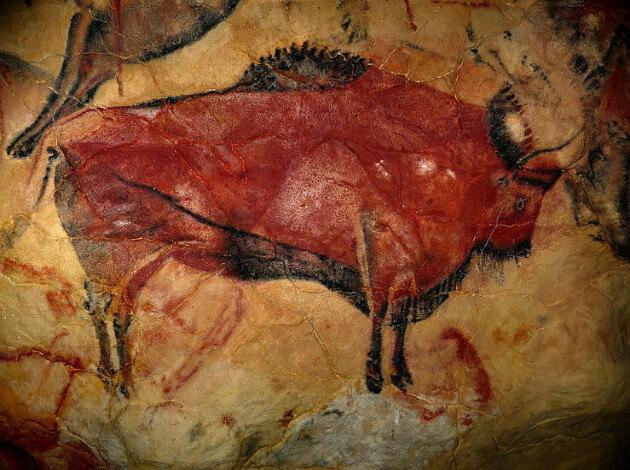
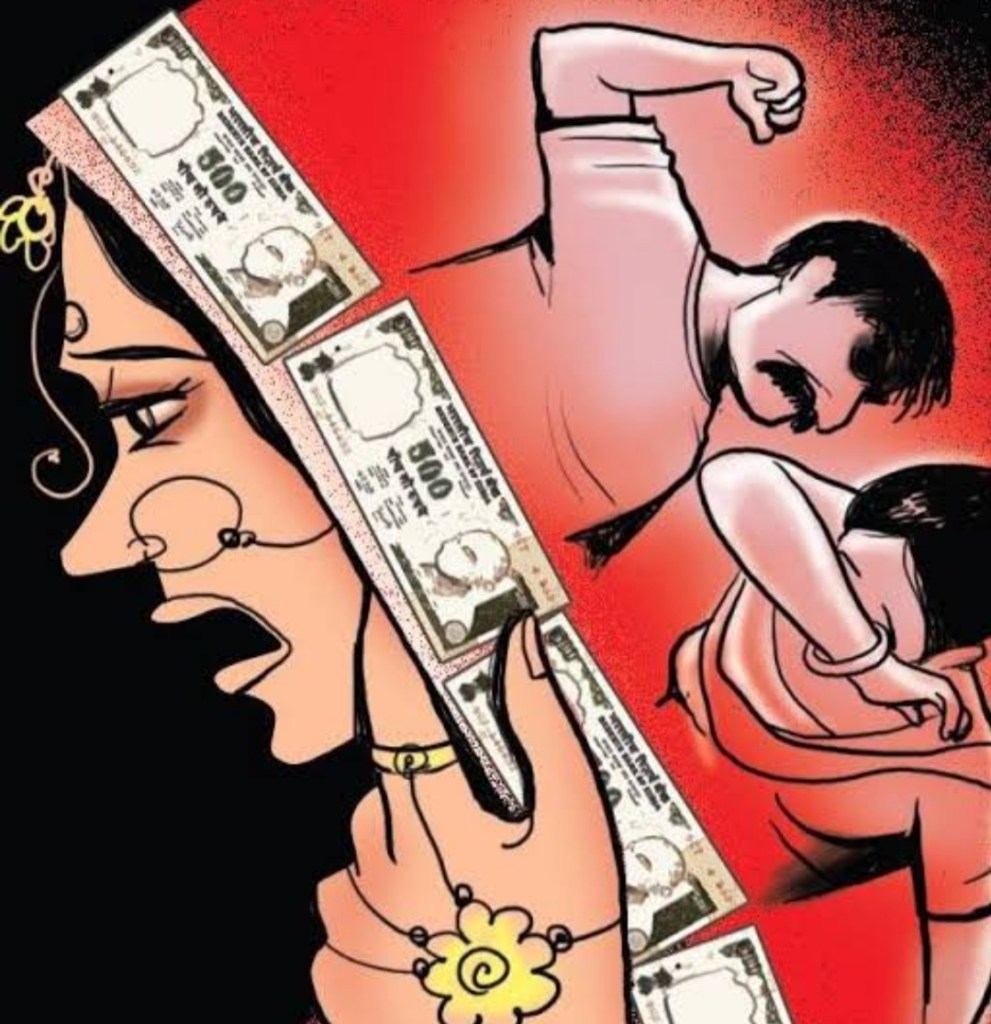



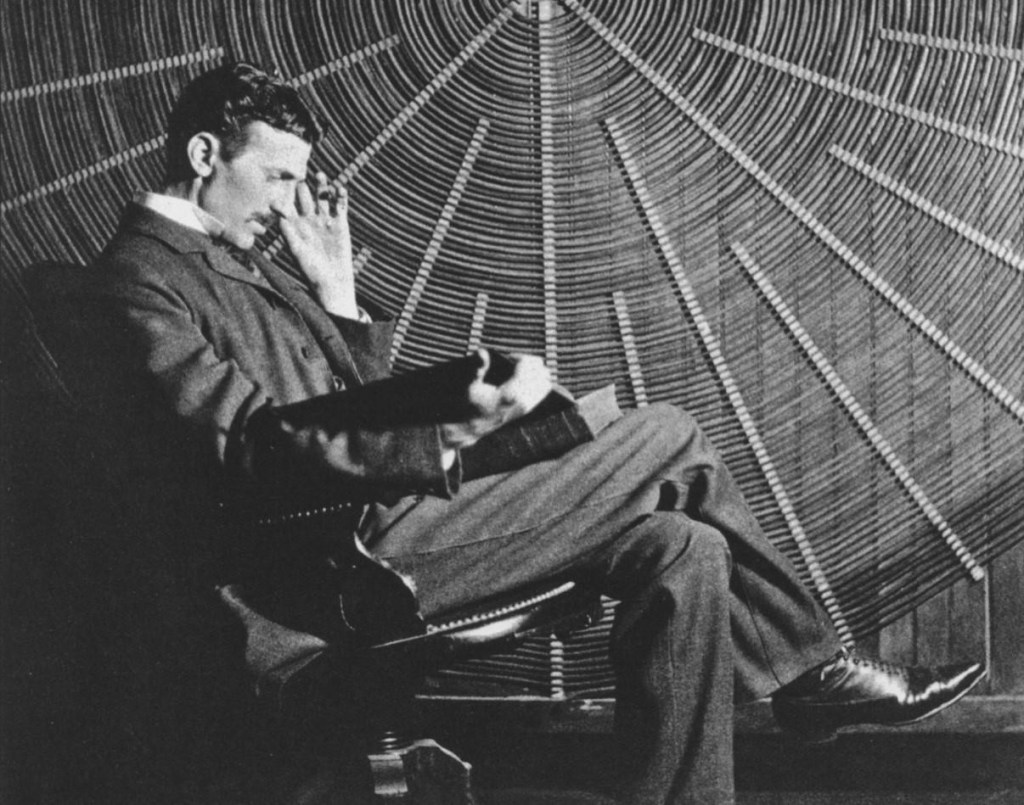
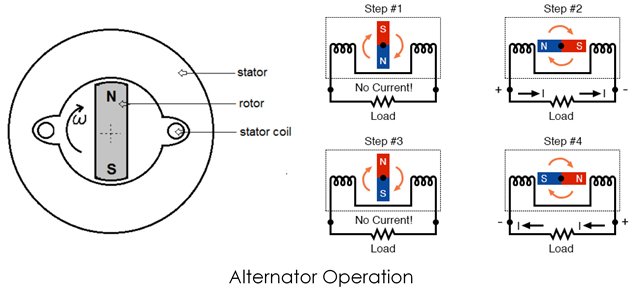
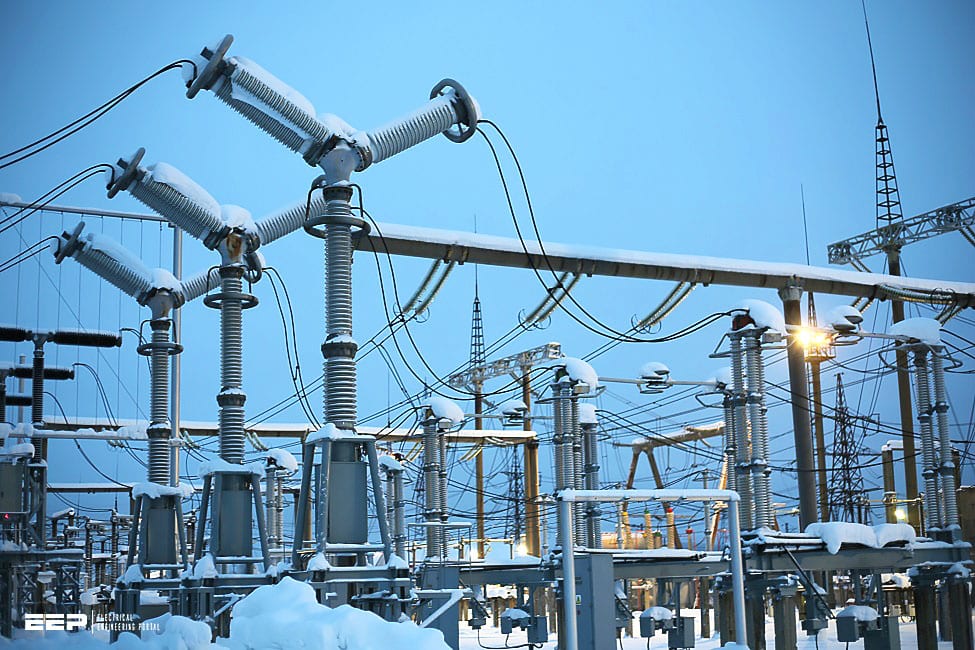









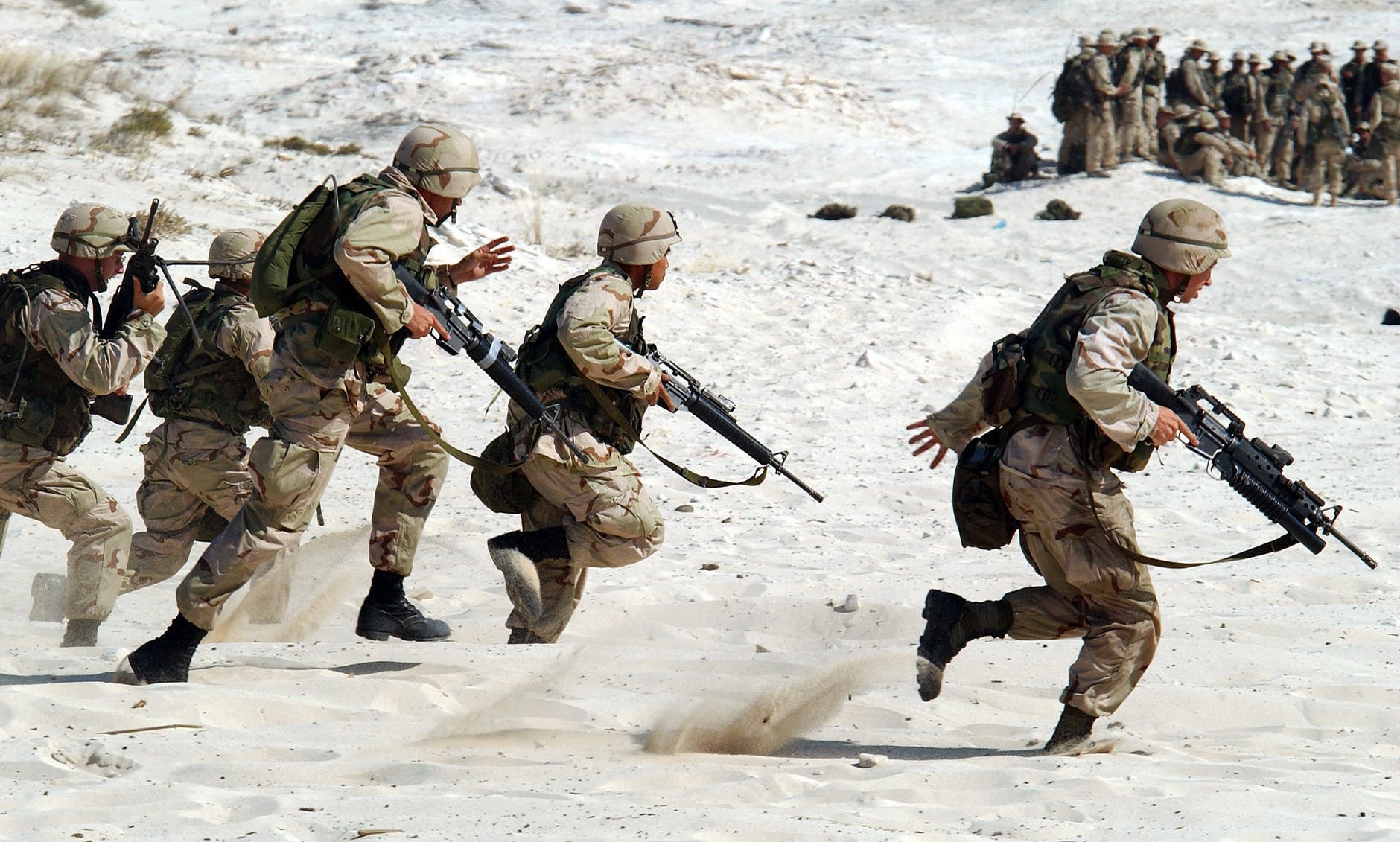








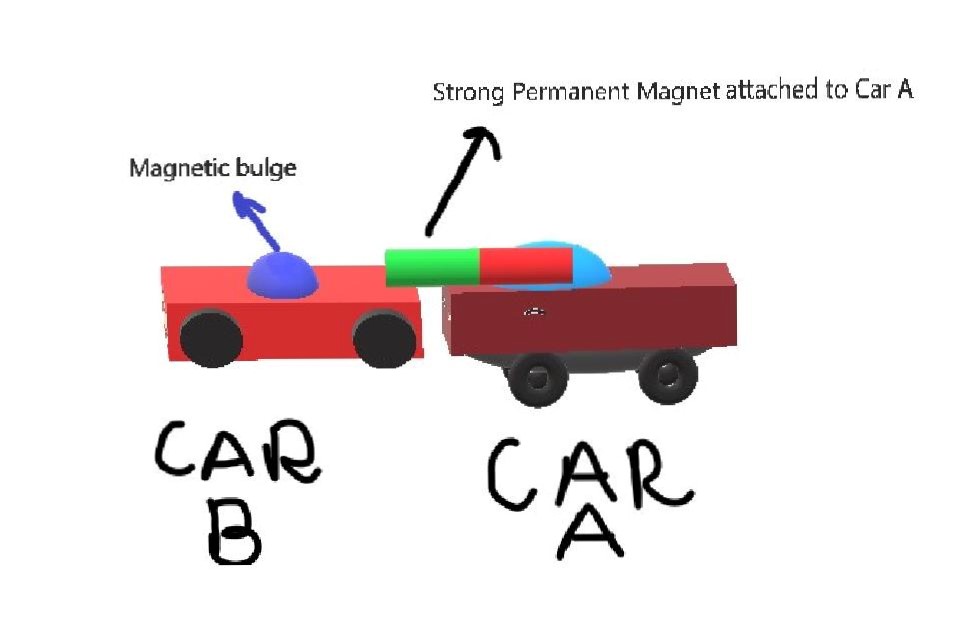
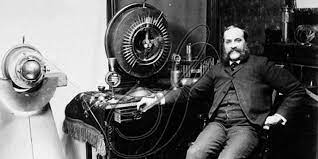

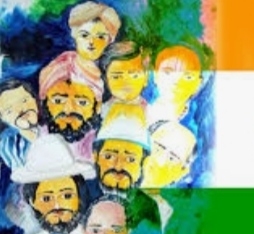


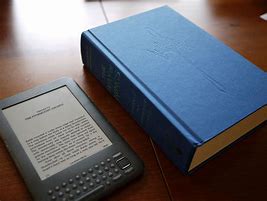



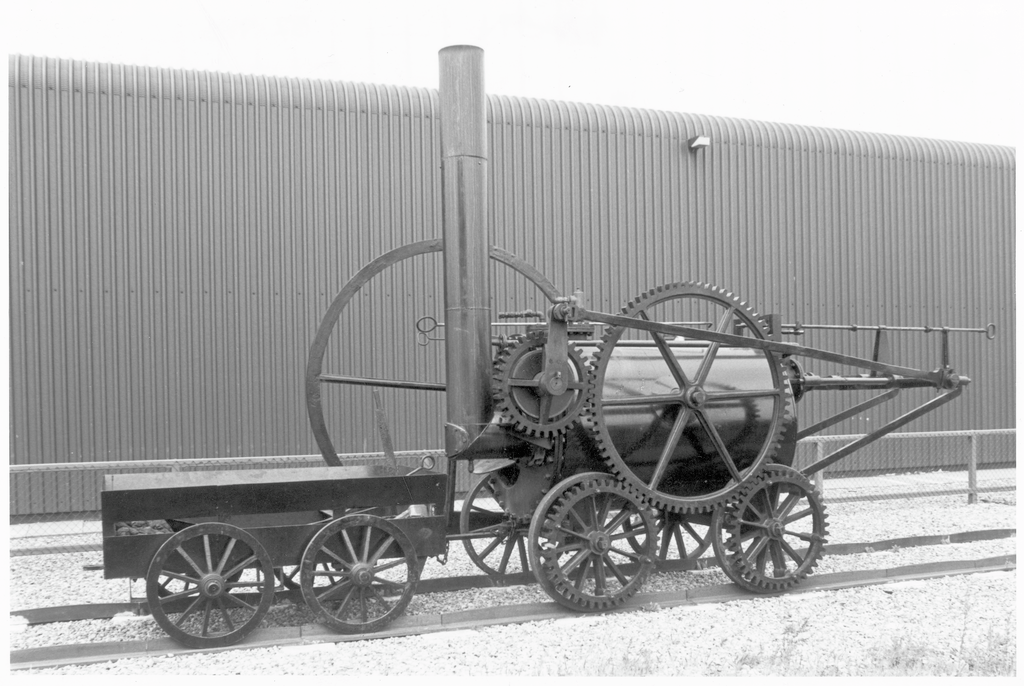


 First Set 4 min 10 Front Squats 10 Box Jumps (1 min break)
  Second Set 4 min 10 Lunge Pass (10 each leg)10 In Out Power Push-Ups (1 min break)
  Third Set 4 min 10 Alternating Swing (10 each arm)10 Hop Knee Drive (10 each leg) (1 min break)
  Fourth Set 4 min 10 Burpee 10 Double Slam You’re done! Way to work.




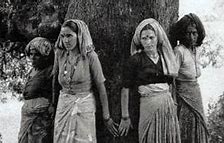
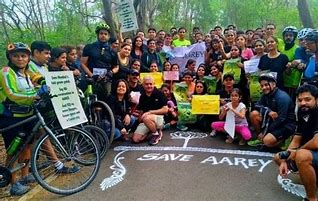

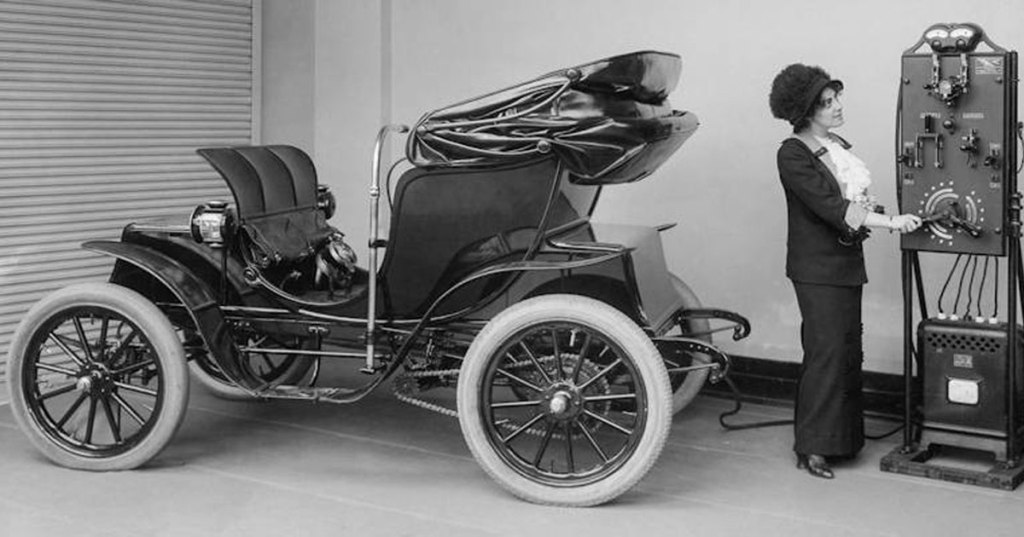

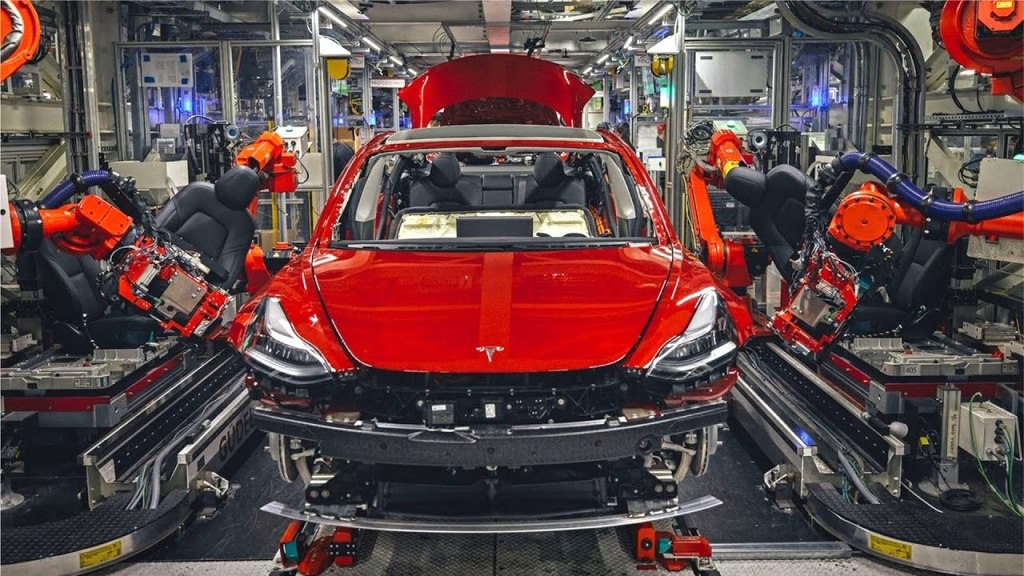






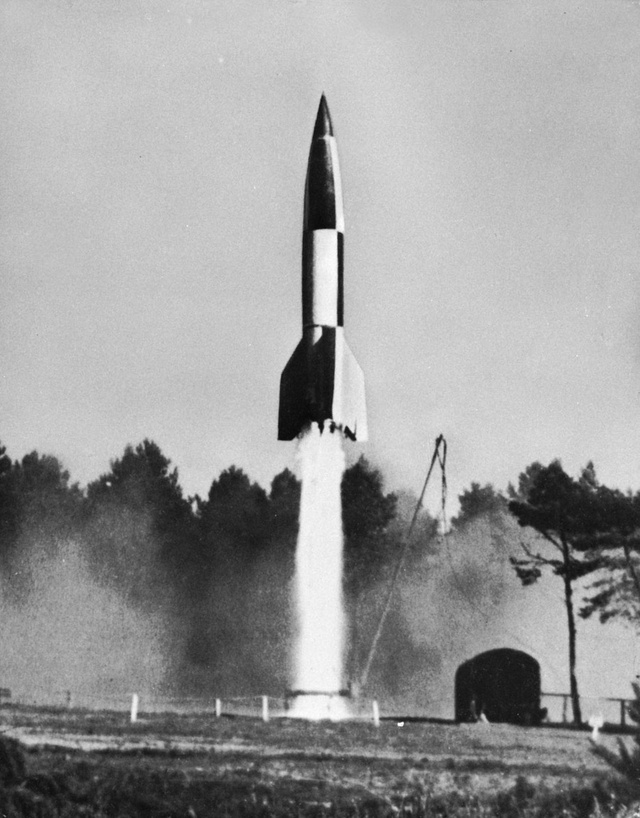



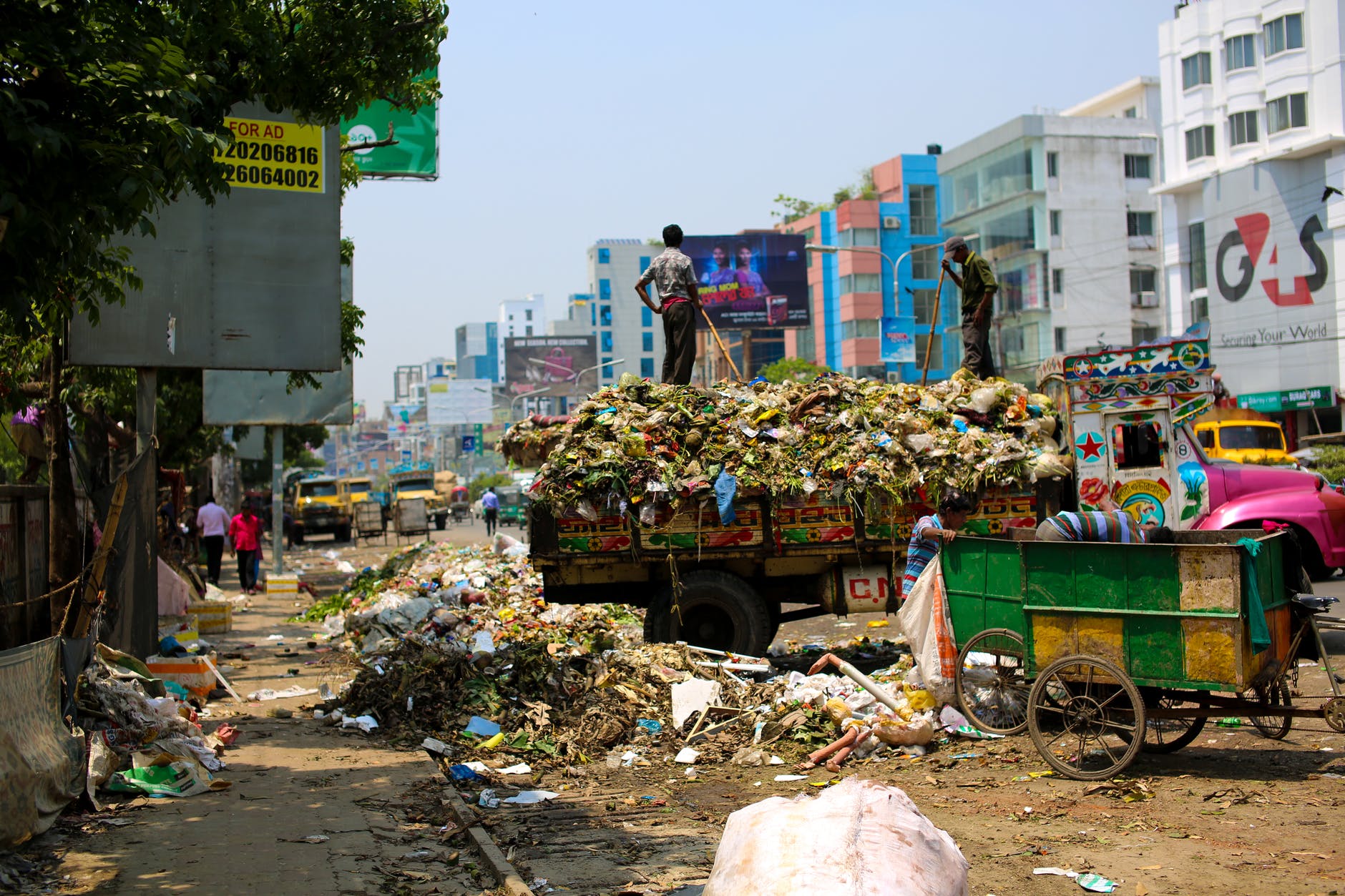




You must be logged in to post a comment.