ROLE OF QUAD IN SOUTH CHINA SEA

BY DAKSHITA NAITHANI

The Quadrilateral Dialogue was established in 2007 when four countries—the United States, India, Japan, and Australia—joined forces. However, it did not take off at first due to a variety of factors, and it was resurrected in 2017 after almost a decade due to factors such as growing country convergence, the expanding importance of the Indo-Pacific area, and rising threat sentiments toward China, amongst many others.

The origins of QUAD may be traced back to the Malabar Exercise. Malabar began as a modest Passage Exercise named PASSEX between the Indian and US Navies in 1992, but was halted after India’s nuclear testing in Pokhran in 1998. It was later restarted in 2002. Since its inception in 2002, QUAD has become an annual event. With the addition of Japan in 2015, it has become a trilateral practice.

The Quad’s goal remains intact: to promote the economic and security objectives of those nations with genuine and essential interests, to devise a new approach for keeping the Indo-key Pacific’s maritime lanes free of foreign influence. It has become necessary in view of the increased need for information exchange in the maritime sector. With the growing presence of the Chinese Navy in the Indian Ocean, awareness is a key subject for the Navy. After 2008, China increased its presence in the Region under the pretext of anti-piracy operations, even deploying submarines for the objective. In 2017, China formally established its first overseas facility near Djibouti, in the Horn of Africa.

What are the underlying challenges?

The environment in which QUAD has been resurrected, as well as subsequent engagements like as Malabar Exercise 2020, are regarded as governed by a counter-China narrative. There are several features that may not constitute sites of convergence, despite how they appear.

China’s influence: China has significant economic links with Quad partners, particularly Australia, which is what it may use to compel or sway nations to its side. This might prove to be an issue for India.

Maritime orientation: Quad is a marine rather than a land-based organisation because of its strong concentration on the Indo-Pacific. This raises some important concerns about the basis of collaboration with Asia-Pacific and Eurasian countries.

Differing perspectives. There are conflicting viewpoints on certain situations, such as the Myanmar crisis as seen through the eyes of the United States and India. India has remained silent in the face of Japan’s expressed worry that China is attempting to alter the status quo in the East and South China Seas.

Advantages in Space- When QUAD representatives join forces in space, they have significant benefits and are able to fight China. This includes (a) lowering the extremely high expenses of building a dock in order to promote the development of interplanetary vehicles (IPVs). (b) One member state has benefits that will compliment each other and will lead to a successful Mars exploration and the construction of support facilities that will be necessary for effective asteroid belt mining. (c) All member countries bring a high degree of convergence in space applications, for example, the United States has the advanced technological base required for advanced avionics, which will form the backbone for both the construction of a space dock and the construction of IPVs; India has a highly educated and inexpensive working population, which will lower the cost of space; and Australia has the natural resources required for exploration.

The Quad met in Tokyo on October 6, 2020, for the second time since the organisation revived in November 2017. It was the second such gathering, following the inaugural virtual meeting in June, and the first high-level Quad meeting since the 2019 foreign ministers’ meeting in New York on the margins of the UN General Assembly meeting. Furthermore, given mounting worries about Beijing’s hostile conduct and growing suspicions about China’s management of the COVID-19 outbreak in Wuhan, the meeting’s timing and circumstances added to its relevance.

China’s ‘incremental encroachment strategy’ in the South China Sea (SCS) is a source of worry not only for the countries currently affected by the loss of influence over the Exclusive Economic Zone (EEZ), but also for the rest of the world, as China may be able to exercise a monopoly over SCS Sea Lines of Communication (SLOC). Affected nations lack the necessary power to stand up to China, and so will be forced to accept a one-sided agreement such as the China-driven ā€œCode of Conductā€ (COC).

As a result, Chinese adventurism must be restrained by other major maritime countries in the global interest. The fact that China could establish a military facility in the SCS despite the existence of the US Navy shows that worldwide criticism and more effort are required to prevent the SCS from becoming “China’s lake.”

Quad may not have the fangs it needs right now, but there is no other option than to establish a prospective structure like this involving likeminded maritime countries with shared strategic objectives in the Indo-Pacific. Various perspectives on the Quad’s role, viability, and prospects have been expressed on several occasions. Because Quad is a security conversation platform rather than a military alliance, aspirations from it must be suitably limited for the time being. 

In the Indo-Pacific, each Quad member sees a distinct threat. While three of the Quad’s warships (Australia, the United States, and Japan) operate under the NATO military alliance structure, India is not a member of any military alliance, while being a reliable ally of two of them. Without India, the trilateral conversation between the three NATO partners has been since 2002. Because India is the only Quad member with an unresolved land boundary with China, it will take a different strategy to dealing with China.

The Quad has emphasised the importance of ASEAN in the Indo-Pacific; nevertheless, their membership in it is a contentious topic owing to Chinese influence. In reaction to China’s claim to the nine-dash line in the SCS, there are divisions within the ASEAN grouping. Some of the ASEAN nations that have been harmed had previously raised a faint voice opposing Chinese aggressiveness, expecting international powers to rein in China’s antics.

Quad’s shared goal of putting its vision of a free and open Indo-Pacific on a “rules-based” legal framework to ensure freedom of passage in the global SLOC requires some reflection and strengthening. The United Nations Convention on the Law of the Sea (UNCLOS III) has been ratified by Australia, India, and Japan, but the United States has yet to do so. This ratification will be required in order to maintain a high moral ground when implementing the agreement.

China is relatively certain that the US and any other country would not employ military action against it, given the current world geopolitical situation. Beijing is also beefing up its naval capabilities. Quad aims to upgrade beyond its Malabar workouts in this situation.

In the Indo-Pacific, Quad members must maintain freedom of navigation exercises and military posture as China continues to do so. Chinese expansion must continue to be condemned by the international community. Quad may not be powerful enough to stop Chinese adventurism in its current form, but it has the potential to become one of the most effective instruments if the afflicted nations and the international community band together to address their mutual concerns.

The navies of Australia, India, Japan, and the United States conducted their largest naval drills this month, sending warships, submarines, and aircraft to the Indian Ocean, signalling the four countries’ seriousness in countering China’s military and political influence in the Indo-Pacific region, according to analysts. Officials in Beijing were silent, but Chinese state media denounced the Malabar naval manoeuvres, calling them a threat to regional stability, according to the Global Times newspaper.

Conclusion

The Quad is developing as one of the major multilateral which is committed to increased security collaboration in the post–COVID-19 international order, given the rising pace and scope of the group’s work. Furthermore, having an active Quad dispels the long-held belief that the Indo-Pacific is mainly inert. With the stakes higher than ever, each of the Quad’s four members must play a larger role in balancing the Indo-threats Pacific’s and power moves. Every step made by the Quad will make it more difficult for Beijing to realise its great-power goals. As a result, China will be unnerved by the Quad’s emergence as a united front championing a free and open Indo-Pacific. Furthermore, if China continues to push the security boundaries and put the Quad members to the test, the organisation will morph into the anti-China squad Beijing fears.

Academic news

My another article is about education and academic news. Education is one of the most important pillar in the life of an individual. An educated person is respected everywhere. Every organization appoints such a person who can be an asset for the organization in the long time. Education is important for everyone and it’s the fundamental right of every child to access it.

Education – A major transformation has been taken place in the field of academics. The National Education Policy 2020 (NEP 2020) , which was approved by the Union Cabinet Of India in 29 July 2020, outlines the vision of India’s new education system. The new policy replaces the previous National Policy on Education, 1986. The policy is a comprehensive framework for elementary education to higher education as well as vocational training in both rural and urban India. The policy aims to transform India’s education system by 2040.
Vision – National Education Policy 2020 envisions an India – centric education system that contributes directly to transforming our nation sustainably into an equitable and knowledge society by providing high quality education to all. The National Education Policy 2020 has “emphasised” on the use of mother language or local language as the medium of instruction till Class 5 while, recommending it’s continuance till Class 8 beyond. Sanskrit and foreign languages will also be given emphasis. The policy recommends that all students will learn three languages in their school under the ‘formula ‘. At least two of the three languages should be native to India. It also states that now language will be imposed on the students.

Conclusion – The Policy focussed on all the levels of education and recommended prior changes that will be helpful to students in future. The basic idea is to generate competition and feeling of decision making since childhood. Every form of education (since childhood to Masters) is categorized and formed. Hope you will read more about it and clear your doubts.

Thank you for today!!!!!

VACCINE TECHNOLOGY

BY DAKSHITA NAITHANI

ABSTRACT

The immune system is a system that operates 24 hours a day, seven days a week to keep assaults at bay and diseases at bay. The whole system is made up of organs, tissues, and a variety of cell types that work together to defend the body. Immune cells must be able to tell the difference between native and non-native cells and proteins. Microbial cells have antigens that serve as identifiers. Antigens can induce an immune response in the human body. Each species has its own set of characteristics. Vaccines function by inducing an antibody memory response in the body without producing illness. As a result, you build immunity without becoming sick. It must include at least one antigen from the target species to trigger a response.

INTRODUCTION TO VACCINE TECHNOLOGY

A vaccination, often known as an immunisation, is a biological substance that protects people from disease-causing microorganisms. They make advantage of our immune system’s built-in ability to fight infection.

They’re produced from the same pathogens that cause the disease. They have, however, been destroyed or reduced to the point that they are no longer a source of it. Certain medicines just contain a part of the microorganism.

This is why they work so well as medications. They don’t treat or cure diseases like conventional medications; instead, they prevent them. They deceive the immune system that it has been invaded by a real intruder. When real germs enter our bodies, the same thing happens, but you don’t become ill. If you ever come into touch with a pathogen, your immune system will remember it and eradicate it before it can damage you.

TYPES

Vaccines are made using a number of techniques. Various vaccine types need different techniques to development. Antigens can be used in a variety of ways, including:

These can be delivered by a needle injected into the human skin, or ingested orally or through the nasal route.

LIVE (CHICKEN POX AND MMR)

Attenuated vaccines can be made in a variety of ways. All methods involving the transmission of a virus to a non-human host result in a virus that can be recognised by the immune system but cannot replicate in humans. When given to a human, the resulting will not be able to proliferate sufficiently to cause disease, but it will protect the individual from infection in the future. Its protection outlasts that of a dead or inactivated vaccination in most cases.

INACTIVATED (POLIO VIRUS)

A pathogen is inactivated using heat or chemicals to create this sort of vaccination. Because destroyed viruses are unable to replicate, they cannot revert to a more virulent form capable of causing disease. They are, however, less effective than live vaccines and are more likely to require renewals in order to acquire long-term protection.

RECOMBINANT (HPV)

They have been genetically modified in a lab. This method may be used to duplicate a certain gene. The HPV vaccine may be tailored to protect against strains that cause cervical cancer.

SUBUNIT (INFLUENZA AND ACELLULAR PERTUSSIS) AND CONJUGATE VACCINES (HAVING ONLY PIECES OF THE PATHOGEN)

Subunit vaccines use only a fraction of a target pathogen to elicit a response. This can be accomplished by isolating and administering a specific pathogen protein as a stand-alone antigen.

Conjugate vaccines, like recombinant vaccines, are made up of two different components. The “piece” of microbe being supplied would not typically elicit a substantial reaction on its own, but the carrier protein would. The bacterium is not the sole cause of the disease, but when combined with a carrier protein, it can render a person resistant to subsequent infections.

TOXOIDS (DIPHTHERIA AND TETANUS)

Some diseases are caused by a toxin produced by bacterium rather than by the bacterium themselves. Toxoids are inactivated toxoids that are used in vaccinations. Toxoids are classed as killed vaccines, although they are sometimes given their own category to emphasise the fact that they include an inactivated toxin.

DEVELOPMENT AND PRODUCTION

Vaccine development is a lengthy process that involves both public and private parties and takes almost a decade. Millions of individuals receive them each year, and the most of them have been in use for decades. Before being included in a country’s vaccination programme, they must undergo extensive testing to ensure their safety. Each vaccine in development must first go through screenings and evaluations to determine which antigen should be utilised to elicit a reaction. This step is completed without the use of humans. Animals are used to assess the safety and disease-prevention potential of experimental vaccinations.

STAGE 1

It takes around 2-4 years to produce and necessitates some fundamental research. Antigens, whether natural or synthetic, are identified by scientists and may help in disease prevention or therapy. Antigens might be virus-like particles, attenuated viruses or bacteria, weakened bacterial toxins, or other pathogen-derived substances.

STAGE 2

Using tissue or cell-culture techniques and animal testing, studies assess the candidate vaccine’s safety or ability to elicit an immune response. Animal topics include fish, monkeys, and mice. These studies give an idea of what to expect in terms of cellular responses in people. This period often lasts 1-2 years.

PHASE I TRIALS

The vaccine is administered to a small number of volunteers to determine its safety, confirm that it induces a reaction, and determine the optimum dosage. This round of testing is carried out on young, healthy adult participants. The goals are to determine the type and number of reactions generated by the candidate vaccine, as well as to assess the candidate vaccine’s safety.

PHASE II TRIALS

The vaccine is then given to several hundred participants to assess its safety and ability to elicit a response. Participants in this phase share the same traits as the vaccine’s intended recipients. Several studies are often undertaken during this phase to test various age groups and vaccination formulations. In most studies, a non-vaccinated group is included as a comparison group to check if the changes in the vaccinated group were due to chance or medicine.

PHASE III TRIALS

The goal is to assess vaccine safety in a large group of patients. Certain rare side effects may not have showed themselves in the low numbers of people tested in the first phase. Thousands of volunteers are given the vaccination compared to a similar number of individuals who did not receive the injection but received a comparator product to assess the vaccine’s efficacy against the illness. It is meant to protect against and to examine its safety in a much bigger group of people. To guarantee that the performance findings are applicable to a wide variety of persons, the bulk of phase three trials are conducted across various countries and different sites within a country.

PHASE IV TRIALS

Firms may conduct optional studies following the launch of a vaccine. The producer may do additional testing to determine the vaccine’s safety, efficacy, and other potential applications.

REVERSE VACCINOLOGY

Reverse vaccinology is the use of genetic information combined with technology to make vaccines without the use of microorganisms. It assists in the study of an organism’s genome for the purpose of identifying novel antigens and epitopes that may be utilised as prospective candidates. This method has been around for at least a decade. By unravelling the entire genomic sequence, it is possible to determine what molecules make up the genomic sequence. Without needing to grow the pathogen for a longer amount of time, candidate antigens can be discovered.

Reverse vaccinology has been used to create vaccines for meningococcal and staphylococcal diseases all over the world. Infections are caused by Staphylococcus bacteria, which can be found on the skin or in the nose of even healthy persons. The bacteria Neisseria meningitidis causes a serious infection of the thin covering of the brain and spinal cord.

PRODUCTION QUALITY CONTROL AND COMMERCIALIZATION

Vaccines are biological compounds that are frequently hybridised and complex to understand. They are made through a succession of manufacturing and formulation steps, with the finished product often containing a large number of component items. As a result, unlike a tiny molecule medicine, the finished product is impossible to classify. This needs a highly controlled production system as well as a personnel capable of performing such processes on a continual basis. Control testing takes over two years and occupies more than half of the time in the subsequent manufacturing process.

 STEP 1- PRODUCTION

Following clinical trials, when a vaccine reaches the pre-approval stage, it is evaluated by the applicable regulatory authority for quality, safety requirements.

STEP -2 MAKING

Businesses will create development plans for a vaccine on their own. Once a vaccine is approved, production begins to pace up. The antigen has been rendered inactive. All of the components are mixed to make the final product. The entire process, from testing to manufacturing, can take a lengthy time to complete.

STEP- 3 PACKAGING

It is then bottled in glass vials and packed for safe cold storage and transportation once it is produced in bulk. It must be able to resist severe temperatures as well as the dangers associated with international shipping. As a result, glass is the most often used material for vials since it is robust and can keep its integrity under severe extrinsic factors.

 STEP- 4 STORAGE

When it is excessively hot or cold, it loses its effectiveness and may even become inert. Vaccinations can be destroyed or rendered dangerous to use if kept at the improper temperature. Most vaccinations must be kept chilled between 2 and 8 degrees Celsius, necessitating the use of specialist medical freezers.

STEP-5 SHIPPING

They are transported out using particular equipment so as to maintain its integrity. Lorries deliver them from the airport to the warehouse cool room after supplies arrive in the market. New innovations have resulted in the development of portable devices that can keep vaccines cold for several days without the need of power.

QUALITY CONTROL

Once they are given out, authorities continuously check for – and assess the severity of – any potential side effects and responses from the recipients. Safety is a top priority, with frequent reviews and post-approval clinical trials reporting on its effectiveness and safety.

CAREER SCOPE

There are several prospects in vaccine research and development, clinical trials, vaccine manufacturing, and public distribution. These jobs are available at universities, companies, government laboratories and agencies, hospitals, and on the front lines of vaccine distribution all around the world. When different components of a project are handled by different groups at the same time in industry, greater teamwork is usually required, whereas a scientist in an academic lab may be a lone worker overseeing all parts of a project.

The balance between creative science and all of the business administration that comes with securing money, maintaining a budget, and overseeing other scientists or assistants is the most challenging aspect.

 Research allows scientists to work on a project that has the potential to have a direct influence on public health, whether it’s on a lab bench, a production line, or to support a clinical trial.

Culture and history : Hampi !!!

So today we will talk and know about UNESCO World Heritage Site. Hampi is famous for its ruins belonging to erstwhile medieval Hindu kingdom of Vijayanagar. The temples of Hampi, it’s monolithic sculptures and monuments, attract the traveler because of their excellent workmanship. The Hindu style of architecture found at Hampi reflects the splendor of the Vijayanagar Empire. The rugged landscape adds to the historic ambiance of this site.

Location – Hampi is situated on the banks of the Tungabhadra River in the eastern part of central Karnataka near the state border with Andhra Pradesh. It is 376 kilometers from Bengaluru, and 165 kilometers from Hubli, and 13 km from Hospet (Railway Station). It is located on top of the rugged terrain and is 467 m above sea level.

History – The first settlement in Hampi dates back to 1st Century AD and several Buddhist sites belonging to that time have been found nearby. Hampi was the capital of the mighty Vijayanagar Empire. Vijayanagar was one of the largest Hindu empires in India. Two brothers, Harihar and Bukka , founded it in 1336. Krishnadevaraya (1509-1529) was the greatest ruler and controlled almost all of peninsular India south of Tungabhadra River.

Town – The town of Hampi in the 14th century had a population of half a million people. Seven concentric lines of fortifications protected the city. It maintained a huge army to protect it from other kingdoms. Vijayanagar Empire flourished, as it controlled both cotton and spice trade routes of southern India. Medieval historians refer to Hampi as an important center of trade. However the glory was short – lived and the empire was destroyed in 1565.

Main attractions – Hampi is famous for Purandara Festival . This annual festival is held in January – February in the Vittal temple to celebrate the birth anniversary of the medieval poet – composer, Purandar. The best time to visit Hampi is from October to March. I hope by reading about Hampi you will like to visit this place once…!!!

Thank you… Keep reading…..

India’s brilliant performance at Paralympics 2020

It will be fair to say that Paralympics 2020 is India’s most extraordinary Paralympics ever. From 1968 to 2016, India won 12 medals at Paralympics, at Tokyo India have already secured 15 members and counting. 30th august will go down as golden day in history of Indian para sports as India claimed 5 medals in a single day. Let’s have a look at India’s journey at Paralympics till now,

Bhavina Patel created history as she won silver medal in women’s single table tennis C4. She won medal in her maiden Paralympics on august 29. Chinese paddler Ying Zhou ended her impressive run at the games in class 4 final with 0-3 win.

India’s next medal came from men’s high jump T47. India’s Nishad kumar clinched a silver medal in the event with an Asian record effort. The 21 year old cleared 2.06 m to win the silver and set an Asian record. He lost his right hand due to an accident at the age of 8.

Shooter Avani Lekhra made history as she became the first Indian woman to win a gold medal at the Paralympics as she won gold in women’s 10m air rifle shooting standing SH1. The 19 year old finished with a world record equaling total of 249.6, which is also a new Paralympic record. Also it was her maiden Paralympics.

India’s medal favorite, two time gold winning javelin throw veteran Devendra jhajharia didn’t disappointed and clinched a silver in men’s javelin throw F46. 40 year old Devendra already India’s greatest Paralympian pulled off a new personal best throw of 64.35 m for silver. Sundar Singh Gurjar, another Indian secured third place with a best effort of 64.01 m in the same event.

24 year old Yogesh Kathuniya started India’s golden day in para sports history with a silver in Men’s discus throw F56. He sent the discus to the best distance of 44.38 m and clinch the silver.

30th august didn’t stopped producing amazing moments for Indians as Sumit Antil upgraded his own world record in the Men’s javelin throw F64 category with a throw of 68.55m to hand India second gold medal of Paralympics 2020. Singhraj added to India’s medal tally by winning bronze medal in the men’s 10 m air pistol shooting SH1. He started shooting only 4 years ago and it was his debut Paralympics.

Mariyappan Thangavelu and Sharad kumar secured silver and bronze for India in men’s high jump T42 on 31th august. Mariyappan cleared 1.86m while Sharad succeeded in clinching bronze with 1.83m jump. 18 year old Parveen kumar also won silver in T64 classification of men’s high jump with the best jump of 2.07m. It was his personal best performance and his first major medal.

Avani Lekhra added 12th medal to India’s medal tally as she won bronze in women’s 50m rifle three positions SH1. She also became India’s most successful women para-athlete as it was her second medal after winning gold in women’s 10m air rifle.

We can hope for more as many more events are yet to come. India’s para-athletes are on a dream run and we hope it doesn’t stop.

BLESSING IN DISGUISE

BY DAKSHITA NAITHANI

The year 2020, as we all know, will be a major change in our life. It has also demonstrated the opposite side of existence. We continued to count things for the future, and when the pandemic struck, it reminded us of how unexpected life can be; different aspects of life were affected, and working conditions were significantly altered. There was a lot of misunderstanding in the education industry about how to teach pupils, how to start lessons, and so on. However, technology was the solution to all problems.

People have used mobile phones for social interactions and pleasure in the past, but they have now evolved into a source of information, and we can say that school has come within our grasp. This situation is very similar to one of the chapters in NCERT’s English course book for class 9 called “The fun they had,” in which two children from the future (2050) got their hands on a real hardcover book from their grandfather and were amused by the idea of a real school and school building where all the children of the same age group used to study together under one roof and thought that happiness was being together with their friends. Did the pupils in this circumstance realise that this narrative would become so relevant and genuine to them? Many parents used to refuse to let their children to use cell phones, but it has now become a necessity.

Although there are always two sides to a coin, sales of smart phones soared as a result of the epidemic, since every home needed one additional one for their children to attend courses. Technology has also played a significant role in education, and how we use it can have positive or negative consequences. Phones have evolved into more than simply a means of communication; they have also become a lifeline and an indispensible component of our lives in some manner. It was a struggle for teachers to not only teach their material but also to engage with their pupils throughout these testing periods. They’ve also learned to utilise technology in a variety of ways, including not just communicating but also using various digital classrooms, boards, and audio and visual teaching and learning methods. They were not only effective in speaking with pupils, but also with their guardians, and despite the challenges, they were able to establish an emotional bond with them.

Many parents lost their jobs as a result of industry losses and were obliged to shift their children from private to government schools, but many were pleased to do so because the curriculum is on par with top institutions. The government and teachers have made it a point to link each and every kid with them. Many teachers aided their students financially as well as academically. Many teachers have also attempted to offer phones or internet connections to their kids, demonstrating that humanity bears primary responsibility in any scenario.

The desire for change in school education emerges as a result of continual changes in society on psychological, social, and economic levels. As a result, we must constantly introduce and upgrade a framework. As you can see with the current pandemic, a lot of adjustments are required both during and after the crisis. With this in mind, the Delhi government began giving curriculum-based work sheets to children of all grades, as well as training their teachers.

Teachers’ ability and efficiency have been improved via the use of webinars and online seminars on a regular basis. Regular trainings were provided to demonstrate how to use Google products to make the teaching and learning process more engaging and beneficial. The government has also launched a number of applications, such as Chalklit and Diksha, to provide a platform for various trainings and to keep instructors informed about innovative ways of teaching and learning. It was remarkable that students continued to attend courses on a regular basis, whether they were in the same city or in their village; their desire to study grew day by day, and they began to respond positively.

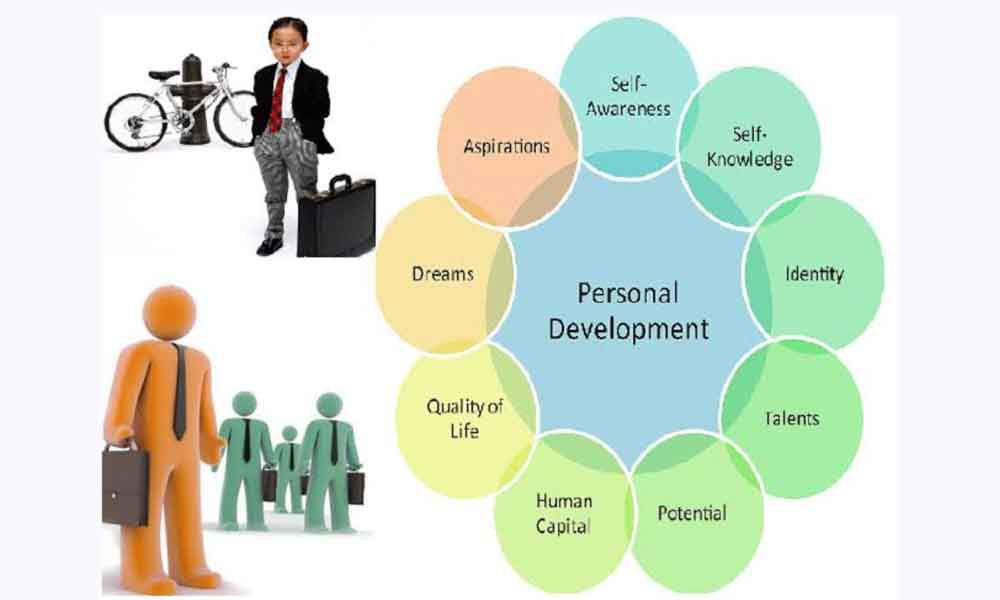
Personality development!!

So today’s post is about you, about us. I mean about our personality , about our identity, our views , our behavior, etc. Personality development encompasses the dynamic construction and deconstruction of integrative characteristics that distinguish an individual in terms of interpersonal behavioral traits.

Indeed , personality development is ever -changing and subject to contextual factors and life altering experiences. Personality development is also dimensional in description and subjective in nature. The dominant viewpoint in personality psychology indicates that personality emerges early and continues to develop across one’s lifespan.

We all possess certain personality traits that set us apart from the rest. A mix of good and bad, these traits define how we respond to situations and people. Now I tell 13 personality development ‘tips’. I hope you will enjoy reading it and become the most terrific version of you.

13 ways of personality development :

  • Know you are incomparable – Know that you and the other person are unique and are just incomparable
  • Be kind to yourself – Self compassion brings positive traits in life.
  • Give space to imperfections – Find your peace amidst the world’s flaws even as you strive to make a change.
  • Be spontaneous – Spontaneity makes one to be fun around and be per cent aware in the present moment.
  • Be light in mind and heart – Be happy and don’t overthink and overanalyze yourself.
  • Stay enthusiastic – Enthusiasm is infectious and appealing so one must never give up enthusiasm.
  • Be a better communicator – A skillful communicator can win over people and adverse situations through his words.
  • Be warm and approachable – We all like people whom we can easily mingle and talk to. Be friendly and be ready to share and help.
  • Do things with style – Doing things with style adds zing to your personality. At the same time, stay relaxed.
  • Learn to let go – After you’re done with your task, let go of your attachment with the result.
  • Be a lion in the face of danger – Don’t give into pressure and face every challenge confidently.
  • Stay calm with the power of breath – Being calm strengthens one’s personality and your stress will diminish.
  • Remember you’re a proton! – A proton never lose its positivity, nor can you. Your inner core continues to radiate positivity.

That’s all for today hope you will like it!! Thank you…

SOME OF THE MAJOR PSYCHOLOGICAL DISORDERS

1) ANXIETY DISORDERS

The word anxiety is derived from Latin word ‘Anxietas’ which means uneasy or troubled mind. When a person feels nervous without any obvious reason for a long time and it affects the person daily life it is termed as Anxiety Disorder. There are many types of Anxiety Disorder let’s look at few;

GENERALIZED ANXIETY DISORDER

Humans feels tension in their daily life it can be termed as a a good pressure as it compels us to face difficult situation in a systematic and planned manner like studying for exams or some responsibilities. But when this pressure becomes too intense and start to interfere with our daily routine it can be called as generalized anxiety disorder.

– PHOBIC DISORDER

The word phobia is derived from Phobos the name of a Greek god of fear. When an individual has an intense and irrational fear of some object or situation which they are not able to overcome it is termed as phobia; there are many types of phobia like fear of heights, fear of water , social phobia, etc.

2) DEPRESSIVE DISORDER

When a person experiences an extreme feeling of sadness as well as guilt due to some negative incidences or some other external factors for atleast two weeks it is called depressive disorder. People may experience suicidal thoughts, feeling of hopelessness, lack of sleep and many more.

3) BIPOLAR DISORDER

This is also called Manic depressive disorder. An individual experiences alternate phases of extreme sadness, hopelessness, stress at one time and extreme happiness, enthusiasm, and elation at other times. In some cases this conditions happens one after the other. Genetic factors, imbalance in neurotransmitter in brain, mainly norepinephrine, serotonin and dopamine are found to be the main causative factors.

OZONE LAYER

Ozone layer depletion

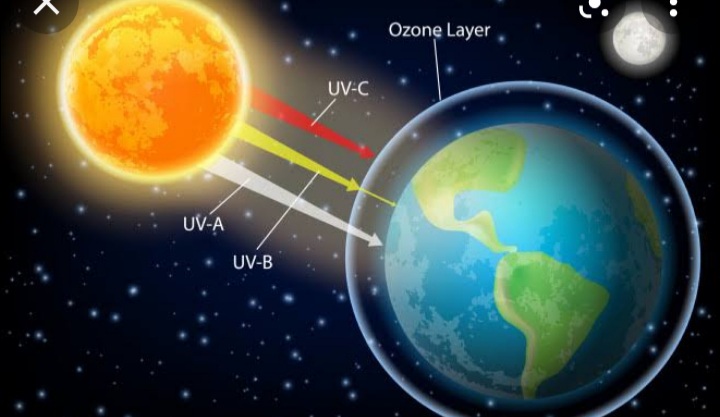
Ozone is a form of oxygen (O3). In the stratosphere (Ozonosphere),ozone blocks out the sun’s ultraviolet rays and is a life saver.

Ozone as a natural sun block

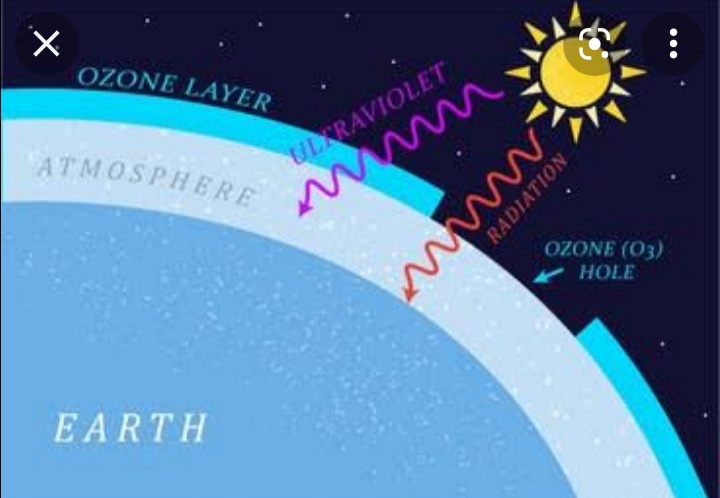
The electromagnetic radiation emitted from the sun includes ultraviolet radiation, which is potentially harmful to most living things since it can damage DNA. The ozone layer screen out the sun’s harmful ultraviolet radiation. Even 1% reduction in the amount of ozone in the upper stratosphere causes a measurable increase in the ultraviolet radiation that reaches the earth surface. If there was a no ozone at all ,the amount of ultraviolet radiation reaches us would be catastrophically high. All living things would suffer radiation burns,unless they were underground, or in the sea.

In the stratosphere, small amount of ozone are constantly being made by the action of sunlight on oxygen. At the same time, ozone is being broken down by natural processes. The total amount of ozone usually stays constant because its formation and destruction occur at about the same rate. But unfortunately human activity has recently changed that natural balance. Some manufactured substances such as chloroflurocarbons and hydrochloroflurocarbons can destroy stratosphere ozone much faster than it is formed.

Ozone hole

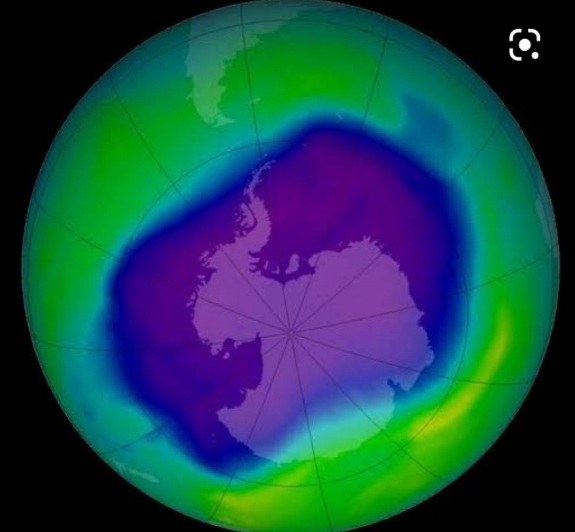
Ozone loss was first detected in the stratosphere over the Antarctic. The part of the atmosphere where Ozone is most depleted is referred as ” Ozone hole” but it is not a real hole just a vast region of the upper atmosphere where there is less Ozone than elsewhere.

Ozone-poor air can spread out from the polar regions and move above others areas. In addition, direct Ozone less elsewhere is slowly increasing.

Ozone-poor air can spread out from the polar regions and move above other areas. In addition, direct Ozone depleted area is also slowly increasing.

Reason for Antarctic Ozone hole

Scientific observation prove that the ozone hole formed over Antarctic is due to compounds of chlorine and bromine formed in the atmosphere. Nearly all of the chlorine and half of the bromine in the stratosphere comes from the human activities. The chlorofluorocarbons released due to human activities get transported up into the upper stratosphere.

The most common ozone depleting substances (ODS) are chlorofluorocarbons (CFC) or freon gases,certain bromine compounds, nitrogen oxides and methyl bromide. These compounds are liberally released from air-conditioners,freezers,foam insulation, aerosol products, industrial solvents, fire extinguishers and pesticides.

Effects of ozone depletions

If the ozone is depleted more ultraviolet radiation (especially ultraviolet B (UVB) will reach the earth’s surface.

Effect on plants – will affect crop yield and forest productivity.

Effect on animals – will cause damage to fish larvae and other Small animals.

Effect on human health – results in non – melanoma skin cancer and melanoma ,acute erythemia(sun burn), ocular abnormalities, cataract,poor immune responses.

Preventing ozone depletion

1. CFC’s ( Chloro Fluoro Carbons) should be replaced by HCFC’s (Hydro Chloro Fluro Carbons). If over used could damage ozone, HFC’s ( Hydro Flouro Carbons), Hydrocarbons such as butane and propane ( but flammable and poisonous), Ammonia ( must be handled carefully), water and steam.

2. Production, use and emission of ozone-depleting chemicals should be controlled.

3. Recycling of these chemicals should be increased.

4. Servicing of refrigerators and air-conditioners should be regulated.

5. Refrigerants should be recaptured and used .

6. Adopt protection measures from sun’s radiation.

PLIGHT OF WOMEN IN AFGHANISTAN

BY DAKSHITA NAITHANI

The Afghan women, maybe more than anybody else, have dreaded the Taliban’s return. There have been many advances in women’s rights over the last 20 years, which appear to be set to erase nearly overnight.

A quick lesson from history…

The Taliban, a political and military force, is said to have started in Islamic schools in Northern Pakistan in the early 1990s. Its aim was to restore order in Afghanistan following the withdrawal of Soviet troops in 1989, as well as to impose a harsh form of Sharia law. By 1998, the organisation had seized 90% of Afghanistan’s territory.

Once in control, the organisation garnered worldwide condemnation for a slew of human-rights violations. The ban on female education above the age of ten as well as harsh limitations on day-to-day liberties, were among the stringent mores imposed on women and its influence has frequently threatened to expand beyond, to places like Pakistan, where the organisation memorably shot teenager Malala Yousafzai in 2012. Women were treated worse than at any previous period or by any other culture throughout its rule (1996–2001). They were prohibited from working, leaving the house without a male escort, seeking medical assistance from a male doctor, and being compelled to cover themselves from head to toe, including their eyes. Women who had previously worked as physicians and teachers were compelled to become beggars or even prostitutes in order to feed their families during the Taliban’s rule.

Following the 9/11 attacks, it was thought that the Taliban were harbouring Al-Qaeda soldiers, thus an US-led international operation was started against Afghanistan. As a consequence, the Taliban were deposed from power, an Afghan government was established, and soldiers occupied the country for 20 years. It destabilised several regions of the nation due to battles with US and UK forces on a regular basis, and Afghan people were continued to be assaulted. Many would agree that the political and cultural status of Afghan women had improved significantly since the Taliban’s collapse in late 2001.

The Bush administration’s acceptance of women’s rights and empowerment as rationale for its assault on the Taliban is long gone. So it was under the Barack Obama administration, when then-Secretary of State Hillary Clinton stated that the Taliban’s repudiation of al-Qaida and promise to support the Afghan constitution and safeguard women’s rights were preconditions for US discussions with them. The rejection of al-Qaida has yet to be declared openly and publicly less than 10 years later; the constitutional order and women’s rights are still subject to intra-Afghan talks and will be influenced by the changing balance of military power.

In February 2020, US-Taliban peace talks were concluded, with the US pledging a quiet departure in exchange for an end to hostilities. Afghan leaders and top military generals have warned that the government will collapse without foreign assistance. It looks like the worst has transpired only weeks before Biden’s deadline of September 11th.

The Taliban rule wreaked havoc on the institutions and the economy, which had already been ravaged by decades of conflict and the Soviet scorched-earth counterinsurgency policy.

The post-Taliban constitution of 2004 granted Afghan women a wide range of rights, and the political epoch brought social and economic progress, which greatly improved the socioeconomic situation. From a crumbling health-care system with almost no healthcare available to women during the Taliban years, the post regime built 3,135 functional facilities by 2018, giving more than 80 percent of Afghans access to a medical facility within two hours’ drive.

 Less than 10% of females were enrolled in elementary schools in 2003; by 2017, that figure had risen to 33%, while female secondary school attendance increased from 6% to 39%. As a result, 3.5 million Afghan females were enrolled in education, with 100,000 of them enrolled in academic institutions. Women’s life expectancy increased from 56 to 66 years in 2017 and maternal mortality fell from 1,100 per 100,000 live births in 2000 to 396 per 100,000 in 2015. By 2020, women made up 21% of Afghan public workers, including 16% of top management positions, and 27% of Afghan parliamentarians.

 These benefits for women have been dispersed inequitably, with women in metropolitan areas benefiting considerably more than women in rural regions. Despite formal legal empowerment, life for many rural women has not improved much since the Taliban era, notably in Pashtun regions but also among other rural minority groups. Many Afghan males are staunch conservatives. Families often let their daughters to complete a primary or secondary education before proceeding with planned marriages. The burqa is worn by the majority of Afghan women in rural regions without any pushing from the Taliban.

What is the situation for women in Afghanistan now?

Women’s rights in Afghan had arguably maintained pace with many other Western countries prior to the 1970s. Women were granted the right to vote in 1919, one year after women in the United Kingdom. In the 1950s, gender segregation was eliminated, and in the 1960s, a constitution was enacted that included women in political life. As the region became more unstable in the 1970s, these rights were steadily eroded.

Only 38% of the international humanitarian response plan for Afghanistan is financed as of August 2021. This gap might result in the loss of specialised protection services for 1.2 million children, putting them at risk of abuse, recruitment, child labour, early and forced marriages, and sex abuse. About 1.4 million females, many of whom are survivors of domestic abuse, would be left without access to safe spaces where they may receive full care.

Females, who have experienced life with rights and freedoms, are among the most exposed as a result of the Taliban’s fast progress in Afghanistan. As the Taliban capture control of Kabul, they risk losing their hard-won achievements.

Those cries for aid may be too late as the capital city falls into the clutches of Islamist rebels. There have been several stories of the Taliban going door-to-door and compiling a list of women and girls aged 12 to 45 who are then compelled to marry Taliban warriors. Women are told that they cannot leave the house without a male escort, that they cannot work or study, and that they cannot wear anything they want. Schools are also being shuttered.

There is a lot to lose for a whole generation of Afghan women who entered public life – legislators, journalists, local governors, physicians, nurses, teachers, and public administrators. While they worked alongside male colleagues and in communities that were unfamiliar with people in positions of power to help establish a truly democratic civil society, they also wanted to pave the way for future generations to follow in their footsteps.

The Taliban offers itself a broad range of possibilities by claiming that they will ā€œprotectā€ women’s rights under sharia but refusing to explain how women’s rights and life in Afghanistan will alter if they achieve their goals. Even if the government did not openly adopt as cruel a system for women as in the 1990s, the Taliban’s dispositions are quite likely to undermine women’s rights, impose cultural prohibitions on women, and reduce socio-economic possibilities for them.

In summary, even with this change in behaviour, the Taliban in power would almost certainly strive to curtail Afghan women’s legal rights, exacerbating their social, economic, and political circumstances. How much and in what manner, is the question.

ATMOSPHERE

What is the Atmosphere?

Layers of Earth's Atmosphere as seen from space

The atmosphere is a mixture of gases that surrounds the planet. On Earth, the atmosphere helps make life possible. Besides providing us with something to breathe, it shields us from most of the harmful ultraviolet (UV) radiation coming from the Sun, warms the surface of our planet by about 33° C (59° F) via the greenhouse effect, and largely prevents extreme differences between daytime and nighttime temperatures. The other planets in our solar system also have an atmosphere, but none of them have the same ratio of gases and layered structure as Earth’s atmosphere.Ā 

Gases in Earth’s Atmosphere

Nitrogen and oxygen are by far the most common; dry air is composed of about 78%Ā nitrogen Ā (N2) and about 21%Ā oxygen Ā (O2). Argon,Ā carbon dioxide (CO2), and many other gases are also present in much lower amounts; each makes up less than 1% of the atmosphere’s mixture of gases. The atmosphere also includes water vapor. The amount of water vapor present varies a lot, but on average is around 1%. There are also many small particles – solids and liquids – “floating” in the atmosphere. These particles, which scientists call “aerosols”, include dust, spores and pollen, salt from sea spray, volcanic ash, smoke, and more.

Layers of Earth’s Atmosphere

The atmosphere grows thinner (less dense and lower in pressure) as one moves upward from Earth’s surface. It gradually gives way to the vacuum of outer space. There is no precise “top” of the atmosphere. Air becomes so thin at altitudes between 100 and 120 km (62-75 miles) up that for many purposes that range of heights can be considered the boundary between the atmosphere and space. However, there are very thin but measurable traces of atmospheric gases hundreds of kilometers/miles above Earth’s surface.

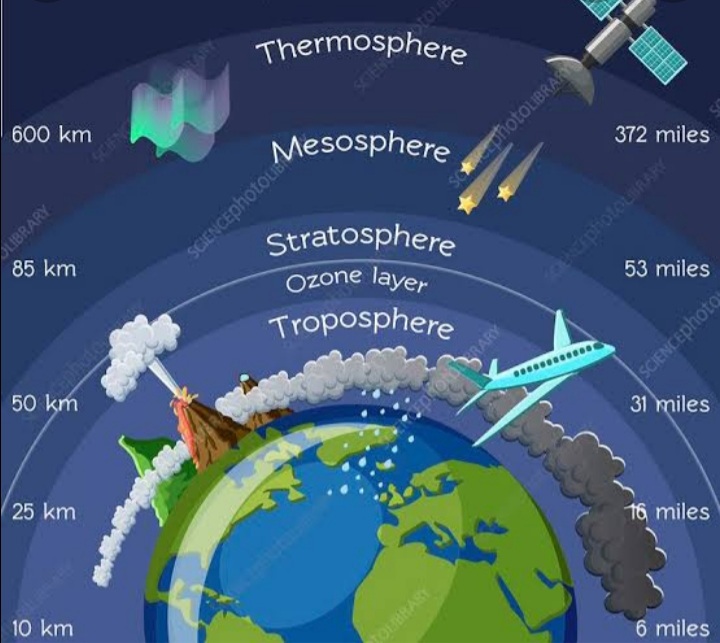
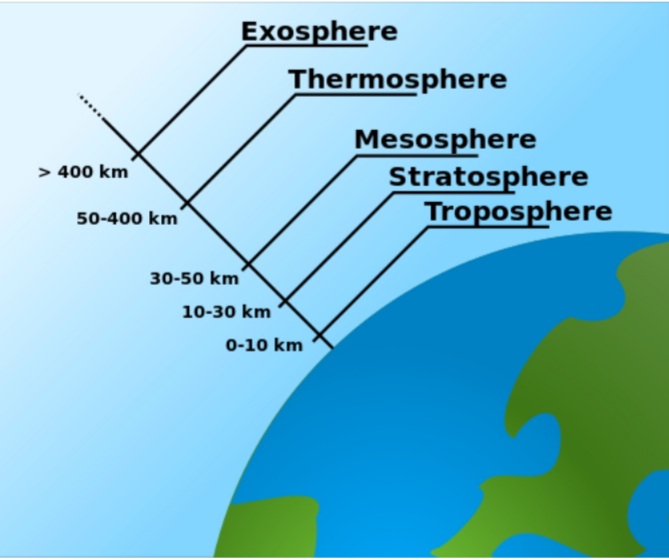
There are several different regions orĀ layers in Earth’s atmosphere. Each has characteristic temperatures, pressures, and phenomena. We live in theĀ troposphere, the lowest layer, where mostĀ clouds Ā are found and almost all weather occurs. Some jet aircraft fly in the next higher layer, theĀ stratosphere, which contains the jet streams and the ozone layer. Temperatures reacj their lowest in theĀ mesosphere, because the there are almost no air molecules there to absorb heat energy. The sky also changes from blue to black in the mesosphere, because there are so few molecules for light to refract off of there. And fartherst from the surface we have theĀ thermosphere,Ā which is the widest layer of the atmosphere and absorbs much of the harmful radiation that reaches Earth from th Sun.Ā TheĀ exosphereĀ represents the transition from Earth’s atmosphere to space.Ā 

Layers of Earth's Atmosphere

Troposphere

TheĀ troposphere Ā is the lowest layer of our atmosphere. Starting at ground level, it extends upward to about 10 km (6.2 miles or about 33,000 feet) above sea level. We humans live in the troposphere, and nearly all weather occurs in this lowest layer. Most clouds appear here, mainly because 99% of the water vapor in the atmosphere is found in the troposphere.Ā Air pressure drops, and temperatures get colder, as you climb higher in the troposphere.

Stratosphere

The next layer up is called theĀ stratosphere. The stratosphere extends from the top of the troposphere to about 50 km (31 miles) above the ground. The infamous ozone layer is found within the stratosphere. Ozone molecules in this layer absorb high-energy ultraviolet (UV) light from the Sun, converting the UV energy into heat. Unlike the troposphere, the stratosphere actually gets warmer the higher you go! That trend of rising temperatures with altitude means that air in the stratosphere lacks the turbulence and updrafts of the troposphere beneath. Commercial passenger jets fly in the lower stratosphere, partly because this less-turbulent layer provides a smoother ride. The jet stream flows near the border between the troposphere and the stratosphere.

Mesosphere

Above the stratosphere is theĀ mesosphere. It extends upward to a height of about 85 km (53 miles) above our planet. Most meteors burn up in the mesosphere. Unlike the stratosphere, temperatures once again grow colder as you rise up through the mesosphere. The coldest temperatures in Earth’s atmosphere, about -90° C (-130° F), are found near the top of this layer. The air in the mesosphere is far too thin to breathe; air pressure at the bottom of the layer is well below 1% of the pressure at sea level, and continues dropping as you go higher.

Thermosphere

The layer of very rare air above the mesosphere is called the thermosphere. High-energy X-rays and UV radiation from the Sun are absorbed in the thermosphere, raising its temperature to hundreds or at times thousands of degrees. However, the air in this layer is so thin that it would feel freezing cold to us! In many ways, the thermosphere is more like outer space than a part of the atmosphere. Many satellites actually orbit Earth within the thermosphere! Variations in the amount of energy coming from the Sun exert a powerful influence on both the height of the top of this layer and the temperature within it. Because of this, the top of the thermosphere can be found anywhere between 500 and 1,000 km (311 to 621 miles) above the ground. Temperatures in the upper thermosphere can range from about 500° C (932° F) to 2,000° C (3,632° F) or higher. The aurora, the Northern Lights and Southern Lights, occur in the thermosphere.

Exosphere

Although some experts consider the thermosphere to be the uppermost layer of our atmosphere, others consider theĀ exosphere Ā to be the actual “final frontier” of Earth’s gaseous envelope. As you might imagine, the “air” in the exosphere is very, very, very thin, making this layer even more space-like than the thermosphere. In fact, the air in the exosphere is constantly – though very gradually – “leaking” out of Earth’s atmosphere into outer space. There is no clear-cut upper boundary where the exosphere finally fades away into space. Different definitions place the top of the exosphere somewhere between 100,000 km (62,000 miles) and 190,000 km (120,000 miles) above the surface of Earth. The latter value is about halfway to the Moon!

Ionosphere

TheĀ ionosphere Ā is not a distinct layer like the others mentioned above. Instead, the ionosphere is a series of regions in parts of the mesosphere and thermosphere where high-energy radiation from the Sun has knocked electrons loose from their parent atoms and molecules. The electrically charged atoms and molecules that are formed in this way are called ions, giving the ionosphere its name and endowing this region with some special properties.

Planetary Atmospheres

Earth is not the only world with an atmosphere. All of the planets – and even a few moons – in our solar system have atmospheres. Some have clouds, wind, rain and powerful storms. Recently scientists have also begun to get glimpses of atmospheres of planets in other solar systems.

Each of the planets in our solar system has an uniquely structured atmosphere. The atmosphere of Mercury is extremely thin and is not very different from the vacuum of space. All four giant planets in our solar system – Jupiter, Saturn, Uranus and Neptune – have very thick, deep atmospheres. The smaller, rocky planets – Earth, Venus and Mars – have much thinner atmospheres hovering above their solid surfaces. The atmospheres on moons in our solar sytem are typically quite thin. Saturn’s moon Titan is an exception – air pressure at the surface of Titan is higher than on Earth! Of the five officially recognized dwarf planets, Pluto has a thin, seasonal atmosphere containingĀ nitrogen,Ā methane Ā andĀ carbon monoxide, and Ceres may have an extremely thin atmosphere of water vapor. But only Earth’s atmosphere has the layered structure that allows enough light energy to enter and be trapped for warmth, but also shields us from too much harmful radiation. This important balance is necessary to maintain life on Earth.Ā 

Creation of Imagination

Photo by Teddy Tavan on Pexels.com

Imagination is our creation, we have always followed this streak of points of view that being creative is drawing characters and theories in the world of imagination where they live as long as we keep believing in them right?

In every field either its arts and relation or its commerce and markets strategy, everywhere we go we are asked to imagine the next step or the reaction or the situation or the condition which could happen and we can be prepared for everything that is going to happen and hence adding in the constant growth.

But most of the time they ask us to think out of the box and come up with different things, reactions, and situations but does it ever occurred to anyone that what kind of box we are required to think beyond and what if there is any box to even start with I mean if we are telling ourselves we have to think out of the box that does mean that we are saying there was a range and limit beyond which we couldn’t think but there isn’t any limit to even start with.

Keep thinking and you might come up with something that actually is out of every range and limits we drew even in our imagination, though imagination is our own free will and just our own.

But there are many interesting facts about the power of imagination and why creating one takes a lot more than just thinking out of the box. Horsing the mind in the limitless area of our brain and aimless thoughts and even the traumatic events though it all might seem bad and it is but it does have some of the positive impacts on the creative side of our brain.

Solitary Activity

Morning hot showers or walking alone where there is no one to disturb and just in all the standing beneath the hot shower head relaxing your mind does the number on our creative mind as well which can be confirmed by 72% of our population.

A survey showed that taking a bath in the morning confirms that people do get some insightful thoughts and ideas while they are really relaxed and calm there, bathing away the dirt as well as any blockage which could stop the horse of their thoughts.

Hunching Thrives

Hunch, whenever our intuitions tell us something most of us feels the need to ignore it or just consider it as the feeling that arrives when we are in a certain situation and that is just our reaction though most of the time it could be right but doing with the hunch has been proved the right thing to let your imagination thrive So hunch the way out of the box.

Trying New Things

Thinking out the box is common but knowing first where your box lies and what kind of restraint you have imposed could help you get a better outcome and to do so always be ready to try out the new things as whenever we learn something our brain gets one more topic or thing to continuously wander about without any restraint.

Organizational Behavior

Another article is management related. One of the basic and core part is organizational behavior in an organization. Organizational behavior (known as OB) is the” study of human behavior ” in organizational settings, the interface between human behavior and the organization itself.

  • OB research can be categorized in at least three ways. The following three ways are mentioned as under :-
  • Individual in organization (MICRO LEVEL)
  • Work groups (MESO LEVEL)
  • How organizations behave (MACRO LEVEL)

Organizational Behavior is the academic study of how people act within groups. It’s principles are applied primarily in attempts to make businesses operate more effectively. The study of organizational behavior includes areas of research dedicated to improving job performance, increasing job satisfaction, promoting innovation and encouraging leadership.

The new frontiers of organization behaviour are the cultural components of organization, such as how race, class and gender roles affect group building and productivity. Organizational Behavior is the study of how people behave within groups. Early studies determined the importance of group dynamics in business productivity.

The study of organizational behavior gives insight on how employees behave and perform in the workplace. It helps us develop an understanding of the aspects that can motivate employees, increase their performance and help organization’s establish a strong and trusting relationship with their employees.

Thank you for today!!!

BEST COLLEGES IN MUMBAI

A college assists a student in building their career. Colleges are necessary for converting the thoughts into action. The institution acts as a bridge for their career pathways. In college we are taught how to make into the society and working industry and progress in life, the institution boost our overall development. A college provide with many activities, fest, placement, etc so that an individual growth is secured. It’s on us to work hard and achieve our dream; here are few of the best colleges in Mumbai.

1) IIT BOMBAY – INDIAN INSTITUTE OF TECHNOLOGY

It is a public technical and research university, located in Powai. It was established in 1958, the Chairman is Dr Pawan Goenka and the Director is Subhasis Chaudhari. The institute has physically expanded to include more than 584 major building. The institute grant’s admission through JEE and Advance. It offers many courses such as bachelor of technology, bachelor of science. It offer courses for post graduate, doctoral and postdoctoral level. The centre has five primary research areas. It offers a great campus area and an awesome student life.

2) ST. XAVIER’S COLLEGE

It is a private Catholic autonomous higher education institution run by The Society of Jesus in Mumbai, located in the Fort area of South Bombay. It was established in 1869, the Chairman is Fr. Arun de Souza, SJ and the Principal is Dr. Rajendra Shinde. The college was greatly expanded in 1930s and is built in Indo-Gothic style. The college is equipped with modern amenities and has a large common library. It also has a leisure space area known as ‘The Woods’. The college is affiliated with the University of Mumbai, offering undergraduate and postgraduate courses in Arts, Science, Commerce and Management. One can opt for this college for a better career development.

3) MITHIBAI COLLEGE OF ARTS, CHAUHAN INSTITUTE OF SCIENCE AND AMRUTHBEN JIVANLAL COLLEGE OF COMMERCE AND ECONOMICS

Mithibai college is affiliated by the University of Mumbai and was granted the status of autonomous in 2018. The college was established in 1961 by Shri Vile Parle Kelavani Mandal as a part of the trust’s Silver Jubilee Celebration, located in Vile Parle. The principal was Dr. Rajpal Hande. It has 50% reservation for gujrati speaking community. It has been consistently featured on the top 5 ranks in India Today College rankings. It offers an undergraduate and postgraduate courses in commerce. Other courses include bachelor of management studies, bachelor of science and master of science courses in biochemistry, biotechnology and computer science.

4) JAI HIND COLLEGE

Jai Hind College is an autonomous college affiliated by the University of Mumbai, located in Churchgate Mumbai. It was established in 1948, the Principal of the college is Ashok Wadia. The college offers both junior college and regular degree college. The college provides bachelor degree in science, commerce and arts and also offers MSc in Big Data Analytic. It offers great students life and hosts big college fests every year. Once can consider this college if they have to enjoy their college life along with their studies.

SCRAP POLICY 2021

The topic for today’s article is scrap policy in India. Now the question is what is meant by scrap? The answer to this is – to remove an unwanted covering or a top layer from something. Scrap consists of recyclable materials left over from product manufacturing and consumption, such as parts of vehicles, building supplies, and surplus materials.

Unlike waste, scrap has monetary value, especially recovered metals and non-metallic ,especially are also recovered for recycling. And the much -awaited draft policy on vehicle scrapping is finally out.

The policy outlines the criteria for defining end -of-life vehicles and scrapping them. It also makes provision for scrapping facilities for safe disposal of waste and material recovery. This policy has only “advised” the state governments and the automobile industry to provide voluntary incentives to the owners of the vehicles.

This proposed policy seeks to phase out unit vehicles to reduce vehicular pollution, meet the climate commitments, improve road safety and fuel efficiency, formalise informal vehicle scrapping industry and recover low cost material for automotive, steel and electronics industry. The vehicle scrapping scheme is likely to usher in significant change and is expected to generate demands for new vehicles.

The policy says, commercial vehicles of more than 15 years and passenger vehicles of more than 20 years will have to be mandatorily scrapped if they don’t pass the fitness and emission tests. Vehicle owners who would voluntarily scrap their vehicles will get a rebate on road tax in the range of 15% to 25% and complete waiver of registration fees on the next vehicle purchase.

The government has envisaged investments worth Rs 10000 core for establishing vehicle fitness centers. Most likely scrapyards are to be established in the four zones and they will also supply scrap steel to automobile manufactures and other industries. The milestones set in the draft policy require the rules for fitness tests and scrapping to be in place by October 1, 2021. All government and PSU -owned vehicles older than 15 years will be scrapped by October 1, 2022. The same will be done for other vehicles by 2023 and 2024.

Hope you will like this information. Thank you!!

STAR FISH

Starfish (or sea stars) are beautifulĀ marine animals Ā found in a variety of colors, shapes, and sizes. All starfish resemble stars, and though the most common have only five arms, some of these animals can grow up to 40 arms. The amazing sea creatures—part of a group of animals known as echinoderms—travel using their tube feet. They can regenerate lost limbs and swallow large prey using their unusual stomachs.

Sea Stars Are Not Fish

Close-up of orange starfish on sand

Although sea stars live underwater and are commonly called “starfish,” they areĀ not true fish. They do not have gills, scales, or fins like fish do.

Sea stars also move quite differently from fish. While fish propel themselves with their tails, sea stars have tiny tube feet to help them move along.

Because they are not classified as fish, scientists prefer to call starfish “sea stars.”

Sea Stars Are Echinoderms

Echinoderms: Starfish and purple sea urchin

Sea stars belong to the phylum Echinodermata. That means they are related toĀ sand dollars, sea urchins,Ā sea cucumbers, andĀ sea lilies. Overall, this phylum contains approximately 7,000 species.

Many echinoderms exhibitĀ radial symmetry, meaning their body parts are arranged around a central axis. Many sea stars have five-point radial symmetry because their body has five sections. This means that they do not have an obvious left and right half, only a top side and a bottom side.Ā EchinodermsĀ also usually have spines, which are less pronounced in sea stars than they are in other organisms such asĀ sea urchins.

There Are Thousands of Sea Star Species

Galapagos, closeup of seastar on colorful sand.

There are about 2,000 species of sea stars. Some live in theĀ intertidal zone,Ā while others live in theĀ deep waterĀ of the ocean. While many species live in tropical areas, sea stars can also be found in cold areas—even the polar regions.

Not All Sea Stars Have Five Arms

Diver and Sun Star, Crossaster sp., Monterey Bay, California, USA

While many people are most familiar with the five-armed species of sea stars, not all sea stars have just five arms. Some species have many more, such as the sun star, which can have up to 40 arms. 

Sea Stars Can Regenerate Arms

Comet Starfish regenerating

Amazingly, sea stars can regenerate lost arms, which is useful if a sea star is injured by a predator. It can lose an arm, escape, and grow a new arm later.

Sea stars house most of their vital organs in their arms. This means that some species can even regenerate an entirely new sea star from just one arm and a portion of the star’s central disc. This won’t happen too quickly, though; it takes about a year for an arm to grow back.

Sea Stars Are Protected by Armor

Crown-of-Thorns Starfish / Borut Furlan / WaterFrame / Getty Images

Depending on the species, a sea star’s skin may feel leathery or slightly prickly. Sea stars have a tough covering on their upper side, which is made up of plates of calcium carbonate with tiny spines on their surface.

A sea star’s spines are used for protection from predators, which include birds, fish, andĀ sea otters. One very spiny sea star is the aptly named crown-of-thorns starfish.

Sea Stars Do Not Have Blood

sea star

Instead of blood, sea stars have a circulatory system made up primarily of seawater.

SeawaterĀ is pumped into the animal’sĀ water vascular systemĀ through its sieve plate. This is a sort of trap door called aĀ madreporite, often visible as a light-colored spot on the top of theĀ starfish.

From the madreporite, seawater moves into the sea star’s tube feet, causing the arm to extend. Muscles within the tube feet are used to retract the limb.

Sea Stars Move Using Their Tube Feet

Tube Feet of Spiny Starfish / Borut Furlan / Getty Images

Sea stars move using hundreds of tube feet located on their underside. The tube feet are filled with seawater, which the sea star brings in through the madreporite on its top side.

Sea stars can move quicker than you might expect. If you get a chance, visit aĀ tide pool Ā or aquarium and take a moment to watch a sea star moving around. It is one of the most amazing sights in the ocean.

Tube feet also help the sea star hold its prey, including clams and mussels.

Sea Stars Eat With Their Stomachs Inside-Out

Sea Star Eating a Bivalve

Sea stars prey onĀ bivalvesĀ like mussels and clams as well as small fish, snails, and barnacles. If you’ve ever tried to pry the shell of a clam or mussel open, you know how difficult it is. However, sea starsĀ have a unique way of eating these creatures.

A sea star’s mouth is on its underside. When it catches its food, the sea star will wrap its arms around the animal’s shell and pull it open just slightly. Then it does something amazing: the sea star pushes its stomach through its mouth and into the bivalve’s shell. It then digests the animal and slides its stomach back into its own body.

This unique feeding mechanism allows the sea star to eat larger prey than it would otherwise be able to fit into its tiny mouth.

Sea Stars Have Eyes

Common Sea Star, Showing Eye Spots / Paul Kay, Getty Images

Many people are surprised to learn thatĀ starfish have eyes. It’s true. The eyes are there—just not in the place you would expect.

Sea stars have an eye spot at the end of each arm. This means that a five-armed sea star has five eyes, while the 40-armed sun star has 40 eyes.

Each sea star eye is very simple and looks like a red spot. It doesn’t see much detail but it can sense light and dark, which is just enough for the environments the animals live in.

All True Starfish Are in the Class Asteroidea

A Child's Hand Touching A Starfish

Starfish belong to the animal classĀ Asteroidea. These echinoderms all have several arms arranged around a central disk.

Asteroidea is the classification for “true stars.” These animals are in a separate class fromĀ brittle stars and basket stars, which have a more defined separation between their arms and their central disk.

Sea Stars Have Two Ways to Reproduce

Mating starfish amongst mussels.

Male and female sea stars are hard to tell apart because they look identical. While many animal species reproduce using only one method, sea stars are a little different.

Sea stars can reproduce sexually. They do this by releasing sperm and eggs (calledĀ gametes) into the water. The sperm fertilizes the gametes and produces swimming larvae, which eventually settle on the ocean floor, growing into adult sea stars.

Sea stars can also reproduce asexually through regeneration, which is what happens when the animals lose an arm.

10 Stress-Reducing Activities For Students To Chill Out!

Anyone can get stress from any situation. Dealing with stress does not have to be a boring routine. Stress-reducing activities are simple, relaxing, and you can do them anywhere. Find out why Stress, Anxiety, and Depression in students increased since COVID-19, and ways to stop them!! 

Stress is your body’s response to the physical, mental, and emotional pressure beyond your coping ability. Stress is a silent killer which is responsible for 60% of health issues in your body. Students are more prone to stress since the pandemic.

Let’s see the severity of mental health issues on students.

Onset of Covid-19 Pandemic: Surge in Mental Health Issues

Covid-19 has brought stern changes in our lives. People avoid areas of heavy public congestion to stay safe from any contagious virus. 

If you are a student you will know the effects pandemic has brought in your life. You are expected to change your mode of education and take online classes to continue your semester. Many students have seen the demise of their loved ones in the pandemic. 

Because of these sudden changes, students have faced extreme mental and emotional pressure.

Lee, Jeong, and Kimshows in their research show that in the US alone, the early stage of Covid-19 pandemic has marked increased stress in undergraduate students.

The research concluded that about two-third of students never used any mental health services. Moreover,

  • 88% students had moderate to severe stress
  • 44% students had moderate to severe anxiety
  • 36% students had moderate to severe depression

The students that were most vulnerable to these mental health issues were female, rural, low-income(below 22K), and academically underperforming students(cgpa<2.0).

The infographic shows the the need for mental health education in students and 10 Stress-management strategies for students to relax.

Want to display this infographic on your site?

Copy this code to attribute https://edupub.org/.

<a href="https://edupub.org/2021/09/01/10-stress-reducing-activities-for-students-to-chill-out/"><img style="width:100%;" src="https://track2training.com/wp-content/uploads/2024/03/9cd81-10-stress-reducing-activities-infographic-joysi-1.png"></a><br>Made by : Joysi7 from <a href="https://edupub.org/">EDUPUB</a>
INFOGRAPHIC: 10 Stress-Reducing Activities For Students To Chill Out!  Coping with stress; stress management
Infographic:10 Stress-Reducing Activities For Students To Chill Out!

Coping with Stress

Stress is called a silent killer. Why??

Because stress affects your hormones, blood pressure, memory, sleep pattern, appetite, immune system, and cholesterol. That’s a lot of damage to your health.

But you don’t have to worry about it. Managing stress at the initial level is FREE, EASY, and you can do it ANYWHERE. Stress management at the initial level is done by altering your physical, mental, and emotional status, even without taking any medications. Yay!!

Managing stress in the initial level is your best health investment.

Reduce Your Stress with 10 Easy Activities

1. Take a deep breath

This is a simple breathing exercise. Sit still, relax your body, and try to forget your anxieties. Now, take a deep breath count till 5. Exhale and repeat.

This exercise relaxes you in minutes. When you breathe slowly your heart slows down, signaling your nervous system – it’s time to calm down man.

2. Write yourself a motivational letter

You think no one understands you? Why not write a letter to yourself?

Make an inspiring note. You may add affirmations of your choice, and end the letter with motivation you want.

Just add your name here if you don’t have any clue:

Dear (Your/Name)

I know you are going through a lot. But I know you will be great(insert what you want to be) some day. Keep it up and never give up.

Keep a bunch of self motivating notes somewhere. Whenever you are stressed out, pop one out and read it. You will feel calm and composed.

This is a self motivation technique to calm you. It is your words pushing you to get up on your feet and face that day!

3. Brush up dance moves

If you feel no interest in doing any paperwork then this step is for you. Gen Zs are blessed with all the viral(and cringey) dance moves.

Take 5 minutes to practice a crazy step. Take up a viral challenge(safe, ofcourse). This might sound goofy, but it works brilliantly.

Dancing helps your body release endorphins and finishing a challenge motivates you. The result is positive energy and good vibes!

4. Snacks to help

Certain foods are mood boosters. Your empty stomach makes stress worse. So grab a healthy snack, sip your tea and see magic happen.

Try out variations in your snack including dark chocolate, bananas, oats, and berries. These foods release stress-reducing hormones that will elevate your mood. Stress managing activity sounds delicious.

5. IMAGINATION

Find out which visuals make you happy. Feeling calm starts with your mind. Here check the following steps to reach your calm space:

  1. Plug in your favorite soundtrack
  2. Get into a comfortable position
  3. Close your eyes
  4. Visualize your happy place
  5. Enjoy

This step will manage your stress in an hour, and you’ll end up sleeping like a baby. Visualizing is a guided imagery technique that helps to shift your focus from stress to something peaceful.

6. Keep a Happy Face

You have been told to keep a stiff upper lip to compose your emotions. Many, like me, feel an outburst of emotions that are difficult to control. What is needed is a big laugh. Do you need to force it? Yes you do. 

Force smiling releases a stress-reducing hormone that boosts your happiness level, and it’s also free.

7. Clean rooms

Your room mirrors your personality. A cluttered room shows a cluttered personality.

Start by arranging your desk, flipping bits of paper in bins, and re-ordering your books from frequently read to least. Then move to the other areas of your room.

This stress-reducing technique releases endorphins, burns your calories, cleans your room and leaves you with a calm mind.

8. Nature’s touch

A study on the impact of plant’s touch on our body shows:

that active interaction with indoor plants can reduce physiological and psychological stress compared with mental work. This is accomplished through suppression of sympathetic nervous system activity and diastolic blood pressure and promotion of comfortable, soothed, and natural feelings.

doi: 10.1186/s40101-015-0060-8

So bring in the greens in your house, keep a small sapling on your desk. Touching leaves is a great stress buster to gently reduce your blood pressure. Go green thumb.

9. Coloring

People find a variety of activities calming. There are many adult coloring resources available in the market. Coloring is a stress-reducing technique that is a fun and fantastic pre-bed time ritual. 

Creativity makes you happier and relaxed.

10. Nap time

Your health is related to your sleep pattern. Sleeping makes your mind to rejuneivate all the lost strength. Loss of sleep can cause altered blood pressure, fatigue, low concentration, and dull skin. 

And we haven’t even started talking about chaos when you are sleep deprived.

But taking midday sleep, even for 15 minutes, will change your mood game. Mid-day sleep or power naps is a stress reducing activity you can do at your station. You will feel fresh and stress free.

Final thoughts

Your health is the outcome of all the positive efforts you make.

Pro Tip: Tired doing all the activities? 

If you have done all you can to feel better, and still find no change in your mood. Do seek help from your Psychologist. You can also take help from your friends, family or Minister. Frequent mood changes signal an underlying problem. Stress can be more deadly if hidden for a long time.

Stay safe. Eliminate stress for a better life!! 

References:
  1. Jungmin . Hyun Ju . Sujin Kim, “Stress, Anxiety, and Depression Among Undergraduate Students during the COVID-19 Pandemic and their Use of Mental Health Services“, Innovative Higher Education, Springer, 2021. doi: 10.1007/s10755-021-09552-y
  2.  Min-sun . Juyoung . Bum-Jin . Miyazaki, “Interaction with indoor plants may reduce psychological and physiological stress by suppressing autonomic nervous system activity in young adults: a randomized crossover study” J Physiol Anthropol. 2015; 34(1): 21.doi: 10.1186/s40101-015-0060-8
  3. Sclhealth.org/blog/2019/06/the-real-health-benefits-of-smiling-and-laughing/

Sheer Force of Will

Photo by Pixabay on Pexels.com

The drive of willpower can let us achieve many heights which we just think is impossible from afar and to prove that everything is just the sheer force of our will we can’t take more suitable study than National Sports Day to celebrate the power of one’s will regardless of any hurdle and stepping stones.

Many legends have been born in India and have overcome many of the basic issues that every one of us has to go through if we are not born with silver spoons.

The power that drives their will to fight the same fight every day despite the situation and condition that is never constant tells us that it indeed is one of the fields, where there is will there, is the way.

So, to know more about the importance of will and significance of the Sports day altogether let’s get with our history journey.

The Hetrick of Gold Medals

The importance and significance of the National Sports Day can be measured when it is celebrated exactly on the birth anniversary of the hockey legend Late Major Dhyan Chand on the 29th of August every year.

Major Dhyan Chand was one of the finest examples of the saying that if you want to do something then it’s never about the shortage of time to do your duty as well as achieve your dreams as well.

Major Dhyan Chand used to practice Hockey at night after doing and serving his whole day duty and that is how he got his name as Chand.

Not just Major Dhyan Chand but this day is also celebrated to recognize all the efforts and sacrifice of every sportsman out there when they win over the forces that keep us locked in the dilemma that we can’t do things.

Sir Dhyan Chand’s contribution to winning a steak of gold medals, was one of the main reasons we tribute this day to him, even being under the rule of Britishers he achieved some moments of pride for us for his own family.

Many awards are being given this day like the Rajiv Gandhi Khel Ratna, Arjuna Award, Dhyan Chand Award, and the Dronacharya Award are conferred to sporting heroes to honor their contribution to sports.

As a tribute to him, the National Stadium of Delhi has been renamed Major Dhyan Chand Stadium, Delhi.

Some Famous Quotations

  • Mary Kom- “People used to say that boxing is for men and not for women and I thought I will show them someday. I promised myself and I proved myself.”
  • Harmeet Desai-  “Sports teaches you to overcome failure, make you humble, keeps you fit and so many more things in life. It is very important for every human being to make sports an integral part of his/her life.”
  • Sania Mirza- “I don’t play to prove a point to anyone. I play for my country and myself. If I feel I have the ability to achieve something, I’ll keep trying to succeed.”

Dealing With Dandruff

CAUSES OF DANDRUFF

Although the cause of dandruff is not completely understood, it is currently theorized that one of the main causes is a breakdown of the scalps natural lipid barrier, leaving it more exposed to infection by the microscopic yeast that is commonly found in the scalp. When the yeast overgrows, it leads to an inflammatory response that kills off scalp cells at a high rate, which in turn slough off in sticky patches and flakes.


The condition is identified by:

– White or clear flakes on the scalp, through the hair, and on clothing.

– Itchy scalp which may be red and inflamed.

Some young teens find they develop dandruff when they hit puberty because their hygiene habits haven’t changed to meet the challenges of newly accelerated sebum production.

Stress, poor hygiene and poor diet can make the scalp more susceptible to dandruff. High sugar foods in particular are known to exacerbate yeast infections.

The hair should be brushed regularly to loosen flakes and stimulate blood supply to the scalp, which will accelerate the natural immune response to infection.

TREATING DANDRUFF

There are few habits you can develop and natural treatments you can use to treat dandruff.


Nutrition: An excess of sugar in the diet can exacerbate any yeast infection. Try reducing your intake of all sugars and refined starches while treating for dandruff.


Cleansing: Massage your scalp thoroughly with your fingertips when shampooing. This will help loosen and remove any dead skin flakes and help prevent the infection from continuing. Wash your hair daily until the infection is cleared up.

Conditioning: Use a protective hair condition on the ends of hair only. Avoid getting conditioner on your scalp where it can clog pores and interfere with healing of the skin.

Other Treatments:

– Massage: Massaging your scalp several times a day with the pads of the fingers only will stimulate blood supply to the hair follicles and help loosen the dead skin flakes.

– Brushing: Brushing your hair thoroughly on a daily basis will help loosen and remove dead skin flakes, increase the smooth flow of sebum along the hair shaft, and increase blood supply to the hair follicles.

– Wash Hands After Brushing and Grooming Hair: Fungal infections of the skin are highly contagious, and it is easy to reinfect and spread to other areas of the body. This is why it’s important to wash your hair daily and to brush out any loose dandruff flakes – so that healthy areas of the scalp will not be infected. Washing your hands after brushing, massaging and grooming your hair will also help prevent reinfection or cross infection.

The following herbs and nutrients have been shown to reduce dandruff infections:

Natural Internal Treatments for Dandruff

Alpha-Lipoic Acid, Vanadyl Sulfate, Gynema Sylvestre and Chromium are all natural regulators of blood sugar levels. The can help prevent feeding the infection by keeping blood sugar levels normalized.

Olive Leaf and Oregano Leaf are both natural systemic antifungal agents.

Natural External Treatments for Dandruff

The following herbs can be used as a tonic for reducing fungal infections on a topical basis. Extracts of these herbs or a several drops of their essential oils dissolved in aloe vera gel or witch hazel can greatly relieve the symptoms of itching and flaking in dandruff. Tea tree oil is particularly effective against fungal and bacterial infections.

Clary Sage

Desert Sage

Eucalyptus

Fumitory

Ginkgo Biloba

Ginsen

Grapefruit Seed Extract

Grapefruit Essential Oil

Grapeseed Extract

Juniper Berry Essential Oil

Lavender Essential Oil

Lemongrass

Myrtle

Oregano

Poike Root

THE ROLE OF COMMUNAL HARMONY FOR SUSTAINABLE DEVELOPMENT OF THE INDIAN SOCIETY

BY DAKSHITA NAITHANI

India is a huge country with the second largest population on earth. It is a hub of various religious and the very nature of culture is diversified and composite. We gained independence in 1947 and keeping the diverse nature of our country, our fore fathers prepared our constitution and dreamed of a secular country where every religion will be respected and given equal weightage. They realised very early that unless we had ’unity in diversity’ there will be no development for the Indian society. India is a emerging economy where the small businesses and agriculture are the two main providers to the job industry. Unfortunately during communal violence the shopkeepers and various other small scale industry entrepreneurs and daily wagers are the ones who are the most hit and are prone to loss and damages. Violence usually resulting in loss of income and property are not recovered in any sorts of insurances and people are left to face the economic burdens afterwards.

In most of the typical Indian homes where the male is the sole earner for the family and females are designated to the household chores are amongst the worst sufferers which leads to disintegration of homes as well as community as a whole. Many children as a result of these broken homes usually end up missing a good education and a hope of good growth in life which in turn nullifies their future contribution to the society and economic growth of the country.

Communal violence leads to generations of suffering and spoiling the economic prospect of a country

The very famous Godhra riots which is also known as 2002 Gujarat riots was a three-day period of inter-communal violence in the western Indian state of Gujarat. Following the initial incident, there were further outbreaks of violence in Ahmedabad for three months; statewide, there were further outbreaks of violence against the minority Muslim population for the next year. The burning of a train in Godhra on 27 February 2002, which caused the deaths of 58 Hindu pilgrims karsevaks returning from Ayodhya, is cited as having instigated the violence.

According to official figures, the riots ended with 1,044 dead, 223 missing, and 2,500 injured. Of the dead, 790 were Muslim and 254 Hindu. The Concerned Citizens Tribunal Report, estimated that as many as 1,926 may have been killed. Other sources estimated death tolls in excess of 2,000. Many brutal killings and rapes were reported on as well as widespread looting and destruction of property. There was widespread destruction of property. 273 dargahs, 241 mosques, 19 temples, and 3 churches were either destroyed or damaged. It is estimated that Muslim property losses were “100,000 houses, 1,100 hotels, 15,000 businesses, 3,000 handcarts and 5,000 vehicles.” Overall, 27,780 people were arrested. Of them, 11,167 were arrested for criminal behavior (3,269 Muslim, 7,896 Hindu) and 16,615 were arrested as a preventive measure (2,811 Muslim, 13,804 Hindu). Thus destroying many lives and causing fear amongst people from one another On 23 May 2008, the Union Government announced a 3.2 billion rupee (US$80 million) relief package for the victims of the riots. In contrast, Amnesty International’s annual report on India in 2003 claimed the “Gujarat government did not actively fulfill its duty to provide appropriate relief and rehabilitation to the survivors”. The Gujarat government initially offered compensation payments of 200,000 rupees to the families of those who died in the Godhra train fire and 100,000 rupees to the families of those who died in the subsequent riots, which local Muslims took to be discriminatory.  Thus creating more hate between the two community

The recent riots in Delhi’s Chand Bagh Bhajanpiura and surrounding areas were one such example the violence led to huge losses both emotional as well economic . Around 42 people lost their lives. About 92 houses, 57 shops, 500 vehicles, 6 godowns , 2 schools,4factories and 4 religious places were burnt and taken down . The riots led to property and business losses of over 1000 cr. However long term economic loss, production loss, employment losses as well emotional losses cannot be quantified. These riots led to large scale migration of people to other states thus uprooting people who have been flourishing there for decades successful businesses were destroyed and demolished overnight dreams were shattered and the already stressed farm and agriculture was further stressed to support and feed the additional mouths.

The Delhi government was forced to announce compensation and financial support to the people who were affected running into crores of rupees. The precious funds which could have been used for development of schools, hospitals, betterment of the NCT and upliftment of the poor and needy were exhausted to support the riot victims. The immeasurable loss to the image of country and subsequent losses in share markets due to foreign funds pulling out their funds were a huge blow to India’s economic progress leaving it behind others. India is now being looked upon as an unsafe destination for Investments and travel. The travel tourism industry of India which provides employment to over 42 million people in India suffered huge losses in cancelled bookings. The Industry which was projected to grow at the rate of 4 per cent in 2020 is now looking at a bleak future.

India is a developing country and the vision of our leaders to make India a developed nation and an economic powerhouse cannot materialize unless the internal security of the nation, particularly communal harmony is intact. Maintenance of communal peace and tranquillity occupies a lot of government energy and valuable resources which could be used in nation building.

In case peace prevails, an ambience of trust will develop between various communities, leading the nation on the path of development and economic advancements.

System to think? Dowry system

So my another article is about a well known evil practice of society, dowry system. It the most common problem in every family whether it’s the poor, middle or rich class of the society. The marriage is considered as business and terms and conditions are mentioned. It sounds like a contract, the better the boy and family is, the higher is the price.

The history of dowry system is old. At the time of marriage of a daughter, the presents are given as dowry to her husband and family so that she can live happily there with all the luxuries and comforts. But unfortunately it has turned into an ugly and unfair practice.

One of the worst part of this practice is that if a girl brings less dowry she is harassed by her husband and in laws of the family. No one supports her at that time and the girl takes major steps which can risk her life. Most of the girls try to hide this from their parents so that they don’t get tense about the situation and handle everything alone. Parents are even pressurised to fulfill the demands from time to time.

The custom of dowry has crossed every barrier and has got it’s roots in the society. Although there are strict laws which have been made and imposed on the culprits too but people are not taking it as a lesson in their lives. Many ngo and women organization are also working for the enforcement of these laws strictly and encouraging the women to speak up.

We as the citizens, marching towards the new millennium, should also strive for the discontinuation of this evil practice. The boys should try to change the mindset of the families that marriage can’t be done as business and girls should try to make understand their parents that dowry is an unfair practice, not a tradition.

Hope this was helpful. Thank you all my readers!!

Green Revolution

This article is about green revolution and the use of HYV seeds. The green revolution in India began in the mid 1960’s marking a transition from traditional agriculture in India and the introduction of high yielding varieties of seeds and the associated agricultural techniques . The need for introducing the Green Revolution in India arose due to a shortage of food-grains in India in part due to the legacy of colonial regime.

Need of green revolution – The government of India post – Independence wanted to make India self dependent on terms of food grain production and these efforts coincided with the development of high yielding varieties of seeds of wheat developed by Norman Borlaug and his associates in Mexico.

Food shortage – The situation in terms of fulfilling nutritional needs of Indians was worse before the green revolution in India. In the British colonial period the grain supply was dependent on British trade and high trade price led to affordability issues for Indian people in accessing food.

Impact of green revolution – The green revolution did effectively solve India’s problem of food grain shortage after it was introduced, it was a boon to India’s agricultural production. The green revolution in India started with great promise and made immense contributions in boosting agricultural productivity with HYV seeds, and the introduction of new methods of agriculture.

Endnote – There can be no guaranteed assurance that using high yielding seeds will increase yields exponentially, which also can be dependent on agricultural practices and environmental elements. A balance must also be found between traditional techniques and modern farming science as also with natural growth. Hope you will like it.

Thank you!!!!

BRANCHES IN PSYCHOLOGY

Today psychology has evolved to much higher level, it’s an important science in modern day. Now a days more than 50 branches of psychology are existing to study human behaviour from various points. Let’s know few of them;

1) CHILD PSYCHOLOGY

Child psychology is the study of subconscious and conscious childhood development. It deals with the biological, psychological and emotional changes that occur during childhood. A child psychologist uses standardized psychological test to measure intelligence, etc. They perform researches on effective child practice, etc.

2) COGNITIVE PSYCHOLOGY

Cognitive psychology is the scientific study of the mind as an information processor. It focuses on higher mental processes like thinking, reasoning and decision making. It concern about the study of attention, perception, language development, thinking, memory and problem solving.

3) CLINICAL PSYCHOLOGY

Clinical psychology looks into the area of diagnosis and treatment of emotional and behavioural problems like mental illness, alcoholism, etc. To do the diagnosis a psychologist takes the detailed information of the patient by different test and interview. They use proper psychotherapy to help the patient to deal with the problem.

4) CRIMINAL PSYCHOLOGY

Criminal psychology deals with the study of criminal mind and their personality and the causes of this behaviour and suggesting effective methods to prevent this criminal behaviour and implementing it. A criminal psychiatrist plays an important role in forensic department to understand and detect the scene of crime place and interpreting clues for investigation. They generally work with law enforcement department or in a criminal rehabilitation centre or other departments of this field.

13 REASONS WHY?

As a student it is important to have a balanced lifestyle, for the better physical and mental well being. It’s important to find things that your enjoy and it’s possible only when we keep our body, mind and ot⁸her factors in control. We go through several changes at this age, socially and personally so, to be able to sustain a good life we need to check our overall lifestyle. We don’t have to go overboard for it simple habits can make a huge difference.


I have listed a few reasons as to why we should…

1 Wake up early

Photo by Acharaporn Kamornboonyarush on Pexels.com

Every parent has told their child to wake up early in the morning and we all have ignored it like we ignore assignments on holidays. There are ‘n’ no. of reasons to turn into an early bird. It gives us a lot of time for our work, helps in getting a good sleep, decreases stress and respiratory issues. It motivates us to get fresh air and meditate. Gives us enough time to eat our breakfast, most important meal of the day. Girls got a bonus reason for it as it gives a healthy, good skin to flaunt.

2 Drink water

Photo by Pixabay on Pexels.com

Although water is tasteless but only real drinkers know the taste of water. Water carries oxygen and nutrients to the cells of our body. Drink at least 3 L water daily to get the toxins out of our body, to get a healthy skin and a glow on the face. Helps in flushing bacteria from our bladder and helps indigestion. Water level affects energy and brain function of our body so, drinking a good amount of water is beneficial and it’s the best thing to prevent kidney stones. There are so many health benefits of water that the list can go on and on.

3 Read books

Photo by Mau00ebl BALLAND on Pexels.com

One of the most important habit in a person’s life is reading, from a very young age we are taught it’s importance as it helps in developing the mind. It reduces stres and helps us in escaping the stressful world for a moment. It gives power to our imagination, improves vocabulary and helps us learn new things. We should read everyday even if it’s for few mintues. Every night before sleeping ditch your phone and television with books. It will help you to develop reading habit.

4 Take a walk

Photo by Sebastian Voortman on Pexels.com

After a busy day of studying and scrolling memes on your phone it’s important to give your mind and body a break and what’s better than going out for a walk. A brisk walk for half an hour can be effective in burning a hell lot of calories. It will boost your mood and for your next session of studying you will be as fresh as a new rose bud. You can discover new things as you walk in your neighborhood. It also helps in lowering blood sugar level and will keep the weight in check.

5 Eat healthy

Photo by Jill Wellington on Pexels.com

Eating healthy food is important for students to keep their health as well as mind in proper state. Our mind will work properly only if our body is working properly and to get all the valuable nutrients one should eat vegetables, fruits and lentils in good quantity. Follow a balanced diet and eliminate the unhealthy food. Eating junk once in a while is okay but it should be avoided on a regular basis.

6 Write a journal

Photo by Bich Tran on Pexels.com

With the onset of digital world we have almost forgotten how to write. The only time we take up a pen is while writing our exams otherwise everything including notes are available on mobile phone. Writing has been included as one of the must to have skills. It helps you improve vocabulary and clarifies your thinking. Writing is a powerful skills that can help you get a wider perspective on thing and to influence other people. It gives you the power to frame your creativity and imagination on a piece of paper.

7 Do internships

Photo by Magnetme on Pexels.com

Internships play an important role whenever you apply for a job after all you need to have some experience and also it helps you learn new things related to the respective field. Big companies prefer students with a good number of internships over students with less or no experience in internships. So, take a Internship whenever you can.

8 Take a online course

Photo by Katerina Holmes on Pexels.com

Apart from school and college, there are so many online course available online, you can find and enroll yourself in any of them as per your interests. They will not only enhance your skills but they will provide you with a certificate as well that you can add in your resume. You can easily complete these courses while sitting in your home, you can turn your free time into a productive one.

9 Be socially active

Photo by Lisa on Pexels.com

Maintaining social relationships is equally vital as scoring good marks. You can’t excel in your life without relations. You need people to grow at times and being active socially helps you in a lot of ways like enhancing your communication skills, being up to date. If you are isolated from the outer world there are chances of you to feel depressed. So, for your mental, physical and social well being going out of the house once in a while is crucial.

10 Take up a hobby

Photo by Porapak Apichodilok on Pexels.com

Hobbies are always our best friends. They bring out the best in us, they give us way to express our creativity. They de-stress us and boost our mental health. Hobbies encourage us to have some ‘me-time’ and are like a mental escape from our daily routine. We don’t have to be perfect in something, we can always enjoy our hobbies as we like.

11 Watch series

Photo by John-Mark Smith on Pexels.com

Series or movies are not just for entertainment, many series are educational, motivational and good for mental health. They are a great stress relievers, and you can choose any genre from the heap of series like FRIENDS when you want to feel good, THE OFFICE when you want to laugh.They are also helpful in refining language skills. You can also connect with the characters and also you can write a review of the series it will upgrade your writing skills.

12 Listen music

Photo by Pixabay on Pexels.com

Music has proven to be mood uplifter. When we listen to our favorite music, our brain releases dopamine which promotes positive effects on mood. It reduces stress, anxiety and produces a positive effect on mind. You can even do you homework while listening to music on a low volume. Music is one the best way to kill boredom.

13 Take proper sleep

Photo by u0410u043bu0435u043au0441u0430u043du0434u0430u0440 u0426u0432u0435u0442u0430u043du043eu0432u0438u045b on Pexels.com

A full 8 hour sleep is as important as eating healthy and doing exercise. If the body doesn’t get proper rest all the above mentioned things will be in vain because improper sleeping schedule will affect your body and ultimately your studies. It will affect the brain function as well which will lower your concentration level. So, Keep all your electronics away at night and also eat light food to get a peaceful sleep.

INTERESTING FACTS ABOUT BEES šŸ

  • Honey bees have five eyes
  • Bees have been producing honey for at least 150 million years
  • A cave painting depicting an androgynous figure robbing honey out of the hive was found in the Cave of the Spider in Valencia, Spain. It is estimated to be 15,000 years old.
  • Honey stored in air tight containers never spoils. Sealed honey vats found in King Tut’s tomb still contained edible honey, despite over 2,000 years beneath the sands.
  • 80% of the pollination of the fruits, vegetables and seed crops in the U.S. is accomplished by honeybees.
  • A queen is the largest bee in the hive. She can lay up to 2,000 eggs per day, twice her own body weight per day.
  • Bees have to fly over 55,000 miles to make 1 lb. of honey.
  • Worker honey bees are all females. Males do not know how to even feed themselves and their only reason for being in the hive is for reproducing with the queen. The males do not have a stinger and they are kicked out of the hive in the autumn, because there are no uses for them.
  • Honey bees are very clean .They want their hive (which they made themselves, hexagon by hexagon) to be immaculately clean. If something dirties their hive, they will immediately get the offense out. The only honey bee in the hive that uses the bathroom inside the hive is the queen. She never leaves the hive, so her faithful workers get her mess right out. Bees will also make sure that when their time comes, they will die outside of the hive.
  • There is only one queen per hive. The queen lives 2-3 years. The queen is made, rather than born. Worker bees will feed larvae royal jelly for a certain period of time. The royal jelly is secreted through the heads of the worker bees and is fed through their antennas to the larvae. The royal jelly has so many vitamins and nutrients it will allow for the larvae to become queens. Since there can only be one queen per hive, the potential queen bees will fight to the death until there is one queen remaining.
  • Honey bees, like theirĀ name Ā implies, are the only insects to make honey. Bumblebees make a honey like substance, but it tastes nothing like the sweet honey we know and love. They also make this in very small quantities. Honey bees though make honey in surplus so bee keepers are able to take a certain amount without hurting the bees or depriving them of food.
  • Honey bees never sleep! No wonder worker bees have such a short lifespan!
  • Honey bees are the only insects that produce something that humans eat. It is also the only food that never goes bad! Its sugar content is too high and because it is naturally anti microbial, (Anti fungal, anti bacterial, anti everything nasty) which is why it’s also such an incredible healer.
  • The honey bee colonies each have a distinct odor which allows for them to identify the members. Often times bee keepers will need to assimilate colonies. A way to do that would be to place bees from each colony into a paper bag together. The paper bag should have a divider so each colony stays in its own side. Being in the container together the smells will mix and they will not be able to recognize the other bees as enemies due to their familiar odor.
  • The Queen bee lays up to 2,000 eggs per day! She can also select the gender of the larvae. Most larvae that will be produced will be female..
  • To make one pound of honey it would take 556 workers and 2 million flowers. 50-100 flowers are pollinated during one collection trip. About one ounce of honey is all it takes to give the honey bee enough energy to fly around the world (although the farthest they usually fly away from their hive is six miles).
  • Honey never spoils. No need to refrigerate it. It can be stored unopened, indefinitely, at room temperature in a dry cupboard.
  • Due to the high level of fructose, honey is 25% sweeter than table sugar . . 
  • Honey is created when bees mix plant nectar, a sweet substance secreted by flowers, with their own bee enzymes.
  • To make honey, bees drop the collected nectar into the honeycomb and then evaporate it by fanning their wings.
  • Honey has different flavors and colors, depending on the location and kinds of flowers the bees visit. Climatic conditions of the area also influence its flavor and color. NZ’s Rata honey is nearly white, Manuka honey is rich ginger-brown and Black Beech honeydew honey is dark brown.
  • To keep their hives strong, beekeepers must place them in locations that will provide abundant nectar sources as well asĀ water.
  • In the days before biology and botany were understood, people thought it was a special kind of magic that turned flower nectar into honey.
  • Honeybees are one of science’s great mysteries because they have remained unchanged for 20 million years, even though the world changed around them.
  • The true honey bee was not known in New Zealand until 1839, when an EnglishĀ woman Ā Miss Bunby, introduced the European honey bee species we have today, Apis mellifera. The Americas didn’t have honey bees until they were introduced by Spanish, Dutch, and English settlers near the end of the 17th century.
  • Did you know that bees have 4 wings?
  • The honeybee’s wings stroke 11,400 times per minute, thus making their distinctive buzz.
  • The queen bee is the busiest in the summer months, when the hive needs to be at its maximum strength. She will lay about 1,000 to 1,500 eggs per day, without sleeping.
  • In the cold winter months, bees will leave the hive only to take a short cleansing flight. They are fastidious about the cleanliness of their hive.
  • Honeybees do not die out over the winter, but reduce numbers by throwing out the old, the weak and drones. They feed on the honey they collected during the warmer months and patiently wait for spring by forming a tight cluster in their hive to keep the queen and themselves warm. They may forage on sunny days and collect nectar and some queens will lay, but less.
  • It takes 35 pounds of honey to provide enough energy for a small colony of bees to survive the winter.
  • Nurse bees work inside the hive. Their job is to make royal jelly, feed and clean the larvae, queen and drones.
  • House bees clean away the dead, make wax and comb, heat/cool the hive, receive nectar and make honey, put it into the comb, sealing it with wax.
  • A honeybee visits between 50 and 100 flowers during one collection flight from the hive.
  • In order to produce 1 kg of honey, about 4 million flowers must be visited.
  • A honey bee flies at about 24 km/h (15 mph).
  • One bee colony can produce up to 150kg of honey per year.
  • An average worker bee makes only about ½ to 1 teaspoon of honey in its lifetime.
  • At the peak of the honey-gathering season, a strong, healthy hive will have a population of approximately 50,000 bees.
  • It would take approximately 1 ounce of honey to fuel a bee’s flight around the world.
  • Honey is the primary food source for the bee. The reason honeybees are so busy collecting nectar from flowers and blossoms is to make sufficient food stores for their colony over the winter months. The nectar is converted to honey by the honeybee and stored in the wax honeycomb.
  • In New Zealand, we have almost 5000 beekeepers, most are hobbyists with less than 5 hives.
  • Honey contains vitamins and antioxidants, but is fat free, cholesterol free and sodium free!
  • Not a spinach lover? Eat honey – it has similar levels of heart-healthy antioxidants!
  • One powerful antioxidant called ā€œpinocembrinā€ is only found in honey and propolis.
  • For years, opera singers have used honey to boost their energy and soothe their throats before performances.
  • Honey has the ability to attract and absorb moisture, which makes it remarkably soothing for minor burns and helps to prevent scarring.
  • Honey speeds the healing of open wounds and also combats infection.
  • As recently as the First World War, honey was being mixed with cod liver oil to dress wounds on the battlefield.
  • Modern science now acknowledges honey as an anti-microbial agent, which means it deters the growth of certain types of bacteria, yeast and moulds.
  • Honey and beeswax form the basics of many skin creams, lipsticks, and hand lotions.
  • Queen Anne of England, in the early 1700’s, invented a honey and olive oil preparation to keep her hair healthy and lustrous.
  • According to Dr. Paul Gold, a Professor of Psychology at the University of Virginia, ā€œpeople remember things much better after they’ve consumed glucose, a form of sugar found in honey.ā€
  • Beeswax is made from tiny glands on the worker bee’s abdomen and melts at 62 -65 degrees C.
  • Honey is nature’s energy booster! It provides a concentrated energy source that helps prevent fatigue and can boost athletic performance.
  • Recent studies have proven that athletes who took some honey before and after competing recovered more quickly than those who did not.
  • Honey supplies 2 stages of energy. The glucose in honey is absorbed by the body quickly and gives an immediate energy boost. The fructose is absorbed more slowly providing sustained energy.
  • Honey is the only food that includes all the substances necessary to sustain life, includingĀ enzymes,Ā vitamins, minerals, and water; and it’s the only food that contains ā€œpinocembrinā€, anĀ antioxidant Ā associated with improved brain functioning.

Life Advice Looking Through A Window

STRESS- CAUSES, EFFECTS,SYMPTOMS AND TREATMENT

BY DAKSHITA NAITHANI

INTRODUCTION

Stress is a human emotion that is natural and affects everyone at some point in their lives. The human body is built to recognise and respond to stress. An individual’s body creates physical and mental reactions in response to changes or difficulties (stressors). It is any sort of change that produces physical, emotional, or psychological pressure. It may be caused by a variety of conditions or life events. When we encounter anything new, unanticipated which challenges our sense of self, or when we believe we have little control over a situation, it is frequently activated.

Your body’s stress reactions assist it in adapting to new conditions. A stress reaction, for example, may help your body work harder and remain awake longer if you have an important test coming up. When stresses persist without release or times of relaxation, it becomes a problem.

To some extent, everyone is stressed. We all handle stress in various ways which also has a significant impact on your wellbeing .Genetics, early life events, personality, and social and economic conditions can all influence our capacity to cope.

TYPES OF STRESS

Not all types of stress are harmful or even negative. Some of the different types of stress that you might experience include:

Acute stress:  We face this type of stress in daily life it is short term and can be either positive or distressing.

 Chronic stress: Chronic stress is a type of stress that appears to be never-ending and unavoidable, such as the stress of a physically demanding profession; chronic stress can also result from catastrophic events and psychological trauma.

Episodic acute stress: Acute stress that appears to be rampant and becomes a way of life, resulting in a life of constant distress, is known as episodic acute stress.

Eustress: Eustress is a thrilling and enjoyable experience. It’s a type of positive stress that can help you stay energised. It’s linked to adrenaline rushes, as when you’re skiing or rushing to reach a target.

CAUSES OF STRESS

There are numerous factors that might generate stress in one’s life. Work, economics, partnerships, parenthood, and day-to-day hassles are all common causes of stress. Workplace stress may also be detrimental to your psychological health. Workplace stress causes people to miss an average of 24 days of work each year due to illness.

Even life changes that are positive in nature such as moving to a larger house, getting a work promotion, or going on vacation can lead to stress. If you’re anxious in certain situations, you could have a hard time understanding why, or you might be hesitant to express your thoughts with others.

The fight-or-flight response, which is usually triggered by stress, is the body’s reaction to a perceived threat or danger. The fight-or-flight response, which was called for its capacity to enable us to physically fight or flee when faced with danger when is triggered in situations where both the responses are not appropriate, such as in traffic or during a stressful day at work. The relaxation reaction does not occur frequently enough in instances of chronic stress, and being in a near-constant state of fight-or-flight might harm the body.

HOW CHRONIC STRESS AFFECTS YOUR HEALTH

When you consider the influence stress has on your life, you can see the link between your mind and body. Physical health problems might arise when you are worried out about a relationship, money, or your living circumstances. It’s also true in reverse. Wellness issues, whether you have high blood pressure or diabetes, will have an impact on your stress level and mental health.

Heart attacks, arrhythmias, and even sudden death can be triggered by severe acute stress, such as being involved in a natural disaster or getting into a verbal altercation. Stress has an emotional impact as well. While mild anxiety or frustration may result from some stress, prolonged stress can lead to burnout, anxiety disorders, and depression. When under a lot of stress, your autonomic nervous system becomes overactive, which can harm your body.

SIGNS AND SYMPTOMS

Continuous activation of the stress response creates wear and tear on the body. When a person is under stress for a long term symptoms manifest themselves in the form of physical, emotional, and behavioural manifestations.

Physical symptoms of stress include:

  • Aches and pains such as chest pain or a feeling like your heart is racing.
  • Feeling exhausted all the time or having trouble while sleeping.
  • Having Headaches, High blood pressure, dizziness or shaking.
  • Muscle tension or jaw clenching (Grinding teeth)
  • Having various digestive problems.
  • It also results in a weak immune system.
  • Clammy or sweaty palms

Stress can lead to emotional and mental symptoms such as:

  • Anxiety or irritability.
  • Depression.
  • Panic attacks.
  • Sadness.
  • Changes in mood

Identifying Stress

Having stress for long-terms has also been related to various gastrointestinal diseases including Irritable Bowel Syndrome (IBS) or stomach ulcers, as well as cardiovascular illness, according to certain studies.

Stress may originate from a variety of places, but even little everyday pressures from job, school, family, and friends can have a negative impact on your mind and body.

If you think it might be bothering you, there are a few things you can look for:

  • Difficulty concentrating, worrying, anxiety, and difficulties remembering are all psychological symptoms.
  • Anger, irritability, moodiness, and frustration are examples of emotional indicators.
  • High blood pressure, weight fluctuations, frequent colds or infections, and changes in the menstrual cycle and libido are among physical symptoms.
  • Poor self-care, not having time for the activities you like, or depending on drugs and alcohol to cope are all behavioural markers to look out for.

TREATMENT

There is no one particular therapy for stress because it is not a separate medical diagnosis. Change the environment, improve stress coping abilities, apply various relaxation techniques and treating conditions that may have been created by chronic stress are all part of stress treatment.

Psychotherapy, medication, and complementary and alternative medicine are some of the therapies that may be beneficial.

HOW TO COPE WITH STRESS

Stress is unavoidable, but can be managed. One can take control of their health and decrease the influence stress has on life once they understand the toll it takes and how to battle it. You can’t escape stress, but you can keep it from becoming overwhelming by using the following methods on a regular basis:

  1. Exercise

Regular exercise is one of the most effective methods to calm your body and mind. Plus it will also lift your spirits. Work up to 2 hours and 30 minutes of moderately intensive activity, such as brisk walks, or 75 minutes of rigorous exercise, such as swimming laps, running, or participating in other sports. Focus on creating realistic fitness goals so you don’t give up.

  • Relax Your Muscles

Your muscles stiffen up when you’re anxious. Stretching, getting a massage and other self-care activities can help loosen them up and rejuvenate your body. Taking a hot bath or shower is a great way to relax. Having a restful night’s sleep is also very important.

  • Deep Breathing

Stopping and taking a few deep breaths can immediately relieve stress. Once you get the hang of it, you’ll be amazed at how much better you feel. Simply take these five steps:

  • Sit with your hands in your lap and your feet on the floor in a comfortable posture.
  • Close your eyes for a moment.
  • Consider yourself in a soothing environment. It may be on the beach, in a lovely field of grass, anyplace else that helps you feel calm.
  • Slowly inhale and exhale deeply.
  • At a moment, do it for 5 to 10 minutes.
  • Eat Well

Eating a good well-balanced, regular diet will make you feel better overall. It may also aid with mood regulation. For energy, your meals should include plenty of vegetables, fruit, healthy grains, and lean protein and make sure you don’t forget any. 

  • Slow Down
  • 5 to 10 minutes ahead of time, set your watch. You’ll be able to arrive a bit earlier and avoid the worry of being late.
  • Switch to the slow lane if you’re travelling on the highway to prevent road rage.
  • Break down projects into manageable chunks. If you don’t have to, don’t try to respond to all 100 emails; instead, respond to a handful of them.
  • Take a Break

 To give your mind a break from stress, schedule some genuine leisure. It may be difficult for you at first if you are someone who enjoys setting objectives for the day. But if you stay with it, you’ll come to like these times. Meditation, Yoga, Tai chi, Prayer, Listening to music, and spending time in nature are all relaxing activities.

  • Make Time for Hobbies

You must schedule time for activities that you like. Every day, try to do something that makes you happy, it helps you to relax. It doesn’t have to take a long time; 15 to 20 minutes would suffice. Reading, knitting, doing an art project, playing golf, watching a movie, doing puzzles, and playing cards and board games are all relaxing activities.

  • Talk About Your Problems

If anything is troubling you, talking about it might help you relax. Family members, friends, a trustworthy priest, a doctor, or a therapist are all good places to start.

So, when you’re worried, pay attention to what you’re thinking or saying. Change the negative message you’re sending yourself to a positive one. Don’t tell yourself, “I can’t do this,” for example. Instead, tell yourself, “I can do this,” or “I’m doing the best I can.”

  • Go Easy On Yourself

Accept that no matter how hard you strive, you will never be able to achieve everything with perfection. So, do yourself a favour and quit being hard over yourself and stop overestimating your abilities. Also, remember to retain your sense of humour. Laughter is one of the most effective ways to relax.

  1. Eliminate Your Triggers

Determine the main sources of stress in your life. Is it your job, your commute, or your schooling that’s the problem? If you can figure out what they are you may get rid of them or at least decrease them in your life.

CHALLENGES ESTABLISHING PSYCHOLOGY AS A SCIENCE.

Wilhelm Wundt a German physician and philosopher in 19th century set up the first psychological laboratory at Leipzig University in 1879 to study human behaviour, through his rigorous experiment, work and efforts made psychology emerged as a science.

However, establishing psychology as a science was a challenge. People still didn’t knew how the mind work and functions. There was still a massive amount of data yet to be gathered. Thought it emerged as a science it was into many controversies and criticism; let see what were they.

1) PSYCHOLOGY IN PRE PARADIGMATIC STATE

According to American philosopher, Thomus Kuhn psychology has not succeeded in producing a cumulative body of knowledge that has a clear conceptual core. It contrasts with other sciences.

2) PROBLEM RELATED TO OBJECTIVITY AND VALIDITY

Methods such as introspection and psychoanalysis are inherently subjective, so in some extant psychology falls short on the criteria of objectivity and validity.

3) OBJECTIFYING HUMANS

Since many experiments on humans and their behaviour some of the scientist from the same field criticised the work. They said it treats human as an object, it sometimes portrayed as dehumanizing.

4) ISSUES RELATED TO PREDICTABILITY AND REPLICABILITY

In psychology making exact prediction is difficult and major goal of psychology is to predict human behaviour and humans respond in different way in different situations thus causing more difficult to understand human behaviour. Therefore causing the test results in psychology are more varied, harder to control and difficult to replicate.

Facts About LadybugsšŸž

“I would like to turn into a ladybug so that I can add to the beauty of nature.”

~Prachi Pandey

Ladybugs, or lady beetles, are insects in the beetle family. There are about 5,000 species of these tiny insects, and most of them are quite helpful. Although best known as a red insect with black spots, ladybugs come in a variety of colors, and some have stripes or no markings at all.

These little hard-shelled creatures are harmless to humans and helpful to gardeners. From their hidden wings to their talent for warding off predators, discover fascinating facts about the lovable ladybug.

1. Technically, They’re Lady Beetles, Not Ladybugs

These small insects are more accurately called lady beetles or ladybird beetles. Ladybug is the American name given to the Coccinellidae family of beetles. Bugs have needle-like mouthparts and a mostly liquid diet, while beetles have the ability to chew and enjoy munching on plants and insects.

Beetles also have hard wings, while bugs have softer wings or no wings at all. Beetles go through a complete metamorphosis, while bugs look about the same throughout their entire life cycle.

2. They Aren’t All Red With Black Spots

Yellow ladybug with stripes instead of spots

Though most people think of ladybugs as red with black spots, not all species of ladybugs look like that. There are about 5,000 species of ladybugs in the world, including 450 in North America.Ā In addition to red, they can also be yellow, orange, brown, pink, or even all black. Their spots, which some ladybugs don’t have at all, can look more like stripes.

3. They Consume a Lot of Pests

Ladybugs earn their place as a desirable insect based on their preferred diet of plant-damaging insects, including aphids. Ladybugs lay hundreds of eggs in aphid colonies, and as soon as they hatch, the larvae immediately start feeding. An adult ladybug may eat as many as 5,000 aphids in its lifetime.

These beneficial insects also eat fruit flies, thrips, and mites. Different species of ladybugs have different food preferences. While many prey on garden pests, some, like the Mexican bean beetle and the squash beetle, feed on plants and are unwelcome pests themselves.

Red and black ladybug on a small branch eating aphids

4. They Hibernate in Winter

Instead of heading south for the winter, ladybugs living in colder climates enter diapause, a type of insect hibernation. When the aphids begin to disappear, ladybugs realize that winter is coming and flock together to reproduce right before entering hibernation. During this period, which can last as long as nine months, they live on their fat reserves, which hold them until spring when insects become plentiful again.

5. Their Spots Serve as a Warning

The spots and bright colors on ladybugs are not for looks alone. They are meant to warn would-be attackers that this beetle tastes terrible. Beyond their warning colors, ladybugs have another line of defense: They emit foul-smelling blood from their leg joints when they’re startled. This yellow liquid is toxic to many ladybug predators such as birds and small mammals.

When all else fails, ladybugs are known to play dead, giving them a third defense mechanism in a world of eat or be eaten. They aren’t often preyed upon thanks to all of this protection, but some insect species — assassin bugs, stink bugs, and spiders — eat ladybugs.

Red and black spotted ladybug on flower

6. Their Name Is Legendary

Legend has it that the ā€œladyā€ in lady beetle dates back to the Middle Ages. The story is that farmers’ crops were being damaged by swarms of aphids. But after the farmers prayed to the Virgin Mary for help, the ladybugs arrived, ate all the aphids, and saved the day. The farmers were so grateful that from then on they referred to the insects as ā€œOur Lady’s beetles.ā€

7. They May Eat Their Own Eggs

Female ladybugs lay as many as 1,000 tiny gold-colored eggs during a single season, but not all of the eggs make it to adulthood. While they prefer to lay their eggs on leaves covered with aphids, when prey is in short supply, the ladybugs may eat the eggs and larvae.

In fact, ladybugs plan ahead for supply shortages; when food is scarce, ladybugs lay infertile eggs to provide for their offspring.

ladybug on underside of leaf tending to its eggs

8. They Have Hidden Wings

Much like butterflies, ladybugs go through four stages before they complete their metamorphosis. They begin as tiny eggs that hatch into larvae that resemble tiny spiny alligators. Then they begin the pupal stage, which lasts around two weeks. In their final phase, they become adult ladybugs and their hidden wings appear.

Adult ladybugs have a recognizable smooth dome shape, and their forewings are protected by anĀ outer shell, or elytra. Underneath the outer shell is a pair of thin hind wings that unfold at a speed of 0.1 seconds and are significantly larger than the ladybug’s body.Once unfolded, ladybug wings move at a rate of 85 beats per second.

9. Ladybugs’ Numbers Are Declining

Researchers studying a decline in native ladybugs in the United States and Canada theorize that the population reduction may be due to the introduction of non-native species, climate change, land-use changes, disease, or shifts in the availability of prey.Ā In an effort to track ladybug populations, entomologists at Cornell University created theĀ lost Ladybug Project, a citizen-based effort to spot, photograph, and report on ladybugs across North America.

“I think people should maybe just go out into the garden and watch a ladybug crawl across a flower and relax their mind.”

~ Harland Williams

Peacocks Feather

Photo by Anjana C on Pexels.com

The beauty of the feathers has always amazed us humans but peacocks have it on another level, with all of its iridescent colors the bird has enchanted not only us but the most powerful incarnation and deity as well.

There are many interesting facts about the peacocks and most probably the same reason they have been capturing our attention for a long time now.

The visual effect from their feature is not from birth as till 3 years old it’s even difficult to make out the difference in male and female, then how come while growing they can fill their feature with the colors so bright yet so magnificent.

The reason for their beautiful visual is the structure they carry which is made up of different little crystals that reflect different wavelengths of light depending on how they are spaced.

Despite having the beauty of nature blending with the structure of its feather, he is enchanting to us for more reasons than just that, peacock feather is considered religiously important as well.

We all know that Krishna Ji wears the feather of a peacock but why he chose to wear the ornament of a peacock feather when he could have used anything.

Following are the reasons why he is considered significant to us and also why we worship the feather of a peacock:

  • Purity: In our Hindu mythology, the symbol of purity is considered as a Peacock and that was the reason why Krishna Ji used to wear its feather. Krishna Ji was married to many queens and princesses but he never had any relation with them as he was Askalitha Brahmacharya, the one who is eternally a Brahmcharya, and whoever he married he did all of it for setting all the wheels of Dharma.
  • The Love of Dance: There is one similarity between our Kanha Ji and Peacock and that is they both love to dance while forgetting everything in their dance and merging every bit of energy in eternal bliss. There goes one story that can also help us clarify the love of dance of Krishna Ji and peacock together. According to some folks once when Krishna Ji was awake after the noon nap and wanted to return home with all the cows grazing at the distance then he started to play the flute to call every of hic cow back to him but when every animal and bird heard the melodious tune of the flute they couldn’t control themselves and they started dancing in the happiness the melody created for them. A far there was a group of peacocks who all were also dancing and was so happy that they started crying the tears of joy while feeling the eternal bliss when Krishan Ji stopped playing the flute everyone was so content and happy that the group of peacock decide to offer them something which could show how grateful were they to feel the eternal bliss and that is why peacock offered their feather to Krishna Ji.

A Flute For Separation

Photo by Yan Krukov on Pexels.com

Today this article is a short story though it might not be true, the facts I have researched from different books and sources tell me that it does hold some truth in the depth of its origin.

The flute is a source of melodies, some soothing and pleasant sound which can even stir the threads of your very soul but it is so much more than just the source of the sound, it is the resemblance of divine love, a love which is still remembered even after thousands of years.

The importance of flute and today’s event that is Janamasthmi have brought a very interesting stream of topics to share my thought and article with you all on this platform.

The love for the flute

In the whole life of Krishna Ji, Krishna Ji has always been the one to sacrifice either let it be the love of his birth parents to the Nand Ji and Yasoda Maa as well, So when a person like this holds something just fro him then that thing must have great importance of or a lesson as well.

The flute is considered very precious to Nand Laal and has a significant role in religious views as well.

As the story goes the flute was a gift to Krishna Ji from Shiv Ji on the birthday of Kanha Ji, so this explains why it always stayed with him in his entire childhood.

Then why did he Sacrificed it?

During an early age in the Vrindavan, when Krishna Ji and Radha Ji were so in love and was setting an example of Spiritual love, a love so pure but with the rules and regulation of the society, it can never be accepted as it was and even Krishna Ji, had to move on the next part of his life.

So, when Radha Ji and Krishna Ji used to do Raas, Krishna Ji used to play the flute for all Gopiyas and Radha Ji, and like that he used to tell them the depth of love he has for them all.

But when the time came and he had to leave everything behind to never return to Vrindavan and even though he knew everything and the dharma he has to follow once he leaves for Mathura, the marriage with Rukmani Ji, he knew he will always remember them and connect Radha Ji with the melody of their spiritual love from the melody of the flute and when all dharma will be restored they will be united at the end time till then he didn’t want anything to hinder the sacrifice he was making and that is why he broke the flute according to the folk stories.

The epitome of Spiritual love

Even though Krishna Ji followed the wife dharma and Rukmani Ji is remembered as the chief wife of Krishan Ji yet Radha Ji stayed in his heart and it is said that in the last moments of life, Krishna Ji bid farewell to Radha Ji by playing the flute for the last time to bid her a peaceful sleep till they meet.

And that is why the flute is considered important as the symbol of Radha Krishna’s spiritual love and even the symbol to show their sacrifice.

Reservation of seats – a threat to the population

India is one of the most populous countries among the rest. There is a change of cycle from past to present. People’s lifestyles and living patterns have changed and along with that the leap of authorization. The term reservation is nothing new, it is running for a long period. History speaks that people in past have faced discrimination in name of caste, crude, and sex. Although the terms have been given by humans themselves still some communities faced bias. Before independence, there was a hierarchy of class where different people were put into a different class box. According to a person is brahmin or Dalit they were given task and place to live. No doubt backward class people had to suffer a dark past. An individual was not allowed to touch the bowl of brahmin because it was a symbol of impurity. People behaved and formed a mentality among themselves that, if one belongs to the lower caste they should behave like a slave and if one is from an upper class, they should lead a glamorous life. The long injustice within a certain community was not justified. And due to this, after independence, the new government introduced a reservation system. Needless to say, the reservation policy was a much-needed gift to the people who mostly suffered from the unfairness. A scheme for ST, SC, OBC, and the backward class was initiated to empower them and ensure their participation in the decision-making process. Reservation was applied in the job sectors, education field, and economic field as well.The issue that arises at present time is that ā€œwhether there is a need for reservation in 2021?ā€. With a lot of discussions and eye-witnessed scenarios, it can be said that there is a demand for change in the system. No doubt we can’t repay the injustices that happened in the past but looking at the present picture it is becoming very hard for the common people to survive in this race. The change in a generation has led to great progress in all communities irrespective of caste or class. A Dalit man like Raja Nayak has turned his business to 60 crores. He currently serves as President of the Karnataka chapter of Dalit Indian Chamber of Commerce and Industries (DICCI) and runs schools and a college under the banner of Kalani Ketan Educational Society for the underprivileged and disadvantaged sections of society. So, it is in itself is the sign of change.Thus, it’s a request and a demand from the commoners to revise the scheme and at least serve all people equally. We see a student committing suicide just because she could not reach the cutoff and some others with less number book the seat because he/she is from a reserved category. A qualified employee has to lose his chance because that seat is for some other category person. If this is not partiality then what is? The revival of a year-long plan could change the whole picture and could provide justice. After all, people want democracy and not quotacracy.

EXTREMOPHILES: SALINITY AND AT LOW NUTRIENT LEVELS

BY DAKSHITA NAITHANI

Prokaryotic life has dominated much of our planet’s evolutionary history, developing to fill nearly every possible environmental niche. Extremophiles are one of these. Extremophiles have been identified on Earth that can survive in conditions that were previously considered to be inhospitable to life. Heat, extremely acidic conditions, extreme pressure, and extreme cold are examples of extreme environments. The thermophiles were the first extremophiles to be discovered in the 1960s by Thomas Brock of Indiana University. He was investigating life in Yellowstone National Park’s super-hot water pools. He discovered tiny microorganism mats at Octopus Spring in 1965, when temperatures reached 175 degrees Fahrenheit. Thermus aquaticus was discovered, which led to the discovery of PCR and the creation of a new multibillion-dollar enterprise.

EXTREMOPHILES IN SALINITY: HALOPHILES

The halophiles live in high salt concentrations and are named after the Greek term for “salt-loving.” While the majority of halophiles belong to the archaea domain, some bacterial halophiles and eukaryotic species, such as the alga Dunaliella salina and the fungus Wallemia ichthyophaga, do not. Carotenoid chemicals give certain well-known species, such as bacteriorhodopsin, a red hue. They may be found in salty water bodies such as the Great Salt Lake in Utah, Owens Lake in California, the Dead Sea, and evaporation ponds, where the salt content is more than five times that of the ocean. They’re thought to be a viable contender for extremophiles living in Jupiter’s Europa and other comparable moons’ salty subsurface water oceans.

CELLULAR ADAPTATIONS BY HALOPHILES

High salt-in strategy

The high-salt-in approach protects halophiles from a saline environment by accumulating inorganic ions intracellularly and balancing the salt content in their surroundings through KCl influx. Cl- pumps, which are only found in halophiles and transfer them from the environment into the cytoplasm, are involved in this process. Extreme halophiles of the archaeal and bacterial families keep their osmotic equilibrium by concentrating K + inside their cells. The membrane-bound proton-pump bacteriorhodopsin works to accomplish this.

Low-salt, organic solute-in strategy

The high-salt-in approach necessitates physical modification of all macromolecules in order to survive in a very saline environment, which is incompatible with the survival of moderate halophiles that flourish in salinity-varying environments. Osmolytes protect microbial proteins against dissociation in low-salt water while also improving the bacteria’ tolerance to drastic changes in external saline conditions. Glycine betaine was the first bacterial osmolyte discovered in Halorhodospria halochloris.

The majority of halophiles are unable to thrive outside of their high-salt natural habitats. Many halophiles are so delicate that putting them in distilled water causes them to lyse due to the shift in osmotic circumstances. Halophiles include phototrophic, fermentative, sulfate-reducing, homoacetogenic, and methanogenic species in anaerobic conditions whereas in aerobic conditions include phototrophic, fermentative, sulfate-reducing, homoacetogenic, and methanogenic species.

The Haloarchaea, notably the Halobacteriaceae family, belong to the Archaea domain and make up the bulk of the population in hypersaline settings. The family currently has 15 recognised genera. Bacteria (mostly Salinibacter ruber) can make up to 25% of the prokaryotic community, although it usually makes up a considerably smaller portion of the overall population. In this habitat, the alga Dunaliella salina can sometimes thrive.

EXTREMOPHILES AT LOW NUTRIENT LEVELS: OLIGOTROPHS

An oligotroph is an organism that can survive in a low-nutrient environment. Oligotrophs are usually known for their sluggish development, low metabolic rates, and sparse population density. The settings are ones that provide little in the way of life support. Deep marine sediments, caverns, glacial and polar ice, deep underground soil, aquifers, and leached soils are examples of these habitats.

The cave-dwelling olm the bacteria Pelagibacter ubique, which is the most numerous creature in the seas and lichens with their incredibly low metabolism are all examples of oligotrophic species.

Caulobacter crescentus is an oligotrophic Gram-negative bacteria found in freshwater waterbodies. The whole cell functions as an integrated system in the control circuitry that controls and paces Caulobacter cell cycle development. As it orchestrates activation of cell cycle subsystems and Caulobacter crescentus asymmetric cell division, the control circuitry monitors the environment and the internal status of the cell, including the cell topology. The control system has been meticulously tuned as a whole system for reliable functioning in the face of internal stochastic noise and external unpredictability by evolutionary selection.

The bacterial cell’s control system is organised in a hierarchical manner. The signalling and control subsystem communicates with the outside world through sensory units that are mostly found on the cell surface. To adjust the cell to current conditions, the genetic network logic responds to signals received from the environment as well as internal cell status sensors.

ENVIRONMENT AND LOCATIONS

Oligotrophic lakes are often found in northern Minnesota, with deep clear water, stony or sandy bottoms, and minimal algae.

Oxygen levels are high throughout the water column in oligotrophic lakes. Cold water may store more dissolved oxygen than warm water, thus oligotrophic lakes’ deep regions remain quite cold. Low algal content also provides for more light penetration and less breakdown. Algae, zooplankton, and fish die and are degraded by bacteria and invertebrates at the bottom of the ocean. The process of breakdown consumes oxygen. 

Locations

 Oligotrophs and eutrophs coexist in natural ecosystems, and their proportions are determined by an individual’s capacity to prevail in a given environment.  Despite their capacity to exist in low-nutrient settings, they may struggle to survive in nutritionally- rich ones. Most microorganisms are not well adapted to exist in nutrient-limited circumstances and frigid temperatures (below 5 °C), Antarctic habitats offer very little to sustain life. Some of the documented examples of oligotrophic environments in Antarctica are:

Lake Vostok, a freshwater lake cut off from the rest of the world by 4 kilometres (2.5 miles) of Antarctic ice, is often cited as a prime example of an oligotrophic ecosystem. Because of the lake’s severe oligotrophy, some people assume that sections of it are entirely sterile. This may be used as a model to simulate alien life investigations on frozen planets and other celestial worlds.

Oligotrophic soil environments

In general, nutrient availability decreases as the depth of the soil environment increases, since organic molecules degraded from detritus are swiftly eaten by other microorganisms on the surface, resulting in nutritional deficiency in the deeper levels of soil.

Collimonas is one of those species that may survive in an oligotrophic environment as it has the capacity to not only hydrolyze the chitin generated by fungus for nutrition, but also to create materials. Fungi are a prevalent element of the habitats where Collimonas thrives. In oligotrophic settings, reciprocal relationships are prevalent. Weathering also allows Collimonas to access electron sources from rocks and minerals.

The environment of soil in polar locations, such as the Antarctic and Arctic regions, is termed oligotrophic since the soil is frozen and biological activity is minimal. Actinobacteria, Proteobacteria, and Cyanobacteria are the most common bacteria in frozen soil, with a tiny quantity of archaea and fungus. Under a wide range of low temperatures, actinobacteria can keep their metabolic enzymes active and continue their biochemical processes.

The following are the characteristics that a bacterium should have in order to be labelled as an oligotroph:

(a) Having a form with a high surface-to-volume ratio.

(b) Having an innate propensity for using metabolic energy for food absorption during phases of growth stagnation.

(c) Possessing nutrition absorption abilities that are expressed in a constitutive manner.

(d) Presence of a low-specificity, high-affinity transport mechanism that allows for simultaneous absorption of mixed substrate.

 (e) Having systems for conserving nutrition after it has been absorbed.

Extremophiles and their products have revolutionised many aspects of our home and professional life, from household materials to molecular diagnostics. It is not unlikely that new and medically useful discoveries will be found in the realm of extremophile research; the potential of these organisms is so fresh and huge that their applications may be restricted only by imaginations.

Stage of personality development

Personality is the term used for the integrated and dynamic organisation of the physical, mental, moral and social qualities of an individual. Personality development is very important for all. It helps in all sectors.

Stage of personality development

1 Learning and growth :- Development of people depends upon the work of people in which they have interest according to the age the understanding level of children will be increased by the passing of time.

2 Learning and maturity :- At the age many types of changes comes in the children life. Many types of changes are seen in the children and after that they can understand any thing.

Process of development :- process of development depends upon the daily work of children and from that any one can understand and personality development of children.

Important of personality development

From the personality development any one get confidence from their work. Life is more easier if we do something new for students. It helps us in achieving the goal of our lige. At the time of interview the interviewer 1st see the personality of a person and then after the education. For the success personality development is very important.

Educational value of travelling

As the name suggests I think you can get a idea what are we talking about. In book we read only if ideas, thoughts and experiences of other person. The knowledge thus acquired is theoretical. In day to day life, we cannot be successful with mere theoretical knowledge. We must also know about the habits, manners and ways of living of other persons. We can learn about others by coming in contact with them. Travelling takes us from the field of bookish knowledge to the field of practical knowledge.

An individual who has never gone out of home has very narrow outlook. He feels his own way of living to be the best and perfect. He also fails to understand the effect of environment on the life of man but a well travelled man sees for himself the life of different people their culture, tradition and taste. He can easily understand the point of view of others. By travelling mental outlook is broadened.

There are various difficulties when anyone is away from home. Sometimes he doesn’t find a suitable place for his lodging or the food is not hygienic and not according to the taste preference. Language barrier is often a common problem. But these barriers make the person more resourcefulness, initiative taking and develops a positive approach towards them.

That education is good which make a man readily adjustable to changed circumstances. We cannot acquire this ability from books while travelling, we have to adjust ourselves to the new conditions in different difficulties which we meet, various new problems which arise in our way, make us really adjustable. This is the greatest advantage of travelling.

A traveller must keep his mind open on his tour. He must not imitate the fashions, manners habits of other people. He must adopt the things which are good. He must tell his experiences to others in a realistic way. Travelling can be useful for the young as well as for the old age, only if they keep their minds open and start exploring.

That’s all for today… Thank you keep reading, keep knowing…

Rabindranath Tagore

I have read many books by different authors. But Shakespeare and John Bernard Shaw among English authors. Dinkar Nirala and Tagore are my favorite among Indian authors. Rabindranath Tagore is one of the greatest poets of the world. Let’s come to know something more about Rabindranth Tagore.

Rabindranath Tagore belongs to a very respectable family of Bengal. He was born on 7th May, 1861 at Jorsanko in Kolkata. His father’s name was Shri Devendranath Tagore. Rabindranath Tagore received elementary education at two schools of Kolkata. They were the oriental seminary and Calcutta Normal. Tagore sailed for England in 1871 for higher education. He joined the university of London. Tagore ‘s family life was very sad. He was married in 1888. But his wife died in 1902. His second daughter died in 1904. His father passed away in 1907. These sad events in life made Tagore more and more religious.

Rabindranath was a great writer. He was the editor of several magazines. Tagore ‘s “Gitanjali ” is one of the best books. Some English poets like W. B. Yeats and Stopford Brook praised Tagore ‘s Gitanjali. His poems combine the tender humanity with a deep religious touch. And the Nobel Prize was awarded to him by the Swedish Academy. Balka and Purabi are his great creations. One of his greatest poetical dramas is Chitrangada. He also wrote some beautiful short stories.

Rabindranath was a great lover of India. He raised his voice against the Britishers. He fought the war for freedom through his writings. Tagore was a great educationist also. He founded the Vishwabharti in 1901. He wanted to make India a home of culture and education. It has become the famous university of the world. But this great son of India died on 7th Aug, 1941. Tagore is my favorite author. He was a writer, educationist, social reformer and patriot – all combined in one.

Above all, was Rabindranath ‘s love for children. He used to lose himself in joy when he taught little children. He was indeed a Gurudev, a great teacher in this earth. To more than a generation of Indians he stands in the position of a great teacher who taught them to learn a beautiful language to the finer shades of poetic art. He opened up to us beauties of nature in a way which no one else did before.

Thank you for today….!!!

Books

Today’s article is about books. We all know that man is social in nature and can’t live alone . A company is needed at times . He wants a friend who may share his joys and sorrows. But in the modern age man has grown selfish and tries to serve his own interests. At that time a traditional company can be beneficial. Yes they are books. Books are our best companion and we know that there are no complains and no demands from them…. Hahaha but apart from jokes book is proved to be our best friend.

Books take us into a different world of imagination. They give us plenty of joy and improve our standard of living. They tone up our intellectual taste they make our outlook broad. They encourage us at our worst times, doesn’t make us feel depressed and inspire us to work hard with hope and courage. Books enrich our experience and sharpen our intellect. They remove our ignorance and add to our knowledge.

It is important to differentiate between good and bad books as bad books ruin our intellect and may mislead or misguide and that will not be beneficial. We must try to read good and inspiring books that make our mind to think about that in our way. The book reading time must be fully utilised and must be understanding. A good book is our ‘ friend, philosopher and guide ‘.

I would also like to review a book that I have read. The book is well known to you ‘SITA – The Warrior of Mithila ‘by the author ‘Amish ‘. It changed the whole thinking about Sita and I must suggest that you should also read it once. She was not only a princess, a wife, a daughter in law but much more than that. She lived as a warrior in disguise. She was talented, calm, intelligent and a pious. A woman should consider her as her own ideal.

A well read man is loved by all. He is a store house of information and can give extraordinary facts what he has understand by reading several books. Books are of different kinds. A general reader likes to read books of general nature. They give us knowledge and pleasure.

Thank you and yes keep reading..!!!

KURINJI FLOWER

“Which blooms once in a bluemoon like the kurinji flower but remains etched in memories forever to be sought for again and of course hard to pursue….”

~Shree abhy

Kurinji is a shrub that is also called Strobilantheskunthiana or neelakurinji. Found along the Western Ghats in the Shola forests in South India, the specialty of the flower is that it blooms in 12 years. The rare sightings of the flowers have been rigorously demonstrated in the years 1838, 1850, 1862, 1874, 1886, 1898, 1910, 1922, 1934, 1946, 1958, 1970, 1982, 1994, 2006 and 2018 respectively.

To put things into perspective, the neelakurinji flowers were documented first in 1858 and since then, they have bloomed only for 15 times. The last time the flowers were bloomed in 2006, you witnessed Saddam Hussein being executed by the American Armed Forces, Italy won the football world cup and Pluto was declared a dwarf planet.

In India, there are 250 different types of kurinji flowers and 46 types of neelakurinji in India. The red and maroon kurinji flowers are also available but it is the blue, azure neelakurinji that is widely popular and most-coveted.

The flowers are purple-blue- showering the valley with the sublime purple haze when they bloom. A rarest of the rare sight, which happens once in a blue moon literally!  The blooming of kurinji flowers happens during September-October. People from all over the world come to Neelgiri Hills to see this rarest phenomenon unfolding in front of their eyes. The Neelgiri hills or the Blue Mountains get their name from the blue Kurinji flowers that cover the entire landscape during the period of 12 years.

KURINJI FLOWER HAD UNUSUAL BLOOMING CYCLES

In the world of flowers, such plants with unusual blooming cycles with long intervals are called plietesials. Besides, the blooming cycle, the plant shows other signature characteristics of being one such as gregarious flowering, supra-annual synchronized monocarpy and mast seeding. Mast seeding of Strobilanthes refers to the reproduction of the seeds once during their lifetime.  The synchronized monocarpy implies flowering once in a lifetime and dying after fruiting.

Similarly , strobilanthescuspidatus, other kurinji species, blooms once in every seven years and then subsequently, wilts and dies. The seeds take seven years to sprout, grow and bloom. Each species of kurinji flower takes different time to mature. Neelakurinji takes 12 years to grow and bloom gregariously.

The kurinji flower is a bright coloured, bell-shaped blue flower. In the local language, it is called Kunthiana, referring to the river Kunthi that flows through the Silent Valley National Park in Kerala.  Kurinji flowers grow in the lower expanse of the valley that has no dense tree forest.

The plant of kurinji is a bushy shrub with hairless reddish branches. The leaves are hairless and have a leathery texture. Elliptic in shape, the size of the leaves are 6 x 3 cm.

In the 19thĀ century, ChristianĀ Gottfried Daniel NeesĀ von Esenbeck first discovered and described the genus, Strobilanthes.The flowering periods ofĀ StrobilathesĀ vary from one species to another, as explained in the journals likeĀ Indian ForesterandĀ Journal of Bombay Natural History Society.

All species belonging to this genus have an unusual flowering patternranging from annual blooming cycle to the longest with 16-year! The flowers grow in the cluster of 2-5 and have woolly texture. The flowers are hairy and grow in a linear pattern. The lance-shaped petals are almost 2.5 cm long and are attached to the spikes 3-5 cm long.

The plant is usually 25 to 60 cm high and grows at an altitude of 1,300 to 2,200 metres.

KURINJI HONEY

The flowers are pollinated by honey bees. The honey collected by these bees is very sweet, nutritious and has high medicinal value.

Butterflies, eastern honeybees and insects love these nectar-filled blue flowers. The nectar collected by the honeybees is regarded to be superlative and healthier. This rarest honey can last for more than 15 years.Ā  The indigenous tribe Paliyan harvests the honey from hives. The tribe calls it ā€˜liquid gold’ for its value. Unlike other brands of honey available in the market, it is transparent and a bit greenish-yellowish in colour. The taste is unique and so far, it hasn’t been artificially cultivated at all. Besides, the honey is only available when the flowers bloom once in 12 years. For now, you need to wait until 2030 to get some.

BLOOMING SEASON FOR NEELAKURINJI

Covering the 3,000 hectares of hills in blue-purple carpet and filling the air with intoxicating sweet fragrance, this is a phenomenon that only happens in India!

The most interesting fact about the blooming phenomena of kurinji is that scientists and botanists have failed to arrive at any conclusion that how these flowers manage to adhere to their blooming periods, which range from 3, 7, 12, 17 to even 36 years!

The plants begin flowering in the last phase of Monsoon. By the time rains vanish, the valleys are covered with neelakurinji flowers. India receives the last rains of monsoon season during September and October, so if you want to witness this beauty first-hand, this is when you should visit Munnar or any Southern hill station.

However, with the erratic climate situation, we are dealing with, the blooming of neelakurinji flowers too has been impacted. It is advised to check the monsoon schedule before you make any plans.

HABITAT OF KURINJI FLOWERS

Earlier, kurinji flowers used to envelope the entire landscape of Nilgiri Hills, Bababudangiri, Cardamom Hills, Palani Hills and Anamalai Hills. There were times when one could witness the splurge of purple shade throughout the Chandra Drona Hill Range in Chikkamagaluru, Karnataka and Datta Peeta. With private real estate and plantations, their habitat has become limited in the area.  Apart from the Western Ghats, the magical growth of Kurinji flowers can be seen in the layout of Eastern Ghats namely Idukki district, Agali hills, Palakkad, Sanduru Hills in Bellary, Karnataka.

Ootacumend, the Queen of Hills or Ooty is home to 33 varieties of kurinji flowers and is popularly called Blue Mountain for kurinji flowers that cover the landscape.  Apart from Ooty, one can see the blue, bright flowers in their glory in Coonoor, Lamb’s Rock and Kothagiri. 

Thanks to these flowers and their unique blooming period, the sleepy town of Munnar, Kerala made it to the list of ā€œTop Places to Visit in Asia in 2018ā€ by the Lonely Planet.

THE WESTERN GHATS AND KURINJI FLOWERS

The Western Ghats wrap in an extraordinaire world of endemic fauna and flora. The alpine climate of plateaus and hills promote the growth and habitat of a wonderful ecosystem above 1,500 meters, known as the Shola. According to S.K. Seth and H.G. Champion, the sholas are the wet temperate stunted evergreen forest. The trees have crooked branches with an abundant supply of moss, lichens, orchids, epiphytes and pteridophyte, making the entire system hygroscopic- the phenomenon of attracting and absorbing water from the surrounding atmosphere. To avoid the high-velocity western monsoon winds, the shola trees have developed interlocking branches. The grasslands, where kurinji plants grow are open meadows and valleys-in the midst of misty hills.

Some botanists and experts refer to this ecological climate of the Himalayan range as ā€œIslands in the Skyā€ because these habitats are divided by several low-lying inhabitable areas, making the grassland vegetation and fauna of the Southern Western Ghatare unique, highly evolved and nothing like other.

The Flora of British India enlists more than fully detailed species of Strobilanthes species in this region. Similarly, James Sykes Gamble, the noted botanist of the British era has also detailed 46 species in his book Flora of Madras Presidency.

SIGHTING OF NEELAKURINJI FLOWERS

Neelakurinji was sighted in the year 2006 after 12 years, in Tamil Nadu and Kerala. Kurinji flowers of Strobilanthescuspidatus species were again witnessed in their full glory in the year 2016 in Udhagamandalam.

In Munnar, the last mega kurinji bloom was spotted in 2006. In 2017, the purple flowers were recorded in their full glory in Bellary, behind Kumaraswamy temple.

In 2006, the neelakurinji flowers were last bloomed in Tamil Nadu and Kerala. The flowers were spotted after 12 years. To commemorate this rare sighting, the state government released a stamp and declared the year as the ā€œYear of Kurinji.ā€

The flowers were seen again after exact 12 years in South India in the year 2018.

The next flowering season in Munnar will be in the year 2030.

REFERENCES IN LITERATURE ABOUT NEELAKURINJI

Since Kurinji flowers have their home in Tamil Nadu, the Tamil literature is rich with their references and similes. In Tamil Nadu, Kurinji is the part and parcel of everyday life. A temple is dedicated to the flower deity called Kurinji AndavarTemple in Kodaikanal. Commonplace references to the deity and kurinji flowers can be found in Kurunthogai, the classic Sangam Age literature of Tamil Country. The blooming season of kurinji is celebrated with small-scale and big-scale festivities among locales, who believe it to be the enduring symbol of secret love and romance. For a tribal community in Munnar, the neelakurinji is the symbol of self-awakening of a woman.

The Tamil Country literature classified the land into five types, which were Kurinji (mountainous), Mullai (forested), Marutham (agricultural), Neithal (coastal) and Paalai (desert) – based on their geographical topography and the plants found in these ecosystems.

In a classic Tamil Literary piece, Kuruntokai- the flower is used indirectly for the poetic verse, Red Earth and Pouring Rain. In Clare Flynn’s novel, Kurinji Flowers, the flowers’ association with clandestine love affair is used as a backdrop to narrate a fictional account of a tragic romance in India of the 1940s.

WHY DOES NEELAKURINJI FLOWER BLOOM AFTER 12 YEARS?

It is called survival mechanism in botany. The longer pollination helps the plant to survive through the periodical blooming, natural calamity as well as protect it against the predators. The plant is a favourite of birds and mammals, rendering it vulnerable and at a great threat. In such a scenario, the annual pollination may not be a favourable condition for the plant and leave it more defenceless and weaker. The extended period of blooming is determined by the internal mechanism clock of the plant. The neelakurinji plants, much like bamboo plant, follow the records of daytime, variation in monsoon season and bloom accordingly. Until the kurinji plants are ready, they may or may not bloom at all.

On the recommendations of ā€œSave Kurinji Campaign Council,ā€ the Kerala cabinet has decided to increase the 3200 hectares and redraw the boundaries of the sanctuary. The cabinet also took decisions to appoint a settlement officer and conduct drone surveys on a regular basis. A decision was also taken on the Kerala Promotion of Tree Growth in Non-Forest Act 2005 to stop the encroachment of other plant species to steer clear of the ground for kurinji flowers.

Besides, the need to educate people is the must. Responsible tourism is still not a thing in India and because of this, the growth of kurinji flowers gets affected adversely. The influx of tourism affects the environment and natural habitat of the flowers. Be it at the micro-level, it changes the structure of soil and nutrients to a level that it alters the blooming pattern of flowers and affects their pollination cycle.

Around 3,500 people were allowed to visit the Eravikulam National Park in 2006. There were reports that they plucked the flowers and took them home- just for the thrills.  This impact of this encroachment of this will be seen later when the next round of blooming period will occur…or not.  The managing committee of National Park, Munnar Wildlife Division has provisioned a fine of Rs. 2,000 on damaging the plants under Section 22 of the Wildlife Protection Act.

According to the local people in Munnar, the climate of the hill station was cool and a balancing mix of mist and rain- favourable to the growth of neelakurinji flowers. However, it is not anymore. The climate is also rapidly changing and becoming unpredictable, making the flowering of neelakurinji flowers big guesswork.

History of twitter

Twitter is an American social networking and microblogging service. Twitter users interact with small messages called, “tweets”. Currently twitter has more than 330 million monthly active users. It is in the league of big social media platforms like Facebook, Instagram etc. It was created by Jack Dorsey, Noah Glass, Biz Stone and Even Williams in March. In this article I will take you through the journey of creation and rise of twitter.

Initial history

In 2006, Jack was an undergraduate student at New York University. He came up with an idea of an SMS service to communicate with small group. He shared his idea with board members of a podcasting members Odeo. Williams was also part of board members. He later ascribed the idea to Noah. They decided to name this project twttr as domain twitter.com was already in use. Later they bought the domain name and changed the name of service to twitter. Twitter spun off its own company in 2007.

Work on the project started on March 21, 2006 and full version was publicly in july 2006.

The first breakthrough moment for twitter came in 2007 through South by Southwest Interactive conference. During the event, twitter engagement increased from 20000 tweets par day to 60000. They placed two 60 inch plasma screens in the conference hallways. These screens were used to stream twitter messages.

This conference helped twitter in rapid initial growth. Almost 400k tweets were being posted on twitter per quarter in 2007. This increased to 100 million tweet per quarter in 2008. By 2010, company recorded over 70000 registered applications. In march 2021 it became third highest ranking social site. Prominent events like football world cup, NBA finals etc. helped twitter in growing quickly. When Michael Jackson died on 25th June 2009, twitter severs crashed as users were tweeting at the rate 100k tweets per hour.

Emergence of “New Twitter”

After gaining popularity, twitter started revamping it’s service. Initial changes included the ability to see pictures and videos without leaving twitter by clicking on link given in individual tweets of various sites like YouTube.

On 5 April 2011 , twitter released a new home page but due to some glitch it was relaunched on 20th April 2011. On 8th December 2011, twitter added a new feature to its website named “FLY”. In addition to home tab, the connect and discover were also introduced. On 21 March 2012, twitter celebrated its birthday and also announced that they have 140 million active users.

In 2012 twitter expanded at a fast rate. They opened an office in Detroit to work with automobile brands. In june 2012, logo of twitter was modified to bird symbol. Throughout next couple of years twitter acquired several companies like Vine, Crashlytics, Trendrr etc.

In 2014, twitter underwent a redesign which significantly changes its interface. Some of major changes included profile picture and biography in a column left to the timeline, and a full-width header image. Twitter acquired many different type of companies onwards 2014 like Namo Media ( a native advertising company) in 2014, Mitro( a password-security startup) on 31st july 2014, Niche(an advertising network) on February 2015 etc.

Twitter took an significant step in 2020 and started marking tweets which contain misleading information.

Twitter kept expanding its business and was announced to be the 10th most downloaded mobile app in 2019.

PERMACULTURE-ETHICS,PRINCIPLES,METHODS

BY DAKSHITA NAITHANI

INTRODUCTION TO PERMACULTURE:

Permaculture is a method of design in agriculture that emphasises whole-systems thinking and the use of or stimulation of natural patterns.

Bill Mollison, a senior lecturer in Environmental Psychology at the University of Tasmania, and David Holmgren, a graduate student in the Department of Environmental Design at the Tasmanian College of Advanced Education, coined the term.

These principles are being applied in a growing variety of industries.

HISTORY:

Permaculture as we know it now was created in the 1970s t happened approximately a decade after the world became aware of the risks of pesticides like DDT and the damage they represented to humanity and the environment.

Because it was created for the development of long – term (in other words, permanent) systems, the phrase was coined from a combination of the words “permanent” and “agricultural.”

It was one of the first agricultural systems to recognise that local actions might have drastic implications.

 Holmgren is credited for popularising permaculture but it’s worth mentioning that various books on topics like agroforestry and forest farming have been around since the 1930s or earlier.

3 ETHICS:

Permaculture has 3 core tenants:

•             Care for the earth. To put it another way, assist all living systems in continuing to exist and multiply. But a healthy world is required for existence, it is important to understand the principles of nature and how it functions.

•             Care for the people. Allow people to have access to the resources they require to live. Members of the community who are in need of assistance are supported by the community (e.g. after someone dies, help build homes).

•             Fair share. We should take only what we require and reinvest any excess. Any surplus can be used to assist satisfy the other two basic tenets. This involves reintroducing waste products into the system so that they can be reused.

PRINCIPLES:

All sustainable community design initiatives should use Permaculture concepts.

They are the most important rules for putting it into practise. They may aid in improving and protecting the land, ecosystem, and people, as well as maximising efficiency and productivity.

These principles promote innovation while maximising outcomes. Every location, every circumstance, and every family is unique. As a result, each project’s plans, procedures, plants, animals, and building materials may differ. Even yet, the same principles apply to any location and endeavour, big or little.

1. Observe and Interact

2. Catch and Store Energy

3. Obtain a Yield

4. Apply Self-regulation and Accept Feedback

5. Use and Value Renewable Resources and Services

6. Produce No Waste

7. Design From Patterns to Details

8. Integrate Rather Than Segregate

9. Use Small and Slow Solutions

10. Use and Value Diversity

11. Use Edges and Value The Marginal

12. Creatively Use and Respond to Change

BENEFITS OF PERMACULTURE:

Reduced water usage

Wastewater and rainfall are used in permaculture. This is useful for homes, but for farms with larger areas, it becomes a more cost effective and efficient means of watering the produce.

Reduced waste

Nothing is thrown away. Garden waste, leaves, table scraps, and other waste products are composted or fed to animals as food. Some people go beyond and utilise compost toilets to fully live a zero-waste lifestyle. Permaculture is only sustainable if it makes use of leftovers.

Economically feasible

It is cost effective since pesticides are not required, and most systems require minimal upkeep. All you have to do is water the plants and mulch them once in a while.

Less pollution

Permaculture is a more natural manner of growing food, tractors and other powered agricultural equipment are rarely used.

Improved values

You’ll automatically acquire more ethical and good principles like consuming little, just using what you need, minimising pollution, and helping others if you practise.

More self-sufficiency

A farmer or gardener who practises permaculture may grow a broader range of crops on their property. It allows you to be self-sufficient by allowing you to grow whatever you desire or need to eat.

Applicable to existing systems

 Agricultural systems and lands that already exist can be converted to principles. Permaculture may be practised on a big or small scale wherever that you can normally grow food.

COMMON METHODS OF PERMACULTURE:

1) Agroforestry

Agroforestry is a technique that incorporates trees, shrubs, animals, and crops. The term is derived from a blend of agriculture and forestry. These two apparently disparate professions collaborate to produce systems that are more resilient, healthy, lucrative, and productive. Forestry farming, which is a permaculture technique also falls under the category of agroforestry. However, the main concept is to construct your food forest using a seven-layered method. A canopy layer, a low tree layer, a shrub layer, a herbaceous layer, a rhizosphere, a ground cover layer, and a vertical layer are all included. Silvopastoral and silvoarable are two other agroforestry systems.

2) Hügelkultur

Hügelkultur is a German word that means “hill culture.” It’s a method of burying huge volumes of wood in order to increase the soil’s ability to retain water. This rotting wood behaves like an absorbent, soaking up water from the ground.  Plant materials which behave as a compost are usually placed on top of the mound and decomposed into the soil. A Hügelkultur mound generally lasts 5 to 6 years until the wood rots completely and the procedure must be repeated.

3) Harvesting Rainwater and Grey water

Instead of letting rainwater wash from the property, you may collect it and store it for later use. Roofs gather the majority of rainwater. Eaves troughs, which collect and transport water away from buildings, are likely already installed on your farm’s homes, barns, and other structures. To collect rainwater, just connect a big tank to your downspout and catch the water rather than having it seep into the ground and go to waste. Storm water harvesting is another way to collect water. It is distinct from rainwater harvesting in that it collects runoff from creeks, drains, and other waterways rather than from rooftops. Grey water is a last source of reusable water on the farm. This is water that is used in the house or on the farm for things like bathing and doing laundry.  Because grey water includes detergents, it cannot be used for drinking, but it may be utilised for irrigation purposes and other reasons.

4) Cell Grazing

Grazing is commonly seen as a negative activity that, if not carried out appropriately, has the potential to harm the ecosystem in various ways. Allowing animals to overgraze a region can have severe repercussions, and this is true. Cell grazing is the favoured approach in permaculture. This entails moving herds of animals between fields, pastures, or woodlands on a regular basis. The disruptions created by grazing animals, when done correctly, can actually improve the ecosystem and allow plants to recover more quickly. It also keeps an eye on how animals interact with the land. Plants require appropriate time to rest between each grazing and therefore it’s critical that a region receives a rest time after being grazed.

5) Sheet Mulching

Mulching is simply any protective layer placed on top of the soil to retain water and prevent weed development and is used by many farmers and gardeners. A variety of materials such as wood chips, cardboard, plastic, stones, and are frequently employed. Sheet mulching is an organic no-dig technique that aims to imitate natural soil building in forests, namely how leaves cover the ground. Sheet mulching is most often done with alternating layers of “green” and “brown” materials. Fallen leaves, shredded paper and cardboard, pine needles, wood chips, and straw are examples of brown materials. Manure, grass clippings, worm casings, vegetable scraps, hay, coffee grounds, and compost are examples of green materials. It’s possible to utilise 5 to 10 layers of materials. Sheet mulching adds nutrients and minerals to the soil, inhibits weed development, regulates weather and protects against frost, reduces erosion and evaporation, and absorbs rainwater.

6) Natural Building

Natural building is a more environmentally friendly alternative to purchasing materials from your local hardware shop or lumber yard. You should try to employ as much recycled materials as possible in a system. There are a lot of renewable resources on the land that you may employ in your next construction project. Most people ignore clay, pebbles, wood, reeds, straw, and sand, which are all easily available materials. Tires, which are less natural, can also be utilised for building. This is a fantastic method to recycle old tyres that would otherwise be thrown away or burned. Similarly, instead of purchasing new windows, discarded glass windows are frequently repurposed.

7) No-Till or Minimum-Till Farming

The goal of no-till farming is to leave the soil untouched. The soil is left undisturbed rather than being broken up before planting. This helps to keep water in the soil, keeps carbon from leaving the soil, increases soil quality, and lowers the quantity of weed seeds that are brought closer to the surface to germinate. The soil is disturbed by conventional agriculture methods. This allows carbon dioxide to enter the atmosphere while also over oxygenating the soil. Loosening the soil in this way can cause erosion and nutrient runoff, as well as obliterate important fungal networks. Tilling can be reduced or even removed altogether for some systems with the right approaches.

8) Intercropping and Companion Planting

Intercropping is the planting of more than one two plant species in the same region that mutually benefit one another. Companion planting, for example, involves growing strong-scented plants and herbs such as basil, oregano alongside primary. Many of these companion plants with powerful smells are repulsive to pests. Not only that, but some of them really help the plants they’re partnered with to grow and taste better. Others help to loosen the soil or provide additional advantages. While many plants get along well when grown together, there are some who don’t because they demand the same nutrients or for other reasons.

9) Market Gardening

Market gardening is an intriguing shift away from conventional style of agriculture, which is carried out on huge swaths of land far out in the nation, to smaller plots of land, even in metropolitan areas sometimes. Market gardeners, as the name implies, sell their vegetables at farmer’s markets, however some may also supply restaurants and grocery shops directly.

Cash crops are aggressively produced on a small scale in market gardening (usually less than an acre of land.) While cultivating on as little as a quarter acre of land, a market gardener may earn up to $100,000 each year.

Yogeswara

Photo by Prasanth Inturi on Pexels.com

The practice of yoga and even every pose related to it can be very difficult if one does it with the whole control of huff and puffs of breath in and out. Even the great yogis in the body of the human are not able to fully control their body or emotion or attachment with the world, as to be attached with everyone around you yet not getting in the trap of this Maya seems next to impossible to us humans but there was someone who set an example to teach us with the event of his life that even us human with all the ups and downs of the life can finally achieve the stage where we won’t be needing oxygen anymore to detoxify the carbon from it. Yes, the great Lord Krishna is also known as Yogeswara, but how even in the form of human was he able to attain such a peaceful state of the mind and body’s attainment? 

To know how and why let’s go on with me on this ride.

Whole Incarnation

As we have read about the incarnation of Lord Vishnu on earth to protect us and serve us from all the evil of every four cycles of Kaal we know that Lord Vishu has appeared in a different form every time but Lord Krishna is the only incarnation who is considered as the whole Incarnation as he was born with all the 16 kalae and that is why he is considered as the whole form.

Being the complete incarnation Krishna used to be always in a blissful state where he was far beyond anything related to this world that can ever disturb the balanced and bliss of the enlighted form one can ever achieve.

He attained that form not just because he was the whole incarnation but also he taught us how even one can go to that form by trying and implementing the principles he used in his life as much as possible even in this form and time.

The Road 

The teaching of Krishna to attain this blissful state of being the one in control of your mind and emotion can be achieved from The Gita, where he taught many great lessons of life to Arjun. 

The road to this Yogesawara form in this Kalyug can be hard to achieve even if one ought to follow every step with the most dedication, so for this only we have this difficult path narrow down in just three-step of Karma Yoga, Bhakti Yoga, and Gyan Yoga.

Karma Yoga- This is something which every one of us does every day we just have to make sure that whatever we are doing is with pure intention and not to cheat and hurt others.

Bhakti Yoga-Ā  Whenever we hear of Bhakti what we think is we have to perform certain rituals and we are done but it’s entirely different from this. Bhakti means the higher level of dedicating one’s life to serve the one we believe in and not performing rituals and offering expensive things.

Gyan Yoga-  Gyan is something which can’t just come from reading and writing the Gyan which we are mentioning here is far much than knowing many things related to this world.

BAMBOO

” The bamboo that bends

is stronger than the oak that resists”

Bamboo – the giant grass

Bamboos popularity has risen in recent years fuelled by its myriad of practical uses and aesthetic features. Bamboo is the fastest growing and most versatile plant in the world with many nations depending on it for their livelihood. However, in western countries (particularly Australia), bamboo has been somewhat misunderstood and even seen as a pest due to the early introduction of so many running species.

Bamboo timber poles

There are about 1500 bamboo species in the world, however approximately half of these are monopodial (running or invasive) species. It is unfortunate that in the past, so many of these running species have made it into Australian gardens, as it is these species that has tarnished the reputation and acceptance of bamboo. However with the introduction of more and more sympodial (clumping or non-invasive) species to Australia, people are slowly learning that there is a huge variety of bamboos which are perfectly safe and that will not take over your garden. With bamboo species ranging in height from 3 meters to 30 meters and in a variety of colours and shapes, there is sure to be a bamboo to suit everyone and every application.

Bamboo is the world’s fastest producer of biomass and can be used for anything between production of paper or clothing, used as a building material such as flooring, bench tops, fences and screens, or even as a food source in the form of the edible shoots for your favourite curry or stir fry. In China, bamboo leaf extract has a long history of food and medicinal applications and its potential can only be speculated in a global market. Due to the large variety of bamboo and their remarkable ability to adapt, there is a bamboo suitable for every application.

Growing habits

Dendrocalamus asper shoot

Bamboo is in fact a type of grass – a very fast growing and giant grass. Bamboo grows in a short but strong growth spurt during summer and then remains near dormant over winter. During the ‘growth spurt’, a bamboo will start with new shoots from the ground which will grow to full height in two to three months. Due to some of the largest bamboo species being capable of reaching over 30 meters in height, during peak growth a bamboo shoot can grow up to 1 meter per day.

Planting a new bamboo is a very rewarding experience since each yearly generation of culms usually double in diameter and nearly double in height from that of the previous year. This continues until the plant reaches its full mature size. For smaller bamboos, this only takes 3 or 4 years while for larger bamboos, it may take 5 to 6 years. Nonetheless, a 30 meter plant in under 6 years is certainly something to boast about. After reaching its full potential, a bamboo will keep generating shoots of the same size year after year with the only possible causes for fluctuations being factors such as water, temperature, humidity, etc.

As a bamboo clump ages, it will slowly grow in size (diameter) as new shoots emerge on the outskirts of the clump. Some bamboos, even though clumping, will grow into large diameter clumps, while other varieties will stay in a very narrow clumps. This is why careful species selection is crucial when planning what bamboos to plant. You obviously wouldn’t want to plant a bamboo which has a tendency to form a clump 2 meters in diameter in your narrow garden bed along your driveway.

Bamboo terminology

Sympodial (Clumping): Sympodial or clumping bamboos are those that DO NOT spread and form tight clumps which only slowly expand in diameter each year.

Sympodial clumping bamboo
Sympodial

Monopodial (Running): Monopodial or running bamboos are the dreaded bamboos that will not only take over your garden or property, but quite possibly also your neighbours. Bamboo groves of running bamboo can be very beautiful, but only in areas where space is not an issue or where they can be controlled.

Monopodial running bamboo
Monopodial

Rhizome: These are the underground stems of a bamboo from which culms, roots and other rhizomes can grow.

Culm: This is the name given to the stems of a bamboo.

Shoot: This is the name given to a young culm as it emerges from the ground from the rhizome.

Node: Nodes are the diaphragms that separate the hollow bamboo culms into compartments. These are the visible ‘rings’ on the bamboo culms.

Internode: The hollow sections between the nodes. These vary in length from species to species.

WWOOFers working

Culm Sheath: This is the name give to the protective leaves which wrap around new shoots / young culms as they grow. They give the culms strength during the initial growth period until the culm matures and the timber hardens. Once this has happened (usually once the culm has reached its full height) the culm sheaths start falling off. Culm sheaths are also an excellent aid in identifying bamboo species – but that’s too much to go into detail here.

Bamboo for construction…a timber resource

In many developing countries, bamboo is traditionally considered as the poor man’s material. This is obviously due to the abundance of bamboo forests and the relative low level machinery and expertise required to obtain a usable building material in its natural form (ie. round poles). It is used for everything from house framing, flooring, thatch cladding for walls and ceiling, and even as shingles for the roof.

Harvested bamboo timber

However, in many other countries where bamboo has not traditionally been used in the past, bamboo timber is starting to establish itself as a more exclusive building material into a niche upper-class market. The superior strength and durability of bamboo has earned its successful use as a timber for flooring and bench tops. These applications are utilising the more processed bamboo timber (ie. laminated strips of bamboo) but bamboo timber even in its natural form (round poles) are in high demand as people are wanting to use it more and more for construction of gazebos, fences, screens, etc.

The strength and hardness of bamboo timber is equivalent to hardwood timber whilst the cost is also comparable to hardwood timber. So why then should people be considering growing bamboo on a commercial level? The simple answer is that it has the potential to be a direct substitute for hardwood timber and thus reducing the pressure on natural hardwood forests.

Bamboo shoots for eating

Bamboo shoots is an important food source in many Asian countries with Thailand, China and Japan being the biggest consumers. Bamboo shoots are not yet part of traditional Western food, however most people have at some point eaten bamboo (perhaps without knowing it) as it is found in most curries and many other Asian dishes.

Currently, Australia imports vast quantities of bamboo shoots to supply restaurants and markets. Most of this however is in tins, despite fresh shoots being far superior and preferred among consumers. Very little of the bamboo shoots available in Australia is grown in Australia, leaving an obvious gap in the market ready to be filled by the entrepreneurial farmer. As bamboo produces new shoots in summer or autumn here in Australia, corresponding to Winter time in China and Japan, there is also an opportunity for export to these countries during their off-season.

Fresh bamboo shoot

Bamboo shoot production does not need to be on commercial scale, in fact it is also a great small crop for the common gardener – even on small suburban blocks. By choosing species which suit your garden (ie. ornamental or screening varieties) that also produce good shoots (or timber), you can combine a multitude of uses in the one clump of bamboo. A very versatile plant to have at your disposal.

Most bamboo species produce edible shoots – though some species produce naturally sweet shoots whilst others tend to be fairly bitter tasting. For clumping species which produce good edible shoots, please refer to the species descriptions in theĀ Catalogue.

Enviromental Restoration

Bamboo is a pioneering plant in that it can be grown in full sun and tolerates high winds. This enables its use as a starting point in restoring cleared land which may have been damaged by overgrazing or poor farming. Because of the bamboos fast growth and dense foliage, it will quickly deposit a thick layer of leaf litter covering the ground, which will then start restoring degraded soils and re-establishing a cooler micro-climate.

Bamboo for erosion control, windbreaks and noise barriers

Bambusa Oldhamii windbreak

A bamboos root system grows into a dense ‘mat’ of fine roots which is shallow but wide spread. This means that its ability to hold soil together is excellent, even in areas where erosion caused by flowing water is a problem. It will hold soil together along fragile river banks, deforested areas, dam walls and spillways. There are no tap roots on bamboo plants, thus they are not going to cause any problems if planted on dam walls (like so many other trees will).

Many clumping bamboo species have very erect (straight) growth whilst still tight clumping and bushy. These species are ideal for use as windbreaks around orchards, sugar cane fields, etc. There are bamboos that will grow very uniformly to whatever height is desired. So whether it be a short hedge (so that crops aren’t shaded) or a tall barrier (to prevent storm damage from high winds), there is a bamboo to suit.

Waste water treatment

Bamboo has the capacity for very high nitrogen uptake. This makes it ideal for mitigation of waste water pollution and disposal of effluents. Waste water from manufacturing, livestock farming and sewerage treatment plants can be used to irrigate bamboo crops, thus converting the waste water into useful biomass.

It can also be used to treat water run-off from agricultural land. Most farming adds soil nutrients to waterways from pastures and cultivated fields. This water clouds and poisons clean water. Planted alongside rivers, creeks and ditches and holding dams, bamboo can catch these excess nutrients in the run-off water thus preventing harmful run-off from entering nearby streams.

Good heavens, my bamboo is flowering!!

Flowering of G. Atter cv. Pring Legi

You may not have heard that bamboo flowers, or if you have, then you may have been told that if this happens, then its all over for your bamboo and it’s going die. Though this does hold true for some bamboo species – it is not true for all.

The flowering of a bamboo is usually quite an extraordinary event – not because they produce spectacular flowers (quite dull actually) but for the simple reason that it very rarely happens. A bamboo can have one of 3 flowering patterns dependent of genera and species.

The first (and most impressive) pattern is that called gregarious flowering. Many of the big timber bamboos flower in this way. Each species has an inbuilt genetic time clock keeping track of its life cycle which may vary from anywhere between 20 to 120 years. Once a particular species reaches its life expectancy, it will start to flower which is then followed by the development of seeds. A bamboo flowering in this way spends an enormous amount of energy producing the flowers and seeds which usually stresses the plant to such an extent that it will actually die. This, of course, is all part of the bamboos genius plan. A particular species can flower (and die) all over the world at the same time. This happens because all plants originating from a particular source are clones of the mother plant (since bamboo is usually multiplied via cuttings or clump divisions). What this means is that the bamboo that you have just planted in your garden is not actually a young plant (unless grown from seed), rather it could be a 100 year old bamboo. This is the magical phenomenon that is.

Seeds of D.Sikkimensis (flowered 2005)

Another type of flowering pattern that some bamboo varieties undergo is sporadic flowering. As the name suggests, there is very little pattern to this type of flowering and it seems that it is brought on my environmental factors (such as drought or cold) rather than genetics. Flowering is usually not wide spread but can happen to either singular plants or all of the same species within a localized area. Sporadic flowering rarely results in the production of viable seeds but on the upside, the plants very rarely die after the event.

The third and last flowering cycle is annual flowering. A select few bamboos (usually only some of the Schizostachyums) undergo this type of flowering. A particular species may keep flowering year after year without any effect on the plant itself. Viable seeds are a rarity with this type of flowering but not impossible.

Gregarious flowering of G. Atter cv. Pring Legi (flowered 2006)

“The first year it sleeps.

The second year it creeps.

The third year it leaps.

Heath Benefits Of Cycling 15 Minutes A Day

When done properly, cycling is an effective and enjoyable form of aerobic exercise. Cycling can reduce the risk of heart disease, high blood pressure, obesity and diabetes according to a report by Kelley GA. Effects of Aerobic exercise in normotensive adults, 1995. It can reduce your ā€˜real age’, lowering it more than a decade lower than your chronological age.

The indirect health benefits include reducing serious injuries caused by falls in older people, osteoporosis, and hip fractures.

Statistics show that cyclists, even those who only travel short distances can reduce the risk of death by 22 per cent.

Optimum results are achieved when cyclists are breathing heavily, but are not out of breath. Exercise has been shown to increase HDL (ā€œgoodā€ cholesterol) and reduce the amount of triglycerides in the blood. Again, this means improved cardiovascular health. This leads to a reduced chance of heart blockage and reduces the risk of stroke. There are some reports that link exercise to a lowered risk of developing some cancer, like colon cancer.

Cycling burns the calories in a chocolate bar or a couple of alcoholic drinks in one hour, 300 calories. Translated into modern lifestyle terms, a fifteen-minute bike ride, five times a week, burns off 11 pounds of fat a year and meets the requirements for reducing heath risks.

There is a trick to exercising. Running a nine-minute-mile burns 11 calories a minute. Walking at 18 minutes per mile burns five. Faster exercise burns more calories.

Exercise continues to burn fat after the workout ends. Once the sweating stops the body’s metabolisms remains high. You can you increase the post-exercise burn?

A few scientific studies suggest that exercising for 20 minutes at 35 to 55% of aerobic capacity, as in riding briskly, elevated metabolism for 20 minutes after stopping. That means that a 20 minute, brisk bike ride burns fat for 40 minutes.

Cycling has been proven to reduce stress and depression and relieve symptoms of premenstrual syndrome.

The Department of Transport reports that ā€˜even a small amount of cycling can lead to significant gains in fitness’. The study reveals that aerobic fitness was boosted by 11 per cent after six weeks of cycling ā€˜short distances’ four times a week and cycling four miles a day the aerobic benefit increased to 17 per cent.

The Fentem PH. ABC of sports medicine report, Benefits of exercise in health and disease, 1994 concludes that cycling is ā€˜one of the few physical activities which can be undertaken by the majority of the population as part of a daily routine’.

The choice of bike is a personal thing.

Most people never cycle more than five miles, so choosing an expensive bike designed to challenge the most adventurous dare devils. Instead, choose a bike that will manage the local terrain, comfortably.

Equipment needs will also vary. Older people should consider elbow and knee guards. These will help prevent debilitating joint injuries that can seriously limit your mobility. A helmet is not optional.

Do not buy a helmet from a local hardware store. Get one from a bicycle specialty store. The selection is larger, and the quality better. Shopping at an online store can also save money.

Once introduced into the bicyle riding community, you’ll soon set out on your daily cycle for the joy of it. Health benefits will be secondary

ASPERGILLOSIS

BY DAKSHITA NAITHANI

INTRODUCTION

Pier Antonio Micheli, a priest and scientist, named Aspergillus while documenting moulds in 1729. The mould looked like an aspergillum, which is a type of holy water sprinkler. Physician Georg W. Fresenius described the species fumigatus for the first time in 1863.

 Apergillus spp., found in abundance of nature, can be found in soil, decomposing materials, water sources, and air particle. Aspergillus-related disease is uncommon, although it has a significant death rate. The majority of people are exposed to spores (conidia) during their lives, although illness development occurs mostly in people with compromised immune systems, as well as during construction and yard activities. In patients with leukaemia, asthma, cystic fibrosis, and hematopoietic stem cell transplant recipients, A.fumigatus is the most frequent invasive mould infection, with death rates exceeding 50 percent in these high-risk populations.

Around the apex, the stipes are grey in colour. They feature a slick finish. Their globule is tiny and columnar. The conidia’s texture is either smooth or spinose.

WHERE IT CAN BE FOUND?

Aspergillus is commonly found in rotting plant matter. After considerable environmental exposure to Aspergillus spores, such as when handling tree-bark chipping, Aspergillosis can develop in healthy hosts.

Aspergillus can be found in soil, compost piles, and damp grain in outdoor settings. Aspergillus may be found within buildings in wet insulation, fireproofing material, beds , behind couches, in damp rooms’ corners, dust, and air conditioning systems. In the Northern Hemisphere, most research studying seasonal changes in fungal exposure show an increase in airborne Aspergillus throughout the cold season.

TYPES OF ASPERGILLOSIS

Allergic bronchopulmonary aspergillosis (ABPA) is a multifaceted hypersensitivity reaction to inhaled Aspergillus fumigatus. Although it produces lung irritation and allergy symptoms, it does not cause infection. Aspergillus sinusitis is caused by an allergic reaction to the fungus Aspergillus, which produces inflammation in the sinuses and the symptoms of a sinus infection but does not cause an infection. A fungus ball is also known as an Aspergilloma. It forms in the lungs or sinuses but seldom spreads to other regions of the body, as the name implies.

Aspergillosis of the lungs (chronic pulmonary aspergillosis) Aspergilloma, chronic cavitary pulmonary aspergillosis (CCPA), chronic fibrosing pulmonary aspergillosis (CFPA), and Aspergillus nodules are all illnesses classified as chronic pulmonary aspergillosis (CPA). CPA is a lung infection that develops over time.

INVASIVE PULMONARY ASPERGILLOSIS

Inhaled conidia are removed by epithelial cells and alveolar macrophages in normal host lungs. Aspergillus becomes invasive when conidia escape these host defences and develop into branching filaments called hyphae. Alveolar macrophages generate inflammatory mediators, which attract neutrophils, which can destroy the hyphae.

CUTANEOUS SKIN ASPERGILLOS

Aspergillus comes in contact through a breach in the skin (for example, after surgery or a burn wound) and infects persons with weaker immune systems. Cutaneous Aspergillosis can also develop if invasive Aspergillosis moves from another part of the body, such as the lungs, to the skin.

LIFE CYCLE

Aspergillus begins its infectious life cycle by producing conidia (asexual spores) that are easily transported into the atmosphere, ensuring its ubiquity in both habitats. Inhalation of these conidia is the most common way to become infected, followed by conidial deposition in the bronchiole spaces. The phagocytosis and destruction of Aspergillus conidia is largely carried out by macrophages. The danger of infection stems largely from a breakdown in these host defences, as well as fungal characteristics that allow A. fumigatus to survive and flourish in this pulmonary habitat.

SYMPTOMS

The symptoms of Aspergillosis are:

  • Wheezing, chest pain
  • Shortness of breath, stuffiness, runny nose and reduced ability to smell
  • Cough (sometimes blood)
  • Fever (in rare cases), headache, fatigue
  •        Weight loss

•             The length of time that an illness lasts depends on the underlying health concerns, the intensity or location of infection, and the kind of sickness.

•             Allergic forms, may require steroid and antifungal treatment for a few months, possibly longer sometimes.       

•             Invasive pulmonary Aspergillosis may need at least 6 to 12 weeks of antifungal therapy. Severe cases may need therapy for lifetime and monitoring to keep the illness under control. 

•             If the infection spreads from the lungs to other areas of the body, additional symptoms may appear.

•             Red to purple plaques or papules are common symptoms of cutaneous Aspergillosis.

DIAGONOSIS    

Because the symptoms of Aspergillosis might be confused with those of other lung diseases, diagnosing it can be challenging. In order to make a diagnosis, your healthcare practitioner will look at your medical history, risk factors, symptoms, physical examinations, and lab testing.

An Aspergilloma, a fungal tumour, or the symptoms of invasive Aspergillosis and ABPA can be found on a chest X-Ray or a chest CT scan.

•             A sample of your sputum is stained with a dye and examined for the presence of Aspergillus filaments in a respiratory secretion (sputum) test.

•             Tissue and blood testing may be used to confirm the presence of ABPA.

•             To confirm invasive aspergillosis, a biopsy of tissues from your lungs or sinuses is performed, as well as blood testing.

TREATMENT

In addition to early diagnosis, early treatment is critical in managing aspergillosis. Depending on the type of disease, one may have the following treatments:

•             Observation- If you have a single aspergilloma, you may not need treatment; instead, you may be monitored with regular chest X-rays or CT scans. The doctor may prescribe antifungal medication if your disease worsens.

•             Antifungal medicines may be used in combination with corticosteroids to reduce the need of steroids, improve lung function, and prevent existing asthma or cystic fibrosis from deteriorating. Some examples are prednisone (Deltasone), prednisolone (Orapred), and methylprednisolone (Medrol).

•               Invasive pulmonary aspergillosis is treated with antifungal medications. Voriconazole (VFEND) and amphotericin B are two of these drugs (Amphocin, Fungizone).

•             Surgery- as antifungal medicines have a hard time penetrating an aspergilloma, surgery may be required to remove the fungal mass if the aspergilloma causes pulmonary haemorrhage.

Embolization of the Arteries -This technique can be used to temporarily halt aspergilloma-related bleeding.  A radiologist uses a catheter to inject a substance into an artery supplying a lung cavity where an aspergilloma is causing blood loss. The injected substance solidifies, cutting off the area’s blood supply and halting the bleeding. This therapy works for a while, but the bleeding will most likely return.

India’s Mountains and Rivers šŸ‡®šŸ‡³

So time to value our natural resources. Today we will know about the Mountains and Rivers of India. Great poets have sung songs in the praise of mountains and rivers of India. They are a boon for us. The rivers and mountains are source of great pride and joy for every Indian. India is blessed with the natural beauty as a whole which makes it different from other countries.

If we look at the map of the country, we find long ranges of mountains in the North. They are the Himalayas .They remain covered with snow throughout the year. They have some of the highest peak of the world. In Central India also we find big mountains. They are the Vindhyanchal and Satpura range. They separate Southern and Northern India. Besides these, Araveli and Nilgiri Hills are slow famous.

Mountains are useful from various points of view. First the high Himalayas are called “The Sentry of India ” they are so high that go enemy could invade India by crossing them. So they are like a natural wall which separates India from Tibet. Sharpa Tenzing an Indian citizen was the first to conquer the highest mountain peak of the world MOUNT EVEREST. He made history and so did Bichendri Pal the first woman to conquer this peak.

Like mountain and their ranges, our rivers are also world famous and well known. In the North, we have the Ganga (Ganges), the Yamuna, the Brahmaputra and their numerous tributaries, the Ganga is regarded as sacred by the Hindus and thus called Ganga Maa. South has famous rivers like Krishna, Kaveri, Narmada. Many of our big cities are situated on the banks of these rivers. Varanasi, Haridwar and Allahabad are important pilgrimage sites.

Rivers and mountains are real wealth of the country. Thanks to them. We are sure to make great progress in the near future. These natural resources should be fully utilised according to the necessary needs and try to save them. Hope you will like reading it.

Thank you!!

Missile Man of India

So I think you must have the name by the title…. Yes you are absolutely right none other than Ur. A.P.J Abdul Kalam. Dr. Avul Pakir Jainul Abideen Abdul Kayam, the missile magician who became the President of India (2002-2007). His name is synonymous with India’s technological development in satellite launch vehicles missile, main battle tank and light combat aircraft.

He was born on 15th October, 1931 in Rameshwaram in Tamil Nadu. He graduated from St. Joseph in Trichy and later specialized in aero – engineering at the Madras Institute of Technology . His only stunt abroad was a four month visit to NASA in the United States. In 1958 , he joined the Defence Research Organization (DRDO) and five years later he joined the Indian Space Research Organization (ISRO).

Dr. Kalam left the Vikram Sarabhai Space Centre in 1982 and joined the Research and Development Establishment Hyderabad as Director. It was here he conceived Integrated Guided Missile Development Programme and laid a solid foundation for indigenous design development of critical technology projects. In 1986 the Guided Missile Board took the decision to take up Missile Technology Control Regime from there on the short range anti tank Nag, surface to air Trishul and Akash 250 km, range Prithvi and Intermediate Range Ballistic Missile (IRDM) Agni came into existence.

Over the 15 years the Kalam team has delivered five missile to the nation of gradually improved efficiency and this was primarily due to the kind of leadership and vision that, Kalam provided. The nuclear test conducted on May 11 and 13, 1998 by the joint efforts of DRDO team led by Dr. Abdul Kalam and the atomic energy team had made India the 6th nuclear in the world.

He was awarded the Bharat Ratna, highest civilian award of the country in 1997. He was a man of victory who was at peace with himself. He never changed himself. His simplicity, politeness, humility and thoughtfulness is still remembered and alive among us. On 27 July, 2015 while delivering a lecture at Indian Institute of management, Shillong he was collapsed and then died of sudden cardiac arrest. Dr. Kalam was basically a man of peace.

FRIENDSHIP

Friendship is one of the greatest treasure bestowed on a person by time , it’s one of the significant bond one can ever wish for. A friendship stands on the pillars of trust like other relationship. The bond has to be cultivated for years so that it’s roots become strong and it can stand through every thick and thin of life. Friendship has no age, gender or cast. The most important part of this bond is acceptance, there is no judgement. And it’s them with whom u forget all the worries of your life as you know they will be the one to whom you will go to seek shelter in the rain of pain and difficulties.

Let me dedicate a poem to friendship;

THE THING I AM CURIOUS ABOUT; FRIENDSHIP.

A bestfriend say’s hastag forever!

But who know’s what future beholds,

Today you might be as close as winning a race,

But within a blink the future may change.

Yes! I am curious about my friendship.

I fear, I might lose it in a second:

Friendship is supported by the pillars of trust,

But trust is as delicate as glass.

Friendship is a circle that never ends,

But what if friendship takes 360 degree spin.

The circle can be broken into an arch,

But you can’t lose, only mourn.

The longing can be as painful as knife through heart,

I hope the crescent moon phase never arrives;

The crescent moon is a beautiful sight, but not in friendship.

The friendship circle shines like a moon in the darkest night.

Health Benefits of Custard Apple

” If you truly love

nature, you will find

beauty everywhere “

Custard apple

Custard apple, also known as ā€œsitaphalā€ in Hindi, is a delicious fruit that is popular for its creamy, sweet flesh. This soft and creamy fruit has a hard rind and is full of nutrients. The fruit contains antioxidants and is high in nutrients like magnesium and potassium, offering a plethora of health benefits. In this post, we have outlined some of the most amazing health benefits of custard apple along with its nutritional value, and an easy recipe to go with. 

Nutrition Value of Custard Apple 

Custard apples are a rich source of nutrients and minerals required by the body. Let’s take a look at the table below to understand the nutritional values of the fruit. 

A fresh, 100-gram custard apple contains:

  • Calories – 94
  • Proteins – 2.1 gms
  • Dietary Fiber – 4.4 gms    
  • Total Fat – 0.0 gms
  • Carbohydrates – 23.6 gms    

With that in mind, let’s discuss the potential health benefits of consuming custard apples. 

Health Benefits of Custard Apple 

There are several advantages to eating custard apples. Various research and studies have proven the potential health benefits of custard apples. Listed below are some of the known health benefits of consuming custard apples. 

1. Better cardiovascular health 

better cardiovascular health

Custard apple is one of the few fruits that contain a well-balanced ratio of potassium and sodium that helps in regulating and controllingĀ blood pressure Ā fluctuations in the body. The high magnesium content in custard apple relaxes the smooth heart muscles, thus preventing stroke and heart attack. Moreover, fiber and niacin in the fruit help in lowering bad cholesterol while increasing good cholesterol in the body. Most importantly it helps in preventing the absorption of cholesterol in the gut and averts the free radicals from affecting lipid.

2. Helps fight fatigue 

Fatigue can result from a number of factors, including daily lifestyle as well as diseases. A 100-gram serving of custard apple contains 101 kilo calories (Kcal), which is roughly around 5% of the recommended dietary allowance. The fruit will keep you going with your day to day activities without any hassle.

3. Boosts eyesight 

Helps boost eyesight

Custard apple is a rich source of vitamin C and riboflavin, two most essential nutrients that are responsible for keeping the eyes healthy. They also help in fighting free radicals from damaging the cells. As we age, weak eyesight is a common problem. In this day and age where we are glued to the screens of our phone, TV, tablets, and laptops, it is important to take good care of your eyes. The essential nutrients in custard apple prevent your eyes from drying out allowing them to function properly.   

4. Boasts natural anti-cancerous properties 

Custard apples are rich in flavonoids which are helpful in treating numerous types of tumors and cancers. The fruit also contains elements like alkaloids and acetogenin that are known to reduce the risk of renal failure and cancer. The antioxidant properties of custard apple act against cancer-causing cells, without affecting the healthy cells. Bullatacin and asimicin are two antioxidant compounds that have anti-helminths and anti-cancer properties. They help in counteracting the effects of free radicals, thus avoiding cancer. 

5. Lowers the risk of arthritis 

Reduces arthritis

Custard apples are a rich source of magnesium. When consumed, magnesium helps in equalizing the water balance in the body, therefore eradicating acids from the joints. This ultimately helps in reducing the symptoms ofĀ arthritis Ā and rheumatism. According to experts, regular consumption of the fruit also helps in fighting muscle weakness. Custard apples also contain calcium which is essential for bone health.Ā 

6. Custard apple for better brain health 

Custard apples contain B complex vitamins in abundance. B complex vitamins are known for controlling your brain’s GABA (gamma-aminobutyric acid) neuron chemical levels. This is what influences different emotions, including depression, irritability, tension, and stress. The B complex vitamins help the brain to calm down, especially when you are stressed about something or are depressed. According to experts, it is a great food to have to protect against Parkinson’s disease. 100 gms of custard apple contains 0.6 gms of Vitamin B6 which is 15-20% of the daily recommended value.  

7. Remedy for inflammatory diseases 

Custard apple is a highly recommended fruit for people suffering from inflammatory diseases like gout and rheumatoid arthritis. The antioxidants present in the fruit can help curb pain related to auto-inflammatory diseases and conditions. Not only the fruit, but the leaves of custard apple have also been known to possess anti-inflammatory properties. 

8. Keeps skin youthful and delays aging 

custard apple-skin-health

Eating custard apple has shown to stimulate and increase collagen production in the body. Collagen is a protein that gives the skin its elasticity, plumpness, and smoothness. As we age, collagen production becomes slow. This results in the formation of crease lines on the skin, sagginess of the skin, and wrinkly skin. Consuming custard apple thickens and stimulates the production of collagen, therefore reducing the fine lines and wrinkles. The compounds present in custard apple slow down the breakdown of collagen, improving the elasticity of the skin and keeping the skin hydrated. The presence of antioxidants in the fruit ensures that signs like blemishes and age spots are delayed. Last but not least, it is essential for the regeneration of the skin cells, which keeps the skin look youthful all the time.        

9. Prevents anemia 

Anemia occurs due to a disorder within the body. It leads to the body having less than regular amounts of hemoglobin or red blood cells in the body. The red blood cells use hemoglobin for transporting oxygen all around the body, allowing the body to perform numerous functions. Lower amounts of red blood cells or hemoglobin result in the blood lacking an adequate amount of oxygen. This makes the lungs and the heart work harder to produce more oxygen. Custard apple is known as a haematinic as well as an expectorant, which helps in dealing with conditions like anemia.  

Best Ways to Consume Custard Apple 

While custard apple is better served raw and fresh, it can be used as seasonings or dressings.Ā You can mix the white creamy pulp with other fruits in salads or can use the pulp as a topping for your ice cream.

custard apple ice cream

Custard apples are not only delicious but also boast several health benefits. From lowering the risks of arthritis to fighting cancer-causing cells, preventing inflammation, boosting brain health, and more. Custard apple is among the top foods that can help you lead a healthy life. It is filled with mineral, nutrients, and vitamins in the right amounts that make up for your daily recommended intake. You can have it raw or as dressing for salad and shakes.

” Happiness is

Getting

Custard Apple to eat”

~ Helen

A faithful friend: Dogs

Photo by Dominika Roseclay on Pexels.com

A friend is someone who can take us from a bad day at work to a crazy day at the breaks, so what if you can find this type of friendship in every relationship you have around yourself?

Won’t it be a good day start when you have someone to come home for aside from your parents and spouse of course?

That friend, the same friend you can find in the name of the species we call animal but wait why in that category if we could have one in human only right? You must be thinking about this so don’t worry let me answer this for you.

Right away in the article!

Packed Answers

We might think that as we humans are superior species then we can’t get anything out of those animals but it’s not all true though you might think you know everything about the tail, it’s contrary to the truth and there might be few facts about the faithful friend here I am referring that can leave you in awe with it.

So, here are few facts that can leave you surprised and might be you will be going for the adoption of another one of faithful friends after knowing these.

  • Be aware: Though it may sound gibberish but your dog or any dog can sense the difference in the time. They can even predict with regular practice of the same event that this is going to happen without you telling them about it.
  • They feel: A study has shown that even dogs can tell the difference in your affection meter as you behave with other creatures and they can become jealous of that creatures as well.
  • As smart as ā€œUSā€: In Russia, even stray dogs are learning to ride subways and they carefully stop at the desired location in search of food as we all do in the search of jobs or any other task.
  • Carrying from the past: when it was not so normal to breed dogs as pet dogs used to stay in wild and from that they have learned this thing we see today in them when they curl up and sleep to protect their internal organs.
  • Sniffing it all: The power or strength of the sniffing over of the dogs are on the other level, according to some studies they can sniff the cancer cells production in our body as they release different types of waste and it can be sniffed by the dog if they are trained enough.
  • Alignment with magnetic field: Don’t be too shocked if you find your dog being picky for pooping as they tend to discrete the waste out of their system by finding the place in perfect alignment with the magnetic field of the earth.
  • Unique Print: Just like us humans they also have something unique other than height weight and appearance to brag about. They have a unique nose print that stays always wet as they can sniff all the scents around them or almost anything they can sniff.

How To Be More Creative And Enhance Your Creativity

Mother Teresa

Photo by Ketut Subiyanto on Pexels.com

Humanity, something that should always be treasured more than anything else in the world prevails when someone actually carries it in their work.

So did the wonder women of needy people, our Mother Teresa, she was the epitome of kindness, this is the story of the woman who was an extraordinary mother of the whole nation who proved that no matter how many obstacles are going to be there on the path she would never deviate and will always abide by the utmost dedication and indomitable courage.

She might be the only one when she started this wave but she comes out to be a much bigger inspiration for many others out there who all are in the path of dedication and peace.

Undying Spirit

The call of God is something that every one of us gets at least once in our whole day still are we able to grasp it clearly without the disturbance of the world’s attachment?

No, most of us don’t even have time to spare for the things which could deliver peace to our soul, to our society, and everyone else around us because we are living in a speedy world after all.

If we talk about the 19’s then the things were different and difficult for everyone out there but women, it would be an understatement that it was tough for them, they were going through much evil practice of the society at that time, and even if times like that couldn’t stop the will of a girl named Agnes Gonxha.

A girl so young and pure devoted her whole life to spread the message of humanity and love too far lands without the attachment yet feeling the pain of every poor and needy out there.

The capacity and ability of one’s soul to dedicate the whole life without even thinking for yourself even for once is a virtue not many of us can ever achieve.

Yet there she left her home and parents to give us the message, No not to leave home but to not stop till you achieve what you think is right and peace bearer for the upliftment of the society.

Born as a Mother

In the young age of Agnes when her father died, she was just 8 years of age and that was the time Agnes’s mother stilled the deep compassion and love for the whole of humanity. She taught her daughter that one need not be wealthy to help others one needs to be considerate and compassionate to help.

When Agnes was young her mother even set an example to teach her daughter how to be a human above every caste, creed, color.

Even when not stable enough her mother invited every destitute to din with them and taught Agnes that you don’t unless they do and that was the point and learning she took which changes Agnes to Mother Teresa, a symbol of peace for humanity, an epitome of boundless love and care for the poor.

ā€œBODY SHAMINGā€

A ā€œrealā€ women aren’t defined by theirĀ Ā height, weight & curves,

She should get the respect which she totally deserves!

No one’s perfect, not even the person himself who’s body shaming!

Everyone has come up with distinctive features so , NOW JUST STOP BLAMING!

– SUKHMANI PANESAR

ā€œBody shamingā€ this word has broken many hearts out there. Body shaming is something disguise and disheartening one can ever feel in his her life. It is something which eats your out completely, it makes the person insecure, uncomfortable, not confident in their own skin or body, less motivated and every thing that can make a person to doubt on his/her body and to hate the body.

Body shaming is an act of mocking or criticizing one’s physical appearance.Ā The culture of body-shaming is generation old and an ongoing social practice irrespective of social status, education, creed, etc. The reach of body shaming is wide and is not restrictive to only the shape of the body, it includes looks, the colour of the skin, height shaming, one’s muscularity or absence of masculinity, the list goes on and on. These clichĆ©s still dominate India’s mindset. This is a big part of our school and college life, and it will never mellow down however we educate ourselves. It is very common in family functions, in schools, the workplace, among close friend circles, relatives, and social media. This practice diminishes the love for our own body, love towards self and we struggle to be socially acceptable. Society has set artificial standards of beauty. It hampers one’s psychology of looking at self. Body shaming is not limited to only females, but males also do go through this trauma of body shaming. But it is more stressful for females in India since our society is patriarchal. Media plays a very notorious part in spreading this disease. We all are social media addicts, the way advertisements preach about looking perfect, has the power to affect someone’s mental health. The most recent and biggest example of media playing a key role in this aspect is the replacement of the word “Fairā€ to ā€œGlowā€ and renaming it as ā€œglow and lovelyā€. All these years they have promoted the concept that fair is beautiful. Body shaming carried on frequently affects the person’s mental health badly, it can cause depression, anxiety, lack of confidence, and social isolation. A person may suffer from panic attacks or depression disorders. Body shaming can lead to eating disorders. Body shaming is the act of suggesting that someone’s body isn’t good enough, and that they should not be satisfied or comfortable with its current composition, proportions, or exposure to the gaze of others.Ā It is rude and disrespectful behavior, and there is no body type that creates an exception that would make body shaming less rude orĀ less disrespectful (even if that body is, in fact, unheathy). A person’s body is their own. It is none of your business. You are not their medical practitioner, and you are neither assisting nor improving the lives of anyone by boorishly sharing your opinions and ā€œhelpful” intentions. There is no person on the planet that is not keenly aware of the ways in which their body does not meet the current standard. There is not one person who needs you to point it out.

Please choose kindness. Choose empathy. See the beauty in every body, and choose to spend your time bringing people and ideas together. We each have a staggering array of our own flaws on which to focus — let us not mock others for the state of their earthly form.

ā€œDisadvantages of Reservationsā€

The word ā€˜reservation’ can be defined as an act of reserving or keeping back or holding something. It is a kind of process to provide facilities to the people belonging to the weaker sections of the societies in the areas of education, scholarship, jobs, and government service and in other spheres in which they are not being represented properly. The reservation system is under the control of constitutional laws, statutory codes, local rules and regulations.In India, this system is also known as ā€˜Quota System’, meant for the people attached to the reserved category. Reservation is a form of Affirmative Action a certain percentage of seats are reserved in Parliament, State Legislative Assembly, Central and State Services, Public Sector Units and in all Public and Private Educational Institutions except in the Minority and Religious Educational Institutions for the reserved categories. The Constitution of India provides three types of reservations i.e. Political, Educational and Employment and the percentage for the reservation of these has been fixed by them.

In India, the reservation is being provided by the Government on the following basis: (1) Caste (2)Religion (3) Domicile and (4) Gender (5)Economic Condition

India is one of the few countries of the world that offers job and educational reservations to the minor and backward communities of the country, so as to uplift them. This technique has received worldwide praise and generally positive views. However, this system has its own merits and demerits to offer. Firstly, our country is a developing one, and as a result, the people often tend to narrow-minded. Age-old traditions of not letting women be educated or work, and beliefs that originated from the infamous Varna system, still prevail. Therefore, strenuous and money-consuming efforts by the government often do not befit the minor citizens.

Disadvantages of Reservation System.

  1. It divides our country on the basis of caste, religion and gender and hence threatens our national unity. People often see benefits according to their caste, religion and gender and hence for the sake of benefits people often end up having disagreements and fights with each other. Being a secular country, this kind of behaviour can break our unity and the the respect for the nation. It totally divides our country and threatens the national unity, which always have its own consequences that can tear up the unity and the prosperity of the nation.

2.For the benefits, many people make their fake certificates of being an OBC, ST or SC. Which not only disrespects the castes but also it makes the system dirty and unfaithful. This is something terrible that can be done for the sake of advantages and benefits. Making fake certificates is something very disheartening to the respective castes and a kind of disrespecting their own religion and caste. This breaks the unity among the citizens and hence become the reason of discrimination among the citizens.

3. The attempt of goverment is that all the people in our country live without any discrimination on any basis, but reservation will not let that happen. It creates the feeling of superiority and inferiority among different class of people. Since SC, ST and OBC have their own respective advantages and benefits but on the other hand the general category always suffers. General category has become now the most inferior category as compared to all the categories. Being from a general category and still getting admission is a very extreme accomplishment that an adult can praise for the rest of his/her lives.

4.Beneficiaries of reservation are largely from dominant class in backward castes.Marginalised section still remains marginalised. The real benefits and advantages usually got prevailed only by the dominant classes in the backward castes and on the other hand the lower section of people remains the same. This shows how much the discrimination is their in every part of the castes and society and how only the extreme weaker section people always suffers.

ā€œJournalingā€

For some of you, journaling may seems something old fashioned, or something that the people of 1960 may had done. Even a lot of us might have had a habit of putting down their thoughts, feelings in a dairy, but then eventually when we grew up we stopped writing. But now again, journaling is making a huge comeback. It’s filling Pinterest boards and also making headlines. You can even see on the explore feed on Instagram, about how journaling is now getting popular again. Many people have made their journal accounts on Instagram in order share their thoughts, and how aesthetically they decorate that diary page with lots of stickers, aesthetic tapes, stamps, flowers, leaves, novel pages and what not! Seeing such beautiful and aesthetic pages can make you fall in love with the idea of journaling even more.. back then in 1900s people were soo into journaling, they had a habit of doing it so. Even most of the mysteries or some real facts were discovered only through the journal books that were written by the people back then, the facts which we study in our books or the theories, the history everything that we read today was deciphered in the light brown pages of the dairies back then. Journaling affects you mentally & physically, writing down important events of life, your personal feelings, your experiences, the lessons you’ve learned leaves a permanent impact on your mind and on your personality. The experiences that you’ve faced in your life , and what you’ve learned from them makes you even stronger and stronger with more and more experience ahead. Journaling and writing notes soothes you, it takes all the heaviness your heart has, it gives you a shoulder to lean and cry on to the extent by writing only half of the problems always disappear.


  1. Journaling helps your injuries to heal faster.

JournalingĀ helps older adults heal fasterĀ after a medically necessary biopsy, researchers in New Zealand have shown. Researchers noted that writing about stressful events helped patients make sense of tragedy and reduced their distress. Long-term upset can increase your body’s level of stress hormones like cortisol, which weakens your immune system. So writing about distressing experiences lowers your cortisol levels and allows you to heal quicker.

3. Journaling reduces your stress and Anxiety.

Journaling lets you work through your anxious feelings and obsessive worries before you descent into rumination and stress. When you ask yourself how likely the worst-case scenario is, you gain a more realistic perspective on life. Getting your thoughts down on paper helps you identify stress-inducing thoughts and beliefs that are distortions of reality. You begin to notice when you’re in a bad mood or when you overgeneralize with words like ā€œalwaysā€ or ā€œneverā€ to describe your experiences.

3. Journaling helps you learn from your experiences.

When you journal and reflect on the day, you’re more likely to draw lessons from what you’ve gone through. And in this digital age when you’re consuming massive news and information, journaling lets you step back and actively engage with ideas you’ve encountered. It connects you with complicated concepts when you’re able to phrase them in your own words.

4. Benefits of journaling for students

The practice of writing canĀ enhance the brain’s intake, processing, retaining, and retrieving of information. Through writing, students can increase their understanding of complex material, overcome their insecurities, unfamiliar concepts and subject-specific vocabulary. Vocabulary can definitely be improved by writing daily. Vocabulary is something that should always be up to mark and through journaling through writing you can use different words, and can also get to know about more and more words daily.

5. Journaling improves your communication skills.

When you journal, you learn to better express yourself. And this lets you better communicate your feelings with others. The more self-aware you become, the more you can make yourself understood to others. Writing leads to clear thinking – which in turn leads to clear communication. Journaling can also benefit you in relationships and marriage, where so many problems come from misunderstandings. Journaling is used in classrooms to help students learn to better express themselves. WritingĀ increases self-efficacyĀ and promotes a healthy sense of control over one’s life, which is vital for child and adolescent development. Journaling is an incredible tool for people of all ages to learn to label their thoughts and emotions, which in turn makes it easier to communicate with others.

6. Journaling improves your memory too.

It’s proven that students who take notes during lectures retain information better. Just writing something down improves your ability to remember it. Journaling is also a great way to remember specific moments in time and phases of your life. When you write by hand, it stimulates a collection of cells called the Reticular Activating System (RAS). Your mind then puts whatever you’re focusing on at the forefront and processes it at a deeper level. The physical act of writing brings information centerstage and lets your brain know it should pay close attention. When you’re writing, you’re letting your brain know your words are important.

7. Journaling boosts your creativity.

Journaling lets you explore uncharted thoughts and emotions. Writing about your recurrent thoughts gets them out of the way and clears your mind to make room for other ideas. Writing on paper also lets you examine your ideas from various perspectives. Journaling helps you keep track of your ideas, inspirations, quotes and sketches. They may be just scribbles when they stand alone, but they add up to powerful insights over time. A journal is a safe space for honesty that will free you from thinking about what youĀ should be writing. It also frees you from endlessly comparing yourself to others. Writing puts you into your own lane and boost your self-esteem. It makes you less likely to worry about pleasing others. Journaling is also great for brainstorming, dreaming out loud and just letting your mind wander. Journaling can also be used to record your ideas and take notes on inspirations. These notes give you content to inspire your own work.


HISTOPLASMOSIS-SYMPTOMS,TREATMENT, DIAGNOSIS

BY DAKSHITA NAITHANI

INTRODUCTION

Histoplasmosis is a fungal infection caused by Histoplasma capsulatum, a fungus. Spores suspended in the air by birds and bats are frequently the source of this illness. If the infection is limited to the lungs, it is not dangerous. It might be deadly if it spreads across the entire body. This condition mostly affects immune-compromised people, most of who are suffering from AIDS.

Histoplasma capsulatum is a soil microorganism that is frequently linked with decomposing sediments. Infectious elements are frequently released by disrupted soil particles, which are breathed by humans and settle into their lungs.

Histoplasmosis is often known as the Darlings’ disease, after Samuel Darling, who first found the virus in Panama.

SYMPTOMS

Histoplasmosis is characterised by a high fever. The fungus Histoplasma causes no symptoms in the majority of persons who are exposed to it. Others may experience symptoms that subside on their own.   Coughing: Fatigue (severe exhaustion): Chills: Headache: Body aches: Chest pain Histoplasmosis symptoms might emerge anywhere from 3-17 days after a person inhales the fungus spores. These symptoms usually fade away in a few weeks to a month for most people. However, some people’s symptoms might persist much longer, particularly if the condition is acute. Histoplasmosis can cause a long-term infection in certain individuals, especially those with compromised immune systems, or it can move from the lungs to other regions of the body, such as the central nervous system.

RISK AND PREVENTION

If you’ve been in a region where Histoplasma is present in the environment, you can acquire Histoplasmosis. It I s frequently linked to soil disturbance, specifically soil containing bird and bat droppings. Certain persons are more likely to acquire severe types than others:

People who have weakened immune systems, for example, people who:

  • Are patients of HIV/AIDS
  • Had an organ transplant
  • Are taking medications such as corticosteroids or TNF-inhibitors
  • Infants
  • Adults aged 55 and older

Histoplasmosis cannot be transmitted from one person to another or between humans and animals through the lungs. The illness can, however, be transferred through a transplant with an affected organ in exceedingly rare circumstances.

In regions where it is prevalent, it might be difficult to avoid breathing it in. People with compromised immune systems should avoid undertaking behaviours that are known to be linked with Histoplasmosis in locations where it is present, such as:

  • Disturbing material where there are bird and bat droppings
  • Cleaning chicken coops
  • Exploring caves
  • Cleaning, remodelling, and  tearing down old buildings

Professional firms that specialise in the cleaning of hazardous material should clear up large volumes of bird and bat droppings.

TREATMENT AND DIAGONOSIS

Although direct diagnosis of Histoplasmosis (HP), one of the most common endemic mycoses in the world, is achieved by micro as well as macroscopic observation of Histoplasma capsulatum, serologic indication of this infection is important because etiologic agent isolation is time-consuming and unresponsive. To identify specific antibodies to H. capsulatum, a number of immunoassays have been utilised. Immuno-diffusion is the most often used technique for antibody detection, with a sensitivity of 70 -100 percent depending on the clinical form.

The complement fixation test, which was formerly widely employed, is less specific (60 – 90 percent). Immunoassays for detecting fungal antigens are particularly useful in patients with low immunity, with positive predicted results of 96–98%. The majority of modern diagnostic tests still use unpurified antigenic complexes derived from entire fungal cells or their culture filtrates. Clinical immunoassays employing highly pure and well-characterized antigens, including recombinant antigens, are now the focus.

For diagnosis doctors use your medical and travel history, symptoms, physical examinations, and laboratory testing. Taking a blood sample or a urine sample and submitting it to a facility is the most frequent way that healthcare practitioners test for Histoplasmosis.

Imaging studies, such as chest X-Rays or CT scans of lungs may be performed by your healthcare professional. A sample of fluid from your lungs is used or a tissue biopsy is performed, which involves taking a tiny sample of damaged tissue from your body and examining it under a microscope. Research facilities may also examine if Histoplasma may develop in bodily fluids or tissues.

 Symptoms may go away without therapy in some persons. To treat severe infection in the lungs, persistent Histoplasmosis, and infections that have moved from the lungs to other areas of the body, prescription antifungal medicine is required. Antifungal medications like Itraconazole are widely used to treat Histoplasmosis.  If you have a minor case treatment is typically not required. However, if your symptoms are severe, or if you have the chronic or disseminated type of the condition, you’ll almost certainly need antifungal medication. You may need to take medicines for three months to a year if you have a severe version of the condition.