What is the smallest particle in the universe?

In the early models of the atom were simple, with protons and neutrons forming a nucleus and negatively charged electrons orbiting it, it seemed like a tiny solar system. In the early 1930s, however, analysis of cosmic rays and experiments with particle acceleration showed the existence of new particles by the dozen. In the early of 1960s American physicist Murray Gell-Mann and George Zweig independently conjectured that protons and neutrons were made of even more fundamental particles. They named the subatomic particles as Quark in 1964. The word quark came from James Joyce’s novel “Finnegan’s Wake” in which it is a nonsense word made by Joyce.  He key evidence for their existence came from a series of inelastic electron-nucleon scattering experiments conducted between 1967 and 1973 at the Stanford linear accelerator center. Other theoretical and experimental advances of the 1970s confirmed this discovery, leading to the standard model of elementary particle physics currently in force.

Properties of Quarks

Quarks are most commonly found inside protons and neutrons. They have many properties including mass, electric, charge, and color. There are six types of quarks, up quark, down quark, top quark, bottom quark, strange quark, charm quark. They can have positive (+) or negative (-) electric charge. Up, charm and top quarks have a positive 2/3 charge. Down, strange, bottom quarks have a negative 1/3 charge. So protons are positive because there are two quarks (+2/3) ups and one down quark (-1/3), giving a net positive charge (+2/3+2/3-1/3 =1). These three quarks are known as valence quarks, but the proton could have an additional up quark and anti-up quark pair.

 An anti-quark is the anti-particle of a quark and it could have other types of quarks. It includes pairs of strange quarks and anti-strange quarks, charm quarks, and anti-charm quarks. In fact, the proton has tons of quarks, anti-quarks pairs. The quarks are held together by the strong force which is carried by particles called gluons. So inside the proton, there are zillions of gluons and quarks all moving around close to the speed of light. The quarks that comprise a proton only make of 1% of the mass of that proton. A neutron consist two down quarks and one up quark which gave it an overall charge of 0. The quarks have a property called color change. It includes three color, red, blue, green and each of them is complemented with an anti-color. When we mix these three colors, we get white, that’s why proton is called colorless. The quarks change their colors constantly but, In order to maintain colorless state, the ant-color mix into it.The interaction between quarks and gluons is responsible for almost all the perceived mass of protons and neutrons and is therefore where we get our mass.

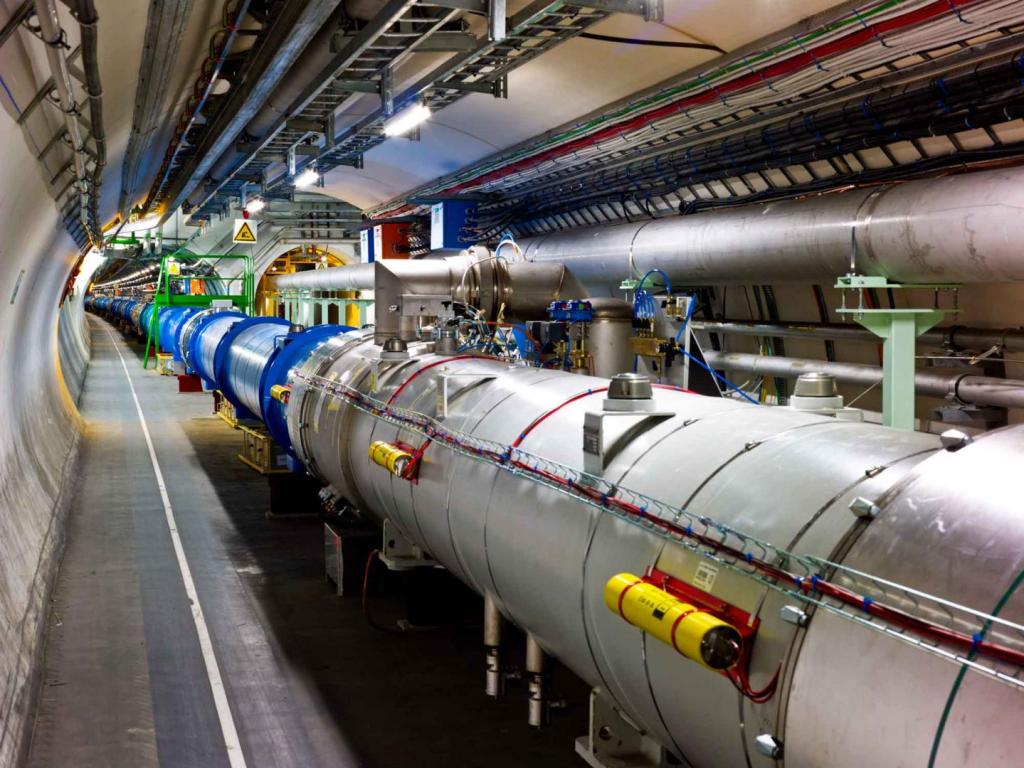
The Large Hadron Collider (LHC)- the world’s largest particle accelerator (27 kilometres).

Conclusion

The discovery of quarks was a gradual process that took over a decade for the entire sequence of events to unfold. A variety of theoretical insights and experimental results contributed to this discovery, but the MIT-SLAC deep inelastic electron scattering experiments plays a vital role. The existence of quarks is recognized today as a cornerstone of the standard model. I numerous experiments at CERN including those at the Large Hadron Collider (LHC), physicists are measuring the properties of Gell-Mann and Zweig’s particles with ever-greater precision.

                  “Three quarks for muster mark!” – Author James Joyce

About that author James Baldwin

An American essayist and novelist, born in 1924 in Hampton, James Baldwin who addressed the issue of race in 20th century america. He grew up poor, in a black ghetto and in the 1930s, during a time when racism encompassed the whole of America and Baldwin too was subjected to it all his life.

His work revolves around the racial and social issues that existed in 20th century america.

Early life

James Baldwin never knew his biological father who was a drug addict, owing to this reason his mother left his father and moved to Harlem where she gave birth to James baldwin. Baldwin was the eldest to his 8 siblings. Baldwin figured out his affinity toward writing at an early age and was exceptional at it too. He wrote his first article when he was only 13, this article was published in his school magazine. Throughout his teenage years Baldwin published short stories and essays in local literary magazines. In his young teenage years Baldwin was a youth minister at the church. Bldwin was a devout christian, this could be because his father was a baptist minister. In later years of his life, he refused to being religious however his religious attitude shaped his perception to a great extent.

Throughout his life he faced incidents of racism, some of which he addresses in his work as well. 

Career

In 1943, he moved to Greenwich village to pursue literature and work with other writers and literaries. During his time at Greenwich he was also able to secure a writing fellowship. At this time Baldwin’s short stories were being published and not in local but well recognized and reputed magazines.

About 3 years later Baldwin emigrated to France under another fellowship where he would not be treated with the racist remarks of the American and would be able to make a name for himself beyond his african -american community. In France he was met with his sexual conflict and hoped to come to terms with it and understand it better.

Work

Baldwin wrote his first novel Go Tell It on the Mountain which was published in 1953. a near autobiographical novel which revolves around a young teenager growing up in Harlem, New York and his relationship with his father and the church. The book deals with several issues that prevailed in america. It talks about racism, poverty, Harlem, New York, basically all the things that Baldwin endured in his childhood are mentioned in this work through the eyes of another character.

Giovanni’s Room, was his second novel released in 1954, which deals with the sexul ambivalence of a man, and his relationship with other men  living in paris. Homosexuality was a tabboo during that time and who else could have talked about a topic so contreversial if not Baldwin.

Baldwin’s subsequent novels Another Country and Tell Me How Long The Train’s Been Gone, talk about race and homosexuality.

James Baldwin is known for his thought inducing essays. He had the ability to write about an issue giving the reader another highly intellectual way to look at it. In addition to being an important literary figure of the 20th century he was also an important figure in the Civil Rights Movement.

Baldwin in 1987 died in Saint-Paul-de-Vence, France due to stomach cancer leaving his work enriched with revolution behind.

What Little Things Season 4 talks about?

After three seasons of being live-in accomplices who even endure a significant distance relationship, Dhruv and Kavya are set to make their bond a stride further in the last section of Little Things. The creators dropped the trailer of its fourth and last season on Tuesday, and fans are just left speculating whether their most loved couple on the OTT is to be sure prepared to go all in.

Played by entertainers Dhruv Sehgal and Mithila Palkar, Little Things dispatched in 2016. What’s more, actually like any millennial who’d grow up notwithstanding relationship objectives, proficient hurdlers and discovering heading throughout everyday life, Dhruv and Kavya have additionally adjusted everything.

The trailer gives a slip look into the two heroes glancing back at their story and how remaining in various time regions, be it Bengaluru or Finland, didn’t prevent them from cherishing each other. Indeed, the two are still frantically enamored, yet just when Dhruv brings up the issue of a daily existence going on – marriage, family and children, Kavya feels a bad case of nerves. She admits of not being certain of the responsibility.

“Are we truly picking the individual we love?” Dhruv’s words in the trailer are without a doubt the essence of the period, that is set to bring blinds down on perhaps the most cherished romance the young crowd saw onscreen as of late.

Easily overlooked details debuted on the YouTube divert of Dice Media in October 2016. It was subsequently gotten by Netflix, with season two turning out in 2018 and season three in November 2019. The show won acclaim for celebrating unobtrusive things in a relationship, adulthood, development and little delights alongside Dhruv Vats and Kavya Kulkarni.

Dhruv Sehgal, who’s additionally the maker of the show said, “My bond with Little Things is exceptionally uncommon, it’s not just a show that I composed or played a person I love, yet this show is likewise my child. I have developed with this show and the measure of adoration it has gotten over the course of the years has truly overpowered me. I’m really a little pitiful that this show is reaching a conclusion, but at the same time I’m monstrously glad that Dhruv and Kavya had the option to spread this much love and bliss among their crowd.”

Amazon Annual Event 2021

Amazon is booked to have its yearly fall occasion on Tuesday, September 28. The organization is set to dispatch new items and administrations, albeit the occasion won’t be live-streamed, with Amazon deciding on a welcome just methodology all things being equal. This is what Amazon is relied upon to declare at the occasion.

New Echo shrewd speakers

Amazon has had a background marked by dispatching new Echo gadgets at its occasions, including the Echo Auto, the pivoting Echo Show 10, and others. The brand is likewise expected to dispatch more speakers in the setup at its 2021 occasion. Not a great deal is thought about new items, yet anticipate that multiple additions should the arrangement.

Alexa refreshes

Amazon’s own voice colleague Alexa is relied upon to pick some significant updates post-occasion that will expand its usefulness. Amazon could add more provisions to help the remote work and video chatting society. The organization added bunch calling support for the Echo Show last year and that gives us an indicate where Amazon is hoping to make enhancements in the midst of Covid.

News on Matter

Amazon’s own widespread language that is set to interface numerous shrewd IoT stages together was something Amazon had gotten ready for some time. Be that as it may, the help has since been pushed to 2022. Amazon could, be that as it may, give us some new reports on something very similar.

Different items, administrations

Amazon is likewise expected to dispatch its Always Home Cam, a flying robot camera at some point in Q4 this year, and the organization is relied upon to declare more subtleties on a similar this year, probably at the fall occasion.

Amazon could likewise new organizations for new administrations as it has done before with Eero, Ring and Blink, and Sidewalk. The organization is additionally expected to speak more with regards to its endeavors towards security and how Amazon ensures customer information.

Google apps will stop working on older devices

Google has reported that it is pulling out help for Maps, Gmail, YouTube, and numerous other applications for a great many cell phone clients from today. The most recent Google update is for Android telephones running on an obsolete adaptation. Essentially, cell phones running on Android 2.3.7 or lower variants can at this point not sign in to most Google applications.

To review, Android 2.3.7 was dispatched back in December 2010. After more than 10 years, Google has reported to presently don’t permit Android 2.3.7 or lower clients to get to its set-up of applications. “As a component of our continuous endeavors to guard our clients, Google will presently don’t permit sign-in on Android gadgets that run Android 2.3.7 or lower beginning September 27, 2021. In the event that you sign into your gadget after September 27, you might get username or secret word blunders when you attempt to utilize Google items and administrations like Gmail, YouTube, and Maps,” the organization said in an assertion.

Google is requesting that clients update to Android 3.0 or above to keep utilizing YouTube, Gmail, and the greater part of its applications and administrations.

Clients who can’t refresh to Android 3.0 or above can not get to these administrations utilizing the separate applications. Be that as it may, they can in any case sign in to their Google record and utilize a portion of these administrations like YouTube, Maps, Gmail, and more through the internet browser.

All you need to know about Digital Marketing

Digital Marketing is a great method for advertising a company’s product or a brand image. Being as Beginner to Digital Marketer  is not just the about Marketing it includes, promotional activities through online sources such as apps, websites, promoted apps and many more where a user can interact with the content or a particular brand.

Digital Marketing has evolved a lot in current situation where covid-19 pandemic happened and when all businesses came towards the online platform and build their brand online and reached more people.

This Guide will help budding Digital Marketer and new people who just getting started, It’s a complete guide for the beginner to interact with Digital Marketing tactics from the basic you’ll learn about Digital Marketing in a very easy method.

What is marketing and how it can lead towards Digital Marketing?

Digital Marketing is the activity which shows the advertising of the company’s product and creates company’s goodwill in the market is describes as marketing. Therefore, Marketing also refers towards the process of planning and executing the promotion and distribution of the ideas behind the product.

On Which Platforms Digital Marketing can be done?

There are several ways and channels through Digital marketing can be done through the Internet which is the great medium of communication Here’s the information about some channels a beginner can see and apply in his/her content for a successful Marketing.

Social Media: It can Include online social platforms such as Instagram, Facebook, Twitter and many more.

  • Search Engine: Finding a content or anything related to it can be done with the Search Engines websites like Bing, Google and many Search Engines are there to help with the same.
  • E-mail Marketing: It’s the way of connecting through audience and desired customers through a graphically designed E-Mail. It really helps with connecting with the consumers online and update as well as educated them through this way.

Methods and Types of Digital Marketing 

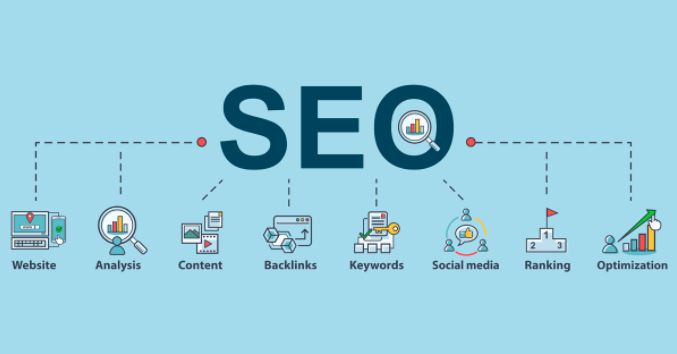
      Search Engine Optimization (SEO)

Search Engine Optimization, It means the method of improving your site to extend its visibility when people look for products or service that are included and associated with your business in search context to Google, Bing and other type of Search Engines.

  •       Search Engine Marketing (SEM)

SEM, it also refers to an advertising, that involves the acquisition of ad space in more prominent, visible positions and drag the content to the top of on the search engine websites such as Google, Bing and other search engine websites creating a positive impact on brand recognition and it’s awareness.

  •        Social Media Marketing (SMM)

Social Media Marketing (SMM) refers towards providing companies with how to interact with existing customers and reach new ones while allowing them to market their desired culture, goal or tone. Social Media Marketing has purpose to build data analytics tools that allow marketers to trace the success of their efforts.

Advantages of Digital Marketing and tips for a beginner to consider

  • Global Reach: Digital Marketing allows you to find new markets and trade globally and promote your business onto a next possible in a unique way.
  • Transparency: Digital Marketing can help your content to grow not just this but it also creates a relation between the consumers as well as other audience and creates trust between the two ends.  To the status of a product to have a closer look by looking 3D images online.
  • Lower Cost: Digital Marketing helps to build-up content online and creates well safes time, fuel, and money and makes things easier to understand and plan things in a more efficient and effective way possible.

Women Empowerment: It’s Meaning and Why is It Important?

“I rise up my voice- not so I can shout, but so that those without a voice can be heard…we cannot succeed when half of us are held back.”

Nobel Laureate Malala Yousafzai

And that sentiment precisely outlines the basis of new age women empowerment. Discrimination against women is rampant all over the world even in this 21st century. Even though about 50% of the world’s population consists of women, but unfortunately most of them are denied basic rights education, freedom of speech, voting power and even independent identity.

In India, in theory, women enjoy a status of equality with the men as per constitutional and legal provisions. Arguably, our country has taken enormous strides towards inclusion of women with the fairer gender excelling in diverse fields, from literature to astrophysics to finance. But with headlines about dowry killing, female foeticides and domestic violence still making the newspapers, put a silent question mark behind the two words.

Meaning of Women Empowerment

If it is to be elucidated beyond the two self-explanatory words, ‘Women Empowerment’ refers to complete emancipation of women from socioeconomic shackles of dependancy and deprivations. Often made synonymous to gender equality, the term women empowerment encompasses a much larger set of principles that needs whole-hearted attention.

Empowerment of women would mean encouraging women to be self-reliant, economically independent, have positive self-esteem, generate confidence to face any difficult situation and incite active participation in various socio-political development endeavours. The growing conscience is to accept women as individuals capable of making rational and educated decisions about them as well as the society, increasing and improving the economic, political and legal strength of the women, to ensure equal-right as men, achieve internationally agreed goals for development and sustainability, and improve the quality of life for their families and communities.

The various facets of women empowerment that needs to be addressed for a rounded out development are listed as:

Human Rights & Individual Rights:

A woman has the right to express her thoughts and opinions freely, without any restriction. Individual empowerment may be achieved by imparting self-confidence to articulate and assert the power of independent decision making. Women should be aware of their rights and social positions that they are entitled to constitutionally.

Social Empowerment of Women:

The most critical aspect of social empowerment of women is the promotion of gender equity. Gender equality implies that in society women and men enjoy the same opportunities, outcomes, rights and obligations in all spheres of life.

Educational Empowerment of Women:

It means enabling women to grab the knowledge, skills and self-confidence necessary to participate fully in the development process. Giving preference to the girl child for educational opportunities is a start.

Economic Empowerment of Women:

It means reducing the financial dependence of women on their mate counterparts by making them a significant part of the human resources. A better quality of material life, within the family as well as for the overall society, can be achieved through promotion of sustainable livelihoods like cottage industries, small entrepreneurial efforts owned and managed by women.

Empowerment Through Legal Knowledge:

Not only does it suggest the provision of an effective legal structure which is supportive of women empowerment, there also is the need to spread awareness among women about their legal rights and laws preventing their exploitation. It means addressing the gaps between what the law prescribed and what actually occurs.

Political Empowerment of Women:

The existence of a political system encouraging the participation of women in the political decision-making process and in governance. Indian constitution has provided the bulwarks for gender equality in the country in the following articles:

Article 14: Equality before law “The State shall not deny to any person equality before the law or the equal protection of the laws within the territory of India Prohibition of discrimination on groups of religion, race, caste, sex or place of birth”.

Article 16 (2): Equal opportunities “No citizen shall, on grounds only of religion, race, caste, sex, descent, place of birth, residence or any of them, be ineligible for, or discriminated against in respect or, any employment or office under the state”.

Article 23: Prohibition of traffic in human beings and forced labour.

Article 39(a): The citizen, men & women equally have the right to an adequate means of livelihood.

Article 40 (after the 73rd Amendment): 1/3rd of seats in panchayats shall be reserved for women.

Article 42: State shall make provisions for just and humane working conditions & maternity relief.

Article 51 A (e): One of the duties of every citizen is to renounce practices derogatory to the dignity of woman.

Government Laws and its subsequent amendments have seen larger inclusion of women with respect to their standing in the society and also there many acts which are preventing polygamy and bigamy, and their strict enforcements has to a large extent contributed towards lessening women exploitation. Various government schemes like Rastriya Mahila Kosh and STEP (Support to training cum Employment for women) have managed to bring financial development of rural women through self-sustainable employment. Also “Kanyashree” scheme which is in West Bengal, has been ranked 1st globally for women empowerment. The National Policy of Empowerment of Women (2001) is aimed at addressing all forms of violence against women including physical, mental and that arising from customs and traditions.

Why Woman Empowerment is Important?

A strong patriarchal society with deep-rooted socio-cultural values continues to affect the progress of women’s empowerment in the country. The need of the hour is an egalitarian society. Where there should be no place for gender superiority. Aim of government policies should be to identify and eliminate forces that are directed towards keeping the tradition of male dominance over its female counterpart alive.

Women empowerment in its actually is synonymous with complete development of the society. An educated woman, with knowledge about health, hygiene, cleanliness is capable of creating a better disease-free environment for her family. A self-employed woman is capable of contributing not only to her family’s finances, but also contributes towards increment of the country’s overall GDP. And many things which can be achieved.

All we need is an organized approach from the Government and law enforcement agencies of the country focussed in the right direction that would rest only with the liberation of women from all forms of evil.

Stem cell therapy – the future of modern medicine.

Our bodies contain many specialized cells that carry out specific functions. These specialized cells are called differentiated cells. Stem cells are cells with the potential to develop into many different types of cells in the body. They act as a repair system for the body. They are unspecialized cells, so they cannot do specific functions in the body. It can create the potential for the cells to be used to grow replacement tissues. American development biologist James Thomson (1958), from the University of Wisconsin School of medicine, won the race to isolate and human embryonic stem cells. On November 6 1998, the ‘journal science’ published the results of Thompson’s research. It described how he used embryos from fro fertility clinics which were donated by couples who no longer needed them, and developed ways to extract stem cells and keep them reproducing indefinitely.

With the ability to develop into any one of the 220 cell types in the body, stem cells hold great promise for treating a host of debilitating illness, including diabetes, leukemia, Parkinson’s disease, heart disease, and spinal cord injury. They also provide scientists with models of human disease and a new ways of testing drugs more effectively in living organisms. But for all the hopes invested, progress has been slow. It has helped that stem cell research has been steeped in controversy, with different groups questing the ethics of harvesting stem cells from human embryos.

Stem cell therapy – Delhi, India

In 2007 Thomson and Shinya Yamanaka, from Kyoto university, Japan, both independently found a way to turn ordinary human skin cells into stem cells. Both groups used four genes to reprogram human skin cells. Their work is being heralded as an opportunity to overcome problems including the shortage of human embryonic stem cells and restrictions on U.S. federal funding for research.

How stem cell therapy works?

Researches grow stem cells in lab. These developed stem cells are manipulated to specialize into specific types of cells, such as heart muscle cells, blood cells or nerve cells. These manipulated specialized cells can be implanted into the heart muscle. The healthy implanted heart muscle could then contribute to repairing defective heart muscle. The first stem cell therapy was a bone marrow transplant performed by French oncologist Georges Mathew in 1958 on five workers at the Vinca nuclear institute in Yugoslavia who had been affected by a criticality accident.

Stem cell therapies have become very popular in recent years, as people are seeking the latest alternative treatments for their many conditions. Stem cell therapies are very expensive to pursue. Even simple joint injections can cost $1,000 and more advancement treatments can rise in cost up to $100,000 depending on the condition. Patients must do their research and ask as many questions as they can before financially committing to treatment. Since it is a life changing treatment, it will effectively cost high.

Future stem cell treatments

 The stem cell treatment can helps us curing various diseases in the future. But it is important not to overhype the potential of stem cells and to accurately communicate findings to the public. We must not allow the misleading of some people says that we can cure the untreatable diseases with stem cell treatments. However with more research and investment, I believe that stem cell therapy could transform disease outcomes of many patients.

“The regenerative medicine revolution is upon us. Like iron and steel to the industrial revolution, like the microchip to the tech revolution, stem cells will be the driving force of this next revolution.”   -Cade Hildreth

Seven Wonders of the World

Seven wonders of the world namely The Great Wall of China, Machu Picchu, Petra, Christ the Redeemer, Colosseum, Taj Mahal and Chichen Itza. In 2000 a campaign new seven wonders of the world was launched by a Swiss Foundation in which more than hundred million votes were cast using different medium from around the world. And on 2007 the seven wonders of the world were named. According to a New York-based polling organisation it was the largest poll on record.

Great Wall of China

The Great Wall of China was build in several stretches, which later was joined by Qin Shi Huang the first Emperor of China. The well known section of the wall was built by Ming dynasty. There were various purposes to build this wall like, for the defense, imposition of duties on goods that are transported through Silk route, encouragement for trading activities, etc. It spans over 20,000 km.

Machu Picchu

Machu Picchu is located in Southern Peru. It is build in classical Inca style. It is famous for its dry stone walls made without the use of mortar. It is also known as the ‘Lost city of Inca’.It has a tropical mountain climate. It was included in UNESCO World Heritage site in 1983.

Petra

Petra is a city in Southern Jordan. The city has been inhabited as early as 7000 BC and this was the Nabataean’s capital city in their Kingdom. In 1985 Patra was announced as the World Heritage site.

Christ the Redeemer

It is a statue of the Christ which is situated in Rio de Janeiro, Brazil. The statue has a height of about 30 metres and his arm stretch 28 wide. It is located on the peak of Corcovado mountain in Tijuca Forest National Park.

Colosseum

Colosseum is located in the centre of the city of Rome in Italy it is the largest ancient as well as modern amphitheatre. It was used to host gladiatorial shows. It was built by Emperor Vespasian and his successor  Titus and modifications were made by Domition.

Taj Mahal

Taj Mahal is located on the banks of river Yamuna in Agra, Uttar Pradesh, India. It was built by Mugal Emperor Shah Jahan for his dearest wife Mumtaz. He built this in her remembrance. It is also known as the symbol of love. It is made from Marble. It was declared as UNESCO World Heritage site in 1983.

Chichen Itza

Chichen Itza is situated in Mexico. It is the largest pre-columbian city built by the Maya people. It is one of the most visited archaeological site in Mexico.

About that author- Sylvia Plath

If the moon smiled, she would remember you. You leave the same impression of something beautiful but annihilating.

This quote is from one of my favorite Sylvia Plath poems “The Rival”. 

If you read Sylvia Plath you would find that her poetry wasn’t about the beauty that surrounded her, the fruity aroma of the garden flowers or blistering sun shining on her face or the wind sweeping her way. No, it was about none of that. Her poetry style was confessional.

LIFE

Sylvia Plath was born on october 27 of 1932 in Boston Massachusetts. She was a poet and a novelist who shaped American literature to a great extent. Plath published her first poem at the age of 8 in an American newspaper under the children’s section.From then on Plath went on to write  and publish multiple poems in different magazines and newspapers. At the age of 8 Plath also faced a great deal of personal loss, her father passed away due to untreated diabetes. Her father was also a subject for a lot of her poems that she wrote in her later years.

Plath was a good student, she excelled in academics and attended the Smith’s College in Massachusetts. Plath also suffered from depression, which she elaborates in her poems. She underwent electrocution therapy for her depression. We are talking about the year 1950, when mental illness was not a socially acceptable concept. No points for guessing that the electrocution therapy did not work in fact it made matters worse for plath. In 1953, at the age of 21, the feeling of which she describes in one of her works as “blissfully succumbed to the whirling blackness that I honestly believed was eternal oblivion.” plath made her first suicide attempt by taking her mother’s sleeping pills. After this incident she remained in psychiatric care for months. 

Career 

In 1960, Sylvia Plath released a collection of her poems, entitled the colossus and other poems.. In this collection she talks about death, suicide, her father, and her depressive periods and thoughts.

Sylvia Plath’s poetry wasn’t particularly happy and that is because it was confessional or even autobiographical in a sense and Plath herself was deeply depressed. Here is an excerpt from one of her poems called Lady Lazarus;

“Dying is an art,

like everything else. 

I do it exceptionally well. 

I do it so it feels like hell. 

I do it so it feels real. 

I guess you could say I’ve a call”.

If it wasn’t clear until now, then these lines give us an idea of the intensity of torment that her own mind was subjecting her to.

Marriage and the aftermath

Plath married Ted Hughes, a poet and writer in 1956. They had 2 children together. The two later separated in 1962. The couple did not have a great relationship, some controversy and rumors surrounded Hughes even after Plath’s death.

During the last few years of her life Plath published exceptional work, some of the best work ever written. This vey period of Plath’s life is the one that shaped literature and inspired the future confessional poets. Plath poured her heart out on the pages during these years. She published a novel “the bell jar” in 1963 which did exceptionally well. But her career was cut short when at the age of 30, in 1962 after what is described as “a burst of creativity” she took her own life. Her posthumously published collection of poems “Ariel” also attracted a lot of readers and to this day transcends her.

Discovery and working of an MRI

      The MRI (Magnetic resonance imaging) scan is a medical imaging procedure that uses a magnetic field and radio waves to take pictures of our body’s interior. It is mainly used to investigate or diagnose the conditions that affect soft tissue such as tumors or brain disorders. The MRI scanner is a complicated piece of equipment that is expensive to use and found only in specialized centers. Although Raymond Vahan Damadian (1936) is credited with the idea of turning nuclear magnetic resonance to look inside the human body, it was Paul Lauterbur (1929-2007) and Peter Mansfield (1933) who carried out the work most strongly linked to Magnetic resonance imaging (MRI) technology. The technique makes use of hydrogen atoms resonating when bombarded with magnetic energy. MRI provides three dimensional images without harmful radiation and offers more detail than older techniques.

       While training as a doctor in New York, Damadian started investigating living cells with a nuclear magnetic resonance machine. In 1971 he found that the signals carried on for longer with cells from tumors than from healthy ones. But the methods used at this time were neither effective nor practical although Damadian received a patent for such a machine to be used by doctors to pick up cancer cells in 1974.

The first full body MRI scanner at the University of Aberdeen in Scotland (1970)

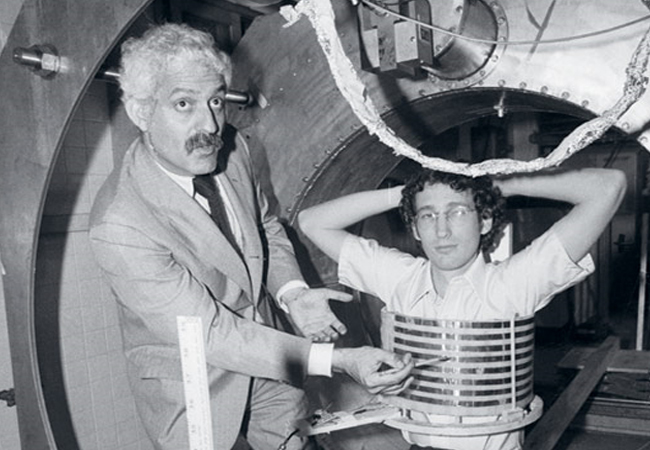
       The real shift came when Lauterbur, a U.S, chemist, introduced gradients to the magnetic field so that the origin of radio waves from the nuclei of the scanned object could be worked out. Through this he created the first MRI images in two and here dimensions. Mansfield, a physicist from England, came up with a mathematical technique that would speed up scanning and make clearer images. Damadian went on to build the full body MRI machine in 1977 and he produced the first full MRI scan of the heart, lungs, and chest wall of his skinny graduate student, Larry Minkoff – although in a very different way to modern imaging.

Working of an MRI machine

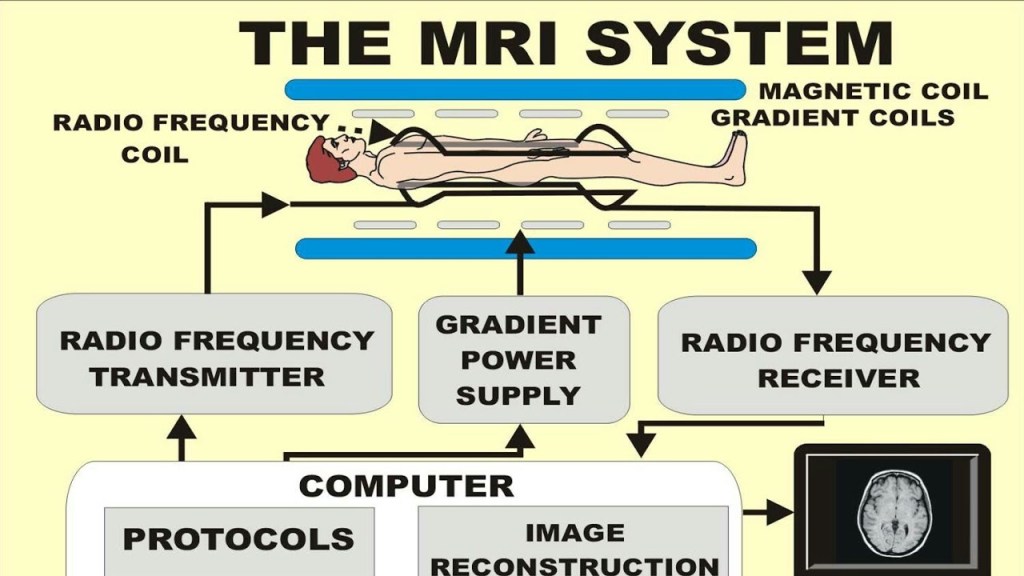
        The key components of an MRI machine are magnet, radio waves, gradient, and a super advanced computer. We all know that human bodies are made up of 60% water, and water is magnetic. Each of the billons of water molecules inside us consists of an oxygen atom bonded to two hydrogen atoms that are called as H2O. Small parts of the hydrogen atoms act as tiny magnets and are very sensitive to magnetic fields. The first step in taking an MRI scan is to use a big magnet to produce a unified magnetic field around the patient. The gradient adjusts the magnetic field into smaller sections of different magnetic strengths to isolate our body parts. Take brain as an example, normally the water molecules inside us are arranged randomly. But when we lie inside the magnetic field, most of our water molecules move at the same rhythm or frequency as the magnetic field. The ones that don’t move along the magnetic field are called low energy water molecules. To create an image of a body part, the machine focuses on the low energy molecules. The radio waves move at the same rhythm or frequency as the magnetic fields in an MRI machine.

       By sending radio waves that match or resonate with the magnetic field, the low energy water molecules absorb the energy they need to move alongside the magnetic field. When the machine stops emitting radio waves, the water molecules that had just moved along the magnetic field release the energy they had absorbed and go back to their position. This movement is detected by the MRI machine and the signal is sent to a powerful computer which uses imaging software to translate the information into an image of the body. By taking images of the body in each section of the magnetic field the machine produces a final three dimensional image of the organ which doctors can analyze to make a diagnosis.

“Medicine is a science of uncertainty and an art of probability”. –William Osler

Is Bollywood distracting Indian Youth

what is the first thing that comes to your mind when you hear the word Bollywood? An Item number or a random song which is having no meaning. Nowadays most of the Bollywood movies are just filled with item number, a lot of songs with no specific meaning and a repeating storyline. To just be specific, I am not talking about all the movies, I am taking about most of the movies. There are meaningful movies too like Dangal, Neerja, Hichki, Mary Kom etc, that makes sense and gives motivation to the youth for good things.

The Bollywood is actually started decreasing the quality of story, they are just focusing on the songs and weird sense. Without even thinking that what message do they give to the youth who are following them. Most of the movies that are being made now are love story with actually giving no meaning or motivation to the youth.

the youth after watching such movies gets distracted as they feel that they should follow their idols. The actors for the producers should realise their responsibility as they are the role model for many who are following them. They should make movies which have good impact on the youth and increases them to do hard work to achieve their goals.

And the youth too should understand and know to whom to follow and what to watch and not randomly follow anybody. So pick up everything very carefully with the what to watch and whom to follow.

Job Creation

Getting job is like climbing Mount Everest nowadays. If you are employed you have achieved they greatest hight in your life.

But here we are not going to take about the problems we face for like population explosion etc in getting employment, instead we are going to take about the solutions for it.

Some solutions

  • Encouraging people to do startups : this is the first and foremost step to increase job creation as if one do startup then automatically job creation begins and economic gets and boost.
  • Is in getting loans for startups : the banks should make the process of getting the loans for startup much easier as to encourage people to do it.
  • Improvement in academic curriculum : there should be improvement in academic curriculum as 2 to encourage the young mind to do their own startup.
  • Making foreign investment easier : the process for the multinational companies to invest in India should be eased up, by reducing unnecessary paper works and Taxes.
  • Increase in living standards : if the living standard of the general citizen of the country increases it automatically increases their needs like car, expensive gadgets etc, and to fulfill these needs more companies will bi setup and ultimately increases the employment.
  • Policy to control population growth : government should introduce policy that encourages people to have less children and ultimately getting a control on the population.

There can be many more ways to create employment. Everybody should contribute their ideas in what ways India can achieve full employment of their people, to get rid of this problem. These were some solutions from my side.

Population Explotion

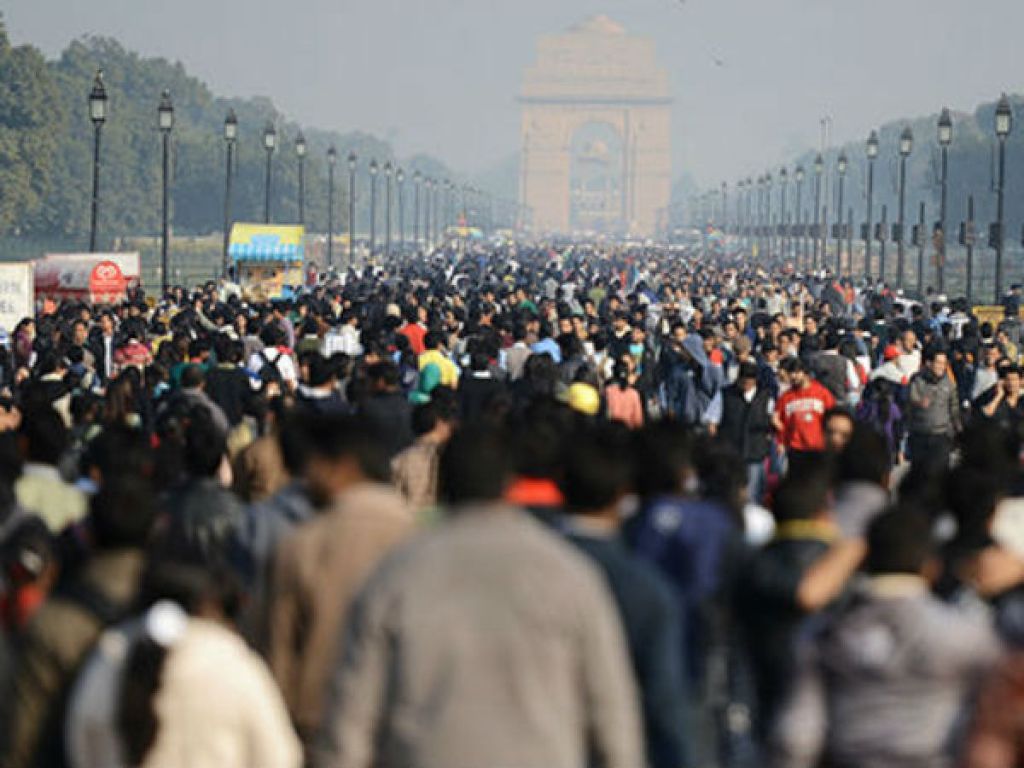
Do you know the evergreen asset and even problem of India? From the title you have already got the answer for it, our increasing population. It has been a strength and a hinders too. Let’s look as some positive and negative sides of it.

Positive aspect

  • Helps in economic growth : having a large population always impact economic growth as more and more companies would like to invest in India, as there are availability of cheap and skilled labours.
  • Strength of the country : being one of the largest democracy in the world, help India to have a significant and important place in the world to play.
  • Large number of killed people : as there is large number of skilled labour available in India so they are in huge demand in the foreign Nation.
  • Large market : because of the large population India has a very large market for which there is huge competition among the multinational companies to invest in India for that they can get profit.

Negative aspects

  • Increase in unemployment : there is large population so the competition to get job increases which increases the unemployment among the people.
  • Shortage of space : as the population grows the area of country remains the same and it creates problem for people to have a property for oneself.
  • And equal wealth distribution : There is huge competition for job so there is huge difference between the salaries too, which increases the gap between the rich and the poor.
  • Difficulty in controlling population : As there is huge population it is difficult for the government to handle their issues and make a plan which is good for everyone.
  • Huge competition : having large population means having competition for everything and everywhere.
  • Dissatisfaction some social group : as having one of the largest population in the world whatever the policies are made there is always a dissatisfaction among some group of society i.e., you can’t make everyone happy.

There is always a positive and negative aspect for everything we should always look at the positive side and should try to get the solution for the negative aspects as well. No the government is also looking the add population control as type so as to have a better future ahead.

Should more money be spent on space exploration?

Poverty still rising all over the world, COVID-19 pandemic made it even worse. About 1.89 billion people, or nearly 36% of the world’s population, lived in extreme poverty. Nearly half the population in developing countries lived on less than $1.25 a day. Why should we spend money on space exploration when we already have so many problems here on Earth? Is it really that important? It’s like What if our ancestors thought that it would be a waste of time to figure out agriculture while we can do hunting? Or why should we spend so much time on exploring new lands while we have so many problems in our land? Each year, space exploration contributes to a lot of innovations on earth. It gave answers to many fundamental questions about our existence, and a lot of questions there to be answered if only we could increase our investment on space exploration. NASA’s annual budget is 23 billion dollars but, its only 0.1% of the total revenue. even if we were to increase the international budget 20 times it would only be a small fraction of GDP. isn’t our future worth a quarter of a percent?

“That’s one small step for man, one giant leap for mankind”.

Benefits of space exploration:

    Improves our day to day life

       Since 1969, Neil Armstrong became the first human to ever set foot on moon, our interest in science and technology has improved a lot. In 22nd February 1978, US space agency launched the first satellite for its program of global positioning system (GPS). Currently there are 31 global positioning system (GPS) satellites orbiting the earth.Space exploration helped us to create many inventions like television, camera phones, internet, laptops, LED’s, wireless gadgets, purifying system of water and many more that we are using in our day to day life. There are nearly 3,372 active satellites providing information on navigation, business & finance, weather, climate and environmental monitoring, communication and safety.

   Improving health care

       The international space station plays a vital role in health and medical advancements. The Astronauts who works on the ISS able to do experiments that aren’t possible on earth due to the difference in the gravity. The project of Exomedicine – the study of medicine and micro-gravity, gravity has an effect on a molecular level so working in an environment where it can be eliminated from the equation allows discoveries that would otherwise be impossible. Medical advancements due to space exploration include,

  • Diagnosis, treatment, and prevention of cardiovascular diseases
  • Treatment of chronic metabolic disorders
  • Better understanding of osteoporosis
  • Improvements in Breast cancer detection
  • Programmable pacemakers
  • Laser angioplasty
  • NASA’s device with Space technology for Asthma
  • ISS plays vital role in vaccine development
  • Early detection of immune changes prevents shingles
  • Development of MRI s and CT or CAT Scans
  • And invention of ear thermometers
Proxima Centauri b is an exoplanet orbiting the red dwarf star Proxima Centauri

Need for space colonization

       Overpopulation is one of the major crises in our planet. Currently we have 7.8 billion people alive on earth. Experts predict that there will be 9.7 billion people by 2050 and 11 billion by 2100, our earth can carry only 9 billion to 12 billion people with the limited food and freshwater resources. That means we have to find an exoplanet with suitable conditions soon. We already went to moon 6 times, we already sent a rover to Mars. Robotic missions are cost efficient, but if one is considering the future of human race we have to go there ourselves. Elon Musk announced that SpaceX is going to send people to Mars I 2022. NASA planned to make a colony on Mars by 2030. These missions are not something we need at this moment. But it may play an important role on our future. Proxima Centauri b is an exoplanet which is 4.24 light years away from us. With our current technology, it is impossible to reach it in our lifetime. But we should make it as an aim for interstellar travel over the next 200 to 500 years. Stephen hawking said that the human race has existed as a separate species for about 2 million years. Civilization began about 10,000 years ago, and the rate of development has been steadily increasing. If the human race is to continue for another million years, we will have to boldly go where no one has gone before.

The day we stop exploring is the day we commit ourselves to live in a stagnant world, devoid of curiosity, empty of dreams. –Neil deGrasse Tyson

NOSTALGIC CHILDHOOD MEMORIES involves cartoons that today’s kids will never know

As we grow older, we sometimes forget about how much fun we had as children and how much we use to love waking up on Saturday morning and after returning from school to watch cartoons. Now that we are all grown up, it is easy to get lost in our long lists of things-to-do and forget to appreciate the little things.

The mind is a complicated thing, and although we have pushed back many of our childhood memories, it still harbours every theme song, character and saying that we use to live by. So, all it would take is for someone to hum a certain tune, and once recognized, you would probably be able to sing it out — word by word.

If you recently happened to flip through the channels, you might have caught a glimpse of today’s cartoons and been slightly disappointed at what you saw. Times are changing and with that the quality of TV shows are rapidly disintegrating. So be happy that you were born when you were and make sure to take a trip down memory lane every once in a while.

SOME MOST APPRECIATED AND ENJOYED CARTOON DURING MY TIME

  • BOB THE BUILDER

Bob the builder is one of my favorite cartoon show and I thoroughly enjoyed watching it as a kid. And the title track of this cartoon is super iconic, it just freshes up all the beautiful memories of my childhood. The show focused on Bob a building contractor who solves all the problems with a positive attitude along with his vehicles who can actually talk.

  • THE POWERPUFF GIRLS

Whenever I think of  Cartoons, the first thing that pops into my head is “Powerpuff Girls”. The Powerpuff Girls – Blossom, Bubbles, and Buttercup were created by Professor Utonium in an attempt to create the “perfect little girl” using a mixture of “sugar, spice, and everything nice”. However, he accidentally spilled a mysterious substance called “Chemical X” into the mixture, creating three girls and granting all three superpowers including flight, superhuman strength, superhuman speed, superhuman senses, nigh-invulnerability, x-ray vision, red heat vision, energy projection, space survivability, and thermal resistance. Despite being the main characters of the show, the villain of the show was most popular character i.e. MOJO JOJO and his popularity was so high that you could do a freaking show on Mojo JoJo alone!

  •  Ed, Edd n Eddy

The show is based on three adolescent boys, Ed, Edd n’ Eddy. They hang around their suburban neighborhood of Peach Creek Estates, coming up with scams to con their peers for cash, so they can buy themselves a handful of their favorite treat, jawbreakers. Their plans normally fail though, leaving them in predicaments and situations that always go hay-wire. The characters almost never leave the neighborhood, and adults are nowhere to be seen, as well as any other kids.  The characters are funny and the jokes are creative. Most of the episodes are funny with the Ed’s and my favorite one is Ed because he is stupid in a funny way and comes up with the most things he says. My least favorite characters are the Kanger Sisters, Kevin, Sarah, and Jimmy.

  • JOHNNY BRAVO

This is a show I grew up with. And probably the only show on this list that I’ve watched on and off for over a decade. Regardless of what age I was at,  “Johnny Bravo” has *always* made me laugh! And it made me laugh *a lot*! As you probably already know, Johnny is a 20 age something egotistical super-star wannabe.   What makes “Johnny Bravo” such a great show isn’t just the settings. It’s purely the main character! Constant Banters between Johnny and his mother were the most hilarious one of all things.

  • RECESS

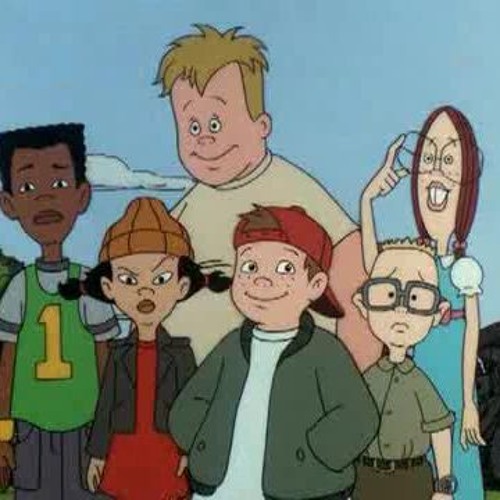
Recess is an American animated show that revolves around 6 brave elementary school kids. This cartoon show was best, it used to come on Disney channel. Almost every 90s kid has grown up watching recess in their childhood. It was just great watching recess after coming from school, this cartoon show holds so many beautiful childhood memories. This was the time where these idiotic storyline made me to cause ruckus in my own school and get punished very tough and fun time that was.

  • COURAGE THE COWARDLY DOG

“Courage the Cowardly Dog”   I Watched “Courage” when I was 10 years old it was one of the 1st times I remember feeling… genuinely disturbed while watching a cartoon. There was a real sense of atmosphere in these settings. The colors were this strange contrast of bleak, yet alien. It really added to the sense of mystery in the show. All with alien, curses , psychopaths follows the dogs like a bad mojo and add to it the hilarious abuse he get from his male owner. I watched it both in English and Hindi, I seriously found it more hilarious in Hindi dude that psycho barber episode really give me goosebumps.

  • DEXTER’s LABORATORY 

 It mentions a scientific genius who conducts countless experiments in his secret laboratory while always keeping his eyes on his elder sister Dee Dee. This boy even has to use both his teeth and fingernail to prevent her from invading his lab. 

  • POWER RANGERS FRANCHISE

Power ranger was one of the most enjoyed show of all times especially in my time, kids were hooked on the special postures and tag lines to transform in the super gears. Popularity of power ranger over the kids was equally in both gender despite having some violent fight sequence it didn’t affected its popularity.  Each series revolves around a team of youths recruited and trained by a mentor to morph into the eponymous Power Rangers, able to use special powers and pilot immense assault machines, called Zords, to overcome the periodic antagonists.

These were some of my favourite show which was cherished and enjoyed not only by me but all from my age and still do.

About that artist- francis bacon-2

Saying that Francis Bacon’s life was tragic would be an understatement. He went through a great deal of emotional and mental trauma. 

Tough love

In the 1950s Bacon was moving around a lot, living ephemerally he became romantically involved with and that was Peter Lacy who was an English pilot. His relationship with Lacy was toxic in every way, shae and form to say the least. Their love was fervent and extremely passionate that perfectly enveloped the vicious and destructive side it possessed. Bacon was somewhat of a masochist and Lacy, the opposite. Peter lacy would beat Bacon and abuse him throughout their relationship. Now, an ordinary person would have been appalled by the actions of peter lacy, but this was bacon he was no ordinary man. He loved Lacy with all his might, he was obsessed with him and was blinded by this very love that was, inch by inch devouring his very existence. In fact it was so destructive that once, Lacy threw him out of the window of his house over an argument they had. Bacon’s face was disfigured owing to the assault on him by Lacy. This also affected Bacon’s artisan.

Around this time Bacon’s paintings changed dramatically, his style was much more different than the one’s he made previously.

Evolution of his work

The paintings he made in the 50s were characterized by the use of a combination of blue, black and green colors which could be attributed to the changes occurring in his life.

Francis Bacon’s series of seven paintings Man in Blue I-VII, 1954 shows men in black suits present in a murky, grey almost alien landscape seemingly estranged and bewildered.

His paintings Two Figures, 1953 and Two Figures, 1953 see two men in a rather strange setting with one on top of the other. These paintings vividly point towards the relationship between him and lacy.

A few years later lacy moved back to morocco and bacon followed him there. Francis Bacon had achieved a lot more by this time. He held multiple exhibitions and his paintings were being displayed in reputed museums and art galleries. Just before one of his exhibits in London, he was told that Lacy had passed away. This deeply scarred him.

After a little while he met George Dyer, and became involved with him too, who was a subject for a lot of his subsequent paintings. His relationship with Dyer was not as eventful as his previous relationship except just a few incidents. Dyer was found dead in the bathroom of a hotel where Bacon and Dyer were staying. His painting figure at a washbasin, 1976 resembles a man lying in the bathroom which could be about Dyer.

Over the next years Bacon’s work kept on evolving and his paintings became more polished but his desires didn’t falter. He continued to act the way he used to. In 1992, Bacon succumbed to a heart attack. His art was esoteric and he still maintained that cryptism in his art even though there was a lot that he was going through beyond his colors and canvas.

Northeast India an Untouched Heaven

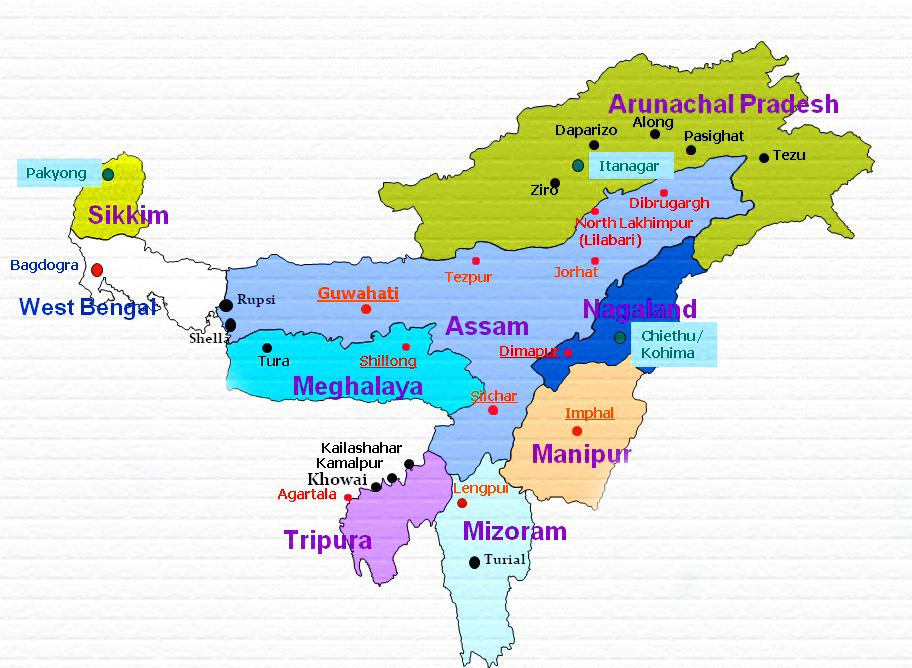
Northeast India of you may be familiar with others might not have given attention in the geography class. North East India consists of eight States Sikkim, Assam, Meghalaya, Tripura, Mizoram, Manipur, Nagaland and Arunachal Pradesh. The states are much closer to the name nature as compared to other states. The people here live a mostly tribal but they are friendly too. These states were always neglected form development for many years. They are discriminated because of their looks. Many North East Indian student face racist comments on daily basis.

And since the outbreak of COVID-19 their situation is becoming worse. They were beaten , were called coronavirus, where spit up on, even the shopkeeper refuse to sell their products to them.

The we treated like they don’t belong to this country. This is really shameful act. It doesn’t mean that I am pointing out each and everyone and saying that they are racist, but there are some Anti Social people who are racist.

There are many examples where North East people have brought glory to our country whether it is Mary Kom,Hima Das, Mirabai Chanu ,Baichung Bhutia, Lovlina borgohain, etc. Slowly their understanding their right and are coming up in in all the field, but there is a long way to go. And it’s our responsibility to treat every being with respect and should at least know about one own country’s geography.

Now new development projects are taking place in North East too. The act is east policy which will connect India to Southeast and East Asia.

They are famous for other things too like Assam is famous for its tea, which is considered to be the most expensive tea in the world. Sikkim is famous for its cleanliness and organic farming. Meghalaya for receiving the highest rainfall in the world. Tripura for producing sports stars and hand-wovencottonfabric and woodcarvings.Meghalaya is famous for manipuri dance and bamboo forests. Mizoram for it’s evergreen Hills and dense forest of bamboo. Nagaland for which tribal culture and the hottest chilli in the world, the ghost paper. Arunachal Pradesh also known as the Rising Sun of India famous for Buddhist temple, Brahmaputra river and beautiful green forests.

If you are a person who loves nature and adventure, and want to take a holiday and relax then North East is a must visit place for you. It will provide you with the opportunity of river rafting mountain climbing trekking etc. You will definitely not regret it.

Role of Women in Shaping Society

Women plays a crucial role in developing any society. Freedom of Independence has been suppressed from the ancient times but, the woman have fought for their rights in the history and fighting for themselves in today too. Now this need to be taken into consideration that even today the women have to prove themselves that they worth being treated equal to their mens counterpart.

Women have fight for everything which the men automatically gets as their birth privilege, because of which women they have value for each of these things. The situation good in urban areas but the womens in rural area face domestic violence, mental torture, not allowed to work or study. The are forced to limit their world in a small house.

In this I does not mean that every women are facing this level of injustice in rural area, but even if one of them is facing this that is going to impact the whole family of her, as if she have a daughter she will suppress her and if she have a son he will be learning same thing to disobey women. As one rightly said that have men gets educated he gets educated alone, but when women gets educated a whole family gets educated.

In some or the other sence always a women gets questioned for her deeds, she always has to prove herself better than a men to get appreciated. We have to actually change the mentality that be like a boy, no just be yourself. We have to change a stereotype that she walks like a men, he walks like a girl, this is the work of men, that is the work of women.

ABOUT THAT ARTIST- Francis Bacon-1 

A lot of you might think of the philosopher, but that is not who we are going to talk about in this article. 

There was another Francis Bacon, who was named after the philosopher and British Chancellor who, as the artist’s father claimed, was their ancestor born in 1909 in Dublin, Ireland an artist known for his unorthodox, borderline disturbing paintings.

A lot of his paintings were portraits of faces disfigured from some form of emotional suffering which his life was certainly full of. He derived inspiration for his paintings from an array of landscapes. For example he derived inspiration for one of his paintings from a nurse screaming in the movie battleship potemkin molded with his own fascinating imagination.

Humble beginnings 

Bacon was asthamatic and from a young age was very much in touch with his feminine side, his homosexuality was beginning to transpire and his family, especially his father considered it an abomination and Bacon, at the age of 16, was dismissed from his house. He went to London afterwards, where he did a couple of odd jobs just trying to make ends meet. Francis Bacon later started living with an art connoisseur, in France whom he met at an exposition. It was in France where the idea of becoming a painter started to grow on him. The Spanish painter Pablo Picasso was a major influence for Bacon, he was extremely in awe of the way Picasso’s ability to imagine and the uncanny geometry he used, the fragments of which can be slightly seen in Bacon’s work.

Early career 

Francis Bacon completed his first painting called crucifixion in 1933 and this brought him some success. But things did not run so smoothly for him after his artistic debut, his career saw a decline from here. His subsequent paintings did not receive critical or commercial success, instead his paintings were being criticised at this time.

Bacon did not release any of his work to the public for a while after this. During this time he was extremely self critical of his work, and was dissatisfied with almost all of it until he released his painting Three Studies for Figures at the Base of a Crucifixion in 1944 at an exhibition which enticed a lot of attention back to him. From this point onwards Bacon saw substantial success.

Bacon went on to make paintings such as Painting, 1946, Head I, 1948, Head VI, 1949 and perhaps his most famous, a painting inspired from Velázquez’s Portrait of Pope Innocent X by the Spanish painter Diego Velázquez. 

All his paintings till now had very similar color scheming, he used quite dark, gloomy colors for a lot of his work and all of them possess an enigmatic whiff to them. His paintings seem like a hybrid of something so familiar yet something that can still manage to evade one’s imagination.

During all this while Bacon’s transformation could be seen through his paintings, his work was evolving as the years passed by and was being deeply affected by his personal experiences as one would expect.

WHY IS IT IMPORTANT TO SPEAK ENGLISH?

Speaking English allows you to actually broaden your world, from job opportunities to the ability to relate to people from every country.Knowing the language makes it much more interesting every trip.Anywhere you want to go in the world you can find someone who speaks English. If we account only the country where the English language is the official language, the United Kingdom, Australia, U.S.A., Canada, Ireland, New Zealand and the Caribbean countries, there are more than 400 million native English speakers.

Simply put, we must recognize that English is an international language, the main language of this planet.The statistics reveal that more than a quarter of the world’s population speaks English that means that about 1.6 billion people understand and relate with the help of the language of Shakespeare. To not mention that most of the films are in English, the largest film industry, Hollywood, is produced in English.It is true that in the world are more than 3 billion people who speak Chinese, however it is very unlikely that in addition to the mother tongue there is someone else who wants to learn Chinese characters.Most of the international trade agreements are concluded in English and is the most widely used language for international business meetings.Good English is not only classy but a possibility to continue studies and specializations in the best universities in the world, which are in fact, in countries where they speak English.Education is very important to improve yourself but learning English also improves the quality of life. You have access to jobs that you could not even take into consideration, you can evaluate an international career and you can live in many countries with the ease of being able to go shopping or negotiate rent for the house.

The benefits they bring in the life of a person’s knowledge of the English language are countless. What is important to understand is that the English language is able to knock down a lot of barriers, including cultural ones.Knowing the habits and customs of other countries allows us to understand ourselves and others. By better understanding our fellow man around the world we are always surprised at how we are different and similar at the same time.The English language allows us to relate and therefore to understand each other.

Why English is important?

Learning, for me, is an opportunity to use what I’ve learned, and, broaden my horizons and improve the best version of myself. Learning, helps me discover my hidden talents and helps me to overcome fear and obstacles. I feel that the more I know, the more I am capable of accomplishing what I want, without fear of others’ judgment. Learning is life, and life is learning.

Life offers various challenges and we cannot let fear stop us from learning. I decided that I had to take a stand and be brave. I was sick and tired of not finding the correct words when trying to have a conversation in English. It’s really frustrating, not remembering the right words to express oneself. It breaks my heart when I look back and feel sorry for myself, that I allowed my fear to concur and stop me from fulfilling my dreams. If only I had believed more in myself, I would have succeeded like the rest of my classmates.

The lack of knowledge of the English language, and not being fluent, always kept me back from participating, and from applying for courses. There were times when I felt unworthy, and I had very low self-esteem. But I learned that, with a bit of goodwill I can do it. There was a point in my life, when I felt that I was no longer growing. I was relating perfectly to that expression, “If you’re not growing, you’re dying.” So, I dug deeper in my thoughts and decided that it was never too late. I won’t let my age stop me from learning. Apart from learning English, I must say that I’m enjoying the company of my foreign friends. Although the majority of the students are much younger than I am, they are making me feel I am still that adventurous and challenging person that I was. The fact that we all are on the same boat helps me go all out, speaking my mind without any fear at all.

Apart from my self-esteem, learning English will open more opportunities. However, the English Language plays an important role in our life. It is understood by many people around the world since it is the most spoken language. It is essential in our education. Big companies hire professional staff, soon after making sure that the people they are employing are good in English.

The English Language helps us to communicate with nearly all the people around the world, even though the internet. After all, no man, or woman is an island.

I grew up hearing over and over how important learning is. I used to have good marks at school, but even less free time.As time wore on my achievement at school became even more important because to be admitted to a university is only possible through good scholastic records. I think that as teenagers we learn more because of the expectations of our parents or other people, and it takes time to understand that being well educated and qualified is important for us.How I remember at the beginning of the university studies, almost all of us thought that after six, ten, or twelve semesters we can say Goodbye to learning. It’s true that graduating or rather achieving a Doctorate means that we can forget the exams, the essays, but not the learning at all.Learning as activity, as a way of knowing and understanding, is permanent. It should be a kind of daily routine which is for life. At school, I used to have different subjects like foreign languages, such as German and Italian. I remember that we always had the most fun at the language lessons.The atmosphere of a language class is different from anything else. Teaching and reading languages could be very creative, relaxed and humorous. Especially in the last decade – thanks to Technology – there are even more ways and methods of language teaching, for example through online lessons. In addition – thanks to Politics – it becomes even easier and common to look for a language school abroad.

Nowadays language schools are quite popular, they usually offer a wide selection of foreign languages with English in the focus.Why is it like this? Why is playing English such an important role? As I see it English is the “new Latin”, a kind of “mediator language” as Latin was in the past. You only have to learn one language and you will be able to communicate with people from all over the world. English is the language of our international communication in all areas, such as politics, science, media or art and it is often the language of entertainment as well as socialising.Having a good command of English helps us to have more opportunities in life, first of all, our career. We are likely to have more chance of finding a good job or to get our business of the ground.The latest world news and discoveries, the most important scholarly discussions and the various fields of art – like books, movies, music – are firstly or just available in English. The language of technology (the computers, the iPhones) is also written in English. English became part of our daily life, no matter in which country we live. Nowadays countries are getting more and more multicultural. Sometimes understanding and acceptance – as well as peace – between people, only depends on communication, which is almost impossible without a common language.I’m from a quite small, Central European country. For us it is essential to speak foreign languages. We cannot translate everything because it will be too expensive and first of all because it takes time. If I want to be well informed, up to date and modern, I have to speak the language ofmodernity.

Technology – Friend or Foe

In today’s world we can’t even imagine life without Technology. And since the pandemic broke out the technology has became an absolute necessity. In the current time, everything we do is mostly online whether it is classes, meetings, webinar etc. And this might be the way our future will be working.

Technology as friend

  • No place limitation : Technology has remove the hindrance of place as you can have your meetings classes webinars competition online from all over the world at any place in the any corner of the world
  • Connecting to a wider range of people: with the help of social media you can connect to wider range of people, know more about the culture tradition or you can connect with the people who like you, might be friends with you from any part of this world.
  • Learn courses online : it provides with the opportunity to learn online on your pace and time when ever you want.
  • Online payment : now no longer we have to keep a wallet with ourselves, we just need our smartphone and there is no fear of theft as everything is locked with secure password.
  • Online shopping : no need to roam shop to shop to get your favourite outfit or anything and at your price, home delivery with just one click.

Technology as foe

  • Slave of Technology : we are so much dependent on technology that we don’t use it are actually became a slave of it.
  • Loss of memory power : earlier when there were no call logs present, we use to remember the numbers of everyone but now we have started storing everything in our phones, laptop we have started losing the memory power.
  • Causing damage to Eyes : the screen time has increased ever since the pandemic has started everything we attend is online and it is causing damage to our eyes.
  • Online fraud : the cases for online fraud has increased as we don’t know whom to trust and whom to not. We are not meeting anyone personally or know where to report it.
  • Unethical hacking : hacking has increased which cause us loss of money in even leads to stalking.
  • Trolling and bullying online : everyone is on social media when we post anything there are mean comment, trolling, bullying which cause mental pressure.

At the end I want to say that there is a positive and a negative side of everything we should always focus on the positive side and stay happy in our life.

SHASHI THAROOR AND HIS IDEOLOGY ON THE BRITISH RULE

Shashi Tharoor, a name or a class to dignify the Indians at global level that, we could rule in every state, whether it is a science and technology or just a mere language of which the Britishers were proud of. His accent and knowledge of English literature is impeccable. Mostly people think of him as ‘Oxford dictionary’, due to his commendable dialect. He is a very famous Indian politician, writer and former international diplomat. He has authored many books. But here we are going to talk about one of his book named An Era of Darkness: The British Empire in India. It was published in 2016 backlashing over the British rule. In his book, he had talked about the torture people faced during colonization, where we were treated like animals without freedom. He also add on the present situation comparing it with the previous one. He stated, in his book, that it was the guilt which can’t be forgiven yet they (Britishers) haven’t asked for an apology. It is an ugly truth which one could barely deny. Over time people are forgetting these things. But these things have been kept alive even today by writers like him so that the truth remains intact till the people. He talks about GDP of India, where he explains the largest dig of Britishers was to loot the wealthy country. It has also points regarding railways termed as scam, which he had explained with the evidence of literature and documents rooted of that time. He states “The British, created rule poverty as their direct result of their action. The book depicts about the industry and their revenues, which were giving the enemies, the monetary power to rule. He picturizes the assassination of innocent lives during British Raj.

Dance A Stress Buster

Dance wether zumba, hip-hop, Kathak, bhangra, garba, dandiya, shuffle, house, chicago or freestyle is a way to express our thoughts and feelings without the need of words or expression.

It’s an art that let’s your creativity being expressed through the medium of your hands, legs and body. It does not have any specific way to do it, it is unique to everyone’s own creativity. It is just expressing your heart out. It need not be in front of everyone to show-off your skills in dance, it is actually to free yourself and dance the way you want, maybe in a closed room in front of a camera of mirror.

The actually essence of dance is being what you are, doing what you like, just for yourself and nobody else. It is like a stress buster, which helps you to take all your worries, frustration, anger, happiness out and makes you feel a relaxed. And if you dance happily it even have positive effect on your body, helps you to stay fit. It helps to develop your personality.

If you are really want to dance you can join a dance club or group, which helps you to interact with new people, expand you world from just home to school, college or office. You find like minded people it motivates you to be more expressive in your life.

And ultimately I want to say, you want to join a club or not it’s your decision, it actually doesn’t matter, the thing matter is just ‘Dance Your Heart Out’ that’s it, no matter in club, stage or just in a room.

DANCE YOUR HEART OUT

Do we have to sacrifice good economy for healthy environment?

Be the change you wish to see in the world. Take a pledge to protect Mother Earth this World Environment day

Past decade has handed over much benefit to human kind and the one to suffer is environment exposing environmental degradation that costs…….. per year worldwide.

“While the overall policy focus should be on meeting basic needs and expanding opportunities for growth, they should not be on the expense of unsustainable environmental degradation.”-muthukmara mani(senior environmental economist).

Using natural resources as fuel to the economic development many have curbed themselves over the poverty, it providing employability and many new opportunities to individuals. With excess greed and overuse of all these resources there has been excruciating effects on environment overall degrading forests, scarring natural resources these are overall affecting the economy in return.

Tony Abbott said his govt. won't "put the environment ahead of the economy". RT if you think he's got his it wrong.

Poverty remains cause of either of both consequence and cause of environmental degradation. Needless mining and overuse of resources that are on first hand limited to us which is quiet evident over degrading agriculture yields per hectare as livestock is overgrazed grassland and forest deplete for human settlements.

            The question that arises is our economic benefit so crucial that it costs us worsened environmental quality, depleted resources, extinct habitats and other impacts?

Something that emerges out is environmental stability, low emission resource efficient greening of the economy should be possible at costs of terms less to that of GDP of each country, valuing the available natural resources and taking policy decision accordingly.

To avail this issue the natural environmental growth be necessary, affordable, desirable, and measurable.

  • If not now it’s going to be a challenge to turn the pages around to covert the damages done to nature with hefty economical costs in future and also proving deadly not only to the flora-fauna but eventually to humans too, hence it’s necessary to avail it at the very moment.
  • Policies such as environmental taxes can positively help minimize the cost and pressure over governments hence making it affordable to all.
  • With so many diversifies ecologies and habitat all over the globe the policies and laws needs to be designed such that it preserves and nourishes these natural gems.
We think cutting edge technology is essential in delivering environmental and economic gains.

What can be done?

Particulate emission reduction can effectively help decrease GDP modestly even reducing 10%.

Making more tractable efficient commitments and following them religiously, look through the environments vision and then make other end decision regarding the communities, societies, business and governments. Science can be at its most use when it’s accessible to every person who wishes to use it. Every person taking this as a personal responsibility the awareness would make it up to history pages. We need to turn around the current situation and consider it as a need of an hour if we wish out economy our trades our families to thrive in peace without draining our economies.

Bloom’s Taxonomy

A group of cognitive psychologists, curriculum theorists and instructional researchers, and testing and assessment specialists published in 2001 a revision of Bloom’s Taxonomy with the title A Taxonomy for Teaching, Learning, and Assessment. This title draws attention away from the somewhat static notion of “educational objectives” (in Bloom’s original title) and points to a more dynamic conception of classification.

The authors of the revised taxonomy underscore this dynamism, using verbs and gerunds to label their categories and subcategories (rather than the nouns of the original taxonomy). These “action words” describe the cognitive processes by which thinkers encounter and work with knowledge.

A statement of a learning objective contains a verb (an action) and an object (usually a noun).

Using Bloom's taxonomy to help write lesson plans is the best way to start to differentiate your lessons. It can be tricky for new teachers and trainee teachers to plan lessons and differentiate effectively but I found using Bloom's taxonomy is a great help. This infographic shows exactly the differentiation possible.  #teacherofsci  #adviceforteachers #teacheradvice #teachertips #teachingtips #teacher #teachers #teaching #education #writinglessonplans #lessonplan #bloomstaxonomy #blooms
  • The verb generally refers to [actions associated with] the intended cognitive process.
  • The object generally describes the knowledge students are expected to acquire or construct. (Anderson and Krathwohl, 2001, pp. 4–5)

The cognitive process dimension represents a continuum of increasing cognitive complexity—from remember to create. Anderson and Krathwohl identify 19 specific cognitive processes that further clarify the bounds of the six categories. 

The Cognitive Process Dimension – categories, cognitive processes (and alternative names)

..

Remember

recognizing(identifying)

recalling (retrieving)

Understand

interpreting(clarifying, paraphrasing, representing, translating)

exemplifying(illustrating, instantiating)

classifying(categorizing, subsuming)

summarizing(abstracting, generalizing)

inferring (concluding, extrapolating, interpolating, predicting)

comparing(contrasting, mapping, matching)

explaining(constructing models)

Apply

executing (carrying out)

implementing (using)

Analyze

differentiating(discriminating, distinguishing, focusing, selecting)

organizing (finding, coherence, integrating, outlining, parsing, structuring)

attributing(deconstructing)

Evaluate

checking (coordinating, detecting, monitoring, testing)

critiquing (judging)

Create

generating(hypothesizing)

planning (designing)

producing (construct)

The knowledge dimension represents a range from concrete (factual) to abstract (metacognitive) (Table 2). Representation of the knowledge dimension as a number of discrete steps can be a bit misleading. For example, all procedural knowledge may not be more abstract than all conceptual knowledge. And metacognitive knowledge is a special case. In this model, “metacognitive knowledge is knowledge of [one’s own] cognition and about oneself in relation to various subject matters . . . ” (Anderson and Krathwohl)

 The Knowledge Dimension

Factual

  • knowledge of terminology
  • knowledge of specific details and elements

Conceptual

  • knowledge of classifications and categories
  • knowledge of principles and generalizations
  • knowledge of theories, models, and structures

Procedural

  • knowledge of subject-specific skills and algorithms
  • knowledge of subject-specific techniques and methods
  • knowledge of criteria for determining when to use appropriate procedures

Metacognitive

  • strategic knowledge
  • knowledge about cognitive tasks, including appropriate contextual and conditional knowledge
  • self-knowledge

Bloom’s Revised Taxonomy Model

Note: These are learning objectives – not learning activities. It may be useful to think of preceding each objective with something like, “students will be able to…:

The Knowledge Dimension

Factual

The basic elements a student must know to be acquainted with a discipline or solve problems in it.

The Knowledge Dimension

Conceptual

The interrelationships among the basic elements within a larger structure that enable them to function together.

The Knowledge Dimension

Procedural

How to do something, methods of inquiry, and criteria for using skills, algorithms, techniques, and methods.

The Knowledge Dimension

Metacognitive

Knowledge of cognition in general as well as awareness and knowledge of one’s own cognition

The Cognitive Process Dimension

Remember

Retrieve relevant knowledge from long-term memory.

Remember + Factual

List primary and secondary colors.

Remember + Conceptual

Recognize symptoms of exhaustion.

Remember + Procedural

Recall how to perform CPR.

Remember + Metacognitive

Identify strategies for retaining information.

The Cognitive Process Dimension

Understand

Construct meaning from instructional messages, including oral, written and graphic communication.

Understand + Factual

Summarize features of a new product.

Understand + Conceptual

Classify adhesives by toxicity.

Understand + Procedural

Clarify assembly instructions.

Understand + Metacognitive

Predict one’s response to culture shock.

The Cognitive Process Dimension

Apply

Carry out or use a procedure in a given situation.

Apply + Factual

Respond to frequently asked questions.

Apply + Conceptual

Provide advice to novices.

Apply + Procedural

Carry out pH tests of water samples.

Apply + Metacognitive

Use techniques that match one’s strengths.

The Cognitive Process Dimension

Analyze

Carry out or use a procedure in a given situation.

Analyze + Factual

Select the most complete list of activities.

Analyze + Conceptual

Differentiate high and low culture.

Analyze + Procedural

Integrate compliance with regulations.

Analyze + Metacognitive

Deconstruct one’s biases.

The Cognitive Process Dimension

Evaluate

Make judgments based on criteria and standards.

Evaluate + Factual

Select the most complete list of activities.

Evaluate + Conceptual

Determine relevance of results.

Evaluate + Procedural

Judge efficiency of sampling techniques.

Evaluate + Metacognitive

Reflect on one’s progress.

The Cognitive Process Dimension

Create

Put elements together to form a coherent whole; reorganize into a new pattern or structure.

Create + Factual

Generate a log of daily activities.

Create + Conceptual

Assemble a team of experts.

Create + Procedural

Design efficient project workflow.

Create + Metacognitive

Create a learning portfolio.

Power of your Subconscious Mind

The Power Of Your Subconscious Mind is a spiritual self-help book, which teaches you how to use visualization and other suggestion techniques to adapt your unconscious behavior in positive ways.

Understanding your subconscious mind as a photographic mechanism removes the emotion and struggle from changing your life, because if it is simply a matter of replacing existing mental images with new ones, you begin to see the ease with which you may change.

‘The law of your mind is the law of belief itself,’ Murphy says. What we believe makes us who we are. William James observed that whatever people expect to be true, will be so, irrespective of whether the object of their belief exists in fact. In the West we have made ‘the truth’ our highest value; this motivation, while important, is weak next to the actual power of belief in shaping our lives.

1. You Receive Answers To Prayer Because Of Mental Acceptance About What You Pray

Murphy proposes that your religious affiliation is not what makes prayer effective. Rather, it is based on your ability and willingness to accept what you pray.

It makes sense that whatever you can and do accept on a conscious level has to be accepted by your subconscious as well.

Another statement that expands on this idea is this one: “the subconscious mind is subject to the conscious mind.” What Murphy is saying is that you can train your subconscious mind to believe what you can accept on a conscious level.

2. Your Subconscious Mind Has The Answer To All Your Problems

This statement makes perfect sense if you don’t have any problems with the idea that your subconscious mind = God.

Even if not for that, though, it speaks to the power of the subconscious mind. You don’t need to go looking outside for the answers you seek – Murphy is saying – you can look inside, and pose questions to your subconscious.

The answers may not come immediately, but your mind is always working on problems you submit to it even when you’re doing other things, and it will eventually present to you a workable solution.

3. Faith Is The Only Universal Healing Principle Operating Through Everybody

I believe the implication here is that faith is created by accessing and harnessing the power of our subconscious minds. Illness, physical ailments, and even traumatic experiences can be healed by repeatedly submitting thoughts of healing to our subconscious minds.

Can we be healed by any other means? According to Murphy, no. Faith is the universal healing principle. Of course, I don’t think he would discount the importance of medicine and other orthodox cures, but I have to guess that in this case he is referring to instances of healing that have occurred in so-called “healing services”, churches, or religious gatherings.

4. If A Prayer Is Answered, It Is Answered Scientifically

What Murphy is suggesting is that there is a formula to prayers that are answered. He explains that “science” means knowledge that is coordinated, arranged and systematized, so the idea here is that we can cooperate with our subconscious minds to see more of our prayers answered.

If anything, the entire book sheds light on how little attention and thought we give to our subconscious minds, and what fantastic tools they are in helping us achieve ends that we desire to see in our lives.

5. Don’t Compel Your Subconscious Mind To Accept Your Idea By Willpower

Although Murphy does talk about presenting positive thoughts and images to our subconscious minds, he is also quick to caution us that we can’t force things. Our willpower is limited, and it continues to decrease and diminish throughout the day. Can you imagine how tiring it would be to force yourself to think the same things and visualize the same images all day long?

I think the idea is that we can plant seeds and nurture them, but we shouldn’t be constantly uncovering the soil to see how our seeds are doing. We must keep pulling the weeds and watering the seed, and while that may require a daily investment, it shouldn’t take more than a couple of minutes.

6. The World You Live In Is Determined By What Goes In Your Mind

Regardless of whether you subscribe to Murphy’s theology, I think this is something we can all agree on. What goes into your mind is hugely important. If you choose poorly, you’ll assimilate bad attitudes, behaviors, and thoughts. If you choose well, you’ll begin to see positive changes within yourself.

What world do you want to live in? Have you thought about it? If you aren’t sure what you want to achieve in your lifetime, it makes it much harder to select input that will assist you on your journey. If you are fully in alignment with your objectives, choosing the right input becomes much easier.

7. Man Punishes Himself With His False Concepts Of God

We create our own misery. No one else does it for us. I think I know exactly what Murphy was saying here. I can attest to the fact that my false concepts of God led me down a path of misery.

In 2014, I went through a period of depression. Up until that point, I had felt that there was a clear path laid out ahead of me. Suddenly, that path disappeared and I could no longer see what was ahead. I cried out to God, but to no avail. My prayers kept hitting the ceiling. And, in retrospect, I feel it was my false ideas of the divine that were responsible for my bouts of depression.

Mysticism is the belief that something outside you controls your life. Recognizing that you are in control and you can rely upon your subconscious mind for the answers you seek is empowering. Right or wrong is not something you can check against a book. Right or wrong is embedded deep within you already, and to try to fit yourself into someone else’s ideas is to try to put a square peg in a round hole.

  1. Be willing to see the unchangeable change.
  2. Give yourself permission to be successful.
  3. Don’t allow other people’s fears to cast shadows of doubt.
  4. Surround yourself with positive reinforcement.
  5. Speak your success as a present fact, not a future plan.

Agriculture of the New Age

Using smart techniques like vertical farming, censors, potential land requirements,etc.

Agriculture of today is faced with many problems. The lack of availability of farm lands, limited access to water, climate change, and overpopulation all jeopardize the overall sustainability of farm production. In aiming to produce enough food for the growing population, farmers are forced to increase crop productivity per field unit. So here is the big question that every struggling farmer is faced with: How this can be achieved? Luckily, there is one possible and quite simple solution: the introduction and use of modern technologies in modern farming. New modern technologies not only bring revolutionary changes into farming but also revolutionize the way in which farmers work.

web-650-1

Modern farm management relies on many different factors, including sensing methodologies, farm equipment, enhanced seeds, and farm software which facilitates the tracking of a complete farm production from one central location. Modern technology helps farmers obtain accurate information of crop, soil, climate, and environmental conditions.

Sensors are important tools in modern agriculture management. They are used either to control variable rate application in real-time or to generate field maps of particular soil properties, in conjunction with GPS.

According to variation in soil characteristics that influence the yield, sensors can measure:

  • Soil texture
  • Soil moisture
  • Soil organic matter
  • Soil pH
  • Soil nutrient level (nitrogen, phosphorus, potassium)
  • Cation exchange capacity (CAC)
  • Soil compaction
  • Pest detection
  • Depth of plant roots
  • Soil structure and bulk density.

There are two main types of sensors available to farmers for measuring of various soil characteristics. These are:

1. On-the-go sensors

On-the go sensors are sensors attached to a tractor or to its implement which measure various soil characteristics with or without entering the soil. As a tractor with GPS receiver moves across the field, measured data is generated on a soil map. This map can serve as an information for application rate of fertilizers, pesticides or enhancement of soil properties.  

web-650-1

2. Real-time sensors

Real-time sensors are sensors attached to a tractor or to its implement which record the real-time changes in the soil, such as nitrogen amount or weed presence. The changes are automatically registered by a central computer which coordinates the application of a fertilizer or herbicide. In this case, a product is applied only where it is needed.

Real-time sensors are generally used for variable-rate application where pesticides, fertilizers, and seeds are applied according to measured soil’s or crop’s characteristics.

web-650-1

Sensors for soil mapping are mainly vehicle-based but can also be made by drones. Soil data is captured on-the-go and instantaneously converted into distribution maps. Based on analyzed data, farmers know which part of the field lacks a certain crop nutrient or need to manage its characteristic. This helps minimize the need for farm inputs use and lower financial cost while increasing crop yield.

Technology is increasingly taking over the agriculture sector. Farmers are not dummy village people anymore, they are becoming technologically educated and proud to participate in eradication of world hunger. Be one of them and reduce the hunger by using modern farm technology.

COPING STRATEGIES ADOPTED DURING LOCKDOWN

GOOD SAY OR BAD ADOPTING COPING STRATEGIES OR HOBBIES ARE THE THING ON WHICH NOBODY HAS A CONTROL OVER DURING THE LOCKDOWN.

The COVID-19 pandemic and ensuing lockdown measures have created unprecedented circumstances that increase stress and anxiety, thus leading individuals experiencing home confinement to adopt various coping strategies that contribute to building resilience. Given the novelty and recency of the COVID-19 lockdown, factors of coping and resilience in this specific context of home confinement remain undefined. Some put this time in effective routine to get good result but there were some who waste their time with some bad coping strategies.

SOME COPING STRATEGIES WERE-

  • COOKING– people have learnt to cook for them-self. People who live alone and deprived from the food delivery option have taken up the ladle, some who have no choice and some who see this as a opportunity to learn or put their confined time to some effective work or activity.
  • DUSTING AND CLEANING- people have to take this activity without any choice as with this lockdown and without any house help their hands were tied or say only their hands were the one left to do the job. Some saw this as an opportunity to cover their missed fitness routine and some did because they didn’t have any choice but to keep their house clean.
  • READING- This is one of the good coping strategies people have taken up in this lockdown. Prior to this covid-19 lockdown, people with their busy and anxious schedule and working hours with no time left to give to literature or reading has taken this opportunity for an mind relaxing time with reading .
  • SCREEN TIME – This is the most adopted and with too much used time, it’s seen as and become a bad coping strategy and habit especially during this lockdown. Most people coped this confined and with too much time on digital screen with movies, shows and net etc, under these most people are kids and students with no school and colleges.
  • YOGA – Yoga during this lockdown has replaced the gym for fitness routine and mental health also. Some has adopted it to replace the gym but some ha adopted it to relax their mind from this anxious and confined situation. And surprisingly during lockdown it has become a big hit among all age of people from kids to adult and old people also.

Father of western philosophy- Socrates

Socrates is one of the most prominent philosophical figures in the history of western philosophy. He laid the bricks for the very same idea on which philosophers like Plato and Aristotle built upon in the coming years.

Firstly let’s dissect the term “philosophy”, it comes from the Greek word philo- meaning love and sophia- meaning wisdom, i.e., the love for wisdom. 

Socrates’s lifestyle

Socrates followed his love for wisdom/knowledge for as long as he lived, he pursued knowledge in it’s absolute true sense, he thought that pursuing knowledge was the ultimate purpose of life and Socrates didn’t just think that he lived by these words, his actions reflected his ideas in the purest form. But he was born in 469 BC in Athens during a time when court trials were on the basis of the intensity of the arguments made and not facts, so no points for guessing that Socrates’s ideas were not received well by the Athenian population. 

And you can’t really blame them, that was a long long time ago, a time when women were thought to be inferior than men, it was a time when slavery was normal. On the other hand socrates did not do a very good job at dealing with people either, he was not the most hygienic person of that time, he did not shower for days and would go around the city asking random people questions and if that wasn’t enough he would tell them they were wrong. This is what Socrates loved to do, question and not because he knew more than an average Athenian citizen or that he wanted to massage his own ego; on the contrary Socrates admitted that he knew nothing. There is a very well known quote by Socrates that goes “One thing only I know, and that is that I know nothing”, that is why he went around Athens asking everybody questions hoping to one day find some answers, spoiler alert he didn’t. The Athenian population wasn’t very fond of him, and found him to be annoying.

Socrates- the martyr

And just to make it more clear, he annoyed the people so much that they united together and eventually he was put on trial. At this point you might think that Socrates would have given up on his unapologetic attitude but he didn’t. He stood by his principles even though he knew it would lead to his death. Socrates was a smart person, he could have very easily won that trial by making a strong argument but if he did then all his ideas and all his actions would have been in vain. In that trial, Socrates said that the people of Athens should be thanking him for asking them questions and showering upon them his own wisdom, this did not sit well with the jury and about many more dialogues later the jury declared Socrates guilty and was later sentenced to death by drinking poison.

Socrates died a martyr, a martyr for philosophy, he died defending his ideas. Socrates might have died but he made sure to immortalize his ideas.

How to stand out as a Digital Marketer

In the times , our lives are much more intertwined with the digital world than they were even ten years ago. And being a Digital Marketer is important. In fact, over half 53% of the world’s population can currently access the online from various mobile devices, with 42% of people having access to the online . With numerous people playing, working, and shopping online, it’s no wonder that digital has moved to the forefront of the marketing department’s priorities. From maintaining relevance in their customer’s mind to producing a profitable brand, companies, organizations, and businesses are starting to invest tons in digital marketing and people who are Digital Marketer.

What is Digital Marketing?

Digital selling, additionally referred to as on-line selling, is that the promotion of brands to connect with potential customers exploitation the net and alternative forms of digital communication . This includes not solely email, social media, and web-based advertising, however additionally text and transmission messages as a selling channel.

Here’s 5 ways you can be a successful Digital Marketer

  1. Indulge with Networking and Business events

Although knowledge and knowledge on digital marketing are widely available from sources like podcasts and online articles, investing during a visit to knowledgeable conference offers you benefits that other informational sources just can’t. At these conferences or networking events, you’ve the prospect to concentrate to global industry experts, take advice from best-in-class digital marketing professionals and acquire a glimpse of the direction that the digital marketing industry is heading in. they’re often crammed with interesting events, workshops, and lessons, all geared to help you improve your skillset and expand your understanding of why you’re doing what you’re doing .

2. Learn from Brand and Entrepreneurs

If you’re considering or just beginning are available a career in digital selling, creating the investment throughout knowledgeable digital selling conference might sound like too massive of a leap. Luckily, there is a diffusion of progressive and informative content on-line intermeshed towards creating your career in digital selling productive . These digital selling ‘thought leaders’ have the expertise, expertise, and knowledge required to make digital content that’s extraordinarily accessible for beginners. And since most of these thought leaders are digital marketers themselves, they grasp precisely the due to create their informative content straightforward to hunt out on search engines and across social media platforms.

3. Conversate with Like-Minded People

Active digital selling communities either on-line or offline will assist you recognize the importance of what you are doing and thus the method it fits inside the ‘big picture’ of your business and your life. after you area unit able to speak your frustrations overtly or just raise a haul a number of neighborhood of digital selling you are unfamiliar with , you may gain confidence in your talents and push yourself to each learn and examine new methods and process.

4. Be a Member of a Recognised Brand or Organization 

Digital selling is additionally a necessary and growing trade round the world, meaning that being a member of knowledgeable digital selling representative body will assist you stand out from the competition once attempting to land your dream job it’s an important element to be a successful Digital Marketer.

5. Stay well aware with the Updates across you

In the same manner that programs, apps, and social media platforms are ever-evolving, therefore a Digital Marketer should be aware of new updates that are across. Also, that the way throughout that digital marketers should act with audiences. From maintaining with common on-line acronyms to knowing however AI (AI) is impacting the way individuals use technology, the earth of digital promoting is dynamic and it takes adaptable digital marketers to remain up.

The Beauty of Diversity – INDIA

India a name when comes to your mind, what is the the picture of india for you? If you know about india and had lived here than you will have a picture of where some wear dhoti other lungi and some other pajama. There is even diversity in the way of wearing saree like bangali, Gujarat, assami, marathi, orria and much more.

The real beauty of India

India is actually a planet in it self, where there are numerous festivals, people, issues etc all of a different kind but in one nation. Where you will find a Hindu enjoying eid with Muslim, a Muslim taking care of a Hindu temple, a Sikh serving langer to each and every being on this earth who wants to have it.

In India everything is diverse our geography, climate, culture, attaire, language, cuisine, looks, religion, festivals etc. But one thing is common in everyone that is we are Indians and we love our india. We celebrate eachother’s festivals, we enjoy eachother’s cuisine, we wear eachother’s attaire, ultimately we are united.

We fight among ourself (which I agree is not a good thing), but when anyother tries to offend our country we unites.

India’s is really an amazing country, whose real essence is ‘unity in diversity’.

Indicators of Women’s Status in India


There are different forms of violence on women, which act as threats to women’s independent identity and
dignity. Forms of violence are:
1) Female foeticide & infanticide- According to a survey by British medical journal, Lancet, nearly 10
million female abortions have taken place in India in the last 20 years, which is rampant amongst the
educated Indian middle class as well.
There are organizations like Swanchetan, which are working towards educating & bringing awareness in
people against the ghastly act.

Women at a rally in support of the Equal Rights Amendment in Detroit’s Kennedy Square, June 30, 1981.


2) Rape, sexual harassment & abuse- It acts as a deterrent to women’s freedom & perpetuates the notion
that women are the weaker sex. Every 2 hours, a rape occurs somewhere in India!
The recent Dec. 16 Delhi Gang rape case, shook the entire country and led to protests all across the
country, setting up of Justice Verma panel & helped in the fast track judgment of the case. However
rampant cases of rape of Dalit women, acid attacks, eve teasing go unnoticed.
3) Domestic violence and dowry deaths- Violence on women in the family were considered family
problems and were never acknowledged as “crimes against women” until recently. It is prevalent in all
classes of society.
4) Prostitution- A large number of women destitute or victims of rape who are disowned by family fall prey
to prostitution forcibly. There are no governmental programs to alleviate the problem of prostitution.
5) Objectification of women- Indecent Representation of Women(Prohibition) Act, 1986 prohibits indecent
representation of women through advertisements or in publications, writings, paintings etc. However a
whole lot of indecent representation of women is done through literature, media, paintings etc
upholding the “right to freedom of expression”.

As per World economic forum survey, India’s Global Gender Gap Index 2011 ranking is 113 out of 134 countries
with neighbors like Bangladesh at 69 & China at 60.
1) Sex Ratio –Sex ratio is used to describe the number of females per 1000 of males. As per census 2011
sex ratio for India is 940 females per 1000 of males, i.e. females form a meager 47% of the total
population. The State of Haryana has the lowest sex ratio in India and the figure shows a number of 877
of females to that of 1000 males while Kerala has the highest of 1084 females per 1000 males
2) Health – Studies on hospital admissions and records have shown that males get more medical care
compared to girls. 2% of the female population is absolute anaemic. 12% of the female population of the
country suffers from repeated pregnancy (80% of their productive life is spent in pregnancy) & lack of
nutrition.

3) Literacy – The female literacy levels according to the Literacy Rate 2011 census are 65.46% where the
male literacy rate is over 80%. While Kerala has the highest female literacy rate of 100% , Bihar is at the
lowest with only 46.40%
4) Employment – Of the total female population 21.9% are a part of Indian workforce.
Majority of women are employed in the rural areas and in agriculture. Amongst rural women workers
87% are employed in agriculture as laborers, cultivators, self employed like hawkers etc i.e in the
unorganized sector which almost always remains invisible.
Despite the equal remuneration Act 1976, women are paid lower wages, occupy lower skilled jobs, have
less access to skill training and promotion.
5) Political status – Though India had a women Prime Minister Late Ms Indira Gandhi, women are not fairly
represented in the Parliament & other State & Local bodies. With only around 9 per cent women in
upper house and around 11 per cent in the lower house of parliament, India ranks 99th in the world in
terms of female representation among MPs.
However 73rd & 74th amendments to the constitution have ensured the participation of women in
PRIs with a reservation of 1/3rd for women. Today more than 30 million women are actively participating
in the political decision making process at the grass root.

This contains an image of: {{ pinTitle }}

“Without economic freedom other aspects of women equality would not be realized”
-Jawaharlal Nehru
Women’s work participation rate in general has been declining over the decades. The decline has occurred due
to several factors:
1) Absence of comprehensive and rational policy for women’s emancipation through education, training
and access to resources such as land, credit and technology etc.
2) The perception of male as the breadwinner of the family despite the fact that in low income households
women’s income is crucial for sustenance. This perception adversely affects women’s education &
training. Employers also visualize women workers as supplementary workers & also cash in on this
perception to achieve their capitalistic motives by keeping the wage low for women.
3) Structural changes in the economy e.g decline in traditional rural industries or industrialization.
4) Lack of assets (land, house) in their own name in order to have access to credit and self employment
opportunities
5) Huge demand

This contains an image of: {{ pinTitle }}

of time and energy of women for various tasks at home like child bearing and rearing etc
in addition to participation in labour force leave them with little time for education, training and self
development
6) Division of labour based on the gender between men and women & technological advancements work
against women. They are the last to be hired and first to be sacked.
7) Govt. programs to increase employment and productivity are focused more on men & women are seen
as beneficiaries rather than active participants

Terrorism, Extremism, Radicalization

When a decision is made that fear, terror and violence are justified to achieve ideological, political
or social change, radicalization to violent extremism occurs’
Terrorism, radicalization and extremism are subjective concepts that have different meanings for
different people. Furthermore, their meanings are constantly evolving as they manifest
themselves in different ways in different parts of the world, exploiting new vulnerabilities,
technologies and approaches.
1.1. Terrorism
‘Terrorism is a complex and contested issue, as are the associated labels of extremism, violent
extremism and radicalization’
There is no single universally accepted definition for terrorism because the concept is invariably
political and cannot be framed in a manner that excludes the state. Most acceptable words to
understand terrorism are ‘acts committed with the objective of seriously intimidating a
population, destabilizing or destroying structures of a country or international organization or
making a government abstain from performing actions’.
1.2. Extremism
‘Violent extremist ideologies have found fertile ground in fragile communities characterized by
little access to development’
Extremism is generally understood as constituting views that are far from those of the majority
of the population. Accordingly, one definition describes extremism as ‘activities (beliefs,
attitudes, feelings, actions, strategies) of a character far removed from the ordinary’. Though this
is clearly a relative term which invites disagreement regarding benchmarks, it is broadly agreed
that extremist views are not necessarily illegal and do not automatically lead to violence or harm.
Indeed those with extremist views, who may also choose to observe extreme practices with no
impact on the civil liberties of fellow citizens, are rightly protected under fundamental freedoms
and human rights norms.
Extremism becomes a concern when those views threaten democratic and tolerant societal ideas,
or promote the use of violence to coerce their followers or to achieve their objectives. This form
of extremism is described as violent extremism, a term which remains contested, but which
generally refers to the creation of ideologically motivated or justified violence, as well as support
for such acts.
1.3. Radicalization
‘Radicalizer’s work by pointing to social, political and economic injustice around their followers.’
Like terrorism and violent extremism, radicalization is a contested term with various definitions.
It is commonly understood, however, as the social and psychological process of incrementally
experienced commitment to extremist political and religious ideologies. It does not necessarily
mean that those affected will become violent. However, when a decision is made that fear, terror
and violence are justified to achieve ideological, political or social change, radicalization to violent
extremism occurs.

ROLE OF MEDIA IN INTERNAL SECURITY CHALLENGES

This contains an image of: {{ pinTitle }}

Any communication channel through which any kind of information, news, entertainment,
education, data, promotional messages etc. can be disseminated is called media.
Mass media refers to communication devices, which can be used to communicate and interact
with a large number of audiences in different languages. Be it the pictorial messages of the
early ages, or the high-technology media that are available today, mass media has become an
inseparable part of our lives. Media can be broadly classified as:
• Print Media (newspapers, magazines, books and Brochures, Billboards, etc.)
• Electronic Media (news websites, social networking sites, mass SMS schemes, television,
internet, radio, cinema etc.)
• New Age Media (Mobile Phones, Computers, Internet, Electronic Books)

This contains an image of: {{ pinTitle }}

Where Media is Misleading? – Threat to Internal Security
• Indian media does not have a wider perspective of India’s national security issues.
• Indian media is in no mood to apply brakes or observe self-restraint on its wayward and
insensitive treatment of national security issues.
• Indian media’s (especially electronic media) analysis and over-analysis of national security
issues by groups of former diplomats, generals and academia’s arm chair strategists distort
national security perspectives. All these gentlemen can only draw on their outdated
experience and none of them are privy to latest inputs. Also in many cases, reticence is
their first casualty after retirement.
• Indian TV anchors discussing national security issues do not have the political and strategic
maturity to discuss national security issues as their Western counter-parts do.
• Indian TV debates on national security issues tend to cut out development of contrary
views and perspectives by imposing commercial breaks, or go hectoring themselves.

For a country like India, the backbone of its democracy and the propagator of its national
interests remains the access to information and expression. It helps citizens to make
responsible and objective choices, to promote accountability by its officials, to provide solutions
to conflict resolution, and also to encourage diverse views of its diverse people. This access of
information has allowed the Indian media to play the role of watchdog that holds the
Government accountable in all its activities, and also functions as the only mode of expression
for its people.

This contains an image of: {{ pinTitle }}


The role of media in a democracy like India, therefore, can be summed up as to:
• Inform and educate people objectively, impartially and in an unbiased manner about
security threats and challenges
• Unbiased reporting with the restraints of self regulations
• Promotion of the principles of healthy democracy
• Respect for the Constitutional Provisions
• To build a bridge between people and governments at the national level
• Uphold fairness, justice, national unity and international cooperation
• Inform, educate, entertain, publicize and most importantly correct the excesses in any
society.
• Highlight the trouble spots in the society and press the government and public to devise
suitable mechanisms to eliminate them
• Shape the perceptions of government, influence public opinion, promote democracy, good
governance as well as influence peoples’ behavior and support people- oriented policies
Following the globalization, the responsibilities of media have also widened. It has to play a role
for preserving and pursuing the national interests of the state and highlighting its perspective
along with the global issues. It has to examine the conduct of international relations and again
to highlight the trouble spot at global level in lieu of global security.

“The internet is the largest experiment involving anarchy in history. (…) It is a source for
tremendous good and potentially dreadful evil, and we are only just beginning to witness its
impact on the world stage.”

  • Eric Schmidt, Executive Chairman, Google and Jared Cohen,
    Director, Google Ideas

Safeguard yourself knowing Cyber security!

As per Information Technology Act, 2000, “Cyber security means protecting information,
equipment, devices computer, computer resource, communication device and information
stored therein from unauthorized access, use, disclosure, disruption, modification or
destruction.”

This contains an image of: {{ pinTitle }}


1.1. Cyberspace
India’s Cyber Security Policy 2013 defines cyberspace as a complex environment comprising
interaction between people, software and services, supported by worldwide distribution of
information and communication technology devices and networks.

Common Cyber Threats


1.2. Cyber threats
Cyber threats can be disaggregated into four baskets based on the perpetrators and their
motives – Cyber Espionage, Cyber Crime, Cyber Terrorism, Cyber Warfare.
1.2.1. Cyber Crime/ Cyber Attacks
Cyber-attack is “any type of offensive maneuver employed by individuals or whole organizations
that targets computer information systems, infrastructures, computer networks with an
intention to damage or destroy targeted computer network or system.”
These attacks can be labeled either as Cyber-campaign, Cyber-warfare or Cyber-terrorism
depending upon the context, scale and severity of attacks. Cyber-attacks can range from
installing spyware on a PC to attempts to destroy the critical infrastructure of entire nations.
1.2.2. Cyber terrorism
Acts of Terrorism related to cyber space or act of terrorism executed using Cyber technologies is
popularly known as ‘cyber terrorism’.
“Cyber terrorism is the convergence of terrorism and cyber space. It is generally
understood to mean unlawful attacks and threats of attacks against computers,
networks, and information stored therein when done to intimidate or coerce a
government or its people in furtherance of political or social objectives, Further, to
qualify as cyber terrorism, an attack should result in violence against persons or
property or at least cause enough harm to generate fear, Serious attacks against critical
infrastructures could be acts of cyber terrorism depending upon their impact.”
It should be noted here that if they create panic by attacking critical systems/infrastructure,
there is no need for it to lead to violence. In fact such attacks can be more dangerous.
Besides, terrorists also use cyberspace for purposes like planning terrorist attacks, recruiting
sympathizers, communication purposes, command and control, spreading propaganda in form
of malicious content online to brain wash, funding purposes etc. It is also used as a new arena
for attacks in pursuit of the terrorists’ political and social objectives.

This contains an image of: {{ pinTitle }}

Cyber Security has assumed strategic and critical importance because of following reasons:
• Cyberspace has become key component in the formulation and execution of public policies.
• It is used by government to process and store sensitive and critical data which if
compromised can have devastating impact.
• Taking down cyberspace will result into disruption of many critical public services like railways,
defense systems, communication system, banking and other financial system etc.
• Several states are developing the capabilities in the area of cyber attacks which can alter
outcomes in the battlefield.
• Individuals are using internet based services at a growing pace making them vulnerable to
cybercrimes, such as- online bank frauds, surveillance, profiling, violation of privacy etc.

Government has taken a number of steps to acquire and increase capacity in the field of
cyber security. Some of which are discussed below.

National Cybersecurity Policy 2013

Information Technology Act 2000 (As Amended in 2008)

National Telecom Policy 2012,etc.

About that artist- Van Gogh

Vincent van Gogh perhaps, one of the greatest artists to have ever lived, was born in 1853, in the Netherlands. He was the eldest of six children to his parents, and was only in touch with 2 of his siblings later in life. His brother Theo Van Gogh was the closest to him.

 Van Gogh is considered as the greatest post impressionist (post impressionism is a French art movement, mainly characterized by vivid hues and exuberant brush strokes). Unfortunately, His artwork did not receive much success while he was alive

Van Gogh died at an early age of 37 and was not around to witness his work being recognized and appreciated.

Introduction to art

At the age of 16, he apprenticed at the art dealers Goupil and Cie at The Hague branch through his uncle. He worked at the Goupil in London and Paris as well in the following years. The everyday exposure to art seemed to intrigue him. Artists such as Frans Hals, Jean Francois Millet started to grow on him and greatly inspired him throughout his life.

He became extremely successful during his time at the Goupil but art dealing did not satisfy him at all, in fact he despised it and was dropped off from the Goupil during his time in Paris after which he took up a couple of different jobs and had to experience some unfortunate events led him to become devout and extremely pious. During his time back home he used to translate the verses of the bible in English and French.

One of his jobs included working as a missionary among the less privileged section of the society at a coal mining region, where he lived among the poor and gave away his possessions, this did not sit well with the religious authorities, and the church later banished him.

This left him feeling dejected and out of sorts. He felt abandoned by society and isolated himself. It was during this time that he used painting as a form of expression.

He moved to Brussels to learn drawing, and then later he moved to Hague to work under the guidance of Anton Mauve, a Dutch painter.

Van Gogh and Mental Health

Van Gogh went on to produce great paintings in the subsequent years, these years also saw his artwork evolve greatly. He worked with Paul Gaugin for an ephemeral time of about two months.

This was a time of absolute distress for him, he was tortured by his own head and his solitude did not side with him.  In fact he was so troubled that one night he cut off his own year with a blade.

After this event, he was hospitalized where he kept experiencing psychotic episodes and yet was able to give the world some of the best paintings like The Starry Night, Olive Trees, Garden Of The Asylum and many more.

Van Gogh made his best paintings during the last two, extremely disturbing years of his life. Consumed by loneliness and the voices in his head, Van Gogh succumbed to his own mind. At the age of 37, he shot himself.

Vincent Van Gogh was a highly inspirational artist who had the ability to express emotions through a simple stroke of his brush. He expressed his pain through his brush which gave birth to an alluring piece of art that can make you feel emphatic emotions. And keep in mind that he was able to do this despite his ill mental health.

He said, she said- Psychology of manipulation.

“Fake it until you make it” has been a life mantra for many. It’s a scenario where you create a lie for yourself and keep believing that lie until it becomes your reality. But what if we are not the ones creating the lies? What if someone else lied to us and we made it our reality?

Hello readers, I welcome you to a new age of MANIPULATION. *cue evil laughter*

The lies we believe-

The term for this is Self fulfilling prophecy given by Robert Merton. The name itself is self explanatory but still I want to give some insight on it. This psychological term in short can be named as misconception that later becomes true cause at first we believed it to be true. So essentially a lie we believed in and subconsciously we commenced our work towards that lie and made it our reality.

Now what if somebody lies to us like “I know what you did last summer.”  Pretty vague.  No one’s a psychic here. But subconsciously we already start reminiscing what haphazard thing we did last summer hence giving into the manipulation and believing a lie.

Classic manipulation, isn’t it?

The lies made me do it-

Security dilemma is caused by Self fulfilling prophecies. It can lead to people not being able to distinguish between the actual truth and the prophecy discussed above. In general it is a political term which happens only 40% of times in a case of self fulfilling prophecy.

Take it like this, there’s a person, 2 parties A and B and an old age rivalry. So this person who favors none of these parties and wants to stir up some trouble. He goes to party A and says “Hey there, I found these filled water balloons near B. Weird right?” Now that A has evidence that B might be preparing for a water balloon fight they start packing their own balloons and Nerf guns. B part sees the ammunition. And voila blow the toot for a full fledged WATER FIGHT!!!

Now imagine this scenario going on a bigger level and let the realization dawn upon you that how everything is just psychology.

The lies I am-

Talking about Behavioral confirmation, it is a very special kind of self fulfilling prophecy where we change our personality according to someone’s initial belief about us.

Let’s make it clear with an example. Some random person comes up to you and says “When I first saw you I thought you to be a little aggressive.” Now remember this is a person whom you have met only 2-3 times and you are anything but aggressive. Now whenever this person come around you’ll start acting a little aggressive and sometimes even when the person is removed from the equation.

Leading a belief/expectation to turn into reality just like in the 2 cases mentioned above.

All these scenarios are derived from self fulfilling prophecy. A very basic way of controlling human brain according to our wishes. These psychological ways can be used positively too but if you decide to go for manipulation then I didn’t tell you this. Jokes apart, it’s still quite wondrous how a little he said she said shenanigan can be used in our favor.  

Covid impact on Children

‘The new normal’ a phrase you have offen listened to, and had became used to nowadays. Everything has changed the way we live, the way we interact, the way we meet, the way we chill. Our whole world has shrinking to just our electronic gadgets and our house. Even though everything is opening slowly but still, it is not the same as it was before covid.

Effect on children

One of the worst effected during this ‘new normal’ times are the children. They are not able to go out and play, not able to interact with their friends and teachers, not able to enjoy outdoor meals.As they used to before covid.

Now, their eyes are getting strained due to online class, they are becoming insocial, have become a night own. They have actually lost their whole routine. They have lost their speaking skills, have became addictive to social media. They have ultimately started losing the main essence of their childhood.

This is a really important issue, it should be treated with at most seriousness, as they number of children facing mental problems has increased drastically since, the out break of the covid.

It is the responsibility of the parents and teachers to observe their child’s behavior, if the are behavior has become rude or they are getting irritated or frustrated on small things or has stopped or reduced their interaction with you. Then it is certainly a matter of concern.

Ultimately this article is not to scare you, but to bring out the genuine problems of the children in this difficult time.

Does sneeze stops your Heart for an instant?

Most of us have experienced it while in our class, meeting or at any other important commitments. Yes, sneezing, especially when we were suffering from some allergies, we can’t control it, but why do we sneeze? What’s the reason behind it? Well a sneeze is officially called as Sternutation. Sneezing is an involuntary activity of our body to clear our nose. Whenever a foreign matter such as dust, dirt, germs or anything that shouldn’t be there enters your nostrils, the nose get irritated and it sends a message to your brain. Then to remove the particle your brain sends a message to all of your muscles for a sudden exhalation process called a sneeze, and it would take only milliseconds for your brain to process this. In 2002, a study at Denmark’s department of Otorhinolaryngology at Rigshospitalet showed that 95% of people sneeze four times or less each day. Worldwide, we could be sneezing upwards of 7.8 billion times a day.

source: pexels.com

Cultural beliefs about sneezing

          Many people think that sneeze is a sign of good luck, while others think it’s a bad sign. People in ancient Greece, 400 BC believed these sneezes are favorable sign from the gods. During the 6th century, the plague killed 200 million people all over the world; sneeze is also one of the symptoms of this disease. So people started to believe that sneeze is a sign of death and by saying “bless you” they thought it may prevent them from being infected and some used to consider as a final blessing. That’s why still some people say “God bless you” when someone sneeze.

Does really sneeze stops our heart?

        Do you know? Your sneeze can create 100,000 droplets and it can travel up to 160 kilometers (100 miles) an hour. Yes it’s more likely a faster way to spread diseases than a cough. So while sneezing, our heart stops for a second and start after that? Well it seems like it takes a break but, it’s not the case. Usually we inhale deeply before sneezing; this increases the pressure in your chest and slows down the blood flow to your heart. The heart compensates this by changing to its regular beat right after we sneeze. So it only reduces the heart rate for a short period of time rather than stopping it. Do you know? The heart can continue to beat for a short time after being removed from the body because; it has its own electrical system that can pump blood as long as it gets oxygen. So a sneeze won’t stop the electrical activity of our heart.

source: verywellhealth.com

Is holding your sneeze dangerous?

       Most of us hate sneezing in awkward situations, it makes us embarrassed. Did you ever tried to hold your sneeze? If you did, the following incident will show why you should not. A 34 year old man has admitted to a hospital in the UK for serious neck infection. Doctors found that the pressure built from the sneeze cant able to escape as he blocked his nose and mouth. It causes rupture in the cavity that connects our nose and mouth called pharynx. It seems that he is trying to hold his sneeze every time for the last 30 years because, he feels that it would be unhygienic to sneeze into the atmosphere. He was hospitalized for a week and doctors treated him with the necessary antibiotics to cure the infection.

      Sneezing is one of the primary defense systems in our body to get rid of harmful irritants in our nose. The entered irritant somehow should have to go out. So, don’t try to hold it, just let it happen.

“I used to wake up at 4 AM and start sneezing, sometimes for five hours. I tried to find out what sort of allergy I had but finally came to the conclusion that it must be an allergy to consciousness”.     – James Thurber.

How Google Rank works?

At the point when Google positions your site, it searches for two things authority and pertinence. Google will make a positioning for a site, in light of the aftereffects of the calculation and data assembled via web search tool ‘bugs’. These sites are shown on query output pages in a request mirroring their position. Being at the highest point of the page conveys how suitable the page is with respect to the pursuit question. In any case, these equations, known as calculations, are continually changing as the web crawlers endeavor to accomplish further developed outcomes.


How Google Loves Optimization of Content
A streamlined site will have essential meta information, meta title, meta depiction and on location H1 and H2 labels on each page, these components assist with deciding how your site positions. Google reported in September 2009 that neither meta portrayals nor meta catchphrases factor into Google’s positioning calculations for web search. Notwithstanding, meta portrayal labels are significant in acquiring clients to navigate from SERPs and those snaps do impact it. These short passages offer you the chance to publicize content to searchers and allow clients the opportunity to choose whether the substance is important and contains the data they’re looking for from their hunt question.
Cash alone can’t purchase Google search results, yet with a brief period and procedure you can advance your situation on the web search tool results page (SERP) without spending a dime.
Here are 3 different ways to further develop your Google Search Rank.

  1. Improve your site’s client experience As indicated by a review on positioning variables by SEMrush, the main four positioning components are site visits, time nearby, pages per meeting, and skip rate. Each of the four of those are straightforwardly identified with the experience your site is giving your clients, which Google as of late underlined with its Page Experience update. It’s really straightforward: If your site is simple and agreeable to utilize and offers important data, you’ll get more guests, who will remain longer on your site and visit more pages, and that will further develop your hunt. It can help your content to grow and further develop your Google Search to get increased by the time.
  2. Write incredible substance streamlined for Search Engine Optimization (SEO) : Having top notch content on your site is one of the most incredible approaches to build traffic and further develop your hunt for result. Truth be told, Google itself said in a blog entry on page experience that having incredible, applicable substance on a page is more significant for positioning than page insight. Ensure your substance is without botch, watchword rich, versatile upgraded, written to address the particular requirements of your intended interest group, and incorporates important connections to extra inner and outside content.
  3. Get more backlinks: Backlinks joins from different destinations to yours are one of the most intensely weighted Google positioning variables. Approaching connects to your site content from significant position spaces show your site’s power, acquire traffic, and further develop your pursuit positioning.
    It’s an inaccurate science. Google utilizes an amazingly convoluted equation called a pursuit calculation to site content. Google doesn’t uncover the particulars of its calculation, since, in such a case that it did, everyone would game the framework instead of produce top notch content. Thus, no one external Google knows explicitly are determined. The equivalent is valid for other web indexes.
    How Google rank my webpage?
    Even on the off chance that you knew Google’s calculation precisely, which you truly can’t, you actually wouldn’t realize how Google positions your organization’s web content and it’s in alight of the fact that no two sites have a similar SEO beginning stage. Contingent upon factors, for example, how solid in SEO your opposition is, the manner by which old your space is, the way well your substance is composed, and considerably more, your site’s exhibition inside Google’s search algorithmic framework will fluctuate from one page to another and from one month to another.
    The positioning calculation is continually evolving. Google and other web indexes ceaselessly refine and adjust their inquiry calculations. In some cases changes are made to keep maltreatment from unscrupulous SEO experts others are made to adjust to changes in client propensities and specialized advances on the Internet. The things that were considered significant for high search optimization five years prior are not equivalent to the present, and five years from now SEO best practices will without a doubt look not at all like the present.

About that author- Franz Kafka

Franz Kafka is regarded as one of the greatest writers of all time who gave birth to a new manner of writing all while being tormented by his very existence.

Early life 

Kafka was born in 1883 in Prague, the capital city of what is now known as Czech. He was the eldest son to an acquiescent mother and a strong, assertive and highly dogmatic father.

Kafka’s father had an assertive and sturdy personality, his presence alone was enough to intimidate Franz or his mother.

Neither Kafka nor his mother could ever gather enough courage to contradict his father. For even if Kafka did gather it, it would lead to consequences that Kafka was extremely familiar with. His mother too, was too timid to ever try and protect her son. Much of Kafka’s personality is profoundly shaped by his relationship with his father. Kafka grew up with profuse self hatred,anxiety and despair. He was nothing like his father, in fact he was the exact opposite, and for that he was always a target for criticism.

Even as a young child, he had a particular inclination towards writing and literature, he wanted to write but this dream of his was highly detested by his father and his mother too failed to comprehend the intensity of his dreams or preserve them.

Kafka’s relationship with his father 

Kafka did not have a good relationship with his father and the same is well reflected in his novels. In his novels, Kafka often created an authoritative figure that cannot be vanquished.

In his unfinished work, The Trial,he talks about the bureaucracy, politicians and businessmen that hold the power to oppress and push around an office worker, Josef K., whose personality awfully resembled that of Franz’s. In The Trial Josef .K, one morning was arrested for reasons he was unaware of, and didn’t even attempt to find out because in his view he deserved every tiny bit of it. He doesn’t try to protest or push back and is ultimately pronounced guilty.

Relationship with self

Kafka’s most famous novel, The Metamorphosis, published in 1915 acts as a great mirror to understand his relationship with himself. In The Metamorphosis, a salesman, Gregor Samsa, one morning wakes up only to find out that he has turned into an insect. The novel revolves around Gregor’s struggles after this significant change. 

The metamorphosis represents the hatred and disgust that Kafka held towards himself.

Franz Kafka’s most notable works include The Judgement, A Hunger Artist, and a series of short stories, and much of them were left incomplete. Kafka would burn down more than half of what he wrote because he did not like his work. The trial was written in 1914-15 but wasn’t published until after his death by his friend, Max Brod. Kafka left all of his work to Max Brod, instructing him to destroy all of it, but luckily Brod disregarded his wish and went on to publish his work which attracted attention and was regarded as one of the greatest writers of the 20th century.

LEGACY 

Franz Kafka’s most notable works include The Judgement, A Hunger Artist, and a series of short stories, and much of them were left incomplete. Kafka would burn down more than half of what he wrote because he did not like his work. The trial was written in 1914-15 but wasn’t published until after his death by his friend, Max Brod. Kafka left all of his work to Max Brod, instructing him to destroy all of it, but luckily Brod disregarded his wish and went on to publish his work which attracted attention and was regarded as one of the greatest writers of the 20th century.

Franz Kafka, in 1924 at the age of 40, succumbed to tuberculosis, leaving behind some of the best novels ever written. Kafka was a great literary figure, who inspired writers such as Albert Camus, and Jean-Paul Sartre.

Kafka’s world is often characterized by dark but very real themes. His work has a certain melancholy associated with it. It almost seems like a dread filled dream that sticks with the reader and leaves an everlasting impression on them. His work became so profound that it went on to inspire a style of writing called “kafkaesque”, which is often used to describe something with nightmarish, oppressive and despair-like qualities. His world is a place where most people at some point in their life find themselves, and most of them get out of there too but Kafka stayed there for as long as he lived, giving the world something that transcends their imagination.

The Ultimate Productivity Hack is Saying No

The ultimate productivity hack is saying no.

Not doing something will always be faster than doing it. This statement reminds me of the old computer programming saying, “Remember that there is no code faster than no code.”

The same philosophy applies in other areas of life. For example, there is no meeting that goes faster than not having a meeting at all.

This is not to say you should never attend another meeting, but the truth is that we say yes to many things we don’t actually want to do. There are many meetings held that don’t need to be held. There is a lot of code written that could be deleted.

How often do people ask you to do something and you just reply, “Sure thing.” Three days later, you’re overwhelmed by how much is on your to-do list. We become frustrated by our obligations even though we were the ones who said yes to them in the first place.

It’s worth asking if things are necessary. Many of them are not, and a simple “no” will be more productive than whatever work the most efficient person can muster.

But if the benefits of saying no are so obvious, then why do we say yes so often?

Why We Say Yes

We agree to many requests not because we want to do them, but because we don’t want to be seen as rude, arrogant, or unhelpful. Often, you have to consider saying no to someone you will interact with again in the future—your co-worker, your spouse, your family and friends.

Saying no to these people can be particularly difficult because we like them and want to support them. (Not to mention, we often need their help too.) Collaborating with others is an important element of life. The thought of straining the relationship outweighs the commitment of our time and energy.

For this reason, it can be helpful to be gracious in your response. Do whatever favors you can, and be warm-hearted and direct when you have to say no.

But even after we have accounted for these social considerations, many of us still seem to do a poor job of managing the tradeoff between yes and no. We find ourselves over-committed to things that don’t meaningfully improve or support those around us, and certainly don’t improve our own lives.

Perhaps one issue is how we think about the meaning of yes and no.

The Difference Between Yes and No

The words “yes” and “no” get used in comparison to each other so often that it feels like they carry equal weight in conversation. In reality, they are not just opposite in meaning, but of entirely different magnitudes in commitment.

When you say no, you are only saying no to one option. When you say yes, you are saying no to every other option.

I like how the economist Tim Harford put it, “Every time we say yes to a request, we are also saying no to anything else we might accomplish with the time.” Once you have committed to something, you have already decided how that future block of time will be spent.

In other words, saying no saves you time in the future. Saying yes costs you time in the future. No is a form of time credit. You retain the ability to spend your future time however you want. Yes is a form of time debt. You have to pay back your commitment at some point.

No is a decision. Yes is a responsibility.

Basics of Search Engine Optimization(SEO)

What is SEO?

Search Engine Optimization (SEO) is that the art and science of obtaining pages to rank higher in search engines like Google. as a results of search is one in every of the foremost ways during which throughout which individuals discover content on-line, ranking higher in search engines will cause an increase in traffic to an internet web site.

What are various Types of Search Engine Optimization (SEO)?

  • On-Page Search Engine Optimization (SEO)

On-page SEO, Refers to as a SEO done On-site. This is the process which includes the optimizing content on your website. This can include Keywords, Headers, Meta-Data, Images and more content.

  • Off-Page Search Engine Optimization (SEO)

Off-Page SEO, it refers to the type of Search Engine Optimization which includes pretty much everything that can’t be done on the website or online. This is the type of SEO which includes about creating a exposure and trust for your brand or the organization. Which can end to a great marketing and it can be more described as an offline marketing for your organization or the brand.

  • Technical SEO

It is also referred as the type of Search Engine Optimization which includes the actions performed to help search engines crawl the data from the website. As search engines and their algorithms can become more complex, these requirements can change which meaning that this type of Search Engine Optimization (SEO) is always on a evolving side.

Technical SEO also includes some parameters which can include certain pointers that are below:

  • Website Speed: A more faster and more pounced website is always a better website, User don’t wants to wait for website to be load and buffer. Be sure that to make your website more simple and unique as well as the website should include optimized graphics that can load in fraction of second or a blink of a eye.
  • Portable/Mobile Friendliness: As we are in the digital era, we all love portability and we like to view our content on our smartphones. That’s why we should always keep this in mind we should create a website that is more optimized for desktop and smartphone and look neat at the same time.
  • Site Structure: The website should look good and include HTTPS hypertext and a user-friendly and more consistent website looks better in everyway.

Why SEO is Important?

You’ve altogether probability detected 100 times that program improvement Search Engine Optimization could even be a big digital selling tool, however albeit you’ve got a basic understanding of what it entails, you’ll still not have a solid grasp on this advanced and multifarious creature. SEO is formed from multiple totally different components, and knowing what they’re and thus the way they work is significant to understanding why SEO is therefore important.

Test your ‘MYTHS VS FACTS’ knowledge

Isn’t it amazing when your friends are talking about something that is a myth but you know the real fact about it and you can actually brag about it. Everyone thinks you are a genius but you know that it is something you read somewhere. It’s hard sometimes to think about thousands of myth and facts which we just don’t know and continue to believe what we know about it. When I was small my mother once told me that if you see your face in the mirror at night your face will get wrinkles. Yeah… like that doesn’t even make sense but she told me anyway because she was getting ready and I was In the way. And I know you too have come across some bizarre myths that I believe are made up. But there are myths that people actually believe and are common to everyone like black cats are unlucky. They are not!! I have a black cat and I love her the most.

Photo by Helena Lopes on Pexels.com

It’s modern time and people want facts if you want them to believe something. Science has progressed and has answer to almost everything but there are things which even science is unable to answer for e.g., why are women always right? And how moms are able to find anything when we ask them and we can’t. How?? Okay, I will pull my hair out and still won’t get any answer so let’s move on to our myths vs facts quiz. I will give you some common beliefs and you will have to identify it as a myth or a fact and at the end I will answer them.

READY, SET, GO…

  1. You have to drink at least 8 glasses of water a day.
  2. Bulls get angry when they see red color
  3. Only animals that blush are humans
  4. Dogs only see black and white. Poor doggos. (Simple huh?? Real questions start now.)
  5. If you swallow gum it will sit for 7 years in your stomach.
  6. Pineapple is a natural meat tenderizer.
  7. To boil water faster add salt to it.

Answers

(Myth) No you don’t have to. There are many factors involved as of how much water you should consume. Drink when you feel like drinking. Not too less not too much. 3 to 4 litres work perfectly fine. According to The U.S. National Academies of Sciences, Engineering, and Medicine, the adequate intake of fluids for men is 3.7 L and for women it is 2.7L. about 50 to 70 % of our body is made up of water and it is important for:

  • Keeping temperature normal.
  • Getting rid of body waste

(Myth) I’ve spent my life getting scared and hiding my red clothes whenever I saw bulls. Whoever made this myth hated red color. Everyone believed this because of that red cloth used by matadors in bull fights but American science guide says that bulls are red green colorblind. The actual reason for bulls’ anger was the movement of the cape. Feeling stupid? Yeah me too. We are in this together.

(Fact) Isn’t it amazing how our cheeks turn red when someone compliments us or when we are embarrassed of saying something stupid. humans are the only animals who are capable of blushing, and as Darwin states “the most peculiar and the most human of all expressions.” It’s still unknown how it happens voluntarily but in terms of science it is caused by the dilation of blood vessels in the facial skin.

(Myth) Here is a good fact dogs don’t see in black and white. Our friend is actually capable of seeing colors not many but can distinguish between them. The can see blue, yellow and some shades of grey. They may not see the true color of an object but they definitely see the color of love. Dogs are pure souls.

Photo by Andrea Piacquadio on Pexels.com

(Myth) “Oh my god! I just swallowed a gum, it will get stuck to my intestines now. (screaming in fear).” You can understand this, right? From fruit seeds to chewing gums we have avoided gulping them. But you will laugh after knowing that neither plants were going to grow from your stomach nor the gum will hijack your guts because your gut can’t digest it. If you anyhow swallow it, it will pass through you in a couple of days. Although a large amount of gum can result in intestinal blockage.

(Fact) Bromelain enzyme in pineapple is digests protein and softens the tissues in meat, hence, goes well with beef, pork and some types of fish. This is the reason why it stings our tongue, it breaks down the surface tissues thankfully our body regenerates cells and repairs the tongue. If you want to soften it you can bake it or soak it in salty water.

(Myth) Adding salt to water will increase the temperature of water fast but it’s boiling point will remain same. Even if you add a spoonful of salt the boiling point will change from 100° to hardly 100.4°.

I hope you enjoyed the quiz, if you know some more myths and facts do tell in the comments below also tell me how much you scored today.

Say ‘YES’ to these habits

Internet has made our lives easy, everything is available there from assignments to math problems but can internet do Everything for us? No, ultimately it’s us, students, who have to study, write for exams and get through this phase of our life. It’s very easy for all of us to get distracted with just one notification on our phone, or thought of our crush😉.
Not everyone can study with all that is going around and concentrate, so many students opt for night time as their study time. But you won’t disagree with fhe fact that it affects our daily routine, makes us feel exhausted for the rest of the day. Night time is for dreaming!! It’s important to rest for our body and our mind. If you are not satisfied with your daily routine, change it. Start with small changes like waking up early, eating healthy and being productive etc,. You don’t have to have a very strict routine, chill you are just a student few ‘habits’ are enough for you.

Photo by cottonbro on Pexels.com

START FRESH🐓

You must have heard your parents saying that you never forget whatever you learn in the morning, can’t bet on it’s authenticity but it’s true that mornings are good to start learning. From my experience it is because there is no or very less disturbance with your family sleeping peacefully it’s easy to concentrate. And you know when you start early most of your work is done by the time others wake up. Your reasons for not exercising are eliminated. It also helps in protecting you against:

  • Stress
  • Respiratory issues
  • Obesity
  • Bad mood

DISTRACT THE DISTRACTION 🥷

Do you find it hard to concentrate while studying? Everytime you open your book your phone calls you and asks to scroll for 5 more mintues? Or your mind starts wandering to some wonderland? Well, it’s normal but it makes the study time difficult. Thankfully you can actually eliminate these small distractions. Let’s start with phone. Keep you phone one silent or block the apps for the time being, download website and app blockers from playstore. Keep your away from the place you’re studying so that you don’t pick up your phone everytime you have the urge to check msgs.
Start with the topic that you find most interesting and make a time period for every subject. Don’t include the boring ones together and study when you feel it.

Make good habits and they will make you

Parks Cousins

TAKE A BREAK

It’s so important to just forget about everything and enjoy for a moment. You can plan a family trip to some nearby hill station or a dinner or you can ask your friends for a weekend reunion. It will help you in keeping your study tension side for a day or two. You will stay up to date with your loved ones and you will have people to share your story. You can explore new things like, a dish, a new restro or a new friend you met online. Just get out of the house feel free, dump everything from your head make it ready for the next week. You don’t wanna start your week burdened with stress of the last one.

SLEEP ON TIME😴

As students we often ignore the importance of sleep and how much it affects us. Lack of sleep can cause many serious issues affecting our brain function and body. It will cause you to feel exhausted all day long and lower your productivity. It can lead to stress and a greater risk of heart attack. A good 7 hour sleep is a must as our brain and body rest at that time. In simple words you have all the reasons in the world to get a good sleep. To keep you healthy, working, efficient, happy. What else reason do you need?? It is the ultimate solution to all your problems. Start sleeping on time and you will discover the ultimate change in your lifestyle. You will have all the time to do you daily chores and still have time in your sleeves to relax.

Reference : https://www.helathline.com

Basics of Search Engine Marketing (SEM)

Search Engine Marketing

Search Engine Marketing is the act of promoting a business utilizing paid commercials that show up on internet searcher results pages (or SERPs). Sponsors bid on watchwords that clients of administrations, for example, Google and Bing may enter when searching for specific items or administrations, which offers the publicist the chance for their advertisements to show up close by results for those hunt inquiries.

What Is SEM?

SEM, or Search Engine Marketing, is the demonstration of utilizing paid methodologies to build search perceivability. Before, internet searcher advertising was a term used to portray both site design improvement (SEO) and paid inquiry. Be that as it may, presently, it quite often alludes just to pay pursuit advertising.

Pay Per Click

These advertisements, regularly known by the term pay-per-click promotions, arrive in an assortment of organizations. Some are little, text-based promotions, though others, for example, item posting advertisements (PLAs, otherwise called Shopping promotions) are more visual, item based ads that permit customers to see significant data initially, like cost and audits. It has to be considers an important basic element of Search Engine Marketing and Search Engine Optimization.

SEM vs SEO: What’s the distinction?

By and large, “web index promoting” alludes to paid hunt showcasing, a framework where organizations pay Google to show their advertisements in the list items.

Search Engine Optimization, or SEO, is diverse on the grounds that organizations don’t pay Google for traffic and snaps; rather, they procure a free spot in the query items by having the most important substance for a given watchword search.

Both Search Engine Optimization (SEO) and Search Engine Marketing (SEM), ought to be crucial pieces of your internet advertising methodology. Website design enhancement is an amazing method to drive evergreen traffic at the highest point of the channel, while web index ads are an exceptionally savvy approach to drive transformations at the lower part of the pipe.

SEM Keyword Research

Search Engine Before you can pick which catchphrases to use in your web search tool promoting efforts, you need to lead complete examination as a component of your watchword the board technique.

To start with, you need to recognize watchwords that are applicable to your business and that planned clients are probably going to utilize while looking for your items and administrations. One approach to achieve this is by utilizing Word Stream’s Free Keyword Tool. Basically, enter a catchphrase that is applicable to your business or administration, and see related watchword idea thoughts that can frame the premise of different web search tool promoting efforts. This can be consider as an important factor while performing Search Engine Marketing during any form of project or website.

Differential Equations

DIFFERENTIAL EQUATIONS

 Introduction:
Differential equations are meant to state relationship between a variable (to be specific, a function) and the rate of change of another associated with it. If we write,- Y = f(x) , then we are saying that Y is a function of X. Here x is an independent variable and y is dependent variable. In short, an equation with a derivative of an independent variable along with the dependent variable (or not) and a constant is named after “Differential Equation.”

 Key concepts:

 Order and Degree Of a Differential Equation:
The highest order derivative present in the differential equation is the “order” of the equation. Similarly, the power associated with the highest order of derivative is the “degree” of that equation.
In the given figure- 1,

(I) Order : 2
Degree: 1
(II) Order : 2
Degree: 1
(III) Order : 3
Degree: 1
(IV) Order : 1
Degree: 1
Always remember – “order and degree of a differential equation are positive integers.

 Solution of differential equation:
Here solution means the relationship between the independent and the dependent variable without having derivative inside. It has two specific ways which are going to be explained:

  1. General Solution:
    It contains the same number of the arbitrary constants as the order of the differential equation.

In figure- 2, we can see all of the three solutions have excluded the derivatives and established a relation between variables only.

  1. Particular Solution:
    After getting the general one, just assign the values of the constants and you will get particular solution.
    From figure- 2, if we find the value of C1, C2, then it will become a particular solution.
    Figure-3, gives us a clear idea of particular solution
     Formation of Differential Equation:
    There are some steps which are needed to follow while forming a differential equation.

(i) You need to differentiate the equations as many times as the number of arbitrary constants are present in the equation.
(ii) Eliminate all constants.
(iii) Say, there are n constants. Then, the equation will be of nth order and you will get n equations.

 Method of Solving 1st Order 1st Degree Differential Equation:
In this article, we shall deal with only three methods which are as followed.

(a) Variable Separable Method:
In this method, variables are separable i.e. coefficient of dx is only a function of x and coefficient of dy is only a function of y.
From figure- 4, we can see the procedure.

(b) Homogeneous Differential Equation:
The general form of this equation is,- dy/dx = v + x. dv/dx

Ratio of two homogeneous functions of same degree is to be taken as a single variable (say:”v”) here. Then integration goes on.

(c) Linear Differential Equation:
The general form of this equation is,- dy/dx + Py = Q

Here the coefficient of independent variable takes major part to solve this equation.

In figure – 6, the steps are to be followed and then the equation is prepared.

 Conclusion:
There are more methods but the syllabus comprises to the above only. The article has all the points which are detailed in NCERT like order and degree of differential equations, formation and methods to solve those. It will help you for last minute revision and to summarize your learnings will give you a new and better approach.

Differential quations

DIFFERENTIAL EQUATIONS

 Introduction:
Differential equations are meant to state relationship between a variable (to be specific, a function) and the rate of change of another associated with it. If we write,- Y = f(x) , then we are saying that Y is a function of X. Here x is an independent variable and y is dependent variable. In short, an equation with a derivative of an independent variable along with the dependent variable (or not) and a constant is named after “Differential Equation.”

 Key concepts:

 Order and Degree Of a Differential Equation:
The highest order derivative present in the differential equation is the “order” of the equation. Similarly, the power associated with the highest order of derivative is the “degree” of that equation.
In the given figure- 1,

(I) Order : 2
Degree: 1
(II) Order : 2
Degree: 1
(III) Order : 3
Degree: 1
(IV) Order : 1
Degree: 1
Always remember – “order and degree of a differential equation are positive integers.

 Solution of differential equation:
Here solution means the relationship between the independent and the dependent variable without having derivative inside. It has two specific ways which are going to be explained:

  1. General Solution:
    It contains the same number of the arbitrary constants as the order of the differential equation.

In figure- 2, we can see all of the three solutions have excluded the derivatives and established a relation between variables only.

  1. Particular Solution:
    After getting the general one, just assign the values of the constants and you will get particular solution.
    From figure- 2, if we find the value of C1, C2, then it will become a particular solution.
    Figure-3, gives us a clear idea of particular solution
     Formation of Differential Equation:
    There are some steps which are needed to follow while forming a differential equation.

(i) You need to differentiate the equations as many times as the number of arbitrary constants are present in the equation.
(ii) Eliminate all constants.
(iii) Say, there are n constants. Then, the equation will be of nth order and you will get n equations.

 Method of Solving 1st Order 1st Degree Differential Equation:
In this article, we shall deal with only three methods which are as followed.

(a) Variable Separable Method:
In this method, variables are separable i.e. coefficient of dx is only a function of x and coefficient of dy is only a function of y.
From figure- 4, we can see the procedure.

(b) Homogeneous Differential Equation:
The general form of this equation is,- dy/dx = v + x. dv/dx

Ratio of two homogeneous functions of same degree is to be taken as a single variable (say:”v”) here. Then integration goes on.

(c) Linear Differential Equation:
The general form of this equation is,- dy/dx + Py = Q

Here the coefficient of independent variable takes major part to solve this equation.

In figure – 6, the steps are to be followed and then the equation is prepared.

 Conclusion:
There are more methods but the syllabus comprises to the above only. The article has all the points which are detailed in NCERT like order and degree of differential equations, formation and methods to solve those. It will help you for last minute revision and to summarize your learnings will give you a new and better approach.

HOW TO BE SUCCESSFUL IN Life

What is success to you? How to be successful in life?

To some, when they think of success, they imagine wealth; others want power; some just want to make a positive impact on the world.All of these are perfectly valid, indeed success is a concept that means different things to different people. Though no matter what success is to you, it almost certainly isn’t something will come easily.

There are countless guides and books to being successful, however, as success is personal and unique to each individual. The advice contained in these books can often not be relevant. Therefore following the advice of a single individual can often be unhelpful.

With this in mind, considering the advice of a great many people, people whose ideas of success were different both to each other, and quite possibly, to you can be a good alternative.

What follows is a list of 13 of the best pieces of advice from some of the most successful people who have ever lived. If you want to learn how to be successful, these tips are essential:

1. Think Big:

“The greater danger for most of us lies not in setting our aim too high and falling short; but in setting our aim too low, and achieving our mark.”

There are few artists as influential as Michaelangelo. Today centuries after his death, his work still inspires and connects to people. His work is world famous, just think of his statue of David, or the Mural in the Sistine Chapel in the Vatican.

Imagine then, if he decided not to work as an artist.Being a successful artist has always been extremely difficult, imagine if he decided to give up this ambition in favour of something easier?

Oftentimes, people often decided to put their dreams aside for something more “realistic”. To give up their dream for something easier. This quote teaches us the danger of such a point of view.Instead be ambitious.

2. Find What You Love to Do and Do It:

“You know you are on the road to success if you would do your job and not be paid for it.”

This is a good quote to remember and think about when you’re at work.Imagine being as successful as possible in your current job. Ultimately you’ll probably find yourself working extremely hard and this it will take up much of your time.If it’s a job you hate, then being successful at it might only mean filling your life with something you hate to do. What’s the sense in this?

Instead, why not focus on doing something you love? When you’ve found what you’re passionate about, you get the motivation to keep you moving. Success at this means the fulfilment of your dreams.

Not sure what your passion is yet? You should learn about your Motivation Engine first. To discover your own Motivation Engine, join Lifehack’s free Fast-Track Class – Activate Your Motivation. In this intensive session, you will dig deep into your inner drive and passion and build a unique Motivation Engine based on it, so you will never lose motivation again even when times get tough. Join this fast-track class for free here.

Even if you’re not successful, you still filled your time with something you love to do. Many successful musicians spent years of their lives doing unpaid performances, the only reason they kept playing was because they loved to perform.

3. Learn How to Balance Life:

“There is an immutable conflict at work in life and in business, a constant battle between peace and chaos. Neither can be mastered, but both can be influenced. How you go about that is the key to success.”

All too often, people think that to be successful, they need to make the object of their success their life.

If a person thinks their job will lead them to success, then they may spend countless hours per day, and well into the evening working hard.

However this comes at the cost of rest, your health and having an enjoyable life. Ultimately they may burn out and cease to be successful at their job anyway.

If success comes from having a strong social life and a good group of friends, their job may suffer; meaning that they may lose their job, and then be unable to afford going out with friends.

In these ways, success, as Phil Knight says above, is helped by balance. Think of it as a balance between rest and work, or work and play.To achieve that balance, this Ultimate Guide to Prioritizing Your Work And Life can help you.

4. Do Not Be Afraid of Failure:

“Failure is simply the opportunity to begin again, this time more intelligently.”

There is a story, it’s unconfirmed whether it actually happened, yet the message within is none the less true:

Thomas Edison inventing the lightbulb was the result of several hundred failed attempts. In an interview, he was asked “How do you feel after all of your failed attempts?”

His response was great, “I didn’t fail, I learned hundreds of ways not to invent the lightbulb”

He saw each “failure” as a lesson. From that lesson he learned what won’t work, and also might work instead.

Each failed attempt, each rejection, were key steps on his path to success. It is easy to feel like you should give up after a failure. But perhaps in that failure is a lesson.

Pay attention to your failures, study them. Perhaps then you’ll learn how to succeed.

5. Have an Unwavering Resolution to Succeed

“I made a resolve then that I was going to amount to something if I could. And no hours, nor amount of labor, nor amount of money would deter me from giving the best that there was in me. And I have done that ever since, and I win by it. I know.”

This, in many ways relates to the above quote about learning from your failures.

It’s the easiest thing in the world to give up from a failure. The only way to push on is if you have the true burning desire to succeed, to not be moved or dissuaded from your goals.

If you are not truly dedicated towards success, then each failure will hurt more, each set back will slow you down.

Success is hard; without the unwavering desire to succeed, this difficulty may seem insurmountable. With the desire, it is merely an obstacle to go through.

6. Be a Person of Action:

“It had long since come to my attention that people of accomplishment rarely sat back and let things happen to them. They went out and happened to things.”

Though it was said hundreds of years ago, it works just as much today as it ever had. It applies to literally any successful person.

Think about it, picture someone like William Shakespeare:

When we think of the time he lived in, we think of the time in a way shaped by him. When we think of Renaissance era Italy, we think of Michelangelo and Leonardo Da Vinci. Or think about the present day, Bill Gates or Steve Jobs. Our current way of life would simply be incomparably different if they didn’t accomplish what they did.

You’re probably reading this article on a device by a company that they either founded or companies influenced by them.

All these figures were proactive, they saw ways to do things differently and did them. If they let the world shape them, then they’d simply fit into the background. Instead they shaped the world.

7. Cultivate Positive Relationships:

The most important single ingredient in the formula of success is knowing how to get along with people.”

The best leaders and some of the most influential people (and Theodore Roosevelt is one of the best leaders and one of the most influential people to have lived) were not those who caused commotions, who fought with people or disregarded people; but were people who were friendly to those around them.People liked them. They wanted them to do well.

It’s logical. If someone likes you, they want to help you; if you give them a suggestion, they’ll gladly follow through with it.

But if someone doesn’t like you, they may either refuse to help or actively get in your way.

What’s more, it’s always a good idea to cultivate good relationships. You can never tell who will prove to become someone who’ll be able to help you in a big way, or even be a good and supportive friend.As such, help people and they may help you; and be good to people, and they my be good to you.

8. Don’t Be Afraid of Introducing New Ideas:

“A person with a new idea is a crank until the idea succeeds.”

It is an unfortunate truth that those with the boldest ideas are often disregarded.Most of us are taught from an early age to think and do things similarly to everyone else. This can be great to fill an existing role. But to truly do things differently (and all successful people did things differently), you need to think differently.

If you have a new idea, don’t throw it away because it’s new and different; instead, celebrate it. Your strange new idea might one day be the one that leads you to success.

9. Believe in Your Capacity to Succeed:

“If you can dream it, you can do it.”

Success has to be something you can imagine yourself achieving.It is possible that you will come across those who doubt you and your ability to succeed. You must not become one of these people because the moment you cease believing and dreaming is the moment these dreams fall away.

10. Always Maintain a Positive Mental Attitude:

“Nothing can stop the man with the right mental attitude from achieving his goal; nothing on earth can help the man with the wrong mental attitude.”

Like the above quote says, you need to trust in your ability to succeed. This is the only way to cultivate the right mindset.

Replace negative thoughts with the positive ones. You need to approach problems, not as obstacles stopping you, but merely tasks that need to be completed for you to keep going.If you stay positive and think like this, setbacks won’t affect you so much, people’s doubts won’t impact you and even the biggest obstacles will seem like minor problems.However with the wrong mindset of doubt, you’ll be much easier to stop.

11. Don’t Let Discouragement Stop You from Pressing On:

“Let no feeling of discouragement prey upon you, and in the end you are sure to succeed.”

It is an unfortunate fact of human nature — all of us in some way, doubt ourselves. This can be made far worse if others doubt us too.When surrounded by doubts, giving up can actually seem like a good idea. Don’t pay attention to the doubts. If you are discouraged, ignore it.Watch this video and learn what to do even when others don’t believe that you’ll succeed:

12. Be Willing to Work Hard:

“Unless you are willing to drench yourself in your work beyond the capacity of the average man, you are just not cut out for positions at the top.”

You might have heard the quote that “success is 1% inspiration, 99% perspiration” or you may have heard about the 10,000 hours idea.Whichever way you frame it, they say one thing:True success comes from work.You’ll never become successful if you don’t work towards your goal in life and keep working towards it.

13. Be Brave Enough to Follow Your Intuition:

“Have the courage to follow your heart and intuition. They somehow already know what you truly want to become. Everything else is secondary.”

In ancient Greece, there was a group of Oracles who lived in Delphi. Everyone who needed advice or to know their future visited them, from the poorest of society to kings. Above the doorway of the temple were the words “know thyself”.

If you strongly believe and desire something, chances are that you already have an idea how to get there. If not, you may naturally know what things will help you and what things will slow you down.It’s like how your body can detect danger even when things seem safe.Ultimately then, you need to trust your own instincts.

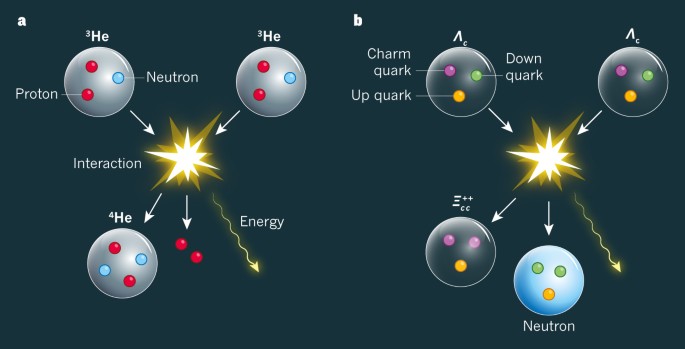
HOW TO MANAGE STRESS

10 Tips to Manage Stress:

1.Exercise:

Working out regularly is one of the best ways to relax your body and mind. Plus, exercise will improve your mood. But you have to do it often for it to pay off.week?Work up to 2 hours and 30 minutes of moderately intense exercise like brisk walks or 75 minutes of a more vigorous exercise like swimming laps, jogging or other sports.Focus on setting fitness goals you can meet so you don’t give up. Most of all remember that doing any exercise is better than none at all.

2.Relax Your Muscles:

When you’re stressed, your muscles get tense. You can help loosen them up on your own and refresh your body by:

Stretching Enjoying a massage. Taking a hot bath or shower Getting a good night’s sleep.

3.Deep Breathing:

Stopping and taking a few deep breaths can take the pressure off you right away. You’ll be surprised how much better you feel once you get good at it.

Sit in a comfortable position with your hands in your lap and your feet on the floor. Or you can lie down.

Close your eyes.

Imagine yourself in a relaxing place. It can be on the beach, in a beautiful field of grass, or anywhere that gives you a peaceful feeling.

Slowly take deep breaths in and out.

Do this for 5 to 10 minutes at a time.

4.Eat Well:

Eating a regular, well-balanced diet will help you feel better in general. It may also help control your moods. Your meals should be full of vegetables, fruit, whole grains, and lean protein for energy. And don’t skip any. It’s not good for you and can put you in a bad mood, which can actually increase your stress.

5.Slow Down:

Modern life is so busy, and sometimes we just need to slow down and chill out. Look at your life and find small ways you can do that. For example:Set your watch 5 to 10 minutes ahead. That way you’ll get places a little early and avoid the stress of being late.When you’re driving on the highway, switch to the slow lane so you can avoid road rage.Break down big jobs into smaller ones. For example, don’t try to answer all 100 emails if you don’t have to — just answer a few of them.

6.Take a Break:

You need to plan on some real downtime to give your mind time off from stress. If you’re a person who likes to set goals, this may be hard for you at first. But stick with it and you’ll look forward to these moments. Restful things you can do include:Meditation,Yoga,Tai chi, Prayer,Listening to your favorite music,Spending time in nature.

7.Make Time for Hobbies:

You need to set aside time for things you enjoy. Try to do something every day that makes you feel good, and it will help relieve your stress. It doesn’t have to be a ton of time — even 15 to 20 minutes will do. Relaxing hobbies include things like:


Reading,

KnittinDoing an art project

Playing golf

Watching a movie

Doing puzzles

Playing cards and board games.

8.Talk About Your Problems:

If things are bothering you, talking about them can help lower your stress. You can talk to family members, friends, a trusted clergyman, your doctor, or a therapist.

And you can also talk to yourself. It’s called self-talk and we all do it. But in order for self-talk to help reduce stress you need to make sure it’s positive and not negative.So listen closely to what you’re thinking or saying when you’re stressed out. If you’re giving yourself a negative message, change it to a positive one. For example, don’t tell yourself “I can’t do this.” Tell yourself instead: “I can do this,” or “I’m doing the best I can.”

9.Go Easy On Yourself:

Accept that you can’t do things perfectly no matter how hard you try. You also can’t control everything in your life. So do yourself a favor and stop thinking you can do so much. And don’t forget to keep up your sense of humor. Laughter goes a long way towards making you feel relaxed.

10.Eliminate Your Triggers:

Figure out what are the biggest causes of stress in your life. Is it your job, your commute, your schoolwork? If you’re able to identify what they are, see if you’re able to eliminate them from your life, or at least reduce them.If you can’t identify the main causes of your stress, try keeping a stress journal. Make note of when you become most anxious and see if you can determine a pattern, then find ways to remove or lessen those triggers.

VOLCANO

A volcano is a rupture in the crust of a planetary-mass object, such as Earth, that allows hot lava, volcanic ash, and gases to escape from a magma chamber below the surface.

On Earth, volcanoes are most often found where tectonic plates are diverging or converging, and most are found underwater. For example, a mid-ocean ridge, such as the Mid-Atlantic Ridge, has volcanoes caused by divergent tectonic plates whereas the Pacific Ring of Fire has volcanoes caused by convergent tectonic plates. Volcanoes can also form where there is stretching and thinning of the crust’s plates, such as in the East African Rift and the Wells Gray-Clearwater volcanic field and Rio Grande Rift in North America. Volcanism away from plate boundaries has been postulated to arise from upwelling diapirs from the core–mantle boundary, 3,000 kilometers (1,900 mi) deep in the Earth. This results in hotspot volcanism, of which the Hawaiian hotspot is an example. Volcanoes are usually not created where two tectonic plates slide past one another.

Large eruptions can affect atmospheric temperature as ash and droplets of sulfuric acid obscure the Sun and cool the Earth’s troposphere. Historically, large volcanic eruptions have been followed by volcanic winters which have caused catastrophic famines.

Volcanic activity:

Volcanoes vary greatly in their level of activity, with individual volcanic systems having an eruption recurrence ranging from several times a year to once in tens of thousands of years.[50] Volcanoes are informally described as active, dormant, or extinct, but these terms are poorly defined.

Active:

There is no consensus among volcanologists on how to define an “active” volcano. The lifespan of a volcano can vary from months to several million years, making such a distinction sometimes meaningless when compared to the lifespans of humans or even civilizations. For example, many of Earth’s volcanoes have erupted dozens of times in the past few thousand years but are not currently showing signs of eruption. Given the long lifespan of such volcanoes, they are very active. By human lifespans, however, they are not.

Dormant and reactivated:

It is difficult to distinguish an extinct volcano from a dormant (inactive) one. Dormant volcanoes are those that have not erupted for thousands of years, but are likely to erupt again in the future.[52][53] Volcanoes are often considered to be extinct if there are no written records of its activity. Nevertheless, volcanoes may remain dormant for a long period of time. For example, Yellowstone has a repose/recharge period of around 700,000 years, and Toba of around 380,000 years.[54] Vesuvius was described by Roman writers as having been covered with gardens and vineyards before its eruption of 79 CE, which destroyed the towns of Herculaneum and Pompeii. Before its catastrophic eruption of 1991, Pinatubo was an inconspicuous volcano, unknown to most people in the surrounding areas. Two other examples are the long-dormant Soufrière Hills volcano on the island of Montserrat, thought to be extinct before activity resumed in 1995 (turning its capital Plymouth into a ghost town) and Fourpeaked Mountain in Alaska, which, before its September 2006 eruption, had not erupted since before 8000 BCE and had long been thought to be extinct.

Extinct:

Extinct volcanoes are those that scientists consider unlikely to erupt again because the volcano no longer has a magma supply. Examples of extinct volcanoes are many volcanoes on the Hawaiian – Emperor seamount chain in the Pacific Ocean (although some volcanoes at the eastern end of the chain are active), Hohentwiel in Germany, Shiprock in New Mexico, US, Zuidwal volcano in the Netherlands, and many volcanoes in Italy such as Monte Vulture. Edinburgh Castle in Scotland is located atop an extinct volcano, called Arthur’s Seat. Whether a volcano is truly extinct is often difficult to determine. Since “supervolcano” calderas can have eruptive lifespans sometimes measured in millions of years, a caldera that has not produced an eruption in tens of thousands of years may be considered dormant instead of extinct.

Volcanic-alert level:

The three common popular classifications of volcanoes can be subjective and some volcanoes thought to have been extinct have erupted again. To help prevent people from falsely believing they are not at risk when living on or near a volcano, countries have adopted new classifications to describe the various levels and stages of volcanic activity.Some alert systems use different numbers or colors to designate the different stages. Other systems use colors and words. Some systems use a combination of both.

History of volcanology:

Many ancient accounts ascribe volcanic eruptions to supernatural causes, such as the actions of gods or demigods. To the ancient Greeks, volcanoes’ capricious power could only be explained as acts of the gods, while 16th/17th-century German astronomer Johannes Kepler believed they were ducts for the Earth’s tears.One early idea counter to this was proposed by Jesuit Athanasius Kircher (1602–1680), who witnessed eruptions of Mount Etna and Stromboli, then visited the crater of Vesuvius and published his view of an Earth with a central fire connected to numerous others caused by the burning of sulfur, bitumen and coal.

Various explanations were proposed for volcano behavior before the modern understanding of the Earth’s mantle structure as a semisolid material was developed. For decades after awareness that compression and radioactive materials may be heat sources, their contributions were specifically discounted. Volcanic action was often attributed to chemical reactions and a thin layer of molten rock near the surface.

NEUROLOGY

Neurologists diagnose, treat and manage disorders that affect the central nervous system (the brain and spinal cord) and the peripheral nervous system (nerves and muscles which activate movement and transmit sensation from all parts of the body to the brain).

Nature of the work:

Neurologists treat any disease of the body’s systems that affects neurological function. High blood pressure, for example, is a cardiac problem, but if it causes a stroke (a sudden loss of blood supply to the brain) the problem becomes a neurological one as well.

Neurologists also treat infectious disease such as meningitis which can cause brain damage and lead to complications like epilepsy.

They also treat peripheral nerve diseases which may result in weakness or sensory impairment.

In many cases, the diagnosis of new patients with neurological problems is by clinical assessment alone (taking a thorough history of the symptoms and physical examination), though in others there may be a need for further investigation such as blood tests, scans (CT or MRI) and electrical tests which measure peripheral nerve and muscle function.

Patients are followed up either to clarify the diagnosis or alternatively to manage longer term problems. Examples of conditions which require long term follow-up are epilepsy, multiple sclerosis and Parkinson’s disease.

The process of diagnosis is becoming ever more sophisticated with improved imaging and other types of tests including genetic testing. Available treatments are broadening too with improvements in existing therapy as well as new treatments such as those to modify the disease in multiple sclerosis.

Neurologists treat conditions such as:

multiple sclerosisheadaches blackoutsperipheral neuropathy (disease affecting the nerves) including chronic neuropathic painParkinson’s disease and other movement disorders (eg tremor)Alzheimer’s disease and other forms of dementia Amyotrophic Lateral Sclerosis (ALS) also known as motor neuron disease. MND (causing weakness and muscle wasting due to nerve degeneration)epilepsy spinal cord diseases muscle diseases like muscular dystrophy (causing weakness of muscle fibres)myasthenia gravis (where the muscles become weak and tire easily) and related disorders brain tumours functional disorders (symptoms which cannot be explained by neurological damage).

Common procedures/interventions:

Electroencephalography (EEG) to look for signs of epilepsy Nerve conduction tests (neurophysiology)injections for the treatment of patients with dystonia (abnormal muscle contractions)rarely, muscle or nerve biopsies.

Common reasons to visit a neurologist:

A thorough neurological exam is the most important tool I have as a neurologist,” Dr. Bruce explains. “It can help differentiate and localize the causes of common complaints.”

Chronic or severe headaches:

If you get migraine headaches, you should probably make an appointment with a neurologist, especially when the symptoms are associated with neurological deficits or tried treatments prove ineffective.

Dizziness:

Experiencing vertigo (feeling like you’re spinning) or having difficulty keeping your balance could be a sign of something more serious.

Numbness or tingling:

Numbness or tingling, especially when it occurs on one side of the body or comes on suddenly, could be a sign of a stroke or other serious condition.

Movement problems:

Difficulty walking, shuffling your feet, tremors and unintentional jerks, can all be signs of a nervous system problem.

Memory problems or confusion:

Worsening memory problems, personality changes or mixing up words could be signs of Alzheimer’s disease.

What is Functional Neurology?

Functional Neurology is a new concept for many people. In essence, functional neurology, also called chiropractic neurology, is the clinical evaluation and treatment method for the central and peripheral nervous system. Very basically, functional neurology can be thought of as exercise for the brain. Just like training a muscle makes it stronger, training your brain will make it stronger.

What does it mean to make the brain stronger? By this, we mean improve the function of the brain. This can be achieved by making positive neuroplastic changes. Neuroplasticity is the term that describes the brains ability to make new connections in order to achieve a new function. Think about a developing child learning to walk or talk or write. It takes practice, but once the task is learned, it is hard wired. Through trauma, degeneration, or a developmental obstacle, the brain may not be wired correctly or it may have a weak or broken wire. A functional neurological treatment is one that promotes rewiring and/or strengthening a connection that is already in place.

Functional neurology is brain training. Smell, taste, sound, balance, vision, movement, and touch are utilized in specific ways to promote neuroplastic changes. Making a positive neuroplastic change requires specificity. Treatment needs to be specific for the part of the brain requiring change and then the treatment intensity needs to be done within the brain’s metabolic capacity. When working with fragile or broken wires (neurons), it is easy to cause more damage if the ‘weight’ of the treatment is not closely monitored.

Functional neurology does not include surgery or pharmaceutical solutions, but may employ some combination of chiropractic manipulation, various therapies, and recommended lifestyle changes.

The explanation which functional neurology provides for neurological disorders is still a hypothesis and difficult to convey in plain language, but here’s the short version based on a recent review of functional neurology.

Functional neurology treats the source of a patient’s ailments as “functional aberrations of the neuraxis” — meaning, clusters of neurons which aren’t working together in the way they are supposed to — in various locations throughout the central nervous system.

Functional neurologists attempt to assess the “central integrative state,” or CIS, of functional units of neurons within the nervous system to determine where those functional aberrations are. The CIS is essentially how they refer to the current healthiness of those neurons.

Functional neurologists believe functional aberrations come from lesions, which are the result of some deficiency — perhaps there are dead cells (worst case scenario), or maybe they aren’t getting enough oxygen or nutrition.

Whatever the case, these aberrations cause communication snafus throughout the central nervous system and lead to hyper- or hypo-functional areas of the brain. In turn, this situation results in “diverse motor, sensory, visceral, or cognitive symptoms”.

Many functional neurologists are also interested in fatigability (can you maintain a healthy response to a certain stimulus?) and hemisphericity (the belief that neurological symptoms come from some imbalance between the two halves of the brain or an area therein).

While their treatment protocols are highly varied, many functional neurologists base treatment on the idea that stimulation of an area is enough to engage the brain’s inherent neuroplasticity, which is its ability to heal itself from certain injuries and conditions.

For the purposes of this piece, we will assume that functional neurologists begin with chiropractic training. Chiropractors spend years learning about the central nervous system and the spine. They spend more time during diagnosis and treatment looking at whole-body care and the effects of lifestyle on health than do most neurologists.

To become a chiropractic neurologist, they complete additional coursework on neurological disorders and the functional neurology approach to treating them.Functional neurologists are in their element while treating symptoms of unknown cause, especially if they are related to the vestibular (balance) system. They can also help patients with neck soreness, back pain, and other symptoms relating to the spine because of their chiropractic training.

iPhone 13, All you need to know!

The new Apple iPhone recently dropped and for some ‘iFans’ their failure is vast and their day is demolished. Late on Tuesday night, Apple dispatched the cutting edge Apple iPhone 13 series at the Apple California Streaming occasion. The new Apple cell phone series incorporates the standard iPhone 13 close by iPhone 13 smaller than normal, iPhone 13 Pro, and iPhone 13 Pro Max – like the archetype iPhone 12 series. All the new Apple cell phones hold the USB Type-C port, an OLED (Pro XDR) screen, MagSafe support, and quicker 5G groups. iPhone 13 models further get the new-age 5nm Apple A15 Bionic SoC, and obviously, the RAM arrangement and battery limit stay muddled. As far as plan, the iPhone 13 series holds the level edge plan, however the size of the front score has been diminished. The iPhone 13 smaller than expected elements a 5.4-inch show, while the ordinary iPhone 13 games a 6.1-inch show. The double back cameras are set slantingly on the customary and small models. The iPhone 13 Pro and iPhone 13 Pro Max accompany 6.1-inch and 6.7-inch shows, separately. Prominently, the iPhone 13 Pro models presently accompany a 120Hz revive rate that Apple calls ProMotion Display. The ordinary iPhone 13 and iPhone 13 smaller than usual accompany least 128GB stockpiling choices. Conversely, iPhone 13 Pro and iPhone 13 Pro Max currently have up to 1TB capacity choices. With respect to optics, both normal iPhone 13 and iPhone 13 small hold two 12-megapixel cameras (wide and super wide) at the back and a solitary 12-megapixel from the megapixel camera. The Pro models accompany back three cameras (Main + wide-point + super wide-point) and a Lidar sensor for an improved AR experience.

Apple presented iPhone 13 and iPhone 13 scaled down, the up and coming age of the world’s best cell phone, highlighting an excellent plan with smooth level edges in five dazzling new tones. The two models highlight significant developments, including the most progressive double camera framework ever on iPhone with another Wide camera with greater pixels and sensor-shift optical picture adjustment (OIS) offering upgrades in low-light photographs and recordings, another approach to customize the camera with Photographic Styles, and Cinematic mode, which carries another measurement to video narrating. iPhone 13 and iPhone 13 small likewise gloat super-quick execution and force proficiency with A15 Bionic, longer battery life, a more splendid Super Retina XDR show that rejuvenates content, unimaginable solidness with the Ceramic Shield title page, twofold the passage level stockpiling at 128GB, an industry-driving IP68 rating for water obstruction, and a high level 5G experience.

LINKAGE

We all have studied in our junior standards about cell. Cell is the the structural and functional unit of life, from them the origin of life takes place. The cell contains a nucleus which contains th genetic material for the survival of the organism DNA. DNA contains the chromosomes. There are .any several genes present on the chromosomes. As the chromosomes are the carriers of heredity they have the tendency to be inherited together, such genes are called linked genes. The tendency of two or more genes present on the same chromosomes that are inherited together is known as linkage. This phenomenon was discovered in plants by Bateson and Punnett and in animals by T.H. Morgan.

MORGAN EXPERIMENT

Morgan used Drosophila melanogaster for his experiments. He carried out many dihybrid cross experiment on drosophila melanogaster to study genes that are sex linked; for example, he and his group crossed yellow-bodied, white eyed female to the wild type with brown-bodied, red eyed males and intercrossed their F1 progeny. He observed that the two genes did not segregate independently of each other and F2 ratio deviated very significantly from 9:3:3:1 ratio. Morgan and his group knew that the genes are located on X chromosome and stated that when when two genes in a dihybrid cross are situated on the same chromosomes then the proportion of the parental combination is much higher than non parental type. This occurs due to physical association or linkage of the two genes, he also found out when genes are grouped on the same chromosomes some genes are strongly linked and some are loosely linked.

COMPLETE LINKAGE

The linked genes which are closely located on the chromosome do not separate and inherited together are called completely linked genes and the inheritance is called complete linkage.

INCOMPLETE LINKAGE

When the linked genes which are loosely located on the same chromosome and have chances of seperation by crossing over are called as incompletely linked and their inheritance is called as incomplete linkage.

How small savings can be a good thing

“Small droplets make a great ocean” edges | Benefits | Some allied honey votes to clarify the benefits and savings benefits. We are going to look at a touch of rationalization throughout this article.

Small savings to help in an accident
Man seeks money to guide traditional human life. Some value class dimensions are subject to human design. Some tribes are unplanned. Take medical expenses as an example. Someone suffers at times like this. Logic They are not set up and saved. However, people who are in the habit of saving need not worry. As a result of his small savings he is offered a hand.

Necessary cost savings
Allocating a line for small savings is the first expense that each individual or family must make to their potential subject to the financial leverage of the market. It is a good habit to set aside the exact share size in the long run.

Small savings classes measure security for tomorrow’s generation
To any person, “Why would anyone stay?” The solution is to ask, “For the well-being of my youth.” Yes, young people believe in religion and trust their elders. Fagis is responsible for providing a secure future for his children. It is the savings that provide such protection.

Those who save alone for children’s education, clothes, marriage do not have to worry about anything. For that, the semi-permanent setup and the short run setup must be run and run.

It is equally important to store fresh water in dams, lakes and ponds and to save occasional cash as it is used longer for agriculture and drinking.

Ways to save
We rarely see people shouting that the money we save is in camera corporations with low interest rates. So instead of saving in insecure private corporations, it is safer to save a lot in reliable, secure post offices or government-owned banks.

We really need a saving habit. It should be put in more reliable places. Only then will our life be happy.

MANAGEMENT CHARACTERISTICS

1) IT IS A CONTINUOUS PROCESS

It is a never ending process. Continuity is an important part of management. It is necessary throughout the life of organization. Management is essential to begin the activity, to run it smoothly and to control the activity.

2) MANAGEMENT IS GOAL ORIENTED

Every business organisation has their own set of goals which is decided prior to the execution of the goal. When the management achieves the goal it is called success. Success depends on proper management skills and a manager takes a lot of efforts to achieve this goals. So management is a goal oriented activity.

3) MANAGEMENT IS DYNAMIC

Management is dynamic and not static in character. It deals with human efforts different situations and activities. It embrace changes in form of technological change, socio-economical change, political changes and many more.

4) MANAGEMENT IS UNIVERSAL

Management is universal in character. The principles and theories of management are equally applicable to everywhere and in every field like defence, business, education, etc. These principles are guidelines which are flexible and capable of adaptation to every type of organization.

Law

In ordinary parlance law means the rules which guide human action. In every community there is a body of customary ways for carrying social activities.

These are clear-cut and definite. Otherwise, a good deal of time would have been wasted to meet the friction.These are a kind of unwritten code enforced by religious authorities or by the pressure of public opinion. These social standards sometimes assume greater significance for the purpose of the general welfare that some penalty is necessary for those who violate these customary laws.

Then these customs cease to be purely social customs and assume political nature and become the laws of the land. These laws then virtually become the commands of the society. Their violations are met with penalty. In modern states law is an enactment made by the state. It is backed by coercion or force. Its violation is punishable by the courts. It stands for the will of the state. It exists to realise the purpose of the state.

It regulates the rights and duties of the citizens towards one another and also towards the state.It is the medium of the state to fulfill its promises to the people.

It represents the sociological needs of the society. It reflects the political, social and economic relationship in the state.

Relation between Law and Morality:

Here we shall discuss the similarity between law and morality and then point out the difference between law and morality.

Similarity between Law and Morality:

There is a close relation between law and morality. Law is by and large based on the moral ethos of society.They act and react upon each other.

The ideal of law is to project general welfare and to promote the moral perfection of the individual.The state must endeavour to make such laws that will heighten the moral standard of the people. So the laws of the state are rather the standard of morality of that time.

Thus Plato’s Republic which is a book on politics is at the same time a good treatise on morality. In ancient India Dharma would stand for both law and morality. Thus law is not only the command of the sovereign but a code of moral conduct also.Without the moral support of the people a law cannot be enforced.

So we find that law against the dowry has not been successful because a vast majority of the people in India does not morally support it.In this context Thomas Hill Green pointed out “In attempting to enforce an unpopular law, a government may be doing more harm than good by creating and spreading the habit of disobedience to law. The total cost of such an attempt may well be greater than the total gain.”

Difference between Law and Morality:

Law :

1. Law is concerned with the external human conduct and does not regulate with the inner motives. Law does not take notice of the inner motives of a man notice of the inner motives of a man notice of the inner motives of a man.

2. Law is uniform for all and it does not vary from man to man.

3. Law is precise and definite. Every state has a common forum of law.

4. There is a definite organ in every state for making law. The violator of law is punished by the state.

5. Law belongs to the subject of jurisprudence.

Morality :

1. Morality is concerned with both the inner motives and external actions of a man. So the scope of morality is wider than that of law.

2. Every man has a different moral obligation. It varies from man to man, age to age and circumstances to circumstances.

3. Morality is vague and indefinite. There is no authority to enforce morality.

4. Morality is never made by any organ. There is no force to punish the breaker of morality. There is no element of compulsion in morality.

5. The branch of knowledge that deals with morality is called ethics.

Functions and Responsibilities of the Union and the States

The Indian system of governance is described as federal with a unitary bias. While in essence, our nation is a federation of states, with the state governments coming together under the leadership of the union government at the centre, but retaining their liberty in policy making for the state’s internal affairs; multiple factors point to the Unitarianism that is being followed in the democracy.

This type of governing mechanism makes Indian governance system unique as compared to those of other nations across the globe.

The Indian Constitution is a well-defined archive of the guidelines that help govern our country. Part V and Part VI of the constitution describes multiple aspects of the Union as a whole and the states respectively.

To maintain its status as a federation as well as implement the unitary nature, the seventh schedule of the constitution allocates the powers and functions on various subjects between the centre and the states.

This gave rise to three lists of subjects namely- the Union List, which covers 97 subjects under the jurisdiction of the Union, the State List, with 66 subjects to look after and the Concurrent List, pertaining to 47 subjects in which both the Union and the State have authority to look into.

With such a variety of subjects to tend to, both the centre and the state government are tasked with huge responsibility to maintain the stability and ensure welfare and development of the citizens.

In the following passages, we will cover the features and responsibilities of Union and State governments in India, and then explore the centre-state relationship that exists in our country.

These factors are crucial in understanding the functioning of these governments. Finally we will also take a brief look at the current problems our country is facing and what possible measures responsible Union and State governments can take to overcome these issues.

Relation between union and state governments :

While both the governments at their level of jurisdiction exercise powers similar to each other, it is important to understand the fields that each government can get involved in to make decisions and enforce them. As per the seventh schedule of the Indian Constitution, 210 subjects of national and regional interests were identified and distributed amongst the state and the union.

Being a federal nation, administration is primarily under the supervision of the state. The agencies of administrations hire individuals through separate commissions- the state public service commissions hire administrative employees for the state government, while the union public service commission does the same for union government.

Yet we see no overlapping in the fields of services. The state deals with the subjects as listed in the state list of the 7th schedule of the Indian Constitution, whereas the Centre limits its interest to the union list. The concurrent list is a separate list which consists all the subjects that the Union as well as state can look into.

The successful implementations of the schemes of the Union government require cooperation with the state. It is the state which is responsible for the programmes to take effect. The existing multi-party system has contributed to the decentralisation as in the current scenario; many states are being governed by regional political parties as compared to national parties.

Hence, mode of the administration is under their wing. This gives a heavy electoral edge to the regional parties and forces the national parties to rethink their strategies and make much more personalised schemes to suit the specific regions.

Enacting schemes and programmes that are against the regional parties might not sit well with them and can form a big gap between the union and the state.

Yet if there is a political tug-of-war between the Union and the state, the former is bound to get the advantage. The division of powers highly favours the centre. There are more subjects under the union list than the state list. Additionally, the overriding power that the Centre exercises on the concurrent list, makes them more powerful than the state.

Furthermore, the states are not indestructible. There borders, area and names can be altered by the centre if necessary. This slightly differs from the original ideology of federalism, giving it the famous ‘unitary bias’.

Major functions of the Union and the State :

The functions and responsibilities of the Union can be summarised into six major classes. First one concerns the formulation, execution, evaluation and revision of public policy in various spheres which the party in power seeks to progress and practice. Secondly, they are responsible for coordination among various ministries and other organs of the government which might indulge in conflicts and wastefulness.

The third duty is to prepare and monitor the legislative agenda which translated the policies of the government in action through statutory enactments. Fourth responsibility is the executive control over administration through appointments, rule-making powers and handling of crises and disasters, natural as well as political.

They are also involved in financial management through fiscal control and operation of funds like Consolidated Fund and Contingency Funds of India. And lastly, they can review the work of the planning commission.

State government have a separate jurisdiction limited to the boundary of their state. They have separate departments for efficient functioning of the state like education, agriculture, transport, water supply, public health, sanitation, hospitals and dispensaries and others.

They are also responsible to ensure the internal security of the state and maintain the law and order. Hence state police forces come under the state’s jurisdiction.

The state legislature also covers the finances of the state which includes authorisation of all expenditure, taxation and borrowing by the state government. It has the power to originate money bills. It has control over taxes on entertainment and wealth, and sales tax.

Conclusion :

To summarize, the Structure of Indian constitution deals with Union and State executive distinctly but the provisions follow a common pattern for the Union and the States. The system of distribution of administrative powers between union and states followed in the Constitution of India in various administrative fields.The Union Government is reliant on the States to give effect to its programmes.

The system of distribution of administrative powers has two objectives. It enables the union government with powers to control over administration of the state and at the same time it espouses several advice’s for intergovernmental cooperation and coordination.