Gandhi first proposed a flag to the Indian National Congress in 1921. The Indian flag was designed by Pingali Venkayya.In the flag the deep saffron colour is for courage and sacrifice white colour is for honesty, peace, and purity dark green colour is for faith and chivalry and the chakra in the middle is for vigilance, perseverance, and justice.This flag was accepted in 1947.Bhikaji Rustom Cama, the fiery lady who unfurled the first version of the Indian national flag—a tricolour of green, saffron, and red stripes—at the International Socialist Congress held at Stuttgart
The Indian flag was designed as A horizontal triband of India saffron, white, and India green; charged with a navy blue wheel with 24 spokes in the centre.The flag was proposed by Nehru at the Constituent Assembly on 22 July 1947 as a horizontal tricolour of deep saffron, white and dark green in equal proportions, with the Ashoka wheel in blue in the centre of the white band. From 26 January 2002, allowing private citizens to hoist the flag on any day of the year, subject to their safeguarding the dignity, honour and respect of the flag.
Home automation or domotics is building automation for a home, called a smart home or a smart house. The word “domotics” is a contraction of the Latin word for a home (Domus) and the word robotics. The word “smart” in “smart home” refers to the system being aware of the state of its devices, which is done through the information and communication technologies (ICT) protocol and the Internet of Things (IoT).
A home automation system will monitor and control home attributes such as lighting, climate, entertainment systems, and appliances. It may also include home security such as access control and alarm systems. Home automation allows you to control almost every aspect of your home through the Internet of Things.
A home automation system typically connects controlled devices to a central smart home hub (also called a “gateway”). The user interface for controls of the system uses either wall-mounted terminals, tablet or desktop computers, a mobile phone application, or a Web interface that may also be accessible off-site through the Internet. Home automation has a high potential for sharing data between family members or trusted individuals for personal security and leads to energy-saving measures with a positive environmental impact in the future.
Applications and technologies:
Home automation is prevalent in a variety of different realms, including:
Heating, ventilation and air conditioning (HVAC): it is possible to have remote control of all home energy monitors over the internet incorporating a simple and friendly user interface.
Lighting control system: a “smart” network that incorporates communication between various lighting system inputs and outputs, using one or more central computing devices.
Occupancy-aware control system: it is possible to sense the occupancy of the home using smart meters and environmental sensors like CO2 sensors, which can be integrated into the building automation system to trigger automatic responses for energy efficiency and building comfort applications.
Appliance control and integration with the smart grid and a smart meter, taking advantage, for instance, of high solar panel output in the middle of the day to run washing machines.
Home robots and security: a household security system integrated with a home automation system can provide additional services such as remote surveillance of security cameras over the Internet, or access control and central locking of all perimeter doors and windows.
Leak detection, smoke and CO detectors
Laundry-folding machine
Indoor positioning systems (IPS). Home automation for the elderly and disabled.
Pet and baby care, for example, tracking the pets and babies’ movements and controlling pet access rights.
Air quality control (inside and outside). For example, Air Quality Egg is used by people at home to monitor the air quality and pollution level in the city and create a map of the pollution.
Smart kitchen, with refrigerator inventory, premade cooking programs, cooking surveillance, etc.
Voice control devices like Amazon Alexa or Google Home are used to control home appliances or systems.
Advantages:
1. Energy Savings
Home automation systems have proven themselves in the arena of energy efficiency. Automated thermostats allow you to pre-program temperatures based on the time of day and the day of the week. And some even adjust to your behaviours, learning and adapting to your temperature preferences without your ever inputting a pre-selected schedule. Traditional or behaviour-based automation can also be applied to virtually every gadget that can be remotely controlled – from sprinkler systems to coffee makers. Actual energy savings ultimately depend on the type of device you select and its automation capabilities. But on average, product manufacturers estimate the systems can help consumers save anywhere from 10 to 15 per cent off of heating and cooling bills.
2. Convenience
In today’s fast-paced society, the less you have to worry about, the better. Right? Convenience is another primary selling point of home automation devices, which virtually eliminate small hassles such as turning the lights off before you go to bed or adjusting the thermostat when you wake up in the morning.
Many systems come with remote dashboard capabilities, so forgetting to turn off that coffee pot before you leave no longer requires a trip back to the house. Simply pull up the dashboard on a smart device or computer, and turn the coffee pot off in a matter of seconds.
3. Security
Remote monitoring can put your mind at ease while you’re away from the house. With remote dashboards, lights and lamps can be turned on and off, and automated blinds can be raised and lowered. These capabilities – combined with automated security systems – can help you mitigate the risks of intrusions: you will be alerted immediately if something uncharacteristic happens.
The Disadvantages
1. Installation
Depending on the complexity of the system, installing a home automation device can be a significant burden on the homeowner. It can either cost you money if you hire an outside contractor or cost you time if you venture to do it yourself.
2. Complex Technology
Automating everything in life may sound extremely appealing, but sometimes a good old-fashioned flip of the switch is a lot easier than reaching for your smartphone to turn lights on and off. Before you decide which system is right for you, think about how far you want to take home automation in your household.
3. System Compatibility
Controlling all aspects of home automation from one centralized platform is important, but not all systems are compatible with one another. Your security system, for example, may require you to log in to one location to manage settings, while your smart thermostat may require you to log in to another platform to turn the air conditioner on and off. To truly leverage the convenience of home automation, you may need to invest in centralized platform technology to control all systems and devices from one location.
4. Cost
Even though the price of home automation systems has become much more affordable in recent years, the cost to purchase and install a device can still add up. Consumer Reports offers a wide range of information and insights – including costs – on the best home automation systems on the market.
Main purpose of home automation system is to provide ease to people to control different home appliances with the help of the android application present in their mobile phones and to save electricity, time and money. The sheer quantity of consumer attention generated by home automation technology means the biggest technology businesses and innovators have entered a race to overtake one another. That means better smart house technology is continually improved to coincide with our technological requirements.
The term ‘international relations’ was first used by Jeremy Bentham in the 18th century, although its Latin equivalent, ‘intergentes‘, was used a century earlier by Rijehare Zouche. Both of them had used the term in the context of what later came to be known as international law. Today, nation states have become highly interdependent, and relations between them, political or economic, have developed into an essential area of knowledge.
The term ‘international relations’ (IR) may be used both for a ‘condition’ and a ‘discipline’ Quincy Wright, for example, makes such a distinction. The official relations between sovereign countries are described as international relations, though according to Wright, ‘… the word “interstate” would have been more accurate because in political science, the state came to be the term applied to such societies’. Viewed thus, international relations, as a condition, refers to the facts of international life, that is to say, the actual conduct of relations among nations through diplomacy based on foreign policy. It also includes actual areas of cooperation, conflict and war. According to Quincy Wright, IR should tell the ‘truth about the subject’, i.e., how such relations are conducted and, as a discipline, IR should treat them in a systematic and scientific manner.
Meaning Of International Relations
International relations as a subject is concerned with the relationships among the governments of various sovereign states. Many people may think that relations among nations are regulated and conducted by presidents, prime ministers, foreign ministers, officials of the foreign offices and diplomats. This is partially true. The scope of international relations is not merely political. Today, economic activities such as international trade, role of multinational corporations, terrorist activities and impact of environment are all embraced in the fold of relations among nations.
Most scholars agree that the term ‘international politics’ is used to describe official political relations between governments acting on behalf of their states. The term ‘international relations’ is broader. According to Stanley Hoffman, ‘The discipline of international relations is concerned with the factors and activities which affect the external policies and power of the basic units into which the world is divided.’
International Relations As A Field Of Study
As a field of study, international relations analyses a wide range of political activities. These include war, peace, diplomacy, trade relations, treaties, alliances, cultural, exchanges, participation in international organizations, etc. Each of these activities makes up distinct issue areas on which scholars and foreign policy makers focus attention.
The scope of international relations is often defined by subtitles, like ‘questions of war and peace’ as a subtitle of international security. Joshua S Goldstein wrote, ‘the movements of armies and of diplomats, the crafting of treaties and alliances, the development and deployment of military capabilities – these are the subjects that dominated the study of IR in the past… and they continue to hold central position in the field.’
Besides these, religious groups and movements working in two or more countries also act as non-state actors in the international relations. These may include large followers as the Catholic Church has, or a spread out population as sought to be represented by the Vishwa Hindu Parishad.
References
International Relations By V N KHANNA and LESLIE K KUMAR
Global warming’ is the term used to describe the rise in global surface temperatures. The term is often used interchangeably with ‘climate change’. The phenomenon revolves around the rise in surface temperatures – over land and oceans – that have led to an accelerated increase in temperatures. This has in turn led to the progressive shrinkage of the glaciers and polar ice caps, leading to rise in sea level. Another observed effect has been the disruption of cyclical weather patterns and the rising number of freak natural disasters.
The rise in temperatures has been attributed to the build-up of greenhouse gases, such as carbon dioxide and methane, at especially accelerated levels as a result of the industrialisation of the past 100 years. A concerted global effort to counter and mitigate the effects of this phenomenon has been elusive, with developed nations and developing countries facing off over the respective levels of emission cuts they would have to effect domestically.
However, there is also a considerable minority, especially in the US, that holds the assumption that global warming as a hoax perpetrated by certain countries for their own benefit.
The disturbing thoughts swim in the conscience as one could clearly hear the sound of social implosion in Ram Madhvani’s compelling thriller, lined with commentary on media ethics
In the week of big public apology, comes a film where a common man seeks repentance from a powerful minister for not being able to do his duty. A gutsy idea that fills you with nervous energy, the film is an official remake of a Korean flick but, closer home, it reminds you of the angry common man of ‘A Wednesday’.
In the Neeraj Pandey film, the desperate everyman threatened to bomb Mumbai, here the despairing migrant crosses the line. The film makes you wonder what has changed in the last decade. Perhaps, the trust of the marginalised has been breached. Perhaps, it was reflected during the mass exodus from big cities to villages during the pandemic. It is not that the last man standing in the row was getting attention earlier but he was not being fed hope by a section of rapacious media. His trust was not being played with 24×7.
What seems like a ‘usual’ terror attack/ hostage situation to him that he intends to milk, quickly turns personal as his estranged wife (Mrunal Thakur) is reporting from ground zero. Even as the threat lurks into the newsroom, the remnant of journalism left in his system is smoked out by a hard-nosed producer Ankita Malaskar (Amruta Subhash). For her, truth and news are two different things.
In the ensuing moral battle, it becomes increasingly clear who is the bigger villain of the piece. But, at the same time, the narrative also becomes increasingly predictable. As the taut thriller starts getting flaccid, you start picking up faults in the plot. When a film takes a high moral ground, the margin to slip also reduces. When a film that seeks to expose the artifice of prime-time news starts looking staged, it pains.
The set design and cinematography are top-notch but the functioning of the newsroom, the motivations of the ‘villain’, and the actions of the officer of the anti-terror unit (Vikas Kumar) leave you unsated. After taking you to the edge of the seat, the climax is a tad disappointing. A few more drafts, a little more sharpness would have helped. No such issue with Amruta who excels in a minutely observed character that exemplifies the state of a section of electronic news media.
Karthik has been astutely cast in the role of the hollow television anchor fattened by opportunism, teleprompter, and TRPs. Like in ‘Love Aaj Kal’, he plays the ‘straying’ part well but when it comes to the transformation, he fumbles. Thankfully, that portion is short here.
In 2015, the largest marine heat wave in the U.S. hit the Pacific Coast. Whales moved closer to shore to find prey, but they came across something dangerous—they were getting entangled in crab fishing gear.
Crab fishermen and women wouldn’t usually be out at that time of year. But the change in climate was also causing an algal bloom, toxic to crabs. So the fisheries delayed their timing by several months—the same time migrating whales were on the coast.
“It was this double-whammy,” said Briana Abrahms, an assistant professor in the Department of Biology and Center for Ecosystems Sentinels at the University of Washington.
This was one of the topics Abrahms was studying when she realized there hadn’t been much published research on how climate change is exacerbating human-wildlife conflicts. Looking at scientific literature and government reports, she came across only a few dozen. And many of those were either buried in obscure journals or just anecdotal mentions.
In a paper published in Science, she delved deeper into this area and wrote a call to action for managers and researchers to focus on this issue.Abrahms was working on another project at the same time as her whale research that was on completely different species in a completely different area, but seemed to have some similarities when it came to climate and conflict.
In Botswana, a government report cited some of the highest numbers of human-wild conflicts on record, mostly large carnivores preying on livestock. That happened to be during an extreme drought in 2018. “It struck me how different these systems were, but the story was the same,” she said. “I felt like it was really important to tell this story and draw attention since these climate changes and conflicts are likely to increase in the future.”
As part of her paper, Abrahms applauded a new, proactive risk assessment developed by the state of California to help managers figure out when and where to close fisheries under different climate and ocean conditions. “If you understand what the underlying driver is, in this case climate is a factor in these dynamics, you can better prepare to make management decisions and reduce conflict—or avoid it in the first place,” she said.
Abrahms also pushes for more research in these areas, especially where there are geographic and taxonomic gaps. “We definitely need more research and also need to be synthesizing research across everything already out there to understand how much we should be more worried about long-term changes,” she said.
KOCHI: Wildlife-related crimes have increased dramatically in the state and there has been a 100% rise in the number of cases registered in 2020 compared to the previous year.
According to data obtained under the Right to Information (RTI) Act, the state registered 303 cases in 2020 as against 151 in 2019 and 61 in 2018. As many as 156 cases were recorded in the state in 2021 till August 26 this year.
Most cases pertained to poaching of endangered animals and reptiles, hunting for meat and illegal trading and possession of horns, tusks, nails, and teeth. Removing tusks or nails and collecting meat from animals that died naturally is also an offence. More than 80% of the total cases registered each year are in connection with poaching of wild animals other than wild boars that cause extensive damage to standing crops.
Besides wild boars, sambar deer, spotted deer, porcupines, monitor lizards, pythons, civets and turtles are among those that fall prey to poaching. Occasionally, elephants, leopard, tigers and wild gaurs are also hunted down, say the data.
“Since movements were restricted during the Covid period, people living adjacent to forests got more opportunities to engage in poaching. Poachers have also improved their intelligence gathering. The presence of wild animals also increased in the fringe areas, leading to the rise in poaching incidents,” said a member of a flying squad of the forest department.
People also lay electric wires to electrocute the animals, besides using poisoning too. Besides killing the animals, depriving them of food is also an offence, as the data show. Among the registered cases, two are in connection with freeing chickens from the mouth of a python forcefully.
The phrase ‘healthy lifestyle’ is an abbreviated definition of what it looks like to live a vibrant, active life with a healthy body and healthy mind. Creating a healthy lifestyle doesn’t have to mean drastic changes. Making gradual small changes to your daily routine can have a big impact.
What Is a Healthy Lifestyle? You know the obvious behaviors that describe someone who is healthy and takes care of themselves. A healthy person doesn’t smoke, tries to maintain a healthy weight, eats healthy foods with plenty of fruits, vegetables and fiber and, of course, exercises on a regular basis.
Then there are other elements to add to the list. A healthy person also knows how to manage stress, gets good quality sleep each night, doesn’t drink too much, doesn’t sit too much—basically, does everything in moderation all the time. When you look at everything that could possibly go into a healthy lifestyle, you can see just how hard all of those things are in our current world.
The good news is, you don’t have to change everything at the same time. In fact, the trick to healthy living is making small changes—taking more steps each day,1 adding fruit to your cereal, having an extra glass of water, or saying no to that second helping of buttery mashed potatoes. One thing you can do right now to make your lifestyle healthier is to move more.
Benefits of Physical Activity You know you need to exercise, but there are many excuses not to do it. You’re too busy, don’t know where to start, you’re not motivated or you’re afraid you’ll injure yourself. Maybe you think exercise has to be really hard or it isn’t good enough.
Whatever definition you have about what exercise is or isn’t, the bottom line is that exercise is movement. Whether it’s walking around the block or running a marathon, that movement is exercise and every time you move more than you normally do, it counts.
Healthy Weight Loss or Maintenance Even if you opt for small changes, the benefits are still pretty amazing. For example, increasing your activity level can help you to reach and maintain a healthy weight. If you are currently overweight, small steps toward that goal can have an impact.
According to a Climate Central map, hundreds of cities on India’s eastern coast will be under water by 2050. CEEW says more than 80% of India’s population is vulnerable to “extreme climate risks”
According to a map created by Climate Central, hundreds of cities on the eastern coast of India will be under water by the year 2050. Over 27 states and union territories in India and more than 80% of the country’s population are vulnerable to “extreme climate risks”, says a report by the Council on Energy, Environment and Water.
These statistics show that the lives of many communities are put in danger due to climate change, and that a significant number of them lose their livelihood to it as well. Ritayan Mukherjee, a photojournalist, shares that while covering the pastoral nomads in the Himalayas, he came across the Changpa community who take their yak and sheep to grazing grounds that are 10,000-11,000 feet above the sea level. “The livelihood of these people is directly dependent on nature, because they move with their herd from one place to another,” says he.
Mukherjee shares that because of global warming, rising temperatures and the winter months getting shorter, the pastoralists have to take their herds to even higher grazing grounds. A report that Mukherjee worked on for the People’s Archive of Rural India said that the yak population in Leh fell about 57% between 1991-2010, according to the Department of Animal Husbandry and Dairying. A lot of these pastoralists don’t just depend on yak for their economic incomes, but they also use the yak-wool to build traditional tents, called Rebos. However, Mukherjee shares that these residential tents have disappeared over the past few years for reasons that can be attributed to climate change.
According to a Climate Central map, hundreds of cities on India’s eastern coast will be under water by 2050. CEEW says more than 80% of India’s population is vulnerable to “extreme climate risks”.
How many headlines and news articles did you come across in the last month that told you the condition of the climate is deteriorating? That a big chunk of our lives will be lost battling global warming in the next few decades? It’s no secret that climate change is impacting lives every single day, but let’s take a look at how it has been affecting us and what we can do to change its course.
The Union Minister for Finance & Corporate Affairs, Smt Nirmala Sitharaman presented the Union Budget 2021-22 in Parliament today, which is the first budget of this new decade and also a digital one in the backdrop of unprecedented COVID-19 crisis.
This year’s Budget lays focus on the seven pillars for reviving the economy – Health and Wellbeing, Physical and Financial Capital and Infrastructure, Inclusive Development for Aspirational India, Reinvigorating Human Capital, Innovation and R&D, and Minimum Government Maximum Governance. Several regulations around the securities market are proposed to be merged as a single code. Several direct taxes and indirect taxes amendments were also proposed.
Our FM starts the budget2021 announcement by mentioning the challenges during the pandemic and the vision of the Pradhan Mantri Garib Kalyan Yojana. FM says that India has two #COVID19 vaccines made available and two more will be made accessible soon. FM reiterated that the government is fully prepared to support the economy’s reset. FM says the Budget2021 is based on 6 pillars. Starting with healthcare & wellbeing: Spending’s been increased New scheme with an outlay of Rs.64K crore to be spread over 6 yrs The above is in addition to the National Health Mission.
Support to rural & urban health centres FM announces the Jal Jeevan Mission with an outlay of 2.87 lakh crores aiming to provide full-fledged water supply to all urban local bodies with household tap connections. The FM proposed Rs1.41 lakh crores over a period of 5 Years for the Urban Swacch Bharath 2.0.
An amount of Rs.1.47 lakh crores, over a 5-year-period, from 2021 has been assigned for initiatives such as wastewater treatment, reduction in plastic waster, reduction in pollution and the like. The Scrapping Policy has been announced in the Budget2021. The voluntary vehicle scrapping policy aims to remove inefficient vehicles so as to reduce vehicular pollution and oil import bills. FM proposes an amount of Rs.35000 crore to manufacture and make accessible the COVID19 vaccine.
To strengthen nutritional content, delivery, outreach, and outcome, Government will merge the Supplementary Nutrition Programme and the PoshanAbhiyan and launch the Mission Poshan 2.0. Government will adopt an intensified strategy to improve nutritional outcomes across 112 Aspirational Districts.
Universal Coverage of Water Supply and Swachch Bharat Mission:
The Finance Minister announced that the JalJeevan Mission (Urban), will be launched for universal water supply in all 4,378 Urban Local Bodies with 2.86 crore household tap connections, as well as liquid waste management in 500 AMRUT cities. It will be implemented over 5 years, with an outlay of Rs. 2,87,000 crore. Moreover, the Urban Swachh Bharat Mission will be implemented with a total financial allocation of Rs 1,41,678 crore over a period of 5 years from 2021-2026. Also to tackle the burgeoning problem of air pollution, government proposed to provide an amount of Rs. 2,217 crore for 42 urban centres with a million-plus population in this budget. A voluntary vehicle scrapping policy to phase out old and unfit vehicles was also announced. Fitness tests have been proposed in automated fitness centres after 20 years in case of personal vehicles, and after 15 years in case of commercial vehicles.
Physical and Financial Capital and Infrastructure:
Finance Minister said that for a USD 5 trillion economy, our manufacturing sector has to grow in double digits on a sustained basis. Our manufacturing companies need to become an integral part of global supply chains, possess core competence and cutting-edge technology. To achieve all of the above, PLI schemes to create manufacturing global champions for an AatmaNirbhar Bharat have been announced for 13 sectors. For this, the government has committed nearly Rs.1.97 lakh crore in the next 5 years starting FY 2021-22. This initiative will help bring scale and size in key sectors, create and nurture global champions and provide jobs to our youth.
Textiles:
Similarly, to enable the textile industry to become globally competitive, attract large investments and boost employment generation, a scheme of Mega Investment Textiles Parks (MITRA) will be launched in addition to the PLI scheme. This will create world class infrastructure with plug and play facilities to enable create global champions in exports. 7 Textile Parks will be established over 3 years.
Thus, the budget was widely acclaimed and appreciated.
Tiger is the national animal of india.It is declared in April 1973 Tiger is choosed as the national animal of india because of its elegance, strength, agility, and colossal power. Government was launched project to save tigers on April 1973.It was launched from the Jim Corbett National Park in Uttarakhand.There was of declaring national animal whether it is lion or tiger.But in 1972, the Bengal tiger was adopted as the national animal in a meeting of the Indian Board for Wildlife. The main reason given was that the tiger was important worldwide and was distributed across 16 states of the country, while the Asiatic lion was found only in Gir in Gujarat.
The Bengal Tiger is a highly adaptable animal and lives in a wide range of different habitats. These include forests, mangroves and wetlands. Tigers can cope with hot or cold temperature areas.Due to the size and power of the Bengal tiger, it has no natural predators in its native environment. Humans that hunt the Bengal tiger and habitat loss are the only threats to the Bengal tiger. It is now estimated that less than 2,000 Bengal Tigers are left in theareas.Tiger population in india is decreasing day by day Government has taken steps to save tigers.Hunting and human population growth are the main threats to Bengal Tigers. … Due to habitat destruction and fragmentation, as well as hunting, three of the nine sub-species of tiger that have existed in modern times are now extinct.
As per 2016 census India has 2500 Tiger it is not a big number.Karnataka in india has highest number of tiger which has 408 in number followed by 340 tigers in Uttarakhand and 304 in the state of Madhya Pradesh.
We have to take responsibility and want to save tiger.Now it is in endangered species if we do not take steps it will be extinct.
In India there is a discipline prescribed for the gradual evolution of the human individual by stages of
(1) education,
(2) adjustment of oneself with the demands of natural and social living and,
(3) an austere detachment from the usual entanglements in life and
(4) final rootedness of oneself in God. This last mentioned stage is known as Sannyasa and the first two stages are the religious disciplines preparing a person for the third and the fourth stages.
Religion has its various restrictions imposed on a person, keeping all human activity confined to specific areas of living with its several do’s and don’ts – ‘do this’ and ‘do not do that’. There cannot be any religion without these two mandates imposed on man. People in the first two stages of life mentioned above are placed under an obligation to follow these dos and don’ts of religion in social behaviour, in personal conduct and dealings with people in any manner whatsoever. Every religion has these ordinances defining the duties, which are religious, whether in the form of ritual, worship, or pilgrimage and even in diet, daily ablution, and an exclusive literal devotion to the word of the scripture of the religion. These restrictions are lifted in the third stage where the life of a person is mainly an internal operation of thought, feeling and understanding and not connected with human society in any way.
Spirituality is a broad concept with room for many perspectives. In general, it includes a sense of connection to something bigger than ourselves, and it typically involves a search for meaning in life. As such, it is a universal human experience—something that touches us all. People may describe a spiritual experience as sacred or transcendent or simply a deep sense of aliveness and interconnectedness.
Some may find that their spiritual life is intricately linked to their association with a church, temple, mosque, or synagogue. Others may pray or find comfort in a personal relationship with God or a higher power. Still others seek meaning through their connections to nature or art. Like your sense of purpose, your personal definition of spirituality may change throughout your life, adapting to your own experiences and relationships.
Environmental pollution is increasing with each passing year and inflicting grave and irreparable injury to the world. Environmental pollution is of different types namely air, water, soil, noise and light-weight. These cause damage to the living system. How pollution interacts with public health, environmental medicine and the environment has undergone dramatic change.
Recent oil spills in the Yellowstone River, Alaska tundra and Enbridge (Wisconsin) demonstrate how pollution can directly and indirectly impact man’s health environmental pollution was not a medical/public health issue nor was it discussed in clinical settings. Since the 1950s, environmental medicine has been discussed more frequently through a greater awareness in public health and preventive medicine; although today, there is now a focus on occupational medicine.
Environmental and occupational medicine are however more commonly viewed as an integrated subject, with emphasis given to industrial issues. Certainly, pollution problems have been recognized in the distant past but were more easily mitigated by nature due to the limited complexity of the pollutant, its degradability (e.g. biodegradable organics) and lower industrialization. Health-related effects from environmental pollution have been well known, but were not fully realized until highly notable events like the Donora (Pennsylvania) smog occurrence in 1948 resulting in later public health programs including in their training a discussion of environmental medicine.
There has been an increased awareness of how pollution is observed regarding its health impact and attitudes toward public health and environmental medicine. Damage from oil spills will not only influence public health but overall disease rates for years to come. As environmental pollution increases so will the importance of environmental medicine in managing its consequences.
NASA will design a new set of Earth-focused missions to provide key information to guide efforts related to climate change, disaster mitigation, fighting forest fires, and improving real-time agricultural processes. With the Earth System Observatory, each satellite will be uniquely designed to complement the others, working in tandem to create a 3D, holistic view of Earth, from bedrock to atmosphere.
“I’ve seen firsthand the impact of hurricanes made more intense and destructive by climate change, like Maria and Irma. The Biden-Harris Administration’s response to climate change matches the magnitude of the threat: a whole of government, all hands-on-deck approach to meet this moment,” said NASA Administrator Sen. Bill Nelson. “Over the past three decades, much of what we’ve learned about the Earth’s changing climate is built on NASA satellite observations and research. NASA’s new Earth System Observatory will expand that work, providing the world with an unprecedented understanding of our Earth’s climate system, arming us with next-generation data critical to mitigating climate change, and protecting our communities in the face of natural disasters
In the present scenario, most of us live the ultra-modern lifestyle. This means that we set unrealistic goals for ourselves and to pursue those larger than life dreams we stretch ourselves thin, often to the extent of depreciating our well being and manipulating with our healthy lifestyle.
Time for a reality check…more often than not, you skip breakfast, ignore the mid day hunger pangs that creep up between an important presentation, binge an extra loaded cheese sandwich to compensate for a healthy lunch, drive straight into a pub after work to unwind the load of a hectic day, return home to gorge on a cold frozen dinner and head straight to bed when it is already past midnight and still struggle to sleep!
This is what slowly kills our capacity to work better. Sleep plays a major role in improving our work efficiency. Think of a machine, if not given proper rest, it will overheat and break down.
To put it simply, you cannot expect to deliver your best at work, if your body is un-rested and under nourished. While a number of modern vitamin and health supplements flooding the markets may make up for the deficiency in vitamins, there is absolutely no substitute for good sleep.
On going in detail about the science of sleep nourishment, When we are off to sleep, our brain removes the toxic proteins from its neurons that are by products of neural activity when we are awake and our brains are functioning. Our brain can engage in this cleansing activity only when we are asleep and most of the nerves are resting. Sleep deprivation would mean missing out on this important cleansing regime. When we deprive our bodies of sleep, the brain cannot drive out or sanitize the nerve cells, hampering our thinking and cognitive abilities to a large extent.
Revisit the old adage ‘Take care of the pennies and the pounds will take care of themselves’ with a new perception. Yes, you take care of your health and quintessential sleep and everything else will fall into place-your health, your lifestyle, your emotions, your relationships, your job and not to forget -your applaudable performance at the boardroom!
Politics work with inthe constitution of India.India is a parliamentary democratic republic in which the president of India is the head of state and the prime minister of India is the head of government.
POLITICAL PARTY IN INDIA:-
As per 23, September 2021 the election commission of India total number of parties registered was 2858, with 8 national parties, 54 state parties and 2796 unrecognised parties.
THREE BRANCHES OF INDIAN GOVERNMENT:-
* Executive.
*Legislative.
* Judiciary.
EXECUTIVE:-
Executive type of Indian government include,
* president of india.
* prime minister of India.
* union cabinet.
* council of ministers.
* Bureaucrats.
PRESIDENT OF INDIA:-
President of India is the highest post and is the constitutional head of the country. According to our constitution, President is the first citizen of our country and a symbol of unity and integrity.President is also responsible for appointing other executives and judicial members in the country like the Chief Justice of India, Judges of all the High courts, the Election Commissioner of India and states too. President of India is also the Commander in Chief of all the Indian forces i.e. Indian Army, Indian Navy, and Indian Air force.
PRIME MINISTER OF INDIA:-
Prime Minister is the chief of the Central government of India and also acts as the advisor of President. He is also head of the Council of Ministers and is responsible for appointing or dismissing any minister from the council. In case Prime Minister resigns from his office or dies during his tenure then the cabinet will automatically dissolve.
UNION CABINET:-
Union Cabinet consists of the Prime Minister and Cabinet Ministers. This is the decision making body in the central government.The Cabinet Minister cannot make a law concerning his department on its own, he can only propose the decision and then the Union Cabinet will make the final law.
COUNCIL OF MINISTERS:-
Council of Ministers works under the Union Cabinet. All the members of the Union Cabinet are members of the Council of Ministers and here the Minister of States appointed by the President on the advice of the Prime Minister.
BUREAUCRATS:-
Bureaucrats are selected and appointed by Union Public Service Commission and for states there is a State Public Service Commission. They are responsible for implementing the laws and all the other functions of government. Bureaucrats consist of IAS, IPS, IFS and other officials leading various government agencies.
LEGISLATIVE:-
Legislative type of government include president,lok sabha also known as lower house,Rajya sabha also known as upper house.
LOK SABHA:-
Lok Sabha is more powerful in both the houses. Members of Lok Sabha are elected directly by citizens of India. There are total 530 members from the states and 20 members from the union territories. They are elected in general election. Their term is five years.
RAJYA SABHA:-
There cannot be more than 250 members in the Rajya Sabha. Members of Rajya Sabha are elected by state legislative assemblies out of which 12 members are directly appointed by President who come from different backgrounds like Literature, Art, Social Services etc.
JUDICIARY:-
Judiciary type of government includes supreme court,high court and district court.
SUPREME COURT:-
Supreme Court is the highest judicial body of the country. The decision by Supreme Court of India is acceptable by all judicial bodies and no other judicial body has the power to change a decision by Supreme Court. Indian judiciary is an independent body and is not affected by Legislature or Executive. Supreme Court has the power to question any decision made by Legislative Bodies or Executive if the decision is not in accordance with the Constitution of India.supreme court of india consists of 34 judges maximum in which there can be a Chief Justice and 33 other judges.
HIGH COURT:-
The High Court is the highest judicial body of a state. High court functions under Supreme Court. High court maintains the rule of law in the particular state and in case of two small states there can be one common High court.
DISTRICT COURT:-
District court or sub-ordinate courts function under High court. They maintain rule of law in a particular district or locality in which they function. They look after the civil and criminal matters of that particular region.
Reading is an immersive experience that often rewards you with a great story and good vocabulary. There are books across several genres one can choose from to indulge in a wonderful reading experience. But there are some books that fall under the category of ‘classics’ as their themes, characters, and plot lines become relevant for ages to come. These are written by some of the brilliant literary minds that became popular and they went on to influence many modern works of literature.
The story begins with a typical farm being run by a human with a variety of animals living in it. The farm animals are often mistreated, overworked and ignored by the human which agitates them. Hoping to overthrow the human race and reaping all the benefits of their work, they drive the human out of the farm. What follows is a satirical allegory to the events that happened during and after the Russian Revolution of 1917.
Although the story revolves around farm animals, its themes of corruption, slavery, dicatorship, class distinction, and characters, makes the readers draw parallels with the current political scenario. It is a must-read for a better understanding of the Russian revolution and an engaging experience.
The Great Gatsby- The Jazz age novel
The Great Gatsby is a 1925 novel written by F. Scott Fitzgerald. It follows the life of a self-made millionaire named Jay Gatsby who is in pursuit of his long lost lover named Daisy Buchanan. The novel however, has little scope for romance and represents America in the 1920s. It highlights the era of unrivalled wealth and materialistic access.
The novel upon its release didn’t gain commercial success. Critics believed that it did not amount to Fitzgerald’s earlier novels. However, it began to gain popularity during World War II as free copies were distributed among American soldiers who were serving overseas. The Great Gatsby went on to become an important part of America’s educational curriculum and pop culture.
The novel continues to attract scholarly attention and is a contender for the title of ‘The Great American Novel’.
Harry Potter and the Philosopher’s stone- You Know Who
This book can be considered as J.K Rowlings’ stepping stone to success. After being rejected by 11 publications and finally being published by Bloomsbury publication, upon the request of the chief executive’s 8 year old daughter. Harry Potter and the Philosopher’s stone went on to be translated into 73 languages and sold 120 million copies. Becoming the second best-selling novel of all time.
The story follows Harry Potter and the readers’ introduction to the world of magic, following Harry’s discovery of his magical heritage and acceptance into the Hogwarts School of Witchcraft and Wizardry. As the readers alongside Harry manage to grasp the revelation of a whole new world of possibilities, worthy opponents and dangers show up on whom magic must be used to defeat and protect.
Reading is an immersive experience that often rewards you with a great story and good vocabulary. There are books across several genres one can choose from to indulge in a wonderful reading experience. But there are some books that fall under the category of ‘classics’ as their themes, characters, and plot lines become relevant for ages to come. These are written by some of the brilliant literary minds that became popular and they went on to influence many modern works of literature.
The book thief is a 21st century novel that uses the Nazi regime in Germany as its background. Although it has its fair share of horror and despair. The Book Thief delivers hope to its readers through love and tranquility among family and friends.
The novel follows the life of Liesel, who moves into her new foster parents’ home following her brother’s death. As she goes on to witness the dangers posed by the Nazi regime, Liesel adopts her newly found passion for reading by stealing books from the rubbles and also the Mayor’s house. One of the pivotal characters in the novel is death itself as it narrates the entire story.
The Lion, The Witch, and The Wardrobe- A world of fantasy
Open the book to a whole new world of fantasy, mythical creatures and magic. When 4 siblings are relocated to a large house in the countryside due to wartime evacuation. They discover a wardrobe in the house which had more than just clothes hanging inside. The 4 siblings venture into the world of dreams upon entering the wardrobe. They go on to encounter the witch and the lion, and participate in an impending war to end the evil’s oppression over the good.
This fantasy novel was the first to be published among the 7 volumes known as The Chronicles of Narnia. C.S Lewis wrote this novel as a dedication to his goddaughter named Lucy Barfield.
Here are some of the classic novels from the 20th century across different genres to enhance your reading pleasure.
The term ‘To-Do List’ evokes different images for different people. For some it is that of a never-ending-ever-growing scroll of magic paper that gives them nightmares. For others it might come across as something only the boring folks, who schedule even their loo breaks, do. And then there is another bunch who considers it to be their life saviour which keeps them sane through the madness of their daily chores and tasks.
Whatever be the image that you have conjured up, a fact that one cannot deny is that an effective to-do list is one of the simplest yet powerful productivity tools that can work wonders in increasing your overall productivity.
Though it is one of the best and most efficient productivity techniques around, the success of it depends on how effectively it is being used. Moreover, if not used in the correct way, it can do more harm than good.
So, let’s now see some of the strategies to help you kick-start your art-of-making-the-perfect-list journey
Pick a suitable medium
Choosing a medium that you are comfortable with is the first and foremost thing to be considered while making a list. It may differ according to the personal preferences of people. It doesn’t matter whether you choose an app or the good old pen and paper, what is important is to stick to the one that you have chosen.Having your tasks scattered across different mediums makes managing and tracking the tasks difficult.
Dump all those tasks eating up your brain to the list
Transfer all those ideas, goals and tasks to the medium that you have chosen. Don’t bother assessing its value or prioritising it (yet). For now, just dig out every single thing from your brain and dump it onto your list.
Identify the ones which align with your purpose
It’s important that you need to have a clear idea about what you want to accomplish in life and accordingly pick tasks that’ll help you realise your goals. Write down clearly why you need to do the task and how it adds value to your life. Identifying your whys gives the brain the much needed motivation and energy to tackle the task.
Break the list into multiple lists
So now you have a big list of all the items that aligns with your long-term goals listed right in front of you. This list will contain all your goals listed out together. Let’s now split them into separate lists . Three basic lists that you can use are :
The Master List , where you keep a list of your long term goals .For eg: Write a novel. Here, you could categorise the goals as personal, professional, finance, health etc.
The Weekly List contains all those items that need to be ticked off by the end of the week. This would essentially contain tasks which would help in achieving your long term goals, plus other things that need your attention during the week.
High Impact List is the one that contains the tasks which are of the highest priority and needs your immediate attention. These might or might not be related to the other two lists.
Apart from these you could also keep a separate list for the daily activities that you need to track. For eg : If Doing exercise is something that you want to track on a daily basis, then instead of adding this item to your high impact list, add it to a separate list which is meant solely for daily activities.
You can come up with as many lists as you want. But I would suggest not to overdo it (then you might end up having to come up with another list to track the list of lists ! ).
List down tasks, not goals on your list
Your master list is the one where you have all the goals listed and when it comes to creating weekly lists, you need to make sure that you break your goals down into actionable items and put those on the list. In this way, you get clarity on how to go about with achieving the long term goals. Make it as specific as possible.
Prioritize
From the weekly list, identify the items that are of the highest priority and move them to the High Impact List. This is the list that you need to follow to keep track of the items that need to be completed by the end of the day. Sit with your list and identify the ones that are urgent and important and rank them accordingly. Setting priorities makes sure that you don’t end up cleaning your kitchen drawer when you have an important assignment due for the day.
One of the mistakes people make while creating a list is to cram up the list with as many items as they can think of. By doing so chances are high that you may end up not finishing most of the tasks on your list. And, there is nothing more depressing than staring at a long list of pending tasks at the end of the day. So keep it short. There is no hard and fast rule as to the maximum number of items that you can put on your list. Start with as low as three and experiment and find out the number that works for you.
Set a time limit for each task and measure the time taken
Each person has a different pace at which he works. To find out yours, roughly estimate the time you think you would need to complete a task and once you are done with the task, compare it with the actual time taken. This way, you will have a realistic idea about how many tasks you can complete in a day and can accordingly decide the length of your list.
Break bigger tasks into a set of smaller tasks
While you time your tasks, you might come across some tasks which need more time.Say for example, writing a blog post might not fit into the two hour window that has been allotted to it. In such cases, break the task down into a number of smaller tasks – research the topic, write, edit, select pictures etc. By breaking it down, you will have a clear step-by-step strategy listed right in front of you.Also, instead of waiting to check off that one big monstrous item, you can now check off 3-4 small items. That’s a pleasure in itself, isn’t it ?
Create a May-Be-Later-If-I-Feel-Like list
This is one of my personal favourites. All those items that you want to do but which are neither urgent nor important go on this list. Say for eg: learn to knit, may be something you might want to do but definitely not when you have a project release coming up the following week.
Always expect the unexpected
As much as we all want everything to go as planned, in reality that’s not always possible. At times, unexpected events may pop up. So, it’s always a good idea to leave a bit of cushion time between your tasks. Not just that it leaves you with some wiggle room in case of emergencies but also provides you that much needed breather from the tasks on normal days.
Always always always make sure to take some time out of your schedule to relax. Burnout is real ! So it’s really important that you find time to pause, breathe and relax. Adding break time to your list is essential to help the brain maintain its focus and energy levels.
Revisit and Re-evaluate your list periodically
Constant evaluations and reevaluations are needed for this productivity tool to work effectively. At the end of each day set aside some time to sit with your list and reflect on what worked and what didn’t. Move those items which you feel are of low priority to your may-be list. Re-prioritise the list, play around with it and you will eventually figure out a strategy that works best for you. It’s all about experimenting, buddy !
Make the list the day before
Though it is not a rule that you should make the list on the previous day, it is always better if you can do so. At the end of each day, after you evaluate your list for that day, you would already be in a state of mind where it is easier for you to figure out what items need to go on the list for the next day. Also, if you have a list of tasks ready right in front of you in the morning, you know exactly what’s on your plate for the day and hence you can use your morning energy on productive stuff rather than wasting it on planning your day.
Create a Done List
Even if you hate every other list mentioned above, this is one list that you are gonna love. It is a list of all the tasks that you have accomplished. Once you complete a task, along with crossing it off from the main list, add it to your Done List. That’s double the euphoria, you see ! This list is a reminder to yourself of how close you have come to your end goal and is an instant mood booster on days you feel low. Also, do not forget to celebrate even the smallest of your milestones.
Bottom line
Learning to make an effective to do list is not something that you can master overnight. It takes a lot of experimenting to figure out the strategies that work for you. There are no hard and fast rules here. Remember not to obsess too much with the idea of making that perfect list in the first go. Have patience and keep experimenting until you figure out a strategy that best suits your needs. Good Luck !
Children are called as the leaders of the future generations. They are also known to be the torch bearers for the future of the human society. Universal Children’s Day is celebrated every year on the 20th of November as an observance to promote children rights and welfare. Every year, the United Nations (UN) provides a particular theme for this day to improve the conditions of children and build a better environment for them. It was first celebrated in the year 1954 to encourage unity and friendliness among children across various nations. In the year 1959, the United Nations General Assembly accepted the Declaration of the children’s rights on the 20th of November. Therefore, this day is celebrated as Universal Children’s Day.
The theme
The theme for this year by UNICEF is to help children to recover from interruptions and learning losses experienced through the pandemic in the last two years and contribute towards the betterment of the children. Hence, the UNICEF has started a #GoBlue Campaign to highlight the issues faced by children due to the COVID-19 pandemic. This pandemic has shown us how unequal and unfair things have been for the children of the nation. From climate change to racism, many children have been deprived from their basic rights and the youngsters have been raising their voices against such injustices to lead the world towards a better future. Hence, the UNGA has requested several countries to support this cause so the children will be able to lead a better life. To support this cause, the United Nations Children’s Fund (UNICEF) will be holding a parliamentary meeting today at 7:30 pm to raise awareness regarding such issues.
India’s Contribution
IMAGE: ANI
India has also supported this campaign by illuminating monuments like Qutub Minar and Rashtrapati Bhavan with blue lights. The parliament buildings like North block and south block have also been lit up in the capital city of India on the occasion of World Children’s Day.
Conclusion
This purpose of this year’s theme is to encourage children and youngsters to highlight the issues faced by them and urges adults to understand and take the required actions for the future generations’ well-being. This World Children’s Day, it is extremely important to raise awareness against the discrimination and the racism faced by little children. it is more important than ever, that the leaders listen to their ideas and demands and take actions accordingly. It is our responsibility as a human being to create and build a better world for the children and we must work extremely hard towards achieving that goal.
Education is one of the important thing in this world.Without education we cannot lead a good life.Education is the key to success in life.
Education plays the significant role in the human race.Educated people are responsible for the better future for Society and country.An educated person has the ability to decision making.Education teaches us writing and reading.Reading and writing is the first step in education.Education improves the person mentally to handle the difficult situation.
Education improve the humans personality.Educated person is brave, confident to face any situation.Most of the well known persons are educated.Education helps in the development and innovation of technology.
The technology,science, millitary all are improved because of the education.Without education nothing happened in this world.Education help us to acquire knowledge.knowledge can be used to make better living.Education is the weapon which cannot be break by anyone.
Education teaches us to be honest and polite.Educated peoples are always respected in the society.
Education teaches us to be civilized. Education helps us to understand the feelings.It provides the manpower like police, doctor and millitary.Education improves us mentally strong to face the hard situation in both outer and inner life.Education brings peace in the world.
Peer pressure is the direct influence on people by peers, or an individual who gets encouraged to follow their peers by changing their attitude, values or behaviour just for the sake of acceptance. The section of society which is most vulnerable to the effects of peer pressure is teenagers. The fact of peer pressure is that when your peers start trying to get you do things which you otherwise wouldn’t do. For instance, in our society we have people who pressurise us to do things we don’t want to do, hence causing us to not being able to think for ourselves. If you neglect being able to think for yourself and let others do that job then it could have a good outcome for them, but for your well being and for you as a person it can turn out to be a disaster.
Ill effects and Impact
Peer pressure can harm the group by making it too uniform. When all the members think and act alike, the group does not have access to alternative opinions creating a barrier in solving problems.
Peer pressure is a rite of passage that all of us go through but its impact varies from person to person. Some are able to brush it off without any issues while it negatively impacts others. Peer pressure affects the lives of teenagers in a number of ways. It can take a self-confident child and make him or her someone who is not sure about themselves and has a low self esteem. It affects their academic skills too because despite being capable of performing well, they choose not to because in the eyes of their peers, it would seem uncool. In an effort to fit in with their peer group, they place more emphasis on being social rather than working on their academics.
Adolescence and Peer Pressure
The desire to be accepted by their peer group is one of the strongest motivating forces during adolescence. The reason that negative peer pressure happens, especially during adolescence, is because humans are social beings and ‘WE’ want to belong. We do what we believe others want us to do for the sake of acceptance and to ‘fit in’. Extreme peer pressure may lead you to follow what your peers feel right, thereby, you end up losing your own identity.
Conclusion
It honestly depends on the people you surround yourself with. Peer pressure is influenced from a members peers. So it is up to you who you hang around with. It is only a bad thing if you make it one.
Communication is the integral part of our life.It is the process of share whatever we want and sharing ideas,feelings. communication is the key to directing function of the management.
TYPES OF COMMUNICATION:-
There are three types of communication:-
* Formal communication.
* Informal communication.
FORMAL COMMUNICATION:-
Formal communication divided into two types,
* Horizontal communication.
* Vertical communication.
Formal communication is usually takes between the manager to sub manager,sub manager to manager.Who are in the same level of post.
HORIZONTAL COMMUNICATION:-
It is also called as lateral communication.It takes place between one division to another division.
VERTICAL COMMUNICATION:-
Vertical communication as the name suggests flows vertically upwards or downwards through formal channels. Upward communication refers to the flow of communication from a subordinate to a superior whereas downward communication flows from a superior to a subordinate.
INFORMAL COMMUNICATION:-
Informal communication is nothing but the communication takes place without following the formal types is called informal communication.It is also called as grapevine.
HOW COMMUNICATION IS EFFECTIVE:-
Communication is very effective tool.With communication we can able to understand others feelings And delivery of message.If false message delivered it becomes rumor and cause problems in life.
IMPORTANCE OF COMMUNICATION:-
* Basis of Decision-Making and Planning.
* Smooth and Efficient Working of an Organisation.
Corporate social responsibility (CSR) is a form of international private business self-regulation which aims to contribute to societal goals of a philanthropic, activist, or charitable nature by engaging in or supporting volunteering or ethically-oriented practices.
According to the World Business Council of Sustainable Development, corporate social responsibility is the “continuing commitment by business to contribute to economic development while improving the quality of life of the workforce and their families as well as of the community and society at large.” It is also called corporate sustainability, sustainable business, corporate conscience, corporate citizenship, conscious capitalism, or responsible business.
CSR is generally understood as being the way through which a company achieves a balance of economic, environmental and social imperatives (“Triple-Bottom-Line-Approach”), while at the same time addressing the expectations of shareholders and stakeholders. It is a management concept that helps companies be socially accountable to themselves, their stakeholders, and the public. Corporate social responsibility is now a familiar metric of how well a brand interacts with stakeholders and communities, both locally and globally.
On April 1, 2014, India became the first country to legally mandate corporate social responsibility. The new rules in Section 135 of India’s Companies Act make it mandatory for companies of a certain turnover and profitability to spend two percent of their average net profit for the past three years on CSR.
Some examples of CSR in action include:
Reducing carbon footprint
Engaging in charity work
Purchasing fair trade products
Investing in environmentally conscious businesses
Getting involved in volunteer work
Improving labour policies
Types of Corporate Social Responsibility
Corporate social responsibility is divided into four categories: environmental, philanthropic, ethical, and economic responsibility.
Environmental Responsibility: Environmental responsibility refers to the belief that organizations should behave as environmentally friendly as possible. It’s one of the most common forms of corporate social responsibility. Some companies use the term “environmental stewardship” to refer to such initiatives.
Companies that seek to embrace environmental responsibility can do so in several ways: Reducing pollution, greenhouse gas emissions, the use of single-use plastics, water consumption, and general waste; Increasing reliance on renewable energy, sustainable resources, and recycled or partially recycled materials; Offsetting negative environmental impact; for example, by planting trees, funding research, and donating to related causes.
Ethical Responsibility: Ethical responsibility is concerned with ensuring an organization is operating fairly and ethically. Organizations that embrace ethical responsibility aim to achieve fair treatment of all stakeholders, including leadership, investors, employees, suppliers, and customers.
Firms can embrace ethical responsibility in different ways. For example, a business might set its own, higher minimum wage if the one mandated by the state or federal government doesn’t constitute a “livable wage.” Likewise, a business might require that products, ingredients, materials, or components be sourced according to free trade standards. In this regard, many firms have processes to ensure they’re not purchasing products resulting from slavery or child labour.
Philanthropic Responsibility: Philanthropic responsibility refers to a business’s aim to actively make the world and society a better place. In addition to acting as ethically and environmentally friendly as possible, organizations are driven by philanthropic responsibility often dedicate a portion of their earnings. While many firms donate to charities and nonprofits that align with their guiding missions, others donate to worthy causes that don’t directly relate to their business. Others go so far as to create their charitable trust or organization to give back.
Economic responsibility: Economic Responsibility is the practice of a firm backing all of its financial decisions in its commitment to do good in the areas listed above. The end goal is not to simply maximize profits, but positively impact the environment, people, and society.
Examples of CSR Companies
Lego: The toy company has invested millions of dollars into addressing climate change and reducing waste. Lego’s environmentally conscious efforts include reduced packaging, using sustainable materials and investing in alternative energy.
TOMS: TOMS donates one-third of its net profits to various charities that support physical and mental health as well as educational opportunities. As of April 1, 2020, the brand is directing all charitable donations to the TOMS COVID-19 Global Giving Fund.
Johnson & Johnson: The brand focuses on reducing its environmental impact by investing in various alternative energy sources. Globally, Johnson & Johnson also works to provide clean, safe water to communities.
Starbucks: The global coffee chain has implemented a socially responsible hiring process to diversify their workforce. Their efforts are focused on hiring more veterans, young people looking to start their careers, and refugees.
Google: Google has demonstrated its commitment to the environment by investing in renewable energy sources and sustainable offices. The company’s CEO, Sundar Pichai, is also known to take stands on certain social issues.
Pfizer: The pharmaceutical company’s focus on “corporate citizenship” is reflected in its healthcare initiatives. Some of the company’s initiatives include spreading awareness about noninfectious diseases and providing accessible health services to women and children in need.
A properly implemented CSR concept can bring along a variety of competitive advantages, such as enhanced access to capital and markets, increased sales and profits, operational cost savings, improved productivity and quality, efficient human resource base, improved brand image and reputation, enhanced customer loyalty, better decision making and risk management processes.
While the goal of CSR is to push businesses to act responsibly and ethically toward the environment and community, there are some disadvantages. Engaging in CSR is not always cheap. It can rely on expensive structures and strategies to plan, execute and measure. A poorly planned CSR strategy that doesn’t deliver what it says it can quickly become a failure and business liability. The impact on a business’s reputation can be detrimental, and the community will be quick to scrutinise its actions.
H&M’s Greenwashing campaign is an example of a misleading or disingenuous CSR – Swedish fast-fashion chain H&M has been called out recently for supplying insufficient information about the sustainability of their “sustainable style” collection. This is known as greenwashing (the act of giving a false impression that a company and its products are more environmentally friendly than they truly are). The internationally renowned fashion company has marked some of its products as ethical and environmentally friendly, yet they still produce materials at a non-environmentally friendly rate. The Norwegian Consumer Authority called out the chain for failing to produce sufficient information on how their products have “environmental benefits”. As a result, H&M have received criticism in the media.
The movement toward CSR has had an impact in several domains. For example, many companies have taken steps to improve the environmental sustainability of their operations, through measures such as installing renewable energy sources or purchasing carbon offsets. In managing supply chains, efforts have also been taken to eliminate reliance on unethical labour practices, such as child labour and slavery.
As the use of corporate responsibility expands, it is becoming increasingly important to have a socially conscious image. Consumers, employees and stakeholders prioritize CSR when choosing a brand or company, and they are holding corporations accountable for effecting social change with their business beliefs, practices and profits. In today’s socially conscious environment, employees and customers place a premium on working for and spending their money with businesses that prioritize CSR.
National Princess Day comes around annually on November 18, so clear your schedule and prepare for a magical day of pampering and fabulousness. Everyone has a favorite princess (real or fake) and dreams of being treated like one (at least for a day). A dream is a wish your heart makes, and it’s time to make that wish come true.
HISTORY
The first princess to come to our TV screens was Snow White in 1937’s Snow White and the Seven Dwarfs. Based on the fairy tale by the Brothers Grimm, this movie was also the first full length traditional animation film as well as the earliest Disney animated feature film. When Xena: Warrior Princess came out in 1995 and Mulan was released in 1998, they showed everyone that a princess can do more than wear a pretty dress. These two iconic women let children everywhere know that a princess can also be a strong and adventurous warrior. New wave princesses like Moana and Frozen’s Elsa show us that you can still be a princess while maintaining your independence.
We all grew up with animated, and live action, princesses guiding us through life. When thinking of our favorite princesses, our minds instantly go to Disney. However, when it comes to National Princess Day, Disney had very little involvement in its inception. Nest Family Entertainment, a Texas based entertainment company, teamed up with Rich Animation in 1994 to create the animated film The Swan Princess, a musical adaptation of Swan Lake. The studio wanted people of every age to have a day to celebrate like royalty, embodying the kindness and grace that we all associated with princess at the time — and thus, National Princess Day was created.
The definition of a princess is constantly changing. From the 1930s until the 1990s, princesses were meant to be saved by a prince and live happily ever after. Nowadays, princesses create their own happily ever after, save the prince, and then put the prince squarely in the friend zone. So basically, embodying a princess on National Princess Day is to embody, what the kids call, the G.O.A.T (greatest of all time)
FACTS
Almost everyone is fascinated by princesses but few people know everything there is to know about some of the famous fictional princesses of all time. That’s why we’re listing some of the top facts about princesses below.
The only Disney princesses based on a real person is Pocahontas.
Almost all Disney princesses wear blue.
Snow White is the youngest princess and is 14-years old.
Jasmine is the next youngest princess and is 15-years old.
The oldest princesses are Cinderella and Tiana and both of them are 19-years old.
Snow White And Rapunzel are both from Bavaria.
PATHWAY
TIME MAGAZINE RECOGNIZED THIS PRINCESS INFLUENCE – 2013
Princess Kate made Time’s “100 Most Influential People in the World” list for the second time.
PRETTY SMART PRINCESS – 2012
After earning a B.A. in International Relations at Sukhothai Thammatirat University and a Masters of Law and Doctor of Juridical Science degree at Cornell Law School, Princess Bajrakitiyabha of Thailand received an honorary Doctor of Law degree.
A HUMANITARIAN AWARD – 2011
Princess Ameera, a Saudi Arabian princess, received the ITP Special Humanitarian Award for her work with the Alwaleed Bin Talal Foundation.
THIS POPULAR PRINCESS ADVOCATED FOR AIDS – 1987
Princess Diana opened the first hospital unit dedicated to AIDS in Middlesex Hospital. This is the same location where she famously hugged an AIDS patient four years later.
PRINCESS ANN TOOK ON CAUSE – 1970
Princess Ann of England served as president of the Save the Children organization, an non-governmental group that advocates for children rights and supports children in developing countries.
Data scientists combine mathematics, statistics and the use of computer science to extract,analyze data from thousands of data sources in order to build creative and innovative business solutions.Data Scientist’s job involves solving the problems of his or her client by providing solutions using real time data and tools and algorithms.
Industries and Departments in which Data Scientist are hired:-
Data scientists and analysts are largely employed by IT companies, marketing, finance and retail sectors. Companies use Data Scientists to give them a report on what their clients demands and needs and give them innovative solutions on how to cater to them. Oil, gas and telecommunication companies also have started employing data scientists to better cater to their clients. Other sectors and departments that employ data scientists are ● NHS ● Government offices ● Research institutions and universities.
The roles and responsibilities of a data scientist:-
● To handle vast amounts of data and choose reliable sources.
● Developing prediction models and advanced machine learning algorithms
● Verifying data using data investigation and data analysis.
● Using data visualization techniques to present findings.
● Finding solutions to business problems by working with data engineers and data analysts.
Educational qualification For data scientist:-
● Should have a BSc/BA degree in the field of Computer Science/ Software Engineering/Information Science/Mathematics.
● Should have a postgraduate degree/diploma certification in Data Science/Machine Learning.
Career growth of a Data Scientist:-
The life of a Data Scientist starts from an associate data analyst and can go up to the role of Chief Data Scientist.Promotion can take two to five years it is based on the performance.After some experience they get into some higher position.
CONCLUSION:-
Data Scientists are one of the most in demand people in the world. They can skyrocket companies’ shares and make them reach new heights.Data Science is a very high paying industry thus finding a job with a seven-figure salary won’t be a problem. Data Science as an industry has a very bright future.Data Scientists have the ability to change the world’s future.
Food secure future is a significant issue for the United Arab Emirates (UAE) yet in addition for India. Worldwide Food Policy Research Institute (IFPRI), truth be told, cautions that evolving environment, developing worldwide populace, rising food costs and natural stressors will uncertainly affect food security in the coming many years. Notwithstanding, industry specialists and strategy creators accept that the UAE and India can up their synergistic endeavors to handle food security issues towards accomplishing food independence.
This is because the United Arab Emirates is India’s third largest trading partner with the bilateral trade of US$ 59.1 billion in 2019-20. Furthermore, it is a well-known fact that India wants to work very closely with the UAE as a reliable partner in food security. India’s food corridor is slated to attract investments to the tune of US$ 7 billion. Dubai can be a gateway for Indian companies in agriculture and food processing sector to take their products and services globally. This is the opinion of Dr Aman Puri council general of India.
According to him the UA should not be looked at as just a market of 10 million consumers rather it is is beneficial to the entire middle East and North African region. It is considered food secure due to its ability to import food from international markets.
The food technology valley aims at promoting innovation in agriculture to achieve food security from sustainable sources. Dubai is already adopting the new age farming technologies, vertical farming, smart farming, aeroponics, hydroponics, LOT and other new technologies have resulted in a 53% increase in output in agriculture.
The capital intensive nature of the Emirates aptly suits India which needs funding infusions for infrastructure creation. All the sovereign wealth funds have an investor bill capacity of around US$ 1.2 trillion which is growing at a rate of 18 % per annum.
India is on the threshold of a landmark change in the nature of food processing it is now moving towards value-added process and ready to eat foods. Thus, there has never been a better time for the Indian companies to tap the opportunities that the UAE and Dubai throw up. With the peceeding opportunities, both UAE and India face a common challengeas well, in the creation of value chain perspective, that is, end-to-end, farm-to-fork. So, moving forward, the two countries can deepen their collaboration and help each other in achieving this goal.
NEW DELHI: The end of the Diwali week marked a steady increase in new Covid-19 infections. India recorded 80,614 new cases of the coronavirus this week. With 10,789 new cases in the last 24 hours.
While cases in the southern states, namely Kerela and Tamil Nadu continue to gradually drop, a number of states observed a significant spike in cases. Jammu & Kashmir recorded a 34% increase in new cases in the past week.
Other states where the count increased in the current week are Karnataka, with a 17% increase, Maharashtra, Punjab, Delhi, Uttar Pradesh, Bengal, Rajasthan. Experts claim the increase in cases is a result of increased contact among people in the festive period. A major credit for the over-all spike can also be credited to increase in population in the markets. As most people connect the festival with an incentive to shop.
In India, poverty is presently estimated by fixing a poverty line based on a differentiated calorie-norm. This means that the level of poverty depends upon the capacity of a person to purchase food and a person who can buy specific amount of food to cross the poverty line margin for nutrients and calorie intake is above the poverty line. Whereas, the person who cannot buy enough food to meet the required nutrition value of calories and carbohydrates is below the poverty line. This level is not the correct parameter to check the level of poverty.
A task force of the Planning Commission in 1979 defined the poverty line as that per capita expenditure at which the average per capita per day calorie intake was 2400 calories in rural areas and 2100 calories in urban areas. Average per capita expenditures incurred by that population group in each State which consumed these quantities of calories, as per the 1973-74 survey of NSSO, were used as the poverty lines.
The debate on the extent of poverty in India has been a matter of global interest in the recent years. The primary reason for the global interest in the debate is that the levels of poverty in India and China have come to exert significant influence over the trends in world poverty itself.
Within India too, there has been growing contestation around poverty estimates, particularly in the period of economic reforms. First, there are persistent disagreements among economists on whether the rate of poverty decline after economic reforms was slower than in the preceding period. Secondly, the shift to targeted, rather than universal, welfare schemes has witnessed the use of poverty estimates to decide on the number of households eligible to access these schemes. The report of the Expert Group on the estimation of poverty, chaired by Suresh Tendulkar, is the latest input to the “Great Indian Poverty Debate.”
It is to be noted here that many subsidies and programs are launched by the government but these additional increments do not reach the actual people that are in need of them. Instead it is sent back to the businessman and thus a lot of profit is earned on these subsidized goods. Thus, to lower the level of poverty in India, schemes have to be launched in order to directly benefit the people in need.
The Hindu states that, “A final issue with the report, of much long-term consequence, relates to the wisdom of abandoning the calorie norm. It is indeed true that the levels of calorie intakes are not well correlated with nutritional outcomes. However, abandoning the calorie norm altogether and taking solace from the fortuitous fact that calorie intakes appear adequate at the new poverty lines is an arbitrary proposition. It is unclear whether there is any basis, theoretical or empirical, for this relationship to hold true across time.”
the Tendulkar Committee has pitched for a policy position that is stranded between the harsh realities of poverty in India and the fiscal conservativeness of a neo-liberal framework. The real challenge lies in preserving the positives from the report, and strongly persisting with the demand for a universal social security system.
Constellations are a group of stars that form patterns in the sky. Constellations played a significant role in navigation for explorers of the Earth; these navigators created extensive star charts to help them find their way around the planet. The word “constellation” comes from the Late Latin term cōnstellātiō, which can be translated as “set of stars”; it came into use in Middle English during the 14th century.
Ancient humans spent a lot of time observing star patterns in the sky. They identified clusters of stars as gods, goddesses, heroes, animals, and objects. They also created stories to go along with these star patterns, which became the basis for many of the myths passed through centuries by the Greeks, Romans, Polynesians, Indigenous Americans, and members of various African tribes and Asian cultures. Most of the constellation names we know came from the ancient Middle Eastern, Greek, and Roman culture. In some cases, the constellations may have had ceremonial or religious significance. In other cases, the star groupings helped to mark the passage of time between planting and harvesting.
In 1930 the International Astronomical Union (IAU) officially listed 88 modern and ancient constellations in the Northern and Southern Hemispheres of the sky. In 1928 adopted official constellation boundaries that together cover the entire celestial sphere. It is roughly based on the traditional Greek constellations listed by Ptolemy in his Almagest in the 2nd century and Aratus’ work Phenomena, with early modern modifications and additions by Petrus Plancius (1592, 1597/98 and 1613), Johannes Hevelius (1690) and Nicolas Louis de Lacaille (1763), who named fourteen constellations and renamed a fifteenth one.
36 modern constellations predominantly lie in the northern sky, while 52 are found in the southern celestial hemisphere. Most constellations (more than 40) represent animals. Many were named after humans or figures from mythology, while some depict inanimate objects.
Constellations are typically grouped around asterisms, which are patterns formed by bright stars that appear close to each other in the night sky. These asterisms are often the most conspicuous parts of constellations, which is why the term constellation is still colloquially (and incorrectly) used synonymously with asterism. The constellations themselves are much larger than asterisms and occupy considerably larger areas. For example, the Big Dipper, Little Dipper and Southern Cross are not constellations. They are asterisms formed by the brightest stars of the constellations Ursa Major, Ursa Minor, and Crux.
Zodiac Constellations are constellations that lie along the plane of the ecliptic. The ecliptic, or the apparent path of the Sun, is defined by the circular path of the Sun across the sky, as seen from Earth. In other words, the Sun appears to pass through these constellations over the course of a year.
There are 12 constellations in the zodiac family. They are: Aries, Taurus, Gemini, Cancer, Leo, Virgo, Libra, Scorpius, Sagittarius, Capricornus, Aquarius and Pisces.
The northern zodiac constellations – Pisces, Aries, Taurus, Gemini, Cancer and Leo – are located in the eastern celestial hemisphere, while the southern – Virgo, Libra, Scorpius, Sagittarius, Capricornus and Aquarius – are found in the west.
Some prominent constellations include:
Ursa Major constellation lies in the northern sky. Its name means “the great bear,” or “the larger bear,” in Latin. The smaller bear is represented by Ursa Minor. Ursa Major is the largest northern constellation and third largest constellation in the sky. Its brightest stars form the Big Dipper asterism, one of the most recognizable shapes in the sky, also known as the Plough. Ursa Major is well-known in most world cultures and associated with a number of myths. It was one of the constellations catalogued by the Greek astronomer Ptolemy in the 2nd century. In Greek mythology, it is associated with Callisto, a nymph who was turned into a bear by Zeus’ jealous wife Hera.
Cassiopeia is one of the most easily recognizable constellations in the northern night sky. Nicknamed the W constellation, Cassiopeia is easily recognizable for the prominent W asterism formed by its five brightest stars. The constellation is named after the vain queen Cassiopeia in Greek Mythology, wife of the King Cepheus of Aethiopia. Cassiopeia can be found high in the northeastern sky on October evenings, not far from Polaris, the North Star.
Andromeda constellation is located in the northern sky, between Cassiopeia’s W asterism and the Great Square of Pegasus. The constellation was named after the mythical princess Andromeda, the daughter of Queen Cassiopeia and wife of the Greek hero Perseus. It is also known as the Chained Maiden, Persea (wife of Perseus), or Cepheis (daughter of Cepheus).
Pegasus is one of the most prominent constellations in the northern sky. It was listed by the astronomer Ptolemy during the 2nd century and was named after a winged horse in Greek mythology. The brightest star in the constellation is Epsilon Pegasi, which forms the creature’s nose. Pegasus belonged to Poseidon, the god of the sea, earthquakes, and storms. In a battle between Perseus and Medusa, Perseus decapitated her and the winged horse “sprang” from her blood. In the Northern Hemisphere, the Pegasus constellation can be found high in the sky from the end of summer through autumn.
Orion is one of the brightest and best known constellations in the night sky and lies on the celestial equator. It is named after Orion the hunter in Greek mythology. In mythology, Orion was a supernaturally gifted hunter, and the son of Poseidon. He proclaimed himself as the greatest hunter in the world. This angered Zeus’s wife Hera, who had a scorpion kill him. Out of compassion, Zeus put Orion into the sky. Located on the celestial equator and made up of bright young blue giants or supergiants, it is one of the most prominent and recognizable constellations in the sky and can be seen throughout the world. Orion’s Belt includes the three most prominent stars in the constellation: Alnilam, Mintaka, and Alnitak. Orion is clearly visible in the night sky from November to February.
Each Latin constellation name has two forms: the nominative, for use, when talking about the constellation itself, and the genitive, or possessive, used in star names. For instance: Hamal, the brightest star in the constellation Aries (nominative form), is also called Alpha Arietis (genitive form), meaning literally “the alpha of Aries”.
The 88 officially recognized constellations are visible at different times throughout the year. Each season has distinctive star patterns because the visibility of stars in the sky change as the Earth orbits the Sun. The Northern and Southern Hemisphere skies are very different from each other, and there are some patterns in each that cannot be viewed between hemispheres. In general, most people can see about 40-50 constellations over a year.
Most people can see more than half of them throughout the year, though it can depend on where they live. The best way to learn them all is to observe throughout the year and study the individual stars in each constellation. To identify the constellations, most observers use star charts found online and in astronomy books. Others use planetarium software such as Stellarium or an astronomy app.
This 1981 novel Tar Baby by Toni Morrison explores the mythic image of Tar Baby to evoke the racial stereotyping. The novel brings together different oppositions like white and black, high and low culture, north and south etc. The title of the novel suggests the folk tale of Tar baby. The fable is an archetypal trickster tale and it describes how a fox entraps a rabbit by using the tar figure. The doll or ‘tar baby’ is made by Br’er fox and placed in the roadside to trap his archenemy Br’er Rabbit. Br’er Rabbit speaks to the doll or tar baby and gets angry as it is not responding, and strikes it and get struck. The more the Br’er Rabbit kicks, the more he becomes attached. In the modern scenario, we can consider this theme as a problematic situation that is only aggravated by additional involvement with it.
In the novel Morrison portrays the love and relation between central characters Jadine and Son, two African Americans, with the social background of a racial hierarchy and high and low cultures. Jadine is a beautiful fashion model, who has been sponsored by Valerian Street, a white man , candy manufacturer who marries Margaret Street, the principle beauty of Maine. When the novel begins Valerian is spending his life on the Caribbean island, Isle des Chevaliers. Son is a strong minded man, who washes up on the streets. Ondine and her husband Sydney, through their dialogues reveal the fact that, they have devoted most of their life serving Valerian Street, who considers them as “good Negroes”. There is another major mysterious character named Charlie, who never appears on the course of events of the novel. The novel progresses through the events that happened after the arrival of Son in the island.
The novel revolves around themes like nature v/s civilization, the subordinate black life and the shades of femininity. Morrison made the novel rich with dialogue episodes, symbolism and mythological involvement. Tar Baby powerfully portrays the plight and struggle of African Americans for livelihood in the second half of twentieth century. And this makes Tar Baby an essential read in the historical and cultural writings of American literature.
Gaming addiction is a type of mental disorder leads to insomnia,stress, pressure.Gaming is not a waste of time limited time of playing games can reduce pressure.
SIGN OF GAMING ADDICTION:-
* Thinking about game for lot of time.
* Feeling bad when you are not playing games.
* Want to spend more time in games to feel good.
* Having problems in school, office,work because of games.
ALTERNATION OF GAMES:-
In place of playing games you can replace it with:
* Arts ,dance,music.
* playing outside.
* playing indoor games like chess,carrom etc.
* you can do exercise,martial arts.
EFFECT OF GAMING ADDICTION:-
* It leads to mental disorder.
* sleepless.
* It creates lack of social interaction.
* Feeling lonely.
IS GAMING A ADDICTION:-
Gaming is not a addiction it is a type of mental disorder.It leads to psychological problems like insomnia,lack of social interaction.By research a normal healthy person can play less than 5 hours per day.
RELIVE FROM GAMING ADDICTION:-
* Schedule your time for Playing games and follow it.
* Replace the video games with the outdoor games.
* Talk to your friends, family.
* uninstall your game from the mobile or computer.
The credo of Indian Military Academy – ‘ The safety, honour, and welfare of your country comes first, always and every time. The honour, comfort and safety of the man you command comes next. Your own ease, comfort & safety comes last, always and every time.’ – is a mantra that every Indian soldier lives by. The commitment of a soldier to his duty and his sheer determination to fulfill it is something that sets him apart from the rest of the crowd. Company Havildar Major Piru Singh, the hero of battle of Darapari, was no different.
Early Life
Piru Singh was born on 20th May 1918, in Rampura village, Churu, Rajasthan.He came from an agricultural family of the warrior clan of the Rajputs. His father Lal Singh and mother Tarawati Kanwar (Jarav Devi) had seven children – three boys and four girls – with Singh being the youngest. Even as a young boy, he loved outdoor life and had an aversion to restricted environments. Singh discontinued schooling at a young age. The rest of his childhood was spent helping his father in his farm. Right from his younger days he had an inclination to join the army. Despite being rejected twice, Singh never gave up and eventually got selected on his third attempt. He joined the British Indian Army coincidentally on his 18th birthday on 20th May 1936.
On joining, Singh was initially assigned to the 10th Battalion of the 1st Punjab Regiment at Jhelum. After completion of his training, he was transferred to the 5th Battalion of the same regiment on 1st May 1937. Surprisingly, the boy who despised school and had no interest in studies had transformed into a committed soldier who took serious interest in education. He cleared the Indian Army Class Certificate of Education and a series of other army examinations and got promoted to the rank of lance Naik within a brief span. He served on the North-West Frontier during his tenure with the 5th Battalion of the 1st Punjab regiment. It took less than a year before he was promoted from Lance Naik to the rank of Naik. In September 1941, he was posted to the Punjab Regiment Centre at Jhelum, as an instructor.
Singh was also a wonderful sportsman and represented his regiment in basketball, hockey and cross-country running at the inter-regimental and national level championships. In February 1942, he was promoted to Havildar and later to the rank of Company Havildar Major in May 1945. Until October 1945, he served the army as an instructor. He was deployed to Japan as part of the British Commonwealth Occupation Force after the Second World War, where he served until September 1947. By the time he returned from Japan, India had been partitioned and therefore the Indian army had undergone reorganization. Consequently CHM Piru Singh was transferred to the 6th Battalion of the Rajputana Rifles Regiment.
Battle of Darapari : Background
It was during this time around that the tensions between India and Pakistan were escalating, over the control of the princely state of Jammu & Kashmir. Eventually in October 1947, war broke out between the two countries.The Spring of 1948 was utilised, by the Indian Army, to rid the Kashmir valley of the infiltrators. General Thimayya, General Officer commanding Sri division, decided to launch the offensive with the main thrust along the Uri-Domel road by 161 Infantry Brigade under Brigadier L.P Sen. 163 Infantry Brigade under Brigadier Harbaksh Singh was detailed to carry out a divisionary operation towards Tithwal from Handwara. To deal with the enemy forces around the Bagh area, the Poonch Brigade was assigned to carry out a battalion operation towards Bagh. In the third week of May, Dogarpur, Trehagam and Chokibal were captured and on 22nd May, Tithwal sector was captured by the Indian forces.
Source: Wikimedia Commons
Pakistan, enraged by the setback in the Tithwal sector, launched repeated counter attacks and recaptured the village of Tithwal in the hills of Jammu and Kashmir. The Pakistani raiders launched offensive strikes in this region and captured a ring contour on the 8th of July 1948. The enemy pushed to seize control over the positions across the river Kishanganga and the Indian Army was forced to vacate their forward positions across the river. In the wake of this setback , in order to strengthen the advance on the Tithwal sector, Piru Singh’s unit – the 6th Battalion of Rajputana Rifles – was moved from Uri to Tithwal and was assigned to the 163rd Brigade. The unit took position on the Tithwal bridge.
The attacks commenced on the 11th of July. The operation went on for four days till the 15th of July. However, according to the reconnaissance report, the Pakistanis were still in command of two strategically important positions. The capture of these two positions was essential for making any further advancement. The task of securing these two features was assigned to the 6th Rajputana Rifles. Two companies – Charlie ( C ) and Delta ( D ) – were assigned to the operation. The C company was in charge of securing the second position after the D company had captured the first.
Battle of Darapari : The Day of Action
The D Company, of which CHM Piru Singh was a part, was sent to capture the Darapari feature in Tithwal sector. Darapari is a hill feature located at an altitude of over 11000 feet. The path leading to the position held by the Pakistanis had deep ravines on either side and was just about one meter wide. According to the intelligence reports received, the battalion was told that the enemy had not had enough time to dig-in intensively and hence could be dislodged without much struggle. This however proved to be inaccurate. The narrow path through which the battalion was advancing was overlooked by five hidden Pakistani bunkers ,which gave the defending troops a clear advantage in terms of position. The time constraints restricted the battalion from having a proper reconnaissance of the enemy position. In order to take advantage of the darkness, the attack to secure Darapari was planned to take place after the moon had set and was launched at 01.30 a.m on the 18th of July. As the attack advanced, the company was subjected to heavy shelling and within a matter of about half an hour, the casualty count had reached to a whooping 51. The platoon commander Subedar Bhika Singh was hit. A sinking feeling of panic had swept over them and there was absolute chaos amidst the rest of the team. It was then that Piru Singh rose to the occasion and took charge of the team and led his platoon with a determination that not even the raging bullets from the rival MMG posts could waver.
The enemy medium machine guns had been sited to cover all possible approaches. The platoon led by Singh was met with heavy firing from both flanks and a volley of grenades from the bunkers. Neither the murderous firing nor the fact that half of his platoon was either dead or wounded, could falter him. With the battle cry of ‘Raja Ramachandra ki Jai’, he rushed forward to crush the MMG post which was playing havoc with his troops. His exceptional leadership motivated the rest of the crew to follow their leader ferociously. With the curtain of grenades tearing through him, wounding him at several places, he continued to advance. He rushed to the MMG which was causing the maximum destruction and bayoneted the men on guard and occupied the post.
By this time the rest of his men were either dead or wounded and he was the sole survivor of his company. Alone and injured, but with a never-say-die attitude, Singh inched forward to achieve the objective assigned. While advancing towards the second MMG post, a grenade was thrown at him, which wounded him in the face. Neither the blood dripping from his face nor an empty reserve of ammunition could kill his spirits. He crawled out of the trench, hurling grenades at the next enemy post and then jumped to the next trench bayonetting two Pakistani soldiers to death. As Singh emerged out of the trench to attack the third bunker, he was hit in the head by a bullet. Just before he succumbed to his injuries, he had managed to throw a grenade into the enemy trench, which did a perfect job of wiping off the enemies. CHM Piru Singh had thus bravely and selflessly completed his mission before he closed his eyes for the final time.
Source: Wikimedia Commons
Param Vir Chakra
His act of bravery was witnessed by the commander of the C company, who was directing fire in support of the D company. Inspired by Singh’s actions the rest of the company put up a ferocious fight and Darapari was captured against death defying odds.
CHM Piru Singh was awarded the Param Vir Chakra for his single-handed bravery, exceptional leadership and extreme devotion to duty, posthumously. In remembrance of this brave soldier, his unit – 6 Rajputana Rifles – commemorates the Battle of Darapari every year.
Every soldier has a story buried under his gravestone and Piru Singh’s is that of his extreme courage, supreme sacrifice, exemplary leadership and above all his unconditional love for his motherland.
For India, right now, the victory of cashless economy is as far as the eyes see. India is becoming a large middle income country, too complex, and varied to be controlled centrally. The government will need to withdraw from occupying the commanding heights of the economy, confining itself to providing public goods and the governing framework and, leaving economic activity to the people.
To harness their collective energy, India will need many such reforms in the years o come if it is to grow rapidly in a sustainable and equitable way. These were the words of our former RBI Chief Mr. Raghuram Rajan.
GST and Demonetisation
If our country’s people are still under the influence of the infamous twin-shock of GST and demonetisation, then how can we consider the thought of cashless economy at such a tender stage. This is not just a rhetoric, it is the fuming question with only one answer, NO.
Why is India not ready yet?
Enough of the statements from the philosophical jar, lets talk facts.
India is an economy where 98 per cent of all transactions are in cash. This is due to the large informal sector, which employs 90 per cent of the workforce. The overwhelming majority of them are not hoarders of black money. And yet, India cannot become a cashless society unless its mammoth informal sector transitions to digital payments.
Lack Of Cyber Security
And right now with hackers giving proofs of how one can misuse Aadhar details by stealing a real life example of none other than the TRAI Chief, I am saying that India will be ready for a cashless economy but definitely it is not now.
We need to built homogenous network of digital security to take the baby steps for a walk which has a long road.
“A cashless economy needs robust cyber security capabilities and India isn’t ready” – KPMG INDIA CHIEF, Arun M. Kumar.
The English language is generally considered as the global language. There are various reasons for the spread of English and its worldwide acceptance. David Crystal in his work titled “English as a Global Language” analyzes the major reasons behind this global status.
According to David Crystal “ a language achieves a genuinely global status when it develops a special role that is recognized in every country.” This special role is achieved mainly by the use of language in speaking as a mother tongue.As in the case of English in Britain, Canada, U S, Ireland, New zeleand etc. This status is also achieved by other two ways even though it is not used as a mother tongue.Firstly the acceptance of a language as the official language of a country and secondly attaining priority in foreign language teaching even though it has no official status. As in the case of India, the acceptance of English as the official language is an example for this special role. And it can be used as the medium for communication in certain domains such as government, education, law courts, media etc. Other countries like Singapore, Nigeria, Vanuatu and Ghana also accepted English as their official language. It can also be a semi official language by using only in certain domains. The second way for attaining a special role is in the priority in foreign language teaching. The political expediency, desire for commerce, cultural historical contact etc can be considered for choosing foreign language.
Then arises the question: why do we need a global language? In earlier times translation played a major role in international meetings and conversations. But later it is solved by finding a “lingua- franca” or common language. But there was a geographical limitation for the use of this “lingua – franca” . It can be used only on certain ethnic group of the part of a country as in the case of West Africa. Towards the 1950s various international meetings increased and this led to the need for a single lingua franca. The U N was established in 1945 and other political bodies like UNESCO, UNICEF,WHO established during the second half of the twentieth century. There was a great expense for translation and this strengthened the need for a global language. Apart from these international meetings and travel, with the advancement of technology and the internet people started to communicate to people of various countries simply sitting in their home. This also benefited the growth of the global language. There was a huge development in the second half of the twentieth century in technical, political, social and international domains. The number of countries in the UN increased during this period. So all these are the criteria for the need of a global language.
The use of a global language provides a lot of advantages. This reduces the gap between countries as there is no language or communication barrier. And it forms a strong relationship with nations. Through these relations international trades such as exporting and importing increases and benefits in growth of economy. It also helps in the tourism departments by the communication between people from various countries and natives. Even though there are advantages of having a global language it has some dangers too. One is Linguistic power. Those who speak a global language as a mother tongue will be automatically in a position of power compared with those who learned this as a second language or official language and this prevents them from carrying out their creative works. Linguistic complacency is the next disadvantage. It happens when a global language threatens to potentially eliminate the motivation for adults to learn other languages. The Linguistic death also happens as a result of a global language. With the emergence of a global language, the disappearance of minority languages occurs and this may cause linguistic death. This mostly occurs when an ethnic community comes to be assimilated within a more dominated society and adopting its language. But nowadays a lot of protests happen for the protection of minority languages and its literature.
English possesses all these qualities to be a global language and it is widely considered as a global language.The cultural and historical factors of English language is the reason behind this. In the history of England we can see that many conquerors came to England and played a significant role in the making of the English language. While other countries invaded neighbouring countries for expanding their power, England being an island began to find new lands and expanded its power. Thus became the biggest empire. This power is the major reason behind the acceptance of English as a global language. They made colonies all over the globe and influenced the culture of these colonies.By the 17th century industrial revolution happened and this paved the way for the spread of the English language. Most of the innovations of the industrial revolution were of English origin. With the advancements in technology , new words have been added to the English lexicon. By the 19th century England also became an economical power. Towards the twentieth century most of the inventions of the society was by England. Pop culture also affected this. This can be the answer to the question of why English is the global language.
While discussing the future of English as a global language David Crystal says that there are a lot of possibilities for a change in the future of the English language. A significant change in the balance of power can occur and this could affect the standing of other languages. Thus that language becomes more attractive and takes over the position of English. Political factors also make a group of people in a country antagonistic to English. It is evident in the post colonial era. Another factor which may lead to the diminishing of English is the need for expressing the community identity. David Crystal says that the power of English is related to America as it became the dominant element in many of the domains. The US is more involved with international developments and new industrial revolution. Thus the US has more influence in the English language.
So English has played a vital role in many domains all over the globe. Its position and power as the global language is noteworthy.
Catastrophe (Disasters) are classified into three types: naturals, man‐made, and hybrid disasters. A natural disaster is a major adverse event resulting from natural processes of the Earth; examples include firestorms, dust storms, floods, hurricanes, tornadoes, volcanic eruptions, earthquakes, tsunamis, storms, and other geologic processes. A normal calamity can cause misfortune of life or harm property, and ordinarily clears out a few financial harm in its wake, the seriousness of which depends on the influenced population’s versatility and on the framework accessible.
A landslide is depicted as an outward and descending slant development of an wealth of slope-forming materials counting shake, soil, manufactured materials, or a combination of these. An seismic tremor is the result of a sudden discharge of vitality within the Earth’s hull that makes seismic waves. At the Earth’s surface, seismic tremors show themselves by vibration, shaking, and in some cases relocation of the ground. Volcanoes can cause far reaching pulverization and resulting catastrophe in a few ways. One danger is the volcanic emission itself, with the constrain of the blast and falling rocks able to cause hurt. Dust storm may be a spread of tidy in dry regions. A manmade disaster is more cascading than a natural disaster an example of natural disaster is Bhopal Gas Tragedy.
Bhopal Gas Tragedy, India : Imagine waking up in the middle of the night in agonizing pain with your eyes and lungs burning. You wonder if you’re going to make it. Many don’t. That was the experience countless residents of Bhopal, India had on December 2, 1984 when the Union Carbide India Limited pesticide plant sprang a gas leak. Over 500,000 people were exposed to methyl isocyanine gas and other chemicals. Thousands of people died within the first hours of the leak, but estimates between 5,000 to upwards of 16,000 deaths resulted from the leak overall.
Deepwater Skyline Oil Spill, Inlet of Mexico It’s difficult to disregard the most noticeably awful and biggest oil spill in human history since it as it were happened less than three a long time prior. It begun on April 20, 2010 when an blast on BP’s Deepwater Skyline oilrig murdered 11 specialists, harmed 17 others, and cleared out the well spouting oil. Initially, BP claimed the spill was fair 1,000 barrels per day, concealing the reality that the well was spilling anyplace from 40,000 to 162,000 barrels a day.
Worldwide Warming, Third Planet from the Sun: Global warming is one of the foremost neglected and continuous man-made fiascos — one that will have the most noteworthy long-term affect on humankind. Over the top sums of nursery gasses, especially CO2, presented into the air have expanded normal worldwide temperatures determining a number of desperate results. Impacts from rising ocean levels, desertification, and harm from strongly super storms like Typhoon Katrina have already created a few of the primary bunches of climate-change outcasts and a few appraise that number to rise to 150 million by 2050.
Hybrid disaster is the third type of disaster. A crossover catastrophe may be a artificial one, when powers of nature are unleashed as a result of specialized disappointment or disrupt. There are disasters that result from both human mistake and normal strengths. These are crossover catastrophes. An case of a crossover disaster is the broad clearing of wildernesses causing soil disintegration, and hence overwhelming rain causing avalanches.
Disaster management is how we deal with the human, material, economic or environmental impacts of said disaster, it is the process of how we “prepare for, respond to and learn from the effects of major failures”
Disaster management has three stages which include disaster prevention, disaster preparedness, and disaster response/relief UNISDR sees Calamity Anticipation as the concept of locks in in exercises which proposed to anticipate or dodge potential unfavorable impacts through activity taken in development, exercises planned to supply security from the event of catastrophes. WCPT so also highlight that whereas not all catastrophes can be avoided, great hazard administration, clearing plans, natural arranging and plan benchmarks can decrease chance of misfortune of life and harm relief. The HYOGO System was one such Worldwide Arrange for common Calamity Hazard Decrease, which was received in 2005 as a 10 year Worldwide Arrange, marked by understanding with 168 Governments which advertised directing standards, needs for activity and viable implies for accomplishing fiasco versatility for defenseless communities.
“The information and capacities created by governments, proficient reaction and recuperation organizations, communities and people to successfully expect, react to, and recoup from, the impacts of likely, inescapable or current danger occasions or conditions” “The provision of emergency services and public assistance during or immediately after a disaster in order to save lives, reduce health impacts, ensure public safety and meet the basic subsistence needs of the people affected”
The lingering effects of unexpected emergencies and disasters are different for everyone. Knowing what to do after an emergency can help reduce stress and aid in a quicker recovery. Recovery is a process the process to repair and restore your life after an emergency or disaster is not easy and takes time, flexibility and patience. Examples of recovery include: removing waste and debris, contacting your insurance company, replacing lost or destroyed documentation, finding a new home, getting mental health support etc.
John Keats was an English Romantic poet. He was one of the main figures of the second generation of Romantic poets, along with Lord Byron and P B Shelley. Although his poems were not generally well-received by critics during his lifetime, his reputation grew after his death, and by the end of the 19th century, he had become one of the most beloved of all English poets. Today his poems and letters are some of the most popular and most analyzed in English literature.
John Keats was born in Moorgate, London on 31 October 1795 to Thomas Keats and his wife, Frances Jennings, and was the oldest of 5 siblings. He lost both his parents at a young age. Keats attended the Clarke school at Enfield, two miles away, that was run by John Clarke, whose son Charles Cowden Clarke did much to encourage Keats’s literary aspirations.
After the death of Keats’s mother in 1810, his grandmother made Richard Abbey their guardian. In 1811, John Keats was apprenticed to a surgeon at Edmonton. He broke off his apprenticeship in 1814 and went to London, where he worked as a dresser, or junior house surgeon, at Guy’s and St. Thomas’ hospitals. In 1816 Keats became a licensed apothecary, but he never practiced his profession, deciding instead to write poetry. His literary interests had crystallized by this time, and after 1817 he devoted himself entirely to poetry.
Charles Cowden Clarke had introduced the young Keats to the poetry of Edmund Spenser and the Elizabethans, and these were his earliest models. His first mature poem is the sonnet “On First Looking into Chapman’s Homer” (1816), which was inspired by his reading of George Chapman’s classic 17th-century translation of the Iliad and the Odyssey. Clarke also introduced Keats to the journalist, contemporary poet, and editor of the Examiner – Leigh Hunt, and Keats made friends in Hunt’s circle of literary men, including poets Percy Bysshe Shelley, William Wordsworth, and John Hamilton Reynolds. The group’s influence enabled Keats to see his first volume, Poems by John Keats, published in March 1817.
In 1817 Keats left London briefly for a trip to the Isle of Wight and Canterbury and began work on Endymion, his first long poem. On his return to London, he moved into lodgings in Hampstead with his brothers. Endymion appeared in 1818. This work is a long poem divided into four 1,000-line sections and composed in loose rhymed couplets. The poem narrates a version of the Greek legend of the love of the moon goddess Diana for Endymion, a mortal shepherd, but Keats emphasizes Endymion’s love for the goddess rather than on hers for him.
Soon after the completion of Endymion, Keats wrote “Isabella or the Pot of Basil” in 1818 which was a narrative poem based on a grotesque and tragic tale from Boccaccio’s Decameron. It was during the year 1819 that all his greatest poetry was written, which included: The Eve of St. Agnes, a romantic love story amid a family feud and Lamia, the story of a witch who is transformed by Hermes from a serpent into a beautiful maiden and then into a serpent again, and the two versions of Hyperion.
During the same year, he also wrote the great odes (“On Indolence,” “On a Grecian Urn,” “To Psyche,” “To a Nightingale,” “On Melancholy,” and “To Autumn”). All the odes were composed between March and June 1819 except “To Autumn,” which is from September. These odes are Keats’s most distinctive poetic achievement. They are essentially lyrical meditations on some object or quality that prompts the poet to confront the conflicting impulses of his inner being and to reflect upon his longings and their relations to the wider world around him. This subject was forced upon Keats by the painful death of his brother and his failing health, and the odes highlight his struggle for self-awareness and certainty through the liberating powers of his imagination.
Keats’ central theme of all his poetry is imagination mainly concerned with beauty because it was the only consolation he found in a life full of sadness and misunderstanding. The memory of beauty was to him a source of pure joy. For Keats, beauty is intrinsically tied to life as it should be, where humans and nature are in complete harmony with one another, where beauty is dynamic, changeable, in process, and includes its fulfillment. He loved nature just for its own sake and for the glory and loveliness’ which he everywhere found in it, and no modern poet has even been nearer than he was to the simple ‘poetry of earth’.
Keats’ letters were first published in 1848 and 1878. During the 19th century, critics disregarded them as distractions from his poetic works. During the 20th century, they became almost as admired and studied as his poetry, and are highly regarded within the canon of English literary correspondence. T. S. Eliot described them as, “certainly the most notable and most important ever written by any English poet.”
He had been increasingly ill throughout 1819, and by the beginning of 1820, he was diagnosed with tuberculosis, a disease that had afflicted many of his family members, Keats traveled along with Joseph Severn to Italy in hopes of finding treatment. Keats died in Rome on 23 February 1821 at the age of 25.
A classroom is method of using cell phones and computers to make teacher and student in connection.This method of education is popularized during the corona.
ONLINE EDUCATION IS EFFECTIVE:-
In my perception online education is not that much effective when compare to the offline classes.Because we started schooling in offline class,Immediate change in method is not acceptable.In offline class we can ask doubts.But in online classes some not get good network.
ADVANTAGES OF ONLINE EDUCATION:-
* It reduce financial costs for students in transportation,meals.
* we can feel more comfortable than offline class.
* Another advantage of online education is that it allows students to attend classes from any location of their choice.
* online lectures can be recorded, archived, and shared for future reference.
DISADVANTAGES OF ONLINE EDUCATION:-
* Little or no face-to-face interaction.
* In online education we have to see screen more time cause headache,damage eyes.
* Another disadvantage is some have network issues unable to ask questions.
* Online courses require more time than on-campus classes.
Sex education is the most important factor which lacks in every individual, especially in India. In India, sex education was considered as some taboo and people were shameful to speak openly about it. But nowadays there is a shift from this norm and now people are free to discuss about sex, sexuality and other related things. Many schools have started teaching students and they give an orientation to children even from a very young age, which include some topics like good touch, bad touch etc.
Sex education involves topics related to human development, relationships, orientation about reproduction sexuality, puberty, gender identity, sexual behavior, sexual health which include knowledge of sexually transmitted diseases, contraception and pregnancy. Sex education also includes the discussion on sexuality in society and culture which include gender roles, diversity etc. WHO defines sex education as “broad program that aims to build a strong foundation for lifelong sexual health by acquiring information and attitude, beliefs and values about one’s identity, relationships and intimacy”.
The importance of sex education increases in this scenario, as the teachers are not willing to take up topics related to sexuality, even though these topics are present in the curriculum and adolescents gather information about sexuality from other ways. This is harmful for them. To tackle this misinformation and ignorance, young students need to get an awareness about sexuality and sexual orientation. They should also be aware about different gender minorities, LGBTQIA, like trans- sexual people, homosexual communities like gay, lesbians etc. They should also respect every gender. Sex education also provides the knowledge to differentiate between ‘sex’ and ‘gender’, as one is the biological aspect and another one is socio cultural to oneself. Gender is the identity one perceives apart from the biological aspect. Sex education is important to know diverse communities and also it enables one to understand about one’s own body. In this way sex education also helps to decrease crimes related to sex.
So sex education is a very important factor in the development of a society. It helps citizens to understand about themselves and others and provides knowledge which helps to decrease many crimes related to sex. As sex is the vital factor in the development of a society, sex education is also vital.
There is no denying that globalization has brought about a paradigm shift in the nature and scope of public administration. It has virtually unshackled the discipline from the classical bondage of structure and paved the way for a more flexible, less hierarchical, and accommodative kind of discipline and encouraged a few sceptics and self-styled analysts to proclaim an imminent death of public administration.
However, more than two decades down the line, ever since globalization was first thrust upon nation-states, public administration has not shown absolutely any signs of receding.
On the contrary, rendering those doomsday predictions wrong, public administration has reincarnated in a readjusted form to cope with the new set of challenges.
Traditional notion of public administration
In fact, globalization had increased the urgency of having a more proactive public administration. However, the traditional notion of public administration with a sheltered bureaucracy, rigid hierarchy, and organizational principle no longer exists today. Both structurally and functionally, public administration has experienced a metamorphosis of sorts. Structurally speaking, thanks to the sweeping social – economic – political transformation under globalization, the rigid, hierarchical, and bureaucratic form of governance has given way to a more flexible, dehierarchal, and post – bureaucratic form of governance based on networks and partnership. Similarly, at the functional level, public administration has witnessed a profound transformation in the form of delivery of public goods and services. Until recently, the delivery of goods and services was considered as one of the important functions of public administration. But the onset of globalisation and the eventual rolling back the welfare state ushered in a new collaborative form of public administration, where state administration has had to readjust itself to deliver public goods and services in collaboration with the innumerable other players and NGOs functioning at the societal level.
Hence, public administration in the era of globalisation has been donning a new robe of the ‘enabler’ or ‘facilitator’ by privatizing the substantial part of welfare delivery, namely, contracting out, encouraging private provision, introducing quasimarkets, mobilizing voluntary sectors, and the like.
Reference :
Public Administration in a Globalizing world by Chakrabarty and Kandpal
R K Narayan is arguably one of the brilliant storytellers who could create stories and characters that were relatable yet intriguing. He was one among the few writers of his era, who could weave magic with simple words and effortlessly spin a tale out of the mundane everyday events.
Born as Rasipuram Krishnaswami Iyyer NarayanaSwami in Madras, R K Narayan spent a part of his childhood in Madras with his grandmother and later moved to Mysore when his father, a school headmaster, was posted to the Maharajah’s College High School. An avid reader, he devoured the works of Dickens, Wodehouse, Thomas Hardy and Arthur Conan Doyle during his boyhood.
If you were to observe the trajectory of R K Narayan’s life, you would find that he wasn’t someone who has had a smooth ride. From failing his university entrance exam, taking an extra year to complete his bachelor’s degree, quitting his rather short stint as a school teacher, remaining jobless for a very long time to being ridiculed for his writing and facing a series of initial rejections, setbacks were a part and parcel of his life. Through all these, what kept him going was his intense passion for writing.
During his initial days as a writer, he wrote occasionally for local publications. His first short story Dodo – about a boy who wanted to earn pocket money to roam about and buy peanuts – was published by The Merry magazine. Thereafter he managed to get several other of his works printed by the magazine and by the Hindu. Later, he had also worked as a reporter for The Justice, a Madras-based paper, after his marriage to the love of his life, Rajam.
When he wrote his first book, Swami and Friends, it went through a string of rejections that, after a point, Narayan lost hope and asked his friend Kittu Purna in Oxford (whose address he had given as return address for the manuscript), to weigh manuscript down with rocks and drown it in the Thames if it were to be rejected again. Well, the novel did get rejected but his friend had a better idea than drowning it. He took it to Graham Greene, a writer who he had met in Oxford, who ended up loving it and even found a publisher for the book. The literary world would forever be indebted to Kittu Purna for not complying to his friend’s request or else the magical town of Malgudi would have forever remained hidden in the depths of the Thames.
Around the time when he was gradually making a mark as a writer, life was not being particularly kind to him on the personal front. He lost his father and his wife within a gap of merely a couple of years, which left him devastated. In the face of losses, it was the world of words that held his hands and he managed to channel his grief into creating masterpieces in literature. The English Teacher, as he later acknowledged, was a reflection of his emotions during the time of his wife’s death.He went on to write several other novels and short stories during his career and most of them were set in Narayan’s very own Malgudi.
Image Credit: Farnaz Fever
Narayan was a brilliant storyteller who could capture the essence of the mundane everyday life and turn it into a literary masterpiece.Through simple words, punctuated cleverly by just the right amount of humour, he found his way into the hearts of millions of readers.
During the course of his literary career, he won various awards including the Sahitya Akademi Award for The Guide and the AC Benson Medal by the British Royal Society of Literature. He was also awarded Padma Bhushan and Padma Vibhushan for his contributions to the country.
He was a man of simple needs (well, except for that coffee, which he needed exactly the way he liked it ! ) and just like his characters lived a rather simple life. He always made sure to keep himself rooted in reality.Even during his later years, he never missed the chance to have a chat with the people who he used to meet during his afternoon strolls. He treated these walks as his office hours for that is where he often met his characters.
Narayan was a person who valued friendships more than anything else. Much of his later years were spent in having warm conversations and the perfect Narayan-style coffees with the people he treasured the most. Perhaps those were the things that kept him going after he lost his daughter to cancer. His final novel, Grandmother’s Talewas dedicated to his daughter Hema. He was a writer who was so invested in his craft that he used to write around 1000 words daily, even while travelling (aspiring writers please make a note !). Even a few hours before he was shifted to the ventilator, all he wanted was for his friend, N. Ram, to get him a notebook for the next novel that he was planning to write. Unfortunately for the readers, that novel never got materialised as he passed away soon after, at the age of 94.
R K Narayan will always be remembered as one of the finest storytellers who inspired many generations of writers to discover the beauty of their own backyards and his legacy will live on through every reader, who secretly wish to pack their bags and move to Malgudi.
Time is precious, it’s a saying that is reiterated often by everyone! We all are gifted with 24 hours everyday and many more during our whole lives. But often we don’t know how to utilize them. We understand how precious time is only when it passes away, leaving us with only a few hours left to turn in an assignment! This doesn’t have to repeat because here are some ways you can make the best use of time.
Keep track of your time
When time passes you in a whiff, leaving you with the feeling of having nothing done from your ‘to do list’. The moment has come to identify how you have been utilizing your time. A simple note making activity along the week can do the trick. Keep tabs on the activities you do on a regular basis across different time periods. You can do this the old school way by writing down in a notebook or the modern way by typing in your smartphone. The aim of the activity is to figure out the tasks that waste your time by the end of the week and curb the duration of indulging in such activities.
For example if using your mobile phone or watching television is eating up your time, leaving you with no time to do what is necessary. Keeping track of your time will help you understand this mishap and rectify your actions. Thus helping you to make the best use of time.
Make a ‘To do list’, but avoid listing a ton of items.
Making a ‘To do list’ is supposed to motivate us to get things done for the day. But listing a ton of tasks kills the motivation to do the same. Listing even 3 important items to do for the day can help you get things done and motivate you to do more. Three tasks might seem very less, but it accounts for a day well spent as you accomplish the 3 most important tasks that need to be done, rather than listing 10 items in your ‘to do list’ and get nothing finished.
Doing less also helps you focus and spend adequate time over your important tasks, making you less prone to make errors and getting things done efficiently.
Plan your day before time
We all have heard the famous words of Benjamin Franklin, “If you fail to plan, you are planning to fail.” Although it sounds daunting and negative, it makes a lot of sense when you try to make the best use of time. When you haven’t given a thought about the day ahead, you end up spending the day doing mundane things that take up the majority of your time.
It is best to plan the next day before going to bed or during the early hours of the day to make the best use of time. This helps you to remember the important things to be done for the day and keep you occupied.
We all develop some habits in our lives that are harmful or keep us from being productive. You might probably take your love for music to the next level by having your earphones plugged in for several hours. This could be harmful to your ears or reduce efficiency as you listen to music in the background while doing something important. Hence, it becomes necessary to fix a duration for plugging in some music rather than doing so all the time.
Similarly, you can curb other time consuming habits by spending less time over them or putting them away during your time of productivity.
Put your phone away to resist the urge for checking messages while you study or work on an assignment.
Turn off the Wifi or mobile data on your phone to prevent notifications from interrupting your work schedule.
Begin with the most important task for the day
Although it sounds intimidating, waking up after the right duration of sleep leaves you with great energy and potential to complete important tasks that you have planned for the day. Maybe that’s why schools, colleges and offices expect people to arrive in the morning as they are equipped with sufficient energy for conveyance and other important things.
Finishing the significant tasks in the morning such as studying or attending meetings, equips you with the necessary information and a sense of accomplishment to carry on with the rest of the day. Thus making the best use of time.
Figure out what is important to you in the long run
Finally, it’s all in the bigger picture. You need to figure out what carries significance in your life. Some may want to explore while the others may want to settle down. What is important to you would determine your actions.
Do tasks that provide good returns.
Taking a break during the day from your studies or work is something you deserve. As you plan your activities and ‘to do lists’, it is also necessary to plan your time of leisure. Playing video games or watching television for 4 hours straight can be tempting, but it prevents you from reading the book you were planning on reading or meeting up with a good friend.
It is better to limit your time over tasks that provide less returns and focus more on tasks that add value to your life. So pick an interesting book while you feel the urge to binge watch or initiate a meet-up with friends which you have been putting off for a while.
Because making the best use of time is to learn new things and add new experiences to your life.
The Ganges is the largest river in India with a profound religious significance. It is known by several names, including Jahnavi, Gange, Shubhra, Sapteshwari, Nikita, Bhagirathi, Alaknanda, and Vishnupadi. Nothing can match the ever-lasting divinity of the holy River Ganga; the sacred river is a true mother by all means.
HISTORY
Bhagiratha was a legendary king of the Ikshvaku dynasty. He brought the River Ganga to Earth from the heavens because only shecould bestow nirvana to Bhagiratha’s ancestors who were cursed by Sage Kapila. After years of great penance, River Ganga descended on Earth and Lord Shiva agreed to channelize her flow. Therefore, River Ganga flowed from Lord Shiva’s hair. The place where the sacred river originated is known as Gangotri in present times, and since the river originated from Lord Shiva’s Jata (hair) it is also called Jatashankari.
While flowing, the Ganga demolished the ashram of sage Jahna who became furious and stopped her movement. On Bhagirath’s appeal, the sage freed her; therefore, Ganga is also called Jahnavi. The Ganga then reached sage Kapil’s ashram, where Bhagirath’s ancestors were burnt to ashes and liberated to rest in peace.
HOLY RIVER
The Ganga is the only river that flows from all the three worlds – Heaven/Swarga, Earth/Prithvi, and Hell/Patala. The person who has traveled to all three worlds is addressed as Tripathaga in the Sanskrit language.
In Hinduism, the holy River Ganga is personified and personalized as the Goddess Ganga. The followers of the Hindu religion believe that bathing in the pious Ganga can help wash all sins. People also believe that a mere touch of the river can help attain moksha (salvation) and so the ashes of the dead are immersed in the sacred river.
THE GANGA AARTI
The famous Ganga Aarti takes place at twilight every day and is an incredibly moving ceremony. All the ghats are filled with the aroma of flowers and the fragrance of incense sticks. Several priests perform this ritual by carrying deepam and moving it up and down in a rhythmic tune of bhajans. Many Sodha Travelers have communicated that the Aarti was a profound highlight of their Indian experience, and we agree!
THE GANGA GHATS
A ghat is a series of steps that lead to the river, and Hindus believe that bathing in Ganga is truly auspicious and will wash away all sins. Travelers often visit these ghats to bathe and witness the funeral rites. A funeral ghat is a place where families gather to cremate the bodies of their loved ones. Later, their ashes are offered to the river. The Manikarnika Ghat in Varanasi is a famous funeral ghat.
“GANGA TO ME IS THE SYMBOL OF INDIA’S MEMORABLE PAST WHICH HAS BEEN FLOWING INTO PRESENT AND CONTINUES TO FLOW TOWARDS THE OCEAN OF THE FUTURE”
The concept of Innovation was conceived in the era of the industrial revolution in the late 19th century. This revolution created a whole new space that demanded newer and more efficient ideas to potentially lead to better results. Innovation proves the ability of human brains to find multiple ways of doing things through creative […]
There are a lot of benefits some foods serve us. Like mustard contains manganese and phosphorus, which contribute to strong bones and teeth so help prevent osteoporosis. Many other foods have similar preventive powers such as:
Asparagus for high blood pressure.
Asparagus contains the natural diuretic asparagine, which helps your body get rid of excess salt and fluid. For people with oedema caused by high blood pressure, eating asparagus can be very helpful. Asparagus also has B-vitamins that help fight early cognitive decline and depression.
Onions For lung cancer
Studies have found that dietary flavonoids that are found in onions, reduce risk of lung cancer. Onions may also help boost your good cholesterol.
Cheese for dental health.
The fat that is naturally present in cheese coats your teeth and acts like a natural barrier against bacteria. Cheese also contains caesin, a protein that provides protection.
Lemons and limes for kidney stones
Lemons and lime contain citric acid that helps reduce the excretion of calcium in urine so it prevents kidney stones from forming. Lemon rinds are also rich in a component called rutin, which helps strengthen the walls of the capillaries, potentially reducing the pain and severity of varicose veins.
Papayas for arthritis
Papaya is an excellent source for vitamin C. Thus help prevent the ailment, if consumed regularly.
Beets for a better brain.
Beets produce nitric oxide, which helps blood flow throughout your body and brain. Which decreases the risk of developing Alzheimer’s disease and vascular dementia.
We often are annoyed when we find someone wanting all the attention, regardless of the causes and consequences, being extremely sensitive to anyone’s remarks. To handle them cautiously is advised, as those might be signs of a narcissistic personality disorder.
What is Narcissism and Narcissistic Personality disorder?
Narcissism, often described as increased importance given to own physical self, has been developed from the Greek example of Narcissus to a cultural conception in the United States labeled as a mental disorder by the late 20th century (Jauk et.al, 2021).
We might also notice people wanting to stand out because of low confidence, feelings of loneliness, being vulnerable to remarks, which are features profound in Eastern Countries (Jauk et. al, 2021)
The narcissist meaning and definition goes beyond culture, into certain common traits, divided into different criteria by the Diagnostic and Statistical Manual of Mental Disorders:
The idea of being unique
Attention seeking
Wanting special treatment
Lacking the will to understand others
Feeling shamefulness and humiliation
Hating criticism
These broad signs of a narcissist: portraying the need for creating a false sense of an impressive personality and the lack of relating to others, cause an alarm of concern, as they also stem from internal factors of low self-worth, lonely and sensitive feelings (Ronningstam, 2010)
Sub – divisions of Narcissistic Personality Disorder
The diverse nature of humans cannot be reduced to certain common traits. Caligor et. al (2015) analyze specific case studies to understand the sub-variations and severities that characterize narcissistic behavior:
The grandiose overt narcissists: those seen as attention seekers and arrogant over their ability to charm others, coming off as dominative, with a lack of concern for others.
The vulnerable covert narcissists: those who might respond negatively to criticism, often being disturbed over it, but might also compare themselves to others due to feeling inadequate or jealous.
The high functioning and autonomous narcissists: They share traits with the grandiose overt types, but they also use them for their development, so being competitive and sexually advanced also fall under their category. As they come across like any other human, their cases are rare to come out.
The malignant narcissists: the extreme kind, as their standoffish nature might turn to sadistic tendencies that they derive satisfaction from. The need to treat them and the difficulty faced thus increases.
It is important to note that individuals carrying narcissistic personalities also communicate and form relationships, subject to the same socialization process. Vaknin (2004) explains the influences, varying from birth to them being adults, as markers of the narcissistic relationship:
Those with narcissistic parents are often bound to share the same tendencies due to control seen in a positive light or opposite traits due to control seen in a negative light. This can also manifest as wanting to be with a narcissist, influenced by their upbringing.
The narcissist, prone to known influences being the right way, may often mistake their abuse for love and understand criticism as hate.
So, what might seem like a narcissistic abuse relationship, is their inability to form a meaningful connection. The need to control turns into an unstable relationship.
The recent statistics of population segments that identify with narcissistic traits are patients seeking mental help, military servers, and medical students. Under therapy, it’s not unusual to find other conditions like depression, substance use, bipolar, and eating disorders (Hull,2021).
Yakeley (2018) explains the problem faced during therapies involving narcissists:
The narcissists seek therapy due to the fault or difficulties they find in others that bother them, willing to less reflect on themselves. The therapist’s advice might strike the wrong side, leading back to square one of them being receptive to criticism.
The willingness to have the upper hand for the narcissist might also affect the therapist who would have to deal with the pointed error of their ways or criticism to get to the healing process.
So, how do we treat those suffering from this disorder? Weinberg and Ronningstam (2020) analyze various patterns of therapies and suggest ways that can work better:
If the patient ever faces difficulties starting or even continuing the treatment, finding the causes behind them to create a healthy response to further development might help. Here, lining out an agreement or providing ultimatums that keep a constant check on their progress works.
To handle a patient’s criticism effectively that a therapist might face initially.
To provide clear-cut goals and achievable alternatives so that the therapist and the patient can work together.
To motivate the patients to work on themselves so they recognize the positive outcome of it.
Once patients are aware of broadening their perception, the process of recognizing their strengths and weaknesses, can be initiated in an open-minded way.
Conclusion
So, to be aware and not promote the tendencies that make a narcissist more confident should be discouraged, pointing out the abuse and seeking help should be recognized and applied practically and constructively. Along with therapies, daily communication also goes a long way.[1]
This article highlights the markers of someone having NPD, the cultural and psychological factors, the diagnosis and treatment for a varied population that falls under this category. To recognize and know the disorder, researching and learning about it, is the first step. Change starts when reflecting and acting becomes a norm with abnormality and harm.
References
Caligor, E., Levy, K. N., & Yeomans, F. E. (2015). Narcissistic personality disorder: Diagnostic and clinical challenges. American Journal of Psychiatry, 172(5), 415-422.
Jauk, E., Breyer, D., Kanske, P., & Wakabayashi, A. (2021). Narcissism in independent and interdependent cultures. Personality and Individual Differences, 177, 110716.
Ronningstam, E. (2010). Narcissistic personality disorder: A current review. Current psychiatry reports, 12(1), 68-75.
Vaknin, S. (2010). Excerpts and Case Studies from the Archives of the Narcissistic Abuse Study Group. Narcissus Publishing.
Weinberg, I., & Ronningstam, E. (2020). Dos and don’ts in treatments of patients with narcissistic personality disorder. Journal of personality disorders, 34(Supplement), 122-142.
Yakeley, J. (2018). Current understanding of narcissism and narcissistic personality disorder. BJPsych advances, 24(5), 305-315.
Environmental issues harmful to human beings, animals and plants.They are environmental issues like pollution, deforestation, climate change, Ozone depletion, waste management.
MAJOR TYPES OF ENVIRONMENTAL ISSUES:-
* Climate change
* Deforestation
* Ozone depletion
* Biodiversity Loss
* Acid rain
* Human overpopulation
* Global warming
CLIMATE CHANGE:-
Climate change is the long-term alteration of temperature and typical weather patterns in a place. It is both natural or artificial.But most of the it is because of humans.By burning of fossil fuels and natural gases like oil,coal which causes the release of green house gases leads to the alternation of climate.
DEFORESTATION:-
Deforestation is defined as removal of large amount of trees from forest and destroying agricultural lands for human deforestation is one of the major problem causes soil erosion,no rain, disturb water cycle and natural habitats.
OZONE DEPLETION:-
ozone depletion, gradual thinning of Earth’s ozone layer in the upper atmosphere caused by the release of chemical compounds containing gaseous chlorine or bromine from industry and other human activities.ozone depletion cause increase in uv radiation leads to skin cancer,eye cataracts,immune defeciency.It also affect plants growth and reduce agricultural productivity.In survey of 2020 17 percentage of ozone is destroyed.
BIODIVERSITY LOSS:-
Biodiversity loss includes the extinction of species worldwide, as well as the local reduction of species in a certain habitat, resulting in a loss of biological biodiversity loss is caused by habitat loss, invasive species,ove exploitation, climate change and global warming.some example for biodiversity loss is extinction of plants and animals.Redicing rate of amphibians are some examples.
ACID RAIN:-
Acid rain, or acid deposition, is a broad term that includes any form of precipitation with acidic components, such as sulfuric or nitric acid that fall to the ground from the atmosphere in wet or dry forms.Acid rain is caused due to the chemical reaction with sulphur dioxide and nitrogen oxides introduced in air.It pollutes air and soil.It have impact on soil, freshwater cause killing aquatic life forms.It cause corrosion of steel structures.
HUMAN OVERPOPULATION:-
Human overpopulation means that human population becoming very large.It is mainly in developing countries like India,china . Human overpopulation is because of birth rate is higher than that of death rate.Human overpopulation leads toenvironmental issues, silently aggravating the forces behind global warming, environmental pollution, habitat loss, the sixth mass extinction, intensive farming practices and the consumption of finite natural resources.
GLOBAL WARMING:-
The excess heat in the atmosphere which causes the rise in temperature is called global warming.Global warming is mainly caused by climate change, industries and the green house gases.It is serious threat to life on earth in the forms of widespread flooding and extreme weather.Reduce water supply, Decrease agricultural yields , rise in temperature and drought.It is harmful to all living organisms in the earth.
“Earth is like a pressure cooker it controls itself only to limit If it exceeds everything is destroyed”.
The WHO declared Covid 19 as a global pandemic on 11th March 2020. It is obvious that we all have been affected in an adverse manner. All parameters of society was unstable as a result of the outbreak of this pandemic. But the challenges faced by each individuals different according to their social status. For example, the digital age helped a lot of people to work during this pandemic. While some people tried to adopt to the current situation, through the advantage of technology, some other sections of the society was under a huge economic and mental stress. This stress even continues even after one year of the outbreak. The situation is similar with educational sector also. Students were largely affected by the pandemic as the government decided to temporarily close educational institutions in an attempt to reduce the spread of COVID 19. Even though online mode of education is provided by majority of educational institutions, there are many limitations to this mode.
Even though online education is significant during the pandemic, it has certain advantage and disadvantage. The major factor is the access to online study materials. Most of the students, especially college students use smartphones for accessing study materials. And the use of laptops and computers are less compared to smartphones. It is obvious that some students, who are from financially backward families, find it very difficult to access online study materials in time. And this adversely affects the consistency of their studies also. So the students who learn the given study materials on a regular basis are very less. Another problem faced by students during online classes is the connectivity issues. Many of them face connectivity issues, insufficient data and unfavorable environment. Even though online education permits students to sit in their comfortable environment at home, many students do not have suitable environment at home. Many families have more than one or two students at home and this is one of the reason for unfavorable environment and lack of privacy. And as per the result majority students go through mental stress.
Some educational institutions provide recorded classes to students, so that they can access them at their convenient time. And majority students prefer recorded classes than live classes so that their connectivity issues and insufficient data will not limit their learning.
While analyzing the impact of COVID 19, lockdown and online mode of education with respect to the life of students, it is evident that most of the students prefer offline education. It is good for learning, knowledge and mental health. Many students suffer from stress which is increased than pre covid times. More than learning offline classes helps the students to attain social skills by learning with their peers. To tackle this mental stress interactive counseling sessions with students, systematic scheduling of class hours and classwork will help.
In its first physical meeting in two years, the GST Council on Friday effected several long-pending tweaks in tax rates including an increase in the GST levied on footwear costing less than ₹1,000 as well as readymade garments and fabrics to 12% from 5%.
The new rates on these products, a decision on which had been deferred by the Council over the past year owing to the pandemic’s impact on households, will come into effect from January 1, Finance Minister Nirmala Sitharaman said.
The Council approved a special composition scheme for brick kilns with a turnover threshold of ₹20 lakh, from April 1, 2022. Bricks would attract GST at the rate of 6% without input tax credits under the scheme, or 12% with input credits.
While this will please States like Uttar Pradesh that had sought a special scheme for brick kilns, a decision on extending such a scheme for other evasion-prone sectors like pan masala, gutkha and sand mining was put off.
The Council also decided to extend the concessional tax rates granted for COVID-19 medicines like Amphotericin B and Remdesivir till December 31, but similar sops offered by the Council at its last meeting in June for equipment like oxygen concentrators will expire on September 30.
The GST rate on seven more drugs useful for COVID-19 patients has been slashed till December 31 to 5% from 12%, including Itolizumab, Posaconazole and Favipiravir. The GST rate on Keytruda medicine for treatment of cancer has been reduced from 12% to 5%.
Life-saving drugs Zolgensma and Viltepso used in the treatment of spinal muscular atrophy, particularly for children, has been exempted from GST when imported for personal use. These medicines cost about ₹16 crore, Ms. Sitharaman said.
Food delivery tax shift: The Council also decided to make food delivery apps like Swiggy and Zomato liable to collect and remit the taxes on food orders, as opposed to the current system where restaurants providing the food remit the tax.
Revenue Secretary Tarun Bajaj stressed this did not constitute a new or extra tax, just the tax that was payable by restaurants would now be paid by aggregators. Some restaurants were avoiding paying the GST even though it was billed to customers.
“The decision to make food aggregators pay tax on supplies made by restaurants from January 1, 2022, seems to have been done based on empirical data of under reporting by restaurants, despite having collected tax on supplies of food to customers,” said Mahesh Jaising, Partner, Deloitte India.
“The impact on the end consumer is expected to be neutral where the restaurant is a registered one. For those supplies from unregistered, there could be a 5% GST going forward,” he added.
Aircraft on lease: The GST Council has exempted Integrated GST levied on import of aircraft on lease basis. This will help the aviation industry avoid double taxation, the Finance Minister said, and will also be granted for aircraft lessors who are located in Special Economic Zones.
Goods supplied at Indo-Bangladesh border haats have also been exempted from GST.
Carbon Markets: Carbon markets facilitate the trading of emission reductions. Such a market allows countries, or industries, to earn carbon credits for the emission reductions they make in excess of their targets. These carbon credits can be traded to the highest bidder in exchange of money. The buyers of carbon credits can show the emission reductions as their own and use them to meet their reduction targets. Carbon markets are considered a very important and effective instrument to reduce overall emissions.
A carbon market existed under Kyoto Protocol but is no longer there because the Protocol itself expired last year. A new market under Paris Agreement is yet to become functional. Developing countries like India, China or Brazil have large amounts of carbon credits left over because of the lack of demand as many countries abandoned their emission reduction targets. The developing countries wanted their unused carbon credits to be transitioned to the new market, something that the developed nations had been opposing on the grounds that the quality of these credits — the question whether these credits represent actual emission reductions — was a suspect. A deadlock over this had been holding up the finalisation of the rules and procedures of the Paris Agreement.
The Glasgow Pact has offered some reprieve to the developing nations. It has allowed these carbon credits to be used in meeting countries’ first NDC targets. These cannot be used for meeting targets in subsequent NDCs. That means, if a developed country wants to buy these credits to meet its own emission reduction targets, it can do so till 2025. Most countries have presented climate targets for 2025 in their first NDCs.
The resolution of the deadlock over carbon markets represents one of the major successes of COP26.
Mitigation: The Glasgow agreement has emphasised that stronger action in the current decade was most critical to achieving the 1.5-degree target. Accordingly, it has:
1. Asked countries to strengthen their 2030 climate action plans, or NDCs (nationally-determined contributions), by next year.
2. Established a work programme to urgently scale-up mitigation ambition and implementation.
3. Decided to convene an annual meeting of ministers to raise ambition of 2030 climate actions.
4. Called for an annual synthesis report on what countries were doing.
5. Requested the UN Secretary General to convene a meeting of world leaders in 2023 to scale-up ambition of climate action.
6. Asked countries to make efforts to reduce usage of coal as a source of fuel, and abolish “inefficient” subsidies on fossil fuels Has called for a phase-down of coal, and phase-out of fossil fuels. This is the first time that coal has been explicitly mentioned in any COP decision. It also led to big fracas at the end, with a group of countries led by India and China forcing an amendment to the word “phase-out” in relation to coal changed to “phase-down”. The initial language on this provision was much more direct. It called on all parties to accelerate phase-out of coal and fossil fuel subsidies. It was watered down in subsequent drafts to read phase-out of “unabated” coal power and “inefficient” fossil fuel subsidies. But even this was not liking to the developing countries who then got it changed to “phase down unabated coal power and phase out inefficient fossil fuel subsidies while providing targeted support to the poorest and the most vulnerable in line with national circumstances…”. Despite the dilution, the inclusion of language on reduction of coal power is being seen as a significant movement forward.
Adaptation: Most of the countries, especially the smaller and poorer ones, and the small island states, consider adaptation to be the most important component of climate action. These countries, due to their lower capacities, are already facing the worst impacts of climate change, and require immediate money, technology and capacity building for their adaptation activities.
As such, the Glasgow Climate Pact has:
Asked the developed countries to at least double the money being provided for adaptation by 2025 from the 2019 levels. In 2019, about $15 billion was made available for adaptation that was less than 20 per cent of the total climate finance flows. Developing countries have been demanding that at least half of all climate finance should be directed towards adaptation efforts.
Created a two-year work programme to define a global goal on adaptation. The Paris Agreement has a global goal on mitigation — reduce greenhouse gas emissions deep enough to keep the temperature rise within 2 degree Celsius of pre-industrial times. A similar global goal on adaptation has been missing, primarily because of the difficulty in defining such a target. Unlike mitigation efforts that bring global benefits, the benefits from adaptation are local or regional. There are no uniform global criteria against which adaptation targets can be set and measured. However, this has been a long-pending demand of developing countries and the Paris Agreement also asks for defining such a goal.
Finance: Every climate action has financial implications. It is now estimated that trillions of dollars are required every year to fund all the actions necessary to achieve the climate targets. But, money has been in short supply. Developed countries are under an obligation, due to their historical responsibility in emitting greenhouse gases, to provide finance and technology to the developing nations to help them deal with climate change. In 2009, developed countries had promised to mobilise at least $100 billion every year from 2020. This promise was reaffirmed during the Paris Agreement, which also asked the developed countries to scale up this amount from 2025. The 2020 deadline has long passed but the $100 billion promise has not been fulfilled. The developed nations have now said that they will arrange this amount by 2023.
Following are the major observations of the Glasgow Summit :
1. A deal aimed at staving off dangerous climate change has been struck at the COP26 summit in Glasgow.
2. Expressed “deep regrets” over the failure of the developed countries to deliver on their $100 billion promise. It has asked them to arrange this money urgently and in every year till 2025.
3. Initiated discussions on setting the new target for climate finance, beyond $100 billion for the post-2025 period.
4. Asked the developed countries to provide transparent information about the money they plan to provide.
5. Loss and Damage: The frequency of climate disasters has been rising rapidly, and many of these cause largescale devastation. The worst affected are the poor and small countries, and the island states. There is no institutional mechanism to compensate these nations for the losses, or provide them help in the form of relief and rehabilitation. The loss and damage provision in the Paris Agreement seeks to address that.
Introduced eight years ago in Warsaw, the provision hasn’t received much attention at the COPs, mainly because it was seen as an effort requiring huge sums of money. However, the affected countries have been demanding some meaningful action on this front. Thanks to a push from many nations, substantive discussions on loss and damage could take place in Glasgow. One of the earlier drafts included a provision for setting up of a facility to coordinate loss and damage activities. However, the final agreement, which has acknowledged the problem and dealt with the subject at substantial length, has only established a “dialogue” to discuss arrangements for funding of such activities. This is being seen as a major let-down.
Carbon Markets: Carbon markets facilitate the trading of emission reductions. Such a market allows countries, or industries, to earn carbon credits for the emission reductions they make in excess of their targets. These carbon credits can be traded to the highest bidder in exchange of money. The buyers of carbon credits can show the emission reductions as their own and use them to meet their reduction targets. Carbon markets are considered a very important and effective instrument to reduce overall emissions.
A carbon market existed under Kyoto Protocol but is no longer there because the Protocol itself expired last year. A new market under Paris Agreement is yet to become functional. Developing countries like India, China or Brazil have large amounts of carbon credits left over because of the lack of demand as many countries abandoned their emission reduction targets. The developing countries wanted their unused carbon credits to be transitioned to the new market, something that the developed nations had been opposing on the grounds that the quality of these credits — the question whether these credits represent actual emission reductions — was a suspect. A deadlock over this had been holding up the finalisation of the rules and procedures of the Paris Agreement.
The Glasgow Pact has offered some reprieve to the developing nations. It has allowed these carbon credits to be used in meeting countries’ first NDC targets. These cannot be used for meeting targets in subsequent NDCs. That means, if a developed country wants to buy these credits to meet its own emission reduction targets, it can do so till 2025. Most countries have presented climate targets for 2025 in their first NDCs.
The resolution of the deadlock over carbon markets represents one of the major successes of COP26.
Malayalam movies are getting wider audience attention since the development of OTT platforms. Even before that Malayalam film industry was also considered as one of the best industries among Indian film industries. Joji (2021) is one of such movie which gained worldwide attention through its plot, making and casting. This 2021 film was written by Shyam Pushkaran and directed by Dileesh Pothan. In the title itself the makers said it is ” inspired from Shakespeare’s Macbeth”.
The plot revolves around a wealthy family of three sons, their father , daughter in law and grandson Poppy in Kerala. Joji , the character played by Fahad Faasil is the youngest son of the family is the protagonist of the movie who has a negative shade. Joji along with his elder brothers Jomon and Jaison lead a submissive life under their dominating father Panachel Kuttappan. Bincy (Unnimaya Prasad) is the daughter in law of the family. Though the father of the family is old, he is fit and active in the family affairs. The elder sons aids him in agriculture and business, but Joji is financially dependent on the father and running unsuccessful ventures, where Bincy, wife of Jaison manages the household chores and is always in the kitchen. As the movie progresses Kuttappan meets with an accident while engaging in affairs in pond and become paralyzes. However Kuttappan returns home bed ridden and unable to speak. Joji was happy for this but his other brothers arrange for his last rites. But after a surgery the father’s condition gets improved. At this all both sons ask money from him for their ventures , but he rejects. Here, we can see that Bincy is the brain behind these actions by Joji and Jaison. Bincy shares her frustration and also triggers Joji by saying that ” your good days will be wasted on this kitchen slab”. Joji finally decides to kill the father. Then Joji replaces father’s daily medication, and this is witnessed by Bincy. Bincy and Jaison too secretly wishes for the death of their father. Finally the father, Kuttappan dies soon. After the death, Dr Felix, a family friend presides for the partition of the dead father’s estate. After this an encounter with an employer of the plantation results in the death of Jomon. This was also a murder by Joji. Over the next few days the family members finds that Joji is the killer of Jomon, but Joji denies the claim. Towards the end Joji attempts suicide by firing the same air gun he used for killing Jomon. In the suicide note left by Joji he blames the family members and society for all his acts. In the final scenes we can see that Joji survives in the hospital bed , while the police officer asks Joji to confess his crime by blinking his eyes, Joji forcefully does not blink and at this the movie comes to an end.
While analyzing Joji in the light of Macbeth, Joji can be identified as Macbeth, with his aim towards power. The tragic flaw of Macbeth was over ambition. Here Joji’s character also shows this same ambition and power and he needed independence from the dominating power of his father. Macbeth’s ambition began from the moment, when he witnessed and heard the witches. Their prediction was one of the reason for his change. In the same way Dr Felix addressed Joji as “rich” and this triggered Joji. Whereas the character of Bincy (Unnimaya) who is Joji’s sister in law, resembles all the characteristics of Lady Macbeth. By being a mute witness to Joji’s acts, she agrees to all his acts. While Joji longs for power and money, Bincy’s motive behind these acts are independence from the patriarchal family. Like Macbeth and Lady Macbeth, Joji and Bincy are the powerful characters who shares same dependence. Bincy clearly knows the state of mind of Joji. That’s why she says to Joji in his father’s funeral to “wear a mask and come”. Whereas other son Jomon is loyal to their father like Banquo, who was loyal to King Duncan, and in many ways Macbeth’s opposite.
After the murder Joji feels the same kind of frustration and confusion, which Macbeth felt. But on the other hand Bincy is portrayed as powerful than Joji. The dream of dead father, resembles Macbeth’s three apparitions and visions. His soliloquies in the closed room (Joji’s Palace) also resembles that of Macbeth’s. But he was not ready to reveal and confess his crime, that’s why he blamed the society for all his acts. There is a slight deviation in the characteristics of Joji from Macbeth. Macbeth is the one who always was the winner, and this made him greed. He believed that with his greatness in the battlefield he deserves the throne of Scotland. But on the other hand Joji is the one who is an engineering dropout, who doesn’t have any ambition, but only greed.
Towards the end Macbeth is stripped of “honor, love, obedience, troops of friends” and there is a kind of sympathy towards Macbeth in the end. But in this film, the police says to Joji that “you didn’t die, so it is trouble for you and us as well”. Even though Joji resembles the plot and narrative aspect of theatre, there are a lot of variations. With the praiseworthy performance of Fahad Fasil, Unnimaya, Sunny and other casts, Joji fits in the universe of Macbeth. Dileesh Pothan brilliantly fits Macbeth in the twenty first century universe with Joji’s palace. The music and cinematography makes this film a classic one.
The main task for COP26 was to finalise the rules and procedures for implementation of the Paris Agreement. Most of these rules had been finalised by 2018, but a few provisions, like the one relating to creation of new carbon markets, had remained unresolved.
After two weeks of negotiations with governments debating over provisions on phasing out coal, cutting greenhouse gas emissions and providing money to the poor world, the annual climate change summit came to an end on Saturday night with the adoption of a weaker-than-expected agreement called the Glasgow Climate Pact.
The Glasgow meeting was the 26th session of the Conference of Parties to the UN Framework Convention on Climate Change, or COP26. The main task for COP26 was to finalise the rules and procedures for implementation of the Paris Agreement. Most of these rules had been finalised by 2018, but a few provisions, like the one relating to creation of new carbon markets, had remained unresolved. However, due to clear evidence of worsening of the climate crisis in the six years since the Paris Agreement was finalised, host country United Kingdom was keen to ensure that Glasgow, instead of becoming merely a “procedural” COP, was a turning point in enhancing climate actions. The effort was to push for an agreement that could put the world on a 1.5 degree Celsius pathway, instead of the 2 degree Celsius trajectory which is the main objective of the Paris Agreement.
The United Nations (UN) is one of the largest and most familiar international organizations. It is an intergovernmental organization responsible for maintaining international peace and security and international cooperation among nations. The organization’s objectives include maintaining international peace and security, protecting human rights, delivering humanitarian aid, promoting sustainable development, and upholding international law.
The UN succeeded the ineffective League of Nations, the first worldwide intergovernmental organization whose mission was to maintain world peace. The League of Nations was created by the Treaty of Versailles in 1919 and disbanded in 1946. The League lasted for 26 years; after which the United Nations (UN) replaced it in 1946 and inherited several agencies and organizations founded by the League. The UN was established after WWII to prevent future wars.
At its founding, the UN had 51 member states; with the addition of South Sudan in 2011, membership is now 193, representing almost all of the world’s sovereign states. UN is headquartered in New York City and has other main offices in Geneva, Nairobi, Vienna, and The Hague.
Charter of the United Nations:
The Charter of the United Nations, also known as the UN Charter, is the founding document of the United Nations. The Charter establishes the purposes, governing structure, and the overall framework of the UN system. It was signed on 26 June 1945, in San Francisco, after the United Nations Conference on International Organization, and came into force on 24 October 1945. The United Nations can take action on many issues due to its unique international character and the powers vested in its Charter, which is considered an international treaty. As a charter, its rules and obligations are binding on all members.
The UN has four main purposes:
To maintain peace throughout the world.
To develop friendly relations among nations.
To help countries work together to improve people’s lives, to conquer hunger, disease and illiteracy.
To be a centre for harmonizing the actions of nations to achieve these goals.
The Main Bodies of the United Nations:
The United Nations is part of a broader framework called the UN System, which includes many institutions and entities. It has six principal organs –
The General Assembly:
The United Nations General Assembly (UNGA) is the main deliberative, policymaking and representative organ. All 193 Member States of the UN are represented in the General Assembly, making it the only UN body with universal representation.
The six committees of the general assembly include: (1) Disarmament and International Security, (2) Economic and Financial, (3) Social, Humanitarian, and Cultural, (4) Special Political and Decolonization, (5) Administrative and Budgetary, and (6) Legal.
The Security Council:
The United Nations Security Council (UNSC) has primary responsibility for maintaining international peace and security. It is responsible for establishing peacekeeping operations, international sanctions and authorization of military action. It has 15 Members (5 permanent and 10 non-permanent members) with each member having one vote.
The Economic and Social Council:
The United Nations Economic and Social Council (ECOSOC) is a central forum responsible for discussing and coordinating international economic and social issues and formulating policy recommendations. It is the central platform for reflection, debate, and innovative thinking on sustainable development. It has 54 member states, and over 1,600 NGOs have consultative status with the council to participate in the works of the UN.
The International Court of Justice (ICJ):
The International Court of Justice (ICJ), sometimes known as the World Court, is the primary judicial organ of the UN. It is a universal court for international law; its functions are to settle legal disputes between states following international law and gives advisory opinions on legal issues. The ICJ consists of a panel of 15 judges elected by the UN General Assembly and Security Council for nine-year terms.
The UN Secretariat:
The United Nations Secretariat is the administrative organ of the UN, headed by the United Nations Secretary-General and assisted by a staff of international civil servants worldwide. It provides studies, information, and facilities needed by United Nations bodies for their meetings. It also carries out tasks as directed by the Security Council, the General Assembly, the Economic and Social Council, and other bodies.
The Trusteeship Council:
The Trusteeship Council was established in 1945 to provide international supervision for 11 Trust Territories under the administration of seven Member States. It also aimed to prepare the Territories for self-government and independence. By 1994, all Trust Territories had attained self-government or independence. The Trusteeship Council suspended operation on 1 November 1994.
Specialized Agencies of the UN:
The UN specialized agencies are autonomous organizations working with the United Nations. All were brought into relationship with the UN through negotiated agreement, some of which include –
United Nations Educational, Scientific and Cultural Organization (UNESCO)
The International Monetary Fund (IMF)
World Health Organization (WHO)
The World Bank Group (WBG)
International Bank for Reconstruction and Development (IBRD)
Food and Agriculture Organization (FAO)
World Tourism Organization (UNWTO)
World Intellectual Property Organization (WIPO)
World Meteorological Organization (WMO)
United Nations Industrial Development Organization (UNIDO)
Programmes and Funds of the UN:
The United Nations Development Programme (UNDP)
The United Nations Children’s Fund (UNICEF)
The United Nations High Commissioner for Refugees (UNHCR)
The World Food Programme (WFP)
The United Nations Office on Drugs and Crime (UNODC)
The United Nations Population Fund (UNFPA)
The United Nations Conference on Trade and Development (UNCTAD)
The United Nations Environment Programme (UNEP)
The United Nations Relief and Works Agency for Palestine Refugees (UNRWA)
UN Women
UN-Habitat
Successes and Failures of the United Nations:
The U.N. is credited with helping negotiate 172 peaceful settlements and helping more than 30 million refugees. It has provided safe drinking water to more than a billion people and food to millions of people across 80 nations. It has assisted countries with their elections, provided vaccinations for children, helped millions of women with maternal health and protected human rights through some 80 treatise and declarations.
Currently, approximately 100,000 peacekeepers from 120 countries are serving in 13 missions. The U.N. and its agencies have had success in coordinating global efforts against diseases such as HIV/AIDS, Ebola, cholera, influenza, yellow fever, meningitis and COVID-19, and has helped eradicate smallpox and polio from most of the world. Ten U.N. agencies and U.N. personnel have received Nobel prizes for peace.
UN inaction is responsible for a number of ongoing crisis, including Russia’s takeover of part of Ukraine; China occupying disputed territories in South China Sea; the Iraq War; the Israel-Palestine conflict; civil wars in Syria, Yemen, Libya and the Democratic Republic of Congo; and the treatment of Rohingyas in Myanmar, Ughyurs in China and Kashmiris in India.
Despite having many short-comings, the United Nations plays a crucial role in the world. The work of the United Nations reaches every corner of the globe. Although it is best known for peacekeeping, peacebuilding, conflict prevention and humanitarian assistance, there are many other ways the United Nations and its System (specialized agencies, funds and programmes) affect our lives and make a change in the world.
Pollution is defined as introduction of harmful particles in the environment.It can be man made or natural.The reason for pollution is many like toxic gas from industry, plastics in water,sound from vehicles etc.
TYPES OF POLLUTION:-
* Land pollution
* Noise pollution
* Water pollution
* Air pollution
* Light pollution.
LAND POLLUTION:-
Land pollution means that contamination of soil or land. Land pollution leads to contamination of ground water.Land pollution is caused due to urbanization, deforestation, mining and throwing plastics in the land.
NOISE POLLUTION:-
Noise is,defined as unwanted sound. Sound which pleases the listeners is music and that which causes pain and annoyance is noise.Noise pollution is majorly from vehicles,industrial works.Noise pollution leads to hearing problems, sleepless,cardio vascular issues and psychological problems.
WATER POLLUTION:-
Water pollution is defined as introduction of unwanted materials in the water.It is one of the serious type of pollution Harmful to human, plants and animals.water pollution is caused by industrial waste,oil spills,marine dumping plastics,sewage,mining activities.It leads to serious problems like cancer,diarrheal disease, respiratory disease, neurological disorder and cardiovascular disease.
AIR POLLUTION:-
Air pollution is a mixture of solid particles and gases in the air. Car emissions, chemicals from factories, dust, and mold spores may be suspended as particles. Ozone, a gas, is a major part of air pollution in cities.Some air pollutants are poisonous.It is harmful to all living organisms in the world.Air pollution leads to breathing problems, asthma, heart attack and stroke.
LIGHT POLLUTION:-
Light pollution is unwanted over usage of artificial light.It wash out star light in the night, disturb ecosystem,interferes with space research.Light pollution alters their night time environment by turning night into day.spark from artificial lights can also impact wetland habitats that are home to amphibians such as frogs and toads.
CONTROLLING MEASURES FOR POLLUTION:-
* By controlling wastes.
* With the practice of recycle.
* Going with natural ways.
* Using eco friendly products instead of plastics.
With increasing awareness and demand for drastic measure to avert the crisis of climate change. It might actually be possible to keep the impacts well below disastrous. The world is making progress in the right direction as we join hands and unite with agreements such as the Kyoto protocol, Paris agreements to a name a few.
Plant Based Meat.
Although, the biggest culprit in global warming is deemed to be carbon dioxide. Other gases such as nitrous oxide and methane are a lot more potent and thus are a cause of major concern. Methane is largely released during livestock farming. As demand for meat has exponentially increased in the past years, it is without a doubt that if things went on the same as they are. The hope to keep temperature rise well below 2c will merely remain a dream. But with a new innovation of plant based meat. The turnover to eating largely plant based may not seem impossible. A faux meat – made entirely out of plant based ingredients- is intended to taste and look exactly like meat. It is believed that in 30 years or so, all meat and dairy will be replaced and only plant based products will triumph. These plant based substitutes have close to negligible carbon footprint and therefore, it is a sound solution.
Renewable Energy
The demand for energy is ever on the rise. But this demand is being fulfilled mainly by renewable energy sources. In the past years, renewable energy sources like solar panels and wind turbines have been a lot cheaper to install than they used to be a decade ago. Thus, more and more countries are looking to utilize mainly renewable energy sources to fulfil their energy demands. India, also, has promised to increase share of renewable energy to 50% by the year 2030 in the conference held at Glasgow, COP26.
Afforestation.
Deforestation of forests for farming, timber production etc alone contributes to about 15% of greenhouse gas emissions. The amount of trees cut has roughly doubled since the past decade and this a cause for major concern. But steps in the right direction are talking place. Countries like Brazil and Indonesia have invested money to fund agricultural subsidies. And with the efforts of China, India and South Korea alone have managed to sever close to 12 billion tons of carbon dioxide from the atmosphere.
Electric Cars
Electric cars have also been on the rise as a green solution to reducing pollution cause by cars. Countries have also announced future bans on fossil-fueled cars. Car companies like Jaguar, Volvo, Land rover are all looking to end production of fuel based cars.
There is a lot of hope that countries will follow through and estimated control will be very much possible. Green economic growth is the only long term goal.
E-commerce, also known as electronic commerce, refers to the buying and selling of goods and services, or the transmitting of funds or data, over an electronic network, primarily the internet. Electronic commerce draws on such technologies as electronic funds transfer, supply chain management, Internet marketing, online transaction processing, Electronic Data Interchange (EDI), inventory management systems, and automated data collection systems. In the emerging global economy, e-commerce and e-business have increasingly become a necessary component of a business strategy and a strong catalyst for economic development.
Business-to-Consumer (B2C), also called B-to-C, refers to the transaction of goods and services that take place directly between a business and a consumer, who is the end-users of its products or services. This type of ecommerce is among the most popular and widely known sales models. B2C traditionally referred to mall shopping, eating out at restaurants, pay-per-view movies, and infomercials. However, the rise of the internet created a whole new B2C business channel in the form of e-commerce or selling goods and services over the internet. Amazon is an example of B2C e-commerce.
Business-to-Business (B2B):
Business-to-business (B2B), also called B-to-B, is a form of transaction between businesses, such as one involving a manufacturer and wholesaler, or a wholesaler and a retailer. Simply put, it refers to business transactions between two companies. These transactions commonly happen in the supply chain, where one company will purchase raw materials from another to be used in the manufacturing process.
Consumer-to-Consumer (C2C):
Customer-to-customer (C2C), also called C2C, is a form of business model whereby customers can trade with each other, typically in an online environment. C2C transactions actually represent a form of bartering. It represents a market environment where one customer purchases goods from another customer using a third-party business or platform to facilitate the transaction. Two implementations of C2C markets are auctions and classified advertisements. eBay and Etsy are examples of C2C companies.
M-Commerce:
M-commerce, also called Mobile Commerce refers to the buying and selling of goods and services, paying bills, mobile ticketing and doing transactions through wireless handheld devices such as smartphones and tablets. Many choose to think of mobile commerce as “a retail outlet in your customer’s pocket.” M-commerce can be used by businesses to improve their customer base and increase their revenue. Some types of m commerce include online shopping, mobile banking, mobile app payments through PayPal and Google Pay, and booking tickets online.
F-Commerce:
F-commerce, also called Facebook Commerce, refers to the selling of goods and services on Facebook. It has become a major online trading vehicle. Facebook being a popular social media site provides a captive audience to transact business. Many small businesses rely more on their social media presence than they do on traditional websites. This is one of the newest forms of e-commerce, that has become popular with young entrepreneurs which makes shopping on Facebook pages convenient for the young generation.
Its been six years of the advent of the Companies Act, of 2013 that obligated companies to contribute over a specific size and profitability, a portion of their profits or benefits towards societal development, discourses about corporate social responsibility, or CSR, is all over the place. There have been workshops, seminars, meetings, newspaper articles, and award distribution ceremonies galore on the matter. Today, CSR has become an important aspect for all companies in contributing towards both, society as well as increasing the brand value reputation of the companies. As corporate social responsibility (CSR) is not compulsory, many companies might not prioritize it or engage in it. However, there are many companies ranging from middle-class companies to highly valued companies who have contributed a lot to CSR and continue to contribute, knowing its importance. The top 6 companies with the best CSR reputation are:
INFOSYS LIMITED
Image credit: Alamy
Infosys Limited is ranked as the top company in India, contributing the most towards CSR. Being an early adopter of corporate social responsibility (CSR) initiatives, its contributions to the environment and society have been key factors in the holistic growth of its business.
The company spent nearly Rs. 360 crores on various CSR schemes in the financial year 2019-20[1]. It has contributed to many covid relief works and among its main CSR initiatives in the financial year, 2019-20 were a 100-bed quarantine set up in Bengaluru in partnership with Narayana Health City, and another one which had 182 beds for COVID-19 patients for Bowring and Lady Curzon Medical College & Research Institute[2]. This company has also established the Infosys foundation— a nonprofit nodal body aimed at contributing toward community and society development and betterment and also fulfilling its CSR commitments. Infosys Foundation has worked with many non-government organizations for implementing its projects. Highlights of the Foundation’s interventions in the past include the introduction of Aarohan Social Innovation Awards, restoration of water bodies in Karnataka, enabling the pursuit of access and excellence in sports through the GoSports Foundation, and disaster relief efforts in Tamil Nadu, Karnataka, and Kerala[3].
Image credit: The CSR journal
The above graph shows CSR spending of Infosys Ltd. in the last 5 years[4]
ROLEX WATCH CO. LTD.
Image credit: prezi.com
Rolex has been on the top 10 list of the most reputable companies in the world for four consecutive years. Rolex’s success is attributed to the authenticity and longevity of its charity work. By investing in and committing to long-term social enterprise projects, Rolex has an impressive record of over forty years of philanthropic work[5]. The Rolex Awards for Enterprise which were established to commemorate the 50th anniversary of the Oyster Chronometer is a great example of CSR activity carried out by the company. All the individuals who demonstrate leadership and entrepreneurialism in the areas of technology, applied sciences, and the environment are presented with these awards. Since the inception of the Awards, 33,000 people from over 190 countries have applied, and 140 laureates have been selected[6]. These laureates have worked on projects benefitting millions of people in 60 countries across the globe[7]. Several initiatives under the Rolex Perpetual Planet have been taken up for upgrading our environment. These include watching over the Earth’s blue heart, Heroes of the Oceans, and Paula Kahumbu: defending rights for elephants.
MAHINDRA AND MAHINDRA LTD.
Image credit: Avinash Chandra
Mahindra and Mahindra ltd. is known for its contributions to climate change and sustainable business practices. The company spent INR 93.50 crores on CSR initiatives during the financial year 2018-19[8]. The biggest CSR project for educating girls in India known as Nanhi Kali was conducted by Mr. Mahindra. This project provides free education to girls, who belong to low-income backgrounds and also empowers their families. The group works closely with non-profits like Naandi Foundation, which feeds over 1.3 million government school children every[9]. This project also encourages environment-friendly farming practices by working with many small farmers. Mahindra and Mahindra Ltd. has also won the award for India’s best CSR project in the Environment and Sustainability category for its green initiative of project Hariyali, which aims at planting 1 million trees on India’s green cover every year. In the financial year 2019-20, Mahindra & Mahindra planted 1.32 million trees, taking the total tally to 17.93 million trees[10]. Of these, 10.78 million trees have been planted in the Araku Valley, which besides greening the environment, also provides livelihood support to tribal farmers growing coffee in the region[11]. The company’s other CSR projects include Mahindra Pride schools: a unique 90-day livelihood training program for youths from socially and financially disadvantaged communities, Integrated Watershed Management Programme, saving a life with safer roads, employee social options, and covid-19 releif[12].
Image credit: The CSR Journal
The above graph shows the CSR Spends of Mahindra and Mahindra Limited for the last five years.
WALT DISNEY COMPANY
Image credit: Money Inc
Considering the Walt Disney company CSR report, it can be said that it is well organized, and consistent, and is in connection with the global reporting initiative (GRI) too. The company has contributed a lot towards renewable energy, workforce investment, community engagement, charitable giving, and diversity and inclusion. In the financial year of 2019-20, Disney brought online a massive 270-acre, 50+-megawatt solar facility onsite in Orlando, in collaboration with the Reedy Creek Improvement District and Origis Energy USA[13]. The facility generates enough power from the sun to operate two of the four theme parks at Walt Disney World annually[14]. This, along with other initiatives, helped to reduce the net emissions by 47% in FY19 from 2012 levels[15].
Disney has also donated a lot towards workforce investment, supporting the long-term career goals of its employees through education.
The company is investing $150 million over the first five years to cover 100% of employee tuition, books, and education fees[16].
Disney also gave $338.2 million in cash and in-kind donations to non-profit organizations that bring comfort, inspiration, and opportunity to kids, families, and communities around the world[17].
Image credit: Slideshare
COCA- COLA COMPANY
Image credit: India Frontline
Coca-Cola aims to create a sustainable and better future. For this, they follow various activities like Focusing on a World Without Waste, Maximising water conservation, reducing carbon footprint, etc.
In addition to this, all the countries where coca-cola has its market, have increased employment and helped to raise the standard of living which has, in turn, helped to strengthen the national economy.
The company has also launched its project known as the last mile, which aims to expand access to HIV and malaria medicines across Africa. The Coca-Cola Foundation recently awarded a $2 million grant to Project Last Mile—$1 million for South Africa and $1 million for additional countries across the continent—as part of the foundation’s $20 million “Stop the Spread” fund[18]. An additional $500,000 grant from The Coca-Cola Foundation has supported COVAX, a program co-led by the World Health Organization (WHO) to ensure equitable global access to COVID-19 vaccine tests and treatments in the world’s poorest countries[19].
The company also aims at making all its packaging 100% recyclable and also reduce its carbon emissions 25% by 2030 from a 2015 base year[20]
Image credit: research-methodology.net
TATA CHEMICALS LTD.
Image credit: csrbox.org
The CSR model of Tata chemicals limited is very unique. Although the prescribed CSR for 2019-2020 was 21.39 Crores, the company went on to spend 37.81 crores on community development projects[21]. Tata Chemicals spends INR 12 crores on CSR annually, and wildlife conservation accounts for 30% of the budget of the TCSRD[22]. The company has also established the Tata Chemicals society for rural development. The company’s CSR agenda also focuses on empowerment, inclusion—especially of women and socially backward communities, volunteering, technology, innovation, etc. At Okhai, the company provides sustainable livelihood to 900 rural women artisans by applying their traditional handicraft-making skills to create marketable products[23].
Blossom: Promotion and development of native handicrafts •Enhance: Overall enhancing the quality of life, Aspire: Education and vocational skill development, Conserve: Investment in Bio-diversity, natural resource, and climate change management leading to increase in environmental sustainability, Nurture: Health care, sanitary solutions, and safe drinking water are some of the other projects taken up by Tata chemicals ltd[24].

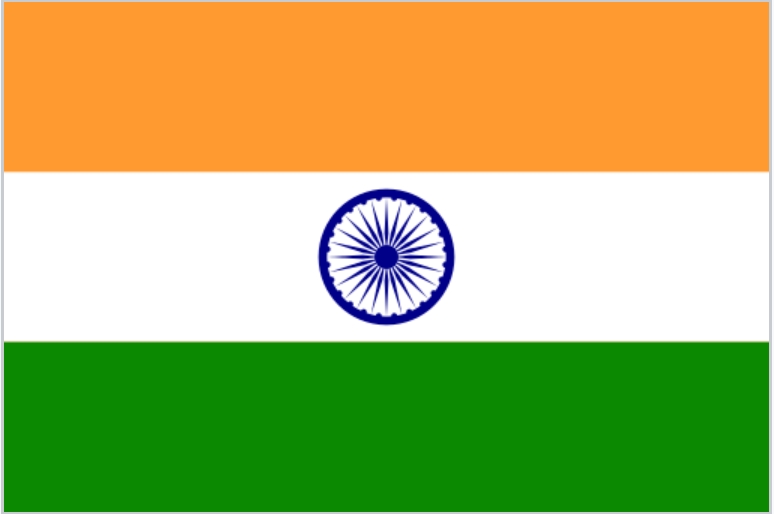



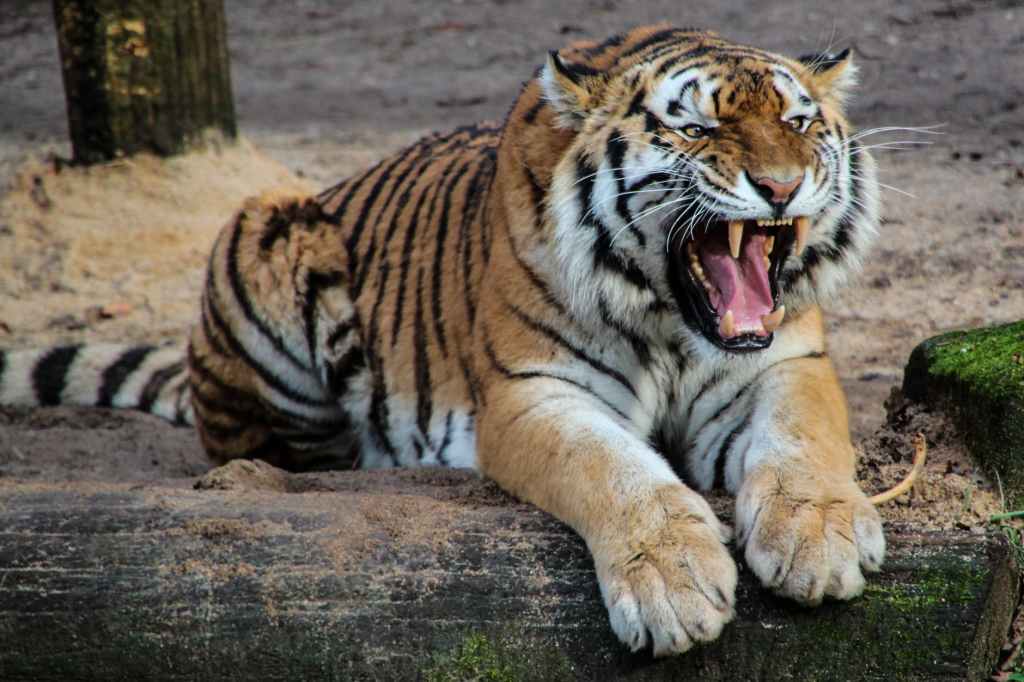
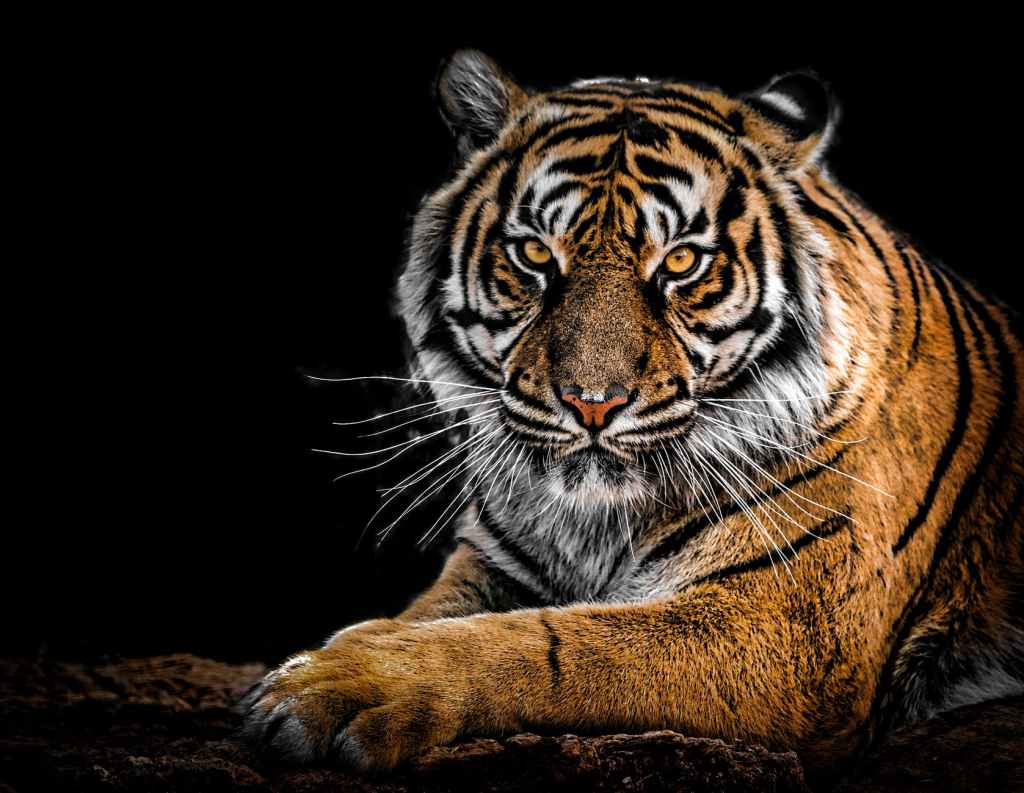



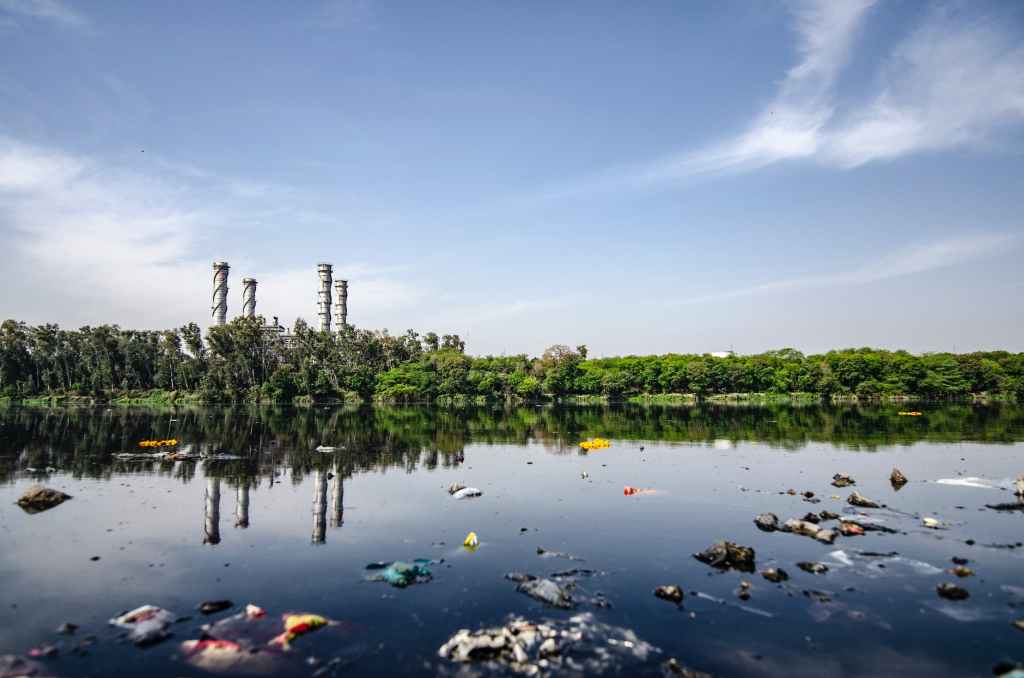
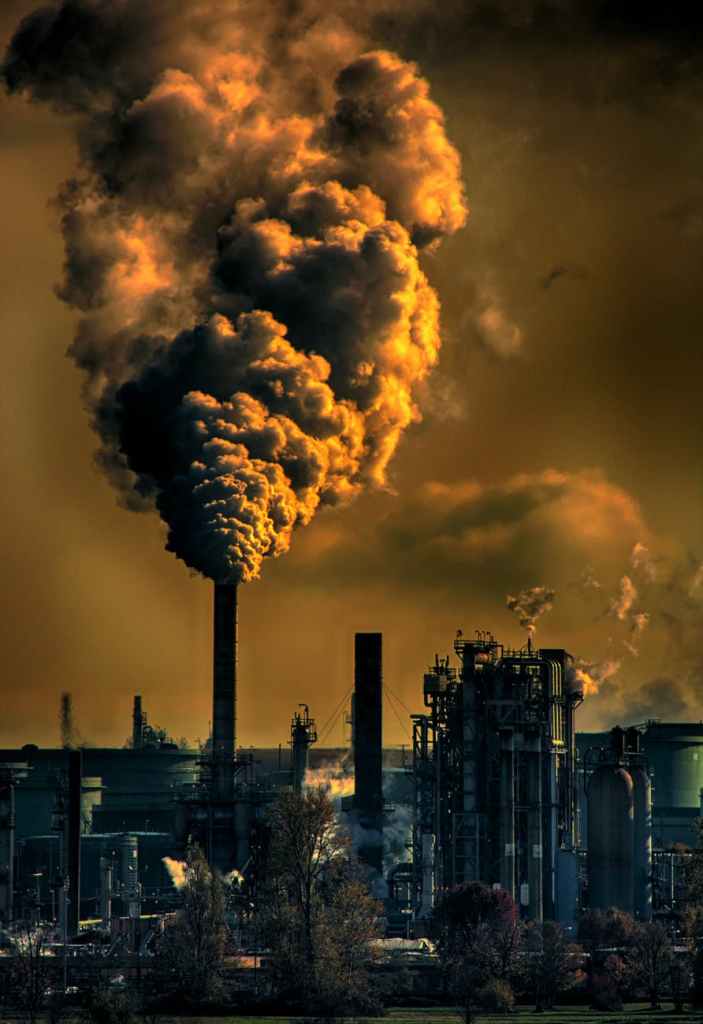



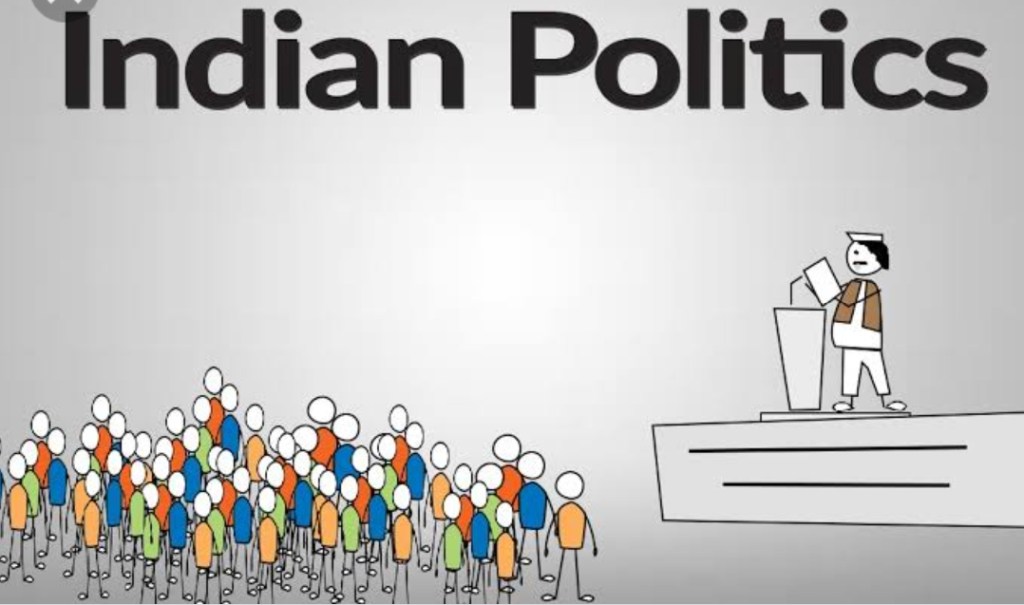

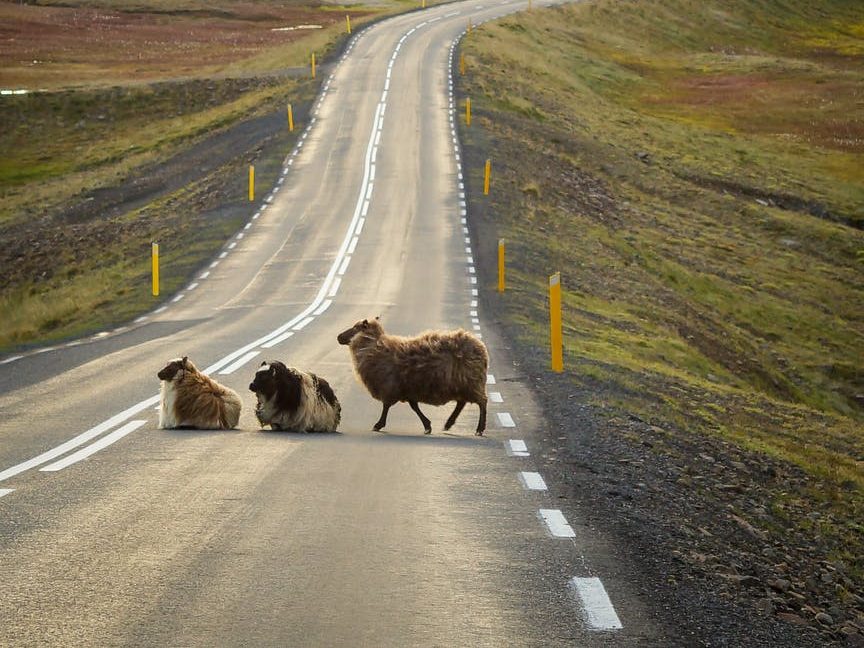

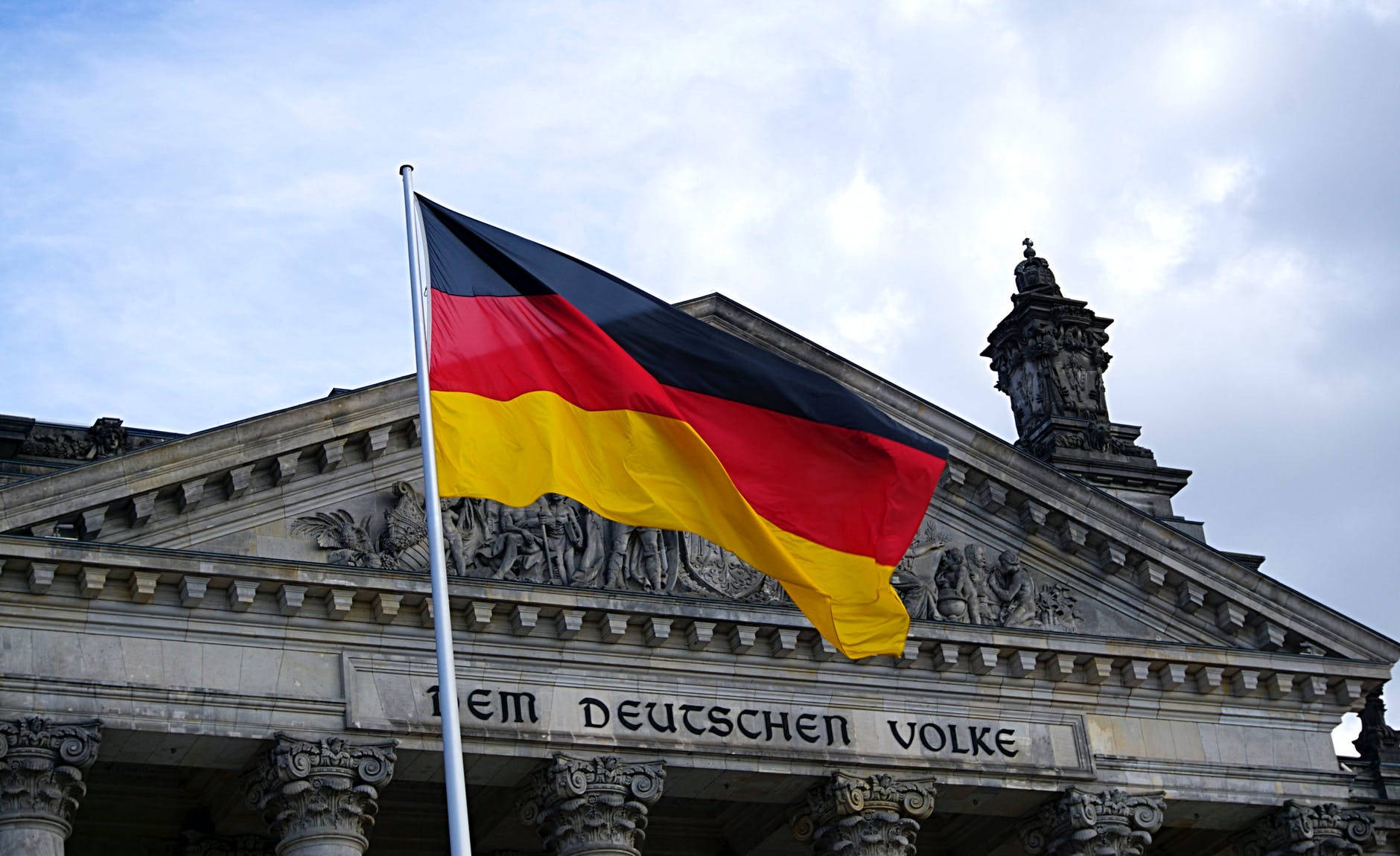


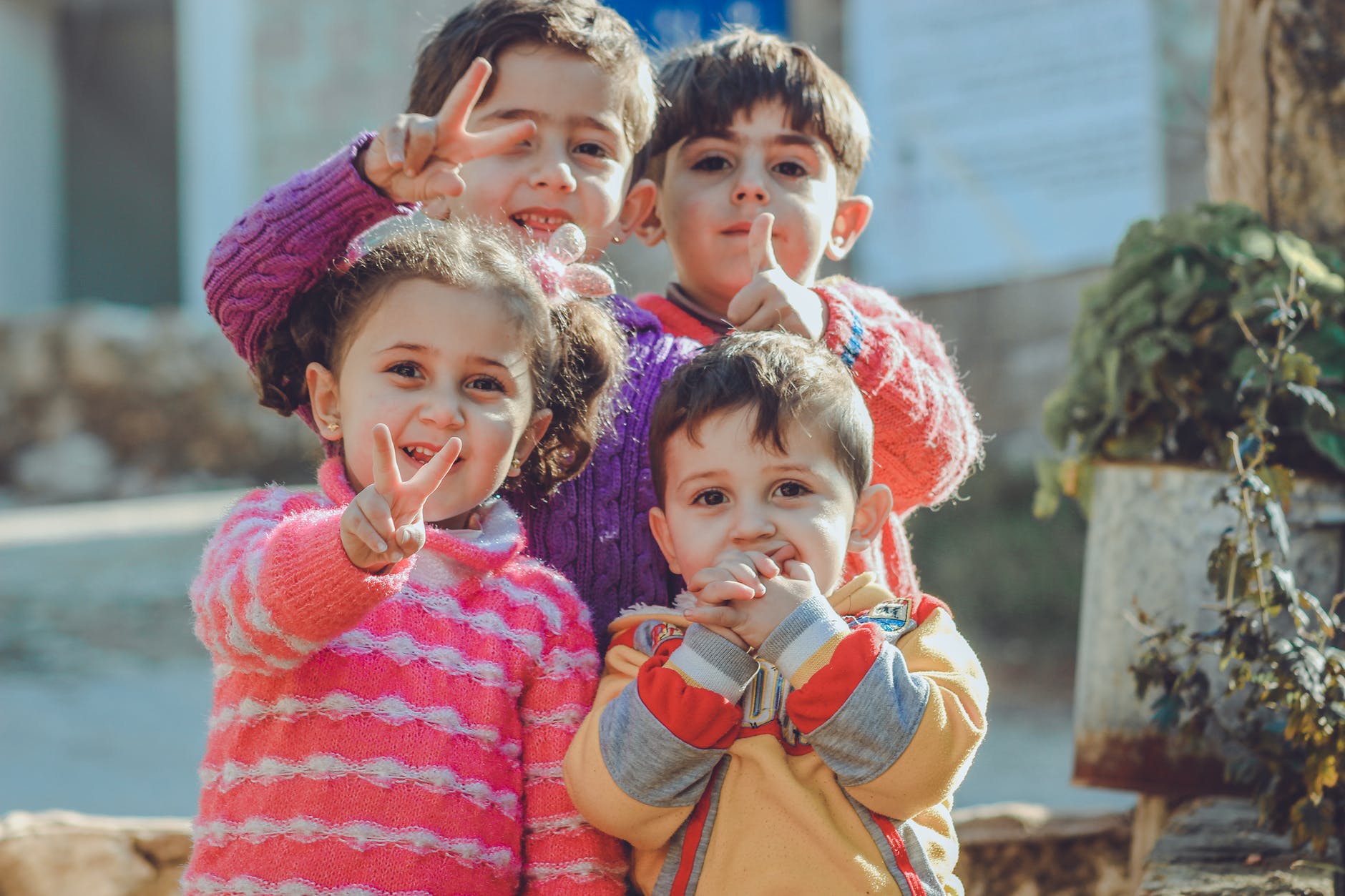
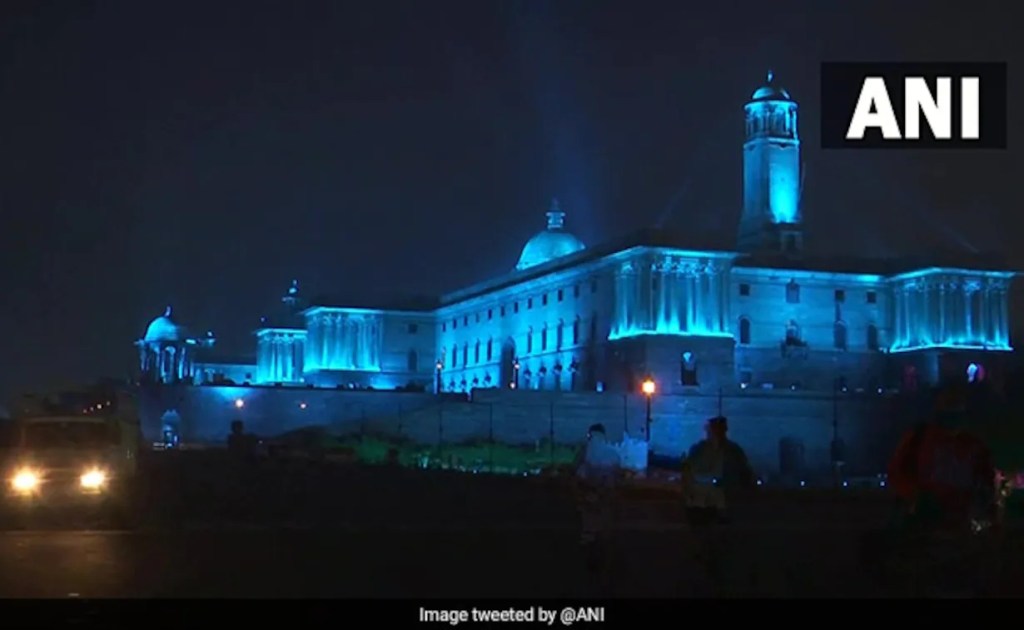












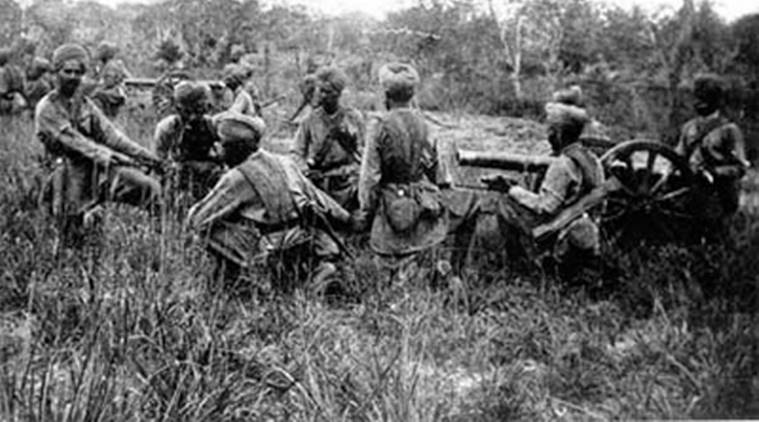

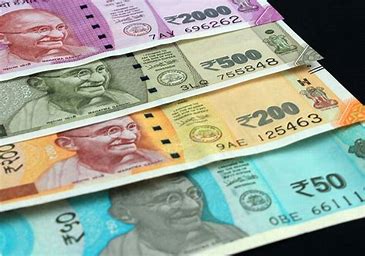




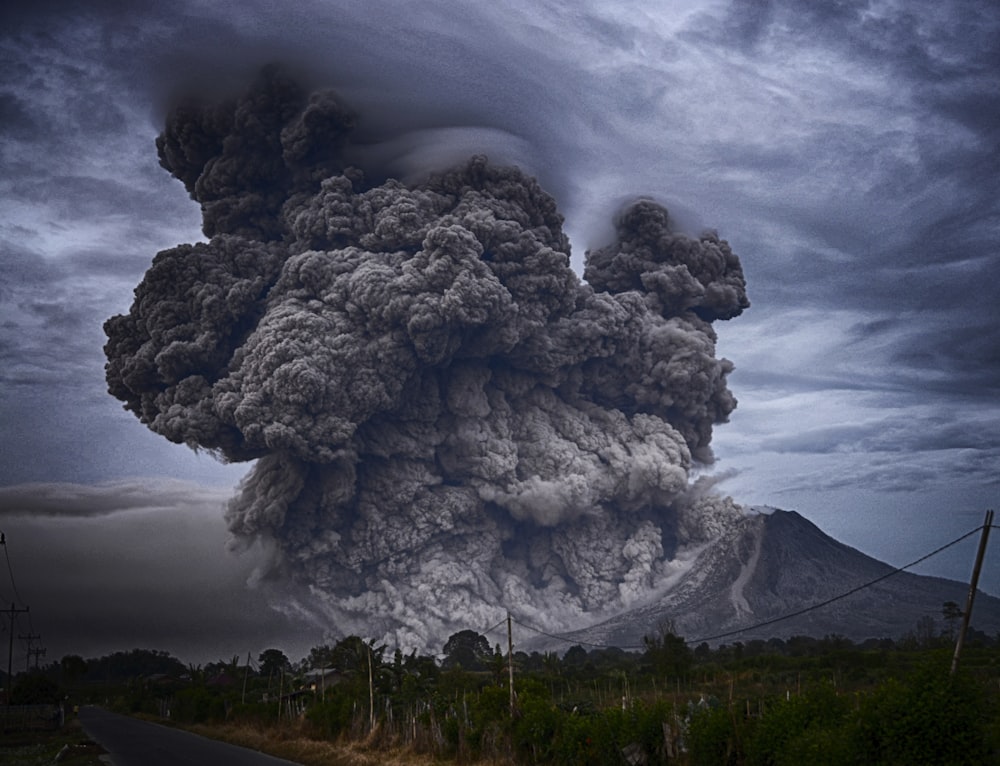





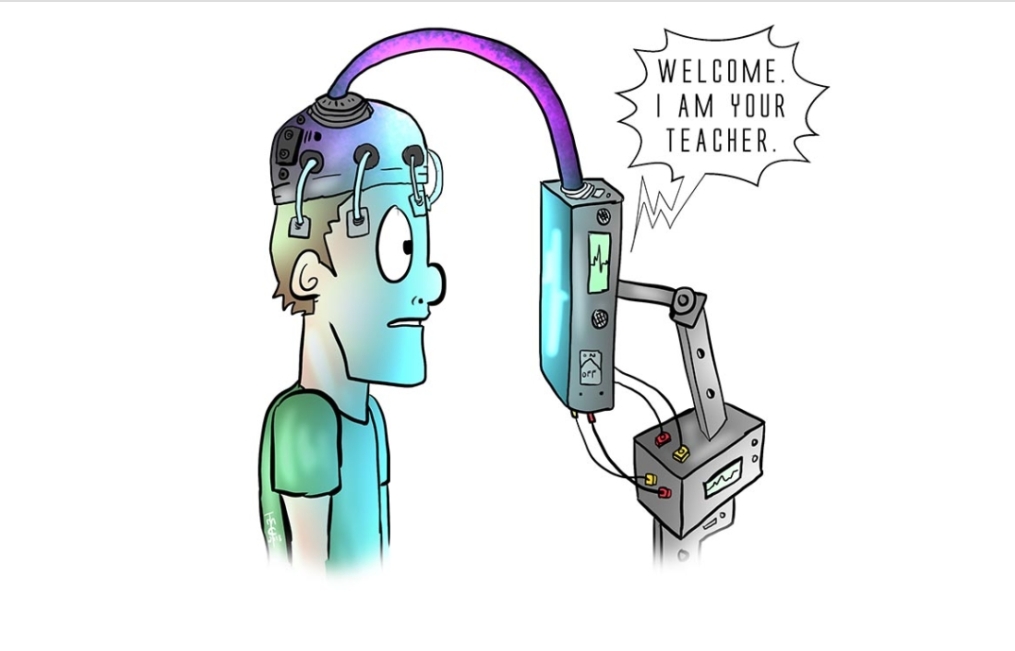



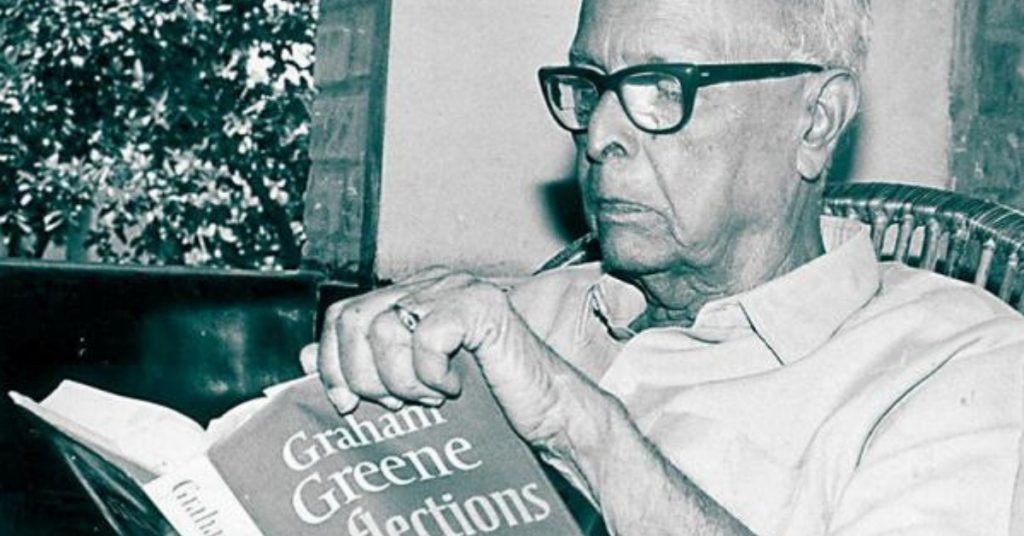







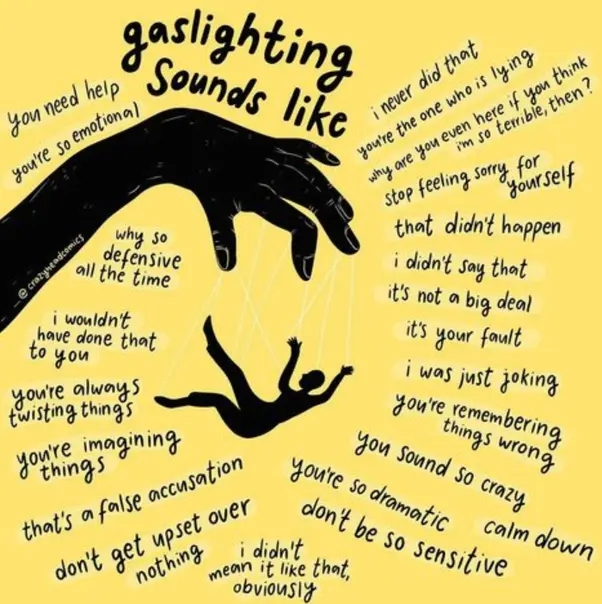
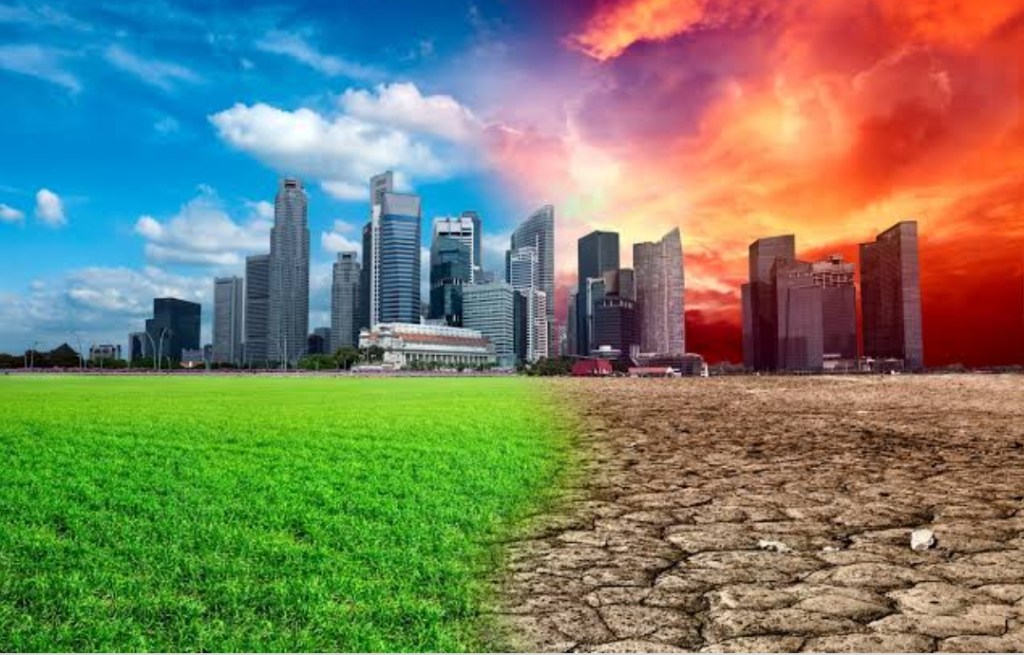
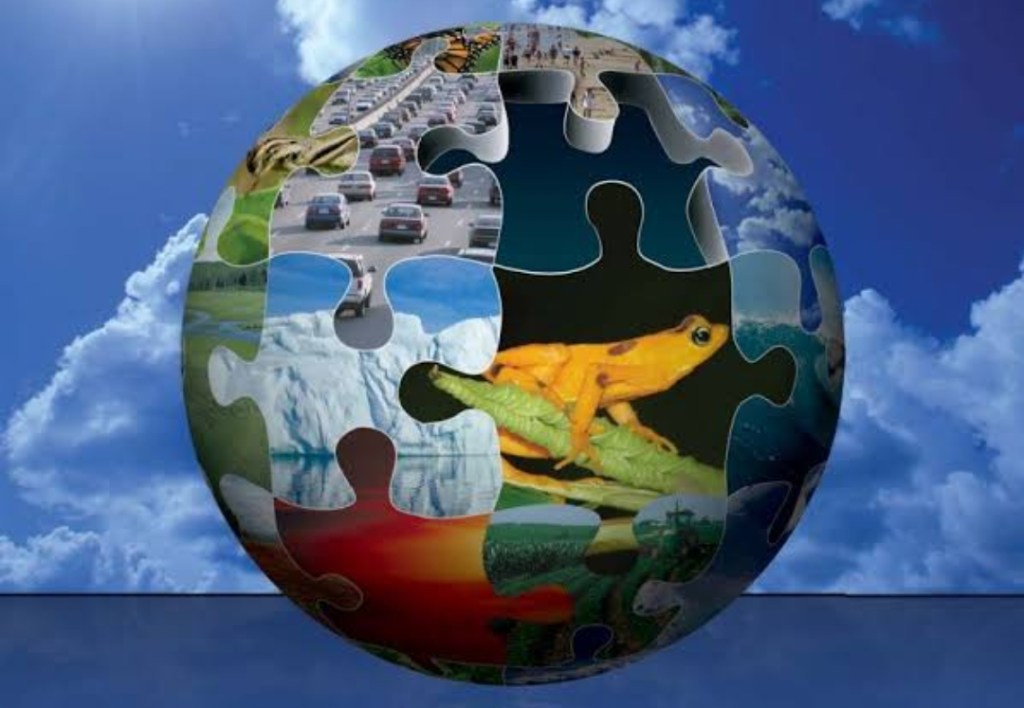


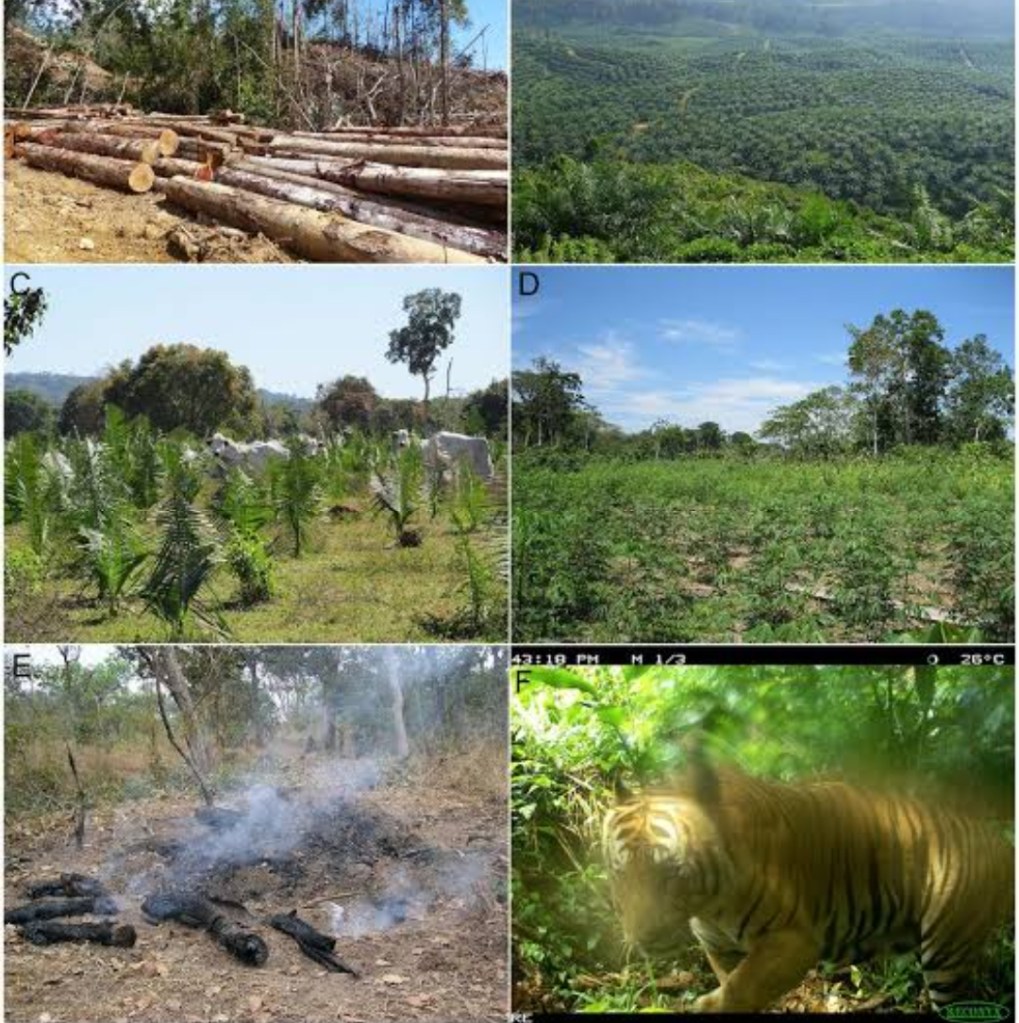

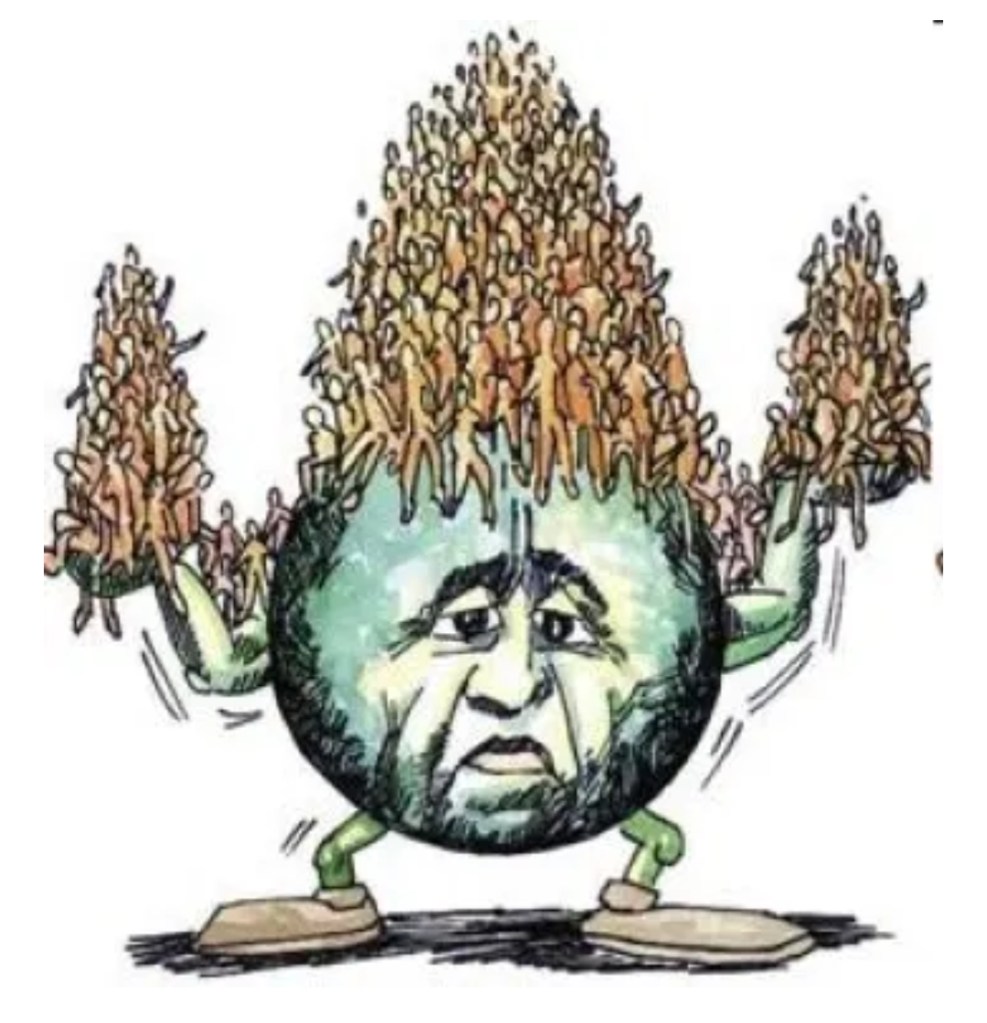



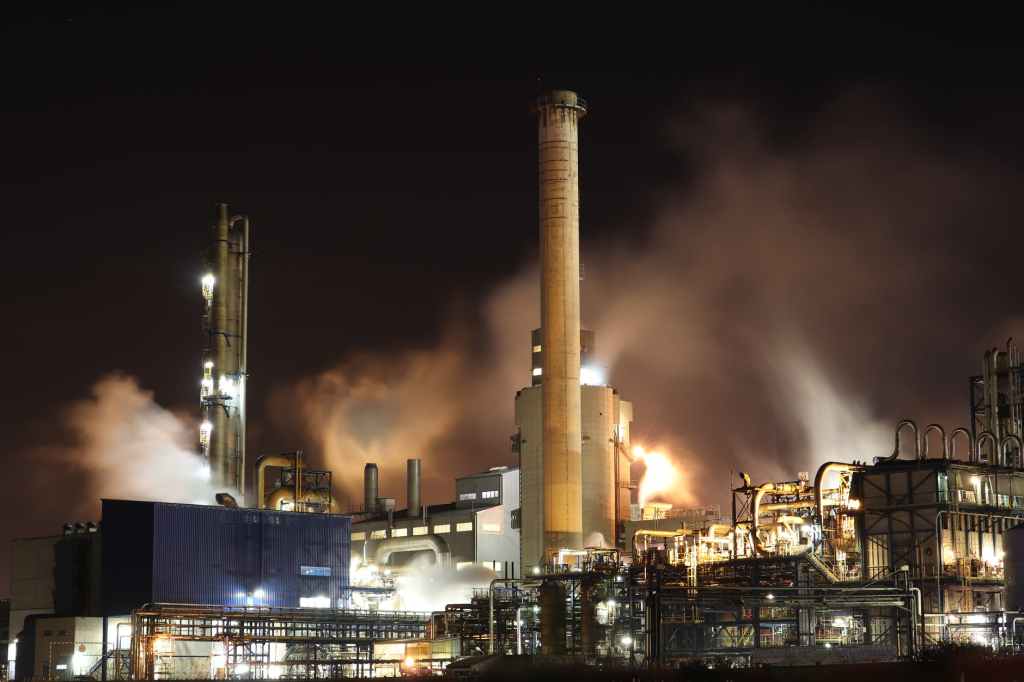





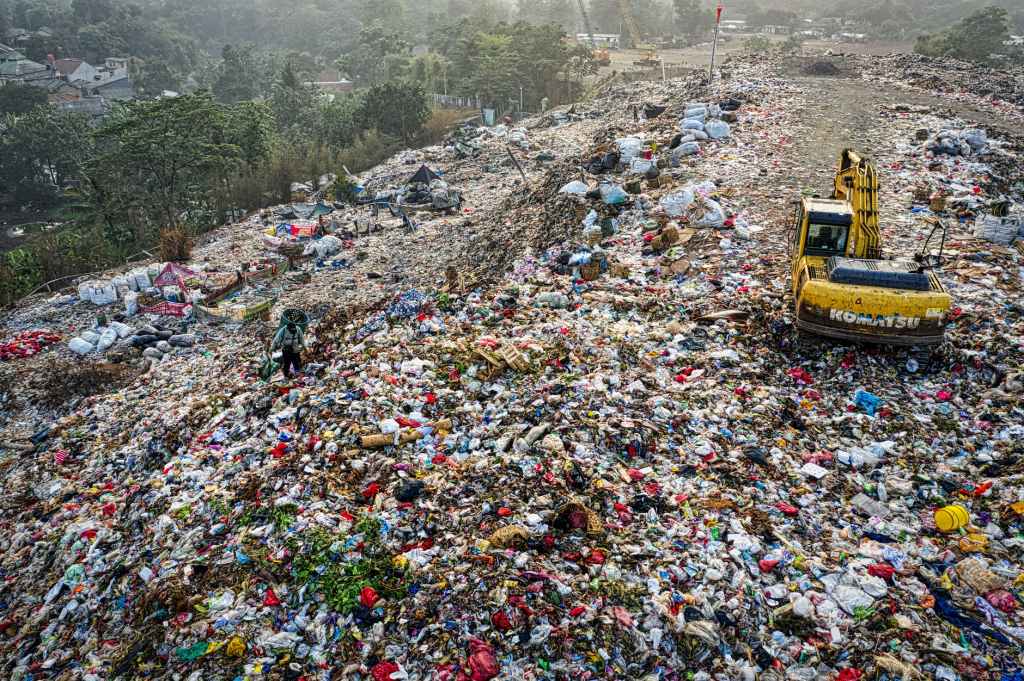
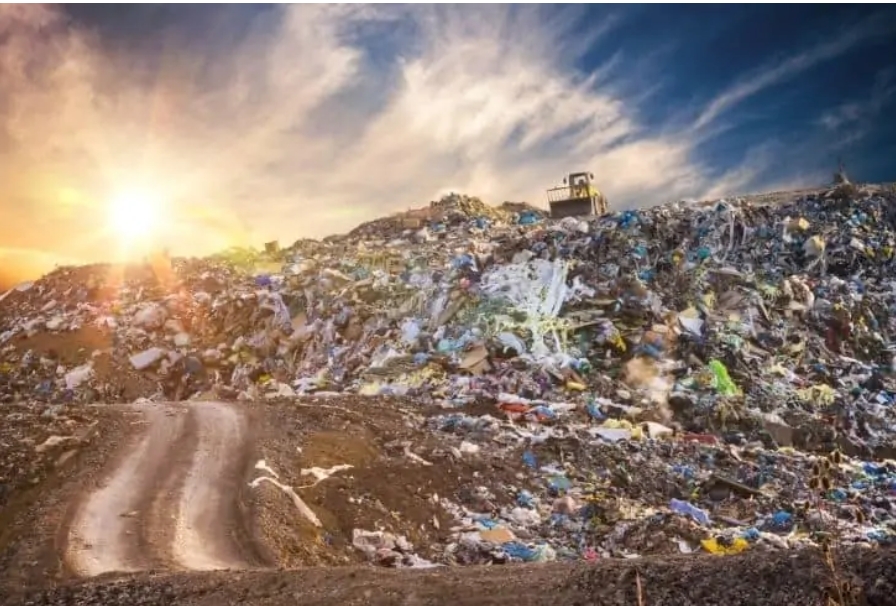
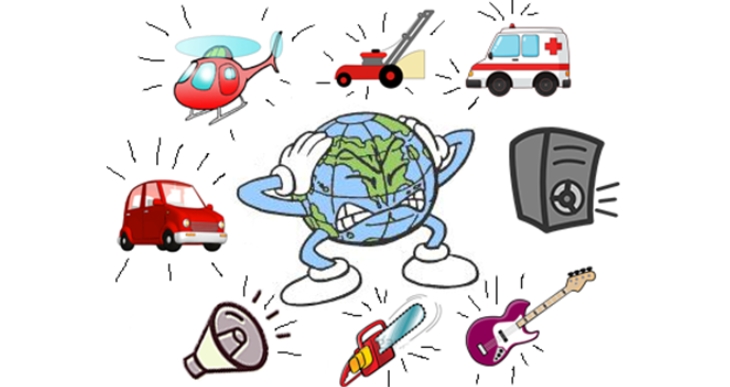
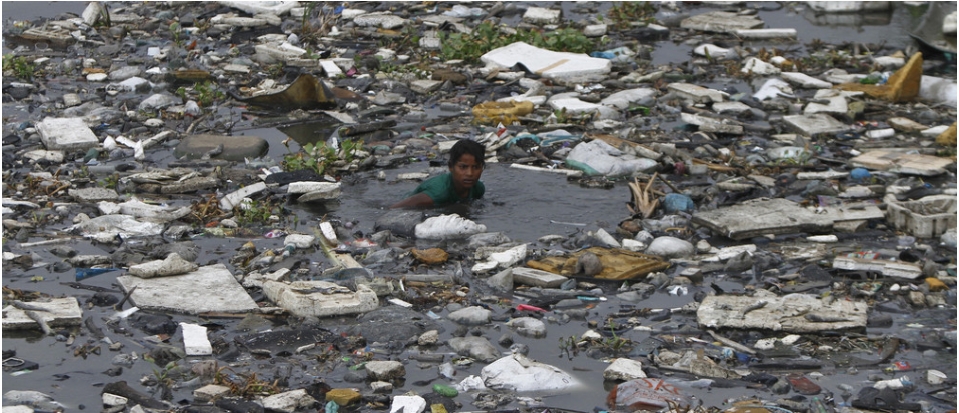









 Track2Training
You must be logged in to post a comment.