An Insight into Public Space and Women in India

By Kavita Dehalwar

This article delves into the complex relationship between women and public space in India. It explores the historical context, cultural influences, and contemporary challenges that shape women’s experiences in public spaces. Drawing on academic research, governmental reports, and advocacy literature, this article aims to shed light on the various issues women face and the potential solutions to create more inclusive and safe public spaces.

Introduction:

Public spaces are vital components of any society, providing arenas for social interaction, economic activities, and cultural expression. However, women’s experiences in public spaces can be profoundly shaped by cultural norms, historical factors, and social expectations. This article examines the multifaceted nature of women’s engagement with public spaces in India, drawing on academic studies, government reports, and advocacy literature.

Historical Context:

To understand the present dynamics, it is crucial to examine the historical context. India’s rich history is marked by patriarchal structures and gender-based hierarchies that have influenced societal attitudes towards women’s mobility and presence in public spaces. Cultural norms, religious beliefs, and traditional gender roles have collectively contributed to shaping the expectations around women’s behavior in public.

Research Findings:

Numerous studies highlight the challenges women face in public spaces in India. A study conducted by [Author et al., Year] found that street harassment is a pervasive issue, with a significant number of women reporting experiences of verbal abuse, unwanted advances, and intimidation. Another study by [Author et al., Year] examined the impact of public transportation on women’s mobility, revealing concerns about safety, harassment, and lack of gender-sensitive infrastructure.

The study by Sharma (2014) titled “Urban forms in planning and design” provides insights into the intricate relationship between urban planning and the design of public spaces. Sharma emphasizes the importance of understanding urban forms in shaping the environment and influencing social interactions. This perspective is crucial when examining the challenges faced by women in public spaces, as the design and planning of urban areas play a significant role in creating safe and inclusive environments.

Dehalwar (Year) expands on the dynamics of peri-urban areas, highlighting the interface between urban and rural realms. Understanding the characteristics of peri-urban spaces is essential when exploring women’s safety in areas undergoing rapid urbanization. This aligns with Mahadevia and Lathia’s (2019) study on women’s safety and public spaces, which specifically focuses on the Sabarmati riverfront in India. The lessons drawn from this case study contribute to the broader discourse on urban planning and women’s safety.

Chhibber’s (2002) research delves into the political participation of women in India, emphasizing the role of the household and public space. The findings underscore the interconnectedness of private and public spheres, indicating that the challenges women face in public spaces are intertwined with broader socio-political dynamics. This perspective is reinforced by Fernandes (1997), who explores the intersections of gender, family, and working-class politics in India, providing a holistic understanding of women’s experiences.

Roy and Bailey’s (2021) study on safety, public space, and the male gaze in Kolkata contributes to the analysis by addressing the nuanced ways in which women negotiate safety. The study recognizes the impact of societal perceptions and the male gaze on women’s experiences in public spaces, adding a cultural dimension to the discourse.

Arefi and Meyers (2003) provide a theoretical perspective on what constitutes “public” in public space, drawing from the case of Visakhapatnam, India. This theoretical framework is relevant when examining the challenges women face in claiming their space within the public realm. The definition of public space and its accessibility are critical elements influencing women’s sense of safety and inclusion.

Government Initiatives:

Recognizing the need for safer public spaces, the Indian government has implemented various initiatives to address the issues faced by women. The “Safe City” projects in cities like Delhi and Mumbai aim to enhance security through increased surveillance, better street lighting, and the deployment of female police officers. However, the effectiveness of these initiatives remains a subject of debate, with critics pointing out the need for a more comprehensive and nuanced approach.

Challenges and Solutions:

While progress has been made, significant challenges persist. Cultural norms, inadequate law enforcement, and the lack of gender-sensitive urban planning continue to hinder women’s full participation in public life. Solutions require a multi-pronged approach, encompassing legal reforms, community engagement, and the integration of gender perspectives in urban planning. Additionally, fostering a cultural shift through education and awareness campaigns is crucial to challenging ingrained stereotypes and prejudices.

Conclusion:

In conclusion, the analysis of these diverse studies underscores the importance of a multidisciplinary approach when exploring women’s experiences in public spaces in India. Urban forms, political dynamics, cultural perceptions, and the interplay between private and public realms are integral components that shape the challenges and opportunities for women in the public sphere. Addressing these complexities requires collaborative efforts from urban planners, policymakers, sociologists, and activists to create safer and more inclusive public spaces for women in India. The relationship between women and public spaces in India is a complex interplay of historical, cultural, and contemporary factors. While challenges persist, ongoing efforts by the government, civil society, and grassroots organizations offer hope for positive change. By acknowledging the multifaceted nature of the issue and implementing comprehensive solutions, India can work towards creating more inclusive and safe public spaces for women.

References:

Arefi, M., & Meyers, W. R. (2003). What is public about public space: The case of Visakhapatnam, India. Cities20(5), 331-339.

Chhibber, P. (2002). Why are some women politically active? The household, public space, and political participation in India. International Journal of Comparative Sociology43(3-5), 409-429.

Dehalwar, K. Understanding the Dynamics of Peri-Urban Areas: Navigating the Interface Between Urban and Rural Realms.

Dehalwar, K., & Sharma, S. N. (2023). Fundamentals of Research Writing and Uses of Research Methodologies.

Fernandes, L. (1997). Beyond public spaces and private spheres: gender, family, and Working-class politics in India. Feminist studies23(3), 525-547.

Mahadevia, D., & Lathia, S. (2019). Women’s safety and public spaces: Lessons from the Sabarmati riverfront, India. Urban Planning4(2), 154-168.

Roy, S., & Bailey, A. (2021). Safe in the City? Negotiating safety, public space and the male gaze in Kolkata, India. Cities117, 103321.

Sharma, S. N. (2014). Urban forms in planning and design. International Journal of Research1(1), 7-16.

Sharma, S. N. (2016). Introduction to Sociology. New Perspectives in Sociology and Allied Fields, 1.

FEMINISM

N kavya

Feminism is a range of socio-political movements and ideologies that aim to define and establish the political, economic, personal, and social equality of the sexes. Feminism incorporates the position that society prioritizes the male point of view and that women are treated unjustly in these societies.

Who started Feminism ?

Mary Wollstonecraft is seen by many as a founder of feminism due to her 1792 book titled A Vindication of the Rights of Woman in which she argues for women’s education. Charles Fourier, a utopian socialist and French philosopher are credited with having coined the word “féminisme” in 1837.

The important aspect of feminism:

1. Feminism is defined as the belief in the social, political, and economic equality of the sexes.


2. The goal of feminism is to challenge the systemic inequalities women face daily.


3. Contrary to popular belief feminism has nothing to do with belittling men feminism does support sexism against either gender. Feminism works towards equality, not female superiority.


4. Feminists respect individual, informed choices and believe there shouldn’t be a double standard in judging a person. Everyone has the right to sexual autonomy and the ability to make decisions about when, how, and with whom to conduct their sexual life.


5. There isn’t just one type of feminism, there are a variety of feminist groups including girlie feminists, third-wave feminists, pro-sex feminists, and so on. All these groups aim to deal with different types of discrimination women, and sometimes men, face.


6. Women earn 78 cents for every dollar a man makes.


7. Only 17% of the seats in Congress are held by women.


8. Although 48% of law school graduates and 45% of law firm associates are female, women make up only 22% of federal-level and 26% of state-level judgeships.


9. Even in the 10 top paying jobs for women, females earn less than men; only one career, speech pathology, pays the same regardless of gender.


10. Despite previous attempts to ratify a UN treaty guaranteeing the elimination of all forms of discrimination against women, the U.S. refuses to support an international bill of rights for women signed by nearly every other nation on the planet.


11. What feminists want the world to know, or at least acknowledge is the different ways men and women are treated, and although there have been great strides towards equality, women and men are far from playing on the same field.

The First Wave of Feminism:

This first wave of feminism activism included mass demonstrations, the publishing of newspapers, organized debates, and the establishment of international women’s organizations. At around the same time, women became more active in communist, socialist and social democratic parties because increasing numbers of women began to work outside the home in factories and offices. Women were first allowed to go to university in the early 20th century, having both a career and a family. In certain countries, when fascist parties gained power the feminist movement was banned. Women started organizing again after the end of the Second World War, and they soon gained equal political rights in most European countries, with women’s emancipation becoming an important aim and most women being allowed to take on full-time jobs, divorce their husbands and go to university.

The Second Wave of Feminism:

The second wave of feminism aimed to achieve ‘women’s liberation, different groups had different ideas about how this should be done. Liberal feminists wanted better equality laws and reform of institutions such as schools, churches, and the media. Radical feminists argued that the root cause of women’s inequality is patriarchy: men, as a group, oppress women. They also focused on violence against women by men and started to talk about violence in the family, and rape. Socialist feminists argued that it is a combination of patriarchy and capitalism that causes women’s oppression. The second wave of feminism also resulted in new areas of science: women’s studies became a discipline to be studied at university, and books began to be published about women’s achievements in literature, music, and science and recording women’s previously unwritten history.

The women’s movement played an important role in the drafting of international documents about women’s rights, such as the Universal Declaration of Human Rights and the Convention on the Elimination of all Forms of Discrimination Against Women (CEDAW, 1979).

The Third Wave of Feminism:

The third wave of feminism mainly refers to the American movement in the 1990s, and was a reaction to the backlash of conservative media and politicians announcing the end of feminism or referring to ‘post-feminism’.t the third wave of feminism can be characterized by increased awareness of overlapping categories, such as race, class, gender, sexual orientation. More emphasis was also placed on racial issues, including the status of women in other parts of the world (global feminism). This was also a moment when several feminist non-governmental organizations were established, but focused on specific feminist issues, rather than claiming to represent general feminist ideas. Third-wave feminism actively uses media and pop culture to promote its ideas and to run activities, for example by publishing blogs or e-zines. It focuses on bringing feminism closer to people’s daily lives. The main issues that third-wave feminists are concerned about include: sexual harassment, domestic violence, the pay gap between men and women, eating disorders and body image, sexual and reproductive rights, honor crimes, and female genital mutilation.

The Fourth Wave of Feminism:

The term cyberfeminism is used to describe the work of feminists interested in theorizing, critiquing, and making use of the Internet, cyberspace, and new media technologies in general. The term and movement grew out of ‘third-wave’ feminism. Cyberfeminism is considered to be a predecessor of ‘networked feminism’, which refers generally to feminism on the Internet: for example, mobilizing people to take action against sexism, misogyny, or gender-based violence against women. One example is the online movement in 2017, which was a response on social networks from women all over the world to the case of Harvey Weinstein, a Hollywood producer who was accused of sexually harassing female staff in the movie industry.

Feminism Activists in India:

1. Aranya Johar. 2. Kamla Bhasin. 3. Aruna Roy. 4. Vandana Shiva. 5. Medha Patkar. 6. Manasi Pradhan. 7. Urvashi Butalia. 8. Laxmi Agarwal. 9. Deepa Malik. 10. Swati Maliwal

Conclusion:

Feminism can be seen as a movement to put an end to sexism, sexist exploitation, and oppression and to achieve full gender equality in law and practice. The women’s movement is made up of women and men who work and fight to achieve gender equality and to improve the lives of women as a social group.

The Evolution of Feminism

If there is one thing I’ve learned in life, it is the power of using your voice.

Michelle Obama

Feminism is not a new term it is the most controversial topic when you can get across to. Many believe this label has been a while for now but the fact is it has been there for years. Isn’t that fascinating?
There have been distinguished waves that served different purposes each time. It starts with the first wave which begins from 1848 to 1920. First-wave feminism is not the term used to describe the earliest feminist thinkers in history. It alludes to the suffragettes of the late 19th and early 20th centuries, who led the first long-lasting political campaign in the West to bring about political justice for women. The first-wavers campaigned tenaciously for the right to vote for over 70 years, marching, lecturing, protesting, and being arrested, mocked, and subjected to violence. The Seneca Falls conference in 1848 serves as the primary starting point for the first wave. Nearly 200 women gathered at a went to the new church at that time to talk about “the social, civil, and religious position and privileges of women.” Following extensive discussion, the audience approved 12 resolutions advocating for particular equal rights, such as the opportunity to vote. The 19th Amendment was the first wave’s most significant piece of legislation. The movement as a whole started to fragment, despite specific groups continuing to struggle for abortion rights, equality in education and employment, and the right to vote for black women. It lost its unifying purpose and strong cultural impetus, and it wouldn’t find one again until the second wave started to gain speed in the 1960s.
The second wave from 1963 to 1980 started with Betty Friedan’s 1963 publication The Feminine Mystique. However, The Feminine Mystique was a trend. There were notable feminist theorists before Friedan who would later be linked to the second wave, most notably Simone de Beauvoir, whose Second Sex was published in France in 1949 and the US in 1953. In three years, 3 million copies were sold. The second wave aimed to provide women the ability to apply for mortgages and use their names to carry credit cards. It was successful in making marital rape illegal, raising awareness of domestic abuse, and constructing shelters for women escaping both rape and domestic violence. The legal efforts to define and prohibit workplace sexual harassment were successful.
The third wave has been existing since 1991 Third-wave feminism was completely different from second-wave feminism in terms of how it spoke and thought, but it also lacked the second-impressive wave’s cultural power. Since the third wave was a widespread movement without a clear objective, it lacks a single law or significant societal change comparable to the 19th wave.
The fourth wave is existing in the current period The third wave, unlike the 19th wave, did not result in single legislation or a fundamental shift in society since it was a broad movement without a specific goal. While most of the media’s coverage of portrays it as a third-wave feminism-dominated movement, it appears to be based on a movement that lacks the third-wave’s distinctive dissemination. It has a distinct vibe. Even though the majority of media coverage of portrays it as a third-wave feminism-dominated movement, it seems to be founded on a movement without the third-characteristic wave’s dispersion. It exudes a certain atmosphere. The most influential males in our culture are now being held responsible for their actions by the fourth wave. It has started a critical criticism of the power structures that enable predators to prey on women without consequence.

ECOFEMINISM

Ecofeminism or ecological feminism is the most important approach within ecocriticism and ecological activism. The writings of Annette Kolodny gave impetus to what has come to be called ecofeminism. The term ecofeminism was coined by French feminist Francoise d’Eaubonne in 1974. It is a branch of ecocriticism and feminism that examines the connection between women and nature. Eco feminism can be considered as the analysis of the role attribuntasies of the natural environment, by male authors. It also includes the study of specifically feminine conceptions of the environment in the neglected nature writings by female authors. According to Pramod K Nayar, ecofeminism argue that patriarchal society’s values and beliefs have resulted in the oppression of both women and nature. He also says that it ignores
women’s work, knowledge and situatedness. The situatedness of women is her immediate location in nature, where the relationship of woman with environment is far more intimate than that of man’s. In simple terms this philosophy examines the ways both nature and women are treated by patriarchal society. The earlier binaries in Western thought and literature was that of nature versus culture. Further eco feminists interrogate the effect of gender categories. That is the masculine culture as objective, rational, mind and public and feminine as subjective, emotional, body and private. And these binaries are used in order to demonstrate the ways in which man is equated with culture and woman with nature. Images like “mother nature” indicate two things. They are the naturalization of woman and feminization of nature. Thus it illustrates how men dominate nature and women as exploitable objects. The works of Vandana Shiva, Mary Mellor, Ariel Salleh has generated nuanced readings of the relationship between gender and nature.Ecofeminism can be classified into two, radical ecofeminism and cultural ecofeminism. One of the assumptions of radical ecofeminism is that the dominant patriarchal society equates nature and women in order to degrade both. In fact, in it’s emergence, ecofeminism tends to be radical revealing practices of patriarchal domination of both. So radical ecofeminism targets the historical and cultural
backgrounds that equates the feminine and nature with negative and commodifiable attributes, while men have been elevated as capable of establishing order. Such a socio economic structure easily facilitates the exploitation of women and nature, for cheap labour and resources.
Cultural ecofeminism promotes an association between women and the environment by focusing on the more intimate and organic relationship between them. As per the anthropologically assigned gender roles women are nurturers of family. Culture ecofeminism has roots in nature based religions, goddess and nature worship. It is a way of redeeming both the spirituality of nature and women’s instrumental role in that spirituality. The cultural myths and
spirituality of Native America, Australia and African tribal populace underscores this mutual bonding between women and nature. Because they are built on a mother goddess instead of omniscient father God.
Vegetarian ecofeminism, materialist ecofeminism and spiritualist ecofeminism are some of the new branches of ecofeminism. A major theme within ecofeminism is the belief that there is a strong connection between the domination of women and the domination of nature, and that both must be eradicated in order to end oppression. Vegetarian ecofeminism aims to include the domination of not only the environment but also of nonhuman animals to the list. Materialist ecofeminism connects institutions like labour, power and property as the source of domination
over women and nature. This belief stresses that the sphere of production that is men and factory is dependent on the production of reproduction ( women and family). Materialist ecofeminists thus call for quality in labour distribution, the recognition of the contribution of women’s work.And they suggest to expand the very definition of ‘work’ to include women’s work. In spiritualist ecofeminism, a turn to myth and theology is advocated against materialism because of the
importance given to women, nature and all forms of life. They argue that pre-modern culture have always treated nature with respect and give importance to women’s knowledge, female body and female sexuality. Thus this philosophy turned to Native American religions, godess worship in Hinduism and other native cultures. Vandana Shiva, glorifies Vedic period of Indian History, for its emphasis on symbiotic values in her work Staying Alive (1989).

Feminism in Margaret Atwood’s poem “This is a Photograph of Me”

Margaret Atwood is a well known feminist author who writes about the oppression of women in a patriarchal society. Her poem This is a Photograph of Me also shares this idea symbolically through the image of a photograph. The title of the poem itself shows the passive role of women in society. In a society which is regulated by men the role of women is passive. But without them the society will not survive. Atwood begins the poem by describing the photograph. It is a blurred photograph which was taken some time ago. And throughout the lines she continues the description of the photograph’s each element. There is the branch or part of a tree in the left hand side of the photograph, which has emerged to the right hand side. This branch without any roots can be considered as the role of women in a society who is placed on the left side or weaker side. But on the right hand side of the photograph a frame house is visible which is associated with men. The background of the photograph is a lake which represents the society. And beyond that lake there is low hills. The hills and lakes keep the women in shadow. Margaret Atwood is trying to show that the society and men exploits the true potential of women. The narrator says that I’m in the lake, in the center of the picture. But it is difficult to say precisely where she is. This shows the nature of a patriarchal society. The place of womanhood in a society is mandatory. However the world tries, the women’s place cannot be underwritten. Atwood focuses on this truth by saying that her place in the photograph is not clear. But when we look long enough everyone will be able to see her place in the photograph or the society itself. Through the image of a photograph Atwood strongly presents the oppression faced by women. Photograph stands for history which is not clear. The contribution of women to the society is necessary but the history created by men does not praise of give importance to them. Women are always hidden or drowned as Atwood says. This truth is underlined by Atwood in this feministic poem, This is a Photograph of Me.

Asima Chatterjee- First Indian Woman to Earn a Doctorate in Science

India has always put a feather on the cap when it comes to its contribution to the field of science and development. Throughout history, it is evident that along with men, Indian women too have been prominent contributors to science. One such great personality in the field of science was Ms. Asima Chatterjee

Prof. Asima Chatterjee was born in 1917 in Calcutta, British India. In spite of the regressive ideologies people possessed for women back then, Chatterjee’s family was extremely supportive of her education and encouraged her to be an academic. Her father was very interested in botany and Chatterjee shared in his interest. She graduated with honors in chemistry from the Scottish Church College of the University of Calcutta in 1936.

Asima Chatterjee received a master’s degree (1938) and a doctorate (1944) in organic chemistry from the University of Calcutta’s Raja bazar Science College campus, making her the first Indian woman to earn a doctoral degree in the field of science. She was acknowledged as the Doyenne of Chemistry. She specialized in synthetic organic chemistry and plant products as part of her doctoral research. Her research was directed by Professor Prafulla Kumar Bose, one of the pioneers in natural product chemistry in India. she was also inspired by the doyens of Indian science, like Acharya Prafulla Chandra Ray, Professor Prafulla Chandra Mitra, and Professor Janendra Nath Mukherjee, who influenced her career as a natural product scientist. In addition, she had research experience from the University of Wisconsin, Madison, and Caltech with László Zechmeister. Chatterjee’s research focused on natural products chemistry and led to the development of anti-convulsive, anti-malarial, and chemotherapy drugs. She made significant contributions in the field of medicinal chemistry with special reference to alkaloids, coumarins and terpenoids, analytical chemistry, and mechanistic organic chemistry over a period of 40 years. Her work led to the development of an epilepsy drug called Ayush-56 and several anti-malarial drugs.

She published around 400 papers in national and international journals and more than a score of review articles in reputed serial volumes. In addition to many citations in her work, much of it has been included in several textbooks.

She has won several prestigious awards such as the S S Bhatnagar award, the C V Raman award, and the P C Ray award; and is the recipient of the Padma Bhushan, the third-highest civilian award, in recognition of her contributions to the field of science. In addition to these accolades, she was also the first woman to be elected as the General President of the Indian Science Congress, a premier institution that oversees research in science. She was also nominated by the President of India as a Member of the Rajya Sabha from February 1982 to May 1990.

On the request of the late Professor Satyendra Nath Bose, FRS, she wrote Sarai Madhyamic Rasayan, a book in Bengali on chemistry for secondary school students, published by Bangiya Bijnan Parishad, an Institute for the Popularisation of Science founded by SN Bose himself.

In an era where people saw women as mere “property” that belonged to her husband, she rose to earn a name for herself. Due to her impeccable contribution to the field of science, she is truly an inspiration to many young girls. Being one of a kind, her achievements will be lauded for many more years to come.

PLIGHT OF WOMEN IN AFGHANISTAN

BY DAKSHITA NAITHANI

The Afghan women, maybe more than anybody else, have dreaded the Taliban’s return. There have been many advances in women’s rights over the last 20 years, which appear to be set to erase nearly overnight.

A quick lesson from history…

The Taliban, a political and military force, is said to have started in Islamic schools in Northern Pakistan in the early 1990s. Its aim was to restore order in Afghanistan following the withdrawal of Soviet troops in 1989, as well as to impose a harsh form of Sharia law. By 1998, the organisation had seized 90% of Afghanistan’s territory.

Once in control, the organisation garnered worldwide condemnation for a slew of human-rights violations. The ban on female education above the age of ten as well as harsh limitations on day-to-day liberties, were among the stringent mores imposed on women and its influence has frequently threatened to expand beyond, to places like Pakistan, where the organisation memorably shot teenager Malala Yousafzai in 2012. Women were treated worse than at any previous period or by any other culture throughout its rule (1996–2001). They were prohibited from working, leaving the house without a male escort, seeking medical assistance from a male doctor, and being compelled to cover themselves from head to toe, including their eyes. Women who had previously worked as physicians and teachers were compelled to become beggars or even prostitutes in order to feed their families during the Taliban’s rule.

Following the 9/11 attacks, it was thought that the Taliban were harbouring Al-Qaeda soldiers, thus an US-led international operation was started against Afghanistan. As a consequence, the Taliban were deposed from power, an Afghan government was established, and soldiers occupied the country for 20 years. It destabilised several regions of the nation due to battles with US and UK forces on a regular basis, and Afghan people were continued to be assaulted. Many would agree that the political and cultural status of Afghan women had improved significantly since the Taliban’s collapse in late 2001.

The Bush administration’s acceptance of women’s rights and empowerment as rationale for its assault on the Taliban is long gone. So it was under the Barack Obama administration, when then-Secretary of State Hillary Clinton stated that the Taliban’s repudiation of al-Qaida and promise to support the Afghan constitution and safeguard women’s rights were preconditions for US discussions with them. The rejection of al-Qaida has yet to be declared openly and publicly less than 10 years later; the constitutional order and women’s rights are still subject to intra-Afghan talks and will be influenced by the changing balance of military power.

In February 2020, US-Taliban peace talks were concluded, with the US pledging a quiet departure in exchange for an end to hostilities. Afghan leaders and top military generals have warned that the government will collapse without foreign assistance. It looks like the worst has transpired only weeks before Biden’s deadline of September 11th.

The Taliban rule wreaked havoc on the institutions and the economy, which had already been ravaged by decades of conflict and the Soviet scorched-earth counterinsurgency policy.

The post-Taliban constitution of 2004 granted Afghan women a wide range of rights, and the political epoch brought social and economic progress, which greatly improved the socioeconomic situation. From a crumbling health-care system with almost no healthcare available to women during the Taliban years, the post regime built 3,135 functional facilities by 2018, giving more than 80 percent of Afghans access to a medical facility within two hours’ drive.

 Less than 10% of females were enrolled in elementary schools in 2003; by 2017, that figure had risen to 33%, while female secondary school attendance increased from 6% to 39%. As a result, 3.5 million Afghan females were enrolled in education, with 100,000 of them enrolled in academic institutions. Women’s life expectancy increased from 56 to 66 years in 2017 and maternal mortality fell from 1,100 per 100,000 live births in 2000 to 396 per 100,000 in 2015. By 2020, women made up 21% of Afghan public workers, including 16% of top management positions, and 27% of Afghan parliamentarians.

 These benefits for women have been dispersed inequitably, with women in metropolitan areas benefiting considerably more than women in rural regions. Despite formal legal empowerment, life for many rural women has not improved much since the Taliban era, notably in Pashtun regions but also among other rural minority groups. Many Afghan males are staunch conservatives. Families often let their daughters to complete a primary or secondary education before proceeding with planned marriages. The burqa is worn by the majority of Afghan women in rural regions without any pushing from the Taliban.

What is the situation for women in Afghanistan now?

Women’s rights in Afghan had arguably maintained pace with many other Western countries prior to the 1970s. Women were granted the right to vote in 1919, one year after women in the United Kingdom. In the 1950s, gender segregation was eliminated, and in the 1960s, a constitution was enacted that included women in political life. As the region became more unstable in the 1970s, these rights were steadily eroded.

Only 38% of the international humanitarian response plan for Afghanistan is financed as of August 2021. This gap might result in the loss of specialised protection services for 1.2 million children, putting them at risk of abuse, recruitment, child labour, early and forced marriages, and sex abuse. About 1.4 million females, many of whom are survivors of domestic abuse, would be left without access to safe spaces where they may receive full care.

Females, who have experienced life with rights and freedoms, are among the most exposed as a result of the Taliban’s fast progress in Afghanistan. As the Taliban capture control of Kabul, they risk losing their hard-won achievements.

Those cries for aid may be too late as the capital city falls into the clutches of Islamist rebels. There have been several stories of the Taliban going door-to-door and compiling a list of women and girls aged 12 to 45 who are then compelled to marry Taliban warriors. Women are told that they cannot leave the house without a male escort, that they cannot work or study, and that they cannot wear anything they want. Schools are also being shuttered.

There is a lot to lose for a whole generation of Afghan women who entered public life – legislators, journalists, local governors, physicians, nurses, teachers, and public administrators. While they worked alongside male colleagues and in communities that were unfamiliar with people in positions of power to help establish a truly democratic civil society, they also wanted to pave the way for future generations to follow in their footsteps.

The Taliban offers itself a broad range of possibilities by claiming that they will “protect” women’s rights under sharia but refusing to explain how women’s rights and life in Afghanistan will alter if they achieve their goals. Even if the government did not openly adopt as cruel a system for women as in the 1990s, the Taliban’s dispositions are quite likely to undermine women’s rights, impose cultural prohibitions on women, and reduce socio-economic possibilities for them.

In summary, even with this change in behaviour, the Taliban in power would almost certainly strive to curtail Afghan women’s legal rights, exacerbating their social, economic, and political circumstances. How much and in what manner, is the question.

Feminism in India

A feminist is anyone who recognizes the equality and full humanity of women and men.”-Gloria SteinemSo, what is feminism? Feminism is an action of the society to bring rights to women and treat them equally regardless of their gender. Feminism is not something that should be endorsed by a woman only ,it can be carried forward by a man too. As said by G.D Anderson,” Feminism isn’t about making women strong, women are already strong, it’s about changing the way the world perceive that strength.” The fact itself is so confusing to understand the imbalance between two genders despite of any human being who is born with the same type of skin and color of blood. A woman deserves the same respect a man has without facing the question about their gender. Needless to say , patriarchy runs deep in our Indian society . A woman is forced to feel weak and small in front of a man and enforced to stay within a certain boundary. The long injustice in the name of gender has led to the topic of  feminism.
The importance of feminism in India is utmost. History has been an evident of feminism culture and its significance. The first and the foremost reason to bring this revolution is to change the mentality and to achieve a society free from male dominance. It has been a long battle for women to fight for their rights even if it’s about their decision. It is sad that till today a girl has to accept a man as her husband without her consent. A married woman is forced to do the household work and do not have the right to have a job hand in hand. Feminism plays an important part in the society because it demands equality among genders. Every year lakhs of female fetus get buried due to the burden of carrying a responsibility and the fear of giving dowry in marriage. Do you know Indian culture also discriminate working profession in regard of gender? Yes, in the past women could only do a job if that is approved by the male society and not judged by her talent. Feminism helps to remove such inequality. Today because people are giving importance to it, women like Mirabai Chanu and Lovlina Borgohain could outshine in their own field. No doubt with different kind of body framework and organs women have to undergo certain changes to meet the reproductive life. Menstruation is a big taboo, where women are considered impure during period cycle. Also there needs to have a stoppage of peoples hindering nature. Needless to say, women sometimes give rise to the inequality they once suffer from. Her mother-in-law force her to behave in a certain way, to cover her face whole life, to dress decently and ultimately it turns to be a social practice in a community.With change in generation and people advancing mindset things are changing and women are getting their rights. Topics like women empowerment, Beti bachao Beti padhao making people aware of the crucial role of a woman in balancing the atmosphere. Now a days, highly restricted states like Haryana is producing Miss world, wrestler like Geeta Phogat and Nirmala Devi. With the hope that one day the country would be free of gender inequality. Thus, people need to carry this journey forward and bring a change where both men and women could walk in the street without having the fear of getting killed or molested as a girl rather with the feeling safety to chase their dreams.

ReplyForward

Basic queries related to feminism. Part-1

Q1) What is feminism and when did it start?                                             

Feminism, one of the most influential ideologies, seeks to analyze the social position of women and lays the foundations for the reform and advancement of women in all areas of society.

This struggle for power, like class and race struggles, is potentially revolutionary. In fact, it is the oldest power struggle, the least public in its manifestations of conflict, and the most fundamental in its impact on society. In the Middle Ages or even ancient times, it makes more sense to start our studies at the end of the 18th century and the French Revolution. The Enlightenment and Revolution influenced women in France and other parts of Europe with the prospect of freedom and revolution. Mary Wollstonecraft is a leading early “feminist” writer and in her book “An Indication of the Rights of Woman (1792)”she says that women should have the same legal rights as men on the basis of equality of humanity, moral worth, rationality and freedom; It was wrong that women were defined by gender as denying their educational, legal, economic and political rights. She declared that there will be a beneficial revolution in the relationship between men and women.

As sensitive as these views appear today, they challenged the male-dominated power structures that ruled all levels of society in the 19th century. With men being liberated, women hoped their interests could be promoted through voting and parliament.

Three “waves” of feminism can be seen: the first between 1830 and 1930, focused mainly on legal and political rights; The second, in the 1960s and 1970s, focused on much more basic personal and relationship issues. The third over the past decade has also been essentially a reflection and re-evaluation of what has been accomplished.

Q1) Do you believe that only certain groups of people should be allowed to have an access to certain opportunities and rights? if no then why do we see this discrimination being practiced and why should anybody decide that?

Before answering the question, let’s deeply understand what equality of opportunity means.

Peter Westen, a renowned philosopher shows that an opportunity is a ternary relationship between a person, some obstacles, and the desired goal; however, a person only has an opportunity if he has a probability to achieve that goal. When you encounter insurmountable obstacles, you will have no chance. This makes it impossible to achieve a goal. For instance, one cannot have an opportunity to become the president of India if he is not a natural-born citizen. Many people, therefore, have no opportunity to become president of India. A person can have an opportunity even in the face of many, quite critical and severe, obstacles. So, a natural-born Indian citizen has the opportunity to become president, but he faces serious obstacles, such as accumulating the relevant number and distribution of votes, social obstructions, and gender obstructions.

For the opportunities to be equivalent within a group, each member of that group must confront obstacles that are not insurmountable. In our example, all Indian-born citizens have equal opportunities, when alterable obstacles such as race, gender, and religion are removed and when main barriers remain, such as getting democratically elected. One exception to alterable obstacles is that of biology. One can put a limit on sociological factors like racism, sexism, and casteism but not on the biological ones. Biology is the reason why men are preferred over women to form an army. The same reason goes for women as nurses are mostly women. You still can give equal opportunity to women to apply in the army but you can’t guarantee the equal outcome as a woman biologically has less stamina, power, and aggression than a man which are imperative to be a part of an army.

Now coming back to the question. No, I do not believe that only certain groups of people should be allowed to have an access to certain opportunities and rights. The real evaluation should be on the main obstacle. We should ultimately try to contain the alterable obstacles like racism, sexism, casteism etcetera. If we are able to minimize these obstacles, it will bring us quite close to achieve equality for opportunity.

The reason why discrimination is being practiced is because the alterable obstacles aren’t getting minimized as the sociological impact of flawed mentality taken from the society and the liberal provisions in the country are letting the young minds get corrupted.

They are taught from starting that, girls are only for household purposes and girls aren’t capable work outside the house.

They are also told that one cast is higher than another or one race is greater than another or one religion is purer than another. This impact does make the upcoming generation susceptible to becoming sexist and racist.

Introduction: Identity Politics and Political Correctness

Identity Politics

Identity politics is a term that describes a political approach wherein people of a particular religion, race, social background, class or other identifying factor develop political agendas and organize based upon the interlocking systems of oppression that may affect their lives and come from their various identities. Identity politics centers the lived experiences of those facing various systems of oppression to better understand the ways in which racial, economic, sex-based, gender-based, and other forms of oppression are linked and to ensure that political agendas and political actions arising out of identity politics leave no one behind.

There is a very positive element to identity politics, that identity politics can be a great source of strength and unity to minority communities: they help them feel psychologically safe and secure especially when coping with life in the West. Language, culture and religion are the ways in which people also cope with the psychological stress of trauma or rapid change — refugees and migrants will band together in ethnic communities in new countries in order to stay connected to what they have lost or left behind. More and more people join the social groups which results in more authority and power. And as it is said, power corrupts and absolute power corrupts absolutely. The social groups formed on the basis of their particular identity now starts to diminish, cancel and supress any valid argument made against them. Now that the majority of people are on the side of these social groups related to Feminism, Gay right activism, anti-racism etc, a person having an opposing but a valid strong argument can’t place it without being called as anti-feminist, homophobic, and racist. In most cases it leads to their career being destroyed.

This whole mob mentality which evolutionized from a primary cause to help the oppressed groups, class is because of the absolute power it gets on the later stages. They think that everything they do is correct and which is horribly wrong. This whole thing of identity politics has a bad effect on the society. Forget forgiveness, something said mistakenly isn’t tolerated at all and the criticism, hate and abuse the person has to suffer is immense and eventually leaves a mark for the rest of his life.

Political Correctness

Political correctness is a term used to describe language, policies, or measures that are intended to avoid offense or disadvantage to members of particular groups in society. The term has been used to describe a preference for inclusive language and avoidance of language or behaviour that can be seen as excluding, marginalizing, or insulting to groups of people disadvantaged or discriminated against, particularly groups defined by ethnicity, sex, or gender.

Political correctness makes sure we remain within societal boundaries that have been previously established. This helps us maintain the previous progress we have made regarding acceptance, equality and inclusivity. By directing people to be careful in their speech we help prevent negative polarisation and the acceptance of prejudices. This way we do not lose progress in tolerance and equality. The spread of hate crimes, extreme nationalism and prejudices can also be attributed to from lack of political correctness in politics. When people with a platform say bigoted things, the wider population sees these views as legitimate.

Political correctness restricts public debates and thinking in society and in mainstream media. This results in ‘touchy’ issues not being discussed efficiently. There is no flexibility with social boundaries. Political correctness is a form of social engineering used to silence people with ‘controversial’ ideas. Political correctness is not fixed, so what is unacceptable changes. But who gets to decide what qualifies as unacceptable? Politicians who condemn others citing political correctness (excluding ‘hate speech’ or clear examples of discrimination) are going against the principles of freedom of speech. They are silencing people according to their own standards. Some people think political correctness is a leftist plot that silences the right and removes ‘alternative politicians’ from mainstream media. Because much of the world’s views are not strictly ‘politically correct’, they are not represented. Others think that ‘The whole political correctness movement was invented by the Far Right to inhibit any meaningful discussion of diversity issues in order to keep racial, gender, and other barriers in place.

Marriage or Career?

While most of the women living in the modern society will choose career over marriage, why is the society uncomfortable with their choices?

Image Souce: YourStory

Women have evolved from a dependent gender to a representative individual in the society. When most of the women earn their living on their own, there are many people who keep on forcing them to give up their career choices. Why is society so much uncomfortable in accepting the independent state of a woman?

You might be thinking that in what era am I living in; aren’t things like these extinct already. But in an answer I would like to say ‘NO’. Even today society wants women to stay at home because ‘Agar zyada padhi likhi hogi toh zyada zubaan chalegi iski’ (If she is more educated, she’ll have more opinions) Wait… What? Why do you want to have a submissive, Why do you want women to follow your orders, Why such dominance over a specific gender?

These are some basic questions asked by every woman at one or the other place in her life. Sometimes these questions have brought revolutions in the old customs and sometimes these questions fade in the screams of domestic violence, rapes, molestation, etc.

With the spread of awareness, many women are getting justice against these crimes but who will get justice for women who are suffering everyday because of their own family members?

Yes, you read that right. These wrongs aren’t highlighted but one in every three woman in India faces the pressure of marriage. She is forced to continue her studies after the marriage. Women aren’t allowed to have jobs in which they earn more than their subsequent other. Fathers and Husbands want their daughter to be dependent on them because they think that the day she becomes independent ‘Ladki haath se nikal jaegi’ (We’ll lose the hold of our daughter).

I’ll tell you one story which took place recently with me, One of my friend stopped talking to me. All of a sudden, She blocked all my calls and messages. I stopped contacting her after trying for a while. After few months, I get to know the reason. The reason left me speechless. Loosely putting in her words, ‘When I placed my desire to have a part-time job, Mom scolded me and told me not to contact you anymore. She thinks you are a bad influence and all these seeds of being independent are sown into me by you.’

Amazing! Isn’t it? And I’m not building up this story for this article. This is a true story of me and my friend. If speaking up for yourself makes someone a bad influence then we really need to re-consider our thoughts and customs.

Family needs to choose between a submissive unhappy daughter and an independent happy daughter. Because its high time we start to address the issues which bachelor women faces not only from the society but their families as well.

On this International Family Day, I’d like to address every person with a family to treat their daughters as their own family and not like ‘Paraya Dhan’ (Other’s wealth); I’d also like to tell the daughters to stand up for themselves and not make any decision due to family or societal pressure.

I’d like to conclude this feature with the words of a famous singer:

People are going to judge you anyway, so you might as well do what you want.

Taylor Swift

AN INTERVIEW WITH NOVELIST-FILMMAKER TRISHA DAS

Trisha Das, a filmmaker and bestselling author, has just published Misters Kuru: A Return to Mahabharata (HarperCollins India priced Rs 350), her latest work of feminist mythological fiction.

Ms Draupadi Kuru: A Novel is a sequel to her book. After the Pandavas, the racy, sassy roller-coaster ride full of action, adventure, romance, and comedy is set in modern-day Kalyug in Delhi as a kind of continuation of the Mahabharata.

Das has previously written and directed over 40 documentaries in her filmmaking career, winning an Indian National Film Award (2005) and being named the International Artist of the Year at the UGA (2003).

She discusses the significance of reimagining and rewriting myths from a female viewpoint, her early influences from Indian mythology, and the use of humour in mythology.

The Kuru novels are a kind of sequel to the Mahabharat, rather than a retelling. Thousands of years after the conclusion of the original Mahabharata, the storey of Ms Draupadi Kuru picks up in modern times. Draupadi and her companions descend from heaven to Delhi. The Pandava brothers accompany their women to Delhi in The Misters Kuru.

When asked the question “How were you motivated to write a feminist retelling of the Mahabharata in a contemporary setting?” She replied saying, “My motivation was simple- I wanted to give these characters another shot at their lives, at reshaping their destinies. So many of them were forced into living lives they didn’t want to- being stripped of their kingdom, exiles, et cetera. I though it would be fun to see what kind of lives they would choose, given the choice.”

A mythological woman apparently only has power over men if she has a small waist and lotus eyes, or if she is their mother.

It’s a pain. Women are celebrated for their sacrifices or their appearance rather than their accomplishments. Any form of resistance to being punished or attempt at self-determination is severely punished, and women are constantly punished for their menfolk’s dumb decisions. Ask any attractive woman wanting to take a bath in the woods. Consent is practically non-existent.

She said once, “My maternal grandfather started my fascination with mythology as a young child. He was religious, but in an inclusive way, and he told the best stories from both the Ramayana and the Mahabharata. I read various versions and interpretations of the Mahabharata growing up and, as an adult, delved into the Ganguli and Debroy translations, alternate versions like Bheel Mahabharata and mythological fiction. I used to watch the TV series every Sunday on Doordarshan and point out mistakes, which everyone in my house found thoroughly annoying.”

Feminism is a relatively new phenomenon, but female dominance has always existed in some form or another. Even when the official narrative did not endorse it, women have always been strong. They worked in the shadows or exercised influence by dressing up as men, being saints, or a thousand other ways to get around the machine. Feminists are now working to shift the narrative and modify- same result, different approach.

‘Where is my BEST HUSBAND Award?’

“She’s not even appreciating me for doing the household chores and managing the kids myself for the whole day…!!!”

Excuse me, What? Are you asking for an award just because you did the work that women have been doing almost everyday since ages? 

This might sound astonishing to you but this is what our society has been fighting for. By ‘Our Society’, I indirectly mean to point out ‘Our patriarchal Society’. 

Image Source: ThoughtCo.

We hear this word ‘Patriarchy’ on a day-to-day basis now, but what is the meaning of this word? Patriarchy simply means the supremacy of the male members of the family. What it indirectly hints at is the inferiority of the female members. We have witnessed this patriarchy since we were kids. Don’t tell me you did not. When you were asked who your superhero is, Didn’t you respond- Dad? We have always seen our mothers working day and night at home doing all the household chores, managing the kids, cooking the food and yet no one has ever appreciated her work. This is a very minute example for the patriarchal system that continues to be passed on as a legacy to every next generation. 

But didn’t patriarchy exist before? And if it did then why was it not so much talked about? The simple answer to this is the lack of awareness among the women to acknowledge the wrongs being done to them. And one cannot fight the issue which is not even accepted as an issue. In the times of our grandparents, everyone believed this is how life ought to be and thus women accepted every dominance done by the opposite gender. 

Today the means of communications have excelled and it has become quite easy for us to know what is going on in the other parts of the world. Because of the developed communication, social media and other sources, the women are aware of what is wrong and as the common proverb of hindi says, ‘Bardaasht karne ki bhi hadd hoti hai, jab sanyam ka ghada bhar jaata hai toh wo toot jaata hai’ Loosely translated: There is a limit to tolerate and when enough of the patience is tested, it breaks. This can also be the reason why women are raising their voices against the patriarchal norms. 

While there are so many patriarchal customs being followed in our society, there are still many who deny it exists. For those denying these, some of them are listed below:

Dowry System: 

  • This is one of the major reasons why women are considered as a liability on the family. There’s a celebration on the birth of the boy child whereas the family mourns when a girl child is born because when she’ll be married the family will have to arrange the dowry. As a solution to this many girl children are killed as a foetus whereas others are drowned in the milk vessel after birth. 
  • If somehow the girl manages to escape the cruelty from their paternal family, she is killed by her in-laws if they are not satisfied with the dowry. This is termed as ‘dowry death’ in our Indian constitution. According to Indian National Crime Record Bureau, there were 8,239 dowry death cases, 1,285 cases of attempted dowry deaths, and another 4,890 cases with pending investigations in 2009.

Sati Pratha: 

  • ‘Shave her head, break her bangles’; ‘Who will take care of the child, you must remarry’. These are two different cases- First, when the husband dies; Second, when the wife dies.
  • It has always been believed in our Indian society that a woman’s life is nothing after her husband. After the death of a husband, a widow is seen as a public property by other men and as unluck by her own family. She is not allowed to enter holy events because her presence is considered inauspicious. Imagining the atrocities of this, many women wilfully gave up their lives by sitting alive on the burning pyre. 

Ridiculous, Isn’t it? But many of these customs have been eradicated with the help of new laws and orders regulated by our constitution. In modern India, people have derived modern ways of formulating the patriarchy. Some of them can be listed as:

Unequal Pay: 

  • When there is no inequality found in assigning the tasks to women, there is a major difference found in their pay-scale. This is one of the major issues found in the corporate world and even the movie industry. This issue needs to be spoken of. 

Lack of policies: 

  • While many companies offer paid maternity leave, there are still many companies who fail to provide the same. Left with no option, women have to leave their jobs. There is still the lack of creche facilities in every domain of the work sector. While fathers enjoy their fatherhood, we need to ask the mothers who lost their careers for their child. 
  • Many companies lack the policies to safeguard women’s right resulting in the rise sexual harassment cases at work place. Due to the lack of these policies today only 6% of urban women enjoy employment. 

Overburdening: 

  • Some years ago, women used to manage the household. With the increasing inflation rate, it has become almost inevitable for women to not work. Women are stepping forward to share the responsibilities of their husbands, but this case isn’t vice versa.
  • With women stepping into the work-sector their workload seems to just have increased. Now they have to manage their work at the workplace and also complete their household chores. Too unfair!

For how many is this overburdening going to continue? It is high time for every woman to speak against injustice. Our Society really needs to understand that, ‘Women are not the goddess of sacrifice neither are they a sexual toy to be played with.’ As our former Prime Minister said: You can tell the condition of a Nation by looking at the status of its Women, Women are not a liability for the nation, instead they are an asset.

Feminism

What is feminism?
Who are called as a feminist?
What does a feminist do?
Why feminism arrived?

Before saying about feminism let me clear one thing feminism is not only about women getting equal rights and opportunities rather feminism is a belief that every individual should be given equal rights, powers and opportunities. If you stand for equality then you are a feminist. Basically feminist are those individuals who takes care no one is treated unfairly.

Feminism started in the 19th and early 20th centuries addressing issues of women’s suffrage (the right of women to vote in elections). The second-wave feminism started in 1960s broadened debate to include cultural inequalities, gender norms, and the role of women in society.

During the 17th and 18th centuries in Europe many Enlightenment philosophers defended the rights of women, including Jeremy Bentham (1781), Marquis de Condorcet (1790), and Mary Wollstonecraft (1792). Other important writers of the time also expressed the views of the feminist.

Unlike the Western feminist movement, India’s movement was initiated by men, and later joined by women. The first phase of feminism in India was initiated by men to uproot the social evils of sati (widow immolation), to allow widow remarriage, to forbid child marriage, and to reduce illiteracy, as well as to regulate the age of consent and to ensure property rights through legal intervention.

But feminism as an initiative by women started independently a little later in Maharashtra by pioneering advocates of women’s rights and education: Savitribai Phule, who started the first school for girls in India (1848).

 Tarabai Shinde, who wrote India’s first feminist text Stri Purush Tulana (A Comparison Between Women and Men) in 1882; and Pandita Ramabai, who criticized patriarchy and caste-system in Hinduism, married outside her caste and converted to Christianity (1880s).

The Bengali reformers included abolishing sati, which was a widow’s death by burning on her husband’s funeral pyre, abolishing the custom of child marriage, abolishing the disfiguring of widows, introducing the marriage of upper caste Hindu widows, promoting women’s education, obtaining legal rights for women to own property, and requiring the law to acknowledge women’s status by granting them basic rights in matters such as adoption.

The second phase started when Mahatma Gandhi expanded Indian women’s public activities by initiating them into the non-violent civil disobedience movement against the British. Many women organisations formed. Women-only organisations like All India Women’s Conference (AIWC) and the National Federation of Indian Women (NFIW) emerged. Women started looking for their scope in leadership roles in political parties, women’s franchise and communal awards. In 1954 the Indian Communist Party formed its own women’s wing known as the National Federation of Indian Women.

By the 19th century and 20th century more women issues came to spotlight. More amount of women became active and started protesting for their rights. Feminists in the 1970s challenged the inequalities that had been established and fought to reverse them. These inequalities included the unequal wages for women. The aim was to abolish the free service of women.

Struggle of feminist are still going on. Many women are still fighting for their freedom. We need to change this view that women don’t need permission they have their voice and they can make their own choice.

Let’s find out about some Indian feminists and their contributions. They are :

  • Savitribai Phule  She is one of the earliest Indian feminists. She started the first school for girls in India in the year 1848.
  • Tarabai Shinde – The writer of India’s first feminist text Stri Purush Tulana (A Comparison Between Women and Men) in 1882.
  • Kamini Roy She is a poet and suffragette. She became the first woman Honors Graduate in India in 1886.
  • Saroj Nalini Dutt – She is the early social reformer who pioneered the formation of educational Women’s Institutes in Bengal.
  • Mira Datta Gupta – Activist for women’s issues and one of the founding members of the All India Women’s Conference.
  • Sarala Devi Chaudhurani – Founder of the Bharat Stree Mahamandal, one of the first women’s organisations in India.

Addressing Toxic Masculinity


“Sometimes people hear “toxic masculinity” and think the term is anti-men. It isn’t. It’s anti-telling- men -they-have-to-repress-emotions- and – be-dominant-alphas-to- be- considered – real-guys. It’s pro-men. Thinking, feeling, resilient, strong, awesome men.”

– Amanda Jette Knox

I am sure that if you’re an international K-pop fan, then you are no stranger to the knee-jerk reaction people have after they have begged you to show them the images and/or music videos or any K-Pop group. Most reactions generally revolve around “They look like women” or “They are too feminine” or “Why are they wearing make-up?” or the infamous “Are they gay?”.

This made me wonder, what exactly is it that causes such a reaction? What does it mean to be ‘man’ or to be something lesser than that? Are we, as a society, missing out on addressing the toxic masculinity that plagues the young minds?

Although, there have been some colloquies on it, most of them leave out the dialogue that Asian men are particularly hyper-emasculated in western culture (and also by minorities in western culture) which could also be a reason why people automatically react in this manner, besides already having discrimination towards appearances that don’t fit the extremes of femininity and masculinity. As for the people mouthing off about K-pop looking too “feminine”, it ends up bringing up the connotation that femininity is a bad thing somehow. It’s essential to understand that feminine and masculine traits are social constructs, so they change according to each culture.

What is toxic masculinity?

Toxic masculinity is those elements of our social definition of masculinity that have concrete negative impacts on men by promoting behaviours such as refusing medical treatment to appear strong, suppressing emotions that show vulnerability, and idolizing violence as a solution to problems.

These behaviours are enforced by other men (and society as a whole), by challenging the manhood of those who deviate from this behavior, while also teaching each other that manhood is something to be valued above all else. In addition, most of them wrestle with the perception of masculinity, which, in a feudal society like ours, is very conditional. Of course, women perpetrate violence too: they can be aggressive and brutal, particularly to other women. But undoubtedly, the culture that stokes such violence smacks of machismo. Manhood is not naturally given, but is a goal to be achieved. To be born a boy is a privilege but one that can be lost if one is not properly initiated into masculine practices.

What are the core features of this model of manhood?

First, aggression is natural and desirable in men. A ‘real’ man is eager to pick up a fight. If he does not, he is told to wear bangles on his wrist. Even the slightest intrusion in his physical, mental or social space is unacceptable. Second, men must be tough — muscular and unemotional; they must not be easily perturbed, must not grieve and cry. Part of what it means to be tough is to suppress empathy towards others, to be embarrassed by fear or any other vulnerability. Third, men must be ambitious and ruthless. Once they set a goal, it must be achieved regardless of consequences to others. Since winning is all-important, other men striving to achieve the same goal are rivals to be eliminated. Extreme competitiveness, on this model, is a classical male characteristic. Fourth, it does not behove men to consult others, negotiate with the weak, or settle for anything less than what they want. They take independent decisions that brook no questioning. As famously put by Amitabh Bachchan in one of his films, ‘Bas… keh diya na (Enough, I have said so).’

And if you don’ fill in these roles, then too bad, you’re deemed to be not ‘man enough’.

In most discourses, however, what isn’t properly addressed is that women perpetuate toxic masculinity too. There is an institutionalized aspect of masculine toxicity as culture that we recognize as true for men in general, but ignore being equally true among women, even many feminist women. Most people and groups do this to some extent, it’s hard to be fully self aware and self critical. We don’t always see the flaws in ourselves as readily as we see them in others. Part of feminism is recognizing the invisible structures that pull societal norms to be what they are. This is just an aspect of that and speaks to the idea that we really have to be the change we want to see in the world and it’s pretty naive to consider yourself or your group as “clean hands” in the matter just because you are aware of one piece of the puzzle.

So, what can be done to overcome this?

The first step would be, abandoning ‘just for men’ attitudes, and not doing it for the sake of getting women to like you. ‘Woke’ bros are just as problematic, so just live honestly and act respectfully towards everyone. Stand up for what’s right even when it’s hard and you’re a minority voice.

Just like we “make room” or “hold space” for voices that are actually impacted by the problems we see in our society it makes sense we should do the same to at least include men as valuable voices to addressing the “male toxicity” problem. Only they can speak their own truth.

Violence, misogyny, and no accountability are pillars of toxic masculinity. So, knock down those pillars daily. Embracing who you are and standing up for those who need it, you start to realize gender doesn’t have a place to shape our lives as rigidly as society tells us. Call it inner peace and confidence! You can embrace your personhood, just not things. You can embrace your own idea of a ‘masculine’ identity, just don’t be attached to the external.

“All of us have to recognize that being a man is first and foremost being a good human. That means being responsible, working hard, being kind, respectful, compassionate. If you’re confident about your strength, you don’t need to show me by putting somebody else down.”

Credit Where It Is Due

Who invented the telephone? Alexander Graham Bell. Who invented the computer? Charles Babbage. Who invented the automobile? Karl Benz. Who invented the airplane? The Wright Brothers. We all were taught in school about the great inventors and scientists who created history by creating something extraordinary, but as history has appreciated some of the remarkable people it has not been so kind to the women inventors and there were times when the credit of something remarkable was passed on to a man, stealing away not only the credit but also a chance to be recognized and be remembered always. Let us take a look at such incredible women who’s inventions were credited to their male counterparts.

Rosalind Franklin- In 1958, James D. Watson and Francis H.C Crick received a Nobel prize for their groundbreaking discovery o the double Helix, which changed our point of view of the human DNA, but little do we know that it was Rosalind Franklin who actually discovered the double Helix but died 4 years prior of cancer with no recognition whatsoever.

Lise Meitner- In 1944, Otto Hann won a prize in Chemistry from the Royal Swedish Academy for his discovery of nuclear fission. This discovery would later contribute to the making of the atomic bombs. The woman that he worked in this dangerous research was Lise Meitner, who never received credit for her work.

Hedy Lamarr- Hedy Lamarr was an American-Australian actress and a fashion icon, but she was also the brilliant mind who took part in the invention of the radio guidance system- the system that enables the WiFi and Bluetooth that we use every day. What’s tragic is that while she was presenting her invention to the Navy with her partner, George Antheil, the Navy just pretended to not be interested in it and then stole it later on. Unfortunately, she received her due to recognition in her 80s.

Margaret Knight- In 1868, a woman who was working at a paper bag factory, invented the machine that sealed and folded the paper bag on its own, saving millions of dollars in the workplace. It may sound nothing but back in 1868, it was a revolutionary idea. But there was a machinist who asked to see her machine and he went and tried to patent it in his name behind her back. Fortunately, she fought him and because there were several eyewitnesses, she managed to win the case and received her credit.

What does empowerment/bravery have to do with gender?

Not making women Commandant Officers in the army is simply prejudice and fear of the fraternity of male officers.

The argument made by the Solicitor General in the Supreme Court that women officers of the Indian Army cannot be made as Commandants because male soldiers will not obey their orders is in fact irrational. In 1992, women were first included in the Armed Forces through the Short Service Commission. This service is of 10 years which can be extended up to 14 years.

They train in OTA Chennai and work shoulder to shoulder with their male counterparts. Their posting takes place at risky, rough and tough areas, whether it borders Kashmir or as a UN Peacekeeper, Libya and Congo. In areas bordering Pakistan and in the North East, there are hardly 4-5 officers and even sometimes just a sole woman officer with her male soldiers.

The question is when the head of NCC battalion of over 800 girls can be a male commandant, then why can’t a woman be the commandant of that battalion? The argument that the physical difference in women makes them less capable of the military is ridiculous. Whether the fighter is at the junior level or senior position.

There is no need for more or less muscle power anywhere. At the senior level, job profile supervision, strategy making and decision making have to be done. An order issued by the Ministry of Defense on 25 February 2019 calls for giving a permanent commission to women in the army from the date of the order. But this leaves off the demand of women who have served the country for 24-25 years and most of them have crossed 40 years of their age.

It is necessary that the policies of the government should be proposed considering those who are currently the officers in the army and should not be made considering the future. Now that the time has come for these high-ranking women officers to be given their right to serve in high positions, the appellant suspects that selective 332 women officers, who are just 4% of their entire capacity, will purloin the vacant positions at a higher level in the military. This is nothing but prejudice and fear of the fraternity of male officers.

The Army considers women officers as an effective workforce for lower-level positions which extends up to 14 years of service and considers them incompetent and unfit for the Commandant level, which is a culmination of hypocrisy. People argue that this battle is parallel to fighting against the government. But they have to understand that Prime Minister Narendra Modi has made it clear that women should be taken for bureaucracy and all senior positions of government. The Prime Minister’s words are political volition.

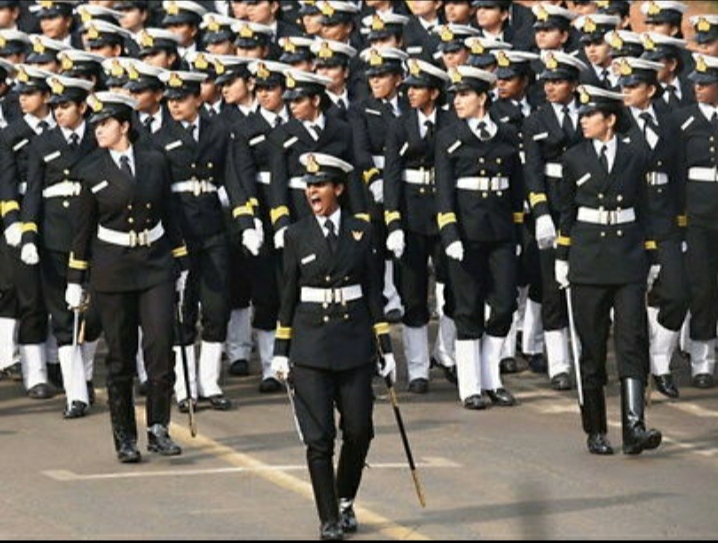
It should be believed that a person’s rank or role in life should be according to integrity and merits. On the one hand, we send Captain Tanya Shergill in the Republic Day Parade to lead the contingent and on the other hand, we argue in the Supreme Court that she is not entitled to be a commandant in the army. This reflects the military’s dual policy towards its people. The fight is not against the government but against the misconception and mindset of bureaucracy.

Our women officers have suffered sentimental throbs during their 25-year job. To be sidelined despite having the ability, the lack of job security due to the ambiguous cadre status and working below the 6 batch Junior Officer affects the morale of giving 100 per cent for the service. The argument that can be made in favour of these women officers is that the mode of war in the world is changing. The world is evolving in a cyber age and even wars are not left rearwardly. Signal communication has to govern in ever-increasing adverse surroundings.

New technologies and methods of demolition are being prepared every day. And analytical skills are more than the physical ability to deal with them. Women are making missiles in DRDO and Chandrayaan in ISRO, then why can’t they command a battalion? We all know the answers to these questions. This idea needs to attain policies.

Men and women live in the same bunker in the army. Once a woman or a man joins the army, he/she is just a fighter, apart from gender. It is only the qualification that should decide their position in the service. Are women kept in the army only as fancy chunks? So that the army is not labelled as ‘men zone.’

And they only maintain a women-men ratio so that the data can be shown internationally.
How is heroism related to gender? When a woman can handle the election campaign of Srinagar, which is currently the most unstable area in the world, without being in the army, then why can’t women handle the commandant’s charge?

A woman can be second in command but not a commandant because women can perform in the army only as long as they do not hurt the ego and arrogance of men. However, when we look at the other side of the coin, there are some false feminists who have used the card of family and child care responsibility to deny the call of duty. There was a case when a female officer refused to go to Nagpur to court-martial because she had to take care of her newborn. Such excuses should be condemned.

If the Supreme Court and the government feel that women are not competent for combat or defence service because they are women, then their entry into the service should be stopped altogether. But Punita Arora, Padmavati Bandopadhyay, Mitali Madhumita, Priya Jhingan and Tanya Shergill prove all those arguments wrong. High positions are being demanded as rights, not in charity.

FEMINISM

feminism Archives | Green European Foundation

With the aim to have an equal world for both males and females, in 1870, a revolution for change by the name ‘feminism’ emerged from France. It firmly believed in equal space for females at par with males. Feminism is a counter to patriarchy – a society in which the males dominate; which is a prevalent form of societal arrangement around the globe. As a movement, it focuses on pointing out the adverse and disastrous effect that patriarchy can bring to a woman to face, not only in the home but also in workplaces.

A constant refraining of females’ equality that they should have been subjected to, make them sceptical of their own self. They accept it as inevitable and devalue themselves. Even biology is widely used as a defence for male’s dominance over females, by limiting the abilities of women, categorizing what they can do and what they can’t. Thus satisfying the deep-rooted gender stratification which hierarchically ranks people in society based on gender. It’s just a very simplified way to stratify society into males and females. But feminist think sex and gender as two different things, sex on the hand is predominantly based on physical things and attributes, gender on the other hand concerns psychological and cultural differences between males and females. In such circumstances around the globe, feminism appears to be that driving force that drives women to stand and ask questions to these patriarchal norms, not themselves. The whole objective is making a change in behaviour and action of society towards females. It’s a journey from A (status quo) to B (female equality). 

Feminism, though being a common and well-heard concept to many, is often wrongly interpreted to mean ‘treating women over and above men’. In the pursuance of this misunderstood concept of feminism the aim sometimes becomes ‘destroying men’ instead of destroying the ‘patriarchal ideas’ that are deep-rooted into society. It needs to be realised that this movement is not about making men lesser than women but to make the women equivalent to the men. By meaning or calling men in any way inferior to women, goes completely against the whole idea and concept of feminism.

The very aim of Feminism is not to override men’s’ race and thrash it all together but to rather question and root out patriarchal thoughts from society. Based on these two interpretations, we have two classes of feminists, equality feminists and difference feminist. While the former focus on sameness, latter focuses on putting females somewhat on privileges over males. Formerly made highlights in 19th and 20th century, latter was prevalent near the 1980s and 1990s and afterwards. 

To conclude, until women subordination is “common” to both females and males, establishing a society of equality among them is a far cry. All Feminism can do is, it can reach to females and tell them their worth and encourage them for the demand for equality. But the interpretation and foot-steps of feminism must be carefully watched otherwise people will have to start a future movement to root out matriarchy.

The dreams we dare to dream.

If we are talking about the present scenario everybody starting from a kid in high school to a working class adult to a pop sensation all of us are suffering from a thing what we call as a conflict of conscience. So in a manner we are asked to grow up when it’s required and at the same time we are also told not to talk while the so called adults are speaking. Therefore we all are in the same page of mental tussle and dilemma that what is right and what is wrong and what does the future beholds for us.

Well if you ask me we all inherit that so called thing called conscience which helps us to differentiate in things and acts which we call humane or inhumane,kind or cruel. If you are still wondering what am I talking about let’s talk about things like a boy can’t wear makeup or a girl should not wear shorts bikinis. Well why is that? Why is it always about you can’t do this you can’t do that what will the people think if you do something like that well what someone else is thinking of me it should not be my problem. As we should always live our lives in a manner that we can embrace everything we are and we can be. As that wise being said love yourself and your decisions and if because of some circumstances things doesn’t work out the way you planned rise up fight again as at least in that way you took your own decision that means that failure won’t be turned into an excuse and that is what makes life a precious thing to behold and beguile. To be frank this society needs some serious reformation as people thinking that a woman can’t do this because they are physical lesser capable or comments like someone is not man enough because of their orientation or developments at the cost of millions of trees who are the only beings keeping us alive from the extinction which is already in effect is not justified.

People will always say stuff like that your dreams are unrealistic,grow up,drinking is a sin, making love is bad and really weird stuff like that but at the end of the day the most important question which we all should ask is what do we want?As that’s all that matters. To do something you love to do is what enlightens our soul. Fight for your dreams and the cause you believe in and live your life in away that you won’t have any regrets and you love each second of your life. As after a storm there comes a light a light of hope justice and Love. Surround yourself with people who actually care for you because there will be a few for sure but don’t dabble with fake ones who are just their to pull you down. As it doesn’t matter if you are associated with one person or a hundred, as long as that one person really cares for you there is nothing to regret .

As at the end you will not need immortality and at that time one life will be enough to touch the stars and to make miracles as we pass to the great unknown together with people with whom we shared this place called home.