Euthanasia has been one major debatable topic overtime. It has many issues to be considered like moral and ethical values of doctors, human rights issues, various legal procedures and various other issues.Every person in this universe will die some or the other day but the way he dies may differ.The expectations everyone has before they die is to live a happy and fruitful life. Some deaths of them can just be natural death which is usually due to age, as there is a principle that the older you become the weaker you get. Some deaths may arise out of acts like killing oneself and ending their lives forcefully due to various reasons which is termed as “suicide”. But when a person kills another or ends the life of the deceased on the request of the deceased this is called by the name “euthanasia” or mercy killing in local language. Euthanasia is usually conducted by medical professionals for giving the output of the so called “happy death” or also called death to be relieved from the pain and suffering. Ironically death was always meant to be sad but this transforms it into good death. There are five different types of euthanasia. There are arguments that if a person has the right to life, he should be guaranteed the right to die also, and a person is said to have the right to choose and this should be applicable to what he wants to do with his own life. This also raises an issue related to human rights whether it is favouring it or not. Right to life does not only mean to live but it has a wider concept to live with dignity so there comes a question whether the right to die exists and if it does, then why shouldn’t one die with dignity without suffering and pain. There are broadly two categories in which euthanasia can be classified, the first one is how the death is caused i.e., passive (death is caused by removing the life supporting system he/she is depending on) or active (death is caused by injecting something
lethal or dangerous) and the second one the acceptance for death or request (consent) for it whether it is voluntary, involuntary and non voluntary. Euthanasia can also be called a privileged murder, but however it is not exception to a murder in some places, it means that this is legal in some places and not in some. Hence it depends on the place it takes place. India has legalised passive euthanasia in the Aruna Shanbaug case, ironically she was’nt given the permission for passive euthanasia however this case laid down the rules and specification where passive euthanasia could be conducted. Personally, I feel that passive euthanasia should not be confused with any other types of euthanasia and should be merely considered as a means to relieve a person from an is an incurable disease and the person exists only because of the life saving equipment and its removal can cause death, and only this should be legalised and not the other types. Euthanasia should be legal in India and other countries with strict rules and regulation, and with proper committees taking care of its implementations, ther has to be adequate safeguards and follow up actions regarding the laws as only then its loopholes are revealed and then correction can be done, there has to be harsher punishments and penalties if invoked. India is one of the nations which has the strongest laws and regulations, we frame them with so much care including each intrinsic detail, but we tend to have a very weak follow up action on our laws, hence it is misused. I would like to bring the topic of doctors and if they are going against the Hippocratic Oath, yes, they are going against it but this is done for the well being of the patient. Many may think that can doctors misuse this whole legislation, we should understand one thing here i.e. we are believing the judge and letting him give a death sentence to the criminals and in the same way we should trust the doctor and put hope in them that whatever they do is for the welfare of the patient, hence when it comes to the decision of granting death we should assume that they would do the best for the patient. Stronger the legislation, lesser the problems regarding it. At a conclusion there are always two sides to anything, in the same way some may think that euthanasia is morally justified as it is to free someone from the suffering and unbearable pain, on the other side some tell that the sanctity of life cannot be justified if death is not natural and one does not go through the hard times, therefore this is a non-ending debate.
This article examines how people experiencing homelessness view their interactions with service providers. Drawing on a database of more than 500 transcribed interviews with people experiencing homelessness we find that descriptions of interactions with staff and providers were predominantly expressed in sharply negative terms, with experiences of objectification and infantilization being commonplace. In response to these experiences, nearly all were angry, and many simply opted out of the social service system in order to maintain a sense of dignity and self-respect. We argue that these responses should not simply be analysed as an individual psychological or cognitive response, but rather as a result of the power relations and social inequities in the provider-client relationship. This suggests that the perpetuation of homelessness is not internal to the homeless individual as many claim, but rather may be embedded in the service industry itself, which subjects both clients and providers to bureaucratic forms of authority and experiences of disrespect. These negative descriptions are juxtaposed with positive comments, which offer potential solutions from homeless individuals themselves. We conclude that qualitative research, in contrast to a reliance on statistics and best practice assessments, is an important tool in developing socially just policies and programs serving those in need.
Understanding mental health issues faced by young homeless persons is instrumental to the development of successful targeted interventions. No systematic review of recent published literature on psychopathology in this group has been completed.We conducted a systematic review of published research examining the prevalence of psychiatric problems among young homeless people. We examined the temporal relationship between homelessness and psychopathology. We collated 46 articles according to the PRISMA Statement.All studies that used a full psychiatric assessment consistently reported a prevalence of any psychiatric disorder from 48% to 98%. Although there was a lack of longitudinal studies of the temporal relationship between psychiatric disorders and homelessness, findings suggested a reciprocal link. Supporting young people at risk for homelessness could reduce homelessness incidence and improve mental health.
Negative perceptions of homelessness contribute to deficit models of practice, false notions of homogeneity, and marginalization. Wellbeing is a state of satisfaction with material, social, and human aspects of life and can be measured both objectively and subjectively. The study explored the meaning and experience of wellbeing in the everyday lives of 20 homeless participants through fieldwork and interviews. This study revealed that health contributed little to their overall perception of wellbeing. Keeping safe, being positive and feeling good, connecting with others, and the ability to participate in “normal” life were the key contributors of subjective wellbeing. The authors demonstrate that social exclusion experienced in homelessness has a negative effect on subjective wellbeing. Services that provide opportunities to experience social inclusion and develop community and cultural connections will improve the wellbeing of homeless persons.
People who are homeless are at risk of COVID-19.
Homeless services are often provided in congregate settings, which could facilitate the spread of infection. Because many people who are homeless are older adults or have underlying medical conditions, they may also be at higher risk for severe disease.
Health departments and healthcare facilities should be aware that people who are homeless are a particularly vulnerable group. If possible, identifying non-congregate settings where those at highest risk can stay may help protect them from COVID-19.
How people experiencing homelessness can protect themselves
Many of the recommendations to prevent COVID-19 may be difficult for a person experiencing homelessness to do. Although it may not be possible to avoid certain crowded locations (such as shelters), people who are homeless should:
Try to avoid other crowded public settings.
If using public transportation, follow the CDC guidance on how to protect yourself when using transportation, try to travel during less busy times, and clean your hands as soon as possible after their trip.
If possible, use take-away options for food.
Maintain a distance of 6 feet (about two arms’ length) from other people.
Wash their hands with soap and water for at least 20 seconds as often as possible, and cover their coughs and sneezes.
Donations of food and clothing to homeless service providers
Homeless service providers can accept donations of food and clothing during community spread of COVID-19, but general infection control precautions should be taken. Request that donors not donate if they are sick.
Set up donation drop-off points to encourage social distancing between shelter workers and those donating.
Launder donated clothing, sheets, towels, or other fabrics on high heat settings, and disinfect items that are nonporous, such as items made of plastic.
Food donations should be shelf-stable, and shelter staff should take usual food-related infection prevention precautions.
Art has been central to human expression since time immemorial. We have come a long way from the cave paintings of our earliest ancestors to stop motion animation. But connecting all modes of artistic expression is the representation of the human, his thoughts, feelings, and aspirations. The power of art has only become stronger with time and remains as spectacular as ever. Even when we have progressed far ahead in science and technology, art has never been and never will be something that is non-essential. While everything else is poised towards our pursuit of knowledge, the arts itself is a way of knowing and representing the seeker himself.
In this time of the COVID-19 pandemic, with almost the entire global having to shut-down and face an unprecedented crisis, humanity is desperate for hope. This pandemic has not only led to a health crisis but a global economic and political crisis as well. While we battle against the odds as best as we can with all the knowledge and expertise that we have accumulated over the years, we have also come to see the importance of things that make us hopeful and optimistic.
The arts have proved their value yet again in this situation by offering us the respite we need from the daily inflow of depressing news and uncertainty of the future. In the months of lockdown, music and cinema have been constant companions to many. With the cinema closed and live music becoming temporarily non-existent, it is a blessing that we can still access the arts through technology. Art often allows us to distract ourselves for a little while and thus maintain a balance, not getting fully sucked into any kind of despair. From stand-up comedians to big-screen movies, from mural art to simple tunes, the arts have helped us get through many a day and have reminded us who we are. It lets us remember better days and also leaves space for hope. It allows us to imagine and expands our perspectives on life. Art has been proven to concretely influence our physical health and well-being. Art also provides a platform from which we can interact with other cultures and other styles of expression. It is also a tool for political awareness and self-assertion as well as the creation of identities. It adds meaning, curates safe spaces, and tells our story.
While we praise the arts often in public, one has to wonder whether we had placed it as being lesser useful than the sciences. In many households in India, children are actively told to pursue science or professional courses which will land them a steady income and security in life. This is because an industrially-driven culture that focuses only on profit places a lesser value on endeavors that might not seem to have any specific tangible profit. This has led to artists struggling to make a living and many being forced to leave their passions to pursue other ‘safer’ options to survive. Artists are regularly underpaid and underappreciated. This has also led to many small-town and emerging artists struggling to make a living during this lockdown. This pandemic ought to make us see this practice that has been so ingrained in our society and move us to re-instate the arts as equal, if not more valuable, than all other pursuits. This needs to be a systemic change and has to be prioritized, keeping in mind how much art has enriched our lives. We need to understand how it is intrinsic to our humanity and that at the end of the day, we need more than just medicine for the body but also healing for the soul, a way to process our emotions, and a reminder of our shared humanity.
M M Khan explains that “Human resource development concept is the across of increasing knowledge, capabilities and positive work attitudes of all people working at all levels in a business undertaking.”
Employees feel the need of knowledge, skills attitudes and values to perform the task efficiently. We call these competencies. Higher degree of competencies is required for higher degree and quality of job performance. Hence to achieve the goals in the changing situation, it is necessary to develop competencies continuously in an organisation.
In the present competitive situation to survive, grow and excel, the competent and motivated employees are essential. To maintain the growth level over a period of time, competencies of employees need to be sharpened or developed as organisation operates in the changing environment.
The organisations are interested to develop their business though products or services. They want to bring effectiveness in the organisation through cost reduction, delay reduction, better customer satisfaction, service promptness and better quality. Hence for these, the organisation needs to develop its human resource competencies to perform better.
Concept of HRD
Human resource development in the organisation context is a process by which the employees of an organisation are helped, in a continuous and planned way to:
Acquire or sharpen capabilities required to perform various functions associated with their present or expected future roles;
Develop their general capabilities as individuals and discover and exploit their own inner potentials for their own and/or organisational development purposes; and
Develop an organisational culture in which supervisor-subordinate relationships, teamwork and collaboration among sub-units are strong and contribute to the professional well being, motivation and pride of employees.
This definition of HRD is limited to the organisational context. In the context of a state or nation it would differ.
HRD is a process, not merely a set of mechanisms and techniques. The mechanisms and techniques such as performance appraisal, counselling, training, and organization development interventions are used to initiate, facilitate, and promote this process in a continuous way. Because the process has no limit, the mechanisms may need to be examined periodically to see whether they are promoting or hindering the process. Organisations can facilitate this process of development by planning for it, by allocating organisational resources for the purpose, and by exemplifying an HRD philosophy that values human beings and promotes their development.
The objectives of HRD are:
i. To prepare the employee to meet the present and changing future job requirements.
ii. To prevent employee obsolescence.
iii. To develop creative abilities and talents.
iv. To prepare employees for higher level jobs.
v. To impart new entrants with basic HRD skills and knowledge.
vi. To develop the potentialities of people for the next level job.
vii. To aid total quality management.
viii. To promote individual and collective morale, a sense of responsibility, co-operative attitudes and good relationships.
ix. To broaden the minds of senior managers by providing them with opportunities for an interchange of experiences within and outside.
x. To ensure smooth and efficient working of the organisation.
xi. To provide comprehensive framework for HRD.
xii. To enhance organisational capabilities.
Human resources development is important because it is an investment in one’s employees that will ultimately result in a stronger and more effective workforce. When an organization develops their employees, they are strengthening their assets and making these employees even more valuable.
Benefits of HRD
Human resource development now a days is considered as the key to higher productivity, better relations and greater profitability for any organisation. Appropriate HRD provides unlimited benefits to the concerned organisation. Some of the important benefits are being given here:
HRD (Human Resource Development) makes people more competent. HRD develops new skill, knowledge and attitude of the people in the concern organisations.
With appropriate HRD programme, people become more committed to their jobs. People are assessed on the basis of their performance by having a acceptable performance appraisal system.
An environment of trust and respect can be created with the help of human resource development.
Acceptability toward change can be created with the help of HRD. Employees found themselves better equipped with problem-solving capabilities.
It improves the all round growth of the employees. HRD also improves team spirit in the organisation. They become more open in their behaviour. Thus, new values can be generated.
It also helps to create the efficiency culture In the organisation. It leads to greater organisational effectiveness. Resources are properly utilised and goals are achieved in a better way.
Plagiarism is considered a form of intellectual theft and fraud. It involves using someone else’s words or ideas and passing them off as your own by not providing credit, either deliberately or accidentally. However, it can also involve reusing your own work from a previous course, and passing it off as new work.
Plagiarism can include:
Copying and pasting from a source without enclosing the text in quotation marks and providing a citation.
Summarizing or rewording someone else’s ideas without providing a citation.
Reusing an assignment you submitted for a previous course.This is called self-plagiarism.
Submitting an assignment completed by someone else.
Collaborating on an assignment with a classmate or friend on an assignment meant to be completed individually.
Writing a paper that strings together quote after quote or paraphrases, even if cited correctly. Your work must include your own original expression of ideas. To add originality to your assignment, include your own critical analysis, interpretation, and examples.
Incorrect paraphrasing. When a paraphrase too closely resembles the original it is considered patchwriting.
Plagiarism can be:
Accidental -Accidental plagiarism happens when you are not sure when to cite, paraphrase or quote. This tutorial is meant to help you understand when you need to cite!
Blatant – This type of plagiarism happens when you purposefully use another person’s words and try to pass them off as your own.
Self – Self plagiarism occurs when you reuse a paper you wrote in a previous semester for a different course. You must submit original, new work for each course!
So, there are several basic factors to consider when evaluating a case of possible plagiarism:
Amount or quantity (full paper, a section of a paper, a page, a paragraph, a sentence, phrases)
Use of quotation marks for all copied text.
Appropriate placement of credit notices.
Improper paraphrasing.
Follow these four steps to ensure your paper is free from plagiarism:
Keep track of the sources you consult in your research.
Paraphrase or quote from your sources (and add your own ideas).
Credit the original author in an in-text citation and reference list.
Use a plagiarism checker before you submit.
Examples of plagiarism
A writer decides that he wants to create an Internet website to generate ad revenue. Instead of writing his own articles, he visits twenty other websites that have articles on the topic in which he is interested. He copies each of the articles, changes the titles and the authors’ names to his name and posts the articles on his own website.
An academic is expected to publish papers but he doesn’t have time to research because of family obligations. He looks through old professional journals in another country and he copies a 10-year-old article from someone else in the field. He submits the article as his own and hopes that no one finds the article from which he copied.
A student is expected to write a book report about a book that his teacher has assigned. The student doesn’t want to read the book and is bored with the subject. He visits websites that provide reviews and book reports and he copies from each of the different book reports to create one report of his own.
The news of tragic demise of Sushant Singh Rajput has shaken up the entire film industry to the core and people are filled with understandable grief and outrage, but unfortunately, the whole situation has turned ugly as the people who’re rightfully filled with anger have become so blinded by it that they think that there are no consequences to abusing on the internet and they think that their actions are justified. They want to take out their frustration, so where do they go? Of course, the Internet. On social media, the initial outpouring of grief and conversations about mental health rapidly gave way to conspiracy theories, allegations of dark plots, and soon enough, some “villains” had been zeroed in upon – recognisable faces on which to pin blame, and then mercilessly, relentlessly abuse.
So far, it’s Sushant’s close associates and the “star kids”, in the recent turn of events, have been bearing the brunt of all the outpouring rage. Of late, people have been invading Ankita Lokhande’s fiancé Vicky Jain’s Instagram handle with hate comments for him. While some asked Vicky to leave Ankita, some accused him of ruining Sushant and Ankita’s relationship. Vicky has even now limited the comments to his Instagram posts to avoid the negativity. Actress Sonam Kapoor Ahuja too has been receiving several hate messages where people have slammed her and wished death for her future children.
It’s high time that we realize that cyber bullying is a crime. It’s in a way ironical that Sushant Singh Rajput lost his life due to bullying, lookism and nepotism, but now we are doing the same thing. Bullying the bully won’t cut it. Tragic as it is, Rajput’s suicide only highlights the stress faced by those in Bollywood. But issues such as nepotism, insider-outsider biases, sexism, discrimination are also part of other industry. By blaming and shaming Karan Johar or other so- called “nepotists” like Bhatt, Ranveer Singh, Varun Dhawan among others, many on so social media seemed to lose the real focus of the discourse which should be on improving mental health awareness, preparedness and infrastructure to help people cope with stress in all environments.
Toxicity cannot be reduced with further toxicity and cyberbullying is not the best practice when the end-goal is improving mental health.
Sending death threats and calling people ugly is definitely not the way to pay tribute to his legacy. If you want to pay a tribute to SSR, then the best thing is to be kind and never fear from struggle. We should remember him for his acting and his talent. Sushant Singh Rajput was struggling with mental health. The worst way to disgrace his memory is to subject others to bullying and mental harassment. Nepotism in Bollywood is real and rampant. The industry is largely run by a few clans, promoting their kin at the cost of talented outsiders, who are robbed audience, which is robbed of quality content. All these problems need to be acknowledged and discussed. None of these problems can be solved by heaping abuses on individual actors and subjecting them to vile trolling. This incident has also caused a much-needed debate regarding India’s mental health awareness and preparedness.
Everyone you meet is fighting a battle that you know nothing about. Be kind. Always.
Saying that black lives matter doesn’t mean that other lives do not.
The tragic death of George Floyd at the hands of Minneapolis police has sparked intense debate over the question of racism in USA and triggered the Black Lives Matter movement. The protests have also sparked wide-ranging conversations about the responsibility industries and organizations — including the media — have to address institutional racism. To be clear, for much of its seven-year existence, the Black Lives Matter movement has been seen by many Americans as a divisive, even radical force. It’s very name enraged it’s foes, who countered with the slogans “Blue Lives Matter” and “White Lives Matter.” The tragedy, however, dramatically sparked a wave of protests sparked and enabled the Black Lives Matter movement to go has gone mainstream. The struggle is no longer confined to the national borders of the United States. However, soon enough, #AllLivesMatter became a slogan that has come to be associated with criticism of the Black Lives Matter movement. However, saying #AllLivesMatter completely missed the point of the Black Lives Matter.
Imagine that you’re sitting down to dinner with your family, and while everyone else gets a serving of the meal, you don’t get any. So you say “I should get my fair share.” And as a direct response to this, your dad corrects you, saying, “everyone should get their fair share.” Now, that’s a wonderful sentiment – indeed, everyone should, and that was kind of your point in the first place: that you should be a part of everyone, and you should get your fair share also. However, dad’s smart-ass comment just dismissed you and didn’t solve the problem that you still haven’t gotten any! The problem is that the statement “I should get my fair share” had an implicit “too” at the end: “I should get my fair share, too, just like everyone else.” But your dad’s response treated your statement as though you meant “only I should get my fair share”, which clearly was not your intention. As a result, his statement that “everyone should get their fair share,” while true, only served to ignore the problem you were trying to point out. That’s the situation of the “black lives matter” movement. Culture, laws, the arts, religion, and everyone else repeatedly suggest that all lives should matter. Clearly, that message already abounds in our society.
Just like asking dad for your fair share, the phrase “black lives matter” also has an implicit “too” at the end: it’s saying that black lives should also matter. But responding to this by saying “all lives matter” is willfully going back to ignoring the problem. It’s a way of dismissing the statement by falsely suggesting that it means “only black lives matter,” when that is obviously not the case. And so saying “all lives matter” as a direct response to “black lives matter” is essentially saying that we should just go back to ignoring the problem. The phrase “Black lives matter” carries an implicit “too” at the end; it’s saying that black lives should also matter. Saying “all lives matter” is dismissing the very problems that the phrase is trying to draw attention to.
Needless to say, dialogue matters and the George Floyd uprising has brought us hope for change. Now we must turn protest to policy.
Abortion is defined as the deliberate termination of a human pregnancy, most often performed during the first 28 weeks of pregnancy in the English dictionary. India has gone on a long journey to stay true to this definition. India on its policy and laws on abortion have always been towards to shield and preserve women’s rights. Its laws have reflected the international principles of the women committees that the country is a part of. The abortion laws have invariably been revised now and again understanding the transitional and fluid ways of the changing times. The MTP Act has been in place in India for almost four decades. From the MTP Act of 1971, MTP Amendments of 2002, MTP Rules 2003, MTP Amendments of 2014, and MTP Amendments of 2020 show a clear step towards making women’s rights to safe abortion care and services. In the recent amendment of the Medical Termination of Pregnancy Act, the cabinet ministers of the union government have decided to amend the abortion laws to suit the changing times and have modified the 1971 Medical Termination of Pregnancy Act to increase the time for the termination of pregnancy from 12 to 24 weeks. This amendment also has altered the usage of the term “only married women and her husband “to “any women and their partners“.
MTP Act in India was passed in 1971 that was amended in 2020 allows women to seek an abortion under certain conditions. The conditions being (a) if there is an injury to the mother’s physical health or mental health should she continuing the pregnancy, (b) or if there is a risk of mental or physical abnormalities to the fetus which would leave the fetus with abnormalities (c) if the pregnancy is the result of rape in which termination of pregnancy is allowed as the mental trauma to the women is considered as a grave injury to her mental health(d) if the resultant pregnancy is due to the failure of a contraceptive used by the couple to limit the number of children they have. The MTP Act also mentions the place where an abortion should be done. Abortion must be done in a hospital sanctioned by the government or a place, for the time being, is approved by the government to do the act. The MTP must also be done by a registered medical professional. When the length of pregnancy exceeds more than 12 weeks, the abortion must be done with the consultation and approval of two registered medical professionals. The act also provides legal security to the medical professional performing the procedure. Anyone who violates the of the article is punishable by law. A person who is not a medical professional is found to be performing or has performed termination of pregnancy is punishable with rigorous imprisonment of a term of 2 years which may be extended to 7 years as it violates Act 19 of the Pre- Conception, and Pre – Diagnostic Techniques Act,1994. If the procedure of termination of pregnancy is done at a place that is not legally approved by the government then the person owing the place is punishable by rigorous imprisonment for 2 years as it is a clear infringement of the provisions of act 19 of the Pre- Conception, and Pre – Diagnostic Techniques Act,1994. The place which is legally sanctioned should display its certificate in a manner that is easily seen by the persons visiting the place. If the place has failed to do this action, It is fined with an amount of one thousand rupees as it is in breach of rule 5(7) of the Pre- Conception, and Pre – Diagnostic Techniques Act,1994.
The women undergoing an abortion should fill a Consent form. The Consent form is a requirement to show that abortion was voluntary and informed abortion 18 hours before the process of abortion to the patient. The place where the procedure is done has to fill out the RMP Opinion form, Monthly Reporting Form, and the Admission Register of case records. The RMP Opinion Form is for the registered medical practitioner to state their credentials, certification, and their good faith towards the procedure done to the patient. The Monthly Reporting Form and the Admission Register of case records are for the hospital/place to track the number of abortion cases in the hospital/place over a month. Thus it is seen that there are many rules and regulations to follow when a woman wants to undergo an abortion. The new abortion laws in India are more progressive and pioneering a new path for the public healthcare system in India. All these laws regarding abortion in India are based to protect women who have been raped or sexually violated and as a measure of population control.
A person is what he/she believes to be, mind is too powerful, it can make hell out of heaven and heaven out of hell. Meaning to say is that mind plays a vital role in everyone’s life.It manages all the function and bring new thoughts. When a person get the thoughts, the basic idea is to note it down in a page with a pen and implement in the individual’s life. I am just a person who learns each and every time, has a keen interest to discover new things and innovative ideas. A long journey has been done from a person , what I was and what I am today. There is a huge difference. To be a law student, one should maintain the rhythm , flow of study, calm mind and day to day researches. One should develop the different skills and overall development always matters. We always take from the society, but there is always a time, when we need to give society, a path to follow, or a change.
Life always gives a chance to achieve something, to turn bad into good, negative into positive, its just we need to catch the time and move with it. So, I am here to experience the platform and to be a part of this organisation with helping in the development of the organisation. Self- motivation and motivating others for a good life is very much essential, and through this at a large, it is possible that the massage could reach to more and more people, and the policies of this organisation adds up to it. It is an honor to be a part of it.
Divorce, well a divorce happens after a husband and wife agrees to seperate their ways through legally. A divorce happens when the husband and wife decides that they do not longer want to live together anymore. Divorce takes place when both the partners fight over everything since several years and realise that they are not happy with each other. Divorce also takes place when there is a lot of physical abuse and mental torture. At times, it is a mutual agreement of divorce where the husband and wife mutually agrees to seperate their ways. But at certain times, this is not the case. A divorce can also happen when either one of the partner is cheating or having an extra marrital affair and wishes to end their marriage, then the other partner willingly or unwillingly has to accept the divorce without any other choice.Divorce grants permission to get free from the marriages and also access to marry whomsoever they want to.
At present, divorces are very common. Most of the marriages do not work due to some or the other issues. Some divorces are bitter, some divorces are on mutual basis, some divorces ruins the families. Every one has their different reasons for divorces.
Divorces is not just between two persons i.e a wife and a husband. The people associated with them are also affected be it their childrens if any, elders of the family, wife’s family, etc. It is hard for everyone.
How divorce affects the mental health of kids?
The most affected by the divorces are the kids. If the divorce is mutual and the kids are happy about it too, then there isn’t any issue about it. But, what if the divorce isn’t mutual? What if the marriage ended on bad terms? What if the kids weren’t ready about it? What if the kids never expected that one day their parents would get divorced? What if they were always kept in a happy family zone? What if they never knew that their parents were never happy with each other?
The kids when in their teenagers or are at the age when they have the ability to understand things are affected mentally because of their parents divorce. The marriage that ends on bad terms affects the mental health of not only the husband and his wife but also their kids.The whole family suffers due to the divorce between two people. It breaks the reality of their ‘complete happy family’ which they will never get again. Their mind is full of thoughts and confusion at the stage when they get to know that their parents would soon be seperated and they have to choose one of them.
They have to choose and stay with one person. If the kids are below 18 years of age, the legal custody of them is decided by the parents as per their convenience. And if above 18, then they are free to live as per their wishes.
The most difficult task for the kids is to choose between their parents, they never thought that such situation would ever arise in front of them. They face a dilemma whether to choose their dad or mom.
Its really hard to choose one. Still, they have to. Their mind keeps on thinking that they have to stay with one person from now onwards; either mom or either dad. One person would leave the house and they would never get to spend time again with their mom and dad together. This is the one scenario where only one parent has the sole custody of the kids. Another scenario can be where both the partners decide to take up the joint custody of their kids. And the third scenario could be where the grandparents or somebody other than the parents take the custody of the kids.
The kids get affected by all these. Not only kids below 18 years of age but also adult children i.e above 18 years of age; who experience the seperation of their parents. They get devastated, broken and hurt. They get depressed due to this. The divorce of their parents damages them from internally which they never heal resulting into trust issues.
Some hide their pain and sadness from their parents and act normal that they are ‘okay’ with them being divorced. But, the truth is that they are not okay. The pain, it stays with them for a longer time. They do not get over it. They find it difficult to accept the fact that their family would never be the same. They get lost and get detached from their parents.
They feel lost and take wrong steps and start indulging in wrong things. They feel there is no one to understand them now. They feel that they would never get a complete family now. The pain is there. The pain of not having a complete family ever.
Some kids start failing in their exams, some get silent, some get depressed, some become rude. Many kids or adult children start dating in search of love and gets ended up with wrong persons. Many indulges in smokings, drugs or alcohols. They feel this is the best solution to overcome this. But no. Nothing fills that pain or void in their hearts.
They always see other’s happy families and get sad because they can’t have ever one like them. They feel that their mom dad would never love them the same the way they did earlier. Their happy family gets broken.
Believe it or not, kids do get affected and start harming themselves. And the sad part is that they never heal from this. It remains with them till forever.
Before anyone else, they get hurt by their families. They think it is their fault that something like this happened with them.
The divorce of the parents directly or indirectly do affects the relationships of their children with others. They develop trust issues, fear of getting hurt by anyone, fear of getting close to anyone because eventually they would leave them. They start hiding their pain as they think no one can understand the pain they are dealing with. They feel lonely. Sometimes, even sucidial thoughts do come in their mind. They need love and support but they never find it. They fear of getting attached to anyone.
It is a lifelong grief or sadness that doesn’t goes out of their minds or hearts completely. The divorce changes them mentally so much that they change into a completely different person that they weren’t.
Parental ‘divorce’ can never be ‘over’ for the child. It stays forever. Lucky are those who have a complete family. Parental divorce ruins everything for the children.
From our childhood, we are taught to conduct ourselves in a manner that is pleasing to the society in which we live. We are told to respect others, be helpful, maintain decorum and be kind. One of the skills that is most needed for such thoughtful engagement is the skill of listening. And this does not mean just listening as routine but listening well, actively. In a world which has seen a sonic explosion in the past couple of decades, and with opinions and voices on everything from what to eat to what to stand for, we find ourselves surrounded by a plethora of voices. This often makes us unable to distinguish between the necessary and the unnecessary voices, and can even make us complacent when we shouldn’t be, in the long run. The skill of listening is probably one of the most important skills that we need to have in this time, for the benefit of the community that surrounds us and for ourselves.
We are continuously processing the sounds that we are hearing all the time when we are awake. We assign meaning to them as well. We listen in classrooms, during discussions, on the metro, and in innumerable other settings. Our academic and career performances can be greatly influenced by how good we are at listening to what is being said and how efficient we are at gleaning the important points from it. It is an essential quality especially when we engage with social issues or mental health issues, or when we are trying to help someone with a problem they are facing. We need to also keep in mind that listening should not be equated with hearing since hearing can happen passively as well, even when you do not put in any effort.
Listening well is a skill developed over time. Here are some pointers to being a better listener:
Exercise self-control: This is one of the most crucial aspects of listening well. Exercising self-control might look like not interrupting when a person is speaking, waiting till the end to ask questions, putting away presumptions and prejudices, and waiting till you have all the information before you make a judgment. Listen to understand and not just to respond.
Be fully attentive: Let the person speaking know that they are your focus and that you are listening fully. Keep distractions like your phone, away. Your posture also matters; nod, use facial expressions and be encouraging.
Respond well: Ask if you have understood them well by paraphrasing, ask thoughtful and intelligent questions, and clarify doubts.
Be honest: Treat the speaker with dignity and give honest feedback. Point out things they might have to reconsider and give good reasons for your responses.
Conversations that include such attentiveness and engagement will be more meaningful and impactful. It will also lead to better understanding, better relationships, and more informed perspectives. Being an active listener will also make you more empathetic and sensitive to the experiences of others, and even lets you pick up on the things that they are not saying. It increases the quality of the exchange and lessens the chances of being misunderstood. Listening well can be the single antidote to many of the problems that we face in personal verbal communications right now.
Black lives matter, black lives matter and on and on these chants go, but why only now? Why not 40-50 years back or even 2-3 years back. Why people and society only wake up when some innocent person loses his/her life? Is it death of a person when we realise that he/she should be provided with justice? Why don’t we understand the suffering one faces when they lose their close one. Have we become so inhuman that we can’t even see one’s suffering, let alone feeling their suffering or pain. All lives matter, we know that. But oppression faced by the black people is which is alarming, not only for the past few years, but few decades for now.
The main reason the black lives matter movement has gained global impact is because of the death of George Floyd by a policeman in the United States of America. This gained widespread protests not only in the US but worldwide. The sporting community also joined hands and supported the moment as over the years many top footballers and cricketers have faced racism and still do. People should understand that nobody is born with a choice of choosing their skin colour, so why discriminate people on the basis of their skin colour. Why is it that people favour white skinned people in jobs, or in schools or elsewhere. Is it written in any religious scripture that people’s intelligence is determined by their skin colour. No, it isn’t but people’s stigmatised mind won’t change until real action is taken against them. Why don’t people understand that someone’s heart or nature should be good rather than their appearance or skin colour. But these talks are baseless because this movement of black lives matter didn’t start because of these talks, but because of the killing of an innocent man just because his skin colour was black. The below graph shows the percentage of black CEO’s in the Fortune 500:
The graph clearly shows the story, just 1% black CEO’s in the entire Fortune 500 companies. I don’t intend to ever say that give jobs or education based on any category, be it racism or on the basis of caste. I only say give jobs on the basis of skills, on the basis of knowledge. But don’t oppress a person who has the skills and knowledge just because he is black or from a lower caste.
Now, I will talk about the Indian society in particular and the racism prevailing in the country over the past very many decades. The Indian society is very stigmatised on the fact that white people are the one’s who are very good in all aspects and blacks need to be oppressed. But why this stigmatisation? Why do people don’t understand that skin colour isn’t everything. Every time we see in Indian newspapers, in the column of matrimonial we find people wanting grooms/brides with skin colour fair. But why? Don’t people understand how this can have a impact on the mind of people facing racism. This is the very fact that people nowadays are committing suicide because of problems like racism, etc.
And the problem doesn’t end here. Top celebrities in India endorse brands which encourage racism in a way by saying that by applying those products skin colour can be changed to a better skin colour. This is the worst impact as these celebrities have a huge fanbase. But my question is why? Is money so much more important than humanity that these so called celebrities endorse these brands. I mean a celebrity is a person who by his/her actions build a better society, not a society with racism.
In the end I want to state that people understand only when some innocent person dies but why people don’t understand losing someone is something which is worse than anything in this world. And losing someone over pitty things like racism, over skin colour killing someone, this is the worst thing one can do. Hope the world after this movement changes their thinking, and hope the world becomes a peaceful place to live again. SAY NO TO RACISM
Multidisciplinary approach to education is studying a topic/concept from the viewpoint of more than one discipline and solving issues using various disciplinary approaches. Real world situations are much more complex and require knowledge of several different subjects to clearly understand them. Multidisciplinary approach to education will also encourage the students to apply their existing and newly acquired knowledge in a more practical and hands-on way. It also encourages the students to inculcate in them the habit of researching, which gives way to a much more creative mind. Many colleges and universities offer multidisciplinary studies programme for students who want to design a major that suits their particular educational and career needs. There are many multidisciplinary studies degree programs and several job options suited to graduates.
John Dewey popularized the concept /philosophy of pragmatism, this has lead teachers being worried about teaching the “whole child”. From time-to-time even the best of best teachers might feel a student is responding minimally to their teaching efforts or the pupil has a problem. When a child has learning problems counsellors are not often consulted, in turn the teachers starts to feel the pupil is retarded or her/his competence as a teacher has been challenged. The only answer to this problem is multidisciplinary education whose foundation is based on the core proposition that students can create their own understanding and knowledge of the world by integrating new experiences with alternate ideas through theoretical exploration and practical exposure. It enables students to break away from their usual learning path and to break out of the silos of knowledge, absorption and creation. To encourage a new and a better way of learning, educational institutions must provide the necessary facilities and platforms for students to learn subjects beyond their normal study classes. Class projects/assignments could involve students and teachers from different disciplines. Teachers and experts from various walks of life should regularly involve in interacting sessions with the students to inculcate the freedom of enquiry and broaden their mind-sets. College campuses need to transformed into tinkering labs of ideas from various domains. Such an environment will encourage the students to work in teams and respect each other’s point of views or opinion. Promoting multidisciplinary approach to education will also help educators and faculty a wide canvas to design innovative and stimulating assignments and projects. For instance a class project could involve students building a mobile-app to monitor and remote control soil-moisture levels. Such multidisciplinary projects would help students from different faculties to work in mutually supportive teams. Students are likely to engage themselves more in the work if they are free to combine subjects of their choice. Learning can acquire greater meaning and the experience is likely to remain embedded with the students for a lifetime. Students learn to consolidate knowledge after synthesising ideas from different perspectives. This develops their critical thinking, problem solving and research capabilities and pushes them to think beyond boundaries. For example if a particular industry experiences downturn or disruption, engineer with a degree in multidisciplinary study will be better equipped to switch to sunrise industries. This approach to education will also nudge students towards undertaking entrepreneurial ventures. This multidisciplinary knowledge will strength the cognitive capabilities of students. It helps them cross mental boarders, respect other people’s point of view and communicate their ideas to people of their domain. Multidisciplinary education is very important as it develops critical thinking skills that students use to look across disciplinary boundaries to consider other viewpoints and also begin to compare and contrast concepts across subject areas. Choosing which subject to study and why to study that will be very challenging and requires students to think carefully about how to identify their choice of subject and prioritise it. Adaptability is one of the most important features of multidisciplinary education because different subjects may need to be viewed through different lenses which mean an individual needs to be able to switch to the appropriate lens at the appropriate time for whichever subjects they are looking at.
Colleges and universities must help students build their own multidisciplinary approach to learning and developing these important skills will enable students to study in a way that suits their own style of learning, motivations for study and personal interests. Having a portfolio of different subjects within the students degree profile can therefore be marketed to employers in a very positive light and help the students stand out against other applicants. The overarching goals of undergraduate education are to engender in students the capacity to think deeply, analyse the situation and problem solving, with multidisciplinary education students will find it easy in putting their creative ideas forward.
The term educational technology refers to the use of technology in educational settings, whether it be elementary and secondary schools, colleges and universities, corporate training sites, or independent study at home.
Educational technology has both general and specialized meanings. To the lay public and to a majority of educators, the term refers to the instructional use of computers, television, and other kinds of electronic hardware and software. Specialists in educational technology, in particular college and university faculty who conduct research and teach courses on educational technology, prefer the term instructional technology because it draws attention to the instructional use of educational technology. This term represents both a process and the particular devices that teachers employ in their classrooms. According to the Association for Educational Communications and Technology, one of the principal professional associations representing educational technologists, “Instructional Technology is a complex, integrated process involving people, procedures, ideas, devices, and organization for analyzing problems, and devising, implementing evaluating, and managing solutions to these problems, in situations in which learning is purposive and controlled.”(p. 4). Educational technologists often employ the term instructional media to represent all of the devices that teachers and learners use to support learning. However, for many educators the terms educational technology, instructional media, and instructional technology are used interchangeably, and they are used so here. In addition, the principal focus will be upon the most modern computational and communication devices used in schools today.
History of Educational Technology
The history of educational technology is marked by the increasing complexity and sophistication of devices, exaggerated claims of effectiveness by technology advocates, sporadic implementation by classroom teachers, and little evidence that the technology employed has made a difference in student learning. Although technology proponents have from time to time claimed that technology will replace teachers, this has not occurred. The typical view among educators is that technology can be used effectively to supplement instruction by providing instructional variety, by helping to make abstract concepts concrete, and by stimulating interest among students.
The terms visual education and visual instruction were used originally because many of the media available to teachers, such as three-dimensional objects, photographs, and silent films, depended upon sight. Later, when sound was added to film and audio recordings became popular, the terms audiovisual education, audiovisual instruction, and audiovisual devices were used to represent the variety of media employed to supplement instruction. These were the principal terms used to describe educational technology until about 1970.
The first administrative organizations in schools to manage instructional media were school museums. The first school museum was established in St. Louis, Missouri, in 1905. Its purpose was to collect and loan portable museum exhibits, films, photographs, charts, stereographic slides, and other materials to teachers for use in their classrooms. District-wide media centers, common in school systems today, are descendants of school museums.
By the first decade of the twentieth century, silent films were being produced for instructional use. In 1910 George Kleine published the Catalogue of Educational Motion Pictures, which listed more than 1,000 titles of films that could be rented by schools. In 1913 Thomas A. Edison asserted, “Books will soon be obsolete in schools …. Our school system will be completely changed in the next ten years” (Saettler 1968, p. 98). In 1917 the Chicago public schools established a visual education department to take responsibility for the ordering and management of films, and by 1931, thirty-one state departments of education had created administrative units to take charge of films and related media. Despite these efforts, films never reached the level of influence in schools that Edison had predicted. From evidence of film use, it appears that teachers used films only sparingly. Some of the reasons cited for infrequent use were teachers’ lack of skill in using equipment and film; the cost of films, equipment, and upkeep; inaccessibility of equipment when it was needed; and the time involved in finding the right film for each class.
Technology is a powerful tool that can support and transform education in many ways, from making it easier for teachers to create instructional materials to enabling new ways for people to learn and work together. With the worldwide reach of the Internet and the ubiquity of smart devices that can connect to it, a new age of anytime anywhere education is dawning. It will be up to instructional designers and educational technologies to make the most of the opportunities provided by technology to change education so that effective and efficient education is available to everyone everywhere.
There is always hope, even when you’re brain tells you there isn‘t.. (John Green)
I mentioned talking about your emotions and sharing your problems in few essays. Talking is majorly underrated. It can help us look at things differently. Even though there is a low chance that the other person will be able to solve the problem you are facing, but they will surely give you enough strength and courage to face that problem head on.
As I say that, I also realize that not everyone has a person who will give them their time and listen to them. Now, that’s where therapy enters our scene. Sometimes, our problems are so complicated that we can’t feel comfortable about talking to someone whom we trust. It’s not because we don’t trust them enough. It’s because we fear their judgement. No matter what, humans have a natural tendency to judge. Sometimes you may not feel like communicating with your known ones about your problems. Or sometimes, you might just yourself be unaware of what the problem is in the first place. Or… You might just not be able to trust anyone.
In the above mentioned cases, one must without giving it a second thought, approach a mental health professional. They not only protect our story because confidentialily is crucial but also help you open up about it. I must stress here that counselling is not merely giving information or advice. It helps you look into your subconscious and thoroughly guide you through the process of finding your peace of mind. You have to invest time yes. But the time you invest when you go for therapy ultimately helps you grow into a better and happier version of yourself.
Therapy basically provides you with a safe space, where you are first made comfortable. A therapist ethically cannot judge you. They help you realize the true goal of your life. They bring out those problems into light which are deeply hidden in your unconscious and are the fire cause of your distress.
All psychotherapists help you in modifying your habits and lessen the emotional burden that you have been carrying for so long. To top all of that people suffering from any sort of trauma or mental disorder should never blindly follow any random person’s advice. If a person feels like their problem is deeper than they thought, by approaching a professional, you are able to get diagnosed and get the right treatment.
Therapy is used for treating all sorts of disorders ranging from eating disorders to stress related disorders to multiple personality disorder to depression and many more. Therapies can go on for years at a stretch. But it is always worth it. Specially disorder that threaten not only your lives but also those around you are always treatable. All you have to do is have faith in yourself and be willing to work on your mental health. These days because the current situation, therapies have even launched themselves online. This is a time where people who were already distressed and troubled are going through the worst of their days, where they just feel worthless.
But they should remember that they are worth it. Their mental health is worth it. They themselves are the only ones who can truly help themselves. Stay hopeful. Times are distressing. Times are difficult but their is always hope if they are willing to work on themselves. You are a star and you are definitely worth it!
The word health refers to a state of complete emotional and physical well- being .health care exists to help people maintain this optimal state and health .
A resource for everyday life ,not the objective of living.health is a positive concept emphasizing social and personal resources ,as well as physical capabilities.
TYPES
There are two types of health . Mental health. Physical health.
Mental health it is harder to define mental health than physical health because many psychoLogical diagnoses depend on an individuals perception of there experience .with improvements in testing, however, doctors are now able to identify some physical signs of some types of mental illness in CT scans and genetic scans .
Good mental health is not only categorized by the absence of depression or any other disorder .it also depends on a person ability to:
Enjoy life feel safe and secure.etc
Physical health a person who has good physical health is likely to have bodily functions and processes working at there peak.this is not only due not only to an absence of disease. Regular exercise,balanced nutrition ,and adequate rest all contribute to good health .people receive medical treatment to maintain the balance ,when neccessary .
Looking after physical health and well-being also involved reducing the risk of an injury or health issues ,such as:
minimizing hazards in the workplace
avoiding the use of tabbacco and alchohol.
health is a state of complete mental and physical and social wellbeing and not merely the absence of disease and infinity. Health is a quality of life,involving social ,emotional ,mental spiritual and biological fitness on the part of the individual ,which results from adaptation to the environment.
“An organisation that truly values its human capital as an asset makes an excessive investment on the employees’ welfare than an extravagant expenditure on the publicity warfare.” – Anuj Somany
The above quote is really excellent as an organisation should always consider his employees or labours as an asset and not as a tool. As this is the way through which we can make them understand that they are really important to an organisation. Employee Welfare is a term which includes various services, benefits and facilities that are offered to employees by the employer in order to improve their performance and comfort them. Employee Welfare is also known as Labour Welfare. It covers state of well-being, happiness, satisfaction, conversation and development of human resource. Employee Welfare implies providing minimum desirable standard like health, clothing, housing, education, insurance and recreation. These all facilities helps the worker and his family to live a good work life and social life. Welfare activities helps in increasing the morale of the employees. It also helps in motivation of the employees high so as to retain the employee for a longer period. It is not necessary that the welfare measures should be in monetary terms it can be be in any kind or forms. Labour welfare includes those facilities and services which are in addition to wages and salaries. Employee Welfare is a dynamic concept which varies from country to country and from region to region. It is a flexible and ever-changing concept. Generally, welfare measures are complementary or in addition to regular wages and salaries. Employee Welfare is an essential part of social welfare. The main motive of this is to improve the standard of living of the employees and thereby make a worker a good employee and a happy citizen. These welfare measures help in improving efficiency of the employee. Efficiency gives reward to both employee and organisation. One in the form of increased production to the organisation and other in the shape of higher wages due to higher productivity to employee. Welfare measures help in minimising hazardous effect on the life of the workers and their family members. It helps in preventing social evils like drinking, kidnapping, gambling, etc. and this further helps in improving the personal, social and cultural condition. So some of the importance of Employee Welfare activities are –
Employee Retention – Welfare activities helps in creating a positive environment for its employees, which helps in retention of employees and a higher job satisfaction among them. Thus, welfare activities helps in reducing labour turnover.
Improve Standard of Living – Welfare facilities like housing, education, loan, etc help the employee to improve their standard of living and live there life with comfort.
Improve Productivity and Efficiency – It is often said that”Happy Employees are Productive Employees” and it is correct. If we make our employees happy in some or the other way and if we satisfy their needs they will definitely help us to achieve our goals with more dedication and hard work. So, welfare facilities is also a method to increase our productivity and efficiency.
Better Focus on Job – Often employees are distracted and disturbed due to their personal problem like non-availability of proper accomodation, education facility for their children, etc and due to these problems they are not able to focus on their work and thus it reduces the productivity and efficiency of the work and the organisation. So, in order to resolve these problems the employer should provide the facilities to their employees and this will help them to focus on their job.
Preserve Mental and Physical Health – The organisation should provide some sports facilities, gyms and games which will help the employee to work more actively as it will reduce their stress, tension and problems and it will also help in keeping their body and mind sound.
Last But Not the Least
Employee Welfare activities shows the overall satisfaction level that is perceived by an employee from his work. It helps in improving morale and loyalty of employees.
Did you ever involve yourself in something very trivial , when you had an important assignment submission or work? Did you ever regret not doing the job right?. If yes , then that’s what we call procrastination. Procrastination is the act of delaying or postponing something that needs to be accomplished within a given period […]
Using physical force in the name of “cow protection” without any legal authority by a self-appointed group of people is what we call cow vigilantism . In our country ‘India’ we have often seen innocent people getting attacked and killed by the so called “cow protectors”, but did we ever do anything against it?. All this increased in folds from the year 2014 when the BJP government gained power. The extremist groups have mostly targeted the Muslims and the Dalits. The highest number of cases were recorded in the state of Uttar Pradesh.The minorities of this country were mostly targeted. There is a complete collapse of the constitutional values and ethics in this country.
At least 44 people – including 36 Muslims were killed in a span of three years. Several politicians have openly justified these attacks. Meenakshi Ganguly, South Asia director at Human Rights Watch had also once said that although calls for protecting cows started as a way to attract Hindu votes, it transformed into a free pass for mobs to violently attack and kill the minorities. Indian government should stop protecting the culprits. Hindus consider cows to be their sacred animal and a lot of states in India have banned cow slaughtering. In recent years, we can clearly notice that BJP-ruled states have enforced stricter laws for protecting cows which have harmed the minorities of our nation. In the year 2019, National commission for cow protection came into existence. These policies have not only encouraged the violent attacks on innocent people but have also disrupted the cattle trade in our country. These violent mobs have often targeted the Muslims, Dalits ( before known as the “untouchables”) and Adivasi communities. Did you as a fellow Indian ever realise, what am I doing to stop the wrong doings in my own country? Why are we not affected by any of these incidences ? Why have we become so neutral to the sufferings of our fellow countrymen?
Some incidences :
On May 30th 2015, a 60 year old man was beaten to death by a violent mob group. Apparently the man ran a meat shop and he was beaten to death with sticks and iron rods in Rajasthan.
A Muslim man Mohammad Ikhlaq was beaten to death by a mob of villagers who attacked his home with stones and bricks, his son was also seriously injured. The villagers suspected that he stole and slaughtered a cow calf. This incident took place on 28th of September 2015 in the state of Uttar Pradesh.
A cow vigilante group opened fire at 40 migrant workers, out of which one succumbed to his injuries, in Bhanukeri village in the state of Haryana.
In Lakshmanpur village which is the state of Uttar Pradesh, a 70 year old man Kailash Nath Shukla who was taking his cattles for treatment in another village, was attacked by a mob, who stopped him on his way and threw him in a gutter.
The Indian government must stop and punish the violence taking place in the name of “cow protection” in our country. Although the Supreme court has introduced various measures to stop lynching in the name of cow protection,there is lack of seriousness amoung common public. Indian is party to various treaties related to human rights, so the Indian government is obligated to provide equal protection under law and prohibit any violence on innocent people in the name of caste, religion,gender and race. We must stand up for our fellow brothers and sisters who are victims of this violence, we must remember that we are not demanding for something impossible, we are demanding for a right we deserve and a right promised to us,that is equality.
References:-
India: Vigilante ‘Cow Protection’ groups attack minorities,
The COVID-19 pandemic has, without a doubt, altered the way we go about our lives. Companies too are trying to figure out ways to be in sync with the ‘new normal’. E-commerce brands can view the current scenario as an opportunity, provided they are able to focus on few and important marketing mantras, that will help them survive through the crisis and thrive in the future. Here are some simple marketing mantras that can be followed.
Know your ability – Strategy
An alternate word for business strategy is Focus. Focus is about knowing oneself, in this case it’s about knowing the ability of your business or brand that makes it attractive to consumers while also being profitable. Defining the areas of focus for a business is not easy. There are opportunities in many areas, and it requires a deep understanding of consumer needs and an honest assessment of the brand’s ability to meet those needs to arrive at the areas of focus. It also means knowing what the business cannot do and the areas where it cannot win. In the current situation, it becomes even more imperative for brands or businesses to understand the area where they should play in and rationalize their portfolios accordingly. That will help in ensuring focus of the organisation towards the most important priorities that the business can deliver.
What do you offer? – Brand Building
Building a strong brand is of critical importance to any business, and it’s no different in the current situation. Many companies tend to only invest in performance driven marketing and short-term measures like discounts and high levels of activity where an immediate impact is perceived. While these are needed, it’s vital to continue building on the brand proposition to ensure the long-term health of the brand. A brand proposition is simply the benefits, functional and emotional, that a brand provides consumers. Identifying these benefits based on observations and insights from consumers and communicating them in an interesting way is critical to form strong and meaningful connections with consumers. Brands that will continue to focus on this in the current situation will also come out of it stronger.
Stretch while being rooted – Innovation
The common saying that modern problems require modern solutions is true. Consumers are constantly on the lookout for new products and services that are enhanced and cater better to their requirements. The pandemic has presented an opportunity as consumers’ requirements are evolving, and brands can dedicate their resources to come up with creative solutions that serve these requirements, while still being rooted to the brand proposition mentioned above. For example, an e-commerce firm in the furniture space can launch home-office solutions, a consulting firm can offer remote-expert consultations online etc.
While these steps might seem to pose a challenge of choosing a medium to reach consumers, it is, in fact, quite simple. Gone are the days when television was the only way to let the consumers know about your product/service. With technology and digitisation, brands are now taking to social media where consumers spend most of their time. E-commerce shopping has significantly increased since the onset of the pandemic and adapting these mantras will give further boost to the boom.
A period should end a sentence, not a girl’s education.
Sadly, in a country where 70% of reproductive diseases are caused by pitiable menstrual hygiene conditions, we’re still missing out on addressing the ‘period poverty’. Period poverty refers to the lack of access to sanitary products due to financial constraints. Lack of access to clean water, lack of toilets with doors, and difficulties disposing of used products are just some of the challenges that women face when trying to manage their periods in a private, safe and dignified manner. The inadequate access to menstrual products and education around hygiene had been a serious barrier in working towards menstrual equity. Period stigma is both a cause and consequence of gender inequality, cultural shame, internalized taboo and dogmatic religious practices that have made initiating a discourse on menstruation a catch-22. The most direct cause-cum-consequence of it is menstruation blood being strictly distinguished from other bodily fluids and being culturally portrayed as dirty, unclean and impure.
Another example of consequence of period stigma can be seen in the famous Ambubachi Mela which celebrates the menstrual time of Goddess Kamakhya where rice holds a huge significance denoted by dhan. However, it’s accompanied by the absurd myth is that when a menstruating woman touches the rice container in her household, then she and her family faces the wrath of Goddess Lakshmi. It is believed that the influx of dhan or wealth gets negatively affected in that particular household. Us, women, live a life of irony don’t we? While Ambubachi signifies fertility and celebrates the child bearing capabilities of women, the ground reality of menstruating women portray a different tale altogether.
It’s unfortunate that even though we’re living in today’s 21st century and everyone knows about it, no one is allowed to talk about it publicly. Films are being made on this, numerous campaigns are going on but the fact is that people still hesitate to utter this word in front of others looms large.
To add further to this paradoxical situation, sanitation facilities are unaffordable by most. Approximately 70 million people in India live in extreme poverty on less than $1.90 dollars per day. Hence for low-income households, the cost of sanitary pads is often unattainable. An average of more than 40% of students in India resort to missing school while menstruating as a consequence of social stigma, isolation, embarrassment and inaccessibility of products. The instances of avoiding school are also ramification for the lack of proper sanitation facilities across the country.
Government has intervened to tackle this issue several times, but to no avail. In fact, in 2017, the Indian government had labelled menstrual products as luxury goods, but fortunately enough, in July of 2018, the Indian government removed the tax, to make the sanitary products more accessible to everyone. Other than this there’s the Janaushadhi Suvidha scheme which aims to provide women with oxo-biodegradable sanitary napkins at a meagre cost of Rs. 2.50/pad across 3,600 Janaushadhi Kendras in the country.
The pandemic has made the situation even more challenging than it already was. It’s well known that the coronavirus outbreak is having a devastating impact on family finances all over the world, but now we see that girls and women are also facing widespread shortages and price hikes on period products, with the result that many are being forced to make do with whatever they can find to manage their period. This can pose a real threat to their health and may increase the risk of infection. Thus, is about time we realise that menstruation is just a biological process and the secrecy surrounding it must go. It is important to normalise and de-stigmatise menstruation, and destroy taboos around this natural process.
We can’t just consume our way to a more sustainable world…
When the Father of the Nation, Mahatma Gandhi decided to return back to his motherland from South Africa where he had gone as a lawyer for the Indian community, he called Kasturba and told her, ‘Let’s distribute these gifts among the impecunious and needy people.’ Kasturba, befuddled, replied, ‘But these gifts have been given to you by the very same people. To this Mahatma Gandhi answered, ‘They gave it to me out of love , but I don’t need it.’ This man spent his whole life the basis of needs, that too reduced.
This is also what he had preached in context of sustainability, ‘Earth provides enough to satisfy every man’s needs, but not every man’s greed’. This is proved by a research conducted in the 80s which indicates that if the world’s population is multiplied by 4, there still would be enough for everyone provided that our life is confined to our needs and not greed. Keeping this in mind, it’s vital to understand that the distribution of development in our country isn’t horse to horse. The current model of development has created more problems and solved less. The irrational methods of production, consumption and distribution has created a huge gap between the haves and have-nots. If the benefits of development doesn’t reach to all the people then how can we call it development? So it’s logical and rather exigent to question ourselves whether the type of development we pursue creates, reinforces and perpetuates this crises. If the answer is yes, then it’s the eleventh hour for us to altercate our policies and consciously design a thorough plan development that by every means is sustainable.
We can recall an advertisement where a school going youngin expresses his wish of becoming a cycle mechanic to his father reasoning it with the fact that if we are ever so careless with the precious resources we possess, it wouldn’t even last until he’s grown up. The father in the same advertisement shows sensitivity and awareness towards his son’s words and turns off the car stuck in the traffic . But what if he hadn’t, what if WE don’t, don’t what would lie in our future? Perhaps something like this ‘The street is carpeted in the same dusty powder that is in my hair and clothes. Homes trajectory the street like broken teeth, falling down impetuously as if they were bombed. Yet the most sumptuous thing to happen here in the past twenty years is the ever hotter summers and wind that howls across the landscape unhindered by trees. Graffiti still shows red and blue through the dust, tags from people who fled north with the dying rains, all childish rebellions long blotted out. How all this trauma aged us. Adolescents could be ninety in those teenage bones. One wouldn’t come here if it weren’t for the resources we now need, stuff that could be lying relinquished behind these sunbaked walls. I would shout to shock this place with the exuberance of life, but then I would have to breath this foul air in more deeply and I don’t know how much this old hospital mask will filter.”
The child symbolizes the future generation and the father represents the present generation. As parents we all are concerned about our children’s future. After all we want it to be safe, secure and prosperous. But do we really? The answer is a big no. You need not ask me ‘why’. Let us ask ourselves what are we leaving for our children – toxic air, water and soil. This translates to the fact that whatever they will inhale , drink and eat is TOXIC. This again leaves us with a question – Are we responsible parents or citizens? No matter how harsh this dreadful imagination may sound, it has the potential to transform into reality if we aren’t cautious enough. We are setting up the future generation for a dark future. Can we reverse the trend, repair the damage and change it for the better? The answer is yes. The solution is Sustainable Development which is development that meets the needs of the present without compromising the ability of future generations to meet their own needs.
But this leaves a lot of room for interpretation. Whose “needs of the present” is this referring to? The needs of a family of four in a United States suburb are quite different than those of a similar sized family in sub-Saharan Africa. And regarding the needs of future generations, a world in 2100 is drastically different than our current world . Figuring out how to meet our needs while simultaneously considering the uncharted territory of such a large future population is a massive undertaking. Most importantly this definition doesn’t tell us what sustainability actually looks like in practice. How can we motivate people to move toward more sustainable lifestyles if they can’t envision what they’re moving toward?
Further complicating the topic of sustainability are the myriad aliases it operates under — sustainable development, resilience, sustainable entrepreneurship, Triple Bottom Line, corporate social responsibility, etc.
That’s why, perhaps it’s more efficacious to break the issue into smaller, more manageable knobs than to speak of sustainability in grand pronouncements .To that end, here are four suggestions to help advance the “global sustainability” narrative.
1. Break sustainability down by sector
When throwing around phrases such as “building a sustainable future,” it’s critical to identify the sector you’re talking about. The sustainability of the transportation sector obviously presents a different range of challenges and opportunities than, say, the sustainability of global agriculture. And if one becomes more sustainable while the other becomes less sustainable, are we truly moving toward a more sustainable future overall? Even within sectors there are challenges. If your goal is to create a more sustainable energy system, does that mean reducing carbon emissions — thus including nuclear energy — or are you referring to “clean” sources of renewable energy such as solar and wind? Once again, details matter greatly.
2. Speak in specifics
Ask a hundred people if they’re interested in living in a “more sustainable world” and I bet the vast majority would respond, “Yes.” The trouble is, they’d probably all have a different idea in their heads of what that meant. We need to start talking about a sustainable future in specifics. Sustainability over what time frame? Where? For whom? Which brings me to my next point…
3. Clearly identify who benefits
We need to clarify who benefits from sustainability efforts. For example, does sustainable apparel benefit someone making dollars a day? If so, explain how. Does sustainable energy help the millions living without access to electricity? Are we talking about sustainability for humans, animals, plants and/or other natural systems? If humans are living “more sustainable lifestyles” while the extinction rate for plants and animals continues its upward trajectory, can we call that a success?
4. Paint a picture
What does sustainability look like in practice? How does it actually work? What’s different from the world we live in today? And, perhaps most importantly, what are the trade-offs? Walking and biking might be the most sustainable forms of transportation, but they’re probably not the most time efficient if you need to drive 10 miles across town for work or an appointment. No matter how different we want the future to be, we can’t simply ignore the way people actually live today. We cannot simply wish for a world we want.
It’s also imperative to comprehend that sustainable development does not mean a return to a preindustrial or pre-technological era. It calls for perpetuated economic growth and for business and industry to play a pivotal role in achieving sustainable livelihoods for all people–alleviating poverty and improving living standards while maintaining the integrity of the global environment. But the process has been hindered by a conceptual obstacle: the belief that economic progress and environmental protection are mutually antagonistic goals. This thinking originated with the industrial revolution and achieved its fullest realization in the decades of unprecedented growth following World War II, when innovation produced such high-tech items as computer chips and satellites, new and quicker modes of transport, agricultural green revolution, etc. However, this only served to reinforce a belief in the virtues of unbridled industrial development, even at the expense of the environment. Balance is essential between development and environment changes in global climate patterns, deforestation, species loss, air and water pollution, ozone depletion and toxic waste disposal, all indicate the urgent need for sustainable practices. The crisis is global. So everyone rich or poor , developed or underdeveloped have to make painful choices in the name of mutual security in order to meet the goals of sustainable development.
Sustainable development is the need of the present time not only for the survival of mankind but also for it’s future protection. Unlike the other great revolutions in human history like the Green Revolution and the Industrial Revolution; the ‘sustainable revolution’ will have to take place rapidly, consciously and on many different levels and in many different spheres, simultaneously.
The defence of insanity is mainly used in criminal prosecutions. For an offence to be called as a crime two essentials have to be satisfied i.e. actus rea and mens rea. “Actus Rea” is the physical act and “mens rea” is the mental intention to do the crime, only if both are present it constitutes a crime. Therefore the “Insanity Defence” is used by the defendants to get away with the “mens rea” part of a crime by assuming that the person who committed the crime was having a mental illness or was mentally incapable of understanding their actions during the time of commission of the crime or was of an unsound mind. The defence of insanity in the Indian judicial system is stated under the section 84 of the Indian Penal Code (IPC), 1860. It is given under the heading “Act of a person of unsound mind” and this can be used as a defence only if three conditions are fulfilled, they are:
That the person was incapable of knowing the nature of the act,
That the person was incapable of knowing that his/her act was wrong,
That the person did not know that what he/she was doing is contrary to law.
There are two legal maxims which make us understand the fundamental principle stated in section 84 of the IPC and they are:
Actus non facit reum nisi mens sit rea which means that nothing is a wrong unless it is done with a guilty intention.
Furiosi nulla voluntas est which means that a person with mental illness has no free will and therefore they can do no wrong.
There is no liability formed on the person who is said to have no “mens rea” or a guilty intention, hence they are declared innocent, but this is not as easy as it seems to prove it. Cause one may prove medical insanity but proving legal insanity is quite difficult. Know you may ask what is the difference between the both, in simple terms medical insanity is simply a person suffering from a mental illness so it’s more of a psychological aspect but legal insanity is when a person is very mentally ill that he /she could not understand their actions during commission of the crime, so if the person was knowing what they were doing during the crime but was mentally ill in other times still he will charged for the crime and be held liable (Anosognosia). There are different types of insanity they are permanent insanity and temporary insanity. In the first one they are considered insane at all times but in the second one the person is not always insane; they are sane at times. The “burden of proof” always lies on the accused and they have to prove beyond reasonable doubt that during commission of the crime they were “legally insane”.
The psychiatrist opinion also plays an important role in the decision given by the court. Hence, punishing a person who is not responsible is a violation of basic human rights under the Constitution of India. There is a saying that “Rather leave the crime of the guilty unpunished than condemn the innocent.” Some positive effects of this defence are death penalty is not given to the insane person as they cannot understand the gravity of the situation, this acts as a relief to the mentally challenged people as this defence moreover save their life as they are considered to have a child’s state of mind and punishing a child is against our ethics and morals.
On the other side is the defence of insanity acting like a loophole in law or being misused by the “advantaged” people, say people who are really wealthy enough to bribe the authorities in getting a fake medical certificate or getting false proof, or people who take the help of people who have big backgrounds like politicians or celebrities and so on, or if the lawyer is very intelligent enough to prove it even though the accused is of sane mind. Anything can happen in the present world of misbelief and in the “nothing is impossible in this world”. Seeing the loopholes of this defences it is abolished in some jurisdictions.Some other negative aspects of this defence are that it is very difficult to prove, and it can lead to high and increased trial costs. The insanity defence is a loophole for criminals as it is one of the popular used weapons which is used a defence to escape from any crime, as it is almost next to impossible to prove the mental state of the person during the commission of the crime.
At a conclusion my opinion is is that “NO CRIMINAL SHALL BE LEFT UNPUNISHED”, to achieve that we have to make our laws stricter and more specific and make sure such matters are governed in a very clean and transparent manner without scope for misuse or misleading the eyes of law. There is always good and bad to everything, but we should be capable and efficient enough to make the bad perspects good.
We live in times of great political and economic turmoil. Questions that have been pushed back till now are being asked on public platforms and many are unable to answer. There is also the rise of alternate ideologies, identities, and other categories which are challenging traditions and cultures, and rightly so. An intrinsic part of our current culture is activism and social media engagement with issues in the world. Problems such as discrimination, violence, and abuse are talked about greatly and much needed debates held, often in the comments section of posts. While there is meaningful engagement, many activist pages on Facebook, Instagram, and Twitter are littered with comments of vitriolic language, multiple opinions, and yelling. While discussions are useful, one has to stop and wonder whether this is the best to go about bringing change.
Most of the social media today is usually seen protesting or talking about an issue. Posts are shared and people are called out. But we have to be mindful that it does not lead to a kind of elitism where only those who are educated in the ‘woke’ culture can speak. There has to be respectful space for dissent and dialogue that is inclusive of even opposing views. It is saddening that there is an increasing group of people who limit their activism to what they do online. We tend to become comfortable once we have posted something on a public platform and wait for approval from others. We shape our words in such a way that it will have a lot of impact or even invite debate. Once we have a debate going, it is often the sensational value of it rather than what is being said that is the focus. And this approach might be detrimental to true engagement. Such online activism also allows many to feel like they are actually doing something to change the status of things in the real world. This doesn’t mean that raising awareness online or speaking about it is unnecessary or useless but also shows that if our activism ends after posting something and ranting about it, we have changed nothing. It is a mechanism to gain emotional satisfaction especially in a culture that is oriented towards getting things done quickly and seeking instant gratification. Actually engaging on the ground is a messy affair and requires patience, perseverance, ability to listen, and also to accommodate. But we do not like those things and it is much more convenient to talk about discrimination sitting on our couches typing on our high-end laptop while watching Netflix. This is to be expected with the virtual world indulgence that we have but we need to realize that just because we enjoy something or think something is good does not mean that it is good.
A desire to change things is necessary and essential. But when we live in a culture geared towards justice but often becoming hateful in the process, unless we are able to see beyond our own opinions, look for objective frames of reference, and listen to those who have been systemically discriminated against, and then get onto practicing what we say in real life, no amount of sharing posts or shouting will change much. We have to learn to respond intelligently, with love and concern, rather than react spontaneously with anger and then stop with that. Unless we learn to do that, no matter how wronged we feel, the ultimate result of our campaign wouldn’t be effecting change but creating another kind of exclusivity which might not solve the problem at all.
Recently, Nepal has banned all the TV news channels of India except the Doordarshan stating that it will not allow any foreign TV channels that assassin the character of its leaders.We have seen how the kalapani dispute has soften the relation between the two neighbor countries in the diplomatic level. India enjoys the civilizational and cultural relation with Nepal from many years. Any Bilateral relation set on the foundation of soft power treats both the partners as equal irrespective of their size and the influence. India has given soft power higher priority , so setting up strong trade and economic relations.
Over the last 30 year’s India’s soft power influence in Nepal has come under threat due to internal political instability and by the external players such as Pakistan and China.India’s relation is primarily built on three main pillars – Religious connect built by Hinduism and Buddhism , Link of Madhesi – Terai belt with UP and Bihar , Influence of Bollywood and Indian Television. But over the past 30 years there has been rising Anti-India sentiments .Nepal has always alleged that India has excessively interfered in the internal affairs right from the days of Nepal Monarchy.In civil war ,India was accused of taking Maoists sides and interfered in the transition of democracy through taking a political side at the time of Constitution framing.There has always been few political elements who have opposed in the India’s involvement in Nepal and these sentiments have been exploited by external players such as Pakistan and China leading to the significant surge in anti India sentiments.This sentiments has led to the decrease in soft power influence in Nepal take for Example Lumbini project which India was looking to develop was handed over to the chinese .
Since Buddhism has share a strong cultural connection between South Asia, Southeast Asia and East Asia , Indian diplomacy has always tried to exploit this connection by developing all the buddhism sites under the Buddhist circuit project but the project was taken over by china .China’s interest in Nepal can be explained to counter Indian influence in Nepal and also to monitor the Tibetian refugees who are present in large number in Nepal. Over the last few years China has bought massive investment in construction of Nepal’s -Road, Rail, Hydro power plant, Internet and Telecom sector. Apart from these hard investments, China is also looking for soft power influence by promoting the Mandarian language in Nepali schools. So overall a combination of Indian mistakes, Political instability and External players have contributed to the decline in soft power influence of India in Nepal.
As we all are aware about the current situation, dealing with this pandemic is the biggest challenge for all the Nations. Corona virus causing death to thousands of people. So many people are suffering from this decease and large number of infected persons are increasing day by day. Due to Nation-wide Lockdown people are locked in thier houses only can go out for essential services, watching News channel, reading articles about Covid-19 causing anxiety, fear and stress among the people, India and other countries facing economic instability and many losing their jobs increasing unemployment and daily wage workers are facing difficulties for living and worried about getting work and how to feed thier families. Doctors are working overtime to provide treatment to more and more patients, people are running hospitals to hospital to admit patients.
Number of Corona infected patients increasing day by dayDaily wage workers worried about thier future
The environment around us is very stressful and negative, but people should try to fill themselves with positivity and hope for better future. Take breaks from news and information related to Covid-19 excercise and meditate. Let’s foucus on building our immunity stronger and eat healthy. listening music or pursue some hobbies all should try to be happy and stress-free.
The UN has urged the governments around the world to take the mental health consequences very seriously, and ensure widespread availability of mental health support. WHO has published guidelines for the communities regarding this issue, because mental health matters. In this difficult time do not lose hope,We will fight, we will win.
India is an ancient civilization governed by customs and traditions. Sometimes, it is called the museum of various religions, castes, cultures and ethnic groups. If we go down the ancient period we find that India was governed only geographically and not politically. Religion played an important role in the political life of the nation and it also acted as a guide for the ruler and the ruled. Hence the law enacted at that time formed part and parcel of the religion. However, with the advent of the British rule, our nation entered the phase of modern history. The British brought new thoughts like, western education, idea of secularism, a constitution containing the rules and regulations for the people and the government, political institutions like parliament and the political thoughts like Democracy; Supremacy of the Constitution, Liberty, Equality, Justice Rule of law, etc. They formulated Indian Penal Code, i.e., codifying criminal laws in 1860. Thus, it was the first attempt to cover all the citizens of India under one law. But the civil sphere of life of all the people was left untouched. As a result of these developments a wave of nationalism arose in the minds of the people of India and with the enactment of various legislation like Government of India Act, 1935, India for the first time became a nation politically. With freedom in 1947 and enactment of the Constitution in 1950, India was born as a nation and the Constitution, the supreme law, occupied a supreme position in the political life of this nation.
Based on the ideals like Equality, Rule of law, Justice, Liberty, etc., our Constitution made enough provisions to uphold these ideals. It is the duty of the government to enact legislation based on these principles. By keeping this in mind criminal law is made applicable to all citizens of India irrespective of race, religion, caste or sex. But considering the vast diversities in India and the ambiguous condition prevailing at the time of Independence and the communal tension rife in our country, no Uniform Civil Code for all the citizens was made.
Uniform Civil Code
Article 44, makes it an obligation on the State to promote a uniform civil code to all citizens throughout the territory of India. Uniform civil code is a set of law proposal which will replace all the laws—personal laws governing institutions like marriage, divorce, inheritance of property, etc., based on religious faith.
M.C. Chagla former Chief Justice of Bombay High Court observed that, “Article 44 is a mandatory provision binding on the government. The Constitution was enacted for the whole country, it is binding on the whole country and every section and community must accept its provisions and directives.”
The Supreme Court suggested in favour of Uniform Civil Code through many judicial precedence. Some of them are:
Mohammad Ahmed Khan v. Shah Bano Begum mainly known as Shah Bano Case. In this case in 1985, Shah Bano moved to Supreme Court for seeking maintenance under section 125 of the Code of Criminal Procedure when her husband divorced her after 40 years of marriage by giving triple talaq and denied her regular maintenance. The Supreme Court gave verdict in favour of Shah Bano by applying section 125 of Indian Criminal Code and it is applied to all citizens irrespective of religion. Then Chief Justice, Y.V Chandrachud, observed that a Common Civil Code would help the cause of national integration by removing disparate loyalties to law. And so, the court directed Parliament to frame a UCC.
The second instance in which the Supreme Court again directed the government under Article 44 was Sarla Mudgal case. In this case Sarla Mudgal v Union of India, the question was whether a Hindu husband, married under the Hindu law, by embracing Islam can solemnize second marriage. The Supreme Court held that adopting Islam for a second marriage is an abuse of Personal laws. Further said that Hindu marriage can be dissolved under Hindu Marriage Act, 1955 i.e. mere by converting itself in to Islam and marry again does not dissolve the marriage under Hindu Marriage Law and thus will be an offence under Section 494[5] of the Indian Penal Code.
In John Vallamattom v. Union of India, the Priest from Kerala, John Vallamatton filed a writ petition in the year 1997 stating that Section 118 of the Indian Succession Act was discriminatory against the Christians as it imposes unreasonable restrictions on their donation of property for religious or charitable purpose by will. The bench comprising of Chief Justice of India V.V Khare, Justice S.B Sinha and Justice A.R. Lakshamanan struck down the Section declaring it to be unconstitutional. Further Khare stated that;
“Article 44 provides that the State shall endeavour to secure for all citizens a Uniform Civil Code throughout the territory of India. It is a matter of great regrets that Article 44 of the Constitution has not been given effect to. Parliament is still to step in for framing a common civil code in the country. A Common Civil Code will help the cause of national integration by removing the contradictions based on ideologies”.
Need for a Uniform Civil Code
The need for a uniform civil code is promoted on the following reasons mentioned below:
Firstly, India being a secular republic needs to progressive and must have a common law for all citizens. To have different rules based on religion is against the principle of equality. In fact, the fundamental rights have sought to reform many religious practices that were found to against the progress of the nation.
Secondly, a uniform civil code helps to check the caste and religion-based politics. India has shown remarkable progress in the economic front but the social progress is hampered by the anachronistic religion-based traditions and personal laws. In the social-cultural respect, Indian society remains at a midpoint—neither a modern nor a traditional society.
Thirdly, the existence of the personal laws keeps the nation divided in many respects and retards the nation-building activity.
Fourthly, the promotion of gender justice demands a uniform civil code. Indian society is primarily a patriarchal society ridden by age-old traditions that promotes unfair unequal treatment of women. The constitution declares the resolve of the people to guarantee equal rights to women, which accelerates the need for a uniform civil code.
Fifthly, the existence of various personal laws has been a loophole which is effectively exploited by the dominant and elite social class. For instance, the alternate judicial systems in rural India and the practices like honour killings are supported by the absence of the uniform civil code.
Sixth, vote bank politics can be reduced by a uniform civil code. When all religions are brought under a single set of laws, the opportunity to offer benefits to certain religious denominations, especially the minorities, for garnering their vote will be reduced.
On the above grounds, there have been demands to make uniform civil code and implement in the past. At present, Goa is the only State in India to have a common civil code, also known as the Goa Family Law. The demand had always resulted in heated arguments for and against having the code. This had been a most debated provision even in the constituent assembly. However, the founding fathers have deliberately provided it as an unenforceable directive.
Uniform Civil Code: Why an Unenforceable Directive?
Uniform civil code aims at securing ‘harmony through uniformity’ is an undeniable truth. But making it a compulsory provision would result in a sort of regimentation of the civil code which will result in ‘discontent or dissatisfaction’.
Similarly, the Supreme Court has also ruled that although uniform civil code for all persons may be desirable, its enactment in one go may be counterproductive to the unity and integrity of the nation. Progressive changes must be brought gradually because social change is a slow process. The legislature must make or amend the existing law where there is an acute necessity.
To make all laws to be uniformly applicable to all people in one go would be inexpedient and incorrect.
India being a pluralist society, people have different faiths and the tenets propounded by their religious faiths are multifarious. It is indeed a challenge to achieve unity among the people professing different religious faiths, born in different castes, creeds or sub-sections in the society, speaking different languages and dialects in different regions and provided a secular constitution. Supreme Court, in Pannalal Bansilal versus state of Andhra Pradesh, observed that,
“The directive principles of the constitution themselves visualize diversity and attempt to foster uniformity among people of different faiths.”
The orthodox section among the minorities such as Muslims feels that the Uniform civil code will adversely affect their identity. The issue has been sensationalized by the media which brought the debate from the need for uniform civil code to the divinity of personal law. Consequently, the demand for Uniform Civil Code is regarded as identity politics and viewed negatively.
This section comes under Part II of Chapter V of documentary evidence, here how execution of proof is done is to be shown. If a document is required by law to be attested, it shall not be used as evidence until one attesting witness at least has been called for the purpose of proving its execution, if there be an attesting witness alive, and subject to the process of the Court and capable of giving evidence: Provided that it shall not be necessary to call an attesting witness in proof of the execution of any document, not being a Will, which has been registered in accordance with the provisions of the Indian Registration Act, 1908 (16 of 1908), unless its execution by the person by whom it purports to have been executed is specifically denied[1].
Now in section 73 of Indian Evidence Act it is stated –
Comparison of signature, writing or seal with others admitted or proved.
In order to ascertain whether a signature, writing or seal is that of the person by whom it purports to have been written or made, any signature, writing, or seal admitted or proved to the satisfaction of the Court to have been written or made by that person may be compared with the one which is to be proved, although that signature, writing, or seal has not been produced or proved for any other purpose. The Court may direct any person present in Court to write any words or figures for the purpose of enabling the Court to compare the words or figures so written with any words or figures alleged to have been written by such person
73A. Proof as to verification of digital signature:
In order to ascertain whether a digital signature is that of the person by whom it purports to have been affixed, the Court may direct—
(a) That person or the Controller or the Certifying Authority to produce the Digital Signature Certificate;
(b) Any other person to apply the public key listed in the Digital Signature Certificate and verify the digital signature purported to have been affixed by that person.
For the purposes of this section, “Controller” means the Controller appointed under sub-section (1) of Section 17 of the Information Technology Act, 2000.
Comments:
Whenever there is doubt of signature, seal or writing before the court this section 73 of Indian Evidence Act will be applicable. According to this this, court can match or compare the disputed signature, seal or writing with undisputed signature, seal or writing which have been submitted to the satisfaction of court. In this it provides for a straight method of comparison of disputed writing, signature or finger impression, in deciding unresolved matter whether a particular signature, writing or seal of a particular person by whom it purports to have been written or made, the court can compare the same with other signatures, seal or writing which have been already submitted or proved to be the same ( i.e. writing or signature or seal) of that person. “It is necessary that the writing to be used as a standard should be properly proved to the satisfaction of the judge to be the handwriting of the person concerned”. In this situation the rule of prudence is that the comparison of signature by courts as a mode of ascertaining the truth should be used with great care and caution.
This section contains two parts. The first one provides with the comparison of writing, signature, figure etc. purporting to have been written or made by a person with other admitted or proved signature, writing, figure etc. by the court to have been written signed or made by the same person. Second part here empowers the court to order the person to appear before it and to give his specimen signature or writing for the purpose of evaluating the disputed signature, writing, figure etc. and to see that it matches or not.
Here according to Supreme court it is clear that such comparison made by a handwriting expert or by one with the handwriting of the person concerned or by the courts direction. Here the court should not be in hurry it should slowdown in making comparison itself. It should take the proper aid of any writing expert. As both plaintiff defendant has not taken steps to secure the opinion of handwriting expert as such the court has the discretionary power to compare disputed signature with the undisputed signature.
It is equally important to take note of the sentence “for the purpose of enabling the court to compare” found in the second part of Section 73. In this regard the Supreme Court held that the language of Section 73 does not permit a court to give a direction to the accused to give specimen writings for anticipated necessity for comparison in a proceeding which may later be instituted in the court. Section 73 cannot be made use of for collecting specimen writing during investigation and recourse to it can be had only when the court before which the enquiry or trial of proceeding is pending requires the writings for the purpose of enabling it for comparison.
In case of determination of finger impression the court is required to make a thorough study, if necessary with the assistance of counsel, to ascertain the characteristic, similarities and dissimilarities of such finger impression. The court should avoid reaching conclusions based on a mere casual or routing glance or perusal. There are methods of proving writing such as, with the help of expert who can prove handwriting and signature under section 45 of the Evidence Act, With the help of other person who is acquainted with the handwriting of the person alleged to have signed or written the document and by calling and examining the writer himself and his admission.
In 73A again to proof the digital signature the court will tell certifying authority to produce its digital signature certificate in court or else, apply by other method and then compare it accordingly. Here is digital signature certificate comes under IT Act.
The most successful captain, finisher and wicket keeper, all said, and very well said. MS Dhoni has been on the forefront of Indian cricket for quite sometime now. The legendary keeper batsman is one of the few captains to achieve such success at international level or let’s say he is the only one till now. What not the Indian legend has won, the 50 over world cup, T20 world cup as well as the Champions Trophy. He was the one who even took India to the number 1 ranking in the test format. But as the game goes on, so does the players form and their age. Mahi has turned 39 this year and many believe this might be the last year of his international career. And the rumours are getting stronger and stronger since Mahi hasn’t appeared in any international game since the 2019 World Cup semifinal game against the Kiwis.
Mahi was all set to return to playing competitive cricket as the IPL was scheduled from 29th March, 2020. But as is very well said, everything doesn’t go according to plan. That’s what happened in the case of Mahi, as his planned return to competitive cricket was stopped by the outbreak of coronavirus in the world. All sporting events from across disciplines have been cancelled and the IPL has been postponed till any further notice. Also, the coronavirus threat is looming upon the scheduled World T20, 2020 to be held in Australia which supposedly was going to be Mahi’s last world cup event in his illustrious career.
But with the sporting calendar most likely to be postponed for the rest of the year, future of India’s most successful captain is under scanner again. So, now we would analyse various aspects which would help us know if Mahi could be part of India’s world T20 squad if it is postponed for 1 year. Mahi hasn’t played competitive cricket for almost 1 year now. And his replacement still hasn’t been found in the Indian team. The Indian team gave chances to Rishab Pant but the young dasher from Delhi hasn’t performed up to the standard expected from him. But when KL Rahul was given the role of a keeper batsman in the team, the youngster from Karnataka has impressed one and all with his performances in India as well as overseas. So, if India go with youth over experience for the T20 World Cup, looking at the next 2023 World Cup to be held in India. So, below I would be listing the possible wicket keeping options for India ahead of the T20 World Cup:
The above fig. clearly points out the fact that India would be having around 4 wicket keeping choices to go with. Looking at the type of format, wicket keeper is an essential part of the team as he provides the balance needed to the team. As of now, the most likely to go for the world cup is KL Rahul but he can play in the team as a specialist batsman also. So, there is a three-way race for the remaining spot. The selectors now have to choose whom to go with, be it the experience of MS Dhoni or the youngster from Delhi. Dinesh Karthik comes into the picture only if he has a good IPL with KKR as he has helped India always with his batting as well as his wicket keeping skills. Remember the Nidhas trophy final, how can any Indian forget that innings. So, will the Indian management go for Dhoni or not?
Dhoni’s fitness level isn’t a question at all, the Indian legend is fit as ever and not even a youngster can challenge him at this moment in relation to his fitness. The concerning point is his form with the bat which has dipped a little bit over the years. But it can’t be the only factor dependent upon his selection. If Mahi performs extremely well in the IPL if it happens, then the doors are clearly open for him in the T20 World cup team. But the problem is if the IPL is cancelled this year and the T20 World Cup goes on as scheduled, will the Indian team management take the risk of including Mahi in the team as he hasn’t played professional cricket for over a year now. This is the question the team management has to answer and answer fast as the T20 World Cup is approaching.
No doubt that MS Dhoni is a legend of the game but has the time come that MS Dhoni bids farewell to the game or is cricket still left in him? This is the question everybody is waiting to get an answer and only MSD has the answer to all these questions but the speculations would continue on and on.
The No Child Left Behind Act of 2002 (NCLB) was a U.S. Act of Congress that reauthorized the Elementary and Secondary Education Act; it included Title I provisions applying to disadvantaged students. It supported standards-based education reform based on the premise that setting high standards and establishing measurable goals could improve individual outcomes in education. The Act required states to develop assessments in basic skills. To receive federal school funding, states had to give these assessments to all students at select grade levels.
Legislative history
It was coauthored by Representatives JohnBoehner (R-OH), George Miller (D-CA), and Senators Ted Kennedy (D-MA) and Judd Gregg (R-NH). The United States House of Representatives passed the bill on December 13, 2001 (voting 381–41), and the United States Senate passed it on December 18, 2001 (voting 87–10). President Bush signed it into law on January 8, 2002.
Replacement
On April 30, 2015, a bill was introduced to Congress to replace the No Child Left Behind Act, the Every Student Succeeds Act, which was passed by the House on December 2 and the Senate on December 9, before being signed into law by President Obama on December 10, 2015. This bill affords states more flexibility in regards to setting their own respective standards for measuring school as well as student performance.
The major focus of No Child Left Behind is to close student achievement gaps by providing all children with a fair, equal, and significant opportunity to obtain a high-quality education. The U.S. Department of Education emphasizes four pillars within the bill:
Accountability: to ensure those students who are disadvantaged, achieve academic proficiency.
Flexibility: Allows school districts flexibility in how they use federal education funds to improve student achievement.
Research-based education: Emphasizes educational programs and practices that have been proven effective through scientific research.
Parent options: Increases the choices available to the parents of students attending Title I schools.
Pros and Cons of NCLB for Students With Learning and Thinking Differences
On the positive side, NCLB led to inclusion. Before NCLB, many schools didn’t measure the progress of students with learning and thinking differences. These students were often shut out of the general education curriculum and left out of state tests.
NCLB also set the expectation that struggling students learn alongside their peers. By making schools report their results by subgroup, NCLB shined a light on students receiving special education services. Schools were pushed to give struggling students more attention, support and help.
And they did. The graduation rate for students with specific learning disabilities increased from 57 percent in 2002 to 68 percent in 2011.
On the negative side, some say that NCLB focused too much on standardized testing. Some schools end up “teaching to the test”—focusing only on what students were tested on. This left little time for anything else the kids may have needed or wanted to learn.
Certain penalties, such as requiring school improvement plans, were reasonable, critics said. Others could be very harsh, such as firing school staff or closing a school that’s struggling. Critics linked several cheating scandals to NCLB, citing the pressure on teachers and educators to perform.
Some argued that NCLB’s standards-based accountability was inconsistent with special education, which focuses on meeting a child’s individual needs.
Despite the controversy, most people supported parts of NCLB—especially requirements for highly qualified teachers, research-based instruction and basic reporting on school results.
WBT Basics provides a simple starting point for teachers new to Whole Brain Teaching. Whole Brain Teaching is a type of teaching that uses the whole brain to engage students in learning.
Whole brain teaching is a philosophy of teaching and learning that aims to activate students’ brains for maximal involvement in the learning process. Whole brain teaching relies on precepts from neuroscience, or the study of brain anatomy in order to understand how best to reach children over the course of the school day. Overall, whole brain teaching asks that students and teachers work in synch and very actively all the time. The classroom that uses whole brain teaching is an engaged, synchronized, collaborative classroom. It might initially appear more structured than other contemporary classrooms because each aspect of structure and routine is aimed at appealing to a neurological, cognitive need. Whole brain teaching can reach difficult students as well as those who are already strong.
First developed in 1999, Whole Brain Teaching promotes a high-energy, hyper-focused method where teachers use game-like challenges, key words, and motivational methods, while eliciting continuous spoken responses from their students to keep them fully engaged every minute.
The Pros of Whole Brain Teaching Strategies
WBT classes are fast-paced. Students don’t know when the Class-Yes, Teach-OK, Mirror, or Scoreboard Game activities will require them to engage actively, so they constantly pay attention.
When you enter a class, you’ll feel the energy and enthusiasm as students become active participants in instruction. You might even think they’re playing games and having fun at the expense of learning. They are having fun, and it’s building a love of learning.
In a study that sought to evaluate the impact of Whole Brain Teaching on the behaviours of challenging students, nine types of student behaviours were evaluated with fifth grade students. The results of this study indicated a 50 percent decrease in student negative behaviours from the pre-observations to the post-observations after implementing Whole Brain Teaching (Palasigue, 2009). These results support student engagement theories that state that the more a student is engaged in the lesson, the less likely the student will engage in disruptive behaviours (Scott, Hirn, & Alter, 2014).
The Cons of Whole Brain Teaching Strategies
If you watch a WBT video and don’t recognize the WBT strategy, you could confuse the parroting with old-school memorization. It’s not, but teachers must know how to make that differentiation for this approach to work in their classes. In truth, if WBT is not delivered correctly, it seems like it could become rote drills. Teacher training, personal attitude, and direction to students can fix this.
Students are encouraged to respond in preprogrammed phrases and words rather than independently thinking out responses. The teacher must make it clear when responses are required and when higher-order thinking is what’s called for.
Shy students or those who are more reserved may be uncomfortable with so many hand and body gestures and the need to interact so often with classmates. Mostly this passes, but be aware of those students who have difficulty.
There are excellent training programs in Whole Brain Teaching. Take advantage of these to get teachers excited about this effective, unique learning strategy. Don’t be afraid to unpack WBT slowly if you’d like, as students get used to it.
An innocent child, whose age is to enjoy the best days of his childhood, He/she should see big dreams about his/her future, should be learning new things and grow freely and play carefreely, should be going to school everyday. Is going to work everyday whose shoulders should be carrying a School bag but instead of carrying school bag carrying heavy burden of responsibility. That burden is spoiling his mental and physical health and opportunity to build a better future.
Child labours are exploited, exposed to hazardous work conditions and paid a pittance for their long hours of work. Child labour is very common in many developing countries due to severe poverty and poor schooling. High rate of child labour is still more than 50 percent in which children of 5 to 14 years are working in developing countries. Child lobour are cheap and easily available in developing countries, that’s why they are preferable which is an offence, under Child labour (prohibition and regulation) Act 1986.
The Constitution says that :- a) No child below the age of 14 shall be employed to work in any hazardous employment (Article 24) b) Childhood and youth are to be protected against exploitation and against moral and material abandonment (Article 39 (f)) c) The State shall endeavour to provide within a period of 10 year from the commencement of Constitution free and compulsory education for all children until they have completed the age of 14 years (Article 45)
Child labour is becoming a big social issue in India which should be resolved on regular basis. This is not only the responsibility of the government, but it also be reconciled by all the social organizations, bosses and guardians. This issue is for everyone which needs to be sorted out personally because it can be with any child of anybody.
We know emotions play an important role in our lives. You might have noticed that sometimes for some or no reason, you just don’t enjoy doing the daily activities, you are sad and might even cry. Even the things you usually find interesting, don’t pump up your mood. This is when you feel, ‘depressed’. It doesn’t necessarily mean that you are actually depressed. We call them the bad days.
There are a lot of negative emotions that we experience. Sadness, jealousy, anger, frustration, and hate are few to name some. One negative event can bring down our entire enthusiasm for the day. For example, even though you have been in the company for more time, one day, you get to know that the person who is junior to you got the promotion that you thought you were going to get. Now because of this event, you will be frustrated the entire day, and might even take out this frustration on your family and friends.
Now instead of doing this, let’s analyse why your junior got the promotion that you thought you deserved. Yes, you have been in the company for a longer time. But isn’t it possible that your junior made a leap by bringing more profit than ever? Or maybe he was more sincere and hardworking than you were? I am not saying that you didn’t put in any efforts for the sake of your company. What I am saying is that maybe, s/he went two steps ahead and worked twice as hard than anyone else.
Negative emotions not only affect you but also those who are generally around you. For example, maybe because of the frustration, you get into a fight at home with your spouse or your sibling. They won’t know why you were in such a bad mood, but now they are frustrated. This is a classic example of displacement. Displacement is a defense mechanism according to which you direct strong emotions and frustrations toward a person or object that doesn’t feel threatening. In this case, your family member.
Now it is quite clear that this behavior is toxic and harms not only your mental peace but also those around you. Before such kind of behavior becomes a common occurrence in your life, it is important to learn to get negative emotions out of your system in a healthy and positive way. And even if you are stuck in this cycle, there is always a way out.
Ways to Cope with Negative Emotions
1. Acceptance. Accepting that you are going through negative emotions and that this is affecting everbody around you is the first step. Yes, I am frustrated. Yes, I am sad. Yes, I feel jealous. Yes, I feel angry. Yes, I am having a bad day.
2. Finding the cause. Sometimes, we get into a bad mood for ‘no reason’. I say, there is always a reason for you to feel negative emotions. This may not be something that happened to you just now. It can be something that happened to you a long time ago. You just haven’t realized that. The thing is, our mind naturally tries to protect us from negative emotions. These are our natural defenses. One of these, is repression. When we feel threatened by a situation, we try to repress it. You put the painful memories or a trauma in the very back of your mind, in hopes of completely forgetting that it ever happened. We must become brave and face the negative emotions head on. If we don’t sort our emotions then and there, we suddenly one day feel sad for ‘no reason’.
3. Talk. Talking about your emotions with someone you trust helps to a huge extent. Sometimes, hearing someone else’s opinion helps us to sort out our own emotions. They help us look through another perspective. Talking is majorly underrated. Parents, friends, siblings, and sometimes even strangers play an important role in making us feel healthy and positive again. If there is no one who you trust or feel like you need professional help never think twice before approaching a therapist. They will definitely help you to sort things out.
4. Developing a hobby. Get a hobby. Or if you have one, cherish it. Writing, singing, dancing, painting, drawing, exercising and many more; can help us to take our negative energy and convert it into a positive one.
Just remember, nothing is permanent. All the pain, sadness, and negativity can go away if you want it to go away. No matter what your situation is, there is always a positive manner to deal with it!
Behavioral scientists have spent a lot of time studying what makes us happy (and what doesn’t). We know happiness can predict health and longevity, and happiness scales can be used to measure social progress and the success of public policies. But happiness isn’t something that just happens to you. Everyone has the power to make small changes in our behavior, our surroundings and our relationships that can help set us on course for a happier life.
Mind
Happiness often comes from within. Learn how to tame negative thoughts and approach every day with optimism.
Conquer Negative Thinking
All humans have a tendency to be a bit more like Eeyore than Tigger, to ruminate more on bad experiences than positive ones. It’s an evolutionary adaptation — over-learning from the dangerous or hurtful situations we encounter through life (bullying, trauma, betrayal) helps us avoid them in the future and react quickly in a crisis.
But that means you have to work a little harder to train your brain to conquer negative thoughts. Here’s how:
Don’t try to stop negative thoughts. Telling yourself “I have to stop thinking about this,” only makes you think about it more. Instead, own your worries. When you are in a negative cycle, acknowledge it. “I’m worrying about money.” “I’m obsessing about problems at work.”
Treat yourself like a friend. When you are feeling negative about yourself, ask yourself what advice would you give a friend who was down on herself. Now try to apply that advice to you.
Challenge your negative thoughts. Socratic questioning is the process of challenging and changing irrational thoughts. Studies show that this method can reduce depression symptoms. The goal is to get you from a negative mindset (“I’m a failure.”) to a more positive one (“I’ve had a lot of success in my career. This is just one setback that doesn’t reflect on me. I can learn from it and be better.”) Here are some examples of questions you can ask yourself to challenge negative thinking.
First, write down your negative thought, such as “I’m having problems at work and am questioning my abilities.”
Then ask yourself: “What is the evidence for this thought?”
“Am I basing this on facts? Or feelings?”
“Could I be misinterpreting the situation?”
“How might other people view the situation differently?
“How might I view this situation if it happened to someone else?”
The bottom line: Negative thinking happens to all of us, but if we recognize it and challenge that thinking, we are taking a big step toward a happier life.
Controlled Breathing
Science is just beginning to provide evidence that the benefits of this ancient practice are real. Studies have found, for example, that breathing practices can help reduce symptoms associated with anxiety, insomnia, post-traumatic stress disorder, depression and attention deficit disorder. For centuries yogis have used breath control, or pranayama, to promote concentration and improve vitality. Buddha advocated breath-meditation as a way to reach enlightenment.
Have you ever felt that you don’t deserve an award you’ve won ? Like you don’t belong somewhere? Like people might discover that you are a fraud , and that you don’t deserve the position you’re in ? Then this is called ‘ THE IMPOSTER SYNDROME’. It’s a psychological pattern in which a person doubts […]
“Communication – the human connection – is the key to personal and career success.”. – Paul J. Meyer
The above quote is very true. Communication is the basic thing which is required for existence and survival of humans as well as an organisation. Really personal and organisational and career oriented goals cannot be achieved without communication. Communication means conveying or exchanging of ideas, knowledge, information or opinions from one place, person or group to another by speech, writing or signs. Business Communication is exchanging or conveying of information or opinions to promote an organisation’s goals and objectives. Communication helps people to have access to knowledge, experience and expertise as these are the essential things which are necessary for achieving growth and development. Communication takes place in all living things. It is a part of our life without which we can’t survive. Communication involves sending messages and being more precise, sending meaningful messages from one person to another. The messages may be in the form of oral or written. The communication can be by means of seeing, hearing, touching, etc. The purpose of communication is to obtain some results, response or feedback. One single person can’t communicate so communication involves plurality of person which means at least two persons are involved in every communication. In which one will be a sender. A sender is a person who sends his ideas, information or opinions. And the second person will be a receiver. A receiver is a person who receives the ideas, information or opinions send by the sender and give back some response or feedback. Communication is a continuous and a two-way process. The primary purpose of communication is to motivate a response. Communication can motivate employees by clarifying to them what is to be done and if they do the things correctly and his superiors appreciate him for the same it will motivate them to work more harder. Communication is always existing and an unavoidable phenomenon. It is a universal and a social process. As we all are a social animals and we can satisfy our basic needs and desires through written, spoken or non-verbal message. And all the living beings whether it is humans, animals, insects or birds communicate through their own symbols and signs. So, the importance of communication are –
Smooth Running of the Enterprise- Communication helps in smooth and unrestricted running of an enterprise. Whether the organisation is big or small, public or private sector communication plays a major role in each and every organisation.
Quick Decisions and Implementation- Communication helps the organisation to take vital decision. So an effective communication can help in taking quick and systematic implementation of the management decision.
Proper Planning and Coordination- Communication helps a lot in proper planning and coordination. The widest possible participation in planning is a pre-condition for getting the task done and this can be done only through a media of communication.
Morale Building- Communication helps in resolving grievances and problems that are faced by employees and thus this helps in increasing the morale of the employees.
Improve Public Relation- A good communication system helps in ensuring free-flow of information between the organisation and various other components of the society like customers, suppliers, bankers and public at large. Communication also helps in building a good image in the mind of the public.
Last But Not the Least
Communication is important not only in professional life but in personal life too. As it is a tool which either makes or breaks any relation. So think hundred times before saying anything.
Did you ever involve yourself in something very trivial , when you had an important assignment submission or work? Did you ever regret not doing the job right?. If yes , then that’s what we call procrastination. Procrastination is the act of delaying or postponing something that needs to be accomplished within a given period […]
Did you ever involve yourself in something very trivial , when you had an important assignment submission or work? Did you ever regret not doing the job right?. If yes , then that’s what we call procrastination. Procrastination is the act of delaying or postponing something that needs to be accomplished within a given period […]
The year 1994 marks the occurrence of one of the most horrifying incidents to ever happen to humanity. The Rwandan genocide was a systematic killing of the people of Tutsi ethnic minority by the members of the Hutu ethnic majority in Rwanda. The main agenda of the mass killings that were instigated by the Hutu government was to kill all of the members of the Tutsi community in the country… About 800,000 to 1 million Tutsi were massacred by the Hutu government, their militia and ordinary citizens who were trained by the government. The genocide was halted when the RPF (Rwandan Patriotic Front) took control of the country through military tactics.
Racial tensions in the country between the Tutsis and the Hutus served as fuel to the genocide. During the colonization of Rwanda by the Belgians and the Germans, the Tutsis ethnic minority was favored and the Hutus ethnic majority was discriminated against. The Belgians and the Germans supported the Tutsi monarchy and decreed that all local chiefs must be Tutsis. A Hutu revolution in 1959 forced more the 300,000 Tutsis to leave the country in fear of their lives and 1662 the Hutus captured and exiled the Tutsi monarch and declared that Rwanda is a republic country. Belgium granted Rwanda independence in July 1962. Post-independence with the majority of the population being Hutu, a resolutely Hutu government came to power. The leader of the new Hutu government was Habyarimana who founded a new party and the only party in the country called the national revolutionary movement for development. Now with the Hutu government violence against the Tutsis became the new normal.
In 1990- 1993, the Hutu government fought wars with the RPF (Rwandan Patriotic Front). The RPF was mainly Rwandan refugees from Uganda. These actions of the government and the RPF started the civil war in Rwanda. Seeing, how both parties were running a loss, the Arusha accords were signed. The Arusha accords were the peace agreement between the government of the Republic of Rwanda and the Rwandan patriotic front to end the three-year-long civil war that battered the country in 1993. But the Rwandan genocide was not an ordinary war crime, it was predetermined and a carefully planned massacre of the Tutsi people. The Hutu ruling government had members of the party who were against Habyarimana and believed that a final killing of all the Tutsi people will solve the problem of the country. The Hutu power wing trained and armed youth militia groups such as the Interahamwe and the impuzamugambi. The youth militia youth had already been actively killing Tutsi people across the country. In 1990, the government armed civilians and trained them with the pretense of self-defense against the RPF. But the peace agreement fell through when presidents Habyarimana plane was shot down. Who was responsible for the shooting down the plane is still unclear but this incident catalyzed the genocide. On April 7th, the genocide started with the murder of moderate Hutu the Prime Minister Agathe Uwilingiyimana. This created a power vacuum in the country where the country had no clear leader. An intermediate government was formed with Hutu power leaders was formed.
The genocide started on 7th April of 1994, mass killings in Kigali started with the killing of moderate leaders and liberal journalists in the capital. The extremely efficient militia and the trained ordinary citizens proceeded to slaughter all Tutsi insight. In the capital city of Kigali, the military set up roadblocks where they would check a person’s identity card, if the card classified them as Tutsi then they were murdered. Ordinary citizens were prompted to kill the neighboring Tutsi. In the rural areas where everyone knew each other, it was relatively easier to identify and kill Tutsi people. Within months 800’00 to 1 million people had been killed. The Hutu military also used other disgraceful methods in the genocide. The military supported group Interahamwe used rape as an instrument to hurt the moderate Hutu and Tutsi women. Not only did the Interahamwe but the soldiers of the army of the liberation of Rwanda, the presidential guard, and Hutu civilians also engaged in sexual violence against Tutsi women. The Interahamwe used men who were HIV positive and formed them into rape squads. Every day around 800 Tutsis were killed. Only in July of 1994 did the genocide end. The genocide ended when the RPF took control of the country and the capital. The remaining Hutu population fled to the country of Zaire (now the democratic republic of Congo) in fear that the army would retaliate for the genocide.
The genocide had many repercussions, due to sexual violation; many female survivors had a long list of sexually transmitted diseases, unwanted pregnancies, and self-isolation. The genocide had left many buildings inhabitable and the economy of the country was in a deplorable state. The country since then has bounced back. The country has adopted a new constitution, the ethnic classification on the Rwandan identity cards were removed. The economy of the country has grown at a rate of 8 percent making Rwanda one of the most invest able countries in Africa.
All Indian Bar Examination is the National Level Examination conducted twice in every year by the Bar Council of India. The objective of conducting this exam is to examine the advocates basic knowledge of law, analytical thinking, understanding the concept of law from those who are willing to practice in this profession. AIBE exam is an open book exam. The candidate who pass the exam will receive ‘Certificate of Practice’ by the Bar Council of India. AIBE exam will be conducted across 40 cities in India. Candidate can choose the medium of language from 11 different languages.
Who are eligible?
Eligible persons having a recognized law degree (3 years or 5 years) and they should be admitted as advocates on State Bar Council. In simple language the eligible person should have ‘Sanad’ which is the ID card given by State Bar Council. The Advocates Act 1961 empowers State Bar Council to frame their own rules for on enrolments of advocates.
AIBE Exam
AIBE exam forms are available on the official website of AIBE i.e www.allindiabarexamination.com. The candidate should carry their own study material in the exam hall. The exam will be in offline mode. The questions will be in MCQ format. The candidate had cleared his LL.B exam then to some candidate gets difficulty in clearing this exam. But, if the candidate have had studied all the subjects well during his/her law school days then this exam can be cleared easily.
Who are eligible?
Eligible persons having a recognized law degree (3 years or 5 years) and they should be admitted as advocates on State Bar Council. In simple language the eligible person should have ‘Sanad’ which is the ID card given by State Bar Council. The Advocates Act 1961 empowers State Bar Council to frame their own rules for on enrolments of advocates.
AIBE Exam
AIBE exam forms are available on the official website of AIBE i.e www.allindiabarexamination.com. The candidate should carry their own study material in the exam hall. The exam will be in offline mode. The questions will be in MCQ format. The candidate had cleared his LL.B exam then to some candidate gets difficulty in clearing this exam. But, if the candidate have had studied all the subjects well during his/her law school days then this exam can be cleared easily.
Syllabus
These subjects below cover the high weightage if the candidate studied these subjects thoroughly then the chances of passing of that candidate is higher :
1. Constitutional Law 10 marks
2. I.P.C (Indian Penal Code) 8 marks
3. Cr.P.C (Criminal Procedure Code) 10 marks
4. C.P.C (Code of Civil Procedure) 10 marks
5. Evidence Act 8 marks
6. Law of Contract, Specific Relief,
Property Laws, Negotiable Instrument Act 8 marks
7. Family Law 8 marks
Whereas, these subjects are low in weightage which are mentioned below :
8. Alternative Dispute Redressal
including Arbitration Act 4 marks
9. Public Interest Litigation 4 marks
10. Administrative Law 3 marks
11. Professional Ethics &
Cases of Professional Misconduct
under BCI rules 4 marks
12. Company Law 2 marks
13. Environmental Law 2 marks
14. Cyber Law 2 marks
15. Labour & Industrial Laws 4 marks
16. Law of Tort, including
Motor Vehicle Act and
Consumer Protection Law 5 marks
17. Law related to Taxation 4 marks
18. Land Acquisition Act 2 marks
19. Intellectual Property Laws 2 marks
How to prepare for the AIBE Exam
Bare Acts
The candidate should go through the Bare acts of all the Subjects. Reading the Index is very important the candidate can stick sticky notes on the important sections and definitions. The candidate should avoid mugging up the sections and should focus on reading it as much you could as it an open book exam
Question Papers
The candidate should solve the last years question papers which is available in book stores or online stores too. Reading the question paper the candidate will get an idea about what type of question was asked in earlier exams. It is a time based examination where the candidate will get 3hr 30 min to answer 100 questions. The candidate should practice to solve the questions in the same time span.
Legal Maxims/One Liners
The candidate can get a printout of all the important Legal maxims and one liners and can carry with themselves on the examination day. The candidate can get some of the legal maxims in Legal Language subject book.
Commentary Books
The candidate can carry commentary book of the respective subjects for Judgements. There is a case index in every commentary book so it will be very helpful to find a case and answer the questions related to it.
All India Bar Examination Books
There are books available in the book stores or online website where there are subject wise MCQs given and also last year question papers with answers.
Strategy of Cracking the Exam
The candidate should read the question paper thoroughly the candidate can divide the question paper in three category they are as follows :
Solvable
Confusion
Unsolvable
When a candidate read the question paper he/she can understand in which category he/she can place the given question if the category choose by the candidate is solvable then he/she should mark the answer of the question in the OMR sheet. If the candidate is confused regarding the answer what the answer is, he/she can mark the answer with certain symbol which indicate it is in confusion category. Later on, when he/she finished up answering all the solvable question then he/she can search the correct answer of the confusable question from the books he/she has got. Last but not the least the candidate should try to find the answer of the questions which he/she kept in unsolvable category. The candidate should use the time very effectively. The candidate should keep in mind there is no negative marking so the candidate must answer all the questions.
Lockdown is not a legal term but it has been framed by the society and government as a situation where there is restriction in movement, only with a single exception that basic necessities should operate. Some law enthusiasts may say that the lockdown is unconstitutional, violating our fundamental right of movement stated under article 19(1), but they tend to forget that as per article 19 (2) the government has the right to put reasonable restrictions on the above stated right. The government also supported the action of the lockdown by the following legislations:
Provisions from the constitution i.e., article 256 and 257 which gave the central government power over the laws implemented by the parliament, it states that the Centre can direct on how to implement the laws, and it can use it in a manner it doesn’t impede the power of the executive. Article 39 (Directive principle Of State policy) which puts a duty on the state to look after the survival and livelihood of its people in the situation.
Section 2, 3, 4 of Epidemics Diseases Act, 1897, S.2 and 2A gives the government power to make rules and regulations to stop the spread of a disease for the welfare of the people and the nation, S.3 states the penalties for disobeying the rules that are made by the government (Under S.2 and 2A).
Section 2(d) of the Disaster Management Act defines a disaster as “A catastrophe, mishap, calamity or grave occurrence in any area, arising from natural or man-made causes, or by accident or negligence which results in substantial loss of life or human suffering or damage to, and destruction of, property, or damage to, or degradation of, environment, and is of such a nature or magnitude as to be beyond the coping capacity of the community of the affected area.” The Ministry of Home Affairs declared the spread of COVID-19 as a “notified disaster” .Section 8 and 9 of Disaster Management Act, 2005 were also followed and accordingly a lockdown was initiated with an official public notification.
Other provisions in the Indian Penal Code, like S.188 which states punishment if one disobeys the order that is passed by the public servant. Section 269 of Indian Penal Code which states “Negligent act likely to spread infection of disease dangerous to life.” The term of imprisonment can extend up to six months. Section 270 of Indian Penal Code which states “Malignant act likely to spread infection of disease dangerous to life. The term of imprisonment can extend up to two years.” Section 271 of Indian Penal Code stating “Disobedience to quarantine rule. The term of imprisonment can extend up to six months.” All the above provisions can be invokes so that the cromes specified are not committed
Keeping in mind the situation of Covid-19 and the ways it can spread, S.144 of Criminal Procedural Code was followed, which imposes a curfew on everyone either restricting individuals from moving out of their houses or prohibiting people from going in crowds. The restrictions are usually imposed as per the order that is passed by the magistrate. The provisions stated under the CrPC and IPC are general provisions which have to be followed.
Now, after understanding the legality and validity, a question may arise that why is the lockdown useful, its utility and importance, to answer this there is a theory which was proposed by Jeremy Bentham, he states that we humans give more importance to self happiness and personal gain than anything else, therefore, the thought of the pain that is caused by the virus becomes more important than the thought of restriction on movement. Hence, the lockdown becomes a vital step taken to control the pandemic and to stop the spread of pain caused due to it.
At a conclusion we can understand that the Centre and the government used a combination of all laws as only a mixture of all can lead to a lockdown and this can lead to a relaxation in the current situation prevailing in India. Law is always the same in every case but it reveals its true colors only if it is interpreted and analyzed in the right manner. I believe that “Necessity needs no law”, we have seen many such situations in the past where all these were tackled even when there was no legislation, necessity brings everyone together and make them collectively think for solutions, so even in the present situation the government played an important role in analyzing the laws properly, and this will eventually lead to the welfare and well-being of the nation. Everyone should keep the societal interest in mind in order to gain individual happiness and success.
Movement restrictions aimed to stop the spread of the corona virus may be making violence in homes more frequent, more severe and more dangerous.
Domestic violence has been defined as encompassing any behaviour within an intimate relationship that causes physical, psychological or sexual harm to those in the relationships. It is a major social and public health problem with significant costs on individuals, families, communities and the society.
The World Health Organisation (WHO) defines violence as ‘the intentional use of physical force or power, threatened or actual against oneself, another person, or against a group or community that either results in or has a high likelihood of resulting in injury, death, psychological harm, maldevelopment, or deprivation’.
Under the Protection of Women from Domestic Violence Act (2005) of India, domestic violence is defined as ‘any act, omission or commission or conduct of the respondent in case it—(a) harms or injures or endangers the health, safety, life, limb or well-being, whether mental or physical, of the aggrieved person or tends to do so and includes causing physical abuse, sexual abuse, verbal and emotional abuse and economic abuse; or (b) harasses, harms, injures or endangers the aggrieved person with a view to coerce her or any other person related to her to meet any unlawful demand for any dowry or other property or valuable security; or (c) has the effect of threatening the aggrieved person or any person related to her by any conduct mentioned in clause (a) or clause (b); or (d) otherwise injures or causes harm, whether physical or mental, to the aggrieved person.
According to the Crime in India Report 2018, published by the National Crimes Research Bureau (NCRB), every 1.7 minutes a crime was recorded against women in India, every 16 minutes a rape was committed and every 4.4 minutes a girl is subjected to domestic violence.
Factors influencing domestic violence
It is quite apparent that domestic violence does not constitute an occasional, rare incident. In fact, it is a regular, systemic and structural manifestation of social control. No single factor can alone explain the reasons of domestic violence. Rather, there are several complex and interrelated factors such as institutionalized social and cultural factors, family institution, including fear of and control over female sexuality, belief in the inherent superiority of males, and independent legal and social status. According to the World Health Organisation, one in every three women across the globe experience physical and/or sexual violence by an intimate partner or sexual violence by any perpetrators in their lifetime: at least 30% of all women who have been in a relationship have experienced physical and/or sexual violence by their intimate partner.
Factors
Outcomes
Sociocultural
Gender-specific socialization
Cultural definitions of appropriate sex roles
Expectations of roles within relationships
Belief in the inherent superiority of males
Values that give men proprietary rights over women and girls
Notion of the family as the private sphere and being under male dominance
Customs of marriage (bride price/dowry)
Acceptability of violence as a means to resolve conflict
Economic
Women’s economic dependence on men
Limited access to cash and credit
Discriminatory laws regarding inheritance, property rights, use of communal lands and maintenance after divorce or widowhood
Limited access to employment in formal and informal sectors
Limited access to education and training for women
Legal
Lesser legal status of women either by written law and/or by practice
Laws regarding divorce, child custody, maintenance and inheritance
Legal definitions of rape and domestic abuse
Low levels of legal literacy among women
Insensitive treatment of women and girls by police and the judiciary
Political
Underrepresentation of women in power, politics, media, and legal and medical professions
Domestic violence not taken seriously
Notions of family being private and beyond control of the state
Risk of challenge to status quo/religious laws
Limited organization of women as a political force
Limited participation of women in organized political system
Increase in domestic violence cases
Domestic abuse is being reported all over the world such as China, Argentina, Germany Turkey, South Africa, UK, USA, France, Malaysia, Lebanon to name a few. UN chief Antonio Guterres has called for global `ceasefire’ because of horrific global surge violence directed towards women and girls linked to lockdown imposed globally in response to the pandemic. It is expected that millions of cases of violence, child marriage, female genital mutilation and unintended pregnancies may occur during crisis causing devastation
Before COVID-19 broke-out the statistics reveal that every third woman in the world has faced violence at least once in her lifetime. The mandatory lockdown being imposed in wake of COVID-19 is leading to increase in number of incidents of domestic violence. In 2020, between March 25 and May 31, 1,477 complaints of domestic violence were made by women. This 68-day period recorded more complaints than those received between March and May in the previous 10 years. The National Commission for Women has reported a rise of 94 percent in complaint cases where women have been abused in their homes during lockdown.
Laws on domestic violence in India
Although women may be victims of any of the crimes such as ‘murder’, ‘rape’, ‘robbery’, ‘cheating’, etc., the crimes that are directed specifically against women are characterized as ‘Crimes Against Women’. These are broadly classified under two categories:
Crimes identified under the Indian Penal Code (IPC) and
Crimes identified under the Special Laws.
The crimes identified under the IPC include: rape (Sec. 376); kidnapping and abduction for different purposes (Sec. 363/373); homicide for dowry, dowry deaths or their attempts (Sec. 302/304-B); torture—both mental and physical (Sec. 498-A); molestation (Sec. 354); sexual harassment—referred to in the past as eve-teasing (IPC Sec. 509); and importation of girls (up to 21 years of age) (Sec. 366-B).
The crimes identified under the Special Laws include those specified under the Immoral Traffic (Prevention) Act, 1956; the Dowry Prohibition Act, 1961; the Child Labour (Prohibition and Regulation) Act, 1986; the Indecent Representation of Women (Prohibition) Act, 1986; the Commission of Sati (Prevention) Act, 1987; the National Commission for Women Act, 1990; the PC & PNDT Act, 1994; the Protection of Women from Domestic Violence Act, 2005; the Prohibition of Child Marriage Act, 2006; the Protection of Children from Sexual Offences Act, 2012; and the Sexual Harassment of Women at Workplace (Prevention, Prohibition and Redressal) Act, 2013.
Key Constitutional Rights conferred to women in India
Article14
Confers on men and women equal rights and opportunities in the political, economic and social spheres
Article15
Prohibits discrimination against any citizen on the grounds of religion, race, caste, sex, etc.
Article15(3)
Makes a special provision enabling the State to make affirmative discrimination in favour of women Article 16 Provides for equality of opportunities in matter of public appointments for all citizens
Article 21
Protection of life and personal liberty—No person shall be deprived of his life or personal liberty except according to procedure established by law
Article39(a)
State shall direct its policy towards securing to all citizens, men and women, equally, the right to means of livelihood
Article39(c)
Ensures equal pay for equal work
Article 42
State shall make provision for securing just and humane conditions of work and for maternity relief
Article 47
Duty of the State to raise the level of nutrition and the standard of living and to improve public health
Article51(A)(e)
Imposes a fundamental duty on every citizen to renounce practices derogatory to dignity of women
The National Family Health Survey (NFHS-4), 2015-16 highlighted that 30% women in India in the age group of 15-49 experienced physical violence since the age of 15. The report suggested that among married women experiencing physical, sexual or emotional violence, an alarming 83% claimed that their husbands were the main perpetrators of such forms of abuse, followed by abuse from the mothers (56%), fathers 33% and siblings 27% of the husbands. The major crimes reported by women in India are — cruelty by husband or relatives 32.6%, assault on women with intent to outrage her modesty — 25%, kidnapping and abductions 19% and rape 11.5%.
Therefore it is necessary to protect oppressed women in India with the help of stringent laws, appropriate schemes, rules and regulations. Such protection shall be provided not only on the grounds of fundamental rights violations but also on humanitarian, social and economic grounds.
Bilingual education involves teaching academic content in two languages, in a native and secondary language with varying amounts of each language used in accordance with the program model.
Need for Bilingual Education
At the beginning of the twenty-first century, proficiency in only one language is not enough for economic, societal, and educational success. Global interdependence and mass communication often require the ability to function in more than one language. According to the 2000 U.S. Census, more than 9.7 million children ages five to seventeen–one of every six school-age children–spoke a language other than English at home. These language-minority children are the fastest-growing segment of the U.S. school-age population. Between 1990 and 2000, the population of language-minority children increased by 55 percent, while the population of children living in homes where only English is spoken grew by only 11 percent.
Language-minority students in U.S. schools speak virtually all of the world’s languages, including more than a hundred that are indigenous to the United States. Language-minority students may be monolingual in their native language, bilingual in their native language and English, or monolingual in English but from a home where a language other than English is spoken. Those who have not yet developed sufficient proficiency in English to learn content material in all-English-medium classrooms are known as limited English proficient (LEP) or English language learners (ELLs). Reliable estimates place the number of LEP students in American schools at close to four million.
5 WAYS CHILDREN BENEFIT FROM A BILINGUAL EDUCATION
A large amount of research is being done to discover how being exposed to a bilingual education benefits individuals as they grow up.
COGNITIVE BENEFITS
Evidence from recent research is beginning to show that if you are exposed to a bilingual education and grow up with a high degree of literacy in both languages, you are more likely to develop better cognitive skills that provide advantages for learning and progress in later life. Although many parents worry about their child ending up with weaker skills in both languages and feeling confused, according to the New York Times, the conflict caused by learning two languages early on is actually a good thing:
“This interference, researchers are finding out, isn’t so much a handicap as a blessing in disguise. It forces the brain to resolve internal conflict, giving the mind a workout that strengthens its cognitive muscles.”
Pre-school children learning in a bilingual environment tend to be more flexible in their cognitive behaviour and begin to understand more deeply at an early age the subtleties of how language works. This is thought to be one of the reasons why those exposed to a bilingual education develop better mental acuity early on, growing the tools to solve complex mental puzzles. Other research suggests that bilingual students are better at processing sound and therefore are much more likely to pay attention in class, whatever the subject.
CULTURAL BENEFITS
There are, of course, many cultural benefits to having a bilingual education. Moving between two different worlds means children come into contact and identify with the traditions and identities of each one. This is particularly the case with immigrant families and expat communities, where children may grow up with dual cultural identities. The added level of communication skills and the necessity of developing keen listening skills can also lead to improved social competence that can help bilinguals to adapt more easily to different multi-cultural environments, as well as making them more attuned to subtle cultural sensitivities.
FINANCIAL AND CARER-RELATED BENEFITS
Being able to speak proficiently in two or more languages has always been hugely beneficial across different professions, but is increasingly so in the modern, “globalised” world that we hear so much about. The ability to adapt to and absorb different cultures is in itself a precious commodity to companies operating across multiple countries, with clients in different locations. Within these global companies, employees with multiple languages are likely to be valued more, and often paid more. In these huge companies, there are often opportunities to work in their offices in around the world, usually an incredibly rewarding experience. Even if the corporate world is not for them, with two languages, they will rarely be out of a job. From the creative industries to the charity world, companies want employees with an innate sensitivity to cultural trends, to be comfortable interacting with a variety of people, and to have great communication skills. They can also feel safe in the knowledge that they can always support themselves through translation work.
ACADEMIC BENEFITS
You would expect those with a bilingual education to be higher academic achievers than their monolingual peers, on average. Research at Cambridge University adds to the evidence that bilinguals have the edge in cognitive ability, social interaction and communication skills. It is no wonder then, that universities themselves prize language skills highly in those applying.
LONG-TERM HEALTH BENEFITS
There is a growing body of research into how the cognitive benefits of bilingualism extend to fighting off neurological diseases. For example, researchers in Wales are looking at whether being educated in both English and Welsh can help delay dementia and even Parkinson’s disease in later life. Wales is not the only place where research into bilingualism and long-term mental health is of interest. Research in California found that, as well as earning more money, on average.
Collaborative learning is a situation in which two or more people learn or attempt to learn something together. Unlike individual learning, people engaged in collaborative learning capitalise on one another’s resources and skills.
Collaborative learning can occur peer-to-peer or in larger groups. Peer learning, or peer instruction, is a type of collaborative learning that involves students working in pairs or small groups to discuss concepts or find solutions to problems. Similar to the idea that two or three heads are better than one, educational researchers have found that through peer instruction, students teach each other by addressing misunderstandings and clarifying misconceptions.
The organisational benefits of collaborative learning:
1. Develops self-management and leadership skills
When individuals are tasked with working together to achieve a common goal, they are being given the opportunity to develop high-level skills.
While having to organize, assign, and teach, they are learning how to manage both themselves and others while leading in a productive fashion.
2. Increases employee skills and knowledge
When employees participate in collaborative learning, they are developing a wide range of skills and knowledge. Not only will they strengthen their existing skills by having to teach others, they in turn will learn new skills from other employees.
This reduces the need for formal training while encouraging employees to continually upskill in known concepts and engage with new concepts.
3. Improves relationships across teams and departments
When individuals have limited contact across teams, it is difficult to foster connections and teamwork. Collaborative learning across teams forces individuals to develop new connections and find ways to work together.
This can be especially beneficial for organisations that depend on remote workers, as fostering strong connections among distant workers can be difficult.
4. Improves knowledge acquisition and retention
Studies have shown that utilizing collaborative learning may lead to increased involvement and better retention of knowledge.
The process of collaborative learning allows participants to achieve higher levels of thought and the information is retained much longer than when learned in a non-collaborative setting.
5. Improves employee retention and promotes workplace engagement
Employees that are given the opportunity to learn new skills tend to be more satisfied in their work, and are less likely to seek out other opportunities.
Satisfied employees are more productive and will engage in their work, leading to increased efficiency and output.
It’s always been a tough time for parents when they have to decide what education they should choose for their children; education that is both right and appealing to them as well. Each child has different kind of educational needs and preferences and depending on that, education should be imparted to them. One of the most highly remarkable innovation of the age is the virtual education, the best alternative to traditional educational module. This kind of education through the world of internet is especially helpful to kids who find it difficult to cope with the concept of actual school. In fact, virtual school has been hailed as the next big solution in education that is surely going to change the way education is delivered to its recipients. Read this article to know why virtual education is such a great beginning in the world of education.
Virtual education refers to instruction in a learning environment where teacher and student are separated by time or space, or both, and the teacher provides course content through course management applications, multimedia resources, the Internet, videoconferencing, etc.
Virtual education is not similar to the kind of education available in traditional classes. The best part about this kind of education is that it allows students and parents to go through proper counseling to know what will work best for each student, based on his strength and weaknesses. Customized education can bring out the best in each student as it helps to ignite the willingness to learn. Besides, the flexibility that is allowed to students in virtual schooling is what attracts more and more parents. The reason is the fact that it facilitates students to learn and not mere learning that is forced at a particular time. It has been proved through research that students tend to learn more when it is convenient to them, rather than making studies a mere everyday fixed routine.
Likewise, the rising cost of attending courses in colleges and other educational institutions has already forced many students to go for virtual education. The education costs involved in virtual schooling is pretty less as it does not include the immense course fees and resource expenses among a whole lot of others that just go unnoticed sometimes. But with virtual schools, the education delivered does not require such high investments and it is an advantage to students with fewer privileges who are unable to attend well known campuses. The cost involved in this kind of education via internet is way less than the face-to-face method.
Now, if we think beyond the student’s point view, we can also find how virtual education is a great boon to the environment as well. Just think how many trees you are saving by reducing the use of paper. The amount of paper you need while attending a classroom lecture is huge and most of the paper used always end up in the dustbin. While virtual education does help you save the environment and keep your data safe in your computer.
The advantages of virtual education are great in number and these are just few of them. We must always remember one thing that the benefits of virtual education vary from person to person depending on individual needs and requirements. The huge number of students enrolling for virtual schools itself stands as a witness to the ever increasing demand of virtual education.
Jurisprudence is the philosophy of law. In other words, it seeks to explain what law is about in the most general way. Etymologically, the word ‘jurisprudence’ is the English derivation of the Latin word ‘jurisprudentia’ which means the study, knowledge or skill with regards to the law. It discusses law in the most general way e.g. what is law, what is its purpose, how it originated, how does it develop, what are its basic concepts and structure, what is its relation with other social phenomena like the economy, the social system, etc.
The study of jurisprudence as separate branch of knowledge started with the Romans. For them, jurisprudence meant ‘knowledge of law’. But in modern sense this meaning is too vague and general. Though the Romans in practice never confused law with morality or religion, in theory this distinction is hardly found to be in existence in earlier times. The definition and concept of jurisprudence by Roman jurists may appear to be vague and inadequate in the modern sense of the term, but the credit of recognizing jurisprudence as an independent branch of legal science for the first time goes to the Roman legal philosophers, which eventually paved way to development of the subject in the present form.
The Indian jurisprudence is as old as humanity itself; there is no founder of it other than the Creator itself. It owes its origin to ancient concept of Dharma which was considered to be best way to discipline one’s mind. The practice of Dharma enabled citizens to inculcate the sense of discipline in conducting themselves in the society. This eventually brought about peace and prosperity in the society. According to Dr. Kane, the concept of dharma passed through several transitions over the years and in the modern context it signifies privileges, duties and obligations of a man, his standard of conduct as a member of the society.
However, with the passage of time and changes in the socio-political conditions of India due to the influence of Mughals and later British rule, “the ancient Hindu law which at one time governed the entire gamut of human activity-civil, criminal and miscellaneous, was modified, supplemented and finally superseded by various legislative enactments”. Thus the Hindu law which was at one time revealed to have a divine origin being a part of dharma, has now become “man-made” law and therefore has lost its divinity which the religion still retains, though the distortions therein have reduced it to a mere farce and tool for hoodwinking and playing with the sentiments of the masses by those who are the helm of the religious affairs. It is an irony of fate that dharma, which is as old as humanity itself and of which law proper has been only a part and parcel, has lost all its credence and glory and its is now being increasingly used as a means to accomplish the selfish ends of those who are in power rather than as an instrument to secure even-handed justice to the people of India.
However, with the march of time and progress of Indian society, concept of law and therefore, of jurisprudence has changed radically. India is now a sovereign socialist secular democratic republic. Democracy presupposes government of the people, by the people and for the people, and therefore, citizens are expected to be self restrained and self disciplined. They should also be conscious of their rights and duties. Law played a significant role in sustaining a stable social order. India being a welfare state, a new Indian jurisprudence needs to be developed so as to ensure that law becomes an effective instrument of social change in various facet of Indian life. It has to play the functional role of harmonizing the conflicting interest if individuals in the society by maintaining equilibrium between the freedoms of individuals on the one hand and social welfare on the other.
The modern law and legal philosophy does not touch the morality or the religion. But the dharma of the ancient Indian legal system comprised all the three, namely law, morality and religion within its ambit. This is evinced by the fact Sadachar laid greater stress on morality then law. The element of religion was conspicuously present in the dharma because of its emphasis not only in noble feeling or intentions but in both noble motive and action. Thus religion as a part of dharma meant by what is approved by conscience of virtuous men who are free from hatred and worldly temptations. Religion therefore, consisted in both noble motive and action because noble feeling precedes noble action. In other words, former is the cause and the latter is the effect. For example, to help the poor and needy or attending to the sick and diseased persons are no doubt noble but that should be achieved in a noble way either by sacrifice of personal comforts or personal money but if it is done by robbing others or exploiting others, it would be contrary to dharma.
The modern conception of Indian law is based on the notion of reasonableness. Though morality and reasonableness appear to be identical concepts, all that are reasonable need to be necessarily moral. For example, in the Bearer Bond’s case, the law in question, namely, the Special Bearer Bonds (Immunities & Exemptions) Act, 1981 was challenged on the ground of immortality as it extended immunity to tax-evaders and hoarders of black money but the Supreme Court by majority of 4: 1 upheld the validity of the Act on the ground of reasonability because it was enacted to unearth black money which was an ‘obstinate economic problem’ and other efforts having failed. The Apex court took a positivist view and observed that ‘Law is Law’ and, therefore, immunity to black-money hoarders by itself could not be ground of constitutional challenges under Article 14 of the Constitution.
The study of the evolution of ancient Indian law and jurisprudential philosophy would reveal the conception of justice in the form of Dharma governed the communal life with a view to safeguarding the common interests of the people. As rightly pointed out by S. Vardhachariar, there appears to have been a logical order in the historical evolution of the ancient legal system in which desire for justice and respect for law were greatly influenced by the public opinion. Kohler also believed that the essential element of law in ancient Indian was not that it should lead to objectively right results, but that society should recognize the domain of the law in administration of justice.
As the time advanced, there was a radical change in social conditions and human behavior which resulted in shift of trend and jurisprudence come to be envisaged in a broader perspective.
Right from the birth till death, we as ‘Women’s’ have to go through some or the other pain. Be it killing of a girl child after her birth, family abuses, menstrual pains,forceful marriages, domestic violences, molestations, pregnancy pains, emotional pains or sufferings, and many more. The list doesn’t stops.
Killing of a Girl born Child:
Women still have to go through a lot of things which they don’t talk about it openly. Although its illegal today, killing the girl child in the womb itself or right after the birth are not been practised from several years. But what about the days when such sins used to take place? It all started from there. Getting born as a girl child was earlier known as a sin. Thanks to the law and the changes in the mentality of the people that it has stopped now.
Family abuse or emotional torture:
Even after getting born as a girl child, some families still try to emotionally and at times physically abuse or torture them. Some orthodox families still compare their girls with the male members of their family. Some girls even today do not have the freedom to speak and even the rights to do something they wish to. Narrowminded people still follows a gender stereotype mentality that a women is made only for the kitchen and education and working or maybe chasing their dreams is worthless.
Yes, you read it right! There are people who still have such thinkings maybe not in cities but if you go and look around in the small districts or villages; such type of mentalites still do exist.
Menstruation:
Educated or not, every women suffer during their menstrual days. Menstruation is normal still even today it is known as a taboo in ‘India’.Menstruation is associated with impurity in India.They are often kept out of communal cooking and eating places on days when they are menstruating, and are barred from entering temples. Menstruation comes with severe cramps, back pains, mood swings, and sometimes heavy bleeding. Women silently suffer the pains while menstruating. Working womens on their menstruation days never complained. However, now mandatory first two days of leaves have been issued by the law during the menstruation days which brings relief to the working women for atleast the first two days. Even while menstruating, a women does all her work, household chores,in that pain. Imagine working when you are bleeding for continous 5 to 7 days. Only womens can do that. She bleeds every month for 5 to 7 days and handles all the pain by herself.
Molestation or Harassments:
We do live in a democratic country. But yet ‘Womens’ are still not safe here. And its the fact. Even today, womens are not safe and to be honest I really don’t know when we would feel safe here.
Each and every girl or a women in the society has been through molestation or harrasments atleast once or twice or maybe more in her life. Sad but the truth. Some experience this through a family member while some experience this in their school. Some might experience in their college , some might in their classes. Work spaces, empty roads, bus stops, buses, trains, empty railway stations, restaurants, entertainment field, hospitals, etc. Where are the womens safe?
Actually, no where. Womens always live in the fear of getting molested or getting harassed by someone. Womens can never be relaxed if they are out of their houses. They have to be extra cautious and protect themselves from any happenings on their own. Womens everyday deals with the uncomfortable stares that are passed by mens to them. It is like a daily routine. Womens are not free and safe yet where they can openly roam anywhere and at anytime without having any fear.
Forceful Marriages:
Earlier, child marriages were been practiced in India. Today, the legal age of marrying for womens is above 18 years of age. Families who haven’t developed their minds force their daughters to get married as soon as they are above 18 years. Womens are forced to marry to strangers by their families and are led to suffer for lifelong. Forceful marriages are done where womens are emotionally blackmailed. Families stop their daughters education to just get her married. Womens are not only born for marriages. Today, Womens have created histories. But sadly, forceful marriages still takes place.
Domestic Violences:
Womens do suffer domestic violences in silence without raising their voices or asking for help. Womens suffer domestic violences for their childrens if any. Due to the society, womens tolerate domestic violences and do not seek help. Few womens are afraid to take steps against their husbands. Womens who do not work are afraid to leave their husbands. The fear of being alone, the fear of raising their childrens alone, the fear of not accepted in the society, the fear of getting a ‘divorce tag’ all this makes a women to suffer domestic violences alone.
Pregnancy Pains:
The biggest gift is to give birth to a child which womens are blessed with. The pregnancy phase every women deals with is unbelievable. A women while pregnant makes her whole body goes through drastic changes. A woman goes through frequent urination, dizziness, headaches, changes in breasts, fatigue, nausea, Her appetite changes, her moods, her body, and many more. The amount of pain while delivering a baby every women goes through is unimaginable. A women suffers all the pain for her baby.
Even after all this, Womens are not treated with the respect she deserves. Womens are made feel less superior than mens. Womens are compared every day with the mens of the society.
A woman compromises her dreams, her ambitions, her wishes, all for her family and still never complaints.
A woman has to face challenges at every aspects of her life be it through emotionally or physically. Women sufferings do not end. According to me, I listed out some of the common sufferings but it doesn’t ends here.
Till the death of a women, she has to go through something or the other. Womens are so powerful that they suffer in silence and still get up daily and fight back against the world. Womens pains are endless. Some choose to compromise with their life. Some get up and change their lives.
Adaptive Physical Education (APE) is a direct service that can be provided to a special needs child, should the Committee on Preschool Special Education (CPSE) or the Committee on Special Education (CSE) determine that the child is in need of such service. In many cases, if a child is identified as visually impaired, physically handicapped, severely multiply impaired, or other health impaired, he or she will be warranted APE services.
Adaptive Physical Education (APE) is an adapted, or modified, physical education program designed to meet the individualized gross motor needs, or other disability-related challenges, of an identified student. The program can be provided one-on-one, in a small group, or within the general physical education setting. The APE instructor needs to be trained in assessing and working with special needs children. Lesson plans, rubrics, and worksheets need to be adapted for the needs of the children.
The need for Adaptive Physical Education (APE) is determined by the CPSE or CSE. The APE instructor assesses the child and presents the information to the committee. The assessment must include diagnostic and curriculum-based data, observations, and input by the child’s general physical education teacher. If the child is receiving OT, PT or Vision Therapy (VT), then input should be obtained by these providers as well.
Based on the assessment and any other information provided by committee members, the committee determines whether or not APE services are needed. If the committee recommends such services, then APE becomes a part of the child’s Individualized Education Plan (IEP). The plan must include the assessment information, the amount of APE to be received, whether or not the child will be in the general physical education setting, and goals with measurable objectives/benchmarks.
It’s important to note that APE should not be viewed as a related service. Because physical education is federally mandated for all students, the APE teacher is a direct service provider. The APE teacher is to provide adaptations or modifications that will allow the special needs child to participate in age-appropriate physical educational activities. Adaptations or modifications can be made in four areas:
1. Instruction. Rules, lesson plans, strategies, etc. can be modified or included to help the child be successful in physical education. For example, a down’s syndrome child may respond to one word signs as reminders for doing a summersault correctly.
2. Rules. A rule can be adapted or changed if it allows the special needs child to be successful. For example, if the students are working on volley ball skills, a wheelchair bound student is allowed to serve the volley ball from four feet ahead of the serving line.
3. Equipment. Standard gym equipment can be replaced with other objects that vary in shape, color, size, etc. For example, when playing kickball, provide a large bright orange ball for a visually impaired child to kick.
4. Environment. If need be, change the size of the playing area or use tape to define the area. For example, if the general education students are pitching softballs back and forth, work with a severely mentally handicapped child on rolling a ball back and forth by starting out being two feet apart and gradually increasing the space.
For some special needs students, Adaptive Physical Education may be needed every school year. For other students, as they continue to make gains with their gross motor skills, APE services might be tapered back and at some point no longer needed. APE students need to be encouraged to do their best. Programs, such as the Special Olympics, have provided a wonderful and positive opportunity for APE students to experience competing just like their non-disabled peers.
Adapted games for disabilities
The adaptation and development of games for children with disabilities is fundamental for the progression and stimulation of children with disabilities. Apart from adapting the games and toys design according to certain standards to comply with the needs of children with disabilities, we should not forget, that adapting them to the universal standards will benefit, not only children with disabilities, put also children without them, so they can share moments together while playing, favouring social inclusion.
Games and toys for children with disability: inclusion, encouragement and development
Games for children are a synonym with psychomotor activity, development and stimulation. They are a source of assertiveness, motivation, satisfaction and social interaction.
In the case of children with disability, games are more than that. All these benefits mentioned above are duplicated when disabilities are present, so that the game turns to be an occupational area which is a very basic element for their social, cognitive, sensory, prescriptive, affective and communicative development.
We need to take into account that games for children with disabilities are also essential tools to accomplish educational objectives. Nevertheless, children with disabilities usually find obstacles in the game, not only if toys are not adapted to their own needs, but also when interacting with other children.
Furthermore, since there is not only a type of disability (there could be motor, cognitive, sensory, perceptive, relational disabilities), it is hard to set global patterns to define games for every kind of disability. Professionals (doctors and specialists) and family members are the ones who need to be in charge of spotting the features each child needs.
Some of the esential things we need to take into account when choosing a toy or a game for children with disabilities are the age and type of disability. For instance, in cases of motor disability, adaptations in toys for babies is quite high per se. This is due to the fact that at an early age the mobility of babies with or without disabilities is practically the same, but the differences in motor activity are more notable as children grow.
But not only the age and the type of disability are key when choosing any toy or game, children (not only the ones with disabilities), usually have different learning rhythms, so it is important to call certain specifications into question with regard to the age, depending on the case.
Even so, when talking about games for children with disabilities, we can establish the following general guidelines.
Look for toys with different visual designs, use and play (characteristics of toys with universal design)
Choose those that allow you to change the rules so you can easily adapt them.
Encourage them to explore and participate so that they realise what they are or not able to do, and get to know their preferences too
Don’t forget that stimulation through games for the disabled is both an individual and group experience. The former reinforces personal autonomy while the latter promotes communication and teamwork.
Adapted toys are those that, in a group of children with and without disabilities, all of them can play with it and none feels excluded.
“Dirty game” (using sand, water, finger paints, play dough, kneading, wax, modelling clay…) stimulates sensory and motor development.
If you suggest games for disabled children, try to mix tradition and innovation together. Traditional games (clapping games, songs, etc.) promote the sensorimotor development and enhance social relations. On the contrary, innovative toys use interesting and useful programmes and technological adjustments for children with disabilities.
Games for children with physical disabilities: challenges and basic modifications
Children with motor disabilities usually start their physical therapy when their first months of life are taking place and their parents moving their efforts and eagerness into it. In this phase, play is presented as a major element for physical development.
Among the main obstacles that children with physical disabilities may find when playing, are problems with moving certain parts of their body, reaching the elements, and the precision of movement and coordination.
One of the usual elements for adapting games for children with disabilities is the use of push buttons. They, apart from stimulating the game, are used in some day-to-day devices such as computers, controls, switches or keys. Getting to have autonomy with push buttons, will make easier for them the fact of controlling those devices in the future.
Some other basic elements to take into account when choosing accessible games for children with phisical disabilities are:
Children can handle them without needing the help from others.
Push buttons (and other elements which they need to interact with) are adapted, distinguishable and easy to run.
Large structures like kitchen sets, little tables, etc. need to be large enough to allow the entrance of a wheelchair. In the absence of this possibility, the structure should be detachable.
The need to perform multiple actions at the same time is excluded (for example, the need of pressing two buttons simultaneously).
Technology integration is the use of technology resources — computers, mobile devices like smartphones and tablets, digital cameras, social media platforms and networks, software applications, the Internet, etc. — in daily classroom practices, and in the management of a school. Successful technology integration is achieved when the use of technology is:
Routine and transparent
Accessible and readily available for the task at hand
Supporting the curricular goals, and helping the students to effectively reach their goals
When technology integration is at its best, a child or a teacher doesn’t stop to think that he or she is using a technology tool — it is second nature. And students are often more actively engaged in projects when technology tools are a seamless part of the learning process.
Defining Technology Integration
“Effective integration of technology is achieved when students are able to select technology tools to help them obtain information in a timely manner, analyse and synthesize the information, and present it professionally. The technology should become an integral part of how the classroom functions — as accessible as all other classroom tools.” — National Educational Technology Standards for Students, International Society for Technology in Education.
The success behind technology integration in education
There are two keys to successfully integrating technology in the classroom. The first lies in understanding the role of technology in the classroom. Keeping students — not the technology — at the center of instruction is the second.
Authentic and meaningful technology integration is a relationship between the teacher, the student, and the curriculum. Technology is the vehicle that makes it happen.
In Ms. Hart’s classroom, students used technology as an appropriate medium for completing their assignment. Their focus remained on the learning objectives and project goals — the tech was just a tool. Learning how to use the available technology also supplemented their learning experience and helped them work more efficiently.
Digital automation and machinery alone will never make school a better place. Technology integration in education doesn’t shift the focus from instruction. Instead, it enhances an existing educational program by serving as a learning device.
Benefits of technology integration
First, technology meets students where they are in the learning continuum by assessing their strength and weaknesses. Then, the programs identify appropriate learning objectives and establish learning pathways for each student.
Second, instructional software allows students to access their classwork anytime. Students may extend their learning by working on programs outside of class: before school, during lunch time, or from home if they have access to the apps from their own devices.
Third, learners find technology responsive and engaging. In the classroom, students with access to technology have useful tools that assist with active learning and problem-solving. Integrated technology encourages engagement and exploration in a way that traditional textbooks can never fill. Classroom lessons are less about the technology itself and more about deep learning. Students use technology to achieve the task at hand: understanding content.
Additionally, software and digital voice assistants provide alternative, reliable sources of information or fact-checking. These programs patiently repeat directions and lessons, customizing instruction through differentiation.
Finally, as learners engage with software and other technology, certain algorithms can collect data about student achievement for teachers to analyze. This data allows them to better plan future lessons and attend to their students’ needs
Career counseling, also known as career guidance, is counseling designed to help with choosing, changing, or leaving a career and is available at any stage in life. One’s career is often one of the most important aspects of adulthood, and embarking on a new career, whether for the first time, the second time, or any time thereafter, can be a stressful event, especially when economic difficulties such as recession are a factor. A career counselor can help by outlining and discussing one’s potential career options.
GoodTherapy® Find a Therapist Find Telehealth Find a Facility Find an Event Search Blog Select a StateAlabamaAlaskaArizonaArkansasCaliforniaColoradoConnecticutDelawareDistrict of ColumbiaFloridaGeorgiaHawaiiIdahoIllinoisIndianaIowaKansasKentuckyLouisianaMaineMarylandMassachusettsMichiganMinnesotaMississippiMissouriMontanaNebraskaNevadaNew HampshireNew JerseyNew MexicoNew YorkNorth CarolinaNorth DakotaOhioOklahomaOregonPennsylvaniaRhode IslandSouth CarolinaSouth DakotaTennesseeTexasUtahVermontVirginiaWashingtonWest VirginiaWisconsinWyoming
Career counseling, also known as career guidance, is counseling designed to help with choosing, changing, or leaving a career and is available at any stage in life. One’s career is often one of the most important aspects of adulthood, and embarking on a new career, whether for the first time, the second time, or any time thereafter, can be a stressful event, especially when economic difficulties such as recession are a factor. A career counselor can help by outlining and discussing one’s potential career options.
WHAT IS CAREER COUNSELING?
Most Americans will spend a third of their lives at work, but a 2014 study showed that only 52.3% of Americans report being satisfied with their jobs. Job stress may lead to anxiety or depression, so finding a fulfilling career is considered to be important to mental well-being. When choosing the most fitting career or finding a new job when one proves unsatisfying or frustrating, the services of a career counselor may be helpful.A career counselor could be a therapist, life coach, or a volunteer from the business world but will generally be trained to provide career information resources, discuss career development, and administer and interpret aptitude and ability assessments. Students might see a guidance counselor in high school before applying to college and then again in college before choosing or changing majors, but career counseling can help anyone who wishes to change careers, leave work altogether, or explore ways to be more satisfied with a current career.
CHOOSING A CAREER
Choosing a career is an important task, but it may also be a difficult one. It may not be easy to decide what type of job will be the best fit, and since career counseling helps people assess their skills, needs, and desires in order to find a career that works for them, this type of counseling is considered to be an important step to take before deciding on a permanent career. Researching a wide variety of potential careers may be overwhelming, and information on the skill sets and education needed for a particular position may be contradictory or difficult to find. A career counselor will often be able to provide valuable information in these areas and others.
Some of the following questions may be helpful for narrowing one’s focus when considering a career change:
What do I enjoy doing?
What kinds of activities are fun and fulfilling for me?
What am I good at?
What is my skill set?
What qualifications do I have, such as a degree or experience?
How much money do I need to make to feel satisfied?
What jobs are available in the place(s) I’d like to live?
Do I want to travel?
What are my values?
Is it important to me to be of service to others?
Am I looking for intensely challenging work or something relatively easy?
Am I willing to do what others tell me without question, or would I rather make most decisions on my own?
To what degree do I need stability and security?
HOW CAREER COUNSELING CAN HELP
In a career counseling session, the counselor will help a person explore skills and strengths, consider education levels and give advice about continuing education, and determine interests and personality type. Counselors may also administer an IQ test or an aptitude test. The Myers-Briggs Type Indicator has also been shown to be useful at helping individuals determine possible careers based on personality traits.
Some potential topics of discussion in career counseling:
Particular skills or talents. In which careers might they be useful?
The educational commitment required of various careers.
The potential earnings of various careers.
The daily working environment. Some people enjoy working in an office, while others might be more successful in a fast-paced or outdoor environment.
The opportunities for change or advancement in a particular career. Some careers are more flexible than others. Lawyers and doctors, for example, may shift their focus or area of specialty but will generally remain lawyers and doctors. Other careers or education paths might more allow mobility between positions in a given field.
The necessary skills/education for a desired career.
Who is a Career Counselor?
The Career Services staff member assisting you holds a masters degree and has expertise in career development theory, counseling techniques, administration and interpretation of assessments, and career information resources. Career Counselors have masters degrees in Counseling or Career Counseling.
Your job search/ career attainment process is also a critical aspect of your career development, and therefore, Job Search Advising and Career Counseling are intertwined. Your Career Counselor is also fully trained to assist with all aspects of your job search.
A web series is a series of episodes designed like Television series except for the matter that its shown on the web. Normally, TV daily soaps run for months or years but a web series have small number of series of episodes that could end in a day or maybe in two to three days. It depends on the person who is watching. Some prefer in binge watching the episodes which means the practice of watching multiple episodes of a series in rapid succession. Where else some people prefer watching it at their free time.
Webseries tells you a story that are released over time in order. Its not like the episodes of daily soaps that requires dramas to entertain the audience. All you need is a creative content for the show to reach out the target audience.
The first web series in India that created a lot of buzz amongst the youths was ‘Permanent Roommates’ in 2015. Since then, there has been a rise on the Web series platform with various different shows or series.
Web series can be watched on your smartphones, desktops, laptops, tablets and even on Televisions. It can be scripted or non scripted videos or series of episodes.
The budget of the web series is normally less compared to the TV or films shootings. The web series can be made by anyone who has a great content and a creative ones which the audience would love to watch and also something new and exciting one.
The best part about web series is that you can show whatever content you want to and there are no restrictions or violations against it whereas on the other hand, TV shows or Films are violated for the content to a certain extent.
Over the few years, different genre of web series have been created and released on different platforms like Netflix, Amazon Prime Video, Zee 5, Alt Balaji, etc. People typically spend time in watching the series for 4 to 5 hours or sometimes even more than that. Web series can be watched on the online platforms through WIFI or cellular data on your smartphones or tablets.
Web series can be in different genres like romance, drama, mysteries, horrors, suspenses, thrillers, crimes, etc. The contents can be made available in different languages like English, Hindi, German, Bengali, Malayalam, Telugu, Tamil and many more.
A great content is all you need and ofcourse the ‘Camera’ for creating a Web Series.
Pros:
– Web series can be watched anywhere at anytime and at anyplace.
– Webseries can be watched alone with no disturbance.
– Web series can be watched in your free time to avoid boredom.
– Web series can be enjoyed without any censored content.
-Web series can be watched on different online platforms.
– You need to subscribe and login your details to watch your favorite series on the online platforms.
Cons:
– Due to the uncensored content, web series can’t be watched with families.
– People with busy schedules cannot enjoy web series as it requires free time.
– You need to do payments for your subscription.
The current scenario:
Today, Webseries have took over the Television daily soaps among the youths and certain age groups who like to watch series on the Web. Not completely but more than TV shows, the youth prefers to binge watch the different series as per their likings that are released on different online platforms.
Netflix, Amazon Prime Videos, Alt Balaji, Zee 5, Voot Select are few of the online platforms that are the most trending. The nation lockdown has made people sit at their homes due to which some are working from wfh and some are free. As more and more people have free time, generally youths are spending more time in binge watching the trending series which are going on releasing and entertaining and keeping themselves busy in this lockdown.
Depending on the preferences or depending on the trending series people make time and binge watch it. Nowadays, youths have no topics to talk about except for one i.e CoVid-19. So, they do discuss about the series that are trending or the ones which they have watched amongst their friends and yes resulting in ‘word of mouth’ publicity which helps the series to grow and be trending.
Television soaps are rarely watched by the youths due to the upgrowing webseries industry. Not completely neglected by youths but yes they do enjoy watching series on the web more than Television daily soaps.
Well, that doesn’t mean that TV daily soaps are not in demand or will be going off air in the upcoming years. No, not at all.
Web series have created a trend in the market. The nation- wide lockdown increased the number of viewers of web series more rapidly and is trending today than compared to earlier as TV daily soaps weren’t available with new episodes or dramas.
Everyone wants something new always due to which the web series have started getting maximum number of viewerships as new series are being released till date.
Web series or TV daily soaps , all we need is entertainment, creative and different stories. The people who prefer series over the TV daily soaps will continue to watch series and vice-versa. And the people who love watching web series and TV soaps will always continue doing that.
In a world full of “glass half empty”, it is important for us to be the “glass half full”. Some people are happy even when their situations are challenging. And some people, no matter how comfortable they are, they always feel like they are still lacking something in their lives, which ultimately makes them sad.
Human is a materialistic being. After s/he gains one thing, they get their eyes set on another. Humans always want more than what they have. For some, it works as an extrinsic motivation which may or may not be healthy for them.
Some believe that if you persistently think of wanting something, you will just magically get it without putting actual efforts. And when they don’t get it, for obvious reasons, they blame their ‘destiny’. But let’s not talk about these people. Let’s look into the lives of people who are genuinely happy and satisfied with their lives.
These people are quite rarely found in our society. Such people aren’t running after materialistic things. They love to live in the moment and make the best out of a situation. Even when all odds are against them, they manage to find one positive thing that keeps them going.
For example, I was out for a morning run in our community park when it suddenly started pouring. It was around 6:30 in the morning. Everyone took shelter under a tree a or nearby shed. I too, went under a shed to protect myself from the rain. That’s when my eyes landed on an old couple who looked around the age of early 60s. They were still out there and we’re now soaking wet. All their clothes stuck to their bodies and their shoes looked wet too. But, they were laughing and smiling. If I can recall correctly, they were even dancing merrily. A guy beside me, around my age, yelled at them telling them to take shelter from the rain. They just looked at him and laughed. A woman in late 30s mumbled ‘Great. Now I am going to get late. The road is going to be filled with water. Ugh.. What am I going to do..’
That’s when I saw the old couple again as they continued laughing and enjoying the weather. Since I was on school break I decided to see why they were so happy. I myself got out of the shed and the moment I did that my clothes turned wet. But then I realized something. The water felt nice against my body and brought coolness inside me. I suddenly started enjoing the rain and started walking around.
Now that I think about it, I too got scolded by my mother for getting wet in the rain. And I think I even caught the flu. But those moments when I was enjoying the rain, I never regretted them. Since then, I understood that if we spend our entire lives worrying about one thing or the other, we will never really get to live in the moment.
Yes, I know it’s easier said than done. Everyone’s situations are different. Everyone’s lives are stressed. Especially in these times. But if we try to look at the brighter side of the picture, it might just help us learn to cope with the current situation. It won’t be easy. Because the glass right now looks half empty. But with practising, we can start looking at things in a somewhat positive light!
Was Vikas Dubey’s house demolition legal? Was Dubey killed in fake encounter?
Rule of Law states that even in case of worst Human Being or Dreaded Criminal, he should not be eliminated and given due process of natural justice. Principle of Human Rights- Every person shall have right to fair trial and should be assumed innocent until proven guilty, i.e. AUDI ALTERM PARTEM.
Five of Dubey’s men have been killed in encounter since July 3, 2020. Now in this present case, how Vikas Dubey travelled from Faridabad to Ujjain through Kota and how he is roaming in Ujjain’s temple fearlessly to offer prayer in temple, where he got arrested by U.P police, confessing “Mai Hoon Vikas Dubey Kanpur Wala”. Whole story seems to be concocted one. U.P Govt. here might have thought of being exposed by Dubey as he has insider connection with various high-profile ministers, Police officers and other personnel. They were left with single option of encounter to refrain Dubey from recording his statement.
Here arises Dozens of questions regarding Dubey’s Encounter?
In Toll Plaza’s CCTV footage, we can see Dubey in Safari, however he was encountered while fleeing in another car of police personnel. How cars got switched?
That vehicle was lying conveniently on its side with all the doors being closed and not much damage to road with open fields on each of its sides. How person can escape in open field?
Press/Media was following the cavalcade it seems Press was threated and might be halted in between state highway?
In ordinary crimes, criminals are handcuffed so they can’t escape, in present scenario Dubey being dreaded criminal was not handcuffed by the police. Why?
These are just kind of factual errors. Moreover, encounter seems to be scripted badly.
U.P is a state where encounters are celebrated. If we look few years back, one police office was heavily applauded for the encounter he had done, he sat in chariot decorated with flowers and took round of city.
Words of Chief Minister regarding Encounter-
OUTLOOK JOURNAL (9th Oct, 2019)
CM announces, “Agar Apradh Karenge to Thok Dieye Jayenge” the state police without any doubt, becomes trigger happy. Moreover Swatch Bharat Abhiyan was replaced with Swatch Badmas Abhiyan.
Supreme Court’s Judgement:
“It is not the duty of the police officers to kill the accused merely because he is a dreaded criminal. Undoubtedly, the police have to arrest the accused and put them up for trial. This court has repeatedly admonished trigger happy police personnel, who liquidate criminals and project the incident as an encounter. Such killings must be deprecated. They are not recognized as legal by our criminal justice administration system. They amount to state sponsored terrorism.”
# When Police kills a Criminal it’s called an ‘Encounter’. When a Criminal kills police it’s called ‘Murder’
Few things that readers should understand:
1. It’s Time for major Criminal Laws reforms in the country
2. Who will judge the Police?
3. Has it become so easy to by-pass Court system?
4. Is calling every high profile case as Encounter in the garb of socio-media justice lawful?
5. A person who is one of the most wanted Criminal after a failed escape surrenders to police
6. Will he try to run away and endanger his own life?
7. For someone as smart as Vikas Dubey@Vikas Pandit that’s a really stupid way to die. Isn’t it?
8. How far would he have run away on foot with an army of armed police persons surrounding him?
9. Police training requires a fair warning and thereafter shooting at non-fatal body parts only to disable a person
10. Killing someone and claiming self-defense in the given scenario comes across as foul play
11. The real question is who is a Criminal?
12. The criminal himself or the police. Both Breaking Laws and not respecting any Due Process
We need to ask ourselves:
“Are we safe when Police is stepping out of the domain of Policing and entering the domain of Judiciary?”
“I am living in hell from one day to the next. But there is nothing I can do to escape. I don’t know where I would go if I did. I feel utterly powerless, and that feeling is my prison. I entered of my own free will, I locked the door, and I threw away the key” Above words of Haruki Murakami precisely echo the sentiments of millions of souls suffering the agony of tourture and harrassment in the hands of their loved ones. Domestic Violence is a multifaceted problem. It roots from our verandah and branches out nationally and globally. There is hardly any village, hardly any city, hardly any country which is free from this social evil. But the question arises: “What is domestic violence?” We all know the answer: the violence against women done by her husband in perticular or any male in general is known as domestic violence. Wrong! Domestic Violence is not limited to violence against women alone. It is a much broader concept. Shortly put, Domestic Violence is any form of violence which is born inside the four walls of the house. It has nothing to do with the gender of the victim or the victimizer. Any act of violence and torture whether physical or emotional, against anyone whether male or female inflicted by their intimate partners or any other member of the family is Domestic Violence. Let’s take the case of this young woman for example which was highlighted by the Deccan Herald. A young married woman sought refuge in her mother’s home in Delhi to save herself from the verbal and physical abuse of her spouse. Just after that the country wide lockdown was imposed so she was not able to return to her husband’s home for long. She felt safe here but not for long as her brother saw her to be an extra burden on the family in the time of financial crisis and in a fit of anger and frustration beat her black and blue. Another famous case is of former stuntman of the ‘James Bond movie’, Eddie Kidd. According to a report Eddie was subject of constant physical torture by his wife Samantha for years. After the imprisonment of his wife Eddie narrated his plight while talking to an English Newspaper. He said that Samantha had a drinking problem and she used to punch him and slap him in front of their house help. Eddie was rendered unable to walk after a work mishap and hence became the recipient of verbal, physical and emotional abuse in the household.Both of the above-mentioned cases tell us about the universality, genderlessness and seriousness of the problem. Let’s talk about the present scenario for example, the pandemic and the lockdown. There has been a soaring increase in the rate of domestic violence during the lockdown period globally. According to WHO data, the cases of domestic violence reported in Jingzhou (Hubei), tripled during lockdown as compared to the number of last year. There is a report by National Commission of Women (NCW) released in mid April 2020, which claims that there has been an increase of 100% in the cases of domestic violence against women during the period of lockdown. This is the data of domestic violence against women specifically in lockdown. But, we know that the problem is neither limited to lockdown nor to women alone. So where is the data of men you ask? Well there are none available. Yes you read it right!
Domestic Abuse against men is not legally recognised by Indian Law. The gender biased law only sees men as the abuser and not the abused. The cases of domestic violence against men have risen as alarmingly as women’s in recent years; maybe more because we have no systematic data. Most of the cases go unreported because most men suffer from the additional stigma of public humiliation if matter is highlighted. Moreover, the form of violence is different than the one we have presumed in our minds. Many victims told that they were beaten by the male members of the wife’s family or were pressurized by the wife in ways unimaginable which left them traumatized both physically and emotionally. Society is a coin and male and female are the two faces of the coin. Evils like domestic violence are heinous crimes not against sexes but against humanity as a whole. It is inopportune that such a nefarious atrocity exists in our society and we are responsible for it. As civilized humans it is our duty to raise our voices against the malpractices of our surroundings. We need to be more sensitive as citizens, more observant as neighbours, more vigilant as colleagues. We need to stop stigmatizing and stereotyping the people around us. We can’t shrek our responsibility by saying “How can we interfere in someone else’s private affairs“. It is time to intervene. There are numerous laws to correct this felony and to safeguard the victims. Both the central and Government along with NGOs are working to eradicate it. But, our support and encouragement is needed. We need to strengthen the law, reduce the loopholes and extend a helping hand to protect the victims. The need of the hour is to remove the spectacles of prejudice and ignorance and to come together as a society.
” Succession Planning helps build the bench of strength of an organisation to ensure the long-term health, growth and stability.” – Teala Wilson
Succession Planning is a very important part of the talent management process. Succession Planning has many benefits in an organisation in current scenario. It helps in ensuring the continued success of an organisation. But before moving further we should first understand that what is succession planning? Succession Planning is the process of identifying and developing new leader who can replace the old leaders and can fill each key role within the company. It can also be described as having the right people with right skills and experience in the right job at right time. It is an ongoing process of identifying future leaders in an organisation and making them capable enough so that they can fill the key or important position within the organisation.
Succession Planning establishes a balance between individuals and organisation as succession planning not only helps in achieving organisational goals and needs but also the growing recognition that your employee need. As we know recognition and rewards are the things which each and every employee or person wants in his or her life and if they get it they would work hard to retain the same. It helps in maintaining organisational performance during uncertain times. Assume if an employee retires so it won’t be possible to hire someone immediately, in this situation succession planning helps a lot. One more example is if an employee decides to leave your organisation and take another job, it is a form of voluntary separation. So, companies need to be prepared for such situations. To handle this type of situation the organisation need to train its staff that can back-up current employees and can act smoothly. Succession Planning also helps the employee so that they can realise their career plans for the future. It also helps in enhancing the employee’s morale and to motivate them so that they can perform better on their job. Succession Planning also helps in cutting cost of recruitment. Some of the impact of Succession Planning are –
Leadership- Succession Planning helps in providing continuous leadership. Organisation select leader from the current employees who are more likely to adhere to their mission and manage new challenges.
Reputation- It helps in enhancing reputation of the organisation. As if an employee and those outside the organisation get to know that this organisation uses succession planning process within their organisation this will build confidence in them. As this will show that the organisation is well-organized and ready for future. This process will also show that the organisation helps its employees to choose their potential career path and achieve the same.
Eliminates Confusion- Succession Planning helps in eliminating confusion as to who will fill the key or critical position of the organisation when the employer is no longer available to make decisions.
Builds Confidence- Succession Planning helps in building confidence among employees. It also helps in bringing a sense of security.
Saving Time- Succession Planning helps in saving time as the organisation has already planned to promote and train people within the organisation which means that less time is spent on recruiting from external sources.
Last But Not the Least
So lastly, Succession Planning is a critical but an important part of the talent management process and should be done nicely to reduce cost and time and to increase efficiency and confidence.
India is known for a quiet a few things through out the world. For example india’s information technology one of the leading factor in shaping the future of the world. Similarly India has also emerged as an important player in the field of outsourcing . India’s economy is the 5th largest in the world with a GDP of $2.94 trillion, overtaking the UK and France in 2019 to take the fifth spot.There are a number of reasons for such dramatic success of India but the most important one is the education system of india as two third of India’s GDP is due to the skilled jobs created in tertiary sector. And in order to predict the future of india it is necessary to determine the future of the education system of India. Therefore this article will be discussing the promising future offered in education as well as the dark abyss that the country must overcome to walk on the boulevard of development.
As Robert Kiyosaki once said “The best way to predict the future is to study the past, or prognosticate.” it is essential to learn about the past of education in India and how it has changed up till now. Since independence providing education to all has been the major goal of the government. During 1952-2014 the percentage of total government expenditure increased from 7.92 to 16 % But the increase in education exoentiure has not been uniform and there has been irregular rise and fall. However the total educational expenditure including the private expenditure by individuals and charitable institutions has been quite much.
Indian government is trying there best to make the promising dream offered by the education system come true and due to this there are a number of positive changes that are expected to take place in the near future. Firstly education for all ,that is, 100 per cent literacy might just not be a distant dream and can become a realty as free and compulsory education is already a fundamental right and in addition to this government sanctioned a large outlay for the promotion of higher education and new loan schemes for students. Secondly, education might change into e-education, that is, technology will innovate the present education system. For example-Examination patterns will change completely with increased use of online quizzes and group discussions, classes would be more computer based and become more paperless. Thirdly there would be more subjects to chose from and education system would be more flexible as with more subjects to chose from students can actually study subjects according to there interest.
However for these to positive changes to take place the government needs to overcome a lot of challenges. Like the Indian education system is like a pyramid indicating lesser and lesser number of people for higher level of education. Therefore the government needs to increase allocation for higher education and also improve the standard of higher education institutions, so that students are imparted employable skills in such institutions. Similarly there is huge difference in educational opportunities across states. The per capita educational expenditure differs considerably across states from as high as ₹34651 in Himachal Pradesh to as low as ₹4088 in Bihar. This leads to differences in educational opportunities and attainments across states.
Soil pollution refers to the contamination of soil with anomalous concentrations of toxic substances. It is a serious environmental concern since it harbours many health hazards. For example, exposure to soil containing high concentrations of benzene increases the risk of contracting leukaemia. An image detailing the discolouration of soil due to soil pollution is provided below.
It is important to understand that all soils contain compounds that are harmful/toxic to human beings and other living organisms. However, the concentration of such substances in unpolluted soil is low enough that they do not pose any threat to the surrounding ecosystem. When the concentration of one or more such toxic substances is high enough to cause damage to living organisms, the soil is said to be contaminated.
The root cause of soil pollution is often one of the following:
Agriculture (excessive/improper use of pesticides)
Excessive industrial activity
Poor management or inefficient disposal of waste
The challenges faced in soil remediation (decontamination of soil) are closely related to the extent of soil pollution. The greater the contamination, the greater the requirement of resources for remediation.
What are the Pollutants that Contaminate Soil?
Some of the most hazardous soil pollutants are xenobiotics – substances that are not naturally found in nature and are synthesized by human beings. The term ‘xenobiotic’ has Greek roots – ‘Xenos’ (foreigner), and ‘Bios’ (life). Several xenobiotics are known to be carcinogens. An illustration detailing major soil pollutants is provided below.
The different types of pollutants that are found in contaminated soil are listed in this subsection.
Heavy Metals
The presence of heavy metals (such as lead and mercury, in abnormally high concentrations) in soils can cause it to become highly toxic to human beings. Some metals that can be classified as soil pollutants are tabulated below.
Toxic Metals that Cause Soil Pollution
Arsenic
Mercury
Lead
Antimony
Zinc
Nickel
Cadmium
Selenium
Beryllium
Thallium
Chromium
Copper
These metals can originate from several sources such as mining activities, agricultural activities, electronic waste (e-waste), and medical waste.
Polycyclic Aromatic Hydrocarbons
Polycyclic aromatic hydrocarbons (often abbreviated to PAHs) are organic compounds that:
Contain only carbon and hydrogen atoms.
Contain more than one aromatic ring in their chemical structures.
Common examples of PAHs include naphthalene, anthracene, and phenalene. Exposure to polycyclic aromatic hydrocarbons has been linked to several forms of cancer. These organic compounds can also cause cardiovascular diseases in humans.
Soil pollution due to PAHs can be sourced to coke (coal) processing, vehicle emissions, cigarette smoke, and the extraction of shale oil.
Industrial Waste
The discharge of industrial waste into soils can result in soil pollution. Some common soil pollutants that can be sourced to industrial waste are listed below.
Chlorinated industrial solvents
Dioxins produced from the manufacture of pesticides and the incineration of waste.
Plasticizers/dispersants
Polychlorinated biphenyls (PCBs)
The petroleum industry creates many petroleum hydrocarbon waste products. Some of these wastes, such as benzene and methylbenzene, are known to be carcinogenic in nature.
Pesticides
Pesticides are substances (or mixtures of substances) that are used to kill or inhibit the growth of pests. Common types of pesticides used in agriculture include:
Herbicides – used to kill/control weeds and other unwanted plants.
Insecticides – used to kill insects.
Fungicides – used to kill parasitic fungi or inhibit their growth.
However, the unintentional diffusion of pesticides into the environment (commonly known as ‘pesticide drift’) poses a variety of environmental concerns such as water pollution and soil pollution. Some important soil contaminants found in pesticides are listed below.
These chemicals pose several health risks to humans. Examples of health hazards related to pesticides include diseases of the central nervous system, immune system diseases, cancer, and birth defects.
What are the Processes that Cause Soil Pollution?
Soil pollution can be broadly classified into two categories –
Naturally caused soil pollution
Anthropogenic soil pollution (caused by human activity)
Natural Pollution of Soil
In some extremely rare processes, some pollutants are naturally accumulated in soils. This can occur due to the differential deposition of soil by the atmosphere. Another manner in which this type of soil pollution can occur is via the transportation of soil pollutants with precipitation water.
An example of natural soil pollution is the accumulation of compounds containing the perchlorate anion (ClO4–) in some dry, arid ecosystems. It is important to note that some contaminants can be naturally produced in the soil under the effect of certain environmental conditions. For example, perchlorates can be formed in soils containing chlorine and certain metals during a thunderstorm.
Anthropogenic Soil Pollution
Almost all cases of soil pollution are anthropogenic in nature. A variety of human activities can lead to the contamination of soil. Some such processes are listed below.
The demolition of old buildings can involve the contamination of nearby soil with asbestos.
Usage of lead-based paint during construction activities can also pollute the soil with hazardous concentrations of lead.
Spillage of petrol and diesel during transportation can contaminate soils with the hydrocarbons found in petroleum.
Activities associated with metal casting factories (foundries) often cause the dispersion of metallic contaminants into the nearby soils.
Underground mining activities can cause the contamination of land with heavy metals.
Improper disposal of highly toxic industrial/chemical waste can severely pollute the soil. For example, the storage of toxic wastes in landfills can result in the seepage of the waste into the soil. This waste can go on to pollute groundwater as well.
Chemical pesticides contain several hazardous substances. Excessive and inefficient use of chemical pesticides can result in severe soil pollution.
Sewage produced in urbanized areas can also contaminate soil (if not disposed of correctly). These wastes may also contain several carcinogenic substances.
Other forms of waste that can pollute soil include nuclear waste, e-waste, and coal ash.
What are the Negative Consequences of Soil Pollution?
Soil pollution harbours a broad spectrum of negative consequences that affect plants, animals, humans, and the ecosystem as a whole. Since children are more susceptible to diseases, polluted soil poses a greater threat to them. Some important effects of soil pollution are detailed in this subsection.
Effects on Human Beings
Soil contaminants can exist in all three phases (solid, liquid, and gaseous). Therefore, these contaminants can find their way into the human body via several channels such as direct contact with the skin or through the inhalation of contaminated soil dust.
The short term effects of human exposure to polluted soil include:
Headaches, nausea, and vomiting.
Coughing, pain in the chest, and wheezing.
Irritation of the skin and the eyes.
Fatigue and weakness.
A variety of long-term ailments have been linked to soil pollution. Some such diseases are listed below.
Exposure to high levels of lead can result in permanent damage to the nervous system. Children are particularly vulnerable to lead.
Depression of the CNS (Central Nervous System).
Damage to vital organs such as the kidney and the liver.
Higher risk of developing cancer.
It can be noted that many soil pollutants such as petroleum hydrocarbons and industrial solvents have been linked to congenital disorders in humans. Thus, soil pollution can have several negative effects on human health.
Effects on Plants and Animals
Since soil pollution is often accompanied by a decrease in the availability of nutrients, plant life ceases to thrive in such soils. Soils contaminated with inorganic aluminium can prove toxic to plants. Also, this type of pollution often increases the salinity of the soil, making it inhospitable for the growth of plant life.
Plants that are grown in polluted soil may accumulate high concentrations of soil pollutants through a process known as bioaccumulation. When these plants are consumed by herbivores, all the accumulated pollutants are passed up the food chain. This can result in the loss/extinction of many desirable animal species. Also, these pollutants can eventually make their way to the top of the food chain and manifest as diseases in human beings.
Effects on the Ecosystem
Since the volatile contaminants in the soil can be carried away into the atmosphere by winds or can seep into underground water reserves, soil pollution can be a direct contributor to air and water pollution.
It can also contribute towards acid rain (by releasing huge quantities of ammonia into the atmosphere).
Acidic soils are inhospitable to several microorganisms that improve soil texture and help in the decomposition of organic matter. Thus, the negative effects of soil pollution also impact soil quality and texture.
Crop yield is greatly affected by this form of pollution. In China, over 12 million tons of grain (worth approximately 2.6 billion USD) is found to be unfit for human consumption due to contamination with heavy metals (as per studies conducted by the China Dialogue).
How can Soil Pollution be Controlled?
Several technologies have been developed to tackle soil remediation. Some important strategies followed for the decontamination of polluted soil are listed below.
Excavation and subsequent transportation of polluted soils to remote, uninhabited locations.
Extraction of pollutants via thermal remediation – the temperature is raised in order to force the contaminants into the vapour phase, after which they can be collected through vapour extraction.
Bioremediation or phytoremediation involves the use of microorganisms and plants for the decontamination of soil.
Mycoremediation involves the use of fungi for the accumulation of heavy metal contaminants.
India had the highest economic growth rates after the internet boom in the year 2000. A huge amount of investments were pouring inside the country as big companies saw it as a vast market and wanted to put solid footing in India. Companies had over-leveraged themselves in fear of losing lucrative opportunities. During the financial year of 2007-08, the Global Financial Crisis hit, and the high growth levels stopped. It led to low revenues, and subsequently, the high inflation levels caused RBI to increase the interest rates. This all led to the creation of an enormous number of NPAs in the financial sector.
The government introduced the 12 Debt resolution mechanisms, but it was a failure in the end as all the laws failed to curb NPA’s. The borrowers used the loose provisions of law and created ambiguity in the judicial proceedings. They kept delaying it, and even when the cases were resolved, the creditors ended up taking massive cuts in debt recovery.
The Ministry of Finance, in the year 2015, estimated that it would take 326 years to complete the backlogs. The Insolvency and Bankruptcy Code (IBC) was enacted in the year 2016 to tackle problems relating to insolvent companies and their closure. Many public sector banks, operational creditors, and financial institutions were facing challenges. The Code aimed to tackle the bad loans which were affecting the banks due to these insolvent companies. The Code has introduced a time-bound process under which insolvency will take place. Enactment of the Code has helped many employees working in these companies in India. They are now able to claim their dues quickly with the help of the National Company Tribunal (NCLT) established under this Code. IBC, after its enactment has successfully stopped many companies from defaulting their loans. The Code improved India’s ranking in “Ease of Doing Business” drastically. Currently, India stands at the 66th position. Before this Code was enacted, India’s ranking was 133.
Objective and Purpose of the Code
Resolve Conflicts between the creditors and the debtor – The Code defines procedural certainty and the process of negotiation. The Code works in a way that reduces the problems of common property. This Code reduces the information asymmetry for all the economic participants.
The Code provides flexibility to the parties to reach the most efficient solution to achieve the maximum value during negotiation.
A platform for negotiation between the creditors and the external financers are created through this Code to create the possibility of rearrangements.
To amend the laws relating to the reorganization and insolvency resolution of the partnership firms, individuals, and corporate firms.
A time limit is to be set in which the insolvency proceedings will be completed i.e., 180 days.
To raise the value of the assets of the interested parties.
This Code works in increasing the global ranking of the world in doing ease of business.
The Code will help in promoting entrepreneurship.
The Code establishes an Insolvency and Bankruptcy Board of India to act as a regulatory body.
The Code proposes to regulate the insolvency professionals and professional insolvency agencies. The role of these agencies would be to develop professional standards and work as a disciplinary committee.
Three types of resolution professionals are set up under the Code i.e., the Interim Resolution Professional, Final Resolution Professional, and the Liquidator.
Information Utilities has been set up under the Code. The work of these information utilities is to various types of data from the listed companies and also the data of the creditor’s companies.
Individual Insolvency database is to be set up to provide information about the insolvency status of individuals.
An Adjudicating authority is set up to exercise the cases over a debtor.
Relevant Social & Political Scenario at the time of enactment
At the time when the Code was passed in the parliament, big defaulters like Vijay Mallya and Nirav Modi’s defaults were putting pressure upon the public sector banks of India. There was no unified law against these defaulters. The rules which dealt with defaulters came under the likes of the Indian Contract Act, the Sick Industrial Companies (Special Provisions) Act, 1985, (SICA), the Securitizations, and Reconstruction of Financial Assets and Enforcement of Security Interest Act, 2002. The Code aims to bring all the laws under one roof to provide ease to the primary creditors. The then Finance Minister Mr. Arun Jaitley said that “A systemic vacuum exists with regard to bankruptcy situations in financial firms. This Code will provide a specialized resolution mechanism to deal with bankruptcy situations in banks, insurance firms and financial sector entities. This Code, together with the Insolvency and Bankruptcy Code 2015, when enacted, will provide a comprehensive resolution mechanism for our economy”. However, at the time of enforcement of the Code, there were no special provisions for cross-border insolvency.
Amendments
1. The Code went under a lot of changes since its inception; the first change came with the Insolvency and Bankruptcy Code (Amendment Act), 2017. Partnership firms, a proprietorship firm, individuals, and personal guarantors will be included under the heads “applicability” With this amendment, frivolous applications made by the personal guarantor will be avoided after the moratorium period is declared. Section 29A is inserted in the Code which lists the persons who cannot submit a resolution plan. It includes the undischarged insolvent, person convicted of an offence, disqualified from the post of director, account is NPA, a willful defaulter etc. If a person is NPA, if he pays his/her dues within 30 days, then they can submit the resolution plan.
2. The Insolvency and Bankruptcy Code (Amendment) Ordinance Bill was introduced in the year 2018. The objective of the Ordinance Bill was to strengthen the Corporate Insolvency Resolution Process (CIPR). The Ordinance states that “to balance the interests of various stakeholders in the Code, especially the interests of home buyers and micro, small and medium enterprises, promoting resolution over the liquidation of corporate debtor by lowering the voting threshold of the committee of creditors and streamlining provisions relating to the eligibility of resolution applicants.”
One significant change brought with this Ordinance was the inclusion of “Home Buyers” under the definition clause of Financial Creditors. The home buyers will be able to recover the amount paid as advanced through this addition. Another significant addition to this Act was that CIPR can now be initiated by the guardian, administrator, and the executor of the financial creditor.
A “Committee of Creditors” will be formed that will consist of all the “financial Creditors.” They will majorly work as a body to make routine decisions regarding the CIPR.
3. Insolvency and Bankruptcy (Second Amendment) Bill, 2018 – The approval of the Competition Commission of India is required to finalize the resolution plan set by the financial creditors. This will reduce the chances of extending the time of the CIPR, i.e., 90 days of extension.
4. Insolvency and Bankruptcy Code (Amendment Bill), 2019 – The amendment proposes to strengthen the time-limit provisions in the Act. Secondly, a specific minimum payout is defined for the operational creditors for any resolution plan. Thirdly, it provides the manner in which the group of financial creditors should vote.
A job ,employment ,work or occupation is a person role of society .morespecifically .A job is an activity. Often regular and often performed in exchange for payment .many people have multiple jobs.A person can being a job by becoming an employee, volunteering,starting a business ,or becoming a parent.
A job is homogeneous tasks related by similarity of functions. When performed by an employee in an exchange for pay, A job consists of duties, responsibilities and task
BENEFITS OF JOB you have an identity ,not just a name ,image credit. The paycheck. The joy of being independent. Adding the new one to your slam book polishes to your skills. Have happy retirement let your personal life breathe let you enjoy some extra perks . It gives you money and purpose.
The job is just not about working for few hours. It’s more than that,working ,improving you as the person ,learning the skills will make certainly help u in full filling your purpose.no matter how small your work is ,remember that u are adding value to the organization and ultimately to the world. Having the job will give you the satisfaction. Happiness of maximization of wealth.
DISADVANTAGES OF JOB
wastage of time and effort . Employees take time . Leads to a whole lots of stress . It doesn’t check the time wasted. Zero results.
can be costly and time consuming. Could end up with dusgruntied employees.
Much has changed with the advent of technology and globalization in our societies. This change comes in all kinds of forms, from how we dress and eat to how we study and engage. Reading is an arena where this is very evident. Our reading habits have changed drastically with the inflow of gadgets and technologies that transform the reading experience. It has also affected how we engage with what we are reading, our attention span, and the ability to grasp and recollect the things we read. While many prefer older ways of reading like directly from a book or newspaper, more people are turning to the digitalized spaces to read what they are interested in.
The print versus the digital media has always been an ongoing tug of war. Both have their advantages and disadvantages but as time moves on, one is bound to see a shift in reading habits, when a generation that grew up with technology starts becoming the main consumers of the market. Reading printed copies of books and newspapers are many a time described as a wholesome activity with no ‘modern’ interruptions. It allows the individual to engage with something tactile, a book with pages they can feel, touch, and turn. It also allows one to mark passages with pencil and scribble down notes on the sides. And how can one let go of the sensory experience, the smell of old books, and the satisfaction of putting it down after finishing it or running your hands through the worn pages? Researches also opine that one is prone to remember better when one reads something in print rather than from a screen.
However, with the evolving ways of being and living in a technological era, change is inevitable. Today it is not uncommon to read entire books online or as a pdf on a computer. Books are available in these formats for sale as well as for free on some sites. Gadgets like the Amazon Kindle have furthered this field by offering a digital device that can store a large amount of information and books which you can access at all times. It is like carrying around thousands of books in your pocket and very efficient in that sense. It is also a very convenient and cost-effective investment. Books online tend to be much cheaper than paperbacks or hard copies. So, investing in a kindle and buying and reading books online turn out to be much more economical than spending on printed material. As a betterment from the app, kindle as a device also does not have any screen glare which makes the experience of sight exactly how it is as that of a book. It also allows you to highlight, bookmark, and add notes. However, the aesthetic experience that paperbacks afford is almost non-existent here.
In the end, it comes down to what you and your preferences are. Older generations tend to prefer reading print, but also a huge part of the current generations lean towards print as well when given a choice between the two because of the experience of holding a book in your hand and reading. However, we should never discount the conveniences that digital reading affords, especially in such a fast-paced world. Understanding the limitations of both while embracing what is best suited to your situation in life, without discounting either completely, is the only way to go about it. Mixing both as and when required in order to gain the most out of it and learn better should be our goal. And one can keep wondering if reading as a phenomenon refers to only the act of reading or if it denotes the entire sensory experience.




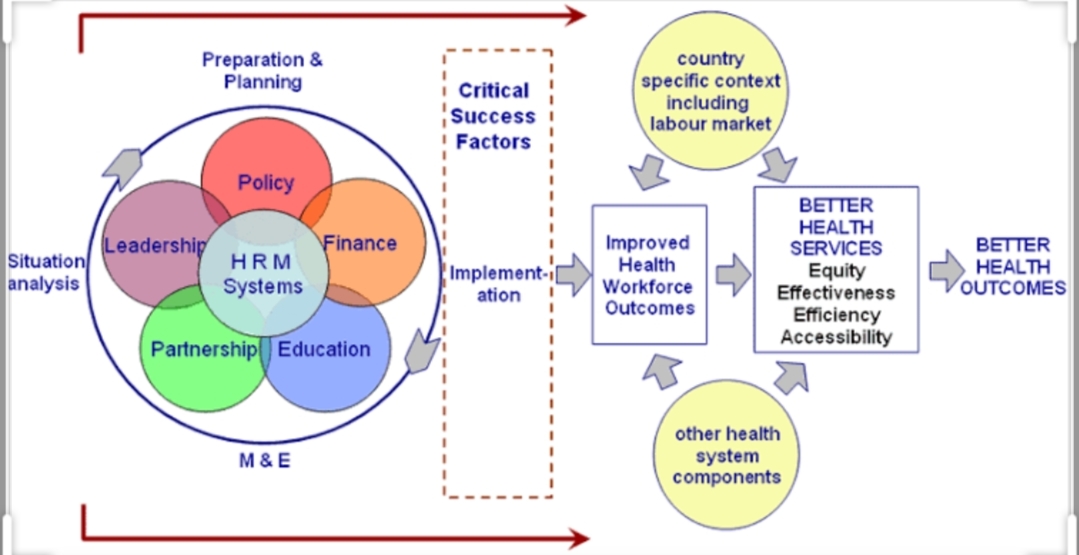
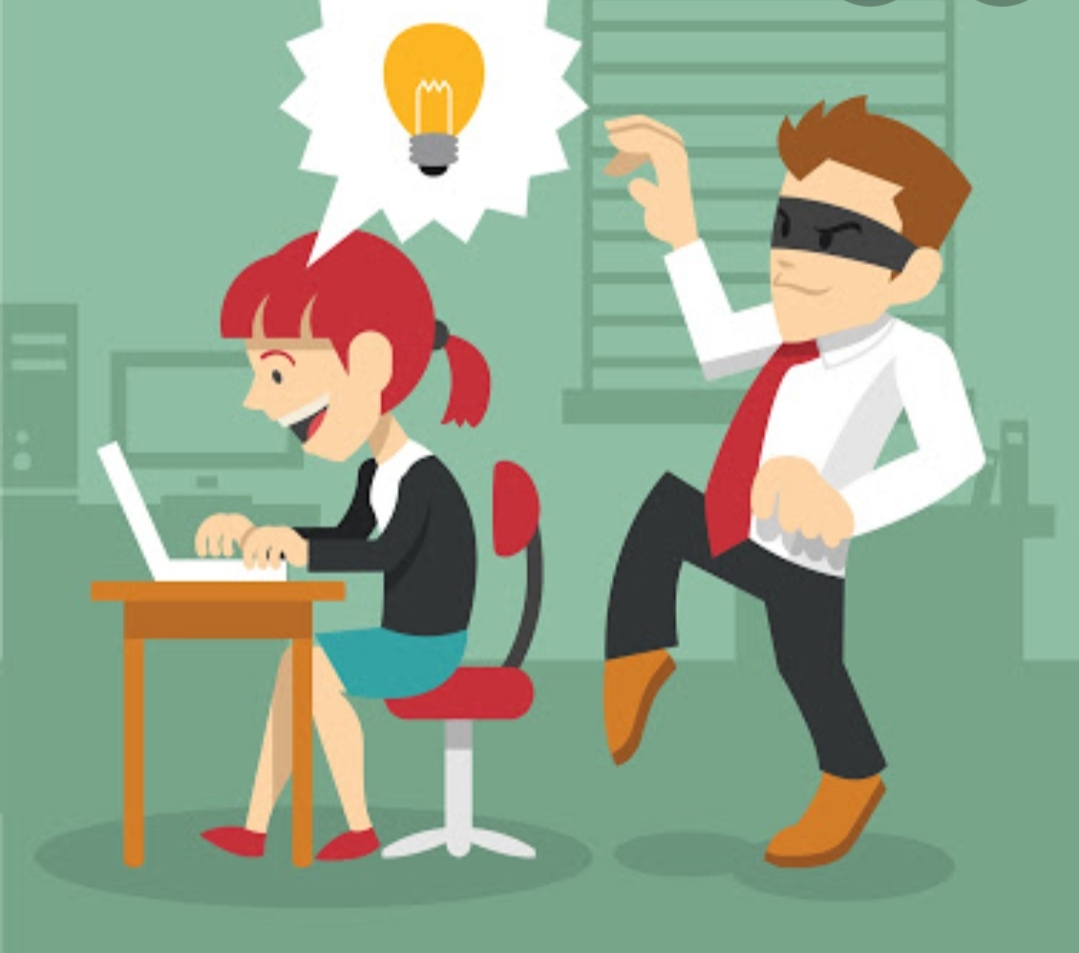
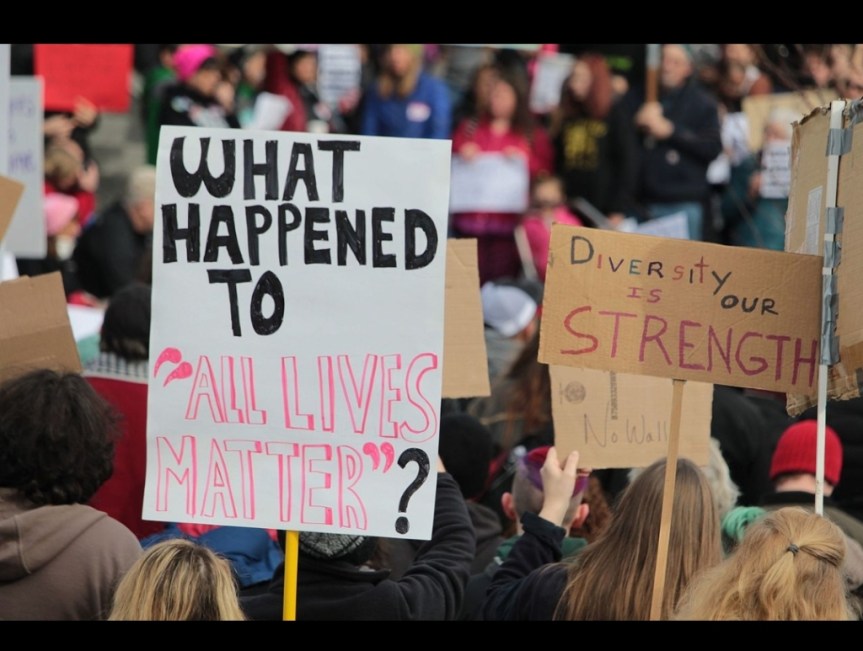


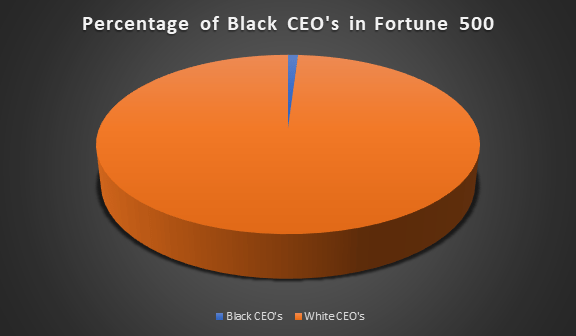






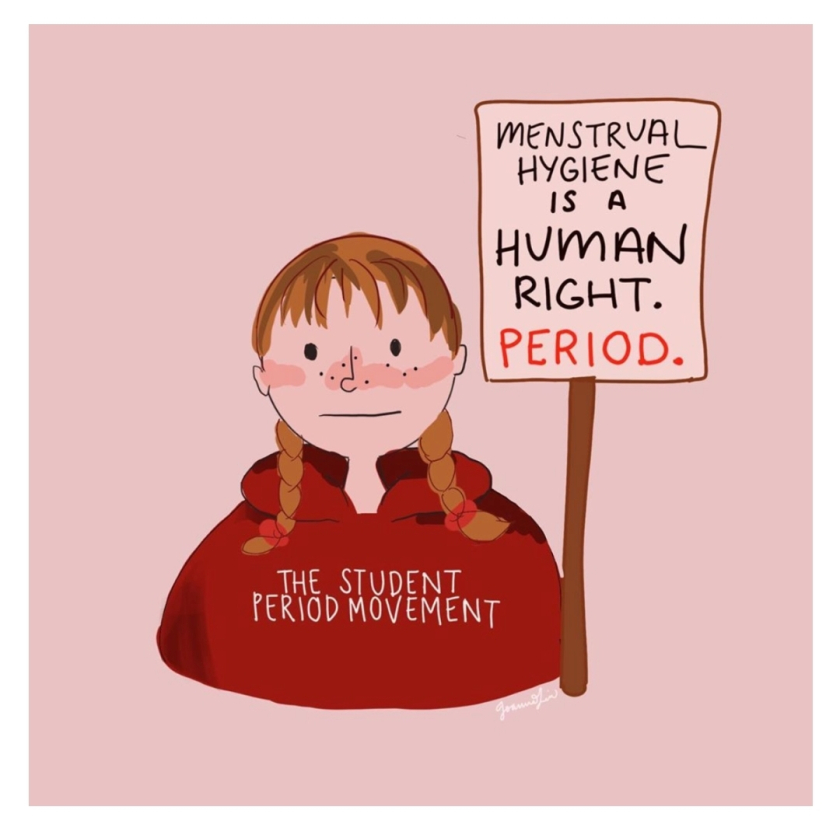


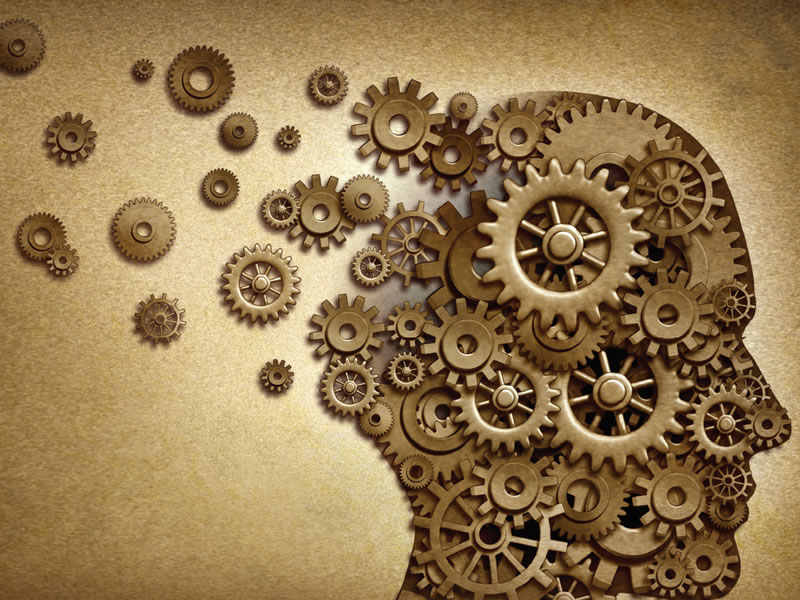
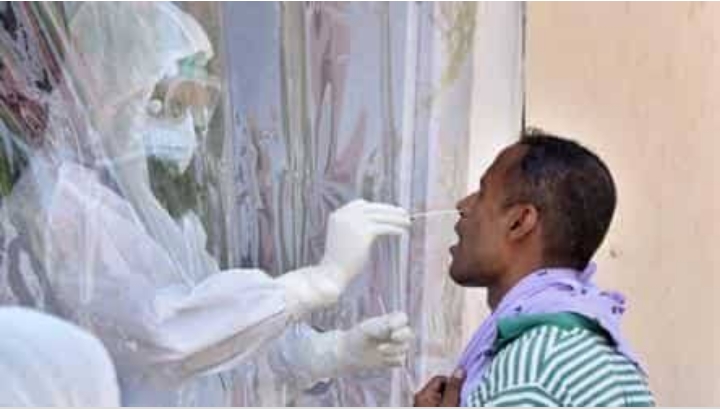
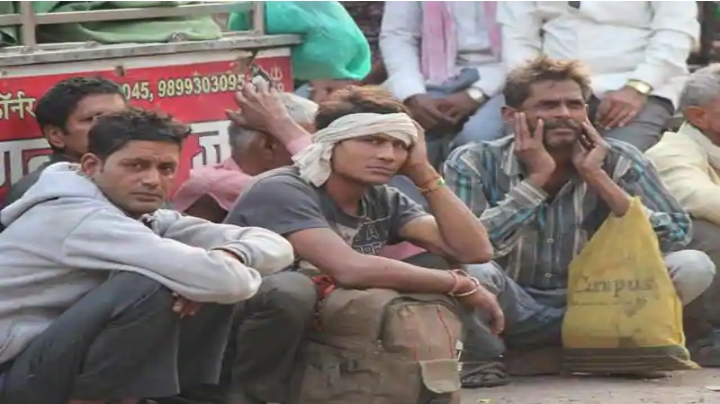

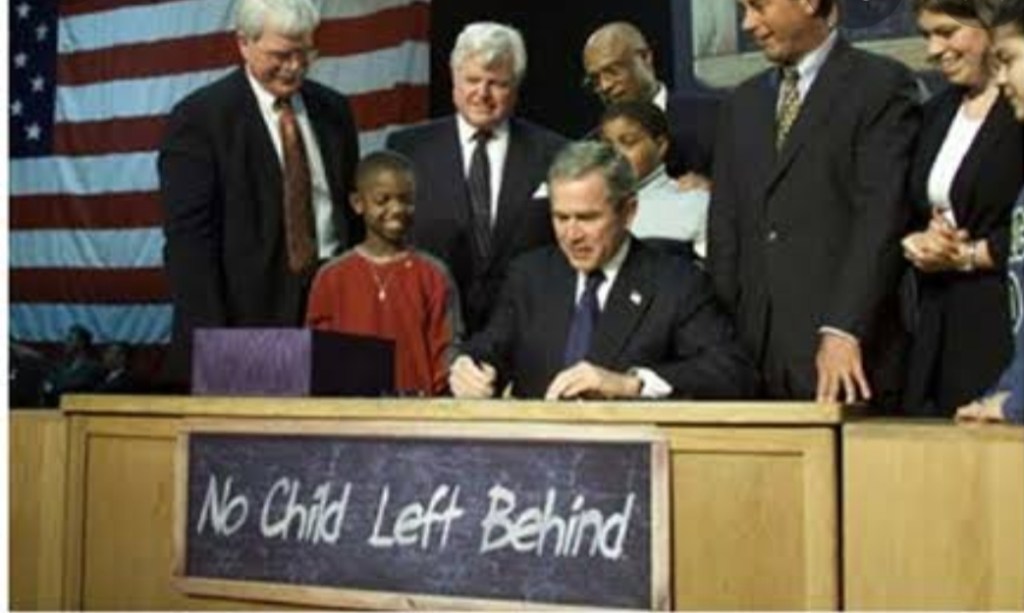

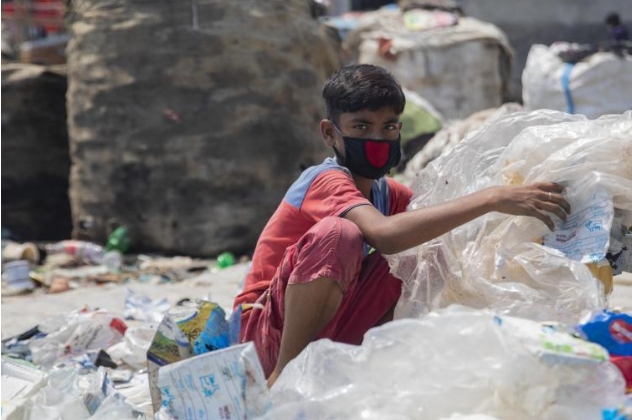




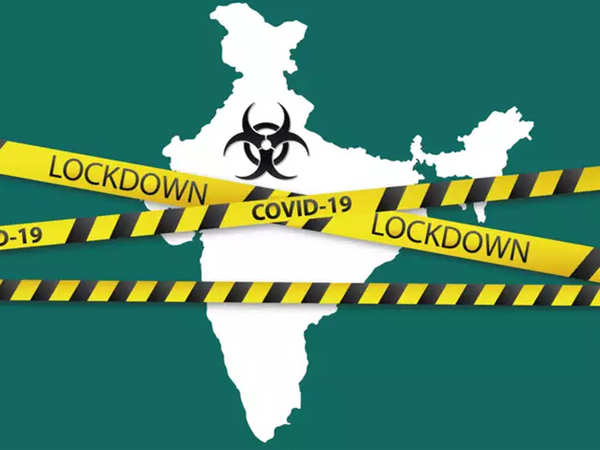









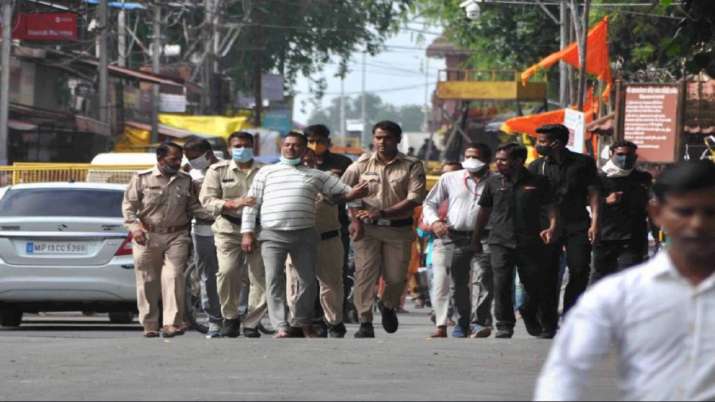





 Track2Training
You must be logged in to post a comment.