Deforestation

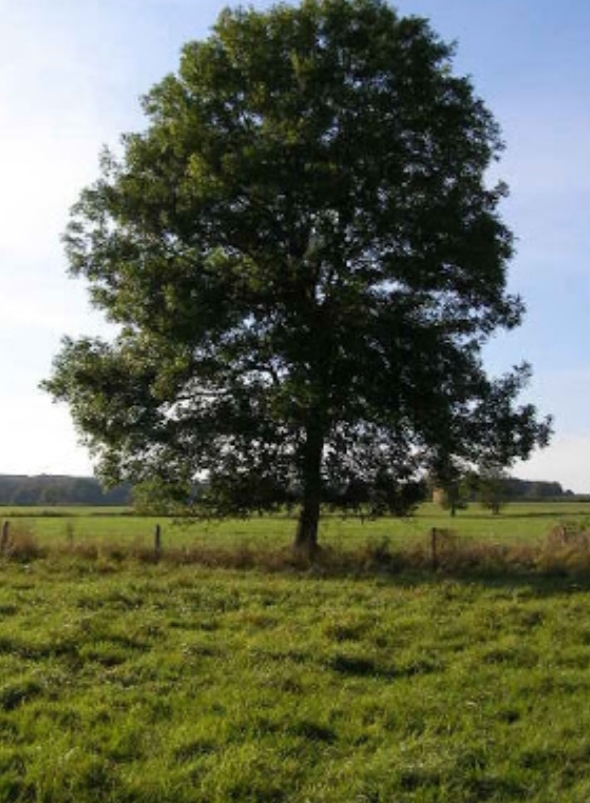
Clearing or removal of trees or any type of plantations for resources or land is called deforestation. Forests cover almost 31 percent of the Earths land today. The Earth is losing forests at an alarming rate. Forest area that are being lost area every decade is about the size of a nation.

The main reason for deforestation is to convert the forest area for the following reasons:

  • Agricultural land
  • Construction of roads
  • Construction of buildings
  • Grazing
  • Timber
  • Mining
  • Food items
  • Medicinal uses. 

Forests are the homes to thousands of species of animals, birds, insects and many other life forms. Destroying them for resources will endanger the many life forms that solely depend on them as it is their natural habitat. These resources are very essential for man but man being greedy does not know when to stop. 

It starts with converting a few acres of forest for urbanization.  Then as the demand rises few more acres are cleared and this keeps on going until the entire forest is lost. Rearing livestock for milk and meat has a drastic effect on the environment. Grazing causes soil erosion which damages soil permanently so no new plants can grow there. Millions of trees are cut down for timber and for paper.

Forests take in carbon dioxide from the atmosphere. This carbon dioxide is a greenhouse gas which causes global warming. Removal of trees is one of the main causes of global warming which in turn causes climate change.  Melting of ice bergs in the Arctic and Antarctic region gradually increases the sea level, which results in the sea covering the land for containing the extra water. Forest fire is also a main reason for deforestation.

Trees take in the water from the ground through their roots and release them into the atmosphere. This loss of transpiration makes the climate drier and ensures minimum rain. Soil erosion is also a result of deforestation, where the soil become loose and results in landslides.

How can we reduce this abuse of nature? Farmers must adopt new and sustainable farming techniques to produce crops efficiently which will stop the farmers from acquiring the forest area for farming. We live in the digital age, so we must make minimum use of paper. We can use aluminium sliding windows instead of wood windows and find alternate solutions where ever it is possible. We do not want future generations to suffer for our mistakes and irresponsibility.

The various governments around the world along with many good citizens and organisations are taking necessary steps for the protection of forests. They do this by planting tree saplings where ever or whenever it is possible. Many offices are going paperless. Governments have created forest bodies to protect and maintain forest area from encroachment. Many other steps are also taken to reduce cutting of trees, which are more valuable than gold for all the resources that they give man. You and I too can help, by having small plants at our houses. By doing the best we can even in the smallest ways possible we can make a difference because one small plant for every person makes it seven billion more plants in the world. 

Women Empowerment

Women empowerment refers to making women powerful to make them capable of deciding for themselves. Women have suffered a lot through the years at the hands of men. In earlier centuries, they were treated as almost non-existent. As if all the rights belonged to men even something as basic as voting. As the times evolved, women realized their [โ€ฆ]

Women Empowerment

Stress and how to deal with it.

A person is stressed when he or she has a feeling of emotional strain and pressure. Stress in small amounts is beneficial and even healthy when it a motivational factor. An excess amount of stress is very unhealthy, to the point where it leads to bodily harm. It increases the risk of stroke, ulcers, heart attacks, hyper tension and even mental illness such as depression.

Hans Selye, a renowned endocrinologist proposed four variations of stress:

  • Good stress ( eustress)
  • Bad stress (distress)
  • Over-stress (hyper stress)
  • Under-stress (hypo stress)

Different events or experience leads to stress. A person cannot know when or where catastrophes might occur. No one can control such situation no matter who that person is. Natural disasters (tsunamis, earthquakes), wars, pandemics are all unpredictable. Change in a personโ€™s life like marriage, moving out of the house for education or work, death of close ones and birth of a child, these are all major life events. A person will be stressed thinking about how to move forward after such events. Both of above mentioned causes of stress are something that a person cannot ignore or quit. These are a part of life.

Simple reasons of stress are daily hassles, something that a person works on to avoid it. If you do not like your job, you can always quit or be involved in ways where you can actually make a difference. If you do not like traffic jams, leave early. Start working on projects at the earliest so that you can meet deadlines, instead of starting late and inducing unwanted stress upon yourself. If a person constantly irritates you, ignore him or talk to him or even become friends.

Stress causes unwanted health issues, like insomnia, depression, strokes, heart attacks and many other which can be avoided simple actions. With stress come behavioral changes. A person becomes a reason for someone elseโ€™s stress. With such changes, you might lose respect among family members, colleagues and friends.

Here are few simple ways to deal with stress.

  • Exercise: Exercise done right is always a stress buster, makes you more calm and relaxed. Workout can make a person forget the events that cause stress; it induces good sleep, keeps you physically fit and also boosts you confidence.
  • Reduce Caffeine intake: Tea, coffee, soft drinks, and energy drinks; all these increase a personโ€™s anxiety level. It makes a person addicted. Alcohol consumption or even smoking causes stress, it might give temporary relief but after that is over it is life back to normal.
  • Spend time with people: Spending time with your family or friends reduces stress. You can talk about your life, the joy and the pain that comes with it instead of keeping it to yourself or always immersed in the electronic media. It might be difficult at first, but it gives you a sense of relief.
  • Listen to music or enjoy good humor:  Music is always a stress buster. Humor is always better. You relaxes you mind, you can also do those chores while listening to music.
  • Eat Healthy: Eating healthy keeps you fit. Makes you more confident. Maintain a balanced diet. Get more nutrients. Reduce junk food intake. It increases your cholesterol level, which causes health risks.
  • Hobbies: Learn new things, maybe a musical instrument, start painting, do some photography, learn new technical data. These hobbies help you relax, forget about your worries and make you confident. 

Why is Aging Mindfully very necessary ?

Mindful aging is aging in a way that does not ignore the negative effects of aging, and also having a positive outlook to the benefits of aging. It’s all about accepting the things that come with aging, and not being ignorant to it. It’s all about not blowing things out of proportion. People often tend to have a negative response to aging, even if you think about aging all you can see is being dependent on someone, needing assistance almost all the time, having difficulties in doing your day to day activities and most importantly you feel you will stop enjoying life. But we should never forget that it’s in our hands to draw limitations or never think about it at all. We must never dwell on the misery life has installed for us, be it today or tomorrow, always find ways to make today better than yesterday. Constantly ask yourself these questions: 

โ— Am I willing to grow old? 

โ— Am I ready to face tomorrow? 

โ— What can I do to make complete use of my time later? 

โ— How can I overcome the fear of getting old? 

โ— How can I stop dwelling on negative thoughts ? 

โ— Is it really bad to grow old? 

As we grow older and older we are more thankful for everything in life, we get to see people falling sick , people dying. So we must be grateful that we are alive, and try to make the best use of our remaining time on earth. No one knows what the future holds, so enjoy every moment of life like there’s no tomorrow. By mindfully aging there is also a decrease in the stress and anxiety levels of a person. Practicing mindful aging is not only for people in their 60’s and 70’s but we can start practicing it today. Follow simple steps to start working on it: 

โ— We might often dwell on certain bad memories or friends who are no more friends with you, we must learn to let these memories fade away. You require space to make new memories and dwelling on these old and painful ones can only worsen your mind-set, and you may never be able to make a new one. 

โ— Plan things you could do when you grow older, make a bucket list of things you wish to do before you die, be it skydiving or traveling to the coldest place on earth. Planning things beforehand will help you stay focused on your happy life. 

โ— Try respecting your body as much as possible. You might not have the same tiny waist anymore or perfect skin, but you must learn to accept these inevitable changes your body must go through. Try making health your priority , you might not be able to run a marathon, but you surely can go out for a walk or go jogging. 

Conclusion:- 

You might feel that you don’t require these things as you’re still young, but this is not just something to do when you grow old, but we all need it right now. Being mindful must change into being our lifestyle, people don’t realise the importance of this, but it’s as important as 

taking your tablets when you feel sick, mindful aging is like therapy to lost minds. Older people are often more happy than younger ones, this is because they are aging more mindfully unlike the young ones. Remember the key to your happiness is in your own hands, make sure you unlock it before it’s too late. 

Corruption

Corruption refers to a form of criminal activity or dishonesty. It refers to an evil act by an individual or a group. Most noteworthy, this act compromises the rights and privileges of others. Furthermore, Corruption primarily includes activities like bribery or embezzlement. However,ย corruption can take place in many ways. Most probably, people in positions of authority are susceptible to Corruption. Corruption certainly reflects greedy and selfish behavior.

First of all, Bribery is the most common method of Corruption. Bribery involves the improper use of favours and gifts in exchange for personal gain. Furthermore, the types of favours are diverse. Above all, the favours include money, gifts, company shares, sexual favours,ย employment, entertainment, and political benefits. Also, personal gain can be โ€“ giving preferential treatment and overlooking crime.

Embezzlement refers to the act of withholding assets for the purpose of theft. Furthermore, it takes place by one or more individuals who were entrusted with these assets. Above all, embezzlement is a type ofย Financialย fraud.

The graft is a global form of Corruption. Most noteworthy, it refers to the illegal use of a politicianโ€™s authority for personal gain. Furthermore, a popular way for the graft is misdirecting public funds for the benefit ofย politicians.

Extortion is another major method of Corruption. It means to obtain property, money or services illegally. Above all, this obtainment takes place by coercing individuals or organizations. Hence, Extortion is quite similar to blackmail.

Favouritism andย Nepotismย is quite an old form of Corruption still in usage. This refers to a person favouring oneโ€™s own relatives and friends to jobs. This is certainly a very unfair practice. This is because many deserving candidates fail to get jobs.

Abuse of discretion is another method of Corruption. Here, a person misuses oneโ€™s power and authority. An example can be a judge unjustly dismissing a criminalโ€™s case.

Finally, influence peddling is the last method here. This refers to illegally using oneโ€™s influence with the government or other authorized individuals. Furthermore, it takes place in order to obtain preferential treatment or favour.

Ways of Stopping Corruption

One important way of preventing Corruption is to give a better salary in a government job. Manyย governmentย employees receive pretty low salaries. Therefore, they resort to bribery to meet their expenses. So, government employees should receive higher salaries. Consequently, high salaries would reduce their motivation and resolve to engage in bribery.

Increasing the number of workers can be another suitable way of curbing Corruption. In many government offices, the workload is very high. This provides an opportunity to slow down the work by government employees. Consequently, these employees then indulge in bribery in return for faster delivery of work. Hence, this opportunity to bribe can be removed by bringing in more employees in government offices.

Tough laws are very important for stopping Corruption. Above all, strict punishments need to be meted out to guilty individuals. Furthermore, there should be an efficient and quick implementation of strict laws.

Applying cameras in workplaces is an excellent way to prevent corruption. Above all, many individuals would refrain from indulging in Corruption due to fear of being caught. Furthermore, these individuals would have otherwise engaged in Corruption.

The government must make sure to keep inflation low. Due to the rise in prices, many people feel their incomes to be too low. Consequently, this increases Corruption among the masses. Businessmen raise prices to sell their stock of goods at higher prices. Furthermore, the politician supports them due to the benefits they receive.

To sum it up, Corruption is a great evil of society. This evil should be quickly eliminated from society. Corruption is the poison that has penetrated the minds of many individuals these days. Hopefully, with consistent political and social efforts, we can get rid of Corruption

#Cancelled: Unravelling The Toxicity of Cancel Culture


โ€œI believe it’s worth thinking about what accountability looks like beyond simply exiling someone. In doing so, we can position ourselves more firmly within the values of social justice.โ€

Cancel. It’s dictionary definition is โ€œto destroy the force, effectiveness, or validity of.โ€ Cancel culture, originally started as a means to correct or inform the misguided. However, it has become something much worse. People go along with it because they think itโ€™s a cool trend to follow. They have gone down this spiral of cancel culture and the idea that everything is offensive. Nowadays, anyone and everyone is getting cancelled. It has become so widespread that by now people think of it to be a normality.

But it shouldn’t be.

The problem arises when it turns into a bunch of people only doing it so that they can show everyone else how good of a person they are. Then everyone tries to out-do each other and ultimately, you end up with a bunch of people wasting their time going through years and years of tweets to find the one wrong thing that someone said and call them out on that. All this, despite the fact that society didn’t care about those things at the time and the person has clearly changed since then. It’s quintessential to realize that todayโ€™s morals cannot be applied to something that happened ten years ago.

It should be understood that there’s a huge difference between “I dislike or disagree with this person, and it’s important enough to me that I will not personally patronize them” and “I dislike or disagree with this person, therefore they shouldn’t have a career at all.” Lamentably, the latter view pretty much plagues the minds of most social media users.

Cancel culture is based on the premise that anyone who offends you does so with deliberation, intention, and (usually) malignant motivation. Cancel culture uses public shaming and group complaining to attempt to induce permanent harm to those with whom they take exception. It uses the legal system to induce financial crisis, uses the publicity system to amplify their voice, and generally acts like that kid you see in kindergarten who has to play alone because they can’t be around other people without attacking them for not submitting to their desire to dominate a cultural or economic space. These kinds of people tend to regularly miss noticing that the world and other people (by and large) could not possibly care less about them, if they even know they exist. These kinds of people tend to assume that their own perspective is always the most important and relevant one, and try to get attention by amplifying outrage to culturally blackmail perspectives and people with whom they disagree. Then, they refuse to accept the concerned personโ€™s apology when they do apologize and admit it was wrong and insensitive. It just ends up turning into virtue signalling for selfish reasons. Worst of all, they are willing to injure others and ruin lives to do it.

Personally, I find it to be an appalling display of self- absorption and egotism by people who, I think, behave and seem to be so emotionally insensitive that they just stop caring about anyone but themselves. The worst of the lot always seems to be the same personality. Cancel culture will die the moment this becomes more apparent. The good news is, that’s probably not that far off. The sad news is that in the meanwhile, they’re deriding and tarnishing a far longer and better tradition of social and cultural discourse that actually delivers on change.

Itโ€™s generally organized by malicious people who only gather together to form groups of hatred and intolerance for anything that they deem unfit. They probably have never let go of a grudge in their life and are also very likely to be the ones who take a sick pride in that. Their circles are usually only held together by common bonds of hatred, but quickly implode upon themselves the moment they can gather a group to harm one another. They tend to be ruthless, claiming virtue but displaying a twisted set of morals that only fit their own bill. They try and sell you a picture they’ve created from fragments of reality, out of desperation to advance their narrative (i.e., that their upset is more important than anything else in the world) and, sadly, most will probably buy into it if they are not aware of their intentions.

Their logic, too, struggles to hold up, for example, the “once a racist, always a racist” argument. From this perspective, an ignorant 15 year old cannot possibly change and become more educated or grown as a human being. Their comments imply that the people they’re fighting to stop never grow, never change their views on particular topics and are social scum because of comments, posts, tweets, etc. from years ago. It’s embarrassing to say the least. The best part is the likely hypocrisy. I’m willing to wager that even they, themselves, have committed ignorance acts in the past, which just havenโ€™t been exposed, but they don’t think about that.

These people are willing and happy to see others suffer and that’s pretty much the antithesis of the intent of public discourse and even public protest. Some of them, however, outgrow this behavior and learn more productive ways to advance change. Then again, these would be the ones that are actually interested in change, not retribution.

We need to become a more tolerant society not only in matters of differences in sex, sexual preference, race, religion, and nationality but also in showing the willingness to allow the existence of opinions or behavior that one does not necessarily agree with and not seek to harm the offender. It may be a fine line that we walk between a legitimate cancel and ill-advised one, but itโ€™s a line that must be drawn to bring civility back to society.

We need to come up with ways to hold people accountable for their wrongdoing and yet at the same time remain in touch with their humanity enough to believe in their capacity to be transformed.

– Bell Hooks

Online Education: Is it effective?

In the last 20 years, the Internet has grown from being nearly non-existent into the largest, most accessible database of information ever created. It has changed the way people communicate, shop, socialise, do business and think about knowledge and learning. Much more than just a new twist on distance learning, online schooling is changing the face of traditional classrooms and making education more accessible than ever before.

Online education is a form of education where students use their home computers through the internet. For many nontraditional students, among them all those who want to continue working full time or raising families, online graduations and courses have become popular in the past decade. Often online graduation and course programmes, some of which are conducted using digital technologies, are provided via the online learning portal of the host university.

An online education is preferred by individuals who may not be able to make it for classes in a traditional brick and mortar kind of college due to various reasons.ย 

According to me and my observation online education is effective because: The concept of traditional education has changed radically within the last couple of years. Being physically present in a classroom isnโ€™t the only learning option anymore โ€” not with the rise of the internet and new technologies, at least. Nowadays, you have access to a quality education whenever and wherever you want, as long as you have access to a computer. We are now entering a new era โ€” the revolution of online education.

Thereโ€™s no need to discount the skepticism surrounding education through the internet. Itโ€™s hard to understand the notion of leaving behind the conventional classroom, especially if it’s to face this vast space called The Internet. 

However, thatโ€™s not reason enough to shy away from this alternative, which has proven to be valid and useful for many students. According to theย most recent surveyย from Babson Survey Research Group, over 30 percent of higher education students in the United States are taking at least one distance course. Online education is a sensible choice whether youโ€™re a teenager or an adult. As a student, this can be a useful learning method for sharpening your skills in a difficult subject, or learning a new skill.ย 

Keep on reading to learn five more reasons why you should get involved in online education!

1. It’s flexible. 

Online education enables the teacher and the student to set their own learning pace, and thereโ€™s the added flexibility of setting a schedule that fits everyoneโ€™s agenda. As a result, using an online educational platform allows for a better balance of work and studies, so thereโ€™s no need to give anything up. Studying online teaches you vitalย time management skills, which makes finding a good work-study balance easier. Having a common agenda between the student and teacher can also prompt both parties to accept new responsibilities and have more autonomy.ย 

2. It offers a wide selection of programs. 

In a space as vast and wide as the internet, there are infinite skills and subjects to teach and learn. A growing number of universities and higher education schools are offering online versions of their programs for various levels and disciplines. From music composition to quantum physics, there are options for every type of student. Studying your program online is also a great option for getting an official certificate, diploma, or degree without physically setting foot on a university campus.

3. It allows for a customized learning experience.ย 

Weโ€™ve mentioned before how flexibility can help you to set your own study pace. But online education is also flexible for each studentโ€™s individual requirements and level of ability.

Online classes tend to be smaller than conventional class size. Most of the time, online learning platforms only allow one student at a time, and in almost all cases, this allows for greater interaction and more feedback between you and your tutor.

Thereโ€™s often access to very diverse material such as videos, photos, and eBooks online as well, and tutors can also integrate other formats like forums or discussions to improve their lessons. And this extra content is available at any moment from anywhere, which will offer you a more dynamic and tailor-made education.

4. Itโ€™s more cost-effective than traditional education.ย 

Unlike in-person education methods, online education tends to be more affordable. Thereโ€™s also often a wide range of payment options let you pay in installments or per class. This allows for better budget management. Many of you may also be subject to discounts or scholarships, so the price is rarely high. You can also save money from the commute and class materials, which are often available for free. In other words, the monetary investment is less, but the results can be better than other options. 

As colleges and universities have shuttered their physical campuses in the face of the spread of COVID-19, they have moved their courses to remote and online formats in rapid fashion. And that’s prompted many to wonder what the ultimate impact this period of time may have on online learning in higher education.

Based on the present situation, where individuals come to stand on online learning will depend on where they sit currently. That is, there will be both positive and negative impacts on the state of online learning in higher education.

FUTURE OF ONLINE EDUCATION

Online teaching is here to stay. Many students prefer the online classroom since it offers flexibility in their busy schedules. With the proliferation of information and knowledge, students must become lifelong learners in today’s world, and online education plays an important role in helping individuals access the learner-centered and self-directed instruction.

With enhanced software, hardware, and Internet access, more options for online education will become available. With student enrollments increasing faster than classrooms can be built, students becoming more proficient with technology, and students pursuing an education that meets their needs, the future of online education will continue to grow. Online degree programs will become more widely accepted as they become a more common practice.

Industrial Relation

Industrial Relation has become one of the most delicate, crucial and complex problem of modern industrial society. Industrial Relation is the relation in the industry which is created by complex attitudes and approaches of both management and workers. As we know industrial progress is impossible without our human resource. Harmonious relationship and cooperation of labours helps the organisation to achieve its goals and targets. Therefore, it is favourable for all to create and maintain good and harmonious relation between employee and employer. Industrial Relation can be defined as the relation between the management and the employee of an organisation at the workplace. Industrial Relation or Employee Relation is also known as Labour – Management Relation which is characterised by rapid changes, industrial unrest and conflicting ideologies. It is a dynamic and developing concept which mostly depends on the following factors like pattern of society, economic system and political set-up of a country. Industrial Relation can be studied in both narrow sense as well as broad sense. Industrial Relation is a complex process it is not a simple relationship between employer and employee rather it is living together for the purpose of production, efficiency and industrial progress. For establishing and maintaining a harmonious industrial relations there should be existence of good human relation, organised labour movement, collective bargaining, fair dealing with the workers, etc. It helps in building up healthy attitudes and institution. As we know industrial relation are always a mixture of cooperation and conflict. Cooperation leads to achievement of goals while some conflict always remain. Industrial Relation are multi-dimensional in nature and is conditioned with various determinents like institutional, economic and technological factors, etc. Generally, industrial relations helps in safeguarding the interests of labour and management which is possible through mutual understanding and goodwill. Industrial Relation also helps in improving the economic status or standard of living of the employees and workers by improving their wages, benefits and incentives. It also helps in increasing the participation level of workers and employees by providing them opportunity of giving their opinions and say in the management and decision making. Industrial Relation also helps in encouraging and developing trade union in order to improve the strength of the workers. It also helps in avoiding industrial conflict and strike by developing harmonious relationship between employer and employee. It also helps in enhancing the morale of the workers, productivity of workers and the industrial progress of a country. It helps in eliminating strikes and lockouts as far as possible by providing them reasonable wages, improved living and working condition and fringe benefits. It also helps in establishing and increasing the growth of an industrial democracy. As now we have read so much about industrial relations so we should move forward to know that what are the Importance of Industrial Relation:-

  • Reduces Disputes – Peaceful Industrial Relation reduces industrial disputes. Disputes normally occur due to dissatisfaction in regards to salary, work environment, etc. And this leads to strikes, lockouts, go – slow tactics, etc. So industrial relations helps in reducing these.
  • High Morale – Industrial Relation helps in improving the morale of the employees. It helps them to work with great zeal and with the feeling in mind that the interest of both employee and employer are same. There should be complete unity of thought and action for the achievement of industrial peace.
  • Benefits to Workers – In order to make your workers and employees happy they should be given sufficient monetary and non – monetary benefits which can help them so that they can lead a happy life.

Last But Not the Least

Industrial Relation is very important for both the parties that is employer and employee as it ensures uninterrupted production.

Animal Cruelty: Efforts taken by India to prevent it

Animal Cruelty is when animals are abused, when non humans inflict any sort of pain on animals either by killing them or physically abusing them. Some religions in India even encourage that, however there have been efforts put by the government to do away with animal cruelty by punishimg the ones who have committed it. Prevention of Cruelty to Animals Act, 1960 has been implemented with the objectives to prevent the infliction of unnecessary pain on animals. The term animal has been defined under the act as any other living creature which is not a human being. However, the irony here is cruelty is nowhere defined the act. Animal welfare board has been established by the central government under this act, for the purpose of fulfilling the objectives stated under the act mainly revolve around animal welfare.

The functions of the members of the board have been clearly specified to frame rules and regulations regarding animal welfare. The other functions have been discussed as follows:

  • They were also made responsible to protect animals during transportation, they made certain rules regarding the design of a transport vehicle to reduce the deaths of animals caused during transportation.
  • They had to take measures to protect animals by giving their owners financial assistance, providing rescue homes and shelter to all.
  • Proper veterinary assistance had to be ensured which also included proper medical attention in animal hospitals.
  • Awareness has to provided through various campaigns and programmes to make sure everyone is aware of the law that exists and they can put an end to animal cruelty.
  • The board should advice the government in matters related to animal protection and safety.
  • It also has a duty to realise various animal welfare organisations, and provide them varoius benefits.

There also another legislation and even the constitution itself which contains provisions to prevent animal cruelty and to promote animal protection. Animal cruelty is a cognizable offence under section 428 and 429 of the Indian Penal Code, 1860. Article 48A and article 51A(g) of the constitution have also promoted animal welfare, it has been stated that the state is responsible to take care of the livelihood of all animals it is even a fundamental duty of all citizens to protect animals. Other legislations dealing with animal protection are Prevention of cruelty to Animals, (Slaughterhouse) Rules, 2001, and Wildlife Protection Act, 1972, which consider slaughtering of animal as illegal.

We can sum up the above information and come to a conclusion that The Prevention Of Cruelty to Animals Act, 1960 prohibits any person to lay their finger on an animal with bad intentions. The Act also makes to crime to kick or beat animals, it is also illegal to use unfit animals for work purposes, it is also a crime to engage animals in various competitions which may arouse them to fight, and after it causes them pain (specifically many religious competitions). It is also illegal to engage in animal in various competitions where they fall prey to like shooting competitions, where the person has to shoot the animal. Surprisingly it is considered as an offense if the owner is unable to take care of the animal, i.e, nor provide proper shelter or food, abandons them, etc. It gives all around safety to animals, however a question may arise that isn’t the law outdated, and further amendments have to be made considering the present situation, and the answer is yes. The law implemented is considered to be outdated, it has never been amended from 1960, which also means that the punishments and penalties remain the same, which may not be right in the present day. We may hope for further amendments in the particular act in the future.

Hence, it has been proved that efforts were taken and will be taken in the matter of animal cruelty. It is necessary to have a good relationship between the man and nature which consists animals, that’s when there will balance between the human beings and non human beings. Stopping animal cruelty not only saves animals but also reduced the global warming and pollution situations which are prevailing in the present day, if animals exist there will be balance in the nature, as everything is interrelated. Therefore, animals should be given the same importance as of animals.

The Maintenance and Welfare of Parents and Senior Citizens Bill, 2007

Senior citizens are considered to be the citizens of India who have crossed the age of 60 years. They almost constitute around 10 percent of the population of the nation, and there have been cases reported where there has been gross violation of their human rights. There are certain set of problems which the old aged face which take the form of economic problems, as they have no or less earning at this age, psychological and physical problems, as in they become physically and mentally weak due to various health problems, and social problems, it is the lack of care towards them. India as a nation, gives a lot of importance to the senior citizens, by giving social and economical benefits, and has put forward a legislation named “The Maintenance and Welfare of Parents and Senior Citizens” which has been implemented to restore the rights of these people by making it mandatory for their children to provide maintenance to them. Various situations have been reported where old age people have been abandoned by their own children, due to which their is a threat to their survival.

The main objectives of the act is to provide maintenance to the senior citizens for the purpose of their livelihood and survival. It also aims at increasing the number of old age homes at each place for the welfare of these citizens. The bill also defines the terms maintenance, senior citizen, parent and child , relative, etc under the act to give a clear view regarding these terms. The key features of the act have been discussed as follows:

  • Takes care of the elderly by giving them the provision of maintenance. This act places an obligation on the children and relatives to give maintenance to the senior citizen in the form of monthly allowance, and other such necessities which are required for their survival. When the senior citizen is unable to take care of themselves and live out of the income he is receiving from his/her property ,  then if they apply to the maintenance tribunal, it can be received from the child or children (if more than one) who  are inheriting the property given by the paren or in this case senior citizen. 
  • Provision for Maintenance Tribunal : As stated above, it is required for the senior citizen to apply for the tribunal in order to receive maintenance. The state government will decide upon the number of tribunals to be established to fulfill the purpose of the Act.  After the tribunal looks into the matter, and review the situations, if it deems it fit the application will be granted, and the allowance shall not exceed rupess 10,000 per month. The application shall at any cause be disposed within 90 days. If the tribunal find out any misrepresentation it has the power either to cancel the allowance or alter it accordingly. 
  • Appeals can go to the courts which is presided by at least a District magistrate. 
  • It is not compulsory for a legal practitioner to represent the senior citizen, they can be represented by a social welfare officers. 
  • A list of offences an penalties have been clearly stated in the act. Offences like not providing with maintenance, or abandoning an old age person, then either penalties will be taken or the person will be imprisoned for a specific period of time, or even both.  
  • The Act has provided other provisions, like for establishing old age homes, and the rules and regulations which has to be followed by it. Ensure special medical attention to senior citizens in hospitals, and shall bring awareness in people regarding the act by various campaigns.

There are other legislations which support the idea od maintenance and taking care of senior citizens by giving them old age security and they are, Article 41 of the constitution which is a DPSP (Directive Principles of State Policy) which makes the state responsible to look after the livelihood of the old age and sick, and two act namely the Code of Criminal Procedure, 1973, and the Hindu Adoption and Maintenance Act, 1956 which contain provisions to relating to the children having an obligation to look after their old age parents, by giving maintenance when they are unable to take care of themselves.ย 

We can come to conclusion that this act makes sure that every senior citizen has livelihood, but does not consider the mental health of them of they are sent to old age homes. I personally feel that there has to be provision stating that if the children are financial  stable then they should look after their parents no matter what. We have to keep one thing in mind that parents have given us a good life by giving us a good education which leads to a good future, hence, we have to take care of them in the same way they took care of us when we were growing up. This act does not entirely take into consideration of the senior citizen but has played an important role for the old personโ€™s survival. 

Are Women Misusing their Rights ?

We have been seeing the efforts that are being taken by the Parliament to put the rights for women in par with the rights of men, but did it strike to you at least once that are the rights which have been given to women in any way being misused. Are women nowadays at a greater advantage than that of men, and are men being exploited out of certain privileges that are given only to women. We have seen a lot of struggles and movements which have been initiated by the women in the society to get justice due to the unequal treatment between man and a woman, but after getting the rights are they honestly using it or, are they taking advantage of it. These maybe the questions that are arising when you first see the title of the article. 

Being a woman I have seen us getting certain privileges that men apparently do not get. We have separate quota when it comes to educational institution, we have separate such reservations in job opportunities, in politics, even when it comes to sitting in a train, we have a separate women’s coach. Since I was born I havenโ€™t seen anything close to what we have now. There have been many complaints and reports showing that women are beinge, raped, abused, prone to domestic violence and many other such crimes, and correspondingly the parliament of India has taken efforts to prevent such crimes by granting women some rules and regulation due to which the crimes can be prevented. 

Now let us take the case of rape, it it given under section 375 of the Indian Penal Code, 1860 that if a male commits a rape against a women, then it is consiered as a non bailable offence, which gives the police power to arrest the man just with the womenโ€™s word that he has committed rape. This is highly considered to be sexist firstly as it doesn’t think about the consequences that what if the women lied and he is not the rapist, secondly it doesn’t consider the so call Menโ€™s rape, why?. Reports prove that at least 20% of the rape cases are false allegiances. This proves that women are taking advantages in not all but surely in some situations. This represents the loopholes in law, that when something happens to a women it is considered bad and we are supposed to feel sorry for it, but there is not even a basic consideration that what if all the above crimes to women happen to men. Why don’t we consider the probability that it can happen to man as well, just because we think and consider that men are fearless and strong, shouldnโ€™t we think about the men who are vulnerable and weak. Not only regarding rape but we have seen clear signs of sexism when it comes to other crimes like the wife blackmailing the husband to file a case under the Dowry Prohibition Act, even if there was no abuse or violence, and before the amendment in 2018 adultery which has been stated as a crime under Section 497 of the Indian Penal Code, it only considered the man as the person aggrieved and never the women, the wife was considered to be the property of the man, and it was concluded that the man should be punished in cases of adultery and never the women as they are considered to be a special category in the society, and there is no harm in giving them special provisions. Only after 70 years of struggle adultery has finally been decriminalised in India. 

Overall, I wanted to say that there are situations where we women have been clearly misusing our rights. I feel that we have come close to a day where being born as a man will be considered bad, due to all the current laws. Feminism truly means to give men and women equal rights, but in some situations women have an edge over men, they are being exploited and affected. This can be solved if our legislature recognises the threat to men also. Our laws should get more stricter and their application should be done in an effective ans efficient way. All, its hight time and sexism against men should also be taken into consideration. 

Is Censorship Of Films Legally Supported ?

Censorship is the process of cutting out or suspending parts of either a film, book, or any material that is going to be published, if it is considered to be unappropriate. It can be unappropriate if it is considered to be obscene, or politically and socially wrong, and if it may pose a threat to the nation’s security.There have been debated regarding censorship saying that it is violating the freedom of speech and expression which is stated under Article 19(1)(a) of the Indian constitution, however it has been argued that censorship is a part of the reasonable restrictions which is stated under article 19(2) which states that the above right can be invoked if it is in the interests of the sovereignty and integrity of India, the security of the State, friendly relations with foreign States, public order, decency or morality or in relation to contempt of court, defamation or incitement to an offence.

A film is the best form of communication which can represent anything in the form of acting through actions, these are so powerful and they can be even used as a means of change in the society. Some even inspire a personโ€™s mind to look out of the box, to achieve their dreams and goals. Cinema/Movies/Film can be of different genres/topics but for it to be published it has to obtain a certificate from the Central Board of Film Certification to be considered legally valid and to make it available for the public exhibition. This board was established under the The Cinematograph Act, 1952 Act which contains rules and regulations regarding censorship, certification of a film and its publication. The board had the duties to give a certificate to the films spending on itโ€™s content, it could be U which states that is a universal movies for all, UA which states that parental guidance is necessary for children to view it, A which means only adult scan watch it, and S which means it is restricted to a special class of people only. The boars also has the power to totally ban the film if it considers it inappropriate, which has been discussed above, it can be in cases where it is portraying a lot of violence, or degrading religions, has a lot of obscene content, discriminating men and women,if it is too political, causes hatred among people etc. Obscenity is subjective and it will be decided from a common personโ€™s point of view in the society in general. Overall we can say that board is the main authority which looks into the overall impact of the film by viewing it themselves, and it either certifies the film, or totally rejects it. 

One of the cases where the issue of censorship was raised firstly was in the K A Abbas v Union of India and was thereby declared that censorship does not violate the freedom of speech and expression, and pre-censorship is to be considered a vital step towards publication. There are a list of offences or crimes which are not supposed to committed by filmmakers, and they have been discussed below:

  • Obscenity: It is the portrayal of certain thing which are not considered to be morally decent in the society, it is considered as offensive in the society (usually display of sexual acts). What maybe obscene today may not be the same tomorrow, it is subjective and it changes in par with the thoughts and opinions in the society. However, if indecent of offensive actions are portrayed it is considered to be a crime under section 292, 293, and 294 of the Indian Penal Code (IPC). Some sections define obscene content and the other provide for its punishment and penalties. 
  • Sedition: The act of publishing information, which bring hate toward the government and incites a person to against the government is called sedition. This is a crime under section 124A of the IPC.
  • Defamation: When the content published has defamed a person particularly, it is considered to be a crime under section 499 of IPC.
  • If there is any content which promotes hatred towards a particular class in the society on the basis of gender, class, race, religion, caste, place of birth, language, etc then it is considered to be a crime under section 153A of the IPC. 
  • When there is a contract or an agreement between the makers of the film and the movie theatres, stating that the film can be published only in certain theatres and not all, this is an offence.

There are other legislations and not only the above sections in IPC  for the above offences and crimes. 

At a conclusion can say that cinema is an instrument which can portray ideas and thoughts in the right way, and censorship is totally valid legally, ethically, socially and morally. It is necessary to review the films before they go out in the public, this is done for the welfare of its citizens. Cinema has the power to influence the public and hence it should take necessary measure to make sure that the wrong content is not being portrayed. Everything has a limit and therefore the freedom of speech and expression should not be used beyond its reasonable restrictions, it also should have a limited use, there has to be balance of the good and bad while we represent anything. Therefore, certification board has been established for the above said reasons, so that it can fulfill its duties to prevent them.

Why Is FSSAI So Important?

The FSSAI is the abbreviation of Food Safety and Standards Authority of India which has been established under the Food Safety & Standards Act, 2006 (FSSA). The FSSAI is an independent body which is controlled by the Ministry of Health and family Welfare, and its main function is to fulfill the objectives that have been laid down in the act. The FSSA laid down rules and regulations regarding food safety standards, regulates the manufacture, storage distribution, sale and import, of the food products and also makes sure that there is the availability of safe and healthy food for consumption. This act also lays down the punishments and penalties if an offence is committed against the rules laid down in the act, and provides rules regarding the structure of officers in the FSSAI.. This act is a combination of 7 older acts , they are  The  Prevention  of  Food  Adulteration  Act,  1954, The  Fruit  Products  Order,  1955, The  Meat  Food  Products  Order,  1973,  The  Vegetable  Oil  Products  (Control)  Order,  1947, The  Edible  Oils  Packaging  (Regulation)  Order,  1998, The  Solvent  Extracted  Oil,  De  oiled  Meal,  and  Edible  Flour  (Control)   Order,  1967, The  Milk  and  Milk  Products  Order,  1992. The act replaced the above 7 acts. The FSSAI should promote the health of the public by making sure that the food standards are followed by all industries, which can be checked by continuous supervision.  The main office of the FSSAI is situated in Delhi. 

The objectives of the FSSAI are discussed as follows:

  • To establish a set of common standards that have to be adhered by all industries producing food, to ensure food safety.
  • Establish a information network, to make the consumers aware about all the standards, and practices used in the manufacturing of goods. (Consumer Awareness)
  • Regulate the manufacturing, storage, distribution, sale and imports of the food products. 
  • Most importantly to to ensure that the rules and regulations under the act are not violated. If by chance offences are committees they have to punished accordingly.

The functions of the FSSAI are: (They have been clearly given under the FSS Act, 2006)

  • Issue FSSAI license to all who have followed the standards, this makes the industry more reliable for the consumers. The license acts as a permit to the food industries. This license is only issued if the manufacturing if happening in the safest way possible and if the food is healthy in all possible ways.
  • Enforcing all the safety standards that have been laid.
  • Laying down mechanisms and guidelines for accreditation of certification bodies engaged in certification of food safety management system for food businesses.
  • Laying down procedure and guidelines for accreditation of laboratories and notification of the accredited laboratories.
  • Provide advice and support to the central and state government when it is regarding framing policies for food safety and nutrition. 
  • Collect data regarding relevant scientific and technical data relating to food and its safety, and providing for measures in case of emergency situations.
  • Creating an information network across the country so that the public, consumers, etc receive reliable information regarding food safety.
  • Provide training programmes for persons who are involvedor want to get involved in food businesses.
  • Contribute to the development of international technical standards for food, sanitary and phyto-sanitary standards.
  • Promote general awareness about food safety and food standards.

Food is a good which is consumed by all levels of the society, either rich or poor, as it provides survival to them, therefore it should pe provided in the most safest way possible which makes the population more healthy and strong. To sum it up, the FSSAI is important because it has to fulfill the above stated and objectives and functions. If it does not do it duly then there will be chaos and exploitation related to food and its safety in the nation, therefore the authority playa an important role in regulating the standards set which ensure welfare of the people.  The only way that all the above set of rules will be followed are by legislating it and giving it legal validity. Hence, law plays an important role in developing the society within it. Law scares the criminals, and gives protection to all the innocent in this case the consumers, it protects them from exploitation.

The Game has Changed a Lot: The IPL has made itself announced Aloud

ย ย ย ย ย ย ย ย ย ย ย ย ย ย ย ย ย ย ย ย ย ย ย ย ย ย ย ย ย ย ย ย ย ย ย ย ย ย ย ย ย ย ย ย ย ย ย ย ย ย ย ย ย ย ย ย ย ย ย ย ย ย ย ย ย ย ย ย ย ย ย ย ย ย ย ย ย ย ย ย ย ย ย ย ย ย ย ย ย ย ย ย ย ย ย ย ย  -SHUBHANKAR

When in 2008, the 1st season of the Indian Premier League (IPL) started, nobody had thought that this glamourous cricket tournament of 20 overs a side could be one of the most important leagues after almost 12 successful seasons of IPL so far. The league has seen itsโ€™s ups and downs, from making unknown players shine with the biggest stars from all around the world or be it the downfall of the league after match fixing was done, banning teams like Chennai Super Kings and Rajasthan Royals for 2 years. IPL has seen it all. For me, IPL has helped Indian cricket to grow in many ways by finding talents from all over the country and giving them the exposure to play in front of huge crowds as well as with cricketers from all around the world, making these young talents grow into mature cricketers.

Well, people have their opinions that glamour has overshadowed the cricket, but I donโ€™t think so. Yes, glamour is there, but the quality of cricket is the same as in international cricket. How about taking the example of Jasprit Bumrah, Indiaโ€™s premier pace bowler from the past 2-3 years. How did he came to be known as one of the best fast bowlers the world has ever produced, let alone in India. Its because he got an opportunity to play for the Mumbai Indians in IPL where he developed his skills, played in games where his team were under pressure and performed to his fullest. Got to play with legendary Sri Lankan fast bowler Lasith Malinga, learned a lot from him and gained in his skill set as well as confidence. This is the biggest gain from IPL. Thatโ€™s what is the biggest pro for this glamourous league. IPL has given many superstars and now they are performing rather well for their respective countries. Many countries boards select players on the basis of there form in the IPL, which is a huge compliment for the IPL, as a cricket league.

But as is said, with pros come cons as well. When the match fixing scandal arose in IPL, it defamed the whole tournament, but the teams and the players took this whole controversy head on and went on playing and making IPL the best twenty-twenty league in the world. Well, another con of IPL could be that selection on the basis of IPL performance can be sometimes unfair, as players performing well in IPL doesnโ€™t mean they would perform well in International cricket also, especially in the toughest format of the game, i.e., Test cricket. For playing or even doing well in test cricket, individuals need to play first class cricket, in Indiaโ€™s case thatโ€™s playing the Ranji Trophy. So, I think the Board of Cricket Control in India (BCCI) should also give more emphasis on Indiaโ€™s premier domestic tournament, Ranji Trophy. The improvement in Ranji trophy tournament will mean the overall development of Indian cricket to its fullest.

Well everything said and done, I feel that IPL has added a great dimension, not only to Indian cricket, but to world cricket and given fans a way to enjoy this beautiful game, known as the Gentlemenโ€™s Game- Cricket.

THE THEORY OF SEPARATION OF POWER AND ITS REAL LIFE APPLICATION

The theory of separation of powers is a doctrine of administration of a state. This theory states that the different functions of the state that is, the legislature, the executive and the judiciary must be separate and independent from each other. This distinction is made with understanding that the branches of the government should not conflict with each other. In this doctrine, it is believed that no single organ of the government should hold all the powers of the government thus there should be a dilution of the powers in different organs which would lead to the smooth running of the government. This theory was given by Montesquieu who was a French judge and a political philosopher. According to him, the powers of the government should be divided into between the legislatures, executive and judiciary. The legislature deals with the law-making process of the government, the executive would deal with the enforcement of law and the judiciary was responsible for protecting and resolves the disputes of the law. During the 17th century, most of the states were ruled by the monarchs. The monarchs were the amalgamation of all the three divisions of the state in one man. All the powers were concentrated in one man and he was the state, consequently, doctrine or theory which states the separation of power was a revolutionary idea. Here Montesquieu has divided the powers between three organs of the government. The independence of the organs means that peopleโ€™s liberty would be protected. This system of distribution of power makes sure that the other organs would limit the powers of each other and prevent each other from being supreme. It forms an effective arrangement of checks and balances… It means that all the organs of the government have the same level of power so they can balance each other. The structure allows the smooth functioning of the government while protecting peopleโ€™s liberty.

The UNITED STATES OF AMERICA โ€“

The first big support to this theory came from the founding fathers of the Constitution of the USA. The first 3 articles of the constitution of the United States of America establishes the 3 organs of the government, the legislative branch, the executive branch and the judiciary.

Article 1 of the constitution establishes the legislative branch. The legislative branch consists of the Congress which is responsible for the making laws in the country. Article 2 of the constitution establishes the executive branch which comprises of the President of the country. The President is responsible for the implementation of the laws made by congress. Article 3 of the constitution establishes the judicial branch which is the United States Supreme Court which preserves and interprets the laws made by the legislative branch. 

The main reason the theory was adopted into the country was because of its checks and balance system for example when the Congress makes the laws, the President has the right to veto them and the Supreme Court has the power to declare them unconstitutional. Therefore the separation of power between the three organs ensures the systematic and smooth functioning of the government and secures the peopleโ€™s liberty in the state.

INDIA โ€“

India is a constitutional democracy but it does not offer a solid differentiation of powers. Although India doesnโ€™t follow the principle rigidly the functions of each organ is clear. Article 296 in the Indian constitution states that the executive powers rest on the President of the country and in the states, it rests on the Governors of the state. The president is assisted by the Prime Minister and his cabinet of ministers in the executive matters. The president is called as the chief executive and has blended functions. The President is authorized by the constitution to give ordinances in emergencies as his main legislative function. He can also grant, suspend and dismiss punishments or any sentence, he is performing the judicial function in appointing of the judges in the Supreme Court. This shows that there is no absolute implementation of the principle of separation of power. 

The Parliament of India is the supreme legislative body in India. The Parliament formulates the law in India. It has two houses โ€“ the council of states or The Rajya Sabha and the house of the commons or The Lok Sabha. The houses are headed by the President of India. The Supreme Court of India is the judicial branch of the three organs of the government.

ย The Judiciary is vested with the power to safeguard the rights of the people as per the Constitution of India. The existence of all the checks and balances would make sure that the organs would not exceed the constitution limits The laws framed by the legislature can be repealed by the Supreme Court of India if it is found inconsistent with the Constitution on India. Parliament can impeach judges of Supreme Court and High Courts of states for their incompetence and mala fides or bad faith. The President can set aside the laws made by the legislative body if it is not under the values set by the constitution of India. These Checks and balances become preventive measures against abuse of power and corruption.

In conclusion, the theory of separation of power is a radical concept at that time is not attainable. The complete separation of powers is not desirable nor is it realistic. The government functions due to the mutual relation between the three organs of the government so complete separation would not benefit the government. The complete separation also leads to conflict and confusion. The theoryโ€™s main central idea was to protect the liberty of the people but the liberty of the people is done by protecting the fundamental rights of the people, the protection of the human rights to the citizens, independence of the judiciary and keeping the spirit of democracy.

Addressing Toxic Masculinity


โ€œSometimes people hear “toxic masculinity” and think the term is anti-men. It isn’t. It’s anti-telling- men -they-have-to-repress-emotions- and – be-dominant-alphas-to- be- considered – real-guys. It’s pro-men. Thinking, feeling, resilient, strong, awesome men.โ€

– Amanda Jette Knox

I am sure that if youโ€™re an international K-pop fan, then you are no stranger to the knee-jerk reaction people have after they have begged you to show them the images and/or music videos or any K-Pop group. Most reactions generally revolve around “They look like women” or “They are too feminine” or “Why are they wearing make-up?” or the infamous โ€œAre they gay?โ€.

This made me wonder, what exactly is it that causes such a reaction? What does it mean to be โ€˜manโ€™ or to be something lesser than that? Are we, as a society, missing out on addressing the toxic masculinity that plagues the young minds?

Although, there have been some colloquies on it, most of them leave out the dialogue that Asian men are particularly hyper-emasculated in western culture (and also by minorities in western culture) which could also be a reason why people automatically react in this manner, besides already having discrimination towards appearances that don’t fit the extremes of femininity and masculinity. As for the people mouthing off about K-pop looking too “feminine”, it ends up bringing up the connotation that femininity is a bad thing somehow. Itโ€™s essential to understand that feminine and masculine traits are social constructs, so they change according to each culture.

What is toxic masculinity?

Toxic masculinity is those elements of our social definition of masculinity that have concrete negative impacts on men by promoting behaviours such as refusing medical treatment to appear strong, suppressing emotions that show vulnerability, and idolizing violence as a solution to problems.

These behaviours are enforced by other men (and society as a whole), by challenging the manhood of those who deviate from this behavior, while also teaching each other that manhood is something to be valued above all else. In addition, most of them wrestle with the perception of masculinity, which, in a feudal society like ours, is very conditional. Of course, women perpetrate violence too: they can be aggressive and brutal, particularly to other women. But undoubtedly, the culture that stokes such violence smacks of machismo. Manhood is not naturally given, but is a goal to be achieved. To be born a boy is a privilege but one that can be lost if one is not properly initiated into masculine practices.

What are the core features of this model of manhood?

First, aggression is natural and desirable in men. A โ€˜realโ€™ man is eager to pick up a fight. If he does not, he is told to wear bangles on his wrist. Even the slightest intrusion in his physical, mental or social space is unacceptable. Second, men must be tough โ€” muscular and unemotional; they must not be easily perturbed, must not grieve and cry. Part of what it means to be tough is to suppress empathy towards others, to be embarrassed by fear or any other vulnerability. Third, men must be ambitious and ruthless. Once they set a goal, it must be achieved regardless of consequences to others. Since winning is all-important, other men striving to achieve the same goal are rivals to be eliminated. Extreme competitiveness, on this model, is a classical male characteristic. Fourth, it does not behove men to consult others, negotiate with the weak, or settle for anything less than what they want. They take independent decisions that brook no questioning. As famously put by Amitabh Bachchan in one of his films, โ€˜Bas… keh diya na (Enough, I have said so).โ€™

And if you donโ€™ fill in these roles, then too bad, youโ€™re deemed to be not โ€˜man enoughโ€™.

In most discourses, however, what isnโ€™t properly addressed is that women perpetuate toxic masculinity too. There is an institutionalized aspect of masculine toxicity as culture that we recognize as true for men in general, but ignore being equally true among women, even many feminist women. Most people and groups do this to some extent, it’s hard to be fully self aware and self critical. We don’t always see the flaws in ourselves as readily as we see them in others. Part of feminism is recognizing the invisible structures that pull societal norms to be what they are. This is just an aspect of that and speaks to the idea that we really have to be the change we want to see in the world and it’s pretty naive to consider yourself or your group as “clean hands” in the matter just because you are aware of one piece of the puzzle.

So, what can be done to overcome this?

The first step would be, abandoning โ€˜just for menโ€™ attitudes, and not doing it for the sake of getting women to like you. โ€˜Wokeโ€™ bros are just as problematic, so just live honestly and act respectfully towards everyone. Stand up for whatโ€™s right even when itโ€™s hard and youโ€™re a minority voice.

Just like we “make room” or “hold space” for voices that are actually impacted by the problems we see in our society it makes sense we should do the same to at least include men as valuable voices to addressing the “male toxicity” problem. Only they can speak their own truth.

Violence, misogyny, and no accountability are pillars of toxic masculinity. So, knock down those pillars daily. Embracing who you are and standing up for those who need it, you start to realize gender doesnโ€™t have a place to shape our lives as rigidly as society tells us. Call it inner peace and confidence! You can embrace your personhood, just not things. You can embrace your own idea of a โ€˜masculineโ€™ identity, just donโ€™t be attached to the external.

โ€œAll of us have to recognize that being a man is first and foremost being a good human. That means being responsible, working hard, being kind, respectful, compassionate. If you’re confident about your strength, you don’t need to show me by putting somebody else down.โ€

What is Social Justice?

Social Justice is a word that we hear a lot on public platforms and in the media these days. The idea of justice encompasses notions like equity, fairness, getting what one deserves, and the absence of bias. It is a fundamental element for the proper and ethical functioning of any civilization or society. A society that is lacking in justice and does not seek to amend for this lack will be marked by discrimination, violence, and a loss of the recognition of the intrinsic value of life. It is fundamental to our existence as human beings and necessary for the harmonious co-existence of diversities.

The United Nationsโ€™ definition of social justice is as follows: โ€œSocial justice may be broadly understood as the fair and compassionate distribution of the fruits of economic growth.โ€ The US Centre for Economic and Social Justice defines it as thus: โ€œSocial justice encompasses economic justice. Social justice is the virtue that guides us in creating those organized human interactions we call institutions. In turn, social institutions, when justly organized, provide us with access to what is good for the person, both individually and in our associations with others. Social justice also imposes on each of us a personal responsibility to work with others to design and continually perfect our institutions as tools for personal and social development.โ€ The concept of Social Justice arose in the 19th century during the industrial revolution in Europe. The industrial revolution saw the emergence of Capitalism which thrived on exploitation and cheap labour. Concepts of social justice were brought forward to remedy the injustices that were being thus perpetuated in society. However, today we use the term to not only signify disparities in economic situations but also various other social injustices and discriminations. These could be related to gender, caste, race, ethnicity, religion, disability, or anything else that becomes a means by which negative differentiation comes about in society.

Social justice has become an umbrella term under which various struggles and fights against societal inequalities take place. It is intrinsically connected to human rights and operates under the assumption that all individuals are equal and have the right to enjoy equal access to health, justice, societal privileges, etc irrespective of the background or culture that they come from. It is employed to fight systemic injustices manifested in political, economic, and legal structures. Equality can be achieved through protests which are to lead to changes in policy. It is also supportive of affirmative action that allows groups that have been marginalized and oppressed over centuries to be given compensatory benefits. This is to ensure that they are able to move ahead and be on par with their peers in the long run, while also not being victimized by any oppressor. It stands for political representation and equity in all spheres of life.

Social justice should be the concern of every honest individual in society who cares about his fellow being. Those who fight for social justice are to understand the deeply rooted inequities in society and call them out, working towards better policies and laws. But it also involves changing mindsets, unlearning privileges, breaking apart structures of thought, opening up spaces. Recognizing privileges and being allies to those who have been subjugated by powers and thereby forced into a life of heightened oppression and lesser opportunities is absolutely necessary at this juncture in history. We have come a long way and won many battles against societal evils but there are more that need to be fought, and there is always more that we can do for others.

Rural Health

Health is a state of wellness of the body, mind and soul. Health is an important component for ensuring better quality of life. Someone truly said that โ€œHealth is Wealthโ€. By this we can say that who is healthy he is wealthy and prosperous. Health is most important than the pile of gems. In this modern era we have invented many medicine and medical equipment to cure diseases but in rural areas there are lots of health related issues. By the way, India is a vast country. The Larger part of Indian resides in rural areas i.e approx 716 million people more than 60%. Larger population of the India is poor continue to fight constantly battle for survival and health.

In rural areas, there is widespread hunger, high levels of morbidity, and a vast unmet need for curative health care.The rural populations, who are the prime victims of the policies, work in the most hazardous atmosphere and live in abysmal living conditions. Unsafe and unhygienic birth practices, unclean water, poor nutrition, sub-human habitats, and degraded and unsanitary environment are challenges to the public health system. The majority of the rural population are small holders, artisans and labourers, with limited resources that they spend chiefly on food and necessities such as clothing and shelter. They have no money left to spend on health.

Issues

Lack of proper Infrastructure

Unavailablity of adequate numbers of Doctors and health workers.

Even most of the Indian villages havenโ€™t facility of potable water.

Most of the villagers still using traditional method like burner, chulhas, oil lamps,wood fire etc by these many women got suffer by Breathing problems, Bronchitis, Tuberculosis etc.

In rural areas there is lack of information and due to low literacy skills of people believe on customary treatment. Other religious beliefs or other superstitious method to cure diseases.

Now our government is trying continuously to improve quality of rural health.Now, the govt is also working on many cpaigns for family planning,Maternal health, Birth control, cleanliness (swachh Bharat Abhiyan )etc and projects like Jan Ausdhi pariyojana for cheap and certified medicine, Ayushman Bharat PM-JAY for free medical checkup up to 5 lakhs. But it should imply health policies strictly and start drive against corruption involved. It should also revise the health policies and promote long term projects to overcome any emergency or any pandemic like COVID-19 easily.

Thanks

Assam is Fighting Alone?

Assam is a state in north eastern India known for its wildlife, archaeological sites and tea plantations. In the west, Guwahati, Assamโ€™s largest city, features silk bazaars and the hilltop Kamakhya Temple. Umananda Temple sits on Peacock Island in the Brahmaputra River. The state capital, Dispur, is a suburb of Guwahati. The ancient pilgrimage site of Hajo and Madan Kamdev, the ruins of a temple complex, lie nearby. The state was the first site for oil drilling in Asia. Assam is home to the one-horned Indian Rhinoceros, along with the wild water buffalo, pygmy hog, tiger and various species of Asiatic birds, and provides one of the last wild habitats of the Asian elephant. The state is bordered by Bhutan and Arunachal Pradesh to the north, Nagaland and Manipur to the east, Meghalaya, Tripura, Mizoram and Bangladesh to the south.

Flooding and mudslides are an annual occurrence in Assam, but because of global heating their frequency and intensity are increasing. This yearโ€™s monsoon rains have affected 28 of the stateโ€™s 33 districts โ€“ some of the worst flooding in years. Successive governments have made promises to strengthen the stateโ€™s flood defences but projects have remained mired in corruption and inefficiency. Kaziranga national park and tiger reserve which is home to 2,400 of the one-horned rhinos โ€“ the largest concentration of them in the world โ€“ has been severely affected by the flooding, with 85% of the 407 sq mile (1,055 sq km) park underwater. Officials said that 59 of the 223 anti-poaching camps had been inundated and as well as the rhinos, among the dead animals were deer, porcupines and Asiatic water buffalo.

Severe flooding in Indiaโ€™s Assam and neighbouring Nepal has killed at least 200 people and displaced millions, severely hampering efforts to stop the spread of coronavirus.

In Assam, heavy monsoon rains burst the banks of the Brahmaputra River, causing more than 2,000 villages to be enveloped in floods and mudslides and displacing 2.75 million people in the past two weeks. There have been 85 deaths reported in the state.

Keshab Mahanta, Assamโ€™s water resources minister, said: โ€œThe flood situation remains critical with most of the rivers flowing menacingly above the danger mark.โ€

Officials voiced concern that the flooding and hurried evacuation of millions of Assam residents would cause a significant rise in cases of coronavirus in the north-eastern state, known for its tea plantations. At the moment, 50,000 people are sheltered in cramped relief camps but because of the scale and urgency of the evacuations, officials admitted that no physical distancing measures were being enforced.

Media is more interested in covering news which are of those people who have so many other people to look after them or just a call away. Celebrities who turned positive in Covid-19 have more media coverage than 1.16 million people in India who are affected for the same reason. Similarly, no media cover the news of Assam flood which is getting worst year by year. It seems northeast regions are not the part of India so why will media houses will talk about it.

North east people are bullied by other state people for the cuisine they eat, the way they look, the way they dressed. But we ignore the fact that many great sports players belong to north east.   

North east is a part of India, we should treat them equally as they belong to our country. We should take some preventive measures to control the flood. As we cannot control flood from coming as itโ€™s a natural calamity but we can take certain measures to prevent Assam from larger amount of destruction. Assam is part of India in their difficult times we should unite and come together to help them.

Black skin matters

Racism- The belief that a person with fairer skin or practicing any particular language or belonging to a race is superior than the others. This is one of the most peculiar and disturbing norms of our country- India, also very much prevalent till now , even in today’s world and probably this will again be carried on from generations to generations. Our society is dynamic and adopts new methods of survival but what about the ancient rituals? Shall we get rid of those any day? Abolishing those customs or faith is definitely going to change the conditions of society for better. Racism begins from home, yes, and has everything to deal with our own individuality. Right from birth, a girl with relatively darker skin is to be criticized by the parents or their relatives as , ‘yeh toh kitna kala haain’. It is unfortunate that the father or mother may say all these to their child as if having a dark skin is some kind of a curse. Why is Dark not considered as beautiful? Why should a child be humiliated for his/ her skin, for something which isn’t his/ her fault at all? A person who is rich in melanin content will automatically result in her skin color. This phenomenon is 100 per cent genetic and has nothing to do with God’s grace or something close to that. Being dark skinned needs no treatment to be fairer or be beautiful, she is already beautiful enough In her own skin. As if being fairer will have a huge impact on the carrier or success of a girl. She has to be fair to prove herself to be beautiful even if she is an IPS Officer or the greatest actress. Eminent personalities like Priyanka Chopra, Susmita Sen are a few World class Indian beauties who aced their tanned skin tones and made our country proud. Still, the mindset of commoners hasn’t changed. No one can defame you on your skin color or disrespect you, its high time. India needs to make racism illegal and punishable. As because, there are so many different types of skin colors in India, with so much variations of cool and warm undertones as well… namely, Olive, Brown, Dark, Black and a lot more. We should be proud of our distinctiveness, protect our uniqueness and not to disregard these variations randomly. We should be ashamed of how guilty we all are to embarrass someone of their skin color. The term “Dark” metaphorically means Evil whereas “Fair” means Good. Being dark skin doesn’t signify evilness or being fair skin doesn’t signify goodness. This is actually very important to embrace your own skin tone, as having any skin color is a blessing and this is exactly the way you look or the way you shall carry yourself. Black men or women shall start loving their tones and be proud of that. Just accept the way you are and no need to feel unhappy or shy about it. Your ambition, determination defines you and not the color of your skin.

“Dipped in chocolate, bronzed in elegance, enameled with grace, toasted with beauty, My Lord, she is a black woman” – Yosef A.A. Ben- Jochannan. Unfortunately, each and every dark skinned girls had either been insulted, harrassed or called out for their skin color. It really hurts to see such kinds of mindsets still exists in qualified and educated communities of people. At least once in their lifetime, the dark skinned beauties has been abused in spite of how successful they are. The acceptance a fair-skinned woman gets during marriage is very much rare in case of those dark skinned beauties, in a country like India. Often they are rejected directly on their face which breaks their self confidence within a minute. This custom is a disgrace for the society. The guardians should teach our Youngsters to treat everyone equally and not to be partial towards any particular category.

The most annoying part is that the Magazines And Advertisement literally slaps us with n number of Skin- lightening and brightening Products. Fairness creams or foundations won’t ever do any good to your skin, this won’t even help in lightening your original color. It is useless to put so much of harmful chemicals directly on your face. You can be beautiful and glowing without being light and that is the actual fact. Even the home remedies promoted by the actresses are just not worthy as it won’t make your skin 10 times lighter in a week. You just don’t have to apply those whitening products for “whitening” your skin, you can do without wasting so much money on those or undergoing treatments. These kind of advertisements lays a huge impact in the lives of teenagers or children as they get influenced and brainwashed easily by the concept of “fair is pretty”. Racism is a social problem which needs to be cured real soon. India won’t develop as a country if it fails to look into this crucial matter. Lastly, the most hypocrite outlook of people reflects into worshipping Goddess Kali while making fun of a girl with dark skin, this is just strange and way too disheartening.

YOGA

One of the most crude approaches to save the body sound, generous and salubrious is yoga. The articulation “Yoga” has consistently involved a particular locus in antiquated length and even in the blessing situation. It’s far estimated to be one of the greatest revived strategies to keep up the casing invigorated and keep up immaculateness in the spirit. These days the entire world commends “World Yoga Day” on 21st June 2018. With the expanding fever of “Yoga” one of the most extreme respected famous persona “Dr. Subhash Chandra” thought of starting a “YO1 extravagance Nature cure”.

Dr. Subhash Chandra

Dr. Subhash Chandra one of the pioneer character in making the world a higher area to remain on. The New York nation meeting has respected him for this awesome advance toward humanity at the propitious “Yoga Day 21st June 2018”. YO1 rich Nature Care is one of the fantasy tasks of Dr. Subhash Chandra.

YO1 Luxury Nature Cure

The strict implication of YO1 is “Youvan” that signifies “adolescents” in traditional Sanskrit language. One of the most noteworthy strides toward wellness issues, improve versatility, increment solidness, advance weight decrease, and pass on back the energy. Alongside the above creativity, this association will get different achievements including work, healthy condition, etc. It is spread over a position of 1400 section of land all through which health revolve is around 200 section of land. It’s far foreseen to give a work to 1500 individuals.

World record in โ€œyogaโ€ at a glance

Two world records have been accomplished just before the First International Yoga Day. The greatest number of individuals 35,985 people had partaken in biggest yoga exhibition at a solitary setting for example Rajpath yoga occasion. The most scopes of nationalities at a solitary occasion , people of 84 nationalities achieved yoga at one area. The honors were acquired by Union AYUSH Ministry. Minister Shripad Yesso Naik from delegates of Guinness world statistics.

Artificial Intelligence- Benefits and risks

WHAT IS AI?

From SIRI to self-driving cars, artificial intelligence (AI) is progressing rapidly. While science fiction often portrays AI as robots with human-like characteristics, AI can encompass anything from Googleโ€™s search algorithms to IBMโ€™s Watson to autonomous weapons.

Artificial intelligence today is properly known as narrow AI (or weak AI), in that it is designed to perform a narrow task (e.g. only facial recognition or only internet searches or only driving a car). However, the long-term goal of many researchers is to create general AI (AGI or strong AI). While narrow AI may outperform humans at whatever its specific task is, like playing chess or solving equations, AGI would outperform humans at nearly every cognitive task.

WHY RESEARCH AI SAFETY?

In the near term, the goal of keeping AIโ€™s impact on society beneficial motivates research in many areas, from economics and law to technical topics such as verification, validity, security and control. Whereas it may be little more than a minor nuisance if your laptop crashes or gets hacked, it becomes all the more important that an AI system does what you want it to do if it controls your car, your airplane, your pacemaker, your automated trading system or your power grid. Another short-term challenge is preventing a devastating arms race in lethal autonomous weapons.

In the long term, an important question is what will happen if the quest for strong AI succeeds and an AI system becomes better than humans at all cognitive tasks. As pointed out by I.J. Good in 1965, designing smarter AI systems is itself a cognitive task. Such a system could potentially undergo recursive self-improvement, triggering an intelligence explosion leaving human intellect far behind. By inventing revolutionary new technologies, such a superintelligence might help us eradicate war, disease, and poverty, and so the creation of strong AI might be the biggest event in human history. Some experts have expressed concern, though, that it might also be the last, unless we learn to align the goals of the AI with ours before it becomes superintelligent.

There are some who question whether strong AI will ever be achieved, and others who insist that the creation of superintelligent AI is guaranteed to be beneficial. At FLI we recognize both of these possibilities, but also recognize the potential for an artificial intelligence system to intentionally or unintentionally cause great harm. We believe research today will help us better prepare for and prevent such potentially negative consequences in the future, thus enjoying the benefits of AI while avoiding pitfalls.

HOW CAN AI BE DANGEROUS?

Most researchers agree that a superintelligent AI is unlikely to exhibit human emotions like love or hate, and that there is no reason to expect AI to become intentionally benevolent or malevolent. Instead, when considering how AI might become a risk, experts think two scenarios most likely:

  1. The AI is programmed to do something devastating: Autonomous weapons are artificial intelligence systems that are programmed to kill. In the hands of the wrong person, these weapons could easily cause mass casualties. Moreover, an AI arms race could inadvertently lead to an AI war that also results in mass casualties. To avoid being thwarted by the enemy, these weapons would be designed to be extremely difficult to simply โ€œturn off,โ€ so humans could plausibly lose control of such a situation. This risk is one thatโ€™s present even with narrow AI, but grows as levels of AI intelligence and autonomy increase.
  2. The AI is programmed to do something beneficial, but it develops a destructive method for achieving its goal: This can happen whenever we fail to fully align the AIโ€™s goals with ours, which is strikingly difficult. If you ask an obedient intelligent car to take you to the airport as fast as possible, it might get you there chased by helicopters and covered in vomit, doing not what you wanted but literally what you asked for. If a superintelligent system is tasked with a ambitious geoengineering project, it might wreak havoc with our ecosystem as a side effect, and view human attempts to stop it as a threat to be met.

As these examples illustrate, the concern about advanced AI isnโ€™t malevolence but competence. A super-intelligent AI will be extremely good at accomplishing its goals, and if those goals arenโ€™t aligned with ours, we have a problem. Youโ€™re probably not an evil ant-hater who steps on ants out of malice, but if youโ€™re in charge of a hydroelectric green energy project and thereโ€™s an anthill in the region to be flooded, too bad for the ants. A key goal of AI safety research is to never place humanity in the position of those ants.

WHY THE RECENT INTEREST IN AI SAFETY

Stephen Hawking, Elon Musk, Steve Wozniak, Bill Gates, and many other big names in science and technology have recently expressed concern in the media and via open letters about the risks posed by AI, joined by many leading AI researchers. Why is the subject suddenly in the headlines?

The idea that the quest for strong AI would ultimately succeed was long thought of as science fiction, centuries or more away. However, thanks to recent breakthroughs, many AI milestones, which experts viewed as decades away merely five years ago, have now been reached, making many experts take seriously the possibility of superintelligence in our lifetime. While some experts still guess that human-level AI is centuries away, most AI researches at the 2015 Puerto Rico Conference guessed that it would happen before 2060. Since it may take decades to complete the required safety research, it is prudent to start it now.

Because AI has the potential to become more intelligent than any human, we have no surefire way of predicting how it will behave. We canโ€™t use past technological developments as much of a basis because weโ€™ve never created anything that has the ability to, wittingly or unwittingly, outsmart us. The best example of what we could face may be our own evolution. People now control the planet, not because weโ€™re the strongest, fastest or biggest, but because weโ€™re the smartest. If weโ€™re no longer the smartest, are we assured to remain in control?

FLIโ€™s position is that our civilization will flourish as long as we win the race between the growing power of technology and the wisdom with which we manage it. In the case of AI technology, FLIโ€™s position is that the best way to win that race is not to impede the former, but to accelerate the latter, by supporting AI safety research.

THE TOP MYTHS ABOUT ADVANCED AI

A captivatingย conversation is taking place about the future of artificial intelligence and what it will/should mean for humanity.ย There are fascinating controversies whereย the worldโ€™s leading experts disagree, such as: AIโ€™s future impact on the job market; if/when human-level AI will be developed; whether this will lead to an intelligence explosion; and whether this isย something we should welcomeย or fear.ย But there areย also many examples of of boring pseudo-controversies caused by people misunderstanding and talking past each other.ย To help ourselves focus on the interesting controversies and open questions โ€” and not on the misunderstandings โ€” letโ€™s ย clear up some of the most common myths.

TIMELINE MYTHS

The first myth regards the timeline: how long will it take until machines greatly supersede human-level intelligence? A common misconception is that we know the answer with great certainty.

One popular myth is that we know weโ€™ll get superhuman AI this century. In fact, history is full of technological over-hyping. Where are those fusion power plants and flying cars we were promised weโ€™d have by now? AI has also been repeatedly over-hyped in the past, even by some of the founders of the field. For example, John McCarthy (who coined the term โ€œartificial intelligenceโ€), Marvin Minsky, Nathaniel Rochester and Claude Shannon wrote this overly optimistic forecast about what could be accomplished during two months with stone-age computers: โ€œWe propose that a 2 month, 10 man study of artificial intelligence be carried out during the summer of 1956 at Dartmouth College [โ€ฆ] An attempt will be made to find how to make machines use language, form abstractions and concepts, solve kinds of problems now reserved for humans, and improve themselves. We think that a significant advance can be made in one or more of these problems if a carefully selected group of scientists work on it together for a summer.โ€

On the other hand, a popular counter-myth is that we know we wonโ€™t get superhuman AI this century. Researchers have made a wide range of estimates for how far we are from superhuman AI, but we certainly canโ€™t say with great confidence that the probability is zero this century, given the dismal track record of such techno-skeptic predictions. For example, Ernest Rutherford, arguably the greatest nuclear physicist of his time, said in 1933 โ€” less than 24 hours before Szilardโ€™s invention of the nuclear chain reaction โ€” that nuclear energy was โ€œmoonshine.โ€ And Astronomer Royal Richard Woolley called interplanetary travel โ€œutter bilgeโ€ in 1956. The most extreme form of this myth is that superhuman AI will never arrive because itโ€™s physically impossible. However, physicists know that a brain consists of quarks and electrons arranged to act as a powerful computer, and that thereโ€™s no law of physics preventing us from building even more intelligent quark blobs.

There have been a number of surveys asking AI researchers how many years from now they think weโ€™ll have human-level AI with at least 50% probability. All these surveys have the same conclusion: the worldโ€™s leading experts disagree, so we simply donโ€™t know. For example, in such a poll of the AI researchers at the 2015 Puerto Rico AI conference, the average (median) answer was by year 2045, but some researchers guessed hundreds of years or more.

Thereโ€™s also a related myth that people who worry about AI think itโ€™s only a few years away. In fact, most people on record worrying about superhuman AI guess itโ€™s still at least decades away. But they argue that as long as weโ€™re not 100% sure that it wonโ€™t happen this century, itโ€™s smart to start safety research now to prepare for the eventuality. Many of the safety problems associated with human-level AI are so hard that they may take decades to solve. So itโ€™s prudent to start researching them now rather than the night before some programmers drinking Red Bull decide to switch one on.

CONTROVERSY MYTHS

Another common misconception is that the only people harboring concerns about AI and advocating AI safety research are luddites who donโ€™t know much about AI. When Stuart Russell, author of the standard AI textbook, mentioned this during his Puerto Rico talk, the audience laughed loudly. A related misconception is that supporting AI safety research is hugely controversial. In fact, to support a modest investment in AI safety research, people donโ€™t need to be convinced that risks are high, merely non-negligible โ€” just as a modest investment in home insurance is justified by a non-negligible probability of the home burning down.

It may be that media have made the AI safety debate seem more controversial than it really is. After all, fear sells, and articles using out-of-context quotes to proclaim imminent doom can generate more clicks than nuanced and balanced ones. As a result, two people who only know about each otherโ€™s positions from media quotes are likely to think they disagree more than they really do. For example, a techno-skeptic who only read about Bill Gatesโ€™s position in a British tabloid may mistakenly think Gates believes superintelligence to be imminent. Similarly, someone in the beneficial-AI movement who knows nothing about Andrew Ngโ€™s position except his quote about overpopulation on Mars may mistakenly think he doesnโ€™t care about AI safety, whereas in fact, he does. The crux is simply that because Ngโ€™s timeline estimates are longer, he naturally tends to prioritize short-term AI challenges over long-term ones.

MYTHS ABOUT THE RISKS OF SUPERHUMAN AI

Many AI researchers roll their eyes when seeing this headline: โ€œStephen Hawking warns that rise of robots may be disastrous for mankind.โ€ And as many have lost count of how many similar articles theyโ€™ve seen. Typically, these articles are accompanied by an evil-looking robot carrying a weapon, and they suggest we should worry about robots rising up and killing us because theyโ€™ve become conscious and/or evil. On a lighter note, such articles are actually rather impressive, because they succinctly summarize the scenario that AI researchers donโ€™t worry about. That scenario combines as many as three separate misconceptions: concern about consciousnessevil, and robots.

If you drive down the road, you have a subjective experience of colors, sounds, etc. But does a self-driving car have a subjective experience? Does it feel like anything at all to be a self-driving car? Although this mystery of consciousness is interesting in its own right, itโ€™s irrelevant to AI risk. If you get struck by a driverless car, it makes no difference to you whether it subjectively feels conscious. In the same way, what will affect us humans is what superintelligent AI does, not how it subjectively feels.

The fear of machines turning evil is another red herring. The real worry isnโ€™t malevolence, but competence. A superintelligent AI is by definition very good at attaining its goals, whatever they may be, so we need to ensure that its goals are aligned with ours. Humans donโ€™t generally hate ants, but weโ€™re more intelligent than they are โ€“ so if we want to build a hydroelectric dam and thereโ€™s an anthill there, too bad for the ants. The beneficial-AI movement wants to avoid placing humanity in the position of those ants.

The consciousness misconception is related to the myth that machines canโ€™t have goals. Machines can obviously have goals in the narrow sense of exhibiting goal-oriented behavior: the behavior of a heat-seeking missile is most economically explained as a goal to hit a target. If you feel threatened by a machine whose goals are misaligned with yours, then it is precisely its goals in this narrow sense that troubles you, not whether the machine is conscious and experiences a sense of purpose. If that heat-seeking missile were chasing you, you probably wouldnโ€™t exclaim: โ€œIโ€™m not worried, because machines canโ€™t have goals!โ€

I sympathize with Rodney Brooks and other robotics pioneers who feel unfairly demonized by scaremongering tabloids, because some journalists seem obsessively fixated on robots and adorn many of their articles with evil-looking metal monsters with red shiny eyes. In fact, the main concern of the beneficial-AI movement isnโ€™t with robots but with intelligence itself: specifically, intelligence whose goals are misaligned with ours. To cause us trouble, such misaligned superhuman intelligence needs no robotic body, merely an internet connection โ€“ this may enable outsmarting financial markets, out-inventing human researchers, out-manipulating human leaders, and developing weapons we cannot even understand. Even if building robots were physically impossible, a super-intelligent and super-wealthy AI could easily pay or manipulate many humans to unwittingly do its bidding.

The robot misconception is related to the myth that machines canโ€™t control humans. Intelligence enables control: humans control tigers not because we are stronger, but because we are smarter. This means that if we cede our position as smartest on our planet, itโ€™s possible that we might also cede control.

Unemployment in India.

Ellen Wilkinson quotes, โ€œUnemployment is bigger than a political party. It is a national danger and a national scandal.โ€

Unemployment is at a very alarming state in India, there are people who have necessary skill and talents, dying to get hired but everyone of them in vain because there are not enough jobs. The competition of the world is increasing very rapidly and everyone wants to be the best in everything. India caters to a whole bunch of creative generation who is frustrated, shattered because their work is not in the right hands. Itโ€™s because of this factor that poverty and development is coming into the cheek of our nation. There is a lot of growth in the educational sector but due to slow growth of technical and vocational facilities, a huge number of manpower is unnecessarily diverted towards general education leading to a peculiar educated unemployment problem in the country. The employment of the nation is slowly rising but how far is it true than only in statistics. We still have cases of suicide by the young generation because even after studying so hard they canโ€™t even earn their living and feel worthless and helpless. Unemployment reduces the long run growth potential of the economy. There is loss of self-confidence, frustration, negative attitudes towards common things when there is loss of income, and a personโ€™s self-esteem gets hurt due to these mental illnesses. People lose their skills due to no usage and it causes human capital loss. It brings tension at home; people cannot meet their financial obligations on time and it brings frustration among family members. India is now a home not only to not only a diverse group of people, but also to a large bunch of unemployed youth.

India is moving at a very faster rate of growth. Employment too should be a partner of the youth of today. We want our nation to reach at its peak, so education and employment is the first seed of it. Youngsters should be given more opportunities as the true charity is not giving bread or money, but providing employment.

Are women safe now ?

โ€˜Womenโ€™ the word which originally originated from the word โ€˜menโ€™, describes an adult human female basically whose dictionary meaning if searched quotes โ€œa man’s wife, girlfriend, or lover.โ€ In this twenty first century where the mindset of numerous humans has changed and many humiliations have reduced but we still see that it has not completely wiped up till now.

                           So, what is humiliation? Humiliation is majorly brought through intimidation, physical or mental mistreatment or trickery, or by embarrassment if a person is revealed to have committed a socially or legally unacceptable act.

Some of the social practices where women are subjected to numerous humiliations are,

Body shaming- Women are supposed to have perfect body where their body holds a perfect hour glass figure. Their waist must be slender and should not be bulgy at all. The girls who donโ€™t come into this category are regarded and judged as not beautiful and are called various names because they are not zero figure, or when they sit their stomach poops out. Sometimes body shaming is so harmful that the person decides of taking their life too. We need to wipe out all our imperfections with makeup because women are supposed to be fair, they are supposed to have good skin with good shade of color in them. It leads to a cycle of judgment and criticism if they do not have that. Comparison with other women their own peer leads to more insecurities, especially in times of marital matters. Body shaming is thus a major problem where women are not only humiliated physically but also mentally, where it leads to many other numerous unruly circumstances.

Domestic violence- According to Wikipedia, Domestic violence is violence or other abuse by. one person against another in a domestic setting, such as in marriage or cohabitation. It may be termed intimate partner violence when committed by a spouse or partner in an intimate relationship against the other partner. Globally, the victims of domestic violence are women, and women tend to experience severe forms of violence. Domestic violence often occurs when the abuser believes that abuse is an entitlement, acceptable, justified, or unlikely to be reported. We see many women being assaulted by men, because after marriage as the girl goes to the boys house the boy thinks that the girl is his property and can do anything with her. So, after marriage the boy does anything and everything, women is treated as a commodity and product to him which has no right of voice and desires. Marital rape follows, they feel that as the bride has married him so he has every right with his women. Therefore, domestic violence faced by women is not only a humiliation for them but a crime to every mankind.

ย ย ย ย ย ย ย ย ย ย ย ย ย ย ย ย ย ย ย ย  ย ย ย ย ย ย The new generation has reached to great height where women is treated as a Maa Durga, and women is empowered, we have movies of superwomen and also get to see many superwomen in our daily lives. Women is as equal to as male in the society, we can say far stronger and wiser because they not only deliver their babies but also raise them as a informed human.ย  Still there are many humiliations which a female woman faces we have this huge social practice where the society still judges women in various aspects, and I feel this should be not only greatly reduce but stop this practice. As quoted โ€œA women not only educates herself, but also the whole generation.โ€

The Modern Problem of Cyberbullying


In this technology-saturated era, communication and trade have moved online and with the pandemic, we will see an increase in the number of people who use online platforms for their everyday activities which hitherto relied on other physical materials. This has various advantages and has greatly accelerated the process of the entire world becoming a global village. However, it is also important to note that scammers, frauds, unethical hacking, and cybercrimes are on the rise. One of the major problems faced in virtual spaces is cyberbullying. It is not a new phenomenon but with more of our everyday interactions going to be virtual, it is important that we know what it is and how we are to handle it.

Cyberbullying refers to the practice of bullying over digital devices such as phones or laptops, and electronic means such as via text, SMS, or on social media and public forums. It is also known as cyber-harassment and is akin to the kind of bullying one might experience at school, only on a different platform and potentially much more dangerous. A cyberbully uses technology to threaten, harass, ridicule, or embarrass an individual or a corporation. This is done by sharing harmful or false content about them or posting things designed to hurt or demean someone else. Some cyberbullying behavior that goes off-limits is considered criminal and is taken as a serious offense liable to police action. Living in a society in which more than half of its members use social media platforms, sharing photos, videos, and other personal content online has become a very common thing. However, one should be cautious of this data being misused, particularly when not just our friends or followers but even strangers are able to access this information. Online forums and chat rooms were the spaces where cyberbullying was most rampant. But now it is social media platforms like Facebook, Snapchat, Instagram and others that top the list for the greatest number of cyberbullying cases.

internet screen security protection
Photo by Pixabay on Pexels.com

One of the challenges when dealing with cyberbullying is our lack of awareness about it. Very often, people tend to dismiss or sideline these issues when they first appear. However, it only aggravates with time and usually leaves a permanent mark on the reputation and image of the person once he starts engaging with it. Such harassment via electronic means will only increase with more of our time spent online and it is necessary that we take note of it. If left to itself as a problem that will go away in time, cyberbullying can have long term consequences, destroying a personโ€™s mental health, making him feel helpless, information, photos, and details being sold for money, manipulating public opinion, and destroying careers. It is difficult to combat it since the bullies usually remain anonymous and it is difficult to ascertain what their range of activities have been.

If you become a prey to cyberbullies, one of the first things you can do is to draw attention to the issue, speak about it with others, and seek professional remedy if necessary. Report it to authorities. Also try to not keep engaging since that only leads to them having more bait to agitate us. Keep a record of everything that happens in that space so that you will have proof even if they take down whatever they had done or posted. Let others know what is happening and seek their support as well. This is a crime that can be fought together if we are vigilant and willing to be there for each other. Let us make sure that cyberbullies are held accountable and removed, and that the internet is a safer and more welcoming space for all people.

Dalgona Coffee: The Latest Instagram Fad


While the lockdown has ignited various trends on social media, one that has received a major global following is #DalgonaCoffee.

If youโ€™re avid user of social media, chances are that you have come across the Dalgona Coffee wave perhaps when a friend uploaded a story on Instagram, flaunting a beautiful cup of coffee; a glass full of milk topped with a fluffy and creamy layer of whipped coffee or when you came across posts of people sharing their attempts (especially on TikTok) at making this quarantine-chic drink. This frothy DIY coffee drink is a cheap and cheerful viral trend that everyone these days seems to be whipping up at home.

So, what even is Dalgona Coffee?

The frothy, light as air drink is known as Dalgona coffee. The name ‘Dalgona’ originated from a South Korean toffee by the same name – a sugary toffee with a thick sponge-like exterior and it took off from there. The trend was first popularized in South Korea, spreading across the world as more countries started recommending that people engage in social distancing. This latest Instagram food trend is meant to be made at home and shared online, which might be why you are seeing it all over social media.

One might wonder whatโ€™s with the sudden obsession?

Well, first of all itโ€™s coffee. Some like it chilled and cold brewed, while others prefer their filter coffee. Some can’t do without their morning cappuccino, while others still swear by the humble latte. However it is enjoyed, Dalgona coffee is an interesting new recipe for the caffeine addicts to try. Coffee connoisseurs basically united to create a new recipe that ended up going viral on social media, globally and in India. Second of all, it looks beautiful and in this day and age if something is Instagram-worthy, well then you put it on your social feed and it spreads like a wildfire. Third of all, it’s a bit of a treat. Having a cup of coffee that feels like silky moose. What’s not to love?

Perhaps the main reason Dalgona Coffee became so viral was because of its simplicity. Practically anyone could make it. You donโ€™t need any fancy tools, extensive knowledge about coffee, or any sort of special skill. After all, it requires little more than pantry staples and patience to create.

Additionally, the Dalgona Coffee trend emerged in the midst of the COVID-19 pandemic and quarantine. An easy, fun, and delicious drink you could make at home with your family and friends? It was the perfect recipe (both literally and figuratively). People shared their successes and failures of making the drink online, which piqued a lot of curiosity and sense of community. With a lot of people self-isolating or quarantining themselves during the lockdown, the only thing left to do is spend more time in the kitchen upgrading your usual recipes. So, how do you make it?

Ingredients:

All you need is four simple ingredients and your delectable frothy coffee is on the table to enjoy. This recipe is made using just ingredients โ€“Instant Coffee, Sugar, Warm Water and Chilled Milk.

Instructions:

  1. Mix sugar, coffee and warm water in a bowl.
  2. Use a whisker or be prepared to whisk your way through this coffee. Keep whisking the coffee for at least 15 minutes until it has a very creamy texture.
  3. In a glass, pour cold milk with ice and then add the frothy coffee mixture on top of the milk. Enjoy!

This fledgling new trend of the aesthetically pleasing South Korean coffee has given people and coffee lovers all across the world an interesting project to invest their time and break the monotony during the quarantine period.

SCIENCE & TECHNOLOGY : BOON ??

As we know that science & technology have filled our life with too many wondersโ€ฆthis has made our life so easy & fastโ€ฆ..from bullock cart to aeroplaneโ€ฆ.from postman to messageโ€ฆ.it has changed everythingโ€ฆ.. but as we know that every coin has two sidesโ€ฆ.
Science & technology have so many disadvantages also either it is related to health,privacy & security,emotional disturbance or it is related to nature..


according to the America’s optometric association the more use of computer, laptop, phone is the cause of eye strain and dry eye.


According to national cancer institute over use of phone can be the result of brain cancer.
2.4% of deaths are caused by using phone during drivingโ€ฆ


from the negative impact of science & technology children and teen s are affected very badlyโ€ฆ.according to the times of India a 16 year old boy get suffered by cardiac arrest while playing PUBGโ€ฆfrom so many previous newses we get to know that donโ€™t know how many children get affected by THE BLUE WHALE GAME โ€ฆbecause of this donโ€™t know how many children committed suicide and donโ€™t know how many children got depressedโ€ฆ.


when the tech was launch in to the market then who thought that which type of days it will going to see us โ€ฆ..letโ€™s take a real life exampleโ€ฆEK TIME THA JAB BACCHE APNA HOME WORK GURU KI MADAD SE POORA KARTE THE OR AB BACCHE GURU KI MADAD SE NAHI GOOGLE KI MADAD SE APNA HOME WORK KRTE HAINโ€ฆโ€ฆโ€ฆbecause of this their thinking power is going to be less and they are not using their mind fully to do any task!!!!!


There was a time when people used to say that BOOKS ARE OUR REAL FRIENDโ€ฆ but in todayโ€™s scenario people say that PHONE IS OUR REAL FRIENDโ€ฆ..
Science & technology even though has decreased the geographical distance but it has increase the distance of peopleโ€™s heart’sโ€ฆ..and its example is SOCIAL MEDIAโ€ฆ..which provides us the facility to connect with every one wither we know them or notโ€ฆwe meet our new friends or old friends everyday on this platformโ€ฆwe also get connect here with our relativesโ€ฆ.but this platform also interrupts in our personal lifeโ€ฆ.according to research those persons who use social media a lot they feel more isolated in the societyโ€ฆ..so here we can say that APNO SE JUDNE KI WAJAH SE APNO SE HI DOOR HOTE JA RAHE HAINโ€ฆโ€ฆ


science & technology not only affected the beauty of relations it has also ruined the NATUREโ€™S BEAUTYโ€ฆ.just think who had thought hat we have to BUY OXYGEN ONE DAYโ€ฆ..itโ€™s living example is our countryโ€™s capital DELHIโ€ฆ..there is a oxybar named as OXYPURE.. the high use of tech not only affect the humans it is also harmful for the animals , plants , birds and for every thing in this world โ€ฆ..climate change is also the result of over use of technology. Because of science & technology our privacy is also get affectedโ€ฆ.there are some apps who requires the accessibility of our location, identity, contacts, messagesโ€ฆโ€ฆwith the help of this they can misuse the data also and they are doing this we can see this in todayโ€™ situationโ€ฆ.there are some people who shared just everything on social media an this can be cause of trouble for themโ€ฆ.as we have seen that rates cyber crime and theft of data are increasing day by dayโ€ฆ.and which can be very harmful for the futureโ€ฆ.there are some words of poet about techโ€ฆ
24 HAATHON WALA LAGTA MUJHKO YE AVATAR..
12 HAATHON MEIN HAI SURGEON, 12 MEIN HATHIYAARโ€ฆ


In reality if science & tech have given the eyes to a blind person then it is the science who made the person blind by the blue strain light (which comes from phone)โ€ฆ..if the science & technology have given the legs to a handicapped then it is the science who made the the person handicapped who drives during calls..if science & technology have given the power of hear to a deafโ€ฆthen it is the science who made a person deaf with highly use of earphones..in reality science & technology is not a good or bad thongโ€ฆit depends on usโ€ฆit depends on itโ€™s userโ€™s intentionsโ€ฆthe tech was invented to make the human life easier we invented it to make complete our tasks fast..we invented it to use it as a servant but in todayโ€™s scenarioโ€ฆ..WE HAVE BECOME THE SERVANT OF THISโ€ฆ.so from now TREAT THE TECHNOLOGY AS A SERVANT OF YOURS NOT AS YOUR BOSS โ€ฆโ€ฆ


The right use of science & technology and in the right direction can make the earn heaven and with the over and wrong use of it can make the earth hellโ€ฆ.


over use of anything is always dangerous here are some lines of a poet


ATI KA BHALA NA BOLNA, ATI KI BHALI NA DHOOPโ€ฆ
ATI KA BHALA NA BARSANA, ATI KI BHALI NA CHOOPโ€ฆ

SO CHOICE IS OURS โ€ฆIF GOD HAS GIVEN US A BEAUTIFUL HOME TO LIVE THEN IT IS OUR RESPONSIBILITY THAT WE SHOULD LIVE IN IT AS A RESPONSIBLE PERSON AND AMONG THE CREATIONS OF GOD ONLY HUMAN HAS MIND AND POWER TO DO SOMETHING AND HERE OUR RESPONSIBILITY INCREASES THAT WE SHOULD MAKE THE EARTH MORE BEAUTIFUL MORE THAN BEFORE…….

Situation Of Valet Parking Service In India

The situation of valet parking service in india  is improved after the judgement of Taj Mahal vs United India Insurance Company Ltd. Ors, the judgement was given in the favour of the consumer and the hotel had to pay all the expenses to the consumer because of its irresponsible management of the hotel. As this is the said to be a land mark case in the context of valet parking therefore the situation is a bit improved. In our country there are no valet parking rules but we can ask for our compensation or justice under other rules and regulations.

Recent Case Of A Theft In Ahemdabad:

Businessman from Usmanpura gave keys of his SUV to a staff of a renowned hotel in bhodakdev, who had fled away with the car and valuables that were kept  inside in a grab of valet parking. However, the accused, Nitin Malviya,28, a native of Jabalpur in Madhya Pradesh, had called up the businessman and informed him that he had dropped the car at the parking space of Ratlam Railway Station. Vastrapur police russed to Ratlam railway Station and came back with the SUV but the cops are yet to nab the accused.

In his FIR with Vastrapur Police, Rutul Sha, 35, resident of Usmanpura who runs an IT firm, Said that he had gone to the hotel pride Plaza in Bodakdev  at around 11.30am to participate in an exbition. When he went to park his car, a hotel staff came to him and asked for car keys for valet parking.[1]

At around 12.50am, he came out from the exhibition and asked foe his keys from the hotel staff but they could not find the keys. When they enquire about the staff member โ€“ Malviya, who had taken the keys, they found that he had gone to have his meal.

As Malviya did not return after a long time, he enquired and found that Malviya had fled with his car and other valuables having total worth of RS 16 Lakh.

When Shah checked CCTV footage, he came to known that though CCTV camera was installed at the place of incident but the camera was not functioning.

Sha states that in the FIR that the staff member of Hotel Pride Plaza had breached his trust and cheated him. After this, the police registered an FIR but did not get any concrete clue until the accused called Shah up and informed that he had left the car at Ratlam railway station in Madhya Pradesh.

A police official said that Malviya reached  Ratlam and when checked inside the car, he found valuables and RS.95000 cash. At Ratlam Raliway Station, he parked the car in the railways parking area where he was asked for documents. Suspecting that he would be caught, he left the car there and then called up the owner, said a police official. A team of Vastrapur police went Ratlam and got the car.[2]

The above case is a very appropriate example for the situation of valet parking in India. As we see in the above case there was no precaution taken by the hotel for the service of the valet parking, as there are no rules and regulations in India. Rules and regulation for valet parking is the need of the hour in India because of the number of robbery taking place in Indian by the valets who cheat the consumers, therefore our country needs rules and regulations for valet parking.


[1] https://timesofindia.indiatimes.com/city/ahmedabad/ahmedabad-man-gives-keys-for-valet-parking-hotel-employee-flees-with-car/articleshow/72726512.cms

[2] https://timesofindia.indiatimes.com/city/ahmedabad/ahmedabad-man-gives-keys-for-valet-parking-hotel-employee-flees-with-car/articleshow/72726512.cms

Regulations That Govern Valet Parking In The United States

Regulations That Govern Valet Parking In The United States:

In the United States, two regulatory bodies make the rules and regulations when it comes to valet parking โ€“ the National Valet Parking Association and your local municipality. The National Valet Parking Association (NVPA) provides guidelines for the standards and best practices in the industry.  Your municipality will also have a say on how valet parking companies should operate.

In this post, we will look at the regulations provided by both the municipality and the National Valet Parking Association. Local municipalities are taking an increasing interest in the valet parking service companies concerning how they follow parking laws and regulations. For example, in Los Angeles, companies are required to have permits and insurance before they can drive the customersโ€™ cars.

The valet parking permit:

Valet parking permits must constantly be in order. In the event that your permit has expired, you will be required to submit information like proof of insurance, location and number of spaces required, contact info, days and hours of operations, estimated number of vehicles and other bits of information that the municipal department will ask for.  Should the city municipal decide to carry out a search on companies that have permits, you will be on the safe side of the law and you will not have to pay the heavy fines that will be imposed on you.[1]

Employee management:

This is perhaps one of the hardest standards to adhere to and one of the most important. Before you hire employees, ensure that you check their driving records, their referrals and most importantly, come up with a system to test the honesty and integrity of the individuals. After you have hired your employees, take them through a training program. The topics that you could cover in the program include customer service standards, how to appropriately handle cash, maintaining a safe working environment, and how to report unsafe conditions to management. [2]

Consequence of Misconducts Performed By the valets Or Valet Parking agency:

Indemnification.

 The Permittee, and any person acting under or pursuant to a Valet Parking Operatorโ€™s permit, agrees to indemnify, hold harmless, release and defend (even if the allegations are false, fraudulent or groundless), to the maximum extent permitted by law, and covenants not to sue, the City, its Council and each member thereof, and its officers, employees, board and commission members and representatives, from any and all liability, loss, suits, claims, damages, costs, judgments and expenses (including attorneyโ€™s fees and costs of litigation) which in whole or in part result from, or arise out of: (1) any use or performance under the permit; (2) the activities and operations of the Permittee and its employees, subcontractors or agents; (3) any condition of property used in the permitted operation; or (4) any acts, errors or omissions (including, without limitation, professional negligence) of the Permittee and its employees, subcontractors or agents in connection with the Valet Parking operation.[3]

Disciplinary Action โ€“ Additional Grounds. The following acts committed by a Permittee shall be grounds for disciplinary action in addition to the grounds listed in Section 103.35:

1. The Permittee, its agents or employees, through carelessness, negligence or failure to make proper provision for the safeguarding of vehicles left in their custody, have knowingly or unknowingly facilitated or contributed toward the theft or conversion of any such vehicle, or of the contents thereof, or the damaging of any such vehicle; or

2. The Permittee, its agents or employees failed to cooperate with the police to aid in the investigation of any theft or other crime committed on a parking lot used by Permittee, or which arose out of the conduct of the business for which the permit was issued; or

3. The Permittee, its agents or employees knowingly delivered a vehicle in their custody to a person not the registered owner or entitled to possession of such vehicle; or

4. The Permitteeโ€™s Valet Parking operation negatively impacted traffic or disrupted the peace and quiet within any area of the City; or

5. The Permittee failed to comply with any City business tax and parking occupancy tax laws; or

6. The Permittee failed to comply with any of the operating requirements in Subdivision (d) of this section, or any rules or regulations adopted by the Board governing valet parking.

Violation. Violations of the operating requirements in Subdivision (d) of this section, or any rules or regulations adopted by the Board of Police Commissioners governing valet parking, shall not be prosecuted as misdemeanors, but shall be subject to administrative sanctions and civil remedies as provided by this Code, or at law or in equity, or any combination of these.

Any person operating as a Valet Parking Operator without a permit as required in subdivision (b) of this section shall be guilty of a misdemeanor.[4]

Severability:

 If any provision of this ordinance is found to be unconstitutional or otherwise invalid by any court of competent jurisdiction, that invalidity shall not affect the remaining provisions which can be implemented without the invalid provisions and, to this end, the provisions of this ordinance are declared to be severable.[5]

The above extract from the ordinance of valet parking in Los Angles gives us the information how the valet parking rules and regulations in united States help consumers or protects consumers from theft or any misconducts which are done by the valet parking agency. The rules regarding the valet parking in U.S.A are amended in consideration with the prospective of consumers.


[1]    https://valetonly.com/blog/regulations-that-govern-valet-parking-in-the-united-states/

[2] https://valetonly.com/blog/regulations-that-govern-valet-parking-in-the-united-states/

[3] Los angels ordinance on Valet parking

[4] Los angels ordinance on Valet parking

[5] Los angels ordinance on Valet parking

Anxiety-Mind’s own prison

Nowadays people associate the word anxiety only with mental illness but anxiety is just an emotion like happiness, sadness, etc.ย  It is quite a familiar emotion which we come across seldom in our day to day life like, before taking a test, pressure at work. Occasional anxiety is โ€œOKโ€. But anxiety disorders are different with constant fear and overwhelming.

Causes

  • Stress at workplace
  • Emotional trauma such as the death of a beloved one
  • Use of prohibited drugs like cocaine
  • Maybe a symptom of heart related problems
  • Emphysema or Pulmonary embolism,etc.

Symptoms

  • Feeling nervous, restless or tense
  • Having a sense of impending danger, panic or doom
  • Having an increased heart rate
  • Breathing rapidly (hyperventilation)
  • Sweating
  • Trembling
  • Feeling weak or tired
  • Experiencing gastrointestinal (GI) problems

During this lockdown, the levels of depression and anxiety are much higher than usual in the society. Surprisingly, exposure to the coronavirus itself has had minimal impact on peopleโ€™s mental health rather, ย the social disruption had a much more effect. People confined in their houses has both negative and positive impacts; positive because people can spend more time with their families than before and negative as humans are social animals and disconnecting from the outside world, friends, relatives is the cause of a frustrating environment in the house. This change in scenario might fuel anxiety and depression.

GAD-Generalized Anxiety Disorder

Generalized anxiety disorder(GAD) is the most common anxiety disorder. It is characterized by persistent, excessive worrying about everyday events and activities which the person finds difficult to control. People with GAD find that their worry is excessive (blowing things out of proportion), difficult to control and pervasive. People are often tempted to avoid threatening situations, but if you do, the anxiety will be worse the next time you are in that situation. The best strategy is to confront the feared situation. Usually, it is better than you thought, and if not, you will have learned valuable coping skills by confronting your fears.

People with GAD should work toward challenging their beliefs and assumptions about themselves. For example, your worry might be โ€œIโ€™ll never be prepared in time,โ€ which may be accompanied by the assumption that โ€œif anything goes wrong, itโ€™s my faultโ€ and the underlying belief that โ€œI am a failure.โ€ Cognitive therapy strategies can help you identify and challenge these assumptions and develop alternative and more realistic beliefs.

The Six Structured Problem Solving Technique-

This technique is a simple yet as effective as medication for people dealing with GAD or any type of anxiety.

  • Write down exactly what you believe the main problem to be.
  • Write down all possible solutions, even bad ones. *
  • Think about each solution in practical terms.
  • Choose the most practical solution.
  • Plan how you will carry that solution out.
  • Do it.
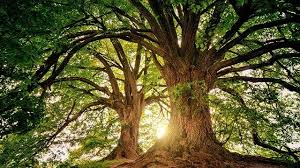
image courtesy-TOI

Stop judging women by her attire

Women are always judged and labelled as character less by her clothes or attire. The length of their clothes decide their character.

The character of a woman is being labelled by the people of the society. Whatever a women wears, she is being judged and are always surrounded by uncomfortable stares.

If a girl is wearing shorts, she is being called hot or available you can say. If a girl is wearing onepiece or a skirt, she is a slut. If a girl is wearing jeans, she is modern. If a girl is wearing a salwar kameez or chudidar, she is known as sanskaari. And if she is wearing a saree then she is called beautiful. At times the blouses also decides the character of a women. Backless, strapless blouses or modern blouses,etc.

A woman is always told to wear decent clothes by the family so as to protect themselves from being molested or eveteasing. Woman are always told to hide their bodies with their clothes. If you are revealing your body then you are making available yourself.

A women can’t wear whatever she wants. They always have the fear of getting touched by anyone or the stares that are passed at them which makes them uncomfortable. They are not allowed to wear the clothes they wish because of the devils that are disguised in the form of men.

Women have to compromise their wishes for these devils outside. Parents do now allow their daughters to wear clothes they want to in fear of something will happen to them.

Modern families do allow their daughters to wear anything they like but traditional families are not allowed to wear as per their choice. Still many women dreams of wearing clothes they always wanted to. And the ones who wear clothes as per their choices are judged by the people.

Judging a women by her clothes is totally incorrect. Why does she have to change herself for someone else? Why can’t a woman wear something of her own choice?

Why don’t we judge men for their clothes instead of judging women for their clothes? A man is allowed to wear anything they wish to as they are not stared or eveteased by anyone outside. They are not made uncomfortable. They are not labelled character less by their attires. Just because a woman has breasts and a figure that needs to be hidden right or else the society would not leave her alone.

If a woman’s cleavage is visible, all the eyes would be on her cleavage. If she is wearing something short that reveals her legs, all the eyes would be on her legs. If a woman is wearing backless, all the eyes would be on her back. If she is wearing a strapless top or a spaghetti then too she is being watched by every passer by. If she is wearing something bodyfit, all the eyes would scan them as if they are able to see from inside out. If she is wearing a saree and her waist is visible, still people wouldn’t miss that chance too.

Even if a slightest body part is revealed they will make sure that they would take the opportunity to watch it.

There is no freedom for women to wear whatever they want to and freely roam wherever they feel like. The judgemental society can never rest.

Instead of stopping womens to wear what they want to, stop the mens to think about women in such a way. Stop the mentality of men towards the women in the society. Stop judging women for their clothes and stop making labels in your minds.

If a man is made understood at their early stages that womens are not a show piece and have to be respected for what they wear then it could bring atleast small changes.

Remember, the second line in the pledge of our country. All indians are my brothers and sisters. This should be fitted in the minds of the male members of the society from their early childhood by their families so that they never judge a woman and treat them with respect as they would have treated their sisters. It is all in our hands. The way the mens are raised from the beginning they tend to be following that till the end.

The day men changes their mentality about women and her clothes would give each woman atleast some sort of relief.

Women have a right to wear whatever they want to. It is her choice. Stop judging them for their attires.

What I do when I fail

My favorite quotes on failure is this: โ€œIf youโ€™re not prepared to be wrong, youโ€™ll never come up with anything original.โ€ โ€”ย Ken Robinson

I fail at all of that stuff, and it feels just as horrible for me as it does for anyone else. I get down on myself, feel guilty, try to avoid thinking about it, would rather hide it from everyone else. Failing at things can really suck. And yet, I get back up and try again.

I fail at eating healthy on a regular basis, but I keep trying again. Iโ€™m pretty good these days at sticking to an exercise plan, but I failed and tried again, regularly, for years and years.

I fail at loving myself. But I donโ€™t give up on that.

I fail at being a good daughter, sister, girlfriend, seemingly multiple times a day. But I continue to try, and sometimes I succeed. When I try over and over again, once in awhile I succeed. So whatโ€™s the secret? Well, there isnโ€™t any. You just have to keep trying.

That said, hereโ€™s what Iโ€™ve found to work:

  1. I learned a more flexible mindset. When you are rigidly trying to stick to a plan or achieve a goal, and things donโ€™t go according to plan, then you feel like crap and things can get derailed. But if you have a more flexible mindset, and think, โ€œI might not be able to go according to plan but thatโ€™s OK because things change,โ€ then itโ€™s not a disaster when you get off track. Thereโ€™s no single track that you have to stay on.
  2. I came to realize that every attempt is about learning. When you fail, thatโ€™s actually really good information. Before you failed, you thought that something would work (a prediction), but then real-world information came in that told you it didnโ€™t work. That means you now know something you didnโ€™t know before. Thatโ€™s excellent. Now you can adjust your plan, figure something new out, try a new method. Keep learning.
  3. Ask for help. When Iโ€™m struggling with something, I know that I can either give up, or I can figure out a better way. But itโ€™s not always easier to figure out a better way, so I reach out to my wife, friends, trusted family members, and I ask them. They might give me simple, obvious, why-didnโ€™t-I-see-that advice that I need, or brilliant tips, or accountability. Whatever happens, my friends and loved ones never seem to fail me.
  4. I give myself a break. If Iโ€™m struggling, sometimes my mind or body just needs a break from the discipline. So Iโ€™ll take a day or two off, or a week, or even more. Thereโ€™s no set time thatโ€™s right for every situation, so Iโ€™ve been learning to go by feel. For some things, Iโ€™ve taken a month or two off from trying to learn something.
  5. I remind myself why itโ€™s important. Itโ€™s easy to give up on something, because not doing it is always easier. But giving up means youโ€™re losing something important, like helping someone, and so if my reasons for doing something arenโ€™t just selfish (pleasure, vanity), then I will renew my vigor for the struggle. This alone is often enough to get me going again, especially if Iโ€™m doing it to help someone important, like my kids.

Well unfortunately, for most people who try something and fail, that failure actually reinforces their feelings of regret. They think,ย I never should have done this. Why did I even try this? How stupid can I be?ย It reinforces their insecurities and fears. They return to a rut.ย They get negative. They might never try anything again.

I think the biggest obstacle to success for most people is they never do anything. They just exist and go through life and never take a chance or do anything different. They go from one day to the next and just exist in life because theyโ€™ve failed in the past and are afraid to try again, or because theyโ€™re too scared to take a chance in the first place.

The most successful people in the world are only successful after so many failures; you wonder how they ever kept going. If you really study their failures, you think, How could they survive that?

The best way to deal with failureย is to focus on whatโ€™s next. Move forward, chart a new path and get excited about whatโ€™s next.

Two of the great emotions in life are excitement or enthusiasm. Itโ€™s easy to get down, where your attitude is that nothingโ€™s working and life is terrible. Keep your excitement and enthusiasm about the future and about where youโ€™re going.

How do you do that? Talk about that next thing. Write it out. Share it with people who can help you get excited. Post it on your mirror every day, if thatโ€™s your thing. But make sure you place your thoughts on the next goal, the next journey, and stop rehashing that last failure in your mind.

Beating yourself up for your lack of success or declaring yourself a hopeless cause leads to unhelpful feelings, like shame or resentment. And it can lead to unproductive behavior, like staying inside your comfort zone.

The key to recovering from failure is changing the way you think. When you think about failure differently, youโ€™ll be able to turn your biggest setbacks into your best comebacks.  

Always remember: you have more than one shot to create the life you want

You will screw up at some point in life, and thatโ€™s okay so long as you learn from them and figure out a different path towards the same goal.

The biggest screw up you can make is to just give up and accept that you canโ€™t succeed because of you who you are or where you come from. If you are going through hell, donโ€™t stop. And if you catch hell, donโ€™t hold it.

So start again when you get it wrong. People who overestimate what theyโ€™re capable of are far more likely to actually, get off their ass and try. You will stumble, you may fail, but you are not your failure!

One thing is absolutely certain, if you REALLY want to succeed in life, if you want to do something special, something incredible, if you want to fulfill your dreamsโ€ฆ failure is inevitable.

RURAL ENTREPRENEURSHIP

The unemployment or underemployment in the villages has led to influx of rural population to the cities. What is needed is to create a situation so that the migration from rural areas to urban areas comes down. Migration is not always undesirable but it should be the minimum as far as employment is concerned.


Rather the situation should be such that people should find it worthwhile to shift themselves from towns and cities to rural areas because of realization of better opportunities there. In other words, migration from rural areas should not only get checked but overpopulated towns and cities should also get decongested.

Though governments have tried out various schemes for generating incomes in the rural areas such government initiatives have not stopped people from moving out of villages to cities. This is because such government initiatives are not on their own capable of enabling people to earn adequately and ameliorate their conditions. There has to be some committed enterprising individual or a group of people who should be capable of making use of the government policies and schemes for the betterment of rural people. Some individuals who happen to be local leaders and NGOs and who are committed to the cause of the rural people have been catalytic agents for development. Despite all the inadequacies in rural areas one should assess their strengths and build on them to make rural areas places of opportunities. Enabling them to think positively, creatively and Entrepreneurship purposefully is must for the development of rural areas. Young people with such perspective and with the help of rightly channelized efforts would usher in an era of rural entrepreneurship.

To promote entrepreneurs who would take to rural entrepreneurship in utmost earnestness and sincerity is to ensure rural development. Such enterprising people who prefer rural entrepreneurship may or may not themselves belong to rural areas. Entrepreneurs taking to rural entrepreneurship should not only set up enterprises in rural areas but should be also using rural produce as raw material and employing rural people in their production processes. Rural entrepreneurship is, in essence, that entrepreneurship which ensures value addition to rural resources in rural areas engaging largely rural human resources.

In other words, this means that finished products are produced in rural areas out of resources obtained in rural areas by largely rural people.


The entrepreneur may or may not be of rural origin. The entrepreneurs may be from anywhere, but their enterprises have to be located in a rural area, using mainly local resources both material as well as human. Also, the enterprises have to be located in a rural area though it need not be actually using 100% local material and human resources. Some amount of material and some people may be from urban cities. But certainly large portion of material used has to be locally produced and an appreciable number of people engaged in the production of finished goods should be people based or living in rural areas.


Even a unit set up by the government or a large company in a rural area could promote rural entrepreneurship depending on how much opportunities it throws up for entrepreneurs to use local resources, to fulfill the demands of such large units and the multiplier effect such large units create.
Any large unit coming up in rural areas more or less does have an impact inactivating the surrounding economy for entrepreneurs to take advantage of. This is precisely the reason why it is recommended to shift industries from urban centers to neighboring rural areas. Such shifting initially may be a difficult proposition but in the long run beneficial in many ways.


Moreover, it would throw up lots of opportunities in the rural areas and result in decongestion of the urban centers. Urban slums would start disappearing with large number of industries getting shifted to rural areas resulting in increasing opportunities in the rural areas.


Thus, both the rural as well as urban areas get benefited by setting up more industrial units in the rural areas, making rural areas attractive locations for investment.

The Cyber City is Struggling to Keep The Scammers Away


“I was making more money than a MBA graduate.”

– Confessed a call-centre scammer

Recently BBC Panorama released a documentary called โ€˜Spying on the Scammersโ€™ which features a hacker who gained access to the recorded scam phone calls as well as CCTV footage and exposed the scammers at work. The cyber vigilante, who uses the alias ‘Jim Browning’, went through hundreds of hours of video footage from the office in Gurugram, near Delhi, and listened to 70,000 phone calls. The documentary reveals that there are centres set up for the sole purpose of scamming, though I would imagine that they are small in size. It’s, thus, needless to say that such scams are thriving and flourishing businesses in India.

It makes one wonder why India has come to be a hub of call-centre scams.

There are several social aspects contributing to it. Technology is indeed a double edged sword & India is a country which ushered into the field of Information Technology in the past few years, and has large number of people with IT skills. However, due to huge population of approximately 1.3 billion people in this country, those who are qualified and skilled have to face cut-throat competition and, thus, despite having skills in IT, they fail to secure a job. Thus, there are too many people becoming educated and too few jobs to satisfy the supply of employment seekers. Owing to unemployment, some of them are led down the wrong path like scamming and using their technical skills to dupe people to earn easy money. Most of businesses hire low-level support staff who can be fired easily, and many a times they don’t even know they are scamming people. So, many people who desperately need money and jobs will join โ€œtech companiesโ€ in search of employment. Some know itโ€™s a scam before they start. Some donโ€™t. But itโ€™s putting food on the table, when many couldnโ€™t even get lowly entry level jobs to begin with. And at the end of the day, money is the same, whether you earn it or scam it. Moreover, people in the country possess adequate fluency in English.

Apart from this, since there are many legit outsourcing and customer service businesses here, many parts of country offer good infrastructure for cheap. Whatโ€™s interesting is that, many of these scammers are ex-employees of call centres and have good grasp over the standard procedures and working of tech support. Plus, they may still have the means to access the customer data somehow.

Now coming to the legal aspect of things, theyโ€™re quite untraceable by targets unless the target is experienced in something like hacking or tracing by other means. It’s also because the people they’re scamming are too far away to have them arrested or taken to the court. They are in a sense de facto immune from the law by location. Scammers may choose to operate out of countries that have weak law enforcement relations (or simply weak local law enforcement when it comes to having the resources necessary for locating them) with the target countries of their scams. Weak relations make it harder to track down the scammers, and even of they are found, it makes it difficult to prosecute them. Plus for scam purposes, it’s obviously easier to evade US’s and other target country’sย  law enforcement by being thousands of miles away and with a local police force that may be unable or unwilling to take action against them.

The lack of adequate fear among the scammers can also be a contributing reason as to why so many call-centre scams are mushrooming in India. They feel safe and confident enough that they cannot be caught and punished, thus, they continue to do this. Most of the times this kind of scams take birth from the loop holes of any business process. Scamming is an organized crime. In an organized crime, it is very hard to catch a criminal because they are already familiar with ways to avoid geting caught. But, one should understand that the stronger wins. If the law is stronger, it will improve itself to counter attack the new approaches by scammers. A failure to do so, will keep the crime alive.

Also, thereโ€™s no proper technology available in India to catch these criminals as Indian law enforcement is already burdened with huge amounts of unsolved cases more heinous than tech scamming, so LEA can’t give proper attention to frame these convicts even if they got caught. This inevitably leads to feeling of safety among tech criminals as thereโ€™s very little possibility of them getting caught and even lesser possibility of getting any punishment, if caught, due lack of stringent IT laws in India. Needless to say, law enforcement isnโ€™t up to the point.

Thus, the risk vs. reward conundrum works out in their favour as the chances of getting caught are almost negligible, while the profit margins are high.

The biggest issue, however, is that scamming just happens to be so easy, owing to the mediocre security measures from the banks and the lack of technical knowledge on the part of the elderly and digitally challenged which make them easy targets to these scams. To top it off, Technical Support Companies pay a very great deal of money in the form of incentives, once the salesman achieves the allotted target. Although, it should be mentioned again that, some people working in such firms donโ€™t even have the slightest of an idea that this no more than a scam.

People often forget โ€˜with power comes the responsibilityโ€™ and wrong use of technology leads to tech crimes like scamming which are cognizable offences under India Penal Code IPC – section 420 and IT Act 2000 (Amendment 2008) section 66, but then again, these laws are as good as a toothless tiger as they have repeatedly failed to be stringent towards the criminals .

The scammers not only give India a bad rap but also present a sorry manifestation of the failure of the government policies who cannot provide enough jobs and quality education for the youths, pushing them to adopt such fiendish ways of making money and risking their reputation by getting inevitably busted.

LIVES MATTER A LOT: WAR ISNโ€™T THE SOLUTION TO BE AT THE TOP

ย ย ย ย ย ย ย ย ย ย ย ย ย ย ย ย ย ย ย ย ย ย ย ย ย ย ย ย ย ย ย ย ย ย ย ย ย ย ย ย ย ย ย ย ย ย ย ย ย ย ย ย ย  ย ย ย ย ย ย ย ย ย ย ย ย ย ย ย ย ย ย ย ย ย ย ย ย ย ย ย ย ย ย ย ย ย ย ย ย ย ย ย ย ย ย ย ย -SHUBHANKAR

Attrocities, destruction, damage and what not, War brings with it all the sadness and destruction at one go on the whole world. But, do the people of this generation understand the intricacies which war could bring with it. I donโ€™t think so they do. We have seen that in matter of no time if thereโ€™s a political dilemma between two nations, the first thing what people want is to have a war. But they donโ€™t understand that the level of damage which a war could cause to both the countries engaging in war. The loss of life is the biggest damage one can face everytime war happens. Loss of property can be compensated for, but not the loss of life.

Well, people should understand that its not always war that will determine a solution to a problem. War is one such solution which would result in so much of pain and sacrifice. Have people ever understood the pain one goes through when they lose someone close to them. War isnโ€™t the solution one should look for. There are many other things one can do other than indulging in war, be it diplomatic talks or some other solution. Some wars are fought for the greed of the people in power, which doesnโ€™t result in them being having any sort of pain or grief, but the common people and the soldiers who fight the war, they as well as their families suffer the most. The greed maybe of more resources, more land under their control, etc. but the cost of gaining these greedy needs is the life of someone, life of an innocent, which isnโ€™t right at all.

Why for the greed of power of the so called powerful people, the soldiers and its families suffer? Why canโ€™t a solution without a war been fought can be found out? These are some of the questions which need to be answered because someoneโ€™s life is more important or I say very important than the mere greed for which powerful people use their armies for intriguing into a war. Itโ€™s not just the armies who get affected, itโ€™s the whole nation which is indulging in a war. Be it the destruction of property or the loss of life of common people, the destruction is irrepairable. This destruction needs to be stopped and the time is running out I suppose. With all the nations having greedy needs, its high time we try to stop this before we get onto a point where war canโ€™t be stopped. If the world has to stop war and erase the word โ€˜Warโ€™ from the dictionary, the time is now. I would just suggest donโ€™t be greedy because greed can sometimes take lives of people which canโ€™t be replaced by any monetary or property gains.

In the end, I want to say that lives of people matter, donโ€™t make people suffer just because of the greed of people in power, because its all about caring for each other rather than fighting against each other. Yes, there can be differences between opinions, but never ever make war the ultimate solution.

BEAUTY IN THE EYE OF THE BEHOLDER.

Art in all of its form has been beautiful, itโ€™s also terrifying. Beauty is a characteristic particular to an object that appeases the human senses. There is beauty in the way that we always catch something different each time we look at it, itโ€™s terrifying because you didnโ€™t catch it in the first place; itโ€™s almost that beauty reflects what the eye of the beholder is feeling. You can find meaning in how you can distinguish melancholy from sadness in a painting, the way the music feels different. Art is beautiful not for the way that it was painted or how a song was sung or how a person danced but how the way you think of it, how your eyes sparkle when you talk about it. Art in all of its forms is beautiful for its ability to make someone happy just by looking at it even if that piece of art was made in sadness. Itโ€™s beautiful not for the way everyone said it is but for the way how everyone looks at it, itโ€™s almost like you are staring right at your soul. Haruki Murakami said that โ€œHave you ever had that feeling โ€“ which youโ€™d like to go to a whole different place and become a whole different selfโ€ this saying is the essence of art. Art always makes us feel more human than we all are because we are always sticking their emotions in things that have no emotions.

Itโ€™s the human hopes and beliefs that make art beautiful; itโ€™s how humans crave words and depth, desires, and fears. Itโ€™s how you love art in a way you donโ€™t understand. Thatโ€™s why art is beautiful and we humans quiver before it because of how art consumes us, unstrings our emotions. Life without the existence of art is painful and bland, the different of expressions art give birth to human identity and our creative powers with which human identity is meaningless.; art gives humans a chance to show and display important facets of their identity, show why they believe that certain issues must be paid more importance, why they vehemently stand for who they are. Art is for everyone and art is a display of human being’s capacity for empathy and honesty, open understanding. We make art because we want to be relatable and oddly humane despite all our flaws. Of course, all of us aspire to be an elegant person who is well-read, fluent in many languages, knowledgeable in the art, and always smells exquisite like roses. But we also aspire to be a woman in the cottage in the countryside who drinks wine, reads old novels, loves the feeling of warmth of a hot cup of tea by the window, is humble, and bakes the best biscuit ever. That is art is a relatable and bizarre concoction of feelings that we feel, we feel complex feelings but art makes our feelings more e defined, a bit sharper, a bit easier to understand, and explains to others about it. Itโ€™s basically a sardonic commentary of the spectrum of human emotions. They are powerfully glorious mysteries and yet art fulfills every human desire ever. We humans despite all our flaws are marred creatures who create fascinating works of art based on emotions and watch them in awe and be amazed. Whatever we do ends up being art, itโ€™s always fascinating that anything we humans are good at ends up becoming art. We call cooking art when itโ€™s beautiful, we call painting art when itโ€™s beautiful. More importantly, art is different for each and every one of us, the difference in our perspective gives us a different outlook on art. Everything around us becomes art if we look at it pretty.ย 

The idea of true love

What is true love?

A true love is something that makes you complete. True love can be from anyone. It can be from your parents, friends, lover, siblings,etc. Generally, true love is expected by a lover or partner.

True love makes you feel that you are loved truly by that one person more than anything in this world. It makes you feel special and at top of the world. It makes your simple life into a magical one.

True love is like that one thing which everyone tries to pursue but only few succeed. It is a beautiful feeling when you get that true love in your life.

Every person dreams or wishes to have a true love in his or her life where he can be loved so much and truly by one person. That one person would give him or her the love they needed or waited for so long.

True love is like a two soulmates connected to each other. They can do anything to make each other happy and are at their best when with each other. True love is like two people who are destined to be together.

True love is beyond saying those three magical words to each other. A love that makes your life worth it and amazing. A love that was made for you.

Does it still exist?

Gone are the days where true love existed. A love where two people could die for each other. A love where two people could do anything for each other.

Today in the modern world, the idea of real love has lost. The love that was earlier has disappeared. The kind of love where emotions, feelings, were real and not just for sake. Where two persons were together in love with real feelings. Where physical relation was not of much importance than their strong feeling towards each other.

Today, love is just another word for lust. Love took the place for physical relationships.

Love is compared with physical relation between two people. There is nothing like true love today because here true love starts from being intimate with each other.

Love is present where the intimacy is strong. Strong relationships grow due to this and not because of love today. Sometimes, ‘love’ word is misused for getting physical with someone and the whole idea of love has been made a joke.

True Love is way beyond getting intimate:

True love is not always having sex or being intimate with each other. True love is way beyond that.

Having a physical relation with someone just because you love them is really common nowadays.

The concept of true love is compared with sex. If you love someone, you have to do it. No!

True love is a feeling where you genuinely care about the other person and want that person to be happy with or without you.

True love is more than just physical relationships. There has to be a lot of trust and mutual understanding with each other. There needs to be an unbreakable bond with each other.

True love should be like where you do all the small things which makes your partner happy. Its like where you have to constantly make each other special everyday. Where both of you treats each other equally.

It should make you bring the best version out of you. Ofcourse, intimacy is required too. But one should understand that only being physical is not love.

True love is always about making constant efforts for each other and never giving up on each other no matter the fights. A love where both the persons have to respect, care for each other, motivate each other, continously support each other and stand up for each other at both good and worst times.

Someone who can walk in hand besides you and never make you feel worthless or unwanted.

So, find your true love. And if you find them give your best and never let them go.

Life – changing Tricks

“The purpose of our lives is to be happy” – Dalai Lama. So, implementing certain good habits in our daily life won’t certainly do any harm. The key for betterment of living lies entirely in your hands. Leading a normal and simple life along with a few tricks here and there helps you to achieve your goal. Enhancing your lifestyle in every aspects of life is a answer for proper subsistence. Lets start following these tips from today onwards –

1) Drinking enough water – This is the first and foremost point to start the whole theory with. At least 8 glasses of water is mandatory for a day. You just cannot ever compromise on this part. Drinking less water is a serious issue for sure. A person who often drinks a lot of water everyday stays more healthy and fit rather than the rest. According to doctors, around 60 per cent of human body consists of water. This basically hydrates your body and helps in getting rid of all harmful toxins. Hydration for your body is a must. Water is such a fluid which helps in proper digestion and also helps in assists you in the weight loss game. Do not harm your body consuming alcohol, cold-drinks e t c , replace those with Water from today onwards.

2) Exercising everyday – This is such an essential step to be followed daily. You need not join a gym or workout like a beast no you need not do that. Just take a few minutes out from your schedule and just perform some free hand. Also, try to stretch in the morning before leaving the bed. This is going to make a lot of genuine difference in your life. This is not only makes you physically fit but also boosts up your confidence, improves your focus towards the target. Exercising motivates you to get better everyday. When your body says you No, your mind says you to push yourself further. Exercising is the most crucial steps for the aged group of people too and this helps to remove pain or stress.

3) Cleansing, toning, moisturizing – Let me tell you this step is Not just for the girls out there, very much for the guys too. As they seem to do absolutely nothing for the skin, just know that skin is the largest organ of your body. You are liable to do this much for your skin. This process is simplified as follows… 1stly, apply a Face wash, any one of your choice to remove the dirt and debris. After that apply to tone down your skin a bit. Now apply the hydration, a Moisturizer to your skin to lock in all the goodness. I promise you this is life – changing.

4) Applying sunscreen – Another step for treating your skin, applying a sunscreen. Won’t take even a minute but this has a hundreds of benefits. Protect your skin from the harsh sunlight and keep it safe. Whether you go off to your workplace or playground. Apply some sunscreen before leaving and make sure it is of a good brand. Keep reapplying your sunscreen after every 2-3 hours if you can manage to do so. Skipping a sunscreen will make you pay a lot as it will worsen your skin condition. Sunscreens with UVA and SPF protections is the best.

5) To-Do-List – Yes, maintaining a To Do List and pre-planning everything beforehand makes your life way more easier. Suppose you have got a meeting the next day, sort everything out, the timings, the work and jot it down in a paper or in a diary. Now make a list of all necessary things to be done and check the list after you have finished tasks of the day. The more you will write the more you finish. You can never go wrong with a To Do List. This routine will give you to explore more scopes of life. Also, write down all your dreams, aspirations, your needs so that you have the urge to finish each one of them within a given span of time. Being unpredictable and having no ambitions won’t certainly help anyone in the long run.

6) Enhancing your skills – if you really want to achieve bigger and better in your life, you have to have some skills. Not stressing on the part of scoring good marks, but having any particular skill is a MUST for the youngsters. The skill can be anything, knowing more than 1 languages, mending parts of a car, knowing computer well, making new paintings or whatsoever. the point here is… brush up your skills, your passion and never leave it in the midways. if you can excel in this part, you surely will make a huge difference. Your skill is what makes you recognizable in a field of work. This will also cut down your laziness and make you happy.

7) Believe in yourself – If you cannot practice this, the above mentioned points won’t come handy for you. ‘Believing in your self is the 1st secret to success’ . You have to keep faith and keep believing that you can be better, you can do better. Make your mindset so determined from the very beginning that life is going to thank you for the same. Start working hard from today onwards and make no more excuses. If you fail to believe in yourself today, you are being answerable to your life after 30s for sure.

8) Read a lot – Nowadays, the kids do not practice proper reading. Going through the School text books or Course books before exams does not justifies the term “reading” . This concept is vast and cannot be achieved only by reading subtitles of Netflix or surfing google. You have to slow down a bit and go through some world Class- literatures or Novels. Reading new journals or news everyday will become your best friend someday only if you get addicted to this. This is going to help you so much by increasing your command on the language, enhancing vocabulary. Reading is like doing something productive to yourself.

9) Organizing your closet – This is a grooming tip for our generations as we certainly get no time for this and keep everything way too dirty especially if someone stays in a hostel or a mess. Cleaning your shirt, Ironing them properly adds so much more dignity to your overall personality. We often hear the term , 1st impression is your last impression, hence this is evident that whatever you wear, it should be fitted and taken care of. You won’t have to wear a high end gown for the same, the trick here is to be clean and real. Appearance is the game changer and never ever mess this up in your life.

10) Help them out – Helping never signifies doing something for someone expecting anything in return, or to show yourself superior in any ways. Helping out means genuinely coming to someone’s rescue and being empathetic. Just help out of your own willingness, help your family, your friends, show love to the plants, feed the animals. Doing all this is in turn serving God indirectly. Having a golden heart is rare- make sure you are one of the few.

Transgenders

Transgenders are the gender category that do not fall in either female or male category. They are of a gender where they have a combination of both male and female. They aren’t either completely male or completely female.

Some transgenders are born with male body and feel like a woman from inside and vice-versa. Some transgenders change their identity from female to male or male to female as per their preferences.

Transgenders have a different community where all the transgenders stay together with each other leaving their families. Over the years, transgenders have got their identities as a transgender category in the sex section.

Transgenders live in a seperate place where all the transgenders live together as the society has still not accepted them completely. Even today, we hear people calling them kinnars, chakkas, hijras, meetha,etc. Nobody calls them or uses this English word ‘Transgenders.’

Earlier, transgenders were not allowed to get educated or work somewhere. Today, they can work somewhere and also get educated. But, the question is will they get that respect ever they deserve or need in the society? Will the society ever accept them completely? Will the society ever consider them equal to us?

We say, we have developed our nations,countries, technologies,etc. What about our minds? Has it changed over these years? Even if law has passed to grant education to transgenders or permissions to work. The mindsets of the people are still the same.

Transgenders are still being called by names or such tags that they really have got used to it by now. The society still consider these genders as untouchable. As soon as a transgenders passes by someone, all eyes are on that person. They get thousands of stares looking at them everyday when they roam to earn.

Transgenders are called as ‘God’s curse’ to them by the people of the society and that same transgender is found lucky to give blessings on any auspicious day. Strange, isn’t it?

Well, did they knew before that they would be born as transgenders? No, right? Then, how can we judge them every single day? Who gave us the right to judge them and make them hate their lives?

Nobody knows what gender we are going to be born with. Is it their fault that they were born with such body and genes?

Transgenders just need respect and the freedom to live their life as per their own just like we males and females live. Even they are humans and are a creation by Gods too. Nobody is cursed.

They do not have a choice so they live seperately as their own families disown them after being aware of their genders. The laws are being changed but the mindsets of the people needs to be changed more for them.

Transgenders do have dreams, do have goals the same way we have. They get hurt too. They eat the same food we have. They have a heart too. They do not have any different hearts compared to us. Still, they are not treated with due respect.

Transgenders should be given the freedom to live a normal life. They do have a life of their own. They should be treated with respect and dignity. The only thing they still are fighting is for is ‘respect.’ The respect in people’s eyes for them. The respect to work anywhere and live peacefully.

Wherever they go, people should treat them as normal human beings just like them and not make constantly make them feel that they are not a part of our society. But, yes all this would not happen. It is very easy to say this but this is really not possible until the minds of the people are cleared.

All they want is respect and to be accepted by the society. Will they ever receive the respect they deserve? Will they ever be treated as equal? Will they ever be called by their actual names instead of the names given by the people?

CORONA WARRIORS

As we all are familiar with todayโ€™s ongoing situationโ€ฆ.we have faced a horrific lock down timeโ€ฆ.but that was essential for usโ€ฆ freak out is very risky even in todayโ€™s situationโ€ฆ
We have seen that how we had spent that time of lock down even while we had everythingโ€ฆ. food on our dining tableโ€ฆ hopefully no one was suffering from COVIDโ€ฆ.. clean water to drinkโ€ฆ. by the blessings of GOD โ€ฆbut think about those who had nothing to eatโ€ฆwho hadnโ€™t the purified waterโ€ฆ..even they were struggling for their EK TIME KI ROTIโ€ฆ
When we were in our home due to the fear of corona there was some people who were fighting to corona for us on front footโ€ฆโ€ฆ.they were not only fightingโ€ฆ. they were also get injured but they were still fighting with coronaโ€ฆ.
We had given a name to them โ€ฆ.yes everyone knowsโ€ฆ.WE CALLED THEM CORONA WARRIORSโ€ฆ

There is list of corona warriors who not only helped us as well as they provided the best ever possible facility to us in the tough timeโ€ฆโ€ฆ

So from here the list startsโ€ฆโ€ฆ.


DOCTORS- We all compare doctors with GOD as they save livesโ€ฆ and in this pandemic we have seen that doctors are really just like GODโ€ฆ
They provided us the best possible treatment by put their lives on risk. Just suppose how a person can remain in ppe kit all the time in this sunny season, just suppose how they feelโ€ฆ they were the front foot fighters and today they are the front foot fightersโ€ฆ..

NURSES & OTHER HOSPITAL STAFF- If doctors are the fighters then nurses, ward boys, & other hospital staff are their helpersโ€ฆ.they support the doctor in every case without them even doctors canโ€™t work efficientlyโ€ฆ.nurses and other staff were also risking their lives โ€ฆ.they also provide service like doctors even they have to clean all the waste โ€ฆโ€ฆjust think about those corona patients who faced disgusting behavior from their own family membersโ€ฆ.these nurses and other staff are taking care of themโ€ฆ. they are motivating them that they will get well โ€ฆ.

POLICE- Police always kept its image of a fighter ..and no doubt they are really a fighterโ€ฆ.but in this pandemic we have seen the another side of police and that side was of a caretaker of needy people โ€ฆโ€ฆ they are always ready to help public in any timeโ€ฆeither delivering ration to the homes or awaring the public by different ideas just to keep them safeโ€ฆ..police have their families tooโ€ฆso just thin k how their family feels when a member of their family is remain outside by risking his / her live.
FARMERS- In India we call farmers as ANNADATA.. and they are โ€ฆin this pandemic when there was no working in the whole worldโ€ฆ.there were frames,โ€ฆ who were providing us foodโ€ฆ.and always whatever the situation is they always do their duty without complainingโ€ฆโ€ฆ.

MEDIA- Media is also corona warrior because they have done reporting in many hotspotsโ€ฆ.they updated us every minute of the day about the worldโ€™s situationโ€ฆthey are also risking their lives โ€ฆ.we donโ€™t have any idea about their efforts โ€ฆ.they have to do reporting in very serious condition placesโ€ฆ.it is easy to comment about anyone but ask themโ€ฆ what they are paying for their dutyโ€ฆ

VENDORS- Yes, vendors are also corona warriorsโ€ฆthey provide us vegetables and fruits at our home so that we donโ€™t have to go anywhereโ€ฆโ€ฆthey are also risking their livesโ€ฆ.donโ€™t know which type of people they met every day in which circumstances they have to do their work โ€ฆ.

DAILY NEEDS SHOPKEEPERS- When there was lock down in the whole country then there was the daily shopkeepers who were providing us every daily need things just like vendors donโ€™t know how many different-different types of people they meet but they keep their service onโ€ฆ..

THE LIST IS NOT OVER HEREโ€ฆ.THERE ARE SO MANY PERSONS LIKE SWEEPERS, CLEANERS,SOCIAL WORKERSโ€ฆโ€ฆ WHO HAVE DONE THEIR JOB GREATLY..AND THEY ARE STILL PROVIDING THEIR SERVICEโ€ฆ.THANK YOU IS A VERY SMALL THING IN FRONT OF THEIR EFFORTS โ€ฆ.WE SHOULD APPRECIATE THEIR EFFORTSโ€ฆWE SHOULD RESPECT THEM ..AND WHENEVER WE MEET THEM WE SHOULD SALUTE THEMโ€ฆ..BECAUSE BY THEIR EFFORTS WE HAVE A GOOD RECOVERY RATE AND WITH THE HELP OF THEM AND WITH COOPERATION OF PUBLIC HOPEFULLY WE WILL WIN THE FIGHT AGAINST CORONA ONE DAYโ€ฆ

MANN MEIN HAI VISHWASโ€ฆPOORA HAI VISHWASโ€ฆโ€ฆHUM HONGE KAAMYAAB EK DINโ€ฆ..

Talk To Them

I have read many articles on depression. And being a psychology student, I can say most of them are extremely helpful.

These articles usually talk about there are signs and if we pay enough attention, we can notice who is battling with depression and who is not. According to American Psychiatric Association (APA), Depression (major depressive disorder) is a common and serious medical illness that negatively affects how you feel, the way you think and how you act.ย 

There are signs that if observed carefully, can be identified. In India, mental health has just started getting important for the general public. Even now, in several rural (and even urban for that matter) areas, people live in utter denial of there being such a thing as mental health. In a study, it was seen that 1 out of every 3 school children withing the ages of 13-18 were struggling with some sort of mental illness. A major chunk of these kids, suffer from depression. Seriously! This is the age where children have the right (literally) to be children! Play outside with friends, making new aqaintances, talking comfortable with their sexual preference and even create some harmless ruckus of their own!

This is not the age where kids should be burdened to study so hard that they don’t know what to do with their free time i.e. if they get any. They should have the freedom to explore their fields of interests. Even if they are childish, let them be! Instead of expecting something that is practically impossible for them to achieve, ask then what they want to become. Because if we don’t let kids be kids, we are basically pushing them towards the edge. Don’t expect them to be mature at such a young age that they lose sight of what they are actually supposed to be.

“But we provide you with a comfortable lifestyle. You have everything! You don’t have a right to complain. Neither do they have a right of having a mental disorder!” These are some of the many common dialogues parents or guardians use when a child tries to talk to them. Again, most of the parents are supportive and they indeed try to help their child as much as they can. But there is still a huge chunk of people who go around throwing these phrases at their kids.

People, when your child tries to talk to you about their mental health, please don’t tell them you are busy. Please. And even if you are busy, think about this. All the efforts and hard work you put in, is ultimately for your little one’s benefit. What will you do with all the money and success if you don’t have your own child with you at the very end of your journey of success. Who will you share your happiness with if they are no more?

To have a healthy child parent relationship, oneust be open to communicate. Talk, listen, and then form a judgement regarding your child. You never know what your child is going through. Show physical affection. Spend healthy time with them. Tell them your life stories. Make them laugh. Make them happy. Make them feel like they are not alone. Like you are there for them. There with them. If they come to you with a problem, try to give them a healthy advice.

We don’t realize this but parenthood is what is responsible for building the kid’s personality. If you spoil them with too much love, they will grow up to become brats. If you ignore them, they will ignore you. If you maintain a healthy balance, they will be loving and smart at the same time. Just talk to them.. It’s really important that we do that now before it’s too late.

Job Evaluation

Job Evaluation is an important part of Human Resource Management. It is a comparative process. Job Evaluation is a formal and systematic way of determining the relative intrinsic value or worth of a job in relation to other jobs in an organisation. It is a process which is very helpful for framing compensation plans by the personnel manager. Job Evaluation begins with job analysis and ends at that point where the worth of a job is ascertained for achieving pay equity between jobs and different roles. The objective of job evaluation is to determine which jobs should get more pay than others. Job Evaluation is usually based on compensation factors rather than on the employee which means that job evaluation is done for ranking of job and not the job holder. As job holders are rated through performance appraisal. Several methods such as job ranking, job grading and factor comparisons are employed in job evaluation. Job Evaluation forms the basis for wages and salary negotiation. The value or worth of the job varies from time to time and from place to place under the influence of certain economic pressure. Some of the features of job evaluation are it helps in building a base for salary negotiation, it assesses the job and not the employee, Job Evaluation is done by a group of experts and not individuals, Job Evaluation is the output provided by job analysis, last but not the least it helps the management to maintain high level of productivity and satisfaction among employees which motivates them to work hard. The main point which must be understood is that job evaluation is about relationship and not absolutes it cannot be the sole determining factor for deciding pay structure. As there are many other external factors like labour market conditions and collective bargaining. The objectives of Job Evaluation are –

  • To help in measuring the “intrinsic” worth of the job. This is based on the degree of complexity of job content and requirements.
  • To provide a rational basis for equitable remuneration within an organisation.
  • To rank the job in order of importance like job duties and responsibilities.
  • It helps in providing framework for periodic of wage rates and its revision too.
  • It helps in providing a benchmark for career planning of the employees in the organisation.
  • To identify a ladder of progression for future movement to all employees interested in improving their compensation.
  • To develop a base for merit or pay for performance.

Job Evaluation as a process is advantageous and important to a company in many ways:-

  • Helps in Wage and Salary Fixation – Job Evaluation helps the management so that they can establish a rational and consistent wage and salary structure. It lays down the base or foundation for wage incentive plan.
  • Helps in Recruitment and Selection – Job Evaluation provides useful information for recruitment of new employees. It is also helpful at the time of selection of candidates as the factors which we have determined for job evaluation can be taken into consideration while selecting the employee. Likewise, promotion, transfer and so on can be made on a rational basis for different employees in the organisation.
  • Improves Labour-Management Relation – Job Evaluation helps in eliminating wage inequalities within the organisation. And thus it helps in bringing and maintaining harmonious relationship between Employee and Employer
  • Fair Distribution of Rewards – As each and every human likes to get rewarded same goes with employees. They should be rewarded fairly in relation to others in the organisation and it helps to ensure that rewards are allocated without any discrimination.
  • Helps in Analysis of Company – It acts as a valuable tools for the analysis of a company. As it helps in identifying that whether there is any gap or overlap in responsibility.

As we know Job Evaluation is a very important part of Human Resource Management as it determines the worth of the job in the organisation.

The Forgotten: The Stranded Migrant Workers

There is no section in our country that remains unaffected by the difficulties caused by the affliction that is COVID- 19, however itโ€™s safe to assume that, the most gravely affected by the crisis are the underprivileged labourers and workers. Their agony, their pain, their ordeal cannot be expressed in words. Who amongst us cannot understand and feel what they and their families are going through.

More than 92.5% labourers, including daily wage earners, have lost work and are unemployed owing to the lockdown imposed by the country, according to a survey of migrant workers in north and central India. This is despite the labour ministry’s plea to owners and contractors not to retrench workers.

Why are the migrant workers so hard hit during lock down?

The answer is pretty simple, while many people have lost the jobs, itโ€™s the migrant workers that have lost their only livelihood without any fall-back support. They donโ€™t have any fixed income, health insurance ot savings. They get paid in wages, only if they work, most of them being employed in the informal sector. They are also devoid of sufficient monetary resources to sustain themselves and their families (who are dependent on them) during the unemployment period. Further, they are the only groups who have been displaced from their normal place of residence. Nearly six lakhs migrant labourers are stranded in government camps. They are more vulnerable to corona virus infection as they have repeatedly failed to observe social distancing die to their special living conditions and full dependence on public transport.

The aforementioned consequences may have the following impact if they arenโ€™t monitored and checked by the government and the respective agencies. They might have to draw loans in order to sustain themselves with their home or land they own as the collateral. It might push them further into economic insecurity and instability. The education of their children will also be affected, even during the post lockdown period as they might be unable to afford the fees. If left unaddressed, it might put the migrant labour under tremendous mental pressure and strain, leading to a substantial rise in mental health issues in the community. Itโ€™ll also widen the gap between the rich and the poor, thus leading to increased economic inequality. There are possibilities of increased exploitation in terms of employment compensation in the post lockdown period, when a lot of people will be looking for work in an economy which was already suffering from unemployment.

How did their future become so grim?

When the Indian government announced a lockdown with just a four hours warning, large numbers of migrant workers all over the country were left stranded, with no idea of where to go and what to do. No arrangements had been made for them, whether to transport them back or to house them in shelters. As a result, there were tragic consequences. Panicked migrant workers going to buses and train stations and getting beaten by Police or being sprayed with bleach. Thousands of migrant workers trying to walk back hundreds of kilometres to their villages, with many dying on the way. I guess the decision makers seemingly forgot about the most vulnerable people while deciding, why? When they could arrange transport for pilgrims and students, why was no thought put in about what would happen to migrant workers? Why is it that only the NRIs were retrieved from affected areas? Is it because they are voiceless and they don’t have a pressure group.

Even if they were forgotten about while planning the lockdown, there was still a means to rectify the mistake. Day after lockdown, a relief package was announced by government for the vulnerable section, which ended up being too little and too late. As soon as the lockdown was announced, this section immediately lost their jobs and because of the sustenance nature of livelihood, they immediately ran out of food and basic necessity. The moment lockdown was announced, all the relief should have been announced simultaneously. The gap between the announcement of lockdown and the announcement of relief package was enough to create panic in these sections and due to uncertainty they started taking the extreme step of walking back on foot to their home. And soon the situation got out of control. Because remember, we are not talking about a handful of people, not even thousands, they are millions in number.

There was still a scope of avoiding the unfateful. All the states had enough resources and means to take care of all these workers but they failed to pacify and communicate to them. The situation came to a point that state government had to announce for hundreds of buses to carry them home in such a condition, loosing the very purpose of lockdown. The risk of people dying of hunger became believe than the outbreak itself.

Fair, But Not So Lovely

Either as your grandmotherโ€™s favourite piece of advice or through the perpetual barrage of fairness cream advertisements on television, if youโ€™re an Indian, itโ€™s hard to miss the magical myths of fair skin is everywhere. One such myth that I came upon, that struck a cord with me was that โ€˜fair skinned persons don’t lieโ€™, which, needless to say is enough to reveal the fair-skin obsession that plagues the young minds of our society.

Consumer brand Hindustan Unilever announced on June 25 that it’s dropping the word ‘Fair’ from its popular skin-whitening cream brand ‘Fair & Lovely’ to achieve a ‘more inclusive vision of beautyโ€™. However, itโ€™s still a change that only goes skin deep as the change, by all accounts, remains at the level of branding. It was also announced that announced, the emphasis would be shifted from โ€œfairnessโ€ to โ€œglowโ€. But words such as โ€œglowโ€ and skin โ€œbrighteningโ€ have long been used by cosmetic products as more acceptable alternatives for treatments that aim to lighten skin tone.

Banning anything that goes against the norm seems to be the pitch of the season. The barrage of criticism against the way fairness creams are being promoted in the advertisement is the โ€˜height of creative lowโ€™. Instead of projecting a healthy thought, these ads seem to be promoting stereotypes and problematic beliefs such as fairness being a resume-worthy quality. The ads play big on the connect people have with skin fairness and the job they do. It is blatantly projected though the numerous ads where the girl gets rejected from an interview for the role of a flight attendant-fashion model-teacher. Armed with fairness cream, the renewed zeal of the woman gets her the job she aspired to do. How convenient! These ads must be banned for glorifying skin complexion as part of the resume. It also seems to convey very ambiguous messages. Are dark-skinned individuals the only consumers who use fairness creams? Even those born with the โ€˜qualityโ€™ use dollops of cream and expect to retain their fairness for ever. Despite this fact, the ads continue to project the creams as a Messiah for dark-skinned people. It breeds contempt among users and potential customers. The advertisements also seem to portray that the wonder creams have the ability to get you married or turn you into a star overnight!

However, at the end of the day, they exist because people buy them, and since there is a market for them…like all products or services. But yes, they do feed into the existing prejudice and preference against a darker complexion.

Products like these, make people ashamed of their originality. It’s a shallow concept and its propaganda is ignominious. Some people make a fair skin tone as the yardstick of a person’s success. A woman once hinted me that I am excelling in a lot of places because I am fair skinned. Thank you, fairness creams ads. The question isn’t about the fact that whether or not dark is beautiful. The question is about an individual’s dignity. Let’s not stoop this low to believe in the authenticity of such a biased idea of beauty. So, should the skin-whitening products be allowed to take such a significant place in our society?

I guess, the answer is pretty simple. We don’t need products which make people diffident and which make people shallow in their perseverance of beauty. At the end of the day, they are just devouring off our backward mind-set, insecurities and inferiority complex.
Dropping of fair in the name of a face cream is, thus, only symbolic. It does not change the social bias towards fairness specially for women. Theyโ€™re just as problematic. Such changes may lend these products a glow of wokeness. But it only whitewashes the in-built prejudices that are yet to be challenged in any meaningful way.

In a country obsessed with fairness creams, people should be educated to find beauty beyond skin colour.

MSME POLICY IN INDIA

Micro, Small and Medium Enterprises (MSME) contribute nearly 8% of the countryโ€™s GDP, 45% of the manufacturing output and 40% of the exports. They provide the largest share of employment after agriculture. They are the nurseries for entrepreneurship and innovation. They are widely dispersed across the country and produce a diverse range of products and services to meet the needs of the local markets, the global market and the national and international value chains.

The Ministry has a number of programmers to help and assist entrepreneurs and small businesses. If anyone is planning to set up business, one may contact National Institute for Entrepreneurship and Small Business Development (NIESBUD), National Institute for Micro, Small and Medium Enterprises (NI- MSME), Indian Institute of Entrepreneurship (IIE) or the Development Commissioner (DCMSME) for details about their programs. If one is an existing entrepreneur and would like to improve oneโ€™s competitiveness, one may contact DC, MSME who can be of assistance in various ways. If one is willing to set up a village industry or want to know more about Khadi or Coir Products, one may contact KVIC or Coir Board.

Ministry of MSME encourages and honors innovation and enterprise. It work in close coordination with the State Governments, Industry Associations, Banks and other stakeholders through its numerous field offices and technical institutions to help the โ€˜engines of growthโ€™ throughout the country.

Micro, Small and Medium Enterprises Development (MSME) Act was enacted in 2006. It provides the first-ever legal framework for recognition of the concept of โ€œenterprisesโ€ (comprising both manufacturing and services) and integrating the three tiers of these enterprises, viz., and micro, small and medium.

It also provided for a statutory consultative mechanism at the national level with wide representation of all sections of stakeholders, particularly the three classes of enterprises. Under the Micro, Small and Medium Enterprises Development Act 2006, the definition and coverage of the MSE sector consisting of micro and small enterprises were broadened significantly. Further, the Act also defined the medium enterprises for the first time. Medium enterprises are those which have investment in plant and machinery exceeding Rs 5 crore.


ย Salient Features of the MSME Development Act, 2006 :

ยท      The MSME Act provides the first legal framework for recognition of the concept of โ€œenterpriseโ€ and integrating the three tiers of these enterprises, viz., micro, small and medium.

ยทย ย ย ย ย  ย Under the Act, enterprises have been categorized broadly into those engaged in :

->ย  ย Manufacturing

->ย ย ย  Rendering of Services

Both categories have been further classified into micro, small and medium enterprise based on their investment in plant and machinery or in equipments as under:

ยทย ย ย ย ย  ย Manufacturing Enterprises: Micro Enterprises investment upto Rs 25 lakhs, small enterprises investment above Rs 25 lakhs and upto Rs 5 crore. ย Medium Enterprises investment above Rs 5 crore and upto Rs 10 crore.


ยทย ย ย  ย Service Enterprises: Micro Enterprises investment upto Rs 10 lakhs, small enterprises investment above Rs 10 lakhs and upto Rs 2 crore. Medium Enterprises investment above Rs 2 crore and upto Rs 5 crore.


ยทย ย ย ย ย  The Act provides for a statutory consultative mechanism at the national level with wide representation of all sections of stakeholders, particularly the three classes of enterprises, and with a wide range of advisory functions and an Advisory Committee to assist the Board and the Center/State Government.

The other features include:

ยทย Establishment of specific funds for the promotion, development and enhancement of competitiveness of these enterprises.

ยทย Notification of schemes/programs for the purpose.

ยทย Progressive credit policies and practices.

ยทย Preference in Government procurement to products and services of the micro and small enterprises.

ยทย More effective mechanism doe mitigating the problems of delayed payments to micro and small enterprises.

ยทย Simplification of the process of closure of business by all the three categories of enterprises.

ย ย ย ย ย ย ย ย ย ย ย ย ย ย ย ย ย ย ย ย ย ย ย ย ย ย ย ย  Passion and Emotion: Sports has it all

ย ย ย ย ย ย ย ย ย ย ย ย  ย ย ย ย ย ย ย ย ย ย ย ย ย ย ย ย ย ย ย ย ย ย ย ย ย ย ย ย ย ย ย ย ย ย ย ย ย ย ย ย ย ย ย ย ย ย ย ย ย ย ย ย ย ย ย ย ย ย ย ย ย ย ย ย ย ย ย ย ย ย ย ย ย ย -SHUBHANKAR

Well, call it passion or emotion, sports brings it all out of a person. People say sports is like entertainment, watch it for entertainment, get entertained and leave it there. But ask people who follow sports passionately, who have a special place for a team in their hearts, for them, sports brings out the real emotion and passion. And those people Iโ€™m talking about are millions in numbers. People get attached with a team so much that they feel that a teamโ€™s victory is theirs victory and losses hurt them hard. Iโ€™m not just talking about Indian fans, but fans from around the world. Be it any sport, cricket or football or lawn tennis, passion remains the same, intensity remains the same.

Why do we often see players give their 200% for the team, get their bodies on the line for the team, this is because they play for their fans, those passionate fans which are behind them even when the team or player doesnโ€™t play well. When Dhoni got runout in the 2019 Cricket World Cup, not only his fans cried, the whole nation cried. What I mean by cried is literally, they cried. Thatโ€™s the emotion a game brings, a player brings into fans. People might find it crazy when someone who doesnโ€™t have any connection with the team, no connection at all, still cries when his favourite teams loses, because of the emotional connection the fan has with that team. Sports has a huge fanbase and the fanbase is what makes sports a worth while thing to watch and play. Without fans, no sport is even worth playing. Players play for the very fact that their fans are watching them and they want to win for their fans, their country and make their fans as well as their whole nation feel proud.

In India, people donโ€™t have that much craze for football, but ask those fans who watch the Indian Super League (ISL), they will tell you how much they pray for the fact that their team wins and how they feel when their team loses. Sports has a different feeling altogether, ask those who breathe sports, obviously metaphorically but that passion and emotion tells us all that. There are times when stakes ae high in a game, but your favourite teams plays pathetically bad, they lose without even giving a tough fight, thatโ€™s when the fans emotions play a very crucial role. Some fans are so angry after those performances that they make their team so weakened by claiming that they are bad and they donโ€™t know how to play and stuff like that, but that isnโ€™t what true fans do. True fans are those who are behind their teams even in situations when they are losing and not winning. Thatโ€™s the time passion comes into play, when you as a fan are behind your team supporting them, be it any situation.

Yes, losses hurt, yes getting and cheering for the team when they are losing in an important game is very hard and difficult, but if you have that emotion and passion for the game, for your favourite team, then you will always be the 12th man for your team, be it on the ground or watching from home. The best example of it could be the game played yesterday between Manchester United and Chelsea in the FA Cup semifinal. Chelsea won the game emphatically by 3-1, and the team they beat were the favourites to win, on a 19-game unbeaten streak, but they lost, quite convincingly they were beaten. All over Manchester United fans were angry, they were frustrated and this is the time they have to be behind their team because when hard times comes, thatโ€™s when true supporters remain behind their teams. Thatโ€™s the passion and emotion I was talking about, which sports brings out of people.

Mob Lynching

The word โ€˜lynchingโ€™ is originated in mid-18th century America. Origin of โ€˜lynchingโ€™ is traced by Willam Lynch who lived in Virginia in the U.S. Back then lynching referred to vigilante justice meted out to black people. Before the America Civil War brought an end to slavery, several instances of black slaves being lynched where reported in the U.S. In some cases whites were also lynched for opposing slavery of black people.

What is Mob Lynching?

โ€˜lynchingโ€™ shall mean any act or series of acts of violence, whether spontaneous or planned, committed to inflicting extrajudicial punishment or an act of protest and caused by the desire of a mob to enforce upon a person or group of persons any perceived legal societal and cultural norms/ prejudices.

โ€˜mobโ€™ shall means a group of two or more individuals, assembled with an intension of lynching.

Law related to Mob Lynching

In India there was no specific act which describe the punishment concerned with the heinous crime of mob lynching. Recently we came across many such cases of mob lynching which was shocking for the whole nation. This kind of cases comes to limelight when it is shared on social media and I think thatโ€™s the worst part of it. Then we share the post and make it viral after all this the ministers, police start investigation of the case and then the action is taken if any.

There are states like Manipur, Rajasthan which has passed an act of Mob Lynching in which the role of police, punishments, trails are all explained in detail manner.

There was a PIL filed in 2016 on which in 2018 three bench of Judges have issued a guidelines for prevention of mob violence and lynching

 A. Preventive Measures.

 (i) The State Governments shall designate, a senior police officer, not below the rank of Superintendent of Police, as Nodal officer in each district. Such Nodal Officer shall be assisted by one of the DSP rank officers in the district for taking measures to prevent incidents of mob violence and lynching. They shall constitute a special task force so as to procure intelligence reports about the people who are likely to commit such crimes or who are involved in spreading hate speeches, provocative statements and fake news.

(ii) The State Government shall forthwith identify Districts, Sub-Divisions and/or villages where instances of lynching and mob violence have been reported in the recent past, say, in the last five years. The process of identification should be done within a period of three weeks from the date of this judgment; as such time period is sufficient to get the task done in todayโ€™s fast world of data collection.

(iii) The Secretary, Home Department of the concerned States shall issue directives/advisories to the Nodal Officers of the concerned districts for ensuring that the Officer In-charge of the Police Stations of the identified areas are extra cautious if any instance of mob violence within their jurisdiction comes to their notice.

(iv) The Nodal Officer, so designated, shall hold regular meetings (at least once a month) with the local intelligence units in the district along with all Station House Officers of the district so as to identify the existence of the tendencies of vigilantism, mob violence or lynching in the district and take steps to prohibit instances of dissemination of offensive material through different social media platforms or any other means for inciting such tendencies. The Nodal Officer shall also make efforts to eradicate hostile environment against any community or caste which is targeted in such incidents.

(v) The Director General of Police/the Secretary, Home Department of the concerned States shall take regular review meetings (at least once a quarter) with all the Nodal Officers and State Police Intelligence heads. The Nodal Officers shall bring to the notice of the DGP any inter district co-ordination issues for devising a strategy to tackle lynching and mob violence related issues at the State level.

(vi) It shall be the duty of every police officer to cause a mob to disperse, by exercising his power under Section 129 of CrPC, which, in his opinion, has a tendency to cause violence or wreak the havoc of lynching in the disguise of vigilantism or otherwise.

(vii) The Home Department of the Government of India must take initiative and work in co-ordination with the State Governments for sensitizing the law enforcement agencies and by involving all the stake holders to identify the measures for prevention of mob violence and lynching against any caste or community and to implement the constitutional goal of social justice and the Rule of Law.

(viii) The Director General of Police shall issue a circular to the Superintendents of Police with regard to police patrolling in the sensitive areas keeping in view the incidents of the past and the intelligence obtained by the office of the Director General. It singularly means that there should be seriousness in patrolling so that the anti-social elements involved in such crimes are discouraged and remain within the boundaries of law thus fearing to even think of taking the law into their own hands.

(ix) The Central and the State Governments should broadcast on radio and television and other media platforms including the official websites of the Home Department and Police of the States that lynching and mob violence of any kind shall invite serious consequence under the law.

(x) It shall be the duty of the Central Government as well as the State Governments to take steps to curb and stop dissemination of irresponsible and explosive messages, videos and other material on various social media platforms which have a tendency to incite mob violence and lynching of any kind.

(xi) The police shall cause to register FIR under Section 153A of IPC and/or other relevant provisions of law against persons who disseminate irresponsible and explosive messages and videos having content which is likely to incite mob violence and lynching of any kind.

(xii) The Central Government shall also issue appropriate directions/advisories to the State Governments which should reflect the gravity and seriousness of the situation and the measures to be taken.

B. Remedial Measures.

(i) Despite the preventive measures taken by the State Police, if it comes to the notice of the local police that an incident of lynching mob violence has taken place, the jurisdictional police station shall immediately cause to lodge an FIR, without any undue delay, under the relevant provisions of IPC and/or other provisions of law.

(ii) It shall be the duty of the Station House Officer, in whose police station such FIR is registered, to forthwith intimate the Nodal Officer in the district who shall, in turn, ensure that there is no further harassment of the family members of the victim(s).

(iii) Investigation in such offences shall be personally monitored by the Nodal Officer who shall be duty bound to ensure that the investigation is carried out effectively and the charge sheet in such cases is filed within the statutory period from the date of registration of the FIR or arrest of the accused, as the case may be.

(iv) The State Governments shall prepare a lynching/mob violence victim compensation scheme in the light of the provisions of Section 357A of CrPC within one month from the date of this judgment. In the said scheme for computation of compensation, the State Governments shall give due regard to the nature of bodily injury, psychological injury and loss of earnings including loss of opportunities of employment and education and expenses incurred on account of legal and medical expenses. The said compensation scheme must also have a provision for interim relief to be paid to the victim(s) or to the next of kin of the deceased within a period of thirty days of the incident of mob violence/lynching.

(v) The cases of lynching and mob violence shall be specifically tried by designated court/Fast Track courts earmarked for that purpose in each district. Such courts shall hold trial of the case on a day to day basis. The trial shall preferably be concluded within six months from the date of taking cognizance. We may hasten to add that this direction shall apply to even pending cases. The District Judge shall assign those cases as far as possible to one jurisdictional court so as to ensure expeditious disposal thereof. It shall be the duty of the State Governments and the Nodal Officers in particular to see that the prosecuting agency strictly carries out its role in appropriate furtherance of the trial.

(vi) To set a stern example in cases of mob violence and lynching, upon conviction of the accused person(s), the trial court must ordinarily award maximum sentence as provided for various offences under the provisions of the IPC.

(vii) The courts trying the cases of mob violence and lynching may, on application by a witness or by the public prosecutor in relation to such witness or on its own motion, take such measures, as it deems fit, for protection and for concealing the identity and address of the witness.

(viii) The victim(s) or the next of kin of the deceased in cases of mob violence and lynching shall be given timely notice of any court proceedings and he/she shall be entitled to be heard at the trial in respect of applications such as bail, discharge, release and parole filed by the accused persons. They shall also have the right to file written submissions on conviction, acquittal or sentencing.

 (ix) The victim(s) or the next of kin of the deceased in cases of mob violence and lynching shall receive free legal aid if he or she so chooses and engage any advocate of his/her choice from amongst those enrolled in the legal aid panel under the Legal Services Authorities Act, 1987.

Current situation

There are guidelines made by the Supreme Court but it is followed by none. Making videos about mob lynching in public, showing that type of videos to the society through social media, newspaper, news channels is just promoting this kind of things. Its better we make people understand a guidelines made by the Supreme Court through various sources this will encourage the people to support Indian Judiciary and also work accordingly to the said guidelines.

We all are aware of Palghar Lynching case where two Sadhus and one driver killed by the villagers. As the people of the village assumed them to be child kidnapper who are engaged in organ harvest business. This also came across us through social media and then it takes a political turn. But no one unfolded the guidelines which was given by the apex court THATโ€™S THE CURRENT REALITY. News channel, social media do not explain the solution of the problem they just exaggerate it in every manner possible.

A RESPONSIBLE CITIZENโ€ฆโ€ฆ.

As we know that in our constitution of India there are fundamental rights and duties of citizens of Indiaโ€ฆ
But we have also seen that so many people talk about only fundamental rightsโ€ฆ.hardly some people talk about fundamental dutiesโ€ฆ..why??

Why we always thought that โ€ฆwhat the government has done for us?โ€ฆ.. Why we donโ€™t think about thatโ€ฆ what we are doing for our nation??

If we are aware about our rights , Then we should also get aware about our duties..

So , the fundamental duties are listed below :


FUNDAMENTAL DUTIES:


It shall be the duty of every citizen of India โ€“


(a) To abide by the Constitution and respect its ideals and institutions, the National Flag and the National Anthem.

(b) To cherish and follow the noble ideals which inspired our national struggle for freedom.

(c) To uphold and protect the sovereignty, unity and integrity of India.

(d) To defend the country and render national service when called upon to do so.

(e) To promote harmony and the spirit of common brotherhood amongst all the people of India transcending religious, linguistic and regional or sectional diversities. To renounce practices derogatory to the dignity of women.

(f) To value and preserve the rich heritage of our composite culture.

(g) To protect and improve the natural environment including forests, lakes, rivers and wild life, and to have compassion for living creatures.

(h) To develop the scientific temper, humanism and the spirit of inquiry and reform.

(i) To safeguard public property and to abjure violence.

(j) To strive towards excellence in all spheres of individual and collective activity so that the nation constantly rises to higher levels of endeavor and achievement.

(k) To provide opportunities for education by the parent the guardian, to his child, or a ward between the age of 6-14 years as the case may be.

So, if we know our rights then we should also know our dutiesโ€ฆ we should know that what are our responsibility being an responsible citizen of India .
We can see in our surroundings that in todayโ€™s time we need these dutiesโ€ฆ we need human responsibilitiesโ€ฆ to make a better societyโ€ฆ. to make a better nationโ€ฆ.. to make a better reputation of our nation in the whole worldโ€ฆ so that we can proudly say

SAARE JAHAN SE ACCHA HINDUSTAN HAMARAโ€ฆ.HUM BULBULE HAIN ISKE YEH GULSITAAN HAMARA.. HAMARAโ€ฆ

5 BOOKS YOU MUST READ BEFORE YOU TURN 20

Turning 20 means that you are embarking on your big 20s of your life where you can go to bars, make bad decisions, thrive in college, fall wildly in love which most of us wonโ€™t do because we are adults with responsibilities, society is crushing our soul and we have no money but nevertheless, before you embark to your 20s you must read these books that will lend you a helping hand in your 20s. These books will help you figure out or make you feel normal when everything around you is changing or give you advice to sought out your problems or comfort you. So, pick any one bookโ€ฆ.


1.THE ART OF WAR BY SUN TZU
The art of war is a military manual written by sun Tzu back in the 5th century BC. You may ask why a military manual is useful for us common people? Sun Tzu was a military general who believed that war was based on rules of spirituality and compassion. His writings are filled with wisdom on how to tackle a tough situation with elegance and ease. Itโ€™s a beautiful book that gives us an immense understanding of how we should strategize and intercept our problems. As a teen who is stepping into adulthood, this book offers plenty of advice and know-how but most importantly teaches us grace and elegance.


2.THE KITE RUNNER BY KHALED HOUSSEINI
The book is filled with life lessons and will resonate with you as you get older. This book is beautifully painful and will touch your heart. This book is heart touching, filled with heartbreak but poignant story of two boys. Despite the sadness that shrouds the story the book still ends on an optimistic note and sometimes thatโ€™s all we can do.


3.NORWEGIAN WOOD BY HARUKI MURAKAMI
The running theme in the book is nostalgia and searching for our inner identity. The book is marked with understanding why we humans feel the way we feel and how each of us deals with sadness and regret in different ways. This book retains the main truth of life that life itself is a bittersweet journey.


4.CATCHER IN THE RYE BY J.D SALINGER
This book captures the story of teenager Holden Caulfield who has been kicked out of is school and runs away to New York city to avoid meeting his parents. The book is a poignant tale about the โ€˜phoniness of the world we live in โ€œ. The book deals with angst, depression, and how its difficult to find a human connection in this phony world. This story is something any teen can understand and go through.

5.THE DEVIL WEARS THE PRADA BY LAUREN WEISBERGER
This story is about a recently graduated girl who struggles to cope with the world and has to change herself to fit in but eventually realizes that her worth. This book holds true to the world cut-throat job market, crazy bosses who hate everyone, and an overworked employee who doesnโ€™t have any time. This book is a heartwarming story that stays true to the ethics of the real world.

Why Caste Reservations?

The caste-system is something that has been ubiquitously identified with Indian society. It has its roots in ancient traditions and has seen changes over time under various dynasties and regimes. However, the essential notions of assigning position in society by virtue of birth have more or less remained the same. This has led to lower-caste communities becoming victims of the whims of those above them, living lives in deplorable conditions, forced to work in menial jobs, and even considered untouchables who will pollute the higher castes and thus have to live on the fringes of society. Over time, many have fought against the caste system and worked for the upliftment of downtrodden communities who have been exploited and oppressed by those in power.

In the 21st century, many popular media narratives and discourses among privileged sections of society would make it appear that the caste system does not still have a hold in Indiaโ€™s societal structure. Many believe that with the Constitution giving equal rights to all citizens and abolishing untouchability, all caste-based discriminations have ceased to exist. Merit should be the basis for all opportunity, not caste or background, is a common objection. Others opine that it is greatly misused and many who are economically well-off use their caste in-order to get advantages. Still others say that it gives students of lower castes an unfair advantage in academic spaces and other situations. All of these anti-reservation voices work on the fundamental assumption that caste is not an issue in modern-day India. But if one is willing to look into how caste differences are manifested, it will become all too apparent within a very short period of time that this notion of caste-based discrimination still runs deep in our systems and our attitudes. It is a stark reality for millions in this country and is an evil that dehumanizes the individual.

Caste-based reservations exist in order to combat the effects of systemic discrimination and disadvantage that the lower castes have been and continue to be subjected to. Lower caste individuals are even today subjected to discrimination in all spheres from education to employment. Many of them struggle to afford basic education and are often the sole providers for their families by the time they reach college. However, they are faced with difficulties there as well, be it a background of education that has not been as good as that of their peers or even elitist hiring practices in universities that silently discriminate. They continue to face difficulties from various sides even after they enter campuses. Lower caste individuals have barely any representation in public offices and services. Upward mobility for the majority of them is still a dream too far away to reach, and they are continuously caught in structures that are designed to not accommodate them.

It is to improve economic status and living conditions, but also to correct the many wrongs they have been meted out with, and the denial of fundamental rights and opportunities, that reservations seek to address. When one argues that economic status should be the criteria rather than caste, one forgets that in a system fraught with biased attitudes, this will only lead to more higher-caste but perhaps economically backward individuals getting the reservation seats and lesser being available to those of the lower caste. While economic ability is an issue, it is not the same problem as caste issues and has to be dealt with separately even if the two might overlap. Condescending attitudes of apparent saviors who belong to higher castes but who speak โ€˜forโ€™ the lower castes instead of creating an opportunity for them to speak for themselves is also a bane that has to be resisted.

The continuing existence of the caste system in India is a reality that many would rather not address or even acknowledge since it makes them uncomfortable. It is also this attitude that makes reservations and affirmative actions all the more important. They work towards ensuring a more egalitarian society and should not be done away with until we achieve the end goal of no discrimination. This will require empathy, understanding, and even giving up of privileges taken for granted by many middle- and upper-class folk unless you are able to make it accessible to all sections of society. Social reform, reservation, educating the masses, dismantling of structures designed for the elites, and public awareness of how rampant this issue is would propel this fight for change. We cannot heal wounds that have been inflicted over centuries overnight but we can work towards creating spaces for healing and also ensure that these scars are never inflicted again.

Dark pages of Lockdown

Due COVID-19 pandemic, in India lockdown was announced on 24th March 2020 by honourable PM. It lastly ended on 31st May. A lockdown is an emergency rule/protocol that prevents people from leaving a particular area. A full lockdown will mean you must stay where you are and not exit or enter a building or that particular area. But it allows for essential supplies, grocery stores, pharmacies and banks to continue to serve the people. All non-essential activities remain shut for the entire period like travel ban, shutting of public places etc.

This lockdown was for decrease the rate of spreading of COVID-19. It also impacted positively on environment i.e cleaner river, greener environment, improvement in Air Quality Index. It also increased in use of technology in education, work and governance.

But it has also impacted people badly. Due to lockdown generally people faced problems which are mentioned below:

Joblessness: many daily wage workers/migrant workers lost their job. Most of the poor still struggling to survive i.e have not food or essential need. Farmers also faced problems of sale of their crops,vegetables etc.

Uncertainty about their salaries: Private employee facing this problem either they will paid or not.

After forced Isolation many peole faced high level of Stress, frustration, anxiety and other mental health problems.

There is also rise in Domestic violence. It involves a pattern of psychological, physical, sexual, financial, emotional abuse.

These problems must be tackle properly and government should launch initiative to overcome the joblessness and improve educational method of learning.

Thanks.

Plea Bargaining

A new chapter,that is Chapter XXI1 on Plea Bargaining has been introduced in the Criminal Procedure Code. It was introduced through the Criminal Law (Amendment) Act, 2005, which was passed by the Parliament in its winter session. It became effective from 5thJuly 2006. Originally Plea Bargaining is an American concept its origin can be traced back in America during the 19thCentury. Over the years Plea bargaining has emerged as a prominent feature of the American Judicial System.

What is Plea Bargaining?

Plea Bargaining can be described as a process whereby the accused may bargain with the prosecution for a lesser punishment. In simple words, Plea Bargaining is an agreement (contract) between the accused and the prosecution regarding disposition of the criminal charge levelled by the prosecution against the accused. In laymanโ€™s language, it is bargaining done by the accused of a serious and severe offence, with the authority for a lighter punishment in lieu of a full-fledged trial.

An agreement as a result of negotiation between the prosecution and defence (at time, also the judge) which settles a criminal case, usually in exchange for a more lenient punishment. Typically the defendant will plead guilty to a lesser crime or for a fewer charges than originally charged, in exchange for a more lenient punishment than the defendant would get if convicted at trial. It is seen as a win-win for all the parties as the prosecution has a certain conviction on the record, the defendant is provided a more lenient sentence than the risk of a higher one at trial and the judge is freed to move to other  cases and dispute to resolve.
Plea Bargaining can conclude a criminal case without a trial. When it is successful, Plea Bargaining results in a plea agreement between the prosecutor and defendant. In this agreement, the defendant agrees to plead guilty without a trial, and, in return the prosecutor agrees to dismiss certain charges or make favourable sentence recommendation to the court. Plea Bargaining is expressly authorized in statutes and in court rules.

Features of Plea Bargaining

  1. It is applicable on the offense which is punishable with imprisonment for not more than 7 years.
  2. Deposition of the case on mutually agreed terms.
  3. A possible concession to accused or culprit by the prosecuting authority.
  4. The negotiation must be done under judicial purview.

Types of Plea Bargaining

  1. Charge Bargaining
  2. Sentence Bargaining
  3. Fact Bargaining

Benefits of Plea Bargaining

i. Time saving

ii. Money saving

iii. No mental strains

iv. Guaranteed solutions

Who can file Plea Bargaining?

Plea Bargaining is an application for all those whose trail is pending. The accused should be eighteen years or more. The accused should have commit offense for which the punishment is not more than 7 years.

When it can be filed?

It can be filed before the commencement of the actual trail or on any point of the pendency of trail.

Exceptions

I. The acts which are Scio-economic in nature some are as follows :

1.Sati Prevention Act

2. Dowry Prohibition Act

3. The immoral Traffic Prevention Act

4. The Army Act, 1950

5. The Explosive Act, 1884

6. The Protection of Children from Sexual Offense Act, 2012.

According to IPC :

Section 115, Section 119, Section 302, Section 305 etc the offense which carry punishment for more than seven years.

Recent case on Plea Bargaining?

Tablighi Jamaat Case

A Delhi court allowed some foreign nationals from Thailand to walk free on the plea bargaining process after they accepted mild charges in connection with a Tablighi Jamaat congregation at Nizamuddin Markaz here. Metropolitan Magistrate Gagndeep allowed 34 Thailand nationals to walk free on plea bargaining and imposed a fine of Rs, 6,000 each while seven Thai nationals claimed trial.

The foreign nationals from Thailand were represented by advocate Ashima Mandla. The fine has been paid to the PM CARES fund as per the direction of the court, Mandla said.

The court had earlier said that there was prima facie sufficient material on record to proceed against the accused persons under Section14 (b) Foreigners Act, 1946, under provisions of the Epidemic Diseases Act, the Disaster Management Act, and the Indian Penal Code.

Thereafter, the court had summoned all the 41 accused of Thailand who were charge-sheeted in 48 charge sheets and 11 supplementary charge sheets, filed by Crime Branch of Delhi Police in the matter. The court had directed them to physically appear from the court.

The court has recently granted bail to many foreign nationals in connection with the cases related to Tablighi Jamaat congregation in March this year, which had reportedly become an epi centre of COVID-19 spread across the country.

Retention Policies

Repository Administrators can define document retention and archiving policies. A retention policy allows repository administrators to permanently delete (purge) older documents or documents that meet a certain criteria. For example, a policy could be created to mark documents of a particular matter type for deletion when a specified number of days or years has passed after the matter closed date. 

Retention Policies will support policies based on matter type, matter closing date, and other criteria. Administrators will have a chance to confirm a mass deletion before purging documents when retention policies indicate they should be purged.

Creating and Activating Retention Policies

When the document retention policies feature is enabled, a link will be available on the Repository Administration page:

The โ€œDocument Retention Policiesโ€ page will appear as follows:

Click โ€œAdd a new policyโ€ to define a new policy:

The policy’s fields are described below.

After defining a retention policy, click OK. The dialog will close and the underlying page will update to show the new retention policy. 

Name:

The policy name field will allow only letters, digits, spaces, dashes, and forward slashes. The maximum name length is 25 characters.  

Description:

Administrators can add a description to retention policies in the description field on the Retention Policy dialog. Policy descriptions are limited to 120 characters.

โ€œPolicy is activeโ€ defaults to unchecked. 

Document Criteria:

The document criteria dropdown contains the names of all the repositoryโ€™s custom attributes except for Notes type field. There will be an additional entry for each attribute with โ€œ Typeโ€ appended to the attribute name. 

If there are no non-Notes type custom attributes in the repository, a message will display saying โ€œProfile attributes must be defined before retention policies can be added.โ€

Retention Period:

The first field on the Retention Period line will accept numeric entries between 1 and 9999.  The first Retention period dropdownโ€™s values are โ€œyearsโ€ and โ€œdaysโ€; the default is years. The second retention period dropdownโ€™s values are โ€œlast modified dateโ€ and โ€œxxx closing dateโ€, where xxx is the attribute selected for Document Criteria.

Using Parent-Child Attributes

If a linked parent attribute is selected in the Document criteria dropdown of the Retention Policy Definition dialog, an additional set of fields for the child attribute will be displayed:

The child attribute drop-down lists the child attributes of the selected parent attribute plus a blank entry. The 2nd Retention period drop-down will include a closing date entry for the child attribute if one is selected, and a closing date entry for the parent attribute if no child attribute is selected.

Using Lookup Buttons

On the retention policy definition page you will be provided with a lookup buttton.  The retention period is keyed off the workspace attributeโ€™s closing date even when the workspace attribute is not used in the selection criteria.

The lookup button on this dialog acts like it does on the Advanced Search page. If multiple values are selected, then each value is automatically surrounded by parentheses and an OR operator is automatically inserted between values.

If workspaces have been enabled for any cabinets in the repository the trigger date listbox will include an entry for the workspace attribute closing date, i.e. โ€œMatter closing date.โ€ If the document criteria attribute is the same as a workspace attribute, the attribute will not be listed twice in the listbox.

Activating Policies

When โ€œActivate selected policiesโ€ is clicked, all the marked policies will be set to active.

When โ€œDeactivate selected policiesโ€ is clicked, all the marked policies will be set to inactive.

When โ€œDelete selected policiesโ€ is clicked, a confirmation message box will display asking if the user is sure he/she wants to delete the selected policies. If he/she confirms the deletion, the selected policies will be deleted.

When you click OK on the Document Retention Policies page, all the changes will be saved.  Clicking Cancel will discard the changes.  You will be returned to the Repository Administration page.

Retention Policy History

An unalterable record is available of all changes made to purging rules.

Each activation and deactivation of a document retention policy is recorded.  Edits and deletions of active retention policies (but not of inactive deletion policies) are recorded.  Each of these records will include the current date/time, the user who performed the action, the name of the policy, and the policyโ€™s criteria and retention period.  If the policy name is changed both the old name and the new name are included in the log entry.

A link to view the Retention Policy Log is found at the bottom of the Retention Policies page:

A Retention policy history will look like this: (with records sorted chronologically)

NOTE: A repositoryโ€™s retention policy log is deleted automatically when the repository is deleted.

TOXIC POSITIVITY


We live in a world where being positive is supposed to be one of the most important characteristics of an individual can possess. But is it normal to be positive round the clock? Is it healthy? We see multiple posts on social media to be positive and the famous line โ€œGood vibes onlyโ€ as a common caption under such posts. These posts suggest that the only way to deal with life is to be optimistic all the time and disregard any other complex feeling you might be feeling. Positivity is different for everyone but it is also healthy to recognize other feelings of despair or sadness or feel hopeless. A lot of us feel the pressure to feel and be happy all the time as though we are living the best time of our life covering up what we actually feel. Normally, we feel sad or desperate or lonely at times, thatโ€™s human nature. There is no one way to feel happy but quotes like โ€œgood vibes onlyโ€ seems to put us a layer of fake happiness rather than acknowledging them
What is toxic positivity?
Toxic positivity is a culture or concept where being positive all the time regardless of the situation is promoted as an ideal way to live and any feeling that causes negative feelings is neglected or disregarded. It seems like quite a plan to deal with tough situations but ignoring unpleasant feelings only makes them bigger. Ignoring unpleasant feelings can lead to bigger problems such as depression and anxiety. Toxic positivity makes you feel like you are flawed if you donโ€™t feel happy all the time and being happy all the time is the only true way to live. Good vibes only, smile more, or think happy are part of the idea that you ignore any other uncomfortable feelings.
Neglecting any feeling makes them a bigger problem because they are unprocessed. It is normal for us as human beings to feel a wide array of feelings. Snubbing any emotion doesnโ€™t do well to our mental health. We need to recognize the complex feelings that we feel.


Toxic positivity during lockdown โ€“
Many people have openly and extensively discussed on social media that they will use this time of lockdown to learn a new language or read a book or learn new skills, while this is nothing wrong but it makes a large chunk of us who use this time to recuperate or use this period to rest feel like we are a failure and flawed beings because we donโ€™t do the same things. Promoting the idea that we always have to be productive during a lockdown steals our right to have bad days. Rejecting emotions when you should have addressed put a damper in the mood. Itโ€™s completely okay to treat the lockdown as vacation and sleep all day or if we learn a new language. There is no one right way to feel emotions as all of us are different and have different ways we care about ourselves and others.


Ways to avoid being toxic positive person โ€“
We first need to accept our negative emotions and figure out why we are feeling that way. Speaking to a friend or parent or writing down our feelings positive and negative decreases the intensity of emotions. We need to give our self permission to understand and feel all complex emotions. We need to learn to be kinder to ourselves and our flaws. We need to acknowledge our pain, we should not shame ourselves or others for feeling the way we feel. This is our first pandemic and sadly we donโ€™t have self-help books to help us through this pandemic. We all are new to this situation; we should be kinder to others and ourselves. This lock-down has been hard for all of us and the world could use some kindness in any way form. We need to understand that we are not pleasant all the time and pay attention to our fleeting emotions and understand them.

Modi calls for reformed multilateralism at UN

While high speaking a dialogue in UN’s Economic and social council (ECOSOC) has called for reformed multilaterlism . During this address the prime minister has spoken about India’s efforts against the Covid -19 pandemic and he has highlighted how the multilaterlism institutions such as the UN are outdated and he has reminded the world that this multilateral institutions are the relic of the world war era.In this context the prime minister has given a call for reforming Multilaterlism by providing opportunities for emerging powers such as India and he has made case for a permanent seat at the UN security council . This push for reformed multilaterlism given by the prime minister is inline with India’s long standing complain that united nations and other multilateral platforms they do not reflect the current geo-political realities and they are outdated institutions that date back to the world war era .

ECOSOC was established in 1945 as one of the six main organs of the United Nations.This council deals with the social and economic initiatives of the UN council and is said to the very heart of the UN council as it is promoting all the three dimensions of the sustainable developments -economic development ,social developments and environmental developments.It formulates the policies recommendation address to achieve internationally agreed goals and works with various other multilateral institutions such the World bank ,IMF etc.It acts as a platform for fostering debate and innovative thinking and it tries to built the consensus on the ways forward,and coordinating efforts to achieve internationally agreed goals under the sustainable development goals of the UN.The council is made of 54 member states, which are elected yearly by the UNGCA assembly for overlapping three year terms.seats on the council are allocated ensuring equitable geographic rotation among the united Nation regional groups. The President of the council is elected for one year term and the convention is that it is always chosen from the small or mid sized countries in order to give the greater voice for the smaller power when it comes to addressing the socio -economic challenges of the world.The presidency rotates among the United Nations regional groups in order to ensure equal representaions.

Teaching in times of Corona

We are living through times of unprecedented change and confusion. The COVID-19 pandemic has posed challenges to mankind in every realm imaginable, urging as to rethink the way we have approached social activities as well as everyday tasks that we so far did without second thoughts. Work from home has become the norm for most IT companies and trade has moved largely online. Perhaps the most visible of all shifts is in the education sector with all educational institutions having been shut down for months with no definite time for reopening. Since learning cannot be paused, teaching has moved online as well. This has brought with it multiple challenges โ€“ from questions of accessibility to apprehension over a widening digital divide to difficulty in ensuring the students understand and the limited interaction possible. While online education is a viable alternative in most western countries, it is far from ideal and is only a poor substitute for classrooms in a developing country like India.

While we can agree that students all over the country, particularly from rural backgrounds, are facing a severe challenge with this new mode of learning, we also understand that teachers have been finding the shift extremely difficult as well. If many tech-savvy students who are used to spending much time online or facing a screen is finding the shift strenuous, it is natural that teachers who have spent years teaching on a blackboard would find it more so. Along with the challenges of learning how to use technology in a way that allows students to learn better and maximizes opportunities for optimum holistic engagement, teachers also face other concomitant issues.

photo of kid playing with kinetic sand while watching through imac
Photo by Julia M Cameron on Pexels.com

While at home, many of them, like their students, are unable to access proper internet or gadgets which will make their work easier. They also have longer days where much time is spent worrying over internet connections and whether they are able to teach the students well. Particularly for teachers of younger classes, making videos that will capture the attention of seven-year-olds, and being able to anticipate their reactions are a huge task. Many teachers also need to be involved with whatever is happening at home or in the places that they are staying. The privilege of being uninterrupted while teaching is not one that is available to all.

Teachers also say that they are unable to connect with their students and help them with their questions or doubts. And if a new academic year which is completely online is to commence soon, a batch of students the teacher has never met will be learning from her. It is impossible with our current limitations and methods to forge meaningful relationships that used to exist in the class. Another major issue that has come up is that of the student response. Teachers have come out with stories of rude and condescending behavior from students. Many students who dare not say anything otherwise have turned to mocking teachers and interrupting classes, flaunting their strength from behind a screen. This has led to public outrage but also largescale demoralizing of teachers. Burnouts have become common and many worry that they are unable to deliver according to the expectations and needs of those they are teaching.

It is time to come together and support each other more than ever now. The challenges faced by those on the teaching side should be taken as seriously as that of the students. Only if those are addressed adequately can we ensure that a semblance of normal learning can be maintained within our digital classrooms. Their voices have to be heard and amplified. They should also be provided with solutions to their issues so that the entire education sector does not suffer.

Money Matters!

With time, money is the only thing that has became so important today and is continously needed everyday by everyone.

Money is the constant need and demanded by every human in the world. Without money, there is nothing anyone can buy today and without money its difficult to live now.

Earlier people were happy without money. The times where barter exchange were in place. There wasn’t use of money but still people found happiness in those simple things. At that time, money was not much of importance to the people.

After development of coins and currency notes, the world has changed. Happiness is found in the money and without money there is no happiness. In order to survive today, money plays an crucial role today for poor to the rich ones.

Money has changed the idea of happiness and today you can see every person is chasing money be it for basic needs or be it for to buy anything.

The poor, the middle class, and the rich class; every class of society are chasing behind money and constantly are working or are putting efforts to get money in order to survive. The poor ones or daily wage earners have to put in efforts everyday to get the money for buying basic things or necessities for his family. Everyday the daily wage earners earns so that they can feed themselves and their family.

The middle class have three classes: lower middle class, middle class and the upper middle class. All the levels are at a situation where they are rich from the poor and daily earners but are poor than the rich ones. The middle class people also needs money and works hard daily to earn money. The rich class or the luxury people even after being rich still constantly chase behind money and think of becoming more rich. No matter the levels, money is needed by everyone to buy or do anything in this world.

Well, if there is moneythen there is everything. Constantly people are running behind and chasing money and have forgot to live the life or to find happiness without money.

Considering the lockdown, still we need money in our pockets to go out. We need money for stepping out of the house, no matter lockdown exists or not. To travel you need money, to make something you need money, to live daily you need money, to go out with anyone you need money, for education, for health, for work, for every single little thing you need money.

Without money, there is no value of people. If someone has money, then only he is valued. Silly, right? But it is the fact today. Money buys you happiness today. Those who have money are respected by others. Money brings status to people. Money brings luxury and comfort. These are the mindsets that have taken place over the years.

Every human runs after money and the whole life of any human revolves around money. Every individual thinks about money every single day and the means to earn it.

Today, there is no peace or real happiness in anyone’s life. Money brings happiness for sometime but no peace. Money is the only thing that is never enough for anyone. We constantly need money for anything. We can’t live without money today. It has become such an important part of our lives that it is impossible to live without money today or in future as well.

Every thing is related to money. With money, we can buy anything but not peace or real happiness. Gone are the days when people used to be happy without money. But now, imagining living without money is not possible ever.

No matter how much rich or poor you are, you need money. It is an essential thing which is the constant need for every class of people in the society.

Money has took over the place of happiness in lives. People chase money so much that they have forgot that there is a life beyond money. But, the reality is different. ‘Aaj Paisa hai toh sab kuch hain.’

Who said? The basic necessities are food,shelter and water. No, the basic necessities in order to live is money first and then these. Without money, there is no food or shelter or water.

Nothing is free today. If you have money then only you can buy whatever you want to. Money was introduced or invented so that it can be a common medium of exchange that is accepted by everyone replacing with barter system. But who knew? That one day this invention would be so important or dominant in the world.

Money has changed lives but we can’t also deny that it has ruined many lives. The sufferings of people without money. People dying because of hunger due to lack of money. People dying or taking up their lives because of no money due to which they can’t feed themselves and their families. People dying due to certain diseases which requires lakhs of money and are incapable to do so. People involving in thefts or crimes for money.

No matter how much necessary money is today still it is one of the reason or you can say main reason for such happenings or for someone’s sadness or pain. Money has became more important compared to humanity.

To be honest, there is no humanity left around. People are busy in making money or earning money that they forget to help anyone in need.

People forget to live their lives and make memories or spend time with their families or their close ones and constantly busy in chasing money. Today, as the pandemic hit the world we as people are at our homes with our families and close ones and have got the opportunity to understand that in the end spending time with your family matters and brings you more happiness than money. In the end our life is more important.

Money matters and will always be needed for each and everything but making or keeping money more important than your family or close ones is incorrect. We need to understand that money will be always important but not every happiness is bought by money.

ROLE OF ENTREPRENEURS IN ECONOMIC DEVELOPMENT

Entrepreneurs who are business leaders look for ideas and puts them into effect in nurturing economic growth and development. They play the most important role in the economic growth and development of Indian economy. An entrepreneur plays a pivotal role not only in the development of industrial sector of a country but also in the development of farm and service sector. The major roles played by an entrepreneur in the economic development of an economy are as follows:

โ€ข Promotes Capital Formation- Entrepreneurs promote capital formation by mobilizing the idle savings of our citizens. They employ resources for setting up their enterprises. Such types of entrepreneurial activities lead to value addition and creation of wealth, which is very essential for the industrial and economic development of India.

โ€ข Employment Generation- Entrepreneurs provide instant large-scale employment to the unemployed which is an unending problem of India. Small entrepreneurs provide self employment to artisans, technically qualified persons and professionals.

โ€ข Entrepreneurs promote development of industries- They help to remove regional disparities by industrializing rural and backward areas. The growth of industries and business in these areas lead to a large number of public benefits like road transport, health, education, entertainment, etc. They help to reduce the problems of congestion, slums and population in cities by providing employment and incomes to them. They help to improve the standard of living in sub-urban and rural areas.

โ€ข Reduces Concentration of Economic Power- Industrial development normally leads to concentration of economic power in the hands of a few individuals which results in the growth of monopolies. Entrepreneurs contribute towards the development of society by reducing concentration of income and wealth.

โ€ข Wealth Creation and Distribution- It stimulates impartial redistribution of wealth and income in the interest of the country to more people and geographic areas, thus giving benefit to larger sections of the society. Entrepreneurial activities also ensure equitable distribution of income and wealthy by inculcating the spirit of entrepreneurship amongst people thereby providing them self employment with limited resources.

โ€ข Increasing GDP and Per Capita Income- Entrepreneurs are always looking out for opportunities. They encourage effective resource mobilization of capital and skill, bring in new products and services and develops markets for growth of the economy. In this way, they help increasing gross national product as well as per capita income of the people in our nation.

โ€ข Improvement in the Standard of Living- Entrepreneurs adopt latest innovations in the production of wide variety of goods and services in large scale that too at a lower cost. This enables the people to avail better quality goods at lower prices which results in the improvement of their standard of living.

โ€ข Promotes Country’s Export Trade- Entrepreneurs earn valuable foreign exchange through increased exports. They produce goods and services in large scale for the purpose earning huge amount of foreign exchange from export. This ensures economic independence and development.

โ€ข Induces Backward and Forward Linkages- Entrepreneurs work in an environment of changing technology and try to maximize profits by innovation. This induces backward and forward linkages which stimulate the process of economic development in the country.

โ€ข Facilitates Overall Development- Entrepreneurs act as catalytic agent for change which results in chain reaction. Once an enterprise is established, the process of industrialization is set in motion. This unit will generate demand for various types of units required by it and there will be so many other units which require the output of this unit. This leads to overall development of an area due to increase in demand and setting up of more and more units.

Lucid Dream

Lucid dreaming is a form of dreaming in which you are able to control your own dreams. Most of us, generally can’t control our dreams. That is mainly because in that moment, we think that this (the dream) is real. But the moment we wake up, we realize it wasn’t real. When we try to recall it, we might only remember about 7 % of the dream.

Lucid dreaming is basically when an individual is fully aware that they are dreaming while they really asleep. This let’s us have a certain degree of control of our dreams. People who get reoccurring nightmares, or have a desire to spend a little bit more time with their loved one who has passed away take help from this phenomenon.

Steps that can help you lucid dream.

1. Keep a dream journal. Immediately after you wake up, write in a journal about all the details that you remember from your dreams. Keep it next to your bed and make it a habit to write in it the next day. At first, you probably won’t have much to write. But with practice and consistency, you will be able to recall even the smallest details of your dreams.

2. Self-fulfilling prophecy. Before sleeping, keep reminding yourself to be aware of your surroundings. The longer you do that, the higher your chances are to be aware in your sleep. As we are usually not aware of the fact that we are dreaming, we are unable to control it. But by doing this, we slowly but gradually start getting aware of the fact that we are dreaming.

3. Mnemonic introduction of lucid dreams (MILD). It can be done right before you fall asleep. All you have to do is rehearse the dream that want to see and say, ‘I will be aware and I will dream this’. Now chances are that you won’t get it right the very first time. But again, persistency is the key. Keep saying that to yourself every time you are about to fall asleep. It will take time, but it will come to you.

4. Reality Check. By asking yourself if you are dreaming in the middle of the dream, can help you lucid dream. This is because of the fact that by asking yourself this question, in a way you are trying to stay aware of your dream. This one is hard, because naturally this question won’t immediately click to you. With some practice and will power, you can remember to ask yourself this question. After you ask this question, like in the movie ‘Inception’ you can check this by looking at a clock. If the clock is moving at it’s usual slow pace, you are not dreaming. But if time is moving drastically, you are still dreaming. It basically helps your recognize reality and dreams.

All these methods of lucid dreaming will only work if you constantly practice doing so. You need to be regular with these particular habits and after some time, viola! You will be doing whatever you want to instead of having no control on your dreams whatsoever!

Wasting Minds: Is The Education System Failing Us?

If the purpose for learning is to score well on a test, we’ve lost sight of the real reason for learning.

– Jeannie Fulbright

Education is the form of learning that directs each individual to pursue his interests, to sharpen his skills, to become comfortably employable. The ultimate effects of education may vary from teaching others to take the nation forward to creating world class technologies depending on the individuals. It is different from being literate which is simply defined as being able to โ€˜read, write and speak. Education system on India in the olden days of Takshila and Nalanda Universities relied on creativity and was famous in the whole world for it. It was the scope for creativity that education provided that fulfilled itโ€™s purpose of developing the society in totality. There is no point of educating an individual without having an effect, directly or indirectly, on the society.

Presently, the Indian Education System is in fiasco, mostly owing to shoddy politics. It now focuses on rewarding rote learning sans understanding, penalising those who question, suppressing free thought and pigeon-holing clueless kids into “streams” and yet manages to combine the corruption and ineptitude of the public services with the greed of the private. Did I forget to mention the abysmally low salaries for teachers and the utter incapability of society to deal with failure?

The entire ranking list of toppers is an unapologetic hierarchy of rote learning, where we’re never ashamed of showcasing the performance of disability. The day since rote learning has replaced knowledge as a standardized way of judgement, it has become more of fierce, dark competition, where children chase absolutely nothing. Celebrating success of this kind was meant to be an all-round personal achievement and not a standard system a failed competition in education. Succeeding in a hollow system like the one that prevails now, is even more worse than not gathering enough knowledge and failing a number of times.

The system is so sick that it has become an antithesis of the pleasure in knowledge acquirement and freedom. With such imprudent exaltation of so called toppers furthermore makes the entire failed system even more worse and disheartening to the not so called toppers, rather the victims of a still failed system. The entire definition of โ€œexcellenceโ€ is being misjudged. Perfection is unattainable, and in this case, is a complete trick of misjudgement.

Education system was meant to come out with a strategy that would scrap discrimination and not jeopardize the learning process. Authorities shouldnโ€™t teach us displeasing habits of grading every human being out there by a completely wrong system, rather they should join hands to cultivate a sense of morality, joy of learning in every individual and aim towards an all-round development of a human being than pushing towards the death end of a cliff with all sort of cursed strategies.

The ongoing pandemic only magnified the shortcomings of the education system.
The structure of schooling and learning, including teaching and assessment methodologies, was the first to be affected by these closures. Only a handful of private schools could adopt online teaching methods. Their low-income private and government school counterparts, on the other hand, have completely shut down for not having access to e-learning solutions. The students, in addition to the missed opportunities for learning, no longer have access to healthy meals during this time and are subject to economic and social stress.

The pandemic has significantly disrupted the higher education sector as well, which is a critical determinant of a countryโ€™s economic future. A large number of Indian studentsโ€”second only to Chinaโ€”enrol in universities abroad, especially in countries worst affected by the pandemic, the US, UK, Australia and China. Many such students have now been barred from leaving these countries. If the situation persists, in the long run, a decline in the demand for international higher education is expected.

Parents, students, and employers must demand that our institutions deliver real capability and not empty certificates. Let us stamp our vote to those leaders who can make this happen. Let us not keep quiet till we get what we deserve. But with the right to raise our voices comes the responsibility to stay invested. Media must capture this moment and ensure that those in power heed this call. It must hold them accountable for action.
It is our childrenโ€™s future, not our ancestorโ€™s pride, that deserves our outrage first.

Only then can we begin to unleash the potential of our 100 million young minds.