K-POP – THE  GAMECHANGER

K-pop, the South Korean music industry, this is name which has been ringing in the heads of music lovers from the recent years.

K-pop or should I say Korean Pop has taken Korea in top 10 in the music market. Not only Korea has achieved a successful acceptance from all over the world through their amazing dramas but also the music they produce has been making a chaos over the world.

BTS (internal screaming), yeah we all have heard this name, right? BTS  is one of the K-POP groups who made Korean music more popular in the western countries. BTS is the only group which brings in nearly 5 billion dollars to the Korean’s economy.

Shocking, right?

Well, they didn’t have an easy life tho. Working from a very young age, being a trainee who trains day to night, dedicated solely to dance, rap and singing, all these things are not easy to master. But BTS and all other K-pop groups did that and the results of their hard work can be seen by the love of the fans from different corners of the world.

Even though people can not speak Korean but they surely do enjoy their music. It is proven that music has no language and barrier.

But How did it start?

How did K-POP become a billion dollar industry?

The beginning of K-POP was accelerated in 1990s. The music at that was not like the Korean music we hear today. Trot music used to be popular during that timeline of music. A group was formed and called to be Seo Taiji and boys.

Seo Taiji and boys were formed from the breakup of a metal band called Sinawe. While Sinawe was metal,

Seo Taiji and boys went in a totally different route and introduced Korea to hip-hop. While Seo Taiji and boys was heavily inspired by the American hip-hop.

They turned around and made it their own . But when Seo Taiji and boys debuted, they weren’t met with praise.

Actually, they were met with criticism.

The older and previous generation saw this music as deteriorating the minds of the youth. Yet Seo Taiji and boys were able to succeed by being the highest selling group of their generation with over 8 million albums sold and regarded as legends in Korean music history.

So the beginning of K-pop wasn’t all bright and cheerful as many of us know what it is today. But in order to break the chains of Conservative Korea. Seo Taiji had to be the to pave the way for the first K-pop idol group, which was H.O.T.

H.O.T. was the first look at the real vision of a K-pop group created by Lee Soo-man , the founder of SM Entertainment which is  one of the three biggest K-pop companies in Korea.  H.O.T. had a brighter image than their predecessors , producing a more pop sound,

choreography and catchy songs. Unlike Seo Taiji and boys, H.O.T. was beloved by the public when they

debuted. They went on to be quite successful and led to the creation of more first generation K-pop idol groups like G.O.D and S.E.S. .

While the first generation was inspired by American pop, the second generation had to create something new and which they did too.

This is where we see Big Bang, Girls Generation, 2ne1, SHINee, Wonder Girls, BoA. When someone would ask K-pop fans today what caught them into K-pop, most will respond with one of these groups. The second generation of K-pop became the most influential and known by many as the the GOLDEN ERA of K-pop.

BoA was a solo artist who was known to do it all dancing, singing and the looks.

She was a top Idol even at a young age. Wonder Girls would be the first to break ground in America coming from JYP entertainment which is the another company from the big three. Wonder Girls adapted and created an English version of their breakout hit “nobody”.

They were even performing on US television and going on tour with the Jonas Brothers.

YouTube is an undeniable reason K-pop made it to people’s ears. Groups like BIGBANG, 2ne1 and girls generation would have music videos that surpassed millions of views in a day.

Steam was building up and on the verge of bursting in the form of one song “GANGNAM STYLE”. Everyone has caught wind of a viral video by PSY a solo artist in Korea.

His new song Gangnam style found overnight success.

For some reason, people were intrigued by a comedic odd yet catchy song. Most people didn’t know PSY

was a singer in Korea for years before Gangnam style.

He was considered one of the top performers in the country, but no one knew who he was internationally.

Gangnam style was meant to just be a new song by PSY but it grew out of control becoming the most viewed video on YouTube at the time with 800 million views and out today with over 3 billion views, with this PSY was all over the world radio, TV even New Year’s Eve shows.

PSY without knowing it opened the first window for K-pop with times dying down a

A second wave was on the horizon in the form of groups NCT 127, Monsta X, Black pink and of course BTS .

While PSY opened a window, BTS kicked down the front door.

BTS origins were a humble one, coming from BIGHIT entertainment.

They were practically unknown at debut. Similarly debuting with a hip-hop style like Seo Taiji but BTS was able to explode in Korea with lyrics that spoke to the youth and music that spoke to everyone. BTS made the history as the first K-pop group to attend and be nominated at the Billboard Music Awards in 2019 and then made history the same night as they won social artists of the year.

BTS couldn’t be stopped, breaking music video views, record number of streams and a lot more first for a K-pop act including selling out stadiums.

BTS  performed for over 1 million fans on the latest tour as people are, more importantly, companies saw the numbers and support BTS.

This led them finding interest in the next group that is BLACKPINK. BLACKPINK was the first K=pop group which performed in Coachella in 2019 when they perform.

Why is K-pop a billion-dollar industry?

Well, there are a number of factors.

One is Tourism.

K-pop is so beloved by fans that many of them dream of the day to make the pilgrimage to Korea.

It isn’t just to see if they can find their favourite idol on the streets, many fall in love with the music first.

Another thing is, if you sit with a person down and have them watch a music video.

The first thing they’ll say is “wow“.

This music video itself is amazing.

The color, dancing, outfits, the effects. One thing that many people admire is attention to detail.

It is something people are missing in other music videos. Likewise the physical album sales are in a decline across the world except Korea.

Why?

Well in K-pop, an album is much more than just a CD, a K-pop album will come with a CD, of course, but also random photo cards of a member from that group and a poster. K-pop is able to market and advertise everything to a max, they will sell anything from shirts, hats, cups, bag, stickers, pants, figures and even trash cans.

Groups have their own lightsticks.

Lightsticks are these devices that light up and sync to others at a concert and flashed with the rhythm of the music.

It is designed with the group’s colors which makes a fan to be more involved. It’s truly an amazing device.

There is just something special about K-pop . To put it simply , K-pop was able to utilize each and every technology and opportunity to grow.

K-pop is able to be more than a music.

It’s a niche community where people looking for something different and can learn a whole new culture a music where so much time effort and dedication are invested.

That’s why K-pop is a billion-dollar industry and will continue to expand to infinity in the upcoming future.
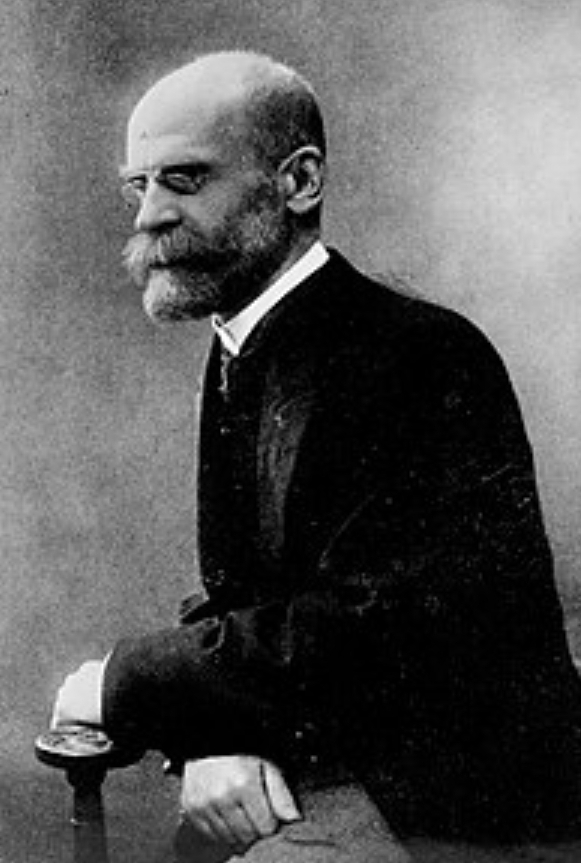

Emile Durkheim

David Emile Durkheim(15 April 1858-15 November 1917) was a French sociologist. He played a great role in development of sociology as an academic discipline. He played a great role during the period of enlightenment. He inherited the conservative tradition. Durkheim legitimized sociology in France,his work ultimately became a dominant force in the development of sociology in general and of sociological theory in particular. 

He was politically liberal and feared social disorders. He viewed social disorders as an unnecessary part of modern world and stated that social reforms can be used to reduce them.

Major works:

1.The Rules of Sociological Method 

He stated that the main aim of sociology is to study social facts. Social facts are the ways if thinking,acting and feeling which are external,coercive and outside individuals. He reasoned that if he could link individual behavior to social facts then it would become easy to understand sociology as an academic discipline. Durkheim differentiated between two types of social facts, ie, material social facts and non material social facts. Material facts include bureaucracy, governance and economy etc whereas non material facts include religion, culture, ethics etc. Durkheim mainly focused on the study of non material social facts.

2. The Divison of Labour in the Society.

In this work, Durkheim basically focused on the comparative analysis of what held old and modern societies together. He stated that primitive societies were held together by non material social facts  or strongly held common morality or what he called collective conscience. But as the world grew so did the complexities and this resulted in the weakening of collective conscience. The initial bond in the modern world was an detailed division of labour which held people together in dependency relationship but the modern division of labour brought with it several pathologies and proved to be an insufficient technique of holding the society together. Durkheim did not favour a revolution to solve these problems instead he suggested a variety of reforms that could patch up the modern system and keep it stable.

3. Suicide 

Durkheim adopted a very scientific approach in investigating the matter of suicide. He stated that suicide was not committed only by psychological or personal reasons but it also involved various social as well as economic reasons. Suicide was not a doing of an individual but it had collective efforts of various elements. Rather than focusing on individuality of suicide he focused on the rate of suicide and incidence. He noticed that suicide rates were different among different caste,class,sex,society, ethnicity etc. Thus he proved that suicide is affected by various other reasons including psychological factors. 

4.The Elementary Forms of Religious Life

Durkheim examined primitive society in order to find the roots of religion and he found out that society was the source of religion. Society defined certain things as religious and others as profane. He also studied totemism. Durkheim concluded that society and religion were same, religion was the way society expressed itself in the form of non material social facts.

Emile Durkheim’s works contributed a lot in development of sociology, he cleared the initially vague facts and matters. He also set up a journal devoted to sociology named L’annèe Sociologique, this made sociological understanding more easy. Sociologists and the students of sociology will forever be grateful to him  for his enormous and intricate contributions

Basics Of Interior Designing

What is interior designing:

  • Interior designers work closely with architects, civil engineers, mechanical engineers, and construction laborers and helpers  to determine how interior spaces will function, look, and be furnished. Interior designers read blueprints and must be aware of building codes and inspection regulations.
  • Although some sketches or drawings may be freehand, most interior designers use computer-aided design (CAD) software for the majority of their drawings. Throughout the design process, interior designers often use building information modeling (BIM) software to create three-dimensional visualizations that include construction elements such as walls or roofs.
  • Many designers specialize in particular types of buildings, such as homes, hospitals, or hotels; specific rooms, such as bathrooms or kitchens; or a specific style. Some designers work for home-furnishings stores, providing design services to help customers choose materials and furnishings.
  • Some interior designers produce designs, plans, and drawings for construction and installation. These may include construction and demolition plans, electrical layouts, and plans needed for building permits. Interior designers may draft the preliminary design into documents that could be as simple as sketches, or as inclusive as construction documents with schedules and attachments.

The following are examples of types of interior designers:

  • Corporate designers create interior designs for professional workplaces from small office settings to large-scale corporations within high-rise buildings. They focus on creating spaces that are efficient, functional, and safe for employees. They may incorporate design elements that reflect a company’s brand in their designs.
  • Healthcare designers use the evidence-based design process in designing and renovating healthcare centers, clinics, doctors’ offices, hospitals, and residential care facilities. They specialize in making design decisions based on credible research to achieve the best possible outcomes for patients, residents, and the facility.
  • Kitchen and bath designers specialize in kitchens and bathrooms and have expert knowledge of the variety of cabinets, fixtures, appliances, plumbing, and electrical solutions for these rooms.
  • Sustainable designers use strategies to improve energy and water efficiencies and indoor air quality, and they specify environmentally preferable products, such as bamboo and cork for floors. They may obtain certification in Leadership in Energy and Environmental Design (LEED) from the U.S. Green Building Council. Such certification indicates expertise in designing buildings and spaces with sustainable practices in mind.
  • Universal designers renovate spaces in order to make them more accessible. Often, these designs are used to renovate spaces for elderly people and people with special needs; however, universal designs can benefit anyone. For example, an entranceway without steps may be necessary for someone in a wheelchair, but it is also helpful for someone pushing a baby stroller.

2) What is the role of a designer:

Interior designers typically do the following:

  • Search for and bid on new projects
  • Determine the client’s goals and requirements for the project
  • Consider how the space will be used and how people will move through the space
  • Sketch preliminary design plans, including electrical and partition layouts
  • Specify materials and furnishings, such as lighting, furniture, wall finishes, flooring, and plumbing fixtures
  • Create a timeline for the interior design project and estimate project costs
  • Place orders for materials and oversee the installation of the design elements
  • Oversee construction and coordinate with general building contractors to implement the plans and specifications for the project
  • Visit the site after the project is complete, to ensure that the client is satisfied

3) What is the design process:

Interior Design Process

The design process is the road map to realizing our vision for each of our clients, in a planned, organized, and coordinated documentation of all design elements, selections, and decisions made along the way. It ensures the contractor thoroughly understands the design plan and specifications.

PROGRAMMING:

This is our design exploration and brainstorming phase. The starting line for any interior design project. During this phase, we learn everything about YOU. Your lifestyle, your preferences, likes and dislikes, your needs, goals, and wishes for your new space. It’s important for us to see through your eyes if we want to create something you love.

Throughout the programming process we:
• Discuss your project in detail, document all areas involved,
• Discuss your style preferences and ideas. ( We encourage you to gather tear sheets from a magazine or online sources to better communicate your ideas.)
• Conduct a site visit to measure, photograph and record existing conditions.
• Establish a preliminary budget
• Obtain, if available, a set of architectural plans from you or your architect.

SPACE PLANS & DESIGN CONCEPT:

Space planning is a prerequisite of any well-designed space. We meet and talk many times throughout this phase of the project. Meetings are held with clients to discuss various elements of the design.

Throughout this phase we:
• Establish interior design concept and overall creative direction.
• Create sketches and gather tear sheets to communicate and clarify design intent.
• Create preliminary floor plans
• Select the finishes we will be using.

DESIGN DEVELOPMENT:

During the design development phase, the approved design concept is refined and developed into more detailed drawings to include:
• Floorplans
• Elevations
• Reflected ceiling plans
• Selection of materials and finishes
• Furniture Plans
• Selection of furniture and furnishings

FINAL DESIGN AND SPECIFICATIONS PHASE:

Once the design plans have been approved, we will start preparing final design drawings and specifications.

This phase includes:
• Making all required changes or revisions to drawings
• Generating final drawings with all specifications
• Creating all material and finishing schedules.

CONSTRUCTION AND INSTALLATION:

The final stage of the project. After all of the planning, sketching, and meetings, we finally begin construction and remodeling work on the space! We turn our concepts and pictures into the real thing. This phase of the design project can vary in length depending on the extent of the work needed.

Throughout this phase, we:
• Review drawings with the builder or general contractor that we choose
• Review all orders with clients. If required, we place orders on their behalf
• Visit job sites periodically to address any problems arising, answer any questions related to design or drawings, and ensure that the construction is proceeding in general conformity with the approved design drawings,
• Schedule and coordinate delivery and installation of wallpapers, window treatments, area rugs/carpeting, furniture, accessories, and artwork.

The beginning of Art: Visual arts history

Expressing oneself through art seems a universal human impulse, while the style of that expression is one of the distinguishing marks of a culture. As difficult as it to define, art typically involves a skilled, imaginative creator, whose creation is pleasing to the senses and often symbolically significant or useful. Art can be verbal, as in poetry, storytelling or literature or can take the form of music and dance. The oldest stories, passed down orally may be lost to us now, but thanks to writing, tales such as the epic of Gilgamesh or the Lliad entered the record and still hold meaning today. Visual art dates back 30,000 years, when Paleolithic humans decorated themselves with beads and shells. Then as now, skilled artisans often mixed aesthetic effect with symbolic meaning.

In an existence that centered on hunting, ancient Australians carved animal and bird tracks into their rocks. Early cave artists in Lascaux, France, painted or engraved more than 2,000 real and mythical animals. Ancient Africans created stirring masks, highly stylized depictions of animals and spirits that allow the wearer to embody the spiritual power of those beings. Even when creating tools or kitchen items, people seem unable to resist decorating or shaping them for beauty. Ancient hunters carved the ivory handles of their knives. Ming dynasty ceramists embellished plates with graceful dragons. Modern pueblo Indians incorporates traditional motifs in to their carved and painted pots. The western fine arts tradition values beauty and message. Once heavily influenced by Christianity and classical mythology, painting and sculptures has more recently moved toward personal expression and abstraction.

Humans have probably been molding clay- one of the most widely available materials in the world- since the earliest times. The era of ceramics began, however, only after the discovery of that very high heat renders clay hard enough to be impervious to water. As societies grew more complex and settled, the need for ways to store water, food, and other commodities increased. In Japan, the Jomon people were making ceramics as early as 11,000 B.C. by about the seventh millennium B.C.; kilns were in use in the Middle East and china, achieving temperatures above 1832°F. Mesopotamians were the first to develop true glazes, through the art of glazing arguably reached its highest expression in the celadon and three color glazes of the medieval china. In the new world, although potters never reached the heights of technology seen elsewhere, Moche, Maya, Aztec, and Puebloan artists created a diversity of expressive figurines and glazed vessels.

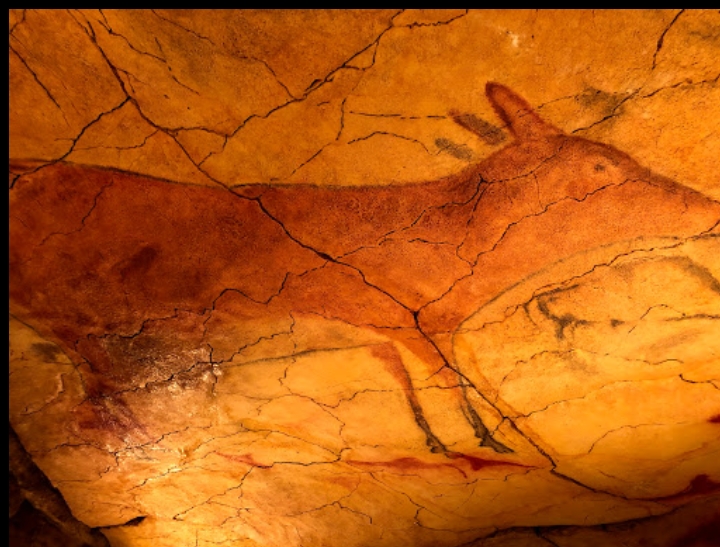
When Spanish nobleman Marcelino Sanz de Sautuola described the paintings he discovered in a cave in Altamira, contemporizes declared the whole thing a modern fraud. Subsequent finds confirmed the validity of his claims and proved that Paleolithic people were skilled artists. Early artists used stone tools to engrave shapes into walls. They used pigments from hematite, manganese dioxide, and evergreens to achieve red, yelled, brown, and black colors. Brushes were made from feathers, leaves, and animal hair. Artists also used blowpipes to spray paint around hands and stencils.

The end…

Juvenile Delinquency: Causes and Prevention

Juvenile delinquency is an act wherein a minor commits a crime or involves themselves in any immoral or anti social activities. Such minors are called juveniles or juvenile delinquents. This term not only involves legal facts but it also involves moral,social as well psychological issues. Juvenile detention centers and courts etc are included in the juvenile legal system. With the help of data and statistics it is clearly portrayed that the rate of crimes committed by minors is increasing at a sharp rate  so it becomes important to understand the causes and prevention of juvenile delinquency.


 Causes of juvenile delinquency:
A behavioural study conducted by psychologists on juveniles tells that minors commit crimes because their mind tells them to do so and in doing that they feel satisfied and contented. 
Another factor leading to minor crimes is a dysfunctional family. As it is known that family plays the greatest role in anyone’s life and it not only affects how people behave in society but it also determines how people view and analyse life. In some cases children feel neglected when they have working parents and this isolation leads them into doing wrongful acts. Sometimes families collectively fail in passing on the values,ethics and morals of life to their kids making them hostile and toxic. Sometimes being in bad company or being in touch with inappropriate people also leads to juvenile delinquency. For example,being in touch with smugglers motivates kids to commit such crimes. Unnecessary ostracism is also contributing in juvenile crimes. For instance when a child is ridiculed for belonging to a particular or so called community,they might start feeling criminal instincts in them. And apart from all these things the major factor promoting juvenile delinquency in wide spread poverty,income gap and economic inequality. When a economically poor child commits a crime like theft for the first time there is a moral element involved in the act, he knows it’s wrong and might as well promises himself not to do such thing again but the next day also,he has to fight for survival so he chooses the easier path and slowly and gradually it becomes his habit and his system gets conditioned to it. Mental health and psychological factors also affect the rates of juvenile delinquency.

Prevention of juvenile delinquency:-Education is the major prevention mechanism of juvenile delinquency. There are various programs which teach children about the ills of drugs,gangs,weapons etc. There various programs focusing the needs of parents educating them how to raise children,how to provide healthy space to them etc. Education provides an opportunity to people of all age to open up. Recreational activities also surprisingly prevent juvenile crimes. These activities build up stronger communities and they spread positive and optimistic thoughts in children’s lives. These actives may include singing,dancing,acting etc. Various socially concerned organizations carry out parent-child interaction training programs,the objective of these programs is to provide a safe and desirable space to parent and children so that they can work things out. Prevention of ruthless bullying and making children feel safe is also a good way to reducing crimes committed by children. Apart from these,the legal systems of various countries are trying to deal with the problem of juvenile delinquency. 

Although it is true that minors must be given a second chance but if not handled carefully and intricately, juvenile delinquency can become humanity’s worst nightmare. 

How to take notes?

Preparing to take good notes in class


The first step to taking good notes in class is to come to class prepared. Here are some steps you can take to improve your note-taking before class even begins:

  • Preview your text or reading assignments before the lecture. Previewing allows you to identify the main ideas and concepts that will most likely be discussed during the lecture.
  • Look at your course syllabus so that you know the topic / focus of the class and what’s going to be important to focus on.
  • Briefly review notes from previous class sessions to help you situate the new ideas you’ll learn in this class.
  • Keep organized to help you find information more easily later. Title your page with the class name and date. Keep separate notebook sections or notebooks for each class and keep all notes for each class together in one space, in chronological order.

Note-taking during class

Now that you are prepared and organized, what can you do to take good notes while listening to a lecture in class? Here are some practical steps you can try to improve your in-class note-taking:

  • If you are seeking conceptual information, focus on the main points the professor makes, rather than copying down the entire presentation or every word the professor says. Remember, if you review your notes after class, you can always fill in any gaps or define words or concepts you didn’t catch in class.
  • If you are learning factual information, transcribing most of the lecture verbatim can help with recall for short-answer test questions, but only if you study these notes within 24 hours.
  • Record questions and thoughts you have or content that is confusing to you that you want to follow up on later or ask your professor about.
  • Jot down keywords, dates, names, etc. that you can then go back and define or explain later.
  • Take visually clear, concise, organized and structured notes so that they are easy to read and make sense to you later. See different formats of notes below for ideas.
  • If you want your notes to be concise and brief, use abbreviations and symbols. Write in bullets and phrases instead of complete sentences. This will help your mind and hand to stay fresh during class and will help you access things easier and quicker after class. It will also help you focus on the main concepts.
  • Be consistent with your structure. Pick a format that works for you and stick with it so that your notes are structured the same way each day.
  • For online lectures, follow the above steps to help you effectively manage your study time. Once you’ve watched the lecture in its entirety, use the rewind feature to plug in any major gaps in your notes. Take notes of the timestamps of any parts of the lecture you want to revisit later.

Determining what’s important enough to write down

You may be asking yourself how you can identify the main points of a lecture. Here are some tips for recognizing the most important points in a lecture:

  • Introductory remarks often include summaries of overviews of main points.
  • Listen for signal words / phrases like, “There are four main…” or “To sum up…” or “A major reason why…”
  • Repeated words or concepts are often important.
  • Non-verbal cues like pointing, gestures, or a vocal emphasis on certain words, etc. can indicate important points.
  • Final remarks often provide a summary of the important points of the lecture.
  • Consider watching online lectures in real-time. Watching the lecture for the first time without pausing or rewinding can help force you to focus on what’s important enough to write down.
Preference

https://learningcenter.unc.edu/tips-and-tools/effective-note-taking-in-class/

SPOTIFY – A JOURNEY

Music, an art, which has mesmerized all of us in this monotonous life. Music has become a part of our life which cannot be denied. Today, Not only Music but music artists are also getting recognized by millions of people through various mediums.

Music has been alive for hundreds of years. Streaming music online has become a common and a very popular practice nowadays.

What started out as Music piracy became an 11 billion dollar industry, making 56% of global music industry’s revenues in 2019.

And one company has become the clear winner globally in terms of paid subscribers, that’s none other than ‘SPOTIFY’.

Spotify has dominated the music streaming industry with about 130 million premium subscribers worldwide.

Despite being in number two behind Apple Music in U.S. in 2019, Spotify has been on a winning streak recently with the acquisition of Joe Rogan’s incredibly popular podcast, along with exclusive deals with Kim Kardashian and DC Comics, all in an attempt to broaden its scope from music streaming to audio giant.

The man behind the popularity of the name ‘SPOTIFY’ is Daniel Ek.

Daniel Ek is the reason behind that we know the name “Spotify” now. He was into programming way back then. He was earning thousands of money by designing websites. He co-founded the company back in 2006 and has been in charge as the CEO ever since. He’s from Sweden, by the way, Spotify is a Swedish company.

He was a genius programmer and businessman with the exact impressive background.

He went to college but only for a few weeks before dropping out and quickly becoming tremendously successful working at various tech companies. His big payoff was in 2006 when he sold his online marketing company for over a million dollars and briefly retired directly after. All of this happened before the age of 23 so he decided he wasn’t quite ready to retire especially considering he perceived a great opportunity for a new business.

They spent a couple years getting everything together and in September of 2008, they officially launched Spotify. Initially the service was only available in six large countries throughout Europe but by 2011, it was finally available in the United States and as of 2019 they claim to have reach in 79 different countries and territories

There are some reasons behind its success. First of all, the music Catalog that was their first big hurdle back in 2006 and it remains a huge risk for them today. this relates to what I talked about in the beginning a core difference between

Spotify and Napster (music file sharing site)  and all those other crazy illegal sites is that Spotify pays for the rights to stream the songs they have to make all these deals with record labels and original artists.

Spotify provided a potential solution as it was a cheap and easy way for the users to access the music but still have the labels and artists and everyone else get compensated.

After two years of making those deals, they had secured enough European streaming rights to launch their service in Europe. Their growth after the launch made them even more attractive to record labels. They made new deals with Universal Sony Warner and by 2011 had secured enough US streaming rights .

They’ve existed for over a decade in a way that they were the first of their kind predating any competitor that uses this model. Their biggest competitor Apple music didn’t exist until 2015.

They had a seven-year head-start.  In the United States, the two are very similar.

As far as paid subscribers are concerned, Apple music passed Spotify in April of 2019 The difference comes internationally which leads into the next reason. Spotify is more focused internationally. Not surprisingly, most of the revenue comes from outside of the US. They started in Sweden, focused solely on Europe for years and as a result are dominating the international market

Spotify is really good at figuring out what you want to listen. Many people agree that their recommendations are among the best in the industry. This may be related to their continued investment in research and development and the fact that they had that jump start in collecting the data and in perfecting their system.

The biggest reason of their success might be their free option. It’s got to be the biggest difference from Apple music.

Spotify has this option where you can listen to everything they have to offer for free. This version of Spotify has so many limitations and it allows to skip a few songs at a time that forces people into listening to things. Then the ads came on every few songs which you have to expect but it gets annoying.

The three-month trial for the premium is so much better. When the three months end, No one can go back and end up paying $10 a month.

As of September of 2019, they have 113 million premium members compared to 141 million members on the free plan. The money they make from those ads is almost insignificant but that’s a group of people that are very likely to upgrade.

More than 60% of their new premium members come from the free service and they have a very specific path to make it happen. Around 75% of those people who engaged in the free trial ended up converting to a paid premium subscription because it’s hard to go back .

This is a controversial yet effective way of attracting customers as being a big reason for their success.

Spotify took advantage of the conditions of the industry and later on their size to build up an impressive music catalog. With just about every song you can ever want to hear take an advantage of a head start over all their competitors in the US and internationally. Part of that includes their data collection resulting in sophisticated recommendations and playlists. The unique free service providing a path for millions of people to sign up for their premium service that they really care!!

Kisan Diwas

“If agriculture goes wrong, nothing else will have a chance to go right in the country” -MS Swaminathan

Kisan diwas or farmers day in India is celebrated every year on 23rd December which is also the birth anniversary of India’s fifth Prime Minister Chaudhary Charan Singh.

This day is dedicated to all the farmers across India and to observe their efforts and sacrifices towards taking Indian economy to higher and advanced levels. This day is also marked to celebrate the efforts and ideas of Shri chaudhary charan Singh towards betterment of Agriculture sector in India. This year kisan diwas comes after the end of year long protests carried out by the farmers mainly from Punjab and Haryana following the rollback of three farm laws by the central government. 

India has been celebrating Kisan Diwas aka Shri Chaudhary Charan Singh’s birthday since year 2001.

Chaudhary charan singh was born on 23rd December, 1902, in Uttar Pradesh, in a middle class peasant family. He was a socialist and was influenced by Mahatma Gandhi’s ideas of non-violence etc. He was also a part of country’s freedom struggle.He was the main brain behind land reforms in Uttar Pradesh. He took massive efforts in the formulation and finalisation of the Debt Redemption  Bill 1939. This was one of the very significant advancement in Agricultural sector as this act brought great relief to rural debtors.For his efforts towards agricultural advancement Charan was given the title of “Champion of India’s peasant’s”.

He designed a transformation bill known as Land Holding Act of 1960 which came into force while he was the chief minister of Uttar Pradesh and he also worked for Zamindari Abolition Act of 1950. Chaudhary charan singh died on January 14th,1980. India will forever be grateful and debted to him for his efforts and endeavours.

Farmers are the pride of our nation,we don’t realise how much they contribute in the growth of Indian economy. They are the ones who put their soul and blood in the soil to bring forth its fortunes,they are the ones who give it life. Without them India would collapse as an economy as well as a nation. This farmer’s day let us pledge and promise to recognize and appreciate the efforts of our farmers as they are one of the real heroes of our nation.

HUMAN BRAIN

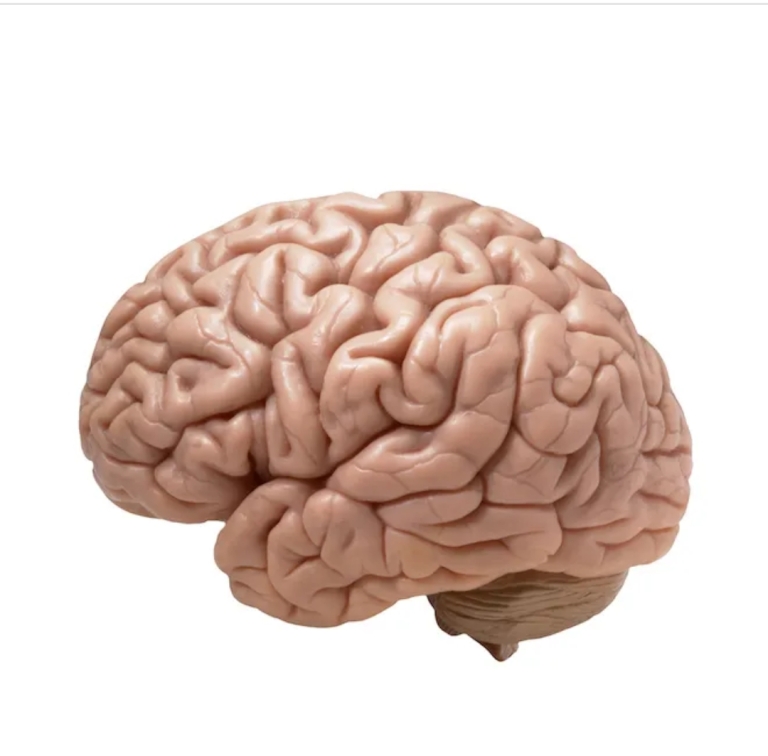
The human brain is the central organ of the human nervous system, and with the spinal cord makes up the central nervous system. The brain consists of the cerebrum, the brainstem and the cerebellum. The cerebrum, the largest part of the human brain, consists of two cerebral hemispheres.It controls most of the activities of the body, processing, integrating, and coordinating the information it receives from the sense organs, and making decisions as to the instructions sent to the rest of the body. The brain is contained in, and protected by, the skull bones of the head.

There are three types of brain fore brain, midbrain,hindbrain.The hindbrain includes the upper part of the spinal cord, the brain stem, and a wrinkled ball of tissue called the cerebellum.Brains are made of soft tissue, which includes gray and white matter, containing the nerve cells, non-neuronal cells which help to maintain neurons and brain health, and small blood vessels. They have a high water content as well as a large amount nearly 60 percent of fat.

FUNCTION OF BRAIN:-

* Attention and concentration.


* Self-monitoring.


* Organization.


* Speaking (expressive language).

* planning and initiation.


* Awareness of abilities and limitations.


* Personality.


* Mental flexibility.


* Inhibition of behavior.

The human brain color physically appears to be white, black, and red-pinkish while it is alive and pulsating. The brain itself does not feel pain because there are no nociceptors located in brain tissue itself. This feature explains why neurosurgeons can operate on brain tissue without causing a patient discomfort, and, in some cases, can even perform surgery while the patient is awake.Brain controls vital functions such as breathing, swallowing, digestion, eye movement and heartbeat, there can be no life without it. But the rest of the brain is obviously capable of some remarkable feats, with one part able to compensate for deficiencies in another.

The end…

Career advice for university students

Seek internship opportunities

Internships are a great way to gain valuable, hands-on experience in your field. For your internship to be beneficial, it must apply to your career aspirations. For example, if you’re interested in becoming a veterinarian, it may be beneficial to work at a kennel or animal shelter where you can learn proper animal care and handling.

Grow your skills and knowledge

Employers want to hire candidates with a wide range of skills. Use your college years to expand your skills and overall knowledge. Consider elective courses relevant to your career aspirations. For example, if you’re a photographer, taking an art class can help you expand your creativity. If your school doesn’t offer classes in the skill you’re hoping to grow, consider investing in relevant software.

Get an early start

To ensure you get the most out of your career, start looking for opportunities before you graduate. Find jobs relevant to your major. For example, if you’re interested in becoming a graphic designer, consider working for a design agency. This opportunity can help you understand what daily life is like for fellow designers and help you better understand the industry. Similarly, if you’re an art major, consider working for a local gallery to gain knowledge about the art industry. The sooner you look for opportunities, the greater chance you have of getting a job.

Keep your skills up-to-date

When you apply for a job or internship, you’ll likely be competing with other candidates. Because of this, it’s important to keep your skills current regardless of your industry. This means staying up-to-date with various technology and industry trends to help you gain an advantage over other candidates and make you stand out to hiring managers. Stay current by doing online research, reading professional journals or visiting your school’s library.

Pursue your passion

The easiest way to find happiness in your career is to determine what you love doing. For example, if you enjoy woodworking or metalworking, consider becoming an engineer. This ensures you’re doing something that makes you happy every day and will help your job feel less like work and more like fun. Following your dreams can also help increase your productivity because you’ll likely be more excited about going back to work. This advice is crucial as you advance in your career because it ensures you stay encouraged and driven to be the best you can be in your industry.

Strive for excellence and stay motivated

Whether you’re in your first job or an internship, it’s important to aspire to be the best you can be. Identify your own mistakes and believe in yourself and your abilities. This can help you stay vigilant in pursuing your dreams and give you the ability to advance in your career. Ultimately, striving for excellence can help you find success.

Use your school’s career services

Before you graduate, take advantage of your school’s career services to help you jump-start your career. This campus resource can provide you with a wealth of information, from crafting a resume to getting a job. Your school’s career services can also put you in touch with alumni in your field. Your tuition also pays for these services.

Reference

https://www.indeed.com/career-advice/career-development/career-advice-for-college-students

Selection of our career after school

There are some major factors which influence the selection of our career

Selecting the right course and college is a very significant decision after 12th because the right selection will lead to a gratifying career as the wrong one is equal to ending up in studying a subject or a sphere that doesn’t really interest you. Moreover, the choice made after class 12 will be the one that will decide your future.
The contemporary and highly competitive world is giving the students a tough time to choose their career. Today, students are facing with plentiful options as there are several courses all of which look almost equally lucrative and interesting.

  1. Cultural background: The cultural background of an individual plays a massive role in influencing the career.
    • Example: if the parents are doctors the child may be very much inspired by their way of life or the respect that is being paid in the society. So the child may opt to become a doctor.
  2. Bad work experience:  A bad work experience of any family member in a particular field may also influence the teenage in a negative way. It may lead to loss of interest in that particular kind of job.
  3. Economic condition: It’s hard to believe that many dreams are killed every day as the economic condition of the family is one of the main reasons.
    • Example: A hefty amount is required to get admission in an architectural designing college.
  4. Potential: Different profession demand different kind of requirements.
    • Example: If you want to join the film industry and you don’t have the requirements such as height and various physical requirements than perusing a course on acting and dreaming to be actor may be a waste of time and money. Pursuing a career depending on the potential may lead to success.
  5. Parent’s dreams: Every parent has dreams and expectation for their child regarding their future. Sometimes children’s are being forced to fulfil their parent’s dream by killing their own dream.
  6. Social value of the job:  Some people get fascinated towards some jobs because of the respect and social value they carry.
    • Example: Being an IAS officer carries a lot of admiration in the society.
  7. Peer pressure: Peer also plays a very important role while choosing a career. Some people choose the same career as their friend to maintain the same level of status forgetting their own field of interest.
  8. Income: The future income of the job also plays a very important role while choosing a particular career. Some time running behind money kills the field that we are really interested in.
  9. Our tastes and interests: Career should be selected depending on our tastes and interest which will help to give 100% to the job.
Reference

https://www.thehighereducationreview.com/news/tips-to-choose-the-right-course-after-12th-nid-797.html

Resume writing for freshers

What is a resume?

A resume is a formal document that serves to show a person’s career background and skills.

Pick the right resume template

The reverse chronological resume format includes employment history beginning with the most recent and then going backwards. Reverse chronological resumes show dates, as well as employers and educational institutions. It is the most common format in the resume.

Write down your contact information
  • First and last name
  • Mobile number
  • Email: Make sure it’s a professional email address (e.g. first.lastname@gmail.com) and that it’s not something like biker70@gmail.com!
  • Location
  • LinkedIn profile: Recruiters often want an easy way to see your online profile. Make sure it matches your resume (in terms of job titles, dates, roles) and it is overall impressive.

Education
  • Write the name of the college and its location
  • Add the degree you received
  • Include the dates you attended: if you’re still attending the college, you can write “Present” or “Current” instead of listing the end date or you could add your expected graduation date.
  • List notable achievements
  • Include your GPA is 3.0 above

Experience

As a recent graduate, the recruiters knows you don’t have work experience. As long as you’re applying for a junior or entry-level position, the experience isn’t something expected from you.

Instead, the recruiter will be looking for other experiences that enrich you profile like,

  • Internships
  • Extracurricular activities
  • Projects

Skills

The two types of skills you can mention on your resume are soft skills and hard skills.

Soft skills are attributes that help you adapt to work environments, work in a team and apply your hard skills effectively. They are related to your personality, social skills, communication, attitude, etc.

Hard skills refer to technical knowledge and specific tools. They are skills that one learns and applies directly to the job. Some examples of hard skills include microsoft word, adobe photoshop, etc.

Language

If you know another language, you should always include it on your resume as it indicates to a recruiter that you’ve invested in yourself. It can also qualify you for a multitude of positions that require someone bilingual or multi-lingual.

Mention the proficiency levels like,

  • Basic / Average / Good
  • Intermediate / Very good
  • Advanced / Excellent
  • Mother tongue / Native / Bilingual

Mention optional sections
  • Volunteering: If you have some volunteering experience, make sure to include it in your first job resume. Such a section shows commitment, dedication and a sense of purpose, something most recruiters will appreciate.
  • Hobbies: You can show your genuine interest in the industry or field by listing some relevant hobbies / interests.
  • Awards and certifications: Whether it’s an award from an essay competition in college or a certificate from an online course, anything that flatters your profile should be added.

Should not include your photo on YOUR resume

Adding a picture to your resume could hurt your chances of getting the job.

  • Recruiters are careful to avoid discrimination and unconscious bias
  • Some hiring managers may consider resume photos unprofessional
  • A resume picture could distract from your skills and experience
  • Images are not ATS friendly

What is an ATS compatible resume?

An Application Tracking System is a software application that enables the electronic handling of recruitment and hiring needs. Click the below links to check your resume score!

https://resumeworded.com/

How long resume length?

A concise, targeted resume shows recruiters your ability to synthesize, prioritize and convey your most important achievements. As an entry-level candidate, your resume should be no more than one page long.

Top student resumes are between 450 and 650 words long.

Total bullet points

For context, top resumes at your career level use between 12-20 bullet points to describe their accomplishments in core sections (e.g. your work experience).

Other sections like your summary, skills or education are not counted in this check.

Unnecessary sections

While you can include a short summary on your resume, do not include an objective in your resume. It is clear to hiring managers that you are looking for a job – there’s no need to restate it at the top of your resume.

You shouldn’t include a references section in your resume. Employers will ask you directly if they ever need to contact your reference.

Repetition

Avoid repeating action verbs and phrases on your resume.

Unique action verbs and language show hiring managers that you have held different roles and skill sets. They also help your accomplishments stand out and make them more impactful.

Even when describing similar skills, try to always unique language in terms of verbs and phrases. This makes your resume less monotonous and helps you stand out.

Important tips

Use a single-column layout: A single-column resume layout allows recruiters to read it easily.

Pick a common font, size: We recommend to use readable font like times new roman or arial and set the font size to 13-14 for headings and size 12 for contents.

Resume templates

If you’re a high school student or a college student, don’t have much work experience yet or looking for entry-level jobs, these student resume templates are perfect for you. They prioritize your education by listing it first, and show you how to list your university projects and extracurricular activities on your resume. These resume templates are downloadable in Word (.doc) format or editable directly via Google Docs.

https://resumeworded.com/resume-templates

Reference

ADIDAS

In the world of sneakers and sportswear, ADIDAS ranks two and Of course the number one is NIKE. According to Forbes, it is 68th biggest brand in the whole world. Their sales have been growing from the last five years and now ADIDAS has become a very big name.

How did ADIDAS became so big??

Most of the people who do sports or watch sports shows definitely know about ADIDAS. Even you know nothing about sports, there is a big chance that you know the name ADIDAS. You can take my example, I know a little about sports but I am familiar with the name ADIDAS. That’s how this name has become big within past years.

Like most companies, it didn’t start out big. In the 1920s, in a small town in Germany, Adi Dassler and his brother Rudolf Dassler started the company when they began producing shoes in their mother’s laundry room. At that time, it wasn’t even called ADIDAS yet it was called the Dassler brothers shoe factory. Now, obviously there’re numerous factors that are responsible for transforming that little business into the giant one that we know today.

There are three things that have made the greatest impact and are most responsible for their growth.

The First thing is a man named Jesse Owens. Jesse Owens was an American Athlete. In his time, he probably was the fastest man on the planet.

 In the 1936 ,Olympics held in Berlin, Germany. He won four gold medals and track events breaking records along the way. A very impressive performance. You know ,how in every Olympics there tends to be one or two people who become really famous and are just the star of the whole thing well in 1936, it was Jesse Owens.

These Olympics were in 1936 held in Germany, at the time the country was led by Adolf Hitler. He was planning for these Olympics to prove how the Aryan race was superior and obviously Jesse Owens ruined that Plan.

These Olympics took place in Germany and the Dassler Brothers shoe company was from Germany. Somehow, Adi Dassler convinced Jesse Owens to wear a pair of shoes during his historic races and it looks like he didn’t specifically target Owens rather he was just kind of trying to convince all the athletes but the one that paid off was Jesse Owens.

You can imagine the demand that it created for them and it really helped bring the small shoe company to the next level.

After the second world war, the two brothers that were running the company found it impossible to work together and they split apart.

Rudi left so that he can form his own shoe company. The company he started is now known as Puma that you probably know.

Adi stayed put and redesigned the existing company that’s where the name was changed to ADIDAS and he came up with the three stripe signature look and it really just started taking shape and to the company that we are familiar with today.

In 1954 World Cup final it’s been called the miracle in Bern that took place in Bern , Switzerland and showcased a very strong Hungarian team against the underdog team from West Germany. The game started with two early goals from Hungary which solidified their victory in the minds of many people but Hungary didn’t score for the rest of the game while Germany scored three times making them the winner by three to two. There were a lot of politics tied to this game as well. It was the second World Cup following the war. The first one was held in Europe since the war. It was held in Switzerland because they were neutral during the war and mostly unaffected. It involved a newly formed and weak German team.

The Winning German team was famously wearing ADIDAS shoes.

They called it “dassler boot” , with all its features that make it superior to the traditional boot.

You can imagine how being attached to such a big event like this could help the brand. The success with Jesse Owens was linked to the old brand before all the changes. So this helped bring the new brand into the mind of the public. It was where many people first saw their signature stripes and learn the name ADIDAS.

The third thing that I’d like to highlight may not be as significant as the first two but it’s worth mentioning Run DMC, it’s a really popular rap group from the 1980s. They were pioneers in the genre. They had a song called my adidas.

It was one of their most popular songs. They sang about how they wore adidas and they were known for wearing adidas.

Unlike the first two contributors to their success, this one started independent from adidas meaning Run DMC wasn’t approached by them to create the song or anything like that.

They made it on their own. The story goes that they invited an Adidas executive to one of their concerts and before they sang their song, they asked the crowd to raise their Adidas sneakers in the air and thousands of people did it showing the executive how influential they were.

It motivated them to sign Run DMC to an Endorsement  deal which is said to be the first-ever endorsement deal in rap.

Here we have a popular rap group singing about them and wearing them not just the shoes a head to toe adidas and they were obviously influencing their fans to buy them or at the very least familiarizing them with the brand.

All three of these contributors have something in common. It was someone famous and influential wearing their shoes which is a very common practice for companies like these.

ADIDAS continues to be reliant on their marketing and continues to be aggressive with this type of marketing a few years ago they had a big campaign labelled “Impossible Is Nothing” involving David Beckham and Muhammad Ali .

Today they have some of the top athletes in each sport signed to endorsement deals.

For soccer, they have Lionel Messi. For Basketball, they have James Harden. For Football, they have Aaron Rodgers. For baseball ,they have Kris Bryant.

Almost half of their marketing budget every year goes to paying all these players from different sports to wear and endorse their shoes.

Today, ADIDAS is the largest sportswear manufacturer in whole Europe and the second largest in the world with nearly 20 billion Euros in annual revenue!!

SUBHASH CHANDRA BOSE

INTRODUCTION:

Subhash Chandra Bose
SUBHASH CHANDRA BOSE
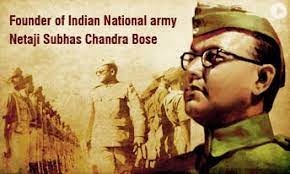
Subhash Chandra Bose is fondly remembered as one of the greatest freedom fighters of India, and popularly known by the name of ‘Netaji’ (Respected Leader). He was strongly influenced by Swami Vivekananda’s teachings, and also believed that the Bhagavad Gita was a great source of inspiration for the struggle against the British. Bose was an Indian nationalist, and a prominent figure of the Indian independence movement. He was superior head for Indian National Army during World War II. He always pitched for complete and unconditional independence of India from the British Rule.

CHILDHOOD:

Subhash Chandra Bose was born to Prabhavati Devi and Janakinath Bose on January 23 in 1897 in Odisha. He took admission into the Protestant European School which was run by the Baptist Mission. He did B A in Philosophy from the Presidency College in Calcutta, and was later expelled for assaulting Professor for the latter’s anti-India remarks. After the incident, Bose was considered as one of the rebel-Indians.During his college days, he gradually developed nationalistic temperament, and became socially and politically aware.

POLITICAL LIFE:


18 Subhash Chandra Bose Books Which Prove Massively Impactful
THE GREAT FREEDOM FIGHTER
After a few years, Bose returned to India as he resigned from his civil service job in April 1921, and later joined the Indian National Congress to fight for the independence of India. Subhash Chandra Bose started the newspaper known as ‘Swaraj’, and took charge of publicity for the Bengal Provincial Congress Committee. In 1923, Bose was elected as the President of All India Youth Congress and as the Secretary of Bengal State Congress. He was also editor of the newspaper called ‘Forward’, founded by his mentor Chittaranjan Das, and he served as the CEO of the Calcutta Municipal Corporation. By December 1927, Bose was appointed as the General Secretary of the INC.

In November 1934, he wrote the first part of his book ‘The Indian Struggle’, which was about nationalism and India’s independence movement during 1920–1934, but the British government banned the book. By 1938, he agreed to accept nomination as the Congress President, and presided over the Haripur session. However, due to his strong differences with Mahatma Gandhi and Jawaharlal Nehru, he resigned in 1939.

ROLE IN INDIAN INDEPENDENCE:

S C Bose was always in favour of armed revolution in order to expel the Britishers from India. During the time when the Second World War took place, Bose form the Indian National Army (INA) with the help of the Imperial Japanese Army, and also founded an Indian Radio Station called ‘Azad Hind Radio’.

A few years later, he travelled to Japan, where more soldiers and civilians joined the INA. Even when faced with military reverses, Bose was able to maintain support for the Azad Hind movement. In Europe, S C Bose sought help from Adolf Hitler and Benito Mussolini for the liberation of India. Bose had struck an alliance with Japan and Germany as he felt that his presence in the East would help India in the freedom struggle against the British.

MEMORIAL

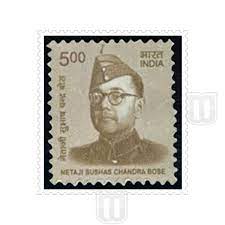
Bose was featured on the stamps in India from 1964, 1993, 1997, 2001, 2016 and 2018.Bose was also featured in ₹2 coin in 1996 and 1997, ₹ 75 coin in 2018and ₹125 coin in 2021. Netaji Subhash Chandra Bose international Airport at Kolkata, Netaji Subhash Chandra Bose Island, formerly Ross Island and many other institutions in India are named after him. On 23 August 2007,Japanese Prime minister visited the Subhas Chandra Bose memorial hall in Kolkata. Abe said to Bose’s family “The Japanese are deeply moved by Bose’s strong will to have led the Indian Independence Movement from British rule. Netaji is a much respected name in Japan.

In 2021, the Government of India declared 23 January as Parakram Divas to commemorate the birth anniversary of Subhas Chandra Bose. Political party, Trinamool Congress and the All India Forward Bloc demanded that the day should be observed as DESHPREM Divas.

*****MY HERO IS SUBHAS CHANDRA BOSE THIS ARTICLE IS DEDICATED TO YOU*****

“JAI HIND” this slogan is said by Subhas Chandra Bose .

The end…

Stephen Hawking’s final theory of black holes -The Hawking radiation

When a massive star dies, it leaves a small but dense remnant core in its wake. If the mass of the core is more than 3 times the mass of the sun, the force of gravity overwhelms all other forces and a black hole is formed. Imagine the size of a star is 10 times more massive than our sun being squeezed into a sphere with a diameter equal to the size of New York City. The result is a celestial object whose gravitational field is so strong that nothing, not even light can escape it. The history of black holes was started with the father of all physics, Isaac Newton. In 1687, Newton gave the first description of gravity in his publication, Principia mathematica, that would change the world.

Then 100 years later, John Michelle proposed the idea that there could exist a structure that would be massive enough and not even light would be able to escape its gravitational pull. In 1796, the famous French scientist Pierre-Simon Laplace made an important prediction about the nature of black holes. He suggested that because even the speed of light was slower than the escape velocity of black hole, the massive objects would be invisible. In 1915, Albert Einstein changed physics forever by publishing his theory of general relativity. In this theory, he explained space time curvature and gave a mathematical description of a black hole. And in 1964, john wheeler gave these objects the name, the black hole.


The Gargantua in Interstellar is an incredibly close representation of an actual black hole
In classical physics, the mass of a black hole cannot decrease; it can either stay the same or get larger, because nothing can escape a black hole. If mass and energy are added to a black hole, then its radius and surface area also should get bigger. For a black hole, the radius is called the Schwarzschild radius. The second law of thermodynamics states that, an entropy of a closed system is always increases or remains the same. In 1974, Stephen hawking– an English theoretical physicists and cosmologist, proposed a groundbreaking theory regarding a special kind of radiation, which later became known as hawking radiation. So hawking postulated an analogous theorem for black holes called the second law of black hole mechanics that in any natural process, the surface area of the event horizon of a black hole always increase, or remains constant. It never decreases. In thermodynamics, black bodies doesn’t transmit or reflect any radiation, it only absorbs radiation.

When Stephen hawking saw these ideas, he found the idea of shining black holes to be preposterous. But when he applied the laws of quantum mechanics to general relativity, he found the opposite to be true. He realized that stuff can come out near the event horizon. In 1974, he published a paper where outlined a mechanism for this shine. This is based on the Heisenberg uncertainty Principe. According to the principle of quantum mechanisms, for every particle throughout the universe, there exists an antiparticle. These particles always exist in pairs, and continually pop in and out of existence everywhere in the universe. Typically, these particles don’t last long because as soon as possible and its antiparticle pop into existence, they annihilate each other and cease to exist almost immediately after their creation.

In the event horizon that the point which nothing can escape its gravity. If a virtual particle pair blip into existence very close to the event horizon of a black hole, one of the particles could fall into the black hole while the other escapes. The one that falls into the black hole effectively has negative energy, which is, in Layman’s terms, akin to subtracting energy from the black hole, or taking mass away from the black hole. The other particle of the pair that escapes the black hole has positive energy, and is referred to as hawking radiation.

The first-ever image of a black hole by the Event Horizon Telescope (EHT), 2019
Due to the presence of hawking radiation, a black hole continues to loss mass and continues shrinking until the point where it loses all its mass and evaporates. It is not clearly established what an evaporating black hole would actually look like. The hawking radiation itself would contain highly energetic particles, antiparticles and gamma rays. Such radiation is invisible to the naked eye, so an evaporating black hole might not look like anything at all. It also possible that hawking radiation might power a hadronic fireball, which could degrade the radiation into gamma rays and particles of less extreme energy, which would make an evaporating black hoe visible. Scientists and cosmologists still don’t completely understand how quantum mechanics explains gravity, but hawking radiation continues to inspire research and provide clues into the nature of gravity and how it relates to other forces of nature.

The end…

Rape culture

Rape culture is a setting in which crimes like rapes, sexual assault and sexual abuse are normalized because of the attitude and reaction of the society towards gender and gender inequalities. Rape culture basically includes victim blaming, misogynistic remarks, slut shaming,objectification of genders,not supporting sexual assault victims and not considering the trauma of rape on anyone etc. 

Rape culture not only affects the psyche of a victim but it also damages the concept of social cohesion.It is one of the reasons why rapes and sexual assaults are increasing at a faster rate all over the world. The term ‘Rape Culture’ was first used in the 1970s in the USA during the second wave of the feminist movement.

Rape culture gives birth to a lot of rape myths like women ask for it,women who were short dresses get raped more often etc. Society also uses the aggressiveness of men as an excuse of rape thus normalizing rape. In promoting rape culture sexual objectification of women also play a massive role and in objectifying women media plays the main role. The way women are portrayed in movies creates a worng perception in the minds of men that women are some toys and men have all right over them.

Another factor promoting rape culture is victim blaming. It is a phenomenon where a victim is partially or completely held liable for the crime that was committed against  them. For example, saying that a women was raped because of the length of her dress and because she was drunk is victim blaming. It can happen among a victim’s peers or other people in the society. Victim blaming is one of the reasons why women are afraid to come out as rape or sexual assault victims,they are scared of being ostracized by the society. Victim blaming has serious consequences as it helps for the perpetuate a pervasive rape culture. Due to this phenomenon rape victims suffer from various mental illnesses like depression, anxiety etc,this also increases the suicide rate.

Slut shaming is another factor promoting rape culture. This phenomenon is very similar to the phenomenon of victim blaming. It is the practice of disparaging women for violating the “appropriate sexual behavior” norms. For instance,being criticized for wearing short clothes is a most common example of slut shaming. 

Rape culture not only affects women but it also affect the psyche of men. It is linked with gender roles thus it deeply affects the psychological condition of all the genders. It has created a worng perspective in the minds of people, ie,if a women gets raped or sexually assaulted then she is supposed to be looked down upon and she becomes a disgraceful person. On the contrary,it is the men that need to learn the importance of controlling themselves. Women and men both are same,they have the right to decide what they want in their life,how should they dress up etc and no can hinder that. One of the most common rape myths is “she was asking for it” ,to be very clear and specific there is no gravity in this phrase. In moments like these,we need to use common sense and ask ourselves a question that why would a woman ever ask for mental as well as physical pain and discomfort. 

Rape culture also hides away the importance of consent as it normalizes various inappropriate sexual behaviors like passing bad comments on a women’s body and clothes. After a sexual assault has taken place women find it difficult to come out and report the crime because they fear that the authorities might not trust their claims. Some victims don’t come out and hide the crimes because they think that they have lost all the respect,grace and honour in the society. It is not their fault because these futile norms and myths have been conditioned in them by the society.

To conclude,it can be said that the problem of rape culture is very deep rooted in our society and it is affecting each and every person with different gravity. It is a disease that is making us all ill. Victim blaming and slut shaming needs to be stopped before it’s too late. Put your common sense and empathy before your toxic masculinity. Stop anyone and everyone who jokes about sexual assault and rape and most importantly listen and support the survivors. 

HUMAN RIGHTS IN INDIA

Human rights day celebrated in 10th December.The National Human Rights Commission of India defines human rights as provided under the Protection of Human Rights Act (PHRA), 1993, as Rights Relating To Life, liberty, equality and dignity of the individual guaranteed by the constitution or embodied in the international covenants and enforceable by courts in India.Human Rights Day is observed on December 10 every year, since it was on this very day in 1948 that the United Nations General Assembly (UNGA) adopted the Universal Declaration of Human Rights, a milestone document that enshrines the rights and freedoms of all human beings.The international document also commits nations to recognise all humans as being “born free and equal in dignity and rights” regardless of “nationality, place of residence, gender, national or ethnic origin, colour, religion, language, or any other status

7 human rights in India:-

* Origins.


* Significance and characteristics.


* Right to equality.


* Right to freedom.


* Right against exploitation.


* Right to freedom of religion.


* Right to life.


* Cultural and educational rights.

An Act to provide for the constitution of a National Human Rights Commission, State Human Rights Commissions in States and Human Rights Courts for better protection of human rights and for matters connected therewith or incidental thereto. Ministry: Ministry of Home Affairs. Department: Department of States.Protection of human rights is essential for the development of the people of the country, which ultimately leads to development of the national as a whole. The Constitution of India guarantees basic human rights to each and every citizen of the country.The Constitution of India guarantees to all Indian women equality (Article 14), no discrimination by the State (Article 15(1)), equality of opportunity (Article 16), equal pay for equal work (Article 39(d)) and Article 42.

Human rights are important because no one should be abused or discriminated against, and because everyone should have the chance to develop their talents. Unfortunately, many people around the world don’t have these basic rights and freedoms.It is constitutional mandate of judiciary to protect human rights of the citizens. Supreme Court and High Courts are empowered to take action to enforce these rights. Machinery for redress is provided under Articles 32 and 226 of the constitution.

The most significant human rights issues included police and security force abuses, such as extrajudicial killings, disappearances, torture, arbitrary arrest and detention, rape, harsh and life-threatening prison conditions, and lengthy pretrial detention.

In India, a child has the right to be protected from neglect, exploitation, and abuse at home and elsewhere. Children have the right to be protected from the incidence of abuse, exploitation, violence, neglect, commercial sexual exploitation, trafficking, child labour, and harmful traditional practices.

The end…

The meaning and importance of Self Love

“To fall in love with yourself is the first secret of happiness”

-Robert Morley

This quote magnifies the importance of loving, trusting and nourishing ourselves. So the question arises that what does self love actually mean?

Self love is a mental condition when a person loves themself and recognizes their value and importance.Self love is not only a basic necessity but it also helps in all round development and growth of human beings. Self love is a subjective issue it can refer from one person to another because we all have different ways of loving and treating ourselves. Self love has various components some of them are mentioned below:-

1.Believing in yourself 

2.Prioritizing yourself over others

3.Not being harsh on yourself

4.Being ruthlessly and completely honest to yourself 

There can be various other ways of loving oneself.To talk about the history of self love, it was first promoted by the Beat generation of the 1950 and in the early years of the Hippie era of the 1960. As and when human Civilization grew the emergence and importance of self love was witnessed by people all around the globe.

In today’s modern and complex world where everyone is always trying to be better than others,the significance of self love gets ignored. People make excuses that they are too busy to take out time for themselves and to love themselves but it is very important to give yourself a break and tell yourself that you are very proud of yourself. We can’t accomplish anything if we don’t recognize our importance and efforts. And so is the case with self love, a person madly in love themself is in a mentally better position than a person who doesn’t recognize their value. People are mostly  trying to be perfect version of theirselves but according to me perfectionism in itself Is a flawed ideology, there is nothing that is totally perfect. Being perfect is just a futile concept created by people to satisfy themselves. Trying to be perfect can turn into your worst nightmare,in the process you might become hostile,unsympathetic,toxic and mentally unstable. Slowly and gradually these mental Illnesses will start affecting your physical as well as spiritual health. You might inherit eating disorders etc.self love makes you a happy and well adjusted person, it makes you more comfortable with others as it removes the element of jealousy. It helps in reducing stress be in academic, professional or personal. In our day to day lives there are various stressful moments, it has become almost impossible to be completely stress free but when we love ourselves then we can comfort  and manage ourselves in a much better way. In a health psychology meta-analysis of 15 studies, researchers found that when people accept themselves as they are they are motivated towards making positive changes in their lives.So basically self love motivates and pushes is to make healthy choices and decisions. It also improves emotional and mental strength. In tough and dark times,it is easy to give up hope, but then self love converts the negative things into positive ones. It helps you in critically communicating with yourself thus helping you to come out of tough times quickly and easily. 

There is a saying that you cannot love and unless you love yourself thus loving yourself also strengthens your relationships. It helps you in creating healthy boundaries and protect you from going into toxic and emotional stressful relationships. Self love makes you a more confident person.You believe in you abilities and you know how capable you are. It makes you realise you strengths,worth and value and this way it make you a more confident person. Self love helps you enhance and develop all the qualities  that are required for being successful.It helps you in inspiring others and having an optimistic outlook in life.

Easy as it may seem it is not exactly simple to love yourself. Most people find it quite difficult  to love themselves. Accept the way you are,don’t try be totally perfect because  it is not possible. It’s completely alright to take breaks when you feel like because you definitely deserve breaks considering all the hard work you do.most importantly  don’t compare yourself with others rather try competing with yourself,this kind of competition is considered to be healthy. Loving yourself might take time initially but it is totally worth it and you before anyone else deserve all your love and affection. 

HOPE!!

A hope,

to live those moments again….

A hope,

To see your grin,

On my foolish talks again…..

Lure me to stay,

one more day….

A hope,

To be like earlier,

The way we were……

Sway me to feel like,

You will come again….#ktr

The Journey of YOUTUBE

If someone would ask me which is the biggest learning app out there ?

I would instantly answer that it’s YouTube. You can learn anything and everything using YouTube, be it cooking, dancing, technical skills, singing, painting and writing etc.

You can even study through YouTube as well. There are a lot of entertainment and sports related videos on YouTube which get trending every now and then.

How the idea of creating such an amazing video app came up?

Not only, one can learn through YouTube but also can help others to learn new skills. It is the era of social media influencers where people have different platforms in front of them to share their creativity with millions of people through online media.

YouTube is the world’s largest video streaming website and the second largest search engine after Google.

The creators behind this wonderful innovation were Chad Hurley, Steve Chen and Jawed Karim who just not made their mission possible but also  created a phenomenon that is everlasting and never gonna end anytime soon.

After college Chad Hurley worked in PayPal division where he met Steve Chen and Jawed Karim who later came together to create YouTube in 2005.

Hurley worked in PayPal till it got acquired by eBay in 2002 and after that he started working in Silicon Valley as a Consultant.

In January 2005, Steve hosted a party for his friends and Hurley was one of his guests. Both Steve and Harley recorded the party on a camcorder and digital camera but were not able to send the recording to their friends and guests because of the massive file size.

It was then they came up with an idea of creating a site which would help people to share their videos.

They wanted to do something like the concept of Flickr which was one of the new websites back then that facilitated the sharing of the photographs.

After a few days, the team came up with a memorable and consumer-friendly logo. The website was launched on February 14, 2005.

A sneak peek was offered to interested parties in May , 2005. However, potential youtubers had to wait for another six months to be able to freely enjoy the site.

YouTube employees had to work from home and even from the garages where many start-ups used to work. It had roughly 8 to 10 employees who were enthusiasts and were working without any pay.

The first video published by the YouTube was titled “me at the zoo” by one of the co-founders of YouTube who was Jawed Karim.

In no time, YouTube became a huge success.

Later in September, 2005, YouTube got its first one million hit video. The video was a NIKE ad which went viral. YouTube acquired $3.5 million funding from Sequoia Capital and made an official launch in November, 2005.

In July, 2006, the company relieved that 65,000 videos were getting uploaded on YouTube every day. It slowly became the 10th most popular website all around the world.

This much success in such a short time was unbelievable. In the later year, YouTube witnessed another huge success.

This tech video start-up got acquired by tech giant GOOGLE  for a whooping $1.65 billion. The idea of two technically inclined pioneers turned out to be a revolutionary milestone in the history.

In May 2007 , YouTube launched its partner program which allowed the creators with the viral videos to get paid. Now, people started to get paid due to their hobbies, only thanks to YouTube.

In August 2007, Google decided to introduce Ads on YouTube.

In 2007, Usher introduced the world to Justin Bieber via a YouTube video which got hit and made JB one of the greatest singers in the history of music. With Gangnam Style becoming viral on YouTube also was a huge event in the YouTube history. A lot of artists made their careers through YouTube. Not only artists but also videos related to education are getting popular among the people. YouTube also helped many K-pop groups like BTS and BlackPink etc. to be popular worldwide.

Now, It has become impossible to imagine a world without having YouTube in it!!

NANOTECHNOLOGY

Nanotechnology, also shortened to nanotech, is the use of matter on an atomic, molecular, and supramolecular scale for industrial purposes.


WHAT IS NANOTECHNOLOGY?

Nanotechnology is the manipulation of matter on a near-atomic scale to produce new structures, materials and devices. Nanotechnology is generally defined as engineered structures, devices, and systems. Nanomaterials are defined as those things that have a length scale between 1 and 100 nanometers.


NANOTECHNOLOGY USED IN:-

* Food security. Nanosensors in packaging can detect salmonella and other contaminants in food.


* Medicine.


* Energy.


* Automotive.


* Environment.


* Electronics.


* Textiles.


* Cosmetics.

IS NANOTECHNOLOGY THE FUTURE:-

Nanotechnology is an emerging science which is expected to have rapid and strong future developments. It is predicted to contribute significantly to economic growth and job creation in the EU in the coming decades. According to scientists, nanotechnology is predicted to have four distinct generations of advancement.

NANO MEDICENE:-

Nanomedicine the application of nanomaterials and devices for addressing medical problems has demonstrated great potential for enabling improved diagnosis, treatment, and monitoring of many serious illnesses, including cancer, cardiovascular and neurological disorders, HIV/AIDS, and diabetes.

The end…

POLITICS IN INDIA

Politics work with inthe constitution of India.India is a parliamentary democratic republic in which the president of India is the head of state and the prime minister of India is the head of government.


POLITICAL PARTY IN INDIA:-

As per 23, September 2021 the election commission of India total number of parties registered was 2858, with 8 national parties, 54 state parties and 2796 unrecognised parties.

THREE BRANCHES OF INDIAN GOVERNMENT:-

* Executive.

*Legislative.

* Judiciary.

EXECUTIVE:-

Executive type of Indian government include,

* president of india.

* prime minister of India.

* union cabinet.

* council of ministers.

* Bureaucrats.

PRESIDENT OF INDIA:-

President of India is the highest post and is the constitutional head of the country. According to our constitution, President is the first citizen of our country and a symbol of unity and integrity.President is also responsible for appointing other executives and judicial members in the country like the Chief Justice of India, Judges of all the High courts, the Election Commissioner of India and states too. President of India is also the Commander in Chief of all the Indian forces i.e. Indian Army, Indian Navy, and Indian Air force.

PRIME MINISTER OF INDIA:-

Prime Minister is the chief of the Central government of India and also acts as the advisor of President. He is also head of the Council of Ministers and is responsible for appointing or dismissing any minister from the council. In case Prime Minister resigns from his office or dies during his tenure then the cabinet will automatically dissolve.

UNION CABINET:-

Union Cabinet consists of the Prime Minister and Cabinet Ministers. This is the decision making body in the central government.The Cabinet Minister cannot make a law concerning his department on its own, he can only propose the decision and then the Union Cabinet will make the final law.

COUNCIL OF MINISTERS:-

Council of Ministers works under the Union Cabinet. All the members of the Union Cabinet are members of the Council of Ministers and here the Minister of States appointed by the President on the advice of the Prime Minister.

BUREAUCRATS:-

Bureaucrats are selected and appointed by Union Public Service Commission and for states there is a State Public Service Commission. They are responsible for implementing the laws and all the other functions of government. Bureaucrats consist of IAS, IPS, IFS and other officials leading various government agencies.

LEGISLATIVE:-

Legislative type of government include president,lok sabha also known as lower house,Rajya sabha also known as upper house.

LOK SABHA:-

Lok Sabha is more powerful in both the houses. Members of Lok Sabha are elected directly by citizens of India. There are total 530 members from the states and 20 members from the union territories. They are elected in general election. Their term is five years.

RAJYA SABHA:-

There cannot be more than 250 members in the Rajya Sabha. Members of Rajya Sabha are elected by state legislative assemblies out of which 12 members are directly appointed by President who come from different backgrounds like Literature, Art, Social Services etc.

JUDICIARY:-

Judiciary type of government includes supreme court,high court and district court.

SUPREME COURT:-

Supreme Court is the highest judicial body of the country. The decision by Supreme Court of India is acceptable by all judicial bodies and no other judicial body has the power to change a decision by Supreme Court. Indian judiciary is an independent body and is not affected by Legislature or Executive. Supreme Court has the power to question any decision made by Legislative Bodies or Executive if the decision is not in accordance with the Constitution of India.supreme court of india consists of 34 judges maximum in which there can be a Chief Justice and 33 other judges.

HIGH COURT:-

The High Court is the highest judicial body of a state. High court functions under Supreme Court. High court maintains the rule of law in the particular state and in case of two small states there can be one common High court.

DISTRICT COURT:-

District court or sub-ordinate courts function under High court. They maintain rule of law in a particular district or locality in which they function. They look after the civil and criminal matters of that particular region.

RECOGNISED NATIONAL PARTIES IN INDIA:-

* Bahujan samaj party.

* Bhartiya Janata party.

* Communist party of India.

* Communist party of India (Marxist).

* Indian National Congress.

* Nationalist Congress party.

The end…

The success of NIKE

The world’s biggest and the most popular sportswear company – NIKE . In just 50 years, one man’s dream of better shoes turned into a global corporation worth over a $100 billion.

What did NIKE had that others didn’t? How come NIKE achieved the spot where it is right now??

The year is 1962 and Phil Knight was just graduated from Stanford.  Becoming a successful entrepreneur is a difficult task if you don’t have an idea which can make a bigger impact in this world.

He was a distance runner back in the university. In one of his business classes, he wrote in a paper title:

Can Japanese sports shoes do the same to German sports shoes that Japanese cameras did to the German cameras?

He was aware of the fact that Japanese cameras replaced German cameras and was pondering if Japanese shoes could do the same to Puma and Adidas which were domineering in America at that time.

He got so conscious of that idea of bringing Japanese shoes to U.S.A.

He could not find much exposure to Japanese shoes, so he decided to contact the Japanese company in order to import the goods in America. But he had zero experience in it.

As a determined man who created NIKE, we all know he actually did it.

In November 1962, he flew over to Japan like a tourist and just started exploring. In a beautiful city of Kobe, he laid his eyes on a shoe store that caught his eyes.

It belonged to the company called Onitsuka Tiger and the shoes they were producing at that time were of very high quality that Phil got tempted to import them to America.

He proposed to the company to let him import the shoes to America and became the distributor. Surprisingly, the company accepted the offer. He received his shipment of 12 pairs of Tiger shoes in 1963 and he started selling them at every running track he could get into.

Obviously, his strategy was not that scalable, so he approached the right person he knew at that time who was his former coach at the University of Oregon, Bill Bowerman. Bill was one of the famous coaches in America at that time. He had in fact trained multiple Olympic Athletes.

He liked the Tiger shoes so much that he wanted to partner up. Thus, in January 1964,  Bill and Phil incorporated Blue Ribbon Sports, each investing $500 into it.

They spent all that money on their first order, which at $3.33 a pair, amounted to 300 pairs of shoes.

The shipment came through in April, 1964 and thanks to Bill’s connections it was sold out by July.

In their first year, BRS sold $8,000 worth of shoes and with that money Phil started hiring salesmen for his company.

In 1965, their revenue had increased to $20,000 and pretty soon they opened their very own store in Santa Monica.

But while Phil was handling the business side of the operation, the actual innovation was

coming from Bill.

He was the guy who single-handedly brought jogging to America.

In 1966, he wrote a book about it that sold over a million copies, and of course his company was among the first to start marketing the Tiger shoes for jogging.

Bowerman was all about innovation and with every new shipment from Onitsuka, he’d cut open a few shoes to see how they were made, and he’d always try to improve them, for example adding to the cushion or using more lightweight materials.

He’d constantly sent his notes to Japan requesting changes; he was effectively designing Onitsuka’s shoes for them.

It was one of Bill’s designs that catapulted BRS into the mainstream: the Cortez, as he

called it, became one of the best-selling shoes in 1968, undoubtedly thanks to the 1968 Olympics, held in Mexico.

Thanks to the Cortez, BRS sold $300,000 worth of shoes in 1969.

But they had a big problem: the Cortez was so successful that they couldn’t keep up

with the demand.

Every new shipment they received sold out faster than the one before, but Onitsuka kept sending them at the same glacial pace.

What Onitsuka were actually doing was satisfying their local demand in Japan first and then sending whatever was left to America.

Phil and Bill knew that to expand they would have to evolve beyond being just a simple

distributor. Then they realized that they held all the cards: the Cortez was Bowerman’s design

so as soon as their contract with Onitsuka expired, they were free to start making it for themselves.

Luckily for them, their contract would end in 1972, just before the Olympics in Munich.

Thus, Phil had plenty of time to prepare for his big move.

In 1971, he started working on the branding: his first employee suggested calling the brand Nike, after the Greek goddess of victory.

Then, Phil needed a logo, so he went to a nearby university, snatched the first graphic design student he could find and told her to make him a logo.

For the impressive sum of $35 he got this: the swoosh.

In hindsight, that was money well spent and with his branding now complete, Phil was ready

for the Olympics.

This time, instead of locking himself into exclusive agreements, Phil established a network of subcontractors across Japan.

With production under his control, Phil could finally spread his wings.

You can see in this graph of Nike’s sales exactly when Phil started importing shoes from his Japanese subcontractors, and yes he started before his contract had even expired in 1971.

From then on, the story of Nike became one of growth.

They became the largest sportswear company in America in 1989 on the back of brilliant marketing like the “Just Do It” campaign and by signing rookie athletes that would eventually become famous across the world!!

Bitcoin

What Is Bitcoin?


Bitcoin is a decentralized digital currency created in January 2009. It follows the ideas set out in a white paper by the mysterious and pseudonymous Satoshi Nakamoto. The identity of the person or persons who created the technology is still a mystery. Bitcoin offers the promise of lower transaction fees than traditional online payment mechanisms do, and unlike government-issued currencies, it is operated by a decentralized authority.


Bitcoin is known as a type of cryptocurrency because it uses cryptography to keep it secure. There are no physical bitcoins, only balances kept on a public ledger that everyone has transparent access to (although each record is encrypted). All Bitcoin transactions are verified by a massive amount of computing power via a process known as “mining.” Bitcoin is not issued or backed by any banks or governments, nor is an individual bitcoin valuable as a commodity. Despite it not being legal tender in most parts of the world, Bitcoin is very popular and has triggered the launch of hundreds of other cryptocurrencies, collectively referred to as altcoins. Bitcoin is commonly abbreviated as BTC when traded.

Understanding Bitcoin
The Bitcoin system is a collection of computers (also referred to as “nodes” or “miners”) that all run Bitcoin’s code and store its blockchain. Figuratively speaking, a blockchain can be thought of as a collection of blocks. In each block is a collection of transactions. Because all of the computers running the blockchain have the same list of blocks and transactions and can transparently see these new blocks as they’re filled with new Bitcoin transactions, no one can cheat the system.

Anyone whether they run a Bitcoin “node” or not can see these transactions occurring in real time. To achieve a nefarious act, a bad actor would need to operate 51% of the computing power that makes up Bitcoin. Bitcoin has around 13,768 full nodes, as of mid-November 2021, and this number is growing, making such an attack quite unlikely.

But if an attack were to happen, Bitcoin miners the people who take part in the Bitcoin network with their computers—would likely split off to a new blockchain, making the effort the bad actor put forth to achieve the attack a waste.

Balances of Bitcoin tokens are kept using public and private “keys,” which are long strings of numbers and letters linked through the mathematical encryption algorithm that creates them. The public key (comparable to a bank account number) serves as the address published to the world and to which others may send Bitcoin.

The private key (comparable to an ATM PIN) is meant to be a guarded secret and only used to authorize Bitcoin transmissions. Bitcoin keys should not be confused with a Bitcoin wallet, which is a physical or digital device that facilitates the trading of Bitcoin and allows users to track ownership of coins. The term “wallet” is a bit misleading because Bitcoin’s decentralized nature means it is never stored “in” a wallet, but rather distributed on a blockchain.

Peer-to-Peer Technology:
Bitcoin is one of the first digital currencies to use peer-to-peer (P2P) technology to facilitate instant payments. The independent individuals and companies who own the governing computing power and participate in the Bitcoin network Bitcoin “miners” are in charge of processing the transactions on the blockchain and are motivated by rewards (the release of new Bitcoin) and transaction fees paid in Bitcoin.

These miners can be thought of as the decentralized authority enforcing the credibility of the Bitcoin network. New bitcoins are released to miners at a fixed but periodically declining rate. There are only 21 million bitcoins that can be mined in total. As of November 2021, there are over 18.875 million Bitcoin in existence and less than 2.125 million Bitcoin left to mine.

Bitcoin Mining:

Bitcoin mining is the process by which Bitcoin is released into circulation. Generally, mining requires solving computationally difficult puzzles to discover a new block, which is added to the blockchain.

Bitcoin mining adds and verifies transaction records across the network. Miners are rewarded with some Bitcoin; the reward is halved every 210,000 blocks. The block reward was 50 new bitcoins in 2009. On May 11, 2020, the third halving occurred, bringing the reward for each block discovery down to 6.25 bitcoins
Early Timeline of Bitcoin
Aug. 18, 2008
The domain name Bitcoin.org is registered. Today, at least, this domain is WhoisGuard Protected, meaning the identity of the person who registered it is not public information.

Oct. 31, 2008
A person or group using the name Satoshi Nakamoto makes an announcement to the Cryptography Mailing List at metzdowd.com: “I’ve been working on a new electronic cash system that’s fully peer-to-peer, with no trusted third party.” This now-famous white paper published on Bitcoin.org, entitled “Bitcoin: A Peer-to-Peer Electronic Cash System,” would become the Magna Carta for how Bitcoin operates today.

Jan. 3, 2009
The first Bitcoin block is mined Block 0. This is also known as the “genesis block” and contains the text: “The Times 03/Jan/2009 Chancellor on brink of second bailout for banks,” perhaps as proof that the block was mined on or after that date, and perhaps also as relevant political commentary.

Jan. 8, 2009
The first version of the Bitcoin software is announced to the Cryptography Mailing List.

Jan. 9, 2009
Block 1 is mined, and Bitcoin mining commences in earnest.

Bitcoin employment opportunities:
Those who are self-employed can get paid for a job related to Bitcoin. There are several ways to achieve this, such as creating any internet service and adding your Bitcoin wallet address to the site as a form of payment. There are also several websites and job boards that are dedicated to digital currencies:

Why Is Bitcoin Valuable?
Bitcoin’s price has risen exponentially in just over a decade, from less than $1 in 2011 to more than $68,000 as of November 2021. Its value is derived from several sources, including its relative scarcity, market demand, and marginal cost of production. Thus, even though it is intangible, Bitcoin commands a high valuation, with a total market cap of $1.11 trillion as of November 2021

Is Bitcoin a Scam?
Even though Bitcoin is virtual and can’t be touched, it is certainly real. Bitcoin has been around for more than a decade and the system has proved itself to be robust. The computer code that runs the system, moreover, is open source and can be downloaded and analyzed by anybody for bugs or evidence of nefarious intent. Of course, fraudsters may attempt to swindle people out of their Bitcoin or hack sites such as crypto exchanges, but these are flaws in human behavior or third-party applications and not in Bitcoin itself.

How Many Bitcoins Are There?
The maximum number of bitcoins that will ever be produced is 21 million, and the last bitcoin will be mined at some point around the year 2140. As of November 2021, more than 18.85 million (almost 90%) of those bitcoins have been mined.18 Moreover, researchers estimate that up to 20% of those bitcoins have been “lost” due to people forgetting their private key, dying without leaving any access instructions, or sending bitcoins to unusable addresses.

Where Can I Buy Bitcoin?
There are several online exchanges that allow you to purchase Bitcoin. In addition, Bitcoin ATMs internet-connected kiosks that can be used to buy bitcoins with credit cards or cash have been popping up around the world. Or, if you know a friend who owns some bitcoins, they may be willing to sell them to you directly without any exchange at all.

The end…

LinkedIn

LinkedIn is a very famous employment oriented online service where various professional corporate workers and job seekers get connected with each other. It provides the best networking opportunity in this online era.

How the idea of creating this kind of site came up?

How Reid Hoffman built LinkedIn?

Reid Hoffman was born on 5th August, 1957 in California. When he was only 12, he wrote the suggestions for the gaming company and then the game developer asked him if he wanted to do something with the game, after that he started working there and received his first pay-check. After graduating from high school, Hoffman graduated from Stanford University. At Stanford, he met Peter Thiel who became his good friend from then. While being at Stanford, he pondered about influencing others at a large scale. He wanted to make a big impact in the world. Hence, he started to invest his time in making software which can be used by billions of people.

He tried to get funding from various company but got rejected each and every time. Hoffman joined Apple Computer in 1994 through the reference he got from his room-mate at Stanford. At Apple, he worked at eWorld which soon got stopped due to heavy losses.

He left Apple and join Fujitsu and overtook project management field. In July 1994, he resigned from Fujitsu and took a big step of opening his venture on his own. He named that venture socialnet.com!

SocialNet was focused mainly on online dating although you can connect with people for different purposes as well on it. It was a good venture from the beginning but it didn’t last in long run. It started to look scattered due to lack of a clear purpose. Online dating and making friends was a new idea back then which was not accepted by the people at that time.

He learnt a great lesson from this failure that the product distribution strategy is as important as the quality of the product itself.

After that he joined PayPal, where he was responsible for the external affairs department. In 2002, PayPal went public, Hoffman was a real contributor in the success of PayPal. After that he achieved the financial freedom by becoming a millionaire.

He though of taking a long break after a huge success but he got back to work only after the break of three weeks. He founded LinkedIn in December, 2002 with his teammates from PayPal and Socialnet.

He founded LinkedIn on his idea that the people would have two identities on the internet . One is their social identity which people want to show others to befriend them and the other one is the real identity which is for their achievements, educational background and works till that date.

LinkedIn is a professional networking site which connects professional people and job seekers from all over the world to help them in getting better opportunities and the better insights of real corporate world.

Initially, they invited the people they already knew about. From there, the things began to grew. In first month of operation, a total of 4500 users joined the platform. Some of them found jobs and new clients through LinkedIn which itself was fulfilling the purpose of the platform.

 People started to recommend the platform and more people started to join in. By the time, LinkedIn was a year old, it already bagged about 5,00,000 users on its platform.

Meanwhile, Sequoia Capital invested in this venture. By the year 2004, the platform managed to have a million users already.
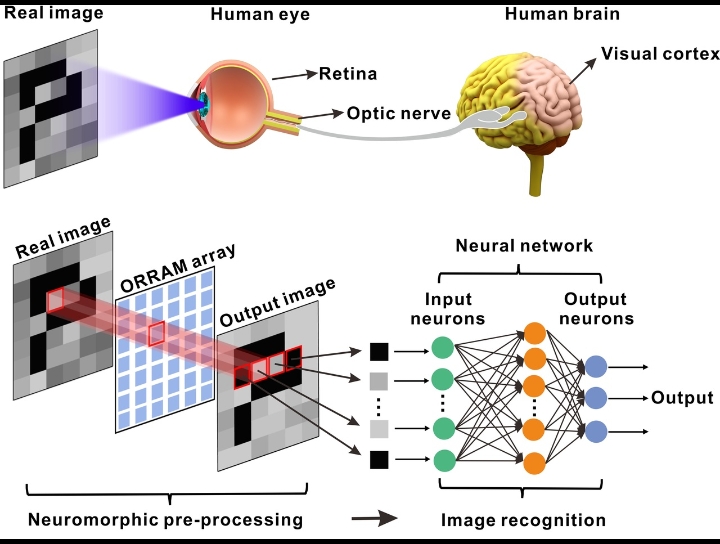
Hoffman pointed out two major problems with LinkedIn in 2006. One was its user base which was comparatively low and the other was the product itself.

He resigned from the post of CEO and appointed Dan Nye as the new CEO of LinkedIn.

He worked as CEO for two years and helped LinkedIn to grow more and more. During those two years, the site reached to 35 million users and sales jumped over 900%.

A mobile version of LinkedIn was introduced on February, 2008. In January 2011, LinkedIn filed for an Initial Public Offering.

Over the years, LinkedIn acquired many small start-ups to increase the quality of the product and make it more useful for their users.

On 13th June, 2016 , nearly 14 years after starting the company, Microsoft acquired LinkedIn for $26.2 billion.

This was the largest acquisition made by the Microsoft till date. This deal made Hoffman and his teammate billionaires!

Today, LinkedIn is the world’s largest professional networking site with over 706 million users all around the world.

TOP FIVE CITIES IN INDIA

There are some most important cities in India,

* Mumbai.

* Delhi.

* Banglore.

* Kolkata.

* Chennai.

MUMBAI:-

Mumbai formerly called Bombay is a densely populated city on India’s west coast. A financial center, it’s India’s largest city. On the Mumbai Harbour waterfront stands the iconic Gateway of India stone arch, built by the British Raj in 1924.India’s share market is also in mumbai.Mumbai is also called as city of dreams.Mumbai is the seventh cheapest city in the world Mumbai is a huge and populous city, the level of crime is high. Travelers can easily become victims so they need to avoid traveling alone on public transport or in taxis, especially at night. There have been reports of British tourists becoming the victims of a scam by taxi drivers.

DELHI:-

New Delhi is the capital of India and an administrative district of the National Capital Territory of Delhi. New Delhi is the seat of all three branches of the government of India, hosting the Rashtrapati Bhavan, Parliament House, and the Supreme Court of India.New delhi is a union territory.It is situated alongside River Yamuna and bordered by Haryana state on three sides and by Uttar Pradesh state to the east.Delhi is relatively safe in terms of petty crime, though pickpocketing can be a problem in crowded areas so keep your valuables safe. Roads are notoriously congested.New Delhi is best known as the location of India’s national government. New Delhi has great historical significance as it was home to powerful people, such as the Pāṇḍavas and the Mughals. The city has many historical monuments and tourist attractions as well as lively marketplaces and great food, such as chaat.The world wonder taj mahal also present in a New delhi.

BANGLORE:-

Bengaluru also called Bangalore is the capital of India’s southern Karnataka state. The center of India’s high-tech industry, the city is also known for its parks and nightlife. By Cubbon Park, Vidhana Soudha is a Neo-Dravidian legislative building.It has a population of more than 8 million and a metropolitan population of around 11 million, making it the third most populous city and fifth most populous urban agglomeration in India.The current estimation of economy of Bangalore and its metropolitan area is US$ 110 billion making it India’s fourth richest metropolitan area.

KOLKATA:-

Kolkata formerly Calcutta is the capital of India’s West Bengal state. Founded as an East India Company trading post, it was India’s capital under the British Raj from 1773–1911. It is known for its grand colonial architecture, art galleries and cultural festivals. It’s also home to Mother House, headquarters of the Missionaries of Charity, founded by Mother Teresa, whose tomb is on site.Kolkata has gained the top spot in the list of the country’s safest cities for the year 2020.Kolkata is also known as the Black City.

CHENNAI:-

Chennai, on the Bay of Bengal in eastern India, is the capital of the state of Tamil Nadu. It is also called Madras.The Chennai Metropolitan Area is one of the largest municipal economies of India. More than one-third of India’s automobile industry being based in the city. Home to the Tamil film industry, Chennai is also known as a major film production centre. It is one of the 100 Indian cities to be developed as a smart city under the Smart Cities Mission.The world second largest beach is in Chennai and The zoological park.There is many place to visit in Chennai.

Test Bank – One Bank for All Exams

What is a question bank?

A question bank can be two things: a list of all your questions created with an exam software (including all exams) and a list of all the questions in one exam.

The last definition is the one we are going to focus on. How does it work? Basically, it works like this: you create an exam and add a number of questions to it. Let’s say, 100 questions. But you don’t want your students to answer all these questions, so you set them up in a way that the exam software picks, say, 30 questions from this question bank with 100 questions, at random, every time someone takes the exam. This means every student will get a different set of 30 questions when taking the same exam. Awesome, right? ✨

Why should I use a question bank in my online exam?

Using a question bank like this helps prevent cheating, since no group of students will get the same questions, at the same order, while taking the same exam. It also lets you add more content to the exam material, since you can cover a lot more ground with a bigger set of questions (even though the students are not getting all of them) than with just a few questions.

Photo by RODNAE Productions on Pexels.com

“Knowledge is of no value unless you put it into practice.” -Anton Chekhov. 

Test Banks gives you a unique opportunity to test your knowledge as you get access to all 500+ Govt Exam Mock Tests available on the Career Launcher platform. These Tests are prepared by the Finest Faculty team under the supervision of Career Launcher Mentors. Every Mock Test is followed by a Detailed analysis which helps you to find your areas of improvement.

I understand that instructors vary in their testing preferences. Some prefer to test learning by the student”s ability to apply the material to a case. Often this is done through assigned papers. Others like objective formats. Many use a combination of objective tests/quizzes and papers. Generally I regard test-making/taking as another teaching/learning opportunity.

This test bank attempts to provide a variety questions in different objective formats as students vary (recall, recognition, compare/contrast, critical thinking essay) in how they can best demonstrate that they have learned the material. Some of the same content has been asked in different objective formats, therefore the instructor must be careful in selecting the questions they use to create a quiz or exam. Instructor must also decide how many points to assign to the questions they select. I recognize that developing a test bank is not an exact science. Sometimes students have a take on a question that was not anticipated by the test-maker. 


A Test bank is a ready-made electronic testing resource that can be customized by lecturers for their teaching.

Written by an OUP author, it is tailored to the contents of an individual textbook. Feedback is often provided on answers given by students, containing page references to the book.

Questions can be any of the following types:

  • Multiple choice
  • Multiple response
  • True/false
  • Fill in the blank
  • Matching
  • Essay/short answer

Test banks are available in a number of software formats to cater for a wide range of users, and are password-protected to ensure that only lecturers gain access.

Online test banks are used worldwide. They are prepackaged online resources meant for lecturers creating tests and sometimes provided through educational institutions. Online test banks are attractive because they are often created by the same publisher that produced the corresponding textbook for that course and thus centered around the main topics of that individual textbook. The test banks offer a diverse selection of questions and can include feedback on a specific answer given directly by students, often accompanied with exact page references to the textbook.

2. How do they manifest in student work?

The initial use for test banks was as a time-saving resource for instructors crafting tests for their courses. They evolved into tools for students preparing for an upcoming exam, offering a curated selection of questions directly related to the topic. These days, online test banks are no longer limited to questions chosen by a textbook publisher; they now include collections of actual exams uploaded to the internet. 

One such example was Fratfolder.com, which started in 2007. At that point, it was somewhat common practice amongst sorority and fraternity houses in university settings across North America to share exams as a study tool. Alex Baldwin thought making the exam content more easily accessible to students beyond the fraternity and sorority scene was a type of “public service, leveling the academic playing field by giving non-Greeks access to the same test banks while providing students insight into how individual professors structure their exams.” 

Fratfolder is no longer accessible online, but many other sites are, begging the question: how does an instructor know when/if a student has used an online test bank? They may manifest in student work in a variety of ways:

  • Answers to an exam from a group of students that are all exactly alike, hinting at the shared use of an online test bank.
  • Answers to an exam that are exactly the same as or highly similar to answers given by students in semesters/years past, alluding to the access of an actual test from previous terms.
  • Surprisingly detailed answers to questions related to material that was only lightly covered in the course, which may show that the student(s) had a chance to look at a specific course’s exams in a series, anticipating what material would be covered next.

3. How do they impact academic integrity?

 With such a focused study tool, students may feel that the time they spend preparing for the exam is not only efficient, but convenient, with everything they need in one place. Online test bank material is often marketed as “study material” and an “additional resource” for students with busy schedules. What is also true is that sometimes instructors themselves will choose to hand out previous exams as a study resource for their students. One professor from Wichita State University stated: “If this is something that I want my students to learn, why won’t I give them as much practice information as I can?” 

Unfortunately, an online collection of previous tests blurs the line between copyright law and academic integrity. Exams or test questions that are uploaded without an instructor’s consentmeans that they did not willingly share their course’s content, nor their original exam material. Most educators are up in arms about the increased use of online test banks because it means their tests—truly, their intellectual property—are available online without their permission. 

Furthermore, if a student or set of students simply memorizes answers to a previous test, are they actually exhibiting knowledge, applying learned concepts to a new setting? Professors may not see that a student or an entire class needs additional support or coverage on a challenging topic because the exams do not accurately reflect their learning. And if exams are simply passed from one student to the next, then the deep value of attending the course, absorbing the information, engaging in class discussions, and asking questions, are all lost.  

4. Ways to mitigate online test banks

Luckily, there are several ways to reduce the negative impact of online test banks on student learning. 

  • Establish a policy. First and foremost, instructors and institutions should have a specific and written rule around the use of online test banks in the syllabus, the Honor Code, and/or the institution’s academic integrity policy. If there is no clarity from the top level, then there is wiggle room at the student level to utilize tools unproductively or dishonestly. 
  • Change test questions frequently. This ensures that even if previous exams are somehow accessed and viewed, that the unique questions on the upcoming exam will demand independent thought from the test-taker.
  • Embrace item analysis. You can evaluate the quality of your exams with item analysis, which means analyzing students’ responses to individual exam questions. This process allows for a deep look at exam efficacy and keeps exams up-to-date. 
  • Apply thoughtful assessment design. Assessment design should provide variety in assessment formats to address different learning styles and measure different facets of learning. It can uphold integrity when done purposefully and can lessen the impact of online test banks on student learning.
  • Limit time for test-taking. A good way to ensure that students are applying their own knowledge to exams and not repurposing others’ answers is to offer the exact amount of time needed to complete a test. Unless discussed beforehand by the student and instructor for official reasons, additional time can sometimes provide the opportunity for a student to utilize a non-approved resource. 

In the end, talking to students openly about online test banks may be the perfect deterrent for the misuse of this resource. And while most situations involving study materials are likely honest endeavors, knowing the evolution of online test banks and how they are being used will help everyone to ground themselves in the importance of academics and assessment with integrity.   

Financial Planning in your 20s

Money, if someone would ask what exactly money is for me then I would tell him without hesitation that it is the thing that can either make me or break me.

Pretty daring, right! When you know that without money, you can’t even survive by yourself then why not better manage it carefully. From office workers to comedians, everyone needs to manage their money.

Investing your money as early as possible is what we need in this era. When your money is sitting idle in your banks, there would be person who’ll be multiplying his assets through investment in other corner of the world.

First advice: Don’t take loans hastily

You get bound with liabilities once you take loans. Buying a house is definitely gonna help you in making assets, but buying it with the money from your loan will increase the liabilities. Taking education loan is still fine as the ROI ( Return On Investment ) in this case would not only include the money but also your overall personality . But always ensure to take the education loan under your own name. Avoid taking personal loans or loans to buy bikes or cars etc. At your 20s, it’s necessary for you to reduce and eliminate the loans as much as possible.

Second advice: Insurance

For the planning of unforeseen or any unexpected situation that might occur in your future, Insurance for that time becomes inevitable. There are two types of insurance which are highly recommended and attainable:

First is Life Insurance and

Second is Health Insurance.

In Life Insurance, choose term plan. As a working professional, to get a good idea of cover, 20 to 25 times of your current salary would surely make a good cover. If you have salary of 6 lakhs per annum then a financial cover of 1.5 crores would be a better choice which comes under a term insurance plan. If you are in twenties then you could get this cover in minimum price which is a huge benefit in itself.

Health Insurance should be taken for everyone dear to you. If you work in a company then it is most likely they would have a corporate health insurance on their own which would cover you and your family.

When should you start investing?

In your twenties, when you don’t have to pay large amount of taxes due to low income, you have the potential to invest as much as possible at that rate.

What is the right investment ratio?

Investing at least 20 percent of your income is the best choice. If you are investing 50,000 per month then investing at least 10,000 rupees is an ideal  choice. In 20s, no one expects you to be rich from the beginning of your working life. When no one expects from you then you have the less pressure on you , so why don’t you use that to be focused on doubling your assets as much as possible through investing. Having luxurious food, living in lavish places and hanging out with your friends is not necessary but having financial freedom as soon as possible is the most important thing in the 20s. If you invest 1 rupee from your twenties and if you invest the same 1 rupee from your 30s then it will make a huge difference.

In 10 years, the same rupee would lose half of its value meaning the value of 1 rupee now would be equal to 50 paise in the next ten years and that is how inflation works.

Inflation is the biggest reason for you to start investing as early as possible.

To get a satisfying return through your investment, where should you start to invest exactly?

Firstly, avoid investing in FDs (Fixed Deposits). FD is the worst investment you can make if you are in your in 20s. As you are free to take risks in your 20s then let your money to grow as much as possible than to protect it under the name of FD.

Invest and hold in stocks and equities..

Invest in the stocks of the companies which are doing great in the market but if you don’t have the knowledge of the stocks that much then invest in mutual funds. You can invest in direct stocks, portfolio stocks and in cryptocurrency (though it’s a bit risky)..

Don’t wait for your 40s to invest. Start investing your money in 20s as soon as you begin to earn!!

GANDHI’S GOAL-SHANTI SENA

SHANTI SENA

* SHANTI SENA is a word derived from Sanskrit.

* SHANTI means peace and SENA Means army.

* SHANTI SENA is also called as peace army.

MAIN GOALS OF SHANTI SENA:

*. Service to peoples as a volunteer at any time.

*. Give to a cause close to your heart.

*. Most important goal is to bring the non-violence.

*. No religion diverse all religions must get equal rights and respect.

All are equal


QUOTES BY PEACE ARMY:-

“THE GREAT GOOD IS WHAT WE DO FOR ONE ANOTHER”.

” TREES NEED FOR SEED PEOPLE NEED FOR SHANTI SENA”.

NON – VIOLENT LIFE :-

* Non violent is a personal practice to not make harm to others.

* Gandhi introduced the concept of ahimsa ( Non-violence).

*. Non violence is powerful tool for the social protest.

*. To create non violent children.It is crucial to maintain the peaceful environment.

*. It is the active out pouring of one’s whole being of another.

*. Non violence love is active not passive.

IMPORTANT OF NON VIOLENT COMMUNICATION IN Society:-

* Non violent will bring peace among the people.

* Non violent communication help us to express our feelings.

* Non violent communication means complete lack of violence in the way we communicate with others.

* To respect our people.

MAIN COMPONENTS OF NON VIOLENT COMMUNICATION:-

* Observation.

* Feelings.

* Needs.

* Requests.

SHANTI SENA:-

* SHANTI SENA makes love and peace to the people.

* SHANTI SENA brings non violence to the people.

* SHANTI SENA is not only to maintain peace also good relationship.

* SHANTI SENA is the non weapon war of peace.

* If one should have shanti sena he should ignore annoyance.

* SHANTI SENA avoid us from the jealous and competition with the people.

* SHANTI SENA is one of the fundamental peace policy of people.

” soldiers army save country

Peace army save courtesy”.

The end…

WHATSAPP

Way back in 1992, an immigrant from Ukraine came to the U.S. in search of some opportunity. This young teenager was accompanied by his mother and they’d barely had any money for their daily expenses. Due to the limited cash on hand, he used to save his old Soviet notebooks for schools and queued up with his mom for food stamps under government subsidy.

At the same time there was another guy who had lost a small fortune in the.com bubble and wasn’t close to finding something big. Now the friends have come together to disrupt the communication sector by merging a mobile messaging app that today has over 1.2 billion monthly active users with over 30 billion messages sent every day the friends. This journey is about Jan Koum and Brian Acton who founded the company together which is none other than the most popular mobile app currently in the world WhatsApp

Jan is no stranger to failure and as a founder who had to go through his fair share of reductions by top tech companies including the one that eventually bought their servers only to become the most valuable messaging platform on the planet.  

Jan was born in the rural areas of Ukraine this was during the Soviet era so being a Jewish and living in a rural area was definitely not easy. He lived in a house that did not even have electricity connection. Being in a country that mostly had a temperature below zero degrees, they didn’t even have hot water.

His parents also denied the usage of course because they were often tapped by the government. To worsen things more being financially unwell , they also had to go through a regularity of hardships as well. Hence, in an attempt to put an end to all the sufferings, Jan along with his mother and grandmothers decided to move to Mountain View, California in 1992. In the U.S. , they were helped by a social support program to get a small two-bedroom apartment.

During this time, Jan started learning computer network by reading manuals that he used to purchase from a used bookstore at the age of 16. He had also begun working as a cleaner at a grocery store while his mother worked as a babysitter. Just once, things began to look normal, another tragedy hit his life when his mother was diagnosed with cancer but he became more stronger and his adversities were only making him more resilient. In the next two years, he had fully trained himself all about computer networking and was all set to take the next step. This is when he gains a sudden interest in programming and got himself enrolled at San Jose State University along with that he also began working with Ernst & Young as a security tester.

After working there for roughly six Months, Jan got the biggest opportunity of his life where he got selected to work at Yahoo as an infrastructure engineer. Now this was when he was still studying at San Jose State University.

Yahoo Back then was just another start-up and was beginning to grow and since Jan loved what he was doing he dropped out of his college and moved ahead with Yahoo. However, the happiness was short-lived and his mother couldn’t out beat cancer for long and passed away in the year 2000. He was suddenly left all alone and that is when his friend from Ernst & young and Yahoo, Brian Acton helped him fight the loneliness by inviting Jan to his house for playing soccer. Together they went on to work with Yahoo for more than nine years. they got  to intake numerous amounts of priceless knowledge and experience. Later in January 2009,

Jan bought an iPhone and realized that the seven-month-old App Store was in the process of launching a whole new range of apps. This gave him a brilliant idea although the idea itself was at very nascent stages. They were very clear about three rules:

  • Their service would definitely not carry any advertiser.
  •  The service would have a satisfying experience and
  • Keeping in mind the privacy of their customers, their product would not store any messages.

Additionally it would also maintain to deliver the product without any gimmicks or signs with endless amount of readability and rich experience. Having said that, Jan quickly got the name WhatsApp incorporated on his birthday that is on 24th of February 2009 in California. Now, as the world progressed, they figured that WhatsApp kept crashing or getting stuck at a particular point, this went on for a long time. It built up a great amount of frustration. Jan at one point even lost hope and felt like giving up and started looking for a new job but Brian helped him to motivate and got his act together and asked him to invest a few more months. And finally a few months down the line, help came from Apple.

They launched their push notifications which used to pin their users whenever they were using the app. By August 2009,  WhatsApp had no significant growth. This time Jan persuaded Brian Acton to join the in.

Later, on October 2009, Brian contacted several old Yahoo buddies and got together a 250,000 dollars in seed funding. This made Brian to earn the title of co-founder and since then there was no stopping to this Tech phenomena.

By the early 2014, WhatsApp has witnessed humongous growth In its user base with millions of people across the globe using its messaging service. WhatsApp had never publicized or promoted itself anywhere and at organically growing numbers. By this time, it only had 55 employees over serving millions of people each day. Later the very next month in February 2014, Facebook declared that they were acquiring WhatsApp. It was the deal which is known to be one of the biggest acquisitions in the tech history.

Facebook acquired WhatsApp at a whooping 19 billion dollars and also offered a board member position to Jan in Facebook. Jan signed the Facebook take over contract at an unused building in Silicon Valley where he and his mother once queued for food stands in the city of Mountain View where WhatsApp was located!

Well the story of WhatsApp is yet another live example of innovation in true terms for everyone out there waiting for motivation. The journey of Jan Koum and Brian Acton is a lesson for every entrepreneur that capital jumping and marketing will not reap benefits, it is ultimately the product and service that automatically drives customers’  attraction without any need for paid publicity.

Well with billions of users addicted to WhatsApp style, it is undoubtedly a tech marvel of this era!!

SOFT TET EXAMS

Application Form, Eligibility, Syllabus Updjated On – December 13 2021 by the School Of Fashion Technology Common Entrance Exam will be conducted by the MKSSS’s School of Fashion Technology to provide admission in various Undergraduate and Postgraduate Diploma Design courses.

SOFT CET is conducted annually at the University Level. The exam is conducted in three stages which includes online test, Studio test/group discussion and personal
interview. Candidates are eligible to apply by online mode who passed class 12th or hold a minimum 2-year Diploma Degree with Class 10th. The candidates need to go through the complete article to get all the important details about SOFT CET 2022 including Application Form, Eligibility Criteria, Admit Card, etc. 

  • The application fee will be INR 3000 (for B.Design) and INR 4000 (For Industry Integrated Program with International Exposure). Check Application Process
  • The eligibility criteria for SOFT CET 2021 will be set up by the School of Fashion Technology. Check SOFT CET Eligibility
  • The exam will comprise of an Online Test (60 Marks), Studio Test/Group Discussion (140 Marks) and Personal Interview (50 Marks). 
  • As per SOFT CET Exam PatternIt will consist of 60 objective type questions (MCQs) and each question carries +1 marks. 
  • SOFT CET result will be declared at official website in May 2021.

SOFT CET 2021 Highlights Interested aspirants must go through the highlights of SOFT CET 2021 tabulated below:Conducting body School of Fashion Technology Exam Level University Exam Mode Online Stages of exam 3 – Online Test, Studio Test/ Group Discussion and Personal Interview Application Mode Online Courses B.Des, Diploma Course in Fashion Design, PG Course in FBDT and FBM

SOFT CET 2021 EligibilityThe eligibility criteria for SOFT CET 2021 will be set up by the School of Fashion Technology. Applicants must ensure that they meet the eligibility requirements before applying for the exam.The criteria for various courses are as stated below:B.DesApplicants should have passed or are appearing for class 12 exam from any stream, like Arts/ Commerce/ Science/ Home Science/ Minimum Competency Vocational Course (MCVC) including National Institute of Open Schooling (NIOS).Candidates who have Maharashtra State Board of Technical Education (MSBTE) or State Government Technical Education full time diploma of minimum 2 years after class 10 are also eligible for SOFT CET 2021.NRI and international aspirants can apply if they have an equivalent certificate from Association of Indian Universities (AIU), New Delhi.Fashion Design DiplomaStudents can apply for this course if they have passed class 12 exam in any stream including National Institute of Open Schooling (NIOS).PG aspirant should be a graduate from any stream (10+2+3 or equivalent) to be eligible to apply for admission.

SOFT CET 2021 Application Form

SOFT CET 2021 Application form is expected to be available online from November 15, 2020. The last date to apply for SOFT CET 2021 will be in April, 2021. Candidates can apply for SOFT CET 2021 by online mode only which will be available on the official website of the institute.

Candidates can apply for more than 1 course by submitting 2 or more application forms. Candidates can choose the time and date suitable to them and apply accordingly. Candidates can apply via online mode by following the simple steps stated below:

Step 1: Registration

  • To register for SOFT CET, applicants will be required to submit a few basic details such as Name, Date of Birth, Email-id, Mobile Phone Number, School last studied in, Test Centre, etc. and press Submit button.
  • Students must then proceed to upload scanned image of their recent, passport sized Photograph as per the specifications given on the page
  • The file should be in .jpeg format. Click on the Preview Tab to preview and verify the entire application form before ‘Final Submit’.

Step 2: Payment of Fees

  • Applicants then must proceed to pay the requisite fees which can be done through online mode.
  • Applicants must save the receipt of the transaction as proof of payment.

Step 3: Confirmation of Application

  • Candidates must print out their complete application form once the transaction is done. This page will be required for further rounds of admission.
  • After registration and successful payment of fees, a Username and Password will be provided to candidates which can be used for logging into the exam. 20 practice questions will also be provided to candidates to solve after registration.

SOFT CET 2021 Admit CardSOFT CET 2021 Admit Card will be issued to candidates who have successfully registered for the exam before the last date of registration i.e. April 2021. The admit card will be available on the official website of SOFT, Pune as the institute does not send any hardcopy of the admit card to any candidate by post.SOFT CET Hall ticket should be retained carefully as it has to be produced at the time of admission and it must be duly signed by the exam invigilator. It contains details about the individual such as the Name and Roll number, Date of SOFT CET 2021 and other details. It is an important document of the exam and no student will be allowed to enter into the exam hall without it. Follow these steps to download SOFT CET 2021 Admit CardLog on to the official website of SOFT.Go to the student’s login page. Enter username, password and security code given in the space provided. Click on ‘Login’.Admit card will appear. Save a soft copy and print it out.Participants must affix a recent, passport size photo on the admit card and carry a government issued photo ID (college ID card, PAN card, driving license, etc.) to the exam center for verification.

SOFT CET 2021 Exam PatternSOFT CET 2021 exam consists of 3 tiers – Online Test, Group Discussion/ Studio Test and Personal Interview. Candidates must note that all 3 stages of the entrance test are compulsory. The online test contains objective questions (MCQs) divided into 4 sections – Quantitative Aptitude, Verbal/ Non-verbal Reasoning, Analytical Ability and Creative Ability. Each section consists of 15 questions.Every question will be followed by 4 alternative options as answers, out of which participant will choose one that seems the most appropriate. The marking scheme is given below – Every correct answer will be awarded with +1 marks.No marks will be deducted if no response is indicated in the optical answer sheet against a question.Negative marking will not be applicable in the designing test.Mode of SOFT CET 2021 Online and OfflineNumber of questions 60Stages of exam 3Maximum marks 250 (Online Test- 60 marks, Studio Test/ Group Discussion- 140 marks and Personal Interview- 50 marks)Medium of language EnglishCheck SOFT CET 2021 Exam PatternSOFT CET 2021 SyllabusThe exam pattern will be similar to other state and national level exams for the particular courses. The exam will have questions which tests candidate’s creativity and design-related skills. The level of exam will be based on class 12th (10+2) or equivalent qualifying exam.

SOFT CET 2021 ResultSOFT CET 2021 Results will be declared on May 23, 2021(Tentative) at the official website of the institute. The result will be announced in the form of scorecard. Candidates will have to download their results by accessing their registered accounts.This can be done by following these few easy steps:Log on to the official website of SOFT, Pune.Click on the link related to ‘SOFT CET 2021 Result’.Aspirants will have to enter their username and password as given during registration. Click on ‘Submit’.The result will appear in the form of rank card. Download it and print it out for the further process of admission.SOFT, Pune will publish a merit list of candidates who qualify the exam on the website after the declaration of results. Applicants will have to send a scanned copy of their class 12 result or a screen-shot of the same and email it to admission@soft.ac.in as also cc it to admin@soft.ac.in.The candidature of the students will not be valid till the time the 12th Mark list is submitted and their name shall not appear in the merit list. The names of applicants will be enlisted in order of merit, according to ranks secured by them in SOFT CET 2021.NOTE: After declaration of the result candidate will be required to freeze their seat for admission within 4 days by sending e-mail to admission@soft.ac.in and cc it to admin@soft.ac.in. Failing to do this, may lead to losing of seat and will be allotted to waitlisted candidates.

Social media marketing

What is social media marketing?

Social media marketing means selling or promoting the products of the company by using social media.For example social medias like Facebook Twitter Instagram Pinterest etc.

Uses of social media marketing:-

* It is used to sell or promote the products in the world level.

* With a strong social media strategy and the ability to create engaging content, marketers can engage their audience

* social media marketing allow people to get what they want.


EFFECTIVE TYPE OF SOCIAL MEDIA MARKETING:-

* Facebook advertising

* Twitter advertising

* Instagram advertising

* you tube advertising

* Pinterest advertising

* LinkedIn advertising.


BENEFITS OF SOCIAL MEDIA MARKETING:-

* Grow your sales and your fanbase.

* Use customer generated content for ads (which perform better, too!).

* Better target new and regular customers so the waste can be reduced.

DISADVANTAGES OF SOCIAL MEDIA MARKETING:-

* The main disadvantage of social media marketing is highly rely on ads.

* No direct interaction with the people to solve problems.

* One of main issue is security and privacy policy.Many of us can be faced.


CONCLUSION:-

There is no better marketing strategy for selling and promoting products than social media advertising. No other strategies can deliver consistent, scalable, quality leads and customers from day one that can supplement any promotional marketing.

Then end…

FACEBOOK

“They frame it as if the whole reason for making Facebook and building something was because I wanted to get girls or wanted to get into some kind of social institution they just can’t wrap their head around the idea that someone might build something because they like building things” – Mark Zuckerberg.

Mark Zuckerberg, the programming prodigy who turned to town for making cool things into social network dynasty the website he started in his dorm room when he was 19 years old is one of the most influential in the world with profiles for over a quarter of the world’s population. Zuckerberg became a self-made billionaire before his 24th birthday!! How is that possible that’s what we’re gonna find out…

Mark Zuckerberg was born on May 14th, 1984 in upper-middle class parents in the outskirts of New York. His father told him to go basic in the early teens and Mark really took to it. He created a program that allowed the computer at his dad’s dental office to communicate with the family computer in Colditz arcnet.

The program was an early form of messenger while in school he excelled a number of subjects from computer science to languages and literature, he transferred to Exeter prep school where he met his good friend Adam D’Angelo.

They created music software called synapse that learned what music people liked and made suggestions based on it as writer Jose Antonio Vargas said

“some kids played computer games…. Mark

created them”.  It was clear he had an entrepreneur’s mindset from an early age. Synapse was treated as a high school project but drew the attention of big software companies including Microsoft who apparently offered Zuckerberg a rumored 1 million dollars for it as well as a job before college.

Despite the job offer Zuckerberg chose to attend Harvard doing computer science and philosophy his first year of college plus without any significant creations, probably love partying. It was in his sophomore year that he began to show signs of things to come.

He created a site called Coursematch at the beginning of his second year which had led his classmates to log in and see what courses their friends. It quickly became popular which prompted Zuckerberg to try a new idea he’d recently had that he’d go on to call face masters. Facemash was created October 2003 with the intention of finding the most attractive person on campus.

Slowly a ranking was formed that created the entire thing during a tipsy eight-hour coding session that ended at 4 a.m. Despite the drunken programming, Facemash was an instant hit, been used by 450 students in one day before the Harvard admin team shut it down to new plates of sexism things.

Zuckerberg was put under probation over the incident  “I was thread with exclusion” although apparently didn’t faze him too much at the time as it’s written in David Carr Patras book the Facebook Effect “ it’s not the mark necessarily set set to break the rules… he just doesn’t pay much attention to them”.

Over the next few months, undeterred by his warning from Harvard’s, Mark worked more on computer programs simply because he enjoyed it, he created a web program that brought art images from his art in the time of Augustus class and encouraged his classmates to add comments beside them to create study aids. He then used these notes to cram for an exam far more quickly. He also created a program called six degrees of Harry Lewis, a program that created links between people and his favourite computer science professor. He also began  to work on other people’s produce , setting up a website for the association of Harvard black women and significantly helping three Harvard seniors finish coding on their web site idea the Harvard connection.

Zuckerberg was sold for the project in November, 2003 after the founders heard about Facemash through the Harvard magazine. They asked him to finish programming their social network site Harvard connection since he didn’t have much coding experience themselves Zuckerberg agreed to do it soon lost interest in favour of his own site, the Facebook. He stalled the

Harvard connection team by coding his new site and may have borrowed some ideas which led to a lawsuit and even a movie down the line although the initial idea of sourcing process may not have been entirely on the up the execution and launch of

Facebook was close to flawless. Zuckerberg bought the domain the facebook.com on January 11th  for $30 and officially launched the site. On February 4th , by emailing a few of his friends to check out just four days after it launched, 450 Harvard undergrads signed up and 300 joined the following day. As previously mentioned, he had a knack for building social websites that people wanted to use.  The idea of

Facebook was to move the physical books the university issued with a picture of all the students called face books online and students to update them with more recent pictures. It also allowed students to see what other students were talking about, what their interests were and also their relationship status. Another two weeks later , Facebook had over 6,000 users which formed over three-quarters of the undergraduates as well as some alumni. Not only did thousands of students sign up but they also readily spent hours on it each day which  made it unique to every other website. Zach put a team of his roommates and friends together to handle various aspects of the project as he didn’t yet consider a business.

Eduardo Saverin handled business ,Dustin Moskovitz was a programmer, Andrew McCollum was a graphic artist and Chris shoes as a spokesman all joined the team. With the team around him that complemented his strengths and weaknesses, Zuckerberg tried to span

Facebook into other colleges starting with the Yale, Stanford and Columbia. Facebook sweat the competition and the number of people signed up kept growing.

It took them a few weeks for 80% of each of the campuses to sign up for Facebook. The team decided to rent an apartment in Palo Alto for the summer as it was where all the big start-ups seemed to come from.

After many 16-hour days, in all-nighters Facebook reached a hundred thousand users in June 2004. Just four months after its launch, a venture capital firm offered ten million dollars to buy Facebook.

He apparently didn’t even consider the offer and often said to continue drawing it for themselves. For Zach, it was never really about the money but always about really a really cool product. Over the summer, the team continued to expand Facebook’s functionality and user base. They also met Sean Parker, a Silicon Valley veteran, who became their president and introduced him to investors including

Peter Thiel who put 500k into the venture for around ten percent of the Business. All in all, a pretty solid Investment. It took Mark and his friends all of two minutes to decide to postpone their Harvard return as the social network was all about timing and they didn’t want to screw this up.

“Well that’s unclear… I am 21 but I finished my sophomore year and came out to Palo Alto fully expecting that I’d actually go back to Harvard in the fall but didn’t quite make it after Peter put his money in but started building a company instead and I got a little side-tracked but fortunately Harvard lets you take indefinite periods of time off so you know if the sever falls through… I’m back at Harvard”, he said.

They’re dropouts. The team focused on expansion, they hit many road bumps and continued to work extremely hard but it paid off for them as they reached a million users in early 2005. They continued to add more features such as the ability to share photos and post on people’s walls and their valuation kept climbing.

If we fast forward seven years, Facebookwent public in the largest tech IPO to this date and become the company over a hundred billion dollars and made all the founders billionaires while still in their early to mid-20s. While there’s no doubt Mark’s a genius. There are so many things that we can learn about him and his story so far.

Facebook was an example of a great idea at the right time with fantastic execution. They made many mistakes along the way but it all paid off in the end. One thing we have to remember is that the multi-billion dollar company that we all use today was started by a handful of forward-thinking teams in a college dorm room. With that in mind, encourage yourself to keep hustling towards your own goals!!

HISTORY OF INDIAN FLAG

Gandhi first proposed a flag to the Indian National Congress in 1921. The Indian flag was designed by Pingali Venkayya.In the flag the deep saffron colour is for courage and sacrifice white colour is for honesty, peace, and purity dark green colour is for faith and chivalry and the chakra in the middle is for vigilance, perseverance, and justice.This flag was accepted in 1947.Bhikaji Rustom Cama, the fiery lady who unfurled the first version of the Indian national flag a tricolour of green, saffron, and red stripes at the International Socialist Congress held at Stuttgart


The Indian flag was designed as
A horizontal triband of India saffron, white, and India green; charged with a navy blue wheel with 24 spokes in the centre.The flag was proposed by Nehru at the Constituent Assembly on 22 July 1947 as a horizontal tricolour of deep saffron, white and dark green in equal proportions, with the Ashoka wheel in blue in the centre of the white band. From 26 January 2002, allowing private citizens to hoist the flag on any day of the year, subject to their safeguarding the dignity, honour and respect of the flag.

The end…

GLOBAL WARMING


WHAT IS GLOBAL WARMING:-

Global warming is defined as the global annual temperature has increased in total by a little more than 1 degree Celsius, or about 2 degrees Fahrenheit. Global warming is mainly because of the industrial revolution, burning plastics.


CAUSES OF GLOBAL WARMING:-

* Greenhouse Gases Are the Main Reasons for Global Warming.

* Another main reason for global warming is the industries.

* Deforestation is one of the reason for global warming.

* The smoke from vehicles.


EFFECTS OF GLOBAL WARMING:-

* Global warming cause increase in temperature that raises sea level can cause flood.

* Global warming raises temperature in the atmosphere.

* Melting of glaciers are one of the most threat for the earth

* If global warming cause increase in temperature then there is threat for availablity of water.

* It also cause some diseases like allergies,chest pain etc.


CONTROLLING MEASURES OF GLOBAL WARMING:-

* By decreasing deforestation and encouraging affrostration

* By making awareness programmes.

* By using natural products instead of plastics.

* By reducing burning of fossil fuels.

* By recycling the products.

The end…

BLACK HOLE!!…..

BLACK HOLE!!
Is black hole a pitch dark pit??
Want to know what a black hole is? But just give up everytime watching a typical definition soaked with physics on wikipedia about how even light can’t pass through it….Is black hole a big hole? But if it is a hole, how to get to know about its color? First of all I want to make sure it clear that a black hole is anything but empty space. Infact it is a place where huge matter is packed into a very small area…..what does that mean now??😦
Got confused🥴 okay then come with me to the wonderland of Alice where we see a magic✨ ‘gravity machine’ – a device with which we could control Earth’s gravity, by turning a dial. Initially it is at 1g, gravity that we are used to experience since childhood. Okay just turn the dial to 0g and you will see all your friends floating in the air even with the slightest motion. The tea☕ that you spilled on your beloved to make an old romantic movie scene, formed spherical globe in the air. Yes, balls of tea everywhere💦. But just to make a scene memorable I changed the dial to 1g and taadaa here you get the rain of tea🌧️ as earth got its gravity back….Now I again changed the dial to 3g to 4g…. everything becomes immoblised. Even if you want to have a normal walk under the sky with your crush, it requires enormous efforts. As kindness, I am removing you and your friend from the domain of gravity machine before I dial a higher gravity number. Okay, now I dialed 1000s, trees become squashed but beam of light is straight. Now at 1 lakh gs, rocks are crushed by their own weight but beam of light is still straight. When a gravity approaches a billion gs, something strange happens, the beam of light which was going straight to the sky starts bending. Now imagine a dial greater than billion gs, nothing, not even a beam of light can get out, it would bend back to the starting place. Such a place is called black hole. That is why it is called black: no light can escape from it. A place whose density and gravity is very high. But the question is from where it’s formed??……..(To be continued)

Cadbury

Cadbury, one of the biggest chocolate brands in the world with operations in more than 60 countries and billions of dollars in revenues. It is not only a brand of mouth-watering chocolates liked by Consumers of all ages, but also one with a 200 year old history filled with wonderful achievements and depressing failures.

Let’s dive into the origins and rise of Cadbury and see how they got to where they are today coming from a wealthy family of Quaker Christians in Britain, John Cadbury, just like any other member of his community was not allowed to attend Universities and his non-violent beliefs and values Kept him out from Joining the military. So, starting a business was the only option for him to make a living. That is why, in 1824 he Opened A Grocery Store In Bull Street, located in the city of Birmingham, UK.

As Alcohol was considered bad For Society by quaker community Tea, Coffee, Cocoa and drinking Chocolate were seen as healthy alternatives by them including John himself. That’s why among other things he sold high quality Cocoa and drinking Chocolate in his store, which he used to prepare using a pestle And mortar.

Due to high demand in 1831 John moved to a four-story warehouse nearby and started producing Cocoa and drinking chocolate on a commercial-scale.

Thus, the Cadbury manufacturing business was born.

Because of the high cost of production these were sold mainly to the wealthy people. By, 1842 he was selling around 11 varieties of Cocoa and 16 varieties of chocolate.

In 1847, his brother Benjamin Cadbury became a partner in the business and the company came to be known As Cadbury Brothers. The same year they rented larger factory in Birmingham which had a private canal that connected to all the major ports in Britain.

In 1854, the Cadbury Brothers of Birmingham received an exclusive royal warrant as manufacturers of chocolate and Cocoa to Queen Victoria this was a great luck for them as businesses which used to have these warrants had a better and sophisticated image among general buyers. However, just six years later in 1860, they had dissolve their partnership due to John’s wife’s Death and his declining mental and physical health. In 1861, John handed over the complete control of the business to his sons Richard and George Cadbury who were 25 and 21 at that time. During this time the market was not doing well and most chocolate manufacturers in Britain were going out of business of which Cadbury was not an exception.

Richard and George invested 4000 pounds each from their inherited money and started to work long hours to keep the business alive. But their turning point came in 1966 when they decided to buy a new type of Cocoa press developed in the Netherlands which removed much of the unpalatable Cocoa butter from the Cocoa beans. Up until this point almost all Cocoa makers including Cadbury had a high level Of Cocoa butter in it, to which they had to add starches to mask its taste and texture. But with this press, that would not be necessary anymore. However, buying this machine was a massive risk for Cadbury as it was expensive, they had very little money to invest, and no one knew if there would be enough demand for the products that came out of it.
But they decided to go for it and were the first British manufacturers to do so. Thus they introduced the Cadbury Cocoa Essence as the UK’s first unadulterated, pure Cocoa. With its high quality and extensive marketing it became extremely popular leading to dramatic sales numbers and changed the future of British Cocoa industry.

In 1893, George Cadbury bought 120 acres of land surrounding the factory at his own expense to create a model village so that many more of their workforce could be given a healthy, pollution free And greener environment where they could thrive. By 1900, this was expanded to 330 acres with 313 cottages and houses along with other facilities like playgrounds, swimming pools and medical centres. Many more similar properties were built in.

The years leading up to the First World War, with smaller developments taking place later on in the 20th century. In 1897, Cadbury introduced their First Milk Chocolate bar. Although they were making milk chocolate drinks from 1849. This was a new recipe that they copied from contemporary Swiss Chocolate manufacturers.

But in terms of texture Swiss Chocolates were far superior as they added condensed milk instead of milk powder. Because of this, Swiss Companies dominated the British Market which Cadbury started to challenge. In 1904, Cadbury launched their Dairy milk bar. Developed by George Cadbury Junior, it was a production of exceptional quality with a higher proportion of milk than any previous chocolate in the market. On the suggestion of a customer, it was named Dairy Milk. With a distinctive and attractive purple wrapper, gradually it became, Cadbury’s best-selling product by 1914.

Due to the shortage of supply, the British Government banned manufacturers from using fresh milk. So, dried skimmed milk was used instead. Due to these issues with essential supplies, the Dairy Milk and many other Cadbury products came Off the shelves during The War. But once the war ended, the company worked hard to restore their business did a lot of promotions, kept competitors away with a direct distribution chain and continued launching new products like Milk Tray Bars, Fudge, Toffee Buttons and Picnic. In a few years they were back to the game like before.

In 1969 ,they merged with Swiss Drinks company Schweppes and demerged again in 2008.

Then in 2010, Kraft Foods bought the brand for an astounding $19 billion but they themselves split into two companies one of which was named Mondelez International which owns the Cadbury brand till date.

In 2019, Mondelez ranked 116 in the Fortune 500 list of largest corporations by total revenue.

As of today, Cadbury is the second largest confectionery brand in the world with products ranging from chocolates, ice cream and beverages to biscuits, desserts, spread and much more.

With operations in more than 60 countries including the UK, USA, Canada, South Africa, New Zealand, Australia and India, it continues to be one of the most favoured name in the segment of chocolates, confectionaries and most probably would continue to be so for a long time!!

10 Skincare Tips To Be Followed During Winters

The harsh winter weather will cause flakiness and dryness of the skin, creating it look dull. Therefore, it becomes extraordinarily necessary to produce the skin with the correct nourishment, and keep it hydrous and protected. When weather condition arrives, humidness levels drop drastically, says a dermatologist.

During winters we have a tendency to all notice the skin going dry, rough and flaky. it’s important to require correct skin care throughout winters therefore on build your skin healthy and glowing.

Invest in a Skin. It is going to represent you for a very long time” –Linden Tyler.


Young woman applying cosmetic white cream on face

1. Opt for the proper moisturizer for your skin type:

Moisturizers act as a barrier, holding wetness in and hydrating the skin’s outer layers. If you’ve got oily skin, water-based, non-comedogenic moisturizers are the simplest choice. Dry skin desires a heavier, oil-based moisturizer to rehydrate. Moisturize your skin frequently and don’t forget to wear a lip balm.

2.  Avoid hot showers:

Hot water evaporates fast, stripping your skin of its essential moisture and damaging its natural protective barrier. Moisturize immediately after showering with a body lotion.

3.  Insert a humidifier:

Harsh winter weather creates a challenge for the skin as humidity is low each inside and out. Employ a humidifier helps replenish the top layer of the epidermis by preventing the air from becoming too dry.

Humidifiers are generally safe for all skin types to use. However, it is important that you take the time to clean and maintain your appliance.

4.Avoid use of harsh face cleansers:

During winters opt for creamy or balm based cleansers and products. Look for mild skin cleansers labeled as “fragrance-free.” And should also contain mild ingredients. Using a transparent body bar made with glycerin will clean and moisturize the skin without causing irritation. Always wash gently without scrubbing to avoid skin irritation.

5.  always wear a Sunblock:

Never ever skip a sunscreen in your skincare routine. The most necessary factor you’ll do for your skin is to wear sun screen each single day, even once it’s winter. Sun exposure can result in pigmentation issues, wrinkles and skin cancer. Sunscreen always protects your skin from harmful UV rays.

6.     Use facial oil during nighttime Regimen:

Look for ingredients such as rosehip oil, soybean oil, and jojoba oil and vitamin E, which all possess highly hydrating and moisturizing properties.

7.  Avoid using harsh physical and chemical exfoliators:

These include ingredients such as mineral oils and aggressive acid peels, using scrubs or acid peels on dry may create patches and peel off the skin causing skin damage. It damages the cells and reduce skin –barrier function resulting in trans epidermal water loss.

8.  Incorporate hyaluronic acid serum:

Hyaluronic acid is an incredible acid needed to add in your skincare routine. Hyaluronic acid serum acts as a humectant a substance helps the skin hold on to water. It helps to hydrate the skin and lockup moisture content into the skin.

9.  Stay hydrated:

Always try to stay hydrated consuming adequate amount of water during winter season. If your skin is dehydrated, it becomes flaky, dull and dry. Hydrated skin is smooth and radiant so keep up the water consumption so that winters don’t let go your skin dehydrated.

10.     Take additional care of your eye area and lips:

The skin here is thinner and has little-to-no oil glands to shield itself. Use serums, under eye creams and oils around the eyes that soothe and protect the skin. On the lips, use balms to supply a barrier against the weather and to lock in the moisture.

Tags: #skincareroutine #skincareduringwinter

Benefits of Thinking Positively, and How to Do It

Overview
Are you a glass half-empty or half-full sort of person? Studies have demonstrated that both can impact your physical and mental health and that being a positive thinker is the better of the two.

A recent study followed 70,000 women from 2004 to 2012 and found that those who were optimistic had a significantly lower risk of dying from several major causes of death, including:

* heart disease
* stroke
* cancer, including breast, ovarian, lung, and colorectal cancers
* infection
* respiratory diseases

Other proven benefits of thinking positively include:

* better quality of life
* higher energy levels
* better psychological and physical health
* faster recovery from injury or illness
fewer colds
* lower rates of depression
* better stress management and coping skills
* longer life span


Positive thinking isn’t magic and it won’t make all of your problems disappear. What it will do is make problems seem more manageable and help you approach hardships in a more positive and productive way.

How to think positive thoughts:
Positive thinking can be achieved through a few different techniques that have been proven effective, such as positive self-talk and positive imagery.

Here are some tips that to get you started that can help you train your brain how to think positively.

Focus on the good things:
Challenging situations and obstacles are a part of life. When you’re faced with one, focus on the good things no matter how small or seemingly insignificant they seem. If you look for it, you can always find the proverbial silver lining in every cloud — even if it’s not immediately obvious. For example, if someone cancels plans, focus on how it frees up time for you to catch up on a TV show or other activity you enjoy.

Practice gratitude:
Practicing gratitude has been shown to reduce stress, improve self-esteem, and foster resilience even in very difficult times. Think of people, moments, or things that bring you some kind of comfort or happiness and try to express your gratitude at least once a day. This can be thanking a co-worker for helping with a project, a loved one for washing the dishes, or your dog for the unconditional love they give you.

Keep a gratitude journal:
Studies Trusted Source have found that writing down the things you’re grateful for can improve your optimism and sense of well-being. You can do this by writing in a gratitude journal every day, or jotting down a list of things you’re grateful for on days you’re having a hard time.

Open yourself up to humor:
Studies have found that laughter lowers stress, anxiety, and depression. It also improves coping skills, mood, and self-esteem.

Be open to humor in all situations, especially the difficult ones, and give yourself permission to laugh. It instantly lightens the mood and makes things seem a little less difficult. Even if you’re not feeling it; pretending or forcing yourself to laugh can improve your mood and lower stress.

Spend time with positive people:
Negativity and positivity have been shown to be contagious. Consider the people with whom you’re spending time. Have you noticed how someone in a bad mood can bring down almost everyone in a room? A positive person has the opposite effect on others.

Being around positive people has been shown to improve self-esteem and increase your chances of reaching goals. Surround yourself with people who will lift you up and help you see the bright side.

Practice positive self-talk:
We tend to be the hardest on ourselves and be our own worst critic. Over time, this can cause you to form a negative opinion of yourself that can be hard to shake. To stop this, you’ll need to be mindful of the voice in your head and respond with positive messages, also known as positive self-talk.

Research shows that even a small shift in the way you talk to yourself can influence your ability to regulate your feelings, thoughts, and behavior under stress.

Here’s an example of positive self-talk: Instead of thinking “I really messed that up,” try “I’ll try it again a different way.”

Identify your areas of negativity:
Take a good look at the different areas of your life and identify the ones in which you tend to be the most negative. Not sure? Ask a trusted friend or colleague. Chances are, they’ll be able to offer some insight. A co-worker might notice that you tend to be negative at work. Your spouse may notice that you get especially negative while driving. Tackle one area at a time.

Start every day on a positive note:
Create a ritual in which you start off each day with something uplifting and positive. Here are a few ideas:

* Tell yourself that it’s going to be a great day or any other positive affirmation.
* Listen to a happy and positive song or playlist.
* Share some positivity by giving a compliment or doing something nice for someone.

How to think positive when everything is going wrong:
Trying to be positive when you’re grieving or experiencing other serious distress can seem impossible. During these times, it’s important to take the pressure off of yourself to find the silver lining. Instead, channel that energy into getting support from others.

Positive thinking isn’t about burying every negative thought or emotion you have or avoiding difficult feelings. The lowest points in our lives are often the ones that motivate us to move on and make positive changes.

When going through such a time, try to see yourself as if you were a good friend in need of comfort and sound advice. What would you say to her? You’d likely acknowledge her feelings and remind her she has every right to feel sad or angry in her situation, and then offer support with a gentle reminder that things will get better.

Side effects of negative thinking:
Negative thinking and the many feelings that can accompany it, such as pessimism, stress, and anger, can cause a number of physical symptoms and increase your risk of diseases and a shortened lifespan.

Stress and other negative emotions trigger several processes in our bodies, including stress hormone release, metabolism, and immune function. Long periods of stress increase inflammation in your body, which has also been implicated in a number or serious diseases.

Some of the symptoms of stress include:

* headache
* body aches
* nausea
* fatigue
* difficulty sleeping
Cynicism, stress, anger, and hostility have been linked to a higher risk of:

* heart disease
* heart attack
* stroke
* dementia

When to seek medical help:
If you’re feeling consumed by negative thoughts and are having trouble controlling your emotions, see a doctor. You may benefit from medical help, such as positive psychology or therapy. Persistent negative thoughts can be caused by an underlying psychiatric condition that requires treatment.

Takeaway:
You won’t be able to undo years of pessimism and negative thoughts overnight, but with some practice, you can learn how to approach things with a more positive outlook.

COCA-COLA

John S. Pemberton  first produced a drink in 1866 and named it COCA-COLA.

It is a really astonishing fact that the beverage with 1.9 million daily servings was initially made as an alternative to morphine, a pain reliever.

Pemberton was working as a colonel in the confederate during the American Civil War as well as a pharmacist. He sustained a saber injury from the war in April 1865 and was prescribed morphine to relieve his pain.

He realised that gradually we was becoming addictive to morphine and decided to prepare an alternative that would not contain morphine in it. He then experimented with a lot of different pain relievers.

After a lot of trials, he finally came up with an alcoholic wine that he called Pemberton’s French Wine Coca. The drink was mixed up with cocaine  extracted from coca leaves and caffeine from kola nut. Pemberton registered this French Wine in 1885. In 1886, Atlanta and Fulton County prohibited that wine,

This led to development of a non-alcoholic version of the wine.

Pemberton relied upon the Atlanta drugstore owner Wills E. Venable to help him perfect the product.

While trying to make the beverage, he accidently mixed the base syrup with  carbonated water which eventually gave birth to the drink Coca- Cola.

Frank Mason Robinson, Pemberton’s bookkeeper and partner came up with the name Coca-Cola which is the hybrid of the coca in Cocaine and cola ad in kola nut spelled as ‘cola nut’ at that time. Robinson also hand wrote, using the standard writing script for business correspondence in the U.S. at that time; Spencerian script on the bottles and ads, which are still in use until today.

The Coca-Cola was first sold at Jacob’s Pharmacy in Atlanta, Georgia on the 8th of May, 1886 at 5 cents per glass at soda fountains, which were popular at that time in U.S. due to the belief that the carbonated water was good for the health.

Pemberton claimed Coca-Cola as a brain tonic which could cure many diseases such as morphine addictions, headaches, nerve disorders and impotence. It sold 25 US gallons the first year. By 1888, three versions  of Coca- Cola were produced and sold by three separate businesses. Years later Asa Griggs Candler, an Atlanta Pharmacist and businessman stated in the testimony that he had acquired stakes for $2,300 in Pemberton’s company as early as 1887. Candler sold products called ‘yum yum’ and ‘koke’ which he prepared with the same formula while Charley Pemberton, the son of John Pemberton, kept selling cruder syrup under the name of Coca-Cola. After the death of Pemberton, Candler bought the name ‘ Coca-Cola’ for $300.

By 1888, Candler had the full control over the ‘Coca-Cola’ company. In 1889, Benjamin Thomas and Joseph Whitehead, two entrepreneurs from Chattanooga, Tennessee suggested bottling and offered to be in charge of the procedure. They were so compelling that Candler agreed to a contract of only one dollar granting

them exclusive rights to bottle and sell the Coca-Cola.

Candler never collected his one dollar.

The first bottling of Coca-Cola was done in Biedenharn Candy Company in Vicksburg, Mississippi

in 1894 with John Biedenharn as proprietor.

In 1899, the first Coca-Cola bottling company was set up in Chattanooga, Tennessee.

The contract came with many issues for the Coca-Cola Company.

It stated that each bottle was to be sold at 5 cents without stating a specific period.

As a result, a bottle of Coca-Cola was sold at 5 cents from 1886 to 1959.

The first outdoor wall advertisement of Coca-Cola was painted in Cartersville, Georgia in 1894.

Coca-Cola from 20th Century In 1910, the papers of the old Coca-Cola Company

were burned during a move to New Corporation offices and surprisingly in 1914, Margaret

Dozier, came out to profess that her signature on the Coca-Cola company bill of sale was

forged.

Analysis of certain similar transfer documents showed that John Pemberton’s signature was

forged and some accounts show that Charley Pemberton did it.

However, on September 12, 1919, a group of investors purchased the company for $25 million

and proceeded to release five hundred thousand shares to the public with each share costing

about $40.

In the same year, the company merged with Johnston Coca-Cola Bottling Group Inc. and

in 1986, the Coca-Cola company merged with two of its bottling companies, owned by HTL

corporation and BCI Holding company, to become Coca-Cola Enterprises Inc.

The longest running soda fountain that sold Coca-Cola was Fleeman’s pharmacy, established

in 1914 and existed for 81 years until 1995.

On July 12, 1944, the one-billionth gallon of Coca-Cola syrup was produced.

In 1955 the Coca-Cola cans were first introduced.

On April 23, 1985, Coca-Cola tried to change the formula of the syrup by preparing “New

Coke”.

Subsequent taste tests showed that people loved the taste of New coke better than Coke

or Pepsi and the company went on to produce more of it.

Soon after, the public wanted the old Coca-Cola soda back.

The Coca-Cola Company granted the wish of the public and produced the old drink with

a slight variation in the main sweetener; using high fructose corn syrup instead of

cane sugar.

This new drink was produced under the name Coca-Cola Classic on July 10, 1985.

Coca Cola in Recent Years On July 5, 2005, it was announced that Coca-Cola

would resume production in Iraq for the first time since the Arab league refused its use

in 1968.

By April 2007, Canada removed the “Classic” from the name, as New Coke was no longer in

production, so there was no need to differentiate between the two kinds of coke.

In 2009, Coca-Cola introduced the 7.5-ounce mini can.

Also in 2009, the “Classic” was removed from the 470 ml bottles of Coca-Cola sold in the

South Eastern United States and in 2011; “Classic” was removed from all Coca-Cola products.

In September 2011, the Coca Cola Company announced price reductions asking retailers to sell

eight packs at $2.99.

That same day, the company announced that the 12.5 ounces would sell at 89 cents and

the 16 ounces would sell at 99 cents.

In 2012, Coca-Cola resumed operations in Myanmar after 60 years of absence due to investment

sanction imposed on the US.

In 2013, the company announced that Coca-Cola Life would be introduced to Argentina and

other parts of the world.

This drink contained stevia and sugar but the production of Coca-Cola Life was discontinued

in Britain in June 2017.

Coca-Cola together with its investors is working to invest $5billion in their operations in

India by 2020.

Presently, The Coca-Cola Company owns several outlets around the world with the headquarters

situated as a 29 story; 403-foot tall building in Atlanta, Georgia called the One Coca-Cola

Plaza.

As of 2017, the company employed 61,800 members of staff with Muhtar Kent as the Chairman

of the Board and James Quincey as the President and Chief Executive Officer.

The net income in 2017 estimated around $1.4 billion with total assets worth $87.8 billion

and estimated net worth around $180 billion.

EDUCATION

What is Education? The first thing that strikes in our minds when we think about education is gaining knowledge. Education is a tool which provides people with knowledge, skill, technique, information, enables them to know their rights and duties toward their family, society as well as the nation. It expands vision and outlook to see the world. It develops the capabilities to fight against injustice, violence, corruption and many other bad elements in the society.

Education gives us knodwledge of the world around us. It develops in us a perspective of looking at life. It is the most important element in the evolution of the nation. Without education, one will not explore new ideas. It means one will not able to develop the world because without ideas there is no creativity and without creativity, there is no development of the nation.

Importance of Education in Our Society
Education is an important aspect that plays a huge role in the modern, industrialized world. People need a good education to be able to survive in this competitive world. Modern society is based on people who have high living standards and knowledge which allows them to implement better solutions to their problems.

Features of Education

Education empowers everyone. Some of the areas where education helps are:
1. Removing Poverty
Education helps in removing poverty as if a person is educated, he can get a good job and fulfill all the basic needs & requirement of his family.

2. Safety and Security against Crime
If a person is well-educated, he will not be fooled by anyone easily. An educated person is less prone to involve in domestic violence & other social evils. They enjoy healthy relationships in life. This means people are less susceptible to being cheated or becoming a victim of violence.

3. Prevention of Wars and Terrorism
To lead a safe & secure life, one needs to understand the value of education in our daily life. One needs to take an active part in various educational activities. These types of productive activities provide knowledge to live a better life.

4. Commerce and Trade
A good education doesn’t simply mean going to school or college & getting a degree. Trade & commerce of the country will also be flourished easily if its citizens are well-educated. Education helps to become self-dependent and build great confidence among them to accomplish difficult tasks. On getting an education, their standard of life gets improved.

5. Law and Order
Education enables the process of the Nation’s Fast Development. If you have a good education, you can serve your country well. It develops a good political ideology.

6. Women Empowerment
Education also helps in empowering women. Certain old customs like Not Remarrying Widows, Sati Pratha, Child Marriage, Dowry System etc. can be demolished with the power of education. Women, if educated, can raise voice against the injustice done to her. This will bring a lot of development in society as well as in the nation. In short, Right to Freedom of speech & expression can be used in the right way if all women will become educated.

7. Upliftment of economically weaker sections of society
Education is the most important ingredient to change the world. Due to lack of education, many illiterate people suffer the hardships of discrimination, untouchability & injustices prevailing in the society but with the advancement of a good education. If all the people will be educated; this ultimately leads to the upliftment of economically weaker sections of society.

8. Communications
The relation between education & communication is apparent. Good education helps to communicate better with other people. It also improves our communication skills such as speech, body language etc. A person who is educated feels confident within him to confront or give a speech in front of a large public or can held a meeting or seminar.

One of the most important benefits of education is that it improves persnal lives and helps the society to run smoothly. By providing education, poverty can be removed and every person can provide their contribution to developing the country.

The first thing that strikes in our minds when we think about education is gaining knowledge. Education is a tool which provides people with knowledge, skill, technique, information, enables them to know their rights and duties toward their family, society as well as the nation. It expands vision and outlook to see the world. It develops the capabilities to fight against injustice, violence, corruption and many other bad elements in the society.

Education gives us knowledge of the world around us. It develops in us a perspective of looking at life. It is the most important element in the evolution of the nation. Without education, one will not explore new ideas. It means one will not able to develop the world because without ideas there is no creativity and without creativity, there is no development of the nation.

Importance of Education in Our Society
Education is an important aspect that plays a huge role in the modern, industrialized world. People need a good education to be able to survive in this competitive world. Modern society is based on people who have high living standards and knowledge which allows them to implement better solutions to their problems.

Features of Education

Education empowers everyone. Some of the areas where education helps are:
1. Removing Poverty
Education helps in removing poverty as if a person is educated, he can get a good job and fulfill all the basic needs & requirement of his family.

2. Safety and Security against Crime
If a person is well-educated, he will not be fooled by anyone easily. An educated person is less prone to involve in domestic violence & other social evils. They enjoy healthy relationships in life. This means people are less susceptible to being cheated or becoming a victim of violence.

3. Prevention of Wars and Terrorism
To lead a safe & secure life, one needs to understand the value of education in our daily life. One needs to take an active part in various educational activities. These types of productive activities provide knowledge to live a better life.

4. Commerce and Trade
A good education doesn’t simply mean going to school or college & getting a degree. Trade & commerce of the country will also be flourished easily if its citizens are well-educated. Education helps to become self-dependent and build great confidence among them to accomplish difficult tasks. On getting an education, their standard of life gets improved.

5. Law and Order
Education enables the process of the Nation’s Fast Development. If you have a good education, you can serve your country well. It develops a good political ideology.

6. Women Empowerment
Education also helps in empowering women. Certain old customs like Not Remarrying Widows, Sati Pratha, Child Marriage, Dowry System etc. can be demolished with the power of education. Women, if educated, can raise voice against the injustice done to her. This will bring a lot of development in society as well as in the nation. In short, Right to Freedom of speech & expression can be used in the right way if all women will become educated.

7. Upliftment of economically weaker sections of society
Education is the most important ingredient to change the world. Due to lack of education, many illiterate people suffer the hardships of discrimination, untouchability & injustices prevailing in the society but with the advancement of a good education. If all the people will be educated; this ultimately leads to the upliftment of economically weaker sections of society.

8. Communications
The relation between education & communication is apparent. Good education helps to communicate better with other people. It also improves our communication skills such as speech, body language etc. A person who is educated feels confident within him to confront or give a speech in front of a large public or can held a meeting or seminar.

One of the most important benefits of education is that it improves personal lives and helps the society to run smoothly. By providing education, poverty can be removed and every person can provide their contribution to developing the country.

The end…

HUMAN RIGHTS IN INDIA

Human rights day celebrated in 10th December.The National Human Rights Commission of India defines human rights as provided under the Protection of Human Rights Act (PHRA), 1993, as Rights Relating To Life, liberty, equality and dignity of the individual guaranteed by the constitution or embodied in the international covenants and enforceable by courts in India.Human Rights Day is observed on December 10 every year, since it was on this very day in 1948 that the United Nations General Assembly (UNGA) adopted the Universal Declaration of Human Rights, a milestone document that enshrines the rights and freedoms of all human beings.The international document also commits nations to recognise all humans as being “born free and equal in dignity and rights” regardless of “nationality, place of residence, gender, national or ethnic origin, colour, religion, language, or any other status

7 human rights in India:-

* Origins.


* Significance and characteristics.


* Right to equality.


* Right to freedom.


* Right against exploitation.


* Right to freedom of religion.


* Right to life.


* Cultural and educational rights.

An Act to provide for the constitution of a National Human Rights Commission, State Human Rights Commissions in States and Human Rights Courts for better protection of human rights and for matters connected therewith or incidental thereto. Ministry: Ministry of Home Affairs. Department: Department of States.Protection of human rights is essential for the development of the people of the country, which ultimately leads to development of the national as a whole. The Constitution of India guarantees basic human rights to each and every citizen of the country.The Constitution of India guarantees to all Indian women equality (Article 14), no discrimination by the State (Article 15(1)), equality of opportunity (Article 16), equal pay for equal work (Article 39(d)) and Article 42.

Human rights are important because no one should be abused or discriminated against, and because everyone should have the chance to develop their talents. Unfortunately, many people around the world don’t have these basic rights and freedoms.It is constitutional mandate of judiciary to protect human rights of the citizens. Supreme Court and High Courts are empowered to take action to enforce these rights. Machinery for redress is provided under Articles 32 and 226 of the constitution.

The most significant human rights issues included police and security force abuses, such as extrajudicial killings, disappearances, torture, arbitrary arrest and detention, rape, harsh and life-threatening prison conditions, and lengthy pretrial detention.

In India, a child has the right to be protected from neglect, exploitation, and abuse at home and elsewhere. Children have the right to be protected from the incidence of abuse, exploitation, violence, neglect, commercial sexual exploitation, trafficking, child labour, and harmful traditional practices.

Starbucks

With more than 30,000 cafes around the globe, Starbucks has become a well known name across the world. From its iconic and popular cups with espresso inside them, Starbucks evolved from on coffee bean shop in Seattle to a brand with $80 billion business over 48 years. Starbucks cover total of 57% sales in the cafe market.

You heard it right!!

57% is not a small number. Nearly 2/3 of the coffee sold in the U.S. comes from Starbucks. But this itself has come with real pains. With 14,000 locations in U.S. alone, Starbucks has spread itself too thin.

Having too many stores out there led to fewer transactions in individual stores. To compensate the loss of fewer transactions, the company tried to increase the prices of their products. Doing this frequently can drive the customers away.

So, what strategy did Starbucks use to attract its customers ?

This was the time of 1970. Three college friends Zev Siegl, Jerry Baldwin and Gordon Bowker decided to go for a coffee business. They found a mentor in Alfred Peet, founder of Peet’s coffee and the man behind the custom coffee roasting to the U.S. So, with the help of Peet, the three friends founded Starbucks , a coffee bean shop and roastery at Seattle’s famous Pike Place Market in 1971. Peet helped those young entrepreneurs with coffee beans and helped them to connect with coffee brokers to provide the source to get their own roasted coffee beans until they could set up their own roastery. For the first decade, the founders opened the branches of Starbucks at 5 locations. At that time, the conventions coffee consumers found out a glaring absence that was actual coffee drinks or the actual cups made especially for coffee. There was no actual bars and no such demand for espresso based drink at that period of time. People usually take coffee beans their homes and just with simple method, they used to brew the coffee. No one had the thought of getting a beverage at a Starbucks coffee shop until 1980. Initial focus of Starbucks was the high quality coffee as customers were more focused on the canned coffee.  The company hired its first Director of Marketing and Sales, Howard Schultz. That man was very professional to the level where he became the CEO of Starbucks later.

In 1983, Schultz went To Italy and returns with an idea that was turning the coffee bean stores into cafes. Starbucks launched its first latte the next year. That experiment was a success and four years later Schultz partnered with the investors and bought Starbucks with $3.8 million. Schultz proposed a strategy of aggressive expansion.

By 1996, the company had opened the cafes in the more than thousand  locations including the international cafes in Japan and Singapore.

Growth was too rapid in the case of Starbucks that in just three years later, the company opened the café in 2000th location as well.

Schultz switched from CEO to Executive Chairman at 2000. Between 2000 and 2007, Starbucks witnessed the extreme growth that the number of its cafes got more than quadrupled like 3,500 to 15,000 cafes directly.

Sales hot up from $2 billion to $9.4 billion in that period. But then Starbucks hit a wall.

The 2007 financial crash:

The growth from that year remained constant. The stock price fell by 50 percent. So Starbucks brought back Howard Schultz.

This news alone raised the Starbucks stock by 9 percent. He laid off 6,700 baristas in the café. He wanted customers to remember his brand. Schultz ordered all the cafes in the U.S. locations to call off in the afternoon so that he could show the baristas how to make the signature espresso. He wanted to make the customers to experience real life coffee in the stores to let it remember fresh in their minds. Schultz even ordered to remove automatic espresso machines.

Schultz’s strategy worked and the company stock price soared up by 149 percent in 2009. The company has been gaining positive reviews since then.

Starbucks took the big step of opening the new kind of stores that are Starbucks Reserve Roasteries. These massive foot stores are designed to be a tourist destination. Here, Starbucks baristas experiment new and different brewing methods to come up with delicious beverages. With this , Starbucks decided to come up with something new for the customers every now and then.

Wireless PANs

Introduction

Wireless PANs (WPANs) have caused the latest revolution in wireless technology. WPAN’s are short to very short-range (from a couple of centimeters to a couple of meters) wireless networks that can use to exchange information between devices within reach of an individual. WPANs can be used to replace cables between computers and peripherals; share multimedia content amongst devices; build an infrastructure for sensor networking applications, or establish various location-aware services. The best example represents Wireless Personal Area Networks in the industry-standard Bluetooth found in many consumer electronics such as cell phones, PDAs, wireless headsets, wireless mouse, and wireless keyboards.

Why Wireless PANs ?

Personal Area Networks(PAN’s) was first demonstrated by IBM researchers in 1996 that utilized the human body to exchange digital information. Engineers use picoamp currents through the body at very low frequencies of around 1MHz. The low power and frequencies prevented eavesdropping and interference to neighboring PAN’s. In this way, they created a new way to communicate between body-borne appliances by using the human body as a channel. The only Limitation was that some form of human contact between devices is required, which may not always be desirable or possible. To get around this problem of human contact, other alternatives such as IR(Infrared) or Far-field (radio) communications have been considered. Using wireless methods such as IR or radio frequency (RF) for PAN’s is known as WPAN, which are typically smaller, operate on battery power, and either worn on a human body or carried personally. The main design goal of WPANs is to allow either stationary or moving devices that are close to communicating and exchanging information without wires. WPANs should allow devices to create or provide data/voice access points is within a Personal Operating Space(POS) of up to 10 meters in all directions and envelops a stationary or a mobile person.

Chapter 15 Wireless LANs and PANs Outline n
The scope of various WLANs and WPANs

The WPANs systems are currently expected to provide secure modes of operation, allowing groups of personal devices to interconnect while excluding connectivity to other non-essentials. They should not affect the primary function, the form factor, and power consumption of the devices in which they are embedded. As WPANs primarily use the license-free radio frequencies (e.g., ISM band), they have to coexist with other RF technologies that make of these frequencies. A WPAN is functionally similar to a WLAN while it differs in power consumption, coverage range rate, and cost.

Advantages Of WPANs :

  • In PAN no extra space is required.
  • It is secure.
  • Connect to any device at nay time.
  • It is reliable.
  • It is easy to use.
  • It is portable.
  • It is used in TV remotes, AC remotes and so on.
  • Data can be synchronized between different devices.

Disadvantages Of WPANs :

  • It can operate only in short range of areas
  • It is slow data transfer.
  • It has limited range.
  • Infrared signal travel only in a straight line.
  • It use microwave signals in some digital devices which have and effect on the human body like rain and heart problems may occur.
  • It is more expensive.

Maroju Sanjana

Pluto

Pluto (minor-planet designation: 134340 Pluto) is a dwarf planet in the Kuiper belt, a ring of bodies beyond the orbit of Neptune. It was the first and the largest Kuiper belt object to be discovered. After Pluto was discovered in 1930, it was declared to be the ninth planet from the Sun. Beginning in the 1990s, its status as a planet was questioned following the discovery of several objects of similar size in the Kuiper belt and the scattered disc, including the dwarf planet Eris. This led the International Astronomical Union (IAU) in 2006 to formally define the term planet excluding Pluto and reclassifying it as a dwarf planet.

Pluto is the ninth-largest and tenth-most-massive known object directly orbiting the Sun. It is the largest known trans-Neptunian object by volume but is less massive than Eris. Like other Kuiper belt objects, Pluto is primarily made of ice and rock and is relatively small—one-sixth the mass of the Moon and one-third its volume. It has a moderately eccentric and inclined orbit during which it ranges from 30 to 49 astronomical units or AU (4.4–7.4 billion km) from the Sun. This means that Pluto periodically comes closer to the Sun than Neptune, but a stable orbital resonance with Neptune prevents them from colliding. Light from the Sun takes 5.5 hours to reach Pluto at its average distance (39.5 AU).

Pluto has five known moons: Charon (the largest, with a diameter just over half that of Pluto), Styx, Nix, Kerberos, and Hydra. Pluto and Charon are sometimes considered a binary system because the barycenter of their orbits does not lie within either body.

The New Horizons spacecraft performed a flyby of Pluto on July 14, 2015, becoming the first and, to date, only spacecraft to do so. During its brief flyby, New Horizons made detailed measurements and observations of Pluto and its moons. In September 2016, astronomers announced that the reddish-brown cap of the north pole of Charon is composed of tholins, organic macromolecules that may be ingredients for the emergence of life, and produced from methane, nitrogen and other gases released from the atmosphere of Pluto and transferred 19,000 km (12,000 mi) to the orbiting moon.

Orbit :

Pluto was discovered in 1930 near the star δ Geminorum, and merely coincidentally crossing the ecliptic at this time of discovery. Pluto moves about 7 degrees east per decade with small apparent retrograde motion as seen from Earth. Pluto was closer to the Sun than Neptune between 1979 and 1999.

Pluto’s orbital period is currently about 248 years. Its orbital characteristics are substantially different from those of the planets, which follow nearly circular orbits around the Sun close to a flat reference plane called the ecliptic. In contrast, Pluto’s orbit is moderately inclined relative to the ecliptic (over 17°) and moderately eccentric (elliptical). This eccentricity means a small region of Pluto’s orbit lies closer to the Sun than Neptune’s. The Pluto–Charon barycenter came to perihelion on September 5, 1989, and was last closer to the Sun than Neptune between February 7, 1979, and February 11, 1999.


Although the 3:2 resonance with Neptune (see below) is maintained, Pluto’s inclination and eccentricity behave in a chaotic manner. Computer simulations can be used to predict its position for several million years (both forward and backward in time), but after intervals much longer than the Lyapunov time of 10–20 million years, calculations become unreliable: Pluto is sensitive to immeasurably small details of the Solar System, hard-to-predict factors that will gradually change Pluto’s position in its orbit.

Rotation:

Pluto’s rotation period, its day, is equal to 6.387 Earth days. Like Uranus, Pluto rotates on its “side” in its orbital plane, with an axial tilt of 120°, and so its seasonal variation is extreme; at its solstices, one-fourth of its surface is in continuous daylight, whereas another fourth is in continuous darkness.The reason for this unusual orientation has been debated. Research from the University of Arizona has suggested that it may be due to the way that a body’s spin will always adjust to minimise energy. This could mean a body reorienting itself to put extraneous mass near the equator and regions lacking mass tend towards the poles. This is called polar wander. According to a paper released from the University of Arizona, this could be caused by masses of frozen nitrogen building up in shadowed areas of the dwarf planet. These masses would cause the body to reorient itself, leading to its unusual axial tilt of 120°. The buildup of nitrogen is due to Pluto’s vast distance from the Sun. At the equator, temperatures can drop to −240 °C (−400.0 °F; 33.1 K), causing nitrogen to freeze as water would freeze on Earth. The same effect seen on Pluto would be observed on Earth were the Antarctic ice sheet several times larger.

Atmosphere:

Pluto has a tenuous atmosphere consisting of nitrogen (N2), methane (CH4), and carbon monoxide (CO), which are in equilibrium with their ices on Pluto’s surface. According to the measurements by New Horizons, the surface pressure is about 1 Pa (10 μbar),roughly one million to 100,000 times less than Earth’s atmospheric pressure.

It was initially thought that, as Pluto moves away from the Sun, its atmosphere should gradually freeze onto the surface; studies of New Horizons data and ground-based occultations show that Pluto’s atmospheric density increases, and that it likely remains gaseous throughout Pluto’s orbit. New Horizons observations showed that atmospheric escape of nitrogen to be 10,000 times less than expected.Alan Stern has contended that even a small increase in Pluto’s surface temperature can lead to exponential increases in Pluto’s atmospheric density; from 18 hPa to as much as 280 hPa (three times that of Mars to a quarter that of the Earth). At such densities, nitrogen could flow across the surface as liquid.Just like sweat cools the body as it evaporates from the skin, the sublimation of Pluto’s atmosphere cools its surface.The presence of atmospheric gases was traced up to 1670 kilometers high; the atmosphere does not have a sharp upper boundary.

Satellites:

Pluto has five known natural satellites. The closest to Pluto is Charon. First identified in 1978 by astronomer James Christy, Charon is the only moon of Pluto that may be in hydrostatic equilibrium. Charon’s mass is sufficient to cause the barycenter of the Pluto–Charon system to be outside Pluto. Beyond Charon there are four much smaller circumbinary moons. In order of distance from Pluto they are Styx, Nix, Kerberos, and Hydra. Nix and Hydra were both discovered in 2005, Kerberos was discovered in 2011,and Styx was discovered in 2012.The satellites’ orbits are circular (eccentricity < 0.006) and coplanar with Pluto’s equator (inclination < 1°),and therefore tilted approximately 120° relative to Pluto’s orbit. The Plutonian system is highly compact: the five known satellites orbit within the inner 3% of the region where prograde orbits would be stable.

Origin:

Pluto’s origin and identity had long puzzled astronomers. One early hypothesis was that Pluto was an escaped moon of Neptune knocked out of orbit by Neptune’s largest current moon, Triton. This idea was eventually rejected after dynamical studies showed it to be impossible because Pluto never approaches Neptune in its orbit.

Pluto’s true place in the Solar System began to reveal itself only in 1992, when astronomers began to find small icy objects beyond Neptune that were similar to Pluto not only in orbit but also in size and composition. This trans-Neptunian population is thought to be the source of many short-period comets. Pluto is now known to be the largest member of the Kuiper belt,a stable belt of objects located between 30 and 50 AU from the Sun. As of 2011, surveys of the Kuiper belt to magnitude 21 were nearly complete and any remaining Pluto-sized objects are expected to be beyond 100 AU from the Sun. Like other Kuiper-belt objects (KBOs), Pluto shares features with comets; for example, the solar wind is gradually blowing Pluto’s surface into space.It has been claimed that if Pluto were placed as near to the Sun as Earth, it would develop a tail, as comets do.This claim has been disputed with the argument that Pluto’s escape velocity is too high for this to happen. It has been proposed that Pluto may have formed as a result of the agglomeration of numerous comets and Kuiper-belt objects.

The end….

BITCOIN

Bitcoin is basically a computer file which is stored in a digital wallet app on a smartphone or computer. People can send Bitcoins or part of one to your digital wallet, and you can send Bitcoins to other people.You can buy Bitcoins using real money. You can sell things and let people pay you with Bitcoins.The money you put into Bitcoin is not safe from value fluctuations. Bitcoin is a volatile investment. If you’re looking for a “safe” investment with guaranteed returns, then don’t invest in Bitcoin

Bitcoin is the oldest cryptocurrency in the world. It is a digital currency that is often used to exchange value for goods and services. Bitcoins work on the principle of blockchain technology. Bitcoins can also be mined or produced using a massive computing system, complex technical process, and an active internet connection.People have traded in Bitcoin for over a decade now. Many companies have even started accepting Bitcoins as a payment method. The price of the coins has gone up substantially over the years.

In April 2018, the RBI had effectively banned cryptocurrency transactions via banks and e-wallets in the country. It was initially supported by the Supreme Court, though the top court later quashed the ban in March last year.Earlier this week, the government listed a bill titled The Cryptocurrency and Regulation of Official Digital Currency Bill, 2021 that is aimed to provide a framework for creation of an official digital currency to be issued by the RBI and prohibit all existing private cryptocurrencies. Experts, however, believe that it would take some time for the country to bring any changes.

Bitcoin held at exchanges are vulnerable to theft through phishing, scamming, and hacking. As of December 2017, around 980,000 bitcoins have been stolen from cryptocurrency exchanges.The use of bitcoin by criminals has attracted the attention of financial regulators, legislative bodies, law enforcement, and the media.Bitcoin gained early notoriety for its use on the Silk Road.

Sensor

sensor is a device that produces an output signal for the purpose of sensing of a physical phenomenon.

In the broadest definition, a sensor is a device, module, machine, or subsystem that detects events or changes in its environment and sends the information to other electronics, frequently a computer processor. Sensors are always used with other electronics.

Sensors are used in everyday objects such as touch-sensitive elevator buttons (tactile sensor) and lamps which dim or brighten by touching the base, and in innumerable applications of which most people are never aware. With advances in micromachinery and easy-to-use microcontroller platforms, the uses of sensors have expanded beyond the traditional fields of temperature, pressure and flow measurement, for example into MARG sensors.

Analog sensors such as potentiometers and force-sensing resistors are still widely used. Their applications include manufacturing and machinery, airplanes and aerospace, cars, medicine, robotics and many other aspects of our day-to-day life. There is a wide range of other sensors that measure chemical and physical properties of materials, including optical sensors for refractive index measurement, vibrational sensors for fluid viscosity measurement, and electro-chemical sensors for monitoring pH of fluids.

A sensor’s sensitivity indicates how much its output changes when the input quantity it measures changes. For instance, if the mercury in a thermometer moves 1 cm when the temperature changes by 1 °C, its sensitivity is 1 cm/°C (it is basically the slope dy/dx assuming a linear characteristic). Some sensors can also affect what they measure; for instance, a room temperature thermometer inserted into a hot cup of liquid cools the liquid while the liquid heats the thermometer. Sensors are usually designed to have a small effect on what is measured; making the sensor smaller often improves this and may introduce other advantages.

Technological progress allows more and more sensors to be manufactured on a microscopic scale as microsensors using MEMS technology. In most cases, a microsensor reaches a significantly faster measurement time and higher sensitivity compared with macroscopic approaches. Due to the increasing demand for rapid, affordable and reliable information in today’s world, disposable sensors low-cost and easy‐to‐use devices for short‐term monitoring or single‐shot measurements have recently gained growing importance. Using this class of sensors, critical analytical information can be obtained by anyone, anywhere and at any time, without the need for recalibration and worrying about contamination.

Classification of measurement errors:

A good sensor obeys the following rules:

* it is sensitive to the measured property
* it is insensitive to any other property likely to be encountered in its application, and
* it does not influence the measured property.
Most sensors have a linear transfer function. The sensitivity is then defined as the ratio between the output signal and measured property. For example, if a sensor measures temperature and has a voltage output, the sensitivity is a constant with the units [V/K]. The sensitivity is the slope of the transfer function. Converting the sensor’s electrical output (for example V) to the measured units (for example K) requires dividing the electrical output by the slope (or multiplying by its reciprocal). In addition, an offset is frequently added or subtracted. For example, −40 must be added to the output if 0 V output corresponds to −40 C input.

For an analog sensor signal to be processed, or used in digital equipment, it needs to be converted to a digital signal, using an analog-to-digital converter.

Sensor deviations :


Since sensors cannot replicate an ideal transfer function, several types of deviations can occur which limit sensor accuracy:

* Since the range of the output signal is always limited, the output signal will eventually reach a minimum or maximum when the measured property exceeds the limits. The full scale range defines the maximum and minimum values of the measured property.[citation needed]
* The sensitivity may in practice differ from the value specified. This is called a sensitivity error. This is an error in the slope of a linear transfer function.
* If the output signal differs from the correct value by a constant, the sensor has an offset error or bias. This is an error in the y-intercept of a linear transfer function.
* Nonlinearity is deviation of a sensor’s transfer function from a straight line transfer function. Usually, this is defined by the amount the output differs from ideal behavior over the full range of the sensor, often noted as a percentage of the full range.
* Deviation caused by rapid changes of the measured property over time is a dynamic error. Often, this behavior is described with a bode plot showing sensitivity error and phase shift as a function of the frequency of a periodic input signal.
* If the output signal slowly changes independent of the measured property, this is defined as drift. Long term drift over months or years is caused by physical changes in the sensor.
* Noise is a random deviation of the signal that varies in time.
* A hysteresis error causes the output value to vary depending on the previous input values. If a sensor’s output is different depending on whether a specific input value was reached by increasing vs. decreasing the input, then the sensor has a hysteresis error.

Resolution:

The sensor resolution or measurement resolution is the smallest change that can be detected in the quantity that it is being measured. The resolution of a sensor with a digital output is usually the numerical resolution of the digital output. The resolution is related to the precision with which the measurement is made, but they are not the same thing. A sensor’s accuracy may be considerably worse than its resolution.

For example, the distance resolution is the minimum distance that can be accurately measured by any distance measuring devices. In a time-of-flight camera, the distance resolution is usually equal to the standard deviation (total noise) of the signal expressed in unit of length.


The sensor may to some extent be sensitive to properties other than the property being measured. For example, most sensors are influenced by the temperature of their environment.

Chemical sensor:

A chemical sensor is a self-contained analytical device that can provide information about the chemical composition of its environment, that is, a liquid or a gas phase. The information is provided in the form of a measurable physical signal that is correlated with the concentration of a certain chemical species (termed as analyte). Two main steps are involved in the functioning of a chemical sensor, namely, recognition and transduction. In the recognition step, analyte molecules interact selectively with receptor molecules or sites included in the structure of the recognition element of the sensor. Consequently, a characteristic physical parameter varies and this variation is reported by means of an integrated transducer that generates the output signal. A chemical sensor based on recognition material of biological nature is a biosensor. However, as synthetic biomimetic materials are going to substitute to some extent recognition biomaterials, a sharp distinction between a biosensor and a standard chemical sensor is superfluous. Typical biomimetic materials used in sensor development are molecularly imprinted polymers and aptamers.

Biosensor:

In biomedicine and biotechnology, sensors which detect analytes thanks to a biological component, such as cells, protein, nucleic acid or biomimetic polymers, are called biosensors. Whereas a non-biological sensor, even organic (carbon chemistry), for biological analytes is referred to as sensor or nanosensor. This terminology applies for both in-vitro and in vivo applications. The encapsulation of the biological component in biosensors, presents a slightly different problem that ordinary sensors; this can either be done by means of a semipermeable barrier, such as a dialysis membrane or a hydrogel, or a 3D polymer matrix, which either physically constrains the sensing macromolecule or chemically constrains the macromolecule by bounding it to the scaffold.

Neuromorphic sensors :


Neuromorphic sensors are sensors that physically mimic structures and functions of biological neural entities.[8] One example of this is the event camera.

MOS sensors :

Metal-oxide-semiconductor (MOS) technology originates from the MOSFET (MOS field-effect transistor, or MOS transistor) invented by Mohamed M. Atalla and Dawon Kahng in 1959, and demonstrated in 1960. MOSFET sensors (MOS sensors) were later developed, and they have since been widely used to measure physical, chemical, biological and environmental parameters.

Biochemical sensors:

A number of MOSFET sensors have been developed, for measuring physical, chemical, biological and environmental parameters. The earliest MOSFET sensors include the open-gate field-effect transistor (OGFET) introduced by Johannessen in 1970, the ion-sensitive field-effect transistor (ISFET) invented by Piet Bergveld in 1970, the adsorption FET (ADFET) patented by P.F. Cox in 1974, and a hydrogen-sensitive MOSFET demonstrated by I. Lundstrom, M.S. Shivaraman, C.S. Svenson and L. Lundkvist in 1975. The ISFET is a special type of MOSFET with a gate at a certain distance, and where the metal gate is replaced by an ion-sensitive membrane, electrolyte solution and reference electrode. The ISFET is widely used in biomedical applications, such as the detection of DNA hybridization, biomarker detection from blood, antibody detection, glucose measurement, pH sensing, and genetic technology.

Image sensors:

MOS technology is the basis for modern image sensors, including the charge-coupled device (CCD) and the CMOS active-pixel sensor (CMOS sensor), used in digital imaging and digital cameras. Willard Boyle and George E. Smith developed the CCD in 1969. While researching the MOS process, they realized that an electric charge was the analogy of the magnetic bubble and that it could be stored on a tiny MOS capacitor. As it was fairly straightforward to fabricate a series of MOS capacitors in a row, they connected a suitable voltage to them so that the charge could be stepped along from one to the next. The CCD is a semiconductor circuit that was later used in the first digital video cameras for television broadcasting.

The MOS active-pixel sensor (APS) was developed by Tsutomu Nakamura at Olympus in 1985.The CMOS active-pixel sensor was later developed by Eric Fossum and his team in the early 1990s.

Monitoring sensors:

MOS monitoring sensors are used for house monitoring, office and agriculture monitoring, traffic monitoring (including car speed, traffic jams, and traffic accidents), weather monitoring (such as for rain, wind, lightning and storms), defense monitoring, and monitoring temperature, humidity, air pollution, fire, health, security and lighting.MOS gas detector sensors are used to detect carbon monoxide, sulfur dioxide, hydrogen sulfide, ammonia, and other gas substances.Other MOS sensors include intelligent sensors and wireless sensor network (WSN) technology

The end…

CAUVERY RIVER

The Kaveri is an Indian river flowing through the states of Karnataka and Tamil Nadu. The Cauvery River rises in the Western Ghats and flows in eastwardly direction passing through the states of Karnataka, Tamil Nadu, Kerala and Pondicherry before it drains into Bay of Bengal.The total length of the river from source to its outfall into Bay of Bengal is about 800 km.The Cauvery basin extends over states of Tamil Nadu, Karnataka, Kerala and Union Territory of Puducherry draining an area of 81,155 Sq.km which is nearly 2.7% of the total geographical area of the country with a maximum length and width of about 560 km and 245 km.

Cauvery river is the largest river in tamil nadu occupying 765 km.The Kaveri is a sacred river to the people of South India and is worshipped as the Goddess Kaveriamma. The primary uses of the Kaveri is providing water for irrigation, water for household consumption and the generation of electricity.In February 2020, Tamil Nadu assembly passed bill to declare Cauvery Delta as Protected Agricultural Zone, includes Thanjavur, Thirvarur, Nagapattinam and five blocks in Cuddalore and Pudukottai. The bill fails to include Tiruchirappalli, Ariyalur and Karur which are geographically included in the Cauvery Delta.The cauvery river is the main source for the delta region for irrigation.It ends in the bay of Bengal.

On 22 June 2018, despite opposition from Karnataka, the Central government constituted the Cauvery Water Regulation Committee (CWRC) as per the provisions in the Kaveri Management Scheme laid down by the Supreme Court.

Acting on the Supreme Court’s direction, the Centre constituted a Cauvery Water Management Authority (CWMA) on 1 June 2018 to address the dispute over sharing of river water among Tamil Nadu, Karnataka, Kerala and Puducherry.The central government failed to adhere with the top court’s deadline of within six weeks of deliverance of judgement.

Investment

You got your pay-check in the end of the month. Congrats!! But now what? Either spend it or save it. Now, you know the things on which you want to spend the money. But a lot of people don’t know how to save money in such a way where the money they saved does not lose its value but in reality let it increase. Now, you must have this in your mind – How?

Simple, through investing it. There are four different areas where people usually invest in our country. First is Savings Account, second is Fixed Deposit, third is Gold or Jewellery and the last is real estate. Another way is investing in the stock market where the risk is comparatively higher.

Every investment contains three aspects viz. Return, Time and Risk.

Return is basically the profit you actually get through your investment and make sure that the profit percentage is higher than the inflation rate in your area otherwise the investment that you make would not make any sense.

Risk is about the chance of how much money can you lose through your investment. What are the chances of going in loss after investing in certain area , this mainly come under the risk aspect.

Time is about for how long are you planning to invest.

Savings account has the minimum risk with no restriction. You can take or save your money at any time. But the return is something in savings account which you have to compromise. In simply words, ROI ( Return In Investment ) in this case is low.

Fixed deposit is also another less risky option but there is a time limit here in which you can not take your money out. But the return here is slightly higher than that of savings account.

There is no risk in investing in Gold and Jewellery but ROI is not confirmed as their prices fluctuate a lot.

Investing in real estate depends on a lot of factors especially the area. There is a low to moderate risk in investing it. As the fluctuation of prices prevail here as well. You need a lot of capital as well in order to invest in the real estate.

Investment into the stocks may lead to higher return and higher loss as well. It depends on the stock in which you are investing.

It is advised to invest in multiple arenas in order to avoid higher risks.

What are Mutual Funds?

It is a special kind of investment through which you can invest on different types together. It is a better way of diversifying your investments by investing in a one place.

An asset management company collects money from different investors. Afterwards, it invests that money in different places. The collectively return that it gets is given to you after deducting small percent of it for the company itself. A lot of organisations have their own asset management companies. The risk and return all depends on which kind of mutual funds you are investing in.

Types of mutual funds:

There can be different types of mutual funds according to the places on which asset management company is investing.

Equity Mutual funds:

In equity mutual funds, money is invested in the stock market. In this category, generally risks and return both are high. If the investment in big company then it is called large cap equity fund and so on.

Diversified Equity Fund:

Here the investment is done in the large cap, medium cap and small cap companies simultaneously or it is done in different companies.

Equity Linked Saving Scheme (ELSS):

In this scheme you can save your tax that you get in the profit. The fund manager purposedly invests in the places where there is large return and large risks.

Index Funds:

Index funds are passively managed fund where no agent of asset management company looks for the places to invest. The return on these funds depend on the market price.

Debt Investment:

These are mutual funds which are invested in debt instruments like bonds, debentures and certificate of deposits.

What are bonds?

When government borrows money from people as loans then that is called a bond. The government will return the money to you with a fixed interest.

Hybrid Mutual funds:

 In this type, the money is invested in both equity and debt mutual funds.

For investing the money, you should gather the complete information about the type of investment you want to make first. Afterwards, make the right decision. But don’t let your money to sit idle in the banks.

DATA SCIENCE

Introduction:-

Data science is an interdisciplinary field that uses scientific methods, processes, algorithms and systems to extract knowledge and insights from noisy, structured and unstructured data, and apply knowledge and actionable insights from data across a broad range of application domains. Data science is related to data mining, machine learning and big data.

Data science is a “concept to unify statistics, data analysis, informatics, and their related methods” in order to “understand and analyze actual phenomena” with data. It uses techniques and theories drawn from many fields within the context of mathematics, statistics, computer science, information science, and domain knowledge. However, data science is different from computer science and information science. Turing Award winner Jim Gray imagined data science as a “fourth paradigm” of science (empirical, theoretical, computational, and now data-driven) and asserted that “everything about science is changing because of the impact of information technology” and the data deluge.

A data scientist is someone who creates programming code, and combines it with statistical knowledge to create insights from data.

Foundations:

Data science is an interdisciplinary field focused on extracting knowledge from data sets, which are typically large (see big data), and applying the knowledge and actionable insights from data to solve problems in a wide range of application domains.The field encompasses preparing data for analysis, formulating data science problems, analyzing data, developing data-driven solutions, and presenting findings to inform high-level decisions in a broad range of application domains. As such, it incorporates skills from computer science, statistics, information science, mathematics, information visualization, data integration, graphic design, complex systems, communication and business.Statistician Nathan Yau, drawing on Ben Fry, also links data science to human-computer interaction: users should be able to intuitively control and explore data.In 2015, the American Statistical Association identified database management, statistics and machine learning, and distributed and parallel systems as the three emerging foundational professional communities.

Relationship to statistics :


Many statisticians, including Nate Silver, have argued that data science is not a new field, but rather another name for statistics. Others argue that data science is distinct from statistics because it focuses on problems and techniques unique to digital data.Vasant Dhar writes that statistics emphasizes quantitative data and description. In contrast, data science deals with quantitative and qualitative data (e.g. images) and emphasizes prediction and action.Andrew Gelman of Columbia University has described statistics as a nonessential part of data science. Stanford professor David Donoho writes that data science is not distinguished from statistics by the size of datasets or use of computing, and that many graduate programs misleadingly advertise their analytics and statistics training as the essence of a data science program. He describes data science as an applied field growing out of traditional statistics.In summary, data science can be therefore described as an applied branch of statistics.

Etymology:

In 1962, John Tukey described a field he called “data analysis“, which resembles modern data science. In 1985, in a lecture given to the Chinese Academy of Sciences in Beijing, C.F. Jeff Wu used the term Data Science for the first time as an alternative name for statistics.Later, attendees at a 1992 statistics symposium at the University of Montpellier II acknowledged the emergence of a new discipline focused on data of various origins and forms, combining established concepts and principles of statistics and data analysis with computing.

The term “data science” has been traced back to 1974, when Peter Naur proposed it as an alternative name for computer science.In 1996, the International Federation of Classification Societies became the first conference to specifically feature data science as a topic. However, the definition was still in flux. After the 1985 lecture in the Chinese Academy of Sciences in Beijing, in 1997 C.F. Jeff Wu again suggested that statistics should be renamed data science. He reasoned that a new name would help statistics shed inaccurate stereotypes, such as being synonymous with accounting, or limited to describing data.In 1998, Hayashi Chikio argued for data science as a new, interdisciplinary concept, with three aspects: data design, collection, and analysis.

During the 1990s, popular terms for the process of finding patterns in datasets (which were increasingly large) included “knowledge discovery” and “data mining”.

Modern usage:

The modern conception of data science as an independent discipline is sometimes attributed to William S. Cleveland. In a 2001 paper, he advocated an expansion of statistics beyond theory into technical areas; because this would significantly change the field, it warranted a new name.”Data science” became more widely used in the next few years: in 2002, the Committee on Data for Science and Technology launched Data Science Journal. In 2003, Columbia University launched The Journal of Data Science. In 2014, the American Statistical Association’s Section on Statistical Learning and Data Mining changed its name to the Section on Statistical Learning and Data Science, reflecting the ascendant popularity of data science.

The professional title of “data scientist” has been attributed to DJ Patil and Jeff Hammerbacher in 2008. Though it was used by the National Science Board in their 2005 report, “Long-Lived Digital Data Collections: Enabling Research and Education in the 21st Century,” it referred broadly to any key role in managing a digital data collection.

Market:

Big data is becoming a tool for businesses and companies of all sizes. The availability and interpretation of big data has altered the business models of old industries and enabled the creation of new ones.Data scientists are responsible for breaking down big data into usable information and creating software and algorithms that help companies and organizations determine optimal operations.

The end…

ELON MUSK:-

ELON Musk is one of the greatest entrepreneurs in the world.He is ceo,founder and chief engineer in space X.His net worth is 29,700 crores.He is the richest man in the world currently.Musk was born to a Canadian mother and South African father, and raised in Pretoria, South Africa. He briefly attended the University of Pretoria before moving to Canada at age 17 to avoid conscription.Elon Reeve Musk was born on June 28, 1971 in Pretoria, South Africa.He is now 50 years old.He attended the University of Pretoria for five months Musk arrived in Canada in June 1989, and lived with a second-cousin in Saskatchewan for a year, working odd jobs at a farm and lumber-mill.In 1990, Musk entered Queen’s University in Kingston, Ontario.


In 2001, Musk became involved with the nonprofit Mars Society. He was inspired by plans to place a growth-chamber for plants on Mars and discussed funding the project himself.SpaceX attempted their first launch of the Falcon 1 rocket in 2006,[69] and although the rocket failed to reach Earth orbit, they were awarded a Commercial Orbital Transportation Services program contract from NASA later that year.After two more failed attempts, which reportedly caused Musk so much stress.SpaceX received a $1.6 billion Commercial Resupply Services program contract from NASA for 12 flights of its Falcon 9 rocket and Dragon spacecraft to the International Space Station, replacing the Space Shuttle after its 2011 retirement. In 2012, the Dragon vehicle berthed with the ISS, a first for a private enterprise.Working towards its goal of reusable rockets, in 2015, SpaceX successfully landed the first stage of a Falcon 9. In 2015, SpaceX successfully landed the first stage of a Falcon 9. Landings were later achieved on an autonomous spaceport drone ship, an ocean-based recovery platform. In 2018, SpaceX launched the Falcon Heavy; the inaugural mission carried Musk’s personal Tesla Roadster as a dummy payload. In 2017, SpaceX unveiled its next-generation launch vehicle and spacecraft system

Financial literacy

There are people in the world who are having high income but are still living petty lives as they don’t know how to manage their finances.

Can you be financially secure even if you are not making a lot of money?

Can ordinary people invest in the stock market with manageable risks?

Answers to these questions are YES if you are well versed with Financial literacy.

Today managing money in a beneficial way has become a skill. It all starts with the income or money you are making in present. It can be through your salary or investments.

INCOME-

Your first step towards becoming a financial literate is to have enough money to manage. How can you make money now? For making money, you have to create your own value in the market. Employers would never hire YOU but they will hire your SKILLS. When you are imparting skills in yourself then you are creating your value. The more and better skills you have the more the value you would have.

EXPENSES-

When you get your income then what is the first thing you do?

Of course you either save it or spend it. In most of the times, you spend your income first. Now, how, when and on what to spend your income are the important aspects of financial literacy. Do you even know where your all money goes?

There is a 50:30:20 rule where 50% of your income goes to your urgent costs that can’t be delayed for example monthly bills including housing or rent other 30% of your income goes to Debt or savings and the rest 20% goes to your entertainment or the things you like to do or buy. If you don’t manage your expenses carefully then the repercussions only contain the regrets. People should note down their financial priorities every month then spend the income accordingly.

ASSETS-

Assets are the things on which you have the ownership. Everything from your house and saving accounts to your car are regarded as your assets. It is advised to develop the habit of saving from as earlier as possible while earning. Even if you save a very little amount then also this is not the problem. The thing is you should save and get into the practice of saving. Save regularly for any upcoming unexpected expenditures. Save as much to build more and more assets. After saving, make a diverse financial plan through which you can efficiently use your income.

STOCKS-

Investment nowadays has become  a necessity. Your one portion of your income ought to be used to buy a stock as to open multiple ways to earn money. There is always some amount of risk while buying a stock as the company in which you are investing may get profits in future or maybe not. So, you have to choose the company wisely in which you are investing. For a beginner, it is advised to invest in index funds or mutual funds. A mutual fund is a professionally managed portfolio for investment  that pulls money from all sorts of investors especially for those who are looking for diversifying their investments. Index funds are which are able to manage the performance for a group of companies like a group of tech companies or group of consumer goods company etc. An index basically consists of a basket of companies related to a particular niche. There are a lot of indices out there which can grab your attention. There comes the role of financial literacy which helps you to understand the tools required for achieving the short- term goals, intermediate goals or long-term goals.

LIABILITIES –

Liability is basically the debt you owe to  a person or a business. Buying something with credit that is an asset and consuming something with credit has a vast difference. Using your student loan to go for a trip or investing your student loan to build assets and to hone your skills create a big impact in your life. Whether you use your money to invest on yourself or spend it on having fun, it all depends on you and your mindset. The worse repercussions of more debt than your income have all been emotional. They suck all the joy of one’s life. Try to limit your expenses and liabilities. In the end, it all depends on you whether you make right choices or wrong. These choices can be related to money , education and relationships etc. Every choice you make has an impact in your life. It does not matter whether the impact is large or small. So, choose wisely!

Ways to Make Your Podcast Sound More Professional

A podcast is an episode of series of spoken digital audio file. Podcasting is one of the most significant tools accessible to build your brand and your audience. when it comes to creating a podcast, the real magic happens when you’re recording.

Here are few ways to make your podcast sound more professional are enlisted below:

1.Start with an introduction:

Always start with an intro. It’s nice for stigmatization functions, however there are alternative ways to approach it. this is your show. You can do whatever it is that you want to do with it. You have a lot of freedom here. Now, like any podcast, video, or perhaps a live presentation, the simplest factor you’ll do at the start is to inform your listeners or readers what they’re about to experience. This helps them perceive what to expect, and provides them one thing to seem forward to. Then I pay a couple of minute going over about what I’m reaching to observe and who I actually have on the show as a guest that episode.Intro is an important step taken into consideration.  

2. Attract the audience with an outro:

Always keep this one quick and sweet. In addition, in your intro, your outro could be very essential. And frankly, I see a variety of podcasters lacking in this one. your outro is the closing component humans pay attention and bear in mind whilst they are paying attention to you. So placed it to precise use.

3. Remove Interruptions during podcasting:

Ambient noises have an area in suggests however must be deliberate and now no longer left to chance. You don’t need your listener to listen a baby within side the subsequent room, a truck noise outside, or a noisy air conditioner.  

          It makes the whole listening enjoy unpleasant, and also you need to keep away from it in any respect costs. Customer enjoy is one of the primary elements whilst Clients purchase and pay, so that you need to take note of how does your podcast sound.

            Podcasts are regularly listened to in cars, perks or gym, in the course of a commute, etc. Those aren’t ideal listening situations and are complete of noises. you must make your audio crystal clean to assure your podcast sound more professional. Another simple way is to record in a better condition simply is to observe patterns in the neighborhood whenever you are recording. In most places, it is the quietest during morning hours.

4. Adjust your tone:

There are many ways for podcasters, you ought to put in force to make your podcast sound professionally.

  • How could you want to sound: Is your podcast extra appropriate for a quicker and enthusiastic sports activities commentator voice, or perhaps you ought to goal for a easy late-night time radio DJ style.
  • Be friendly. If you’ve got got an academic podcast, use phrases like “you” and “I.” It minimizes the space and makes you sense extra like a listener’s friend.
  • Eliminate vocal inflection via way of means of understanding what you’re going to say.
  • Eliminate filter phrases.
  • Pauses are the subsequent essential detail of accurate pacing. It simply makes your podcast sound expert because it allows with lively listening and captures the eye of your audience.
  • Master your tone to get ultimately in the end of professional show.

5.Submit Social Proofs:

If you have clients, submit their genuine testimonials. The people you have helped submit their positive testimonials if your product resolved their issues. Simply raise and share it.

When you don’t have customers yet, present the benefits of your product in a larger context. Build your credibility on the basis of years of unique work, knowledge, certifications, qualifications and experience.

          Over 50 to 70 % of audiences read reviews before making a buying decision.
And nearly 63% of consumers are more likely to buy from a site that has ratings and reviews.

For instance, if you have a podcast about electric vehicles and not be an engineer. always make sure your podcast sounds professional, it shows how reputable companies are implementing the technologies. Proving that someone with authority did what you are talking about shows that you know your topic. When you teach something, try to show how it works for others.

4 Jaw Dropping Saree Looks of Katrina Kaif You Must Have In Your Closet 

India is a land known for the amalgamation of cultures, and always an inspiration to textile and fashion industry in India. Sarees are traditional wear of our country.

Sarees have established a permanent status of being the official bearer of magnificence and are climbing up the style ladder to prove it is a true blue member of the ethnic style. Sarees and katrina kaif a perfect match made in heaven.

Here are 4 saree looks of Katrina kaif enlisted below:

Look #1

Katrina kaif looks Breathtaking in pretty pink saree. Katrina Kaif looked lovely in a exceedingly peach saree which she wore for the Diwali celebrations. The saree featured a significant rose gold border with intricate design.  Katrina Kaif looked beautiful with simple makeup. Katrina kept her hair simple. The beautiful saree is from Manish Malhotra label collection. The embroidered saree was adorned with many signature style.

  Katrina Kaif in blush pink saree for Diwali celebrations


The blush pink sheer saree was decked in gold and silver sequined borders in an exceedingly triangular pattern and floral style. The actress had carried the saree of elegance with a sleeveless blouse embellished in gold and silver sequins matching the saree’s borders and that includes neckline.

Katrina was last seen in the recently released, which marks her onscreen reunion with Akshay Kumar after a decade.

Look #2

Katrina kaif was spotted wearing this gorgeous number from Sabyasachi Mukherjee collection during the promotion of her latest movie Sooryavanshi which marks her onscreen reunion with Akshay kumar.

Katrina Kaif for promotion of Sooryavanshi in burnt orange saree

The actress was styled by celebrity fashion stylist Ami Patel in a rusted orange drape that featured multi-coloured embroidered border and gold sequins. It also entailed patches of gold floral embroidery. Katrina’s saree was teamed with a full-sleeved blouse with Teardrop earrings. She looked stunning with soft, shimmer makeup and light jewellery. Katrina is a desi vision and looks beautiful as the colour beautifully complements her.

Look # 3

This recent saree inspiration was delivered by Katrina Kaif was in Dubai attending the HSBC Global Indian Pulse Survey at Expo 2020 Dubai. The saree with floral embroidery, this Aaina saree came with the loveliest work peppered with multiple hues. The scalloped hem, mini chaandbaalis, and gold bangles aren’t one thing to be incomprehensible.

Katrina Kaif looks ethereal in a pink organza saree for an event in Dubai


Look – 4

Katrina wore a plain pastel blue chiffon saree for the promotion of sooryavanshi promotion at Bigg Boss and teamed with the semi-sheer six yards with an embroidered blouse of the identical color. The spaghetti-strapped blouse came adorned with floral sequined embroidery and a plunging neck. Katrina accessorized her saree with a pair of floral drop matching earrings, and silver stacked bracelets. Her make-up featured metallic blue eye shadow, glowing skin, center-parted wavy locks, a dainty bindi, and nude pink lips.

              Katrina Kaif looks graceful look in a powder blue saree for Sooryavanshi promotions


In a recent interview to Cosmopolitan India,

Katrina said, “I grew up thinking that there is just one kind of beauty—it was what you saw in the magazines, and if you didn’t conform to that, then you didn’t cut it. I used to be rather conscious about the way I looked because I felt like I didn’t quite fit in. Today, people might find that admission a little strange, but back then, I felt that there were things about my features that were not ‘perfect’. I realize now that I was the one putting this pressure on myself ”. said the actress.

COMPUTER AND IT’S TYPES:-

A computer is a programmable device that stores, retrieves, and processes data. … The term was later given to mechanical devices as they began replacing human computers. Today’s computers are electronic devices that accept data (input), process that data, produce output, and store storage the results.A computer is a machine that can store and process information. Most computers rely on a binary system, which uses two variables, 0 and 1, to complete tasks such as storing data, calculating algorithms, and displaying information.Computer has become very important nowadays because it is very much accurate, fast and can accomplish many tasks easily.

TYPES OF COMPUTER:-

* ANALOG COMPUTER.

* DIGITAL COMPUTER.

* MAINFRAME COMPUTER.

ANALOG COMPUTER:-

An analog computer or analogue computer is a type of computer that uses the continuously variable aspects of physical phenomena such as electrical, mechanical, or hydraulic quantities to model the problem being solved planimeters, nomograms, operational amplifiers, mechanical integrators, slide rules, tide pool predators, electric integrators are some examples for analog computers.

DIGITAL COMPUTER:-

Digital computer, any of a class of devices capable of solving problems by processing information in discrete form. It operates on data, including magnitudes, letters, and symbols, that are expressed in binary codes using only the two digits 0 and 1.smartphones, calculators, tablets, personal computer are some examples for Digital computers.

MAINFRAME COMPUTER:-

A mainframe computer, informally called a mainframe or big iron, is a computer used primarily by large organizations for critical applications like bulk data processing for tasks such as censuses, industry and consumer statistics, enterprise resource planning, and large-scale transaction processing. IBM zSeries, System z9 and System z10 servers are some examples for Mainframe computers.

Aircraft

An aircraft is a vehicle or machine that is able to fly by gaining support from the air. It counters the force of gravity by using either static lift or by using the dynamic lift of an airfoil, or in a few cases the downward thrust from jet engines. Common examples of aircraft include airplanes, helicopters, airships (including blimps), gliders, paramotors, and hot air balloons.

The human activity that surrounds aircraft is called aviation. The science of aviation, including designing and building aircraft, is called aeronautics. Crewed aircraft are flown by an onboard pilot, but unmanned aerial vehicles may be remotely controlled or self-controlled by onboard computers. Aircraft may be classified by different criteria, such as lift type, aircraft propulsion, usage and others.


History :

Flying model craft and stories of manned flight go back many centuries; however, the first manned ascent and safe descent in modern times took place by larger hot-air balloons developed in the 18th century. Each of the two World Wars led to great technical advances. Consequently, the history of aircraft can be divided into five eras:

* Pioneers of flight, from the earliest experiments to 1914.
* First World War, 1914 to 1918.
Aviation between the World Wars, 1918 to 1939.
* Second World War, 1939 to 1945.
* Postwar era, also called the Jet Age, 1945 to the present day.


Methods of lift

Lighter than air – aerostats

Aerostats use buoyancy to float in the air in much the same way that ships float on the water. They are characterized by one or more large cells or canopies, filled with a relatively low-density gas such as helium, hydrogen, or hot air, which is less dense than the surrounding air. When the weight of this is added to the weight of the aircraft structure, it adds up to the same weight as the air that the craft displaces.

Small hot-air balloons, called sky lanterns, were first invented in ancient China prior to the 3rd century BC and used primarily in cultural celebrations, and were only the second type of aircraft to fly, the first being kites, which were first invented in ancient China over two thousand years ago.

During World War II, this shape was widely adopted for tethered balloons; in windy weather, this both reduces the strain on the tether and stabilizes the balloon. The nickname blimp was adopted along with the shape. In modern times, any small dirigible or airship is called a blimp, though a blimp may be unpowered as well as powered.

Heavier-than-air – aerodynes :

Heavier-than-air aircraft, such as airplanes, must find some way to push air or gas downwards so that a reaction occurs (by Newton’s laws of motion) to push the aircraft upwards. This dynamic movement through the air is the origin of the term. There are two ways to produce dynamic upthrust aerodynamic lift, and powered lift in the form of engine thrust.

Aerodynamic lift involving wings is the most common, with fixed-wing aircraft being kept in the air by the forward movement of wings, and rotorcraft by spinning wing-shaped rotors sometimes called rotary wings. A wing is a flat, horizontal surface, usually shaped in cross-section as an aerofoil. To fly, air must flow over the wing and generate lift. A flexible wing is a wing made of fabric or thin sheet material, often stretched over a rigid frame. A kite is tethered to the ground and relies on the speed of the wind over its wings, which may be flexible or rigid, fixed, or rotary.

Fixed-wing:

The forerunner of the fixed-wing aircraft is the kite. Whereas a fixed-wing aircraft relies on its forward speed to create airflow over the wings, a kite is tethered to the ground and relies on the wind blowing over its wings to provide lift. Kites were the first kind of aircraft to fly and were invented in China around 500 BC. Much aerodynamic research was done with kites before test aircraft, wind tunnels, and computer modelling programs became available.

The first heavier-than-air craft capable of controlled free-flight were gliders. A glider designed by George Cayley carried out the first true manned, controlled flight in 1853.

The practical, powered, fixed-wing aircraft (the airplane or aeroplane) was invented by Wilbur and Orville Wright

Rotorcraft:

Rotorcraft, or rotary-wing aircraft, use a spinning rotor with aerofoil section blades (a rotary wing) to provide lift. Types include helicopters, autogyros, and various hybrids such as gyrodynes and compound rotorcraft.

Helicopters have a rotor turned by an engine-driven shaft. The rotor pushes air downward to create lift. By tilting the rotor forward, the downward flow is tilted backward, producing thrust for forward flight. Some helicopters have more than one rotor and a few have rotors turned by gas jets at the tips.

Autogyros have unpowered rotors, with a separate power plant to provide thrust. The rotor is tilted backward. As the autogyro moves forward, air blows upward across the rotor, making it spin. This spinning increases the speed of airflow over the rotor, to provide lift. Rotor kites are unpowered autogyros, which are towed to give them forward speed or tethered to a static anchor in high-wind for kited flight.

Other methods of lift:

A lifting body is an aircraft body shaped to produce lift. If there are any wings, they are too small to provide significant lift and are used only for stability and control. Lifting bodies are not efficient: they suffer from high drag, and must also travel at high speed to generate enough lift to fly. Many of the research prototypes, such as the Martin Marietta X-24, which led up to the Space Shuttle, were lifting bodies, though the Space Shuttle is not, and some supersonic missiles obtain lift from the airflow over a tubular body.
Powered lift types rely on engine-derived lift for vertical takeoff and landing (VTOL). Most types transition to fixed-wing lift for horizontal flight. Classes of powered lift types include VTOL jet aircraft (such as the Harrier Jump Jet) and tiltrotors, such as the Bell Boeing V-22 Osprey, among others.

Size :
The smallest aircraft are toys/recreational items, and nano aircraft.

The largest aircraft by dimensions and volume (as of 2016) is the 302 ft (92 m) long British Airlander 10, a hybrid blimp, with helicopter and fixed-wing features, and reportedly capable of speeds up to 90 mph (140 km/h; 78 kn), and an airborne endurance of two weeks with a payload of up to 22,050 lb (10,000 kg).

The largest aircraft by weight and largest regular fixed-wing aircraft ever built, as of 2016, is the Antonov An-225 Mriya. That Ukrainian-built six-engine Russian transport of the 1980s is 84 m (276 ft) long, with an 88 m (289 ft) wingspan. It holds the world payload record, after transporting 428,834 lb (194,516 kg) of goods, and has recently flown 100 t (220,000 lb) loads commercially. With a maximum loaded weight of 550–700 t (1,210,000–1,540,000 lb), it is also the heaviest aircraft built to date. It can cruise at 500 mph (800 km/h; 430 kn).

The largest military airplanes are the Ukrainian Antonov An-124 Ruslan (world’s second-largest airplane, also used as a civilian transport), and American Lockheed C-5 Galaxy transport, weighing, loaded, over 380 t (840,000 lb). The 8-engine, piston/propeller Hughes H-4 Hercules “Spruce Goose” an American World War II wooden flying boat transport with a greater wingspan (94m/260ft) than any current aircraft and a tail height equal to the tallest (Airbus A380-800 at 24.1m/78ft) — flew only one short hop in the late 1940s and never flew out of ground effect.

The largest civilian airplanes, apart from the above-noted An-225 and An-124, are the Airbus Beluga cargo transport derivative of the Airbus A300 jet airliner, the Boeing Dreamlifter cargo transport derivative of the Boeing 747 jet airliner/transport (the 747-200B was, at its creation in the 1960s, the heaviest aircraft ever built, with a maximum weight of over 400 t (880,000 lb)),and the double-decker Airbus A380 “super-jumbo” jet airliner

Size and speed extremes:

Speeds :
The fastest recorded powered aircraft flight and fastest recorded aircraft flight of an air-breathing powered aircraft was of the NASA X-43A Pegasus, a scramjet-powered, hypersonic, lifting body experimental research aircraft, at Mach 9.6, exactly 3,292.8 m/s (11,854 km/h; 6,400.7 kn; 7,366 mph). The X-43A set that new mark, and broke its own world record of Mach 6.3, exactly 2,160.9 m/s (7,779 km/h; 4,200.5 kn; 4,834 mph), set in March 2004, on its third and final flight on 16 November 2004.

Prior to the X-43A, the fastest recorded powered airplane flight (and still the record for the fastest manned, powered airplane / fastest manned, non-spacecraft aircraft) was of the North American X-15A-2, rocket-powered airplane at Mach 6.72, or 2,304.96 m/s (8,297.9 km/h; 4,480.48 kn; 5,156.0 mph), on 3 October 1967. On one flight it reached an altitude of 354,300 ft (108,000 m).

The fastest known, production aircraft (other than rockets and missiles) currently or formerly operational (as of 2016) are:

The fastest fixed-wing aircraft, and fastest glider, is the Space Shuttle, a rocket-glider hybrid, which has re-entered the atmosphere as a fixed-wing glider at more than Mach 25, equal to 8,575 m/s (30,870 km/h; 16,668 kn; 19,180 mph).
The fastest military airplane ever built: Lockheed SR-71 Blackbird, a U.S. reconnaissance jet fixed-wing aircraft, known to fly beyond Mach 3.3, equal to 1,131.9 m/s (4,075 km/h; 2,200.2 kn; 2,532 mph). On 28 July 1976, an SR-71 set the record for the fastest and highest-flying operational aircraft with an absolute speed record of 2,193 mph (3,529 km/h; 1,906 kn; 980 m/s) and an absolute altitude record of 85,068 ft (25,929 m).

Uses for aircraft:

Aircraft are produced in several different types optimized for various uses; military aircraft, which includes not just combat types but many types of supporting aircraft, and civil aircraft, which include all non-military types, experimental and model.

Military:

A military aircraft is any aircraft that is operated by a legal or insurrectionary armed service of any type.] Military aircraft can be either combat or non-combat:

Combat aircraft are aircraft designed to destroy enemy equipment using its own armament.Combat aircraft divide broadly into fighters and bombers, with several in-between types, such as fighter-bombers and attack aircraft, including attack helicopters.
Non-combat aircraft are not designed for combat as their primary function, but may carry weapons for self-defense. Non-combat roles include search and rescue, reconnaissance, observation, transport, training, and aerial refueling. These aircraft are often variants of civil aircraft.

Civil:

Civil aircraft divide into commercial and general types, however there are some overlaps.

Commercial aircraft include types designed for scheduled and charter airline flights, carrying passengers, mail and other cargo. The larger passenger-carrying types are the airliners, the largest of which are wide-body aircraft. Some of the smaller types are also used in general aviation, and some of the larger types are used as VIP aircraft.

General aviation is a catch-all covering other kinds of private (where the pilot is not paid for time or expenses) and commercial use, and involving a wide range of aircraft types such as business jets (bizjets), trainers, homebuilt, gliders, warbirds and hot air balloons to name a few. The vast majority of aircraft today are general aviation types.

Model:

A model aircraft is a small unmanned type made to fly for fun, for static display, for aerodynamic research or for other purposes. A scale model is a replica of some larger design.

The end…

Top Technical Screening Tools

What is a technical skills screening tool?

A technical skills screening tool is software that contains a rich library of technical assessment tests, including questions and answers for recruiters to screen and evaluate candidates.

The assessments created on these platforms are used to evaluate candidates before employment by technical recruiters and/or hiring managers.

How do skill assessments compare to other screening methods?

Skill assessments are not the only type of evaluation used by the hiring teams – job simulation resumes, and reference checks are all common screening methods. The trouble with resumes and reference checks is that they don’t reveal the whole picture. A candidate and often their references will attempt to present the applicant in the best positive light. Unfortunately, this may not be the most accurate portrayal of the candidate’s skills and abilities. 

Job simulations, also known as work simulations, require candidates to perform tasks that the role requires in the workplace. These simulations are an effective evaluation tactic to understand how the candidate will perform in the real work environment.

Structured interviews are also an effective evaluation method, and they include a scoring system similar to that of skill assessments. The common denominator between the two methods is that they are both quantitative and can thus be reliably compared and contrasted. Moreover, recruiters can extract useful insights from the collected data.

Screen developers at scale with accurate, custom programming tests that evaluate technical skills hyper-relevant to the role.

  • Library of coding tasks for roles at all levels 
  • High-scale plagiarism detection and fraud prevention 
  • Top-rated candidate experience with fair scoring methodology

Skill assessments have the added benefit of providing recruiters with the opportunity to reliably screen out candidates pre-interview. Thus, when it comes to tech hiring, skill tests take the cake to justify reliability, efficiency, and cost-effectiveness.

The 5 best technical screening tools

While skill tests are great, we mentioned earlier that you need the right kind of assessment to guarantee fair evaluation and the best results. Therefore, the ideal technical screening tool should offer:

  • The ability to measure modern as well as legacy developer skills
  • Automation to minimize manual grading – through auto-evaluators and industry-leading compilers
  • Exceptional candidate experiences and custom branding opportunities for companies
  • Tests specifically tailored to various jobs and roles
  • Efficient qualitative score analysis
  • Seamless integrations with other hiring solutions
  • Unmatched data security for your candidate data
  • Video interviews with pair programming abilities
  • Comprehensive data insights, analytics, and reporting

Of course, not every tool will have all these features. So let’s take a look at the best technical screening tools for tech recruiters and hiring managers and see which one wins out.

#1 WeCP | We Create Problems

WeCreateProblems has the largest repository of technical interview questions & tests. Where other platforms average a few thousand to generously over 10,000 questions, WeCP has over 0.2 million+ technical questions in the bank. The question bank contains skill test questions for every tech role, whether it’s frontend or full-stack development, data science, DevOps, or something else. 

Tech recruiters can generate custom tests on-demand with WeCP to evaluate over 2000 different technical skills. Need morecustomization with the test questions and design? WeCP’s team is on standby to help you out there too.

Aside from the impressive size of the question bank and the high quality of the questions themselves, WeCP sets itself apart from the competition in another big way – the evaluation process. WeCP uses SkillMaps for scientifically evaluating candidates, guaranteeing accuracy, and all the tests in the repository have been thoroughly vetted. Moreover, WeCP’s technical screening is made cheat-proof through:

  • Constant addition of new tests
  • Internal patrol 
  • Dynamic rotation
  • Advanced plagiarism checker
  • AI-based video proctoring

WeCP’s questions are thoroughly scrutinized for difficulty, guaranteeing candidates can’t just Google the answers or prepare for them beforehand. Whether you design a custom test or use a pre-built one, WeCP guarantees unique, challenging, skill-mapped assessments to help you track down the best candidate.

#2 Codility

Codility is a powerful tech screening solution and remote hiring tool tailored for engineering teams. The recruitment platform has been around since 2009 and provides employers with powerful screening and interviewing tools. 

Codility has a diverse knowledge base and includes skill tests for various roles – you can use the tool to evaluate potential candidates for frontend and backend developer positions, data science, language skills, and more. However, one drawback of using this tool is that it lacks AI-powered video proctoring and web proctoring features, which may lead to cheating.

One of Codility’s most appreciated features is its ‘candidate feedback’ option. If you enable this feature, Codility provides candidates with a breakdown of their score immediately after submission of the skill test. Enabling automated candidate feedback helps recruiters be more transparent about the hiring process.

#3 CodeSignal

CodeSignal is a popular technical screening tool for tech recruiters with a decent repository of questions, web proctoring, on-demand custom questions, and even video interviews.

CodeSignal is a relatively young recruitment platform, having popped up in 2015, but it has since made a good name for itself. The tool helps recruiters generate custom tests for a wide variety of programming languages and developer skills.

Pedigree is a poor proxy for programming skills. Broaden your candidate pool and qualify individuals based on their coding skills. Measuring developer skills accurately and at scale is easy with CodeSignal.

Some candidates have expressed concern regarding CodeSignal’s existing questions, citing them to be verbose and difficult to comprehend. On the whole, though, CodeSignal is a reliable tool. It has helped many tech companies evolve past using resumes for evaluation into the more reliable realm of coding skill tests.

#4 HackerRank

HackerRank is a popular developer screening tool. The platform offers assessment tests for a variety of skills, including tests for full-stack development skills and database skills.

From simple coding challenges to full-stack engineering scenarios, allow developers to demonstrate their design, development, and communication skills in a real-time pair programming environment, complete with a virtual whiteboard. Add projects that provide insight into the quality of work candidates will perform at your company.

HackerRank has been around since 2012 and has since grown its client list to over 2000. The tool provides framework support and helps recruiters assess up to 44 skills with its rich repository of questions. After designing your custom assessment with HackerRank, you can opt for the automated scoring system or manually score the tests.

#5 HackerEarth

HackerEarth has the makings of a solid technical screening tool – it has a decent question bank (sporting over 15000 questions), has tests for all relevant skills, and has features like video interviews that some of its competitors lack. However, it does miss out on the whiteboarding features that WeCP offers.

HackerEarth lets you engage or source top developers with hackathons, while also enabling you to assess, interview and upskill them with ease.

Like HackerRank, HackerEarth was founded in 2012 and has since catered to over a thousand clients. The platform supports proctoring and helps recruiters screen and short-list top-performing candidates thanks to reliable coding assessments and an integrated scoring system.

Electronics

The field of electronics is a branch of physics and electrical engineering that deals with the emission, behaviour and effects of electrons using electronic devices. Electronics uses active devices to control electron flow by amplification and rectification, which distinguishes it from classical electrical engineering, which only uses passive effects such as resistance, capacitance and inductance to control electric current flow.

Electronics has hugely influenced the development of modern society. The identification of the electron in 1897, along with the subsequent invention of the vacuum tube which could amplify and rectify small electrical signals, inaugurated the field of electronics and the electron age.Practical applications started with the invention of the diode by Ambrose Fleming and the triode by Lee De Forest in the early 1900s, which made the detection of small electrical voltages such as radio signals from an radio antenna possible with a non-mechanical device. The growth of electronics was rapid, and by the early 1920s commercial radio broadcasting and communications were becoming widespread, and electronic amplifiers were being used in such diverse applications as long distance telephony and the music recording industry.

The next big technological step took several decades to appear, when Solid-state electronics emerged with the first working semiconductor transistor which was invented by William Shockley, Walter Houser Brattain and John Bardeen in 1947. The vacuum tube was no longer the only means of controlling electron flow. The MOSFET (MOS transistor) was subsequently invented in 1959, and was the first compact transistor that could be miniaturised and mass-produced. This played a key role in the emergence of microelectronics and the Digital Revolution. Today, electronic devices are universally used in Computers, telecommunications and signal processing employing Integrated circuits with sometimes millions of transistors on a single chip.

Electronic devices and components:

An electronic component is any physical entity in an electronic system used to affect the electrons or their associated fields in a manner consistent with the intended function of the electronic system. Components are generally intended to be connected together, usually by being soldered to a printed circuit board (PCB), to create an electronic circuit with a particular function (for example an amplifier, radio receiver, or oscillator). Components may be packaged singly, or in more complex groups as integrated circuits. Some common electronic components are capacitors, inductors, resistors, diodes, transistors, etc. Components are often categorized as active (e.g. transistors and thyristors) or passive (e.g. resistors, diodes, inductors and capacitors).

History of electronic components :

Vacuum tubes (Thermionic valves) were among the earliest electronic components. They were almost solely responsible for the electronics revolution of the first half of the twentieth century. They allowed for vastly more complicated systems and gave us radio, television, phonographs, radar, long-distance telephony and much more. They played a leading role in the field of microwave and high power transmission as well as television receivers until the middle of the 1980s. Since that time, solid-state devices have all but completely taken over. Vacuum tubes are still used in some specialist applications such as high power RF amplifiers, cathode ray tubes, specialist audio equipment, guitar amplifiers and some microwave devices.

The first working point-contact transistor was invented by John Bardeen and Walter Houser Brattain at Bell Labs in 1947. In April 1955, the IBM 608 was the first IBM product to use transistor circuits without any vacuum tubes and is believed to be the first all-transistorized calculator to be manufactured for the commercial market. The 608 contained more than 3,000 germanium transistors. Thomas J. Watson Jr. ordered all future IBM products to use transistors in their design. From that time on transistors were almost exclusively used for computer logic and peripherals. However, early junction transistors were relatively bulky devices that were difficult to manufacture on a mass-production basis, which limited them to a number of specialised applications.

Types of circuits:

Circuits and components can be divided into two groups: analog and digital. A particular device may consist of circuitry that has one or the other or a mix of the two types. An important electronic technique in both analog and digital electronics involves the use of feedback. Among many other things this allows very linear amplifiers to be made with high gain, and digital circuits such as registers, computers and oscillators.

Analog circuits:

Most analog electronic appliances, such as radio receivers, are constructed from combinations of a few types of basic circuits. Analog circuits use a continuous range of voltage or current as opposed to discrete levels as in digital circuits.


The number of different analog circuits so far devised is huge, especially because a ‘circuit’ can be defined as anything from a single component, to systems containing thousands of components.

Analog circuits are sometimes called linear circuits although many non-linear effects are used in analog circuits such as mixers, modulators, etc. Good examples of analog circuits include vacuum tube and transistor amplifiers, operational amplifiers and oscillators.

Digital circuits:

Digital circuits are electric circuits based on a number of discrete voltage levels. Digital circuits are the most common physical representation of Boolean algebra, and are the basis of all digital computers. To most engineers, the terms “digital circuit”, “digital system” and “logic” are interchangeable in the context of digital circuits. Most digital circuits use a binary system with two voltage levels labeled “0” and “1“. Often logic “0” will be a lower voltage and referred to as “Low” while logic “1” is referred to as “High“. However, some systems use the reverse definition (“0” is “High”) or are current based. Quite often the logic designer may reverse these definitions from one circuit to the next as he sees fit to facilitate his design. The definition of the levels as “0” or “1” is arbitrary.

Electronics theory :

Mathematical methods are integral to the study of electronics. To become proficient in electronics it is also necessary to become proficient in the mathematics of circuit analysis.

Circuit analysis is the study of methods of solving generally linear systems for unknown variables such as the voltage at a certain node or the current through a certain branch of a network. A common analytical tool for this is the SPICE circuit simulator.

Also important to electronics is the study and understanding of electromagnetic field theory.

Electronics lab:

Due to the complex nature of electronics theory, laboratory experimentation is an important part of the development of electronic devices. These experiments are used to test or verify the engineer’s design and detect errors. Historically, electronics labs have consisted of electronics devices and equipment located in a physical space, although in more recent years the trend has been towards electronics lab simulation software, such as CircuitLogix, Multisim, and PSpice.

Electronic systems design:

Electronic systems design deals with the multi-disciplinary design issues of complex electronic devices and systems, such as mobile phones and computers. The subject covers a broad spectrum, from the design and development of an electronic system (new product development) to assuring its proper function, service life and disposal. Electronic systems design is therefore the process of defining and developing complex electronic devices to satisfy specified requirements of the user.

Electronics industry :

The electronics industry consists of various sectors. The central driving force behind the entire electronics industry is the semiconductor industry sector, which has annual sales of over $481 billion as of 2018. The largest industry sector is e-commerce, which generated over $29 trillion in 2017. The most widely manufactured electronic device is the metal-oxide-semiconductor field-effect transistor (MOSFET), with an estimated 13 sextillion MOSFETs having been manufactured between 1960 and 2018. In the 1960s, U.S. manufacturers were unable to compete with Japanese companies such as Sony and Hitachi who could produce high-quality goods at lower prices. By the 1980s, however, U.S. manufacturers became the world leaders in semiconductor development and assembly.

The end….

Social media

Social media are interactive technologies that facilitate the creation and sharing of information, ideas, interests, and other forms of expression through virtual communities and networks. While challenges to the definition of social media arise due to the variety of stand-alone and built-in social media services currently available, there are some common features:

* Social media are interactive Web 2.0 Internet-based applications.
* User-generated content such as text posts or comments, digital photos or videos, and data generated through all online interactions is the lifeblood of social media.
* Users create service-specific profiles for the website or app that are designed and maintained by the social media organization.
* Social media helps the development of online social networks by connecting a user’s profile with those of other individuals or groups

Users usually access social media services through web-based apps on desktops or download services that offer social media functionality to their mobile devices (e.g., smartphones and tablets). As users engage with these electronic services, they create highly interactive platforms which individuals, communities, and organizations can share, co-create, discuss, participate, and modify user-generated or self-curated content posted online. Additionally, social media are used to document memories; learn about and explore things; advertise oneself; and form friendships along with the growth of ideas from the creation of blogs, podcasts, videos, and gaming sites.This changing relationship between humans and technology is the focus of the emerging field of technological self-studies.Some of the most popular social media websites, with more than 100 million registered users, include Facebook (and its associated Facebook Messenger), TikTok, WeChat, Instagram, QZone, Weibo, Twitter, Tumblr, Baidu Tieba, and LinkedIn. Depending on interpretation, other popular platforms that are sometimes referred to as social media services include YouTube, QQ, Quora, Telegram, WhatsApp, Signal, LINE, Snapchat, Pinterest, Viber, Reddit, Discord, VK, Microsoft Teams, and more. Wikis are examples of collaborative content creation.

Many social media outlets differ from traditional media (e.g., print magazines and newspapers, TV, and radio broadcasting) in many ways, including quality,reach, frequency, usability, relevancy, and permanence. Additionally, social media outlets operate in a dialogic transmission system, i.e., many sources to many receivers, while traditional media outlets operate under a monologic transmission model (i.e., one source to many receivers). For instance, a newspaper is delivered to many subscribers and a radio station broadcasts the same programs to an entire city.

Since the dramatic expansion of the Internet, digital media or digital rhetoric can be used to represent or identify a culture. Studying how the rhetoric that exists in the digital environment has become a crucial new process for many scholars.

Observers have noted a wide range of positive and negative impacts when it comes to the use of social media. Social media can help to improve an individual’s sense of connectedness with real or online communities and can be an effective communication (or marketing) tool for corporations, entrepreneurs, non-profit organizations, advocacy groups, political parties, and governments. Observers have also seen that there has been a rise in social movements using social media as a tool for communicating and organizing in times of political unrest.

History of social media :

Early computing:

The PLATO system was launched in 1960, after being developed at the University of Illinois and subsequently commercially marketed by Control Data Corporation. It offered early forms of social media features with 1973-era innovations such as Notes, PLATO’s message-forum application; TERM-talk, its instant-messaging feature; Talkomatic, perhaps the first online chat room; News Report, a crowdsourced online newspaper, and blog; and Access Lists, enabling the owner of a note file or other application to limit access to a certain set of users, for example, only friends, classmates, or co-workers.

ARPANET, which first came online in 1967, had by the late-1970s developed a rich cultural exchange of non-government/business ideas and communication, as evidenced by the network etiquette (or ‘netiquette’) described in a 1982 handbook on computing at MIT’s Artificial Intelligence Laboratory.ARPANET evolved into the Internet following the publication of the first Transmission Control Protocol (TCP) specification, RFC 675 (Specification of Internet Transmission Control Program), written by Vint Cerf, Yogen Dalal and Carl Sunshine in 1974. This became the foundation of Usenet, conceived by Tom Truscott and Jim Ellis in 1979 at the University of North Carolina at Chapel Hill and Duke University, and established in 1980.

A precursor of the electronic bulletin board system (BBS), known as Community Memory, appeared by 1973. True electronic BBSs arrived with the Computer Bulletin Board System in Chicago, which first came online on February 16, 1978. Before long, most major cities had more than one BBS running on TRS-80, Apple II, Atari, IBM PC, Commodore 64, Sinclair, and similar personal computers. The IBM PC was introduced in 1981, and subsequent models of both Mac computers and PCs were used throughout the 1980s. Multiple modems, followed by specialized telecommunication hardware, allowed many users to be online simultaneously. Compuserve, Prodigy and AOL were three of the largest BBS companies and were the first to migrate to the Internet in the 1990s. Between the mid-1980s and the mid-1990s, BBSes numbered in the tens of thousands in North America alone. Message forums (a specific structure of social media) arose with the BBS phenomenon throughout the 1980s and early 1990s. When the World Wide Web (WWW, or ‘the web’) was added to the Internet in the mid-1990s, message forums migrated to the web, becoming Internet forums, primarily due to cheaper per-person access as well as the ability to handle far more people simultaneously than telco modem banks.

Digital imaging and semiconductor image sensor technology facilitated the development and rise of social media. Advances in metal-oxide-semiconductor (MOS) semiconductor device fabrication, reaching smaller micron and then sub-micron levels during the 1980s–1990s, led to the development of the NMOS (n-type MOS) active-pixel sensor (APS) at Olympus in 1985, and then the complementary MOS (CMOS) active-pixel sensor (CMOS sensor) at NASA’s Jet Propulsion Laboratory (JPL) in 1993.CMOS sensors enabled the mass proliferation of digital cameras and camera phones, which bolstered the rise of social media.

Social impacts


Disparity

The digital divide is a measure of disparity in the level of access to technology between households, socioeconomic levels or other demographic categories.People who are homeless, living in poverty, elderly people and those living in rural or remote communities may have little or no access to computers and the Internet; in contrast, middle class and upper-class people in urban areas have very high rates of computer and Internet access. Other models argue that within a modern information society, some individuals produce Internet content while others only consume it, which could be a result of disparities in the education system where only some teachers integrate technology into the classroom and teach critical thinking. While social media has differences among age groups, a 2010 study in the United States found no racial divide. Some zero-rating programs offer subsidized data access to certain websites on low-cost plans. Critics say that this is an anti-competitive program that undermines net neutrality and creates a “walled garden”for platforms like Facebook Zero. A 2015 study found that 65% of Nigerians, 61% of Indonesians, and 58% of Indians agree with the statement that “Facebook is the Internet” compared with only 5% in the US.

Political polarization:

According to the Pew Research Center, a majority of Americans at least occasionally receive news from social media. Because of algorithms on social media which filter and display news content which are likely to match their users’ political preferences, a potential impact of receiving news from social media includes an increase in political polarization due to selective exposure. Political polarization refers to when an individual’s stance on a topic is more likely to be strictly defined by their identification with a specific political party or ideology than on other factors. Selective exposure occurs when an individual favors information that supports their beliefs and avoids information that conflicts with their beliefs. A study by Hayat and Samuel-Azran conducted during the 2016 U.S. presidential election observed an “echo chamber” effect of selective exposure among 27,811 Twitter users following the content of cable news shows.The Twitter users observed in the study were found to have little interaction with users and content whose beliefs were different from their own, possibly heightening polarization effects. Another study using U.S. elections, conducted by Evans and Clark, revealed gender differences in the political use of Twitter between candidates.Whilst politics is a male dominated arena, on social media the situation appears to be the opposite, with women discussing policy issues at a higher rate than their male counter-parts. The study concluded that an increase in female candidates directly correlates to an increase in the amount of attention paid to policy issues, potentially heightening political polarization.

Stereotyping :

Recent research has demonstrated that social media, and media in general, have the power to increase the scope of stereotypes not only in children but people of all ages.Three researchers at Blanquerna University, Spain, examined how adolescents interact with social media and specifically Facebook. They suggest that interactions on the website encourage representing oneself in the traditional gender constructs, which helps maintain gender stereotypes. The authors noted that girls generally show more emotion in their posts and more frequently change their profile pictures, which according to some psychologists can lead to self-objectification. On the other hand, the researchers found that boys prefer to portray themselves as strong, independent, and powerful. For example, men often post pictures of objects and not themselves, and rarely change their profile pictures; using the pages more for entertainment and pragmatic reasons. In contrast, girls generally post more images that include themselves, friends and things they have emotional ties to, which the researchers attributed that to the higher emotional intelligence of girls at a younger age. The authors sampled over 632 girls and boys from the ages of 12–16 from Spain in an effort to confirm their beliefs. The researchers concluded that masculinity is more commonly associated with positive psychological well-being, while femininity displays less psychological well-being. Furthermore, the researchers discovered that people tend not to completely conform to either stereotype, and encompass desirable parts of both. Users of Facebook generally use their profiles to reflect that they are a “normal” person. Social media was found to uphold gender stereotypes both feminine and masculine. The researchers also noted that traditional stereotypes are often upheld by boys more so than girls. The authors described how neither stereotype was entirely positive, but most people viewed masculine values as more positive.

Effects on youth communication:

Social media has allowed for mass cultural exchange and intercultural communication. As different cultures have different value systems, cultural themes, grammar, and world views, they also communicate differently.The emergence of social media platforms fused together different cultures and their communication methods, blending together various cultural thinking patterns and expression styles

Social media has affected the way youth communicate, by introducing new forms of language. Abbreviations have been introduced to cut down on the time it takes to respond online. The commonly known “LOL” has become globally recognized as the abbreviation for “laugh out loud” thanks to social media.

Social media has offered a new platform for peer pressure with both positive and negative communication. From Facebook comments to likes on Instagram, how the youth communicate, and what is socially acceptable is now heavily based on social media.Social media does make kids and young adults more susceptible to peer pressure. The American Academy of Pediatrics has also shown that bullying, the making of non-inclusive friend groups, and sexual experimentation have increased situations related to cyberbullying, issues with privacy, and the act of sending sexual images or messages to someone’s mobile device. On the other hand, social media also benefits the youth and how they communicate. Adolescents can learn basic social and technical skills that are essential in society. Through the use of social media, kids and young adults are able to strengthen relationships by keeping in touch with friends and family, make more friends, and participate in community engagement activities and services.

Deceased users:

Social media content, like most content on the web, will continue to persist unless the user deletes it. This brings up the inevitable question of what to do once a social media user dies, and no longer has access to their content.As it is a topic that is often left undiscussed, it is important to note that each social media platform, e.g., Twitter, Facebook, Instagram, LinkedIn, and Pinterest, has created its own guidelines for users who have died.In most cases on social media, the platforms require a next-of-kin to prove that the user is deceased, and then give them the option of closing the account or maintaining it in a ‘legacy’ status. Ultimately, social media users should make decisions about what happens to their social media accounts before they pass, and make sure their instructions are passed on to their next-of-kin

The end….

Don’t waste your precious time anymore!!

Time, a word consists of only four alphabets but still holds the biggest impact in life. Time is like a flow of river which is irreversible in any case. Once it’s gone, YOU’VE COMPLETELY LOST IT. Still, we let lots of our time go in vain on the daily basis. Of course, there are humans who never learn until and unless they get a hard punishment for it or they go through regrets. From study to relationships, everything has its right time to be completed on.

Even so humans waste their time in thinking how their time is wasted. It’s ridiculous. Isn’t it? They regret why they wasted their time when they could have done something better with it. Only foolish people think that time is free or granted to them. Once this thought gets stuck in their mind, then their life is OVER which will be filled with emptiness.

What to do now when you are in a phase where you don’t know even where your time is going ?

In simple words, you just wake up and do the things which are required to do at the spot and then just go to sleep. NO goals and NO satisfaction. What is the solution now?

  • Find out the leakage first

You must be wondering what kind of leakage I am talking about! I am referring to the leakage of time. Analyse your whole day and find out where your most of the time is leaking or wasting when at that period you are not even doing some productive work. Once you find out then cut that time and restrict yourselves to do that activity gradually day by day. You can not cut down an activity (unproductive) which you have been doing for a long time immediately. You will get to know that your half of the day is spent on doing insignificant things which are not gonna help you in long run.

  • Stop your leakage to turn into a disaster in the future

Now when you know in which activities your time is being leaked, try to stop them one by one. You can’t control your mind immediately. To avoid distractions, you have to stop looking at them like distraction. For example, watching Netflix is a distraction and a leakage for you. You had decided to watch  a particular series for one hour and ended up watching it completely for the whole day and these things had been repeating day by day. Believe me, in a blink of eye, your whole month will be wasted on it as on Netflix many series are going to come everyday. You need the resolution and strong determination to reduce your leakage of time gradually. Invest your time in doing something productive which is going to be helpful in your life.

  • Build a strong foundation

After allocating your time to do productive activities, you need to decide daily short goals and accomplish them. The satisfaction you will get everyday after completing the goals would be immeasurable.

This is your life whether you make it meaningful or meaningless, this all depends on you. Some use their time meticulously to become the top leaders in the world while other give mediocre efforts to live an average life. You only get one life. Why not give your best to live the life of your dreams ? Just decide for yourself what you want to do and then work tirelessly to achieve the top results with the utmost efforts!