
Sleepwalking

Did you ever Sleep walked? Here’s what I came to know that every 1 out of 3 kids aged between 4 to 8, sleep walk. And that’s a lot by the way.

Sleep walking formally known as Somnambulish is a strange phenomena where people get up and do things in their sleep, sometimes more than just walking and when they wake up they don’t have any recollection of what they were doing. Moreover, if they find way back to their bed they may not ever know that they were sleep walking.
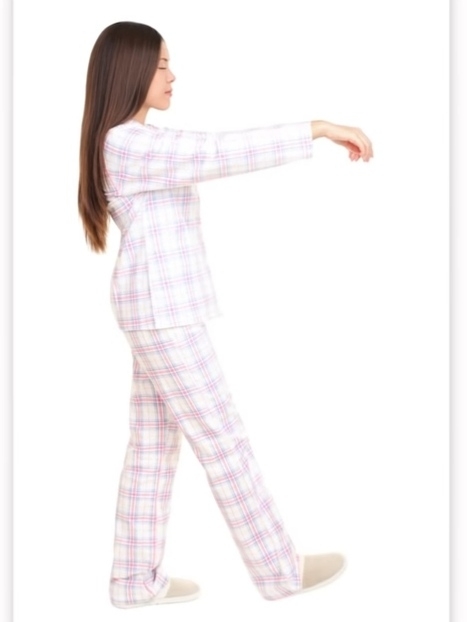
Sleep walking is nothing about embarrassed about though or terrified for that matter, it’s relatively common. In a recent study Stanford found that 1 out of 3 people sleep walk at some point of their lives. It is specially common among children, between the age of 4 and 8. So what happened when we sleep walk.

Reasons

A leading theory about why we sleep walk is:-

  • In normal sleep cycle, your brains motor system continues to issue physical commands to the body.
  • Whereas those who sleep walks are suppressed by sleep chemical called GABA.
  • GABA access act as a break in your brain, it brings your mind and body down to rest by neutralizing Glutamate a chemical that causes excitement.
  • In sleep walkers there’s a glitch in the process that suppresses your boby from moving around namely that you don’t produce GABA.

So that’s why you are moving around when you’re still asleep. There are few causes of GABA deficient in the body:-

  1. Genetic sleepwalking :- when sleepwalking runs in the family
  2. Underdeveloped system:- when the boby simply hasn’t matured enough to produce the proper amount. That’s why it is more common amongst kids.
  3. Depression:- Those who suffer from depression are three times as likely to sleep walk.

Myths

You would have probably heard about the myth that you shouldn’t wake a sleepwalker because they’re going through a psychotic rage that could even kill you. But these are myths, if you see anyone sleepwalking, you are asked to wake them up gently, especially if they are in the kitchen or holding a knife.

Recently there was a story about a lady who drove 190 miles in her sleep without hurting or killing herself or anyone. She should be definitely called lucky.

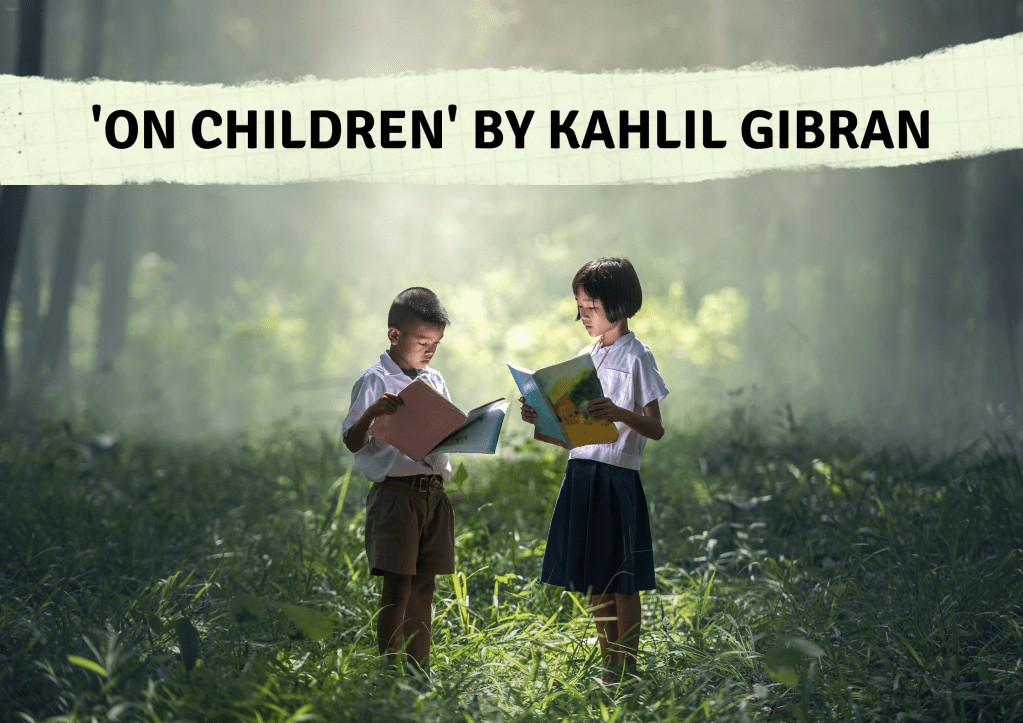
“Your children are not your children”

Parents often try to steer the life of their children. They decide for their children and make them live according to their wishes. Kahlil Gibran’s poem ‘On Children’ talks about such issues and on proper parenting.

The poem starts with a woman asking a person to talk about children. So the unknown narrator starts of by saying,

  Your children are not your children.

Most of the parents think of their children as belonging to them or think that they own them. But this is a toxic mentality. One can never own a person because people aren’t objects. Every child has his/her own life and it belongs to him/her and no one else. They did come from the wombs of their mothers but that doesn’t mean they are owned by their parents. So, every child has the right to decide and live his/her own life in the way they like.  

They are the sons and daughters of Life’s longing for itself.

Because children tend to make mistakes and don’t know the world, they require guidance from their parents. But parents should not use this as an opportunity to impose their preferences and opinions. They should rather support and guide instead of making choices for their children.

You may house their bodies but not their souls,

 For their souls dwell in the house of tomorrow, which you cannot visit, not even in your dreams. 

Parents may shelter their human bodies and not their souls. Their souls move freely and live in tomorrow. Many parents try to realize their dreams through their children without knowing that it was a past they failed to live and that it is already today, which the children wish to live in. 

 For life goes not backward nor tarries with yesterday.

The poet brings in the comparison parents as bows and children as ‘living arrows’ in the hands of our Creator. The archer, our Creator, sees the mark at an infinite distance. The mark is our death. He bends a bow (a parent) to launch an arrow (a child). When the arrow is shot, the trajectory it takes is defined by the arrow itself. The bow just lends its strength to the arrow to travel. Hence, the parents should make sure that the bow in the hands of the Archer is properly used. The Archer loves both the bow and arrow that serve the purpose properly. 

  The archer sees the mark upon the path of the infinite, and He bends you with His might that His arrows may go swift and far.

Let your bending in the archer’s hand be for gladness;

  For even as He loves the arrow that flies, so He loves also the bow that is stable.

Thus, the poem provides a valuable lesson on parenting.