PLIGHT OF WOMEN IN AFGHANISTAN

BY DAKSHITA NAITHANI

The Afghan women, maybe more than anybody else, have dreaded the Taliban’s return. There have been many advances in women’s rights over the last 20 years, which appear to be set to erase nearly overnight.

A quick lesson from history…

The Taliban, a political and military force, is said to have started in Islamic schools in Northern Pakistan in the early 1990s. Its aim was to restore order in Afghanistan following the withdrawal of Soviet troops in 1989, as well as to impose a harsh form of Sharia law. By 1998, the organisation had seized 90% of Afghanistan’s territory.

Once in control, the organisation garnered worldwide condemnation for a slew of human-rights violations. The ban on female education above the age of ten as well as harsh limitations on day-to-day liberties, were among the stringent mores imposed on women and its influence has frequently threatened to expand beyond, to places like Pakistan, where the organisation memorably shot teenager Malala Yousafzai in 2012. Women were treated worse than at any previous period or by any other culture throughout its rule (1996–2001). They were prohibited from working, leaving the house without a male escort, seeking medical assistance from a male doctor, and being compelled to cover themselves from head to toe, including their eyes. Women who had previously worked as physicians and teachers were compelled to become beggars or even prostitutes in order to feed their families during the Taliban’s rule.

Following the 9/11 attacks, it was thought that the Taliban were harbouring Al-Qaeda soldiers, thus an US-led international operation was started against Afghanistan. As a consequence, the Taliban were deposed from power, an Afghan government was established, and soldiers occupied the country for 20 years. It destabilised several regions of the nation due to battles with US and UK forces on a regular basis, and Afghan people were continued to be assaulted. Many would agree that the political and cultural status of Afghan women had improved significantly since the Taliban’s collapse in late 2001.

The Bush administration’s acceptance of women’s rights and empowerment as rationale for its assault on the Taliban is long gone. So it was under the Barack Obama administration, when then-Secretary of State Hillary Clinton stated that the Taliban’s repudiation of al-Qaida and promise to support the Afghan constitution and safeguard women’s rights were preconditions for US discussions with them. The rejection of al-Qaida has yet to be declared openly and publicly less than 10 years later; the constitutional order and women’s rights are still subject to intra-Afghan talks and will be influenced by the changing balance of military power.

In February 2020, US-Taliban peace talks were concluded, with the US pledging a quiet departure in exchange for an end to hostilities. Afghan leaders and top military generals have warned that the government will collapse without foreign assistance. It looks like the worst has transpired only weeks before Biden’s deadline of September 11th.

The Taliban rule wreaked havoc on the institutions and the economy, which had already been ravaged by decades of conflict and the Soviet scorched-earth counterinsurgency policy.

The post-Taliban constitution of 2004 granted Afghan women a wide range of rights, and the political epoch brought social and economic progress, which greatly improved the socioeconomic situation. From a crumbling health-care system with almost no healthcare available to women during the Taliban years, the post regime built 3,135 functional facilities by 2018, giving more than 80 percent of Afghans access to a medical facility within two hours’ drive.

 Less than 10% of females were enrolled in elementary schools in 2003; by 2017, that figure had risen to 33%, while female secondary school attendance increased from 6% to 39%. As a result, 3.5 million Afghan females were enrolled in education, with 100,000 of them enrolled in academic institutions. Women’s life expectancy increased from 56 to 66 years in 2017 and maternal mortality fell from 1,100 per 100,000 live births in 2000 to 396 per 100,000 in 2015. By 2020, women made up 21% of Afghan public workers, including 16% of top management positions, and 27% of Afghan parliamentarians.

 These benefits for women have been dispersed inequitably, with women in metropolitan areas benefiting considerably more than women in rural regions. Despite formal legal empowerment, life for many rural women has not improved much since the Taliban era, notably in Pashtun regions but also among other rural minority groups. Many Afghan males are staunch conservatives. Families often let their daughters to complete a primary or secondary education before proceeding with planned marriages. The burqa is worn by the majority of Afghan women in rural regions without any pushing from the Taliban.

What is the situation for women in Afghanistan now?

Women’s rights in Afghan had arguably maintained pace with many other Western countries prior to the 1970s. Women were granted the right to vote in 1919, one year after women in the United Kingdom. In the 1950s, gender segregation was eliminated, and in the 1960s, a constitution was enacted that included women in political life. As the region became more unstable in the 1970s, these rights were steadily eroded.

Only 38% of the international humanitarian response plan for Afghanistan is financed as of August 2021. This gap might result in the loss of specialised protection services for 1.2 million children, putting them at risk of abuse, recruitment, child labour, early and forced marriages, and sex abuse. About 1.4 million females, many of whom are survivors of domestic abuse, would be left without access to safe spaces where they may receive full care.

Females, who have experienced life with rights and freedoms, are among the most exposed as a result of the Taliban’s fast progress in Afghanistan. As the Taliban capture control of Kabul, they risk losing their hard-won achievements.

Those cries for aid may be too late as the capital city falls into the clutches of Islamist rebels. There have been several stories of the Taliban going door-to-door and compiling a list of women and girls aged 12 to 45 who are then compelled to marry Taliban warriors. Women are told that they cannot leave the house without a male escort, that they cannot work or study, and that they cannot wear anything they want. Schools are also being shuttered.

There is a lot to lose for a whole generation of Afghan women who entered public life – legislators, journalists, local governors, physicians, nurses, teachers, and public administrators. While they worked alongside male colleagues and in communities that were unfamiliar with people in positions of power to help establish a truly democratic civil society, they also wanted to pave the way for future generations to follow in their footsteps.

The Taliban offers itself a broad range of possibilities by claiming that they will “protect” women’s rights under sharia but refusing to explain how women’s rights and life in Afghanistan will alter if they achieve their goals. Even if the government did not openly adopt as cruel a system for women as in the 1990s, the Taliban’s dispositions are quite likely to undermine women’s rights, impose cultural prohibitions on women, and reduce socio-economic possibilities for them.

In summary, even with this change in behaviour, the Taliban in power would almost certainly strive to curtail Afghan women’s legal rights, exacerbating their social, economic, and political circumstances. How much and in what manner, is the question.

ROLE OF INDIA IN QUAD

BY DAKSHITA NAITHANI

The Quadrilateral Dialogue was established in 2007 when four countries—the United States, India, Japan, and Australia—joined forces. However, it did not take off at first due to a variety of factors, and it was resurrected in 2017 after almost a decade due to factors such as growing country convergence, the expanding importance of the Indo-Pacific area, and rising threat sentiments toward China, among others.

Since then it has evolved into a platform for diplomatic discussion and coordination among participating countries, who meet on a regular basis at the working- and ministerial levels to discuss shared interests like ensuring a rules-based international order.

SIGNIFICANCE FOR INDIA

The Quad, ASEAN, and the Western Indian Ocean are the three groupings in which India participates as a partner in the Indo-Pacific area.

India as a Net Security provider

In the region of Indian Ocean India must be a Net Security Provider. Its supremacy in the IOR must be maintained and sustained if it is to claim this position as a Region. QUAD offers India with a platform to strengthen regional security through collaboration while also emphasising that the Indo-Pacific concept stands for a free, open, and inclusive area.( Inclusive here refers to a geographical notion that encompasses all countries inside it as well as those having a stake outside of it)

Countering China

The Quad offers India with a forum to seek collaboration with like-minded countries on a variety of problems, including maintaining territorial integrity and sovereignty, as well as peaceful dispute settlement. It also shows a united front against China’s unceremonious and aggressive actions towards the nation which is especially important now, since ties between India and China have deteriorated as a result of border intrusions along the Tibet-India boundary in many locations. The Chinese policy of encircling India with the String of Pearls poses a direct threat to India’s maritime sovereignty, which must be addressed.

Framing post-COVID-19 international order

QUAD can assist India in not just recovering from the pandemic’s impacts through a series of integrated measures, but also in securing a part in the modern international order. Enhancing such cooperation was one of the first actions made in 2021. The vaccination initiative will serve as a good litmus test for the QUAD administrations’ ability to work together.

Convergence on other issues

On a range of topics, India shares common interests with other Quad members, including connectivity and infrastructure development, security, especially counter-terrorism; cyber and maritime security; multilateral institutions reform, and so on. Assistance from members on these problems might help India achieve its strategic and economic objectives.

Supplementing India’s defence capabilities

Assistance in the sphere of defence among Quad countries, such as joint patrols, strategic information exchange, and so on, can help India overcome its disadvantages in terms of naval capabilities, military reconnaissance, technology, and surveillance systems.

Ensuring a free Indo Pacific

The Indo-Pacific region must be accessible and vibrant, regulated by international norms and bedrock values such as freedom of navigation and peaceful resolution of conflicts, and the nations involved must have the right to make decisions, free of coercion.

Counter-terrorism Table top Exercise for QUAD nations to improve collaboration and common capabilities in dealing with potential terrorist threats, as well as examine CT response systems.

INDIA’S ROLE IN THE INDO-PACIFIC

In the Indo-Pacific, India’s geographic and geopolitical importance provides a counterbalance to China’s rising influence in the Indian Ocean. India’s security concerns, centred primarily on China’s encirclement policy through port facilities in India’s neighbourhood mainly Gwadar and Hambantota and the desire to maintain and protect open and free sea lanes of information exchange against concerns about China’s chokepoint in the South China Sea and increasing maritime presence in the ocean

India’s critical significance in the Indo-Pacific may be seen as a multiple framework. First, unlike the Asia-Pacific architecture, the Indo-Pacific architecture allows New Delhi to move above its long-held standing as a middle-power. This is bolstered by India’s admission to the League of big powers especially the United States and Japan and the development of tight strategic ties with Washington and its regional allies. This promotes India’s great-power ambitions and force projection capability inside the Indo-Pacific and beyond.

Second, India’s Act East Policy and Extended Neighbourhood Policy benefit from New Delhi’s strong participation in the Indo-Pacific. New Delhi’s stronger relations with ASEAN members have also bolstered this boost.

Third, the development of India-US strategic relations, particularly in military, works as a significant counterweight to India’s adversaries. Increased engagements between New Delhi and Washington are exemplified by the four foundational contracts signed between the two countries, which include the General Security of Military Information Agreement, Logistics Exchange Memorandum of Agreement, Communications Compatibility and Security Agreement, and Basic Exchange and Cooperation Agreement—all of which promote in-depth partnership Most significantly, the improved partnership boosts India’s military capacity, particularly when it comes to striking targets with precise accuracy.

Fourth, under India-Australia ties, which were elevated to a Comprehensive Strategic Partnership in 2020, India’s strategic position is bolstered yet further. In fact, Canberra and New Delhi inked nine agreements, the most important of which are the Australia-India Mutual Logistics Support Arrangement and the Defence Science and Technology Implementing Arrangement, both of which provide a framework for the two nations’ security cooperation.

Fifth, and most significantly, during COVID-19, India demonstrated its ability to be a first responder to a regional disaster by giving medical assistance to its near neighbours, including the Maldives, Sri Lanka, and Seychelles. In addition, India sent medical quick response teams to Comoros and Kuwait to help them prepare for the epidemic. In addition, nine Maldivians were evacuated from Wuhan, China, the site of the pandemic.

In addition, India pushed for virtual summits like the South Asian Association for Regional Cooperation web conference on March 2020 and the “Extraordinary Digital G20 Leaders’ Summit” to help develop a worldwide reaction to the epidemic on 26 March 2020. In addition, New Delhi established a SAARC Emergency Response Fund for Coronavirus, with India contributing an initial 10 million USD.

In addition, as countries attempt to move manufacturing away from China, India is viewed as one of the world’s new “favoured” investment destinations. The enormous scale of India’s marketplace as well as the low labour costs, make it a desirable destination. Apple, for example, created a production facility in India in partnership with Foxconn, while Samsung, of South Korea, ceased operations in China and moved manufacturing units to India.

There is little dispute about India’s rising position in the Indo-Pacific, not just as a significant participant but also as a responsible actor.  As a result, India’s manoeuvring room in the post-COVID international order is anticipated to expand, as India is seen as one of the major movers in guiding policy and protecting allied interests in the Indo-Pacific. COVID-19 has, in fact, expanded the Quad framework, allowing important parties to play a more active role in addressing critical conventional and unconventional regional issues.

A Pipe Dream: Decline of Humanity

Photo by Berendey_Ivanov / Andrey_Kobysnyn on Pexels.com

A pipe dream is something for which we are hopeful for but it seems fancy enough to be the reality of the present. 

Does this indicate any incident which is happening right now but all we can do is hope for Pipe Dream to happen?

If you haven’t guessed yet but here I am talking about the Afghanistan crisis, the shift in the power of the country to the Taliban’s clutches.

The power shift, the race of afghans to save their lives everything happened just because a few people decided on their own that it’s time to let people die there, let people run for their lives just because that few people are strong and have power enough to do so or are there any reason behind the pullout?

But before diving into the conclusion, we all need to know some facts and reasons why they did that and even if they did can’t someone help them?

Many questions like this might be arising in many of our minds, So to answer a few and to find more this article is here.

The Story from the beginning

The army of the USA went to Afghanistan in 2001 to get even with the terrorist group involved in the 9/11 attack on Newyork and Washington under the supervision of leader Bin Laden.

Bin Laden was getting protection from the Taliban who were in power since 1996 and that was the point the USA needed to take things into their hand and hence with Nato allies a new government took place in 2004, but still, the Taliban was adamant with the attacks killing many in the process.

With this in 2014, the allies of Nato came to an end, handing over the responsibility to the Afghan army, allowing the Taliban for having more than half control over what was left.

And finally, in 2020 even America decided it’s time to save their troop and people from the Taliban and agreed on withdrawing in return for the safety of Americans and their allies from terrorist attacks in the future.

The turn of the Taliban

Was the Taliban always like this? And if they were always like this how did they had gained this power and why?

They emerged in the civil war of Afghanistan promising a decline in corruption and providing security to the people and just like that they started spreading and till 1998 they were all over the country and had almost complete control over people.

They started enforcing many rigid laws for men and women and even TV, music, and cinema all were banned.

And just like this, it was the rise of the fall of civil rights of people of Afghans.

The Catastrophe

The president of the US Mr. Joe Biden decided to plow away all the troops from the Afghans in the name of relocating their troops where they are needed most and where they can strengthen the USA army.

According to him, they were in Afghanistan to take revenge for the 9/11 attack and not to make any relation there and so now this will be the decision of the Afghans to decide what future they want for their own country and they will have to work for their self.

The catastrophe, the people of Afghans are being subject to is very near even though president Joe Biden believes that they have equipped and trained enough soldiers for this fight against the Taliban, the stats and predictions are predicting the fall of the Afghanistan army by the end of 6 months after the removal of army troops.

Donald Trump Leave White House for the Last Time

President Trump’s reign comes to an end after a rollercoaster of a journey. On Wednesday, he left Washington DC three hours ahead of the inauguration ceremony of the next US President, Joe Biden. He stated that it has been an “incredible four years” and promised his supporters and everyone else that he will be “back in some form”.

A small group of people waved goodbye to Trump and the First Lady Melania Trump as they walked out and boarded the Marine One helicopter at 8:15 am. The Trump family flew a short journey to the airbase from where they boarded a flight to Florida on Air Force One as Frank Sinatra’s “My Way” played on loudspeakers on the tarmac on a sunny but chilly day

“I just want to say goodbye but hopefully it’s not a long-term goodbye,” said Trump as he addressed a small group of people. 

Trump plans to stay at his Mar-a-Lago in Florida when the US will inaugurate its new President, Joe Biden. 

After the 21 gun salute and a serenade of “Hail to the Chief”, Trump said to his supporters “this has been a great journey”. He further added, “We’ve accomplished so much together. I will always fight for you.”

He also said, “it is my greatest honour and privilege to have been the president.”

Before departing the White House, Trump issued scores of pardons to people convicted of crimes or facing charges, including some prominent allies. 

Influential former Trump aide Steve Bannon — charged with defrauding people over funds raised to build the Mexico border wall, a flagship Trump policy was among 73 people on a list released by the White House.

The 74-year-old Trump has hinted at running for president again in 2024 but faces a trial in the Senate over his role in the January 6 storming of the US Capitol by his supporters and a potential ban on holding office in the future. 

After breaking his long silence, he also addressed the US citizens via pre-recorded video for the first time and urged the American to “pray” for the success of the incoming administration. 

Biden and Vice President-elect Kamala Harris will take the oath of office at the very spot where pro-Trump rioters clashed with police two weeks ago before storming Congress in a deadly insurrection.

Although the inauguration ceremony will go as it has for the last two centuries, this will be a little different from the rest because of the events that took place a few days ago at the US Capitol. 

Official Washington has taken on the dystopian look of an armed camp, protected by some 25,000 National Guard troops tasked with preventing any repeat of this month’s attack.

Because the pandemic is still raging in the US, the general public is forbidden from attending the inauguration ceremony. The National Mall seems unprecedentedly empty because of the said reason on Inauguration Day for the first time. Some 200,000 flags have been planted to represent the absent crowd.

Black Man Shot by Police in Wisconsin, Protests Follow

Jacob Blake, a 29-year-old Black man was shot in the back by the Wisconsin police in the city of Kenosha. The incident happened on Sunday, while he was walking towards his car and was shot several times in the back. His three young sons witnessed the shooting from the car and were screaming after seeing their father being shot. Video footage of the shooting was shared on social media, which was taken from across the street, it shows the father-of-three leaning into the car. An officer is seen grabbing his shirt after which seven shots were heard. It is unclear what had happened before the video recording begun. He survived the shooting and had a surgery. His father had told the newspapers that his son is paralyzed but the doctors do not know whether its permanent.

At night, groups of protesters defying a dusk-to-dawn curfew gathered outside the courthouse. They confronted law enforcement officers in riot gear outside the county courthouse which was blocks away from where Jacob Blake was shot. They were shouting and tossing water bottles after which they were responded with tear gas and pepper balls.

Despite the curfew, demonstrations erupted on Sunday night, which lead the authorities to close public buildings. Governor Tony Evers have ordered National Guard troops to be deployed in the city to maintain order. He has condemned the incident and “the excessive use of force” and called for a special legislative session next week in order to reconsider police reforms. Protestors marched on the streets from Monday night into Tuesday morning. Many commercial and government buildings and vehicles were set ablaze. The disturbances and protests had slowed down by early morning. According to a protestor, the police used tear gas, rubber bullets and smoke bombs to disperse the crowd. Protestors were marching peacefully but a small group suddenly got violent and started setting fires and breaking glass. The instigators who were seen were reported to be white. After the demonstrations ended, the police and demonstrators had worked together to clean the debris.

The incident occurred three months after the death of George Floyd on May 25. The Black man was pinned to the street under the knee of a white police officer in Minneapolis. The incident sparked protests, against police brutality and racism within the U.S. criminal justice system, across the country and abroad.

Black Lives Matter activists have demanded the arrest of the officers involved in it. Attorney Crump, who also has also represented Floyd’s family, said in a statement, “Blake had been trying to de-escalate a domestic incident when the officers first shot him with a stun gun. As he was walking away to check on his children, police fired their weapons several times into his back at point-blank range.”

Sunday’s shooting had been termed a “domestic incident’ which the police responded to. According to a police statement, they had immediately taken him to the hospital. Authorities have given no further explanation of the details of the incident or what had led to the shooting. The officers who were involved in the shooting have been placed on administrative leave. The Wisconsin Department of Justice said on Monday that the investigation is underway.

China-US ties plunge further over Hong Kong sanctions

China on Saturday slammed the United States for imposing “barbarous” sanctions in response to Beijing’s crackdown in Hong Kong, capping a dramatic week of deteriorating relations between the world’s two biggest economies.

In the toughest US action on Hong Kong since China imposed a sweeping new security law on the territory, Washington on Friday imposed sanctions on a group of Chinese and Hong Kong officials — including the city’s leader Carrie Lam.

The move came after President Donald Trump’s administration forced Chinese internet giants TikTok and WeChat to end all operations in the US, in a twin diplomatic-commercial offensive set to grow ahead of the US presidential election in November.

China on Saturday criticised the sanctions as “barbarous and rude”.

“The ill intentions of US politicians to support people who are anti-China and messing up Hong Kong have been clearly revealed,” Beijing’s Liaison Office in Hong Kong said in a statement.

The Treasury Department announced it was freezing the US assets of Chief Executive Carrie Lam and 10 other senior officials, including Luo Huining — the head of the Liaison Office.

It accused the sanctioned individuals of being “directly responsible for implementing Beijing’s policies of suppression of freedom and democratic processes”.

The move criminalises any US financial transactions with the sanctioned officials.

In a short statement, Luo said he welcomed the blacklisting.

“I have done what I should do for the country and for Hong Kong,” he said. “I don’t have a dime’s worth in foreign assets.”

The Hong Kong government described the sanctions as “shameless and despicable”.

“We will fully support the Central Government to adopt countermeasures,” it said in a statement.

The city’s commerce secretary Edward Yau warned that the “savage and unreasonable” sanctions could have blowback for American businesses in Hong Kong.

China’s Hong Kong and Macau Affairs Office said the sanctions list “rudely tramples on international law” and “will be nailed to the historic pillar of shame forever.”

Facebook barred Lam and the 10 other sanctioned officials from advertising on the platform, with a spokesperson saying Saturday it had “a legal obligation to take action.”

Tensions spike ahead of election

Beijing’s security law was imposed in late June, following last year’s huge pro-democracy protests in Hong Kong, sending a political chill through the semi-autonomous city.

Since then, Hong Kong authorities have postponed elections, citing the coronavirus pandemic, issued arrest warrants for six exiled pro-democracy activists and launched a crackdown on other activists.

US Secretary of State Mike Pompeo said the security law violated promises made by China ahead of Hong Kong’s 1997 handover that the city could keep key freedoms and autonomy for 50 years.

“Today’s actions send a clear message that the Hong Kong authorities’ actions are unacceptable,” Pompeo said in a statement.

The US measures come three months ahead of the November election in which Trump, who is behind his rival Joe Biden, is campaigning hard on an increasingly strident anti-Beijing message.

As public disapproval has grown for his handling of the pandemic, Trump has pivoted from his previous focus on striking a trade deal with China to blaming the country for the coronavirus crisis.

U.S. Cutting Ties With WHO Is A Misstep That May Cause Severe Repercussions


U.S. President Donald Trump announced on May 19 that U.S. would be halting it’s funding of the World Health Organization and pull out of the agency, accusing it of protecting China as the coronavirus pandemic took off. The move has alarmed health experts, who say the decision will undermine efforts to improve the health of people around the world.

It was a knee-jerk response and an overreaction to a legitimate concern. Yes, the WHO has problems and has been too lenient on China recently. Does that mean every other country should pull the plug and ignore its other achievements, without attempting diplomatic reform? It’s hypocritical for the US to pull out of an international organisation because another country has too much sway within it. How would they react if, say, the UK pulled out of the IMF and World Bank because it has too much American influence? Terrible for the international reputation of the U.S.A. It will further harm the world’s ability to detect and react to this and future pandemics. And there will be future pandemics. If the U.S.A. was/is depending on the WHO for it’s intelligence gathering, the U.S.A. has bigger problems than COVID-19. It will provide Trump’s base with a bone to chew on and provide them the simple answer to a very complex question that they so crave.

Critics have condemned this move and called out the President for playing the ‘blame game’. Trump has shown his incompetence with dealing with the Covid-19. What’s worse he even screwed the ability of a country that has been well known to be the leading force of healthcare. Meanwhile, China, a country who is still stereotyped as filthy people and Sickman, is recovering from the Covid-19. Long gone are those Americans who jeered at China and boasted that their CDC can handle the Covid-19 easily. Who’s to blame? If we look at the facts, Trump is definitely blamed for all this mess. His unwillingness to listen to CDC or even his white house health advisors to take the matter seriously because he doesn’t want a lockdown like China has resulted in the death of more than 142,000 Americans as of the time of my writing.

The growing reports of deaths began make the President realize that his administration was seriously failing in its response to the corona virus. He responded in two ways. He suddenly made it clear to the States that they were responsible for providing all the necessary protective wares and ventilators as well as all testing for the virus and that the failures were there’s not his. Next, he forcefully (and quite unfairly) condemned the work that China and the WHO had undertaken to react to the virus thus showing that he knew better than anybody what was best for everyone and that he was still a brilliant genius. So, fundamentally this is why President Trump decided to halt funding to the WHO. An activity that, it is certain, a majority of its 193 other member countries of the WHO will condemn as many of the larger countries have done already. No-one cuts funding in the middle of this kind of disastrous international epidemic. If one feels disturbed about any other country or organization involved in it one waits until the epidemic is over and then everyone gets together and analyses what worked well and what did not, then sit together to make sure the next time this happens the world is better prepared. Regrettably the USA seems to think that it can handle world matters unilaterally. As this is absolutely impossible for any country the result can only end up with some real disappointments for everyone including the USA, now the country with the largest mortality than any other as a result of poor corona virus policies and management.

Not anyone in the world, not even Trump himself, will benefit from Trump’s suspension of the US’s financing of WHO. Especially at times like these when WHO’s role in coordinating the worldwide response to pandemic is critical. We can be sure that WHO will not be distracted and will carry on its important job albeit maybe in a little less effective way as compared to when they did have the rightly anticipated financing from the US. The only thing this Trump’s move will achieve is that the rest of the world will finally and eventually give up on America to do the right thing and will try to distance themselves away from the US.

USA plans to withdraw visas for foreign students

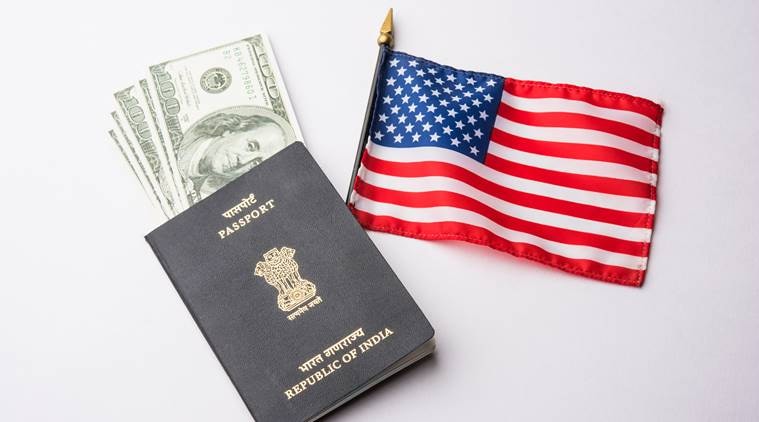
Indian IT companies to be hit as US bans work visas till end of year |  coronavirus outbreak News,The Indian Express

What is Visa

What is a American VisaA citizen of a foreign country who seeks to enter the United States generally must first obtain a U.S. visa, which is placed in the traveler’s passport, a travel document issued by the traveler’s country of citizenship.

USA the 3rd most populated country with the largest economy has always been the educational hub for the students all over the world. The USA has the 2nd largest higher education in the world and hence has world’s largest international student population. Students prefer to study in USA because the country has some of the top universities in the world which provides ample of career opportunities. But unfortunately this year the international students in the USA might face problems and might be forced to leave the country.

Corona virus pandemic has already affected many countries by killing more than 5 lac people and USA being the country with highest number of deaths. Apart from this it has also affected the economy of the country. For the first time the economy of the United States has gone into recession since global financial crises of 2008-09. Due to the slowdown in economy the country has lost 20.6 million jobs since mid march. So during this pandemic USA has temporarily banned several visa holders to preserve the interest of Americans.

One such visa is F-1 VISA, it is a type of visa that allows a person to enter the United States as a full time student to attend an academic program or English language program at a US college or University. F-1 visas are not designed as work visas so it does not permit students to work in the United States. But students are allowed to work on campus up to 20 hours per week during regular semesters.

Since USA is planning to withdraw F-1 visas students holding this visa or who were planning to apply for this visa will be affected by this move. This withdrawal can only take place when all the classes goes online. This move will force international or F-1 visa holders to leave the country. But that doesn’t mean they have to leave their courses, they can continue their course through online classes from their home countries . But in case if the university starts offering hybrid method of teaching which is a combination of both offline and online classes , then students can stay back in the country and continue their studies. Students who are not interested to leave the country can also transfer their course to another university that offers both online and offline classes.

This move will also impact around 2 lac Indian students who are are currently pursuing higher education in the USA. India and USA has different time zones which will create problem for Indian students to cope up with the USA time for online classes, also access to consistent internet connectivity is another problem for students . Students are now in a state of confusion as the rules are not well defined as nobody knows for how long F-1 visas are banned and for how long they will have to stay away from the USA.

Also if student fails to return back to their home countries then they might face future bans, on entry into the USA. Though India has raised this issue to US , The country decided to consider the issue by maintaining the best interest of the students.

Apart from F-1 visa many other visas are banned by the Trump administration. Such as H-1B visas for workers in specialty occupations , H-4 visas for spouses , l-1 visas for intra company transfers and H-2B visas for temporary non agricultural workers.

Conspiracy Theories & Chill

Let’s get illuminaughty

False Flag Theorists

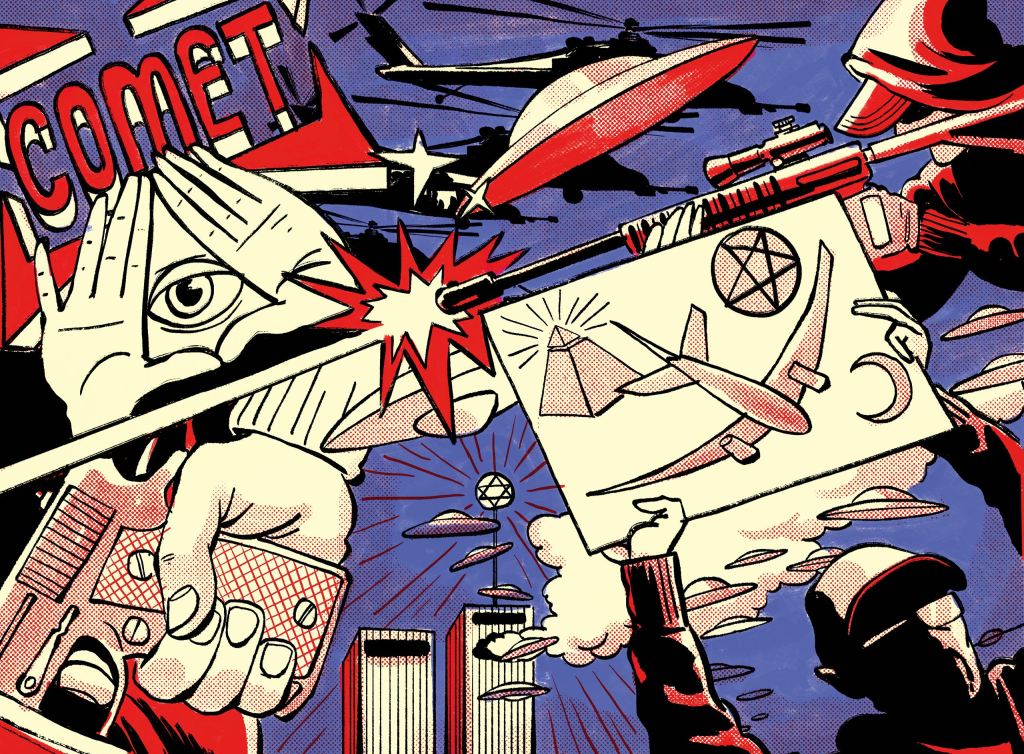
False flag theorists see darker forces behind whatever sinister world events are taking place. They believe events such as gun massacres and terror attacks are staged to make it appear as if some other group designed and carried out the event – in effect planting a false flag at the scene. The “false flag” concept can be virtually applied to just about any world event – the 9/11 attacks, so some believe, weren’t carried out by al-Qaeda but the Bush administration as an excuse for war in the Middle East.

Bilderberg Group

The Bilderberg group is an annual meeting of ‘elite intellectuals’ from across the world to discuss — well, no-one really knows. No minutes are published of the meetings, which take place behind closed doors amid tight security. The group has been accused of everything from plotting the rise and fall of world leaders to trying to form a New World Order, made up of the top figures in banks, corporations and countries.

The Mandela Effect

It is a phenomenon where a group of people collectively misremember a fact or an event. The term was coined by the paranormal enthusiast Fiona Broome. She along with many other people, remember Nelson Mandela dying in prison in the 1980s rather than from illness in 2013. Some of them even claim they remember his funeral being broadcasted on TV, like do you remember the Monopoly Man wearing a monocle? You’re not the only one. However, if you look at him carefully, you’ll realize he’s not wearing a monocle. He never has. While the famous Snow White quote you’ve probably heard others say and repeated yourself is “Mirror, mirror on the wall,” it turns out the correct line is “Magic mirror on the wall” Some people also remember the second part of that quote being “Who is the fairest of them all?” but apparently it’s “Who is the fairest one of all?

Britney Spears Was an Instrument of the Bush Administration

What if Britney Spears’s public meltdown, a series of bizarre events and public outburst— the head shaving incident which ultimately resulted in her receiving a conservatorship and losing custody of her children to ex-hubby Kevin Federline— wasn’t the result of her own personal issues? There are theories that say Britney was being paid by the Bush administration to grab headlines away from the corrupt and incompetent White House. 

BONUS

 The Illuminati is real, lizard people are also real, and the Earth is hollow with a colony of people living inside the middle, just kidding (maybe). But there are way crazier, way more coherent truths out there waiting to be seen.

So for all you conspiracy theory lovers, here are some shows and documentaries you would want to watch-  

  • WORMWOOD
  • THE TRAFFICERS
  • UNDERWORLD, INC.
  • DIRTY MONEY.

#BlackLivesMatter Vs. #AllLivesMatter

Saying that black lives matter doesn’t mean that other lives do not.

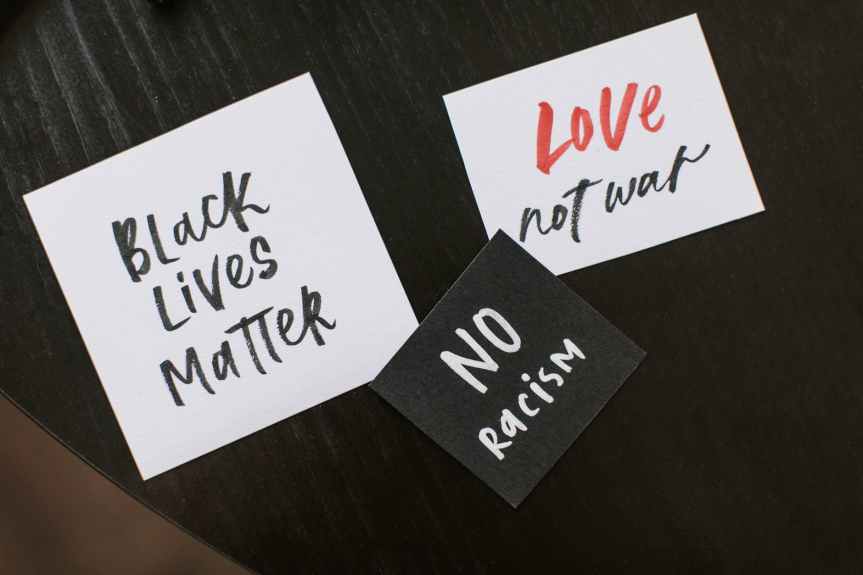
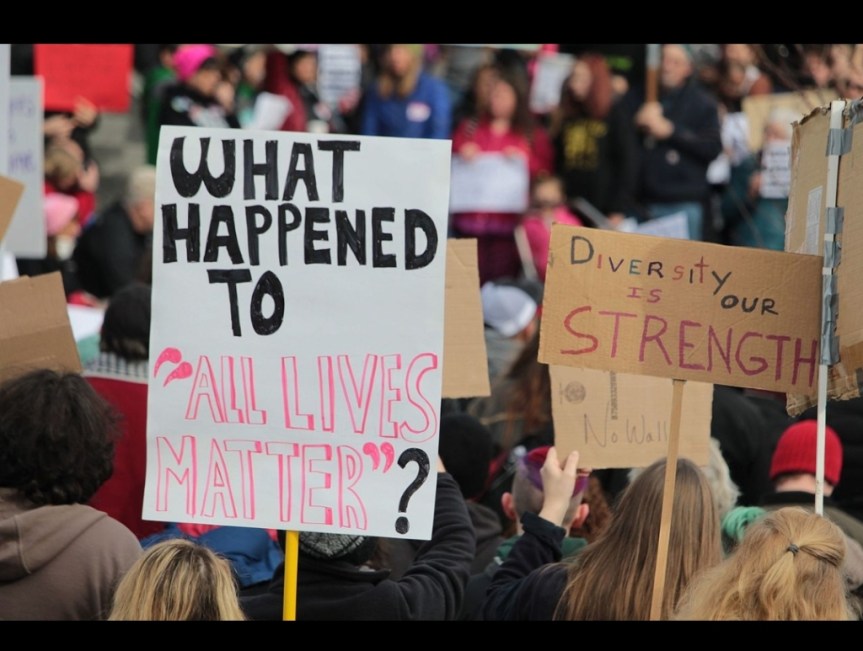
The tragic death of George Floyd at the hands of Minneapolis police has sparked intense debate over the question of racism in USA and triggered the Black Lives Matter movement. The protests have also sparked wide-ranging conversations about the responsibility industries and organizations — including the media — have to address institutional racism. To be clear, for much of its seven-year existence, the Black Lives Matter movement has been seen by many Americans as a divisive, even radical force. It’s very name enraged it’s foes, who countered with the slogans “Blue Lives Matter” and “White Lives Matter.” The tragedy, however, dramatically sparked a wave of protests sparked and enabled the Black Lives Matter movement to go has gone mainstream. The struggle is no longer confined to the national borders of the United States. However, soon enough, #AllLivesMatter became a slogan that has come to be associated with criticism of the Black Lives Matter movement. However, saying #AllLivesMatter completely missed the point of the Black Lives Matter.

Imagine that you’re sitting down to dinner with your family, and while everyone else gets a serving of the meal, you don’t get any. So you say “I should get my fair share.” And as a direct response to this, your dad corrects you, saying, “everyone should get their fair share.” Now, that’s a wonderful sentiment – indeed, everyone should, and that was kind of your point in the first place: that you should be a part of everyone, and you should get your fair share also. However, dad’s smart-ass comment just dismissed you and didn’t solve the problem that you still haven’t gotten any! The problem is that the statement “I should get my fair share” had an implicit “too” at the end: “I should get my fair share, too, just like everyone else.” But your dad’s response treated your statement as though you meant “only I should get my fair share”, which clearly was not your intention. As a result, his statement that “everyone should get their fair share,” while true, only served to ignore the problem you were trying to point out. That’s the situation of the “black lives matter” movement. Culture, laws, the arts, religion, and everyone else repeatedly suggest that all lives should matter. Clearly, that message already abounds in our society.

Just like asking dad for your fair share, the phrase “black lives matter” also has an implicit “too” at the end: it’s saying that black lives should also matter. But responding to this by saying “all lives matter” is willfully going back to ignoring the problem. It’s a way of dismissing the statement by falsely suggesting that it means “only black lives matter,” when that is obviously not the case. And so saying “all lives matter” as a direct response to “black lives matter” is essentially saying that we should just go back to ignoring the problem. The phrase “Black lives matter” carries an implicit “too” at the end; it’s saying that black lives should also matter. Saying “all lives matter” is dismissing the very problems that the phrase is trying to draw attention to.
Needless to say, dialogue matters and the George Floyd uprising has brought us hope for change. Now we must turn protest to policy.

screenshot_20200711-115801_chrome
All lives can’t matter until Black Lives Matter.

Australia being a cute Rasgulla.

So due to increase tension between India and China and India and Australia there is a huge chances and probability that i the days to come India and Australia may become strongest of allies as by discovering some of the biggest potential they behold through trade and military presence in both Asia and Oceania if there is a mutual respect and support between each other. There is also an ambitious bilateral agenda that will add substance to the India-Australia summit. When it comes to defense, India and Australia share a common concern over China it is that aspect which informs a lot of the bilateral transactions between the two countries. While Australia is worried about China’s presence in the Pacific, India is worried about China’s increasing activities and influence in the Indian Ocean.

Earlier this year, the Australian and Indian navies concluded a two-week-long bilateral maritime exercise code-named AUSINDEX. A government release at the time said the exercise was conducted, “to strengthen and enhance mutual cooperation and interoperability between the IN (Indian Navy) and RAN (Royal Australian Navy), providing opportunities for interaction and exchange of professional views between the personnel of the two navies”. From 2016-18, the armies of the countries conducted a joint military exercise dubbed “AUSTRA HIND”. Significantly, for the first time in 2017, Australia’s Foreign Policy White Paper identified India as being at the “front rank” of Australia’s international partnerships, “on par with the US, Japan, Indonesia, and China”, Australian High Commissioner Harinder Sidhu said in her address at the National Defence College in May this year.

The informal strategic Quadrilateral Security Dialogue (QSD) that was initiated by Japan’s Prime Minister Shinzo Abe in 2007 was largely in response to China’s growing power and influence. Initially, the “Quad” members included India, Japan, the US, and Australia; however Australia chose to withdraw when Kevin Rudd was Prime Minister, since it did not want to be a part of an anti-China alliance at the time. In an article in the Nikkei Asian Review in March 2019, Rudd said, referring to his opposition to the Quad: “Japan said that the rationale for the QSD was to defend the international rules-based order, implying that China back in 2007 had already become a threat to the order.“For Australia in 2007 therefore, to begin embroiling itself in any emerging military alliance with Japan against China, in the absence of any formal reconciliation between Tokyo and Beijing over the events of the Second World War (Nanking Massacre), was incompatible with our long-term national interests.”However, Australia later rejoined the dialogue in 2017 on the sidelines of the ASEAN Summit, signalling a re-ignition in Australia’s interest in the dialogue.

However, it is the economic dimension that continues to lag. The summit provides Modi and Morrison with the opportunity to impart a fresh momentum to it. Bilateral trade is barely 30 billion dollars and even though Australia is a world leader in niche technologies, investment in India is relatively limited. ‘An India Economic Strategy to 2035’ by Peter Varghese, former Australian Foreign Secretary and High Commissioner to India, provides an excellent blueprint. It identifies 10 states and 10 sectors of the economy that can be of particular focus, and underscores the important role of investment in driving the economic relationship. But while Canberra sees the opportunity, private business groups have been shy to grab it. With the exception of the Macquarie Group and a couple of others, Australia’s large financial institutions, pension funds and even the sovereign Future Fund have shown reluctance to invest in India. From India, the Adani group’s multi-billion dollar investment into the Carmichael coal fields in Queensland also ran into a series of hurdles and dampened some of the initial ardor to invest in Australia. There are also a number of less glamorous areas that offer fertile ground for collaboration in sectors where Australia has proven expertise. Some projects are already underway in agriculture, animal husbandry, water conservation, mining technology and equipment and sports infrastructure, but there is ample scope for scaling these to become success stories that both countries can proudly showcase. Cyber security is of critical interest to both, as is the need to work together in tapping Australia’s huge deposits of lithium and rare earths.

Still in denials!

Art of discovering!

On Tuesday, within one day, the highest number of new cases of coronavirus was recorded in the U.S. The stretch of this pandemic has marked off over 100 days and during this period, 23 million people in America have got the infection, out of which about one lakh twenty thousand people have lost their lives. More than any other country in the world. The situation of the primary centres like New York and New Jersey is now under control. But in the meantime, multiple new hotspots have emerged such as Florida, Texas, and Arizona.

Here, the number of daily cases is increasing and the whole world is also taking cognizance of this. European Union is deeming such restrictions on travelling, which will obstruct the access of Americans in any country of the European Union because America has proven to be a failure to deal with the pandemic. But any of this chain of events, could not stop the denial of the White House.
White House is in this state from the very beginning.

Last week, in an article, written for the Wall Street Journal, vice president Mike Pence termed the second wave of the infection as ‘exaggerated’.
On Tuesday, Dr Anthony Fauci, a leading specialist in the contagious disorders told a House panel that America is yet to overcome its first wave and second is coming anytime sooner. It’s possible that we may not be able to deal with it.
We are still in the midst of the transition-explosion.

President Trump’s statements are no longer shocking. They spent weeks in underestimation and risked the virus, and said that it will fade away with the arrival of Spring!
But the facts and figures are in front of everyone now. Some companions of the President are also acknowledging reality. But Trump still appears to be in the mood for gags and jeering at the note to cut down on the testing of cases.
If the number of tests is lessened, the number of cases may be recorded less but the number of demises will undoubtedly increase.

Bickering Bollywood.

So we all know that Indian film industry aka Bollywood is the second highest movie producing industry in the whole world after Hollywood per annum. Well to be honest yeah i agree that Bollywood is a gold mine of vibrant,diverse and really amazing movies. But the question remains at the point as why such an old, powerful movie industry with actors like Shahrukh Khan and Amitabh Bachchan who come in the list of top ten richest actors in the world, and with directors like Satyajit Ray are never producing movies which at least can be the bread and butter of the whole world. French and the German movie industry even the movie industry of Chile and the Korea is producing movies which garners massive popularity worldwide. In french we have Belle de Jour(1967) and ‘blue is the warmest color (2013), German’s having ‘The Marriage of Maria Braun(1978)’ and ‘Freier fall (2013)’, chile’s A fantstic woman (2017), the ripple maker Parasite(2019) and many more from many other countries as well. And then the question prevails why not Bollywood?

Movies like Satyajit Ray’s Pather Panchali (1955) and Mira Nair’s Salam Bombay (1988) in a manner defined Indian movie industry’s potential. But current scenario Bollywood is all about nepotism and love stories nowadays. As if we see that famous movie Slumdog Millionaire(2008) which bagged eight Oscars is not what india is?But the entire movie industry of the world is running after one thing that if India is represented it either poverty or god forbid it’s about curry, thanks to everywhere you see starting from movies like critically acclaimed Lion(2016) or Love Sonoa(2018) everything is about how indians are suffering,human trafficking, lack of sanitation and blah blah blah!!! If we talk about that’s what we see i the world. But people need to realize something that India the world’s second most populous country,sixth largest economy and seventh largest country is not all about trash and poverty. This scenario as explained above is what shows the failure of bollywood. but not everythings bad as we can’t say that Bollywood has gone down totally in these recent years as we made so many good movies too like Raazi(2018), Neerja(2016), Uri(2019), Barfi(2012) , Lust stories(2018) , Mary Kom(2014), three idiots(2009), Bajirao Mastani (2015), Jodha Akbar(2008), Dangal(2016), Devdas(2002), My name is Khan(2010), Swades(2004), English Vinglish(2012), Tumbaad(2018), lagaan(2001), Tare zameen par(2007), PK(2014) and many more which show case the value of the Indian movie industry and it’s potentials.

Now if we talk about problem which is wrecking us all starts with the lack of originality and the rejection of new talent in Indian film industry and how can we forget the grandad of all fiasco the one and only Nepotism. Nepotism is whats actually responsible for killing the Indian film industry in a really gruesome manner as due to this the new talents in indian film industry is getting choked as we speak. Another big problem is the lack of experimentation and really comical and absurd action movies as I’m literally starving for a good science fiction movie or a bone chilling horror fiction at least. But all we get is boring love stories with a lot of songs which are not even sung by the actors but they are just LIP SYNCING to it. No diversity at all as white washing of the whole cast is the forte of bollywood. Not even a single dusky or black actor or actress in a lead role you will find here(leaving the very few exceptions). That’s what i meant when i wrote bickering bollywood as if bollywood won’t up it’s ante there will soon be what we call a hot white mess left in the indian subcontinent for people to watch. Toodles!

Why US is failing as a Superpower in tackling Coronavirus?

Now that the US has reached the top with the highest corona cases, there is a question that arises. Despite being a superpower, does the country even know how to control the COVID-19 spread?

The US has become a new epicenter of coronavirus bypassing the total number of cases in Italy and China. The first case in the United States was reported on January 20, 2020, after three weeks when China reported several cases of unusual pneumonia in Wuhan to the WHO. Being aware of the threat that the coronavirus can pose, many states started taking measures for the pandemic. The US, however, failed to take appropriate actions.

Although Global Health Security Index, which is an assessment of 195 countries on their global health security capabilities, rated 83.5 to the US, the world’s highest and also that the US spends more than any other country on its health system, COVID-19 showed us how a superpower can fail when its government does not assess a threat effectively.
On January 31, 2020, President Donald Trump restricted entry into the United States of foreigners who had been present in China. However, the restriction did not apply to U.S. citizens who had traveled to China. Similar steps were followed for foreigners arriving from Iran, Europe, Italy, and South Korea. The mandatory screening was placed for people coming from these countries.

With the coming days, the measures taken by the Trump administration were very vague. When the cases were on a rise, then only people were asked to stay at home. Similarly, schools were closed in mid-March, roughly two months after the first COVID case in the nation.

Compared to many other countries, the actions taken by the U.S. are to date inadequate. The government has not able to project its authority and adequately ensure the safety of its population. Even citizens are not content with their government’s efforts.
We all now know that in terms of the coronavirus every minute matters. But the steps taken by the US government came very late.

Many believe that Trump failed to assess properly the coronavirus threat and as a result, it became difficult to control the cases. The president himself has been very inconsistent in his announcements which resulted in confusion among Americans.
Only on March 31, did Trump accepted the gravity of the situation when approximately 4,000 Americans lost their lives as a result of COVID-19.

The U.S. needed to test as many people as possible, to trace the positive cases, and isolate them as soon as possible. The reason why the confirmed cases were at a low for approximately two months is not that the U.S. effectively controlled the situation but because enough tests were not conducted to track the infected individuals. This created a false sense of security among citizens which later hampered the country.
With all this, even hospitals found themselves unprepared with people who were ill. There was a lack of medical supplies such as masks, gloves, and medical gowns.

The US, as a superpower, praises itself as “the best, most technologically advanced society in the world, but Trump administration’s handling of the pandemic shows a different story. Meanwhile, many other smaller or weaker states seem to be handling the spread of the virus better. Seeing all this, US does need to buck up.

Can India’s economy over take China in coming years?

With the Covid-19 pandemic infecting millions of people around the world, China is facing a global backlash, especially from the United States. It has created a cold-war situation between the two, where India is siding the US. Despite the strong anti-China sentiment, the Indian government can no way stop the Chinese market.

Indian Market cannot afford to keep China out of its markets as Chinese products are fairly cheap and have helped low-income groups to improve their standard of living. The country’s products are not just cheap but also durable and well-aligned to other country’s needs. This formula has helped Chinese production experts take over even Euro-American markets. Although, China is known to be the birthplace for Coronavirus, which is uniting its enemies- India, the US, Japan, and Australia. But, there are very low chances that they can stop its goods and services all over the world, including their own countries, in the post-COVID world.

Focusing on India, it still hasn’t prepared its labor force to challenge the Chinese skilled labor force. Also, the question arises, is India capable enough to produce goods and commodities as inexpensive as China?

China has its rural industry which is that independent that it can produce goods for all sorts of cultures and commercial markets. There is no rural industry in India. While announcing plans for post- corona economy, Narendra Modi talked about establishing cottage industries. But there are no skilled laborers in rural India to produce goods for the global market’s tastes. How will this happen then?

Not to forget, Chinese growth has been driven by some of the world’s largest investment rates. This has made possible high –speed rail lines, infrastructure revolution of new cities, ports, airports, and manufacturing muscle for the country. Now, China has become the world’s factory for more than 20 years. Its ability to quickly and efficiently move what it produces domestically and around the world has played a major role in its growth miracle.

Today, India lags behind China in three dimensions: investment, infrastructure, and manufacturing. India has barely scratched the surface on all these. China invests about 50% of its GDP, while India does only 30%. Manufacturing is about is just 20% in India, while in China it’s about 30%.

India lags behind China a lot in the development. It looks like a poor country in major parts, where China has one of the best infrastructures around the world.

But, if India starts taking things seriously it can be a real opportunity. It is a known fact that by increasing investment, improving infrastructure, and growing economic output, it can be a true path to growth if the nation is patient enough to follow.

The ‘Make in India’ initiative is so promising as it does not rely on the Indian government. Launched to surpass China in direct foreign investment, ‘Make in India’ calls for global firms to increase their financial commitment to India. The innovative firms as diverse as Lenovo, Samsung and Boeing have publically supported this initiative, proving that the private sector is ready to step in.

Only thing is that private firms won’t act until it is more confident about politics and this scheme. Taking this into consideration, the government first has to give confidence to them for further progress to be made.

There is a lot of potential that India has. The raw material that the nation is so rich for any production. The challenge now is to use it effectively by all means.

All to say, to challenge China, it means unlearning many things and re-learning new things for India to take over this nation in terms of economy.

With the Covid-19 pandemic infecting millions of people around the world, China is facing a global backlash, especially from the United States. It has created a cold-war situation between the two, where India is siding the US. Despite the strong anti-China sentiment, the Indian government can no way stop the Chinese market.

Indian Market cannot afford to keep China out of its markets as Chinese products are fairly cheap and have helped low-income groups to improve their standard of living. The country’s products are not just cheap but also durable and well-aligned to other country’s needs. This formula has helped Chinese production experts take over even Euro-American markets. Although, China is known to be the birthplace for Coronavirus, which is uniting its enemies- India, the US, Japan, and Australia. But, there are very low chances that they can stop its goods and services all over the world, including their own countries, in the post-COVID world.

Focusing on India, it still hasn’t prepared its labor force to challenge the Chinese skilled labor force. Also, the question arises, is India capable enough to produce goods and commodities as inexpensive as China?

China has its rural industry which is that independent that it can produce goods for all sorts of cultures and commercial markets. There is no rural industry in India. While announcing plans for post- corona economy, Narendra Modi talked about establishing cottage industries. But there are no skilled laborers in rural India to produce goods for the global market’s tastes. How will this happen then?

Not to forget, Chinese growth has been driven by some of the world’s largest investment rates. This has made possible high –speed rail lines, infrastructure revolution of new cities, ports, airports, and manufacturing muscle for the country. Now, China has become the world’s factory for more than 20 years. Its ability to quickly and efficiently move what it produces domestically and around the world has played a major role in its growth miracle.

Today, India lags behind China in three dimensions: investment, infrastructure, and manufacturing. India has barely scratched the surface on all these. China invests about 50% of its GDP, while India does only 30%. Manufacturing is about is just 20% in India, while in China it’s about 30%.

India lags behind China a lot in the development. It looks like a poor country in major parts, where China has one of the best infrastructures around the world.

But, if India starts taking things seriously it can be a real opportunity. It is a known fact that by increasing investment, improving infrastructure, and growing economic output, it can be a true path to growth if the nation is patient enough to follow.

The ‘Make in India’ initiative is so promising as it does not rely on the Indian government. Launched to surpass China in direct foreign investment, ‘Make in India’ calls for global firms to increase their financial commitment to India. The innovative firms as diverse as Lenovo, Samsung and Boeing have publically supported this initiative, proving that the private sector is ready to step in.

Only thing is that private firms won’t act until it is more confident about politics and this scheme. Taking this into consideration, the government first has to give confidence to them for further progress to be made.

There is a lot of potential that India has. The raw material that the nation is so rich for any production. The challenge now is to use it effectively by all means.

All to say, to challenge China, it means unlearning many things and re-learning new things for India to take over this nation in terms of economy.