
Joint venture is the entity created by two or more companies for the particular purpose, the companies will put the fund in the beginning and in the future days they will share the profits of the entity accordingly. The joint venture may happen one comapany may good in technology so it will help the another company. By adopting joint venture one comapany from other country can produce with the company and enter in to the market. The comapany can increase its market share by joining with other company by joint venture. Joint venture can help when new innovative products are offering in the market where high technology is needed where companies can share their technology. Joint venture will reduce cost by economies of scale and increase the financial position of the entity. By this new technology can be brought in to business and can attract new customers to the business.joint venture will help the companies to face the tough competition in the market.when both companies come together for the particular purpose that can share their infrastructure where it will help in reduce the cost.
The Rights of the Disabled

In the plethora of problems, the world and different nations are dealing with, one of the most prominent ones is the rights of disabled people. Ironically its highly unspoken of people today regarding these rights, it may be due to lack of awareness that even though disabled people have special rights they are unaware about it and are exploited out of it. It would be better if we rather call them “specially abled people” than disabled as I feel that in such people there is some other quality given to them which overpowers their disability. They should be treated unequally to that of normal healthy human beings, as there is a saying that equals should be treated equally and unequal should be treated unequally. So, how can one exactly define specially abled people it can be a person who has physical or mental impairments maybe even both and the person isn’t able to carry out day to day functions like a normal person and this affects him on a long term basis, they are said to be called specially abled or disabled people. As I have mentioned earlier that they should be treated unequally it meant that we have to give them rights so that they can be living with dignity like any other person around, and this requires the intervention of law so that these people could live a normal happy life. Persons with difficulty face barriers that restrict them from doing certain things on equal basis that is commonly done by normal people like to be employed, participate in activities, access justice, etc. It is so true that all over the world specially abled people are usually faced with gross human right violation by denying them the rights of equal participation, legal capacity, voting rights and the freedom to live free in the community. In many nations such people are often living in extreme poverty or are in the margins of getting into poverty, this usually happens to a large extent in developing nations, and in some other nations people with disability are deprived of their rights, liberties and they are usually excluded from the society. Hence , regarding the situation above that has been created there was a need for the nations to provide special provisions for the disabled people, but this was usually always initiated firstly at an international basis where there exists some sort documentary which can be a signatory and all the nations that have signed up for it usually start implementing the objectives that has to be achieved which is clearly stated in the document. We will be discussing the rights from an international and national perspective
There have been many supportive conventions and conferences internationally, which generate a link between human rights, and the rights of the disabled, which all have a common aim to make sure every person no matter how and what they are should not be deprived of any basic human rights. The Universal Declaration of Human Rights (UDHR) which has come into effect in the year 1948 has given 30 human rights which every nation has to follow. UDHR is the basis for all the other treaties, conventions and conferences, they cannot be violative of any right specified in the UDHR. Article 1 of the UDHR states that every human being shall live with dignity and rights. Article 2 mentions that every right mentioned in the UDHR shall be applicable to everyone, without any sort of discrimination. All the other rights in the article support the fact that every human being should be equal everywhere, and indirectly supports that every disabled person is no less than a normal human being, they both shall be tested in the same way. Other international conventions, treaties and conferences like the International Covenant on Civil and Political Rights (ICCPR), the International Covenant on Economic, Social and Cultural Rights (ICESCR), Convention Against Torture and other Cruel, Inhuman or Degrading Treatment or Punishment (CAT)1949, the Convention on the Elimination of All Forms of Discrimination Against Women (CEDAW) 1979, the Convention on the Rights of the Child (CRC) 1989, and the International Convention on the Elimination of All Forms of Racial Discrimination (CERD) 1966. All the conventions have provisions which all support the fact there shall be no discrimination in the way people are treated, especially when it comes to especially abled, one should respect them. The Convention on the Rights of Persons with Disabilities (CRPD) which is an effective measure which was taken by the United Nations Generally Assembly has been adopted in the year 2006. The CRPD has come into force with the sole purpose to protect the rights of the specially abled people, and it has been fulfilling its purpose over the years in an efficient manner. The World Programme of Action Concerning Disabled Persons, was adopted by the General Assembly in 1982, which is a global strategy that has been initiated to equalise the opportunities of specially abled people, increase their participation towards the development of the nation, and especially to prevent cases od disability with proper health care and safety. There are many other efforts taken to improve the situation of the disable but the above were some of the major ones.
Now lets look into the provisions for especially abled people in India. This nation has also taken a lot of efforts to improve their position in the society, they will be discussed a follows:
- Article 14 of the Indian constitution states that every person is equal before the law, article 15 states that doscrmination shall not take place anywhere in the nation, article 17 states that no person can be treated as an untouchable, and article 21 guarantees right to life and personal liberty to all the citizens of the country. In the same manner articles 23, 24, 25, 32 talk about equality and no exploitation. These articles make sure there is no distinction between people. The specially abled people have been given special and separate provisions in family law, health law, education and were given relief in the form of income tax concessions and so on.
- The Persons with Disabilities (Equal Opportunities, Protection of Rights and Full Participation) Act, 1995 was brought into effect in the year 1996 which aimed at providing equal opportunities to specially abled people. This is a step taken by the government in correspondence to the ratification in the international treaties and conventions. The Act provides various measures and spects in various field in order to achieve their equality in the society.
- Some other important acts where special provisions were provided are the Mental Health Act, 1987 for mentally ill persons, the rehabilitation Council of India Act, 1992, the national trust for welfare of persons with autism, cerebral palsy, mental retardation and multiple disabilities Act, 1999.
The above provisions did bring a change in the way specially abled person was treated, they were given the motivation and were encouraged to come out and portray their self in the society by giving them as many possible opportunities. In spite of the exiting provisions there have to be more facilities for these people in regards with transportation and they have to have special arrangements made in all the places the are a part of. One main suggestion to the whole world out there is to treat them equally, we should stop thinking about them in a wrong way, as at the end of the day we all are human beings and we should treat our fellow ones with equal respect. We have no idea which lead to their disabilities, they must’ve been struggling a lot with it, if we can’t help them, we should at least no make the situation worst by making them feel bad about themselves. How many ever provisions are brought up for them, extra special should be taken, changes have to be made according to the situation and new laws should be brought up for their welfare. Law is the only tool which can make a person act or behave in the right way and it is the best way to bring change. Not only in the books but it should practically happen in front of the eyes
Inventory management in manufacturing companies
Invesntory is the total of raw materials , work in progress and finished goods which company holds for sales in the future. Company will purchase the raw material and process on it and convert it in to finished goods and sell it in the market. But it requires time it lead to idle of resources. So comapany need to make the proper inventory management. Need to adopt the EOQ techniques so the ordering cost and the holding cost of the materials and damage on the material can be reduced. By adopting EOQ comapany can make order of how much required to company for a time. By adopting ABC analysis company can devide it’s rawmaterials in to 3 category according to that order can be placed and most important in production to campany can be given more importance. So the wastage of material can be reduced. So by following inventory management properly the cost of inventory and idle of resources can be reduced.
Working capital of Business
The business requires funds to purchase and sell the products, the fund which is required to run the day to day business is called working capital. If current liabilities removed from current assets then we can get the working capital. Total current assets of the business is called gross working capital, when current liabilities removed from current assets it is called as net working capital. So business need to maintain the liquidity position in the business to maintain the working capital. To manage working capital business need to manage its cash, Inventory, Receivables and payables properly. When inventory was purchased need to be sold as early as possible so the idle of fund can be reduced. Business need to collect the receivable in time. And should pay payables in time. Should have more current assets than the current liabilities.
The Most Popular Trends In Education For 2020
The drastic growth of technological capabilities means that a variety of media and learning-support tools now exist to help students receive a high-quality education through the Internet. The teachers can see how their students have engaged with the live broadcast and recorded classes, therefore, they have a more efficient tracking system that allows them to provide more timely coaching as needed. It must involve some kind of ‘innovation’ or growth in education. For instance, virtual reality can make the learning process exciting.
Growth mindset, Personalized Learning (Mobile or blended learning), Project-based learning, Online learning or e-learning, Robotics, AI , IoT ,Critical thinking, Adaptive Learning Algorithms ,Artificial Intelligence,Soft skills traaining etc are predicted as the most popular education trends of this year.
Student trend: reduced attention spans
To hold the attention of this students, the education content presented to them must have excellent visuals and dialogue along with an interesting storyline that will hold their attention for a reasonable amount of time. This younger group cares more about the narrative and the visual nature of the content that interests them than other age groups.
This change in attention trends also has a noteworthy impact on how instructors adjust their classes and keep students engaged with the material. Teachers need to find ways to design classes that will retain the attention of their students, and adapt the course delivery method and pace. However, do not forget that when students have material in front of them that is highly visual and engaging, they have excellent potential to pay attention. These modern students want to be challenged, and they value interaction. For teachers who learn how to engage with these students, they can present rewarding opportunities for classroom growth.
Facilitating learning rather than teaching
The best teachers will be those who can help students take ownership of their learning.As teachers become more involved in the students’ learning process, they will also find themselves in a position to receive immediate feedback on their teaching effectiveness. Their ability to facilitate these skills in their classroom will become obvious quickly as the class moves through the material.Teachers who want to focus more on student development rather than simply knowledge delivery or through lectures will find this new model to be very much rewarding.
Personalized learning (Any time or self-paced learning)
The students can learn at their own pace , without worrying about the time constraints. The recorded video lessons available online can be played back any number of times till they get a good grasp on the subject in their flexible timings.Online assessments are also given , evaluated and reports are generated.
Moreover, value-added certifications offered online can enhance the employability of the students.This kind of learning can happen using mobile gadgets , as well.
Soft skills training: a major trend in higher education
In an effort to prepare students for their future careers, schools must have the training in place to help students nurture and grow in these skill areas. Their students will be more employable and have strong alumni success rates.
Adaptive Learning
Adaptive learning systems use data to adjust learning for students on an individual scale. From path to pace, adaptive learning is one avenue of personalised learning. The goal, as always, is to provide customised education to deliver the right content at the right time.With adaptive learning, teachers can create engaging, personalized learning experiences. This enables a more inclusive approach to education, meaning at risk and advanced students both get the attention they need.
As class sizes continue to grow, adaptive learning provides an effective way for teachers to guide every student through each challenging lesson without overburdening themselves.
Emerging Technologies
The goal here is to facilitate more innovative teaching methods while enabling more engaging learning opportunities. When used correctly, the opportunity here is huge. Students will have access to cutting edge learning experiences without ever leaving their hometowns, with a realistic simulation of those historical places.
Blockchain Technology – Blockchain is providing great collaboration and secure data exchange opportunities for the organizations as well as individuals. Security protocols followed in blockchain are unique and difficult to hack. This recent and innovative technology will make a significant difference in the way schools handle student credentials and certificate verification. It provides an option to store digital copies of credentials like certificates in a collaborated and the distributed environment.This avoids the cases of lost original certificate and helps with a better way of student record authentication.
Artificial Intelligence Learning – The impact of artificial intelligence in the field of education has just started to flourish.They alter the education tools used.In this tech era, there are more sites that use AI technology to assess a student’s progress. Apps like Duolingo and writing tools like No Red Ink focuses on how AI provides individual revisions and internet-based learning.They try to provide smart spaces to students to learn better and show continuous improvement in their educational standards.
Internet of Things (IoT) – IoT is helping many sectors for automation and control. Internet of Things(IoT) smart devices are gaining popularity in the market. It is likely to be used in higher education as well. Many use cases like face detection, monitoring student vehicles, analysis of machine performance can be done using IoT.
The Final Thoughts
The latest education is trending towards individualized learning. Student engagement is the primary focus and educators will continue to find new ways to customize the learning experience for each student.Technology will play a big role in this continuous process of shift paradigm. The institutions that learn how to remain on top of these changes will position themselves for growth and success. As the instruments we use advance, our approach to education will evolve into a more data-driven process. Sooner education will become more robotic, rather that teachers will be able to build their lesson plans around real-time insights into their students’ needs.
For further information on the above topic, please refer the below link :
Violence and Masculinity in Cinema
The Indian cinema landscape is one that has seen massive evolution in terms of themes and contents over the years. It is globally recognized for its idiosyncrasies and manner of representations. Cinema has reflected what our human experiences are, and what our society has created and holds onto as ideals. But the art form itself is a vehicle of change, often bringing many issues into the limelight and generating public discourses. Cinema has great influential capacity and can reinforce or challenge many notions. Oscar Wilde said that “Life imitates art more than art imitates life”. This is often verifiably true. Heroes in movies often become the standards that youngsters aspire to be, and many have paid dearly for trying to do whatever possible to look like or be like a character they saw on screen.
A particularly interesting phenomenon in a lot of mainstream cinema is the violence portrayed in it. Anyone who has watched a couple popular movies will agree that this is not an isolated phenomenon, but something considered intrinsic to the storyline. We should also note that most of the scenes of violence are hugely exaggerated, even to the point of being comical. The hero seems to have inhuman powers and those around him, no matter how many in number will typically always fail in defending themselves, let alone in attacking him. The slow-motion editing and sound effects, the camera work as well as the dialogue all together create a certain kind of sensationalism which is to lead the audience into outbursts of applause. This prompts us to ask what part violence plays in the story and why do we have such portrayals of it.
First off, it is understood that these scenes are supposed to be praised and are to emphasize the heroic position of the character. While the villain may unleash such violence and prove that he is a worthy opponent, his capacities always fall short of the hero. And it is almost unheard of that a heroine, even if the movie is focused on her, engages in such violence to prove anything. The notion is not even considered. Violence becomes intertwined with an idea of masculinity, apparently best depicted through aggression and overpowering, even if it means destroying. We can also consider how this might be influenced by the stereotypical motif found in many stories of the West and the East, of the hero who saves the damsel in distress, often fighting many monsters to accomplish the task. Patriarchal ideas of men having to save women, and also having to ‘prove’ their masculinity through certain acts have contributed to these ideas. It is also worth remembering that these notions are detrimental to both women and men. Aggression becomes ‘natural’ for men and an overt representation of it in cinema is applauded. On the other hand, a woman who might even be angry for a legitimate reason is considered as ‘too-emotional’ or ‘hysterical’. These double standards are seen in cinema as well, engrained in our consciousness so well that we dare not question it.
The legitimacy afforded to violent heroes who consider their conquest of enemies and women as trophies influence a generation growing up seeking for acceptance. They look up to these people as heroes and without anyone to tell them otherwise, let themselves be controlled by their anger. This might be learnt at a young age, but it lasts for a lifetime. Is it any wonder then that domestic violence and abuse increases on a day to day basis, even in the homes of those considered well-educated? As long as we are praising heroes who are heroic by virtue of their beating up anyone who dares to cross them, even when the hero might be in the wrong, we are perpetuating the notion that violence is power. And power is also considered praise-worthy and something everyone should aspire to have. It is also a quest for power that affirms rape culture and rape jokes in the minds of many, and when violence is glorified on screen, it is bound to have its effects on the psyche. Perhaps it is time that we chose to look more closely at the various causes rather than the symptoms that plague us, and change the things we affirm and promote as something worth aspiring to in society.
National Education Policy after 2020
The Union Cabinet on Wednesday approved the new National Education Policy (NEP) with an aim to introduce several changes in the Indian education system – from the school to college level. A single regulator for higher education institutions, multiple entries and exit options in degree courses, discontinuation of MPhil programs, low stakes board exams, common entrance exams for universities are among the highlights of the policy. Speaking to reporters, Union minister Prakash Javadekar said the changes are important as the policy, which was framed in 1986 and revised in 1992, had not been revised since then.

The NEP 2020 aims at making “India a global knowledge superpower”.The new academic session will begin in September-October – the delay is due to the unprecedented coronavirus disease (Covid-19) outbreak – and the government aims to introduce the policy before the new session kicks in. The committee — which suggested changes in the education system under the NEP — was headed by former ISRO chief K Kasturirangan. The NEP was drafted in 1986 and updated in 1992. The NEP was part of the election manifesto of the ruling Bhartiya Janta Party (BJP) ahead of the 2014 elections.
Either one of the mother tongue or the local/regional language will be the medium of instruction up to Class 5 in all schools, the government said Wednesday while launching the National Education Policy 2020. Among other changes in the revision of the NEP, last done over three decades ago, is the extension of the right to education to cover all children between three and 18 years of age. The policy also proposes vocational education, with internships, for students from Class 6, a change to the 10+2 schooling structure, and a four-year bachelor’s program. NEP 2020 will bring two crores, out-of-school children, back into the mainstream, the government has claimed. Prime Minister Narendra Modi tweeted saying he “wholeheartedly welcomed” the policy, which he called a “long due and much-awaited reform in the education sector”.
In a bid to ramp up digital learning, a National Educational Technology Forum (NETF) would be created. “E-courses will be developed in eight regional languages initially and virtual labs will be developed,” Amit Khare, Higher Education Secretary, said. Top 100 foreign colleges will be allowed to set-up campuses in India. According to the HRD Ministry document, listing salient features of policy, “such (foreign) universities will be given special dispensation regarding regulatory, governance, and content norms on par with other autonomous institutions of India.” Standalone Higher Education Institutes and professional education institutes will be evolved into multi-disciplinary education. “There are over 45,000 affiliated colleges in our country. Under Graded Autonomy, Academic, Administrative and Financial Autonomy will be given to colleges, on the basis of the status of their accreditation,” he further said.

Here are the important points in the National Education Policy 2020:
- The mother tongue or local or regional language is to be the medium of instruction in all schools up to Class 5 (preferably till Class 8 and beyond), according to the policy. Under the NEP 2020, Sanskrit will be offered at all levels and foreign languages from the secondary school level.
- The 10+2 structure has been replaced with 5+3+3+4, consisting of 12 years of school and three of Anganwadi or pre-school. This will be split as follows: a foundational stage (ages three and eight), three years of pre-primary (ages eight to 11), a preparatory stage (ages 11 to 14), and a secondary stage (ages 14 to 18). According to the government, the revised structure will “bring hitherto uncovered age group of three to six years, recognized globally as a crucial stage for the development of mental faculties, under school curriculum”.
- Instead of exams being held every year, school students will sit only for three – at Classes 3, 5, and 8. Assessment in other years will shift to a “regular and formative” style that is more “competency-based, promotes learning and development, and tests higher-order skills, such as analysis, critical thinking and conceptual clarity”.
- Board exams will continue to be held for Classes 10 and 12 but even these will be re-designed with “holistic development” as the aim. Standards for this will be established by a new national assessment center – PARAKH (Performance Assessment, Review, and Analysis of Knowledge for Holistic Development).
- The policy, the government has said, aims at reducing the curriculum load of students and allowing them to become more “multi-disciplinary” and “multi-lingual”. There will be no rigid separation between arts and sciences, between curricular and extra-curricular activities and between vocational and academic stream, the government said.
- To that end, the policy also proposes that higher education institutions like the IITs (Indian Institute of Technology) move towards “holistic education” by 2040 with greater inclusion of arts and humanities subjects for students studying science subjects, and vice versa.
- The NEP 2020 proposes a four-year undergraduate program with multiple exit options to give students flexibility. A multi-disciplinary bachelor’s degree will be awarded after completing four years of study. Students exiting after two years will get a diploma and those leaving after 12 months will have studied a vocational/professional course. MPhil (Master of Philosophy) courses are to be discontinued.
- A Higher Education Council of India (HECI) will be set up to regulate higher education; the focus will be on institutions that have 3,000 or more students. Among the council’s goals is to increase the gross enrolment ratio from 26.3 percent (2018) to 50 percent by 2035. The HECI will not, however, have jurisdiction over legal and medical colleges.
The Cabinet also approved changing the name of the HRD ministry to the education ministry.
INTERNATIONAL HUMAN RIGHTS
Human nature has proven to be chaotic and even in most civilized times, there have been conflicts and where there is conflict there is a violation of human rights. Human rights are a collection of basic rights that everyone is entitled to. International human rights are a branch of international law that strives to safeguard and to advance human rights at all times. International rights are made up of treaties signed by sovereign states, customary international law. States that ratify it are compelled to agree, protect and empower human rights in their state. Other sources include declarations, conventions which are made by an international organization. The universal declaration of human rights is an authoritative instrument used as a base framework for international human rights. it was proclaimed and adopted by the United Nations general assembly. It is not a legally binding document. Global treaties like the International Covenant of Economic, Social and Cultural Rights and the International Covenant on Civil and Political Rights. All the documents are aimed to prevent violation of human rights. The treaties also prevent torture, degradation of humans, discrimination based on gender, colour or race. it prohibits violation against women and children.
States have to respect the basic rules of both International Humanitarian Law and International Human rights. International Humanitarian Law is applied in times of conflict whereas international human rights are applied at all times regardless of the situation. The states that have ratified the treaties are bound to follow the international human rights as they assume obligations to respect, safeguard human rights The states have to make domestic laws or measures to help combat human rights violation with legislations. Include the right to life, right to religion, right to freedom of speech, right to freedom from degrading treatment, freedom of thought, and right to freedom to opinion and expression, right to freedom of discrimination on basis of race, colour or gender. Right to education is also included in human rights. No human is born racist or unequal but is made. This makes education an important tool to help people understand the importance of human rights.
The threat of terrorism has made a more dangerous society where there is a rampant violation of human rights. Recent wars and violence in the world have made it pretty susceptible to the human rights violation. Human rights are based on basic principles that make society a more civilized place. It revolves around rights and equality between men and women and everything that humanity stands for. Human Rights Council keeps a look for human rights violations. The laws are designed to safeguard human rights and to enforce and empower it. Human rights are spoken in all religions. Governments must take domestic laws to protect their citizens and others. The importance of human rights is incomparable in this world. Human rights are fundamental to human growth and are essential. to make a better society, we need education of human rights. An important part of a civilized society thus making the concept of human rights has to be of universally applicable.
Addressing Mental Health

Mental health refers to cognitive, behavioral, and emotional well-being. It is all about how people think, feel, and behave. Trying to tell the difference between expected behavior and signs of mental illness isn’t always easy, there is not a simple standard test to diagnose someone with a mental health issue. Having a gene with links to a mental health disorder, such as depression or schizophrenia, does not guarantee that a condition will develop. Likewise, people without related genes or a family history of mental illness can still have mental health issues.
Mental health conditions such as stress, depression, and anxiety may develop due to underlying, life-changing physical health problems, such as cancer, diabetes, and chronic pain. Each issue related to mental health has different symptoms but the common signs of disturbed mental health in adults and teenagers can be excessive worrying or fear, confused thought or problems concentrating and learning, extreme mood changes, avoiding friends and social activities, strong feelings of irritability and anger, difficulty in relating to people, change in sleep schedules or feeling tired all the time, change in eating habits, delusions or hallucinations, overuse of alcohol or drugs, suicidal tendencies, inability to carry out daily activities, and changes in personality.

Everyone has some risk of developing a mental health disorder, no matter their age, sex, income, or ethnicity. Young children can develop mental health conditions but their behavior and symptoms are mostly ignored. The most important thing is not to be afraid of reaching out to someone for help, acceptance is the first and most important step towards your mental health. Talk to people you trust.
Acknowledging the warning signs can help, getting an accurate diagnosis helps and for that seeking professional help is a good plan, to begin with. After a proper diagnosis, a psychiatrist can help develop a treatment plan which could be medication or therapy. Getting a proper diagnosis is just a first step, working on your goals is very important. Treatment varies from diagnosis and by the person, there is no fixed treatment of the same diagnosis, for some medication can help while for some counseling or therapy or social support can work.
Technology Trends predicted in 2020
IEEE Computer Society (IEEE CS) tech experts present what they believe will be the most widely adopted technology trends in 2020.
The topmost technology trends predicted to reach adoption in 2020 are:
- Non-volatile memory (NVM) products, interfaces and applications.
The NVM Express (NVMe) describes it as “an open collection of standards and information to fully expose the benefits of nonvolatile memory in all types of computing environments from mobile to data center. NVMe is designed from the ground up to deliver high bandwidth and low latency storage access for current and future NVM technologies.”NVMe is an interface specification for connecting storage to servers via the PCI Express bus. In basic terms, it is a faster way for SSDs to communicate with their host systems. It helps to overcome the bottleneck that occurred when very fast flash was connected to systems via the SAS or SATA connections that were originally designed for HDDs (Hard disk drives).
NVMe over Fabric connects SSDs to networks. NVM Express (NVMe) SSDs will replace SATA ( Serial ATA) and SAS SSDs within the next few years, and NVMe-oF(NVMe Over Fabrics ) will be the dominant network storage protocol in five years. Flash memories uses two technologies – NAND and NOR. Flash memory are used in modern PC and modems which can be easily updated when necessary. NOR flash provides high-speed random access, reading and writing data in specific memory locations; it can retrieve as little as a single byte. NAND flash reads and writes sequentially at high speed, handling data in small blocks, however it is slower on read when compared to NOR. NAND Flash Memory is widely used NVM. NVMe enables NAND tiering technologies and programming functions that increase endurance, enable computational storage, and allow more memory-like access to data. Emerging memory technologies such as MRAM (Magnetic RAM), ReRAM (Resistive RAMs , RRAM, and Memristor being the most common name) and PCM (also called PRAM, Phase-Change Memory ) technology will provide future higher performance NVMe devices.
- Digital twins, including cognitive twins.
A digital twin is a virtual model of a process, product or service. This pairing or bridging of the virtual and physical worlds allows analysis of data and monitoring of systems to avoid problems before they even occur, prevent downtime, develop new opportunities and even plan for the future by using simulations. Industry is using digital twins to deliver more accurate, intelligent and engaging interactions.They are an exact replica of something in the physical world. It provides data-driven representations of physical systems using IoT sensors and analytics. Digital twins offer engineers virtual tools for managing assets and resources while improving performance. Companies develop digital twins by attaching sensors to their products and equipment in order to monitor systems and model system dynamics. More than a blueprint or schematic, it combines a real-time simulation of system dynamics with a set of executive controls. Serving as both an interactive simulation and a set of administrative tools, digital twins manage facilities, systems, and machines, while gathering data to drive performance.
Digital twins are data-driven learning systems.They combine data from human experts with machine intelligence to drive the evolution of work in new and unexplored ways. By detecting anomalies and automating repair processes, they can model and simulate entire procedures and processes. Most importantly, the technology enables firms to anticipate problems and prevent mistakes before they occur.Digital twins consist of three components: A data model , a set of analytics or algorithms and a set of executive controls. A key feature of any IoT implementation, this technology enables companies to simulate processes and improve operations over time. Manufacturers tend to use digital twin technology to improve operations such as plant processes and machine performance in order to optimize supply chains. Digital twins are a reality in the manufacturing industry, and major IoT platforms, like Siemens MindSphere, are supporting them. They have also become a widespread tool in complex system operations; railways and power plants have been used in cities since Jan 2019. Cognitive digital twins are in the early stages of trial and experimentation. In one example, a digital twin of an aircraft’s engine enables pilots to monitor the health of an engine in real time. Using digital twin technology to manage entire factories, companies like Siemens are simulating and testing systems at the level of individual machines. General Electric has built digital twins of jet engine components that predict their remaining life and the optimum maintenance intervals.
Summing up ….
NVMe (Non-volatile memory Express) is an interface specification for connecting storage to servers via the PCI Express bus. In basic terms, it is a faster way for SSDs to communicate with their host systems. It helps to overcome the bottleneck that occurred when very fast flash was connected to systems via the SAS or SATA connections that were originally designed for HDDs (Hard disk drives). NVMe over Fabric(NVMe-oF) connects SSDs to networks. A digital twin is a virtual model of a process, product or service.They are data driven learning systems.
Kindly refer the below link to know further :
Surrogacy
The word “surrogate” is rooted in Latin “Subrogare” (to substitute), which means “appointed to act in the place of.” It means a substitute, especially a person deputizing for another in a specific role, so the surrogate mother implies a woman who becomes pregnant and gives birth to a child with the intention of giving away this child to another person or couple, commonly referred to as the “intended” or “commissioning” parents. Surrogacy is an important fertility treatment, wherein advent of in vitro fertilization (IVF) has made motherhood possible for
women without uterus, with uterine anomalies preventing pregnancies, with serious medical problems, or with other contraindications for pregnancy, to achieve motherhood through the use of embryo created by themselves or donor and transferred to the uterus of gestational carrier. This technique has also made it possible for gay couples and single men to achieve fatherhood by having embryo created with their sperm and donor oocytes.
Types of surrogacy
Surrogacy is of two types: traditional and gestational. Traditional (genetic/partial/straight)
surrogacy is the result of artificial insemination of the surrogate mother with the intended
father’s sperm, making her a genetic parent along with the intended father. Gestational
surrogacy (host/full surrogacy) is defined as arrangement in which an embryo from the intended parents or from a donated oocyte or sperm is transferred to the surrogate uterus. In gestational surrogacy, the woman who carries the child has no genetic connection to the child. Surrogacy may be commercial or altruistic, depending upon whether the surrogate receives financial reward for her pregnancy. If surrogate receives money for the surrogacy
arrangement, it is considered commercial, and if she receives no compensation beyond reimbursement of her medical and other pregnancy-related expenses along with the insurance coverage for her, it is referred to as altruistic.
PROS OF SURROGACY
1)It fulfils the wish for the couples to complete their family.
2)It is the good alternate for the women who have infertilities due to certain reasons. It is the latest tool for the fight against the infertility.
3) Women have the positive experience by helping the peoples to have their own child.
4) In commercial surrogacy the poor women are greatly helped by getting the money to meet their need and also can be used or the future purpose for their own child or for their families.
5)Any person can have the privilege of having the child whether they are couples, lesbian, gay or single person.
CONS OF SURROGACY
1) There can be explotations of the women regarding the surrogacy for the money.
2)Women can be treated as a labour which provides the facilities for the birth of the child.
3)If both the commissioning parents and surrogate mother refuses to keep the child, then there will be the violation of rights of the child.
4)Only the wealthy people can afford it.
SUGGESTIONS
1) The rights of the surrogate mother should be procted in every possible manner.
2) There should be a proper contract done to avoid the anomalies between the commissioning parents and the surrogate mother and also to protect the rights of the child.
Thanks….
BIODIVERSITY.
BIODIVERSITY HOTSPOT :
Biodiversity is the collection of flora and fauna of a place. Biodiversity Hotspot is a region which is a prime location for the existence of rich biodiversity but also faces the threat of destruction. It is a place which needs our immediate and constant attention to survive and thrive in the future as well. This idea of identifying hotspots was put forth by Norman Myers in 1988. By now, a total of 35 biodiversity hotspots have been identified out of which most of them lie in tropical forests. Almost 2.3% of the land surface of Earth is represented by these hotspots. These also comprise of around 50% of the world’s most common plant species and 42% of terrestrial vertebrates prevalent. Sadly, these biodiversity hotspots have been losing 86% of their habitats some of which are still on the verge of extinction due to serious threats posed by climate change and human intervention.
BIODIVERSITY HOTSPOT IN MAHARASHTRA :

India’s western state and economy hub Maharashtra is also blessed with verdant natural beauty. With the biodiversity hot spot Western Ghats beginning from this state, the Zoological Survey of India recently found that the state has 1065 species of vertebrates and 642 species of invertebrates. The assessment was carried out by ZSI beginning from the time of its inception in 1959 till last year. The areas for the study included the protected areas national parks and wildlife sanctuaries, tiger reserve, wetlands and almost all districts of the state.
RICH BIODIVERSITY IN INDIA :

As it has been already mentioned, India is a country rich in biological diversity. It is situated in the Indomalaya ecozone and comprises of 2 out of the 35 biodiversity hotspots in the world. The third one, that is, Indo Burma lies partially in North-East India. In India, there are approximate-
-350 mammals which make up 7.6% of world species
-1224 birds which make up 2.6% of the world species
-197 amphibians which make up 4.4% of the world species
-408 reptiles which make up 6.2% of the world species
-2546 fishes which make up 11.7% of the world species
-15000 flowering plants which make up 6% of the world species.
HISTORY OF BIODIVERSITY IN INDIA :
India originally belonged to Gondwana from where many Indian species (descendants of taxa) originated. Due to the collision of Peninsular India with the Laurasian landmass, there was a mass exchange of species which took place. However, what caused most turmoil was the eruption of volcanoes and climate change 20 million years ago which led to the extinction of many Indian forms. After this, mammals were seen entering India through from Asia through the Himalayas as a result of which out of the Indian species, there were 12.6% mammals and 4.5% birds which were endemic and 45.8% reptiles as well as 55.8% amphibians.
IN THE INDIA WESTERN GHATS:

There are more than 6000 vascular plants here which belong to more than 2500 genus. 3000 plants out of these are endemic. Most of the spices found in the world such as black pepper and cardamom all are believed to have originated in the Western Ghats. Most of the species are however present in the Agasthyamalai Hills situated in extreme South. The region is also home to around 450 species of birds, 140 mammals, 260 reptiles and 175 amphibians. Such diversity is quite beautiful as well as rare but now lies on the verge of extinction. The vegetation in this region was originally spread over 190,000 square kilometres but has reduced to 43,000 square kilometres today. Only 1.5% of the original forest is still prevalent in Sri Lanka.
Underwriting in shares
When private company wants raise fund from public will go for the initial public offering. In IPO the company need get minimum subscription of shares from the public. If the IPO was not able raise minimum subscription then the ipo will fail. So to assure that the underwriter will guarantee the company to subscribe for the shares if the shares were not purchased by the public. Underwriter will come with agreement with the company that if ipo under subscribed then underwriter will purchase such shares. Underwriter will help the company to fix the price for the selling of share in the ipo. Even helps in meeting requirement for the ipo.
Arctic’s Ice is Melting: Nature is in Serious Danger
-SHUBHANKAR
The obvious news has been confirmed by a group of scientists, that the Arctic is melting. Not only is it melting, its melting at a faster rate now. Around 100 climate scientists went to the arctic and have claimed that they’ve probably witnessed the Arctic’s final summer with ice. Now, that’s a big claim which is very terrifying in the near future for humans. The magnitude of melting of the ice is happening at a very rapid rate. With this rapid development, the major issue is the melting which is now happening at a very large scale. The melting of arctic has raised some serious questions on the environment policy employed by the various powerhouses of the world.
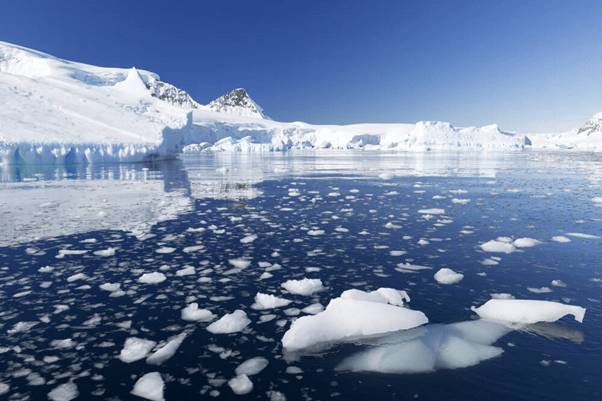
In my opinion, the common people have to understand that their day to day activities are making the earth’s temperature rise at a faster rate, leading to the melting of ice at arctic and leading to the rise in natural calamities all over the world at a very large scale. The use of vehicles at a large scale by people, the use of refrigerators and air conditioners, etc. by people on an increasingly large scale has given rise to the emission of greenhouse gases in the environment. The greenhouse gases make the temperature of the earth rise to seriously high levels. With the rise in temperature, its obvious that the ice would melt and result in natural calamities like floods, tsunamis, etc. What the people need to know that the activities of them have made the earth’s temperature rise. Be it the overuse of air conditioners on an unprecedented scale or the omission of harmful gases from the factories all over the world.
One thing is for certain that, if countries don’t focus on saving the environment, it could haunt the people really badly. With the rise in the cases of natural calamities over the years, the main factor has been the climate change. The governments should make sure that policies are made for saving the environment, making it a topic for discussion in public domain. The government needs to give this topic utmost importance, because the time is very less before everything destroys and we have no option left. The use of the top brains need to be made efficiently so that some solution is found out for this big problem. See, with the rise in sea level, the situation of flooding will definitely increase, resulting in loss of lives of people. But who is to blame? It’s the people themselves. Don’t people think that the overuse they do of air conditioners, it could lead to death of somebody innocent. Yes, it is from natural calamity, but its not that natural. It’s the human made calamity, made from the wrong doings of people, be it the industries omitting harmful gases day in and day out.
In the end, I want to say that the people as well as the government of all nations need to understand that if the environment is harmed at this pace, it will not be long before natural calamities be a part and parcel of the daily routine of the future generation. And if this happens, Earth will surely not remain a place for survival of humans.
Great places for tourism in India
India is one of the fastest growing countries in the world, not just economically, but also in tourism. Tourism makes a great contribution to the Indian economy, and helps our country grow faster. Tourism generates about 9.2 % of Indian GDP single handedly. Millions of people visit India every year as tourists. India is famous for its serene beaches, enticing palaces, wide green landscapes, enchanting hill stations and for its calming religious places. India with its vast culture and diverse habitants houses many different monuments, palaces and historical artifacts. Every place in India has its own history and importance. A tourist must visit India many times in order to cover every significant place. We have tourists visiting India multiple times, so that they can relive their memories. India is so rich in its cultural heritage, that every person on this earth would want to visit India, at least once in their lifetime. Places like Tamil Nadu, Maharashtra, Delhi and Uttar Pradesh are some of the places one wouldn’t want to miss.
Let us now look at some of the world heritage sites in India:-
1. Agra fort:- It was built in the 16 th century by the Mughal emperors and Is one of the
most prominent architecture of its time.
2. Ajanta caves:- Famous because it’s richly decorated with paintings like sigiriya
paintings.
3. Ellora caves:- It’s famous for the Buddhist, Jain and Hindu temples and its rock cut
architecture.
4. Taj Mahal:- It was built by the famous Mughal emperor Shah Jahan in Agra in the
memory of his third wife Mumtaz Mahal.
5. Sun Temple:- It is situated in Orissa and is famous for its Kalinga architectural
designs.
6. Mahabalipuram monuments:- It was built by the emperor’s of Pallava Dynasty as it
depicts architectural designs of their time. It’s famous for its temples, chariots and mandapas.
7. Churches and Convents of Goa:- The churches and Convents in Goa are built by the
Portugese, French and Britishers. They are one of the oldest pieces of architecture existing even today.
8. Khajuraho monuments:- They consist of famous Jain and Hindu temples in Jhansi.
They are famous for their erotic figures and sculptures.
9. Monuments of Hampi:- Situated in the prosperous kingdom of Vijayanagar of
Karnataka, they are famous for their Dravidian style of architectural designs and for the famous Virupaksha temple.
10. Fatehpur Sikri:- It is Famous for its four monuments, the Jama masjid, the Buland darwaza , Diwan-e-khas and Diwan-e-aam.
These don’t even constitute a percentage of what India possesses. India is a country filled with culture and traditions not just Indian but also various others. As Indian’s we must not only take pride in these but also do our best in protecting them, as various historical sites are getting damaged due to intense pollution and lack of proper protection. The government is trying it’s level best to protect them and now it’s our turn. Imagine ten years down the lane we just have ruptures and ruins of these beautiful sites. It’s better to take proper action now, than regret later.
Grit: How Mental toughness matters?
Grit is the perseverance and determination to achieve one’s long term goals in life. Grit is also called mental toughness. Grit, is our key to success and self confidence. It becomes more important than our IQ itself. Grit requires, strong passion for doing things, even if things get boring, tiring and frustrating, they wouldn’t give up on their dreams, because of their passion for it. Have you ever wondered why the kid in school who was always the intelligent one or the teacher’s pet or an all-rounder, ended not becoming successful in their careers? It was because of the lack of grit. Grit does much more than intelligence or IQ does to a human being. Grit gives us the extra push we need to achieve something in life. Grit is the ability to persevere even when you face obstacles or fail, it is the ability to work harder, in order to achieve your goals. This is the reason, you find that students who were once failing in school, are very successful in their lives, this is because of their mental toughness, to not give up after failing, and to keep working hard, until they achieve it.
Importance of grit:-
Grit can make you hard working. It can make you committed to your work, so that you stick with it until the end. Grit is the driver of both intelligence and talent, so talent without grit or intelligence without grit is equal to a vehicle without fuel that helps it work. Some people are born talented or born smart but without enough grit in life they can never become successful or achieve their goals. Only grit can transform intelligence and talent into a skill that paves your way to success. Grit helps you overcome failure easily. It helps you do extra always, like run an extra round during your exercise sessions, or do extra research on your homework.
There are some basic characteristics of grit, they are:-
● Staying strong and overcoming your pain and fear:- A lot of people are way more courageous than they think they are. We need to overcome our fear of failing, a child overcomes it’s fear of starting the first day at school, entrepreneurs overcome their fear of failing when they have to start a new business. Grit helps us overcome them and achieve success in life.
● Staying committed and positive always:- Have you noticed how determined businessmen are ?. If they won’t be resilient and determined, then they will lose, as there is a lot of cut throat competition in the world of business. We must also be confident and always committed in achieving our goals to be successful.
● Staying put in order to achieve goals:- Nothing in this world is easily achieved, everything requires hard work, commitment and confidence. Everyone faces failure in life, but a person with grit will always endure the pain, and overcome the failure and try again. If we don’t stick with our goals and try again, we will never achieve them. Grit is a very important aspect of life that is often neglected. People always strive to
be intelligent and talented, but fail to realise that it’s ultimately the grit that brings them success.
Karnataka, one State many worlds
Karnataka is a beautiful land of culture, art and a wide landscape. It extends from Belgaum in the north all the way to Bangalore down the south. It is a land with a rich cultural heritage. It is famous for its serene beaches, tasty food and amazing monuments and historical artifacts. The native language of Karnataka is Kannada, but you find people right from Kashmir to Kanyakumari, who’ve made Karnataka their home. You find people from all the religions here as well. This Southern state of India is surrounded by different states such as Tamil Nadu, Andhra Pradesh , Kerala, Goa and Maharashtra. It is also surrounded by the Arabian sea. It ranks second in housing famous monuments in India. It is also famous for its hill stations and beautiful palaces. Bangalore is its capital situated towards the south. There are a lot of tourist attractions in Karnataka that you shouldn’t miss at any cost. There are a lot of palaces, waterfalls, dams , temples, mosques and churches which are a sight to behold. I have curated a few of the most beautiful and amazing places, which you should know about.
1. Mysore palace:- It is the major attraction of the Mysore City, which is also called the
city of palaces. The detailed carvings on it’s pillars and the beautiful hand sculpting is a delight to everyone’s eyes. Only mobile photography is allowed inside the palace, one cannot use their cameras. The best time to visit the palace is during the Dasara festivals, the palace is completely decked up with enticing lights. The best part about it is the rich customs and traditions followed during these times. Do not forget the Jamboo savari, it is a treat to watch.
2. Jog falls:- It is a waterfall on the Sharavathi river ,located in the western ghats of Uttara Kannada district. It is the second highest waterfall in India. It is a major attraction for the tourists. The best time to visit Jog falls is during the monsoons, it creates a beautiful sight with rainbows appearing every now and then. The water falls down directly without streaming into the rocks. August-December is the time when there is, best flow . There is a dam nearby associated with it called the Linganamakki dam.
3. Bandipur National Park:- It is a tiger reserve located in the state of Karnataka. It has the second highest tiger population in India. It was used by the Maharaja’s of Mysore as their private hunting reserve. Later after independence it went on to become Bandipur National Park. Adjacent to it is the Nagarhole National Park. There are about 150,000 cattles in this reserve, so diseases might be transmitted from the cattles to the wildlife. These diseases are feared to destroy the flora and fauna of the reserve. There is a national highway passing through the reserve, this has killed a lot of animals in the reserve. Night traffic is banned to save these animals.
These are just few places which one must not miss to see in their lifetime, but there are a lot more wonderful places this beautiful state possesses and takes pride of it.
History of political parties in India
Organized group of citizens who form a unit , sharing similar political views, and who try to control the government are political parties. Indian political history dates back to the pre-independence times. People have a right to form their own political party and they usually work for the common interest of the nation. There are three types of political systems basically they are:-
● One party political system:- Here there is only one political party in place, and they elect their leaders, from this party only. Example:- Russia, China etc
● Two party political system:- Here there consist of two political parties, who compete to run the government. Example:- USA, Canada etc.
● Multiple party political system:- Here there can be any number of political parties in place. Example:- India, Pakistan etc.
There are about seven recognised parties as of today, they are:-
● Bharatiya Janata Party (1980)
● Indian National Congress (1885)
● Communist Party of India (Marxist) (1964)
● Communist Party of India (1925)
● National Congress Party (1999)
● All India Trinamool Congress (1998)
Pre-independence era political parties:-
● Muslim League
● Shiromani akali dal
● Swaraj Party
● Communist Party of India
● Dravidar Kazhagam
● National Conference
● All India forward bloc
Advantages of having a multi political party system:-
● India is a democratic country, and every citizen has a right to form, or be a part of a political party.
● It brings about transparency in the election process , though there still exists foul play in the election process.
● The political parties are held accountable to the needs of, common public and their problems.
● India , one of the most diverse countries in the world, is best suited with a multi political party system. This way, all the sections of the society are given recognition and their voices are heard.
● This system negates the single dictatorship of one political party. There is a healthy competition among the parties.
Disadvantages of having a multi political party system:-
● Due to many parties in place, there might be political instability in the country.
● There is a lot of corruption seen today because of a number of parties existing.
● To implement a policy or a decision, the government will take a very long time, due to the opinion and disagreements among the various political parties.
● The regional parties work for just one particular part of a society, hence the other communities can go unheard.
● Most of the political parties can work for the interest of certain religions, thereby creating religious issues in the country.
There are negatives and positives with the multi political party system, but it surely does more good to our country, and India with its huge population and diverse culture, is best suited with this type of a political system. The only major issue we all have to fear is the threat to our unity and security of our country. Every system has its own loopholes, no government in this world has ever achieved perfection, as long as people are different, there will be differences in their viewpoints as well. The only thing that can make us better, is the improvement seen in the country and its political parties.
Traditional Television vs OTT
Electronic television was originally invented Sir Philo Farnsworth, on September 7th, 1927, who was an American. On earlier days, having a Television was of a great deal. It was considered as a luxury because of its High cost. If one person had a television set, others gathered his home to watch news or sports. Televisions came after radio which became hugely popular worldwide as it provided audio also as well as videos. Television is a media where we ought to find and surf across a lot of channels, films and television shows in various languages, by paying off a fixed price. Shows such as Ramayana, Mahabharata on Cable television broke all the records and attracted a lot more viewers. Traditional television mandatorily needs Cable connectivity. There are several dealers all over India who provides these facilities to people regularly. This media works by sending transmission signals and transmits them through antennas, also Satellite televisions are also available which takes the help of Satellites for communications . Televisions basically confers people to their homes and it is a favorite time pass for many. Various shows all over the world are made specifically for this platforms. The Target audience for media platform is all the age group from children to old age. A person can choose any show according to his preference and watch the same. Televisions created a vast impact on people as because people from all over the world can enjoy these shows if it is live telecasted. Cartoons, Music, games also can be relished on. Televisions serves a great bundle of entertainment for those elders or the housewives who watch particular serials on their free times. T.V. can be used for a student’s purpose as well as it can help as a means of knowledge to children, in a funny way, without going anywhere else, when special classes are provided. Television is probably the best platform for Broadcasting International News.
OTT stands for Over the Top which is in fact a relatively new Technical concept. This is an online media platform which provides content entertainments like Films, Television shows e t c. OTT do not requires a cable connectivity. the best part here is that several latest films are being launched here, or directed and made for this platform only, hence this created an immense trend across the world, and is also adopted by our country. OTT mostly refers to such media field via high speed Internet connections rather than the Cable connections, as used by televisions. By charging appropriate data, these contents can also be passed through smartphones supporting the same. Television was more of an offline Platform whereas OTT is an online platforms. Here you can make your own time to watch a series or even download that to see it afterwards. OTT is so much well-liked and approved by the youngsters because they have a busy study schedule for which they do not have time to watch regularly. OTT cuts off a lot of costs as you get to see only what you pay for, not extras. Also you don’t have to sit and watch unnecessary advertisements in between. You do not have to go to Cinema Halls, just have to download the movie and watch it for free. OTT has encouraged raw talents to show their creativity and gave new life to dynamic entertainment shows. Televisions basically has single handedly controlled the market and distribution o such creations till this day before onset of OTT platforms. OTT holds the copyright of the shows to and is the sole supplier. OTT is also known as Online or Media TV.
According to KPMG Media and Entertainment report 2018, the Indian OTT market is expected to grow 45 per cent to reach R.s. 138 billions by end of Fiscal year, 2023. Reports by Ernst and Young states that number of OTT users in country will reach 500 million by 2020, making India 2nd biggest market after US. 5 most subscribed OTT platforms are Disnep + Hotstar, Amazon Prime, Sony LIV, Netflix and Voot.
Sushant Singh Rajput’s father files FIR against actor’s friend for abetting suicide
A major development in the Sushant Singh Rajput’s suicide case, the late actor’s father has filed an FIR against Rhea Chakraborty and five other people for abetment of suicide and a string of other charges. Bihar Police has reached Mumbai and has sought Mumbai Police’s help in investigating the case.
According to sources, Rhea Chakraborty, who was reportedly Sushant’s girlfriend, used his credit cards on a Europe tour, sacked one of his bodyguards, and even has stakes in the late Bollywood actor’s company. According to the latest reports, a four-member team has reached Mumbai and is discussing Sushant’s case with Mumbai Police. Bihar Police have asked for women constables from Mumbai Police for help in the investigation. Interestingly, this development has come weeks after Rhea Chakraborty had called for a CBI investigation into Sushant’s death, tagging Union Home Minister Amit Shah in a post on Instagram. Before claiming that she had received rape and death threats on social media over Sushant’s death, the Bollywood actress explained that she “only wanted to understand what prompted him to take the step”.

“My son was at the peak of his acting career till May 2019. During that period, Rhea and her relatives developed an acquaintance with my son, under a deliberate conspiracy, so that Rhea could establish herself in the film industry and with an eye on Sushant’s wealth… He was later made to rent a house that was haunted, and that had an impact on my son,” Rajput’s father, K K Singh, has said in the FIR. The FIR has been filed under IPC Sections 306 (abetment of suicide), 341 (wrongful restraint), 342 (wrongful confinement), 380 (theft in dwelling house), 406 (criminal breach of trust) and 420 (cheating). The Patna Police are enquiring about the statements of 38 persons, including Bollywood directors Mahesh Bhatt, Sanjay Leela Bhansali, and Aditya Chopra, which were recorded by the Mumbai Police.
Quoting the lawyer ANI shared, “FIR registered now as a family was in shock & Mumbai Police wasn’t registering FIR, but forcing them to give names of big production houses & get them involved. Sushant’s father has expressed his inability to go to Mumbai to fight the case due to his health issues. Therefore, the case was filed in Patna.
Rhea had earlier requested home minister Amit Shah to initiate a CBI investigation in Sushant’s death case. The Chehre actor addressed Sushant as her boyfriend for the first time in her post.
Sushant passed away on June 14 and till now close to 40 people have been interrogated as part of the ongoing investigation. Meanwhile, Maharashtra chief minister Uddhav Thackeray has said that the state government will initiate a CBI probe in Sushant Singh Rajput’s death case if needed. Lok Janshakti Party president Chirag Paswan talked to Thackeray over the phone on the matter. Earlier, Rhea Chakraborty had requested Home Minister Amit Shah for a CBI inquiry into Sushant’s untimely demise. “Respected @amitshahofficial sir, I’m Sushant Singh Rajputs girlfriend Rhea Chakraborty, it is now over a month since his sudden demise. I have complete faith in the government, however, in the interest of justice, I request you with folded hands to initiate a CBI inquiry into this matter. I only want to understand what pressures prompted Sushant to take this step.” Apoorva Mehta heads Karan Johar’s production house and was called in by the police to record his statement. Karan Johar is also reportedly likely to be called in by the Mumbai police to record his statement in the case related to the investigation of Sushant Singh Rajput’s death. Kangan Ranaut, who has expressed her willingness to co-operate during the investigation, will also be recording her statement soon.
The actor’s death has also made waves in political circles with Lok Janshakti Party chief Chirag Paswan writing to Maharashtra Chief Minister Uddhav Thackeray, saying “On behalf of every Bihari, I urge you to conduct a fair inquiry into the matter so that no talented person is victimized in future due to factionalism and nepotism in Bollywood.” Sushant Singh Rajput made his Bollywood debut in 2013 with the movie – “Kai Po Che”. He was appreciated for his performance in the 2015 movie “Detective Byomkesh Bakshy!”, “MS Dhoni: The Untold Story”, “Sonchiriya” and “Chhichhore”.His death led to a deluge of tribute and recriminations on social media involving the Hindi film industry, which has been battling allegations of nepotism and cliques. “Dil Bechara”, his last movie that was released online on Friday on Disney+ Hotstar, has drawn praise from critics.
The Rights of the Accused
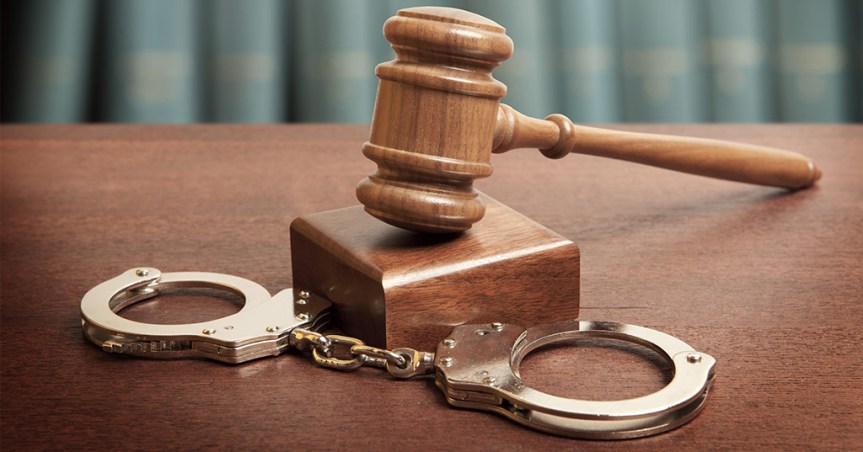
An accused or arrested person is the one who has charged for a crime, but not necessarily has committed the crime. The term arrest means apprehension of a person by legal authority so as to cause deprivation of liberty. They are the arrested as the police officers think that there is a chance for that person to be the criminal, this is usually taken on the benefit of doubt after considering all the evidences and issues. They cannot be arrested merely by suspicion or information, a doubt has to arsise considering all the factors, only them one can be arrested. Arrest can tekr place with and without a warrant, Section 41 of the CrPC (Criminal Procedural Code), 1973 states the situations where a peron can be arrested without a need for a warrant, for example rape, murder, etc. In India it is presumed that a person is always innocent till proven guilty, and we also lay down the principle that no matter whoever it is, either the innocent or guilty including criminals , have the right to life which is enshrines in the Indian Constitution under the article 21. This article states that “No person shall be deprived of his life or personal liberty except according to a procedure established by law.” This right can be invoked only if it has been decided by the court that a person can no longer can be alive, by issuing a death sentence, or in the case of life imprisonment, the decisions are taken after reviewing the offences, arguments by both parties, evidence, and the necessary legislations. So, every person including the accused have certain rights and they will we discussed in the article. Subsequently the accused have several rights that are vested in them, and are to be followed during the time of investigation, trial and all the procedures he is concerned with. The accused has the right to know that hes certain rights. The rights of the accused can be divided into two broad categories:
- Rights at the time of arrest, and
- Rights at the time of trial
The rights that are included under the above two categories will be discussed below:
1. Right to know the grounds of arrest : A person who has been arrested, has the the following rights which enable him to know the reasons for the arrest. They have been discussed as follows:
- Article 22(1) of the constitution states that no police officer can arrest a person without telling the person reasons behind his arrest.
- Section 50 and 50A of the CrPC states that there is a duty on the part of police officer to states the reasons for his arrest, this is applicable when a police officer arrests the person without a warrant, and this action should also be informed to the person’s relatives or friends.
- According to Section 55 of CrPC, if a junior has been delegated the work to arrest a certain person without warrant , then the junior has to give the order of delegation, along with reasonable reason for the arrest.
- Section 75 of CrPC provides that when the warrant for arrest is being issued, it shall be notified and checked by the arrested person, the warrant shall be furnished in case of any changes.
2. Right to be produced before the Magistrate without delay : The arrested person shall be taken to the magistrate before 24 hours, failing so it would make the respective authorities responsible for wrong arrest or detention. This right has been clearly explained in article 22(1) of the constitution, along with section 56 and 76 of the CrPC.
3. Information regarding right to be released on bail : If a person arrested without a warrant, and is accused of a bailable offence, then the police officers have to give information, that they have the right to get a bail on payment of a certain amount. Section 50(2) of the CrPC has stated that a person has a right to get bail, and they shall inform the arrested person that, so that they can make arrangements for attaining the bail.
4. Right to fair and just trial : This right has two components i.e, the right to fair trial, and the right to speedy trial.
- Right to fair trial should be granted as everyone is equal before law. The law of equality has been clearly enshrined under article 14 of the Constitution. The trial must be fair, should be conducted in open court, and shall also be recorded using camera but there can be exceptional sensitive cases where camera recording is considered unnecessary.
- Even Though the right to speedy trial has not been mentioned anywhere, the Supreme court gave a judgment in Huissainara Khatoon v/s Home Secretary, State of Bihar case where it as held that the trial shall be disposed as diligently and expeditiously as possible.
5. Right to consult a lawyer : Every person who has been arrested has the right to consult a lawyer of their own choice. This element has been stated under article 22(1) which states that one could choose their lawyer to defend them in the court, the same has been stated under section 41D of CrPC in the case of interrogation, and section 303 of CrPC when criminal proceeding are happening. Hence, when all the above situations take place one has a right to a legal practitioner.
6. Right to free legal aid: When a person is not financially capable of hiring a lawyer for defending them, in that case the state has the duty to provide free legal aid to all the accused person who have been poverty stricken, this has been stated under article 39A of the constitution. The duty of the states was again reminded in Khatri v/s Bihar case. The same has also been provided under article 302 of CrPc.
7. Right to remain silent : One has the right to remain silent during the trial, it cannot be presumed that a person is guilty just because he is unanswering all the questions. It has been enshrined under article 20(3) that no person can be compelled to be a victim against oneself. In the Nandini Satpathy v/s P.L. Dani case it has been stated that no person shall be forced to confess something as they have a right to remain silent.
8. Right to be examined by a medical practitioner : Under the section 54 of the CrPC, it has bee stated that the accused person has the right to get a medical examination done, if the accused claims that there are some details which would prove that he has not committed the crime, this is also applicable when the accused claims that he has some detail on him which proves that there was a commission of crime by someone else on him, this right can be availed.
All the above 8 rights are the major ones which play an important role in the rights of the accused. However there have been other rights stated under the sections 55A, 358, 41, 46, 49 of the CrPC. They contain rights like right to health care ans safety of the accused, right to avail compensation when illegally arrested, etc. There have been cases like In D.K Basu vs State of West Bengal and others which is a landmark judgement,Joginder Singh vs. State of U.P ,and many other cases which played an important role in achieving today’s state of accused rights.
All the above rights have comes to present states only after many efforts ov different people. The main intention behind it was to reduce the number of illegal and custodial deaths, which are mainly caused due to illegal arrests. Not only that, we should remember that the accused and criminal are also normal human beings like the all of use, hence they should be deprived of right to life, and the right to have rights. The rights have fulfilled its objectives mainly to decrease the number of custodial deaths. In spite of all the rights, there are cases which have been reported where the police are misusing their authority and position, by invoking the rights of the accused, to gain some money out of the process. There also have been cases where the accused in has not been informed about his rights, and he was totally unaware of them, due to which he was exploited. Police officers are the keepers of law and rights, thy are not supposed be doing the above crimes, instead they should play an important role in making sure everyone is exercising their rights in the society. The legislation should get more stringent in regard with the crimes of police officers, as stricter the legislation lesser the problems. Continuous efforts are taking place, and one day in the future we might see no misuse of rights, and when no one is deprived of them too.
The Law of Criminal Conspiracy

A criminal conspiracy is when two or more people come into an agreement to commit a crime in the future. It can either be a unlawful crime or, a lawful action which has been achieved by unlawful means. The mere agreement between two people does not amount to criminal conspiracy, some other action has to take place which pursues the objectives in the agreement. Criminal conspiracy is an punishable offence as stated under section 120 of the Indian Penal Code (IPC), 1860. This crime has been defined under section 120A as : “When two or more persons agree to do, or cause to be done
a.an illegal act, or b. an act which is not illegal by illegal means, such an agreement is designated a criminal conspiracy: Provided that no agreement except an agreement to commit an offence shall amount to a criminal conspiracy unless some act besides the agreement is done by one or more parties to such agreement in pursuance thereof. Explanation.—It is immaterial whether the illegal act is the ultimate object of such agreement, or is merely incidental to that object.”
Section 120B of the IPC has provided for the punishment of criminal conspiracy, it states that any person who has committed the crime of criminal conspiracy will either be punished with the death sentence, or an imprisonment for a minimum of two years or above will take place. The same punishment will apply in the case of abetment to the offence. Any person who has committed any other offence will be punished with either with an imprisonment not exceeding 6 months, or a fine, in some cases even both.
The offence of conspiracy was considered a civil offence before, but after considering the abetment concept to the conspiracy, and the commission of various crimes like murder, robbery, etc which involve criminal conspiracy, it was considered that this should be regarded as a crime. The position of criminal conspiracy has been changed when the section 120A and 120B has been added through the V A chapter to the IPC. Now we will be discussing the essentials for an act to be considered as criminal conspiracy, they have been discussed as follows:
- Two or more people: For an act to be considered as criminal conspiracy only when two or more than two minds are conspiring for or against something. Only one conspiring wont be a criminal conspiracy.
- Commission of an illegal act: Mere agreement between the wto or more parties to do something is not considered as conspiracy, and act has to be done which is prohibited by the IPC, and it completely forbidden by law, then the parties will be accountable fro criminal conspiracy.
- Commission of a crime by illegal means: When a completely legal act is committed through various illegal means by two or more people as they have caused ommission , then is is regarded that the person has committed the crime of criminal conspiracy.
- Meeting of minds: The person involved in the criminal conspiracy are regarded to commit that when each and everyone know the intention behind the actions that are going to take place, if they don’t know them they they will not be liable for criminal conspiracy. This plays an important role in proving that there has been a conspiracy.
A question may arise that what if only one of the two people is present in the crime, and second one has not played part in the crime, in that case only the person committing it will be convicted. But if the second person has committed small mistakes which helped the first person th commit the crime, then he will also be jointly liable.
Now lets take the help of an example to understand, lets assume that A, B, C and D commit a bank robbery, A is responsible for cutting the wires to go into the bank, and C and D go into the bank and steal all the money, and when all this is happening B is standing outside the bank, and he is not aware of the situation that bank robbery is going to happen, his duty was a driver who would just drop them to a particular place. So in the above situation C and D are clearly a part of the criminal conspiracy, whereas A has committed abetment, i.e supported the crime by leading a way into the bank, hence B will also be a part of the criminal conspiracy as an abettor. B had no idea of what was happening , therefore he would not be liable for criminal conspiracy. Hence, we can see that there was meeting of minds between A, C and D. We have to remember that crime is a combination of actus rea that is the physical action, and mens rea which is the mental wrong intention to commit the crime, thus one would be liable only if both take place.
To sum it up, the law of criminal conspiracy has been clearly explained through the above examples and provisions. Hence, it becomes important to take into consideration every small thing while one is proving for criminal conspiracy. Only if all the essentials are fulfilled we can come to a conclusion that a crime has taken place, It is very difficult to prove the meeting minds point, but we have to understand that the mental intention of a person plays a very important rile in deciding if one is a criminal or not. Hence, investigation should be conducted in a very clear and transparent manner, without leaving the smallest of smallest detail.
Honour Killing : Need for a Law
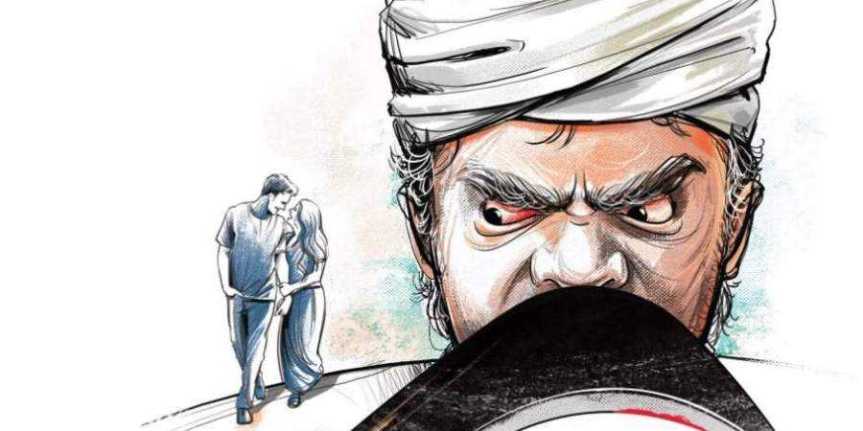
Honour killing or shame killing is the term used when one member of the family (especially male) kills another member of the family (especially female) because that member has brought shame to the family’s culture tradition by committing something wrong acc ording to the members of the family. That act committed has affected the reputation of the family, the act can take the form of divorce (even if husband was abusive), love marriage (and not arranged same gotra marriages), marrying a person of the lower caste, commission of adultery, etc. These sort of killings can also be termed as cultural killing, as it is done when a person acts beyond the scope of the code of conduct laid down in that particular culture,household, and community, by breaching the code and this is considered to be “illegal” or “immoral”. This has been happening in many places in the nation, but there has not been any specific legislation only for Honour killing, it usually comes under the category of murder or homicide. We will be discussing the international and national aspects of law with regard to honour killing.
Honour Killings are considered as a gross violation of human rights against a women as it has proven that theory are more vulnerable to this than that of men. Killing a women for the purposes of honor is highly violating their rights. There have been several international conventions and conferences namely the International Convention on Human Rights (1948), International Convention of Civil and Political Rights (1966), Convention on the Elimination of All Forms of Discrimination against Women (1979), have stated that the human rights of women should be duly protected and “honor” is no defence to honour killing as a means to protecting the culture and tradition, and this is against the principle of right to life as stated under the UDHR (Universal Declaration Of Human Rights), 1948. There have other international laws with respect to this, but the above ones are the most important ones.
Now lets look into the laws present in India regarding Honour Killing, as stated above there has not been any specific ;legislation on the topic of Honour Killing, even though it has been highly prevalent. We will be looking into other provisions in other legislation where one could be punished for heinous crime. As honor killing is nor so different form mourder and homicide which have been mention in the Indian Penal Code, 1860, it is assumed that they are sufficient to decide the punishment and penalty in the case of honour killing. The provisions of the IPC have been discussed as follows:
- Sections 299-304: Penalises any person guilty of murder and culpable homicide not amounting to murder. The punishment for murder is life sentence or death and fine. The punishment for culpable homicide not amounting to murder is life imprisonment or imprisonment for upto 10 years and fine.
- Section 307: Penalises attempt to murder with imprisonment for upto 10 years and a fine. If a person is hurt, the penalty can extend to life imprisonment.
- Section 308: Penalises attempt to commit culpable homicide by imprisonment for upto 3 years or with fine or with both. If it causes hurt, the person shall be imprisoned for upto 7 years or fined or both.
- Section 120A and B: Penalises any person who is a party to a criminal conspiracy.
- Sections 107-116: Penalises persons for abetment of offences including murder and culpable homicide.
- Section 34 and 35: Penalises criminal acts done by several persons in furtherance of common intention.
However, in spite of the above provisions a bill is being proposed in the parliament to amend specific provision of different laws like, the Indian Penal Code, 1860, and Indian Evidence Act the Special Marriages Act, 1954, and the Indian Evidence Act, 1872 as there have been a rise in the cases of honour killing, the bill soughts to bring necessary amendment in these acts in order to decrease the crimes related to honour killing. The bill in question is still pending. The amendments that are ought be but under the bill are an amendment was thought to be brought in the Indian Evidence Act, 1872, so that burden of proof can be shifted to the accuses, hence the accused who are the family members and panchayats, in this case have to prove their innocence by giving reason that an honour killing has not taken place. In the same manner an amendment has to be brought to section 300 of the IPC, to include honour killing as a different type of murder, and the process for marriage has to be shorter an easier under the Special Marriages Act, 1954 so that the couple couple can not be prone to honour killing. An amendment to the Hindu Marriage Act, 1955 disallowing same gotra marriage has to be demanded. After seeing the above provisions, it can be concluded that a separate legislation or amendments to the present act has to be brought for honour killing as soon as possible. The efforts taken have to be completed, and a new legislation has to be brought.
To sum it up, we Indians tend to give a lot of importance to culture and tradition, as they form the core part of our lives. It has been proven that in some specific areas like Haryana, uttar Pradesh and Rajasthan in North India, and Kerala, Tamil Nadu, in South India, honour killings are highly prevalent. These are not new in rural areas but they also exist in urban areas too, and even in other states in the nation. How much ever developed we are, there are certain things in which our thinking doesn’t change, we tend to stick to our old ways and myths, instead of becoming dynamic ans change as per the changes in the society. Caste and culture play an important role in politics, education and in almost everything in the nation. There have been cases where a person in the family is highly educated, ans still has committed this crime. Even education is not able the change the mentality of a person. Its high time we take measures to eradicate this mental disease existing in the corners of every society. Its time we change and bring a change regarding this issues. Developments should not only take place in terms of money and economy, it has to take place in the way we accept newer thing in life. Tradition and culture should no longer be a excuse for killing a person, we have to keep in mind that even the cultural concepts are prone to subjective opinion. It is not stated anywhere that a change cannot happen, and one cannot deviate from one’s culture, we are the ones who are thinking like that. We should understand that there is no honour in killing a person
SECULARISM
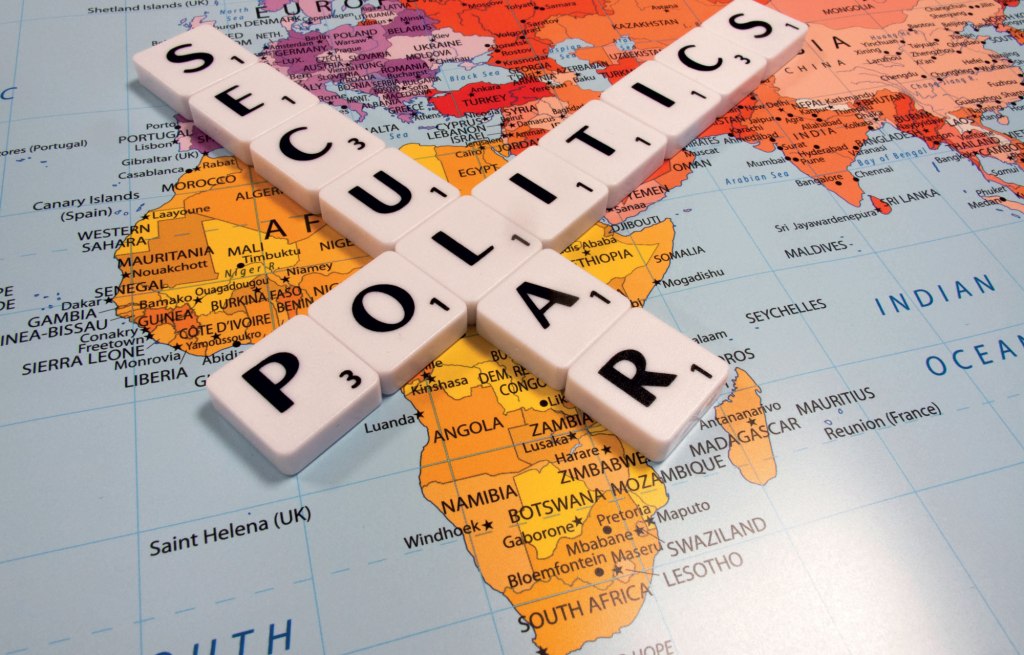
The term secular was not included in the original constitution. But, the spirit of secularism was ever found in the constitution. The Preamble declares that the constitution secures ‘to all citizens liberty of thought, expression, belief, faith and worship’. The 42 Amendment Act, 1976 inserted the term ‘secular’ in the Preamble.
Secularism: Western View
The concept of secularism refers to guaranteeing every individual the liberty of managing his religious affairs, embracing a religion and worship. According to Encyclopaedia Britannica, ‘secularism means being non-spiritual and having no concern with religious matters. It is used in the sense of being opposed to religion. However, secularism and religion are not hostile to each other but are mutually exclusive. Secularism does not oppose religion or advocate the abandonment of religion. Religion and secularism can perfectly coexist. It refers to being neutral to religious affairs.
Secularism in India
The western view of secularism is not acceptable in the Indian context. The founding fathers of the constitution sought to establish India as a secular state. It is ‘the state that is not going to make any discrimination whatsoever on the ground of religion or community against any person professing any particular form of religious faith. This means, in essence that no particular religion in the state will receive any state patronage whatsoever. The state is not going to establish, patronize or endow any particular religion to the exclusion of or in preference to others and that no citizen in the state will have any preferential treatment or will be discriminated against simply on the ground that he professed a particular form of religion. In other words, in the affairs of the state the professing of any particular religion will not be taken into consideration at all.’
The constitution guarantees the following freedoms to all persons in India:
- Freedom of conscience and the right to profess practise and propagate a religion of his faith
(Article 25). - Freedom to establish and maintain institutions for religious and charitable purposes and administer their affairs (Article 26).
- Freedom to own and acquire properties (Article 26).
- The right not pay any tax for the promotion of any particular religion (Article 27).
- Prohibition on imparting religious instructions in the state-run/state-funded educational institutions (Article 28).
- Prohibiting discrimination with regard to places of public importance (Article 15).
- Providing equal opportunity in matters of public employment (Article 16).
- Right of the minorities to conserve their language, script and culture (Article 29).
- Right of the minorities to establish and administer educational institutions of their choice
(Article 30).
This clearly indicates that secularism in Indian context is based on ‘freedom, equality and tolerance’. The constitution does not erect a wall separating state and religion. It requires the state to be non partisan. The state will not identify itself with any religion. The state is neither theistic nor theocratic nor an atheistic state. The state is envisaged as an ‘Irreligious State’. Moreover, the constitution guarantees the right to religion subject to reasonable restrictions so that equality is established. Thus, Indian secularism is a ‘progressive’ concept.
Every individual is guaranteed with the right to conscience that is, one can embrace any religious faith, or remain agnostic or even atheistic. The state shall keep itself away from ‘man–God’ relations and shall only regulate the ‘man–man’ relations. The Supreme Court has held that the right to conscience is an absolute right and must not be subject to regulation. Irrespective of this the state shall treat every individual equally and must not treat any one preferentially or discriminate any of them. The state must keep equidistance from all religions. In case of any privilege or patronage accorded to any religion shall be available to all religions equally. All religions must be provided with equal opportunity for development. The provisions of Articles 14, 15 and 16 guarantee equality by prohibiting any discrimination on the ground of religion. Towards promoting equality, Article 44 directs the state to secure a uniform civil code for all citizens.
The religious denominations/groups are guaranteed the freedom to manage their religious affairs and establish institutions for that purpose. They also have the right to acquire and own property as a fundamental right even after the constitution (44 Amendment Act) which repealed the right to property as a fundamental right. On the same lines the educational institutions established by the minorities also enjoy the right to property as fundamental right. Further, the constitution guarantees the right not to pay tax if the proceeds of such tax are to be used for the promotion of any particular religion. This is a towering feature of Indian secularism. Tax is compulsory exaction of money and the power to impose tax is an important feature of sovereign power.
The state-run or state-funded educational institutions are prohibited from imparting any religious instructions. However, the institutions set-up by the religious groups, imparting religious instructions are permitted but no one should be compelled to receive them. In case of minors, the consent of their parents or guardians is essential for imparting religious instructions. This is fully in conformation with the Preamble and Article 25 (1) which guarantees the right to conscience as an absolute freedom.
Given the complexities of Indian culture, the debate on secularism is different from that in other countries. In India the religion happens to be the basis for the caste and the associated discriminatory practices. Traditionally the social evil practices such as untouchability, gender disparity, etc., were justified on ground of religion. Hence, the restrictions on this right are essential. Further, the state needs to be empowered to regulate the right in order to promote social reforms. It is also essential to regulate the economic, financial, political or other secular activity which may be associated with religious practice. Similarly, the educational institutions established by the minorities are also subjected to the regulation of the state with respect to the quality of education. The state must prevent any regressive education in the garb of religious freedom.
The constitution guarantees the right to the individuals and conferred power on the state to create conducive conditions for the smooth and harmonious exercise of the same. Thus, the concept of secularism in India is a progressive one.
Investments
Investments are made on the perspective to get the gain by over the period of time. Aim of investment is to increase in wealth by keeping it safe. There are many ways one can invest his wealth but need to calculate it’s risk and return. The investment must have the qualities of keeping the capital safe along with liquidity. Because when the need arise one can utilise it.
Qualities of good investments
Capital safety : The investment should have the quality of capital safety. The investment should not lose its value over the period of time. It should grow over the period of time.
Liquidity: The investors must in the position to use the investment when the need arises. The investment made by him should be liquid where it can be possible to convert in to cash easily.
Capital growth: The investment should grow over the period of time as the investors can get good return for their long term holdings.
Must consider time value of money : The return which the investor get from the investment should consider the time value of money.
Profitable: The investment need to give good profit in return to the investors for making the investment.
PARLIAMENTARY DEMOCRACY
‘Parliamentary democracy, democratic form of government in which the party (or a coalition of parties) with the greatest representation in the Parliament (legislature) forms the government, its leader becoming Prime Minister. Executive functions are exercised by members of the Parliament appointed by the Prime Minister to the cabinet. The parties in the minority serve in opposition to the majority and have the duty to challenge it regularly’. It is also known as Cabinet Form of Government with ministerial responsibility. The Constitution of India sets up parliamentary form of government to both the union and the states. Indian system is a legacy of the British rule and follows the English Parliamentary System.
Characteristic Features of Parliamentary Democracy
Parliamentary democracy has certain important features which are:
- Dual Executive
In the parliamentary democracy, there are two executives namely, the titular head and the real executive head. The former is the head of the state and the latter is the head of the government. In India, the President is the titular head and the Prime Minister and his Council of Ministers is the real executive head. Constitution regulates the relationship between the two. - Bicameral Legislature
In the parliamentary democracy, there are two Houses namely, the Council of States and the House of the People. - Responsible Government
A responsible government is one which is responsible to the people. It is essential that the government enjoys the confidence of the Parliament for making laws to govern the country. Responsible government refers to two elements of parliamentary government in British derived parliamentary systems. First, the government— Prime Minister and the Council of Ministers, is accountable to the Lower House of Parliament. Hence, the government must maintain majority support in the Lower House; loss of that support means that the government must resign. In this sense, responsible government is another term for parliamentary government; a ministry is ‘responsible’ to Parliament for the activities of government and must resign if it loses the confidence of the lower house. Thus, a government whose accountability to people is ensured through the answerability to the Houses of the Parliament for all its acts, is a ‘Responsible Government’. - Ministerial Responsibility
The parliamentary form of government is otherwise known as ‘Cabinet Form of Government with Ministerial Responsibility’. The collective responsibility of the Council of Ministers to the House of People for all acts of commission and omission of the government and the individual minister being answerable to the Houses of Parliament for the performance of the ministry/department in his charge are two dimensions of ministerial responsibility. - Weak Separation of Powers
Montesquieu, a French social and political philosopher coined the term ‘separation of powers’ in his book ‘Spirit of the Laws’. According to him, the political authority of the state is divided into legislative, executive and judicial powers in order to promote liberty most effectively. Separation of powers is an essential element of the Rule of Law and limits one branch from exercising the core functions of another and prevents the concentration of power and provides for checks and balances. The legislature enacts the laws, the executive implements and administers the law and public policy and the judiciary interprets the constitution and laws and decide disputes. In the presidential form of government there is a complete separation of powers. However, this arrangement is weak in the parliamentary system. ‘The parliamentary government has a sort of link between the executive, the legislative and the judiciary.’ In the parliamentary system there is a strong executive branch government but answerable to and controlled by the legislature. - Continuous coordination of Legislature and Executive
‘The presidential government has complete separation of powers of the three principal organs of the state, each embodying the sovereignty of the people in the different aspects of the state’s activities and there is no link between them.’ Hence, in this form the executive is pivoted on the President and he is the chief executive and the source of all executive power. In such a system the imminent danger of personality cult is unavoidable. As a consequence, there is a need for continuous coordination of the executive and legislature. This is a natural feature in the parliamentary form of government as there is no complete separation of powers. Furthermore, given the low rate of literacy and low level of political socialization in India it would be difficult to resolve any conflict between the three organs of the government. The coordination system inherent to the parliamentary form helps resolving such conflicts by itself without the citizen playing a role. To quote Shri K. Hanumanthaiya, ‘Instead of having a conflicting trinity it is better to have a harmonious governmental structure’. - Complete and Continuous Responsibility of Executive to Legislature
The founding fathers wanted to establish a responsible and accountable government; they wanted the government to be sensitive to public expectations, hence, they had chosen the parliamentary form of government. The ‘complete and continuous responsibility’ of the executive to the Parliament is the most distinctive characteristic feature of a parliamentary democracy. Hence, the parliamentary system of government is also known as cabinet form of government with ministerial responsibility. According to M. V. Pylee, the parliamentary system works under the ‘principle of concentrated authority under strict control’. This on the one hand enables an ‘intimate cooperation’ between the Council of Ministers and the Parliament and on the other fixes’ responsibility of the council to the Parliament. Hence, the council is under the constant vigil of the Parliament which is the ‘real merit’ of the Parliament system.
Organisational Culture
Organisational Culture is quite complex. Every organisation has its own unique personality just like people have and this personality of organisations is known as culture. Organisational Culture may be defined as the personality or traits of an organisation. It refers to a system of shared assumption, values, beliefs and customs of the employees of the organisation and how these things result into mixed meaning. These values have a strong influence on employee behaviour as well as on organisational performance. It shows the unofficial aspects of the organisation instead of its professional aspect. An organisation’s culture can be one of its strongest asset for some organisations. Culture or shared values within the organisation may help in increasing the performance. Organisational Culture helps in defining that what type of people will prefer working in an organisation and who will be successful. In many research studies it is found that there is a relationship between organisational culture and company performance with respect to success indicators such as sales, volume, revenue, market share, profit, goodwill and stock prices. Organisational Culture also acts as a effective control mechanism for dictating employee behaviour. It is the most powerful way of controlling and managing employee behaviour than using organisational rules and regulations. Culture is a source of competitive advantage for organisations. It normally includes an organisation’s expectation, experiences, philosophy and values that it hold together. It is an invisible but a powerful tool that influences the behaviour of the employees in the organisation. Organisational Culture includes many things like the way the organisation treats its employees and customers, the extent to which the organisation provides freedom in decision making and personal expression to its employees and how information and power flow through its hierarchy. Organisational Culture helps the organisation in increasing its productivity and performance and it provides the guidelines on customer care and service, quality and safety of product, attendance and punctuality, etc. Organisational Culture is unique for each and every organisation and one of the hardest things to change. It is interwoven with processes, technologies, learning and certain other events. The elements of organisational culture are first, artefacts. The tangible things which represents our culture is known as artefacts. For the company it acts as reminders and trigger. Example: first product of the company, awards gained, etc. Second, stories and histories. Culture can also be passed through stories and histories in planned manner through learning devices. Third, symbols and symbolic action. It is also similar to artefacts. It reminds the people about its norms and beliefs. It can vary from image of its products to handshake between different member. It is very important to maintain the organisation culture and this can be done through following ways:-
- Behaviour of Manager and Team – It is a very effective method of maintaining organisational culture. It consists of incorporating those programmes and behaviour that the managers, work group and employees notice.
- Role Modelling, Coaching and Teaching – As we know, learning by doing which means we learn new things when we see, observe and do. Same goes here employees learn about various aspects of organisational culture by observing the behaviour of the managers towards them.
- Allocation of Rewards, Recognition and Status – Rewards system also helps in teaching the employees about the organisational culture. As rewards, recognition and penalties shows the behaviour and importance of both the managers and the organisation.
Organisational Culture has many importance too. They are:-
- Acts as a Talent Attractor – Organisational Culture plays a major role for prospective employees as they consider it as a important factor before joining any organisation.
- Makes Everyone Successful – If the culture of the organisation is good it helps an individual in becoming successful by investing proper time and talent.
- Builds Social Bonds – Organisational Culture acts as a social bond as it connects all the employees together and they consider themselves as a part of the organisation.
So lastly, it is very important and vital for every organisation to follow organisational culture.
Securatization
Securatization is the process of convertion of debts in to the marketable securities. As banks gives loans for many purposes, by giving loans the cash will get outflowed but inflow will be after the some years. So banks may get liquidity problems,may not able to give loans to other people. To overcome from this the securatization will help the banks. as loans are given by banks on mortgage the banks will sell such receivable to Special purpose vehicle and get the cash from SPV. Special purpose vehicle will appoint credit rating agency to rate the different loans. The SPV will convert such debts in to marketable securities, where the investors can invest in such securities. Based the rating given by the credit rating agency the investors will invest in the securities. The investors will get the interest for their investment.
Benifits
- Helps banks to maintain liquidity
- Helps banks to give new loans where bank can generate more interest
- Investors can invest according to the credit rating and get returns
S-400 missile to China
The S-400 Triumf, previously known as the S-300PMU-3, is an anti-aircraft weapon system developed in the 1990s by Russia’s Almaz Central Design Bureau as an upgrade of the S-300 family. It has been in service with the Russian Armed Forces since 2007. Considered to be the most advanced missile defense system in the world, the S-400 ‘Triumf’ system is capable of destroying targets at a distance of up to 400 kilometers and a height of up to 30 kilometers.
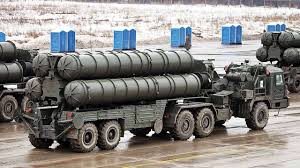
In 2017, the S-400 was described by The Economist as “one of the best air-defense systems currently made”, and Siemon Wezeman of Stockholm International Peace Research Institute (SIPRI) said it “is among the most advanced air defense systems available.” China, Saudi Arabia, Turkey, India, and Qatar expressed their appreciation for the S-400 system, and China was the first foreign buyer to make a government-to-government deal with Russia in 2014.
Amid a global uproar against China – coronavirus, a military standoff with India, Hong Kong, Taiwan, and the South China Sea, US – in just the past six months, Moscow has now announced the suspension of S-400 surface-to-air missile systems to Beijing, with the resumption of deliveries yet to be ascertained.
Russia has announced the suspension of S-400 surface-to-air missile systems to China and said the resumption of further deliveries is yet to be ascertained. Citing Chinese newspaper Sohu, UAWire reported, “This time, Russia announced the postponement of the delivery of missiles for the Chinese S-400 system. To a certain extent, we can say that it is for the sake of China. Getting a gun is not as easy as signing an invoice after receiving a weapon.” “They say that the work on delivering these weapons is quite complicated. While China has to send personnel for training, Russia also needs to send a lot of technical personnel to put the weapons into service,” Sohu said.

Post-Russia’s announcement, China has reportedly said that Moscow was forced to make such a decision as it “is worried that the delivery of S-400 missiles at this time will affect the anti-pandemic actions of the People’s Liberation Army and does not want to cause trouble to China.” In 2018, China received the first batch of S-400 missile, a military-diplomatic source told Russia`s TASS news agency. Meanwhile, it should be noted that the suspension comes merely days after Russia had accused China of espionage, despite the two nations sharing considerably good relations over the years. This assertion had come up after Russian authorities had found the president of its St Petersburg Arctic Social Sciences Academy, Valery Mitko handing over classified material to the Chinese intelligence.
Untangling Gender and Sex: Beyond He or She

It’s easy to fictionalize an issue when you’re not aware of the many ways in which you are privileged by it.
– Kate Bornstein
One can imagine many raised eyebrows at the idea of this distinction between sex and gender. Aren’t they the same; two names given to the same phenomenon? Yes, and No.
Yes, because these two terms are often used interchangeably by people at large. No, because thinking of the terms as meaning the same thing is an error. The terms ‘sex’ and ‘gender’ are closely linked, yet they are not synonyms. There is a subtle difference between the two as stated by psychologists and anthropologists across the globe. Today, let us explore how they are different.
The word sex has its root probably in Middle English which means “section” or “divide”. If we go further back, sex means the number six in Latin. On the other hand, the word gender is derived from Middle English which in turn is derived from Old French which is ultimately derived from the Latin word genus. Genus means “kind” or “type” or “sort”.
If we quote from the Medilexicon’s medical dictionary, we find two definitions of sex and gender respectively:
Sex is “the biologic character or quality that distinguishes male and female from one another as expressed by analysis of the person’s gonadal (gonad is an organ in animals that produces gametes, especially a testis or ovary), morphologic (internal and external), chromosomal, and hormonal characteristics.”
Gender is “the category to which an individual is assigned by self or others, on the basis of sex.” To put it in a nutshell, sex refers to biological differences while gender refers to socio-cultural differences. This will become clearer by way of examples. Sex and gender have different characteristics. Some features related to sex are – while males have testicles, females have ovaries; while males have penis; females have vagina, females get pregnant while males do not; females can breastfeed their babies, males cannot; at the time of birth, males tend to weigh more than their female counterparts; generally, males have deeper voices than females.
Some features related to gender are – women have long hair and men short; women contribute more to household chores than men do ; some cultures expect their women to cover their heads when they step out of the house while there is no such injunction for men; up till the twentieth century women were not allowed to vote in a number of countries (UK granted female franchise in 1928) ; some professions, like teaching and nursing, are considered to be more suitable for women while others like, climbing the corporate ladders, are more appropriate for men (women are now breaking these barriers); men are regarded as bread earners and protectors of women in the majority of cultures.
This means while sex is a natural or biological feature, gender means a cultural or learned feature – the set of characteristics that a society or culture defines as masculine or feminine. As stated succinctly by the French writer and feminist, “one is not born a woman, but becomes one”. We can extend this to mean that one is not born a man but becomes one, too.
While a person is born with a sex, gender is dictated by socio-cultural norms in which he or she finds himself or herself. Gender is not about being born with a penis or vagina but how we feel about ourselves, or identify with a particular group, men or women. Some people are transgender which means their gender identity is not aligned with their biological sex. A person born with a man’s body might identify more with women and vice-versa. Sexual identity is about our attraction to people of a particular sex. While it is largely true that opposite sexes attract, people of the same sex also experience attraction and hence terms like gay, lesbian, bisexual.
Needless to say, cultural norms vary and so do the gender roles. For example in India, it is normal for Sikh men to have long locks while in some matriarchal societies in Africa, women are supposed to provide for the family while men take care of the kids and household.
Similarly, the sexual differences among people cannot be categorized into two binary opposites. While females have XX sex chromosomes, men have XY chromosomes. There are some babies who are born with XO chromosomes (Tuner Syndrome) or XXY chromosomes (Klienfelter’s Syndrome). They are intersex which may have sex organs that appear to be somewhat female or male or both. A lot of times surgeries are performed on such babies right after their births so as to assign a particular sex to them. However, psychologists advise that such surgeries should be postponed till the babies grow up and can decide for themselves which sex they identify with more, male or female, and accordingly go for sex change procedures. Otherwise, they may experience an identity crisis which may lead to depression or even suicides.
In our culture, gender education is given to kids on the basis of their sex from an early age. While men are told that they need to be aggressive and not emotional (men don’t cry), women are told that they have to be feminine (don’t laugh loudly, learn how to cook, don’t study too much else who will marry you). However, such roles can prove to be a disadvantage for both male and female. What about those men who are fragile? Or those women who do not want to marry and bear children but to make a career? Hence, it is stands to reason that such choices should be granted to different sexes irrespective of the expected gender roles in order to ensure the fullest developments of their personalities in accordance with their innate abilities or desires.

In a nutshell, sex is what lies beyond your legs. Gender is what lies between your ears.
Trigger Warnings
Trigger Warnings (TW) are labels that we are well-acquainted with today. The term comes from the vocabulary of therapy especially for PTSD, where an individual who has undergone trauma is ‘triggered’ by something that they come across, creating a negative emotional response. It has been extrapolated into mainstream discourse as a measure to help in such situations. ‘Trigger warning’ is meant to be used before content that some may find distressing or triggering owing to their past traumas or experiences. It appears widely on social media platforms, spaces of activism, and even in classrooms to alert students about potentially distressing images or texts that may come up in class. These can include images such as those of violence or mutilation, discussions or descriptions of instances relating to racism, sexism, misogyny, discrimination, rape, murder, etc. , or any topic that is connected to traumas. Trigger warnings acknowledge the existence of trauma and give them legitimacy, allowing individuals to mentally prepare themselves should the content be triggering.

However, a careful understanding of the dynamics of trigger warnings is worth looking into in the current scenario since the term is a pointer towards a much larger framework of engagement. Particularly when cancel culture is in vogue and anyone who speaks against anything that is not agreed upon by those who control that space is “cancelled”, labeling what others say as ‘triggering’ can be used as a weapon to attack anyone who might disagree. It is important to note that this is not about legitimate concerns and harm inflicted, but about those who use such labels as a defense to escape accountability or use activism as a facade for their own ends. While there are always individuals whose experiences have made their apprehension of such content extremely difficult, there seems to be an increasing proclivity towards considering being triggered as providing legitimacy, especially if one’s voice is to be heard. A Harvard researcher opines that it only encourages people to see trauma as central to their identity. However, that is not healthy for them. There can come a point when any opinion that might be against or even deviant from the popular discourse among a certain group be considered “triggering”. It can be used to permit behaviors that focus on destroying rather than constructively criticizing. Mindful responses are given away in favor of immediate reactions, creating echo chambers where no one who might disagree is allowed to enter. This only leads to the deterioration of any movement or cause, since it effectively cuts off all engagement with another.
It is also important to understand that while we may be able to move away by seeing the label TW, there is someone, and often a group of people, for whom what we move away from seeing is their everyday lived reality. It is our privilege, to an extent, that lets us walk away. While we should not discount our mental states, we should not promote avoidance as a coping mechanism. Adoption of trigger warnings itself has been questioned by academicians who opine that it only leads to lower levels of resistance and consequently, a decreasing capacity to engage or bring change. It is interesting that therapy for those who have experienced trauma does not go the way of avoiding all triggers, but gradually increasing exposure to them under the guidance of an expert. Only then can we say that the person is on the road to healing. This is a difficult process but considered necessary. Otherwise, the patient will be a victim of the experience all through their lives. And a growing of body of research suggests that trigger warnings do not really help a person who faces such struggles. In fact, it might even have the opposite effect by making him weaker and more sensitive to anything that could potentially cause distress. Seeing TW itself can instinctively cause a negative reaction. This will also render him incapable of adequate response when he might be faced with such a situation in real life without any warning. Avoidance does not help with learning nor with the skills to properly respond. Being fragile in such respects is not something to be aspired to, but something to be dealt with gently for those who are struggling, and to be overcome with support and care.
So, while trigger warnings are useful, the manner in which we think about them might need to change. They should not be an excuse to leave every single time, but more of a “proceed with caution” sign. They should exist as a marker that reminds us of the need for change, and an opportunity to be mindful of how we engage with the content that is presented to us. We might not be able to deal well with all content overnight, but gradually we will be able to not leave the space but stay and meaningfully act in spite of our discomfort, and to provide encouragement to those facing similar struggles. It will also allow us to be better allies to those the mention of whose experiences we find triggering. Our mental health is important, but strength can be built over time with exposure, and we should consider if we are to privilege how something makes us feel over how that something is a lived reality that is affecting lives on the ground, and what we can do about it.
A Lost and Found Case
Twenty years, 10 months and two weeks after her daughter vanished, Cynthia Haag was inside the row house she refused to abandon – lest her missing child come back – when her phone started to ring. Her other daughter was on the line, saying she’d just gotten an unexpected message on Facebook.
It was from Crystal. The long-lost child.
Haag steeled herself for yet another disappointment. But when she saw the Facebook profile picture later that day in March last year, she knew immediately. Same white straight teeth. Same crinkled eyes. Same luminous smile. The daughter whom she’d last seen as a 14-year-old girl: now a mature adult.
Questions started tumbling in her mind. Why did Crystal leave? Where had she been? Why had she come back? And, most basic of all, was she OK?
Within a half-hour, Haag’s older daughter, Bianca Davis, was in the car, driving north to New York City, where Crystal was living north of Harlem. Late that night, after word had spread throughout the West Baltimore neighborhood, and the house had filled with people, Crystal finally appeared.
Her hair was now short. She spoke Spanish somehow. And she was no longer Crystal Haag, who would have been 35, but had adopted the alias of Crystal Saunders, who was 44. In that moment, however, none of those changes mattered.
“Still my pretty girl,” Cynthia said, hugging her.
Her missing daughter was finally home, but the hard part was just beginning.
‘I cried every day’
Roughly half a million children are reported missing every year, the vast majority of whom are soon found or return. For a small number, however, it can take months before they’re with their families again, and for a smaller number still, it can take up to a year, possibly even two. But it’s extraordinarily rare that a missing child who eventually comes back is away for as long as Crystal. Between 2011 and 2016, only 56 children were gone longer than 20 years and returned, according to a report by the National Center for Missing & Exploited Children.
There’s a conventional narrative to how these reunions play out – with tears and hugs and the promise of a new and happier beginning. “The fairy tale ending,” is how Meaghan Good, the curator of The Charley Project, a database of the long-term missing, described it. But in many cases, experts say, the situation is significantly more complicated.
“It’s not as simple as being found and restarting your life,” said Robert Lowery, an official with the National Center for Missing & Exploited Children who edited its report on long-term missing children. “There are feelings on both sides that they’ll have to reconcile, but that takes a lot of time and patience and understanding.”
The longer someone is gone, the more difficult that can become.
Lori Peterson, 60, a mother in Colorado Springs, Colorado, learned that a decade ago when her son, Derek, reappeared after four years. A troubled teen who ran away from a residential treatment facility at age 16, he’d spent much of the four years either homeless or living on the other side of the country, in North Carolina. Meanwhile, back in Colorado Springs, Peterson deteriorated. Convinced he was dead, the family started doing DNA tests to see if he matched any cadavers. “I cried every day on the way to work, and then cried all the way home,” she said.
Then for him to suddenly come back, after everything they’d been through, after they’d held a candle service to finally put him to rest? It was at first challenging to forgive him. And in some ways, the damage was irreversible. “It’s not really a mother-son relationship,” Peterson said of her bond with her son. “I missed those years of him going from a teenager to a man, and there are things I don’t know about him.”
The majority of kids who go missing are runaways like her son. But not all who vanish had behavioural issues. Some simply disappear without their family having any indication of why. Some are like Crystal.
Had she been abducted?
It was April 26, 1997, a Saturday. Cynthia was working as a cashier at the local grocery store. She wasn’t making much in those days, just a few bucks per hour, but felt proud that food was always on the table and her children had clean clothing. She was busy all of the time, working and parenting, but she was making it as a single mom.
That morning, she looked up at work to see 14-year-old Crystal, her fourth child, smiling as usual. Cynthia knew her as a burst of light – “a sweet girl” who won an award in the fifth grade for always complimenting others, who liked school, and who got along with everyone, classmates and three siblings included.
Crystal got some milk and cereal, and came over to her mom. “Stay around the house today,” Cynthia recalls saying, and her daughter said she would. That was the last time she saw her for 21 years. In the first few hours after Cynthia returned home and found Crystal was gone, she called friends, relatives, anyone who might know where Crystal was before finally contacting the police.Her mind ran through possibilities. Had she been abducted? Did she run away? She refused – then and later – to think that her daughter had been killed or had somehow died.
From then on, she looked for Crystal in the face of every brown-haired girl. One day, she was going down Baltimore Street in the back of a taxi, and thought she saw her outside one of the clubs, on the sidewalk, but by the time she ran over, the girl was gone. Another time, there she was again, this time on the back of a bus, pulling away, to who knew where.
“She always wore a baseball cap,” Cynthia said. But that clue wasn’t enough to find her. Cynthia stopped celebrating Christmas – it just seemed wrong without Crystal – and years went by, with intermittent Baltimore police reports charting the passage of time:
April 29, 1997: “Crystal Haag has not returned.”
Aug. 19, 1999: “Investigation continues.”
May 3, 2006: “Crystal’s case is still open.”
Sep. 20, 2010: “All efforts to locate [her] have been exhausted.”
A new identity
Crystal remembers those years differently than her mother. She said she barely got along with her siblings. She said she sneaked out all of the time. And she said she was not the happy kid her mother recalled. In fact, she was so miserable and so scared that the only plan that made sense to her was to escape.
When she was 9, she recalled, a neighbour began sexually assaulting her, and for the next few years, it happened so much that it seemed to be almost normal. She never told anyone about it, but when she became a teenager, she began to suspect there wasn’t anything normal about it. The abuse by then had gone on for so long that, she said, she’d begun to think her mother had to have known – a suspicion that solidified into belief. Her mother called it ridiculous and untrue. “What kind of mother would do that?” Cynthia said.
After getting her milk and cereal from the grocery store that spring Saturday in 1997, Crystal did not stay at home as her mother had requested. She went to hang out with friends for hours. She knew her mother would be mad, so decided to stay out even longer. “And then it was 12 [a.m.], and I wasn’t going back,” she said.
She boarded a bus to New York, she said, and recalls walking the streets of the city as morning broke, seeing Statue of Liberty license plates. She didn’t have anything with her, but remembers feeling little fear. Those first few nights, she slept outside, homeless, until she made it up to Upper Manhattan, where she introduced the world to a new person: Crystal Saunders, a 23-year-old woman, though she now doesn’t remember why she chose that name.
Soon she was cleaning houses and apartments, living in a heavily Dominican neighborhood, pregnant with her first child by a local man and equipped with a fake drivers’ license. Later, she said, she even acquired a Medicaid card, which for pregnant women in New York City is relatively easy to obtain without official documentation.
The new identity at first was easy to remember, she said, because she had changed only small details. The last name. The age – believable because she looked so much older than she was. As for her family? She told people she didn’t have one, and often they didn’t press the issue. “It’s not a rare thing to not have a family,” she said.
But over time, as Crystal learned fluent Spanish, birthed four children, immersed herself in the Dominican community and even adopted new relatives – people she referred to as “grandpa,” “grandma” and “cousin” on social media – she didn’t have to remember anymore. Her new identity had subsumed the old.
And so on Jan. 29, 2014, the date Crystal actually turned 31, she posted an image on Instagram. It showed her holding a birthday cake. “Happy 40th to me!!!!!!” wrote Crystal, who was by then working in the food industry.
“We have seen this before,” said Lowery of the National Center for Missing & Exploited Children. “Some of these kids don’t want to be found, and they assume new identities.”
In the national records database, Nexis, Crystal Marie Saunders, now 45, is a fully-realized person, with a list of New York addresses, a 2010 lien against her in the amount of $1,282, and a felony conviction for criminal sale of a controlled substance. But for Crystal Marie Haag: nothing.
‘I just want to love her’
When her oldest child, Bryan, now 20, reached his late teens, he started asking questions. Where was her family? Everyone has at least some family, he said. At first she didn’t tell him what she’d been doing regularly since Facebook came into existence: furtively checking in on her family back in Baltimore.
She badly wanted to reach out to them and often thought of Cynthia. But she was terrified to contact her relatives, ashamed by what she’d put them through. Only after her son started urging her did she write her sister, Bianca. And then it all happened so fast. Bianca was coming to get her. Crystal was walking through the door of a home she’d left 21 years ago. And Cynthia was so overjoyed to see her – even asking Crystal to sleep in her bed that night – that Crystal decided to stay.
The joy at the reunion, however, soon gave way to uncertainty, even resentment.
Crystal: “She treats me like a child … but I have kids myself.”
Cynthia: “It’s like meeting a whole new person. She leaves as a child, and comes back as a grown adult.”
Crystal: “It’s been very difficult, and sometimes it’s easier to just stay away.”
Cynthia: “I just want to love her.”
But in addition to that, Cynthia had to know why she had left for so long. Crystal, after equivocating for months, finally came out with it. She’d been raped continuously as a child. And she’d thought that Cynthia had known.
Cynthia said she was shocked. She said she’d had no idea that had happened, but no matter how many times she says it, Crystal said she still isn’t certain it’s the truth. She loves her mother – that’s why she came home, why she wondered about her for so many years – but there are so many issues weighing down their relationship that it seems stuck at times.
Still, both keep trying, as months go by, 2018 turning to 2019. Crystal these days lives with an aunt in the same neighbourhood, and often sees her mother, who’s on disability. They’re in each other’s lives, each wanting more. “I just wish we were a bit closer,” said Cynthia, now 61.
But it’s a start. It’s also the end of something else: With her daughter back home, Cynthia will finally move out of the house that she’d refused to leave all of these years.
“Within the next year,” she said. “I’m gone. It’s time to go.”
International Tiger Day
“Let us keep the tigers in jungles & not in history, save tigers”
Global Tiger Day, often called International Tiger Day, is an annual celebration to raise awareness for tiger conservation, held annually on 29 July. It was created in 2010 at the Saint Petersburg Tiger Summit. In the summit, governments of tiger-populated countries vowed to double the tiger population by 2022. Almost a decade has passed since then. The goal of the day is to promote a global system for protecting the natural habitats of tigers and to raise public awareness and support for tiger conservation issues. According to the WWF experts Darren Grover, the world had lost around 97 percent of wild tigers in the last 100 years. Currently, only 3,000 tigers are left alive compared to around 100,000 Tiger a century ago. Many international organizations, including the World Wildlife Fund (WWF), the International Fund for Animal Welfare (IFAW), and Smithsonian Conservation Biology Institute (SCBI), are also involved in the conservation of the wild tigers.
“The roar is rare.”

The awe-inspiring tiger is one of the most iconic animals on Earth. The tiger population across the world dropped sharply since the beginning of the 20th century but now for the first time in conservation history, their numbers are on the rise. Union Minister for Environment, Forests and Climate Change, Prakash Javadekar, on Tuesday, released the detailed Status of Tigers Report 2018. According to the report, released on the eve of Global Tiger Day, tigers were observed to be increasing at a rate of 6 percent per annum in India from 2006 to 2018. In good news for India, Environment Minister, Prakash Javadekar on Tuesday said, the country “has 70 percent of world’s tiger population”, after releasing a report on tiger census ahead of International Tiger Day on July 29.
There are a number of different issues that tigers all around the world face. There are a number of threats that are driving tigers close to extinction, and we can do our bit to make sure that we do not lose these incredible creatures. Some of the threats that tigers face include poaching, conflict with humans, and habitat loss. Poaching and the illegal trade industry is a very worrying one. This is the biggest threat that wild tigers face. Demand for tiger bone, skin, and other body parts is leading to poaching and trafficking. This is having a monumental impact on the sub-populations of tigers, resulting in localized extinctions. We often see tiger skins being used in home decor. Moreover, bones are used for medicines and tonics. This has seen illegal criminal syndicates get involved in the tiger trade in order to make huge profits. It really is a worrying industry. In fact, it is thought to be worth 10 billion dollars per annum in the United States alone. This is why we need to support charities and work hard to put an end to poaching and the illegal trade of tiger parts. While this represents the biggest threats to tigers, there are a number of other threats as well. This includes habitat loss. Throughout the world, tiger habitats have reduced because of access routes, human settlements, timber logging, plantations, and agriculture. In fact, only around seven percent of the historical range of a tiger is still intact today. That is an incredibly small and worrying amount. This can increase the number of conflicts between tigers, as they roman about and try to locate new habitats. Not only this, but genetic diversity can reduce because it can cause there to be inbreeding in small populations.
Since the tiger is an “umbrella species”, its conservation enables the conservation of their entire ecosystems. Several studies have shown that Tiger reserves harbor new species, which are found practically every year. Tiger reserves have also improved the water regimes in regions where they are located, improving groundwater tables and other water bodies, thus contributing favorably to the climate. This year marks the tenth International Tiger Day. On International Tiger Day, several countries discuss issues related to tiger conservation and also try to amass funds for wildlife preservation. Moreover, many celebrities also pitch in for International Tiger Day and try to spread awareness about the conditions of tigers using their massive social media presence. India is especially important for International Tiger Day 2020 as the country currently has 75% of all tigers on the planet. A lot of people are not aware of these threats, and so spreading the knowledge can help to make sure that we all do our bit to ensure that the tiger’s future is a fruitful one. There will be a lot of videos, infographics, and interesting pieces of content going around that you can share with others.

“Tiger is a symbol of Beauty, Bravery, Strength and Nationality. So Save the Tiger, Save the Nation’s Pride.”
INDIAN EPIDEMIC ACT
The novel coronavirus has focused all attention to our countries public healthcare and how our country is handling this crisis. The Indian legal system already has an act called the Indian epidemic act, an act in the constitution that states how a country will handle the crisis and foreseeable public health care needs. First India has two acts that prepare our country to face disasters. The first act is the disaster management act of 2005 and the Indian epidemic act 1897. These two acts were enacted when the COVID-19 outbreak hit India.
The Indian epidemic act was first made in the British rule when the bubonic plague hit the town of Mandvi in the Bombay presidency. The disease spread at a higher pace because Mandvi was a densely populated place and kept on increasing due to the inflow of people to the city. Seeing this, the queen and the British government enacted the Indian Epidemic act of 1897. It aimed to curb to spread of the infection in the city. The act has 4 parts where it explains the provision of the act which has been amended from time to time. This act gives the central and the state government power amidst an outbreak of a dangerous disease to enact laws because the ordinary law isn’t equipped to deal with the outbreak disease. The government is allowed to make temporary regulations that can prevent further increase of infection of the disease and punish those who violate the regulations. The act permits the government state and central to inspect citizens who are travelling and to distinguish and separate or segregate those who may have been infected. It also powers the government to inspect and hold ships that are leaving and coming to India. The section 2 and 2A of the Act also prescribes the punishment which is the same as sec 188 of the Indian penal code, the persons who are charged with violating the act can spend up to 6 months in jail and a 1000 rupee fine. Section 4 of the act protects government officials from any prosecution on good faith.
The Central government passed another ordinance which is called as The Indian Epidemic Ordinance which allowed the act to be amended and provisions added to punish those who attack or harm doctors or health care professionals. Those guilty can spend up to 7 years in jail and all cases must be resolved within a year. The offence is non-bailable.
State governments formulated its ordinances specific to tackle state-specific problems. The outbreak also brought out problems of its own, medical health care workers were attacked, migrant workers were stranded without proper provisions for food or shelter. The sudden lockdown affected everyone. The already poor conditions of the workers are aggravated by the lockdown. India needs to update the act. This act is 123 years old. The act itself has colonial baggage. It needs to be amended to fit contemporary India. It also needs to be more stringent and tough. With a fragile and underfunded public healthcare system and a complex and old legal system, we must stay vigilant to get through this pandemic.
HIMALAYAN GLACIER MELTING DOUBLED
The melting of Himalayan glaciers has doubled since the turn of the century. Joshua Maurer, from Columbia University ‘s Lamont – Doherty Earth Observatory, used a computer tool that enabled converting US spy satellite images of mid-1970s into 3D maps. It led to declassify the satellite data to create the first detailed, four – decade record of ice along the 2,000km mountain chain. The scientists thus found the changes in 650 Himalayan glaciers. On average, the glacier surfaces sank by 22cm a year from 1975 to 2000.But the melting has accelerated, with an average loss of 43cm a year from 2000 to 2016.The analysis shows that 8bn tonnes of ice are being lost every year and not replaced by snow, with the lower level glaciers shrinking in height by 5 meters annually. 
As per the report at least a third of the ice in the Hindu Kush-Himalaya ranges was already doomed to melt by the end of the century. Serious consequences will be felt by those who rely on the great rivers that flow from the peaks into India, Pakistan, China and other nations. Increasingly, uncertainty and irregular water supplies will impact the 1 billion people living downstream from the Himalaya mountains in South Asia. The study shows that only global heating caused by human activities can explain the heavy melting.
What is to be done when the Cheque is bounced?
Cheque is an instrument to transfer the money from one person to another. Cheque is safe and secure. To promote cheques and people should trust the simple mechanism of cheque and many people should use it effectively without any doubt in their mind so the Government in the year 1988 have introduced a chapter in Negotiable instrument Act, 1881 which deals about dishonour of cheques. As per Negotiable Instrument Act section 138 to section 143 deals with the provision of dishonour of cheques
Problems in Dishonour of Cheques
1. Penalty
If a cheque is bounced, then a penalty is levied on both drawer and payee by their respective banks. The person will additionally have to pay late payment charges if the dishounoured cheque is against repayment of a loan.
2. Damage To Credit History
Your credit history is negatively impacted if a cheque is dishonoured since your payment activities are reported to the credit bureaus by the financial institutions. The lenders will trust you if you have a good credit score. In order to have a good credit score, it’s a good practice to avoid your cheques from being bounced. Your good payment activities will help you build good CIBIL score and benefit you at the time of lending money from financial institutions.
Important terms which is used by Bank in relation to Cheques :
- Drawer -the maker of a bill of exchange or cheque is called the “drawer”
- Drawee- the person thereby directed to pay is called the “drawee”.
- Cheque Return Memo – the bank offer memo to the payee indicating the reason why the cheque id dishonoured.
Reason why Cheque is bounced :
- Insufficient Funds
- Closed account
- Stop payment
Let’s take a hypothetical situation to understand it completely in a very simple way :
Mr. Atul draws a cheque in the name of Ms. Ria of Rs. 5,000/-. Here Ms. Ria is a drawee and Mr. Atul is drawer. Ms. Ria deposited the cheque in the bank. The cheque got bounced i.e the cheque is dishonoured.
After dispositing the cheque Ms. Ria came to know about the dishonouring of cheque in 2-3 days. Then the bank will issue Cheque return memo.
As the cheque return memo is received by Ms. Ria within 1 month she needs to send a legal notice to Mr. Atul. But also if Ms. Ria and Mr. Atul are friends Ms. Ria knows the actual problem for dishonour of cheque then she has two options
- She can call Mr. Atul and ask for the reason and ask him when she can again deposit the cheque. If their will be a genuine problem or based on their understanding Ms. Ria deposit the cheque again and then the cheque is honoured.
- (ii) Ms. Ria can send a legal notice to Mr. Atul. She should mention the cheque is dishonoured, she should mention Mr. Atul should process the amount within 15 days from when the notice is received. Then to after 15 days no amount is being processed and no reply of legal notice is received by Ms. Ria then from 16th day her cause of action has started now within 1 month Ms. Ria will file a case against Mr. Atul under Negotiable Instrument Act 1881
Ms. Ria can file the case under sec 138 of Negotiable Instrument Act for dishonour of cheque. Ms. Ria can file the case with Judicial Magistrate 1st Class (JMFC) or Metropolitan Magistrate.
Documents which is to be furnished at the time of case :
- Copy of Original Cheque
- Cheque Return Memo
- Copy of Legal Notice
- Postal Receipt of the Legal Notice.
Punishments :
In accordance with section 138 of this act, dishonour of cheque is a criminal offence and is punishable with monetary penalty or imprisonment up to 2 years or both.
Latest amendments in the Act:
The Act has been amended time to time to ensure and enhance trust in negotiable instruments. With an aim to further streamline the Act, the Central Government incorporated Sections 143-A and 148 vide Negotiable Instruments (Amendment) Act, 2018 (“Amended Act”). These new sets of provisions have been effective since 1st September 2018.
- Section 143A of the Amended Act
Section 143-A of the Amended Act empowers any court while trying an offence for dishonour of a cheque to direct the drawer, who is the issuer of the cheque, to pay interim compensation to the complainant. The amount of compensation payable cannot exceed 20% of the amount as stated in the cheque. This amount has to be paid within a stipulated time period of 60 days from the date of the order passed by the court, or further within the extended period of 30 days, as may be directed by the court on showing sufficient cause for the delay caused.
- Section 148 of the Amended Act
According to the Amended Act, Section 148 states that in the event of the conviction of the drawer of the cheque, if the drawer proceeds to file an appeal, the appellant court has the power to order the drawer of a cheque to deposit an amount. This deposited amount in such case has to be a minimum of 20% of the fine or compensation awarded by the Magistrate Court in the appeal preferred against his/her conviction. However, if the appellant is acquitted, then the Court shall direct the complainant to repay to the appellant the amount so released, with interest.
Easy Ways To Live More Sustainably

How beautiful is our planet earth, refreshing and clear lakes, gorgeous sunsets, glorious mountains, and that’s the reason why we love it so much but what if this beautiful nature starts asking for something in return, something as simple as using less water, would we still claim to love it? It is not news that factors like climate change and pollution are a threat to our planet, it been decades that scientists and activists are begging people to be considerate towards our unsustainable lifestyles which are hurting the planet. But our habits and convenience are not letting us change and we chose to ignore the dire warnings, continuing our usage of plastic and burning fuel like there is no tomorrow, which at this rate might be true. While the changes are not just needed for an individual but a policy and behavior changes of companies is also essential in saving the planet and being more sustainable. There was a study conducted in 2017, which stated that 71% of the global emissions were generated by just 100 companies. But as charity begins at home, change also begins from an individual, so here are some extremely simple ways in which we can move to a sustainable lifestyle, help the planet and be the change we want to see in this world.
1. Turn off the tap when you brush your teeth – It is a habit of most people that they leave the tap running while brushing their teeth, leaving a tap open can waste eight gallons of water per day which is a ridiculous amount considering that the precious water is going to waste. It can be hard breaking a habit which you have been carrying all your life but there is no reason in continuing such a habit knowing the amount of clean water going to waste like that. Water may be a renewable resource but we just have a limited amount of clean, fresh, and unpolluted water, which is not available everywhere, and hence saving even a drop is important. With groundwater being polluted and lack of clean water, we rely on water from rainfall which is also decreased due to climate change. If the situation continues like this by 2030 half of the world population would face a major water crisis. And if you need a monetary motivation, saving water can reduce your water bill too.
2. Use Public Transportation- We always complain and crib about public transports and avoid them at any chance we get. But the truth being told embracing buses, metros, and trains is one of the best things we can do to save our planet since transport is the second-largest emitter of greenhouse gases around the world. Using public transport and avoiding your car is the most beneficial way to curb climate change. An average car emits around 4.6 metric tons of carbon dioxide every year, so living car-free has the highest potential of mitigating a person’s carbon emissions. If you don’t have a choice but to drive, try using carpooling if the travel is unavoidable, it not only decreases the carbon but also saves you money.
3. Stop Buying Packaged Water- People prefer buying single-use plastic bottles of water every time they go out and then throw that plastic away which may never decompose, instead make it a habit of filling up a water bottle from home and carry it whenever you go out, it may take a tiny effort but it can delay the inevitable end of the planet. Almost all the plastic produced to date still exist in the environment and is likely to stay forever as it takes over 500 years for plastic to decompose into smaller particles.
There is no doubt that these suggestions cannot be feasible for everyone, like one won’t take pubic transport if the time of travel becomes three-times but this does not mean we should not try changing and embrace it, trying is the least we can do. If we wish to make the biggest impact on the climate for the least amount of effort, the best place to start is by making small changes individually and then taking it up to our communities, schools, colleges, and workplaces.
CAVEAT
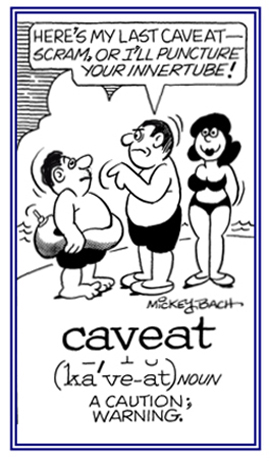
The term “caveat” has been derived from Latin which means “beware”. According to the dictionary meaning, “a caveat is an entry made in the books of the offices of a registry or Court to prevent a certain step being taken without previous notice to the person entering the caveat”. In other words, a caveat is a caution or warning given by a party to the court not to take any action or grant any relief to the applicant without notice given to the party lodging the caveat. It is very common in testamentary proceedings. It is a precautionary measure taken against the grant of probate or letters of administration, as the case may be, by the person lodging the caveat. Section 148-A of the Code of Civil Procedure provides for lodging of a caveat.
Section 148-A
Section 148-A, as inserted by the Amendment Act, 1976 is a salutary provision. It read as under:
- Where an application is expected to be made, or has been made, in a suit or proceeding instituted, or about to be instituted, in a Court , any person claiming a right to appear before the Court on the hearing of such application may lodge a caveat in respect thereof.
- Where a caveat has been lodged under sub-section (1), the person by whom the caveat has been lodged (hereinafter referred to as the caveator) shall serve a notice of the caveat by registered post, acknowledgement due, on the person by whom the application has been, or is expected to be, made, under sub-section (1).
- Where, after a caveat has been lodged under sub-section (1), any application is filed in any suit or proceeding, the Court, shall serve a notice of the application on the caveator.
- Where a notice of any caveat has been served on the applicant, he shall forthwith furnish the caveator at the caveators expense, with a copy of the application made by him and also with copies of any paper or document which has been, or may be, filed by him in support of the application.
- Where a caveat has been lodged under sub-section (1), such caveat shall not remain in force after the expiry of ninety days from the date on which it was lodged unless the application referred to in sub-section (1) has been made before the expiry of the said period.
Object
The underlying object of a caveat is twofold: firstly, to safeguard the interest of a person against an order that may be passed on an application filed b a party in a suit or proceeding instituted or about to be instituted. Such a person lodging a caveat may not be a necessary party to such an application, he may be affected by an order that may be passed on such application. This section affords an opportunity to such party of being heard before an ex parte order is made. Secondly, to avoid multiplicity of proceedings. In the absence of such a provision, a person who is not a party to such an application and is adversely affected by the order has to be taken appropriate legal proceedings to get rid of such order.
The provision related to the caveat would be applicable to suits, appeals as well as other proceedings under the code or under other enactments. It is no doubt true that no order should be passed against the caveator unless he is heard, but if the caveator is not present at the time of hearing of the application and the Court finds that there is a prima facie case in favour of the applicant, ad interim relief can be granted by the Court in his favour. Interim order passed without giving notice to the caveator is not without jurisdiction and is operative till it is set aside in appropriate proceedings.
Who may File?
Sub-section (1) of Section 148-A prescribes qualifications for the person who intends to lodge a caveat. He must be a person claiming a right to appear before the Court on the hearing of the application, which the applicant might move for the grant of interim relief. The language of Sub-section (1) of Section 148-A is wide enough to include not only a necessary party, but even a proper party. Hence, a caveat may be filed by any person who is going to be affected by an interim order likely to be passed on an application which is expected to be made in a suit or proceeding institute or about to be institute in a Court. Thus, a person who is a stranger to the proceeding cannot lodge a caveat. Likewise, a person supporting the application for interim relief made by the applicant also cannot file a caveat.
Rights and Duties
Sub-section (2), (3) and (4) of Section 148-A prescribe the rights and duties of the caveator who lodges a caveat, of the applicant who intend to obtain an interim order and of the Court.
Under Sub-section (2) of Section 148-A, once a party is admitted to the status of a caveator, he is clothed with certain rights and duties. It is his duty to serve a notice of the caveat lodged by him by registered post on the person o persons by whom an application against the caveator for an interim order has been or is expected to be made.
Sub-section (4) of Section 148-A provides that is the duty of the applicant to furnish to the caveator forthwith at the caveator’s expense a copy of the application made by him along with the copies of papers and and documents on which he relies. This provision thus makes it obligatory for the applicant to serve his application along with all copies and documents filed or intended to be filed in support of this application.
Once a caveat had been lodged, under Sub-section (3), it is duty of the Court to issue a notice of that application on the caveat. This duty has been cast on the Court obviously for the purpose of enabling the caveator to appear and oppose the granting of an interim relief in favour of the applicant.
Oil spills

In this figure we can see clearly very bad condition of sea water.
The oil spills are very harmful to marine birds mammals as well as the under water various fishes, shellfish, sharks etc. there are oil destroy the insulating ability of fur bearing mammals such as sea otters and the water repellent of a bird’s features , thus the abilities, thus exposing these creaturess to the harsh elements.
Two cargo ships collided off the Mumbai coast on August 7 causing an oil spill that spread quickly through Maharashtra’s coastline. MS,c Chitra ruptured its tank when it hit incoming MV Khalijia and ran aground at Colaba, near Prongs Reef Lighthouse. The vessel contained about 1,200 tonnes of fuel oil in its tanks of which 800 tonnes spilled into the Arabian Sea before the leaks could be plugged two days later.
BAD IMPACT ON THE SEA FISHES:
:max_bytes(150000):strip_icc()/GettyImages-105781894-5c3f8bd2c9e77c0001eaabca.jpg)
Oil destroys the insulating ability of fur-bearing mammals, such as sea otters, and the water repellency of a bird’s feathers, thus exposing these creatures to the harsh elements. Without the ability to repel water and insulate from the cold water, birds and mammals will die from hypothermia.
Juvenile sea turtles can also become trapped in oil and mistake it for food. Dolphins and whales can inhale oil, which can affect lungs, immune function and reproduction. Many birds and animals also ingest oil when they try to clean themselves, which can poison them.
Fish, shellfish, and corals may not be exposed immediately, but can come into contact with oil if it is mixed into the water column — shellfish can also be exposed in the intertidal zone. When exposed to oil, adult fish may experience reduced growth, enlarged livers, changes in heart and respiration rates, fin erosion, and reproduction impairment. Fish eggs and larvae can be especially sensitive to lethal and sublethal impacts. Even when lethal impacts are not observed, oil can make fish and shellfish unsafe for humans to eat.
An oil tanker stationed in Tamil Nadu’s Ennore released at least two tonnes of oil into the sea north of Chennai on Sunday after its fuel hose snapped, the spill occurred at the Kamarajar Port in Ennore, around 20 km from the state capital. An oil spill was reported from the same port in January 2017 after two vessels collided. It had affected 30 km of the coastline, caused significant environmental damage and killed a large number of turtles and hatchlings.
“Preliminary estimate of spilled fuel oil quantity is less than 2 tonnes,” port authorities said in a statement. “The emergency response mechanism was immediately activated and all concerned agencies, including the Coast Guard, swung in action to attend and mitigate the situation.” Raveendran added that 80% of the spilled oil has been contained within the boom – floating barriers installed to contain leaks – and has not spread out into the sea.
INTERNATIONAL HUMANITARIAN LAW
International humanitarian law is a set of legal laws that regulate the conduct of war. It seeks to protect the people who do not participate in the war and to limit the methods and the repercussions of war. International humanitarian law is a part of public international law. It is made up of a set of treaties, rules, principles and regulations. It also follows the customary war laws that regulate the conduct of participants of the war. Its main purpose is the proportionality between the military necessities of humanity and its humanitarian cause. The sources of international law are international agreements such as the Geneva Convention 1, 2, 3 & 4, protocol 1 and 2, and the Hague regulations. All these agreements aim to protect civilians, non-combatants and medical professionals who are not participants of war but are victims of war.
International law divides conflict into international armed conflict and non-international armed conflict. International armed conflict is strictly between two states only as stated in the article two of all Geneva Convention. The rules regarding combatant status, conduct regulations and methods of war are more conditioned for international armed conflict. Non-international armed conflict is defined in article 3 in all Geneva Convention. Any inclusion of a non-state actor makes the war a non-international conflict. IHL follows some basic rules that every country that had signed or ratified has to agree to. Non-combatants or the civilian population who are not participants of the war shall and must be protected at all times. Any prisoner of war must be protected from violence. It prohibits perfidy. Treatment of the wounded and the sick is done by medical groups or the Red Cross, any attack on medical personnel is considered as a war crime. There must be a clear difference between non-combatants and combatants. There should be special protection given to women, children and medical professionals. International humanitarian law also speaks about the prohibition on certain kind of weapons such as cluster weapons which harms all combatants and non-combatants. It also forbids the conscription of children under the age of 15 into armed forces. The use of protective emblems to attack other parties who are participants of the war is considered illegal.
Crimes such as genocide, attacking civilian population, ethnic cleansing and using child soldiers in war are considered as grave war crimes. Present trends in wars are likely to continue. International human rights bodies should make more stringent laws. Given that most human rights laws are governed by the state and its behaviour. The state must take strict actions against it. International humanitarian laws serve the purpose of keeping a balance of the necessity of war and humanitarian laws. It aims for war to occur without the loss of any non-combatants. Combatants who knowingly break the law are subjected to go under a tribunal for their crimes and these individuals are held accountable for the war crimes that they have committed. It is rightly said that only in total abandonment of human conflict will human rights prevail. The human capacity and to inflict suffering to one and other is inevitable in the history of mankind but when we can’t prevent it then we must regulate it and reduce the amount of suffering.
AI helps in improving website USABILITY
Today, an online presence is a must for even the startups and the small businesses. And, a website is essential for it. Without a website, the business is considered simple and not doing well. Almost, all the businesses have one, including all your competitors. The question is — does it really bring about more business? Do your potential buyers or regular shoppers have a good time using your website?
All of that comes down to the user experience (UX) or usability of your website. That is, if your website isn’t user-friendly, it won’t be effective. To make it an effective one, the navigation is expected to be simple and various features can be accessible instantly. If they can’t easily navigate your website or find it not very appealing, they’ll just return back to the search engine and find an alternative website that fulfill their needs.
Website usability is a crucial factor and it plays a significant role in any business. That’s why website usability — delivering a pleasant user experience to your website visitors — should be your top priority in 2020.Now, as you probably know, artificial intelligence (AI) is making great improvements in recent years, with positive influences in various industries such as healthcare, hospitality, automotive, and even online usability (UX).
To illustrate the latter, here’s how AI can improve a website’s usability:
Semantic Search in Search Engines
Usability of the website can be improved by implementing the Semantic search in the search engines.Search bars on any website allow visitors to quickly navigate to what they’re looking for. These users have a specific intent in mind, such as finding a piece of information or shopping for a particular product.In traditional search, known as lexical search which involves character-matching wherein the results were limited to literal matches of the query words or variants of them.
That’s where AI helps — with semantic search, the search engine can figure out the intent and contextual meaning of the search query, thus improving the accuracy of search results, and consequently increasing the user satisfaction. Semantic Search is defined as the search for information based on the intention of the searcher and contextual meaning of the search terms, instead of depending on the dictionary meaning of the individual words in the search query.
Semantic search denotes search by understanding the overall meaning of the terms as they appear in the search query, to generate more relevant results. Semantic Search in search engines mean the search engine would provide relevant search results based on the intent and contextual meaning of the search terms.
Factors considered in SEMANTIC search
A smart search engine would consider several factors to provide the most relevant and useful search queries, including:
Current trend – If the world cup match finals was just over in the country and someone is searching for ‘Who won the world cup’, the semantic search system should be able to understand the query and give relevant results based on the current trend and news.
Location of search – If a person is searching for ‘what is the temperature’, the semantic search engine should be able to provide results based on the current location of the search.
Intent of the search – Semantic search engines should be able to give appropriate search results based on the intent of the search and not based on the specific words used in the search query.
Variations of words in Semantic Search –Semantic search should consider tenses, plural, singular etc and provide relevant search results for all semantic variations of the words. For example, words like device, devices, device’s etc.
Synonyms and Semantic Search – A semantic search engine should be able to understand the synonyms and give more or less the same search results on any synonyms of the word users search for. For example, try searching for “biggest mountain” and “highest mountain”. You would get pretty much the same results since both of them means the same in this particular query, even though the “biggest” and “highest” could mean different things in different cases.
Concept matching – This is a sub-set of context matching in semantic search. Semantic search should understand the broad concept of the query and return relevant results. For example, a query on “Traffic problems in a particular city” could return relevant results including the topics “narrow roads”, “nonfunctioning traffic lights”, “lack of roadside assistance” etc. because in a broad conceptual point of view, all of these lead to traffic problems.
Conclusion:
Semantic search will enable even the non-technical persons to get the more relevant results based on the intent and contextual meaning of the search terms. Bing and Google are not pure semantic search engines. However, both of the search engines incorporate many elements of semantic search in to their search algorithm to provide more relevant and useful search results.
To explore , further about this topic, please check the following link :
World Hepatitis Day
On World Hepatitis Day, let us put an end to all forms of discrimination that is meted out to people suffereing from hepatitis.
World Hepatitis Day, observed on July 28 every year, aims to raise global awareness of hepatitis — a group of infectious diseases known as Hepatitis A, B, C, D, and E — and encourage prevention, diagnosis, and treatment. Hepatitis affects hundreds of millions of people worldwide, causing acute and chronic disease and killing close to 1.34 million people every year. Hepatitis causes liver diseases and can also kill a person. World Hepatitis Day is one of eight official global public health campaigns marked by the World Health Organization (WHO).

WHO keeps this year’s theme is “Hepatitis-free future,” with a strong focus on preventing hepatitis B among mothers and newborns. On 28 July, WHO will publish new recommendations on the prevention of mother-to-child transmission of the virus. HBV can be prevented among newborns through the use of a safe and effective vaccine. WHO is calling on all countries to work together to eliminate viral hepatitis as a public health threat by 2030.
Significance of the theme
WHO says, “A hepatitis-free future is achievable with a united effort.”
With 2020’s theme for World Hepatitis Day being “Hepatitis-free future”, it becomes all the more crucial to know about the nature, prevention, and treatment of these viral illnesses. Hepatitis A and E are usually self-limited infections and comparatively not as severe as the other types. Hepatitis B and C are the leading causes of hepatitis-related deaths and can lead to serious conditions and cause long-term liver damage like liver cirrhosis, acute on chronic liver failure, liver cancer, or even death. Hepatitis D usually occurs in conjunction with Hepatitis B. Hepatitis B and C especially pose a serious threat to India as suggested by the numbers.
Once diagnosed, the course of treatment is based on whether the infection is acute or chronic. In the current scenario, it is vital to get a test and have the medications started, as those with pre-existing health conditions are at a higher risk of contracting the COVID-19 virus. Increased awareness through campaigns, initiatives, and discussions will help spread information as well as reduce the stigma about the disease. Awareness will also enable access to testing, ultimately resulting in early diagnosis.
WHO mentions the following points in dealing with the situation:
- PREVENT infection among newborns. All newborns should be vaccinated against hepatitis B at birth, followed by at least 2 additional doses.
- STOP TRANSMISSION from MOTHER to CHILD. All pregnant women should be routinely tested for hepatitis B, HIV, and syphilis and receive treatment if needed.
- LEAVE NO ONE BEHIND. Everyone should have access to hepatitis prevention, testing, and treatment services, including people who inject drugs, people in prisons, migrants, and other highly-affected populations.
- EXPAND access to testing and treatment. Timely testing and treatment of viral hepatitis can prevent liver cancer and other severe liver diseases.
- MAINTAIN essential hepatitis services during COVID-19. Prevention and care services for hepatitis – such as infant immunization, harm reduction services, and continuous treatment of chronic hepatitis B – are essential even during the pandemic.
Education of the masses is the way forward to find these missing millions and ensuring that they receive proper treatment and care. Only then, it is possible to drastically reduce the number of patients who would suffer from these diseases and eliminate the risk of the virus and achieve the dream of “Hepatitis-free” India.

Let us learn to protect ourselves from Hepatitis diseases on World Hepatitis Day.
Venture capital Financing
Venture capital is the form of Financing where venture capitalists will invest funds in startups and starting stage companies which has potential to do good in future.Venture capitalists will invest in equity share of the companies.where it will be high right risk but with the analysis of them they will invest and analyse the good return in future. Venture capitalists will invest in well diversified and new product company which is producing new product which may have demand in the market. Venture capitalists will advice the management to take good decisions to make company successful.
Ways in which venture capitalists finance the company
- Venture capitalists may purchase equity share of company
- Investing in debentures of the company
- Giving the loan to the company
Stages of venture capital Financing
Seed stage: Here company just has the plan or the idea of the product but requires fund to bring that idea in to actual product and make the market research, demand forecasting.
Startup stage: Here company need fund to make the advertisement of the product, where the market research and demand analysis has already completed.
First stage: Here Business goes for actual production of products and bring it in to the market. For production need the fund.
Second stage: Here business go for the more and more production of products and bring new products for the market.
Bridge stage: Here Business already matured and ready for merger, aquision and go for ipo. So need fund for merger and ipo.
Exit strategy for venture capitalists
- Initial Public Offering
- Merging with other companies
- Acquired by other company
- Purchased by other venture capitalists
- purchased by company owner
Following the Footsteps of Google: Work from Home is the new Modal -SHUBHANKAR
The pandemic has been an unprecedented situation not only for a few countries but for the whole world. But the most impacted country of all has been the United States of America. The situation hasn’t improved at all in the US as it looks to reopen after nearly 4 months in lockdown. But as far as experts claim, the Trump administration has failed to make sure that the crisis doesn’t affect one of the largest economies of the world. Yesterday, tech giants Google announced that it is letting its employees work from home for at least another year until July 2021. This decision has been taken in terms of the situation in the United States prevailing because of the Coronavirus.
The US administration and in particular the US President Donald Trump since the start of the coronavirus have always blamed the Chinese government for the outbreak of the virus in not only the US, but around the world. But what the US hasn’t been able to do so far with one of the best healthcare facilities in the world, is to contain the virus spread. The sole reason behind it is the lack of strict restrictions imposed and the willingness of the Trump administration to open the economy back again. The utter eagerness for the economy to be opened back quickly has risked many a lives in the US already and is risking many more. But the appreciation needs to be given to the tech giants google for taking this step, keeping their employees health as a priority over anything else.
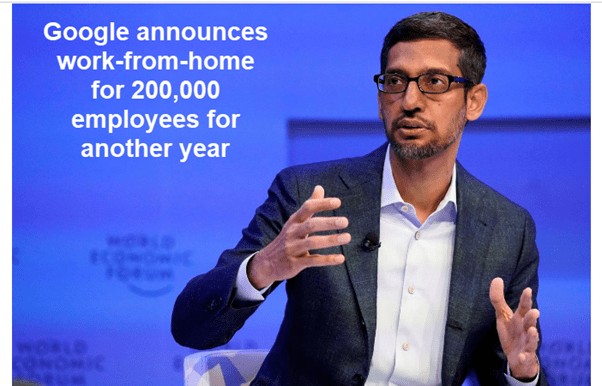
What google has done is set an example, that yes we know that these are unprecedented times, but work can be done from home as well. The feeling that work can’t be done from home isn’t the best at all. I know that work should be done at office only, but risking one’s life for the work to be done is the utmost disrespect to one’s work also. The companies need to understand that work can be done from home as enthusiastically as it can be done at the work place physically. With the advancement in technology, working from the comforts of home is the easiest way to work as well as stay safe from the virus which has impacted the whole world, be it the powerhouses of the world or the developing nations. What I want to convey through this article is the fact that companies should make sure that their employees don’t suffer and the work is also not impacted.
In the end, I want to say that what Google did is the best thing to do right now, to make sure that the work is also not compromised and also that safety is established. The thing is to make sure that companies follow the footsteps of google and let its employees work from home for atleast a year from now on until the vaccine is given to each and every person around the world.
HUMAN RIGHTS
Man, of course, even in natural state is born with certain rights. He has right to live. Even animals recognise this. But in a civilized society which we witness today and for which the man has spent thousands of years of his existence, witnesses abrogation and violation of his ordinary Human Rights. As civilisation advances, more disrespect is shown to human rights. We cannot confine this accusation to a particular country but to the whole world.’Amnesty International’, the universal supervisor, though not a silent spectator, has failed to achieve the targeted results.
Man is born free, but everywhere he is in chains. It is not a mere statement of psychological or philosophical nature. But today is material reality. Even in western civilisation like America ‘s great leaders like Lincoln and Martin Luther King who fought for the human rights of blacks in yesteryears fell victims to bullets. Racism has been an eyesore to any civilised society. Man would have better been in jungles.
If it is racism in western world, it is casteism in countries like India. It is appalling note that even today two – tumbler system exists in remote villages of India. As the whole system revolves around this vicious circle, violation of human rights is a everyday phenomenon in India.
Though the Indian Constitution clearly enunciates and defines the Fundamental Rights of citizens and their guardians, need has arisen to create extra-constitutional bodies to protect human rights. Human Rights Commission at National level and at State level have been created to deal with violation of human rights. The high-handedness of the police which is the enforcement body of laws, custody deaths, filing of cases under provisions not related to their pretty crimes committed to satisfy either their superiors or their political bosses have received condemnation from all quarters. The incidents in Tamil Nadu after May – 2008 elections, were subjected to wild criticism. The political vendetta and vengeance by political parties and their leaders are not healthy signs of democracy. Gone are the days when the policies and not individuals were subjected to valid criticisms.
As far as India is concerned, we have enough laws, but the violations arise only when they are implemented. To a large extent, though the violation of human rights can be traced to a large scale illiteracy prevailing in India, it can be safely concluded that the system of education practised in India does not emphasis much on human values. The system needs total revamping. Strict enforcement of law is the need of the hour but violation of human rights is strongly condemnable.
We are in a civilised democratic country. In the words of Churchill, ‘Democracy is the worst form of Government but, we do not know better than that’. Hence, what is required is ‘respect for human values’.
Staying fit in lockdown
Corona virus disease which was first identified at Wuhan, China has caused a massive spread all over the world as because this is an infectious ailment, our country has adopted the method of Lockdown to tame down the vulnerable situation of Covid 19. This circumstance is becoming a lot more serious over the days when Corona virus is creating a dreadful impact worldwide. Lockdown basically is a very effective process to ensures the security of people by isolating the positive cases. Government has taken up this solution to break the chain of Corona Virus. Lockdown will help in the reduction of death rate as face to face interactions nowadays is to be avoided. The policy of staying separated from one another is also known as Quarantining oneself. This is relatively a new term which signifies that people should not get much exposed to the contagious disease. World Health Organizations has termed Covid 19 as a Pandemic. Hence, all the other places like Shopping malls, Cinema Halls, Restaurants which provided entertainment to the common folks after a strenuous busy day have been closed down. Also, school, colleges, universities has declared to be shut off till the Graph of Covid spread goes down. Hence it is much crucial for all of us to take proper measures and precautions to protect ourselves at this time. Usage of Masks and Sanitizers has become compulsory as declared by the Government which is undeniable and is the best rule to be followed for the protection of every one around, preventing the spread of Virus. Those who are breaking such regulations are to be strictly punished by the cops. Other than that, Few below mentioned steps can be followed for a happy living:-
1) Mental Health of a person needs to be taken care of and known just as we do to the physical Health. Mental Health is not much talked about and not many considers this as a significant issue. This requires serious treatment too. Mental Health is a time span when the afftected one faces a lot of trauma, starts gets negative feelings and lose all hope of living. A large no. of people commits suicide on a regular basis due to depression. If someone seeks help he should be talked to often or will mandatorily attend a psychiatrist. Understanding the depth of such an ailment in India is practically impossible as they don’t know how to communicate regarding this to another. due to this Covid situation Mental Health is getting hampered as because People are social beings, it is a torture of them to caged down for a very long tenure.
2) As because the Gyms are closed, you cannot skip on your exercises. Exercises are a must for your body, it releases stress and motivates you to get back in shape and keeps away ailments. Even a little bit of working out, or running around would help a lot. Exercising is the best way to work on yourself, plank for 30 seconds, arm and leg stretch is indeed a must. If someone has never been to a gym, this is the best time to indulge yourself in working out at home.
3) Talking to family is a very relaxing idea as it takes away all the boredom of your life and opening up to them is essential for your growth. Family is the foremost place which knows you thoroughly and understands you better no matter what. Spend your leisure time by chit chatting with them or playing indoor games like Chess, Ludo, Cards together just like we did in our child hood days. Family bond makes you feel and live much better. Use this ample of time to strengthen your connections, which was previously lost due to shortage of time by getting closer to your family.
4) Eat properly, take proper vitamins and minerals which are prescribed by the doctors globally. Taking medicines time to time is very essential these days. In taking Junk foods are absolutely a big No No for your health right now. Food should be consumed at regular intervals, Seasonal fruits shall be consumed daily for removing body toxins and it also keeps the body hydrated.
5) Many people can start pursuing their lost passions once again, utilizing this time for your benefit is the best option. Hence those who couldn’t earlier manage time to continue with their likings because of the work pressure can restart by cooking new dishes, gardening, painting, singing, dancing, writing e t c. All these are a part of self care which would enhance your skills once again.
6) Children are getting time to spend with their parents which is in turn a boon for them because both the parents work for a lot of time and do not get the scope to speak to their children, also the children spends a lot of time in Schools. After a busy day, no body has the energy to communicate with each other making the child lonely and irritated. Parents must take the initiative to engage the child and watch a movie or t v shows all together or read out a book to them which will increase their moral values and they will become comfortable while exchanging views.
7) Youngsters should help their parents out with household domestic chores which in turn is going to make the difficult and boring work ten times simple. Also, Teenagers should spend time with the grand parents, hear out their stories of experiences which also serves as a healing therapy both ways. Also they can associate themselves with new Learning courses online which will enhance their knowledge.
The practice of Domestic Violence all over India should be stopped immediately as this will hurt both ou and your loved ones.
Job Satisfaction
“Pleasure in the job puts perfection in the work.”
– Aristotle
Job Satisfaction may be defined as the feeling of satisfaction or attitude that an employee has about the job that he or she is performing. It is not a self- satisfaction, happiness but the satisfaction on the job. Job Satisfaction relates to the total relationship between an individual and the employer for which he is paid. There is direct relationship between employee’s job performance and the satisfaction that he or she derives from doing the job. Many research studies have clearly shown that employees who are satisfied have a better attitude towards their jobs and his productivity is significantly higher than less satisfied employees. Hence, it is important that the employees feel a sense of satisfaction with their job or else it might lead to frustration, anger and in some cases depression. Job Satisfaction is also an achievement indicator in career development task. When an employee is satisfied, he or she cares more about the quality of work, they become more commited and loyal towards the work and the organisation, the employee retention rate increases and the employees become more productive which helps in achieving goals of the organisation. A satisfied employee generally have a positive attitude towards his job and company. He or she is proactive, they have a higher level of motivation and they tend to take initiative, they are willing to take more responsibility and establishes better relationship with their colleagues, fellow employees, superiors and subordinates. A satisfied employee shows a positive energy all the time. As we know satisfied employees will stay with the organisation or company for a long-period of time and so for this the organisation must concentrate on removing dissatisfied employees from the workplace inorder to reduce negative energy. Empower the satisfied employees so that they helps in achieving both their own needs and those of the organisation. Job Satisfaction is an attitude that employees have regarding their work and the organisation and it is based on numerous factors which includes both intrinsic and extrinsic to the individual. Job Satisfaction also plays an important role in maintaining and retaining the appropriate employees within the organisation as the company has already invested a lot of money on them. It is a complex and multifaceted concept as a wide range of factors affects the level of job satisfaction. They are individual, social, cultural, organisational and environmental factors. Job Satisfaction is usually linked with motivation as it motivates them to work hard and give their best. Job Satisfaction can be measured in cognitive (evaluative), effective (or emotional) and behavioral components. Job Satisfaction helps in knowing whether employee is satisfied and it is one key metric that can help in determine the overall health of an organisation, that is why many organisations employ regular surveys to measure employee satisfaction and track satisfaction trends over time. A high satisfaction level indicates that employees are happy with how their employers treat them. Job Satisfaction plays a crucial role both for the company and for the employees for many reasons including the following:-
- Increases Productivity – Job Satisfaction is highly correlated to productivity. If a person is satisfied with his job he will be more productive. A happy and satisfied employees generally work smarter and harder to achieve company goals.
- Protects Physical Well-Being- Job Satisfaction is directly proportional to physical health and well-being of the employees. An employee who is healthy will adjust himself well in the organisation and to the work and hence tends to contribute more towards the organisation.
- Decreases Employee Turnover and Absenteeism- A company where there is high employee turnover shows that the organisation provides less satisfaction to its employees and this is the major disorders of company. A high job satisfaction level significantly reduces voluntary separation of employees and thus company is able to retain its talented employees. A higher satisfaction level also has a positive effect on the attendance of the employees. It helps in reducing the rate of absenteeism in the organisation.
So lastly, job satisfaction is really very important for the prestige and goodwill of the organisation.
Animal Cruelty: Are Humans Losing Their Humanity?
Imagine you were the one being tested on, imagine your skin being torn off alive, imagine your arms and legs being ripped off while still alive, imagine being burnt alive, fellow classmates even imagine losing your life, just so you can satisfy other species. Doesn’t sound fun, does it?
Now imagine this, you are a poor soul who has been searching for food everywhere. Suddenly, your happiness sees no bound as you see pineapple lying in front of you. You thank god and people for feeding such a delicacy amidst long hunger. You gulp that in one bite and feel inside of your body hurting and burning. You soon realize it was not just a pineapple. You run for water to soothe down the internal wound and burning. You stand in water for hours in oblivion just to face one reality – that now only death can relieve this burning. If reading this makes your stomach churn, you might understand the pain that poor soul went through which for some people was a mere ‘elephant’. What makes it even more disheartening that the elephant was pregnant and yet had to spend her last few hours standing in the water waiting for death so that to leave this cruel world in solace.
In yet another instance of cruelty towards animals, a monkey was hanged to death from a tree in Telangana’s Khammam district.
Animals – creatures that are considered fit for human cruelty. Hitting dogs, throwing bricks at speechless animals and taming them forcefully for circuses has become common news now. It is time we re-emphasized the need for animal rights to protect and safeguard their lives from humans.
It’s blood curling that there exist some people who intentionally hurt animals because they enjoy hurting things, or because it makes them feel powerful. Some, love the control they possess over these helpless creatures. While, there are others who simply enjoy pain and violence.
It should be noted that intentional cruelty to animals is strongly correlated with other crimes, including violence against people. (HSLF). Any psychologist or police officer can ascertain you that animal cruelty is a precursor to criminally violent behavior toward humans. There are plenty of laws against cruelty to animals as well. Thus, Outright cruelty, harm to a living creature for no other purpose than the cruelty itself, is definitely prohibited and while not punishable to the extent that human cruelty is punishable, it is considered a serious indicator of a disordered mind and a dangerous person.
There are very strict guidelines laid down by the Indian government. Like, the animal should have rested before being slaughtered, an animal should not be killed in front of the other animals, no pregnant animal can be killed and all the animals should be diagnosed by the veterinarian before butchering them. The veterinarian must allow only the healthy animals to be slaughtered but all of it is on paper. All the strict laws have no strict implementation due to lack of will. There will surely be reduction in the rate of animal cruelty if these laws are implemented strictly!
We need to begin with our own selves without expecting any kind of new policies or laws to protect animals. Regularly keeping a bowl of fresh water outside your house and feeding the street animals. Such small activities would provide street animals with basic survival needs in the harsh city life.
Are we going to realize this any soon that we are a part of an ecosystem where human, plants, animals, insects, and microorganisms, all have to live together without harming each other? It’s generally only the humans that are less tolerant towards animals, plants, insets, etc. whereas, the rest simply seek for a peaceful existence.
BERMUDA TRIANGLE

As we all know that earth has so many wonders in it….nature show us its beautiful creation but there are some mysterious places also present on earth…Bermuda triangle is one of them….
The Bermuda Triangle, also known as the Devil’s Triangle or Hurricane Alley, is a loosely defined region in the western part of the North Atlantic Ocean where a number of aircraft and ships are said to have disappeared under mysterious circumstances. Popular culture has attributed various disappearances to the paranormal or activity by extraterrestrial beings.
The earliest suggestion of unusual disappearances in the Bermuda area appeared in a September 17, 1950, article published in The Miami Herald (Associated Press) by Edward Van Winkle Jones. Two years later, Fate magazine published “Sea Mystery at Our Back Door”, a short article by George Sand covering the loss of several planes and ships, including the loss of Flight 19. Sand’s article was the first to lay out the now-familiar triangular area where the losses took place, as well as the first to suggest a supernatural element to the Flight 19 incident.
In February 1964, Vincent Gaddis wrote an article called “The Deadly Bermuda Triangle” in the pulp magazine Argosy saying Flight 19 and other disappearances were part of a pattern of strange events in the region. The next year, Gaddis expanded this article into a book, Invisible Horizons.
There are some explanations also about the Bermuda triangle-
Compass variations- Compass problems are one of the cited phrases in many Triangle incidents. While some have theorized that unusual local magnetic anomalies may exist in the area, such anomalies have not been found.
Gulf Stream- The Gulf Stream is a major surface current, primarily driven by thermohaline circulation that originates in the Gulf of Mexico and then flows through the Straits of Florida into the North Atlantic. In essence, it is a river within an ocean, and, like a river, it can and does carry floating objects. It has a maximum surface velocity of about 2 m/s (6.6 ft/s). A small plane making a water landing or a boat having engine trouble can be carried away from its reported position by the current.
Human error- One of the most cited explanations in official inquiries as to the loss of any aircraft or vessel is human error.
Violent weather- Hurricanes are powerful storms that form in tropical waters and have historically cost thousands of lives and caused billions of dollars in damage. The sinking of Francisco de Bobadilla’s Spanish fleet in 1502 was the first recorded instance of a destructive hurricane. These storms have in the past caused a number of incidents related to the Triangle.
A National Hurricane Center satellite specialist, James Lushine, stated “during very unstable weather conditions the downburst of cold air from aloft can hit the surface like a bomb, exploding outward like a giant squall line of wind and water.”
Methane hydrates- An explanation for some of the disappearances has focused on the presence of large fields of methane hydrates (a form of natural gas) on the continental shelves. Laboratory experiments carried out in Australia have proven that bubbles can, indeed, sink a scale model ship by decreasing the density of the water.
However, according to the USGS, no large releases of gas hydrates are believed to have occurred in the Bermuda Triangle for the past 15,000 years.
HERE ARE SOME INCIDENTS –
• Flight 19 was a training flight of five TBM Avenger torpedo bombers that disappeared on December 5, 1945, while over the Atlantic. The squadron’s flight plan was scheduled to take them due east from Fort Lauderdale for 141 mi (227 km), north for 73 mi (117 km), and then back over a final 140-mile (230-kilometre) leg to complete the exercise. The flight never returned to base. The disappearance was attributed by Navy investigators to navigational error leading to the aircraft running out of fuel.
One of the search and rescue aircraft deployed to look for them, a PBM Mariner with a 13-man crew, also disappeared. A tanker off the coast of Florida reported seeing an explosion and observing a widespread oil slick when fruitlessly searching for survivors. The weather was becoming stormy by the end of the incident. According to contemporaneous sources the Mariner had a history of explosions due to vapor leaks when heavily loaded with fuel, as it might have been for a potentially long search-and-rescue operation.
• G-AHNP Star Tiger disappeared on January 30, 1948, on a flight from the Azores to Bermuda; G-AGRE Star Ariel disappeared on January 17, 1949, on a flight from Bermuda to Kingston, Jamaica. Both were Avro Tudor IV passenger aircraft operated by British South American Airways. Both planes were operating at the very limits of their range and the slightest error or fault in the equipment could keep them from reaching the small island.
• On December 28, 1948, a Douglas DC-3 aircraft, disappeared while on a flight from San Juan, Puerto Rico, to Miami. No trace of the aircraft, or the 32 people on board, was ever found. A Civil Aeronautics Board investigation found there was insufficient information available on which to determine probable cause of the disappearance.
• Connemara IV a yacht was found adrift in the Atlantic south of Bermuda on September 26, 1955; it is usually stated in the stories (Berlitz, Winer) that the crew vanished while the yacht survived being at sea during three hurricanes.
• On August 28, 1963, a pair of US Air Force KC-135 Stratotanker aircraft collided and crashed into the Atlantic 300 miles west of Berm
Rafael aircraft coming to India from France
The Dassault Rafale is a French twin-engine, canard delta wing, multirole fighter aircraft designed and built by Dassault Aviation. Equipped with a wide range of weapons, the Rafale is intended to perform air supremacy, interdiction, aerial reconnaissance, ground support, in-depth strike, anti-ship strike, and nuclear deterrence missions. Many of the aircraft’s avionics and features, such as direct voice input, the RBE2 AA active electronically scanned array (AESA) radar, were domestically developed and produced for the Rafale program. Originally scheduled to enter service in 1996, the Rafale suffered significant delays due to post-Cold War budget cuts and changes in priorities. The aircraft is available in three main variants: Rafale C single-seat land-based version, Rafale B twin-seat land-based version, and Rafale M single-seat carrier-based version.

The Rafale is being produced for both the French Air Force and for carrier-based operations in the French Navy. The Rafale has been marketed for export to several countries and was selected for purchase by the Indian Air Force, the Egyptian Air Force, and the Qatar Air Force. Due to its great capabilities, the first batch of 5 raflaes arrives in India in two days.
On the one hand, when there are neighbors like China and on the other hand, when there are neighboring countries like Pakistan, India needs to work on both its army and the Indian Air Force. In such a situation, 5 Rafale aircraft was given to the Indian Army yesterday. These Rafale aircraft flew from France yesterday and reached the UAE airbase Al Dhafra today. Here their maintenance and refueling work will be done. After this, these fighter aircraft will fly and arrive at Ambala Air Force Base tomorrow. With this aircraft joining the Indian Air Force, the morale of the Indian Army will be greatly elevated. However, the condition of the Airforce is not good right now because there is a shortage of squadron. This thing has been told in many reports. But with Rafael joining the Indian Army, it can play a decisive role in winning a war.

“You can call them (Rafale) both beauty and the beast,” said Indian Ambassador to France Jawed Ashraf after interacting with the IAF pilots at the airbase before they set off for India. “Delivery of 10 aircraft has been completed on schedule. Five will stay back in France for a training mission. The delivery of all 36 aircraft will be completed on schedule by the end of 2021,” the Indian embassy in Paris said in a statement. India and France signed a Euro 7.87-billion ( ₹59,000 crores approximately) deal on September 23, 2016, for 36 Rafale jets. The IAF official said the air-to-air refueling of the aircraft will be undertaken with dedicated tanker support from the French Air Force. “Our air force pilots tell us that these are extremely swift, nimble, versatile, and very deadly aircraft,” said Ashraf while congratulating the IAF pilots on becoming the first ones to fly one of the world’s most advanced fighter aircraft. The envoy thanked Dassault Aviation, the manufacturer of the aircraft, for delivering the fleet on time, the French government and the French Air Force for extending all required support.
Online Classes During Pandemic
COVID-19 began in the month of December in 2019 and soon it grew into a pandemic, leading to several losses of lives and locking down of many cities. Social distancing became the key to escape out of this problem. But, with this solution came other problems. We are able to follow social distancing by keeping us locked in our houses but this stopped students’ education too. But we can’t just stop everything due to this COVID thing. We need to find an effective solution to continue the education of students. We need to continue the functioning of schools and colleges.
Online Classes
In the times of the internet, the one and the only solution are online classes. The online way to share knowledge and information now is the internet. It has proved to be a real miracle these days, connecting millions and making information access fast and easy. Be it school, college, tuition, or coaching classes, knowledge is now being delivered to students who are sitting at their home and can learn things sitting there only. Students now need a mobile or desktop and fast internet connection to attend their online classes and learn things. It is not possible for a pandemic to stop students from learning.

How it is a different experience?
This way of learning is totally new to everyone, be it students, be it teachers or be it parents. We were already involved in some small ways of e-learning but a complete shift towards this type of mode is something new and challenging to everyone. Teachers are continuously involved in finding new ways to make e-learning more interactive and interseting for students. They are continuously evolving their way of teaching and trying to give them a class-type of feeling. Teachers are also learning to adapt with new softwares and explore things. Students are learning how to deal with online homework submissions, doubt-sessions and examinations. But, the problem is that the medium of interaction is always an electronic device. Hence, students are subjected to fatigue and mental stress. They seem irritated and develop body pain sitting still at a particular position holding their phones or laptops. Students are also developing stress on eyes. It is quite difficult for them to adjust with all of these. It seems that this way of teaching costs their health, both mental and physical. Besides this, internet is not available to all the areas of the country and to all the students. Poor students can’t afford high speed data. This method of teaching, is thus, a barrier between poor students and education. It is a harsh truth that they are left behind. We need to work together towards this to make education available to underprivileged students also.

INVENTIONS: THAT CHANGED THE WORLD
As we are humans and we always want something new, something unique, something bigger, and most importantly something different…..our history is full of great people and great inventions…..there were some inventions after them, the world has took a new dimension or we can say that the world get updated by time by time……there are some inventions which have changed the way of thinking of human beings, and provide a new face to the world……these inventions are as follows:
WHEEL- just imagine if there were the invention of wheel didn’t take place then how our life will be going on….This primitive technology made it easier for all of us to travel. From the archaeological excavations, the oldest known wheel is from Mesopotamia, around 3500 B.C.
As a result of advancement in the new and innovative design of wheels, industrialization could take root. Wheel played a vital role in our life.
COMPASS- It was created for spiritual and navigational purposes; the earliest compasses were most likely invented by the Chinese in around 1050 BC. It was made of lodestones, which is a naturally magnetized iron ore.The invention of the electromagnet in 1825 led to the development of the modern compass.
STEAM ENGINE- In 1781, James Watt introduced a steam engine and went on to fuel one of the most momentous technological leaps in human history during the Industrial Revolution.
During the 1800s these engines lead to an improvement in transportation, agriculture, and manufacturing industries.
AIRPLANE- On December 17, 1903, Wilbur and Orville Wright achieved the first powered, sustained and controlled airplane.
Beginning with gliders, the duo laid the foundation for modern aeronautical engineering.
The possibility to fly over thousands of miles in less time would not have been made possible if the aircraft were not invented.
FIRE- From the past to the present Fire has been in rituals, agriculture, cooking, generating heat and light, signaling, various industrial processes, cremation, and as a weapon or medium of destruction. This remarkable control of fire happened during Early Stone Age by Homo erectus. The invention of fire was the biggest achievement of our ancestors and an essential thing of all the time.
LIGHT BULB- Today we get light by only switching on a button….the light bulb was just like a revolution in the history of world…Thomas Alva Edison invented the light bulb.
ELECTRICITY- There is a very big invention apart from light bulb….the electricity….without electricity we feel very incomplete now a days…Alessandro Volta discovered the first practical method of generating electricity. 1831 is marked the year of major breakthrough for electricity. A British scientist Michael Faraday discovered the basic principles of electricity generation. This invention was also the revolution in the history of world. It works as a backbone for almost every work..
X-RAY- X-ray was the very big invention for the medical field as it brought an ease in treating people.
All credits to physicist Wilhelm Conrad Rontgen. While testing whether cathode rays could pass through glass, he noticed a glow coming from a nearby chemically coated screen. Because of their unknown nature, he named it as X-rays. Through his observation, he learned that X-rays can be photographed when they penetrate into human flesh.
In 1897, during the Balkan war, X-rays were first used to find bullets and broken bones inside patients. In 1901, he received the Nobel Prize in physics for his work.
CAMERA- Camera was one of the remarkable inventions in the history as it allows us to capture all the moments and with the help of this, we can travel in the memories of flash back.
The first partially successful photograph of a camera image was made in approximately 1816 by Nicephore Niepce, using a very small camera of his own making and a piece of paper coated with silver chloride, which darkened where it was exposed to light.
COMPUTER- In today’s life laptop, computer become an essential thing either it is business man, student, employee everyone need it. It was also the biggest achievement for history. Major Shoutout to the mechanical engineer Charles Babbage for laying the foundation to this remarkable and most reliable invention. In the early 19th century, the “father of the computer” conceptualized and invented the first mechanical computer.
TELEPHONE- Alexander Graham Bell, best known for his invention of the telephone. Today we can talk to any one from anywhere…and we feel connected to our every loved ones because of telephone.
INTERNET- Internet was also the remarkable invention as everyone needs it in today’s time either it is a school going child, an employee, or elder ones. Since the mid-1990s, the Internet has had a revolutionary impact on technology, including the rise of electronic mail, instant messaging, voice over Internet Protocol (VoIP) telephone calls, and two-way interactive video calls.
WORLD WIDE WEB- The Internet is a networking infrastructure. Whereas the World Wide Web is a way to access information over the medium of the Internet.
The father of the World Wide Web is a British Computer Scientist, Tim Berners-Lee. By October 1990, three Tim laid the foundation to the web through HTML, URL, and HTTP technologies.
April 1993, marked an important step in the history of Web. The decision to use the web for free was announced. And today we can see there is not a single day gone when we don’t search something on Google. We can say Google has become the part of our life…if we don’t know something and if we want to search something, then we easily open Google and collect the information….from a street to the world every information is available here.
Lockdowns And Decreased Seismic Noise
Scientists from the Royal Observatory of Belgium in Brussels recently shared an observation that after lockdowns were imposed by governments all over the world due to the COVID-19 pandemic, there has been a remarkable decline in human-linked vibrations within the crust of the Earth. And the scientists in Brussels, with the help of other scientists around the world, have published a new study in the journal “SCIENCE“, which shows how the ‘Seismic Noise’ has reduced, allowing them to observe and record previously concealed earthquakes better.
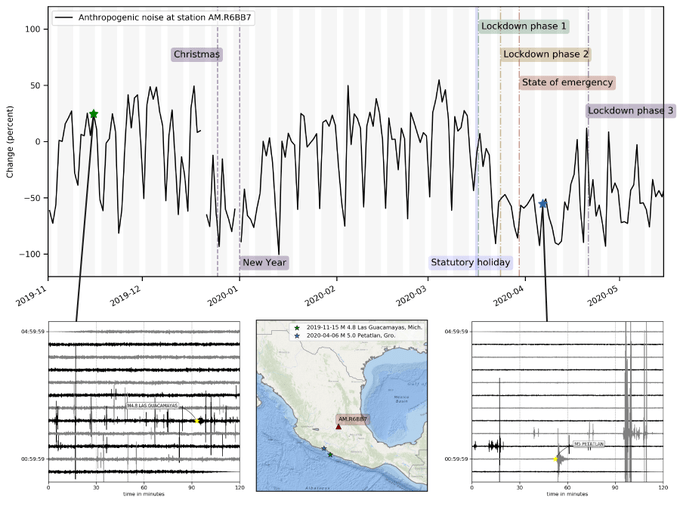
Measured using seismometers, seismic waves are the vibrations traveling within the Earth that could be set off by earthquakes or volcanoes. The waves could be subject to the disturbance caused due to human activities or naturally. In the study, it is found that the reduced human activity led to an average drop of around 50% human-caused seismic noise, which was recorded between March 2020 to May 2020. The drops in the seismic noise, especially in the urban areas, are unprecedented and are observed to be more than what is considered usual quiet periods like weekends, holidays, or during the night.
The scientists have termed this time of global anthropogenic or human-based seismic noise deduction as ‘Anthropause’. This anthropause can help the scientists get a more accurate measure of the seismic waves and to differentiate between human and natural seismic noise clearly.
Lead author of the study, Dr. Thomas Lecocq from the Royal Observatory of Belgium explains, “With increasing urbanization and growing global populations, more people will be living in geologically hazardous areas. It will, therefore, become more important than ever to differentiate between natural and human-caused noise so that we can ‘listen in’ and better monitor the ground movements beneath our feet.”
The scientists and researchers are hoping to move forward with their study of seismic lockdown and the previously hidden indications of earthquakes and volcanoes would be easier to be recognized and there will be a better understanding of the natural seismic waves.
Hobbies
“I want to fly a plane. I want to make a paper boat. I want to become a police officer and catch all criminals by myself. I want to become a model. I want to become the Prime Minister of my country. I want to meet Sharukh Khan in person.” These are some of the things one must have said or at least heard a child say. But as we grow up, things change and people find it difficult to continue their dreams. Some of them make use of their hobbies and elevate it into their career, some pursue them in their free time and some just don’t really happen to bother about it.

According to Wikipedia, A hobby is an activity, interest, or pastime that is undertaken for pleasure or relaxation, done during one’s own time.
Some hobbies include DIY, coin collection, writing poems and articles, stamp collection, gardening, camping, play board games, watch movies/series and documentaries, make a scrapbook of special events, cooking, drawing, dancing, singing, stargazing, flying a kite, calligraphy, learning a new language, volunteering, performing yoga and the list continues.
Some of them have become obsolete such as stamp or coin collection due to VUCA world. Technology has also enhanced various things and have led to molding of interest. Now-a-days, it is possible to learn new things via internet. YouTube and other online platforms have made it possible for amateur to learn new skills online.
Some hobbies can be expensive but some comes with few costs involved. But at the end of the day, one must devote some time for these hobbies as they are a great stress reliever. One way to end the monotony is to focus on a hobby that is both enjoyable and helps you pass the time in a meaningful way.
Benefits of having a hobby:
- Hobbies offer a new challenge.
- They are a great source of happiness and stress reliever.
- Hobbies provide an outlet for stress.
- They help in enhancing one’s own personality.
- They promote healthy relationship with oneself as well as others.
- They also give one a platform to showcase one’s talent with the world.
As we grow up, life becomes monotonous and sometimes dull. Presence of some hobbies help in innovative thinking and reducing everyday stress. It is something that one has outside the normal job and something that is interesting. It is extremely important to adapt to the changes overall keep going and these hobbies add colors to life.
Aloe vera

Aloe vera is a succulent plant species of the genus Aloe. An evergreen perennial, it originates from the Arabian Peninsula, but grows wild in tropical, semi-tropical, and arid climates around the world. People have used it for thousands of years for healing and softening the skin. Aloe has also long been a folk treatment for many maladies, including constipation and skin disorders. The cosmetic, pharmaceutical, and food industries use aloe vera extensively, and the plant has an estimated annual market value of $13 billion globally. Each leaf contains a slimy tissue that stores water, and this makes the leaves thick. This water filled tissue is the “gel” that people associate with aloe vera products. Like other Aloe species, Aloe vera forms arbuscular mycorrhiza, a symbiosis that allows the plant better access to mineral nutrients in soil.
ANTIOXIDANT
The gel contains most of the beneficial bioactive compounds in the plant, including vitamins, minerals, amino acids, and antioxidants .Aloe vera gel contains powerful antioxidants belonging to a large family of substances known as polyphenols.
SKIN PROBLEMS AND WOUND HEALING
Aloe vera is known for its antibacterial, antiviral, and antiseptic properties. This is part of why it may help heal wounds and treat skin problems. There is some preliminary evidence to suggest that topical aloe vera gel can slow aging of the skin. The United States Pharmacopeia describe aloe vera preparations as a skin protector as early as 1810–1820.
REDUCES CONSTIPATION
Aloe vera may also help treat constipation. This time it is the latex, not the gel, that provides the benefits. The latex is a sticky yellow residue present just under the skin of the leaf. The key compound responsible for this effect is called aloin, or barbaloin, which has well established laxative effects.
LOWERS BLOOD SUGAR LEVEL
People sometimes use aloe vera as a remedy for diabetes. This is because it may enhance insulin sensitivity and help improve blood sugar management.
This plant has gained the Royal Horticultural Society’s Award of Garden Merit.
Hate Binge And Chill

Over the last weekend, all I can notice on social media was Netflix’s latest docu-reality series, which was trending on number #2 “Indian Matchmaking”. People on Instagram, Twitter, and Facebook were criticizing the show and the memes were being circulated, I am no fan reality shows but I was just curious to know what the fuzz is all about.

The show begins with a woman (Akshay’s mom) listing all the qualities, to a Mumbai based matchmaker- Sima Taparia, that she is looking for in her future daughter-in-law, and trust me when I say this that 10 minutes into the show and I am already hating it but I still watched 2 episodes in the same sitting. “I shouldn’t be watching this shit,” I say to myself but somehow, I finished all eight episodes of the show in a matter of hours within a day. The show is downright cringe-worthy. Sima Taparia, the narrator makes pretty nasty and mean comments, especially about girls who are ambitious, independent, and looking for a partner that would treat her as an equal. Such girls for Sima Aunty are stubborn, not-flexible, demanding, and difficult to find a match for; while on the other hand if a boy demands those qualities then it is normal. So much for the double standards. The show without doubts contains all the elements of a binge-worthy reality show- A man-child, who wants a wife like his mother, nosy mother, who blackmails by pointing to her high blood pressure the boy into marrying, a most probably closeted guy, an ambitious, career-oriented woman, a face reader, astrologers, life-coach, and US-based scenes. It is worth all the hate and I too watched it under the hate spell.
It happens to a lot of us that we get glued to television for such shows that we hate, those shows don’t make any sense, we make fun of them, get offended by them but we still binge them. But why does that happen? Why can’t we stop watching something that we do not like? According to psychology and communications experts, love and hate are 2 strong emotions and once our emotions are unleashed, whether it’s because we’re very attracted to something or very repelled by something if we feel strongly enough about it, we want to know more, we grow curious about it.
The same happened with Indian Matchmaking, I was annoyed by Sima Taparia and other problematic characters and it unleashed my emotions. I was furious when Sima Taparia said, “Indians don’t like lawyers as a daughter-in-law”, words like “flexible”, “compromise”, “tall”, “well-settled” were thrown around and I was screaming, “Why even bother getting married then?” at my TV screen when Sima Taparia said, “In India, marriages are breaking like biscuits” and thus her job is getting tougher. But with every episode I felt that I do want to know what is going to happen next in their lives, I might miss something and everyone is already talking about it. When there are no good options about what to do, we tend to do this like binge-watching a show that you dislike because you have developed an interest as it is more interesting than doing nothing.
When we start a show that we begin to hate, we think that we have wasted our time by start watching it in the first place and to compensate the lost time and effort we keep going on in a hope that we will get at least something out of it in the end. And eventually what happens is you dislike it more and more, you waste more and more money, and things generally just get worse.
But how do we stop this hate-binge? Well, psychologists suggest that turning off the auto-play is a good start, if you don’t like something in the first two episodes stop watching it then and there and if you feel peer pressure by the Social Media into watching the entire series because everyone else has, try to start a new series and then go back to the one you hated. I honestly would love to try this technique out because hate-binge just makes you feel guilty and nothing good comes out of that.
LONAR LAKE
Recently we have heard about a lake which water turned into pink color and it was the big cause of everyone’s wonder….everyone was surprised that how it happened ….then every had curiosity to know about that lake and to know about how it’s green color changed into pink color……and the name of that lake is the LONAR LAKE…….
The lonar lake is located at Lonar in Buldhana district, Maharashtra, India. Lonar Lake was created by an asteroid collision with earth impact during the Pleistocene Epoch.
The lake was initially believed to be of volcanic origin, but now it is recognized as an impact crater. Lonar Lake was created by the impact of either a comet or of an asteroid. The crater has an oval shape.
The water of the lake contains various salts and sodas. During dry weather, when evaporation reduces the water level, large quantities of soda are collected.
The lake is a haven for a wide range of plant and animal life. Resident and migratory birds such as black-winged stilts, brahminy ducks, grebes, shelducks (European migrants), shovellers, teals, herons, red-wattled lapwings, rollers or blue jays, baya weavers, parakeets, hoopoes, larks, tailorbirds, magpies, robins and swallows are found on the lake.
In early June 2020, the lake turned red/pink in a span of 2–3 days. A report by Agharkar Research Institute, National Environmental Engineering Research Institute and Geological Survey of India suggested that lowered water levels and high salinity caused growth of Halobacterium and increased Carotenoid levels, which in turn led to color change.
PROBLEMS OF LONAR LAKE-
• Use of fertilizers, pesticides and toxic materials in the agriculture field around the lake results in pollution of lake water.
• Deforestation is illegally carried out in the surroundings and cattle grazing inside or near the rim of the crater creates fecal pollution.
• Excavation activities are often carried out illegally thus disturbing the lake’s underground water source.
• The lake’s ecosystem is being damaged because of the sewage dump in the lake.
• Commercial activities, including illegal construction, within the vicinity of lake has damaged the lake’s natural.
There are various activities (e.g. “Save Lonar”) for the protection of Lonar crater are on-going.
Mutual Divorce as per Hindu Marriage Act, 1955
Divorce is a very serious issue. Nowadays, the seriousness is vanished the couple find it very easy to end up a relationship without thinking twice about the decision. Some Couple knows it all about the consequences they could suffer later on but apart from it they decide to end up the marriage rather than sitting together and solving the differences between themselves.
What is Divorce by Mutual Consent?
Under the Hindu Marriage Act, 1955 both the husband and the wife have been given a right to get their marriage dissolved by a decree of divorce on more than one ground specifically enumerated in Section 13.
Section 28 of the Special Marriage Act, 1954 and Section 10A of the Divorce Act, 1869, also provides for divorce by mutual consent.
The conditions required under section 13B of the Hindu Marriage Act are as follows:
(i) Husband and wife have been living separately for a period of one year or more.
(ii) That they are unable to live together.
(iii) And that both husband and wife have mutually agreed that the marriage has totally collapsed. Hence marriage should be dissolved. Under these circumstances, a Divorce by Mutual consent can be filed.
As per the Indian Legal system, a divorce procedure fundamentally begins with the filing of a divorce petition.
Where to file a divorce petition
1. The court can be one where couple seeking divorce last lived.
2. The court can be one where the marriage was solemnized.
3. The court can be one where the wife is residing as of present.
The entire procedure of divorce in India starts begins with the divorce petition which is filled by the parties associated with the divorce process and notice of the same is served to the other one.
According to the Hindu Marriage Act, 1955; a petition for a ‘mutual divorce’ can be filed if you and your spouse are facing difficulties and have decided to part your ways legally.
You can even file for divorce if the other party is not willing to get a divorce- this is called, ‘Contested Divorce’.
Points to be discussed before getting a divorce by mutual consent
- Maintenance
- Child custody
- Settlement of Property and assets
Requirement of Documents for filing Mutual Divorce Petition:
- Marriage Certificate
- Address Proof – Husband and Wife.
- Four Photographs of Marriage.
- Income tax Statement of last 3 years.
- Details of profession and Income (Salary slips, appointment letter)
- Details of Property and Asset owned
- Information about family (husband and wife)
- Evidence of Staying separately for an year
- Evidence relating to the failed attempts of reconciliation
Procedure for getting a decree of divorce by mutual consent
Step 1: Jointly filing a petition
A divorce petition in the form of an affidavit is to be signed by both parties and filed before a family court in their region.
Jurisdiction of the court should not be a major issue in filing for divorce as the petition can be filed within the local limits of the ordinary civil jurisdiction of where the marriage was solemnized or where either of the parties currently resides.
As mentioned earlier, the parties to a marriage must be living separately for at least one year before filing the petition.
Step 2: First Motion
After filing the petition the parties shall appear before the court and give their statements. If the court is satisfied and the statements are recorded then the first motion is said to have been passed, following which a waiting period of 6 months will be given to the parties before they are able to file the second motion.
This waiting period as statutorily prescribed under Section 13B(2) of the Act is for the parties to introspect and think about their decision. It is a time given for them to reconcile and give their marriage another chance, just in case they decide to change their mind.
Anyhow, sometimes the court may be convinced that the marriage has reached the point of no return and the waiting period will only expand their misery. In that case, this period can be waived off by the court. This period if not waived off can extend up to 18 months. If the parties still want to get divorced they may now file for second motion. The second motion can be filed only after the waiting period of 6 months and before 18 months has elapsed.
Step 3: Second Motion
This is when final hearings take place and statements are recorded again. If the issues of alimony and child custody (if any) are mutually agreed upon the decree of divorce is passed after this step. The marriage has finally ended by now and divorce by mutual consent has been granted.
Conclusion
In my views marriage is a unique friendship where you find a best friend and a soulmate. In friendship sometimes we have to adjust according to our friend as per their likes and dislikes. Similarly, in marriage we need to make some compromise to make it work throughout our life. Taking such important decisions so quickly will offer us nothing. So we should try to make it work rather than leaving someone for just some bad incident in the past months or years.
ETHNIC CLEANSING
Ethnic cleansing is a premeditated attack done to drive out a specific community of people from a particular area. This means that a place will no longer have any signs of existence of the specific community; the area will no longer have the cultural or physical remains of the community thus effectively ethnically cleansing the area of traces of the specific community. It differs from genocide as the only intention of ethnic cleansing is to push a particular community from the area where genocide aims to completely kill an ethnic community in the area. Ethnic cleansing or forcibly pushing out a community is considered as a crime against humanity and condemned by the International Criminal Court and the International Criminal Tribunal for the Former Yugoslavia. Ethnic cleansing is done using a wide range of inhuman methods such as rape, executions, assaults or unlawful detention or forceful displacement, threatening civilians and attacking civilian population all these crimes are classified as crimes against humanity.
Ethnic cleansing is ideas that rise when nationalist movements with racist ideologies. The term ethnic cleansing was first used during the war in Yugoslavia where Bosnian Muslims were driven out of the country by Bosnian Serbs who claimed the land as their own. There are many examples of ethnic cleansing; the most radical and extreme is the displacement of Jews with culminated in the mass killing of the Jews. The ethnic cleansing of Jews was tied to the final solution proposed by Hitler which says that the true and real solution to the problems faced by the people of Germany was the Jews and the only way to end it was to deport them or kill them in concentration camps. The Tutsi community in the country of Rwanda was also first raped, its civilian population attacked and unlawful detention this later progressed to a genocide where the Tutsis in the country were violently killed. The most recent example is the Rohingya persecution in Myanmar where Rohingya Muslims were forcefully deported from Rakhine State by Myanmar’s military government. The Rohingya Muslims were denied from getting citizenships thus were considered as illegal immigrants and were driven out of the country to Bangladesh.
Ethnic cleansing occurs during a war which later escalates into genocide. At least this is the usual trend. The reason could be a community’s religion, race or colour which is discriminated in an area. It is accompanied by assault, unlawful deportation and attack on civilian population which is against the Geneva Convention and a war crime. The very idea of ethnic cleansing debases a value of human life and disregards every human right which every person regardless of their nationality is entitled to. The entire idea of ethnic cleansing is inhuman and a disgusting taint on humanity. Political parties tend to take advantage over nationalism to create a common enemy where the majority of the population can relate to it. Ethnic cleansing divides an already fragmented population of a country leading to more problems. There should be more stringent rules from the international laws laid down that condemn ethnic cleansing. Monitoring bodies such as the UN must make ethnic cleansing which occurs in various forms must be recognized.
10,000 Digits Of Pi
More often people complain about having a terrible memory, things like birthdays, anniversaries, grocery lists, etc. tend to slip off their minds. One might imagine memory like something set in stone but it is not the case, with the right technique you can train your brain to remember almost anything you want. A four-time USA Memory Champion, Nelson Dellis, who has memorized 10,000 digits of pi, the lists of hundreds of names after only one hearing, and the order of more than nine shuffled cards, says that anyone can improve their memory with a little dedication. Here are five steps that can help in training your brain to remember things.
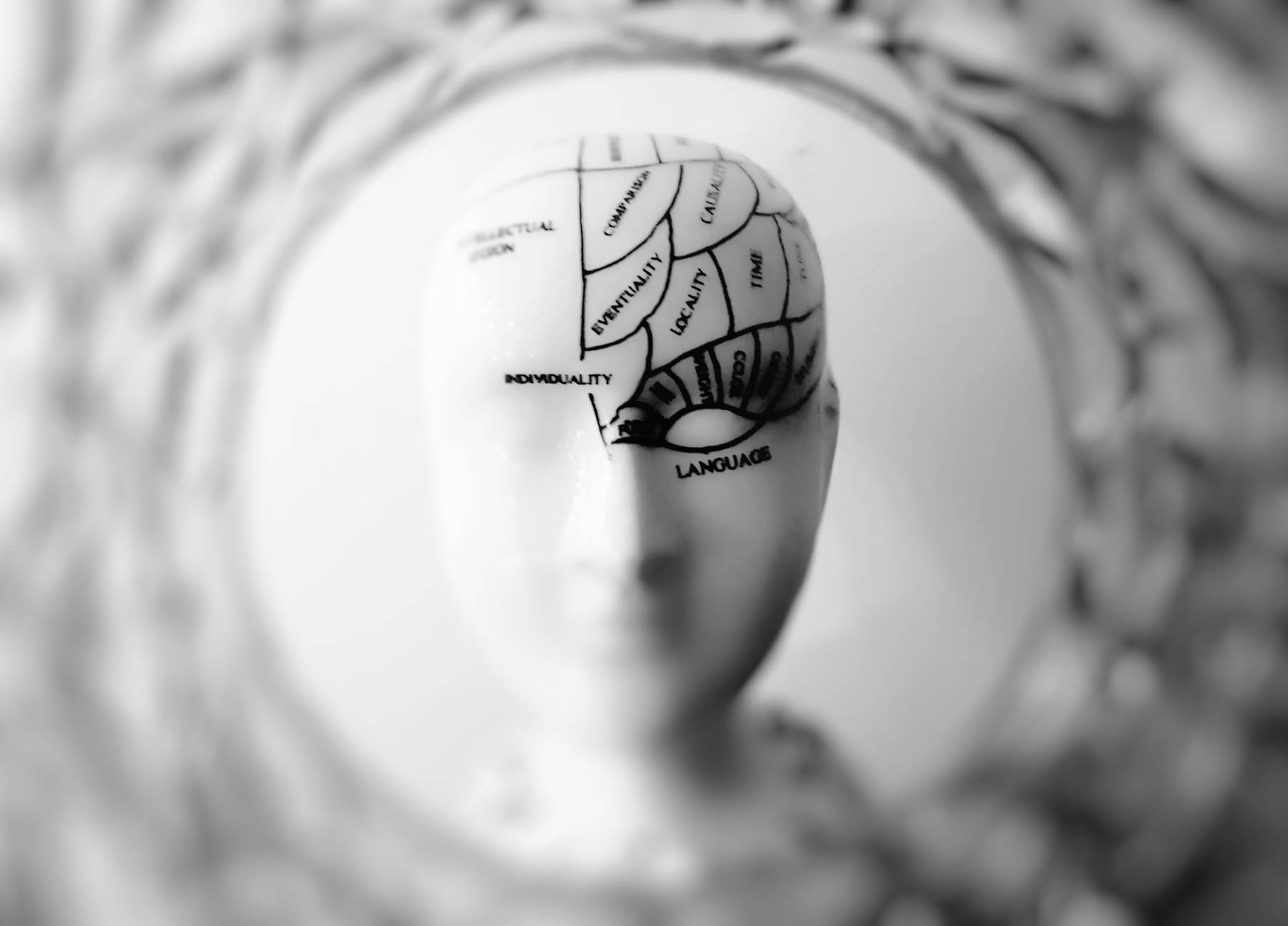
- Start With Strong Images- Dellis suggests that to memorize anything, start turning it into an image. Let u take seven wonders of the world, for example, for the Great Wall of China you might just want to imagine a wall or for Petra of Jordan, you can just go for an image of your pet. Images that are weird or gross or emotional tend to stay in the brain for a longer time. When looking at the brain, researchers found that the amygdala—a part of the brain that is important for processing emotion—encourages other parts of the brain to store memories. That’s why strong emotions make it more likely that memories will stay.
- Put Those Images in a Location- Next, you have to locate those mental images in a setting that is familiar with you. Using Dellis’ example, he locates the seven wonders of the world on a route through his house, starting with a wall in his entryway, then Christ—representing Christ the Redeemer— lounging around on his sofa. He also mentions that the weirder the location, the better are the chances of staying in the memory. Linking images to a place are called the memory palace, which capitalizes on your existing memory of a real place. It is usually a place you are familiar with, which can be your house or workplace which you know very well. Neuro-imaging research has shown increased activity in the occipito-parietal area of the brain when learning memories using a memory palace. This technique helps the brain to bring in parts that are dedicated to other sense-the parietal lobe is responsible for navigation, and the occipital lobe is related to seeing images.
- Pay Attention- Memorizing seven wonders of the World is not as hard as memorizing 10,000 digits of pi or 100 names in one hearing, and doing that needs more motivation and more attention. According to Dellis, he motivates himself with the mantra “I want to memorize this”, it may be simple but this mantra helps him focus on the task by concentrating his attention on the task in hand and it helps him remember better.
- Break Things Up- For a long sequence of cards or a large number, it is a good technique to break things up into smaller sequences. Dellis says that it is easy to remember words as you can associate words easily with images but numbers or names or cards can be tricky, and for that, he has a technique that whenever we see a name or a number or a card, we already have an image preset for it.
- Finish Up by Reviewing– After getting the images and their location sorted in the memory, all we have to do is make sure that it stays in the brain. Most of the memories don’t even get to the long-term memory part of the brain and that is why it is important to repeat the information, again and again, to turn short-term memory into the long term. There is no shortcut for that, all you have to do is practice and persistence.
Training the brain is not as easy as it sounds or seems, it takes a lot of efforts, repetiton, hard work and training on a daily basis. Train hard, work hard, practice hard, then it can become instinctive, says the memory champion.
 Track2Training
You must be logged in to post a comment.