5 Reasons Being a Makeup Artist Is Amazing

Being a makeup artist is about so much more than just knowing how to do a face of makeup. Whether the world of YouTube beauty gurus has suddenly introduced you to something that you find fascinating, you know someone who loves being a makeup artist, or youโ€™re just interested in the job, your interest in the makeup industry can lead you to a very promising career. You should consider numerous things before becoming a makeup artist, but here are five reasons why itโ€™s a great career path.1. A flexible scheduleIf 9-to-5 jobs just arenโ€™t your cup of tea, youโ€™ll be right at home in the makeup world.

Itโ€™s true that individual gigs can sometimes be time-consuming and require a lot of energy, but you get to decide when youโ€™re able to work and when youโ€™re not. When someone contacts you and asks if youโ€™re available, you can always say no if you wish, rather than being obligated to write it into your schedule. You can set your own hours based on whatever is happening in your life currently, and that freedom is priceless.2. Boundless creativityMakeup artists can have a variety of specialties, and you can decide what to do based on what you love doing. You might create special effects for movies, help brides look perfect for their big day, or style models for long shoots. Even better, the specialty that you pick when you first start out doesnโ€™t have to be your only specialty. The skills you learn in a makeup artist program are applicable to a wide variety of specialties, so if bridal makeup starts to bore you, then you can easily move to model styling! Itโ€™s endlessly versatile, and thatโ€™s what makes it fun.3. A constant stream of interesting peopleEven if youโ€™re not working with celebrities or doing special effects for the next blockbuster, youโ€™re still going to meet all sorts of people as a makeup artist. The wide variety of people that youโ€™ll meet ensures that your job will never be boring. If one of your clients grates on your nerves, you can rest easy in the knowledge that you wonโ€™t have to deal with that individual for very long. On the other hand, if you really hit it off with someone, you can exchange information and stay in touch with each other.4. Discounts on makeup suppliesunique discounts for makeup artistsnazarovsergey โ€“ stock.adobe.comAs a makeup artist, you have to supply your own makeup. That can definitely get expensive, but to offset some of those costs, many makeup companies offer discounts to people whoโ€™ve enrolled in or graduated from a makeup artist program. You can apply those discounts to your professional makeup collection, but your personal collection will benefit just as heavily from the steep discounts you can find at high-end makeup brands.5. Leaving an impact on peopleItโ€™s true that youโ€™ll get criticism sometimes; some people will object to the way youโ€™ve done something just because it doesnโ€™t fit their personal tastes, and that can be difficult. However, for many makeup artists, the best part of the job is seeing someoneโ€™s face light up when seeing the finished makeup for the first time. No matter what your specialty is, how famous your client is, or what youโ€™re styling for, seeing the smile on your clientโ€™s face will make all the work worth it.So, why should I become a makeup artist?Being a makeup artist requires a substantial amount of dedication, but it absolutely pays off in the end. Youโ€™ll get to see new things, meet new people, and embark on new

Photo by kinkate on Pexels.com

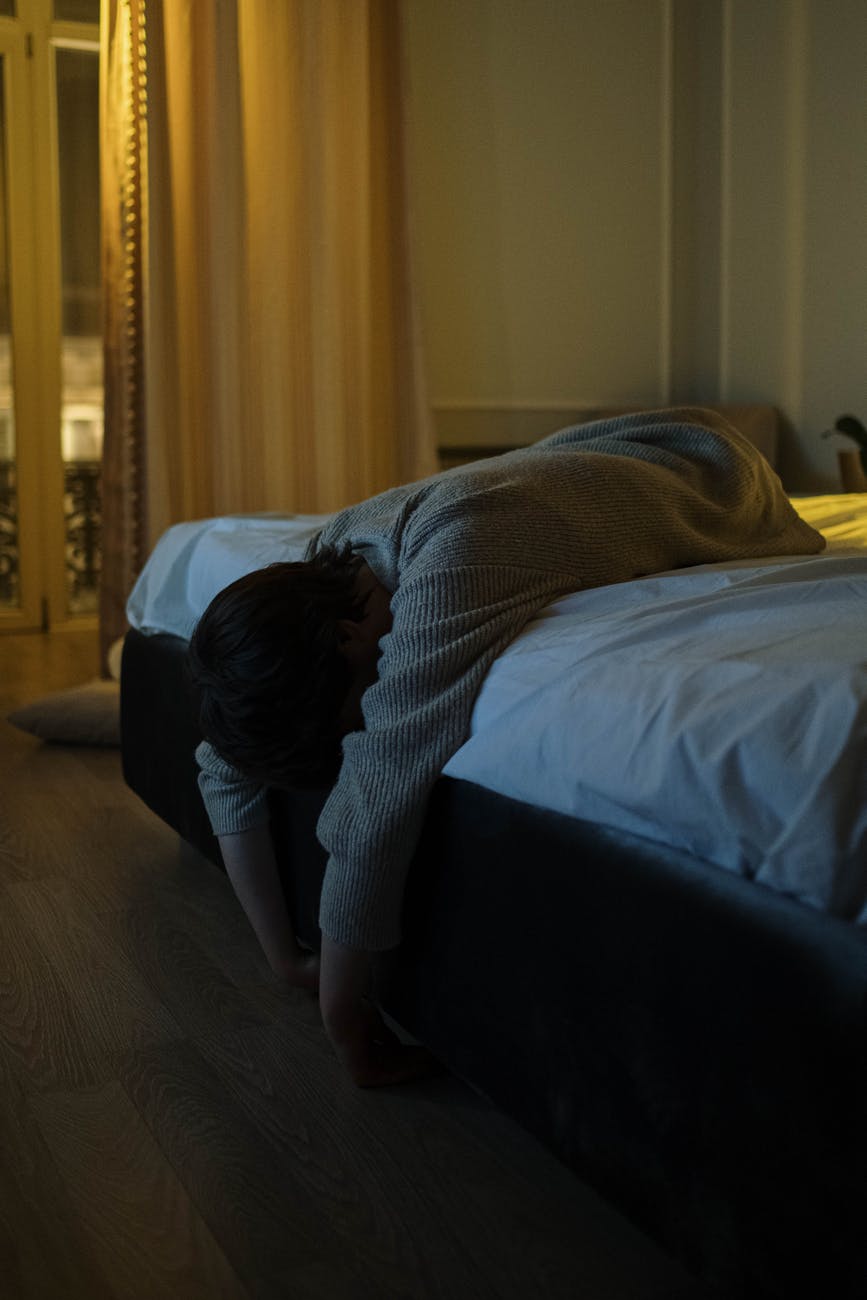
Symptoms of Insomnia

Something that most of us are familiar with and struggling to get out of it. Insomnia, a sleeping disorder which basically makes it difficult for us to fall asleep. Even if you sleep, you may not be in a peaceful deep sleep, you may find yourself getting up in the middle of the night which is caused by insomnia.

Insomnia leads to many health issues. It can be acute or chronic. Acute insomnia lasts for few days or weeks while chronic insomnia lasts for few months.

Acute insomnia maybe the result of temporary stress in a person. The person will recover after the stress is gone. Chronic insomnia maybe the result of long term depression or stress. It can also be because of medical conditions.

Symptoms

Symptom for insomnia is pretty straight forward. If you have trouble with sleep or your sleep schedule. You might be having insomnia. Some other obvious and direct symptoms are,

  • not being able to get peaceful sleep
  • waking up in the middle of the sleep
  • trouble falling asleep at night
  • being tired all the time because of lack of sleep
  • anxiety, depression
  • medical issues like headache or eye pain

These are some of the symptoms that I know and have experienced. Now let us get into the ways to prevent or to recover from insomnia disorder.

Causes and Prevention

  • One of the main causes for insomnia is the stress that we go through. It is like a part of our day to day life but we can do some things to get far from being stressed all the time. Try doing meditation to clear your mind and get some peace as well as sleep. Work, school, college are all important but being sunk into work 24/7 is definitely a way of inviting stress into our lives. While you make time for work, make time for self care as well. With that you can avoid lot of stress and get a good night sleep.
  • Not having a proper sleep schedule will lead to insomnia. If you get used to sleeping late at night there is no going back. So always fix a proper time for your night sleep and stick to it. Avoid mobiles and laptops for a minimum of 30 mins before sleeping. Messing with your sleep schedule will ruin your sleep and makes it very hard to bounce back to proper schedule.

How to prioritize work

Learning how to prioritize

It means getting more out of the limited time you have each day. Itโ€™s one of the cornerstones of productivity and once you know how to properly prioritize, it can help with everything from your time management to work-life balance.

Master lists

Capture everything on a Master List and then break it down by monthly, weekly, and daily goals.

  • Start by making a master listโ€”a document, app, or piece of paper where every current and future task will be stored. 
  • Once you have all your tasks together, break them down into monthly, weekly, and daily goals.
  • When setting your priorities, try not to get too โ€œtask-orientedโ€ – you want to make sure youโ€™re prioritizing the more effective work.
Eisenhower Matrix

The matrix is a simple four-quadrant box that answers that helps you separate โ€œurgentโ€ tasks from โ€œimportantโ€ ones:

  • Urgent and Important: Do these tasks as soon as possible
  • Important, but not urgent: Decide when youโ€™ll do these and schedule it
  • Urgent, but not important: Delegate these tasks to someone else
  • Neither urgent nor important: Drop these from your schedule as soon as possible.
The Ivy Lee Method

Rank your work by its true priority with the Ivy Lee Method:

  • At the end of each workday, write down the 6 most important things you need to accomplish tomorrow. 
  • Prioritize those 6 items n order of their true importance.
  • When you arrive tomorrow, concentrate only on the first task. Work until the first task is finished before moving on to the next one.
  • Approach the rest of your list in the same fashion. At the end of the day, move any unfinished items to a new list of six tasks for the following day.
  • Repeat this process every working day.
The ABCDE method

Instead of keeping all tasks on a single level of priority, this method offers two or more levels for each task:

  • Go through your list and give every task a letter from A to E (A being the highest priority)
  • For every task that has an A, give it a number that dictates the order youโ€™ll do it in
  • Repeat until all tasks have letters and numbers.
Set the tone of the day by โ€œEating the frogโ€

Once youโ€™ve prioritized your most important work, itโ€™s time to choose how to attack the day. How you start the day sets the tone for the rest of it. And often, getting a large, hairy, yet important task out of the way first thing gives you momentum, inspiration, and energy to keep moving. 

Warren Buffettโ€™s 2-list strategy

Cut out โ€œgood enoughโ€ goals with Warren Buffettโ€™s 2-list strategy.

  • Write down your top 25 goals: life goals, career goals, education goals, or anything else you want to spend your time on.
  • Circle your top 5 goals on that list.
  • Finally, any goal you didnโ€™t circle goes on an โ€œavoid at all costโ€ list. These are the tasks that are seemingly important enough to deserve your attention. But that isnโ€™t moving you towards your long-term priorities.
The sunk cost fallacy

Humans are especially susceptible to the โ€œsunk cost fallacyโ€โ€”a psychological effect where we feel compelled to continue doing something just because weโ€™ve already put time and effort into it. But the reality is that no matter what you spend your time doing, you can never get that time back. And any time spent continuing to work towards the wrong priority is just wasted time.

REFERENCE

https://blog.rescuetime.com/how-to-prioritize/

ORIGINS OF THE ENGLISH DRAMA:

      Drama in England originated from religion. In the Middle Ages, church services were conducted in Latin which most of the congregation did not understand. The church wanted to provide people delight as well as spiritual uplift. The clergy,  therefore, used to act episodes from the life of Christ or scenes from the Bible especially on special occasions like Christmas and Easter. Elaboration of the church ritual and liturgy became the earliest kinds of dramatic Performances. Soon the Latin dialogue was replaced by the vernacular. Later purely vernacular plays were composed. one of the earliest plays was ‘Adam’ . Such plays were performed within the church and the monks and priests participated as actors. As time passed the churches could not accommodate the large crowds that assembled to see the church plays. So the performances were taken outside into the areas surrounding the church. This change of locale and the introduction of the vernacular marked a breakaway from the church tradition. Drama, thus, became secular, more humorous, and less rigid. Soon dramatic performances were taken over by the town guilds and this tradition continued till the 16th century.

MIRACLES AND MYSTERIES:

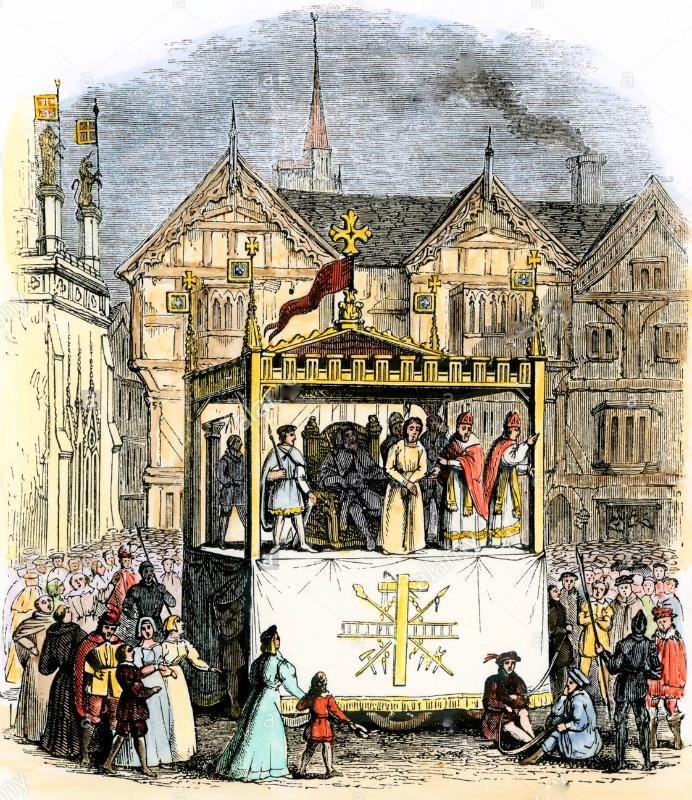
      The trade guilds produced a connected series or cycle of dramas under the supervision of the church. These plays dealt with scriptural events. By the 14th century, two types of drama came into existence – the miracles and the mysteries. The Miracle plays dealt with the lives of saints and the Mystery plays with themes taken from the Bible. They were shown at separate ‘stations’ in the town on wheeled theatres or stages drawn by horses. Actors were the members of the guilds; spectacular theatrical effects were produced on the stage; costumes were simple and humourous elements were provided. Four such cycles of Mystery plays are preserved today. These plays are chaotic in construction and the language used is often stilted. But the Mysteries gave the people of England a taste for theatrical shows and prepared the ground for the Elizabethan drama.

MORALITIES AND INTERLUDES:

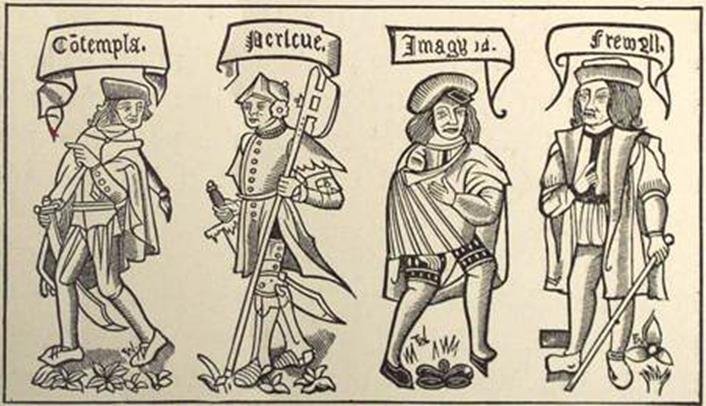
ย ย ย ย ย  By the middle of the 15th century, the drama began to show new trends. It substituted moral teaching for religious instruction. Characters were no longer Biblical figures but personified virtues and vices. A stock character was ‘vice’. These plays were called Moralities. The best known among them was ‘ Everyman’. The cardinal feature of the Moralities was the pursuit of Everyman by evil forces and his rescue by Conscience or Wisdom. These plays were poetic and imaginative. The thoughts and emotions of characters were personified and there was even some sense of construction and unity. Morality plays to mark the beginning of soul struggle which later became a marked trait of Elizabethan Drama. Two other important Morality plays were ‘ Mankind’ and ‘ The castle of Preservance’. Towards the close of the 15th century, a new form of drama called The Interlude appeared. It may be defined as a play midst other festivities. It was a transitional form of drama between Morality and Elizabethan drama. Interludes were marked by witty dialogue and discussion. The best writer of Interludes was John Heywood. His important interludes are ‘ The Play of the Weather’, ‘A Play of Love’ and ‘The Fours Ps’. Interludes were free from didacticism. There was a mixture of fun and rich sentiment in them. Comedy and farce began with the Interludes. Sir Thomas More and Rastell were two other important writers of interludes.

Published by

Ayisha shabana

Learning how to learn!

โ€œFocusedโ€ and โ€œDiffusedโ€ Modes

When learning, there are times in which you are focused and times in which you allow your mind to wander. Both modes are valuable to allow your brain to learn something.
Take regular breaks, meditate, think about other things, and give yourself plenty of time in both modes.

Chunking

This is the idea of breaking what you want to learn into concepts.ย The goal is to learn each concept in a way that they each become like a well-known puzzle piece.ย 
To master a concept, you not only need to know it but also to know how it fits into the bigger picture.

Beware of Illusions of Competence

There are many ways in which we can make ourselves feel like we have โ€œlearnedโ€ a concept. Instead of highlighting or underlining, rather take brief notes that summarize key concepts.

Recall

Take a couple of minutes to summarize or recall the material you are trying to learn. It goes a long way to taking something from short-term memory to long-term learning.

Bite-Sized Testing

To avoid breakthrough illusions of competence, you should test yourself as youโ€™re encountering new material.ย The recall is a simple example of this mini-testing.

Over-Learning

Do not spend too much time in one sitting going over the same material over and over again. The law of diminishing returns certainly applies. Spread it out over many sessions and many different modes of learning.

Interleaving

Once you have a basic understanding of what you are trying to learn, practice jumping back and forth between problems that require different techniques. This will solidify your understanding of the concepts by learning how to choose to apply them in various situations.ย Knowing when to apply a particular concept is as important as knowing how.

Process over Product

When facing procrastination, think of the process over the product.
Instead of thinking that you have to get X done, rather think to spend an hour on X. It is then not overwhelming and doesn’t require a long breakdown of tasks.

Metaphors and Analogies

They are often talked about as helpful study techniques.ย 
Try to make a deliberate effort to teach what you learn to someone else and, in doing so, you will likely be forced to explain concepts with relatable metaphors and analogies.

Study Groups / Teamwork

This has proven to be most beneficial to maintain continued progress and hold each other accountable. Finding the right group is key.

Reference

https://medium.com/learn-love-code/learnings-from-learning-how-to-learn-19d149920dc4

THE ONE-ACT PLAY

       The one-act play is to drama what the short story is to the novel. A one-act play is not an abbreviated drama. It has its laws. The one-act play has a single plot; it is either pure comedy or pure tragedy. The action is confined to a single place and the number of characters is limited. The simplicity of design and immediate impact are its characteristics. The one-act play observes brevity in the plot, in character, and in dialogue. As a short play, it automatically fits into the classical framework of the unities. The very nature of a one-act play demands concentration. As a result, the heightened emotions ofโ€ the one-actor may be poetical or intensely realistic. When it is poetical, it transcends reality and throws over the audience the spell of illusion through the music of words and the deepening sentiments.

     The History of the one-act play dates from the days of Mystery and Miracle plays. They were several little plays combined to form a Cycle. The interlude of the fifteenth century was also brief. The Short Play disappeared with the coming of the great Elizabethan playwrights and reappeared only by the end of the 19th century. In modern times, initially, the one-act play was used as a ‘ curtain raiser’ before a full-length play. But the audience generally ignored it. Later two or three one-act plays were presented on the same evening as in the case of James Barrie’s one-act plays. Shaw also could occasionally confine to the narrow limits of the one-act play as in ‘The Man of Destiny’ and ‘The Dark Lady of the Sonnets’. Another great writer of one-act plays was Noel Coward who wrote the famous ‘ Tonight at Eight-Thirty’. The plot in a one-act play is confined to the most essential point of the Story. In the famous one-act play ‘The Bishop’s Candle Sticks’, we have the central incident of the stealing of the candlesticks. Other details are introduced indirectly and in a limited manner. A one-act play uses only a limited time for its presentation. Its characters are limited in number and its dialogue observes the economy of words. The most important aspect of a one-act play is the central sentiment and its racy and crisp dialogue.

      The writer of one-act plays does not have the freedom which a writer of full-length plays enjoys. The one-act play imposes severe restrictions on the author. He must present the story and characters with suggestive strokes. He must use the dialogue carefully. With all these restrictions, the one-act play can still be profound, poetic, and subtle as we find in yeat’s ‘ The Land of Heart’s Desire’ or in J.M. Synge’s ‘ Riders to the Sea’. Though one-act plays are best suited for the exposition of comic themes, there are excellent one-act plays with tragic themes also. W.W. Jacob’s ‘The Monkey’s Paw’ and Synge’s ‘Riders to the sea’ are examples. Today one-act plays are supported by amateur dramatic societies and school and college troups. Some of the outstanding modern one-act plays are John Drinkwater’s ‘The Storm ‘, Galsworthy’s ‘The Little Man’, A.A. Milen’s ‘ The Man in the Bowler Hat’, J.B.Priestly’s ‘Mothers Day’ and Stanley Houghton’s ‘ The Dear Departed ‘.

Published by Ayisha Shabana…

SARAH’S : A CHANGE IN THE NOTION OF MOTHERHOOD

Jude Anthony Joseph’s 2021 Malayalam film Sarah’s is making a revolutionary turn in Malayalam cinema by changing the notions of pregnancy, abortion and motherhood. The protagonist Sarah is a woman who is not willing to get pregnant and to bcome a mother. As she gets older day by day this decision gets stronger. she even marries a man on this agreement. The tension arises when she becomes pregnant, by a contraceptive failure. But even after this Sarah is stronger with her opinion of her own pregnancy, but her husband, family and the society compells her to continue this pregnancy without considering her opinion. But towards the end the decision made by Sarah on her pregnancy is something revolutionary. This kind of representation of womanhood and motherhood is very rare in Mollywood.

Through the character of Sarah the film portrays the fact that women are not just medium of reproduction. The direction also shows themes like modern sexual relations, legal side of abortions etc. Through the medium of satire the movie comments on old notions of motherhood. And also states that there is no need to glorify motherhood, if that affects the mental physical and emotional state of mother. The movie says that parenthood is not a social norm. The film even not glorifies abortion. It opens a discussion that when and why a person can decide it. The comment ” Better not be a parent, than a bad parent” is thoughtful. The film can be considered as an ode to women about parenthood, identity and opinion.

IMPORTANCE OF SELF LOVE

Self love, which is the “consideration of one’s own happiness or advantage” is a basic human necessity. It is a kind of appreciation for oneself that results in the well being of one’s physical, psychological and spiritual self. It includes actions and thoughts which is for one’s own needs and not sacrificing one’s well being to please others. The habit of self love and self appreciation is considered as compulsory for the psyche of human. Because people who love themselves are less likely to suffer from anxiety, depression and such similar psychological conditions. It also lessens procrastination and increases the focus to work.

Loving oneself is a different task, but to develop the habit is easy. One of the practice to develop self love is to stop comparing oneself with others. This comparison is natural, but if it sometime leads to danger. There is no need for comparison because every individual is unique m Apart from this one needs to focus on his or her self energy and spirit. Neglecting other’s opinion is also an important habits with regard to self love. Constructive criticism is important for one’s personality development. But worrying about other’ opinion and thinking what the society thinks before doing anything is a bad practice. It is human to make mistakes. Nobody is perfect. With each mistakes one learn each lessons. So the freedom to do mistakes is an important factor in self love. Good decision making, forbidding how one’s body look, avoidance of toxic people, understanding and rejecting fears and finding beauty in simple things are some steps to develop the habit of self love.

Another important factor is the freedom to feel pain and happiness equally. Limitations in feelings like happiness, pain and fear are dangerous. It is human to experience every emotion in its fullest form. These experiences will make one to realize oneself. Giving priority to oneself is a good practice. Even though it is in every one, women is more accustomed to putting other’s first.

When a person practices self love, others will also start feeling love with himself or herself. As a result of this one’s confidence increases and it leads to success in professional and personal life. It helps to understand one’s passion and this habit attracts others. Thus self love is a necessary habit in one’s physical psychological and spiritual well being.

Kinds Of Essay

An essay is a short composition in prose. It discusses, either formally or informally, one or more topics. This term was first applied to Montaigne’s volumn of informal pieces. This volume was first published in 1580. After seventeen years, Francis Bacon used the English word ‘essay’ to describe his brief philosophic discourses. With the development of periodicals, the essay become a popular form. Addison, Steel, Lamb, Hazlitt, and Pater made it their major concern.

The Aphoristic Essay Bacon was the first to write proper essays in English. Though he was inspired by the French writer Montaigne, his essays are more objectives and impersonal than those of the French master. Bacon’s essays are written in an aphoristic style. They contain mostly short, crisp sentences with a didactic bent. Bacon called his essay’s ‘counsels civil and moral’ and ‘dispersed meditations’. Aphoristic essays are known for their precision of style and balancing structure. No superfluous words are used and sentences flow rapidly. They seem abrupt and rugged but express the ideas directly and clearly. As a critic says, the sentences in an aphoristic essay are in a state of ‘literary undress’

The Character Essay In the earlier part of the 17th century, the essay took the form of character sketches in the writings of Joshep Hall, John Earle, and Sir Thomas Overbury. They were inspired by the Greek philosopher Theophrastus and the Roman Seneca. The early character essays were marked by minute details and were often presented in a humorous and satirical manner. Such essays were almost like pen pictures of various types of men and women. Some traits of the character essay can be seen even in Addison’s essays on Sir Roger de Coverley.

The Critical Essay Dryden introduced this type of essay during the Restoration period. Though the critical essay retained the traditional form, its theme was literary criticism. Dryden’s Prefaces and other prose writings can be included in this category. The critical essay is the main objective. However, it often exhibits traits of the personal essay because critical opinions are generally colored by the personality of the writer. In the 19th century, the critical essay flourished in the writings of Emerson, Hazlitt, Arnold, Carlyle, and Ruskin. The 20th century has seen a host of critics who made valuable contributions to the critical essay. Among them, T.S.Eliot and F.R.Leavis are the most important.

The Periodical Essay The periodical essay became popular in the 18th century especially with the publication of the ‘Tatler’ and the ‘The Spectator’. The essay that began to appear in the periodicals drew their inspiration from the social life of the people. The periodical essay was adapted for literary criticism and the delineation of character. Addison’s essay delineating the character of ‘The Spectator’ and the several essays by Steele and Addison on the imaginary character Sir Roger de Coverley is the examples of how journalistic writings could attain artistic perfection.

The Personal Essay In the Personal Essay, the personal element predominates. Charles Lamb is known as the greatest writer of the personal essay in English Literature. There is no formal or logical development of thought in an essay. The various points are mentioned haphazardly. Its author likes to enjoy the freedom of conversation. So, he is informal and often chatty. Hazlitt, De Quincey, and Charles Lamb brought the personal essay to a level that has remained unsurpassed. George Orwell, E.M. Forster, James Thurber, and E.B. White are excellent model practitioners of the personal essay.

Twentieth Century Essay In the 20th century, the development of the essay is encouraged by a large number of periodicals and newspapers. Many of the modern essays appear in the form of articles and are often collected and published in book form. In the modern essay, the distinction between the personal and the objective is hardly noticeable. It is at once expository, reflective, and descriptive and one of its main elements is humor. Some of the important modern essayists are G.K.Chesterton, A.G.Gardiner, F.L.Lucas, Max Beerbohm, and Hilaire Belloc

https://track2training.org/2022/01/11/what-is-an-essay/

The Old Man and The Sea

The Old Man and the Sea is a novella written by the American author Ernest Hemingway in 1951 in Cayo Blanco (Cuba), and published in 1952. It was the last major work of fiction written by Hemingway that was published during his lifetime. One of his most famous works, it tells the story of Santiago, an aging Cuban fisherman who struggles with a giant marlin far out in the Gulf Stream off the coast of Cuba.

In 1953, The Old Man and the Sea was awarded the Pulitzer Prize for Fiction, and it was cited by the Nobel Committee as contributing to their awarding of the Nobel Prize in Literature to Hemingway in 1954.

CHARACTER  SKETCH

SANTIAGO

Santiago is the protagonist of the novella. He is an old fisherman in Cuba who, at the beginning of the book has not caught anything for eighty-four days. The novella follows Santiago’s quest for the great catch that will save his career. Santiago endures a great struggle with an uncommonly large and noble marlin only to lose the fish to rapacious sharks on his way back to land Despite this loss. Santiago ends the novel with his spirit undefeated. Santiago represents Hemingway himself searching for his next great book.

MANOLIN

Manolin is Santiago’s only friend and companion. Santiago taught Manolin to fish, and the boy used to go out to sea with the old man until his parents objected to Santiago’s bad luck. Manolin still helps Santiago pull in his boat in the evenings and provides the old man with food and bait when he needs it. Manolin is the reader’s surrogate in the novel, appreciating Santiago’s heroic spirit and skill despite his outward lack of Success.

The Marlin

Although he does not speak and we do not have access to his thoughts, the marlin is certainly an important character in the novella. The marlin is the fish Santiago spends the majority of the novel tracking, kiling, and attempting to bring to shore The marlin is larger and more spirited than any Santiago has ever seen. Santiago idealizes the marlin ascribing to it traits of great nobility, a fish to which he must prove his own nobility if he is to be worthy to catch it

Summary and Review

This is a story about an old fisherman who is on somewhat of an unlucky streak. The only other fisherman who still believes in him is a young boy who has helped him fish in the past. The boy often takes care of the old man, who lives in a shack and often goes hungry.

The old man goes out, as he does every day, and tosses his line over the edge of the boat. He waits until something sharp pulls on the line. The fish is so strong that it begins to pull the boat.

The fish is resilient and continues to pull the boat further and further through the night. On the second day, the old man realizes he needs food and catches a dolphin, which he eats.

On the third day, he finally outlasts the fish and harpoons him. He drags the marlin to the side of the boat and is happy with his catch. However, he has to defend his catch against the slew of sharks.

He manages to kill several sharks, but by the time he makes it back to town, the marlin is nothing but bones. Exhausted, he barely makes it back to his shack, where he is greeted by the boy.

While other authors have dealt with man against nature, this story concentrates on that theme through its length, as well as the narrative. Hemingway often puts the reader into the mind of the old man with dialogue, but also internal monologue. This may present the old man as crazy, but it also reveals his emotions as he battles the fish over three days.

This, of course sets up the tragic ending where he is left to fight off the sharks from his prize catch that nearly took his life. The guy spent three days out at sea and had nothing to show for it when he got back. The ending is somewhat questionable as well. The old man is still poor, but the boy, and the other fishermen, have newfound respect for him. You may not be able to teach an old dog new tricks, but he may still be able to impress you.

The Deadly Fashion Trends that Actually Killed People

Beauty is the subject of a magnificent exhibition of around 150 objects assembled in the British Museumโ€”Defining Beauty: the Body in Ancient Greek Art. One quoted epigram from Socrates sums up the central idea of this showโ€”โ€It is a disgrace to grow old through sheer carelessness before seeing what manner of man you may become by developing your bodily strength and beauty to their highest limit.โ€ But as Ian Jenkins, a Senior Curator at the museum, argued in a talk at the preview, this exhibition is really about โ€œthe quarrel between art and philosophyโ€.

The definition of beauty has changed a lot with time. The feminine beauty ideal, which also includes female body shape, varies from culture to culture. The feminine beauty ideal traits include but are not limited to: female body shape, eyelid shape, skin tones, height, clothing style, modified facial features, hairstyle and body weight. From a very young age, women are raised to live up to unrealistic beauty standards put upon them by society. They are expected to be hairless all over their body, have to be slim with no tummy but big butt, smell like daisies and roses all the time, not have regular bodily fluids and gases, and be an all-around perfect Barbie. It is hard to live up to something so unobtainable especially starting at an age as low as three. Having a normalized yet extraordinary societal implication drilled into you as soon as you are out of the womb is and can be mentally and physically draining. Social media, magazines, newspapers, and even televisions tend to push high and barely achievable standards. You must look a certain way for society to at least acknowledge your โ€œbeautyโ€ even when you have tried to mold yourself to please them. Even then there is always criticism behind it all. Women have to be slim but not too slim, thick but not too thick to where you have a tummy. Women can wear makeup but not too much because it would look like we are trying too hard. We can show skin but not too much because we would get shamed. It is considered weird or impolite for a woman to even have bodily gases. What can we do but try to love ourselves as is?

All these beauty standards are not modern things. These are going on from the past and today I am going to show you how women used to make their body beautiful by using the following “so called” beauty stuffs or hacks which were actually killing their body.

1) ORGAN CRUSHING CORSETS

The ideal of what a womanโ€™s body should look like has changed dramatically over time and varies by culture. One of the most well-known historical attempts at changing a womanโ€™s body shape, corseting of the waist to make an hourglass figure left lasting effects on the skeleton, deforming the ribs and misaligning the spine. Corset-wearing was common in the 18th and 19th centuries acrossย Europeย and across different socioeconomic classes. Women wore corsets to shape their bodies away from nature and toward a more โ€˜civilizedโ€™ ideal form. A woman would wear her corset for almost her entire life. Very young children were placed in corsets, as advertisements from Paris at the time mention sizing โ€œpour enfants & fillettes.โ€ Even in pregnancy,ย special corsets were made to fit a womanโ€™s growing belly and, later, her need to nurse her baby. Side gussets or special snaps over the breasts, were used to accommodate their changing form while still allowing them to follow the fashion of the time. While scholars still debate the extent to which patriarchal control over womenโ€™s bodiesย and womenโ€™s own clothing choices affected corseting practices, it is clear that long-term use of these garments caused changes in womenโ€™s skeletons. By looking at the variation in corsets and their physical effects on the spine, and correlating those observations with age-at-death.

Corsets
The corsets crushing the organs inside

2) EATING TAPEWORMS TO LOSE WEIGHT

Individuals seeking toย lose weightย are constantly confronted with a variety of diets,ย supplements, and weight-loss regimens to choose from. Whether in magazines, on television or on the Internet, the consumer can be bombarded with any number of advertisements that claim to offer them the opportunity to lose weight with their products. However, individuals need to be cautious and well-informed when considering what products to use, as certain weight-loss marketing claims are not only misleading but also potentially detrimental to your health. The use of tapeworms for weight-loss purposes illustrates this risk. Sometimes the affected individual may notice a segment of the tapeworm in their feces. More serious complications can also occur in some individuals. Tapeworms rarely can cause obstruction of theย intestines, requiring surgery in order to resolve the blockage. Infection with the pork tapeworm (Taenia solium) can sometimes result in a disease calledย cysticercosis, which occurs when the eggs of the pork tapeworm are ingested by humans. The larvae can then penetrate the intestinal wall and disseminate into the bloodstream to other parts of the body, leading to the formation of cysts throughout the body. These cysts can sometimes spread to the brain (neurocysticercosis), leading toย headaches,ย confusion,ย seizures, and rarely, death.

Advertise on Tapeworm Tablets for Weight loss

3) HOBBLE SKIRTS

A hobble skirt was a skirt with a narrow enough hem to significantly impede the wearer’s stride. It was called a “hobble skirt” because it seemed to hobble any woman as she walked. Hobble skirts were a short-lived fashion trend that peaked between 1908 and 1914. Hobble skirts were directly responsible for several deaths. In 1910, a hobble-skirt-wearing woman was killed by a loose horseย at a racetrack outside Paris. A year later, eighteen-year-old Ida Goyette stumbled on an Erie Canal bridge while wearing a hobble skirt, fell over the railing, and drowned.

The Hobble Skirt

4) THE STIFF HIGH COLLAR

Not only women but men were also the prey for this so-called fashion trends. The detachable collar sound innocuous enough, but in reality it was a deadly hidden killer. Known as the “Vatermorder” (father killer), this collar was designed to keep the necks of men straight and, er,ย erectย (you can guess what parallels they were attempting to draw there). This meant that they were essentially corsets for the throat. The stiff, high collar could easily cut off blood circulation and air supply, leading to death by asphyxiation at the slightest pressure or swelling, and there were even reports of the torture collars literally cutting through the neck of the wearer.

Father Killer Collar

5) FOOT BINDING

There’s nothing worse that a woman galumphing around the place with her normal-sized feet, is there? Well, something just had to be done. Foot binding was practiced by the Chinese for more than a thousand years, and is thought to have claimed the lives of more than a million women during that time. First, a girl of around four years old was treated to a nice foot spa of vinegar and botanicals. He toenails were then removed, her feet broken and bent in on themselves and wrapped in tight bandages. The broken and bound feet were highly susceptible to infection, and bits often dropped off due to lack of blood supply. If a girl’s feet were still considered too big, shards of broken tile were sometime inserted into the bindings to encourage the toes to fall off through infection. Death by septic shock was common, as was gangrene and broken bones from “falling off” bound feet.

Foot binding tradition from China

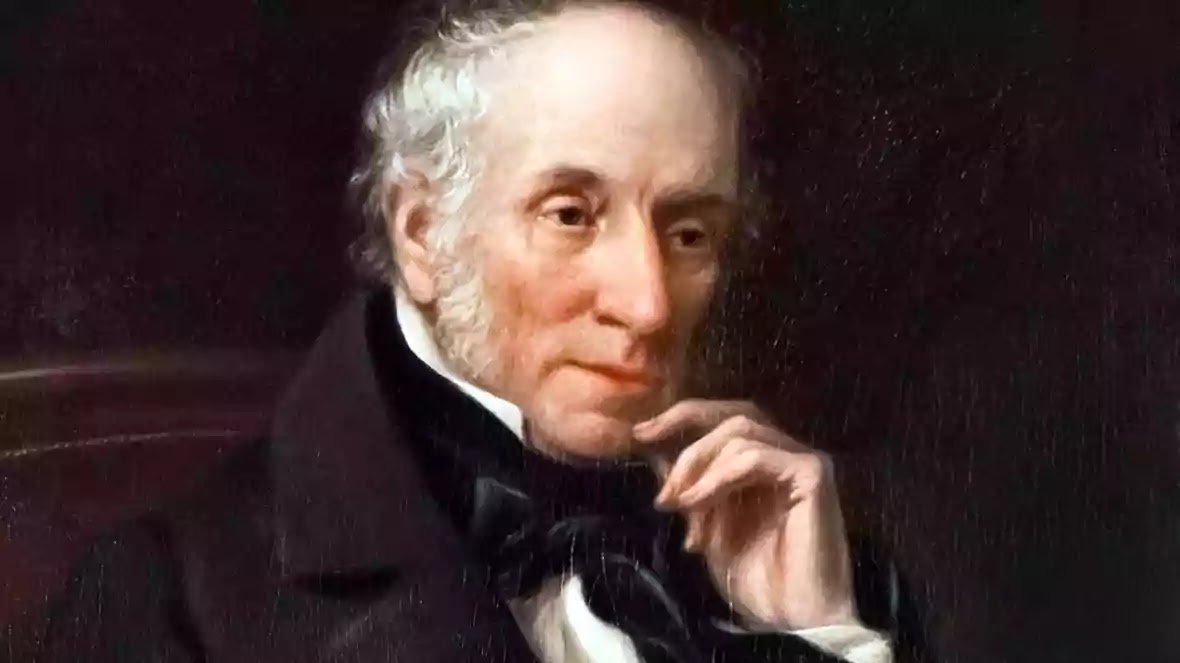
THE BIOGRAPHY OF WILLIAM WORDSWORTH-PART2

HIS POETRY:

            William Wordsworth records that his earliest verses were written at school and that they were ” a tame imitation of Pope’s Versification”.  This is an interesting admission of the still surviving domination of the earlier poet. At the University, he composed some poetry, which appeared as An Evening Walk(1793) and Descriptive Sketches (1793). In style, these poems have little originality, but they already show the Wordsworthian eye for nature. The first fruits of his genius were seen in the Lyrical Ballads (1798), a joint production by Coleridge and himself, which was published at Bristol. Wordsworth had the larger share in the book. Some of his poems in it, such as The Thorn and The Idiot Boy, are condemned as being trivial and childish in style; a few, such as Simon Lee and Expostulation and Reply, are more adequate in their expression; and the concluding piece, Tintern Abbey, is one of the triumphs of his Genius.

The Prelude, which was completed in 1805 but not published until 1850, after Wordsworth’s death, is the record of his development as a poet. The Solitary Reaper, The Green Linnet, Ode on the Intimations of immortality, Resolution, and Independence, Ode to Duty; and the Sonnets dedicated to National independence and Liberty are of a quality that has led many critics to hail them as the finest sonnets in the language.

HIS THEORY OF POETRY:

In the preface to the second edition of the Lyrical Ballads, Wordsworth set out his theory of poetry. It reveals a lofty conception of the dignity of that art which is ” the breath and finer spirit of all knowledge”, and which is the product of “the spontaneous overflow of powerful feelings,” taking its origin from ” emotion recollected in tranquility”. Wordsworthian dogma can be divided into two portions concerning ( a) subject and ( b) the style of poetry.

(a) Regarding subject, wordsworth declares his preference for ” incidents and situations from common life“: to obtain such situations, “humble and rustic life was generally chosen, because in that condition the essential passions of the heart find a better soil in which they can attain their maturity.

(b) Wordsworth’s views on poetical Style are the most revolutionary of all the ideas in this preface. He insists that his poems contain little poetic diction, and are written in ” a selection of the real language of men in a state of vivid sensation.

FEATURES OF HIS POETRY:

Some of the main features of Wordsworth’s poetry are a spiritual veneration for nature, a dislike for modernity, an interest in the individual and the imagination, a fascination with childhood, and the employment of common language. In his treatment of nature, however, he is not content merely to rejoice: he tries to see more deeply and to find the secret Springs of this joy and thanksgiving He strives to capture and embody in words such deep-seated emotions, but almost of necessity from the very nature of the case, with little success.His work exhibits many of the characteristics of Romantic poetry, including a disdain for the ugliness of modernity, a spiritual reverence for nature, an appreciation for childhood, a focus on the individual and the human mind.

————————THE END———————-

Published by Ayisha Shabana….

How Can Yoga Therapy help?

Yoga therapy meets people where they are, connecting them to their own innate healing potential. Yoga therapy clients report experiencing improved mood, decreased stress and chronic pain, and more.ย See a sample list of research articles on yoga therapy and yoga.

Women exercising in fitness studio yoga classes

One mechanism researchers have uncovered is yogaโ€™s capacity to affect the nervous system by improving our ability to self-regulate. The practice uses methods that work via both the mind and the body, known in research as top-down and bottom-up regulation. Put simply, top-down regulation uses cognitive tools like meditation and ethical inquiry to affect the state of the body, whereas bottom-up regulation uses the body itself, through movement and breathing techniques, to change the state of the nervous system and to affect thoughts and emotions.

In short, the practice of yoga equips us with a comprehensive toolkit to help support regulation and resilience in the mind-body system. Yoga therapy is the specific use of these tools by a trained practitioner.

Click left or below to find out how individually tailored yoga therapy can help with

  • Chronic pain, including low-back pain, arthritis, premenstrual syndrome (PMS), and other types of pain such as that associated with fibromyalgia and chronic fatigue syndrome
  • Mental health, including concerns like anxiety, depression, trauma and PTSD, insomnia, and others
  • Neurological issuesย and complications of stroke, multiple sclerosis (MS), Parkinsonโ€™s disease, and traumatic brain injury (TBI)
  • Support for illnessesย such as cancer, diabetes, and heart disease
  • Overall well-beingย (you donโ€™t need to be sick or in pain for yoga therapy to have value!) and healthy aging

Ikigai: why is it Important?

I have been fascinated by the Japanese and their culture for at least ten years now and I have learned a lot from them. Some of the things I am most fascinated by about the Japanese are their longevity (the Japanese have the longest lifespans of any race in the world), the high importance they place on teamwork, social connections and social responsibility, and their incredibly healthy diets.

If you ask someone the reason why the average Japanese lives so long, the answer you will probably receive is, โ€œbecause they have a healthy dietโ€. And that answer is mostly correct. But, as it turns out, there might be more to it than simply a healthy diet. It may also have to do with the fact that the Japanese believe in and adhere to something called โ€œikigaiโ€, which loosely means โ€œreason for beingโ€ or โ€œreason for waking upโ€.

The Japanese take their ikigai seriously and this motivates them in many ways. It is somewhat akin to the word โ€œpassionโ€ in English. It may relate to a personโ€™s career or job, but it does not have to. In fact, only about a third of Japanese profess that their ikigai is related to the type of work they do.

Very often, the Japanese will cite social connections and responsibility as their ikigai. For example, the older generation is respected and highly appreciated. Their opinions and experience are valued by society and this allows them to feel a sense of purpose and responsibility towards others. In other words, their lives matter.

Unlike in the West where our passions mostly take into account what we love to do, ikigai also involves doing something that we love, but it also places a lot of emphasis on a group and fulfilling a role that benefits that group as a whole. Many Japanese are part of formal groups called โ€œmoaiโ€ and they consider their connection to these groups to be very important in their lives.

A fishermanโ€™s ikigai might be to hone his craft so that he can help successfully feed his family, his moai, or the town, village, or city. A grandmotherโ€™s ikigai may be to impart wisdom to the younger generation. A traditional chefโ€™s ikigai might involve preserving ancient recipes and passing them on so that every new generation can enjoy traditional Japanese food. A man who conducts the church choir every week might cite that as his ikigai.

Interestingly enough, a lot of research shows that the earlier a person retires, the higher the risk of an earlier death. This could have something to do with inactivity and being sedentary. It also could have something to do with losing oneโ€™s โ€œraison dโ€™etreโ€, or ikigai.

Some people in the West compare ikigai to happiness, but the two are not synonymous. Ikigai refers to finding happiness and joy in the small, day-to-day activities rather than reaching some final goal that promises bliss. It encompasses finding meaning in the small things. In fact, a personโ€™s ikigai gives them a reason for living even when they are unhappy or miserable in the moment. It is what Victor Frankl wrote about in his epic book, Manโ€™s Search For Meaning. In other words, one can still experience his or her ikigai during times of hardship or suffering. It fosters resilience.

How to Find Your Ikigai

Simply put, your ikigai is where what you are good at, what you love, and what your values are, intersect. When all three of these factors are in line and congruent, it is likely that you have found your ikigai. Try to recall a time when you were doing something and were so engrossed in it that you lost track of time and forgot to eat lunch or dinner. This is often referred to as being in the โ€œflowโ€.

When you pay attention to tasks that seem to โ€œflowโ€ to you, you will find your ikigai and even deepen your association with it. You will find your life to be more meaningful and enjoyable. Once you notice the things that have meaning to you, you must then take the additional step of incorporating more of those types of tasks into your life. In other words, it requires some action and will not just happen on its own.

This also involves eliminating some things that are not harmonious with your values, that you are not good at, or that you do not like to do. Of course, this does not mean that you can get rid of every single task or activity that you do not like (some people do not like to brush their teeth, but it needs to be done anyway). But it does reduce the amount of tasks that are meaningless to you. Some people delegate these โ€œmeaninglessโ€ tasks to others to create more time for the tasks related to their ikigai.

One important point to note is that, once you find your ikigai, it will help you see the bigger picture and make even some mundane tasks more meaningful. For example, helping others by conducting research and writing this blog is very meaningful to me. I often experience โ€œflowโ€ and lose track of time when I am writing a blog post. However, I have also come to see that proofreading and correcting my mistakes (not my favorite things to do) are necessary in order to create an article that my readers like and can benefit from.

Knowing what your ikigai is (you can have more than one, although I would be suspicious if a person had more than four or five) not only creates more happiness and meaning in your life, it also can help you live a longer and healthier life. It makes sense if you really think about it: a person is more likely to jump out of bed each morning with vigor if he knows that the tasks he has to perform will make him more proficient at it, happier, and make a difference in the world. Knowing your ikigai also increases the likelihood of you taking better care of your health because your life has meaning.

Knowing your ikigai can be one of the most rewarding things in a personโ€™s life. What is yours?

THE BIOGRAPHY OF WILLIAM WORDSWORTH-PART1

HIS LIFE:

             Wordsworth was born at Cockermouth, a town that is actually outside the Lake District. His father, who was a lawyer, died when Wordsworth was thirteen years old. The elder Wordsworth left very little money, and that was mainly in the form of a claim on Lord Lonsdale, who refused outright to pay his debt, so that William had to depend on the generosity of two uncles, who paid for his schooling at Hawkshead, near lake Windermere. Subsequently, Wordsworth went to Cambridge, entering St John’s college in 1787. His work at the University was quite undistinguished and having graduated in 1791, he left with no fixed career in view. After spending a few months in London, he crossed over to France (1791) and stayed at Orleans and Blois for nearly a year. He returned to Paris in 1792, just, after the September massacres, and the sights and stories, that greeted, him there shook his faith in the dominant political doctrine. Even yet, however, he thought of becoming a Girondin, or moderate Republican, but his allowance from home was stopped, and he returned to England. with his sister Dorothy (henceforward his long-life companion), he settled in a little cottage in Dorset; then, having met Coleridge, they moved to Alfoxden, a house in Somersetshire, to live near him. It was there that the two poets took the Series of Walks the fruit of which was to be the Lyrical Ballads.

After a visit to Germany in 1789-99, the Wordsworths Settled in the Lake District, which was to be their home for the future. In turn, They occupied Dove Cottage, in TOWN END, GRASMERE (1799), ALLAN BANK (1808), GRASMERE PARSONAGE (1811), and lastly, the well-known residence of RYDAL MOUNT, which was Wordsworth’s home from 1813 till death. Shortly before he had moved to Rydal Mount, he received the sinecure of Distributor of stamps for Westmorland and was put out of reach of poverty. The remainder of his life was a model of domesticity. He was carefully tended by his Wife and Sister, who, with a zeal that was noteworthy, though it was injudicious, treasured every scrap of his poverty that they could lay their hands on. His great passion was for traveling. He explored most of the accessible parts of the continent and visited Scotland Several times. On the last occasion (1831) he and his daughter renewed their acquaintance with Scott at Abbotsford and saw the great novelist when he was fast crumbling into mental ruin.

Wordsworth’s poetry, which at first had been received with derision or indifference, was now winning its way, and recognition was general. In 1839, the Crown awarded him a pension of ยฃ300 a year; and on the death of Southey in 1843, he became Poet Laureate. Long before this time, he had discarded his early ideals and become the upholder of Conservatism. Throughout his life, however, he never wavered in his faith in himself and his immortality as a poet. He lived to see his own belief in his powers triumphantly justified. It is seldom indeed that such gigantic egoism is so amply and so justly repaid.

Will be continued…..

Published by Ayisha Shabana…..

FREDERICK T.WOOD’S ORIGIN OF LANGUAGE:

WHAT IS LANGUAGE?

According to F.T.Wood, “Language is a refined human cry” which was used by Ancient Man Before the existence of words. Ancient Man used to cry or shout to express their emotions and thoughts. A language is a tool for communication that is used as a medium for the expression of thoughts. It is an outlet for emotions. There are two forms of language. (1.) A system of vocal symbols (Spoken). (2.) A system of symbols(Written).

WHAT IS THE SOURCES OF LANGUAGE ?

1. DIVINE SOURCES: According to the Bible and the Christian belief, Adam was the first man in the world. Thus he might be a speaker of the language and taught his children and it followed generation after generation in different forms of language.

2. CAVE ARTS: There are enormous sources of cave art that were found all over the world. Most of them were written/ drawn even thousands of centuries. F.T wood proposes cave art Might be one of the sources in the origin of language.

3. UNREFINED CRIES: A trivial movement of the mouth and breathing can produce audible sounds. So, In Ancient times, even though Man doesn’t know how to speak properly. He must have cried or laughed to call someone or express that he feared for something.

EVOLUTION OF LANGUAGE:

The evolution of language is the study of the development of language. The primary need of language is only to communicate. When people need to record a particular thing, they used written form or printing form Language is an evolutionary process that is not stable all the time and constantly changes from one period to another. For example Chaucer’s Age vs Modern Age. Changes in pronunciation, Grammar, and meaning are one of the evolution in language.

FOUR BASIC THEORIES OF LANGUAGE:

1. BOW-WOW THEORY: Bow-wow theory is defined by sounds. This theory was coined by Max Muller. Bow Wow theory hypothesis is the most popular but perhaps the most far-fetched hypothesis of all. It is the idea that human language and vocabulary originated as a form of imitation. Words are coined by the imitations are called onomatopoeia. For example, the imitation of animal sounds, such as bow wow for a dog’s bark or a-choo for a sneeze.

2. DING DONG THEORY: The Dingdong theory was adopted by German scholar Max Muller. This theory holds that the beginning of language is to be found in the sense of Rhythm. For example: whenever we try to push our car or let’s take a group of workers pushing some big rock will make sound like Ho Ho or Yo Yo .

3. POOH POOH THEORY: Pooh pooh theory was first proposed by Jean Jacques Rousseau. This theory holds that speech began with the intersection: Spontaneous cries of pain (“ouch”), Surprise(“oh!”), and other such emotions. Rousseau says that language is a refinement of pain, pleasure, Surprise, Wonders etc.

4. GESTURE THEORY: This theory was first produced by Wilhelm Wundt, and later restarted by Sir Richard Paget. In his Book, Human Speech which we may call the gesture theory. This theory states that Man first started using gestures to communicate. These gestures began to Accompany by sounds that eventually developed into a language.

Published by Ayisha Shabana

ROLE OF YOGA IN BETTER HEALTHย 

The Sanskrit word “Yoga” is derived from its root “Yuj” which means “to join” or “to unite”. What are the two things that join together? A jivatman (embodied soul) unites with the Paramatman (Supreme Self or Spirit). Although the jivatman is a face of the Paramatman, and in essence both are the same, the jivatman has become subjectively separated from Paramatman, or God.This union of jivatman with Paramatman, and the methods by which the union is attained, both are called Yoga.ย 

Yoga refers to that enormous body of spiritual values, attitudes, precepts and techniques which purify the mind and heart of a human being and enable him to realize his true nature, the Divinity within.

Importance & Benefits of Yoga

During this coronavirus pandemic yoga is the best thing to adopt as a lifestyle habit. It helps us build a strong physical, mental and spiritual health system. When combined with breathing and meditation, it acts as the best element to take care of our mind, body and soul. There are different forms of yoga that can help us to stay physically strong and mentally balanced. It could also be something you can motivate others in your family & social circle to do, as it could help them get through these times easily & healthily. Just like a normal walk in the park or 30 minutes of hard-core gym exercising, Yoga brings its own flavour and benefits to the table, which can be performed by people of all ages, and provides you with a holistic sense of health, which is especially required during these time.

Yoga offers physical and mental health benefits for people of all ages.

  • Physical Benefits of Yoga

1) Improves posture- Working for long hours on a desk could not only hurt your spine but also make you feel tired at the end of the day. Practicing certain yoga asanas could help you in improving your posture and also prevent pain in your neck and lower back.

2) Increases flexibility- When was the last time you wished you could easily touch your toes while bending forward? Well, practicing yoga could help you in that. Yoga can not only help you in increasing your flexibility but also let you perform complex asanas.

3) Builds muscle strength- Yoga could help in strengthening weak muscles of the body. It helps in toning which prevents frequent straining of the muscles.

4) Boosts metabolism– Yoga helps in retaining the vitality in your body along with keeping it fit. It motivates you towards healthy eating and improves the metabolic system of the body.

5)ย Helps in lowering blood sugar- Yoga not only helps in lowering blood sugar but also lowers bad cholesterol and boosts good cholesterol. It encourages weight loss and improves the body’s sensitivity to insulin.

6) Increases self-esteem– Practicing yoga would help you explore a different side of yourself. It would make you feel good about yourself and helps you take a positive approach in life.

7) Improves lung function– A lot of breathing exercises are said to improve lung function. Doing such exercises in a long run could cure respiratory problems. It also increases the capacity of your Lungs Open.

8) Helps you sleep better– Yoga helps in reducing stress and creates a routine which in turn makes a regular sleeping pattern. A relaxed encourages weight loss and improves the body’s sensitivity to insulin.

9) Increases blood flow– The relaxation exercises in yoga regulates blood to all parts of your body. Exercises such as handstand, helps venous blood from the lower part of the body to flow back to your heart, where it can be pumped back to the lungs to be oxygenated.

10) Keep diseases at bay– Yoga exercises have a beneficial effect on the immune system. It not only helps in destroying various viruses we catch during season change, but also boosts our immunity to fight off diseases.

  • Mental Benefits of Yoga

1) Relieves Anxiety– Many people begin practicing yoga as a way to cope with feelings of anxiety. Interestingly enough, there is quite a bit of research showing that yoga can help reduce anxiety.

2) Can Decrease Stress– Yoga is known for its ability to ease stress and promote relaxation. In fact, multiple studies have shown that it can decrease the secretion of cortisol, the primary stress hormone.

3) May Reduce Inflammation– In addition to improving your mental health, some studies suggest that practicing yoga may reduce inflammation as well.

4) Improves Quality of Life– Yoga is becoming increasingly common as an adjunct therapy to improve the quality of life for many individuals.

5) May Fight Depression– Some studies show that yoga may have an anti-depressant effect and could help decrease symptoms of depression. This may be because yoga is able to decrease levels of cortisol, a stress hormone that influences levels of serotonin, the neurotransmitter often associated with depression.

6) May Relieve Migraine– Traditionally, migraines are treated with medications to relieve and manage symptoms.

Conclusionย 

Yoga is the medicine for nearly every problem. As you practice yoga, it does not only help you to improve your physical body but also helps in maintaining your inner peace and relaxing your mind. Thus, there is nothing that yoga will not help. Moreover, yoga is not just a one-day practice; it’s a lifelong commitment.

How to Launch a Marketing Campaign for Your Small Business.

PaySimple

How to Launch a Marketing Campaign for Your Small Business in 7 Easy StepsGuidance and Insights | 5 Min Read

How to Launch a Marketing Campaign for Your Small Business 

When one starts a business with getting the most out of whatever they plan to work out ,only when all the decision regarding the assessment is taken with full potential and with the smart work .

When running a small business or startup its just common for any business to get a most out the the work handling , but itโ€™s for the time being and one have to make plans . Plans are just must . Itโ€™s as important for one as the backup , as no profit so , even no loss and at some  space itโ€™s just get into the minds of many .

So , when it comes to run a small business marketing campaign that should not only work out but even  succeed , its come to the effort of an individual which will not only attract them but even make them indulge in it goes with the initiative that exists outside of your ongoing marketing tasks will include the following :

To short out the end goal :

The end should always be assured before starting , as it will not only saves oneโ€™s time but even makes anyone to plan things according and increase the success rate .

โ€ข    The goal should be decided :

Before going ahead to start a campaign , the aim of the campaign should be decided as what is actually the motive behind the compaign , weather its for the promotion of new product  or to increase the sales or just rasing awareness about the product and brand , . The goal should be decided .

โ€ข   The budget of the campaign should be decided :

As it will not only plan the things according but even reduce the pressure in the spot , .

Why can one afford could be easily be done by setting up the budget .

โ€ข     The identification of the audience :

To target the audience came to be an important aspect , not it now depend on the campaign which is actually about , .

So the targeted audience could be child or adult .

โ€ข      The channel of conversation :

The channel of conversation goes important as itโ€™s the medium through one can lay out the message to the targeted audience . It can be TV, radio , or just a stage campaign .

โ€ข     The result should always be Analysed :

The result from the starting till the end should be analysed and measures could be taken within time for any of the issues .And analysing should the whole campaign , As what was exciting part and what problems did one faced . Than how many customers attracted Should one will be organising it again ,

Well  marketing campaign seems to be easy , but it takes a lot from not only the organiser but from every people involved in this and After a phase it will be successful

Thank you.

Organizational Process

The Organizational Process

Organizing, like planning, must be a carefully worked out and applied process. This process involves determining what work is needed to accomplish the goal, assigning those tasks to individuals, and arranging those individuals in a decisionโ€making framework (organizational structure). The end result of the organizing process is an organization โ€” a whole consisting of unified parts acting in harmony to execute tasks to achieve goals, both effectively and efficiently.

A properly implemented organizing process should result in a work environment where all team members are aware of their responsibilities. If the organizing process is not conducted well, the results may yield confusion, frustration, loss of efficiency, and limited effectiveness.

In general, the organizational process consists of five steps (a flowchart of these steps is shown in Figure 1):

    1.Review plans and objectives.

Objectives are the specific activities that must be completed to achieve goals. Plans shape the activities needed to reach those goals. Managers must examine plans initially and continue to do so as plans change and new goals are developed.

        2.Determine the work activities necessary to accomplish objectives.

Although this task may seem overwhelming to some managers, it doesn’t need to be. Managers simply list and analyze all the tasks that need to be accomplished in order to reach organizational goals.

     3.Classify and group the necessary work activities into manageable units.

A manager can group activities based on four models of departmentalization: functional, geographical, product, and customer.


    4.Assign activities and delegate authority.

Managers assign the defined work activities to specific individuals. Also, they give each individual the authority (right) to carry out the assigned tasks.


    5.Design a hierarchy of relationships.

A manager should determine the vertical (decisionโ€making) and horizontal (coordinating) relationships of the organization as a whole. Next, using the organizational chart, a manager should diagram the relationships

Tabulation Meaning

Tabulation Meaning:

Tabulation is a systematic and logical representation of numeric data in rows and columns to facilitate comparison and statistical analysis. It facilitates comparison by bringing related information close to each other and helps in statistical analysis and interpretation.

In other words, the method of placing organised data into a tabular form is known as tabulation. It may be complex, double, or simple, depending upon the nature of categorisation.

Objectives Of Tabulation:

(1) To simplify complex data

  • It reduces the bulk of information, i.e., it reduces raw data in a simplified and meaningful form so that it can be easily interpreted by a common man in less time.

(2) To bring out essential features of data

  • It brings out the chief/main characteristics of data.
  • It presents facts clearly and precisely without textual explanation.

(3) To facilitate comparison

  • The representation of data in rows and columns is helpful in simultaneous detailed comparison on the basis of several parameters.

(4) To facilitate statistical analysis

  • Tables serve as the best source of organised data for statistical analysis.
  • The task of computing average, dispersion, correlation, etc., becomes easier if data is presented in the form of a table.

(5) To save space

  • A table presents facts in a better way than the textual form.
  • It saves space without sacrificing the quality and quantity of data.

Also Read: What are Measures Of Dispersion?

Multiple Choice Questions:

Q.1- Tabulation makes the data
a. Simple
b. Complex
c. Very complex
d. None of the above
Q.2
a. To bring out essential features of the data
b. To facilitate statistical analysis
c. To save space
d. All of the above
Q.3 Tabular presentation of data saves space without compromising ________ of data?
a. Quality of data
b. Quantity of data
c. Both (a) and (b)
d. None of the above
Answer Key
1-a, 2-d, 3-c

Related Read: T.R. Jain and V.K. Ohri Solutions for Presentation of Data

The above-mentioned concept is for CBSE Class 11 Statistics for Economics โ€“ Meaning and Objective of Tabulation. For solutions and study materials for Class 11 Statistics for Economics, visit BYJUโ€™S or download the app for the best learning experience.

Important Topics in Commerce:What is a Balance Sheet?What Are Current AssetsWhat is Goodwill?Treatment of GoodwillWhat Is Partnership
COMMERCE Related Links
What is Accountancy in CommerceMarketing Concept
Difference Between Traditional Commerce and EcommerceCapital Goods
Admission of a PartnerCommerce Without Maths
Treatment of GoodwillNPO Class 12
Money and BankingWhat is Privatisation
Register For Free
Ask A Doubt

Join BYJU’S Learning Program

 Grade/Exam Class 1 Class 2 Class 3 Class 4 Class 5 Class 6 Class 7 Class 8 Class 9 Class 10 Class 11 Class 12 IAS CAT Bank Exam GATE Submit

1 Comment

  1.  Avinash kumar shahi This is very interesting app for usREPLY

Leave a Comment

Your Mobile number and Email id will not be published. Required fields are marked **Send OTP*

Post Comment

COURSES
EXAMS
CLASSES
EXAM PREPARATION
RESOURCES
COMPANY

FREE TEXTBOOK SOLUTIONS

STATE BOARDS
FOLLOW US
Facebook
Linkedin

ยฉ 2021, BYJU’S. All rights reserved.

Exercise to Keep Healthy

1. Exercise

Exercise is one of the most important things you can do to combat stress.

It might seem contradictory, but putting physical stress on your body through exercise can relieve mental stress.

The benefits are strongest when you exercise regularly. People who exercise regularly are less likely to experience anxiety than those who donโ€™t exercise .

There are a few reasons behind this:

  • Stress hormones: Exercise lowers your bodyโ€™s stress hormones โ€” such as cortisol โ€” in the long run. It also helps release endorphins, which are chemicals that improve your mood and act as natural painkillers.
  • Sleep: Exercise can also improve your sleep quality,  which can be negatively affected by stress and anxiety.
  • Confidence: When you exercise regularly, you may feel more competent and confident in your body, which in turn promotes mental wellbeing.
  • Try to find an exercises routine or activity you enjoy, such as walking, dancing, rock climbing or yoga.

Activities โ€” such as walking or jogging โ€” that involve repetitive movements of large muscle groups can be particularly stress relieving.

Certain supplements can reduce stress and anxiety, including ashwagandha, omega-3 fatty acids, green tea and lemon balm.

3. Light a candle

Using essential oils or burning a scented candle may help reduce your feelings of stress and anxiety.

Some scents are especially soothing. Here are some of the most calming scents:

  • Lavender
  • Rose
  • Vetiver
  • Bergamot
  • Roman chamomile
  • Neroli
  • Frankincense
  • Sandalwood
  • Ylang ylang
  • Orange or orange blossom
  • Geranium

Using scents to treat your mood is called aromatherapy. Several studies show that aromatherapy can decrease anxiety and i

4. Reduce your caffeine intake

Caffeine is a stimulant found in coffee, tea, chocolate and energy drinks. High doses can increase anxiety (10Trusted Source).

People have different thresholds for how much caffeine they can tolerate.

If you notice that caffeine makes you jittery or anxious, consider cutting back.

Although many studies show that coffee can be healthy in moderation, itโ€™s not for everyone. In general, five or fewer cups per day is considered a moderate amount.

Stress and anxiety are common experiences for most people. In fact, 70% of adults in the United States say they feel stress or anxiety daily.

Here are 16 simple ways to relieve stress and anxiety.

walking the dog

1. Exercise

Exercise is one of the most important things you can do to combat stress.

It might seem contradictory, but putting physical stress on your body through exercise can relieve mental stress.

The benefits are strongest when you exercise regularly. People who exercise regularly are less likely to experience anxiety than those who donโ€™t exercise (1).

There are a few reasons behind this:

  • Stress hormones: Exercise lowers your bodyโ€™s stress hormones โ€” such as cortisol โ€” in the long run. It also helps release endorphins, which are chemicals that improve your mood and act as natural painkillers.
  • Sleep: Exercise can also improve your sleep quality, which can be negatively affected by stress and anxiety.
  • Confidence: When you exercise regularly, you may feel more competent and confident in your body, which in turn promotes mental wellbeing.
  • Try to find an exercise routine or activity you enjoy, such as walking, dancing, rock climbing or yoga.

Activities โ€” such as walking or jogging โ€” that involve repetitive movements of large muscle groups can be particularly stress relieving.

SUMMARY

Regular exercise can help lower stress and anxiety by releasing endorphins and improving your sleep and self-image.

2. Consider supplements

Several supplements promote stress and anxiety reduction. Here is a brief overview of some of the most common ones:

  • Lemon balm: Lemon balm is a member of the mint family that has been studied for its anti-anxiety effects (2Trusted Source).
  • Omega-3 fatty acids: One study showed that medical students who received omega-3 supplements experienced a 20% reduction in anxiety symptoms (3Trusted Source).
  • Ashwagandha: Ashwagandha is an herb used in Ayurvedic medicine to treat stress and anxiety. Several studies suggest that itโ€™s effective (4Trusted Source).
  • Green tea: Green tea contains many polyphenol antioxidants which provide health benefits. It may lower stress and anxiety by increasing serotonin levels (5Trusted Source).
  • Valerian: Valerian root is a popular sleep aid due to its tranquilizing effect. It contains valerenic acid, which alters gamma-aminobutyric acid (GABA) receptors to lower anxiety.
  • Kava kava: Kava kava is a psychoactive member of the pepper family. Long used as a sedative in the South Pacific, it is increasingly used in Europe and the US to treat mild stress and anxiety (6Trusted Source).

Some supplements can interact with medications or have side effects, so you may want to consult with a doctor if you have a medical condition.

4. Reduce your caffeine intake

Caffeine is a stimulant found in coffee, tea, chocolate and energy drinks. High doses can increase anxiety (10Trusted Source).

People have different thresholds for how much caffeine they can tolerate.

If you notice that caffeine makes you jittery or anxious, consider cutting back.

Although many studies show that coffee can be healthy in moderation, itโ€™s not for everyone. In general, five or fewer cups per day is considered a moderate amount.

SUMMARY

High quantities of caffeine can increase stress and anxiety. However, peopleโ€™s sensitivity to caffeine can vary greatly.

5. Write it down

One way to handle stress is to write things down.

While recording what youโ€™re stressed about is one approach, another is jotting down what youโ€™re grateful for.

Gratitude may help relieve stress and anxiety by focusing your thoughts on whatโ€™s positive in your life.

6. Chew gum

For a super easy and quick stress reliever, try chewing a stick of gum.

One study showed that people who chewed gum had a greater sense of wellbeing and lower stress (11).

One possible explanation is that chewing gum causes brain waves similar to those of relaxed people. Another is that chewing gum promotes blood flow to your brain.

Additionally, one recent study found that stress relief was greatest when people chewed more strongly 

7. Spend time with friends and family

Social support from friends and family can help you get through stressful times.

Being part of a friend network gives you a sense of belonging and self-worth, which can help you in tough times.

One study found that for women in particular, spending time with friends and children helps release oxytocin, a natural stress reliever. This effect is called โ€œtend and befriend,โ€ and is the opposite of the fight-or-flight response (13Trusted Source).

Keep in mind that both men and women benefit from friendship.

Another study found that men and women with the fewest social connections were more likely to suffer from depression and anxiety

Girl Child Protection

A recent news report revealed that not a single girl was born in 132 villages in Uttarkashi district in Uttarakhand in the previous three months. Census 2011 had indicated that the child sex ratio of girls to boys (0-6 years) had deteriorated to 919 girls per thousand boys from 927 girls per 1000 boys in 2001. The adverse sex ratio is the result of a patriarchal mindset due to which families do not want to give birth to a daughter and raise her to fulfil her potential. How can we convince people of the importance of the girl child in India? How can we make everybody celebrate daughters?
Girl Child Protection- the need for Beti Zindabad
The struggle of a girl child begins even before the day she is conceived. In India, female foeticide is a worrying practice, as cheap abortion technology allows households to exercise their preference for sons over daughters. She is โ€˜luckyโ€™ if she is allowed to be born. Even after birth, the girl child faces discrimination and oppression. She is not provided with proper nutrition compared to her male siblings, her education is not given much importance and in many cases, parents prefer that their sons continue schooling, and want their daughters to stay at home and do household work. After marriage, the trials faced by women do not end as she continues to face oppression and even violence in her marital home.
We, at ActionAid Association, launched Beti Zindabad โ€“a nation-wide campaign to tackle the adverse sex ratio. The campaign has grown since its inception and come to address a wide variety of issues of violence against women, the need to recognize and celebrate womenโ€™s place in the world of work, and efforts to ensure womenโ€™s access to the property, including housing and agricultural land.
Through all our interventions at ActionAid Association, we seek to reach out to the women in the communities we work with. We encourage them to take up positions of leadership in the family and the community. When we support the creation of collectives or community-based organisations in these communities or in our partner civil society we actively look for strong women community leaders and empower them to take up key positions in these groups. Our allies and partners are encouraged to take pride in their daughters and value the contributions of the women in their communities. This can be seen through programmes like the Beti Utsav where communities celebrate the birth of a girl child amongst them.
The Government is also concerned with declining child sex ratio and in 2015 it launched โ€œBeti Bachao Beti Padhaoโ€ Scheme, to create awareness on the need to protect the girl child and focus on their education. We at ActionAid have welcomed this scheme and wish to support the governmentโ€™s initiatives through our interventions. We seek to work with communities to celebrate the girl child and ensure the protection of the girl child.
How can we save girl children in India?
A girl smiling

Bhimrao Ramji Ambedkar, the architect of the Constitution of India has said, โ€œI measure the progress of a community by the degree of progress which women have achieved.โ€ A country that empowers women empowers every individual! We have to start with protecting the girl child, ensuring that her birth is greeted with joy and she receives all the care and love needed to grow to her full potential. As a woman, we need to work to ensure that she gets every opportunity to realise her potential. By celebrating, protecting and educating the girl child, we empower her. By empowering our daughters we empower their communities which means empowering the nation! We must start making significant steps in the following directions:
Spread awareness and change mindsets to ensure that communities and families welcome and celebrate daughters.
Education for all girl children.
Create a safe environment for all women and support womenโ€™s resistance to violence.
Mobilize society, private enterprise and the government to recognize and celebrate women in the world of work.
Recognize, redistribute and reduce care work.
Ensure decent work, fair and equal wages and a safe working environment for women.
Ensure that women have access to the property, including house and land.

What is Junk Food

What Is Junk Food?

Junk food is the best example of an unbalanced diet categorised by a huge proportion of simple carbs, refined sugar, salt, saturated fat and with very low nutritional value. These foods are processed to a great extent where they almost lose all of their vital nutrients, fibre and water content. Junk food may be quite convenient, readily available on the go, cheap whereas healthy food is best for maintaining weight, getting an adequate amount of essential nutrients and for keeping you in good state of health.

Junk Vs Healthy Food

Healthy food refers to a whole lot of fresh and natural products such as fruits, vegetables, whole grains, lean proteins and good fats that deliver your body with essential nutrients for carrying out several bodily processes, combat sickness and keep diseases at bay. Some of the healthy foods include apples, greens, carrots, oatmeal, whole grain, beans and legumes, fish, eggs, avocado, milk and milk products and olive oil to mention a few.

While, junk food is a highly processed food that is made up of โ€˜emptyโ€™ calories foods loaded with full of saturated fat, sugar and devoid of nutrients which neither helps the body to nurture, focus and perform vital functions all through the day. It includes packaged food products like chips, cookies, cakes, pastry, candy soda, ice-cream and a list of fast food items on the restaurant menus like pizza, pasta, burgers and French fries.

Why Is Healthy Food Better Than Junk Food?

When you consume a diet that is packed with natural fresh produce, it facilitates to lower the risk of several chronic disorders like cancer, obesity, cardiovascular problems, diabetes and many more. Furthermore, healthy foods are mostly low on calories and contain huge amounts of vitamins, minerals, antioxidants and dietary fibre that are well-known for promoting total well-being.

Advantages Of Healthy Foods

Healthy foods like fruits and veggies or whole grain cereals are a source of good dietary fibre. An adequate amount of fibre in the diet helps with delaying gastric emptying time, keep you satiated and prevent you from overeating. Fibre-rich foods also benefit to maintain the digestive system healthy and function effectively thereby lowering cholesterol and blood glucose level.

Lean meat, legumes and nuts packed with a complete source of protein in a balanced meal plan promotes growth and development, maintain muscle mass, repairs and build body tissues, promotes cell regeneration and proper functioning of the brain and nervous system.

Advantages Of Healthy Foods

Junk Food Vs Healthy Food: Advantages, Disadvantages And Healthier Food Choices

October 13, 2020

Many of us love greasy and sugary foods and for those used to eating junk food – cheese, deep-fried, sweetness loaded delicacies are an obsession of sorts.

Thanks to globalization, various junk foods belonging to global cuisine have crept into your daily diet plan in the last couple of decades leading to an increase in the rate of childhood obesity and the risk of developing chronic diseases like cancerdiabetes, cardiovascular diseases etc.

If you ask, which one is better from the taste point of view, the battle between healthy food and junk food never ends. Mindful eaters might argue that nutritional food items are tastier too but when it comes to choosing between the two, junk food always win the race.

But why? Well, agree or disagree cravings are irresistible and unhealthy eating habits are actually a norm. We can kill our mid-day hunger pangs with an apple or a fistful of nuts, but most of us end nibbling upon a pile of French fries or pizza and even guzzle down fizzy drinks. It in fact, has become a mammoth task for these days parents in convincing their children to pick fresh veggies, fruits, nuts, salads, soups over these unhealthy and calorie loaded recipes.

What Is Junk Food?

Junk food is the best example of an unbalanced diet categorised by a huge proportion of simple carbs, refined sugar, salt, saturated fat and with very low nutritional value. These foods are processed to a great extent where they almost lose all of their vital nutrients, fibre and water content. Junk food may be quite convenient, readily available on the go, cheap whereas healthy food is best for maintaining weight, getting an adequate amount of essential nutrients and for keeping you in good state of health.

Also Read: Craving For Junk Food? Try These Healthy Swaps Loaded With Nutrition โ€“ Infographic

Why do we enjoy junk food so much when we know that it is unhealthy for us? Read through this article to get a clear view on how junk food impacts your health and the merits of consuming nutritional food items.
Junk Vs Healthy Food

Junk Vs Healthy Food

Healthy food refers to a whole lot of fresh and natural products such as fruits, vegetables, whole grains, lean proteins and good fats that deliver your body with essential nutrients for carrying out several bodily processes, combat sickness and keep diseases at bay. Some of the healthy foods include apples, greens, carrots, oatmeal, whole grain, beans and legumes, fish, eggs, avocado, milk and milk products and olive oil to mention a few.

While, junk food is a highly processed food that is made up of โ€˜emptyโ€™ calories foods loaded with full of saturated fat, sugar and devoid of nutrients which neither helps the body to nurture, focus and perform vital functions all through the day. It includes packaged food products like chips, cookies, cakes, pastry, candy soda, ice-cream and a list of fast food items on the restaurant menus like pizza, pasta, burgers and French fries.

Why Is Healthy Food Better Than Junk Food?

When you consume a diet that is packed with natural fresh produce, it facilitates to lower the risk of several chronic disorders like cancer, obesity, cardiovascular problems, diabetes and many more. Furthermore, healthy foods are mostly low on calories and contain huge amounts of vitamins, minerals, antioxidants and dietary fibre that are well-known for promoting total well-being.

Advantages Of Healthy Foods

Healthy foods like fruits and veggies or whole grain cereals are a source of good dietary fibre. An adequate amount of fibre in the diet helps with delaying gastric emptying time, keep you satiated and prevent you from overeating. Fibre-rich foods also benefit to maintain the digestive system healthy and function effectively thereby lowering cholesterol and blood glucose level.

Also Read: 5 Healthy Food Choices To Start Your Day

Lean meat, legumes and nuts packed with a complete source of protein in a balanced meal plan promotes growth and development, maintain muscle mass, repairs and build body tissues, promotes cell regeneration and proper functioning of the brain and nervous system.
Advantages of eating healthy

Healthy foods are basically unprocessed, low on calories and do not miss out on vital nutrients. Consuming a wholesome meal comprising of whole-grain cereal, legume, low-fat dairy โ€“paneer or curd, veggies and fruit meets your daily demands of nutrition.

Natural food produce is low on saturated fat, trans fat and calories which help you to manage weight.

Incorporating a rich array of healthful foods imbued with dense nutrient profile safeguard your heart, maintain lipid profile, control blood pressure and blood sugar levels, avert the risk of inflammation, boost metabolism, promote smooth digestion process, bolster immunity and keep diseases at bay.

Yes, healthy food not only provides you with needed essential nutrients but also delivers you with a spectrum of health incentives which hold a significant role in uplifting your overall physical, mental and emotional well-being.

The perks of healthy food and cons of junk food are quite clear, making mindful choices with your meals and snacks will let you to focus and concentrate well throughout the day. As the bodyโ€™s needs are met by nutritionally loaded food choices it will keep you satiated and content. Moreover, this averts untimely snacking or binge eating.

When kids prefer healthy food it ensures them to be more productive and efficient with time and memorize things they have learned, rather than being sleepy and reading the same things over and over again.

High fibre foods release energy slowly, whereas sugar laden foods offer you a sudden burst of energy. You may be tempted to reach for that pack of chocolates around afternoons but choose an apple with peanut butter or banana or carrot sticks with yoghurt for conferring you with sustained energy needed to accomplish your day task.


Journey of the Flying Sikh

Overview and Early Life Milkha Singh, a legend in the history of Sports and Athletics was an Indian track and field sprinter born on 20th November, 1929. He was born in a Sikh family in Govindpura, a village 10 km from Muzaffargarh city in Punjab Province. He had 14 other siblings, eight of them died during the partition of India. Milkha was orphaned during the partition, when his parents were killed by a Muslim mobs in violence. He witnessed the killings. After seeing the deadly situation in Punjab, he decided to escape and came to Delhi, India in 1947 and lived with the family of his married sister for a short period of time. He was imprisoned in Tihar Jail for travelling in Train without ticket. His sister, Ishvar helped him in getting released. He spent his further some time at Refugee Camp , at Purana Quila and at a resettlement colony in Shahdara, both in Delhi. Milkha was discontented with his life and decided to become a dacoit, but was instead persuaded by his brother, Malkhan, to attempt to the recruitment to the Indian Army. He successfully gained entrance on his fourth attempt, in 1951, and while stationed at the Electrical Mechanical Engineering Centre in Secunderbad he was introduced to athletics. He had run the 10 km distance to and from school as a child and was selected by the army for special training in athletics after finishing sixth in a compulsory cross-country run for new recruits. Singh has acknowledged how the army introduced him to sport, saying that “I came from a remote village, I didn’t know what running was, or the Olympics”. International Career He was introduced to athletics and sports when he was recruited in Indian Army, at the Electrical Mechanical Engineering Centre in Secundarbad. He represented India in the 200 and 400 m competitions held in Olympics at Melbourne in 1956. In 1958, Singh set records for the 200m and 400m in the National Games of India, held at Cuttack, and also won gold medals in the same events at the Asian Games. He then won a gold medal in the 400m 2 / 3 (440 yards at this time) competition at the 1958 British Empire and Commonwealth Games with a time of 46.6 seconds. This latter achievement made him the first gold medalist at the Commonwealth Games from independent India. Before Vikas Gowda won the gold in 2014, Milkha was the only Indian male to have won an individual athletics gold medal at those Games. Jawaharlal Nehru tried to convince Milkha Singh to set aside his memories of his past during the Partition era, to focus on the to race successfully in 1960 against Abdul Khaliq in Pakistan, where a post-race comment by the then General Ayub Khan led to him acquiring the nickname of The Flying Sikh. At the 1962 Asian Games, held in Jakarta, Singh won gold in the 400m and in the 4 x 400m relay. He attended the 1964 Olympic Games in Tokyo, where he was entered to compete in the 400m, the 4 x 100m relay and the 4 x 400m relay. He did not take part in either the 400m or the 4 x 100m relay and the Indian team of Milkha Singh, Makhan Singh, Amrit Pal and Ajmer Singh were eliminated when they finished fourth in the heat stages of the 4 x 400m. There have been claims that Singh won 77 of his 80 races, but these are spurious. The number of races in which he participated is not verified, nor is the number of victories, but he lost a 400m race at the 1964 National Games in Calcutta to Makhan Singh and he did not finish first in any of his four races at the 1960 Olympic Games or the aforementioned qualification races at the 1956 Olympics. Singh’s time in the 1960 Olympics 400m final, which was run on a cinder track, set a national record that stood until 1998 when Paramjit Singh exceeded it on a synthetic track and with fully automatic timing that recorded 45.70 seconds. Although Singh’s Olympic result of 45.6 seconds had been hand-timed, an electronic system at those Games had determined his record to be 45.73. Later Life Milkha was promoted from the rank of sepoy to junior commissioned officer in recognition of his successes in the 1958 Asian Games. He 3 / 3 subsequently became Director of Sports in Punjab Ministry of Education, a post he retired from in 1998. Milkha was awarded the Padma Shri, India’s fourth-highest civilian award, following his success in 1958. In 2001, he turned down an offer of the Arjuna Award from the Indian government, arguing that it was intended to recognize young sports people and not those such as him. He also thought that the Award was being inappropriately given to people who had little notable involvement as active sports people at all. He said that “I have been clubbed with sportspersons who are nowhere near the level that I had achieved” and that the award had become devalued. While sharing his wealth of experience in a college in Goa on 25 August 2014, he also said, “The awards nowadays are distributed like ‘prasad’ in a temple. Why should one be honored when he or she has not achieved the benchmark for the award? I rejected the Arjuna I was offered after I received the Padma Shri. It was like being offered an SSC [secondary school] certificate after securing a Masters degree.” All of Singh’s medals have been donated to the nation. They were displayed at the Jawaharlal Nehru Stadium in New Delhi and later moved to a sports museum in Patiala, where a pair of running shoes that he wore in Rome are also displayed. In 2012, he donated the Adidas shoes that he had worn in the 1960 400m final to be sold in a charity auction organized by actor Rahul Bose. Milkha was admitted to the intensive care unit at Fortis Hospital in Mohali on 24 May 2021 with pneumonia caused by COVID-19. His condition was, for a while, described as stable, but he died on 18 June 2021 at 11:30 PM IST. His wife, Nirmal Kaur, had died a few days earlier on 13 June 2021, also due to COVID-19.

Habit 4 Think Win-WinBook by Stephen Covey.

Most of us learn to base our self worth on comparison and competition . We think about succeeding in terms of someone else failing . Here, Balancing between both courage and consideration is required .when it comes to interpersonal leadership the more genuine character is the higher our level of proactivity, the more committed we are to win ,the more powerful influence will be.

In order to establish effective interdependent relationship we must commit to create in Win-Win situation that are mutually beneficial and satisfying to each party .

So one time Stephen was asked to work with a company whose president was very concerned about the lack of cooperation among his people . Stephen was told the basic problem of the company that the people are not cooperative .if this problem is solved, they would definitely be able to produce so much more . Stephen was said to help them to develop a human relations program that will solve this problem . When Stephen looked deeply into this, he found that there was real selfishness and unwillingness to cooperate, a resistant to Authority ,defensive communication .when he look into it ,he found out the reason behind This behaviour of the managers, is it because of the reward which is somewhere for not cooperating or well known that the reward are much more greater for the people who cooperate .

Covey noticed a chart on the wall of the office behind a curtain , were a numbers of racehorses all lined up on a track, super imposed on the face of each horse was the face of one of his managers ,at the end of the track was a beautiful travel poster of Bermuda , once in a week the president use to show them this chart and discuss about cooperation ,about working together and to make more money by their efforts and will asking about the one who is going to win the trip to Bermuda. It was like telling one flower to grow and watering another. he wanted cooperation , he wanted his people to work together to share idea to all benefit from the effort ,but he was setting them up in a competition with each other .One manager’s success means failure for the other managers.

The problem in this company was the result of a flawed paradigm .The president was trying to get the fruits of the cooperation from a paradigm of competition and when it didn’t work he wanted a technique , a program ,a quick fix antidote to make his people cooperate. But you can’t change the fruit without changing the root working on the attitude and behaviour would have been hacking at the leaves so we focused instead on producing personal and organisational excellence in an entirely different way by developing information and reward system with reinforced the value of cooperation.

Whether you are the president of a company or the janitor , the moment you step from Independence to interdependence in any capacity, you step into a leadership role you were in a position of influencing other people and the habit of the effective interpersonal leadership is think Win-Win.

This habit is about working in collaboration with others and not competitively it’s about getting the most out of every relationship you have ,it is where two people form a group because the value gained from sharing ideas thinking collaboratively and finding the winner is so significant developing this habit in was consistently thinking of others ,considering their values and ensuring their thoughts and feelings are at the forefront of your mind. In doing this you can ensure that your behaviour is appropriate given the time in situation and you can work with that person without any healthy conflict or upset but it’s not just about being emphatic it require confidence courage and openness as well.

Stephen covey states that in order to manage our relationship with others effectively we need think win /win . beyond being a technique it is a philosophy .

According to the author there are six Paradigms of human interaction:

1.win / win : all of the parties win agreements and solution are mutually beneficial to everyone involved . With a win/win solution , all parties feel good about the decision and feel committed to the action plan . It sees life as a cooperative , not a competitive arena .

2. win / lose : if I win ,you lose,โ€ win lose people tend to use their power positions and authority to get their way . One alternative to win/win is win/lose, the paradigm of the race to Bermuda . Most people have been deeply scripted in win/lose mentally since birth . There is a place for win/lose thinking truly competitive and low trust situation . But most of our life is not a competition, most of life is an interdependent , reality .most result depend on cooperation between people . And the win/lose mentality is dysfunction to that cooperation .

3. Lose /win : the other way around โ€“ โ€œI loose ,you win โ€œ. This is the paradigm of people pleasing . Lose โ€“ win people seek popularity and validation . Lose/win is worse than win/lose because it has no standards , no demand , no expectation, no vision . People who think lose/win are usually quick to please or appease. Both win/lose and lose /win are weak position , based in personal insecurities.

4. Lose/ lose : both people lose, this happens when two win-lose people get together both of whom as stubborn and ego invested if the philosophy of conflict and war. Lose/lose is also the philosophy of the highly dependent person without inner direction who is miserable and thinks everyone should be too โ€œ if nobody ever wins , perhaps being a loser isnโ€™t bad.โ€

5. Win / simply think win : people with the wind mentality don’t necessarily want others to lose its is relevant they just want to get what they want. When there is no sense of contest or competition . Win is probably the most common approach in everyday negotiation .

6. Win /win or no deal: if you can’t reach a mutually beneficial agreement then there is no deal. .According to convey , ideal paradigm is to always think Win-Win in any and all situation .As it helps to create better relationship and build character.But many times โ€œit dependโ€ .if you win a football game , that means the other team loses .If you work in a regional office that is miles away from another regional office , and you donโ€™t have a functional relationship between the offices , you may want to complete in a Win/lose situation to stimulate business. However ,you would not want to set up a win /lose situation like the โ€œrace to Bermudaโ€ contest within a company or in a situation where you need cooperation among people or groups of people to achieve maximum success . If you value a relationship and the issue isnโ€™t that really important , you may want to go for lose/win in some circumstances to genuinely affirm the other person. Than even you might go for lose/win if you feel the expenses of time and effort to achieve a win of any kind would violate other higher values. Maybe it isnโ€™t worth it .

To best choice , than depends on reality. The challenge is to read the reality accurately and not to translate win/lose or other scripting into any situation .

Five dimensions of win win

1. Character

Covay identifies three traits that he considered essential to win win paradigm

1. Integrity

Thereโ€™s no way to go for win win in our own lives if we donโ€™t even know in a deep sense what constitutes a win, what is in fact harmonious with our innermost values .and if we canโ€™t make and keep commitments to ourselves as well as others, our commitment become meaningless.

2. Maturity

Maturity Is the balance between courage and consideration. if I am high on courage and low on consideration, how will I think win/ lose .if I am high and consideration and low on courage, I will think lose /win the basic task of leadership is to increase the standard of living and the quality of life for all stakeholders.

3. Abundance

The abundance mentality ,is the flow out of a deep inner sense of personal worth and security . It is a paradigm that there is plenty out there and enough to spare for everybody. it result in sharing prestige, or recognition of profit,of decision making.

2. Relationship

Without trust the best we can do is compromise ; without trust ,we lack the credibility for open, mutual learning and communication and real creativity. This especially true when dealing with someone who has a win /loss paradigm. We have to plan a communicate more and do so with genuine courtesy, respect, and appreciation for that person .even when the point of view clashes with our own .it is also important to listen with great depth not just to hear the word but to really understand the root of other person worldview .

3. Agreement

Covey provides five element for creating win /win agreement.

โ€ข Desired result – identify what is to be done and when.

โ€ข Guidelines – specify the parameters within which results are to be accomplished.

โ€ข Resources – identify the human, financial, technical ,or organizational support available to help accomplish the results .

โ€ข Accountability- set up the standard of performance and the time of evaluation.

โ€ข Consequences- specify good and bad ,natural and logical what does and will happen as a result of the evaluation

4. System

If you want to achieve the goals and reflect the values in your mission statement ,then you need to align the reward system with these goals and values .It does not matter whether dealing with a business, community, family etc .If cooperation is the goal, the reward system must line up accordingly.

5. Processes

By processes , covey appears to mean , to solve the problem . There is a four step process covey suggest :

โ€ข See the problem from the other point of view. Really seek to understand and to give expression to the needs and concern of the other party as well as or better than they can themselves.

โ€ข Identify the key issue and concern(not position ) involved.

โ€ข Determine what results would constitute a fully acceptable solution.

โ€ข Identify possible knew options to achieve those result .

Thank you

Climate Change

In the atmosphere, because ecosystems play a key role in the global carbon cycle and in adapting to climate change, while also providing a wide range of ecosystem services that are essential for human well-being and the achievement of the Millennium Development Goals. Biodiversity can support efforts to reduce the negative effects of climate change. Conserved or restored habitats can remove carbon dioxide from the atmosphere, thus helping to address climate change by storing carbon (for example, reducing emissions from deforestation and forest degradation). Moreover, conserving in-tact ecosystems, such as mangroves, for example, can help reduce the disastrous impacts of climate change such as flooding and storm surges. Ecosystem-based Adaptation Ecosystem-based adaptation, which integrates the use of biodiversity and ecosystem services into an overall adaptation strategy, can be cost-effective and generate social, economic and cultural co-benefits and contribute to the conservation of biodiversity. Conservation and management strategies that maintain and restore biodiversity can be expected to reduce some of the negative impacts from climate change; however, there are rates and magnitude of climate change for which natural adaptation will become increasingly difficult. Options to increase the adaptive capacity of species and ecosystems in the face of accelerating climate change include: Reducing non-climatic stresses, such as pollution, over-exploitation, habitat loss and fragmentation and invasive alien species. Wider adoption of conservation and sustainable use practices including through the strengthening of protected area networks. Facilitating adaptive management through strengthening monitoring and evaluation systems. Ecosystem-based adaptation uses biodiversity and ecosystem services in an overall adaptation strategy. It includes the sustainable management, conservation and restoration of ecosystems to provide services that help people adapt to the adverse effects of climate change. Examples of ecosystem-based adaptation activities include: Coastal defence through the maintenance and/or restoration of mangroves and other coastal wetlands to reduce coastal flooding and coastal erosion. Sustainable management of upland wetlands and floodplains for maintenance of water flow and quality. Conservation and restoration of forests to stabilize land slopes and regulate water flows. Establishment of diverse agrofo

Power of life and death in the tongue

Two frogs:A group of frogs was traveling through the woodsย and two of them fell into a deep pit. When the other frogs saw how deep the pit was, they told the two frogs that they were as good as dead. The two frogs ignored the comments and tried to jump up out of the pit with all their might. The other frogs kept telling them to stop, that they were as good as dead. Finally, one of the frogs took heed to what the other frogs were saying and gave up. He fell down and died.The other frog continued to jump as hard as he could. Once again, the crowd of frogs yelled at him to stop the pain and just die. He jumped even harder and finally made it out. When he got out, the other frogs said, โ€œDid you not hear us?โ€ The frog explained to them that he was deaf. He thought they were encouraging him the entire time.

Moral: There is power of life and death in the tongue. An encouraging word to someone who is down can lift them up and help them make it through the day. So be careful of what you say. Speak life to those who cross your path. The power of wordsโ€ฆ it is sometimes hard to understand that an encouraging word can go such a long way.

General Science

General science or Science in general is a systematic enterprise, which builds and organizes information and knowledge in the form of verifiable explanations and predictions about the world in general. This body of knowledge is well researched and documented with sufficient evidence. Though, science is usually categorized into: physical, chemical, medical, and life sciences, all these broad areas of science are directly or indirectly linked to natural sciences, as all of them discuss the various natural phenomena of this planet and the universe as a whole. While physical sciences encompass a vast variety of disciplines including physics, chemistry, astronomy, and related subjects, life sciences talks at length about microorganisms (prokaryotic and eukaryotic), plants, animals, and marine life on the earth. Industrialization and associated advancements in the science and technology, have resulted in immense growth in all fields of science including, medicine, engineering, and communication.

Political Science and International Relations

Political Science and International Relations are complementary and inter-related disciplines that explore power and politics in many different contexts. They provide concepts with which to explain, justify and critique the modern world. They examine ideologies such as colonisation and socialism. They explore systems of ideas like the new right, religious fundamentalism, and postmodernism. They analyse social movements that call for justice, development, gender equality or environmental protection. They help us to understand processes of electoral competition, government, and policy- making in New Zealand and a range of other countries across the world. They uncover the structures and motivations behind cooperation, conflict and war in the international system. They dig into issues of power, conflict, diplomacy, arms control, democracy, revolution, terrorism, developmental politics, civil society, human rights, foreign policy, humanitarian aid, and the international political economy.

Globalisation links people, cultures and countries much more closely than they have ever been. International Relations studies the relationships among countries and the roles of governmental and non-governmental organisations and multi-nationals. In an increasingly inter-connected world, people who understand and can work with these complex relationships have a significant advantage.

WHY STUDY POLITICAL SCIENCE AND INTERNATIONAL RELATIONS?

Studying these disciplines brings many benefits. There is the personal satisfaction and social confidence that comes from training your brain and raising your understanding of not only world events but also the events of daily life. Being able to step back and see a larger (political) process at work is very empowering at an individual level. It can take the sting out of tense or emotional situations and provide you with strategies that enable you to behave constructively and proactively. Being able to rise above difficulties and move on is enormously valuable in any work environment, particularly when professional issues or competing interests are involved.

Political Science and International Relations are embedded not only in social processes and group dynamics, but also different cultural realities. This raises your sensitivity to the taken-for-granted aspects of cultural experience, making you more open to different points of view and value systems. The ability to move comfortably within and between different cultures and political systems is fundamental to international business and trade activities, development support, humanitarian aid and peacekeeping missions. People with this kind of understanding are more likely to be successful in multi-national corporations and professional practices, non-government organisations (NGOs) such as aid agencies, and government agencies including diplomatic services and defence forces. They are also valuable โ€˜at homeโ€™ working in organisations where cultural or ethnic identity has a relationship with other social or political processes.

Both Political Science and International Relations are linked to the media and public perceptions and these connections are studied specifically. Those able to work with spin, impression management and damage control techniques, either for the purpose of debunking them or doing them convincingly, are also dealing with deeper issues of truth, accuracy and the right to know. These issues underpin many political, social and educational institutions, business enterprises and systems of justice, particularly where public accountability is a requirement.

Public administration

Public administration, the implementation of government policies. Today public administration is often regarded as including also some responsibility for determining the policies and programs of governments. Specifically, it is the planning, organizing, directing, coordinating, and controlling of government operations.

ย Consumer preferences towards online food products

1 .     Abstract :

Food is one of the most common products for human beings. It is a basic source of survival. Today where people are at home or office or maybe at the spot of exchange, online food is one of the best and most productive ways for ordering as well as to satiate the hunger.

. Shopping for food online is a different thing from shopping for other things. Despite most of the population who, are dependent on online food services, many people Or consumers are still concern about the food safety of online food products.

Even where the internet has directly given a positive impact on consumers to get a better amount of satisfaction towards its easy access. However, even today, many factors are affecting the consumer Behaviour towards it,  that involve, the prices,  the accessibility, the preferences of the individual.

In this running world, online shopping is the only thing that is preferred with a believe of getting most out of whatever people need .

But whenever the term arises for shopping or ordering  food products online their attitude lead  to  An arena  in terms of their psychological state in terms of making purchases on internet .

Well , its all depend upon , identifying the problem of deciding to make purchases which are always based on there ever – evolving expectations and need .

Online

Online food products

Online shopping

3.        Introduction :

With an advancement of internet, the extension of the online food services has been boosted enabling people to search , compare prices and access to these  services conveniently .When compared to physical presence the consumers are more satisfied towards the services provided by online food delivery service and with its products .

In today’s words , the industry are providing a services leading to its 70%  in gross domestic product .Nowadays , many online food portal provide the better usage of facilities provided by the restaurant .

Many people , just from the start of the child to an working professional is accustomed to ordering the food for breakfast , lunch , dinner which is rapidly increasing in the metropolitan cities in the country .

One of the reason was for the maximum convenience and transparency .To get through to consumer needs , the person involve in the  online food servicing business constrain up with providing with increase facilities and services to them . With an updated knowledge of ones expectations will enable the firm to retain the customers to the greater extent .

The process of delivering a food from a restaurant with the help of cooperative web page created involves in  online food ordering , as it takes place .Payment of which is made with either the credit cards and with the  availability of cash on delivery. So basically, itโ€™s a platform to reach a customer with their right  preferences and their needs .

So , with a growing online, platform to ordered the  food products is increasing with the fast pace . Due to the development in the cities and urbanization . Especially with the continuous arrival of professionals the  online food products, service segment is now thriving at a Sizzling  pace , some of the online food services includes food panda , Zomato , swiggy , just eat etc .

Even the customers , attraction towards the advertisement squeeze their time making them attracted towards it leading to of the factors for increasing sales and buying preferences . Even the most convenient method opted for their attraction was cash on delivery . It get easily delivered  their home and  with an easily assess to it putting a Breakout time free zone , buy just  a top of their  Smartphone which get  them food home .

The recent creativeness offer online food servicing accent kept them fascinating  towards it , Which involves :

  • Facebook ordering
  • Mobile ordering
  • Online coupons
  • One and only smartphones .

4.     Following questions are asked while doing research :

1. Why people are more prone to buy online food products?

2. What factors are affecting customers to purchase or order food online?

3. Why are people so attracted towards buying online food products ?

4. How often customer go ahead to order online food products?

5.OBJECTIVES :-

1.  changing attitude of customers from buying food from restaurants to buying

food online .

2. To study which segment is prone towards buying online food products.

3. To know the reason for preference towards online buying of food.

4. To analyse the level of satisfaction towards the consumption or purchase of online food.

Questionnaire

1.Name (optional)

2. Gender :- Male, Female, Other

3. Age group :- 0-10 , 10-20 , 20-above

4. Occupation :- Student , Professional, Other.

5. Education :- Schooling, Graduation, Post graduation, Other.

6. How often do you order online food products :- Regularly, Sometimes, Never.

7. Why you prefer buying online food products? :- Price, Taste, Easily accessible.

8. Do you think buying of food online is an effective substitute? :- Yes, No

9. Are you aware of various online portals that provides the platform to purchase food

online? :- Yes, No

10. If not why don’t you prefer buying food online? :- Quality issues, price, taste, Other ___

11. Which online method do you prefer :- Facebook ordering, Smartphone ordering, Digital Menu Board, Other ____

12. Which online portal do you prefer :- Zomato, Swiggy, Just eat , Other ____

8.  OBSERVATIONS AND FINDINGS :–

  • Maximum of the respondents are in our survey is students who are pursuing graduation .
  • Most of the respondents are from 10- 20 years of age.
  • Maximum of the respondents are aware about online food products and their services.
  • Most of the respondents prefer online food products.
  • Maximum of the respondents are choosing to buy online food products and services for quality.
  • Most of the respondents said that the online food products are meeting their expectations.

9 .  Conclusion :

When compared to physical presence the respondents are satisfied with buying online food products .Main reason for the purchase of food products online comes here as to sometime , and with convenient access to it. Both male and female have the same type of behaviour towards liking and purchasing physically . Many of them are students pursuing graduation .Many buyers are attracted towards the advertisement and fascinated towards a delivery faculty at home or the work place. Where main reason for dislike of the food products goes is, the inability to touch and feel the product utmost.

 Well all after the other ,a good way of network mainly in this pace of running life. It takes consumer ,all their psychological thinking with a better expectations. Last but not the least is about the new online portals and credit cards give them a one tap access to whatever they are in need. So, it’s a medium of far more accessible than on wandering for it physically providing them comfort zones.

Thank you .

Internet Slangs

Internet Slangs With the increase of use of social media and chatting apps, there also has been an increase in the usage of slangs in the conversations. Internet slangs are basically the unofficial forms of language used among peers or in informal conversations. Since, these slangs are constantly being updated, here are some widely used internet slangs:

โ€ข AMA- Ask Me Anything

โ€ข ASAP- As Soon As Possible

โ€ข ATM- At The Moment

โ€ข BRB- Be Right Back

โ€ข BBL- Be Back Later

โ€ข BFF- Best Friends Forever

โ€ข BTW- By The Way

โ€ข DM- Direct Message

โ€ข DND- Do Not Disturb

โ€ข ETA- Estimated Time of Arrival

โ€ข FAQ- Frequently Asked Questions

โ€ข FIFY- Fixed It For You

โ€ข FOMO- Fear Of Missing Out

โ€ข FWB- Friends With Benefits

โ€ข FWIW โ€“ For What Itโ€™s Worth

โ€ข FYI- For Your Information

โ€ข GTG- Got To Go

โ€ข HTH- Hope This Helps

โ€ข IC- I See

โ€ข IDK- I Donโ€™t Know

โ€ข IDC- I Donโ€™t Care

โ€ข IKR- I Know Right

โ€ข IMO- In My Opinion

โ€ข IRL โ€“ In Real Life

โ€ข JAM- Just A Minute

โ€ข JFY- Just For You

โ€ข LMK- Let Me Know

โ€ข LOL- Laugh Out Loud

โ€ข MYOB- Mind Your Own Business

โ€ข N/A- Not Available

โ€ข noob- Newbie

โ€ข NP- No Problem

โ€ข NVM- Never Mind

โ€ข OMG- Oh My God

โ€ข OMW- On My Way

โ€ข PC-Personal Computer

โ€ข Pls-please

โ€ข RBTL-Read Between The Lines

โ€ข ROFL- Rolling On Floor Laughing

โ€ข TBA- To Be Announced

โ€ข TBC-To Be Continued

โ€ข TC- Take Care

โ€ข TIA-Thanks In Advance

โ€ข TMI- Too Much Information

โ€ข TTYL- Talk To You Later

โ€ข TY-Thank You

โ€ข WBU- What About You

โ€ข w/o- without

โ€ข WDYM- What Do You Mean

โ€ข XOXO-hugs and kisses

โ€ข YOLO- You Live Only Once

AVOIDING JUNK FOOD AND EATING HEALTHY

Health is wealth: this is an adage that is forever true. We are living in an age where everyone lives life in the fast lane. People want to get everything done quickly and on the go. Unfortunately, this attitude is also being applied to our eating habits, which has given rise to fast foods, aka. junk foods.

Of course, junk foods are extremely tasty and offer you a palatable taste and quickly satiate your hunger. They are easily available and have the ability to suit a wide variety of taste buds. But, taste is not everything, and researchers have pointed out that a diet consisting primarily of junk food can lead to many health problems.

Avoiding junk food once youโ€™re used to it can be very difficult, but certainly not impossible. There are many healthy alternatives to junk food that can satisfy your palate as well as provide the essential nutrients that are required for the smooth functioning of the body and mind.

Adopting a diet that is free of junk food brings about many benefits such as weight loss, stronger bones, better digestion, sharper memory and a healthy heart. So, ditch that urge for fast food and hop on to the healthy-eating bandwagon.

What Is Junk Food?

Junk food is the best example of an unbalanced diet categorised by a huge proportion of simple carbs, refined sugar, salt, saturated fat and with very low nutritional value. These foods are processed to a great extent where they almost lose all of their vital nutrients, fibre and water content. Junk food may be quite convenient, readily available on the go, cheap whereas healthy food is best for maintaining weight, getting an adequate amount of essential nutrients and for keeping you in good state of health.


0Why Is Healthy Food Better Than Junk Food?

Junk Food Vs Healthy Food: Advantages, Disadvantages And Healthier Food Choices

October 13, 2020

Many of us love greasy and sugary foods and for those used to eating junk food – cheese, deep-fried, sweetness loaded delicacies are an obsession of sorts.

Thanks to globalization, various junk foods belonging to global cuisine have crept into your daily diet plan in the last couple of decades leading to an increase in the rate of childhood obesity and the risk of developing chronic diseases like cancerdiabetes, cardiovascular diseases etc.

If you ask, which one is better from the taste point of view, the battle between healthy food and junk food never ends. Mindful eaters might argue that nutritional food items are tastier too but when it comes to choosing between the two, junk food always win the race.

But why? Well, agree or disagree cravings are irresistible and unhealthy eating habits are actually a norm. We can kill our mid-day hunger pangs with an apple or a fistful of nuts, but most of us end nibbling upon a pile of French fries or pizza and even guzzle down fizzy drinks. It in fact, has become a mammoth task for these days parents in convincing their children to pick fresh veggies, fruits, nuts, salads, soups over these unhealthy and calorie loaded recipes.

What Is Junk Food?

Junk food is the best example of an unbalanced diet categorised by a huge proportion of simple carbs, refined sugar, salt, saturated fat and with very low nutritional value. These foods are processed to a great extent where they almost lose all of their vital nutrients, fibre and water content. Junk food may be quite convenient, readily available on the go, cheap whereas healthy food is best for maintaining weight, getting an adequate amount of essential nutrients and for keeping you in good state of health.

Also Read: Craving For Junk Food? Try These Healthy Swaps Loaded With Nutrition โ€“ Infographic

Why do we enjoy junk food so much when we know that it is unhealthy for us? Read through this article to get a clear view on how junk food impacts your health and the merits of consuming nutritional food items.
Junk Vs Healthy Food

Junk Vs Healthy Food

Healthy food refers to a whole lot of fresh and natural products such as fruits, vegetables, whole grains, lean proteins and good fats that deliver your body with essential nutrients for carrying out several bodily processes, combat sickness and keep diseases at bay. Some of the healthy foods include apples, greens, carrots, oatmeal, whole grain, beans and legumes, fish, eggs, avocado, milk and milk products and olive oil to mention a few.

While, junk food is a highly processed food that is made up of โ€˜emptyโ€™ calories foods loaded with full of saturated fat, sugar and devoid of nutrients which neither helps the body to nurture, focus and perform vital functions all through the day. It includes packaged food products like chips, cookies, cakes, pastry, candy soda, ice-cream and a list of fast food items on the restaurant menus like pizza, pasta, burgers and French fries.

Why Is Healthy Food Better Than Junk Food?

When you consume a diet that is packed with natural fresh produce, it facilitates to lower the risk of several chronic disorders like cancer, obesity, cardiovascular problems, diabetes and many more. Furthermore, healthy foods are mostly low on calories and contain huge amounts of vitamins, minerals, antioxidants and dietary fibre that are well-known for promoting total well-being.

Advantages Of Healthy Foods

Healthy foods like fruits and veggies or whole grain cereals are a source of good dietary fibre. An adequate amount of fibre in the diet helps with delaying gastric emptying time, keep you satiated and prevent you from overeating. Fibre-rich foods also benefit to maintain the digestive system healthy and function effectively thereby lowering cholesterol and blood glucose level.

INDIAN AGRICULTURE

Agriculture is the practice of cultivating plants and livestock. Agriculture was the key development in the rise of sedentary human civilization, whereby farming of domesticated species created food surpluses that enabled people to live in cities.

There are some basic agricultural practices for crop production -:

  • Soil preparation
  • Sowing
  • Adding manure & fertilizer
  • Irrigation
  • Weeding
  • Crop protection
  • Harvesting
  • Storage
  • Soil preparation

Soil is prepared before sowing the seeds. The soil is loosened to increase the absorption of water and manures. Loosening of soil particles adds humus and nutrients in the soil that increases crop yields. Tilling or loosening the soil is done by ploughs which are pulled by a pair of bulls.

  • Tools used

    Hoe, cultivator , plough

  • Sowing โ€“

Sowing is a process of planting seeds into the soil. … All these precautions are essential for seed germination โ€“ the process of seeds developing into new plants.

The Characteristics of Metaphysical Poetry

Metaphysical poetry is a group of poems that share common characteristics; they are all highly intellectualized, use rather strange imagery, use frequent paradox, and contain extremely complicated thought. The most common characteristic is that metaphysical poetry contained large doses of wit. Although the poets were examining serious questions about the existence of god or whether a human could perceive the world, the poets were sure to ponder those questions with humor. In addition, many of the poems explored the theme or carpe diem(seize the day) and investigated the humanity of life.

Delight in novel thought and expression The metaphysical poet deligthed in novel thoughts and expression. As Scott said, they played with thoughts. There is a fusion of passionate feelings and thought in their poems. Instead of the Elizabethan splendor of sound and imagery, the metaphysical employed subtlety of thought and verbal fancies.

conceit Metaphysical poetry uses conceit. A conceit is a far-fetched simile, an ingenious parallel between two highly dissimilar things. It is the ingenuity of a conceit rather than its justness that invites the reader’s attention. A metaphysical conceit is used to prove or define a point. In ‘A Valediction: Forbidding Mourning’, Donne compares two lovers to the two legs of a compass. In ‘The Ecstay’ he compares the eye beams of the lovers to a twisted thread that connects the lover’s eyes. This is exemplified in Cowley’s comparison of the experience of loving different women with traveling through different countries.

Concentration Metaphysical poetry is noted for its concentration. The reader is not allowed to pause and muse over the poem; he is required to pay attention and read on. A metaphysical poem tends to be brief. Words and thoughts are compressed. Length of line and rhyme scheme enforces the sense. Hence the reader is expected to concentrate.

Affectation, Hyperbole and Obscurity Metaphysical poetry is characterised by affectation and hyperbole, and occasional obscurity. The metaphysical poets had the license to say something unexpected and surprising. Their fancy and amplifications have no limit. In the task of finding verbal equivalents for their thoughts and feelings, the metaphysical poets often become obscure. As Dr. Johnson said, dissimilar ideas are yoked by violence together leading to obscurity. In Donne’s A Valediction of Weeping’, the use of geographical conceits makes it a little difficult to understand.

A Valediction of Weeping by John Donne

Argument and persuasion Argument and persuasion are two of the elements of a metaphysical poem. Every poem two is based on the memory of the experience. A need to argue arises out of it. The argument is done with help of conceit and dramatic presentation of thought and feelings.

The Scholarship of author Metaphysical poetry shows the scholarship of its authors. As Dr. Johnson pointed out they drew their similes and conceit from the recesses of learning unfamiliar to an average reader. The poems of Donne, Marvell, and Cowley especially show their vast learning in philosophy, literature, science, astronomy, and geography.

Love Metaphysical poetry includes the most impassioned love poetry in English. Donne’s poems like ‘The Anniversarie’, ‘The Good Morrow’, ‘The Canonisation’ and ‘The Extasie’ are love poems that raise the great metaphysical question of the relation of the spirit to the senses. Similarly is Marvell’s ‘To His Coy Mistress’. Some of the finest religious poems in English are also metaphysical poems. The poems of Herbert, Vaughan, and Marvell are examples.

The Good Marrow

https://track2training.org/2022/01/12/the-metaphysical-school-of-poetry/

FREEDOM OF PRESS

Why freedom of press is important? A fundamental need for a democratic society is free press. Freedom of speech is a universal human right. Without fundamental right India would just be another one of the countries like Syria, North Korea and cretain African countries, where there is still dictatorship and one party rule. Jawaharlal Nehru said “I would rather have a completely free press, with all dangers involved in the wrong use of that freedom,than the suppressed or regulated press.” In union of India vs association for democratic reforms the supreme court observed that freedom of speech and expression includes right to impart and receive information which includes freedom to hold opinion. Freedom of press has three essesntial elements.
              1. Freedom of access to all sources information
              2. Freedom of publication
              3. Freedom of circulation.
    The constitution of India gives us the ability to express what we want to say. This is called freddom of speech and expression.But it doesn’t really mean that what we can say or do whatever we want.Freedom of press is not specifically mentioned in article 19(1)(a). However it was made clear by the drafting committee that the press and an individual or a citizen were the same as far as their expression was concerned. In fact the constitution of India enforces a few terms and conditions that come along with this called “reasonable retrictions” This is expressed in article(19)(2) which lists eight restrictions that limits this freedom.
1. SECURITY OF THE STATE
          Speeches which insite or encourage the commission of violent crimes comes under threat to the security of state. Eg: for rebellion, war against the state, breaches of pubic safety etc
2. FRIENDLY RELATIONS WITH FOREIGN STATE
           To prohibit unrestrained malicious propaganda against a friendly state which could jeopardize the good relations between the two states.
3. PUBLIC ORDER
             Implies absence of violence and an orderly state of affairs in which citizens can peacefully pursue their normal avocation of life. Thus creating internal disorder or rebellion would affect public order. Law punishing utterences made with the deliberate intention to hurt the relegious feelings of any class of person is valid because it imposes a restriction on the right of free speech in the interest of public order. Since such kind of speech or writing has the tendency to create public disorder
4. DECENCY OR MORALITY
           Sections 292 and 294 of Indian penal code provides instances of restrictions on the freedom of speech amd expression in the interest of decency or morality. These sections prohibit the sale or distribution or exhibition of obscene words etc in public places.
5. CONTEMPT OF COURT
            Restriction on the freedom of speech and expression can be imposed if it exceeds the reasonable and fair limit and amounts to contempt of court.
6. DEFAMATION
           A statement which injures a man’s reputation, amounts to defamation. Defamation consists in exposing a man to hatred, ridicule or contempt.
7. INCITEMENT TO AN OFFENCE
            Freedom of speeech and expression cannot confer a right to incite people to commit offences.
8. SOVEREIGNTY AND INTEGRITY OF STATE
             The main purpose is to guard the freedom of speech and expression from being used to assail the sovereignty and integrity of the state.
            
           A free press has a huge responsibility of reporting the truth and shaping people’s opinions. Responsible Journalism must be practiced to stop people from spreading hate and maintaining the harmony of a country.

DRUG-ADDICTION: CAUSES AND REMEDIES

What is Drug Addiction?

Drug addiction is a complex neurobiological disorder, which affects a personโ€™s brain and behaviour in a way that they lose the ability to resist the urge to use drugs. It isnโ€™t just about illegal drugs like heroin and cocaine. You can get addicted to substances like medication drugs, alcohol, nicotine, marijuana and other legal drugs as well. Drug dependence usually starts with an experiment. Initially, you take drugs because you like the way it feels. You think itโ€™s a one-time experience and you can handle it. Also, many people start using drugs as self-medication or to cope with stress. But repeated misuse of drugs physically changes how your brain works. It makes you lose self-control and messes with your ability to avoid the desire to take drugs. These changes in the brain can be long-lasting. People who are in recovery from drug abuse are likely to return to drug use even after years of being in recovery from drug addiction. This is called drug relapse.

Effects of Drug Addiction

Drugs are chemicals which affect the brain and body. Different drugs have different compounds and affect the human body differently. Effects of drug abuse also depend on the way you consume it. There are few ways a drug can be consumed, like injection, inhalation and ingestion.

If the drug is injected into the bloodstream, it works almost instantaneously. But when ingested, it takes time for the drug to get into the bloodstream. According to the WHO, around 31 million people worldwide have drug abuse disorder, and among them, 11 million consume drugs by injecting it.

Effect of Drug Addiction on the Brain

Here are some effects of drug addiction in your brain:

  • Altered brain functions
  • Loss of rational decision-making
  • Loss of self-control
  • Drug viewed as necessary to survival
  • Inability to feel pleasure without drugs

Effect of Drug Addiction on the Body

Here are some common effects of drug misuse on the human body:

  • Drug abuse damages the immune system and makes you vulnerable to infections.
  • It causes heart conditions, including abnormal heart rates, heart attacks and the collapse of veins.
  • Drugs cause nausea, abdominal pain and vomiting.
  • Some drugs increase the risk of liver failure due to the excessive strain on the liver.
  • Misuse of drug abuse causes permanent brain damage, including memory loss, and problems with decision-making and focus.

Social Effects

Apart from these, there are social effects of drug abuse that are also damaging:

  • Damaged relationships with family and friends
  • Losing job
  • Financial trouble
  • Sexual abuse
  • Accidents and injuries
  • Legal consequences (e.g. going to jail).

Causes of Drug Addiction

  1. Genetics โ€“ According to the National institute of the drug abuse (NIDA) genetics (the genes a person is born with) account for approximately half, or 50 percent, of a personโ€™s risk for developing an addiction.
  2. Environment โ€“ Like with many other disorders, drug addiction is also largely environmental. A personโ€™s surroundings โ€“ including family, friends, home and neighborhood โ€“ can all influence their chances of drug addiction in some way. .
  3. Development โ€“ Both genetic and environmental factors correlate with a personโ€™s critical developmental stages. For example, when a teen uses drugs in adolescence (when the brain is still maturing), the risk for disrupting brain development is high.ย 
  4. Mental health disorders โ€“ When an individual is struggling with a mental health issue โ€“ such as anxiety disorder, depression, ADHD, or schizophrenia โ€“ he orย she is more likely to get addicted to drugs.

Prevention From Drug Addiction

When it comes to prevention from drug abuse, there is no foolproof way. But you can certainly do some things that will help you protect yourself and your loved ones from becoming addicted to drugs.

  • Educate yourself โ€“ Learn about the physical, biological, and social effects of drug misuse. Evaluate the risk factors like losing a job, isolation from society, dropping out of college. No one sets out to be addicted to drugs, so be careful in thinking using a drug โ€œjust onceโ€ will not be harmful.
  • Learn healthy ways to cope with stress โ€“ Stress is one of the primary reasons that drive people to drug misuse.
  • In this fast-paced world, stress is inevitable โ€“ And sometimes to escape from stress, people turn to alcohol and drugs. In the end, this can make life more miserable and stressful. To avoid this, you should learn to handle stress without using drugs. Take up exercising, read a book, volunteer for a good cause, create something. Anything positive that will give you a sense of fulfillment and take your mind away from using drugs to relieve stress.
  • Develop close bonds with family โ€“ Research has shown that people who have a close relationship with their families are less likely to abuse drugs. A loving family works as a support system and helps you deal with your pressures in life. It helps you to keep a distance from addictive substances.
  • Choose your friends mindfully โ€“ Teenagers and young adults are easily influenced by others. Often they start to explore different addictive drugs to impress their friends and portray themselves as โ€œcoolโ€. Find friends who wonโ€™t force you to do harmful things or be okay with possibly facing rejection when you turn down drugs.
  • Develop a healthy lifestyle โ€“ There is no better prevention of drug problems than adopting a healthy lifestyle. Being active and fit makes it easier to manage stress. This, in turn, helps to reduce the urge to use drugs or any other harmful substances to manage stress.

These are some of the preventive measures one can take to avoid drug addiction. But if you already developed an addiction, it is advisable to seek professional help and treatment for your drug problem.

Aristotle as a Critic

Crucial to Aristotleโ€™s defense of art is his 

  • Rejection of Platoโ€™s Dualism

Man is not an โ€œembodiedโ€ intellect, longing for the spiritual release of death, but rather an animal with, among all the other faculties, the ability to use reason and to create

  • Rejection of Platoโ€™s Rationalism
    We must study humans as we would study other animals to discover what their โ€œnatureโ€ is. Look among the species; see who are the thriving and successful and in what activities do they engage? For Aristotle, this is how to determine what is and is not appropriate for a human and human societies
  • Rejection that Mimesis= Mirroring Nature

Aristotle: Art is not useless

  • It is Natural:
  1. It is natural for human beings to imitate
  2. Any human society which is healthy will be a society where there is imitative art
  3. Nothing is more natural that for children to pretend
  • Art production and training is a necessary part of any education since it uses and encourages the imaginative manipulation of ideas
  1. Nothing is more natural than for human beings to create using their imagination
  2. Since art is imitation, it is an imaginative use of concepts; at its heart art is โ€œconceptual,โ€ โ€œintellectualโ€

Aristotle: good art is not dangerous

A) Art is not deceptive:

  • Artists must accurately portray psychological reality in order for characters to be believable and their actions understandable
  • It teaches effectively and it teaches the truth
  • Convincing and powerful drama is convincing and powerful because it reveals some truth of human nature
  • Introduces the concept of โ€œOrganic Unityโ€ โ€“ the idea that in any good work of art each of the parts must contribute to the overall success of the whole
  • Just as in biological organisms each part contributes to the overall health and wellbeing of the creature, so too in good works of art reflects or imitates reality
  • Unified action, โ€œwith its several incidents so closely connected that the transposal or withdrawal of any one of them will disjoin and dislocate the wholeโ€

B) Sensuous art is not a bad thing:

  • Aristotle did not believe that the mind was one thing and body was something else and therefore Aristotle did not have the bias against physical pleasure that Plato had
  • The only way of acquiring knowledge at all, according to Aristotle, was through the senses and so developing, exercising and sharpening those senses through art was a healthy thing to do
  • Art was not solely concerned with the sensual pleasures, but rather was/should be an intellectual, conceptual affair.

C) (Good) Art is tied to Morality and Truth

  • (Successful Tragic) Drama always teaches morality. When trying to understand how tragedies achieve their peculiar effect (Pathos), he notes the psychology and morality on which they must be based
  • NB: Aristotle believe that drama imitated not only โ€œevensโ€ but actions. As such they imitated intended behaviours, psychological forces and the unseen โ€œinner lifeโ€ of persons
  • He unwittingly set up two functions for a work of art to fulfil; to imitate natureโ€™s perceptual detail and to imitate natureโ€™s โ€œorganic unity.โ€

Aristotle agreed that art did stir up negative emotions but, he claims it then purged these in harmless, healthy way. This led to the principle of Catharsis

  • Art is neither psychologically destabilizing nor politically destructive
  • Art is a therapeutic part of the healthy life of not only the individual, but of the nation

Aristotle: Mimesis is not equal to imitation

Mimesis is more like

  • Rendering
  • Depicting
  • Construing
  • Idealizing
  • Representing

Aristotleโ€™s Critical Responses

  • Poetry is more Philosophical than History
  • โ€œPoetry is sometimes more philosophic and of graver importance than history (He means a mere chronicle of events here), since its statements are of the nature rather of universals, whereas those of history are singularsโ€
  • Poetry describes โ€œnot the thing that has happenedโ€ as Aristotle imagines history does โ€œbut a kind of thing that might happen, (i.e, what is possible) as being probable or necessaryโ€
  • Thus history mere โ€œmirrors,โ€ but not art. Art is necessarily conceptual /cognitive.

Aristotle on Tragedy

In the Poetics, Aristotle compares tragedy to such other metrical forms as comedy and epic. He determines that tragedy, like all poetry, is a kind of imitation (mimesis), but adds that it has a serious purpose and uses direct action rather than narrative to achieve its ends. He says that poetic mimesis is imitation of things as they could be, not as they are โ€” for example, of universals and ideals โ€” thus poetry is a more philosophical and exalted medium than history, which merely records what has actually happened.

The aim of tragedy, Aristotle writes, is to bring about a โ€œcatharsisโ€ of the spectators โ€” to arouse in them sensations of pity and fear, and to purge them of these emotions so that they leave the theater feeling cleansed and uplifted, with a heightened understanding of the ways of gods and men. This catharsis is brought about by witnessing some disastrous and moving change in the fortunes of the dramaโ€™s protagonist (Aristotle recognized that the change might not be disastrous, but felt this was the kind shown in the best tragedies โ€” Oedipus at Colonus, for example, was considered a tragedy by the Greeks but does not have an unhappy ending).

According to Aristotle, tragedy has six main elements: plot, character, diction, thought, spectacle (scenic effect), and song (music), of which the first two are primary. Most of the Poetics is devoted to analysis of the scope and proper use of these elements, with illustrative examples selected from many tragic dramas, especially those of Sophocles, although Aeschylus, Euripides, and some playwrights whose works no longer survive are also cited.

Several of Aristotleโ€™s main points are of great value for an understanding of Greek tragic drama. Particularly significant is his statement that the plot is the most important element of tragedy:

Tragedy is an imitation, not of men, but of action and life, of happiness and misery. And life consists of action, and its end is a mode of activity, not a quality. Now character determines menโ€™s qualities, but it is their action that makes them happy or wretched. The purpose of action in the tragedy, therefore, is not the representation of character: character comes in as contributing to the action. Hence the incidents and the plot are the end of the tragedy; and the end is the chief thing of all. Without action there cannot be a tragedy; there may be one without character. . . . The plot, then, is the first principle, and, as it were, the soul of a tragedy: character holds the second place.

Aristotle goes on to discuss the structure of the ideal tragic plot and spends several chapters on its requirements. He says that the plot must be a complete whole โ€” with a definite beginning, middle, and end โ€” and its length should be such that the spectators can comprehend without difficulty both its separate parts and its overall unity. Moreover, the plot requires a single central theme in which all the elements are logically related to demonstrate the change in the protagonistโ€™s fortunes, with emphasis on the dramatic causation and probability of the events.

THANK YOU BRO

Thank you for staying connected
During my pathetic plights and sleepless nights
Thank you for lending your shoulder
For my riversย  of tear and bundles of fear
Thank you for taking an extra mile
To bring a pile of smile in my face
Thank you for putting your hands together
To dry up my tear and fly up higher
Thank you for teaching me
Not to be scared to fall or to fail
Thank you for loving me
In times of good and times of bad
Thank you for accepting me as your sister
And being my problem duster
Life is worth living again under your arms
To the infinity and beyond โค
ย ย ย ย ย ย ย ย ย ย ย ย ย ย ย ย ย ย ย ย ย ย ย ย ย ย ย  -Ur lil sis

The Metaphysical School of poetry

The term ‘metaphysical’ was first applied to Donne by Dryden and later extended to a group of poets by Dr. Johnson. It has been used to describe the special characteristics of the poetry of John Donne and his followers in the 17th century. John Dryden first used this term in connections to the poetry of John Donne and the same was confirmed by Dr. Samuel Johnson. At the beginning of the 17th century, there appeared a group of poets who reacted against the conventions of Elizabethan love poetry and wrote more colloquial, witty, passionately intense, and psychologically probing poetry. This group came to known as the metaphysical poets. They include John Donne, Andrew Marvell, George Herbert, Abraham Cowley, Richard Crashaw, and Henry Vaughan. They were men of learning, but wrote colloquial and often metrically irregular lines filled with unusual metaphors, similes, and conceits.

Dr. Samuel Johnson

Dr. Johnson thought that from the Aristotelian point of view they were not poets at all. Though their learning and subtlely were high, they were wholly concerned with something unexpected and surprising. Johnson says that their attempts were analytic and they broke every image into fragments. “The most heterogeneous ideas are yoked by violence together; nature and art are ransacked for illustrations, comparisons, and allusions”. Dr. Johnson was certainly not impressed by them. However, T.S. Eliot in the present century discovers several beauties in the metaphyscial. He sees in their Poetry “a direct sensuous apprehension of thought, or a recreation or thought into feeling”. Eliot places them in the direct current of English poetry and points to their ‘quaint and pleasant taste’.

John Donne, Founder of Metaphysical poetry

The metaphysical style was established by John Donne. Dryden pointed out that Donne ‘affects the metaphysics not only in his satires but in his amorous verses’. Donne inspired a host of others like Suckling, Cleveland, Crashaw, and Cowley.

Metaphysical poetry resolves itself into two broad divisions amorous verse and religious verse. The amorous verse was generally written by the courtly poets like Carew, Suckling, and Lovelace and religious verse by Herbert, Crashaw, and Vaughan. Donne wrote amorous, devotional, and satirical poems. In his poetry sensuality and cynical wit mingle at times. He excelled in reflective imaginations and sober meditation. Herrick wrote amorous and religious verses and several epigrams. Crashaw was best in his religious verse. Abraham Cowley’s lyrics were sweet and graceful.

In conclusion, the age of metaphysical poetry successfully presented great educational benefits and presented significant value to English literature. The significance of this age is quite clear as it presented new aspects of value and new methods of expression that were not known before the seventeenth century, the language and concepts used in metaphysical poetry are unique and present significant cleverness. It also focuses on driving the audience to imagine what they have not thought of before and capture their imaginations. Most metaphysical poets suffered from different struggles, but the one they almost all had in common was self anxiety, presented in the fear of the future of the human soul, which is what lead them to speak and express their thoughts on the journey of life and turning points. Also, most of the metaphysical poets were born in the seventeenth century and raised into religious families and therefore carried out a religious mindset, and some of them even held religious positions during his lifetime, which explains the majority of religious poetry over other types of poetry, other topics such as love was also present, and it shared the common point of desiring reciprocity results whether from God or the loved one.

DEVELOPMENT OF EDUCATION IN THE VICTORIAN ENGLAND:

THE VICTORIAN ERA:

The period of British history when Queen Victoria ruled; includes the entire second half of the nineteenth century, a time when Britain was the most powerful nation in the world. The Victorian period was known for a rather stern morality.

The importance of Education was not fully realised by the people of England Before the Nineteenth century. There was no state Educational system for the common people, and the Majority of the working class was completely Illiterate. Different sections of people followed Different Systems and Standards.

SCHOOLS IN EARLIER PERIOD:

In the earlier period, there were many kinds of Schools in England. The only schools available for the working Classes were three Kinds-dame schools, the schools supported by private subscription, and the charity and Sunday schools. the only aim of these schools was to save the soul of men and women by bringing them up a Bible reading, evangelical Christians. Primary education of the poor was neglected in England. The secondary education of the well-to-do underwent remarkable Development. children of the upper and middle class went to the public schools which were founded by kings and town corporations in the earlier centuries.in many villages (dames) old women taught the children the alphabet for a small fee.

Dr.ARNOLD’S EDUCATION SYSTEM:

Dr.Thomas Arnold, the illustrious Headmaster of Rugby and Father of the poet Mathew Arnold. He focused on the Moral Education of the Boys. He emphasized the study of religion and introduced the monitoring system for maintaining discipline among students. He retained the practice of flogging and he insisted on the right to expel any boy. Arnold introduced the modern history, geography, and modern languages.

GLADSTONE’S EDUCATION ACT:

Gladstone’s education act made provision for the establishment of a school board in every District. Gladstone’s government made attendance at elementary schools compulsory. The school board must provide education for children between the ages of five and twelve. This education was cheap but not free, Elementary Education improved after1870. Some of the famous schools founded by Arnold were Eton, Harrow, Rugby, and Westminster.

BOARD OF EDUCATION:

A Royal Commission was appointed to study the system of education in the country. The board of education was established in 1899. Something more effective was done by Prime Minister, Arthur James Balfour. His Education act of 1902 was established. this act insisted that elementary education was restricted to children under fifteen. For older children, Central schools were started. An education committee was set up to look into the running of schools. Training colleges for teachers were set up to improve the teaching methods.

DEVELOPMENT OF WOMEN EDUCATION:

During the Victorian period, There was a great development in women’s education. Some of the examinations of Oxford and Cambridge were opened to girls as well as boys. In 1848, Queen’s college for women was established and it was followed by Bedford and Cheltenham College. London University gave it’s degree to women for the first time in 1879. The Victorian Age is a “Golden Age to every woman and Middle class and poor class people in England .

Published by

AYISHA SHABANA. M

ayishashabana474@gmail.com

Broken Friendship

With the arrival of new
You tend to forget few
You didn’t give due
Instead gave a cue
That was the clue
Which made me blue
As you want to blow
I’ll go with the flow
When you are not fair
Why should I care?
You lost nothing and
I learnt something
My drear friend
Here comes THE END.


After We Fell by Anna Todd

Book Three of the After seriesโ€”now newly revised and expanded, Anna Toddโ€™s After fanfiction racked up 1 billion reads online and captivated readers across the globe. Experience the Internetโ€™s most talked-about book for yourself!


Tessa and Hardinโ€™s love was complicated before. Now itโ€™s more confusing than ever.ย AFTER WE FELLโ€ฆLife will never be the same. #HESSA
Just as Tessa makes the biggest decision of her life, everything changes. Revelations about first her family, and then Hardinโ€™s, throw everything they knew before in doubt and makes their hard-won future together more difficult to claim.
Tessaโ€™s life begins to come unglued. Nothing is what she thought it was. Not her friends. Not her family. The one person she should be able to rely on, Hardin, is furious when he discovers the massive secret sheโ€™s been keeping. And rather than being understanding, he turns to sabotage. Tessa knows Hardin loves her and will do anything to protect her, but thereโ€™s a difference between loving someone and being able to have them in your life. This cycle of jealousy, unpredictable anger, and forgiveness is exhausting. Sheโ€™s never felt so intensely for anyone, so exhilarated by someoneโ€™s kissโ€”but is the irrepressible heat between her and Hardin worth all the drama? Love used to be enough to hold them together. But if Tessa follows her heart now, will it beโ€ฆthe end?


5 stars(this review contains spoilers for After and After We Collided)


The After series keeps on getting better and better! After We Fell is by far my favorite of the three!
At the end of After We Collided we were left again on a cliffhanger with a rather unexpected turn of events, Tessa is trying to find a way to break the news of her impending move to Seattle to Hardin when she runs into her estranged father outside a tattoo shopโ€ฆ
I hope you guys are fond of rollercoasters because, this book like its two predecessors, is nothing short of one, so hang on tight!ย 

Itโ€™s no surprise when I tell you that as soon as I started I was already frustrated.Tessa is going ahead with her plans to relocate to Seattle with Vance Publishing, Things are rocky with Hardin though not completely called off.Hardin is wayyyyyyyy frustrating though, when one thinks that he is starting to understand that a relationship takes compromise and that it’s not all about him and what he wants, he turns into the most unreasonable person ever. He doesnโ€™t have a valid reason at all to not want to move with Tessa to Seattle other than his insecurities, but yet even when he knows this he still chooses to be a total idiot about it.Tessa talks him into coming on a weekend trip with her and his family, in an effort to try and mend things and have some fun together.The trip will prove to be anything but fun! I felt like jumping into the book and screaming at Hardin I just couldn’t even process what he was doing!

 Once again the Hardin from the past surfaces and itโ€™s like we took 10 steps backward rather than forward, again he proves he can be overly controlling and inconsiderate. I was seriously pissed with him when I found out the lengths that he went to in order to try and get his way. I couldnโ€™t blame Tessa for being tired of his antics, when over and over he screws things up and then expects her to just forgive and forget.

I was glad though to see that Tessa didnโ€™t give in to Hardinโ€™s wishes, and put herself and her career first. I think Hardin needs to learn that not everything can go his way.Though while super smart for some things Tessa can be soooo dense for others. She gets invited to a โ€œgoing awayโ€ party at the frat house out of all places. Why would she even consider going there and hanging out with all those people that were nothing but horrible to her? I was screaming at the top of my lungs in frustration, ok fine maybe I was screaming into my Goodreads updates, but seriously Tessa!!

This is the point when things start getting really screwy and my heart was racing out of my chest, I mean we have seen betrayal before and I really didnโ€™t think I would see anything that would have me totally flabbergasted againโ€ฆ! I was crying angry tears for Tessa, I had to put the book down and walk away from it for a bitโ€ฆ I was in total and absolute disbeliefโ€ฆ

I donโ€™t want to give you tooo many details but just know that there is drama, frat house drama, Tessaโ€™s dad drama, Tessaโ€™s mother drama oh! and if you didnโ€™t guess it? Yeah, there is plenty of Zed drama!I mean I get it Zed is hot, he is nice, he shows up at the right time and at the right place but come on Tessa!!!! How much more are you going to push Hardin? Again I found myself wanting to slap some sense into this girl.

In After We Fell, like After We Collided, we have Hardinโ€™s POV which again is crucial to the story because while he still makes you mad you can understand why he is the way he is. I cant deny the growth in him, trying to control his temper, trying not to be impulsive and especially being much more considerate with Tessa, even his relationship with Landon makes you smile in this book. Again you see the wonderful guy he can be if he can learn to love himself.

But, itโ€™s Hessa we are talking about here so drama doesnโ€™t stay at bay for too long and the last part of the book will prove to be jaw dropping totally unexpected drama, and for this I wonโ€™t drop even a hint because you really need to experience this for yourself. All I can say is that it was unexpected and devastating, Iโ€™m scared for Hardin and his state of mind and him falling into that downward spiral he seems to often flirt with. What he will face will definitely be a very tough pill to swallow.

The last line in this book left me hyperventilating and in disbeliefโ€ฆ

and in need of wine.. lots and lots of wine… 

It has been a very long time since I’ve had a book hangover, years even. I finished After We Fell and couldn’t stop thinking about it, let alone start another book right away.

The fourth and final installment will be hitting shelves on February 24, yup that’s 49 days from today (but who’s counting), I can totally wait, because I’m so not dying to know what happens next….

New Criticism

New Criticism is a movement in 20th-century literary criticism that arose in reaction to those traditional โ€œextrinsicโ€ approaches that saw a text as making a moral or philosophical statement or as an outcome of social, economic, political, historical, or biographical phenomena.

New Criticism holds that a text must be evaluated apart from its context; failure to do so causes theย Affective Fallacy, which confuses a text with the emotional or psychological response of its readers, or theย Intentional Fallacy,ย which conflates textual impact and the objectives of the author.

New Criticism assumes that a text is an isolated entity that can be understood through the tools and techniques of close reading, maintains that each text has unique texture, and asserts that what a text says and how it says it are inseparable. The task of the New Critic is to show the way a reader can take the myriad and apparently discordant elements of a text and reconcile or resolve them into a harmonious, thematic whole. In sum, the objective is to unify the text or rather to recognize the inherent but obscured unity therein. The readerโ€™s awareness of and attention to elements of the form of the work mean that a text eventually will yield to the analytical scrutiny and interpretive pressure that close reading provides. Simply put, close reading is the hallmark of New Criticism.

The genesis of New Criticism can be found in the early years of the 20th century in the work of the British philosopher I. A. Richards and his student William Empson. Another important fi gure in the beginnings of New Criticism was the American writer and criticย T. S. Eliot. Later practitioners and proponents include John Crowe Ransom, Cleanth Brooks, Allen Tate, Robert Penn Warren, Reni Wellek, and William Wimsatt. In many ways New Criticism runs in temporal parallel to the American modern period.

From the 1930s to the 1960s in the United States, New Criticism was the accepted approach to literary study and criticism in scholarly journals and in college and university English departments. Among the lasting legacies of New Criticism is the conviction that surface reading of literature is insufficient; a critic, to arrive at and make sense of the latent potency of a text, must explore very carefully its inner sanctum by noting the presence and the patterns of literary devices within the text. Only this, New Criticism asserts, enables one to decode completely.

New Criticism gave discipline and depth to literary scholarship through emphasis on the text and a close reading thereof. However, the analytic and interpretive moves made in the practice of New Criticism tend to be most effective in lyric and complex intellectual poetry. The inability to deal adequately with other kinds of texts proved to be a significant liability in this approach. Furthermore, the exclusion of writer, reader, and context from scholarly inquiry has made New Criticism vulnerable to serious objections.

How to study productively at home

Are you struggling to be productive while studying online? This unexpected situation is not easy for anyone. We each have to create a new temporary lifestyle! Here are a few tips fromย Les Roches Global Hospitality Educationย to help you make the most of your time at home.

Create a designated study area

It is important to separate your studying and leisure spaces to avoid distractions. Your ideal studying area should be quiet, organized, free from distractions and comfortable: so avoid studying in your bed as you might be tempted to take a nap!

Manage your time

Create a plan to help you organize your time and keep track of your daily tasks. You’ll be more effective and feel in control of your day. Scheduling breaks is also helpful. Consider separating study subjects with breaks to help you focus.

Prioritize your daily tasks to achieve

At the end of the day, make sure your tasks have been carried out, and if they haven’t, put them back on your to-do list. Carry them out on the next day according to their priority, but try not to fall behind!

Be ready with questions

Keep track of each topic covered and prepare specific questions if needed. You may want to ask your teacher to clarify any unclear points during live sessions or in discussion forums.

Reward yourself

Striking a task off your to-do list is satisfying on its own, but when you finish a task, consider rewarding yourself with something you enjoy to keep yourself motivated!

Stay connected with your peers and teachers

Human connections are essential, so it’s important to create a support network to stay in touch with others. There are many ways to stay in contact virtually. For instance, you can attend virtual classrooms, take part in discussions boards, or organize a videoconference with your peers, for group work, a study circle, or just to hang out and decompress.

Build your routine

If you’re not used to this study from home situation, it’s critical to establish a routine. For instance, set an alarm, wake up, and get dressed to get yourself into a productive mood. Treat your day like any other, whether you’re going into school or not.

Human behaviour is largely a function of learned habits. To build a new routine, you need to start by forming new habits which will help your brain switch to automatic mode. Based on various studies, it often takes around 21 days to form a habit, so start now!

The situation around the coronavirus requires a high-level adaption. It is indeed challenging, but it’s an opportunity for you to learn and practice self-discipline which is a critical skill to have in life. Learn more about how Les Roches Global Hospitality Education can help you develop the skills you need for a great career.

Scientific ways to learn anything faster

Say it out loud

Learning and memory benefit from active involvement. When you add speaking to it, the content becomes more defined in long-term memory and more memorable.

Take notes by hand

Most of us can type very fast, but research shows writing your notes by hand will allow you to learn more.
Taking notes by hand enhances both comprehension and retention.

Chunk your study sessions

Studying over some time is more effective than waiting until the last minute.
The distributed practise works because each time you try to remember something, the memory becomes harder to forget.

Self-testing is highly effective

Regularly testing yourself will speed up learning. When you test yourself and answer incorrectly, you are more likely to recall the right answer after you look it up. You will also remember that you didn’t remember.

Change the way you practice

Repeating anything over and over might not be the best way to master that task. If you practice a slightly different version, you will learn more and faster.ย For example, if you want to master a new presentation:

  • Rehearse the basic skill.ย 
  • Wait at least six hours to allow your memory to consolidate.
  • Practice again, but speak a little faster.ย 
  • Practice next by speaking slower.
  • Break your presentation into smaller steps. Master each chunk, then put it back together.
  • Change the conditions. It will prepare you better for the unexpected.
Exercise regularly

According to research, regular exercise can improve memory recall.
Exercise also increases a protein (BDNF – brain-derived neurotrophic factor) that supports the function, growth, and survival of brain cells.

Sleep more, learn more

When you sleep, most of the consolidation process occurs.
In contrast, sleep deprivation can affect your ability to commit new data to memory and consolidate any short-term memories.

Concepts in parallel

Interleaving – studying related concepts or skills in parallel – improves your brain’s ability to differentiate between concepts or skills. It helps you to learn and gain an understanding at a deeper level.
Instead of focusing on one subject during a learning session, learn several subjects or skills in succession.

Teach someone else

Research shows that those who teach, speed up their learning and remember more.
Even just preparing to teach means that you will seek out key points and organize information into a coherent structure.ย 

Build on what you know

When you have to learn something new, try to associate it with something you are already familiar with. Then you only have to learn where it differs. You’ll also be able to apply greater context, which will help with memory storage and retrieval.

Reference

https://www.inc.com/jeff-haden/these-10-scientific-ways-to-learn-anything-faster-could-change-everything-you-know-about-dramatically-improving-your-memory.html

TOP 5 HABITS TO AVOID IN 2022

  • PROCASTINATION

Iโ€™ll do it tomorrow. But you want to watch Netflix. Ofcourse youโ€™re gonna ditch your work. I would say this is the most dangerous habit of all the times that would not only eat your mind and soul but also your whole life. Your weeks, months and then years would pass out in no time and youโ€™ll wonder about what you even did in the past year.

The time which  you could use to improve yourself into a better person went in vain. Now, donโ€™t regret it because thereโ€™s no point in it. Donโ€™t forget about your past mistakes instead learn from them and use your precious time in a better way. Keep procrastinating and one day, youโ€™ll regret so much that youโ€™ll be wanting to rewind the time. But in reality, thereโ€™s no time machine unfortunately.

  • SKILLless

Well, we have been spending our lives more in homes due to the corona period, so what skills did you learn in that time? Donโ€™t give the excuse that you didnโ€™t get the time at all. Because thatโ€™s going to be a pure white lie, so better be vigilant about it. During quarantine, we got abundant time to make ourselves a person with some skills whichโ€™ll help us to become financial independent. You had the time to watch some web series but not for developing any technical skills inside you. Well, you are not late even now. Itโ€™s better to start late than not doing for the whole life. Life is not all about living it but living it to the fullest. If you donโ€™t have something which makes you unique or something useful or someone who has his or her own identity then whatโ€™ve been you doing till now?? Question yourself, is this some kind of life you wanted where you have to sleep the whole day in your cozy bed or watching drama series? Donโ€™t narrow down the meaning of your life.

  • No Exercise

Did you do the exercise the whole day? If your answer is YES then โ€œyou deserve my saluteโ€ but if it is โ€œNOโ€ then get up and do it now. Your screen time has increased, you donโ€™t know how to get up and do some warm up then man!! Your life is going to be very short. Itโ€™s sad but its true. Your body is not a machine that it does not need to be cared for day by day. Not only the exercise helps your body to be flexible but it also helps the mind to think better and in a calm manner.

  • No time management

You are not procrastinating, well thatโ€™s good for you but you are just doing the work while eating or you are waking up at 1 pm and sleeping at 2 am. Well, thatโ€™s not the kind of life a human lives, I guess. You need to manage your time. PEOPLE HAVE A LOT OF ASSETS BUT I WOULD SAY MY MOST IMPORTANT ASSET IS TIME. If you donโ€™t use it carefully, your other assets would not be valuable enough anymore then. Better use it wisely.

  • No family and friends’ time

I know that work is important but sacrificing your friends and your FAMILY for your work is not worth it at all. Sacrificing and killing the time that you give to your friends and family is worthless. Why we are earning the money and why are we participating in the rat race of this life. We want that our families would not suffer.  You canโ€™t live alone at all. We are social animals. We need to do socializing whether we want or not. We need families besides whatever we do is for our family, friends and ourselves. The little-little things that we enjoy with them are what makes this boring life soothing and bearable. If you have this opportunity to treasure them then better use it carefully!

What is an Essay?

An essay is generally a short piece of writing outlining the writerโ€™s perspective or story. It is often considered synonymous with a story or a paper or an article. Today the word essay is applied to several kinds of literary compositions in prose. An essay may contain reflections, quotations, or a few pages of concentrated wisdom. It may contain thin or diluted thought, profound or light observations, or even didactic musings or personal gossip. An essay can be as short as 500 words, it can also be 5000 words or more. However, most essays fall somewhere around 1000 to 3000 words; this word range provides the writer enough space to thoroughly develop an argument and work to convince the reader of the authorโ€™s perspective regarding a particular issue.

Orgin of The Essay

The word ‘Essay’ means an attempt or assay – an attempt to dwell on some subject or part of a subject. This is an apt name for this writing form because the essayโ€™s ultimate purpose is to attempt to convince the audience of something. Since an essay does not necessarily deal with every aspect of a subject, it is usually short. Thus, the essay may be defined as a ‘composition of moderate length on any particular subject or branch of a subject’. It is limited in range though sometimes elaborate in style. The essay comes in many shapes and sizes; it can focus on a personal experience or a purely academic exploration of a topic. Essays are classified as a subjective writing form because while they include expository elements, they can rely on personal narratives to support the writerโ€™s viewpoint. The essay genre includes a diverse array of academic writings ranging from literary criticism to meditations on the natural world.

History of Essay

Michel de Montaigne first coined the term essayer to describe Plutarchโ€™s Oeuvres Morales, which is now widely considered to be a collection of essays. Under the new term, Montaigne wrote the first official collection of essays, Essais, in 1580. Montaigneโ€™s goal was to pen his ideas in prose. In 1597, a collection of Francis Baconโ€™s work appeared as the first essay collection written in English. The term essayist was first used by English playwright Ben Jonson in 1609.

Definitions of The Essay

There are several definitions of the essay available. Dr.Johnson defined it as a loose sally of the mind, an irregular, undigested piece, not a regular and orderly composition’. The essay is characterized by comparative brevity and comparative want of exhaustiveness.

According to W.H. Hudson, an essay is essentially personal. It belongs to the literature of self-expression. This is most true of modern essays. In the essays of E.V. Lucas, G.K. Chesterton, A.G. Gardiner, etc. we find the personal elements dominant. We read them not to acquire facts or information but to acquire contact with the personality of the writer. Hugh Walker remarks that no subject may not be dealt with in an essay. The essay is easily distinguished by its manner and style rather than by its matter. The important elements in the essay of Charles Lamb, Hilaire Belloc, or A.G. Gardiner are the style and manner and the theme is secondary.

Sainte beuve, himself a delightful essayist, thought that a good essay should be characterized by conciseness and thoroughness. the essay is brief not because the writer knows little about the subject but because he is a master of the subject that he can present his ideas concisely and adequately. Thus brevity in an essay does not mean superficiality.
considering the various aspects of the essay, it can be defined as a composition of moderate length, usually in prose, which deals in an easy cursory manner with the chosen subject and with the relation of that subject to the writer.

Principles of Essay

One of the elementary principles of essay writing is selections and distribution of emphasis. In spite of its fragmentariness, as an essay should impress as complete within itself. Another trait of the essay is its freedom and informality. The essay provides the freedom of conversation. Bacon called his essays ‘brief notes set down rather significantly than anxiously’. The essay is relatively unmethodical though modern essays have undergone some transformation in this respect.

The essay is subjective and personal. The central fact of the essay is the play of the writer’s mind and character upon the subject matter. In the study of the essay, one has to consider the writer’s personality and standpoint, and outlook on life. we have to follow the evolution of thought, presentation, exposition, and illustration. Finally, we have to assess the value of what he says and the beauty of how he says it.

Five scientific steps to ace your next exam

1. When to Study

Studying time is more efficient if it is spread out over many sessions throughout the semester, with a little extra right before the exam.
Cover each piece of info five times from when you first learned it until your exam. It will enable you to retain the information with minimal effort.

2. What and How to Study

Testing yourself, so you have to retrieve the information from memory, works much better than repeatedly reviewing the information, or creating a concept map (mind map).
After the first time learning the material, spend the subsequent studying to recalling the information, solving a problem or explaining the idea without glancing at the source.

3. What Kinds of Practice to Do

For a particular exam, use the following:

  • Mock tests and exams that are identical in style and form.
  • Redo problems from assignments, textbook questions or quizzes.
  • Generate your questions or writing prompts based on the material.
4. Make Sure You Understand

Passing and failing rest on whether you understood some important ideas.
Your top priority should be to understand the core concepts. Identify the core concepts and make sure you can explain them without looking at the material.

5. Overcome Anxiety

Anxiety makes it difficult to remember things. To help overcome this, make some of your studying sessions like a mock exam, using the same seating posture, materials, and the same time constraints.

referEncE

https://www.scotthyoung.com/blog/2019/03/18/5-strategies-ace-exam/

Study less study smart

  1. Break your study time down into chunks such as 30 minutes and then take a 5-minute break to keep your brain fresh and awake as you are studying.
  2. Teach what you learn to others. This is one of the big values from study groups.
  3. Know the difference between recollection and recognition. Recognition is when you are studying and you turn the page and read something and you think, โ€˜I know that.โ€™ But what is going on is that you recognize it.
  4. Use specific locations for studying. Have a study chair and a study desk so you know when you are sitting there you need to be studying.
  5. Donโ€™t listen to music when you are studying especially if it has lyrics.
  6. Understand the difference between concepts and facts. The goal of learning is understanding. It is important to learn and remember facts but make your goal of understanding concepts not learning facts.
  7. To remember more of what you learn in class you should take notes. Take enough notes to trigger your brain after class but donโ€™t take so many notes that you canโ€™t focus during class.
  8. Getting enough sleep is key to remembering more of what you study.
  9. Test your memory by writing what you can recall without looking at your notes.
  10. The Survey, Question, read, recite and review method is when you survey or look over what you are going to learn and then develop questions that focus your brain.
  11. Use memory training techniques to study less study smart! When you use memory techniques such as the mind palace or the memory palace you are going to remember more of what you studied.
Reference

Study Less Study Smart by Marty Lobdell

Human skills for the future of work

โ€œBecoming is better than being.โ€ – Carol Dweck

Empathy Mindset
  • Listening: Ask questions to understand.
  • Appreciation: Show sincere appreciation and celebration of othersโ€™ contributions.
  • Self-Awareness: Part of feeling what others feel is also about understanding your own biases and limiting beliefs.
  • Judgment: When people seek advice or share a problem, they are not looking for your criticism.ย 
  • Presence: Time is one of our most valuable assets, so be there fully.
Emotional Intelligence

Being aware of how your behaviour affects others is at the heart of emotional intelligence.
This means building self-awareness, self-management, social awareness, and relationship management.

Effective Communication

Consider the following principles:

  • Intention: Know what you want to say and be clear about your objective.ย 
  • Organization: Take the time to organize your thoughts and straightforwardly deliver them.
  • Framing:ย โ€œI think, I feelโ€ is much more effective than starting with โ€œyou,โ€ which puts people on the defensive.
  • Affirmation:ย  Asking if the information makes sense may reveal a potential problem.ย 
Curiosity + Instigation

Curiosity is a natural part of any creative cycle. It paves the way for โ€œpossibility thinking,โ€ rather than business as usual. 
Instigation is an invitation to challenge quick fixes, lacklustre solutions and mediocrity. 

Strategic Analysis and Analytical Thinking

Strategic analysis helps to identify complex problems by providing a top-level view into the interconnected web of what can often seem like isolated issues.
Analytical thinking enables people to suspend emotional decision making and instead look logically at evidence-based research and tests.

Complex Problem Solving

To get into problem-solving mode, you need to understand the true problem at hand, identify challenges in the way, resist simple solutions, identify constraints and pathways to feasibility, and, above all, make sure youโ€™re open to experimentation.ย 

Conflict Resolution

Among the most effective skills to learn to resolve conflict are mastering deep listening, mediation and facilitation.ย 
Giving people the benefit of the doubt and leading with curiosity are also powerful tools.ย 

Negotiation and Persuasion

They are not required just for the sales team. You need to be clear about what you want and what youโ€™re willing to let go of to get it.

Leadership

A great leader willย understand that itโ€™s not enough to build a culture, it needs to be protected and maintained.ย 
A great leader also needs to make difficult decisions and hold everyone, including themselves, accountable.

Reference

https://creativecloud.adobe.com/discover/article/ten-human-skills-for-the-future-of-work

HAMMURABI – THE BABYLONIAN RULER OF MESOPOTAMIA

‘A youth full of fire and genius, a very whirlwind in battle, who crushes all rebels, cuts his enemies into pieces, marches over inaccessible mountains, and neve loses an engagement’ – Inscriptional evidence, William James Durant

WHO IS HAMMURABI ?

Hammurabi (Khammurabi/Ammurapi) was the 6th king of the Amorite first dynasty of Babylon, reigning from 1792 – 1750 BCE. He conquered all of Mesopotamia, from Babylon by 1750 BCE. The Sources that give us information about his life and achievements are inscriptions, letters and administrative records. He is famously known for his ‘Law code’.

HAMMURABI’S ACHIEVEMENTS

  • He centralized and streamlined the administration and heightened the fortifications
  • He issued a proclamation – cancelling all debts
  • He improvised Irrigation of fields and maintenance of infrastructure of the cities under his control.
  • A popular title – ‘BANI MATIM’ (builder of the land) was given to him, as he issued building projects like granaries, palaces, canals and a bridge across the Euphrates River that allowed city to expand on both banks
  • He built temples to the gods, as well as, renovated the sanctuaries of gods, especially Marduk (Babylon’s patron deity)

POLITICAL AND CULTURAL BACKGROUND OF HAMMURABI

  • Hammurabi – Hammu (family in Amorite) and Rapi (great in Akkadian) came from the Amorites, who were nomadic people coming from the coastal region of Eber Nari to Mesopotamia around c. 2 – 3rd millennium BCE. They were ruling the Babylonian region by 1984 BCE.
  • Hammurabi is credited with expanding the city of Babylon to unite all of Southern Mesopotamia.

HAMMURABI’S ‘CODE OF LAW’ (C. 1772 B.C.)

Hammurabi’s stele (Image credit: KJZ/Flickr. Copyright 2021)
  • Jacques de Morgan, found the stele on 1902. He was a French mining engineer, who led the archaeological expedition to excavate the Elamite capital of Susa, located at a distance of 250 miles from Hammurabiโ€™s kingdom.
  • The black diorite block, nearly 8 feet high, was broken into three pieces, probably by the Elamites who brought it to Susa as spoils of war in mid 12th century B.C.
  • It is the longest inscription of early Mesopotamian History, containing almost 51 columns of text, housed in the Louvre museum of Paris.
  • Code of Law covers the following aspects: False accusations, Sorcery, kidnapping, burglary and robbery, duties and privileges of officer’s and constable, Land Laws, Debts deposit, Family and Marriage, and the economic matters like penalties for crimes and slaves.

HOW DOES THE CODE OF LAW STAND OUT?

  • It is one of the earliest examples of the doctrine – ‘lex talionis’/laws of retribution i.e. an eye for an eye
  • It provides the provision of ‘one crime, one punishment’
  • Even though the code does not include harsh punishments like removing the tongue, hands, breasts, eye or ear of the guilty, it sets an example for the principle of accused person being considered innocent until proven guilty.
  • The code shows a shift from communal to individual ownership, family or clan revenge to individual responsibility and marriage laws safeguards the legal status of a woman, despite the society being patriarchal.

PARALLELS TO THE CODE IN CONTEMPORARY SOCIETIES

  • There are similarities between the English law back then and the code – in terms of the provision sales before witnesses being legal
  • There are similarities between the American law and the code – in terms of the provision penalties for aiding the escape of slaves
  • There are similarities between the Hindu law and the code – with the provision of paying the owner of the land the value of the crop that should have grown and infidelity of wife.
  • There are similarities between the European law and the code – with the provision of gradation of fines and damages for injuries to members of different social classes and divorce.
  • Similarities with other societies include, Berbers in the case of ill – treatment of wife and a Japanese fiction matching the provisions for children of a concubine and wife.

CONCLUSION

As Gwendolyn Leick said, Hammurabi was an ‘outstanding diplomat’ and ‘negotiator’, who waited for the right moment to fulfill his aims, with the right amount of resources and ruthlessness. He managed to create a civilized society, uniting the multi – ethnic, multi – lingual empire through his laws, so this is a classic example of ‘learning from the past’, not only in terms of the Mesopotamian region, but also for the political leaders all over the world.

REFERENCES

โ€˜Laws of Hammurabiโ€™ โ€“ George E. Vincent (American Journal of Sociology, 1904)

โ€˜Review: The Code of Hammurabiโ€™ โ€“ J. Dyneley Prince (American Journal of Theology,1904)

https://www.ancient.eu/hammurabi/

https://www.history.com/news/hammurabi-babylon-mesopotamia-city-state

https://www.history.com/topics/ancient-history/hammurabi

https://www.supremecourt.gov/about/northandsouthwalls.pdf

Marxist Literary criticism

Marxismย was introduced byย Karl Marx. Most Marxist critics who were writing in what could chronologically be specified as the early period of Marxist literary criticism, subscribed to what has come to be called “vulgar Marxism.”

In this thinking of the structure of societies, literary texts are one register of theย superstructure, which is determined by the economicย baseย of any given society. Therefore, literary texts are a reflection of the economic base rather than “the social institutions from which they originate” for all social institutions, or more precisely humanโ€“social relationships, are in the final analysis determined by the economic base.

According to Marxists, even literature itself is a social institution and has a specific ideological function, based on the background and ideology of the author. The English literary critic and cultural theoristย Terry Eagletonย defines Marxist criticism this way: “Marxist criticism is not merely a ‘sociology of literature’, concerned with how novels get published and whether they mention the working class. Its aim is to explain the literary work more fully; and this means a sensitive attention to its forms, styles and, meanings. But it also means grasping those forms, styles and meanings as the product of a particular history.”

Karl Marx‘s studies have provided a basis for much in socialist theory and research. Marxism aims to revolutionize the concept of work through creating aย classless societyย built on control and ownership of theย means of production. In such a society, the means of production (the base in the architectural metaphor Marx uses to analyze and describe the structure of any given society in written human history) are possessed in common by all people rather than being owned by an elite ruling class. Marx believed thatย economic determinism,ย dialectical materialismย and class struggle were the three principles that explained his theories. (Though Marx does attribute a teleological function to the economic, he is no determinist. As he andย Friedrich Engelsย write inย The Communist Manifesto, the class struggle in its capitalist phase could well end “in the common ruin of the contending classes,”ย and as Terry Eagleton argues inย Why Marx Was Right, “Capitalism can be used to build socialism, but there is no sense in which the whole historical process is secretly laboring towards this goal.”)ย Theย bourgeoisieย (dominant class who control and own the means of production) andย proletariatย (subordinate class: the ones who do not own and control the means of production) were the only two classes who engaged in hostile interaction to achieveย class consciousness. (In Marx’s thought, it is only the proletariat, the working class, that must achieve class consciousness. The bourgeoisie is already quite well aware of its position and power in the capitalist paradigm. As individuals, workers know that they are being exploited in order to produceย surplus value, the value produced by the worker that is appropriated by the capitalists; however, the working class must realize that they are being exploited not only as individuals but as a class. It is upon this realization that the working class reaches class consciousness). Marx believed that all past history is a struggle between hostile and competing economic classes in the state of change. Marx and Engels collaborated to produce a range of publications based on capitalism, class struggles, and socialist movements.

These theories and ideologies can be found within three published works:

The first publicationย Communist Manifestoย (1848) argues that โ€˜the history of all hitherto existing societies is the history of class struggleโ€™.[4]ย As class struggle is the engine room of history, to understand the course of history, one must analyse the class relations that typify different historical epochs, the antagonisms, and forms of class struggle embodied in such class relations. This involves the development of class consciousness and follows the revolutionary movements that challenge the dominant classes. It extends to rating the success of these revolutions in developing newย modes of productionย and forms of social organization.

In contrast to theย Manifesto,ย Preface to the Contribution to the Critique of Political Economyย (1859) andย Capitalย (1867) focus on the unfolding logic of a system, rather than class struggle. These provide an alternative account of historical development and emphasize the self-destructive contradictions and law of motion of specific modes of production.Prefaceย argues that societyโ€™s economic organization consists of a distinctive pattern of forces and relations of productions. From this foundation arises a complex political and ideological superstructure,ย where economic development impacts societal progress.

Capitalย was more concerned with the genesis and dynamic of capitalism. As Mclellan (1971) states, “it refers to class struggle mainly in the context of the struggle between capital and labor, within capitalism, rather than over its suppression.”ย Capitalย was less concerned with forecasting how capitalism would be overthrown, than considering how it had developed and how it functioned.ย The key to understanding this logic was the โ€˜commodity form of social relations โ€“ a form that was most fully developed only in capitalism.

Psychoanalytic Literary Criticism

Psychoanalytic literary criticismย isย literary criticismย orย literary theoryย which, in method, concept, or form, is influenced by the tradition ofย psychoanalysisย begun byย Sigmund Freud.

Psychoanalytic reading has been practiced since the early development of psychoanalysis itself, and has developed into a heterogeneous interpretive tradition. As Celine Surprenant writes, ‘Psychoanalytic literary criticism does not constitute a unified field. However, all variants endorse, at least to a certain degree, the idea that literature … is fundamentally entwined with the psyche’.

Psychoanalytic criticism views the artists, including authors, as neurotic. However, an artist escape many of the outward manifestations and end results of neurosis by finding in the act of creating his or her art a pathway back to saneness and wholeness.

The object of psychoanalytic literary criticism, at its very simplest, can be the psychoanalysis of the author or of a particularly interesting character in a given work. The criticism is similar to psychoanalysis itself, closely following the analytic interpretive process discussed in Freud’s The Interpretation of Dreams and other works. Critics may view the fictional characters as psychological case studies, attempting to identify such Freudian concepts as the Oedipus complexFreudian slipsId, ego and superego, and so on, and demonstrate how they influence the thoughts and behaviors of fictional characters.

However, more complex variations of psychoanalytic criticism are possible. The concepts of psychoanalysis can be deployed with reference to the narrative or poetic structure itself, without requiring access to the authorial psyche (an interpretation motivated by French psychoanalyst Jacques Lacan‘s remark that “the unconscious is structured like a language”[citation needed]). Or the founding texts of psychoanalysis may themselves be treated as literature, and re-read for the light cast by their formal qualities on their theoretical content (Freud’s texts frequently resemble detective stories, or the archaeological narratives of which he was so fond).

Like all forms of literary criticism, psychoanalytic criticism can yield useful clues to the sometime baffling symbols, actions, and settings in a literary work; however, like all forms of literary criticism, it has its limits. For one thing, some critics rely on psychocriticism as a “one size fits all” approach, when other literary scholars argue that no one approach can adequately illuminate or interpret a complex work of art.

As Guerin, et al. put it inย A Handbook of Critical Approaches to Literature, The danger is that the serious student may become theory-ridden, forgetting that Freud’s is not the only approach to literary criticism. To see a great work of fiction or a great poem primarily as a psychological case study is often to miss its wider significance and perhaps even the essential aesthetic experience it should provide.

Freud wrote several important essays on literature, which he used to explore the psyche of authors and characters, to explain narrative mysteries, and to develop new concepts in psychoanalysis (for instance,ย Delusion and Dream in Jensen’s Gradivaย and his influential readings of theย Oedipusย myth andย Shakespeare‘sย Hamletย inย The Interpretation of Dreams). The criticism has been made, however, that in his and his early followers’ studies ‘what calls for elucidation are not the artistic and literary works themselves, but rather the psychopathology and biography of the artist, writer, or fictional characters’.[3]ย Thus ‘many psychoanalysts among Freud’s earliest adherents did not resist the temptation to psychoanalyze poets and painters (sometimes to Freud’s chagrin’).ย Later analysts would conclude that ‘clearly one cannot psychoanalyse a writer from his text; one can only appropriate him’.

Early psychoanalytic literary criticism would often treat the text as if it were a kind ofย dream. This means that the text represses its real (or latent) content behind obvious (manifest) content. The process of changing from latent to manifest content is known as the dream work and involves operations of concentration andย displacement. The critic analyzes the language andย symbolismย of a text to reverse the process of the dream work and arrive at the underlying latent thoughts. The danger is that ‘such criticism tends to be reductive, explaining away the ambiguities of works of literature by reference to established psychoanalytic doctrine; and very little of this work retains much influence today’.

Formalism

Formalism, also calledย Russian Formalism, Russianย Russky Formalism, innovative 20th-century Russian school ofย literary criticism. It began in two groups:ย OPOYAZ, anย acronymย for Russian words meaning Society for the Study of Poetic Language, founded in 1916 atย St. Petersburgย (later Leningrad) and led byย Viktor Shklovsky; and theย Moscow Linguistic Circle, founded in 1915. Other members of the groups included Osip Brik, Boris Eikhenbaum, Yury Tynianov, and Boris Tomashevsky.

Although the Formalists based their assumptions partly on the linguistic theory ofย Ferdinand de Saussureย and partly onย Symbolistย notions concerning theย autonomyย of the text and the discontinuity between literary and other uses of language, the Formalists sought to make their critical discourse more objective and scientific than that of Symbolistย criticism. Allied at one point to the Russian Futurists and opposed to sociological criticism, the Formalists placed an โ€œemphasis on the mediumโ€ by analyzing the way in whichย literature, especially poetry, was able to alter artistically or โ€œmake strangeโ€ common language so that the everyday world could be โ€œdefamliarized.โ€ They stressed the importance of form and technique over content and looked for the specificity of literature as anย autonomousย verbal art.

They studied the various functions of โ€œliterarinessโ€ as ways to separate poetry and fictional narrative from other forms of discourse. Although alwaysย anathemaย to the Marxist critics, Formalism was important in theย Soviet Unionย until 1929, when it was condemned for its lack of political perspective. Later, largely through the work of the structuralist linguistย Roman Jakobson, it became influential in the West, notably in Anglo-Americanย New Criticism, which is sometimes called Formalism.

Victor Erlichโ€™sย Russian Formalismย (1955) is a history;ย Thรฉorie de la littรฉratureย (1965) is a translation by Tzvetan Todorov of important Russian texts. Anthologies in English include L.T. Lemon and M.J. Reis, eds.,ย Russian Formalist Criticismย (1965), L. Matejka and K. Pomorska, eds.,ย Readings in Russian Poeticsย (1971), and Stephen Bann and John Bowlt, eds.,ย Russian Formalismย (1973).

The focus in formalism is only on the text and the contents within the text such as grammar, syntax, signs, literary tropes, etc. Formalism also brings attention to structural tendencies within a text or across texts such as genre and categories. Formalism is based on an analysis of a text rather than a discussion on issues more distant to the text.

So Formalism is based on the technical purity of a text. Formalism is divided into two branches Russian Formalism and New Criticism. Formalism also argued that a text is an autonomous entity liberated from the intention of the author.

A text according to Formalism is a thing on its own without the need of external agents. As the name suggests, Formalism is a scientific, technical mode of understanding texts which expects a greater degree of mental intelligence instead of emotional intelligence from the readers.  

Russian Formalism was a school of literary criticism in Russia from 1910 to 1930. Some prominent scholars of Russian Formalism were Viktor Shklovsky, Yuri Tynianov, Vladimir Propp, Boris Eichenbaum, Roman Jakobson, Boris Tomashevsky and Grigory Gukovsky. Russian Formalism brought the idea of scientific analysis of poetry. Russian Formalism alludes to the work of the Society for the Study of Poetic Language (OPOYAZ), 1916 in St. Petersburg by Boris Eichenbaum, Viktor Shklovsky and Yury Tynyanov.

SHAKESPEAREAN COMEDY

A Shakespearean comedy has a happy ending, usually involving marriages between the unmarried characters, and a tone and style that is more light-hearted than Shakespeareโ€™s other plays. Shakespeare started to write comedies by the year 1600.ย Shakespeare wrote more comedies than any other kind of play. Shakespeare comedies (or rather the plays of Shakespeare that are usually categorised as comedies) are generally identifiable as plays full of fun, irony and dazzling wordplay. They also abound in disguises and mistaken identities, with very convoluted plots that are difficult to follow with very contrived endings. But Shakespeareโ€™s plays are not in the rigorous sense either pure tragedies or pure comedies.ย 

Shakespeareโ€™s comedies represented a significant departure from the classical comedy that had dominated the stage before he arrived in London. Whereas classical comedies were fairly straightforward, Shakespearean comedies introduced several elements that made for more complicated plots. Classical comedies typically opened with an already established pair of lovers, and they told of how these lovers had to overcome some obstacle or another to confirm the legitimacy of their union. Shakespeare, however, did not write comedies with already established lovers, and instead emphasized the plot on the process of wooing itself.

Some of the chief characteristics of Shakespearean comedy:

Love and Marriage as motif:

Love and marriage are the main themes in Shakespeareโ€™s comedies. The preoccupation of the noble characters is love. Sometimes love leads to intrigue but is happily resolved at the end. The course of true love never runs smooth and thus conflict arises. But sighers and lovers live side by side. Love is mingled with sighs and even sorrow in some cases, but finally it converges into laughter. Love is treated as a divine passion and life is a pilgrimage towards its realisation.

Love and Marriage in Twelfth Nigth

Supernatural:

Shakespeare uses the supernatural in some of his comedies like โ€˜A Midsummer Nightโ€™s Dreamโ€™. However, the supernatural acts as a foil to human actions and errors.

The supernatural element in A Midsummer Nightโ€™s Dream

Women Characters:


Shakespeareโ€™s comedies are dominated by women characters. As Gordon says โ€œhis comedies are a riot of feminine supremacy, a feminine revelโ€. Shakespeareโ€™s men love and remain idle; his women characters use their brain, wit, and grace to enlarge the progress of love. Such are Rosalind, Viola, Portia, and Beatrice. They are guided by a certain clear-headedness and frankness in facing facts.

Clown:

Clowns and fools are a part of Shakespeareโ€™s comedies. They provide fun and laughter. they are the satiric commentators on life and correctors of the excesses of the urbane characters. Falstaff, Malvolio, and Jaques provide laughter of a high order whereas characters like Dogberry, Verges, Bottom, and Touchstone provide a good deal of farcical mirth by their vanity, stupidly and complacency.

Realism and Fantasy:

In Shakespeare’s comedy, there is a fine blending of observation and imagination, fact and fiction, realism and fantasy. The story and the plot move between the real and the illusory. The forest of Arden assumes a realistic existence due to Shakespeareโ€™s imagination and fancy. In his comedies, the base is real but the superstructure deal.

Laughter:

Shakespeareโ€™s philosophy of laughter is tolerance. His comedies bring together different points of view and contrasts. The end is the realization of perfect order through laughter. Dowden says โ€œShakespeare made laughter wise and taught seriousness how to be winning and graciousโ€.

Music:

Shakespeare uses music in most of his comedies. As Orsino says, music is the food of love. It enhances the romantic atmosphere of the play and relieves the tension. There is music in As You Like It, Twelfth Night, A Midsummer Nightโ€s Dream, and The Merchant of Venice.

Disguise:

In most comedies, Shakespeare has used disguise. This takes the action to several funny situations and complications as in As You Like It, Twelfth Night, and The Merchant of Venice. Disguise brings to focus the incongruities and irrationalities of lifeโ€™s endeavors.

Voila disguise as Cesario in Twelfth Nigth

Feminist Literary Critisim

Feminist literary criticismย isย literary criticismย informed byย feminist theory, or more broadly, by the politics ofย feminism. It uses the principles and ideology of feminism to critique the language of literature.

This school of thought seeks to analyze and describe the ways in which literature portrays the narrative of male domination by exploring the economic, social, political, and psychological forces embedded within literature.This way of thinking and criticizing works can be said to have changed the way literary texts are viewed and studied, as well as changing and expanding theย canonย of what is commonly taught. It is used a lot in Greek myths.

Traditionally, feminist literary criticism has sought to examine old texts within literary canon through a new lens. Specific goals of feminist criticism include both the development and discovery of female tradition of writing, and rediscovering of old texts, while also interpreting symbolism of women’s writing so that it will not be lost or ignored by the male point of view and resisting sexism inherent in the majority of mainstream literature. These goals, along with the intent to analyze women writers and their writings from a female perspective, and increase awareness of the sexual politics of language and styleย were developed byย Lisa Tuttleย in the 1980s, and have since been adopted by a majority of feminist critics.

The history of feminist literary criticism is extensive, from classic works of nineteenth-century female authors such asย George Eliotย andย Margaret Fullerย to cutting-edge theoretical work inย women’s studiesย andย gender studiesย by “third-wave” authors. Before the 1970sโ€”in theย firstย andย second wavesย of feminismโ€”feminist literary criticism was concerned with women’s authorship and the representation of women’s condition within the literature; in particular the depiction of fictional female characters. In addition, feminist literary criticism is concerned with the exclusion of women from the literary canon, with theorists such as Lois Tyson suggesting that this is because the views of women authors are often not considered to be universal.

Additionally, feminist criticism has been closely associated with the birth and growth ofย queer studies. Modern feminist literary theory seeks to understand both the literary portrayals and representation of both women and people in the queer community, expanding the role of a variety of identities and analysis within feminist literary criticism.

Feminist scholarship has developed a variety of ways to unpack literature in order to understand its essence through a feminist lens. Scholars under the camp known as Feminine Critique sought to divorce literary analysis away from abstract diction-based arguments and instead tailored their criticism to more “grounded” pieces of literature (plot, characters, etc.) and recognize the perceived implicit misogyny of the structure of the story itself. Others schools of thought such asย gynocriticismโ€”which is considered a ‘female’ perspective on women’s writingsโ€”uses a historicist approach to literature by exposing exemplary female scholarship in literature and the ways in which their relation to gender structure relayed in their portrayal of both fiction and reality in their texts. Gynocriticism was introduced during the time of second wave feminism.ย Elaine Showalterย suggests that feminist critique is an “ideological, righteous, angry, and admonitory search for the sins and errors of the past,” and says gynocriticism enlists “the grace of imagination in a disinterested search for the essential difference of women’s writing.”

More contemporary scholars attempt to understand the intersecting points of femininity and complicate our common assumptions about gender politics by accessing different categories of identity (race, class, sexual orientation, etc.) The ultimate goal of any of these tools is to uncover and expose patriarchal underlying tensions within novels and interrogate the ways in which our basic literary assumptions about such novels are contingent on female subordination. In this way, the accessibility of literature broadens to a far more inclusive and holistic population. Moreover, works that historically received little or no attention, given the historical constraints around female authorship in some cultures, are able to be heard in their original form and unabridged. This makes a broader collection of literature for all readers insofar as all great works of literature are given exposure without bias towards a gender influenced system.

Women have also begun to employ anti-patriarchal themes to protest the historical censorship of literature written by women. The rise of decadentย feminist literatureย in the 1990s was meant to directly challenge the sexual politics of the patriarchy. By employing a wide range of femaleย sexual explorationย and lesbian and queer identities by those like Rita Felski and Judith Bennet, women were able attract more attention about feminist topics in literature.

Since the development of more complex conceptions of gender and subjectivity andย third-wave feminism, feminist literary criticism has taken a variety of new routes, namely in the tradition of theย Frankfurt School‘sย critical theory, which analyzes how the dominant ideology of a subject influences societal understanding. It has also considered gender in the terms ofย Freudianย andย Lacanianย psychoanalysis, as part of theย deconstructionย of existing relations of power, and as a concrete political investment.ย The more traditionally central feminist concern with the representation and politics of women’s lives has continued to play an active role in criticism. More specifically, modern feminist criticism deals with those issues related to the perceived intentional and unintentional patriarchal programming within key aspects of society including education, politics and the work force.

When looking at literature, modern feminist literary critics also seek ask how feminist, literary, and critical the critique practices are, with scholars such as Susan Lanser looking to improve both literature analysis and the analyzer’s own practices to be more diverse.

Structuralism

The advent of critical theory in the post-war period, which comprised various complex disciplines like linguistics, literary criticism,ย Psychoanalytic Criticism,ย Structuralism,ย Postcolonialismย etc., proved hostile to the liberal consensus which reigned the realm of criticism between the 1930s and `50s. Among these overarching discourses, the most controversial were the two intellectual movements, Structuralism andย Poststructuralismย originated in France in the 1950s and the impact of which created a crisis in English studies in the late 1970s and early 1980s. Language and philosophy are the major concerns of these two approaches, rather than history or author.

Structuralism which emerged as a trend in the 1950s challengedย New Criticismย and rejectedย Sartreโ€˜s existentialism and its notion of radical human freedom; it focused instead how human behaviour is determined by cultural, social and psychological structures. It tended to offer a single unified approach to human life that would embrace all disciplines.ย Roland Barthesย andย Jacques Derridaย explored the possibilities of applying structuralist principles to literature.ย Jacques Lacanย studied psychology in the light of structuralism, blendingย Freudย andย Saussure.ย Michel Foucaultโ€˜sย The Order of Thingsย examined the history of science to study the structures of epistemology (though he later denied affiliation with the structuralist movement).ย Louis Althusserย combinedย Marxismย and Structuralism to create his own brand of social analysis.

Structuralism, in a broader sense, is a way of perceiving the world in terms of structures. First seen in the work of theย anthropologistย Claude Levi-Straussย and the literary criticย Roland Barthes, the essence of Structuralism is the belief that โ€œthings cannot be understood in isolation, they have to be seen in the context of larger structures they are part ofโ€, The contexts of larger structures do not exist by themselves, but are formed by our way of perceiving the world. In structuralist criticism, consequently, there is a constant movement away from the interpretation of the individual literary work towards understanding the larger structures which contain them. For example, the structuralist analysis ofย Donneโ€˜s poemย Good Morrowย demands more focus on the relevant genre (alba or dawn song), the concept of courtly love, etc., rather than on the close reading of the formal elements of the text.

With its penchant for scientific categorization, Structuralism suggests the interrelationship between โ€œunitsโ€ (surface phenomena) and โ€œrulesโ€ (the ways in which units can be put together). In language, units are words and rules are the forms of grammar which order words.

Structuralists believe that the underlying structures which organize rules and units into meaningful systems are generated by the human mind itself and not by sense perception. Structuralism tries to reduce the complexity of human experiences to certain underlying structures which are universal, an idea which has its roots in the classicists like Aristotle who identified simple structures as forming the basis of life. A structure can be defined as any conceptual system that has three properties: โ€œwholenessโ€ (the system should function as a whole), โ€œtransformationโ€ (system should not be static), and โ€œself-regulation (the basic structure should not be changed).

Structuralism in its inchoate form can be found in the theories of the early twentieth century Swiss linguist,ย Ferdinand de Saussureย (Course in General Linguistics, 1916), who moved away from the then prevalent historical and philological study of language (diachronic) to the study of the structures, patterns and functions of language at a particular time (synchronic). Saussureโ€™s idea of the linguistic sign is a seminal concept in all structuralist andย poststructuralistย discourses. According to him, language is not aย naming process by which things get associated with a word or name. The linguistic sign is made of the union of โ€œsignifierโ€ (sound image, or โ€œpsychological imprint of soundโ€) and โ€œsignifiedโ€ (concept). In this triadic view, words are โ€œunmotivated signs,โ€ as there is no inherent connection between a name (signifier) and what it designates .

The paintingย This is Not a Pipeย by the Belgian Surrealist artistย Rene Magritteย explicates the treachery of signs and can be considered a founding stone of Structuralism.ย Foucaultโ€˜s book with the same title comments on the painting and stresses the incompatibility of visual representation and reality.

Saussureโ€™s theory of language emphasizes that meanings are arbitrary and relational (illustrated by the reference to 8.25 Geneva to Paris Express inย Course in General Linguistics; the paradigmatic chain hovel-shed-hut-house-mansion-palace, where the meaning of each is dependent upon its position in the chain; and the dyads male-female, day-night etc. where each unit can be defined only in terms of its opposite). Saussurean theory establishes that human being or reality is not central; it is language that constitutes the world. Saussure employed a number of binary oppositions in his lectures,ย an important one being speech/writing. Saussure gives primacy to speech, as it guarantees subjectivity and presence, whereas writing, he asserted, denotes absence, of the speaker as well as the signified.ย Derridaย critiqued this as phonocentrism that unduly privileges presence over absence, which led him to question the validity of all centres.

Saussureโ€™s use of the terms Langue (language as a system) and Parole an individual. utterance in that language, which is inferior to Langue) gave structuralists a way of thinking about the larger structures which were relevant to literature.ย Structuralist narratology, a form of Structuralism espoused by Vladimir Propp, Tzvetan Todorov, Roland Barthes andย Gerard Genetteย illustrates how a storyโ€™s meaning develops from its overall structure, (langue) rather than from each individual storyโ€™s isolated theme (parole). To ascertain a textโ€™s meaning, narratologists emphasize grammatical elements such as verb tenses and the relationships and configurations of figures of speech within the story. This demonstrates the structuralist shift from authorial intention to broader impersonal Iinguistic structures in which the authorโ€™s text (a term preferred over โ€œworkโ€) participates.

Structuralist critics analyse literature on the explicit model of structuralist linguistics. In their analysis they use the linguistic theory of Saussure as well as the semiotic theory developed by Saussure and the American philosopherย Charles Sanders Peirce. According to theย semiotic theory, language must be studied in itself, and Saussure suggests that the study of language must be situated within the larger province of Semiology, the science of signs.

Semiologyย understands that a wordโ€™s meaning derives entirely from its difference from other words in the sign system of language (eg: rain not brain or sprain or rail or roam or reign). All signs are cultural constructs that have taken on their meaning through repeated, learned, collective use. The process of communication is an unending chain of sign production whichย Peirceย dubbed โ€œunlimited semiosisโ€. The distinctions of symbolic, iconic and indexical signs, introduced by the literary theoristย Charles Sande ย Peirceย is also a significant idea inย Semiology. The other major concepts associated with semiotics are โ€œdenotationโ€ (first order signification) and โ€œconnotationโ€ (second order signification).

Structuralism was anticipated by theย Myth Criticism of Northrop Frye,ย Richard Chase,ย Leslie Fiedler,ย Daniel Hoffman,ย Philip Wheelwrightย and others which drew upon anthropological and physiological bases of myths, rituals and folk tales to restore spiritual content to the alienated fragmented world ruled by scientism, empiricism and technology.ย Myth criticismย sees literature as a system based or recurrent patterns.

The French social anthropologist Claude Levi-Strauss applied the structuralist outlook to cultural phenomena like mythology, kinship relations and food preparation. He applied the principles of langue and parole in his search for the fundamental mental structures of the human mind. Myths seem fantastic and arbitrary yet myths from different cultures are similar. Hence he concluded there must be universal laws that govern myths (and all human thought). Myths consist of 1) elements that oppose or contradict each other and 2) other elements that โ€œmediateโ€ or resolve those oppositions (such as trickster / Raven/ Coyote, uniting herbivores and carnivores). He breaks myths into smallest meaningful units called mythemes. According to Levi-Strauss, every culture can be understood, in terms of the binary oppositions like high/low, inside/outside, life/death etc., an idea which he drew from the philosophy of Hegel who explains that in every situation there are two opposing things and their resolution, which he called โ€œthesis, antithesis and synthesisโ€. Levi-Strauss showed how opposing ideas would fight and also be resolved in the rules of marriage, in mythology, and in ritual.

In interpreting the Oedipus myth he placed the individual story of Oedipus within the context of the whole cycle of tales connected with the city of Thebes. He then identifies repeated motifs and contrasts, which he used as the basis of his interpretation. In this method, the story and the cycle part are reconstituted in terms of binary oppositions like animal/ human, relation/stranger, husband/son and so on.

Concrete details from the story are seen in the context of a larger structure and the larger structure is then seen as an overall network of basic dyadic pairs which have obvious symbolic, thematic and archetypal resonance. This is the typical structuralist process of moving from the particular to the general placing the individual work within a wider structural content.

A very complex binary opposition introduced byย Levi-Straussย is that ofย bricoleurย (savage mind) and an engineer (true craft man with a scientific mind). According to him, mythology functions more like a bricoleur, whereas modern western science works more like an engineer (the status of modem science is ambivalent in his writings). In Levi-Straussโ€™s concept of bricolage, what is important is that the signs already in existence are used for purposes that they were not originally meant for. When a faucet breaks, the bricoleur stops the leak using a cloth, which is not actually meant for it. On the other hand the engineer foresees the eventuality and he would have either a spare faucet or all the spanners and bolts necessary to repair the tap.

Derrida, the poststructuralist, opposesย Levi-Straussโ€˜s concept ofย bricolageย in hisย Structure, Sign and Play, saying that the opposition ofย bricolageย to engineering is far more troublesome thatย Levi-Straussย admits and also the control of theory and method, whichย Levi-Straussย attributes to the engineer would seem a very strange attribution for a structuralist to make.

Inย Mythologiesย he examines modern France from the standpoint of a cultural theorist. It is an ideological critique of products of mass bourgeois culture, like soaps, advertisements, images of Rome etc., which are explained using the concept of โ€˜mythโ€™. According to Barthes, myth is a language, a mode of signification. He reiterates Saussureโ€™s view thatย semiologyย comprises three terms: signifier, signified and sign, in which sign is a relation between the signifier and signified. The structure of myth repeats this tri-dimensional pattern. Myth is a second order signifying system illustrated by the image of the young Negro in a French uniform saluting the french flag, published as the cover page of the Parisian magazine,ย Paris Match, which reveals the myth of French imperialism at the connotative level.

The complexity and heterogeneity of structuralism, which is reflected even in the architecture of this period (eg., structuralist artefacts like Berlin Holocaust Memorial, Bank of China Tower, etc) paved the way to poststructuralism which attacked the essentialist premises of structuralism. Poststructuralism argues that in the very examination of underlying structures, a series of biases are involved. Structuralism has often been criticized for being ahistorical and for favouring deterministic structural forces over the ability of people to act. As the political turbulence of the 1960s and 1970s (especially the student uprising of May 1968) began affecting the academy, issues of power and political struggle moved to the centre of peopleโ€™s attention. In the 1980s deconstruction and its emphasis on the fundamental ambiguity of languageโ€”rather than its crystalline logical structureโ€”became popular, which proved fatal to structuralism.

How BTS Saved Millions of Lives

BTS

In 2013, a group of seven boys, all from different backgrounds, who left behind their friends and family to follow their dream of becoming K-pop artistes, were about to debut. But soon afterwards, their hopes were crushed as the bad press from the media, internal strife and lack of proper finance forced them to almost disband multiple times. But they kept on fighting for their dream, even if that meant living in one cramped dorm room and having to beg people to come to their concerts. These boys had very humble beginnings โ€“ one of the members, Yoongi, recently had a surgery to repair a torn shoulder labrum. The tear was related to an injury that occurred in 2012, when the performer was hit by a car during one of his delivery-boy shifts.

Flash forward to years later, that same group of boys from South Korea, Bangtan Sonyeondan (BTS), are now one of the biggest boy bands in the world. Among other outstanding achievements, they have multiple No. 1 albums in the US Billboard Hot 100, 15 Guinness World Records and over 300 awards. BTS are the youngest recipients of South Korea’s Order of Cultural Merit award and the first ever K-pop act to receive a Grammy nomination. They are changing the world and the face of K-pop forever, paving the way for others.

For years, BTS struggled to get their music heard. They were not an overnight success, like some people might believe. But because of their struggles and despite of it, they became worldwide superstars and South Korea’s pride and joy. BTS refuse to be confined within the boundaries of the “K-pop” industry, instead often experimenting with different, versatile styles and musical genres like Hip-Hop, Jazz, EDM, R&B, Latin pop, Ballad, Country and Rock among others. Each of the seven members embody various roles and positions in the group, such as dancer, vocalist, leader, rapper, producer, choreographer, and more.

BTS

BTS’s music transcends language, time and cultural barriers; their raw and relatable lyrics resonates with people, going through different stages of life. The healing power of their music does not discriminate. The majority of their self-written and self-produced songs discuss socio-political issues found in contemporary society such as mental health, toxic-masculinity, women’s empowerment, self-love, capitalism, burn-out and the struggles of growing up among other things. Most of their topics are still taboo in the culturally-conservative Asia and are often brushed away as non-existent.

The Korean music industry is known for their “manufactured” and “engineered” sound, where the artistes themselves have no say in what they are singing about, but instead, have their music written and produced by a group of professionals fit for the industry standards. BTS breaks all those preconceived rules by having a voice in their own music. They have started a new trend for Korean singers to explore more complex and impactful themes.

These motifs are often seen in both their studio albums and individual mixtapes. In their latest album “BE”, which was released on November 20, 2020, BTS shared their experiences and hopes during the pandemic, as they as embrace “Be”-ing in this new reality. The relatable lyrics and catchy beats in titles like “Fly to my Room”, “Dis-ease”, “Stay” and “Telepathy” are contrasted with the raw, emotional ballads like “Blue & Grey” and “Life Goes On”.

This album also features their first ever completely English language song, “Dynamite”. It consoles anyone struggling with their mental health during these times and is a beacon of hope for listeners that everything will be okay and life goes on. To me, this album feels like a warm hug from a loved one on a cold winter morning.

BTS’s fans, known as ARMY (short for Adorable Representative MC for Youth) are a group of passionate and creative individuals, from all walks of life, who stand by BTS and each other through thick and thin. Shehrin Tabassum Odri, a digital marketer and an ARMY since 2018, shared her story of how much of an impact BTS has had in her life. “When I was at my loneliest, having hit rock bottom and losing the will to live, BTS was there for me. It was the day they released their ‘Life Goes On’ music video,” she says. “The song was like a wakeup call. It made me realise how many future opportunities and loved ones I will be losing if I give up now and that I’m not the only one feeling this miserable and lost, the members of BTS have gone through this phase too. If they have found a way to stay hopeful for the future to change and better times to come, maybe I should hold on a bit longer too. BTS gave me the hope to keep living.”

 “In conservative countries like ours, masculinity is associated with tall, bearded men with deep voices,” mentions Sumaiya Islam, a Nuclear Science and Engineering student.  “In a society where men struggle to be vulnerable and be seen as ‘manly’ enough, BTS breaks the gender norms by wearing makeup, jewellery, gender-neutral clothes, and long, colourful hair. They have completely changed my viewpoint on Asian men.”  Sumaiya has been an ARMY since 2018.

Atanu Roy Chowdhury shared that the band makes him feel “seen”. “Mental health is affecting our lives, but people don’t want to talk about it.  BTS is using the universal language of music to tell the world how important mental health is,” he says. “One of my closest friends died by suicide in 2012, and there are times when it still breaks my heart thinking that I will never see her or talk to her again. Songs from BTS albums help to ease the pain.  Having my favourite musicians talk about such issues makes me feel more connected to them.”

By breaking down age-old, ignorant ideas like “men don’t cry” and “only girls can wear makeup”, openly talking about their struggles and sharing their emotions, BTS are showing the world that gender does not have to confine anyone and there should be no one standard of being. Group members Min Yoongi (Suga), Kim Namjoon (RM) and recently, Kim Taehyung (V) and Kim Seokjin (Jin), are known for being open about their struggles with anxiety, depression and burn-out. “I have been called ‘girly’ because I like cooking, cleanliness and keeping my hair long. Even the way I walk has been criticised. Terms like ‘girly’ and ‘gay’ are so easily used as insults, when they should not be,” adds Atanu. “Toxic masculinity is so ingrained in us, and it affects people of all ages. BTS is fighting a difficult fight, and kudos to them for that!” Seeing someone like BTS’ Jungkook be named “Sexiest International Man Alive 2020”, in a sphere usually dominated by white men, can do wonders for brown, Asian men worldwide, giving them an ideal person they can actually relate to.  Another ARMY, Niaz Ahmed, shared that messages from the band to “Love Yourself” (a trilogy of their albums in 2018) resonated with him. “Their music was eye-opening, and helped me to start thinking that being happy with who I am is very important,” he says.

Subyeta Sarwar mentioned how being a part of the BTS fandom in Bangladesh has helped her connect with other ARMYs easily, creating deep bonds and long-lasting friendships. Going to different events such as the BD Korean Festival, hosted by BD K-Family, has helped her socialise and meet fellow ARMYs. Since there is a lack of K-pop concerts in Bangladesh, these events are the closest fans can get to experiencing them.

 For fans who have been with BTS for a couple of years like myself, it feels like we are growing up with them, experiencing the highs and lows of their lives and career alongside them, not as a distant fan, but as a close friend. There is a popular saying in the fandom, “If you are not a fan of BTS now, it’s because you’re not at a point where you need them yet. Just wait, they’ll find you and come to you when you need to be healed, never too early or too late.”

In the pop-dominated culture we live in, BTS have successfully utilised their music platform to spread the message of social inequality and injustice, which the youth often face. By speaking up about these issues, BTS are not only breaking the preconceived societal stereotypes and creating awareness, they are also urging their fans to do the same. To quote the group’s leader, Kim Namjoon (RM), from his UNICEF speech at the United Nations in 2018, “No matter who you are, where you’re from, your skin colour, gender identity: speak yourself.”