Earth provides enough to satisfy every man’s needs, but not every man’s greed.
Mahatma Gandhi
In 42nd amendment to the constitution of India (1976), article 48A and 51A(g) were added inter alia. Article 48A talks about the “protection and improvement of environment and safeguarding of forests and wildlife” and Article 51A(g) talks about one of our fundamental duty i.e. “to protect and improve our natural environment”. These two articles were added in the aftermath of the Stockholm convention (UN conference on Human environment, 1972) which provided for 26 principles and 109 recommendations. These principles serves as the “Magna carta” of environment protection.
The SARS-CoV-2 ravaged the whole globe, however “differential treatment” is offered by the virus to the unprivileged sections of our societies. Those who were at lowest rung of the societies faced the most brunt of it with some of the families even losing their sole breadwinner. There is a substantial hue and cry among the opposition parties as well as people regarding the mishandling of pandemic by the government. However, we all are more or less responsible for this havoc. Not just because we haven’t followed the COVID appropriate behavior religiously but because we as a human race failed to respect, “The Precautionary Principle”.
No wonder we always experienced that how hard we try to click a good photo for our profile picture it is so hard for all of us to get a decent photo.
Also, when we look ourselves in the mirror we look just fine! Then why exactly we look good in mirror but bad in photos?
Reality is we do not really know how we look. The mirror gives us a reflection and the camera does not show us our accurate face.
The mirror you look in every morning during washing or before going out makes you believe that this is how you look. We are so accustomed to see ourselves in mirror that when we see ourselves in a picture we are unable to recognize ourselves.
Mirror shows us the enantiomorph version of our face in simpler terms when we see in a mirror the right becomes left and the left becomes right, and so unless you have a completely symmetrical face you will always find slight change in the mirror image of you and photo clicked image of you.
Scientist call this familiarity of us to the mirror image of ourselves as MERE EXPOSURE. This exposure makes us favorable to things which are familiar and unfavorable to things which are unfamiliar. Henceforth, we are more inclined towards our mirror image than the camera clicked image
Also, the camera picture we see are not also true image. Camera clicks 2D images and thus it somehow distorts our real look.
Putting in a nutshell, we do not really know how we look and honestly it does not even matter how we look as Margaret Hungerford says beauty lies in the eye of the beholder.
-deep, nerve-wrecking and a tearjerker as the title promises.
What if you had one day to live?
They both die at the end bases on an alternative present, where a company named Death Cast calls the deckers—a term for the people who will die the coming day— to tell them of their forthcoming death, though not the way it will happen. Unfortunately two teenagers Mateo Torrez and Rufus Emeterio face their cruel destiny when they receive a call from Death Cast. But is it really cruel though?
Two total strangers—deckers—find each through an app Last Friend to spend their end day and make it worth. Mateo and Rufus contact each other through Last Friend and eventually try to come out of their comfort zone to spend their last day, with no regrets during which their deepening friendship starts blossoming into something more.
The books gives off the most important message that yes, we’re going to die but until then we are living. We have to move, live, dream even if we survive for a day. And as the title already spoils it, they both do die at t
In this blog, I am going to take you to the middle of the sea. Wondering where? The island which is very famous because of our freedom fighters where they had to spend years behind the bars. Yes, you are guessing right, I am talking about Andaman and Nicobar Island. This place is heaven on the earth if you haven’t visited yet after reading this blog about Andaman and Nicobar Island, I am sure that you all will be going to book your tickets now! So, let’s start our online trip to Andaman and Nicobar.
I am going to talk about the places where I had visited in Andaman and Nicobar.
Havelock
Neil island
Cellular Jail
Ross Island
Havelock is the spotlight of the Andaman and Nicobar tourism, it is very famous for the beaches and greenery, in short, it is the feast for the eyes. Clyster clear water, white sand will definitely soothe your eyes. In 2018 our prime minister Narendra Modi has changed the name of havelock to swaraj deep. Yes I know you all want to know how to reach there, you have to book ferries and it will take 90 min to reach there. Places to visit in havelock are:
RADHA NAGAR BEACH:
Radha Nagar beach is one of the most well-known beaches in Andaman and Nicobar and the best beach in Asian described by the Time magazine. sky blue sea with crystal clear water and white sand where you and enjoy your day you can play in the water you can swim in the water you can also take sun-bath there. There are large numbers of huts, benches and wooden chairs where you can sit and relax there and can enjoy the beauty of nature.
They also provide you with changing rooms where you can change you wet cloths.
ELEPHANT BEACH
Don’t judge this place by its name, you might be thinking that there must be many elephants but it is not like that. Elephant beach is very famous for water sports, it gives you numerous water activities. Let’s discuss in more details about water sports.
SCUBA DIVING :
In scuba diving, you are taken under-water where you can see the breath-taking view of aquatic life. You can see untouched coral reefs, vibrant fishes, under-water vegetation and under-water ecosystem.
SNORKELING :
Snorkelling is little bit same as scuba diving but it doesn’t allow you to go deep inside the water, you can only go to the surface of the water and can see through your goggles, and also can swim.
SEA WALKING:
Yes, you heard right you can walk under the sea, sea walking is most unique and very adventurous. Diving and swimming are okay but have you ever imagined walking under the sea. Once you reached the bottom of the sea you will see that you will get surrounded by hoards of fishes you can actually feed them, isn’t it really exciting?
It is another island full of beaches, this island is for those who want to be far from noise, disturbance as you can find a smaller number of vehicles, market and less population. Here also you can find water sports activities like jet skiing and a glass bottom boat ride. Let me make you more clear about these water sports.
JET SKIING:
Jet skiing is one of the most enjoyable water sports activity as it can be enjoyed by anyone and it is available at Bharatpur Beach in Neil. It will give you a unique feeling that you are riding a bike on water. Timing for this activity is from 9AM to 4PM. I personally advise you to book jet ski as it is always available and t is cheaper than other water sports activities.
GLASS BOTTOM BOAT RIDE:
this activity is appropriate for those who don’t want to get wet or doesn’t want to go into the water. By the name itself, it is clear that you will be travelling on a boat which will have a see-through glass from which you can see the underwater life, you can see fishes, corals and many more.
Cellular jail is one of the most historic monuments in Andaman and Nicobar, also known as kaala Pani, it will definitely give you goosebumps while exploring the jail. Every wall of the jail will tell you the story of our soldiers. There you will see how much sacrifice has been done by our freedom fighters. Britishers used to send the soldiers in this whenever they try to protest against them. You can visit the jail at 9AM to 12:30PM and 1:00PM to 5PM (except on Mondays and on national holiday)
Cellular jail will provide you light and sound show, in this you will get narrated the whole story of how freedom fighters lived there how they survived there and how has been treated there. It is a must-watch show. The show is in both Hindi language and in the English language. You can enjoy this show at 6PM (Hindi) and 7:15PM (English).
The one who is a nature lover, Ross island is a perfect place to visit. There you are surrounded by nature. There you can see animals and the best part is that they are not caged they will roam here and there. You will see rabbits, deer, peacocks roaming here and there and you can experience the beauty of the nature. You can sit there for hours in cool breeze and can also enjoy the beach view. In 2018 our Prime Minister Narender Modi has changed the name of Ross Island to Netaji Shubhas Chandra Bose island.
Next question you all will get that how one can reach there?
You can get a boat from phoenix bay jetty and it will help you to reach in 15 mins, the people over there will provide you with a life jacket also or else you can choose a helicopter tour.
Yes, this is the short and adventurous trip of mine to Andaman and Nicobar, I am sure that after reading this blog you will definitely plan your future trip to Andaman and Nicobar. I personally suggest you to visit Andaman and Nicobar during summer months.
Brave New World is a dystopian social science fiction novel by English author Aldous Huxley, written in 1931 and published in 1932. The book presents a nightmarish vision of a future society.
In 1999, the Modern Library ranked Brave New World at number 5 on its list of the 100 best English-language novels of the 20th century.In 2003, Robert McCrum, writing for The Observer, included Brave New World chronologically at number 53 in “the top 100 greatest novels of all time”, and the novel was listed at number 87 on The Big Read survey by the BBC. Despite this, Brave New World has frequently been banned and challenged since its original publication. It has landed on the American Library Association list of top 100 banned and challenged books of the decade since the association began the list in 1990.
Summary
This is a story about a world where people are born in test tubes and their lives are predetermined by their social status. Mothers, fathers, children, and other social relationships do not exist, and all of the primary human needs are met by forced or fabricated social experiences.
The Alphas, the top social class, are the most brilliant and enjoy more of life, whereas the lower classes, who have been genetically stunted in a lab, perform the society’s less important chores. To further assure their future social rank, each generation of children is created in batches via cloning and suggestive conditioning.
Bernard, a government psychologist in London, is an Alpha, but he’s physically small and doesn’t like society’s artificial social aspects, such as unrestricted sex and soma, a drug that makes people feel drunkenly good.
Bernard is sent to New Mexico as a psychologist to study a “savage” reservation, a place where the “old” society still exists. He brings Lenina, a young and attractive woman, with him, and the two of them enter the reservation together. There, Bernard meets Linda, a lady who grew up in London but was abandoned in the reservation several years ago. It is also discovered that, Linda had a son named John.
This is problematic because the father is Bernard’s boss, the Director of Hatcheries and Conditioning, and Bernard’s society does not accept procreation through natural means. Instead, Bernard decides to bring Linda and John back to London.
Bernard, who is normally quiet, becomes outgoing, as his fame for bringing back John, “The Savage”, grows. However, when John fails to show up for a social event, his social status returns to one of an outcast.
After his mother’s death, John understands that something is wrong with society. He attracts the attention of the Controller, the regional leader of Western Europe, and then John and the Controller talk.
The Controller explains how and why things are the way they are. That the coexistence of truth and happiness is a balancing act and that they have chosen a life of extreme happiness with very little truth.
Bernard is sent to an island with other freethinkers like himself, and John decides to move to the countryside and live alone. In the end, after being made a spectacle, John hangs himself out of shame.
Review
There’s a lot to say about this story, but what draws my interest is the concept of predisposing individuals for a specific course before they’re even born, similar to putting them on a train track. We learn in the story that lower-level individuals learn what is comfortable to them early on so that when they grow up and have to do menial duties, they are not angry because they have been conditioned to believe that what they are doing is good. In other words, a social ceiling has been created for them.
What’s even more interesting is that the same thing could be happening today. For example, if a person is raised in a high-status social network, he or she is bound to stay in that high-status social network. Similarly, someone who grew up in a poor social network is more likely to stay in that network. Of course, these paths aren’t cast in stone, and there’s always the possibility of deviations, but for the most part, one’s environment has a significant impact on the type of person they become and the decisions they make.
What’s exciting to see are individuals, through their own talents or luck, who shift their social circumstances and assimilate themselves into other social networks. In essence, they are shifting the direction of their tracks and arriving at new destinations.
James VI of Scotland ascended the English throne after Elizabeth I’s death in 1603, becoming James I of England. His reign brought the two kingdoms under one crown. This detail is from a portrait at Audley End House by an unknown artist.
The Stuart era began when James I, who was also James VI of Scotland, succeeded Elizabeth I. The last Tudor queen had died childless in 1603. James’s ascension to the throne conjoined the two long-warring nations of England and Scotland. The Stuart period witnessed intense religious and political conflicts, which shifted power from the monarchy to Parliament. Meanwhile, discoveries and innovations transformed science, architecture and everyday life.
A NEW DYNASTY :
The shrewd James I (r.1603–25), who was also James VI of Scotland (and the son of Elizabeth I’s cousin Mary, Queen of Scots), successfully conjoined the two long-warring nations of England and Scotland.
Despite threats to his reign, including the Gunpowder Plot (1605), he maintained peace at home and abroad.
James’s glamorous elder son Prince Henry died in 1612, leaving his younger son, Charles I (r.1625–49), to succeed.
This sober, ceremonious monarch was devoted to the arts and to the Anglican Church, and acutely conscious of his divine right to rule.
ROYAL DECREE AND CIVIL WAR:
King Charles I, painted in 1631.
Impatient with parliamentary control, Charles ruled by royal decree (without Parliament) from 1629 until 1640. His subjects became increasingly exasperated by the taxes he levied on them, and by the suppression of Puritanism by William Laud, the Archbishop of Canterbury.
After the fiasco of the Bishops’ Wars with the Scots of 1639–40 (provoked by the imposition of Charles’s religious reforms), the king was forced to recall Parliament in a bid to raise money. Frustration boiled over as Charles refused to give Parliament real power in State and Church. Both sides armed themselves, and despite a widespread desire for compromise, civil war broke out in August 1642.
The civil wars and their aftermath were calamitous. They killed a far greater proportion of the populations of England, Scotland and (especially) Ireland than the First World War. Many castles were pressed into active service for the first time since the Middle Ages and many – like Scarboroughin North Yorkshire – underwent epic sieges.
A KING CONDEMNED:
OLIVER CROMWELL
By 1647 Parliament’s New Model Army, commanded by Sir Thomas Fairfax and Oliver Cromwell, had defeated King Charles. He was imprisoned at Carisbrooke Castle on the Isle of Wight, but under the cover of peace negotiations, he secretly worked to provoke a Second Civil War, which broke out 1648. Parliament was again victorious, and this time the army accordingly insisted (despite moderate protests) on his trial, condemnation and execution in 1649.
The unprecedented public beheading of a monarch sent shockwaves through Britain and Europe. In 1651, with Scots support, the future Charles II mounted a hopeless invasion of what was now a republic, the English Commonwealth (1649–53). Defeated, he escaped to France after famously hiding in an oak tree at Boscobel in Shropshire.
THE INTERREGNUM :
The period after Charles’s execution, known as the Interregnum, saw the loosening of government and Church control. In response, there was an unprecedented ferment of revolutionary ideas, which were spread by an explosion of pamphlets. Radical religious sects proliferated, many expecting the imminent Second Coming of Christ. The Levellers demanded votes for all men and universal religious tolerance.
Oliver Cromwell, who ruled as Lord Protector of the Commonwealth of England, Scotland and Ireland from 1653 until 1658, personally favoured toleration of all religions despite his own radical Puritanism. But he used military power to preserve both the fruits of his Civil War victory and national stability, commanding the confidence of both army and civil government.
At his death, this stability collapsed. Charles II was invited to return, and resumed the throne in triumph in May 1660.
SUCCESSION AND UNION:
The joint rule of William III (1689–1702) and Mary II (1689–94) brought peace to England, although in Ireland and Scotland James’s supporters fought on. The Act of Settlement (1701) ensured the succession of Mary’s sister, Anne – rather than James II, his son or any other Catholic claimant – and ultimately the ‘Protestant Succession’ of the House of Hanover. This was all the more necessary since none of Anne’s 18 children reached maturity.
During Anne’s reign (1702–14) the Duke of Marlborough won famous victories against Louis XIV of France, but the most significant political event during her time on the throne was the Act of Union with Scotland (1707). For the first time, England was part of a unified Great Britain.
Physical activity is required to be fit and healthy. Obesity, heart disease, cancer, mental illness, diabetes, and arthritis are all diseases that can be prevented by regular physical activity. One of the most effective strategies to lower your risk of health problems related with a sedentary life is to ride your bicycle on a regular basis.
Cycling is a low-impact, healthy activity that may be enjoyed by people of all ages, from toddlers to seniors. It’s also enjoyable, inexpensive, and environmentally friendly.
Riding to work or the shops is one of the most time-efficient ways to combine regular exercise with your everyday routine. An estimated one billion people ride bicycles every day – for transport, recreation and sport. It only takes two to four hours a week to achieve a general improvement to your health.
Cycling is mostly an aerobic activity, which means that your heart, blood vessels and lungs all get a workout. You will breathe deeper, sweat more, and have a higher body temperature, all of which will improve your overall fitness.
The health benefits of regular cycling include:
increased cardiovascular fitness
increased muscle strength and flexibility
improved joint mobility
decreased stress levels
improved posture and coordination
strengthened bones
decreased body fat levels
prevention or management of disease
reduced anxiety and depression.
Cycling and specific health issues
Cycling can improve both physical and mental health, and can reduce the chances of experiencing many health problems.
1) Obesity and weight control
Cycling is a good way to control or reduce weight, as it raises your metabolic rate, builds muscle and burns body fat. If you’re trying to lose weight, cycling must be combined with a healthy eating plan. Cycling is a comfortable form of exercise and you can change the time and intensity – it can be built up slowly and varied to suit you.
2) Cardiovascular disease and cycling
Cardiovascular diseases include stroke, high blood pressure and heart attack. Regular cycling stimulates and improves your heart, lungs and circulation, reducing your risk of cardiovascular diseases. Cycling strengthens your heart muscles, lowers resting pulse and reduces blood fat levels.
3) Cancer and cycling
Many researchers have studied the relationship between exercise and cancer, especially colon and breast cancer. Research has shown that if you cycle, the chance of bowel cancer is reduced. Some evidence suggests that regular cycling reduces the risk of breast cancer.
4) Diabetes and cycling
The risk of developing type 2 diabetes is rising, posing a severe threat to public health. Physical inactivity is known to be a primary factor in the development of this condition. Large-scale research in Finland found that people who cycled for more than 30 minutes each day had a 40% decreased chance of acquiring diabetes.
5) Bone injuries, arthritis and cycling
Cycling improves strength, balance and coordination. It may also help to prevent falls and fractures. Riding a bike is an ideal form of exercise if you have osteoarthritis, because it is a low-impact exercise that places little stress on joints.
Cycling does not specifically help osteoporosis (bone-thinning disease) because it is not a weight-bearing exercise.
6) Mental illness and cycling
Regular bike riding can help with mental health issues like sadness, stress, and anxiety. This is due to the effects of the exercise itself and because of the enjoyment that riding a bike can bring.
7) Hand cycling and health
Hand cycles are similar to recumbent tricycles, but instead of using foot pedals, they use hand power. If necessary, Velcro straps can be used to hold the hands to the pedals.
This style of tricycle allows amputees, people with spinal injuries and those recovering from certain conditions such as stroke to cycle as a form of exercise and recreation. Hand cyclists get the same cardiovascular and aerobic benefits as normal bicycles.
After the dynamic optimism of the sixties, the seventies proved to be a decade of disillusionment. The seventies ushered in a mood of weary disenchantment. It was essentially a decade of disillusionment.
A Conservative government, under Edward Heath, was elected in 1970. He introduced further changes in politics and technology that were characteristic of the over- optimistic thinking of the sixties. For a while the economy seemed unreal. There was a sharp increase in real estate prices, leading to a great concentration of city development. Inflation rate became alarming. The trade unions were becoming very aggressive and were at odds with the Conservative government over its Industrial Relations Act. Heath tried his best to meet the crisis, but his government collapsed in 1974. When Harold Wilson returned as the next Prime Minister, it was a chaotic period of industrial unrest, power cuts and food shortages. Shipbuilding a s the aircraft industries were nationalised.
In 1975, when the country was on the very brink of a financial crisis, Wilson resigned. Over the next couple of years, the conservatives, under Mrs. Margaret Thatcher, won a long series of by-elections, toppling the huge Labour majorities. With the increasing power of the conservatives, there was a steady swing back to the right. Between1975 and 1976, both of Britain’s major political parties had chosen new leaders. James Callaghan replaced Harold Wilson as the leader of the Labour party . In 1979, the Conservative Party Won, and Margaret Thatcher became the first woman Prime Minister of England. By the end of the seventies, the British people began to feel that a revival of conservative attitudes was essential. Various writers and politicians, who were earlier leftist, now warned the people that the power of the unions, if unchecked, would eventually change the country into a Marxist totalitarian state. Another Aspect of the seventies was the increasing interest in the religions of the East.
IRISH REPUBLICAN ARMY (IRA):
In England, the Irish Republican Army (IRA) intensified its nationalistic campaign through a series of terrorist activities. Several people were wounded when two car bombs exploded in central London. The IRA was responsible for the disaster. Another explosion caused by the IRA backed terrorist activities in the seventies. In fact, Earl Mountbatten, Queen Elizabeth’s cousin was killed by an IRA bomb.
IMPORTANT EVENTS:
Giant strides are being taken in the world of science. For example, computers and cheap calculators were flooding the market. History was created in the world of medical science when the world’s first test tube baby was born in England in 1978. During the seventies, people began to take another look at the negative effects of science and technology. It was the seventies which, for the first time in history, received the earliest warnings that the earth’s supplies of energy and natural resources were getting depleted. And Mankind began to depend so much on oil, that oil consumption far outbalanced oil production. By the end of the decade , the global energy crisis was a harsh reality. Metals were also slowly disappearing.
The Great Gatsby, third novel by F. Scott Fitzgerald, published in 1925 by Charles Scribner’s Sons. Set in Jazz Age New York, the novel tells the tragic story of Gatsby, a self-made millionaire, and his pursuit of Daisy Buchanan, a wealthy young woman whom he loved in his youth. Unsuccessful upon publication, the book is now considered a classic of American fiction and has often been called the Great American Novel.
Summary
This is the story of a man named Nick who lives in America in the 1920s. He moved to New York to work as a bond trader and discovers that he lives next to a large mansion occupied by a mysterious man named Gatsby.
Gatsby throws huge parties every night, along with loads of women and alcohol, and when Nick is invited, he learns that Gatsby served in the army as well. However, no one knows how Gatsby became so rich.
Nick reunites with his cousin, Daisy, a flirty young woman who is married to Tom, a wealthy businessman. Tom, on the other hand, is having an affair with Myrtle, the wife of a mechanic.
Nick meets Daisy’s friend Jordan, a young professional golfer, and the two fall in love. In the meantime, Nick and Gatsby become friends, and Gatsby tells Nick about how he inherited his wealth from a yacht owner.
Gatsby also reveals that he knew Daisy when they were younger and that he is still in love with her. In fact, Gatsby secretly watches Daisy from across the lake, where she lives with Tom and her daughter.
When Gatsby and Daisy finally reunite, a flood of emotions returns. They acknowledge their love for each other. To escape the heat, they all drive into town. When Tom finds that Daisy wants to leave him, he gets upset and tells Daisy and Gatsby to drive back home and talk about it. However, Daisy, driving Gatsby’s yellow car, accidentally runs over Myrtle.
Tom then tells the mechanic that it was Gatsby who ran over Myrtle. The mechanic shows up and shoots Gatsby when he is swimming at home. Unfortunately, no one attends Gatsby’s funeral, and Nick, confused and saddened, sells everything and returns to the Midwest.
Analysis
First of all, this novel provides a historical perspective on the 1920s, a fascinating period in American history. We get the vividness of the time, with the lights and glitz that saturated the people. Drinking and parties were to be encouraged rather than discouraged.
It should also be highlighted that expressing this energy and culture through writing is a difficult task. It’s not only saying that there were bright lights and cocktails, but also engaging the reader in a world with subtle reminders of the culture.
Identity is another major theme, as the characters, like real people, have complicated identities that frequently involve deceit. People aren’t who they say they are, as seen by Tom and Myrtle’s affair and Gatsby’s ambiguous history, as Gatsby’s name isn’t even his real name. And as readers, we are reminded of this when Gatsby’s father shows up and corrects Nick, saying his name was “James Gatz.”
There are various theories of how Gatsby became wealthy. Readers learn early on how he had gained his wealth , but are still wondering how he kept it over the years. Even after Gatsby’s death, ambiguous phone calls seem to be coming to the house, which hints at illegal gambling as a source of income for Gatsby.
Nick makes an interesting point regarding parties that may still be relevant today. That, despite the fact that parties happen every weekend, there is a sense of emptiness experienced at parties. This emptiness stems from how easily people may be replaced. That if you go to enough parties, they all start to look the same.
Gatsby also wishes he could travel back in time to when he first met Daisy. And any character who wishes the present were the past, that things were the way they used to be, is doomed. This is a strong literary strategy that many of the best stories use in their tragic characters. So be forewarned, living in the past is dangerous.
Fahrenheit 451, dystopian novel, first published in 1953, that is regarded as perhaps the greatest work by American author Ray Bradbury and has been praised for its stance against censorship and its defense of literature as necessary both to the humanity of individuals and to civilization.
In 1954, Fahrenheit 451 won the American Academy of Arts and Letters Award in Literature and the Commonwealth Club of California Gold Medal. It later won the Prometheus “Hall of Fame” Award in 1984 and a “Retro” Hugo Award in 2004.Bradbury was honoured with a Spoken WordGrammy nomination for his 1976 audiobook version.
Summary
This is a story about a man named Guy Montag who is a fireman. However, by today’s standards, he is not a fireman. Rather than putting out fires, he starts them by burning books, which are outlawed by the government.
After talking to his neighbour, Clarisse, Guy begins to doubt his work. When he looks around, he sees a wife who doesn’t love him and a world wrapped in technology and war. Every day, people kill each other and no one seems to care.
After learning that Clarisse died, Guy further begins to question himself whether or not he is doing the right thing by burning books. He is so enraged that he steals a book before burning a lady and a pile of books.
Beatty, his fire captain, notices changes in Guy and keeps a close eye on him. Guy tells his wife that he has a small book collection at home, and they try to read them together, but his wife seems disinterested.
Guy meets Faber, an old English professor, and the two decide to fight the government together.
Meanwhile, when Guy is at work, they receive a notification that books have been found. Surprisingly, the firemen arrive at Guy’s residence.
Guy is forced to burn all of his books with a flamethrower, but when provoked, he kills Beatty. He grabs what books he can and rushes over to Faber’s house for a final farewell.
The government has launched a full-fledged broadcast hunt for Guy, which includes the use of a mechanical search dog. Guy escapes the city and walks down the river, where he encounters a group of runaways. There, he discovers that they have all memorized books, thus creating a human library of literature.
Finally, the runaways watch the city being destroyed by enemy bombs and prepare themselves for a grim future.
Analysis
So, why does this society dislike books? What did books ever do to humans? In this society, people have chosen not to read books. The majority of people quit reading and instead found entertainment in the form of bite-sized portions of educational information.
The administration then decided that books should be forbidden because they contained contradictory views that caused debates and conflicts. Rather than creating a marketplace of ideas, the government wanted to streamline thinking so that everyone had the same viewpoint. What’s even scarier is that this doesn’t seem too farfetched to occur in real life.
Most importantly, this story tries to answer the question: Why are books so important? As Faber discusses with Guy, books are important for three reasons. The first is that books are excellent sources of information. The second reason is that reading books takes time and dedication. The third reason is that we have the power to react to our surroundings based on what we learn from reading. That the words in books aren’t just meaningless words, but have practical applications in our lives.
It’s not just because this old dead guy wrote some things for me to read hundreds of years later, but also because how do those words apply to our society today?
Despite the fact that technology has progressed our society, we still tent to see the same human problems as in the past, so it seems that technology makes our life simpler but does not solve many of our most basic problems, such as war, disease, and poverty.
It’s quite scary to think that the author may have imagined some of the technology that we use presently. Fast cars, mechanical dogs, large TV screens, reality TV, bluetooth, and a variety of other technologies are included in the novel. It makes you question how far we are from a world without books.
The Wars of the Roses, known at the time and for more than a century after as the Civil Wars, were a series of Civil Wars fought over control of the English throne in the mid-to-late fifteenth century, fought between supporters of two rival Cadet branchesof the royal House of Plantagenet : Lancaster and York. The wars extinguished the male lines of the two dynasties, leading to the Tudor Family inheriting the Lancastrian claim. Following the war, the Houses of Tudor and York were united, creating a new royal Dynasty, thereby resolving the rival claims.
The conflict had its roots in the wake of the Hundred Years’ War and its emergent socio-economic troubles, which weakened the prestige of the English monarchy, unfolding structural problems of bastard feudalism and the powerful duchies created by Edward III, and the mental infirmity and weak rule of Henry VI, which revived interest in the Yorkist claim to the throne by Richard of York. Historians disagree over which of these factors were the main catalyst for the wars.
The wars began in 1455 when Richard of York captured King Henry VI in battle and was appointed Lord Protector by Parliament, leading to an uneasy peace. Fighting resumed four years later. Yorkists, led by Warwick the Kingmaker, recaptured Henry, but Richard was killed in 1460, leading to the claim by his son, Edward. The Yorkists lost custody of Henry the following year but destroyed the Lancastrian army, and Edward was crowned three months later in June 1461. Resistance to Edward’s rule continued but was defeated in 1464, leading to a period of relative peace.
In 1469, Warwick withdrew his support for Edward due to opposition against the king’s foreign policy and choice of bride, and changed to the Lancastrian claim, leading to a renewal in fighting. Edward was briefly deposed and fled to Flanders the following year, and Henry was reinstalled as king. Henry’s renewal in reign was short-lived however, as the Lancastrians suffered decisive defeats in battle in which Warwick and Henry’s heir were killed, Henry was reimprisoned, and much of the Lancastrian nobility were either killed, executed, or exiled. Shortly afterwards, Edward reassumed the throne, after which Henry either died or was assassinated on Edward’s order. Edward ruled unopposed and England enjoyed a period of relative peace until his death twelve years later in 1483. Edward’s twelve-year-old son reigned for 78 days as Edward V until he was deposed by his uncle, Richard III. Richard assumed the throne under a cloud of controversy, particularly the disappearance of Edward IV’s two sons, sparking a short-lived but major revolt and triggering a wave of desertions of prominent Yorkists to the Lancastrian cause. In the midst of the chaos, Henry Tudor, son of Henry VI’s half-brother, returned from exile with an army of English, French, and Breton troops. Henry defeated and killed Richard at Bosworth Field in 1485, assumed the throne as Henry VII, and married Elizabeth of York, the eldest daughter and sole heir of Edward IV, thereby uniting the rival claims.
The Earl of Lincoln then put forward Lambert Simnel as an impostor Edward Plantagenet, a potential claimant to the throne. Lincoln’s army was defeated and Lincoln himself killed at StokeField in 1487, ending the wars. Henry never faced any further serious internal military threats to his reign. In 1490, Perkin Warbeck claimed to be Richard ofShrewsbury, Edward IV’s second son and rival claimant to the throne, but was executed before any rebellion could be launched.
The House of Tudor ruled Englanduntil 1603. The reign of the tudor dynasty saw the strengthening of the prestige and power of the English monarchy, particularly under Henry 8 and ElizabethI, and the end of the medeival period of England which subsequently saw the dawn of the English Renaissance. Historian JohnGuy argued that “England was economically healthier, more expansive, and more optimistic under the Tudors” than at any time since the Roman occupation.
In Surya Namaskar, Surya refers to “the sun,” and Namaskar means “bowing down in respect.” This has been the most popular yogic kriyas for many decades now, as it combines 12 yoga asanas in a yogic sequence. Practicing Surya Namaskar daily helps in balancing three constituents of your body, i.e., Kapha, Pitta, and Vata, which will help you lead your life in a greater way and influence your creativity and intuitive abilities. It’s simple yet powerful poses are what make it possible for people of all age groups and all sizes to perform it, anytime, anywhere.
Benefits of Surya Namaskar
1) Helps lose weight
Surya namaskar at a fast pace serves as an effective cardiovascular workout. It includes poses that stretch the abdominal region which is helpful in burning the extra fat layer around the belly. Hence, it is effective in losing weight.
2) Improves overall flexibility
Along with the spine, the entire body experiences deep stretches while performing Surya Namaskar. It expands and contracts most of the muscles and keeps the body flexible and agile.
3) Relieves gastrointestinal issues
Surya Namaskar stimulates the digestive tract due to alternate stretching and contraction of abdominal muscles and organs. It keeps the digestive and gastrointestinal issues at bay.
4) Cures insomnia
Surya Namaskar includes a set of 12 poses along with synchronized breath that calms the mind and ensures sound sleep.
5) Regulates and eases the menstrual cycle
Females experiencing irregularity in their menses or pain or discomfort before or during menstruation find Surya namaskar quite relieving.
6) Lowers blood sugar levels
Surya namaskar involves poses that stimulate heart muscles and act as a natural remedy for controlling blood pressure. It regulates the blood sugar level keeping the heart healthy.
7) Helps getting rid of anxiety, stress, and depression
The deep breathing involved in Surya namaskar poses draws oxygen to the brain which brings the state of calm. Along with the nervous system, it benefits the endocrine system, especially the thyroid gland which uplifts the mood and fights against anxiety and depression.
8) Increases the focus and concentration power
As already mentioned that the benefits of Surya Namaskar are not limited to physical health as it also relaxes the mind. Therefore, the physical postures along with breath regulation in Surya Namaskar are helpful in increasing awareness levels along with enhancing the concentration power of the brain.
Conclusion
Various studies have shown how beneficial Surya Namaskar is for uplifting the overall health. Therefore, doing few rounds of Surya Namaskar before starting your hectic regular routine is a must if you want to live life to the fullest.
So, next time you wake up to start your day, consider how much productive you could be if you added Surya Namaskar to your daily routine.
Facing another snow day with the children? With schools closed and additional snow predicted, it can be hard to come up with ways to keep the kids entertained, however we’re here to assist.
1.Do Sledging:
Sledging is that the final snow day activity thus it’ topping our list of things to try to once it snows; head to the native park, realize an enormous hill and sledge you’re thanks to the bottom! you’ll obtain sleds from biggest supermarkets, otherwise you can get artistic by making an attempt to create your own. larger kids can love bigger hills to choose up additional speed, while very little ones will get a style of the action on smaller hills. Why not have a race to envision who can win? simply take care to not crash into different sludgers in action.
2.Build a snow man or a snow dog:
within the known words of Anna, does one need to create a snowman? excellent on days once there’s various snow, begin by rolling snow to create your base. make certain to pack it in tight thus it doesn’t crumble, and keep adding thereto to create it as huge as you can! opt for whether or not to possess 2 or 3 layers, then end with some accessories. Send the children off in search of sticks for arms and also the excellent carrot nose, before finishing with a scarf. Don’t forget to require a picture.
3.Try arts and crafts:
Another good thing to try to on a snowy day within the home is to urge artistic with some arts and crafts for kids. Our journal is packed with ideas, from gardens to bathroom roll creatures and rescuing toys from ice – perfect throughout this huge chill.
4.Snow paintings: You’ve all detected the old saying ‘don’t eat yellow snow’, however why not have a go at making some yourself mistreatment food coloring? Fill a twig bottle with cold water (hot water will soften the snow!) and add in an exceedingly few drops of food coloring. Then, let your youngsters loose to form a snow masterpiece that’s dead safe. build as many colors as you prefer and see what they’ll come back up with.
5.Make hot chocolate: typically, the simplest factor concerning snow isn’t having to depart the house and face the cold! Raid the cabinets and prepare some delicious drinkables (follow our handy real hot chocolate formula for ideas), then prime with marshmallows for a true treat. move into a DVD, laden Netflix and find comfortable on the couch with various blankets to stay warm. you may even strive building a mini fort mistreatment blankets – it’s the proper thanks to weather the snow storm.
6.Make homespun playdough: Ran out of playdough for your artistic snowy day activities? No ought to go outside, you’ll make some yourself! All you wish is a few cornstarch, some conditioner and a few food coloring, and you’ll prepare your very own playdough at home! Get an enormous bowl and pour in starch (imagine what proportion playdough you would like to finish up with to urge a thought of quantities). Add conditioner and blend together, you will ought to add additional conditioner as you attend get the correct consistency – it ought to be very pliable and really smooth. Add a couple of drops of food coloring to allow it a touch of vibrancy, and you’re all set.
7.Plan a dream list to visit this year:
Plan a dream list of days’ intent on visit this year: Let’ bring our list of things to try to once it snows to a detailed by dreaming of family adventures within the year ahead. This wintry weather may have ruined set ups to go to your favorite attractions this weekend, however why not pay the time designing an entire year of adventures instead? You’ll realize over 6,000 attractions on our site, serving to you to plan for days out close to home and any afield. Get the children concerned and plan your dream days out list – allow us to apprehend which of them you’re most trying forward to visiting! Play. Run, jump, sing, dance. nearly anything you’ll do within you can do outside.
Hundred Years’ War, intermittent struggle between England and France in the 14-15th century over a series of disputes, including the question of the legitimate succession to the French crown. The struggle involved several generations of English and French claimants to the crown and actually occupied a period of more than 100 years. By convention the war is said to have started on May 24, 1337, with the confiscation of the English-held duchy of Guyenne by French King Philip6. This confiscation, however, had been preceded by periodic fighting over the question of English fiefs in France going back to the 12th century. In the first half of the 14th century, France was the richest, largest, and most populous kingdom of western Europe. It had, moreover, derived immense prestige from the fame and exploits of its monarchs, especially Louis IX, and it had grown powerful through the loyal service given by its administrators and officials. England was the best organized and most closely integrated western European state and the most likely to rival France, because the Holy Roman Empire was paralyzed by deep divisions. In these circumstances, serious conflict between the two countries was perhaps inevitable, but its extreme bitterness and long duration were more surprising. The length of the conflict can be explained, however, by the fact that a basic struggle for supremacy was exacerbated by complicated problems, such as that of English territorial possessions in France and disputed succession to the French throne; it was also prolonged by bitter litigation, commercial rivalry, and greed for plunder.
CAUSES OF HUNDRED YEARS WAR:
The problem of English lands in France
The complicated political relationship existing between France and England in the first half of the 14th century ultimately derived from the position of William the Conqueror, the first sovereign ruler of England who also held fiefs on the continent of Europe as a vassal of the French king. The natural alarm caused to the Capetian kings by their overmighty vassals, the dukes of Normandy, who were also kings of England, was greatly increased in the 1150s. Henry Plantagenet, already duke of Normandy (1150) and count of Anjou (1151), became not only duke of Aquitaine in 1152—by right of his wife, Eleanor of Aquitaine, recently divorced from Louis VII of France—but also king of England, as Henry II, in 1154.
First Hundred Years’ War,” was ended by the Treaty of Paris between Henry III of England and Louis IX of France, which was finally ratified in December 1259. First Hundred Years’ War,” was ended by the Treaty of Paris between Henry III of England and Louis IX of France, which was finally ratified in December 1259.The duchy was overrun again (1324–25) by the forces of Charles of Valois. Even so, both sides had intermittently been seeking a solution to this troublesome problem. Edward II and Philip V had tried to solve it by the nomination of seneschals or governors for Guyenne who were acceptable to them both, and the appointment of the Genoese Antonio Pessagno and later of Amaury de Craon to this post proved successful for a time. A similar expedient was adopted by the appointment (1325) of Henri de Sully, who held the office of butler in the French royal household and was a friend of Edward II. In the same year, Edward renounced the duchy in favour of his son, the future Edward III. This solution, which avoided the awkwardness of requiring one king to do homage to another, was unfortunately of short duration, because the new duke of Guyenne returned almost immediately to England (September 1326) to dethrone his father (1327).
By definition, drones areunmanned aerial vehicles that are operated and navigated by a smartphone or a remote control.
As per records, the earliest version of drones was launched in 1849. Since then, drones have primarily been used for military purposes. Only a few years ago, the miniaturization of drones allowed different businesses to start utilizing drone technology.
Now, the drone industry is rapidly expanding. Drone technology is increasingly being used by organizations to manage their business and deliver services. In the near future drones may be used to deliver items and services. With this new technology, drones have their own set of benefits and drawbacks.
Pros of drone technology
Drones are used in a various sectors. They go to places that people find difficult to get. For example, they can be used to quickly deliver medicines in hilly areas.
During natural disasters, drones can be used to deliver food. Not only can drones be used to distribute food, but they may also be used to locate and rescue those who are stuck. Drones can thereby save lives.
They can also be used in agriculture to disperse seeds, pollinate flowers, and identify crop diseases, and so on.
They can reduce human workload by performing monotonous chores such as delivering goods, sowing seeds, and so on.
Drones are extremely useful in substituting humans for working in dangerous places such as mining.
Drones are being used in the military. By replacing humans, they can prevent or reduce the loss of life during wars.
They can also be used to provide internet access in remote areas.
Drones can replace various jobs, especially those that are monotonous. However, the good news is that drone technology is generating a lot more jobs in different sectors.
Drones are cost-effective. Many people who buy drones for personal use, for example, use them to take aerial shots. Taking aerial pictures used to be quite expensive before drones were affordable to the general people.
Cons of drone technology
Drones are vulnerable to cyber-attacks.
It’s possible that they’ll crash with flights.
Drones can be misused to stalk people, vandalize homes and engage in a variety of other anti-social behaviour. There have been numerous instances where drones have posed a security threat.
Conclusion
Unmanned Aerial Vehicles (UAVs) have a wide range of applications. Drones have the potential to transform a variety of industries. Many industries, including agriculture, construction, mining, and filmmaking, are already using them.
NFTs (Non-Fungible Tokens) are units of data that are stored on a blockchain. They are non-fungible, which means they cannot be replaced by another identical item, which means they are unique.
For example, if an artist wishes to sell digital art online, he or she can convert it to NFT and then sell it. People can buy this artwork using cryptocurrency. They will be the official owners of digital artworks if they buy them as NFTs. They can resell it to someone else for a higher price. So, there will be only one official owner for NFT at a time.
Any digital work/art can be converted into NFTs. Music, video clips, photos, URLs, tickets, and metaverse virtual lands are just a few examples of the things that are being converted into NFTs.
Ethereum was the first blockchain to support NFTs. That’s why the Ethereum blockchain is mostly used for NFTs. Because of their growing popularity, several other blockchains are now adding support for NFTs.
The present situation
People are buying and selling NFTs through NFT marketplaces.Currently, the majority of NFTs are digital arts.
Bitcoin and Ethereum are cryptocurrencies that cannot be used for regular purchases. Only a few platforms, such as Xbox games and Overstock, accept cryptocurrency as a payment method. At present, cryptocurrencies are mostly used for trading. So, people who own cryptocurrencies now have something to invest in: NFTs. So, some NFTs were sold for millions of dollars. In February 2021, a Nyan cat gif that had been converted to NFT was sold for $58000. Another example is Jack Dorsey, the co-founder of Twitter, who sold his first tweet for $2.9 million. In August 2021, clip art of rock was sold for 400 ether ($1.3 million).
They are digital assets, according to some. Several people who have bought NFTs have stated that they bought these as an investment in the hope that their value will increase in the coming days.
Benefits of Non-Fungible Tokens
NFTs enable artists to sell their paintings, music, and other works for a high price, which may not be possible before NFTs.
Even though at present NFTs are mostly used to sell digital artworks and video clips, they can also be used for a variety of other reasons such as preserving important documents.
Problems with Non-Fungible Tokens
The transaction of selling or buying an NFT consumes a lot of electricity. Because we are already fighting against climate change, this massive energy consumption is a serious problem.
The copies of digital artworks that were sold as NFTs are now available online and can be seen for free by anyone.
In the hope of becoming rich, many people are burning money to buy these overhyped digital artworks. Many will lose money when people lose interest in buying these NFTs. According to some, NFTs are a bubble that is going to burst.
The non-financial-transactions sector is mostly unregulated.
Hackers are stealing NFTs. They’re also sending malicious NFTs to steal cryptocurrencies. Recently, hackers stole $150k worth of crypto from Twitch co-founder’s Fractal NFT project.
The future of Non-Fungible Tokens
The technology offers a wide range of applications for storing and transferring digital assets. NFTs are still new and the technology is still in its early phases. So, with the new developments, the energy consumption of NFT transactions may also be reduced. Furthermore, the use of NFTs may increase.
Conclusion
Non-fungible tokens are unique pieces of data that are stored on a blockchain. Digital art, music, video clips, and tickets are just a few examples of the digital assets that are being transformed into NFTs. Some believe that this is a bubble that will burst, while others believe that NFTs will drive the digital economy. The technology is still in its early phases, so we must wait and see how it evolves.
According to the Union Health Ministry, India’s COVID-19 immunisation coverage has reached 166.59 crore people, with over 53 lakh vaccine doses distributed on Monday. The daily vaccine number is expected to rise as the last reports for the day are compiled late at night, it added.
Since the commencement of phase three of the vaccination push, 54,11,58,635 first doses have been given to those aged 18 to 44, and 40,58,44,481 have received the second dose in the same age range, according to Health Ministry data. 4,65,47,420 first doses and 3,35,552 second doses have been delivered to people aged 15 to 18. So far, 1,24,29,876 precautionary doses have been given to the indicated categories of recipients.
The vaccination programme as a measure to protect the country’s most vulnerable populations from COVID-19 is still being assessed and monitored at the highest level, according to the ministry.
Game-based learning (GBL) is a teaching method that is designed to help students learn and explore certain subjects and acquire skills while playing the game. This type of game has defined learning outcomes and is designed to help students in remembering and applying the learning in the real world. Game-based learning defies the old school method of ‘rote memorization’, in which the focus is on learning by memorization and recall of information.
The core concept behind game-based learning is repetition, failure and the achievement of goals. Students work toward a goal. During the process, they choose actions and experience the consequences of those actions. While doing so, they actively participate, learn and practice the right way to do things.
Benefits of Game-Based Learning
1. Boost self-confidence
Motivation is one of the core benefits of game-based learning. As students progress through the game’s various stages, they feel a sense of accomplishment. Game-based learning has been shown to increase student’s self-confidence by 20%.
2. Sharpen Memory
According to studies, game-based learning sharpens memory by 90%. Because the principles are taught visually, this leads to better retention power.
3. Better Analytical Skills
Game-based learning encourages students to think critically and logically, allowing them to increase their analytical skills by four times more.
4. Better Conceptual Knowledge
Game-based learning improves student’s conceptual understanding and knowledge by 11%. The game’s interactive aspects boost their degree of involvement and promote better learning.
5. Simplifies Complex Concepts
Theoretical concepts might be difficult to propagate. Games can be used to break them down into more manageable chunks. This trait of Game Based learning is also useful for students writing an expository essay as a college assignment.
6. Motivate towards completing tasks
Game-based learning keeps students engaged and allows them to accomplish three times as many activities as they would with traditional learning techniques.
7.Enhance real-world skills
Game-based learning encourages students to “learn by doing.” The learner gains a 20% better understanding of real-world applications through hands-on experience.
8. Inquiry-based learning
By performing certain actions and then understanding and facing the consequences of those actions, the learner takes an active role in acquiring knowledge.
9. Encourages Teamwork
Since game-based learning involves complex activities, the entire group can team up in the learning environment, conceptualize the potential results and offer their plans in solving the problems.
10. Provide immediate feedback
Students feel motivated when they get their scores immediately, pushing themselves to play until they get the perfect scores.
Conclusion
Game-based learning improves a student’s ability to acquire and retain new information. It helps students in learning new concepts, remembering them, and applying them when needed.
As a student, you can try to find games that are related to the subjects you are studying. You will notice a big change in your learning abilities as you dive deep into the virtual world of knowledge.
The short story “The Curious Case of Benjamin Button” was published in 1922 by F. Scott Fitzgerald, who was a pillar of American literature from 1920 until his death in 1940. “The Curious Case of Benjamin Button” follows a 70-year-old man who is destined to age backwards. Though Fitzgerald is best known for novels like The Great Gatsby (1925) and Tender is the Night (1934), he also completed more than 160 short stories. Today, Fitzgerald is regarded as one of the best American writers of the 20th century, though he experienced only moderate success during his life. “Benjamin Button” was adapted into a major motion picture in 2008, with Brad Pitt starring as the protagonist.
Summary
This is a story about Benjamin Button, an infant who is born as a 70-year-old man and ages in reverse.
Set near the time of the Civil War, when Benjamin is born, his father and mother struggle to accept his condition, forcing Benjamin to act his actual age. Benjamin, on the other hand, dresses and thinks like an older man, wanting to wear a suit and smoke a cigar.
After failing to integrate into school, eventually Benjamin begins to notice that he is looking younger. His skin is tightening and he is becoming more energetic.
Soon after, Benjamin and his father, almost similar in appearance in terms of age, attend a party where he meets a young woman named Hildegarde. Despite the fact that Benjamin is approximately twenty years older than Hildegarde, the couple marries soon after.
After fathering a child, Benjamin continues to grow younger. He begins to notice that his interests in the party lifestyle are growing, while his interest in his wife is decreasing.
After serving in the army, Benjamin enters college and graduates from Harvard. In the meantime, his son, Roscoe, has taken over the family hardware store. Even Roscoe, though, is embarrassed to be seen with Benjamin because of how young he looks.
And in the end, after Benjamin attends kindergarten with his own grandchild, he continues to become younger and younger until his mind starts to blank out, resetting back to an infantile status.
Review
This story takes an interesting look at a life in reverse, but really magnifies the similarities between the polar extremes of a life – the elder and infant years. In both extremes, individuals are highly dependent on extra care.
Behind all of the fantasy, this story also comments on the loneliness of being in a family. Despite the fact that Benjamin is surrounded by a “family,” albeit a distant and apathetic family, the narrator of this story prefers to place him alone. He is often the only person looking out for himself. Even in relationships where we may expect some help, such as from his parents, wife, or child, he is still the primary source for his own well-being.
The ending scene, where Benjamin’s mind begins to lose consciousness, is quite sad. He loses all memory of his life, and his universe is reduced to his crib and nurse.
This juxtaposition of life’s most polar extremes, birth and death, works wonders at the end. We’re left with a child, who represents new beginnings and birth, while also being left with a literal 70-year-old man who is losing his memories and entering death.
And so it seems that in the course of a natural life, we enter and leave with nothing, no memories at all.
Web 1.0: The first version of the web was started with the development of the web browser in 1991. It consisted of static websites with content written by a few people and organizations. Other people can only read the content, they cannot comment or provide new information, so it is just one-way communication. It worked very well but had one big problem there was no way to make money off it. For instance, a Web 1.0 startup called Google had heavy traffic, but couldn’t encash it.
Web 2.0: The next version of the web, which is web 2.0 was started approximately from 2004. It allowed consumers to add content through comments, blogs etc. People began creating a lot of content on social media websites as well. So, people can read and write on this version of the web, which allowed two-way communication.
What is Web 3.0 ?
Any innovation starts with a vision. So, many people had different version on how the next version of the web should be. The majority of them wanted a web that ensured data privacy and free speech. The invention of Blockchain technology, which enables peer-to-peer online payment transfers without the interference of banks, gave hopes of creating the decentralized web, where user privacy and free speech are guaranteed. The latest technologies, such as blockchain technology, artificial intelligence, and the Internet of Things, are being used to create Web 3.0.
Web 3.0 is defined as a decentralized web, where content does not lie in the hands of big corporations. Instead, it uses peer-to-peer infrastructure, so the information cannot be censored by corporations or the government. So, it can ensure free speech.
However, the reality may or may not match the vision. It may change somewhat from the vision or take a whole different direction.
The vision of web 3.0
Web 3.0 will most likely be a decentralized internet. Now there are already so many Decentralized applications (dApps), which are based on blockchain technology to give more control to users over their data and finances.
As the data is not controlled by big companies, user privacy will be guaranteed.
The accuracy of the information may also be improved by making Artificial intelligence learn to distinguish between good and bad data. AI is already being used to accomplish this goal. Google, for example, uses Artificial Intelligence to delete millions of fake reviews.
Web 3.0 allows 3D graphics in apps. Big tech companies have already begun to invest metaverse – virtual environments. Some of the most popular metaverses include Decentraland, Sandbox, and CryptoVoxels. Metaverses are made possible with the help of Virtual Reality (VR) and Augmented Reality (AR) technologies. We may use our digital avatars to interact, shop, and play games in the virtual world. There, we can use cryptocurrencies for financial transactions.
Web 3.0 is already being included by several websites and apps. According to some experts, web 3.0 will not be able to totally replace web 2.0 in the near future. Instead, both will run simultaneously.
Challenges with Web 3.0
Vastness: The internet is huge and it contains billions of pages and the SNOMED CT medical terminology ontology alone includes 370,000 class names, and existing technology has not yet been able to eliminate all semantically duplicated terms.
Vagueness: User queries are not really specific and can be extremely vague at the best of times. Fuzzy logic is used to deal with vagueness.
Uncertainty: The internet deals with scores of uncertain values. For example, a patient might present a set of symptoms that correspond to many different distinct diagnoses each with a different probability. Probabilistic reasoning techniques are generally employed to address uncertainty.
Inconsistency: Inconsistent data can lead to logical contradiction and unpredictive analysis.
Conclusion
Web 3.0 is the next step in the internet’s evolution, and its foundations have already been set. According to current standards, web 3.0 will be a huge advance in network technology since it will be a hyper-intelligent network capable of understanding information like a human. Aside from the technological marvels proposed by web 3.0, it also proposes the application of certain ideas that will drastically alter existing mode of operation of today’s networks. And we as the end-users will usher into a new era of networking, one that will further blur the lines between the physical and the digital space.
At present, there is poor segregation of biomedical waste and other general solid waste. As a result, biomedical waste such as masks, gloves, and personal protective equipment (PPE) kits is mixed in with regular waste and ends up in landfills and open dump yards. This has an impact on the health of waste collectors as well as the environment.
In India, there are currently around 40 lakh garbage pickers. Due to the increasing biomedical waste in the time of the Covid pandemic, almost all are susceptible to health risks. According to the World Health Organization (WHO), depositing biomedical waste in open dump yards might lead to the spread of drug-resistant bacteria.
As per the Central pollution control board (CPCB), 616 tons of biomedical waste was being generated per day in 2019. On an average, India generated about 183 tonnes of COVID-19 related bio-medical waste per day in September 2021.
How to deal with biomedical waste
Rules on the segregation of biomedical waste from normal solid waste should be implemented strictly with hefty fines.
The general public should be educated on how to properly dispose of biomedical waste such as gloves and masks. According to the CPCB, Masks and gloves should be cut into pieces to prevent misuse, and garbage should be kept separate for 72 hours before being given to municipal workers in a separate bag.
Currently, India’s biomedical waste treatment facilities can manage 840 tons of medical waste per day. This capacity should be enhanced, and also they should be monitored well.
More investment and human resources should be brought into handling biomedical waste.
Greener options for destroying biomedical waste, such as bio-methanisation (converting biomedical waste into electricity), should be explored and implemented on a broad scale. The majority of biomedical waste is currently incinerated (destruction by burning).
Sanitation workers should be provided with protective equipment.
Regular checks on the disposal of biomedical waste at diagnostic centers and hospitals can help in the effective implementation of guidelines.
Reducing biomedical waste waste generation as much as possible by effective practices such as wearing cloth masks, reusable gloves, and so on can help in reducing the burden of the destruction of the biomedical waste.
Conclusion
More investment and human resources are needed to deal with the growing amount of biological waste. Effective management of biomedical waste is very essential to ensure a cleaner environment and healthy humans.
Unemployment in India is always a serious issue particularly in rural India as the scope is limited in rural areas. So launching of Rural Self Employment Training Institutes (RSETIs) by the Ministry of Rural Development (MoRD) of the Government of India is a praiseworthy step. MoRD was impressed by the Rural Development and Self Employment Training Institute (RUDSETI) model which was established in the year 1982 at Dharmasthala, Karnataka by Dr D Veerendra Heggade jointly with Syndicate Bank and Canara Bank. MoRD in 2009 advised all the banks to establish one RUDSETI type institute in all their Lead Districts under the banner of Rural Self Employment Training Institutes (RSETIs) (www.nacer.in/index_more.html). It is pertinent to mention that RSETIs identify, orient, train and assist rural youth to take up self-employment as a source of livelihood. The youths in the age group of 18-45 years, irrespective of caste, creed or religion are eligible to undergo training at RSETI, which is free of cost. RSETI has been doing a commendable job in training and settlement of rural youths. The total number of training programmes organised from inception to 31 March 2020 was 1,26,556 where the number of youth trained was 35,00,770 during the same period and 24,41,083 (69.73%) youths were settled. Further, the number of functional RSETIs was 585 where altogether 29 banks weresponsored (www.nacer.in/performance_glance.html). Each RSETI offers skill development programmes in a financial year in various avenues and in each batch 25-30 youths are selected for training. The programmes are of short duration ranging from 1 to 6 weeks. And to get a general idea few trades are mentioned below: • Agricultural Programmes – agriculture and allied activities like dairy, poultry, apiculture, horticulture, sericulture, mushroom cultivation, floriculture, fisheries, etc • Product Programme – dress designing for men and women, rexine articles, incense sticks manufacturing, football making, bag, bakery products, leaf cup making, recycled paper manufacturing, etc. • Process Programmes – two wheeler repairs, radio/TV repairs, motor rewinding, electrical transformer repairs, irrigation pump-set repairs, tractor and power tiller repairs, cell phone repairs, beautician course, photography and videography, screen printing, domestic electrical appliances repair, computer hardware and DTP. • General Programmes – skill development for women • Other Programmes – related to other sectors like leather, construction, hospitality and any other sector depending on local requirements. The author time to time studied many youths who were undergoing training and also collected data after training that were settled and found earning was substantial. Few names as evidence can be mentioned here: a) Adapa Kalpana (female) , Dharanikota village of Amaravathi Mandal, Guntur district of Andhra Pradesh ( year of study in 2016), b) Ashok Kumar ( Male/year of study July 2018), Hajpurwa village of Warisnagar block, Samastipur district of Bihar, c) Arati Mishra (female/ year of study July 2018) Nirpur village, Samastipur block, Samastipur district d) In 2017, the author studied some youths of Amritsar district, Punjab. The youths were Jasbir Kaur (female), Harjit Kaur (female), Mandip Kaur (female), Navneet Kaur e) In 2019 the author studied by visiting RSETI at Aurangabad district of Maharashtra. Names of some of the youths are Chhaya Bhalerao (female), Kalpana Jagannath Surase (female), Umesh Bhanudas Dhepe (male), f) In Darrang district of Assam names of some of the youths who were contacted in 2018 are Mousami Saikia Gogoi (female), Poly Seal (female), Mira Medhi, (female), Sabita Koch (female) and many others. In addition, the author visited many RSETIs and cases collected about the youths trained and post-training settlement and earning of income. and found training and post-training settlement was praiseworthy. It is suggested that wherever feasible RSETI may be started at the sub-division level.
Giggling and playing with your new puppy is so mesmerising. It is fun to look how your new doggy is gradually being comfortable with you. Be honest, you love it when your puppy snuggle into you unknowingly while taking little naps right. We all love that isn’t it. There comes a phase during his adulthood where your grown up doggy follows your every command, protects you, helps you stay away from toxicity and one thing is sure that your dog is a free therapy to your mental health. Your dog will become a part of your family just like that. But everything comes with a responsibility. Would you like if your dog suffers from food poisoning just because you didn’t knew what he ate last time was injurious to his health? Ofcourse not, you’ll do whatever it takes to make your furry friend healthy. Pepperoni is one of the most delicious items we know so far.
Almost everyone loves it. Ever wondered if it is good for your dog? Is it something your dog should enjoy or suffer after consuming? So, in this series of Know your furry buddy, we’ll mainly focus on one question, Can dogs eat pepperoni?
It might seem harmless, after all, it is just meat. But can dogs eat pepperoni? In this guide you’ll learn all about this meat and how much of it is safe for dogs to eat.
For ultimate pet safety, I recommend consulting with your vet about all the questions you have about your dog eating pepperoni.
Dogs should not eat pepperoni. It contains too much sodium and fat for dogs. Some flavors and types of pepperoni might have seasonings in them that are unsafe for dogs.Dogs can safely eat one slice of pepperoni once in a long while – like a few times a year. More than that and they run the risk of experiencing digestive issues, salt poisoning, pancreatitis, or kidney damage.
This situation alone comes with several questions. We’ll try to deal with few of them
Can Dogs Eat Hot Pepperoni?
No, dogs can not eat hot pepperoni. Spicy foods will upset their stomach and give them digestive problems. Do not let your dog eat hot pepperoni.If your dog eats some hot pepperoni, give them plenty of water and watch for any signs of lethargy or dehydration.
Can Dogs Eat Pepperoni Jerky?
Do not give your dog pepperoni jerky more than once every few months. Avoid any flavors that have garlic or onion powder since that is toxic for dogs.Don’t give your dog spicy jerky.
Can Dogs Eat Pepperoni Slices?
It is safe to give your dog one pepperoni slice every few months, but do not give them more than that. Too many pepperoni slices could cause your dog to consume too much salt and fat – both of which have bad health effects for dogs.
Can Dogs Eat Pepperoni Sticks?
Do not give your dog entire pepperoni sticks to munch on. That is far too much sodium and fat for your dog to eat all at once. Instead, give your dog a small part of a pepperoni stick.
Can Dogs Eat Turkey Pepperoni?
Dogs can safely eat small amounts of turkey pepperoni, just like traditional pepperoni. The type of meat doesn’t matter, it’s the amount of salt, fat, and the types of spices it has. If the turkey pepperoni is just as high in salt and fat, then only give them a little bit of it. If it has garlic or onion powder, don’t let them eat any of it.
Can Dogs Eat Pepperoni Pizza?
No, dogs should never eat pepperoni pizza. Pizza crust and sauce usually has garlic and onion powder – both are toxic for dogs.Pizza is also really high in sugars, fats, and sodium. It will give your dog an upset stomach and could lead to long-term health effects if they eat it regularly.
Is Pepperoni Bad For Dogs? Can pepperoni kill dogs?
A few slices of pepperonis won’t kill your dog, but eating too much could make them very sick.Too much pepperoni is bad for dogs. If your dog eats it frequently, then watch out for these symptoms.
Increased thirst
Increased urination
Vomiting
Diarrhea
Abdominal pain
If your dog shows any of the above symptoms, please call your vet.
How Often Can Dogs Eat Pepperoni?
Try to keep pepperoni away from your dog. Dogs should only eat a few thin slices of pepperoni once in a while. In other words, dogs can eat one slice of pepperoni every few months. They should not eat it regularly.
Dogs might love the smell of the seasoned chewy pepperoni, but keep it away from them. It is perfectly safe to allow your dog to eat one slice every few months as a special treat. Since it has so much sodium and fat in it, be careful with everything else they eat that day.As always, call your vet if you notice your dog reacting negatively after eating pepperoni.
Conclusion
Your dog is your responsibility. Through this article, i’ve tried to answer almost all the questions related to the issue. It’s human nature to make mistakes, even if you mistakenly feed your dog with pepperoni, contact your vet immediately if your dog is showing negative symptoms. Be accountable for your dog’s poor health. Take good care of him afterwards and try not to let him eat pepperoni again.
That’s it for now, wish you and your Furry Buddy stays happy and healthy forever.
In metaverse, people can interact with each other using virtual and augmented reality technologies. It will result in forming the shared virtual world.
Metaverse is considered web 3.0. The earlier version of the internet which consisted of web pages that provided information is termed web 1.0. The next version consisted of interactive web pages. Now, web 3.0 will be a result of assimilating virtual reality and augmented reality in web 2.0.
We can shop, play games, buy things and own places in the metaverse. Several companies are creating gaming metaverses. The game ‘Second Life,’ which was released in 2003, can be considered an early version of the metaverse.
Benefits of Metaverse
It will be quite beneficial to host meetings. Video conferencing has some drawbacks, such as the lack of a personal connection. Metaverse will make us feel like we are sitting at the same place by interacting through digital avatars.
It will also help people with special needs.
It can also be used to help people overcome phobias.
It is expected that virtual currencies in the metaverse will significantly influence the world economy. Decentralization will reduce the dependence on governments.
Challenges with Metaverse
Few companies may control the metaverse and hence power and influence may stay in the hands of a few people.
Government surveillance and control could be increased by collaborating with businesses.
Addictions to the internet and smartphones are becoming common. As a result, it’s possible that virtual world addiction will become the next huge concern. Furthermore, metaverse consists of entertainment, shopping, games and many other things that are addictive in nature.
Even in this modern era, not everyone has access to the internet. Many people are digital illiterates. Due to the digital divide, the benefits of metaverse will not be accessible to many.
Conclusion
Some people believe that the metaverse will be the internet’s future. Many businesses are investing in the development of the metaverse. It is important to ensure that no monopoly exists in the shared virtual environment.
Ender’s Game is a 1985 military science fiction novel by American author Orson Scott Card. The book originated as a short story of the same name, published in the August 1977 issue of Analog Science Fiction and Fact. The novel was published on January 15, 1985.
Reception of the book has been mostly positive. Ender’s Game was recognized as “best novel” by the 1985 Nebula Award and the 1986 Hugo Awardin the genres of science fiction and fantasy.
Book Summary
This is a story about a boy named Ender who lives with his mother, father, and two older siblings, Peter and Valentine. All of the children are intelligent, but Ender, unlike his siblings, seems to have the potential to be a brilliant military leader. As a result, he is taken away to be trained by Colonel Graff for the war against the buggers, an alien race looking to invade Earth.
When Ender arrives at battle school, he is put through a series of tests and introduced to various battle simulators, video game-like simulations of space battles. He performs excellently and is assigned to one of the several armies. He is initially advised to remain out of the war games, but he discovers a superior winning strategy. Despite his success as a tactician, Ender is despised even more, but he does teach those who want to learn from him on the side.
Meanwhile, Peter and Valentine create fake personas and begin political discussions on the net.
After graduating early from battle school, Ender is trained on a dedicated battle simulator. And when that becomes too easy, he trains with Mazer Rackham, an old war hero.
Under this new training, Ender is pushed to the limit and nearly breaks down as his battle simulations become increasingly more difficult.
Ender finally has one last battle simulation that involves a planet and several thousand ships. He wins the game, but then is told that all of it was real. That he was commanding real ships in what he thought was a simulation.
Ender is proclaimed a hero, but still fears Peter, who has great political influence on Earth. In the end, Ender finds a bugger cocoon and takes it with him as he travels in space with Valentine.
Analysis
There’s a lot to say about this story, but what draws my interest and attention is the idea of using children in intergalactic war.
Throughout the story, it is sometimes difficult to remember that most of the main characters are children. In Ender’s society, children are often forced into maturing quickly for military endeavours.
But why children? Isn’t it more practical to train more physically mature people to fight? The explanation given is that the military wants individuals who are willing to react to situations without thinking about the consequences. Children are able to act this way because they haven’t lived long enough to understand the scope and bigger consequences of their actions.
While cruel, this type of thinking is valuable and necessary in the battle against the buggers because of how the buggers learn and adapt.
Also, a lot of the battles are battle simulations, or at least perceived as battle simulations to the children. It’s this perception of a game that allows the children to learn, strategize, and take risks that would not be possible had they known it was happening in real time, which says a lot about how children learn and how humans learn in general.
The degradation of the earth’s land surfaces, both above and below ground level, is referred to as land pollution.
Land pollution occurs when trash, compost, and other toxins are dumped on the land, contaminating or polluting it. Land pollution is caused by human activities such as littering and waste washed ashore from boats, oil rigs, and sewage treatment plants.
The accumulation of solid and liquid waste products, which contaminate groundwater and soil, is the cause. The greater the permeability of the soil, the greater the risk of land contamination.
THE MAIN CAUSES OF LAND POLLUTION:
Litter
Littering, the improper disposal of waste products, is unfortunately common. Every cigarette butt tossed on the ground or food wrapper tossed out of a car window is a small contribution to a monumental issue. According to Keep America Beautiful, 76% of litter found on roadways is from pedestrians and motorists. Not all litter, however, is intentional. A large volume of litter also comes from unsecured items that fall off the back of vehicles or out of trash receptacles.
All litter, whether intentional or not, causes pollution by releasing chemicals and microparticles as it degrades. Check out our blog post on littering to learn more about the effects of littering and how to reduce it in your community.
Urbanization and Construction
While urbanization is not in itself littering, large quantities of people living, producing trash and littering in a dense area does inevitably lead to land pollution. To accommodate this increased population, construction activities also occur, which result in large waste materials, such as metal, plastic, wood, and bricks. When these materials are not properly disposed of, it contributes to the land pollution of that area.
To help reduce the environmental impact of construction sites, it’s important to work with partners that offer comprehensive builder solutions to achieve cost-effective construction recycling and waste disposal plans.
Mining
Mining is the extraction of minerals and other geological materials from the ground, which are then used for a wide range of purposes, including but not limited to, producing gasoline for automobiles, generating electricity, and selling materials such as gold and silver. This extraction and the methods used, however, deplete the earth of its natural resources and cause damage and pollution in its wake. That’s why finding alternatives for energy (think solar and wind power) that aren’t mined from the earth’s surface are so vital in helping to reduce land pollution moving forward.
Agriculture
Agriculture is foundational for both everyday life, as well as the economy as a whole. It also, however, can have profound effects on the planet. Agricultural pollution occurs when contamination created as a by-product of raising livestock and growing food crops is released into the environment, and the contamination is vast.
EFFECTS OF LAND POLLUTION :
Land pollution touches essentially every area of the living world, including:
Water that isn’t safe to drink.
Polluted soil, which leads to a loss of fertile land for agriculture.
Climate change, which causes an onslaught of disastrous problems, including flash floods and irregular rainfalls .
The endangerment and extinction of species in wildlife.
Habitat shifting, where some animals are forced to flee where they live in order to survive.
An increase in wildfires, due to polluted areas often becoming very dry
Increased air pollution, which burning waste contributes to.
Aggression is inherent in animals and in human beings because biologically it serves an important purpose of facilitating organisms struggle for existence.
Aggression is a part of human behaviour and is accepted as social phenomenon to some extent but beyond that aggression becomes an anti social behaviour intended to harm others.
Types of Aggression
Hostile aggression: intent to harm, goal to harm, anger
Instrumental aggression: intent to harm, goal to win, no anger
Assertive aggression: no intent to harm, legitimate force, unusual effort and energy expenditure
Reflections of Aggression in Various Sports
In sports, the following five levels of aggression are recorded:
1) Direct and strong aggression in boxing, wrestling, American football.
2) Limited aggression in football, hockey, water polo etc.
3) Indirect aggression in handball, volleyball, tennis, table tennis etc.
4) Aggression directed only against objects in golf, throwing events in track & field.
5) Little observable aggression in gymnastics, figure skating, aesthetic events etc.
Effect of Aggression on Performance
Aggression results in a decrement in performance of individual as well as team as whole.
The level of frustration produced by the particular situation usually determines the amount of aggression.
There are some factors that influence aggression in sports are:
Win-at-all-cost
Perceived intention of the opponents
The reinforcement of violent behaviour by the coach
Spectators effects
Maturity and standard of players
High incentives
Rise of professionalism
How to Reduce Aggression in Sports
1) Most influential people actually promote rather than discourage violence because they believe it sells tickets. If this attitude is curtailed then it is possible to minimize aggression.
2) Anger behaviour and feelings can be modified through anger awareness training and role playing.
3) Athletes can learn to control their feelings of hostility and anger.
4) Athletes who engage in aggressive act must be severely penalised.
5) Coaches who encourage should be fined or suspended from their coaches duty.
6) External stimuli capable of evoking hostile aggression on the field of play should be removed.
7) Coaches and referees should be encouraged to attend in-service training workshops on dealing with aggression on the part of players.
8) Social interaction between members of opposing teams should be encouraged by coaches and managers.
Development has been a topic of discussion and debate since several decades. It has a very deep meaning. When we talk about development of a particular thing, we should know it’s roots first. We need to understand 3 aspects of that object:-
First existence:- where or how it came into existence?
How it evolved with the passage of time?
It’s current stage.
These are the three aspects that determines rate of development.
Development at personal level:-
Self development and analysis plays a cruicial role in personality development. It means evolution of our understanding and knowledge. When we were kids, we were dumber and easily manipulated. But as of now, we know what’s for our well being and what’s not. This growth is defined as development. There’s an ethical side of development too. For instance, if someone act rudely unnecessarily, we should confront them straight in the most decent way possible rather than abusing them, no matter what, we should not be unnecessarily cruel to anyone. This understanding can be a part of development as well.
Development as a whole:-
The term national development is very comprehensive. It includes all aspects of the life of an individual and the nation.It is holistic in approach. It is a process of reconstruction and development in various dimensions of a nation and development of individuals. It includes full-growth and expansion of our industries, agriculture, education, social, religious and cultural institutions. Moreover, national development implies development of a nation as a whole. It can be best defined as the all-round and balanced development of different aspects and facets of the nation viz. political, economic, social, cultural, scientific and material.
John Vaizey, noted economist defines:
“National development is the total effect of all citizen forces and addition to the stock of physical, human resources, knowledge and skill.”
Broadly, development of the nation encapsulates such parameters as:
(i) Development through a planned national economy
(ii) Increase in agricultural production through application of modern technical
(iii) Harnessing industrial production
(iv) Development of human resource
(v) Application of science and technology in production sector
(vi) Provision of mass education and
(vi) Provision of various facilities to meet the needs and aspirations of disadvantaged, deprived and poorest of the poor segments of population.
Bridge to Terabithia is one of the most classic books you may ever read about friendship, imagination, and loss. And, with all of these elements, the book won Katherine Paterson her first Newbery Medal in 1978 (she won another for Jacob Have I Loved in 1981). The novel won a lot of other honors, too, including being named an ALA Notable Children’s Book in 1977 and a School Library Journal Best Book of 1977.
Summary
This is a story about a boy named Jessie who lives with his family in a small town called Lark Creek and has a hard family life. He likes to draw and to run, and is kind of lonely; he’s out-of-place in his family and the only person he really gets along with is his little sister May Belle. He’s about to enter the fifth grade and has been training all summer to be the fastest runner in school.
The Burke family moves in next door. Their daughter, Leslie, is creative and smart and becomes Jessie’s classmate.
When the big day of the race arrives at school, however, Jessie gets beaten by Leslie. And, at first Jess is crushed, but later he and Leslie end up becoming good friends.
Since they’re both outcasts, Jess and Leslie spend a lot of time together. They take over a part of a nearby forest that’s only accessible by swinging on a rope over the creek, and name it Terabithia. In this imaginary land, they are king and queen. They can escape from the bullies and the boredom of fifth grade, and dream all they like. When Janice Avery, the resident bully, takes May Belle’s Twinkies, Jess and Leslie get revenge by writing her a fake love note and humiliating her.
The most of the school year has passed. Jess gives Leslie a puppy for Christmas, and she becomes a member of their Terabithia kingdom. They also assist Leslie’s father with the construction of their new home. When they discover Janice the bully is truly upset, they work together to comfort her.
By Easter, it’s been raining continuously for a month and crossing the creek to Terabithia has gotten more difficult. Leslie attends Easter service with Jess’s family. After the service, Leslie and Jess, along with May Belle, debate whether people who do not believe in the Bible go to hell.
One day after Easter, Jess thinks it’s too dangerous to go to Terabithia, with all of the rain that’s been coming down. But he forgets about it when Miss Edmunds, the school music teacher, calls and invites him to a museum with her. He goes and has one of the best days of his life. However, when he returns home, he discovers that Leslie had gone to Terabithia without him and died while attempting to cross the creek.
At first, Jess refuses to believe it. In meeting with Leslie’s parents and spending time with her dog, he slowly begins to understand what he’s lost…but also what he gained by having Leslie in his life at all.
He goes to Terabithia to try to figure out what’s going on, but his younger sister follows him and nearly drowns in the water. In rescuing her he realizes that he has gained some of Leslie’s bravery.
Later, Jess returns to Terabithia and constructs a bridge across the creek. When May Belle follows him again, he welcomes her to Terabithia and guides her across the bridge.
Review
Despite portraying the power of imagination and the innocence of childhood, this is not really a children’s book in my opinion as it touches upon various adult-related themes and challenges many of the social conventions established in society. It displays unusual relationships that children may not understand. Of course, by that fact alone, it does not make the book false or bad, just, shall we say, unique.
And of course, there is death. One of the main characters in the story dies. How is a child supposed to react to this? How do children react to the death of someone they know? There doesn’t seem to be a real answer presented to us from the author, but maybe the lack of an answer through Jessie’s struggles to come to understand his situation is relatable enough for children.
All of these may fly over the heads of children. I do not know how children would take the book or what they would think but other than that it is a great read!
The presence of materials in the air in such a concentration, which are harmful to man and the environment is called air pollution.
About 1×10^12 tons of emission enter air annually, of which 5×10^8 tons are emitted by man and the remaining by natural air pollution. Many pollutants do not rise above 600 meters of earth’s surface or they are diluted. So, air pollution affects locally than globally. All living organisms inhale a large quantity of air. An average human being breaths 22,000 times a day, inhaling 16kg of oxygen. About 98% of the total air pollution is accounted by the following pollutants globally. CO-52%, SO2-18%, Hydro carbons-12%, Particulars-10% and oxides of Nitrogen-6%. These pollutants are derived from natural sources and human activity. The surface of our planet consists of 78% nitrogen, 20.95% oxygen, 0.93% argon, 0.03% CO2, water vapours and other gases. In addition, to these gases, particular matter such as pollen grains , dust algae, bacteria and spores of fungi causing different odours, vapours and fumes prevail in the air. Some of the substances are harmful to living organisms. The atmosphere is being continuously polluted with harmful materials by the activity of man.
TYPES OF AIR POLLUTION:
There are two basic types of pollutants in the air. They are known as primary pollutants and secondary pollutants.
Primary pollutants enter the air directly. Some are released by natural processes, like ash from volcanoes. Most are released by human activities. Carbon oxides are released when fossil fuels burn. Nitrogen oxides form when nitrogen and oxygen combine at high temperatures. This occurs in hot exhausts from vehicles, factories, and power plants. Sulfur oxides are produced when sulfur and oxygen combine. This happens when coal that contains sulfur burns. Toxic heavy metals include mercury and lead. Mercury comes from smokestacks. Both metals have industrial uses. Volatile organic compounds (VOCs) are carbon compounds, such as methane. VOCs are released by many human activities. Raising livestock, for example, produces a lot of methane. Particulates are solid particles. These particles may be ash, dust, or even animal wastes. Many are released when fossil fuels burn. Secondary pollutants form from primary pollutants. Many occur as part of photochemical smog. This type of smog is seen as a brown haze in the air. Photochemical smog forms when certain pollutants have a chemical reaction in the presence of sunlight. Photochemical smog consists mainly of ozone (O3). Ozone near the ground is a pollutant (Figure below). This ozone is harmful to humans and other living things. However, ozone in the stratosphere protects Earth from the Sun’s harmful ultraviolet radiation.
SOURCES OF AIR POLLUTION:
“Most air pollution comes from energy use and production,” says John Walke, director of the Clean Air Project, part of the Climate and Clean Energy program at NRDC. “Burning fossil fuels releases gases and chemicals into the air.” And in an especially destructive feedback loop, air pollution not only contributes to climate change but is also exacerbated by it. “Air pollution in the form of carbon dioxide and methane raises the earth’s temperature,” Walke says. “Another type of air pollution, smog, is then worsened by that increased heat, forming when the weather is warmer and there’s more ultraviolet radiation.” Climate change also increases the production of allergenic air pollutants, including mold (thanks to damp conditions caused by extreme weather and increased flooding) and pollen (due to a longer pollen season).
Global warming refers to the gradual rise in the overall temperature of the atmosphere of the Earth. There are various activities taking place which have been increasing the temperature gradually. Global warming is melting our ice glaciers rapidly. This is extremely harmful to the earth as well as humans. It is quite challenging to control global warming; however, it is not unmanageable. The first step in solving any problem is identifying the cause of the problem. Therefore, we need to first understand the causes of global warming that will help us proceed further in solving it.
Causes of Global Warming
1. Oil and Gas
Oil and Gas is used all the time in almost every industry. It is mostly used in automobiles, buildings, manufacturing, and the electricity production. When we burn coal, oil and gases it largely adds to the climate problem. Fossil fuel consumption is also harmful to wildlife and the environment because of its toxicity, which kills plant life and makes areas uninhabitable.
2. Deforestation
Deforestation is the clearing of woodland and forest for the purpose of harvesting wood or making space for farms or ranches. Because trees and forests convert carbon dioxide into oxygen, when they are cut down, the stored carbon is released into the atmosphere. Deforestation can also occur naturally which has a greater effect because of the fumes released from the fire.
3. Waste
Humans create more waste now than ever before, because of the amount of packaging used and the short life cycle of products. Many products, garbage, and packaging are not recyclable, resulting in their disposal in landfills. When landfill waste decomposes/breaks down, hazardous gases are released into the atmosphere, contributing to global warming.
4. Power Plants
Power plants work by burning fossil fuels, and as a result, they emit a variety of pollutants. The p ollution they produce that not only ends up in the atmosphere but also in waterways, contributing significantly to global warming. Coal combustion in power plants is responsible for around 46% of total carbon emissions.
5. Oil Drilling
Oil drilling is responsible for 30 % of methane emissions and about 8% of carbon dioxide emissions. Oil drilling is a method of extracting petroleum oil hydrocarbons from the ground. As a result of this process, additional gases are released into the atmosphere, contributing to climate change. It is also harmful to wildlife and the environment.
6. Transport and Vehicles
The large amount of transportation is done through cars, planes, boats and trains, almost all of which rely on fossil fuels to run. Carbon and other pollutants are released into the atmosphere when fossil fuels are burned. As a result, transportation is partly responsible for the greenhouse gas emissions. This effect could be reduced with the introduction of electric vehicles.
7. Consumerism
Customers may buy any goods at any time because of technological and industrial advancements. This means that we are producing more and more goods each year, and now we are overproducing them. The majority of the products we buy aren’t very sustainable, hence we’re producing more waste than ever before due to the shorter lifespan of electronics and textiles.
8. Farming
Because farming consumes a lot of green land, local habitats may be devastated to make room for farming. These animals emit a large number of greenhouse gases, such as methane, and they also produce a large amount of trash. Factory farming is responsible for even more climate issues because of the extra pollution it produces and the more animals it can hold.
9. Industrialization
Industrialization has a number of negative consequences. All of the waste generated by this industry ends up in landfills or in our environment. Chemicals and materials used in industrialization have the potential to damage both the atmosphere and the soil underneath it.
10. Overfishing
Fish is one of humans main sources of protein and a lot of the world now rely on this industry. The amount of people buying and consuming fish has resulted in a decrease in marine life. Overfishing has also resulted in a loss of ocean variety.
Ways to Prevent Global Warming
There are many changes we can bring about in our life both big and small to prevent global warming and save our planet. Firstly, we must stop deforestation in all forms. Do not cut down more trees as it will only worsen the level of carbon dioxide in the air. Instead, encourage people to plant even more trees to create a fine balance in nature.
Moreover, it reduces the usage of energy everywhere. It does not matter if you are at your home or at your office, the higher the energy used the more the carbon dioxide produced. Thus, do not waste electricity as it requires the burning of fossil fuels. As a result of the burning of fossil fuels, greenhouse gases in the atmosphere increase rapidly and contribute to global warming. Moreover, reduce the carbon footprint and do not travel through planes that often.
Most importantly, replace all your ordinary bulbs with LED lights. It will help in reducing the use of energy by a massive amount. Similarly, do not waste that energy. Instead of becoming more dependent, we need to reduce our dependence on fossil fuels and electricity right away.
An over-the-top (OTT) media service is a streaming media service offered directly to viewers via the internet without the traditional use of cable/satellite.
Over–the–top media services (OTT) platforms have become quite popular since the last few years. Due to COVID-19 outbreak in the country, many filmmakers are now releasing their movies on major OTT platforms, instead of waiting for the theatres to re-open.
REASON FOR RAPID GROWTH OF OTT PLATFORMS
1) Affordable Subscription-Based Service:
Most OTT platforms offer very pocket-friendly subscriptions. For example, the leading OTT player in the market, Netflix offers an Rs.149 subscription for mobile users in India. The variety of content offered for prices as low as that beats PayTV/Cable subscriptions by miles and we are not complaining.
2) Ease of Viewing Across Devices:
Another major point in favor of OTT platforms is that you are not stuck in front of TV or praying for good weather before the match starts because even the tiniest of raindrops render the UFO-like dish antennas useless. OTT platforms work across smartphones, smart TVs or laptops as long as you have a valid subscription.
3) Ad-Free Streaming Experience:
This one is one big reason why OTT Platforms are getting more popularity than televisions and stuff. Wasting 15 minutes on seeing add is as irritating as it sounds. Plus it interrupts the interest while watching something. That is why the ad-free streaming experience is what viewers are investing their money and time for.
4) Flexible Subscription Models:
Unlike satellite TV/Cable subscriptions where they keep confusing you with choices that are barely any different from one another, OTT platforms offer straight-forward subscriptions. You get an all-access pass with only one subscription for Amazon Prime, whether monthly or yearly. Netflix offers multiple choices depending on how many screens are being used.
5) Ease Of Payment:
All your payments can be made online using debit/credit cards, online wallets or UPI payment options, or your Amazon pay wallet if it’s your Prime subscription. You get reminders over texts/emails before your subscription expires unlike Cable TV alerts on your TV screens that leave you more pissed off than mindful. You also don’t have to run to your local operator or spend hours on the phone any time the service is disrupted, which is a rare possibility in itself.
6)Better Choice Of Content:
The major reason most of us have taken to OTT platforms is definitely how different and fresh the content is as compared to satellite TV channels. On OTT platforms like Prime and Netflix, you can watch pretty much anything from movies to web series to original content. Set your filters and let the algorithm recommend possibilities for compiling a list of your favourite shows to binge-watch on the weekends or late at night whenever you want, rather than waiting for it to air on the television. The originality of content is a major factor, just as much as the fact that we finally have the option to watch shows from all over the world and not just from your own country.
7) Convenience:
The best thing about the OTT platform is that it is differentiated from a normal TV set, it is based on the following slogan: “Anytime, Anywhere, Everyone”
Anytime – The user can watch their favourite shows at any time, because the shows are already on the web, except for just a few clicks;
Anywhere– User can watch shows anywhere, the only requirement is a gadget and internet facility (in case of online streaming otherwise shows can be downloaded also);
Everyone– Any person with any gadget can access the platform. You just need to create an account on that platform and can use it.
8) Quality and Fresh Content:
The OTT platform gives you the option to watch anything. People are also attracted to these platforms because they are tired of traditional TV serial especially Indian serial which is endless. The growing demand for fresh and original content has been addressed by these OTT platforms.
9) The World Is On Your Screen:
OTT service providers have done away with any remaining geographical barriers when it comes to the distribution of content. Now we can watch global shows at the exact same time as the rest of the world, or even premier football league matches! Similarly, even audio content distributors now finally have a global audience, leading to a tremendous rise in both revenues as well as growth opportunities.
10) Functional User-Friendly Interface:
Last but not the least, the use of AI technology in OTT platforms have created a far superior user interface experience than what traditional TV could even get close to. You see suggestions based on your browsing history and your preferred genres as soon as you launch the respective apps, as well as get alerted to upcoming launches, thereby engaging the users better without forcing them to constantly reach out for the remote control to change the channels.
With an increasing demand for content on OTT platforms, we can expect quite a few more media giants to jump on the OTT wagon. Given the potential for growth and promises of better content, it is safe to assume that OTT platforms are not going out of trend any time soon.
These are some of the epic reasons of why the OTT platforms are gaining such popularity than any other infotainment platforms.
So what kind of relationship do you have with yourself? How do you treat yourself? Society has always given importance to relationships, but we are never enlightened about the relationship that we must have with ourselves. Hey, you are a loser! No, you can’t do it! You are dreadful! Visualize someone saying this to you. How will you feel? Hostile! And when you say them to yourself then…? Yes, you can have a toxic relationship with yourself.
Signs of a toxic relationship:- 1. YOU UNDERESTIMATE YOURSELF A LOT! I know many incidents might have happened in your life that pushed you back to underestimate your worth. 2. YOU DON’T ENJOY IT! When it’s time to have fun, then thoughts of your failure trigger you. 3. BRUTAL TO YOURSELF! Ok, so some of the past happenings where you faced criticzm can turn you to a cruel person towards yourself. If a person was sexually abused in his/her childhood and only that person knows about it, he/she has never communicated about that with anyone then imagine what he/she may be going through? That experience can turn him/her into a cruel person. But the truth is that no one will understand the reason for that kind of behaviour. So, there may be many occurrences that happen in your life that you don’t disclose to others, these turn you to behave in a certain way. I believe that an individual’s behaviour is framed by the kind of incidents that happen in his\her life but no one will judge you on that basis.
What to do then? JUST EXPRESS YOUR FEELINGS Never suppress your feelings. Share your feelings with someone whom you think will understand you. But most of us don’t feel comfortable articulating our feelings. So just write down whatever you are feeling. Just write down those failures, those past experiences. Start writing journal. Trust me, you will start feeling better. LIST ALL YOUR ACHIEVEMENTS Next, you can do is list down all the achievements. Ok, so now most of you may think, what achievements are you talking about? We haven’t achieved anything great. Even making your bed, getting a good score, cooking a meal for yourself, these all are small achievements and when you start counting them, you will start feeling good about yourself.
There may be situations when you are around toxic people who are turning you toxic as well, then just remember that no one is going to come to take you out from that situation. Believe it or not, it’s a fact that no one is going to believe you till you achieve something, for achieving something in life you have to believe in yourself. No matter how much your inner self reminds you of your past experiences, your failures, embarrassments, you have to push yourself away from all these, just work on yourself, JUST START, eventually, you will develop that confidence that will make you believe in yourself. Only you can take care of your mental health, don’t destroy it because of negative self-talk. Pretend to be the happiest in your worst phase of life till now, it may sound weird but I have tried this and it worked out very well for me. Initially, you will find it difficult and when you will start pretending then eventually you will be really happy. When life gives you lemons, why only make lemonade, make whatever you think will be the best for you! 🙂
Sir Andrew Motion, known for his narrative poetry is an English poet novelist and a biographer. He served as the Poet Laureate of England from 1999 to 2009. The “Last Call” is a short poem about the thoughts of a person who is at the edge of death. In a humourous way he thinks about his situation. Usually death is presented in a dark or melancholic manner. But here the narrator accepts death in a more positive light.
As the title implies, death, the last call comes to the narrator. Death is personified as “he” and the narrator,l says that he calls him to “come near”. Here, the narrator decides to answer the call of death with pity. But later the poet finds that death loves him. So then the poet reciprocates the love and he loves death back. Thud there is a constant love for each other and he embraces death.
The omnipresence of death is represented by the poet. Everyone knows that death is inevitable. Death is a companion for everyone from birth itself. Every living being are gradually moving towards death in their life. So this awareness about the omnipresence and inevitability of death is the reason for the poet’s acceptance of death. The transformation from pity to genuine love is the result of this belief that death is one’s constant companion. Thus in the short, humoristic way poet represents the notion of death. Death is presented in a more light, positive way by Andrew Motion.
Ted Hughes popularly known as animal poet portrays animal as better than humans. He has love and devotion for nature as well as animals. He believes that animals do not live under the fear of morality. Even though the themes of Hughes’ poetry is nature and animals, he do not romanticize them. But for Hughes poetry is a “journey into the inner universe” and “an exploration of the genuine self”.
In this 1959 poem “View of a Pig”, Hughes represents the pig through which he implies human characteristics. The pig mentioned in the poem is not just dead, but “too dead”, “less than lifeless”. The pig is referred to as’it’ in a cold way. The vast sized pig lie its “eyes closed” , and “it was like a sack of wheat”. Even though the narrator observes pig for a long time, he doesn’t feel pity for dead pig. He is frustrated, by thinking that how this pig could be moved. In the lines “the gadh in its throat was shocking”, is the first indication of the cause of its death. But that was shocking, not pathetic. The eating habit of the pig is mentioned as “they eat cinders, dead cats”. For a long time the narrator stared at the pig without feeling any remorse.
While analysing in a postmodern context, the themes of passivity, alienation and the lack of humanity of the post war era can be found in the observer’s behaviour. The poem can be also analysed in the finality of death. Hughes merely depicts the weight of the pig like “sack of wheat” to show that there is no life, only the body is left. The animal slaughter and industrial farming and also the cruelty of human beings can also be found in the poem.
“One Flesh” written by Elizabeth Jennings is a poem which shows the narrator’s reaction towards the passionless marriage of her parents. She explores their never in a melancholic tone. The title can be related to Bible in the Book of Genesis, in the creation of Adam and Eve. There the two individuals were ‘one flesh’ and could not be divided. This concept also extends to marriage where two individuals become one entity. Here the parents of the narrator were also ‘one flesh’ as mentioned in the title. They are the remnants of a former passion. Speaker says that she has rarely seen her parents touch or when they did that was fake or an act of necessity. Their relationship does not seem genuine. Poet describes the relation as ‘flotsam’ which shows their relationship growing colder. Poet also says that “whose fire from which I came, has now grown cold?”. The poet views her parents behaviour as chaste, or they are preparing themselves for the lives of chastity. During those times chastity was of utmost importance. So the narrator ends the poem by saying that all people, including her parents’ final destination is chastity.
Even though at an age they engage in passionate relationship they ultimately return to abstinence. Poet also questions whether the parents know they are old. The parents lie close but, they are not speaking to one another. They are mentally apart, their minds drifts to different places. The poet says that they are wasting precious moments they are together. For the speaker time seems to be a feather, which is withering away. Even though poet is able to find the feather parents are not realising that time is not left.
Biodiversity is very essential for the health of the biosphere and it provides the raw materials for man to make him adapt to the changing environment. Man derives many direct and indirect benefits from living things. Biodiversity provides ecological services also. The uses of Biodiversity are as follows.
1. Consumptive use value:
It includes food, medicine, fuel, fiber, timber, clothing, etc. 80,000 Species are edible wild plant species. 90% of the crops have been domesticated from wild tropical plants. Many wild animals were also sources of food (now it is banned). 75% of the world’s population depends upon plants for medicine. For instance, penicillin from a fungus namely Penicillium, quinine from a plant namely, cinchonas, tetracycline from a bacterium, and cancer-causing drugs like vinblastine and vincristine from a plant namely, Catharanthus roseus (Nithyakalyani) are obtained.
2. Productive Use Value:
The products are commercially usable. The wild gene resources are traded to introduce desirable traits in the crops and domesticated animals. Productive uses of biological resources are fuel, timber, musk, tusk, ivory, honey, fiber, gums, resins, medicines, silk, wool, etc. Though there is a ban on trade in products of endangered species, illegal smuggling does take place.
3. Social Value:
Biodiversity in India is related to our religious, cultural, and spiritual uses. Many plants like Tulsi, Pipal, Hibiscus, and Datura are considered to be sacred. Peacock, cow, snake, bull, and owl have a place in our spiritual arena.
4. Ethical Value:
We must protect every life. It is based on the concept ‘Live and let live’. we must enjoy watching all animals -Kangaroo, Giraffe, Zebra, etc., though they are not useful to us directly. We should not cage birds for our pleasure and pastime.
5. Aesthetic Value:
Biodiversity provides us with a good deal of fun and recreation. This type of tourism is known as ecotourism which generates 12billion dollars as income per year. If we have a lion in a zoo we get about Rs.2 crores as income per year. But if we kill the lion we get only Rs. 50,000\-. A teak tree fetches Rs.50,000\- if cut down; But if it lives, its value is priceless by way of its ecological role.
6. Option Values or Unknown Benefits :
We must try to explore the potential of Biodiversity for the future benefit of mankind. We must protect the biodiversity to find out drugs to fight diseases like cancer and AIDS.
BIODIVERSITY AT GLOBAL LEVEL:
According to Erwin(1982), 5 to 30 million species of the world are yet to be described and are living in tropical forests. So far only 1.7 million species have been described. These include green plants and fungi (3lakhs), insects (8lakhs), vertebrates (40,000), and microorganisms (3.6 lakhs).
Proportion of all the living organisms in the world.
1. 20,000 to 30,000 taxonomists all over the world do serious research and describe name, and classify plants every year.
2. 20,000 species are being discovered and named every year. There are about 2.5lakhs species of plants described so far.
3. The continental drift is a main reason for the increasing diversity.
4. In tropical forests, about 1,25,000 species of flowering plants are considered to be in existence.
The modern age is known as age of competition. It includes not only academic field, sports field but also every sphere of life. In the field of sports we see that every player is trying to reach his maximum capacity. In international competition, take the example of running in which competitors are having the difference of fraction of seconds. Everyone wants to get medal. So competitors are acquired fraction of second with the help of psychology biomechanics nutrition, sports medicine and all other. All these science help us to develop maximum performance through the minimum expenditure of energy. Maximum sports performance are developedof the players through the yoga and pranayam.
The most of the people eat and drink(too much tea or coffee, which creates toxicity in his blood and brain) this chaotic life style makes him prone to disease both somatic and psychic such as acidity, asthma, headache, hypertension, common cold, diabetes, thyroid, postural defects and give stress etc. Which are not directly amenable to conventional (allopathic medicine). Now a days yoga and pranayam therapy have been mostly used for the treatment of both somatic and psychic diseases. Yoga and pranayam are one of the ancient Indian principles which are used in the mind-body connection.
Yoga refers to the types of exercises based on controlled the respiratory system, blood circulatory system, endocrine system, digestive system, nervous system, urinary system and muscular system etc.
The great saint Patanjali considered “Ashtanga yoga” i.e. eight fold of yoga. These are given below:
Yama (forbearance)
Niyama (religious observance)
Asana (posture)
Pranayama (suppression of the breath or breathing in a peculiar way)
Pratyahara (restraint of the senses) 6. Dharana (steading of the mind)
Dhyana (contemplation)
Samadhi (trance
The first five make external yoga while other three are internal yoga. All of these elements have further sub divisions. According to Patanjali there are five yamas such as:
Ahinsa
Satya
Asteya
Aparigraha.
Brahamcharya
Niyam are also five in number such as
Shauch
Santosh
Tapas
Swadhyay
Ishavar paridhan
Asanas are incalculable in number. For physical vigour mental poise are spiritual upliftment all these asanas, advisably done with pranayama and significantly important.
Pranayam is in fact, a part of upasana or devotion. It has three phrases i.c. Purak. Rechak, Kumbhak. After the adoptation of the correct posture, one aims at synchronizing. inhalation, exhalation process to such an extent that there is natural and automatic suppression of the health. This state is called Pranayama.
Pratyahar is restraining the senses which are gateways of knowledge. In fact, pratyahar simply means back from the sensual pleasures. When senses have been controlled through it is an attempt to steady one’s mind. To this yogis call ‘Dharana’ which means steadying and concentrating ones mind in particularly ‘nothing’. After the mind has been steadied, the real contemplation (Dhayan) starts. At this stage, there is smooth flow of deep thinking neither hampered nor distorted. The state of body and mind can be compared to the smooth flow of water in a stream which never disturbed. The state of mind which originates in dhayan, now culminated in “Samadhi” or profound meditation; the highest state of yoga where there is neither aught nor naught, neither dark nor light, neither pleasure nor pain etc. Dhayan, Dharana and Samadhi, all the three together make sanyam(restraint or control). We have see that yoga is not something an ordinary physical exercise or a way of worship. It is a means through which we enjoy the blessing of this life processing good health but also mitigates the pains and suffering of death.
BENEFITS OF YOGA ARE GIVEN BELLOW:
1) Yoga and pranayam are use for cure and a prevention of many diseases, such as acidity, asthma, arthritis, indigestion, diabetes, thyroid, hypertension etc.
2) Yoga is the simplest form of relaxation. It reduces obesity.
3) Yoga has a hygienic effect. Exercises like, Bhujangasana, Shalabhasana, Dhanurasana, sarvangasana, paschimotanasana and chakrasana etc. are meant for cleaning various internal and external vital organs of the body.
4) Yoga is most necessary for mental disorder of a people.
5) Yoga helps us to a great extent, which stimulates our brain.
6) Yoga helps in regularizing he breathing process(inhalation and exhalation).
7) It is the most economical activity.
Yoga is becoming popular everyday. Centers are being opened everywhere to attract people to the practice yoga. Yoga as a therapy is useful in every sphere of modern life whether it is social, professional or spiritual.
Forest ecology is the scientific study of the interrelated patterns, processes, flora, fauna, and ecosystems in forests. A forest ecosystem comprises soil, trees, insects, animals, birds, and man as its interacting units. It is a large and complex ecosystem. It also plays a significant role in controlling the water cycle, stabilizing soils, leveling the climate, and providing a habitat for wildlife. The forest ecosystem is dominated by trees. Forests are natural plant communities. They are found in regions where there is moderate to high rainfall. They are the climax communities occupying 19% of the total land area in India. There are different types of forests depending upon the climate. They are as follows:
1.Tropical Rain Forests: They are evergreen forests found occurring near the equator. They get high temperatures, high humidity, and heavy rainfall. These forests are famous for the richest biodiversity. There are three layers, namely the topmost layer of tallest trees, (e.g., Lianes and orchids), Shrub layer(many shrubs), and ground layer (herbs) eg., The Silent Valley in Kerala.
2.Tropical Deciduous Forests: They are found a little away from the equator. There is a warm climate throughout the year. Monsoon rainfall occurs during the monsoon seasons. Since drought prevails in the forest during most of the year, the leaves fall during the dry season. In India, the tropical deciduous forests are found in the states of Madhya Pradesh, Uttar Pradesh, Odisha, Chhattisgarh, Jharkhand, and some parts of Maharashtra.
3. Tropical Scrub Forests: The tropical scrub forest is a biome that makes up the arid land. This type of biome consists of desert region and areas of low-lying regions, there are dense bushes which are growing over these places. … The plants and animals of the tropical scrub forest have to adapt and flourish in this type of harsh environment.The Deccan thorn scrub forests are a xeric shrubland ecoregion of south India and northern Sri Lanka.
4. Temperate Rain Forests: They occur in areas where there is adequate rainfall. Coniferous trees like firs, redwoods, and pines dominate these forests. There are also evergreen trees, with broad leaves. Temperate forests are mainly found in the regions of high altitudes and in maximum rainfall areas. They are found mostly in the north and northeastern states of India and consist of tall trees.
5. Temperate Deciduous Forests: Temperate deciduous or temperate broad-leaf forests are a variety of forests forests ‘dominated’ by trees that lose their leaves each year. They are found in areas with warm moist summers and cool winters. Temperate forests found between an altitude of 1,000 and 2,000 m. In the higher hill ranges of northeastern India; for example, hilly areas of West Bengal and Uttaranchal, evergreen broad leaf trees such as oak and chestnut are predominant.
6. Evergreen Coniferous Forests (or) Boreal Forests: A forest that grows in regions of the northern hemisphere with cold temperatures. Made up mostly of cold-tolerant coniferous species such as spruce and fir. The Eastern Himalayan subalpine conifer forests in temperate coniferous forests ecoregion that is found in the middle and upper elevations of the eastern Middle Himalayas, in western Nepal, Bhutan, and northern Indian states including Arunachal Pradesh and Sikkim.
Dwight Okita’s poem “In Response to Executive Order 9066” addresses issues such as identity, and discrimination as a result of cultural hybridity. The narrator of the poem is a fourteen year old Japanese girl who writes a letter to the government in response to Executive Order 9066. As the title of the poem implies the historical context of the poem is the time when president Franklin D Roosevelt signed the Executive Order 9066. After two months of the Japanese attack on the Pearl Harbour Roosevelt signed the order, which orders the removal of over 12000 people of Japanese descent from the West Coast. This resulted in their loss of home, job and all other possessions including human rights.
Okita uses the form letter to represent the innocence as well as the horrors in the mind of the young people who were forced to leave to the camps. The narrator presents the the people in her life, from father to best friend in the letter. The relevance of racial identity among children is presented by the best friend. Through the first person narrative, poet presents the contrast between two cultures, one she came from and the other she grew up.
tje narrator is a normal, naive American girl even though she is of Japanese origin. She says to the government that it is obvious that I will be coming to the camp and I have packed. Her innocence is visible when she mentions about the tomato seeds. Her father warns her that they don’t grow there. The cultural dilemma faced by the girl can be find when she mentions about her inability to use chopsticks and her love for hotdogs.
The following lines after this shows the horrors of migration, war and racial identity among children. Denise and the narrator were best friends. But after being aware that narrator is of Japanese origin her friend has started to discriminate her. She said “you are going to start a war”. Denise also told her to keep their mouth shut, and not to give secrets to the enemies. Thus these lines suggest that even innocent people were considered as enemies or “other” as a result of war. Even being a young naive girl, the narrator is discriminated.But she looks upon this discrimination with hope and love and gives Denise tomato seeds and tells her that “she would miss her”.
Through this poem Okita presents themes like discrimination, innocence and ignorance. Both the characters are ignorant. The narrator is ignorant about her being discriminated, and it’s reason, about her future in the camps. The friend is ignorant about war and considers and stereotypes every Japanese as enemies. This shows her ignorance. Innocence is the primary theme of the poem through which the narrator is unfolding her feelings and hope. Poet shows how war and relocation affect the common people and children who are not even part of that.
Philip Larkin is a British poet of twentieth century. His poem “Church Going” deals with the issues regarding the declining religious beliefs and spirituality of the twentieth century. The title of the poem carries multiple connotations. In a primary analysis the title may refer to going to the church for participating in the sermons or for praying. Another meaning is just visiting the church for the sake of visiting. And in a deeper analysis it can be said that the title may refer to going away from the church which means an escape from religion and spirituality.
The poem is filled with various rhetorical questions through which poet brings a sense of sarcasm. Poet is at the church in the beginning. As he enters he thuds close the door. But he refuses to enter first, because he doesn’t want to disturb the practices. Then there are several instances in the poem which reflects the lack of faith in the poetic persona’s mind.
He has seen many pillars, bible, altar and he doesn’t feel any respect towards them. He reads from the Bible in a sarcastic way and exits. He feels a kind of uncle or irreverence towards the church and religion. The poetic persona wonders that what will happen to the church if the people completely stop the visit. He says that some will be tourist attractions with their documents and ceremonial plate wares. Others will decay and take over by sheeps and cows. Or some women with superstitious beliefs would visit.
The narrator also wonders who will be the last person to visit the church as a church. One may be a history buff, or an antique lover. Someone who loves the Christmas will also be a visiter. But the last person may be a poet like the narrator, bored and ignorant about religion. Even though the poetic persona is ignorant and having irreverence, says that the church held everything together from the shattered form. It is the place of marriage, birth and death and gives meaning to all human action. The church, which is a serious and meaningful place in a meaningful ground combine all human instinct and humans seek wisdom from here. Through the poem Philip Larkin presents a contrast between shattering beliefs and the spirituality of the twentieth century and the role of church and religion in giving meanings to human life.
Kabuliwala is a Bengali short story written by Rabindranath Tagore in 1892, during Tagore’s “Sadhana” period (named for one of Tagore’s magazines) from 1891 to 1895. This story is one of the best stories written by Rabindranath Tagore.
This is very emotional and sensitive story which portrayed a father’s deep love for his daughter. This story is adapted many times as a Bengali and Hindi movie in 1957 and 1961 respectively and also as a part of television series named “Stories by Rabindranath Tagore”.
SUMMARY
The story opens with the narrator describing his five-year-old daughter Mini, who learned how to talk within a year of being born and practically hadn’t stopped talking since. Her mother often tells her to be quiet, but her father prefers to let her talk, so she talks to him often.
One morning, Mini chats with her father while he’s working on an adventure novel. She looks out the window and spots a man and starts calling him “Kabuliwala, Kabuliwala!” The man she’s shouting about is an Afghan named Rahamat in baggy clothes, walking along selling grapes and nuts. However, when he comes over, Mini runs into another room, convinced that his large bags are full of children, not goods.
A few days later, our narrator finds Kabuliwala sitting next to Mini with a pile of raisins and nuts in her lap, paying close attention as she talks and talks. He has given her some grapes and pistachios, so the narrator gives the Kabuliwala half a rupee and tells him not to give her any more treats.
Later, Mini’s mother finds her with the half-rupee and asks where she got it, and is displeased to hear she took money from the man.
Mini and the Kabuliwala develop a close relationship, spending time together every day joking around and talking. The narrator enjoys talking to Kabuliwala too, asking him about his home country of Afghanistan, and all about his travels. But Mini’s mother is alarmed by her daughter’s closeness with the man, worrying that he might try to abduct Mini. The narrator does not agree that there is any danger.
Every year in the middle of the month of Magh, the Kabuliwala returns home. Before making the trip, he goes around collecting money he is owed. But this year, the Kabuliwala gets into a fight with a man who owes him money and staggers him. As a result of this, he spends the next many years in prison, during which Mini grows up and starts enjoying the company of girls her age. The narrator more or less forgets about the Kabuliwala.
A few years later, the narrator and his wife are preparing for Mini’s wedding day. But on the day of Mini’s wedding, the Kabuliwala appears at the narrator’s house. Without a bag or his long hair, he is barely recognizable to the narrator, but he eventually welcomes him in. The narrator is uneasy, thinking about how the Kabuliwala is the only would-be murderer he’s ever known, and tells the visitor to leave. He complies.
But shortly after, the Kabuliwala returns, bringing a gift of grapes and pistachios for Mini. The narrator doesn’t tell him that it’s her wedding today, but simply repeats that there’s an engagement at their house and he must go. But Kabuliwala pulls “a crumpled piece of paper” out of the breast pocket of his shirt and shows the narrator the handprint of his daughter, Parvati, that he carries with him while he travels for work. He explains that he has a daughter back home in Afghanistan, and that Mini helps him deal with the heartache of being so far from her. The narrator is touched and gets Mini.
Mini and the Kabuliwala have an awkward exchange during which the Kabuliwala suddenly realizes that his daughter, like Mini, will have grown up and be different from the little girl he once knew. As Kabuliwala thinks about Afghanistan and his daughter, the narrator pulls out some money and asks Kabuliwala to use it so that he can return home to Afghanistan to see his daughter. He tells Kabuliwala that, “by your blessed reunion, Mini will be blessed.” Giving Kabuliwala the money means that Mini’s wedding party is not as grand as it might have been, but the narrator is happy with it, believing that “the ceremony was lit by a kinder, more gracious light.”
Analysis
There are two central themes in this story, and Tagore masterfully plays them against each other to build tension in the narrative. The first key theme is otherness, with Kabuliwala standing as a clear outsider who speaks broken Bengali and dresses in a way that situates him outside of typical Bengali society. The narrator is fascinated by him in part because of the fact that he’s seen parts of the world that are so different from Calcutta, while the narrator’s wife distrusts him precisely because he is a foreigner, and perhaps one who will kidnap her child, which she thinks Afghanis are wont to do.
The other theme is doubling, as the narrator and the Kabuliwala are construed as mirror characters of one another. They are both shown as storytellers, and each is fascinated enough by Mini to listen to her talk for hours. But most importantly, Tagore reminds us that they’re both fathers, and the narrator seeing the Kabuliwala as a man who is heartsick over a daughter that he has not seen in years helps the narrator see the man as a human being, not as some would-be murderer.
The genius of the story is the fact that the climax seems to come when Kabuliwala stabs the debtor, which would confirm the narrator’s wife’s worst fears that this outsider is dangerous. During what seems like the denouement of the story, the Kabuliwala returns and the narrator, who has clearly spent the intervening years considering the man a would-be murderer, tries to brush this outsider off.
But then the real climax comes. The Kabuliwala pulls out the piece of paper with his daughter’s handprint inscribed on it. This image draws a link between the narrator and Kabuliwala as men with daughters they love dearly. With the move to bond the narrator and the Kabuliwala, Tagore crafts a tale about finding common humanity despite all of the differences that two men may have.
It’s worth noting here that one of the things that makes Tagore such an innovator given the context he was writing in was his unconventional narrative structure. Indeed, this story doesn’t play out over some sort of conflict and resolution like a typical narrative (or the adventure stories that the narrator writes) might. Instead, Tagore develops a set of relationships and shows us how those relationships play out when tempered by the sands of time.
Solar Energy is the energy obtained from the sun. The sun gives out a vast amount of light and heat. It is only a little less than half (47%) of solar energy which falls on the atmosphere reaches the earth’s surface. If we could use just a small part of this energy it would fulfill all the country’s need for power. Solar Energy has advantages and also certain limitations.
SOLAR ENERGY DEVICES:
The energy from the sun can be harnessed to provide power. The various devices used for harnessing the sun’s energy are called solar energy devices.
SOLAR CELLS:
Solar cells ( Photovoltaic devices) are made up of silicon that converts sunlight directly into electricity. The solar cell produces electricity without polluting the environment. Since it uses no fuel other than sunlight, no harmful gases, no burning, and no wastes are produced. These can be installed in remote and inaccessible areas ( forests and hilly regions) were setting up of power plant is expensive.
Uses of Solar Cells:
• It can be used for street lightning, traffic signals, water pumping, battery charging system etc.
• It is used in artificial satellites and space probes.
• It provides radio and TV transmission to remote areas.
• It is used in calculators, electronic toys, and watches.
SOLAR PANEL:
Arrangement of many solar cells side by side connected to each other is called a Solar panel. The capacity to provide electric current is much increased in the solar panel. But the process of manufacture is very expensive. Installation of solar panels in homes helps in combating the harmful emissions of greenhouse gases and thus helps reduce global warming. Solar panels do not lead to any form of pollution and are clean. They also decrease our reliance on fossil fuels (which are limited) and traditional power sources. These days, solar panels are used in wide-ranging electronic equipments like calculators, which work as long as sunlight is available.However, the only major drawback of solar panels is that they are quite costly. Also, solar panels are installed outdoors as they need sunlight to get charged.
SOLAR COOKER :
It consists of an insulated metal box or wooden box which is painted from inside to absorb maximum solar radiation. A thick glass sheet forms the cover over the box. The reflector is the plane mirror that is attached to the box. The food is cooked by energy radiated by the sun .A solar cooker, or solar oven, is a device which uses the energy of sunlight to heat food or drink to cook it or sterilize it. High-tech versions, for example electric ovens powered by solar cells, are possible, and have some advantages such as being able to work in diffuse light.
SOLAR THERMAL PLANT:
Solar thermal power plants are electricity generation plants that utilize energy from the Sun to heat a fluid to a high temperature. This fluid then transfers its heat to water, which then becomes superheated steam. This steam is then used to turn turbines in a power plant, and this mechanical energy is converted into electricity by a generator. This type of generation is essentially the same as electricity generation that uses fossil fuels but instead heats steam using sunlight instead of combustion of fossil fuels. These systems use solar collectors to concentrate the Sun’s rays at one point to achieve appropriately high temperatures.
Advantages of Solar Energy:
• It is available in abundance in India and is free of cost.
• It is a renewable source of energy.
• It can be used for generating electricity or heat.
A Youth Culture was emerging with a set of values that was frowned upon by the previous generation. There was a revolution in fashion, music, literature, and the arts. The sudden development of mass communication helped create and sustain this youth culture. This youth culture spread all over Europe and USA. Miniskirts and kaftans made their appearance on the streets of London and San Francisco. This was the time when two singing groups, TheBeatles and The Rolling Stones, gained worldwide popularity. The new kind of music was symbolic of young people’s rejection of parental values. The reality of change was to be perceived in every aspect of life-in fashion, in a new frankness in conversation, and print. All these were summed up under the label ‘permissiveness’. Sexual and social taboos eroded with the introduction of contraceptive pills and recreational drugs. The values of this youth culture exercised sway over half the globe as the Swinging Sixties wore on.
MAJOR EVENTS:
In the sixties, the major cities of the world were undergoing the most dramatic transformation. Bulldozers could be seen everywhere n old buildings; and in their place, mighty skyscrapers mushroomed. The higher the skyscrapers rose, the higher seemed the people’s hope for the future. The landscape seemed to be changing faster than at any time earlier in history. In the name of welfare and development, low-cost housing was introduced. Urban motorways and hideous high-rise flats, which were becoming increasingly common, destroyed the environment. Historically, it was an important decade, witnessing the death of three great world leaders-John F Kennedy, Jawaharlal Nehru, and Martin Luther King. The Cold War was becoming more and more serious as the conflicts between the USA and the USSR increased. Tension prevailed throughout 1962 in the newly – divided city of Berlin. The Berlin Wall symbolized the East-west confrontation. Mankind reached the very pinnacle of technological advancement when Neil Armstrong set foot on the moon in 1969. Another major milestone in human history was passed when Dr. Christian Barnard performed the first-ever human heart transplant operation.
DEVELOPMENT IN LITERATURE:
In the world of literature, a new type of drama called ‘Kitchen Sink Drama’ became popular. This type of drama focused very realistically on domestic life, family quarrels, marriage, and other matters about the ordinary courageous way of life. Another type of drama called ‘absurd drama’ was also enjoying its heyday. Samuel Beckett’s Waiting for Godot and Edward Albee’s who’s Afraid of Virginia Woolf? was seen by a large number of people. Tom Stoppard’s Rosencrantz and Guildenstern are Dead was a well-known play that was written in a similar style. In America, Joseph Heller’s novel catch-22 was published in 1961 and Norman Mailer’s an American Dream in 1965. It was the decade in which the all-time favorites Dr. Zhivago and BarbaraStreisand’s funny girl were screened. Looking back, the sixties was a crucial period in the history of not only Great Britain, but of the whole world. Tremendous changes were taking place all over the globe.
The Book Thief is a historical novel by the Australian author Markus Zusak, and it is one of his most popular works. Published in 2005, The Book Thief became an international bestseller and was translated into 63 languages and sold 16 million copies. It was adapted into the 2013 feature film, The Book Thief.
SUMMARY
The majority of the novel takes place in the fictional town of Molching, Germany, near Munich, between 1939 and 1943. Death narrates the story of Liesel Meminger, beginning when she is nine years old and suffering from the death of her brother and separation from her mother. Liesel goes to live with Hans and Rosa Hubermann at 33 Himmel Street in Molching. When Liesel arrives, she can’t read and is made fun of in school. She realizes how powerless she is without words, and so Hans, a painter and accordion player, teaches her how to read during midnight lessons in the basement, reading from the book Liesel took from her brother’s burial: The Grave Digger’s Handbook. During Liesel’s early days with the Hubermanns, she has nightmares and Hans sits with her through the night. With his gentle demeanor and his accordion playing, Hans gains Liesel’s trust as she grows close to him and comes to associate his presence with safety. She becomes very good friends with Rudy Steiner, the Hubermanns’ neighbor. Rudy is constantly trying to get Liesel to kiss him, but she always refuses.
For a while, Himmel Street is a happy place for Liesel. She helps Rosa collect the washing from different wealthy inhabitants of Molching. One house, in particular, catches her attention: 8 Grande Strasse, the home of the mayor and his wife, Ilsa Hermann.
The Nazi Party’s presence becomes increasingly apparent in Molching. In addition to the destruction of Jewish shops and yellow stars that have already been painted on door fronts and windows, Liesel and Rudy are required to join the Band of German Girls and Hitler Youth, respectively. To celebrate the Führer‘s birthday, the people of Molching gather for a bonfire during which they burn enemy propaganda, including books. Liesel sees one book that survives the fire and hides it under her shirt. She’s beginning to realize that Hitler is responsible for her brother’s death and her mother’s absence, and she hates him for it. Ilsa Hermann sees Liesel take the book and decides to share her own love of books with Liesel by inviting her into her library. To Liesel, the library is the most beautiful sight she’s ever seen.
Meanwhile, Max Vandenburg, a Jew, is hiding in a storage closet in Stuttgart and receiving help from his friend Walter Kugler. Walter has been in touch with Hans and asks if Hans is willing to keep the promise he made to Max’s mother after World War I. It was Erik Vandenburg, Max’s father, who saved Hans’s life during World War I and taught Hans to play the accordion. Hans promised Frau Vandenburg that if she ever needed something, she could contact him. Hans agrees to hide Max in his basement and sends the key to his house inside the front cover of Mein Kampf, a book written by Hitler. In an ironic twist, it is this book that holds the key to Max’s life.
After Max arrives at 33 Himmel Street, Liesel is curious about the man in her basement but also somewhat afraid of him. She begins to realize that they have much in common. They both have nightmares, they both are fist-fighters, and they both have lost their families. They also share the same view of Hans Hubermann, namely that he and his accordion are sources of safety. Liesel does the best she can to bring the outside world to Max, describing the weather to him, bringing him snow, and delivering presents to the foot of his bed when he falls ill. She continues to play with Rudy and go to school, all while keeping Max a secret and listening to his stories about his past at night. Max, too, loves stories and shares these with Liesel.
Max also understands the power of words. For Liesel’s birthday, he paints over the pages of Mein Kampf and makes a book for Liesel called The Standover Man. It is the story of his life, how he had to leave his family, about his journey to the Hubermanns, and about Liesel, who has become his friend and watches over him. In addition to his nightmares, Max also starts having daydreams about boxing the Führer, but Hitler always uses his words to incite the crowd and turn the people against Max.
Because most of the people on Himmel Street are struggling for money, Rosa Hubermann loses her washing jobs, including the one for Ilsa Hermann. Meanwhile, Liesel and Rudy join a gang of youths who steal apples and potatoes from farmers. One night, Liesel takes Rudy to the mayor’s house and earns her title of book thief when she sneaks in through the window and takes The Whistler from Ilsa Hermann’s library.
The summer of 1942 is primarily a happy time for Liesel. She spends it mostly with Hans as he blackens the windows for homes and shops in Molching in preparation for air raids. He tells her stories and plays his accordion, and at one home they even share a glass of champagne with the residents. Rudy continues training for the Hitler Youth carnival where he hopes to win four gold medals like Jesse Owens in the 1936 Olympics. He wins three, but he gets disqualified from the fourth race, which, he says, he does on purpose.
On another late-night visit to Ilsa Hermann’s house, Liesel and Rudy take the Duden Dictionary and Thesaurus, which appears to have been placed by the window as a gift. Liesel finds a letter inside from Frau Hermann, saying that Liesel is welcome to come in the front door, too.
Shortly after these somewhat lighthearted days, the air raids begin. Liesel and her family, along with Rudy and his family, take shelter in the Fiedlers’ basement because they’ve been told their basement is not deep enough to protect them from the bombings. They must leave Max behind. On one occasion in the Fiedlers’ basement, Liesel begins to read from The Whistler. Everyone gathers around her and the words calm them as they calm Liesel. Those in the basement stay even after the all-clear signal has been given to hear the end of the chapter. Liesel realizes that books are her accordion.
Parades of Jews come through Molching on their way to Dachau. Liesel sees their suffering, and Hans tries to help one of them. Because of Hans’s actions, they must send Max away because Hans is afraid the Gestapo will come to search their house. The Gestapo never comes for him, though; instead, they come for Rudy to offer him a place in a special school. The Steiners refuse. Eventually, both Hans and Alex Steiner are punished for their actions. Hans is sent to serve with the LSE, an air raid unit, in Stuttgart, and Alex goes to Vienna, Austria, to serve at an army hospital. Himmel Street becomes a very forlorn place.
Rosa gives Liesel a book called The Word Shaker, which Max made for her. It contains many of Max’s stories, thoughts, and sketches. The fable about the word shaker catches Liesel’s attention. In it, Max describes a girl who is able to use words like some of Hitler’s most skilled word shakers, but she uses her words to help her friend and remove small bits of hate from a forest dominated by cruelty. Her words are for good, not for evil.
Meanwhile, Hans Hubermann avoids a fatal accident while on an LSE truck. Reinhold Zucker, who holds a grudge against Hans because of a card game loss, takes Hans’s usual seat on the truck and dies in the accident. Hans gets a broken leg and is sent home.
In 1943, the Jews continue to march through Molching, and Liesel always looks for Max. One day, she sees him and runs to him, but a Nazi soldier tosses her from the parade. She gets up and enters the parade again, reciting words from The Word Shaker. She is whipped, and Rudy has to hold her down to keep her from going back for more punishment. Afterward, Liesel finally tells Rudy about Max Vandenburg.
Liesel returns to Frau Hermann’s library and becomes angry with the words, how they can fill her up, but can also bring so much hate to so many people. She tears the pages from a book and then writes a note to Frau Hermann to apologize and say that she won’t come back. Three days later, Ilsa Hermann shows up at Liesel’s front door and gives her a black journal so that she can write the words of her own story.
Then, in October 1943, bombs fall on Himmel Street while everyone sleeps. Liesel, though, sits in the basement writing her story in her journal. She survives. When she emerges from the basement, she finds the bodies of those she loves — her Mama and Papa, as well as Rudy, whom she kisses on the lips. She is taken away by air raid officers, and it is at this moment that Death finds and takes her book, The Book Thief. This is how he knows her story.
Ilsa Hermann and the mayor collect Liesel from the police station and take her home with them. Alex Steiner is relieved of duty after he hears about the bombings and finds Liesel. She tells him about Rudy, about kissing him. They spend a lot of time together, going for walks and hiking to Dachau after its liberation. She spends a lot of time with Alex in his shop, and one day, in 1945, Max Vandenburg shows up. They have a reunion mixed with much happiness and great sadness.
Death ends the story by telling us about Liesel Meminger’s death, how she lived a long life in Sydney with her husband, three children, and many grandchildren. When Death goes to collect her, he sets her down so they can walk together for a while. He shows her The Book Thief and wants to ask her so many questions about humans. He cannot understand them, how they can contain so much lightness and darkness. He doesn’t ask these things, though. All he can tell her is that humans haunt him.
The master of romance Nicholas Sparks returned with another novel titled Every Breath in 2018 after a break of two years. Every Breath is Sparks’ 21st novel. It is a touching story of Tru and Hope who are undergoing their own issues in life. They have a chance meeting at Sunset Beach, North Carolina and fall in love under hopeless circumstances but, fate has something else in store for them.
Tru Walls is a 42-year-old safari guide from Zimbabwe; Hope is a 36-year-old emergency room nurse from North Carolina. Tru travels from Zimbabwe to Sunset Beach, North Carolina for the first time in his life to discover his late mother’s early years, after he received a letter from a man who claims to be his biological father. While Hope Anderson is going through a personal crisis—she has been dating her boyfriend for six years with no wedding plans yet, and recently her father was diagnosed with ALS—and decides to take a break and to make some important decisions of her life at her family’s cottage at Sunset Beach, North Carolina. Their paths cross during a chance encounter on the beach, and there is an instant connection between Tru and Hope which changes their lives forever. But, Hope is divided between her feelings for her boyfriend of six years and Tru, whom she falls in love with.
What’s interesting to note is that though Tru and Hope are fictional characters, the story is inspired from a real-life mailbox ‘Kindred Spirit’ which is located on a secluded part of Sunset Beach in North Carolina, where people have left their love-letters for many years for others to read and share. Sparks also reveals on his website that Tru’s character is inspired from his recent trip to Africa, as he writes, “I then came up with the character of Tru when I was travelling in Africa. I was so impressed with the welcoming people, the exotic landscape, and the natural beauty and wildlife that I wanted to find a way to include a character from Zimbabwe into one of my books.” Spread across many years and continents, Every Breath is a bittersweet contemporary story of love at first-sight, circumstances and destiny which will warm your heart.
How critics view the book:
USA Today writes in a review, “What makes “Every Breath” rise above mere pleasurable manipulation is its unpredictability and strong character development, especially with Tru.”
Sara Lawrence for the Dailymail.co.uk writes in an article, “The tussle between Hope’s head and heart is deeply moving and I was captivated.”
Quintus Horatius Flaccus (65 BCE–8 BCE ), more commonly known as Horace, was a Roman poet, best known for his satires and his lyric odes.
His letters in verse, particularly his Ars Poetica: Epistle to the Pisos, outline his beliefs about the art and craft of poetry. His main contribution to the traditions of literary theory we are exploring lie in his articulation of the purpose of poetry, or literature in general: it is dulce et utile, sweet and useful.
Horace insists that literature serves the didactic purpose which had been Plato’s main concern, and that it provides pleasure; the two goals are not incompatible, as Plato had feared. Poetry is a useful teaching tool, Horace argues, precisely because it is pleasurable. The pleasure of poetry makes it popular and accessible, and its lessons thus can be widely learned. Like Plato, Horace sees nature as the primary source for poetry, but he argues that poets should imitate other authors as well as imitating nature. Horace thus establishes the importance of a poet knowing a literary tradition, and respecting inherited forms and conventions, as well as creating new works.
Except for a few late Roman and early medieval writers who contributed to the discussion of theories about literature, such as Plotinus (204–70), Boethius (480–524), St. Thomas Aquinas (1225–74), and Dante Alighieri (1265–1321), the writings of Plato, Aristotle, and Horace pretty much defined the parameters of thought about literature from the ancient world until the Renaissance.
The explosion of art, literature, and science which we think of as the hallmark of the European Renaissance in the fourteenth to the sixteenth centuries prompted not only a deluge of literary texts, including the works of such luminaries as Shakespeare, but also a torrent of writings about the purpose, form, and importance of literature. The Renaissance discourse on literary theory was stimulated at least in part by the rediscovery of Aristotle’s Poetics, a text which had been lost to Western culture during the Dark Ages.
Can’t figure out how to sleep better? Below are the best techniques for getting better sleep, from sleep experts and neurologists.
1. Keep Clocks Out of Your Bedroom
What’s the biggest change you can make to get more sleep? Don’t look at the clock during sleeping hours, says sleep expert Terry Cralle. Without a clock, the “chore” of falling asleep goes away. You won’t start doing math in your head and worrying about how little sleep you’re getting. If your room is dark and cool and you’re “in the dark” about how much sleep you’ve missed, you’ll most often fall back to sleep soon.
2. Follow a Sleep Schedule
One of the biggest reasons we don’t sleep is that we don’t respect it. “People say they only have time for 4–5 hours a night,” says Cralle. “But that can be dangerous, with studies showing metabolic changes after just a few nights of short sleeping.”
Wondering, “When should I wake up?” Or, “What time should I go to bed?” Try to go to bed as close to the first full darkness as you can, and rise with the sun. Going to sleep at 9pm, 10pm, or 11pm matters less than keeping the same sleep schedule every night.
Is 6 hours of sleep enough?
Getting 6 hours of sleep a night will sap your focus, moods, health, and well-being. Always get 7–9 hours of in-the-bed sleep time, even if you’re awake for some of it. Even if you feel fine after six hours of sleep, your effectiveness suffers.
3. Get More Daylight
Numerous studies show getting more natural light is one of the top techniques for how to sleep better. Yet we’ve got ever brighter screens in laptops and phones. Those screens—and our brightly-lit homes—are sending silent messages to our brains that say, “It’s morning! Go to sleep 12 hours from now.” Trying to override those messages can be like eating a 32-ounce porterhouse steak right after Thanksgiving dinner. Your body will say, “Nope.”
The upside? One-third of US employees work from home at least sometime during the week. That gives us a tremendous opportunity to work on a porch, park bench or in an outdoor cafe. In winter, sit near a window for a few hours in the morning.
4. Have a Coffee Cutoff Time
Tired of being tired? Try switching to decaf after 2pm. Studies show that even drinking coffee 6 hours before bedtime can rob your sleep time.
5. Try Audiobooks
Listening to an audiobook can help you sleep. Turn the volume down and set the playback to its slowest speed. Then set a timer so it shuts off in an hour. Most phones can set a “stop playback” alarm. Here’s how on iPhone and Android.
6. Distraction Techniques
When your mind has a tricky “job to do,” it stays alert. “Some people fall asleep better with a distraction,” says Cralle. So, here are a few tips for how to sleep better with distractions:
The Navy SEAL Technique
Why is sleep important for Navy SEALs? Imagine trying to sleep in the rain, cold, or in a fire zone, when your life depends on being rested. Thankfully, these hardened warriors have a trick that helps them drift off in two minutes.
How to fall asleep:
Sit on the edge of your bed.
Relax the muscles of your face, jaw, tongue, and eyes.
Let your shoulders and arm muscles go slack.
Breathe out. Relax your chest, then thighs, calves, feet, and toes.
Clear your mind for 10 seconds.
Picture one of these three images:
You’re lying in a pit room in a black velvet hammock.
You’re in a canoe on a calm lake with blue sky above.
You repeat the words “don’t think,” for 10 seconds.
The 2-minute Navy SEAL sleep technique works for 96% of sleepers. The downside? It can take six weeks of practice.
There’s no research to support learning styles. How to learn: Match your content to the process – students should learn music by listening to music, while students should learn reading by doing more reading.
Rereading Material
How to learn: Instead of rereading, highlighting, or underlining important information, ask yourself:
What is the author trying to say?’
How is this different from other things I’ve read?’
How does this relate to other material I know?’
Focusing On One Subject At A Time
When it comes to learning a difficult subject, people often believe you should practice one thing at a time. How to learn: Mixing it up, however, is a better approach. In mixed learning, you get a chance to see the core idea below it.
Sticking With The First Answer
In school, many of us were taught that if you put an answer on a test you shouldn’t change it, but we’re better off reconsidering. We need time to deliberate and reflect to understand something. How to learn: While facts are important, how you use them is key. To solve new problems and come up with ideas, you need analogies and systems of how things relate to each other.
More Time For Learning
Putting in a lot of hours doesn’t always mean you’ll become good at something. People tend to be blissfully unaware of their incompetence. How to learn: What works instead isn’t just time; it’s outside advice and input. That’s why hiring coaches and tutors are so beneficial to learning.
It is a healthy activity to reflect on the time gone by, objectively, before making plans for the year ahead. However, most of us are moving towards one of the two extremes:
Self-ridicule or lamenting the stuff we didn’t do or did wrong.
Self-congratulation of patting oneself on the back for all the great stuff we did, while ignoring the mistakes.
Reviewing The Year: Achievement And Effort
While reflecting on the past, we normally look at our achievements and appreciate what we have been successful at. Despite our best efforts, we sometimes do not get success due to other factors like luck, timing etc. The right approach is to learn from the experiences and to appreciate one’s effort. Example: Going for various interviews that didn’t go well wasted a lot of our time, energy, effort and resources, but we still have to appreciate our effort and what all we learned from the rejections.
Reviewing The Year: Self-Change
If we learned and changed during the past year/decade, we are on the path towards growth, even though it may not be visible or tangible as of now. Personal growth means your experiments are paying results. The troubling thing would be to remain completely unchanged, as stagnancy is a cause for concern.
Reviewing The Year: The Boss-Like Evaluation
It’s a great idea to have an objective assessment for one’s achievements and efforts, reviewing them like a supportive boss would do while providing an appraisal. To maintain an ideal balance, give yourself constructive feedback (25 per cent) and appreciate the hard work and achieved goals (75 per cent).
“Follow effective action with quiet reflection. From the quiet reflection will come even more effective action.” – Peter Drucker
Reviewing The Year: Understand What Worked
Sometimes the reason for your success is the failure you endured. The good night’s sleep that helped you shine the next day for the interview, is an important aspect of success. Most of the time it is our self-care and other unidentified reasons that become a cause for our eventual success, and one needs to think holistically while reflecting to find the hidden reasons.
Rebuilding confidence is not the same as building confidence.
When building confidence, you’re trying to do something you’re not sure you can do.
However, rebuilding confidence means you used to be good but failed at some point. Getting back is much harder to do.
Confidence is essentially about expectations
You think you’ll excel, but considering the probability of success and feeling confident is not that easy. Framing effects happen when the same thing looks different when the context change. If you’re a good student in a mediocre class, you feel smarter than if you’re a good student in an elite class.
Relearning confidence
When practising a skill that you have forgotten, you may lack the confidence to pick it up again. However, those doubts are exaggerated. Not remembering is normal, and relearning happens faster than you may expect. Yet, you may still lack self-confidence, which will undermine your self-image and motivation.
Play over Performance
When we improve in a skill, our mindset will start to shift from play to performance. Rebuilding confidence requires you to relive that initial play mindset.
Make failures painless. Your first practice should have zero consequences. Do warm-up exercises for low stakes before you put on pressure to perform. However, if you review your skill but continue to get everything wrong, it is a signal to stop.
Expect frustration and failure. When you expect failure, it won’t bother you so much when performance suffers. Set the bar lower.
Trust the rebuilding process. You don’t need confidence that you will excel, just confidence that you’ll eventually rebuild your confidence.
Reframe your expectations. You have no responsibility to live up to other people’s expectations of you.
Transfer money to your savings account every time you receive a paycheck
Choose all your outfits for your week on Sunday and hang them in the closet in order
Subscribe to a weekly fresh delivery of organic vegetables and fruits to your home
Standardize the typical daily meals you like the most, saving time in cooking and grocery shopping
Prepare your sports bag every night and put it in your car. If you prefer running in the morning, leave your running shoes near the bed
Automate all electronic gadgets to go into sleep mode at a certain hour
“Time management is not a peripheral activity or skill. It is the core skill upon which everything else in life depends.” – Brian Tracy
Work Around Your Energy Levels
Productivity is directly related to your energy level. Find your most productive hours — the time of your peak energy — and schedule Deep Work for those periods. Do low-value and low-energy tasks (also known as shallow work), such as responding to emails or unimportant meetings, in between those hours.
Plan Your Day the Night Before
Before going to bed, spend 5 minutes writing your to-do list for the next day. These tasks should help you move towards your professional and personal goals. You’ll be better prepared mentally for the challenges ahead before waking up and there won’t be any room for procrastination in the morning. As a result, you’ll work faster and smoother than ever before.
Start the Day with Critical Work
A golden time management technique: Find your most important task (MIT) for the day and tackle it first. Your MIT should be the one thing that creates the most impact on your work. Getting it done will give you the momentum and sense of accomplishment early in the day. That’s how big life goals are achieved: small continuous efforts, day after day.
Prioritize Tasks
Write down all your tasks.
Identify what’s urgent and what’s important. After each task, mark them with “U” for Urgent and “I” for Important.
Assess value: look at your “I” tasks and identify the high-value drivers of your work. You want to find which tasks have priority over others and how many people are impacted by your work
Estimate time to complete each task. Order them from the most effort to the least effort.
Delegate or Outsource Tasks
Find the right person: he should have all the necessary skills and is capable of doing the job
Provide clear instructions: write down the tasks in a step-by-step manual be as specific as possible
Define success: be specific about what the expected outcome is and the deadline to have the task completed
Clarity: have the tasks explained back to you and offer clarification when something is unclear, rewriting the specifications if needed
Automate Repetitive Tasks
Putting some of your daily tasks on autopilot is key to working smarter.
Create canned responses for emails you keep writing over and over again
Set reminders in your calendar so you never forget anything
Proofread your writing automatically
Schedule and automate your social media posts in advance
Automatically fill online forms, saving all your passwords in one place
Create spreadsheet templates for reports you have to do weekly/monthly.
Set Time Constraints
Set deadlines even when you don’t need to. Schedule less time to complete tasks and force your brain to focus. Parkinson’s law states: “work expands to fill the time available for its completion”. So, if you reduce the time you have to complete a task, you force your brain to focus and complete it.
Eliminate Distractions
Turn off all notifications on your phone, computer, and tablet
Leave your phone in odd places that prevent you from immediately finding it
Work with headphones as people are less likely to approach you.
If you find interesting articles, save them to read later, such as during the commute
Turn off your Wi-Fi when your tasks don’t require internet connectivity
Don’t browse social media at work at all.
Use “Do Not Disturb” functions on chat systems.
If you have an office, shut the door.
Track Your Time
Track your time to have real data on your work and uncover insights on how you can improve your productivity. After a couple of weeks, you’ll start noticing patterns and knowing where and how your time is leaking. By being aware of how exactly you are using your time, you can devise a plan to attack your leaks and how to get rid of them.
The 2-Minute Rule
If it can be done in two minutes, just do it. Don’t add it to your to-do list, put it aside for later, or delegate it to someone else. Just do it.
If it takes more than two minutes, start it. Once you start acting on small tasks, you can keep the ball rolling. Simply working on it for two minutes will help you break the first barrier of procrastination.
Say No More Often Than Yes
Say “no” by default to anything that doesn’t contribute to your top 5 career goals. Your time is a limited resource and you can’t let people set your agenda in life.
Use “Gap Time” Effectively:
Learn a new skill, either for your professional or personal life
Read books or articles you saved for later
Organize your computer, folders, calendar or work
Plan your week, tomorrow, or the rest of your day
Listen to a podcast
Learn a language
Take a walk and think and let your mind wander
Take a productive pause to clear your mind.
80/20 Your Time
The 80 20 rule states that “80% of the output or results will come from 20% of the input or action”. In other words, the little things are the ones that account for the majority of the results. Use the 80/20 rule in your life and work to prioritize the input that brings the majority of the output.
Break Down Big Tasks
Break down big tasks into smaller ones to avoid procrastinating and help you stay on track to achieve your final goal. Never put a huge project down as just one to-do on your list. Instead, put bite-sized to-dos that you can do one at a time. Take it to step by step.
Work From the Calendar
Schedule tasks, working from your calendar instead of the to-do list. When an event is consistently scheduled on your calendar, it’s much more likely to transform into an unconscious habit Using your calendar forces you to rethink your work from tasks to time units. That small change increases the likelihood of getting things done.
The Sixties of England was a decade of tremendous change in international, social, and cultural affairs. It was a decade in which man walked on the moon and the first-ever human heart transplant was carried out. Human life seemed to reach the very pinnacle of civilization. After a long time, England emerged into a period of remarkable stability and prosperity. The two world wars had caused havoc in Great Britain. The forties and fifties witnessed a crippled country slowly limping back to health. After facing so many trials, the people of Britain were finding life easier in the sixties. The society of the late sixties was relatively freewheeling and differed remarkably from the strait-leaded and traditionalist society of the forties and fifties.
What is the Political,Social and Economic life in 1960s of England?
In 1964, Harold Wilson became the Prime Minister, ending thirteen years of conservative rule. The new Prime Minister promised a ‘classes dynamic New Britain’. The Labour Party remained in power till 1970. Trade unions were becoming quite active in the sixties and would dominate politics in the seventies.
The sixties witnessed a new attitude towards class. One cannot call the decade’s society completely ‘classless’, but the differences between the upper and lower classes were beginning to become almost indistinguishable. The working class enjoyed increased spending power in a way that it had never done before. This was due to their high wages. Back in 1951, the average weekly earnings of men over twenty-one were £8.20; by 1968, the figure had jumped to £23 per week. Though there was an increase in the price of food and other necessities, the cost of small cars, television sets, and washing machines was much lower. By 1961, nearly 75 percent of homes in Great Britain had television sets. Next in popularity were refrigerators and washing machines.
A new kind of social divide was emerging in the sixties. Until1950, America was the preferred new home for migrant west Indians. But in 1952, the USA banned West Indian immigration. As a result, they turned to Britain. The new immigrants settled in the poor sections of London. Violent race riots broke out between the local whites and the West Indian Immigrants.
What is the education system of 1960s of England?
An important aspect of the liberation of the 1960s was the major progress in the sphere of higher education. Colleges devoted to the study of art and design were founded. Teacher Training colleges were upgraded and their importance was recognized. Certain colleges of higher technology became full universities, and new universities, such as the universities of Sussex, York, and Kent, were created. Primary Schools also underwent a metamorphosis. The primary school curriculum, which was under the shadow of Victorian values, was made more flexible and enjoyable. For a long time, the main focus of primary education was teaching the three R’s (‘reading,[w]riting and [a]rithmetic’) to little children. In 1964, the Schools Council for Curriculum and Examinations was set up. It was this council that brought about several innovations to make primary education imaginative and imaginable.
To be successful and reach your goals, you need to be organized. One first step in this direction refers to starting your day planning: choosing the agenda that works best for you can be a game-changer.
Practice a lot
Acquiring organizational skills, as in getting better at planning, can take a while. While finding the appropriate agenda is essential, making a habit out of using it is just as important.
Plan important moments monthly
When preparing your schedule monthly, make sure to add not only the daily tasks and objectives but also the big moments. For instance, integrating your friends’ birthdays can prove both useful and time saving for the future.
Establish a day for planning your schedule
Establishing a certain day, when you can sit and plan your next week can prove extremely useful. For instance, choosing Friday to be that day, seems pretty clever, as this day marks both the end of a working week and, why not, the beginning of another one.
Manage priorities first
To have successful days at work and not only, make sure you keep track of your tasks. Furthermore, taking care first of the priorities should be on everybody’s calendar.
Necessities are the real thing
Whenever you plan your schedule, write down whatever you need to do, but not everything you need to do. Some tasks do not require being noted down, as they have become part of a daily ritual and can not be forgotten.
Use colours to plan your agenda or not
You choose how you want your planning to look like, therefore avoid trusting too much others’ opinions, but rather choose to prioritize your own. For instance, using colour appeals to many individuals, but not to everybody. Just choose your style and get started.
When companies need written material, they typically use either a copywriter or a content writer. These types of writers specialize in creating marketing content for business. Understanding the difference between the two roles can help your company decide which one they need for your written content.
WHAT IS COPYWRITING?
Copywriting is the creation of text for the advertisement or marketing of one specific company. It aim to raise brand awareness and persuade an audience to take a particular action, such as purchase an item. To do this, copywriters make their content interesting and memorable. Copywriting highlighting a product’s features by structuring it in the best possible perspective through brainstorming creative ideas. Some forms of copywriting include brochures, billboards, email campaigns, taglines, magazine advertisements, press releases, etc. The common job responsibilities of a copywriter is writing copy to follow the brand’s voice and style, collaborating with public relations team and other professionals on marketing projects, editing and proofreading copy to ensure accuracy and speaking with stakeholders to determine their content needs and requirements.
WHAT IS CONTENT WRITING?
Content writing is the production of written materials to inform reader. These professionals strive to generate web traffic, using search engine optimization(SEO). Content writer also try to increase customer engagement with persuasive language and relevant content. They generate specialized materials for websites and other digital medium. During the process, content writers often research their topics to provide necessary facts for readers to understand topics fully and provide credibility. Some forms of content writing include blogs, newspaper articles, webpages, email newsletters, magazine feature, etc. The common job responsibility of a content writer is conducting research on industry related topics to create content, editing and proofreading content to improve readability for viewers, researching keywords and using SEO practices to improve web traffic to the company’s website, generating interesting headlines to attract readers and completing projects within designated deadlines. We can see Schreib es Mir is a good example of copywriting in the German language.
OVERALL GOAL- A copywriter creates content to persuade their readers, whereas a content writer produces content to inform their readers. Since copywriters are trying to sell a product or service, their copy ends with a call to action. Content writers have a more subtle goal of encouraging brand loyalty through writing articles that educate and entertain.
LENGTH OF CONTENT- Typically, a copywriter writes short form copy and a content writers long form. Copywriters keep their text brief to engage their readers. However, content writers often write more in depth explaining a process or topic.
ROLE WITHIN A COMPANY- A copywriter is a professional whose primary job is to create copy. Content writer often have other roles beyond writing. They may be an author, blogger, executive, software engineer or other individuals.
TONE OF WRITING- Copywriters use a conversational tone when speaking to their viewers. Because content writers are more informative, their tone is often more formal.
DEADLINES- Copywriters work on strict deadlines to meet their client’s requests. Since copywriters write longer content, their deadlines are usually more flexible to allow time for research.
WORK ENVIRONMENT- Copywriters typically work for an advertising agency marketing for a company. Content writers work for a variety of companies from various industries. copywriters often work directly with a company, whereas content writers work through a third party.
SKILLS FOR COPYWRITING-
Copywriters work for a variety of sectors, making it helpful to have experience writing for different fields, such as healthcare or technology.
To attract users, copywriters are empathetic in their writing to make their audience feel good.
Since copywriters work closely with marketing teams, it’s helpful for them to be a team player and work well with others.
SKILLS FOR CONTENT WRITING-
Since content writers are trying to generate traffic to a business’s website, they use SEO and keywords to direct users.
To generate informative copy, content writers conduct research from other sources to back up their claims and facts.
In order to attract readers, content writers produce captivating headlines that make viewers want to read their articles.
Overview and Early Life Milkha Singh, a legend in the history of Sports and Athletics was an Indian track and field sprinter born on 20th November, 1929. He was born in a Sikh family in Govindpura, a village 10 km from Muzaffargarh city in Punjab Province. He had 14 other siblings, eight of them died during the partition of India. Milkha was orphaned during the partition, when his parents were killed by a Muslim mobs in violence. He witnessed the killings. After seeing the deadly situation in Punjab, he decided to escape and came to Delhi, India in 1947 and lived with the family of his married sister for a short period of time. He was imprisoned in Tihar Jail for travelling in Train without ticket. His sister, Ishvar helped him in getting released. He spent his further some time at Refugee Camp , at Purana Quila and at a resettlement colony in Shahdara, both in Delhi. Milkha was discontented with his life and decided to become a dacoit, but was instead persuaded by his brother, Malkhan, to attempt to the recruitment to the Indian Army. He successfully gained entrance on his fourth attempt, in 1951, and while stationed at the Electrical Mechanical Engineering Centre in Secunderbad he was introduced to athletics. He had run the 10 km distance to and from school as a child and was selected by the army for special training in athletics after finishing sixth in a compulsory cross-country run for new recruits. Singh has acknowledged how the army introduced him to sport, saying that “I came from a remote village, I didn’t know what running was, or the Olympics”. International Career He was introduced to athletics and sports when he was recruited in Indian Army, at the Electrical Mechanical Engineering Centre in Secundarbad. He represented India in the 200 and 400 m competitions held in Olympics at Melbourne in 1956. In 1958, Singh set records for the 200m and 400m in the National Games of India, held at Cuttack, and also won gold medals in the same events at the Asian Games. He then won a gold medal in the 400m
(440 yards at this time) competition at the 1958 British Empire and Commonwealth Games with a time of 46.6 seconds. This latter achievement made him the first gold medalist at the Commonwealth Games from independent India. Before Vikas Gowda won the gold in 2014, Milkha was the only Indian male to have won an individual athletics gold medal at those Games. Jawaharlal Nehru tried to convince Milkha Singh to set aside his memories of his past during the Partition era, to focus on the to race successfully in 1960 against Abdul Khaliq in Pakistan, where a post-race comment by the then General Ayub Khan led to him acquiring the nickname of The Flying Sikh. At the 1962 Asian Games, held in Jakarta, Singh won gold in the 400m and in the 4 x 400m relay. He attended the 1964 Olympic Games in Tokyo, where he was entered to compete in the 400m, the 4 x 100m relay and the 4 x 400m relay. He did not take part in either the 400m or the 4 x 100m relay and the Indian team of Milkha Singh, Makhan Singh, Amrit Pal and Ajmer Singh were eliminated when they finished fourth in the heat stages of the 4 x 400m. There have been claims that Singh won 77 of his 80 races, but these are spurious. The number of races in which he participated is not verified, nor is the number of victories, but he lost a 400m race at the 1964 National Games in Calcutta to Makhan Singh and he did not finish first in any of his four races at the 1960 Olympic Games or the aforementioned qualification races at the 1956 Olympics. Singh’s time in the 1960 Olympics 400m final, which was run on a cinder track, set a national record that stood until 1998 when Paramjit Singh exceeded it on a synthetic track and with fully automatic timing that recorded 45.70 seconds. Although Singh’s Olympic result of 45.6 seconds had been hand-timed, an electronic system at those Games had determined his record to be 45.73. Later Life Milkha was promoted from the rank of sepoy to junior commissioned officer in recognition of his successes in the 1958 Asian Games. He
subsequently became Director of Sports in Punjab Ministry of Education, a post he retired from in 1998. Milkha was awarded the Padma Shri, India’s fourth-highest civilian award, following his success in 1958. In 2001, he turned down an offer of the Arjuna Award from the Indian government, arguing that it was intended to recognize young sports people and not those such as him. He also thought that the Award was being inappropriately given to people who had little notable involvement as active sports people at all. He said that “I have been clubbed with sportspersons who are nowhere near the level that I had achieved” and that the award had become devalued. While sharing his wealth of experience in a college in Goa on 25 August 2014, he also said, “The awards nowadays are distributed like ‘prasad’ in a temple. Why should one be honored when he or she has not achieved the benchmark for the award? I rejected the Arjuna I was offered after I received the Padma Shri. It was like being offered an SSC [secondary school] certificate after securing a Masters degree.” All of Singh’s medals have been donated to the nation. They were displayed at the Jawaharlal Nehru Stadium in New Delhi and later moved to a sports museum in Patiala, where a pair of running shoes that he wore in Rome are also displayed. In 2012, he donated the Adidas shoes that he had worn in the 1960 400m final to be sold in a charity auction organized by actor Rahul Bose. Milkha was admitted to the intensive care unit at Fortis Hospital in Mohali on 24 May 2021 with pneumonia caused by COVID-19. His condition was, for a while, described as stable, but he died on 18 June 2021 at 11:30 PM IST. His wife, Nirmal Kaur, had died a few days earlier on 13 June 2021, also due to COVID-19.
3 / 3subsequently became Director of Sports in Punjab Ministry of Education, a post he retired from in 1998. Milkha was awarded the Padma Shri, India’s fourth-highest civilian award, following his success in 1958. In 2001, he turned down an offer of the Arjuna Award from the Indian government, arguing that it was intended to recognize young sports people and not those such as him. He also thought that the Award was being inappropriately given to people who had little notable involvement as active sports people at all. He said that “I have been clubbed with sportspersons who are nowhere near the level that I had achieved” and that the award had become devalued. While sharing his wealth of experience in a college in Goa on 25 August 2014, he also said, “The awards nowadays are distributed like ‘prasad’ in a temple. Why should one be honored when he or she has not achieved the benchmark for the award? I rejected the Arjuna I was offered after I received the Padma Shri. It was like being offered an SSC [secondary school] certificate after securing a Masters degree.” All of Singh’s medals have been donated to the nation. They were displayed at the Jawaharlal Nehru Stadium in New Delhi and later moved to a sports museum in Patiala, where a pair of running shoes that he wore in Rome are also displayed. In 2012, he donated the Adidas shoes that he had worn in the 1960 400m final to be sold in a charity auction organized by actor Rahul Bose. Milkha was admitted to the intensive care unit at Fortis Hospital in Mohali on 24 May 2021 with pneumonia caused by COVID-19. His condition was, for a while, described as stable, but he died on 18 June 2021 at 11:30 PM IST. His wife, Nirmal Kaur, had died a few days earlier on 13 June 2021, also due to COVID-19.
As we all are aware, coronavirus affects different people in different ways. Some people suffer from serious symptoms like shortness of breath, chest pain while some people suffer from mild symptoms like loss of taste or smell, sore throat, headache etc.
Even after COVID recovery, people are getting infected by new fungal infections like Black fungus and White fungus. As the immunity of the body takes some time to recover, COVID patients are becoming easy targets for these fungal infections.
The only way to be safe from this coronavirus and its after harms, is to get VACCINATED.
Now, coming to the point of vaccination, people are having various misconceptions. Like,
Which vaccine should be preferred?
What will be the side-effects of taking vaccine?
Can vaccination guarantee protection against COVID?
Can anyone get corona after vaccination?
And so on.
All the vaccines , COVISHIELD, COVAXIN, SPUTNIK V have passed the standard approval of WHO(WORLD HEALTH ORGANIZATION). All are efficient and preventive against corona. These vaccines are made available free of cost at government institutions and hospitals.
Side effects:
Any side effects after taking vaccine are an indication of the working of vaccine inside the body. People can have side-effects like headache, body pain, low grade fever and fatigue. However, these side-effects will resolve in a matter of 2-3 days.
Lastly, vaccination does help in protection against COVID, but it can be ensured only after taking both vaccine doses.(1 & 2). People who have taken only 1st dose of vaccine, should follow the same guidelines of wearing masks, maintaining social distances in public, frequently sanitizing your hands.
There’s something majestic about every moment when listening to Hindi cinema music. Song and dance have long been a part of Bollywood films. Despite the fact that much has changed since the black-and-white era, present Bollywood films have stayed close to the spirit of the past. Bollywood, or the Hindi film business in Mumbai, generates an incredible amount of films each year. In India, these songs are extremely popular. While these songs have long been popular in India and its subcontinents, Bollywood has only recently become a global sensation.
The following lines feature a wide range of Bollywood songs from the 2000s and 2010s. You will have something to say if you are a Bollywood fan. Please feel free to express yourself in the comments area.
Tu jaane na from “Ajab prem ki Ghazab Kahani”
Tera hone Laga Hoon “Ajab prem ki Ghazab Kahani”
Ajj din chadheya from “love aaj kal”
Tujh mein rab dikhta hai from “ rab ne Bana Di Jodi”
Jiya dhadak dhadak jaaye From “kalyug”
Tu hi Haqeeqat from “tum mile”
Chaand sifarish from “fanaa”
Main jahaan rahoon from “Namaste London”
Tu hi meri shab hai from “gangster”
In dino from “ life in a metro”
Mere haath mein from “fanaa”
Agar tum mil jao from “zeher”
Dooriyan from “ love aaj kal”
ya ali from “Gangster”
Desi Girl from “Dostana”
Kabhi alvida naa kahena from “kabhi alvida naa kahena
Your body is miraculous. It helps you do everything from eating delicious foods and driving to work to walking around town and laughing with your friends. In the midst of all these activities, your body is exposed to hundreds of thousands of toxic chemicals a day.
After years of housing harmful toxins, you might start to notice some mild side effects like foggy thinking or skin problems. If these toxins aren’t eventually cleared from your body, they could damage your internal organs or lead to disease.
To save our bodies from these toxins, detoxing our bodies is extremely important. Here are some of its benefits.
1. Boosts Your Energy
Detoxing empties your body of things like sugar and caffeine which is known to deprive your body of energy. Thus, it fills your body with stable energy that keeps you fresh throughout the day. This is usually one of the first changes you will notice as soon as you start following a detox plan.
2.Supports your Internal Organs
As detoxing is essentially the removal of toxins, it gives all the internal organs associated with this important task a much-needed rest. You might not be able to believe but despite the continuous working of your organs, your body still has a number of stored up toxins that can be removed by a detox.
3. Helps with Weight Loss
It’s easy to see how a detox diet would cause you to lose weight in the short term, but a healthier way to look at it would be to establish long-term eating habits, and rid yourself of unhealthy habits. Many times it is the drastic reduction in calories and rapid weight loss that is focused on, especially in the media. But these short-term results won’t last if you don’t make it a point to replace bad foods with good, and use your newfound energy to exercise more and be more active overall.
4. Stronger Immune System
Detoxing will allow your organs to focus on other tasks, such as protecting your body by absorbing some vital nutrients faster. This will give a boost to your immune system.
5. Improves Skin
A healthy diet is the prime step of any skincare regime. Simply follow a detox diet and you will start seeing results. Also, many detoxes contain a sauna element, by which you can sweat out the toxins which are clogging your pores.
6. Better Breath
Along with fixing your health, the removal of toxins will also improve your breath. Detoxing helps the digestive system to function better which will remove some of the causes of bad breath. Initially, your breath may get worse because your body will gradually adjust to the detox routine. However, once your body is in tandem with the change, it will be a lot better than ever.
7. Clearer Thinking
Detoxing not only benefits your body physically but also enables a clearer and better memory. It calms your mind and removes all other negative impacts associated with unhealthy habits.
8. Healthier Hair
The accumulating toxins don’t let some essential nutrients reach the follicles, thereby depriving them of the healthy shine. These toxins also result in dry, brittle, broken locks. Detoxing will thus help you flaunt healthy, shiny hair and also increase its growth.
9. Anti-Aging Benefits
Though getting older is in itself a natural and beautiful thing, we don’t want the outward signs of aging to catch up with us. Detoxing can help you escape the evident visible signs of aging. Removing the toxins lessen the skin damage which is associated with growing old.
10. Improves Sense of Wellbeing
When you detox, you feel good, and when you feel good, good things happen. Detoxing is often used strategically to lose weight or to start a new diet plan, but really there’s no better reason than just to feel better. When you set the stage for wellbeing, you are going to improve all areas of your life, and you should see better relationships, better productivity at work, and a newfound or renewed zest for life.
Is It Good for Certain Conditions?
In certain medical conditions, detox diets could be harmful. There is no research showing they improve blood pressure or cholesterol or have a positive effect on the heart. For people with diabetes, it may be quite dangerous. Any diet that severely restricts what you eat could lead to dangerously low blood sugar if you take medicine for diabetes.
The exception would be a detox diet that just focuses on clean eating. This approach could be great for anyone living with high cholesterol, high blood pressure, diabetes, and even heart disease.
Detoxification (detox) has many benefits, however, diets which limits the intake of important nutrients and protein may do more harm than good. Consult a dietician to know more about what’s best for your body.









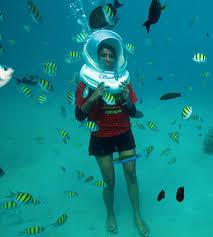





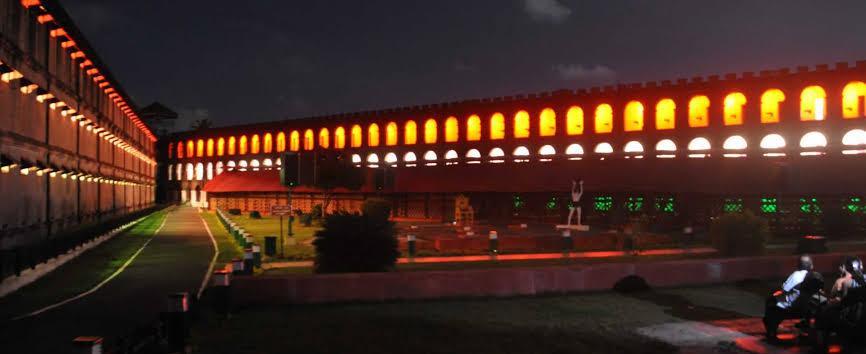

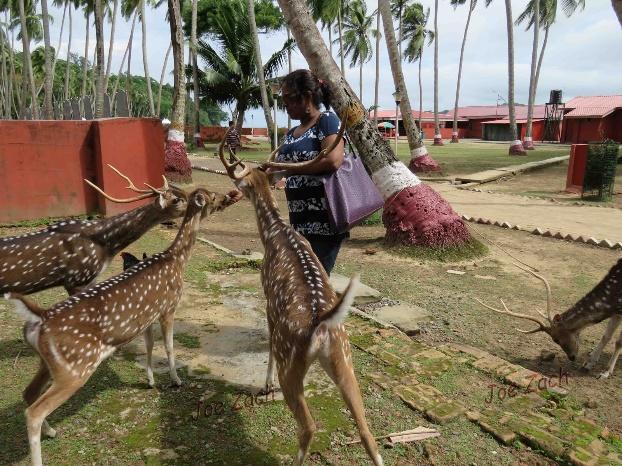



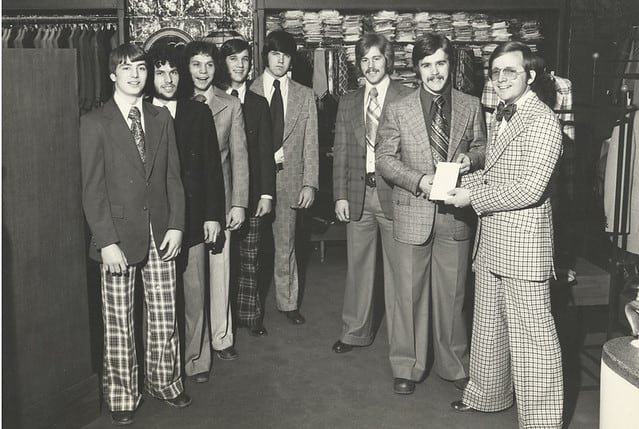
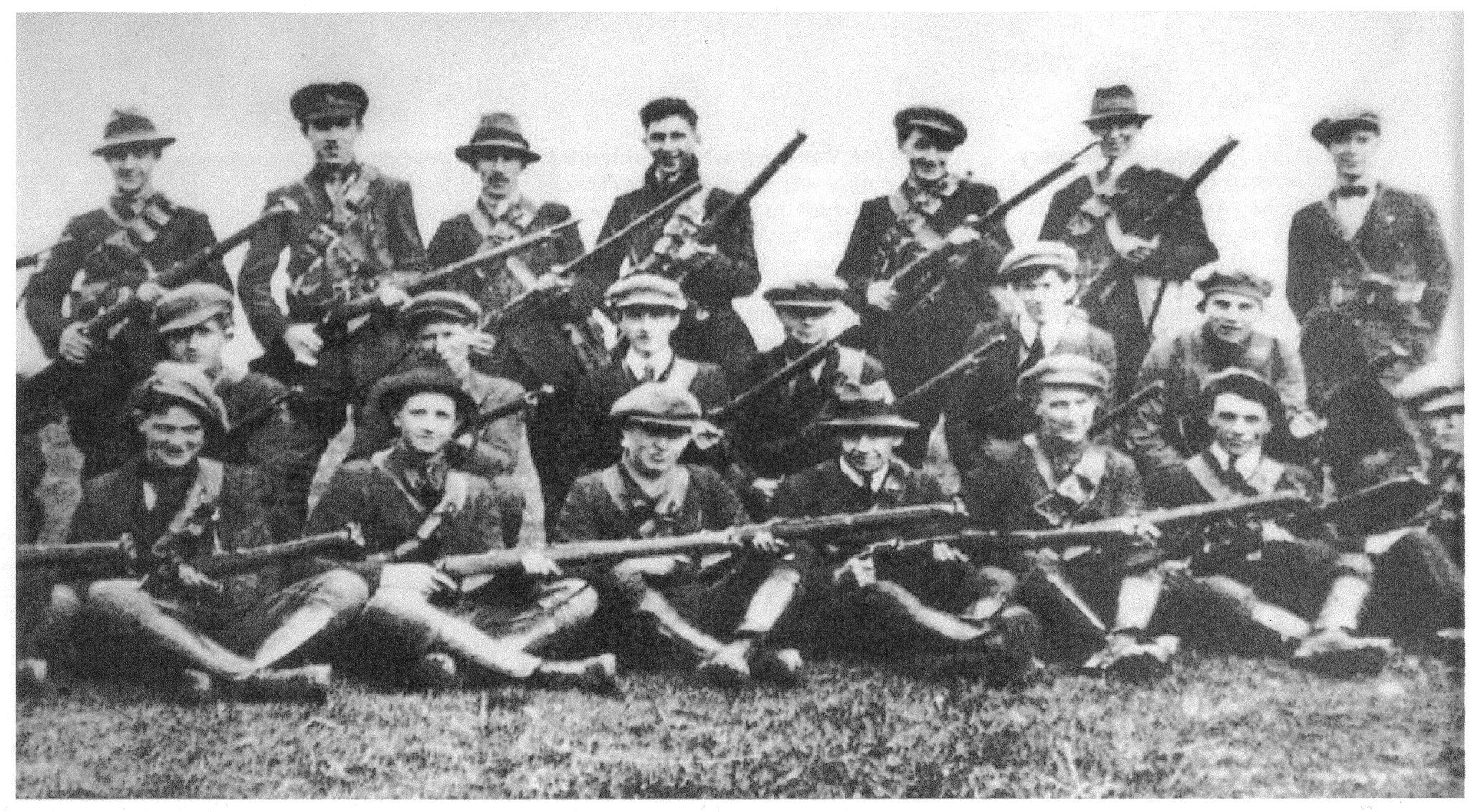


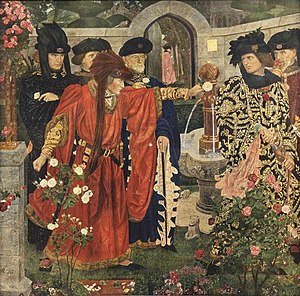







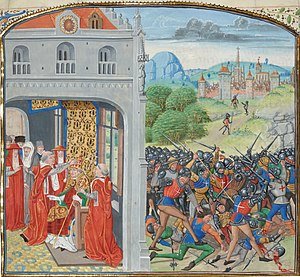
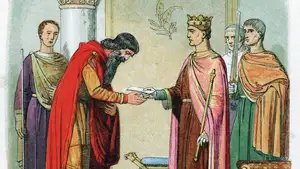






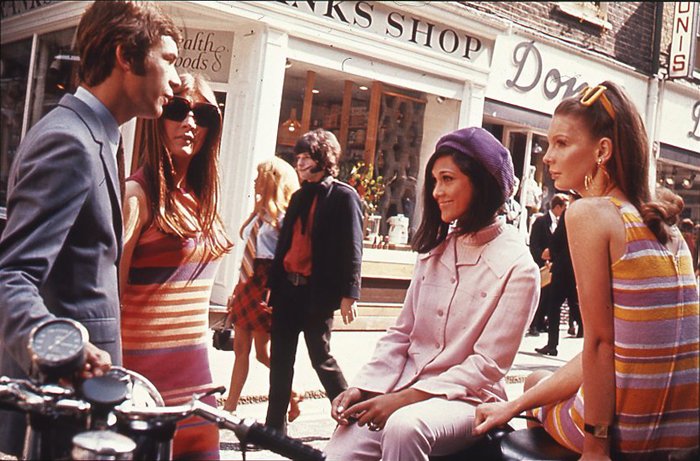
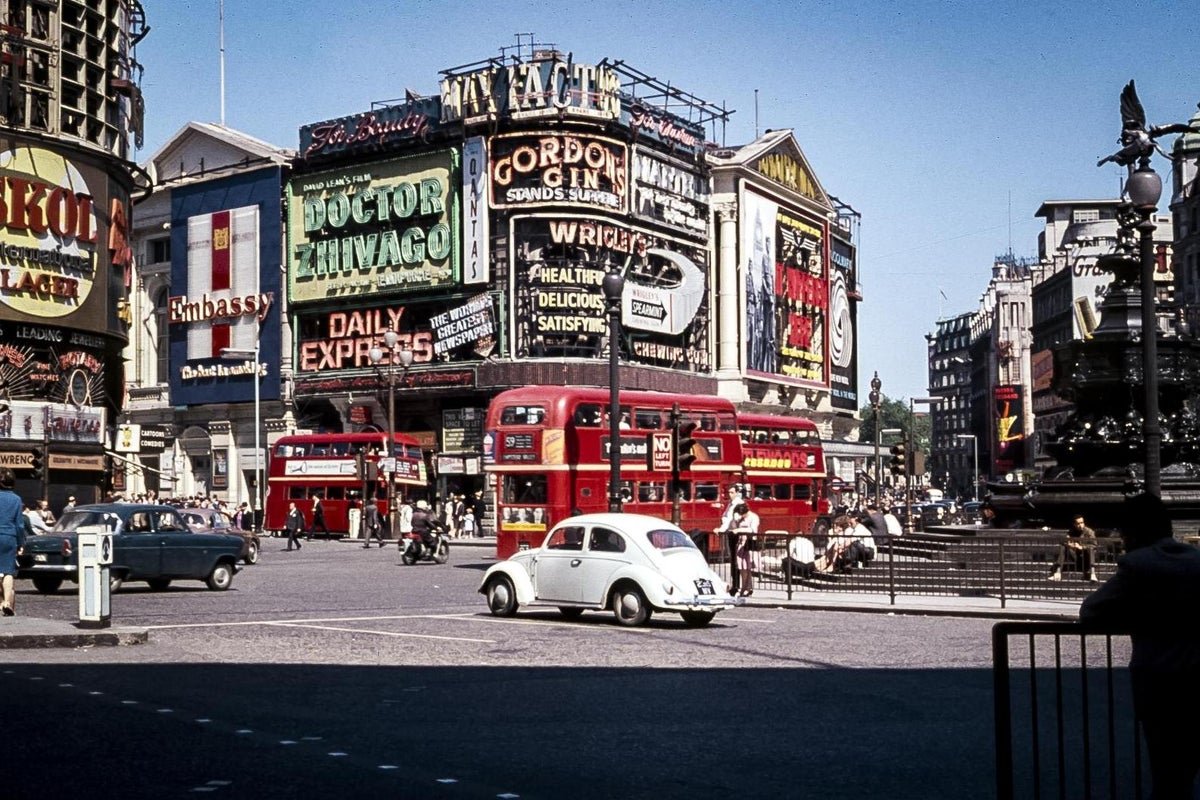


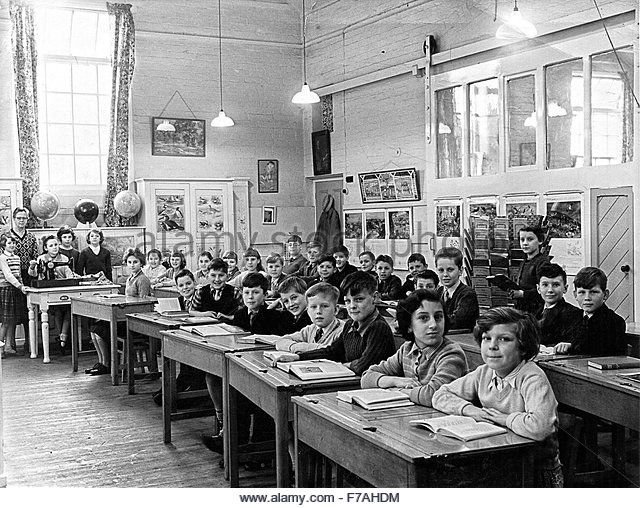

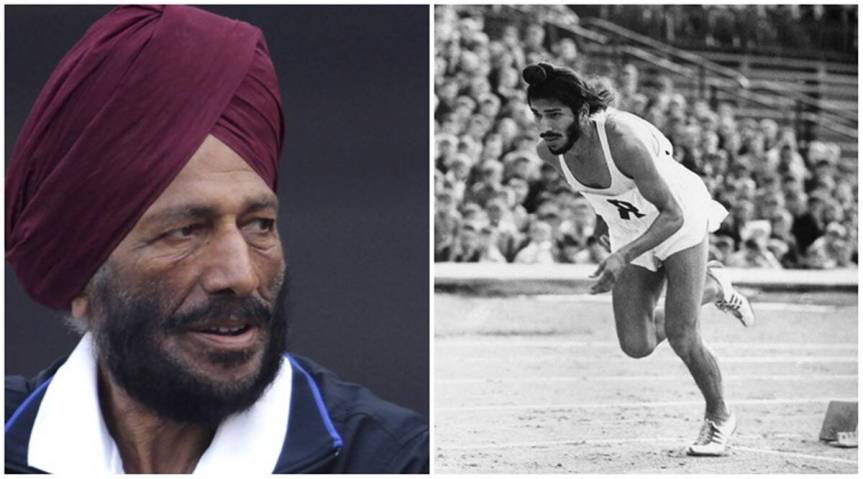


You must be logged in to post a comment.