When Swiggy launched in 2014, it was seen as a late entrant in an overcrowded market. Back then, the online ordering and delivery of food was not considered attractive, and Zomato, the leader in food-tech, didn’t expand its delivery service, which was deemed messy and unviable. In less than four years, Swiggy has become one of the much-talked-about unicorn startups. The company has also forced Zomato to rethink its decision to invest hundreds of crores of rupees to compete with Swiggy, which dominates online food ordering.
To put it in perspective, India’s most successful startup, Flipkart, entered the billion-dollar club a little more than six years ago. Swiggy, which was launched in Koramangala in Bengaluru by Sriharsha Majety, Nandan Reddy, and Rahul Jaimini, surpassed that mark in less than four years, becoming the fastest startup to become a unicorn.
Despite being part of the 2014-2015 wave of hyper-funding, Swiggy continues to thrive. There were supposed to be dozens of successful companies and a few unicorns as a result of that wave. When all was said and done, only Swiggy emerged victorious. The company has beaten hundreds of companies along the way, including Zomato and Foodpanda, as well as peers, such as Tinyowl, which eventually collapsed. Here’s how
Logistics are a key focus
In the startup ecosystem, Swiggy’s success fits in with a trend: companies that have control over the entire customer experience have triumphed over purely marketplaces. Swiggy did a lot of things right, but the driving force behind its success is its excellent logistics operation.
Startups preferred to not build their own supply chains when they started Swiggy rather than focus on building a cool app. Marketplaces such as Zomato, TinyOwl, and Foodpanda connect customers with restaurants, but “outsource” delivery to third parties. Even Flipkart cut its logistics operations in 2015, a mistake it would later correct. The company was convinced that the only way to break into the food delivery market was to build an extensive logistics network. Many food-technology companies are now operating their own fleets for delivery.
Don’t let the trend pass you by
Majety and Reddy, two of Swiggy’s founders, weren’t embarking on their first project together. Mid-2013, the two BITS-Pilani graduates came together to develop an idea that would take full advantage of the Indian e-commerce boom. In India, shipping goods across the country is a massive pain point for e-commerce, which is why the duo developed Bundl, a technology product.
Create a complementary team
The company decided to incorporate Swiggy as Bundl Technologies Pvt. as a tribute to their earlier efforts. Ltd in August 2014. Furthermore, Swiggy was successful because each of the three co-founders had a unique skill set. Majety first found his calling as a trader at Nomura in London in 2011. A few months later, however, he became disillusioned by corporate life. The man had been working well for a year, but after a year he decided to travel and take time off work. The trip took him through Europe and Asia, and during that time he grew to realize that he wanted to pursue his own interests.
Smoking is already a major health problem in India, one that will worsen if we do not take action. Nearly ten lakh deaths are attributed to smoking alone in India each year. About one-third of Indian men now smoke; as many women as men do. The risks for both are the same. The majority of tobacco-related deaths occur in middle age and not just in old age.
In India, it is common to chew tobacco products such as gutka. Over half of all oral cancer deaths result from chewing, and women are particularly hard hit. Younger people are chewing more, and precancerous conditions such as mouth lesions are on the rise.
Chewing is common among both men and women all over the world. The percentage of people chewing tobacco products in India is 31% for men and 19% for women, but the number is much higher in Bihar at 69% and 22% for men and women, respectively. Pregnant women who smoke lead to low-birth-weight babies, stillbirths, and birth defects.
According to the Global Adult Tobacco Survey India 2010, chewing is more prevalent among the poorest. The poorest 30 percent of people chew tobacco products. The middle income is 25 percent, and the highest income is 15 percent. Oral cancer is more likely to kill women who chew tobacco. In the 30-69 age group, three percent of women and one percent of men are at the relative risk of dying from chewing. Oral cancer has a higher relative risk of death among women, but men have a higher background death rate, so the absolute risks are more equal.
Kishanganj has 1,00,000 men ages 15-69, of whom 50,000 will die from smoking. Seventy percent of people will die between the ages of 15 and 69, while thirty percent will die in old age. In 2015, there were 59% more men who smoked in Bihar than in previous years. 612 lakh men who smoke cigarettes lose 10 years of life whereas 687 lakh men who smoke bidis lose 6 years of life. The use of tobacco is not only a public health threat, but also an economic burden on our country’s health care systems, forcing them to spend a lot of money treating diseases that are largely preventable. In addition to the cost of treating serious diseases like cancer or stroke, tobacco use also affects individual families.
28,000 Kishanganj residents are forced into poverty by tobacco use each year. Almost Rs. 11 crores are spent each year on tobacco in the district. Tobacco control laws are implemented in part by the police. A staggering 350 police officers will be killed by tobacco at ages 15-69 out of 1000 who smoke. Stopping smoking is one of the most important things smokers can do to extend their lives and improve their health. Nonetheless, India has very low quit rates of 5%. Nearly all the risks can be avoided by quitting by 40 and preferably earlier. The amount of carbon dioxide in the air decreases and oxygen levels increase after quitting within 12 hours. The risk of heart attacks drops and lung functions improve within three months. With 1 year, the risk of sudden heart attack is cut in half, and with 5 years, the risk of cancers of the mouth, throat, esophagus, and bladder is halved. According to Section 4 of the Cigarettes and other Tobacco Products Act (COTPA), smoking in public places is prohibited wherever the general public has access, whether by right or otherwise, but does not include open spaces. Additionally, smoking is prohibited in open areas that are visited by the public such as auditoriums, stadiums, stations, and bus stops. The fine for smoking in public places can range from Rs 200 to Rs 500.
As Yoga’s sacred texts are passed down orally and its teachings are regarded as secretive, the history of Yoga is obscure and uncertain in many places. Yoga was originally written on fragile palm leaves that were easily damaged, destroyed, or lost. Over 5,000 years ago, yoga was developed, but some researchers believe that yoga may be as old as 10,000 years. There are four main periods of innovation, practice, and development in the history of yoga.
A Preclassical Yoga practices
Yoga originated in Northern India over 5,000 years ago with the Indus-Sarasvati civilization. Yoga was first mentioned in the oldest sacred text, the Rig Veda. Vedas were a collection of texts containing songs, mantras, and rituals that were used by Brahmans, the Vedic priests. The Brahmans and Rishis (mystic seers) refined and developed yoga gradually, recording their practices and beliefs in upanishads, a huge work containing over 200 scriptures. In the Upanishads, the concept of ritual sacrifice was internalized, teaching the sacrifice of the ego through self-knowledge, action (karma yoga), and wisdom (jnana yoga).
The Classical Stage of Yoga
During the pre-classical stage, yoga was a mishmash of ideas, beliefs, and practices that often contradicted one another. Yoga-Sûtras, Patanjali’s first systematic presentation of yoga, mark the end of the Classical period. RAJA YOGA, sometimes called classical yoga, was described in this text around the second century. Many stages and steps lead to enlightenment in Patanjali’s “eight-limbed path” of yoga. He is often considered the father of yoga and his Yoga-Sûtras still influence most styles of modern yoga.
Post-Classical Yoga
Yogic practices were created following Patanjali’s teachings a few centuries after Patanjali’s. The ancient Vedas were rejected in favor of embracing the physical body as the means of attaining enlightenment. To break the knots that bind us to our physical existence, Tantric Yoga, with its radical techniques, was developed. Exploring these physical-spiritual connections and body-centered practices led to the creation of what we primarily think of as yoga in the West: Hatha Yoga.
Modern Period
The western world began to receive yoga masters’ attention and followers during the late 1800s and early 1900s. A turning point for this occurred when Swami Vivekananda lectured on yoga and the universality of the world’s religions during the 1893 Parliament of Religions in Chicago. Hatha Yoga was strongly promoted in India during the 1920s and 1930s by T. Kumaramacharya and Swami Sivananda, among others. On the banks of the holy Ganges on the banks of Mysore, Krishnamacharya opened his first Hatha Yoga school in 1924, and Sivananda founded the Divine Life Society in 1936. Sri Krishnamacharya produced three students who would continue his legacy and increase the popularity of Hatha Yoga: B.K.S. Iyengar, T.K.V. Desikachar, and Pattabhi Jois. Among Sivananda’s accomplishments, he wrote more than 200 books and built numerous ashrams and yoga centers worldwide. Until Indra Devi opened her yoga studio in Hollywood in 1947, yoga importation to the West continued at a trickle. Since then, many more western and Indian teachers have popularized hatha yoga and gained millions of followers. Now, there are many different styles of Hatha Yoga, all emphasizing different aspects of the practice.
Photo by u041fu0430u0432u0435u043b u0421u043eu0440u043eu043au0438u043d on Pexels.com
India is known for its contribution to medicine. Since the ancient times, traditional medicines like Ayurveda, Unani, and homeopathy have been prevalent. Apart from this, the status of allopathy has been equivalented as well. Every year, India graduates millions of well-qualified doctors. As an ode to the exceptional quality of medical education in India, here are a few top medical colleges in India –
All India Institute of Medical Sciences (AIIMS), New Delhi
All India Institute of Medical Sciences, New Delhi is a public hospital and medical research university based in New Delhi, India. The institute is governed by the AIIMS Act, 1956 and operates autonomously under the Ministry of Health and Family Welfare. AIIMS is considered the best institution of India in the field of medicine. A few undergraduate programs offered by AIIMS are Bachelor of Medicine, Bachelor of Surgery (MBBS), Bachelor of Science, Nursing, Allied Sciences. Post graduate programs are – Doctor of Medicine (MD), Master of Surgery (MS), Master of Dental surgery (MDS), Doctorate of Medicine (DM). All undergraduate admissions would be taken up only through a single national level examination NEET-UG conducted by NTA (National Testing Agency).
Armed forces medical college, Pune
The Armed Forces Medical College is a leading medical training institute in Pune, India, in the state of Maharashtra. The college is managed by the Indian Armed Forces, ranked among the best medical colleges in India throughout and 34th best globally by CEO World Magazine: 2021. The Armed Force Medical College doesn’t conduct any separate entrance exam for the admission; Candidates must qualify the NEET examination to get admission. The courses offered are MBBS, post graduate courses, super-speciality, and para-medical courses. It is also a premier institute for research.
King George’s Medical University, Lucknow.
King George’s Medical University is a medical school, hospital, and medical university located in Lucknow, Uttar Pradesh, India. The medical school was raised to a medical university by an act passed by the government of Uttar Pradesh on 16 September 2002. Apart from the top-notch quality of education that they provide, they have one of the most beautiful campus in India. Situated in a majestic white building, the college looks nothing less than a palace. With a green lush lawn in the centre, it offers a relaxing place for the already exhausted medical students. King George V, then the Prince of Wales, laid the foundation stone of King George’s Medical College in 1906. It has four main faculties – Faculty of Medical Sciences, Faculty of Dental Sciences, Institute of Paramedical Sciences, and Institute of Nursing. The University has about 1250 undergraduate students (including 280 dental students) and 450 postgraduate students.
Madras Medical College, Chennai
It was established on 2 February 1835 during British Raj. It is the third oldest medical college in India, established after Jawaharlal Institute of Postgraduate Medical Education & Research and Calcutta Medical College. Madras Medical College was ninth among medical colleges in India by The Week in 2019. The College of Pharmacy was ranked 57 in India by the National Institutional Ranking Framework (NIRF) pharmacy ranking in 2020. Rajiv Gandhi Government General Hospital (RGGGH), Park Town, Chennai, Tamil Nadu Government Dental College, Park Town, Chennai, Barnard Institute of Radiology, Park Town, Chennai, are a few notable institutes attached to this college.
In the field of tech startups, Udaan has added another feather to India’s cap. Providing small entrepreneurs with the benefits of online commerce, it is one of the fastest-growing unicorns in India. Udaan offers a platform and an opportunity for all retailers, wholesalers, distributors, and manufacturing companies in smaller towns and villages to grow as entrepreneurs.
Udaan, founded in June 2016, is a startup company based in Bangalore. The founding members of the company were Amol Malviya, Vaibhav Gupta, and Sujeet Kumar, who previously worked for Flipkart. During their time working at Flipkart, they observed how despite having a strong distribution network, the company was still unable to reach these locations. Their main aim of starting this business was to make the goods reach the remotest areas of the country like Bhabua in Bihar. Udaan targets the back-end of a market. This is the part or process that takes place behind the scenes in an exchange or an e-commerce website.
Udaan portrays the axiomatic example of a B2B (business to business) model. Business-to-business is a situation where one business makes a commercial transaction with another, such as wholesalers and online retailers. It is a type of electronic commerce (e-commerce) which involves exchange of products, services or information between businesses, rather than between businesses and consumers (B2C). There are two B2B models to be considered- a vertical model and a horizontal model. The vertical model can further be divided into two categories- upstream and downstream. Upstream suppliers, including manufacturers, can supply producers and commercial retailers and form a sales relationship. Horizontal B2B is the transaction pattern for the intermediate trading market. It concentrates similar transactions of various industries into one place, as it provides a trading opportunity for the purchaser and supplier, typically involving companies that do not own the products and do not sell the products.
Udaan is an example of vertical model. The company operates primarily in 3 verticals- food (staples, fruits, and vegetables), non-food (electronics and fashion), and pharmaceuticals. The manufacturers can present their product on this platform, and interested traders have the freedom to select and buy it. Retailers and wholesalers also have the same freedom to advertise and buy a product. Even the Kirana(groceries) stores and chemists have started registering for the platform. The platform facilitates secure payments and gives logistics support as well.
The company also offers accounting, order management and payment management solutions to merchants on their platform. Apart from that, it also provides the business owners with the option of borrowing at much more reasonable rates, which helps them avoid being exploited.
An interesting element about this unique start-up is that the company doesn’t have a CEO. The three founders decided to keep it this way, which truly sets this company apart.
In 2020, Udaan claimed itself to be valued at $7.5 billion, as per its valuation report, becoming the fourth-highest valued start up in India. Depending on the category, Udaan charges a commission based on a percentage of sales. As part of its logistics package, Udaan also charges the buyer for delivery fees. Likewise, this fee varies with the product and its quality. Udaan offers a credit limit to verified buyers. At first, they will provide Rs. 10000/- credit with no interest charges then the credit limit will be increased to a maximum of Rs. 250000/-.
Udaan became the fastest unicorn in 2018. Since its inception in 2016, the company is now operating in a total of 900 cities. Having grown exponentially in just 5 years, the company plans to expand even further.
Globally, teaching is considered one of the most respected professions. Since ancient times, teachers have held the highest social status in India. Recently, however, the situation and social status of Teachers in India this problem has worsened. There are only two professions in rural India that attract the most people: teaching and police/army. The reason for the first one is because of massive vacancy, and another one is because of receiving respect in society. Teachers are highly respected by the general public. However, the social standing of teachers in India is declining day by day. A new challenge awaits them every day.
A lack of exposure to the Internet and technology
Is it possible to imagine a life without the Internet today? Indian government schools, however, lack adequate internet facilities and teachers aren’t adequately prepared to utilize them. Sitting in our AC rooms, we can blame the teachers for their inefficiency, but we need to see things from their perspective. Their current teaching method, consisting of a blackboard, pen, and paper, is the conventional method. In the absence of proper training in the latest tech, these teachers can’t become qualified to use the Internet for teaching.
Lack of access to basic resources
There are very few resources available to Indian teachers so that they can do their jobs. Despite the fact that books, copies, and other stationery are not provided, they are expected to teach effectively. Regardless of that scarcity, they must still prove their worth by delivering exceptional results. There is no justification for this at all.
Infrastructure in a bad state
Perhaps you are wondering how infrastructure has anything to do with teaching, but it does. Software engineers cannot work without computers, and doctors cannot work without stethoscopes; similarly, teachers cannot teach without classrooms. In India, you’ll be surprised to learn that there are many schools where classes of different types are held simultaneously. Imagine a 4th grader studying alongside an 8th grader, one after the other, not to mention together? That scenario alone is chaotic and difficult to comprehend. In that environment, teachers are under pressure both to manage the classes and to achieve good results from their students. The situation facing female teachers is so horrendous that it can’t even be addressed. The act seems inhuman. The toilets don’t exist, and even if they are (for name’s sake), they are in very poor condition.
Growing disbelief in government-run education
There is widespread disbelief in the nation’s public schools and in their teachers. They are treated as substandard (which they are). However, students and teachers suffer the most. It is their right to get a quality education, but they do not get it. Teachers no longer get the appreciation and respect they used to get in previous decades.
Appointments and selections that are not uniform
In India, the process of selecting teachers is not uniform. There are Ad Hoc teachers, temporary teachers, teachers under contract, regular teachers, and many more. With such disparity in the selection of teachers, how can anyone imagine a uniform and robust education system? Just knowing the selection process and the teaching process according to that can be so confusing.
Inequitable Payment Structure
Linked to the first issue mentioned above, this one is also somewhat related. It is not surprising that there are huge differences in salaries at the time of appointing a teacher. The government fixes an amount for contract teachers, which is less than what regular teachers make. A different rule applies to Ad-hoc teachers.
A personality is a collection of traits, behaviours and attitudes that define a person. The word personality comes from the Latin word persona which refers to a theatrical mask worn by performers for different roles. Every individual has a unique skill set. Everyone’s potential is multi-faceted, and investing in personality development enables one to harness one’s inner strengths. Focusing on individual personality development adds to your capabilities and helps your dreams and aspirations turn into a reality. To be a more charismatic person, you have to develop your inner self as well as your outer self. The importance of personality development is undisputed in personal and professional life. Personality also influences what we think, our beliefs, values and expectations.
Following are the factors which help in shaping one’s personality:
Heredity – Heredity refers to factors that are determined once an individual is born. An individual’s physique, attractiveness, body type, complexion, body weight depends on his/her parents’ biological makeup.
Environment – The environment to which an individual is subjected to during his growing years plays an important role in determining his/her personality. The varied cultures in which we are brought up and our family backgrounds have a crucial role in shaping our personalities.
Situation – An individual’s personality also changes with current circumstances and situations. An individual would behave in a different way when he has enough savings with him and his behaviour would automatically change when he is bankrupt.
Positive outlook
“When life hands you lemons, make lemonade” Is a saying that has been around for centuries. It means that we should focus on the good part in any given situation and come up with something positive. This is called the act of being sanguine. Having an optimistic outlook goes a long way in developing your personality. In terms of career, decisions, relationships, and much more, positivity stands out as a notable characteristic of a good personality from the fact that it makes it easier to cope with changes like ups and downs in life. Some attributes of being a positive thinker are-
Optimism– By maintaining an optimistic outlook, you can handle difficult situations more effectively. Optimism manifests itself as a willingness to make an effort and take a chance, rather than assuming that your efforts will be unsuccessful or that your circumstances will never improve.
Acceptance- It is not always possible to control the outcomes of circumstances. For those situations, acceptance can help you learn from your mistakes. Acceptance can also help you maintain perspective, rather than exaggerating the situation. It helps you move on for better rather than keep sulking over a failure.
Resilience– Having resilience means you have the ability to bounce back when faced with adversity without relying on unhealthy coping mechanisms. It is the ability to handle major setbacks while maintaining daily routines.
Gratitude– it is the quality of being thankful and readiness to show appreciation for and to return kindness. To be grateful implies a state of self-contentment and acceptance of life as it flows. This helps to feel satisfied with whatever you already have.
Be a conversationalist-
A conversationalist is a person who is good at or fond of engaging in conversation. As ironic as it is, being a good conversationalist does not only mean being a good speaker but also a good listener. Be it in one’s personal life or professional life, the ability to engage in a good conversation is always impressive. When you participate in a sincere conversation it feels like you are genuinely interested in the person or the topic and leaves a great impression. It makes the other party feel you are not only imposing your own opinions on them but are also willing to listen to their part. Discussing your ideas and thoughts openly is a great way to hold the conversation. Having a humorous side always helps.
Dress well-
It is rightly said that “a man is known by his dress and address”. An individual’s dressing sense speaks volumes of his character and personality. A person’s dressing sense reflects their character, body language, character, and style. Dressing well can help you to build self–confidence and it perceives to others that how confident you feel about yourself. Your attires should change according to the occasion. For an interview, it is better to wear classy formals. For an outing one can wear casuals. It can make one look more outgoing and approachable. Thus, dressing well plays an important role in personality development.
Be yourself-
You need to know all about your own personality before trying to develop it. One of the simplest ways to improve your personality is to maintain honesty. Each one of us is different, we have our own sets of skills and flaws and trying to be somebody else gets you nowhere and just simply backfires. Honesty is the best policy at all times. Therefore, being honest to our self and to our surroundings is imperative to live a blissful lifestyle.
Fruits that are not native and are cultivated at their place of origin are known as exotic fruits, simply they are unusual or different. There are several fruits around the world that are found in a particular place, collected from the wild and usually eaten by the locals. nowadays, exotic fruits have found their way to the international audience. India too is an abode to some fruits that are different from the usual fruits like mango, banana and are rare, found in particular places.
Thanks to social media star fruit has become a known fruit among indian locals and is quite popular. Also known as five fingers, carambola is the native to southeast asia and is consumed in many parts of the world. The whole fruits is edible, and is fleshy, crunchy and firm. It is consumed when the fruit leaves all traces of green and turns yellow, it tastes sweet and sour. It is a source of a good number of nutrients, especially vitamin C and fiber. despite being anutritiuos fruit star fruit can have negative effects on some poeple due to availability of high oxalate content.
Buddha’s Hands (fingered citron)
An unusual hand like fruit which is given as an offering in buddhist temples, and it is believed that buddha prefers fingers that are closed rather than open as they resemble praying hands. In chinese religion it is a symbol of happiness, longitivity and good fortune. It is a very fragrant fruit an is used to add fragnance to rooms and clothes, specifically in china japan and malaysia. although citrus fruits are juicy but most variety of buddha’s hands contain no pulp and usually known for their aroma and texture. It is used as a flavouring agent in dishes, desserts and beverages. It is also a part of traditional medicine.
Phalsa (Indian sherbet berries)
Phalsa is a small dark purple fruit and is helpful in balancing sweet and sour flavors. It is a good cooling agent and perfect for hot weather. It is a good source of calcium, magnesium, potassium, iron, phosphorus and vitamin C. It cures diarrhea, stomachache, builds immunity and supports smooth digestion. It is also consumed in the form of squash or sugar syrup and despite numerous benefits it is a very less known fruit in India.
Bael (wood apple)
One of the most popular summer fruit, bael is a highly effective against the scorching heat of the sun. The outer covering of the fruit is hard but the inner part is sweet and soft. Every part of the plant is good for human body, high in fibre, vitamins and other essential nutrients, it cures ulcers and piles, prevents constipation, is a good source of energy and equally effective against respiratory issues. The number of benefits it provides are uncountable.
Chalta (elephant apple)
Large sized shrub that is native to southeastern asia and the fruit of this plant is loved by the local elephants hence the fruit is known as elephant apple. It is consumed in both ripe and unripe form and is usually used is usually used for making jam, chutney or pickled dishes. The fruit has a large greenish-yellow shape and consists of 15-20 carpels, the fruit pulp is bitter-sour. It consists of numerous health benefits, like lowering blood pressure, fighting flu,cold and other infections, it is also good for eyes, has vitmin C and also cures stomach related problems.
Historical fiction is a literary genre in which the story is set in the past. Authentic historical novels portray the details of the time period as accurately as possible, including social norms, manners, customs, and traditions. Common characteristics of this writing genre are the inclusion of historical events or historical people, invented scenes and dialogue, as well as true and plausible details. There are seven crucial elements in this genre: character, dialogue, setting, theme, plot, conflict, and world building. The characters could be based off of real or imaginary individuals.
If you want a break from the present and are looking for a book to transform you to a different era, here are a few great historical fiction novels that you shouldn’t miss!
The Stationary Shop of Tehran-
If you’re a fan of historical romantic novels, this book is perfect for you. It follows the lives of two youngsters, Roya and Bahman, and their nascent love blossoming in a Persian stationary shop. This book by Marjan Kamali is an eclectic mix of initial infatuation, first eye lock, the first touch, first love, betrayal, reunion and closure.
Hindu Refugee Camp Lahore-
This book by Sachin Garg is set in the difficult times just after India Pakistan partition in 1947. This is a story of Havildar Ghulam Ali Limb-Fitter, who was stuck in a Hindu refugee camp in Lahore. His wife waits for him in Lucknow, India. India wouldn’t accept him because he had served in the Pakistani army. This book is a heart-aching story of him trying to find a place in his motherland, India. This book comprises of several letters written by him to his wife Zahira, ministers, bureaucrats and other officials, begging them to help him return to his life in India. If you want to read about the real-life hardships faced by innocent people, as an aftermath of the partition, this book is truly a must read.
The Kite Runner-
The Kite Runner is the first novel by Afghan-American author Khaled Hosseini. Published in 2003, it tells the story of Amir, a young boy from the Wazir Akbar Khan district of Kabul. It is a beautifully crafted novel set in Afghanistan, a country that is on the verge of being ruined. It is an unforgettable, heart-breaking story of the unlikely friendship between a wealthy boy and the son of his father’s servant. It is a one-of-a-kind classic.
Train To Pakistan
This novel by Khushwant Singh is another historical fiction novel based on the repercussions of India Pakistan partition in 1947. This book is narrated from the perspective of Mano Majra, an idyllic fictional border resorted to love and harmony even at the face of all odds till external forces come and disrupted all the harmony. This village has Muslim and Sikh population that suddenly becomes a part of the border between Indian and Pakistan. Published in 1956, this book captures the essential human trauma and suffering in the face of such a terror and crisis. Train to Pakistan is an ideal novel for those who wishes to learn more about India’s past and is looking for more than the socio-political scenario behind the partition.
Self-help is the art of focusing on betterment of oneself. Sticking to a daily routine can be overwhelming and take a toll on your mental well-being. It is absolutely normal to feel worn out, exhausted, and at times incompetent even while carrying out your daily duties. Eventually, everyone reaches a point in their lives where they need to step back and just be with themselves, analyze, reflect and try to find peace. Each of us should leave ourselves some space for self-improvement and self-help without being too hard on oneself. Self-help, self-improvement and self-love go hand in hand. Once you recognize a difficulty, examine it and find the will to improve that aspect of your life, it is called at self-help. Taking an action that would aid in fixing the problem is known as self-improvement. A few ways which may help in your journey of self-improvement are:
Surround yourself with right people-
Positivity and happiness are contagious. A person’s company matters a lot as it statistically influences the person’s success or failure. Having people who inspire you, motivate you, and guide you is a blessing. Thus, one should always make a conscious effort surround themselves with positive people. A supportive and uplifting environment will instill empowering beliefs in you. This will, in turn, induce a positive mindset and a positive mindset manifests success faster.
Turn off social media-
Your environment has an incredible ability to shape your behaviour. Today, social media is full of “influencers” and other personalities who showcase their life a certain way. There are some who set extremely unrealistic and aberrant expectations that are difficult to live up to for a common man. Subjecting oneself to such a culture can be harmful. Hence, one should make a mindful effort to stay away from such posts if it is proving to affect them in a negative way. One may instead follow people or accounts that inspire them or simply make them feel better. Having a healthy and uplifting social media environment is as important as surrounding yourself with positive people.
Have a healthy lifestyle-
The famous saying “You are what you eat” has been around for centuries. What it implies is that everything you eat becomes a part of your inner being. Today junk food and fast foods have been carving their ways into our lives.it is far more convenient for a working person to grab a burger and rush to work than take out time to cook a healthy breakfast. These fast foods have little to no nutritional value and only make us obese and lethargic. This sequentially affects our mindset and we feel less productive. The health of the gut affects the overall health of the body. A healthy gut contains healthy bacteria and immune cells that ward off infectious agents like bacteria, viruses and fungi. A healthy gut also communicates with the brain through nerves and hormones, which helps maintain general health and well-being. Thus, it is important to have a nutritious meal to keep your brain and soul healthy and young.
Apart from eating healthy, it is equally important for your body to keep moving. Exercising stimulates brain chemicals called endorphins that leave you feeling happier and more relaxed, providing an emotional lift and reducing stress. Physical activity also stimulates the release of dopamine, norepinephrine, and serotonin that trigger a positive feeling in the body, and can be especially helpful in alleviating symptoms of depression and anxiety.
Meditation-
Along with eating healthy and exercising, another advocate for mental and physical well being is meditation. Meditation helps you introspect and find inner peace. It is in meditation that you can do the most self-discovery and get direction from your own inner self or soul. Biochemical studies also show that meditation can significantly affect hormones and neurotransmitters such as cortisol, dehydroepi- androstrone, serotonin, melatonin, and epinephrine which help elevate one’s mood. A simple habit of meditating for 10 minutes every day can change your life drastically. You can sit or lie comfortably and close your eyes. You can put on an audio for guided meditation to help you go through with it or just focus your attention on your breath and on how the body moves with each inhalation and exhalation; making no effort to control the breath; simply breathe naturally. Just 10 minutes are enough to overcome stress, anxiety, and give you other mental and physical benefits.
We are entering a new decade as India celebrates the 10th anniversary of its Right to Education Act (RTE), which was passed in April 2010. While the RTE has been criticized for its limited focus on governance and learning outcomes, it has been successful in improving access to schooling. The report has also served as a rallying point for a wide range of stakeholders to intervene in the sector.
The country’s learning outcomes remain low, however, as has been well-established by now. In politics, quality concerns around education are rarely a priority. It isn’t possible to ignore these concerns forever, especially when the country is experiencing a human capital crisis, as can be seen from its unemployment statistics. Furthermore, more educated individuals have lower employment rates than those with less valuable degrees. Global Business Coalition for Education’s 2030 Skills Scorecard confirms these concerns – in 2030, India will be the most educated nation in South Asia, but nearly half of them will not have the skills to get a job.
So far, the band-aid response to such crises has been to establish a Ministry of Skilling instead of making more fundamental reforms in school education. To move forward, India must break out of this unstable equilibrium and view education within a broader human capital framework. India’s education sector must take both scale and substance into account in the upcoming decade, addressing the learning problem system-wide while also recalibrating the system’s raison d’être.
Enhancing administration
Even the most sophisticated education policies and curriculum frameworks have failed to live up to their promise in the past due to weak administration. It is imperative to strengthen the pillars of governance in the education sector. According to Julia Gillard, former Australian prime minister and chair of the Global Partnership on Education, “governments must be able to gather a diverse collection of instruments, each playing its own notes, to produce a sound of coherent splendour.” Many states have taken ownership of bringing about large-scale changes in the way education is administered in recent years, including Haryana, Rajasthan, and Himachal Pradesh. A common starting point has been the integration of schools in many of these states. Government schools often emerged organically without a coherent strategy, serving just a handful of students, resulting in a large, unwieldy system of schools. With inadequate frontline administration, information gaps, and many faculty vacancies, the state’s ability to manage such a system is limited.
Evaluation system
It is still the marks that determine children’s future and students are often burdened as a result. Students often underperform due to the pressure of marks. Students should be evaluated on more than just a three-hour exam; they should be evaluated on their classroom participation, their projects, their communication and leadership abilities, and their extracurricular activities. Then and only then will the students give their best and will be evaluated accordingly.
Introduction of technology
We are living in the era of the fourth industrial revolution. Technology is undergoing a renaissance today, and in an era like this, education and technology cannot be separated. In order for students to not feel alienated by technology in the future, it must be introduced in the early stages of their education. The Indian schools must embrace technology and education with an open heart and pass on the same to the students since it is there, where their future lies.
When you have always conducted business in an office or other type of environment, working from home may take some getting used to. Being close to home comforts can be great, but it can also be easy to become distracted. The following tips will help you stay productive and focused while working from home.
Create a routine
You may only commute for seconds rather than hours now, but keep your routine the same as before. Make sure you do all your washing and breakfast tasks and that you are at your workplace on time. Identify your desired break times and make sure you follow them. It is important to take regular breaks to maintain productivity and wellbeing. It is often easier to solve problems when you step away from them for a while.
Find a place to call your own
Do not work from a sofa, kitchen table, or similar space that may be shared by others. Establishing a work area promotes discipline. Be sure that everyone in your household understands that these are now your workspaces and set guidelines on how and when these will be used between you.
Communicate with your colleagues
Use video conferencing apps or the telephone to communicate regularly with your colleagues and clients. Take advantage of the wide array of communications tools available to us – don’t just hibernate at home. Share ideas with others and get their feedback by calling them. Collaboration and staying in touch are key.
Set deadlines for yourself
Create a list of things you need to do and when you will do them. When you plan your day hour by hour, you can check off your completed tasks as you finish them. You may have deadlines set by your company or clients, so it is then a matter of planning your day to achieve these deadlines.
Working from home should be comfortable
You will be working here all day, so make sure you have a decent chair and that your desk and PC are set up so that you can work with a straight back posture. Put effort into making your surroundings attractive. It can be relaxing to have some house plants around to help you feel connected to nature.
Exercise, stretch, and eat well
Keep your eating habits disciplined and follow a healthy diet. By eating a healthy breakfast, you will be less tempted to snack later on. While working at your desk, you can perform many exercises and stretches. When you exercise, you release endorphins that increase happiness and boost productivity.
Take care of yourself
You should find what works for you in a workspace and a routine. Since each of us responds to environmental pressures differently, be honest with yourself and stick to what works for you if you work from home.
The benefits of flexible work
Flexibility can mean a better work-life balance as well as a healthier and fulfilling lifestyle. However, these arrangements also impact positively on productivity. The benefits of flexible working are well established, from increased employee engagement to better performance.
A book can provide inspiration in many different ways. The characters in fiction can inspire us to grow in the same way. A steady stream of non-fiction guides readers on everything from how to write poetry to how not to manage a career. However, inspirational books go a little further, especially for those of us in need of some extra hygge – the Danish word that refers to a feeling of contentment and cosiness. In essence, Hygge is just another way of saying: let’s read a book by the fire that will calm and relax our spirits. Various genres, tastes, and viewpoints are represented in these inspirational books. All of them strive to improve your life despite their differences. Check out the books that will help you become a better person.
Awaken the Giant Within: How to Take Immediate Control of Your Mental, Emotional, Physical and Financial
Written by Anthony Robbins in 1991, this novel teaches people how to master their emotions, their bodies, their relationships, their finances, and their lives. Known as a leader in peak performance science, he has a deep understanding of the psychology of change. With help from this book, you will discover your true purpose, learn how to take control of your life, and become master self-mastery in a step-by-step program.
Rich Dad Poor Dad
This 1997 book called Rich Dad Poor Dad was written by Robert Kiyosaki and Sharon Lechter. It emphasizes the importance of financial literacy, financial independence, and building wealth through real estate investing, starting and owning a business, as well as increasing financial intelligence.
The Power of Habit: Why We Do What We Do in Life and Business
The Power of Habit: Why We Do What We Do in Life and Business is a book by Charles Duhigg. He was a reporter for the New York Times. Originally published in February 2012 by Random House, the book is now available on Amazon. An in-depth look at habits, their creation, and reformation is explored in this book. Charles Duhigg takes us to the cutting edge of scientific discoveries that explain why habits exist and how they can be changed. Duhigg brings to life a whole new understanding of human nature and its capacity for transformation through his insightful intelligence and ability to distill vast amounts of information into engaging narratives.
How to win friends and influence people. How to stop worrying and start living
Published in 1936, this is a self-help book by Dale Carnegie. Using this book, you can improve how you appear to the world. Changing your own behavior can alter how you are seen and treated by the world. You can change the energy you emit so that what comes back to you, changes as well. This book is an important guide to communication and business skills. It teaches you about marketing yourself and attracting more clients which is why many world-renowned figures have praised this book. By reading this book, you will be able to overcome mental woes and achieve goals. Having a positive attitude allows you to appear to others as a friendlier, more personable person, and in terms of your business, enables you to generate new clients. It helps you accomplish your goals by using your potential fully and by becoming an effective speaker in front of a large audience. If you deal with issues like self-confidence, this book is a must-read!
In the context of immigration, the COVID-19 economic crisis could be long, deep, and pervasive. Across the globe, economic activities have been slowed by travel bans, lockdowns, and social strife. There are additional challenges for the host countries in many sectors such as health and agriculture that depend on the availability of migrant workers. In addition to the risk of contagion, migrants may lose their employment, wages, and health insurance coverage.
Despite all forms of transportation being suspended and interstate borders being sealed, migrant workers across India made their way back home during the Covid-19 lockdown announced in March. During the lockdown, migrant workers’ greatest suffering resulted from their inability to manage their finances. The critical role of wages is evident in the lives of migrants and their families during this period – without wages, they could not meet basic needs such as food, water, shelter, or healthcare, or send remittances to their rural households who depend on immigration income. It is important to note that wages played an important socioeconomic role during the crisis, determining the ability of workers and their households to survive. Over 139 million Indians are migrant workers, which constitutes nearly half of the nation’s 470 million workforce. Despite the extreme desperation facing the vast mobile workforce during the shutdown, the issue of migrant workers’ access to protected wages has remained unaddressed. A strict nationwide lockdown was rather viewed as an outcome of poor planning by governments, which failed to account for the large numbers of undocumented, rural-urban migrants.
Migrant workers’ plight was attributed solely to their mobility between states, without taking into account the nature of their employment in urban labor markets, including low wages and insecure jobs. India’s wage-dependent workforce is vexed by an ongoing debate about the state’s protection of living wages. Despite substantial evidence to the contrary, some have argued that raising wages will lead to the closure of businesses and the loss of jobs. Even government reports, such as the Economic Survey (2019), by the State Bank of India (2019), and by the Reserve Bank of India (2018), highlight the fact that stagnation in real wages has hurt the consumption capacity of the poor, causing the economy to slow down. However, the neo-liberal economic policy that encouraged economic growth by slashing the labor protection framework, especially that protecting workers’ wages, weakened labor regulations and grievance redress mechanisms, leaving them unable to handle the widespread wage violations experienced by workers.
Due to the economic crisis due to the Covid-19 pandemic, experts suggest that measures to create disposable income, including raising wages, are a top priority in order to create economic revival. The post-lockdown period in India, however, has been marked by the dilution of the labor protection regime through the labor reform process, in order to facilitate economic revival rather than ensuring wage security for its migrant workers. Due to their alienation from the state machinery where they work, migrant workers cannot demand wages from their employers, and due to their lack of integration into trade unions at their destinations, in addition to their fragmentation by caste and region, they lack any collective bargaining platforms. It is critical that economic revival is imagined alternatively, and executed through a strong institutional framework, in order to prevent that economic expansion post-pandemic deepens the exploitation of and inequality faced by the country’s poorest wage, dependent populations.
Under such a framework, the state plays a crucial role in keeping wages protected by setting minimum wages at the level of living wages, allowing workers and their households to eat adequately to live a dignified life.
Marshall McLuhan coined the term “The Global Village” to describe the mass production and consumption of media images and content around the globe. The term refers to the coming together of the countries of the world into one gigantic world of media landscapes. As an example, CNN, the popular U.S. news channel, and BBC, the venerable British channel, are available everywhere. A similar phenomenon in entertainment is the Star Group, televised worldwide.
There are two online information and knowledge channels, National Geographic and Discovery, that are available globally. There is a sense of oneness and shared media consumption throughout the world due to the ready availability of the same content everywhere. The term Global Village refers to this phenomenon. With the liberalization of many countries in the world in the 1990s, global broadcasters entered countries like India in a big way. The opening up of the Indian media landscape to foreign channels was a revolution in how media is consumed and produced in the country, despite the fact that China had, and still has, restrictions on what kind of content can be viewed in that country. Media consumption in India has led to a liberalization of the Indian mindset, according to expertise. The West was introduced to many Indians for the first time, and the consumption of western lifestyle imagery and consumer choices led to an increase in Indian aspirational values. The result was an emergence of a burgeoning consumer culture that marked the Indian consumer arena since the late 1990s. This means that Indians are no longer monochromatic television viewers who had to watch only one channel, but are instead consuming media images from around the world.
Around the same time, many African countries were exposed to satellite television for the first time. Consequently, the Africans learned about the western situation and the relatively comfortable lifestyles that Westerners enjoy. There is a widening of political, economic, and social discourse in many countries due to the explosion of media choices. There was a demand for greater freedom and a better standard of living, which manifested itself in the way the people in these countries began using the media to voice their concerns. It can be said that TV, in particular, and satellite television in particular, were game-changers for many countries that were throwing off their old habits and attitudes and embracing the Western way of life. There is no need to elaborate on the role that Satellite TV played in emancipating women, providing entertainment, and exposing the young to a western way of life that eventually led to the MTV Generation that started voting with their feet about the kind of products they wanted to buy and consume.
Ultimately, the Global Village has made the vision of “One Market Under God” a reality, which has benefited both marketers who were able to market their products globally, as well as consumers who had a variety of options to choose from. Last but not least, the youth also gained a greater understanding of politics and a liberated attitude.
Kids are like clay; they take up any shape you mould them into. Schools play an important role in the lives of all students. For every kid, school is their first introduction to social interaction. We learn most of our morals and values in school and we cherish for them for the rest of our life.
Many of us reminisce about our school days with nostalgia, but we can all agree that school wasn’t the happiest place to be. There were heavy bags filled with books, hundreds of students wearing uniforms, every hour accounted for, punishments, us. As children, many of us definitely thought that there was no choice but to attend school no matter how much I disliked it. I pondered, then, whether I would feel any different about going to school if mine was in a train carriage or in an open garden?
Perhaps that would have been too much to wish for, but my feeling is that it would have been much more exciting. Let’s take a look at a few unique schools in India that will inspire you to return to school!
Bihar’s Platform School
Many of us probably read the classic story of Toto Chan. Toto Chan studied in a very unique school where the classrooms were designed like old railway carriages. This school probably comes closest to the school model from that story. Inderjit Khurana started the platform school near Patna to educate poor orphaned kids who sold tea on railway platforms. About 100 kids joined shortly after he opened the school. Soon, however, he realized that merely teaching them lessons wouldn’t help much. Having basic life skills, such as medical aid, was of the utmost importance to these kids because they came from an underprivileged background. Counselling would also need to be provided, and the entire process would have to be fun and engaging for the students. The syllabus gradually began to incorporate these concepts. Trying to give the children a life of dignity is what I am trying to do as a teacher at the school, Ajith Kumar said. Unless they are educated, most of them will turn to criminal activity.”
SECMOL, Ladakh
Ladakh’s Students’ Educational and Cultural Movement (SECMOL), has gained appreciation from millions across the country. Among its main features are focus on practical instruction, eco-friendly living, and a complete departure from the traditional educational system. Following its success, Sonam Wangchuk, its founder, embarked on a variety of other programs.
School without books or tests- Ananya
Children who grow up in underprivileged homes and in abusive households face a variety of obstacles to attending school, including a lack of support from their parents. Dr. Shashi Rao found this deeply troubling. After seeing the need, Dr. Rao joined forces with other people who also thought it was important to impart education in a creative and unique way to these children. First, they interacted with the children at Dr. Rao’s home and in public parks, discussing everything from cricket to the weather. After covering everyday topics, they moved on to mathematics and geography. Over the years, Ananya Trust, the trust started by Dr. Rao, developed into a school of a unique kind. It offers education to children from underprivileged backgrounds.
Karnataka’s Aurinko Academy
As a youngster, Vivek was less intrigued by formal education than by an offbeat trade – carpentry! In search of a school that would not only encourage skills but also polishes them, his parents came across the Aurinko Academy in Bengaluru, which defines itself as a progressive learning environment, and they decided that this was the school for their son. The change in him was evident to his mother almost immediately. Following just a few months at the institute, Vivek found himself intrigued by the subject of carpentry, which was one of the many genres offered in their unique curriculum.
My Academy is a good educational resource to learn new skills and get benefits.My Academy Photo by Max Fischer on Pexels.com
India’s job market has undergone a radical transformation. In the past, the only stable professions considered ‘highest paying’ were doctors, engineers, and public service. Despite these choices still being relevant and respected today, there are a lot more options available and have revolutionized the job market in India. Many students are uncertain about their career choices, and to be honest, money is a great motivator and can help them make a decision. One can decide their career path with more confidence if they are aware of the top most profitable jobs in India.
Lawyers
Many people see lawyers as high-flying professionals fighting for justice while at the same time living a high-flying lifestyle. While most of these depictions may be overdramatic, there is no denying the fact that lawyers today are some of the highest-paid professionals in not just India but also the world. Lawyers advise and represent clients – both private and public – and fall into categories such as tax lawyers, criminal lawyers, securities attorneys, etc.
Independent lawyers may charge per case or appearance in court whereas those working in corporate companies may receive a monthly salary with additional bonuses as applicable. Depending on experience and success rate, the salary can go up to Rs. 12 lakhs to even Rs. 25 lakhs per annum, making this one of the highest paying jobs in India.
Investment Banker
The primary role of investment bankers is to require care of their client’s financial assets. they’re also brokers and advisors and help their clients invest their money during a potentially lucrative market at the proper time to maximise returns. additionally, to the present, investment bankers also help with mergers and acquisitions, conduct research, and act as financial advisors to corporate organizations also.
With one among the very best average salaries within the market, investment banking is one among the foremost lucrative professions within the country today. Entrants can expect a salary starting from Rs. 4 lakhs to Rs. 12 lakhs once a year and with experience, this number can go up to Rs. 40 lakhs once a year.
Data Science
In the past few months, data science has gained significant popularity. A data scientist is a person who uses social science and technology to glean trends from data as well as manage it. this is often basically done to research data and find solutions to varied business problems. Data scientists also help in creating customized statistical models also as algorithms supported end-user behaviors. As a base salary, certified data scientists earn between Rs. 4 lakhs and Rs. 12 lakhs per annum, regardless of their experience level. this is one of India’s highest-paying IT jobs because salary can range from Rs. 60 lakhs to Rs. 70 lakhs per annum depending on experience.
Digital Marketing
Due to the rise of social media and other forms of marketing, digital marketing is here to stay and is changing how people communicate today. It simply refers to any type of marketing effort that uses the internet and other means of digital communication such as email, social media, text, and web-based advertising.
Many people from different backgrounds are becoming marketing professionals due to the diversity and creative freedom offered by this field. Many roles are available in the digital marketing field, such as content writers, SEO analysts, social media managers, brand marketing managers, etc.
The start-up of a business seems to be a challenging undertaking. Even so, it can reap great rewards for both the company and the economy at large. The process of setting up a business in India can be a bit confusing if you elect to do so. There are a few considerations you should keep in mind. Keeping this in mind, here are some basic steps necessary for registering a business in India:
Spend no more than you need to on your start-up
It is possible to work from home on a laptop computer. When working from home, keep in mind that your household insurance may no longer be valid. You’ll need to check with your current broker as you may need to upgrade your insurance. Make sure that your business has its own bank account. You shouldn’t combine your personal and business accounts. It’s confusing, extra work, and of no use when you’re trying to take care of your business or have a fulfilling life in general. A business account doesn’t need to be expensive; it can just be a regular current account with your current bank or with another provider.
Availability of Company Names
A proposed name must be available before company registration can occur. The MCA 21 website allows applicants to check the availability of their desired company names online. The selected company name appears on the website once it has been approved.
Set Up a Plan
If you fail to plan, you plan to fail.
To stay afloat even if you are just starting out as a freelancer, you need to know your monthly costs and how much profit (or other income) you need to generate. Calculate what your monthly income needs to be. Identify the growth in revenue you can realistically expect over the next 12 months, and be clear on how you will acquire new clients. Although it’s hard to guess, thinking about it will provide you with earnings goals and points to consider as you run your business. You can easily download a free business plan template from either the Prince’s Trust website or the Start Up Loan websites.
Networking
In the age of digitization and the fact that people are always online searching for goods and services they need, businesses without a strong digital presence are missing a great opportunity. Therefore, you will need to be committed to building an online presence for your business because it is imperative in this digital age. Digital marketing strategies will help you get noticed by a lot of people, and a good SEO company can guide you down the right path since SEO is a way to make a strong online presence. Your chances of getting a job increase if you are ‘out there’ touting for work. Meeting people online is possible without having to leave the office.
A Lot Of Sales, A Lot Of Sales
Make sure you don’t ignore the marketing and sales sides of your business. Become an expert at it. Study it and practice it. Initially, it is likely to be nerve-racking, but persevere! Question everything you do in your business, asking yourself, ‘How is this going to make me money?’ If it won’t make you any money, then don’t waste your time doing it.
More than 5000 years of civilization have left India with some fantastic historical sites, monuments, legends, and experiences. Monuments such as these honour the glorious history and heritage of the country. Over the centuries, many dynasties, kingdoms, and kings have built monuments for a variety of reasons, from ancient to medieval. The fact remains, however, that historical places in India draw a large number of visitors. All forts, palaces, and temples of India are exceptional examples of aesthetics and elegance, from the Taj Mahal to Hampi.
Gwalior Fort, Madhya Pradesh
The Gwalior Fort is a hill fort near Gwalior, Madhya Pradesh, India. The fort has existed at least since the 10th century, and the inscriptions and monuments found within what is now the fort campus indicate that it may have existed as early as the beginning of the 6th century. Raja Suraj Sen Pal and his dynasty ruled over more than 900 years. The fort has been controlled by a number of different rulers in its history.
Ajanta Ellora Caves
The Buddhist Caves in Ajanta are approximately 30 rock-cutBuddhist cave monuments dating from the 2nd century BCE to about 480 CE in the Aurangabad district of Maharashtra state in India. They are universally regarded as masterpieces of Buddhist religious art. Ellora is a UNESCO World Heritage Site too. It is one of the largest rock-cut Hindu temple cave complexes in the world, featuring Hinduism in particular and few Buddhist and Jain monuments with Artwork dating from the 600–1000 CE period. With the Ellora Caves, Ajanta is one of the major tourist attractions of Maharashtra.
Amber Palace
Amber Fort or Amer Fort is a fort located in Amber, Rajasthan, India. The town of Amber and the Amber Fort was built by Raja Alan Singh Meena 967 AD, later ruled by kachawaha rajputs. It consists of the Diwan-e-Aam, or “Hall of Public Audience”, the Diwan-e-Khas, or “Hall of Private Audience”, the Sheesh Mahal (mirror palace), or Jai Mandir, and the Sukh Niwas where a cool climate is artificially created by winds that blow over a water cascade within the palace. Hence, the Amber Fort is also popularly known as the Amber Palace. The palace was the residence of the RajputMaharajas and their families
Khajuraho Temples, Madhya Pradesh
Khajuraho has always been thought of as the place that exemplifies sensuality and eroticism at its best. However, this is a misrepresentation as only about 10 percent of the sculptures are sensual and the rest are common depictions. Countless sculptures depicting love, eternal grace, beauty, delicacy and the creative arts can be seen in one of the most historical places in India. A perfect amalgamation of Hinduism and Jainism, Khajuraho temples have carvings of cult icons, demi gods and Apsaras.
5. Jallianwala Bagh, Punjab
The infamous Jallianwala Bagh massacre took place near this monument near the Golden Temple in Amritsar. Covering around 6.5 acres, it is the place where General Dyer ordered a mass shooting on Baisakhi. Thousands of innocents succumbed to death in this incident. It was one of the incidents that ignited the fire of Independence revolution. A memorial was erected here on 13th April 1961 by the then president, Dr. Rajendra Prasad.
In the past 7 years, the Central government led by PM Narendra Modi has implemented various schemes to support students’ education. In order to achieve a better quality of life for the billion-strong population of India, we need to nurture and care for its students as our greatest asset. Check out the list of Pradhan Mantri Yojana for Students launched in 2014, 2015, 2016, 2017, 2018, 2019, 2020 & 2021. In 2021, these government school education schemes will continue to be relevant.
In this section, we provide you with a list of PM Modi’s government schemes for students’ education in India. There are several central government schemes for school education in India, including those run by the AICTE and the Ministry of Human Resource Development. It includes 10 schemes run by AICTE and 28 schemes run by MHRD that are classified into education schemes for elementary, secondary, and higher education.
Students can apply online and fill out the appropriate Yojana forms to access the scheme’s benefits. Having a quality education is the primary objective of ensuring adequate employment for all students and, therefore, building a strong nation.
An overview of the central government school education schemes in India run by AICTE can be found below:
Samriddhi Scheme for SC/ST Students to Start up Businesses
In view of the poor employment opportunities on the market, SC/ST students need opportunities to set up their own businesses. As per AICTE’s start up policy, Samriddhi Scheme aims at supporting SC/ST students in designing, launching, and running their own business or start up following formal education. Applicants for Samriddhi Scheme can apply online to take advantage of its benefits.
Pragati Scholarship Program
Pragati Scholarships or Contingencies are given to meritorious girls pursuing a technical education accredited by AICTE. Every year, an aggregate of 4000 scholarship recipients receive 30000 Rupees in tuition fee reimbursements and another 20000 Rupees in incidental awards. To avail the benefits of Pragati Scheme, students can now apply online.
Prerana Scheme for Preparing SC and ST Students for Higher Education
Engineering & polytechnic colleges are suffering from a severe shortage of faculty. It may be possible to resolve the problem by encouraging pre-final- and final-year degree students to attend postgraduate courses. PRERANA scheme is designed to assist institutions that offer extra resources to encourage and train SC/ST students to take GATE/GPAT/CAT/CMAT and GRE. The aim of the scheme is to help SC/ST students wishing to pursue higher education through tests such as GATE/GPAT/CAT/CMAT/TOEFL/ IELTS and GRE. Those interested in availing of the benefits of the PRERANA Scheme should apply online.
The Postgraduate Scholarship Scheme
Scholarships awarded under this program are to full-time GATE or GPAT qualified students. Qualified students admitted to AICTE-approved institutions and colleges for M.E./M. Tech/M. Arch and M. Pharm programs are eligible to apply. PG Scholarship Scheme beneficiaries receive Rs. 12,400 per month per student.
Support for Students Participating in Competition Abroad (SSPCA)
SSPCA’s goal is to provide travel assistance to teams of approximately 2 to 10 students attending competitions at the international level for competitive purposes. Through this program, students are encouraged to improve their skills in their specific technical field. Online applications for SSPCA Scheme are available to students.
“An eye for an eye makes the whole world blind” – Mahatma Gandhi
Mohandas Karamchand Gandhi or Mahatma Gandhi was born on October 2, 1869, in Porbandar, Gujarat. This year will mark Gandhi’s 152nd birth anniversary.
He was an anti-colonial nationalist and political ethicist, he used nonviolent resistance to lead India’s successful independence campaign from British rule and helped inspire movements that have fought for freedom and civil rights all over the world. He was also a successful Indian lawyer, trained at Inner Temple, London. He passed the law exam at the age of 22, in June 1891.
He then moved to South Africa, where he lived for 21 years. The first nonviolent campaign for civil rights took place in South Africa where Gandhi engaged in nonviolent resistance and raised his family. He returned to India in 1915, at the age of 45 and took over the leadership of the Indian National Congress in 1921. In addition to his national campaigning for eradicating poverty, expanding women’s rights, promoting religious and ethnic harmony, and ending untouchability, Gandhi also pushed for Swaraj or self-rule. During the 1920s, Gandhi also began wearing a loincloth and a shawl (in the winter) made of yarn hand spun on a traditional spinning wheel known as a “Charkha” to symbolize the poor of rural India. Furthermore, as a mean of self-purification and political protest, he also began to live modestly in a self-sufficient community, eat simple vegetarian fare, and fast for long periods.
Gandhi often ignited a spirit of anti-colonial nationalism to the common Indians, making them challenge the severe British-imposed norms. One such incident marked in history was the Dandi Salt March in 1930. The Dandi Salt March also known as the Salt Satyagraha was an act of nonviolentcivil disobedience in colonial India led by Mahatma Gandhi. It was a twenty-four day march lasting from 12 March 1930 to 5 April 1930, covering a distance of 400 km (250 mi) and symbolized a direct action campaign of tax resistance and nonviolent protest against the British salt monopoly.
Mohandas Gandhi was called “Mahatma” meaning “great-souled” by the common people, who viewed him as India’s national and spiritual leader. This honorific was first applied to him in 1914 in South Africa, is now used throughout the world. His legacy continues to this day which is why he is still regarded as the “Father of the nation”
Gandhi’s vision for an ideal Indian is based on four pillars – Truth (satya), non-violence (ahimsa), welfare of all (sarvodaya) and peaceful protest (satyagraha). These principles together are the backbone of “Dharma” which means ‘to hold together’.
Satya means truth or oneness in your thoughts, speech and actions. Gandhi believed that “there is no religion higher than truth”. This is evidently witnessed in Gandhi’s classic autobiography “The Story of My Experiments with Truth”. Written between his childhood and 1921, this is a magnificent piece of literature touching on his life. It was written in weekly instalments and published in his journal Navjivan from 1925 to 1929.
Ahimsa or non-violence means the personal practice of not causing harm to one’s self and others under every condition. It should be practiced not only in actions but also in thoughts and speech. Ahimsa also forms the basis of Jainism and Hinduism as a religion.
The third principle is sarvodaya or welfare for all. The basic fundamental teaching of the Vedic science is also based on sarvodaya. It talks about “bahujan hitay-bahujan sukhay” – “the good of the masses, the benefit of the masses”.
Satyagraha is protest based on satya (path of truthfulness) and non-violence and includes peaceful demonstrations, prolonged fasts etc. i.e., a non-violence-based civil resistance. It is based on the law of persistence.
Gandhi’s teachings and principles are still preached among the civilians today. His vision for India is celebrated on his birth anniversary. This day, 2nd October is declared as a national holiday across India. On this day, people celebrate with prayer services, commemorative ceremonies and cultural events that are held in colleges, local government institutions and socio-political institutions. The statues of Mahatma Gandhi are decorated with garlands and flowers. His favourite song Raghupati Raghava is also sung at some of the meetings.
Many other countries celebrate his birth anniversary as well. In a resolution adopted on June 15, 2007, the UN General Assembly designated October 2 as International Day of Non-Violence. Resolution reiterates “the universal significance of non-violence” and pledges to “to cultivate a culture of peace, tolerance, understanding, and non-violence”.
Digital marketing is the component of marketing that utilizes internet and online based digital technologies such as desktop computers, mobile phones and other digital media and platforms to promote products and services. Since it was developed in the 1990s and 2000s, technology for marketing has changed. Digital marketing campaigns became widespread as people increasingly used digital devices rather than in-person shopping. As digital platforms become widely integrated into marketing plans and everyday life. Employing combinations of search engine optimization (SEO), search engine marketing (SEM), content marketing, influencer marketing, content automation, campaign marketing, data-driven marketing, e-commerce marketing, social media marketing, social media optimization, e-mail direct marketing, display advertising, e-books, and optical disks and games have become commonplace.
One or more online channels and techniques (omnichannel) can be used in digital marketing strategies to increase brand awareness. The following methods/tools may be used to build brand awareness:
Search engine optimization (SEO)
Business websites and brand-related content may be made more visible with search engine optimization techniques for common industry-related queries. With the growing influence of search results and search features such as featured snippets, knowledge panels, and local SEO on customer behavior, SEO has become increasingly important to increasing brand awareness. Search engines work by crawling the web using bots called spiders. By following links from one page to another, these web crawlers find new content to add to the search index. Using a search engine, relevant results are extracted from the index and ranked according to an algorithm. As complicated as that sounds, it is. Nonetheless, you need a basic understanding of how search engines find, index, and rank content if you want to rank higher in search engines.
Search engine marketing (SEM)
Paid search, also known as SEM, involves the placement of ads in prominent, visible positions on search results pages and websites. A positive impact of search ads on brand awareness, recognition, and conversions has been demonstrated. The advertiser bids on keywords that users of services such as Google and Bing might enter when looking for certain products or services, which allows their ads to appear alongside search results when users enter those keywords. Approximately 33% of searchers who click on paid ads do so because they are directly related to their search query.
Social media marketing
The social media revolution has changed our society and the way we interact with one another. Marketing on social media platforms aims to increase brand awareness for 70% of marketers. Social media marketing teams use Facebook, Instagram, Twitter, and YouTube as their primary platforms.
Content marketing
56% of marketers believe personalized content, such as blogs, articles, social media updates, videos, and landing pages, are helpful in boosting brand recognition and engagement. Mentionlytics claims that blogging, social networking, and interactive content strategies can improve brand awareness and loyalty by 88% when combined. This can be done via various approaches like-
Infographics -These are generally long, vertical graphics that include statistics, charts, graphs, and other information.
Podcasts- As this format for content production is growing, some brands have become interested in the value that podcasting can bring to their business. Podcasting allows brands to communicate to a captive audience. With lifestyle on-the-go, the power to have the podcasting on demand allows companies and brands tell their story anywhere at any time, which helps to establish authority in your industry and create advocates brand along the way.
This school year, there were Coronavirus outbreaks at several schools. however, the rate of transmission was generally the same or lower in communities that had measures in place to minimize disease spread. Today, however, many school districts are being pressed to remove practices such as masking or testing. Although cases of COVID-19 with the delta variant doubled nationwide, this is despite a surge in outbreaks. Testing in schools will become even more important with the delta variant. In an ideal world, all students would be tested daily with free tests. If someone was infected, that test would detect it instantly and with 100 percent accuracy. But there are no such tests. Plus, schools don’t have unlimited funds or the ability to create perfect protocols. Instead, districts will have to weigh the pros and cons of different Coronavirus tests. There will have to be a balance between how often they test and who they test. Below is a look at the type of tests that schools use, along with their benefits and challenges.
Pooling tests
A new test was introduced at a school in America. Each week, thousands of students (with parental consent) swabbed their noses at home. A plastic baggie was used to store the swab, which they then brought to school. A nearby lab received swabs, which were mixed into 16 groups and shipped there. In the lab, technicians combined the samples from these swabs and performed PCR tests.
A PCR reaction is a polymerase chain reaction (PUL-im-er-ace). Genetic material can be detected in samples by these tests. A coronavirus is being looked for here. These tests are the gold standard for diagnostic tests. A PCR test will almost never reveal the presence of the Coronavirus in an uninfected individual. That would be what’s known as a false positive. But PCR tests can miss real infections. Ten to twenty percent of the time, it misses them. Nevertheless, it’s the most accurate test currently available. Tests that are less accurate are less expensive than tests that use PCR. Additionally, it takes longer to run. A cost-saving measure is combining individual samples into pools. The pooled test doesn’t need to be repeated if it’s negative. This can save a lot of money.
To make pooled testing work, students must buy-in. The peak participation rate in these schools averaged about 60 percent. Whenever a student tested positive, school nurses would scramble to contact the child. The kids were told to isolate themselves and identify everyone they had recently interacted with. Those contacts would then be notified about the possible exposure by the nurses. Contact tracing is a method of identifying contacts.
It does, however, have some drawbacks. PCR-testing labs are not readily available in all schools. In addition, the results take a few days to appear. Then we have to trace the contacts, which is even more time-consuming. As a result, the virus can spread easily among infected students. In the case of the delta variant, this may prove particularly troubling. As soon as they become infected, they are much more likely to spread it.
Being stuck in a pandemic, students have been confined to the four walls of their home. Everyone, from preschoolers to college students pursuing degrees, has been forced to learn online. In such a time of despair, it is only wise to make the most of it.
In today’s times, we are privileged to have an access to the internet, and using it wisely can provide a wealth of information. Amongst the plethora of resources, there are a few platforms that offer great courses, curated for the youth of today, with aim to up their skills in their respective fields. These courses will help you to learn new things from the comfort of your home.
Here are a few such platforms and courses that you can do to update your skills.
Swayam.Gov.In-
SWAYAM is a Sanskrit acronym that stands for “Study Webs of Active-Learning for Young Aspiring Minds” is an Indian Massive open online course platform. It offers over 2,748 courses taught by close to 1,300 instructors from over 203 Indian universities. They are officially launched by the Ministry of Education, Government of India. It was launched on 9th July 2017 by Honourable President of India. The aim of Swayam is to give a coordinated stage and free entry to web courses, covering all advanced education, High School and skill sector courses. All the courses offered by SWAYAM are recognized by the government of India. certificates are awarded to students only after successful completion of the course which is valid pan India even while applying for jobs.
Oxford Home Study-
Oxford home study is UK’s leading Home Study Centre offering highly affordable home study courses. They deliver fully accredited courses in a variety of different fields; from art & design and management, through to interior design and work health & safety. Every course is created by a team of noted academics and experienced industry experts. This maintains the highest possible quality standards and provide the ultimate online learning experience for every student. These courses aren’t free; however, a student can take a loan or apply for scholarships. The certificates offered by these courses are valid and well recognised.
Udemy Courses-
Courses available on Udemy help you make the most of your time, from working at home to learn trending technical skills and self-improvement from wherever you are. They provide a wide range of courses, covering a variety of subject from writing, finance, commerce, e-commerce, lifestyle, fashion, designing and many more. Some of them are paid but many of them are free as well. Additionally, they provide a certificate too, however, only on paid courses.
Google Digital Garage-
The Digital Garage is a non-profit nationwide programme from Google delivering free digital skills training via an online learning platform. You can learn soft skills like personality development, building confidence or even practice our interview skills. The majority of courses are free, and are approved by industry experts, top entrepreneurs and some of the world’s leading employers. This ensures the student that they are learning from authentic sources. The speciality of these courses is that they are flexible i.e., can be learnt on own’s own pace, and extremely personalised. The most popular courses on this platform are Data and Tech, Digital marketing, online business. These are paid/free certificated courses. There are numerous reputed institutes providing courses on this platform; Monash University, university of Auckland, to name a few.
A botanical garden is an educational and research facility that grows plants such as ferns, conifers, and flowering plants. The purpose of these gardens is not to provide flowers for entertainment, which is what parks and pleasure gardens provide. But more often than not, plantations are designed for the purpose of generating shade and services for public parks, as well. A botanic garden that specializes in trees is sometimes referred to as an arboretum. Sometimes, you can find them in zoos. A unique laser show is featured in Nashik’s botanical garden, the only one in Southeast Asia of its kind. The botanical gardens in India are typically maintained by research institutes, universities, or other organizations.
We’ve put together a list of some mesmerizing botanical gardens that offer something for everyone
Government Botanical Gardens, Ooty
Government Botanical Garden was first constructed in 1848 near Coimbatore (Ooty), Tamil Nadu, India, by architect William Graham McIvor. The garden has a terraced layout and is located 2,200 m above sea level in the Nilgiri hills. The garden is maintained by the Tamil Nadu Horticulture Department. There are around 1,000 species of plants, shrubs, ferns laid out in an Italian style, trees, herbs, several lawns with flowering plants, ponds with lilies, and bonsai plants in the Gardens, including exotic and native species. Located in the Garden’s middle is a fossilized tree trunk that is estimated to be 20 million years old. The Gardens also consist of a variety of medicinal plants.
The Acharya Jagadish Chandra Bose Indian Botanic Garden, Kolkata
A wonderful garden that stretches across 150 hectares was constructed in 1787. It is situated in Shibpur, Howrah near Kolkata. This garden has the unique privilege of having famous botanists, scientists, and taxonomists as its superintendents. On June 25, 2009, the Garden was named the Acharya Jagadish Chandra Bose Indian Botanic Garden in honor of Jagadish Chandra Bose, the Bengali polymath, and natural scientist. It is under the Botanical Survey of India (BSI) of the Ministry of Environment and Forests, Government of India. There are more than 2,500 species of trees and shrubs in the open areas of the garden. Plants of the screw pine genus are also often found here, as well as orchids, bamboo, and palms. Jackals, Indian mongooses, and Indian foxes are among the animals that live in the Botanic Garden. One of the main attractions at the park is the 250-year-old Banyan tree, which occupies about 4 acres of the park.
Lalbagh Botanical Gardens, Bangalore
Located in Bengaluru, Lalbagh Botanical Garden is an ancient botanical garden. Originally laid out in the 1760s, the garden was designed by Hyder Ali. Plants of both ornamental and economic value are introduced and propagated in this garden. One of the most appealing features of the garden is the glasshouse. In addition to providing a social function as a park and recreation area, the glasshouse was also a place where flower shows were held. There are two flower shows celebrated during Republic Day week (26 January) and Independence Day week (15 August). Lalbagh has good bird watching opportunities, both on the ground and in the lake. Additionally, a “Garden centre” is available here for citizens to purchase ornamental plants.
Lloyd’s Botanical Garden, Darjeeling
It is located at an altitude of about 2,100 meters in the middle of the Himalayas and is a garden of 24 acres that was established in 1878. It is one of India’s most picturesque botanical gardens. Over 1,800 exotic botanical species are located in the garden, including a living fossil tree and the Ginkgo biloba, plants that date back thousands of years.
“Palace of illusions” is a 2008 novel by award-winning novelist and poet Chitra Banerjee Divakaruni. It is a retelling of the Hindu epic Mahabharata based on Draupadi’s (Paanchali’s) perspective, namely, that of a woman living in a patriarchal society. The book touches on themes like feminism, patriarchy, and marginalization. It tells the story of Draupadi’s courage, determination, and power.
The Mahabharta Epic has been immortalizing Indian legends for centuries, and every Indian household is familiar with it. Despite the passage of time, it still remains relevant today. Throughout this mythological tale, there are countless characters, scenes, and segments from all different epochs.
This book particularly focuses on the rendition of Draupadi’s story. Draupadi was the daughter of King Drupada, king of Panchalas kingdom. Being a princess of the Panchalas kingdom, she was also addressed as Panchaali. She had a twin brother named Dhristadhyumna, and a sister turned brother named Shikhandi. As king Drupad never wanted a girl child, Draupadi was aware of her father’s disdain for her. Growing up, she craved attention from her father and his approbation. While being stuck in a chaotic world of constant oppression, she found peace and solace in her dear friend, Lord Krishna, the King of Dwarka. He wasn’t just a mere friend, but also a confidante, a well wisher, and a savior in times of need.
Draupadi is described as a young rebel. She grew up questioning and battling patriarchal expectations. Her effrontery didn’t meet with any fortuitous results as she had to bow down to the higher values instilled in her. She lived in an era where values like protecting the family’s honor or choosing the kingdom’s greater good were lauded at the expense of vitiating a woman’s dignity. Draupadi was truly stuck in a “man’s world”.
The book begins with Draupadi’s childhood and goes back and forth providing flashbacks as the plot evolves, getting the reader acquainted with the characters. When Draupadi attains the age to be married off, King Drupad holds a Swayamwar for his daughter. Draupadi is perpetually subjected to capitulate her own heart’s desire for the betterment of those around her. The concatenation of compromises starts with the Swayamvar, where she had to choose Arjuna over Karna, whom she admired. Later, her mother in law, Kunti, asks Draupadi to marry all five of her sons. This culpable decision made by Kunti was under the pretext of keeping all her sons together for eternity; but it was at the expense of Draupadi’s well being. The book doesn’t change the narrative or the course of Mahabharta. It further underlines the myriad sacrifices that Draupadi had to make in order to live up to the axiomatic definition of an ideal wife as well as a good daughter in law. Draupadi is constantly struggling to find love and freedom. Although she was coerced to be quite submissive at first, she later created an austere image of herself and gained respect in everyone’s eyes, especially her husbands’.
Contrary to the original story of Mahabharta, ‘Palace of Illusions’ establishes that Draupadi secretly loved and admired Karna. The author proficiently interlaces the original stories from Mahabharata, while adding her own subtle twists to events.
Overall, this book portrays the beautiful journey of Draupadi evolving from being a young, rebellious girl to a glorious queen of all times.
Baaba Amte, or Murlidhar Devidas Amte, was born on December 26, 1914, in Hinganghat, Wardha district, Maharashtra, British India. In addition to being a lawyer, he was a social activist who dedicated his life to helping India’s poorest and least powerful people, especially those who suffered from leprosy. Numerous international awards have been conferred on him, including the 1988 UN Human Rights Prize, a share of the 1990 Templeton Prize, and the 1999 Gandhi Peace Prize. Amte was born into an affluent Brahman family and grew up in a privileged environment. His legal practice began in 1936, following his graduation from law school. While Mahatma Gandhi’s Quit India campaign was being launched against the British occupation of India, he acted as a defense lawyer to those imprisoned. Gandhi’s nonviolent fight for justice inspired Amte to give up his legal career in the 1940s and join Gandhi’s ashram in Sevagram, Maharashtra, India, where he worked among the downtrodden.
Following an encounter with a man suffering from advanced leprosy, Amte’s attention turned to that disease. At the Calcutta School of Tropical Medicine, he took a course on leprosy, worked at a leprosy clinic, and studied the disease. Amte established Anandwan, an ashram dedicated to the treatment, rehabilitation, and empowerment of leprosy patients, in 1949. Over time, the centre offered programs in health care, agriculture, small-scale industry, and conservation, as well as serving people with disabilities.
Amte was also involved in numerous causes, such as environmentalism and religious tolerance, in addition to his work with lepers. He opposed the construction of hydroelectric plants in particular dams on the Narmada River, both for environmental reasons and because of the effects on those displaced by the dams. As part of his commitment to this cause, Amte left Anandwan in 1990, but he returned to the ashram toward the end of his life. He left philanthropic work to his sons, Prakash and Vikas Amte, who became physicians.
Sadhna Tai, Baba’s wife, deserves special mention. Her family of Sanskrit scholars raised her in the orthodox Hindu tradition, and after her marriage to Amte she let go all caste prejudices and worked alongside him, despite difficult circumstances. Their unrelenting efforts led to the foundation of Maharogi Sewa Samiti (MSS), an organization dedicated to curing and rehabilitating leprosy-affected people. Registration for this company dates back to 1951.
As Baba Amte infamously said, “I don’t want to be a great leader; I want to be a man who goes around with an oil can and if he sees a breakdown offers his assistance. A man who does that is greater than any holy man in saffron-colored robes. The mechanic with the oilcan: that is my ideal in life.” Over the course of his 94 years, Baba Amte was awarded the Padma Shri, Ramon Magsaysay Award, Padma Vibhushan, United Nations Prize for Human Rights, Rashtriya Bhushan, Gandhi Peace Prize, and many others.
Sheetal Amte-Karajgi, a beneficiary of Baba Amte’s ‘new India’ vision, describes her grandfather as a man who fights injustice with a stick, believing Anandwan to be a shining example of this idea.
The 9th of February, 2008, marked the passing of Baba Amte.
His contributions to blurring the psychological divide between the marginalized and the privileged have continued even after he died, via the activities of Anandwan, even as a Gandhian by ideology.
NGOs or Non-governmental organizations Are organizations that are generally formed outside the government so as to be independent. NGO as an organization is aimed at the welfare of society. NGOs do much social work such as housing for widowed women, teaching poor orphans, protecting women. They can be big or small, have government funding or million-dollar budgets, or run-on volunteers’ time. Some NGOs specialize in promoting gender equality or saving rainforests.
With their efforts in the last few decades, Non-Governmental Organizations have grown and strengthened in India. Only a few of them, however, have had an impact on society, and some are still hard at work and serving their communities. Although our nation is rife with problems, the level of corruption and transparency is low. Several Indian NGOs have reached a certain level, and some want to expand their efforts to a larger Indian community. In the article, we are provided with detailed information about the top NGOs (Non-Governmental Organizations) in India, their work for India’s society, as well as their ideals. They will provide comprehensive information about NGOs and how they can achieve success.
Some of the best NGOs in India are-
Smile Foundation
Smile Foundation is a non-profit organization based in New Delhi, India. The company was founded in 2002 by Santanu Mishra and operated in 25 states. Since 2017, the Foundation has reached more than 4 lakh children and their families. Smile Foundation for Education in India was dedicated to promoting education among underprivileged children. They have integrated education, health, livelihood, and inclusion of women and children equally in their development program. His programs include Smile on Wheels, Mission Education, and Smile Twin e-learning.
Nanhi Kali
Founded in India in 1992, Nanhi Kali supports the education of underprivileged girls. Anand Mahindra founded it in 1996. It is jointly managed by the Naandi Foundation and the KC Mahindra Education Trust, part of the Mahindra Group’s corporate social responsibility initiatives. In the long run, Project Nani Kali educated girls and women to positively influence India. “We wanted to raise global awareness about young girls in the country who have been deprived of basic rights,” Sheetal Mehta, chairman of the non-profit organization, said in an interview with the Daily News and Analysis.
Give India Foundation
GiveIndia is a not-for-profit organization in India. Through this platform, trustworthy non-governmental organizations throughout India can receive funding and resources through online donation channels. Through its web portal, it allows individuals worldwide to donate funds and contributions and send those funds to trusted NGOs in India.
Goonj
The non-governmental organization Goonj is based in Delhi, India. The organization works in 23 states of India, providing emergency relief, humanitarian aid, and community development services. Echo focuses on clothing as a basic but unheard-of need. The company was founded by Anshu Gupta in 1999. The Ramon Magsaysay Award was given to him for his work with Goonj in 2015. In 2012, Schwab Foundation, a partner organization of the World Economic Forum, named him the Social Entrepreneur of the Year. Goonj has grown from 67 garments to over 3500 tonnes of material every year. In order to qualify for foreign contribution exemption, it is registered under the Societies Act and Sections 80G, 12B, and FCRA.
In this article, we share success stories of Indian entrepreneurs across the country to inspire those wishing to become entrepreneurs. The success stories prove one thing over and over again: anything is possible if you have the willpower to succeed!
Hari Menon, Big Basket CEO & Co-Founder
In 1996, he was born in Bandra West, Mumbai, into a middle-class family. Hari Menon is one of those Indian entrepreneurs who struggled a lot in his early life and in his entrepreneurial journey. BigBasket is the largest supermarket in India founded and run by Hari. Symphony Industrial AI was also founded by him.
Manipal Group and City & Guilds, UK’s joint venture for vocational education, was headed by Hari Menon. Prior to founding Big Basket, Hari Menon led several companies, such as Timeli, Tumri, and Serus Corporation. Alumnus of BITS Pilani. In the infotech business division of Wipro, he was a Business Head. Co-founder of one of India’s pioneers in the eCommerce and retail space, Fabmall, which performed the same functions as today’s Amazon, Shopclues, Pepperfry, Flipkart, Myntra.
Radhakishan Damani – Founder of “D-Mart”, the mega-retail chain stores
The entrepreneur Radhakishan Damani is famous for launching the Indian grocery and retail chain D-Mart. Entrepreneur and billionaire investor RK Damani is based in Mumbai. The Damani retail business is dominated by Radhakishan. At the University of Mumbai, he dropped out. Radhakishan Damani started a stockbroking business when he was 32. Powai’s D-Mart, a chain of one-stop hypermarkets and supermarkets, was founded in 2000. Under one roof, D-Mart offers a wide variety of basic home products and personal care products.
A DMart supermarket stocks a wide range of home utility products – including beauty products, toys & games, bed and bath linen, home appliances, footwear, stationery, food, kitchenware, toiletries, garments, and more. D Mart Premia, D Homes, D Mart, D Mart MINIMAX, Dutch Harbour, etc are all brands owned by Avenue Supermarts Ltd. DMart today operates in Karnataka, Andhra Pradesh, Gujarat, Madhya Pradesh, Maharashtra, Punjab, Telangana, the National Capital Region, Tamil Nadu, Chhattisgarh, and Rajasthan.
Gautam Adani – CEO of Adani Group, A man who dreamt big and made it a reality
Gautam Adani is an Indian entrepreneur and billionaire industrialist who founded the Adani Group. The Adani Foundation is headed by Priti Adani, but Gautam Adani serves as its president. In India, he is involved in port development and operation. In 1988, he founded The Adani Group and diversified into energy, defense, agriculture, resources, and aerospace, among others. Gautam Adani began trading textiles, agro products, and metals in 1991.
A contract for management outsourcing of the Mundra Port was awarded to him by the Government of Gujarat in 1993. In 1995, he created its first jetty, which was operated by Mundra Port & Special Economic Zone. It has the capacity to handle more than 200 million tons of cargo per year. It is the largest private-sector port in India.
A Forbes estimate of his net worth in 2019 is $15.7 billion. According to India Today, Gautam Adani was ranked as the 3rd most powerful person in India in 2019. He owns 75% of Adani Enterprises, 66% of Adani Ports & SEZ Limited, 75% of Adani Transmission, and 73% of Adani Power.
Kishore Biyani: Founder of the Future Group, Pantaloon, and Big Bazaar
He is one of the rare entrepreneurs who has developed an empire entirely on his own, without any help from his family, while carving out his own niche in the market.
An Indian entrepreneur, Kishore Biyani, works in the financial services industry. In addition to being chief executive officer (CEO) and founder of Future Group, he has founded a number of retail businesses including Pantaloon Retail and Big Bazaar. Kishore was not good at studies and was interested in only one subject, which was business. “Bansi Silk Mills” was a business owned by two older cousins and brothers of his. Being frustrated with it led him to leave the business.
The ‘Pantaloon’ brand was born from Platoon when he was 22.
In 1983, Kishore Biyani began manufacturing fashionable fabrics for garment manufacturers. Kishore Biyani established Manz Wear Private Limited after this. As well as launching his own brand, WBB is a fabric for men’s trousers. He then founded Big Bazaar in 2001. Future Group includes food bazaars, factories, home towns, fashion centrals, and ezones at Big Bazaar. Dedicated to his work and hard work are Kishore’s secrets to success.
Anand Mahindra, Director of Mahindra & Mahindra,
Anand Mahindra is an Indian entrepreneur and the chairman of Mahindra Group, a Mumbai-based business conglomerate.
Mahindra & Mahindra co-founder Jagdish Chandra Mahindra is his grandfather. In addition to Harvard Business School, he is also an alumnus of Harvard University.
His net worth is approximately $1.6 billion as of January 2020. By Fortune Magazine, he is listed among the world’s 50 greatest leaders. The Padma Bhushan Award is the third-highest civilian award in India, given to Anand Mahindra.
Anand Mahindra is also the co-chairman of the World Economic Forum. He was named ‘Entrepreneur of the Year’ by Forbes (India) for 2013 and was chosen as one of Fortune Magazine’s ‘World’s 50 Greatest Leaders’. For his notable contribution to the business, Anand Mahindra was also honored with the Rajiv Gandhi Award.
From the American India Foundation, he received the Leadership Award, and from Auto Monitor, he received the Person of the Year Award. Mahindra & Mahindra Group is involved in aftermarket, aerospace, components, agribusiness, defense, energy, automotive, construction equipment, insurance, farm equipment, finance, industrial equipment, hospitality, information technology, leisure, logistics, and real estate.
Baba Kalyani: Chairman and Managing Director of Bharat Forge
The full name of Baba Kalyani is Babasaheb Neelkanth Kalyani. He is an Indian entrepreneur who served as the managing director and chairman of the world’s second-largest forging manufacturer, Bharat Forge. He attended Rashtriya Military School in Belgaum for high school. He graduated from Massachusetts Institute of Technology with a Master’s degree. Kalyanan graduated with a BE (hons.) degree in Mechanical Engineering from BITS Pilani. Bharat Forge hired him in 1972. A hybrid solution is being developed by Bharat Forge Limited. The company manufactures solar energy equipment and is the flagship company of the Kalyani Group. Kaba Kalyani received the Padma Bhushan award for exemplary contributions to Trade and Industry.
There has always been this intricate debate among readers about what is a better option – A Physical book or a Kindle. The retail shopping company, Amazon, introduced the first e-reader device into the market on November 19, 2007. This device had an escalating demand within five hours of it’s launch. It remained out of stock for a very long while due to tremendous amount of sales. This blog will attempt to illustrate whether this craze for purchase of Kindles was justified or whether physical books rule the hearts of readers till date.
PHYSICAL BOOKS
Charging – Physical books do not require any charging. They can be read as long as a reader wishes to read it. They do not have an internal battery which may drain out. Innumerable people can use it until it gets worn off.
No Network Requirement – Physical books can be read without a network connection. There is absolutely no requirement of a wifi connection or mobile data for the same. Content can be read during power cut-offs as well. During prolonged electricity cutoffs people turn to newspapers and books for recreation. Simply opening a book and reading it is what an individual needs to do.
Reuse– There are numerous shops in the market which offer second-hand copies. These copies can be bought by individuals at a very cheap rate. Thus, a large amount of paperback books can be read by a person, without having to pay a huge price, by purchasing used copies readily available in shops.
Feel and Smell – This might sound very vague to people who are not fond of reading books. Bibliophiles definitely know how heavenly is the texture and smell of a fresh book. Avid readers are really fond of holding a physical copy and reading it in a metro, at the park or while lazing on the couch. It is a different experience all together.
Less Safety Concern – Since, a book is less expensive than an electronic device, the chances of it being stolen are few. One need not feel anxious about forgetting a book somewhere. They will find it in the same place where they had left it as thieves generally avoid casting their eye on such commodities.
KINDLE
Portability – The Kindle is extremely portable in nature. This one device helps one to carry over a thousand e-books in his/her bag which is otherwise not possible. It is light weight, hence very easy to carry around.
Interpret Meanings – The Kindle has a very user friendly feature in it through which we can browse Wikipedia, Translator and Dictionaries. By simple long pressing on a word, the meaning and usage in a sentence for the word appears on the screen. There is also a Vocabulary Builder feature available, through which one can store the list of words that he has browsed for, while reading a particular content. Hence, while reading any story or novel on the Kindle one need not keep a separate dictionary alongside.
Light Modification – This reading device has a paper display technology. This means, it gives an experience that is very similar to reading printed ink on a paper. Through the light adjustment feature, it is feasible for anyone to read content in the dark as well. Another bonus element of this device is that, it does not put any strain on the eyes as it is glare free unlike other screen gadgets.
Environment Friendly – It is said that, 24 trees need to be chopped down to produce 1 tonne of paper. By using such electronic reading devices, one can contribute in lessening the amount of trees that need to be deforested to make books.
Easy to Decipher – In the Kindle, one can easily increase or decrease the Font size according to their convenience. Also, by adjusting the level of brightness, a reader can find it easier to read content.
Easy Downloads – It is quite simple to download a book from the Kindle. One need not physically visit a library or bookstore and hunt for the book or wait for it to arrive at home after placing an order. Many cost free books are available in the device if one does not wish to pay an amount to read. While, paid books are at a rate lower than that of physical books.
The debate regarding which one is a better option is a never ending one. Just as every coin has two sides, both the options i.e Books and Kindle have their own merits and demerits. This blog aimed at illustrating the pros of both the options available. A reader can choose a better option for himself/herself by weighing the pros and cons for it according to his/her practicality and convenience.
Companionship is probably the best bond anybody can at any point wish for. Fortunate are the individuals who have companions they can trust. Kinship is a committed connection between two people. The two of them have huge consideration and affection toward one another. Normally, a kinship is shared by two individuals who have comparative interests and sentiments. You meet numerous en route of life yet just some stay with you until the end of time. Those are your genuine companions who stay close by through various challenges. Companionship is the most wonderful gift you can present to anybody. It is one which stays with an individual for eternity.
Companionship is significant in life since it shows us an extraordinary arrangement about existence. We take in such countless examples from companionship which we will not discover elsewhere. You figure out how to cherish somebody other than your family. You realize that how generally will act naturally before companions. Companionship never leaves us in awful occasions. You figure out how to get individuals and trust others. Your genuine companions will consistently propel you and support you. They will take you on the correct way and save you from any underhanded. In addition, companionship makes us more grounded. It tests us and helps us develop. For example, we perceive how we battle with our companions yet return together subsequent to making peace. This is the thing that makes us solid and shows us persistence. Consequently, there is no question that closest companions help us in our hardships and awful occasions of life. They generally attempt to save us in our risks just as deal ideal exhortation. Genuine companions resemble the best resources of our life since they sympathize with our distress, sooth our aggravation and cause us to feel cheerful.
Illiteracy is basically defined as the inability of a person to read and write. People with this inability and with lack of knowledge in a particular field or subject are called illiterates. Going to school and studying is such a common activity for most of us that sometimes we don’t realise what a privilege we have. There are still places in our country where the children don’t even have the access to basic education. This, as well as other compounded factors, have led to a high rate of illiteracy in India.
“The Right to Education” act was passed in 2009, which specified that those children between 6-14 ages, will be given free education and all necessary things. Many other initiatives have been started by the Government to ensure that there is increase in the literacy rate in India. Today, literacy rate in India is at 74.04%. More efforts are still being made and finally there will be a day in future when illiteracy in India will be completely non-existent.
Causes for Illiteracy in India: • The root cause for high illiteracy rate in India is Poverty. Parents with poor financial background are unable to send their children even to government schools since they cannot afford to buy their books and other necessities. • Lack of awareness and gender inequality is another reason for illiteracy in India among girl children in most rural areas.
It is true to say that only government cannot handle the difficult mission of eliminating illiteracy in India. People have to volunteer to carry out this national obligation so that the drive of eradicating the illiteracy in India can turn into a huge mass movement. Assuredly, India can rank behind over the socio-economic development in comparison to the other nations if the intellectuals of the nations do not think sincerely over this harmful sickness of illiteracy in India.
Bruce Jun Fan Lee (Lee Siu Loong) was brought into the world in 1940 in San Francisco, CA while his folks were on visit with the Chinese Opera. At last brought up in Hong Kong, Bruce Lee was a youngster entertainer showing up in excess of 20 movies. At 13 years old, Bruce took up the investigation of wing chun gung fu under prestigious wing chun ace, Yip Man.
Bruce left Hong Kong at 18 years old, went to the United States and advanced toward Seattle, Washington where he worked in the eatery of a family companion. He before long took on the University of Washington where he sought after a degree in way of thinking. Bruce started to educate gung fu in Seattle and before long opened his first school, the Jun Fan Gung Fu Institute. Two additional schools continued in Oakland and Los Angeles. Simultaneously Bruce wedded his significant other, Linda and had his two kids, Brandon and Shannon. During the sixties, Bruce was found while doing a display at the Long Beach Internationals and a job as Kato in the television series The Green Hornet before long followed. During this time, Bruce was additionally fostering his own military craftsmanship, which he eventually named Jeet Kune Do.
Bruce’s specialty was saturated with a philosophical establishment and didn’t follow since quite a while ago held military practices. Rather it had at its center the thoughts of straightforwardness, certainty and individual flexibility. After The Green Hornet series was dropped, Bruce experienced obstruction while working in Hollywood thus went to Hong Kong to seek after a movie vocation. In Hong Kong he made 3 movies, which continuously broke all film industry records and displayed hand to hand fighting in an altogether new way. Hollywood paid heed and soon Bruce was making the primary Hollywood/Hong Kong coproduction with a film called Enter the Dragon. Tragically, Bruce Lee passed on in 1973 preceding this film was delivered. This film launch him to worldwide distinction. Today Bruce Lee’s tradition of self articulation, correspondence, and spearheading development keeps on moving individuals from one side of the planet to the other.
Thomas Newcomen, a Devonshire blacksmith, developed the first successful steam engine in the world and used it to pump water from mines. His engine was a development of the thermic siphon built by Thomas Savery, whose surface condensation patents blocked his own designs. Newcomen’s engine allowed steam to condense inside a water-cooled cylinder, the vacuum produced by this condensation being used to draw down a tightly fitting piston that was connected by chains to one end of a huge, wooden, centrally pivoted beam. The other end of the beam was attached by chains to a pump at the bottom of the mine. The whole system was run safely at near atmospheric pressure, the weight of the atmosphere being used to depress the piston into the evacuated cylinder.
Newcomen’s first atmospheric steam engine worked at conygree in the west midlands of England. Many more were built in the next seventy years, the initial brass cylinders being replaced by larger cast iron ones, some up to 6 feet (1.8 m) in diameter. The engine was relatively inefficient, and in areas where coal was not plentiful was eventually replaced by double-acting engines designed by James Watt. These used both sides of the cylinder for power strokes and usually had separate condensers. James watt was responsible for some of the most important advances in steam engine technology.
James Watt’s steam engine, 1764
In 1765 watt made the first working model of his most important contribution to the development of steam power, he patented it in 1769. His innovation was an engine in which steam condensed outside the main cylinder in a separate condenser. The cylinder remained at working temperature at all times. Watt made several other technological improvements to increase the power and efficiency of his engines. For example, he realized that, within a closed cylinder, low pressure steam could push the piston instead of atmospheric air. It took only a short mental leap for watt to design double-acting engine in which steam pushed the piston first one way, then the other, increasing efficiency still further.
Watt’s influence in the history of steam engine technology owes as much to his business partner, Matthew Boulton, as it does to his own ingenuity. The two men formed a partnership in 1775, and Boulton poured huge amount of money into watt’s innovations. From 1781, Boulton and watt began making and selling steam engines that produced rotary motion. All the previous engines had been restricted to a vertical, pumping action. Rotary steam engines were soon the most common source of power for factories, becoming a major driving force behind Britain’s industrial revolution.
The world’s first locomotive by Richard Trevithick,1804
By the age of nineteen, Cornishman Richard Trevithick worked for the Cornish mining industry as a consultant engineer. The mine owners were attempting to skirt around the patents owned by James Watt. William Murdoch had developed a model steam carriage, starting in 1784, and demonstrated it to Trevithick in 1794. Trevithick thus knew that recent improvements in the manufacturing of boilers meant that they could now cope with much higher steam pressure than before. By using high pressure steam in his experimental engines, Trevithick was able to make them smaller, lighter, and more manageable.
Trevithick constructed high pressure working models of both stationary and locomotive engines that were so successful that in 1799 he built a full scale, high pressure engine for hoisting ore. The used steam was vented out through a chimney into the atmosphere, bypassing watt’s patents. Later, he built a full size locomotive that he called puffing devil. On December 24, 1801, this bizarre-looking machine successfully carried several passengers on a journey up Camborne hill in Cornwall. Despite objections from watt and others about dangers of high pressure steam, Trevithick’s work ushered in a new era of mechanical power and transport.
The term “child labour” is often defined as work that deprives children of their childhood, their potential, and their dignity, and that is harmful to physical and mental development. It refers to work that :
Is mentally physically, socially, or morally dangerous or harmful to children and/or
interferes with their schoolingby depriving them of the opportunity to attend school; obliging them to leave school prematurely; or requiring them to attempt to combine school attendance with excessively long and heavy work.
Image Source : PTI
Key facts
The number of children in child labour has risen to 160 million worldwide – an increase of 8.4 million children in the last four years – with 9 million additional children at risk due to the impact of COVID-19.
Progress to end child labour has stalled for the first time in 20 years, reversing the previous downward trend that saw child labour fall by 94 million between 2000 and 2016.
The incidence of hazardous work in countries affected by armed conflict is 50% higher than the global average.
30 million children live outside their country of birth, increasing their risk of being trafficked for sexual exploitation and other work.
Child labour in India According to data from Census 2011, the number of child labourers in India is 10.1 million of which 5.6 million are boys and 4.5 million are girls. A total of 152 million children – 64 million girls and 88 million boys – are estimated to be in child labour globally, accounting for almost one in ten of all children worldwide. Despite rates of child labour declining over the last few years, children are still being used in some severe forms of child labour such as bonded labour, child soldiers, and trafficking. Across India, child labourers can be found in a variety of industries: brick kilns, carpet weaving, garment making, domestic service, food and refreshment services (such as tea stalls), agriculture, fisheries, and mining. Children are also at risk of various other forms of exploitation including sexual exploitation and production of child pornography, including online. Child labor and exploitation are the results of many factors, including poverty, social norms condoning them, lack of decent work opportunities for adults and adolescents, migration, and emergencies. These factors are not only the cause but also a consequence of social inequities reinforced by discrimination.
India has the world’s largest educational system, yet faces the hurdles of low literacy, due to low enrolment. Organizations like Save the Children execute several initiatives to boost children’s enrolment in schools. The organization maps out-of-school children and those who are at risk of dropping out and ensures that they enter into the fold of education.
More stringent laws and effective implementation
Policymaking is essential to long-lasting social change, and lobbying for better laws involves demonstrating how change can bring considerable benefit. The government should be strict with all the laws and take heavy actions against the lawbreakers.
Spread awareness
Parental awareness of the evils of child labor can prevent disruption in schooling and the pushing of children into labor. Lack of understanding on the part of parents creates situations where traffickers prey upon children and many trafficked children end up in child labor. Aware communities can comprehend and respond to children’s issues much more effectively.
Discouraging people to employ children in homes, shops, factories, etc
Child labor gets a resounding approval when Indian businesses openly use it, in industries like retail, hospitality, and menial work. NGOs today sensitize trade organizations to end this social evil and educate locals about reporting instances of child labor at businesses and homes. Save the Children has to its credit getting India’s biggest IT market declared child-labor-free.
2018 has already been a great year in the history of digital marketing .User generated content and influence strategies are still among 2018 most popular digital marketing trends.
“MARKETING HAS EVOLVED, HUMAN BEHAVIOR HAS CHANGED AND MARKETERS SHOULD KEEP UP.”
We’ll get through the roots of the reason behind 4.0 becoming today’s buzzword, a look at it’s predecessors might give us a perspective on how this revolution in particular is different, trends that will explode 2019 digital awareness.
Now coming to[ what is 4.0?], it’s a term often used to refer to the developmental process in promotional or marketing industry. The term also refers to the forth revolution.this term was first introduced in 2011 under an initiative to enhance the digital industry. In this era we are entering into 4th digital marketing framework.
‘The third industrial revolution’. Perhaps the third industrial revolution is much more familiar to us than the rest revolution’s as most people living today are familiar with industries leaning on digital technologies in production.This is referred to as Digital Revolution and came about the change from analog and mechanical systems to digital ones.It’s even called as information age too.
The forth industrial revolution takes the automation of manufacturing processes to a new level by introducing customized , flexible technologies. #More integrated Global Marketing ; eg. someone reads blog article on your site follows it up with an e mail sharing or more meaningful content. # A focus on account based marketing [B2B] # Evolving marketing roles # Omnichannel marketing strategy # More integrated global marketing ; no one software can save the day,considering full stack and improving skills about how can it work together.
Trends that will explode digital branding awareness in 2019
The paradigm has shifted and what worked for you last year won’t work for you this year # Relevancy wins war ; Its no longer collecting most e mail address or leads, its about building grater intimacy and relevance with the leads. Overall its about providing right solution to the right people, at right time. # Attention is the new Currency ; If you are not capturing the right attention your losing your game ; if yes, you’re capturing their loyalty and wallet. # one platform id not enough ; eg. your leads on facebook are not on youtube. # Marketing funnel needs to be evolved ; scarcity or countdown time no longer works, instead you need to feed your audience the right content according to awareness and engagement level. # Focus on invisible ROI ; you need to become top of mind.
FINAL THOUGHTS
This concept will push global digital users to a new level of optimization and productivity.The economic reward is immense.The overall pitcher is promising but still security, employment, privacy needs more study. but approach is truly revolutionary.
Self Esteem can be defined as simply as having confidence in one’s owns abilities. It’s about believing in yourself and and being able to evaluate your own self-worth. In other words or in simpler words self esteem is how much you appreciate yourself and like yourself.
If you’d like to evaluate your own self-esteem, read till the end and solve the self-evaluation quiz at the end of this article.
Importance of Self-Esteem.
Any and every decision you make is directly or indirectly influenced by your self-esteem. It plays a very important role in self-motivation and success. A person who has a good self-esteem is more likely to understand his strengths, weaknesses and abilities and hence make use of different opportunities based on them.
People with high self-esteem are those who are motivated to constantly work hard towards achieving their goals. On the other hand, people who have low self-esteem don’t regard themselves worthy of seizing opportunities and achieving goals. They might have a hard time gathering confidence and courage.
Self esteem can be the difference between success and failure. It affects how you think and act, your confidence and happiness. If you don’t value yourself then don’t expect others to value you.
High Self-Esteem:
A person having high self-esteem thinks well of himself and is confident in his actions.They appreciate themselves and other people.They enjoy growing as a person and finding fulfillment and meaning in their lives.They are able to dig deep within themselves and be creative.They make their own decisions and conform to what others tell them to be and do only when they agree.They see the world in realistic terms, accepting other people the way they are.
Signs of Good Self-Esteem:
Having confidence in yourself and your actions.
Having a positive attitude and positive outlook in every situation.
Taking responsibility of your life.
Not letting small negatives affect your overall perspective. (Avoiding Pessimism)
Being honest and valuing honesty in self and others. Dishonesty and self-esteem are like oil and water.
Ability to express your needs and feelings effectively.
Being able to say no whenever necessary.
Low Self-Esteem:
Low self-esteem is the lack or absence of self esteem. People with low self-esteem always feel awkward, left-out, lack confidence and are pessimistic. Having low self esteem can greatly hinder your chances of success and achieving goals. In fact, people with low self esteem often lack goals and monotonous with their life.
Signs of Low Self-Esteem:
Lacking confidence in yourself.
Having negative outlook and negative attitude towards every situation.
Focusing on your weakness and not your strengths.
Unaccepting of criticism as well as positive positive feedback.
Placing others in front of yourself and your needs.
Fearing Failure.
Inability to express yourself, your thoughts and your needs.
Improving your self-esteem:
Here are a few tips to help for you to work on in order to improve your self-esteem.
Be nice to yourself.
Don’t go too hard on yourself, reward yourself for every good thing you do and keep telling yourself that you can do it.
Stay Positive.
Think positively and surround yourself with positive people. Having a positive outlook will greatly impact your decision making and will help you achieve more.
Eat healthy and Exercise often.
Choosing foods that are more nutritious and lower in sugar and fat can boost your energy, cut down on sugar crashes, and improve your overall health.
Don’t Compare.
Do not compare yourself with others. Remember that no one is perfect. Comparing yourself to others will only lead to depressing thoughts which you don’t need.
Focus on what you can change.
Focus on things that are under your influences. Make a list of your concerns and try to focus on only those which you can do something about. If you can’t control it, forget it.
But Remember:
Like all things in life too much of anything is bad. Having too much self-esteem is also an issue. It makes you arrogant and boastful. It results in over confidence and makes you egoistic and will always result in downfall and failure.
Now you must be wondering, how much is too much? Here’s a way to identify that.
ASSESS YOUR SELF-ESTEEM:
Before you can determine what changes to make in your life, it’s a good idea to get a better sense of how you see yourself at this time. Answer each question as honestly as you can. Rate yourself on each question, using the following numbering system:
Almost Always — 4 points.
Often — 3 points.
Seldom — 2 points .
Almost Never — 1 point.
Questions:
______ I feel good about my personality.
______ I am pleased with my appearance.
______ I feel confident about my abilities.
______ On the whole, I am satisfied with myself.
______ When I make a mistake, I learn from it and move on.
______ I feel as smart as others.
______ I find it easy to admit when I don’t understand something.
______ I openly express my opinions to others.
______ Overall, I believe I am successful in life.
______ I think about myself with positive and encouraging thoughts.
Scoring:
If you scored between 10 and 19 points, your self-esteem is very low, and you don’t respect yourself or have much regard for yourself. If you scored between 20 and 29 points, you are beginning to feel capable in meeting life’s everyday challenges, but you still hold back, unsure that you can be successful in different aspects of your life.If you scored between 30 and 40 points, you are well on your way to developing high self-esteem. You feel comfortable with yourself and have confidence in your ability to set and reach goals. You are still growing and can reach an even higher level of self-esteem.
Artificial intelligence (AI) is an area of computer science that emphasizes the creation of intelligent machines that work and react like humans. Some of the activities computers with artificial intelligence are designed for include:
Problem-solving, visual perception, speech recognition, decision-making, and translation between languages.
Types of A.I:-
Reactive Machines AI. …
Limited Memory AI. …
Theory of Mind AI. …
Self-aware AI. …
Artificial Narrow Intelligence (ANI) …
Artificial General Intelligence (AGI) …
Artificial Superhuman Intelligence (ASI)
Top 10 companies in abroad using A.I technology effectively.
1. AIBrain
Based in California, AIBrain is an artificial intelligence company that builds AI solutions for smartphones and robotics applications. It three products: AICoRE, the AI agent, iRSP, an intelligent robot software platform, and Futurable, a future simulation AI game where every character is a fully autonomous AI. The focus of their work is to develop artificial intelligence infused with the human skill set of problem solving, learning and memory.
2. Amazon
The online retail giant offers both consumer and business-oriented AI products and services. Amazon Echo brings artificial intelligence into the home through the intelligent voice server, Alexa. For AWS, the company has three primary services: Lex, a business version of Alexa, Polly, which turns text to speech,and Recognition, an image recognition service.
3. Anki
Anki is dedicated to bringing consumer robotics into everyday life through its Cozmo and Anki Overdrive products. Cozmo is Anki’s flagship robot. Cozmo has been described as one of the most sophisticated consumer robots to date due to its emotional responses while Overdrive is a car racing game complete with track.
4. Apple
Apple has acquired four artificial intelligence startups within the past two years, demonstrating its big step into the artificial intelligence sphere. One of them became the bases for Face ID, a facial recognition security system. The bulk of the company’s work is around Siri, Apple’s virtual assistant, but as usual Apple is tight-lipped about plans. It recently poached Google’s AI chief,which will undoubtedly help its efforts and further the acrimony with Google.
5. Banjo
Raising over $100 million last year, Banjo makes use of artificial intelligence to comb through social media and identify real-time events and situations that are important to its partners. The startup was developed after the Boston Marathon bombing in 2013 as a way for companies to analyze social media to make better decisions, move faster, and change the way they understand and interact with people all over the world.
6. Cloud Minds
Cloud Minds is developing what it calls an end-to-end cloud intelligence (CI)system called Human Augmented Robotics Intelligence (HARI) platform for robots. CI is different from AI in that it combines machines with humans rather than treating them as separate entities. This allows the robot to be controlled by human beings. It also offers the Mobile Intranet Cloud Services (MCS),provides information security for remote robot control.
7. Deep mind
Not a product company, Deep mind is nonetheless a major leader because of its role in AI research. Based in London, it recruits heavily from Oxford and Cambridge, which are leading the way in AI and ML research. Its research papers are widely read as soon as they are published. Google (see below)acquired Deep Mind.
8. Facebook
Facebook AI Research (FAIR) has four artificial intelligence labs around the world all designed to give better understanding to how people communicate.The company has also made four recent AI-related acquisitions, the most recent being Ozlo, to help Messenger build out a more elaborate virtual assistant for users.
9. Google
Google, clearly a leader in AI, is on a massive AI acquisition binge, having acquired 12 AI startups in four years. Google is deeply invested in further in artificial intelligence capabilities. Rather than selling a product to the market,Google’s AI efforts are all oriented toward improving its services. It has a major software project in Tensor Flow as well as its own Tensor AI chip project.
10. H2O
Used by more than 100,000 data scientists at more than 12,600 organizations worldwide, H2O claims to be “the world’s leading open source deep learning platform.” The company’s products include its H2O platform, the Deep Water interface that unites leading open source deep learning tools with H2O, the Sparkling Water framework that combines H2O and Spark, the Steam AI Engine for developers, and Driver-less AI, which promises “AI to do AI.” Its customer list includes large enterprises like Capital One, Progressive Insurance,Trans-america, Comcast, Macy’s and Walgreen’s.
Top 10 companies in India using a.i effectively.
1. Active.ai
Active.ai is one of the FinTech artificial intelligence startups that uses ai todeliver conversational banking services to bring automation and insightfulcustomer engagement to banks. Their advanced technology helps customershave natural dialogues over messaging, voice or IO devices.Headquarters: Singapore
Founded In: 2016
Founders: Parikshit Paspulati, Ravi Shankar, Shankar Narayanan
2. AIndra Systems
AIndra Systems is a technology ai startup that builds products in the artificial intelligence domain that can solve high impact problems. They are focused in the area of artificial intelligence, and specifically computer vision. Some of their products include Smart Attendance Campus and Smart Verify Health.
Headquarters: Bengaluru
Founded In: 2012
Founders: Adarsh Natarajan, Abhishek Mishra
3. Artivatic Data Labs
Artivatic Data Labs helps individuals make better personalized decisions. They provide an unparalleled view into an individual’s personalized interest, taste,health, lifestyle, fitness, eating, entertainment and physiologic response in real time.
Headquarters: Bangalore
Founded In: 2016
Founders: Layak Singh
4. Arya.ai
Arya.ai is one of the best artificial intelligence companies that provides tools to simplify the process of building intelligent systems. They want to enable developer to build strong AI systems and products in the shortest period possible to help solve complex issues.
Headquarters: Mumbai
Founded In: 2013
Founders: Vinay Kumar Sankarapu, Deekshith Marla
5. Braina AI assistant
Braina is a virtual personal assistant and voice recognition software for Windows PC that lets users interact with their computers with voice commands in English. They have an Android app with built-in speech recognition that allows users to interact with their PC from anywhere in the house.
Founded In: 2013
Founders: Akash Shastri
6. CruxIQ
CruxIQ is an artificial intelligence startup that helps you analyze legal contracts and extract information to help you keep important clauses at your fingertips.Their features include contract organization, deviation analysis, RAG analysis.
Headquarters: Chennai, Tamil Nadu
Founded In: 2014
Founders: Krishna Sundaresan
7. Fluid AI
Fluid AI believes in the power of artificial intelligence to solve the most unique and biggest problems in different sectors like web, government, finance, and marketing. Their solutions also include a highly accurate facial recognition service.
Headquarters: Mumbai
Founders: Abhinav Aggarwal
8. Formcept
Formcept is a data analysis platform that provides companies with actionable insights quickly and affordably. It can be used by decision makers, data Stewards, analysts/scientists.Their platform is available on premise and on AI disillusion, programmatic for the privileged and Google smart homes.
Here at MFG Labs we actively follow the latest news and opinion about Artificial Intelligence. Most articles are about the AI revolution, its miracles, and all the potential it opens to the average person and companies.
Indeed collective thinking is telling us AI is trendy and it will solve any given problem. It makes us believe AI’s miracles will next generate art, compose the news, take care of companies’ strategy or even develop relationships with us. At the same time, the Film and TV industries have created science fiction worlds and icons: Star Wars, Her, Terminator… indirectly generating a lot of expectations. However the ways is still long before reaching SF robots and you won’t meet R2D2 tomorrow. Some voices are rising saying AI is sometimes overkill, or its promises could finally be deceptive. Today AI manages complex tasks such as driving a car, detecting toxic comments on the web and more, but it actually remains just software. The next generation of algorithms will tell us if (human) intelligence can grow out of these advanced software’s we have today.
When privileged arise inside the programmatic world Google decided to meet us directly on the street. You are getting annoyed waiting for you bus? Let’s test the last features of Google home! Thanks to a partnership with JCDecaux Google transformed Chicago bus shelters into smart homes where you can change the temperature, light up the ‘kitchen’ or ask for a song. Snap makes a bet: text is over, camera is king Snap has a vision, a vision where communication system is shifting: in the future, communication is about visual, text is so 2016. Snap is betting on the rise of visual, and decides to base its whole strategy on it. Today, through the different social media we exchange with a mix of both picture and text, we’ll see how it evolves. But is writing really going to go away?
Persistent IDs are the new cookies Cookies used to be THE solution to target users. Today people use their mobile, desktop, tablet in a same day making it difficult to follow their web journey. Cookies seem to have reach their limit. This article promote a new solution: let’s discover persistent ID’s.
Made in Israel: An engineer in one of the world’s largest desalination plants, located in Israel, where even waste water is reused.By CAMERON COOPER its population is just 8.5 million, but Israel has become a high-tech start-up powerhouse and is attracting major Japanese and Chinese players on the hunt for ingenuity.To begin, to understand Israel’s remarkable rise as a magnet for technology start-ups, it is worth listening to serial entrepreneur Eynat Guez.“In Israel, you execute first. You say ‘I can deliver this’ and you think about how to do it afterwards,” says the founder of Papaya Global, a Tel Aviv business that automates international companies’ workforce and payroll management.
Guez is one of a large cohort of intelligent, ambitious business people in Israel who are cementing the small Middle Eastern country’s status as a serious rival to other technology and venture capital ecosystems such as California’s Silicon Valley, Shanghai and London. Just don’t expect the focus in Israel to be on carefully executed business plans. The Israeli emphasis is on ideas, speed and roll out. If that means the innovations are slightly unformed, so be it. If that means some entrepreneurs crash and burn, no problem.“You can say it proudly,” Guez says. “Failing in a venture in Israel is not something you try to hide. It’s part of your growth.”Eighteen months after its launch, Papaya Global has plenty of customers on its books, but it’s now finalising a Series a round of financing (the first significant round of venture capital funding) to help its workforce management platforms become a big international hit.
It is the latest venture for Guez, who says start-ups in Israel are willing to take “very big risks”.“They will not spend their time on risk management – only the really necessary things that they need to do,” she explains.A start-up formula made in Israel the formula is working for Israel. Despite having a population of just 8.5 million people and once being better known as the home of the kibbutz, the nation has developed more high-tech start-ups than all of Europe in recent years, and trails only the US on that score.Silicon Wadi (wadi means valley in Arabic) is an area around Tel Aviv on the country’s coastal plain that has a cluster of high-tech industries built around military, start-up and venture-capital communities. The Da-Vinci drone from Eibit Systems is displayed at the Israel Homeland Security and Cyber 2016 conference in Tel Aviv. Israel is a world leader in drone technology.
Dun and Bradstreet counted 4750 high-tech start-ups in Israel in 2016, and those start-ups are clearly on the radar of the world’s tech giants. In March 2017, Intel bought Mobileye, a leader in computer vision for driverless car technology, and paid US$15.3 billion, the biggest high-tech deal in Israeli history.Companies such as IBM, Google, Facebook, HP and Oracle have a presence in the region and are using their ties with Silicon Wadi enterprises to enhance their innovation, and research and development strategies.
Rising stars of the digital world are also taking their cues from Israel. Tim Fung, co-founder of Australian mobile marketplace Airtasker, visited Israel a couple of years ago on an Investec Global Entrepreneurs rip, organised by Investec and the South Africa-Israel Forum. He was impressed by the ambition of his Israeli counterparts, and the integration of the military and technology sectors.Related: 10 daring thinkers who defied the rules“People in Israel really support each other’s companies,” he says. “They believe they can make it, and talk about success a lot. This is a super-important factor and I think something that we Aussies can improve on.”Fung adds that Israel has the chutzpah of superpowers such as the US and China and knows it must pursue international business products and services.
Bengaluru, Karnataka, India Business Wire India Mass limits and business uncommon arrangements on a wide scope of business determination on Amazon Business. Wide scope of business items in classifications like cell phones, apparatuses, televisions, shopper hardware, PCs, laptops, home kitchen and more from top brands. Reward 5 cashback on orders above INR 50K. Set aside to 40 additional on mass buys on lakhs of items. Uncommon Corporate Giving Store to oblige all the giving necessities of organizations and their office organizations.
Wide scope of business items in classifications like cell phones, machines, televisions, shopper hardware, workstations, laptops, home and kitchen, and more from top brands.
• Reward 5% cashback on orders above INR 50K.
• Set aside to 40% more on mass buys on lakhs of items.
• Uncommon ‘Corporate Giving Store’ to oblige all the giving necessities of organizations and their office organizations. Organizations can mass buy corporate presents effortlessly and comfort.
Amazon. in’s greatest extended festival the Incomparable Indian Celebration that began on Oct third, brings a large group of never-seen bargains and offers on novel items from lakhs of venders, Little and Medium Organizations (SMBs), and well known brands. Amazon Business clients can get astounding arrangements on the most extensive choice of items from top brands across classifications including cell phones, machines, televisions, customer gadgets, workstations, computers, home and kitchen, and that’s just the beginning.
Moreover, business clients approach new dispatches and can get uncommon proposals on business-significant choice for both giving and own utilization by signing in to their Amazon Business account. With more than 15 Cr GST empowered determination, organizations can set aside to 28% more. Organizations purchasing in build can benefit of up to 40% in amount limits. They can likewise profit of an uncommon 5% cashback on an acquisition of above INR 50,000.
Alongside the arrangements during the Incomparable Indian Celebration, Amazon Business has likewise acquainted a ‘Corporate Giving Store’ with take into account business giving necessities. Through this store, clients can mass buy corporate presents effortlessly and accommodation. Organizations will likewise have the choice to redo and customize corporate gifts as per their necessities.
20-Minute Workout To Maximize Your Time Power movements can add a lot to your workout program. They build strength, are extremely metabolic, and are a great way to change things up. They’re also a great option to burn an insane amount of calories in a short amount of time. So if you don’t have a lot of gym time, this 20-minute power workout is a great choice. These four sets will be performed AMRAP which means “as many rounds as possible.” Try to keep a steady pace during each set with no break for four straight minutes That will really maximize your time and create a great workout. Take a 1-minute break between sets.
First Set 4 min 10 Front Squats 10 Box Jumps (1 min break) Second Set 4 min 10 Lunge Pass (10 each leg)10 In Out Power Push-Ups (1 min break) Third Set 4 min 10 Alternating Swing (10 each arm)10 Hop Knee Drive (10 each leg) (1 min break) Fourth Set 4 min 10 Burpee 10 Double Slam You’re done! Way to work.
The term “white hat” in Internet slang refers to an ethical computer hacker, or a computer security expert, who specializes in penetration testing and in other testing methodologies that ensures the security of an organization’s information systems.
[1] Ethical hacking is a term meant to imply a broader category than just penetration testing.
[2] Contrasted with black hat, a malicious hacker, the name comes from Western films, where heroic and antagonistic cowboys might traditionally wear a white and a black hat respectively
.[3] While a white hat hacker hacks under good intentions with permission, and a black hat hacker has malicious intent, there is a third kind known as a grey hat hacker who hacks with good intentions without permission.[Symantec Group ] White hat hackers may also work in teams called “sneakers”.
[4] Red teams, or tiger teams. One of the first instances of an ethical hack being used was a “security evaluation” conducted by the United States Air Force, in which the Multics operating systems was tested for “potential use as a two-level (secret/top secret) system.” The evaluation determined that while Multics was “significantly better than other conventional systems,” it also had “… vulnerabilities in hardware security, software security and procedural security” that could be uncovered with “a relatively low level of effort.”
[5] The authors performed their tests under a guideline of realism, so their results would accurately represent the kinds of access an intruder could potentially achieve. They performed tests involving simple information-gathering exercises, as well as outright attacks upon the system that might damage its integrity; both results were of interest to the target audience. There are several other now unclassified reports describing ethical hacking activities within the US military.
The idea to bring this tactic of ethical hacking to assess security of systems was formulated by Dan Farmer and Wietse Venema. With the goal of raising the overall level of security on the Internet and intranets, they proceeded to describe how they were able to gather enough information about their targets to have been able to compromise security if they had chosen to do so. They provided several specific examples of how this information could be gathered and exploited to gain control of the target, and how such an attack could be prevented. They gathered up all the tools they had used during their work, packaged them in a single, easy-to-use application, and gave it away to anyone who chose to download it. Their program, called Security Administrator Tool for Analyzing Networks, or SATAN, was met with a great amount of media attention around the world in 1992.
What is SEO Today? SEO Setting change day by day in Google, the opportunity is too visible in search engine changed.The Fundamental things remain same very consistently but The Bunch Of Things to need you to technically, correctly in order to visible, crawler-able, index-able to google and There are Bunch of things the harm your website visibility. The mistake you make and you need to avoid that mistake to index your website in google search. You make your website in the fashion of the reader or visitor of website or blog needed for engagement and amplification. If you Content ( Blog Article ) is awesome, amicable and if you forget the optimization of Your website or the fundamental and technical SEO in order to search engine required I mean SEO then you never showed in the results of google search. You need to focus on your content or article or blog as well as SEO. both are most important for indexing your website in google searches algorithms.if you ignore either one then if you do not compete your competitor websites.
Your (Website) Visibility Is Overall Your Brand Visibility
For Popularity of your business or website, you do to Promote your website or Brand with the help of Advertisement, social sharing (Share in social media). Events .these think is also matters for your ranking for becoming more popular in your region by driving more people to look at your content.
List Of Important Thinks For Making A Website 1) Your Domain Is Related to your Business or Brand Name. Eg. Your brand name is TheOnlyMyHealth then you choose the domain like this. http://www.theonlymyhealth.com or http://www.theonlymyhealth.in
2) Make Your Website look for Eye Catching.
3) Make a List of your Competitor ( what site rank in google search where you wish to show or index your website) Look your Competitors moves and Follow their moves and think what you do best then your competitors. In short, You completely analyze your competitor’s website and there working and SEO strategy.
4) For Popularity of website, you do Promote your website or Brand with the help of Advertisement, social sharing (Share in social media).
5) What Is Backlink? Link of your website listing on other highly popular, trust-able, good website Super relevant to your topics. What relevancy of backlinks matter for your Site? Make your backlink with very smartly, genuinely related to your topic of the website. Insert your link with different website which Is super relevant to your niche (topic) but carefully and with the help of following things make your backlink to other websites.
Websites should be Trusted
The popularity of the website should be high.
Your and other websites owner (where you need backlink) relation good. Note: Don’t make your backlink to any unknown, un-trustable and fake website which is mostly responsible for your website downranking in a search engine like google.
Check List For Publishing A content in Your Website
Pure Accessibility
Should check your targeting keyword for rank which has potential to rank in web search How judge the potential of keyword: how long your content in which how many times you repeat your keywords.
Onsite optimization
Include links on some word for more detailing the meaning of that words
Your content length should long with shorts paragraph, which is reader-friendly. Importance of ranking a keywords Rand Fishkin mostly use 3 things which is….
Value: how many people are searching for.
Difficulties: how hard is to rank for us.
Opportunity: what things are top resulting website ignore than that is our opportunity.
Relevant to my business or Important to my Business (optional).
The secret of Popularity (Golden Key): Make your website into a mobile app and this mobile app share into Facebook, Instagram, google plus, twitter, play store as well as an advertisement is most user attractive thing to help to gain more and more visitor to your website.
Machine learning (ML) is the scientific study of algorithms and statistical models that computer systems use to effectively perform a specific task without using explicit instructions, relying on models and inference instead. It is seen as a subset of artificial intelligence. Machine learning algorithms build a mathematical model of sample data, known as “training data”, in order to make predictions or decisions without being explicitly programmed to perform the task. Machine learning algorithms are used in the applications of email filtering, detection of network intruders, and computer vision, where it is infeasible to develop an algorithm of specific instructions for performing the task. Machine learning is closely related to computational statistics, which focuses on making predictions using computers.
The study of mathematical optimization delivers methods, theory and application domains to the field of machine learning. Data mining is a field of study within machine learning, and focuses on exploratory data analysis through unsupervised learning. In its application across business problems, machine learning is also referred to as predictive analytics.How we split data in Machine Learning? Training Data: The part of data we use to train our model. This is the data which your model actually sees(both input and output) and learn from.Validation Data: The part of data which is used to do a frequent evaluation of model, fit on training dataset along with improving involved hyperparameters (initially set parameters before the model begins learning). This data plays it’s part when the model is actually training.
Testing Data: Once our model is completely trained, testing data provides the unbiased evaluation. When we feed in the inputs of Testing data, our model will predict some values(without seeing actual output). After prediction, we evaluate our model by comparing it with actual output present in the testing data. This is how we evaluate and see how much our model has learned from the experiences feed in as training data, set at the time of training.Difference between Machine learning and Artificial Intelligence: Artificial Intelligence : The word Artificial Intelligence comprises of two words “Artificial” and “Intelligence”. Artificial refers to something which is made by human or non natural thing and Intelligence means ability to understand or think. There is a misconception that Artificial Intelligence is a system, but it is not a system .AI is implemented in the system. There can be so many definition of AI, one definition can be “It is the study of how to train the computers so that computers can do things which at present human can do better.”Therefore It is a intelligence where we want to add all the capabilities to machine that human contain.
Machine Learning : Machine Learning is the learning in which machine can learn by its own without being explicitly programmed. It is an application of AI that provide system the ability to automatically learn and improve from experience. Here we can generate a program by integrating input and output of that program. One of the simple definition of the Machine Learning is “Machine Learning is said to learn from experience E w.r.t some class of task T and a performance measure P if learners performance at the task in the class as measured by P improves with experiences.”
Speech Recognition (Natural Language Processing in more technical terms) : You talk to Cortana on Windows Devices. But how does it understand what you say? Along comes the field of Natural Language Processing, or N.L.P. It deals with the study of interactions between Machines and Humans, via Linguistics. Guess what is at the heart of NLP: Machine Learning Algorithms and Systems ( Hidden Markov Models being one).
Computer Vision : Computer Vision is a subfield of AI which deals with a Machine’s (probable) interpretation of the Real World. In other words, all Facial Recognition, Pattern Recognition, Character Recognition Techniques belong to Computer Vision. And Machine Learning once again, with it wide range of Algorithms, is at the heart of Computer Vision.
Google’s Self Driving Car : Well. You can imagine what drives it actually. More Machine Learning goodness.
But these were expected applications. Even a naysayer would have a good insight about these feats of technology being brought to life by some “mystical (and extremely hard) mind crunching Computer wizardry”.
Aviation science- Aviation science refers to aircraft operations and support systems. In addition to flight operations, it includes aircraft maintenance, air traffic control, airport and airline management.
Information-The aerospace and aviation industry includes a wide range of careers requiring a variety of skill sets. Aviation science is the study of the basic components required for a career in this industry. Aviation science includes all the support systems that keep airlines running in a safe, efficient and orderly fashion, including air traffic control, airport operations, airline management, maintenance and piloting an aircraft.
Aviation, or air transport, refers to the activities surrounding mechanical flight and the aircraft industry. Aircraft includes fixed-wing and rotary-wing types, morphable wings, wing-less lifting bodies, as well as lighter-than-air craft such as balloons and airships.
Aviation began in the 18th century with the development of the hot air balloon, an apparatus capable of atmospheric displacement through buoyancy. Some of the most significant advancements in aviation technology came with the controlled gliding flying of Otto Lilienthal in 1896; then a large step in significance came with the construction of the first powered airplane by the Wright brothers in the early 1900s. Since that time, aviation has been technologically revolutionized by the introduction of the jet which permitted a major form of transport throughout the world.
Program Aviation-A program in aviation science will cover a wide range of topics relevant to the aviation industry. Topics may include aircraft design, instrumentation and aviation communications systems. Aviation science programs also discuss Federal Aviation Administration (FAA) regulations, environmental concerns, human resource management and airline procedures. Airport or airline operations are also covered.
Degree Options
There are various degrees available in aviation science, ranging from associate’s degrees to bachelor’s, master’s and even doctoral degrees. Most students will choose a program or a concentration that focuses on a specific area, such as aircraft maintenance or commercial piloting. Associate’s degree programs in aviation science prepare students for entry-level positions or further study in the industry within two years.
Bachelor’s degree programs provide a wider focus, typically including liberal arts and management courses. These degrees are often designed to prepare those who complete the degree for entry-level employment within the aviation industry. Some also include coursework that readies students for graduate-level study in a master’s or doctoral degree program. Some bachelor’s degree programs lead to a commercial pilot’s license.
Graduate aviation science programs explore advanced topics in-depth, such as research and development of aerospace equipment. They combine business administration skills with aviation industry knowledge for upper-level management positions.
On the 14 feb 2019, a convoy of vehicles of CRPF personnel on jammu shrinagar national highway was attacked by a vehicle-brone sucide bomber at Lethpora near Awantipora in pulwama district ,jammu and Kashmir the attack resulted in the death of 40 CRPF personnel and attacker. The responsibility of the attack was claimed by the Pakistan based militant group jaish-e-mohammed .
The after effects: After the huge attack by the militants the Indian government has to take the strict step of air strike by the INDIAN AIR FORCE which was made on the midnight 26 feb 2019 with help of 12 mirage 2000h of the Indian airforce inside the Pakistan in Balakot where the training camp of jaish-e-mhommed was located.
According to news its said that around 300 terrorist were killed in the strike. The strike longed for 21 mins only. Which made Pakistan to retaliate and soon on the 27 feb the four F-16 aircrafts of Pakistan targeted the Indian army northern command in Kashmir but the Indian airforce quickly responded and aerial engagement between mig21 of IAF and F-16 of PAF resulted the shot down of F-16 of PAF ,but unfortunately the mig 21 of wing commander Abhinandan was hit and resulted his ejection in pakistian.
ARREST of wing commander Abhinandan- After the news of wing commander missing in action soon Pakistan claimed the arrest of wing commander Abhinandan which was proven but the ill behavior and violation of GENVA convection by Pakistan on wing commander Abhinandan was not acceptable and bearable according to international law for POWs hence under the name of peace Pakistan returned India its wing commander Abhinandan within 24 hours.
Key points: The Indian air-force crossed the Pakistan’s airspace for the first time after 1971. The world record is setup by the wing commander Abhinandan and IAF for shooting down 4th generation fighter aircraft F-16 of PAF by 2nd generation Mig 21 of Indian airforce. It is said that the chief of jaish-e-mhommaed has been injured in the airstrike and died later in the hospital and also his brother in law is killed in same airstrike.
We have big goals! If you’re wanting to start your own digital marketing agency, then follow this following rules to start a Digital Marketing Agencies.
Step 1: Educate Yourself Learn as much as you can about Digital Marketing and get a better understanding of the industry before trying to sell your service Have a solid understanding of running email marketing campaigns, what SEO and PPC are, what design and development are, how to create online funnels, how to find clients, outsourcing, pricing, and selling your services. CE uses a process called SWEPS. These are the major parts of Digital Marketing that you have to understand in order to run a successful Digital Marketing Agency. Social Media Marketing Website Design Email Marketing Pay-Per-Click Marketing Search Engine Optimization.
Step 2: Pricing Your Services: Create Pricing Tiers based on services provided. Tier 1 – $999 [Management Fee + $500 Ad Spend – %25 Fee] = $1399 Make sure you are getting paid. Do NOT Give away services for FREE Charge a Minimum $500+ Tier 2 – $1999 Tier 3 – $4999.
Step 3: Create Business Plan Come up with your company name, determine what industry or niche, and service offering.
Step 4: Approach Businesses This can be done through cold calling, networking events or even doing digital marketing audits for businesses.
Step 5: Getting Results Once you land clients and you are getting new business you have to be able to prove to current clients and any future clients that you get results.
Step 6: Build Your Team: Once you get some clients paying at least $3000 per month, building a team is going to be essential. Find people to create content, edit your video content, copywriters, graphic designers.
SEO Predictions & Best Practices (The Founder Of MOZ.COM )
Full Form Of SEO: Search Engine Optimization
What is SEO Today?
SEO Settings change day by day in Google, the opportunity is too visible in search engine changed. The Fundamental things remain same very consistently but the ‘Bunch Of Things’ you need technically, correctly in order to be visible, crawler-able, index-able to google and there are Bunch of things the harm your website visibility. The mistake you make and you need to avoid that mistake to index your website in google search. You make your website in the fashion of the reader or visitor of website or blog needed for engagement and amplification.
If you Content ( Blog Article ) is awesome, amicable and if you forget the optimization of Your website or the fundamental and technical SEO in order to search engine required I mean SEO then you never showed in the results of google search. You need to focus on your content or article or blog as well as SEO. both are most important for indexing your website in google searches algorithms.if you ignore either one then if you do not compete your competitor websites.
Your (Website) Visibility Is Overall Your Brand Visibility
For Popularity of your business or website, you do to Promote your website or Brand with the help of Advertisement, social sharing (Share in social media). Events, these think is also matters for your ranking for becoming more popular in your region by driving more people to look at your content.
List Of Important Thinks For Making A Website 1) Your Domain Is Related to your Business or Brand Name. Eg. Your brand name is TheOnlyMyHealth then you choose the domain like this. http://www.theonlymyhealth.com or http://www.theonlymyhealth.in. 2) Make Your Website look for Eye Catching. 3) Make a List of your Competitor ( what site rank in google search where you wish to show or index your website) Look your Competitors moves and Follow their moves and think what you do best then your competitors. In short, You completely analyze your competitor’s website and there working and SEO strategy.
4) For Popularity of website, you do Promote your website or Brand with the help of Advertisement, social sharing (Share in social media).
What Is Backlink? Link of your website listing on other highly popular, trust-able, good website Super relevant to your topics. What relevancy of backlinks matter for your Site? Make your backlink with very smartly, genuinely related to your topic of the website. Insert your link with different website which Is super relevant to your niche (topic) but carefully and with the help of following things make your backlink to other websites.
Websites should be Trusted
The popularity of the website should be high.
Your and other websites owner (where you need backlink) relation good. Note: Don’t make your backlink to any unknown, un-trustable and fake website which is mostly responsible for your website downranking in a search engine like google.
Check List For Publishing A content in Your Website
Pure Accessibility
Should check your targeting keyword for rank which has potential to rank in web search. How judge the potential of keyword: how long your content in which how many times you repeat your keywords.
Onsite optimization include links on some word for more detailing the meaning of that words. Your content length should be long with short paragraph, which is reader-friendly. Importance of ranking a keywords Rand Fishkin mostly use 3 things which is…
Value: how many people are searching for.
Difficulties: how hard is to rank for us.
Opportunity: what things are top resulting website ignore than that is our opportunity
Relevant to my business or Important to my Business (optional)
The secret of Popularity (Golden Key): Make your website into a mobile app and this mobile app share into Facebook, Instagram, google plus, twitter, play store as well as an advertisement is most user attractive thing to help to gain more and more visitor to your website.
Hyper Spectral imagery to track the suspicious movements in dense foliage areas. The Indian air force has commissioned the development of an aerial surveillance system for monitoring suspicious movements under dense foliage cover along the international border and some parts within the country. This hyper spectral imagery program, a first for the country, seeks to locate and identify suspicious movements and is expected to be operational in the next two years. What the program would mean is that the data gathered from aerial sources would be processed within minutes , and researchers would be able to tell security forces on the ground of “unwanted” human presence in the area,their numbers and location, among other inputs.
The IAF is spending 13 crore INR for the program in which human resources from premier research and education institutions across the country are being put together , and has roped in senior researcher and led technologist of Indian origin from the National Aeronautics and Space Administration (NASA) as the chief technologist for the program. “for the first time, we will be having multi-sensor data fusion that will help identify and adversary . we have mandate to change the way we fight the war.The IAF is willing to wait for the couple of years to reap the benefits,” said a senior in IAF’s Air Warfare Strategy Cell.some agencies in India tried to work on the technology, but have not succedded”, sources added.
The IAF, which had traced the work of Houston based senior scientist Kumar Krishen’s work for nearly three years, finally roped him in after he quit NASA in September 2018. “This is unique patent application, which will help detect or identify the presence of human below trees,dense foliage , shrubs or inside a structure ,whether it is day or night. It can detect human presence from air even if there a cloud cover.”
As we all are familiar with words coding and programming but very few people knows what is the difference between coding and programming. so let’s see coding: Coding simple means writing codes and a coder is an individual who codes from one language to another. Coding is also programming but it’s used to implement the initial steps of computer programming. … They are more of a language oriented programmers who translate logic into machine-readable codes.Their work is to just create software. Coder is just to translate logic or ideas into machine readable language.This is where programming comes into picture.
programming: programmer’s job is to solve the given problem by his own logic or idea. A programmer creates things, develops logic, and analyzes a problem. Writing code is just the beginning steps of what makes up the tasks of a programmer. While a coder codes at an intermediate level, a programmer works actively on the abstract solutions to a potential problem that may or may not pertain along the process. The idea is to rectify even the slightest problem that can possibly ruin the code and lay out the perfect plan accordingly to navigate the project through its successful implementation without any bugs and errors. The job of a programmer is to craft solutions to problems that may or may not occur. It takes years for an individual to become a professional programmer. They can work as developers, coders, analysts, and more. There are two types of programming languages, which can be categorized into the following ways:
Low level language
a) Machine language (1GL) b) Assembly language (2GL)
High level language a) Procedural-Oriented language (3GL) b) Problem-Oriented language (4GL) c) Natural language (5GL)
Low level language This language is the most understandable language used by computer to perform its operations. It can be further categorized into: a) Machine Language (1GL) Machine language consists of strings of binary numbers (i.e. 0s and 1s) and it is the only one language, the processor directly understands. Machine language has an Merits of very fast execution speed and efficient use of primary memory.
Merits: ¨ It is directly understood by the processor so has faster execution time since the programs written in this language need not to be translated. ¨ It doesn’t need larger memory.
Demerits: ¨ It is very difficult to program using 1GL since all the instructions are to be represented by 0s and 1s. ¨ Use of this language makes programming time consuming. ¨ It is difficult to find error and to debug. ¨ It can be used by experts only. b) Assembly Language Assembly language is also known as low-level language because to design a program programmer requires detailed knowledge of hardware specification. This language uses mnemonics code (symbolic operation code like ‘ADD’ for addition) in place of 0s and 1s. The program is converted into machine code by assembler. The resulting program is reffered to as an object code.
Merits: ¨ It is makes programming easier than 1GL since it uses mnemonics code for programming. Eg: ADD for addition, SUB for subtraction, DIV for division, etc. ¨ It makes programming process faster. ¨ Error can be identified much easily compared to 1GL. ¨ It is easier to debug than machine language. Demerits: ¨ Programs written in this language is not directly understandable by computer so translators should be used. ¨ It is hardware dependent language so programmers are forced to think in terms of computer’s architecture rather than to the problem being solved. ¨ Being machine dependent language, programs written in this language are very less or not protable. ¨ Programmers must know its mnemonics codes to perform any task.
High level language Instructions of this language closely resembles to human language or English like words. It uses mathematical notations to perform the task. The high level language is easier to learn. It requires less time to write and is easier to maintain the errors. The high level language is converted into machine language by one of the two different languages translator programs; interpreter or compiler.
High level language can be further categorized as: a) Procedural-Oriented language (3GL) The procedural programming language is used to execute a sequence of statements which lead to a result. Typically, this type of programming language uses multiple variables, heavy loops and other elements, which separates them from functional programming languages. Functions of procedural language may control variables, other than function’s value returns. For example, printing out information. Procedural Programming is a methodology for modeling the problem being solved, by determining the steps and the order of those steps that must be followed in order to reach a desired outcome or specific program state. These languages are designed to express the logic and the procedure of a problem to be solved. It includes languages such as Pascal, COBOL, C, FORTAN, etc.
Merits: ¨ Because of their flexibility, procedural languages are able to solve a variety of problems. ¨ Programmer does not need to think in term of computer architecture which makes them focused on the problem. ¨ Programs written in this language are portable.
Demerits: ¨ It is easier but needs higher processor and larger memory. ¨ It needs to be translated therefore its execution time is more. b) Problem-Oriented language (4GL) It allows the users to specify what the output should be, without describing all the details of how the data should be manupulated to produce the result. This is one step ahead from 3GL. These are result oriented and include database query language. Eg: Visual Basic, C#, PHP, etc. The objectives of 4GL are to: Ø Increase the speed of developing programs. Ø Minimize user’s effort to botain information from computer. Ø Reduce errors while writing programs.
Merits: ¨ Programmer need not to think about the procedure of the program. So, programming is much easier. Demerits: ¨ It is easier but needs higher processor and larger memory. ¨ It needs to be translated therefore its execution time is more. c) Natural language (5GL) Natural language are stil in developing stage where we could write statrments that would look like normal sentences.
Merits: ¨ Easy to program. ¨ Since, the program uses normal sentences, they are easy to understand. ¨ The programs designed using 5GL will have artificial intelligence (AI). ¨ The programs would be much more interactive and interesting. Demerits: ¨ It is slower than previous generation language as it should be completely translated into binary code which is a tedious task. ¨ Highly advanced and expensive electronic devices are required to run programs developed in 5GL. Therefore, it is an expensive approach Some other important types as follows: 1]Functional Programming Language Functional programming language typically uses stored data, frequently avoiding loops in favor of recursive functions.The functional programming’s primary focus is on the return values of functions, and side effects and different suggests that storing state are powerfully discouraged. For example, in an exceedingly pure useful language, if a function is termed, it’s expected that the function not modify or perform any o/p. It may, however, build algorithmic calls and alter the parameters of these calls. Functional languages are usually easier and build it easier to figure on abstract issues, however, they’ll even be “further from the machine” therein their programming model makes it difficult to know precisely, but the code is decoded into machine language (which are often problematic for system programming).
2]Object-oriented Programming Language This programming language views the world as a group of objects that have internal data and external accessing parts of that data. The aim this programming language is to think about the fault by separating it into a collection of objects that offer services which can be used to solve a specific problem. One of the main principle of object oriented programming language is encapsulation that everything an object will need must be inside of the object. This language also emphasizes reusability through inheritance and the capacity to spread current implementations without having to change a great deal of code by using polymorphism.
3]Scripting Programming Language These programming languages are often procedural and may comprise object-oriented language elements, but they fall into their own category as they are normally not full-fledged programming languages with support for development of large systems. For example, they may not have compile-time type checking. Usually, these languages require tiny syntax to get started.
4]Logic Programming Language These types of languages let programmers make declarative statements and then allow the machine to reason about the consequences of those statements. In a sense, this language doesn’t tell the computer how to do something, but employing restrictions on what it must consider doing. To call these groups ” types of language ” is really a bit confusing. It’s easy to program in an object-oriented style in C language. In truth, most of the languages include ideas and features from various domains, which only helps to increase the usefulness of these types of languages. Nevertheless, most of the programming languages do not best in all styles of programming. Even if you didn’t got the all meaning of all terms mentioned above, don’t werry…. If you will learn programming language slowly you will get all the terms.
THEIR USES: 1]Python: a] Program the back end of websites like you tube ,Instagram , pinterest, and quora,etc. b] Machine learning c ] Artificial intelligence d] API 2] c# language: a] Building windows desktop applications and games b] Web applications and mobile application too 3 ]Java: a] Big data b] Android applications c] Used to create software’s d] Server apps e] Used in embedded programming f] Used in web for creating applets.
4]JavaScript and css (cascading style sheets): a] css describes how HTML elements are to be displayed on screen ,paper ,or in other media. CSS saves a lot of work. It can control the layout of multiple web pages all at one. b]HTML provides the basic structure of sites which is enhanced and modified by other technology like CSS and JavaScript. c] Javascript is used to control the behavior of different elements. It is most commonly used as a client side scripting language. 5] PHP (personal home page): a] Used to create web pages written in HTML. b] Widely used to create dynamic web content. c] Images used on websites. 6] Swift (developed by apple.Inc): a] IOS or mac OS apps development 7] c++: a]operating system b]games c]embedded softwares d]autonomous car e]medical technology f]companies like facebook and google use c++
8]C language: a]Used in all operating system in computer and cellphone b]Used in robotics 9]Ruby: a]Used in web apps. 10]SQL (structured query language): a]To operate database b]It includes storing ,manipulating, and retrieving data stored in a relational database. c]SQL keeps data precise and secure and it also helps in maintaining the integrity of databases, irrespective of its size. d]It is used today across web frameworks and database application.
Lets start !!!!! So what exactly is data science ? Data science is a multidisciplinary blend of data inference, algorithm development, and technology in order to solve analytically complex problems.
What is The history behind this ? In 2001,William S. Cleveland wanted to bring Data Mining to another level so he did that by combining computer science and data mining basically he made statistics a lot more technical which he believed to expand the possibilities of data mining and produce a powerful force for innovation, now you can take advantage to compute power of statistics and he called this combo as data science. What does a data scientist do? Job of data scientist is to solve real complicated problems of company using data. Why there is so much demand for data scientist these days ? The short answer is that over the last decade there’s been a massive explosion in both the data generated and retained by companies, as well as you and me. Sometimes we call this “big data,” and like a pile of lumber we’d like to build something with it. Data scientists are the people who make sense out of all this data and figure out just what can be done with it.
We‘re going to have three main objectives as follows:
Difference between value trading and value investing
The difference between asset and liability
Who created value insvesting
Well to understand this concept let’s assume the trade life of Mr.wilson.
Mr. Wilson started with a home business of selling toffees, then he added upon with bigger candies then the cookies, cup cakes, cakes and so on…
He got it that each item started giving up more value clear up to a big buzzy shop that he owned with time.
Now this is a big question was Mr. Wilson was conducting value trading or value investing?
Let’s reveal! He was actually making it up with value trading. There is a pretty much difference between value trading and value investing.
Value investing is a type of tactic where stocks are selected which appears to trade for less than their intrinsic or trade values. Investors who use this strategy thing that the market overreacts to the good and bad news , resulting in stock price movements which do not corresponds to the company’s fundamentals.
Now to understand this you must be able to individualize between assets and liabilities.
In above examples the car and the bungalow lie under liabilities where as the microwave and the apartmental building lies under the assets, longing for the explanation here it is.
Asset is something that helps gaining you profit after a initial investment where as liabilities are the one who even after investments there are no return’s through it we still have to invest money to keep ourselves up with those. As here the car and the bungalow needs timely servicing, petrol/diesel investment whereas the apartment can be given on rent and create extra income, the oven can be used for baking and selling those items and generating an income. This difference between asset and liabilities if we got to get lead over this concept it proves a great deal while investing.
Who started this value investing? many of them assuming it with one of the great investors Warren Buffet get it on wrong track but even he learned it from BENJAMIN GRAHAM(professor at the Colombia business school) through his two very famous books ‘the intelligent’ investor and ‘security analysis’.
Learn how to succeed early and make the most of the first hour of your day with The 5 AM Club summary.
Learn how to succeed early and make the most of the first hour of your day with The 5 AM Club summuthor, Robin Sharma introduced The 5 am Club concept over twenty years ago. Sharma’s 5 am club is based on a revolutionary morning routine that has helped his clients maximize their productivity and activate their best health.
The three key lessons from The 5 AM Club are:
The solitude of 5 am will help your brain work at it’s best
To fully utilize 5 am, you need to sleep
Use the 20/20/20 formula to get the most out of your morning.
Lesson One: The solitude of 5 am will help your brain work at it’s best
Think of your cognitive capacity like a phone battery. You start at 100% and slowly throughout the day, your battery runs out before charging it again overnight.
Waking up at 5 am ensures that you spend time on one high-level activity without distraction. In a world of constant distraction, this is so important.
Also, at a peaceful 5 am start, the part of your brain which tackles rational thought, the pre-frontal cortex is inactive. This means that you stop over-analyzing everything and you stop worrying.
This combined with the dopamine hit of sunrise ensures that you automatically enter a state of flow, where your brain is working at it’s best.
This state of flow means that you will be more focused and more productive throughout the day, not just in the morning.
Lesson two: To fully utilize 5 am, you need to sleep
I know what you’re thinking…. yes, 5 am is fucking early.
So, in order to make sure you’re a functioning human at 5 am, you need rest.
In fact, the curse of the side-hustler and entrepreneur is that you try to hustle your way though life, and sleep becomes less of a priority.
But to work effectively, you need to understand that growth doesn’t just happen through the work phase, it also happens through the recovery phase.
Talk to any farmer, or even any bodybuilder.
Their growth doesn’t happen in the hours they’re working, the development also happens during recovery.
The same is true for any high performer. You cannot work at the same efficiency 24 hours a day. In fact, you probably become busier but less effective.
So, you need to make sure that you are fully rested so you can make the most of the hours that you are working.
To ensure you are rested, stop using devices at 8 pm. Yes, 8 pm.
The blue light that comes from screens is a key contributor to disrupting sleep. Instead, read, talk to loved ones, meditate, exercise… whatever you need to do.
From there, look to go to bed at no later than 10 pm, so you can be ready to produce at 5 am the next day.
Lesson three: Use the 20/20/20 formula to get the most out of your morning
So even if you do wake up early, what is to say you don’t waste most of it scrolling though social media and checking emails?
The best way to combat wasting your extra hour, is to use the 20/20/20 formula.
That means for your hour, you should look to move for 20 minutes, reflect for 20 minutes, and grow for 20 minutes.
Look to exercise for 20 minutes as it helps your mind think more clearly; Sweat gets rid of cortisol, which is the hormone of fear. Sweat also produces protein BDNF, which repairs brain cells and quickens the formation of neural connection. So, sweat literally makes you think better!
From there, look to reflect. This can be in form of a journal and a mediation session. Using the quiet time to be alone with your thoughts grounds you for the day.
Finally, look to grow and learn something. This could be reading a book, watching a documentary, listening to a podcast, or any other activity which helps you learn.
The proper response to life is applause.’ ~William Carlos Williams
The Gradual Method
The best method for changing the time you wake up is to do it gradually — 10-15 minutes earlier for 2-4 days, until you feel used to it, and then repeat. If you get up at 8 a.m. normally, don’t suddenly change it to 6 a.m. Try 7:45 a.m. first.
3 Steps to Actually Get Up
So you’ve set your alarm for 10-15 minutes earlier than normal, and maybe got through the first few days, then set it another 10-15 minutes earlier, and soon you’re at 30-45 minutes earlier than usual … but now you have the tendency to hit the snooze alarm and stay in bed (sometimes awake) without getting up.
Here’s how to beat that in 3 steps:
Get excited. The night before, think of one thing you’d like to do in the morning that excites you. It could be something you want to write, or a new yoga routine, or meditation, or something you’d like to read, or a work project that’s got you fired up. In the morning, when you wake up, remember that exciting thing, and that will help motivate you to get up.
Jump out of bed. Yes, jump out of bed. With enthusiasm. Jump up and spread your arms wide as if to say, “Yes! I am alive! Ready to tackle the day with open arms and the gusto of a driven maniac.” Seriously, it works.
Put your alarm across the room. If it’s right next to you, you’ll hit the snooze button. So put it on the other side of the room, so you’ll have to get up (or jump up) to turn it off. Then, get into the habit of going straight to the bathroom to pee once you’ve turned it off. Once you’re done peeing, you’re much less likely to go back to bed. At this point, remember your exciting thing. If you didn’t jump out of bed, at least stretch your arms wide and greet the day.
What to Do When You Get Up
First, things not to do with your newfound early-morning time: don’t check email, news, social media, blogs. Don’t waste this new time doing the same thing you always do.
Here are some other things that are better, in my experience:
Drink a glass of water. You’re dehydrated from not drinking any water all night. Drink a full glass of water if you can. It’ll make you feel more awake.
Meditate. Even just for 3 minutes. It’s such a great way to start your day — doing nothing, just sitting, and practicing mindful focus.
Write. Or do some other kind of creating.
Exercise. Go for a walk or a run, or do a home workout. Even just 10 minutes.
Enjoy a cup of coffee or tea. Either one of these makes the morning better.
The signs were gotten utilizing the world’s most impressive radio recieving wire, the Low-Recurrence Exhibit (LOFAR) arranged in the Netherlands.
The new strategy of spotting stowed away planets could allude to the chance of life in the framework, which stays the greatest inquiry in stargazing. It is safe to say that we are distant from everyone else? The signs were distinguished by Dr Benjamin Pope from the College of Queensland and his partners at the Dutch public observatory ASTRON. The stargazers have been looking for planets utilizing LOFAR.
The stargazers have distinguished signs from 19 far off red diminutive people, four of which are best clarified by the presence of planets circling them. “We’ve since quite a while ago realized that the planets of our own planetary group discharge incredible radio waves as their attractive fields collaborate with the sun powered breeze, however radio signs from planets outside our planetary group still couldn’t seem to be gotten,” the stargazers said in an assertion.
Prior, space experts were simply ready to distinguish the very closest stars in consistent radio outflow while all the other things in the radio sky was interstellar gas or dark openings. Radio cosmologists are presently ready to see regular stars when they mention their observable facts as the group focussed on red small stars, which are a lot more modest than the Sun and known to have an extreme attractive action that drives heavenly flares and radio emanation.
A woman must have money and a room of her own if she is to write fiction.
Adeline Virginia Stephen, popularly known as Virginia woolf was born in 1882 in London, England. Her father was a famous literary figure and her mother was someone with artistic connections. Virginia grew up with 3 of her own siblings and 3 half siblings playing and bickering with them.
In 1891, Virginia and her siblings started Hyde Park Gate News recounting the shenanigans of the Stephen family. Virginia ran this paper until 1895, when her mother died. 2 years later her half sister, Stella Duckworth died as well. This was also the year when Virginia started keeping a diary. In 1904, her father passed away, after which the Stephen siblings moved away from their half siblings and started living on their own. They would host weekly gatherings. In 1906, her brother Thoby died of typhoid fever, which made Virginia lose her brother to a disease and then later she “lost” Vanessa when she got engaged.
Virginia was secretly writing “Reminiscences” in which she describes the loss of her mother. This was published in 1908. She had seen a lot of death in her family and was almost always grieving for one of them.
In 1912, Virginia married Leanord Woolf and continued working on her first novel.
her novel the voyage out involves the protagonist going on a trip to south America and finds out about herself. A lot of characters in her novels are based on real life people, mostly her siblings. Her novel “the voyage out” was published in 1915 .
Virginia attempted to kill herself in 1913, because she felt unloved by her sister and her husband and was consumed with self doubt, feeling that she is not a good enough writer. Later in life, she never encountered such thoughts.
In 1917, the wool’s bought a printing press and the same year jointly published Two Stories.
Woolf was a very skilled and innovative writer of the 20th century. Mrs Dalloway, one of her most famous novels published in 1925, revolves around a day in the life of Clarissa Dalloway. She goes around the city in the morning reminiscing about her youth and pondering over her choices.
In 1927 she published To the Lighthouse , about a family’s visit to Scotland.
Woolf experimented with a lot of genres in her lifetime and her writing is characterized by absolutely fine and also fluid narrative. Her writing style is quite modernist, meaning a style of writing which is characterized by “self conscious breaks with traditional ways of writing”.
Woolf published a novel Between the Acts in 1941 and received good reviews but despite that she felt that this novel was not enough considering at that time England was at the brink of invasion. This rendered her depressed and unable to write. The thoughts she had encountered during her first suicide attempt all came back to her.
in march, 1941 she walked behind a monk’s house, filled her pockets with stones and drowned herself. Her novel Between the Acts was published posthumously later that same year.
Immunizations for jungle fever and dengue, tropical mosquito-borne diseases, could require two to four years to hit the Indian market, say industry insiders.
As of now, there are a few up-and-comers underway with the Serum Institute of India (SII), Bharat Biotech, and Zydus Cadila all chipping away at one or the other creating or assembling against malarial antibodies.
With respect to dengue, French firm Sanofi and Japan’s Takeda are hoping to bring their antibodies here.
SII, the world’s biggest immunization creator, and Novavax are teaming up for stage 3 clinical preliminaries of the Oxford University’s Jenner Institute’s intestinal sickness antibody on more than 4,800 youngsters in four African nations. It has shown 77% viability in preliminaries on babies, the main immunization to cross the World Health Organization’s (WHO) focus of 75% adequacy.
“Work has started over the most recent couple of months on this,” said a source near the turn of events, without revealing subtleties on India-explicit plans. Industry insiders say controllers would require neighborhood preliminary information prior to permitting it.
“Information on security and immunogenicity, regardless of whether on a little associate, would be looked for by the controller here regardless of whether they choose to put together their choice of endorsement with respect to worldwide adequacy preliminary information,” said a senior authority of an immunization firm. This could expand the timetables for accessibility here.
Adar Poonawalla, CEO of SII, couldn’t be gone after a remark on when he wished to begin the Indian arm of the preliminary.
Furthermore, the majority of the immunizations being created, truth be told, are designated at African nations. GSK’s plasmodium falciparum jungle fever antibody (RTS,S/AS01E likely marked Mosquirix), which Bharat Biotech will create will at first go to African nations. The tech move of the immunization has started. The antigen RTS,S will be made by Bharat Biotech, while GSK will supply the adjuvant.
GSK, which has fostered the immunization more than 30 years, is presently directing it in Ghana, Kenya, and Malawi under the Malaria Vaccine Implementation Program (MVIP). The WHO said last week that it has suggested far reaching utilization of the GSK immunization for kids in sub-Saharan Africa.
Sources near the improvement said Bharat Biotech is as of now dealing with setting up the assembling site. Thus, it would require a couple of years before the antibody opens up either in African countries or in India. Bharat Biotech will be the sole provider of the immunization till 2029 and will supply 15 million portions yearly to these African nations.
“Another office is being developed at Bhubaneswar for assembling the intestinal sickness antibody. The course of innovation move has effectively begun,” said a source near the turn of events. The individual added that it would require a few years before the antibody is prepared.
“Bharat Biotech should take administrative endorsements from the Indian medication controllers prior to assembling,” the source added.
Closer home, Zydus Cadila also has a possibility for jungle fever, being created by its Vaccine Technology Center in Ahmedabad. It is likewise chipping away at immunizations for Haemorrhagic Congo Fever, Ebola, and Japanese Encephalitis, among others.
Sharvil Patel, Zydus Cadila’s overseeing chief, let Business Standard know that the firm is dealing with both an antibody and a treatment. “We are chipping away at both an intestinal sickness antibody and a medication,” Patel said, without uncovering further subtleties.
We the people of new, technologically developed world have a way around the advance, next-gen, electronic in such a fashion that it has started affecting our health to the extent of the worst. The toll that excessive screen-time can have on being’s health is of major concern in today’s highly advanced times. Be it a small town or a big city, be it a young kid or an old man, be it the middle-class or the rich, be it a third-world citizen or a first world citizen, everyone has an excessively disturbing effect on health. With the rays that are responsible of the operation of these electronics are said to be harmful as that causing a heart-attack. Along with many other health- problems the cutting- off from the real world around has to be one of the most unwanted affect. As the world moves forward in the digital world, it moves backward in the health status in the real world.
Ramifications
There are numerous effects in a variety of ways on the human being because of the too much interaction with the virtual world. These effects are not only too harmful but sometimes even life-threatening.
Repercussions on Physical health=
The prolonged hours in front of the screen can lead to a number of physical health problems. These can cause health issues like obesity, weak eyesight, neck and back problems.
With people sitting in front of the screens for hours in the same place can lead them to eat unhealthily and excessively. They become more prone to junk food as an instant food is better than the one taking time to cook. The unhealthy food habits that develop because of the increased hours of sitting, makes the person obese sometimes to the extent of no return to a healthy body.
Weakening of the eyesight is one of the most disturbing affect when more than enough hours are spent in front of the screen. The blue light from the screen can cause problems like eye fatigue and blurry vision. Fatigue can cause inability to look clearly at night.
People usually sit in one place for hours while using screen and those positions can cause neck and back problems as sitting in not so comfortable positions can lead to neck, shoulder and back pains, these pains can be higher than we think. Too much screen time snatches away the person of the sleep that comes to them naturally. As studies have found that people generally tend to stretch their screen time by spending time late at nights, causing sleep related problems, generally loss of sleep.
Mental health =
Depression has been indicated as one of the worst effects of increased screen time along with anxiety. The use of too much of phones, laptops, etc can lead to drop in mental health as they tend to damage the brain cells and thereby making the case of one’s mental health further worse.
Students have generally experienced lack of concentration while studying as the excess of screen time robs them off their focus while learning something new and for the first time. The attention span reduces and the sitting hour for actually learning or studying suffers.
With sleep deprivation and lack of focus as is the effect of some drug addiction, screen time leads to irritable behaviour along with person becoming an emotional wreck. People usually involved in screen time addiction end up staying alone for hours and there by affecting their mental stability and health.
Detoxification
The screen time usage can be restrained by detoxification. There are a number of ways of detoxifying, which is the act of staying away from the screen for a specific period of time so as to reduce the effects that it might have on physical and or mental health.
Switching off the applications is proved to be one of the best ways of staying away from the screen when not so required. Turning them off gives people to more time to spend on other things than just the screen.
Resorting to other activities whenever the person finds some free time instead of gadgets can help them restore their concentration and focus. With recreational activities such as reading, writing, painting, playing any instrument etc can be beneficial for the recharging of the brains.
Making a proper routine to follow including the correction of sleep cycle has to be one of the best ways to regain the lost mental and physical health. With a good night sleep, the less strain on the eyes could bring down the eyes fatigue and irritability levels.
Physically being active is very important if you spend hours in front of the screen. Exercising has been a proven treatment to a lot of health problems and here too definitely is going to be beneficial. With the hours of sitting at least one hour of exercise makes the person gain the lost stamina and physical abilities.
Yoga and meditation have had been famous in India now for quite a long time. These two have proved to be the best cure for most the mental health related problems. Thus even only fifteen to twenty minutes of meditation shows tremendous positive effect on mental health of a being.
Every year alcohol is being consumed by young teenagers. Alcohol is not being seen as a bad decision they rather see it as pure satisfaction. Alcohol is being advertised everywhere. Sooner or later teenagers are bound to use it. Alcohol can quickly lead to the horrifying world of addiction not only that, but it could also destroy many lives. Just drinking a few beers could lead to someone to become an alcoholic at a very young age. If someone becomes an alcoholic their whole world could fall apart in a blink of an eye.
Teenage alcohol abuse is one of the major problems that affect academic performance, cause health problems and is responsible for the death of teenage drivers and sometime their passengers. Many teens drink because they think it is cool and do not understand the dangers of drinking alcohol. Teens and drinking have been an issue for some time and it continues to persist, attracting many young individuals. Whether it’s the pleasure or the ability to forget problems drinking as a teen has become a problem in society with many alcohol related issues. However, that sensation of being able to forget problems soon enters a cycle of many other issues such as consequences to the physical development and to the body itself, which is not able to handle the alcohol properly.
Alcohol abuse is extremely harmful to ones body, especially to a teenagers. It affects almost every organ system, either directly or indirectly. Unfortunately, drinkers often do not think about what kind of effect alcohol will have on them when they get older; so many people end up learning the hard way. Teenagers that abuse alcohol often develop problems with their liver, heart, stomach, kidneys, and/or mouth and throat. Teens should realize that drinking does not make them cool or help them fit in. Alcohol use is associated with a variety of negative consequences, including increased risk of serious drug use later in life, school failure, and poor judgment puts teens at risk for accidents, violence, unplanned and unsafe sex, and suicide.
Astrology is the investigation of positions and parts of divine bodies in the conviction that they impact the course of regular natural events and human issues. The investigation of crystal gazing might appear to be a world loaded with magic and vulnerability. It is normal to find out if an individual’s character qualities can be dictated via planet arrangement; After all it appears to be fantastical. Soothsaying and zodiac are considerably more intricate than the normal individual.
In old occasions, crystal gazing was firmly connected to such fields as space science, theory, and medication. Crystal gazing is a wide-running point with profound roots ever, which ought to be broken to completely get it. The normal individual just thinks about the indications of his Sun; This is the start of just a single zodiac profile. Every planet in our planetary group addresses a specific part of life. For the most dependable perusing of your zodiac, you should know which image was influencing every planet at that point and season of your introduction to the world. It very well may be just about as explicit as the level of which the planet is influenced by its separate image.
Crystal gazing has a long queue of history and a splendid future. Indications of Zodiac include: Aries, Taurus, Gemini, Cancer, Leo, Virgo, Libra, Scorpio, Sagittarius, Capricorn, Aquarius and Pisces. Soothsayers likewise guarantee that the planets assume a part in many central point. We will likewise consider crystal gazing to be a science; One way of foreseeing and control our lives and our fate.
Indeed, even today, Astrology is a fascinating profession for adolescents. Tragically, the examination is as yet in the advancement stages.




















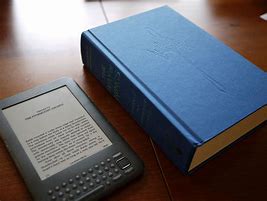











 First Set 4 min 10 Front Squats 10 Box Jumps (1 min break)
  Second Set 4 min 10 Lunge Pass (10 each leg)10 In Out Power Push-Ups (1 min break)
  Third Set 4 min 10 Alternating Swing (10 each arm)10 Hop Knee Drive (10 each leg) (1 min break)
  Fourth Set 4 min 10 Burpee 10 Double Slam You’re done! Way to work.


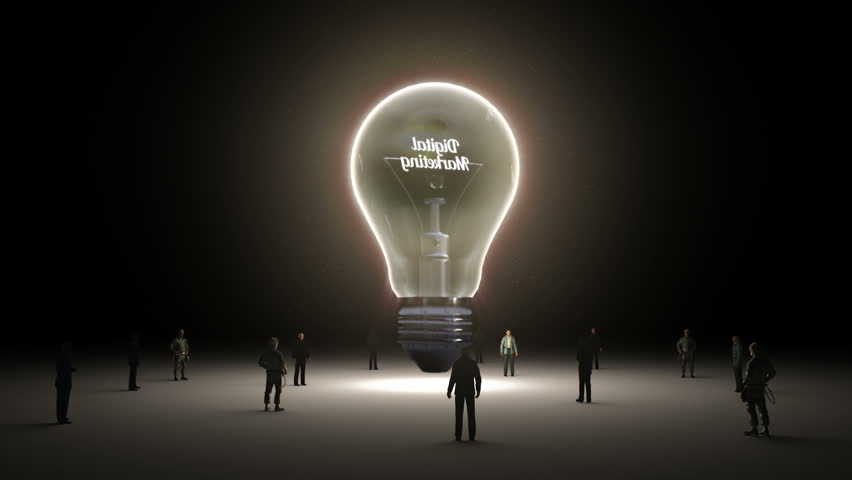






 Track2Training
You must be logged in to post a comment.