MOST APPRECIATED DRAMA OF DIFFERENT LANGUAGES IN INDIA

Being one of the most viewed programmes on Indian channel and getting good TRP with desi viewers many different dubbed shows were appreciated from pakistan, turkey, korean, ukranian etc.

1. ZINDAGI GULZAR HAI(PAKISTANI)

This serial was a phenomenon that made its stars insanely popular in both Pakistan and India, boosting the steady trickle of cultural exchange into a river of cross-border friendship. Powerful performances from Sanam Saeed, Samina Peerzada and Fawad Khan made this serial an international favourite.

ZINDAGI GULZAR HAI (2012)(2014 in India)

This was the show that made Pakistani actor Fawad Khan a popular face in India. The show that premiered in 2012 on Hum TV in Pakistan was based on a novel by Umera Ahmad and was also inspired from Jane Austen’s Pride and Prejudice. It was a love story of Kashaf played by Sanam Saeed and Zaroon played by Fawad Khan. It was a classic poor girl and a rich boy love story and focussed on women’s struggle in the orthodox Pakistani society. The show instantly became a hit in Pakistan. And when the show travelled to India two years later, it re-created the history. The charms of the male protagonists, played by Fawad Khan floored TV Ji and many Indian female fans.

2. DESENDENT OF THE SUN(KOREAN)

 Korean heartthrob Song Joong Ki plays the role of a Special Force Officer. He is considered to be one of Korea’s hottest actors with a huge fan following across South East Asia. The series will premiere on Indian television on 8 February 2017 and became one of the first K-dramas to be available on a widely known Indian cable network.

DESENDENT OF THE SUN(2016)(2017 in India)

‘Descendants of the Sun’ is the story of Special Force Officer and a surgeon who fall in love at first sight. Their contrasting ideologies and values (as one kills to protect lives while the other one saves lives to protect them) makes them shy away from one another. Destiny plays an interesting role and after almost a year of having parted ways, they meet at a warzone ‘Uruk’, a land far from Seoul. Now, circumstances bring them face to face where they must work closely together driven by their principles.

3. FERIHA(TURKISH)

The first Turkish drama on Indian television was aired on 15th September 2015, Adını Feriha Koydum (Feriha) which had become a huge success. And from that time the Turkish TV Series has been very popular in India.

FERIHA(2011)(2015 in India)

It is a story of a young ambitious girl, who belongs to a poor family. But with the dreams of making it big out in the world. Beautiful, intelligent, and young, and with the thirst to see and travel the world, Feriha works hard to secure a scholarship to a private university.

But the new life at the university, where she goes to study on a scholarship, which awaits Feriha, about which she has no clues, wraps its arms around her and spins her around. Coming from a poor family and intimidated by the riches of the people around her at the university, Feriha soon entangles herself in a whirlwind of lies and made up stories. Emir Sarrafoglu, a rich son of a rich dad soon becomes the center of attraction of Feriha’s world, and telling lies, her new lifestyle.

4. SNOWDROP(UKRAINIAN)

“Snowdrop” was premiere in India on January 16 , 2017. This captivating story of love and revenge from the heart of Ukraine will not only enchant viewers with its superlative content but also give the audience an experience of a global palate.

SNOWDROP(2015)(2017 in India)

The show revolves around Nadya, an innocent, good hearted and hard working girl, who gets wrongly framed for an accident. Irina, her beautiful, spoilt and manipulative step sister and the man that both of them are in love with is Igor. He is the heir to a cosmetics empire. A tragic accident kills Igor’s beloved sister. Igor, who loved Nadya loses all his trust in her after the ill-fated incident. Irina, takes advantage of the situation and convinces Igor to marry her. The drama starts with a very exciting jail break. In first episode, Nadya will be seen escaping prison and rushing to a hotel where she confronts Irina as she is getting engaged to Igor. The confrontation ends with the stepsisters handcuffed to each other, falling off a roof. As they fall, Nadya wonders how they came to this juncture in life and remembers her past. The show depicts Nadya’s fight to prove her innocence and get the real culprit punished.

5. BOYS OVER FLOWER

This is the most popular K-Drama that dubbed in Hindi and become famous in the whole subcontinent. This drama didn’t only get popularity but the whole cast get popularity from this drama. This is another High school story with rich boy and the poor girl but intense triangle love story.

BOYS OVER FLOWER( 2009)(2017 in India)

Geum Jan Di comes from a poor family who owns a dry-cleaning shop. One day, she visits Shinhwa High School, a prestigious school for the wealthy, and saves a student trying to commit suicide because of bullying. For her heroic act, Jan Di receives a swimming scholarship and starts attending the school. In school, she meets the notorious F4, the most popular and powerful group of boys at the school, consisting of Gu Jun Pyo; the leader of F4 and heir to the Shinhwa Group, Yoon Ji Hu; the grandson of a former president of Korea, So Yi Jung; a skilled potter who comes from a family that owns the country’s biggest art museum, and Song Woo Bin; whose family runs the country’s largest construction company. Her life at school starts out miserable, as she doesn’t fit in with other students because of her status, and later becomes worse when she is labeled as the new bullying target of the F4.

these are the some international shows which was well appreciated with the Indian desi viewers and become hit and was trend setter for the other drama of different countries.


Banned cartoons and their reasons

You may have came across the word “ban” Or “censored’ used in movies, but do you know these terms are also used for some cartoons in some countries which are liked by other countries. Let’s have a look at some popular cartoons which are banned in some countries and their reasons.

1. SpongeBob SquarePants

This is the longest running Nickelodeon show ever. It got banned because of violence and foul language which are used in this show. Countries like Russia, America and 120 others have banned this show from watching.

2. The Simpsons

This is America’s most popular cartoon show till now. This show had scenes where public figures like Donald Trump, were insulted. This show also promoted disorderly behavior which were totally misleading for kids. After sometime, the show is now available to watch, but there has been argument going on this show as countries like US have censored this cartoon show.

3. Mickey Mouse

This is world’s first cartoon show which had voice, and the first word that Mickey Mouse said was “Hot Dogs”. This cartoon show got banned in 1930s in the Romanian region because Romania government stated that big Mouse in this cartoon will scare the kids rather than making them laugh.

4. Doremon

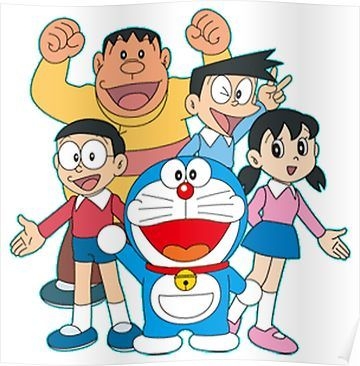
This is a Japanese cartoon show which is ban in more than 50 countries because of the character Nobita. The Nobita character is a lazy character who always depends upon the character Doremon for helping gadgets. An argument concluded that the Nobita character was promoting laziness, procrastinating, etc, which resulted in banning.

Cartoon shows should be developed keeping kids as their main audience. It should have the simplicity and cleanness that attract audience and also focusing on the impact and effect that it’ll leave mainly on audience. That’s why shows that promotes foul language can always make a big effect on kids. This makes banning a healthy and better option.

Countries that haven’t reported a Single case of Covid-19.

Most of the world has been struggling to contain COVID-19. The disease which was first reported in China, has become a global pandemic that many countries are still trying to get under control. But a hand full of nation have not reported a single case of COVID-19 to the World Health Organization (WHO).

Most are in southern and central area of Pacific ocean.

  1. Federated States of Micronesia
  2. The Marshall Islands
  3. Naru
  4. The Solomon Islands
  5. Vanuatu
  6. Tuvalu
  7. Kiribati
  8. Samoa
  9. Niue
  10. Tonga
  11. The Cook Islands
  12. Palau

These small islands are all technically Covid-19 free. Health experts these 12 countries escaped the pandemic because of a combination of remoteness, small number of people as their combined population adds up to just 1.6 million and because they closed borders when the Corona virus that causes Covid-19 began to spread widely. But just because they haven’t reported any Corona virus cases, does not mean these nations have entirely dodged the effect of the pandemic.

Tourism plays a major role in the economics of most of these countries. And as in many around the world, a lack of visitors has left hotels and restaurants struggling. The owner of the hotel says since March 2020 they have lost their whole business and have zero income.

Palau is one of the island nation feeling the economic pain of Covid-19. Streets that are normally bustling with visitors from abroad have been all but empty for months. With no guests, hotel in the country have also had to make serious cuts. A hotel owner says

No one in our hotel is making their full salary. Most people are 50% or below. Everybody is feeling the pain as thers is no economic opportunity left.

The Palau government recognized early on the economic toll of shutting it’s borders to foreigners. He says

Our capacity, our reality a situation here its that you’re better of with prevention than trying to do something about it later on. So, it became a question of economics or people’s lives, and the right thing to do for anybody in this world is to consider people’s lives.

The Government provided generous subsidies of up to US $10,000 for local people and a few hundred dollars for foreign workers affected by the halt in tourism. Not all Pacific countries rely on tourism as a main driver for their economies.

Countries like Marshall Islands and Federated States of Micronesia rely on fishing and farming and financial aid from the US. But with limited health care facilities and population spread across many islands, the nation’s priority has been keeping COVID-19 from their shores and educating citizens about thorough handwashing, social distancing and other precautionary measures.

Other than Island Nations

In addition to these tiny island nations, there are other countries that haven’t reported a single case of COVID-19 to the WHO: North Korea and Turkmenistan.

North Korea closed its borders in January 2020 and it’s leader Kim Jung-un has repeatedly said the disease is a “potential” threat. He even put the town of Kaesong, which borders South Korea, under lockdown in July 2020. But many observers are are sceptical about the country’s official statistics. They say North Korea’s weak healthcare system may not be able to confirm Corona virus infections, or that the ruling party may simply not be very transparent about whether there are any cases.

Health experts are also wary of Turkmenistan’s claim to be COVID-19 free. It is among the hardest countries in the world for foreigners to enter, and it also closes its borders early on in the pandemic. The authorities government in Turkmenistan also says there are no people in the country living with HIV or Aids, a claim most scientists say is just not plausible.

Back in Paula, where people are doing their best to ride out the economic toll of the pandemic, hotel owner have a bleak prediction about the future. They’re predicting how long will they continue to lose money before suspending more operations or total operations and just wait for the whole world to settle down? Because it’s a financial question arises, we’re willing to lose money, but how much money are we willing to lose?

So while border control, good hygiene and social distancing seem to have effectively kept the disease away from these places, there is no defence against the economic devastation caused by the global pandemic.