Theory of Mind

The basic principles involved in mind theory are beliefs, desires, and intentions that are used to comprehend why somebody is acting in some way or to predict how somebody is acting. In general, Mind Theory requires identifying the knowledge, beliefs, emotions and intentions of another person and using that understanding to navigate social situations. A commonly used task of measuring theory of mind is a task of false-belief, like this:

10 Picture Books for Practicing Theory of Mind Skills

Demonstrate the child a Band-Aid box and ask the child what’s inside the box he / she thinks. He or she will probably answer, “Band-Aids.” Open the box and display him / her that within is a toy pig, while saying that there’s really a pig inside and close the box after this.

Now, as you’re bringing into view a toy figurine boy who’s been hidden up to now, the adults say “Scott’s never seen anything inside this Band-Aid box. Now Scott comes here. So, what does Scott think the box contains? Band-Aids or a pig? Children who have established Mind Theory will understand that because he did not see in the box, Scott holds a different understanding than they.

Children who have formed Mind Theory will understand that because he did not see in the box, Scott continues to hold a different understanding than them.

They’ll respond that Scott thinks Band-Aids is in the box. Those who have yet to develop Mind Theory may respond that Scott thinks pigs are in the box, mistakenly thinking that Scott holds the same belief as they do.

Kids are improving on Mind Theory tasks around the age of 4 and are able to fully understand that somebody can act on the basis of a false belief about an object or event. In my own work with pre-schoolers, anecdotally, 3-year-olds tend to understand that Scott didn’t see inside the box, but still react that Scott thinks a pig is in the box.

For children with developmental disabilities, such as those with autism spectrum disorders (ASD), it may take cognitive ability a little longer to develop, and some higher skills may not be attained at all. Youth (ages 5 to 13) with autism received lower scores on measures to understand the beliefs and emotions of others than those typically developed by young people, but there were no differences in understanding others’ intentions possibly since knowing intentions is a less nuanced ability that evolves faster than knowing feelings and beliefs. Mind Theory also predicted ASD diagnosis, so that those with the lowest level of these abilities had more serious diagnoses (i.e. autism with intellectual disability) than those with more advanced Mind Theory (Asperger’s syndrome) diagnoses. Mind theory evidently plays a role in the emergence of delays in development, with discrepancies between those with delays and normally developing adolescents persisting in middle and even adolescence.

By comprehending Mind Theory, we may not only be able to better diagnose those with complications, but also create more effective interventions to encourage and support cognitive development. It is believed that executive function is related to social social skills, so that those with higher levels of cognitive abilities also have greater social skills, with that relationship being partly related. The connection between perceived competence and executive function may be more nuanced and bidrectional, as indicated in some of the literature, but I think it is most important to establish how EF skills contribute to mental theory and social competence in this way. Understanding how the underlying EF(Executive Functioning) process affects one’s social development will help us build new approaches for children. These initiatives could focus on cognitive and EF components which could help develop social skills, making the intervention less anxious and more accessible.
Multicultural Education

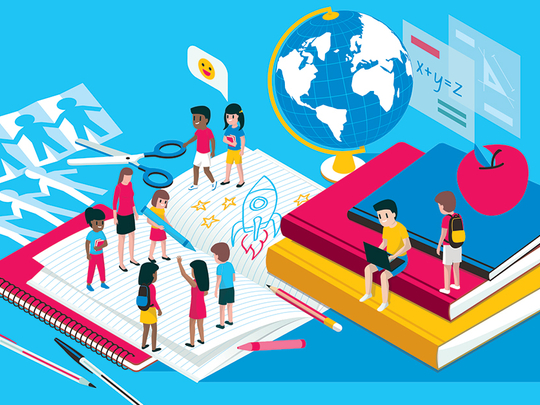
Multicultural Education is known as an educational procedure / strategy which fuses the perspectives, writings, values, convictions, and viewpoints of people from distinct social foundations. The primary function of putting it into practice in classrooms is to allow educators to adjust or join exercises to highlight diversity and social pluralism. We will discuss various disadvantages and advantages of educational method. Multicultural education came into the limelight in the early 1970s, following the action plan for change in the education system by the civil rights struggle. The goal was and continues to be to assist, appreciate cultural diversity amongst teachers and students. Multicultural educated students are often best prepared to work in a variety of classroom or commercial establishments and have a strong social intelligence.   

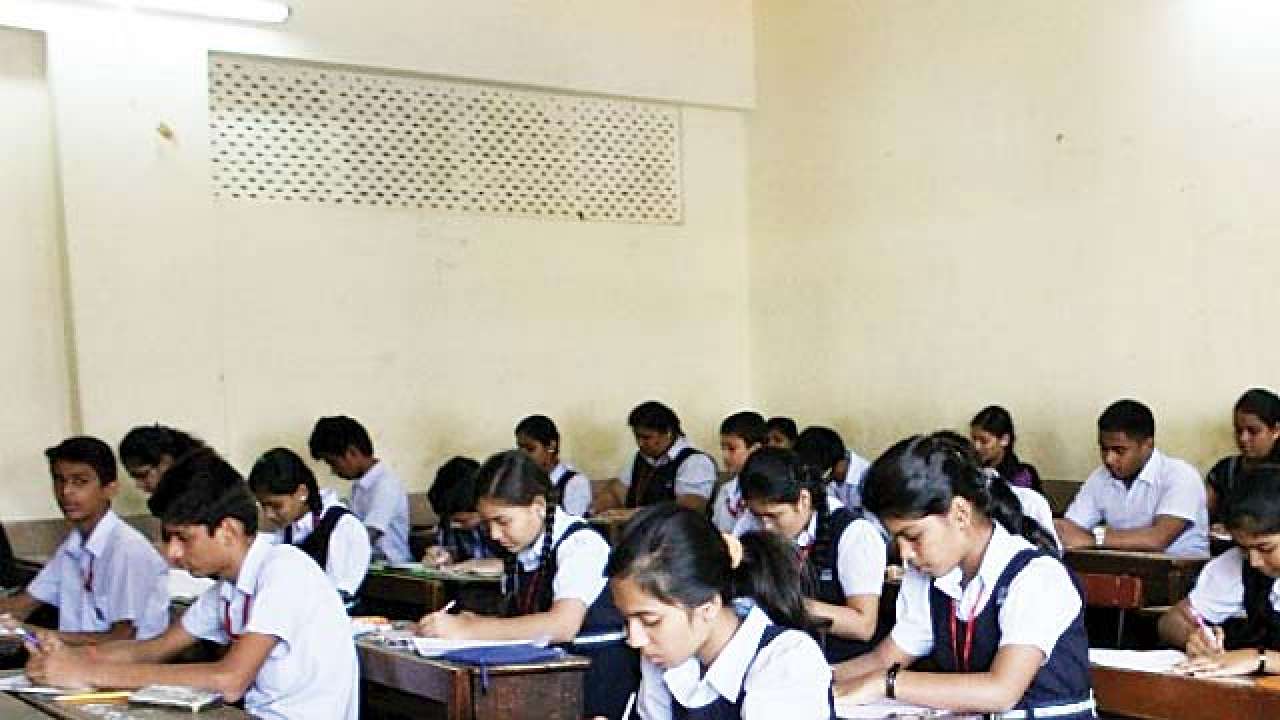
How multiculturalism helps school education | Op-eds – Gulf News

Race, ethnic background, nationality, language, religion, class, sexual orientation, etc. are the critical elements involved in multicultural education. Students can be constantly reminded of history, cultures, and the importance of various groups by adapting it in schools and colleges. It also promotes the ideals of inclusion, democracy, diversity, critical thinking, and sense of unity, inquiry, outlook values and many more positive traits. This teaching strategy is seen as profitable in advancing educational achievements among students of foreigners (immigrants), and it is along these lines that it is given credit to be a contributor to the school reform movement.

Many genuinely think that Multigrade or cross-cultural education’s goals and objectives are to safeguard the culture of minority groups by encouraging young people to think broadly and get to know new thoughts and critical thinking. All this quite fundamentally helps students deduct, just as it urges them to have an increasingly open worldview. As a result, students are provided with the knowledge, beliefs, and skills required to engage in social improvements, resulting in equity for ethnic groups previously marginalized and excluded.

Just like every other Multicultural Education system, there are a few benefits and drawbacks to it. The pros and cons are as follows:

Disadvantages of Multicultural Education:

Since children from diverse ethnic, linguistic and social backgrounds study together from the same education system in a multicultural classroom, making it difficult for everyone to understand the subject. There’s a possibility teachers may be struggling to find out how well the students understand the content. As not all students come from the same backgrounds this causes a language barrier. People may be non-confrontational, submissive or otherwise indirect from other cultures.

Teachers in inclusive education must be equipped to manage conflicts and misunderstandings with different values , beliefs, cultures, assertions, patterns of behaviour, etc. that tend to arise among students from different cultures.

Advantages of Multicultural Education:

Multicultural Education exemplifies students to different culture and values, and creates good understanding and acceptance of people’s differences. It instils tolerance and personal acceptance. Since it encourages cultural relevance, anti-bias classroom, challenging students to reflect without jumping to stereotypes, shaping social skills and social action resulting in people engaged in civic engagement. The method encourages students to assimilate while maintaining intact their culture and values, making them feel inclusive. It can help children assimilate without compromising their cultural identity by being culturally conscious teachers, without biasing. It facilitates promoting a community of learning, which helps to preserve a sense of pride which trust in the learning.

Future of Home-schooling

Although many people see education system as the best way to socialize and instruct young children, each year there are growing numbers of parents talking about putting their children in home-school.

Assuredly you will recognize a variety of benefits of doing this, but the fact still remains that something is “lost in translation” between possibilities available to the public and at home. Fortunately, it seems as though robots are picking up the slack in home-schooling ecosystems.

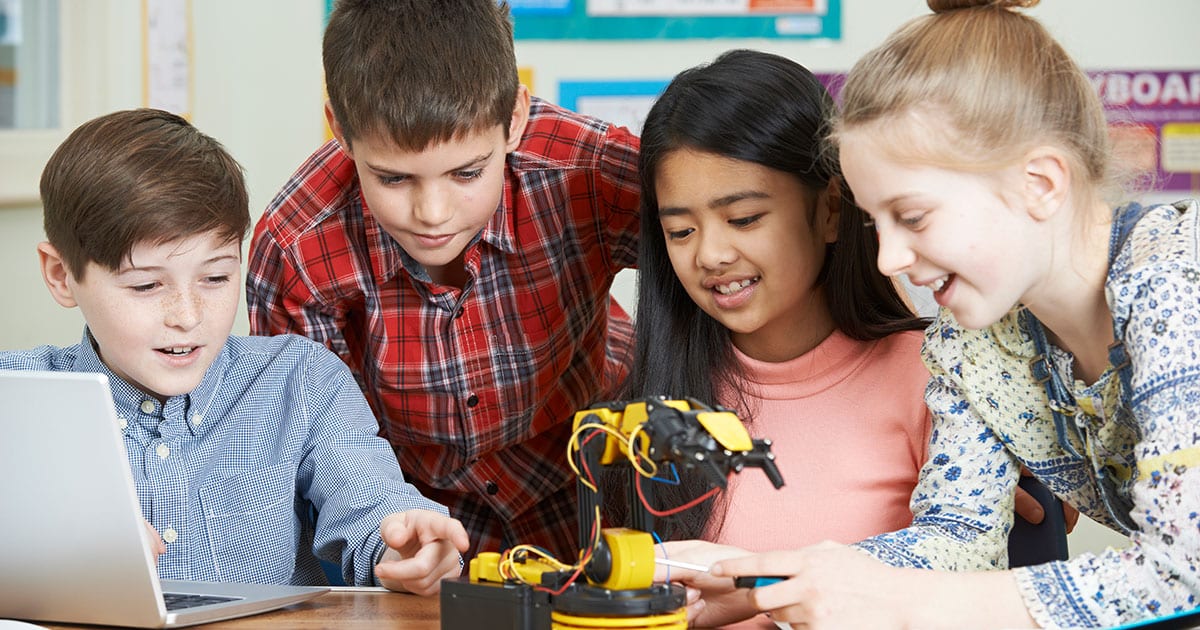
What Is the Future of Homeschooling?

Home Schooling Problem:

To understand how robots change education in home-school settings, you first need to learn the issues surrounding at-home educations. Though supporters of the public school often argue that home-schooled children are left at a loss, the statistics suggest otherwise. Children that are taught in this atmosphere actually attend university at rates equal to or higher than their counterparts.

It is also worth noting that researches have shown behaviour problems for home-schooled children. Yet there are some considerable differences when it comes to their teachers. For example, in many states no accreditation or training is required to teach your kids. In fact, there are even states that do not predict teaching at home about holding a high school diploma. None of this is to suggest that home-schooling parents can’t have a decent education. However, there have been some subjects where all may benefit from artificial intelligence (AI).

The benefits of robots

If you have kids and want to home-school them, you should rest assured that, practically speaking, they’ll be all right. Actually you’re going to be in fine company. The number of home-schooled children is increasing significantly of 2-8 per cent per year. However, when doing this it is necessary for all of us to consider our limitations. Luckily, robots have evolved enough to help conquer those limits. One only has to consider different languages to realize how important home schooling robots can be. Only one in five Americans can speak a foreign language, but in their curriculum, many jurisdictions do have a requirement for foreign languages. Fortunately, artificial intelligence is used by the ROYBI robotic system to educate kids a variety of languages in which parents may not have experience.

It’s also worth noting that the system is constantly evolving to teach other subjects — as AI certainly should. The new educational emphasis is on STEAM (science, technology, engineering, humanities, and math), and in these subject areas, ROYBI is continually introducing new content.

Where are we going from here?

As robotic world continues to develop, many are now questioning whether artificial intelligence will completely replace classroom teachers. Home-school family would also have the option of using robots to fully teach their own children if this were to happen. While the cost may seem prohibitive, consumer robots like ROYBI have enabled AI to be brought into the home.

Luckily, it seems as if AI is moving to a point where it can deal with children on an emotional level. For example, ROYBI can recognize facial expressions and respond to apparent emotions in an acceptable manner. Obviously this is no substitution for actual human interaction, which can never be excluded from public or home-school settings, but because machine learning increasingly encourages robots to behave more objectively, these artificial interactions can become essential aspects of the learning process.

Home-schooling is growing in popularity every single day, and while success rates are impressive, it is important to remember that several teachers’ parents cannot do the job. However, with the improvement of artificial intelligence and robotic technology, there is little wonder that one day everything taught in public schools can be learnt at home. While there is disagreement about whether in-home learning can provide equivalent or higher education, home-schooling robots may one day make that fact unquestionable.

Importance of Learning to Code early in life

The World Economic Forum ‘s Future of Jobs Report has forecasted that 65 per cent of children entering primary school today will eventually wind up working in entirely new types of jobs that do not yet occur. The world is changing at such a rapid pace that today’s high-paid jobs didn’t even exist five years ago-and it’s hard to predict what kind of jobs we ‘re going to do in another five years. The reason for that big shift? It is rise of Software industry.

8 reasons why every child should learn to code - Teach Your Kids Code

The question here is how we prepare our children for the future, there’s only one solution to this situation: Learning to code. Both parents and teachers believe that programming is a well-structured way of introducing children to logical thinking and problem-solving in a country like India, where the education system struggles with a lack of vision, facilities and outdated curriculum. This also trains them for a data-science and computer science driven job market.

Fewer than 10 percent of schools taught mathematics before the Industrial Revolution, each school introduced mathematics after the turning point, because that was the centre of the revolution. For us now, coding skills are what mathematics was to the Industrial Revolution: underestimated at the time, but extremely valuable generations later.

Now we’re in the middle of the computer revolution, and it’s the same concept: schools need to recognize the benefits of coding as a skill. For Chinese parents, teaching children code is just as important as teaching them math and Chinese. Indeed, even before they enter pre-school many Chinese kids are vulnerable to coding. A lot of Indian parents now also teach pre-school coding to children. A huge number of coding and programming centres in New Delhi, Mumbai, Gurgaon, and Chandigarh serve these needs in India.

Almost all of these places use a shared pool of tools and technologies — such as Code Studio, LightBot, Botley, or MIT’s Scratch — created for a foreign market where coding teaching is already a flourishing industry for children. The aim is to cultivate the ability in a child to develop a meticulous sequence of commands in a language which the computer understands.

In the next 5-10 years, it would not matter what school kids are attending school, but how digitally savvy these kids are, especially with the introduction of 5 G technology that would be paradigm shifting and upend conventional teaching methods. Economists estimated the total economic impact of 5 G on new products and services to reach $12 trillion by 2035 as 5G tries to move mobile technology from connecting with people to people and information, to connecting people to everyone. Hi-tech kids today are learning from the same books I used 10 years ago during my school time. Our school system promotes rote learning, and that promotes conformism in children rather than curiosity. There is a repetitious raj of learning which governs our schools.

If we don’t implement coding in schools then our kids will be in a massive disadvantage and the future will be shaky. In 2017, Delhi-based ed-tech start up Eupheus Learning launched Cubetto which was introduced at about 300 primary schools across India. Cubetto’s innovation is the block-based coding language intended for pre-literate-year children. It is a screen-less coding solution that teaches infants the basics of programming.

Most kids learn to tap and press and hold in the digital age of today before they can speak cohesively or walk. Its wireless pacifiers, friends and entertainers are smartphones and tablets. To do so, children do not need to be qualified in reading or writing because stories and pictures are used to illustrate the concepts.

We can’t rely on the government to formulate policy, top-down approaches are lethargic and bureaucratic that takes a lot of time to implement which our kids don’t have. In the 4th Industrial Revolution, parents and educators would have to take a proactive approach or our children will be left behind.

Should Physical Education be made compulsory in Schools?

Physical education (PE) is often seen within the education system as a marginal subject. And many high schools are actively reducing PE time to make path for more “serious” or “important” topics.
Youth Sport Trust studies suggest that for 14- to 16-year-olds, 38 per cent of English secondary schools have cut scheduled PE. One of the main reasons for that is the enhanced pressure to produce results of the examination. Nevertheless, amid these changes, PE remains celebrated for its ability to improve wellness and encourage lifelong physical activity. This is an important issue provided that according to the latest government estimates, over 30 per cent of the year six pupils are listed as “overweight” or “obese.”

Sport should be compulsory in schools, writes Kylie Lang | Daily ...

PE is also celebrated for its commitment to improving psychological wellbeing, helping to foster social and moral growth, and promoting academic and cognitive success. The Physical Education Association emphasizes that high-quality PE fosters pupils’ physical, spiritual, financial, mental, economic, and intellectual development. But the many goals for PE – such as health education, developing skills, as well as focusing on moral and social issues – have created confusion about the topic and have done little in practice to further the educational opportunities. In fact, it was argued that PE offers more entertainment than education. A waste of time and some entertainment, or vital to a child’s education and development – what is it?

Part of the problem appears to be that PE is often seen as a possibility for pupils to be active and have fun. Or in some cases, as a way of relieving stress and serving as a break from traditional learning. These locations are clearly valuable for the overall well-being of pupils and there is a growing basis of evidence to suggest that physical activity has the potential to support learning more broadly. But PE’s role is not solely to support and promote the knowledge of pupils in other subject areas. It should instead be providing meaningful learning experiences within the subject itself.

Each offers a unique system for PE, sport and physical culture to explore a multitude of holistic learning opportunities. The moral or ethical controversies in sport, for example, can provide teachers with a range of educational stimuli for debate, rationale and critical reasoning. The Sports Monograph is a recent project that we have been working on, inviting learners to collaborate and share their views and experiences on sport, and what it means to them. The project included pupils from primary and secondary schools, as well as students from undergraduates and postgraduates who were all supported by their teachers and lecturers.

As part of the initiative, not only were the pupils acknowledged for their written achievements at school award evenings but, unlike in conventional PE, their work left a trail of proof of learning and academic involvement – appreciated and supported by the schools. As a valuable educational endeavour, PE successfully stood shoulder to shoulder with other subjects in the curriculum, with written evidence to support the claim. These pupils now have publications which are used at the University of Central Lancashire to teach undergraduates.

The role that PE can play as part of the broader academic curriculum appears to be completely forgotten, at best understated and, at worst. Activities such as those raised here could help to broaden PE’s educational potential, encourage more pupils to engage with the subject matter and reinforce PE’s place as a unique and valuable pursuit of knowledge. There are possibilities, but PE needs to be ready to grasp them and let the pupils write about their sporting enthusiasms to reflect what they’re being told to learn.

Should Students Study a Foreign Language at School?

The benefits of learning foreign languages are springing up as the world is becoming increasingly international and multilingualism is now perhaps the most valuable real-world ability ever to have emerged, rather than only being a cool parlour trick. If you are thinking about attempting to learn a foreign language instead of wanting the world to tolerate your monolingualism, you are indeed a special breed. Burgeoning into the impressive polyglot that you strive to achieve to be with the right approach and mind-set is 100 per cent feasible.

Reasons to Learn a Foreign Language

Studying foreign language is all about knowing how to interact and really connect with others an incredibly important life lesson that can only be cultivated through interacting with people. When you’re learning a foreign language, you can demonstrate your new supernatural power to understand what someone is saying, remember the right vocabulary and grammar, bring the vocabulary and grammar into the right sense, and respond back — all on the spot and in a reasonable time. You’ve signed in. And that’s what it’s all about. Learning a foreign language is compulsory in many other countries until the final year of schooling. In contrast, Australian students in primary or secondary school may study a language other than English but very few actually continue to study the language once they are able to customize their subject choices in their senior years.

Recently, the central government allocating $11.6 million in Australia to language training in primary years and working to improve the use of Asian languages.

Studying language will not only give your kids the ability to speak, write and read a different language, but will also typically give information about the history and culture of societies where the language is used. This will expand your child’s view of the world and open their eyes to other Australian cultures and communities.

It can provide worldwide travel opportunities: learning a second language can offer a number of opportunities for international study to students. This may imply embarking on a secondary school exchange programme (for example, taking the opportunity to study at a sister school) or completing a semester abroad or a tertiary-year student exchange programme. These programs can be intensely competitive, so speaking another language will not only increase the chances of your child being selected but also means that they are not limited to an English-speaking country or English-speaking courses.

It can boost their chances of tertiary admission: many universities recognize the benefits of language study and are willing to offer ‘bonus points’ to students during school to study a language. This can see your child put in a better position when applying for a tertiary course, especially in disciplines like humanities, communications and business. The Group of Eight (the prestigious research-intensive universities in Australia) also possesses its own language bonus point’s scheme.

It can boost work chances down the track: It is no secret that when it comes time to find a work, learning a foreign language can be advantageous. Employers in service industries such as tourism and hospitality will favorably use a second language extremely on those who understand it. The same can be said for business owners dealing regularly with overseas customers and partners, as well as job roles requiring travel to other countries. Having the capacity to interact in another language will place your child in the job market in demand — especially if they have chosen to study an Asian language like Mandarin.

Many research have been carried on the benefits of learning a second language, with research that links bilingualism to the development of literacy and improved cognitive skills such as memory, perception and multi-task capability. It has also been found that learning a foreign language can help to improve skills development in the first language of an individual  

Should Gadgets be allowed in School?

When the world is changing for better, in which people wake up to the call of technology (alarms), it can be taken as a given that certainly technology has affected everyone. It’s obvious, therefore, that the youngsters would get involved in modern technologies. After all, the curious lot forms the youth of today, desiring to get their hands on the newest available gizmos on the market. If statistics are perceived, it can be clearly noted that most of the apps that come out onto the tech market are all created to capture the attention of the younger generation. It can also be found that the primary focus of the tech-market is on children and young adults.

Debate Topic: Cell phones be allowed in schools

Now comes a section where you have to decide whether or not to encourage the students to use the digital devices that are home to modern technology. Here are reasons why we should encourage the students in school to use digital gadgets:

One may argue that for students to learn information, digital gadgets are not really required. But one has to realize that technology is the future of this planet. Anticipating things, one will agree that the today’s children need the knowledge to use digital devices to help them learn, to survive in the demanding environment, which the future has for them.

New teaching methods were always looked into. The better the methods of teaching are becoming, the better the learners will learn. The inclusion of digital gadgets will make the learning process smoother. The basic point, after all, about why technology was incorporated to the world was to make life easy. In classrooms, teachers can incorporate technology like those mentioned in “How to integrate technology into education?”

* Dependable: When the children use digital devices, there is more than one way to learn things that cannot be comprehended. Students are able to become self-dependent, finding solutions to their problems. This would involve only careful tracking, whereby the use of illegal sites by the students would be kept on a list. If this is accomplished, students are free to learn not only the topics they need to learn for examinations, but with connectivity to the technology at their fingertips, they can gain knowledge on other topics and topics that interest them.

* Effective: there’s really no easier way to make kids learn something when they’re interested in learning. Digital gadgets are something each child wishes to own and use. When this interest is channelled into driving expertise, learning becomes enjoyable, simple, and most importantly successful.

These are just a few reasons why children need to be allowed to use digital gadgets in their schools. In the world everything comes with pros and cons. It’s the favourable path that will help us to get to the right target. Similarly, digital gadgets can be a problem in young people’s hands, but that is only when there is no proper monitoring. When the right aspects are to be done, we can see that if the interactive devices are used for positive forms of learning, children will learn quicker, faster and more efficiently.

Are Smaller Class Sizes Better

When class sizes are increased, everybody learns of the outrage in an attempt to prevent having to raise the budget substantially to bring a new teacher to a public school system. You’re probably aware that schools with smaller classes are more attractive than schools with big ones; but what exactly is so impressive about small classes? How do you want your child to get this? Smaller classes have several advantages you should consider carefully.

Do smaller class sizes really improve student outcomes? - EdBlogs ...

Small class sizes cause the teacher to pay more one-on-one attention. Let’s face it: teachers are overburdened. We are not paid approximately enough for the uncertainty we contend with on a regular basis, so they sometimes end up taking home jobs with them during the form of marking papers or preparing lessons. Instructors have the opportunity to know about each student as an individual thanks to lesser class sizes, continue to work with them to build their strengths and eliminate their weaknesses.

Instead of your student being just another face in a huge crowd, they will have a greater chance of developing deep and lasting interactions with the other students around them. That also has educational benefit: if your student has a schoolwork question, he will have a greater chance of knowing who to call for a quick chat.

Teachers are often said to be teaching to the lower middle of the class. Someone below that point will have to battle for themselves, sometimes left behind in the crowd, and everyone above that spends most of the class time day-dreaming while waiting for everyone else to finish studying a concept that they figured out ten minutes into the lesson. No matter which end of the spectrum your student falls on, the instructor is more likely to be able to customize the lesson so that it remains at their level in a small class.

When there are thirty-five students in the classroom, it does not matter how skilled the teacher is. There will be disruptions. Even the small task of encouraging students to work together on an assignment can lead to confusion as thirty-five voices fill the air and that’s assuming the classroom doesn’t come complete with one or two trouble-shooters. Worse, major, personality differences are more likely to occur in a classroom, and to occur in extremes. Discipline is starting to take up more of the time of class than real teaching. Discipline is expected much less frequently in a lesser student classroom.

The more the number of students in a classroom grows, the more time admin duties need to be used up each day. It becomes a massive undertaking to hand out papers. That’s all apart from the process of assessment, when teachers are less likely to provide individual feedback in a rush to get through a big stack of papers and more likely to give just that grade and a quick statement or two. They are still fairly quiet. Even when all are extremely excellently-behaved in the classroom, thirty-plus bodies in a classroom are noisy. There’s a constant clatter of papers in their seats, sniffing noses, students shifting. For a student with problems of attention, those small disruptions can be the difference between a lesson that is fully understood and one that they do not understand at all.

How Is Covid-19 Changing Prospective Students’ Plans?

Everyone considers Covid-19 to derail the plans of possible future college students in this spring of jaw-clenching uncertainty. However, one major question is: How many people will be affected?

Multitudes of them, suggests the results of a new survey. One in six senior citizens in high school who anticipated full time attendance at a four-year college before the novel coronavirus outbreak now believe they will choose a different path this fall. Three out of five students are interested in the ability to attend their first-choice college although they still intend to enrol in a bachelor’s degree programme. These revelations come from a survey conducted by the Art & Science Group, a higher-education consulting company, of 487 prospective college students. The outcomes provide an early look at how the epidemic affects college expectations for teenagers and how their plans for the near future could change.

Universities Changing Tuition Fees in Response to Coronavirus ...

These results are very solid, said the Art & Science Group’s principal. And they might inadequately-represent the future impact of what Covid-19 would once and for all be said and done this fall. Sure, you have seen the recent footage of college students setting out on spring-break beaches, ignoring recommendations for social distance practice. You’ve heard the argument that adolescents and 20-somethings aren’t worried enough about the global pandemic.

But aspiring undergraduate students worry a lot about how their college options could be influenced by coronavirus, the survey indicates. Almost all respondents (90 percent) said they consume information about the ongoing pandemic at least once a day, with 10 percent of the survey takers doing so hourly. Most high school seniors are radically changing their immediate plans despite school delays and lockdowns, the survey showed. Of the 17% of participants who did not think they would end up enrolling full time at a four-year college, a majority expected either to take a gap year (35%) or to participate part time in a bachelor’s program (35%). Seven percent said they would attend a college in the city and 6 percent said they would work a full time job.

Only 20 per cent of students were convinced they would attend their college of first choice. Survey participants who said they weren’t optimistic of choosing the college at the top of their list (63 per cent) identified different concerns. The most prevalent was cost: Twenty-one percent of those students said that because of the coronavirus their first-choice school may no longer be cost effective to my family. And 12 percent said either they or a member of their family had health concerns which required them to change their plan.

The Art & Science Group found that many other coronavirus-related fluctuations had prompted students to reassess their college choices: “I was unable to stay overnight at my first-choice school” (15 percent).Visits to the campus play an important role in the college choices of many students. Those meetings are an important measurement for enrolment managers of who is likely to enrol. Yet the spread of coronavirus forced schools everywhere to cancel innumerable on-campus programs scheduled for March and April (58 percent of students surveyed said they had encountered these cancellations, or expected them to experience them). That means that a lot of players must do without valuable information in the process.

The Art & Science Group also asked students how Covid-19 could have affected their thinking on the qualities that they pursue in a college. Thirty-five per cent of students said that “closer to home” colleges are now a more practical alternative than their college of first choice. Some said they were contemplating a less costly organization (32%), with a more familiar social network (22%), more rural (12%), smaller (15%), or “localized in a safer region” (10%).

Internet is reducing our attention span

Using the internet is affecting our brains physically so we have shorter periods of attention and poorer memory, has suggested significant research. An analysis by Oxford academics, King’s College London, Harvard and Western Sydney University, revealed that smartphones have weakened our ability to memorize facts while manipulating us into believing that we are smarter than we are. The revelations resulted after scores of studies and experiments have been reviewed by a global organization to assess the impact the internet has had on our brains over the last 3 decades. It emerges as Ofcom noticed earlier this month that the average British adult now spends 50 complete days online a year.

The Shortening Human Attention Span [INFOGRAPHIC]

Dr. Joseph Firth, senior researcher at Western Sydney University, said: This report’s initial takeaways are that high-level internet activity could significantly affect many brain functions.

The unlimited stream of instructions and notifications from the internet, for example, motivates us to keep our attention constantly divided — which in turn may diminish our ability to concentrate on a single task. Experiments analysed in the study showed that people who spent their time constantly tossing between short online activities require greater sensory effort to retain concentration. It has been found that the unending stream of notifications and digital distractions have a strong impact on the brain, with those affected showing less grey matter in the cerebral areas associated with trying to develop focus and attention.

Other studies have shown that the internet has an instantaneous impact on our ability to focus, with people displaying a significantly lower capacity to maintain attention following activities such as internet shopping. Whereas offline behaviours like reading a magazine did not show such an impact.

Computing online has also been found to make the multitasking offline less successful. The study told reporters that Overall, the evidence available strongly indicates that trying to engage in multi-tasking via digital technology does not improve our multi-tasking efficiency in other settings – and in fact seems to diminish these intellectual capabilities by diminishing our ability to ignore incoming distractions.

The study provides evidence that the internet was becoming our external memory as we relied more and more on smartphones to extract knowledge.  Instead of learning new factual information, however, the brain tended to log in on the internet to find the information. One research cited showed a group of online searchers find information faster than another using encyclopaedias but were less able to correctly remember the information.

Other studies have shown that the Internet has also tricked people into thinking that they are smarter than they are because they have “blurred the lines” between their own recollections and what they can conveniently look up on their present smartphones. The study said that Studies have shown that online searching improves our sense of how much we learn, even though the perception of self-knowledge is interpreted only for the domains where we can ‘fill in the gaps’ for the internet.

The study indicated that in the future there could be an additional benefit to this internet reliance as virtual memory, as it could free up intellectual capacity for other activities-though it did not speculate what these might be.

Lastly, the academicians found that online as offline the social side of our brains was acting in a very similar way. However, we are placed under new stresses, such as the strong rejection that people feel of having social value quantified by the number of friends and likes they receive, as well as constantly comparing themselves to hyper-successful individuals who are omnipresent on social media.

Should schools switch to eBooks?

Having brought modern technologies to classrooms has had a positive impact on the quality of the delivered education. Universally the students and teachers agree on the benefits of using eBooks in education.

The aim of eBooks is to simplify and improve the overall learning experience. Digital Books make the learning process more interesting and engaging. Students can now regularly participate in the learning process rather than listening to one person talking constantly. The integration of eBooks into teaching in classrooms makes learning a fun and engaging experience. Gone are the days when students were expected to carry a bag full of books to classrooms and back home every day. With eBooks joining the educational domain one machine is sufficient to include the syllabus of the whole year. Students at a very early age will be exposed to these electronic books, right from kindergarten to university level, ensuring that learning never becomes routine.

80% of US schools use e-books or digital textbooks

A successful learning program must ensure that the learning process includes the students actively. The eBooks also launched an educational innovation that lets students learn better and faster. Some of the benefits of introducing eBooks into education are listed below:

1. Study anyplace anytime:

Simple to bring an eBook around. It’s easier to move a mobile device that supports eBooks, instead of carrying a bag full of books. Most of the students already carry a mobile device these days. It might be a smartphone, a tablet, a laptop.  An eBook’s portability allows students to refer whenever they want to their notes and course materials. The students will now have everything within one location instead of bringing several books.

2. Offline eBook Access:

More than 50 per cent of the world’s population has Internet connectivity. Yet we all have networking and network problems often in trouble. To ensure that the internet connection doesn’t hamper the mobile devices learning cycle, provides offline services these days. Students can now install and save any content they want on their device, and then go through it at their comfort later.

3. Interactive Multiple Functions:

Not only are eBooks basic reading materials, they also have all the required resources to help students make notes and illustrate content. EBook readers have many interactive features, such as annotations, pen tools, page zoom, and much more. Due to the ability to find words and topics in an instant, the search tool is the most favoured instrument.

The search tool tries to avoid the time-consuming process of turning pages after pages in order to find a specific topic or sentence. They can also bookmark chapters and pages. The Online Dictionary helps them find word definitions easily. Additionally, the user can also change the font size and style, and adjust the device’s brightness to suit their eyes. An eBook is an all-in-one device that gives students a wholesome learning experience.

They need to just point the image or object to their AR-enabled device, and a computer-generated visual will pop up on their screen. This 3D image helps provide a convincing and immersive learning experience for the students. Those improved visuals would be more interesting for students over flat diagrams. It may also have links to relevant external sites, where more information about the projected image can be found.

Why Students Struggle with Math

Many children have mathematical problems but some students find it much harder than others. These may otherwise be bright children who have a great understanding of logic and reasoning but still fail spectacularly on homework, tests, and quizzes. Over time, repeated mathematical poor performance can cause a student to become disheartened and believe that he or she is “dumb” or not good at the specific topic. Furthermore, as math is cumulative, falling back might mean that a learner forgets much of what is taught. It’s important to have basic math skills, no matter what profession an person chooses to pursue. This is why recognizing problems early on is important. With the right balance of classroom accommodation and learning strategies, each student will reach their full potential in mathematics.

Reason Your Student Struggles with Math | Miami Beach Math Tutor

There are several reasons why a child may have math difficulties at home, ranging from low motivation due to academic stress to a shallow grasp of how to apply and perform numerical computations. But sometimes the root cause of poor performance is something else, like a disparity in learning or a difficulty in motor skills.

Dyscalculia is the most frequently detected condition in which individuals struggle to perform simple arithmetic and have trouble attempting to manipulate numbers in the same way as their peers. Nonetheless, students with dyslexia may also have trouble with reading numbers and having to follow word problems with math at school. When doing paper work, they may rearrange digits, or correctly solve problems, but record their responses in the wrong way.

Children with ADD / ADHD have the capability to rush ahead and skip a step or struggle to focus and be unable to check their work once a problem is over. Students with dysgraphia and dyspraxia, who are having difficult time trying to write by hand, may become so overwhelmed by number formation that they make silly mistakes or get the steps in the wrong order in an equation. Finally, children with visual processing disorders may lack the visual-spatial learning ability necessary to align numbers, read graphs and perform basic geometric operations.

Math is one of the topics that both children and adults have little understanding of. This is because while pre-school maths are about realistic problem solving, patterns being observed, shapes being recognized in your environment and learning to count, secondary and high school math teaching is more abstracted. It often concentrates on rotary learning and solving equations in books – think arithmetic and time tables – that can turn off students and make them believe that math skills are not relevant to their daily lives.

Indeed, many students lament that math is boring. At school, they might not see the point of learning algebra, geometry or calculus. Or they may question why they need to be able to do basic arithmetic’s such as adding, subtracting, multiplying and dividing by hand when they can easily find answers using a calculator or a computer.

The answer to this last point is multi-fold. One, you might not always have a calculator at your disposal; two, even if you do, trying to understand how and why to do it for yourself provides a stronger basis for future learning, and three, doing arithmetic is a mental form of exercise that strengthens your working memory.

Math is much more than arithmetical, though. Much of what goes into solving multi-step word problems is identifying the problem, choosing a suitable approach to solving it (there may be more than one), and following the correct operation order.

Some Valuable Suggestions:

Motivating and inspiring learners by demonstrating them real-world situations involving the use of math outside classrooms. Explain how math works, try and convince learners that it’s not all about arithmetic, and get them excited to give it a go and feel comfortable trying out different methodologies to problem-solving, even if that means they don’t always get the right answer.

The teacher gives visual explanations, demonstrates research on the wall, and uses physical objects that students can reach and push around, where possible. Multi-sensory feedback can improve learning by making it easier for students to interact with a lesson, and can also enhance memory content. It is extremely important to promote understanding of a subject that can be very abstract.

It can be daunting for the students to write down information and process it at the same time. It may also be that copying from the board can cause numbers to be transposed or recorded in a manner that makes no sense for the work any longer. It can help encourage a child to use a computer to take notes, or to pair them with a note-taking buddy.

13 THINGS I WISH I’D KNOWN AT THE AGE OF 13

  1. You don’t need to be peer pressured to do anything you aren’t comfortable with.
  2. Being trendy doesn’t count for much and instead, it is  feeling confident in whatever you wore that mattered.
  3. How important it is to stand up for people you love.
  4. To do what scares you. If you think you wrote a great story, stand up and read it in class! You’ll never know unless you try it.
  5. Don’t ghost. Remember that friend you’ve drifted apart from? Don’t blow her off, instead ask her what’s going on with you two from her perspective. Confrontation is what will get you through Senior School.
  6. Saving Journals. Just look back on how you saw the world at 12, and I bet you’ll have a day full of laughter.
  7. Significant others will always come in time. Right now it might seem like everyone you know is having the time of their lives with their best friend and that your life would improve if a best friend was by your side. But take it from me- Concentrate on good friendships first, if a closer relationship comes out of it, great and even if it doesn’t, then connections that will last won’t make you regret anything.
  8. You’re going to change so much, you might as well accept it now. You might be thinking that who you are now is who you will always be. But the world is ever changing and you’re going to grow for better. So, go with it!
  9. You don’t have to always fit in. Let individuality take the wheel.
  10. Don’t tolerate white lies and don’t tell white lies. The more you get caught up in lies and made-up stories, the more difficult it will be to survive in school. 
  11. Go (slightly) nuts! This is your opportunity in life to be slightly stupid, to be the life of the party. Because it turns out being slightly nuts in board classes isn’t as socially acceptable.
  12. For the love of everything, please stop making a puff. You’ll realise this when you look back at your pictures and cry for 5 days straight. Also hair straight down or pulled back is a hundred times better.
  13. You create the definition of happiness. Not your fake friends. Not your classmates and not even the society.

Does Education ever stop?

There is no doubt that education is among the most significant factors that have rocketed mankind to where it is now. Today, detestable things such as slavery, honour killings, and many others have been eliminated and replaced with right to free speech, gender equality, and education for women, infrastructural development, technological breakthroughs, and many more. Looking back at how rituals were performed by our predecessors and many other controversial acts, we realize that we have admittedly come a long way from where we started.

Never, Ever Stop Learning — Wilson Growth Partners

You immediately picture a conventional classroom, a stack of textbooks, and a strict teacher when you hear the word ‘education’. Yet is our education confined to a school’s threshold, or do we take it much further? Education can be understood as the practice that allows us to acquire knowledge, values, and competences. There’s no timeline or age limit for that cycle. There are two fronts where we can continue our education. It is to educate ourselves to improve professionally, and the other is to continue the education to ensure that we are individually continuously evolving.

Education is an endless continual journey. Education doesn’t just take place in the classroom. We must continue trying to educate professional practitioners and the general public. Educational opportunities have a long conventional tune in sociological research on inequalities and many sociologists have concluded that education is a central variable in today’s society when it comes to studying stratification. Over the last generations, modern societies have continued to evolve into knowledge-based economies where the role of education and the organization of academic institutions in all phases of the course has become significant. More than in the past, education today is a lifelong process where individuals acquire informal and non-formal learning skills and competencies throughout life. Most empirical education research is still based on observational studies, and does not analyse education as a process that is highly time-dependent, incremental, and quantifiable.

Education helps in Professional Development:

We’re engrossed in a mad rat race where there’s soaring competition and the only way to stay ahead is to learn and grow continually. Organizations and businesses today understand that employees need to procure knowledge and new skills. A survey showed that over 70 percent of adults believe they are lifelong learners, while almost 90 percent of millennials are open to the possibility of spending money in future training. There are several ways you can educate yourself and have a professional development.

Using Learning Applications:

The app world is starting to open up a whole new way to educate yourself. There’s plenty to discover, from simple language learning apps to apps specifically designed for a specific field.

Educational YouTube Channels:

YouTube is a terrific educational source. You will find channels dedicated to the knowledge-driven content production. You can find content according to your profession. It could be business or finance associated, or even something imaginative like graphic design.

Conclusion:

Does education ever stop or it continues throughout one’s entire life, to point out the obvious, education is a continuum thing, it basically has no end. Education needs to be something that will help you develop, whether professional or personal. In fact, the process shouldn’t be punishing but just the opposite. Learn things you think are interesting, everything you learn will prove beneficial for you. So keep learning, and continue to rise!

Studying Abroad

Usually, the term “studying abroad” refers to a program operated by an academic institution, such as a university, that allows a student to live in a foreign country while studying at a foreign place of learning. The periods of study may be as brief as a single semester, or as large as one year or more. As well as learning from their curriculum, the student often learns by soaking themselves in the local culture and environment which were initially foreign.

Study abroad overseas in Europe or Asia and save money on tuition ...

Education is an essential thing in everybody’s life. Hundreds and thousands of young adults leave their families every year to study in a foreign country like the United States, Canada, United Kingdom and Australia. Lots of folks today are worried about going overseas to study. However, there appears to be a glamour element involved. Studying abroad has the main benefits of using advanced learning methods. The idea of studying abroad may seem like a magnificent opportunity, but there are also many potential downsides: practical, psychological, and financial. On the contrary, there are more advantages of studying abroad than just that.

Let’s look at the pros, first. Living in some other country means choosing to leave all the comforts of home behind, and having to do all by yourself. You could have better opportunities for learning abroad than you do at home. You will be doing activities you’ve probably never done in your home country. These include cooking, cleaning, shopping for food, washing clothes, figuring out transport services and exploring options for living. A lot of students go home proud of having become much more independent individuals. Another benefit of studying abroad is when traveling, you move to new places. Attaining all of this also increases self-esteem and develops character strength. You’ll grow more confident than ever before.

Studying abroad also means having to speak foreign languages even more than you are used to doing. If you are going to study at a place where they speak different languages to your native one, you may experience language problems. You’ll be subjected to the language everywhere you turn – on the sidewalks, in the retail outlets, on campus – you can’t get away from it. Besides writing and reading the language on campus, you will be required to interact with the local people there in English. The big positive here is that you’ll develop your English language skills by leaps and bounds. The best way to learn or improve upon a language is to use it daily.

Studying abroad has its inconveniences too. Don’t take steps toward foreign studies if you don’t have enough economic means. There’s a certain homesickness experienced by almost everyone. You’re probably going to miss your family, friends, food and all the familiar stuff. Besides that, there is a culture shock experienced by students going abroad for the first time. You’ll need to get used to change in attitudes and new ways of living.

The major drawback of studying abroad is the altering culture. By comparison, living in a different community makes you understand that there are different ways to do things. Which is also a contribution to improving cultural awareness for students. You’ll also discover we’re all human with the same emotional reactions at the end of the day.

Conclusion:

To sum up, it all comes with pros and cons. Despite the inconvenience of going overseas to study, the overall result is positive. When studying abroad not many people can survive because of the disadvantages they may experience throughout their stay. However, what one can gain from this experience far outweighs the negative as there is no price for personal growth and fulfilment.

Role of Higher Education in Society

Higher education could offer numerous advantages, including job stability and economic freedom. Education plays an even bigger role in many facets of your life throughout the 21st century. Achieving a higher education will improve your chances and boost overall standard of living.

Higher education - Eduvoice | The Voice of Education Industry

Today, more Americans see a college education’s relevance and role in providing better employment opportunities and a luxurious retirement. Yes, about 84 percent of Americans say a higher education is very important (47 percent) or highly necessary (37 percent) to get ahead in the world. Among those American citizens, 66 percent of those who have not graduated from college say they wish they had, and 62 percent make it sound that going to college would have significantly improved their current standard of living.

Higher Education provides more opportunities:

Being a graduate of high school does not open new gates to many successful careers, as it has done in past centuries. Today, the U.S. has turned from a manufacturing-based economy to a knowledge-based economy, and today’s impact of higher education can be compared to what it provided 40 years ago with a high school education: more opportunities and better professional opportunities.

For many, if not for all, people the surest way to a successful life is to go to college and get an university education. After graduating from college, you may not know exactly what you want to do, but at least you know that you want a professional life that is more satisfying, pays well, and is something you feel safe and secure and contented with. These considerations are why a lot of people participate both with their money and time in college. You are trained in your chosen field by a higher education, but it also teaches you to comprehend complex subjects, think critically and express your ideas appropriately. You also learn many skills like organizational, self-discipline, and how to see a task from beginning to end. A higher education makes you become more qualified and provides you with other skills relevant to the job.

Because you are studying a wide variety of skills, you might end up in an area for which you didn’t originally prepare. It will open up fresh and exciting possibilities that you would not have had you not received a higher education. Today, career options in our economy are dwindling for those who have not continued their after high school education. Many high school grads who don’t go on to university end up working in the service field with low paying jobs offering hardly any opportunities for advancement. Naturally that’s not always the case. There are a lot of high school graduates who have become very successful.

Staying Competitive:

Higher education represents a strategic edge in the job market, also. We all know that finding employment isn’t certain in the difficult times we live in today. The number of unemployed persons is still fairly high, and the amount of new employment openings is not nearly enough to bring the people they are looking for into work. As a job seeker, you compete with a large number of experienced workers who have been out of the workforce for some time and who are also looking for work.

If you do have a higher education, however, it usually equips you for better job security. Generally speaking, employers tend to appreciate those who have finished university relative to those who have just completed high school and are more likely to replace those who have not attained higher education. In addition, some companies even go so far as to pay for your tuition because they consider a trained employee to be of value to their organization. A college degree is an opportunity that doesn’t only give you tremendous rewards. It benefits the hiring company too.

Conclusion:

Remember, higher education doesn’t necessarily imply you a great life and financial stability. But, there are substantial facts and figures, some of which we’ve discussed above, which suggest that when people go beyond high school, they continue to dramatically boost their work likelihood, increase their income potential and protect their lifestyle. It may also create opportunities for your kids too.

Risk of Student Loans

Student loans have an overwhelming advantage: if money is limited, student loans enable you to go to school and get the diploma you need to make your career progress. But risks also arise when a student loan is taken, some apparent, some less apparent. The most real threat is that you won’t finish the degree program you ‘re taking the credit line for, and then you decide to leave school without showing anything except some disconcertingly large debts. An even worse risk, entirely understandable, is that you take the loan, complete the degree program, but then have a degree that is not commercially successful, that doesn’t get you the type of work you want, and that doesn’t increase your remuneration enough to compensate the debt you now have to pay off.

The way of reducing both of these risks is to do your homework before participating in a degree program, ensuring that students attending the program have a good success rate in actually completing it, and also ensuring that students who complete it have better job prospects at the end. According to a recent study the tuition fees in certain universities can alone cost  anywhere around $51,000.Remember that lodging, food , transportation and other housing expenses are not included in those numbers. So your college loans might also have to cover living expenses if being a full-time student prevents you from grabbing the kind of job that would normally allow you to cover them.

Not Paying Your Student Loans? Consider The Risks - Self.

Consequently, if student loan debt may be an issue for you, choosing a school with low tuition costs is best and helps you to live in a neighbourhood where the cost of living is low. Even with taking a student loan comes less apparent risks. There’s an old proverb that says “the debtor is the lender’s slave.” Debt will transform you into a banks slave that loans your student loan. Many students taking out loans for education are inexperienced and have never had any major debts. Taking a student loan changes all that every month, removing a sizeable chunk from your pay check once you have to start paying off the loan.

The average student loan in the United States, across all age groups, is now (in 2014) around $25,000 and that number is increasing. The average student loan for the 2013 graduating American students is over $35,000 (ref). That’s not really a home mortgage, but it’s nevertheless a sizeable debt. The impressive sounding word “non-dischargeable” is another less obvious risk you face in taking out a college loan. Let’s say you’re overwhelmed by debt. One way out of this is to claim personal insolvency, which nullifies the debts. But a non-dischargeable debt is one you will never ever get rid of, not by filing bankruptcy, not by doing anything but to pay it off or to drop dead (literally).

The fine print on student loans commits you to pay back the debts irrespective of the hardships that you face in life. Student loans are financially unsustainable. Users can’t rid themselves of those debts. They’ll follow you all the way through your life till the time you pay them off.

It is worth stepping back and asking why student loans have become such a major issue for students and a concern. Believe it or not, back in the 1960s, students were not unusual to work during the summer and earn enough to cover a large proportion of their school expenses during the year. Much of this shifted with the 1965 Higher Education Act (re-authorized many times since). By permitting students to take out massive loans, they encouraged schools to raise their tuition rates (after all, students could now pay for the increase). This led to a negative spiral in which schools continued to raise their prices and the government continued to raise the amount of money it would lend to the students.

Conclusion:

You want to consider taking out a student loan very meticulously. Please ensure the expected return on schooling, and the degree the loan is supposed to secure is large enough. Not only does it need to cover the debt but it also needs to improve your career and life considerably. You buy an education by taking out a student loan. Make sure that you do get a good deal.

Balancing Academics and Extra Curricular Activities

What does “research” mean about the implications of extracurricular activities on the academic performance of students? The U.S. Department of Education study says students who pursue extra-curricular activities get better grades than students who are not interested in extra-curricular activities. The same research also indicates that any individual could achieve better grades in his studies when he takes place in numerous co-curricular activities, independent of the backgrounds from which they come. Extra-curricular activities come in different forms, such as participation in athletics, music, painting, drama, and other school and college social events.

Importance of balancing sports and academics: Difficult but doable ...

In addition to better exam grades, the activities also have a good impact on the students’ personalities, shaping their behaviour and attitudes towards life. Extra-curricular activities normally take place in groups that allow the students to develop their competitive nature, encouraging them to conduct themselves better in a community. Extra-curricular activities are the only activities that improve the learner’s leadership skills. When he participates in such activities, the student would shine in a career, while retaining his usual interest in his study.

A student seeks a balance between extra-curricular activities and his academic interests, which will positively contribute to his learning development and future plans. Let’s know some of the ways that will help to build a better balance between academics and extra-curricular activities.

Choosing Specific Extra Curricular Activities:

Can a student get better at any type of extracurricular activity? Surely in such activities he or she should develop participatory spirit. But allocating significant amount of time to the activities is important and choosing the best specific activities for participation. When the stress to bring better grades in the studies for various subjects continues to grow, it would not be possible to take up every available activity in the colleges and schools in extra-curricular programmes.

With this, it is crucial that the student chooses one or two activities, and he needs to have a fundamental interest in that specific activity. If the student is interested in engaging in debates and writing essays, choosing each of these interests and creating a plan to enhance these activities would become suitable for him. The student must devote a set time during a specific day to the practice of writing debates and essays at home or in the hostel.

Creating a Time Table to strike a balance:

Some students build their time-table to learn subjects such as physics, chemistry, mathematics, etc. But they neglect that maintaining a regular schedule for the practice of extracurricular activities in both things could create balance. As with regular reading of books for various topics, extracurricular activities require daily practice.

It keeps interest alive in activities such as devoting time to the students and finding ways to excel in these activities. For example, if a student is interested in playing Cricket, daily practice of the sport gives him the opportunity to play better and free from mental stress. The student could set a certain amount of time per day for daily practice and during this, he could refine his bowling, batting, or fielding skills, which are important parts of the game.

Leadership is Key:

Leadership is the first mandatory requirement in every sort of extracurricular activity. If the student displays leadership in these events, it demonstrates that his or her acts in academics and extracurricular stuff have been well balanced. Once again it shows that the student has the right level of investment in both the valuable aspects of his personality and career development overall. Extra-curricular activities give the opportunities to grow skills and the student could meet the desired goal for his career with leadership initiatives.

Research has shown us that extra-curricular activities build interest in the students and motivate them to engage more in academic research. Such exercises are only instrumental in keeping everything integrated for better accomplishment. An asset to the community is a well-balanced student between academics and extra-curricular activities.

Importance of Critical Thinking

Education had for some decades been more focused on pointless mechanical learning and only the ability to repeat and remember knowledge provided in the books. Problem-solving abilities were limited to mathematics and only a few experiments were carried out in the science labs. Today, however, as time is changing learning, more emphasis is given to improving essential skills and thinking that will prepare students for real-world navigation after school.

In past several years, rote memorization and the helps to sustain and repeat information have been the aim of education. Problem-solving was constrained to mathematics, and experimental research occurred in the scientific laboratory. Today, learning is progressing towards building skills that will prepare young people to experience in and beyond the real world.

Critical Thinking in ELT | ETp

Expert in critical thinking: G. Randy Kasten claims that lifelong learners can benefit from the opportunity to think critically. It is one skill that separates innovators and followers. The interpretation of critical thinking is not unanimously understood, but Kasten says It’s just the capacity to recognize why things are the way they are, and the possible repercussions of actions. Today’s students have been under a consistent onslaught of information , especially from sources on the internet, friends, parents, and mainstream press, and it quickly becomes clear that they need to learn how to analyse what they see and hear every day, so that they can recognise false ideas and look further than superficial appearances.

According to Lee Watanabe-Crockett on the Global Digital Citizen Foundation blog, critical thinking isn’t always about thinking clearly or coherently — it’s about thinking independently. He says Critical thinking about something implies trying to formulate your own viewpoints and sketching your own inferences, irrespective of outside influence. It’s about analytical discipline, and seeing the links between concepts. For teachers a methodology recommended by Watanabe-Crockett is plainly to start with a question. The problem has to be one that promotes brainstorming and discussion. The solution would include analysis and problem-solving, all of which are closely related to critical thinking.

Knowing what additional data to discard and what to pursue involves mastering the correct use of information, or fluency in information. That is not enough to acquire knowledge. Students must evaluate it to help decide whether or not it is valid, and then apply the data to the question or issue. Another approach Watanabe-Crockett advocates is the use of peer groups. Colleagues can be a great source of knowledge and students can learn problem-solving strategies while working in conjunction. Role play is a technique that can be used by students to practice analytical thinking. Watanabe-Crockett says, Pair students and make them investigate a historical controversy. Ideally, it will include an encounter between two prominent historical figures, and then direct them to determine which character they will want to play. In this dispute, they should each have opposing viewpoints. Their hardest task will be to each propose a solution. Having to study carefully to consider the point of view of both their adversary and their own helps them understand and justify their decisions.

Getting students to think critically particularly considering them set goals. Dividing the process into three parts can be helpful: planning a task, monitoring and reviewing the task, and doing a post-task assessment and reflection.

Favouritism in Schools

The children consider their schools their second home and teachers to be regarded to be part of the next parenting phase. We eloquently believe the phase of schooling tries to teach us many essential things. We come across various subjects and information, fitness, grooming, contact, principles and other characteristics important to live a productive life. In essence, teachers encourage students to face hurdles and tackle any situation in life. Although they teach us all of these values, there is one aspect unknowingly practiced by some schools — prejudice and preferential treatment to some students as teachers have their favourites.

A fortunate few students—those sweet, intelligent, smart, and well-behaved ones—are accustomed to their teachers’ wide smiles and open praises. Yet it’s a half-hearted greeting for some, just barely a glimpse. When asked, teachers will never confess to playing games except to themselves. While plainly obvious to students to see, teachers still conceal favouritism beneath a cloak of justifications such as “I don’t play favourites,” and “I just admire those of positive behaviour, so that others can imitate.”

5 Reasons Why Teachers Shouldn't Play Favourites | The Teachers Digest

Have we not learnt in educational institutions that everyone is equivalent and that everyone should be treated the same way? But the worldview is not sometimes taken up in the classroom. Some teachers pay extra attention and consideration to those students they admire, so they don’t want to acknowledge certain students or cultivate their natural abilities. Most students love to take part in contests, shows, etc., but teachers repetitively select students who are excellent and confident to win, after all, winning is a prestige issue. They fail to provide other so-called ‘ordinary’ students an opportunity to interact, communicate or highlight their secret talents. Every teachers must be aware that each and every student deserves a chance and should be assessed without any favouritism. Students may not win and may fail but they should be motivated by a teacher to try and help them try again until they excel.

You can train and mentor the not-so-brilliant students to take their performance results to the next level. It will take persistence and time but a satisfying path to see a student succeed would be the speed of progress. While passively passing comments and elevating smart students will demoralize other students, which will lower their self-esteem and denying them the incentive to do better.

Favouritism can lead somebody to question their capabilities and relevance. If somebody starts feeling inferior, he or she might begin to doubt his or her self-worth. Often picking the clever ones is never a positive deed and if they just put their sights on the fast learners, then can a instructor pull out the best from other pupils. Teachers should seek to comprehend each student, rather than just favour a few, and help them further. The extreme bias of teachers is one of the main reason why some students cook up some excuse not to go to school or to leave the school.

If teachers are open-minded, acknowledge and respect the views of their students, the students would be better off. It is natural that teachers should be attracted towards certain pupils, but a teacher must be smart enough to understand those feelings and be clever and patient enough not to reveal their interests to any student in some particular way. As long as a teacher has strong communication skills in the classroom giving priority to each student, no harm is done. The educational objective is to bring out the best in each student. Although it is not as straightforward as it appears at first, teachers must listen to the needs of all their students. After all, instructors are seen as the second parent; affection and attention of parents must be equally distributed among their children — regardless of the child’s characteristics.

Teachers are the truly revolutionary catalyst. It will help to mold a productive, effective and efficient person by treating students fairly and constantly to boost their confidence. Educating children is a teacher’s role: make sure you do it right.

Future of Education System in India

The country’s educational System has undergone numerous improvements since independence, and started to advance. The Government is putting in place new policies and rules to enhance the quality of education. A comprehensive education forms the future of the infant, which helps create a healthier quality of life. Although there has been a great deal of positive change in the system, taking into consideration the number of children trying to move abroad to study it still needs to go a long way. According to the 2016 Open Door statistics, the percentage of Indian students moving to higher studies abroad has increased by 25%.

Online education in India | Future of e-Learning in India

Indian students who look up to study at leading universities abroad work tirelessly to seek admittance to their dream universities despite the immigration laws. The transition that needs to take place in order to create a holistic education system in the country is to dwell not only on the academic growth but also on the children’s all-round development. The core system of teaching is about ‘what to learn’ rather than ‘how to learn.’ This is important to experiment with the teaching process, and to integrate more engaging methods into the present program. A few institutional improvements will also be made to strengthen the education system:

The first move is to adopt an educational model based primarily on the learners. A holistic approach that aims at learning by engaging, skill-based approaches will prove to be helpful. The educational system can also include experiential learning activities and methods such as blended learning to provide a better learning experience for the children. Another very important view that needs to change among Indians is that no topic is an alternative topic. Every subject, which include sports and arts, is a mainstream career opportunity and parents should encourage their children to choose a non-conventional career if they decide to.

The teachers being recruited must be able to sign up; they would have passed certain assessments and have to go through proper training sessions. A trained staff and an untrained instructor will often make a clear difference in the process. It is critical that teachers held accountable for shaping the future of the child have to be competent and well prepared. Expanding the infrastructure is another important area for the Indian Education Sector to develop. A school’s infrastructure should be student friendly and accommodating. The classrooms have to be configured with interactive boards, and they should be easily customizable.

The testing regime should be well-founded in order to provide practical world training for the children and not just deliver theoretical knowledge. Children must be conscious of the pragmatism of life in today’s day and age; this is something that no book can convey. The training program must therefore be designed to prepare them for the outside world. Management plays a key role in all sectors including the education sector. For smooth running any educational institution must be well structured and well handled. If the Department of Management and Administration operates without any hurdles, the Institute can function effectively. India’s educational institutes need to expand the curriculum, as career opportunities are literally boundless. Extra-curricular activities should be included in the course, and students should be encouraged to participate in many of these. The students’ possibilities of growth and overall progress should not be limited; they should be inspired to try new material. Such activities will develop the child’s self-confidence, and a positive mind-set towards the future. We must also introduce the psychometric analysis in order to find the premature trend of potential successful careers for children in the future. Ideally, that test should be included from standard eight onwards. This will give the children, teachers, and parents a clear path for the future and serve the country in accordance with their competence & design and not by default.

One thing about the established education system that is praiseworthy though is building a strong foundation for the children. If this is interlinked with the necessary changes, in the coming years India’s Education System can become one of the best systems globally.

Flaws in the Indian Education System

The Indian schooling system includes many noticeable deficiencies and shortcomings. Ratcheting up into this rabbit hole only accentuates and exemplifies the more sophisticated nooks and crannies in this sector. The most crucial component of the Indian education system is its teachers, who have the power to make or break, including the future of a student and his or her outlook on other subjects. The dilemma here is how often the teachers are to be blamed for the many shortcomings in the country’s educational scenario. As such an indispensable part of the system the teachers have little to do with the system’s weaknesses. They are obligated, after all, by a set of syllabus guidelines and rules, and by the ministry of education. They just can do very little about it. Nevertheless, they are completely open to the way they teach a subject and involve the pupils.

Petition · Smirti Irani: Flaws in 'The Indian Education System ...

If the teaching methodology and pedagogy is inefficient and uninteresting, the students lose interest in a subject. So, the instructors have a big part to play in that regard. In several cases educators are not educated enough to be able to teach at a school or college, especially in rural India. Also, most teachers use the chalk and talk, or traditional teaching methods. One of the biggest challenges facing India’s education sector is the lack of use and application of technology in classrooms. Some would contend that computers and other technical advancements in schools and educational institutions might prove to be a huge distraction; on the contrary, if used with proper rules and regulations, technology will create a whole new environment for Indian students. Not only will they be able to actually apply information but they will also be able to navigate a physically inaccessible universe.

It is absolutely essential to have practical skills and to apply what they learn within the strictures of a classroom, it’s yet another factor that is overlooked in the education system. For assessments, most students are still unable to process and understand the concept of what is being taught in class and resort to rote memorization. They cannot retain what they’re learning and apply it to everyday life. They lack the ability to critically analyse a situation or issue, and often find it hard to form their own opinions. We are not encouraged to challenge anything, and are pushed into a static structure to conform.

For comparison, there is also a serious dearth in courses such as essential life skills, behavioural health, financial awareness, and sexual education. It is absolutely essential to discuss these topics even at the most basic levels, especially in countries like India where there are so many norms, stigmas and stereotypes connected to these topics. Such problems are swept under the carpet and then as they get older students are unable to comprehend these concepts. In classrooms, even subjects such as gender sensitisation were not addressed, making the children extremely ignorant. This normalizes problems in their daily lives such as misogyny, bigotry, hate speech and even racism.

Another big deficit in the Indian education system is how it puts unhealthy emphasis on marks and grades. Both schools and administrators believe the students are flourishing under pressure. They crack under pressure in most cases however. The burden of having to live up to unnecessarily high expectations is having a toll on the students ‘ mental health. Even as their mental health deteriorates, their parents refuse to recognize it and brush it away as an anxiety for adolescents. This has in many cases contributed to increasingly dramatic actions being taken by students, especially adolescents. The rapidly increasing number of suicides among the students is a result of high school pressure. Even in schools, counselling is only presented as a formality and when it comes to school counsellors there is also a severe lack of transparency and secrecy. When parents see a drop in the grades of their child, they are quick to place them in private tuitions and institutes of mentoring rather than getting to the root of the problem. The truth, however, is that unhealthy competition is seriously damaging to the mind of the child, because there is simply no growth or advancement. This crushes whatever ambitions they may have, dreams or aspirations. These problems are particularly valid and relevant in rural areas where resources are seriously lacking.

Stuff like encouraging unfair rivalry among students, placing undue pressure on them and completely ignoring their mental wellbeing fully demonstrate that the Indian education system has a long way to go in terms of reaching students. Furthermore, the funds dedicated to the education sector must be raised, and the RTE must be enforced gradually.

Government Schools and Private Schools: Which is better

The biggest distinction between Government School and Private School stems from their financing and management. Government schools are managed and sponsored by local, state or national government, as the names indicate, whereas private schools are supported wholly or partially by student tuition and operated by a private organization. Private Schools are largely independent from state intervention. Other significant differences between government schools and private schools can be observed, based on these two key differences.

Govt opens study centres for dropouts

Government Schools:

Government schools are primary or secondary schools that are required or offered at no charge to all children, financed and monitored by local , state or national government. Since they are funded by the government, they are financed in full or in part by taxes. Since the government controls government schools, the syllabus is decided at either state or national level; all government schools follow the same lesson plan. The Government also controls recruitment and research. Admission to state school is determined by the student’s address. The schools are required to include the students belonging to their respective geographical area.

Although the equipment and other facilities differ by school, government schools typically have less amenities than private schools. Government schools have much more students than private students; due to lack of facilities the number of students in a class can also be significantly high. However, it is important to note that extremely competent teachers are always hired by government schools; teachers must fulfil all state-mandated requirements and be skilled at their subject to work in a government school.

Private Schools:

The Government does not finance or operate a private school. They are regulated by a private body and sponsored in part or in full by the school fees of the student. In private schools the fees are generally much higher. Around the same time, as compared with government colleges, private schools typically have better infrastructure resources and the latest technology.

Private schools are following the same curriculum as the Government has decided. The delivery method is decided by the school board though. The school officials also decide on fees and entrance fees. The school has the authority to decide whether or not a student meets the admission standards. The school also decides on staff selection criteria. In this scenario, a private school teacher will not be eligible as a state school teacher. A classroom’s class size is smaller than a government school’s. That is primarily because infrastructure and services are available.

Conclusion:

Better schools are important for a country’s brighter future as they cultivate next-generation torch bearers. A country’s future lies in the schools and universities. In India we have schools owned by both private and government. Private schools are best prepared in terms of security, technology, and infrastructure. They are expensive but also offer quality. To get more admissions, they maintain the quality and good teaching staff. Government schools are run for those unable to pay grandiose fees. There, teachers are of high quality but they are unable to impart knowledge in the best possible way. These schools are not facing any competition from their peers so they don’t care about quality issues. And while many cannot go to private institutes, these educational institutions are very important, learning something is better than doing nothing else. Governments require purpose and commitment to enhance the environment of their schools. That will ensure benefits in the long term.

Private schools are undoubtedly better than government schools as they would provide decent infrastructure, better teacher-to – student ratio, have a tidy & hygienic facility, better ecosystem for students with personality development options and extracurricular. Government schools may not be able to offer all of these features but for those who are unable to afford private schools, getting their children to government schools is better than not having any education.

Importance of Technology in Education

Technology has become an essential aspect in today’s age we live in. Every day there is some new device or applications which makes life easier and improves on the already existing technologies and processes. However, making life easier isn’t the only part that technology plays in our lives. In education technology plays a significant role. As technology advances, it is employed in the learning process to support students of all ages.

In-class teachers can help students adsorb the material. For example, since some people are visual learners, computer-linked visualization screens may allow students to see their notes rather than just having to listen to a lecturer. People can use software to augment your class curriculum. The programs provide study questions, tasks, and even practice tests for a class which can help students to continue learning process. Technology is also becoming part of many teaching methods, beyond computer and technology classes as well. Students use technology to solve presentations and use the internet to study paper and essay subjects. In computer and tech classes, students also learn to use the technologies available to them.

Importance of Technology in Education | onlinebusinessschool.com

This guarantees that they will be able to use this information in a workplace environment after graduation, which can give them an advantage of someone in their own school setting who has not had access to a particular technology or software. Students should have more access to educational opportunities like these as technology progresses. Whenever anything new and “better” is revealed, the “older” technology becomes much more affordable, even when schools are on a tight budget, allowing it to be used in educational settings. Technology has already been progressing to support kids before they have begun school.

Educational video games and programs for young children help them train for the school and get a massive advantage on their education in some situations. There are critics who might argue that technology “spoils” youngsters. Rather than, for example, being able to put a long list of numbers in their minds, they switch to a calculator. No matter what such points might be, technology is an integral aspect of the culture today. Students will be better equipped to transition from classroom to workplace by incorporating it into the classroom.

Technology is making the students much more efficient than they had been. As has already been said, technology education is no longer constrained by regional borders or any given time as a result of using it. Due to the introduction of technology, the students now have the means to keep studying independently. This is how the teachers had made the teachers even more successful.

Technologies has helped students to get hold of and watch videos and films about topics they may be going to study about right now. Indeed, a number of schools and colleges are also known to show their students motivational videos on a routine basis. This helps them to be positive in any and every work they do. This will support them both in their academic careers and in their professional careers.

Conclusion:

Much like a coin having two sides, Technology always comes with its adverse effects. Even as technology does have certain benefits, there too are certain disadvantages. Ultimately however, it all depends on the users, or rather how they use the technology. However, there is nothing to deny that there are plenty of benefits to be gained from using technology when used in a positive way. It will may be an absolute blessing for them.

Importance of Practical Knowledge in Today’s World

Knowledge is defined as familiarity with anything that may include certain facts, information about a specific subject area, definitions of the experiment or study, or skills acquired through training or experience. Knowledge can be of two different types:

Theoretical knowledge can be attributed to the theoretical clarification of a specific subject or area in which a person has a clear understanding of the things going around and the theory of their work, but cannot manage things.

Benefits of Science Education in School – Connections Publishing

For example, if a person examines a car and its engine parts from manuals and presentation slides in a classroom, he will, of course, have knowledge of what the components of the car are, and what the underlying theory is, but one would lack practical information about it. The utility of the car for him is zero in the absence of this realistic knowledge. Without proper practical knowledge, he cannot drive the vehicle, he cannot repair it in the circumstance of any accident, and he knows nothing about its mechanisms. Theoretical knowledge could be something that can help a person gain a strong grip on practical knowledge. Knowledge is incredibly important to any genetic career and life.

The world is changing day by day, and every day we are becoming more and more advanced which needs a lot of changes from some of the previous traditional techniques that have been adopted. Rapid changes in working life, society and IT have increased the demands of expertise in every field. Today there is a need for qualified experts who are expected to have detailed understanding, excellent social and communication skills and who can use their skills in a constructive way in life.

Importance of Practical Learning:

Can you envision someone teaching you to scuba dive or drive a vehicle, inside four classroom walls? Can’t do it!! You have to get into the water to learn how to swim, and to learn how to drive, you have to be out on the road. Some topics are competency-based and directed to practice. Training will back up abstract experience of skill-based topics. Subjects such as teaching and engineering are based on skills. Practical knowledge is therefore more important in these topics than abstract knowledge. Practical research involves laboratory studies, study trips, tasks, assignments etc. The rewards of practical work are unprecedented. Having abstract knowledge has little meaning unless it is applied to practical purposes by the students.

Practical or informal knowledge is manifested as abilities or “know-how.” Practical knowledge is crucial to understanding how things actually work. It becomes relational and social in nature as it happens and evolves in certain particular contexts where it is practiced, and lets you obtain the basic skills that are the tools of your trade.

Practical understanding by the process of doing and personal experience leads to a much deeper comprehension of a concept. In our real day-to-day job realistic experience is considered to be of considerable value. There are also things that you can only know by seeing and witnessing; no matter how hard you try to understand this by abstract means. For example, if you’re trying to learn how to drive a bicycle for the first time in your life  by theoretical means, you ‘re likely to spend your whole life learning, and still can’t ride without proper practical training. Where theoretical knowledge is often learned through the notion of a vacuum, practical knowledge on the other hand is understood by real life experiences. The basic distinction between theoretical understanding and realistic understanding is that theory guides you through the experience of others, whilst you prefer to learn from your own experience of the actual task in reality. 

Conclusion:

It’s very important that each individual has enough knowledge to lead his life smartly and successfully. It doesn’t matter if you’re a student, a professional or an entrepreneur. Knowledge in an individual’s life really is something significant. It is important to acquire theoretical knowledge, but it is of no use without practical experience. Practical knowledge encourages an individual to accomplish something he studied about. Not only in professional life, it’s worth noting; you need to have a good, realistic approach for your life in general. Therefore, for growth development and use of your knowledge, it becomes really important that you also have a practical edge, otherwise there is no point in having theoretical knowledge when you cannot apply it in reality as well.

Role of Sports in Schools

In Indian schools, sports and games are given less importance since it is considered merely a physical activity. But sports and games include more than just the advantages of physical activities, it enhances confidence, self-esteem, and increased focus, making them an essential part of the classroom. Games and sports should be an integral part of the life of a student. A student should study hard to be successful in different tests and exams. But he/she should also play sports for the overall development of a student.

Need of Sports in Schools:

It does provide a sense of togetherness when children participate in school sports, and being part of a group, supporting them to work in a team environment. Additionally, it lets students communicate professionally and amicably with classmates. It also helps to understand to consider teammates’ interests, and to exercise mutual understanding and gain cooperation. Working together, sharing time, mental space and other tools lead to knowing one another. It also helps take turns to play and learn how to deal with success and failure as a group and as a squad. These interactions can make companionship and lasting friendships with schoolmates much easier, which can help make kids more sociable in the future career.

In defence of school sports day: 'It's not just about winning – it ...

Several studies have shown that children who participate in sports and recreational activities are less eager to transition into criminals. How does it work? Committing to sports lowers the amount of unmonitored free time on their hands and prevents monotony. This makes for less attractive options such as smoking, drugs and booze. It has been discovered that girls who play sports do better at school and learn the importance of setting goals, planning, making decisions all of which can be important sections of workplace success, and provide a holistic development to their overall personality.

There are several benefits to playing sports, and that tends to lead to balanced intellectual development. It teaches life skills to the children, such as interpersonal skills, team effort, management, endurance. It inculcates trust, discipline and play without transgressing the rules. It builds gamesmanship, above all, which is very important where it helps to handle both winning and losing with grace. All of these experiences and behaviours, like job, are also useful in their future lives.

Role of Schools in Sports:

Schools should provide time table and setting for both supervised and unsupervised sports. Because with the guidance of coaches in various sports, supervised session can be task related. This will help kids pick which games they want. But monitored sports could cause children of younger ages too much inconvenience. Several research teams in the western countries have ascertained the negative effects of the inflexible sporting framework in the schools. Unmonitored sports environment gives children a choice of sport and let them loose without restrictions or laws on the fields. But to guarantee the children are safe, one has to allow basic supervision. In addition, one of the main advantages of unsupervised sporting is that it allows children to construct their own teams, guidelines and so on, thus allowing fun and creative thinking to flow without adult supervision.

Conclusion:

Little by little, educationalists and government authorities have acknowledged the importance of ‘games and athletics’ and have undertaken steps to making them an important part of the school curriculum today. And times are changing and games and sports that have only been viewed as a ‘break period.’ Now games and sports have become a modern tool that helps to grow the students’ latent sporting talents. If the government and educationalist initiatives are applied consistently, in the future one can see a different face of the students.

Education as a Human Right

Education has for the past seven decades been a globally acknowledged fundamental human right, thanks to the Universal Declaration of Human Rights asserted by the General Assembly of the United Nations on 10 December 1948.

While this resolution does not mean that every citizen in the world was immediately granted overnight access to a quality education, it has profoundly changed our society for the better. The right to education has since been enshrined in numerous international treaties, national constitutions, development plans and others.

An Introduction to Human Rights | Australian Human Rights Commission

It has become increasingly evident that education is the most effective tool to foster prosperity and equality. Education offers considerable advantages not only to the individuals that receive it — these educated and empowered individuals continue to create ripples of constructive change in their communities, societies, and ultimately the entire world.

Helps in coming out of Poverty:

Quality education is the prime element that inspires people to rise out of poverty as they are empowered with essential skills that are required to find employment. According to the UNESCO Global Education Monitoring Report, every additional school year increases the taxable income of a person by about 10%. In addition, it has been shown that median wage increase by $5 in low-income countries and $2.50 in low-middle – income countries for each $1 invested in additional education. This shows that the most successful way for someone to increase their income and rise above deprivation is to get an education.

As more citizens become educated, national and global economic development is also undergoing a sharp increase. Education increases the labour force’s intellectual resources which allows for increased productivity of labour. The end result is a national economy more comprehensive and prosperous. Quality education has also allowed the exponential rise of new innovations in technology, products and processes. It is no accident that the planet is more educated than ever before, and it also happens that we are progressing exponentially in research and technology in unparalleled ways, which also helps move forward the world economy.

Makes the World a safer place:

Without proper education, many people wind up turning to crime just for getting by. Another research conducted by the Economic Opportunity Institute revealed that missing just one extra year of early childhood education made children 70 per cent more likely to be prosecuted for a crime when they were 18 years old.

Education teaches people right from wrong and helps them to find out how to become a contributing member of society. Therefore, education aims to minimise crime levels in places which focus on providing quality education to the children of their country.

Helps in bringing gender equality:

There is still a long way to go until women in every nation on earth experience equal rights but education is the most sure path to achieve this goal. Education was gradually but steadily narrowing the gap in gender inequality worldwide. Getting more girls to school and having equal access to education leads to countless benefits for the girls as well as their family members, community and nations as a whole.

The beneficial effects catalysed by just educating girls are truly profound. According to statistics collected by Global Partnership for Education (GPE), educating girls ended up avoiding more than 30 million infant deaths under the age of five, and 100 million deaths of adults aged 15 to 60. Providing universal higher schooling could virtually end child marriage practices. If a standard 12-year education was given to every female worldwide, the global lifetime earnings for women will rise by a whopping $15 trillion to $30 trillion USD.

It is plainly obvious that trying to educate girls saves lives, provides economic development, reduces instances of forced marriage, plus countless other great social benefits. At the moment our planet is undergoing a huge challenge with global growth. The number of people has risen sharply and substantially and is causing excessive pressure on the planet

Education is a powerful instrument for moderating the growth of the population. For women, an additional school year reduces the likelihood of motherhood by 7.3 percent. A perfect example can be seen in Bangladesh that demonstrates the impact of schooling in raising the population. Through increasing awareness and support among married women on contraception, fertility declined from an average of 6 children per woman in 1975 to about 3 children today.

Conclusion:

Training is a vital part of the puzzle from empowering women to minimizing violence, to fighting climate change, ensuring our environment continues to grow better and better every day. The beneficial effects of educating the community end up cascading in countless ways across the entire earth.

Decoding the Indian Programmer

In India, the new millennium began to fundamentally change every aspect of the country with much media frenzy around the prospect of information technology. As a result, most college-going student’s ‘well-meaning’ parents compelled their children to undertake computer science and related study fields, independent of their interest.

 With technological advancement foraying into our economic, political and social lives, demand for such graduates is substantial around the world. An estimated half a million jobs will be developed in this field over the coming decade, and by 2024, nearly three-quarters of the science, technology, engineering and math (STEM) positions will be over computer-related occupations, predict reports. More than half of the world’s STEM graduates are produced by China, India, the United States and Russia and so most computer science students are coming from those countries.

Portrait Of Confident Indian Programmer At His Workplace Stock Photo,  Picture And Royalty Free Image. Image 74810023.

There has also been a significant rise in student enrolment in computer science graduate programs in recent years, tripling in some of these countries. Do these growing numbers, however, also turn at the end of the program into quality graduates?

Talent shortages are extreme in India’s IT and data science environment with a survey reporting that 95 per cent of the country’s engineers are not qualified to take on software development jobs. According to a report by Aspiring Minds employability Survey Company, only 4.77 percent of applicants can write the required logic for a program — a minimum criteria for any programming work.

Indian IT companies need to fire incompetent programmers

More than 36,000 engineering students from IT-related divisions of over 500 colleges took Automata — a software development skills examination focused on Machine Learning — as well as more than two-thirds could not even write a piece of code that compiles. The study further noted that while more than 60% of candidates can’t even write compiling code, only 1.4% can write technically correct and usable code.

The disparity in employability can be due to alternating learning-based methods rather than designing programs for different problems on a computer. There is also a shortage of good programming teachers, as most good programmers are getting jobs at good salaries in industry, the study reported.

Furthermore, programming skills for Tier III colleges are five times lower than those of Tier 1 colleges. According to a report, Sixty-nine per cent of the top 100 university candidates are able to write a compilable code versus the rest of the colleges where only 31 per cent can write a compilable code, the report said.

Debate about the standard of Indian student programmers is a never-ending one. Most developers worldwide are said to start coding at a shockingly young age. However, many will be surprised to know that in India only one in ten begins coding before age 15. Elsewhere the number is three out of ten.

When too many books are offered to a student to read but not enough time to engage in practical practice, then what will he learn?

In addition, students are often required to take assessments demonstrating only their memory skills and not their real skill or information. The amount of new technical data is said to be doubling every 2 years. But most educational institutions are still teaching Java, Turbo C++, and C++ pre-standardized. So, for students starting a 4-year engineering degree, their third year of college outdates half of what they learn in their first year.

What can be done to resolve the problem?

Social networking site LinkedIn recently said that in the coming years, skills such as web creation and user experience design will be highly in demand. It is therefore necessary to design an academic curriculum tailored to meet the needs of the generation to come and to make them IT fluent.

To this end, educators use different techniques to combine education with technology, and programming can be considered as one of the finest ways of doing this.

Early technology exposure has reshaped how children interact, socialize, develop, and know. Such digital natives think and process knowledge differently, due to increased engagement with technology. Today it is extremely important that every child transitions from engaging with technology to being an active co-creator.   

Computational learning incorporates mathematics, logic, and algorithms, and introduces innovative solutions to problems for youngsters. Computational reasoning shows us how to deal with big problems by splitting us into a series of smaller, more manageable issues. This approach’s applications go beyond composing code and structured programming. The analytical method is used in areas as diverse as biology, archaeology and music.

Hence, it has become extremely crucial to instill knowledge about Computer Programming from a very young age in the children of our country. Because, only then we can dream of leaving the mark of our nation in renowned global competitions like The ACM-ICPC (International Collegiate Programming Contest).

Impact of Covid-19 Lockdown on Students

Covid- 19 pandemic sparked widespread realization that our way of thinking is not working. It has shattered our understanding of what culture as we know it is natural and deconstructed. Education is one of those crucial fields, where the need for improvement has become apparent. The coronavirus’ consequences, and thus its preventive interventions, have turned the lives of students, parents, and teachers upside down. The clear imbalance in the ‘normal’ workings of education has put emphasis on many questions that were previously asked and left unanswered afterwards. So, what might the actual effects of this global pandemic mean for the education future?

While coronavirus keeps spreading throughout the entire planet, many countries have decided to close educational institutions as part of a policy of social distancing to slow transmission of the virus. However, this closure of schools, due to the coronavirus (COVID-19) pandemic, has affected the learning of more than 1.5 billion children and youth globally. It should be acknowledged that school closures are likely to widen the learning gap between the lower-income and higher-income families among children. Although many parents who have access to technology and the internet are gradually turning to online education technologies to keep their children studying at home while others may not be able to. In a survey conducted by India Welfare Trust, it has shed some light on how children endure the disproportionate burden of the astonishing outbreak According to the survey, 89 per cent of respondents believe that the delay in lifting the coronavirus lockdown will affect their children’s learning.

Coronavirus Will Change the World Permanently. Here's How. - POLITICO

Rapid Online Perception study investigates the impact of Covid-19 on Children. During the survey, 1,102 respondents from 23 states and territories of the Union were interviewed. “While children have not been in the face of this pandemic as they have been mostly shielded from Covid-19’s direct health effects so far, results from the study suggest that they have been among its biggest casualties with numerous side effects on their physical and psycho-social well-being,” said CRY chief executive Puja Marwaha.

“More than half of the parents reported their child became more flustered and apprehensive during the lockdown,” the report said, adding, and “37 percent of respondents confirmed that the child’s mental well-being and happiness had been affected by the lockdown. In addition, 88 percent of respondents said that their children’s exposure to screens increased during the lockdown, with 45 percent reporting the increase “to a large extent” and only 43 percent of parents/primary caregivers said they were always supervising the child when it was online.

The things we can keep in mind while opening educational institutions post lockdown are:

Changing the way of Learning:

The teaching method and the way syllabuses are taught can change. Aspects once deemed fundamental to education can be revised to cater the life skills of the future in large measure. Not only careers but also future residents will need skills such as resilience, versatility, collaboration, communication, compassion and understanding, originality and emotional maturity. School learning will have a new purpose, and that will be a major departure from today’s details-focused education.

Implementing innovative methods in education system:

Aside from the upheaval faced by the novel coronavirus, there have been some major changes in schooling in our developing nations. Yet, even in the face of rapid innovation, the way we deliver education still needs to be shifted. Learning is knowledge acquisition, but it doesn’t have to occur primarily through age-old methods that don’t leverage the highest brain potential. Can students get an experience that shapes their learning, rather than being taught? Approaches such as integrated learning and experiential learning, with greater digital transformation, will fuel the future of school education.

Strengthening the bond with technology:

New technologies such as Zoom and Google Meet have been identified as a prominent life-saver in the face of a crippling pandemic. Communication is crucial to our interconnected existence, and the driving force that maintains our connections is technology. For education, that means creating content and delivery systems that make full use of and harness technology. Maybe education can become more flexible and accessible, giving up on its excessive-reliance on rigid structures that we consider necessary at the moment. They are generations identified by their use of technology; it has become an extension of their consciousness and without it, they don’t know a planet.

The future of education should find no room to ignore the use of technology as it can very well be the best platform for empowering learning in an age which integrates technology as a way of life. Such generations will have an effect on the evolution of education because they are the ones most impacted by the pandemic and are in the best place to learn from it and evolve from it.

“Playfulness, creativity and many other aspects can never be transferred through online learning”, says the former ISRO Chief

Implementation of the techniques to teach is lacking important facets.

The theory of procuring online education for school children does not seem favourable to the eminent scientist K Kasturirangan, who says that candid physical and cognitive association is essential to bring out the meaningful characteristics such as playfulness and ideation.

The National Education Policy, 2019, draft committee chairperson intensified the necessity for face-to-face communications, interactions, exchange of ideas and beliefs as he braced the traditional mode, amid a debate on online classes for children due to COVID-19 resulted in the closure of schools.

“Fundamentally, the physical and mental connection with children directly is extremely important. Playfulness, creativity and many other aspects can never be transferred through online learning”, Kasturirangan, who was Chairman of Indian Space Research Organisation between 1994 and 2003, told news agency PTI.

He stated 86 percent of the brain develops by the age of eight, expanding that issues associated with the initial stage of children need to be scrutinized and evaluated carefully and any sort of new strategy prefers a scientific footing.

Development of a brain is a continuous process within these eight years, and if you don’t stimulate the brain properly by continuous interactions, then obviously you are missing a chance of really getting the best out of youngsters in terms of brain boat and performance, the recipient of Padma Shri, Padma Bhushan and Padma Vibhushan said.

There are issues of these which need to be analysed very carefully. Just the kind of solutions that we talk of for higher education like online and so on may not be the way to deal when it comes to dealing with the early phase of children, the former Rajya Sabha member said.

The issue of online education for school children needs to be looked into very carefully and one should not jump into any kind of approach without any scientific basis.


“There is much to be evaluated, and it has to be assessed”, underlined Kasturirangan, who had also served as a Member of the now-defunct Planning Commission of India.

Another renowned scientist, Prof. C N R Rao, who was awarded ‘Bharat Ratna’ in 2014, also spoke out lately against inducting online classes for children, giving prominence to the importance of human interface for useful communication and motivating young minds.

The Honorary President of the Jawaharlal Nehru Centre for Advanced Scientific Research and the Linus Pauling Research Professor said online classes for young children such as KG, first and second grade should be terminated.

I am not an enthusiast about online teaching. We need a human interface with students for good communication. That is how young minds can be inspired, Prof. Rao, who was Chairman of the Science Advisory Council to the Prime Minister from 1985-1989, and from 2004-2014, told PTI.