A little note about Water

 The importance of water

Water is one of the most important substances on earth. All plants and animals must have water to survive. If there was no water there would be no life on earth.

Fig.  6.1: Plants and animals need water.

Plants and animals need water.

Apart from drinking it to survive, people have many other uses for water. These include:

  • cooking
  • washing their bodies
  • washing clothes
  • washing cooking and eating utensils; such as billies, saucepans, crockery and cutlery
  • keeping houses and communities clean
  • recreation; such as swimming pools
  • keeping plants alive in gardens and parks

Water is also essential for the healthy growth of farm crops and farm stock and is used in the manufacture of many products.

Fig.  6.2: Some domestic uses of water.

Some domestic uses of water.

It is most important that the water which people drink and use for other purposes is clean water. This means that the water must be free of germs and chemicals and be clear (not cloudy).

Water that is safe for drinking is called potable water.

Disease-causing germs and chemicals can find their way into water supplies. When this happens the water becomes polluted or contaminated and when people drink it or come in contact with it in other ways they can become very sick.

Water that is not safe to drink is said to be non-potable. Throughout history there have been many occasions when hundreds of thousands of people have died because disease-causing germs have been spread through a community by a polluted water supply.

One of the reasons this happens less frequently now is that people in many countries make sure drinking water supplies are potable. Water supplies are routinely checked for germs and chemicals which can pollute water. If the water is not safe to drink it is treated. All the action taken to make sure that drinking water is potable is calledย water treatment.

Sources of water

There are many ways in which we can collect water. The main sources are discussed below.

Surface water

This is water which falls to the ground as rain or hail.

This water is collected from a special area called a catchment. The catchment feeds water into a holding area via rivers, streams and creeks. The water is then stored in a natural or artificial (manmade) barrier called a dam or reservoir. Dams are usually placed at the lower end of a valley.

Catchment areas are usually far away from towns or cities to lessen the chance of the water being polluted. There are laws which control human activities, such as farming and recreation in catchment areas and on dams to make sure that water supplies are kept potable.

Fig.  6.3: A surface water dam.

A surface water dam.

Rivers or lakes

Town or community water supplies are sometimes drawn directly from nearby rivers or lakes.

Fig.  6.4: Rivers and lakes can supply water.

Rivers and lakes can supply water.

Springs

These are found where underground water flows out of the ground naturally without the use of bores, wells or pumps.
Springs often occur towards the bottom of a hill or on sloping ground.

Fig.  6.5: A spring

A spring.

Rock catchment areas and rockholes

Sometimes large rocky outcrops contain low areas in which water is trapped. These low areas make good natural dams. Often a wall can be built to increase the amount of trapped water.

Fig.  6.6: A rockhole

A rockhole.

Excavated dams

Excavated dams are made by scooping out soil to make a large shallow hole. These dams are sometimes placed at the bottom of a slope to aid water collection. However, this can only be done in areas where the soil will not allow the water to drain away very easily through the ground. For example, in clay soils.

Soils which do not allow water to drain away are called impervious.

If a community wants a dam in an area where the soil is not impervious this can still be done by digging the hole and lining it with clay or an impervious liner, such as concrete or heavy plastic. Excavated dams are often used by farmers to supply water to stock.

Fig.  6.7: An excavated dam.

An excavated dam.

There is often a layer of water lying beneath the ground surface, trapped by an impervious layer of rock which will not allow it to drain away. The water may be close to ground level or it may be deep in the ground. This layer of water is called the water table.

When this water table is close to ground level the water may actually come to the surface and create a permanent wet area called a soak. This usually occurs in low lying areas or hollows.

Soaks are affected by changes in the depth of the water table. That is, if the water table drops then soaks may dry up. Some causes of this can be drought or overuse of ground water by people.

Fig.  6.8: A soak.

A soak.

Rainwater tanks

The rainwater which falls on the roofs of houses is often collected using roof guttering leading through a pipe to a storage tank.

Fig.  6.9: A rainwater tank.

A rainwater tank.


Note: EnHealthโ€™s monograph โ€˜Guidance on use of Rainwater Tanksโ€™ provides the most up-to-date information and advice on the range of potential hazards that can threaten rain water tank water quality. Environmental Health Practitioners are encouraged to use the guide when planning how to prevent these hazards from contaminating rainwater, straightforward monitoring and maintenance activities and, where necessary, corrective actions. The monograph can be found on the enHealth website or by using a search engine with the title of the monograph.


Bores and wells

These are holes drilled into the ground deep enough to find a permanent (long-lasting) body of water. A pipe runs down the hole into the water and a pump is used to get the water up to ground level. The water is then pumped to the community.

Fig.  6.10: A bore.

A bore.

Artesian bores

Sometimes when a bore is sunk into a low lying area the water gushes out of the hole under its own pressure. This water is under pressure because it is part of an underground body of water much of which is at a higher level than the bore opening. This kind of bore is called an artesian bore.

Fig.  6.11: An artesian bore.

An artesian bore.

A water supply taken directly from a bore or well is often called groundwater.

The water which comes from any of these sources may be salty, cloudy, smell unpleasant or have germs in it. Water of this kind would require special treatment to make it potable.

COVID-19 and its effects on the environment

Coronavirus and climate change-related conservation

COVID-19 has heightened wildlife conservation awareness. As Scientific American has cited, wildlife trade secured additional notoriety when the CDC broke the news of a zoonotic pathogen jumping from animals to humans, causing the current pandemic. Secondly, when the American Veterinary Medical Association announced the positive presence of COVID-19 in domestic animals, zoos and BioTechniques Journal likewise saw captive animals test positive with the new coronavirus. This elevated concerns for sources such as UNESCOTimeNature and Smithsonian Magazine about the future safety of already threatened species, like the great apes who are similar to humans. Additionally, National Geographic raised alarms on poaching proliferation in conservation reserves as rangers and keepers self-isolated.

Related:ย  Discarded face masks now threatening wildlife habitats

a power plant emitting fumes into the air

Should climate change run unabated, future zoonotic disease outbreaks may become the norm, assertsย Conservation Internationalย andย Harvard Universityโ€™s School of Public Health. Given that healthy animals living in healthy ecosystems are robust enough to resist diseases, by minimizing climate change and protecting habitats, we may be able to avoid future pandemics.ย ย 

Social distancing has improved air quality

The COVID-19 crisis has forced activity freezes. Lockdowns and calls to shelter-in-place have closed schools and non-essential businesses. Minimal activity from industrial sites, factories and construction sectors has minimized the risks for toxins to escape, in turn improving air quality.

Travel bans have similarly restricted international flights. Canceled conferences, festivals, concerts and other public events have diminished interest in tourism, reports the US Travel Association. Airline ridership has slumped, and airports are as near-empty as they were in the 2001 aftermath of the 9/11 attacks. As such, aviation emissions โ€” which accounted for 2.4% of global CO2 emissions in 2018, according to the Environmental and Energy Study Institute (EESI) โ€” have dropped significantly.

Still, the EPA says vehicular activity contributes more to greenhouse gas emissions than airlines do. Presently, fewer people are commuting, not just in major cities, but all over the world. Traffic nowadays centers mainly around immediate household supply runs to nearby stores, trucking supply transports to retailers or wholesalers, plus commutes by those in essential industries.

Both Traffic Technology Today and The Guardian have spotlighted the United Kingdomโ€™s reduced traffic, which has plunged by 73% โ€œto levels not seen since 1955.โ€ And across the Atlantic Ocean, Canadian traffic has also declined, GEOTAB disclosed. As for the U.S., not only has road travel decreased, but congestion has all but disappeared, says VentureBeatNext City and USA Today. The decrease in congestion is critical, as idling vehicles emit more pollution

With substantially less vehicular movement, air quality has improved by leaps and bounds. Numerous sources have covered how air quality indices of the globeโ€™s largest metropolitan areas have improved extensively since strict coronavirus lockdowns were issued. Even NASA satellites from outer-space show the significant reductions in air pollutants, which supports EcoWatchโ€˜s observation that the novel coronavirus pandemic has delivered the silver lining of decreased air pollution

The Guardian added, โ€œIn China, the worldโ€™s biggest source of carbon, emissions were down about 18% between early February and mid-March โ€“ a cut of 250m tonnes, equivalent to more than half the UKโ€™s annual output. Europe is forecast to see a reduction of around 390m tonnes. Significant falls can also be expected in the US, where passenger vehicle traffic โ€“ its major source of CO2 โ€“ has fallen by nearly 40%. Even assuming a bounceback once the lockdown is lifted, the planet is expected to see its first fall in global emissions since the 2008-9 financial crisis.โ€

Reduced carbon emissions and global warming

Just last week,ย Carbon Brief (CB)ย published that the COVID-19 pandemic has disruptedย energy useย worldwide, which could cut carbon emissions by an estimated 5% of 2019โ€™s global total. That means the coronavirus crisis is so far โ€œtrigger[ing] the largest ever annual fall in CO2 emissions in 2020, more than during any previous economic crisis or period of war.โ€ While this is encouraging news, experts say it still may not be adequate for meetingย Paris Agreementย goals to keep global warming from rising above 1.5 degrees Celsius.

an oil field

Whatโ€™s happening with fossil fuels during the pandemic?

When the pandemic called for lockdowns, paralyzing both air and ground travel, the demand for fuel was likewise decimated. An oil price war ensued with drastic shifts in global oil politics, thus destabilizing the fossil fuel sector, reported Business Insider. Even Fortune magazine highlighted the worry about where to store the surplus oil. According to Forbes, this pushed President Trump to broker a historic deal, whereby the planetโ€™s top oil producers โ€” namely Saudi Arabia and Russia โ€” agreed to cut oil production.

As Sandy Fielden, director of oil research firm Morningstar, said to the BBC, โ€œThis is an unprecedented agreement because itโ€™s not just between Opec and Opec+โ€ฆbut also the largest supplier in the world which is the US as well as other G-20 countries which have agreed to support the agreement both in reducing production and also in using up some of the surface supply by putting it into storage.โ€

Effects on the renewable energy sector

CNBCย showed theย renewablesย industry suffering supply chain cuts and employee layoffs during the deepening COVID-19 recession. There are worries that clean energy investments appear less desirable. Construction and development projects have been delayed as lockdown periods extend. Renewables, therefore, seek slices of the stimulus package to waylay progress derailments, which even theย International Energy Agency (IEA)ย has cautioned about.

a protest sign with an earth painting and words saying "One World"

Whatโ€™s happening to climate change policy during the coronavirus pandemic?

COVID-19 could portend future pandemics, particularly if global warming unleashes unknown diseases trapped in ice. Ensuring that global warming and climate change do not disrupt our planetโ€™s health is still of paramount importance. Green Tech Media emphasized this, saying, โ€œClimate change didnโ€™t stop as the world turned its attention to combating the coronavirus.โ€ Climate activism continues, despite cancellations to large climate change-related summits, negotiations and conference meetings.

Not all climate advocacy during this time is lost. Optimism reframes these economic stimulus measures as helpful nudges for climate policy and the renewables sector to evolve for the better. Indeed, Clean Energy Wire upholds that these federally-backed stimulus packages can be leveraged to provide investment opportunities in both the infrastructure that can reduce emissions as well as in clean technologies. Science Alert, moreover, contends, โ€œthe coronavirus has forced new working-from-home habits that limit commuting, and a broader adoption of online meetings to reduce the need for long-haul business flights. This raises the prospect of long-term emissions reductions should these new work behaviours persist beyond the current global emergency.โ€

Saving the artisans of India

The Corona epidemic has broken our back,โ€ said a usually cheerful Aarti Patra, part of a group of sabai-grass basket-makers in an Odisha village. Rajkumari Joshi, a craftswoman from SADHANA, a womenโ€™s cooperative we work with in Rajasthan, agrees. โ€œAll the women here are feeling completely helpless and in need. We do not have work,โ€ she says. Other artisans tell Dastkar they wonder what will finish them first – the virus or hunger.

It is an unparalleled and strange time. Not just fear of a possibly mortal disease, but a lockdown of all social, and economic activity. For craftspeople, dependent on daily production and sales, life has come to a halt โ€” there are no melas, no sales, no raw material, no money to feed their families. We have worked with them for decades, now we share their pain.

โ€œAll our orders have been cancelled,โ€ Vimal Kumar, a young Rajasthani potter, explains. โ€œEven if we try our best, we will not be able to clear this stock for two years at least. This will cause not only debt, but a decrease in production. Craftspeople will be out of jobs for a long time,โ€ he adds.
The videos of jobless migrant workers walking homewards, were incredibly moving. Craftspeople, equally affected, remain invisible and therefore ignored โ€” by the Government, by the media, even by those who used to buy their products. Outside the safety net of regular salaries or social security, they are helpless.

The global economy is predicted to contract 3%. Even as Italian fashion house Armani makes protective overalls, and Louis Vuitton turns out face masks instead of luxury luggage, craftspeople too will need to adapt to changing times. Craft is sadly not an essential; it is the first thing to be struck off consumer wish lists when purchasing power diminishes.

Different crafts and communities need different solutions โ€” disposing of existing stock, planning their re-entry into what will be a very changed market. Skills have to be targeted to differing markets; some making functional products of everyday use, others creating one-of-a-kind pieces for high-end buyers.
As Dastkar responds to distress calls from across India, we know our aid is a temporary sop. Craftspeople, the second largest employment sector in India, need sustained investment and assistance. Housebound, itโ€™s easy to feel helpless. But the courage and spirit of these artisans keeps us from despair.

Government, crafts organisations and designers need to come together and work closely with the craftspeople, listen to their voices, build on their strengths, think out of the box. Anand Mahindraโ€™s response to the plight of banana farmers โ€” getting his factory canteens to substitute banana leaves for plates โ€” is a brilliant example.

To end with master craftsman, Prakash Joshi, โ€œWe are artists and the artist shapes the tomorrow with his art, dissipating the negative energy because after a thick dark night there is always a golden morning.โ€

While we celebrate that spirit, we need also to help craftspeople rediscover that golden morning. Thinking inwards and buying local will help. Don’t go and shop at fast at fashion stores like Zara and H&M, go ahead and buy that beautiful Ikat kurta from a crafts mela.

PS- My source has been The Hindu.

Chinese apps

59 Chinese Apps Banned In India, Removed From Google Play Store ...

The Indian’s ministry government are 59 mobile applications are banned, because of the government said the application are engaged in activities “prejudicial to sovereignty and integrity of India, defence of India security of state and public order” . And first of all the there was the Tik-tok video sharing app which is very popularity since the beginning of pandemic corona virus. there are many apps also from Xiaome, Mi application, Share chat, mi video chat, etc and more popularity apps are the xender, shareit, cam scanner and most famous in game application is the clash of king. The incredibly popular in camera apps like Beauty Plus, You cam perfect. This all famous apps are banned in India . The india citing section 69A of the information technology act, the power of issue direction for blocking of public access information thought computer. tension between India and china have been escalating this month over border disputes which led to a major smart phone have cancelling its live online product launch and spurring consumers to voluntarily boycott Chinese made apps and product.

Feedback system in schools

Feedback is the response or the reaction to the work or performance of the workers but it can not only be limited to employees. Feedback plays a significant role in school systems as well . Students, if provided with teachers who can guide them well can help them navigate their own lives but students aren’t the only ones who are in need of it. The teachers as well as the management should also be receptive of the feedback so that a collective approach can be established.

Appropriate feedback systems when employed in school provide a provision to measure the efficacy of the current educational system and methodology of teaching. It would also help to highlight the nature of the school leadership and whether it is being reciprocated by the students in a positive manner. An amicable working environment can also be judged with the help of feedback systems that are designed to test that; it also provides an opportunity to address the issues of sexual harassment which require continuous vigilance.

  • This should be made out into a cohort study with the help of psychologists and trained personnel to create a nurturing environment for the kids.
  • Also, a sensitization of various social issues is especially important at the school level and a prospective approach should be taken to analyse the effectiveness of these feedback forms. It should be monitored whether these feedback systems are in anyway helping students to self-reflect and improve upon themselves.
  • Teachers should also be trained and sensitized to become competent to help students. A teacherโ€™s ability to teach should not only be assessed on the basis of their knowledge but also on their overall personality. Some people have a lot of knowledge but may not be equipped enough in social skills and find it hard to deal with children. It would be better if such people are trained or there are some training programs for teachers as well which helps them to take their students feedback in an impersonal manner.

A feedback system designed to address all the issues that a student, teacher and the workers face, would also help to bring trust and faith in the working of the educational institutions. Such systems help to develop and build community trust that would allow individuals to openly discuss the issues that they might face with their self-image. Students should be able to trust their elders so that they can seek their help. A healthy working environment would also help the teachers and other workers to enjoy their work and be satisfied with it.

This would also improve their productivity. Therefore, any new measure/system undertaken by the educational institute should also be subjected to feedback from both teachers and students as they are the ones directly affected by it.

This is necessary to create an environment that would help both the teachers and students to grow.

Hence, the positive implications of the feedback system are innumerable. However, these need to be properly studied and designed to be able to properly capture the intricacies of human nature and behavior.

Pollution due to urbanisation

Human beings have become an increasingly powerful environmental force over the last 10,000 years. With the advent of agriculture 8,000 years ago, we began to change the land.ย And with the industrial revolution, we began to affect our atmosphere. The recent increase in the worldโ€™s population has magnified the effects of our agricultural and economic activities. But the growth in world population has masked what may be an even more important human-environmental interaction: While the worldโ€™s population is doubling, the worldโ€™s urban population is tripling. Within the next few years, more than half the worldโ€™s population will be living in urban areas.

The level and growth of urbanization differ considerably by region . Among developing countries, Latin American countries have the highest proportion of their population living in urban areas. But East and South Asia are likely to have the fastest growth rates in the next 30 years. Almost all of future world population growth will be in towns and cities. Both the increase in and the redistribution of the earthโ€™s population are likely to affect the natural systems of the earth and the interactions between the urban environments and ural populations desire for the advantages that urban areas offer. Urban advantages include greater opportunities to receive education, health care, and services such as entertainment. The urban poor have less opportunity for education than the urban nonpoor, but still they have more chance than rural populations.

Urban fertility rates, though lower than rural fertility rates in every region of the world, contribute to the growth of urban areas. Within urban areas, women who migrated from rural areas have more children than those born in urban areas.ย Of course, the rural migrants to urban areas are not a random selection of the rural population; they are more likely to have wanted fewer children even if they had stayed in the countryside. So the difference between the fertility of urban migrants and rural women probably exaggerates the impact of urban migration on fertility.

ENVIRONMENTAL EFFECTS OF URBANIZATION

Urban populations interact with their environment. Urban people change their environment through their consumption of food, energy, water, and land. And in turn, the polluted urban environment affects the health and quality of life of the urban population.

People who live in urban areas have very different consumption patterns than residents in rural areas.ย For example, urban populations consume much more food, energy, and durable goods than rural populations. In China during the 1970s, the urban populations consumed more than twice as much pork as the rural populations who were raising the pigs.With economic development, the difference in consumption declined as the rural populations ate better diets. But even a decade later, urban populations had 60 percent more pork in their diets than rural populations. The increasing consumption of meat is a sign of growing affluence in Beijing; in India where many urban residents are vegetarians, greater prosperity is seen in higher consumption of milk.

Urban populations not only consume more food, but they also consume more durable goods. In the early 1990s, Chinese households in urban areas were two times more likely to have a TV, eight times more likely to have a washing machine, and 25 times more likely to have a refrigerator than rural households.ย This increased consumption is a function of urban labor markets, wages, and household structure.

HEALTH EFFECTS OF ENVIRONMENTAL DEGRADATION

The urban environment is an important factor in determining the quality of life in urban areas and the impact of the urban area on the broader environment. Some urban environmental problems include inadequate water and sanitation, lack of rubbish disposal, and industrial pollution.Unfortunately, reducing the problems and ameliorating their effects on the urban population are expensive.

The health implications of these environmental problems include respiratory infections and other infectious and parasitic diseases. Capital costs for building improved environmental infrastructure โ€” for example, investments in a cleaner public transportation system such as a subway โ€” and for building more hospitals and clinics are higher in cities, where wages exceed those paid in rural areas. And urban land prices are much higher because of the competition for space. But not all urban areas have the same kinds of environmental conditions or health problems. Some research suggests that indicators of health problems, such as rates of infant mortality, are higher in cities that are growing rapidly than in those where growth is slower.

Ghost Orchid: The rarest Orchid in the world.

We all know orchids as exotic, classy and high-maintenance blooms. But Iโ€™m sure you havenโ€™t heard of ghost orchids which sway to the breeze in night, trance and mesmerize you with its ethereal beauty.  Well, fret not, even faint-hearted can enjoy the beauty of these blooms too!

ghost orchid flower

It is the phantom of orchid family and looks nothing like its siblings. It doesnโ€™t have chlorophyll and leaves.  It poses like a ghost whenever you try to click it. But what do these characteristics make it? A die-hard, born-to-survive miracle that makes its way through all odds and shines like a star!

The florets donโ€™t have chlorophyll and hence, are white in nature. When they move in night, they look like creepy ghosts floating in air and thus, the name ghost orchids. The plant is also leafless and depends on the other tree to make food.  The pond apple trees, palm trees, mild temperature, optimum shade and high humidity make South Florida the perfect habitat for them. The roots of plants do the photosynthesis and cling to the trunks trees like cypress, maples and pond apples.  The plants remain in a symbiotic relation with mycorrhizal fungus, without which they canโ€™t survive. The fungus needs sugar from the plant and in exchange, it provides and gathers nutrients for it.  If the plants arenโ€™t infected by the fungus in the wild, they wonโ€™t germinate and will be dead eventually.The blooming season for the plant is June to August.  One to ten flowers are bloomed, with only one flower opening at a time.  The scent of plant resembles appleโ€™s fragrance. The lower petal gives the illusion of jumping frog and the bracts of the flowers are almost paper-like, and thin.  The roots of the orchid cling with such intensity that not only it is difficult to tell them apart but also it makes for a display of flower floating in the middle of nowhere, eventually lending the flowers a ghost illusion.

Though, the plant doesnโ€™t have any chlorophyll, it is an abundant source of nectar.  The pollination of the flowers is done by sphinx moth in night that is lured by nectar. Sphinx has long tongue (proboscis) that lets it reach the nectar sap located deep within. The moth goes from one plant to another in the search of nectar, and transfers the pollen as a result. But due to human intervention in the natural habitat of ghost orchids, the pollination alone doesnโ€™t remain as a reliable and viable option for this endangered flora species. Given their unique appearance, the over-collection of the flowers by flower enthusiasts are also to be blamed for the rapid decline in their population besides hydrological changes and habitat destruction by humans. In fact, its sightings became too rare that it was declared โ€˜lost and extinctโ€™ in Britain in the year 2010.Scientists have found a new way to culture and process plants from seed to the lab. The plants, so far, have successfully acclimatized to the greenhouse environment.  The ghost orchids also showed high rates of survival when planted to wild as well.  Out of 80 plants, 70 orchids survived the natural habitat at Florida Panther National Wildlife Refuge in Eastern Collier County, Florida. The biologists also found success with ghost orchids planted at the Naples Botanical Garden.

Disappearing Shadows of a Rising Sun…

Japan’s birthrate has dropped to a historic level, the lowest since data gathering began in 1899. For years, Japan has seen aย declineย in its population, leading experts and lawmakers to consider the economic and social repercussions. Ministry of Health, Labor and Welfare of Japan estimated that 921,000 babies will be born by the end of 2018 โ€” 25,000 fewer than in the previous year. About 127 million people live in Japan. The population could drop below the 100 million mark by 2049,ย accordingย to the National Institute of Population and Social Security Research. Not only is Japan expected to enter a long period of population decline, but also its inhabitants are aging out of the workforce. By 2036, one in three people will be elderly, researchers project.”To help ensure Japan stays on a path of sustained economic growth, we know we must address the birthrate and aging population issues,” Communications and Cultural Affairs Ministry of Japan. Government launched a new economic policy package in 2017 to address the dilemma.

The plan is designed to promote both supply system innovation,” such as robots, “and human resources development revolution,” a social security system for “not only the elderly and the youth, but also Japan’s working-age generation so they are provided with support for child-rearing and nursing care.Amid a shrinking workforce, Japan has already turned to robots for some of its daily needs. They are used in restaurants, stores and banks. The International Monetary Fundย statedย last year that because of the aging population, robots will be found in “schools, hospitals … and even temples.”

Lawmakers also passed a measure in December that willย allow more foreign workersย to enter the country, for longer periods of time and, in some cases, with a path toward attaining Japanese citizenship.Birthrates aren’t just falling in Japan. South Korea has one of theย lowest fertility ratesย in the world. Around the globe, the fertility rate fell more than 50 percent, from 4.99 in 1960 to 2.44 by 2016,ย accordingย to the World Bank.Japanese researchers found that among unmarried people between the ages of 18 and 34, nearly 70 percent of men and 60 percent of women were not in a relationship,ย reported The Japan Times.But that isn’t necessarily why the country is producing fewer babies.

A major factor may be a dearth of stable jobs for young people. Since the 1990s, labor laws changed, leading to more part-time and contract work, according toย The Atlantic. That could have affected people’s trajectory, building a class of men who don’t marry and have children because they โ€” and their potential partners โ€” know they can’t afford to.

obesity disorder

what is obesity??

obesity starting of stress and depression

Obesity is a complex disease involving an excessive amount of body fat. Obesity isn’t just a cosmetic concern. It is a medical problem that increases your risk of other diseases and health problems, such as heart disease, diabetes, high blood pressure and certain cancers.

There are many reasons why some people have difficulty avoiding obesity. Usually, obesity results from a combination of inherited factors, combined with the environment and personal diet and exercise choices.

The good news is that even modest weight loss can improve or prevent the health problems associated with obesity. Dietary changes, increased physical activity and behavior changes can help you lose weight.

Causes

Although there are genetic, behavioral, metabolic and hormonal influences on body weight, obesity occurs when you take in more calories than you burn through exercise and normal daily activities. Your body stores these excess calories as fat.

Most Americans’ diets are too high in calories โ€” often from fast food and high-calorie beverages. People with obesity might eat more calories before feeling full, feel hungry sooner, or eat more due to stress or anxiety.

Risk factors

Obesity usually results from a combination of causes and contributing factors:

Family inheritance and influences

The genes you inherit from your parents may affect the amount of body fat you store, and where that fat is distributed. Genetics may also play a role in how efficiently your body converts food into energy, how your body regulates your appetite and how your body burns calories during exercise.

Obesity tends to run in families. That’s not just because of the genes they share. Family members also tend to share similar eating and activity habits.

Lifestyle choices

  • Unhealthy diet.ย A diet that’s high in calories, lacking in fruits and vegetables, full of fast food, and laden with high-calorie beverages and oversized portions contributes to weight gain.
  • Liquid calories.ย People can drink many calories without feeling full, especially calories from alcohol. Other high-calorie beverages, such as sugared soft drinks, can contribute to significant weight gain.
  • Inactivity.ย If you have a sedentary lifestyle, you can easily take in more calories every day than you burn through exercise and routine daily activities. Looking at computer, tablet and phone screens is a sedentary activity. The number of hours you spend in front of a screen is highly associated with weight gain.
  • stress.In most of the cases ,shows that when you starting to take lots of stress you might become feel heavy not only on your mind nut your body become heavier day by day.

Other factors

  • Pregnancy.ย Weight gain is common during pregnancy. Some women find this weight difficult to lose after the baby is born. This weight gain may contribute to the development of obesity in women. Breast-feeding may be the best option to lose the weight gained during pregnancy.
  • Quitting smoking.ย Quitting smoking is often associated with weight gain. And for some, it can lead to enough weight gain to qualify as obesity. Often, this happens as people use food to cope with smoking withdrawal. In the long run, however, quitting smoking is still a greater benefit to your health than is continuing to smoke. Your doctor can help you prevent weight gain after quitting smoking.
  • Lack of sleep.ย Not getting enough sleep or getting too much sleep can cause changes in hormones that increase your appetite. You may also crave foods high in calories and carbohydrates, which can contribute to weight gain.
  • Previous attempts to lose weight. Previous attempts of weight loss followed by rapid weight regain may contribute to further weight gain. This phenomenon, sometimes called yo-yo dieting, can slow your metabolism.

Even if you have one or more of these risk factors, it doesn’t mean that you’re destined to develop obesity. You can counteract most risk factors through diet, physical activity and exercise, and behavior changes.

Complications

People with obesity are more likely to develop a number of potentially serious health problems, including:

  • Heart disease and strokes. Obesity makes you more likely to have high blood pressure and abnormal cholesterol levels, which are risk factors for heart disease and strokes.
  • Type 2 diabetes. Obesity can affect the way your body uses insulin to control blood sugar levels. This raises your risk of insulin resistance and diabetes.
  • Certain cancers. Obesity may increase your risk of cancer of the uterus, cervix, endometrium, ovary, breast, colon, rectum, esophagus, liver, gallbladder, pancreas, kidney and prostate.
  • Digestive problems. Obesity increases the likelihood that you’ll develop heartburn, gallbladder disease and liver problems.

Prevention:

  • Exercise regularly.ย You need to get 150 to 300 minutes of moderate-intensity activity a week to prevent weight gain. Moderately intense physical activities include fast walking and swimming.
  • Follow a healthy-eating plan.ย Focus on low-calorie, nutrient-dense foods, such as fruits, vegetables and whole grains. Avoid saturated fat and limit sweets and alcohol. Eat three regular meals a day with limited snacking. You can still enjoy small amounts of high-fat, high-calorie foods as an infrequent treat. Just be sure to choose foods that promote a healthy weight and good health most of the time.
  • Know and avoid the food traps that cause you to eat.ย Identify situations that trigger out-of-control eating. Try keeping a journal and write down what you eat, how much you eat, when you eat, how you’re feeling and how hungry you are. After a while, you should see patterns emerge. You can plan ahead and develop strategies for handling these types of situations and stay in control of your eating behaviors.
  • Monitor your weight regularly.ย People who weigh themselves at least once a week are more successful in keeping off excess pounds. Monitoring your weight can tell you whether your efforts are working and can help you detect small weight gains before they become big problems.
  • Be consistent.ย Sticking to your healthy-weight plan during the week, on the weekends, and amidst vacation and holidays as much as possible increases your chances of long-term success.

RECENT GUIDELINES HAVE REVEALED THAT 10-15% OF INDIAN POPULATION WOULD FALL UNDER THE OBESE CATEGORY AND WOULD NEED APPROPRIATE MANAGEMENT .

SPORTS

Sport or sports is all forms of usually competitive physical. Activity which,through casual or organised participation,aim to use maintain or improve physical abilities and skills while providing entertainment to participants, and in some causes, spectators. The history of sports extends back to the ancient world.the physical activity that developed into sports had early links with ritual,warfare and entertainment.

The history of sports can teach lessons about social changes and about the nature of sport itself, as sports seems involved in the development of basic human skills

As far back as the beginnings of sports, it was related to military training for example,competitive was used as a mean to determine whether individuals were fit and useful for service.

the documented history of sports goes back at least 3000 years. In the beginning sports often involved the preparation for war or training as a hunter .

the first Olympic games in 776BC which included events such as foot and chariot races,wrestling, jumping, and discus and javelin throwing -the ancient Greek introduced formal sports to the world.

And the benefit of sports are being active and exercising regularly is a secret to good health.

While there are many ways to keep one active,it would be good if you understand the benefits associated with sports

It has been proven by research and science that engaging in some sporting activity could help a lot in improving your over all physical and mental fitness.

And these are the some important benefits of sports are.

It improves mood ,improves concentrations ,helps reduce tension and stress quality of sleep improves. It helps in maintaining optimal health, improve self confidence levels. , and it helps children’s a lot.

Mental health benefits reduced anxiety and depression stress reliever,makes you happy, promotes positive mood.

Physical benefits increase strength and stamina ,better body shape ,improves your personality, reduces several health risks.

Emotional benefits positive body image, self-esteem, relieves stress,reduces depression.

Educational benefits develop discipline to set goals and work to achieve those goals strategic thinking,math skills,communication

EFFECTS OF MAN MADE TECHNOLOGY

We live in the age of technology. We commute by automobiles and airplanes and communicate by emails and mobiles. The media and the Internet provide us the latest information from all over the world. Movies filled with hi-tech special effects entertain us. Air conditioners and room heaters keep our life comfortable despite climatic inconveniences. The list goes on. Technology has transformed almost every aspect of our lives. Of course, a few of us may have concerns about the pollution and environmental problems that technology has led to. But overall most people feel that technology has benefited us immensely.

In the mid-20th century, people have gained control technology sufficient to leave the Earth’s atmosphere and space for the first time. The technology used to know the techniques or methods of organization to solve the problem by the method of right and serve the purpose. Technology affects the person and the possibility of other kinds of animals to adapt to the natural environment. Human species has begun using the technology that makes it simple natural tools. Discovery of prehistory, the ability to control fire increased food sources and the invention of the wheel helped humans to travel and explore your surroundings. However, not all technology has been used for peaceful purposes to develop weapons and destructive power has evolved over the centuries, from clubs to nuclear weapons. Technology also has an impact on society and the environment in many ways. In many societies, technology has helped bring a more developed economy and allow the entertainment show class. Many technological processes produce unwanted by-products, known as pollution, and deplete natural resources, harm the earth and its surroundings. Different use of technology influences the values of society and new technology often increases the new ethical questions.

The aim of the technology when it began is good. A lot of things we use it and can’t imagine our life without it. So, the technology helps us in our life to be more easily. When a technology has been used by communities to compete to develop themselves. Therefore, the technology has two faces are the face of good and the other face is evil. And with that despite the good start that was designed to facilitate people’s lives. For example, when he invented dynamite was to open the mines know, and iron and other minerals, but after then used in World War this is how the beginning but the end is bad. So he makes Nobel PRIZE to encourage people to make a good invite which help the world and people.

Technology improves our goodness of life. By use the technology we have important discoveries. In our life we depend in technology in everything in our life. When you think about the technology you found yourself use it every minute. So, it is important in our life and the life will be different without it. The technology enters in all fields like pharmacy, medicine and engineering. It’s difficult to see field without technology.

Technology is a measure of human development. Technology is part of the life of every human- We can live without a technology and technology canโ€™t exist without us.

So, of course- technology is blessing for us. Technology is a necessary to live and to prove conditions of our live. New technologies help in every field of our life. It is possible to invent a new medicines against dangerous diseases. It is possible travel by car of talking by phone. We can multiply a positive examples in different field of our life. Of course, technology has also a second, worst side. It can be used against people, for instance in act of terrorism. However, we shouldnโ€™t scare about it.

We see it everywhere, in cars, trucks, airplanes, ships, car interiors, toys and more. Life will never be the same without wheels. They range from wooden carts and carriages, a simple device, but it provides over time developed.

 If there is no technology, why donโ€™t we just imagine our lives without?

Technology. Waking up by the rays of sunlight, getting water to use from wells,

Going to so -called schools/colleges /universities or other institutions by walking

God know how long, no cure of diseases, no entertainment, and no nothing.

Technology easier work of human beings. It can be both blessing and a curse, because our whole world now -a-days revolves around technology i.e.; How we communicate with each other? How we see the world? And How everything else etc.

Basically, technology is a mean of communication between the individual s and the way by which information can be exchanged between them. It serves us as a source to share our ideas or thoughts with other people.

Now the question is… When technology began? In 500 B.C; the Abacus, which is also called a counting -frame, was the first 1927, first Television was introduced and so on.

In the past, people had limited resources for communication like they had to travel miles to give a simple message or convey information from one person to another. There was a decade when messages were in the form of pictures; than in the form of different fonts or alphabets. Messages were conveyed by birds like pigeons. Now -a-days, information technology has made this so easier to communicate, send or receive messages throughout the world.

Technology is everywhere in todayโ€™s society, progressing faster and faster every day, but sometimes technology can be used irresponsibly, which could endanger others e.g.; Computer where knowledge is handy. On the other side, a study has found those who work for more than a decade at a computer terminal are twice as likely to develop Bowel Cancer. Another well โ€“known technology Cell phones; the absolute means of communication. A research says that 78% of teens now have a cellphones. Everyone knows cellphones are one of the surprising gift of the technology that are able to perform a lot of works at once. Now -a-days, cellphone is not just a phone, but it is like our private secretary that keeps track of everything and provides us necessary information. A research shows that after ten years, ipsilateral tumors e.g.; the tumors in brain, eye, ear etc. will be started in human beings. Another well -known technology now -a-days are the Televisions. No doubt they are in everyoneโ€™s house, bonds the families.

As all know technology helps in many way s but these are some key points which shows how technology helping us are:-

โ€ข It saves time.

โ€ข It improves efficiency.

โ€ข It allows us to do more with less.

โ€ข It gives us every -type of information.

โ€ข It can be a mean of entertainment.

โ€ข It allows us to experience new cultures.

โ€ข It can be beneficial in online learning.

โ€ข It makes easy to communicate with the people around the world.

Now we can say this technology is a part of life even we canโ€™t think about to live without it. Technology is the oxygen of twenty -first century, many people rely on the

Technology too much.so, the conclusion is a blessing, and   everything is better as the technology used to create everything for everyone. 

Why corporate culture is soo important in business?

Corporate world

It’s a formal world where work counts more than anything else. Hence maintaining a professional attitude will help you cope. Learning to behave professionally can’t be learned in a day or two but it is a gradual process. Be a professional at all levels, and each minute.

” The corporate world has the resources to improve the world. It’s where people live and work”. – Douglas Conant

The above quote is truly said that a corporate world can improve the world with its own talent, its own behaviour, with the proper discipline where people can learn and work carefully and with responsibility.

Corporate culture

Corporate culture refers to the shared values, attitudes, standards, and beliefs that characterize members of an organization and define its nature. Corporate culture is rooted in an organization’s goals, strategies, structure, and approaches to labor, customers, investors, and the greater community. As such, it is an essential component in any business’s ultimate success or failure.ย 

Ever work at a company where you felt like your boss didnโ€™t care about your development, didnโ€™t care if you did well, and only saw you as a resource and didnโ€™t value your contributions?ย  The truth is, most of us have.

On the other hand, companies that promote leadership and productivity, and place emphasis on employee development is the type of environment we all strive to be a part of. These types of companies typically have aย diverse and well-developed company culture.

Businesses with a positive company culture are more likely to succeed and have a higher retention rate because they invest in their employees.

This article will highlight three good reasons why having a strong company culture is important to the success of your business. 

Builds Company Image

When you develop and communicate a strong company culture, itโ€™s a direct reflect on yourย companyโ€™s core valuesย . When you can identify what is important for your company, you can help to foster those values and practices in your employees.

It all starts with you. Lead by example and communicate your expectations to your employees. Good company culture starts at the top, if you donโ€™t practice the values that you preach, your employees wonโ€™t practice them either.

Developing a strong company culture helps build a positive image that will attract new employees.  People are attracted to companies that have individuals who share similar values.

When you showcase the culture that you promote in the workplace, it allows others to see how you treat employees and how you relate with others apart from what you do. This should all be incorporated in your online presence since it will show others what you value as a company.

why organizational culture is important

1. It defines your companyโ€™s internal and external identity

Hereโ€™s a thought exercise: write down on a piece of paper five attributes that best describe your organizationโ€™s culture. You might write something like โ€œgood work-life balanceโ€ or โ€œlots of meetingsโ€ or maybe โ€œteam-oriented.โ€

2. Organizational culture is about living your companyโ€™s core values

Your culture can be a reflection (or a betrayal) of your companyโ€™s core values. The ways in which you conduct business, manage workflow, interact as a team, and treat your customers all add up to an experience that should represent who you are as an organization and how you believe a company should be run. In short, your culture is the sum of your companyโ€™s beliefs in action.

But if your espoused values donโ€™t match your culture, thatโ€™s a problem. It could mean that your โ€œcore valuesโ€ are a list of meaningless buzzwords, and your people know it.

A strong organisational culture keeps your companyโ€™s core values front and center in all aspects of its day-to-day operations and organizational structure. The value of doing so isย incalculable.

3. Your culture can transform employees into advocates (or critics)

One of the greatest advantages of a strong organizational culture is that it has the power to turn employees into advocates.

Your people want more than a steady paycheck and good benefits; they want to feel like what they do matters. And when your people feel like they matter, theyโ€™re more likely to become culture advocatesโ€”that is, people who not only contribute to your organizationโ€™s culture, but also promote it and live it internally and externally.

Conclusion

These are just a smattering of reasons why organizational culture is important, but theyโ€™re a good starting point to get you thinking about what your own organization brings to the table. Whatโ€™s important at your company might be totally different depending on the situation.

Is Our Earth Sustainable?

One of the most familiar word we hear in our day to day life and many within and beyond academia and in the more developed and developing parts of the world is “SUSTAINABLE DEVELOPMENT”. It is another principle that emerged after the development of UNCLOS.The Sustainable Development resources refers to the mutual promotion of Economy, Ecology and Society to develop Sustainable Development. It is a development model that consider the Environment when achieving balanced growth with efficiency and fairness.

What is Sustainable Development? The development that meets the needs of the present without Compromising the ability of Future Generations to meet their own needs. Achieving Sustainable Development in the 21th Century is not an option but am Imperative. The journey of four World Summits from “Stockholm to Johannesburg ” they have decided that Sustainable Development is an Imperative.

Nature Provides a Free Lunch but only If We Control Our Appetites”

During the year 1972 UN conference in Stockholm highlighted the “concerns for preserving and enhancing the environmentand its biodiversity to ensure Human Rights to a healthy and Productive world”,In 1982 the United Nations commission on Environment and Development was created .During the period 1972-1992 over 200 Regional and International Agreements and Conventions for Environment Protection were Adopted. Non Government Organizations from around the world also collaborates and Deliberated Strategies for Sustainable Development. In 2012 the United Nations conference met to discuss and develop a set of goals to work towards on Sustainable Development. This Sustainable Development came up with a list of 17 items. The 1st Sustainable Development Emphasizes the coordinate development between Resource Utilization and Economic growth and The 2nd Sustainable Development Emphasizes moderate development taking into account the Environment carrying Capacity while using Natural Resources,Finally the main Goal of the Sustainable Development theory is to improve the quality of Human life i.e In which people can live and work in Peace and Contentment and have a high quality of Life.

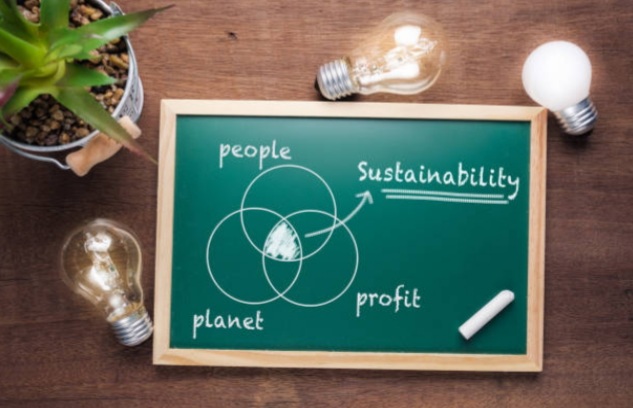
Sustainable Development Characterised by three P’s People, Planet and Profit. At the core of Idea of Sustainable is the matter of meeting people needs for the home,job etc,.If we dont take care of Environment in which we live now,we wont have anything to leave behind us for Future Generations.

” IS OUR EARTH SUSTAINABLE FOR FUTURE GENERATIONS?”.

It’s Okay To Be Sad

This one is for all the people out there who are energetic and quirky all the time. Who brightens up every room the moment they walk in. The ‘life of the party’ people!

Such kinds of people are generally thought of as happy-go-lucky. They make everyone laugh and keep them entertained. Now mind you, I am not saying that all of these people are sad and feel like they are responsible for entertaining the rest of us. But there are a bunch of people who feel like theyย have to make everyone laugh. Not all of them, but yes, there is definitely a section of homo-sapiens who think like that.

As a result, whenever anything sad and unfortunate happens to them, they suppress their emotions. They don’t give themselves a chance to process their lives’ events. They are with the thought process that if they become all sad, who is going to keep their friends and family entertained?

This one is also for those whoย think that they have to be strong for everyone else’s sake. Maybe the 18-year-old someone who has to work nonstop to feed the family. Someone who thinks that if they won’t take care of others, no one will. Someone who constantly feel the need to be happy. And there are many more. This one is for all of them.

It is extremelyย important for them to process emotions like everyone else. What I am trying to say is, it’s okay to be sad. It’s okay to cry, yell, and scream when you are feeling sad or betrayed. Basically expressing negative emotions (to some extent) is equally important for these people.


boss-fight-free-high-quality-stock-images-photos-photography-sad-man-1200x800


Now, we all have our ways of letting out this negative energy. Some of us, talk to their parents. Some of us call up a friend. Some of us listen to music. Some of us meditate. And some of us go in our shell to regain our energy. It is just as important how we express emotions as it is to deal with them. Because if we let it all inside of us, never giving these emotions a chance to let themselves out, then we are just burdening our minds with it. By showing emotions, we don’t become weak. By crying (it’s proven scientifically) we actually become a bit more emotionally strong.

Now, what I must stress on is that expressing your feelings and dealing with them are two separate things. Although they both are a part of the same process. Without expressing your emotions you can’t deal with them. If you can’t deal with them and still keep pretending that everything in your life is perfect, it will ultimately take a bad toll on your entire mental health. Suppressing is one of the defense mechanisms. Suppressing negative memories or emotions to pretend like everything is fine, is a way to defend your psyche from these same things you are suppressing. This defense mechanism is a very sketchy one. We should know when to let our emotions out and when to get them in control.

This process is difficult. Very difficult. It takes a lot of time, practice, and dedication to master this process. What aids us while we are working through the process is usually talking to someone you trust about your feelings and emotions. Talking about it is probably the most recommended way to deal with it. We have to learn how to talk. Even if you are the most introverted person in the world. Maybe start by writing your thoughts somewhere and then progress slowly towards talking to someone. It can be literally anyone. A friend, a parent, a sibling, or even an acquaintance. And if you still are unable to succeed at finding any of them trustworthy, talk to an expert. A psychologist. They are trained and put in all their life’s time into studying humans and their behavior. Plus they are bound to keep your story to themselves. So they can be your safe haven.

Someone wisely said, “Workingย through your problem is the only way to completely get rid of it.”

Factors Affecting Employee Retention

“Train people well enough so they can leave, Treat them well enough so they don’t want to.”

By Richard Branson

The above quote by Sir Richard Branson provide us so deep inspiration and knowledge that we generally don’t think. Earlier employees were regarded as machines or tools but now they are considered as an asset to the organisation. Really these employees are an asset to the organisation as employees are the major contributors to profit and worth of the organisation. The greatest investment we can make is in people. They are considered as the backbone of any organisation. Without employees no organisation can think of its success and even it’s not possible too. As said by Peter Drucker in 1999 – ” The most valuable assets of a 20th century company were its production equipment, The most valuable assets of a 21st century institution, whether business or non – business, will be its knowledge workers and their productivity.” These words by Peter Drucker can be clearly seen in the present scenario. But retaining these potential employees is also a big problem. So first we should know what is employee retention. In layman’s term employee retention means the ability of an organisation to retain its employees so that they don’t quit their jobs. It is very important for an organisation to retain its employees as an organisation has invested a lot of time, money and effort on these employees. And if they leave the organisation the company has to bear the losses and also has to recruit new employees and again they have to invest time, money and effort on these new employees to make them fit for the new job. So retaining the employee is a tough task for HR. There are many factors affecting employee retention they are –

  • Training- Employee Retention starts from day one itself. As from the starting day itself employees think whether he or she want to stay or leave. So training plays an important role in retention of employees. As training is a very essential part in any organisation as training is a learning process in which an employee get an opportunity to develop skills, knowledge and competency as per the job requirements. Through training an organisation invest in its employees in order to make them competent enough and help its employees to sustain in this dynamic environment. In the same way, through this training employees develop a greater sense of self – worth as now they became more valuable to the organisation and hence employees develop a sense of belongingness.
  • Compensation- Compensation is the most important factor. As this can only determine whether the employee will stay or leave. After we hire an employee, compensation and benefits is the only part which can help in retention and motivation. As, if the employee feels that he or she is receiving a good package from your organisation he or she will work hard or otherwise they will leave. So compensation and benefits have direct impact on retention.
  • Relationship between Manager and Employee- Employee- manager relationship is very crucial and important. As a poor relation between the two can lead to employee attrition. There are some employees for whom relations matter a lot than any other things like compensation and benefits, rewards and recognition. So, the relationship between the two should be nice.
  • Recognition and Rewards- Everybody in this world like to get rewards and recognised by someone. By employee recognition we mean highlighting the positive efforts and achievements in the workplace. This may include both personal traits and professional achievements. As through rewarding and recognising our employee we can foster a sense of engagement with the work. This will motivate them to work hard and stay in the organisation.
  • Work-life Balance- It is very important for an organisation to retain its top – performing employees. Not only salary, but work environment is also a factor which may distract your employees that whether they want to stay or leave. There are many types of work – life balance arrangements like Flextime, Job-sharing and Part-time work. An organisation should provide these facilities to retain them.

Last But not the Least

Retention and Turnover affects everyone in the organisation. It is not always possible that you can retain each and everyone. One or other will leave the organisation sooner or later. Handling employee retention is not an easy task. The only thing you can do is try to improvise your employee retention strategies from time to time according to your requirement and need. On this note, keep your team happy, healthy and safe.

The Beautiful Monsoon

Today, I woke up and it was raining heavily outside. Seeing the view outside made my heart filled with pleasure. I love the rainy season because itโ€™s the season of festivals!

Farmers also longed-for monsoon season with honest emotions, it gives them a purpose to rejoice numerous carnivals, cross fingers for high-quality harvests, and make รฉlite monsoon dishes. Monsoon in actuality shows us one of its finest natural outlooks, as streams are bursting, flooding and swinging, foothills are wide-awake in pursuit of greeneries and downpour ornamented the entire hills with a lustrous look, glorious ponds, plush natural foliage, and stunning floras.

The rainy season is one of the four main seasons of India. It ends every year after the summer season, especially in the month of July and ends in September. Clouds in the sky rain when the monsoon occurs. It gets very hot during the summer season and goes up in the sky as vapor from water resources like oceans, rivers, etc. Water is of the utmost importance in human life. That is why we should plant more and more trees for good rainfall so that our environment remains clean and green.

We all the more so get unexpected appetites for pakoras, samosa, and corn cobs. Certainly, it’s the finest nosh for all periods but flavors extremely satisfactory the minute it showers outdoor.ย Avoid eating leafy vegetables like spinach, cabbage, cabbage, during the rainy season. Instead, use cucumber, orange, mango, and tomato more in food. Eat plenty of dry fruits during the rainy season. They help in increasing the immunity of the body. Aloo paratha prepared for breakfast or dinner during the rainy season. The whole family will be happy. If you mix onions and potatoes in the stuffing, the taste will be even better.

FUNCTIONS OF CENTRAL BANK

Function 1 # Bank of Issue:

Central bank now-a-days has the monopoly of note-issue in every country. The currency notes printed and issued by the central bank are declared unlimited legal tender throughout the country.

Central bank has been given exclusive monopoly of note-issue in the interest of uniformity, better control, elasticity, supervision, and simplicity. It will also avoid the possibility of over-issue by individual banks.

The central banks, thus, regulate the currency of country and the total money-supply in the economy. The central bank has to keep gold, silver or other securities against the notes issued. The system of note-issue differs from country to country.

The main objects of the system of currency regulation in general are to see that:

(i) Peopleโ€™s confidence in the currency is maintained,

(ii) Its supply is adjusted to demand in the economy.

Thus, keeping in view the aims of uniformity, elasticity, safety and security, the system of note-issue has been varying from time to time.

Function 2 # Banker, Agent and Adviser to the Government:

Central bank, everywhere, performs the functions of banker, agent and adviser to the government.

As banker to the government, it makes and receives payments on behalf of the government. It advances short-term loans to the government to tide over difficulties.

It floats public loans and manages the public debts on behalf of the government. It keeps the banking accounts and balances of the government after making disbursements and remittances. As an adviser to the government it advises the government on all monetary and economic matters. The central bank also acts as an agent to the government where general exchange control is in force.

Function 3 # Custodian of Cash Reserves:

All commercial banks in a country keep a part of their cash balances as deposits with the central bank, may be on account of convention or legal compulsion. They draw during busy seasons and pay back during slack seasons. Part of these balances is used for clearing purposes. Other member banks look to it for guidance, help and direction in time of need.

It affects centralisation of cash reserves of the member banks. โ€œThe centralisation of cash reserves in the central bank is a source of great strength to the banking system of any country. Centralised cash reserves can at least serve as the basis of a large and more elastic credit structure than if the same amount were scattered amongst the individual banks.

It is obvious, when bank reserves are pooled in one institution which is, moreover, charged with the responsibility of safeguarding the national economic interest, such reserves can be employed to the fullest extent possible and in the most effective manner during periods of seasonal strain and in financial crises or general emergenciesโ€ฆthe centralisation of cash reserves is conducive to economy in their use and to increased elasticity and liquidity of the banking system and of the credit structure as a whole.โ€

Function 4 # Custodian of Foreign Balances:

Under the gold standard or when the country is on the gold standard, the management of that standard, with a view to securing stability of exchange rate, is left to the central bank.

After World War I, central banks have been keeping gold and foreign currencies as reserve note-issue and also to meet adverse balance of payment, if any, with other countries. It is the function of the central bank to maintain the exchange rate fixed by the government and manage exchange control and other restrictions imposed by the state. Thus, it becomes a custodian of nationโ€™s reserves of international currency or foreign balances.

Function 5 # Lender of Last Resort:

Central bank is the lender of last resort, for it can give cash to the member banks to strengthen their cash reserves position by rediscounting first class bills in case there is a crisis or panic which develops into โ€˜runโ€™ on banks or when there is a seasonal strain. Member banks can also take advances on approved short-term securities from the central bank to add to their cash resources at the shortest time.

This facility of turning their assets into cash at short notice is of great use to them and promotes in the banking and credit system economy, elasticity and liquidity.

Thus, the central bank by acting as the lender of the last resort assumes the responsibility of meeting all reasonable demands for accommodation by commercial banks in times of difficulties and strains.

De Kock expresses the opinion that the lending of last resort function of the central bank imparts greater liquidity and elasticity to the entire credit structure of the country. According to Hawtrey, the essential duty of the central bank as the lender of last resort is to make good a shortage of cash among the competitive banks.

Function 6 # Clearing House:

Central bank also acts as a clearing house for the settlement of accounts of commercial banks. A clearing house is an organisation where mutual claims of banks on one another are offset, and a settlement is made by the payment of the difference. Central bank being a bankersโ€™ bank keeps the cash balances of commercial banks and as such it becomes easier for the member banks to adjust or settle their claims against one another through the central bank.

Suppose there are two banks, they draw cheques on each other. Suppose bank A has due to it Rs. 3,000 from bank B and has to pay Rs. 4,000 to B. At the clearing house, mutual claims are offset and bank A pays the balance of Rs. 1,000 to B and the account is settled. Clearing house function of the central bank leads to a good deal of economy in the use of cash and much of labour and inconvenience are avoided.

Function 7 # Controller of Credit:

The control or adjustment of credit of commercial banks by the central bank is accepted as its most important function. Commercial banks create lot of credit which sometimes results in inflation.

The expansion or contraction of currency and credit may be said to be the most important causes of business fluctuations. The need for credit control is obvious. It mainly arises from the fact that money and credit play an important role in determining the level of incomes, output and employment.

According to Dr. De Kock, โ€œthe control and adjustment of credit is accepted by most economists and bankers as the main function of a central bank. It is the function which embraces the most important questions of central banking policy and the one through which practically all other functions are united and made to serve a common purpose.โ€

Thus, the control which the central bank exercises over commercial banks as regards their deposits, is called controller of credit.

Function 8 # Protection of Depositors Interests:

The central bank has to supervise the functioning of commercial banks so as to protect the interest of the depositors and ensure development of banking on sound lines.

The business of banking has, therefore, been recognized as a public service necessitating legislative safeguards to prevent bank failures.

Legislation is enacted to enable the central bank to inspect commercial banks in order to maintain a sound banking system, comprising strong individual units with adequate financial resources operating under proper management in conformity with the banking laws and regulations and public and national interests.

3 Things To Do When A Friend Opens Up About Their Mental Health Struggles

All of us want to be there for our friends when they need us. We want to help them and provide the support in the best way we know. Nonetheless, when a friend tells us about their current struggle with their mental health, it can be challenging to decide what to do or what to say. It is valid to be worried about not making the situation worse or upsetting them by saying the wrong thing at the wrong time. Here are 3 things that will help you support your friend in a way that’s healthy for the both of you.

Seamless pattern of a crowd of many different people profile heads. Vector background.

1. Listen to them

We are constantly hearing people talk which may lead us to think that listening is easy. However, the goal is to listen and not just hear, to be a good listener, you must be able to put all your thoughts and judgements to one side. Try not to interrupt them while they are taking or rush them into talking. Itโ€™s most ideal to have the conversation with them when you do not have something to do soon since this can add to the pressure which could make you want to rush the conversation and make them feel unheard or worse, abandoned. You should also try to stay calm, process the information as and when you receive it.

2. Ask them what they would like from you

Sometimes people just want to be seen, be heard, or just want to get something off their chest. Other times they simply want advice or maybe reassurance. Asking them what they would like from you will help you to support them in the better way and it will ensure they do not leave feeling unsatisfied or unheard. Try to be as honest, patient and kind as possible when responding to your them. In dealing with such situations, you can be most helpful by asking yourself these three questions: โ€˜What’s best for my friend?โ€™. ‘What would I want the most from my friend if I was in this situation?’ and โ€˜How would I want to be treated had I been in the same situation?โ€™

3. Check up on them

If you feel mentally stable enough and are able to, keep asking your friend how they are and how they feel, take the time out to candidly listen to what they have to say, keep repeating this cycle. Mental health problems don’t vanish after one conversation. These problems can also be incredibly isolating. Regualrly checking up on your friend is one step closer to making them feel a little less alone, visible and will also serve as a reminder that you care about them.

It is okay if you can’t always be there for the people you love and care about. We all have our own challenges and struggles. If you do not feel up to it, you should signpost them to others who they can talk to likeย some other close friend, a trusted family member or a mental health organisation that can professionally help.

‘Hallyu’

In the last decade, the attractiveness of South Korean everyday and pop culture has increased around the world. The popularity of this Korean cultural wave (hallyu) is largely the result of state cultural policy. Through globalization, new technologies and cooperation between the public and private sectors, mass culture has become an important driver of South Koreaโ€™s economic development. Hallyu also strengthens South Korean soft power, building a positive image of the state. The global popularity of hallyu will grow, and its elements will increasingly penetrate the pop culture of other countries.

Hallyu is a socio-cultural phenomenon associated with the growing popularity of South Korean culture, especially popular. It was initiated in the late 1990s in connection with the success of Korean television series (K-dramas) and movies in east and southeast Asia. At the beginning of the 21st century, popular music (K-pop) gained importance and remains to this day the largest vehicle of hallyu. Currently, the Korean wave also includes, among other things, online games, comics and animations, literature, cuisine, cosmetics and fashion.

In the last decade, hallyu has found audiences beyond Asia, becoming a global phenomenon. According to the estimates of the Korea Foundation, there are 1,799 Korean wave fan clubs (social media groups) in 94 countries, connecting approximately 99.32 million people (end of 2019). Most fans are in Asia and Oceania (71.81 million, 479 fan clubs), while in Europe there are the most fan clubs (624), connecting 15.5 million people. The Korean wave is becoming increasingly popular in the Americas (about 12.15 million people in 542 fan clubs). The fewest fan clubs and members (154 and 320,000, respectively) are in the Middle East and Africa. Recent successes on the U.S. market, including four Oscars for the movie โ€œParasiteโ€, and multiple chart-toppers by the K-pop band BTS, confirm the strength of hallyu. Its success is due to the cultural policy of the Republic of Korea, initiated in the 1990s, which uses globalization and technological development.

Hallyuโ€™s global popularity will grow due to the constant expansion of the offer, with new fields, mastery of the mechanisms of digital distribution and consumption of cultural content, greater orientation towards foreign recipients and the use of new technologies. Elements of hallyu will increasingly penetrate the pop culture of other countries, affecting their cultural industries (such as the film industry in the United States, following the success of โ€œParasiteโ€).

South Korea has become one of the global pop culture centers also thanks to the involvement of fans around the world. They increase the reach of hallyu through social media activity, and translations of TV series and lyrics of songs. They can also act as a lobbying group. This was shown by the example of one of the Polish TV stations, which, for its negative opinions about a K-pop singer, was flooded with a wave of critical comments in social media and forced to apologize. Hallyu will also have a greater impact in Poland, where, according to the Korea Foundation, there are around 115,000 fans. The growing popularity of hallyu in Poland may prompt South Korea to increase the export of cultural content and related consumer goods and services to the Polish market. The South Korean example may encourage deeper cooperation between the public and private sectors for the development of creative industries in Poland.

Life doesn’t come with a set of rules!

Life is a race just like Virus used to say. Wait . Hold on a second. Which Virus am I talking about? Well, its the Virus from the movie ‘3 IDIOTS’. I am sure everyone remembers that ‘Virus’ and yes ofcourse the another virus we all are dealing with today.

Well, life is not a race. We live in such a system where we have to follow certain patterns of life that we forget what actually living life is like.

Right from the beginning, we have been told what has to be done. Attend school, college, get graduated, get a job, get settled, get married, have kids, get them settled following the same pattern, then get old and then you just have to wait for the day of your death.

So all these things we do in our life just to die one day. The question here arises is ‘What is the point?’ In all these patterns or set of rules that every people has to follow, when was the time we actually lived and created memories? When was the time we did all the things we wanted to do to make ourselves happy? Did we completed all the bucket list of our lives? Can we die peacefully with no regrets in our lives?

Well, the answer is ‘No’. We can’t change these patterns but yes we can change our lives by the way we think about it. Life doesn’t come with a set of rules.

I don’t say its incorrect. But yes who made these rules? These patterns? That we have to abide by them.

There are people who don’t want to study but want to do something different which is okay. There are people who don’t want to get married and that is okay too. There are people who want to live a life where they can be happy. Everyone has their own idea of living which is completely okay.

It is okay to not doing things that everyone is doing. It is okay to have a completely different life goals. It is okay to not have a job right after graduating. It is okay to not get married right away after getting settled. It is okay to not have kids after getting married. It is okay, my friend!

You live your life once. You should always do what your heart says and there is no necessity of doing things in order to follow certain patterns.

Its your life. Live the way you want to live and nobody should tell you what you should be doing. You have the right to do it your way and create the life you want for yourself.

Remember- You are answerable to no one. As far it makes you happy, the things you are doing or the things you want to do.

Do it for yourself.

Lastly, Let’s not judge people. Let’s not laugh at others and motivate them to just not live their life but to live happily.

Indian pharma sector gets affected by China factor:Heparin becomes dearer

Background

The NPPA( National Pharmaceutical Pricing authority) in 2018 had capped the price for Heparin. But in this pandemic period, NPPA has allowed the hike in prices of Heparin by 50 percent till December 31. This was done to mitigate the shortage of the drug in the Indian market. The shortage of the heparin drug in the market is a result of the problems faced by the drug manufacturers who are unable to cope up with the drastic hike in prices of the the APIs( Active pharmaceutical ingredients) which is majorly imported.

What is Heparin and why is it important at present?

Heparin is a blood thinner used as an anticoagulant. It is used to prevent blood clots after surgery, during dialysis, during blood transfusions, when collecting blood samples, or when a person is unable to move for a long time.

In the current pandemic situation too, heparin has an important role to play.The Ministry of Health and Family Welfare included the drug in its clinical management guidelines for the treatment of Covid-19 patients in the ICU.

Why NPPA has allowed the manufacturers to hike up the prices of heparin?

This step was taken to mitigate the shortage of the drug in the indian market.The Indian manufacturers were unwilling to continue the production of the drug simply because they could not cope up with the rising prices of the most important raw material to manufacture the drug i.e. API( Active pharmaceutical ingredients. APIs are the active ingredients contained in a drug which gives the drug it’s theraptic use.

The Sodium API of heparin is mostly imported from China. But due to the global outbreak of Corona virus China has also not able to manufacture enough APIs( because the country was under lockdown) the prices of these APIs has increased manifold. And so has the cost of manufacturing the drug in India is increased. That’s why some of the drug manufacturing companies were demanding hike in the prices of the drug. Some of the Indian companies marketing heparin products in India are Gland Pharma, Biological E, Samarth Lifesciences, Abbott Healthcare, Troikaa Pharmaceuticals and Celon Labs .

What role does China play here?

Chinese pharma companies were under lockdown restrictions for about 2 months which has led to the shortage of APIs in the global market

India heavily relies on China for various APIs used to manufacture drugs in India especially antibiotics and vitamins. But since the past three months most of the world countries including China have suffered a huge setback when it comes to their economy.

China was under lockdown for about 2 months in which all the industries were shut down. During this period China had not been producing anything in their factories. Though after the lockdown was lifted, China has taken up the momentum. But it will take time to get things back to normal.

Since Chinese drug manufacturers were not producing the APIs in the lockdown period there has been a shortage of APIs in the global market. But the demand of APIs is ever- increasing. The reducing supply and increasing demand has led to hike in the price of the Chinese APIs which is the distress of indian drug manufacturers. But the recent permit by the NPA to hike up the prices of heparin gave them a sigh of relief.

Some people might think that the hike in prices of Chinese APIs is due to the indo- China tensions along the LAC. But this is not true indeed. Industry associations have said that this has nothing to with indo- China tenisons along the border. The lockdown in China leading to the shut down of Chinese industries is the prime cause behind the hike of prices.

Will prices of other drugs also hike in future?

Yes, it is possible. If the demand is growing and if the supply is not met, oher drugs also may get expensive. And consequently the cost of treatment of Covid-19 patients. But it is too soon to say which drugs’s prices will hike and how much.

Theory of Mind

The basic principles involved in mind theory are beliefs, desires, and intentions that are used to comprehend why somebody is acting in some way or to predict how somebody is acting. In general, Mind Theory requires identifying the knowledge, beliefs, emotions and intentions of another person and using that understanding to navigate social situations. A commonly used task of measuring theory of mind is a task of false-belief, like this:

10 Picture Books for Practicing Theory of Mind Skills

Demonstrate the child a Band-Aid box and ask the child what’s inside the box he / she thinks. He or she will probably answer, “Band-Aids.” Open the box and display him / her that within is a toy pig, while saying that thereโ€™s really a pig inside and close the box after this.

Now, as you’re bringing into view a toy figurine boy who’s been hidden up to now, the adults say “Scott’s never seen anything inside this Band-Aid box. Now Scott comes here. So, what does Scott think the box contains? Band-Aids or a pig? Children who have established Mind Theory will understand that because he did not see in the box, Scott holds a different understanding than they.

Children who have formed Mind Theory will understand that because he did not see in the box, Scott continues to hold a different understanding than them.

They’ll respond that Scott thinks Band-Aids is in the box. Those who have yet to develop Mind Theory may respond that Scott thinks pigs are in the box, mistakenly thinking that Scott holds the same belief as they do.

Kids are improving on Mind Theory tasks around the age of 4 and are able to fully understand that somebody can act on the basis of a false belief about an object or event. In my own work with pre-schoolers, anecdotally, 3-year-olds tend to understand that Scott didn’t see inside the box, but still react that Scott thinks a pig is in the box.

For children with developmental disabilities, such as those with autism spectrum disorders (ASD), it may take cognitive ability a little longer to develop, and some higher skills may not be attained at all. Youth (ages 5 to 13) with autism received lower scores on measures to understand the beliefs and emotions of others than those typically developed by young people, but there were no differences in understanding others’ intentions possibly since knowing intentions is a less nuanced ability that evolves faster than knowing feelings and beliefs. Mind Theory also predicted ASD diagnosis, so that those with the lowest level of these abilities had more serious diagnoses (i.e. autism with intellectual disability) than those with more advanced Mind Theory (Asperger’s syndrome) diagnoses. Mind theory evidently plays a role in the emergence of delays in development, with discrepancies between those with delays and normally developing adolescents persisting in middle and even adolescence.

By comprehending Mind Theory, we may not only be able to better diagnose those with complications, but also create more effective interventions to encourage and support cognitive development. It is believed that executive function is related to social social skills, so that those with higher levels of cognitive abilities also have greater social skills, with that relationship being partly related. The connection between perceived competence and executive function may be more nuanced and bidrectional, as indicated in some of the literature, but I think it is most important to establish how EF skills contribute to mental theory and social competence in this way. Understanding how the underlying EF(Executive Functioning) process affects one’s social development will help us build new approaches for children. These initiatives could focus on cognitive and EF components which could help develop social skills, making the intervention less anxious and more accessible.

Multicultural Education

Multicultural Education is known as an educational procedure / strategy which fuses the perspectives, writings, values, convictions, and viewpoints of people from distinct social foundations. The primary function of putting it into practice in classrooms is to allow educators to adjust or join exercises to highlight diversity and social pluralism. We will discuss various disadvantages and advantages of educational method. Multicultural education came into the limelight in the early 1970s, following the action plan for change in the education system by the civil rights struggle. The goal was and continues to be to assist, appreciate cultural diversity amongst teachers and students. Multicultural educated students are often best prepared to work in a variety of classroom or commercial establishments and have a strong social intelligence. ย ย 

How multiculturalism helps school education | Op-eds โ€“ Gulf News

Race, ethnic background, nationality, language, religion, class, sexual orientation, etc. are the critical elements involved in multicultural education. Students can be constantly reminded of history, cultures, and the importance of various groups by adapting it in schools and colleges. It also promotes the ideals of inclusion, democracy, diversity, critical thinking, and sense of unity, inquiry, outlook values and many more positive traits. This teaching strategy is seen as profitable in advancing educational achievements among students of foreigners (immigrants), and it is along these lines that it is given credit to be a contributor to the school reform movement.

Many genuinely think that Multigrade or cross-cultural education’s goals and objectives are to safeguard the culture of minority groups by encouraging young people to think broadly and get to know new thoughts and critical thinking. All this quite fundamentally helps students deduct, just as it urges them to have an increasingly open worldview. As a result, students are provided with the knowledge, beliefs, and skills required to engage in social improvements, resulting in equity for ethnic groups previously marginalized and excluded.

Just like every other Multicultural Education system, there are a few benefits and drawbacks to it. The pros and cons are as follows:

Disadvantages of Multicultural Education:

Since children from diverse ethnic, linguistic and social backgrounds study together from the same education system in a multicultural classroom, making it difficult for everyone to understand the subject. There’s a possibility teachers may be struggling to find out how well the students understand the content. As not all students come from the same backgrounds this causes a language barrier. People may be non-confrontational, submissive or otherwise indirect from other cultures.

Teachers in inclusive education must be equipped to manage conflicts and misunderstandings with different values , beliefs, cultures, assertions, patterns of behaviour, etc. that tend to arise among students from different cultures.

Advantages of Multicultural Education:

Multicultural Education exemplifies students to different culture and values, and creates good understanding and acceptance of people’s differences. It instils tolerance and personal acceptance. Since it encourages cultural relevance, anti-bias classroom, challenging students to reflect without jumping to stereotypes, shaping social skills and social action resulting in people engaged in civic engagement. The method encourages students to assimilate while maintaining intact their culture and values, making them feel inclusive. It can help children assimilate without compromising their cultural identity by being culturally conscious teachers, without biasing. It facilitates promoting a community of learning, which helps to preserve a sense of pride which trust in the learning.

Starting a small business

Starting a small business is the best way to gain freedom. Although this statement is disputable, it has sense.

Why do people decide to become entrepreneurs? They are longing for independence. Small business helps one manage his time in the way he wants. He can produce the goods and services he likes. Finally, he is able to try to be responsible and creative.

Small business is very important for the economy of every state. Small entrepreneurs contribute into the state budget a lot. It is possible to say that the complex of small and middle firms provides the country with the same profit as big business does. In simple words, a prosperous state cannot survive without small business. It is impossible to defeat poverty without small business. Thus, if you have any genuine and uncommon ideas concerning the production of useful goods and services, establish your own small firm.

Starting up is not easy

Starting a small business is not an easy thing. Whether youโ€™re doing something as simple as business paper writing as a business or as grand as running a construction company building skyscrapers, you should be psychologically and financially prepared to numerous challenges. Moreover, it is vital to know something about business, management and marketing.

To begin with, you should study the market in order to learn about the goods and services that are required by consumers. This factor is the crucial one. When you discover that people demand an item but no one has produced it yet, you have the best chances to conquer the chosen sector of the market. Secondly, you ought to think about the price and quality of your product.

There are two options. The foremost one is the production of high-quality and expensive goods that will serve long. The second option is related to consumerism. You produce poor-quality cheap goods and attract clients with the help of the lowest prices.

Sad to say but it is difficult to choose the best option. Many people are ready to pay a lot to possess a quality item. Others avoid paying a lot and prefer cheap products.

Create a business plan

Then, you should create your own business plan that will contain the entire information about the functioning of your firm. Think about the target groups of customers, production, logistics, storage and retail.

Apparently, you should produce and store your goods somewhere. Then, you will meet with such issues as revenue and expense. You will need to hire a few employees to run your business rewardingly. Without doubt, you will have to be selective, demanding and attentive in order to recruit the right people into your firm. Finally, you will meet the problem of rent, taxation, etc. A firm resembles a household. You should pay attention to the slightest problem, question and misunderstanding if you want to increase your income and develop your small firm into something bigger.

The ups and downs

As might be expected, starting a small business has many advantages and disadvantages. The most solid strong side is independence. You do not have to work for someone else. You work for your own profit. You possess the freedom of choice and actions. If you are not respected and appreciated at work, you can embody your original and amusing ideas in your own business.

Ambitious people always try to start a small business if they receive such an opportunity. You do not need to listen to the instructions and threats of your boss when you are late. At long last, you will earn more money. You are the boss and the entire profit is yours.

Nevertheless, there are many factors that cause problems to a novice entrepreneur. You should remember that independence is also responsibility. You are responsible for your firm, its prosperity and the wellbeing of your employees. Furthermore, you are responsible for the health and life of your customers who consume your products.

You are expected to know how to develop and improve your small company beneficially. You should know how to behave in case of crisis and unpredictable situations. You should be ready to wake up at night and spend the whole day at your firm in order to settle down all urgent problems and conflicts between employees. You should be a teacher, psychologist and negotiator who is able to resolve conflicts and motivate his staff practically.

Takeaway

Starting a small business is a challenging but beneficial idea. You are able to establish you own store, cafรฉ, restaurant or bakery and embody your offbeat and splendid ideas there. On the other hand, you should be ready to resist numerous challenges and work hard for the protection and development of your business.

Habits that Sharpen Your Brain.

You most likely spend at least a couple of hours each week training your body-doing cardio, weight training, or even just walking. You’re training your muscles to stay pliant and strong, your joints to stay fluid, and your body’s physical systems to run ideally. At the same time how much time do you spend training your brain? Brain training isn’t a fresh concept. It can help us remember information, recall facts more quickly, and hone our focus. Even a brief course of brain exercises can help older adults enhance reasoning skills and processing speed for ten years after the training ends, according to a recent federally sponsored research on cognitive training.

Here are seven simple daily habits you can work into your schedule to sharpen your intelligence:

1. Follow ideas through to various outcomes.

Entrepreneurs are often bedeviled with more ideas than time to deal with them in. Make it a habit to do idea exercises-come up with three potential outcomes for your next idea, even if there’s only one way you expect it to turn out. Visualize your idea in various ways. Make it a habit to take into account more alternatives.

2. Add 10-20 minutes of aerobic exercise to your day.

Aerobic activity axes your lifetime risk of Alzheimer’s in half and your risk of general dementia by sixty percent, according to John Medina, PhD, director of the Seattle Pacific University Brain Center for Applied Learning Research. Probably, you’re exercising already for the physical benefits, but if not, the fact it can keep you sharp and even enhance your creativity, should be great motivators!

3. Engage in stimulating conversation.

In reality-outside the computer or mobile phone screen. The art of tรชte-ร -tรชte requires that we think on our feet, and conversing with someone smarter than you can be a fantastic exercise in quick thinking as well as a chance to learn something new. Seek out interesting people and engage them in conversation, however concise.

4. Take online courses.

You can learn anything online-even on a mobile device. Commit to learning something new everyday, whether it’s during your transit to work, on your lunch break, or in the five spare minutes you have between meetings. Better yet, make it something super useful, like learning a new language.

5. Give your brain a break.

You can’t be “on” all the time. Make productivity apps a part of your daily schedule, to automate redundant tasks that take up your time and brain space.

6. Practice a hobby.

Make sure you’re doing something that you love, every day. If your brain is continuously bogged down in work, it has no time or space to explore creative, fun ideas and concepts. In fact, some recreational activites-like playing video games or practicing a musical instrument-can help sharpen your intelligence as well!

7. Look, Listen, Learn.

Try working an array of media types into your day. Read reports, listen to podcasts, watch video clips whenever you can, and use gamified apps or sites when possible. Switch it up so you’re using more of your senses to take in information, and staying more engrossed to retain more of it. If you’re finding yourself bored to death with reading or bogged down in audio files, take a break and try a new media type.

HOW DOES TRAVELLING AFFECT ONES PERSONALITY AND LIFE?

Mark Manson said:

โ€œTravel is a fantastic self-development tool, because it extricates you from the values of your culture and shows you that another society can live with entirely different values and still function and not hate themselves. This exposure to different cultural values and metrics then forces you to reexamine what seems obvious in your own life and to consider that perhaps it is not necessarily the best way to live.โ€

Different people travel for different reasons. A Saleman travels round the world for his professional necessity: to meet different dealers, distributors, individual to secure orders. A professional photographer travels to capture the nature in raw form clicking the natureโ€™s beauty, the rural emotions of simple life leading people or shooting the modern urban lifestyle. Theย  ย travel addicts travel as tourist to view the different places and people created minutely by the greatest creative artist of this Universe: The Almighty!
Often a person who frequently travels realize themselves in unfamiliar positions and dilemmas which creates their own problem appears like nothing.ย 
Learning is a continuous process. We learn from books, internet, school, but can also learn from experience. For a Balance Education, Travel is a vital part. Moreover, Adventure is acquired from Travel.

Culture is another aspect of life that has been affected by travelling. Today, different languages are taught in colleges and universities. Students who enroll to study these languages have the desire to travel to those countries which are dominated by the respective languages. As suggested by Andrews (2013), itโ€™s more interesting if you are able to communicate in their language when you are a visitor. Another cultural practice that has been affected with travelling is food and mode of dressing (Bremer Mathew, 2018). Moreover, when you travel to a certain country for reasons such as studying, you will definitely get used to the food of that country. For example, some foods are used due to certain environmental condition. Itโ€™s ironical to wear heavy clothes in Saharan desert. Similarly itโ€™s difficult to put on light clothes in some regions of the Northern Hemisphere during winter.

In conclusion, travelling can make those who xenophobic towards some people to change their perspective. As viewed by different psychologists, many people who have travelled the world tend to behave differently compared to their prior behavior. According to research, some characteristics can be acquired through environmental factors.

How to make a better morning?

A lovely good afternoon to everyone soo, here i am a first user and this is my first post that would be my first choice as a topic to start a day. As i was looking after these quarantine days people are getting lethargic and working online these days. So here some points that you should kept in your mind:

While getting up have some stretching. Also most important is be happy.

Get a warm class of water with honey so that it will give a cure to your stomach and you’ll feel fresh.

While you sitting and taking an online classes so just rotate your legs so that no fat is stored in your thighs. Also rotate your wrist by this you’ll be fit and also your work been done.

Girlsโ€™ education been neglected in slums

Women and girls in slums mostly donโ€™t get the privilege of education in India. Their families or communities donโ€™t support them in this cause. When the family does not have enough finance to provide education to all of their children, there the preference is given to boys. This way most of the women are not educated and they are not able to provide it to their daughters as well. So, in this vicious cycle education of most of the girls gets neglected. The situation is so deteriorating that many girls even lack basic literacy and numeric skills.

โ€œI want to study and become a teacher. But I donโ€™t know how to read these books, says Lakshmi, a 9 years old girl in slums while sitting with a pile of books of her brothers.

Lakshmi lives in a family of six members โ€“ father, mother, and her three brothers. Being the youngest as well as a girl she gets the disadvantage over education. Where all her brothers go to school, she isnโ€™t allowed.

While finance being one of the major issues, there are others too.

โ€œIn our community, girls get married at a very young age by 12-14, so what is the point of their education. Eventually, they will have to serve their in-laws. Even if we get pushy about continuing a girlโ€™s education after marriage, she will be stopped,โ€ says Shakuntala, Lakshmiโ€™s mother.

โ€œSee our Lakshmi, she is already 9. We have started searching for a suitable groom for her.โ€

Her father cited other concerns. โ€œ There is a fear of abuse, distance from school to home, known- availability of transports, and lack of toilets. Due to this reason, I donโ€™t send my daughter to school even if I want to. Safety is a big concern for me. Whoโ€™s going to take the responsibility if anything happens to her.โ€

Slum girls brought up with this mindset make them believe they are not worth enough compared to their brothers.

โ€œWe want our sister to gain an education. But our parents say she will get married and go to a different family whereas we have to go to school too, later on, get jobs and be a breadwinner for the family,โ€ says Kundan, Lakshmiโ€™s elder brother.

These situations make women vulnerable and dependant on men in life. Men start to think about them as mere objects leading to crimes like domestic violence, killings.

Without education, women have less knowledge and less power to negotiate.

All these things indicate that there is a bleak future for girl children in slums. Thus, to address this emerging issue, girls should be linked to formal/informal schooling in slums and ensured that at least they will attain the primary level of education that enables them to read and write.


Toxic Productivity

All of us at some point or the other have experienced exhaustion. We all at some point have set unrealistic and unachievable goals, and have been highly disappointed when they are not fulfilled. But the question to address is, Is that productivity actually productive ?

One of the most important thing to keep in mind while striving for productivity is not to over exhaust ourselves. It is worth remembering that we are human and not machines. Even machine wear and tear with time, and we are humans make up of flesh and blood, we are bound to experience exhaustion after a point.

Being productive 24ร—7 is not possible. Setting unrealistic goals will just disappoint you and nothing more. Toxic productivity does little for quality of work and life.

What is Toxic Productivity?

Toxic productivity is our unhealthy obsession with productivity. A toxic productive person thinks their work are never ending and never enough. It is the obsession with work where quantity matter more than quality.

Toxic productive person usually feel guilty for enjoying free time. They are mostly unsatisfied with their work. But more than focusing on constantly improving their work, they focus on the amount of work done.

Signs of toxic productivity

Toxic productivity is a serious issue. Below are some of the major signs of productivity turning toxic.

โ€ข Impacting personal life: Toxic productive person is so overloaded with work that it impacts your personal relationships. They usually are left with no time to maintain real human relationships. They therefore end up being lonely after a point of time.

โ€ข Unrealistic expectations: Toxic productive individuals end up having unrealistic expectations from their work. They set unattainable goals and become extremely disappointed when it is not achieved.

โ€ข Never satisfied: The individual experiencing toxic productivity are mostly restless and never satisfied with work. They want to achieve it all, but in no time. They think their work is never upto the mark and strive for unattainable perfection.

Deal with toxic productivity

Dealing with toxic productivity is very important for us, to be a satisfied and secured individuals. Some important key to deal with toxic productivity are as follows:

โ€ข Set realistic goals: The first step of being productive is setting goals. Not only long term goals, but focus on one day at a time. Productivity is a process. We donโ€™t have to keep working all 24 hours. Productivity is the goal, over exhausting isnโ€™t. Depending on your goal, set to do list for the day.

โ€ข Take breaks: Taking break is very important to increase your productivity. If we keep working without any breaks, then our brain becomes monotonous and we usually experience lack of ideas, thus our work quality ends up deteriorating.

โ€ข Meditate: Meditation calms your mind. It increases your focus. A calm and focus mind is much more productive.

โ€ข Connect with family and friends: If you have a good support network, your productivity will most definitely increase. Connecting to family and friends is very important to get out of the vicious cycle of toxic productivity. They help keeping you in proper sense and not lose your cool.

Pradhan Mantri Mudra Yojana

The Government of India launched a flagship scheme calledย Prime Minister Mudra Yojana (PMMY)ย on 8thย April 2015 to extend affordable loans to the non-corporate, non-farm micro and small enterprises to cater to their funding needs. One of the major aims ofย MUDRA loansย was to bring the target audience into the formal financial fold.

Micro Units Development & Refinance Agency Ltd. (MUDRA) is a new institution set up by Government of India to provide funding to the non-corporate, non-farm sector income generating activities of micro and small enterprises whose credit needs are below โ‚น10 Lakh.

Under the aegis of Pradhan Mantri MUDRA Yojana (PMMY), MUDRA has created three products i.e. ‘Shishu’, ‘Kishore’ and โ€˜Tarunโ€™ as per the stage of growth and funding needs of the beneficiary micro unit. These schemes cover loan amounts as below:

  1. Shishu: covering loans up to โ‚น50,000
  2. Kishore: covering loans above โ‚น50,000 and up to โ‚น5,00,000
  3. Tarun: covering loans above โ‚น5,00,000 and up to โ‚น10,00,000

All Non-Corporate Small Business Segment (NCSBS) comprising of proprietorship or partnership firms running as small manufacturing units, service sector units, shopkeepers, fruits/vegetable vendors, truck operators, food-service units, repair shops, machine operators, small industries, food processors and others in rural and urban areas, are eligible for assistance under Mudra.

Bank branches would facilitate loans under Mudra scheme as per customer requirements. Loans under this scheme are collateral free loans.

Eligibility for MUDRA Loan Application:

Enterprises and entities falling under the following categories comprise MUDRA loan eligibility.

  • All non-corporate non-farm enterprises.
  • Primarily engaged in income generation through manufacturing, trading and services.
  • Where the requirement of credit is for maximum Rs.10 lakhs or lower.
  • Engaged in allied agriculture services since 1st April 2016.

How to apply for MUDRA loan at a financial institution?

Individuals have to follow the steps mentioned below to apply for MUDRA loan:

  • Step 1.Keep the necessary documents ready
    Applicants need to have the necessary documents required to avail a MUDRA loan. These include identity proof (Aadhaar, Voter ID, PAN, Driving License, etc.), address proof (electricity bill, telephone bill, gas bill, water bill, etc.), proof of business (business registration certificate, etc.).
  • Step 2.Approach a financial institution
    Individuals can apply for a MUDRA loan with almost all leading financial institutions in India.
  • Step 3.Fill in the loan application form
    Applicants then have to fill the MUDRA loan application form and furnish their personal and business details. They also have to ascertain the amount they want to avail before knowing how to apply for MUDRA loan scheme.

Under the PMMY scheme, one can apply for 3 types of MUDRA loans:

  1. Sishu – Covers loans up to Rs.50,000 for starting a business or for businesses in its early stages.
  2. Kishor – Covers loans up to Rs.5 Lakh for already established businesses seeking additional funding.
  3. Tarun – Covers loans up to Rs. 10 Lakh for well-established businesses meeting certain eligibility.

Constructive feedback

Feedback is given as a response to any performance or work submitted which aims to improve the quality of output in future. Feedback basically involves evaluation, appreciation and coaching for improvement. The objective behind feedback is to highlight the positive and the negative aspects of the performance, encourage the workers to do a better work, while also providing a guide on how to reach the desired performance.

Feedback or constructive criticism can be very effective if given in the right way. it is supposed to provide suggestions to the person so that they can learn from their mistakes and identify the areas where they are lacking. The difficult par about giving feedback is making it not sound like down right criticism. some people may put out insults and pass it around as opinions which should be taken in a constructive manner. there is a way of presenting your opinion, specifically while dealing or giving negative feedback, otherwise it may put down the morale of the listener.

The feedback giver should make it a point to not make the conversation personal and stick to the performance of the person and not his/her personality. The listener should also try to not take the criticism personally and have trust on the feedback giver.

While giving feedback, the person should make sure to not use the “feedback sandwich”. It is basically providing criticism sandwiched between praises. It may appear to be an ideal technique but it does much more damage than good. This may soften up the criticism but in actual, it renders the criticism ineffective. The listener may also start believing that the praise isn’t true. Also, be clear about what needs to be improved. If you will give any vague suggestions, it won’t help anyone. Learn to be open to others’ perspective as well. it is best that the people concerned come together, discussion the problem and try to come up with a collaborative action plan.

Therefore, people should not hesitate to acknowledge their mistakes and should help each other with โ€œfeedbacksโ€ that would help them to grow. A positive feedback system would also help to develop a community that is not shy of its mistakes and takes every challenge in life as a step to move forward in life.

Silent Pandemonium!

No more silence about violence

Just a slap, but he can’t hit me” -This sentence not only reveals a dialogue of a film but also exposes the stark reality of different societies. Domestic violence is existing in almost every community in the world. The term can be classified on various grounds including some instances of violence against spouses, children or elders and transgenders. The various types of activities adopted by the attacker against the victim include physical abuse, emotional abuse, psychological abuse or deprivation, economic exploitation, abusive, taunting, etc. Domestic violence is not only a problem in developing or less developed countries, but it is also very prevalent in developed countries. Domestic violence is a reflection of our pseudo-civilized society.

Violence has no place in a civilized society. But the number of domestic violence cases reported each year underlines a worrying situation. In our country, people are being tortured behind closed doors. This shameful act of violence is also being done in rural areas, towns, cities and metros. Domestic violence across all social classes, gender, race and age groups is becoming a legacy from generation to generation. In this article, efforts will be made to find the causes of domestic violence, the impact on the society and children, and solutions to the problem.

What is domestic violence?

Domestic violence means any act that causes health, safety, life-threatening, economic loss and damage to a woman and child (child and girl under 18 years of age) and such damage that is unbearable and which causes grief and humiliation to the woman and child. All these are included in the scope of domestic violence.

Under the Domestic Violence Act, an aggrieved woman can prosecute any adult male, i.e can file a case against him.

Various forms of domestic violence in India

According to the Domestic Violence Act, 2005 in India, any women as a victim of domestic violence and children and girls below 18 years of age are protected. The various forms of domestic violence in India are as follows:

Domestic violence against women – giving physical pain to a woman – such as assault, pushing, stumbling, hitting something or physically hurting the woman in any other way, forcing the woman to look at pornography or pornographic images, Raping, abusing, humiliating, hurting a woman’s family and social reputation, humiliating a woman or girl, blaming her character, against her marriage will, threatening suicide, verbal abuse, etc. According to the United Nations Population Fund report, nearly two-thirds of married Indian women are victims of domestic violence and 70% of married women aged 15โ€“49 in India are beaten, raped, or forcibly sexually abused.

Domestic Violence Against Men – There is no question on the fact that domestic violence against women is a serious and major problem, but domestic violence against men is also increasing gradually in India. The supremacy of men in society gives confidence that they are not vulnerable to domestic violence. Recently hundreds of men gathered in Chandigarh and Shimla, who sought protection and safety from domestic violence against their wives and other family members.

Domestic Violence Against Children – In our society, children and adolescents also face domestic violence. In fact, this form of violence is the second in the number of reported cases after violence against women. There is a lot of variation in the case of urban and rural areas and in the upper class and lower class families in India. It is treated as more personal in urban areas and is hidden within the fences.

Domestic Violence Against Elderly – This form of domestic violence refers to the violence against the elderly in the house committed by their children with other family members. This category of domestic violence is becoming highly sensitive in India. This includes beating up elders, asking them to do excessive household chores, not giving food etc. and keeping them separate from the rest of the family members.

Reasons for domestic violence

The main reason for domestic violence towards women is the senseless mindset that women are physically and emotionally weaker than men.

Including dissatisfaction with the received dowry, arguing with partner, refusing to make an intimate relationship, neglecting children, going out of the house at odd times without telling partner resulting in the barrage, oddities in the regular behaviour.

Indulging in extramarital affairs, not caring for in-laws, in some cases, sterility in women also lead to attacks on them by family members.

Reasons for domestic violence towards men include not following wives’ instructions, ‘insufficient men’s earnings, extramarital affairs, not helping in domestic activities’, not taking proper care of children, abusing husband and family, Sterility etc. of men.

Reasons for domestic violence with children may include disregarding parental advice and orders, poor performance in education or not being on par with other neighbourhood children, arguing with parents and other family members, etc.

The reasons for domestic violence with children in rural areas can include child labour, physical abuse or harassment for not following family traditions, forcing them to stay at home and not allowing them to go to school, etc.

In order to get money in poor families, there have been reports of parents selling body parts of retarded children. This incident shows the high level of cruelty and violence against children.

The main reasons for domestic violence against older people are the children hesitating to bear the expenses of the old parents. They torment their parents emotionally and beat them to get rid of them.

On various occasions, they are beaten up for acting against the wishes of family members. One of the most common reasons is the torture given to grab property.

Effects of domestic violence

If a person has faced domestic violence in his life, it is very difficult for him to come out of this fear. Negativity, gloom and apathy dominate the intuition of a person after he is perpetually a victim of domestic violence. It takes years for that person to return to the mainstream of a stable lifestyle.

The worst aspect of domestic violence is that the person suffering from it does not come back from the trauma. It is often seen in such cases that people either lose their mental balance or fall prey to depression.

This is the most dangerous and tragic situation of domestic violence that when the people whom we trust so much and live with -when they give us this kind of grief, the person loses faith in relationships and starts living solitarily. Many times people even commit suicide in this condition.

The most widespread effect of domestic violence is on children. CT scans show that children who have spent their lives in domestic violence shrink the corpus callosum and hippocampus part of their brain, affecting their learning, cognitive ability, and power of emotional regulation.

Children learn vicious and aggressive behaviour from their father. The effect of this can be seen in the violent acts of children towards other unstable and weak children and animals at times.

Girls learn cynical behaviour and often become submissive, silent or tend to run away from situations.

The quality of life of each person is adversely affected because the women who have been victims of violence take less part in various activities of social life.

Solution measures

According to the researchers, it is important to note that not all victims of domestic violence are aggressive. We can help them to get out of the mental turmoil of domestic violence by providing them with a better atmosphere.

India is still lagging behind in surveying, peering, understanding and trying to change the mindset of assailants. We are still largely ignoring the view propagated by experts that- “in order to end violence and discrimination against women and children in the true sense, we need to consider men not only as a reason for the problem but they’re also to be seen as an integral part of the solution to this.”

As a first step towards reform, it will be fundamental that men should be put in as a part of the scenario instead of putting it like “men against women”. It will be mandatory to promote the spirit of masculinity in a healthy way and get rid of old worn-out mould.

The Government has passed the Domestic Violence Act, 2005 from Parliament to protect women and children from domestic violence. To get the full benefit of all the provisions comprised in this law, it is important to understand who is the victim. If you are a woman and someone among relatives misbehaves with you, then you are suffering under this act.

India has become serious towards mental health by the Mental Health Act, 2017, but it needs to be made more effective. Policymakers need to develop mechanisms to provide benefits of professional mental health services to families recovering from domestic violence.

The government has launched schemes such as ‘One-Stop Centers’, which aim to facilitate and ensure their access to an integrated range of medical, legal and psychological services to help women who are victims of violence.

Vogue India launched a ‘Boys Don’t Cry’ campaign to spread awareness about violence against women, while the global human rights organization ‘Breakthrough’ launched a campaign against domestic violence. Both these campaigns were spectacular efforts made at the private level to deal with domestic violence against women.

The conclusion

If we really want to create an “India free from violence against women”, then the time has come that we, as a nation, should discuss this subject collectively. A good way could be to start a nationwide, sustained and prosperous social campaign.

Corona Virus

Coronavirus is a group of viruses that is zoonotic in

Nature, coronaviruses are transmitted between animals and peoples.In humans, the virus is known to cause respiratory infections that are typically mind. But

May become lethal as is happening in Wuhan.

Coronavirus disease (COVID19) is an infectious disease caused by a newly discovered coronavirus.

In December 2019,a novel coronavirus called SARS-COV-2 has resulted in the outbreak of a respiratory illness known as Covid 19

Coronaviruses (COV) are a large family of viruses that

Cause illness ranging from the common cold to more severe disease such.as middle eat Respiratory  Syndrome (MERS-COV) and severe acute respiratory syndrome.(SARS-COV)a novel corona virus (Ncov) is a new strain that has not been previously identified in humans.

The new corona virus is part of a family of viruses that affect the respiratory system

It is common in animals , but a few affect humans.

The current virus originated from WUHAN PROVINCE in CHINA

COVID-19 SYMPTOMS

  • FEVER
  • COUGH
  • SHORTNESS OF BREATH
  • PERSISTENT PAIN OR CHEST PRESSURE
  • BLUISH LIPS OR FACE

PRECAUTIONS TO PREVENT nCOV

  • Avoid touching your eyes ,nose ,and mouth with unwashed hands.
  • Avoid close contact with people who have possible symptoms
  • Cover your cough or sneeze with a tissue,then throw the tissue in the trash.
  • Clean and disinfect frequently touched objects and surfaces.
  • Avoid animals (alive or dead) animal markets,and products that come from animals (such as uncooked meet)

             TREATMENT

There is no specific antiviral treatment recommended for 2019-COV infection. People infected with 2019-COV

Should receive supportive care to help relieve symptoms.

People who think they may have been exposed to 2019-cov should contact your healthcare provider immediately.

Coronavirus as a group of viruses that is zoonotic in

Nature, coronaviruses are transmitted between animals and peoples.In humans, the virus is known to cause respiratory infections that are typically mind. But

May become lethal as is happening in wuhan.

Coronavirus disease (COVID19) is an infectious disease caused by a newly discovered coronavirus.

In December 2019,a novel coronavirus called SARS-COV-2 has resulted in the outbreak of a respiratory illness known as Covid 19

Coronaviruses (COV) are a large family of viruses that

Cause illness ranging from the common cold to more severe disease such.as middle eat Respiratory  Syndrome (MERS-COV) and severe acute respiratory syndrome.(SARS-COV)a novel corona virus (Ncov) is a new strain that has not been previously identified in humans.

The new corona virus is part of a family of viruses that affect the respiratory system

It is common in animals , but a few affect humans.

The current virus originated from WUHAN PROVINCE in CHINA

COVID-19 SYMPTOMS

  • FEVER
  • COUGH
  • SHORTNESS OF BREATH
  • PERSISTENT PAIN OR CHEST PRESSURE
  • BLUISH LIPS OR FACE

PRECAUTIONS TO PREVENT nCOV

  • Avoid touching your eyes ,nose ,and mouth with unwashed hands.
  • Avoid close contact with people who have possible symptoms
  • Cover your cough or sneeze with a tissue,then throw the tissue in the trash.
  • Clean and disinfect frequently touched objects and surfaces.
  • Avoid animals (alive or dead) animal markets,and products that come from animals (such as uncooked meet)

             TREATMENT

There is no specific antiviral treatment recommended for 2019-COV infection. People infected with 2019-COV

Should receive supportive care to help relieve symptoms.

People who think they may have been exposed to 2019-cov should contact your healthcare provider immediately.

Fighting Family Burnout During The Covid 19 Crisis

Burnout is a state of emotional, physical and mental exhaustion caused by excessive and prolonged stress. It occurs when a person feels overwhelmed, emotionally drained and unable to meet constant demands. After months of staying at home amid the Covid 19 Pandemic, family burnout is becoming an additional challenged in some households. Families across the nation are experiencing symptoms of family burnout these days. Now that schools are out for the summer and millions are currently unemployed, Partners, Parents and Children who are together 24/7 may soon feel even more desperate for a few moments alone and a return to their pre-Covid19 routines. But the current rise in cases and the delay of reopening plans in several states may signal that families will need to remain together at home even longer than they realized. However, households that are feeling togetherness fatigue can take steps to alleviate family burnout and ease the strain on their relationships.


The additional toll faced by single parents

For single parents still working, now depleted of their normal childcare assistance, the pandemic may mean more to do and fewer opportunities for self-care than ever before. โ€œIn a two-parent household, division of tasks allows each parent to have some relief, but single-parent households typically take on all of these tasks themselves, which can absolutely lead to burnout quicker.โ€ For single parents in a pandemic, thereโ€™s no partner to help, share responsibilities and there are few, if any, opportunities to get away and breathe by oneself. The result can easily lead to family burnout.


Family burnout can affect romantic relationships too
Months together in quarantine can also be a strain on romantic relationships. โ€œWhen one person in a relationship is experiencing burnout, the other can typically pick up the slack, but when both are, it can be a struggle to connect and feel your best.โ€ The impact on marriages and romantic relationships is considered part of the collateral damage of COVID-19. In times of high stress, it may not always be the best thing to be locked at home together, incapable of getting the space and clear head thatโ€™s often needed to work through marital discord.


Itโ€™s not just parents and adults โ€” kids can experience family burnout as well
โ€œBurnout in children often presents as anxiety, being irritable, poor academic performance, or staying isolated from peers and not expressing interest in playing.โ€ A recent survey in Italy found that children are experiencing psychological impacts as a result of lockdown. Theyโ€™re more irritable, having trouble sleeping, and many are regressing developmentally. โ€œCompared to younger children, teenagers may be more likely to experience burnout due to higher academic workload, greater need for peer interaction, and more frequent conflicts with parents.โ€


How to reduce the impact of burnout in your household?
But just because so many are experiencing burnout doesnโ€™t mean it canโ€™t be helped. Burnout can be prevented by having a better balance between family time versus me time. When dealing with kids who may be acting out as a result of lockdown stress, parents should try using encouragement and positive reinforcement over punishment techniques. โ€œHaving a routine for sleep, meals, and study time can help children feel prepared for the next activity and avoid some conflicts.โ€

Self-reflection

I have always heard people telling me to self-reflect whenever I make a mistake. It always made me wonder how self-reflection can help me be better. It was later when I actually applied this in my life, I realized that I could not only identify my flaws but also manage my personal growth. If we ever delve deeper in self-reflection, we will realize its significance. It is very difficult to be one’s own critique. Sometimes, we tend to be too hard on ourselves while sometimes, we may find it hard to pick out our own flaws. Being objective about oneself is difficult since everyone tends to be a little bit bias but it can be developed like any other skill.

Personal reflection encourages us to do better in our lives. Its benefits can be reaped earlier if self-reflection is inculcated at an early age. For example: In school going students, self-reflection can be encouraged by making them keep a record of their improvement, helping them set their own goals and guiding them to work towards them. Writing diary entries can also be a good means to record one’s thoughts. The benefit of this will be that the children from a very young age will develop critical thinking and navigate through their own journey. They will be able to point their own lacking areas and work on them to grow.

This develops a deeper understanding of the world and people tend to generally become more self-aware and socially-aware. Reflection gives an opportunity to process the inside of one’s brain as well as outside. Practicing self-reflection takes self-discipline and a willingness to learn. When you will self-reflect, you will be able to recognize many of your weaknesses, not everyone can be easily accepting of them since all of us have some level of insecurities, so it is needed to throw that fear way and let yourself learn more about yourself.

Many people may think that it is useless and stick to doing what they have always been doing but living a life without self-reflection remains futile. Having a reflective thinking is essential to get through one’s difficult life situations. Emotions can cloud your judgments which may sway you away from looking at things from a different perspective. Self-reflection allows you to take a step-back and analyze the situation from a broader point of view and then create an appropriate response to it.

Meditation can help a lot in your journey of self-reflection. Creating a space for yourself so that you have time to self-reflect is the first step. It is basically an ability to live a well-balanced life.

Education vs knowledge

THINK ABUT IT ONCE ๐Ÿค”

Difference between Knowledge and Truth | Knowledge vs Truth

Education is very important for everyone not just it call for the well educated well it become intellectual, skills, learning, abilities etc and well as it’s quite common for get degree these days to get a job. In this whole word we not understand the meaning of education, So think about it not for only in race but also enjoy it as well. and get knowledge. The education is not have any limitation to gain the bookish knowledge but also understand the rules and regulations as well know about behavior on our society. Knowledge as a process of performance based which is human brain assemble the information collected by person , actually data obtain through various sources as the education. Their are two aspects of their knowledge in which is the practical and theoretical.

The Constant Need Of Becoming Perfect

We all have our version of what a perfect person is. Psychologists often call it the ‘Ideal Self’. Sometimes this ideal self is someone who is the best at math. Sometimes it is someone who is their parents’ favorite child. Sometimes it is someone who knows everything about everything.

lonely-man-in-hat-admiring-picturesque-view-4555669

The point is that we all have a ‘perfect’ someone in our mind and we spend most of our life trying to stand up to those standards. Unfortunately, the most of us don’t succeed.

The thing is that from the very beginning of our life, we are influenced by our surroundings. Our family teaches us basic activities like walking, running and talking. As we grow, they teach us manners and social norms one must follow for the society to us as a part of it. Our school imparts basic education by teaching us how to read and write. Apart from that, educational institutes teach us how to form opinions and ideas about anything and everything. Even our peers and friends influence our lives in several ways. As a result, we continuously form ideas in our minds. We constantly contribute to the level of standards we ‘must’ follow. Even after doing a crazy amount of hard work we are unable to become that person. It is because we set unrealistic goals for ourselves and focus on all those things that we aren’t. We want to become someone else. Someone who is ‘perfect’ according to our ideals. So, where are we going wrong?

Why is it that the percentage of successful people is less? It is because they embrace their uniqueness. They accept themselves as they are. They know their strong points and put the same level of hard work into that and become successful in that area. They improve themselves not because the society expects them to. But because they want to. They don’t want to become perfect! They just want to become the best version of themselves. Wouldn’t it be wonderful if we all do the same thing? Yes, we won’t become perfect. But we will be happy and contempt with ourselves. It can take, weeks, months, even years! But when we do get there, it will be a thousand times better than that ‘perfect’!

Wanting to be someone else is a waste of the person you are.”

– Marilyn Monroe

6 yards of history

History of sari-like drapery is traced back to the Indus Valley Civilisation which flourished during 2800โ€“1800 BCE around the northwestern part of the Indian subcontinent. Cotton was first cultivated and woven in Indian subcontinent around 5th millennium BCE. Dyes used during this period are still in use, particularly indigo, lac, red madder and tumeric. Silk was woven around 2450 BCE and 2000 BCE.

The word ‘sari’ evolved from ‘saatikaa’ (sanskrit: เคถเคพเคŸเคฟเค•เคพ) mentioned in earliest Hindu literature as women’s attire. The Sari or Sattika evolved from a three-piece ensemble comprising the Antriya, the lower garment; the Uttariya; a veil worn over the shoulder or the head; and the Stanapatta, a chestband. This ensemble is mentioned in Sanskrit lterature and Buddhist Pali literature during the 6th century BCE. This complete three-piece dress was known as Poshak, generic term for costume. Ancient Antriya closely resembled dothi wrap in the “fishtail” version which was passed through legs, covered the legs loosely and then flowed into a long, decorative pleats at front of the legs. It further evolved into Bhairnivasani skirt, today known as ghagri and lehenga. Uttariya was a shawl-like veil worn over the shoulder or head, it evolved into what is known today known as dupatta and ghoonghat. Likewise, Stanapatta evolved into choli by 1st century CE.

The ancient Sanskrit work, Kadambari by Banabhatta and ancient Tamil poetry, such as the Silapadhikaram describes women in drapes or sari. In ancient India, although women wore saris that bared the midriff, the Dharmashastra writers stated that women should be dressed such that the navel would never become visible. By which for some time the navel exposure became a taboo and the navel was concealed. In ancient Indian tradition and the Natya Shastra (an ancient Indian treatise describing ancient dance and costumes), the navel of the Supreme Being is considered to be the source of life and creativity, hence the midriff is to be left bare by the sari.

It is generally accepted that wrapped sari-like garments for lower body and sometimes shawls or scarf like garment called ‘uttariya’ for upper body, have been worn by Indian women for a long time, and that they have been worn in their current form for hundreds of years. In ancient couture the lower garment was called ‘nivi’ or ‘nivi bandha’, while the upper body was mostly left bare. The works of Kalidasa mentions ‘Kurpasika’ a form of tight fitting breast band that simply covered the breasts. It was also sometimes referred to as ‘Uttarasanga’ or ‘Stanapatta’.

Poetic references from works like Silapadhikaram indicate that during the Sangam period in ancient Tamil Nadu in southern India, a single piece of clothing served as both lower garment and head covering, leaving the midriff completely uncovered. Similar styles of the sari are recorded paintings by Raja Ravi Verma in Kerala. Numerous sources say that everyday costume in ancient India and till recent times in Kerala consisted of a pleated dhoti or  wrap, combined with a breast band called ‘Kurpasika’ or ‘Stanapatta’ and occasionally a wrap called ‘Uttariya’ that could at times be used to cover the upper body or head. The two-piece Kerala mundum neryathum (mundu, a dhoti or sarong, neryath, a shawl, in Malayalam) is a survival of ancient clothing styles. The one-piece sari in Kerala is derived from neighboring Tamil Nadu or Deccan during medieval period based on its appearance on various temple murals in medieval Kerala.

Early Sanskrit literature has a wide vocabulary of terms for the veiling used by women, such as Avagunthana (oguntheti/oguแน‡thikฤ), meaning cloak-veil, Uttariya meaning shoulder-veil, Mukha-pata meaning face-veil and Sirovas-tra meaning head-veil. In the Pratimฤnฤtaka, a play by Bhฤsa describes in context of Avagunthana veil that “ladies may be seen without any blame (for the parties concerned) in a religious session, in marriage festivities, during a calamity and in a forest”. The same sentiment is more generically expressed in later Sanskrit lliterature. Sudraka the author of Mrichhakatika set in fifth century BCE says that the Avagaunthaha was not used by women everyday and at every time. He says that a married lady was expected to put on a veil while moving in the public.This may indicate that it was not necessary for unmarried females to put on a veil. This form of veiling by married women is still prevalent in Hindi-speaking areas, and is known as ghoongat where the loose end of a sari is pulled over the head to act as a facial veil.

Based on sculptures and paintings, tight bodices or cholis are believed have evolved between 2nd century BCE to 6th century CE in various regional styles. Early cholis were front covering tied at the back; this style was more common in parts of ancient northern India. This ancient form of bodice or choli are still common in the state of Rajasthan today. Varies styles of decorative traditional embroidery like gota patti, mochi, pakko, kharak, suf, kathi, phulkari and gamthi are done on cholis. In Southern parts of India, choli is known as ravikie which is tied at the front instead of back, kasuti is traditional form of embroidery used for cholis in this region. In Nepal, choli is known as cholo or chaubandi cholo and is traditionally tied at the front.

Red is most favored colour for weddingsaris and are traditional garment choice for brides in Indian culture. Women traditionally wore various types of regional handloomsaris made of silk, cotton, ikkat, block-print, embroidery and tie-dye textiles. Most sought after brocade silk saris are Banasari, Kanchipuram, Gadwal, Paithani, Mysore, Uppada, Bagalpuri, Balchuri, Maheshwari, Chanderi, Mekhela, Ghicha, Narayan pet and Eri etc. are traditionally worn for festive and formal occasions. Silk Ikat and cotton saris known as Patola, Pochampally, Bomkai, Khandua, Sambalpuri, Gadwal, Berhampuri, Bargarh, Jamdani, Tant, Mangalagiri, Guntur, Narayan pet, Chanderi, Maheshwari, Nuapatn, Tussar, Ilkal, Kotpad and Manipuri were worn for both festive and everyday attire. Tie-dyed and block-print saris known as Bandhani, Leheria/Leheriya, Bagru, Ajrakh, Sungudi, Kota Dabu/Dabu print, Bagh and Kalamkari were traditionally worn during monsoon season. GotaPattis popular form of traditional embroidery used on saris for formal occasions, various other types of traditional folk embroidery such mochi, pakko, kharak, suf, kathi, phulkari and gamthi are also commonly used for both informal and formal occasion.Today, modern fabrics like polyester, georgette and charmeuse are also commonly used.

Deteorating Mental Health due to the pandemic-induced lockdown

The outbreak of Covid-19 pandemic worldwide has affected every aspect of people’s life be it health(for those who are infected by the Corona virus) and employment and education for those who are under the lockdown restrictions. But apart from these, one that is least talked about is the detereoration of mental health of some people.

With social distancing being the new norm governing the people, those who are extrovert and loved to socialise with the people are forced to live in their houses away from their freinds and family members. When these people find no one to talk they are driven under depression and anxiety.

The prime reason as of why people are facing depression and anxiety in the pandemic outbreak is due to the financial crisis they are going through. For the elites, lockdown has provided them with leisure time to pursue a new hobby , spend time with family, cooking delicacies .But on the contrary, for the poor and middle class which contributes more than 50 percent of the Indian population, the pandemic led lockdown is a period of distress and hopelessness. These people face lack of resources to survive in this period which has rendered them unemployed.

The lockdown has excerbated the mental state of people who were already in depression in the pre- Corona time.Lockdown has provided them enough time at their disposal to think more and worry more .It is probable that these people see their future bleak in the post Covid world maybe because they are not able to perform well in their career. This is predominantly the problem of students and youth.

HOW TO TACKLE DEPRESSION AND ANXIETY IN THIS PERIOD?

Minimise time spent online if you are suffering from depression. Everyday updates about the rising number of corona cases and the distress of red zones will make you hopeless thinking the condition will never improve. If you are away from your family and loved ones, do not use social media very frequently. This too has a reason. The posts by your friends and family members enjoying the lockdown period will aggravate your anxiety and you will feel as if left out. Instead, it is advisable to pursue your hobby, take up an online course which interests you, talk to your family and friends over phone or video calls etc. Do anything which makes you feel happy. This will surely help.

Students on the other hand should not see a bleak future for themselves rather they should hone their skills which will ultimately help them in their career. They should talk to their parents. Noone can understand a child better than his parents.

One of the most effective ways to tackle this is to call a therapist and ask for help. There is nothing wrong in that. Everyone has to go through ups and downs and the person you are talking to is trained to provide help in these circumstances. Talking to a therapist can be of great help if you are suffering from depression, anxiety or in the worst case having suicidal thoughts too.

Final word

Anxiety and depression are seen as a taboo in Indian society. Noone likes to talk about it. But everyone has gone through this in some or other time in their life. We need to understand that depression is just an illness- a mental illness! People do get ill and they get well too. There are tonnes of examples of people who were in depression at some stage of their life and came out of it and have done wonders. That is possible provided that the person gets utmost care and support. In certain cases, of course medical help is needed.

Consumer Buying behavior

Shopping is an action through which a purchaser looks through the accessible goods or services offered by one or more stores with the intention to buying a desirable, eye-catching and satisfactory product. It is the procedure of procuring objects in exchange for currency. Now days there are dual channels offered for shopping. These channels are online and offline. Online shopping has evolved and turned out to be the most widespread ways to buy products. It is an act of buying products or services over the various companiesโ€™ websites. An offline shopping is an old-style way of purchasing goods and services. The buyers decide which medium they would love to follow for shopping.ย  We live in an era of technology; therefore, buyers want to take the benefit of online shopping but still there are many who donโ€™t show trust over online sites and they prefer offline shopping in comparison to online.

Online shopping has grown into a way of life for maximum of the Indians especially women. Main motives of growing liking for online shopping are the penetration of internet, growing number of online retailers, comfort level, suppleness in delivery and rise in purchasing power plus many more. Bestowing to many researches or reports online transaction of females has doubled over in past few years. This study is an effort to analyze the buying pattern of women in online vs offline platform in respect to beauty products. The study delivers in-depth analysis of numerous aspects impacting the purchase decision

Who is a consumer? A consumer is permanently termed as an end-user individual, who consumes any product matching to their choice and utilize any services based on their liking. They are identified as an end-user for the reason that he or she is the last stop and does not normally trade the items which they have bought to others. For example, a kid buying video games and using it for playing. On the other hand, a customer/consumer is not obligatory to be the purchaser, for example, in a household when a mother go to the mall and bring cornflakes for herself and her family, all members of the family is consuming the cornflakes brought by herโ€. Any individual, who purchases a product or any services, might not be inevitably a user or a consumer.

The question of buyerโ€™s buying behavior is converged on person and the elements or dynamics that influence their choices to expend their capitals on consuming products. The notions and philosophies of purchaserโ€™s behavior are strained upon various branch of learning such as psychology, sociology concepts, anthropology, and economic principles too. Talking about Phillip Kotler, he mentioned in his studies that consumer shopping behavior is the learning of, in what manner people and administrations or organizations decide, purchase, consume and dispose goods and services or beliefs and experiences to mollify their desire and requirements.

Consumer buying behavior is the total sum of a customer’s outlooks, liking, purposes and choices concerning the consumerโ€™s behavior in the trading floor when they are buying a product or service.  Consumer shopping behavior is a manner by which buyers hunt, prefer or pay or utilize and dispose of goods and services to quench their requirements and needs. Many economists worldwide also observed shopping as an action that makes consumers utilize most of their utility function hidden inside them. It is overwhelmingly entrenched in psychological theories along with the traces of sociology attached to make things more appealing.

Coming to the question attached with Women, retail is the region for women and shopping is an act habitually seen as corresponding to female protagonist. Female go on shopping to buy both necessary and discretionary products, most of them prefer shopping as a stress reliever and they also think it is a best place to socialize. Many researchers believed female to be the most prospective consumers in the world as they deal with more or less 80 percent of the domestic overheads. It is also noted that the concept of traditional womanโ€™s role has endured changes in arrears to the transformation in shopping fore-showed by the growth and expansion of the department store. Women are portrayed as proficient shoppers and the occurrence of their customary roles are meticulously com-modified or redefined in requisites of commodities. Women behave contrarily from men because of biological, neurological, and behavioral dissimilarities between the two. These disparities in turn make an impression on their buying behavior. On the other side, men make themselves aware with abundant knowledge of a product or service through internet, advertising, journals etc. Female endeavor to get advantage from othersโ€™ expertise by asking people around them. Women are more link with their hunches and emotional state and have the propensity to live better bonded with their family, groups, networks and even brands. Female set their judgements and precedence not only corresponding to their desires but also bestowing to persons in her personal circumnavigate. Henceforward, it is influential to position a product, brand or a departmental store in a way by keeping few things in mind- how they will help her and other people present in her life. Practically in every single society, women have crucial care-giving household responsibilities for both teenagers and the ageing people and every so often, everyone else in-between. In this crucial care-giving position, women discover themselves buying on behalf of every person part of their lives. What does it mean? If you are involved in a consumer business, it signifies that women are compound markets link up in one. What a beguiling pretext to study the imprint of gender in the sales and marketing process. Every time we supply great service to woman, their comes a multiplier impact on your business since women characterizes a broad range of other prospective customers, and will probably inform people about the significant service you proffer. By and large, men stereo-typically do not have the character of primary shopper for their homes and so they incline to scrutinize shopping in a more different approach. A better knowledge and identifying of โ€œWomen buying behavior to online shoppingโ€ would indisputably streamline better market penetration in the women subdivision, but there is a scarcity of knowledge in this segment of research.

Why Is Water Important?

16 Reasons Why Water Is Important to Human Health

Whatโ€™s the big deal?

Itโ€™s common to hear that water is essential for your health. But why?

This substance makes up a majority of your body weight and is involved in many important functions, including:

  • flushing out waste from your body
  • regulating body temperature
  • helping your brain function

You get most of your water from drinking beverages, but food also contributes a small amount to your daily water intake.

Read on to learn more ways water can help improve your well-being.

1. It helps create saliva

Water is a main component of saliva. Saliva also includes small amounts of electrolytes, mucus, and enzymes. Itโ€™s essential for breaking down solid food and keeping your mouth healthy.

Your body generally produces enough saliva with regular fluid intake. However, your saliva production may decrease as a result of age or certain medications or therapies.

If your mouth is drier than usual and increasing your water intake isnโ€™t helping, see your doctor.

2. It regulates your body temperature

Staying hydrated is crucial to maintaining your body temperature. Your body loses water through sweat during physical activity and in hot environments.

Your sweat keeps your body cool, but your body temperature will rise if you donโ€™t replenish the water you lose. Thatโ€™s because your body loses electrolytes and plasma when itโ€™s dehydrated.

If youโ€™re sweating more than usual, make sure you drink plenty of water to avoid dehydration.

3. It protects your tissues, spinal cord, and joints

Water consumption helps lubricate and cushion your joints, spinal cord, and tissues. This will help you enjoy physical activity and lessen discomfort caused by conditions like arthritis.

4. It helps excrete waste through perspiration, urination, and defecation

Your body uses water to sweat, urinate, and have bowel movements.

Sweat regulates body temperature when youโ€™re exercising or in warm temperatures. You need water to replenish the lost fluid from sweat.

You also need enough water in your system to have healthy stool and avoid constipation.

Your kidneys are also important for filtering out waste through urination. Adequate water intake helps your kidneys work more efficiently and helps to prevent kidney stones.

5. It helps maximize physical performance

Drinking plenty of water during physical activity is essential. Athletes may perspire up to 6 to 10 percentTrusted Source of body weight during physical activity.

Hydration also affects your strength, power, and endurance.

You may be more susceptible to the effects of dehydration if youโ€™re participating in endurance training or high-intensity sports such as basketball.

Negative effects of exercise in the heat without enough water can include serious medical conditions, like decreased blood pressure and hyperthermia. Extreme dehydration can cause seizures and even death.

6. It helps prevent constipation

Eating fiber isnโ€™t the only way to prevent constipation. Itโ€™s also important to maintain your water intake so your bowel movements contain enough water.

If you donโ€™t consume enough water, magnesium, and fiber, you may be more likely to experience constipation.

If youโ€™re already constipated, you may find that drinking carbonated waterTrusted Source as well as plain water can help ease your symptoms.

7. It aids in digestion

Contrary to what some believe, experts confirm drinking water before, during, and after a meal will help your body break down the food you eat more easily. This will help you digest food more effectively and get the most out of your meals.

Research showsTrusted Source the body adapts to changes in the consistency of food and stomach contents, whether more solid or more liquid.

8. It helps with nutrient absorption

In addition to helping with food breakdown, water also helps dissolve vitamins, minerals, and other nutrients from your food. It then delivers these vitamin components to the rest of your body for use.

9. It helps you lose weight

Studies have linked body fat and weight loss with drinking water in both overweight girlsTrusted Source and women. Drinking more water while dieting and exercising may just help you lose extra pounds.

10. It improves blood oxygen circulation

Water carries helpful nutrients and oxygen to your entire body. Reaching your daily water intake will improve your circulation and have a positive impact on your overall health.

11. It helps fight off illness

Drinking enough water can help prevent certain medical conditionsTrusted Source. These include:

Water also helps you absorb important vitamins, minerals, and nutrients from your food, which will increase your chances of staying healthy.

12. It helps boost energy

Drinking water may activate your metabolism. A boost in metabolism has been associated with a positive impact on energy level.

One study found that drinking 500 milliliters of water boosted the metabolic rate by 30 percent in both men and women. These effects appeared to last over an hour.

13. It aids in cognitive function

Proper hydration is key to staying in tip-top cognitive shape. ResearchTrusted Source indicates that not drinking enough water can negatively impact your focus, alertness, and short-term memory.

14. It helps improve mood

Not getting enough water can also affect your mood. Dehydration may result in fatigue and confusion as well as anxiety.

15. It helps keep skin bright

Adequate water intake will help keep your skin hydrated and may promote collagen production. However, water intake alone isnโ€™t enough to reduce the effects of aging. This process is also connected to your genes and overall sun protection.

16. It prevents overall dehydration

Dehydration is the result of your body not having enough water. And because water is imperative to so many bodily functions, dehydration can be very dangerous.

Severe dehydration can result in a number of severe complications, including:

  • swelling in your brain
  • kidney failure
  • seizures

Make sure you drink enough water to make up for whatโ€™s lost through sweat, urination, and bowel movements to avoid dehydration.

How much should you drink?

Being attentive to the amount of water you drink each day is important for optimal health. Most people drink when theyโ€™re thirsty, which helps regulate daily water intake.

According to the National Academies of Sciences, Engineering, and Medicine, general water intake (from all beverages and foods) that meet most peopleโ€™s needs are:

  • about 15.5 cups of water (125 ounces) each day for men
  • about 11.5 cups (91 ounces) daily for women

People get about 20 percent of their daily water intake from food. The rest is dependent on drinking water and water-based beverages. So, ideally men would consume about 100 ounces (3.0 liters) of water from beverages, and women, about 73 ounces (2.12 liters) from beverages.

Youโ€™ll have to increase your water intake if youโ€™re exercising or living in a hotter region to avoid dehydration.

Other ways to assess hydration include your thirst and the color of your urine. Feeling thirsty indicates your body is not receiving adequate hydration. Urine that is dark or colored indicates dehydration. Pale or non-colored urine typically indicates proper hydration.

The bottom line

Water is important to nearly every part of your body. Not only will hitting your daily recommended intake help you maintain your current state of being, it may even improve your overall health.

Here are some ideas for how you can be sure you drink enough:

  • Carry a water bottle with you wherever you go. This way you can drink whenever the need strikes.
  • Keep track of your intake. Aim to take in optimum amounts every day, a minimum of half your body weight in ounces.
  • Pace yourself to approach half of your recommended consumption by midday. You can always finish about an hour before you plan to sleep.

THE JACKFRUIT PRIDE OF NATION

There have been strong motive to reduce the amount of meat in our daily dite.So that Jackfruits the perfect replacement of meat.So that every year on July 4th it is Observed as “Jackfruit Day”. On this day people will also celebrate as “Independence from Meat Day”.This Jackfruit day was created by the “Jackfruit.com”.The main aim of this Jackfruit.com is to raise awareness of this incredible fruit and how it serve to break our dependence on environmental damaging meat products. The Scientific name of this Jackfruit is “Artocarpus Hetrophyllus” and it belongs to the family called “Moraceae”. Its native place of South and Southeast parts of Asia and it grows upto 3 feet in length and weight up to 35 kilograms in total.All over the global there are over 100 different types of Jackfruits are available. Jackfruit is Bangladesh National fruit and Kerala’s State Fruit. In North India this fruit is known as “Kathal”.
Jackfruit is the best example of nothing is same from both outside and inside , It may look Ugly from Outside, but it is Sweet from inside

The growing stage of Jackfruit provides different Therapeutic uses and in additional to the sweet taste and smell every part like bark,flowers, leaves, roots,pulps and seeds of the tree is used for Medical Benefits. 140 grams of Jackfruit provides 133 Calories. It has 10% Magnesium, 7% Omega-3, 13% Potassium, 5% Vitamin A, 21%Vitamin C, 12%Vitamin B1, 6%Fiber, 3% Calcium, 4% Iron, 35% Vitamin BC, and it is rich in Antioxidants. It helps in regulating the Cancer,Fever,Diarrhea and it helps in mainly in control of Blood Pressure. The seeds of this Jackfruit tree taken as Medicine and it is taken by mouth for Diabetes. Its paste is applied to the skin for Poisonous Bites. Wood of the Jackfruit tree is used to make Musical instruments. Jackfruit is boiled and used in curries as a staple food ,The Young boiled Jackfruit is used in Salads or in spicy Curries and for filling for Chops and Cuttlets. Make sure that you prepare atleast one dish with this Jackfruit on this “Jackfruit Day” and share with your beloved ones. Once again happy “JACKFRUIT DAY”.

Lockdown Is Disrupting a Generation’s Education. What Can Be Done?

An interesting idea has been in the works in Uttar Pradesh which is planning to use Doordarshan, All India Radio and community radio to promote audio-based learning among students.

Lockdown Is Disrupting a Generation's Education. What Can Be Done?

The last few days have finally seen a flurry of activities by the Ministry of Human Resource Development (HRD) and various regulators including CBSE, NCERT etc. to find alternatives to ensure the continuation of education. While this may not be a good time to address the seriously low expenditure on education in India, the lack of seriousness towards the sector can be gauged from the fact that HRD was kept in Category C (the lowest category) for expenditure โ€“ i.e. the said department will have to restrict expenditure to within 15% of that budgeted for Q1, 2020-21.

Amidst this background, the department and regulators have started moving towards developing an online mode of education โ€“ as, hopefully, a stop-gap arrangement. NCERT has released an Alternative Academic Calendar for four weeks of home-based activities for different subjects. For example, activities like categorising objects including eraser, pencils, cloth, pulses etc. to teach the concepts of colours, shapes and sizes have been suggested for the students of Class I-IV.

For Class V students, teachers will be conducting classes through internet-based platforms, in the absence of which SMS and voice recordings can be sent. However, it has not been explained how voice recordings can be sent without the internet. Certain states including Uttar Pradesh are planning to launch high-quality ed-tech applications along with using e-resources suggested by the MHRD including e-pathshala etc.

However, amongst this whole discourse of moving education online, there has hardly been any discussion surrounding the practical issues of implementation, as well as various socio-economic factors which define the Indian education ecosystem.

Limited internet availability

The 75th report of the National Sample Survey Office (NSSO) for 2017-18 highlights some of the major issues that this new model would have to address. All India percentage of households having internet facilities stands at 23.8% with rural availability at 14.9% and urban at 42%.

The problem does not end there, as having a facility does not mean it would be used. The percentage of people who were able to use the internet (all-India) stood at 20.1% with rural at 13% and urban at 37.1%. Additionally, only 10.8% of people in India had used the internet in the last 30 days. It is important to note that these statistics vary vastly among different states across the country. For instance, Bihar stands at the lowest (9.1%) for individuals who have used the internet in 30 days, while Delhi has the highest number (49.1%) of such individuals with bigger states like Maharashtra (26%), Rajasthan (15.3%), Andhra Pradesh (14.8%) etc. being in the middle.

These statistics strike at the core rationale of using the internet as a mode to impart education, and highlight how a majority of the country would be left out of the quest to achieve basic education in the months to come.

Increased responsibility of parents to educate their wards

Another important pillar of the new model is the increased role that parents play in educating their wards. Take, for example, the NCERT guidelines which โ€“ surprisingly has progressive methods of teaching to improve the analytical, quantitative, and logical reasoning abilities of the students โ€“ all key factors which our regular model of teaching and learning does not have. However, the guidelines presume that the parents will have the academic intellect to impart education to their students. But statistics highlight otherwise.

The same NSSO survey, quoted above, highlights that 26.1% of the population above 15 years of age is โ€˜not literateโ€™, while a further 18.9% have attended formal education up till primary school, 16.2% each have attended middle (Class V) and secondary (until Class VIII). This constitutes a whopping 77.4% of total Indiaโ€™s population โ€“ who may not have the adequate level of education needed to teach children in the house. The situation at the rural level is even more dire, with 69.6 % of the population being in the spectrum of โ€˜not-literateโ€™ to โ€˜middle schoolโ€™.

Loss of nutrition due to school closure 

While the above factors touched upon the modality of the education, there is an even more basic issue at stake. The closure of schools has serious implications on the daily nutrition of students as the mid-day meal schemes have temporarily been shut. As of March 31, 2019, close to 12 croreย studentsย across the country were provided with food under with mid-day meal schemes.

This is close to 60% of the total students enrolled throughout K-12 education (the actual percentage is likely to be more, as mid-day meal only caters to students till Class VIII). Variousย studiesย have pointed out that mid-day meals are an important contributing factor for increased enrolment (~30%) in the schools.

These factors highlight a very dangerous scenario for the K-12 education sector in our country. Our learning outcomes in K-12 education do not inspire much confidence, in the first place, as has been pointed out repeatedly in various ASER reports by Pratham.

The loss of possibly half a year โ€“ if not the full academic year of 2020-21 โ€“ is going to further deteriorate the situation, as students would have difficulty in resuming schooling again after a huge gap. Additionally, the loss of income for a considerable population in India is going to further exacerbate the situation โ€“ CMIEโ€™s data suggests that 11.9 crore people have lost employment in the two weeks of the COVID-19 lockdown. Investment in education is not going to be a priority, amongst disadvantaged households, and we might see a dip in enrolment, when and if, schools are opened.

Possible solutions

While the damage to the sector is similar to the damage every sector across the world is facing, it is possible that with some careful planning, we might be able to limit the long-term consequences of this prolonged shutdown.

To begin with, the districts in the green zone should be allowed to open schools โ€“ after analysing them further over the next few days. So far, there are 318ย districtsย such in the country โ€“ which will likely cover a majority of the school children. Eventually, 292 yellow zone districts โ€“ which may turn to the green zone in the next few days or weeks โ€“ should also allow schools to open.

Strict social distancing measures should be implemented, and to limit the number of students, classes may run in two four-hour shifts. While this strategy would not result in finishing the quarterly curriculum, this will at least reduce the gap in learning that students are likely to experience if schools continue to remain shut for long. This may also help in addressing the possible increase in drop-outs due to the long shutdown.

This leaves the government with 107 districts which are in red and orange zones. It might not be possible to open schools in these areas any time soon, thus, there is a need to deploy public funds to fix the internet gap and ensure that students continue to learn. Some state government have come up with ideas to address this concern.

Theย Delhi governmentย had mooted an interesting idea to provide data packages to the students of Class X and XII. While this is likely to have certain implementation challenges โ€“ particularly the misuse of data for objectives other than learning โ€“ smart technology solutions can be found. Use of the internet can be restricted to specific applications prepared by the government. Similarly, another interesting idea has been in works in the state of Uttar Pradesh whichย is planningย to useย Doordarshan, All India Radio and community radio to promote audio-based learning among students who do not have access to the internet.

Additionally, there is a need to develop a financial stimulus for the education sector primarily targeting low cost private aided and unaided schools โ€“ which are likely to witness a reduction in fee collections, due to income losses. Various states, including Rajasthan, Punjab, Haryana, and Uttar Pradesh have already announced that schools should not pressurise parents to pay fees.

However, a move like this is going to have a spillover impact on the incomes of teachers at such low-cost private schools. As of 2016-17, close to 28 lakh teachers were employed in private unaided schools, and further 8.3 lakh in government-aided schools. A more rational system could be to allow a reduced percentage of the fee in schools which are partially working (red and orange zone), with full fees for schools which would be fully functional (green and yellow).

Wherever relevant, a grant-in-aid could be issued for specific schools on a case-to-case basis to bridge income and expenditure. The powers for the same can be devolved to the district authorities to ensure a more localised approach.

While understandably, India as a developing country does not have unlimited resources, certain core sectors including education cannot simply be left as the last priority. Similar to other sectors, which are witnessing a staggered opening, the education sector โ€“ particularly the K-12 education system โ€“ needs to be opened in a staggered way.

These 12 years of education are crucial for every student and are the base years that will support the upward social and economic mobility of disadvantaged classes. A long and unplanned hiatus is likely to shatter the dreams of many and further harm the country in the long-term with a less-educated workforce. We need more talented and skilled individuals to get us out of the possible recession that the world is going to face and dropping the ball on education, is not going to help the cause.

If you were a food item, what would you have been? Why?

I will go for “Panipuri” its an Indian street side snack, that has a crisp puffed Indian bread (puri), stuffed with mashed spiced potatoes/chana(gram)/ragda (a curry of white peas), dipped in sweet(tamarind and date) and spicy(Pudina, coriander and chilli, with pinch of lemon) flavored water.

Panipuri or Phuchka is a type of snack that originated in the Indian subcontinent. It consists of a round or ball-shaped, hollow puri, filled with a mixture of flavored water, tamarind chutney, chili, chaat masala, potato, onion or chickpeas.

Why? I am sweet at times and spicy(angry) at times, and thats what makes me and my life. If you are new to me, you will see a rock sheer cover on my mind, you will feel i am arrogant (Hitler like, the most common adjective awarded to me), but once you try and be friends with me, to crack that layer, there is much more you couldn’t even wonder about me.

I am unpredictable. I can be a sweetest heart soemtimes and an angry bird at times. If you are are new to me, you would think I am arrogant (Probably a Hitler) but as you befriend me, you shall wonder if you ever knew me.

There is something comfortingly familiar about eating a humble pani puri โ€“ a crispy hollow ball made of semolina or wheat, filled with spicy potatoes and topped with tangy, spicy tamarind water made fragrant by mint leaves and black salt.

It may sound like culinary chaos, but that this spicy, crunchy wonder is absolutely delicious is something almost Indians will agree on.

Served by vendors from a setup that gives the word โ€˜utilitarianโ€™ a run for its money, pani puri (also called golgappa, phuchka and a multitude of other monikers) is, in every sense, a material manifestation of the elusive emotion called โ€œsimple joy.โ€ This innocuous street snack is also a great leveller โ€“ at a pani puri stall, you will see besuited businessmen step out of sleek cars to join the queue alongside the cityโ€™s poorest residents.

So how and where did this culinary gem really originate? Many believe that the answer lies in the history of the kingdom of Magadh.

One of the 16 Mahajanapadas (great kingdoms in Sanskrit) of ancient India, the Magadhan empire was situated on the banks of River Ganga in what is now west-central Bihar. Lively accounts of Magadh and its capital, Pataliputra, are available in the travel diaries of the Greek historian Megasthenes and the Chinese Buddhist pilgrims Faxian and Xuanzang.

It is believed that phulkis (the precursor to pani puri) first originated in Magadh at a time when several traditional specialities of the region, like chitba, pitthow, tilba and chewda of Katarni rice, were evolving. The culinary genius who invented them is lost in the pages of history, but if Indians had known who invented pani puri (or whatever you call this yummy snack), they would have thanked that person for generations!

There is another legend associated with the origin of pani puris. This is how it goes:

In the epic Mahabharata, a newly-wedded Draupadi returns home to be given a task by her mother-in-law Kunti. The Pandavas were on exile and Kunti wanted to test if her new daughter-in-law would be able to manage with the scarce resources.

So she gave Draupadi some leftover potatoย sabziย and just enough wheat dough to make one puri, instructing her to make food that would satisfy the hunger of all five of her sons. It is believed that this was when the new bride invented pani puri. Impressed with her daughter-in-lawโ€™s ingenuity, Kunti blessed the dish with immortality.

While the origins of this delicious snack is yet to be pinpointed with historical accuracy, the one thing that is clear is that pani puri travelled across India and made the country fall head over heels in love with it. Over the years, the combinations underwent many changes as each region developed its own version according to its preferences.

As a result, pani puri today has almost a dozen different names that changes from region to region. In most parts of central and southern India, it is called pani puri but the recipes have subtle variations. While in Maharashtra, hot ragda (white peas curry) is added to the potato mash, in Gujarat, it is boiled moong and in Karnataka, it is chopped onions.

While the origins of this delicious snack is yet to be pinpointed with historical accuracy, the one thing that is clear is that pani puri travelled across India and made the country fall head over heels in love with it. Over the years, the combinations underwent many changes as each region developed its own version according to its preferences.

As a result, pani puri today has almost a dozen different names that changes from region to region. In most parts of central and southern India, it is called pani puri but the recipes have subtle variations. While in Maharashtra, hot ragda (white peas curry) is added to the potato mash, in Gujarat, it is boiled moong and in Karnataka, it is chopped onions.

In West Bengal, pani puri is called phuchka, probably due to the โ€˜phuchโ€™ sound it makes when you take a bite. The unique feature of the phuchka lies in the fact that itโ€™s made of wholewheat, unlike the other that are usually made of flour or semolina. The phuchka water is also a little spicier and tangier than that used in the rest of the country.

SMALL LOOK AT HACKING!

An exceptionally clear point on programmer’s proposition is PC and PC hacking. PCs are mind boggling and appear to be hard to learn, however on the off chance that you have time, your PC will be extremely advantageous and intriguing. Have you heard every one of those abnormal PC terms? For instance, Javascript. Javascript is fundamentally a coding languages utilized when composing Internet pages. Have you at any point been to the web and have you seen writings or recordings on the screen? It is totally done in the Java language.

We as a whole asked that Web locales and organizations were hacked. However, what does “hacking” mean? In the first form, programmers basically implied finding better approaches to get things done with PCs and programming. This can be something to be thankful for (improving the exhibition of something) or a terrible thing (finding a PC you can not get to). Today, programmers are utilized as a conventional expression for a wide range of vindictive action, for example, information break, website page fouling, bank misrepresentation. Normally, even the assailant’s modifying expertise isn’t included. It is additionally blamed for criticism. Okay prefer to post a few words that you lament saying to web-based social networking? “Apologies, my record has been hacked”

Today, new issues are spreading to programmers. Since the stage exchanges an enormous measure of cash, programmers are prepared to split these individuals’ records. Online networking promoting gives interfaces to clients and ensures client data and assets. Also, we use it as a disseminated approach. Online life showcasing likewise gives specialists to shield client accounts from hacking exercises. Accordingly, we built up a security framework as a couple of steps to give high security to the proprietor. Online life promoting has built up a basic correspondence framework since normal individuals and corporate associations cooperate. In this way, drawing in individuals’ fascination through this stage is simple. Individuals can impart insights and recommendations via web-based networking media advertising stages, for example, visit, instant messages, video calls, videoconferencing, and phone calls. This open door will take individuals to business associations and advance individuals’ desire activities.

However, as of now, hacking has an increasingly negative ramifications as is the term programmer. Hacking which is done on demand and includes an agreement of terms and conditions permits approved access to the objective and henceforth alluded to as moral hacking.

PC and system security go under the invasion when the data about potential assaults is attempted to be assessed to decide the shortcomings and provisos in the framework. Helpless web-setups, old or freely tie programming, dormant or impaired security controls and frail or low-quality passwords are a few instances of territories that make PC systems and frameworks powerless against assaults. Moral hacking includes recognizable proof of all or any such potential regions dependent on the recommended terms in the agreement and the degree of access given.

Eric Raymond has a superior definition to hacking in his aggregation ‘The New Hacker’s Dictionary’ as: A “great hack” is a shrewd answer for a programming arrangement and “hacking” is the demonstration of doing it. Moral hacking enables the association to all the more likely ensure its framework and data and is viewed as a feature of an association’s general security endeavors.

Programmers could plan to take organization’s significant data and furthermore render hurt the protected innovation and other touchy data. Organizations may likewise run into the difficulty of confronting possible claims if programmers take client data by getting into their frameworks.

MACHINE LEARNING-The Future?

Machine learning is an application of artificial intelligence (AI) that provides systems the ability to automatically learn and improve from experience without being explicitly programmed.ย Machine learning focuses on the development of computer programsย that can access data and use it learn for themselves.

The process of learning begins with observations or data, such as examples, direct experience, or instruction, in order to look for patterns in data and make better decisions in the future based on the examples that we provide.ย The primary aim is to allow the computers learn automaticallyย without human intervention or assistance and adjust actions accordingly.

But, using the classic algorithms of machine learning, text is considered as a sequence of keywords; instead,ย an approach based on semantic analysis mimics the human ability to understand the meaning of a text.

Some machine learning methods

Machine learning algorithms are often categorized as supervised or unsupervised.

Supervised machine learning algorithmsย can apply what has been learned in the past to new data using labeled examples to predict future events. Starting from the analysis of a known training dataset, the learning algorithm produces an inferred function to make predictions about the output values. The system is able to provide targets for any new input after sufficient training. The learning algorithm can also compare its output with the correct, intended output and find errors in order to modify the model accordingly.

In contrast,ย unsupervised machine learning algorithmsย are used when the information used to train is neither classified nor labeled. Unsupervised learning studies how systems can infer a function to describe a hidden structure from unlabeled data. The system doesnโ€™t figure out the right output, but it explores the data and can draw inferences from datasets to describe hidden structures from unlabeled data.

Semi-supervised machine learning algorithmsย fall somewhere in between supervised and unsupervised learning, since they use both labeled and unlabeled data for training โ€“ typically a small amount of labeled data and a large amount of unlabeled data. The systems that use this method are able to considerably improve learning accuracy. Usually, semi-supervised learning is chosen when the acquired labeled data requires skilled and relevant resources in order to train it / learn from it. Otherwise, acquiring unlabeled data generally doesnโ€™t require additional resources.

Reinforcement machine learning algorithmsย is a learning method that interacts with its environment by producing actions and discovers errors or rewards. Trial and error search and delayed reward are the most relevant characteristics of reinforcement learning. This method allows machines and software agents to automatically determine the ideal behavior within a specific context in order to maximize its performance. Simple reward feedback is required for the agent to learn which action is best; this is known as the reinforcement signal.

Machine learning enables analysis of massive quantities of data. While it generally delivers faster, more accurate results in order to identify profitable opportunities or dangerous risks, it may also require additional time and resources to train it properly. Combining machine learning with AI and cognitive technologies can make it even more effective inย processing large volumes of information.

DO YOU KNOW ABOUT DIGITAL CRIME? : One of the dangerous crime in the world

Everybody feels that solitary taking somebody’s private information is Cyber Crime. Be that as it may, in characterizing terms we can say that ‘Digital Crime alludes to the utilization of an electronic gadget (PC, PC, and so on.) for taking somebody’s information or attempting to hurt them utilizing a PC

Furthermore, it is a criminal behavior that includes a progression of issues extending from robbery to utilizing your framework or IP address as a device for perpetrating a wrongdoing.

Digital Crime Essay

Kinds of Cyber Crime

Talking in a broadway we can say that Cyber Crime are classified into four significant sorts. These are Financial, Privacy, Hacking, and Cyber Terrorism.

The monetary wrongdoing they take the cash of client or record holders. Similarly, they additionally took information of organizations which can prompt monetary violations. Additionally, exchanges are intensely gambled as a result of them. Consistently programmers took lakhs and crores of rupees of specialists and government.

Protection wrongdoing incorporates taking your private information which you would prefer not to impart to the world. Additionally, because of it, the individuals endure a great deal and some even end it all due to their information’s abuse.

In, hacking they deliberate mutilate a site to make harm or misfortune the general population or proprietor. Aside from that, they devastate or make changes in the current sites to reduce its worth.

Advanced psychological oppression has developed path past what it was 10-20 years back. Be that as it may, digital psychological oppression isn’t simply identified with fear based oppressors or psychological militant associations. Yet, to danger some individual or property to the degree of making dread is likewise Cyber Terrorism.

Digital Crime in India

Web world or the internet is an enormous network of millions and billions of clients and sites. Likewise, individuals get to it for various utilizations like shopping, motion pictures, music, computer games, exchanges, and web based business, and so on.

In this Age of Technology and simple access to the web, anybody can without much of a stretch arrive at it. In light of this relentless development from the earlier decade. Moreover, the web has opened a universe of data on which anybody can associate.

Because of, this the pace of wrongdoing particularly the pace of Cyber Crime has expanded a lot of overlap. In addition, the pace of dissemination of information is likewise expanded a lot of overlay because of the higher speed of web. Most importantly, because of every one of these issues, the Cybersecurity has become a significant worry for society.

Laws identified with Cyber Crimes

To stop the spread of Cyber Crime and to protect the enthusiasm of individuals the administration has made a few laws identified with Cyber Crimes. Likewise, these laws fill in as security against Cyber Crime. Aside from that, the administration has additionally presented digital cells in police headquarters to counter the issue of Cyber Crime as quick as possible.

Methods of halting Cyber Crime

Digital Crime isn’t something which we can’t manage our self. In like manner, with little utilization of our sound judgment and rationale, we can prevent Cyber Crimes from occurring.

To finish up, we can say that Cyber Crime is a hazardous offense to somebody’s protection or any material. Additionally, we can stay away from Cyber Crime by following some essential coherent things and utilizing our presence of mind. Most importantly, Cyber Crime is an infringement of law as well as of human rights as well.

Future of Home-schooling

Although many people see education system as the best way to socialize and instruct young children, each year there are growing numbers of parents talking about putting their children in home-school.

Assuredly you will recognize a variety of benefits of doing this, but the fact still remains that something is “lost in translation” between possibilities available to the public and at home. Fortunately, it seems as though robots are picking up the slack in home-schooling ecosystems.

What Is the Future of Homeschooling?

Home Schooling Problem:

To understand how robots change education in home-school settings, you first need to learn the issues surrounding at-home educations. Though supporters of the public school often argue that home-schooled children are left at a loss, the statistics suggest otherwise. Children that are taught in this atmosphere actually attend university at rates equal to or higher than their counterparts.

It is also worth noting that researches have shown behaviour problems for home-schooled children. Yet there are some considerable differences when it comes to their teachers. For example, in many states no accreditation or training is required to teach your kids. In fact, there are even states that do not predict teaching at home about holding a high school diploma. None of this is to suggest that home-schooling parents can’t have a decent education. However, there have been some subjects where all may benefit from artificial intelligence (AI).

The benefits of robots

If you have kids and want to home-school them, you should rest assured that, practically speaking, they’ll be all right. Actually youโ€™re going to be in fine company. The number of home-schooled children is increasing significantly of 2-8 per cent per year. However, when doing this it is necessary for all of us to consider our limitations. Luckily, robots have evolved enough to help conquer those limits. One only has to consider different languages to realize how important home schooling robots can be. Only one in five Americans can speak a foreign language, but in their curriculum, many jurisdictions do have a requirement for foreign languages. Fortunately, artificial intelligence is used by the ROYBI robotic system to educate kids a variety of languages in which parents may not have experience.

It’s also worth noting that the system is constantly evolving to teach other subjects โ€” as AI certainly should. The new educational emphasis is on STEAM (science, technology, engineering, humanities, and math), and in these subject areas, ROYBI is continually introducing new content.

Where are we going from here?

As robotic world continues to develop, many are now questioning whether artificial intelligence will completely replace classroom teachers. Home-school family would also have the option of using robots to fully teach their own children if this were to happen. While the cost may seem prohibitive, consumer robots like ROYBI have enabled AI to be brought into the home.

Luckily, it seems as if AI is moving to a point where it can deal with children on an emotional level. For example, ROYBI can recognize facial expressions and respond to apparent emotions in an acceptable manner. Obviously this is no substitution for actual human interaction, which can never be excluded from public or home-school settings, but because machine learning increasingly encourages robots to behave more objectively, these artificial interactions can become essential aspects of the learning process.

Home-schooling is growing in popularity every single day, and while success rates are impressive, it is important to remember that several teachers’ parents cannot do the job. However, with the improvement of artificial intelligence and robotic technology, there is little wonder that one day everything taught in public schools can be learnt at home. While there is disagreement about whether in-home learning can provide equivalent or higher education, home-schooling robots may one day make that fact unquestionable.

Importance of Learning to Code early in life

The World Economic Forum ‘s Future of Jobs Report has forecasted that 65 per cent of children entering primary school today will eventually wind up working in entirely new types of jobs that do not yet occur. The world is changing at such a rapid pace that today’s high-paid jobs didn’t even exist five years ago-and itโ€™s hard to predict what kind of jobs we ‘re going to do in another five years. The reason for that big shift? It is rise of Software industry.

8 reasons why every child should learn to code - Teach Your Kids Code

The question here is how we prepare our children for the future, there’s only one solution to this situation: Learning to code. Both parents and teachers believe that programming is a well-structured way of introducing children to logical thinking and problem-solving in a country like India, where the education system struggles with a lack of vision, facilities and outdated curriculum. This also trains them for a data-science and computer science driven job market.

Fewer than 10 percent of schools taught mathematics before the Industrial Revolution, each school introduced mathematics after the turning point, because that was the centre of the revolution. For us now, coding skills are what mathematics was to the Industrial Revolution: underestimated at the time, but extremely valuable generations later.

Now we’re in the middle of the computer revolution, and it’s the same concept: schools need to recognize the benefits of coding as a skill. For Chinese parents, teaching children code is just as important as teaching them math and Chinese. Indeed, even before they enter pre-school many Chinese kids are vulnerable to coding. A lot of Indian parents now also teach pre-school coding to children. A huge number of coding and programming centres in New Delhi, Mumbai, Gurgaon, and Chandigarh serve these needs in India.

Almost all of these places use a shared pool of tools and technologies โ€” such as Code Studio, LightBot, Botley, or MIT’s Scratch โ€” created for a foreign market where coding teaching is already a flourishing industry for children. The aim is to cultivate the ability in a child to develop a meticulous sequence of commands in a language which the computer understands.

In the next 5-10 years, it would not matter what school kids are attending school, but how digitally savvy these kids are, especially with the introduction of 5 G technology that would be paradigm shifting and upend conventional teaching methods. Economists estimated the total economic impact of 5 G on new products and services to reach $12 trillion by 2035 as 5G tries to move mobile technology from connecting with people to people and information, to connecting people to everyone. Hi-tech kids today are learning from the same books I used 10 years ago during my school time. Our school system promotes rote learning, and that promotes conformism in children rather than curiosity. There is a repetitious raj of learning which governs our schools.

If we don’t implement coding in schools then our kids will be in a massive disadvantage and the future will be shaky. In 2017, Delhi-based ed-tech start up Eupheus Learning launched Cubetto which was introduced at about 300 primary schools across India. Cubettoโ€™s innovation is the block-based coding language intended for pre-literate-year children. It is a screen-less coding solution that teaches infants the basics of programming.

Most kids learn to tap and press and hold in the digital age of today before they can speak cohesively or walk. Its wireless pacifiers, friends and entertainers are smartphones and tablets. To do so, children do not need to be qualified in reading or writing because stories and pictures are used to illustrate the concepts.

We can’t rely on the government to formulate policy, top-down approaches are lethargic and bureaucratic that takes a lot of time to implement which our kids don’t have. In the 4th Industrial Revolution, parents and educators would have to take a proactive approach or our children will be left behind.

THE IMPORTANCE OF TRAINING

The importance of training can be discussed under the following heads:

(i) Advantages of standardization:

The methods of production are standardised through training. All trained employees follow same methods and techniques of production and hence there can be little variation in output and standards produced by different employees. By using standardised methods, the quality of output would be increased.

(ii) Increasing organisational stability and flexibility:

Training provides opportunities for the employees to learn an acquire skills to work in several departments in an organisation. Training also results in low rate of labour turnover which means high consistency in organisations in retaining people for long period of time.

Low labour turnover means high organisational stability. Flexibility is ensured because employees may be placed in several departments over a period of time as they acquire multiplicity of skills through adequate training

(iii) Heightened morale:

Training results in increased morale of employees because of reduction in dissatisfaction at work, reduced complaints, and reduced absenteeism, and increased interest in work during the post-training period. Heightened morale results in increased loyalty to the organisation.

(iv) Reduced supervision and direction:

A trained employee knows what job he has to do and how to do that job and requires no guidance and supervision. Supervisors can devote their time to solve more important problems rather than concentrating on constant and regular supervision.

(v) Economical use of resources:

A well-trained employee makes better and economical use of available resources (materials, machines, and equipment). Optimum utilisation of resources results in reduced cost on production and higher profits.

(vi) Increase in productivity:

Training brings about increase in quantity and quality of goods produced resulting in high productivity.

(vii) Future manpower needs:

Through proper training employees become eligible for promotion handling more responsibility. An expanding and growing organisation wishes to train the existing employees so as to place them in higher positions in future.

(viii) Better industrial relations:

Training provides a platform for maintaining smooth industrial relations. Employees develop a feeling that organisation is taking care and interest in them through training programmes.

(ix) Reduced accidents at workplace:

Untrained people are bound to commit errors while handling machinery and equipment resulting in incidents at workplace. Training eliminates (reduces) the possibility of incident due to mishandling of equipment, machinery, and other resources of the organisation.

Proper training and development programmes ensure safety in handling the organisationโ€™s resources which results in reduction in the accident rates.

(x) Reduced learning time:

An untrained worker consumes a lot of time to learn the methods, technique of doing the work. Skilled and trained employees reach the acceptable level of performance within no time. Therefore, training results in reduced learning time.

THE IMPORTANCE OF CAREER COUNSELLING

Career counselling plays a vital role in the studentโ€™s life. There are several roles played by career counselling in the making of a student to a professional as discussed below.

  • Development of Student: By teaching the subjects to students cannot develop them intellectually. Self-knowledge is the factor which enhances the intellectual of learners. It is the forgotten factor in our educational system. So, itโ€™s the primary focus of the counselling process. Counselling helps the students to understand their self so that they come to know about their needs and interests.
  • Determine the Potential: There are various students who have clear thoughts about what they want to become, whereas, on the other hand, there are various others who are either in dilemma or have no idea about their career preferences. Career counsellors conduct the regular aptitude tests and counselling sessions which can help students in finding out the right career options and the fields in which they show interest. On the basis of these counselling results, students can make the right selection regarding in which course they want to enrol in order to accomplish their career goals.
  • Clear the Doubts: Despite having a clear thought of what students want to achieve in their life, some students do not know the career path they need to follow to have the requisite academic qualification to join a particular course. Career counselling can help students clear these doubts by giving them a clear cut view of what they can expect from various educational courses. Some students might also have several doubts about certain fields. Career counselling also helps students to overcome these doubts by knowing the true facts.
  • Support and Motivation: A career counsellor also provides essential support and boosts the morale of a student by understanding the kind of requirements and nature of the candidate because building the motivational level of a student is necessary for long-term success. This aids in improving the overall performance of a student. In addition, career counselling also teaches how to expand your social network which further enhances emotional support.
  • Various Career Opportunities: Career Counselors are well aware of the jobs in the market and the skills that are required for specific fields. For instance, there are many rewarding fields such as bartending, ethical hacking, astrophysics, etc. that are still un-tapped and many people are not aware of these streams. There are also other careers such as Aviation and Defense, about which you may not know how to get into them. Hence, with the help of their experience and knowledge, a career counsellor helps you explore and discover various career opportunities for career selection and growth.
  • In Case of Loss of Job: A career expert or other advisor can help recently unemployed customers to adapt to practical issues like applying for unemployment benefits and taking care of health insurance etc. In fact, he or she can enable the customer to start with the job searching process. They can likewise get motivation and guidance from experts and, through support groups, from other people who are in a similar circumstance. They prove to be useful from both a mental and technical perspective.
  • Clarity on Future Goals: Every student has set a goal to achieve in his life. There are various question roaming in the mind of students like what ambitions or targets do you have? Where do you see yourself five years from now? The best aspect of career counselling is that it is objective and strategic. A clear picture of your goal can be created informing you about where you will head and what obstacles you will face on this journey. After having a serious discussion with the counsellor, you should be confident of the fact that the future you are heading for is fun-filled and something that you will be able to stick on to for long.
  • Ideal Courses: These professionals provide you with the best information about the ideal colleges and courses in India as well as overseas. If you want to stay in India and study over here then you might have some knowledge about the future aspects of the courses which you want to do. But if you want to go overseas for studies and for career growth, you might not have all the information related to that countryโ€™s market. You do not know whether the future for that field is growing or diminishing. In this case, career advice from experts is the best way to understand the prospects of an option in different countries.
  • Aim Leads to Success: A counsellor can help the students to choose the right aim and help them with the process of achieving it. Furthermore, an experienced counsellor can help them with a well-planned track to reach the goal. A step by step career map of reaching the goal in a realistic manner helps the students to achieve their desired career faster. With right goal setting, a person can attend career success over a very short time period.

How does education impact the poor?

Education is the best investment one can ever make in life. For a developing nation like India, every child should receive a quality education. It can not only change the health and livelihood of people, but also contribute to long term economic growth and social stability.

However, despite great progress in last few years, lakhs of children are still denied education. The lack of education is a big reason that transmits poverty from generation to generation. The society still doesn’t realize that right to education is a vital human right granted to every citizen.

Although it is true that not every individual without an education is living in extreme poverty, but most of the poor lack education. The ones living below poverty line keep their children out of school, which means their children will also have a greater chance to live in poverty.

Education is considered as a great equalizer which can open door to jobs, skills and resources that a family needs to thrive and survive. Access to good quality education and supporting child well being has been recognized as a solution to poverty. Not just this, it helps the communities to solve other issues that keeps them vulnerable. Not just this, it helps these communities to solve other issues as well that can keep them vulnerable.

Education is directly related to may solutions in terms of poverty, like:

  • Reduce income inequality
  • Economic growth
  • Reduce infant and maternal deaths
  • Reduce vulnerability to HIV & AIDS
  • Reduce stunting
  • Reduce violence at home and society

According to UNESCO, if all children in low-income nation just get basic reading skills, an estimated 171 million people could come out of poverty. And if all adults receive secondary education, the global poverty could be cut by more than half.

Children are the future of any nation.The children who receive quality education are empowered to grow into mature and skilled adults who are capable of picking employment. Education is the key under which several issues related to health, unemployment, population control and human rights can be solved.

Educated individuals are more likely to escape all troubles of life like ecconomic and social despair. On a larger scale, the rewards of individuals getting education also flow into the society, motivating other, thus can have an impact on the entire country. An educated country always flourishes and always progress far better as they can achieve better healthcare and economic independence. It will make people more independent.

There are many solutions to improve the situation between poverty and education.ย  Teachers should be provided incentives for teaching in low-income zones. Better resources and funding should be provided in school for poor.

All this sums up enabling communities to come out from the state of poverty.


Python โ€“ the most versatile programming language


Python is an easy-to-learn and easy-to-use programming language that offers simple and interactive coding, making it powerful enough to build versatile applications. It has a large developer community that makes application development easy even for a novice user. It is very productive. YouTube, Instagram, Pinterest are all built-in Python.
iPython offers a powerful and interactive programming platform. Output can be readily seen as in a calculator with the execution of a single line of code.
Some of the noteworthy features/applications that can be created easily using Python are :
โ€ข Python for physicists: Calculating the Altitude of a satellite, mass and moment of inertia of objects in Planetary orbits, the wavelength in the light spectrum, Arithmetic mean involving logarithms, etc.
โ€ข Creating and Modifying PDF Files, Extract Text or pages From a PDF using PdfFileSplitter Class Concatenating and Merging, Encrypting and Decrypting.
โ€ข Scientific Computing and 2D, 3D Graphing using NumPy (for Matrix Manipulation) and SciPy , PIL ( Python imaging library) & matplotlib library for Plotting Graphs.
โ€ข Designing Graphical User Interfaces – Add GUI Elements With, Introduction to Tkinter , Working With Widgets . Example App: Text Editor.
โ€ข Interacting with the Websites using the urllib module, get the web pageโ€™s HTML source and then use regular expressions to parse Text using an HTML Parser to Scrap the required information ( from the website content).
โ€ข The comprehensive libraries supported by Python helps in solving optimization, signal processing, statistics, interpolation, linear algebra, polynomial problems, etc.
โ€ข It can deal with large data from PDF,CSV,XLS,JSON files etc. Advanced big data toolkit like Pandas or PyTables can be used to easily connect to the Database. They can handle heterogeneous tabular data structures with labeled axes (rows and columns) of multidimensional size and mutable type. Normalization and standardization of data can be done with ease. This again proves the versatile feature of python.
โ€ข Speech recognition application can be easily created using python.
โ€ข Multithreading using GIL ( Global Interpreter Lock) and message passing interfaces between processes can be implemented using Python. It can be done using POSIX interface. Not all these services or features are available on all platforms. (especially Windows/Mac).
โ€ข Generators can be added to Python to allow computation with sequences without having to actually create a data structure to contain the values of the sequence. This can give you large savings in memory.
โ€ข Regular expressions- Python include matching characters, pattern matching using the search options, finding out the multiple instances, and backslashes.
โ€ข Used to design network components, web servers, perform socket programming, encoding/decoding of a message, Encryption, and cryptography.
โ€ข Used to perform distributed computing with multiple machines.
โ€ข Python facilitates performing Exploratory data analysis by visualizing the data to assess patterns and identify data characteristics using Univariate and multivariate data visualization, correlation functions.
โ€ข Python supports web-based application frameworks such as Django, Turbogears, Pylons, etc. Web programming can be done using CGI scripting.
โ€ข Other Python libraries such as TensorFlow, Keras, PyTorch, and OpenCV are used in data science, machine learning, etc. Itโ€™s also used to create Neural networks in Artificial Intelligence.
Drawback: It is not ideal for mobile app and game development .This is because it consumes more memory and its processing speed is slow.
Conclusion :
Python is feature-rich and helps the user to build versatile applications productively ( in less time) and with ease.

For detailed and reliable information on python , you can refer this source by clicking on the link (https://www.python.org/doc/).

Shortage of Army Officers in the Indian Army. Explained.

While the country applauds the actions of the defense forces on the borders, the citizens are largely unaware that each unit of the fighting and supporting arms of the Army are battling an acute shortage of officers. Indian military which has an onerous task of defending the country’s more than 15,000 kilometres long border and 7,500 kilometres long coastline is facing an acute shortage of officers. Indian military forces may be gaining firepower at a fast clip, but they surely are bereft of manpower. Against an authorized strength of 74,000 officers, the Army, Navy and Air Force currently have only 65,000, limiting their ability to run their operations efficaciously. This is a worrisome situation for the country that shares long boundaries with hostile neighbors and facing internal security challenges in border states in the north and northeast. Indian military forces have an onerous task of guarding the countryโ€™s borders stretching 15,106 kilometres and a 7,516 kilometres long coastline.

โ€œThere are three main causes: harsh service environment and everyday risk to life in the line of duty, pay and perks in the military and avenues for promotion are not as appealing as is the case with civil services and the third thing is the very attractive pay and package available in the corporate sector, these are the main reasons behind the shortage of officers,โ€

– Lt. General (retd) Rameshwar Yadav.

There are various methods of getting into the armed forces, starting from after Class XII in the NDA to the graduation level for the national academies and a host of other technical and non-technical entries. The entrance test for these officer-rank entries features a gruelling selection mechanism which culminates in a personality evaluation by services selection boards. Leadership traits are an important part of this evaluation. The pass percentage at the officer level is 2-5 per cent of the students who clear the written exam. After the selections, the trainees โ€” generally referred to as โ€˜gentlemen cadetsโ€™ โ€” undergo training at the elite academies, which develop them into leaders who are fit to take up the leadership role in combat and non-combat units. Those who are allotted the services are also made to undergo 1-2 years of attachment in the combat units, thus making them familiar with the operational environment. 

India which has 1.4 million active duty personnel in three branches of its military is surrounded by two hostile neighbors on its northern and western borders and has fought four wars with them and these border disputes with both Pakistan and China continue to seethe. As per the latest official data, the authorized strength of officers in Indian Army in March 2018 was 50,028. Even so, four months later, in July this year, there were only 42,734 officers. The shortage of 7,294 officers or 14.57% of the authorized strength. In case of Indian Navy, as on October 2018, there were only 9,925 naval officers against the authorized strength of 11,415 officers, this is a shortage of 1,457 officers in Indian Navy or 12.76%. It seems that among the three branches of Indian military, Indian Air Force is the only force that is able to attract the talent in a much better manner. As on 1st July 2018, Indian Air Force had 12,392 officers as against the authorized strength of 12,584 officers, a shortfall of just 192 officers or 1.52%. Indian armed forces have adopted several policies to fill the gap but they appear to be less than successful. Of late, the government has implemented several measures including increasing the allowances for difficult area posting but it has apparently been unsuccessful to attract the required talent.

The Hong Kong Protests

Hong Kong’s anti-government protest started in June against plans to allow extradition to mainland China. The extradition bill which triggered the very first protest was introduced in April. It would have let criminal suspects to be deported to mainland China under certain circumstances. Opponents said this put the Hongkongers at risk to unfair trials and violent treatment. Critics feared this could erode judicial independence and endanger dissidents. They also argued the bill would give China greater authority over Hong Kong and could be used to target activists and journalists. A large number of people gathered on the street in opposition. After weeks of protests, leader Carrie Lam ultimately said the bill would be suspended sine die.

HOW DID THE SITUATION ESCALATE?

Protesters feared the bill could be reintroduced, so demonstrations persisted, calling for it to be withdrawn completely. By then clashes between police and protesters had become more incessant and violent. In September, the bill was finally extracted, but protesters said this was “too little, too late”. On 1 October, while China was commemorating 70 years of Communist Party rule, Hong Kong went through one of it’s most “violent and chaotic days.” An 18-year-old was shot in the chest with a live bullet as protesters grappled officers with poles, petrol bombs and other projectiles. The government then prohibited protesters wearing face masks, and in early November a pro Beijing lawmaker was knifed in the street by a man pretending to be a supporter. A week later, a policeman shot one protester at spitting distance when activists were trying to set up a road block. Later that day another man was set on fire by anti-government demonstrators. In November, a standoff between police and students barricaded on the campus of Hong Kong’s Polytechnic University became another defining juncture. Later that month, the territory held local council elections that were seen as a barometer of public viewpoint. The vote saw a grand slam victory for the pro-democracy movement, with 17 of the 18 councils now controlled by pro-democracy councillors.

WHAT DO PROTESTERS WANT?

Some protesters have taken up the motto: “Five demands, not one less!” These are:

  • For the demonstrators not to be characterized as a “riot”
  • Pardon for arrested protesters
  • An independent inquiry into asserted police brutality
  • Implementation of complete universal franchise

The fifth demand, the extraction of the bill, has already been met. Protests in favor of the Hong Kong movement have spread across the globe, with rallies taking place in the UK, France, US, Canada and Australia. In many cases, people supporting the protesters were confronted by pro-Beijing rallies. Chinese president Xi Jinping has forewarned against separatism, saying any attempt to divide China would end in “bodies smashed and bones ground to powder”.

WHAT IS HONG KONG’S STATUS?

Hong Kong is an erstwhile British colony handed back to China in 1997. It has its own judiciary and a independent legal system from mainland China. Those rights comprise freedom of assembly and freedom of speech. But those freedoms – the Basic Law – lapse in 2047 and it is not clear what Hong Kong’s status will then be.

Break the Limitations of Your Mind

Limitation is the word which can be good if want to be average.Limitation is the word which put barrier in front of our imagination be it any kind of limitation,but do u want to be average? of course Not,right?

Those who dare to imagine the impossible,are the one’s who break all the human Limitations!!

Dr.Avul Pakir Jainulabdeen Abdul Kalam

We need to expand the horizon of imagination.Never think that something will newer work ,just try go forward with it .It will definitely not as easy as it said but there is always barriers along the way there will be always the people who doubt you ,but this doesn’t matter if u believe in Ur ability to achieve something u dream of.Always remember No energy conversion from one form to another take place until there is some one to oppose the conversion.Let’s understand it by example when us stops its space shuttle program US was sending it’s astronauts to space station through Russian space shuttle .Once one Russian minister trolls America by saying that “If we do not help US to send astronauts to space they only has Trampoline do it “in short us cannot do it then their astronauts can left only jump on bubbles on earth.This triggered US people who can imagine impossible i am talking about ELION MUSK (space X) .He imagined impossible, someone doubting his country gives him motivation and now space X has sended two astronauts to space with total US made space ship.Isn’t it fascinating!

Every one who say’s u can’t is giving u motivation and fire needed to achieve great.Every hurdle or failure is opportunity to grow and improve.So Go ahead Imagine impossible and make it possible because U CAN!!

Role of Technology in Education


“Technology will not replace great teacher’s but technology in the hands of great teacher’s can be transformed”

Education is a form of learning where we can see the transmission of knowledge, skills from generation to generation. 21st century is also regarded as century of technology. Technology brings education to student’s doorstep.

Technology in education can be classified as:

  1. Technology as learning tool.
  2. Technology as teaching tool.

History:

It goes back to many years to know about technology in education. At the end of world war-II US started using projectors.Digitalized communications and networks in education started in mid 1980’s. In fall of 2015, more than 6 million students enrolled in atleast one online course and still the count is growing rapidly.

Role of ICT in Education:

Information and communication technology (ICT) plays a major key role for students today as it has a significant and good effect on student success and learning. ICT includes television, computers, internet etc. when used appropriately and in a good way it can strengthen and raise quality of education. This ICT includes databases, spreadsheets, statistical, and graphical programs, etc. It is also likely that science and technology teachers are better trained and equipped.

Advantages of technology in education:

  • Technology helps students in preparing in their future career either in academics and non academics.( online books, exams, course, etc.)
  • It helps students to learn there own interests which helps in developing their individuals.
  • Easily accessible to learning materials.

(As present world is running around internet it is very easy to a student to access materials)

  • Proper understanding of a subject by using record keeping.
  • Using audio and visual materials helps students to learn things interesting.
  • Accurate exam conducting and grade awarding.

Limitations of technology in education:

  • Distraction to some students.

(Inappropriate websites which distracts student from there respective work) 

  • Students (programmer’s) involving in cyber crime.
  • Can be expensive to keep updated.
  • There are some health issues too when used over limit.

Some Ways to use technology in education:

  • Creating webpage includes writings, arts, quizes.

(Creating webpage helps students to learn things in creative way as it includes some writings, discussions, etc)

  • Video conferencing
  • Spread sheets
  • Creating class newspaper

(Newspaper gives us lot of information today if it’s a classroom newspaper it is really interesting to know things around a student in class)

  • Creative powerpoint presentation including picture, audio, videos.

(videos, pictures helps students to think in practical way, and it may some time leads to innovation).

Conclusion:

Technology has a very positive impact on education and should eliminate the drawbacks which are pulling back many students learning.And it’s time for every country to include more technologically equipped education for student’s future.

#Technology #Education


With economic measures, India turns the tables on China

Chinaโ€™s economy is dealing with many challenges, including from the China-U.S. trade war.

However, options are tilted in Chinaโ€™s favour because the country is far less dependent on Indiaโ€™s market than India is on Chinese imports

India is considering a range of economic measures aimed at Chinese firms amid the border tensions. The move to ban 59 Chinese apps may be just the start, with other measures likely to follow if tensions along the Line of Actual Control (LAC) continue without disengagement.

Following the June 29 ban, Union Minister for Road Transport and Highways Nitin Gadkari announced on July 1 that Chinese companies would not be allowed to take part in road projects.

Reports have said the government is considering trade and procurement curbs targeting China. The government is also increasing scrutiny of Chinese investments in many sectors, and weighing a decision to keep out Chinese companies from 5G trials, in which they are now involved.

The moves could potentially cost Chinese companies billions of dollars in contracts and future earnings. The message from Delhi is it cannot continue trade and investment relations as normal if China does not agree to return to the status quo of April before its incursions along the LAC began.

The Chinese government and State media have hit out at the measures. In separate statements, Chinaโ€™s Foreign Ministry in Beijing and the Chinese Embassy in New Delhi called on India to review the moves. The embassy said the measures โ€œselectively and discriminatorily aims at certain Chinese apps on ambiguous and far-fetched groundsโ€ and โ€œgoes against the general trend of international trade and E-commerce, and is not conducive to consumer interests and the market competition in India.โ€

State media have also widely criticised calls in India to boycott Chinese goods. The Global Times quoted one expert as saying โ€œthe sheer irrationalityโ€ of the campaign โ€œwould only end up dealing a blow to the local people in Indiaโ€.

China is itself no stranger to such moves, having frequently deployed economic countermeasures, from restricting market access to boycotting goods in the midst of its own disputes with countries ranging from South Korea and Japan to the Philippines and Mongolia.

Chinaโ€™s State media spearheaded a boycott of South Korean goods in 2016 and 2017, when Seoul deployed the U.S. Terminal High-Altitude Area Defense (THAAD) missile system. China then placed curbs on outbound tourism to South Korea, costing the country millions of dollars in tourism revenue. China also used regulatory measures to close almost 90 Korean-owned Lotte Mart stores in the mainland.

In 2010, China began restricting exports of rare earth elements to Japan โ€“ a key ingredient for many electronics industries โ€“ following a collision near disputed East China Sea islands. Two years later, mass protests were organised by China over the islands issue, which led to boycotts of Japanese brands and, in some instances, violence targeting Japanese branded-cars and stores. With the Philippines, a dispute over the Scarborough Shoal in the South China Sea in 2012 led to China curbing imports on bananas and restricting tourism, costing the country millions of dollars in revenue.

Coercive actions

Economic sanctions have been one of the key tools of Chinese coercion, according to Zhang Ketian, who is writing a book on Chinese coercion and is assistant professor of international security at George Mason University. Based on interviews with Chinese experts and policy documents, Ms. Zhang noted that coercive actions were selective and focused on โ€œtargets when economic cost of coercing is lowโ€ but the impact is high.

With South Korea, for example, China did not target all sectors. โ€œIt left exports of Korean semiconductors, key intermediate goods for Chinese companies, untouched. Seoul relented in October 2017 by issuing a list of assurances meant to clarify to China that Seoul would not expand the scope of THAAD,โ€ said a 2018 report on โ€œChinaโ€™s use of coercive measuresโ€ from the Centre for a New American Security.

The report said China โ€œhas punished countries that undermine its territorial claims and foreign policy goals with measures such as restricting trade, encouraging popular boycotts, and cutting off tourism.โ€

In all those relationships, China had particular leverage that it used to inflict immediate economic pain.

In the India-China economic relationship, where trade is lopsided in Chinaโ€™s favour, both sides have different levers that they could turn to, but the options are tilted in Chinaโ€™s favour because China is far less dependent on Indiaโ€™s market than India is on Chinese imports.

Indiaโ€™s biggest lever is its market, which has emerged as one of the important overseas markets for Chinese companies in the technology space and in telecom. For TikTok, one of the 59 apps banned, India is the biggest overseas market with more than 100 million users according to estimates. While the parent company ByteDance reported modest earnings of $5.8 million in 2018-2019, its first full year in India, company officials said the move could cost billions of dollars in future revenue. A source close to the company told the Chinese finance magazine Caixin that ByteDance โ€œis anticipating a loss of more than $6 billion, most likely more than the combined losses for all the other Chinese companies behind the other 58 apps banned in India.โ€

A move to restrict Chinese companies from Indiaโ€™s 5G rollout would also have the similar effect of costing hundreds of millions of dollars in potential revenue.

If India does have considerable leverage that could hurt potential revenues of Chinese companies, the problem for Delhi is China could inflict immediate economic pain should it choose to. In 2019-20, Indiaโ€™s imports from China accounted for $65 billion out of two-way trade of $82 billion, and the country relies on China for crucial imports for many of its industries, from auto components to active pharmaceutical ingredients (APIs). Between 70 and 90% of APIs, needed for the pharma industry, come from China.

Industry representatives have in recent days already expressed concern over delays in customs clearances. If China curtailed imports as it did with Japan, even if doing so incurred its companies limited costs, the consequences would be far more serious.

Difficult choices

India faces difficult choices and needs to be selective in its measures, said former Foreign Secretary Shyam Saran. โ€œYou have to choose areas where you donโ€™t get hurt more than they do,โ€ he said. โ€œTikTok is a good candidate as India is their largest market. Telecom is another. This is a huge market for Huawei. You may stop them for 5G, but at the same time a large part of the infrastructure you already have in place in the 4G network is all Chinese, so we will still need Chinese maintenance and servicing.โ€

The problem for India is its overall leverage with China is such that it cannot inflict serious pain on the five-times-larger Chinese economy as a whole, even if it could hurt individual companies. This, while India remains deeply dependent on Chinese goods, whether they are procured from China or elsewhere, although Chinaโ€™s exports to India account for less than 3% of its overall exports. On the investment front, Chinese investment in Indian tech start-ups has crossed $4 billion, according to estimates, spanning major investments in companies including Paytm, Swiggy, Ola and Flipkart.

โ€œWhat do we do, for example, with Paytm?โ€ asked Mr. Saran. โ€œIf we stop these investments, we will pull the rug out of the entire ecosystem. The problem is we are far more dependent on Chinese imports than China is dependent on us as a market. Losing a contract to India may cause some pain to companies, but will have a minimal impact on the scale they are operating. If China stops exporting APIs, there will be major disruptions in our pharma industry since producing APIs locally will take time.โ€

Whether the targeted economic measures will influence Beijingโ€™s behaviour on the border will ultimately depend on Chinaโ€™s calculus and whether Beijing views any perceived gains from the current border stand-offs as outweighing the not insignificant economic costs of losing a key potential market. Moreover, losing this market would come at a time when the Chinese economy is facing its own challenges in the wake of the pandemic and facing increasing barriers in many Western countries.