Lockdown Is Disrupting a Generation’s Education. What Can Be Done?

An interesting idea has been in the works in Uttar Pradesh which is planning to use Doordarshan, All India Radio and community radio to promote audio-based learning among students.

Lockdown Is Disrupting a Generation's Education. What Can Be Done?

The last few days have finally seen a flurry of activities by the Ministry of Human Resource Development (HRD) and various regulators including CBSE, NCERT etc. to find alternatives to ensure the continuation of education. While this may not be a good time to address the seriously low expenditure on education in India, the lack of seriousness towards the sector can be gauged from the fact that HRD was kept in Category C (the lowest category) for expenditure – i.e. the said department will have to restrict expenditure to within 15% of that budgeted for Q1, 2020-21.

Amidst this background, the department and regulators have started moving towards developing an online mode of education – as, hopefully, a stop-gap arrangement. NCERT has released an Alternative Academic Calendar for four weeks of home-based activities for different subjects. For example, activities like categorising objects including eraser, pencils, cloth, pulses etc. to teach the concepts of colours, shapes and sizes have been suggested for the students of Class I-IV.

For Class V students, teachers will be conducting classes through internet-based platforms, in the absence of which SMS and voice recordings can be sent. However, it has not been explained how voice recordings can be sent without the internet. Certain states including Uttar Pradesh are planning to launch high-quality ed-tech applications along with using e-resources suggested by the MHRD including e-pathshala etc.

However, amongst this whole discourse of moving education online, there has hardly been any discussion surrounding the practical issues of implementation, as well as various socio-economic factors which define the Indian education ecosystem.

Limited internet availability

The 75th report of the National Sample Survey Office (NSSO) for 2017-18 highlights some of the major issues that this new model would have to address. All India percentage of households having internet facilities stands at 23.8% with rural availability at 14.9% and urban at 42%.

The problem does not end there, as having a facility does not mean it would be used. The percentage of people who were able to use the internet (all-India) stood at 20.1% with rural at 13% and urban at 37.1%. Additionally, only 10.8% of people in India had used the internet in the last 30 days. It is important to note that these statistics vary vastly among different states across the country. For instance, Bihar stands at the lowest (9.1%) for individuals who have used the internet in 30 days, while Delhi has the highest number (49.1%) of such individuals with bigger states like Maharashtra (26%), Rajasthan (15.3%), Andhra Pradesh (14.8%) etc. being in the middle.

These statistics strike at the core rationale of using the internet as a mode to impart education, and highlight how a majority of the country would be left out of the quest to achieve basic education in the months to come.

Increased responsibility of parents to educate their wards

Another important pillar of the new model is the increased role that parents play in educating their wards. Take, for example, the NCERT guidelines which – surprisingly has progressive methods of teaching to improve the analytical, quantitative, and logical reasoning abilities of the students – all key factors which our regular model of teaching and learning does not have. However, the guidelines presume that the parents will have the academic intellect to impart education to their students. But statistics highlight otherwise.

The same NSSO survey, quoted above, highlights that 26.1% of the population above 15 years of age is ‘not literate’, while a further 18.9% have attended formal education up till primary school, 16.2% each have attended middle (Class V) and secondary (until Class VIII). This constitutes a whopping 77.4% of total India’s population – who may not have the adequate level of education needed to teach children in the house. The situation at the rural level is even more dire, with 69.6 % of the population being in the spectrum of ‘not-literate’ to ‘middle school’.

Loss of nutrition due to school closure 

While the above factors touched upon the modality of the education, there is an even more basic issue at stake. The closure of schools has serious implications on the daily nutrition of students as the mid-day meal schemes have temporarily been shut. As of March 31, 2019, close to 12 crore students across the country were provided with food under with mid-day meal schemes.

This is close to 60% of the total students enrolled throughout K-12 education (the actual percentage is likely to be more, as mid-day meal only caters to students till Class VIII). Various studies have pointed out that mid-day meals are an important contributing factor for increased enrolment (~30%) in the schools.

These factors highlight a very dangerous scenario for the K-12 education sector in our country. Our learning outcomes in K-12 education do not inspire much confidence, in the first place, as has been pointed out repeatedly in various ASER reports by Pratham.

The loss of possibly half a year – if not the full academic year of 2020-21 – is going to further deteriorate the situation, as students would have difficulty in resuming schooling again after a huge gap. Additionally, the loss of income for a considerable population in India is going to further exacerbate the situation – CMIE’s data suggests that 11.9 crore people have lost employment in the two weeks of the COVID-19 lockdown. Investment in education is not going to be a priority, amongst disadvantaged households, and we might see a dip in enrolment, when and if, schools are opened.

Possible solutions

While the damage to the sector is similar to the damage every sector across the world is facing, it is possible that with some careful planning, we might be able to limit the long-term consequences of this prolonged shutdown.

To begin with, the districts in the green zone should be allowed to open schools – after analysing them further over the next few days. So far, there are 318 districts such in the country – which will likely cover a majority of the school children. Eventually, 292 yellow zone districts – which may turn to the green zone in the next few days or weeks – should also allow schools to open.

Strict social distancing measures should be implemented, and to limit the number of students, classes may run in two four-hour shifts. While this strategy would not result in finishing the quarterly curriculum, this will at least reduce the gap in learning that students are likely to experience if schools continue to remain shut for long. This may also help in addressing the possible increase in drop-outs due to the long shutdown.

This leaves the government with 107 districts which are in red and orange zones. It might not be possible to open schools in these areas any time soon, thus, there is a need to deploy public funds to fix the internet gap and ensure that students continue to learn. Some state government have come up with ideas to address this concern.

The Delhi government had mooted an interesting idea to provide data packages to the students of Class X and XII. While this is likely to have certain implementation challenges – particularly the misuse of data for objectives other than learning – smart technology solutions can be found. Use of the internet can be restricted to specific applications prepared by the government. Similarly, another interesting idea has been in works in the state of Uttar Pradesh which is planning to use Doordarshan, All India Radio and community radio to promote audio-based learning among students who do not have access to the internet.

Additionally, there is a need to develop a financial stimulus for the education sector primarily targeting low cost private aided and unaided schools – which are likely to witness a reduction in fee collections, due to income losses. Various states, including Rajasthan, Punjab, Haryana, and Uttar Pradesh have already announced that schools should not pressurise parents to pay fees.

However, a move like this is going to have a spillover impact on the incomes of teachers at such low-cost private schools. As of 2016-17, close to 28 lakh teachers were employed in private unaided schools, and further 8.3 lakh in government-aided schools. A more rational system could be to allow a reduced percentage of the fee in schools which are partially working (red and orange zone), with full fees for schools which would be fully functional (green and yellow).

Wherever relevant, a grant-in-aid could be issued for specific schools on a case-to-case basis to bridge income and expenditure. The powers for the same can be devolved to the district authorities to ensure a more localised approach.

While understandably, India as a developing country does not have unlimited resources, certain core sectors including education cannot simply be left as the last priority. Similar to other sectors, which are witnessing a staggered opening, the education sector – particularly the K-12 education system – needs to be opened in a staggered way.

These 12 years of education are crucial for every student and are the base years that will support the upward social and economic mobility of disadvantaged classes. A long and unplanned hiatus is likely to shatter the dreams of many and further harm the country in the long-term with a less-educated workforce. We need more talented and skilled individuals to get us out of the possible recession that the world is going to face and dropping the ball on education, is not going to help the cause.

If you were a food item, what would you have been? Why?

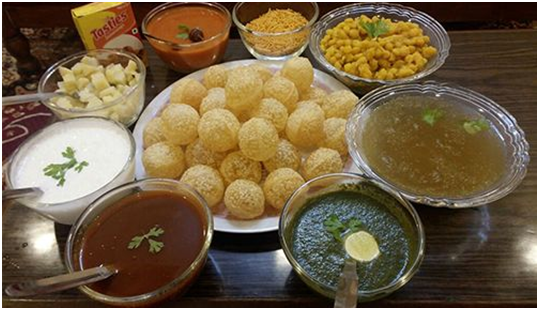
I will go for “Panipuri” its an Indian street side snack, that has a crisp puffed Indian bread (puri), stuffed with mashed spiced potatoes/chana(gram)/ragda (a curry of white peas), dipped in sweet(tamarind and date) and spicy(Pudina, coriander and chilli, with pinch of lemon) flavored water.

Panipuri or Phuchka is a type of snack that originated in the Indian subcontinent. It consists of a round or ball-shaped, hollow puri, filled with a mixture of flavored water, tamarind chutney, chili, chaat masala, potato, onion or chickpeas.

Why? I am sweet at times and spicy(angry) at times, and thats what makes me and my life. If you are new to me, you will see a rock sheer cover on my mind, you will feel i am arrogant (Hitler like, the most common adjective awarded to me), but once you try and be friends with me, to crack that layer, there is much more you couldn’t even wonder about me.

I am unpredictable. I can be a sweetest heart soemtimes and an angry bird at times. If you are are new to me, you would think I am arrogant (Probably a Hitler) but as you befriend me, you shall wonder if you ever knew me.

There is something comfortingly familiar about eating a humble pani puri – a crispy hollow ball made of semolina or wheat, filled with spicy potatoes and topped with tangy, spicy tamarind water made fragrant by mint leaves and black salt.

It may sound like culinary chaos, but that this spicy, crunchy wonder is absolutely delicious is something almost Indians will agree on.

Served by vendors from a setup that gives the word ‘utilitarian’ a run for its money, pani puri (also called golgappa, phuchka and a multitude of other monikers) is, in every sense, a material manifestation of the elusive emotion called “simple joy.” This innocuous street snack is also a great leveller – at a pani puri stall, you will see besuited businessmen step out of sleek cars to join the queue alongside the city’s poorest residents.

So how and where did this culinary gem really originate? Many believe that the answer lies in the history of the kingdom of Magadh.

One of the 16 Mahajanapadas (great kingdoms in Sanskrit) of ancient India, the Magadhan empire was situated on the banks of River Ganga in what is now west-central Bihar. Lively accounts of Magadh and its capital, Pataliputra, are available in the travel diaries of the Greek historian Megasthenes and the Chinese Buddhist pilgrims Faxian and Xuanzang.

It is believed that phulkis (the precursor to pani puri) first originated in Magadh at a time when several traditional specialities of the region, like chitba, pitthow, tilba and chewda of Katarni rice, were evolving. The culinary genius who invented them is lost in the pages of history, but if Indians had known who invented pani puri (or whatever you call this yummy snack), they would have thanked that person for generations!

There is another legend associated with the origin of pani puris. This is how it goes:

In the epic Mahabharata, a newly-wedded Draupadi returns home to be given a task by her mother-in-law Kunti. The Pandavas were on exile and Kunti wanted to test if her new daughter-in-law would be able to manage with the scarce resources.

So she gave Draupadi some leftover potato sabzi and just enough wheat dough to make one puri, instructing her to make food that would satisfy the hunger of all five of her sons. It is believed that this was when the new bride invented pani puri. Impressed with her daughter-in-law’s ingenuity, Kunti blessed the dish with immortality.

While the origins of this delicious snack is yet to be pinpointed with historical accuracy, the one thing that is clear is that pani puri travelled across India and made the country fall head over heels in love with it. Over the years, the combinations underwent many changes as each region developed its own version according to its preferences.

As a result, pani puri today has almost a dozen different names that changes from region to region. In most parts of central and southern India, it is called pani puri but the recipes have subtle variations. While in Maharashtra, hot ragda (white peas curry) is added to the potato mash, in Gujarat, it is boiled moong and in Karnataka, it is chopped onions.

While the origins of this delicious snack is yet to be pinpointed with historical accuracy, the one thing that is clear is that pani puri travelled across India and made the country fall head over heels in love with it. Over the years, the combinations underwent many changes as each region developed its own version according to its preferences.

As a result, pani puri today has almost a dozen different names that changes from region to region. In most parts of central and southern India, it is called pani puri but the recipes have subtle variations. While in Maharashtra, hot ragda (white peas curry) is added to the potato mash, in Gujarat, it is boiled moong and in Karnataka, it is chopped onions.

In West Bengal, pani puri is called phuchka, probably due to the ‘phuch’ sound it makes when you take a bite. The unique feature of the phuchka lies in the fact that it’s made of wholewheat, unlike the other that are usually made of flour or semolina. The phuchka water is also a little spicier and tangier than that used in the rest of the country.

SMALL LOOK AT HACKING!

An exceptionally clear point on programmer’s proposition is PC and PC hacking. PCs are mind boggling and appear to be hard to learn, however on the off chance that you have time, your PC will be extremely advantageous and intriguing. Have you heard every one of those abnormal PC terms? For instance, Javascript. Javascript is fundamentally a coding languages utilized when composing Internet pages. Have you at any point been to the web and have you seen writings or recordings on the screen? It is totally done in the Java language.

We as a whole asked that Web locales and organizations were hacked. However, what does “hacking” mean? In the first form, programmers basically implied finding better approaches to get things done with PCs and programming. This can be something to be thankful for (improving the exhibition of something) or a terrible thing (finding a PC you can not get to). Today, programmers are utilized as a conventional expression for a wide range of vindictive action, for example, information break, website page fouling, bank misrepresentation. Normally, even the assailant’s modifying expertise isn’t included. It is additionally blamed for criticism. Okay prefer to post a few words that you lament saying to web-based social networking? “Apologies, my record has been hacked”

Today, new issues are spreading to programmers. Since the stage exchanges an enormous measure of cash, programmers are prepared to split these individuals’ records. Online networking promoting gives interfaces to clients and ensures client data and assets. Also, we use it as a disseminated approach. Online life showcasing likewise gives specialists to shield client accounts from hacking exercises. Accordingly, we built up a security framework as a couple of steps to give high security to the proprietor. Online life promoting has built up a basic correspondence framework since normal individuals and corporate associations cooperate. In this way, drawing in individuals’ fascination through this stage is simple. Individuals can impart insights and recommendations via web-based networking media advertising stages, for example, visit, instant messages, video calls, videoconferencing, and phone calls. This open door will take individuals to business associations and advance individuals’ desire activities.

However, as of now, hacking has an increasingly negative ramifications as is the term programmer. Hacking which is done on demand and includes an agreement of terms and conditions permits approved access to the objective and henceforth alluded to as moral hacking.

PC and system security go under the invasion when the data about potential assaults is attempted to be assessed to decide the shortcomings and provisos in the framework. Helpless web-setups, old or freely tie programming, dormant or impaired security controls and frail or low-quality passwords are a few instances of territories that make PC systems and frameworks powerless against assaults. Moral hacking includes recognizable proof of all or any such potential regions dependent on the recommended terms in the agreement and the degree of access given.

Eric Raymond has a superior definition to hacking in his aggregation ‘The New Hacker’s Dictionary’ as: A “great hack” is a shrewd answer for a programming arrangement and “hacking” is the demonstration of doing it. Moral hacking enables the association to all the more likely ensure its framework and data and is viewed as a feature of an association’s general security endeavors.

Programmers could plan to take organization’s significant data and furthermore render hurt the protected innovation and other touchy data. Organizations may likewise run into the difficulty of confronting possible claims if programmers take client data by getting into their frameworks.

MACHINE LEARNING-The Future?

Machine learning is an application of artificial intelligence (AI) that provides systems the ability to automatically learn and improve from experience without being explicitly programmed. Machine learning focuses on the development of computer programs that can access data and use it learn for themselves.

The process of learning begins with observations or data, such as examples, direct experience, or instruction, in order to look for patterns in data and make better decisions in the future based on the examples that we provide. The primary aim is to allow the computers learn automatically without human intervention or assistance and adjust actions accordingly.

But, using the classic algorithms of machine learning, text is considered as a sequence of keywords; instead, an approach based on semantic analysis mimics the human ability to understand the meaning of a text.

Some machine learning methods

Machine learning algorithms are often categorized as supervised or unsupervised.

Supervised machine learning algorithms can apply what has been learned in the past to new data using labeled examples to predict future events. Starting from the analysis of a known training dataset, the learning algorithm produces an inferred function to make predictions about the output values. The system is able to provide targets for any new input after sufficient training. The learning algorithm can also compare its output with the correct, intended output and find errors in order to modify the model accordingly.

In contrast, unsupervised machine learning algorithms are used when the information used to train is neither classified nor labeled. Unsupervised learning studies how systems can infer a function to describe a hidden structure from unlabeled data. The system doesn’t figure out the right output, but it explores the data and can draw inferences from datasets to describe hidden structures from unlabeled data.

Semi-supervised machine learning algorithms fall somewhere in between supervised and unsupervised learning, since they use both labeled and unlabeled data for training – typically a small amount of labeled data and a large amount of unlabeled data. The systems that use this method are able to considerably improve learning accuracy. Usually, semi-supervised learning is chosen when the acquired labeled data requires skilled and relevant resources in order to train it / learn from it. Otherwise, acquiring unlabeled data generally doesn’t require additional resources.

Reinforcement machine learning algorithms is a learning method that interacts with its environment by producing actions and discovers errors or rewards. Trial and error search and delayed reward are the most relevant characteristics of reinforcement learning. This method allows machines and software agents to automatically determine the ideal behavior within a specific context in order to maximize its performance. Simple reward feedback is required for the agent to learn which action is best; this is known as the reinforcement signal.

Machine learning enables analysis of massive quantities of data. While it generally delivers faster, more accurate results in order to identify profitable opportunities or dangerous risks, it may also require additional time and resources to train it properly. Combining machine learning with AI and cognitive technologies can make it even more effective in processing large volumes of information.

DO YOU KNOW ABOUT DIGITAL CRIME? : One of the dangerous crime in the world

Everybody feels that solitary taking somebody’s private information is Cyber Crime. Be that as it may, in characterizing terms we can say that ‘Digital Crime alludes to the utilization of an electronic gadget (PC, PC, and so on.) for taking somebody’s information or attempting to hurt them utilizing a PC

Furthermore, it is a criminal behavior that includes a progression of issues extending from robbery to utilizing your framework or IP address as a device for perpetrating a wrongdoing.

Digital Crime Essay

Kinds of Cyber Crime

Talking in a broadway we can say that Cyber Crime are classified into four significant sorts. These are Financial, Privacy, Hacking, and Cyber Terrorism.

The monetary wrongdoing they take the cash of client or record holders. Similarly, they additionally took information of organizations which can prompt monetary violations. Additionally, exchanges are intensely gambled as a result of them. Consistently programmers took lakhs and crores of rupees of specialists and government.

Protection wrongdoing incorporates taking your private information which you would prefer not to impart to the world. Additionally, because of it, the individuals endure a great deal and some even end it all due to their information’s abuse.

In, hacking they deliberate mutilate a site to make harm or misfortune the general population or proprietor. Aside from that, they devastate or make changes in the current sites to reduce its worth.

Advanced psychological oppression has developed path past what it was 10-20 years back. Be that as it may, digital psychological oppression isn’t simply identified with fear based oppressors or psychological militant associations. Yet, to danger some individual or property to the degree of making dread is likewise Cyber Terrorism.

Digital Crime in India

Web world or the internet is an enormous network of millions and billions of clients and sites. Likewise, individuals get to it for various utilizations like shopping, motion pictures, music, computer games, exchanges, and web based business, and so on.

In this Age of Technology and simple access to the web, anybody can without much of a stretch arrive at it. In light of this relentless development from the earlier decade. Moreover, the web has opened a universe of data on which anybody can associate.

Because of, this the pace of wrongdoing particularly the pace of Cyber Crime has expanded a lot of overlap. In addition, the pace of dissemination of information is likewise expanded a lot of overlay because of the higher speed of web. Most importantly, because of every one of these issues, the Cybersecurity has become a significant worry for society.

Laws identified with Cyber Crimes

To stop the spread of Cyber Crime and to protect the enthusiasm of individuals the administration has made a few laws identified with Cyber Crimes. Likewise, these laws fill in as security against Cyber Crime. Aside from that, the administration has additionally presented digital cells in police headquarters to counter the issue of Cyber Crime as quick as possible.

Methods of halting Cyber Crime

Digital Crime isn’t something which we can’t manage our self. In like manner, with little utilization of our sound judgment and rationale, we can prevent Cyber Crimes from occurring.

To finish up, we can say that Cyber Crime is a hazardous offense to somebody’s protection or any material. Additionally, we can stay away from Cyber Crime by following some essential coherent things and utilizing our presence of mind. Most importantly, Cyber Crime is an infringement of law as well as of human rights as well.

Future of Home-schooling

Although many people see education system as the best way to socialize and instruct young children, each year there are growing numbers of parents talking about putting their children in home-school.

Assuredly you will recognize a variety of benefits of doing this, but the fact still remains that something is “lost in translation” between possibilities available to the public and at home. Fortunately, it seems as though robots are picking up the slack in home-schooling ecosystems.

What Is the Future of Homeschooling?

Home Schooling Problem:

To understand how robots change education in home-school settings, you first need to learn the issues surrounding at-home educations. Though supporters of the public school often argue that home-schooled children are left at a loss, the statistics suggest otherwise. Children that are taught in this atmosphere actually attend university at rates equal to or higher than their counterparts.

It is also worth noting that researches have shown behaviour problems for home-schooled children. Yet there are some considerable differences when it comes to their teachers. For example, in many states no accreditation or training is required to teach your kids. In fact, there are even states that do not predict teaching at home about holding a high school diploma. None of this is to suggest that home-schooling parents can’t have a decent education. However, there have been some subjects where all may benefit from artificial intelligence (AI).

The benefits of robots

If you have kids and want to home-school them, you should rest assured that, practically speaking, they’ll be all right. Actually you’re going to be in fine company. The number of home-schooled children is increasing significantly of 2-8 per cent per year. However, when doing this it is necessary for all of us to consider our limitations. Luckily, robots have evolved enough to help conquer those limits. One only has to consider different languages to realize how important home schooling robots can be. Only one in five Americans can speak a foreign language, but in their curriculum, many jurisdictions do have a requirement for foreign languages. Fortunately, artificial intelligence is used by the ROYBI robotic system to educate kids a variety of languages in which parents may not have experience.

It’s also worth noting that the system is constantly evolving to teach other subjects — as AI certainly should. The new educational emphasis is on STEAM (science, technology, engineering, humanities, and math), and in these subject areas, ROYBI is continually introducing new content.

Where are we going from here?

As robotic world continues to develop, many are now questioning whether artificial intelligence will completely replace classroom teachers. Home-school family would also have the option of using robots to fully teach their own children if this were to happen. While the cost may seem prohibitive, consumer robots like ROYBI have enabled AI to be brought into the home.

Luckily, it seems as if AI is moving to a point where it can deal with children on an emotional level. For example, ROYBI can recognize facial expressions and respond to apparent emotions in an acceptable manner. Obviously this is no substitution for actual human interaction, which can never be excluded from public or home-school settings, but because machine learning increasingly encourages robots to behave more objectively, these artificial interactions can become essential aspects of the learning process.

Home-schooling is growing in popularity every single day, and while success rates are impressive, it is important to remember that several teachers’ parents cannot do the job. However, with the improvement of artificial intelligence and robotic technology, there is little wonder that one day everything taught in public schools can be learnt at home. While there is disagreement about whether in-home learning can provide equivalent or higher education, home-schooling robots may one day make that fact unquestionable.

Importance of Learning to Code early in life

The World Economic Forum ‘s Future of Jobs Report has forecasted that 65 per cent of children entering primary school today will eventually wind up working in entirely new types of jobs that do not yet occur. The world is changing at such a rapid pace that today’s high-paid jobs didn’t even exist five years ago-and it’s hard to predict what kind of jobs we ‘re going to do in another five years. The reason for that big shift? It is rise of Software industry.

8 reasons why every child should learn to code - Teach Your Kids Code

The question here is how we prepare our children for the future, there’s only one solution to this situation: Learning to code. Both parents and teachers believe that programming is a well-structured way of introducing children to logical thinking and problem-solving in a country like India, where the education system struggles with a lack of vision, facilities and outdated curriculum. This also trains them for a data-science and computer science driven job market.

Fewer than 10 percent of schools taught mathematics before the Industrial Revolution, each school introduced mathematics after the turning point, because that was the centre of the revolution. For us now, coding skills are what mathematics was to the Industrial Revolution: underestimated at the time, but extremely valuable generations later.

Now we’re in the middle of the computer revolution, and it’s the same concept: schools need to recognize the benefits of coding as a skill. For Chinese parents, teaching children code is just as important as teaching them math and Chinese. Indeed, even before they enter pre-school many Chinese kids are vulnerable to coding. A lot of Indian parents now also teach pre-school coding to children. A huge number of coding and programming centres in New Delhi, Mumbai, Gurgaon, and Chandigarh serve these needs in India.

Almost all of these places use a shared pool of tools and technologies — such as Code Studio, LightBot, Botley, or MIT’s Scratch — created for a foreign market where coding teaching is already a flourishing industry for children. The aim is to cultivate the ability in a child to develop a meticulous sequence of commands in a language which the computer understands.

In the next 5-10 years, it would not matter what school kids are attending school, but how digitally savvy these kids are, especially with the introduction of 5 G technology that would be paradigm shifting and upend conventional teaching methods. Economists estimated the total economic impact of 5 G on new products and services to reach $12 trillion by 2035 as 5G tries to move mobile technology from connecting with people to people and information, to connecting people to everyone. Hi-tech kids today are learning from the same books I used 10 years ago during my school time. Our school system promotes rote learning, and that promotes conformism in children rather than curiosity. There is a repetitious raj of learning which governs our schools.

If we don’t implement coding in schools then our kids will be in a massive disadvantage and the future will be shaky. In 2017, Delhi-based ed-tech start up Eupheus Learning launched Cubetto which was introduced at about 300 primary schools across India. Cubetto’s innovation is the block-based coding language intended for pre-literate-year children. It is a screen-less coding solution that teaches infants the basics of programming.

Most kids learn to tap and press and hold in the digital age of today before they can speak cohesively or walk. Its wireless pacifiers, friends and entertainers are smartphones and tablets. To do so, children do not need to be qualified in reading or writing because stories and pictures are used to illustrate the concepts.

We can’t rely on the government to formulate policy, top-down approaches are lethargic and bureaucratic that takes a lot of time to implement which our kids don’t have. In the 4th Industrial Revolution, parents and educators would have to take a proactive approach or our children will be left behind.

THE IMPORTANCE OF TRAINING

The importance of training can be discussed under the following heads:

(i) Advantages of standardization:

The methods of production are standardised through training. All trained employees follow same methods and techniques of production and hence there can be little variation in output and standards produced by different employees. By using standardised methods, the quality of output would be increased.

(ii) Increasing organisational stability and flexibility:

Training provides opportunities for the employees to learn an acquire skills to work in several departments in an organisation. Training also results in low rate of labour turnover which means high consistency in organisations in retaining people for long period of time.

Low labour turnover means high organisational stability. Flexibility is ensured because employees may be placed in several departments over a period of time as they acquire multiplicity of skills through adequate training

(iii) Heightened morale:

Training results in increased morale of employees because of reduction in dissatisfaction at work, reduced complaints, and reduced absenteeism, and increased interest in work during the post-training period. Heightened morale results in increased loyalty to the organisation.

(iv) Reduced supervision and direction:

A trained employee knows what job he has to do and how to do that job and requires no guidance and supervision. Supervisors can devote their time to solve more important problems rather than concentrating on constant and regular supervision.

(v) Economical use of resources:

A well-trained employee makes better and economical use of available resources (materials, machines, and equipment). Optimum utilisation of resources results in reduced cost on production and higher profits.

(vi) Increase in productivity:

Training brings about increase in quantity and quality of goods produced resulting in high productivity.

(vii) Future manpower needs:

Through proper training employees become eligible for promotion handling more responsibility. An expanding and growing organisation wishes to train the existing employees so as to place them in higher positions in future.

(viii) Better industrial relations:

Training provides a platform for maintaining smooth industrial relations. Employees develop a feeling that organisation is taking care and interest in them through training programmes.

(ix) Reduced accidents at workplace:

Untrained people are bound to commit errors while handling machinery and equipment resulting in incidents at workplace. Training eliminates (reduces) the possibility of incident due to mishandling of equipment, machinery, and other resources of the organisation.

Proper training and development programmes ensure safety in handling the organisation’s resources which results in reduction in the accident rates.

(x) Reduced learning time:

An untrained worker consumes a lot of time to learn the methods, technique of doing the work. Skilled and trained employees reach the acceptable level of performance within no time. Therefore, training results in reduced learning time.

THE IMPORTANCE OF CAREER COUNSELLING

Career counselling plays a vital role in the student’s life. There are several roles played by career counselling in the making of a student to a professional as discussed below.

  • Development of Student: By teaching the subjects to students cannot develop them intellectually. Self-knowledge is the factor which enhances the intellectual of learners. It is the forgotten factor in our educational system. So, it’s the primary focus of the counselling process. Counselling helps the students to understand their self so that they come to know about their needs and interests.
  • Determine the Potential: There are various students who have clear thoughts about what they want to become, whereas, on the other hand, there are various others who are either in dilemma or have no idea about their career preferences. Career counsellors conduct the regular aptitude tests and counselling sessions which can help students in finding out the right career options and the fields in which they show interest. On the basis of these counselling results, students can make the right selection regarding in which course they want to enrol in order to accomplish their career goals.
  • Clear the Doubts: Despite having a clear thought of what students want to achieve in their life, some students do not know the career path they need to follow to have the requisite academic qualification to join a particular course. Career counselling can help students clear these doubts by giving them a clear cut view of what they can expect from various educational courses. Some students might also have several doubts about certain fields. Career counselling also helps students to overcome these doubts by knowing the true facts.
  • Support and Motivation: A career counsellor also provides essential support and boosts the morale of a student by understanding the kind of requirements and nature of the candidate because building the motivational level of a student is necessary for long-term success. This aids in improving the overall performance of a student. In addition, career counselling also teaches how to expand your social network which further enhances emotional support.
  • Various Career Opportunities: Career Counselors are well aware of the jobs in the market and the skills that are required for specific fields. For instance, there are many rewarding fields such as bartending, ethical hacking, astrophysics, etc. that are still un-tapped and many people are not aware of these streams. There are also other careers such as Aviation and Defense, about which you may not know how to get into them. Hence, with the help of their experience and knowledge, a career counsellor helps you explore and discover various career opportunities for career selection and growth.
  • In Case of Loss of Job: A career expert or other advisor can help recently unemployed customers to adapt to practical issues like applying for unemployment benefits and taking care of health insurance etc. In fact, he or she can enable the customer to start with the job searching process. They can likewise get motivation and guidance from experts and, through support groups, from other people who are in a similar circumstance. They prove to be useful from both a mental and technical perspective.
  • Clarity on Future Goals: Every student has set a goal to achieve in his life. There are various question roaming in the mind of students like what ambitions or targets do you have? Where do you see yourself five years from now? The best aspect of career counselling is that it is objective and strategic. A clear picture of your goal can be created informing you about where you will head and what obstacles you will face on this journey. After having a serious discussion with the counsellor, you should be confident of the fact that the future you are heading for is fun-filled and something that you will be able to stick on to for long.
  • Ideal Courses: These professionals provide you with the best information about the ideal colleges and courses in India as well as overseas. If you want to stay in India and study over here then you might have some knowledge about the future aspects of the courses which you want to do. But if you want to go overseas for studies and for career growth, you might not have all the information related to that country’s market. You do not know whether the future for that field is growing or diminishing. In this case, career advice from experts is the best way to understand the prospects of an option in different countries.
  • Aim Leads to Success: A counsellor can help the students to choose the right aim and help them with the process of achieving it. Furthermore, an experienced counsellor can help them with a well-planned track to reach the goal. A step by step career map of reaching the goal in a realistic manner helps the students to achieve their desired career faster. With right goal setting, a person can attend career success over a very short time period.

How does education impact the poor?

Education is the best investment one can ever make in life. For a developing nation like India, every child should receive a quality education. It can not only change the health and livelihood of people, but also contribute to long term economic growth and social stability.

However, despite great progress in last few years, lakhs of children are still denied education. The lack of education is a big reason that transmits poverty from generation to generation. The society still doesn’t realize that right to education is a vital human right granted to every citizen.

Although it is true that not every individual without an education is living in extreme poverty, but most of the poor lack education. The ones living below poverty line keep their children out of school, which means their children will also have a greater chance to live in poverty.

Education is considered as a great equalizer which can open door to jobs, skills and resources that a family needs to thrive and survive. Access to good quality education and supporting child well being has been recognized as a solution to poverty. Not just this, it helps the communities to solve other issues that keeps them vulnerable. Not just this, it helps these communities to solve other issues as well that can keep them vulnerable.

Education is directly related to may solutions in terms of poverty, like:

  • Reduce income inequality
  • Economic growth
  • Reduce infant and maternal deaths
  • Reduce vulnerability to HIV & AIDS
  • Reduce stunting
  • Reduce violence at home and society

According to UNESCO, if all children in low-income nation just get basic reading skills, an estimated 171 million people could come out of poverty. And if all adults receive secondary education, the global poverty could be cut by more than half.

Children are the future of any nation.The children who receive quality education are empowered to grow into mature and skilled adults who are capable of picking employment. Education is the key under which several issues related to health, unemployment, population control and human rights can be solved.

Educated individuals are more likely to escape all troubles of life like ecconomic and social despair. On a larger scale, the rewards of individuals getting education also flow into the society, motivating other, thus can have an impact on the entire country. An educated country always flourishes and always progress far better as they can achieve better healthcare and economic independence. It will make people more independent.

There are many solutions to improve the situation between poverty and education.  Teachers should be provided incentives for teaching in low-income zones. Better resources and funding should be provided in school for poor.

All this sums up enabling communities to come out from the state of poverty.


Python – the most versatile programming language


Python is an easy-to-learn and easy-to-use programming language that offers simple and interactive coding, making it powerful enough to build versatile applications. It has a large developer community that makes application development easy even for a novice user. It is very productive. YouTube, Instagram, Pinterest are all built-in Python.
iPython offers a powerful and interactive programming platform. Output can be readily seen as in a calculator with the execution of a single line of code.
Some of the noteworthy features/applications that can be created easily using Python are :
• Python for physicists: Calculating the Altitude of a satellite, mass and moment of inertia of objects in Planetary orbits, the wavelength in the light spectrum, Arithmetic mean involving logarithms, etc.
• Creating and Modifying PDF Files, Extract Text or pages From a PDF using PdfFileSplitter Class Concatenating and Merging, Encrypting and Decrypting.
• Scientific Computing and 2D, 3D Graphing using NumPy (for Matrix Manipulation) and SciPy , PIL ( Python imaging library) & matplotlib library for Plotting Graphs.
• Designing Graphical User Interfaces – Add GUI Elements With, Introduction to Tkinter , Working With Widgets . Example App: Text Editor.
• Interacting with the Websites using the urllib module, get the web page’s HTML source and then use regular expressions to parse Text using an HTML Parser to Scrap the required information ( from the website content).
• The comprehensive libraries supported by Python helps in solving optimization, signal processing, statistics, interpolation, linear algebra, polynomial problems, etc.
• It can deal with large data from PDF,CSV,XLS,JSON files etc. Advanced big data toolkit like Pandas or PyTables can be used to easily connect to the Database. They can handle heterogeneous tabular data structures with labeled axes (rows and columns) of multidimensional size and mutable type. Normalization and standardization of data can be done with ease. This again proves the versatile feature of python.
• Speech recognition application can be easily created using python.
• Multithreading using GIL ( Global Interpreter Lock) and message passing interfaces between processes can be implemented using Python. It can be done using POSIX interface. Not all these services or features are available on all platforms. (especially Windows/Mac).
• Generators can be added to Python to allow computation with sequences without having to actually create a data structure to contain the values of the sequence. This can give you large savings in memory.
• Regular expressions- Python include matching characters, pattern matching using the search options, finding out the multiple instances, and backslashes.
• Used to design network components, web servers, perform socket programming, encoding/decoding of a message, Encryption, and cryptography.
• Used to perform distributed computing with multiple machines.
• Python facilitates performing Exploratory data analysis by visualizing the data to assess patterns and identify data characteristics using Univariate and multivariate data visualization, correlation functions.
• Python supports web-based application frameworks such as Django, Turbogears, Pylons, etc. Web programming can be done using CGI scripting.
• Other Python libraries such as TensorFlow, Keras, PyTorch, and OpenCV are used in data science, machine learning, etc. It’s also used to create Neural networks in Artificial Intelligence.
Drawback: It is not ideal for mobile app and game development .This is because it consumes more memory and its processing speed is slow.
Conclusion :
Python is feature-rich and helps the user to build versatile applications productively ( in less time) and with ease.

For detailed and reliable information on python , you can refer this source by clicking on the link (https://www.python.org/doc/).

Shortage of Army Officers in the Indian Army. Explained.

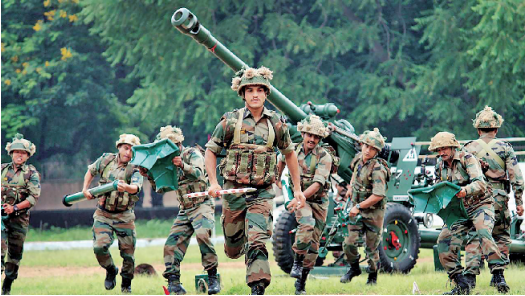
While the country applauds the actions of the defense forces on the borders, the citizens are largely unaware that each unit of the fighting and supporting arms of the Army are battling an acute shortage of officers. Indian military which has an onerous task of defending the country’s more than 15,000 kilometres long border and 7,500 kilometres long coastline is facing an acute shortage of officers. Indian military forces may be gaining firepower at a fast clip, but they surely are bereft of manpower. Against an authorized strength of 74,000 officers, the Army, Navy and Air Force currently have only 65,000, limiting their ability to run their operations efficaciously. This is a worrisome situation for the country that shares long boundaries with hostile neighbors and facing internal security challenges in border states in the north and northeast. Indian military forces have an onerous task of guarding the country’s borders stretching 15,106 kilometres and a 7,516 kilometres long coastline.

“There are three main causes: harsh service environment and everyday risk to life in the line of duty, pay and perks in the military and avenues for promotion are not as appealing as is the case with civil services and the third thing is the very attractive pay and package available in the corporate sector, these are the main reasons behind the shortage of officers,”

– Lt. General (retd) Rameshwar Yadav.

There are various methods of getting into the armed forces, starting from after Class XII in the NDA to the graduation level for the national academies and a host of other technical and non-technical entries. The entrance test for these officer-rank entries features a gruelling selection mechanism which culminates in a personality evaluation by services selection boards. Leadership traits are an important part of this evaluation. The pass percentage at the officer level is 2-5 per cent of the students who clear the written exam. After the selections, the trainees — generally referred to as ‘gentlemen cadets’ — undergo training at the elite academies, which develop them into leaders who are fit to take up the leadership role in combat and non-combat units. Those who are allotted the services are also made to undergo 1-2 years of attachment in the combat units, thus making them familiar with the operational environment. 

India which has 1.4 million active duty personnel in three branches of its military is surrounded by two hostile neighbors on its northern and western borders and has fought four wars with them and these border disputes with both Pakistan and China continue to seethe. As per the latest official data, the authorized strength of officers in Indian Army in March 2018 was 50,028. Even so, four months later, in July this year, there were only 42,734 officers. The shortage of 7,294 officers or 14.57% of the authorized strength. In case of Indian Navy, as on October 2018, there were only 9,925 naval officers against the authorized strength of 11,415 officers, this is a shortage of 1,457 officers in Indian Navy or 12.76%. It seems that among the three branches of Indian military, Indian Air Force is the only force that is able to attract the talent in a much better manner. As on 1st July 2018, Indian Air Force had 12,392 officers as against the authorized strength of 12,584 officers, a shortfall of just 192 officers or 1.52%. Indian armed forces have adopted several policies to fill the gap but they appear to be less than successful. Of late, the government has implemented several measures including increasing the allowances for difficult area posting but it has apparently been unsuccessful to attract the required talent.

The Hong Kong Protests

Hong Kong’s anti-government protest started in June against plans to allow extradition to mainland China. The extradition bill which triggered the very first protest was introduced in April. It would have let criminal suspects to be deported to mainland China under certain circumstances. Opponents said this put the Hongkongers at risk to unfair trials and violent treatment. Critics feared this could erode judicial independence and endanger dissidents. They also argued the bill would give China greater authority over Hong Kong and could be used to target activists and journalists. A large number of people gathered on the street in opposition. After weeks of protests, leader Carrie Lam ultimately said the bill would be suspended sine die.

HOW DID THE SITUATION ESCALATE?

Protesters feared the bill could be reintroduced, so demonstrations persisted, calling for it to be withdrawn completely. By then clashes between police and protesters had become more incessant and violent. In September, the bill was finally extracted, but protesters said this was “too little, too late”. On 1 October, while China was commemorating 70 years of Communist Party rule, Hong Kong went through one of it’s most “violent and chaotic days.” An 18-year-old was shot in the chest with a live bullet as protesters grappled officers with poles, petrol bombs and other projectiles. The government then prohibited protesters wearing face masks, and in early November a pro Beijing lawmaker was knifed in the street by a man pretending to be a supporter. A week later, a policeman shot one protester at spitting distance when activists were trying to set up a road block. Later that day another man was set on fire by anti-government demonstrators. In November, a standoff between police and students barricaded on the campus of Hong Kong’s Polytechnic University became another defining juncture. Later that month, the territory held local council elections that were seen as a barometer of public viewpoint. The vote saw a grand slam victory for the pro-democracy movement, with 17 of the 18 councils now controlled by pro-democracy councillors.

WHAT DO PROTESTERS WANT?

Some protesters have taken up the motto: “Five demands, not one less!” These are:

  • For the demonstrators not to be characterized as a “riot”
  • Pardon for arrested protesters
  • An independent inquiry into asserted police brutality
  • Implementation of complete universal franchise

The fifth demand, the extraction of the bill, has already been met. Protests in favor of the Hong Kong movement have spread across the globe, with rallies taking place in the UK, France, US, Canada and Australia. In many cases, people supporting the protesters were confronted by pro-Beijing rallies. Chinese president Xi Jinping has forewarned against separatism, saying any attempt to divide China would end in “bodies smashed and bones ground to powder”.

WHAT IS HONG KONG’S STATUS?

Hong Kong is an erstwhile British colony handed back to China in 1997. It has its own judiciary and a independent legal system from mainland China. Those rights comprise freedom of assembly and freedom of speech. But those freedoms – the Basic Law – lapse in 2047 and it is not clear what Hong Kong’s status will then be.

Break the Limitations of Your Mind

Limitation is the word which can be good if want to be average.Limitation is the word which put barrier in front of our imagination be it any kind of limitation,but do u want to be average? of course Not,right?

Those who dare to imagine the impossible,are the one’s who break all the human Limitations!!

Dr.Avul Pakir Jainulabdeen Abdul Kalam

We need to expand the horizon of imagination.Never think that something will newer work ,just try go forward with it .It will definitely not as easy as it said but there is always barriers along the way there will be always the people who doubt you ,but this doesn’t matter if u believe in Ur ability to achieve something u dream of.Always remember No energy conversion from one form to another take place until there is some one to oppose the conversion.Let’s understand it by example when us stops its space shuttle program US was sending it’s astronauts to space station through Russian space shuttle .Once one Russian minister trolls America by saying that “If we do not help US to send astronauts to space they only has Trampoline do it “in short us cannot do it then their astronauts can left only jump on bubbles on earth.This triggered US people who can imagine impossible i am talking about ELION MUSK (space X) .He imagined impossible, someone doubting his country gives him motivation and now space X has sended two astronauts to space with total US made space ship.Isn’t it fascinating!

Every one who say’s u can’t is giving u motivation and fire needed to achieve great.Every hurdle or failure is opportunity to grow and improve.So Go ahead Imagine impossible and make it possible because U CAN!!

Role of Technology in Education


“Technology will not replace great teacher’s but technology in the hands of great teacher’s can be transformed”

Education is a form of learning where we can see the transmission of knowledge, skills from generation to generation. 21st century is also regarded as century of technology. Technology brings education to student’s doorstep.

Technology in education can be classified as:

  1. Technology as learning tool.
  2. Technology as teaching tool.

History:

It goes back to many years to know about technology in education. At the end of world war-II US started using projectors.Digitalized communications and networks in education started in mid 1980’s. In fall of 2015, more than 6 million students enrolled in atleast one online course and still the count is growing rapidly.

Role of ICT in Education:

Information and communication technology (ICT) plays a major key role for students today as it has a significant and good effect on student success and learning. ICT includes television, computers, internet etc. when used appropriately and in a good way it can strengthen and raise quality of education. This ICT includes databases, spreadsheets, statistical, and graphical programs, etc. It is also likely that science and technology teachers are better trained and equipped.

Advantages of technology in education:

  • Technology helps students in preparing in their future career either in academics and non academics.( online books, exams, course, etc.)
  • It helps students to learn there own interests which helps in developing their individuals.
  • Easily accessible to learning materials.

(As present world is running around internet it is very easy to a student to access materials)

  • Proper understanding of a subject by using record keeping.
  • Using audio and visual materials helps students to learn things interesting.
  • Accurate exam conducting and grade awarding.

Limitations of technology in education:

  • Distraction to some students.

(Inappropriate websites which distracts student from there respective work) 

  • Students (programmer’s) involving in cyber crime.
  • Can be expensive to keep updated.
  • There are some health issues too when used over limit.

Some Ways to use technology in education:

  • Creating webpage includes writings, arts, quizes.

(Creating webpage helps students to learn things in creative way as it includes some writings, discussions, etc)

  • Video conferencing
  • Spread sheets
  • Creating class newspaper

(Newspaper gives us lot of information today if it’s a classroom newspaper it is really interesting to know things around a student in class)

  • Creative powerpoint presentation including picture, audio, videos.

(videos, pictures helps students to think in practical way, and it may some time leads to innovation).

Conclusion:

Technology has a very positive impact on education and should eliminate the drawbacks which are pulling back many students learning.And it’s time for every country to include more technologically equipped education for student’s future.

#Technology #Education


With economic measures, India turns the tables on China

China’s economy is dealing with many challenges, including from the China-U.S. trade war.

However, options are tilted in China’s favour because the country is far less dependent on India’s market than India is on Chinese imports

India is considering a range of economic measures aimed at Chinese firms amid the border tensions. The move to ban 59 Chinese apps may be just the start, with other measures likely to follow if tensions along the Line of Actual Control (LAC) continue without disengagement.

Following the June 29 ban, Union Minister for Road Transport and Highways Nitin Gadkari announced on July 1 that Chinese companies would not be allowed to take part in road projects.

Reports have said the government is considering trade and procurement curbs targeting China. The government is also increasing scrutiny of Chinese investments in many sectors, and weighing a decision to keep out Chinese companies from 5G trials, in which they are now involved.

The moves could potentially cost Chinese companies billions of dollars in contracts and future earnings. The message from Delhi is it cannot continue trade and investment relations as normal if China does not agree to return to the status quo of April before its incursions along the LAC began.

The Chinese government and State media have hit out at the measures. In separate statements, China’s Foreign Ministry in Beijing and the Chinese Embassy in New Delhi called on India to review the moves. The embassy said the measures “selectively and discriminatorily aims at certain Chinese apps on ambiguous and far-fetched grounds” and “goes against the general trend of international trade and E-commerce, and is not conducive to consumer interests and the market competition in India.”

State media have also widely criticised calls in India to boycott Chinese goods. The Global Times quoted one expert as saying “the sheer irrationality” of the campaign “would only end up dealing a blow to the local people in India”.

China is itself no stranger to such moves, having frequently deployed economic countermeasures, from restricting market access to boycotting goods in the midst of its own disputes with countries ranging from South Korea and Japan to the Philippines and Mongolia.

China’s State media spearheaded a boycott of South Korean goods in 2016 and 2017, when Seoul deployed the U.S. Terminal High-Altitude Area Defense (THAAD) missile system. China then placed curbs on outbound tourism to South Korea, costing the country millions of dollars in tourism revenue. China also used regulatory measures to close almost 90 Korean-owned Lotte Mart stores in the mainland.

In 2010, China began restricting exports of rare earth elements to Japan – a key ingredient for many electronics industries – following a collision near disputed East China Sea islands. Two years later, mass protests were organised by China over the islands issue, which led to boycotts of Japanese brands and, in some instances, violence targeting Japanese branded-cars and stores. With the Philippines, a dispute over the Scarborough Shoal in the South China Sea in 2012 led to China curbing imports on bananas and restricting tourism, costing the country millions of dollars in revenue.

Coercive actions

Economic sanctions have been one of the key tools of Chinese coercion, according to Zhang Ketian, who is writing a book on Chinese coercion and is assistant professor of international security at George Mason University. Based on interviews with Chinese experts and policy documents, Ms. Zhang noted that coercive actions were selective and focused on “targets when economic cost of coercing is low” but the impact is high.

With South Korea, for example, China did not target all sectors. “It left exports of Korean semiconductors, key intermediate goods for Chinese companies, untouched. Seoul relented in October 2017 by issuing a list of assurances meant to clarify to China that Seoul would not expand the scope of THAAD,” said a 2018 report on “China’s use of coercive measures” from the Centre for a New American Security.

The report said China “has punished countries that undermine its territorial claims and foreign policy goals with measures such as restricting trade, encouraging popular boycotts, and cutting off tourism.”

In all those relationships, China had particular leverage that it used to inflict immediate economic pain.

In the India-China economic relationship, where trade is lopsided in China’s favour, both sides have different levers that they could turn to, but the options are tilted in China’s favour because China is far less dependent on India’s market than India is on Chinese imports.

India’s biggest lever is its market, which has emerged as one of the important overseas markets for Chinese companies in the technology space and in telecom. For TikTok, one of the 59 apps banned, India is the biggest overseas market with more than 100 million users according to estimates. While the parent company ByteDance reported modest earnings of $5.8 million in 2018-2019, its first full year in India, company officials said the move could cost billions of dollars in future revenue. A source close to the company told the Chinese finance magazine Caixin that ByteDance “is anticipating a loss of more than $6 billion, most likely more than the combined losses for all the other Chinese companies behind the other 58 apps banned in India.”

A move to restrict Chinese companies from India’s 5G rollout would also have the similar effect of costing hundreds of millions of dollars in potential revenue.

If India does have considerable leverage that could hurt potential revenues of Chinese companies, the problem for Delhi is China could inflict immediate economic pain should it choose to. In 2019-20, India’s imports from China accounted for $65 billion out of two-way trade of $82 billion, and the country relies on China for crucial imports for many of its industries, from auto components to active pharmaceutical ingredients (APIs). Between 70 and 90% of APIs, needed for the pharma industry, come from China.

Industry representatives have in recent days already expressed concern over delays in customs clearances. If China curtailed imports as it did with Japan, even if doing so incurred its companies limited costs, the consequences would be far more serious.

Difficult choices

India faces difficult choices and needs to be selective in its measures, said former Foreign Secretary Shyam Saran. “You have to choose areas where you don’t get hurt more than they do,” he said. “TikTok is a good candidate as India is their largest market. Telecom is another. This is a huge market for Huawei. You may stop them for 5G, but at the same time a large part of the infrastructure you already have in place in the 4G network is all Chinese, so we will still need Chinese maintenance and servicing.”

The problem for India is its overall leverage with China is such that it cannot inflict serious pain on the five-times-larger Chinese economy as a whole, even if it could hurt individual companies. This, while India remains deeply dependent on Chinese goods, whether they are procured from China or elsewhere, although China’s exports to India account for less than 3% of its overall exports. On the investment front, Chinese investment in Indian tech start-ups has crossed $4 billion, according to estimates, spanning major investments in companies including Paytm, Swiggy, Ola and Flipkart.

“What do we do, for example, with Paytm?” asked Mr. Saran. “If we stop these investments, we will pull the rug out of the entire ecosystem. The problem is we are far more dependent on Chinese imports than China is dependent on us as a market. Losing a contract to India may cause some pain to companies, but will have a minimal impact on the scale they are operating. If China stops exporting APIs, there will be major disruptions in our pharma industry since producing APIs locally will take time.”

Whether the targeted economic measures will influence Beijing’s behaviour on the border will ultimately depend on China’s calculus and whether Beijing views any perceived gains from the current border stand-offs as outweighing the not insignificant economic costs of losing a key potential market. Moreover, losing this market would come at a time when the Chinese economy is facing its own challenges in the wake of the pandemic and facing increasing barriers in many Western countries.

India’s internet consumption up during Covid-19 lockdown, shows data

Data from the department of telecommunications showed that between March 22 and March 28, Indians consumed an average of 307,963 TB or 307 petabytes (PB) of data.

This was a hike of 9% from the 282,282 TB or 282 PB of data used on March 21, the day when the “janata curfew” was announced, and a hike of 13% from March 19, when the consumption was 270 PB. (Bloomberg file photo. Representative image)

India’s internet consumption rose by 13% since the nationwide lockdown was put in place to check the spread of Covid-19, according to telecom ministry data that showed Indians consumed 308 petabytes (PB) or 308,000 terabytes (TB) of data daily on an average for the week beginning March 22.

According to the department of telecom, which collated reports from service providers, the daily average consumption in this period was 9% higher than 282PB data used on March 21 (the day the janta curfew was announced) and 13% more than March 19, when consumption was 270 PB.

The change reflected how people consumed more streaming content and logged on to work from home, which was also captured in how data demand from residences rose as compared to commercial areas.

The consumption, DoT figures show, peaked on two days — March 22 and March 27 — when 312 PB of data was used. On March 26, 311 PB of data was consumed. The lockdown, announced on March 24, began on March 25. On March 22, India was put under a voluntary, one-day curfew.

Since the first week, however, consumption has now stabilised around the 300PB mark.

The data in one PB is equivalent to 500 billion pages of standard printed text.

Andhra Pradesh and Bihar saw some of the most drastic increase – it rose by 12% in both states. In Maharashtra, where data consumption was highest among all states under the lockdown period, the increase was 7%.

The government said that that increase was within their capacity. “We have the capacity to handle a spike of 20% without any duress. We optimised the fibre optics network and have not yet reported a breakdown,” said a DoT official, asking not to be named.

The consumption, the official added, rose lower than it would have since many streaming services such as YouTube and Netflix decided to downgrade video quality.

Rajan Mathews of the Cellular Operators Association of India (COAI) said around the third week of March, operators recorded a 30% jump in traffic with most of it from people streaming videos. The COAI wrote to OTT sites to downsize their content.

The decision by media companies to disable high-quality video and optimise bandwidth usage helped networks meet the increased demand, Mathews said, adding that the operators also started using unused cell towers.

“With the consumption moving to residential places, the challenge was that these areas resist installation of cell towers. We worked with the government to ensure that of 800 unused cell towers in metro cities, 730 were made functional,” said Mathews.

A third factor that helped, according to Mathews, was operators being allowed to carry out maintenance work. “Complaints of cuts in fibre optic cables were about 100 a day on an average, this fell down to 6-7 a day,” he said.

India’s consumption rates have seen a steady increase over the last few years. Nokia’s annual Mobile Broadband India Traffic Index (MBiT) report says that there was a whopping 47% jump in the overall data traffic in India in 2019. This translates to 11 GB a month per user, and is driven by 4G consumption.

SpeedTest, a site that analyses internet access performance across the globe, in its latest report on tracking COVID-19’s impact on speeds around the world which was updated on April 15, showed a 6% decline in fixed line speeds and 18% in mobile speeds when compared to the week of March 2. As per the report, India’s current broadband speed is an average of 36.17 mbps and mobile download speed is 9.67 mbps.

While the report put India behind countries like China, Austria, Japan, Israel and UAE, in terms of mobile and fixed broadband performance, it was ahead of countries like Italy, France, Germany, and Canada.

Rajesh Chharia of the Internet Service Providers Association of India (ISPAI) said that while the strain has not increased, internet service providers (ISPs) should be allowed to share infrastructure. He said that it’s a long-term demand, which is awaiting the Centre’s nod.

“If the infrastructure of a provider is full, they may be allowed to overload it with the infrastructure of another to spread the network. This will ensure uninterrupted services,” said Chharia.

We Live in Deeds, Not in Years

The proverb ‘we live in deed, not in years ‘,means that longevity of one’s life is not measured in the number of years one lives, rather it is measured by good deeds done by one throughout his life. Human life is a gift of God and comes with an expiry date. Death is ultimate external truth. The only difference is that some men live a long life and some die young .A short life can made glorious by virtuous deeds. It is much better than a long life which is of no use to others. A noble life backed by the virtues makes an individual life is not about mere existence in this world. Age should not be the criterion of life. Instead one should leave a mark on others lives with his good deeds. Bhagat singh was hanged to death at a young age. However, even today he is remember as a true patriot who sacrificed his life for the nation, swami Vivekananda, mickel Jackson, etc are some famous people who have lived a short but worthy life. All this great men are remember for their noble deeds and great achievement in their respective fields .Their have been an inspiration to many.

All the living being on this earth are the creation of God . The purpose our life should be to do good to others and help them. If throughout our life we are unable to do any good to others, then life is worthless. A selfish person may live long but after his death, nobody remembers him. If at all someone remembers him, it is for his selfish attitude and vices. Good deeds, moral values, and virtues should be the cornerstone of our lives.

It is true that life and death are not in one’s hands and are guided by the will of ‘Almighty ‘.But making our life valuable and worth remembering is definitely in one’s hands. One must set short and long term noble and work in order to achieve them. Nobel deeds are not only about giving a lot of money to charity.

One should always remember that good deeds only live after us. Everyone should try to do something useful for the society so that we may remembered even after we have left this world for ever.

It has much more dimension to it. Small deeds such as being kind and polite to others ,helping the needy and blind person, teaching the poor children, etc are some of the noble deeds that one can do throughout his life span. The human life is about selfless action, gestures and deeds. We all need to strive in order to make the best use of the precious gift of life. Always remember, one crowded hour of a glorious life is worth than age without a name or a good deed.

Substance Abuse And Teenagers

Teenagers are likely to experiment with substances. Experimentation plays the biggest role in teenage drug abuse. Reports suggest that half of all new drug users are under the age of 18. This is because their brains aren’t fully developed, so they don’t have the decision making capabilities as adults. Their decisions are very spontaneous. Teens who abuse drugs have a greater risk of developing an addiction when they turn into adults. As such, teen abuse can have long term cognitive and behavioral effects since the teenage brain is still developing. Teenagers tend to abuse drugs for the following reasons :
• Curiosity
• Peer pressure
• Stress
• A desire to escape
• Emotional Struggles


Signs of Teen Drug Abuse
There are many signs that a teen is using drugs. It can be difficult to tell the difference between the pangs of adolescence and actual drug use, but parents can be proactive in talking to their teen to find out what’s going on.
Some common signs of teen drug abuse include:
• Bad grades
• Bloodshot eyes
• Laughing for no reason
• Loss of interest in activities
• Poor hygiene
• Diminished personal appearance
• Avoiding eye contact
• Frequent hunger or “munchies”
• Smell of smoke on breath or clothes
• Secretive behavior
• Unusual tiredness
• Missing curfew
It’s up to parents to initiate a conversation with their children if they suspect drug use. One in five parents who suspect their teen is using drugs do not intervene to prevent further drug use.


Common Drugs that Teens Abuse
The most common drugs abused by teens aren’t much different from those of adults. But the reasons for abuse may be different as teens often abuse a substance based on its accessibility. Teens are also more likely to take excessive amounts of drugs and alcohol because of how they perceive the risks and dangers.
ALCOHOL
Alcohol is the substance most commonly abused by teens. The social acceptance of drinking among people of legal drinking age can lead many teens to view alcohol as relatively harmless. Research suggests teens are more likely to binge drink because their impulse control hasn’t fully developed.
MARIJUANA
Regular marijuana users most often started during their adolescence. The perceptions of marijuana use among teens is changing; most high school seniors do not think smoking marijuana occasionally carries any risk. More than 20 percent of teens report having used marijuana at least once in the past month.

Addiction Treatment for Teens
Many teens have a tough time dealing with sadness or other stresses common during adolescence. It is understandable that they may think having a drink or a little marijuana can offer relief. The best way to deal with stress, however, is to seek emotional support or find someone to talk to.
If a teen has already tried quitting or reducing use and failed, then it’s important to receive treatment as soon as possible.
There are treatment centers designated for teens that target the emotional and social issues that led to their drug use.
Most teen treatment centers also offer educational support so teens in recovery don’t get behind in school. The earlier an addiction is recognized, the easier it is to treat.

Mughal Fashion

Fashion has always excited me but what excites me more is the history of fashion. As a student of history, I have a habit of developing interest in everything that has a past. Clothes- a very integral part of fashion have a rich history which we must explore. Today, I’m going to introduce you to the clothing of the Mughal Era.
Mughals, for those of my readers who are unaware of these great dynasts, form a very important part of India’s history and even after so many years, continue to dominate its culture.
The Mughal clothing was characterized by luxurious styles and was made with muslin, silk, velvet and brocade.
 Elaborate patterns including dots, checks, and waves were used with colors from various dyes including cochineal, sulfate of iron, sulfate of copper and sulfate of antimony were used.

Men wore long and short robes and coats including the chogha (clothing), a long sleeved coat. A “pagri” (turban) was worn on the head and “patka”, an adorned sash, was worn on the waist. “Paijama” style pants were worn (leg coverings that gave the English word pajama). Other clothing types included: “peshwaz” style robes and “yalek” robes. Women wore “shalwar”, churidar”, “dhilja”, “garara”, and “farshi”. They wore much jewelry including earrings, nose jewelry, necklaces, bangles, belts, and anklets.

Pagri styles included: “Chau-goshia”, in four segments, the dome shaped “qubbedar”, “kashiti”, “dupalli”, embroidered “nukka dar”, and embroidered and velvet “mandil”. Shoe styles included jhuti”, “kafsh”, “charhvan”, “salim shahi” and “khurd nau” and were curved up at the front. Lucknow was known for its shoes and threading embroidery with gold and silver aughi during the era. Mughal emperor turbans usually had turban ornaments on them. They were made of gold and precious gems such as rubies, diamonds, emeralds and sapphire.

The Mughal period was one of the most popular eras of jewelry making, which is well-documented through chronicles and paintings. In fact the earlier Mughal paintings indicate that the era of Akbar’s reign gave anew life into the art, crafting a range of exotic designs. The Mughals contributed in almost all fields of development of jewelry. The use of jewelry was an integral part of the lifestyle, be it the king, men or women or even the king’s horse. Women were known to have as many as 8 complete sets of jewelry. Popular ornaments included two-inch-wide armlets worn above the elbows, bracelets or pearls at the wrist stacked high enough to impede access to the pulse, many rings (with the mirror ring worn on the right thumb customary for nearly all the inhabitants of the Zenana), strings of pearls (as many as 15 strings at a time), metal bands or strings of pearls at the bottom of their legs, and ornaments hanging in the middle of the head in the shape of star, sun, moon, or a flower.

Turban jewelry was considered a privilege of the Emperor. The constant change in the influences from Europe can be clearly witnessed in the design of the turban jewelry. Akbar stuck to Iranian trends of the time by keeping a feather plume upright at the very front of the turban. Jahangir initiated his own softer style with the weighed down plume with a large pearl. By the time of Aurangzeb, this form became more ubiquitous. Turbans were usually heavily set with jewels and fixed firmly with a gem set kalangi or aigrette. Some of the popular head ornaments worn by men were Jigha and Sarpatti, Sarpech, Kalgi, Mukut, Turra and Kalangi. Women also adorned a variety of head ornaments such as Binduli, Kotbiladar, Sekra, Siphul, Tikka and Jhumar. In addition to these, the braid ornaments constituted an important part of women’s head ornaments.

Ear ornaments were also quite popular during the Mughal times. Mughal paintings have represented earrings quite often. Ear ornaments were worn by both men and women. Mor-Bhanwar, Bali, Jhumkas, Kanphool and Pipal patra or papal patti are some of the known earrings from the period. Neck ornaments of different kinds of pearls and precious stones were worn by men and women. Some of the neck ornaments for men included Latkan, amala necklace as well as Mala. Neck ornaments formed an important part of jewelry of women also and included Guluband, Hans, Har and Hasuli. Nose ornaments were worn solely by women. It appears that nose ornaments appeared in India around the last part of the 16th century initiated by Mughals. The variety of nose ornaments worn by women during the Mughal times constituted phul, besar, laung, balu, nath and Phuli.
Owing to the relative isolation of the ladies in court, due to the Purdah, fashion in the early days of the empire adhered to traditional dress of Khurasan and Persia. In time, the social and diplomatic relationships between the Mughal Dynasty and the rest of India (Rajputana in particular), led to more exchange in accoutrements. Noble women in the court of Babur or Humayun would have begun their outfits with wide loose pants, painted or stripped. Their upper body was covered in loose garments fastened at the neck or with “V”-shaped necklines. Other articles of clothing included the Yalek: a tightly fitting nearly floor length vest, buttoned in the front, with the chest accentuated, in both short and long sleeve varieties.

FEMINISM

feminism Archives | Green European Foundation

With the aim to have an equal world for both males and females, in 1870, a revolution for change by the name ‘feminism’ emerged from France. It firmly believed in equal space for females at par with males. Feminism is a counter to patriarchy – a society in which the males dominate; which is a prevalent form of societal arrangement around the globe. As a movement, it focuses on pointing out the adverse and disastrous effect that patriarchy can bring to a woman to face, not only in the home but also in workplaces.

A constant refraining of females’ equality that they should have been subjected to, make them sceptical of their own self. They accept it as inevitable and devalue themselves. Even biology is widely used as a defence for male’s dominance over females, by limiting the abilities of women, categorizing what they can do and what they can’t. Thus satisfying the deep-rooted gender stratification which hierarchically ranks people in society based on gender. It’s just a very simplified way to stratify society into males and females. But feminist think sex and gender as two different things, sex on the hand is predominantly based on physical things and attributes, gender on the other hand concerns psychological and cultural differences between males and females. In such circumstances around the globe, feminism appears to be that driving force that drives women to stand and ask questions to these patriarchal norms, not themselves. The whole objective is making a change in behaviour and action of society towards females. It’s a journey from A (status quo) to B (female equality). 

Feminism, though being a common and well-heard concept to many, is often wrongly interpreted to mean ‘treating women over and above men’. In the pursuance of this misunderstood concept of feminism the aim sometimes becomes ‘destroying men’ instead of destroying the ‘patriarchal ideas’ that are deep-rooted into society. It needs to be realised that this movement is not about making men lesser than women but to make the women equivalent to the men. By meaning or calling men in any way inferior to women, goes completely against the whole idea and concept of feminism.

The very aim of Feminism is not to override men’s’ race and thrash it all together but to rather question and root out patriarchal thoughts from society. Based on these two interpretations, we have two classes of feminists, equality feminists and difference feminist. While the former focus on sameness, latter focuses on putting females somewhat on privileges over males. Formerly made highlights in 19th and 20th century, latter was prevalent near the 1980s and 1990s and afterwards. 

To conclude, until women subordination is “common” to both females and males, establishing a society of equality among them is a far cry. All Feminism can do is, it can reach to females and tell them their worth and encourage them for the demand for equality. But the interpretation and foot-steps of feminism must be carefully watched otherwise people will have to start a future movement to root out matriarchy.

Crypt-o-zoology

Cryptozoology is a pseudoscience and subculture that aims to prove the existence of entities from the folklore record, such as Bigfoot, the chupacabra, or Mokele-mbembe. Cryptozoologists refer to these entities as cryptids, a term coined by the subculture. Because it does not follow the scientific method, cryptozoology is considered a pseudoscience by the academic world: it is neither a branch of zoology nor folkloristics. It was originally founded in the 1950s by zoologists Bernard Heuvelmans and Ivan T. Sanderson.Scholars have noted that the pseudoscience rejected mainstream approaches from an early date, and that adherents often express hostility to mainstream science. Scholars have studied cryptozoologists and their influence (including the pseudoscience’s association with young Earth creationism), noted parallels in cryptozoology and other pseudosciences such as ghost hunting and ufology.

Generally cryptozoologists have a formal science education, and fewer still have a science background directly relevant to cryptozoology. Adherents often misrepresent the academic backgrounds of cryptozoologists. According to writer Daniel Loxton and paleontologist Donald Prothero, “Cryptozoologists have often promoted ‘Professor Roy Mackal, PhD.’ as one of their leading figures and one of the few with a legitimate doctorate in biology. What is rarely mentioned, however, is that he had no training that would qualify him to undertake competent research on exotic animals. This raises the specter of ‘credential mongering’, by which an individual or organization feints a person’s graduate degree as proof of expertise, even though his or her training is not specifically relevant to the field under consideration.” As a field, cryptozoology originates from the works of Bernard Heuvelmans, a Belgian zoologist, and Ivan T. Sanderson, a Scottish zoologist. Notably, Heuvelmans published On the Track of Unknown Animals in 1955, a landmark work among cryptozoologists that was followed by numerous other like works. Similarly, Sanderson published a series of books that assisted in developing hallmarks of cryptozoology, including Abominable Snowmen: Legend Come to Life (1961).

The term cryptozoology dates from 1959 or before – Heuvelmans attributes the coinage of the term cryptozoology (‘the study of hidden animals’) to Sanderson. Patterned after cryptozoology, the term cryptid was coined in 1983 by cryptozoologist J. E. Wall in the summer issue of the International Society of Cryptozoology newsletter. According to Wall “[It has been] suggested that new terms be coined to replace sensational and often misleading terms like ‘monster’. My suggestion is ‘cryptid’, meaning a living thing having the quality of being hidden or unknown … describing those creatures which are (or may be) subjects of cryptozoological investigation.”The Oxford English Dictionary defines the noun cryptid as “an animal whose existence or survival to the present day is disputed or unsubstantiated; any animal of interest to a cryptozoologist”. While used by most cryptozoologists, the term cryptid is not used by academic zoologists. In a textbook aimed at undergraduates, academics Caleb W. Lack and Jacques Rousseau note that the subculture’s focus on what it deems to be “cryptids” is a pseudoscientic extension of older belief in monsters and other similar entities from the folklore record, yet with a “new, more scientific-sounding name: cryptids”. Cryptozoology purports to be the study of previously unidentified animal species. At first glance, this would seem to differ little from zoology. New species are discovered by field and museum zoologists every year. Cryptozoologists cite these discoveries as justification of their search but often minimize or omit the fact that the discoverers do not identify as cryptozoologists and are academically trained zoologists working in an ecological paradigm rather than organizing expeditions to seek out supposed examples of unusual and large creatures.

PM Modi wraps up Ladakh visit with a swipe at China, says times have changed

On a quiet visit to Ladakh designed to deliver a loud message to China, Prime Minister Narendra Modi told soldiers posted along the Line of Actual Control that the courage they had demonstrated had sent a message to the entire world. Addressing soldiers deployed in Ladakh, PM Modi said tales about their valour were being spoken in every house across the country.

‘The enemy has seen your fire and fury as well,’ PM Modi told the soldiers in an address telecast live from Ladakh to the country. PM Modi also referred to the violent clash between soldiers of India and China at Galwan on 15 June and paid his tributes to soldiers who laid down their lives.

“From Leh, Ladakh to Siachen and Kargil…and Galwan’s icy waters…every mountain, every peak is witness to the valour of Indian soldiers,” PM Modi said. “You have given a befitting reply to people who attempted to conquer,” he told them before going on to deliver his direct message to China.

PM Modi underscored that India had always pursued the path of peace in the world but at the same time, those who are weak can never initiate steps for peace. “Bravery and courage is a prerequisite for peace,” he said.

“We are the same people who pray to the flute playing Lord Krishna but we are also the same people who idolise and follow the same Lord Krishna who carries the ‘Sudarshana Chakra,” the Prime Minister said.

Without naming Beijing that has been trying to encroach into Indian territory in Galwan valley and Pangong Tso and create new boundary disputes, PM Modi said times had changed and the era of expansionism was over. This is the time for development, not expansion, he said.

PM Modi stayed on target and continued hurling darts at China. The expansionist policies of some countries had affected world peace, he said, a clear reference to China that has disputes with 21 of its neighbours.

But history records that expansionist forces have either lost or were forced to turn back, PM Modi said, delivering his final shot before wrapping up his surprise visit. PM Modi’s office had finalised the day-trip to Ladakh late last evening but kept it a closely-guarded secret till the last moment.

News of the visit got out sometime after he landed at Leh’s airport, a height of over 11,000 feet with rarefied atmosphere, dry air and ultra-violet rays from the sun in the cold desert.

PM Modi, 69, headed straight for his briefing by top military commanders at the XIV Corps headquarters at Nimu outside Leh. He had had similar briefings back in Delhi also. This time, PM Modi could see the Zanskar and the mighty Karakorams that he had been spotting on the maps during the briefings. He also interacted with the soldiers to give them pep talks and hear their perspectives before he came around to delivering his speech.

His arrival in Leh had already delivered the first set of messages to Beijing. It also contrasts India’s approach to the standoffs along the Line of Actual Control to Chinese leadership’s efforts to signal a hands-off approach.

The PM’s visit is also a very strong message to President Xi Jinping that either he gets his aggressive Western Theatre Commander Zhao Zongqi to restore status quo ante or accept the inevitable consequences of PLA escalation. The Indian Army and Chinese PLA are locked up at four points on the LAC in East Ladakh with the latter consolidating on ground while mouthing peace overtures.

The location at Nimu where PM Modi addressed soldiers from the army, air force, ITBP and border road organisation resembled an active forward base. “There were artillery guns and other heavy equipment all under camouflage with soldiers wearing helmets and sitting in trenches and other kinds of dug out positions with a rare glint of courage on their faces,” a top military commander said.

Referring to some veterans who taunted that Nimu is a picnic spot, the commander said it was “a picnic spot for those who have treated their tenures as picnics instead of doing serious soldiering. For them even Kargil and Pangong Tso are picnic spots. If only they had treated these locations as future combat zones they would dare to comment,” he said.

All you need to know about ‘Workplace Romance’

Office Romances: How employers should deal with them - Peninsula

Falling for someone at work is not something you can stop or control. The people you work with spend almost 8 hours or more with you, 5-days-a-week and they are your companions through the thick and thin of work life. Before you even know, that particular person who seems to care about you the most or you find genuinely attractive, has occupied the vacancy in your heart. The feelings grow until you have built up some courage to ask them out and if the feelings are mutual, they say yes. That’s workplace romance for you! As simple as it sounds, there are a lot of consequences, both positive and negative, and considerations that can’t be ignored when you start dating someone at work.

Loving anyone and getting loved back is a heavenly feeling, no matter where you two might have met. If your significant other works with you at the same office, you don’t have to wait throughout the day to see them after work. You can see them all day! You can share your grievances at the end of the day and they will know exactly what you are talking about. The time we spend on explaining the background of people and the dynamics when we tell stories from our day at work is saved. Every day, you are happy to go for work because that is where you are going to see him or her so your relationship becomes a source of motivation. 

All the things that are good about indulging in an office romance should not make you overlook the bads. You might decide to keep your relationship secret but it is impossible to hide it from everyone. It takes only one person before the whole office finds out, all thanks to gossips that spread out like wildfire, especially when it is about an affair. Not all people like witnessing all the public display of affection because they find it cute. They might even report it to HR and some companies have rules that prohibit employees from dating other employees and anyone who is associated with the company. 

People might even try to interfere with your relationship by criticising your significant other and making you think of things. It is important to remain focused as your relationship might distract you from the work that needs to be done. What about when you two split apart? The thing that made you wake up every day and go to work happily becomes a reason for you to not show up at times when you find it difficult to face him or her. You might even feel like quitting altogether and put your career in jeopardy. It is also very essential to keep in mind that dating someone who is your direct superior or works directly under you is a big no-no. When you date your boss, your promotion is frowned upon and people might think negatively even when your relationship is genuine. Your boss might actually become biased while writing your performance appraisal and the scope for improvement is compromised.

Rashtriya Swasthya Bima Yojana

RSBY has been launched by Ministry of Labour and Employment, Government of India to provide health insurance coverage for Below Poverty Line (BPL) families. The objective of RSBY is to provide protection to BPL households from financial liabilities arising out of health shocks that involve hospitalization.

Eligibility

  • Unorganized sector workers belonging to BPL category and their family members (a family unit of five) shall be the beneficiaries under the scheme.
  • It will be the responsibility of the implementing agencies to verify the eligibility of the unorganized sector workers and his family members who are proposed to be benefited under the scheme.
  • The beneficiaries will be issued smart cards for the purpose of identification.

Benefits

The beneficiary shall be eligible for such in – patient health care insurance benefits as would be designed by the respective State Governments based on the requirement of the people/ geographical area. However, the State Governments are advised to incorporate at least the following minimum benefits in the package / scheme:

  • The unroganised sector worker and his family (unit of five) will be covered.
  • Total sum insured would be Rs. 30,000/- per family per annum on a family floater basis.
  • Cashless attendance to all covered ailments
  • Hospitalization expenses, taking care of most common illnesses with as few exclusions as possible
  • All pre-existing diseases to be covered
  • Transportation costs (actual with maximum limit of Rs. 100 per visit) within an overall limit of Rs. 1000.

Funding Pattern

  • Contribution by Government of India: 75% of the estimated annual premium of Rs. 750, subject to a maximum of Rs. 565 per family per annum. The cost of smart card will be borne by the Central Government.
  • Contribution by respective State Governments: 25% of the annual premium, as well as any additional premium.
  • The beneficiary would pay Rs. 30 per annum as registration/renewal fee.
  • The administrative and other related cost of administering the scheme would be borne by the respective State Governments

Enrollment process

SMART CARD

Smart card is used for a variety of activities like identification of the beneficiary through photograph and fingerprints, information regarding the patient. The most important function of the smart card is that it enables cashless transactions at the empanelled hospital and portability of benefits across the country. The authenticated smart card shall be handed over to the beneficiary at the enrollment station itself. The photograph of the head of the family on the smart card can be used for identification purpose in case biometric information fails.

Some important Frequently Asked Questions:

Where can I get the application form for RSBY?

You can download the Rashtriya Swasthya Bima Yojana Application Form Pdf from your respective state government’s website.Why are the beneficiaries charged Rs. 30 when the government is paying for the scheme?

The amount borne by the beneficiaries i.e. Rs. 30 is simply the registration fee that helps the Nodal agency to cover the administrative costs. The actual premium of the policy is borne entirely by the Central and State Government of India.What is the age limit for dependent children to be covered under RSBY?

There is no age limit on the children of the policyholder under RSBY. However, if more than two children are present in a family the policyholder needs to decide which of them will be covered under the plan.Whose biometric information is required at the time of medical emergency?

Any beneficiary can give their biometric information at the time of hospitalization or claim. The presence of the head of the household is not mandatory at the hospital.What kind of endorsements are allowed in the smart card in the middle of the policy period?

Addition and removal of family members is allowed in the middle of the policy period only in case of death and newborn child. An additional member of the immediate family can be added only in case of the death of a beneficiary.Who can enrol under Rashtriya Swasthya Bima Yojana?

Any member belonging to the below poverty line can enrol under this scheme. This plan is beneficial especially for rickshaw pullers, rag pickers, mine workers, sanitation workers, drivers of commercial workers, etc.

Social media addiction

Checking and scrolling through social media has become an increasingly popular activity over the last decade. Although the majority of peoples’ use of social media is non-problematic, there is a small percentage of users that become addicted to social networking sites and engage in excessive or compulsive use. In fact, psychologists estimate that as many as 5 to 10% of Americans meet the criteria for social media addiction today. Social media addiction is a behavioral addiction that is characterized as being overly concerned about social media, driven by an uncontrollable urge to log on to or use social media, and devoting so much time and effort to social media that it impairs other important life areas.

How Social Media Affects the Brain

Due to the effect that it has on the brain, social media is addictive both physically and psychologically. According to a new study by Harvard University, self-disclosure on social networking sites lights up the same part of the brain that also ignites when taking an addictive substance. The reward area in the brain and its chemical messenger pathways affect decisions and sensations. When someone experiences something rewarding, or uses an addictive substance, neurons in the principal dopamine-producing areas in the brain are activated, causing dopamine levels to rise. Therefore, the brain receives a “reward” and associates the drug or activity with positive reinforcement.

Growing up, we millennials didn’t even know what social media was, let alone how it might play such a big part in our adult lives. If you feel you are becoming addicted to social media, don’t worry, there are steps you can take to beat your social media addiction.


In the past decade, social media has crept from our computer screens onto the screens of our handheld devices. With the flick of a finger we can upload photos directly from our phones onto our social media accounts, reply instantly to messages, or see what our families and friends have been up to. With our mobiles always within arm’s reach, it can be super easy to become a little too enamoured with social media and it can negatively affect our relationships with others. So here are some tips on how to gain control of your social media addiction.

1. Turn Off Your Notifications
When you stop notifications from disturbing your normal routine, you might find it easier to concentrate on your daily tasks and not get distracted so easily. Notifications are a constant reminder that something is happening in the online world and you might feel like you’re missing out. So to quell your FOMO, turn off your notifications. The bonus is, when you do come around to checking your social media, you may have a build up of more notifications which will make it more exciting and will make the experience more rewarding.

2. Limit Yourself
Set a timer on your watch or phone, to limit the amount of time you spend on social media. Choose a limit depending on the severity of your addiction – say an hour a day, which equates to seven hours per week – and whenever you check your accounts, start your timer going. When you reach your limit, be strong and don’t be tempted to add on extra time. This will be a strong test of your willpower, but it will be worth it in the end.

3. Get A New Hobby
You may have a lot more free time on your hands now that you’re trying to cut down on your social media usage, so why not pick up a new hobby to fill your spare time? You could learn a new skill or do something you’ve always wanted to do but never had the time. You’ll probably surprise yourself at how much free time you have when you stop mindlessly scrolling through your newsfeed. Plus your new hobby will keep your mind and hands preoccupied when you’re craving social media.

4. Spend More Time With Your Loved Ones
Instead of keeping up to date with your friends’ and family members’ lives through a screen, spend time with them in the real world and reconnect with them. Make new memories and keep them personal to you — you don’t need to document everything you do in life with selfies

The state of Arunachal Pradesh, India

Arunachal Pradesh, also known as the state of Rising Sun, is a state of India. It is located in the North-eastern region of the country and is one of the seven sister state. It shares borders with Assam and Nagaland to the south. The state also shares international borders with Bhutan in the west, Myanmar in the east and disrupted borders with China in the north.

The state has long been recognised as a region of Indian subcontinent and finds its mentions in ancient Hindu literature like in Kalika Purana and the epic poems of Mahabharata and Ramayana. The state was a part of Assam until it was made a Union Territory in 1972 and in 1987 it was made an Indian state.

Geography and biodiversity

Arunachal Pradesh, is characterized by mountainous ranges and sub mountainous ranges along the northern part. The state encompasses three broad physiological regions. The highest peak of the state is Kangto.
The states extreme eastern peaks are described to as “the land of rising sun” in historic texts. The villages of Dong and Vijaynagar receive the first sunlight in all of India.

Arunachal Pradesh has among the highest diversity of mammals and birds in India. The state is the home of about 750 species of birds and 200 species of mammals. The forest area in the state accounts for about one-third habitat area among Himalayan biodiversity hotspots.

Tribes and Religion

Arunachal Pradesh has a truly varied culture with 26 major tribes and multiple sub-tribes. Each tribe is characterized by its own unique set of culture and traditions.
• The first group of people in Arunachal Pradesh is made of Monpas and Sherdukpens of Tawang and West Kamang district. The following Lamaistic tradition of Mahayana Buddhism.
• The second group are the worshipers of Sun and Moon God, and comprises of Adis, Akas, Apatanis, Bhagnis, Mijis, Mishmis, Nishis and Thongsas.
• The third group consist of Octes and Wanchos tribal communities of Tirap district. They are followers of Vaishnavism and maintain strict village society which is ruled by hereditary chief.

The people of the state mostly practices indigenous religion which is highly inclines towards nature. However Christianity too in practiced by 30% of the population. Certain amount of the state population practice Hinduism. Tibetan Buddhist is practiced in certain parts of the states which is adjacent to Tibet. The central faith along the Burmese border is Theravada Buddhism.

Art and Dance

The state of Arunachal Pradesh possesses great craftsmanship skills. From weaving to painting, carpet making to pottery, wood carving to ornament making, basketry to cane and bamboo work and many more, the local man are skilled for all. The women on the other hand expertise on handloom and handicraft making.

Dance and music are important part of life of Arunachal tribes. Various dance forms are seen in different part of Arunachal Pradesh. They can broadly be divided into four different categories, namely, festival dance, ritual dance, recreational dance and dance drama. Most of the dances are accompanied by chorus songs.

Festivals

The people of Arunachal Pradesh celebrate a string of festivals, and the reason ranges from religious to socio cultural to agricultural. Since agriculture is the main occupation, there are many festival celebrated for good harvest. Some predominant festival of the state include Losar, Solung, Boori- Boot, Mopin, Dree, Nyokum, Reh, Si-Donyi etc.

Should Physical Education be made compulsory in Schools?

Physical education (PE) is often seen within the education system as a marginal subject. And many high schools are actively reducing PE time to make path for more “serious” or “important” topics.

Youth Sport Trust studies suggest that for 14- to 16-year-olds, 38 per cent of English secondary schools have cut scheduled PE. One of the main reasons for that is the enhanced pressure to produce results of the examination. Nevertheless, amid these changes, PE remains celebrated for its ability to improve wellness and encourage lifelong physical activity. This is an important issue provided that according to the latest government estimates, over 30 per cent of the year six pupils are listed as “overweight” or “obese.”

Sport should be compulsory in schools, writes Kylie Lang | Daily ...

PE is also celebrated for its commitment to improving psychological wellbeing, helping to foster social and moral growth, and promoting academic and cognitive success. The Physical Education Association emphasizes that high-quality PE fosters pupils’ physical, spiritual, financial, mental, economic, and intellectual development. But the many goals for PE – such as health education, developing skills, as well as focusing on moral and social issues – have created confusion about the topic and have done little in practice to further the educational opportunities. In fact, it was argued that PE offers more entertainment than education. A waste of time and some entertainment, or vital to a child’s education and development – what is it?

Part of the problem appears to be that PE is often seen as a possibility for pupils to be active and have fun. Or in some cases, as a way of relieving stress and serving as a break from traditional learning. These locations are clearly valuable for the overall well-being of pupils and there is a growing basis of evidence to suggest that physical activity has the potential to support learning more broadly. But PE’s role is not solely to support and promote the knowledge of pupils in other subject areas. It should instead be providing meaningful learning experiences within the subject itself.

Each offers a unique system for PE, sport and physical culture to explore a multitude of holistic learning opportunities. The moral or ethical controversies in sport, for example, can provide teachers with a range of educational stimuli for debate, rationale and critical reasoning. The Sports Monograph is a recent project that we have been working on, inviting learners to collaborate and share their views and experiences on sport, and what it means to them. The project included pupils from primary and secondary schools, as well as students from undergraduates and postgraduates who were all supported by their teachers and lecturers.

As part of the initiative, not only were the pupils acknowledged for their written achievements at school award evenings but, unlike in conventional PE, their work left a trail of proof of learning and academic involvement – appreciated and supported by the schools. As a valuable educational endeavour, PE successfully stood shoulder to shoulder with other subjects in the curriculum, with written evidence to support the claim. These pupils now have publications which are used at the University of Central Lancashire to teach undergraduates.

The role that PE can play as part of the broader academic curriculum appears to be completely forgotten, at best understated and, at worst. Activities such as those raised here could help to broaden PE’s educational potential, encourage more pupils to engage with the subject matter and reinforce PE’s place as a unique and valuable pursuit of knowledge. There are possibilities, but PE needs to be ready to grasp them and let the pupils write about their sporting enthusiasms to reflect what they’re being told to learn.

Should Students Study a Foreign Language at School?

The benefits of learning foreign languages are springing up as the world is becoming increasingly international and multilingualism is now perhaps the most valuable real-world ability ever to have emerged, rather than only being a cool parlour trick. If you are thinking about attempting to learn a foreign language instead of wanting the world to tolerate your monolingualism, you are indeed a special breed. Burgeoning into the impressive polyglot that you strive to achieve to be with the right approach and mind-set is 100 per cent feasible.

Reasons to Learn a Foreign Language

Studying foreign language is all about knowing how to interact and really connect with others an incredibly important life lesson that can only be cultivated through interacting with people. When you’re learning a foreign language, you can demonstrate your new supernatural power to understand what someone is saying, remember the right vocabulary and grammar, bring the vocabulary and grammar into the right sense, and respond back — all on the spot and in a reasonable time. You’ve signed in. And that’s what it’s all about. Learning a foreign language is compulsory in many other countries until the final year of schooling. In contrast, Australian students in primary or secondary school may study a language other than English but very few actually continue to study the language once they are able to customize their subject choices in their senior years.

Recently, the central government allocating $11.6 million in Australia to language training in primary years and working to improve the use of Asian languages.

Studying language will not only give your kids the ability to speak, write and read a different language, but will also typically give information about the history and culture of societies where the language is used. This will expand your child’s view of the world and open their eyes to other Australian cultures and communities.

It can provide worldwide travel opportunities: learning a second language can offer a number of opportunities for international study to students. This may imply embarking on a secondary school exchange programme (for example, taking the opportunity to study at a sister school) or completing a semester abroad or a tertiary-year student exchange programme. These programs can be intensely competitive, so speaking another language will not only increase the chances of your child being selected but also means that they are not limited to an English-speaking country or English-speaking courses.

It can boost their chances of tertiary admission: many universities recognize the benefits of language study and are willing to offer ‘bonus points’ to students during school to study a language. This can see your child put in a better position when applying for a tertiary course, especially in disciplines like humanities, communications and business. The Group of Eight (the prestigious research-intensive universities in Australia) also possesses its own language bonus point’s scheme.

It can boost work chances down the track: It is no secret that when it comes time to find a work, learning a foreign language can be advantageous. Employers in service industries such as tourism and hospitality will favorably use a second language extremely on those who understand it. The same can be said for business owners dealing regularly with overseas customers and partners, as well as job roles requiring travel to other countries. Having the capacity to interact in another language will place your child in the job market in demand — especially if they have chosen to study an Asian language like Mandarin.

Many research have been carried on the benefits of learning a second language, with research that links bilingualism to the development of literacy and improved cognitive skills such as memory, perception and multi-task capability. It has also been found that learning a foreign language can help to improve skills development in the first language of an individual  

What should you do if you’re struggling to sleep in quarantine?

For many of us, quarantine has disrupted our daily routines which have in turn affected our sleep patterns. Sleep is essential for the well being of our mental health, so if like me, you’re too struggling to sleep during this challenging time, I’ve picked out three things that have personally helped me to relax and fall asleep.

Avoid checking the news before sleeping

I’ve noticed that if I watch or read the news before I go to sleep, it leaves me with anxiety, feelings of uncertainty, and even stress which then keeps me awake thinking about what’s to come next. Getting your news updates in the morning is so much easier for me as it gives me the whole day to process what’s happening in the world around me instead of trying to process all the heavy information at night.

Create a routine for yourself

For a person who has not believed in maintaining strict routines, I discovered that creating a routine for yourself can help you by providing a structure and offer feelings of normality, which for me now has taken away a lot of the stress. In the time that is so uncertain and unstable, having a routine can make you feel in control and calm about your surroundings. Try and stick to the same sleep schedule at night so that you can follow your daily routine without any trouble.

have a relaxing bath before sleeping

Taking time out of your schedule to have a relaxing bath or shower can help you fall asleep faster and also improves the overall quality of sleep. The cooling down of your body helps build a strong urge to sleep which can send you into a deeper sleep. This is something that has undoubtedly helped with my sleep struggles over the past month.

acknowledge and accept the change

At this time it is very difficult to not feel anxious about what the future holds and what’s to come. It’s human to feel worried about yourself and the ones you love and care about and it is also normal for there to be a change in the sleeping and eating patterns to feel more comfortable. But if you feel like you’re losing control of things around you, take a deep breath in and remember that this will not last forever.

4 Productive Things To Do During Quarantine

REMINDER: IT’S OKAY TO NOT BE PRODUCTIVE EVERYDAY. YOUR WORTH IS INDEPENDENT OF YOUR PRODUCTIVITY

PART 1

Here are 4 productive things to do during quarantine:

1. Learn to play an instrument

Playing an instrument is a great skill, you could start with an instrument that you have always thought of playing- a guitar, a ukulele, a tabla or an instrument that is fascinating to you. Though it will take some time to get used to the habit of following YouTube tutorials or online lessons, but once you get a hang of it, you’ll realise just how rewarding it is. With so much time on your hands you’ll not be under any pressure to reschedule your day and make time out of you busy schedule, instead you’ll be able to take it at your pace and pay more attention to details. 

Here’s a list of easy to learn instruments: Top 15 musical instruments you can easily learn & play

2. Read more books

There are hundreds of thousands of authors and an even bigger amount of books you could read. Books are an essential item for improving your language as well as your vocabulary. They develop your knowledge – and like instruments, they help sharpen your memory. If you don’t want to shell out money from your pocket and/or are sceptical to order paperbacks online from stores like Amazon or Flipkart, the easier way out is free e-book websites. 

You can try and give EPDF or PDF Drive a shot. 

3. Bake

Baking is incredible and extremely fulfilling: mix a few ingredients, put it in the oven – and bingo! You have a tasty treat for yourself. Baking can also be advantageous for mental health as it is very therapeutic and calming for the brain. Research show that it is a great stress reliever and can leave you feeling happier and more positive.  

Here are some YouTube channels that will make you want to run to you kitchen to get your supplies

  1. Bake With Shivesh
  2. The Terrace Kitchen
  3. Spice Bangla

4. Learn a new language

If you want to level up and attempt a more challenging activity, which will benefit you exceedingly- learn a new language. It is scientifically proven that learning a new language makes you smarter and helps in developing cognitive abilities. Learning a new language help strengthen your listening and multitasking skills. Research also suggests that it helps prevent the onset of Alzheimers. 

There are plenty apps and e-learning wesbites that can help you learn a language. These include: Affordable yet excellent language courses on Udemy and Coursera also offers such free and paid courses by prestigious universities from all over the globe. 

Oldest libraries across the globe

In today’s fast paced world everything is being replaced by technology.  The libraries once occupied with people are losing their charm in this world of eBooks and kindles. People often choose to go for movies over a quiet reading session in the library. But libraries have been in existence since ages. The earliest libraries  emerged not long after the first civilizations started keeping written records.  

Here’s a list of world’s oldest surviving libraries:

St. Catherine’s, Egypt

The ancient library that holds thousands of centuries-old religious and historical manuscripts at the famed St. Catherine Monastery, a UNESCO World Heritage site, in South Sinai. Built between 548 and 565, the monastery is one of the oldest working Christian monasteries in the world. The monastery library preserves the second largest collection of early codices and manuscripts in the world.

The ancient library holds around 3,300 manuscripts of mainly Christian texts in Greek, Arabic, Syriac, Georgian and Slavonic, among other languages. It also contains thousands of books and scrolls dating to the 4th century.

Al-Qarawiyyin Library ( Morocco)

Founded in 860, Qarawiyyin is believed to be the oldest working library in the world. It is part of Qarawiyyin University which, according to the UN, is the oldest operating educational institute in the world. The library was established by Fatima al-Fihri, the daughter of a prosperous merchant from Tunisia. The library holds over 4,000 manuscripts by some of Islam’s greatest thinkers. Library’s most precious manuscript is a 9th century copy of the Qur’an.

Sorbonne Inter university Library , France (1289)

The ‘Bibliothèque interuniversitaire de la Sorbonne’ is one of the most famous and oldest libraries in the world. Containing more than two million documents in its collection, this library became a part of the University of Paris and is now operated and used by five universities.

 Wells Cathedral’s Library, England (1430)

It was the first Gothic style library to come up in England. This library is known for its unique architecture. This Library has a collection of three rooms namely Muniment Room (for early documents), the “Chained Library” (before 1800s), and the “Reading Room” (after 1800s).

Malatestiana Library , Italy (1452)

The library was built during  Renaissance period in Cesena, Italy. One of the most precious manuscripts  in this library is a 13th century illuminated Bible. The library is home to 400,000 books and is often cited as Europe’s first Civic library.

Sarasvathi Mahal Library (India’s oldest Library ,1535 AD)

This beautiful library situated in Tanjore , Tamil Nadu is known as one of the oldest libraries in Asia. The library was used as a Royal Library by the Nayak Kings of Thanjavur for their private use during their rule between 1535 and 1675 AD.

Advantages of Reading online news

After the introduction of online news, many news consumers are abandoning the traditional newspapers to access information online. Since most newspaper companies used to get revenues from printing news on print media, the changes have also made them follow the trend by uploading information online on their websites. 

People prefer reading news from online sources to print media since the former is easy to access. Here are some of the devices that one can use to read news and information online anywhere and anytime, they include mobile phones, PDAs, laptops, personal computers. Without an internet connection, you cannot get access to news regardless of the time, therefore, to ensure that you stay up-to-date, you need to connect your devices to the internet. Unlike newspapers whose circulation is limited, online news can be accessed on any day, thereby allowing readers to get the information while traveling.

With online news and information, you do not have to pay a cent to access them. Unlike traditional newspapers and print magazine and journals where one has to pay for them before accessing the information, online news are free and doesn’t cost a dollar to access them.

Most of the online news companies tend to update their sites with new information every time. The fact that the news websites are updated with new information every now and then, readers can sit back and relax knowing that they can get the latest information of events. When you rely on newspapers and print magazines, you will have to wait until the following day before you can access the latest news.

The other beauty of online newspapers is that you can access various newspapers from a single platform. Newspapers readers tend to incur costs when they purchase a number of newspapers from different companies when they want to get detailed information. Besides, nowadays, most online news companies rely on websites that specialise in posting news from several companies under one platform to make their information reach the audience.

One of the features of online news that makes them better than print media is their ability to make articles more interactive. While reading news online, there are sections where you can view videos of the events being described. Adding videos to traditional newspapers are physically impossible.

People should read online news since they enable them to access many articles. When you buy a newspaper, you can only read the articles written in the paper.

In addition, with online news, readers can compare the news they receive from one online site with another one. The news company classify the information on their sites into different groups, these include politics, sports, education, fashion, among others. Based on the benefits discussed in this article, it is clear that online news are way too far better than traditional newspapers.

Agriculture in India

Agricultural productivity depends on several factors.  These include the availability and quality of agricultural inputs such as land, water, seeds and fertilizers, access to agricultural credit and crop insurance, assurance of remunerative prices for agricultural produce, and storage and marketing infrastructure, among others. 

As of 2009-10, more than half of the total workforce (53%) of the country, were employed in agriculture. The share of population dependent on agriculture for its livelihood consists of landowners, tenant farmers who cultivate a piece of land, and agricultural labourers who are employed on these farms.  Agricultural output has been volatile over the past 10 years, with annual growth ranging from 8.6% in 2010-11, to -0.2% in 2014-15 and 0.8% in 2015-16.

The country’s requirement for food grains in order to provide for its population is estimated to be 300 million tonnes by 2025.The estimate of food grains production in 2015-16 is 252 million.  This implies that the crop output needs to grow at an annual average of 2%, which is close to the current growth trend.

Despite high levels of production, agricultural yield in India is lower than other large producing countries.  Agricultural yield is the quantity of a crop produced on one unit of land.  Agricultural yield of food grains has increased by more than four times since 1950-51, and was 2,070 kg/hectare in 2014-15.

Besides providing for the livelihood of farmers and labourers, the agricultural sector also addresses food security for the nation.  The Food and Agricultural Organisation (FAO) of the United Nations defines food security as a situation where all people have, at all times, physical and economic access to sufficient, safe and nutritious food that meets the dietary needs and food preferences for a healthy and active life. Despite high levels of production in the country, 15% of the population continues to be under-nourished, as per 2014 estimates.

India enacted the National Food Security Act in 2013.  The 2013 Act aims to provide food and nutritional security to people by ensuring access to adequate amount of quality food at affordable prices. Under the 2013 Act, persons belonging to certain categories are provided with food grains (wheat, rice and coarse cereals) at subsidised prices.  As of 2015, 68% of the population, i.e. 81 crore persons (of which 77% are in rural areas and 23% in urban areas) are covered under the Act.

Over the past few decades, with increasing per capita income and access to a variety of food groups, the consumption pattern of food in the country has been changing.  Dependence on cereals for nutrition has decreased and the consumption of protein has increased. Sources of protein include pulses, meat, seafood, and eggs, among others.  According to report by the Finance Ministry, incentivising the production of pulses in the country, poor levels of nutrition suggest that increasing the consumption of proteins should be the policy priority for the government.  The report estimates that the cost of pulses as a source of protein is lower than other sources.  Under the current domestic scenario, India is facing a shortage of pulses which is being managed by increasing imports. Thus, the struggle to find a balance between economic growth and ensuring food security continues.

HEADPHONES AND YOUR RISK OF HEARING LOSS

Headphones and earbuds are everywhere – but that doesn’t mean they’re safe for your ears. Using earbuds and headphones can cause damage to your hearing if you aren’t careful. Learn how to keep yourself safe.

Chances are you have a smartphone in your pocket, and a pair of headphones that connect it directly to your ears. Unfortunately, those same devices that make listening to music or talking on the phone so simple might also be damaging your ears.

According to a 2011 study published in the Journal of the American Medical Association, the use of headphones and earbuds has led to a major increase in the prevalence of hearing loss in adolescents and young adults. It’s reasonable to assume the same is true for adults using the same devices as well. So what can you do to keep yourself safe from hearing loss caused by headphones or other audio devices?

HOW LOUD NOISE CAN DAMAGE HEARING

The key danger of headphones is volume – the fact that they can produce very loud levels of sound very close to your ear. This is dangerous for your hearing because loud noises, in general, are damaging to your ears.

When sound waves reach our ears, they cause the eardrum to vibrate. This vibration is transmitted to the inner ear through several small bones, where it reaches the cochlea. The cochlea is a fluid-filled chamber in your ear that contains many thousands of small “hairs.” When sound vibrations reach the cochlea, the fluid inside it vibrates and causes the hairs to move. Louder sounds cause stronger vibrations, which cause the hairs to move more.

When you listen to sounds that are too loud for too long, these hair cells lose their sensitivity to vibration. Many loud noises cause the cells to bend or fold over. This is what causes the sensation of “temporary hearing loss” after you are exposed to loud noises. The hair cells take time to recover from extreme vibrations caused by loud noise.

In some cases, however, the cells never recover. They may be too damaged to function normally any longer. This leads to lasting hearing loss. This type of noise-induced hearing damage is almost impossible to recover from. No cure exists for repairing a damaged inner ear.

THE ROLE OF HEADPHONES

Headphones cause damage to your ears the same way other loud noises do, resulting in what audiologists call “noise-induced hearing loss.” Over time the sounds from your headphones cause the hair cells in the cochlea to bend down too much or too severely. If they don’t get time to recover, the damage can be permanent.

However, headphones don’t have to be extremely loud to damage your ears. Even listening to headphones or earbuds at a moderate volume can damage your hearing over time. That’s because your ears are not just damaged by the loudness of a noise, but by the length of exposure as well. That’s the same reason going to a concert or using loud power tools can damage your ears as much as a much louder gunshot or explosion. The duration of the exposure matters just as much as the volume.

Data via cdc.gov

As you can see, louder noises cause hearing damage much faster than quieter ones, but quiet ones can still cause damage over time. For instance, a 90 decibel (dB) noise – about the same as a loud motorcycle approximately 30 feet away – causes hearing damage in under 3 hours. A sound of about 105 dB – similar to a gas lawnmower or other power tools – can damage your hearing in less than 5 minutes.

What about headphones? Unfortunately that question isn’t easy to answer because decibel ratings from headphones vary. The “loudness” of your headphones is based on the volume you’ve set your phone or device to as well as the type and make of headphone you use.

For instance, classic iPod earbuds at 100% volume on an iPhone can hit noise levels of 112dB for the wearer, leading to hearing damage in minutes. The same earbuds at 60% volume measure approximately 80 dB, which makes them safe to listen to for several hours.

You should note that decibels decrease with distance – the closer you are to the source of a sound, the louder it is. For this reason, many audiologists and hearing experts recommend over-the-ear headphones instead of in-ear models like earbuds. The extra distance between the speakers and the ear can significantly reduce the loudness of the audio and help prevent hearing damage.

HOW TO AVOID HEARING DAMAGE FROM HEADPHONES

Avoiding headphone-induced hearing damage isn’t too hard. It simply requires most people to break some habits with their headphone use.

TURN DOWN THE VOLUME

The single biggest change you can make to protect your hearing is to turn down the volume on your devices. Noise-induced hearing loss is caused primarily by exposure to very loud noise. Limiting your exposure can protect your ears.

USE NOISE-CANCELING HEADPHONES

Most people listen to headphones at a high volume to “drown out” other sounds. One good way to lower the volume on your devices and protect your ears is to use noise-canceling headphones. These headphones block out external sound, letting you enjoy your music or videos at a lower volume without distraction.

USE OVER-THE-EAR MODELS

As we mentioned above, audiologists and otologists frequently recommend using over-the-ear headphones instead of in-ear or earbud-style models. Over-the-ear headphones increase the distance between your eardrums and the speakers, lowering the chance for hearing loss.

LIMIT YOUR EXPOSURE

Along with turning down the volume, you can also protect your ears by reducing your listening time. One good rule of thumb is the “60-60 rule”: Don’t listen at any louder than 60% of max volume for any longer than 60 minutes at a time.

Unfortunately your ears may never heal completely if they are already damaged from headphone-related noise. That doesn’t mean you’ll never hear well again, though. A hearing aid from a licensed audiologist can restore hearing ability and make it easy for you to hear again.

Feminism in Literature

Feminist literature is fiction, nonfiction, drama or poetry which supports the feminist goals of defining, establishing and defending equal civil, political, economic and social rights for women. It often identifies women’s roles as unequal to those of men – particularly as regards status, privilege and power – and generally portrays the consequences to women, men, families, communities and societies as undesirable. The feminist movement produced feminist fiction, feminist non-fiction, and feminist poetry, which created new interest in women’s writing. It also prompted a general reevaluation of women’s historical and academic contributions in response to the belief that women’s lives and contributions have been underrepresented as areas of scholarly interest. There has also been a close link between feminist literature and activism, with feminist writing typically voicing key concerns or ideas of feminism in a particular era.
Much of the early period of feminist literary scholarship was given over to the rediscovery and reclamation of texts written by women. In Western feminist literary scholarship, Studies like Dale Spender’s Mothers of the Novel (1986) and Jane Spencer’s The Rise of the Woman Novelist (1986) were ground-breaking in their insistence that women have always been writing.
Commensurate with this growth in scholarly interest, various presses began the task of reissuing long-out-of-print texts. Virago Press began to publish its large list of 19th and early-20th-century novels in 1975 and became one of the first commercial presses to join in the project of reclamation. In the 1980s Pandora Press, responsible for publishing Spender’s study, issued a companion line of 18th-century novels written by women. More recently, Broadview Press continues to issue 18th- and 19th-century novels, many hitherto out of print, and the University of Kentucky has a series of republications of early women’s novels.
Particular works of literature have come to be known as key feminist texts. A Vindication of the Rights of Woman (1792) by Mary Wollstonecraft, is one of the earliest works of feminist philosophy. A Room of One’s Own (1929) by Virginia Woolf, is noted in its argument for both a literal and figural space for women writers within a literary tradition dominated by patriarchy. Germaine Greer’s The Female Eunuch (1970) questions the self-limiting role of the woman homemaker.
The widespread interest in women’s writing is related to a general reassessment and expansion of the literary canon. Interest in post-colonial literatures, gay and lesbian literature, writing by people of colour, working people’s writing, and the cultural productions of other historically marginalized groups has resulted in a whole scale expansion of what is considered “literature”, and genres hitherto not regarded as “literary”, such as children’s writing, journals, letters, travel writing, and many others are now the subjects of scholarly interest. Most genres and subgenres have undergone a similar analysis, so literary studies has entered new territories such as the “female gothic or women’s science fiction. In addition, many feminist movements have embraced poetry as a vehicle through which to communicate feminist ideas to public audiences through anthologies, poetry collections, and public readings.

Communication 101: How to convince someone?

How to be More Persuasive on the Phone: 7 Powerful Persuasion ...

Human beings are social animals. Not a day passes by without interacting with people in both personal and professional life. We do everything in our hands to make people like us, accept us and agree with us. Our communication skills play a major role in making the image that we want of ourselves in the eyes of the people we are trying to impress. It is not even only the effective conviction of the messages we are trying to send but the how we structure the message so that it appeals to people. To persuade someone is to make them believe in your ideas.

Persuasion is not that simple. It doesn’t matter if you are trying to sell a good or a service or just sending your idea across, you must know how psychology works and what makes people agree. Yes! Human psyche also plays a major role in making a person reject or accept another person’s offer, keeping aside a person’s perspective about the thing that has been offered. What I am saying is it is not always the attractiveness and the benefits that could be derived from the thing that is presented but also the way in which it is presented.

Dr Robert B Cialdini, a renowned psychologist and an academician, has defined six principles of persuasion in his book ‘Influence: The Psychology of Persuasion’ and each one of them are briefly explained in the following section:

  1. Reciprocity

When you do something nice for someone, they might do something nice for you in return as well or simply, a positive action leads to a positive action. Humans have a tendency to return favors so as to not feel indebted. This is the universal principle of reciprocity. It is demonstrated when you are offered something for free, maybe in a restaurant or a store, and it makes you wanna go back and/or make another purchase. Reciprocity is also at play when a colleague offers to do some of your work when your workload is high and you do the same for them in their time of need.

  1. Scarcity

Like the literal meaning of the word ‘scarcity’, when a particular thing is available in limited amounts, it makes you wanna lay your hand on it. We want to have things that are limited edition because of the uniqueness compared to things that are in abundance and it makes us feel special. Very general examples can be seen on online shopping sites when a particular article is about to get sold out and they inform it to you by displaying ‘only 3 left in stock’. In personal life, a person might value you more if you give to them, something that is scarce – your time.

  1. Authority

When you associate, whatever you are trying to convey, with a person who is an expert in the field or has relevant knowledge, the chances of your audience believing you become significantly higher. In everyday life, we see advertisements in which a dentist recommends a particular toothpaste brand or a doctor recommends a soap. The principle of authority is at play here. Even when you are making a point in a conversation with your friends or colleagues, people might get immediately convinced the moment you quote a credible source to support your argument. 

  1. Consistency

If someone was to get interviewed on news about their views on education of underprivileged children, there’s a good chance that they might agree to make a donation to an NGO who is working towards the very cause. People like to be consistent with their words and actions. Why would anyone want to be called a hypocrite and even if no one points it out, at least their perspective of themselves will change but it’s still inacceptable and leads to discontent. 

  1. Liking

This principle doesn’t need as much explanation. People who are likable find persuading people much easier than people who are not. It is important to make your intended audience like you for them to hear what you are offering or you would like to tell. Companies appoint celebrities for brand endorsements because they are influential and people like and follow them. With a complete stranger, you might wanna start with a personal conversation and see what you and them have in common to make you like them before you get down to business.

  1. Social Proof

Not only do people follow celebrities, they also follow what is being done on a large scale. If something has become a trend and almost everyone in every section of the society is doing it, you will do it too. It doesn’t even have to be every section. If most of your colleagues are carpooling to commute to the office, you will want to carpool too. Even when you read reviews about a product or a movie, they influence your decision of whether you will buy it or watch it or not.

The Living Fossils.

These are those few animals who have defeated the tides of time by staying alive through chains of thick and thins millions and millions of years without accepting any evolutionary change in their basic body structure and habitat and every thing and features concerned with them.

Horseshoe crab

These are marine and brackish water arthropods of the family Limulidae, suborder Xiphosurida, and order Xiphosura. Their popular name is a misnomer, as they are not true crabs, which are crustaceans.Horseshoe crabs live primarily in and around shallow coastal waters on soft sandy or muddy bottoms. They tend to spawn in the intertidal zone at spring high tides. They are commonly eaten in Asia, and used as fishing bait, in fertilizer and in science (especially Limulus amebocyte lysate). In recent years, population declines have occurred as a consequence of coastal habitat destruction and overharvesting. The entire body of the horseshoe crab is protected by a hard carapace. It has two compound lateral eyes, each composed of about 1,000 ommatidia, plus a pair of median eyes that are able to detect both visible light and ultraviolet light, a single endoparietal eye, and a pair of rudimentary lateral eyes on the top. The latter become functional just before the embryo hatches. Also, a pair of ventral eyes is located near the mouth, as well as a cluster of photoreceptors on the telson.

Coelacanth

The coelacanths constitute a now-rare order of fish that includes two extant species in the genus Latimeria: the West Indian Ocean coelacanth (Latimeria chalumnae) primarily found near the Comoro Islands off the east coast of Africa and the Indonesian coelacanth (Latimeria menadoensis). They follow the oldest-known living lineage of Sarcopterygii (lobe-finned fish and tetrapods), which means they are more closely related to lungfish and tetrapods than to ray-finned fish. They are found along the coastline of Indonesia and in the Indian Ocean. The West Indian Ocean coelacanth is a critically endangered species.

Coelacanths belong to the subclass Actinistia, a group of lobed-finned fish related to lungfish and certain extinct Devonian fish such as osteolepiforms, porolepiforms, rhizodonts, and Panderichthys. Coelacanths were thought to have become extinct in the Late Cretaceous, around 66 million years ago, but were rediscovered in 1938 off the coast of South Africa.The coelacanth was long considered a “living fossil” because scientists thought it was the sole remaining member of a taxon otherwise known only from fossils, with no close relations alive, and that it evolved into roughly its current form approximately 400 million years ago.However, several recent studies have shown that coelacanth body shapes are much more diverse than previously thought.

Nautilus

The nautilus is a pelagic marine mollusc of the cephalopod family Nautilidae, the sole extant family of the superfamily Nautilaceae and of its smaller but near equal suborder, Nautilina.It comprises six living species in two genera, the type of which is the genus Nautilus. Though it more specifically refers to species Nautilus pompilius, the name chambered nautilus is also used for any of the Nautilidae. All are protected under Nautilidae, both extant and extinct, are characterized by involute or more or less convolute shells that are generally smooth, with compressed or depressed whorl sections, straight to sinuous sutures, and a tubular, generally central siphuncle. Having survived relatively unchanged for hundreds of millions of years, nautiluses represent the only living members of the subclass nautiloidea, and are often considered “living fossils”.

The word nautilus is derived from the Greek ναυτίλος nautílos and originally referred to the paper nautiluses of the genus Argonauta, which are actually octopuses. The word nautílos literally means “sailor”, as paper nautiluses were thought to use two of their arms as sails.

Putin for life?

Russia may have command of Putin till 2036, know how it is possible.

In 1999, Indian politics was going through a period of instability. Atal Bihari Vajpayee was the Prime Minister at that time, but he had to leave the chair within 13 months. Two months after Atal Bihari Vajpayee became Prime Minister, Vladimir Putin knocked into power in Russia.  Since 1999, India has seen three Prime Ministers but Putin is still the President of Russia and this sequence can continue till 2036. The people of Russia have supported the necessary constitutional amendment for Putin to remain in power till 2036 in the referendum. According to Russia’s Central Election Commission, the ballot count is almost complete and 78 per cent of the people have supported the constitutional amendment so far. On the other hand, the opposition has accused the government of disturbing the voting. Let us know that Putin’s current six-year term is ending in 2024. Russia’s constitution prescribes a two-term term for the presidency, so after 2024, Putin would have to be out of power.
Putin has been the President of Russia from 1999 to 2008 and from 2012 till now. He was also the Prime Minister of Russia in 1999 and till 2008-12. If 67-year-old Putin remains in power in Russia until 2036, then his age will be 83 years.


The date of the referendum on constitution amendment was fixed earlier on 22 April but due to the Corona epidemic, it had to be postponed.  Apart from allowing Putin to serve two terms of the president, the referendum also includes about 200 other amendments. This includes issues like guarantee pension and bans on gay marriage.  This amendment will also increase Putin’s dominance over Ukraine.
In January, when the entire cabinet of Putin, including Russian Prime Minister Dmitry Medvedev, resigned, there was speculation that Putin was going to make a big perversion. It is now clear that this was done to ease the process of the constitution amendment process.

Putin first became president in 1999 for the first time. He held this post after Boris Yeltsin resigned. Before joining politics, he used to work in the Soviet Union’s intelligence agency KGB.  The constitution of Russia allows the president only for two consecutive terms. Hence Putin became Prime Minister after his initial two terms.
When Putin crossed this deadline in 2008, he swapped positions with Medvedev very easily.  However, he remained in control of the government even during this.
Putin has been in power in Russia since 1999.  After Stalin, the record for the longest tenure in the name of Putin is recorded. Leader of the Opposition Alexei Navalny said in an interview that all the changes are simply giving the same message that Putin is not going to give up power in any case. After this new step, some editorial articles are also saying how stupid those people were who were talking of Putin’s farewell in 2024!

Blood Harvest.

So we all know about horse shoe crabs those infamous hideous looking gentle and harmless organism sometimes termed as the living fossil because of their presence on our planet since millions and millions of years. So blood harvest happens on the blood of a horse shoe crab which has a striking baby blue colored blood due to presence of copper rich haemocyanin agents(like we have iron rich haemoglobin).The marvelous thing about horseshoe crab blood, though, isn’t the color. It’s a chemical found only in the amoebocytes of its blood cells that can detect mere traces of bacterial presence and trap them in inescapable clots. To take advantage of this biological idiosyncrasy, pharmaceutical companies burst the cells that contain the chemical, called coagulogen. Then, they can use the coagulogen to detect contamination in any solution that might come into contact with blood. If there are dangerous bacterial endotoxins in the liquid—even at a concentration of one part per trillion—the horseshoe crab blood extract will go to work, turning the solution into what scientist Fred Bang, who co-discovered the substance, called a “gel.”

“This gel immobilized the bacteria but did not kill them,” Bang wrote in the 1956 paper announcing the substance. “The gel or clot was stable and tough and remained so for several weeks at room temperature.”If there is no bacterial contamination, then the coagulation does not occur, and the solution can be considered free of bacteria. It’s a simple, nearly instantaneous test that goes by the name of the LAL, or Limulus amebocyte lysate, test (after the species name of the crab, Limulus polyphemus).The LAL testreplaced the rather horrifying prospect of possibly contaminated substances being tested on “large colonies of rabbits.” Pharma companies didn’t like the rabbit process, either, because it was slow and expensive.

The only problem is that the companies need a large supply of the blood of live crabs. Horseshoe crabs live on the seafloor, near the shore. When they want to mate, they swim into very shallow water, and horseshoe crab collectors wade along, snatching the crabs out of their habitat. The biomedical collectors are not the first to make use of the crabs’ bodies. As far back as colonial times, “cancerine fertilizer” was used to enrich fields. In the 20th century, though, this became an organized industry around the Delaware Bay. The crabs were steamed and then ground into meal for the fields. Others were fed to hogs. Millions of crabs were harvested.

After the biomedical horseshoe crab collectors get them back to a lab, they pierce the tissue around the animals’ hearts and drain up to 30 percent of the animals’ blood. The LAL is extracted from the blood, and can go for $15,000 per quart. Only five companies bleed the crabs: Associates of Cape Cod, Lonza, Wako Chemicals, Charles River Endosafe, and Limuli Labs .The horseshoe crabs are returned to the ocean a great distance from where they were initially picked up to avoid rebleeding animals. The whole process takes between 24 and 72 hours.The industry says that not that many of the animals die. Between 10 and 30 percent of the bled animals, according to varying estimates, actually die. We can imagine that it’s like us giving blood. The crabs get some apple juice and animal crackers and are fine soon thereafter.But some people have noticed problems. In the regions where horseshoe crabs are harvested in large numbers for biomedical purposes

Horseshoe crabs are an ancient animal, more than half a billion years old. They have their own ways of doing things, a fact we’ve been exploiting for decades.Our own species evolved a thousand times more recently, coming into our current anatomical form a couple hundred thousand years ago. Let’s hope we don’t wipe horseshoe crabs out after we finish cloning their ancient chemical wisdom.

Be a Leader

Leaders help themselves and others to do the right things. They set direction, build an inspiring vision, and create something new. Leadership is about mapping out where you need to go to “win” as a team or an organization; and it is dynamic, exciting, and inspiring.

Yet, while leaders set the direction, they must also use management skills to guide their people to the right destination, in a smooth and efficient way.

The following are important factors of leadership:—

1.UNWAVERING COURAGE
It is based upon knowledge of self, and of one’s occupation. No follower wishes to be dominated by a leader who lacks self- confidence and courage. No intelligent follower will be dominated by such a leader very long.


2.SELF-CONTROL.
The man who cannot control himself, can never control others. Self-control sets a mighty example for one’s followers, which the more intelligent will emulate.

3.A KEEN SENSE OF JUSTICE.
Without a sense of fairness and justice, no leader can command and retain the respect of his followers.

4.DEFINITENESS OF DECISION.
The man who wavers in his decisions, shows that he is not sure of himself. He cannot lead others successfully.


5.DEFINITENESS OF PLANS.
The successful leader must plan his work, and work his plan. A leader who moves by guesswork, without practical, definite plans, is comparable to a ship without a rudder. Sooner or later he will land on the rocks.

6.THE HABIT OF DOING MORE THAN PAID FOR.
One of the penalties of leadership is the necessity of willingness, upon the part of the leader, to do more than he requires of his followers.

7.A PLEASING PERSONALITY.
No slovenly, careless person can become a successful leader. Leadership calls for respect. Followers will not respect a leader who does not grade high on all of the factors of a Pleasing Personality.


8.SYMPATHY AND UNDERSTANDING. The successful leader must be in sympathy with his followers. Moreover, he must understand them and their problems.


9.WILLINGNESS TO ASSUME FULL RESPONSIBILITY.
The successful leader must be willing to assume responsibility for the mistakes and the shortcomings of his followers. If he tries to shift this responsibility, he will not remain the leader. If one of his followers makes a mistake, and shows him incompetent, the leader must consider that it is he who failed.

10.COOPERATION.
The successful leader must understand, and apply the principle of cooperative effort and be able to induce his followers to do the same. Leadership calls for POWER, and power calls for COOPERATION.


Jal Shakti Abhiyan

Inspired by the Hon’ble Prime Minister’s impetus on Jal Sanchay, the Jal Shakti Abhiyan (JSA) is a time-bound, mission-mode water conservation campaign. The JSA aims at making water conservation a Jan Andolan through asset creation and extensive communication.

If 2014-19 was the phase to drive and upscale sanitation in the country, then 2019-24 will drop the spotlight on water. Reason: the rising water emergency that’s making India listen to alarm bells and consequentially a strong political commitment coming into place.

As promised by the Bharatiya Janata Party in its election manifesto, a unified Ministry of Jal Shakti was launched in May 2019 as an immediate response to the escalating water crisis in the country.

It also saw the reorganisation of existing ministries and departments like the Ministry of Water Resources, River Development and Ganga Rejuvenation as well as the Ministry of Drinking Water and Sanitation coming under the umbrella of this new ministry.

Within a month of announcing the Ministry of Jal Shakti, the government launched Jal Shakti Abhiyan (JSA), an intensive water conservation campaign built on citizen participation to accelerate water conservation across the country.

In the short run, the campaign will focus on integrated demand and supply-side management of water at the local level, including creation of local infrastructure for source sustainability using rainwater harvesting, groundwater recharge and management of household wastewater for reuse.

For the long run, the government launched the Jal Jeevan Mission (JJM) with an aim to ensure piped water supply to all rural households by 2024.

While the government has put up broader plans to solve the ongoing water crisis, there is a critical need to spell out JSA’s outcomes and targets in a tangible and achievable manner. Rainwater harvesting is a critical intervention and should be undertaken intensively in the identified 256 water-stressed districts where groundwater availability has reached critical and over exploited levels.

However, in the absence of targets, the focus on objectives can be limited as one cannot ascertain the extent of work to be done, priority areas to be covered, and how to actually measure performance.

Under this campaign, targeted activities shall be undertaken under 5 areas of intervention namely:

(i) Water conservation and rainwater harvesting

(ii) Renovation of traditional water bodies/tanks

(iii) Reuse, borewell recharge structures

(iv) Watershed development, and

(v) Intensive afforestation.

Govt. to start Jal Shakti Abhiyan for 255 water-stressed districts from July 1. The Centre is set to initiate the Jal Shakti Abhiyan to ramp up rainwater harvesting and conservation efforts in 255 water-stressed districts from July 1, in line with the government’s promise to focus on water.

MENTAL WELLNESS OR FITNESS IS VERY IMPORTATNT TO LIVE!

Physical fitness or wellness gets a lot of consideration, and all things considered. A sound body can forestall conditions, for example, coronary illness and diabetes, and assist you with keeping up freedom as you age.

Mental fitness or wellness is similarly as significant as physical wellness, and shouldn’t be disregarded. Counting mental skill practices into your day by day schedule can assist you with receiving the rewards of a more honed mind and a more beneficial body for a considerable length of time to come.

Mental wellness implies keeping your cerebrum and passionate wellbeing fit as a fiddle. It doesn’t mean preparing for “cerebrum Olympics” or acing an IQ test. It alludes to a progression of activities that help you:

slow down

decompress

support a hailing memory

It’s nothing unexpected that the more you help your body, the more you help your mind. Physical action expands the progression of oxygen to your mind. It likewise builds the measure of endorphins, the “vibe great” synthetic concoctions, in your cerebrum. Therefore, it’s not astonishing that individuals who are fit as a fiddle likewise will in general appreciate a more elevated level of mental dexterity.

Taking part in a vivacious physical exercise can assist you with doing combating sadness and increase an increasingly inspirational point of view. It’s additionally an extraordinary method to beat pressure, which can hurt you intellectually and truly.

Mental exercise is similarly as gainful. As per an investigation in the Proceedings of the National Academy of Sciences, certain memory preparing activities can build “liquid insight,” the capacity to reason and take care of new issues.

While practice is useful for the cerebrum and the body, so is reflection. Reflection, related to different strategies, is an elective method to treat gloom. Quieting the psyche permits you to issue illuminate in a progressively loosened up way.

Advantages of mental wellness

At the point when you hit the sack in the wake of a monotonous day, your body starts to unwind. Be that as it may, the brain doesn’t generally follow.

Perception can help. You can frequently accomplish a feeling of serenity through symbolism, the way toward imagining a peaceful scene or area. This training can lessen pressure in both your body and your psyche by testing neurons in the less-prevailing region of your mind.

The less-predominant side of your mind is simply the region that controls emotions certainty and confidence. At the point when you consider some different option from your every day stresses, you increment action in the neural structures of that region of your mind.

At last, representation can help your passionate prosperity and quiet you down intellectually.

Become intellectually fit

Keeping your psyche intellectually fit isn’t as troublesome as preparing for a long distance race, however it’s a decent similarity. You can add mental activities to the numerous exercises you as of now perform, for example,

perusing

wandering off in fantasy land

discovering humor throughout everyday life

You may attempt the accompanying ways to deal with increment your psychological wellness.

Quit performing various tasks

You may imagine that performing multiple tasks empowers you to complete more things on the double, yet it really makes a bigger number of issues than it unravels. Concentrating on each assignment in turn will improve your focus and help you to be progressively gainful.

Insistence, or conversing with yourself in a positive way, includes fortifying neural pathways to bring your self-assurance, prosperity, and fulfillment to a more significant level.

Be sure with yourself
Positive certification is one road to expanded mental capability.

To begin, make a rundown of your great characteristics. Advise yourself that you don’t need to be great. Set objectives for what you need to improve and begin little to abstain from turning out to be overpowered.

Take a stab at something else

New encounters can likewise show you the way to mental wellness. You can fit new methodologies into your every day life in an assortment of ways:

Attempt new nourishments.

Attempt better approaches to achieve routine assignments.

Travel to new places.

Take another approach to work or the market.

As indicated by the Alzheimer’s Association, research shows that keeping your cerebrum dynamic expands its essentialness. Doing new things in new manners seems to help hold synapses and associations. It might even create new synapses. Generally, breaking out of your routine can help keep your mind remain solid.

The takeaway

Mental wellness is critical to keeping up your mind and your body sound, particularly as you age. There are numerous kinds of mental smoothness activities, and you don’t have to go to the rec center to do them. They incorporate dynamic ones, for example, learning another tune or playing a game, just as soothing ones, for example, unwinding and perception works out. Timetable a psychological wellness break into your schedule directly close to your exercise plan. Your psyche and your wellbeing are justified, despite all the trouble.

Types of Abusive Relationship

Everyone has difference in opinions which leads to disagreement and argument with partner, family member and over close to them. At times, we all do things that cause unhappiness to people who care for us. Our actions and words might hurt our loved ones, and we do regret it. However if it becomes a constant and consistent phenomenon, then chances are you are in an abusive relationship.
It is difficult for the victims to get out of an abusive relationships. In most of the cases the victim might start thinking it is their fault and they deserve it, but the fact is no more deserves it. Do not blame yourself for someone else’s behaviour.
Most of us characterise abusive relationships only with domestic abuse, however this might not always be the case.
Here are the types of abusive relationships.

Physical Abuse
Physical abuse is intentional and unwanted contact to you or something close to your body. It might not always leave a bruise, but it is still unhealthy. It includes :
• Scratching, punching, pushing, pulling, biting, or kicking
• Throwing objects at you, like phone, book, plates
• Using weapons like gun, knife
• Forcing you for sexual acts
• Grabbing your face, clothes or you violently
• Pulling your hair

Emotional or Verbal Abuse
Emotional abuse are non physical behaviour, such as threats, humiliation, insults, constant monitoring, excessive texting, stalking. It includes:
• Calling you names and putting you down
• Yelling or screaming at you
• Intentionally embarrassing you when in public
• Not letting you speak to family and friends
• Dictating you what to do and wear
• Accusing you of cheating or flirting
• Stalking you and threating you to spill out your secrets
• Threating you of self harm or harming you or things related to you
• Using gaslighting techniques to manipulate you

Sexual Abuse
Sexual abuse is forcing someone to do something sexual that they do not want to and consent to. It is important to understand that “not saying no” is not a “yes”. Unless there is a loud and clear yes, it is a no. In such circumstances, physically resisting can cause even more violence. It is a myth that if the individual did not physically resist, it is not a abuse. In reality it is not the case, the person might be intoxicated or felt pressurised. Sexual abuse includes:

• Unwanted kissing or touching
• Unwanted rough and violent sexual activity
• Rape or attempt to rape
• Using sexual insults
• Not letting someone to use contraception
• Sexual contact when the person is drunk, unconscious or intoxicated
• Pressuring someone to perform sexual acts

Financial Abuse
Financial abuse can be quite subtle. It might include resisting you to buying something or require you to share your bank account details. It may not look like a big of a problem in first place, but no one you are dating has the right to tell you how to spend your own money and restrict you from getting things you desire. Financial abuse includes:
• Looking closely what you buy and how much you spend
• Not letting you to see the joint bank account records
• Forbidding you to work or limiting work hour
• Harassing you, your co-worker or employer so as to get you fired
• Refusing to give you money for food, clothing, rent and medication
• Maxing your credit card for their need
• Using your financial aid for their own benefit
• Using their money to hold power over you
• Giving you gifts and paying your gift and expecting you to return the favour somehow

Digital Abuse
Digital abuse means using digital platforms such as texting or social networks to bully, harass, stalk or intimidate your partner. It is becoming extremely common in recent times. Digital abuse includes:
• Pressurises you to send sexually explicit video or sexts.
• Send you unwanted sexually explicit content and demands you to send the same in return
• Makes decisions with whom you can or cannot be friends on social networking sites
• Steals or forces you to give your passwords
• Using technology, such as GPS to monitor you
• Looks through your phone frequently
• Messaging you constantly and lashing out on you when you reply late
• Sending you negative messages or threats on social networking sites

Stalking
Stalking means you are constantly watched, followed or harassed to the point you feel afraid and unsafe. A stalker can be some you know like an ex partner or any stranger. Stalking includes:
• Showing up at your house or work place unannounced or uninvited
• Sending you unwanted gifts, messages and letters
• Using social media sites to track on you
• Constantly calling you
• Spreading rumours about you
• Use other people as resource to investigate about you
• Damage your property, such as your car, or other property

Experiencing even one or two of these warnings are a major red flag and probably abuse is present in your relationship. Each type of abuse is serious and no one deserves abuse in any form.

Beti Bachao Beti Padhao…

Prime Minister Narendra Modi has inaugurated a scheme for girls called Beti Bachao Beti Padhao. It is to save the girl child and educate the girl child all over India. The program was started on the 22nd of January, 2015 at Panipat. This scheme was initiated first especially in Haryana because this state has a very low female sex ratio (775/1000) all over the country. It has been effectively applied in a hundred districts across the country. It is to improve the status of girls in the country.

Aim of Beti Bachao Beti Padhao Scheme


The aim of Beti Bachao Beti Padhao scheme is to stop the drop in girl child sex ratio. Therefore, it will encourage women’s empowerment in order to improve women status in the country. It is a tri-ministerial initiative of the following ministries:

Women and Child Development
Health and Family Welfare
Human Resource Development
Reasons for Beti Bachao Beti Padhao Initiative
Two main reasons for Beti Bachao Beti Padhao initiative are:

Low child-sex ratio called for the launch of the scheme

The Child Sex Ratio (CSR) census data for 0-6 years was 933 girls per 1,000 boys in 2001, which declined to 918 girls for every 1,000 boys in 2011. UNICEF in 2012 Reported that India ranked 41st among 195 countries. A 2011 Population Census revealed that the population ratio of India in 2011 was 943 females per 1000 of males. The Sex Ratio 2011, however, indications an upward trend from the census 2001 data.

Crime against Women on the rise

Aborting of female foeticide by post ultrasonic testing. Thus this type of discrimination against girl infants resulted in a huge drop in the female population. Also, crimes and sex abuse, so on, have been on a constant high.

Back in the year 2014, Prime Minister Mr. Narendra Modi spoke on the event of International Day of the Girl Child. He highlighted on the abolition of female foeticide and asked suggestions from the Indian citizens on MyGov.in portal.

Primary Objective of Beti Bachao Beti Padhao
‘Beti Bachao Beti Padhao’ is a collaborative initiative of the government of India. Ministry of Women and Child Development, Ministry of Human Resource Development and Ministry of Health and Family Welfare started this scheme. It covers all Indian states and union territories.

The scheme has three primary objectives

Prevent female infanticide.
Develop new schemes and work collaboratively to ensure that every girl child is secured and protected.
Ensure every girl child gets a quality education.
Difficulties in Implementing Beti Bachao Beti Padhao
Beti Bachao Beti Padhao scheme having difficulty to gain momentum. This is due to the following facts.

Social abuses and orthodox rituals like female foeticide, Sati, child marriage and domestic abuse obstruct the due execution of this scheme.
The government machinery and the police are, however, to get the magnitude of women atrocities seriously. This also weakens the effective implementation of the Beti Bachao Beti Padhao scheme.
The mindset of people remains conservative besides the numerous campaigns spreading awareness among people.
The scheme needs civic body support to achieve the objectives of the scheme.
The Dowry system is the main obstacles in the successful implementation and impact of Beti Bachao Beti Padhao scheme
Impact of Beti Bachao Beti Padhao Scheme
It is important to look for the benefit that ‘Beti Bachao, Beti Padhao’, is India’s most high profile campaign. It is to empower the girl child in the country. Some major impacts are-

Balancing sex ratios
Bringing girl child rights into focus
Achieving girl-child access to education
Conclusion
The Beti Bachao Beti Padhao scheme is an initiative by the Government of India to address the issues revolving around girl children in India. This initiative under the scheme have started giving fruit as the level of awareness among the people is increasing.

Therefore, people now have a serious impact to work for girl child upliftment in society. The success of this scheme will add tremendously to the economic growth of the country. This is due to the fact that India cannot afford to have a large part of its population remain neglected.

Importance of financial literacy


An Introduction to Financial Literacy
We go to schools, colleges, universities to complete our educated and start earning our livelihood. We take up jobs, practise professions or start our own businesses so that we can earn money to make our living. But which of these institutions make us capable of managing our own hard-earned money? Probably a very few of them.

Our ability to effectively manage our money by drawing systematic budgets, paying off our debts, making buying and selling decisions and ultimately becoming financially self-sustainable is known as financial literacy.

Financial literacy is knowing the basic financial management principles and applying them in our day-to-day life.

Financial Literacy – What does it Involve?
From simple practices like keeping a track of our expenses and understanding the need to spend money if we like a product to striking a balance between the value of time saved and money lost, paying our taxes and filing of tax returns, finalizing the property deals, etc – everything becomes a part of financial literacy.

As human beings, we are not expected to know the nitty-gritty of financial management. But managing our own money in a way that it does not affect us and our family in a negative way is important. We certainly do not want to end up having a day with no money at hand and hunger in our stomach.

Why is Financial Literacy so Important?


Financial literacy can enable an individual to build up a budgetary guide to distinguish what he buys, what he spends, and what he owes. This subject additionally influences entrepreneurs, who incredibly add to financial development and strength of our economy.

Financial literacy helps people in becoming independent and self-sufficient. It empowers you with basic knowledge of investment options, financial markets, capital budgeting


: Understanding your money mitigates the danger of facing a fraud-like situation. A few strategies are anything but difficult to accept, particularly when they’re originating from somebody who is by all accounts learned and planned. Basic knowledge of financial literacy will help people with foreseeing the risks and argue/justify with anyone learned and well-informed.

What should you read on / get informed about in Financial Literacy?


Budgeting and techniques of budgeting
Direct and indirect taxation system
Direct tax slabs
Income and expense tracking
Loans and debt – EMI management
Interest rate systems: fixed versus floating
Business and organisational transaction studies
Elementary Book-keeping and Accountancy
Cash in-flow and out-flow Statements
Investment & personal finance management
Asset management:
Business negotiation skills and techniques
Make or buy decision-making
Financial markets
Capital structure – owner’s funds and borrowed funds
Fundamentals of Risk Management
Microeconomics and Macroeconomics fundamentals
While there are various media to learn about financial literacy, we recommend that you join a short-term, weekend programme which helps you get financially literate.

Should Gadgets be allowed in School?

When the world is changing for better, in which people wake up to the call of technology (alarms), it can be taken as a given that certainly technology has affected everyone. It’s obvious, therefore, that the youngsters would get involved in modern technologies. After all, the curious lot forms the youth of today, desiring to get their hands on the newest available gizmos on the market. If statistics are perceived, it can be clearly noted that most of the apps that come out onto the tech market are all created to capture the attention of the younger generation. It can also be found that the primary focus of the tech-market is on children and young adults.

Debate Topic: Cell phones be allowed in schools

Now comes a section where you have to decide whether or not to encourage the students to use the digital devices that are home to modern technology. Here are reasons why we should encourage the students in school to use digital gadgets:

One may argue that for students to learn information, digital gadgets are not really required. But one has to realize that technology is the future of this planet. Anticipating things, one will agree that the today’s children need the knowledge to use digital devices to help them learn, to survive in the demanding environment, which the future has for them.

New teaching methods were always looked into. The better the methods of teaching are becoming, the better the learners will learn. The inclusion of digital gadgets will make the learning process smoother. The basic point, after all, about why technology was incorporated to the world was to make life easy. In classrooms, teachers can incorporate technology like those mentioned in “How to integrate technology into education?”

* Dependable: When the children use digital devices, there is more than one way to learn things that cannot be comprehended. Students are able to become self-dependent, finding solutions to their problems. This would involve only careful tracking, whereby the use of illegal sites by the students would be kept on a list. If this is accomplished, students are free to learn not only the topics they need to learn for examinations, but with connectivity to the technology at their fingertips, they can gain knowledge on other topics and topics that interest them.

* Effective: there’s really no easier way to make kids learn something when they’re interested in learning. Digital gadgets are something each child wishes to own and use. When this interest is channelled into driving expertise, learning becomes enjoyable, simple, and most importantly successful.

These are just a few reasons why children need to be allowed to use digital gadgets in their schools. In the world everything comes with pros and cons. It’s the favourable path that will help us to get to the right target. Similarly, digital gadgets can be a problem in young people’s hands, but that is only when there is no proper monitoring. When the right aspects are to be done, we can see that if the interactive devices are used for positive forms of learning, children will learn quicker, faster and more efficiently.

Are Smaller Class Sizes Better

When class sizes are increased, everybody learns of the outrage in an attempt to prevent having to raise the budget substantially to bring a new teacher to a public school system. You’re probably aware that schools with smaller classes are more attractive than schools with big ones; but what exactly is so impressive about small classes? How do you want your child to get this? Smaller classes have several advantages you should consider carefully.

Do smaller class sizes really improve student outcomes? - EdBlogs ...

Small class sizes cause the teacher to pay more one-on-one attention. Let’s face it: teachers are overburdened. We are not paid approximately enough for the uncertainty we contend with on a regular basis, so they sometimes end up taking home jobs with them during the form of marking papers or preparing lessons. Instructors have the opportunity to know about each student as an individual thanks to lesser class sizes, continue to work with them to build their strengths and eliminate their weaknesses.

Instead of your student being just another face in a huge crowd, they will have a greater chance of developing deep and lasting interactions with the other students around them. That also has educational benefit: if your student has a schoolwork question, he will have a greater chance of knowing who to call for a quick chat.

Teachers are often said to be teaching to the lower middle of the class. Someone below that point will have to battle for themselves, sometimes left behind in the crowd, and everyone above that spends most of the class time day-dreaming while waiting for everyone else to finish studying a concept that they figured out ten minutes into the lesson. No matter which end of the spectrum your student falls on, the instructor is more likely to be able to customize the lesson so that it remains at their level in a small class.

When there are thirty-five students in the classroom, it does not matter how skilled the teacher is. There will be disruptions. Even the small task of encouraging students to work together on an assignment can lead to confusion as thirty-five voices fill the air and that’s assuming the classroom doesn’t come complete with one or two trouble-shooters. Worse, major, personality differences are more likely to occur in a classroom, and to occur in extremes. Discipline is starting to take up more of the time of class than real teaching. Discipline is expected much less frequently in a lesser student classroom.

The more the number of students in a classroom grows, the more time admin duties need to be used up each day. It becomes a massive undertaking to hand out papers. That’s all apart from the process of assessment, when teachers are less likely to provide individual feedback in a rush to get through a big stack of papers and more likely to give just that grade and a quick statement or two. They are still fairly quiet. Even when all are extremely excellently-behaved in the classroom, thirty-plus bodies in a classroom are noisy. There’s a constant clatter of papers in their seats, sniffing noses, students shifting. For a student with problems of attention, those small disruptions can be the difference between a lesson that is fully understood and one that they do not understand at all.

PRIDE

Fifty years after the very first pride march, prominent organizers and activists talk about how it spread across the globe and made history. Last month marks the 50th anniversary of the first Pride march, which was held in New York City on June 28, 1970. The event – formally known as the Christopher Street Liberation Day March. June is Pride Month, when the world’s largest LGBTQ+ communities come together and celebrate the freedom to be themselves. Pride gatherings are rooted in the arduous history of minority groups who have struggled for decades to overcome prejudice and be accepted for who they are.

Pride events are directed towards anyone who feels like their sexual identity falls outside the mainstream -although many straight people join in, too. LGBT is an abbrevation meaning lesbian, gay, bisexual and transgender. The term sometimes is extended to LGBTQ, or even LGBTQIA, to include queer, intersex and asexual groups. Queer is an umbrella term for sexual and gender minorities who are not heterosexual or are not cisgender; intersex refers to those whose sex is not clearly defined because of genetic, hormonal or biological differences; and asexual describes those who don’t feel sexual attraction. These words may also include gender fluid people, or those whose gender identity changes over time or depending on the situation.

In the early hours of June 28, 1969, police blitzed the Stonewall Inn, a gay bar in New York’s Greenwich Village, and began dragging customers outside. Tensions increased rapidly as patrons resisted arrest and a growing crowd of bystanders threw bottles and coins at the officers. New York’s gay community, fed up after years of harassment by authorities, broke out in neighborhood rampage that went on for three days. The uprising became a catalyst for an arising gay rights movement as organizations such as the Gay Liberation Front and the Gay Activists Alliance were formed, modeled after the civil rights movement and the women’s rights movement. Members held protests, met with political leaders and interrupted public meetings to hold those leaders accountable. A year after the Stonewall rampage, the nation’s very first Gay Pride marches were held, that is how the pride march was started. In 2016 the area around the Stonewall Inn, still a sought-after nightspot today, was designated a national monument.

The word pride in the term ‘PRIDE MARCH’ is attributed to Brenda Howard, a bisexual New York activist nicknamed the “Mother of Pride,” who organized the first Pride parade to celebrate the one-year anniversary of the Stonewall uprising.

In 1978, artist and designer Gilbert Baker was commissioned by San Francisco city supervisor Harvey Milk – one of the first openly gay elected officials in the US – to prepare a flag for the city’s upcoming Pride celebrations. Baker, an eminent gay rights activist, gave a nod to the stripes of the American flag but drew inventiveness from the rainbow to reflect the many groups within the gay community. A subset of flags represent other sexualities on the spectrum, such as bisexual, pansexual and asexual.

A chill down my spine

At around 3 in the afternoon usually when I have my tea I switched in the TV to catch up on the news and unfortunately, the headline that I saw is one which I’ll never forget. I was devastated (still am), shook and almost in tears. Images of a 3-year-old boy sitting on the motionless body of his grandfather in J&K’s Sopore emerged from an encounter site. The 60-year-old grandfather was a civilian who was killed in the cross-firing on Wednesday morning in Kashmir when an encounter broke out between militants and security forces. The cops as they reached, rescued the boy and took him to a shelter. The boy wailed uncontrollably over his grandfather’s body. A police person carried the baby on his lap and took him away from the encounter site.

The police say Khan was killed in a crossfire when Kashmiri insurgents attacked their forces in the Sopore district of India-administered Kashmir. One Indian paramilitary trooper was also killed in the gunbattle, say the police. 

Khan’s daughter says her father had gone to the bank to cash a cheque and on the way he was dragged out of his car and then shot in cold blood.

The CRPF personnel who took the child were relentlessly trying to calm him down but failed. They offered him biscuits, food, consoled him but to no avail. How could the child stop crying? He had seen his grandfather being shot right in front him. Imagine, just imagine the horror, the shock and the trauma that child has been going through.

While you and I look back at our childhood as a sweet dream and wish that we could go back to it, do you think this young boy will have the same memories? Will he remember his childhood days playing in his grandfather’s lap or will he remember sitting on his dead body, crying out for help?

Immediately after the incident this news was all over the media. All news channels were covering it but for them it was just another piece of content. There were panel discussions, debates, comments coming in, people tweeting- everything you can imagine. Virtually, the whole of India came out to offer their condolences to the family but should we not question the people who are responsible for this? Should we not question those politicians who just sit in their air conditioned cabins passing orders which only leaf to bloodshed? Today, I as an Indian demand an answer from the Indian government that why is it so that people in the valley have to suffer so much? Why is it so that children in the valley only see death? Why is there no peace? Why isn’t the government not taking any action?

Why ETHICAL Hacking is needed?


Hacking is an attempt to access valuable information from a computer system without
any permission or approval from the owner of the system or organization. In simple terms, it looks like a mischievous act but it actually needs a lot of intelligence and expertise to break into the computer system or network. It is a process of identifying the weakness or vulnerabilities in the system and exploiting it for their personal gain. For instance, like cracking (discovering) the system password, penetrating into the networks, and interrupt the network services to steal the online bank account or card details transferred through the Internet. The people who perform hacking are called as computer criminals or cybercriminals.


Classification of Hackers


Generally, hackers can be classified into 3 types. The first category, Black hat hackers try to find loopholes and weaknesses in the system and hack to take control over it for their personal benefits. They can destroy ( by introducing bugs or viruses), steal ( transfer money from bank accounts), or sell valuable information about the system. This is illegal or malicious hacking.
The next category, White hat hackers are hackers who identify the system vulnerabilities, fix them, and keep the data secure and more hackproof. We shall discuss these ethical hackers in greater detail, a little later.
The final category, Grey hat hackers include those curious people who hack for fun. They may both fix and exploit the vulnerabilities, but usually not for financial gain. Even if not malicious, their work can still be illegal, if done without the target system owner’s consent.


Ethical Hacking

Ethical Hacking ….?
Ethical Hacking is about improving the security of computer systems and/or computer networks. This process is fully planned, approved, and legal.
Importance of Ethical Hacking
Information is one of the most valuable assets of any industry or organization. Keeping information secure is vital to protect an organization’s image(trust) and save an organization a lot of money.
Hacking can lead to loss of business for organizations that deal in finance such as banks and payment systems like PayPal. Ethical hacking gives them a competitive edge over cybercriminals who would otherwise lead to the financial loss of business.
Ethical Hackers
They are certified cybersecurity experts ( CEH – Certified Ethical Hacking Professional). They are usually employed by the target system’s owner and are typically paid for their job. Their work is not illegal because it is done with the system owner’s consent. They use the same methods and tools used by Black hat hackers. They attack the system to look for the potential loopholes in the system and make efforts to perfectly fix those security holes. They may also perform Penetration Testing and vulnerability checks to test the system’s defense network.
Ethical hackers usually get written permission from the owner of the computer system and/or computer network before starting the procedure. They safeguard the privacy of the organization being hacked. They give a detailed report clearly specifying all the weaknesses spotted out in the computer system to the management. If needed, they communicate to the hardware and software vendors too.


Skills needed to become an Ethical Hacker
Programming skills (HTML & scripting basics) are essential to becoming an effective hacker.
Network skills and SQL skills are also essential.
Full-fledged Knowledge of using the Internet , Operating systems ( Windows, Mac, Linux, etc) is needed.
Tools used
Hacking tools are programs that simplify the process of finding out and exploiting weaknesses in computer systems.
Netsparker, Acunetix, Intruder, SaferVPN, Burp Suite, GFI LanGuard, HP WebInspect, Medusa, Nessus, etc to name a few.


Conclusion
Ethical hacking comes with a price and is well suited for bigger firms. The below few tips might be useful for startups. A two-way firewall setup may be used. The operating system must be updated with security patches regularly. Browser security settings must be increased. The software must be downloaded from trustworthy sites.

SOCIAL ANXIETY DISORDER

Social Anxiety Disorder, also known as social phobia, is a type of anxiety disorder that causes extreme fear in social settings. People with Social Anxiety Disorder have trouble talking to people, meeting new people and attending social gatherings. They fear being judged or scrutinized by others. They may understand that their fears are irrational or unreasonable, but feel powerless to overcome them. Social anxiety is different from shyness. Shyness is usually short-term and doesn’t disrupt one’s life. Social anxiety is persistent and debilitating. It can affect one’s ability to:
• work
• attend school
• develop close relationships with people outside of their family


SYMPTOMS OF SOCIAL ANXIETY DISORDER
Social interaction may cause the following physical symptoms:
• blushing
• nausea
• excessive sweating
• trembling or shaking
• difficulty speaking
• dizziness or lightheadedness
• rapid heart rate
Psychological symptoms may include:


• worrying intensely about social situations
• worrying for days or weeks before an event
• avoiding social situations or trying to blend into the background if you must attend
• worrying about embarrassing yourself in a social situation
• worrying that other people will notice you are stressed or nervous
• missing school or work because of anxiety
It is normal to sometimes feel anxious. However, when you have social phobia, you have a constant fear of being judged by others or humiliated in front of them. You may avoid all social situations, including:
• asking a question
• job interviews
• shopping
• using public restrooms
• talking on the phone
• eating in public
Symptoms of social anxiety may not occur in all situations. You can have limited or selective anxiety. For example, symptoms may only occur when you’re eating in front of people or talking to strangers. Symptoms can occur in all social settings if you have an extreme case.

What Causes Social Anxiety Disorder?
The exact cause of social phobia is unknown. However, current research supports the idea that it is caused by a combination of environmental factors and genetics. Negative experiences also may contribute to this disorder, including:
• bullying
• family conflict
• sexual abuse
Physical abnormalities such as a serotonin imbalance may contribute to this condition. Serotonin is a chemical in the brain that helps regulate mood. An overactive amygdala (a structure in the brain that controls fear response and feelings or thoughts of anxiety) may also cause these disorders.
Anxiety disorders can run in families. However, researchers aren’t sure if they’re actually linked to genetic factors. For example, a child might develop an anxiety disorder by learning the behavior of one of their parents who has an anxiety disorder. Children can also develop anxiety disorders as a result of being raised in controlling or overprotective environments.


Diagnosing Social Anxiety Disorder


There is no medical test to check for social anxiety disorder. Your healthcare provider will diagnose social phobia from a description of your symptoms. They can also diagnose social phobia after examining certain behavioral patterns.
During your appointment, your healthcare provider will ask you to explain your symptoms. They will also ask you to talk about situations that cause your symptoms. The criteria for social anxiety disorder includes:
• a constant fear of social situations due to fear of humiliation or embarrassment
• feeling anxious or panicky before a social interaction
• a realization that your fears are unreasonable
• anxiety that disrupts daily living

What is Covaxin, India’s COVID-19 vaccine candidate; how long before approval?

India’s Covid-19 vaccine candidate Covaxin: How does Covaxin compare to other vaccine candidates around the world? Where does it figure in the global race for a Covid-19 vaccine?

Covaxin, what is Covaxin, bharat build india Covaxin, Covaxin india vaccine,

India’s top drug regulator, the Central Drugs Standard Control Organisation, has allowed Bharat Biotech India (BBIL) to conduct human clinical trials for ‘Covaxin’, making it the first indigenous Covid-19 vaccine candidate to receive this approval, the firm said. These trials are scheduled to start across India in July.

What is ‘Covaxin’ and how was it developed?

Covaxin is a vaccine candidate to developed by BBIL against the novel coronavirus (Covid-19) in collaboration with the Indian Council of Medical Research’s National Institute of Virology (NIV).

As part of this collaboration, NIV isolated a strain of the virus from an asymptomatic Covid-19 patient and transferred it to BBIL early in May. The firm then used it to work on developing an “inactivated” vaccine–a vaccine that uses a the dead virus–at its high containment facility in Hyderabad.(Read Coronavirus Global Updates)

https://db57d942241899c441ca465c80cfbd92.safeframe.googlesyndication.com/safeframe/1-0-37/html/container.html “Once the vaccine is injected into a human, it has no potential to infect or replicate, since it is a killed virus. It just serves to the immune system as a dead virus and mounts an antibody response towards the virus,” said the company, adding that inactivated vaccines usually have a better safety record.

BBIL’s Covaxin then underwent pre-clinical testing, which is when the vaccine is tested on animals like guinea pigs and mice to see if it is safe, before the firm approached CDSCO for approvals to move on to the next stage of testing — human trials. https://www.youtube.com/embed/YHhHkhHIhVo?version=3&rel=1&fs=1&autohide=2&showsearch=0&showinfo=1&iv_load_policy=1&wmode=transparent

What does the approval mean for India?

The Drug Controller General of India, who heads CDSCO, has given Bharat Biotech approvals to begin testing its vaccines on humans through phase I and II clinical trials. This brings India a step closer to finalising a domestically developed Covid-19 vaccine for its population–a positive sign at a time when the country’s cases continue to surge, especially in the national capital.

The first phase, usually conducted on a small group of individuals, tries to find what dosage of the vaccine is safe for use, whether it is effective in building their immunity to the virus and whether there are any side effects. The second phase is conducted on a larger group comprising hundreds of persons fitting the description of those for whom the vaccine is intended using characteristics like age and sex. This phase tests how effective the vaccine is on the population group being studied.

Also Read: Covid-19 vaccine may be ready in 12-18 months, says WHO chief scientist

How many more stages of testing would the vaccine have to go through before approval?

Vaccines, like most new drugs, are meant to follow a clinical testing process spanning four stages, starting with pre-clinical tests and ending with phase III studies conducted on thousands of patients. After approval from the regulator, the firm has to continue monitoring the use of its vaccine on patients and submit post-marketing surveillance details, which checks for any long-term unintended adverse effects of the product.

Bharat Biotech plans to begin its phase I and II trials in July, but is unsure of the overall timeline for testing and approving its vaccine.

“At the moment we are not sure how the vaccine is going to perform in the humans, as clinical trials are about to commence. Based on the success results of phase I and phase II, we will progress to the larger clinical trials. Thereafter, the licensure timelines will be set out upon receiving regulatory approvals,” said BBIL.

What other Indian companies are working on a Covid-19 vaccine candidate? What stage are they at?

Other Indian firms engaged in the development of Covid-19 vaccines include Zydus Cadila, Serum Institute of India and, since earlier this month, Panacea Biotec.

While Panacea is still in the pre-clinical stage, it is not clear whether Zydus and Serum have completed their preclinical studies and have also applied to CDSCO for approval to conduct human trials yet.

How does Covaxin compare to other vaccine candidates around the world? Where does it figure in the global race for a Covid-19 vaccine?

Covaxin has reached a more advanced stage of testing than two other vaccine candidates that Bharat Biotech is developing through global collaborations — the first is in collaboration with Thomas Jefferson University, while the second is with the University of Wisconsin-Madison and vaccine maker FluGen. Both these candidates are currently in the pre-clinical stage, according to the World Health Organisation’s draft landscape of Covid-19 candidate vaccines.

However, it is still far behind in the global race for a Covid-19 vaccine. AstraZeneca, whose vaccine candidate “ChAdOx1-S” with the University of Oxford is already at phase III trials, is the frontrunner. Serum Institute has an agreement to manufacture this vaccine.

Moderna, which is also close to beginning phase III trials for its LNP-encapsulated mRNA vaccine candidate with the National Institute of Allergy and Infectious Diseases, is close behind.

Apart from Covaxin, which is not listed among the vaccines being tried globally, at least six other candidates are in Phase I/II trials and another five are in Phase I trials globally.

Globally, Zydus Cadila’s DNA plasmid and measles vector vaccines as well as Serum’s codon deoptimised live attenuated vaccine, which it is developing with Codagenix, are still in the pre-clinical stage, according to WHO.

Anxiety During Lock-down

Since the World Health Organization declared the COVID-19 outbreak a global pandemic, many of us, even those who have not been infected by the virus, will choose to quarantine in our homes for the upcoming weeks. Capsized travel plans, indefinite isolation, panic over scarce re-sources and information overload could be a recipe for unchecked anxiety and feelings of isolation. Here are a few pointers that could help you survive spiraling negative thoughts about this uncertain time.

1.) Reframe “I am stuck inside” to “I can finally focus on my home and myself”

As dismal as the world may feel right now, think of the mandated work-from-home policy as an opportunity to refocus your attention from the external to the internal. Doing one productive thing per day can lead to a more positive attitude. Set your sights on long-avoided tasks, reorganize, or create something you’ve always wanted to. Approaching this time with a mindset of feeling trapped or stuck will only stress you out more. This is your chance to slow down and focus on yourself.

2.) Stay close to your normal routine

Try and maintain some semblance of structure from the pre-quarantine days. For those individuals with children, sticking to a routine might be easier; however as you work from home, it could be tempting to fall into a more lethargic lifestyle, which could lead to negative thinking. Wake up and go to bed around the same time, eat meals, shower, adapt your exercise regimen, and get out of your PJ’s. Do laundry on Sundays as usual. Not only will sticking to your normal routine keep you active and less likely to spiral, it will be easier to readjust to the outside world when it’s time to get back to work.

3.) Avoid obsessing over endless Coronavirus coverage

Freeing up your day from work or social obligations gives you plenty of time to obsess, and if you have a tendency to consult Google for every itch and sneeze, you may be over-researching the pandemic as well. Choosing only certain credible websites (who.int or cdc.gov is a good start) for a limited amount of time each day (perhaps two chunks of 30 minutes each) will be in your best interest during this time.

4.) Start a new quarantine ritual

With this newfound time, why not do something special during these quarantined days? For ex-ample, perhaps you can start a daily journal to jot down thoughts and feelings to reflect on later. Or take a walk every day at 4 pm, connect with your sister over FaceTime every morning, or start a watercolor painting which you can add to everyday. Having something special during this time will help you look forward to each new day.

5.) Use telehealth as an option to talk to a professional if your anxiety becomes unmanageable

Many licensed psychologists are offering telehealth options over HIPAA-compliant video chat platforms. Remember to reach out for help if your anxiety is reaching proportions that is unmanageable without professional help.

Letting go of illusions of control and finding peace in the fact that you are doing your part to “flatten the curve” will certainly build mental strength to combat the stressful situation the whole globe is experiencing.


Maintaining one’s mental wellbeing during a pandemic is as important as containing the viruses. Here are a few tips to make sure you stay clear in your head

Youngsters facing relationship issues and losing patience with their partners. Employees worried about when (if at all) their next paycheck will come in. Students with hazy academic futures. People living alone who just want someone to talk to. These are some of the phone calls that Amatullah Lokhandwala fields every day. A clinical psychologist, she volunteers with Wellbeing Volunteers United (WVU), an initiative started by Prakriti Poddar, Managing Trustee of the Poddar Foundation. With over 500 volunteers from all walks of life, WVU is a free distress line created during the ongoing Covid-19 pandemic, offering support in English and multiple regional languages. Its helpline number is 1800-121-0980.

“This is a time for action”, says Amatullah, when asked why she volunteered. “During and after a pandemic, one should not lose sight of mental health. We are in unprecedented times, and it is natural to need help in coping with our situation.”

Survival tips

     Don’t lose sight of a routine: Stick to healthy eating and sleeping habits.

Dr. Alka Subramanyam, Associate Professor of the Department of Psychiatry at TNMC and BYL Nair Ch. Hospital in Mumbai, recommends that families plan their schedules together, so that everyone knows what the other is doing, and individual preferences can be accommodated. Seemingly harmless changes to a schedule can cause discomfort to others — for instance, if the family decides to eat a meal an hour later than the older adults are used to, it could impinge upon the latter’s medication routine or have physiological consequences like reflux.

Be mindful of each other: Living through a lockdown is a new experience for everyone.

For youngsters used to going out, staying in can feel like a stifling loss of independence; for those whose work has come to a halt, it can feel like a loss of purpose; even for those older adults who have been home-bound, staying indoors isn’t an issue — but if they live with family, having people around all the time can be quite an adjustment. Be mindful of this and find ways to listen to or accommodate each other’s concerns.

Being in confined, shared spaces is also bound to cause friction between family members. Anshuma Kshetrapal, a psychotherapist and drama and movement therapist, says, “We are responsible for setting our own personal boundaries.” She suggests picking the right time and having a conversation about it with loved ones — it could be something as simple as asking those around you to knock before entering your room. To make the conversation go smoother, using the “I” language might help (for example, “This is something I would like, and I am checking if it is okay with you; it’s not about causing offense or discomfort to you.”)

Minimise “corona time”: If you wish, spend 30-60 minutes in the morning or evening absorbing news and updates about the pandemic. “The rest of the time, dedicate to self and to relationships,” says Dr. Subramanyam.

For those who live away from their elderly parents or relatives, she advises against causing panic, and instead promotes “cautious concern”. Though one might have good intentions, repeatedly calling one’s parents to issue instructions could not only increase stress but also ruffle feathers; after all, those at the receiving end might bristle at the idea of their life suddenly being managed by their children, when they have run it themselves all this while.

Social connectedness: Make phone and video calls on a daily basis to others. Staying in touch has never been easier.

Express yourself: The arts are a representation of the conscious and unconscious thoughts and feelings that we carry around. Giving these an outlet, especially at this time, is important. “Anyone is capable of creating art, irrespective of their range of expression,” says Anshuma. She encourages people to spend less time consuming content and more time in creating it. She also advocates spending more time on movement, even if it is just to perform mundane tasks. She warns against taking too much of a “capitalist outlook” towards these activities — it doesn’t matter how “good” you are at the arts, or how many calories you burned in a day.

Seek help when you need it: If you begin to feel stress, anxiety or depression and need someone to talk to, do not hesitate to seek help. A list of contacts is provided at the end of this article.

What’s next?

This pandemic will eventually pass, and life will move on. The return to normality can be an overwhelming experience, and we need to pace ourselves. Anshuma emphasises on “graduality” being key. If you haven’t immediately achieved all you set out to, “Be gentle — Don’t punish or criticise yourself,” she advises.

The same can be said of organisations too. Prakriti Poddar points out that for many people, the home ecosystem has slowly become the new normal. So returning to work at an office could require a major adjustment. Their thoughts and worries may still be tied to the goings-on at home. It is important for employers to recognise this and demonstrate empathy by giving their employees time to adapt.

Prakriti urges mental health practitioners to use this as an opportunity to collaborate with each other. “We need to work together,” she reaffirms. Doing so will not only widen their reach and enable more Indians to get help, but will also introduce standardisations in the way teleservices for mental health are delivered.

India deployed Integrated Battle Group to deal with China, know what is the speciality of these soldiers.

Tension has been building between India and China since the violent clash in the Galwan Valley in Ladakh. In this violent clash, 20 soldiers of the Indian Army were killed. Meanwhile, India has deployed Mountain Corp’s Integrated Battle Group (IBG) along the Line of Control. IBG soldiers are adept at fighting in high mountainous areas.

These soldiers are especially adept at combating in the mountainous areas. These commandos are the 17th Mountain Carp Seals, specially designed to deal with China. According to sources, at least three Battle Group (IBG) of Mountain Carp are deployed on the front from India. Apart from this, there are a large number of ITBP personnel who have been trained in combat in the mountainous areas.

What is IBG or Integrated Battle Group?

Within 12 hours of the Army’s Integrated Battle Group (IBG) order, it sneaks into the enemy’s shack and strikes down. This is included in its special efficiency. This squad is prepared for every moment to deal with any situation like defence, attack or combat. It is not just a squad of specially trained commandos, but a complete unit equipped with all the sophisticated weapons of infantry, tanks, artillery, air defence, communication and warfare. It has every possible ability to thwart every adversary’ move. That is why it is called Integrated Battle Group.

To invade immediately as and when required is their greatest feature. That is, these soldiers do not require any extra time for preparation or strategy, it is only late to get orders. Its combatants are specially trained to take into account- enemy threats, geographical challenges and targets such as 3T- Threat, Terrain and Task in every area adjacent to the border. As soon as the order is received, they are ready to enter the enemy’s territory at any moment. These fighters are capable of more active and rapid action than the current striking corps.
According to sources, the soldiers of this Battle Group can also be airdropped at any place if needed. The commandos have also been trained for this and these commandos have also practised several times on the Chinese border. Sources say that the preparations of the Indian Army have received frequent backups of the Indian Air Force.

The Air Force is fully prepared to airdrop the commandos along with surveillance on the LAC. Let us know that China’s fighter aircraft and helicopters are hovering on the Line of Actual Control (LAC). These activities in China persist in the 10 km area of ​​LAC. In such a situation, India has also now prepared to respond to the People’s Liberation Army (PLA) in its own dialect.
According to military sources, the army has deployed the ‘Akash’ advance air defence missile system in East Ladakh to keep track of China’s fighter aircraft and helicopters on the LAC. With this, the Indian Army can easily keep an eye on the antics of China. In such a situation, if a Chinese aircraft crosses the LAC, then it will be exterminated immediately by the air defence missile system.

Sources say that on the Line of Actual Control, China has recruited large-scale climbers and martial arts fighters in its army. The Dragon has sent five such divisions to LAC.

However, according to reports in the Chinese media, these are for deployment in Tibet. But according to sources, these have been sent to LAC and deployed before June 15. After this, India has deployed Mountain Corp’s IBG (Integrated Battle Group) on the Line of Control. Not to forget that on the night of June 15, there was a bloody clash in the Galwan valley between the armies of both the countries.

IMAGE: ©BCCL

ANSOFF MATRIX

Ansoff’s Matrix is a marketing planning model that helps a business determine its product and market growth strategy.

Ansoff’s product/market growth matrix suggests that a business’ attempts to grow depend on whether it markets new or existing products in new or existing markets. The output from the Ansoff product/market matrix is a series of suggested growth strategies which set the direction for the business strategy. These are described below:

Market penetration

Market penetration is the name given to a growth strategy where the business focuses on selling existing products into existing markets.

Market penetration seeks to achieve four main objectives:

  • Maintain or increase the market share of current products – this can be achieved by a combination of competitive pricing strategies, advertising, sales promotion and perhaps more resources dedicated to personal selling
  • Secure dominance of growth markets
  • Restructure a mature market by driving out competitors; this would require a much more aggressive promotional campaign, supported by a pricing strategy designed to make the market unattractive for competitors
  • Increase usage by existing customers – for example by introducing loyalty schemes

A market penetration marketing strategy is very much about “business as usual”. The business is focusing on markets and products it knows well. It is likely to have good information on competitors and on customer needs. It is unlikely, therefore, that this strategy will require much investment in new market research.

Market development

Market development is the name given to a growth strategy where the business seeks to sell its existing products into new markets.

There are many possible ways of approaching this strategy, including:

  • New geographical markets; for example exporting the product to a new country
  • New product dimensions or packaging: for example
  • New distribution channels (e.g. moving from selling via retail to selling using e-commerce and mail order)
  • Different pricing policies to attract different customers or create new market segments

Market development is a more risky strategy than market penetration because of the targeting of new markets.

Product development

Product development is the name given to a growth strategy where a business aims to introduce new products into existing markets. This strategy may require the development of new competencies and requires the business to develop modified products which can appeal to existing markets.

A strategy of product development is particularly suitable for a business where the product needs to be differentiated in order to remain competitive. A successful product development strategy places the marketing emphasis on:

  • Research & development and innovation
  • Detailed insights into customer needs (and how they change)
  • Being first to market

Diversification

Diversification is the name given to the growth strategy where a business markets new products in new markets.

This is an inherently more risk strategy because the business is moving into markets in which it has little or no experience.

For a business to adopt a diversification strategy, therefore, it must have a clear idea about what it expects to gain from the strategy and an honest assessment of the risks. However, for the right balance between risk and reward, a marketing strategy of diversification can be highly rewarding.

GIANTS OF A FORGOTTEN PAST……

Lets look at some of the biggest species who walked on our planet millions and millions of years ago.

Megalodon sharks

You may have heard reports that there are massive sharks prowling the oceans, three times as long as a great white and 30 times as heavy. Relax: they’re long since extinct.They were called Megalodon, and no one is quite sure how big they were. Like all sharks, its skeleton was made of cartilage rather than bone, and so did not fossilize well. As a result, we only have teeth and a few bits and pieces of vertebrae to go on. Recent estimates put it at 16-20 meters (52-65ft) long. That is significantly bigger than the largest fish alive today, whale sharks, which only reach 12.6 metres (41ft).

Titanoboa cerrejonensis

Around 60 million years ago, shortly after the demise of the dinosaurs, a snake evolved that was twice as long as the biggest modern snakes.Titanoboa cerrejonensis was 14.6m (48ft) long, and weighed in at more than a tonne. It was described in 2009, after fossilised vertebrae and skulls were found in a coal mine in Colombia.Believed to be a distant relative of the anaconda and boa constrictor, T. cerrejonensis crushed its prey to death. Its victims may have included crocodiles.Snakes rely on external heat to survive as they cannot regulate their own body temperature. T. cerrejonensis may only have reached its great size because Earth was warmer when it evolved.

Megatherium

What would an elephant-sized hamster crossed with a bear look like? Pretty odd, and perhaps a bit like Megatherium.This genus included the largest of the giant ground sloths, which lived mostly in South America from 5 million to 11,000 years ago.While not quite as big as dinosaurs or woolly mammoths, these impressive beasts were still among the biggest land animals. They were up to 6m (20ft) long.They were part of a group that includes modern tree sloths, armadillos and anteaters.Megatherium had had extremely robust skeletons. They were apparently built for strength and stability, but not speed.They also had long arms and large claws. Most scientists believe they used these to reach up into trees and grab leaves and bark that were out of reach for smaller animals.

Jaekelopterus rhenaniae

Jaekelopterus rhenaniae is an arachnophobe’s ultimate nightmare. At 2.5m long, this giant ‘sea scorpion’ has a claim to the title of largest arthropod ever to have lived.Its common name is misleading. They weren’t true scorpions, and probably scuttled about in lakes and rivers rather than the ocean. J. rhenaniae lived about 390 million years ago and spent its time chopping up fish.It was described in 2008, after a spiked claw measuring 46cm was found in a quarry in Prüm, Germany. This was all that remained of the animal. However, the ratio between claw and body size is pretty constant in sea scorpions, so researchers were able to estimate that J. rhenaniae was 233-259cm long.

Sarcosuchus imperator

It’s not just insects that have downsized over the years. Palaeontologists on a dinosaur hunt in Niger in 1997 were amazed to encounter fossilised crocodile jaw bones as long as a human.They had stumbled upon the most complete specimen to date of Sarcosuchus imperator, a prehistoric giant that hunted in the broad rivers of tropical northern Africa 110 million years ago.Also known as ‘SuperCroc’, it grew as long as 12m and weighed about 8 tons. That’s twice as long and four times as heavy as the largest of today’s crocodiles. It probably ate small dinosaurs as well as fish.It had a narrow jaw 1.8m long, containing more than 100 teeth, plus vertically tilting eye sockets and a large bony protrusion on the tip of its snout. It would have resembled the critically endangered gharials of modern India and Nepal.Despite its nickname, S. imperator wasn’t a direct ancestor of the 23 species of modern crocodilians. It belonged to an extinct reptilian family called the pholidosaurs.

Sarcosuchus imperator, also known as 'SuperCroc' (Credit: Sergey Skleznev/Alamy)

Fear of poverty is state of mind

Fear of poverty is a state of mind, nothing else! But it is sufficient to destroy one’s chances of achievement in any undertaking, a truth which became painfully evident during the depression.

This fear paralyzes the faculty of reason, destroys the faculty of imagination, kills off self-reliance, undermines enthusiasm, discourages initiative, leads to uncertainty of purpose, encourages procrastination, wipes out enthusiasm and makes self-control an impossibility. It takes the charm from one’s personality, destroys the possibility of accurate thinking, diverts concentration of effort, it masters persistence, turns the will-power into nothingness, destroys ambition, beclouds the memory and invites failure in every conceivable form; it kills love and assassinates the finer emotions of the heart, discourages friendship and invites disaster in a hundred forms, leads to sleeplessness, misery and unhappiness— and all this despite the obvious truth that we live in a world of over-abundance of everything the heart could desire, with nothing standing between us and our desires, excepting lack of a definite purpose.

SYMPTOMS OF THE FEAR OF POVERTY

INDIFFERENCE. Commonly expressed through lack of ambition; willingness to tolerate poverty; acceptance of whatever compensation life may offer without protest; mental and physical laziness; lack of initiative, imagination, enthusiasm and self-control

INDECISION. The habit of permitting others to do one’s thinking. Staying “on the fence.”

DOUBT. Generally expressed through alibis and excuses designed to cover up, explain away, or apologize for one’s failures, sometimes expressed in the form of envy of those who are successful, or by criticizing them.

WORRY. Usually expressed by finding fault with others, a tendency to spend beyond one’s income, neglect of personal appearance, scowling and frowning; intemperance in the use of alcoholic drink, sometimes through the use of narcotics; nervousness, lack of poise, self-consciousness and lack of self-reliance.

OVER-CAUTION. The habit of looking for the negative side of every circumstance, thinking and talking of possible failure instead of concentrating upon the means of succeeding. Knowing all the roads to disaster, but never searching for the plans to avoid failure. Waiting for “the right time” to begin putting ideas and plans into action, until the waiting becomes a permanent habit. Remembering those who have failed, and forgetting those who have succeeded. Seeing the hole in the doughnut, but overlooking the doughnut. Pessimism, leading to indigestion, poor elimination, auto-intoxication, bad breath and bad disposition.

PROCRASTINATION. The habit of putting off until tomorrow that which should have been done last year. Spending enough time in creating alibis and excuses to have done the job. This symptom is closely related to over-caution, doubt and worry. Refusal to accept responsibility when it can be avoided. Willingness to compromise rather than put up a stiff fight. Compromising with difficulties instead of harnessing and using them as stepping stones to advancement.

Bargaining with Life for a penny, instead of demanding prosperity, opulence, riches, contentment and happiness.


National Social Assistance Scheme

  • NSAP stands for National Social Assistance Programme. NSAP was launched on 15th August, 1995.
  • The National Social Assistance Programme (NSAP) represents a significant step towards the fulfillment of the Directive Principles in Article 41 and 42 of the Constitution recognizing the concurrent responsibility of the Central and the State Governments in the matter. In particular, Article 41 of the Constitution of India directs the State to provide public assistance to its citizens in case of unemployment, old age, sickness and disablement and in other cases of undeserved want within the limit of its economic capacity and development.

Objective of NSAP

  • National Social Assistance Programme is a social security and welfare programme to provide support to aged persons, widows, disabled persons and bereaved families on death of primary bread winner, belonging to below poverty line households.

Eligibility and scale of assistance

For getting benefits under NSAP the applicant must belong to a Below Poverty Line (BPL) family according to the criteria prescribed by the Govt. of India. The other eligibility criteria and the scale of central assistance under the sub – schemes of NSAP are as follows. Besides the central assistance, states / UT contribute an equal amount as their share:

  1. Indira Gandhi National Old Age Pension Scheme (IGNOAPS) : The eligible age for IGNOAPS is 60 years. The pension is Rs.200 p.m. for persons between 60 years and 79 years. For persons who are 80 years and above the pension is Rs.500/ – per month.
  2. Indira Gandhi National Widow Pension Scheme (IGNWPS) : The eligible age is 40 years and the pension is Rs.300 per month. After attaining the age of 80 years, the beneficiary will get Rs.500/ – per month.
  3. Indira Gandhi National Disability Pension Scheme (IGNDPS) : The eligible age for the pension er is 18 years and above and the disability level has to be 80%. The amount is Rs.300 per month and after attaining the age of 80 years, the beneficiary will get Rs 500/ – per month . Dwarfs will also be a n eligible category for this pension.
  4. National Family Benefit Scheme (NFBS) : Rs. 20000/ – will be given as a lumpsum assistance to the bereaved household in the event of death of the bread – winner. It is clarified that any event of death (natural or otherwise) would make the family eligible for assistance. A woman in the family, who is a home maker, is also considered as a ‘bread – winner’ for this purpose. The family benefit will be paid to such surviving member of the household of the deceased poor , who after local inquiry, is found to be the head of the household. For the purpose of the scheme, the term “household’ would include spouse, minor children, unmarried daughters and dependent parents. In case of death of an unmarried adult, the term household would include minor brothers/ sisters and dependent parents. The death of such a bread – winner should have occurred whilst he/ she is more than 18 years of age and less than 60 years of age. The assistance would be given to every case of death of breadwinner in a family.
  5. Annapurna Scheme : 10 kgs of food grains (wheat or rice) is given per month per beneficiary. The scheme aims at providing food security to meet the requirements of those eligible old aged persons who have remained uncovered under the IGNOAPS

Source: National Social Assistance Programme

Apps: The Hidden Gems

Hello Readers, in this world where our world revolves a magical box that can find us dates, call us taxis, get us goods in minimum time, show us virtual places, and even control our apps utilization, there are still some gems which are not popular like Twitter, WhatsApp or Ola.

Top Apps Worldwide for Q2 2019 by Downloads

The Google Play store contains more than 2.9 million apps. Some are masterpieces and others vary. This article is about those lesser known but great apps.

  1. SleepBot:

It may be possible that you are not getting enough quality sleep. This sleep cycle tracker and smart alarm by the team at SleepBot utilizes motion and sound tracking software to provide an in-depth analysis of your sleep cycle—average sleep time, sleep debt, long term trends, etc.—and compiles detailed reports to help you get the rest you need. Or, if you’re actually being possessed by demons while you sleep, as you suspect, this app will confirm it.

  1. Tunity:

This App allows your phone to act as a temporary TV tuner for any TV. So, let’s say you’re at the bar watching the game, and everyone is being loud and obnoxious while all you want to hear is the commentary. Open Tunity, point it at the TV, and Tunity will use a scanned image to locate the program and then stream the audio directly to your phone. You can be social and antisocial at the exact same time.

  1. Ablo:

Ablo allows one to connect with other social butterflies from around the world. Sign up and you’ll be connected with a new friend from somewhere else in the world. Ablo’s automatic translations whips away any language barriers, translating text and video calls live. It’s free to download, there are no restrictions on the number of chats you can have, and there are even in-app challenges.

  1. Robinhood:

Robinhood is an app that is made for people who are beginners when it comes to stock trading. It allows users to invest in publicly traded companies and exchange-traded funds without paying a trading fee. It’s sleek, modern, easy to understand, and 100 percent free. It links directly and securely to your bank account, keeps track of your portfolio, and also sends push notifications to let you know how your portfolio is performing.

  1. Peak:

Peak is an app designed to train several areas of the brain, including memory, focus, problem solving, agility and language. It includes 21 games and creates personalized brain workouts and goals for users. Peak provides analytical feedback and graphs for tracking performance, and gets very high reviews from users. Peak is available on iOS, and is free to use. Unlimited access and more in-depth tools are available in the pro version for $4.99 per month.

This is all for today guys. Probably later on, I will continue writing a sequel for this series as the with the increasing number of smartphones, the “apps” are also getting smarter, innovative and bringing a novel sense of belief.


References:

https://www.digitaltrends.com/mobile/best-android-apps/

https://www.lifehack.org/articles/technology/21-interesting-apps-train-your-brain.html

https://coolmaterial.com/media/the-8-best-apps-youve-never-heard-of/