TEFL – Teaching English as a foreign language at home, online, abroad. Globally recognised TEFL Certificates from the most accredited TEFL course provider.
TEFL Course offers a fast-track qualification to teach English either online or in any classroom worldwide. This TEFL course has been developed in conjunction with some of the world’s leading language schools and is the international standard required by most employers worldwide.
A Teaching English as a Foreign Language (TEFL) certification is an internationally recognized qualification to teach English abroad. TEFL is an acronym that stands for Teaching English as a Foreign Language and TESOL is Teaching English to Speakers of Other Languages.
The qualification is internationally recognised and lasts a lifetime. As a fully trained and qualified TEFL teacher, you can expect to be teaching English as a foreign language within weeks.
There are many veteran manufacturer, wholesaler, service provider and supplier of school furniture, modular furniture, institution school furniture. With more than 5 decades of industry presence we have honed our manufacturing expertise and have evolved as a reliable name in school furniture. We understand the requirements of our schools and offer highly qualitative range of School Desk, School Table, School Chair, Wooden Stool and Display Boards. Apart from these institutional products, we also offer wide array of Magazine Display Rack, Pigeon Hole Unit, Bookshelf, Filling Cabinet and Wooden Almirah that find extensive usage in offices, as well. All our furniture is manufactured using premium quality materials and proven production methods. They are user friendly, dimensionally accurate with seamless edges and are highly comfortable.
Our prime goal is to offer high quality range of products to our esteem clients and for this we not only supply school furniture, institutional furniture but also offer post sale service that takes care of repair and maintenance. In all our business and customer service endeavors, we are assisted by efficient and specialized teams who work with dedication and perfection. It is our well maintained production unit, capacious warehouse, excellent transportation and wide distribution networks that back us in timely production and delivery of orders.
Infiniti pioneered the manufacture of specially designed, ergonomic school furniture in the country, proudly made in India since 1998. The school range has been carefully designed to stimulate, engage and infuse joy into learning. Products are constantly being innovated and evolved, to keep pace with newer technologies and teaching methods. We offer a complete range of high quality furniture for schools and educational institutions, starting from K12 through university, for every age and height group. Our range offers multiple solutions across school functions including preschool, classroom, library, specialised storage, teachers’ furniture, training, cafeteria, hostel, laboratories and admin office. Our school furniture is engineered to meet not only aesthetic expectations, but also the highest international standards for ergonomics and durability. Infiniti has the vast experience of having executed several thousand projects for many of the most reputed schools across the country; who are satisfied, regular and repeat customers. The Amish Schoolhouse is a good example of getting quality products and services from a trusted brand.
Single Desk
Popcorn furniture promises comfort, quality, and sturdiness through its single desk series.
Double Desk
A diverse range of double desks that offer a blend of ergonomics and design.
Collaborative seating
Collaborative furniture allows flexible seating in a classroom.
Teacher’s Corner
To make the classroom highly functional, an efficiently-designed corner for teachers is very essential.
Library
A colourful vibrant library makes the children look forward to their reading sessions.
Laboratories
Well designed physics, chemistry and biology laboratories with acid resistant epoxy finishes.
Art Room
Art rooms are not just a section of a school but are spaces that the children can use to spill their creativity out in the open.
Soft Seating
Strong and study soft seating options break the rigidity of the classroom, library and informal areas in a school.
Cafeteria
The cafeteria is one area in an institutional setting that is a platform for the brimming of ideas, free flow of creativity, and deep conversations.
Auditorium
Well crafted cushioned seats with option of tables.
Hostel
Attractive hostel furniture with customised options for a home away from home.
Your high school counselor plays a key role in your college applications. He or she arranges for your transcript to be sent to colleges and may provide recommendation letters. Your counselor also helps you plan a challenging course of study throughout high school, so you become a strong college candidate.
He or she can also recommend colleges, provide information about local and state scholarships, and counsel you if you experience difficulties in school. Some families engage a private college counselor to provide more personalized assistance with college selection.
Take the initiative to meet with your counselor at least once a year, and make an advance appointment if your counselor, like many counselors, is very busy. You can try Scholarly Admission Assistance.
Your parents are not only your personal rooting section, but they can be very useful in your college planning and applications. And while they shouldn’t run the show, their opinions of the colleges you are considering are important and may give you valuable insight.
Parents can help track deadlines, look up facts about colleges, arrange for college visits (and drive you there). And of course, they can help pay for college.
Even if you prefer your parents to be “hands-off,” it’s important to keep them in the loop.
YOUR TEACHERS AND MENTORS
A teacher, coach, or other adult who knows you well can help guide and encourage you through the college admissions process. Such a teacher is also a good candidate to provide letters of recommendation to colleges. Other mentors may also be able to provide recommendations based on your extracurricular commitment.
Teachers who recommend you should be able to report your outstanding academic performance, passion for the subject matter, and contributions to their classroom.
Your English teacher may also help you by coaching you as you craft a personal college essay.
YOUR COLLEGE ADMISSION REP AND LOCAL ALUMNI
Most colleges assign staff to represent them at high schools and college fairs, and to develop student interest in their college. Many colleges also have active alumni networks, and encourage alumni to meet with prospective students.
Get to know the local representatives for schools you are serious about. He or she knows what the college is looking for in an applicant and can answer your questions. Your rep is likely to be the first reader of your application, and it helps if he or she knows you.
Many colleges make local “alumni interviews” available to applicants. You can find out more about the college from someone who knows it well, and spark a positive report back to the admissions office.
We’ve Built an Exceptional Team of Admissions Experts and Essay Coaches
At StudyPoint, our goal is to be a resource for your family at every step on the path to college, and our admissions support programs are a natural extension of our academic tutoring and test preparation programs. In admissions counseling it really comes down to the quality of your team, and the members of our team were personally recruited by our CEO. They bring a wealth of experience, and can improve your child’s odds of admission with their know-how and perspective.
Admissions Experts
Our highly experienced admissions experts are what set us apart. We’ve recruited former Deans and Directors of Admissions from top colleges and universities, as well as highly experienced college counselors from some of the most prestigious private and boarding schools in the country. In total they have over 150 years of admissions experience.
Focused Support
Private instruction is the most effective form of teaching in the world, and for this reason all of our programs are one-to-one. With a private admissions counselor or essay coach, your child will be more comfortable raising questions and asking for help, and can work through the process at the right pace for his or her needs.
Successful Applications
The primary goal of our admissions support programs is making sure that your child puts his or her best foot forward, thereby maximizing his or her chances of gaining admissions. But for our admissions counseling we have a second goal, which is to help your child develop a healthy and realistic perspective on this whole process.
Multiple Admissions Support Options:
College Essay Coaching
College Admissions Consulting
Private School Admissions Consulting
Boarding School Admissions Consulting
You (and your family) are busy
To be effective, a college counseling program has to work with your family’s schedule. We make life simpler by bringing the support to you, and making logistics easy:
A Professional Admission Guidance and Support for College Admissions in India
There are over 1000 universities and 40,000 colleges offering more than 600 courses of study in colleges for making 1,000 plus careers in India. However, for admission into many courses such as engineering, medicine, law, management, hotel management etc, several entrance exams need to be written. In addition, there many variations in courses and their admission process across colleges and universities across India. What’s more, there are several changes that are getting introduced in the higher education system, practically every year.
All this becomes very confusing for the student when he or she goes to seek a college admission. And as if that is not enough, one mistake on part of the student in following the admission process and it is all over. The application is rejected! The need of the hour is professional college admission guidance and support for college admissions in India. And that is what the Admission service is.
Traders Union experts identified the best forex brokers
The most crucial choice you must make once you have decided to begin dealing in the forex marketplace is which forex broker to employ. It can take a lot of time and research to determine the difference between excellent and poor brokers before deciding which broker to use because this is such a big decision and you don’t have much experience making them. With the introduction of our new service, we have eliminated the difficult task of making this choice by giving you all the information you require. There are benefits and drawbacks to each broker that offers FX investments. The level of security offered by these businesses, regulation, and transaction fees are some of the most crucial factors to take into account.
It’s important to select a broker who will match your specific needs as a dealer as well as one that is suitable and trustworthy. There are a few important things that every dealer needs to think about in order to make a wise choice. Spend some time finding a trustworthy best forex broker to ensure that your funds and trades will be handled properly.
The first indication of a trustworthy and competent broker is typically regulation. Regulated brokers are required to hold customer funds apart from their working capital in segregated bank accounts. To guarantee that their dealing services are always fair and transparent, they also promise to conduct sporadic platform checks.
Additionally, you are guaranteed fair arbitration in the event of a dispute while dealing with a licensed broker. Members of the community cite Pepperstone Broker as a reasonably steady business with advantageous terms for dealing with currency pairs and CFDs. It provides two separate live account types with various terms in addition to a demo account. Negative balance protection is provided to all customers, which is another security justification. Because the company offers the option to auto-replicate transactions, which can generate a respectable passive income for everyone, even inexperienced dealers with limited dealing experience may be interested in it.
Experienced dealers can also benefit from the broker’s terms and a broad selection of financial products. More than 1200 dealing units, including a range of contracts and currency pairs, serve as its representation.
The organization offers the chance to use a variety of dealing techniques, including manual dealing, advisor-assisted trades, buy and sell, news dealing, and scalping. Due to all of this, the broker is highly appealing to customers globally, so according to this source Traders Union experts can recommend it.
For individuals who want to mix active manual dealing with expert advisors, Pepperstone is a fantastic solution. Sadly, there aren’t any investment plans like trust management. However, social dealing is available, enabling you to automatically copy trades and receive dealing indications from knowledgeable market participants. As a result, both experienced and new dealers continue to make money.
Your resume must clearly, concisely and strategically present your qualifications to get a recruiter interested in meeting you. It should convey your skills, work experience and assets. The resume is used to describe what you can accomplish professionally in a manner that also illustrates what you can do for an employer. Job opportunities can arise unexpectedly. An updated modern resume is the key to a successful job search. Here are some do’s and don’ts of how to write a good resume and what to include.
This guide will show you:
How to write a resume that recruiters will love, with plenty of examples.
How to write a resume summary, work experience, and other sections, step-by-step.
Ways to highlight your skills and achievements on your professional resume.
An employer takes an average of 30 seconds to skim a resume. You want them to see right away that you are qualified for the position. Proofread your resume numerous times
Be sure there are no spelling or grammar mistakes. Have someone else read it over as well. A simple spelling mistake on a resume can give a negative impression to the employer. It can even prevent you from getting the job.Limit your resume to two pages
Place the emphasis of your resume on your most recent experience. Older jobs and experience that are more than 15 years old should either be cut out or minimized. This way, the employer can focus on more relevant information.Tailor your resume to suit the position you are applying for
Specify work experience or achievements that are related to the position you are applying to. This can be done by reviewing the job description or the employer website.Highlight what you have accomplished
You want to be able to identify the best examples of where you demonstrated your skills. These examples should speak to what you achieved in your role, and should demonstrate what kind of employee you are. It is best to include this information in the “Work experience” section of the resume.Be honest
Lying on your resume is never a good idea. You don’t want to overstate your skills or results as it will mislead the employer. Have confidence in what you have to offer. Quantify your achievements
Use firm numbers that the employer will understand and be impressed by. For example, how many people you supervised, how many products you sold, by what percentage you increased sales, etc.Use simple words and action verbs
The person reading your resume might not always be the employer. Resumes can be reviewed by recruiters or Human Resources specialists who may not be familiar with your specific field. Use simple and plain language, but also persuasive verbs such as handled, managed, led, developed, increased, accomplished, leveraged, etc.Include unpaid work that show off your skills
If you have volunteered with a well-known organization or worked for an important cause, put it in your resume. You should include these experiences under the “Work experience” or the “Volunteer work” section, especially if they are related to the position you are applying for. Double check and include your contact information
Your resume should list your name, address, email and phone number. This information should be placed at the top of the first page. Also, make sure this information is accurate. Otherwise, the employer won’t be able to contact you. For more sample, you can see Seattle Resume.
1. Start with Proper Resume Formatting
Would you believe that the looks of your resume are just as important as its contents?
It’s true—
It all starts with the right presentation. Your resume could be filled with mind-blowing achievements, but no one will see them if the layout is off-putting or difficult to read.
2. Write an Eye-Catching Resume Summary or Objective
Recruiters spend just a few seconds scanning a resume and deciding whether to actually read it properly. A strong, compelling resume introduction can be your golden ticket to the “read” pile.
If you have some relevant work experience, combine your biggest professional achievements into a resume summary. It’ll show off your biggest selling points straight away!
3. Show Off Your Achievements in Your Resume Work History
Here it is—
The most important part of your resume.
If the recruiter decides to give your job application a chance based on your formatting and profile, this is the section they’ll focus on the most.
4. Use Your Education to Your Advantage
The importance of your education section depends on your level of experience—
If you’ve worked in relevant positions for several years, you can stick to the basics. Provide your highest level of schooling, including the name of the institution and the years of attendance. Add your CGPA if it was >90%.
5. List the Most Relevant Professional Skills on Your Resume
There are hundreds of soft and hard skills you could list on your resume—
6. Include Additional Sections on Your Resume
You have a good resume on your hands—
Time to make it great.
Take your job application from merely correct to outstanding by including some of these extra sections:
Certifications: list any additional certs and diplomas you obtained in your field. As always, make sure they’re actually relevant to the job you’re applying for!
Memberships: are you a member of a professional association? Perhaps you’ve organized a workshop, mentored a junior colleague, or given a lecture as part of your membership? All of these will make your resume stand out!
Volunteering: helping out at non-profits shows you’re an empathetic team player and adds personality to your resume.
Languages: the ability to speak a foreign language is always a plus. You don’t have to be fluent in a language to mention it on your resume, either: just specify your level of proficiency, e.g. French (intermediate); German (minimum working proficiency).
Hobbies and interests: believe it or not, these can go on your resume. Just make sure to list hobbies that show your skills or personality in a positive light.
Depending on your experience and profession, you can also include other categories, such as publications, projects, or awards.
7. Attach a Cover Letter to Your Resume
Congrats!
Looks like your resume is all done and ready to win you a job.
But a resume alone is not enough:
Send it out with a cover letter to boost its effectiveness and maximize your chances of landing the job.
8. Add your contact information and personal details
This is one of the most important sections of your resume. If hiring managers can’t contact you, it doesn’t matter how great the rest of your resume is. So you need to make sure that your contact info is accurate and up-to-date.
The following information should appear at the top of your resume:
Apparently, if you have a wooden cane that’s cracked, the best way is to use the right type of glue. And while this might seem like a simple task, if you don’t know what kind of glue to use, or how much to apply, it can end up being difficult. Luckily, there are lots of different types of adhesives that work well for this purpose and depending on what type of wood your cane is made out of, one or more will be recommended.
If your wooden cane has a crack in it, there’s no need to throw it away. With a little bit of know-how, you can easily fix the crack and extend the life of your cane.
Here’s what you’ll need:
A piece of sandpaper
A wood glue
A clamps
First, use the sandpaper to smooth out the edges of the crack. This will help the glue adhere better. Next, apply a generous amount of wood glue to the crack, and use the clamps to hold everything in place while the glue dries. Once the glue is dry, your cane should be as good as new!
1. Drill a small hole into the crack
If your wooden cane has cracked, you can easily fix it with a few simple supplies. All you need is a drill, some sandpaper, and some wood glue.
Start by drilling a small hole into the crack. This will give you something to work with when it comes to gluing the crack together. Next, take some sandpaper and smooth out the edges of the hole. This will help the glue adhere better.Finally, apply some wood glue to the hole and clamp it shut. Let it dry for 24 hours before using your cane again.
2. Cut a small piece of wire that’s approximately 50% longer than the cane is deep
If your wooden cane is cracked, you can fix it by cutting a small piece of wire that’s approximately 50% longer than the cane is deep. First, use a sharp knife to remove any splinters from the crack. Next, insert the wire into the crack and twist it until it’s tight. Finally, use a hammer to lightly tap the wire into place.
3. Bend one of the two wires on each end over to form a hook shape
If your wooden cane is cracked, you can easily fix it with some wire and a little bit of effort. First, find two pieces of wire that are the same length as the cane. Then, bend one of the wires on each end over to form a hook shape. Next, thread the other wire through the hooks and tighten it until the crack is no longer visible. Finally, trim any excess wire and enjoy your newly repaired cane!
4. Wrap one end of the wire, about an inch from the bend, around one side of the cane
If your wooden cane has a crack, there is an easy way to fix it. All you need is some wire and a few tools. First, wrap one end of the wire around one side of the cane, about an inch from the bend. Then, use a pair of pliers to twist the wire until it is tight. Next, cut off any excess wire with a pair of scissors. Now your cane is ready to use again!
5. Wrap the other end over to meet up with the first hook
If the cane is too long, you can cut it down to size with a hacksaw. Just be sure to measure twice and cut once! Once you have the cane the right size, it’s time to start wrapping. Take the end of the wraps and thread it through the first hook. Then, wrap the material around the cane until you reach the second hook. From there, simply continue wrapping until you reach the end of the cane. When you’re finished, tie off the end of the wraps and trim any excess material.Your cane is now ready to use! Enjoy your newfound mobility and support!
In the last ten years, the mobile revolution has truly changed the socio-economic landscape of India and played a pivotal role in the growth and development of the economy. According to Cellular Operator Association of India (COAI), India ranks between the top ten telecom network in the world and the second largest in Asia. India is also one of the fastest growing markets in mobile communications. Telecom Regulatory Authority of India’s report on Telecom Services Performance (TRAI, 2010) indicates cellular mobile subscriber base touching 755.71 million in June 2021. Growth in India’s mobile telephone sector has been nothing short of spectacular in the past few years, aided by higher subscriber volumes, lower tariffs and falling handset prices. India is home to a number of global mobile operators working with local companies and mobile market has consistently experienced very high annual growth rates with the continuous decline in tariff.
The mobile sector subscribers India have grown from around 10 million subscribers in the year 2012 to 350.93 million by the end of February 2021. According to Telecom Regulatory Authority of India (TRAI), a total of 8.49 million telephone connections were added during February 2021. The annual growth of mobile cellular services recorded in India during the last few years has been nearly 100 percent, but still, after over a decade of start of mobile services in the country, only 30 percent of the 600 million addressable markets of mobile users in the country of over one billion people have been reached. Today, around eight million new telephone subscribers are being added in India every month. This is mostly in the mobile telephone segment.
Key Words: TRAI, COAI, MNP, GSMA.
Introduction: –
In the fiscal year 2023, more than 100 million mobile phone subscribers in India took advantage of the mobile number portability feature to change their telecom operator, as per data released by the Telecom Regulatory Authority of India (TRAI). This figure accounts for approximately 12 percent of India’s total mobile subscriber base and indicates a significant shift in consumer preferences within the telecom industry.
According to the report of Kotak Institutional Equities, an average of 10 million mobile subscribers ported their numbers each month in FY23, resulting in a cumulative total of 121 million instances of number porting throughout the fiscal year. The data suggest that subscribers were drawn to switch operators due to the low-ticket prepaid plans.
While the participation of all operators in this practice results in a net zero effect on subscriber numbers, it has led to an unnecessary increase in customer acquisition costs.
However, a recent rural survey conducted by IIFL, a leading financial services company, indicates a potential downtrend in overall subscriber churn in the upcoming months. The survey, conducted in Mumbai and nearby rural and semi-urban districts, reveals that operators are implementing more disciplined approaches to acquiring subscribers.
The reduction in trade payouts on Mobile Number Portability (MNP) and new SIM activation is cited as a significant contributing factor, with telcos adjusting their payouts based on their strengths and weaknesses in specific micro-markets.
As per the report, the Indian telecom landscape continues to witness dynamic changes, with subscribers switching operators to capitalize on attractive plans and incentives, the telecom operators are being compelled to refine their strategies for customer acquisition and retention.
Market Overview:-
Much has changed in the Indian telecom landscape since our last mobile network experience report in October 2022. Airtel became the first to launch commercially, using non-standalone access (NSA) technology and naming it 5G Plus. On the other hand, Jio has taken the 5G standalone access (SA) route calling it True 5G, and uses the 700 MHz band (5G low-band spectrum) that no other Indian operator currently has.
Since then, both operators have been putting significant efforts into expanding their 5G footprint. As of March 2023, Jio claims to have rolled out 5G in 406 cities. Meanwhile, rival Airtel argues it is ahead in the race with a 5G footprint of 500 cities. However, by contrast, India’s third largest operator Vi has not formally announced its 5G launch date, while state-owned BSNL is strengthening its 4G network and aiming to launch 5G by 2024.
These 5G efforts in India have been paying off, as in Opensignal’s recent 5G analysis, we found that users across India are experiencing huge uplifts in experience with 5G compared to 4G, and Tier 2 cities see some of the most significant jumps.
In this report, Opensignal has analyzed the overall mobile network and 5G experience together for the first time and given awards for India’s 5G experience. Opensignal results show that since the last report and the launch of 5G, the overall speed experience across India has improved massively, aided by our 5G users spending significant amounts of time with 5G.
For this analysis, Opensignal has assessed the overall mobile network experience of our users on the four main mobile network operators in India: Airtel, BSNL, Jio and Vi, over a period of 90 days starting on December 1, 2022, and ending on February 28, 2023, to understand how they compare nationally as well as in 22 telecom circles. We have also analyzed the 5G experience of our users on the two Indian operators that have commercially launched 5G — Airtel and Jio. In addition to the 5G Experience metrics, which represent the experience of our 5G users when they have an active 5G connection, we also include – 5G User measures (such as Download Speed Experience – 5G Users) that show the overall experience of our 5G users across all generations of mobile technology.
The mobile phone network enables wireless communication using mobile devices, such as mobile phones, smart phones or tablets. Mobile phone networks provide the necessary infrastructure and are operated by mobile phone providers. In addition to the access network, which establishes the wireless connection to the terminal devices by radio, a core network exists that connects the individual access points to each other. The core network ensures that mobile users can exchange information with those using other access networks or external networks. The main distinguishing factor between fixed and mobile networks is in the access network. The landline network also uses a similar or the same core network, but, as opposed to the mobile network, uses wired technologies in its access network.
Mobile network and mobile data transmission:-
To begin with, the mobile network was planned almost exclusively for voice communication, however, mobile data usage has become increasingly important over the years, especially with the advent of smart phones and tablets. This is also a major reason behind the rapid development of mobile communication standards. Whereas standards such as GPRS or EDGE only enable transmission speeds in the kilobits per second range, modern mobile networks, with 3G or 4G technology, such as UMTS and LTE, achieve bandwidths of many megabits per second. The LTE standard allows transfer rates of more than 100 megabits per second and, by using various different frequency ranges, can cover a large area around the radio mast.
Telecommunication is one of the prime support services needed for the rapid growth and modernisation of varioussectors of the economy. Telecom services have been recognised the world-over as an important tool for the socio-economic development of a nation. It has become the need of the hour in recent years because of the enormous andtremendous growth of information technology and it has played a pivotal role in the development of the economy. The Telecom Sector, which has a multiplier effect on the economy, has influenced the economy by way of contributing to the increased efficiency. The Government of India shows the importance of world-class telecommunication infrastructure and information as the key to the rapid socio-economic stride of the country.
Review of literature:-
Bepko and Pleger (2012) in their article “Service Intangibility and Its Impact on Consumer Expectations of Service Quality” stated that among the areas which need to be addressed in service quality research is the nature of consumerexpectations across the range of intangibility. Previous research had compared consumers’ service quality expectations across services, but different groups of subjects were evaluated for each different service. The problem with using different subjects for each service is that the subject’s demographic characteristics may be responsible for the significant differences in expectations of quality.
Jamal and Naser (2019) , in their article named “Customer Satisfaction and Retail Banking: An Assessment of Some of the key Antecedents of Customer Satisfaction in Retail Banking,” suggested that customer satisfaction is based notonly on the judgment of customers towards the reliability of the delivered service, but also on customers’ experiences with the service delivery process. Hence, they reported demographic differences (education and income levels) in the degree of customer satisfaction.
Growth of telecom sector:-
The telecom sector exhibited strong growth over the last few years on the back of strong consumer demand and supportive policies of the Government of India. The government has ensured fair competition among service providers, and a fair and proactive regulatory framework that has resulted in telecom services being available to consumer at affordable prices. Further it has made sustained efforts at encouraging telecom equipment manufacture. The deregulation of Foreign Direct Investment norms has led an increase in FDI in the Telecom sector.
India is currently the world’s second-largest telecommunications market with a subscriber base of 1.18 billion. India’sgrowing mobile economy now constitutes about 98% of all telephone subscriptions. The mobile industry has witnessed exponential growth over the last few years driven by affordable tariffs, wider availability, roll out of Mobile Number Portability (MNP), expanding 4G coverage, evolving consumption patterns and supportive policy and regulatoryenvironment. As per a GSMA report, the mobile industry supports about 6.5% of India’s GDP. The figure accounts for both the direct economic activity generated by mobile operators and an indirect effect on the rest of the economy resulting from increased use of mobile technology by individuals and firms. Telecom industry contribution to GDP is expected to reach 8.2% by 2022. The Government has placed considerable emphasis on growth of internet and broadband in the country as part its Digital India campaign. Mobile has now emerged as the main platform for internetaccess in India, bringing connectivity to many previously unconnected populations. Efforts are being made to address thedigital divide by extending inclusive internet access to every Indian, as mobile technology looks to empower the masses and become the critical means of accessing a broad range of public services.
As per GSMA Reports, mobile technologies and services generated 4.6% of GDP globally in 2021, a contribution that amounted to $3.9 trillion of economic value added. By 2023, this contribution will reach $4.8 trillion, or 4.8% of GDP, as countries around the globe increasingly benefit from the improvements in productivity and efficiency brought aboutby increased take-up of mobile services. In 2021, the wider mobile ecosystem also supported a total of 32 million jobs(directly and indirectly) and made a substantial contribution to the funding of the public sector, with almost $510 billionraised through general taxation (before regulatory and spectrum fees). Further ahead, 5G technologies are expected tocontribute $2.2 trillion to the global economy over the next 15 years, with key sectors such as manufacturing, utilitiesand professional/financial services benefiting the most from the new technology.
List of telecom companies in India:-
Wireless subscribers
As of 30 September 2021, there are 1148.58 million wireless subscribers including inactive users in India according to Telecom Regulatory Authority ofIndia (TRAI).
Foreign Direct Investment has played an important role in shaping the progress of the telecom sector over the years, and in financing expansion of telecom infrastructure in the country. The FDI flows in the telecom sector in the last few yearshave been as follows:
Table
FOREIGN DIRECT INVESTMENT
YEAR
Rs. in crores
2015-16
8637
2016-17
37435
2017-18
39748
2018-19
18337
2020-21
29724
Source: The Department for Promotion of Industry and Internal Trade (DPIIT)
Conclusion:
India is currently the world’s second-largest telecommunications market with a subscriber base of 1.18 billion. Telecom industry contribution to Gross Domestic Product (GDP) is expected to reach 8.2% by 2021. Most of the customers are male (58.5 per cent)who are under the age group of 20-30 years (30 percent) are working in various jobs(29.3 per cent) and earning a monthly income of Rs.10000 to Rs.30000. The quality parameters designed by the selected mobile phone service providers are technology up gradation from 4G to 5 G, innovative and attractive offers, recharge services likemassive recharging outlets and multiple recharge options and attractive advertisements to influence their customers. The mobile consumers’ expectations from the service providers are good network coverage, multiple offers with unlimited calls, data in different GB, free SMS and increasing validity period, which are make them satisfied with thecurrent mobile service providers, on the other hand if the mobile service providers fails to satisfy the expectations of the customers, they pave the way to switch over to other mobile service providers. The consumers facing various problems like disconnection of calls, sudden winding up of companies, not able to contact customer care service people, high consumption of data and so on. To overcome the problems, the mobile service providers are following various strategieslike, quick connection while making calls, attractive and unlimited calls and data (increasing data from 1 GB to 2 GB and 2 GB to 3GB per day), providing value added services at free of cost, increasing the number of towers for efficient networking to satisfy the existing customers and to retain them and also increase new customers.
This study was undertaken to examine and understand the consumers’ perception choice in selecting cellular mobile telecommunication service providers. Consumers’ perception is widely varied in accordance with the Communication quality, call service, facilities, price, customer care and service provider’s quality. Hence, from the result of our study, we can deliberately conclude that price has significant positive impact on consumer perception choice in selecting telecommunication service provider. Hence, product quality from the marketer’s perspective is associated with communication, price, feature, function, or performance of a product. Price plays a significant roll in the purchase decision of the telecommunications sector. However, our study shows that product quality and availability has a significant impact on consumer perception choice in selecting mobile telecommunication service provider and supported.
The outcome of this research shows a comprehensively integrated framework for us to understand the vibrant relationships among several dimensions of service quality, price, product quality and availability, and promotion to have handful ideas on the consumers’ perception. However, we still predict that further research efforts are being needed to examine these factors with additional samples before generalization can be made.
Scope for future study:-
The new areas for further research are customers’ preference and satisfaction of the mobile service provider at the state level. Customers’ preference and satisfaction of the mobile applications, because in the modern days all the transactions are made through mobile phone applications. Further research may also be conducted to analyse the reasons for thedeclining usage of desktops and laptops, because nowadays one can substitute all his communication and computational needs through one smartphone. Nowadays smart phones are used for children online education, business, health, foods and also in social networking. Further research enables institutions to implement courses in mobileapplications.
REFERENCES:
Jonathan, Lee, Janghyuk, Lee and Lawrence, Feick, “The Impact of Switching Costs on the CustomerSatisfaction -Loyalty Link: Mobile Phone Service in France”, Journal of Services Marketing, 15 ISSN: 1, 2001, pp.35–48.
Leisen, B. and Vance, C. (2001). “Cross-national assessment of service quality in the telecommunicationindustry: Evidence from the USA and Germany.”Managing Service Quality, Vol.11, No.5, pp.307-317.
Bebko and Pleger, Charlene (2002), “Service Intangibility and Its Impact on Consumer Expectations of Service Quality,” Journal of Service Marketing, Vol.14, No.2, pp.9-26.
Jamal, A. and Nasar, K., (2002). “Customer Satisfaction and Retail Banking: An Assessment of Some of thekey Antecedents of Customer Satisfaction in Retail Banking,” International Journal of Bank Marketing, Vol.20,No.4, pp.146-160.
Chu‐Mei Liu, (2002) “The effects of promotional activities on brand decision in the cellular telephone industry”, Journal of Product & Brand Management, Vol.11, Issue 1, pp.42-51.
Baba Shiv and Joel Huber (2000), “The Impact of Anticipating Satisfaction on Consumer Choice,” Journal ofConsumer Research, Vol.27, No.2 (September), pp.202-216.
K.E. Lommeruda, and L. Sorgard, (2003), “Entry in Telecommunication: Customer Loyalty, Price Sensitivity and Access Prices”, Information Economics and Policy, Vol.15, 2003, pp.55–72.
Jukka, P., Marjukka, P., Rauli, S. and Heikki, K. (2003). “An investigation of consumer behaviour in mobilephone markets in Finland” Submission to 32nd EMAC conference, Track: New Technologies and E Marketing, Economics and Industrial Management, University of Oulu.
Oestmann, S. (2003) Mobile operators: their contribution to universal service and public access. Availableonline: http://rru.worldbank.org / documents / Mobile_operators.pdf
Gronroos, C., (2004). “The relationship marketing process: Communication, interaction, dialogue, value.” TheJournal of Business and Industrial Marketing, Vol.19, No.2, pp.99-113.
Hawkins, Del I.;Best, Roger J.;Coney, Kenneth A. (2004). Consumer Behavior: Building Marketing Strategy, 9th edition, Published by McGraw-Hill Irwin, Boston, MA
Lam, S.Y., Shankar, V., Erramilli, M.K., and Murthy, B. (2004).“Customer value, satisfaction, loyalty, and switching costs: an illustration from a business-to-business service context.” Journal of the Academy of Marketing Science, Vol.32, No.3, pp.293- 311
Avnish Bansal, “Cell Phones Taking Control of Our Lives”, Electronics for You, 2005, p.34.
Mukesh Chaturvedi and Abhinav Chaturvedi, “Customer Relationship Management – An India Perspective”, Excel Books, ISBN10: 8174464565 ISBN13: 9788174464569, New Delhi 2005, p.36.
Media Reports and Press Releases, Cellular Operators Authority of India (COAI), Telecom Regulatory Authority of India (TRAI), Department of Telecommunication (DoT), Department for Promotion of Industry and Internal Trade (DPIIT), India Services Sector Report by Deloitte.
ACCA is the global CA. A UK based programme which gives you the liberty to practice accounting in India as well as overseas.
It is recognized in Canada, Singapore, UAE and over 180 countries. Industry giants like The Big4, Credit Suisse, Goldman Sachs and many more are actively hiring ACCAs because of their commendable skill sets.
The Association of Chartered Certified Accountants popularly know as ACCA is a globally recognised course with over 200,000 members and 600,000 students across 180+ countries. The ACCA qualification is considered the largest professional accounting qualification in the world.
ACCA course is one of the most prestigious certifications in accounting and is preferred by many students who want to build a successful career abroad. There are online portals like Genesis Origo which provide educational training for clearing this exam.
To be eligible to register for ACCA qualification, students should have qualified their 10+2 examinations with an aggregate of 65% in Mathematics / Accounts and English, and a minimum of 50% in other subjects.
Students who have just cleared their class 10 examinations, or do not qualify as per the aforementioned criteria, can still register for the ACCA qualification via Foundation in Accountancy (FIA) route.
Syllabus
Knowledge Level
BT – Business & Technology
MA – Management Accounting
FA – Financial Accounting
Skill Level
Professional Level
ACCA Syllabus
ACCA as a course covers aspects of Chartered Accountancy such as Accounting, Financial Reporting, Auditing, Taxation, Business Finance and Financial Management.
ACCA Syllabus has a total of 13 examinations that a candidate must appear for. The 13 exams are split into 3 levels – Knowledge, Skill and Professional.
The Knowledge Level exams are on-demand exams that can be appeared at any time in the 365 days of the year. The Skill and Professional Level exams are conducted every March, June, September and December.
While before 2021, the Professional level exams were paper-based, all 3 levels of the ACCA syllabus are now computer-based (CBE).
Knowing this information is essential to understand if you’re planning a global expansion strategy and levelling up in the business world. Additionally, whether in the workplace or personal development, knowledge of more than one language offers us new horizons and the opportunity to expand our cultural understanding.
From the languages that English speakers will find easy to learn, to the more difficult languages, we’ve compiled this all-encompassing list for you based on real data. The German Language is easy to learn, start GermanListening
So keep reading to find out what the most spoken languages are.
1. English (1,132 million speakers)
Native speakers: 379 million
Non-native speakers: 753 million
Like Latin or Greek at the time, English is the universal language of today. It is the default language in international business, tourism, technology, and much more.
Adding native and non-native speakers, Mandarin is the second most widely spoken language in the world. However, it is the first, if only native speakers are taken into account.
Mandarin is not actually a language, but a set of dialects of the Chinese language. What unifies these dialects under the same name is that their speakers can understand each other.
Interestingly, 20% of people who connect to the internet speak Chinese, but only just over 1% of the content available on the web is in the Chinese language.
3. Hindi (615 million speakers)
Native speakers: 341 million
Non-native speakers: 274 million
Hindi is, along with English, one of the 22 official languages of India, the second most inhabited country in the world. The region’s linguistic diversity (more than 1,600 languages coexist) explains the high rate of non-native speakers who use it as a lingua franca.
4. Spanish (534 million speakers)
Native speakers: 460 million
Non-native speakers: 74 million
Spanish is the second of the most widely spoken languages globally in terms of the number of native speakers. In addition, it is the most spoken of the Romance languages, and is the third most used on the internet.
Its enormous colonial expansion took it not only to America, but also to Africa and Asia. Due to migration, the United States is the second country with the largest number of Spanish speakers in the world.
5. French (280 million speakers)
Native speakers: 77 million
Non-native speakers: 203 million
Colonialism allowed French to spread throughout the world. Today it is the official language of 29 countries on different continents.
If English is the language of business, French is considered the language of culture. Its enormous importance is also reflected in the fact that it is the third language with the largest number of non-native speakers.
6. Arabic (274 million speakers)
Native speakers: 245 million
Non-native speakers: 29 million
Arabic is the official language of 26 countries. Due to this territorial coverage, it is actually a set of dialects. It is also the liturgical language of Islam.
It is not only the language that treasures the enormous cultural legacy of the Arab world, but also a necessary tool for the field of business in that region of the world.
7. Bengali (265 million speakers)
Native speakers: 228 million
Non-native speakers: 37 million
Bengali is the official language of Bangladesh. In addition, people speak it in some areas of India and Burma. It may come as a surprise that a language spoken in such a small territory appears in a list of the most spoken languages in the world. However, it makes sense when you think about the population density of that region.
8. Russian (258 million speakers)
Native speakers: 154 million
Non-native speakers: 104 million
Less surprising is the inclusion of Russian among the most widely spoken languages globally if we think about Russian history and territories. It is the official language of four countries, but people also speak it in all those part of the former Soviet Union. It is the language with the largest number of native speakers in all of Europe.
9. Portuguese (234 million speakers)
Native speakers: 221 million
Non-native speakers: 13 million
Portuguese is another of the languages that expanded in the European colonial period. Today it’s the official language of nine countries divided between Europe, America, Africa and Asia. Brazil is the largest country out of those nine and has the most amount of Portuguese speakers. In addition, it is the most widely spoken language in the southern hemisphere.
10. Indonesian (198 million speakers)
Native speakers: 43 million
Non-native speakers: 155 million
Bahasa Indonesian is the official language of Indonesia, the fourth most populous country in the world. Peculiarly, it’s not the native language of most of its speakers. Rather, it’s a second language necessary for mutual understanding in a country with more than 200 languages.
When it comes to writing and submitting resumes and cover letters to potential employers, most of us have two options. We can throw ourselves fully and exclusively into each individual open position we find, spending hours or days drafting a resume and cover letter that targets those specific employers. The second option is that we can create a basic resume and cover letter template that tells the world at large who we are, what we can do, and what we want. Cover letter and resume templates can then be altered in a minimal way for each individual submission. Between the two, the template option is usually a wiser move. If you’re wondering if you should use a resume template, here are a few reasons you might benefit from one. You can check out Google doc templates for your Resume at https://www.careerreload.com
If you’re creating a resume, you probably have a lot of ideas about the information you’d like to display. Even if you have great educational and field credentials, listing them in the appropriate manner is very important. Though some people may be well-versed in their field, designing a good-looking resume from scratch can be hard. Resume templates are a great solution to this problem. These resumes are pre-set with a theme and spaces for common information employers look for. You can take a lot of stress out of the creation process by starting with a solid template. You may also be able to speed things up significantly.
A Resume Template is Great for Professionals
If you’re like most professionals, you spend a lot of time looking over your resume to think about ways you can improve it. As you’re looking it over, you may notice small things that you don’t like. Uneven spacing, slight differences in font styles, and improper use of page space are all things that can be an eyesore for you – or the person looking the resume over. Templates come preloaded with styles and sections already in place. This means all you need to do is plug in your information. You may choose to edit templates slightly if you feel comfortable enough doing so, or you may call on the help of resume professionals. In either case, making slight tweaks to existing templates is a lot quicker than starting from a blank page.
Accelerate and Improve Your Career Search
A resume template makes it easier for you to get your resume fully prepared and sent out to hiring managers. It also makes it easier when you want to update or modify your resume. Some people have plenty of skills and a solid education, but find their resume issues are slowing down their career search. If you’ve experienced this problem, a resume template can be a great way to speed things along and take the stress out of the process. People who put a lot of time into their resumes do so because they’re passionate professionals who want to excel in their field of choice. A resume template can take a lot of stress out of the equation, making it easier to pursue a new career with confidence. Regardless of your field or the depth of your credentials, there are plenty of popular templates you can use to find success in the job search.
There are lots of benefits and advantages of using a resume template to build your resume. Read on for some of the most interesting benefits you should consider when deciding whether or not to use a resume template.
1. Organize Your Resume
It is very important that your resume is organized and filled out appropriately. A well-organized resume looks more professional than one that is not organized. Using a resume template helps you organize your thoughts and ensures that everything is filled in its appropriate place.[1] It helps you remember important details that should be on your resume, making sure that nothing important is left out.
2. No Experience Needed
You don’t need any experience to create your resume using a resume template. Templates are always very easy to fill out and if you are not satisfied with the arrangement, you can modify it to best suit your individual needs as the job-seeker.
⌄ Scroll down to continue reading article ⌄
The Key to Succeeding in Life…
Do you know your mindset is the key to succeeding? Learn how to boost your mindset for success with Lifehack’s exclusive strategies!
Get FREE Guide
⌄ Scroll down to continue reading article ⌄
A lot of people don’t have a clue about how to start typing or building a resume from scratch. If you’re anything like me and you are one of those people, you can keep things simple by using a resume template and be assured that you have correctly filled in every critical detail you require for the job application.
Your resume is the first understanding and impression that an employer gets of you.[2] It sets out your skills, talent level(s), experience, and all the other information an employer would need to know in order to understand your potential as a candidate for the job in question. If your resume is not properly written or constructed, you might not even be considered or given a chance to prove yourself. Using a creative resume template would help you adequately showcase your skills and talents to an employer.
4. Save Time
Designing and building your own resume from scratch can be time-consuming and after spending lots of time and energy on it, you might not end up with a good final result, especially if you are not familiar with great resume building. Using creative resume templates would be a good way to save your time and show your potential employers that you have the necessary skills for the job.
Using resume templates is also a time-saving advantage if you are applying for more than one job. Creating different types of resumes for the jobs you are applying for could take a lot of time because not every job requires the same resume format because you might need different skills for different jobs and clients.
With a resume template, you can easily modify the template and create several versions of your resume that suit other job industry standards if you are applying for several jobs at the same time. That way you would have the appropriate resume format for each desired position or job that you are applying for.
Track2Training is a not-for-profit organization committed to empowering communities through education, training, and capacity-building programs. We work with youth, women, and vulnerable groups to enhance livelihood opportunities, skill improvement, disaster resilience, and community development. Through our specialized training initiatives, we aim to equip individuals with practical knowledge and hands-on skills to become self-reliant and resilient in the face of challenges.
Position Overview
We are seeking passionate and dedicated Skill Trainers to join our team. The trainers will be responsible for delivering livelihood-oriented skill training, conducting workshops for skill development and improvement, and facilitating community-based resilience programs. The role requires individuals who are enthusiastic about capacity building, vocational education, and disaster preparedness, and who can motivate trainees to achieve their learning and career goals.
Key Responsibilities
Conduct structured training programs in livelihood skills, entrepreneurship, vocational skills, and disaster resilience.
Develop innovative and participatory training modules for youth, women, and marginalized communities.
Facilitate sessions on life skills, employability, communication, and digital literacy.
Provide hands-on demonstrations, group exercises, and interactive learning methods.
Train communities on disaster risk reduction (DRR), emergency preparedness, and resilience strategies.
Monitor progress of trainees and assess skill development outcomes.
Support beneficiaries in accessing livelihood opportunities, self-employment, and micro-entrepreneurship.
Prepare training reports, maintain attendance, and document success stories.
Collaborate with local partners, NGOs, and government agencies to maximize outreach and impact.
Desired Skills and Qualifications
Graduate / Postgraduate in Social Work, Education, Rural Development, Vocational Training, Disaster Management, or related fields.
Professional certification or experience in vocational skills training, entrepreneurship, or disaster resilience will be an added advantage.
Strong facilitation and communication skills in English and local languages.
Ability to motivate and mentor trainees from diverse backgrounds.
Knowledge of livelihood programs, community development, and skill-building initiatives.
Experience in working with NGOs, skill development missions, or government livelihood programs preferred.
Proficiency in MS Office, digital training tools, and online learning platforms.
Why Join Us?
Be part of a mission-driven NGO creating real social impact.
Opportunity to empower marginalized communities through sustainable skill development.
Work on innovative projects in livelihood training, digital empowerment, and disaster resilience.
Exposure to national and international collaborations in development initiatives.
Flexible and supportive work culture.
Remuneration
Competitive salary based on qualifications and experience.
Additional benefits as per NGO norms and project-based funding support.
How to Apply
Interested candidates are invited to send their CV, cover letter, and a brief note on their training experience to:
Candidates are chosen to be considered for Regional Rural Banks (RRBs) during this IBPS RRB selection process. The Regional Rural Banks are the scheduled Indian commercial banks, and the purpose of RRB is to offer banking services to mainly rural and semi-urban regions.
The recruitment is for Office Assistant (multipurpose) and Officer Scale I, II, and III. It is expected that the IBPS RRB vacancy for each post in the recruitment will be made public. Candidates are eager to learn about the state-specific job openings, and this huge gap creates great job prospects for hopefuls each year.
The Age Limit and Qualification
The minimum age is for IBPS RRB office assistants is between 18 and 28. For scale 1, it’s 18-30. For scale 2, 21-32. For scale 3, it’s 21-40. There will be a relaxation of age in different categories.
Qualifications for education are required for each post. For the post of office assistant, Bachelor’s degree in any stream from a government-recognized University would be enough. Language proficiency in the local language is an advantage, and they should possess a basic understanding of computers. IBPS RRB PO free mock test 2022is here for your preparation.
For scale 1, work experience is not a requirement. A minimum of a bachelor’s degree in any field from a recognized institution is required. The first preference is given to applicants with degrees in Agriculture or Agriculture, Marketing, Horticulture, Forestry, Information Technology, Animal Husbandry, or Veterinarian Science Management and Agricultural Engineering and Pisciculture, Accounting, Law, or Economics. Language proficiency in the local language. Basic computer skills are common for everyone.
For scale 2, you must have, at the very least, a bachelor’s or master’s degree in one of the streams at an accredited university or equivalent, with at least a mark of 50% in your degree. Experience of two years as an officer at a financial institution or Bank is required.
For scale 3, Bachelor’s Degree in any discipline from a recognized university or equivalent, with minimum marks of 50% or more. Priority is given to candidates who hold a degree or diploma in banking, marketing, Finance, Agriculture, etc. Five years’ experience (minimum) as an officer in a financial institution or Bank.
The Process of Recruiting
This IBPS RRB Office Assistant selection procedure will include preliminary and main examinations. Candidates who pass the prelims exam will sit for the mains test, the last phase, and candidates will receive a provisional order based on the scores of the main exam.
Three stages are held when it comes to the IBPS RRB selection procedure for the Officer Scale I hire. Candidates who pass the preliminary test are invited to take the main examination. After the main exam, the candidates are then selected as the candidates for the interview phase. The interview has a total score of 100 marks. The last merit lists are made using the marks obtained from the main stage and interview stage in a ratio of 80:20.
The process for selection comprises two rounds to be eligible for the recruitment of IBPS RRB Scale II Officer and III. The first stage is a single-level test. Candidates who have passed the exam at a single level will be selected for the interview. The exam will be conducted with a total of 100 marks. The marks of the single-level exam and the interview are taken in the proportion of 80:20 to prepare the merit lists for final submission. You can opt for IBPS RRB PO free mock test 2022 here.
Selling first began as soon as the first human beings appeared. From time immemorial, unique locations were created for this purpose, including markets, bazaars, and shopping areas, where you could buy both vegetables and luxury goods from merchants. In those days, no one really thought about making the right arrangements for the merchants and their goods, making it more convenient for the customer to choose and spend more money than they originally planned. However, over time, when a wide variety of goods appeared, merchants had to start to think about how to conveniently and effectively arrange their goods to beat the competition. That’s when category management came into existence.
Category management is the process of assortment management, whereby categories of goods are created and connected based on certain characteristics. For example, various dairy products will include yoghurts, milk, cheese, cottage cheese, etc. The customer can then quickly find the right products. A business can then figure out exactly where and why it has to offer its goods to the consumer. In this regard, the introduction of category management supplies many advantages and obvious convenience for the consumer. What advantages are we talking about, you wonder? Well, let us tell you!
Optimising work with suppliers and improving relationships
Category management is about more than just organising products and data. It is a clear plan for buying goods, which will, in turn, simplify the work of the business and suppliers because it allows you to:
Better understand the criteria that a supplier must meet, making it much easier to select, evaluate and attract suppliers.
Personalise your approach to suppliers, ensuring a more long-term and trusting relationship with each other and collaborative development.
Minimise disruptions and conflicts. The presence of category management supports the sustainability of the business through a clear supply chain and a transparent division of the areas of responsibility.
More valuable information and, as a result, better decisions
Category management implies data analysis, a powerful tool for developing any business. Based on data collected by working with category management, a company can optimise its structure, gain a comprehensive view of costs and supply chains, and predict market conditions. Data analysis also makes it possible:
To easier manage the suppliers themselves, negotiating with them for the best terms and prices (the information collected during the analysis can be used as a reason during business negotiations).
To shape and customise categories according to customer needs and the organisation’s goals for profit, production, and risk mitigation.
To predict added risks and challenges and find ways to avoid them. For example, based on category management data, you can see potential disruptions to the supply chains and predict the impact of any external events (pandemic, natural disasters, international political conflicts, etc.).
To use human resources more efficiently. Effective category management needs skilled and well-trained professionals, such as category managers. Anyone from your team members who has the proper skills or is ready to undergo more training can become one.
By analysing category management data, you will also be able to allocate business resources to those strategies, products, market trends and promotion channels that are most likely to lead your business to success.
A better understanding of costs
Companies not using categorical management often lack complete and exact information about costs. They do not track and analyse contracts and supplier relationships, focusing solely on sales. However, if the full list of suppliers and their terms are known, so are the costs, which can be reduced or eliminated altogether, like a leak in a hose.
Understanding the customer journey and offering a better service
Category management includes using specific tools such as Category Tree to view the customer’s path through an offline or online store. Then, by understanding their path, you can make it more convenient and, as a result, more profitable for your business. After all, any customer is primarily driven by consumer logic and personal needs. So, by understanding and using the laws of human psychology, you can significantly increase the number of sales. For example, the American company Schnucks did it in 1985 when it expanded the counter for high-end baby food. Thanks to the area organisation and considering the needs of their shoppers, their sales increased by 20%!
Category management has plenty of advantages; the most important one is that it ensures the viability of the business for many years to come. After all, using it, a company receives up-to-date and useful information about all internal processes from working with suppliers to organising goods inside the store. As a result, nothing will take it by surprise or expose it to further risks.
R.W Emerson the father of American Transcendentalism redefined 19th century American culture, literature and religion. In his first work Nature published in 1836. Emerson articulated basic concept of his new philosophy. He advocated spiritualism and preached oneness of Man, God and Nature. While defining basic tenace of his philosophy Emerson relayed upon the blend of the subjective and objective Idealism. Emerson could not ascribe to any specific idealism. This Ontological confusion created intellectual stagnation in his career.
Emerson studied German idealism and Greek philosophy to resolve Ontological riddles. The ancient Greek philosophy persuaded Emerson to dwell into Vedantic Literature. The Vedantic Doctrine of Mayavada helped Emerson to overcome the Ontological obstacles and to give legitimate conclusion to his philosophy.
Keywords: Illusion, Maya, Eternal Bliss, Phenomenal World, Sensory Objects, Delusive power, Ignorance, Realized being and God within.
Introduction:
The Indian non dualistic thought (Advaita Vedanta) advocates Mayavada and defines the nature of the world. The doctrine of Maya defines the absolute being as non-dual and the one without second. It also ratifies the existence of the world and all objects and beings.
R.W Emerson in his doctrine of Illusion presents God as non-dual and all pervasive oversoul. He also explains the nature of the phenomenal world and considers all beings and objects as mere appearance. Emerson in his work Conduct of life deals with primary question that how one can attain spiritual realization and maintain perfect balance between spiritual and family life. According to Emerson man due to his ignorance subjects himself to the illusive power of the world and invites sufferings. The individual can attain liberation through self-realization and self-reliance enables the individual in attaining the purpose of human life. Vedanta also discusses the concept of liberation and highlights the importance of Atmasakshatkara.
Vedanta says the universal being adopts illusion as a method to govern whole creation. This principle also known as the principle of relativity, inversion and oppositional states. According to Advaita they exist only one reality but the individual perceives multiple realities in various forms and names. It argues that multiple objects of this world are buy products of Maya. All the ancient religions advocate same principle (Maya) with various names. Indian non dualistic thought describes the Maya as indefinable because of its fleeting nature and indefinite structures. It says the absolute being dwells in every being and instructs all beings to overcome the delusive power of phenomenal world. The individual due to ignorance misidentifies himself with ego and surrenders himself to the Maya.
Young Emerson during his Harvard days at the age of 17 years composed a poem titled The Superstition. In the poem discussed the delusive power of the world mentioned in Indian scriptures but the content of the poem could not satisfy his readers. Though he had little knowledge of Maya he didn’t study the concept till 1845. Emerson borrowed Bhagavata Purana from his friend Thoreau’s library and read about the Doctrine of Maya. In 1860 in his essay “The Conduct of life” Emerson advocated his doctrine of Illusion. The Doctrine of Maya enriched Emersons philosophy and enabled him to answer all the queries that haunted him throughout his career.
Advaita Vedanta says there is one reality and it manifests itself in various forms and names. The individuals’ constant misperception makes him to accept multiple realities in this world. The individual attributes the qualities of real to the unreal and subjects himself to the power of Maya. Audisankara explains this with the analogy of the Serpent and the Rope. The Indian non-dualistic thought appeals the mankind to relay upon intuition to realize the ultimate reality. It articulates Neeti Neeti method to comprehend the absolute. According to Advaita Vedanta the absolute (God) mocks and instructs the individual through the Maya. According to the doctrine of Maya the nature (the proxy of the absolute) educates the individual and teaches him to see the ultimate reality through the veil of Maya.
Emerson like Vedanta refers the absolute as oversoul in the context of universe and refers the individual soul in the context of man. For Emerson oversoul and the individual soul are one and the same. He finds no distinction between God and the individual. He writes “Who shall define to me an individual? I behold with awe and delight many illustrations of the One Universal Mind. I see my being embedded in it; as a plant in the earth so I grow in God. I amonly a form of him. He is the soul of me. I can even with mountainous aspiring say, I am God, by transferring my me out of the flimsy and unclear precinct of my body, my fortunes, my private will” (Journals. Vol. V. Pp. 336-37).
In all his works he presents the doctrine of infinitude of private man. For him the individual is not mere aboard where the absolute resides but the individual is part and parcel of the oversoul. Vedanta ratifies Emersons idea when it says “know that self alone that is one without a second…and give up all other talks.” (The Thirteen Principal Upanishad. P. 372.). Emerson says our life is in this world like momentary dream which is unreal. “Philosophy affirmsthat the outward world is only phenomenal and the whole concern of dimness, of tailors, of gigs, of balls, whereof men make such account is …an intricate dream”. (Ralph L. Rusx. ed. Letters, I. P. 412; also see Journals, Vol. III. P. 335,481.)
Emerson in his first work Nature describes the nature as the medium through which the divine reveals its mind. He writes in his journals “nature is only the foliage, the flowering, and the fruit of the soul…every part, therefore exists as an emblem and sign of some fact in the soul” (Works. Vol. VIII, P. 53). He argues that the world being the cause can’t exist without the cause (absolute). He further says the world befools the individual with its illusive power. He suggests the mankind to discriminate between right and wrong and to liberate from the Maya. For him the world along with arts, persons, letters, scriptures, religions and etc. are the buy products of Maya. He writes that “towns, landscapes are fugitives like the smoke or snow; the institutions, society and whole world are simply products of illusion. Though thesoul exists in every particle of the universe it stands apart from the phenomenal world.” He says thought the maya is the power of the absolute is distinctive from the Maya. Unlike phenomenal objects the absolute is beyond all constrains. Thus, Emerson’s concept of Nature resembles Vedantic concept of Prakruti in many respects.
Emerson and Vedanta articulate that the individual can liberate himself from the through self-realization in his essay Emerson echoes same idea. When he writes Flow, flow the waves hated, Accursed, adored, the waves of mutation: No anchorage is. Emerson quoted line from Vishnu purana and other Indian scriptures to strengthen his argument. He called Illusion with various names in the essay like Fascination, Trick, Deception and Disguise. He says irrespective of age, sex and race everyone subjected to Maya. He writes “the young mortal enters the hall of the firmament …on the instant, and incessantly, fall snow storms of illusions” (Works, Vol. VI.P.325. “Illusions”). He argues that everything that an individual perceives through his senses or unreal and temporal. He says the one who treats all his experiences feelings and emotions as true can’t liberate himself from the Maya. The world with its illusive power perceives the mankind to go after temporal things. In his essay “Montaigne” he appeals his contemporaries to depend upon the God within escape from the power of Maya.
Emerson in his essay Illusion consider all human emotions like love, anger, jealous etc. as results of human ignorance and Maya. He refers all relations, positions and possessions also products of Maya. According to him the individual invites sufferings and sorrows by surrendering himself to the Maya. Vedanta too emphasizes the same idea it says the individual depends upon the temporal and unreal phenomenal objects derive happiness. Vedanta defines the absolute as pure conscious, existence and bliss (Sat Chit Anand). According to Vedanta the absolute who is the defined as Ananda dwells in every individual. Thus, the individual becomes the embodiment of the bliss which is internal. Man, due to his ignorance instead of depending upon is innate self which is the embodiment of eternal bliss seeks happiness from phenomenal objects which are temporal. Therefore, man subjects himself to the ever-ending desires and sufferings.
Conclusion:
Like Vedanta Emerson argues that the man identifies himself with phenomenal ego and fails to recognize his true self. This attitude of individual makes him the victim of the illusive power of the world. The individual who is the aboard of God within is the real source for fountain of bliss but the individual forgetting this truth seeks happiness from external sources. Both Emerson and Vedanta say the individual can attain Self-realization through intuition and can attain Moksha which is the purpose of life. Thus, the doctrine of Illusion propelled the Vedanta philosophy and Emerson’s Transcendentalism to legitimate conclusion.
References:
Agarwal. M.M. Freedom of the Soul. A Post-modern Understanding of Hinduism. New Delhi: conceptpublishing company. 2002.
Alcott, Amos Bo Ralph Waldo Emerson: Philosopher and Seer, Boston, 1882.
Bishap, Jonathan, Emerson on the Soul. Cambridge Mass.1964.
Cary, Elizabeth Luther. Emerson, Poet and Thinker. Concord, Mass. 1903.
Carpenter. F.I. Emerson and Asia. New York, 1953.
Chakravarti. S.C. The Philosophy of the Upanishads, Calcutta, 1935.
Das, S.P. Emerson’s Debt to Hindu Thought: A Reappraisal. Thesis submitted to Guru Nanak DevUniversity, Amritsar, 1977.
Gray, Robert M. Emerson: A Study of the Poet as Seer. New York, 1928.
Radhakrishnan. S. The Principal Upanishads. London: George Allen & Unwin, 1968.
Siccar, Mahendranath. Hindu Mysticism: According to the Upanishads. New Delhi: Orient Book ReprintCorporation, 1974.
The Complete Works of Ralph Waldo Emerson, Centenary. ed. 12 Volumes. Boston and New York. 1903-1994.
Waldo Emerson, Ralph. Emerson, Essays and Lectures. Ed. Joel Porte. New York: Literary classic of theUnited States, Inc, 1983.
At one point in every teacher’s career, they have come to a point where they just feel lost. Their goals seem unattainable, state and district standards are looming overhead and it feels like you are lost and adrift in the ocean. Lessons seem fragmented and like they aren’t building on each other and the kids seem to be just as lost as their instructor. While the initial reaction might be to cry and think that you aren’t cut out to be an educator, don’t! Almost everyone feels this way at some point in their career and the easiest way to find the promised land is to get a curriculum map!
Curriculum mapping is one of the most important skills that a teacher has in their non-teaching arsenal. Many think that the work inside of the classroom is the hard part, but oftentimes that is because preparations haven’t been made outside of the classroom. Before the school year even begins, it is imperative to sit down and plan out your year. Try to answer the following questions ahead of time:
What are my big units?
What do I want the students to learn in each unit?
How much homework should I give?
How much time should I give for instruction?
How much time should be devoted to working on skills in class?
What should the test and quiz schedule look like?
Are there going to be any big projects?
By asking these questions ahead of time an educator can start to form a plan before a child even steps foot in the classroom. Ask any veteran teacher their biggest piece of advice and chances are many will answer with, “be proactive, not reactive”.
Where to Even Begin
Once the big questions above are answered, many wonder where to even go from there. Curriculum mapping can seem like such a daunting task. After all, you are planning out what you are going to do for the whole year right? While the process seems daunting your goal isn’t to account for every minute in the entire school year! For the average teacher that would be planning out 78,120 instructional minutes! The goal with curriculum mapping is to help you plan the following:
What units you want to teach.
What the main idea behind each unit is.
What you will use to test student knowledge at the end of units.
Is that a project?
Is that a presentation?
Is that a test?
What you will use to check for understanding along the way.
Homework?
Quizzes?
With your big pieces placed out it is easy to check the progression and flow of your instruction and to make sure that you have a clear goal for each big unit and have thought out why you are doing the things you are beforehand,
Ready? Use a Blank Curriculum Map Template
Don’t feel like you need to create everything from scratch! There are a myriad of resources created for teachers, by teachers, that can be extremely helpful. A blank curriculum map template can be useful in helping to guide someone through the curriculum mapping process.
Security services guarantee protecting agents against attacks. During agent’s transportation the code is protected as a usual file. At the host site, the agent is open for modifications and very specific methods must be applied for protection.
A processing or communication service that is provided by a system to give a specific kind of protection to resources, where said resources may reside with said system or reside with other systems, for example, an authentication service or a PKI-based document attribution and authentication service. A security service is a superset of AAA services. Security services typically implement portions of security policies and are implemented via security mechanisms.
Facility Management services are designed and delivered according to the customers need; be it housekeeping services, janitorial support, HVAC repairs or pest control. We have shown significant growth over the past few years to become the 4th largest player in this space with a nationwide presence like few others. The clients are as diverse as our services, ranging from households, businesses and industrial establishments.
Cyber security to companies that provide services via the internet. Such as protecting the account of the company, their customer data, and their infrastructure. The cyber security service is based on the protection of computer data, networks, and identity management of companies.
Cyber security services are a branch of technology that protects the computer hardware, software, data and networks from unauthorized cyber attacks from internal and external sources. It is becoming increasingly more important over time, as we face more and more cyber-attacks from a variety of sources. The primary requirement of a cyber security service is to keep the systems and networks safe from external attacks.
Security Services:
A processing or communication service that enhances the security of the data processing systems and the information transfers of an organization. These services are intended to counter security attacks, and they make use of one or more security mechanisms to provide the service. Following are the five categories of these services:Authentication: The assurance that the communicating entity is the one that it claims to be.
Peer Entity Authentication: Used in association with a logical connection to provide confidence in the identity of the entities connected.
Data-Origin Authentication: In a connectionless transfer, provides assurance that the source of received data is as claimed.
Data Confidentiality: Protects data from unauthorized disclosure.
Access Control: The prevention of unauthorized use of a resource (i.e., this service controls who can have access to a resource, under what conditions access can occur, and what those accessing the resource are allowed to do).
Data Integrity: The assurance that data received are exactly as sent by an authorized entity (i.e., contain no modification, insertion, deletion, or replay).
Non-repudiation: Protects against denial by one of the entities involved in a communication of having participated in all or part of the communication.
Proof of Origin: Proof that the message was sent by the specified party.
Proof of Delivery: Proof that the message was received by the specified party.
There are different types of security services that service providers give to the firms, organisations, or individuals.
Technical Security Service. This is the most basic security service you can access. …
Event Management Security Service. Anything that comes under an event, comes under this type of security service. …
NFTs are currently taking the digital art and collectibles world by storm. Digital artists are seeing their lives change thanks to huge sales to a new crypto-audience. And celebrities are joining in as they spot a new opportunity to connect with fans. But digital art is only one way to use NFTs. Really they can be used to represent ownership of any unique asset, like a deed for an item in the digital or physical realm.
What’s an NFT?
NFTs are tokens that we can use to represent ownership of unique items. They let us tokenise things like art, collectibles, even real estate. They can only have one official owner at a time and they’re secured by the Ethereum blockchain – no one can modify the record of ownership or copy/paste a new NFT into existence.
NFT stands for non-fungible token. Non-fungible is an economic term that you could use to describe things like your furniture, a song file, or your computer. These things are not interchangeable for other items because they have unique properties.
Fungible items, on the other hand, can be exchanged because their value defines them rather than their unique properties.
The internet of assets
NFTs and Ethereum solve some of the problems that exist in the internet today. As everything becomes more digital, there’s a need to replicate the properties of physical items like scarcity, uniqueness, and proof of ownership. Not to mention that digital items often only work in the context of their product. For example you can’t re-sell an iTunes mp3 you’ve purchased, or you can’t exchange one company’s loyalty points for another platform’s credit even if there’s a market for it.
Here’s how an internet of NFTs compared to the internet most of us use today looks…
A comparison
An NFT internet
The internet today
NFTs are digitally unique, no two NFTs are the same.
A copy of a file, like an .mp3 or .jpg, is the same as the original.
Every NFT must have an owner and this is of public record and easy for anyone to verify.
Ownership records of digital items are stored on servers controlled by institutions – you must take their word for it.
NFTs are compatible with anything built using Ethereum. An NFT ticket for an event can be traded on every Ethereum marketplace, for an entirely different NFT. You could trade a piece of art for a ticket!
Companies with digital items must build their own infrastructure. For example an app that issues digital tickets for events would have to build their own ticket exchange.
Content creators can sell their work anywhere and can access a global market.
Creators rely on the infrastructure and distribution of the platforms they use. These are often subject to terms of use and geographical restrictions.
Creators can retain ownership rights over their own work, and claim resale royalties directly.
Platforms, such as music streaming services, retain the majority of profits from sales.
Items can be used in surprising ways. For example, you can use digital artwork as collateral in a decentralised loan.
NFT examples
The NFT world is relatively new. In theory, the scope for NFTs is anything that is unique that needs provable ownership. Here are some examples of NFTs that exist today, to help you get the idea:
We use NFTs to give back to our contributors and we’ve even got our own NFT domain name.
POAPs (Proof of attendance protocol)
If you contribute to ethereum.org, you can claim a POAP NFT. These are collectibles that prove you participated in an event. Some crypto meetups have used POAPs as a form of ticket to their events. More on contributing.
ethereum.eth
This website has an alternative domain name powered by NFTs, ethereum.eth. Our .org address is centrally managed by a domain name system (DNS) provider, whereas ethereum.eth is registered on Ethereum via the Ethereum Name Service (ENS). And its owned and managed by us.
How do NFTs work?
NFTs are different from ERC-20 tokens, such as DAI or LINK, in that each individual token is completely unique and is not divisible. NFTs give the ability to assign or claim ownership of any unique piece of digital data, trackable by using Ethereum’s blockchain as a public ledger. An NFT is minted from digital objects as a representation of digital or non-digital assets. For example, an NFT could represent:
Digital Art:
GIFs
Collectibles
Music
Videos
Real World Items:
Deeds to a car
Tickets to a real world event
Tokenized invoices
Legal documents
Signatures
Lots and lots more options to get creative with!
An NFT can only have one owner at a time. Ownership is managed through the uniqueID and metadata that no other token can replicate. NFTs are minted through smart contracts that assign ownership and manage the transferability of the NFT’s. When someone creates or mints an NFT, they execute code stored in smart contracts that conform to different standards, such as ERC-721. This information is added to the blockchain where the NFT is being managed. The minting process, from a high level, has the following steps that it goes through:
Creating a new block
Validating information
Recording information into the blockchain
NFT’s have some special properties:
Each token minted has a unique identifier that is directly linked to one Ethereum address.
They’re not directly interchangeable with other tokens 1:1. For example 1 ETH is exactly the same as another ETH. This isn’t the case with NFTs.
Each token has an owner and this information is easily verifiable.
They live on Ethereum and can be bought and sold on any Ethereum-based NFT market.
In other words, if you own an NFT:
You can easily prove you own it.
Proving you own an NFT is very similar to proving you have ETH in your account.
For example, let’s say you purchase an NFT, and the ownership of the unique token is transferred to your wallet via your public address.
The token proves that your copy of the digital file is the original.
Your private key is proof-of-ownership of the original.
The content creator’s public key serves as a certificate of authenticity for that particular digital artefact.
The creators public key is essentially a permanent part of the token’s history. The creator’s public key can demonstrate that the token you hold was created by a particular individual, thus contributing to its market value (vs a counterfeit).
Another way to think about proving you own the NFT is by signing messages to prove you own the private key behind the address.
As mentioned above, your private key is proof-of-ownership of the original. This tells us that the private keys behind that address control the NFT.
A signed message can be used as proof that you own your private keys without revealing them to anybody and thus proving you own the NFT as well!
No one can manipulate it in any way.
You can sell it, and in some cases this will earn the original creator resale royalties.
Or, you can hold it forever, resting comfortably knowing your asset is secured by your wallet on Ethereum.
And if you create an NFT:
You can easily prove you’re the creator.
You determine the scarcity.
You can earn royalties every time it’s sold.
You can sell it on any NFT market or peer-to-peer. You’re not locked in to any platform and you don’t need anyone to intermediate.
Scarcity
The creator of an NFT gets to decide the scarcity of their asset.
For example, consider a ticket to a sporting event. Just as an organizer of an event can choose how many tickets to sell, the creator of an NFT can decide how many replicas exist. Sometimes these are exact replicas, such as 5000 General Admission tickets. Sometimes several are minted that are very similar, but each slightly different, such as a ticket with an assigned seat. In another case, the creator may want to create an NFT where only one is minted as a special rare collectible.
In these cases, each NFT would still have a unique identifier (like a bar code on a traditional “ticket”), with only one owner. The intended scarcity of the NFT matters, and is up to the creator. A creator may intend to make each NFT completely unique to create scarcity, or have reasons to produce several thousand replicas. Remember, this information is all public.
Royalties
Some NFTs will automatically pay out royalties to their creators when they’re sold. This is still a developing concept but it’s one of the most powerful. Original owners of EulerBeats Originals earn an 8% royalty every time the NFT is sold on. And some platforms, like Foundation and Zora, support royalties for their artists.
This is completely automatic so creators can just sit back and earn royalties as their work is sold from person to person. At the moment, figuring out royalties is very manual and lacks accuracy – a lot of creators don’t get paid what they deserve. If your NFT has a royalty programmed into it, you’ll never miss out.
What are NFTs used for?
Here’s more information of some of the better developed use-cases and visions for NFTs on Ethereum.
Digital content
Gaming items
Domain names
Physical items
Investments and collateral
Maximising earnings for creators
The biggest use of NFTs today is in the digital content realm. That’s because that industry today is broken. Content creators see their profits and earning potential swallowed by platforms.
An artist publishing work on a social network makes money for the platform who sell ads to the artists followers. They get exposure in return, but exposure doesn’t pay the bills.
NFTs power a new creator economy where creators don’t hand ownership of their content over to the platforms they use to publicise it. Ownership is baked into the content itself.
When they sell their content, funds go directly to them. If the new owner then sells the NFT, the original creator can even automatically receive royalties. This is guaranteed every time it’s sold because the creator’s address is part of the token’s metadata – metadata which can’t be modified.
As Benjamin Franklin accurately stated, “If you fail to plan, you are planning to fail.” You may have numerous distinct financial objectives that you want to achieve, but in order to achieve them at the ideal time in life, you must have a financial plan in place at the earliest.
Let’s face it: not everybody has the time or inclination to master finance. Nonetheless, being able to handle one’s personal and household money is becoming increasingly crucial in today’s world.
Nonetheless, don’t be alarmed! Hire finance advisors Richmond for peace of mind without constantly worrying about the ever-changing laws, economic conditions, or available financial goods.
Regardless of whether you plan to use the home as a primary residence or if you are only interested in the return on your investment, we always suggest that you engage with Melbourne finance advisors throughout your financial journey.
The Benefits Of Working With A Financial Advisor When Buying Your Next Investment Property
An investment advisor can help you make better financial decisions. A financial advisor may help you by educating and encouraging you as you strive toward your property investment objectives. Consider them your own coach and cheerleading team.
A skilled financial planner serves as a guide as you travel through life. Finance advisors Richmond essentially assist you in gaining control of your revenue, spending, and assets, making it easier to manage your funds and fulfil your dreams.
Here are six key reasons for working with a financial advisor when buying your next investment property.
Knowledge and Experience
For those who have never invested in real estate before, the process can be daunting and time-consuming. To find the property that meets your needs and provides the promised returns on your investment, you will need the expertise of an investment property mortgage broker.
Making an informed financial decision doesn’t have to break the bank, which is what investment property brokers can help you avoid doing. They assist you in avoiding the kind of decision-related mistakes that often result in disappointment. The selection of property is, in reality, the deciding factor between a successful investment and a bad one when it comes to property investments.
Market Analysis
It doesn’t matter how many years of investment experience someone has if they don’t have correct facts to back it up. Melbourne finance advisors can estimate whether or not your home will be profitable year after year by evaluating the purchase price, including yearly appreciation considerations.
Rents that are either too high, too low, or exactly in line with your financial strategy goals may be discovered with a fast look at national, state, and local statistics. When you have the guidance of a professional who can provide you with reliable and economical advice, getting the most profit out of your home is made a bit simpler.
Voice Of Reason
A skilled financial advisor will assist you to start investing if you have been putting it off, or help you do it with more clarity if you have been doing it by yourself. They may propose an appropriate portfolio to help you achieve your objectives and explain how it suits you into the long-term strategy they have developed for you. They may also assist you with managing your finances so that you do not make judgments based on your emotions.
Many investors sell their failing investments rashly when their properties face major losses. However, as a result, you are converting paper losses into permanent damage. The competent finance advisors Richmond will help you stay focused, diligent, and steady with the measures you need to implement to increase your fortune. They can be a voice of reason that encourages you to look at your assets with a long lens since they can stay psychologically impartial.
Investment Strategy
A normal call or appointment with a financial planner should begin with a discussion of your financial goals, problems, and patterns. Investment property brokers recognise your long-term goals and can help you manage your finances to achieve them, whether you want to buy as many properties as possible, decide which to settle off first, or what to do with the profits.
Your financial advisor will use the data obtained and analyse the state of your assets and assist you in gaining a better knowledge of where your wealth is and how to manage it. Your advisor will be able to determine the return on the equity you will need to accumulate to achieve your goals within the timeframe you have set. Finance advisors Richmond, such as an investment consultant, can assist you in not just accumulating money, but also in protecting it over time.
Accounting Guidance
Accountants are a great resource for helping you understand how to take advantage of tax reductions on your earnings. These specialists, however, are unable to provide you with guidance on “how” to boost the revenue that you already make. You may be paying more in taxes because your assets are dispersed throughout numerous jurisdictions rather than concentrated in a single place.
If you want to build your net worth, you have to consider the potential tax consequences of every investment you make. Regularly reviewing your tax returns with Melbourne finance advisors might help you identify patterns of increased taxes that could save you money in the long run.
Portfolio Management
If you are an experienced investor with a growing portfolio, you’ll benefit most from working with a financial advisor to look after your investments. Your property investment portfolio can be evaluated by a financial planner who has specialised in property investing in the same manner that they evaluate your stock or retirement accounts.
You and the rest of your team will know when it is time to expand your property portfolio and ensure that it is performing as you had hoped. Some assurance may be gained by working with an expert investment adviser, who can advise you on the best time to acquire new properties, list an asset for sale, balance your property investment holdings, and so on.
Conclusion
Finance advisors Richmond will arm you with the knowledge and opportunities you need to create, expand, and maintain a successful real estate portfolio. Hire the most skilled Melbourne finance advisors now and ensure a seamless investment experience!
Great leaders also make great leadership speakers. After all, leaders are made now and then, but only a great leadership speaker manages to charm, motivate and enthral a large group of people into a new path. If you delve into this theory a few times, it may start to make some sense. But let us give you a clear idea.
What Makes A Great Leader?
You are a good speaker when you teach your students or give good advice to your friends, but does that make you a leader or a leadership speaker? What you have to understand is that great leaders, as we know, are made, through mistakes, experiences and knowledge.
When we think about great leaders, what traits do we associate first? Charisma, charm, confidence, leadership quality and hope for a better future. All of this pertains to what makes a leader so popular.
Yet, how can we know these traits of the great leaders who have gone before us and those who are rising today? We recognise their personalities through their demeanour, appearance, and most importantly, their speech.
Power of speech is the strongest quality a great leader has. Not everyone is born with it but they can learn the art of public speaking or get inspired by it. What is more important is listening, not speaking.
If you do not have anything good to input or share with your audience as a leader, then do not speak. Rather listen to their thoughts, opinions and feedback and form answers to the same. This is an important attribute in a great leader that most of us forget. Great leaders listen and are inspired by those around them.
Not Just Leadership Speakers
Leadership speakers are not people who speak about how they would lead their people and country ahead towards peace, success and a brighter future. They are also motivational speakers as well as inspirational speakers.
Great leaders fuel the fire inside you to be a better person, guide you towards public service and motivate you to do your part for the sake of the people around you. A great example of this comes from President John F. Kennedy’s oath-taking speech, where he said:
“Ask not what your country can do for you – ask what you can do for your country”
The line motivates and inspires you to be patriotic towards your land and perform your civic duty towards people’s welfare.
Winston Churchill delivered a speech in the House of Commons, in 1940 where he reiterated how under the most terrible of circumstances in the brutal war that was raging, the goal of victory is near.
Churchill himself was a famed orator and this was his famous “We shall fight on the beaches” speech. He was the Prime Minister of the United Kingdom at that time and led Britain into victory in World War II.
“We shall fight on the beaches, we shall fight on the landing grounds, we shall fight in the fields and the streets, we shall fight in the hills; we shall never surrender,…”
What makes the speech special is the underlying message given by the great leader to his country’s citizens to have faith and show bravery in the face of the enemy.
Great Leaders Are Made, Not Born
So, you get the gist that great leaders are not only great leadership speakers who only talk about winning and goals. The ability to motivate people around you and inspire them to do better for their and everyone’s sake is a special quality.
But you must understand that great leaders are made, not born. They are inspired and motivated by other people who seek to turn the world into a better place by improving the lives of everyone around them.
And more often than not, great leaders of today attest to the fact that their first step towards leadership came after hearing a keynote address or conference address at their school, workplace or public events.
Great leadership speakers develop their skills over time by hearing others such as motivational speakers, inspirational speakers, athlete speakers and more.
What Can Leadership Speakers Do Youth & Adults?
Emma Stone delivered a moving and inspiring speech on gender equality at the UN. Along with Angelina Jolie and Priyanka Chopra, she is one of the many celebrity speakers who have become UN representatives for causes such as gender equality and women’s rights.
Together, through their motivational speeches and actions, they have inspired millions globally to make the world a better place for all, irrespective of gender.
A keynote address at a school assembly and conference speech at an office event may turn a life around for some people. People feel more positive, motivated and inspired to make big changes in life, step out of their comfort zone and learn new things. Some even grow up to be great leaders themselves.
Therefore, it’s always a good idea to invite an addressee or keynote speaker to your event. Embrace the opportunity to book a speaker and inspire people to achieve their goals.
Looking for work can be a full-time job, from networking and researching job postings to writing resumes and cover letters to interviewing and following up with hiring managers. But, what is a staffing agency, and exactly what does one do for job seekers?
Temporary staffing provides you the human resources you need for a specified period. However, the employees continue to be on our payroll, and they work for you. We will take care of the rest like identifying the kind of employees you need and going through the hiring formalities and documentation. All you need to do is let them work for you. Once their job or requirement is over, you inform us, and we will take care of their exit. It is as simple as that.
A staffing agency — also known as a search, recruiting or staffing firm or service — is an organization that matches companies and job candidates. By registering with a staffing agency, you have the potential to make connections with multiple hiring managers looking to find the right people for their job openings. You can save time and find opportunities you may not be able to find on your own.
So how do staffing agencies work, and how can they help you achieve your employment goals? Here are eight tips for job seekers on what you need to do, what you can expect and how you can get the most out of a relationship with a staffing agency.
1. Choose the right specialized staffing agency
Not every staffing agency is the same. Before investing in the relationship, spend some time learning about them. Make sure it’s equipped to help someone with your career profile and professional goals. Also find out if it is a general staffing firm or one that targets specific industries. At Robert Half, the world’s largest specialized staffing firm, we offer you many opportunities in several fields.
Will you have fees to pay if you get placed in a position? That depends on the staffing agency. Robert Half, for instance, never charges fees to represent you as a job candidate.
2. Get registered with the agency
At most staffing agencies, you’ll begin by submitting your resume and a cover letter. Once the agency reviews and accepts these documents, you may be asked to take part in skills testing and an interview with one of their recruitment experts so they can learn more about you. Then they can help you improve your resume, prep you for interviews and share local hiring trends.
Approach the interview with a staffing manager just as you would any job interview with an employer. The goal of the staffing agency is not to grill you, but to get a good sense of the opportunities that best suit you.
Even if you’re connecting remotely, make sure you’re well-dressed, well-groomed and well-prepared. You should be ready to talk about your employment experience, work habits, career objectives and workplace culture preferences. If the staffing agency is considering you for a position at a specific company, do some research on the business so you can ask relevant questions.
4. Decide if you want temporary or full-time work
Employers often turn to staffing agencies to find candidates for temporary or project-based work. Others are looking to hire full-time employees. In addition, there is a growing trend toward temporary-to-full-time positions. For many people, this can be the best of both worlds, giving both the employer and candidate a chance to get to know each other before making a longer-term commitment.
Clarify whether you want short-term, long-term, or temporary-to-permanent employment. This will help all parties — you, the recruiter and the hiring company.
5. Let the job search begin
After your interview, the recruiters will be equipped to represent you with more than your resume. They’ll have a full picture of your hard skills, soft skills (especially communication skills), short-term employment objectives and long-term career goals.
So far, the process sounds a lot like applying for a job — and it is. But once the agency has determined you’re a viable candidate for placement, it will leverage its contacts at companies in your industry and search for open positions that correspond with your qualifications and preferences. Well-connected recruiters often have deep industry contacts and knowledge of unadvertised job openings.
6. Keep making yourself marketable
The best staffing firms offer a plethora of professional development and training opportunities, so take advantage of them while you’re waiting to hear back. It’s a great way to improve your employment prospects and distinguish yourself to potential employers. Robert Half, for example, has more than 8,000 courses and online reference materials, as well as access to free continuing professional education and program credits.
7. Respond as quickly as possible
If your agency contacts you about an open position, don’t wait to reply. Many jobs need to be staffed ASAP, and you don’t want to miss out on a good opportunity. Once your recruiter finds a potential match, they will typically arrange an interview for you with their client to determine whether it’s a good fit.
Some staffing agencies will help negotiate pay and other terms of the engagement on your behalf. They may even take care of all the associated paperwork for you, so all you have to do is show up at your new gig.
8. Stay engaged with your recruiter
If you aren’t getting any interviews, ask your agency representative what you can do to improve your chances. On the other hand, if you’ve been successful in garnering interviews on your own, keep your recruiter informed. The staffing agency may have contacts at the company who could help you land the role.
It’s important for you to stay on top of the job search process and keep in regular contact with your recruiters. While the agency will notify you when a potential job becomes available, it’s acceptable to check in with your recruiter once every week or two.
A temporary staff can lead to cost savings and enhanced productivity for your organization. One of the leading temporary agencies, Staffing Agency Monroe LA combines innovative technology with the human touch to save costs, enhance quality, and maximize efficiency for your business. Embrace flexibility and business freedom with our excellent contract staffing services.
We cover temporary staffing, permanent placements and specialties (dedicated units focusing on specific market segments). Our staffing services are offered through our well-known network of branches. We deploy a unique unit structure in many countries, where each unit consists of two consultants who are responsible for both client service and candidate selection.
Our consultants are experts in the local labor market, and work with you to understand your business and your needs. They use the latest technologies to source talent and put their people skills to good use to ensure the right talent comes to you. This is how we support you in taking your business forward.
Retail, Hospitality, and Telecom were some of the leading sectors that employed temporary staff. Now, this bug has bitten the juiciest apple, the IT sector. Temporary staffing is not limited to junior level but has touched senior level employees too.
Looking for a way to reduce your administrative costs and liabilities associated with permanent employees?
Looking to migrate employees from existing company rolls?
Do you need human resources on a flexible period basis that can add to your margins, profits, and bottom line?
Do you need human resources for particular positions or in groups?
Talks to us and let TalentPro surprise you as to how temporary staffing can impact your business and finances directly.
Finding qualified talent remains challenging for many small companies. Reviewing applications, interviewing candidates and negotiating salaries all take precious time away from a business owner’s existing obligations, which may end up hurting the business in the long run. That’s why some employers partner with staffing agencies, which take a lot of the time and effort out of the search for candidates by providing their own workers for open roles.
How much does a staffing agency charge?
Staffing agencies typically charge 25% to 100% of the hired employee’s wages. So, for example, if you and the staffing agency have agreed on a markup of 50%, and the new employee earns an hourly wage of $10, you will pay the agency $15 per hour for their work.
In addition to the markup you will pay, you may be expected to cover additional fees for filling the position or a contract buyout fees, if you hire a temporary worker permanently.
Taj Mahal is one of the seven wonders in the world. Taj Mahal is one of the historic and most beautiful places in the world. The Taj Mahal is one of the most magnificent Indian historical monuments with complex visualization. The Taj Mahal is the materialized vision of love and marks a perfect indelible remark on it’s Mughal Architecture. The Taj Mahal is a white marble mausoleum built by the 17th century Mughal Emperor Shah Jahan. This structure on the bank of the river Jamuna is constructed on a platform 6.5 meters high. The Mahal was built in the loving memory of the Emperor’s beloved wife, Mumtaz Mahal. It also attracts thousands of tourists with no preference for religion or lifestyle. The words Taj Mahal means ‘ crown of the palace’ and is a symbol of eternal love. Taj Mahal is one of the main reasons why India is famous. Taj Mahal was declared as a Heritage Site by UNSECO in 1983.
ARCHITECTURE OF TAJ MAHAL:
The Taj Mahal is a perfect symmetrical planned building, with an emphasis on bilateral symmetry along a central axis on which the main features are placed. The Taj Mahal emits a sense of peace and harmony which is mainly caused by the structure’s near-perfect symmetry, the main dome and surrounding minarets, and the division of the gardens by four canals that meet at a raised central lotus pond. The building material used is brick-in-lime mortar veneered with red sandstone and marble and inlay work of precious/semi-precious stones. It is made of pure white marble with its special luster and fine texture. The marble was obtained from Makrana in Rajasthan. Inside the Taj Mahal, the cenotaphs honoring Mumtaz Mahal and Shah Jahan are enclosed in an eight-sided chamber ornamented with pietra dura (an inlay with semi-precious stones) and a marble lattice screen. The interior octagonal chambers are connected by diagonal passages. Floors and walkways use contrasting tiles or blocks in tessellation patterns. The inlay stones are of yellow marble, jasper, and jade polished and leveled to the surface of the walls. The calligraphy on the Taj Mahal is beautiful. The beauty of the black inscriptions over the white marble is an attractive feature of the edifice. The walls and pillars of the monuments are also adorned with calligraphy written in Thuluth script. Most of the inscribed verses are from the holy book of Islam- the Quran. Taj Mahal reflects different colors depending on the light. In the morning, it looks a little pinkish, in the afternoon with strong sunlight it appears shimmering white, milky white in the evening, and golden at night. The main structure is surrounded by gardens, fountains, and pools. Another interesting aspect of the architecture of the Taj Mahal is the iconography of the plants engraved in the walls and floors of the mausoleum.
WHEN WAS TAJ MAHAL BUILT? :
The construction of the Taj Mahal took over twenty years. It was built in 1632, and in 1648, the mausoleum was finished. Another 5 years were spent on the building of the enclosure, the ancillary buildings such as gardens, so the whole complex was completed in 1653.
We witnessed the slogan ‘Black lives matter’ when it went viral all over social media in May 2020. The movement was in response to the death of an African-American citizen, America has been always known as the country which promotes ‘White supremacy’. Every Indian condemned the murder of George Floyd who lost his life because he was a black person not fit for America.
The hashtag ‘black lives matter’ has been used my many of us on our social media accounts. However, when this kind of discrimination happens in our own country, what do we do? We mute ourselves, politicize the issue and we condemn the government. This article analyses the hardships that the Dalit community in India has faced in recent times.
Recent cases regarding the discrimination with Dalits:
Privileged Indians often ignores the Dalits, their hardships, the atrocities that they face. Recently, on 6th June 2020, a Seventeen -year-old Dalit boy named Vikas Kumar Jadav was shot dead by 4 upper caste men for visiting a temple in Amroha in U.
In June 2020, a Dalit activist, Arvind Bansod from Nagpur, was found dead. He was publicly assaulted with casteist slurs by a mob. The police refused to file an FIR & declared the death as a suicide.
No FIR. No Justice. No hashtag on social media. No protest. Why? The reason is that a Dalit is not considered as equal despite being a citizen of the same country and having the same rights.
Historical texts and legislations of India and the US:
The situation of Dalits in India is similar to that of African-Americans in the United States. Both are historically suppressed and treated as second class citizens in their own countries. Racial segregation is encouraged by legislations like “Black Codes” and[L5] “untouchability’’ made segregation in housing, education, public places; transport; parks, theatres, cemeteries, jails, and other public spaces legal in the US until only a few decades ago. This resulted in divided and hierarchical citizenship[L6] .
The Manusmriti in India, though not legally enforceable, has been the moral code that guides the upper caste community in their treatment and behaviour towards the Dalits in daily life[L7] . The Dalits were not allowed and are still not allowed in many areas to use public wells and enter temples. The Dalit children are boycotted, made to sit separately in many schools and drink water from separate utensils. Inter-caste marriages between a Dalit, and an upper caste are still leading to the honour killing of the Dalit person. The Dalits have been oppressed for cheap labour, forced to take up vigorous menial work with less than subsistence wages.
A report by Human Rights Watch states that:
“Discriminatory and cruel, inhuman, and degrading treatment of over 165 million people in India has been justified on the basis of caste… (caste divisions in India) are reinforced through the practice and threat of social ostracism, economic boycotts, and physical violence.”[2]
Dalits, the literal Sanskrit meaning “broken/scattered”. According to NCDHR, every fifteen minutes, a crime is committed against a Dalit, six Dalit women are raped every day and Fifty-six thousand children living in slums die due to malnutrition every year in India. Dalits, mostly landless, are forced to work on the fields of the upper caste Hindus at very low wages[L8] . The democratic polity and the Constitution of India, which assures equality and abolishes untouchability, have failed in achieving social and economic equality. Violence against the Dalits is in everyday news. The upper castes seek to control the person (through unpaid or lowly paid physical labour and sexual assaults on Dalit women), mind (through forceful cultural traditions and customs and denial of educational opportunities) and soul (through religious beliefs and Manusmriti) of the Dalits[L9] .
The NCDHR, along with NDMJ, analysed data from the past 10 years and released a status report on the implementation of the Scheduled Castes and Scheduled Tribes (Prevention of Atrocities) Act 1989 (SC/ST Act) and Rules 1995. The report, called “Quest for Justice”, noted that during the years 2009-18, more than 3,91,952 cases of atrocities were reported against SCs and 72,367 against STs. As many as 12,750 incidents of rape were registered between 2014 and 2018. Attempt to rape increased to 677 in 2018 from 87 in 2014. There were 5 cases of acid attack against SC women in 2018. From 2014 to 2018 cases against SC women rose sharply by 42.63 per cent to 41,867 from 5,154.[3]
Conclusion:
Dalits are murdered, beaten and shunned, but the stories aren’t covered by mainstream media. Minimal reportage leads to privileged and ignorant people into believing that casteism doesn’t exist in India anymore. We need to say their names and know their stories[L10] .
[1]Aathira Konikkara, Dalit activist Arvind Bansod was murdered, not a suicide: Lawyer, Caravan Magazine, (October 03, 2020, 10:00 PM) https://caravanmagazine.in/author/1118
Recruiting software is a category of human resources management (HRM) that handles the process of posting jobs and attracting top talent for vacant positions within a company. From posting jobs to reviewing resumes and interviewing candidates, recruiting software streamlines the entire candidate search and hiring process, automating when possible to lessen workloads. By eliminating paperwork and offering powerful resume and candidate search functions, the software makes it easier for organizations to find and hire employees.
Recruiting software are equipped with the tools to attract, engage, hire, and retain the talent that drives success. Looking for a complete recruiting solution? Read this full article to learn more.
What Is Recruiting Software?
Recruiting software is software that helps organizations optimize the hiring process, from finding and attracting candidates to screening resumes and sending out offer letters. Recruiting software is often called an applicant tracking system or ATS, though these two are not exactly the same. Recruiting software is a broader category that encompasses applicant tracking systems as well as other tools that focus on individual phases of the hiring process.
What Is CRM Recruiting?
CRM (candidate relationship management) recruiting uses another type of recruiting software similar to an ATS. However, while an ATS manages applications for any given job, a CRM is a tool for nurturing relationships with potential job candidates. In other words, an ATS is more focused on active job applicants, while a CRM is used to build a pool of talent eligible for future job openings.
Functions of Recruiting Software
Most recruiting software can do some or all of the following:
Sourcing: Sourcing helps recruiters find and attract candidates; it can be especially valuable for identifying passive candidates who may not otherwise see an organization’s job ads.
Engagement: Candidate engagement functions help streamline communication between recruiters and candidates to keep candidates engaged and informed throughout the hiring process, which in turn can improve an organization’s hiring rate.
Selection: Screening and selection capabilities can help speed up the process of choosing qualified candidates from among a pool of applicants. This kind of software may offer features such as artificial intelligence screening, assessments and evaluations, central collaboration for hiring managers, and more.
Hiring: Finally, some organizations may use recruiting software that manages the actual step of hiring and bridges the gap between candidate experience and employee experience. Some of these platforms may even dip into elements of onboarding to make the transition as smooth as possible for new employees exiting the hiring funnel.
How Does Recruitment Software Work?
Typical recruitment software tracks applicants throughout the screening and interview process. For example, hiring managers and recruiters will be able to create a job posting, send it out to the appropriate platforms, and view all relevant job applications through the recruitment software portal. Updates can be made in the portal once the candidates have been interviewed. The recruitment software can also be used to send out job offers, handle paperwork related to onboarding the new employee, and create reports relating to the hiring process. This makes the entire process more efficient and organized, giving everyone involved more time to handle other tasks.
Benefits of Using Recruiting Software
As we said, organizations use recruiting software to optimize the hiring process. This optimization can improve the hiring experience for both recruiters and candidates alike.
For hiring organizations, recruiting software can make the hiring process faster and more efficient. Not only does this save managers and recruiters time, but it also makes it easier for an organization to hire top candidates who may be weighing multiple offers.
For candidates, recruiting software can simplify the application process and open up communication channels, both of which contribute to a positive candidate experience. And when candidates have a positive experience with an organization’s hiring process, regardless of the outcome, they are more likely to endorse the company to their friends and family or even apply again themselves.
Top Job Aggregators
Job boards and job aggregators are central to the recruiting ecosystem because direct applicants make up 48% of all hires.
Indeed, with its database, is the biggest source of external hires by far. In 2020, it was credited with an incredible 75% of all job applications and 47% of all hires in the US
LinkedIn, primarily known for its professional social networking platform, connecting professionals globally, also provides a Job Search Tool allowing users to find job opportunities. These opportunities are based on location, industry, and recommendations based on your employment profile on LinkedIn.
Google For Jobs, designed to be a direct competitor to Indeed, may prove to be a game-changer. It recently added four new features: accessing salary information, applying location filters, bookmarking saved jobs, and selecting which job board applicants job seekers want to use to apply.
ZipRecruiter, with over 25 million job seekers a month visiting the site, became a popular choice for employers as well as job seekers because it posts job listings to multiple job boards, as opposed to just one
Top Recruitment CRMs
With the rise of recruitment marketing, candidate relationship management (CRM) software has become central for attracting, engaging, and nurturing candidates.
Yello, with features that include, schedule automation, video interviewing, employee referrals, and integrations with ATSs and HRISs, has a talent acquisition platform that provides a variety of recruiting solutions.
Beamery, the London-based startup, ranked 10th fastest growing company in the UK in the 2020 Deloitte Technology Fast 50. It offers self-styled recruitment marketing software targeted at fast-growing companies.
Avature, founded by Dimitri Boylan, co-founder and former CEO of HotJobs.com, Avature is a highly flexible enterprise SaaS platform for Global Talent Acquisition. Avature has over 650 customers of which 110 are Fortune 500 organizations.
Top Testing & Assessment Tools
The use of pre-hire assessments to test the knowledge, skills, abilities, and other qualifications are on the rise. Surveys show that more than 80% of Fortune 500 companies are using pre-hire assessments.
Criteria Corp, a pre-assessment tool that seamlessly integrates with current ATS and HRIS processes provides a variety of assessments to measure candidates across a variety of dimensions, such as cognitive aptitude, personality, emotional intelligence, etc.
Berke Assessment, founded in 2004, creates tests that help employers predict job behaviours such as teamwork, communication, customer service, and problem-solving.
HackerRank, creates coding and technical assessments to help recruiters assess the skills of developers and software engineers. It also offers an online interviewing tool.
Traitify, with more than 200 current customers provides an image-based, mobile-first personality assessment. Traitify’s assessments are quick and effective taking an average of only 90 seconds to complete with a completion rate of 90% or higher.
SHL, providing science-based assessments, along with expert training and consulting for the last 40 years, was awarded the 2020 HR Tech Award for Best Innovative Tech Solution for their Virtual Assessment and Development Center
A question bank can be two things: a list of all your questions created with an exam software (including all exams) and a list of all the questions in one exam.
The last definition is the one we are going to focus on. How does it work? Basically, it works like this: you create an exam and add a number of questions to it. Let’s say, 100 questions. But you don’t want your students to answer all these questions, so you set them up in a way that the exam software picks, say, 30 questions from this question bank with 100 questions, at random, every time someone takes the exam. This means every student will get a different set of 30 questions when taking the same exam. Awesome, right? ✨
Why should I use a question bank in my online exam?
Using a question bank like this helps prevent cheating, since no group of students will get the same questions, at the same order, while taking the same exam. It also lets you add more content to the exam material, since you can cover a lot more ground with a bigger set of questions (even though the students are not getting all of them) than with just a few questions.
“Knowledge is of no value unless you put it into practice.” -Anton Chekhov.
Test Banks gives you a unique opportunity to test your knowledge as you get access to all 500+ Govt Exam Mock Tests available on the Career Launcher platform. These Tests are prepared by the Finest Faculty team under the supervision of Career Launcher Mentors. Every Mock Test is followed by a Detailed analysis which helps you to find your areas of improvement.
I understand that instructors vary in their testing preferences. Some prefer to test learning by the student”s ability to apply the material to a case. Often this is done through assigned papers. Others like objective formats. Many use a combination of objective tests/quizzes and papers. Generally I regard test-making/taking as another teaching/learning opportunity.
This test bank attempts to provide a variety questions in different objective formats as students vary (recall, recognition, compare/contrast, critical thinking essay) in how they can best demonstrate that they have learned the material. Some of the same content has been asked in different objective formats, therefore the instructor must be careful in selecting the questions they use to create a quiz or exam. Instructor must also decide how many points to assign to the questions they select. I recognize that developing a test bank is not an exact science. Sometimes students have a take on a question that was not anticipated by the test-maker.
A Test bank is a ready-made electronic testing resource that can be customized by lecturers for their teaching.
Written by an OUP author, it is tailored to the contents of an individual textbook. Feedback is often provided on answers given by students, containing page references to the book.
Questions can be any of the following types:
Multiple choice
Multiple response
True/false
Fill in the blank
Matching
Essay/short answer
Test banks are available in a number of software formats to cater for a wide range of users, and are password-protected to ensure that only lecturers gain access.
Online test banks are used worldwide. They are prepackaged online resources meant for lecturers creating tests and sometimes provided through educational institutions. Online test banks are attractive because they are often created by the same publisher that produced the corresponding textbook for that course and thus centered around the main topics of that individual textbook. The test banks offer a diverse selection of questions and can include feedback on a specific answer given directly by students, often accompanied with exact page references to the textbook.
2. How do they manifest in student work?
The initial use for test banks was as a time-saving resource for instructors crafting tests for their courses. They evolved into tools for students preparing for an upcoming exam, offering a curated selection of questions directly related to the topic. These days, online test banks are no longer limited to questions chosen by a textbook publisher; they now include collections of actual exams uploaded to the internet.
One such example was Fratfolder.com, which started in 2007. At that point, it was somewhat common practice amongst sorority and fraternity houses in university settings across North America to share exams as a study tool. Alex Baldwin thought making the exam content more easily accessible to students beyond the fraternity and sorority scene was a type of “public service, leveling the academic playing field by giving non-Greeks access to the same test banks while providing students insight into how individual professors structure their exams.”
Fratfolder is no longer accessible online, but many other sites are, begging the question: how does an instructor know when/if a student has used an online test bank? They may manifest in student work in a variety of ways:
Answers to an exam from a group of students that are all exactly alike, hinting at the shared use of an online test bank.
Answers to an exam that are exactly the same as or highly similar to answers given by students in semesters/years past, alluding to the access of an actual test from previous terms.
Surprisingly detailed answers to questions related to material that was only lightly covered in the course, which may show that the student(s) had a chance to look at a specific course’s exams in a series, anticipating what material would be covered next.
3. How do they impact academic integrity?
With such a focused study tool, students may feel that the time they spend preparing for the exam is not only efficient, but convenient, with everything they need in one place. Online test bank material is often marketed as “study material” and an “additional resource” for students with busy schedules. What is also true is that sometimes instructors themselves will choose to hand out previous exams as a study resource for their students. One professor from Wichita State University stated: “If this is something that I want my students to learn, why won’t I give them as much practice information as I can?”
Unfortunately, an online collection of previous tests blurs the line between copyright law and academic integrity. Exams or test questions that are uploaded without an instructor’s consentmeans that they did not willingly share their course’s content, nor their original exam material. Most educators are up in arms about the increased use of online test banks because it means their tests—truly, their intellectual property—are available online without their permission.
Furthermore, if a student or set of students simply memorizes answers to a previous test, are they actually exhibiting knowledge, applying learned concepts to a new setting? Professors may not see that a student or an entire class needs additional support or coverage on a challenging topic because the exams do not accurately reflect their learning. And if exams are simply passed from one student to the next, then the deep value of attending the course, absorbing the information, engaging in class discussions, and asking questions, are all lost.
4. Ways to mitigate online test banks
Luckily, there are several ways to reduce the negative impact of online test banks on student learning.
Establish a policy. First and foremost, instructors and institutions should have a specific and written rule around the use of online test banks in the syllabus, the Honor Code, and/or the institution’s academic integrity policy. If there is no clarity from the top level, then there is wiggle room at the student level to utilize tools unproductively or dishonestly.
Change test questions frequently. This ensures that even if previous exams are somehow accessed and viewed, that the unique questions on the upcoming exam will demand independent thought from the test-taker.
Embrace item analysis. You can evaluate the quality of your exams with item analysis, which means analyzing students’ responses to individual exam questions. This process allows for a deep look at exam efficacy and keeps exams up-to-date.
Apply thoughtful assessment design. Assessment design should provide variety in assessment formats to address different learning styles and measure different facets of learning. It can uphold integrity when done purposefully and can lessen the impact of online test banks on student learning.
Limit time for test-taking. A good way to ensure that students are applying their own knowledge to exams and not repurposing others’ answers is to offer the exact amount of time needed to complete a test. Unless discussed beforehand by the student and instructor for official reasons, additional time can sometimes provide the opportunity for a student to utilize a non-approved resource.
In the end, talking to students openly about online test banks may be the perfect deterrent for the misuse of this resource. And while most situations involving study materials are likely honest endeavors, knowing the evolution of online test banks and how they are being used will help everyone to ground themselves in the importance of academics and assessment with integrity.
A technical skills screening tool is software that contains a rich library of technical assessment tests, including questions and answers for recruiters to screen and evaluate candidates.
The assessments created on these platforms are used to evaluate candidates before employment by technical recruiters and/or hiring managers.
How do skill assessments compare to other screening methods?
Skill assessments are not the only type of evaluation used by the hiring teams – job simulation resumes, and reference checks are all common screening methods. The trouble with resumes and reference checks is that they don’t reveal the whole picture. A candidate and often their references will attempt to present the applicant in the best positive light. Unfortunately, this may not be the most accurate portrayal of the candidate’s skills and abilities.
Job simulations, also known as work simulations, require candidates to perform tasks that the role requires in the workplace. These simulations are an effective evaluation tactic to understand how the candidate will perform in the real work environment.
Structured interviews are also an effective evaluation method, and they include a scoring system similar to that of skill assessments. The common denominator between the two methods is that they are both quantitative and can thus be reliably compared and contrasted. Moreover, recruiters can extract useful insights from the collected data.
Screen developers at scale with accurate, custom programming tests that evaluate technical skills hyper-relevant to the role.
Library of coding tasks for roles at all levels
High-scale plagiarism detection and fraud prevention
Top-rated candidate experience with fair scoring methodology
Skill assessments have the added benefit of providing recruiters with the opportunity to reliably screen out candidates pre-interview. Thus, when it comes to tech hiring, skill tests take the cake to justify reliability, efficiency, and cost-effectiveness.
The 5 best technical screening tools
While skill tests are great, we mentioned earlier that you need the right kind of assessment to guarantee fair evaluation and the best results. Therefore, the ideal technical screening tool should offer:
The ability to measure modern as well as legacy developer skills
Automation to minimize manual grading – through auto-evaluators and industry-leading compilers
Exceptional candidate experiences and custom branding opportunities for companies
Tests specifically tailored to various jobs and roles
Efficient qualitative score analysis
Seamless integrations with other hiring solutions
Unmatched data security for your candidate data
Video interviews with pair programming abilities
Comprehensive data insights, analytics, and reporting
Of course, not every tool will have all these features. So let’s take a look at the best technical screening tools for tech recruiters and hiring managers and see which one wins out.
#1 WeCP | We Create Problems
WeCreateProblems has the largest repository of technical interview questions & tests. Where other platforms average a few thousand to generously over 10,000 questions, WeCP has over 0.2 million+ technical questions in the bank. The question bank contains skill test questions for every tech role, whether it’s frontend or full-stack development, data science, DevOps, or something else.
Tech recruiters can generate custom tests on-demand with WeCP to evaluate over 2000 different technical skills. Need morecustomization with the test questions and design? WeCP’s team is on standby to help you out there too.
Aside from the impressive size of the question bank and the high quality of the questions themselves, WeCP sets itself apart from the competition in another big way – the evaluation process. WeCP uses SkillMaps for scientifically evaluating candidates, guaranteeing accuracy, and all the tests in the repository have been thoroughly vetted. Moreover, WeCP’s technical screening is made cheat-proof through:
Constant addition of new tests
Internal patrol
Dynamic rotation
Advanced plagiarism checker
AI-based video proctoring
WeCP’s questions are thoroughly scrutinized for difficulty, guaranteeing candidates can’t just Google the answers or prepare for them beforehand. Whether you design a custom test or use a pre-built one, WeCP guarantees unique, challenging, skill-mapped assessments to help you track down the best candidate.
Codility is a powerful tech screening solution and remote hiring tool tailored for engineering teams. The recruitment platform has been around since 2009 and provides employers with powerful screening and interviewing tools.
Codility has a diverse knowledge base and includes skill tests for various roles – you can use the tool to evaluate potential candidates for frontend and backend developer positions, data science, language skills, and more. However, one drawback of using this tool is that it lacks AI-powered video proctoring and web proctoring features, which may lead to cheating.
One of Codility’s most appreciated features is its ‘candidate feedback’ option. If you enable this feature, Codility provides candidates with a breakdown of their score immediately after submission of the skill test. Enabling automated candidate feedback helps recruiters be more transparent about the hiring process.
CodeSignal is a popular technical screening tool for tech recruiters with a decent repository of questions, web proctoring, on-demand custom questions, and even video interviews.
CodeSignal is a relatively young recruitment platform, having popped up in 2015, but it has since made a good name for itself. The tool helps recruiters generate custom tests for a wide variety of programming languages and developer skills.
Pedigree is a poor proxy for programming skills. Broaden your candidate pool and qualify individuals based on their coding skills. Measuring developer skills accurately and at scale is easy with CodeSignal.
Some candidates have expressed concern regarding CodeSignal’s existing questions, citing them to be verbose and difficult to comprehend. On the whole, though, CodeSignal is a reliable tool. It has helped many tech companies evolve past using resumes for evaluation into the more reliable realm of coding skill tests.
HackerRank is a popular developer screening tool. The platform offers assessment tests for a variety of skills, including tests for full-stack development skills and database skills.
From simple coding challenges to full-stack engineering scenarios, allow developers to demonstrate their design, development, and communication skills in a real-time pair programming environment, complete with a virtual whiteboard. Add projects that provide insight into the quality of work candidates will perform at your company.
HackerRank has been around since 2012 and has since grown its client list to over 2000. The tool provides framework support and helps recruiters assess up to 44 skills with its rich repository of questions. After designing your custom assessment with HackerRank, you can opt for the automated scoring system or manually score the tests.
HackerEarth has the makings of a solid technical screening tool – it has a decent question bank (sporting over 15000 questions), has tests for all relevant skills, and has features like video interviews that some of its competitors lack. However, it does miss out on the whiteboarding features that WeCP offers.
HackerEarth lets you engage or source top developers with hackathons, while also enabling you to assess, interview and upskill them with ease.
Like HackerRank, HackerEarth was founded in 2012 and has since catered to over a thousand clients. The platform supports proctoring and helps recruiters screen and short-list top-performing candidates thanks to reliable coding assessments and an integrated scoring system.
Employment screening enables you to verify the skills, experience and qualifications of a candidate to assist you in making your hiring and recruitment decisions. This provides you with all of the available information about a candidate to make the most accurate decision and safeguard your hiring process. Employment screening also helps to protect your company’s reputation and ensure that your financial and people risk is minimised.
Many employers will conduct pre-employment screenings before they send you a job offer. Potential employers will typically perform a screening sometime during the interview process to assist in their hiring decision. There are a variety of screenings potential employers can use to get a thorough understanding of your background. In this article, we will explain what pre-employment screening is and how you can prepare for it.
What is pre-employment screening?
Also sometimes called a “background check,” a pre-employment screening is a verification of your information and background. Employers can use screenings to determine if you can handle sensitive or confidential information and to assess skills that are relevant to the position.
Depending on the job, employers can conduct one or more of these common pre-employment screens:
Social security number (SSN) tracing is used to find all of the names, date of birth and addresses associated with that SSN. This trace makes it possible for employers to find areas to search for additional records.
Criminal history screenings check records in various local, state, national, federal and even international databases. Some criminal history screenings may require you to submit your fingerprints. Criminal record checks will often include a combination of records derived from multiple sources. They can be done at county, state, federal, or even international levels. Companies can commonly access this data from just online databases.
Using those databases to check criminal records is referred to as screen-scraping. This process can sometimes turn up charges against job applicants that are very old or have been dismissed.
The general consensus is that the most effective method of getting an accurate picture of a job candidate is to have real people looking through hard copies of records, in order to ensure that they are getting information about the correct person and the true outcome of all criminal cases.
Pre-employment screening services are offered by government agencies such as the FBI and the Department of Transportation to employers who want information about driving or criminal records.
It’s possible that checking criminal records will protect a company in any negligent hiring lawsuits. However, there are laws in many states which specify just how information from these criminal records can be used when evaluating job candidates.
Criminal background checks will often include the following:
FBI Fingerprint Database Search – Submitting fingerprints to the FBI database will not necessarily result in a comprehensive picture of a job candidate’s criminal history. That is because the database depends upon local jurisdictions to provide information regarding arrests and their final dispositions. A great deal of information may be missing. This search should comprise only one small part of any pre-employment screening.
National Criminal Record Search (NCRD) – This database is constructed from information in the repositories at the municipal, circuit, district, and superior court levels, plus the FBI, Department of Corrections, U.S. Customs, DEA, U.S. Marshal, Department of Justice and Secret Service. It identifies criminal offenses not only where the job candidate has worked or lived, but from all over the country. The national database allows instant access to hundreds of millions of records, including the National Sex Offender Registry.
Federal Criminal Records Search – Bank robbery, embezzlement, interstate drug trafficking are just some examples of the type of federal offenses that won’t show up on state and county level searches because they fall under federal jurisdiction. That is why a search of federal crime records is suggested for a thorough pre-employment screening.
Statewide Criminal Records Search – Records of felonies and misdemeanors are usually found in the central repositories of each state. The information is provided by courts, corrections, and law enforcement agencies all over the state. However, the quality of these searches can vary widely from state to state, since each one gets to decide how data is imported and who is allowed access to it. The information is not always accurate, or up to date. Depending on the state, the records may not even cover all levels of its court system.
County Criminal Record Search – Local county and municipal records will be available through this search.
Public records screenings can search motor vehicle records, driving history, credit history, bankruptcy records, workers’ compensation records, civil records and sometimes medical records.
Verifications and credentials screenings check the accuracy of your education or degree received, previous employment, professional certifications or licenses, professional references and military service records. Particularly for entry-level employees, employers like to verify a job applicant’s degree, academic performance or major. The Family Right to Privacy Act requires that schools obtain consent from the former student before they release any type of academic records.
These reports will verify the dates students attended the academic institution, which fields were studied, the degree earned, grade point averages, and the date of graduation. The Fair Credit Reporting Act (FCRA) covers all of the background checks included in an education verification screening.
Controlled substance screenings are conducted by a health care provider to ensure your employment complies with company-wide policies on illicit substances.
Lie detector or polygraph tests can only be required by companies that provide security services or manufacture or distribute controlled substances. Most private companies are not allowed to use lie detector tests as a form of pre-employment screening. However, certain types of businesses are exempt from this prohibition, such as alarm, guard or armored car services, as well as those who dispense, distribute, or manufacture pharmaceuticals.
Pre-employment assessments are tests your potential employer may ask you to take to determine your abilities as they relate to the role.
Drug Testing
Drug testing is probably one of the most common screenings that employers use to ensure that job candidates will be productive employees and as a preventative measure against injuries in the workplace.
Drug tests identify illegal substances potential employees may have ingested or been exposed to. It must be done in strict compliance with laws of the state where the business is located.
Worker’s Compensation Claims History
Screening for worker’s compensation claims that a job applicant has filed in the past is not available in all states. Furthermore, in those states where it is available, it must be conducted in strict compliance with the Americans with Disabilities Act (ADA).
Credit History Screening
Pre-employment screening of the credit history of job candidates is regulated by the Fair Credit Reporting Act (FCRA). Employers are not only required to obtain the consent of all applicants to perform such a search, they must also provide the applicant with access to the results.
Still, many employers consider such a screening to be helpful as an indicator of irresponsible behavior if the search turns up financial problems. On the other hand, it is also considered evidence of trustworthiness and reliability if the applicant has a positive report.
Sex Offender Registry Screening
Employers may conduct searches through registries at both the state and Federal level to find out if job applicants are on sex offender lists. This type of pre-employment screening allows them to avoid endangering their staff or tarnishing their reputation by removing sex offenders from their pool of prospective employees.
Motor Vehicle Records Screening
This information comes from a state’s Department of Motor Vehicles (DMV) and is usually immediately available. Records of license suspensions, accidents, convictions, violation or any disciplinary actions are included in the results from DMV. Companies whose employees operate motor vehicles in the course of their work, such as trucking, delivery or sales, are most likely to require this type of pre-employment screening.
Employment Verification
Employers verify previous employment listed on resumes and job applications using this type of pre-employment screening. It is also used to check the accuracy of dates of employment, job title, and other related details. However, some of the employers which job candidates list on their resume or application may have policies which limit what type of information they will provide about a former employee.
Another important screening element is to verify that a job applicant is eligible to work in this country. All workers in the United States are required to complete an I-9 Employment Verification Form in order to prove their identity and eligibility.
Supervisor/Reference Interviews
Employers will sometimes want to interview references or former supervisors, in order to evaluate the ability of a candidate to perform the job in question. In these cases, the employers will usually be required to provide written permission from the applicant before anyone will speak with them.
International Homeland Security Search
This pre-employment screening will provide information regarding the possibility that a job applicant might prove to be a threat to the economy or national security foreign policy of the United Sates.
Civil Records Search
A county based search of civil records is commonly used by employers as a guide to a job candidate’s character. This pre-employment screening will reveal lawsuits which are based on the applicant’s failure to fulfill the terms of a contract, it will also reveal all civil lawsuits which have been filed against the potential employee.
A civil records search will also make it easy to see whether a job candidate makes a habit of filing lawsuits. It can be a useful tool for determining whether a potential employee is reliable or not.
Licensing and Professional Certification Verification
Companies will always want to verify that their employees have any licenses that are required for their work. This would include attorneys, medical personnel, engineers, accountants, real estate agents, and more.
The pre-employment screening will reveal whether a license is valid, the expiration date, and whether the applicant has been the subject of any type of disciplinary action.
Military Service Records
Records available on veterans will show the dates served, the type of discharge, and the rank held at time of discharge.
Bankruptcy Records
It’s easy to verify whether a job applicant has filed for bankruptcy. However, employers are prohibited from using that information against the applicant.
Medical Records Verification
Companies are not allowed to check a job candidate’s medical records under any circumstances. They are not even allowed to ask specific questions about a candidate’s medical history.
Applicants may be asked whether they can perform all of the responsibilities of a job. If the answer is yes, an employer has no choice but to accept it as the truth.
One exception is when companies make medical exams a requirement of that job, and all similar ones, so that everyone in those positions are required to undergo an exam. In other words, they can’t require a person who is limping to have a medical exam unless all other applicants are also required to undergo an exam as a requisite of employment.
Human resources (HR) is the division of a business that is charged with finding, screening, recruiting, and training job applicants, as well as administering employee-benefit programs. HR plays a key role in helping companies deal with a fast-changing business environment and a greater demand for quality employees in the 21st century. John R. Commons, an American institutional economist, first coined the term “human resource” in his book “The Distribution of Wealth,” published in 1893. However, it was not until the 19th century that HR departments were formerly developed and tasked with addressing misunderstandings between employees and their employers.
Human resources (HR) is the division of a business that is charged with finding, screening, recruiting, and training job applicants, and administering employee-benefit programs. Additional human resources responsibilities include compensation and benefits, recruitment, firing, and keeping up to date with any laws that may affect the company and its employees. Many companies have moved away from traditional in-house human resources (HR) administrative duties and outsourced tasks like payroll and benefits to outside vendors. Understanding Human Resources The presence of an HR department is an essential component of any business, regardless of the organization’s size. An HR department is tasked with maximizing employee productivity and protecting the company from any issues that may arise within the workforce. HR responsibilities include compensation and benefits, recruitment, firing, and keeping up to date with any laws that may affect the company and its employees. Research conducted by The Conference Board, a member-driven economic think tank, has found six key people-related activities that HR must effectively do to add value to a company. These include: Managing and using people effectively Tying performance appraisal and compensation to competencies Developing competencies that enhance individual and organizational performance Increasing the innovation, creativity, and flexibility necessary to enhance competitiveness Applying new approaches to work process design, succession planning, career development, and inter-organizational mobility
Managing the implementation and integration of technology through improved staffing, training, and communication with employees1 Beginning in the 1980s, there was a push for strategic initiatives within HR departments. This movement was based on research related to the impact of employee-related issues on a firm’s long-term business success. Collectively, these strategies are sometimes referred to as human resource management (HRM) strategies. HRM is a comprehensive approach to managing employees and an organization’s culture and environment. It focuses on the recruitment, management, and general direction of the people who work in an organization. An HR department that adopts HRM strategies typically plays a more active role in improving an organization’s workforce. They may recommend processes, approaches, and business solutions to management. Google is one example of an organization that has adopted a more active approach to employee relations through their HR department. The company offers tons of employee perks, and the company headquarters have a wide range of facilities for employees, including wellness centers, roller hockey rinks, and horseshoe pits. For Google, happy employees are equivalent to productive employees.
There are many online portal where you can search for HR professionals and get your Human Resources executive search completed with ease.
Special Considerations
Since the start of the 20th century, some companies have started outsourcing some of the more traditional administrative, transactional HR functions in an effort to free the department to recommend and implement more meaningful, value-adding programs that impact the business in positive ways. Functions that may be outsourced in this process include payroll administration, employee benefits, recruitment, background checks, exit interviews, risk management, dispute resolution, safety inspection, and office policies. The use of more moderns tools, such as the best recruitment software, can also afford HR departments more leeway by improving their efficiency. Compete Risk Free with $100,000 in Virtual Cash Put your trading skills to the test with our FREE Stock Simulator. Compete with thousands of Investopedia traders and trade your way to the top! Submit trades in a virtual environment before you start risking your own money. Practice trading strategies so that when you’re ready to enter the real market, you’ve had the practice you need.
Report writing is an art and skill that all students should learn during their academic years in the university as this skill skill is must for a corporate and professional life.
Together, we can achieve this by utilizing custom report writing tools to extract data from your system and present it back to you in almost any format you desire. We have years of experience optimizing the functionality that exists within custom report writers. The customization request we receive most often is to present data based on certain circumstances, also known as conditional reporting. For example, when analyzing the profitability report of your business, you may want the color of a field to change when invoices are below a 25% margin level, or to have the ability to define this margin level each time you run the report. This is just one example, and these types of conditions are limitless as defined by your needs.
Take advantage of our expertise to work with Oasis Solutions to either design the report exactly as you need, or let us train you to design your own custom report.
It is a fact that the role of custom report writing is very vital and essential in order to determine the business needs and improvement required to enhance the organization. People can use the top free statistical software of 2020 to make their custom report effective and efficient. In these types of reports, an individual tends to work on the critical parts of the data so that higher dignitaries would come into a position to know about the loopholes in the management, sales, and other key areas. In a custom report basically, you have to pick the dimensions and metrics and plan how would you showcase that information as per the convenience of the reader? Almost, all the finest education system in the world loves to inculcate custom report knowledge amongst the students who are willing to learn the same art. Let us now attain some deep knowledge regarding the same subject.
Some true statements regarding the role of custom report writing
It is a fact that a detailed object present in Master-Detail cannot be treated as a secondary object for sure.
A person who is creating a report can choose any object unless and until it isn’t visible to him or her.
When the primary object of the report is deleted then make sure to delete reports related to it.
As soon as the report type is saved with the primary object then the primary object cannot be changed.
It is quite obvious that custom summary formulas can take reference from other custom summary formulas.
Also, reports can be grouped or organized by a custom summary formula result in a proper way.
Steps to create a custom report type in salesforce
There are several steps that help with the presentation of the custom reports and it is very essential to learn those ways in order to make your report effective and professional
From the setup section, you have to enter report type in the Quick find box
Then, click on the new custom report type and choose the primary object of the specific report.
Make sure to enter the report type label and report type name that can be of 50 characters.
Do not forget to select the category in which you want to store the report.
In the end, you should select the development status and click on the next option.
What are the benefits of making custom reports?
The role of custom report writing possesses lots of significance in the life of an individual who is making different reports on a daily basis and in the below section you are going to get some idea about the same.
Help to save time with automation: time-saving is one of the most prominent key benefits of making custom reports because it eradicates the long process of crunching the numbers in Excel and then having to create the report.
Create excellent custom visualization: creating your own visualization as per your comfort zone helps to attain better interpretation of the data and it also lets a person make informed decisions by granting instant solutions.
Give a measurement of performance: every organization works on different goals that make them use different metrics and with the usage of custom reports one can easily design his or her goal and perspective about anything related to work.
Increased productivity: as we all know due to possessing flexible features custom reports tend to work in an excellent manner for all types of organizations by translating any data into actionable insight in an appropriate manner.
Pros and cons of creating custom reports
Pros
Controlling: senior people who hold the decision-making power in an organization often use these reports to take over the control of the crucial decisions about the organization.
Motivating employees: through different reports, managers tend to get knowledge about the contribution of his or her employees that helps the staff to get appraisal and recognition of their work.
Evaluating performance: by reading several reports one can easily evaluate the performance of the employees working on all levels in a better and proper manner.
Helps in decision-making: these reports generally point out the loopholes in the policies and way of working in the organization that leads to the best decision making
Cons
Biasness: it is a fact that if an individual who is making the reports tends to favor some person or the situation then he or she would end up creating biased reports.
Time-consuming: creating and generating reports is a time-consuming process and it tends to waste valuable time on useless data gathering.
Expensive: making different reports may lead to an increase in the cost or expense of an organization because it needs experimentation and evaluation.
Difficult to understand: it is the most obvious fact that these reports could become complex to understand because they include the deep study of various factors.
Method to create a custom student report
Custom student reports can be considered as a tricky task because it includes complex features like naming the report, specifying the report criteria, choosing the data field to be included, and so on.
First of all, you have to click on the module access icon then the data and reports option followed by choosing the custom reports option.
Tap on the new student report option present on the top right side of the screen and enter the name of the report into the field.
Make sure to select the report criteria and do not forget to choose the data field to be included in the report by clicking the arrow icon.
In the end, you need to click on the save button situated at the bottom of the page and click on the show report option to get a preview.
Custom Report Writing Service
I hope, you are now well aware of the use and role of custom report writing. In case you are a student and your college or university has given you assignments regarding the same report the all you need to do is to navigate to Custom Report Writing Servicein order to buy assignment help in reference to any topic and matter. Here, the expert educators tend to deliver the best possible solutions to all sorts of queries in context with your academics. Our trained teachers strive to work day and night in order to bring out excellent solutions to your service. So, what are you waiting for when you are getting all possible help from our side? It is advisable not to panic at the time of emergency and get in touch with well-trained and educated teachers on an online and offline basis. We work for 24 hours and try to answer every query without causing a delay. At the same time, our teachers conduct free revision sessions for all types of students that too in an efficient and effective manner. Providing online classes as per the region’s preferences is our responsibility. All you need to do is to connect with the experts as and when you need expert guidance.
The first ever coronavirus case was traced in the month of november in china. Nobody then knew that this virus would cause so much havoc in the world and it will force the countries with largest economy to impose lockdown . The virus has affected almost 200 countries and territories and almost 16 million people got infected with this virus among which 644k people died . The virus has not only affected the life of people directly but has also caused indirect effects on the life of people.
countries like India, Uk , China , France , Italy, New Zealand and Poland have imposed world’s largest and most strictest mass lockdown for the safety of their people. Lockdown no doubt has played a great role in saving the lives of people but it is not considered as an ideal solution as it has also indirectly affected the lives of people by worsening the economic condition of their countries.
Countries are now facing the worst economic slowdown ever which has resulted in job loss. The service sector and the business sector has been badly affected due to the lockdown as the companies are unable to perform their business activities due to which they fail to reach their target. Companies are now forced to drop employees and workers to manage their financial position. This pandemic has forced some major companies as well to downsize their work forces. Companies such marriott international, Air Canada, Scandinavian airlines, Ola , Zomato and many more are forced to layoff their staffs. This situation has boosted the unemployment rate.
Tourism industry of many countries were also affected. Some countries depended upon their tourism revenues but due to the lockdown tourists are unable to visit which has declined the revenues generated from this particular sector. Also due to consumption slowdown many sectors such exports and import business are also affected. But unfortunately this a common stuff which keeps most of the countries connected and helps them in improving their economy and many people who are involved in this type of business are badly affected.
Coronavirus has hit various business sectors badly but this deadly virus has proved to be beneficial for certain industries and sectors such as pharmaceutical industries and hygiene product manufacturers. Though countries are trying hard to revive their economies but some researchers claim that it will take few years to get back the economy to the right track.
Till now corona virus has affected more that 200 countries and has infected more than 16 million people. Due to the complications developed by this virus around 644k people have lost their lives. It not only causes fever and cold but also develops critical infections in the body which affects the lungs and makes breathing a difficult choice. So far many scientists are working on this virus and are trying hard to understand them. But in order to save the lives of people, many countries were forced to impose lockdown since there is no other option left to reduce the fatality rate.
Also many researchers have developed few medicines such as remdesiver to cure mild and moderate corona symptoms but they are still unable to treat the critical patients and sometimes such medicines also don’t work for mild symptoms as well. So basically there is no proper and fixed treatment for this virus. The only thing which can be game changer is a vaccine which yet to be developed.
Many countries including India is already in the race of producing a valid vaccine which can generate antibodies against the virus. India’s first indigenous covid-19 vaccine known as COVAXIN was developed by bharat biotech in collaboration with ICMR ( Indian council of medical research ) and NIV ( national institute of virology ). The vaccine initially got a nod from DCGI ( Drug controller general of India ) to perform phase I and II human clinical trails. Also the phase I trail started in the early month of july and successfully completed the first part of phase -I trail.
The first part of phase – I trail of COVAXIN was completed on saturday at the PG institute of medical sciences, Rohtak. And fortunately all the results were found to be encouraging which gave COVAXIN a positive nod to go froward for it’s 2nd part of phase – I trail.
Covid-19 pandemic resulted in the rise E-learning. This situation led schools and colleges to go for Online classes which is accepted by some set of students where as it got difficult for the rest of the students to le
It’s been four months to the lockdown and since then schools and colleges remained closed. But in order to cope up with the curriculum syllabus educational institutions had no other option left other than having online classes. But as they something is better than nothing, It is absolutely a great step to keep the students in touch with their subjects. Though students couldn’t attend their schools and college but this pandemic didn’t stop them from learning and this was only possible by going online.
E-learning has been proved to be great because it is easily accessible as it can be accessed from any corner of the world. So doesn’t matter from which place a student belongs to he/she can access the education through e-learning. And also incase any student who lacked confidence in physical class rooms can feel confident through e-learning because there will be no people around him/her to break their confidence. They can also save the videos or lectures given by their teachers which can later be used to revise it. Also students can gain knowledge while travelling so basically they need not worry about the environment around them as e-learning can be done by any means from any corner.
Since almost every student is now making use of e-learning to cover up their courses and to learn new things some students fail to learn in this pandemic because of e-learning. There are many students who do not have proper access to internet which is why they are unable to access e-learning. E-learning does not give the scope to the students to connect well with their teachers which affects the overall development of the students. Also e-learning can harm the health of the students as it can affect their eye sights and can also affect their mental health to some extent as looking into screens for too long will increase their irritation.
So these are some advantages and disadvantages of e-learning but since we don’t have any other option e-learning will still be the best option till schools and college reopen.
India is a democratic country so any individual of the country has the right to join the politics . Joining politics in India doesn’t even require a minimum level of education, any person from any background has the right to join the politics in our country. We have seen some really great politicians with good educational background where as some politicians who have never been to school and also some politicians who earlier belonged to entertainment industry.
Almost everyone have their favourite celebrity whom they consider as their idol and love them for their talent and always support them in their work. But how many of we really support our favourite celebrity when they join politics ? I agree some of us support them because of the craze we have for them and some of us don’t support them because we feel that their job is to entertain people but not to rule as a leader.
Most of the people believe that celebrities should not be allowed to join politics because they belong from an entertainment background and they don’t have enough knowledge about politics . some celebrities join politics to become more popular or to acquire more fan followings. Since they already have a mass following it becomes very easy for them to influence people and they often misutilise their power to manipulate decisions. Many parties intentionally appoint celebrities to run campaign because they know their followers can get them a lot of votes. many believe since they don’t have real knowledge on how to run a country or how to handle political or economical crises they shouldn’t be allowed to join politics.
where as some believe like any other citizen, celebrities too have the right to join politics. Their influential image can be used to deal some real issues of our country such as child marriage, child labour, poverty and many more. Celebrities can use their power to make some good decisions for any good cause. Their voice can make fast changes than any other normal politician since they are already known by the people. Their popularity can be used to bring changes.
well no matter who ever becomes a politician but there should be some basic criteria to become one, like minimum educational qualification. Even if they are celebrities they should have enough knowledge about politics and then they should be allowed to join it.
It’s been years where India is trying to make it’s economy go cashless. It has taken some major initiatives to promote cashless transaction such as demonetization, BHIM, direct benefit transfers, UPI and many more. By now many people are into online payments since they find it very easy but do you really think that India is ready for a 100% cashless economy ? and if yes then why are the disadvantages of cashless transaction still valid ?
cashless payments through various digital payment apps has made our life easy. Such medium is especially used the youngsters and is not so popular among the old people. Middle aged people still any how get to know the use of such apps but the old people of our country are not yet ready for a cashless economy. The idea behind this concept is to reduce corruption and money laundering cases but how far is our country prepared for it ? I know it’s easy to use various online platforms because i am young and i am acquainted with such stuffs but the older generation finds it difficult to use and understand it which proves cashless economy a major advantage for the older generation as well as for the illiterate people who have no knowledge about online transactions. The major disadvantage for such people is they can easily become the victim of online fraud since they have less idea about the system. So the disadvantage of online transaction is that certain information can be easily exposed and can be misutilised by fraudsters.
Also cashless transactions require good internet connectivity which is something that cannot be accessed by every person from every corner of the country. Technology problem is one such problem which might prevent India from going 100% cashless.
But we can’t deny the fact that using online payment modes will save a lot of time as it just requires one click to perform any transaction. Now we don’t require to go to bank and stand in long queue to get our transactions done. But still there is a lot of time for India to have a 100% cashless economy and India is not yet ready for it.
Every other year we face various challenges due to climatic change. The human community is not the only living thing who are facing the problem rather, each and every living organism in the planet is affected due to the climate change. Some scientists have claimed that climate change was first noticed in 19th century when natural green house effect was first identified. Thomas edison was the one who initially voiced concern for climate change and spread awareness for renewable energy. Since that day many people and organisation came forward to promote renewable energy and various steps to reduce the rate at which the climate is changing.
The biggest threat of climate change is global warming. climate change leads to global warming and everybody knows about it but how does it actually affect our planet ? Well the global warming increases the average temperature of the earth due to which the glacier sheets melt and end up increasing the sea level which can submerge majority of the land and it will not only affect the human habitation but also affect the animals life as some animals do not have the capability to handle high temperature.
It can affect the economy as well, as the change in climate might result in droughts and can affect the cultivation of crops which will affect almost every human from every background. Due to climate change many natural resources are also depleting due to which the price of such resources are touching skies and it might become almost impossible for any normal human to afford it. Also pollution is another reason which is affecting the health, not only of humans but also of animals and plants. And who do you think is responsible for this ? obviously we humans are behind this destruction and only we have the power to stop this. Governments can only talk about the possible solutions and it’s implementations but it lies in our hand whether we are implementing right steps to reduce climate change or not. Atleast we are able to raise our voice against it but think about the poor animals who are suffering because of our deeds and can’t even fight for their rights to live in a healthy environment. So next time when you throw a plastic search for a dustbin first. I know such acts won’t have an immediate impact on environment but it really does have long term positive impact on environment.
India with a population of almost 1 billion has always provided great opportunities to start ups. People from every possible background are available in india which makes it easy to start any kind of start up. Also since india has all type geographical locations, and various types of culture, people can generate n number of ideas to start a business as the customers of our country belong to various domains. Apart from that what is most important for any start up is having skilled workers and smart managers who have really good and creative brain to make the business successful and the best part is that most of the indians are very smart and talented in that way.
India has produced some really great start ups which are so successful by now that their idea and their success is inspiring many other indians who want to venture into the world of start ups. To support such people the government of India also initiated a campaign known as the start up India to catalyse the start up culture and to promote innovative entrepreneurship .So today i’ll be writing about the top three start up companies in India.
PAYTM:
It is an indian e-commerce payment system and financial technology company which was founded on august 2010, by vijay shekhar sharma. This online platform actually got popular for it’s online recharge and bill payment services. It was among the first online recharge service provider due to which it had an advantage of having a wider reach of audience. Also since that was the time when people started using smart phones it became a bonus point for Paytm to grow in the market. Paytm focused more on customer retention by giving them cash backs and various discount coupons in their own digital wallet known as paytm wallet. I hope you all remember buying a softdrink like coca cola and find a cash back coupon code of paytm. Paytm used such great brands to promote it’s digital wallet which became a major hit among customers as they found online transaction way more easy.
OYO ROOMS :
Who doesn’t know about oyo rooms, you all can find oyo rooms in every corner of india because this start up has achieved so much success . You won’t believe but this company is just 7 years old ! yes oyo rooms was founded by ritesh agarwal in the year of 2013. It became successful because of it’s cheap budgeted hotels with excellent service and beautiful rooms. Also let me tell you the founder of oyo became one of the youngest billionaire ( he’s just 26 years old ) and he belonged to a small town named raigada of odisha. Isn’t this inspiring ?
I hope the success stories of such start ups inspire some of you to start your own venture.
India banned Fifty nine chinese apps including the top social media platform such as Tik Tok, We chat and Helo citing threat to the national security and the privacy of indian citizens under the section of 69a of IT act, 2020. This action was taken after the clashes in Galwan valley . Some experts say this action was to taken by India to retaliate, as 20 indian soldiers were killed by the chinese soldiers. Major media outlets have always repeatedly reported chinese military incursions into indian territory which has always been a threat to India. But this time India has taken a major decision to affect china by banning their apps.
The government earlier issued an explanation that these apps of china are illegally exporting information of indian citizens to the locations outside India, so basically these apps are a major threat towards the privacy of every indian citizen. Though the government has given a chance to these app to prove that they are not a threat to this country. But how will this move affect India ? Well the answer to this that it can have both positive and negative impact.
It did affect many people of our country who were earning with help of such apps. One such example is Tik Tok, many influencers and artists were a part of this app and were able to earn good enough by using it. Also many comapnies used Tik Tok as a platform to promote their products since this app was well popular among the indians. But this can be a very good scope for indian developers and indian start ups who at this point of time can build similar apps to fulfill the needs of indians and to replace the popularity of chinese apps. This move will definitely promote the make in India concept and would surely make people realize the worth of indian products. This has definitely affected certain communities but nothing is more important than the security and privacy of indians. Apart from india, some other countries including USA are planning to do the same. So this time India did not go for a surgical strike rather it went for a digital strike on china.
I am sure most of us have been to coaching centers during our school days and also some of us joined such centers during our college days as well and such educational institutions became a mere part of our life. People blindly believe in this so called concept of coaching centers. They believe that coaching centers provide way more better education than schools and parents also want their children to focus more on their coaching centers than their schools.
But you must be thinking that when did coaching centers became this important ? Well only then when they started advertising their centers by making various promises regarding the student’s development. Parents also for the sake of their child’s improvement believed in such publicity. In order to make their child an ideal student parents invest a lot of money in coaching institutions. I don’t blame every coaching center for implementing such strategies to gather more students, there are certain well reputed coaching centers as well who actually focus on the child’s development but i also accept the fact that most of the coaching centers are in the motive of profit making and do not bother about the student’s education.
I agree some schools do not provide quality education due to which the students have to go to the coaching centers and it is absolutely okay to do so, but my question is, is it right for a 4 year child to invest his childhood in coaching centers ? as in today’s date going to coaching centers has become a trend , parents now have started forcing their little kids to go to a coaching center in order to stay ahead in school. Don’t you think schools are just enough for children with tender age ?
Coaching centers have forced students to depend on someone else to learn something new, students have now lost the capability to study or learn on their own. They fail to understand new subjects without the help of their coaching centers,they are now completely depend on their coaching centers for their education. Students now don’t believe in self study, and that’s the problem because self study is something which makes a student understand a topic but not just learn or by heart it.
Covid 19 vaccinations cowin.gov.in: If you have got both the vaccines of covid 19 vaccine, then connect your certificate with passport.
Covid 19 vaccinations cowin.gov.in: By registering on the covin portal, crores of people have got the vaccine so far and with this the second wave of corona is also slowing down. If all goes well, soon international travel can also be relaxed, but before that people going abroad will have to update their passport information with the Covin vaccination.
Aarogya Setu’s official Twitter account has been tweeted about how this information will be updated. In this tweet, we have explained how to update passport related information. But before that, let us tell you that at the beginning of this month, new guidelines were issued regarding Covit 19 vaccination.
In the new guidelines, it was told that those participating in education, employment and Tokyo Olympics will have to link the certificate of Covid 19 vaccination with their passport . Under this decision, the government has asked for updating passport information on the Covin portal. While filling the passport details, take care that there is no mistake of any kind.
How to link cowin certificate with passport
To link the passport to the COVIN certificate, first of all, open the browser on your phone or laptop.
Go to cowin.gov.in and login even once with your registered number.
After this click on Raise an Issue, although this option will appear after getting the vaccine.
After that select the option of Passport and fill your details carefully.
After this the passport information will have to be filled, be careful while filling the information.
This time the information cannot be changed again after submitting the request.
After pressing the submit option, after some time the option to download a new certificate will come.
The United States has criticized the brutal killing of people by security forces in Myanmar. US Secretary of State Antony Blinken has said that Washington is horrified by yesterday’s deaths in Myanmar. He said the killings, reportedly of more than 100 people, show that the junta will sacrifice the lives of the people to serve the few. He said the courageous people of Myanmar reject the military’s reign of terror.
UN Secretary-General Antonio Guterres said he is deeply shocked.
The lethal crackdown against civilians came as protesters defied warnings and took to the streets in towns and cities. The Assistance Association for Political Prisoners (AAPP) monitoring group confirmed at least 91 deaths while local media put the figure higher.
The latest violence took the number killed in the suppression of protests in Myanmar since the 1 February coup to more than 400.
India has crossed the milestone of administering over 6 crore COVID-19 Vaccine doses. Continuing with its largest vaccination drive in the world, the nation administered over 15 lakh doses yesterday till late evening. India is one of the fastest countries in the world to achieve the 6 crore mark in a short span of only 71 days. The nation commenced the largest vaccination drive in the world on 16th January this year with vaccination of healthcare workers.
Vaccination of front line workers began from 2nd February whereas the most recent phase began from 1st of this month encompassing vaccination of everyone aged above 60 years and above 45 years with specified co-morbidities. The Health Ministry has informed that in just 27 days of the current phase nearly 2 crore 73 lakh senior citizens above 60 years and over 64 lakh people above 45 years with co-morbidities have been administered the first shot of the COVID-19 Vaccine.
Gujarat government has made a negative RT-PCR report must to enter the state from April 1. The test report should not be older than 72 hours. The decision was taken in view of a surge in Covid-19 cases in recent time. AIR correspondent reports that the state recorded 2,276 cases yesterday. This is the highest daily count so far. A total of 1,534 people were discharged from hospitals during the day.
The number of active cases in the state has risen to 10,871. At 760, Surat recorded the highest number of new cases in the state yesterday, followed by Ahmedabad with 612 cases, Vododara with 326 and Rajkot with 172 cases., The new wave of Covid 19 in the state has also hit two of the country’s premier educational institutions such as IIM Ahmedabad and IIT Gandhinagar. According to official sources, the IIM Ahmedabad currently has 40 active cases of Covid 19, while IIT-G has 25 active cases. Meanwhile, more than 2 lakhs 98 thousand people were vaccinated in the state during the day.
In Jammu and Kashmir, two terrorists were killed in an encounter with security forces at Wangam area of Shopian district yesterday evening. Police said a joint team of security forces launched a cordon and search operation (CASO) in Wangam following the intelligence inputs about the presence of terrorists in the village. As the joint team approached towards the suspected spot, the terrorists fired upon them and in retaliation, two terrorists were gunned down. The identity of the slain terrorists is being ascertained. Arms and ammunition have also been recovered from their possession.
One Army soldier also attained martyrdom in the encounter while another injured soldier was evacuated to Army’s 92 Base Hospital in Srinagar.
West Bengal has recorded more than 82 percent voter turnout and Assam registered over 77 percent polling in the first phase of assembly elections.
The voting was held in forty-seven constituencies across twelve districts of Assam and for 30 constituencies across 5 districts in West Bengal.
The Election Commission has said, the first phase of Assembly Elections in the two states was conducted successfully yesterday across 21 thousand 825 Polling Stations spread over 77 Assembly Constituencies.
In Assam, the fate of 264 candidates has been sealed in the first of the three-phase elections. Among the prominent candidates in this phase include, Chief Minister Sarbananda Sonowal from Majuli, State Congress President Ripun Bora from Gohpur and Asom Gana Parishad President Atul Bora from Boka khat.
In West Bengal, barring a few stray incidents, polling was by and large peaceful. State Chief Electoral Officer Ariz Aftab said, 10 persons were arrested in three separate incidents yesterday.
191 candidates including 21 women were in the fray during the initial phase.
The state is witnessing eight-phase elections this time.
Webcasting arrangements were put in place for 5 thousand 392 Polling Stations in West Bengal and 5 thousand 39 Polling Stations in Assam. The Poll Body said, all the Polling Stations were directed to follow COVID-19 Safety protocols. A total of 167 cases of Model Code of Conduct violations were reported through the cVIGIL app from West Bengal out of which 111 were disposed off till 4.30 pm yesterday. Similarly 582 cases were reported from Assam with 423 disposed till 4.30 pm.
India and Bangladesh have said that the partnership between the two countries has evolved as a model for bilateral relations for the entire region. A joint statement, issued after the talks between Prime Minister Narendra Modi and his Bangladeshi counterpart Shiekh Hasina in Dhaka, said that Mr Modi’s visit symbolised the partnership of half-a-century between the two countries. The statement said, this partnership has strengthened, matured and evolved as a model for bilateral relations for the entire region.
The talks between the two leaders were marked by great warmth and cordiality. The two leaders expressed satisfaction at the excellent state of bilateral relations, based on deep historical and fraternal ties, which reflect an all-encompassing bilateral partnership based on equality, trust and understanding. Recognizing that terrorism remains a threat to global peace and security, both sides reiterated their strong commitment to eliminating terrorism in all its forms and manifestations.
India and Bangladesh yesterday signed MoUs in key sectors including trade and technology to foster bilateral ties after talks between the two leaders.
Mr Modi and Ms Hasina virtually inaugurated several projects during Prime Minister Modi’s visit to Bangladesh. The two leaders unveiled the foundation stone for the construction of a memorial at Ashuganj honoring the martyrs of Indian armed forces in the 1971 Liberation War of Bangladesh.
Prime Minister Modi and his Bangladesh counterpart jointly inaugurated a new passenger train, ‘Mitali Express’, between Dhaka and New Jalpaiguri in West Bengal. The train will run between Dhaka Cantonment and New Jalpaiguri via Chilahati, a border railway station in Bangladesh.
The train will run from New Jalpaiguri to Dhaka Cantonment on Sunday and Wednesday and Dhaka Cantonment to New Jalpaiguri on Monday and Thursday. It is expected to give a boost to tourism in both the countries.
This is the third passenger train after Maitree Express (Dhaka-Kolkata) and Bandhan Express (Khulna-Kolkata) running between the two neighbouring countries.
Briefing the media about Prime Minister Modi’s Bangladesh visit, Foreign Secretary Harsh Vardhan Shringla said, the service will start when normalcy is restored. Both countries had suspended railway services after the COVID-19 pandemic broke out.
Mr Shringla said, the two countries agreed to start a new era of cooperation in the Civil nuclear and space sectors. The Prime Minister also laid the foundation stone for infrastructure development for power evacuation facilities from the Rooppur Nuclear power plant.
The Foreign Secretary informed that India also gifted 109 life support ambulances to Bangladesh and also Covid-19 vaccine doses.
Three border haats were also opened along the India-Bangladesh border.
Earlier, on the concluding day of his two-day visit to Bangladesh yesterday, the Prime Minister visited places of historical importance and temples in Bangladesh. Addressing the Matua community at Orakandi, Mr Modi said, both India and Bangladesh want to see stability, love, and peace in the world instead of instability, terror, and unrest.
Mr Modi offered prayers at the centuries-old Jeshoreshwari Kali temple at Ishwaripur village in Shatkhira district of Bangladesh yesterday. This was Prime Minister Modi’s first visit to a foreign country after the outbreak of COVID-19. The visit coincided with epochal events – celebrations of the Golden Jubilee of the Independence of Bangladesh, the birth centenary of the Father of the Nation Bangabandhu Sheikh Mujibur Rahman and 50 years of establishment of diplomatic relations between India and Bangladesh.
Prime Minister Narendra Modi will share his thoughts with the people in the country and abroad in Mann Ki Baat programme on All India Radio at 11 AM today. It will be the 75th episode of the monthly radio programme.
The programme will be broadcast on the entire network of AIR and Doordarshan and also on AIR News website www.newsonair.com and newsonair Mobile App. It will also be streamed live on the YouTube channels of AIR, DD News, PMO and Information and Broadcasting Ministry.
AIR will broadcast the programme in regional languages immediately after the Hindi broadcast. The regional language versions will be repeated at eight in the evening.
Cities and towns are complex systems that require effective management to ensure orderly development, efficient infrastructure, and improved quality of life for residents. Rapid urbanization in many countries, particularly in developing nations like India, has increased the demand for effective urban management and governance. Managing urban areas involves coordinating land use, infrastructure development, transportation systems, housing, environmental protection, and public services.
Urban governance refers to the processes, institutions, and mechanisms through which cities and towns are planned, managed, and administered. It involves collaboration between government authorities, private organizations, and community stakeholders to achieve sustainable urban development.
Managing cities and towns involves the administration and regulation of urban areas to ensure efficient functioning and development. Urban management includes activities such as planning land use, providing infrastructure, maintaining public services, and enforcing development regulations.
Key Functions of Urban Management
Urban management generally involves the following activities:
Land-use planning and regulation
Infrastructure development and maintenance
Transportation management
Housing and urban development
Environmental protection and waste management
Public health and sanitation services
Disaster management and resilience planning
Effective urban management requires coordination among multiple agencies and institutions.
3. Urban Governance
Urban governance refers to the system of decision-making and administrative processes used to manage urban areas. It involves the interaction between government institutions, private sector organizations, and citizens.
Urban governance focuses on ensuring transparency, accountability, participation, and efficiency in managing cities.
Principles of Urban Governance
Good urban governance is based on several key principles:
Participation: Involving citizens and stakeholders in decision-making processes.
Transparency: Ensuring openness in government activities and policies.
Accountability: Holding authorities responsible for their actions and decisions.
Efficiency: Delivering public services effectively and efficiently.
Equity: Ensuring fair distribution of resources and services among all communities.
Urban governance helps create democratic and responsive urban management systems.
4. Role of Local Government in Urban Development
Local governments play a central role in managing cities and towns. They are responsible for implementing development policies, providing basic services, and regulating urban growth.
Urban Local Bodies (ULBs)
Urban local bodies are the main institutions responsible for urban governance in cities and towns. They operate at the local level and address the specific needs of urban communities.
Examples include:
Municipal corporations (large cities)
Municipal councils or municipalities (medium-sized towns)
Nagar panchayats (smaller urban areas)
These institutions function under the framework of decentralization established by the 74th Constitutional Amendment Act of 1992 in India.
Functions of Urban Local Governments
Urban local governments perform several important functions, including:
Preparation and implementation of development plans
Provision of water supply and sanitation services
Solid waste management
Maintenance of roads and public spaces
Regulation of building construction and land use
Public health and environmental management
These functions help ensure the smooth functioning of urban areas.
5. Planning and Development Agencies
Urban planning and development often require specialized agencies and organizations that assist governments in preparing plans, implementing projects, and managing infrastructure.
Town and Country Planning Organizations
These organizations provide technical expertise in land-use planning, urban design, and regional planning.
Their responsibilities include:
Preparation of master plans and development plans
Conducting urban surveys and research
Advising governments on planning policies
Development Authorities
Development authorities are specialized agencies established to manage large urban development projects.
Their functions include:
Preparation of master plans
Development of housing and infrastructure projects
Regulation of land development
Acquisition and development of land for urban expansion
Examples include urban development authorities established in major cities.
Metropolitan Planning Authorities
In large metropolitan regions, specialized authorities coordinate development across multiple municipalities and administrative areas.
Their responsibilities include:
Regional transportation planning
Infrastructure development
Environmental management
Coordination between local governments
Housing Boards
Housing boards are responsible for planning and developing housing projects, particularly for low-income and middle-income groups.
They work to address housing shortages and improve urban living conditions.
6. Role of Other Stakeholders
Urban governance involves not only government institutions but also various other stakeholders.
Private Sector
Private developers and investors play an important role in infrastructure development, housing projects, and commercial development.
Non-Governmental Organizations (NGOs)
NGOs contribute to urban development through community participation, social programs, and environmental initiatives.
Community Participation
Local communities and residents are important participants in urban governance. Public consultations and participatory planning processes help ensure that development projects address local needs.
7. Challenges in Urban Governance
Despite the importance of urban governance, several challenges affect the effective management of cities and towns.
Rapid Urbanization
Fast population growth in cities increases the demand for housing, infrastructure, and services.
Institutional Fragmentation
Multiple agencies may have overlapping responsibilities, leading to coordination problems.
Financial Constraints
Urban local bodies often face limited financial resources to implement development projects.
Infrastructure Deficits
Many cities struggle to provide adequate infrastructure and services to growing populations.
Addressing these challenges requires improved institutional coordination, stronger governance frameworks, and innovative planning strategies.
8. Importance of Effective Urban Governance
Effective urban governance contributes to:
Improved infrastructure and public services
Sustainable urban development
Better environmental management
Economic growth and investment
Improved quality of life for urban residents
Good governance ensures that cities remain livable, resilient, and inclusive.
9. Conclusion
Managing cities and towns requires coordinated efforts from urban governance institutions, local governments, and planning agencies. Urban governance provides the framework through which cities are administered, policies are implemented, and development is guided.
Local governments play a central role in providing services and managing urban growth, while planning and development agencies assist in preparing plans and implementing infrastructure projects. Collaboration between government institutions, private sector organizations, and communities is essential for effective urban management.
As urbanization continues to increase, strengthening urban governance systems and improving institutional capacity will be crucial for achieving sustainable and inclusive urban development.
What is feminism? Who are called as a feminist? What does a feminist do? Why feminism arrived?
Before saying about feminism let me clear one thing feminism is not only about women getting equal rights and opportunities rather feminism is a belief that every individual should be given equal rights, powers and opportunities. If you stand for equality then you are a feminist. Basically feminist are those individuals who takes care no one is treated unfairly.
Feminism started in the 19th and early 20th centuries addressing issues of women’s suffrage (the right of women to vote in elections). The second-wave feminism started in 1960s broadened debate to include cultural inequalities, gender norms, and the role of women in society.
During the 17th and 18th centuries in Europe many Enlightenment philosophers defended the rights of women, including JeremyBentham (1781), Marquis de Condorcet (1790), and Mary Wollstonecraft (1792). Other important writers of the time also expressed the views of the feminist.
Unlike the Western feminist movement, India’s movement was initiated by men, and later joined by women. The first phase of feminism in India was initiated by men to uproot the social evils of sati (widow immolation), to allow widow remarriage, to forbid child marriage, and to reduce illiteracy, as well as to regulate the age of consent and to ensure property rights through legal intervention.
But feminism as an initiative by women started independently a little later in Maharashtra by pioneering advocates of women’s rights and education: Savitribai Phule, who started the first school for girls in India (1848).
Tarabai Shinde, who wrote India’s first feminist text Stri Purush Tulana (A Comparison Between Women and Men) in 1882; and Pandita Ramabai, who criticized patriarchy and caste-system in Hinduism, married outside her caste and converted to Christianity (1880s).
The Bengali reformers included abolishing sati, which was a widow’s death by burning on her husband’s funeral pyre, abolishing the custom of child marriage, abolishing the disfiguring of widows, introducing the marriage of upper caste Hindu widows, promoting women’s education, obtaining legal rights for women to own property, and requiring the law to acknowledge women’s status by granting them basic rights in matters such as adoption.
The second phase started when Mahatma Gandhi expanded Indian women’s public activities by initiating them into the non-violent civil disobedience movement against the British. Many women organisations formed. Women-only organisations like All India Women’s Conference (AIWC) and the National Federation of Indian Women (NFIW) emerged. Women started looking for their scope in leadership roles in political parties, women’s franchise and communal awards. In 1954 the Indian Communist Party formed its own women’s wing known as the National Federation of Indian Women.
By the 19th century and 20th century more women issues came to spotlight. More amount of women became active and started protesting for their rights. Feminists in the 1970s challenged the inequalities that had been established and fought to reverse them. These inequalities included the unequal wages for women. The aim was to abolish the free service of women.
Struggle of feminist are still going on. Many women are still fighting for their freedom. We need to change this view that women don’t need permission they have their voice and they can make their own choice.
Let’s find out about some Indian feminists and their contributions. They are :
Savitribai Phule– She is one of the earliest Indian feminists. She started the first school for girls in India in the year 1848.
Tarabai Shinde – The writer of India’s first feminist text Stri Purush Tulana (A Comparison Between Women and Men) in 1882.
Kamini Roy– She is a poet and suffragette. She became the first woman Honors Graduate in India in 1886.
Saroj Nalini Dutt – She is the early social reformer who pioneered the formation of educational Women’s Institutes in Bengal.
Mira Datta Gupta – Activist for women’s issues and one of the founding members of the All India Women’s Conference.
Sarala Devi Chaudhurani – Founder of the Bharat Stree Mahamandal, one of the first women’s organisations in India.
In Tennis, Serena Williams will meet Naomi Osaka in the Australian Open women’s semifinals tomorrow. Serena defeated Simona Halep, 6-3, 6-3, and Osaka triumphed over Chinese Taipei’s Hsieh Su-Wei 6-2, 6-2 in the Australian Open quarterfinals yesterday.
On the men’s side, Novak Djokovic edged Alexander Zverev 6-7(6), 6-2, 6-4, 7-6(6) to book his last-four berth, as Russian qualifier Aslan Karatsev continued his dream run with a win over an injured Grigor Dimitrov. It was was Djokovic’s 300th Grand Slam match victory. This is the ninth time Djokovic has made the Australian Open semifinal. He has gone on to win the title on all eight previous occasions.
The COVID-19 recovery rate in the country has touched 97.33 per cent. Health Ministry said, in the last 24 hours, 11 thousand 833 people were discharged. Till now, one crore six lakh 44 thousand 858 people have recovered from the COVID-19 infection. In the last 24 hours, 11 thousand 610 new cases were reported.
With this, total number of cases have reached one crore nine lakh 37 thousand 320. The Ministry said, 100 deaths were reported in the last 24 hours. With this, the death toll has gone up to one lakh 55 thousand 913. Active cases are now at one lakh 36 thousand 549. So far, 89 lakh 99 thousand 230 beneficiaries have been vaccinated.
The Karnataka state Government has issued a new protocol for those arriving from the UK, Brazil and South Africa. This measure is taken after four cases of South Africa variant and one case of Brazilian variant was found in India. The state Government has also issued new directions for those coming into the state from Kerala following the detection of 40 Covid positive cases in a nursing college in Bengaluru.
AIR correspondent reports that the state Government has made it mandatory for passengers arriving into the state from the UK, Brazil and South Africa to produce RT PCR negative test report at the airport and undergo home quarantine for 14 days. They need to take the RT PCR test again on the seventh day. Those found positive will be taken to institutional quarantine facilities with their samples sent for genomic sequencing.
Similarly passengers from Kerala with RT PCR negative test results not older than 72 hours are made mandatory. Those who have come from Kerala in the last two weeks are asked to undergo the Covid tests.
Dr. Kiran Bedi has been removed from the post of Puducherry Lieutenant Governor. In a press communiqué, Rashtrapati Bhawan said, Telangana Governor Dr. Tamilisai Soundararajan has been given additional charge as Lieutenant Governor of Puducherry. Meanwhile, the V. Narayanasamy led Congress government has been reduced to minority with the resignation of a Congress MLA. Mr. John Kumar elected from Kamaraj Nagar constituency resigned yesterday.
Prime Minister Narendra Modi will dedicate to the nation and lay the foundation of key projects of the oil and gas sector in Tamil Nadu this evening through video conferencing.
Mr Modi will dedicate to the nation the Ramanathapuram -Thoothukudi natural gas pipeline and the Gasoline Desulphurisation Unit at Chennai Petroleum Corporation Limited, Manali. He will also lay the foundation stone of Cauvery Basin Refinery at Nagapattinam. These projects will bring in substantial socio-economic benefits and will boost the country’s march towards Urja Aatmanirbharta.
Governor of Tamil Nadu Banwarilal Purohit, Chief Minister of Tamil Nadu Edappadi K Palaniswamy and Petroleum Minister Dharmendra Pradhan will be present on the occasion. AIR correspondent reports that the 700 crore rupees pipeline project extends to a distance of 143 kilometer and begins at Ennore and passes through – Thiruvallur- Bengaluru- Puducherry- Nagapattinam- Madurai- Tuticorin Natural Gas Pipeline. It will also help utilise gas from ONGC Gas fields and deliver natural gas as feedstock to industries and other commercial customers.
The Gasoline Desulphurisation Unit at Chennai Petroleum Corporation Limited (CPCL), Manali has been constructed at a cost of about 500 crore rupees. It will produce low, less than 8 ppm sulphur, environment-friendly gasoline, which will help reduce emission considerably and contribute towards a cleaner environment. The Cauvery Basin Refinery project to be set up at Nagapattinam will have a capacity of 9 million metric tonnes per annum. It will be set up through a Joint Venture of IOCL and CPCL at an estimated cost of 31 thousand 500 crore rupees. It will produce Motor Spirit and Diesel meeting BS-VI specifications, and Polypropylene as a value-added product.
The Ramphastidae are most closely related to the American barbets. Toucans are members of the Neotropical near passerine bird family Ramphastidae. They are brightly marked and have large, often colorful bills. Though the bill appears unwieldy, even heavy, it is composed of extremely lightweight bone covered with keratin—the same material as human fingernails. The family includes five genera and over forty different species. A baby toucan is actually called a chick. Toucans are known for their huge beaks, which can grow larger than their bodies. They use their beaks for reaching over and plucking fruit from branches of trees. The bright colors (usually orange) on the beak may help the toucans to recognize each other, and to scare off other birds. Toco toucans feed either individually or in small flocks in the canopy. They tend to hop more than they fly. These toucans nest in tree cavities and usually lay two to four eggs, which both parents take turns incubating.
TYPES OF TOUCANS:
There are different types of toucans. Some of them are,
KEEL-BILLED TOUCAN: Keel-billed toucan is a species of a toucan with a huge, rainbow-colored bill. It is the national bird of Belize. The species is found in tropical jungles from southern Mexico to Colombia. Their feet are drawn up forward in flight. The flight distances are typically short. They live together in groups, often sharing cramped living quarters of holes in trees. Despite its large size and bright colors, can be difficult to see in the leafy canopy, where it moves deliberately in search of food.
GREEN-BILLED TOUCAN:
The beak is mostly pale greenish-horn, leading to its common name. The Green–billed Toucan, also known as the Red-breasted Toucan. The Red-breasted Toucan’s name is derived from the large area of red feathers found on its belly, while its chest is orangy-yellow with yellow sides.
WHITE-THROATED TOUCAN:
Like other toucans, the white-throated toucan is brightly marked and has a huge bill. It has black plumage with a white throat and breast bordered below with a narrow red line. The rump is bright yellow and the crissum (the area around the cloaca) is red. The bare skin around the eye is blue. The bill has a yellow tip, upper ridge, and base of the upper mandible, and the base of the lower mandible is blue.
CHANNEL-BILLED TOUCAN:
Mostly black with a dark bill (although some populations have a yellow ridge on top of the bill). Significant plumage variation across range: throat color varies from white to orange; bare skin around eye varies from blue to red. In the western part of its range, appearance is very similar to White-throated Toucan, but note voice: a grating croak, not a clear yelp
CHESTNUT-MANDIBILLED TOUCAN:
The chestnut-mandibled toucan or Swainson’s toucan is a subspecies of the yellow-throated toucan which breeds from eastern Honduras to northern Colombia to western Ecuador. Small flocks, usually consisting of 3–12 birds, move through the forest with an undulating flight, rarely traveling more than 100 m at a time. The chestnut-mandibled toucan is a resident breeder in moist lowland forest.
BLACK MANDIBILLED TOUCAN:
The Black-mandibled Toucan (Ramphastos ambiguus) can be found in the north of South America. Toucans have distinctive coloration, markings, and are particularly noted for their large colorful bills. They occur at altitudes of 100-2400 m – in humid montane forests, with a preference for the canopy and edge. The Black-mandibled Toucan’s bill measures 47 to 61 cm in length. Its bill is about 18 cm long.
Tortoise is a reptile with a hard shell that moves very slowly. A tortoise can pull its head and legs into its shell to protect them. Tortoises live on land. They cannot swim in water while turtles can swim and even float in water. Tortoises can vary in size from just an inch or two to more than 6 feet. Tortoise is placid and very slow-moving, with an average walking speed of 0.2-0.5 km/h. Tortoises generally have one of the longest lifespans of any animal, and some individuals are known to have lived longer than 150 years. Most are quite small, but island tortoises have several times evolved to a large size.
TYPES OF TORTOISE:
There are different types of tortoise. Some of them are,
INDIAN STAR TORTOISE: Indian Star Tortoises belong to the Kingdom Animalia. The Indian star tortoise is a threatened species of tortoise found in dry areas and scrubs forest in India, Pakistan, and Sri Lanka. This species is quite popular in the exotic pet trade, which is the main reason it is endangered. The Indian star tortoise can grow to 10 inches long.
LEOPARD TORTOISE:
The leopard tortoise is large and attractively marked. Leopard tortoises can also climb and can float and swim slowly as their large, domed shell has a sizeable lung space that allows buoyancy. Their eyes are well developed and they have good eyesight.
RED FOOTED TORTOISE:
The red-footed tortoise is a species of tortoise from northern South America. Red-footed tortoises have many common names: red-leg, red-legged, or red-foot tortoise (often without the hyphen) and the savanna tortoise. Their skin is mostly black with shells being typically black, gray, or brown. These long-lived tortoises have bright red, yellow, or orange patches on their legs, tail, and head.
GREEK TORTOISE:
The Greek tortoise’s geographic range includes North Africa, Southern Europe, and Southwest Asia. The Greek tortoise, also known commonly as the spur-thighed tortoise, is a species of tortoise in the family Testudinidae. The Greek tortoise is one of the five species of tortoise from the Mediterranean. It can be a range of colors, including black, dark yellow, gold, and brown.
MARGINATED TORTOISE:
The marginated tortoise is one of the beautiful species of tortoise. The marginated tortoise is herbivorous and hibernates for the winter. Its shell is oblong and has a notable thickness around the middle of the body. The posterior end of the shell has a saw-like formation, flanged outward like a bell.
ELONGATED TORTOISE:
The elongated tortoise is a species of tortoise found in Southeast Asia and parts of the Indian Subcontinent, particularly Nepal. Females tend to be wider than males and more rounded. Males also have a tail that is much larger than that of the female. Coloration and pattern vary, and specimens can be found from a pale yellowish-tan overall to almost solid black.
ASIAN FOREST TORTOISE:
The Asian forest tortoise, also known commonly as the Asian brown tortoise, is a species of tortoise in the family Testudinidae. Adults are dark brown or blackish. The Asian forest tortoise is the largest in mainland Asia.
ALDABRA GIANT TORTOISE:
Aldabra giant tortoise is one of the largest tortoises in the world. The carapace is a brown or tan color with a high, domed shape. They are most active in the mornings when they spend time browsing for food. They have long necks, which helps with food gathering. The hind legs are cylindrical and columnar like those of an elephant; thick, often bony scales cover them. The toes are short and two-jointed. The head is relatively small, pointed, and covered by scales.
A pen is a tool to write. A pen is a common writing instrument used to apply ink to a surface, usually paper, for writing or drawing. It has a mechanism by which ink is made to flow through the tip of the writing instrument in the way it is scribbled onto the surface. With the help of a pen, we can also write important information to read them later. The pen has been the need for humans for a long time. A pen is called the ‘Sword of a writer’. It is a tool used by the brain, hands, and the imagination to copy and physically transform lifeless ink into expressions of our minds and hearts. Pens have become one of the most important parts of our life.
TYPES OF PENS:
There are different types of pens. Some of them are,
QUILL PEN:
A quill pen is a writing tool made from a moulted flight feather (preferably a primary wing-feather) of a large bird. The point of the feather is treated so it can be used for writing and a hollow shaft of the feather holds the ink which, from there, flows to the tip by capillary action. For almost 1,500 years, people used quill pens to write letters.
DIP PEN:
A dip pen is a pen that has to be dipped in ink. Generally, dip pens have no ink reservoir, so the user must recharge the ink from an ink bowl or bottle to continue drawing or writing. There is a wide range of exchangeable nibs for dip pens, so different types of lines and effects can be created. The nibs and handles are far cheaper than most fountain pens and allow color changes much more easily.
REED PEN:
Reed pen is made from a single piece of reed that is pointed into a square and split at the point. Reed pens were used for writing on papyrus and were the most common writing implement in antiquity. Reed pens are stiffer than quills and they lose a sharp point pretty quickly.
FOUNTAIN PEN:
A fountain pen is a writing instrument that uses a metal nib to apply a water-based ink to paper. The ink from a fountain pen glides effortlessly over the surface of the page, meaning glorious strokes and less pressure on the paper. Some pens employ removable reservoirs in the form of pre-filled ink cartridges.
BALLPOINT PEN:
For ballpoint pens, ink on the surface of the ball at the tip of the ball is transferred to the paper and written. The ink is fed by gravity from the tank (in the pipe). The ballpoint pen is also called as Biro pens.
GEL PEN:
“Gel pen” is a type of ballpoint pen that uses pigmented water-based gel instead of ink. They are used for writing or illustration and they leave a much stronger mark on the surface than pens that use ink. The general design of a gel pen is similar to that of a regular ink-based pen, with a barrel containing the writing mechanism and a cap, and a reservoir filled within
Penguins are one of the wonderful species of birds. Penguins are the sea-birds that live only in the cold areas and in countries of the Southern Hemisphere. Penguins may huddle together for several reasons. Penguins evolved to fly underwater. Their powerful flippers and streamlined bodies make them very accomplished swimmers. However, they lay their eggs on the land and raise their babies there as well. Penguins lay their eggs on land or ice to give birth to their offspring. There are 15 to 20 species of penguins that are known to the world. There are around 12 million penguins across the globe and their huge population is found in Antarctica. They spend roughly half of their lives on land and the other half in the sea. While other birds have wings for flying, penguins have adapted flippers to help them swim in the water.
TYPES OF PENGUINS:
There are different types of penguins. Some of them are,
EMPEROR PENGUIN:
The emperor penguin is the tallest and heaviest of all living penguin species. The species gather together into approximately 50 colonies that settle on ice shelves and landfast ice along the coastline of Antarctica. Wild Emperor penguins are only found in Antarctica. Like all penguin species, emperor penguins have streamlined bodies to minimize drag while swimming and wings that are more like stiff, flat flippers.
KING PENGUIN:
King Penguins are the 2nd largest species of penguin. They have bare patches around their eyes to allow heat to escape to keep them cool. They have black backs and white bellies for camouflage purposes. King penguins have colorful feathers around their necks and heads, this makes them the brightest of all the species of penguin, there is an estimated world population of 2 million breeding pairs with some estimates up to 3.2 million.
CHINSTRAP PENGUIN:
Instantly recognizable by the black band that gives them their name, chinstrap penguins are the most abundant penguin in the Antarctic, where they gather in massive breeding colonies. Other common names include a ringed penguin, bearded penguin, and stone cracker penguin, due to their loud, harsh call.
HUMBOLDT PENGUIN:
The Humboldt Penguin is a South American penguin, that breeds in coastal Peru and Chile. They have a black head with a white border that runs from behind the eye, around the black ear-coverts and chin, and joins at the throat. Humboldt penguins are medium-sized penguins.
FIORDLAND PENGUIN:
This species is a medium-sized, yellow-crested, black-and-white penguin. They have a very thick reddish beak and deep red eye irises. It’s easy to differentiate them from other crested species, just by looking at their plumage pattern at their head; a stripe of yellow feathers start from the base of the beak, and it continues to the head, revealing the loose feathers that look like long and bushy yellow eyebrows.
SOUTHERN ROCKHOPPER PENGUIN:
These gregarious marine birds are among the world’s smallest penguins, standing about 20 inches tall. It occurs in subantarctic waters of the western Pacific and Indian Oceans, as well as around the southern coasts of South America. This is the smallest yellow-crested, black-and-white penguin in the genus Eudyptes.
There are different types of musical instruments in India. Some of them are,
Sitar:
The word sitar is derived from the Persian word sehtar, meaning “three-stringed.” The sitar is a plucked stringed instrument, originating from the Indian subcontinent, used in Hindustani classical music. It has a long, broad, fretted neck and a gourd-shaped body. The sitar’s signature sound is produced by the string vibrating on a flat bridge with a gently curved surface.
Saraswati veena:
Veena represents the system of Indian music. Saraswati veena is one of the major types of veena today. The veena is played by sitting cross-legged with the instrument held tilted slightly away from the player. The word veena in India was a term originally used to generally denote “stringed instrument”, and included many variations that would be either plucked, bowed, or struck for sound.
Ghatam:
It is a clay pot with a narrow mouth. From the mouth, it slants outwards to form a ridge. Made mainly of clay backed with brass or copper filings with a small number of iron filings, the pitch of the ghatam varies according to its size.
Flute:
The flute is one of the most popular instruments in the band. The flute is a family of musical instruments in the woodwind group. The sound is created when the air is passed through the cavity and the holes in the flute. Over the history of the flute, the shape and size of the embouchure have been experimented with and changed from round to oval, oblong to square, big and small. The main 3 types of the flute are the standard, piccolo, and harmony flutes.
Tabla:
Tabla is a pair of small hand drums, one of which is slightly larger than the other, used in Indian classical music. The tabla is the most commonly played drum set in North Indian music. The tabla consists of two drums, the baya or the left drum, and the Dayan or the right drum, but the collective name for both the drums is tabla.
Mridangam:
The mridangam is a double-sided drum whose body is usually made using a hollowed piece of jackfruit wood about an inch thick. The two mouths or apertures of the drum are covered with a goatskin and laced to each other with leather straps around the circumference of the drum.
Nadaswaram:
The nadaswaram, nadhaswaram, nagaswaram, nagasvaram is a double-reed wind instrument from South India. It is used as a traditional classical instrument in Tamilnadu, Andhra Pradesh, Karnataka, and Kerala. The nadaswaram has seven finger-holes, and five additional holes drilled at the bottom which can be stopped with wax to modify the tone.
Tanpura:
The tanpura is a long-necked plucked string instrument. The electronic tanpura was invented in the late 19th century. It has a resonator and 4 strings, but no frets, as the notes are always played whole.
Jaltarangam:
It consists of a set of ceramic or metal bowls filled with water. The bowls are played by striking the edge with beaters, one in each hand. The instrument works on the principle of the motion of sound created or modified with the aid of water. When the edge of the bowl filled with water is stuck with wooden sticks it produces vibrations, that travel through the water and are transferred to the surrounding air to produce sweet melodic sounds.
The Moon is the fifth largest satellite in the Solar System, and it is the second-brightest object in the sky after the Sun. The Moon has a radius of 1.737 kilometers / 1.079 miles and a diameter of 3.474 km / 2.158 mi. It is only 384.400 km / 238.855 mi away from Earth. The Moon orbits the Earth once every 27 days. The Moon is unique in that it is the only spherical satellite orbiting a terrestrial planet.
MOON IS MADE UP OF:
The Moon is made of rock and metal—just like the Earth and the other rocky planets (Mercury, Venus, and Mars). Like the Earth, the Moon has layers. The innermost layer is the lunar core. It only accounts for about 20% of the diameter of the Moon. Outside the core is the largest region of the Moon, called the mantle. The lunar mantle extends up to a distance of only 50 km below the surface of the Moon. The outermost layer of the Moon is called the crust, which extends down to a depth of 50 km.
DIFFERENT TYPES OF MOONS PHASES :
There are 8 different types of moon phases. Some of them are,
New moon:
New moon occurs when the moon is on the same side of Earth as the sun. New moons generally can’t be seen. They cross the sky with the sun during the day, and the moon’s shadow side is pointed toward Earth. A new moon is visible only during a solar eclipse.
Waxing crescent:
The waxing crescent phase is the moon’s first step toward fullness. In this phase, the moon is completely invisible (while it’s new) until a tiny sliver is illuminated. The moon is considered a crescent only when less than one half of it is visible.
First-quarter:
First Quarter Moon is the second primary Moon phase when the Moon has reached the first quarter of its orbit around Earth, hence the name.
Waxing gibbous:
The waxing (growing) gibbous Moon rises afternoon, transits the meridian after sunset, and sets after midnight.
Full moon:
The full moon is the lunar phase when the Moon appears fully. This occurs when Earth is located between the Sun and the Moon. A full moon occurs about once a month when the earth, sun, and moon are in a line and the earth is between the other two. The sun fully illuminates the side of the moon we can see from the earth. The full moon is the midpoint of the lunar cycle, which is the 29-day period from one new moon to the next.
Waning gibbous :
The Waning Gibbous Moon rises after sunset but before midnight and doesn’t set until after sunrise.
Third-quarter:
The Third Quarter Moon is when the opposite half of the Moon is illuminated compared to the First Quarter. Which half you see lit up depends on where you are on Earth. Only 50% of the Moon is illuminated during its third-quarter phase.
Waning crescent:
The waning crescent is the last phase of the moon. During this phase, the illuminated part of the moon gets smaller and smaller, until the cycle meets its end, starting again with the new moon.
Animals living in deserts have special qualities, or adaptations, that allow them to live in harsh temperatures and use less water. Desert animals mostly feed on plants, insects, carcasses, and other animals. Smaller animals tend to thrive in the desert as compared to those that are larger in size. This is because food and water in the desert are scarce while the climatic conditions are quite extreme. Some of the most iconic desert animals have obvious physical characteristics that have enabled them to adapt to their environment.
DESERT ANIMALS:
There are different desert animals. Some of them are,
CAMELS:
Camels have a series of physiological adaptations that allow them to withstand long periods without any external source of water. Camel may survive weeks without drinking water. . Actually, it maxes out at about 15 days. They need this ability in their desert environments. A camel’s thick coat is one of the many adaptations that aid it in desert-like conditions.
FENNEC FOX:
The fennec fox is a small crepuscular fox native to the Sahara Desert and the Sinai Peninsula. Its most distinctive feature is its unusually large ears, which serve to dissipate heat. Its coat, ears, and kidney functions have adapted to the desert environment with high temperatures and little water.
RATTLESNAKE:
Rattlesnakes are a group of venomous snakes. Rattlesnakes are found in almost every part of the continental United States, but they’re especially common in the Southwest. Mexico, Central America, and South America are also homes to rattlesnakes. Rattlesnakes receive their name from the rattle located at the end of their tails, which makes a loud rattling noise when vibrated that deters predators or serves as a warning to passers-by.
COYOTE:
Coyotes tend to be nocturnal but may also be active in the early morning and at sunset. Coyote populations are also abundant southwards through Mexico and into Central America. Other historical names for the species include the prairie wolf and the brush wolf. Coyotes living at high elevations tend to have more black and gray shades than their desert-dwelling counterparts, which are more fulvous or whitish-gray.
GROUND SQUIRRELS:
The ground squirrels generally live on or in the ground, rather than trees. They are highly variable in size. The squirrel then curls its paws flat against its chest and sends a screeching call to warn other family members about the presence of predators.
BIGHORN SHEEP:
Bighorn males, called rams, are famous for their large, curled horns. Bighorns from the rocky mountains are relatively large. The Rocky Mountains and Sierra Nevada bighorn sheep occupy the cooler mountainous regions of Canada and the United States. In contrast, the desert bighorn sheep subspecies are indigenous to the hot desert ecosystems of the Southwestern United States and Mexico.
ARMADILLOS:
Armadillos have leathery armor shell and long sharp claws for digging. Armadillos have short legs but can move quite quickly. All species are native to the Americas, where they inhabit a variety of different environments. Armadillos live in temperate and warm habitats, including rain forests, grasslands, and semi-deserts. Because of their low metabolic rate and lack of fat stores, cold is their enemy, and spates of intemperate weather can wipe out whole populations.
MONGOOSE:
A mongoose is a small terrestrial carnivorous mammal belonging to the family Herpestidae. Mongooses have long faces and bodies, small, rounded ears, short legs, and long, tapering tails. Mongoose, any of nearly three dozen species of small bold predatory carnivores found mainly in Africa but also southern Asia and southern Europe.

























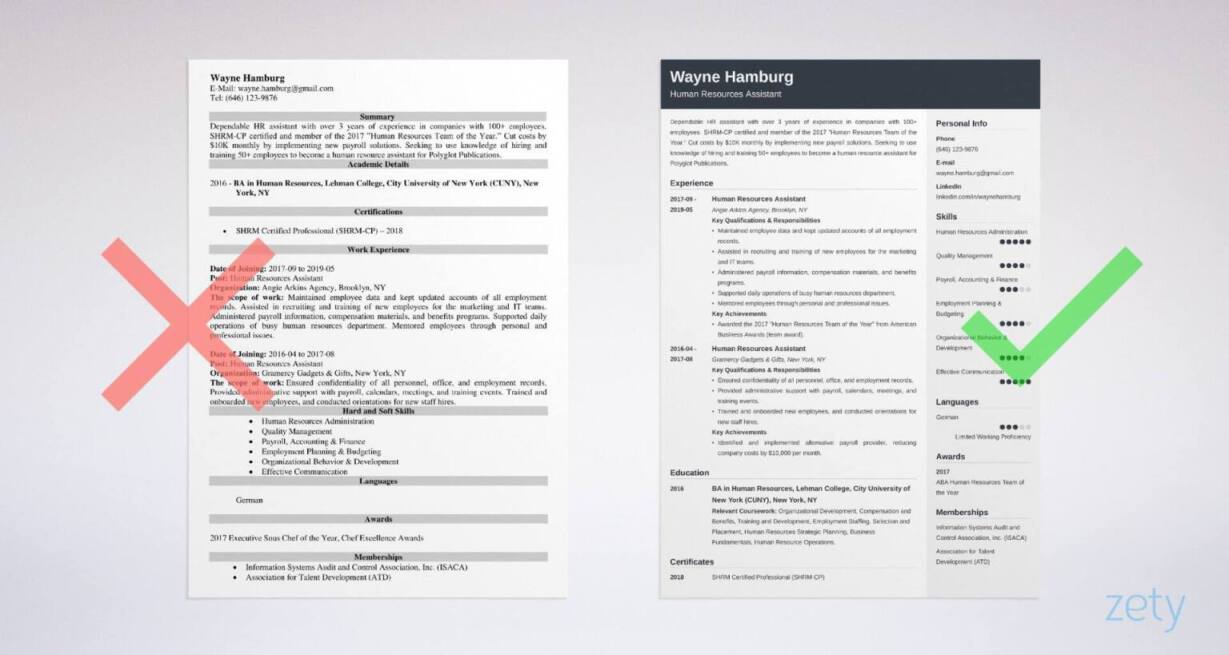





![[m1-2]](https://i.imgur.com/kEZj1sV.jpg) Authentication: The assurance that the communicating entity is the one that it claims to be.
Authentication: The assurance that the communicating entity is the one that it claims to be.

























 Track2Training
You must be logged in to post a comment.