Parrot: A Talking Bird.

Have you ever thought how nice it would be to talk to your pet or animal worldwide? Surprisingly, some species of birds and parrots come into existence here. But can they acknowledge a real conversation?

Probably, yes. The majority of words are definitely barely understood by parrots, according to researchers. However, they are conscious of the situation in which words are spoken and can associate those terms. Suppose a parrot might say “How are you?” when you just enter the room because though they aren’t likely asking for well-being but it has heard you saying that several times. Thus, your pet bird now associates your entrance into the room with that word.

The repeating sounds which you might have observed in parrots are called Mimicry. They mimic a wide variety of sounds, including spoken phrases, groaning gates, and howling animals. The majority of parrots just imitate their owners. They’re not truly stating what they mean. However, some properly taught parrots have developed the ability to comprehend human speech.

However, it is a fact that parrots don’t have vocal cord-like humans. They don’t push air through the vocal cord to create sound. Instead, they guide air over the trachea with the help of their throat muscles (windpipe). They alter the trachea’s thickness and structure to produce various sounds. 

The fun part is parrots are not the only birds who can imitate budgies, cockatiels, and even crows can imitate sounds.

Wish I Could Tell You:Book Review

It is unimaginable to predict one’s personal life. What one has been facing or their past? This book begins with the people in the organization called WeDonate.com a fundraiser that sells stories to create a fundraiser for one in need. However, who knew one could find their love while performing duty.

The story focuses on anusha as she discovers herself in the little world of WeDonate.com, feeling betrayed and saddened. She grudgingly looks for a deserving cause to help as she struggles to deal with her sentiments and the responsibility of earning money for charity. Ananth, who has been on the opposing side, believes that no life is less valuable than another and that no cause is unworthy of support. However, book revolves around two main characters. Ananth is a really decent guy who has a positive state of mind. The man is upbeat and finds beauty in everything and everyone. His general optimism motivates him to sign up with WeDonate.com, a charitable organisation. This group raises money for individuals who are in need as part of its charitable mission. There is a distinctive girl in his life who goes by the name of Mohini and has many hardships and difficulties in life. She thinks and perceives individuals in their most repulsive light. She has been encouraged to write before and has been seeking for the right narrative, but it kind of confounds her. She finally joins the group where two individuals get together in search of a character. Although your mind could lead you to believe otherwise, this book uses illusions to create a reality that is both real and unreal, virtual and tangible. Finally, it might be claimed that both of them are trapped by these WeDonate.com edge.

Moreover,there exists a team behind them dedicate their entire lives to going above and beyond the call of duty to save lives. In front of them lies the digital world of social media, where people watch, participate, judge, make decisions, and occasionally save lives. Staying closer is the only option since their livesโ€”both virtual and realโ€”are so intertwined with the lives of their families. They can’t keep apart from one another.

The past story of the two characters unfolds part by part and their growing out from the past is fascinating. It is not a typical romantic love story that can be expected but something that can not be explained in words. However, some questions that a reader might expect to be answered at the end of the story are incomplete. But the presentation of each theme and plot is commendable and for a teen is a must try!

Exciting films and shows to come out this year

THIS MUCH I KNOW TO BE TRUE

2022 like any other year has a lot of interesting projects that have my attention and I am eagerly waiting for a few films. The 1st film that Iโ€™ll be talking about is THIS MUCH I KNOW TO BE TRUE. This film is a musical journey of a man who sees himself through the devil. It is directed by Andrew Dominik. Nick cave and warren Williams make music which is influenced by the devil. In the trailer, there is a dialogue which goes like โ€œyou have discovered that the veil that separates your ordered life from disarray is very thinโ€. The trailer has some gritty visuals that immediately make you immersed in nick cavesโ€™ world. I am very excited about this project. It is slated to release this July in India.

THIS MUCH I KNOW TO BE TRUE TRAILER
NOPE

The second film that I am looking forward to is NOPE by Jordan Peele. Jordan Peele has delivered some excellent films in the past in the form of US(2021) & GET OUT(2017). US is my personal favourite. It is about a family who finds out that there is an exact clone version of themselves who is trying to kill them. The reason they despise the real family is that theyโ€™ve been living in the dark for their whole life while they get to live a happy and normal life. The thing that makes them envy the other family so much is that they have their bodies and they have their traits but their souls differ. This is the thing that separates them. It was a very interesting watch and that is why I am looking forward to this film which will come out later this year.

NOPE TRAILER
SUCCESSION

The third project is not a film but itโ€™s an HBO series called succession. Succession is probably the best HBO show ever. Itโ€™s about a media conglomerate which is owned by the Roy family. It sheds light on the family politics that go behind the scenes and how a media conglomerate works. We get to see how every member of the Roy family has some personal motive and no one can be trusted. Everyone wants to be at the top and they can go to any margin for it. The show also tells its audience how the Roy family handles their public image by constantly changing the narrative for their own good. Itโ€™s a kind of show that always moves in tandem with what is happening and has happened in the past. The story is so well connected that you can understand the character development of all the actors in the show. The first 3 seasons are already out so watch it if you havenโ€™t already. Season 4 will most likely be out by this yearโ€™s end or the start of 2024.

โ€œExtra flyโ€

Ye belongs from Chicago. He was born in 1977, on 8th June. He used to produce beats for other artists before he transformed into a rapper himself. People around him who gave him work thought more of him as a producer rather than a rapper. He used to cook beats for ROCK-A-FELLA RECORDS. People from the Record label accept it today that they did not see Kanye west becoming the rapper he became today. One of the Artists from the record label said โ€œ I knew he was a rapper but I was like stick to the beats kidโ€. Nobody saw YE coming. When he rapped one of his verses to Pharell Williams, He was quite shocked. Kanye had been trying to get in touch with Pharell for a while but he couldnโ€™t. Pharell was touched by the piece that Kanye did for him. Birth of a jeen-yuhs was taking place.

Kanye has been involved in some questionable moments all his life. But the life he breathes to his music is above all the white noise that he surrounds himself with. Some people can call Kanye’s energy narcissistic and maybe rightly so. But, I believe this is the energy that makes his music alive. His songs are so Kanye that when you listen to them you know itโ€™s Kanye. This energy has given him a different identity that is unique to him and makes him arguably the biggest rapper of his time. His motherโ€™s presence in his life is a big reason for what kanye has achieved today. Donda West died in 2007. He released an album dedicated to his mother in 2021. This shows you how much his mother meant to him. Thereโ€™s a clip in his documentary where his mother is trying to tell him by how he can come off as rude to people sometimes. I expected Kanye to burst out and say something stupid at that moment but he didnโ€™t. He actually accepted it in a way and you could see in his eyes that there was an actual realisation of his action. Donda had her way with Kanye.

Kanye and Donda.

Yeโ€™s biggest downfall in his career was when he started having problems with his mental health in 2016. He was diagnosed with bipolar disorder. In his documentary, he said to one of his team members โ€œ man I took pill yesterday just so I can talk to you normally right nowโ€. This can give you some insight into his state. His decision about running for president didnโ€™t help his public image either. People took it as a big joke and questioned his sanity. You could see by the public appearances he made post-2016 that he was indeed troubled. Nobody exactly knows the reason behind it. But there were a lot of things that happened to him in the last 5 years. Fallout with kid Cudi, divorce, the album pushed back and his mental misery. Yeโ€™s life is so layered and grey. No one can deny that heโ€™s a musical genius but at the same time, some of his acts in the public make him look like a foolish man who is still not over his teenage. There are so many tags you can associate him with. Thatโ€™s what makes him so interesting.

Ye has done a lot of things which he wonโ€™t be proud off but one thing that he did absolutely right was his music. He is such a inspirational artist to so many aspiring rappers. He gave Hip-Hop a much needed new life by his presence.

โ€œ’Cause now I see women as somethin’ to nurture, Not somethin’ to conquerโ€

โƒ Violent crimes by kanye west.

WARREN BUFFET- A MODEL FOR HIS BILLIONAIRE PEERS

By Moksha Grover

Warren Edward Buffett is an American business magnate, investor, and philanthropist. He is currently the chairman and CEO of Berkshire Hathaway. ย Born in Omaha, Nebraska in 1930, Buffet is 91 years old. He is one of the most successful investors of all time and a model for his ultra-rich peers. Buffet also runs Berkshire Hathaway, which owns above 60 companies, including insurer Geico, battery maker Duracell and restaurant chain Dairy Queen.ย  He has a net worth of over $104.4 billion as of August 2021, making him the world’s ninth-wealthiest person[1]. ย โ€œIf you donโ€™t find a way to make money while you sleep, you will work until you dieโ€ is a famous quote said by Warren Edward Buffet.

EARLY LIFE AND CAREER

Warren Buffet displayed his interest in business and investing at a very young age. At age seven, he was inspired for investing in the book โ€œOne Thousand Ways to make $1000โ€. Much of buffets childhood was filled with business ventures. He sold chewing gum, Coca-Cola bottles, and weekly magazines door to door. When in high school, he made money delivering newspapers, selling golf balls and stamps etc. As a sophomore, with one of his friends, he established a large paper route and invested in pinball machines. They are stationed in barber shops and split their profits with the shop owners. They started their business with just $25 and sold their business later for $1200. Buffet also bought 40 acres of Nebraska farmland, by age 15 with the proceeds from earlier business ventures[2].

After completing his graduate degree from Columbia University, Buffett worked for the investment legend Benjamin Graham, in New York City. He considered Benjamin Graham as his mentor and was inspired by him a lot. After Graham retired from his business, buffett went back to his hometown and started running a series of successful hedge funds, known as the Buffett Partnerships.

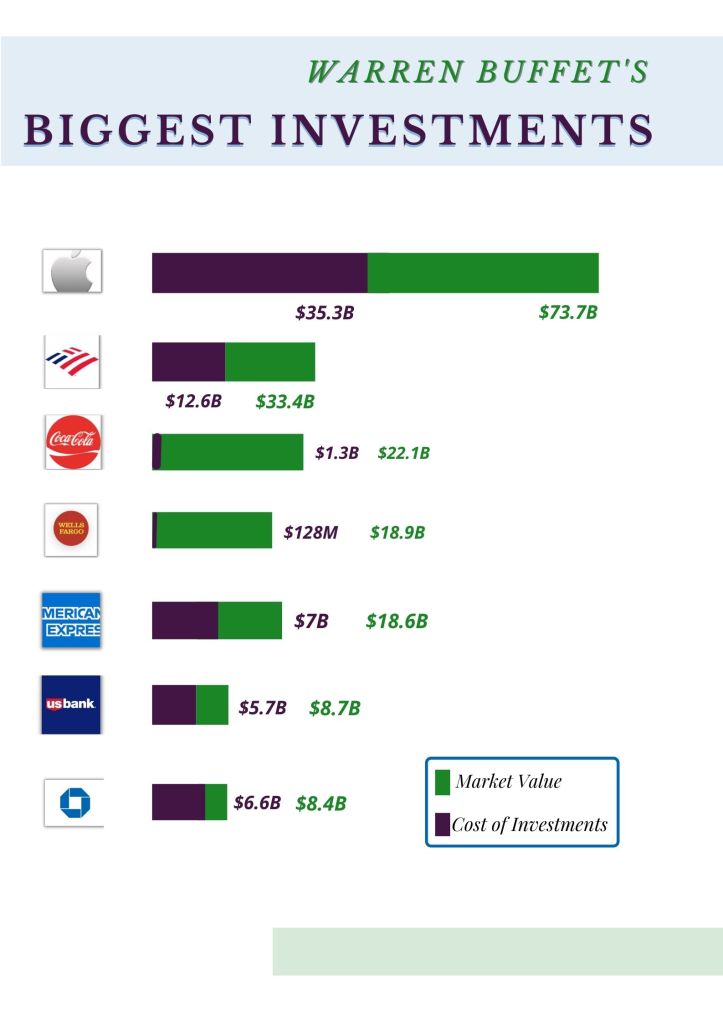
In late1960s, Buffet closed down his original investment business and took over Berkshire Hathaway, a struggling textile maker. He decided to close his business when he saw the stock market being overvalued and made Berkshire Hathaway his primary business activity. Over the decades, with the help of buffet, Berkshire Hathaway turned into a conglomerate with annual sales of $245 billion[3]. It has a market capitalization of $654 billion and employs roughly 360,000 people through its many subsidiaries[4]. With the rise in the value of Berkshireโ€™s stock, many people became rich. Buffet declared employee Greg Abel as his successor, keeping in mind his age-related health risks and long-term, interests. Although buffet has not retired or declared his intention to retire from Berkshire Hathaway. Its shares gained about 25% in the first eight months of 2021[5].

Image source: IndiaStudyChannel.com

LIVING LIFE ON HIS OWN TERMS

Buffet got much of his philosophy from his father, Howard Buffet, who was an American businessman, investor, and politician. He describes this philosophy as trying to โ€œkeep up with the Joneses.โ€. This means that he enjoys living up his life on his own terms and doesnโ€™t care about what others think of him.

Talking about buffetโ€™s personal life, Although, Buffet is a Democrat, he has still voted and donated to both democrats and republicans. He has also described himself as an โ€˜agnostic โ€˜person. His late wife and the foundation named after her that he has funded, the Susan Thompson Buffett Foundation, were and are substantial supporters of reproductive rights organisations that favour access to legal abortions. Warren Buffet married Susan in 1952, who spent her later years in San Francisco. He spent more than 20 years considering himself to be happily married to Susan. After his first wifeโ€™s 2004 death, Buffett married another woman named Astrid Menks, who lived in Omaha, at the same time in a small and informal ceremony.

WARREN BUFFETโ€™S CHARITY

Warren Buffet became the founder of โ€˜The Giving Pledge along with Bill and Melinda French Gates. The Giving Pledge is a campaign to encourage extremely wealthy people to contribute a majority of their wealth to philanthropic causes. Buffet also pledged that more than 99% of his wealth will go to philanthropy, either during his lifetime or at his death[6]. He could have started his own charitable foundation but has contributed his money to five foundations run by others.ย  Until 2021, he served Bill & Melinda Gates Foundation as a trustee and poured most of his charitable money into the foundation.

Buffet says that he has given very little money to his three children Howard Graham Buffett, Peter Buffett and Susan Alice Buffett, who themselves are millionaires and own hundreds of millions of dollars for the foundations they each run. For example, heโ€™s one of corporate Americaโ€™s strongest proponents of women in business. He mentored Tracy Britt Cool for more than a decade as she rose from a financial assistant to CEO of Pampered Chef, a Berkshire subsidiary. Later, she started her own private equity firm, modelled after Berkshire, with Buffettโ€™s support.

Buffet also shared his knowledge of the financial markets and the economy in 1977 and conducted annual shareholder meetings.[7] His annual shareholder meetings, known as โ€œWoodstock for capitalistsโ€ is akin to a Disney vacation for thousands of families each year. Buffett also voluntarily met with scores of college students for decades about eight times a year for a Q&A session and tour of his businesses[8]. Buffet has given more than $4.1 billion to charity[9].

BUFFETโ€™S RULE

Buffet recently admitted that he pays tax less than his secretary. The reason behind this, he told is a system from which he has benefitted a lot. This system lets billionaires pay very low tax bills, partly because it taxes income instead of wealth. For years he advocated for the so-called โ€œBuffett Rule,โ€ a minimum 30% tax on those making more than $1 million a year to remedy the problem[10]. Rich pay less tax when they deduct it from what they have donated to charities is a fact, also recognized by the buffet.

ย For his rules on business, Buffet is a very sensible investor. He only invests in those companies which he has thoroughly researched and understands. Buffett personally lost about $23 billion in the financial crisis of 2008, and his company, Berkshire Hathaway, lost its revered AAA rating[11]. The most important quality, as defined by buffet for an investor is temperament, not intellect. For a successful investor, being with or against the crowd is not the centre of attraction.

Buffet was inspired a lot by the book โ€œThe Intelligent Investorโ€ by Benjamin Graham as it inspired and convinced him to invest in stocks. With the help of this book, he got to know that investing in stocks is equal to owning a piece of the business. So, when Buffet searches for stock to invest in, he always prefers the business that exhibits favourable long-term prospects. Buffet never buys anything unless he can write a particular reason to pay a particular price for that shares of the company and advises all the investors to do the same.

โ€œLeave the children enough so that they can do anything but not enough that they can do nothingโ€ is a famous quote said by buffet to wealthy families for charitable purposes.


[1] John M.Longo, โ€˜Why Warren Buffett Is a Model for His Billionaire Peersโ€™, The Wire (August 30,2021) < https://thewire.in/business/why-warren-buffett-is-a-model-for-his-billionaire-peers> accessed 30th August 2021.

[2] Ibid.

[3] Ibid.

[4] Ibid.

[5] Ibid.

[6] Ibid.

[7] Ibid.

[8] Ibid.

[9] Ibid.

[10] Ibid.

[11] Stephanie Loiacono,โ€™ Rules That Warren Buffett Lives Byโ€™, Investopedia (Jan 12,2021) < https://www.investopedia.com/financial-edge/0210/rules-that-warren-buffett-lives-by.aspx> accessed 30th August,2021.

Evolution of indian cinema

Dadasaheb Phalkeโ€™s โ€˜Raja Harishchandraโ€™ revolutionised an art form which would become a huge influence in almost everyoneโ€™s life. Films form public opinion and evoke different emotions. The way of expression in films is very unique. A book has a way of its own and every art form is unique. But a film can exactly deliver the desired message because it is visual and there are a lot of human elements involved.

The evolution of Indian cinema is divided into different phases. The silent era was the first one. Silent films were produced during the 1890s-1920s. The wrestlers (1899) by H.S bhatavdekar is considered the first Indian film ever by an Indian. It was a film documentary. It was about a wrestling match which was held at the hanging gardens in Bombay. Due to the enthusiasm from a lot of different filmmakers, the Indian film industry rose rapidly. Tickets were affordable to the normal audience. Filmmakers started to incorporate daily Indian social life to make the film more interesting and relatable to the audience.

Alam ara highlights the talkies era. Alam ara was released in 1931. It was the first Indian film which had sound. Joymoti by Jyoti Prasad Agrawala was released in 1935. Jyoti Prasad also went to Berlin to learn more about films. The popular culture of music in films began during this era. Studios started to emerge in main cities like Bombay, Madras and Calcutta. Kisna Kanhiya, the first colour film produced in India came out during this era. A film called wrath was banned by the British raj because it depicted Indian freedom fighters as leaders. A film named Sant Tukaram went to the Venice film festival for its depiction of a saint and a poet. A deadly combination indeed. It was judged as one of the three best films of the year. The seeds of Indian masala film were sown during this era. An Indian masala film has everything. Dance, Music, Drama and Action. This type of film brings out huge crowds into theatre today and is one of the spectacles of India in a way. Although, due to the partition a lot of studios moved to Pakistan. Partition became a hot topic to make films.

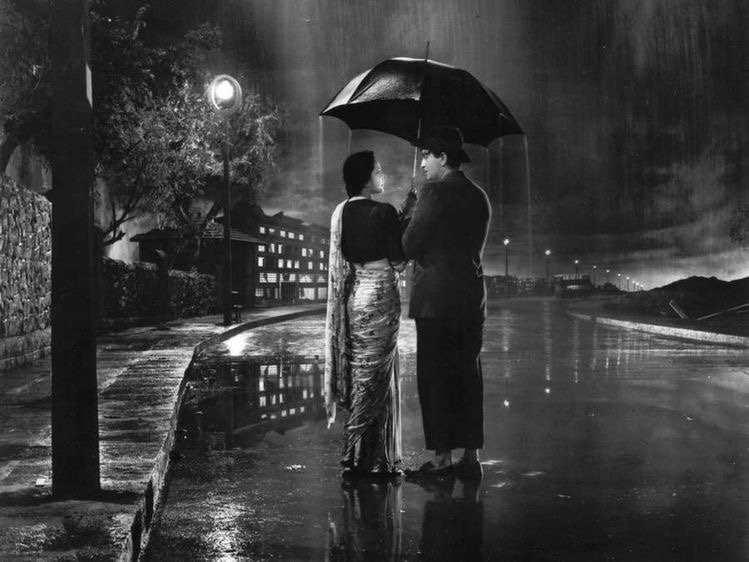
Satyajit ray with his movie reel

The golden era is dedicated to the genius of Satyajit ray. In the third part of the Apu trilogy, thereโ€™s a scene where apu and his friend are just walking beside a railway track. They are chatting about their lives. The talks of APUโ€™s marriage come up among other things. The scene captures the vibe of Calcutta so nonchalantly. Itโ€™s just two friends talking to each other. The flow of the scene feels so natural. Satyajit rayโ€™s films teleport you into the Calcutta of the 60s. Satyajit Ray was the master of social realism. Another film is boot polish directed by Prakash Arora. Thereโ€™s a scene in the film in which Bhola(brother) is telling belt(sister) not to beg for a living. Sheโ€™s starving and the only way she can feed herself is by begging. But because it goes against his brotherโ€™s philosophical ideology, she chooses to resist the temptation. But the poor girl canโ€™t resist her hunger for long and picks up a coin and right after that her brother slaps her. She says while crying โ€œbhook Lagi hai Bhaiโ€. Now his brother has to choose between his honour and duties. He can choose to not pick up the coin and maintain his moral high ground or he can feed her sister. The scene captures this conflict so perfectly. The camera captures the whole environment of the room. This type of film was made during this era. Films based on social realism. Masala films also became very popular during this time. Art films and commercial films started to co-exist.

The FFCโ€™s art film orientation came under criticism for not pushing enough commercial films. The duo of Salim-Javed revitalised commercial cinema. They always came up with gritty action thrillers like zanjeer and deewar. They are considered the greatest screenwriters of all time. Crime action films became very popular during this era. The peak of masala films. Although, this made the audiences used to a very predictable plot. Anyone would be able to anticipate what will happen next because it became so predictable. All-time blockbusters like Sholay came out in 1975. The term Bollywood was also coined during this era.

In the late 1980s, everyone was tired of watching the same old action thrillers. The footfalls became less and less until disco dancers. Disco dancers introduced the concept of disco in India. Disco dancer was the biggest hit of the year even in Russia. It introduced Bappi Lahiri as a music director. Mithun and Bappi Lahiri have given countless hits together. Then came the era of romance. Yash raj Chopraโ€™s DDLJ sums up the decade of the 90s. Shah rukh khan became a sensation through his charming acting in romantic films like Kuch Kuch Hota hai , Dil to Pagal hai etc. He gained massive popularity worldwide. Sadly though, as the concept of Bollywood evolved. It became more about money rather than the art as in any other industry. The moment anything becomes an industry. It loses its beautiful touch. Thatโ€™s what happened with Bollywood. Filmmakers in Europe or France can dare to think about anything today and make something about it. The problem with us is that we cannot even afford to think anything outside the box. Our bandwidth as an audience is very low. We only like to watch films of certain kinds.

The regional cinema has also grown immensely and in some ways is doing better than the Hindi film industry. The film chain in India today is very strong. Thank you to the Dadasahebs, Satyajitโ€™s and anands of India.

Assassination of Shinzo Abe: My request to the Union Government to place a Statue of Abe in New Delhi ย 

Shinzo Abe was Japan’s longest-serving Prime Minister, held office in 2006 for one year and again from 2012 to 2020 when he was forced to step down due to the debilitating bowel condition ulcerative colitis. And unfortunately, on 8 July 2022, he was killed by one person from Japan Tetsuya Yamagami who was previously in the Japanese navy, known as the Japanese Maritime Self-Defence Force (JMSDF). As a senior citizen, I am surprised about the security system of Japan and its intelligent department. I personally feel both failed because a former Prime Minister was not protected and publicly he was killed. (wikipedia.org/wiki/Shinzo_Abe).

Shinzo Abe was born on 21 September 1954 in Tokyo to a renowned political family with good economic influence throughout pre-war, wartime, and post-war Japan. His family was originally from Yamaguchi Prefecture.

His paternal grandfather Kan Abe was a Yamaguchi landowner who served in the House of Representatives during World War II, while his father Shintaro Abe served in the House of Representatives from 1958 to 1991, with stints as Chief Cabinet Secretary, Minister for International Trade, and Industry, and Minister for Foreign Affairs During World War II.

Abe completed his  public administration and graduated with a bachelor’s degree in political science from Seikei University in 1977, Japan. He, later on, moved to the United States and studied public policy at the University of Southern California’s School of Policy, Planning, and Development (presently  the USC Price School of Public Policy) for three semesters.  In April 1979, Abe started working for Kobe Steel.  He left the company in 1982 and pursued a number of government positions including executive assistant to the Minister for Foreign Affairs, private secretary to the chairperson of the LDP General Council, and private secretary to the LDP secretary-general (wikipedia.org/wiki/Shinzo_Abe). Prime Minister Shinzo Abe was the chief guest at this year’s Republic Day in 2014. At an Indian Council of World Affairs (ICWA) lecture in September 2011, Abe said: “a strong India is in the best interest of Japan, and a strong Japan is in the best interest of India.” 

India’s expression of friendship was its gratitude for the Japanese help to the Indian National Army (INA). Japan had released Indian prisoners of war at the request of Netaji Subhas Chandra Bose to help build the INA which fought alongside the Japanese in Singapore, Burma, and northeast India. The war cemetery in Imphal where Indian and Japanese soldiers were buried together is a testimony to that (mea.gov.in/in-focus-article.htm?22762). 

 India declares a day of state mourning for Shinzo Abe’s death. Prime Minister Narendra Modi stated, โ€œAs a mark of our deepest respect for former Prime Minister Abe Shinzo, a one-day national mourning shall be observed on 9 July 2022โ€. The national flag will be at half-mast on all buildings across India for the day of mourning across India, and there will be no official entertainment.

Vice president M Venkaiah Naidu and Union Minister Hardeep Puri have also expressed anguish at the death of Abe and recalled his role to develop a good relationship with India. Our former Prime Minister Manmohan Singh and Congress leader Rahul Gandhi too expressed deep shock and sorrow at the death of Shinzo Abe. Thus, it is evident that political leaders of India irrespective of political parties have liked Abe. 

Although Shinzo Abe was assassinated, Indians will remember him generation after generation. 

I request our Union Government to place a statue of Shinzo Abe in an important place in New Delhi. 

Decoding Kenyaโ€™s police brutality and the core reasons behind it.

A police brutality art.

In February 2021, there was a brutal police attack in one of the informal settlements of Kenya called Mathara. A cop shot one of the teenagers, Dominic Kulema, leaving him severely injured. He ran inside a youth centre to save himself. He pleaded to the police for his life with his hands raised. But, the Police forced him out of the building and killed him. This story hardly made it to any news whatsoever. This is part of a normalised pattern that exists in the informal settlements of Kenya. Police kill a lot of young people without any criminal background because they think it is โ€œmorally rightโ€.

In 2020, A total number of 167 people were killed or misplaced according to missing voices Kenya (Human rights organisation that tracks extrajudicial killings). Despite well-funded police reforms launched by the government, this brutal practise has not stopped. Some anthropologists are trying to find the grassroots reasons for these activities and it dates back to colonialism. It is also a moral conflict country like Kenya. Police kill young people because they think it is morally right to do.

The foundations of the social division and brutal police system were laid in the first few decades of its existence. In 1899, Great Britain established the settlement as a rail depot between the port of Mombasa and the Nile River. Nairobi was named the capital of Britainโ€™s east Africa protectorate. The European settlers started to capture the better lands of the settlement and left the unhygienic and disease-prone areas for the African workers and localities. They never developed the basic infrastructure that was needed in this settlement.

In 1920, Kenya was declared an official colony, the British also established the Kenyan police force in the same year. African men were required to wear a box around their neck with their name, tribe and employer written on it. These police forces monitored their movement within the city. Administrators had the power to evict or expel African workers which basically means they had the power to kill them.

In the 1950s, The Kenya Land and Freedom Army, comprised of landless Africans gathered and fought for their lost lands, terrorising white settlers. Seeing this, the Administration enlisted a Home Guard, comprised of native Africans working for the colonial government and were fully given the authority to enforce the law and they did that very brutality. It was later formalised as administration police (AP).

A group of African people hired by the colonial government.

This dual system existed even after independence in 1963. In 2019, the AP was absorbed by the Kenya police force. While AP conducted raids, the police force was focused on more day-to-day policing of the affluent areas in Kenya.

Kenya is not the only country that deals with dual law practising. In the united states of America, some people are treated democratically while some minorities are treated harshly.

The day Kulema died, his friend collins witnessed everything and immediately approached the Mathare social justice centre (MSJC), a ray of hope in the doomed land of Kenya. It was co-founded by anthropologist Kimari. MSJC has been trying to track this kind of story for years. They rely upon local community sources like collins. They released their first report of epidemic killings in Nairobi in 2017. Kinnari calls this โ€œ A systematic annihilation of young people โ€œ. In February 2021, MSJC reported 14 killings of young people. These brutal police forces also target the families of young people.

They perform female genital mutilation which is just beyond being inhuman.

Organisations like MSJC have made people in Mathara realise their need for basic human rights. It has made people come together and fight for each other. A supporter of MSJC said and I quote โ€œtheir power vanishes the moment we stop fearing โ€œ. Due to the active voice raised by this organisation, the killings have decreased and women are safer now. There is a visible fear in the police’s minds about killing more people. While this is a huge fight, we can already see small changes in place due to the efforts of organisations like these.

Reference – https://www.sapiens.org โ€บ cultureWhat Kenya’s Killer Cops Reveal About Police Culture – Sapiens.org

End of the Revolutionary Morgan Era and The future of England team

Eoin Morgan after scoring a century against Afghanistan in the 2019 world cup

Eoin Morgan has announced his retirement from international cricket. His last appearance in International Cricket was against the Netherlands on June 19th,2022. Morgan was handed over the England captaincy just before the 2015 World Cup. Eoin Morgan changed the way England approached white-ball cricket forever. Under Morganโ€™s captaincy, England took an all-out aggressive approach on the field. Almost everyone in Englandโ€™s playing 11 can bat at present. The aggressive longevity in their batting is Morganโ€™s biggest gift to England.

He led England to a World Cup win in the dramatic final of 2019. He Led England twice in the T20 World Cup. They were the finalists in 2016 and semi-finalists in 2021. Morgan took KKR to the final of IPL from a situation where no one expected them to even qualify for the play-offs. Morgan believed in a more tactical approach towards the game and worked in tandem with Nathan Leamon. This strategy has helped him achieve a lot of accolades. Morgan took his National Side from a position of disarray to ecstasy. We should remember his legacy for the time to come. Itโ€™d be interesting to see where Jos Buttler takes England from now.

Jos Buttler after scoring a century for England in one day internationals

Jos Buttler, in his interview with sky sports, explained how the pressure on him is more than ever because of the legacy that Morgan is leaving behind. England has almost won all the bilateral series at home in the last few years. Under Morganโ€™s captaincy, England won 76 one-day internationals out of 126 matches. And in T20 internationals, they won 42 out of 72 matches with 27 of them being Losses, 2 ties and 1 no result. This is a fantastic record for any captain. Jos Buttler also talked about how some players will be unavailable for white-ball games due to their red ball duty in the coming time.

However, Morgan will continue to play domestic cricket and will skipper his THE100 side London Spirit. We might also see him in next yearโ€™s IPL if he finds his lost form back. With all that said, The future of Englandโ€™s white-ball cricket is in the hands of the Buttler-Mott pair. Their Next assignment is against the Indians which begins with the 1st T20 internationals on the 7th of July. This will be a mouth-watering series as both the sides are top quality and have some of the best players in the world.

Englandโ€™s red-ball team is also flying high under the leadership of ben stokes. They recently thrashed New Zealand 3-0 on their home soil and won the test against India to level the series. The โ€˜bazballโ€™ formula has worked wonders for the red ball side as they have chased scores of 250+ 4 consecutive times in the second innings. This is a quite remarkable landmark. Although, itโ€™d be interesting to see if they can sustain this formula going forward on tough pitches. Australiaโ€™s best Test Batsman Steve Smith said โ€œ itโ€™s been exciting. Iโ€™m just intrigued to see how long it lasts if itโ€™s sustainable, โ€œ Smith told the reporters ahead of the 2nd test between Australia and Sri Lanka. He believes that this formula may not work on a grassy pitches with the likes of Josh Hazlewood , Pat Cummins and Mitchell starc storming in to bowl. Let’s see what destiny holds for these new England Sides.

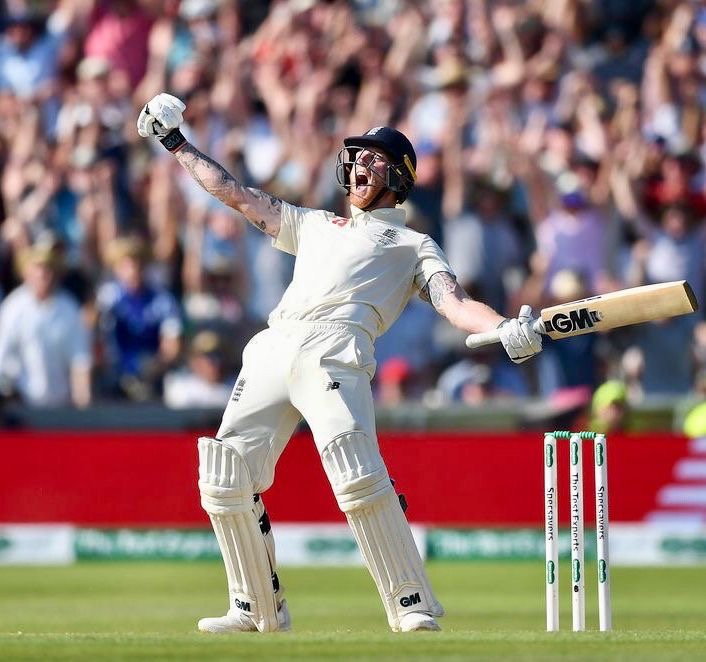
Ben stokes after the iconic Headingly win in 2019.

BITCOIN VS GOLD: WHAT IS THE FUTURE OF INVESTMENTS?

By Moksha Grover

Today, most people have shifted their focus toward investments for the purpose of strengthening their financial position. While there are many ways to strengthen oneโ€™s financial position, investment is considered to be the most apposite way. The covid pandemic has taught us a lot about different aspects of life. However, most importantly it has highlighted our way of savings and investments. During tough phases like lockdown, almost everyone suffered financially and was forced to make compromises within their lifestyle. Only those who made wise money decisions at the right time were left uncompromised.

During the pandemic, it was observed that more and more people started investing in safe-haven assets. The most popular safe-haven investment during the covid pandemic has been gold. Gold investments, as we all know, are said to give good returns most of the time. It is also viewed as one of the safest options for investments. However, nowadays, investment in gold is being challenged by cryptocurrencies. Cryptocurrencies are now being regarded as the new hot cake in the world of investments and are said to give even more returns than gold. The most trending and successful cryptocurrency is Bitcoin.

WHAT IS BITCOIN?

Bitcoin is termed a digital currency which is free of any central control or the oversight of banks or governments. Instead, it depends upon peer-to-peer software and cryptography. It is also known as digital gold because its properties are very similar to that of gold. Like gold, bitcoin too has a fixed supply and derives its value through its limited supply and growing consumer demand. Some of the pros and cons of this cryptocurrency are: –

PROS

  • Since bitcoin is entirely digital, it can be easily sold a transferred to another personโ€™s account.
  • Bitcoin has the potential to give higher returns on investments because of its growing market.
  • Bitcoin can be used as a currency everywhere. It can be used for payments at any store that accepts bitcoin.
  • Investing in bitcoin now could lead to big payoffs down the road. Because bitcoin is an emerging investment and has the potential to increase in value.

CONS 

  • There is a greater degree of risk involved in bitcoin as it is extremely volatile and susceptible to large fluctuations.
  • Bitcoin is subjected to scams or stealing as it is completely digital and so web-based wallets have the possibility to be hacked.
  • Bitcoinโ€™s value is totally dependent upon the phenomena of demand and supply. If the demand for other cryptocurrencies increases more than the demand for bitcoin, its value can decrease.

WHAT IS INVESTMENT IN GOLD?

Gold is a valuable yellow metal and is used for various consumer goods such as jewellery, and it is not in abundance. Gold is a must for all the special occasions in India ranging from weddings to other special functions. In fact, one of the largest markets for gold is found in India. Gold has a big significance in the countryโ€™s cultural value and is considered to be a store of value, a symbol of wealth and status and a fundamental part of many rituals. Investment in gold gives fruitful results most of the time. Some of the pros and cons of Gold investments are: –

PROS

  • Investment in gold is always a stable option as its value increases over time; even if the economy gets into recession, its value will not decrease.
  • If you have your gold stored in a precious metals IRA, it will be stored in a specific, safe vault that is overseen by a custodian who will manage your account. These accounts are often insured up to a certain amount, much like a traditional bank account, so you can rest easy knowing your investment is safe[1].
  • Gold is considered to be an ideal baseline for trading purposes and is being used up as long as civilizations have been around. So it is durable in nature.

CONS

  • Gold can be used as a currency only during an economic crisis. It cannot be used as a currency to buy something in normal times.
  • When you invest in gold you need to keep that physical item stored carefully and safely.

DIFFERENCE BETWEEN BITCOIN AND GOLD

CHARACTERISTICSBITCOINGOLD
Legality, Transparency and safetyBitcoin has safety issues and is not that transparent and legalGold ranks above bitcoin in safety, legality and transparency.
VolatilityBitcoin is extremely volatile. It is more susceptible to market whims and newsGold is a safer asset and is less volatile
Baseline ValueBitcoin has less baseline value as it is based on a full banking system and many people donโ€™t have access to online banking services.As gold is used in a variety of ways, therefore, it has more baseline value than bitcoin.
RarityRareRare
LiquidityLiquidLiquid

WHICH TYPE OF INVESTMENT SHOULD BE CONSIDERED? GOLD OR BITCOIN

According to billionaire Ray Dalio, bitcoin is just a digital version of gold but he prefers physical gold over bitcoin. โ€œIf you put a gun to my head, and you said, โ€˜I can only have one,โ€™โ€ says Dalio. โ€œI would choose gold.โ€ Hereโ€™s why he prefers investment in gold over bitcoin[2].

  • Gold has thousands of years of historical record as a store value and doesnโ€™t face the same competition risks as bitcoin has
  • Unlike bitcoin, gold is very less volatile. Its volatility is just one-fifth of the volatility of bitcoin.
  • Cryptocurrencies can never replace metals like gold and silver as they are being used for centuries in every corner of the world and have a very strong economic standing as compared to bitcoin. So Cryptocurrencies like bitcoin can only help increase the value of these metals but cannot replace them.
  • Gold has offered a very high degree of longevity but such degree of longevity offered by bitcoin is highly questionable.

FINAL VERDICT

Both bitcoin and gold have their own advantages and disadvantages. For now, it is very hard to predict whether an investment in gold will result in better returns or investment in bitcoin. Bitcoin, today is said to be giving more returns than gold. It is alleged that Bitcoin’s market cap will surpass gold’s market cap by 2030. However, nothing is for sure now. Many people prefer gold investments, at the same time many people have shifted towards investments in bitcoin. Bitcoin has a fantastic upside and limited downside, while gold has a more traditional risk-reward balance[3]. Bitcoin is good for short-term investments and getting high returns on it and gold is good for long-term investments and gives relatively lower returns than bitcoin. It is completely the choice of the investor regarding the kind of investment he/ she wants to take up. An investor can invest in bitcoin or gold or in both. It is completely the choice of the investor. But it is advisable to invest in both bitcoin as well as gold as it will help you diversify your investments and increase your chances of high returns.


[1] โ€˜BITCOIN VS GOLD: WHICH IS BETTER?โ€™, NATIONWIDE COIN & BULLION RESERVE < https://nationwidecoins.com/bitcoin-vs-gold-which-is-the-better-investment/> accessed 11th September 2021

[2] Jade Scipioni, โ€˜Bitcoin vs. gold: Hereโ€™s what billionaire Ray Dalio thinks, make it (4th August 2021) < https://www.cnbc.com/2021/08/04/bitcoin-vs-gold-heres-what-billionaire-ray-dalio-thinks.html> accessed 11th September 2021

[3] Ravi Singhal, โ€˜Gold vs Bitcoin: Which one is a better option for investment?โ€™, The Economic Times (8th August 2021) <https://economictimes.indiatimes.com/markets/cryptocurrency/gold-vs-bitcoin-which-one-is-a-better-option-for-investment/articleshow/85148997.cms?from=mdr accessed 11th September 2021

Team India will be led by Shikhar Dhawan in the ODI series against WI.

The three-match ODI series against the West Indies will be contested at the Queen’s Park Oval in Port of Spain, Trinidad, and the teams have been chosen by the all-India Senior Selection Committee.

Team India will be led by batter Shikha Dhawan. As vice captain for the three-match ODI series, Ravindra Jadeja.

Starting on July 22, the Men in Blue will face the West Indies in a three-match ODI series and a five-match T201 series. The last game of the multi-format series between Team India and England will be played on July 17.

Senior players that were given a break from the ODIs include star batsman Virat Kohli, bowler Jasprit Bumrah, and batsman Rohit Sharma.

After missing the home series against South Africa, Kohli, who was formerly famed for his brilliant batting exploits, struggled to regain his form. In the fifth Test against England at Edgbaston, he managed to score just 31 runs.

Bumrah, the captain of team India, astonished everyone at the Edgbaston with his fast bowling and aggressive batting, breaking the previous record of 35 runs in one over by Stuart Broad.

The following players will represent India in the three one-day internationals: Shikhar Dhawan (captain), Ruturaj Gaikwad, Shubman Gill, Deepak Hooda, Suryakumar Yadav, Shreyas Lyer, Ishan Kishan (wk), Sanju Samson (wk), Ravindra Jadeja (vice-captain), Shardul Thakur, Yuzvendra Chahal, Axar

Work culture

work culture is defined as the attitudes and behaviors of employees in an organization. Many things affect corporate culture, from work environment (ok, so ping-pong table doesn’t matter), policies, leadership, goals, values โ€‹โ€‹and mission. A positive work culture doesn’t just happen. Careful thought and cultivation is required. If you haven’t thought about your organizational culture, chances are it’s not the place to be. This can mean big consequences. Employees who are physically and mentally stressed aren’t just less engaged. They are also more likely to call for unemployment and eventually leave the company, leading to sky-high turnover and turnover rates. This can be costly for organizations. Organizations with a positive work environment have more productive and loyal employees. Fortunately, there are plenty of ways to improve the employee experience. Promoting diversity, transparency and understanding can do wonders for a business. In addition, visible and accessible leaders will inspire employees and update management on day-to-day issues. This means more employee retention, reduced absenteeism, and most importantly, happier, healthier employees.

IMPORTANCE OF WORK CULTURE

Culture is a complex concept that is constantly evolving in the workplace based on many factors. While some people prefer a more traditional work culture and others want something more modern and fun, all healthy work cultures have a lot in common. Look for the following signs of a thriving work culture when reviewing potential employers: Equity, Expression, Communication, Recognition and accountability.

When everyone working in a company is held accountable for their behavior, it indicates a healthy work environment. A balanced workplace allows everyone to feel comfortable enough to acknowledge their ideas and mistakes. Open accountability allows every employee to learn from challenges instead of avoiding them.

Accountability fosters a work culture based on teamwork, open communication, reliability and accountability.

Equity Companies that treat all their employees equally often have a healthy work culture. Every position in the organization counts, and giving everyone a chance boosts employee morale. Workplace bias is a sign of a toxic work culture and can cause feelings of distrust and resentment among colleagues, making a fair work environment essential for employees. any positive work culture.

Expressions People are generally happier, more productive and more focused when they feel able to express themselves at work. If employees have some freedom in their personal style and how they decorate their workspace, it shows a comfortable level of work culture.

Communication Open communication is essential for a productive work environment. Everyone in the organization needs to understand how to give and receive feedback, share ideas, collaborate, and solve problems. All teams have occasional interpersonal conflicts, but a functional work culture will allow them to solve problems and work as a team despite any challenge. Avoid organizations with a work culture where people feel unable to voice conflicts or concerns as there won’t be much room for growth.

Recognition A developed work culture recognizes employee successes and rewards people when they succeed. In a healthy work environment, management will find the positive characteristics of all team members and encourage the use of their talents. Employee recognition, from frequent verbal praise to competitive salaries, can create an office culture of mutual appreciation and respect.

The importance of a positive work culture

People need healthy environments to thrive, and this is especially true in the workplace. The attitudes and behaviors you interact with on a daily basis affect how you feel both at work and at home. The evolving work culture affects every aspect of the company and its people. Here are reasons why a healthy workplace culture is important: Better hiring choices Employee happiness Employee retention Performance quality Reputation

Better recruiting options Managers in an organization with a successful work culture know how to attract and select new employees who share their vision. We will likely be attracted to companies that share our values โ€‹โ€‹and the type of culture in which we feel comfortable. A healthy work culture has like-minded professionals who are compatible with each other and work together towards common goals.

Happy Employees Your satisfaction with your workplace culture has a direct impact on your happiness in the workplace. A thriving work culture helps people find meaning and pride in their work, while a toxic work culture can make even the most passionate employee unhappy at work. One of the most important parts of a strong work culture is a balance between career and personal lives, and companies can help keep their employees happy by respecting their lives in general. Employee retention A good work culture provides stability to talented employees and allows them to grow within the company, rather than limiting them to a specific role or level of achievement. Happy employees often want to stay in their jobs, which makes workplace culture key to reducing employee turnover and connecting qualified candidates to long-term careers. .

Quality Performance Employees who like to come to work because of a positive culture are generally more productive and create high-quality work. The work atmosphere is a great motivator that encourages people to invest in their work, especially since successful work environments recognize and celebrate hard work and success. Reputation Having a healthy work culture creates a positive reputation and credibility for a company and the people who work there.

A pleasant work environment is an important asset in attracting talent. Companies with a mission to raise morale, empower their employees, and build positive community relationships through them.

Right to Information

The Right to Information Act 2005 requires prompt responses to citizens’ requests for government information. This is an initiative of the Department of Personnel and Training of the Ministry of Personnel, Public Claims and Pensions to provide an RTI portal for citizens to quickly find information on the details of welfare agencies. magistrates, PIOs, etc. in addition to accessing RTI/disclosure related information posted on the web by various public authorities under Government of India as well as State Government.

It includes permissions –
I. check work, documents, records.

ii. notes, extracts or certified copies of documents
or recordings.

iii. certified material sampling.

iv. get information in the form of hard copies, discs,
disc, tape, video tape or anything else
electronic or print.

Purpose of the Right to Information Act:

The fundamental purpose of the Right to Information Act is to empower citizens, promote transparency and accountability in government operations, curb corruption, and make our democracy real. effective for the people. It goes without saying that a well-informed citizenry is better equipped to ensure the necessary vigilance over governance tools and to make government more accountable to those under control. . The law is a big step forward in providing information to the people about government activities.

The RTI Bill was passed by the Indian Parliament on June 15, 2005 and came into force on October 12, 2005. On average more than 4,800 RTI applications are filed each day. In the first ten years of the law’s entry into force, more than 17,500,000 applications were filed.
Although the right to information is not considered a fundamental right in the Constitution of India, it protects the fundamental rights of freedom of speech and expression under Article 19(1)(a) and the right to life and individual liberties under Article 21 are guaranteed by the Constitution. Authorities under the RTI Act 2005 are known as public authorities. The Public Information Officer (PIO) or first appellate body in public agencies performs the quasi-judicial function of adjudicating petitions and appeals, respectively. This law was enacted to strengthen the fundamental right in the Indian constitution of “freedom of speech”. Since RTI is implied in the right to freedom of speech and expression under Section 19 of the Constitution of India, it is an implied fundamental right.

When it comes to RTI, there are watchdogs at many levels to ensure that the law is followed in spirit and in writing. The law adopts a โ€œdo or cancelโ€ approach, in addition to setting out a mechanism for disseminating information. Every government organization must appoint a staff member as a Public Information Officer (PIO). When a department receives an RTI request, the PIO is responsible for providing the information to the requester within 30 days. Failure to do so may mean that the PIO may be fined. The longer a PIO causes an applicant to wait, the greater the penalty imposed on them. There have been cases where PIOs were asked to deduct an amount of thousands of rupees as a penalty. Each state has an information committee, consisting of a chief information officer and several information commissioners. Former judges, IAS, IPS officials with unverifiable backgrounds are appointed to these positions. Above them hierarchically are the Central Information Commission and below them are the first and second appeals agencies to ensure that applicants get the RTI information they have requested.

Utilization of public funds

The money the government collects is income from direct taxes, indirect taxes, non-tax revenues, and external funding. This public fund is only spent according to the law.
The use of public funds to provide public services, grants and aid to businesses and the disadvantaged, to provide social benefits such as social benefits and pensions to eligible citizens fair and equitable, and purchasing goods and services legally or ethically, the government is forced to consolidate financial activities, take into account the specificity of expenditures, determine the relationship production between spending and benefits, revealing immediate or future budgetary impact, implementing effective and efficient spending at all levels, adhering to performance-based budgets, and defining” public spending code”.
Public funds are best used if expenditures are in accordance with the law, in accordance with generally accepted standards, considered worthy of the money spent on something, and uphold responsibility. Financial accountability and control values โ€‹โ€‹the most efficient use of operational resources and inputs.

The accounts of Government are retained in three parts:-

  1. Consolidated Funds of India
  2. Contingency Funds of India
  3. Public Account

Consolidated Funds of India

Government of India has received all revenue in the form of taxes like income tax, central excise tax, customs and other revenues paid to government in government business i.e. is the non-tax revenue credited to the Consolidated Fund. was established under Section 266(1) of the Constitution of India. Likewise, all government-contracted loans through the issuance of public notices, treasury bills (domestic debt) and loans from foreign governments and international organizations (foreign debt) are credited to this fund. All government expenditures are derived from this fund and no amount may be withdrawn from the fund without the permission of Parliament.

Contingency Funds of India

The Contingency Fund of India records the transactions related to the Provident Fund established by the Government of India under Article 267 of the Constitution of India. The figure of this fund is Rs. 50 crores. Advances from the fund made to meet unforeseen expenses will be fully deducted from the fund as soon as the National Assembly authorizes additional expenditure. Thus, this fund acts more or less like an imprest account of the Government of India and is held by the Secretary of the Government of India, Ministry of Finance, Department of Economic Affairs in the name of the President.

Public Account

In Public Accounts under Section 266(2) of the Constitution, transactions involving debts other than those included in the Consolidation Fund of India. Transactions under Accounts Payable, Deposits and Advances in this section are transactions for which the government is obligated to repay the amount received or to seek recovery of the amounts paid. Transactions related to “Money Transfer” and “Thrill” include all payment procedures. The initial debits or credits of these heads will eventually be offset by corresponding receipts or payments. Revenue from public accounts is not ordinary government revenue. Therefore, Congressional authorization for payments from public accounts is not required.

Factors constraining utilization of plan

Under- Utilization by States on the Plan can be attributed to institutional and procedural bottlenecks in the implementation of the Plan outlines and to deficiencies in the planning process at the district level. . These factors must be taken into account in order to strengthen States’ capacity to make more efficient use of the larger allocations to the social sectors. Decentralized planning is implemented in the periphery, due to lack of personnel to carry out planning activities, not enough attention has been paid to enhancing their capacity and participation role of the community in the planning process is small. The bottlenecks in the budget process in the programs, such as delays in capital turnover, the issuance of sanctions on expenditures, and decision-making in the states is centralized, not sufficient fiscal decentralization for district/county governments and uniform standards of centrally funded plans for all states. Furthermore, the absence of need-based budgeting in plans, which is often done without a proper unit cost analysis on the basis, means that allocations for some plans are decided upon. determined in a top-down and impractical manner. Systemic weakness, manifested in the lack of trained and regular staff in various key roles such as program manager, finance/accounting and frontline service delivery; this has contributed to weakening the capacity of the state government apparatus in implementing the mechanisms of the Plan. Regarding the systemic weaknesses in the state government system, it can be argued that unplanned state spending plays an important role in strengthening the overall capacity of the government apparatus. This affects the capacity of the state government apparatus in terms of the availability of qualified permanent staff and the adequacy of the government infrastructure to implement the Plan’s programmes. However, over the past decade, unplanned spending in the social sectors has been controlled by many states because of the current fiscal policy’s emphasis on reducing deficits by limiting public spending. As a result, the capacity of the government apparatus to implement the Plan’s programs/programs was controlled.

Emotional intelligence-concepts, and their utilities and application in administration and governance

One of the most fundamental and important aspects of the human experience is our ability to sense emotions. Without it, our existence would be one-dimensional and nowhere as rich and dynamic as it is. We feel joy and euphoria when we achieve something, sadness when we lose it, and disappointment when things don’t go our way. All of these are manifestations of the different emotions we experience.

NATURE OF EMOTIONAL INTELLIGENCE

The essence of emotional intelligence as envisioned by Goleman can be summarized as follows;
It is the ability to control the emotions of others, including groups, individuals and closed people. It is a process of knowing what is good or bad and how to go from bad to good. It is susceptible to development or damage as a result of one’s life experiences. It is not genetically fixed, rather it is widely learned and continues to develop throughout life. It develops with age and experience as a person moves from childhood to adulthood. Both men and women have a personal profile of strengths and weaknesses in emotional intelligence abilities. Women tend to be stronger in skills based on empathy and social skills, while men do better in skills based on self-regulation.

BENEFITS OF EMOTIONAL INTELLIGENCE

EI has implications for many types of our lives, from personal relationships to professional settings. Some of the benefits are as follows;
Allows individuals to harness not only thinking skills but also the information and power that emotions bring. Take a realistic and realistic view of emotions as opposed to traditional notions that encourage unhealthy emotional suppression. Facilitate understanding of self and others beyond superficial information. Encourage and enable empathy to the quality of interpersonal interactions
It adds a competitive advantage over mere cognitive intelligence and technical skill so that individuals can pursue excellence and success using a wide range of intelligences. Allows individuals to control their emotions. This means that a person can intensely feel desired emotions (e.g. joy, love, etc.) and avoid unwanted emotions like anger, jealousy, etc.

Application of emotional intelligence in administration and governance

Many administrative staff are extremely talented, exceptionally intelligent and have very high IQs. They excel in computer science, science, and math. But they have difficulty establishing social relationships. Many of them are rebellious and ruthless in their reactions to the outside world. They have little or no feelings for the people around them. They feel physiologically uncooperative in their relationships and lack social kindness or even a personal social life.

People with high emotional intelligence know how to listen to their feelings and control their intensity so that they are not influenced by others. Emotionally intelligent people know how to manage troublesome emotions. Emotionally intelligent people feel the effects of their emotions on others. People with emotional intelligence know how to use their strengths and compensate for their weaknesses. Emotionally intelligent people listen to other people’s feelings and can relate to them. Emotionally intelligent people act ethically and build trust through honesty and consistency. In the field of management and operations, emotional intelligence includes 5 main elements of emotional intelligence: Self awareness. Self-regulating. Motivation. Empathy. Social ability. These emotional intelligence skills are essential for successful leadership. Self-awareness and agency skills for accurate and confident self-assessment help emotionally intelligent decision-makers determine their appropriate role in the decision-making process (Goleman, 2001). Self-management and its behavioral components such as self-control, reliability, conscientiousness, adaptability, willingness to succeed, and initiative are important emotional intelligence skills for decision makers. decisions (Goleman, 2001). As an administrator and leader, you must manage these factors. 1. Self-Awareness: If people are self-aware, they always know how their feelings and emotions affect those around them. Perceiving themselves in an administrative or leadership position also means having a clear picture of their strengths and weaknesses.

2. Self-regulation: Managers and leaders who succeed in self-regulation do nothing to verbally attack others, make hasty or emotional decisions, stereotype people, or hurt others. harm their value. Self-regulation is about maintaining control. This element of emotional intelligence also implies the flexibility and commitment of directors and leaders to personal accountability. To improve his or her self-regulation, the person must Know the values. Take responsibility yourself. Practice calm.

3. Motivation: Directors and leaders are motivated to work consistently to achieve their goals. And they have extremely high standards for the quality of their work. Administrators can improve motivation by following the method: Double-check why they perform certain behaviors. Make sure their goal statements stay fresh and energized (goal setting). Know where they are. Let’s hope and find something good: Motivated leaders are optimistic no matter what they’re up against. Adopting this mindset can take some practice, but it’s well worth it.

4. Empathy: Empathy is essential to running a successful team or organization. Empathetic directors and leaders have the ability to put themselves in the shoes of others. They support and develop their team members, challenge those who act unfairly, provide constructive feedback, and listen to those in need

. 5. Social skills: Directors and employees should develop social skills. People who do well in this element of emotional intelligence are excellent communicators. They are equally open to bad news as well as good, and they are adept at getting their team to support them and get excited about a new task or project. Managers with good social skills are also good at managing change and skillfully resolving conflicts.

Linkages between development and spread of extremism

Development and extremism have been linked to each other in a complex manner.

All people have the right to improve their standard of living with adequate food, clothing, housing, quality education, health and a decent lifestyle.
History shows us that the lack of these necessities drives people to revolt against colonial authorities as they did at the time. The lack of development has led the general public to rely on radical means to claim their rights.

The relationship between the development and extremism

Undeveloped is creating conditions for the spread of uprisings and extremist ideologies among those who recognize that the government does not meet their needs. It’s a fact. It is the policy of governments around the world today to emphasize comprehensive development, but there are always groups in every state that feel marginalized because they feel left out of development efforts. These perceptions, coupled with inefficient and corrupt governance, set the stage for extremist and radical growth. Lack of effort, mismanagement, and the inability of systems to engage communities left out of society fuel violence and extremism more than lack of actual development. In the context of India, left-wing extremism or Naxalite is a good example of the correlation between development and extremism.

It has been observed that extremist activities are limited to certain areas where there is an administrative and development vacuum. Government growth programs have not trickled down to these regions.

Here are the reasons why underdevelopment activities lead to extremist actions:

Tribal grievances: Tribes that depend on forest products have been banned from using forest products under the Conservation Law Forest in 1980. The mass displacement of tribal people due to development projects, mining activities and other factors also angered the tribal community. The Naxals/Maoists took advantage of these emotions and provided these vulnerable people with weapons and money.

Unemployment: unemployment, poverty, lack of health care, lack of education and awareness, lack of access to electricity, internet connection and communication, are the list of problems that the government has not yet addressed. in these fields. The widening gap between rich and poor between such a backward region and the rest of the country has become the fuel for Naxalism to spread like wildfire.

Lack of management: Irregular management, lack of management in remote areas, poor implementation and poor management of government programs have caused people a feeling of suffering. Development projects are poorly executed, fueling extremism in the region. Social repression: Social discrimination against vulnerable communities and tribal communities is one of the main reasons for extremist activities when the Naxalites provide them support to promote the movement.

Travel: Tourism is doing more harm than good to the tribal areas of the Naxal belt. The introduction of foreign influence and commercialization caused the disintegration of tribal society, leading to radical activism.

Development and fall of extremism

Revolutionary ideology has lost its former appeal, evident in the residents’ disinterest in joining the militia. The improved performance of the state on the development and governance front makes it difficult for the insurgents to develop in the way they once did. The center initiated the development and good management practices deprived the insurgents of support for the affected populations. The most important steps taken by the Center were the enactment of a number of landmark laws that recognized the Adivasis’s right to access to forest resources and self-governance – the passage of the Forest Residents Act in 2006 in defiance of the strong opposition from environmentalists and NGOs. Strengthen security-focused measures to counter the burgeoning Maoist movement. They have arrested more than 7,000 activists in the past three years, while an equal number of Maoists have surrendered to authorities in various states. The loss of strongholds, a decline in ideological attractiveness, and a crisis of leadership, as well as the improved performance of affected states on the socio-economic fronts, could cause The uprising is unlikely to regain the momentum it had decades ago. Significant improvements in security agencies, especially the police force, improved security and intelligence infrastructure, as well as better command and control systems for tracking rebels and Their movement also contributes to security.

CONCLUSION

It is important to strengthen the State’s protective shield against the multifaceted exploitation of these populations. Civil and constitutional rights protections related to the law need to be made more effective against Scheduled Actors and Scheduled Tribes. Land policies must be made easier for the vulnerable classes of agrarian society. Developing beneficial land policies will improve food security and livelihoods, and reduce acts of extremism.

Livelihood security can be ensured by establishing quality infrastructure, technical assistance services and effective market linkages at the village or village group level to promote subsistence and sustainable activities in the region. livestock, aquaculture, gardening, growing mulberry, raising silkworms and poultry. The state needs to ensure more development work and its practical implementation with high priority, requiring a clean, corruption-free and accountable administration at all levels. grant. As we have seen, developments and extremism are closely related and must be approached from the same angle.

The National Rural Employment Guarantee Act (MGNREGA)ย is a critical component in ensuring that the poorest of the poor have access to livelihood support and protection.

SECULARISM

Secularism is defined as a doctrine where all religions are given equal status recognition and support from the state. In other words ,secularism simply means as a doctrine that promote separation of state from religion.

Secularism stands for that there should be no discrimination and partiality on grounds of religion and everyone should get an equal opportunity to follow the religion of their choice.

The tradition of secularism is inhibited In The Deep roots of the history of India. In a nation India the first face of secularism is reflected in the preamble of India where the word secular holds the most importance. Indian secularism is also reflected in its fundamental rights article 25 to 28 where the government guarantees each of its citizens the right to practice any religion.

In the words of PB Gajendragadkar ,a former Chief justice of India, secularism is defined as the state does not all loyalty to any particular religion as such it is not irreligious or anti religious it gives equal freedom to all religion.

Indian philosophy of secularism is related to โ€œSarva Dharma Sambhavanaโ€ ,meaning the destination of the parts followed by all religions is the same though the parts them self maybe different simply meaning secularism means equal respect to all religions.

India is a secular country and India does not attached its politics with any individual religion. We Indians together celebrate every festival as well as Indians have the entire freedom and say to celebrate their religion in the country regardless of the caste and creed.

The ideology of Secularism also allows people to express their opinions and beliefs freely. As in a secular state ,no religious group can apply pressure of dominance . Through this ideology, their has been an increasing effect on the right to speech.

The history of secularism in India way backs to 1976 ,where during the 42ndย Amendment of the Indian Constitution. The leaders of Independent India had visualised India, ย as a country where religion is no bar for its citizens.

SECULARISM IN MODERN INDIA

India was under the control of the East India Company and the British Raj after Aurangzeb. The British East India Company pursued a divide and rule policy, yet the spirit of secularism was strengthened and enriched by the Indian Freedom Movement. The politics of “divide and rule” has contributed to some extent to the conflict of communities between different communities. The partition of Bengal in 1905 followed this policy. The Council of the Indies Act of 1909 made available to other voters for Muslims. This provision was extended by the Government of India Act 1919 to seeks in certain states, Christians in India, Europeans, and Anglo-Indians. Separate voters further extended the co-representative principle by providing separate voters to the depressed class (planned caste), women and workers (workers) through the Indian Governance Act of 1935. The establishment of the Indian National Congress in 1885, with its secular values, united people of all denominations and led the free movement to a constructive and successful path. Nehru issued a long report (1928) calling for the abolition of another voter to create a secular state. Gandhi’s secularism was based on a commitment to brotherhood in the religious community based on respect and pursuit of truth, but J.L. Nehru’s secularism was based on a commitment to scientific humanism, adorned with a progressive view of historical change.

ย To conclude , Secularism allows the people of various religions to live peacefully without any fear of the majority. It safeguard democracy by limiting the powers of the majority. It ensures harmony in the nation. In absence of secularism, religious persecutions may take place which may result in dissent, conflicts or even a civil war.

VARIOUS SECURITY FORCES AND AGENCIES AND THEIR MANDATE IN INDIA

There are external and internal threats to India’s security and various specialized Indian forces deal with these threats. External threats are typically handled by the armed forces of the Department of Defense, while internal threats are handled by the Department of Home affairs .

Security forces

1.Indian Armed Forces

2.Central Armed Police Force

Indian Armed Force

The defense forces are divided into four sub-heads.

  1. Indian Army Personnel.
  2. Indian Air Force Personnel.
  3. Indian Navy Personnel.
  4. Indian Coast Guard Personnel.

The Supreme Commander of the Indian Armed Forces is the President of India. All three of these services are under the Department of Defense.

Indian Army

The Indian Army is the land component of the armed forces. It evolved from the armed forces of the East India Company, eventually transforming into the British Indian Army and the Indian Army after independence.
It is commanded by the Chief of Staff of the Army (COAS). It is considered the second largest active army in the world. The mission of the Indian Army is to ensure national security and protect India’s sovereignty, territorial integrity and harmony against foreign aggression and threats. This also includes providing humanitarian assistance and aid to civilians during natural disasters and unexpected times.

Indian Navy

India has a coastline of 7516.6 km. The Indian Navy secures India’s maritime borders and interests. It also protected Indian merchant ships by fighting pirates on the high seas, and at the same time, it aided civilians in disasters. It is commanded by the Chief of Naval Staff, an Admiral. The Indian Navy is deployed under three commands: Eastern Naval Command – Vishakhapatnam is the headquarters. Western Naval Command – Mumbai is the headquarters The Southern Naval Command – Kochi is the headquarters. The navy is used to support foreign policy goals, build “bridges of friendship” and strengthen international cooperation.

Indian Air Force

The Indian Air Force was officially established on 8 October 1932. The force was known as the Royal Indian Air Force in recognition of its service during the Second World War. . After Independence, the term “Royal” was dropped. It is considered the 4th largest air force in the world. The primary responsibility of the Indian Air Force is to secure Indian airspace and conduct air wars in times of conflict. In addition to the wars of independence for India and humanitarian action, she has participated in many UN peacekeeping missions. An Air Marshal is the commander of the air forces in India. The Air Force Network (AFNet), launched September 14, 2010, is a digital information network that enables rapid and accurate response to threats. It is a fiber-based network.

Security Forces Dealing with Internalย Threats

There are many divisions of Central Armed Police Force, which deal with internal threats.

Central Armed Police Force (CAPF)

  1. Assam Rifles (AR)
  2. Border Security Force (BSF)
  3. Central Industrial Security Force (CISF)
  4. Central Reserve Police Force (CRPF)
  5. Indo Tibetan Border Police (ITBP)
  6. National Security Guard (NSG)
  7. Sashastra Seema Bal (SSB)

Duties of various security forces and agencies The Ministry of Home Affairs (MHA) has many responsibilities, the most important of which are internal security, management of paramilitary forces, border management, center-state relations, administration of territories. of the Union, disaster management, etc. Article 355 of the Constitution ordered the Union to defend each State against external aggression and internal disturbances and to ensure that each State’s government was carried out in accordance with the provisions of the Constitution.

Conservation, environmental pollution and degradation, environmental impact assessment

CONSERVATION

Environmental conservation is an activity that paves the way for the protection of the environment and natural resources at the individual, organizational and governmental levels. Various basic environmental problems are weighing on people’s lives. From overpopulation to hydrological problems, including ozone depletion, global warming, deforestation, desertification, and pollution, all these problems seriously threaten the existence of mankind. Unless environmental conservation becomes an effective mass movement, it is futile to expect positive growth, especially in an age of digital media that has the potential to bring about a revolution. revolution to save our destroying planet.

It has become important for the conservation of the environment in modern times. The following guidelines explain the essential need to protect the environment from further degradation:

To reduce pollution of air, water and soil,

Facilitating the conservation of natural resources for our future generations

To ensure the protection of biodiversity

To realize sustainable development To restore ecological balance

To save our planet from the harmful effects of global warming

ENVIRONMENTAL POLLUTION AND DEGRADATION

Environmental degradation is the decomposition or degradation of the environment due to the consumption of assets, such as air, water and soil; the destruction of the environment and the extinction of animals. It is characterized by any alteration or exacerbation of a natural territory that is considered cruel or undesirable. Ecosystem effects or degradation produced by the amalgamation of a substantial and effectively expanding human population, expanding monetary development or wealth per capita, and applying technologies that cause depletion and pollution.

It occurs when the earthโ€™sย natural resources are depleted, and the environment is compromised in the form of extinction of species, pollution in the air, water and soil, and rapid growth in population.

Environmental degradation is one of the biggest threats currently under consideration in the world. The United Nations International Strategy for Disaster Mitigation describes environmental degradation as the shrinking of the earth’s limits to meet social and environmental needs and destinations. Environmental degradation can occur in many ways. The moment the environment is destroyed or depleted of commons, the environment is considered broken and damaged. There are a number of different techniques used to prevent this, including environmental resource protection and general conservation efforts. There are number of types of environmental degradation- Land and soil degradation, Water degradation, air pollution, noise pollution etc.

ENVIRONMENT IMPACT ASSESMENT

Environmental Impact Assessment (EIA) is a process of assessing the possible environmental impacts of a proposed project or development, taking into account the socio-economic, cultural and environmental impacts of the project. and human health are associated with both benefits and negatives. UNEP defines an Environmental Impact Assessment (EIA) as a tool used to determine the environmental, social and economic impacts of a project before making a decision. It aims to predict environmental impacts at an early stage of project planning and design, seek to reduce negative impacts, shape projects to the local environment, present projects reporting and options for decision makers. Environmental impact assessment in India is legally supported by the Environmental Protection Act 1986, which contains different provisions on EIA methods and procedures.

The Environment Impact Assessment includes the steps mentioned below.

The EIA process is cyclical with interactions between different phases. Review: The project plan is reviewed based on the size of the investment, location and type of development, and whether the project requires statutory approval. Scope: Potential project impacts, impact areas, mitigation possibilities, and monitoring needs. Baseline data collection: Baseline data is the environmental condition of the study area. Impact prediction: Positive and negative impacts, reversible and irreversible, temporary and permanent impacts must be anticipated, assuming the rating agency has a good understanding of the project. Mitigation Measures and EIA Report: The EIA report should include actions and steps to prevent, minimize or ignore impacts or compensation for possible damage or loss to with the environment. Public Hearing: Once the EIA report is completed, community and habitat groups near the project site may be notified and consulted. Decision making: the impact assessment authority and experts consult with the project manager and consultant to make the final decision, keeping in mind the EIA and EMP (plan Environmental Management). Monitoring and implementation of the environmental management plan: The different phases of the project implementation are monitored. Evaluation of alternatives, identification of mitigation measures and EIA report: For each project, possible alternatives should be identified and environmental attributes compared . Alternatives must include both project location and process technology. After the alternatives have been considered, a mitigation plan must be developed for the selected alternative and supplemented by an environmental management plan (EMP) to guide the proponent towards improvement. environment friendly. Risk assessment: Inventory analysis and probabilistic and risk metrics are also part of the EIA procedure.

Science and Technology- developments and their applications and effects in everyday life.

Science and technology are widely recognized as important tool to promote and enhance the country’s socio-economic development. India has made considerable progress in various fields of science and technology over the years and can now boast of having a strong network of Science & Technology institutions, skilled manpower and infrastructure. innovative knowledge. Given the rapid pace of globalization, the rapid depletion of raw materials, the increasing competition between countries and the growing need for intellectual property protection, the importance of strengthening the knowledge base becomes even more important. Agenda is to enhance application-oriented research and development to create technology; promote human resource development, including encouraging bright students to pursue scientific careers; encouraging research and application of science and technology for forecasting, prevention and mitigation of natural disasters; integrate the development of science and technology into all areas of national activities; and exploiting science and technology to improve livelihoods and create jobs; environmental protection and ecological security. Science and technology is of great importance for economic growth at the macro level and for enhancing the competitiveness of enterprises at the micro level. Globalization and liberalization have created great opportunities and some challenges for Science and technology.

DEVELOPMENTS

In India, the role of science and technology in national development has been recognized by the government. The second five-year plan emphasizes that โ€œthe most important factor to promote economic development is the will of the community to apply modern science and technologyโ€. In 1971, the Department of Science and Technology (DST) was established to promote new fields of science and technology. Similarly, State Councils of Science and Technology have also been established at the state level. As part of national policy, the government promotes various research and development programs to encourage scientific activities. Thus, we see that modern scientific and technological knowledge has had an impact on almost all fields such as agriculture, industry, nuclear energy, space technology, electronics, medicine and science. Development of Health Sciences. In addition to these key areas, India has also made progress in several other areas. These include the activities of the Petroleum and Natural Gas Commission in oil exploration and refining and the National Environmental Planning Commission in environmental protection and solar power generation. A Central Ganges Administration has been established to control Ganga pollution using wastewater treatment plants, etc. Currently, the country has a solid foundation in modern technology. It also has the third largest science and engineering workforce in the world. India has become a major destination for outsourced R&D activities. We currently have more than 1,100 R&D centers established by multinational enterprises (MNCs) such as IBM, Google, Microsoft, Intel, Lupin, Wockhardt, etc. These R&D centers cover areas such as information and communication technology, biotechnology, aerospace, automotive, chemical and materials technology. India’s relatively strong intellectual property regime will enable the country to emerge as a major R&D hub. Indian scientists are at the forefront of some of the world’s ground-breaking works. Recent contributions by Indian scientists to cutting-edge research and technology have been encouraging. For example, 37 Indian scientists from 9 Indian institutions who played a key role in the discovery of gravitational waves received the 2017 Nobel Prize in Physics. Indian scientists also contributed. on the discovery of neutron star mergers at the Laser Interferometer Gravitational-Wave Observatory (LIGO), USA. The development of Brahmos, advanced supersonic anti-aircraft interceptors, various types of missiles and missile systems, remote control vehicles, light combat aircraft, etc. are examples. highlights India’s advances in strategic and defense technology. India currently ranks among the few countries with reliable space technology capabilities. The upgrade of SLV to ASLV and PSLV to GSLV, the first lunar orbiter project Chandrayan-1, the Mars Orbiter Mission and the recent simultaneous launch of 104 satellites are remarkable achievements of India. India is currently the third largest country in terms of number of startups. This number is predicted to grow exponentially in the coming years. The government has established the Atal Innovation Mission (AIM) to completely transform the country’s innovation, entrepreneurship and startup ecosystem.


Applications and Effects in Everyday Life

Science and technology affect us all, every day of the year, as soon as we wake up, day and night. Our digital alarm clocks, the weather, the vehicles we drive, the buses we take, our decision to eat a baked potato instead of fries, our cell phones. me, antibiotics for your sore throat, clean water and all the lights have brought us the contributions of science. It affects socialization and productivity. The power of the Internet has made it easier for global communities to form and share ideas and resources. The modern world would not be modern at all without the knowledge and technology created by science. The influence of science on people’s lives is growing. Although the recent benefits to humanity are unprecedented in human history, in some cases harmful or long-term effects raise serious concerns. Today, the public distrust of science and fear of technology is a significant metric. This is partly due to the belief of some individuals and communities that they will be the ones to bear the indirect negative consequences of technical innovations introduced for the benefit of a special minority. permission. The power of science to bring about change forces scientists to proceed with caution in what they do and what they say. Scientists should reflect on the social consequences of technology applications or partial disclosures about their work and explain to the public and policymakers the degree of uncertainty. or the scientific incompleteness of their findings. At the same time, however, the exploitation of the full predictive power of qualified science should not be avoided to help humans cope with environmental change, especially in the face of direct threats such as natural disasters. or water shortage. Science and Technology offers simple and affordable science-based solutions that help individuals save time, energy and increase income. Technology adds value to handicraft products, playing an important role in enhancing their competitiveness. In general, S&T can play an important role in extending informatics to the most remote areas of the country by emphasizing computer literacy, making it accessible to those without formal education. Information Technology. Thus, โ€œproblem populationsโ€ can be transformed into valuable โ€œhuman resourcesโ€ through activity-oriented training and skill upgrading, which develop entrepreneurship and facilitate for independent employment through the use of new technologies. S&T provides solutions to long-term problems such as drought, disease, lack of domestic water, nutrition, sanitation, health, housing, etc. and other everyday issues, including the transition to unconventional energy sources and product packaging. Knowledge of science and technology helps to find ways for people to have the habit of using natural resources more wisely such as wood, bamboo, medicinal plants, etc. through the application of environmentally friendly technologies.

INVESTMENT MODELS

Before starting with investment models we must understand what investment is. Investing is the exchange of money for profitable assets. The same profit is used to invest in other assets. Investment is important for a country’s economic well-being, as it contributes to growth and development. When a government invests in a business, agriculture, manufacturing, or support industry, it can create employment opportunities for its people. However, a strong investment scenario is when the government and the private sector work together to create investment opportunities. Also, we make an investment and choose a proxy for a investment model, we should keep in mind that the following factors are involved: Savings rate. National tax rate. (Net profit after tax). inflation. Bank interest rates. Potential rate of return on investment. Availability of other factors of production (cheap land, labor, etc.) and the infrastructure that underpins them-transportation, energy, telecommunications. Market size and stability.

TYPES OF INVESTMENT MODELS

The following are the main investment models Public investment models: In public investment models, the government makes investments in specific goods and services through the central or state government or with support from the public sector using the revenue generated from this activity. . Private Investment Model: As is the case with India, there are times when public sector revenues are not sufficient to cover some of the revenue shortfalls that may arise. Therefore, the government invites private members to invest in some of its companies. This investment can be domestic or foreign. Foreign direct investment (FDI) can improve existing infrastructure and create jobs in the process. This model is one of the most sought-after in terms of outside investment. Public-private partnership model: A public-private partnership (PPP, 3P, or P3) is a partnership agreement between two or more public and private sectors, usually on a long-term basis. The following sectors in India already have projects based on the PPP model: Health, Power industry, Railways, Urban housing.

There are also other investment models. They are as follows: Country investment model: can be public company or PPP Foreign investment model: can be mostly foreign or a mixture of foreign – domestic Sector-specific investment models: where investments are made in special economic zones or other related sectors Cluster investment models: Investment in manufacturing industries is an example.

INVESTMENT MODELS USED IN INDIA

The following investment models are used:

Harrod-Domar model: This model is biased towards an industry model in which the driver of economic growth depends on policies that increase saving and technological progress.

The Solow Swan Model: This is an extension of the Harrod-Domar model, with a particular focus on productivity growth.

Feldman โ€“ Mahalanobis Model: This model focuses on improving the domestic consumer goods sector, where there is sufficient capital sector commodity capacity. It then evolved into the four-zone pattern also known as the Nehru-Mahalanobis model.

Rao ManMohan Model: Named after Narasimha Rao and Dr. Manmohan Singh, this model applies the policy of economic liberalization and FDI inflows in 1999. Lewis model of economic development through supply unlimited labor.

Sources: https://www.insightsonindia.com/indian-economy-3/investment-models/

INCLUSIVE GROWTH AND ISSUES ARISING FROM IT

Inclusive growth means economic growth that creates job opportunities and contributes to poverty alleviation. This means that the poor have access to basic education and health services. This involves ensuring equal opportunities for all, as well as empowering everyone through education and skills development. For rapid and sustainable poverty reduction, everyone must be able to both contribute to and benefit from economic progress. Rapid growth is necessary for poverty alleviation, but it must be widespread across all sectors and include a large portion of the country’s workforce to be sustainable in the long term.

FEATURES OF INCLUSIVE GROWTH

About Overcoming the constraints of excluded and marginalized people. Participation of all segments of society, Reduce the disparity in per capita income between: Different sectors of the economy, Different segments of society Rural and urban areas different genres

No – discrimination Poverty reduction potential is higher Ensure people have access to basic infrastructure and basic services/capabilities such as health and basic education. This approach should include not only the quantity but also the quality of these basic services. Includes poor and lagging socio-economic groups and lagging regions, as well as partners in this growth.

ELEMENTS OF INCLUSIVE GROWTH

The elements of inclusive growth are Skills development. Harnessing the demographic dividend will depend on the employability of the working-age population, their health, education, vocational training and skills. Skills development plays an important role here. India faces a dual challenge in skills development: Firstly, there is a shortage of skilled labor Second, there is no employment of conventionally trained young people.

UNICEF 2019 reports statistics that at least 47% of young Indians do not have the education and skills necessary to get a job by 2030. Financial inclusion Financial inclusion is the process of ensuring access to financial services at a reasonable cost to vulnerable groups. Financial inclusion is necessary for inclusive growth because it leads to a culture of thrift, creating a virtuous circle of economic development. Technological Advancement The world is moving towards the era of industrial revolution 4.0. These technological advances have the potential to reduce or increase inequality depending on how they are used. Several initiatives have been taken by the government, e.g. Digital India Mission, so that a digitally literate population can leverage technology for endless possibilities. Technology can also help address other challenges, for example: Agriculture – Modern technology can make the agricultural value chain from farmer to consumer more efficient and competitive. Production – Technology can solve financial problems, provide raw materials, land and link with the user market. GST is only possible with the help of solid technology. Education – Advanced digital technologies can create new forms of adaptive and peer-to-peer learning, increase access to faculty and mentors, and deliver actionable data in real time. Health technologies can transform the delivery of public health services – expanding care through telemedicine services Governance – Technology can reduce delays, corruption and inefficiencies in public service delivery Economic growth India is one of the fastest growing major economies in the world. However, the Indian economy is currently facing a slowdown due to both cyclical and structural challenges. However, the goal of becoming a $5 trillion economy by 2024-25 could enable India to reduce inequality, increase social spending and provide jobs for all. Social development This means empowering all marginalized sections of the population such as SC/ST/OBC/Minorities, Women and Transgenders. Empowerment can be accomplished by improving the institutions of the social structure, i.e. hospitals, especially primary care in rural areas, schools, universities, etc. Investing in social structures will not only promote growth , but also create a healthy and capable generation. for future work management.

INDIA’S NEED FOR INCLUSIVE GROWTH

Many thinkers and government officials have emphasized the importance of inclusive growth for long-term prosperity and fair income distribution. Comprehensive growth is a difficult task in India. In a democratic country like India, the vast majority of people live in rural areas, and integration into society is a major concern. The Government of India faces the daunting task of spreading progress across all sections of society and across the country. The best way to achieve inclusive growth is to empower people. Government officials argue that progress requires a multifaceted approach to education and skills development. Public-private partnerships can help solve the problem of lack of skills. Since independence, India’s economic and social growth has improved significantly, enabling India to prosper in the 21st century.

The factors listed below allow India to focus on inclusive growth.

Poverty

Unemployment

Agricultural backwardness

Regional disparities

Issues relating to social development

GOVERNMENT MEASURES FOR INCLUSIVE GROWTH

  1. Pradhan Mantri Jan Dhan Yojana
  2. MUDRA (Micro Units Development and Refinance Agency)Bank
  3. SETU(Self Employment and Talent Utilization)
  4. Skill India
  5. Mahatma Gandhi National Rural Employment Guarantee Act (MGNREGA)
  6. Kisan Card
  7. Pradhan Mantri Krishi Sinchayee Yojana (PMKSY)
  8. National Agriculture Market (NAM)
  9. Pradhan Mantri Jeevan Jyoti Beema Yojana
  10. Pradhan Mantri Jeevan Suraksha Yojana
  11. Atal Pension Yojana(Social Security Schemes)
  12. Digital India programme

All these measures and policies will help in achieving inclusive growth and hence will help in developing country.

ROLE OF CIVIL SERVICES IN A DEMOCRACY

In a democracy, the civil services play an significant role in the administration, policy formulation and implementation, and in taking the country forward towards progress and development. Democracy is an egalitarian principle in which the people elect the people who govern over them. There are three pillars of modern democracy: Legislature Executive Judiciary.

The civil services form a part of the executive. While the ministers, who are part of the executive, are temporary and are reelected or replaced by the people by their will (through elections), the civil servants are the permanent part of the executive. The civil servants are accountable to the political executive, the ministers. The civil service is therefore a part of the government. Civil service officers are permanent employees of various government services. Basically, they are professional administrators. They are sometimes called bureaucracy or public service.

IMPORTANCE OF CIVIL SERVICES

The Importance of Civil Services

The Civil Service is present all over India and is therefore highly binding. It plays an important role in developing effective policies and regulations. It offers non- partisan advice to the country’s political leaders, even amid political turmoil. This service ensures effective coordination between different governing bodies, as well as between different departments, agencies, etc. It provides service delivery and leadership at different levels of governance.

FUNCTIONS

On the basis of government: There can be no government without an administrative apparatus. Law and policy enforcement: Public services are responsible for implementing laws and implementing policies set forth by the government. Policy formulation: The civil service is also primarily responsible for policy formulation. Civil service officers advise ministers on the matter and also provide them with facts and ideas.

In the context of political instability, public service brings stability and long-term. Although governments and ministers may come and go, civil service is a permanent fixture that gives the administrative organization a sense of stability and continuity. Tools for social change and economic development: Successful policy implementation will lead to positive changes in the lives of ordinary people. Only when the promised goods and services reach the intended recipients can the government call any program a success. The task of updating programs and policies rests with public service agents. Welfare services: Services that provide various social assistance regimes such as social security, benefits for the disadvantaged and vulnerable sections of society, pensions for the elderly, and hunger eradication. poverty reduction, etc. Development function: The service performs various development functions such as promoting modern technology in agriculture, promoting industry, commerce, banking function, bridging the digital divide, etc. Administrative Arbitration: Public services also provide quasi-judicial services by resolving disputes between the state and citizens, in the form of courts, etc.

CONSTITUTIONAL PROVISIONS RELATING TO CIVIL SERVICES

According to Articles 53 and 154, executive power of the Union and the Cantons rests with the President or the Governor directly or through his subordinate officers. These officers constitute the permanent civilian body and are governed by Part XIV of the Constitution (Services of the Union and the States (Articles 308-323)). Government of India Rules: The manner in which officers are required to assist the President or Governor in the performance of their executive functions is governed by the Rules. this. Article 311 – Dismissal, dismissal or dismissal of persons performing civil functions subordinate to the Union or a State. Section 312 – All India Services.

CONCLUSION

The civil servants are accountable to the Ministers of the agencies they serve. Ministers are accountable to the people through Parliament or state legislatures, and public servants are accountable to ministers. Ideally, they should serve the elected government of the day, as government policies are a function of public services. However, an impartial official is also responsible for the Constitution of India to which he has taken an oath allegiance.

Issues relating to development and management of Social Sector/Services relating to Health, Education, Human Resources.

For inclusive growth and employment, spending on social services as a share of GDP and investment in social infrastructure are of prime importance. The social sector pursues economic and social goals and is involved in providing social services to disadvantaged groups and communities, whether in urban or rural areas. Recent Economic Research focuses on social services including education, sport, arts and culture; public health and medical, family welfare; water supply and drainage and environmental sanitation; hotel; Urban Development; SC, ST and OBC welfare, labor and labor benefits; social security and welfare, nutrition, disaster relief, etc.

As education and health are two major areas of concern in the context of social sector development and human development achievements, this article explores their situation in India.

ISSUES REGARDING DEVELOPMENT AND MANAGEMENT OF SOCIAL SECTORS

In this regard, issues related to the development and management of social sectors/services are as follows:

1) Fundamental changes in the design of policies/programs needed to approach all segments of society.

2) Expand outreach equitably through people participation, outreach, use of technology, and direct transfer of benefits.

3) Access to education at all levels in rural and urban areas with necessary reforms of the education system to encourage career development.

4) Intensify efforts to impart skills needed to face the 4th industrial revolution, which is a fusion of the physical, digital and biological worlds.

5) An increase in total formal employment in the economy.

6) Challenges of providing both access to health care and access to quality health care nationally.

7) Construction rate of pucca structure housing in rural and urban areas.

EDUCATION

The liberalization of India’s economy has had a major impact on the country’s Gross Domestic Product (GDP) growth, with its economic growth accelerating f. The literacy rate has increased from 77.7% in 2020, while primary education universalization has largely been achieved and the dropout rate has decreased. However, despite significant progress, strong exclusions and disparities exist. Combining accessible affordability and quality assurance with good governance and adequate funding is always a concern.

HEALTH

Significant progress has also been made on the medical side, some diseases have been eradicated or are on the verge of eradication. There have been significant declines in the Index of Fertility (ISF) and the Infant Mortality Rate (IMR), and life expectancy has fallen from 36.7 years in 1951 to 69.66 In 2019. These achievements are impressive, but at the same time, our failures are more prominent. As such, this volume brings together the contributions of leading Indian scholars on a wide range of social issues, including the link between growth, poverty, and the social sector; efficiency of social sector spending in India; disparities in health status; Protecting IPRs in Health Innovations; pollution and health; universal primary education; problems encountered at higher education levels; and child labor issues.

ROLE OF CONSTITUTION IN ENSURING ECONOMIC AND SOCIAL JUSTICE

The right to health is not directly included as a fundamental right in the Constitution of India. The maker of the Constitution placed this obligation on the State to ensure economic and social justice. The fourth part of the Indian constitution is the Directive Principles of State Policy which has imposed obligations on the states. If we just look at these terms, we see that some of them are directly or indirectly related to public health. The Indian constitution does not stipulate the right to health care as a fundamental right. The Constitution orders the State to take measures to improve the health care conditions of the people. Thus, the preamble of the Constitution of India, among other things, aims to ensure social and economic justice for all its citizens. It provides a framework for achieving the goals set out in the introduction. The preamble is amplified and developed in the Guiding Principles of State Policy.

Article 38 of the Indian Constitution places on the state the responsibility that states must ensure social order to promote the welfare of the people, but without public health we cannot achieve this. this. This means that without public health, everyone’s happiness is impossible. Article 39(e) concerned workers to protect their health. Article 41 imposes on the State the obligation to provide public assistance mainly to the sick and disabled. Article 42 provides for the protection of the health of children and mothers through the maternity regime. In India, the guiding principle of state policy under Article 47 states that the primary duty of the state is to improve public health, ensure justice, the human condition at work, and prolong time sickness, old age, disability and maternity benefits are also being considered. In addition, state duties include the prohibition of intoxication and drugs harmful to health. Section 48A ensures that the state strives to protect and enforce a pollution-free environment for good health.

COMPARISION OF THE INDIAN CONSTITUTIONAL SCHEME WITH THAT OF OTHER COUNTRIES

The Constitution is a national rulebook that codifies the rule of law. It establishes the various institutions of government, namely the administrative, legislative and judicial frameworks and their main functions. It also establishes relationships between the government and those known as citizenship. The architects of the Indian Constitution passed all the major constitutions of the world that existed at the time before making their own drafts. The Indian Constitution is often referred to as a “bag of borrowings” because it is voluntarily drawn from another country. The Constitution is a national rulebook that codifies the rule of law.

INDIAN CONSTITUTION AS A BAG OF BORROWINGS

The Constitution of India provides for a parliamentary government, which has a federal structure with certain unified characteristics. The composition is written in part, by convention, and by judicial interpretation. Derived from various sources. Mainly from the Government of India Act 1935.

From Ireland: Directive Principles of state Policy, Representative of ability in Rajya sabha, Electoral System of the President of India, How to Nominate Members of Rajya sabha.

From the United States: Fundamental Rights;

From England: Parliamentary form of government.

From Germany: Emergency provision;

From South Africa: Amendment procedures for a majority of two-thirds in parliament, and elections for Rajya Sabha members.

Therefore, the Constitution of India is one of the longest known constitutions in the world due to the above characteristics.

COMARISIONS WITH OTHER COUNTRIES

INDIA AND FRANCE

SIMILARITY

Written Constitutions: India and France, however, have a written constitution; France has changed its constitution quite often due to instability. Currently, it is the 5th constitution in the history of France.

Government Type: Both countries elect leaders for their respective terms.

Amendment Process: The French Constitution can be amended with a 60% majority similar to the Indian amendment process. Republic: Both countries are Republics with elected Heads of State.

Ideas: India borrowed the ideas of freedom, equality and brotherhood from the Preamble of the French Constitution. Emergency provisions: Both countries have the right to emergency provisions.

DIFFERENCES

Political model: France adopts a semi-presidential system with the president having more power than the prime minister while India adopts a parliamentary form of government with more powers vested in the prime minister. Term of Head of Government: Prime Minister of India has a term of 5 years while the President of France has a term of 7 years. Philosophical Aspects: There are no provisions relating to due process or fair trial in the French Constitution. France has adopted complete separation of state and religion, while India has more distance in principle but not total separation. France operates under a unitary model, not federalism like in India. Judicial structure: The judiciary plays no role in conducting elections in India while in France the judiciary plays an important role. The French courts are divided into two divisions namely judicial courts and administrative courts, but in India there is no such structure.

INDIA AND CANADA

SIMILARITIES

Unitary / Federal: Both have a federal structure. Like India, Canada has residual powers at the center.

Appointment of Governors: The central government appoints governors for the states and provinces. Composition of the Executive Board: Members are elected the first past the post system. Both have governments that are jointly accountable to the lower house.

Judicial structure: The appointment and advisory jurisdiction of the Supreme Court is the same as in India.

Legislative structure: Laws promulgated by Parliament apply to the whole country.

DIFFERENCES

Written/Unwritten Constitution: Canada is guided by both written and unwritten laws, while India is guided by its written Constitution. Political Setup: Canada has a monarchy while India has a president as head of state. Executive Configuration: The Governor-General is appointed by the monarch on the advice of the prime minister, while in India the president is indirectly elected. Nationality: There is a dual citizenship provision in Canada while India does not grant dual citizenship. Judicial structure: The country has several legal systems while India does not.

INDIA AND GERMANY

SIMILARITIES

Republic: Both countries are Republics with elected Heads of State. Political Structure: Both have a parliamentary form of government in which the prime minister/prime minister is the head of government and the president has mainly ceremonial and supervisory functions. India borrowed on emergency provisions from Germany. Both have federal systems. Both are characterized by fundamental rights.

DIFFERENCES

Germany has a rigid Constitution while India has a flexible and rigid Constitution. Nationality: Dual citizenship is allowed under certain circumstances

INDIA AND JAPAN

SIMILARITIES

Both have written constitutions. Legislative structure: Both have Parliament as the supreme legislative body. Both have two houses in Parliament, with the lower house having more power than the upper house. As in India, the no-confidence movement led to the dissolution of the Lok Sabha.

Philosophical Aspects: Constitutional supremacy and judicial review. Both countries have a statutory procedure. Executive Configuration: Similar to India, the Prime Minister in Japan can belong to either House. The Council of Ministers is accountable to the House of Commons, as in India. Judicial configuration: The appointment, dismissal and fixed retirement age of judges in Japan is similar to that in India.

DIFFERENCES

Japan has a rigid Constitution while India has a flexible and rigid Constitution. The Japanese constitution provides for a unified state. Executive structure: ministers are appointed by the prime minister, but in the case of India, it is appointed by the president on the advice of the prime minister. In Japan, their parliament elects the Prime Minister from the majority party, while in India this is not the case. Political Structure: Japan is a constitutional monarchy while India is a republic. In Japan, all international treaties must be ratified by the Diet, which is not the case in India. Judicial structure: judges are appointed by the Diet, but in India Parliament has no role.

INDIA AND AUSTRALIA

SIMILARITIES

Both have written Constitution. India and Australia have federal parliamentary states with states and territories. Legislative Configuration: There is a provision to read a second time and forward it to a committee that can propose similar recommendations for India. India borrowed the concurrent list from Australia. The two countries have scheduled a joint session to resolve the deadlock between the two houses. Judicial structure: The Supreme Court is the court of last resort in Australia for all cases, as well as in India. Both countries have independent judiciary and emphasize separation of powers. The procedure for appointing and removing judges in Australia is the same as in India.

DIFFERENCES

Unlike India, emergency laws are different in each Australian state. There is a dual citizenship provision in Australia, which was added on 4 April 2002. Political structure: In Australia, the head of government in the Queen’s Commonwealth is represented. by a Governor-General. Legislative structure: The Australian Constitution can only be amended with voter approval through a national referendum in which all adult electors must vote. The Senate is elected by list system while in India it is elected by a single transferable vote. House legislators are elected for 3 years in Australia while in India they are elected for 5 years.

INDIA AND THE USA

SIMILARITIES

The two countries have a written Constitution. Both countries have the concept of fundamental rights. Both countries have a preamble as an introduction. Both countries have vice president offices. Legislative setting: Both countries have state representation in the legislature. Both countries have planned for the removal of the president, that is, the impeachment process. Philosophical Aspects: The concept of judicial review in India is borrowed from the United States. The procedural concept established by law in India was borrowed from the United States. There is a separation of powers between the different organs of government. There is a federal system in the United States similar to India. The United States has constitutional supremacy similar to that of India.

DIFFERENCES

USA has a rigid constitution while India has a rigid and flexible constitution. Political Setup: USA has a presidential form of government while India has a parliamentary form of government. Composition of the executive: In the United States the president is elected directly by the people while in India the president is elected indirectly. Amendment : The US Constitution has only been amended 27 times in 200 years. The remaining power belongs to the States while in India it belongs to the Union. Judicial structure: In India, judges reach retirement age while in the US judges can hold office until they are in good health. Each state has its own Constitution and its own Supreme Court, India’s case absent. USA offers dual citizenship which is not available in case of India.

INDIA AND UK

SIMILARITIES

Type of Government: Both have a parliamentary form of government. India adopted the rule of law from Britain. Executive Configuration: Both countries have a Cabinet System presence. Both countries have two heads of government present. Both countries have multi-party representation in Parliament. Possibility of Amendment: British law can be passed, amended and repealed by a simple majority as in India. Judicial configuration: The Removal of judges is the same as in India.

DIFFERENCES

The United Kingdom has an unwritten constitution, only a fraction of which is mentioned in a written document while India has a written constitution. The UK has a flexible constitution and it is a unified state. Political Structure: The United Kingdom is a constitutional monarchy while India is a republic. Offers dual citizenship in the UK. In the UK, the prime minister must be elected to the lower house, while in India he can be in either house of parliament. Legislative setup : In the UK there is a convention that once a president is always president, so a former president has no political party whereas in India the president is always a member of the party . Parliament has supremacy in the UK while the Indian Constitution has supremacy.

INDIA AND RUSSIA

SIMILARITIES

Executive structure: In both countries, the Prime Minister is appointed by the President. Legislative configuration: The lower house is more powerful, like in India. Both have provisions for fundamental rights.

DIFFERENCES

Political model: Russia has a semi-presidential system of government while India has a parliamentary form of government. Executive Configuration: Russia The Prime Minister performs the duties of the President in the event of resignation or resignation, while the same responsibility rests with the Vice President in the case of India. In Russia, the president cannot serve more than two consecutive terms, but in India there is no such limit. President is more powerful in Russia while prime minister enjoys more power in case of India. The term of the President of Russia is 6 years while the President of India is 5 years. Legislative setup: members of the House of Representatives in Russia are selected according to the proportional representation system while in India they are selected according to a back-and-forth system. Judicial structure: There is no single integrated justice system in Russia as in India.

CONCLUSION

Although many of India’s constitutional features have been adopted by other countries, it is an attempt to ensure that the government is efficient, fair, and accountable. It makes sure that the government follows the law. It establishes a system of checks and balances to ensure that when laws are enacted or amended, the government follows the appropriate legislative process.

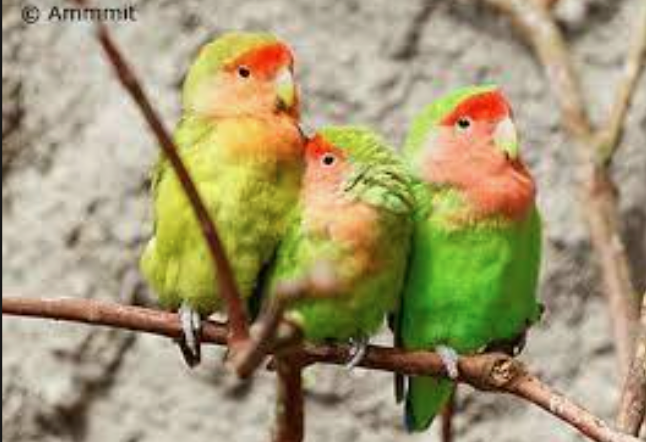
REGIONALISM

Regionalism can be explained as an โ€˜insider-outsiderโ€™ thought process where the loyalties are tied to the region of origin. Regional movements fall under the category of “identity movements,” and they often call for special rights or self-government. People get united in their desire to establish their regional identity strongly and see it as the answer to the state’s unfavourable policies against them in the face of prolonged hardship or neglect (actual or imagined).

AIM OF REGIONALISM

Those who believe in regionalism and its ideology are interested in increasing the political power and influence of the inhabitants of a particular region. Their demands include, but are not limited to, sovereignty, separatism, separatism, and independence. Regionalists favour a coalition of deficit nations rather than a unified nation-state with a strong central government. At that time, they tended to embrace an alternative form of federalism.

For those who believe in regionalism, strengthening the governing body and political power in the region benefits the local people as it improves the regional economy through better resource allocation, regional development, and better implementation of regional policies, Claims to bring. Of course, this comes at the expense of weakening the central government and reducing its role in governance.

REGIONALISM IN INDIA

Although there is an essential sense of pan-Indian identity, various foreign sociologists / scholars focus on caste, tribes, languages, and adherence to the community. The counterargument is that India’s regionalism has led to the deepening of multi-party politics and federalism. Regionalism is not necessarily “anti-state” or even “anti-people”, but it has both functional and dysfunctional aspects to consider. It can be traced back to the colonial divide and rule policy sowed in India. Over the last 100 years, there have been many regional movements in India, and demand falls into the following broad categories:

Demand for Withdrawal-Extreme Form-Extremist / Fundamentalist Group-A New Country Separate from India Separatist Demand-We need to form a new state that can better serve the linguistic / ethnic minorities of the region.

Full State System โ€“ Over the years, some Union Territories of India have been granted full state system. Autonomy โ€“ Demands more power over political interference from the central government.

CAUSES OF REGIONALISM IN INDIA

  • Language.
  • Religion.
  • Regional Culture.
  • Economic Backwardness.
  • Rise of Political Parties with a regionalist agenda

It is difficult to contain regionalism in a large and diverse country like India. However, to mitigate some of the worst effects, we can do the following:

1. Elimination of regional imbalances

2. Economic development in underdeveloped regions

3. Rebuilding society to promote unity

4. Cultural awareness

We have seen how regionalism is good or bad for a country or a group of countries. Article 19 of the Constitution of India gives all citizens the fundamental right to move freely and settle in peace anywhere in the country. And as an Indian citizen, everyone should respect this basic human right and avoid conflicts . The need for hours is to develop all parts of India by delegating power to local governments and allowing people to participate in decision making. State-level governments need to explore alternative energy sources, sources of local employment, governance, planning, and the use of technology in agricultural development. The 12th Five-Year Goal for “Faster, Sustainable and Comprehensive Growth”, the Key to Balanced Regional Growth. In the future, by further integrating the different regions of each country, we will be able to respect and emphasise their needs.ย 

ORGANIZATION LEADS TO HEALTHY LIFESTYLE

Image credit : Ebuyer. Com https://images.app.goo.gl/BeK2ghi9m82o18kA9

Life organisation frequently resembles a delicate balancing act. As soon as you switch to grab one goal line, such as money, family obligations, or having fun with family and friends, the next one is rushing at you rapidly. Sadly, some pieces are destined to fall: weeks where rest was not prioritised, eating fast food rather than preparing meals, and slacking with limited chores rather than concentrating on substantial work.

Instead of tossing life’s responsibilities in the hopes that you’ll survive to grasp em all, stick to a plan to keep everything in its position.


1. Discipline – Organise your day and make a to do list of tasks and punctually do everything on its set time. You’ll feel content at the end of the day and not guilty when you’re chilling watching your favorite movie and having that slice of pizza because you know you’ve worked for it.
2. Awareness – Presence of mind increases with managing your time because it ultimately helps you manage your life and when that happens your mind is free of stress which allows you to focus more on the details that one otherwise is ignorant about.

3.Clear Vision – For ones particularly ,confused about their purpose or goal, managing a note of things that you enjoy from the one’s that you enjoy less will allow you to decide with more clarity on the areas that you should focus.

4.Unwavering Focus – When you lead a life of discipline your skill to concentrate enhances hugely and allows you to work with stability. You start to work more minutely on things and your end product is always the best

5.productivity – Enhances the quality of your work and you start to enjoy the work you do, all this because you’ve got time to do thing through your organisational skills.

6.Maintaining a list – keeping track of your daily activities ,writing down things and analysing your thoughts helps to understand your life better. Writing down things for each day and accomplishing them will give you clear headstart to your goals and life in general.


7.Prioritise – Allowing some things to fall into place consciously can help make navigating all of life’s obligations efficient. Get used to saying “no” so that you can spend more time for the things that are essential to you. A crucial technique in your suite for organising your life is prioritisation. The only way to get anything done is to prioritise what is most important. You can direct your intense focus on what matters by eliminating what doesn’t advance your best expectations.

8. value your time –
Time is not something you can control. Time is more valuable than money regardless of the lack of tangible value. Like money, time may be wasted or saved. Time is something you can’t earn back,like money. Choose accordingly to expend it and don’t use it all in one space. If you value time you don’t waste it. Instead use it to your advantage.

Source credit : How to organize your life by Fadeke Adegbuyi https://blog.doist.com/organize-your-life/

More like these – https://edupubnews.wordpress.com/2022/07/02/how-to-win-an-argument/ https://edupubnews.wordpress.com/2022/06/27/hustle-culture-a-trend-or-trending-problem-for-the-youth/

EMPATHY, TOLERANCE AND COMPASSION TOWARDS WEAKER SECTION

Compassion is understanding or empathy for the suffering of others. Tolerance is respect, acceptance, and appreciation for those whose opinions, practices, race religion, nationality, etc. are different from oneโ€™s own. These qualities are very important for an individual living in a society.

India is a multicultural society with high numbers of vulnerable, Disadvantaged, and weaker sections. So efficient delivery of services and addressing their concerns are very important.ย India with its diverse cultures which traditionally evolved with the modern 21st century makes it unique in its existence. Tolerance and compassion have always played a major role throughout the transition of time for the unity of the nation in diversity.ย 

Weaker sections like SCs/STs and rural/urban poor are unaware of public policies, subsidies, and public utilities. Weaker sections are marginalized, deprived of justice, and illiterate. They have very low bargaining power and ability to assert their demands so helping them, being compassionate towards them, and supporting them can help them a lot.

The quality of being a compassionate persons is:

  • To understand the needs and the expectations of people.
  • Understanding the needs of marginalized and vulnerable sections of people living in a society.
  • To Undertake a faster approach and measures to address the issues of society.
  • To have an Unbiased approach to the distribution of government facilities.
  • To Make oneself accessible to all citizens and seeking for their feedback to improve better.
  • Respecting affirmative action toward the disadvantaged and implementing them with a positive attitude.

The quality of being a tolerant person is:

  • Freedom from Bigotry, respecting each other choices.
  • It helps in developing qualities like respect towards others, knowledge, openness, and communication between diverse sections of society.
  • Upholding natural rights which are Human rights, Democracy, Multiculturalism, Pluralism etc.
  • Protecting the constitutional principles of Fundamental Rights which forms the basic structure of the constitution.
  • Preventing tendency of intimidation, coercion, oppression, etc.

Poor and marginalized sections of the society that have faced negligence and left empty-handed for such a long duration of time have become afflicted that there is no one to listen to them and solve their issues. They have been dealt with harshness many times, and this behavior has inculcated in them a sense of inferiority and less importance they have stated attributing to themselves.

In a nation empowered and educated section perform better job and pay taxes to run a nationโ€™s economy. This revenue are spent to alleviate poverty by enabling weaker section to become part of mainstream economy. This needs compassion to spend revenue on them and tolerance to provide them all chances for becoming self-sustaining. Hence, we must have tolerance and compassion toward them, as they are not exposed to newer technology, awareness of their own rights, nationโ€™s outlook, programmes for themselves and nationโ€™s expectation from them.

In egalitarian society, tolerance and compassion are two important qualities to be practiced by
every individual and Hence tolerance and compassion towards the weaker sections are
one of the basic qualities any individual should poses.

Equitable distribution of resources and welfare-oriented development should be among the primary goals of democratic government. To develop a country, not just the government but every individual in a society should have qualities like compassion, tolerance, and empathy towards the weaker section of the society.

Communalism

Communalism can be defined as an ideology stating the division of states on the Basis of ethnicity, religion, believes, values etc. The difference of two or more religious, Ethnic and social communities can sometimes produce clashes in the Society.

Communalism is a theory of government in which autonomous play song communities from Confederations. Communalism as a historical method follows the development of communities. It is a political trade in religion and an ideology On which communal politics is based. Communal Violence is conjectural consequence of communal ideology. Communalism has a major effect on the public it tends 2 separate people based on religion, language, territory, and ethnic origins. It leads to communal riots, Curfew situations, and can even cause terrorist activities. A communal Thought always tends to Establish political dominance Over a particular religious community. The country weakens when Political parties are formed and political activities are conducted on communal lines. The most negative impact of Communalism is riots, violence, and homicides. Communalism is a significant social issue in India, Bangladesh, Pakistan, and Sri Lanka.

When it comes to India, communal conflicts between religious communities in the country have Occurred since the period of British colonial rule, occasionally leading to serious inter communal Violence. Communalism is not just unique to South Asia as it can also be found in countries like Africa, America, Asia, Europe, and Australia.

The rising movement of communalism and the coexistence with violence have created a insecurity feeling between religious minorities among them Muslims, Sikhs and Christians in particular has feared of discrimination and confrontation in the coming days.

To prevent damages of the peace and integrity of the nation. It has many ways needed to analyse and debate the problem of communalism and communal violence. Itโ€™s became an absolute importance to be define communalism between people and also made equally pertinent to discovery of โ€˜commu-nalโ€™.

The major factors towards the emergence and growth of communalism in modern India involves:

  • Indian Britishers create a new policy during the Indian colonial is โ€˜Divide and Ruleโ€™ this made division between two countries.
  • The disappointments and frustration among younger generations and aspiring middle class of youths, caused by static agriculture, absence of modern industrial development and inadequate employment opportunities, which is exploited by political opportunists.
  • Hindu and Muslim revivalist movements.
  • A communal and distorted view of Indian history, taught in school and colleges played a major role in rise and growth of communal feelings among the masses.
  • The separatism and isolation between religious communities.
  • The rise of communal and fundamentalist parties.

Factors that responsible for Communal Violence:

  • Politics division โ€“ Communalism is often defined as a political perspective that makes use of religious and cultural differences in achieving a political gains.
  • Economy problems โ€“ Uneven development, class divisions, poverty and unemployment aggravates insecurity in the common men which make them vulnerable to political manipulation.
  • History of Communal Riots โ€“ Probability of recurrence of communal riots in a town where communal riots have already taken place once or twice is stronger than in a town when such riots have never occurred.
  • Politics of Appeasement โ€“ Prompted by political considerations, and guided by their vested interests, political parties take decisions which promote communal violence.
  • Isolation and Economic Backwardness of minority religion Community โ€“ The failure to adopt the scientific and technological education and thus, insufficient representation in the public service, industry and trade etc has led to the feeling of relative deprivation among minorities.
  • The resurgence of religious economic competition, especially among the lower and middle class strata has fuelled the communal ideology.
  • The lack of Administrative โ€“ A weak law and order is one of the causes of communal violence.
  • Psychology problem between communities โ€“ The lack of inter-personal trust and mutual understanding between two communities often result in perception of threat, harassment, fear and danger in one community against the members of the other community , which in turn leads to fight, hatred and anger phobia.
  • Role of Media โ€“ It is often accused of sensationalism and disseminates rumours as โ€œnewsโ€ which sometimes resulted into further tension and riots between two rival religious groups.
  • Social media has also emerged as a powerful medium to spread messages relating to communal tension or riot in any part of the country.

Measures to Deal with Communalism

There is need to reform in present criminal justice system, speedy trials and adequate compensation to the victims, may act as deterrent.

Increase in representation of minority community and weaker sections in all wings of law-enforcement, training of forces in human rights, especially in the use of firearms in accordance with UN code of conduct.

Codified guidelines for the administration, specialised training for the police force to handle communal riots and setting up special investigating and prosecuting agencies can help in damping major communal disgruntlement.

Emphasis on value-oriented education with focus on the values of peace, non-violence, compassion, secularism and humanism as well as developing scientific temper (enshrined as a fundamental duty) and rationalism as core values in children both in schools and colleges/universities, can prove vital in preventing communal feelings.

Government can adopt models followed by countries like Malaysia that has developed early-warning indicators to prevent racial clashes.

The Malaysian Ethnic Relations Monitoring System (known by its acronym Mesra) that makes use of a quality of life index (included criteria such as housing, health, income and education) and a perception index to gauge peopleโ€™s needs and feelings about race relations in their area.

Also the Hong Kong model of combating communalism by setting up a โ€œRace Relation Unitโ€ to promote racial harmony and facilitate integration of ethnic minorities, can be emulated by India.

RRU has established a hotline for complaints and inquiries on racial discrimination. Meanwhile, to create awareness about communal harmony, RRU talks to schools on culture of ethnic minorities and concept of racial discrimination.

Government can encourage and support civil society and NGOs to run projects that help create communal awareness, build stronger community relation and cultivating values of communal harmony in next generation.

There is a need for minority welfare schemes to be launched and implemented efficiently by administration to address the challenges and various forms of discrimination faced by them in jobs, housing and daily life.

A pro-active approach by National Foundation for Communal Harmony (NFCH), the body responsible for promoting communal harmony is needed.

NFCH provides assistance for the physical and psychological rehabilitation of the child victims of communal, caste, ethnic or terrorist violence, besides promoting communal harmony, fraternity and national integration.

A legislation is required to curb the communal violence. Communal Violence (Prevention, Control and Rehabilitation of Victims) Bill, 2005 must be enacted soon.

The enormous scope and changes for transformation due to our new generation and their progressive of the countries. The new generation can give new hopes and changes towards the making of new India which would help to free from all kinds of communal and caste conflicts, prejudices, hatred and discrimination, this may not possible through law but it can help us to have positive efforts of the new generation.

Veteran Bengali filmmaker Tarun Majumdar passes away

Tarun Majumdar, a renowned filmmaker known for his captivating work in Bengali cinema, passed away at the age of 91 after a chronic illness.

Majumdar has been getting treatment for the previous several days at Kolkata’s SSKM Hospital, where he allegedly passed away on Monday.

With the 1959 Bengali film ‘Chaowa Pawa,’ he made his directorial debut alongside Sachin Mukherji and Dilip Mukherji, under the screen name yatrik.

Later, Majumdar directed popular films like Balika Badhu (1967), Kuheli (1971), Shriman Prithviraj (1973), Fulsewari (1974), Dadar Kirti (1980), Bhalobasa Bhalobasa (1985), and Apna Amar Apan (1990).

He has won five filmfare Awards, seven BFJA Awards, four National Awards, and an Anandalok Award. In 1990, the Indian government awarded with him the Padma Shri, the fourth-highest civilian honour.

The Delhi Assembly has passed a measure to increase MLA salaries.

The Delhi administration, led by the Aam Aadmi Party, approved a bill on Monday to raise the wages of MLAs, ministers, the Speaker, and the Leader of the Opposition (Lops) in the Delhi Assembly.

An MLA in Delhi now receives Rs 54,000 per month in pay and allowances, which is expected to rise to Rs 90,000 after the raise.

The Delhi Assembly has approved a measure that would raise the pay of MLAs, ministers, the speaker, and members of the Lok Sabha. Previously, MLAs received a salary of Rs 12,000; this has been increased to Rs 30,000, making the total income for MLAs Rs 90,000. sisodia told reporters after today’s assembly session.

Sisodia said that although the centre had raised few concerns seven years prior, the Delhi government had already enacted the measure.

Added he, “In the past seven years, there have been several talks on this subject. Seven years ago, the central government had a few concerns; after taking their ideas into account, the Delhi Assembly once more enacted this measure in the hopes that the centre would do the same.”

Ram Niwas Goel, the speaker of the Delhi assembly, said that the pay was raised in 2011, therefore the administration suggested a raise in 2015 but the proposal was rejected.

He had asked the Ministry of Home Affairs to compare his pay with that of other state legislators, claiming that many states, including Uttar Pradesh and Madhya Pradesh, pay their MLAs about Rs 2 lakh in total.

Today marked the start of the Delhi Assembly’s two-day monsoon session. The MLAs would be obliged to wear face masks mandatory due to the ongoing Covid-19 cases.

Reasons of cricket being popular in India

When you talk about sports in India, the first sport that comes to mind is cricket. Cricket is beyond popular in India. Itโ€™s more of a fanaticism. More the reason why itโ€™s not surprising that cricket draws in

Many Indians even go so far as to plan their weekend activities, travel plans and even jobs according to the Indian cricket team’s schedule.

But why is cricket such a popular sport in India, and why does it enjoy a much larger fanbase than the internationally popular football, or national sports like kabaddi or field hockey?

Here are some of the main reasons that explain the popularity of cricket in India –

1. Cricket is easy to play

Granted, cricket is not as easy to get started playing as, say, football, which only requires a ball and can be played alone. Cricket does have a few other equipment requirements and is best played with at least 1 friend.

However, despite these challenges, cricket is still a relatively easy game to get started playing, and the creativity of young people in India means that they always find a way to play.

This is why you often see kids playing street cricket using anything from rusty metal pipes to ragged old tennis balls. The simplicity of the sport makes it a visible sight even in the smallest roads and streets of India.

In fact, most of the popular cricket stars of today got into cricket by playing on the streets.

2. India has great cricket infrastructure

India boasts of several cricket training and coaching centres, where both kids and adults can practice and learn cricket.

You will find at least one cricket stadium in every town of India. Most stadiums provide good facilities and international standard coaching.

The high availability of cricket training and coaching centres is a huge reason behind the popularity of cricket in India.

3. Cricket is an incredibly lucrative business

Cricket enjoys massive media coverage in India. All cricket tournaments are extensively covered in both digital, televised, and print media.

Whenever there is a cricket match cricket becomes the central theme of most commercial advertisements.

As a result of this enormous coverage, cricketers and cricket clubs have attracted a wide range of sponsors and advertisements. Many cricket players have made huge fortunes for themselves by endorsing several products and by appearing in numerous commercials.

For this reason, and pro cricket players are able to enjoy a more luxurious lifestyle than other sportsmen in India, which is also a benefitting factor as to why cricket has become so popular in India.

Many young Indian boys experience the wealth and the luxurious lifestyle of cricket players on TV, and this motivates them to become cricket players themselves.

4. Online cricket betting

Online cricket betting has provided a massive boost to the popularity of cricket in India, but why?

Cricket betting is a way for the common man to engage with the sport and, in his hopes, make some money and benefit from the sport.

As such, cricket betting creates a way for people to be even more engaged in the game, and this has boosted the popularity of cricket in a great way.

The Future Of Cryptocurrency in 2019 and Beyond

Cryptocurrency

Itโ€™s widely regarded that cryptocurrency is a growing ecosystem that has slowly been making headways into the worldโ€™s traditional financial systems. According toย statistics, the number of users of various cryptocurrencies has grown by 66 million between 2018 and the last quarter of 2020. Furthermore, both private and public sectors are warming up to the idea of adopting cryptocurrencies in their financial dealings such as making payments, value storage, and as an investment.

The history of cryptocurrency goes back decades ago when cryptography started making digital advances. This is the technology that has helped develop and evolve the variety of encryption techniques that make cryptocurrency networks secure and reliable to take on different transactions. Now with over 5,000 cryptocurrencies and growing, look at these four reasons as to why cryptocurrency is the future of finance.

The Dawning Of Decentralized Finance (DeFi)

The need for transparent, secure, and accessible financial systems is said to be mounting and becoming more obvious. This is believed to be caused by the current centralized financial systemโ€™s continued failure to provide financial freedom and credibility to users. Many see decentralized finance or DeFi as a system that can offer more transparency and better transactional security and replace some conventional financial processes soon.   

DeFi is said to be quickly gaining traction in investing, trading, borrowing, and lending that catalyze a revolution in todayโ€™s financial services. The increase in demand and accessibility of cryptocurrency exchanges are increasingly raising the popularity of different DeFi systems worldwide. Along with it, cryptocurrency exchanges have become well-known with investors too. Theseย top crypto exchanges in Australiaย are some of the platforms Australian investors are progressively trading cryptocurrency with.ย 

Therefore, cryptocurrency is believed to continue to push changes to financial systems as theyโ€™re known today. As a result, the DeFi created on a public blockchain is becoming a more viable alternative financial system that offers more access to financial services. Anyone anywhere can connect to it while it also offers transparency.

Varied Values Of Cryptocurrency

While cryptocurrency doesnโ€™t have an intrinsic value, it holds value in the following ways:

  • Payments: It can be used to make transactions such as buy goods or services without requiring a trusted third party to complete possible.
  • Value Storage: Since the total supply of most cryptocurrencies is limited, the shortage influences their value.
  • Stable coins: Cryptocurrency can be attached to commodities such as gold or oil or currencies, such as the USD.
  • Privacy:  The technology that cryptocurrency is built on security that can allow users and owners to remain anonymous during transactions.
  • Digital Access and Ownership: Even people who have no access to traditional banks can enter the financial system with the help of cryptocurrency. 
  • Digital Gold: Cryptocurrencies and gold share attributes comparable to money. Both can be used as a medium of exchange, has a store of value, and possesses a unit of account.

More And More Actors Are Becoming Receptive

Cryptocurrency is believed to be increasingly becoming a moreย acceptable financial system. Both private and public sectors have shown great interest in it, and itโ€™s now openly recognized across many sectors. So far, there are public and private actors that have openly recognized cryptocurrency as part of their financial systems. Institutional investors, technology-focused corporations, and even national central banks all over the world have started to incorporate cryptocurrency in their operations.ย 

Also, with its acceptability, new policies and regulations are being put in place to create regularized practices for the future. The policies are also being used to put all players in check as more players continue to break into space.

Transactional And Banking Benefits

As cryptocurrency use grows day by day, acceptability and accessibility continue to be put in the spotlight. The cryptographic technique and technology also keep evolving and advancing which leads to the creation of a better and stronger cryptocurrency financial system. Presently, these are the apparent benefits the system offers as a financial system.

  • Privacy

It allows for anonymity while transacting as the system is powered by the use of different cryptographic techniques. These methods ensure data protection to avoid information falling into the wrong hands. All data transmitted is literally hidden from unauthorized persons.

  • Security

Transactions carried out using cryptocurrency canโ€™t be changed or forged, and itโ€™s transmitted in extremely high-security networks. However, financial records can still be traced for proof.

  • Access and efficiency

In a world where thereโ€™s still a large population without access to formal financial services, cryptocurrency offers a viable and concrete solution. 

Conventional banking is restrictive due to a lack of personal identification documents, account opening and operating funds, or proximity to an institution.ย People with no bank accountsย worldwide can now tap into this financial model that offers instant access from anywhere, lower transaction costs, and fast processing of transactions.

Conclusion

The history of cryptocurrency is very telling on what stake it holds in the future of finance. Blockchain technology can potentially disrupt the conventional financial systems that currently require a trusted third party to check, verify and authorize transactions. As the technology develops, more sectors acknowledge and accept cryptocurrency as a viable financial system. Cryptocurrency could become the new conventional financial system in the future.

ShibaINU vs Dogecoin

A picture of a Dogecoin and a Shiba Inu crypto logo

Dogecoin and Shiba Inu โ€“ you could be forgiven if you got these dog-themed cryptocurrencies confused. They both cost just a fraction of a dollar and heck, they even sport the same dog mascot, the Japanese breed Shiba Inu. But besides the price and the pooch, what else do two of theย top digital currenciesย have in common?

Here are some of the biggest similarities and differences between Dogecoin and Shiba Inu.

What cryptocurrencies have in common

Cryptocurrencies are built using a digital database calledย blockchain. Blockchain technology is like a chronological database of every transfer of currency from one person to another. Typically, a huge network of computers produces, tracks and manages the digital currency. So, think of a blockchain like a running receipt that allows the computers to verify every transaction ever made on it.

This receipt is being constantly verified by the network of computers, helping to prevent fraud and ensure that the currency is properly moved and accounted for. More than 10,000 cryptocurrencies exist, and they typically use some form of this basic blockchain technology.

Two other popular cryptocurrencies includeย Bitcoinย andย Ethereum, which are the two largest. The cryptocurrencyย Solanaย has also surged from the back of the pack to become a top dog, too.

Key differences among Dogecoin and Shiba Inu

Dogecoin and Shiba Inu were created for different purposes, and each comes with its own price and maximum number of coins. Here are some of those key differences.

DOGECOINSHIBA INU
SymbolDOGESHIB
Year developed20132020
Initial purposeCreated as a joke spoof of Bitcoin and the doge memeCreated as a medium of exchange and, along with other related tokens, a self-governing community
Approximate market capitalization*$17 billion$11 billion
Number of coins132.7 billion549 trillion
Maximum number of coinsUnlimited, but yearly issuance limited to 5 billion coins1 quadrillion, but over 40 percent have been irrevocably eliminated

* Estimated value as of early May 2022

Source for market cap and coins: CoinMarketCap.com

Purpose of the cryptocurrency

Incredibly,ย Dogecoinย was created to spoof the silliness of Bitcoin in 2013, mocking the fact that people were paying real money to own digital money of little utility. Ironically, the joke currency came back to bite the founders, rising in price to become one of the largest cryptocurrencies.

Now, the founder ofย Shiba Inuย has said that it sees the currency as a โ€œDogecoin killer.โ€ Shiba Inu operates on the Ethereum blockchain, and this cryptocurrency has three variants that perform various functions:

  • SHIB โ€“ This variant is the basic one, acting as a medium of exchange.
  • LEASH โ€“ This token is more limited with just 107,647 available. Itโ€™s used to provide staking rewards for those validating the currency.
  • BONE โ€“ This variant has 250 million coins. It allows those using Shiba Inu to vote on various proposals regarding how the currency is managed, among other things.

Shiba Inu also runs other features of a community, including Shiba Swap, a decentralized platform for trading coins.

Market capitalization

The market capitalization of a coin is the total value of all the coins in existence today. As the number of coins grows, the market cap will grow, too, all else equal. To figure out the market cap of each crypto, multiply the number of coins by their trading price.

Dogecoin has about 132.7 billion coins outstanding, and itโ€™s traded hands recently for a bit more than $0.13 per coin. That gives Dogecoin a market cap of around $17 billion.

Shiba Inuโ€™s market cap is a bit smaller than Dogecoin, but has many more coins in existence. Approximately 549 trillion Shiba Inu coins exist, and they recently priced around $0.00002067 or so. That gives the coin a total value of about $11 billion.

While these are among the most popular cryptocurrencies, theyโ€™re still pipsqueaks compared to Bitcoin, whose market cap is over $700 billion.

Both Dogecoin and Shiba Inu trade on major crypto exchanges, includingย Coinbase, Kraken and Bitfinex.

Coin issuance

While Dogecoin has about 133 billion coins in existence now, it continues to issue more each day. Each year it will issue 5 billion more new dogecoins, with no cap on the total number. The unlimited production of the all-digital Dogecoin is part of the spoof, but that hasnโ€™t seemed to keep the market from clamoring for more of them.

The founder of Shiba Inu authorized 1 quadrillion coins but gave about half of them to the founder of Ethereum, Vitalik Buterin. Buterin โ€œburnedโ€ โ€“ destroyed irrevocably โ€“ about 40 percent of the total in existence, while about half of the total are locked into the Uniswap exchange, to guarantee liquidity.

How porn is destroying masculinity in males of 21st century?

1.ย Porn encourages self-gratification.

Delayed gratification is an essential skill to learn if one is to maintain control and direction in their life. Repeatedly giving in to the urge to watch pornography leads to a lack of ability to delay gratification. Your brain becomes more and more focused on the things you find pleasurable and the discipline of delayed gratification falls to the wayside.

It is no coincidence that men who are hooked on porn are usually underachieving in other areas of their lives.

Solution:ย Developing delayed gratification is one of the best gifts you can give yourself. There is a certain sense of superiority and confidence that comes with the realization thatย you have more control over your primal desires than the average man. Mastery of any worthwhile skill or habit leads to increased confidence. The ability to delay gratification is no different.

2.  Porn destroys your values.

Video is powerful. We live in a world where we need to see something to believe it, and in our fast-paced, information-driven world, video is the preferred means of communication and information dissemination.

The thing is, video has the power to influence and even replace behaviors in your mind without you being consciously aware of what you are seeing.
As you watch video, your subconscious mind is rapidly dissecting, translating and making sense of what it is being fed. I have found that the subconscious mind translates and subsequently changes your behavior in one disturbing way:

Pornography programs you to lower your standards sexually. It encourages your to seek sex and in some cases,ย build intimate and unhealthy relationships with womenย who are willing to have sex without ANY boundaries. As exciting as that sounds, having sex with any woman who is available is a sign of man without without much discipline.

A man at some point in his life, must have control over his sexuality. You should not be a slave to your sexual desireโ€”instead you should master and control it. In addition to that, hundreds of hours of porn creates certain expectations of what sex looks like.

I’ll keep it simple: putting yourย penisย in a woman’s mouth right after it has exited her anus is not healthy in the real world. Theย average 16-year-old watching pornography is literally getting his sex education from the videosย he watches.

3. Porn can cause a rise inย erectile dysfunction.

Virility is important for almost every man I know. The rise in porn-induced erectile dysfunction is something to be alarmed about. Frequent porn use leads to frequentย masturbationย and erections, which can increasingly only be induced by hardcore pornography.ย Porn-viewing then becomes a sort of psychological conditioning which creates performance anxiety.

Solution:ย Need I say more? No man wants to kill their boner. Ifย you love your penis and your erections, avoid frequent masturbation and watching porn. One of the simplest and most effective exercises for yourย penile strength and health are Kegels.

4. Pornography and masturbation demand isolation.

Anything which you do in secrecy usually leads to shame. One of the first effects of frequent porn use on men, especially young men, is social awkwardness in public, which ironicallyย leads to more shame.ย Isolation and shame make it veryย difficult for you as a man to share true intimacy with others, whether it’s with other men as your brothers and friends, or women as partners.

Solution:ย Manyย men are already afflicted by shame, which is induced mainly by our society and religion. If you find that your pornography use has dulled your desire to be social, I know how difficult it can be to jump start your social life.

5. Porn destroys your ability to set, achieve, and enjoy your goals.

In my practice, I have never met a man who was hooked on porn that was good at goal-setting. As I stated earlier, most men who abuse pornography usually struggle in their finances, relationships and careers. It’s no coincidence.

The aforementioned “self gratification” is a habit which cannot coexist with achieving worthy goals. Men don’t โ€œscheduleโ€ pornography viewing the way they schedule time to work on their business or complete projects. It usually “I’m going to watch porn from now until my body shuts down sexually.” Part of this is biological.

Dopamine is a neurotransmitterย (a chemical released by nerve cells to transmit signals to other nerve cells). It’s a key player in the part of our brain responsible for reward motivated behavior.ย Sex, eating tasty food, getting approval all trigger the release of dopamine.

The more often you watch porn and masturbate, the more often your brain is flooded with dopamine. You slowly become desensitized to its effects and need more stimulation to โ€œfeel the rushโ€ or โ€œget a fix.โ€

This means that your reward circuitry is broken. This reward circuitry is crucial in achievements that are truly worthy in a mans life such as contributing in a meaningful way to society, developing a highly sought after or marketable skill, building a family, building a business, competing in sports or in your career.

LGBTQ – All you need to know

LGBTQ is an abbreviation for lesbian, gay, bisexual, transgender and queer or questioning. These terms are used to describe a personโ€™s sexual orientation or gender identity

LESBIAN

A woman whose enduring physical, romantic, and/or emotional attraction is to other women. Some lesbians may prefer to identify as gay or as gay women.

GAY

The adjective used to describe people whose enduring physical, romantic, and/or emotional attractions are to people of the same sex. Sometimes lesbian is the preferred term for women.

BISEXUAL

A person who has the capacity to form enduring physical, romantic, and/or emotional attractions to those of the same gender or to those of another gender. People may experience this attraction in differing ways and degrees over their lifetime. Bisexual people need not have had specific sexual experiences to be bisexual; in fact, they need not have had any sexual experience at all to identify as bisexual.

TRANSGENDER

An umbrella term for people whose gender identity and/or gender expression differs from what is typically associated with the sex they were assigned at birth. People under the transgender umbrella may describe themselves using one or more of a wide variety of termsโ€” including transgender. Many transgender people are prescribed hormones by their doctors to bring their bodies into alignment with their gender identity. Some undergo surgery as well. But not all transgender people can or will take those steps, and a transgender identity is not dependent upon physical appearance or medical procedures.

QUEER

An adjective used by some people whose sexual orientation is not exclusively heterosexual. Typically, for those who identify as queer, the terms lesbian, gay, and bisexual are perceived to be too limiting and/or fraught with cultural connotations they feel donโ€™t apply to them. Some people may use queer, or genderqueer, to describe their gender identity and/or gender expression. Once considered a pejorative term, queer has been reclaimed by some LGBTQ people to describe themselves; however, it is not a universally accepted term even within the LGBTQ community.

QUESTIONING

Sometimes, when the Q is seen at the end of LGBT, it can also mean questioning. This term describes someone who is questioning their sexual orientation or gender identity.

What does it mean to be a man?

International Men's Day

Did you know that on average 12 men each dayย take their own lives, and 31% of men said they would be too embarrassed to seek help for a mental health problem? We know that being male is complex, and on International Menโ€™s Day, itโ€™s important to highlight the different issues and challenges which so many young men face.

Fromย toxic masculinity,ย body imageย andย the pressure to sleep around, toย facing criminalisation,ย homelessnessย and more, men need our support. If you identify as male, remember that no problem or issue is insurmountable. You are valued and important. If youโ€™re struggling and need to talk, hereโ€™s how The Mix canย help.

We asked some of the brilliant young men in our community what being a man in 2018 means to them:

Men and emotional health

โ€œMen are opening up about their emotions and mental health. Itโ€™s important that we continue to see men being more honest about their wellbeing.โ€ Scott, 23

โ€œBeing a man is difficult. Being โ€˜maleโ€™ can be a matter of fact, but being a man feels more like a matter of opinion. A lot of what relates to being a man can be both suffocating and unattainable.โ€ Anick, 23

โ€œBeing a man in 2018 means being comfortable with a much broader idea of masculinity. The ideas about what makes a man feel a lot less restrictive than they were in the past. Itโ€˜s much more acceptable for men to openly express their emotions, talk about how weโ€™re feeling, be caring and not fit into traditional ideas of what makes a man. Thereโ€™s still a long way to go, but this is a really positive development in the right direction.โ€ Will, 24 

Men and societal expectations

โ€œIs there a norm for men or women? Menโ€™s role in the domestic sphere has changed most noticeably in the past year. As the terminology about โ€˜being a manโ€™ changes, weโ€™ll have to absorb the new reality.โ€Adam, 22

โ€œAs a gender weโ€™re facing accountability weโ€™ve never had to face before in the era of #MeToo, but weโ€™re also being given the opportunity to redefine ourselves and reap the benefits of being more in-tune with the emotions of us and others.โ€ Mike, 22

Being a man, and being yourself

โ€œFor me, being a man is about self-discovery, building self-awareness, emotional intelligence and most importantly, my legacy.โ€ย 

โ€œBeing a man to me means being unapologetically you. It means not being afraid to show the world who you are, exactly as you are. Being a man is never Being afraid to show your emotions, to be the little spoon and to ask for help when you need it. Being a man in 2018 means rejecting toxic masculinity, embracing the differences of others and uplifting those around you.โ€

Ashwagandha – A blessing to men

1. May help reduce stress and anxiety

Ashwagandha is perhaps best known for its ability to reduce stress. Itโ€™s classified as anย adaptogen, a substance that helps the body cope with stress.

Ashwagandha appears to help control mediators of stress, including heat shock proteins

2. May benefit athletic performanceย 

Research has shown that ashwagandha may have beneficial effects on athletic performance and may be a worthwhile supplement for athletes.

One analysis of research included 12 studies in men and women who took ashwagandha doses between 120 mg and 1,250 mg per day. The results suggest the herb may enhance physical performance, including strength and oxygen use during exercise

3. May reduce symptoms of some mental health conditions

Some evidence suggests that ashwagandha may help reduce symptoms of other mental health conditions, includingย depression, in certain populations.

4. May help boost testosterone and increase fertility in men

Ashwagandha supplements have been shown in some studies to benefitย male fertilityย and increase testosterone levels.

In one study, 43 overweight men ages 40โ€“70 who had mild fatigue took tablets containing ashwagandha extract or a placebo daily for 8 weeks.

The ashwagandha treatment was associated with an 18% greater increase in DHEA-S, a sex hormone involved in testosterone production. Participants who took the herb also had a 14.7% greater increase in testosterone than those who took the placebo.

Additionally, a review of four studies found that ashwagandha treatment significantly increased sperm concentration, semen volume, and sperm motility in men withย low sperm count.

It also increased sperm concentration and motility in men with normal sperm count

5. May reduce blood sugar levels

Limited evidence suggests that ashwagandha may have some benefits for people with diabetes or high blood sugar levels.

A review of 24 studies, including 5 clinical studies in people withย diabetes, found that treatment with ashwagandha significantly reduced blood sugar, hemoglobin A1c (HbA1c), insulin, blood lipids, and oxidative stress markers.

Itโ€™s believed that certain compounds within ashwagandha, including one called withaferin A (WA), have powerful antidiabetic activity and may help stimulate your cells to take in glucose from your bloodstream

6. May reduce inflammation

Ashwagandha contains compounds, including WA, that may help reduce inflammation in the body.

Researchers have found that WA targets inflammatory pathways in the body, including signal molecules called nuclear factor kappa B (NF-ฮบB) and nuclear factor erythroid 2-related factor 2 (Nrf2).

Animal studies have shown that WA may also help reduce levels of inflammatory proteins such as interleukin-10.

7. May improve brain function, including memory

Taking ashwagandha may benefit cognitive function.

One review that included five clinical studies noted there was early evidence that ashwagandha could improve cognitive functioning in certain populations, including older adults withย mild cognitive impairmentย and people with schizophrenia.

Cognitive functions it may benefit included

  • executive functioning
  • attention
  • reaction time
  • performance on cognitive tasks

A study in 50 adults showed that taking 600 mg of ashwagandha extract per day for 8 weeks led to significant improvements in the following measures compared with taking a placebo

  • immediate and general memory
  • attention
  • information-processing speed

8. May help improve sleepย 

Many people take ashwagandha to promote restful sleep, and some evidence suggests it may help with sleep issues.

What is a balanced diet?

A diet that contains all the vital nutrients required by the human body is called a balanced diet.

Balanced diet

A balanced diet comprises vital nutrients like carbohydrates, fats, vitamins, minerals, proteins, and fibre. Sufficient and nutritious food that ensures good health is included in a balanced diet. A healthy and balanced diet helps to reduce the risk of diseases and improves overall health.

  • Aim to eat at least five portions of fruit and vegetables each day.
  • Drink plenty of water (six to eight glasses is recommended, though this will vary).
  • Try to include at least two portions of fish every week.
  • Get into the habit of eating breakfast daily; it can help reduce snacking later on.
  • Adults are advised to conduct 150 minutes of moderate exercise every week

Benefits of a balanced diet

  • Vitamins and minerals in the diet are vital to boost immunity and healthy development,
  • A healthy diet can protect the human body against certain types of diseases,
  • Healthy diets can also contribute to adequate body weight.
  • Better mood and energy levels.
  • Improved memory and brain health.

Why is golf expensive?

As we compare other sports, golfing can seem pretty expensive. This might be one of the reasons why we donโ€™t choose golf over other sports.

Courses and Maintenance

Golf is usually played in high-end golf courses that are diligently spread in luscious green grass. These courses need massive amounts of maintenance and this is usually paid for from the playersโ€™ pockets. Also, one requires a huge area of land to play proper golf. Theseย golfย courses are usually only located on the outskirts of the city and most certainly come with hefty membership plans.

Since golf is played with other people, it is recommended to take a group membership with your friends that might not after-all end up denting your wallet.

Equipment

Another reason why we may think thatย golfย is expensive is due to the equipment involved. You need to purchase clubs, drivers, balls, clothing, bags, and other equipment. If you have ever been to a golf shop, you must have been surprised to see how muchย golfย club costs. It might also seem like the prices for golf equipment are rising every day.

Golfย clubs are expensive because there is a lot of R&D (Research and Development) that takes place before manufacturing. It is done to ensure that you can play consistent golf shots and also to not cause harm to your shoulders during swinging. Durable, high-quality materials are also used in the making of these clubs and drivers that they are made to last for a very long time. If we were to compare price to age ratio,ย golfย clubs might not seem that expensive, since you would most certainly need to replace your cricket bats and other equipment every year. On the other hand,ย golf equipmentย can easily last you for five years.

Perception

Perhaps the main reason whyย golfย is expensive is due to the perception of golf that we keep. This might be due to the fact that many business people or high-level politicians are into the sport. It is important to keep in mind that although business people and politicians play golf to enhance their contacts, or meet potential clients, the game of golf is not only meant for these people. They prefer golf due to its leisurely method of playing and lush green gardens that can be a relaxing treat to your body.

Since golf is not popular in the country, we also think that this is a game of the foreigners and by default perceive it to be expensive. The rising popularity of the game in the country can help beat this perception.

Conclusion

We think that golf can not be necessarily expensive unless it needs to be. We think that it is only expensive to start playing golf. Once you start, the equipment can last you a very long time. You can also save up a lot of money on yearly memberships. The average cost of golfing, when done right, could be as much as your gym membership for a year.

Why Has Gold Always Been Valuable?

Some people argue that gold has noย intrinsic value, that it is a barbaric relic which no longer holds the monetary qualities of the past. They contend that in a modern economic environment, paperย currencyย is the money of choice; that gold’s only worth is as a material to make jewelry.

At the other end of the spectrum are those that assert that gold is an asset with various intrinsic qualities that make it unique andย necessary for investors to hold in their portfolios. They believe that investors have asย many reasons for investing in goldย as they do vehicles to make those investments.

Gold’s Essential Dichotomy

Most would agree that gold has always had value for all of these reasonsโ€”a component of decorative jewelry,ย a sometime currency, and as an investment. But in addition to these concrete values, we would add another characteristic of gold, which, though harder to pinpoint, is as just as real: its mystery. Part of the very appeal of gold is the mystery of its appeal.

In the world of finance and investing, we often like to tiptoe around the word “mystery.” Yet, as is true with most disciplines, there is always a place for both science and art, and evenย mystery.

Gold can stimulate a subjective personal experience, but gold can also be objectified if it’s adopted as a system of exchange.

This duplicity is a conundrum that is unique to gold as aย commodity. Gold can be something quantitative and tangible, like money, and at the same time, it can embody something ephemeral, like a feeling, even a host of feelings. So, part of the reason that gold has always had value lies in the psychology and nature of the human experience.

Gold can exist as something that is quantitative and tangible while embodying the qualitative and ephemeral.

Gold, The Feel-Good Metal

It’s a cold day in mid-December. You’re strolling along Fifth Avenue in New Yorkโ€”either alone, or with a familiarโ€”to look at the holiday shop windows. It’s late afternoon and the thin winter light has begun to fade; even darker earlier because of the threat of snow or rain today. The bells of Salvation Army red-kettle ringers grow muffled and distant; the sky lowers, closing in around you, as the first flakes of winter fall.

You stop, drawn by a Tiffany window featuring a discrete few gold pieces. Exquisitely designed yellow, pink, and white gold shapes peek from an exotic display of corals and underwater fauna. Lights beat down like the sun, coaxing the metal’s incandescence. Suddenly, a brisk wind rises, making flakes to swirl faster around you. “Hmmm,” you think, “Hot chocolate? A Cognac?” You duck into a nearby hotel barโ€”the St. Regis, perhaps, snug with its familiar fireplace.

Well, maybe you haven’t had this exact experience. But you get the idea.

Something about the warmth of gold speaks to our human need for comfort and nurture.

In Search of a Metal to Worship

Our ancestors were faced with coming up with a method of exchange that was easier to implement than aย barter system. A coin is one such medium of exchange. Of all the metals in theย periodic table of elements, gold is the logical choice. We can rule out elements other than metals because a gaseous or liquid currency is not very practical from the standpoint of personal portability. This leaves metals like iron, copper, lead, silver, gold, palladium, platinum, andย aluminum.

Iron, Lead, Copper, and Aluminum. These metals are prone to corrode over time so they would not be a good value in terms of storage, which is required of coins; and keeping the metals from corroding is labor-intensive. Aluminum feels very light and unsubstantialโ€”not ideal for a coin-metal that could invoke feelings of security and value.

The “Noble Metals.”ย Platinum orย palladiumย are reasonable choices because they are mostly non-reactive to other elementsโ€”that is, produce little corrosionโ€”but they are too rare to generate enough coins to circulate. To assign value to a metal, it must be somewhat rareโ€”so that not everyone is producing coinsโ€”but available enough so that a reasonable number of coins can be created for commerce.

Gold and Silver. Gold doesn’t corrode and can be melted over a flame, making it easy to work with and stamp as a coin. Silver and gold are beautiful metals that are easy to form into jewelry, and both of these precious metals have their own devotees in fine-jewelry circles.

Gold, The Mysterious Metal

Although silver can be polished and textured in multiple ways so as to catch the light and the eye, there remains no metal quite like gold. Unlike other elements, gold naturally possesses a subtle array of unique and beautiful colors. The atoms in gold are actually heavier than in silver and other metals. This attribute makes the electrons move faster, which in turn allows for some of the light to be absorbed into the goldโ€”a process that Einstein’s theory of relativity helped to discern. 

Perhaps gold’s physical quality of absorbing light makes its special shine come literally from within itself.

Gold, Psychology, and Society

If the modern paper-money economy were to collapse, gold may not have immediate useโ€”as panic sets in and people fight for their basic needsโ€”but it will eventually.

Humans are Pack Animals. We prefer the company of other humans (to varying degrees) over complete independence. It is easier to work in groups than to attempt to live off the land on our own. This human trait forces us to find ways of working together, which in turn leads us to find ways of exchanging goods and services easily and efficiently.

Gold Provides the Comfort of Sustainability. Gold is the logical choice for this exchange. If disaster strikes, such that paper money and the system that supports it no longer exists, we will revert to gold. Arguably, gold is one of the only substances on earth with all of the qualities for the job, includingย sustainability.ย 

Benefits of investing in mutual funds

What are Mutual Funds?

Mutual fund is a financial instrument which pools the money of different people and invests them in different financial securities like stocks, bonds etc. Each investor in a mutual fund scheme owns units of the fund, which represents a portion of the holdings of the scheme. The securities are selected keeping in mind the investment objective of the scheme. Mutual funds are managed by asset management companies (AMCs). AMCs appoint fund managers to manage different mutual fund schemes and ensure that the scheme investment objectives are met. For fund management and other services provided by AMCs, a fee is charged to the investors. Let us now discuss the advantages of mutual funds.

Let us now discuss mutual fund tax benefits

Benefits of mutual funds in India

  • Risk Diversification:ย One of the biggestย benefits of mutual fundsย is risk diversification. Every stock is subject to three types of risk โ€“ company risk, sector risk and market risk. Company risk and sector risk are unsystematic risk, while market risk is known as systematic risk. Mutual funds help investors diversify unsystematic risks by investing in a diversified portfolio of stocks across different sectors. While individual stocks have both unsystematic and systematic risks, mutual funds are only subject to systematic risk or market risk.
  • Smaller capital outlay:ย Anotherย advantage of mutual fundsย is that you can start investing in mutual funds with relatively small amounts. Investors will require a large capital outlay to build a diversified portfolio of stocks. On the other hand, since mutual funds work on the basis of pooling of money, mutual fund investors can have the beneficial ownership of a diversified portfolio of stocks with a much smaller capital outlay. Investors can buy units of a diversified equity mutual fund with an investment as low as Rs 5,000/- only or even lower at Rs 500 forย ELSS schemes.
  • Investment expertise:ย Investing in stocks and bonds requires considerable expertise and experience. You need to have knowledge of financial markets, industry sectors, individual companies and research expertise. A major advantage of mutual funds is that they are managed by professional fund managers who have the desired qualification, expertise and experience in picking the right stocks or other instruments to get the best risk adjusted returns. The fund managers are supported by the research team of the AMCs.
  • Economies of scale in transaction costs:ย : Lower transaction cost due to economies of scale is anotherย advantage of mutual funds.ย Since mutual funds buy and sell securities in large volumes transaction costs on a per unit basis is much lower than what retail investors may incur if they buy or sell shares through stock brokers.
  • Variety of products:ย Mutual funds offer investors a variety of products to suit their risk profiles and investment objectives. Apart from equity funds, there are hybrid funds, debt funds, liquid funds and tax savings schemes etc. to suit different investment requirements. Theย benefits of investing in mutual fundsย is that you can invest in the appropriate product suitable for your specific needs and risk appetite.
  • Variety of modes of investments:ย Flexibility in terms of modes of investment and withdrawal is one of theย advantages of mutual fundsย compared to other investment options. Investors can opt for investment modes like lump sum (or one time),ย systematic investment plans (SIP),ย systematic transfer plans (STP) and systematic withdrawal plans (SWP).
  • Disciplined investing:ย Mutual funds encourage investors to invest over a long period of time, which is essential to wealth creation. Furthermore, theย advantages of mutual fundย systematic investment plans or SIPs is that they encourage investors remain disciplined to meet their various financial goals. Many investors fail to build a substantial investment corpus because they are not able to invest in a disciplined way. Mutual fund SIPs help investors to maintain a disciplined approach to investment.ย SIPsย also helps investor take emotions out of the investment process as very often investors get very enthusiastic in bull market conditions, but get nervous in bear markets. It is an established fact that investments made in bear markets help investors get high returns in the long term. By investing through SIPs in a mechanical way, investors can stay disciplined, which is one of the biggestย benefits of investing in mutual funds.
  • Variety of investment objectives:ย One of the advantages of mutual fundย investing is that you can meet various types of investment objectives like capital appreciation and income. Equity mutual funds can help you create wealth through capital appreciation, while debt mutual funds can generate income for you. Hybrid mutual funds can help you in both capital appreciation and wealth creation.
  • Liquidity:ย Open ended mutual funds are one of the most liquid investments after bank deposits and far more liquid than investments like, life insurance plans, infrastructure bonds, post office schemes etc. Investors can redeem their units in open ended funds usually on a T+3 (transaction + 3 days) basis. Liquid, overnight, low duration and ultra-short funds can usually be redeemed on T+1 day. Superior liquidity is one of the majorย advantages of mutual fundsย compared to some investment options like life insurance plans (which have policy surrender charges) and Government small savings schemes (which have fixed maturity periods).
  • Transparency:ย Transparency is anotherย advantage of mutual fundsย for retail and HNI investors. Mutual fund schemes disclose their Net Asset Values (NAVs) at the end of each business day; so investors are aware of the market value of their mutual fund units on a daily basis. On a monthly basis, mutual funds publish Monthly Fund Factsheets where the portfolio holdings (securities in a schemeโ€™s portfolio along with weights) are disclosed for each and every mutual fund scheme. Investors have the information where the fund managers have invested on a monthly basis. In addition to portfolio holdings, monthly fund factsheets have useful information like returns compared to the scheme benchmark, risk ratios etc.
  • Tax advantage:ย Taxย advantages of mutual fundsย is one of biggestย benefits of investing in mutual fundsย compared to many traditional fixed income investments. Inย equity funds,ย short term capital gains (held for less than 12 months) are taxed at 15% and long term capital gains (held for more than 12 months) are tax exempt up to Rs 1 lakh in a FY and taxed at 10% thereafter (excess of Rs 1 lakh of capital gains). In non-equity funds, short term capital gains (held for less than 36 months) are taxed at as per your income tax rate and long term capital gains (held for more than 36 months) are taxed at 20% after allowing indexation benefits. Interest income from most traditional fixed income investment is taxed as per the income tax rate of the investors. For investors in the higher tax brackets, taxย advantages of mutual fundsย is significant compared to traditional fixed income investments.

Why a Diamond Engagement Ring is NOT a Good Investment

Why a Diamond Engagement Ring is NOT a Good Investment

Although manโ€™s obsession withย goldย goes back hundreds or even thousands of years, diamonds are a relatively new one. ย Like any other gem stone, diamonds are valuable because they are rare and in high demand. ย Without the demand though, they would be worthless. ย So why is it that most American males must enter the prime of their lives spending thousands of dollars on a tiny piece of carbon?

At a time in most menโ€™s lives when they should be maxing out their retirement contributions orย saving for a house, many feel forced to trade all that money for a diamond ring. ย And itโ€™s hard to go against societal pressures on this one since nearly every woman on the planet has come to expect a ring as part of the engagement process. ย So whatโ€™s a man to do?

Donโ€™t Call It an Investment

Thereโ€™s a common myth floating around out there that a diamond ring is some type of investment. ย In the late 1800โ€™s diamonds used to be pretty rare but with the discovery of substantial diamond sources in the second half of the 20th century, diamonds became more and more abundant. ย The only reason the price has remained so high is that DeBeers has steadily purchased all diamond mines across the globe in order to control prices. ย That monopoly ended in 2001 but weโ€™re still left with the aftermath.

Depreciating Asset

Why a Diamond Engagement Ring is NOT a Good Investment

Like a car, a diamond is a depreciating asset since it loses a large portion of its value the second you buy it.  Think about gold and silver.  The market for them is very liquid and fungible since you can store coins, sell them at any time or even trade them later on.  During that time frame they might even appreciate and provide a hedge against inflation.  Thatโ€™s not the case with diamonds though since the resale market is nearly illiquid.

Have You Ever Tried to Sell a Diamond?

Since thereโ€™s generally a 100% โ€“ 200% markup on the retail price of a diamond, most stores wonโ€™t even buy back diamonds from consumers for two reasons.  The first is that since most retailers receive their diamonds from wholesalers they donโ€™t need to pay for them until theyโ€™re sold.  So thereโ€™s no point in risking capital on customerโ€™s diamonds that may never be re-sold.

The second reason is that retailers donโ€™t want to have to make an insulting offer to diamond consumers since that would undermine the notion that a diamond is a good investment.  One industry expert estimates that that a half-carat diamond ring, which might cost $2,000 at a retail jewelry store, could be sold back to a wholesaler for only $600.

Whatโ€™s the Solution?

Why a Diamond Engagement Ring is NOT a Good Investment

If youโ€™re a young couple in love, the one thing you need to know about diamonds is that the price is so high because companies like De Beers set those high prices. ย Thereโ€™s no point in telling yourself that diamonds are anย investment, but if you can find a wife that shares your disdain for diamonds, youโ€™re in luck. ย Sometimes, though, you just have to put aside the logical reasons why you shouldnโ€™t buy a diamond ring and do it just to make your wife happy.

ETHEREUM OR SOLANA- WHICH IS BETTER?

Ethereum

Ethereum and Solana are providing smart contracts but with different transaction speeds

It is hard for us to help you pick only one of these two. Ethereum and Solana are among the top Cryptocurrencies in the market. However, they both have their differences. This content will give you a detailed comparison between them based on the points that should be kept in mind when deciding which one to invest in.

Cryptocurrencies have gained a lot of exposure in the past few years throughย Affiliate programsย and their rising prices. Ethereum and Solana are considered each otherโ€™s biggest competitors as Altcoins and Solana face a high threat of new entrants in the market. They are also exposed to different volatility levels. Letโ€™s help you decide which is better for you:

1. Mechanism 

Ethereum uses the same technology as Bitcoin. It is dependent on Proof of Work (POW), which is secured by hundreds of miners. Solana relies on Proof of History (POH), which involves a certain number of sequential computational steps that decide the time gap between two events and give the transactions a time stamp.

2. Transaction Speed

All Crypto investors are well aware of Solanaโ€™s speed to offer to its investors. While Ethereum can only process 30 transactions per second, Solana can process 65,000 transactions per second. The block time of Ethereum is 15 seconds, whereas that of Solana is just one second.

3. Transaction Costs

As many of us hate paying transaction costs, this is important. Solana is also known for the low transaction costs that it charges. Ethereum charges a lot more transaction costs as compared to Solana.

4. Transparency 

As Ethereum has a large community of developers, Solana fails to maintain proper transparency about its developers. Ethereum wins the game because they have been in the market since 2014, when Solana just entered the market in 2020, and they also prefer maintaining more transparency than Solana.

5. Market Capitalization 

Ethereum is known to have the second-largest market cap among all the Cryptocurrencies. Solana is far behind Ethereum in this case. This is fair because they are new to the market and could take some time to reach Ethereumโ€™s level of market cap.

6. Network Size

Ethereum has the largest network consisting of smart contracts. Solana is unable to compete at this point as they have a small network. Ethereum has a first-mover advantage in this case, whereas Solana lacks support from Crypto experts and institutions.

The Bottom Line

We have helped you with a close comparison between the two. Now, it is your call as to which one would be the best buy for you. Since these two have their own advantages and disadvantages, you can closely think if you want to overlook the disadvantages. However, it is obvious that Ethereum wins the race for all the right reasons. But if you are looking to explore Solana, it is not bad for starters either.

Both, Ethereum and Solana are two of the best recommendations that you will get from everyone. If you are planning to include Cryptocurrencies in your portfolio, evaluate the above-mentioned points, choose one of the two and make one of them win the battle.

The information posted in the article is for educational purposes only. By using this, you agree that the information does not constitute any investment or financial advice. Do conduct your own research and reach out to financial advisors before making any investment decisions.

Space Opera Universe : are we oblivious to the fact that we might as well be living in one ?

Space opera universe,the actual reality or the fictional reality is where we all are stuck at.ย Space opera is a science based fictional story about space,warfares,another world of existence where we humans can see the rays of life’s possibilities.

Space opera has been one of the most talked about topics in the past recent years because it is always seen as the alternative to the earth and human civilisation is still not aware of the new world which can be existing somewhere in reality too.

Many scientists and scientific researchers agreed on many aspects such as human civilization on any other planet but the obligation to live there may take many many years.

Think about yourself as a being having limitless and unimaginable power. Think about the scenarios where our whole planet or galaxy or universe is in danger or there is some sort of alien invasion and we, humans, have powers of Ironman,shield of Captain America that can help us to save the world. Won’t it be fascinating ? It will be. But is it really possible? The answer is no. The power of the new world of new species to whom we can ever connect to or can we ever know about them is not realistic and is best known to the fictional stories only.

Sci-fi movies or star wars movies have been depicting this as a strong portrayal that it’s the reality and when the real practical world talks about it then that becomes quite difficult to believe in.ย 

But we, the humans, are the superior species among all the living forms on the Earth. We don’t know if there is any other solar system or milky way galaxy or any other planet like our Earth where there is the presence of other living organisms and a superior living form like us. But if there is any , for them we are the outer space or extraterrestrial species or should I say Alien. Our technologies like Artificial intelligence, Robotic process automation, Quantum computing, Virtual reality will amaze them and may make us unparalleled in their eyes. They may consider us living in a space opera universe,different from theirs. Thus, we can say we might be living in a space opera universe without us realizing it.

How to increase testosterone levels

Testosterone is the main male sex hormone, but females also have small amounts of it.

It is a steroid hormone, produced in menโ€™s testicles and womenโ€™s ovaries.

The adrenal glands also produce small amounts.

During puberty in boys, testosterone is one of the main drivers of physical changes like increased muscle, deeper voice and hair growth.

However, having optimal levels is also important throughout adulthood and even during old age.

In adults, healthy levels are important for general health, disease risk, body composition, sexual function and just about everything else

Additionally, increasing your testosterone levels can cause rapid gains in muscle mass and vitality in only a matter.

The research is pretty conclusive: both genders should ensure they have healthy levels of testosterone, especially as they age.

Here are 8 evidence-based ways to increase testosterone levels naturally.

1. Exercise and Lift Weights

Exercise is one of the most effective ways to prevent many lifestyle-related diseases. Interestingly, it can also boost your testosterone.

A large review study found that people who exercised regularly had higher testosterone levels. In the elderly, exercise increases testosterone levels, fitness and reaction time.

2. Eat Protein, Fat and Carbs

What you eatย has a major impact on testosterone as well as other hormone levels.

Therefore, you must pay attention to your long-termย calorie intakeย and diet strategy.

Constant dieting or overeating may disrupt your testosterone levels.

3. Minimize Stress and Cortisol Levels

Research is always highlighting the dangers of long-term stress, which can elevate levels of the hormone cortisol.

Stress and high cortisol can also increase food intake, weight gain and the storage ofย harmful body fatย around your organs. In turn, these changes may negatively impact your testosterone
levels

4. Get Some Sun or Take a Vitamin D Supplement

Vitamin D is quickly becoming one of the worldโ€™s most popular vitamins.

Research has shown that it has various health benefits, and may also work as a natural testosterone booster.

Despite its importance, nearly half of the US population is deficient in vitamin D, and an even higher percentage has sub-optimal levels.

A 12-month study found that supplementing with around 3,000 IU of vitamin D3 per day increased testosterone levels by around 25%

5. Take Vitamin and Mineral Supplements

Although the benefits ofย multivitaminsย are hotly debated, specific vitamins and minerals may be beneficial.

In one study, zinc and vitamin B supplements increased sperm quality by 74%. Zinc also boosts testosterone in athletes and those who are deficient in zinc.

6. Get Plenty of Restful, High-Quality Sleep

Getting good sleep is just as important for your health as diet and exercise.

It may also have major effects on your testosterone levels.

The ideal amount of sleep varies from person to person, but one study found that sleeping only 5 hours per night was linked to a 15% reduction in testosterone levels

7. Take Some of These Natural Testosterone Boosters

Only a few naturalย testosterone boostersย are supported by scientific studies.

The herb with the most research behind it is calledย ashwagandha.

One study tested the effects of this herb on infertile men and found a 17% increase in testosterone levels and a 167% increase in sperm count.

In healthy men, ashwagandha increased levels by 15%. Another study found it lowered cortisol by around 25%, which may also aid testosterone .

Ginger extract may also boost your levels. It is a delicious herb that also provides variousย other health benefitsย 

5 third-world struggles that people from developed countries take for granted

Itโ€™s not until you no longer have something, that you start to miss it, but thatโ€™s a luxury many of us in developed countries can say about unimportant things.

What about if you never had it in the first place such as food or water โ€“ the basic needs we all have, yet many of us seldom give a second thought to? What if you no longer had the convenience of going to the local supermarket or ordering online? Not everyone in a developed country has this sort of opportunity.

Here, we share 5 third-world struggles that people from developed countries take for granted:

  • Waterโ€“ it may come as a surprise that women of all ages still carry most of the worldโ€™s water which, over time, can lead to chronic neck and back pain as well as musculoskeletal disorders. In fact, itโ€™s not uncommon to see women and children walking some 2 miles a day to collect water, carrying as much as 10kg buckets on their head. Weโ€™re tackling this problem head-on, offering a unique invention called The Water Wheel which carries 5x more water per trip without the need for heavy lifting.
  • Hunger โ€“ studies estimate that 1 in 9 people are affected by hunger worldwide. Factors that affect this are poverty, war, economy and even climate change. In developed countries, we are spoiled with nutritional facts on the labels, but in third-world countries, there are missing out on nutrition full stop.
  • Healthcare โ€“ from simple GP visits to hospital stays, developed nations have the best medical facilities available. Compare that to others less fortunate that donโ€™t have the medical supplies, let alone not having the required medical staff to administer them.
  • War โ€“ war-torn areas arenโ€™t safe for anybody to inhabit. Imagine fearing for your life each and every day in places with social unrest and lack of protection. For those who suffer these hostile environments daily will be affected not only with their physical well-being but also their mental health.
  • Education โ€“ without the right education, the path to progression is difficult. Adequate educators are needed in order for communities to reach their full potential. There are countless stats out there that show the incredible powers of education, but one of the most staggering is that each additional year of education can increase a personโ€™s future income by an average of 10%. More income means more access to water, food, healthcare, and so on โ€“ so path toward socio-economic development starts here.

More on our mission

Although wells in rural India are now more accessible than they were 20 years ago, itโ€™s still common to see women of all ages carrying water in a metal pail balanced on their heads for several miles.

Aiming to prevent the health burdens and cycle of poverty that water collection can create, weโ€™re on a mission to supply The Water Wheel to families in need across India โ€“ a large drum fitted with handles which can be rolled along the ground with ease.

These round containers enable users to roll water from the wells rather than carry it on their heads and can transport up to 5x more water per trip compared to a standard bucket. This life-changing innovation is also allowing young girls to stay in school and receive education as they no longer need to be involved in water collection.

How the U.S. Dollar Became the World’s Reserve Currency

The firstย U.S. dollarย (USD) is one of the world’s strongest currencies. It is the official currency of the United States as well as several other countries. Although it has a deep-rooted history in the United States, the dollar as we know it today was first printed in 1914.

Printing began a year after the establishment of theย Federal Reserveย as the nation’s central bank with the passing of the Federal Reserve Act. That’s when the Fed started issuing Federal Reserve notes in $10 denominations featuring Andrew Jackson’s portrait. Three decades later, the dollar officially became the worldโ€™sย reserve currency. However, its ascendancy to the throne actually began not long after the ink was dry on that first printing in 1914.Keep reading to learn about how the dollar became the world’s reserve currency.

KEY TAKEAWAYS

  • The first U.S. dollar was printed in 1914 after the Federal Reserve Bank was created.
  • The Allies paid the U.S. for supplies in gold during World War I, propelling the U.S. to become the largest holder of gold.
  • Countries pegged their currencies to the dollar after the war, ending the gold standard.
  • The International Monetary Fund reported that 59% of all foreign bank reserves are denominated in U.S. dollars.
  • Despite its position in the global markets, the U.S. isn’t the strongest world currency, ranking 10th on the list.

The U.S. Dollar Becomes the Worldโ€™s Reserve Currency

The U.S dollar was officially crowned the worldโ€™s reserve currency and was backed by the worldโ€™s largest gold reserves thanks to the Bretton Woods Agreement. Instead of gold reserves, other countries accumulated reserves of U.S. dollarsย Needing a place to store their dollars, countries began buying U.S.ย Treasury securities, which they considered to be a safe store of money.

The demand for Treasury securities, coupled with theย deficit spendingย needed to finance the Vietnam War and the Great Society domestic programs, caused the United States to flood the market withย paper money. With growing concerns over the stability of the dollar, the countries began to convert dollar reserves into gold.

The demand for gold was such thatย President Richard Nixon was forced to interveneย and de-link the dollar from gold, which led to the floating exchange rates that exist today. Although there have been periods ofย stagflation, which is defined as high inflation and high unemployment, the U.S. dollar has remained the worldโ€™s reserve currency.

Benefits of working out

If you were to ask someone why they exercise, you may hear a series of reasons ranging from โ€œI want to be healthierโ€ to โ€œI want to take up a new hobby.โ€ No matter what your fitness goal actually is, most can agree exercise gives us all one thing we couldnโ€™t do without: me-time.

Having time to yourself, even if itโ€™s just an hour, can make the world of difference. So if you love to work out but donโ€™t always want to spend it in a group class with someone instructing each move, we totally hear you. Itโ€™s that me-time and total control of your workout that makes the gym such a great option.

Gym newbie? No problemโ€”while we get it can be intimidating to take your workout into your own hands (literally) for the first time, thereโ€™s a way to make a gym sesh work for everyone. Read up on the amazing benefits a little time at the gym can do for your fitness routine, and we promise youโ€™ll be a regular soon enough.

Why go to the gym?

The best part about going to a gym is that you can do nearly every type of exercise. From getting in your cardio on the elliptical to building muscle with weightlifting, a gym offers the tools you need to create a workout thatโ€™s customized perfectly for your needs. Most gyms offer a range of machines for you to pick and choose from such as treadmills, ellipticals, bicycles, weights and mats for floor work, so youโ€™ll never feel limited.

Is working out a hobby?

For many, working out is a hobby. For some, it is a professional venture, but the majority of us are working out because itโ€™s fun and because of the health benefits.

Who does the gym work for?

Even the busiest person with the most packed, inflexible schedule can fit the gym into their fitness routine. But with a range of machines and equipment to choose from, it can be a little overwhelming. When you arrive for your first session, ask one of the staff to give you a tour. Theyโ€™ll often go through where the machines are, what they are best used for and how to do them correctly. You wonโ€™t always get that one-on-one guidance that you would in a class, so utilize the staff and make sure you know how to use each machine correctly before trying it.

The benefits of working out

If you love to work out, you know variety is key. Without changing up your exercises, your body can become acclimated to the movements, slowly halting progress over time. One of the benefits of the gym is that, with so many types of exercises to choose from, your body will never get bored. Instead of taking an hour-long class focused solely on cardio, the gym lets you add flexibility to your workout. Maybe do some cardio on the treadmill, and then move on to strength building with weights. This variety keeps your body from becoming too used to a single workout, speeding up your metabolism and burning more fat. Whether you want to get stronger, increase your cardio or even spend time on the mat gaining flexibility, you can achieve your goals at the gym.

Itโ€™s easy to get swept up in the hustle and bustle of our own lives, and we know it isnโ€™t always easy to make time for yourself. Giving yourself the opportunity to hit the gym, plug in your headphones and escape in the improvement on your own body can do wonders for your mental health. The simple act of slowing down for just an hour of your day can help de-stress, decrease anxiety and reduce irritability. The gym allows you to listen to your body and cater to its needs, whether thatโ€™s taking a walk and working with light weights or running and going hard.

The flaw in the education system

Grad Cap Diploma and Books Stacked

Image Credit

Shopify Partners

The book stack represents the amount of work that a student put in to graduation

Education is the very key to success. While less developed countries are struggling to deliver education to all of their people, developed countries still have a problem – a flaw in the system itself.

Whatโ€™s this flaw, you may ask?  Have you ever asked yourself โ€œWhy am I learning Hamlet when I want to become a scientist?โ€ or โ€œWhy am I taking algebra and do all of these complicated math problems when I want to become an artist?โ€

Well, most would answer that it is to meet the requirement for graduation. This is the reason why the education system is flawed: students are forced to learn things that are not in any way helpful in their future career. The current education system is unable to bring out the fullest potential in the student. School is basically wasting student time and efforts with all these unnecessary classes, when that time could go to strengthening their strongest points. Schools arenโ€™t made to waste peopleโ€™s time, they were created to teach students what is essential to their lives and how to be successful.

So, my suggestion would be to rework the education system. To allow you to choose whatever classes you want and still pass for graduation; to customize your class selection. I know that there are students who have a hard time deciding what their future career is going to be. We can make a recommendation based on these studentsโ€™ interests, their likes and dislikes. Each individual is different, so there must be something that they like. It will take some time for these students to find out what their future career is, but thatโ€™s ok. Finding your own purpose in life is no easy task, it can make a sudden turn or thereโ€™s a big obstacle that suddenly pop up. What matters is for them to keep on moving forward, so itโ€™s also a good idea to help and encourage these students to do so.

As for the students who have already found their future careers, make it so that they can have access to more advanced education of the particular career early. Some may find that their supposed future career is not what they really want, maybe because they just want to try it or itโ€™s because of the pressure of everyone expecting them to be in that career. For whatever reason, the education system should also make a smooth and easy transition for students who want to switch careers.

It will surely take time to makes these changes, but taking steps one by one will help our future generation to realize the potential that they have at an early age. Itโ€™s also very costly to implement these changes, but the benefit will surely outweigh the cost. Education will lead you to success and humanity to its best, but it has to be done right in order to do so, and we canโ€™t stop improving it.

Effects of smoking and use of tobacco products

Within 10 seconds of your first puff, the toxic chemicals in tobacco smoke reach your brain, heart and other organs. Smoking harms almost every part of your body and increases your risk of many diseases. Smoking also affects how you look and feel, your finances and the people close to you.

What happens in your body

When you smoke,ย harmful chemicalsย enter your lungs and spread through your body. They can:

  • reach your brain, heart and other organs within 10 seconds of your first puff
  • go everywhere your blood flows, harming every part of your body.

Even if you donโ€™t inhale tobacco smoke, you still absorb harmful chemicals through the lining of your mouth.

How you become addicted

The nicotine in tobacco is highly addictive. It makes your brain release a chemical called dopamine. Dopamine is a โ€˜feel goodโ€™ chemical that:

  • makes you feel happy
  • helps you to concentrate
  • gives you more energy.

But this effect doesnโ€™t last long.

As the nicotine levels in your body fade, your brain craves more dopamine. The longer you have been smoking, the more dopamine you need to feel good. You become dependent on nicotine.

Once you are dependent on nicotine, without it you will have withdrawal symptoms. You may find it difficult to concentrate or feel nervous, restless, irritable or anxious.

These two things โ€” nicotine dependence and nicotine withdrawal โ€” make you want to smoke more. You become addicted to tobacco.

How tobacco damages your body

The chemicals in tobacco smoke can damage your body in many ways. For example:

  • Nicotine narrows your veins and arteries. This can
    • damage your heart by forcing it to work faster and harder
    • slow your blood and reduce oxygen to your feet and hands.
  • Carbon monoxide deprives your heart of the oxygen it needs to pump blood around your body. Over time, your airways swell up and let less air into your lungs.
  • Tar is a sticky substance that coats your lungs like soot in a chimney.
  • Phenols paralyse and kill the hair-like cells in your airways. These cells sweep clean the lining of your airways and protect them against infections.
  • Tiny particles in tobacco smoke irritate your throat and lungs and cause โ€˜smokerโ€™s coughโ€™. This makes you produce more mucus and damages lung tissue.
  • Ammonia and formaldehyde irritate your eyes, nose and throat.
  • Cancer-causing chemicals make your cells grow too fast or abnormally. This can result in cancer cells.

How tobacco affects the way you look

Smoking tobacco can:

  • cause yellow-brown stains on your fingers, tongue and teeth
  • increase your risk of tooth loss and bad breath
  • make your skin saggy and give you early wrinkles
  • make your hair lose its natural shine.

Health effects

If you smoke, you:

  • reduce your life expectancy and your quality of life
  • increase your risk of many conditions and diseases as well as of dying prematurely.

It can be a long time before smokers get a smoking-related condition or disease. Because of this, some people believe it wonโ€™t happen to them.

In fact, up to โ…” of long term smokers will:

  • die of a smoking-related disease
  • have their life cut short by about 10 years on average, compared to non-smokers.

There is also growing evidence to suggest that smoking has a negative impact on mental health. For example, some studies show that smoking is associated with increased rates of anxiety, panic attacks, depression, suicide attempts and schizophrenia.

Some of the conditions and diseases that can be caused by smoking

Did you know?

Tobacco use is the one risk factor shared by 4 of the main categories of non-communicable disease. These include cardiovascular disease, cancer, chronic lung disease and diabetes.

  • Cancer
  • Breathing problems and chronic respiratory conditions
  • Heart disease, stroke and blood circulation problems
  • Diabetes
  • Infections
  • Dental problems
  • Hearing loss
  • Vision loss
  • Fertility problems
  • Osteoporosis and menopause

Why Do People Get Addicted To Instagram?

There are basically four reasons why we get addicted to Instagram โ€” and unsurprisingly, all of them are related to vanity.

1. We enjoy taking pictures.

s love for taking pictures can lead to an Instagram addiction
Works of art, filed under #photography.

The Instagram platform is designed specifically to appeal to our need to capture the beauty of life in photographs.

This is believed to be driven by the fact that, in a way, photographs allow us to preserve things and memories forever, exactly the way we saw or fell in love with them.

And with the rise of numerous devices with high-quality photography capabilities, taking pictures and sharing them with our friends has become easier than ever. 

2. We get a special kind of high from taking good photos.

Thereโ€™s nothing quite like the feeling of knowing that your output is excellent. The great thing about Instagram is that it doesnโ€™t just serve as a platform to show off your photography skills. It also has built-in tools that can significantly improve the quality of your photographs with just a few clicks.

From frivolous filters to fantastic fixes, you can make sure that every picture you post is Instagram-worthy.

And the idea of an Instagram-worthy post leads us to the third reason for Instagram addiction which isโ€ฆ

3. Shareability (a.k.a. โ€œWill my followers like my new post?โ€) feeds our Instagram addiction.

Like other social media platforms, Instagram comes with the built-in functionality to leave comments or drop likes on any post you can access.

Thereโ€™s a certain level of gratification we achieve from seeing people like or leave comments on our posts. Itโ€™s kind of like the digital image equivalent of telling a joke in a full room and eagerly anticipating laughter from your audience. If you can get the room roaring, your ego will be soaring. 

4. Instagram addiction is a way to escape the dreariness of everyday life 

The average Instagram feed is usually full of posts from people who aim to project that theyโ€™re living the good life.

Itโ€™s this fantasy that not only prompts us to monitor the posts of our friends, but also encourages us to edit and post similar content on a regular basis.

We humans often crave escape from our day-to-day existence. Truth is, thereโ€™s nothing quite like visual stimulation to help us get distracted.

Why is bodybuilding not an Olympic sport?

Bodybuilding was close to being recognised as a medal sport in the Olympics in the 1970s, thanks to the tireless efforts of Ben Weider, but the idea never materialised due to various reasons.

Why is Bodybuilding not an Olympic sport? Bodybuilding has been in existence for a long, long time. It is nothing but the usage of weight training to develop one’s body muscles the way one wants them to be. Over the years, there has been a lot of debates surrounding the inclusion of Bodybuilding, but none has been successful in pushing for the inclusion of Bodybuilding in the prestigious event. Bodybuilding was close to being recognised as a medal sport in the Olympics in the 1970s, thanks to the tireless efforts of Ben Weider, but the idea never materialised due to various reasons. So, what are the reasons behind Bodybuilding not being an Olympic sport? Well, the International Olympic Committee (IOC) and the Olympic Planning Committee (OPC) give the following three different reasons why they do not recognise Bodybuilding as an Olympic sport. Bodybuilders take in a lot of steroids The very first reason why the IOC does not recognise Bodybuilding is the use of steroids by bodybuilders. The core essence of the Olympics is drug-free and fair competition between athletes from all across the globe. Besides, the IOC has strict rules regarding doping wherein athletes who are found to have been in the use of any banned drug are banned or stripped of their medals. It is impossible to conduct a fair bodybuilding competition where the bodybuilders have not used steroids and hence cannot be included in the Olympics according to the IOC. Bodybuilding is not a sport The second argument which the IOC maintains is that they do not consider Bodybuilding to be a sport. They maintain that there is no athleticism maintained in Bodybuilding โ€“ the exact same reason why even Chess has not been able to make it to the Olympics. The bodybuilders certainly undergo immense physical training, but in the end, on the day of the competition, there is no athleticism involved, and it’s rather just based on how your body looks, and thus the IOC refrains from recognising it as an Olympic sport. Bodybuilding is subjective to judge Another argument put forward by the IOC is that Bodybuilding is subjective to judge. For example, the winner of a sport like 100m sprint or long jump can be easily decided objectively based on who completed the sprint fastest or who jumped the longest distance. The IOC considers this objectivity missing in Bodybuilding, as the final decision has to be taken just by judging the physique of the bodybuilders, and the decision here can be a lot subjective, i.e. every single person might have a different opinion regarding whose physique is better.

Why studying abroad has become a trend in 2022?

Studying in India or abroad? This predicament quite often puts Indian students in a quandary. Going abroad for an overseas degree has become quite common nowadays. Indian students who have embraced foreign degrees with open arms have been obsessed with overseas colleges and universities from the early 70s.

Studying in India has gone out of fashion for most of them since we do not have the required infrastructure and Ivy League colleges to compete with our western counterparts. Despite this, some students prefer Indian degrees due to a variety of reasons The foremost reason is the unaffordability of an overseas degree. Due to the higher cost of living and exorbitant fee structure in foreign universities, students from middle-class backgrounds prefer to study in India, whereas the rich and the affluent students choose to fly abroad instead due to their financial So why there is a craze among Indian students to study abroad? The reason is obvious. A foreign degree from a reputed university or college is revered highly in India and abroad. A student graduating from an Ivy League institution gets a placement offer from a reputed company in the country of study and India as well. Due to high teaching standards, immaculate infrastructure facilities, and qualified teaching faculty, the Ivy League institutes in western countries enjoy a cult following and mad rush from Indian students. There are lakhs of Indian students in foreign countries studying a variety of courses. They have been inspired by their seniors who have had a stint abroad earlier. Looking at the success stories of Indian graduates who have made it big in foreign shores, more and more students from India prefer to go abroad and achieve their goal of becoming successful Going abroad has become a status symbol for families across India. Since a foreign degree is held in high esteem, there has been no letup in Indian students opting to study abroad. Most of the Indian students who travel abroad for higher studies do not return and those who return get absorbed in reputed companies in our country due to the degrees they hold which have a higher value compared to Indian ones. So studying abroad has become a norm for Indian students. Every household has a person or two in foreign shores. Rich and affluent families often prefer their children to get an overseas degree which adds to their status and credibility in the society. The craze which started in the 80s will never fade away. This craze is already at its peak and is going to intensify manifold as years pass by. With the introduction of a new visa system for overseas students, the outbound traffic from India has resulted in the proliferation of Indian students in foreign Lastly, I would say that Indian students are a talented lot and they deserve to study abroad. Getting a foreign degree is one of the prerequisites for an Indian student. The trend of going abroad and settling in foreign shores is not going to subside in the foreseeable future.

Land Reforms in India

A Necessity for an Emerging Economy
Many people are not aware that a reform of land tenure is one of the steps in the economic policy of many countries to facilitate industrialization and promote agricultural growth. The problem with this is that it can lead to increased conflict between production and ownership rights. Yet, Indiaโ€™s Prime Minister Narendra Modi has made reforming the countryโ€™s outdated laws by going back to medieval-era customs a top priority for his government.

In May, he set up a five-member panel to recommend changes to the Hindu Succession Act, which is based on customary law and governs inheritance in Indiaโ€™s Hindu majority. The panel was created following the Bombay High Courtโ€™s decision that women could inherit ancestral property under the act. India has also rolled out land reform bills to facilitate transparency in transactions of agricultural land.
Under the tradition of a joint family system, or joint Hindu family system, one may wonder how land ownership and succession in India is regulated. This system has prevailed for centuries without outside interference or control. Joint families consists of males typically brothers and their wives who have to share property.
The main purpose of this system was to safeguard womenโ€™s rights to the property, in a country where the widow has been traditionally stigmatized and often impoverished by the death of her man.Land Reforms usually refers to redistribution of Land from rich to poor. Land reforms include Regulation of Ownership, Operation, Leasing, sale and Inheritance of Land. In an agrarian economy like India with massive inequalities of wealth and income, great scarcity and an unequal distribution of land, coupled with a large mass of people living below the poverty line, there are strong economic and political arguments for land reforms.

Land reform is the major step of government to assist people living under adverse conditions. It is basically redistribution of land from those who have excess of land to those who do not possess with the objective of increasing the income and bargaining power of the rural poor. The purpose of land reform is to help weaker section of society and do justice in land distribution.

The Indian Government was committed to land reforms and to ensure distributive justice as was promised during the freedom struggle. Consequently, laws were passed by all the State Governments during the Fifties with the avowed aim of abolishing landlordism, distributing land through imposition of ceilings, protection of tenants and consolidation of land- holdings.

Government land policies are implemented to make more rational use of the scarce land resources by affecting conditions of holdings, imposing ceilings and grounds on holdings so that cultivation can be done in the most economical manner.

Objectives of Land Reforms

From the beginning, land distribution has been a part of India’s state policy.
The abolition of the Zamindari system was perhaps the most revolutionary land policy of independent India (feudal landholding practices).

ZAMINDARI SYSTEM

Lord Cornwallis introduced the Permanent Settlement in 1793. Under this system, a class of landlords called Zamindars was created whose responsibility it was to pay a fixed rent to the government for the lands they owned. They gave out parcels of land to farmers who became their tenants. Their title to the land was hereditary. What was intended as a system beneficial for all parties concerned soon turned out to be exploitative? The State was only concerned with maximising revenue with minimum effort. The Zamindar too wanted maximum rent from his tenants irrespective of the landโ€™s true potential. He could increase his own wealth by extracting most out of his farmer tenants since his due to the State was fixed. In addition, several layers of intermediaries were created between the Zamindar and the tenants adding to the burden. The landless farmers and labourers suffered greatly in poverty. Also, this led to the creation of a group of rich Indians whose loyalty lay largely with the British. As you can see the Permanent Settlement gave rise to the Zamindari system of tenancy in Bengal and soon was adopted in other regions.

RYOTWARI SYSTEM

Under this system, the proprietor of land gave the rent and taxes directly to the government in the absence of any middlemen. This started in Madras and was later adopted in Bombay as well.

MAHALWARI SYSTEM

This system was introduced by William Bentinckโ€™s government under which landlords were responsible for the payment of revenue to the State. These landlords or Zamindars had a whole village or a group of villages under their control. The Mahalwari system prevailed in UP, the North Western Province, Punjab and parts of Central India.


India’s land reform policy had two specific goals:
The first is to remove any impediments to increasing agricultural production that arise from the agrarian structure that has been passed down from generation to generation.
The second goal, which is closely related to the first, is to “eliminate all elements of exploitation and social injustice from the agrarian system.
To provide security to the soil tiller, and to ensure equality of status and opportunity to all sections of the rural population.

Objectives of land reforms:

  • Redistribution of land across society so that land is not held in the hands of a few people.
  • Land ceiling to disburse surplus land amongst small and marginal farmers.
  • Removal of rural poverty.
  • Abolition of intermediaries.
  • Tenancy reforms.
  • Increasing agricultural productivity.
  • Consolidation of land holdings and prevention of land fragmentation.
  • Developing cooperative farming.
  • To ensure social equality through economic parity.
  • Tribal protection by ensuring their traditional land is not taken over by outsiders.
  • Land reforms were also for non-agricultural purposes like development and manufacturing.

Salient features of Indian Society, Diversity of India

Indian society is very unique and diverse. We have a lot of cultures, communities, religions, languages, etc

India is a plural society, characterized by its unity and diversity. A grand combination different cultures, religions and languages of the people belonging to different castes and communities has upheld its unity. This combination of different culture and ethnicities is what that has made India unique from other countries. Different events such as the foreign invasions, immigration from other parts of the world, and the existence of diverse languages, cultures and religions have made Indiaโ€™s culture open- minded , on the one hand, and a unique continuing and living culture, with its specificity and historicity, on the other. Not only we have diversity in racial compositions, religious and linguistic distinction but also in patterns of living, life styles, land tenure systems, occupational pursuits, inheritance and succession law, and practices and rites related to birth, marriage death etc. 

Post-Independent India is a nation united against several odds and obstacles. India is a secular state. It has one Constitution providing guarantees for people belonging to diverse regions, religions, cultures and languages. It covers people belonging to all socioeconomic strata. The Article 15 of the Indian Constitution talks about Prohibition of discrimination on grounds of religion, race, caste, sex or place of birth. Our Indian Constitution itself safeguards and protects the rights of every individual irrespective of their religion, race, caste sex or place of birth. It gives everyone opportunity and treats everyone equally.

DIFFERENT FEATURES OF INDIAN SOCIETY

MULTI RELIGIOUS SOCIETY

India consists of people from many different religions. Hinduism, Islam, Christianity, Buddhism, Jainism, Sikhism are some major religion in India, However there are other different religions as well. Hinduism is the most dominant religion in India.

As per the census 2021, there are approx. 110 crore people follow Hinduism in India. The Hindus are most numerous in 29 States/UTs except in Manipur, Arunachal Pradesh, Mizoram, Lakshadweep, Nagaland, Meghalaya, Jammu & Kashmir, and Punjab.

Approx.  20 crores of people are Muslims In India. The Muslims professing Islam are in majority in Lakshadweep and Jammu & Kashmir.

In 2021 approx. 3.20 Crores people are Christians in India. Christianity has emerged as the major religion in three North-eastern states, namely, Nagaland, Mizoram, and Meghalaya. 

In 2021 approx. 2.4 Crores people follow Sikhism in India.

In 2021 approx. 10 million or 1 Crore people are followers of Buddhism in India and In 2022 approx. 5 million or 50 Lakh people follow Jainism in India.

MULTI RACIAL SOCIETY

Race is a group of people with a set of distinctive physical features such as skin colour, type of nose, form of hair, etc. India is a country of people with different racial groups. The latest racial classification of the Indian people based on researches in this field has been given by B.S. Guha (1952). He has identified six racial types (1) the Negrito, (2) the Proto Australoid, (3) the Mongoloid, (4) the Mediterranean, (5) the Western Brachycephals, and (6) the Nordic.

MULTI LINGUAL SOCIETY

According to the latest analysis of a census more than 19,500 languages or dialects are spoken as mother tongue in India.

There are 121 languages which are spoken by 10,000 or more people in India, which has a population of 121 crore. Only 22 languages are listed in Schedule VIII of the Indian Constitution. The 96.71 per cent population in the country have one of the 22 scheduled languages as their mother tongue and the remaining 3.29 per cent is accounted for other languages. Not all these languages are, however, equally widespread. Many of them are tribal speeches and these are spoken by less than one percent of the total population so here we can clearly see see that in India there is a great deal of linguistic diversity as there are so many people of different languages and dialects.

MULTI CASTE SYSTEM

The term caste is generally used in two senses: sometimes in the sense of Varna and sometimes in the sense of Jati. In India, caste system is very much prevalent. The Varna system is basically a four fold system in the Hindu society based on their functional criteria, the four divisions are Brahmins, which is on the top of this system followed by kshatriya, Vaishyas and then shudra with their functions as learning or teaching, defense, trade and manual labour. We find castes among the Muslim, Christian, Sikh as well as other communities. One must have heard of the hierarchy of Shaikh, Saiyed, Mughal, Pathan among the Muslim. Similarly, caste consciousness among the Christian in India is not unknown. Since a vast majority of Christians in India are converted from Hindu fold, the converts have carried the caste system into Christianity. Among the Sikh again we have so many castes including Jat Sikh and Majahabi Sikh (lower castes).

In addition to the above described major forms of diversity, we have diversity of many other sorts like settlement patterns โ€“ tribal, rural, urban; marriage and kinship patterns along religious and regional lines; cultural patterns reflecting regional variations, and so on.

Some other of the salient features applicable to Indian Society are:

  1. Unity In Diversity
  2. Patriarchal Society
  3. Tribes
  4. Family
  5. Kinship System
  6. Balance between spiritualism and materialism
  7. Co-existence of traditionalism and modernity

India is a very diverse country and because of its unique feature it always attracts people from all parts of the world.

.

SUSTAINABLE DEVELOPMENT

Sustainable Development has been the buzzword for a while now. People are constantly asking what it looks like and how to implement it. There have been many differing opinions on what sustainable development actually is, however some key principles remain:

  • The concept of sustainable development is about making sure that you live in a world where people are able to stay self-sufficient and thrive indefinitely.
  • Sustainable development does not need to take the form of major changes, but rather building upon what we already have.
  • A major component of any successful Sustainable Development project is social-justice based thinking.

The Principles of a Sustainable Development Project:

A sustainable development project is one that will allow you to reach the following principles:
-Managing resources efficiently.
-Responsible consumption.
-Treating others with respect and dignity.
These four principles are what make up an overall healthy and productive society. The management of resources, responsible consumption, and treating others with respect and dignity can be applied to almost anything we do; whether it is being environmentally conscious, being respectful of your parents, or being a good soccer player. The real issue here is that these principles go hand in hand. If we constantly abuse a resource and consume in a way that hurts the environment, we are not being respectful of the Earth. If we are being very selfish in our consumption, then we are not being respectful of our fellow human beings. Lastly, if we do not treat people with respect and dignity, then they will not be treated with respect and dignity by their neighbors.

These four principles allow us to have a healthy society. This can be seen clearly in the following quote by E. F. Schumacher: โ€œThe great first commandment is to love the Earth and that means loving it enough to take care of it for the sake of future generationsโ€.

The way we approach development affects everyone. The decisions that we make also impacts the society, and has very real consequences for people’s lives. Poor planning of communities, for example, reduces the quality of life for the people who live in them.

Sustainable development provides an approach to making better decisions on the issues that affect all of our lives. By incorporating health plans into the planning of new communities, for instance, we can ensure that residents have easy access to healthcare and other facilities.

Sustainable development should provide a solution in terms of meeting basic human
needs, integrating environmental development and protection, achieving equality,
ensuring social self-determination and cultural diversity, and maintaining ecological
integrity. Although the concept of sustainable development has undergone certain
changes during the past, its fundamental principles and goals have contributed to a
more conscious behaviour adapted to the limitations of the environment. This is the
reason of adopting the concept in different areas of human activities. Numerous international organizations have been involved in implementation of the concept, while
it has found positive implementation locally, but it did not produce significant results
on a global scale. This fact proves environmental problems which, 30 years after the
introduction of the concept, are still ongoing. Contemporary understanding of the
concept of sustainable development is considered through the United Nations Millennium Development Goals focused on a complex global situation, such as population
growth, hunger and poverty, wars and political instability, and further degradation
of the environment. There is a huge gap between developed and underdeveloped country and many of the countries are not even close to sustainable development. Fundamental constraints of the implementation of the concept of sustainable development are the degree of socio-economic development that many countries have not yet achieved, associated with a lack of financial resources and technology, but also the diversity of political and economic goals on a global scale.

Source: https://www.unesco.org/en/education/sustainable-development

Effective Journaling

Image courtesy: positivepsychology.com

We hear the word journaling very often. Almost every other day this term falls on our ears but we simply pay no heed to it. The reason is we humans have a tendency to think that the most ordinary or simplest things cannot bring us extraordinary greatness. Which is not true ofcourse.

When it comes to journaling, we sometimes underestimate how important it is to include this beneficial habit into our daily routines. Our lives can thrive from journaling in many different ways. From increased productivity overall to self-improvement and improved mental wellness, this habit is proven to be effective.

Writing down your thoughts, feelings, or anything else you want to in order to try to understand them better is what journaling is fundamentally all about. Every time we write down our thoughts in a journal, our mind starts to get more organised, making it simpler for us to prioritise our goals and every aspect of our lives that we want to work on. As a result, journaling helps us stay productive by allowing us to acknowledge what needs to be done after letting us self-assess ourselves in a way.

The ability to learn new things quickly, as well as your capacity for analytical and innovative thought, are more important indicators of productivity in today โ€™s digital economy than how much work you can get done in an hour. Journaling is therefore valuable spending a few minutes on, just like any practise that enables you to learn more acutely and think more effectively.

Outlining your goals in a journal enables you to think thoroughly about all aspects of it.
Journaling helps you keep motivated during the arduous process of actually achieving your goals by providing a track of the work you’ve made in that direction.
We refer to it as effective journaling for this reason.

Anyone who really wishes to deal with their emotions, possibly to prevent it from driving themselves in the realms of depression or anxiety, might benefit much from this mindful practice.

You can thoroughly examine your feelings, let out chaos, and mentally assimilate your experiences through writing.

Furthermore, it can support you in attaining a significant purpose or work with you to reduce certain sources of stress.
Creating and reflecting on the story of your life, including all of the decisions you have committed and the moments that have shaped who you are today, is something you may do by keeping a diary.

In a word, journaling’s healing effects are “enlightening.

You can’t change it all in your life instantly, and attempting to create healthy habits and break negative ones in a single day is probably not going to work. Legitimate, lasting change occurs when you only take on something that you can manage; frequently, altering one significant habit can have knock-on impacts that enhance your life and move you forward to your commitments in other aspects.

One such discipline is writing; it may help you stay focused, determine your capabilities and limitations, provide an outlet for awareness of self , but also much more. Merely keeping track of your ideas, emotions, and doings can change your life in unanticipated ways.

Source: positivepsychology.Com Courtney E. Ackerman, MA https://positivepsychology.com/benefits-of-journaling/

A trip to cherish!

Image credit: http://www.alamy.com

When my Nani and I were drinking chai and chatting about random topics a few days ago at her home in Surat, she began talking about her early years spent in Ahmedabad. She told me about her family, the people there, the delectable food, the holidays she celebrated with them, and the spots where she used to hang out with her friends. Her descriptions piqued my enthusiasm for travelling to Ahmedabad and exploring the city.

          So, the following morning, I was prepared with my bag and a train ticket in hand and departed for the station after bidding my family farewell. I travelled with one of my cousins because she had visited Ahmedabad previously and was familiar with the area’s landmarks. We left Surat station at eight in the morning and arrived at Ahmedabad station around noon after a four-hour journey. Later on arriving at my cousin’s home, we relaxed there for a while before starting our city tour. I still can remember how I couldn’t contain my excitement to explore the places.

                    We started our trip at Jama Masjid. 

            We learned that the mosque was constructed by Ahmad Shah in 1424. The mosque’s architecture was such that it gleamed beautifully in the sunlight. 

                   The tombs of the male and female members of Ahmad Shah’s royal family, Badshah no Hajiro and Rani no Hajiro, respectively, were the next stop on our tour. Since women couldn’t enter Badshah no Hajiro, we snapped some photos of the monument from the outside.

                  On arriving at the female tomb, we discovered that the street leading there had changed to serve as a neighbourhood women’s market. I was surprised to find an antique jewellery piece at the market that I could afford to buy for my Nani as a souvenir, given that antiques are typically pricey.

                  After a few hours of exploring these monuments, we went to Manek chowkโ€™s hustling and bustling market. It was late in the evening so it was pretty crowded with people. The aroma of the delicious street food hit us and we decided to dive in. We tried some of the popular food items of the chowk which includes Ghugra sandwich, Gotala Dosa, Fafda Jalebi, Dhokla and Methi Gota. I can still remember how delicious they tasted. We wound up exploring for the day.

                On the second day of the tour,  we started with having breakfast at a well-known neighbourhood eatery and later travelled to the Sabarmati Ashram. We learnt about its history and spoke with the women who worked there, who gave us information about the Ashram and the city’s rich culture. The ashram was exquisitely constructed.

                 The Sabarmati Riverfront was our next stop, followed by the lakeside flower garden. From the riverfront, there was a breathtaking vista.

                 The third and final day of my journey to Ahmedabad, I made the decision to wrap it up by going to the Utkantheshwar Temple in Sarkhej. It made me feel divine and grateful for my decision to travel to Ahmedabad. This city is truly, incredibly extraordinary.