India is a country which is known for its diverse heritage and mesmerizing culture. However, it also has some unavoidable rigid belief systems or evils which, if not reformed, can be really harmful for the Indian society. Such social evils can also be harmful for the growth and progress of the society.
Social evils can be defined as the toxic beliefs due to which the societal progress is hindered. Such evils can be born out of sheer ignorance or blind faith in religion or culture or both. These evils are not only harmful for the believers themselves but for the society as a whole.
There have been several personalities who, in order to bring reforms in the society, tackled and attempted to remove the practices of some rigid belief systems which, in turn, brought reforms in the society.
Here are some evils that either prevailed or still prevail in India due to the stiff nature of the society:
The Caste system:
The caste system has its roots in the ancient Indian society where the common folks were divided into four categories on the basis of their skills and abilities. Those categories consisted of Brahmin, Kshatriya, Vaishya and Shudra.
But as the time passed, this system became so rigid that the people belonging to the higher castes were seen as superior to those of the lower castes. Brahmins were known to be next to God and were respected by almost everybody. On the other hand, the Shudras were discriminated and were considered as ‘Untouchables’. Although the Indian Constitution has outlawed the practice of Untouchability, it still exists in some parts of the Indian Society.
The Dowry system:
The word ‘dowry’ means payment (of property or money) from the bride’s parents to the groom or his family at the time of marriage. This stems from the belief that a daughter is a liability for her parents and for her bright future she has to be married off to a decent groom. In order to get a good marriage prospect, the bride’s family starts saving money as soon as the daughter is born. This puts an unimaginable of amount of burden on the bride’s family.
This system has also made many Indian women victims of the atrocious crimes by the groom and his family. There have been many cases where crimes against women were committed by their husbands or their in-laws. In such cases, women had to go through unimaginable physical and emotional abuse.
Although we have laws in the constitution against the practice of the Dowry System, it is still practised in some of India. The government is taking measures to eradicate this system by bringing in policies to educate and the girls and parents of the country. They have also started schemes to aware the parents about the negative outcomes of the Dowry system.
Female Infanticide:
Female infanticide is the intentional and deliberate killing of a baby girl once she is born due to the preference for a baby boy. Even though this is an illegal practice, people in some parts of India still practice it. According to a census in 2001, there are only 933 females to every 1000 men. Another census in the year 2011 showed a decline in the Child Sex Ratio (CSR) where there were only 918 females to every 1000 men.
Female infanticide is more prevalent than male infanticide in south Asian countries like India and China due to cultural reasons. In the Indian Society, some families kill their new born daughters to avoid the burden of paying Dowry to the groom or his family. For families with several daughters, it can be a huge financial burden and hence, killing the baby girl seems like an easier option to them.
The Indian government has tried to take several initiatives to tackle and eradicate this issue. In several Indian states, the government took the responsibility of educating the girl child which, in turn, freed the parents from their financial burden.
These are some of the dreadful evils in the Indian society which need to be tackled and solved so that a better and more reformed society can be created. However, there are more such evils like Poverty, superstitions and corruption. These issues have become pretty common in the Indian Society.
With the years passing by, these issues have risen instead of coming to an end. Therefore, proper action must be taken by the government and the society to change the mindset of the existing society.
Digital marketing refers to advertising delivered through digital channels such as search engines, websites, social media, email, and mobile apps. Companies use digital marketing to endorse their goods, services, and brands, using online media channels. In the past decade, digital marketing has become a vital component in organizations’ overall marketing strategy. It allows companies to tailor messages to reach a specific audience, making it possible to market directly to people who are likely to be interested in their product. Digital marketing encompasses a wide variety of marketing tactics and technologies used to reach consumers online.
Search Engine Optimization (SEO):
Search Engine Optimization (SEO) is a process used to optimize a website’s technical configuration, content relevance and link popularity so its pages can become easily findable, more relevant and popular towards user search queries. Search engines recommend SEO efforts that benefit both the user search experience and the website ranking by featuring content that fulfils user search needs. SEO targets unpaid traffic, organic results rather than direct traffic or paid traffic. Unpaid traffic may originate from different types of searches, including image search, video search, academic search, news search, and industry-specific vertical search engines.
Search Engine Marketing (SEM):
Search engine marketing refers to marketing a business using paid advertisements that appear on search engine results pages (or SERPs). Advertisers bid on keywords that users of services such as Google and Bing might enter when looking for certain products or services, which gives the advertiser the opportunity for their ads to appear alongside results for those search queries. Search engine marketing’s greatest strength is that it offers advertisers the opportunity to put their ads in front of motivated customers who are ready to buy at the precise moment they’re ready to make a purchase. No other advertising medium can do this, which is why search engine marketing is so effective way to grow your business.
Pay-per-Click (PPC):
Pay per click advertising is an umbrella term for online paid ads where you pay each time someone clicks on your ad. Paid search ads are the ones that show up in the search results. Most of the time (except for some home services queries), those ads are search ads triggered when someone searches for a particular set of keywords. Within pay per click, there are a few different types of ad strategies: Paid search campaigns, Social media campaigns, Google Local Services ads, YouTube ads, Display ads, Immersive ads (VR and AR), Shopping ads (e-commerce), and Nextdoor ads.
Social Media Marketing (SMM):
Social media marketing refers to the marketing activity done via social media profiles and platforms to build a brand, increase engagement and promote the business. Social media is an ideal place for brands looking to gain insights into their audience’s interests and tastes. The way experts see it, smart companies will continue to invest in social media to achieve sustainable business growth. Seven out of ten consumers expect a business to have a well-maintained social media presence, and 17% of consumers actively use social networks to know more about the business. The top platforms for social media marketing are Facebook, LinkedIn, Twitter, Pinterest, and Instagram.
Content Marketing:
Content marketing is a long-term strategy that focuses on building a goodrelationshipwith the target audience by giving themhigh-quality content that is relevant to them consistently. Content marketing uses storytelling and information sharing to increase brand awareness. Ultimately, the goal is to have the reader take action in becoming a customer, such as requesting more information, signing up for an email list, or making a purchase. Content can mean blog posts, resources like white papers and e-books, digital videos, podcasts, etc.
Email Marketing:
Email marketing is the act of sending a commercial message to a group of people using email. Every email sent to a potential / a current customer could be considered email marketing. It involves using email to send advertisements, request business, or solicit sales or donations. Email marketing helps you connect with your audience to promote your brand and increase sales.
Mobile Marketing:
Mobile marketing is a multi-channel strategy that aims at reaching a target audience on their smartphones, tablets, and other mobile devices, via websites, email, SMS, social media, and apps. In recent years, customers have started to shift their attention to mobile. Because of this, marketers are doing the same to create engagement. Mobile marketing is an indispensable tool for companies large and small. To earn and maintain the attention of potential buyers, content must be strategic and highly personalized. Some types of mobile marketing are mobile app marketing, in-game advertisements, quick-response barcode, mobile banner ads, proximity or bluetooth marketing, and voice marketing.
On the occasion of the 104th birth anniversary of Dr Kamal Ranadive, an Indian biomedical researcher, Google dedicated a Google doodle to her where she can be seen holding a microscope. She is well-known for her revolutionary cancer research and her commitment towards promoting social justice through education and science.
Dr. Kamal Ranadive was born in Pune on November 8, 1917. Her father, who was a biologist, encouraged her to study medicine but she had different aspirations. She decided to study botany and zoology as her main subjects and got her Bachelor of Science (B.Sc) in the same field from Fergusson College in Pune. She then moved to the Agriculture College in Pune for her post-graduation.
She successfully won a doctorate in Cytology (also known as cell studies) in the same year as working as a researcher at the Indian Cancer Research Center (ICRC), and thereafter, was qualified to gain a fellowship at Johns Hopkins University in Baltimore, USA. She thereafter returned to India and established the first tissue culture laboratory in the country in Mumbai.
She closely examined the links between cancer and different viruses, and also the link between breast cancer and heredity. She also studied Mycobacterium leprae (a type of bacterium that causes leprosy) and gave her contribution in the development of a leprosy vaccine.
Dr. Kamal Ranadive and a few of her workmates initiated the establishment of the Indian Women Scientists’ Association (IWSA) in the year 1973 to promote women in the scientific field. The organization as of now has 11 branches across the country. It provides scholarships and childcare to women in working or researching in the scientific area.
Ranadive received the Padma Bhushan, the third highest civilian award, in 1982 for her contributions to medicine. In 1964, the Medical Council of India presented her with the first Silver Jubilee Research Award. This award comprised of a gold medal and an amount of Rs. 15000. Another award that she received was the G. J. Watumal Foundation Prize in 1964 for her work in leprosy.
Dr Kamal Ranadive was loved and admired by many of her students and colleagues. They fondly called her ‘bai’. She always encouraged her colleagues and students to work and do various scientific researches in their own country. She also worked in rural Maharashtra after her retirement, training women as healthcare professionals and teaching them about health and nutrition.
Dr. Kamal Ranadive passed away in the year 2001 but she still continues to inspire the youth especially the women of this country to work hard and be an inspiration for many.
A book beyond the principles of judgment and society, barring the barriers of age, this masterpiece will remold your soul towards the kvetches in your life. A man called Ove, Created and written miraculously by Fredrick Backman, is a thin but infinitely everlasting book that will always stay with you once you turn the last page. As described on the cover page, it is a story about a man called Ove, and the short but satisfactory chronicles of his life. Being a cranky curmudgeon, he has a big habit of floccinaucinihillipilliphication. Big word, isn’t it? Google it (secretly gushing). He basically thinks every new technological thing that he cannot understand is paltry. His neighbors, His friends, everyone thinks he is an old trout. Well, when you are always seen with disgust and disappointment searing in your eyes, you wouldn’t expect much. But if you get to know the man who is called ‘the sorehead’, there is something irresistibly beautiful about Ove.
The story starts with a pouty old man who is seen buying an IPad or at least trying to buy an IPad, with a ‘you just broke my most precious possession and now I am going to kill you’ look. At that moment, the bewitching chronicle takes its first step into a beautiful tale about love, lived and lost.
Ove is a man who believes in practicality. Inaccuracy. In reality. Having a mighty adoration for tools, he was a straightforward man with no tolerance for nonsense, contrasting opinions, or even a happy sunshiny personality. Even after all this, there were so many things about Ove that were magnificent and adorable. That man’s life was simply great, he was arrogant, but down to earth. A man with a heart too big.
You’ll only feel the inklings of dismay and somewhat a sigh as the right side of the gem grows thinner page by page. The words start to reach the deepest core of our hearts, the dark noir on the crisp paper seems like the only world to exist. This little infinite tale will make you laugh out loud, and cry till you can’t breathe. My heart goes out to the author who has created such a magical fable, such an everlasting magnet of love and appreciation. Thank you. Fredrick Backman. Well done. Overall, I recommend this book to you, and I will do it again and again. Believe me.
An internship is a period of work experience offered by an organization for a limited period. Once confined to medical graduates, an internship is used practice for a wide range of placements in businesses, non-profit organizations and government agencies. They are typically undertaken by students and graduates looking to gain relevant skills and experience in a particular field. Employers benefit from these placements because they often recruit employees from their best interns, who have known capabilities, thus saving time and money in the long run. Internships are usually arranged by third-party organizations that recruit interns on behalf of industry groups. Rules vary from country to country about when interns should be regarded as employees. The system can be open to exploitation by unscrupulous employers
Some benefits of Internship for college students
1. Apply your theory
Internships offer students the chance to put what they are learning into action, in a real-world environment. This helps you better understand the theories and strategies you have been reading about, cementing the learning process and giving you greater focus.
2. Get a feel for the work environment
For students who are exploring their career options, internships are great! By joining a team, you will have a much better understanding of what it’s like working at a particular company and get a clearer idea of the industry itself.
This knowledge will help you in your job hunting in the future, giving you an better idea of the types of jobs you want – and perhaps more importantly – the types of job you don’t want.
3. Boost your confidence
Of course, taking on an internship helps you learn about the work environment, but it also helps you learn about yourself.
You will have a much clearer idea of your strengths, weaknesses, likes and dislikes. Most importantly, knowing that you have hands-on experience will give you far more confidence when it comes to job seeking and interviews.
4. Build networks
As Porter Gale wrote, “your network is your net worth” and internships offer students great networking opportunities. You’ll meet colleagues and team members, take part in meetings and get to know new people in a professional environment.
If you distinguish yourself during your internship, you can make life-long connections who can help you find positions, meet clients, or even make recommendations.
5. Improve your CV
Students who put themselves forward for an internship show that they are willing to take responsibility, work hard, want to learn, and are interested in getting experience. These are all qualities that hiring managers are interested in and this helps you differentiate yourself in a competitive jobs market.
No matter how successful you were in your internship, you can hold your head up high and explain what you learned and what responsibilities you had.
6. Getting a reference or letter of recommendation
When it comes to finding your first graduate position, references and recommendations can be the difference between an offer and a rejection.
Most managers will be happy to offer a reference or letter of recommendation after completing an internship with them, so when the times comes you will have a greater chance of getting the job you have always wanted.
the creator of thoughtful grins on little souls, the molder of a legend, the light of an eye-blinding ray of literature, Lucy Maud Montgomery, or better known as L.M Montgomery is one of THE most phenomenal and unparalleled authors I have ever known. the beauty of her writing is miraculous, the plot of her stories is out of this world. She is honestly my crush and will be lifelong. Bloomed into this world on the 30th of November, 1874 in the chilly town of Clifton to Clara Woolner Macneill Montgomery and Hugh John Montgomery. Hardly had she reached her 2nd year in the world, when her mother, Clara, passed away suffering from Tuberculosis. Since then, she was lonesome and quiet. A blessed child, the seven-year-old lucy, moved to Prince Albert to lead her childhood with her grandparents, when she found her imaginary friends holding her hand, later, that time of her existence was credited as a development and expansion of her creativity. In 1887, the witty and bright lucy of 13, wrote in her diary that she had, quoting, “early dreams of future fame”, she didn’t know that fate took her ‘early dreams’ very seriously.
the year 1883 was spent with her attending the Prince of Wales college to get a teacher’s license, and slowly, her love for Prince Edward Island grew as she strolled solitarily through the tranquil and starry paths down the countryside. Remarkably extraordinary as she was, Lucy completed her two-year teaching program in one year, clearly a prodigy. After, she explored the fields of literature at Dalhousie University, Halifax, nova scotia.
A part of her life was spent teaching in various schools located in Prince Edward Island after she left dalhousie university. Though Not a fan of teaching, it lent her the time to write, a hobby she loved more than herself. The spree of resplendent writing began in the year 1887 when she started publishing her short creations in several newspapers and magazines. And look how it turned out, over a hundred stories were published and hence started her journey to endless fame and love.
A gorgeous beauty, she was known to own her ‘good looks’. Those good looks resulted in many love interests in Lucy’s life. At the blooming age of fourteen, a boy named Nate Lockhart gained her affection, In response, she got the same too. Their liking turned into a relationship, for lucy, the relationship meant merely a humourous and witty friendship. Unfortunately, the love between the two birds ended abruptly when she refused his proposal.
The year 1908 can be called THE BIG BREAK for Montgomery. It is the divine and holy year ANNE OF THE GREEN GABLES was published. No surprise an immediate success, by November 1909, It had accomplished more than 6 printings. Still alive in the shelves of bibliophiles and the history of literature, We can still feel each emotion throbbing through every page we turn in the book. Every sentence is magical, some parts of the story representing real circumstances in Montgomery’s life, it is partly fictional, The plot of it almost real. This light, funny, and beautiful story is the epitome of a relax read with fun and philosophical expressions. You’ll laugh, you’ll cry, you’ll have a new perspective of seeing things. The readers can feel the author’s soul which is put into it.
So many years have passed, so many revolutions the earth has taken, and still, here I am, writing about this miraculous phenomenon whom we know as our beloved L.M Montgomery.
Param Vir Chakra is India’s highest gallantry award.From Major Somnath Sharma to Captain Vikram Batra, 21 brave hearts of the Indian Armed Forces have so far received the prestigious Param Vir Chakra award. When Major Somnath Sharma, the first recipient of this award, laid down his life while defending his motherland, this award actually did not exist. It was later, when India became a republic in 1950, that the award was introduced, but with effect from 15th August 1947.
I’m sure most of you might have heard about this award, but what many are unaware of is that India’s highest military decoration was designed by a Swiss-born woman Eve Yvonne Maday de Maros aka Savitri Bhai Khanolkar.
Image source: dnaindia.com
Life as Eve Yvonne Maday de Maros
Eve was born in Neuchatel, Switzerland, to a Hungarian father Andre de Maday and a Russian mother Marthe Hentzelt, on the 20th of July 1913. She was raised by her father, after her mother’s death. She spent her early childhood in Geneva. As a child, she loved nature and liked being outdoors.
A turning point in her life was when in the winter of 1929, on a skiing holiday, she met Vikram Ramji Khanolkar, a young Indian Army cadet. Vikram, at that time was undergoing training at the Royal Military Academy, Sandhurst and was holidaying in Switzerland during a team break. The meeting was just the beginning of what later blossomed into a cross country love story. Neither Vikram’s age nor her father’s disapproval stopped her from pursuing her love. She moved to India a few years later and got married to the love of her life in 1932. She converted to Hinduism and adopted the name Savitri Bhai Khanolkar after moving to India.
Life as Savitri Khanolkar
Savitri Khanolkar was a European lady with an Indian soul. She loved everything about India and its culture, which made her cross-cultural transition rather smooth and comfortable. She picked up Hindi, Marathi and Sanskrit within a couple of years and could converse fluently in all the three. She was keenly interested in India’s history and culture and devoted herself to learning more about the country’s mythology, traditions and religious scriptures. She was a talented artist and made a series of paintings depicting the various ideals and principles of Vedanta and Hindu philosophy. She also wrote two books – ‘Sanskrit Dictionary of Names’ and ‘Saints of Maharashtra.’ Those who knew her personally described her as a warm and compassionate person with a great passion for the Hindu philosophy.
Maj General Vikram Khanolkar and Savitri Khanolkar | Image Source: indiatimes.com
Designer of Param Vir Chakra
After India became independent in 1947, especially in the light of the Indo-Pak war that had broken out, there was a pressing need to create new military honours and awards for independent India. Adjutant General Major General Hira Lal Atal had been assigned this responsibility. Major Atal hardly needed to think twice before choosing Savitri Bhai for the task. Her passion for Indian culture and Vedanta philosophy, talent as an artist and her in-depth knowledge of the country’s ancient history and traditions made her an ideal candidate for the job. Her military association as an army wife was an added bonus. She was asked to design the Indian equivalent of the British Victoria Cross – the Param Vir Chakra.
Param Vir Chakra : Design Inspiration
Savitri Bhai took inspiration from India’s ancient puranic literature and legends to design the Param Vir Chakra medal.She selected Indra’s weapon, the Vajra, which was made from the bones of Maharshi Dadhichi for the design. Maharshi Dadhichi was known for the ultimate sacrifice that he had made by giving up his body and thereby enabling the Gods to fashion the deadly weapon Vajra from his bones. The presence of Vajra in the medal is symbolic of the power and the selfless sacrifices of our legendary war heroes.
The final design consisted of the National emblem embossed in the centre, surrounded by four replicas of the double Vajra imprinted on the medal face and the rear side had the words ‘Param Vir Chakra’ inscribed both in English and Hindi, separated by Lotus flowers.The medal was cast in bronze and held by a purple ribbon.
Apart from the Param Vir Chakra, she also designed other gallantry medals including Ashok Chakra, Maha Vir Chakra, Kirti Chakra, Vir Chakra and Shaurya Chakra.
Coincidentally, the first PVC recipient turned out to be Savitri Bhai’s future son-in-law’s brother, Major Somnath Sharma.
Image Source : twitter
Later life
During the course of her life, Savitri Bhai always found time to engage in social work. She was a follower of Sri Ramakrishna and she immersed herself in numerous social activities through Ramakrishna Mission. She also worked for the welfare of Jawans and their families and refugees who had been displaced during partition. She lost her husband to a heart attack in 1952, after which she found solace in spirituality and retired to Ramakrishna Math.
The life of Savitri Bhai Khanolkar was truly a remarkable one. Be it joining the North India Flying Club or learning Indian classical dance and music or attending Patna university, she enjoyed every bit of her life as an Indian woman. She passed away on 26th November 1990, after leading a full life.
Let’s begin by knowing what Mass Media or Mass Communication is. Mass media refers to the media technologies such as movies, songs, news, podcasts, advertisements and photos, that are utilized to carry information to the masses.
Importance of Mass Media
This blog you are reading is helping you gain knowledge about Mass Media and communication. Hence this blog becomes a media technology and educating you in the field of Mass Media defines its importance. From applying for a job to reaching out to a friend on your phone, everything becomes a portion of Mass Media as they help users pass on information from one place to another or one person to another.
Here are some advantages of Mass Media to highlight its importance.
It becomes a voice for the voiceless: Mass Media provides every individual with an opportunity to practice their freedom of speech and spread their ideas among the world. YouTube is a great example of Mass Media. As a platform in this 21st century it helps both small and large creators publish their videos for everybody to watch.
Enables widespread communication: Today, the world is often referred to as a global village. This is made possible due to several types of mass media technologies such as social media, internet, and other digital content. It helps governments, businesses and organizations to communicate with each other and stay connected.
Diversifying culture: Mass Media helps in diversifying languages and cultures beyond its place of origin. A good internet connection and a mobile phone or a computer is all you need to learn a new language or gain knowledge about a new culture. You can even take a peek around the world without leaving your home.
The Evolution of Mass Media
Mass Media can be traced back to the 800 AD which consisted of prehistoric arts, writings and some basic printing technology. The introduction of Gutenberg’s printing press in the 1450s helped art and literature gain a wider reach among the people.The year 1605 witnessed the publishing of the first weekly newspaper in Antwerp, known as ‘Relation’. This was followed by the inventions of radio and television in 1895 and 1925 respectively. Finally in 1990, the world wide web was introduced by Tim Berners Lee.
The number of people benefiting from these media technologies witnessed a steady growth from a handful, to thousands, and millions with the introduction of newspapers, radios and televisions. Today, due to the internet, these numbers are reaching billions. In 2018, the number of World Wide Web’s users was estimated to be 4 billion.
The 21st century has introduced the ability for even individuals to broadcast a customised message for thousands across the globe. You no longer need to be a part of some huge networking channel to do so. A good internet connection and a hand held device can do the job.
The functions of Mass Media
Mass Media, in the form of writing, podcasting, and publishing, has a significant effect on the masses. Commercials on television, billboards and social media influence the audience into buying a product or availing a service. Hence companies across the world look for suitable mediums such as social media, blogs, forums, or video streaming platforms to convey their messages based on their businesses. Once they find the right mass media technology, they conduct campaigns to communicate their ideas.
Majority of the companies today create and maintain their social media pages, maintain blog posts on their websites, and run advertisements on video streaming platforms to educate viewers about their products or to entertain them. These define the functionality of Mass Media.
Courses in the field of Mass Media and communication
After addressing the ‘Wh’ questions of Mass Media, let us dive into the courses one can opt for in the field of Mass Media and communication. There are three kinds of courses available for aspiring students in the field of Mass Media and communication. Courses at undergraduate, postgraduate and diploma levels.
Both the course levels familiarise students both practically and theoretically in the field of Mass Media and Communication.
Eligibility for courses in Mass Media and communication (UG PG)
A student aspiring to seek admission in a Bachelor of Arts in Mass Communication course, he or she must fulfil some eligibility criterias.
The applicant should have completed senior secondary schooling (10+2) from a recognized university.
The applicant must have scored a minimum of 50% from the aggregate in their senior secondary schooling.
Similarly, students aspiring for seeking admission in the Master of Arts in Mass Communication course must fulfil the following eligibility criterias.
The applicant must have a Bachelor’s degree in any stream from a recognized university.
The applicant must have scored a minimum of 50% from the aggregates in their Bachelor’s degree.
Institutes may also require you to give an entrance exam to fulfil the admission process.
Here’s what you will learn from Mass Media and Communication courses
Courses in Mass Media helps you get acquainted with subjects such as Public Relations, Design and Graphics, Digital Media, Reporting and Editing for Print Media, Data Journalism, Photojournalism, Event Management, and Media Law and Ethics. The courses are inclusive of Computer based learning, Guest Lectures, Seminars, Workshops, Massive Open Online Courses, Individual and Group projects, and community based projects.
Scope for Mass Media courses under employment prospect.
With an increase in media technologies following new inventions and establishments such as Television Channels, Radio Stations, Advertising Agencies, PR Agencies, etc. Scope in this field is also parallely increasing. Here are some of the job profiles candidates can look out for upon completion of the course.
Journalism
Public Relations
Advertising
Media Planner
Broadcasting and Production
Event Manager
Conclusion
Mass Media and Communication as a field in academics has a great scope in India and overseas. Freshers with expertise in specific areas and sufficient experience will be hired by prominent media companies for different job profiles. Individuals with good communication skills, writing proficiency, and passion for learning can pursue an undergraduate or a postgraduate course in Mass Media and Communication.
References
Ritika Shrivastava, May 17, 2021 09:36 IST, shiksha.com
Music plays an important role in the lives of people all over the world, which is why many wonder what individual factors might influence musical preferences. Ever thought, Could the contents of your playlist, for example, reveal something about your personality?
Personality Traits Linked to Musical Styles
One large-scale study conducted by researchers at Heriot-Watt University looked at more than 36,000 participants from all over the world. Participants were asked to rate more than 104 different musical styles in addition to offering information about aspects of their personalities.
According to the researcher, Adrian North, the reason people sometimes feel defensive about their taste in music might be related to how much it relates to attitudes and personality.
North suggests that people define themselves through music and use it to relate to other people. His research points to the connection that people often make between who they are as an individual and their musical tastes.
Keep in mind that these are the results published in only one study rather than being replicated and validated by a variety of researchers and different study designs. The following are some of the personality traits the study linked to certain musical styles.
Pop Music
Fans of the top 40 pop hits tend to be extroverted, honest, and conventional. While pop music lovers are hardworking and have high self-esteem, researchers suggest that they tend to be less creative and more uneasy.
Rap and Hip/Hop Music
Despite the stereotype that rap lovers are more aggressive or violent, researchers have found no such link. Rap fans do tend to have high self-esteem and are usually outgoing.
Country Music
Country music fans are typically hardworking, conventional, and outgoing. While country songs are often centered on heartbreak, people who gravitate towards this genre tend to be very emotionally stable. They also tend to be more conservative and rank lower on the trait of openness to experience.
Rock/Heavy Metal Music
Despite the sometimes aggressive image that rock and heavy metal music project, researchers found that fans of this style of music are usually quite gentle. They tend to be creative, but are often introverted and may suffer from low self-esteem.
Indie Music
Fans of the indie genre are typically introverted, intellectual, and creative. According to researchers, they also tend to be less hardworking and less gentle. Passivity, anxiousness, and low self-esteem are other common personality characteristics.
Dance Music
According to researchers, people who prefer dance music are usually outgoing and assertive. They also tend to rank high on the trait of openness to experience, one of the five major personality traits. People who prefer fast-paced electronic music also tend to rank low on gentleness.
Classical Music
Classical music lovers are typically more introverted but are also at ease with themselves and the world around them. They are creative and have a good sense of self-esteem.
Jazz, Blues, and Soul Music
People who enjoy jazz, blues, or soul music were found to be more extroverted with high self-esteem. They also tend to be very creative, intelligent, and at ease.
Once upon a time, there was a young athletic boy hungry for success for whom winning was everything and success was measured just by winning. One day, the boy was preparing himself for a running competition in his small village, himself and two other young boys to compete. A large crowd had gathered to witness the sporting spectacle and a wise old man, upon hearing of the little boy, had travelled far to bear witness also. The race commenced, looking like a level heat at the finishing line, but sure enough the boy dug deep and called on his determination, strength and power. He took the winning line and was first. The crowd was ecstatic and cheered and waved at the boy. The wise man remained still and calm expressing no sentiment. The little boy, however felt proud and important. A second race was called, and two new young fit, challenges came forward, to run with the little boy. The race was started and sure enough the little boy came through and finished first once again. The crowd was ecstatic again and cheered and waved at the boy. The wise man remained still and calm again expressing no sentiment. The little boy, however felt proud and important. “Another race, another race!” pleaded the little boy. The wise old man stepped forward and presented the little boy with two new challenges an elderly frail lady and a blind man. “What is this?”, quizzed the little boy. “This is no race” he exclaimed. “Race!”, said the wise man. The race was started and the boy was the only finisher, the other two challengers left standing at the starting line. The little boy was ecstatic, he raised his arms in delight. The crowd however were silent, showing no sentiment toward the little boy. “What has happened? Why not do the people join in my success?” he asked the wise old man. “Race again”, replied the wise man, “ this time, finish together, all three of you, finish together” continued the wise man. The little boy thought a little stood in the middle of the blind man and the frail old lady, and then look the two challengers by the hand. The race began and the little boy walked slowly, ever so slowly, to the finishing line and crossed it. The crowd were ecstatic and cheered and waved at the boy. The wise man smiled, gently nodding his head. The little boy felt proud and important. “old man, I understand not! Who are the crowd cheering for? Which one of us three?” asked the little boy. The wise old man looked into the little boy’s eyes, placing his hands on the boy’s shoulders, and replied softly.
Report writing is an art and skill that all students should learn during their academic years in the university as this skill skill is must for a corporate and professional life.
Together, we can achieve this by utilizing custom report writing tools to extract data from your system and present it back to you in almost any format you desire. We have years of experience optimizing the functionality that exists within custom report writers. The customization request we receive most often is to present data based on certain circumstances, also known as conditional reporting. For example, when analyzing the profitability report of your business, you may want the color of a field to change when invoices are below a 25% margin level, or to have the ability to define this margin level each time you run the report. This is just one example, and these types of conditions are limitless as defined by your needs.
Take advantage of our expertise to work with Oasis Solutions to either design the report exactly as you need, or let us train you to design your own custom report.
It is a fact that the role of custom report writing is very vital and essential in order to determine the business needs and improvement required to enhance the organization. People can use the top free statistical software of 2020 to make their custom report effective and efficient. In these types of reports, an individual tends to work on the critical parts of the data so that higher dignitaries would come into a position to know about the loopholes in the management, sales, and other key areas. In a custom report basically, you have to pick the dimensions and metrics and plan how would you showcase that information as per the convenience of the reader? Almost, all the finest education system in the world loves to inculcate custom report knowledge amongst the students who are willing to learn the same art. Let us now attain some deep knowledge regarding the same subject.
Some true statements regarding the role of custom report writing
It is a fact that a detailed object present in Master-Detail cannot be treated as a secondary object for sure.
A person who is creating a report can choose any object unless and until it isn’t visible to him or her.
When the primary object of the report is deleted then make sure to delete reports related to it.
As soon as the report type is saved with the primary object then the primary object cannot be changed.
It is quite obvious that custom summary formulas can take reference from other custom summary formulas.
Also, reports can be grouped or organized by a custom summary formula result in a proper way.
Steps to create a custom report type in salesforce
There are several steps that help with the presentation of the custom reports and it is very essential to learn those ways in order to make your report effective and professional
From the setup section, you have to enter report type in the Quick find box
Then, click on the new custom report type and choose the primary object of the specific report.
Make sure to enter the report type label and report type name that can be of 50 characters.
Do not forget to select the category in which you want to store the report.
In the end, you should select the development status and click on the next option.
What are the benefits of making custom reports?
The role of custom report writing possesses lots of significance in the life of an individual who is making different reports on a daily basis and in the below section you are going to get some idea about the same.
Help to save time with automation: time-saving is one of the most prominent key benefits of making custom reports because it eradicates the long process of crunching the numbers in Excel and then having to create the report.
Create excellent custom visualization: creating your own visualization as per your comfort zone helps to attain better interpretation of the data and it also lets a person make informed decisions by granting instant solutions.
Give a measurement of performance: every organization works on different goals that make them use different metrics and with the usage of custom reports one can easily design his or her goal and perspective about anything related to work.
Increased productivity: as we all know due to possessing flexible features custom reports tend to work in an excellent manner for all types of organizations by translating any data into actionable insight in an appropriate manner.
Pros and cons of creating custom reports
Pros
Controlling: senior people who hold the decision-making power in an organization often use these reports to take over the control of the crucial decisions about the organization.
Motivating employees: through different reports, managers tend to get knowledge about the contribution of his or her employees that helps the staff to get appraisal and recognition of their work.
Evaluating performance: by reading several reports one can easily evaluate the performance of the employees working on all levels in a better and proper manner.
Helps in decision-making: these reports generally point out the loopholes in the policies and way of working in the organization that leads to the best decision making
Cons
Biasness: it is a fact that if an individual who is making the reports tends to favor some person or the situation then he or she would end up creating biased reports.
Time-consuming: creating and generating reports is a time-consuming process and it tends to waste valuable time on useless data gathering.
Expensive: making different reports may lead to an increase in the cost or expense of an organization because it needs experimentation and evaluation.
Difficult to understand: it is the most obvious fact that these reports could become complex to understand because they include the deep study of various factors.
Method to create a custom student report
Custom student reports can be considered as a tricky task because it includes complex features like naming the report, specifying the report criteria, choosing the data field to be included, and so on.
First of all, you have to click on the module access icon then the data and reports option followed by choosing the custom reports option.
Tap on the new student report option present on the top right side of the screen and enter the name of the report into the field.
Make sure to select the report criteria and do not forget to choose the data field to be included in the report by clicking the arrow icon.
In the end, you need to click on the save button situated at the bottom of the page and click on the show report option to get a preview.
Custom Report Writing Service
I hope, you are now well aware of the use and role of custom report writing. In case you are a student and your college or university has given you assignments regarding the same report the all you need to do is to navigate to Custom Report Writing Servicein order to buy assignment help in reference to any topic and matter. Here, the expert educators tend to deliver the best possible solutions to all sorts of queries in context with your academics. Our trained teachers strive to work day and night in order to bring out excellent solutions to your service. So, what are you waiting for when you are getting all possible help from our side? It is advisable not to panic at the time of emergency and get in touch with well-trained and educated teachers on an online and offline basis. We work for 24 hours and try to answer every query without causing a delay. At the same time, our teachers conduct free revision sessions for all types of students that too in an efficient and effective manner. Providing online classes as per the region’s preferences is our responsibility. All you need to do is to connect with the experts as and when you need expert guidance.
Capitalism is an economic system in which a country’s trade, industry, and profits, are controlled by private companies instead of the people who contribute their time and labour to the company. In this system, private entities own the factors of production such as entrepreneurship, capital goods, natural resources, and workforce. Individual capitalists are typically wealthy people who have a large amount of capital invested into the business and benefit from the capitalistic system by making increased profits and thereby accumulating more wealth.
Capitalism requires a free market economy to succeed. It distributes goods and services according to the laws of supply and demand. The law of demand says that when demand increases for a particular product, its price rises. When competitors realize they can make a higher profit, they increase production. The greater the supply reduces prices to a level where only the best competitors remain.
Capitalism results in the best products for the best prices because consumers will pay more for what they want the most. Businesses provide what customers want at the highest prices, but the prices are limited by business competition, making their products as efficiently as possible to maximize profit. Most important for economic growth is the reward of capitalism for innovation, including new products and more efficient production methods.
Capitalism does not provide for those who lack competitive skills, including the elderly, children, the developmentally disabled, and caretakers. To keep society functioning, capitalism requires government policies that value the family unit. Despite the idea of a level playing field, capitalism does not promote equality of opportunity. Those without good nutrition, support, and education may never even make it, and society will never benefit from their valuable skills. People who can find work may face low wages, limited possibilities for advancement, and potentially unsafe working conditions. In the short term, this inequality may seem to be in the best interest of capitalism’s winners. They have fewer competitive threats and may use their power to rig the system by creating barriers to entry. Capitalism also ignores external costs, such as pollution and climate change, in its pursuit of increasing levels of consumption and growth. The system makes goods cheaper and more accessible in the short run, but over time, it depletes natural resources, lowers the quality of life in the affected areas, and increases costs for everyone.
When Reed Hastings and Marc Randolph founded Netflix (formerly known as Kibble) in 1997, the company appeared to be little more than an upstart DVD rental business whose only real value proposition was the mail-order element of its operation. Fast forward two decades and Netflix has become one of the biggest TV and movie studios in the world, with more subscribers than all the cable TV channels in America combined. How did Netflix go from renting movies to making them in just 20 years?
By consistently doing the obvious.
For Netflix, however, doing the obvious rarely meant taking the easy way out. It meant making business decisions that were so difficult and so ambitious, few people could even see them, let alone understand them. Netflix has innovated in several key ways. They started with a frictionless DVD rental business facilitated by the internet, developed an entirely new streaming business from scratch, and finally invested in original content creation. But many of the most pivotal moves Netflix has made during the past 20 years haven’t been all that surprising. As we’ll see, it makes perfect sense that Netflix became a movie studio. It just didn’t look that way to most people in the beginning.
1997-2006: From Video Rentals by Mail to Smart Suggestions by Algorithm
To the casual observer, Netflix might look like one of the luckiest companies in the world.
For every major change or development in the home entertainment market, Netflix always seems to be just off-screen, waiting to capitalize on the latest consumer trend. Netflix has had its fair share of these kinds of opportunities, but good fortune had very little to do with the company’s early wins.
Netflix’s secret weapon wasn’t luck but rather a keen understanding of its market. Hastings and Randolph may have built their initial business around DVDs, but they knew they wouldn’t be in the DVD business forever—even if nobody else did.
Legend has it that Reed Hastings decided to start Netflix after returning a copy of Apollo 13 to his local Blockbuster. Upon returning to the movie, Hastings was told that he owed $40 in late fees. Fearing what his wife would say about such a steep late fee and convinced there must be a better way to rent movies, Hastings began to devise what would later become Netflix.
Although Randolph later disputed Hastings’ story about their company’s origins, Netflix did indeed set out to change the way we rented movies. In 1997, Blockbuster was the undisputed king of the home entertainment rental vertical, which made Netflix’s mail-order DVD rental business unique. As a result, when Netflix launched in ’97, many people understandably thought the business was focused exclusively on distribution—most people saw Netflix as nothing more than a more convenient way to rent movies.
Although this was a crucial element of Netflix’s early business, Hastings and Randolph never set out to be the best entertainment distribution company. They saw an opportunity to use the internet to decentralize entertainment and unbundle premium TVfrom the monopolistic grip of Big Cable, even if nobody else recognized their initial play for what it was. DVD rentals were never Netflix’s endgame – they were just a way for the new company to gain a tentative toehold in an intensely competitive market.
1997: Netflix launches with a video library of approximately 900 titles, with a 7-day maximum rental policy. By April 1999, Netflix’s video library expands to 3,100 titles. Rentals initially cost just 50 cents each. By January 2000, Netflix’s catalog reaches 5,200 titles.
Confidence isn’t walking into a room thinking that you’re better than anyone. It’s walking in knowing. That you don’t want to COMPARE yourself to anyone. Comparing yourself to another person that isn’t even in your system. There’s no thought of comparisons. There is no competition with any other human. You are not below anyone that’s confidence. When you can get to the place in your life. Where comparison is dead. When you are good enough not to others. But to yourself that is confidence and you can be good enough right now. Because you are good right now. You might just need to change your mindset.” CONFIDENCE “can be developed in many ways. You can start with your physiology, your posture. If I asked you what a confident person looked like would you be able to tell me? Of course you would they look strong, sure of themselves. How are they standing? They are standing TALL. How are their shoulders? They are BACK, upright. They make eye contact their head is up, not down. Now a SHY or introverted person might say. Yeah, well that’s all good for outgoing people but I will never be confident. Anyone can develop confidence. Some might have to work on it harder than others because they have conditioned themselves into a lack of confidence for much of their life but anyone can develop confidence. Even the majority of shy people have moments where they aren’t shy like around people they trust may be family, friends or their partner. Moments where they can be themselves fully. So the shyness is selective which means you can make confidence permanent. If you CONSCIOUSLY decide to be the person and do the things you do not just around those you trust the most, but all the time. Being confident doesn’t mean you are LOUD. It isn’t about being the one that has to be noticed. I’s the opposite, it’s knowing you’re great, without having to be seen. It’s the silent winner. It’s the humble champion. If you lack confidence, you can change. If you lack anything, YOU CAN CHANGE. You can be anything in life including radical personality change. IF you are COMMITTED to finding the answers. “UNLOCK THE GREATEST VERSION OF YOURSELF”. Your true nature of confidence of pure positive energy. Unlock your authentic power today.
The day November 3rd 2021, marked the 75th anniversary of the Battle of Badgam. This battle was one of the most prominent defensive encounters which took place at Badgam in Kashmir valley, between troops of the Indian Army and Pakistani tribal raiders, on the 3rd of November 1947.
On this occasion, let’s take a look at the life of the legendary war hero, Major Somnath Sharma whose name has become synonymous with the Battle of Badgam. Major Sharma was martyred in action during the battle, while repulsing the infiltrators. He made history by becoming the first recipient of Param Vir Chakra, India’s highest military decoration, for his exemplary leadership and gallantry.
Early life
Major Somnath Sharma was born on 31st January 1923 at Dadh, Kangra (present day Himachal Pradesh).He was a second generation army officer. His father Amar Nath Sharma was an Army Medical Corps Officer and several of siblings have also served in the military services. His uncle Captain K. D Vasudeva, who had died during the Malayan Campaign in World War II, was also a great influence throughout his career.
Somnath, fondly called as Somi, and his brother, called as Tindy in the army circles, were sent to Hampton Court Convent Mussoorie at a young age, as their father was sent to England for a medical course. The brothers then went on to pursue their studies together in Sherwood College, Nainital. Somnath was enrolled in Prince of Wales Royal Military College in Dehradun after his schooling. After passing out from there, he joined the Indian Military Academy, in 1941 but the military training program had to be stopped in between due to the World War.
Major Somnath Sharma. Source: Honourpoint
“The enemies are only 50 yards from us. We are heavily outnumbered. We are under devastating fire. I shall not withdraw an inch but will fight to our last man and our last round.”
Param Vir Chakra Citation
Military Life
After a rigorous training of 9 months, in February 1942, he was assigned to the 8th Battalion, 19th Hyderabad Regiment(which later came to be known as 4th Battalion, Kumaon Regiment), at the age of 19.
Arakan Campaign
Under the command of Col. K.S. Thimmayya, he saw action against the Japanese in Burma. Once during a deadly combat with Japan, when a saw a wounded Kumaoni soldier who was stranded on the field due to his injury, Somnath picked him up and carried him on his back through the Japanese shelling to a safe place. He was mentioned in dispatches for many such acts of bravery exhibited during the Arakan campaign.
Battle of Badgam
On the 22nd of October 1942 the Kashmir valley was invaded by Pakistan. In response to that, on 27th October 1942, a contingent of troops of the Indian army was airlifted to Srinagar. Around this time, Major Somnath Sharma had returned to India and was an adjutant in 4 Kumaon, where he had picked up his duty to ensure internal security of Punjab. That and his experience in working with the police and administration during the 1947 unrest, qualified him to be chosen as a commander of D company of the 4th Battalion of Kumaon Regiment. Somnath at this time, was recovering from an injury sustained previously on the hockey field and his left hand was still in plaster cast and hence initially, the commanding officer of 4th Battalion Kumaon was hesitant in sending Somnath along with the troops, but ultimately had to give in to Somnath’s persistence.On 31st October, D Company of 4 Kumaon Regiment was flown to Srinagar.
On November 3rd 1942, a batch of 3 companies – A and D company of 4 Kumaon, led by Major.Sharma and 1 Para Kumaon commanded by Captain Ronald Wood – was deployed to Badgam to search for the infiltrators and stem their advance towards Srinagar.
Major Somnath’s company had taken position and dug trenches on a hill west of the village and 1 Para Kumaon had positioned themselves in the south east part of the village. According to the Major’s report, the village seemed calm and eerily quiet. Detecting no enemy movements, 1 Para Kumaon was instructed to take a round of the east and go back to the airbase in Srinagar. By around 2 p.m, A company was also removed from the field and D company was instructed to stay in position until 3 p.m.
Meanwhile, on the other side of the border, the Lashkar, under the leadership of a Pakistani major was planning an attack on the Indian soldiers patrolling the area and was accumulating in small units, to avoid suspicion.
Half an hour after the withdrawal of A company, a group of villagers who had gathered around a nala (water body), began to move around and disperse in different directions. Little did the Kumaonis know that these were the infiltrators disguised as civilians with their weapons hidden inside their loose cloaks.The company was hence shocked when firing commenced from the houses in the village. In order not to endanger the lives of innocent civilians, counter-fire was not ordered. While Major Sharma was reporting the changed situation in the village, a large group of around 700 odd raiders barged in and surrounded the company from three sides. The enemy opened heavy mortar fire on the company.
The company suffered heavy casualties from the attack and were vastly outnumbered by a ratio 7:1. Realising that the city of Srinagar and the airfield would be vulnerable if they failed to engage the raiders, Major Sharma held onto his position and urged his men to fight tenaciously. Even when he knew that his company wouldn’t be able to stop the enemy for long, he and men fought ferociously. It was a real challenge to keep up the spirits of his men alive in the given circumstances. This is when he displayed his exemplary leadership skills by rushing from one post to another boosting the team’s morale and motivating them to put up a brave defense. He laid out panels to guide the Indian aircrafts, which were coming for their aid, to the enemy targets. On realising that his company’s firing power had been adversely affected as a result of the heavy casualties suffered, he took up the task of filling the magazines and issuing them to his men operating on light machine guns. While he was at it, a mortar shell exploded on a pile of ammunition right next to him, leading to his death.
His exceptional courage set an example for his men, who continued to fight even after his death with all the vigour that they had. However, by the time reinforcements arrived, the company had suffered severe damage including the death of Major Somnath Sharma, one Junior Commissioned Officer and 20 other soldiers. Sharma’s company was successful in inflicting much heavier losses on the enemy. The raiders had lost over 200 men and their leader had been incapacitated, which resulted in their movement losing its momentum. The fierce resistance of Sharma’s company delayed the enemy for 6 crucial hours, thus giving the Indian Air Force enough time to get into position and thus preventing the infiltrators from gaining the airfield.
For his exceptional valour, exemplary leadership and supreme sacrifice, Major Somnath Sharma was awarded the Param Vir Chakra posthumously, on June 21st 1950.
On the 75th ‘Battle of Badgam Day’, November 3rd 2021, the Indian Army paid tribute to this brave son of India who laid down his life to defend his motherland.
Sustainable development refers to development that meets the needs of the present without compromising the ability of future generations to meet their own needs. It is the idea that human societies must live and meet their needs without compromising the ability of future generations to meet their own needs. Sustainable development attempts to minimize greenhouse gases, reduce global warming, preserve environmental resources, and provide communities that allow people to reach their fullest potentials. The concept of sustainable development formed the basis of the United Nations Conference on Environment and Development held in Rio de Janeiro in 1992. The summit marked the first international attempt to draw up action plans and strategies for moving towards a more sustainable pattern of development. It was attended by over 100 Heads of State and representatives from 178 national governments.
Dr. Gro Harlem Brundtland, the first woman prime minister of Norway was asked to chair a United Nations commission to address “a global agenda for change.” She came to make strong impact on the commission’s work, widely referred to as the Brundtland Commission. She developed the broad political concept of sustainable development in the course of extensive public hearings. Brundtland has become known as the “mother of sustainability” since the release of the 1987 report, Our Common Future.
Pillars of Sustainability:
The three pillars of sustainability are a powerful tool for defining the Sustainable Development problem. This consists of the Social, and Environmental, and Economic pillars.
Social Sustainability:
Social Sustainability is the ability of a social system, such as a country, family, or organization, to function at a defined level of social well-being and harmony indefinitely. Problems like war, endemic poverty, widespread injustice, and low education rate are symptoms of a socially unsustainable system.
Environmental Sustainability:
Environmental Sustainability is the ability of the environment to support a defined level of environmental quality and natural resource extraction rates indefinitely. This is the world’sbiggest actual problem, though, since the consequences of not solving the problem now are delayed, the problem receives too low a priority to be solved.
Economic Sustainability:
Economic Sustainability is the ability of an economy to support a defined level of economic production indefinitely. Since the Great Recession of 2008, this is the world’s biggest apparent problem that endangers progress due to environmental sustainability.
Sustainable Development Goals:
The Sustainable Development Goals (SDGs), also known as the global goals, includes 17 interlinked goals, addressing global challenges, including poverty, inequality, climate change, environmental degradation, peace, and justice. In 2015, the United Nations General Assembly adopted the SDGs intending to meet the target by 2030. The goals are a blueprint to achieve a better and more sustainable future for all.
No Poverty – End poverty in all its forms everywhere.
Zero Hunger – End hunger, achieve food security and improve nutrition and promote sustainable agriculture.
Good Health and Well-Being – Ensure healthy lives and promote well-being for all of all ages.
Quality Education – Ensure inclusive and equitable quality education and promote life-long learning opportunities for all.
Gender Equality – Achieve gender equality and empower all women and girls.
Clean Water and Sanitation – Ensure availability and sustainable management of water and sanitation for all.
Affordable and Clean Energy – Ensure access to affordable, reliable, sustainable, and modern energy for all.
Decent Work and Economic Growth – Promote sustained, inclusive and sustainable economic growth, full and productive employment and decent work for all.
Industry, Innovation and Infrastructure – Build resilient infrastructure, promote inclusive and sustainable industrialization and foster innovation.
Reduced Inequalities – Reduce inequality within and among countries.
Sustainable Cities and Communities – Make cities and human settlements inclusive, safe, resilient and sustainable.
Responsible Consumption and Production – Ensure sustainable consumption and production patterns.
Climate Action – Take urgent action to combat climate change and its impacts.
Life Below Water – Conserve and sustainably use the oceans, seas and marine resources for sustainable development.
Life on Land – Protect, restore and promote sustainable use of terrestrial ecosystems, sustainably manage forests, combat desertification, and halt and reverse land degradation and halt biodiversity loss.
Peace, Justice and Strong Institutions – Promote peaceful and inclusive societies for sustainable development, provide access to justice for all and build effective, accountable and inclusive institutions at all levels.
Partnerships for the Goals – Strengthen the means of implementation and revitalize the global partnership for sustainable development.
These days, an increasing number of modern explorers are taking vacations by themselves. As the solo travel movement goes from strength to strength, we are highlighting some of the positive aspects of taking a trip on your own. Here is my look at the benefits of solo travel.
You can be completely selfish
This may be the only context in which selfishness isn’t a bad thing. Traveling with others means making plans with others. Checking out local landmarks, museums, restaurants, and attractions can be challenging when each traveler has something different in mind. But what if you could spend each day in any way you like? Fancy spending six hours in a single museum, or trekking for miles in chilly conditions? Go right ahead.
You meet interesting people
When you travel with others, you typically stick together. In other words, you’re less likely to wander away from your group. But traveling alone brings something truly valuable to the table – you’ll be more likely to chat with locals, meet new friends and generally be more sociable.
You come to know yourself more intimately
These days, we’re constantly bombarded by stimulation – relentless connectivity to others, as well as the Internet. Rarely do we get the chance to sit with ourselves and simply be. Solo travel provides the opportunity to do just that. Being on your own in a new place serves as a permission slip to slow down, without the distractions you’d feel buzzing around you when traveling with companions. Being alone, and embracing it, is a wonderful part of solo travel.
You can rest without feeling guilty
Feeling wiped out from a long flight? Or from exploring a new city on foot? Let’s face it, there’s only so much running around you can do. But when you’re traveling with friends, the pressure to keep going can be intense. When traveling alone, on the other hand, you can head back to your room for a guilt-free mid-afternoon nap.
Traveling alone can provide the restful break you need. Photo: Darkydoors/Shutterstock
You step outside your comfort zone
When traveling with friends, you often troubleshoot travel hiccups together. Can’t find your way around? The solution usually comes by talking it over. Taking a trip on your means you have to get out of any tricky trip situations by yourself, which can help with problem-solving, dealing with pressure, and developing self-belief.
You’re less likely to feel stressed out
When you’re out and about with your usual friends from home, it’s easy for old routines and group dynamics to creep up on you. Not so when you’re on your own. You’re there for you and you alone – the only drama you’re going to experience is the drama you make yourself.
You’ll have the time and inspiration to work on creative projects
Been dying to delve into a creative project? Whether it’s writing poetry, developing a new business plan, or playing the guitar, traveling alone provides the opportunity – and inspiration – to tap into these desires. When you’re untethered to the demands of others you’ll probably find it easier to nurture your creativity.
It might make you happier in the long term
Research suggests that getting into vacation mode has the potential to increase our happiness levels. And spending time alone has also been shown to stave off depression. The takeaway? Heading off on a solo adventure just might be good for your overall well-being.
Solo travel can help you develop new skills. Photo: Daxiao Productions/Shutterstock
You’ll probably improve your language skills
What better way to learn a new language than to throw yourself in headfirst? Full immersion in a foreign culture (and tongue) is possibly the best way to dismantle the language barrier. When traveling with others, you’re more likely to rely on them for help with translating. And, let’s face it, chances are high that you’ll communicate with one another in your native language. When you’re alone, on the other hand, you’re forced to constantly practice the new language.
“If you follow the crowd, you will certainly be lost in it. If you think like everyone, how will you create your own identity”. Why many entrepreneurs get confined to just a street corner? And why only a few, move ahead to create massive business empires? There is only one difference between these two groups. “The difference is thinking!”. Thinking has the power, to transform a blank page into a new invention. Thinking has the power to transform a blank page into the night sky.So stop blaming your luck or destiny. Business is a race where winning companies are miles ahead. But still, there is a strategy that can defeat these masters of business. This strategy is taught at Stanford, Harvard, IIM’s. If you can master this strategy, success will certainly follow you. Business is not just a ladder of success, it is also a bed of thorns. No new restaurant can beat McDonald’s 65 years of experience. No new IT company can compete with the 52 year old TCS. There is only one chance for these new companies to succeed. Instead of competing, the new company can make the competition irrelevant. Do something that you will change the rules of business. In the mobile network industry, there is a long queue of salesman to get every new customer. In the same industry, Jio adopted the strategy of Business Model Transformation. Jio changed the rules of the mobile network industry. Where other mobile networks were focussed on phone calls. Jio came and made the whole story about Internet Data. By bringing transformational change in the industry, If you also want to create transformational change, don’t think what business you will do. Rather think, how can you transform the whole industry, iTunes transformed the music industry. Netflix brought changes in the television and film industry. As time changes every moment. Evry industry can also be changed, just changemakers are required. Transforming the industry can be very easy and the most difficult just find out the unfulfilled needs of the customers, and fulfill them. The need to get an instant taxi was fulfilled by Uber. The need to shop at home was fulfilled by Amazon. Similarly, in every product round you. There is a possibility of new business. Just open your eyes. Don’t participate in the competition. Create something new. Because on a crowded street, you will never reach far. Move ahead in the path, which no one has chosen. In the end, this new path will make you reach the pinnacle of success. Therefore, think different from the rest. People who think differently from the crowd Make History.
Esports pertain to a sports competition through video games organized into the multiplayer setting. It has successfully taken over the Indian market because of the promotion and campaign on various online streaming platforms like YouTube. The esports industry is not new, but not many people are aware that it has been around for a decade already. It just so happen that it became popular in India just recently as more developers and investors showed interest in the Indian market. The most common esports genre in the Indian market today is the following: MOBA (Multiplayer Online Battle Arena) RTS (Real-Time Strategy) FPS (First Person Shooter) Card games Battle Royale Fighting
Esports in India India ranked 16 on the Forbes list, making it a multi-billion dollar industry. A decade ago, India’s online gaming sector is lame, with only 25 game developers. Today, there are over 250 game developers in the country. Some of the big names in the industry had already invested in India’s gaming sector, such as Tencent, Nazara, Paytm, and Alibaba. The revenue generated in sports mostly came from companies like Oppo and Asus. India has hosted some of the most significant tournaments in esports, such as PUBG Mobile Series 2019 and the Electronic Sports League, participated by Dota 2 players from different parts of the world.
Counter-Strike – It was first released in early 2012, and since then, it becomes the most popular and widely played esports in the country. Back then, India was not a hub for esports. Today, India is recognized internationally for esports, and counterstrike has a lot to do with it.
Dota 2 – It is the first esport that dominated the Indian market; a multiplayer online battle game played by two teams with each team consisting of five players.
Esports sector during pandemic: Online gaming is one of the reasons why India’s economy is still surviving despite the global pandemic. The number of online gamers using their smartphone has grown by 60% if you compare the data during pre-covid and lockdown. The high youth population and the affordability and accessibility of smartphones are the primary reasons why India’s online gaming sector is thriving. It has also paved the way for an online casino portal for Indian players. Another factor that paved the way to the growth of the online gaming market is the penetration of high-speed 4G internet.
Stakeholders’ role in India’s esports growth E-commerce platforms has a lot to do with the growth of esports in India. They make sure that the gaming enthusiasts will have access to the hardware and accessory they need for the game. Some of the notable e-commerce include Asus and Flipkart. Online gamers prefer to use gaming devices and tools with top-notch performance. Companies that produce such gaming paraphernalia ensure the demands are met while keeping in mind affordability and accessibility. Companies like Amazon and Flipkart ensure that gaming products are available and affordable.
Connectivity is a major contributor to the gaming industry’s growth. Telecommunication providers have been working 24/7 to provide the best data plans, keeping in mind high-speed data access and affordability. Data availability is made possible through Reliance Jo’s effort to set up thousands of mobile towers across the country, ensuring high-speed connection.
Globalisation refers to the interdependence of world economies and populations brought about by trade in goods and services, technology, and the flow of investment, people, and information. It includes the creation of networks and pursuits transgressing social, economical, and geographical barriers. One of the effects of globalization is that it promotes and increases interactions between different regions and populations around the globe.
India is one of the countries which experienced significant success after the initiation and implementation of globalisation. The growth of foreign investment in corporate, retail, and the scientific sector increased enormously. It tremendously impacted the social, monetary, cultural, and political aspects of the country. In recent years, globalisation has increased due to improvements in transportation and information technology, and improved global synergies have led to the growth of trade and culture globally.
The Indian economy has witnessed drastic growth since it integrated into a global economy in 1991. It had a tremendous impact on the economic condition. Although India has had immense economic growth, not all sectors of the country have benefited. Globalisation did not have a positive impact on agriculture. Agriculture now contributes only about 20% to the GDP. International norms imposed by WTO and multilateral companies have directed funds of the agriculture sector to private-sector enterprises. Agriculture has received reduced government support, affecting farmers because production costs are very high, while commodity costs are low. Greater integration of global commodities markets leads to a constant fluctuation in prices, which has increased the vulnerability of Indian farmers, who are also increasingly dependent on seeds sold by the MNCs.
Globalisation has led to an increase in the consumer products market. They have a a variety choices in selecting goods. People in cities working in high paying jobs have a greater income to spend on lifestyle goods. There has been an increase in the demand for products like meat, egg, pulses, organic food as a result. It has also led to protein inflation. Protein foodinflation contributes a large part to the food inflation in India. It is evident from rising prices of pulses and animal proteins in the form of eggs, milk and meat. With an improvement in the standard of living and rising income level, the food habits of people change. People tend toward taking more protein intensive foods. This shift in dietary pattern, along with the rising population results in an overwhelming demand for protein-rich food, which the supply side could not meet. Thus resulting in a demand-supply mismatch thereby, causing inflation.
Outsourcing is one of the principal results of globalisation. In outsourcing, a company recruits regular service from outside sources, often from other nations. As a kind of economic venture, outsourcing has increased, in recent times, because of the increase in quick methods of communication, especially the growth of information technology (IT). Voice-based business processes, accountancy, record keeping, music recording, banking services, book transcription, film editing, clinical advice, or teachers are outsourced from advanced countries to India.
Another sector the government has neglected is public health. India has one of the lowest ratios of public to private health expenditure. The rate of epidemics among the poor has increased, leading to outbreaks of contagious diseases becoming common.
Globalisation has provided a relatively better environment for women. Technology has made education in India accessible for more people, especially women, decreasing the gender gap stratified by gender roles. Women now have access to more jobs and are more involved in avenues generally reserved for men. It has increased the number of women in competitive professions, empowering them.
The increasing migration coupled with financial independence has led to the breaking of joint families into nuclear ones. The western influence of individualism has led to an aspirational generation of youth. Concepts of national identity, family, job and tradition are changing rapidly and significantly. The rise of nuclear families has reduced the social security that the joint family provided, leading to greater economic, health and emotional vulnerability of old age individuals.
The current generation, especially, the young have an identity that gives them a sense of belonging to a worldwide culture, which includes an awareness of events, practices, styles and information that are a part of the global culture. People have developed a bicultural identity or perhaps a hybrid identity, which means that part of their identity is rooted in the local culture and another part that stems from an awareness of one’s relation to the global world. The development of these global identities is no longer just a part of immigrants and ethnic minorities. Media plays a significant role in developing a global identity. Yet, along with this new global identity, people also retain and develop their local identity for daily interactions with their family, friends and community.
We cannot say that the impact of globalisation has been totallly positive or totally negative. It has been both. However, it becomes a point of concern when an overwhelming impact of globalization can be observed in Indian culture.
It’s 9 in the morning. You are fresh and focused and all set to work on that challenging project which needs to be completed urgently. You sit at your desk and fire up the laptop and while waiting for it to boot, you reach for your phone and then, as if on auto pilot, you find yourself opening Instagram (or Facebook or YouTube or news or whatever that is that you are obsessed with!) and start scrolling, and bam, the next thing you realise is it’s already 11, you are exhausted and you haven’t even logged in. Sounds familiar ? What exactly do you think happened here? Where did all that morning energy go ? Did the time just fly ? Well, this trap that most of us fall into is nothing but procrastination.
What is Procrastination ?
Procrastination usually involves doing something easy or enjoyable instead of the unpleasant but important things that you are supposed to be doing. It is the irrational avoidance of a task or an activity. Most of the time we confuse it with laziness. Though outwardly both of them may seem similar and produce almost the same outcomes, they are fundamentally different.
Procrastination vs Laziness
Laziness is when a person is unwilling to put in the effort or energy needed to carry out a task. It is about avoiding responsibilities completely.Procrastination, on the other hand, is when a person has an intense desire to do the task and is even willing to put in the effort needed, but is stopped by an inner resistance or barrier that has been put up between his mind and the task at hand. Say for example, on a Sunday if you decide that you are not going to do anything but curl up on the couch and binge watch your favourite show, then you are deliberately making a choice not to do anything else at all on that day. On the other hand when you have an important assignment to submit and the deadline is fast approaching but you decide to put it off and watch Netflix instead, then that’s a classic example of procrastination.
Effects of Long Term Procrastination
Long term procrastination can have serious adverse effects on our mental and physical health.The longer you procrastinate, the more overwhelming the task becomes, which in turn may cause anxiety, guilt and stress. Overall productivity of the individual decreases over time with procrastination and this might even lead to depression. As our mental health and physical health are deeply intertwined, a decline in one can have a serious negative impact on the other. Over time, chronic procrastination not only has productivity costs but also impacts our physical and mental wellbeing adversely.
Causes of Procrastination
Procrastination may stem from the need of the emotional part of our brain for instant rewards. When you have to deal with a task that is overwhelming or boring or unpleasant, the brain tries to find out ways to avoid doing it by replacing it with something easy or comfortable or instantly gratifying. And the momentary relief that the brain feels while putting off the task is the reward it gets for procrastination. And it’s our natural tendency to repeat things that we are rewarded for and thus this becomes a cycle rather than a one-off behaviour.
Procrastination may also be due to underlying mental health issues. People with ADHD (Attention Deficit Hyperactivity Disorder) find it hard to stay organized and have difficulties with time management which can make a task seem overwhelming.
Those suffering from depression tend to have low self esteem which makes them doubt their ability to successfully complete a task. Anxiety also plays similar tricks on the brain and instills a fear of failure and lack of confidence in the person.
Surprisingly, perfectionists are often procrastinators.The fear of doing a task imperfectly can lead them to putting off the task indefinitely.
Certain other traits like poor decision making skills, lack of structure, ambiguity, absence of personal meaning and lack of instant gratification may also lead to procrastination.
How to Overcome Procrastination ?
If you are procrastinating because you find it boring or unpleasant, then try to focus on the long term benefits of completing the task. Identifying the long term benefits would help in aligning your present self with the future self. Also, it is equally important to focus on the consequences of putting off the task. Think about all the ways in which not doing this task would affect you. Listing down the impact of avoidance of the task in the major areas of your life would give a realistic view about the situation and give the brain that necessary push to get you started on the task.
The brain finds it easier to deal with tasks which are unambiguous and properly structured. When you have a pile of half finished or pending tasks, your brain goes into a state of panic, which makes focusing even on a single task difficult. Setting a roadmap with well defined milestones and breaking down the task into tiny manageable units can help in tackling those tasks which might otherwise seem overwhelming. Knowing what, how and when to do a task brings about a structure and clarity to the task.
More often than not, procrastination may also be a result of underlying mental health issues. Emotional regulation and stress management under the guidance of a therapist may be the best course of action in such cases.
In most cases, the biggest challenge one may face is in getting started on a task. For those struggling with the starting trouble, taking the tiniest possible first step would help in overcoming the inertia. Keep a timer for 5 minutes and tell yourself that you would stop after 5 minutes and get started on the task. Once you are successful in getting the brain to stay focused for those 5 minutes, then you are most likely to get into the flow of the task and continue doing the task. Just push yourself to take that initial step and the rest will follow.
Fear in any form – The fear of failure, fear of judgement or fear of rejection- holds you back from getting out of your comfort zone and is yet another reason why most people procrastinate. List down all possible fears and worst case scenarios that you have conjured up in your mind. Once you have it all listed out right in front of you, analyse each of the scenarios. If you feel that your fear is logical and rational, then try and find ways to combat it. Cross out the irrational ones. Think about your whys and about what really matters to you. Ask yourself – Would you rather do it and face the consequences or give in to your fears and regret not doing it, years later ?
The brain often looks for instant rewards. Putting off a boring or difficult task provides a relief which gives the brain the much needed instant gratification. Unless you give the brain a better offer, it continues to find ways to satisfy its craving for quick rewards. So rewarding yourself with a treat after the completion of a milestone would be a good idea to trick the brain into doing similar difficult tasks. Also focusing on and internalising the ‘feel good vibes’ that you get once you complete a difficult task would make the brain crave for such similar experiences which would eventually help in breaking the procrastination loop.
Thanks to scroll-culture, the attention span of most of us today has reached almost to the level of a goldfish’s. It just takes a beep from the phone or a mail pop up or even the sound of our own internal voices for us to get distracted. Not surprisingly, people who have difficulty in staying focussed on the task at hand tend to be master procrastinators. So stay away from the phone, close all those unnecessary tabs and if possible disconnect from the internet before you start an important task. When it comes to the constant chatter of your mind, try and find ways to calm it down through meditation or other calming techniques. You can also try writing down the random thoughts that come to your mind during a task so that they can be dealt with later. Assuring the brain that you have set aside a certain amount of time to deal with those thoughts will help in calming it down and bringing the focus back to the work that you are doing.
Last but not the least, rephrase your inner dialogue. When you tell yourself that you have to or you need to do a task, it creates an internal pressure on you to do it. The phrases ‘Have to’ or ‘Need to’ creates an impression that you have no choice but to do the task. Most of us do not like it when somebody forces us to work, even if we like the task. The rebel in you starts to resist and finds ways to avoid doing it. The conflict here is between you and your internal voice. So, be it any task, rephrasing the internal dialogue to ‘I want to’ or ‘I choose to’ , puts you in a position of power. Here, you are not doing it because you have to, rather you are doing it because you want to. It makes you feel more in control and you start owning the work. Once this change in perception happens, it’s much easier to do the task, because hey, you are the boss and you are doing only those things that you really want.
To sum up, procrastination can be best described as the constant conflict between your present self and the future self. While the future self has big dreams and goals for you and constantly comes up with ideas and plans for your bigger and better future, the present self pulls you towards the most instantly gratifying and comfortable option available. To break out of this habit loop, it is important that you learn how to manage your emotions and moods. I hope and wish that the tips mentioned above would help you kick-start your journey towards curbing procrastination. Good Luck !
Once upon a time there were two college friends they formed a new company and soon their business started growing but both of them had other plans they wanted to study, travel and not spend the rest of their lives running a business one day they approached a big company and asked for one million dollars to sell their successful startup that big company was not interested they simply said no later the friends approached other companies but all of them declined the friends felt sad they thought why their wish is not coming true they just want to sell their venture and start a new life but they were unaware that destiny had already made other plans for them later they both continued running their business and with each passing year the company kept on growing bigger and bigger their business reached every part of the world now after two decades the company which they failed to sell for one million dollars is now worth over one trillion dollars we all know their company as “GOOGLE”. In your life you always make plans, you always make goals, you desire some things to happen as per your wish but sometimes it’s better if your wish does not come true because there might be something better coming your way something better beyond your imagination.That reason causes a change in you” sometimes this change hurts sometimes,this change will make you cry,but do remember in the end;this change will make you stronger, this change will make you move forward,this change will make you grow in life,this change has the power to make you rich and this change has the power to make your dreams come true.”
Therefore whatever happens in life do remember it’s all for the best.
Social anxiety disorder (SAD), also known as social phobia, is an anxiety disorder that involves intense fear of social settings. Everyday interactions can cause a significant amount of anxiety, and self-consciousness, due to the constant fear of being scrutinized and judged negatively by people. According to ICD-10 guidelines, the main diagnostic criteria of social phobia are fear of being the center of attention or behaving in a way that will be embarrassing or humiliating.
People experience anxiety in several social situations, from meaningful encounters to everyday trivial ones. They can experience overwhelming anxiety or fear in social situations, such as meeting new people, being on a job interview, answering a question in class, talking to a cashier in a store, answering the phone and making new friends. Even everyday things like eating or drinking in front of others or using a public restroom may cause anxiety. Social anxiety disorder is referred to an illness of lost opportunities where “individuals make major life choices to accommodate their illness”.
Social anxiety disorder is known to appear at an early age in most cases. 50% of people with this disorder develop it by the age of 11, and 80% develop it by age 20. This early age of onset may lead to people with social anxiety disorder being particularly vulnerable to depressive illnesses, substance use, and other psychological conflicts. Generally, social anxiety begins at a specific point in an individual’s life, which develops over time as the person struggles to recover. Eventually, mild social awkwardness can develop into symptoms of social anxiety or phobia.
Social anxiety isn’t the same as just “shyness”. Shyness is short-term and doesn’t impact daily life majorly or lead to excessive social avoidance. Whereas social anxiety is persistent, interferes with everyday life, and disrupts one’s ability to attend school, work, and develop close relationships. This disorder could lead to the following:
Low self-esteem
Trouble being assertive
Negative self-talk
Hypersensitivity to criticism
Poor social skills
Isolation and difficulty in social relationships
Low academic and employment achievement
Causes:
Research into the causes of social anxiety and social phobia is wide-ranging with encompassing multiple perspectives. Scientists haven’t yet figured out the exact cause. Studies suggest that genetics can play a part in combination with environmental factors.
Genetics: Anxiety disorders tend to run in families. Studies suggest that parents of people with social anxiety disorder tend to be more socially isolated themselves, and shyness in adoptive parents is associated with shyness in adopted children. Growing up with overprotective and hypercritical parents has also been associated with social anxiety disorder. Adolescents who found having an insecure (anxious-ambivalent) attachment with their mother as infants were twice as likely to develop anxiety disorders by late adolescence, including social phobia
Brain structure: A structure in the brain called the amygdala could play a role in controlling the fear response. People who have an overactive amygdala may have a heightened fear response, causing more anxiety in social settings.
Social Environment and Experiences: A social anxiety disorder may be a learned behaviour. Half of the people diagnosed had the anxiety worsened due to a specific traumatic, unpleasant or embarrassing social situation. Direct experiences, observing or hearing about the socially negative experiences of others, or verbal warnings of social problems and dangers, may also make the development of a social anxiety disorder more likely. Longer-term effects of not fitting in or being bullied, rejected, or ignored are also causes.
Signs and Symptoms:
PhysicalSymptoms
Shortness of Breath
Excessive Sweating
Blushing
Blurred Vision
Shaking
Dry Mouth
Trembling Voice
Palpitations
Muscle Tension
Nausea
Headaches
Numbness or tingling in extremities
Dizziness
Chest tightness
BehavioralSymptoms
Avoiding what makes you anxious
Fidgeting or other nervous actions
Isolating yourself and limiting actions related to the social situation
Leaving or escaping from a feared social or performance situation
Emotional Symptoms
Fear of rejection, humiliation
Worrying about being left out or being unable to overcome anxiety
Feeling defeated as if there is something “wrong” with you
Feeling exposed or vulnerable around others
CognitiveSymptoms
Racing thoughts
Worrying about what people will think
Believing everyone is looking at you or judging you
Thinking it is not worth the discomfort of trying to socialize
Assuming the worst about a situation or interaction
Analyzing social interactions after it’s over
Negative evaluations of yourself
Diagnosis:
Clinicians use a predetermined set of criteria to diagnose SAD, also known as the DSM-5. The following is an overview, which also corresponds to its presentation and help with the understanding of social anxiety disorder.
Fear or anxiety is evident in social situations, where possible scrutiny may be experienced.
Aversion to situations in order to avoid getting embarrassed, humiliated, or rejected.
If the person is able to endure it, it is often done with intense fear or anxiety
Anxiety experienced by an individual that is not proportional to the situation
If the fear or anxiety has lasted for 6 months or longer.
When an individual experiences anxiety or distress that affects their daily living
Anxiety or fear that is not associated with a medical condition, medication or substance abuse
Treatment:
Treatments depend on the severity of your emotional and physical symptoms and how well you function daily. The length of treatment also varies. Some people may respond well to initial treatment and not require anything further, while others may require some form of support throughout their lives.
Cognitive Behavioural Therapy: CBT is the first-line psychotherapeutic treatment for this disorder. It is a type of psychotherapy useful for treating social anxiety disorder. CBT teaches you different ways of thinking, behaving, and reacting to situations that help you feel less anxious and fearful. It can also help you learn and practice social skills. CBT delivered in a group format can be especially helpful.
Psychoanalysis: Psychoanalysis and psychodynamic therapy involve a therapist helping you to understand underlying issues from childhood that may have contributed to your social anxiety. It is most useful for people who have deeper unresolved conflicts contributing to their anxiety. Psychoanalysis may also be useful in some instances to explore potential resistance to change.
Support Groups: Many people with social anxiety also find support groups helpful. In a group of people who all have a social anxiety disorder, you can receive unbiased, honest feedback about how others in the group see you. This way, you can learn that your thoughts about judgment and rejection are distorted. You can also learn how others with social anxiety disorder approach and overcome the fear of social situations.
Medication: There are three types of medications used to help treat social anxiety disorder –
Accounting is a business language, which is used to communicate financial information to the company’s stakeholders, regarding the performance, profitability and position of the enterprise and help them in rational decision making. The financial statement is based on various concepts and conventions. Accounting concepts are the fundamental accounting assumptions that act as a foundation for recording business transactions and preparation of final accounts
Definition of Accounting Concept
Accounting Concepts can be understood as the basic accounting assumption, which acts as a foundation for the preparation of the financial statement of an enterprise. Indeed, these form a basis for formulating the accounting principles, methods and procedures, to record and present the financial transactions of the business.
These concepts provide an integrated structure and rational approach to the accounting process. Every financial transaction that occurs is interpreted taking into consideration the accounting concepts, which guide the accounting methods.
Business Entity Concept: The concept assumes that the business enterprise is independent of its owners.
Money Measurement Concept: As per this concept, only those transactions which can be expressed in monetary terms are recorded in the books of accounts.
Cost concept: This concept holds that all the assets of the enterprise are recorded in the accounts at their purchase price
Going Concern Concept: The concept assumes that the business will have a perpetual succession, i.e. it will continue its operations for an indefinite period.
Dual Aspect Concept: It is the primary rule of accounting, which states that every transaction affects two accounts.
Realization Concept: As per this concept, revenue should be recorded by the firm only when it is realized.
Accrual Concept: The concept states that revenue is to be recognized when they become receivable, while expenses should be recognized when they become due for payment.
Periodicity Concept: The concept says that a financial statement should be prepared for every period, i.e. at the end of the financial year.
Matching Concept: The concept holds that, the revenue for the period, should match the expenses.
Definition of Accounting Convention
Accounting Conventions, as the name suggest are the practice adopted by an enterprise over a period of time, that rely on the general agreement between the accounting bodies and help in assisting the accountant at the time of preparation of financial statement of the company.
To improve the quality of financial information, the accountancy bodies of the world may modify or change any accounting convention. Given below are the basic accounting conventions:
Consistency: Financial statements can be compared only when the accounting policies are followed consistently by the firm over the period. However, changes can be made only in special circumstances.
Disclosure: This principle states that the financial statement should be prepared in such a way that it fairly discloses all the material information to the users, to help them in taking a rational decision.
Conservatism: This convention states that the firm should not anticipate incomes and gains, but provide for all expenses and losses.
Materiality: This concept is an exception to the full disclosure convention which states that only those items to be disclosed in the financial statement which has a significant economic effect.
HC restrains chairpersons from taking major decisions.
The division bench of Justice Rajiv Shakdher and Justice Talwant Singh said that the power to appoint chairpersons is expressly conferred upon the executive council and not the vice-chancellor. Rejecting the varsity’s argument that the VC had exercised the powers under Statue 4(5) of the Statute of the university, the court said that the VC can exercise such powers only when immediate action is required “on account of emergent situation”, which then is reported to the concerned authority for obtaining its approval.
Observing that Sood had objected to the agenda for the 296th meeting of the executive council and informed the latter that the appointments made by the VC are flawed, the court said therefore prima facie the authorities were put to notice that the course on which they were proceeding was perhaps not the correct one.
“Despite this, respondent no.2 (VC), it appears, went on to appoint the Chairpersons of the concerned Centres/Special Centres,” reads the order.
The division bench also noted a submission made by Sood’s counsel Abhik Chimni that after a single bench of the high court refused to stay the nine appointments made by the VC, he went ahead with the appointment of another person as chairperson of Centre of Spanish, Portuguese, Italian and Latin American Studies/School of Language, Literature & Cultural Studies on October 08, again exercising the emergency powers vested in him.
Observing that the vice-chancellor of Jawaharlal Nehru University (JNU) is not vested with the power to appoint chairpersons of centres, the Delhi High Court has restrained the nine chairpersons appointed by Prof M Jagadesh Kumar from taking any major decisions, including those relating to the convening of selection committees or carrying out selections concerning the centres or special centres.
The division bench of Justice Rajiv Shakdher and Justice Talwant Singh said that the power to appoint chairpersons is expressly conferred upon the executive council and not the VC.
“Therefore, prima facie, respondent no.2 could not have exercised the power to appoint Chairpersons of Centres/Special Centres,” said the court, adding that the appointments made by the VC prima facie are without authority.
The court was hearing a matter relating to the appointment of professors as chairpersons of the centres or special centres by the VC. Professor Atul Sood has approached the court with a petition challenging the approval granted by the executive council to the nine appointments made by the VC. It has been argued before the court that the appointments cannot emanate from the VC.
Technological determinism is a reductionist theory that aims to provide a causative link between technology and a society’s nature. It tries to explain as to whom or what could have a controlling power in human affairs. The theory questions the degree to which human thought or action is influenced by technological factors.
The term ‘technological determinism’ was coined by Thorstein Veblen and this theory revolves around the proposition that technology in any given society defines its nature. Technology is viewed as the driving force of culture in a society and it determines its course of history.
Karl Marx believed that technological progress lead to newer ways of production in a society and this ultimately influenced the cultural, political and economic aspects of a society, thereby inevitably changing society itself. He explained this statement with the example of how a feudal society that used a hand mill slowly changed into an industrial capitalist society with the introduction of the steam mill.
WINNER’S HYPOTHESES
Langdon Winner provided two hypotheses for this theory:
The technology of a given society is a fundamental influencer of the various ways in which a society exists Changes in technology are the primary and most important source that leads to change in the society An offshoot of the above hypotheses which is not as extreme is the belief that technology influences the various choices that we make and therefore a changed society can be traced back to changed technologies.
Technological determinism manifests itself at various levels initially it starts with the introduction of newer technologies introduces various changes and at times these changes can also lead to a loss of existing knowledge as well. For example, the introduction of newer agricultural tools and methods has seen the gradual loss of knowledge of traditional means of farming. Therefore technology is also influencing the level of knowledge in a society.
Examples of Technological determinism
History shows us numerous examples to explain why technology is considered to be determining the society that we live in. The invention of the gun changed how disputes were sorted out and changed the face of combat. A gun required minimum effort and skill to be used successfully and could be used from a safe distance. This when compared to how earlier wars were fought with swords and archery lead to a radical change in the weapons used in war. Today with the discovery .
Today with the discovery of nuclear energy, future wars will be fought with nuclear arsenal. Each new discovery causes a transition to a different society. The discovery of steam power let to the development of the industrial society and the introduction of computers has led to the dawn of the information age.
Technological Drift
Winner believed that changes in technology sometimes had unintended or unexpected results and effects as well. Winner called this phenomenon as ‘technological drift’ where people start drifting more and more among a sea of unpredictable and uncertain consequences. According to Winner, technology is not the slave of the human being but rather humans are slaves to technology as they are forced to adapt to the technological environment that surrounds them.
Forms of Technological Determinism
An alternative weaker view of technological determinism says that technology is serving a mediating function because despite it leading to changes in culture, it is actually controlled by human beings. When control of technology slowly reduces from being in the hands of few human beings, it passes completely into the control of technology itself. This view of humans having no control is referred to as ‘autonomous technological determinism.’
Technological Determinism and Media
New media are not only an addition to existing media, they are also new technologies and therefore do have a deterministic factor as well. Marshall McLuhan made a famous statement that “the medium is the message.” This means that the medium used to communicate influences the mind of the receiver. The introduction of news print, television and the internet have all shown how technological advances have an impact on the society in which we live in.
Criticism of Technological Determinism
A critique of technological determinism is that technology never forces itself on members of the society. Man creates technology and chooses to use them. He invents television and chooses to view it. There is no imposition on the part of the technology to be used rather technology requires people to participate or involve themselves at some point or another to use a car or a microwave. The choice of using technology and experiencing its effects therefore lies in the hand of a human being.
Although it sounds complex, Logical Reasoning is a simple process that involves effective thinking. It is put into action when we ask questions like, “If this is true, what else is true?, If this isn’t true, what else couldn’t be true?” These questions raised are inferences, they form connections between the given primary sentence and the secondary sentence. There are rigid rules that determine if something can be considered an inference or not.
For Example:
If there are puddles of water on the road, it rained yesterday.
Considering this sentence to be true, the following sentence could also be true.
If there are no puddles of water on the road, it wouldn’t have rained yesterday.
Just because there are puddles of water on the road, it doesn’t mean that it rained yesterday.
Ludwig Wittgenstein states that, “Logic takes care of itself; all we have to do is to look and see how it does it.”
There are two types of Logical reasoning that are categorized by their respective inferences.
Deductive Logical Reasoning:
Deductive logical reasoning is identified when the secondary sentence in accordance with the primary sentence, must be true. For example, if it is true that there are always puddles of water while it rains and it’s true that it rained. Then it must be true that there will be puddles of water. Obviously the world doesn’t always conform to the conditions of deductive logical reasoning. There wouldn’t be a puddles of water every time or everywhere it rains as mentioned in the above example But deductive logical reasoning is an important quotient in fields such as law, science, and engineering that possess rigid principles.
Inductive Logical Reasoning
Inductive logical reasoning can be associated with when the secondary sentence, which is in accordance with the primary sentence, could probably be true. The secondary statement in Inductive reasoning is less definitive in comparison with deductive reasoning. But this kind of reasoning proves to be more useful. Induction helps us to guess what will happen in the near future. We observe how things are happening, how things had happened before, and draw conclusions about how things will happen in the future. However these conclusions are based on estimations and not certaninity. For example, there is a probability that it will rain tomorrow. But it is not certain as there are several other factors that could have caused the formation of dark clouds.
Importance of Logical Reasoning
Logical Reasoning, in accordance with Analytical Ability, is useful in everyday situations. It helps you make decisions, identify truths, and arrive at solutions while solving complex problems. It also helps you formulate new ideas and set achievable goals. Logical reasoning is also an important factor for testing intelligence in IQ tests.
Analytical ability is a skill which helps you understand the complexities of a problem and provide solutions for it. Analytical thinking is a process involving utilization of existing resources to accurately assess situations. Analytical ability heavily focuses on the cause and effect relationship that predicts the impacts of different solutions. Employers expect their potential employees to possess the skill of analyzing as it is important for making decisions that benefit their company.
Here are some common factors of analytical ability that can be put to fair use:
Attention to detail: This is an important factor of analytical ability that involves identifying specific details, picking up on social cues, and finding subtle patterns in an aspect that helps you stock up on data necessary to think analytically.
Research: A factor of analytical ability that helps in identifying relevant information and reliable sources for the information through research. It further enhances the ability to analyze.
Data mining: Data mining involves looking through large sets of data and finding patterns among them to make analytical projections about situations in the future.
Data analysis: Data analysis is the process of using information uncovered by data mining to make models, tables, and other visual representations to help others understand your analysis.
Diagnostics: Diagnosing the cause of a problem and clearly defining it forms an integral part of analytical ability.
Organising: Organising information into different categories makes it easier to access the most relevant information and create convenient patterns for analysing information.
Problem-Solving: Problem-solving is an analytical ability that involves utilising the information gathered on real-world situations to arrive at solutions.
Forecasting: This process involves making predictions about the future with the information in hand. It encourages further analysis to create plans for handling foreseen challenges.
Decision making: Taking a course of decision adds credibility to your analysis as it shifts the focus from theories to strategies.
Importance of Analytical Ability
Analytical ability is important because it helps people to arrive at a solution while dealing with complex problems by taking necessary decisions and fruitful actions. This ability comprises several related skills such as decision making, critical thinking, attention to detail, research skills, etc as mentioned above.
Every person has their own language of expression. Each being express themselves in a way that is so unique to them and that way gives them next level comfort and warmth. Every morning they find one or other way of letting people know what they are feeling but the best way they can and should and mostly express themselves is through their love language. A language that makes them more of themselves and less of everyone else, a language that describes them in the most perfect way, a language that makes them free, independent and illuminated. This language is so pure and pious. And this language as said, have many forms and states but with each different personality these forms and states of this language also becomes different making it not only unique but special in its own way.
Poetry has to be the one that is close to my heart and special to my personality. But as mentioned, it might not necessarily be same poetry as someone else. I might write in way that not only describes my state of mind but also my insecurities or even the thoughts that are deep engraved in by sub-conscious. My language has to be poetry, it is the way I express myself. My poetries not only make me free but also lead me out of the dark tunnel of silence in to the world that has bright sunny day of full of thoughts and intellect. I express only grief, anger, or despair through my poetries but also, love, compassion and even bliss through it. Every emotion finds its place in my poetry and just fit well in its position to portray myself being just the way I want to.
Some people have painting as their language. They communicate their thoughts, feelings through painting them in colours. They choose red for love and green for happiness and black for grief and they go for white to describe peace. These colours express them way better than words could ever. They paint the canvas of their life with these colours of emotions and passion and at the same convey their opinions in the most colourful way to the person across the room. They have colour for each occasion and they have the best strokes to kill the heart breaking moments of life. Their paintings not only describe them as the painter who knows how well to use colours but those pieces are the reflection of their inner self and that they paint a part of themselves with each of their painting and say it out loud in those art works just as perfectly anybody could through writing.
Along with these languages that mostly involve the imagination in their expression, there come are languages that help beings express themselves through the moves of their body. Dance as they say, one must dance to express, not to impress has to be one of the most powerful of expressing and channeling their inner energy in conveying what they want to. With all the gloomy days taking a toll on the dancers they become quite and choose to perform only for themselves or on the music that fits their conditions but sometimes, their performance has a glow that shows us how happy or contended they are. This dance language is the language that makes us express through our body, a language that makes us believe in the beauty of this self that god created.
The impact of e-commerce is far and wide with a ripple effect from small business to global enterprise.
Large retailers are forced to sell online.
For many retailers, the growth of e-commerce has expanded their brands’ reach and positively impacted their bottom lines. But for retailers who have been slow to embrace the online marketplace, the impact has been different.
Retailers that fall into the middle ground are the ones feeling the biggest changes in response to the impact of e-commerce.
In February of 2019, online sales narrowly surpassed general merchandise stores for the first time, including department stores, warehouse clubs, and supercenters. Because Amazon Prime took away the price of shipping, more consumers are comfortable with online shopping.
Ecommerce helps small businesses sell directly to customers.
For many small businesses, e-commerce adoption has been a slow process. However, those who’ve embraced it have discovered e-commerce can open doors to new opportunities.
Slowly, small business owners are launching e-commerce stores and diversifying their offerings, reaching more customers, and better-accommodating customers who prefer online/mobile shopping.
Pre-pandemic, small businesses were working to expand their e-commerce presence. Today, 23% of small business owners feel they’ll have to strengthen their e-commerce capabilities to survive in a post-pandemic world. Another 23% of small business owners have created a website or updated their existing one since COVID-19 lockdowns began.
B2B companies are working to improve their customer experiences online to catch up with B2C companies. This includes creating an omnichannel experience with multiple touchpoints and using data to create personalized relationships with customers.
Ecommerce solutions enable self-service, provide more user-friendly platforms for price comparison, and help B2B brands maintain relationships with buyers, too.
By 2026, B2B transactions are expected to reach $63,084 billion.
3. The rise of e-commerce marketplaces.
Ecommerce marketplaces have been on the rise around the world since the mid-1990s with the launch of giants we know today, such as Amazon, Alibaba, and others
4. Supply chain management has evolved.
Survey data shows that one of e-commerce’s main impacts on supply chain management is that it shortens product life cycles.
As a result, producers are presenting deeper and broader assortments as a buffer against price erosion. But, this also means that warehouses are seeing larger amounts of stock in and out of their facilities.
In response, some warehousers are now offering value-added services to help make e-commerce and retail operations more seamless and effective.
These services include:
Separation of stock/storage for online vs. retail sales.
Different packaging services.
Inventory/logistics oversight.
5. New jobs are created but traditional retail jobs are reduced.
Jobs related to e-commerce are up 2x over the last five years, far outpacing other types of retail concerning growth. However, growth in e-commerce jobs is only a small piece of the overall employment puzzle.
A few quick facts on how e-commerce has impacted employment:
Ecommerce jobs are up 334%, adding 178,000 jobs since 2002.
Most e-commerce jobs are located in medium to large metropolitan areas.
Most e-commerce companies have four or fewer employees.
The flip side of this, however, is that upticks in efficiency paired with a shift away from traditional retail may lead to some job losses or reductions in workforces as well.
As with any major market shift, there are both positive and negative impacts on employment.
6. Customers shop differently.
Ecommerce (and now omnichannel retail) has had a major impact on customers. It is revolutionizing the way modern consumers shop.
Today, we know that 96% of Americans with access to the internet have made a purchase online at some point in their lives and 80% have made a purchase online in the past month.
And not only do customers frequently use eCommerce sites to shop: 51% of Americans now prefer to shop online rather than in-store.
Millennials are the largest demographic of online shoppers (67%), but Gen X and baby boomers are close behind at 56% and 41% participating in online shopping activities respectively.
7. Social media lets consumers easily share products to buy online.
Researchers have discovered that e-commerce has made an interesting social impact, especially within the context of social media.
Today, e-commerce shoppers discover and are influenced to purchase products or services based on recommendations from friends, peers, and trusted sources (like influencers) on social networks like Facebook, Instagram, and Twitter.
If you’ve ever been inspired to buy a product you saw recommended on Facebook or featured in an Instagram post, you’ve witnessed this social impact as it relates to e-commerce.
8. Global e-commerce is growing rapidly.
In 2018, an estimated 1.8 billion people worldwide made an online purchase.
Chinese platform, Taobao, is the biggest online marketplace with a gross market value (GMV) of $484 billion. For context, Tmall and Amazon ranked second and third with $458 and $339 billion GMV in annual third-party global market value respectively.
Halley’s Comet, officially known as 1P/Halley, is a short-period comet visible from Earth every 75–76 years. It is the most famous known comet and is the only known short-period comet that is regularly visible to the naked eye from Earth and thus can be viewed twice in a human lifetime. The comet made its last appearance in 1986 and will next appear in mid-2061.
Comet Halley was the first comet recognized as a periodic or short-period comet, with an orbit lasting 200 years or less. Its shape vaguely resembles that of a peanut shell, and its dimensions are about 9.3 by 5 miles (15 kilometres by 8 kilometres). It is one of the darkest or least reflective objects in the solar system, reflecting only 3% of the light that falls on it. While it travels around the Sun, Halley leaves behind a trail of dust and ice particles that form the annual Orionid Meteor shower every October.
Origin:
Halley’s periodic returns have been subject to scientific investigation since the 16th century. Although it was around for centuries, it wasn’t until 1705 that Edmond Halley, an English astronomer and physicist, calculated its orbit and predicted its next appearance. He noted the three occurrences of the comet, used Isaac Newton’s recently developed Laws of Motion and some observational records and concluded that the comets which appeared in 1531, 1607, and 1682 were the same comet, and predicted that it would appear again in 1758. As foretold, the comet did reappear, but unfortunately, Edmond Halley wasn’t around to see its appearance. In 1759, Nicholas-Louis de Lacaille, a French astronomer, named the comet after Halley to honour him.
History of the Comet:
Some historians believe that the comet was sighted as early as 467 BCE by the ancient Greeks. A comet in ancient Greece, recorded between 468 and 466 BC with its timing, location, duration, and an associated meteor shower all suggest it was Halley.
The first official known sighting of this comet, according to historical records, occurred in the year 240 BC. The Chinese recorded this sighting in the Chinese chronicle ‘Records of the Grand Historian’ or ‘Shiji’, which describes a comet that appeared in the east and then moved north.
In 1066, the comet was seen in England and was considered an omen. Later that year, King Harold II of England was overthrown and killed at the Battle of Hastings by William the Conqueror, who then claimed the throne. The battle depicted on the Bayeux Tapestry chronicles those events and prominently displays the comet as a star.
In 1456, on a return passage, Pope Calixtus III determined that the comet was an agent of the devil, attempted to excommunicate this natural phenomenon, and ordered special prayers for the city’s protection. His misguided attempt to frame it as a religious issue failed because the comet came back 76 years later.
He wasn’t the only person of the time to misinterpret what the comet was. Around the same time, while Turkish forces laid siege to Belgrade, the comet was described as a fearsome celestial apparition “with a long tail like that of a dragon.”
Modern Observations:
The comet’s reappearance in 1986 sparked great interest in scientists around the world, who planned extensive plans to observe it closely. It marked the first time scientists were able to study it with sophisticated and developed technology. The high-quality images returned by the probes were the first of their kind, providing a fascinating insight into Halley and proving that its core is a solid mass primarily composed of dust and ice. Five spacecraft from the USSR, Japan, and the European Space Agency journeyed to Comet Halley. ESA’s Giotto obtained close-up photos of the comet’s nucleus. Halley being large and active, with a well-defined and regular orbit, was a relatively easy target for Giotto and the other probes.
In the 1960’s, a research conducted by industrial psychologists and management theorists stated that repetitive tasks given to employees were leading to demotivation in them and the mundane technique of production line work was resulting in lesser productivity among the workforce. Hackman and Oldham, designed a corporate psychology model named – The Job Characteristics Model, based on this research. These two psychologists proclaimed that job tasks are itself a motivation for the employees. Their theory also approved the fact that, monotonous job work causes dissatisfaction among people, whereas a challenging job enhances motivation. The Job Characteristics Model incorporates five core constituents – Skill Variety, Task Identity, Task Significance, Autonomy and Feedback.
SKILL VARIETY –It incorporates questions related to, job variety, if the job is challenging enough and whether the job profile monotonous and too easy for the employee. Generally, an employee does perceive a benefit if he/she gets a job profile consisting of various skills sets. A variety in skills at a workplace helps one to work better, learn more, create a happier corporate environment and also encourages one to get creative while tackling different situations.
For Instance – A construction site painter has a lesser skill variety than a corporate event planner who regularly gets in touch with new people, plans and executes several events.
TASK IDENTITY – Being able to identify with the work given and taking pride in outcome of the work completed, is essential to build a satisfied employee. Rather than constantly rendering employees with a single portion of a project, allowing them to handle the entire project, results in a happier employee. The degree of noticeable work completed by a single employee and him being identified by it, is an essential component of Task Identity.
For Instance – The Aston Martin cars designed by Ford Motors in England, has its every engine handmade and autographed by a single craftsman after 16 weeks of completion of the model.
TASK SIGNIFICANCE – It refers to the degree to which a worker feels his/her job contributes to the overall efforts of the organization and to the world at large. The workers perceive their job as meaningful when the significance of the task performed by them is high and vice versa. Research explains how increasing task significance is connected to enhancement of job performance.
For Instance – A web designer who curates a corporate web profile for XYZ firm single handedly, experiences a greater task significance than a worker working in a product assembly line.
AUTONOMY – It is associated with the freedom that a worker gets in an organization. The independence to plan the workday and set up new procedures that one would like to follow, increases the sense of responsibility in employee, which in turn contributes to a greater motivational force. Allowing the employees to decide their pace of work, order of task completion or even letting them have a greater control over their tasks encourages them to work better. So, as long as the standards of work are met and the work gets completed within the stipulated period of time, it is upto the individual employee to decide how the work can be carried out.
For Instance – The firm ‘Google’ is known for the autonomy that it provides to the staff. This has helped them to foster a happier work environment by ensuring that the staff feels valued.
FEEDBACK – It is a constructive method to ensure a steady development in the work. Effective feedback given by seniors is essential for employees to understand their current level of performance, provides a sense of engagement and activity and lets them know what can be done by them to reach a higher level. It helps promote positive changes, set new bars for the team, and gives an individual an overall realistic view of the happenings in the firm.
For Instance – Employing Positive, Negative or Corrective forms of feedback is said to create a clear and honest flow of communication between various levels of employees.
Several companies face the issues of employee absenteeism, higher rates of employee turnover, late marks and at times lower levels of employee productivity. The only modus operandi of tackling these issues is – ‘Employee Satisfaction’. Job Satisfaction helps the employees to work passionately, deliver their level best and stick to the organization even in the worst case scenarios. Doug Conant has rightly said, “To win in the marketplace, you must first win in the workplace”.
An Ecosystem is a geographic area where plants, animals, and other organisms, as well as weather and landscapes, work together to form a bubble of life. Ecosystems are dynamic entities—they are subject to periodic disturbances and are always in the process of recovering from some past disturbance. The tendency of an ecosystem to remain close to its equilibrium state, despite that disturbance, is termed its resistance. The capacity of a system to absorb disturbance and reorganize while undergoing change so as to retain essentially the same function, structure, identity, and feedback is termed its ecological resilience. Ecosystems can be studied through a variety of approaches—theoretical studies, studies monitoring specific ecosystems over long periods of time, those that look at differences between ecosystems to elucidate how they work and direct manipulative experimentation. Biomes are general classes or categories of ecosystems. Ecosystems are controlled by external and internal factors. External factors such as climate, parent material which forms the soil and topography, control the overall structure of an ecosystem but are not themselves influenced by the ecosystem. Internal factors are controlled, for example, by decomposition, root competition, shading, disturbance, succession, and the types of species present. While the resource inputs are generally controlled by external processes, the availability of these resources within the ecosystem is controlled by internal factors. Therefore, internal factors not only control ecosystem processes but are also controlled by them.
The structure of an ecosystem consists of two major components:
Biotic components
Abiotic components
Biotic Components – It can be described as any living component that affects another organism or shapes the ecosystem. This includes both animals that consume other organisms within their ecosystem, and the organism that is being consumed. Biotic factors also include human influence, pathogens, and disease outbreaks. Each biotic factor needs a proper amount of energy and nutrition to function healthily.
Biotic components are typically sorted into three main categories:
Producers, otherwise known as Autotrophs, convert energy (through the process of photosynthesis) into food.
Consumers, otherwise known as Heterotrophs, depend upon producers (and occasionally other consumers) for food.
Decomposers, otherwise known as Detritivores, break down chemicals from producers and consumers (usually antibiotic) into simpler form which can be reused.
Abiotic components – This are non-living chemical and physical parts of the environment that affect living organisms and the functioning of ecosystems. Abiotic factors and the phenomena associated with them underpin biology as a whole. They effect a plethora of species, in all forms of environmental conditions such as marine or land animals. We humans can make or change abiotic factors in a species’ environment. For instance, fertilizers can effect a snail’s habitat, or the greenhouse gases which humans utilize can change marine pH levels.
Types of Ecosystems
The four types of ecosystems are Terrestrial, Freshwater, Marine, and Artificial ecosystems.
Terrestrial ecosystem – A terrestrial ecosystem is a land-based community of organisms and the interactions of biotic and abiotic components in a given area. Examples of terrestrial ecosystems include the tundra, taigas, temperate deciduous forests, tropical rainforests, grasslands, and deserts.
A Forest ecosystem is one that consists of various plants, particularly trees. Because of the abundance of plants that serve as producers, this ecosystem abounds in life. Not only plants but also animals are teeming in a forest. They are also a great source of fruits, wood, They also help maintain the earth’s temperature. They are also a major carbon sink.
Grassland ecosystems are typically found in tropical or temperate regions. They are dominated by grasses. As such, the animals commonly found in this type of ecosystem are grazing animals, such as cattle, goats, and deer.
Tundra ecosystems are characterized as being treeless and snow-covered. The snow melts briefly in spring and summer, producing shallow ponds. During this time, lichens and flowering plants typically grow. Because of the ice that covers the land in the tundra, this type of ecosystem is important in regulating the earth’s temperature. It also serves as a water reservoir (in the form of ice or frost).
Desert ecosystems are the ones occurring in desert habitats. Deserts are typically arid and windy. Some of them contain sand dunes, others, mostly rock. Organisms in the desert are not as diverse as those in forests but they possess adaptations that make them suited to their environment. Plants that are commonly found in the desert are CAM plants, such as cacti. Desert animals include insects, reptiles, and birds.
A Forest EcoSystemA Grassland EcosystemTundra EcosystemDesert Ecosystem
Freshwater ecosystems – Freshwater ecosystems are a subset of Earth’s aquatic ecosystems. They include lakes, ponds, rivers, streams, springs, bogs, and wetlands.They can be contrasted with marine ecosystems, which have a larger salt content.
Freshwater Ecosystem
Lentic ecosystem – A lentic ecosystem refers to ecosystems in still waters. Examples include the following: ponds, puddles, and lakes. Lakes, in particular, may form zonation. That is when it becomes very well established that different zones are formed. These zones are as follows: littoral, limnetic, and profundal. The littoral zone is the part that is near the shore. Here, light can penetrate up to the bottom. The limnetic zone is the zone in which light does not completely penetrate through. The part of the limnetic zone that is penetrated by light is the photic zone whereas the zone in which light cannot penetrate through, and therefore is dark, is the benthic zone. The plants and animals vary in these zones. For instance, rooted plants are found in the littoral zone but not in the limnetic zone. Rather, freely-floating plants are the ones commonly seen on the surface of the limnetic zone.
Lotic ecosystem – A lotic ecosystem is an aquatic ecosystem characterized by a freshwater habitat that is freely flowing. That is as opposed to the lentic that is nearly stationary. Examples include rivers and streams. Many plants and animals in these ecosystems have adaptations to help them cope with the force and the different conditions that running water brings.
Marine ecosystem – Marine ecosystems are aquatic environments with high levels of dissolved salt. These include the open ocean, the deep-sea ocean, and coastal marine ecosystems, each of which have different physical and biological characteristics. The ocean ecosystems, in particular, are an important source of atmospheric oxygen due to the vast population of autotrophic algae that release oxygen through photosynthesis. Marine ecosystems are regarded as the most abundant type of ecosystem in the world.
Marine Ecosystem
Artificial ecosystem – An artificial ecosystem is not self-sustaining, and the ecosystem would perish without human assistance. For example, a farm is an artificial ecosystem that consists of plants and species outside their natural habitat. Many man-made ecosystems are built for conservation purposes, aesthetics, and for studying biology and ecology.
An Artificial Ecosystem
Difference Between Natural & Artificial Ecosystem
Ecosystems provides a variety of goods and services upon which people depend. Ecosystem goods include the “tangible, material products” of ecosystem processes such as water, food, fuel, construction material, and medicinal plants. Ecosystem services, on the other hand, are generally “improvements in the condition or location of things of value”. These include things like the maintenance of hydrological cycles, cleaning air and water, the maintenance of oxygen in the atmosphere, crop pollination and even things like beauty, inspiration and opportunities for research.Thus the ecosystems are the integral part of our Earth. They bind the fauna & flora all together in the same environment to co-exist and thus being one dependable to the other. Our purpose is to look after our Mother Earth and therefore to preserve her so that she can be as perennial as forever.
The Ganges River, also known as the Ganga River, is a transboundary river that flows through India and Bangladesh. The river emerges in the western Himalayas in Uttarakhand and flows down across Northern India into Bangladesh, where it empties itself into the Bay of Bengal. It is the longest river in India and flows for around 2,525 km, and has the second greatest water discharge in the world. Its basin is heavily populated, with 400 million people living in it. Nearly 80% of the Ganges river basin is in India, and the rest is in Nepal, China and Bangladesh.
Humans have inhabited The Ganges river basin since ancient times. The first people in the region were of the Harappan civilization. They moved into the Ganges River basin from the Indus River basin around the 2nd millennium BCE. Later, the Gangetic Plain became the center of the Maurya Empire and then the Mughal Empire. The first European traveler to mention the Ganges was the Greek envoy Megasthenes in his work ‘Indica’.
Course:
The headwaters of the Ganges River begin high in the Himalayan Mountains, where the Bhagirathi River flows out of the Gangotri Glacier in India’s Uttarakhand state. The glacier sits at an elevation of 12,769 feet (3,892 m). The Ganges River proper begins farther downstream, where the Bhagirathi and Alaknanda rivers join.
The Ganges River emerges from the Himalayas at Rishikesh and begins to flow onto the Indo-Gangetic Plain. Also known as the North Indian River Plain, it makes up most of the northern and eastern partsof India, parts of Pakistan, Nepal, and Bangladesh. In addition to entering the Indo-Gangetic Plain, part of the Ganges River is diverted towards the Ganges Canal for irrigation in the Uttar Pradesh state.
As the Ganges River then flows farther downstream, it changes direction several times, joined by many other tributary rivers such as the Ramganga, Tamsa, and Gandaki Rivers, to name a few. There are also several cities and towns that the Ganges River passes through on its way downstream. Some of these include Chunar, Kolkata, Mirzapur, and Varanasi. Many Hindus visit the Ganges River in Varanasi as that city is considered the holiest of cities.
Once the Ganges River flows out of India into Bangladesh, its main branch is the Padma River. The Padma River is joined downstream by large rivers like the Jamuna and Meghna rivers. After joining the Meghna, it takes on that name before flowing into the Bay of Bengal. Before entering the Bay of Bengal, the river creates the world’s largest delta, Ganges Delta. This region is a highly fertile sediment-laden area that covers 23,000 square miles (59,000 sq km).
The course of the Ganges River described above is a general description of the river’s route from its source where the Bhagirathi and Alaknanda rivers join to its outlet at the Bay of Bengal. The Ganges has very complicated hydrology, and there are several different descriptions of its overall length and the size of its drainage basin based on the included tributary rivers.
Significance:
The Ganges is a sacred river to the Hindus and worshipped as goddess Ganga Ma or “Mother Ganges.” According to Hindu mythology, the goddess Ganga descended from heaven to dwell in the waters of the Ganges River to protect, purify and bring to heaven those who touch it. Hindus visit the river daily to offer flowers and food to Ganga. They also drink the water and bathe in the river to cleanse and purify their sins. Hindus consider the waters of the Ganges to be pure and purifying. Regardless of scientific understanding of its waters, the river is ritually and symbolically vital in Hindu culture.
In Hindu tradition, the Ganges flows in heaven, earth, and the netherworld, and thus is a ‘tirtha’, a crossing point between heaven and earth. At a ‘tirtha’, prayers and offerings are thought most likely to reach the gods and, in the other direction, blessings can descend most readily from heaven. Hindus believe that upon death, the waters of the Ganges River will help them reach the World of the Ancestors.
Economy:
The Ganges River provides water to about 40% of India’s population across 11 states. The fertile soil of the Ganges Basin is instrumental to the agricultural economies of India and Bangladesh. The Ganges and its tributaries provide a perennial source of irrigation to a large area. Chief crops cultivated include rice, sugarcane, lentils, oilseeds, potatoes, and wheat. The swamps and lakes along the riverbank provide a rich growing area for crops such as legumes, chillies, mustard, sesame, sugarcane, and jute. There are also many fishing opportunities along the river, though it remains highly polluted.
The three towns holy to Hinduism — Haridwar, Allahabad (Prayagraj), and Varanasi attract millions of pilgrims to its waters to take a dip in the Ganges. Varanasi, Haridwar, Gangotri, Allahabad, and Rishikesh are the prime destinations that have great religious significance for Hindu devotees. Allahabad and Haridwar are renowned for organizing Kumbh Mela, a grand religious fair, and Haridwar is known as the “Gateway to Heaven.”
Pollution:
The Ganges suffers from extreme pollution and is the fifth most polluted river in the world. Industrial and human activities of the 400 million people living near the river contribute majorly to the state of the river. Sewage dumped from cities along the river’s course, industrial waste, and religious offerings wrapped in non-degradable plastics add large amounts of pollutants to the river as it flows through densely populated areas. There are many tanneries, chemical plants, textile mills, distilleries and slaughterhouses along the river and many of them dump their untreated and often toxic waste into the river. Furthermore, people who rely on the river daily for bathing, cooking, and washing their laundry have worsened the situation. Varanasi, where many pilgrims visit to take a “holy dip” in the Ganges, releases around 200 million liters of untreated human sewage into the river each day. It has led to large concentrations of fecal coliform bacteria, at least 3,000 times higher than what is established by the World Health Organization as safe. The water of the Ganges has been tested to contain high levels of things like chromium sulfate, arsenic, cadmium, mercury and sulfuric acid.
Clean-Up Efforts:
The Ganga Action Plan: (GAP)
In 1985, the government of India launched an environmental initiative, the Ganga Action Plan to clean up the river in selected areas by installing sewage treatment plants and threatening fines and litigation against industries that pollute. It was “the largest single attempt to clean up a polluted river anywhere in the world.” The initiative was a failure, owing to corruption, a lack of will in the government, poor technical expertise, environmental planning, and lack of support from religious authorities.
National Ganga River Basin Authority (NGRBA)
National Ganga River Basin Authority is the financing, planning, implementing, monitoring and coordinating authority for the Ganges River, established by the Central Government of India. It declared the Ganges as the “National River” of India.
Namami Gange Programme:
In the budget tabled in Parliament on 10 July 2014, the Union Finance Minister Arun Jaitley announced an integrated Ganges development project titled ‘Namami Gange’. As a part of the program, the government of India ordered the shut down of 48 industrial units around the Ganges. Significantly the approach is underpinned by socio-economic benefits that the program is expected to deliver in terms of job creation, improved livelihoods and health benefits to the vast population that is dependent on the river.
Exercise is any bodily activity that enhances or maintains physical fitness and overall health and wellness. It is performed for various reasons, to aid growth and improve strength, prevent aging, develop muscles and the cardiovascular system, hone athletic skills, weight loss or maintenance, improve health, or simply for enjoyment. Many individuals choose to exercise outdoors where they can congregate in groups, socialize, and improve well-being as well as mental health. In terms of health benefits, the amount of recommended exercise depends upon the goal, the type of exercise, and the age of the person. Even doing a small amount of exercise is healthier than doing none.
Classification of Exercises
Aerobic exercise is any physical activity that uses large muscle groups and causes the body to use more oxygen than it would while resting.
The goal of aerobic exercise is to increase cardiovascular endurance.
Examples of aerobic exercise include running, cycling, swimming, brisk walking, skipping rope, rowing, hiking, dancing, playing tennis, continuous training, and long distance running.
Aerobic exercise provides the following benefits:
Improves muscle strength in the lungs, heart, and whole body.
Lowers blood pressure.
Improves circulation and blood flow in the muscles.
Increases the red blood cell count to enhance oxygen transportation.
Reduces the risk of diabetes, stroke, and cardiovascular disease (CVD).
Improves life expectancy and symptoms for people with coronary artery diseases.
Stimulates bone growth and reduces the risk of osteoporosis when at high intensity.
Improves sleep hygiene.
Enhances stamina by increasing the body’s ability to store energy molecules, such as fats and carbohydrates, within muscle.
Anaerobic exercise, which includes strength and resistance training, can firm, strengthen, and increase muscle mass, as well as improve bone density, balance, and coordination.
Examples of strength exercises are push-ups, pull-ups, lunges, squats, bench press.
Anaerobic exercise also includes weight training, functional training, eccentric training, interval training, sprinting, and high-intensity interval training which increase short-term muscle strength.
Flexibility exercises stretch and lengthen muscles.
Activities such as stretching help to improve joint flexibility and keep muscles limber.
The goal is to improve the range of motion which can reduce the chance of injury.
Benefits of Regular Exercising
Exercise has been shown to improve your mood and decrease feelings of depression, anxiety, and stress. It produces changes in the parts of the brain that regulate stress and anxiety. It can also increase brain sensitivity for the hormones serotonin and norepinephrine, which relieve feelings of depression Additionally, exercise can increase the production of endorphins, which are known to help produce positive feelings and reduce the perception of pain. Furthermore, exercise has been shown to reduce stress and improve symptoms of anxiety.
Your body spends energy in three ways: Digesting food, Exercising, Maintaining body functions like your heartbeat and breathing. While dieting, a reduced calorie intake will lower your metabolic rate, which can delay weight loss. On the contrary, regular exercise has been shown to increase your metabolic rate, which can burn more calories to help you lose weight. Additionally, studies have shown that combining aerobic exercise with resistance training can maximize fat loss and muscle mass maintenance, which is essential for keeping the weight off.
Exercise plays a vital role in building and maintaining strong muscles and bones. Activities like weightlifting can stimulate muscle building when paired with adequate protein intake. This is because exercise helps release hormones that promote the ability of your muscles to absorb amino acids. This helps them grow and reduces their breakdown.
Exercise can be a real energy booster for many people, including those with various medical conditions. One older study found that 6 weeks of regular exercise reduced feelings of fatigue for 36 people who had reported persistent fatigue. Furthermore, exercise can significantly increase energy levels for people with chronic fatigue syndrome (CFS) and other serious illnesses.
Your skin can be affected by the amount of oxidative stress in your body. Oxidative stress occurs when the body’s antioxidant defenses cannot completely repair the cell damage caused by compounds known as free radicals. This can damage the structure of the cells and negatively impact your skin.
Proper nutrition is as important to health as exercise. When exercising, it becomes even more important to have a good diet to ensure that the body has the correct ratio of macro-nutrients while providing ample micro-nutrients, in order to aid the body with the recovery process following strenuous exercise. Active recovery is recommended after participating in physical exercise because it removes lactate from the blood more quickly than inactive recovery. Removing lactate from circulation allows for an easy decline in body temperature, which can also benefit the immune system, as an individual may be vulnerable to minor illnesses if the body temperature drops too abruptly after physical exercise. Exercise has an effect on appetite, but whether it increases or decreases appetite varies from individual to individual, and is affected by the intensity and duration of the exercise. Thus, Physical exercise is important for maintaining physical fitness and can contribute to maintaining a healthy weight, regulating the digestive system, building and maintaining healthy bone density, muscle strength, and joint mobility, promoting physiological well-being, reducing surgical risks, and strengthening the immune system that will lead to the increase of life expectancy and the overall quality of life.
What is the unknown and why is one so afraid of it?
We humans are usually afraid of the dark, of what we cannot see and in the physical world tend to set boundaries and limitations. We often have second thoughts about things before we do or perform them, subconsciously making our mind think twice whether it would be a right decision or not. This is where most of us are often wrong because sometimes there are no right or wrong. They say ‘take a leap’ or ‘you never know until you try’ because life really is unpredictable. Some things that you thought would be difficult might not always be. But how would you know if you never give it a try?
If you ask an old aged man about his life he will probably tell you he doesn’t know how he get there but he sure is happy of all his experiences. To paint a bigger picture, Who are you? And what do you want in life? Can you be 100% sure of what your life would be in 10years? Can you guarantee that your love life will straight up perfect, a lovely family with beautiful little children?
You need to understand and accept the fact that nobody is perfect in life. Or else you would have a miserable life, a lemon that you make yourself take.
One should never be too hard on himself and blame himself for the regretful things he have done. Nay, do away with what is called ‘regret’. Life is to go on and you gotta carry on living it. Don’t make it complicated for yourself
Teal Swan, a well known mental and spiritual counselor once said “You don’t feel the unknown”. Its true, one cannot touch or know the feeling of what is not known. Its human nature that some days we don’t feel confident. Some days we isolate ourselves because we think nobody understands us and some days we become aggressive to everything that we came into contact with. And I understand some days we feel that all the ones around us don’t care about our feelings. But “The unknown is unknown, its nothing” she says. One should not be afraid to take the first step and not be afraid if people are gonna take advantage of you or not. This is life, we need to learn how to bypass the pangs of life, hold no grudge for others.
The whole process of making art aesthetically appealing lies in the technique of editing visuals. Video editing covers the whole process of re-arrangement and modification of the video.
What is the job of a Video Editor ?
A video & film editor’s job is to take videotapes to produce a single refined piece of video. Today, video editorsare considered to be the backbone of any post-production process. The key responsibility of a video editor is to edit any visual media form, like soundtracks, film, and videos for the cable and broadcast visual media industries. Gone are the days of Linear Editing (Tape to tape), today new technology is used to edit the media.
Non-linear editing or Digital Video Editing is the buzzword in today’s digital world. Digital video editing makes use of computer technology to facilitate the whole editing process onscreen. With the Indian cinema and entertainment industry crossing all geographical boundaries, a video editing career has surely emerged as a lucrative option to many Indian youngsters.
Film editing courses will help you understand the nuances of cutting and editing videos. This is done through hands-on, practical training.
Video Editing Eligibility Criteria
There is no formal educational qualification required to enter into this profession. All one needs is training in the computer systems and programs used in digital video/film editing and interest in editing visual media.
For doing specialized courses from reputed institutes like Film and Television Institute of India, Pune, candidates must possess the qualification prescribed by the respective institutes/ colleges. In general, Digital video editors often have a bachelor’s or a master’s degree in animation or media arts.
Video Editing Personal Skills
Being Imaginative and techno-savvy are essential for this profession. You simply cannot become a good video editor if you do not have a flair for the creative. You also need to have a sharp eye for detail, an analytical mind, and the ability to work in a team.
A video editing career requires being abreast with the latest technological developments happening in his/her profession as newer technologies are being introduced quite regularly.
Video Editing Job Prospects
Besides media houses, large film studios, electronic news channel groups, one can also find wide-ranging opportunities in various production houses scattered all across the country.
The increased popularity of online video clips has also resulted in a large number of job opportunities for competent video editors.
Video Editing Salary
Initially, one can earn a salary between Rs. 5,000 to Rs. 10,000 per month. With some years of experience and expertise gained in video editing, a video editor‘s career is on the smooth track with a high pay package and other benefits.
A creative and experienced video editor working for a large studio can earn a salary of anywhere between Rs. 25, 000 to Rs. 75,000 per month. One can also have the liberty to work as a freelance in a firm where he could be paid on an hourly basis.
The state of being extremely poor is known as poverty. The most widely held and understood definition of absolute poverty measures poverty strictly in economic terms earning less than 142 Rupees a day. Poverty can have diverse social, economic, and political causes and effects. Social forces, such as a gender, disability or race or ethnicity, can exacerbate issues of poverty with women, children and minorities frequently bearing unequal burdens of poverty. Moreover, impoverished individuals are more vulnerable to the effects of other social issues, such as the environmental effects of industry or the impacts of climate change or other natural disasters or extreme weather events. Poverty can also make other social problems worse, economic pressures on impoverished communities frequently play a part in deforestation, biodiversity loss and ethnic conflicts.
Poverty Impacts children, families and individuals in a variety of different ways through:
High infant mortality
Malnutrition
Child labour
Lack of education
Child marriage
The High Infant Mortality Rate – Infant mortality is the death of young children under the age of 1. This death toll is measured by the infant mortality rate (IMR), which is the probability of deaths of children under one year of age per 1000 live births.
Causes of infant mortality directly lead to the death.
Environmental and social barriers prevent access to basic medical resources and thus contribute to an increasing infant mortality rate; 99% of infant deaths occur in developing countries, and 86% of these deaths are due to infections, premature births, complications during delivery, and perinatal asphyxia and birth injuries.
Greatest percentage reduction of infant mortality occurs in countries that already have low rates of infant mortality.
Common causes are preventable with low-cost measures. Pneumonia, malaria and diarrheal diseases as well as chronic malnutrition are the most frequent causes of death.
Malnutrition – Malnutrition occurs when the body doesn’t get enough nutrients. Causes include a poor diet, digestive conditions or another disease. Symptoms are fatigue, dizziness and weight loss. Untreated malnutrition can cause physical or mental disability.
The term malnutrition covers two broad groups of conditions. One is ‘under-nutrition’ which includes stunting (low height for age), wasting (low weight for height), underweight (low weight for age) and micronutrient deficiencies or insufficiency (a lack of important vitamins and minerals). The other is overweight, obesity and diet-related noncommunicable diseases (such as heart disease, stroke, diabetes, and cancer).
Malnutrition affects people in every country. Around 1.9 billion adults worldwide are overweight, while 462 million are underweight. An estimated 41 million children under the age of 5 years are overweight or obese, while some 159 million are stunted and 50 million are wasted.
Adding to this burden are the 528 million or 29% of women of reproductive age around the world affected by anaemia, for which approximately half would be amenable to iron supplementation.
Many families cannot afford or access enough nutritious foods like fresh fruit and vegetables, legumes, meat, and milk, while foods and drinks high in fat, sugar, and salt are cheaper and more readily available, leading to a rapid rise in the number of children and adults who are overweight and obese, in poor as well as rich countries.
Percentage of population suffering from hunger, World Food Programme, 2020
Child labour – Child labour refers to the exploitation of children through any form of work that deprives children of their childhood, interferes with their ability to attend regular school, and is mentally, physically, socially and morally harmful.
For impoverished households, income from a child’s work is usually crucial for his or her own survival or for that of the household. Income from working children, even if small, may be between 25 and 40% of the household income.
Roughly 160 million children were subjected to child labour at the beginning of 2020, with 9 million additional children at risk due to the impact of COVID-19.
Child labour compounds social inequality and discrimination, and robs girls and boys of their childhood.
Unlike activities that help children develop, such as contributing to light housework or taking on a job during school holidays, child labour limits access to education and harms a child’s physical, mental and social growth.
Especially for girls, the “triple burden” of school, work and household chores heightens their risk of falling behind, making them even more vulnerable to poverty and exclusion.
Lack of Education – Children living in poverty face many barriers to accessing an education.
Increasing access to education can improve the overall health and longevity of a society, grow economies, and even combat climate change.
Yet in many developing countries, children’s access to education can be limited by numerous factors. Language barriers, gender roles, and reliance on child labor can all stall progress to provide quality education.
The world’s most vulnerable children from disadvantaged communities are more likely to miss out on school. This includes young girls and children with disabilities.
A child cannot learn without the right environment.
When girls don’t have access to safe toilets, they are often harassed or attacked when looking for a private place to go. Girls also miss or drop out of school when they begin menstruating if they don’t have the sanitation facilities or sanitary products to manage their periods with pride and dignity.
Students with disabilities have lower attendance rates and are more likely to be out of school or leave school before completing primary education. They are suspended or expelled at a rate more than double the rate of their non-special education peers.
The impact of hunger on education systems is gravely under-reported. Being severely malnourished, to the point it impacts on brain development, can be the same as losing four grades of schooling. It is estimated that around 155 million children under the age of five are estimated to be stunted.
Child marriage – A patriarchal mind-set is one of the main reasons for most child marriages in India: young girls, and women in general are perceived to be natural homemakers. Their lives are to be limited within the four walls, as they are unqualified to protect themselves from the dangerous world outside. They need not be educated, nor employed, as they are born to serve and care for the men in the family. The lack of basic awareness about family planning and budgeting, we have a blazing cause for the shocking rates of child marriages in the country. The married girls grow up illiterate and unskilled to earn their own livelihood, leading to a continuation of poverty.
World population living in extreme poverty, 1990-2015
Hydrology is a branch of Earth Science. The importance of hydrology in the assessment, development, utilisation and management of the water resources, of any region is being increasingly realised at all levels. It was in view of this that the United Nations proclaimed the period of 1965-1974 as the International Hydrological Decade during which, intensive efforts in hydrologic education research, development of analytical techniques and collection of hydrological information on a global basis, were promoted in Universities, Research Institutions, and Government Organisations.
WORLD’S WATER RESOURCES
The World’s total water resources are estimated at 1.36 × 10⁸ Μ ha-m. Of these global water resources, about 97.2% is salt water mainly in oceans, and only 2.8% is available as fresh water at any time on the planet earth. Out of this 2.8% of fresh water, about 2.2% is available as surface water and 0.6% as ground water. Even out of this 2.2% of surface water, 2.15% is fresh water in glaciers and icecaps and only of the order of 0.01% is available in lakes and streams, the remaining 0.04% being in other forms. Out of 0.6% of stored ground water, only about 0.25% can be economically extracted with the present drilling technology (the remaining being at greater depths).
WATER RESOURCES OF INDIA
The important rivers of India and their approximate water potentials are given below:
West flowing rivers like Narmada and Tapti – 30.55 (M ha-m)
East flowing rivers like Mahanadi, – Godavari, (M ha-m)
Krishna, Cauvery and Pennar – 35.56 (M ha-m)
The Ganges and its tributaries – 55.01 (M ha-m)
Indus and its tributaries – 7.95 (M ha-m)
The River Brahmaputra – 59.07 (M ha-m)
HYDROLOGIC CYCLE
Hydrologic cycle is the water transfer cycle, which occurs continuously in nature; the three important phases of the hydrologic cycle are: (a) Evaporation and evapotranspiration (b) precipitation and (c) runoff. The globe has one-third land and two-thirds ocean. Evaporation from the surfaces of ponds, lakes, reservoirs. ocean surfaces, etc. and transpiration from surface vegetation i.e., from plant leaves of cropped land and forests, etc. take place. These vapours rise to the sky and are condensed at higher altitudes by condensation nuclei and form clouds, resulting in droplet growth. The clouds melt and sometimes burst resulting in precipitation of different forms like rain, snow, hail, sleet, mist, dew and frost. A part of this precipitation flows over the land called runoff and part in-filters into the soil which builds up the ground water table. The surface runoff joins the streams and the water is stored in reservoirs. A portion of surface runoff and ground water flows back to ocean. Again evaporation starts from the surfaces of lakes, reservoirs and ocean, and the cycle repeats.
FORMS OF PRECIPITATION
Drizzle — a light steady rain in fine drops (0.5 mm) and intensity (<1 mm/hr) Rain the condensed water vapour of the atmosphere falling in drops (>0.5 mm, maximum size—6 mm) from the clouds.
Glaze — Freezing of drizzle or rain when they come in contact with cold objects.
Sleet — Frozen rain drops while falling through air at subfreezing temperature.
Snow — Ice crystals resulting from sublimation (i.e., water vapour condenses to ice)
Snow flakes — Ice crystals fused together.
Hail — Small lumps of ice (>5 mm in diameter) formed by alternate freezing and melting, when they are carried up and down in highly turbulent air currents.
Dew — Moisture condensed from the atmosphere in small drops upon cool surfaces.
Frost — A feathery deposit of ice formed on the ground or on the surface of exposed objects by dew or water vapour that has frozen.
Fog — A thin cloud of varying size formed at the surface of the earth by condensation of atmospheric vapour.
Mist — Avery thin fog.
SCOPE OF HYDROLOGY
The study of hydrology helps us to know;
The maximum probable flood that may occur at a given site and its frequency; this is required for the safe design of drains and culverts, dams and reservoirs, channels and other flood control structures.
The water yield from a basin—its occurrence, quantity and frequency, etc; this is necessary for the design of dams, municipal water supply, water power, river navigation, etc.
The ground water development for which a knowledge of the hydro-geology of the area, i.e., of the formation soil, recharge facilities like streams and reservoirs, rainfall pattern, climate, cropping pattern, etc. are required.
The maximum intensity of storm and its frequency for the design of a drainage project in the area.
A hydrologist is often posed with lack of adequate data. The basic hydrological data required are:
Climatological Data.
Hydro meteorological data like temperature, wind velocity, humidity, etc.
Precipitation records and Stream-flow records.
Seasonal fluctuation of ground water table and evaporation data.
Cropping pattern, crops and their consumptive use water quality data of surface streams and ground water
Geomorphologic studies of the basin, like area, shape and slope of the basin, mean and median elevation, mean temperature (as well as highest and lowest temperature recorded) and other physiographic characteristics of the basin; stream density and drainage density; tanks and reservoirs
Hydro-meteorological characteristics of basin:
Depth-area-duration (DAD) curves for critical storms.
Isohyetal maps—Isohyets may be drawn for long-term average, annual and monthly precipitation for individual years and months.
Cropping pattern crops and their seasons.
Daily, monthly and annual evaporation from water surfaces in the basin.
Water balance studies of the basin
Soil conservation and methods of flood control
Hydrology means the science of water. It is the science of the water that deals with the occurrence , circulation and distribution of water of the earth and earth’s atmosphere. As a branch of earth science, it is concerned with the water in the streams and lakes, rainfall and snow fall, snow and ice on the land and water occurring below the earth’s surface in the pores of rocks ans soils.
The artificial reproduction, rearing and transplantation of fish is called pisciculture. It is also called fish farming. The term pisciculture is specific to aqua farming or the raising of fish inside of tanks or in house ponds. Pisciculture is a form of aquaculture as aquaculture is the scientific rearing and management of all aquatic animals. A facility that releases juvenile fish into the wild for recreational fishing or to supplement a species’ natural numbers is generally referred to as a fish hatchery. Global demand is increasing for dietary fish protein, which has resulted in widespread overfishing in wild fisheries, resulting in significant decrease in fish stocks and even complete depletion in some regions. Fish farming allows establishment of artificial fish colonies that are provided with sufficient feeding, protection from natural predators and competitive threats, access to veterinarian service, and easier harvesting when needed, while being separate from and thus do not usually impact the sustainable yields of wild fish populations.
Aquaculture vs Pisciculture
Intensive Aquaculture
An intensive fish farming system is the well-managed form of fish farming, in which all attempts are made to achieve maximum production of fish from a minimum quantity of water.
This system involves small ponds/tanks/raceways with very high stocking density (10-50 fish/m3 of water).
Although intensive aquaculture is completely mechanized and self-contained it can have a detrimental impact on the environment.
The biggest problem caused by intensive aquaculture is the difficulty in properly dealing with the nutrient rich effluent.
Effluent contains high levels of both organic and inorganic nutrients like ammonia, phosphorus, dissolved organic carbon, dissolved organic nitrogen and dissolved organic phosphorus.
If not disposed of correctly the effluent could cause a number of problems including eutrophication, and hypernutrification
Ingenious solutions have been developed to reduce the negative effects to the environmental caused by this effluent. The most effective solution is the advent of aquaponics.
Aquaculture fish farming of salmon and mackerel in the Chilean fjords about 6 km south from Castro, on March 16, 2019. Fish pens and crew scow can be moved.
Aquaponics is the combination of Intensive aquaculture (fish farming) and hydroponics (growing plants without soil). Aquaponic systems use the nutrient rich effluent from fish tanks as fertilizers for produce. The advent of aquaponics has made the aquaculture industry into a sustainable and Eco-friendly business.
Extensive Aquaculture
Extensive aquaculture is the other form of fish farming. It is more basic than intensive aquaculture in that less effort is put into the husbandry of the fish.
Extensive aquaculture is done in the ocean, natural and man-made lakes, bays, rivers, and Fiords.
Fish are contained within these habitats by multiple mesh enclosures which also function as trapping nets during harvest.
Since fish are susceptible to the elements, site placement is essential to ensuring rapid growth of the targeted species.
The drawback of these facilities is that they depend on the surrounding area for good water quality in order to reduce mortality and increase the survivorship and growth rate of the fish.
Fish chosen for extensive aquaculture are very hardy and often do well in high densities.Seaweed, prawns, muscles, carp, talapia, tuna and salmon are the most prominent forms of extensive aquacultured seafood .
Extensive Aquaculture – Drawbacks
Extensive aquaculture facilities have negative impacts on the environment as well. Natural habitats are destroyed in the development of man made ponds used for extensive aquaculture. In the Philippines, shrimp aquaculture is responsible for the destruction of thousands of acres of mangrove fields which serve as nurseries and living habitats for many marine organisms. Benthic habitats are being depleted due to the high amount of organic waste produced by the fish which settles below their pens. Phytoplankton and algae breakdown fecal matter and residual fish meal reducing the amount of available oxygen in the water column,which chokes and kills the Benthic organisms. Another serious problem acquainted with extensive aquaculture is the introduction of invasive species into ecosystems. Escaped fish increase the competition between organisms for limited resources. Also, when foreign fish interbreed with wild species, they upset the genetic variability of the species, making them more prone to disease and infection. The high density of fish in these mesh tanks is very tempting for predators of the sea and air. To protect the harvest from predators protective netting is set up at a high cost. Often times predatorial fish and mammals like seals, sharks, and tuna get caught in these barrier nets and die. Some farmers protect their stocks from predatorial birds such as pelicans and albatross by shooting these sometimes endangered creatures.
Pisciculture Complex, outside Rio Branco, Brazil
Today, only industrialized nations have the funds to invest in intensive aquaculture. Mass produced aquacultured fish has lowered the wholesale price of fish, thus drawing customers away from the already poor fishermen. Today, the only form of aquaculture available to small time fishermen is in the form of grow out pens for juvenile fish. Research is being done to create more complex and affordable forms of extensive aquaculture for subsistence fishermen in order to increase their standard of living, and more importantly, act as an incentive to protect endangered species.
World capture fisheries and aquaculture production by production mode, from FAO’s Statistical Yearbook 2020
National Unity Day is celebrated in India on 31 October. It was introduced by the Government of India in 2014. The day is celebrated to mark the birth anniversary of Sardar Vallabhbhai Patel who had a major role in the political integration of India.
Vallabhbhai Jhaverbhai Patel (31st October 1875 – 15th December 1950), endeared as Sardar, was an Indian statesman. He served as the first Deputy Prime Minister of India from 1947 to 1950. He was an Indian barrister and a senior leader of the Indian National Congress who played a leading role in the country’s struggle for independence and guided its integration into a united, independent nation. He was one of the conservative members of the Indian National Congress. In India and elsewhere, he was often called Sardar, meaning “chief” in Hindi, Urdu, and Persian. He acted as Home Minister during the political integration of India and the Indo-Pakistani War of 1947.
As the first Home Minister and Deputy Prime Minister of India, Patel organised relief efforts for partition refugees fleeing to Punjab and Delhi from Pakistan and worked to restore peace. He led the task of forging a united India, successfully integrating into the newly independent nation those British colonial provinces that formed the Dominion of India. Besides those provinces that had been under direct British rule, approximately 565 self-governing princely states had been released from British suzerainty by the Indian Independence Act of 1947. Patel persuaded almost every princely state to accede to India.
His commitment to national integration in the newly independent country was total and uncompromising, earning him the sobriquet “Iron Man of India”.
He is also remembered as the “Patron saint of India’s civil servants” for having established the modern All India Services system.
He is also called the “Unifier of India”.
Father of All India Services
He was also instrumental in the creation of the All India Services which he described as the country’s “Steel Frame”. In his address to the probationers of these services, he asked them to be guided by the spirit of service in day-to-day administration. He reminded them that the ICS was no-longer neither Imperial, nor civil, nor imbued with any spirit of service after Independence. His exhortation to the probationers to maintain utmost impartiality and incorruptibility of administration is as relevant today as it was then. “A civil servant cannot afford to, and must not, take part in politics. Nor must he involve himself in communal wrangles. To depart from the path of rectitude in either of these respects is to debase public service and to lower its dignity,” he had cautioned them on 21 April 1947. He, more than anyone else in post-independence India, realized the crucial role that civil services play in administering a country, in not merely maintaining law and order, but running the institutions that provide the binding cement to a society.The present-day all-India administrative services owe their origin to the man’s sagacity and thus he is regarded as Father of modern All India Services.
There is no alternative to this administrative system… The Union will go, you will not have a united India if you do not have good All-India Service which has the independence to speak out its mind, which has sense of security that you will standby your work… If you do not adopt this course, then do not follow the present Constitution. Substitute something else… these people are the instrument. Remove them and I see nothing but a picture of chaos all over the country.
Sardar Vallabhbhai Patel
In his twilight years, Patel was honoured by members of Parliament. He was awarded honorary doctorates of law by Nagpur University, the University of Allahabad and Banaras Hindu University in November 1948, subsequently receiving honorary doctorates from Osmania University in February 1949 and from Punjab University in March 1949. Previously, Patel had been featured on the cover page of the January 1947 issue of Time magazine.
After suffering a massive heart attack (his second), Patel died on 15 December 1950 at Birla House in Bombay. In an unprecedented and unrepeated gesture, on the day after his death more than 1,500 officers of India’s civil and police services congregated to mourn at Patel’s residence in Delhi and pledged “complete loyalty and unremitting zeal” in India’s service. In homage to Patel, Prime Minister Jawaharlal Nehru declared a week of national mourning. Patel’s cremation was planned at Girgaum Chowpatty, but this was changed to Sonapur (now Marine Lines) when his daughter conveyed that it was his wish to be cremated like a common man in the same place as his wife and brother were earlier cremated. His cremation in Sonapur in Bombay was attended by a crowd of one million including Prime Minister Jawaharlal Nehru, Rajagopalachari and President Rajendra Prasad.
Statue of Unity
The Statue of Unity is a colossal statue of Indian statesman and Independence activist Vallabhbhai Patel. Patel was highly respected for his leadership in uniting 562 princely states of India with a major part of the former British Raj to form the single Union of India. The Statue of Unity is the world’s tallest statue, with a height of 182 metres (597 feet). It is located in the state of Gujarat, India, on the Narmada River in the Kevadiya colony, facing the Sardar Sarovar Dam 100 kilometres (62 mi) southeast of the city of Vadodara and 150 kilometres (93 mi) from the city of Surat. Kevadia railway station is 5 kilometres (3.1 mi) from the statue. The project was first announced in 2010, and construction of the statue started in October 2013 by Indian company Larsen & Toubro, with a total construction cost of 2700 crore (27 billion; US$422 million). It was designed by Indian sculptor Ram V. Sutar and was inaugurated by Indian Prime Minister Narendra Modi on 31 October 2018, the 143rd anniversary of Patel’s birth.
Patel was a selfless leader, who placed the country’s interests above everything else and shaped India’s destiny with single-minded devotion. The invaluable contribution of Sardar Vallabhbhai Patel in building a modern and unified India needs to be remembered by every Indian as the country marches ahead as one of the largest economies in the world. His enduring fame rests on his achievement of the peaceful integration of the princely Indian states into the Indian Union and the Political unification of India.
Agricultural machinery relates to the mechanical structures and devices used in farming or other agriculture. There are many types of such equipment, from hand tools and power tools to tractors and the countless kinds of farm implements that they tow or operate. Agricultural machinery and equipment help farmers produce the goods that consumers want and need. Without the proper machinery and equipment, farmers would not be efficient enough to provide the food, clothing, and shelter that we need. Hundreds of years ago, the population was made up of primarily farmers and ranchers. Now, a very small percent of the population is responsible for producing the food and fiber used today. Machinery and equipment allow this to be possible. Because of the high technology with machinery and equipment, in some countries one farmer produces enough food to feed over 100 people. Using power only from humans or horses would not produce nearly this amount. Machinery and equipment reduce the amount of hard labor needed for farmers to do their work. Jobs are easier and take less time when machinery and equipment are used. Machinery and equipment also help farmers produce larger amounts of higher quality livestock and grain products.
Different types Machinery and Equipments are used in every Sector of the Agricultural Industry. Some of them are in-
Livestock production
Horticulture
Forestry
Crop production
Livestock production
Machinery and equipment can be used to help producers care for and manage their livestock. Milking machines, automated feeding and watering systems, incubators, egg candlers, tractors, computers, and many other types of machinery and equipment can be used by the producer to improve efficiency and quality of products.
AUTOMATED FEEDING SYSTEMINCUBATORMILKING MACHINESLOADER ( HAULING MANURE)EGG CANDLERAutomated Watering System
Horticulture
Machinery and equipment are very important in the horticulture industry. Lawnmowers, tillers, sprayers, spreaders, irrigation systems, wood chippers, lawn rollers, leaf blowers, computers, and tractors are all vital pieces of machinery and equipment used by horticulturalists.
Pesticide SprayerLawnmower with Utility CartGreenhouse Irrigation SystemWood ChipperRotary TillerRotary Spreader
Forestry
The forestry industry relies on machinery and equipment to function. Log trucks, skidders, loaders, cutters, harvesters, chainsaws, computers, and surveying equipment are all necessary for efficient forestry operations.
Without the proper machinery and equipment, large-scale crop production would be impossible. Tilling, planting, applying pesticides and fertilizers, and harvesting all require specialized machinery and equipment. Plows, planters, drills, sprayers, spreaders, combines, balers, computers, tractors, grain trucks, and many other types of machinery and equipment are necessary to produce crops effectively.
PLANTERFERTILIZER SPREADERCOMBINERPLOW
Some other Machineries and Equipments used in producing crops are-
Tractor
Tillage equipment
Planting equipment
Application equipment
Harvesting equipment
Global Positioning System
Geographic Information System
Tractor – A tractor is a motorized vehicle that is used to pull heavy loads and to provide power to operate implements. There are two main types of tractors — wheeled and crawler.
A wheeled tractor is a tractor that usually has four or more wheels that turn and move the tractor.
A crawler tractor is a tractor that has steel or rubber tracks fitted around the wheels that make the tractor move.
Tillage equipment – It is a equipment used to plow or till the soil. It slices, breaks, or cuts the soil in order to prepare the ground, control weeds, or create mulch. The tillage equipment used depends on the type of soil and the crop that is to be grown. Tillage equipment includes plows, harrows, and cultivators.
A plow is an implement used to cut, lift, and turn over soil. It is commonly used to prepare the soil for planting. There are various types of plows and the one most commonly used in many countries is the moldboard plow.
A harrow is an implement with spikes or disks that is used to cultivate the soil by pulverizing and smoothing it.
A cultivator is an implement used to loosen the soil and control weeds between rows of growing crops..
Planting equipment – It is a equipment used to place seeds in the soil for germination. It must be properly adjusted so the right amount of seed is planted at the proper depth in the soil. Planting equipment includes planters and drills.
A planter is an implement used to place seeds in the soil at the proper rate, depth, and spacing.
A drill is an implement used to plant seeds for germination.
Application equipment – It is a equipment used to apply fertilizer, pesticides, growth regulators, and other materials to crops. It must be properly calibrated and operated so the right amount of material is delivered. The equipment may use dry or liquid materials. Application equipment includes sprayers and dusters.
A sprayer is a piece of equipment that uses tanks, pumps, and nozzles to apply liquid materials.
A duster is a piece of equipment used to apply dry powder materials..
Harvesting equipment – It is a equipment used to pick, reap, or otherwise gather crops. Different types of crops require different types of equipment. Harvesting equipment includes combines, pickers, balers, and mowers.
A combine is a machine used to harvest crops as it moves across a field
A picker is a machine used to harvest crops by picking. Cotton is the most common crop harvested with a picker.
A mower is a piece of equipment used to cut standing vegetation. Mowers are used to harvest forage crops, such as grass and alfalfa. After mowing, the crop may be left in rows to dry and be picked up by a baler.
A baler is a piece of equipment used to harvest forage crops that have been cut, dried, and placed in rows. The baler is pulled behind a tractor and picks the dried vegetation up off the ground.
Global Positioning System (GPS) – It is a system that uses satellites and computers to tell a farmer his or her exact location in a field. The earth is continually circled by 24 GPS satellites. At least four of these satellites are visible from any one point on Earth. GPS uses three satellites that are connected by an electronic signal with a receiver on the ground. (A fourth satellite is used to verify that the information is accurate.) Distances from satellites to the receiver can be quickly measured. Computers calculate the exact location of the receiver. GPS receivers are generally located on equipment that moves over a field. GPS systems can precisely guide tractors and equipment through a field and program computers to deliver precise amounts of seed, fertilizer, or herbicide to plants in variable amounts.
Geographic Information System (GIS) – It is a system used with GPS to make maps or grids of a field. These maps give a farmer data about soil conditions, crop yield, and other information so he or she can make decisions needed to improve the crops in the field.
Maintenance of Farm Machinery
During the repair of any machinery, appropriate protective clothing should be worn. This includes helmets, goggles, gloves, hearing protection, and safety shoes.
Do not wear baggy clothing, and keep long hair tied back. Loose-fitting clothing and hair can easily catch in rotating machinery parts.
All machinery should be maintained regularly. Any worn or broken parts should be replaced immediately, not fixed in a temporary manner. When repairs are made, the machine should be fixed according to manufacturers’ specifications.
When repairs are made, any guard removed during repair must be replaced before the equipment is used.
Check tire inflation and tread periodically to prevent flats and blowouts.
Whenever preparing to work on a piece of equipment, block wheels to prevent movement. Any jacks used should be stable and in good condition.
Inspect brakes, hitches, safety chains, springs, and shackles regularly for wear, broken or missing parts, and cracks in the welds.
Inspect hydraulic and air lines regularly for wear and cracks. Replace lines that show any sign of damage.
Caution should be taken when working on hydraulic systems. Make sure all pressure in the system is relieved and that the fluid is cool before loosening any fittings or removing lines. Wear leather or rubber gloves.
One of the landmark events of 19th century Victorian England was the Great Exhibition of 1851. It was one of the most successful cultural events of the century and was an attempt to showcase Britain’s progress and superiority to the rest of the world. Following two decades of political and social upheaval in Europe, Great Britain sought to provide the world with the hope for a better future through the aid of technology.
The Great Exhibition, also known as the ‘The Great Exhibition of the Works of Industry of All Nations, was held from 1st May to 15th October 1851 at the Crystal Palace in Hyde Park, London. It was a celebration of modern technology and design of the Industrial Revolution and was a platform where countries could flaunt their achievements. It was the first-ever exhibition held for manufactured products.
Although its conception is famously associated with Prince Albert, Queen Victoria’s husband, the idea was initially proposed by Henry Cole, a civil servant. When Albert became the president of the ‘Society for the Encouragement of Arts, Manufactures, and Commerce’ in 1943, he backed Cole’s idea for an international fair. They were impressed in particular by the scale of the Paris Exposition of 1849, but they proposed an even larger event, which would be international in scope, where Britain’s engineering and manufactured goods could be compared with those of its international competitors.
Initially there was little interest in the concept of an exhibition by the government of the day, but Henry and Albert continued to develop their idea. They wanted it to be for All Nations, the greatest collection of art in industry, ‘for the purpose of exhibition of competition and encouragement’, and most significantly it was to be self-financing. The government was finally persuaded to form the Royal Commission for the Exhibition of 1851 to establish the viability of hosting such an exhibition.
Dickinson’s Comprehensive Pictures of the Great Exhibition of 1851
Designing and constructing a large enough building in 12 months was one of the biggest challenges. A design competition was staged, which received a total of 245 entries, but none of the proposed structures were suitable – partly because they would be difficult to remove once the event had ended. However, a landscape gardener, Joseph Paxton, who had previously designed greenhouses for the Duke of Devonshire, came up with the idea of the Crystal Palace.
The Crystal Palace, made entirely of glass and iron, was created exclusively at Hyde Park for the Great Exhibition by Joseph Paxton. It was a temporary structure that was built in 8 months and could be easily assembled and dismantled. The Crystal Palace was created with 294,000 glass panes and was 1,851 feet long, with an interior height of 128 feet, about three times the size of St Paul’s Cathedral. The name resulted from a piece that playwright Douglas Jerrold wrote for Punch magazine, where he referred to it as a “palace of very crystal.”
William Makepeace Thackeray, one of the leading novelists of the Victorian era, was moved to write a poem about the opening of the Crystal Palace:
“As though ’twere by a wizard’s rod
Leaps like a fountain from thegrass
As blazing arch of lucid glass
To meet the sun.”
Dickinson’s Comprehensive Pictures of the Great Exhibition of 1851
Queen Victoria officially opened The Great Exhibition of the Works of Industry of All Nations with an elaborate ceremony at noon on May 1, 1851. Famous people of the time attended the Great Exhibition, including Charles Darwin, Karl Marx, Michael Faraday (who assisted with the planning and judging of exhibits), Samuel Colt, members of the Orléanist Royal Family and the writers Charlotte Brontë, Charles Dickens, Lewis Carroll, George Eliot, Alfred Tennyson and William Makepeace Thackeray.
The exhibition featured objects from the host country, Britain and its colonies, and foreign states. More than 100,000 objects were displayed by over 14,000 exhibitors from around the world. The exhibits displayed were divided into four themes: Machinery, Manufactures, Fine Arts, and Raw Materials. The objects displayed included almost every marvel of the Victorian age, including pottery, porcelain, ironwork, furniture, perfumes, pianos, firearms, fabrics, steam hammers, hydraulic presses, and even the odd house or two. Many more ordinary items were displayed by manufacturers and merchants. Inventors and manufacturers from Britain displayed tools, household items, farm implements, and food products.
Dickinson’s Comprehensive Pictures of the Great Exhibition of 1851
India contributed an elaborate throne of carved ivory, a coat embroidered with pearls, emeralds and rubies, and a magnificent howdah and trappings for a rajah’s elephant. The most anticipated artifact from the Indian subcontinent was “The Great Diamond of Runjeet Singh called the Koh-i-Noor or the Mountain of Light”, the world’s largest known diamond. It was of priceless value, but visitors found it underwhelming, owing to its lack of sparkle. Another diamond was the Daria-i-Noor, a pale pink diamond, one of the rarest in the world.
The Russian exhibits arrived late, having been delayed by ice in the Baltic. When they did arrive, they were breathtaking: huge vases and urns made of porcelain and malachite more than 10ft tall; furs; sledges and Cossack armour. Canada sent a fire engine with painted panels showing Canadian scenes, and a trophy of furs. Chile sent a single lump of gold weighing 50kg, Switzerland sent gold watches. C C Hornung of Copenhagen, Denmark, showed his single-cast iron frame for a pianoforte, the first made in Europe. The American display was headed by a massive eagle, wings outstretched, holding a drapery of the Stars and Stripes, all poised over one of the organs scattered throughout the building. The largest foreign contributor was France, with its sumptuous tapestries, Sevres porcelain and silks from Lyons, enamels from Limoges and furniture.
Dickinson’s Comprehensive Pictures of the Great Exhibition of 1851
The opening of the Great Exhibition coincided with one of the greatest innovations of the Industrial Revolution, the railways. Visiting London had become feasible and accessible for the masses, thanks to the new railway lines spread across the country. About 6 million people flocked to witness the exhibition between May and October. The ticket was initially priced at £1 each and reduced to one shilling each, which proved much more popular. However, the tickets were still expensive on peak days – Friday and Saturday. The fair brought in an enormous profit of £186,000, which funded the construction of well-known cultural centers in South Kensington like the Science Museum, the Natural History Museum, and the Victoria & Albert Museum.
Shortly after the exhibition, the whole structure of the Crystal Palace was removed from the Hyde Park site and re-erected at Sydenham, in the Kent countryside, now a part of South East London. The structure was transformed into a permanent attraction, and was in use for 85 years until it was destroyed in a fire in 1936.
The Great Exhibition of 1851 has become one of the most defining cultural events of Victorian England and is an enduring symbol of the 19th century. The exhibition set a precedent for the many international exhibitions which followed, inspiring a long succession of international fairs in other cities, including Paris, Dublin, New York, Vienna, and Chicago – almost one a year for the rest of the 19th century. The Great Exhibition was enormously influential in developing many aspects of society, like art and design education, international trade and relations, and tourism.
Animal husbandry is the branch of agriculture concerned with animals that are raised for meat, fibre, milk, or other products. It includes day-to-day care, selective breeding and the raising of livestock. Husbandry has a long history, starting with the Neolithic revolution when animals were first domesticated, from around 13,000 BC onward, predating farming of the first crops. By the time of early civilizations such as ancient Egypt, cattle, sheep, goats and pigs were being raised on farms. Most livestock are herbivores, except for pigs and chickens which are omnivores. Ruminants like cattle and sheep are adapted to feed on grass; they can forage outdoors, or may be fed entirely or in part on rations richer in energy and protein, such as pelleted cereals. Pigs and poultry cannot digest the cellulose in forage, and require other high-protein foods.
The domestication of livestock was driven by the need to have food on hand when hunting was unproductive. The desirable characteristics of a domestic animal are that it should be useful to the domestication, should be able to thrive in his or her company, should breed freely, and be easy to tend. In ancient Egypt, cattle were the most important livestock, and sheep, goats, and pigs were also kept; poultry including ducks, geese, and pigeons were captured in nets and bred on farms, where they were force-fed with dough to fatten them. In northern Europe, agriculture including animal husbandry went into decline when the Roman empire collapsed. Some aspects such as the herding of animals continued throughout the period. By the 11th century, the economy had recovered and the countryside was again productive. The improvements of animal husbandry in the medieval period in Europe went hand in hand with other developments. Improvements to the plough allowed the soil to be tilled to a greater depth. Horses took over from oxen as the main providers of traction, new ideas on crop rotation were developed and the growing of crops for winter fodder gained ground. Peas, beans and vetches became common; they increased soil fertility through nitrogen fixation, allowing more livestock to be kept.
Branches
Dairy Farming – Dairy farming is a class of agriculture for long-term production of milk, which is processed (either on the farm or at a dairy plant, either of which may be called a dairy) for eventual sale of a dairy product. Although any mammal can produce milk, commercial dairy farms are typically one-species enterprises. In developed countries, dairy farms typically consist of high producing dairy cows. Other species used in commercial dairy farming include goats, sheep, water buffaloes, and camels. In Italy, donkey dairies are growing in popularity to produce an alternative milk source for human infants.
Meat industry – The meat industry are the people and companies engaged in modern industrialized livestock agriculture for the production, packing, preservation and marketing of meat (in contrast to dairy products, wool, etc.). In economics, the meat industry is a fusion of primary (agriculture) and secondary (industry) activity and hard to characterize strictly in terms of either one alone. The greater part of the meat industry is the meat packing industry – the segment that handles the slaughtering, processing, packaging, and distribution of animals such as poultry, cattle, pigs, sheep and other livestock. A great portion of the ever-growing meat branch in the food industry involves intensive animal farming in which livestock are kept almost entirely indoors or in restricted outdoor settings like pens. Many aspects of the raising of animals for meat have become industrialized, even many practices more associated with smaller family farms. The production of livestock is a heavily vertically integrated industry where the majority of supply chain stages are integrated and owned by one company.
Cattle – Cattle, taurine cattle, or European cattle (Bos taurus or Bos primigenius taurus) are large domesticated cloven-hooved herbivores. They are a prominent modern member of the subfamily Bovinae, are the most widespread species of the genus Bos. Depending on sex, they are referred to as cows (female) or bulls (male). Cattle are commonly raised as livestock for meat (beef or veal, see beef cattle), for milk (see dairy cattle), and for hides, which are used to make leather. They are used as riding animals and draft animals (oxen or bullocks, which pull carts, plows and other implements). Another product of cattle is their dung, which can be used to create manure or fuel.
Sheep farming – Sheep farming or sheep husbandry is the raising and breeding of domestic sheep. It is a branch of animal husbandry. Sheep are raised principally for their meat (lamb and mutton), milk (sheep’s milk), and fiber (wool). They also yield sheepskin and parchment. Sheep can be raised in a range of temperate climates, including arid zones near the equator and other torrid zones. Farmers build fences, housing, shearing sheds, and other facilities on their property, such as for water, feed, transport, and pest control. Most farms are managed so sheep can graze pastures, sometimes under the control of a shepherd or sheep dog.
Pig farming – Pig farming or hog farming is the raising and breeding of domestic pigs as livestock, and is a branch of animal husbandry. Pigs are farmed principally for food (e.g. pork, bacon, gammon) and skins. Pigs are amenable to many different styles of farming: intensive commercial units, commercial free range enterprises, or extensive farming (being allowed to wander around a village, town or city, or tethered in a simple shelter or kept in a pen outside the owner’s house). Historically, farm pigs were kept in small numbers and were closely associated with the residence of the owner, or in the same village or town.They were valued as a source of meat and fat, and for their ability to convert inedible food into meat and manure, and were often fed household food waste when kept on a homestead. Pigs have been farmed to dispose of municipal garbage on a large scale. All these forms of pig farm are in use today, though intensive farms are by far the most popular, due to their potential to raise a large amount of pigs in a very cost-efficient manner. In developed nations, commercial farms house thousands of pigs in climate-controlled buildings. Pigs are a popular form of livestock, with more than one billion pigs butchered each year worldwide, 100 million of them in the USA. The majority of pigs are used for human food but also supply skin, fat and other materials for use as clothing, ingredients for processed foods, cosmetics, and medical use.
Cuniculture – Cuniculture is the agricultural practice of breeding and raising domestic rabbits as livestock for their meat, fur, or wool. Cuniculture is also employed by rabbit fanciers and hobbyists in the development and betterment of rabbit breeds and the exhibition of those efforts. Scientists practice cuniculture in the use and management of rabbits as model organisms in research. Cuniculture has been practiced all over the world since at least the 5th century.
Poultry farming – Poultry farming is the form of animal husbandry which raises domesticated birds such as chickens, ducks, turkeys and geese to produce meat or eggs for food. It has originated from the agricultural era. Poultry – mostly chickens – are farmed in great numbers. More than 60 billion chickens are killed for consumption annually. Chickens raised for eggs are known as layers, while chickens raised for meat are called broilers.
Aquaculture – Aquaculture (less commonly spelled aquiculture , also known as aquafarming, is the controlled cultivation (“farming”) of aquatic organisms such as fish, crustaceans, mollusks, algae and other organisms of value such as aquatic plants (e.g. lotus). Aquaculture involves cultivating freshwater and saltwater populations under controlled or semi-natural conditions, and can be contrasted with commercial fishing, which is the harvesting of wild fish. Mariculture, commonly known as marine farming, refers specifically to aquaculture practiced in seawater habitats, opposed to in freshwater aquaculture.
Beekeeping – Beekeeping (or apiculture) is the maintenance of bee colonies, commonly in man-made hives, by humans. Most such bees are honey bees in the genus Apis, but other honey-producing bees such as Melipona stingless bees are also kept. A beekeeper (or apiarist) keeps bees in order to collect their honey and other products that the hive produce (including beeswax, propolis, flower pollen, bee pollen, and royal jelly), to pollinate crops, or to produce bees for sale to other beekeepers. A location where bees are kept is called an apiary or “bee yard”.
Insect farming – Insect farming is the practice of raising and breeding insects as livestock, also referred to as minilivestock or micro stock. Insects may be farmed for the commodities they produce (like silk, honey, lac or insect tea), or for them themselves; to be used as food, as feed, as a dye, and otherwise.
Sericulture – Sericulture, or silk farming, is the cultivation of silkworms to produce silk. Although there are several commercial species of silkworms, Bombyx mori (the caterpillar of the domestic silkmoth) is the most widely used and intensively studied silkworm. Silk was believed to have first been produced in China as early as the Neolithic Period. Sericulture has become an important cottage industry in countries such as Brazil, China, France, India, Italy, Japan, Korea, and Russia. Today, China and India are the two main producers, with more than 60% of the world’s annual production.
Environmental Impact
Animal husbandry has a significant impact on the world environment. Being a part of the animal–industrial complex, animal agriculture is the primary driver of climate change, ocean acidification, biodiversity loss, and of the crossing of almost every other planetary boundary, in addition to killing more than 60 billion non-human land animals annually. It is responsible for somewhere between 20 and 33% of the fresh water usage in the world, and livestock, and the production of feed for them, occupy about a third of the earth’s ice-free land. Livestock production is a contributing factor in species extinction, desertification, and habitat destruction. Since the 18th century, people have become increasingly concerned about the welfare of farm animals. Possible measures of welfare include longevity, behavior, physiology, reproduction, freedom from disease, and freedom from immunosuppression. Standards and laws for animal welfare have been created worldwide, broadly in line with the most widely held position in the western world, a form of utilitarianism: that it is morally acceptable for humans to use non-human animals, provided that no unnecessary suffering is caused, and that the benefits to humans outweigh the costs to the livestock. An opposing view is that animals have rights, should not be regarded as property, are not necessary to use, and should never be used by humans.
Tractor, an engineering vehicle, was specially designed to provide a high torque or tractive effort within the low speed, to haul machinery or trailer used in construction or agriculture. The tractor is a special farm machine that helps a wide array of agricultural equipment to complete many roles assign on the farm. Tractors are important tools for farmers in another world we can say that modern farm is incomplete without a tractor. Tractor helps the farmers to cut down extra costs for resources, which is the main purpose to use tractors by farmers. Farm tractor technology helped push up yields and producers get the rewards of higher fuel efficiency.
HISTORY OF TRACTOR ENGINES
The word “TRACTOR” is derived from Latin word “TRAHERE” or “TRACT” which means something that pulls. The first powered farm implements in the early 19th century were portable engines – steam engines on wheels that could be used to drive mechanical farm machinery by way of a flexible belt. Richard Trevithick designed the first ‘semi-portable’ stationary steam engine for agricultural use, known as a “barn engine” in 1812, and it was used to drive a corn threshing machine. The truly portable engine was invented in 1893 by William Tux ford of Boston, Lincolnshire who started manufacture of an engine built around a locomotive-style boiler with horizontal smoke tubes. In the 1850s, John Fowler used a Clayton & Shuttle worth portable engine to drive apparatus in the first public demonstrations of the application of cable haulage to cultivation.
“1882 Harrison Machine Works steam-powered traction engine”
CLASSIFICATIONS OF TRACTOR ENGINES
Utility Tractors
Row Crop Tractors
Orchard Type Tractors
Industrial Tractors
Garden Tractors
Rotary Tillers
Implement Carrier
Earth Moving Tractors
Utility Tractors – A low- to medium-horsepower tractor; used primarily for pulling auxiliary equipment, but also used in construction with attachments for trenching, dozing, breaking, etc.
Row Crop Tractors – A general-purpose or row-crop tractor is tailored specifically to the growing of crops grown in rows, and most especially to cultivating these crops. These tractors are universal machines, capable of both primary tillage and cultivation of a crop.
Orchard Type Tractors – The orchard tractor is a type of tractor that is used in vineries and orchards. These tractors are built to navigate and manoeuvre in small areas or fields These are a special type of tractor used in orchards only. They are usually very high and tall so that the user can sit on the tractor and still pick the fruits or trim the trees. Outside of the surface of the tractor, it is clear, which means that you can get in and around all of the trees without a hassle. Best of all, they can be used in various types of orchards, regardless of what you’ve planted there, whether it is fruit trees or grapes.
Rotary Tillers – These are “walking type” tractors and are usually used in smaller fields and those that are at different height levels. These are places where ordinary equipment often doesn’t work efficiently, yet rotary tillers are small enough to get into small spaces and over hills with ease. A rotary tiller is essentially a motorized cultivator that works by the rotation of blades or tines in order to work the soil. It takes the soil, even hard, chunky soil, and creates a fine, clod-free bed of soil. After you use this equipment to “till” the soil, your garden bed is ready to be planted with any type of seeds you wish to plant.
Industrial tractors – Industrial tractors were once called Tuggers, and they are used to pull loads. In fact, most industrial tractors are not even made for agricultural use, but instead, they are used in factories while pulling things. They come in various models and horsepower strengths.
Garden tractors – Garden tractors tend to have a very small construction size. They are used more for grass-cutting tasks than anything else, or for creating new flower beds in your garden. Garden tractors have wheels that are roughly the size of a scooter’s wheels but are much thicker.
Earth-moving tractors – Earth-moving tractors have to be quite strong and extremely heavy, and they come in both tire and track types. If you’re working on a construction site, including work on dams and quarries, an earth-moving tractor can be a lifesaver. They move earth to dig holes for basements and new construction, in addition to numerous other tasks, and even though they are expensive they are always built to last. They are used to move and relocate things such as dirt, debris, rocks, mud, or even lumber.
Implement Carrier Tractors – These types of tractors are meant to carry and mount many different types of implements, the chassis frame between the front and rear tires is extended. Therefore, they are able to mount implements that include drills, sprayers, seed drills, rotary sweepers, loaders, and dusters, among others. They come in many different sizes and designs, and the companies that sell them can provide you with the information that you need to make sure that you get the right one.
COMPONENTS OF A TRACTOR
A tractor is made of following main units:
Clutch
Transmission Gears
Differential Unit and Final Drive
Steering System and Brake Steering System
Hydraulic Control System
Hitch and Control Board of Tractor
Power Take-Off Unit
Belt Pulley
Control Board or Dash Board of a Tractor
Tractor Tyre and Front Axle.
Component 1 – Clutch: Clutch is a device, used to connect and disconnect the tractor engine from the transmission gears and drive wheels.
Component 2 -Transmission Gears: A tractor engine runs at high speed, but the rear wheel of the tractor requires power at low speed and high torque. & Torque Converter: This is also called hydro-kinetic transmission. It is a device used on tractors for transmission of power and for multiplying the torque of the engine. It works as a torque multiplier.
Component 3 – Differential Unit: It is a special arrangement of gears to permit one of the rear wheels of the tractor to rotate slower or faster than the other. While turning the tractor on a curved path, the inner wheel has to travel lesser distance than the outer wheel & Final Drive: It is a gear reduction unit in the power trains between the Differential and the Drive wheels. Final drive transmits the power finally to the rear axle and the wheels.
Component 4 – Steering System: The system governing the angular movement of front wheels of a tractor is called Steering system. This system minimizes the efforts of the operator in turning the front wheel with the application of leverages. & Brake: Brake is used to stop or slow down the motion of a tractor.
Component 5 – Hydraulic Control System: It is a mechanism in a tractor to raise, hold or lower the mounted or semi-mounted equipments by hydraulic means. All tractors are equipped with hydraulic control system for operating three point hitch of the tractor.
Component 6 – Hitch: Implements are needed to be hitched properly for efficient and safe operation of the tractor. Implements can be: 1. Trailed 2. Semi-mounted and 3. Mounted.
Component 7 – Power Take-Off Unit (PTO): It is a part of tractor transmission system. It consists of a shaft, a shield and a cover.
Component 8 – Belt Pulley: All tractors are provided with a belt pulley. The function of the pulley is to transmit power from the tractor to stationary machinery by means of a belt. It is used to operate thresher, centrifugal pumps, silage cutter and several other machines
Component 9 – Control Board or Dash Board of a Tractor:
The control board of a tractor generally consists of:
Main Switch: When the main switch is on, the electric current flows in the electrical circuit.
Throttle Lever: This lever is for increasing or decreasing the speed of the engine.
Decompression Lever: This lever releases compression pressure from the combustion chamber of the engine and helps to start the engine.
Hour Meter: This meter indicates the engine hour as well as engine revolution per minute.
Light Switch: Light switch is for light points only.
Horn Hutton: This is for horn of the tractor
Battery Charging Indicator: This indicates the charge and discharge of the battery.
Oil Pressure Indicator: This indicates the lubricating oil pressure in the system.
Water Temperature Gauge: This indicates the temperature of water of the cooling system.
Component 10 – Tractor Tyre: The tyres are available in many sizes with the ply ratings as 4, 6 or 8. The ply rating of tyres indicates the comparative strength of tyres. The higher the rating, the stronger are the tyres. The inflation pressure in the rear wheels of the tractor varies between 0.8 to 1.5 kg/cm . The inflation pressure of the front wheel varies from 1.5 to 2.5kg/cm & Front Axle: Front axle is the unit on which front wheel is mounted. This wheel is an idler wheel by which tractor is steered in various directions.
APPLICATION OF TRACTORS
Farm tractor designs and styles differ greatly. Tractors are often used on a daily basis for the several agricultural and non agricultural tasks by attaching or operating the light, medium to heavy implements, equipments and machineries according to the requirement and HP of tractors.
The major application of farm tractors for Agricultural and Non Agricultural sectors are given below :-
AGRICULTURAL PURPOSES
Preparing the field by attaching different implements, equipments and machinery for tilling, disking, harrowing, levelling and forming of beds, bunds, furrow & ridges.
Application of organic manure in line or rows by attaching a trailer and organic manure applicator.
Spraying of pesticides in field crops and tress by operating different types of sprayers.
Pumping the ground, canal, river, open well, pond or stored water by operating pumps.
Crushing of sugarcane by operating sugarcane crusher
NON-AGRICULTURAL PURPOSES
Removing the snow by attaching snow blower and grader.
Generating electricity by operating the Alternator/Generator.
Using for defence & airport applications to tow baggage.
Powering of building and road construction equipments.
Breaking of rock with tractor mounted pneumatic compressors.
CONCLUSION
A tractor can act as a best friend to a farmer. In a country like India where farming and agriculture is the leading occupation of the people, a tractor plays a vital role in the life of a farmer. It can deliver several advantages to the farmers and make the task of farming easier. As an efficient machine, it helps the farmer to comprehensively carry out the various works related to the farming. Therefore, with a tractor, you as a farmer in India can expect good profits in the case of farming.
The Monk Who Sold His Ferrari: A Fable About Fulfilling Your Dreams & Reaching Your Destiny, by Robin Sharma, is an interesting book — as the subtitle suggests, it’s a fable, and it will certainly make you give some thought to your life, your goals, your dreams and how your daily habits help you reach those dreams. In other words, right up the Zen Habits alley.
I can’t give this book my highest rating (see Conclusion for the rating) for several reasons I discuss below, but I did highly enjoy its discussion of several concepts. The author is a leadership expert and author, and he fills the book with a combination of life strategies. Many of these are useful, but whether they work in combination is the real question.
The Fable
The book takes the form of a fable about Julian Mantle, a high-profile attorney with a crazy schedule and a set of priorities that center around money, power, and prestige. As such, Mantle represents the values of our society. The story is told from the perspective of one of his associates, who admires Mantle’s great success and aspires to be like him.
But when Mantle has a heart attack, he drops out of the game and disappears. He sells all his possessions and goes to India to seek a more meaningful existence. When he comes back, he’s a changed man. It’s as if he’s a completely different person. He’s learned from some mythical Himalayan gurus who give him mystical and yet practical advice, which he shares with his former associate (and the reader).
The Concepts
The core of the book is the Seven Virtues of Enlightened Learning, which Mantle reveals one by one. Now, although the book presents them as actual Virtues learned from Himalayan gurus, it’s important to remember as you read that these are made up by the author — actually, he pulled them from other sources and put them together:
master your mind
follow your purpose
practice kaizen
live with discipline
respect your time
selflessly serve others
embrace the present
Each of these Virtues is discussed in some detail in separate chapters, each of them with several concepts and habits to develop. Most of them are very inspiring and potentially very useful. After reading the book, I incorporated several of them into my life, including the ones that involve positive thinking, visualizing goals, and more. Again, these are not new concepts and have been discussed in many other books, but the book presents a great collection of useful concepts that you might want to try out.
The Problem
After reading the book, I began to outline each of the Seven Virtues, because I was confused about all the action steps the book recommends taking. The truth is, each of the Seven Virtues encompasses a bunch of daily habits, and incorporating all of them into your life would be cumbersome. And some of them seem to me to be conflicting.
As an example of a large number of habits in every virtue, here are the ones I have listed for the first virtue, Master your mind:
Habit: Find positive in every circumstance; don’t judge events as “good” or “bad”, but experience them, celebrate them, and learn from them.
Habit: The heart of the rose: find a silent place and a fresh rose. Stare at the heart of the rose, the inner petals, concentrating on the folds of the flower, the texture, etc … push away other thoughts that come to you. Start with 5 minutes a day, stretch it to 20. It will be your oasis of peace.
Habit: 10 minutes of reflection on your day, and how to improve your next day.
Habit: Opposition thinking – take every negative thought that comes into your mind and turn it into a positive one. First, be aware of your thoughts. Second, appreciate that as easily as negative thoughts enter, they can be replaced with positive ones. So think of the opposite of the negative ones. Instead of being gloomy, concentrate on being happy and energetic.
Habit: Secret of the lake. Take a few deep breaths and relax. Then envision your dreams becoming a reality. Picture vivid images of what you want to become. Then they will become reality.
And that’s just with the first virtue. Each one has several habits to develop, and they’re not listed out as I’ve done here. If you tried to incorporate all of the habits in the book, your day would be very busy indeed. Also, I would recommend only trying to adopt one at a time — more than that, and your habit change will be hard to sustain.
Conclusion
Although I can’t give The Monk Who Sold His Ferrari my highest rating, because of the problem listed above, I still enjoyed it a lot and was highly inspired by it.
I give this book a buy recommendation for anyone interested in incorporating routines and habits that can transform their lives, help them achieve their dreams, calm them and make them happier. Yes, it’s a jumble of too many ideas, but you can pick and choose, and the ideas contained within are potentially very powerful. Plus, it’s a fun and easy read.
The World Health Organisation recognizes World Mental Health Day on 10 October every year. October 10, 1992 was the first time the World Mental Health Day was observed in over 150+ countries. It was the Deputy Secretary General Richard Hunter whose relentless efforts led to the observance. The day used to be celebrated to educate, and remove the general problems arising from mental illness until 1993. It was only in 1994, that the event began to follow a theme-based approach. For the first time in that year, the event was commemorated on the theme of ‘Improving the Quality of Mental Health Services throughout the World’. It was suggested by the Secretary General Eugene .
Importance of World Mental Health Day
The day is important in the medical world as it aims at improving the mental health issues of people by using various medications and counselling and other important services. In many parts of the world, the preparation for this day is done beforehand and some countries even hold workshops and courses that run for a week or sometimes months. Moreover, this day allows people to speak up about mental health in general and breaks the stigma of society. It is important to know that anyone can face mental issues, but the right diagnosis and counselling can yield positive results in a short period of time.
What is Mental Health?
According to the World Health Organization (WHO)Trusted Source:
“Mental health is a state of well-being in which an individual realizes his or her own abilities, can cope with the normal stresses of life, can work productively, and is able to make a contribution to his or her community.”
People sometimes use the term “mental health” to mean the absence of a mental disorder.
Mental health can affect daily living, relationships, and physical health. However, this link also works in the other direction.
Factors in people’s lives, interpersonal connections, and physical factors can all contribute to mental health disruptions. Looking after mental health can preserve a person’s ability to enjoy life.
Doing this involves reaching a balance between life activities, responsibilities, and efforts to achieve psychological resilience.
Conditions such as stress, depression, and anxiety can all affect mental health and disrupt a person’s routine. Although the term mental health is in common use, many conditions that doctors recognize as psychological disorders have physical roots.
The WHO stress that mental health is “more than just the absence of mental disorders or disabilities.” Peak mental health is about not only avoiding active conditions but also looking after ongoing wellness and happiness.
They also emphasize that preserving and restoring mental health is crucial on an individual basis, as well as throughout different communities and societies the world over.
Common Mental Health Disorders
Anxiety disorders – According to the Anxiety and Depression Association of America, Anxiety Disorders are the most common type of mental illness. People with these conditions have severe fear or anxiety, which relates to certain objects or situations. Most people with an anxiety disorder will try to avoid exposure to whatever triggers their anxiety.
Panic disorders – People with a panic disorder experience regular panic attacks, which involve sudden, overwhelming terror or a sense of imminent disaster and death.
Phobias – A phobia is a persistent, excessive, unrealistic fear of an object, person, animal, activity or situation. It is a type of anxiety disorder. A person with a phobia either tries to avoid the thing that triggers the fear, or endures it with great anxiety and distress.
There are Different types of Phobia:
Simple phobias: These might involve a disproportionate fear of specific objects, scenarios, or animals. A fear of spiders is a common example.
Social phobia: Sometimes known as social anxiety, this is a fear of being subject to the judgment of others. People with social phobia often restrict their exposure to social environments.
Agoraphobia: This term refers to a fear of situations in which getting away may be difficult, such as being in an elevator or moving train. Many people misunderstand this phobia as a fear of being outside.
Phobias are deeply personal, and doctors do not know every type. There could be thousands of phobias, and what might seem unusual to one person may be a severe problem that dominates daily life for another.
Obsessive-compulsive disorder (OCD) – People with OCD have obsessions and compulsions. In other words, they experience constant, stressful thoughts and a powerful urge to perform repetitive acts, such as hand washing.
Post-traumatic stress disorder (PTSD) – PTSD can occur after a person experiences or witnesses a deeply stressful or traumatic event. During this type of event, the person thinks that their life or other people’s lives are in danger. They may feel afraid or that they have no control over what is happening. These sensations of trauma and fear may then contribute to PTSD.
Mood disorders – People may also refer to mood disorders as affective disorders or depressive disorders. People with these conditions have significant changes in mood, generally involving either mania, which is a period of high energy and elation, or depression.
Examples of mood disorders include:
Major depression: An individual with major depression experiences a constant low mood and loses interest in activities and events that they previously enjoyed. They can feel prolonged periods of sadness or extreme sadness.
Bipolar disorder: A person with bipolar disorder experiences unusual changes.Trusted Source in their mood, energy levels, levels of activity, and ability to continue with daily life. Periods of high mood are known as manic phases, while depressive phases bring on low mood.
Seasonal affective disorder (SAD) – Reduced daylight triggers during the fall, winter, and early spring months trigger this type of major depression . It is most common in countries far from the equator.
Schizophrenia Disorders – Mental health authorities are still trying to determine whether schizophrenia is a single disorder or a group of related illnesses. It is a highly complex condition. Signs of schizophrenia typically develop between the ages of 16 and 30 years. The individual will have thoughts that appear fragmented, and they may also find it hard to process information. Schizophrenia has negative and positive symptoms. Positive symptoms include delusions, thought disorders, and hallucinations. Negative symptoms include withdrawal, lack of motivation, and a flat or inappropriate mood.
Mental Health Promotion and Protection
An environment that respects and protects basic civil, political, socio-economic and cultural rights is fundamental to mental health. Without the security and freedom provided by these rights, it is difficult to maintain a high level of mental health.
Specific ways to promote mental health include:
Early childhood interventions (e.g. providing a stable environment that is sensitive to children’s health and nutritional needs, with protection from threats, opportunities for early learning, and interactions that are responsive, emotionally supportive and developmentally stimulating).
Support to children (e.g. life skills programmes, child and youth development programmes); Socio-economic empowerment of women (e.g. improving access to education and microcredit schemes).
Social support for elderly populations (e.g. befriending initiatives, community and day centers for the aged); Programmes targeted at vulnerable people, including minorities, indigenous people, migrants and people affected by conflicts and disasters (e.g. psycho-social interventions after disasters).
Mental health promotional activities in schools (e.g. programmes involving supportive ecological changes in schools). Mental Health interventions at work (e.g. stress prevention programmes). Housing policies (e.g. housing improvement) Violence prevention programmes (e.g. reducing availability of alcohol and access to arms).
Community development programmes (e.g. integrated rural development). Poverty reduction and social protection for the poor.
Early Signs
Withdrawing from friends, family, and colleagues.
Avoiding activities that they would normally enjoy.
Sleeping too much or too little.
Eating too much or too little.
Feeling hopeless.
Having consistently low energy.
Using mood-altering substances, including alcohol and nicotine, more frequently.
Displaying negative emotions.
Being confused.
Being unable to complete daily tasks, such as getting to work or cooking a meal.
Having persistent thoughts or memories that reappear regularly.
Thinking of causing physical harm to themselves or others.
Hearing voices.
Experiencing delusions.
Treatment
In the context of national efforts to develop and implement mental health policy, It is vital to not only protect and promote the mental well-being of its citizens, but also address the needs of persons with defined mental disorders. Knowledge of what to do about the escalating burden of mental disorders has improved substantially over the past decade. There is a growing body of evidence demonstrating both the efficacy and cost-effectiveness of key interventions for priority mental disorders in countries at different levels of economic development.
Examples of interventions that are cost-effective, feasible, and affordable include:
Treatment of depression with psychological treatment and, for moderate to severe cases, antidepressant medicines.
Treatment of psychosis with anti-psychotic medicines and psychosocial support.
Taxation of alcoholic beverages and restriction of their availability and marketing.
A range of effective measures also exists for the prevention of suicide, prevention and treatment of mental disorders in children, prevention and treatment of dementia, and treatment of substance-use disorders.
The mental health Gap Action Programme (mhGAP) has produced evidence based guidance for non-specialists to enable them to better identify and manage a range of priority mental health conditions.
Interpersonal skills, also known as people skills, are the qualities and behaviours one exhibits while interacting with people. They can be defined as character traits, personal attributes, and other non-technical abilities that help you work and communicate with other people.
It is one of the most sought after soft skills. Interpersonal skills is one of the top criteria based on which companies hire their employees. A person with good interpersonal skills can communicate effectively and collaborate with a range of people, which will help them become successful.
Types of Interpersonal Skills:
The following are some of the essential interpersonal skills:
Communication: Communication is one of the most important interpersonal skills. Communication skills involves verbal, non verbal, and written. Regardless of the field of work, the ability to express your thoughts clearly and effectively with others verbally and in writing is crucial.
Active Listening: Listening goes hand in hand with good communication skills. Active listening involves paying close attention to what the other person is saying and taking the time to absorb and reflect on what they say. It helps you truly understand what someone is trying to convey. Listening demands the ability to decode and interpret verbal messages and nonverbal cues, like the tone of voice, facial expressions, and body language.
Empathy: Empathy is the ability to understand what another person is experiencing and is an essential part of being a good manager, employee, or colleague. This skill can help one get along with their colleagues and form meaningful relationships at the workplace.
Emotional Intelligence: People who have high emotional intelligence are good at identifying and meeting the needs of others while taking responsibility for their own needs and feelings.
Teamwork: Teamwork is essential in almost every industry, and companies expect employees to be team players. Regardless of the role, it is necessary to collaborate and work together towards a common goal.
Conflict Management: Conflict management or conflict resolution skills is needed to mediate and resolve workplace conflicts effectively. Poor communication and lack of interpersonal skills can easily cause simple disagreements to flare up for the worse, affecting the work environment. Having good conflict management skills can help keep the morale high and diffuse conflicts.
Negotiation: Negotiation is a necessary skill for many positions. Depending on the specific job, it might involve creating formal agreements (or contracts) between clients or helping colleagues solve a problem and determine a solution. To be a good negotiator, you must be able to listen to others, use creative problem solving, and arrive at an outcome that satisfies everyone.
Positive Attitude: A positive attitude can take you a long way. A positive attitude plays a vital role in maintaining a good work environment to work. Being positive during difficult situations will make tasks easier, encourage others and boost morale.
Ways to Improve Interpersonal Skills:
Cultivate a positive outlook.
Control your emotions.
Practice active listening.
Be assertive.
Practice empathy.
Maintain good relationships.
Master good communication skills
Attend classes or workshops
In today’s world, technical skills alone won’t guarantee one a job. Strong interpersonal skills help you stand out from the crowd. They complement your technical abilities, enhance performance, boost social interactions, and give you an edge over your competition. Employers look for candidates with good interpersonal skills, as they can be effective communicators, great leaders, good team players and efficient managers.
The three-tier consumer grievances machinery under the consumer protection act are :
District Forum Each District Forum shall consist of a person who is or has been qualified as a District judge, as the President. There must be two other persons who are not less than thirty-five years of age and also possesses a degree from a recognized university. The persons must have adequate knowledge in the field of economics, commerce, industry, public affairs, and administration. The district forum must have the jurisdiction to entertain such complaints where the value of goods or services and the compensation, does not exceed Rs. twenty lakhs. The need for district forums for consumer redressal is that majority of the people who face any consumer rights violation are unable to file a complaint in a state or national forum because such have to look at matters concerning various other district forums which result in a large number of pending cases. District forums are also enabled with a faster way of dispensing consumer redressal as the number of claims is pretty less than that of State/National redressal forums which enables normal people to seek a solution for their problems.
State Commission Each State Commission shall consist of a person who is or has been a judge of the High Court as its president. The Commission also consists of not less than two members, who are above thirty-five years of age and also possess a degree from a recognized university. The persons must have adequate knowledge in the field of economics, commerce, industry, public affairs, and administration. The Act also states that not less than fifty percent of the members shall be from amongst the persons having a judicial background. The State Commission has a jurisdiction to entertain cases where the value of goods or services or the compensation claimed, if any, exceeds the number of Rs. twenty lakhs but does not exceed Rs. one crore. It also entertains appeals against any District Forum within the state and also looks after any pending disputes or cases decided by any of the District forums in which the forums have exercised a jurisdiction not vested in them by the law, or has been exercised illegally or with any material irregularity.
National Commission The National Commission shall consist of a person, who is or has been a judge of the Supreme Court, to be appointed by the Central Government, shall be the President, provided that no appointment shall be made except after the consultation with the Chief Justice of India. The commission shall consist of not less than four members of its executive committee who shall not be less than thirty-five years of age and must be graduates from a recognized university. They must also be specialized in the areas of commerce, economics, and administration. The jurisdiction of the commission shall extend to any case where the compensation amount might exceed Rs. one crore and the Commission shall also entertain appeals against State Commissions.
The Commission also has the power to check any pending disputes or cases decided by any of the State Commissions where the State Commission has exercised a jurisdiction not vested in it by law or it has been exercised illegally or with any material irregularity Power of redressal forums There are various powers for all of the redressal forums with regards to its jurisdiction. Some of them include:
Examining, enforcing as well as summoning the witness on oath;
Discovering and producing any material evidence;
Receiving evidence on affidavit;
Requesting for the report or test analysis from the concerned authorities and laboratories;
Issuing commission for examining the witness; 6. Enforcing any other powers prescribed by the Central or State Government Limitation period
Emotional intelligence, also known as the emotional intelligence quotient (EIQ) or emotional quotient (EQ), is the ability to perceive, control, and manage emotions. Although the term first appeared in 1964, it gained popularity in the 1995 best-selling book Emotional Intelligence, written by science journalist Daniel Goleman. Goleman defined EI as the array of skills and characteristics that drive leadership performance. Emotional intelligence helps build stronger relationships, increase performance at school and work, and achieve professional and personal goals. It can also help connect with your feelings, turn intention into action, and make informed decisions about what matters the most. Since its popularization in recent decades, methods of developing EI have become widely sought by individuals seeking to become more effective leaders.
Abilities:
Mayer, Salovey and Caruso developed the four-branch ability model of emotional intelligence. They divide the abilities and skills of emotional intelligence into four areas –
The ability to perceive emotion
The ability to use emotion to facilitate thought
The ability to understand emotions
The ability to manage emotions
Components:
According to Daniel Goleman, an American psychologist who helped to popularize emotional intelligence, there are five main components to it:
Self Awareness: Self-awareness refers to the capacity to recognize and understand emotions and how they can affect others. Self-awareness is associated with being open to different experiences and new ideas and learning from social interactions. It involves knowing your strengths and weaknesses.
Self Regulation: Self-regulation includes being flexible, coping with change, and managing conflict. It also refers to diffusing difficult or tense situations and being aware of how one’s actions affect others and taking ownership of these actions. It involves the appropriate expression of emotion.
Empathy: Empathy, or the ability to understand how others are feeling, is critical to emotional intelligence. This component enables an individual to respond appropriately to other people based on recognizing their emotions. Being empathetic also allows you to understand the power dynamics that often influence social relationships, especially in workplaces. It is vital for guiding your interactions with different people you encounter each day.
Social Skills: Social Skills refers to interacting well with other people. It involves applying an understanding of the emotions of ourselves and others to communicate and interact with others on a day-to-day basis. Different social skills include – active listening, verbal communication skills, non-verbal communication skills, leadership, and developing rapport.
Motivation: Motivation is another important emotional intelligence skill. Emotionally intelligent people are motivated by things beyond external rewards like fame, money, recognition, and acclaim. Instead, they have the desire to fulfil their own inner needs and goals. They seek internal rewards, experience flow from being totally in tune with activity, and pursue peak experiences. Those who are competent in this area tend to be action-oriented. They set goals, have a high need for achievement, and are always looking for ways to do better.
Ways to improve emotional intelligence:
Practice observing how you feel
Pay attention to how you behave
Take responsibility for your feelings
Take time to celebrate the positive
Acknowledge your emotional triggers
Today, studies show that emotional intelligence (EQ) is more important than IQ. Individuals can improve their emotional intelligence to live a successful life. Being emotionally intelligent is important to how you respond to what life gives us. It’s also an important component of compassion and understanding the deeper reasons behind other people’s actions.
Edward Charles FrancisPublius de Bono, a Maltese physician, psychologist, philosopher and consultant, scripted the book ‘ Six Thinking Hats’. The conceptualization of this book has helped many organizations to boost their firm’s productivity by dividing the job profiles of the employees based on their styles of thinking. Each person takes up the role of a hat ensuring that all viewpoints and styles are covered efficiently. Accordingly, people can cohesively pool in their thoughts based on their area of interpretation. Often, firms arrange for activities wherein employees are divided into teams of different hat colours and are asked to speak about the firm’s newly launched product or idea based on the colour of their hat. This provides stimulus for gathering opinions.
WHITE HAT – It is also called as the Factual Hat. The white hat is associated with facts and information. It represents gathering of information. Discussions related to information available, information needed, missing facts, source of information are conducted. It deals with knowledge and insights at the beginning or end of a session.
GREEN HAT – It is also known as the Creative Thinking Hat. It represents growth and movement in an organisation. Lateral thinkers metaphorically wear this hat to show that they are looking for new ideas and solutions. It deals with openness to ideas, proposals, suggestions, ways to solve difficulties, and other alternative opinions.
BLUE HAT – It is also known as the Director’s Hat. It symbolizes limitless performance, calmness and control over oneself. It is generally worn by the facilitators during a discussion. It deals with management and organization. The blue hat wearers ask for summaries, decisions, conclusions and are the ideal people to set the agenda of thinking. Therefore, analyzing the information and reaching a logical conclusion is the central idea of this hat.
RED HAT – It is also known as the Hat for the Heart. It represents feelings, emotions, and instincts rather than logical reasoning. When one is involved in this arena of though process, he may express his feelings without having to give a logical reason behind it. It is a complete opposite of the White Hat which is entirely fact based. While working, employees do experience intuitions about another colleague as disloyal to the firm. The red hat allows a person to voice such sixth sense emotions with an appropriate label.
YELLOW HAT – It is also known as the Optimist’s Hat. Yellow hat thinkers reflect positive attitudes and scope for new opportunities. Such thinkers assess a plan and notice the benefits in it. Entrepreneurs and risk taking employees are involved in the group of yellow hat thinkers. The hat focuses on value, benefits and the positive speculation of why a venture may work.
BLACK HAT – It is also known as The Hat of Caution. It prevents an individual from indulging into immoral, illegal or unprofitable ventures. Employing a critical judgement to assess the risks involved in a plan is the task of black hat holders. It is often regarded as the most powerful hat because it assists in spotting shortcomings, giving reasons as to why a plan may not workout and giving out suggestions to overcome the drawbacks.
The concept of Six Thinking Hats developed by Edward de Bono, can be used as a powerful tool for inculcating the ideas of being more productive, focused and mindfully involved in the working of an organization. This tool can help an organization, to develop leadership skills, creative thinking, critical analysis and improve the overall performance of the establishment.
Anime (Japanese: アニメ, IPA: ) is hand-drawn and computer animation originating from Japan. In Japan and Japanese, anime (a term derived from the English word animation) describes all animated works, regardless of style or origin. However, outside of Japan and in English, anime is colloquial for Japanese animation and refers specifically to animation produced in Japan. Animation produced outside of Japan with a similar style to Japanese animation is referred to as anime-influenced animation.
The two major reasons for anime culture to be underrated in India are:
1. People think that anime is for children
This perception among people is because of the popularity of American cartoons such as Tom and Jerry, Powerpuff Girls, Dexter’s Lab, Ed, Edd, and Eddy, etc., all of which I, too, used to watch as a child. Since anime is created in a 2D animation medium, many assume that they are cartoons as well, which is ignorant of them. Just because a show is animated doesn’t mean that it is for kids. Sure, cartoons from the West are mostly for kids, but now there are Western animated shows as well that are made for adults. These include Rick and Morty, Big Mouth, Archer, F is for Family, Bojack Horseman, and so on.
Just like these shows, anime is made for late teenage and adult audiences. Some of these series are Attack on Titan, Fullmetal Alchemist Brotherhood, Another, and so on. Anime also touches upon mature themes of racism, war, violence, friendships, depression, friendship, loss, bullying, and so on. And they do it in a better way, unlike in Bollywood, which mostly makes Pyaar waali kahaaniyaan. And to be honest, it’s hypocritical if you talk about how anime is for kids and then you make your kids watch Bollywood movies where women are being objectified in all item songs.
2. People think that anime and hentai are the same things
Yeah, this is a thing. Some people think that anime and hentai are the same just because they are made in Japan and have the same type of animation. Where anime is for all ages and covers all genres, hentai, on the other hand, is mostly anime with porn. It’s Japanese animated pornography mostly meant for adult demography.
Now, one of the most controversial sides of hentai is the sexual portrayal of underage characters, known as lolicon and shoutacon. Although the depiction of children is illegal in most of the world and India, it is protected by the Constitution under Article 39 and the POSCO Act. It is legal to portray both lolicon and shoutacon in Japan and they are widely used in adult manga and hentai. People think that both promote child abuse and child pornography, but a lot of people debunked that comment.
Now, one of the most controversial sides of hentai is the sexual portrayal of underage characters, known as lolicon and shoutacon. Although the depiction of children is illegal in most of the world and India, it is protected by the Constitution under Article 39 and the POSCO Act. It is legal to portray both lolicon and shoutacon in Japan and they are widely used in adult manga and hentai. People think that both promote child abuse and child pornography, but a lot of people debunked that comment.
Three hundred million years before human first stood upright, reptiles known as dinosaurs ruled supreme. Some evolved to become the largest land animals ever to walk on Earth. Other were savage predators. The dinosaurs reign ended about 65 million years ago, probably when a asteroid smashed into the earth and caused them to extinct. In the period that followed, mammals were the dominant species, evolving to produce some amazing creatures, including, eventually us.
The Beginning of life
The Beginning Life on earth began about 3,5600 million years ago. When Earth first formed, it was too hot for life to exist. The first living things were bacteria, which developed in deep-sea springs or muddy pools near volcanoes after the earth had cooled. The bacteria took their energy from chemicals in eater, and slowly developed into more complex life forms, a process known as evolution. Many new living things began to develop by 3,000 million years ago, after some early life forms found a way of getting energy from sunlight and using it to make food. This process is called photosynthesis. During Photosynthesis, Plants release the gas oxygen. The first animals probably looked a little like tiny tadpoles, They lived in the shallow seas that covered earth about 1,200 million years ago and thrived on the new supplies of oxygen in the atmosphere. Slowly, these tiny animals grew together in clusters and developed into the first sponges.
Stromatolites are layers of blue-green algae and rocks. These algae were among the earliest living things to make food by photosynthesis.
Giant Forest and Insects
Plants began to grow on land around 475 million years ago. These plants lived in swamps and on the muddy shores of rivers. They probably had a waxy coating to stop the salty waters and the sun from drying them out. Plant gradually developed roots to reach water underground. They soon spread beyond the shores and began to the land green. Early plants were able to grow so big because of the climate long ago. In many places the air was damp , rather like it in tropical jungles today. As plants crowded together, they grew taller and taller as they competed for the light. Plants in the great early forests included huge horsetails, club mosses and ferns up to 50 meters tall, That is as high as 10 double Decker buses stacked on top of each other. The first insects were probably the bristle tails, which were the size of the a large prawn.. they had no wings and scurried about the ancient swamps on little legs, They used their bristles to sense movements in the air that warned them a predator was about. They had claws on their mouth-parts that they used to feed on plants and waste.
BristletailsThese ferns were common in the Carboniferous and Permian periods between 300 and 270 million years ago. While they had fern-like leaves, they produced seeds rather than spores. This 300 million year old fern is in an ironstone concretion. Photographed at the State Museum, Pennsylvania, USA.Fossil dragonfly. A fossilized dragonfly preserved in rock. Fossilization occurs when an organism is buried and its body structures are slowly replaced by minerals, leaving an impression in the rock. Dragonflies are large carnivorous insects which catch other insects in mid-flight. Insects made their first appearance in geological history in the Devonian period, between 395 and 345 million years ago. This dragonfly lived in the Upper Jurassic period, 140 million years ago. The fossil comes from Kimmeridge, Solnhofen, Germany.This giant swampy forest is from about 300 million years ago.
Rise of the Reptiles
The first reptile was probably Hylonomus, which lived 315 million years ago. Hylonomus was 20 centimetres long and looked rather like a modern lizard. Reptiles like these evolved from a group of amphibian-like tetrapods that laid their eggs on land. Inside the eggs,the young fed on yolks,which made them strong and more likely to survive. Reptiles soon became the dominant species on land. Some early reptiles lived permanently in water. The plesiosaurs had large paddle-like legs for moving through the water and long necks for reaching out to catch fish. Ichthyosaurs looked more like large, toothy dolphins. they were swimming in the oceans at the same time as dinosaurs were living on the land.
Hylonomus used its small sharp teeth to eat millipedes and early insects.The group of reptiles known as Pareiasaurs had plates of bony Armour over their bodies. They lived about 260 million years ago. One type of pareiasaurs was Scutosurus which means “shield lizard.” Dimentrodon’s spiny sail probably helped it to warm up and cool down. Ichthyosaurs were sleek, fast-swimming reptiles.
Dawn of the Dinosaurs
The first dinosaurs developed from other reptiles from other reptiles about 230 million years ago. At this time, the world looked very different. There were no birds or mammals, and, although there were ferns and trees, there were no grasses or flowering plants. Vast areas were desert, Dinosaurs dominated the world for 150 million years. Dinosaurs lived on land. Some reptiles did live live in the sea, including Plesiosaurus, which was not related to dinosaurs. This large carnivorous animal had along neck and sharp teeth to catch fish. Other reptiles, such as the Pterosaurs, could fly. They had wings made of skin, similar to those of bats. Some dinosaurs might have hunted in packs, working together in order to catch and bring down larger dinosaurs. Their are several theories about why dinosaurs died out about 65 million years ago. The main one is that a giant asteroid crashed into earth around this time. The impact would have created dust, fires, tsunamis, (giant waves) and volcanic eruptions that caused a huge change in planet”s climate. it seems likely that the wold became freezing cold, and the dinosaurs simply could not survive in the icy conditions.
Brachiosaurus was one of the largest sauropods-gigantic, slow-moving plant eaters. Sauropods included some of the biggest land animals of all time.Compsognathus, which means “pretty Jaw” lived about 150 million years ago and was only about a metre long. Plesiosaurus lived in the sea and could grow upto to 12 meter long. Stegosaurus used its spiked tail for defense and beaked mouth to bite off plants to eat. Gallimimus was upto 6 meters long and about 3.5 meters tall. Argentinosaurus grew to over 35 meters long. Even so, it was prey to Giganotosaurus. GiganotosaursTyrannosaurus Rex’s teeth could be up to 30 centimetres long.Triceratops used its horns for defense.
Early Birds
Scientists believe that birds developed from dinosaurs. They have discovered the fossil remains of feathered dinosaurs that many people believe are descended from dinosaurs. Archaeopteryx is the oldest known bird in the world. It flew in ancient skies about 150 million years ago. It was a meat – eating bird about the size of a cow that probably flew fairly short distances at a time. It had feathers like bird, but it also had teeth and clawed hand rather like a dinosaur.
A fossil of an ArchaeopteryxThe largest of the prehistoric birds was Aepyornis, also called the Elephant bird.
The Rise of Mammals
The 1st mammals developed almost 200 million years ago. During the time of the dinosaurs, mammals were small, furry creatures. They looked rather like the rats and shrews of today, and they ate insects. They scurried around at night and probably lived in holes underground to hide from dinosaurs. After the dinosaurs died out, many new kind of mammals slowly developed.
The 1st mammal was probably Megazostrodon, a small rat like animal.
From Apes to Humans
Primates are a group of mammals that includes apes, monkeys and humans. The 1st primates lived on earth about 50 million years ago, but they looked rather like squirrels. Over million of years, different kinds of primates evolved. Between 20 and 10 million years ago, giant apes were common in Africa. The Neanderthals were an ancient human species that lived in Europe and Asia from about 300,000 to 30,000 years ago, when they became extinct. Long ago, there were other human species, but all of these died out. One was Homo erectus, perhaps our earliest human ancestor. Homo erectus first appeared almost 2 million years ago and died out 100,000 years ago. The 1st people depended on wild plants and animals for food. They used sharp sticks to spear animals or knock them from trees. Their uses of tools and their ability to work together were two of the things that made early humans so successful. Around 5,000 years ago, people began to write and read. This was the end of the prehistoric period because started to write down their history.
A genetic disorder is a genetic problem caused by one or more abnormalities formed in the genome. Most genetic disorders are quite rare and affect one person in every several thousands or millions. Genetic disorders may be hereditary, meaning that they are passed down from the parents’ genes. In other genetic disorders, defects may be caused by new mutations or changes to the DNA. In such cases, the defect will only be passed down if it occurs in the germ-line.
Gene related disorders Autosomal dominant disorders
Autosomal Dominant – A pattern of inheritance in which an affected individual has one copy of a mutant gene and one normal gene on a pair of autosomal chromosomes. (In contrast, autosomal recessive diseases require that the individual have two copies of the mutant gene.)
Types:-
Chondrodystropic dwarfism– A congenital dwarfism in which the disturbed development of the cartilage of the long bones arrests the growth of long bones, resulting in extremely shortened extremities. People with chondrodystrophy have a normal-sized trunk and abnormally short limbs and extremities (dwarfism). Those affected with the disorder often call themselves dwarfs, little people or short-statured persons. Over 100 specific skeletal dysplasias have been identified. Chondrodystrophy is found in all races and in both females and male and occurs in around one of every 25,000 children.
Myotonic muscular dystrophy– Myotonic dystrophy (DM) is a form of muscular dystrophy that affects muscles and many other organs in the body. The term “muscular dystrophy” means progressive muscle degeneration, with weakness and shrinkage of the muscle tissue. DM is divided into two types;
Type 1 DM (DM1), long known as Steinert disease, occurs when a gene on chromosome 19 called DMPK contains an abnormally expanded section located close to the regulation region of another gene, SIX5.
Type 2 DM (DM2), recognized in 1994 as a milder version of DM1, is caused by an abnormally expanded section in a gene on chromosome 3 called ZNF9. DM2 was originally called PROMM, for proximal myotonic myopathy, a term that has remained in use but is somewhat less common than the term DM2.
Huntington’s disease– An inherited condition in which nerve cells in the brain break down over time.It typically starts in a person’s 30s or 40s. Usually, Huntington’s disease results in progressive movement, thinking (cognitive) and psychiatric symptoms.No cure exists, but drugs, physiotherapy and talk therapy can help manage some symptoms.
Neurofibromatosis– A condition that causes tumors to form in the brain, spinal cord and nerves. Neurofibromatosis is usually non-cancerous. There are three types of this condition.
Type 1 usually appears in childhood, while Types 2 and 3 appear in early adulthood.
Type 1 can cause bone deformities, learning disabilities and high blood pressure.
Type 2 can cause hearing loss, vision loss and difficulty with balance.
Type 3 can cause chronic pain throughout the body.
Some cases may not require treatment other than careful observation. Other cases may require chemotherapy, radiation therapy or surgery.
Hypercholesterolemia– High amounts of cholesterol in the blood. High cholesterol can limit blood flow, increasing the risk of a heart attack or stroke. It’s detected by a blood test. High cholesterol has no symptoms. Treatments include medication, a healthy diet and exercise.
Retinoblastoma- An eye cancer that begins in the back of the eye (retina), most commonly in children. It may occur in one or both eyes. It has few, if any, symptoms at first. It may be noticed if a pupil appears white when light is shone into the eye, sometimes with flash photography. Eyes may appear to be looking in different directions. Treatments include chemotherapy, radiation and laser therapy.
Autosomal recessive disorders – To have an autosomal recessive disorder, you inherit two mutated genes, one from each parent. These disorders are usually passed on by two carriers. Their health is rarely affected, but they have one mutated gene (recessive gene) and one normal gene (dominant gene) for the condition.
Types:–
Cystic Fibrosis – An inherited life-threatening disorder that damages the lungs and digestive system.It affects the cells that produce mucus, sweat and digestive juices. It causes these fluids to become thick and sticky. They then plug up tubes, ducts and passageways. Symptoms vary and can include cough, repeated lung infections, inability to gain weight and fatty stools. Treatments may ease symptoms and reduce complications. Newborn screening helps with early diagnosis.
Sickle cell disease – A group of disorders that cause red blood cells to become misshapen and break down. With sickle cell disease, an inherited group of disorders, red blood cells contort into a sickle shape. The cells die early, leaving a shortage of healthy red blood cells (sickle cell anaemia) and can block blood flow causing pain (sickle cell crisis). Infections, pain and fatigue are symptoms of sickle cell disease.Treatments include medication, blood transfusions and rarely a bone-marrow transplant.
Thalassaemia – A blood disorder involving lower-than-normal amounts of an oxygen-carrying protein. Thalassemia is an inherited blood disorder characterized by less oxygen-carrying protein (haemoglobin) and fewer red blood cells in the body than normal. Symptoms include fatigue, weakness, paleness and slow growth. Mild forms may not need treatment. Severe forms may require blood transfusions or a donor stem-cell transplant.
Alkaptonuria (black urine disease) – Alkaptonuria, or “black urine disease”, is a very rare inherited disorder that prevents the body fully breaking down two protein building blocks (amino acids) called tyrosine and phenylalanine. It results in a build-up of a chemical called homogentisic acid in the body.
Phenylketonuria – A birth defect that causes an amino acid called phenylalanine to build up in the body. Newborns should be screened for PKU. Untreated phenylketonuria can lead to brain damage, intellectual disabilities, behavioral symptoms or seizures. Treatment includes a strict diet with limited protein.
Albinism – Albinism is a rare group of genetic disorders that cause the skin, hair, or eyes to have little or no color. Albinism is also associated with vision problems. According to the National Organization for Albinism and Hypopigmentation, about 1 in 18,000 to 20,000 people in the United States have a form of albinism.
Tay-Sachs Disease – A rare, inherited disorder that destroys nerve cells in the brain and spinal cord. Tay-Sachs disease is typically found in people with certain ancestry, such as Eastern European Jews. A fatty substance in the brain destroys nerve cells. Symptoms of slowed development usually appear around six months of age. Symptoms progress until they lead to death, often around age four. There is no cure for Tay-Sachs disease, but research is ongoing.
Gaucher,s disease – Gaucher disease is an inherited condition (passed down through families). It is a lysosomal storage disorder, a type of disease that causes fatty substances to build up in the bone marrow, liver and spleen. The fatty substances (sphingolipids) weaken bones and enlarge the organs, so they can’t work like they should.
Galactosemia – Galactosemia is a rare, hereditary disorder of carbohydrate metabolism that affects the body’s ability to convert galactose (a sugar contained in milk, including human mother’s milk) to glucose (a different type of sugar).
Sex linked dominant disorders – Sex-linked dominant is a rare way that a trait or disorder can be passed down through families. One abnormal gene on the X chromosome can cause a sex-linked dominant disease.
Types:
Fragile X-syndrome – A genetic condition causing intellectual disability. Fragile X syndrome causes mild to severe intellectual disability. It affects both males and females, but females usually have milder symptoms. Symptoms include delays in talking, anxiety and hyperactive behaviour. Some people have seizures. Physical features might include large ears, a long face, a prominent jaw and forehead and flat feet. Therapy can be used to treat learning disabilities. Medication may be used to treat anxiety and mood disorders.
Vitamin-D resistant rickets – Hypophosphatemic rickets (previously called vitamin D-resistant rickets) is a disorder in which the bones become painfully soft and bend easily, due to low levels of phosphate in the blood. Symptoms usually begin in early childhood and can range in severity
Sex linked recessive disorders
Types:
Haemophilia (Bleeder’s Disease) – Hemophilia is usually an inherited bleeding disorder in which the blood does not clot properly. This can lead to spontaneous bleeding as well as bleeding following injuries or surgery. Blood contains many proteins called clotting factors that can help to stop bleeding.
Red green Colour blindness – Red-green color blindness is the most common type of color deficiency. Also known as deuteranopia, this is most likely a congenital condition, meaning that you’re born with it. If you have this type of color blindness, you may have difficulty seeing different shades of red, green, and yellow.
X linked Ichthyosis (XLI) – X-linked ichthyosis (abbreviated XLI) is a skin condition caused by the hereditary deficiency of the steroid sulfatase (STS) enzyme that affects 1 in 2000 to 1 in 6000 males. XLI manifests with dry, scaly skin and is due to deletions or mutations in the STS gene.
Chromosome disorder – An abnormal condition due to something unusual in an individual’s chromosomes. For example, Down syndrome is a chromosome disorder caused by the presence of an extra copy of chromosome 21, and Turner syndrome is most often due to the presence of only a single sex chromosome: one X chromosome.
Autosomal Trisomy in Human beings
Types:-
Down syndrome (trisomy of 21st chromosomes) – A genetic chromosome 21 disorder causing developmental and intellectual delays. Down’s syndrome is a genetic disorder caused when abnormal cell division results in extra genetic material from chromosome 21. Down’s syndrome causes a distinct facial appearance, intellectual disability and developmental delays. It may be associated with thyroid or heart disease. Early intervention programmes with a team of therapists and special educators who can treat each child’s specific situation are helpful in managing Down’s syndrome.
Edward Syndrome (trisomy of 18th chromosomes) – A condition that causes severe developmental delays due to an extra chromosome 18. A first-trimester screening that includes a blood test and ultrasound offers early information about a baby’s risk of having it. A second trimester blood test called a quad screen can also detect it. Symptoms include low birth weight, small abnormally shaped head and birth defects in organs that are often life threatening. Edwards’ syndrome has no treatment and is usually fatal before birth or within the first year of life.
Patau syndrome (trisomy of 13th chromosomes) – A condition in which a person has an extra chromosome 13. Prenatal testing can detect Patau syndrome during pregnancy. Patau syndrome causes severe intellectual disability and physical defects. Most infants with this condition don’t live past their first week of life. Treatment varies from child to child and focuses on relieving symptoms and managing complications.
Deletion in Chromosomes – In genetics, a deletion (also called gene deletion, deficiency, or deletion mutation) (sign: Δ) is a mutation (a genetic aberration) in which a part of a chromosome or a sequence of DNA is lost during DNA replication. Any number of nucleotides can be deleted, from a single base to an entire piece of chromosome.
Types:-
Cri-Du-chat Syndrome – Cri du chat syndrome is a rare genetic disorder due to a partial chromosome deletion on chromosome 5. Its name is a French term (“cat-cry” or “call of the cat”) referring to the characteristic cat-like cry of affected children.
Wolf-Hirschhorn Syndrome(WHS) – Wolf-Hirschhorn syndrome (WHS) is a genetic disorder that affects many parts of the body. The major features include a characteristic facial appearance, delayed growth and development, intellectual disability , low muscle tone ( hypotonia ), and seizures.
Translocation in chromosomes – In genetics, chromosome translocation is a phenomenon that results in unusual rearrangement of chromosomes. This includes balanced and unbalanced translocation, with two main types: reciprocal-, and Robertson Ian translocation.
Types:-
Chronic myelogenous Leukemia (CML Ttanslocation between 9th and 22nd chromosomes) – A slowly progressing and uncommon type of blood-cell cancer that begins in the bone marrow. Chronic myeloid leukaemia typically affects older adults. It’s caused by a chromosome mutation that occurs spontaneously. Doctors aren’t sure what causes the mutation.Many people don’t develop symptoms until later stages and the diagnosis is only made through routine blood work. When symptoms do occur, they include bleeding easily, feeling run down or tired, weight loss, pale skin and night sweats. Treatments include targeted drugs, stem-cell transplant, chemotherapy and biological therapy.
Burkitt’s Lymphoma (Translocation between 8th and 14th chromosomes) – Burkitt lymphoma (BL) is a very fast-growing type of cancer. It is a form of B-cell non-Hodgkin’s lymphoma. Signs and symptoms may differ depending on the form of BL and the organs or body systems involved. When it spreads, weakness and fatigue often develop. Lymphoma cells may build up in the lymph nodes and other organs, causing swelling.
Sex chromosomes linked Disorders – It can be either an autosomal chromosome or a sex chromosome. Sex-linked diseases are inherited through one of the sex chromosomes, which are the X and Y chromosomes. Dominant inheritance occurs when an abnormal gene from one parent can cause a disease, even though a matching gene from the other parent is normal.
Types:-
Turner syndrome( X – monosomy = 44+ XO) – A chromosomal disorder in which a female is born with only one X chromosome Turner syndrome results from a missing or incomplete sex chromosome. Symptoms include short stature, delayed puberty, infertility, heart defects and certain learning disabilities. Treatment involves hormone therapy. Fertility treatment may be necessary for women who want to become pregnant.
Klinefelter Syndrome (extra X- chromosomes along with Y- chromosomes) – Klinefelter syndrome is a chromosomal condition in boys and men that can affect physical and intellectual development. Most commonly, affected individuals are taller than average are unable to father biological children (infertile); however the signs and symptoms of Klinefelter syndrome vary among boys and men with this condition. In some cases, the features of the condition are so mild that the condition is not diagnosed until puberty or adulthood, and researchers believe that up to 75 percent of affected men and boys are never diagnosed.
Jacobs syndrome ( XYY- with Extra Y- chromosomes) – Males with XYY syndrome have 47 chromosomes because of the extra Y chromosome. This condition is also sometimes called Jacob’s syndrome, XYY karyotype, or YY syndrome. According to the National Institutes of Health, XYY syndrome occurs in 1 out of every 1,000 boys.
Poly X females or Triplo X (with Extra X- chromosomes) – An abnormality resulting in an extra X chromosome in some females.Triple X syndrome is usually caused by malformation of an egg or sperm cell or by an error early in embryo development. Many women have few or no symptoms. In most cases, no treatment is required. Those who experience developmental delays and learning disabilities may require intervention, such as counselling.
Diagnosis
Due to the wide range of genetic disorders that are known, diagnosis is widely varied and dependent of the disorder. The basic aspects of a genetic disorder rests on the inheritance of genetic material. With an in depth family history, it is possible to anticipate possible disorders in children which direct medical professionals to specific tests depending on the disorder and allow parents the chance to prepare for potential lifestyle changes, anticipate the possibility of stillbirth, or contemplate termination Prenatal diagnosis can detect the presence of characteristic abnormalities in foetal development through ultrasound, or detect the presence of characteristic substances via invasive procedures which involve inserting probes or needles into the uterus such as in amniocentesis.
Prognosis
Not all genetic disorders directly result in death; however, there are no known cures for genetic disorders. Many genetic disorders affect stages of development, such as Down syndrome, while others result in purely physical symptoms such as muscular dystrophy. Other disorders, such as Huntington’s disease, show no signs until adulthood. During the active time of a genetic disorder, patients mostly rely on maintaining or slowing the degradation of quality of life and maintain patient autonomy. This includes physical therapy, pain management, and may include a selection of alternative medicine programs.
Treatment
The treatment of genetic disorders is an ongoing battle with over 1800 gene therapy clinical trials having been completed, are ongoing, or have been approved worldwide. Despite this, most treatment options revolve around treating the symptoms of the disorders in an attempt to improve patient quality of life. Gene therapy refers to a form of treatment where a healthy gene is introduced to a patient. This should alleviate the defect caused by a faulty gene or slow the progression of disease. A major obstacle has been the delivery of genes to the appropriate cell, tissue, and organ affected by the disorder. How does one introduce a gene into the potentially trillions of cells which carry the defective copy? This question has been the roadblock between understanding the genetic disorder and correcting the genetic disorder.
Conclusion
Genetic disorders are a topic in biology that cannot be avoided. The fact is that genetic disorders can happen in humans, plants or animal. No one and nothing is safe from a genetic disorder. A genetic disorder can appear in the first years off life, or can appear much later in life when least expected. A basic principal of biology states that the behaviour of chromosomes during the meiosis process can account for genetic inheritance patterns.
The Constitution of India is the supreme law of the country. It is the fundamental governing document that provides a comprehensive framework to guide and govern the country. The Constituent Assembly of India on adopted the Constitution on 26th November, 1949. It came into effect on 26th January 1950, celebrated as Republic Day in India, replacing the Government of India Act 1935, and the Dominion of India became the Republic of India.
The Constitution of India establishes the main organs – executive, legislature, and judiciary, defining their powers, states the fundamental rights and the responsibilities of citizens. The Indian Constitution is the world’s lengthiest for any sovereign nation. At its enactment, the original text of the Constitution contained 395 articles in 22 parts and 8 schedules. At about 145,000 words, it is the second-longest active Constitution in the world, after the Constitution of Alabama. The Constitution has a preamble and 470 articles, in 25 parts, with 12 schedules and 5 appendices. It was neither printed or typed, but was handwritten and calligraphed in both Hindi and English.
The Constituent Assembly:
The Constituent Assembly was responsible was drafting the Constitution. The members were elected indirectly by the people by the ‘Provincial Assemblies’ by a single, transferable-vote system of proportional representation. The Constituent Assembly met for the first time on 9 December 1946, reassembling on 14 August 1947 as a sovereign body. The constitution was drafted by 299 delegates, and the assembly took almost 3 years to frame the document holding 11 sessions over 165 days.
Dr. B.R Ambedkar, the chairman of the Drafting Committee, was the chief architect and widely known as the Father of the Indian Constitution. Some of the prominent members of the assembly included – Jawaharlal Nehru, C. Rajagopalachari, Rajendra Prasad, Vallabhbhai Patel, Abul Kalam Azad, Shyama Prasad Mukherjee, Nalini Ranjan Ghosh, and Balwantrai Mehta, Sarojini Naidu, Hansa Mehta, Durgabai Deshmukh, Amrit Kaur, and Vijaya Lakshmi Pandit. Following India’s independence from the British Government in 1947, its members served as the nation’s first Parliament.
The Preamble:
A preamble is an introductory statement in a document that explains the philosophy and objectives behind it. The Preamble contains the intention of the makers and the history behind its creation. The Preamble declares India to be a sovereign, socialist, secular, and democratic republic. The objectives stated by the Preamble are to secure justice, liberty, equality for all citizens and promote fraternity to maintain the unity and integrity of the nation. These objectives specified in the Preamble cannot be amended and constitute the basic structure of the Indian Constitution.
Keywords of the Preamble:
We, The People of India: The Constitution was created and made by the people through representatives, without any external power.
Sovereign: People have the supreme right to make decisions on internal as well as external matters. No external power can dictate the government of India.
Socialist: Wealth is generated socially and should be shared equally by society. Government should regulate the ownership of land and industry to reduce social and economic inequalities.
Secular: Citizens have complete freedom to follow any religion. The government treats all religious beliefs and practices with equal respect.
Democratic: A form of government where people have equal political rights, elect their rulers, and hold them accountable.
Republic: The head of the state is an elected person and not a hereditary position.
Justice: Citizens will not be discriminated against by their caste, religion, and gender. Government should work for the welfare of all, especially of the disadvantaged groups.
Liberty: There are no restrictions on the citizens in what they think, how they wish to express their thoughts, and the way they want to follow up their ideas in action.
Equality: All are equal before the law. The government must ensure that there are no social inequalities.
Fraternity: All of us should behave as if we belong to the same family. No one should treat a fellow citizen as inferior.
Fundamental Rights:
Fundamental Rights are the basic human rights guaranteed by the Constitution of India. These rights are justiciable, and an individual can move the Supreme Court or the High Courts if there is an encroachment on any of these rights.
(i) Right to Equality
(ii) Right to Freedom
(iii) Right against Exploitation
(iv) Right to Freedom of Religion
v) Cultural and Educational Rights
vi) Right to Constitutional Remedies.
Governmental Sources of Power:
The Constitution is considered federal in nature and unitary in spirit. It has features of a federation, including a codified, supreme constitution; a three-tier governmental structure (central, state, and local); division of powers; bicameralism; and an independent judiciary. It also possesses unitary features such as – a single constitution, single citizenship, an integrated judiciary, a flexible constitution, a strong central government, appointment of state governors by the central government, All India Services (the IAS, IFS, and IPS), along with emergency provisions. This unique combination makes it quasi-federal in form.
The executive, legislative, and judicial branches of government receive their power from the Constitution. It provides for the Parliamentary form of government with a bicameral legislature at the Centre consisting of Lok Sabha (Lower House of Parliament) and Rajya Sabha (Upper House of Parliament). The President is the nominal head of the state and the Parliament. In actual practice, the Prime Minister, aided by the Council of Ministers, heads the executive and is responsible for governance.
An impartial judiciary, independent of the legislature and the executive, is one of the main features of the Constitution. The Supreme Court of India is the highest court of the country, and is known as the guardian of the Constitution. Each state has a High Court as its highest court. Under powers of judicial review, the Supreme Court and High Court can declare a law as unconstitutional or ultra vires if it contravenes any provisions of the Constitution.
The Body of man is made up of many tissues and organs. They number in millions. The cells are organised uniquely and function dynamically together. Their complexities can be better understood when it is closely scanned. Here are some bits of information that are quite interesting.
The stomach takes 20 minutes to tell the brain that is is full and that one should stop eating.
The thickness of the skin varies from 1/2 to 6 mm, depending on the area of your body.
The four taste zones on your tongue are bitter (back), sour (back sides), salty (front sides), and sweet (front)
One uses 14 muscles to smile and 43 to frown.
It takes the interaction of 72 different muscles to produce human speech.
The strongest muscle of the body is the masseter muscle, which is located in the jaw.
The small intestine is about 750 cm long.
The large intestine is 150 cm long and 3 times wider than the small intestine.
Most people shed 20 kg of skin in their lifetime.
When you sneeze, air rushes through your nose at the rate of 156 kmph.
An eye lash lives about 150 days before it falls out.
Our brain sends messages at the rate of 375 kmph.
About 5-6 litres of blood is filtered by 2 million nephrons 37 times a day.
Each of our eyes has 120 M rods, which helps us to see in black & white.
Each eye has 6 M cones, which helps us to see colour.
We blink our eyes about 20,000 times a day.
Our heart beats about 100,000 times day.
Placed end-to-end all our body”s blood vessels would measure about 90,000 kms.
The average human brain has about 100 billion nerve cells.
The thyroid cartilage is more commonly known as the Adam’s Apple.
It is impossible to sneeze with open eyes.
When you sneeze, all your bodily functions stop even your heart.
Babies are born without knee cap. They don’t appear till they are 2-6 years of age.
Children grow faster in spring season.
Women blink twice as much as men.
If one is blind in one eye, he/she only loses about 1/5 vision and the sense of depth.
Our eyes are always the same size from the birth, but our nose and years never stop growing.
The length of the finger shows how fast the fingernail grows. the nail on the middle finger grows fastest. On an average our toenails grow twice as slow as our fingernails.
Hair is made of the same substance as fingernails.
The nose can remember 50,000 scents.
A finger nail takes 6 months to grow from base to tip.
The energy used by the brain is enough to light a 25 watt bulb.
The heart produces enough pressure to squirt blood 900 cm.
We get a new stomach lining every 3-4 days. If we didn’t,the strong acids our stomach uses to digest foods would also digest our stomach.
A pair of feet has 500,000 sweat glands.
Each square inch of human skin consists of 600 cm of blood vessels.
The liver is the only major organ in the human body that can regenerate itself if part of it is removed.
Dr. APJ Abdul Kalam is a well known name in the entire world. He is considered as a part of the best researchers of the 21st century. Considerably more, he turns into the eleventh leader of India and served his country. He was the most esteemed individual of the nation as his commitment as a researcher and as a president is mind-boggling. Aside from that, his commitment to the ISRO (Indian Space Research Organization) is noteworthy. He headed many activities that added to the general public likewise he was the person who helped in the improvement of Agni and Prithvi rockets. For his association in the Nuclear force in India, he was known as “Rocket Man of India”. What’s more, because of his commitment to the country, the public authority granted him with the most noteworthy regular citizen grant.
APJ Abdul Kalam was brought into the world in Tamil Nadu. Around then the monetary state of his family was poor so since the beginning he began supporting his family monetarily. However, he never surrendered training. Alongside supporting his family he proceeded with his investigations and finished graduation. Most importantly, he was an individual from the Pokhran atomic test directed in 1998.
There is an innumerable commitment of Dr.APJ Abdul Kalam to the nation yet he was generally renowned for his most prominent commitment that is the improvement of rockets that passes by the name Agni and Prithvi.
The incredible rocket man turns into the President of India in 2002. During his administration period, the military and nation accomplished a huge number that contributed a great deal to the country. He served the country with an open heart that is the reason he was called ‘individuals’ leader’. However, toward the finish of his term period, he was not happy with his work that is the reason he needed to be the President a second time yet later on relinquished his name.
In the wake of leaving the official office toward the finish of his term Dr. APJ Abdul Kalam again go to his old enthusiasm which is instructing understudies. He worked for some eminent and esteemed organization of India situated the nation over. Most importantly, as indicated by his the young people of the nation is exceptionally skilled yet need the chance to demonstrate their value that is the reason he upheld them in all their products deed.
He passed on during conveying a talk to understudies in Shillong by unexpected heart failure in 2015. He was an extraordinary researcher and a pioneer engineer who served as long as he can remember for the country and kicked the bucket while serving it. The man had the vision to make India an incredible country. Furthermore, as indicated by his the adolescent are the genuine resources of the nation that is the reason we ought to move and persuade them.
Social Issues is an unwanted state which opposes society or a certain a part of society. It refers to an unwanted situation that regularly consequences in issues and continues to harm society. Social issues can motive a whole lot of issues that can be past the manipulate of just one character. Through an essay on social problems, we are able to study why they’re dangerous and what varieties of social troubles we are facing.
Social problems have a lot of drawbacks that harms our society. They are conditions that have an unfavourable and unfavourable end result on our society. They rise up when the public leaves nature or society from a great situation. If you look intently, you may recognise that almost all varieties of social troubles have not unusual origins. In the experience that they all are interconnected one way or the other. Meaning to say, if one solves the other one is likewise maximum likely to clear up. Social troubles have a massive awful impact on our society and in the long run, it affects all and sundry. In order to solve a few social troubles, we need a commonplace technique. No society is free from social problems, almost every considered one of them has some social trouble or the other.
There are a whole lot of social issues we are going through proper now, a few more prominent than the others. First of all, poverty is a international problem. It gives birth to quite a few other social issues which we need to try and get away with on the earliest. Further, international locations like India, Nepal, Bangladesh, Sri Lanka, Pakistan and more are facing the problem of the caste gadget on the grounds that times unknown. It consequences in a whole lot of caste violence and inequality which takes the lives of many on a each day basis. Moreover, child labour is any other principal social trouble that damages the lives of younger youngsters. Similarly, illiteracy additionally ruins the lives of many via destroying their chances of a bright future.
In developing nations often, child marriage still exists and is liable for ruining many lives. Similarly, dowry is a completely severe and commonplace social problem that the majority instructions of people partake in. Another distinguished social difficulty is gender inequality which takes away many possibilities from deserving human beings. Domestic violence specially in opposition to ladies is a serious social difficulty we have to all fight against. Other social problems include starvation, infant sex abuse, religious conflicts, child trafficking, terrorism, overpopulation, untouchability, communalism and many greater. It is high time we stop those social troubles.
A society can efficaciously cease social issues if they turn out to be adamant. These social problems act as a barrier to the progress of society. Thus, we ought to all come collectively to fight against them and placed them to an end for the extra desirable.
In daily existence the time period character is very freely utilized by human beings with exclusive meanings. Some humans discuss with the bodily appearance like height, weight, color, frame constructed, dress, voice, and so on. Some other people talk to intellectual qualities like intelligence, activeness, manner of speech, questioning and reasoning talents, etc.
It is likewise stated social traits like sociability, generosity, kindness, reservedness, etc. On the basis of these characteristics they judge humans as robust or vulnerable personalities, accurate and terrible personalities, and so forth. In this manner all of us make character judgments about the people we recognise. A predominant a part of coming to understand ourselves is growing a sense of what our persona characteristics are. We even form impressions about personalities of people we do now not realize, but have simplest study about. As we shall see, these regular uses of the time period are pretty distinctive from the meaning psychologists give to the term character.
The time period personality has been derived from a Latin phrase ‘personality’- means ‘masks’. In olden days, even as gambling dramas, on the way to provide accurate results to the roles played by means of them, the Greek actors used to put on mask. The psychologists hold to apply the term character to suggest that, the real or inner characteristics of someone could be distinct from, that of the features seen apparently. Hence, defining and expertise the character is not very clean as it appears. It could be very difficult to define character in a unique way. Different psychologists have described persona in their personal ways.
Eysenck defines that, “character is the more or less stable and enduring agency of someone’s character, temperament, mind and body which determines his unique adjustment to the surroundings.”
Most of the definitions of persona have attempted to Consider the totality of the person, that means, all of the capabilities, tendencies and different characteristics, each inherent in addition to acquired, which might be extra or less regular, and distinguishable from the human beings are protected in the personality.
Man is not born with the latent ability of oration, it is developed over a significant period of time with experience and practice. The act of speaking face to face with a live audience is included in oratory practices. It is one of the most essential skills that an individual must imbibe within himself. Public speakers do have the potential to bring about a revolution in a society. Speakers from various places across the globe have played a crucial role in motivating their audiences in dark times. It can be called as an art that is used for teaching, persuasion or entertainment of listeners. Speakers who communicate with audiences to teach them something, often make use of jargons and anecdotes which will boost the learning ability and performance of the audience. Whereas speakers who wish to persuade their niche audience into doing something, put hyperbole, metaphors and persuasive literary tools into their speech.
Fortunate ones are immune to the fear of public speaking, but there are people with poised personalities and good literary skills and are yet low on confidence if made to face an audience. One need not feel worried about how to tackle the anxiety that builds up while delivering a speech. There are certainly a few tips and tricks that one can carry up his sleeve.
KNOW YOUR NICHE AUDIENCE BEFOREHAND
One needs to use alternative speaking styles while interacting with listeners belonging to different age groups, genders, societal strata, etc. Crafting the speech based on the type of audience which will be attending the session, will certainly help to maintain cordiality and smoothness in the oration.
FOR INSTANCE – While delivering a speech for a formal session, with businessmen and industrial expertise as the audience, one does not make use of comical references or satirical expressions.
USE OF APPROPRIATE GESTURES
Making sure that your bodily gestures do not portray that you are anxious from within, is important. Clasping of hands, standing in the same stance for a longer time, rubbing of palms, tapping of feet should be avoided. Standing in an erect stance, with an amiable expression and making eye to eye contact with the audience present is essential. Simple confident hand gestures and displaying counting of points on fingertips from time to time, will attract the audience to follow along. An appropriate body language helps the speaker to engage well with the audience.
FOR INSTANCE – Distracting hand gesture such as fidgeting prevents the audience from absorbing what the speakers is trying to explain.
VOCABULARY BUILDING
To attain a sufficient level of mastery in usage of words and arranging them into sentences, reading does play a major role. Getting your hands on various genres of write-ups, hunting for meanings of less comprehensible words and jotting down those words on flashcards or sticky notes is one of the techniques to improvise on your vocabulary. Attempting to communicate with people possessing admirable literary skills, will help one to carefully pay attention to pronunciation of a plethora of words. Not everybody gets the privilege of interacting with literary expertise, but one can definitely listen to podcasts, songs, speeches and other audio visual means of learning.
FOR INSTANCE – Glancing through the Thesaurus such as the Oxford Dictionary on a regular basis, is beneficial to improve the vocabulary.
ENDLESS HOURS OF PRACTICE
We have all come across the quote, “Practice makes a man perfect.” One does not necessarily require an audience to practice public speaking. Many present day orators must have practiced their speeches in front of the mirror as newbies. Including personal experiences, explanation of real life stories, subtle humour can be used to craft a speech. After the script has been finalized, beginners can practice speaking against the mirror or a small group and record what is being spoken. But, one must not constantly make use of the mirror as a tool because the concept of public speaking in itself states that a speech has to be delivered in front of an audience. Hence, a mirror cannot create an audience like impact for the speaker. Thus, regular practice will help one to analyse his/her shortcomings and can make alterations accordingly.
FOR INSTANCE – Practicing in front of a mirror, will help an individual to focus on his gestures and he can thereby try to eliminate under confident bodily motions.
Man cannot gain absolute perfection in all the tasks throughout his journey of life. But one can definitely attempt to minimize the flaws or shortcomings within oneself. This blog strives to highlight the methods through which one can build up spoken skills and the confidence required to conquer the fear of Public Speaking.



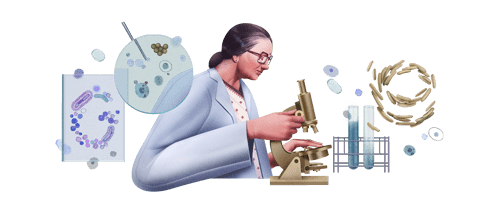


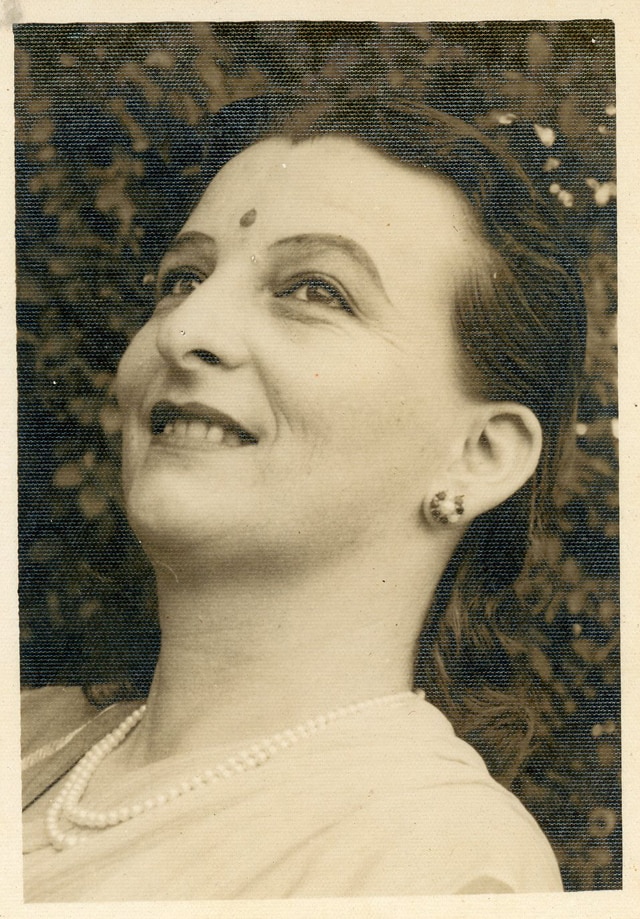
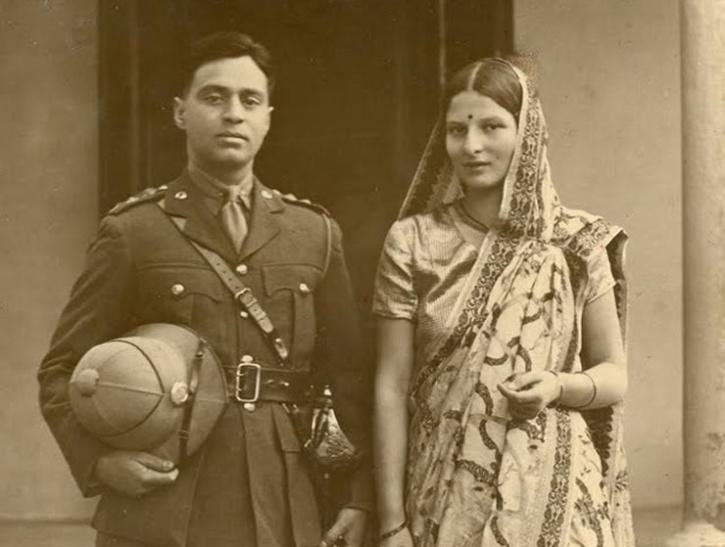
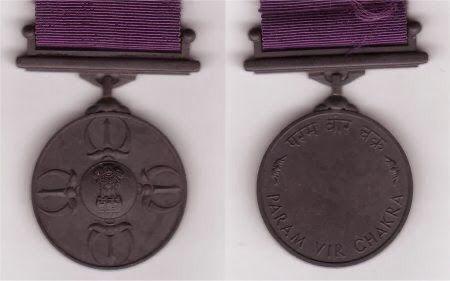

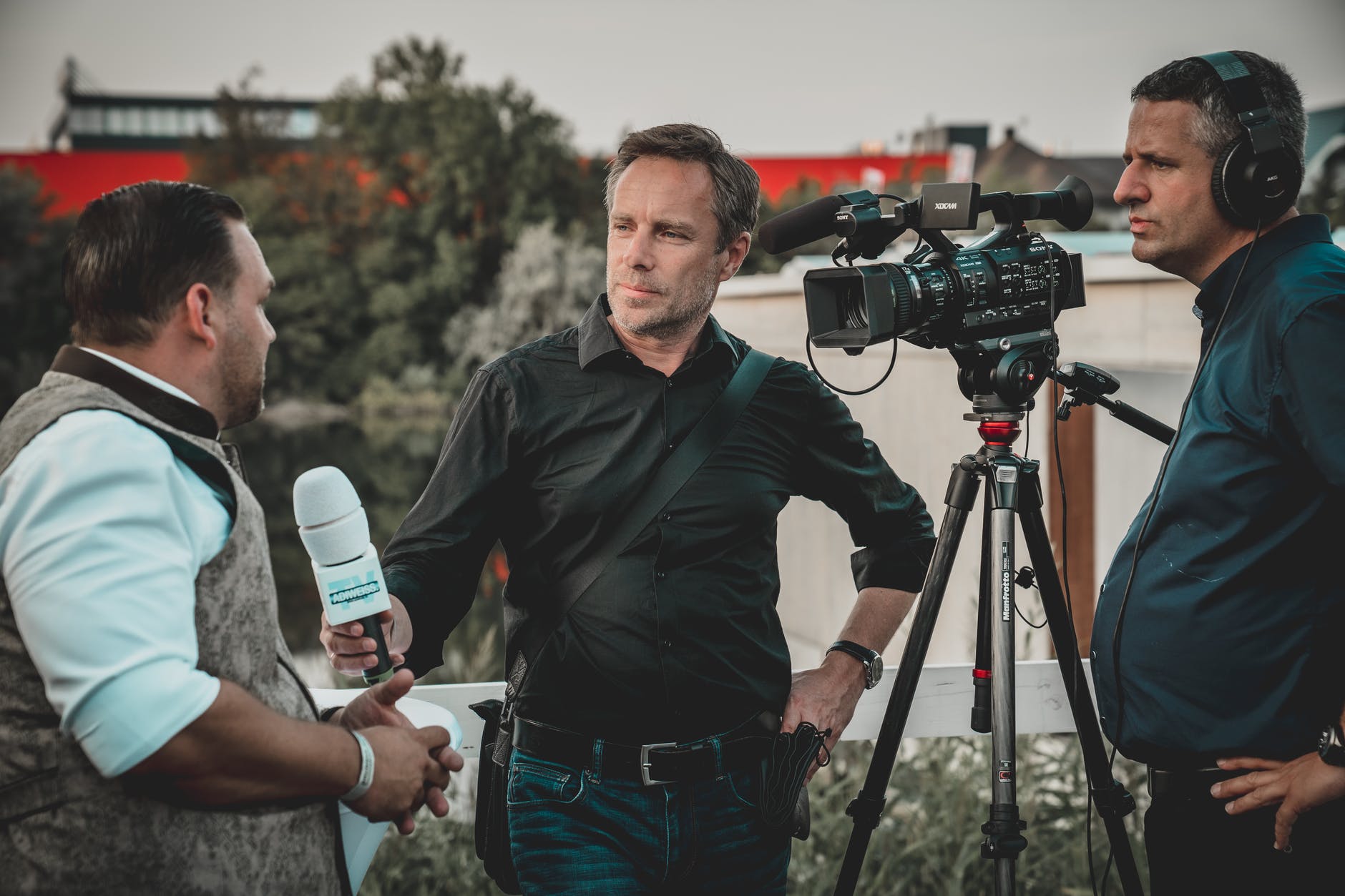




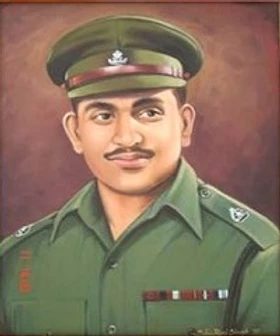


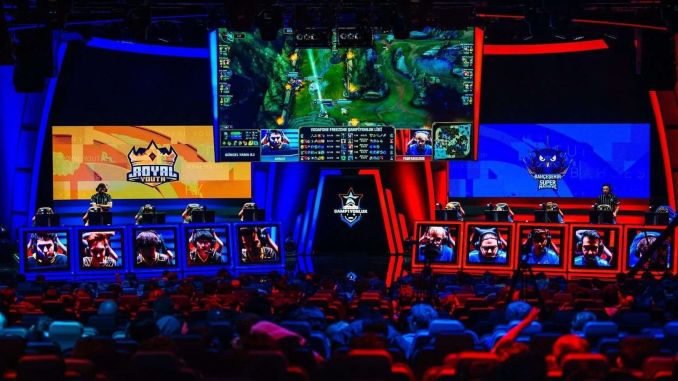









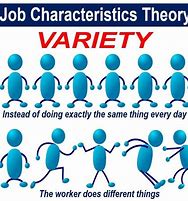


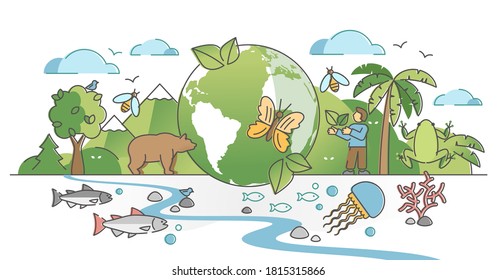
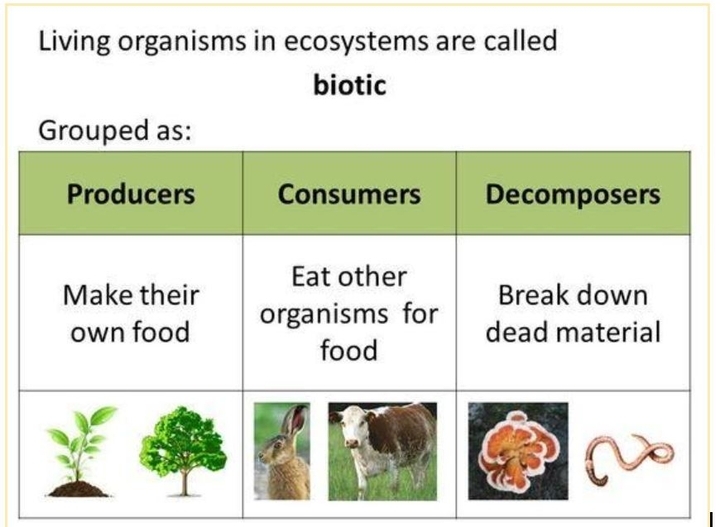
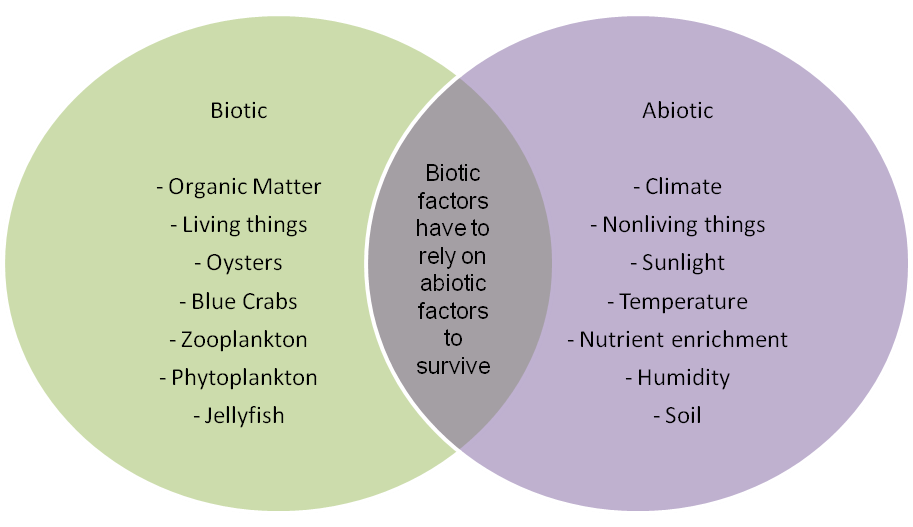
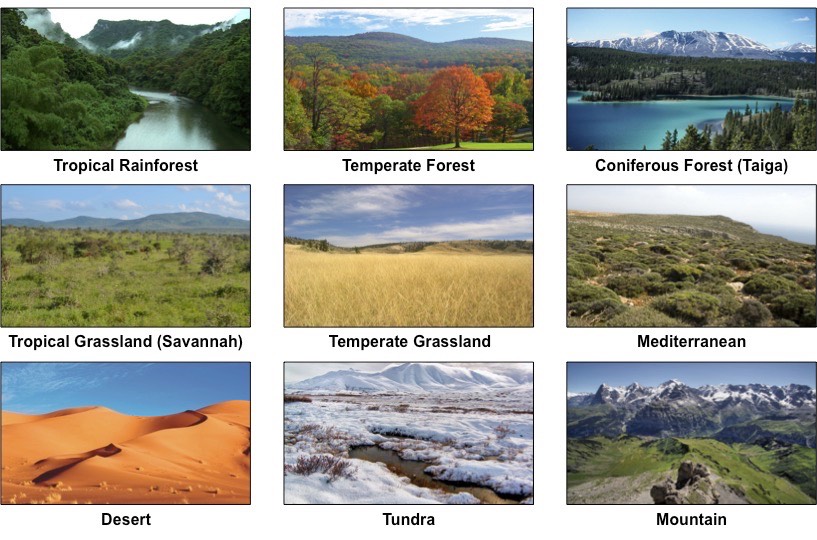
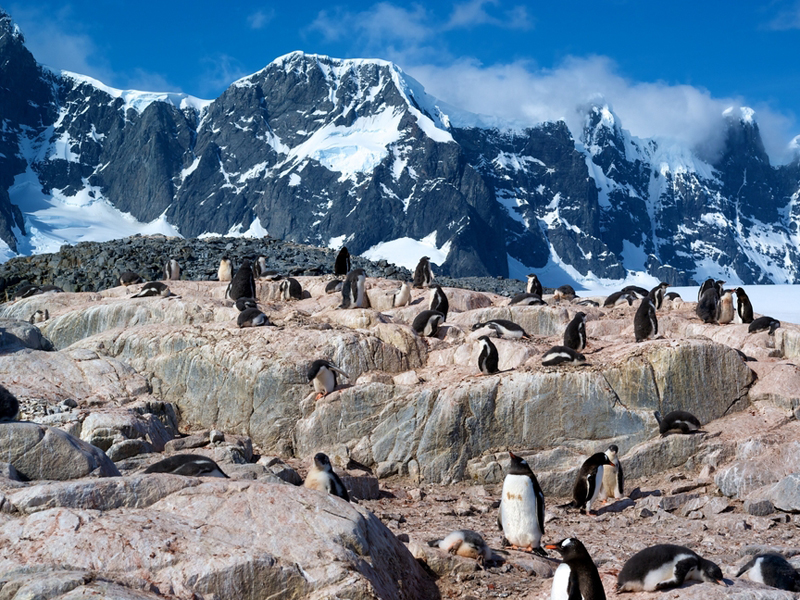

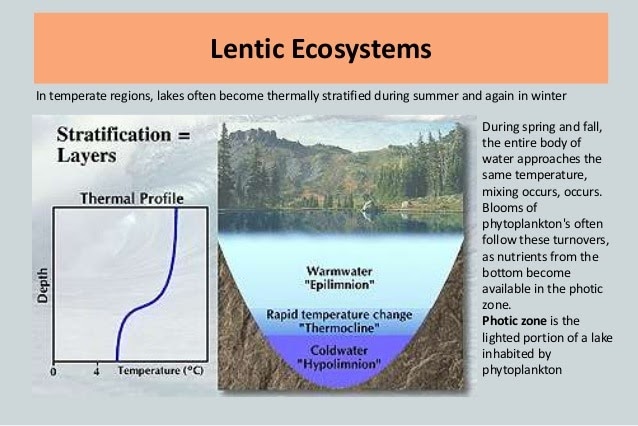
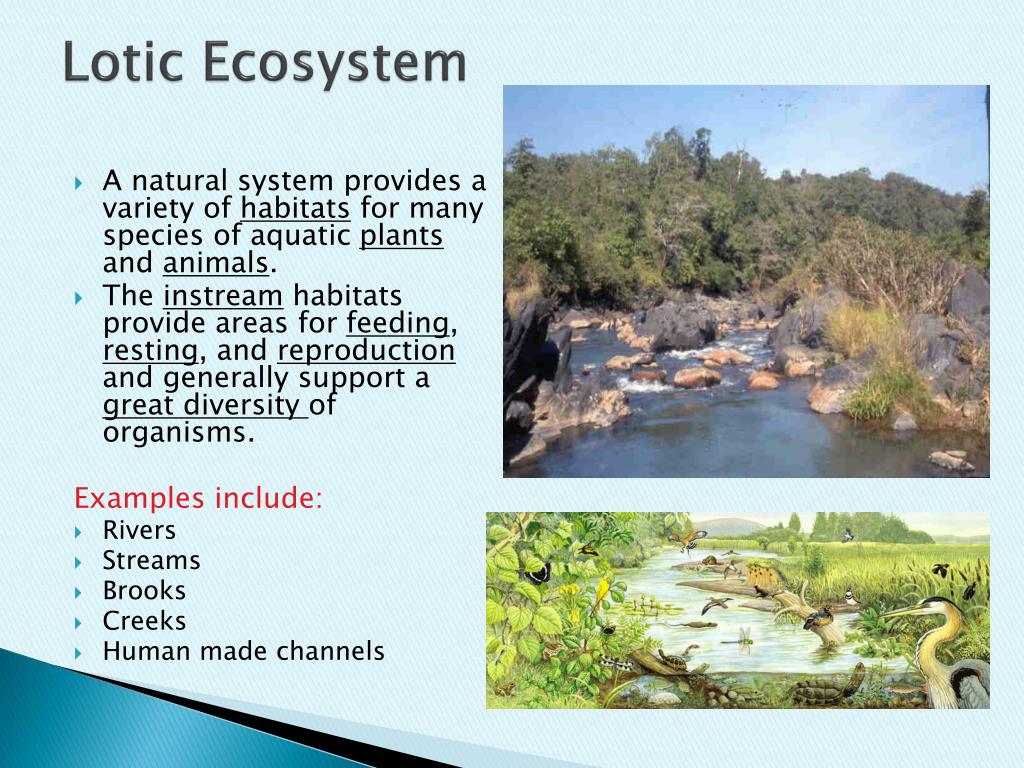
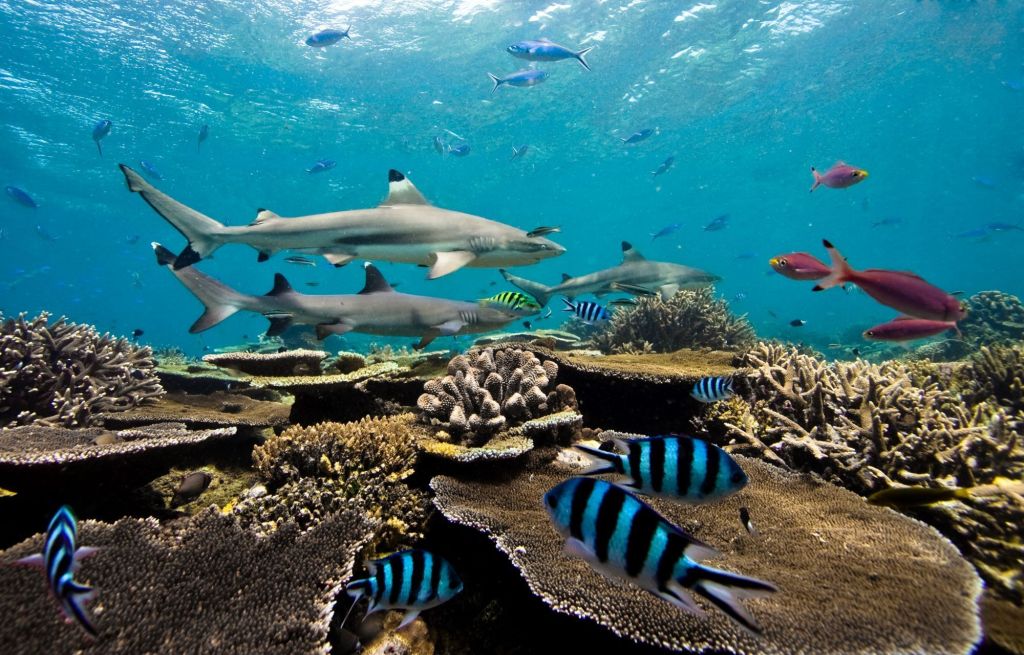

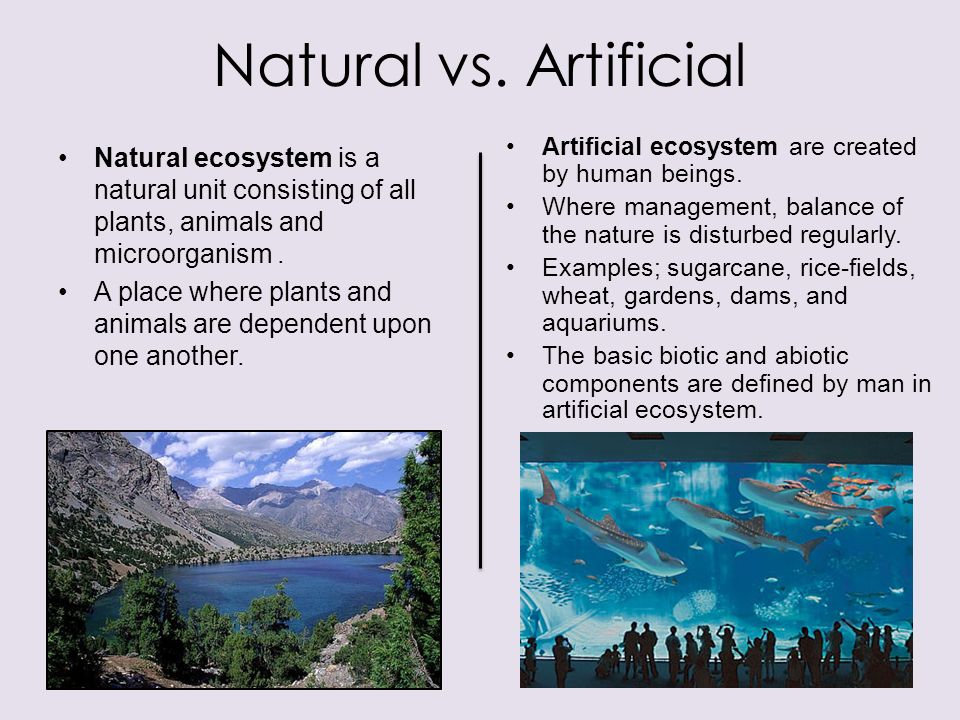
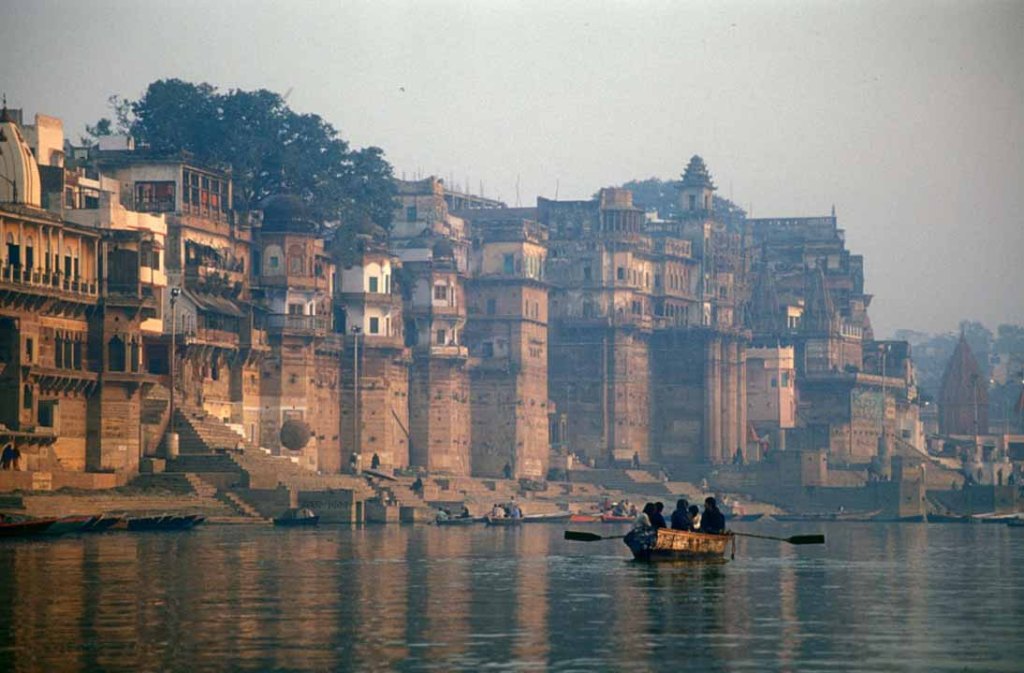
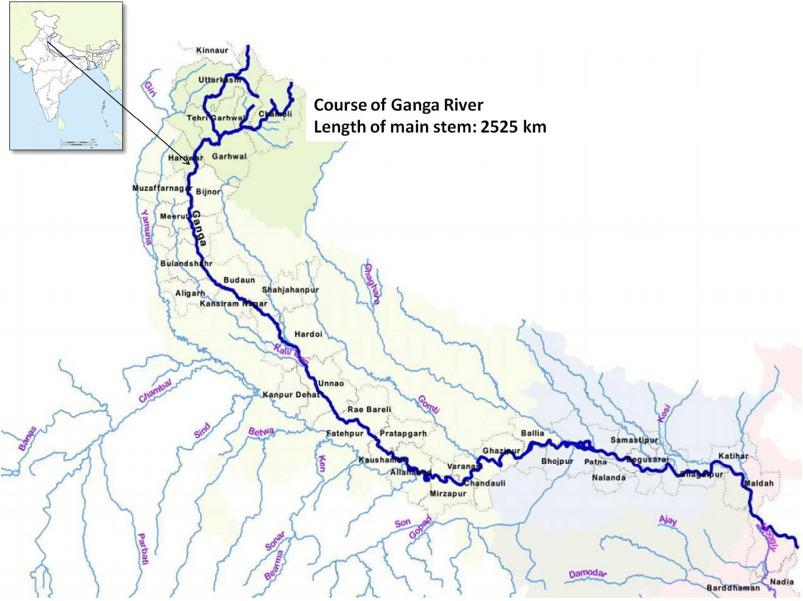
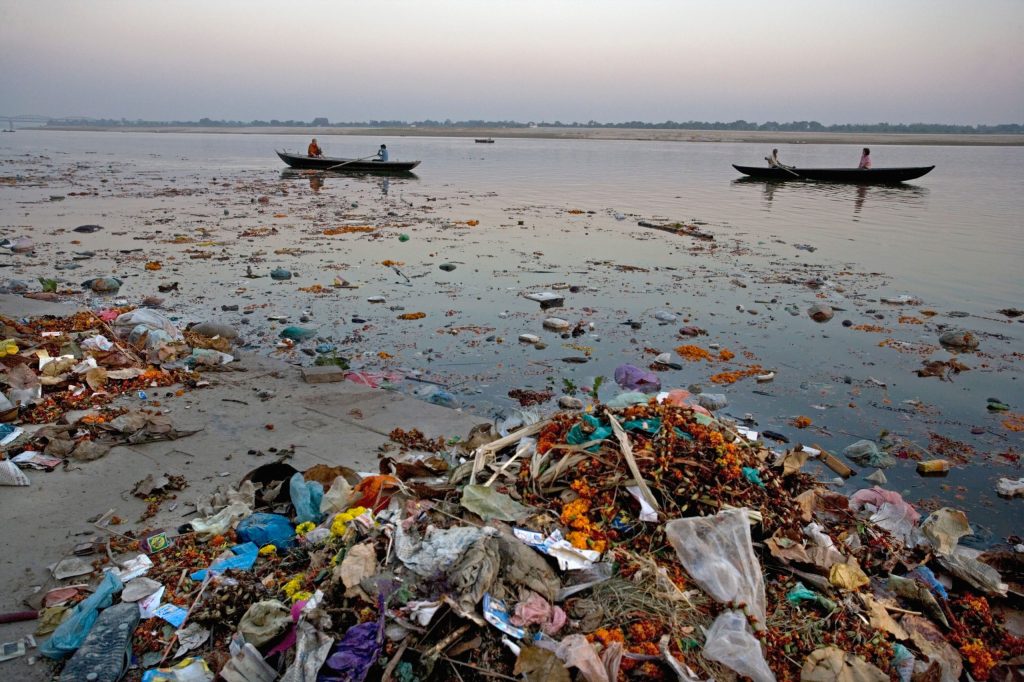



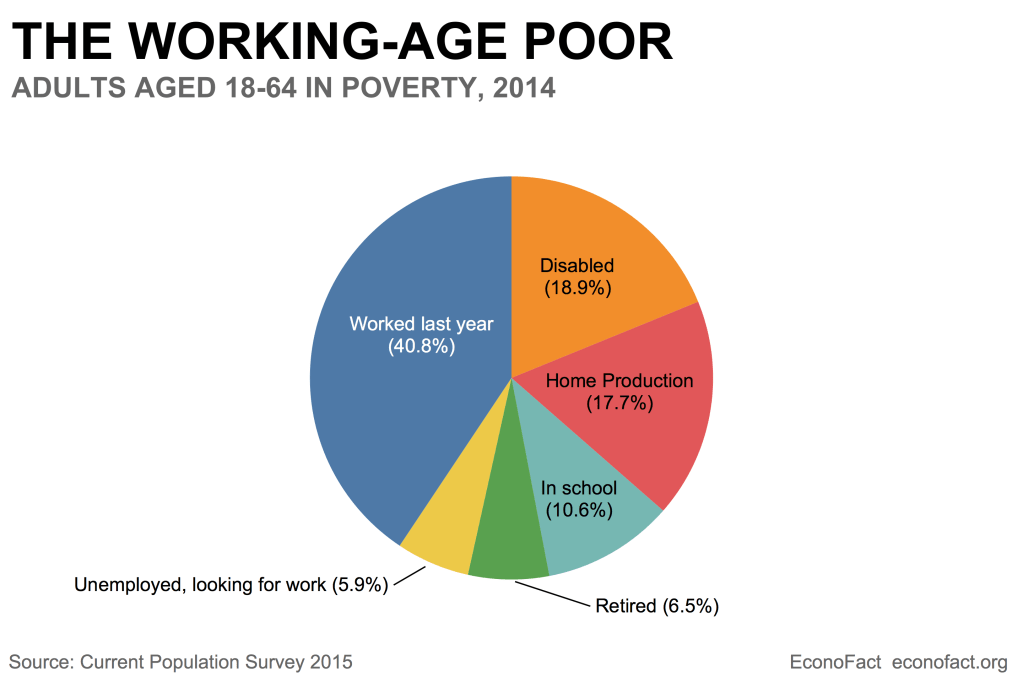
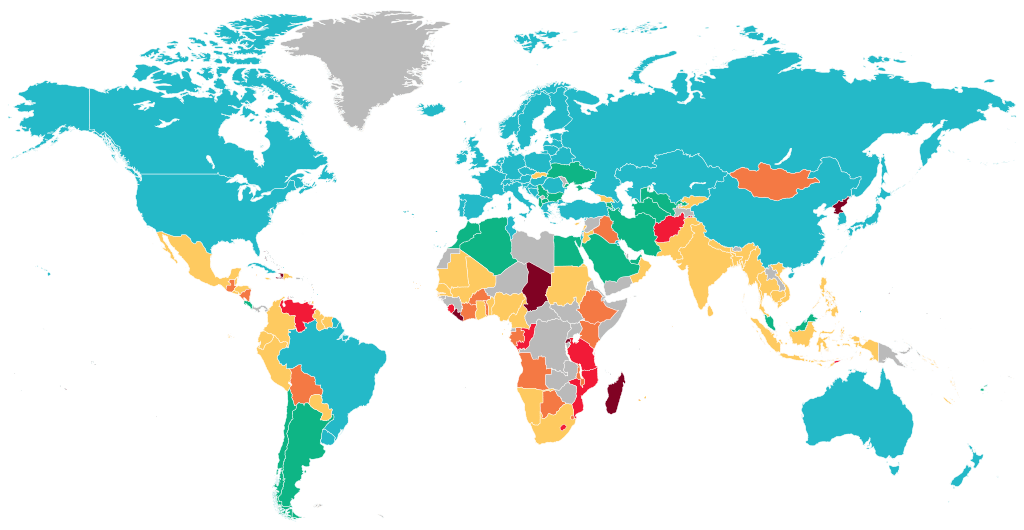

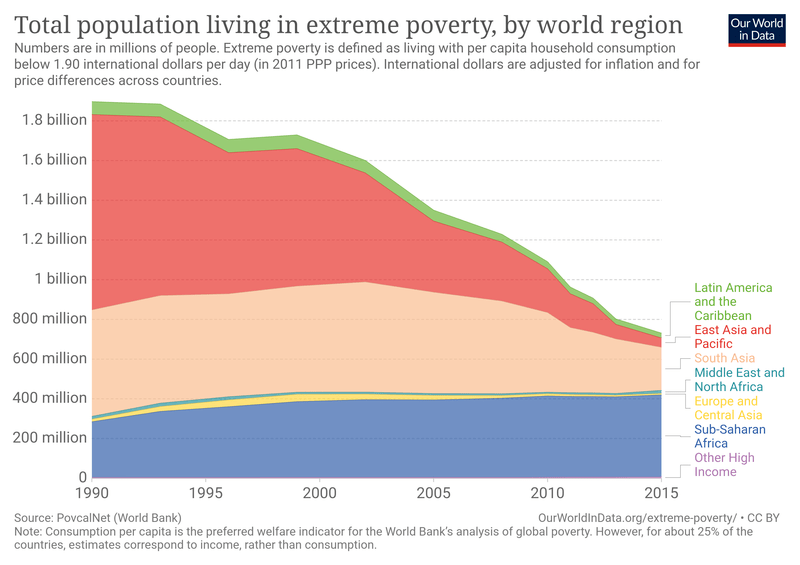


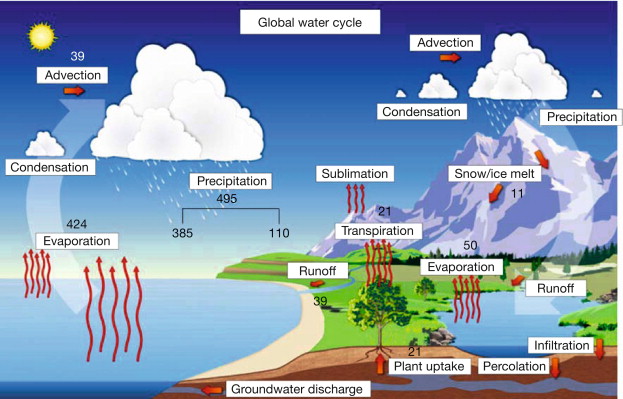
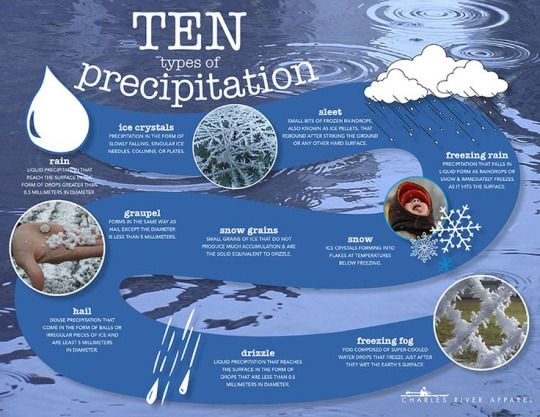
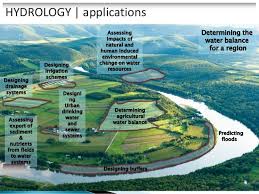
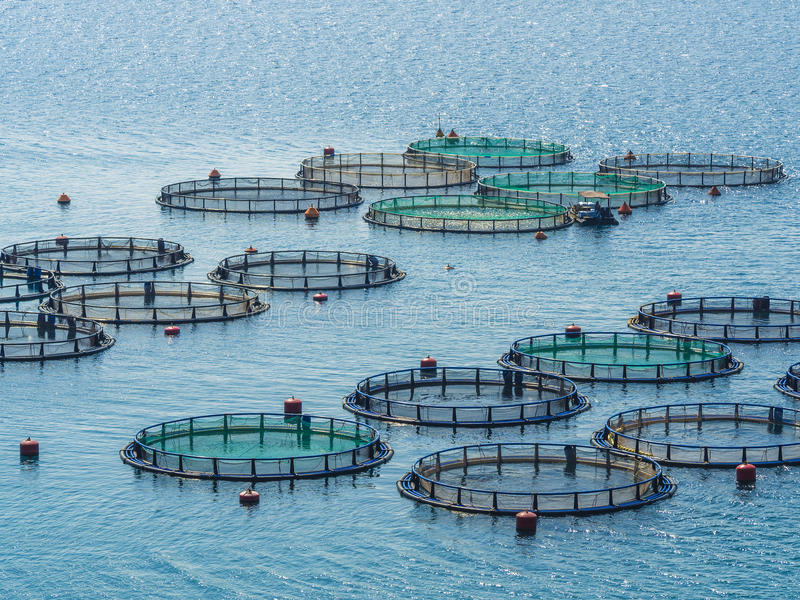
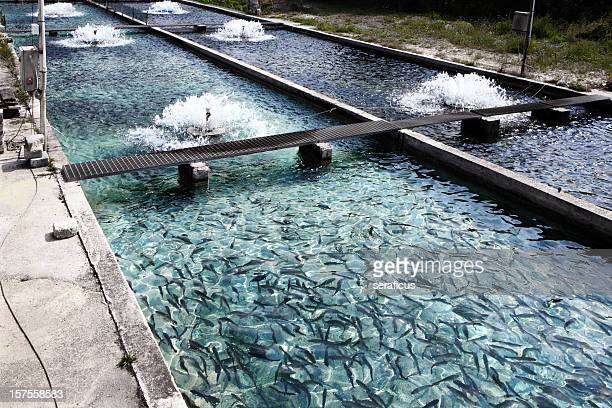
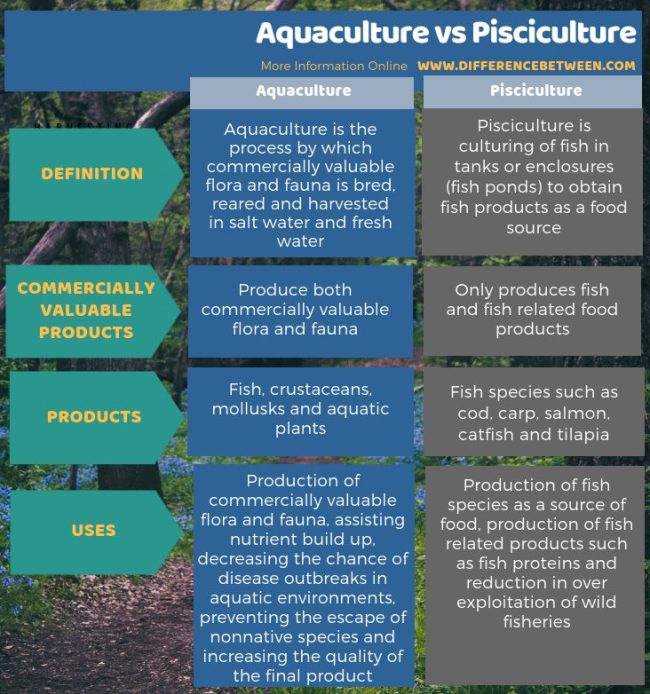
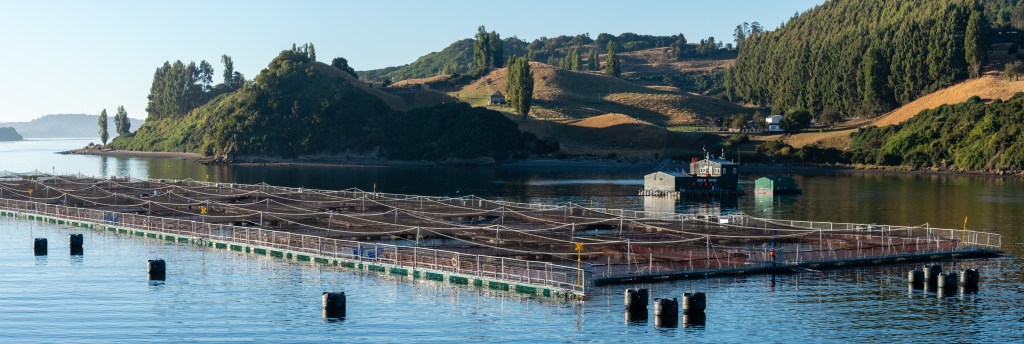
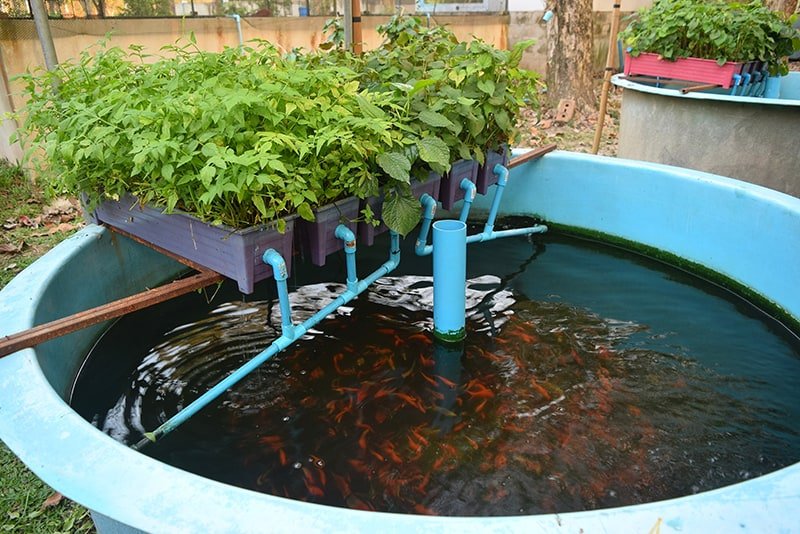
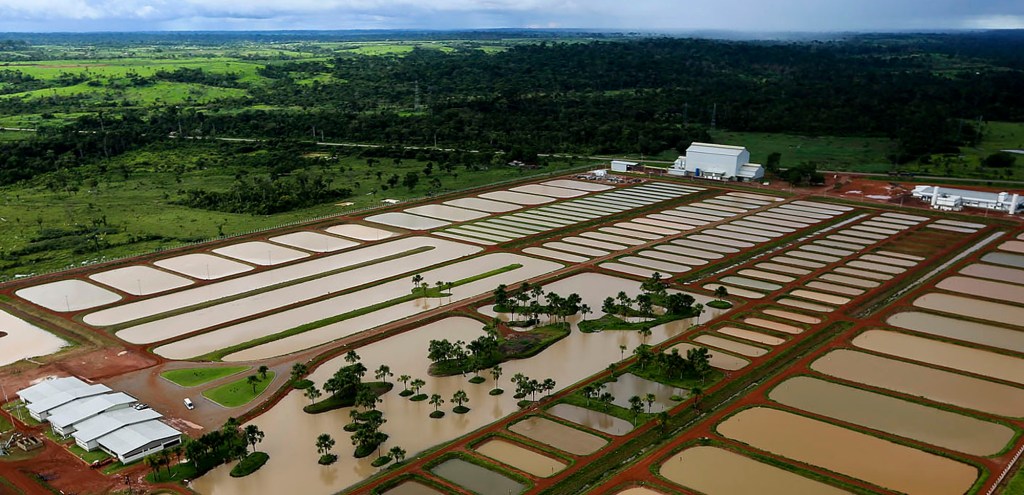


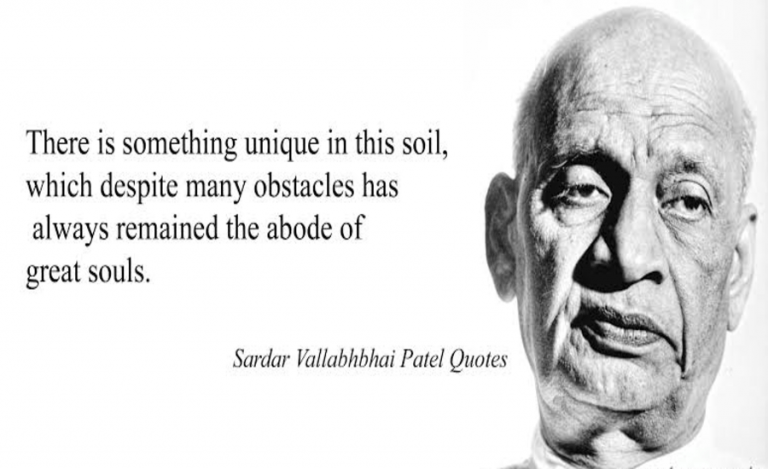
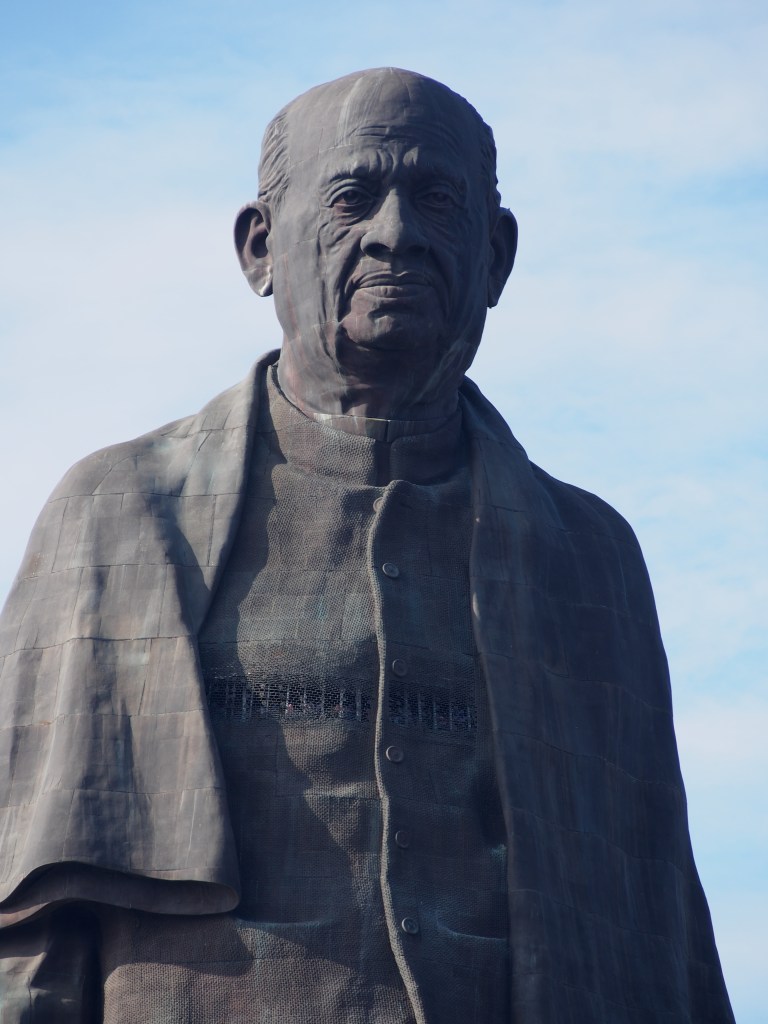
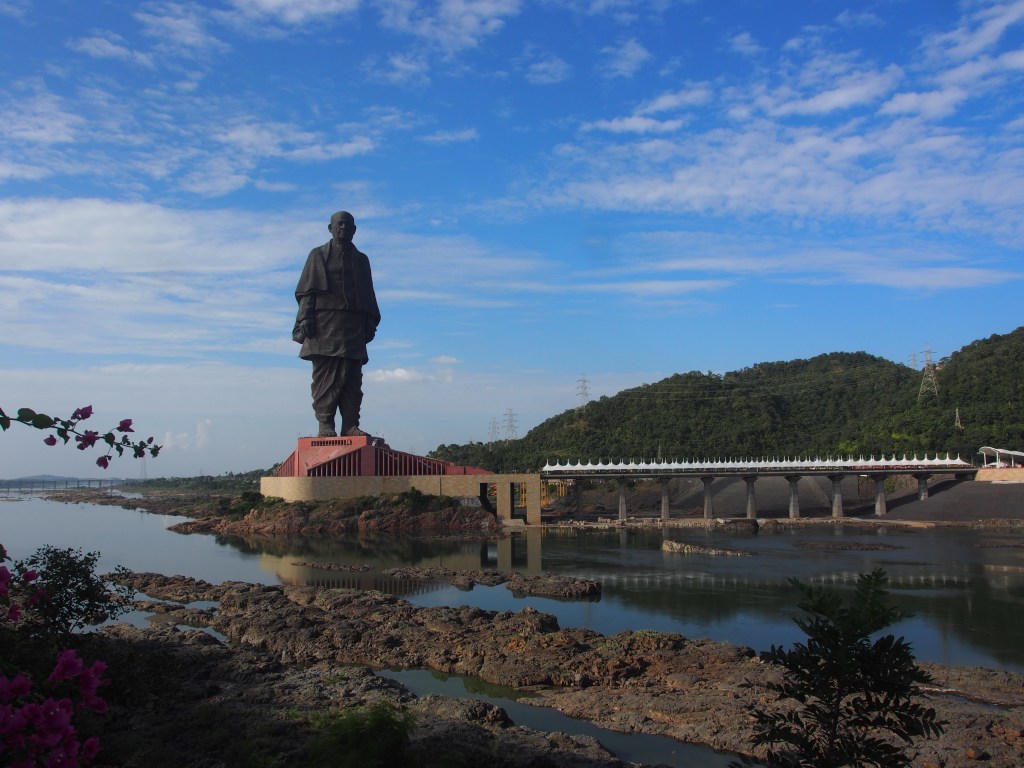
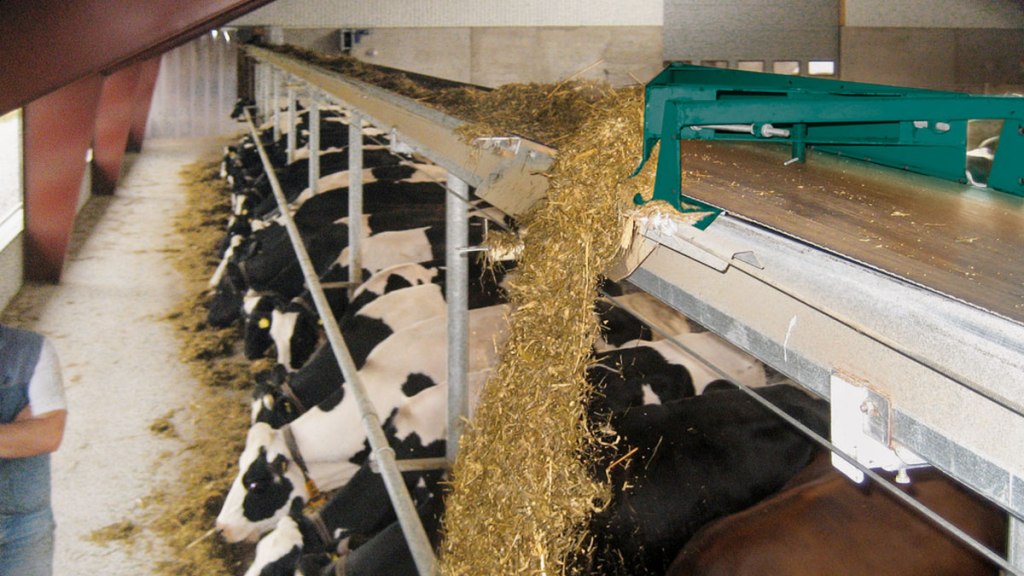






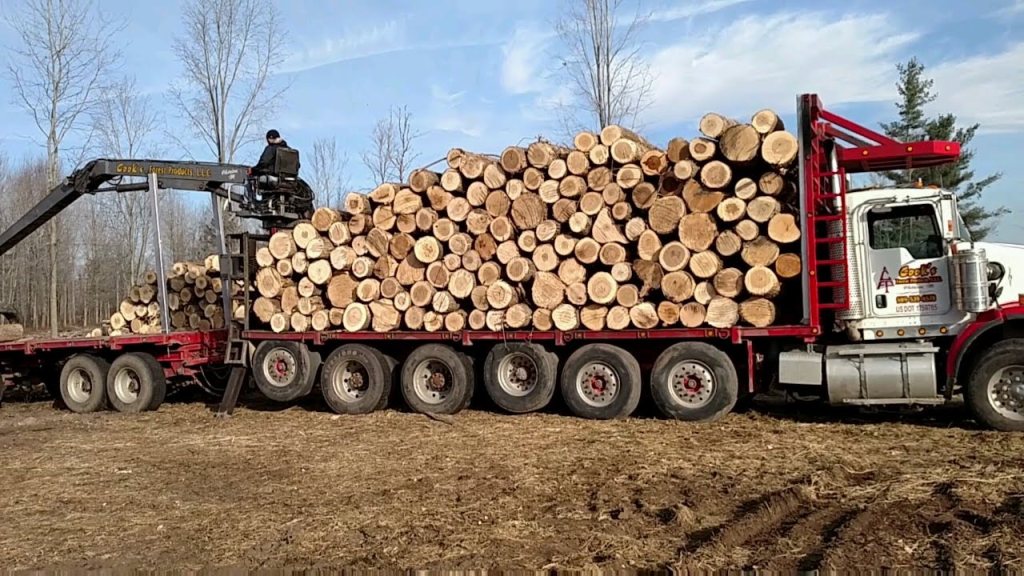




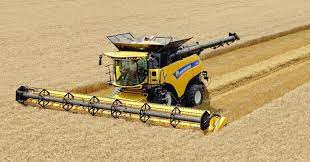
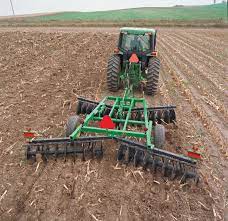
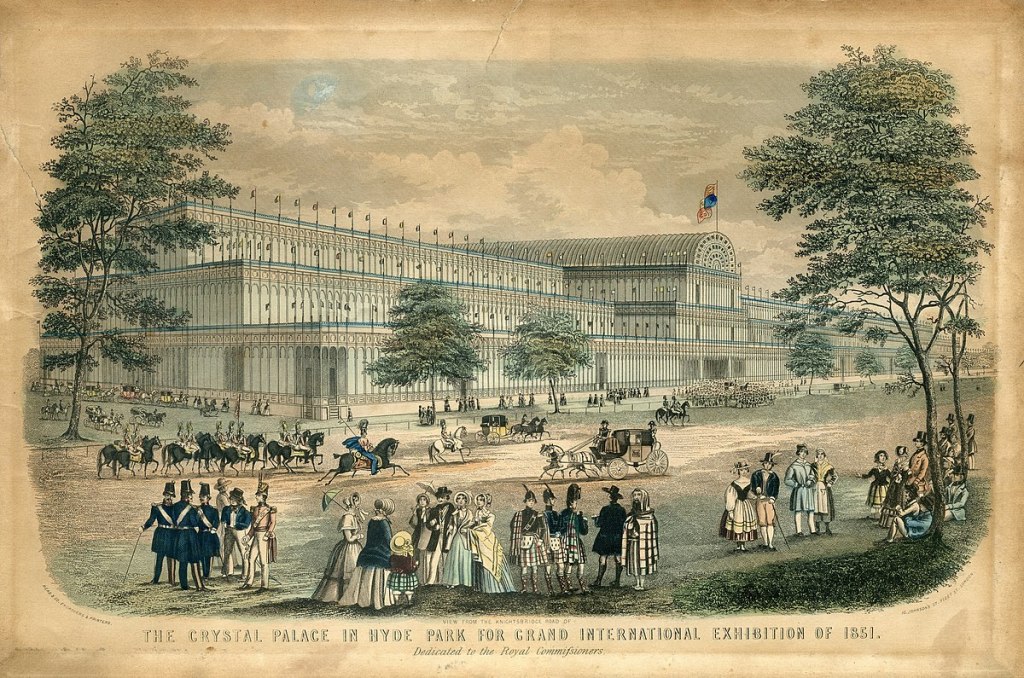
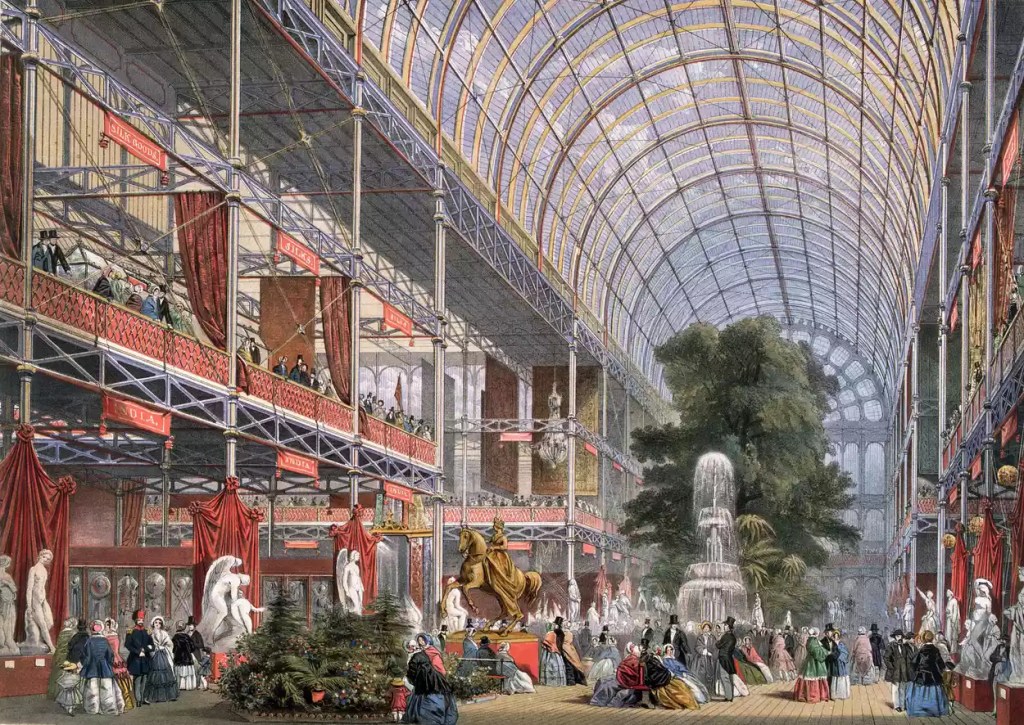







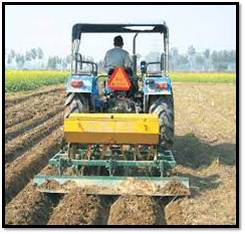

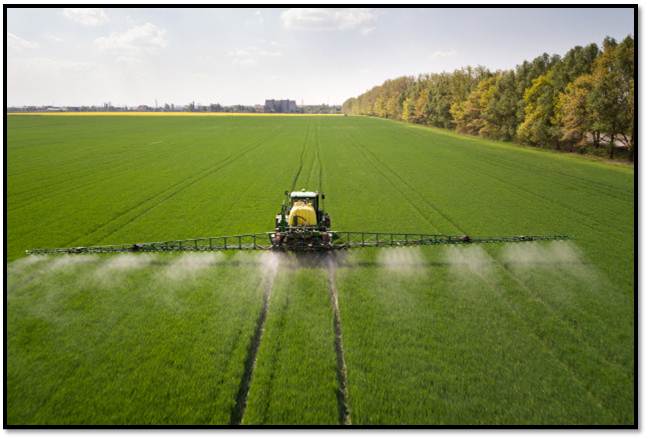
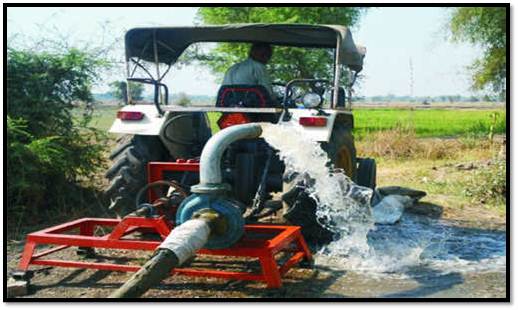













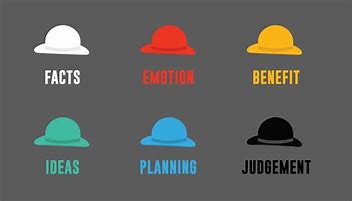










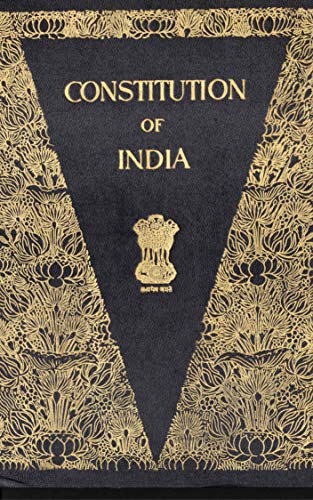
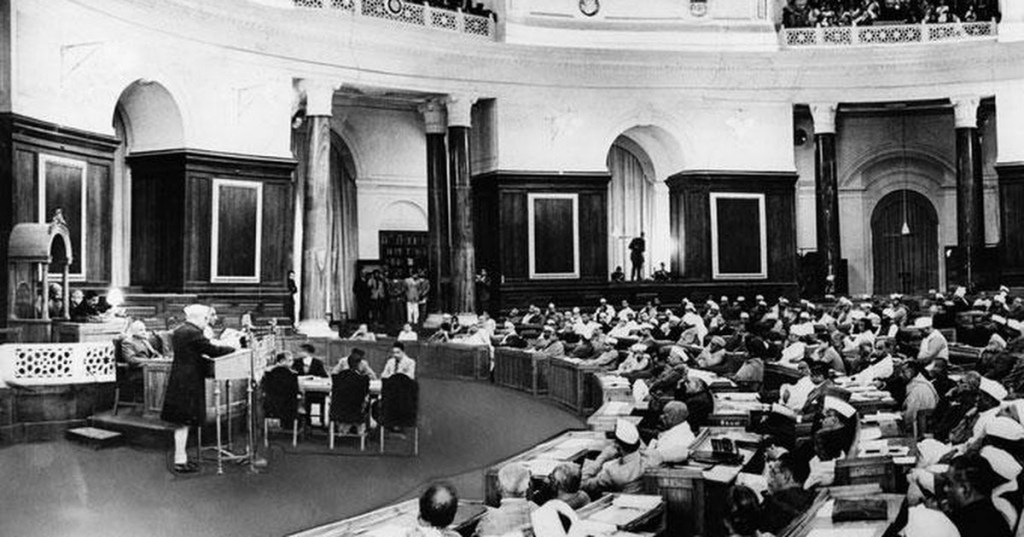








 Track2Training
You must be logged in to post a comment.