ELON Musk is one of the greatest entrepreneurs in the world.He is ceo,founder and chief engineer in space X.His net worth is 29,700 crores.He is the richest man in the world currently.Musk was born to a Canadian mother and South African father, and raised in Pretoria, South Africa. He briefly attended the University of Pretoria before moving to Canada at age 17 to avoid conscription.Elon Reeve Musk was born on June 28, 1971 in Pretoria, South Africa.He is now 50 years old.He attended the University of Pretoria for five months Musk arrived in Canada in June 1989, and lived with a second-cousin in Saskatchewan for a year, working odd jobs at a farm and lumber-mill.In 1990, Musk entered Queen’s University in Kingston, Ontario.
In 2001, Musk became involved with the nonprofit Mars Society. He was inspired by plans to place a growth-chamber for plants on Mars and discussed funding the project himself.SpaceX attempted their first launch of the Falcon 1 rocket in 2006,[69] and although the rocket failed to reach Earth orbit, they were awarded a Commercial Orbital Transportation Services program contract from NASA later that year.After two more failed attempts, which reportedly caused Musk so much stress.SpaceX received a $1.6 billion Commercial Resupply Services program contract from NASA for 12 flights of its Falcon 9 rocket and Dragon spacecraft to the International Space Station, replacing the Space Shuttle after its 2011 retirement. In 2012, the Dragon vehicle berthed with the ISS, a first for a private enterprise.Working towards its goal of reusable rockets, in 2015, SpaceX successfully landed the first stage of a Falcon 9. In 2015, SpaceX successfully landed the first stage of a Falcon 9. Landings were later achieved on an autonomous spaceport drone ship, an ocean-based recovery platform. In 2018, SpaceX launched the Falcon Heavy; the inaugural mission carried Musk’s personal Tesla Roadster as a dummy payload. In 2017, SpaceX unveiled its next-generation launch vehicle and spacecraft system
There are people in the world who are having high income but are still living petty lives as they don’t know how to manage their finances.
Can you be financially secure even if you are not making a lot of money?
Can ordinary people invest in the stock market with manageable risks?
Answers to these questions are YES if you are well versed with Financial literacy.
Today managing money in a beneficial way has become a skill. It all starts with the income or money you are making in present. It can be through your salary or investments.
INCOME-
Your first step towards becoming a financial literate is to have enough money to manage. How can you make money now? For making money, you have to create your own value in the market. Employers would never hire YOU but they will hire your SKILLS. When you are imparting skills in yourself then you are creating your value. The more and better skills you have the more the value you would have.
EXPENSES-
When you get your income then what is the first thing you do?
Of course you either save it or spend it. In most of the times, you spend your income first. Now, how, when and on what to spend your income are the important aspects of financial literacy. Do you evenknow where your all money goes?
There is a 50:30:20 rule where 50% of your income goes to your urgent costs that can’t be delayed for example monthly bills including housing or rent other 30% of your income goes to Debt or savings and the rest 20% goes to your entertainment or the things you like to do or buy. If you don’t manage your expenses carefully then the repercussions only contain the regrets. People should note down their financial priorities every month then spend the income accordingly.
ASSETS-
Assets are the things on which you have the ownership. Everything from your house and saving accounts to your car are regarded as your assets. It is advised to develop the habit of saving from as earlier as possible while earning. Even if you save a very little amount then also this is not the problem. The thing is you should save and get into the practice of saving. Save regularly for any upcoming unexpectedexpenditures. Save as much to build more and more assets. After saving, make a diverse financial plan through which you can efficiently use your income.
STOCKS-
Investment nowadays has become a necessity. Your one portion of your income ought to be used to buy a stock as to open multiple ways to earn money. There is always some amount of risk while buying a stock as the company in which you are investing may get profits in future or maybe not. So, you have to choose the company wisely in which you are investing. For a beginner, it is advised to invest in index funds or mutual funds. A mutual fund is a professionally managed portfolio for investment that pulls money from all sorts of investors especially for those who are looking for diversifying their investments. Index funds are which are able to manage the performance for a group of companies like a group of techcompanies or group of consumer goods company etc. An index basically consists of a basket of companies related to a particular niche. There are a lot of indices out there which can grab your attention. There comes the role of financial literacy which helps you to understand the tools required for achieving the short- term goals, intermediate goals or long-term goals.
LIABILITIES –
Liability is basically the debt you owe to a person or a business. Buying something with credit that is an asset and consuming something with credit has a vast difference. Using your student loan to go for a trip or investing your student loan to build assets and to hone your skills create a big impact in your life. Whether you use your money to invest on yourself or spend it on having fun, it all depends on you and your mindset. The worse repercussions of more debt than your income have all been emotional. They suck all the joy of one’s life. Try to limit your expenses and liabilities. In the end, it all depends on you whether you make right choices or wrong. These choices can be related to money , education and relationships etc. Every choice you make has an impact in your life. It does not matter whether the impact is large or small. So, choose wisely!
A podcast is an episode of series of spoken digital audio file. Podcasting is one of the most significant tools accessible to build your brand and your audience. when it comes to creating a podcast, the real magic happens when you’re recording.
Here are few ways to make your podcast sound more professional are enlisted below:
1.Start with an introduction:
Always start with an intro. It’s nice for stigmatization functions, however there are alternative ways to approach it. this is your show. You can do whatever it is that you want to do with it. You have a lot of freedom here. Now, like any podcast, video, or perhaps a live presentation, the simplest factor you’ll do at the start is to inform your listeners or readers what they’re about to experience. This helps them perceive what to expect, and provides them one thing to seem forward to. Then I pay a couple of minute going over about what I’m reaching to observe and who I actually have on the show as a guest that episode.Intro is an important step taken into consideration.
2. Attract the audience with an outro:
Always keep this one quick and sweet. In addition, in your intro, your outro could be very essential. And frankly, I see a variety of podcasters lacking in this one. your outro is the closing component humans pay attention and bear in mind whilst they are paying attention to you. So placed it to precise use.
3. Remove Interruptions during podcasting:
Ambient noises have an area in suggests however must be deliberate and now no longer left to chance. You don’t need your listener to listen a baby within side the subsequent room, a truck noise outside, or a noisy air conditioner.
It makes the whole listening enjoy unpleasant, and also you need to keep away from it in any respect costs. Customer enjoy is one of the primary elements whilst Clients purchase and pay, so that you need to take note of how does your podcast sound.
Podcasts are regularly listened to in cars, perks or gym, in the course of a commute, etc. Those aren’t ideal listening situations and are complete of noises. you must make your audio crystal clean to assure your podcast sound more professional. Another simple way is to record in a better condition simply is to observe patterns in the neighborhood whenever you are recording. In most places, it is the quietest during morning hours.
4. Adjust your tone:
There are many ways for podcasters, you ought to put in force to make your podcast sound professionally.
How could you want to sound: Is your podcast extra appropriate for a quicker and enthusiastic sports activities commentator voice, or perhaps you ought to goal for a easy late-night time radio DJ style.
Be friendly. If you’ve got got an academic podcast, use phrases like “you” and “I.” It minimizes the space and makes you sense extra like a listener’s friend.
Eliminate vocal inflection via way of means of understanding what you’re going to say.
Eliminate filter phrases.
Pauses are the subsequent essential detail of accurate pacing. It simply makes your podcast sound expert because it allows with lively listening and captures the eye of your audience.
Master your tone to get ultimately in the end of professional show.
5.Submit Social Proofs:
If you have clients, submit their genuine testimonials. The people you have helped submit their positive testimonials if your product resolved their issues. Simply raise and share it.
When you don’t have customers yet, present the benefits of your product in a larger context. Build your credibility on the basis of years of unique work, knowledge, certifications, qualifications and experience.
Over 50 to 70 % of audiences read reviews before making a buying decision. And nearly 63% of consumers are more likely to buy from a site that has ratings and reviews.
For instance, if you have a podcast about electric vehicles and not be an engineer. always make sure your podcast sounds professional, it shows how reputable companies are implementing the technologies. Proving that someone with authority did what you are talking about shows that you know your topic. When you teach something, try to show how it works for others.
India is a land known for the amalgamation of cultures, and always an inspiration to textile and fashion industry in India. Sarees are traditional wear of our country.
Sarees have established a permanent status of being the official bearer of magnificence and are climbing up the style ladder to prove it is a true blue member of the ethnic style. Sarees and katrina kaif a perfect match made in heaven.
Here are 4 saree looks of Katrina kaif enlisted below:
Look #1
Katrina kaif looks Breathtaking in pretty pink saree. Katrina Kaif looked lovely in a exceedingly peach saree which she wore for the Diwali celebrations. The saree featured a significant rose gold border with intricate design. Katrina Kaif looked beautiful with simple makeup. Katrina kept her hair simple. The beautiful saree is from Manish Malhotra label collection. The embroidered saree was adorned with many signature style.
Katrina Kaif in blush pink saree for Diwali celebrations
The blush pink sheer saree was decked in gold and silver sequined borders in an exceedingly triangular pattern and floral style. The actress had carried the saree of elegance with a sleeveless blouse embellished in gold and silver sequins matching the saree’s borders and that includes neckline.
Katrina was last seen in the recently released, which marks her onscreen reunion with Akshay Kumar after a decade.
Look #2
Katrina kaif was spotted wearing this gorgeous number from Sabyasachi Mukherjee collection during the promotion of her latest movie Sooryavanshi which marks her onscreen reunion with Akshay kumar.
Katrina Kaif for promotion of Sooryavanshi in burnt orange saree
The actress was styled by celebrity fashion stylist Ami Patel in a rusted orange drape that featured multi-coloured embroidered border and gold sequins. It also entailed patches of gold floral embroidery. Katrina’s saree was teamed with a full-sleeved blouse with Teardrop earrings. She looked stunning with soft, shimmer makeup and light jewellery. Katrina is a desi vision and looks beautiful as the colour beautifully complements her.
Look # 3
This recent saree inspiration was delivered by Katrina Kaif was in Dubai attending the HSBC Global Indian Pulse Survey at Expo 2020 Dubai. The saree with floral embroidery, this Aaina saree came with the loveliest work peppered with multiple hues. The scalloped hem, mini chaandbaalis, and gold bangles aren’t one thing to be incomprehensible.
Katrina Kaif looks ethereal in a pink organza saree for an event in Dubai
Look – 4
Katrina wore a plain pastel blue chiffon saree for the promotion of sooryavanshi promotion at Bigg Boss and teamed with the semi-sheer six yards with an embroidered blouse of the identical color. The spaghetti-strapped blouse came adorned with floral sequined embroidery and a plunging neck. Katrina accessorized her saree with a pair of floral drop matching earrings, and silver stacked bracelets. Her make-up featured metallic blue eye shadow, glowing skin, center-parted wavy locks, a dainty bindi, and nude pink lips.
Katrina Kaif looks graceful look in a powder blue saree for Sooryavanshi promotions
In a recent interview to Cosmopolitan India,
“Katrina said, “I grew up thinking that there is just one kind of beauty—it was what you saw in the magazines, and if you didn’t conform to that, then you didn’t cut it. I used to be rather conscious about the way I looked because I felt like I didn’t quite fit in. Today, people might find that admission a little strange, but back then, I felt that there were things about my features that were not ‘perfect’. I realize now that I was the one putting this pressure on myself ”. said the actress.
A computer is a programmable device that stores, retrieves, and processes data. … The term was later given to mechanical devices as they began replacing human computers. Today’s computers are electronic devices that accept data (input), process that data, produce output, and store storage the results.A computer is a machine that can store and process information. Most computers rely on a binary system, which uses two variables, 0 and 1, to complete tasks such as storing data, calculating algorithms, and displaying information.Computer has become very important nowadays because it is very much accurate, fast and can accomplish many tasks easily.
TYPES OF COMPUTER:-
* ANALOG COMPUTER.
* DIGITAL COMPUTER.
* MAINFRAME COMPUTER.
ANALOG COMPUTER:-
An analog computer or analogue computer is a type of computer that uses the continuously variable aspects of physical phenomena such as electrical, mechanical, or hydraulic quantities to model the problem being solved planimeters, nomograms, operational amplifiers, mechanical integrators, slide rules, tide pool predators, electric integrators are some examples for analog computers.
DIGITAL COMPUTER:-
Digital computer, any of a class of devices capable of solving problems by processing information in discrete form. It operates on data, including magnitudes, letters, and symbols, that are expressed in binary codes using only the two digits 0 and 1.smartphones, calculators, tablets, personal computer are some examples for Digital computers.
MAINFRAME COMPUTER:-
A mainframe computer, informally called a mainframe or big iron, is a computer used primarily by large organizations for critical applications like bulk data processing for tasks such as censuses, industry and consumer statistics, enterprise resource planning, and large-scale transaction processing. IBM zSeries, System z9 and System z10 servers are some examples for Mainframe computers.
An aircraft is a vehicle or machine that is able to fly by gaining support from the air. It counters the force of gravity by using either static lift or by using the dynamic lift of an airfoil, or in a few cases the downward thrust from jet engines. Common examples of aircraft include airplanes, helicopters, airships (including blimps), gliders, paramotors, and hot air balloons.
The human activity that surrounds aircraft is called aviation. The science of aviation, including designing and building aircraft, is called aeronautics. Crewed aircraft are flown by an onboard pilot, but unmanned aerial vehicles may be remotely controlled or self-controlled by onboard computers. Aircraft may be classified by different criteria, such as lift type, aircraft propulsion, usage and others.
History :
Flying model craft and stories of manned flight go back many centuries; however, the first manned ascent and safe descent in modern times took place by larger hot-air balloons developed in the 18th century. Each of the two World Wars led to great technical advances. Consequently, the history of aircraft can be divided into five eras:
* Pioneers of flight, from the earliest experiments to 1914. * First World War, 1914 to 1918. Aviation between the World Wars, 1918 to 1939. * Second World War, 1939 to 1945. * Postwar era, also called the Jet Age, 1945 to the present day.
Methods of lift
Lighter than air – aerostats
Aerostats use buoyancy to float in the air in much the same way that ships float on the water. They are characterized by one or more large cells or canopies, filled with a relatively low-density gas such as helium,hydrogen, or hot air, which is less dense than the surrounding air. When the weight of this is added to the weight of the aircraft structure, it adds up to the same weight as the air that the craft displaces.
Small hot-air balloons, called sky lanterns, were first invented in ancient China prior to the 3rd century BC and used primarily in cultural celebrations, and were only the second type of aircraft to fly, the first being kites, which were first invented in ancient China over two thousand years ago.
During World War II, this shape was widely adopted for tethered balloons; in windy weather, this both reduces the strain on the tether and stabilizes the balloon. The nickname blimp was adopted along with the shape. In modern times, any small dirigible or airship is called a blimp, though a blimp may be unpowered as well as powered.
Heavier-than-air – aerodynes :
Heavier-than-air aircraft, such as airplanes, must find some way to push air or gas downwards so that a reaction occurs (by Newton’s laws of motion) to push the aircraft upwards. This dynamic movement through the air is the origin of the term. There are two ways to produce dynamic upthrust aerodynamic lift, and powered lift in the form of engine thrust.
Aerodynamic lift involving wings is the most common, with fixed-wing aircraft being kept in the air by the forward movement of wings, and rotorcraft by spinning wing-shaped rotors sometimes called rotary wings. A wing is a flat, horizontal surface, usually shaped in cross-section as an aerofoil. To fly, air must flow over the wing and generate lift. A flexible wing is a wing made of fabric or thin sheet material, often stretched over a rigid frame. A kite is tethered to the ground and relies on the speed of the wind over its wings, which may be flexible or rigid, fixed, or rotary.
Fixed-wing:
The forerunner of the fixed-wing aircraft is the kite. Whereas a fixed-wing aircraft relies on its forward speed to create airflow over the wings, a kite is tethered to the ground and relies on the wind blowing over its wings to provide lift. Kites were the first kind of aircraft to fly and were invented in China around 500 BC. Much aerodynamic research was done with kites before test aircraft, wind tunnels, and computer modelling programs became available.
The first heavier-than-air craft capable of controlled free-flight were gliders. A glider designed by George Cayley carried out the first true manned, controlled flight in 1853.
The practical, powered, fixed-wing aircraft (the airplane or aeroplane) was invented by Wilbur and Orville Wright
Rotorcraft:
Rotorcraft, or rotary-wing aircraft, use a spinning rotor with aerofoil section blades (a rotary wing) to provide lift. Types include helicopters, autogyros, and various hybrids such as gyrodynes and compound rotorcraft.
Helicopters have a rotor turned by an engine-driven shaft. The rotor pushes air downward to create lift. By tilting the rotor forward, the downward flow is tilted backward, producing thrust for forward flight. Some helicopters have more than one rotor and a few have rotors turned by gas jets at the tips.
Autogyros have unpowered rotors, with a separate power plant to provide thrust. The rotor is tilted backward. As the autogyro moves forward, air blows upward across the rotor, making it spin. This spinning increases the speed of airflow over the rotor, to provide lift. Rotor kites are unpowered autogyros, which are towed to give them forward speed or tethered to a static anchor in high-wind for kited flight.
Other methods of lift:
A lifting body is an aircraft body shaped to produce lift. If there are any wings, they are too small to provide significant lift and are used only for stability and control. Lifting bodies are not efficient: they suffer from high drag, and must also travel at high speed to generate enough lift to fly. Many of the research prototypes, such as the Martin Marietta X-24, which led up to the Space Shuttle, were lifting bodies, though the Space Shuttle is not, and some supersonic missiles obtain lift from the airflow over a tubular body. Powered lift types rely on engine-derived lift for vertical takeoff and landing (VTOL). Most types transition to fixed-wing lift for horizontal flight. Classes of powered lift types include VTOL jet aircraft (such as the Harrier Jump Jet) and tiltrotors, such as the Bell Boeing V-22 Osprey, among others.
Size : The smallest aircraft are toys/recreational items, and nano aircraft.
The largest aircraft by dimensions and volume (as of 2016) is the 302 ft (92 m) long British Airlander 10, a hybrid blimp, with helicopter and fixed-wing features, and reportedly capable of speeds up to 90 mph (140 km/h; 78 kn), and an airborne endurance of two weeks with a payload of up to 22,050 lb (10,000 kg).
The largest aircraft by weight and largest regular fixed-wing aircraft ever built, as of 2016, is the Antonov An-225 Mriya. That Ukrainian-built six-engine Russian transport of the 1980s is 84 m (276 ft) long, with an 88 m (289 ft) wingspan. It holds the world payload record, after transporting 428,834 lb (194,516 kg) of goods, and has recently flown 100 t (220,000 lb) loads commercially. With a maximum loaded weight of 550–700 t (1,210,000–1,540,000 lb), it is also the heaviest aircraft built to date. It can cruise at 500 mph (800 km/h; 430 kn).
The largest military airplanes are the Ukrainian Antonov An-124 Ruslan (world’s second-largest airplane, also used as a civilian transport), and American Lockheed C-5 Galaxy transport, weighing, loaded, over 380 t (840,000 lb). The 8-engine, piston/propeller Hughes H-4 Hercules “Spruce Goose” an American World War II wooden flying boat transport with a greater wingspan (94m/260ft) than any current aircraft and a tail height equal to the tallest (Airbus A380-800 at 24.1m/78ft) — flew only one short hop in the late 1940s and never flew out of ground effect.
The largest civilian airplanes, apart from the above-noted An-225 and An-124, are the Airbus Beluga cargo transport derivative of the Airbus A300 jet airliner, the Boeing Dreamlifter cargo transport derivative of the Boeing 747 jet airliner/transport (the 747-200B was, at its creation in the 1960s, the heaviest aircraft ever built, with a maximum weight of over 400 t (880,000 lb)),and the double-decker Airbus A380 “super-jumbo” jet airliner
Size and speed extremes:
Speeds : The fastest recorded powered aircraft flight and fastest recorded aircraft flight of an air-breathing powered aircraft was of the NASA X-43A Pegasus, a scramjet-powered, hypersonic, lifting body experimental research aircraft, at Mach 9.6, exactly 3,292.8 m/s (11,854 km/h; 6,400.7 kn; 7,366 mph). The X-43A set that new mark, and broke its own world record of Mach 6.3, exactly 2,160.9 m/s (7,779 km/h; 4,200.5 kn; 4,834 mph), set in March 2004, on its third and final flight on 16 November 2004.
Prior to the X-43A, the fastest recorded powered airplane flight (and still the record for the fastest manned, powered airplane / fastest manned, non-spacecraft aircraft) was of the North American X-15A-2, rocket-powered airplane at Mach 6.72, or 2,304.96 m/s (8,297.9 km/h; 4,480.48 kn; 5,156.0 mph), on 3 October 1967. On one flight it reached an altitude of 354,300 ft (108,000 m).
The fastest known, production aircraft (other than rockets and missiles) currently or formerly operational (as of 2016) are:
The fastest fixed-wing aircraft, and fastest glider, is the Space Shuttle, a rocket-glider hybrid, which has re-entered the atmosphere as a fixed-wing glider at more than Mach 25, equal to 8,575 m/s (30,870 km/h; 16,668 kn; 19,180 mph). The fastest military airplane ever built: Lockheed SR-71 Blackbird, a U.S. reconnaissance jet fixed-wing aircraft, known to fly beyond Mach 3.3, equal to 1,131.9 m/s (4,075 km/h; 2,200.2 kn; 2,532 mph). On 28 July 1976, an SR-71 set the record for the fastest and highest-flying operational aircraft with an absolute speed record of 2,193 mph (3,529 km/h;1,906 kn; 980 m/s) and an absolute altitude record of 85,068 ft (25,929 m).
Uses for aircraft:
Aircraft are produced in several different types optimized for various uses; militaryaircraft, which includes not just combat types but many types of supporting aircraft, and civil aircraft, which include all non-military types, experimental and model.
Military:
A military aircraft is any aircraft that is operated by a legal or insurrectionary armed service of any type.] Military aircraft can be either combat or non-combat:
Combat aircraft are aircraft designed to destroy enemy equipment using its own armament.Combat aircraft divide broadly into fighters and bombers, with several in-between types, such as fighter-bombers and attack aircraft, including attack helicopters. Non-combat aircraft are not designed for combat as their primary function, but may carry weapons for self-defense. Non-combat roles include search and rescue, reconnaissance, observation, transport, training, and aerial refueling. These aircraft are often variants of civil aircraft.
Civil:
Civil aircraft divide into commercial and general types, however there are some overlaps.
Commercial aircraft include types designed for scheduled and charter airline flights, carrying passengers, mail and other cargo. The larger passenger-carrying types are the airliners, the largest of which are wide-body aircraft. Some of the smaller types are also used in general aviation, and some of the larger types are used as VIP aircraft.
General aviation is a catch-all covering other kinds of private (where the pilot is not paid for time or expenses) and commercial use, and involving a wide range of aircraft types such as business jets (bizjets), trainers, homebuilt, gliders, warbirds and hot air balloons to name a few. The vast majority of aircraft today are general aviation types.
Model:
A model aircraft is a small unmanned type made to fly for fun, for static display, for aerodynamic research or for other purposes. A scale model is a replica of some larger design.
A technical skills screening tool is software that contains a rich library of technical assessment tests, including questions and answers for recruiters to screen and evaluate candidates.
The assessments created on these platforms are used to evaluate candidates before employment by technical recruiters and/or hiring managers.
How do skill assessments compare to other screening methods?
Skill assessments are not the only type of evaluation used by the hiring teams – job simulation resumes, and reference checks are all common screening methods. The trouble with resumes and reference checks is that they don’t reveal the whole picture. A candidate and often their references will attempt to present the applicant in the best positive light. Unfortunately, this may not be the most accurate portrayal of the candidate’s skills and abilities.
Job simulations, also known as work simulations, require candidates to perform tasks that the role requires in the workplace. These simulations are an effective evaluation tactic to understand how the candidate will perform in the real work environment.
Structured interviews are also an effective evaluation method, and they include a scoring system similar to that of skill assessments. The common denominator between the two methods is that they are both quantitative and can thus be reliably compared and contrasted. Moreover, recruiters can extract useful insights from the collected data.
Screen developers at scale with accurate, custom programming tests that evaluate technical skills hyper-relevant to the role.
Library of coding tasks for roles at all levels
High-scale plagiarism detection and fraud prevention
Top-rated candidate experience with fair scoring methodology
Skill assessments have the added benefit of providing recruiters with the opportunity to reliably screen out candidates pre-interview. Thus, when it comes to tech hiring, skill tests take the cake to justify reliability, efficiency, and cost-effectiveness.
The 5 best technical screening tools
While skill tests are great, we mentioned earlier that you need the right kind of assessment to guarantee fair evaluation and the best results. Therefore, the ideal technical screening tool should offer:
The ability to measure modern as well as legacy developer skills
Automation to minimize manual grading – through auto-evaluators and industry-leading compilers
Exceptional candidate experiences and custom branding opportunities for companies
Tests specifically tailored to various jobs and roles
Efficient qualitative score analysis
Seamless integrations with other hiring solutions
Unmatched data security for your candidate data
Video interviews with pair programming abilities
Comprehensive data insights, analytics, and reporting
Of course, not every tool will have all these features. So let’s take a look at the best technical screening tools for tech recruiters and hiring managers and see which one wins out.
#1 WeCP | We Create Problems
WeCreateProblems has the largest repository of technical interview questions & tests. Where other platforms average a few thousand to generously over 10,000 questions, WeCP has over 0.2 million+ technical questions in the bank. The question bank contains skill test questions for every tech role, whether it’s frontend or full-stack development, data science, DevOps, or something else.
Tech recruiters can generate custom tests on-demand with WeCP to evaluate over 2000 different technical skills. Need morecustomization with the test questions and design? WeCP’s team is on standby to help you out there too.
Aside from the impressive size of the question bank and the high quality of the questions themselves, WeCP sets itself apart from the competition in another big way – the evaluation process. WeCP uses SkillMaps for scientifically evaluating candidates, guaranteeing accuracy, and all the tests in the repository have been thoroughly vetted. Moreover, WeCP’s technical screening is made cheat-proof through:
Constant addition of new tests
Internal patrol
Dynamic rotation
Advanced plagiarism checker
AI-based video proctoring
WeCP’s questions are thoroughly scrutinized for difficulty, guaranteeing candidates can’t just Google the answers or prepare for them beforehand. Whether you design a custom test or use a pre-built one, WeCP guarantees unique, challenging, skill-mapped assessments to help you track down the best candidate.
Codility is a powerful tech screening solution and remote hiring tool tailored for engineering teams. The recruitment platform has been around since 2009 and provides employers with powerful screening and interviewing tools.
Codility has a diverse knowledge base and includes skill tests for various roles – you can use the tool to evaluate potential candidates for frontend and backend developer positions, data science, language skills, and more. However, one drawback of using this tool is that it lacks AI-powered video proctoring and web proctoring features, which may lead to cheating.
One of Codility’s most appreciated features is its ‘candidate feedback’ option. If you enable this feature, Codility provides candidates with a breakdown of their score immediately after submission of the skill test. Enabling automated candidate feedback helps recruiters be more transparent about the hiring process.
CodeSignal is a popular technical screening tool for tech recruiters with a decent repository of questions, web proctoring, on-demand custom questions, and even video interviews.
CodeSignal is a relatively young recruitment platform, having popped up in 2015, but it has since made a good name for itself. The tool helps recruiters generate custom tests for a wide variety of programming languages and developer skills.
Pedigree is a poor proxy for programming skills. Broaden your candidate pool and qualify individuals based on their coding skills. Measuring developer skills accurately and at scale is easy with CodeSignal.
Some candidates have expressed concern regarding CodeSignal’s existing questions, citing them to be verbose and difficult to comprehend. On the whole, though, CodeSignal is a reliable tool. It has helped many tech companies evolve past using resumes for evaluation into the more reliable realm of coding skill tests.
HackerRank is a popular developer screening tool. The platform offers assessment tests for a variety of skills, including tests for full-stack development skills and database skills.
From simple coding challenges to full-stack engineering scenarios, allow developers to demonstrate their design, development, and communication skills in a real-time pair programming environment, complete with a virtual whiteboard. Add projects that provide insight into the quality of work candidates will perform at your company.
HackerRank has been around since 2012 and has since grown its client list to over 2000. The tool provides framework support and helps recruiters assess up to 44 skills with its rich repository of questions. After designing your custom assessment with HackerRank, you can opt for the automated scoring system or manually score the tests.
HackerEarth has the makings of a solid technical screening tool – it has a decent question bank (sporting over 15000 questions), has tests for all relevant skills, and has features like video interviews that some of its competitors lack. However, it does miss out on the whiteboarding features that WeCP offers.
HackerEarth lets you engage or source top developers with hackathons, while also enabling you to assess, interview and upskill them with ease.
Like HackerRank, HackerEarth was founded in 2012 and has since catered to over a thousand clients. The platform supports proctoring and helps recruiters screen and short-list top-performing candidates thanks to reliable coding assessments and an integrated scoring system.
The field of electronics is a branch of physics and electrical engineering that deals with the emission, behaviour and effects of electrons using electronic devices. Electronics uses active devices to control electron flow by amplification and rectification, which distinguishes it from classical electrical engineering, which only uses passive effects such as resistance, capacitance and inductance to control electric current flow.
Electronics has hugely influenced the development of modern society. The identification of the electron in 1897, along with the subsequent invention of the vacuum tube which could amplify and rectify small electrical signals, inaugurated the field of electronics and the electron age.Practical applications started with the invention of the diode by Ambrose Fleming and the triode by Lee De Forest in the early 1900s, which made the detection of small electrical voltages such as radio signals from an radio antenna possible with a non-mechanical device. The growth of electronics was rapid, and by the early 1920s commercial radio broadcasting and communications were becoming widespread, and electronic amplifiers were being used in such diverse applications as long distance telephony and the music recording industry.
The next big technological step took several decades to appear, when Solid-state electronics emerged with the first working semiconductor transistor which was invented by William Shockley,Walter Houser Brattain and John Bardeen in 1947. The vacuum tube was no longer the only means of controlling electron flow. The MOSFET (MOS transistor) was subsequently invented in 1959, and was the first compact transistor that could be miniaturised and mass-produced. This played a key role in the emergence of microelectronics and the Digital Revolution. Today, electronic devices are universally used in Computers, telecommunications and signal processing employing Integrated circuits with sometimes millions of transistors on a single chip.
Electronic devices and components:
An electronic component is any physical entity in an electronic system used to affect the electrons or their associated fields in a manner consistent with the intended function of the electronic system. Components are generally intended to be connected together, usually by being soldered to a printed circuit board (PCB), to create an electronic circuit with a particular function (for example an amplifier, radio receiver, or oscillator). Components may be packaged singly, or in more complex groups as integrated circuits. Some common electronic components are capacitors, inductors, resistors, diodes, transistors, etc. Components are often categorized as active (e.g. transistors and thyristors) or passive (e.g. resistors, diodes, inductors and capacitors).
History of electronic components :
Vacuum tubes (Thermionic valves) were among the earliest electronic components. They were almost solely responsible for the electronics revolution of the first half of the twentieth century. They allowed for vastly more complicated systems and gave us radio, television, phonographs, radar, long-distance telephony and much more. They played a leading role in the field of microwave and high power transmission as well as television receivers until the middle of the 1980s. Since that time, solid-state devices have all but completely taken over. Vacuum tubes are still used in some specialist applications such as high power RF amplifiers, cathode ray tubes, specialist audio equipment, guitar amplifiers and some microwave devices.
The first working point-contact transistor was invented by John Bardeen and WalterHouser Brattain at Bell Labs in 1947. In April 1955, the IBM 608 was the first IBM product to use transistor circuits without any vacuum tubes and is believed to be the first all-transistorized calculator to be manufactured for the commercial market. The 608 contained more than 3,000 germanium transistors. Thomas J. Watson Jr. ordered all future IBM products to use transistors in their design. From that time on transistors were almost exclusively used for computer logic and peripherals. However, early junction transistors were relatively bulky devices that were difficult to manufacture on a mass-production basis, which limited them to a number of specialised applications.
Types of circuits:
Circuits and components can be divided into two groups: analog and digital. A particular device may consist of circuitry that has one or the other or a mix of the two types. An important electronic technique in both analog and digital electronics involves the use of feedback. Among many other things this allows very linear amplifiers to be made with high gain, and digital circuits such as registers, computers and oscillators.
Analog circuits:
Most analog electronic appliances, such as radio receivers, are constructed from combinations of a few types of basic circuits. Analog circuits use a continuous range of voltage or current as opposed to discrete levels as in digital circuits.
The number of different analog circuits so far devised is huge, especially because a ‘circuit’ can be defined as anything from a single component, to systems containing thousands of components.
Analog circuits are sometimes called linear circuits although many non-linear effects are used in analog circuits such as mixers, modulators, etc. Good examples of analog circuits include vacuum tube and transistor amplifiers, operational amplifiers and oscillators.
Digital circuits:
Digital circuits are electric circuits based on a number of discrete voltage levels. Digital circuits are the most common physical representation of Boolean algebra, and are the basis of all digital computers. To most engineers, the terms “digital circuit”, “digital system” and “logic” are interchangeable in the context of digital circuits. Most digital circuits use a binary system with two voltage levels labeled “0” and “1“. Often logic “0” will be a lower voltage and referred to as “Low” while logic “1” is referred to as “High“. However, some systems use the reverse definition (“0” is “High”) or are current based. Quite often the logic designer may reverse these definitions from one circuit to the next as he sees fit to facilitate his design. The definition of the levels as “0” or “1” is arbitrary.
Electronics theory :
Mathematical methods are integral to the study of electronics. To become proficient in electronics it is also necessary to become proficient in the mathematics of circuit analysis.
Circuit analysis is the study of methods of solving generally linear systems for unknown variables such as the voltage at a certain node or the current through a certain branch of a network. A common analytical tool for this is the SPICE circuit simulator.
Also important to electronics is the study and understanding of electromagnetic field theory.
Electronics lab:
Due to the complex nature of electronics theory, laboratory experimentation is an important part of the development of electronic devices. These experiments are used to test or verify the engineer’s design and detect errors. Historically, electronics labs have consisted of electronics devices and equipment located in a physical space, although in more recent years the trend has been towards electronics lab simulation software, such as CircuitLogix, Multisim, and PSpice.
Electronic systems design:
Electronic systems design deals with the multi-disciplinary design issues of complex electronic devices and systems, such as mobile phones and computers. The subject covers a broad spectrum, from the design and development of an electronic system (new product development) to assuring its proper function, service life and disposal. Electronic systems design is therefore the process of defining and developing complex electronic devices to satisfy specified requirements of the user.
Electronics industry :
The electronics industry consists of various sectors. The central driving force behind the entire electronics industry is the semiconductor industry sector, which has annual sales of over $481 billion as of 2018. The largest industry sector is e-commerce, which generated over $29 trillion in 2017. The most widely manufactured electronic device is the metal-oxide-semiconductor field-effect transistor (MOSFET), with an estimated 13 sextillion MOSFETs having been manufactured between 1960 and 2018. In the 1960s, U.S. manufacturers were unable to compete with Japanese companies such as Sony and Hitachi who could produce high-quality goods at lower prices. By the 1980s, however, U.S. manufacturers became the world leaders in semiconductor development and assembly.
Social media are interactive technologies that facilitate the creation and sharing of information, ideas, interests, and other forms of expression through virtual communities and networks. While challenges to the definition of social media arise due to the variety of stand-alone and built-in social media services currently available, there are some common features:
* Social media are interactive Web 2.0Internet-based applications. * User-generated content such as text posts or comments, digital photos or videos, and data generated through all online interactions is the lifeblood of social media. * Users create service-specific profiles for the website or app that are designed and maintained by the social media organization. * Social media helps the development of online social networks by connecting a user’s profile with those of other individuals or groups
Users usually access social media services through web-based apps on desktops or download services that offer social media functionality to their mobile devices (e.g., smartphones and tablets). As users engage with these electronic services, they create highly interactive platforms which individuals, communities, and organizations can share, co-create, discuss, participate, and modify user-generated or self-curated content posted online. Additionally, social media are used to document memories; learn about and explore things; advertise oneself; and form friendships along with the growth of ideas from the creation of blogs, podcasts, videos, and gaming sites.This changing relationship between humans and technology is the focus of the emerging field of technological self-studies.Some of the most popular social media websites, with more than 100 million registered users, include Facebook (and its associated Facebook Messenger), TikTok, WeChat, Instagram, QZone, Weibo, Twitter, Tumblr, Baidu Tieba, and LinkedIn. Depending on interpretation, other popular platforms that are sometimes referred to as social media services include YouTube, QQ, Quora, Telegram, WhatsApp, Signal, LINE, Snapchat, Pinterest, Viber, Reddit, Discord, VK, Microsoft Teams, and more. Wikis are examples of collaborative content creation.
Many social media outlets differ from traditional media (e.g., print magazines and newspapers, TV, and radio broadcasting) in many ways, including quality,reach, frequency, usability, relevancy, and permanence. Additionally, social media outlets operate in a dialogic transmission system, i.e., many sources to many receivers, while traditional media outlets operate under a monologic transmission model (i.e., one source to many receivers). For instance, a newspaper is delivered to many subscribers and a radio station broadcasts the same programs to an entire city.
Since the dramatic expansion of the Internet, digital media or digital rhetoric can be used to represent or identify a culture. Studying how the rhetoric that exists in the digital environment has become a crucial new process for many scholars.
Observers have noted a wide range of positive and negative impacts when it comes to the use of social media. Social media can help to improve an individual’s sense of connectedness with real or online communities and can be an effective communication (or marketing) tool for corporations, entrepreneurs, non-profit organizations, advocacy groups, political parties, and governments. Observers have also seen that there has been a rise in social movements using social media as a tool for communicating and organizing in times of political unrest.
History of social media :
Early computing:
The PLATO system was launched in 1960, after being developed at the University of Illinois and subsequently commercially marketed by Control Data Corporation. It offered early forms of social media features with 1973-era innovations such as Notes, PLATO’s message-forum application; TERM-talk, its instant-messaging feature; Talkomatic, perhaps the first online chat room; News Report, a crowdsourced online newspaper, and blog; and Access Lists, enabling the owner of a note file or other application to limit access to a certain set of users, for example, only friends, classmates, or co-workers.
ARPANET, which first came online in 1967, had by the late-1970s developed a rich cultural exchange of non-government/business ideas and communication, as evidenced by the network etiquette (or ‘netiquette’) described in a 1982 handbook on computing at MIT’s Artificial Intelligence Laboratory.ARPANET evolved into the Internet following the publication of the first Transmission Control Protocol (TCP) specification, RFC 675 (Specification of Internet Transmission Control Program), written by Vint Cerf, Yogen Dalal and Carl Sunshine in 1974. This became the foundation of Usenet, conceived by Tom Truscott and Jim Ellis in 1979 at the University of North Carolina at Chapel Hill and Duke University, and established in 1980.
A precursor of the electronic bulletin board system (BBS), known as Community Memory, appeared by 1973. True electronic BBSs arrived with the Computer Bulletin Board System in Chicago, which first came online on February 16, 1978. Before long, most major cities had more than one BBS running on TRS-80, Apple II, Atari, IBM PC, Commodore 64, Sinclair, and similar personal computers. The IBM PC was introduced in 1981, and subsequent models of both Mac computers and PCs were used throughout the 1980s. Multiple modems, followed by specialized telecommunication hardware, allowed many users to be online simultaneously. Compuserve, Prodigy and AOL were three of the largest BBS companies and were the first to migrate to the Internet in the 1990s. Between the mid-1980s and the mid-1990s, BBSes numbered in the tens of thousands in North America alone. Message forums (a specific structure of social media) arose with the BBS phenomenon throughout the 1980s and early 1990s. When the World Wide Web (WWW, or ‘the web’) was added to the Internet in the mid-1990s, message forums migrated to the web, becoming Internet forums, primarily due to cheaper per-person access as well as the ability to handle far more people simultaneously than telco modem banks.
Digital imaging and semiconductor image sensor technology facilitated the development and rise of social media. Advances in metal-oxide-semiconductor (MOS) semiconductor device fabrication, reaching smaller micron and then sub-micron levels during the 1980s–1990s, led to the development of the NMOS (n-type MOS) active-pixel sensor (APS) at Olympus in 1985, and then the complementary MOS (CMOS) active-pixel sensor (CMOS sensor) at NASA’s Jet Propulsion Laboratory (JPL) in 1993.CMOS sensors enabled the mass proliferation of digital cameras and camera phones, which bolstered the rise of social media.
Social impacts
Disparity
The digital divide is a measure of disparity in the level of access to technology between households, socioeconomic levels or other demographic categories.People who are homeless, living in poverty, elderly people and those living in rural or remote communities may have little or no access to computers and the Internet; in contrast, middle class and upper-class people in urban areas have very high rates of computer and Internet access. Other models argue that within a modern information society, some individuals produce Internet content while others only consume it, which could be a result of disparities in the education system where only some teachers integrate technology into the classroom and teach critical thinking. While social media has differences among age groups, a 2010 study in the United States found no racial divide. Some zero-rating programs offer subsidized data access to certain websites on low-cost plans. Critics say that this is an anti-competitive program that undermines net neutrality and creates a “walled garden”for platforms like Facebook Zero. A 2015 study found that 65% of Nigerians, 61% of Indonesians, and 58% of Indians agree with the statement that “Facebook is the Internet” compared with only 5% in the US.
Political polarization:
According to the Pew Research Center, a majority of Americans at least occasionally receive news from social media. Because of algorithms on social media which filter and display news content which are likely to match their users’ political preferences, a potential impact of receiving news from social media includes an increase in political polarization due to selective exposure. Political polarization refers to when an individual’s stance on a topic is more likely to be strictly defined by their identification with a specific political party or ideology than on other factors. Selective exposure occurs when an individual favors information that supports their beliefs and avoids information that conflicts with their beliefs. A study by Hayat and Samuel-Azran conducted during the 2016 U.S. presidential election observed an “echo chamber” effect of selective exposure among 27,811 Twitter users following the content of cable news shows.The Twitter users observed in the study were found to have little interaction with users and content whose beliefs were different from their own, possibly heightening polarization effects. Another study using U.S. elections, conducted by Evans and Clark, revealed gender differences in the political use of Twitter between candidates.Whilst politics is a male dominated arena, on social media the situation appears to be the opposite, with women discussing policy issues at a higher rate than their male counter-parts. The study concluded that an increase in female candidates directly correlates to an increase in the amount of attention paid to policy issues, potentially heightening political polarization.
Stereotyping :
Recent research has demonstrated that social media, and media in general, have the power to increase the scope of stereotypes not only in children but people of all ages.Three researchers at Blanquerna University, Spain, examined how adolescents interact with social media and specifically Facebook. They suggest that interactions on the website encourage representing oneself in the traditional gender constructs, which helps maintain gender stereotypes. The authors noted that girls generally show more emotion in their posts and more frequently change their profile pictures, which according to some psychologists can lead to self-objectification. On the other hand, the researchers found that boys prefer to portray themselves as strong, independent, and powerful. For example, men often post pictures of objects and not themselves, and rarely change their profile pictures; using the pages more for entertainment and pragmatic reasons. In contrast, girls generally post more images that include themselves, friends and things they have emotional ties to, which the researchers attributed that to the higher emotional intelligence of girls at a younger age. The authors sampled over 632 girls and boys from the ages of 12–16 from Spain in an effort to confirm their beliefs. The researchers concluded that masculinity is more commonly associated with positive psychological well-being, while femininity displays less psychological well-being. Furthermore, the researchers discovered that people tend not to completely conform to either stereotype, and encompass desirable parts of both. Users of Facebook generally use their profiles to reflect that they are a “normal” person. Social media was found to uphold gender stereotypes both feminine and masculine. The researchers also noted that traditional stereotypes are often upheld by boys more so than girls. The authors described how neither stereotype was entirely positive, but most people viewed masculine values as more positive.
Effects on youth communication:
Social media has allowed for mass cultural exchange and intercultural communication. As different cultures have different value systems, cultural themes, grammar, and world views, they also communicate differently.The emergence of social media platforms fused together different cultures and their communication methods, blending together various cultural thinking patterns and expression styles
Social media has affected the way youth communicate, by introducing new forms of language. Abbreviations have been introduced to cut down on the time it takes to respond online. The commonly known “LOL” has become globally recognized as the abbreviation for “laugh out loud” thanks to social media.
Social media has offered a new platform for peer pressure with both positive and negative communication. From Facebook comments to likes on Instagram, how the youth communicate, and what is socially acceptable is now heavily based on social media.Social media does make kids and young adults more susceptible to peer pressure. The American Academy of Pediatrics has also shown that bullying, the making of non-inclusive friend groups, and sexual experimentation have increased situations related to cyberbullying, issues with privacy, and the act of sending sexual images or messages to someone’s mobile device. On the other hand, social media also benefits the youth and how they communicate. Adolescents can learn basic social and technical skills that are essential in society. Through the use of social media, kids and young adults are able to strengthen relationships by keeping in touch with friends and family, make more friends, and participate in community engagement activities and services.
Deceased users:
Social media content, like most content on the web, will continue to persist unless the user deletes it. This brings up the inevitable question of what to do once a social media user dies, and no longer has access to their content.As it is a topic that is often left undiscussed, it is important to note that each social media platform, e.g., Twitter, Facebook, Instagram, LinkedIn, and Pinterest, has created its own guidelines for users who have died.In most cases on social media, the platforms require a next-of-kin to prove that the user is deceased, and then give them the option of closing the account or maintaining it in a ‘legacy’ status. Ultimately, social media users should make decisions about what happens to their social media accounts before they pass, and make sure their instructions are passed on to their next-of-kin
Time, a word consists of only four alphabets but still holds the biggest impact in life. Time is like a flow of river which is irreversible in any case. Once it’s gone, YOU’VE COMPLETELY LOST IT. Still, we let lots of our time go in vain on the daily basis. Of course, there are humans who never learn until and unless they get a hard punishment for it or they go through regrets. From study to relationships, everything has its right time to be completed on.
Even so humans waste their time in thinking how their time is wasted. It’s ridiculous. Isn’t it? They regret why they wasted their time when they could have done something better with it. Only foolish people think that time is free or granted to them. Once this thought gets stuck in their mind, then their life is OVER which will be filled with emptiness.
What to do now when you are in a phase where you don’t know even where your time is going ?
In simple words, you just wake up and do the things which are required to do at the spot and then just go to sleep. NO goals and NO satisfaction. What is the solution now?
Find out the leakage first
You must be wondering what kind of leakage I am talking about! I am referring to the leakage of time. Analyse your whole day and find out where your most of the time is leaking or wasting when at that period you are not even doing some productive work. Once you find out then cut that time and restrict yourselves to do that activity gradually day by day. You can not cut down an activity (unproductive) which you have been doing for a long time immediately. You will get to know that your half of the day is spent on doing insignificant things which are not gonna help you in long run.
Stop your leakage to turn into a disaster in the future
Now when you know in which activities your time is being leaked, try to stop them one by one. You can’t control your mind immediately. To avoid distractions, you have to stop looking at them like distraction. For example, watching Netflix is a distraction and a leakage for you. You had decided to watch a particular series for one hour and ended up watching it completely for the whole day and these things had been repeating day by day. Believe me, in a blink of eye, your whole month will be wasted on it as on Netflix many series are going to come everyday. You need the resolution and strong determination to reduce your leakage of time gradually. Invest your time in doing something productive which is going to be helpful in your life.
Build a strong foundation
After allocating your time to do productive activities, you need to decide daily short goals and accomplish them. The satisfaction you will get everyday after completing the goals would be immeasurable.
This is your life whether you make it meaningful or meaningless, this all depends on you. Some use their time meticulously to become the top leaders in the world while other give mediocre efforts to live an average life. You only get one life. Why not give your best to live the life of your dreams ? Just decide for yourself what you want to do and then work tirelessly to achieve the top results with the utmost efforts!
Margaret Laurence’s 1964 novel The Stone Angel depicts the story of Hagar Shipley, whose life was filled with chaos and sorrows. Hagar Shipley the protagonist of the novel is a ninety year old woman who outlived her husband and younger son John. Hagar is the daughter of a wealthy shop owner, Jason Currie. As a young woman she marries Brampton Shipley against the wishes of her parents. After marriage she gave birth to two sons Marvin and John, among which Hagar shows favoritism towards younger son John. Hagar and Brampton’s marriage become unsuccessful and they become separated. Hagar takes John along with her, but finally he returns to his father. Hagar visits her hometown Manawaka, after hearing the news of Brampton’s poor health, and he dies soon. Then John too dies soon in a car accident. Upon hearing the news of John’s death, Hagar doesn’t show any emotions. From these incidents she becomes a strong, emotionless person, the stone angel, as the title suggests. Then, she lives with her elder son Marvin and his wife Doris. Hagar runs off from them, when they planned to send her to nursing home, and wanders around at Shadow point. Towards the end Marvin and Doris takes her back home, brings to the hospital. Aware that she is dying Hagar finally apologizes to Marvin. This life story of Hagar is presented in the first person point of view by the author. The narrator itself is Hagar, who presents the events in the form of fragmented memories and images. The novel is divided into ten chapters and they shifts back and forth between the present and the past. At the present Hagar is a ninety year old woman, whose physical breakdown made her dependent. As Hagar narrates her own story, the narrative arc goes back to her early ages, where the events are presented in a chronological order. But these memories and images of the past occur in a fragmented way, which represents the present, helpless, ill condition of Hagar. Margaret Laurence has incorporated the technique of stream of consciousness in the narration. This made the mental and emotional state of narrator transparent. And by this the readers will also be able to perceive the intensity of her feelings and experiences and they can feel with her. The shift from present state to past memories can also be analysed as the attempt of Hagar to suppress her fear of mortality. The use of Hagar as narrator to tell her own story makes the work more special. Even though Hagar tells her past in the form of monologues, whose tragic flaw is excessive pride, they can also be considered as biased. By the structure it can also be considered as a kind of autobiography of Hagar. The shift from present to past somehow resembles the narrative part of Benjamin in the novel The Sound and the Fury. Margaret Laurence made the novel rich with various symbols and images which strengthens the narrative. The title itself, identifies with Hagar. The stone angel represents the rigid, unbending, proud self of Hagar. But at the same time she is not completely without emotions. Towards the end she feels guilt, sorrow and regret. So, the symbol of stone angel clearly depicts Hagar. As an angel she considered herself as superior to others, whose tragic flaw was excessive pride. The symbol of eggs, used by author represents nurture and compassion for others, which lacks in Hagar. While analyzing the images used by the author, the biblical image is superior. The name Hagar, came from Bible, Abraham’s concubine and mother of Ishmael. As Hagar was banished from heaven, Hagar in the novel also left her home. The nursing home and hospital imagery can be related to death which Hagar fears. The narration, images and symbols makes the novel greatest Canadian novels ever written by Margaret Laurence. The two narrative arcs, narration through fragmented images and stream of consciousness technique, first person perspective etc make the structure and style of the novel different.
Since the global pandemic, covid 19 had made a lot of changes in our ways of life, we are facing a lot of problems also. Nowadays, as most people and students work and study from home, their procrastination also increased. The habit of procrastination was present in most people, but this change to work from home increased this habit to a certain level. Procrastination is the habit of delaying an important task, usually focusing on less urgent, more enjoyable, and easier activities instead. The biggest challenge these procrastinators feel is the inability to start. The word procrastination originated from Latin “procrastinatus“, which itself evolved from the prefix “pro” meaning and “crastinus” which means “of tomorrow”. This can lead to make us feel guilty or ashamed and it leads to reduced productivity and makes a chance to not achieve our goals.
So it is important to stop the habit or reduce the habit of procrastination for achieving our goals. The first step to reduce procrastination is to realize that one is procrastinating. This understanding is important to tackle to this. If one is doing low priority tasks instead of high priority ones, and waiting for “right time”are the signs of procrastination. So realizing that you are procrastinating is necessary. The next step to tackle this habit is to understand why you are procrastinating. Lack of organization can sometimes lead to procrastination. The use of to – do lists to schedule tasks, can reduce this problem to a certain extend. Even a to do list user can still procrastinate. The fear of failure and poor decision making can lead to procrastination. So, after understanding that one is a procrastinator, and why you are procrastinating the final step is to adopt procrastination strategies. Various anti procrastination strategies are making to do list, organized tasks, prioritizing tasks, write down the tasks etc. Promising a reward after completing a task is also another method to avoid procrastination. Minimizing distractions like turning off social media notifications and television are another method to avoid procrastination. There are various mobile applications for users to avoid procrastination, and to stay focused for doing tasks. So by following these steps one can avoid the habit of procrastination and achieve their goals.
India is a country known for its rich beautiful culture and tradition. Women are given the place of goddess Lakshmi in the Indian culture.Women in India have been given equal rights as men; however, people do not follow this rule. They contribute to the growth and development of our country; still, they are living in fear. Women are now on respected positions in the country, but if we take a look behind the curtains, we see even then they are being exploited. Each day we read about horrific crimes being committed against women in our country like it’s a norm.
CRIMES
The list of crimes against women is quite long, to say the least. Acid attack is becoming very normal is various parts of the country. The criminal throws acid on the face of the victim to destroy their lives completely. Nonetheless, India has a lot of strong acid attack survivors who are battling for their lives and trying to lead their lives independently.
Domestic violence and honor killings are very common. The wife stays in an abusive relationship because of the fear of society. The family kills their daughters in the name of honor to keep up with the reputation of their family. Similarly, female foeticide is yet another common crime. Due to the regressive thinking, people kill daughters before they are born.
In India domestic abuse, sexual assault and murder are common forms of violence against women. Dowry death is an ultimate form of murder. Indians are still with the psychology that dowry is tradition and girls’ father loses everything to pay it. Domestic violence or domestic abuse is done by one partner with the other partner in a relationship. The rate of domestic violence is increasing in India. 70% of women are victims of domestic violence. It leads to depression and suicides. It’s not a direct murder but it is a cause of murder for sure. Moreover, girls are forced into marriage at a young age. This child bride is not even mature enough to understand her responsibility. Acid throwing is a form of violent assault which ruins the beautiful girl’s life. ‘Cheat in a relationship’ is the other commonly found crime against women. A man easily breaks up with his wife and starts a new life with another bride.
The list continues as crimes against women are on the rise. Other crimes also include child marriages, child abuse, rape, trafficking and many more.
WAY TO ENSURE WOMAN SAFETY
Although the list of crimes is very long, we can take measures to ensure women’s safety in our country. Firstly, the government must make stringent laws that ensure the punishment of criminals immediately. Fast track courts must be set so the victim gets justice instantly. This will serve as a great example for other men to not commit crimes against women.
Most importantly, men must be taught to respect women from an early age. They must consider women as equals so they don’t even think of harming them. When you consider someone inferior, you tend to oppress them. If this thinking goes away, half of the crimes will automatically end.
In short, crimes against women are stopping the growth of our country. We must not put the blame on women and ask them to be extra careful. Instead, we must ask the men to change their thinking and work to make the world a safer place for women.
Are you aware of Dukan diet ? Easy way to reduce your weight.
Dukan Diet is intaking rich protein and low carbohydrate food in order to get rid from obesity and lose weight by breaking diet into four phases. Dr.Pierre Dukan who created the dukan diet in 1970 was a French Physician,Nutritionist and Specialized in weight management. Dukan created this diet to meet the needs of his patients.After getting successful result from this diet,he published the book ” The Dukan Diet ” in 2000. The Dukan Diet attained world- wide popularity. And the book released in 32 countries ,translated into more than 14 languages.
Consult with your doctor
A person must consult with his doctor before taking the dukan diet whether his body condition is appropriate for the diet. And should start the diet with proper planning and continuing with the advise of best dietist. One should ready for the diet both mentally and physically.
Four Phases Of Dukan Diet 1) Attack phase 2) Cruise phase 3) Consolidation phase 4) Stabilisation phase
The diet phases includes 100 food items. Most of the foods are high protein and vegetables with some amount of carbohydrates. There are 68 pure proteins and 32 vegetables.
Attack Phase (1-7 days)
Intake of pure protein food is the primary step in the attack phase with 1.5 tablespoon of oat bran for fibre content and minimal calories. And you can take unlimited quantities of pure protein. You have to drink 7-9 cups of water daily. Regular physical activities and exercise for 20 mins per day helps mostly. These phase helps for instant weight loss. The duration for attack phase depends on the weight of the person.
What To Consume
68 pure proteins
Lean meat : Beef tenderloin, lamp,venison, steak, filet mignon, buffalo, extra lean ham, extra lean kosher beef, lean slices of roast beef, flank, sirloin, London broilveal chops, veal scaloppini, pork tenderloin, hot dogs, reduced fat bacon.
2. Cruise Phase (1-12 months) In this phase,you have to take 100 food items including 68 pure protein and 32 Vegetables in alternative days. No limitation for intaking those pure protein and less fat vegetables. Oat bran increased to 2 tablespoon. 30-60 minutes of physical activities like exercise or walking is compulsory. The duration for cruise phase also depends on the weight that the person wants to lose.
What To Avoid Fruits Starchy vegetables like potatoes and corn Fats Alcohol
3.Consolidation Phase (1-5 days)
It helps to prevent from regaining the weight. In this phase,the person can take unlimited foods under 100 items without any restrictions and also allowed to take a glass of wine , desert as a celebration meals each week. You can take oat bran of 2.5 tablespoon. You can add some carbohydrates during this consolidation fees and also 25 minutes of exercise.
What To Consume
Wholegrain bread, Fruit, Cheese,Entree, A glass of wine .
What To Avoid
Banana,Grapes,Figs,Sugar,Cherries.
4.Sabilization Phase
The final phase allows to eat carbohydrates more than other 3 phases. But 1 day in a week should take complete lean protein. You can take 3 tablespoon of oat bran. During this phase try to use stairs instead of an elevator. And take a brisk walk for 20 minutes.
Disadvantages Of Dukan Diet
1) Intake of less carbohydrates leads to bad breath, nausea, weakness and headaches.
2) People become so tired during the attack phase. So Dr. Dukan advises people to avoid lift heavy weights.
3) Less consumption of carbohydrates can lead to constipation.
4) It may leads to nutritional deficiency because of lack of whole grains,fruits.
5) Nutritional deficiency may leads to various problems such as cancer and heart attack to premature aging.
6) Pure protein intake may cause kidney problems and bone related diseases.
Advantages Of Dukan Diet
1) Instant weight loss makes people feel good.
2) Calories are burned easily by consumption of low carbohydrate foods.
3) It is possible to reduce weight without heavy workout.
4) Calorie-counting is not involved.
The Dukan diet has both pros and cons equally. So,people with blood pressure, sugar complaints and with other diseases practicing this diet is highly risky and may cause serious health issue.
The Internet is a vast network that connects computers all over the world. Through the Internet, people can share information and communicate from anywhere with an Internet connection.In the present world without internet nothing will happen.INTERNET is a short form of Interconnected Network of all the Web Servers Worldwide. It is also called the World Wide Web or simply the Web.The Internet is used for many things, such as electronic mail, online chat, file transfer, and the interlinked web pages and other documents of the World Wide Web. The most used service on the Internet is the World Wide Web.Internet is a system that interconnects the different computer systems across the world. … The Internet system carries an extensive range of information resources and services including World Wide Web (WWW), telephony, electronic mail, etc. It uses standard internet protocols, such as TCP/IP and HTTP, etc.
Internet is a global network that connects billions of computers across the world with each other and to the World Wide Web. It uses standard internet protocol suite to connect billions of computer users worldwide. It is set up by using cables such as optical fibers and other wireless and networking technologies. At present, internet is the fastest mean of sending or exchanging information and data between computers across the world.
Advantages of the Internet:–
Instant Messaging: You can send messages or communicate to anyone using internet, such as email, voice chat, video conferencing, etc.
Get directions: Using GPS technology, you can get directions to almost every place in a city, country, etc. You can find restaurants, malls, or any other service near your location.
Online Shopping: It allows you to shop online such as you can be clothes, shoes, book movie tickets, railway tickets, flight tickets, and more.
Pay Bills: You can pay your bills online, such as electricity bills, gas bills, college fees, etc.
Online Banking: It allows you to use internet banking in which you can check your balance, receive or transfer money, get a statement, request cheque-book, etc.
Online Selling: You can sell your products or services online. It helps you reach more customers and thus increases your sales and profit.
Work from Home: In case you need to work from home, you can do it using a system with internet access. Today, many companies allow their employees to work from home.
Entertainment: You can listen to online music, watch videos or movies, play online games.
Cloud computing: It enables you to connect your computers and internet-enabled devices to cloud services such as cloud storage, cloud computing, etc.
Career building: You can search for jobs online on different job portals and send you CV through email if required.
Types of internet connections include:-
* DSL (digital subscriber line).
* cable broadband.
* fibre optic broadband.
* wireless or Wi-Fi broadband.
* satellite and mobile broadband. dedicated leased line.
The 2020 comedy – drama, Hindi web series Panchayat is a social commentary on the prevailing system in most part of rural India. As the title, the plot revolves around a Pnnchayat office in a remote village called Phulera. Abhishek Tripathi is a fresh engineering graduate who didn’t got placement in his final year. As he got this job opportunity as the panchayat secretary, he decides to give an attempt, as there are no other options left after his graduation. The series opens with his arrival at Phulera and meets former village Sarpanch who is the husband of current village Sarpanch, the deputy sarpanch and his assistant. Through a series of funny episodes, the director shows the present condition of the panchayat office, the people and the ruling system. Jitendra is working to crack CAT so that he can switch his job. The first season of Panchayt consists of eight episodes named “Gram Panchayat Phulera”, “Bhootha ped”, “Chakke wali Kursi”, “Hamara Neta Kaisa Ho?”, “Computer Nahi Monitor”, “Bahot Hua Samman”, “Ladka Tez Hai Lekin”, and “Jab Jago Tabhi Seva”. Each episodes carry sarcastic portrayal of the Panchayat, such as the issue of solar plantation and the revolving chair. Sarpanch feels diminished in the eyes of villageres, because of not possessing a revolving chair like that of the secretary. A poorly phrased slogan for the family planning leads to a chain of events later.
The script, actors, characters and situations are well connected. The system of village politics, the low level corruption, simple lifestyle, the role of women in politics, kindheartedness of villagers are presented in a realistic manner. The present woman Panchayat secretary is the perfect example for the role of women in Indian politics. Even though she is a representative , as part of women reservation, the power is still in the hands of her husband. The performance of Jitendra Kumar, Neena Gupta, Raghubir Yadav and other artists made the series more realistic and gained many critical acclamation.
The Indian Navy Day will be observed on December 4 every year to recognize their sacrifices, efforts and achievements. At forth India was first celebrate it’s Navy day at 21st October 1944. After World War II(1945) it was celebrated on December 1 later it was celebrated on 4th December. During the Navy week celebrations lot of performance will be inaugurated such as open sea swimming competition, ships are open for visitors and school children, there is an veteran sailors launch. Symphonic Orchestra take place and an Indian Navy Inter school competitions, Navy-half marathon also happens. Indian Navy Day is about commemorate Operation Trident (attack on Karachi harbor during Indo-Pakistan war).
Indian Navy was established by East Indian Company in 1612. This year (2021) Navy plans to celebrate in the theme of swarnim Vijay varsh to celebrate 50th anniversary of India’s victory in the 1971 war. Our Prime Minister of India Narendra Modi who twitts “we are proud of exemplary contributions of the Indian Navy. Our Navy is widely respected for it’s professionalism and outstanding courage. Our navy personnel have always been at the forefront of mitigating crisis situation like natural disasters”, he says. Indian Air Forces also extended it’s warm wishes and greetings to all personnel and families of @indiannavy on the occasion of 43rd Navy day.
Every year they propose different theme last year theme was “Indian Navy Combat Ready”. This year is ‘Swarnim Vijay Varsh’ which significe 50 years of India’s victory in the Indo-Pakistan war that took place in 1971. There are some quotes which represents Indian Navy 2021, “We are safe because we have our Navy protecting us each and every moment. Salute to our Navy and best wishes on Indian Navy Day”. “Let us celebrate Indian Navy Day by saluting all the women and men in the Navy for their bravery, dedication and patriotism “. It goes like….
The story begins around the time of 17th century when Dutch East India Company employed hundreds of ships to make the trade of various products like gold, porcelain, spices and silks around the globe. Trading of these things required a lot of money with good business plans. Things being not cheap, company came up with a wonderful idea. In order to have money for their expensive voyages, company started to target the private citizens. They targeted those group of people who could invest in their business.
In exchange, they agreed to share a certain part of the profit from their business with them. This practice allowed them to make large amount of profits not only for themselves but also for their investors. Selling their shares in various kind of places, Dutch East India Company unknowingly invented the world’s first Stock Market. With their first step towards the stock market, till now the company has been collecting the large amount of money in form of shares to support their different businesses.
Stock basically refers to the part of ownership of investors in one or several companies. Modern StockMarket is definitely more complicated than the prior one.
How do companies and investors use stock market nowadays?
When a company decides to launch in a market, then it first proposes its central or main idea in front of the big investors. If the investors like the company’s plan and ideas then they offer their sponsorship to it which is called Initial Public Offering (IPO).
Afterwards, company advertise itself in the official public market where any company or the individual who thinks the plan can be profitable starts to invest in the stocks of the company. Investing in the stocks make the investors partial owners in the business. With increment in the growth of the company, more investors see the potential of it and start to invest in the company.
With increase in the demands of the stocks, the price of them also increases which further raises the value of the stocks that people already own. This also increases the market value of the company. If the company seems to be less profitable in future then the demand of its stocks also decline leading to a loss for the investors if they not sell their stocks prior to when their value declines.
These situations occur due to unavoidable circumstances of market forces i.e. demand and supply. Demand and supply are totally dependent upon people’s preferences and contentment. Some other factors which also influence these situations are change in production technology, shifting costs of labor and fluctuating price of materials etc. It is highly unpredictable to get success in each and every investment due to the changing of circumstances. That’s why, various experts are building different tools to predict high chance of success in investment. With the help of internet, now in each and every part of the world, there are people from rich to poor who are ready to dive in the sea of investment. While earning income, it has become a duty to invest some money in stocks in order to pursue long-term financial goals.
Social media plays vital role in present society.It become one of the daily necessary activity.Social media is typically used for social interaction and access to news and information, and decision making. It is a valuable communication tool with locally and worldwide, as well as to share, create, and spread information.Social media enables its users to stay in contact by making communication easier. Sharing pictures, videos, expressing thoughts, ideas, and documents are just one click away. Exchanging messages and data from one corner of world to other is made easiest with the help of social media.The term social media refers to a computer-based technology that facilitates the sharing of ideas, thoughts, and information through virtual networks and communities. Social media is internet-based and gives users quick electronic communication of content, such as personal information, documents, videos, and photos.
The negative effects of mass media on society can lead people towards poverty, crime, nudity, violence, bad mental and physical health disorders and others as such severe outcomes. For example mob hitting innocents by getting carried away from the rumors spread on the internet has been common.Social media, or more specifically news media- plays an important role in democratic societies because they allow for participation among citizens.when it comes to healthy democratic networks, it is crucial that that news remains true so it doesn’t affect citizens levels of trust.Eighty-six percent (86%) of people use social media at least once per day, including 72% who use it multiple times per day. Social media is so popular because it allows people to manage and accomplish their everyday activities. Social media is a great way to connect with people who you may not see all the time. It’s also great for making friends. Social media helps you build connections with kids who have the same interests. It is a quick way for people to get to know each other, even if they’re living across the world from one another.
“Don’t use social media to impress people use it to impact people”.
Why freedom of press is important? A fundamental need for a democratic society is free press. Freedom of speech is a universal human right. Without fundamental right India would just be another one of the countries like Syria, North Korea and cretain African countries, where there is still dictatorship and one party rule. Jawaharlal Nehru said “I would rather have a completely free press, with all dangers involved in the wrong use of that freedom,than the suppressed or regulated press.” In union of India vs association for democratic reforms the supreme court observed that freedom of speech and expression includes right to impart and receive information which includes freedom to hold opinion. Freedom of press has three essesntial elements. 1. Freedom of access to all sources information 2. Freedom of publication 3. Freedom of circulation. The constitution of India gives us the ability to express what we want to say. This is called freddom of speech and expression.But it doesn’t really mean that what we can say or do whatever we want.Freedom of press is not specifically mentioned in article 19(1)(a). However it was made clear by the drafting committee that the press and an individual or a citizen were the same as far as their expression was concerned. In fact the constitution of India enforces a few terms and conditions that come along with this called “reasonable retrictions” This is expressed in article(19)(2) which lists eight restrictions that limits this freedom. 1. SECURITY OF THE STATE Speeches which insite or encourage the commission of violent crimes comes under threat to the security of state. Eg: for rebellion, war against the state, breaches of pubic safety etc 2. FRIENDLY RELATIONS WITH FOREIGN STATE To prohibit unrestrained malicious propaganda against a friendly state which could jeopardize the good relations between the two states. 3. PUBLIC ORDER Implies absence of violence and an orderly state of affairs in which citizens can peacefully pursue their normal avocation of life. Thus creating internal disorder or rebellion would affect public order. Law punishing utterences made with the deliberate intention to hurt the relegious feelings of any class of person is valid because it imposes a restriction on the right of free speech in the interest of public order. Since such kind of speech or writing has the tendency to create public disorder 4. DECENCY OR MORALITY Sections 292 and 294 of Indian penal code provides instances of restrictions on the freedom of speech amd expression in the interest of decency or morality. These sections prohibit the sale or distribution or exhibition of obscene words etc in public places. 5. CONTEMPT OF COURT Restriction on the freedom of speech and expression can be imposed if it exceeds the reasonable and fair limit and amounts to contempt of court. 6. DEFAMATION A statement which injures a man’s reputation, amounts to defamation. Defamation consists in exposing a man to hatred, ridicule or contempt. 7. INCITEMENT TO AN OFFENCE Freedom of speeech and expression cannot confer a right to incite people to commit offences. 8. SOVEREIGNTY AND INTEGRITY OF STATE The main purpose is to guard the freedom of speech and expression from being used to assail the sovereignty and integrity of the state.
A free press has a huge responsibility of reporting the truth and shaping people’s opinions. Responsible Journalism must be practiced to stop people from spreading hate and maintaining the harmony of a country.
Can you imagine this, what will happen, if you don’t know the things happening around you? And what’s going on in your region? It can be anything like a weather report, government policies, crimes etc. You will be isolated and outdated. There comes journalism for your aid. Journalism helps us to know what’s happening around us, it gives us information about everything going on in earth and even in the outer space. Without it, our life don’t operate properly. On considering journalism, there are enormous things to be covered. But now our concern is on fashion and lifestyle journalism.
Fashion journalism concentrate on the current trends and styles. It comprise of writing related to fashion trends and photojournalism which plays major role in this field. There are lot of people who love to dress up or to act accordingly to the current trends, fashion journalism is for them. It helps us to know the designs or styles which is on trend today, keep us updated day to day and educate people about the fashion shows, events and new trends.
Let’s look at the job of fashion journalists and what they are doing in this field. Fashion journalists write and edit articles related to fashion. They conduct interviews with the celebrities and fashion icons as celebrities rule the world of fashion, nowadays all the people want to look like a celebrity, so they try to impersonate celebrities by knowing the secret of their fashion from these interviews. Other than this, fashion journalists cover the fashion shows and events and research about the upcoming trends. They have to work along with photographers, designers and fashion specialists. Like any other journalists, fashion journalists should have good communication skills to conduct interviews and should have the pre acquired knowledge of fashion and trends.
Magazines are the main outcome of fashion journalism. There are enormous fashion magazine like Vogue, Elle, Cosmopolitan, Femina. Most of them got it’s digital portal as it is needed for today’s world. Apart from these magazines, YouTube became the next fashion promoting platform, it have these particular Youtubers who propagate the current trends and fashion in their videos.
Fashion is the part of life but not the life itself. Fashion and lifestyle journalism is similar but lifestyle journalism covers lot more than fashion. Lifestyle journalism concentrate on travel, fashion, food, well-being, health, fitness etc. The target of lifestyle journalism is consumers, so they give contents according to the needs of customers and also directed to audience of it’s own. Lifestyle journalism consists of the bloggers who write blogs about certain products or on topics which are in trend now.
Fashion and lifestyle journalism comes under soft journalism. The term soft journalism means the type of journalism which don’t affect the society directly and it is not the subject of human interest. Fashion and lifestyle is soft journalism because it don’t affect the public in general as not everyone is interested in fashion and it won’t disturb them in anyway like a crime news or a government policy which have greater effect in their life. It may not be the mainstream, but fashion and lifestyle journalism have it’s own audience who made it evolved this greatly.
After about 40,000 years ago, we see many significant changes in the archaeological record, reflecting important changes in cultural and social life. We see art, many new inventions, and considerable increases in the population. This period of cultural history in Europe, the Near East, and Asia is known as the Upper Paleolithic and dates from about 40,000 years ago to the period known as the Neolithic (beginning about 10,000 years ago, depending on the area). In Africa, the cultural period comparable to the Upper Paleolithic is known as the Later Stone Age and many have begun much earlier.
In many respects, lifestyles during the Upper Paleolithic were similar to lifestyles before. People were still mainly hunters, gatherers, and fishers who probably lived in small mobile bands. They made their camps out in the open in skin-covered huts and in caves and rock shelters. And they continued to produce smaller and smaller stone tools.
But the Upper Paleolithic is also characterized by a variety of new developments. One of the most striking developments is the emergence of art – painting on cave walls and stone slabs, and carving tools, decorative objects, and personal ornaments out of bone, antler, shell and stone. (Perhaps for this, as well as other purposes, people began to obtain materials from distant sources.) Because more archaeological sites date from the Upper Paleolithic than from any previous period and some Upper Paleolithic sites seem larger than any before, many archaeologists think that the human population increased considerably during the Upper Paleolithic. And the new inventions, such as the bow and arrow, the spear thrower, and tiny replaceable blades that could be fitted into handles, appear for the first time.
The Last Ice Age
The Upper Paleolithic world had an environment very different from today’s. The earth was gripped by the last ice age, with glaciers covering Europe as far south as Berlin and Warsaw, and North America as far south as Chicago. To the south of these glacial fronts was a tundra zone extending in Europe to the Alps and in North America to the Ozarks, Appalachians, and well out onto the Great Plains. Environmentally, both Europe and North America probably resembled contemporary Siberia and northern Canada. Elsewhere in the world conditions were not as extreme but were still different from conditions today.
For one thing, the climate was different. Annual temperatures were as much as 50 °F below today’s, and changes in ocean currents would have made temperature contrasts (i.e., the differences between summer and winter months) more extreme. The changing ocean currents also changed weather patterns, and Europe experienced heavy annual snowfall. Not all the world was cold, however; still, the presence of huge ice sheets in the north changed the climate throughout the world. North Africa, for example, appears to have been much wetter than today, and South Asia was apparently drier. And everywhere the climate seems to have been highly variable.
Upper Paleolithic Europe
With the vast supplies of meat available from megafauna, it is not surprising that many Upper Paleolithic cultures relied on hunting, and this was particularly true of the Upper Paleolithic people of Europe, on whom we focus here. Their way of life represents a small pattern throughout the Old World. But as people began to use more diverse resources in their environments, the use of local resources allowed Upper Paleolithic groups in much of the Old World to become more sedentary than their predecessors. They also began to trade with neighbouring groups to obtain resources not available in their local territories.
Growing child needs a complete mix of balanced diet for proper growth of body and mind. As children grow, there is an increased interest and participation in other activities , which compete with mealtimes . Healthy children with proper nutrition exude more self confidence , have higher energy levels and are more alert than malnourished children. Growing child requires proteins and carbohydrates for developing muscles and bones, and vitamins and minerals to build the immune system to facilitate proper growth. Proteins help build muscles and strength of the body. Calcium is required for developing bones, in absence of which a child will have weak bones. Active children burn a lot of calories every day because they play more; for these children adequate proportion of carbohydrates is also required on daily basis. Vitamins are essential to the growing body; they help with digestion , energy, immunity, alertness, cell division and growth. Vitamin A is good for eyes , Vitamin C helps boost the immune system, fight stress, and keep skin, hair and nails healthy and Vitamin D is important for strong bones, and teeth. Iodine helps prevent developmental delays and iron is essential because it is a carrier of oxygen throughout the body and gives mental alertness. The Recommendation Dietary Allowance ( RDAs) represent levels of intake of essential nutrients that , on the basis of scientific knowledge ,are judged by the Food and Nutrition Board of the National Academy of Sciences, to be adequate to meet the nutrient needs of practically all healthy persons . Normally a child between 15-18 years needs around 2500 calories every day for his energy requirement on daily basis, depending on his age and activity level. While a girl requires 44 grams of protein per day, dietary requirements of proteins for a school going boy is around 56 grams. Even fats should be included in the diet but unsaturated fats instead of saturated fats should be preferred. In addition , consumption of Vital vitamins, minerals, dietary fibre and water is also essential . In fact , school going children between 14- 18 years old require more calcium and iron than adults to meet skeletal growth demand and adequate blood volume.Since no single food group can nourish the body with all the vital ingredients it requires, it is important to consume a veriety of healthy foods to derive the nutrition the body needs . Food groups that can be consumed to fulfill nutritional requirement are fruits , vegetables ,cereals and pulses, dairy products , poultry, fish and meat products. The best sources of carbohydrates – whole grains , rice and brown bread – promote good health and also provide vitamins , minerals , fiber , and a host of other important nutrients. Protein is abundantly found in milk , fish, meat and pulses. Milk is also required for supplementing calcium requirements of the body. Green vegetables and fruits are prime sources of vitamin A, vitamin C , iron , vitamin E and fibres. Instead of butter , biscuits or fried foods , fatty fish, walnuts , and canola oil can be tried ,as apart from fats they are also good source of omega -3 fatty acids.
Breakfast gives an opportunity to refuel the body after sleep , and benefits of healthy breakfast cannot be ignored , especially for students . A good healthy breakfast should have enough protein to keep one feeling full and to support muscle . Oat meal, fruit juice, soya milk , papaya , almonds, bananas, and sandwiches with stuffing of vegetables are all healthy and tasty options. A cup of dry cereal – whole grain and not overly sweetened – is also a good alternative. Lunch is also important for children as it gives them the stamina for problem solving and better memory during learning hours at school. Carbohydrates rich lunch comprising of chapattis ,rice,curd, vegetables like turnip green, sea vegetables , sweet potatoes , animal lever, fish, pumpkin, soya, pulses or salad can be given. Dinner should include less carbohydrates and more protein and roughage. Soups, grilled chicken breast, brown rice , broccoli, spinach , beans, peas, cabbage,carrots,tomatoes, pulses or similar such things would make for a great low – calorie dinner. It is important to encourage healthy habits in children so that their intake of nutrients for energy and development is optimum. A healthy balanced diet comprising all essential nutrients – carbohydrates , proteins, vitamins, minerals, dietary fiber and water will ensure that the child grows to full potential.
Crypto means hidden or secret. So, literally cryptocurrency is the (private digital) currency which is concealed. To put it in simple words, this currency does not exist physically but digitally in secret. When someone trades using cryptocurrency then the transaction is being registered through public ledger. Some of the famous examples of the cryptocurrency are Bitcoin, Ripple, Dogecoin and Ethereum etc. With passing of time, the popularity of cryptocurrency has risen up.
How does Cryptocurrency work?
The ledger where the transactions through this currency happens is being maintained by a lot of computers with the help of a lot of people which is popularly known as Peer to Peer Network. These transactions are being recorded as the blocks. With increment of each transaction, new blocks keep adding up to create a chain which is called as Blockchain. No one can disturb this order of Blockchain with any kind of fraud as it is present in a network of computers with full transparency. It is easy to track any kind of trickery with such a high level of transparency.
The software or computers which carry out these transactions are called Miners and the process through which these transactions is being carried out is called Mining.
As the transactions are registered on public ledger, so to maintain the privacy of the money that one person have, all the money and transactions are being coded which is called as cryptography.
The idea of making currency decentralised gave birth to cryptocurrency. So that everyone can try out their luck to have more and more money. But to handle the situation of how much money in this currency should be produced, the prices are being fixed prior to any trade. So, the price of any currency would be determined according to its supply and demand.
What are the advantages of Cryptocurrency?
It is a centralised currency. So, no one can have monopoly over it.
There is no government control over it. Countries conflict would not affect the value of money of the people.
Cryptocurrency is limited. There is no issue regarding printing more paper currency in Bitcoin.
Cryptocurrency is more reliable due to the usage of Blockchain technology.
What are the disadvantages of Cryptocurrency?
There is no authority which can resolve the issues regarding the cryptocurrency.
There can be unethical or immoral use of cryptocurrency that we can come to know in near future.
It is not eco-friendly to use as making of cryptocurrency drains a lot of power and resources.
In India, it has not been recognised as the legal tender of the money. So, people can’t use cryptocurrency fully here. But investment in cryptocurrency is legal in India. Nonetheless, what new changes cryptocurrency will bring into this world are yet to be seen..
Even though the Internet is still a young technology, it’s hard to imagine life without it now. Every year, engineers create more devices to integrate with the Internet. This network of networks crisscrosses the globe and even extends into space. But what makes it work?
To understand the Internet, it helps to look at it as a system with two main components. The first of those components is hardware. That includes everything from the cables that carry terabits of information every second to the computer sitting in front of you.
Other types of hardware that support the Internet include routers, servers, cell phone towers, satellites, radios, smartphones and other devices. All these devices together create the network of networks. The Internet is a malleable system — it changes in little ways as elements join and leave networks around the world. Some of those elements may stay fairly static and make up the backbone of the Internet. Others are more peripheral.
These elements are connections. Some are end points the computer, smartphone or other device you’re using to read this may count as one. We call those end points clients. Machines that store the information we seek on the Internet are servers. Other elements are nodes which serve as a connecting point along a route of traffic. And then there are the transmission lines which can be physical, as in the case of cables and fiber optics, or they can be wireless signals from satellites, cell phone or 4G towers, or radios.
All of this hardware wouldn’t create a network without the second component of the Internet: the protocols. Protocols are sets of rules that machines follow to complete tasks. Without a common set of protocols that all machines connected to the Internet must follow, communication between devices couldn’t happen. The various machines would be unable to understand one another or even send information in a meaningful way. The protocols provide both the method and a common language for machines to use to transmit data.
A Matter of Protocols:
You’ve probably heard of several protocols on the Internet. For example, hypertext transfer protocol is what we use to view Web sites through a browser that’s what the http at the front of any Web address stands for. If you’ve ever used an FTP server, you relied on the file transfer protocol. Protocols like these and dozens more create the framework within which all devices must operate to be part of the Internet.
Two of the most important protocols are the transmission control protocol (TCP) and the Internet protocol (IP). We often group the two together — in most discussions about Internet protocols you’ll see them listed as TCP/IP.
What do these protocols do? At their most basic level, these protocols establish the rules for how information passes through the Internet. Without these rules, you would need direct connections to other computers to access the information they hold. You’d also need both your computer and the target computer to understand a common language.
You’ve probably heard of IP addresses. These addresses follow the Internet protocol. Each device connected to the Internet has an IP address. This is how one machine can find another through the massive network.
The version of IP most of us use today is IPv4, which is based on a 32-bit address system. There’s one big problem with this system: We’re running out of addresses. That’s why the Internet Engineering Task Force (IETF) decided back in 1991 that it was necessary to develop a new version of IP to create enough addresses to meet demand. The result was IPv6, a 128-bit address system. That’s enough addresses to accommodate the rising demand for Internet access for the foreseeable future [source: Opus One].
When you want to send a message or retrieve information from another computer, the TCP/IP protocols are what make the transmission possible. Your request goes out over the network, hitting domain name servers (DNS) along the way to find the target server. The DNS points the request in the right direction. Once the target server receives the request, it can send a response back to your computer. The data might travel a completely different path to get back to you. This flexible approach to data transfer is part of what makes the Internet such a powerful tool.
Packet, Packet, Who’s Got the Packet?
What is the Internet?
The internet is composed of computer networks that allow users to access information from other computers (provided that they have permission to do so). The internet often uses various protocols such as TCP/IP to make this communication possible.
What are the main features of the internet?
One of the main features of the internet is accessibility. Anyone with access to a computer and a broadband connection can gain access to the internet without restriction. The internet also happens to be low cost and compatible with most platforms.
How does data move through the Internet?
Data is chopped into packets. These packets move through an ISP. The ISP routes the request to a server further up the chain on the internet. Eventually, the request will hit a domain name server (DNS). This server will look for a match for the domain name you’ve typed in (such as http://www.howstuffworks.com). If it finds a match, it will direct your request to the proper server’s IP address. Packets have headers and footers that tell computers what’s in the packet and how the information fits with other packets to create an entire file. Each packet travels back up the network and down to your computer.
How much data is on the internet?
Studies by PwC found that the internet had reached about 4.4 ZB (zettabytes) of data by 2019. (A zettabyte is 1,073,741,824 terabytes.) Most of this data is held by service companies like Amazon, Microsoft, Facebook, and Google.
Nanotechnology, also shortened to nanotech, is the use of matter on an atomic, molecular, and supramolecular scale for industrial purposes.
WHAT IS NANOTECHNOLOGY?
Nanotechnology is the manipulation of matter on a near-atomic scale to produce new structures, materials and devices. Nanotechnology is generally defined as engineered structures, devices, and systems. Nanomaterials are defined as those things that have a length scale between 1 and 100 nanometers.
NANOTECHNOLOGY USED IN:-
* Food security. Nanosensors in packaging can detect salmonella and other contaminants in food.
* Medicine.
* Energy.
* Automotive.
* Environment.
* Electronics.
* Textiles.
* Cosmetics.
IS NANOTECHNOLOGY THE FUTURE:-
Nanotechnology is an emerging science which is expected to have rapid and strong future developments. It is predicted to contribute significantly to economic growth and job creation in the EU in the coming decades. According to scientists, nanotechnology is predicted to have four distinct generations of advancement.
NANO MEDICENE:-
Nanomedicine — the application of nanomaterials and devices for addressing medical problems — has demonstrated great potential for enabling improved diagnosis, treatment, and monitoring of many serious illnesses, including cancer, cardiovascular and neurological disorders, HIV/AIDS, and diabetes.
Everyone makes mistakes in life, we are believed to learn from our mistakes or try to avoid them, same happens when building a niche website, mistakes can cause damage to your brand value or prevent you get disire results.
However, no one really talks much about how doing things wrong on your website can deteriorate your image and cost you your business. There are common mistakes that are often made not out of ignorance but coincidentally or because of forgetfulness.
Effects of these mistakes can be seen in sales, website visitation rates, and bounce rates. This is why you need to be aware of them and have tools and knowledge to improve your website, eliminate the mistakes you are making, and inevitably, improve your business.
To avoid certain things which are causing us to gain the maximum number of reach I want you to keep these ‘10 Disappointing Niche Website Mistakes You Make Now’ in your mind while building a website.
Under-Plan Website: Without a plan, you can never ever run any business. Can you run a restaurant without having a proper plan? No. If you try it, you will create a mess, will be unable to get customer satisfaction. Similarly, it happens with websites.
“A successful website does three things:
It attracts the right kinds of visitors.
Guides them to the main services or products you offer.
Collect Contact details for future ongoing relations.”
― Mohamed Saad
The most successful component of a growing website is single, original quality content, which will increase your credibility and authority in your chosen area. It will also increase your search engine ranking.
Evergreen content would be something like an article that teaches you how to tie a bowtie. Something like that isn’t time-sensitive, so you can essentially write it once and continue driving traffic to it forever.
Working on multiple websites at a time: If you are working on a certain website stick to it. You may think that working on more websites will multiply your earning but, it will not, it will require more time and pace which will be not possible and will cost you the quality of your content. There are many other ways to accelerate your growth on your single website.
Not focusing on the quality of your website: You need to focus on the quality of the website while side keeping the quantity of the site. The quality of your website will determine the content of your website which will increase the audience towards your websites.
For example: if you own a photography studio you must add your best high-res photos or video to your website which attracts the customer which will direct them to buy your services.
Indicators
Checklist
Timely
Up-to-date information
How frequently the website is updated
When the website was updated
Relevant
Organization’s objectives
Organization’s history
Customers (audience)
Products or services
Photography of organization’s facilities
Multilanguage/culture
Use different languages
Present to different cultured
Variety of presentation
Different forms (text, audio, video, …)
Accuracy
Precise information (no spelling, grammar errors)
Sources of information are identified
Objective
Objective presentation of information
Authority
Organization’s physical address
Sponsor (s) of the site
Manager (s) of the site
Specifications of site’s managers
Identification of copyright
Email to manager
No presence in Social Media: Social media is just not for making friends is can be also used to marketing a business. Making a good presence on social media could help you to connect to the audience. Most users of social media platforms like Facebook, Instagram, Pinterest, Twitter, etc will help you to divert the attention of the audience towards your websites. All the social media outlets have a ‘Paid’ section by which you can grow your presence or multiply your reach by a promoted content.
The point is marketing on Social Media is rapidly becoming an excellent way to drive traffic to your website. Likely to soon be second only to Organic traffic as one of the more economical means of attracting visitors.
Ignoring keyword research: Some keyword research was necessary in order to pick a niche that was feasible to create a website about. You may use several keywords some of them for free or some with a price. By using free keyword tools as google Adwords can really help to find the adequate keyword we can maximize your reach. making a keywords research will be highlighted by google which will increase traffic on your website.
Google looks for keywords on your website and Google will send visitors to your website based on the keywords they find there.
Not getting proper training: You need to get the proper training to build a good niche website. You can search on the internet for various online training programs various website runs a training program that can help you to learn to run a website. Do some research and make a sound decision regarding a comprehensive training platform for starting an online business. You will likely experience some doubt as you continue to build your business, and the money does not start pouring in right away. So it is best that you start your journey on firm ground.
There are various websites you can follow like niche affiliate, niche academy a super affiliate, etc. they are all here to train you, build up your skills, and make your website more attractive and interesting. Some of them are paid courses and some will train you for free. I would recommend you can start with the free course then go for the paid version for a better understanding and advanced learning.
Not treating your business like a business: This is most likely the biggest reason that people fail to achieve success online. Establishing yourself as an Authority online and creating a business that will support your family is serious stuff and should be treated as such.
Unfortunately, many Newcomers treat this more like a “hobby”, than a business. You will be never able to figure that out. It can be used to get a little better organized yourself. You must have ‘hunger’ enough to take the advice of some very successful people and treat my business, as a business.
Not writing a site blog: Your website’s blog is an integral part of your overall success. A blog is where you can personalize your site, and therefore, differentiate yourself from your competitors. It’s where you can add fresh and interesting content that engages with your potential conversions in the way that a straightforward eCommerce platform cannot. Your blog should have regularly scheduled updates, with content that is relevant and well-written.
A blog is an aspect of operations that many websites outsource, and if you’re incapable of producing an interesting blog, then you should certainly consider farming the task out to a professional writer. A good writer will be able to create engaging headlines and titles, with an article that is written utilizing SEO, and yet is still personable and promotional (but not too promotional – a blog is different from an advertorial). You may hire a content writer online at a price. Prices vary from their experience in the field.
Not Getting Personal and Not Starting an Email List: If you have a great connection with the customers online directly, it will help to organic traffic on your website. It will help you when they can relate to you and your situation. Do not hesitate to let your visitors know that who you are and why you are an expert in your niche.
Not mentioning or forgetting to mention NAP (Name, Address, Telephone number) or not keeping it up updated will cost you to lose your customer forever. Your NAP needs to be clearly displayed and updated as needed, they can be directed to an incorrect location, or are unable to contact you via a method of their choosing.
Underestimate the Importance of Mobile Traffic: It’s amazing how many people are glued to their smartphones while out and about. You might see a group of people at a bar, totally ignoring each other as they intently tap away at their phones. They might be shopping for a new product or service, but are you prepared to receive them? Your website needs to be responsive to smartphone-based web browsers, meaning it needs to be configured to load quickly and display quickly on a screen of any size. If your page cannot be adequately navigated using a smartphone, then you could potentially be missing out on a significant amount of traffic and conversions.
Conclusion
Starting a niche website is easy. Getting it set up on WordPress and writing your first article is simple stuff that anybody can do. The difficult part comes in growing it into a money-making niche site. As you learned in this guide, there are a lot of moving parts. It takes patience, hard work, and persistence.
The biggest reason for failure is simply that people give up too quickly. And it’s not their fault. If it’s your first time, you don’t know what to expect. You don’t know the processes and different cycles that a new niche website goes through before breaking through and finally being successful.
Niche websites can truly change your life if you want them to. Starting a successful website can open a lot of different doors for you. It can allow you to quit your job, finally, travel the world, or just get some really good side income money.
It is a satellite-based global internet system that SpaceX has been building for years to bring internet access to underserved areas of the world. The idea is to beam high-speed, low-latency broadband internet to remote areas.
Starlink is a satellite internet constellation operated by SpaceX providing satellite Internet access to most of the Earth. The constellation consists of over 1600 satellites in mid-2021, and will eventually consist of many thousands of mass-produced small satellites in lowEarth orbit (LEO), which communicate with designated ground transceivers. While the technical possibility of satellite internet service covers most of the global population, actual service can be delivered only in countries that have licensed SpaceX to provide service within any specific national jurisdiction. As of November 2021, the beta service offering is available in 20 countries.
How many satellites are part of this constellation?
According to a recent Bloomberg report, SpaceX’s Starlink unit has deployed more than 1,700satellites to date in low-earth orbit. This number could eventually reach 30,000 if it receives the necessary regulatory approvals and market demand warrants.
How does it work?
There are no ground-based internet cables at play here. These satellites beam information through space. It travels 47% faster than fibre optics cable, according to Space.com. On the ground, these signals are received through a dish, which is also connected to a WiFi router.
The SpaceX satellite development facility in Redmond, Washington houses the Starlink research, development, manufacturing, and orbit control teams. The cost of the decade-long project to design, build, and deploy the constellation was estimated by SpaceX in May 2018 to be at least US$10 billion.
Early-stage planning began in 2014, with product development occurring in earnest by 2017. Two prototype test-flight satellites were launched in February 2018. Additional test satellites and 60 operational satellites were deployed in May 2019.SpaceX launches up to 60 satellites at a time, aiming to deploy 1,584 of the 260 kg (570 lb) spacecraft to provide near-global service by late 2021 or 2022.
On 15 October 2019, the United States Federal Communications Commission (FCC) submitted filings to the International Telecommunication Union (ITU) on SpaceX’s behalf to arrange spectrum for 30,000 additional Starlink satellites to supplement the 12,000 Starlink satellites already approved by the FCC.By 2021, SpaceX had entered into agreements with Google Cloud Platform and Microsoft Azure to provide on-ground compute and networking services for Starlink.
Astronomers have raised concerns about the constellations’ effect on ground-based astronomy and how the satellites will add to an already jammed orbital environment. SpaceX has attempted to mitigate these concerns by implementing several upgrades to Starlink satellites aimed at reducing their brightness during operation. The satellites are equipped with krypton-fueled Hall thrusters which allow them to de-orbit at the end of their life. Additionally, the satellites are designed to autonomously avoid collisions based on uplinked tracking data.
What do the satellites look like?
Each satellite in the Starlink project weighs just 573 pounds (260kg). The body of each satellite is flat, and up to 60 of them can fit into one of SpaceX’s Falcon 9 rockets. Once put in orbit, a single large solar array comes out to power the satellite. The central portion includes four powerful antennas for internet transmissions. Each satellite relies on a set of lasers to connect with four others in orbit. Finally, they have ion thrusters that use krypton gas. This allows them to stay in orbit longer, even at these lower distances from Earth.
How many satellites have launched so far?
SpaceX launched its first test satellites in 2018. This was followed by the first official60 satellites for the service in 2019. The most recent launch took place in mid-November 2021, with further launches planned for each month of the year. As of this writing, SpaceX has put up about 1,844 satellites into orbit. It’s well beyond the initial projection of 1,440 satellites, and that number means that SpaceX has completed its first “shell” of satellites.
How much will Starlink internet access cost? In a CNN article, an email reportedly from Starlink is inviting people to try out the service. The email claims that it will cost $499 for a one-time cost for the ground hardware and $99 a month for the basic internet service. Starlink has recently developed a new dish that is smaller and lighter than before, named Dishy McFlatface. However, it still costs $499.
By comparison, the HughesNet service costs as much as $150 a month, with a 50GB high-speed dataplan (at 25Mbps) and horrible latency that makes gaming impossible, and even tasks like streaming can be quite the chore.
In a CNN article, an email reportedly from Starlink is inviting people to try out the service. The email claims that it will cost $499 for a one-time cost for the ground hardware and $99 a month for the basic internet service. Starlink has recently developed a new dish that is smaller and lighter than before, named Dishy McFlatface. However, it still costs $499.
By comparison, the HughesNet service costs as much as $150 a month, with a 50GB high-speed dataplan (at 25Mbps) and horrible latency that makes gaming impossible, and even tasks like streaming can be quite the chore.
After the fast-spreading of Omicron variant of COVID-19 in the various parts of the world, a new terror has been emerged in the people of the country. So far, two positive cases of Omicron* variant have been detected in Karnataka.
To reduce the spreading of this variant in different parts of the country, the Health Ministry of the country has been advising the states and union territories to strictly check upon the international passengers who have been coming from ‘at risk’ countries.
International passengers coming from ‘at risk’ countries are advised to go for RT-PCR* test. Only after the reports of their tests are available, they are allowed to step out from the airport. This situation created a lot of chaos in Kempegowda International Airport in Bengaluru on Wednesday, December 1. Long queues were witnessed at the airport due to the guidelines regarding the mandatory RT-PCR test of the international passengers at the airport passed down by Union Health Ministry.
Only four doctors and 25 staffers were deployed at the airport according to the reports. Moreover, there was only one testing counter located for screening the passengers. A lot of passengers showed their discomforts during the testing through various social media handles.
Among those passengers, Raja Andukondan was also the one who faced issues while testing. He raised his complaints through his Twitter handle.
He stated, “@BLRAirport As one of the passengers on the very first flight which landed after 00:00hrs, it was horrible. Clearly the lab Auriga Research was not at all prepared. Who can I contact for a refund of my cost for the Rapid PCR test? Results were promised in 1 hr but took 3+ hrs”.
According to the current guidelines, passengers coming from ‘at risk’ countries have to go through post-arrival testing and will be isolated in case the reports turn out to be positive.
Due to the fast-spreading of Omicron variant of COVID-19, all the residents of India are advised to ensure their safety and not to take it lightly in any case. It is to be hoped that all the people will be able to overcome this crisis very soon with their own vigilance.
*Omicron variant –
It is a new variant of COVID-19 that has been kicked-off in South Africa. A sudden surge of positive cases broke out among the university students. At first, scientists mistook this omicron variant in the students as delta variant. But after the research, the omicron variant was found out with a lot of mutations which stirred up a chaos among the scientists. On 24 November, this variant was reported to World Health Organisation. According to WHO, this variant poses a ‘very high risk’. Following different reports, it is to be said that this variant could be the most contagious one to be ever known in the history.
*RT-PCR test-
Reverse Transcription Polymerase Chain Reaction (RT-PCR) is the test where an enzyme called reverse transcriptase used to change the piece of RNA into a same matching piece of DNA. This method is used to detect the specific genetic material in any pathogen. It is one of the widely used methods to detect the COVID-19 virus in a diseased body.
Sir Chandrasekhara Venkata Raman FRS was an Indian physicist known for his work in the field of light scattering. Using a spectrograph that he developed, he and his student K. S. Krishnan discovered that when light traverses a transparent material, the deflected light changes its wavelength and frequency.He was born in 7th November 1888 in Thiruvanaikoil, Tiruchirappalli His parents was R. Chandrasekhar Iyer, Parvathi Ammal.He did his education in st Aloysius Anglo Indian High school, presidency College.
C.V.Raman Theory proposed a theory that when light that shines through a material is scattered and its wavelength changes from that of the original incident light because of its interactions with the molecules in the material.This is also called as Raman effect.C.V. Raman is also known as Chandrashekhara Venkata Raman. He was a man of brilliant mind who has done his matriculation at the age of 11 and 12th class at the age of 13. Let us solve an interesting quiz on Dr. C.V. Raman which throws light on his life and inventions done by him.07-Nov-2019
A communications satellite is an artificial satellite that relays and amplifies radio telecommunication signals via a transponder; it creates a communication channel between a source transmitter and a receiver at different locations on Earth’s. Communications satellites are used for television, telephone, radio, internet, and military applications. As of 1 January 2021, there are 2,224 communications satellites in Earth orbit. Most communications satellites are in geostationary orbit 22,300 miles(35,900 km) above the equator, so that the satellite appears stationary at the same point in the sky; therefore the satellite dish antennas of ground stations can be aimed permanently at that spot and do not have to move to track the satellite.
The high frequency radio waves used for telecommunications links travel by line of sight and so are obstructed by the curve of the Earth. The purpose of communications satellites is to relay the signal around the curve of the Earth allowing communication between widely separated geographical points. Communications satellites use a wide range of radio and microwave frequencies. To avoid signal interference, international organizations have regulations for which frequency ranges or “bands” certain organizations are allowed to use. This allocation of bands minimizes the risk of signal interference.
In October 1945, Arthur C. Clarke published an article titled “Extraterrestrial Relays” in the British magazine Wireless World.The article described the fundamentals behind the deployment of artificial satellites in geostationary orbits for the purpose of relaying radio signals. Because of this, Arthur C. Clarke is often quoted as being the inventor of the concept of the communications satellite, and the term ‘Clarke Belt’ is employed as a description of the orbit.
The first artificial Earth satellite was Sputnik 1 which was put into orbit by the Soviet Union on October 4, 1957. It was developed by Mikhail Tikhonravov and Sergey Korolev, building on work by Konstantin Tsiolkovsky.Sputnik 1 was equipped with an on-board radio-transmitter that worked on two frequencies of 20.005 and 40.002 MHz, or 7 and 15 meters wavelength. The satellite was not placed in orbit for the purpose of sending data from one point on earth to another; the radio transmitter was meant to study the properties of radio wave distribution throughout the ionosphere. The launch of Sputnik 1 was a major step in the exploration of space and rocket development, and marks the beginning of the Space Age.
Satellite orbits :
Communications satellites usually have one of three primary types of orbit, while other orbital classifications are used to further specify orbital details. MEO and LEO are non-geostationary orbit (NGSO).
Geostationary satellites have a geostationary orbit (GEO), which is 22,236 miles (35,785 km) from Earth’s surface. This orbit has the special characteristic that the apparent position of the satellite in the sky when viewed by a ground observer does not change, the satellite appears to “stand still” in the sky. This is because the satellite’s orbital period is the same as the rotation rate of the Earth. The advantage of this orbit is that ground antennas do not have to track the satellite across the sky, they can be fixed to point at the location in the sky the satellite appears.
Medium Earth orbit (MEO) satellites are closer to Earth. Orbital altitudes range from 2,000 to 36,000 kilometres (1,200 to 22,400 mi) above Earth. The region below medium orbits is referred to as low Earth orbit (LEO), and is about 160 to 2,000 kilometres (99 to 1,243 mi) above Earth.
As satellites in MEO and LEO orbit the Earth faster, they do not remain visible in the sky to a fixed point on Earth continually like a geostationary satellite, but appear to a ground observer to cross the sky and “set” when they go behind the Earth beyond the visible horizon. Therefore, to provide continuous communications capability with these lower orbits requires a larger number of satellites, so that one of these satellites will always be visible in the sky for transmission of communication signals. However, due to their relatively small distance to the Earth their signals are stronger.
Low Earth orbit (LEO)
A low Earth orbit (LEO) typically is a circular orbit about 160 to 2,000 kilometres (99 to 1,243 mi) above the earth’s surface and, correspondingly, a period (time to revolve around the earth) of about 90 minutes.
Because of their low altitude, these satellites are only visible from within a radius of roughly 1,000 kilometres (620 mi) from the sub-satellite point. In addition, satellites in low earth orbit change their position relative to the ground position quickly. So even for local applications, many satellites are needed if the mission requires uninterrupted connectivity.
Low-Earth-orbiting satellites are less expensive to launch into orbit than geostationary satellites and, due to proximity to the ground, do not require as high signal strength (signal strength falls off as the square of the distance from the source, so the effect is considerable). Thus there is a trade off between the number of satellites and their cost.
In addition, there are important differences in the onboard and ground equipment needed to support the two types of missions.
Satellite constellation:
A group of satellites working in concert is known as a satellite constellation. Two such constellations, intended to provide satellite phone services, primarily to remote areas, are the Iridium and Globalstar systems. The Iridium system has 66 satellites.
It is also possible to offer discontinuous coverage using a low-Earth-orbit satellite capable of storing data received while passing over one part of Earth and transmitting it later while passing over another part. This will be the case with the CASCADE system of Canada’s CASSIOPE communications satellite. Another system using this store and forward method is Orbcomm.
Medium Earth orbit (MEO):
A medium Earth orbit is a satellite in orbit somewhere between 2,000 and 35,786 kilometres (1,243 and 22,236 mi) above the earth’s surface. MEO satellites are similar to LEO satellites in functionality. MEO satellites are visible for much longer periods of time than LEO satellites, usually between 2 and 8 hours. MEO satellites have a larger coverage area than LEO satellites. A MEO satellite’s longer duration of visibility and wider footprint means fewer satellites are needed in a MEO network than a LEO network. One disadvantage is that a MEO satellite’s distance gives it a longer time delay and weaker signal than a LEO satellite, although these limitations are not as severe as those of a GEO satellite.
Like LEOs, these satellites do not maintain a stationary distance from the earth. This is in contrast to the geostationary orbit, where satellites are always 35,786 kilometres (22,236 mi) from the earth.
Typically the orbit of a medium earth orbit satellite is about 16,000 kilometres (10,000 mi) above earth. In various patterns, these satellites make the trip around earth in anywhere from 2 to 8 hours.
Mumbai formerly called Bombay is a densely populated city on India’s west coast. A financial center, it’s India’s largest city. On the Mumbai Harbour waterfront stands the iconic Gateway of India stone arch, built by the British Raj in 1924.India’s share market is also in mumbai.Mumbai is also called as city of dreams.Mumbai is the seventh cheapest city in the world Mumbai is a huge and populous city, the level of crime is high. Travelers can easily become victims so they need to avoid traveling alone on public transport or in taxis, especially at night. There have been reports of British tourists becoming the victims of a scam by taxi drivers.
DELHI:-
New Delhi is the capital of India and an administrative district of the National Capital Territory of Delhi. New Delhi is the seat of all three branches of the government of India, hosting the Rashtrapati Bhavan, Parliament House, and the Supreme Court of India.New delhi is a union territory.It is situated alongside River Yamuna and bordered by Haryana state on three sides and by Uttar Pradesh state to the east.Delhi is relatively safe in terms of petty crime, though pickpocketing can be a problem in crowded areas so keep your valuables safe. Roads are notoriously congested.New Delhi is best known as the location of India’s national government. New Delhi has great historical significance as it was home to powerful people, such as the Pāṇḍavas and the Mughals. The city has many historical monuments and tourist attractions as well as lively marketplaces and great food, such as chaat.The world wonder taj mahal also present in a New delhi.
BANGLORE:-
Bengaluru also called Bangalore is the capital of India’s southern Karnataka state. The center of India’s high-tech industry, the city is also known for its parks and nightlife. By Cubbon Park, Vidhana Soudha is a Neo-Dravidian legislative building.It has a population of more than 8 million and a metropolitan population of around 11 million, making it the third most populous city and fifth most populous urban agglomeration in India.The current estimation of economy of Bangalore and its metropolitan area is US$ 110 billion making it India’s fourth richest metropolitan area.
KOLKATA:-
Kolkata formerly Calcutta is the capital of India’s West Bengal state. Founded as an East India Company trading post, it was India’s capital under the British Raj from 1773–1911. It is known for its grand colonial architecture, art galleries and cultural festivals. It’s also home to Mother House, headquarters of the Missionaries of Charity, founded by Mother Teresa, whose tomb is on site.Kolkata has gained the top spot in the list of the country’s safest cities for the year 2020.Kolkata is also known as the Black City.
CHENNAI:-
Chennai, on the Bay of Bengal in eastern India, is the capital of the state of Tamil Nadu. It is also called Madras.The Chennai Metropolitan Area is one of the largest municipal economies of India. More than one-third of India’s automobile industry being based in the city. Home to the Tamil film industry, Chennai is also known as a major film production centre. It is one of the 100 Indian cities to be developed as a smart city under the Smart Cities Mission.The world second largest beach is in Chennai and The zoological park.There is many place to visit in Chennai.
No one remains a stranger to this phrase, But there is nothing more vague and inarticulate than this phrase. From the moment we are born into this world, we are being directed to behave and do things in a certain way. When we reach adolescence, we no longer have to be told to behave in a certain way as we begin to realise what the society expects from us and behave in accordance to their expectations. Finally, when we enter adulthood, we become champions in complying to societal expectations.
After going through all these stages in life, while in a group discussion or a meeting, a team leader or a manager asks us to think outside the box. That’s unfair. Nobody taught us to think for ourselves, even if we did, it fell in the societal pattern of studying, marrying, rearing kids, and retiring.
What is thinking out of the box?
In a professional terminology, thinking out of the box basically means coming up with a new idea (because the contemporary ones didn’t work) that would reap huge benefits for the company. In terms of life, thinking out of the box means being indifferent to societal norms and expectations as you do things your own way. Although my monologue above is defensive towards societal expectations, it is often impractical as not all of us can afford to waste our time and resources on carving a new path, when we can comply with our society and become financially stable and independent.
How to think outside the box?
Nevertheless, we can still incorporate the habit of thinking outside the box to make a difference in our lives when needed. Thinking out of the box does not require racking your brains till you come up with a feasible idea.
Take up a new course
Enrolling yourself for a new course will open doors to learning about new and unfamiliar things. Learning new things will influence your thinking in different areas and aspects of your life. Thereafter when you are confronted with a problem, you will be equipped with knowledge from the specialisation in a certain field that can aid you with thinking out of the box.
Daydream
Although it sounds counter intuitive, daydreaming is an important factor that influences your thinking out of the box. While daydreaming, your brain is led astray from the logical aspects and helps you make connections and co-relations that you couldn’t come up with while racking your brain. So, turn your attention away from the problem you are facing and let your imagination go wild!
Read a book from a new genre
Thinking out of the box would require you to do things differently or try new things. So how about reading from a different genre than the one you usually prefer? Try nonfiction or didactical if you have always preferred fiction. Fiction might have accustomed you to think in a certain manner. To break that monotony in thinking, reading from a different genre might just do the trick.
Pen a poem
The motive behind doing this relatively weird stuff during a serious confrontation is to break free from rational and logical thinking and invite new possibilities and ideas into the situation. Try writing a poem on the basis of your problems. As your mind begins wandering to support your efforts in poetry, you expand your horizon of thinking, leading to thinking outside the box.
So there you go, a vague article on an equally vague topic. Thinking out of the box. Do drop in your thoughts in the comment box. Now that’s a rhyme scheme created which can be considered as the first two lines of a poem. I was wondering how to end this article so I made a rhyme scheme, a.k.a a poem.
This blog post introduces the importance of online education for students in countries where there has been a widespread outbreak of the H1N1 virus, such as India and Pakistan. It discusses how to prepare for an upcoming event, such as Covid-19, by accessing resources over the net. It also suggests that educational institutes should offer short term course courses such as weeks or months so that learners can access uninterrupted learning material. The blog post also mentions improving connectivity in remote areas and installing internet cafes so that learners can access quality resources at their convenience.
“If you are an industry executive, manager, supervisor, administrator etc. working in the field of education you will be able to improve your work performance by one or two notches if you fall in the category of ‘active learners’. While talking about learning there is a need to combine different kinds of sources like classrooms, labs, labs online and also online courses. “Active learners” are those who are always keen to learn new things and are aware of the latest developments being done in their field. The present world today runs on a ‘knowledge economy, where knowledge base has become the most important source of success and failure, so it is only for you to take different steps to improve your career and also grab the assured positions”
We all know that learning is a continuous process and it requires constant effort. A learner should have a positive attitude towards learning and should be committed to it. The mode of knowledge transfer has changed seriously, so if you want to compete today in the field of education and gain success then focus on online courses and engage yourself in online activities regularly. If you really want to gain success and become a leader then take steps that will help you to be an active learner.
Many people, including the youth, don’t know how to use technology for their benefit. Some parents do not support their children’s education as they don’t know what is online education and they think it’s harmful to their kids as they spend more time on the internet. Well-organized mind, be regular in his work, stay motivated, help friends with their learning problems etc. only then he can achieve positive results. Each one of us should try to be an active learner to prosper in life. “Learning is not just sitting in the class sitting through lectures or books” If you are feeling hard to learn anything then just do it. become very powerful tools for making money. These tools should be utilized properly so that much more wealth could be created for our nation.
The available options for those who can’t afford, or otherwise lack access to, on-campus and online courses.
It is defined as the beliefs and attitudes that explain or justify unequal distribution of rights, opportunities or wealth among individuals or groups within a society. And as such, such inequalities continue to exist despite the increasing globalization of information technology.
It is a system of providing education in which an institution provides its curriculum and learning resources to students who may not be on-campus. They can be provided in digital or print format.
Access to such an educational facility varies by country and institution, but generally may be available for a larger base of people than on-campus education. It is provided either through public or private schools, schools are at the time are able to meet the demand to engage in education with affordable costs.
The micro, small and medium enterprises (MSMEs) sectors are found to be the major source of revenue for the under-privileged citizens especially in rural areas, hence it is vital on behalf of these sectors to come up with innovative product design.
There are more than 650 million people employed by micro, small and medium enterprises in India today. This sector has been largely dominated by young Indians from highly disadvantaged backgrounds. In these informal sectors, where women dominate the workforce, gender equality is a significant social issue. Women face a variety of disadvantages which include lack of access to education and employment opportunities as well as limited access to public spaces.
The Micro, small and medium enterprises sector has become one of the most effective tools for poverty eradication in India. The sector, however, has lagged behind in terms of receiving support from the State. The absence of infrastructure services is one of the major barriers to growth. The Government can directly intervene in this sector through public spending on infrastructure services to facilitate micro, small and medium enterprises (MSME) growth by providing them basic infrastructural services such as electricity supply and roads for transportation.
The budget proposals need to be analysed taking into account that there is a huge demand for low-cost education across India which is keenly felt by our youth, especially in urban areas.
Getting ahead or wealthy in life can be challenging. There are certain daily habits one must follow to achieve success. These habits enable people to use their potential and get things done on time. Many successful and wealthy people are said to have followed or maintained these habits to get to where they are today. So let us do ourselves a favor today by learning about some of these habits.
Everyday isn’t going to be a bliss in our lives. Instead, each day brings with it a challenge and problem of its own. But we don’t have to be upset or defeated by them. A positive attitude is one of the key habits of successful people that you can adopt. It is the habit of finding positive attributes in every challenge you face.
You might be overwhelmed and swamped with problems in your lives, but the idea that one day you will emerge as a resilient and a strong person after going through them can be relatively less draining.
After all, we can only control our reactions and not our circumstances.
The path to success is not always about solitude. It requires you to share your ideas with others and even help others. One doesn’t have to be super rich to help or share with people around them. You can share your ideas with people that can benefit you as well as them. Volunteering for a cause is also a great idea of helping and sharing with your community.
J.K. Rowling says that she used to read anything that comes her way as a child. She states that one must read as much as possible as nothing is as rewarding as reading. Today there are books, e-books and blogs being written on every possible field. You can read from a wide range of reading materials based on your fields of interest.
Reading also helps you develop your vocabulary. You can post or publish your own writings based on the knowledge and vocabulary you have gained by your readings.
Frugality is the habit of being cautious with expenditures. Successful people are very thrifty with their money and resources. They draw comparisons while making deals or purchases and find ways to save money. It is also known as being economical. Economically spending can result in reduction of wastage on resources and money. Thus leading to efficiency.
Success and wealth has often been associated with the habit of rising early. Early risers can devote more time to their work and get more things done. It is again one of the key habits of successful people that you can adapt. There are several benefits of rising early in the morning such as:
Enhancement of organisation skills as you plan your day ahead under a peaceful and calm environment in the mornings.
Rising early gives you enough time to prepare a healthy breakfast which is important to carry on the following tasks of the day.
Rising early puts you at the advantage of being on time. You get the following tasks of the day done without any delay.
Finally, early rising also helps you sleep early without leaving you watching your phone during midnight.
These are some of the habits of successful people you can adopt to be successful yourself.
The cities mentioned in this list belong to different states in India. Each city showcases the distinct culture and beauty of their state. Many companies and factories have been set up in these cities since the beginning of globalisation. This has led to people migrating from different parts of the country in search of a livelihood.
Today these cities are commonly rich in manpower and resources which increases its scope of development. Although they are overpopulated, residents and visitors alike benefit from modern facilities and technological advancements that are introduced on a regular basis.
So, welcome to some of the best cities to live in India.
Ever came across the news about people quitting their 9 to 5 jobs and starting their own businesses? It might probably have occurred in the city of Bangalore. It is an IT hub for people doing their 9 to 5 jobs, and a start-up city for people starting their own businesses. Bangalore is located in one of the southern states of India. It also bags the title of the third largest city in India.
It has everything you can expect from a tier one city. Shopping hubs, entertainment opportunities, buzzing nightlife, art, culture and so on. Thanks to its rapid industrialisation. The city also has lakes, gardens and generous spaces for recreation. However, the goodness it reeks of also becomes the reason for overpopulation, it is infamously known for its hour long traffic jams!
Pune houses some of the best educational centres and IT companies that attract youngsters who are yearning for a livelihood. Housing, transport and food are affordable if spent wisely. Thus, making it one of the best cities to live in India. It is indeed known as the cultural capital of Maharashtra, due to its historical sites, museums and heritage. It is an ideal city for tourism as it has many sightseeing options such as Sinhagad Fort, Khadakwasla Dam, Tulsibaug, Shaniwar Wada, etc.
Ahmedabad, the city in Gujarat, is famous for its Sabarmati Ashram, which carries the pride of once being Mahatma Gandhi’s residence. Today it has been established into a museum which is visited by millions of tourists every year. Ahmedabad is one of the best cities to live in India due to its affordability and ideal places to stay.
Manek Chowk, Lal Darwaja Market, and the famous shopping centre at Dhalgarwad are some of weekend getaways and visual treats for the explorers of Ahmedabad.
Chennai is not only the best, but also one of the cheapest cities to live in india. It is the capital city of Tamil Nadu
which is well known for its extravagant temples, beautiful churches, passion for classical music and popular beaches. Like Bangalore, it also comprises factories and industries of the elites that support the economy of the city and its residents.
Chennai boasts awesome connectivity with its expansive transport system of buses, rickshaws and cabs. It also acts as a host of several start-ups and unique initiatives in an effort to suffice development in the city.
Navi Mumbai is a booming town, nearer to Mumbai, the city of dreams. It holds the title of the largest planned city in the entire world that boasts of tourist attractions such as Golf courses, waterfalls, wonderful parks, etc. Plans of establishing an international airport and metro train connectivity are being carried on with great enthusiasm.
What makes it one of the best cities to live in India is it’s relatively calmer, less polluted and populated environment in comparison to Mumbai. But it’s relatively higher cost of living and rent can be a turnoff for many.
Want to experience the city lifestyle or planning on settling in a new city? Do check out at least four of the cities mentioned in the list.
National Computer Security Day demands our attention every November 30 because cyber security affects everything from where we bank and how we spend our money to who we elect to public office. We certainly don’t want a replay of MyDoom, the worst email virus in history, which caused $38.5 billion in damage, so let’s get educated on staying safe online!
HISTORY OF COMPUTER SECURITY
National Computer Security Day began in 1988, around the time that computers were becoming commonplace, even if they were yet to become ubiquitous in homes. The 1980s saw not only increased usage of computers, especially in business and government, and the internet was in its early stages.
While hacking and viruses have virtually been around since the early days of modern computing, evolving and increasingly sophisticated technologies began to see more applications, and therefore more security risks due to the simple fact that more data was at risk as computers found their way into banks, government offices, and businesses.
More important data stored on computers and servers meant more valuable information for hackers, and this meant higher profile cases of security breaches. As such, online security became an important concern by the end of the decade, and so National Computer Security Day was created to raise awareness about computer security.
WHAT WE DO IN COMPUTER SECURITY DAY
The most obvious way to celebrate Computer Security day would be to focus on ensuring that your computer, your devices, and the data you have in the cloud are all secure. One very important thing to do for your online security is to have strong passwords and keep them updated regularly, as this reduces the chances of your personal data falling into the wrong hands. If you aren’t the sort of person who’s good at coming up with strong passwords (and let’s be honest, some of us aren’t), then there are a number of password managers which you can choose from to generate random passwords and also save them so you don’t have to remember.
One strategy is to mix upper and lowercase letters with symbols, as this can be harder to guess and also difficult to hack – and passwords increase in difficulty the longer they are. Surprisingly, it doesn’t seem that everyone would think to do this, because “123456” and “password” have remained the two most popular passwords for years now. And don’t use the same password over and over for every online account you have – this ensures that if someone manages to get into one of your accounts, then they can access all of your accounts. Bad idea. So make strong passwords, don’t recycle them, and update them regularly.
Another thing that you can do to celebrate Computer Awareness Day is to update all of your spyware and malware protection software. Follow up with thorough scans, and you should have a more secure computer or device as an end result. While you may be aware that computers require such protection, you should also remember that your other devices such as tablets and smartphones are also vulnerable to malware and spyware – so take the necessary measures to keep them secure.
And if you still have a computer running the outdated Windows XP or Vista, you should be aware that this creates huge security vulnerabilities for you. So upgrade your OS or your device. For the rest of us with more contemporary operating systems, it’s still important to install the regular security updates in order to stay safe.
You can also observe National Computer Security Day by encrypting all of your files and backing them up. Your device should give you the option to encrypt all of your files (this is typically found amongst the settings), and then it’s your choice whether to go for a physical device such as an external hard drive or USB drive or for any of the numerous online cloud storage options. Many of these offer encrypted storage, and while Google’s Drive is probably the best-known, it’s far from the only player in the field. And most of the cloud storage options are free up to a certain limit.
So remember National Computer Security Day, and observe it in whatever way you can because online safety and security are important things.
“RATHER THEN FEARING OR IGNORING CYBER ATTACKS,DO ENSURE YOUR CYBER RESILIENCE TO THEM”
The human brain is the central organ of the human nervous system, and with the spinal cord makes up the central nervous system. The brain consists of the cerebrum, the brainstem and the cerebellum. The cerebrum, the largest part of the human brain, consists of two cerebral hemispheres.It controls most of the activities of the body, processing, integrating, and coordinating the information it receives from the sense organs, and making decisions as to the instructions sent to the rest of the body. The brain is contained in, and protected by, the skull bones of the head.
There are three types of brain fore brain, midbrain,hindbrain.The hindbrain includes the upper part of the spinal cord, the brain stem, and a wrinkled ball of tissue called the cerebellum.Brains are made of soft tissue, which includes gray and white matter, containing the nerve cells, non-neuronal cells which help to maintain neurons and brain health, and small blood vessels. They have a high water content as well as a large amount nearly 60 percent of fat.
FUNCTION OF BRAIN:-
* Attention and concentration.
* Self-monitoring.
* Organization.
* Speaking (expressive language).
* planning and initiation.
* Awareness of abilities and limitations.
* Personality.
* Mental flexibility.
* Inhibition of behavior.
The human brain color physically appears to be white, black, and red-pinkish while it is alive and pulsating. The brain itself does not feel pain because there are no nociceptors located in brain tissue itself. This feature explains why neurosurgeons can operate on brain tissue without causing a patient discomfort, and, in some cases, can even perform surgery while the patient is awake.Brain controls vital functions such as breathing, swallowing, digestion, eye movement and heartbeat, there can be no life without it. But the rest of the brain is obviously capable of some remarkable feats, with one part able to compensate for deficiencies in another.
The chilly weather indicates that winter has arrived. Therefore, we will all be home, wrapped up in our comfy blankets spending some quality time with our friends and family. But there are people out there who are not as blessed as us. These people spend the nights shivering and waiting for the cold winters to end. A little generosity and help from people like us can make them happy and contended. Doing a generous deed for them will not only make them feel happy but it will also make you fulfilled and satisfied.
Here are a few ways you can help the needy ones out there this winter:
Create some tiny beds for the street animals:
IMAGE: ISTOCK
Winters can be really harsh for the animals out there. They suffer a lot due to such cold nights on the streets. These animals cannot express the problems faced by them during winters. Hence, people like us can give them the comfort that they require during winters. You can make a tiny bed from your old ragged clothes which are of no use anymore and place it outside your home.
Donate blankets:
While blankets may be easily available to many of us, some people can’t afford them. They pass their time shivering on the footpaths wishing for the cold nights to end. Some of such people also have a family to feed and hence, they cannot afford to get sick due to such situations. Offering blankets to such people will not only help them, but it’ll also make you feel contended.
Donate warm clothes:
Warm clothes are a necessity for most us but for some unfortunate people it is a luxury. Such people are used to wearing old worn out clothes for the rest of the year. However, during winters they somehow manage to get some newspapers to cover themselves up during winters. Offering your old, warm clothes to the needy people will protect them from the cold winters and make them feel comfortable. You will also make it easier for them to survive the nights.
Donate food:
Another way to help the disadvantaged people this winter is to donate them some food. We often see such hungry people on the streets. Giving them a bowl of hot soup or a hot cup of tea will make them feel pleasant and warm. The look of satisfaction on their faces after having a small hot cup of tea will motivate you do this more frequently.
Spread awareness:
The last thing you can do spread awareness about the issues faced by the needy people through social media and encourage more people to do their bit for the society. You can also volunteer with an NGO or form a group with your friends and family and help the needy people cope with the cold and windy nights.
You can also do something that you feel for their happiness and comfort. After all, spreading joy and positivity is a beautiful way to make yourself feel calm and peaceful.
Ozone is a highly reactive form of oxygen. An ozone molecule is composed of three oxygen atoms (O3), instead of the two oxygen atoms in the molecular oxygen (O2) that we need in order to survive. In the upper atmosphere (stratosphere), the protective ozone layer is beneficial to people because it shields us from the harmful effects of ultra-violet radiation. However, ozone in the lower atmosphere (troposphere) is a powerful oxidizing agent that can damage human lung tissue and the tissue found in the leaves of plants. For more information about ozone’s effects on humans, refer to the EPA brochure Ozone and Your Health.
Ozone Sources :
Ozone is formed in the lower atmosphere primarily by nitrogen oxides (NOx) reacting with volatile organic compounds (VOCs) on warm, sunny days. Nitrogen oxides are released into the atmosphere as a by-product of any combustion.
For example, nitrogen oxides are released from the burning of vegetation during a fire. However, internal combustion engines (especially automobiles) and coal-fired power plants are the main sources of nitrogen oxides in the eastern United States. VOCs, or hydrocarbons, also come from man-made sources such as cars, service stations, dry cleaners, and factories and from natural sources such as trees and other vegetation. In fact, the main source of VOCs, in the southeastern United States, is from gases released by trees and other vegetation.
Patterns of Ozone Concentrations and Exposure:
Ozone exposures are usually greatest close to large urban areas like Dallas, Texas; or Atlanta, Georgia. Ozone exposures are higher in these major cities because there are more cars, industry and other nitrogen oxide emissions sources then rural areas. Ozone concentrations can increase considerably on hot-sunny days when there is a stagnant air mass (i.e. little to no winds) present. Therefore, ozone is primarily a problem during the summer months, when heat and sunlight are more intense. Furthermore, the ozone formed in cities, or the nitrogen oxides originating in cities can be transported long distances into the rural areas. For example, in western North Carolina, the high elevations above 4000 feet have greater ozone exposures than nearby low-elevation areas. For example, the figure below shows the average ozone concentration for each hour of the day for a low elevation and a high elevation ozone-monitoring site. The low elevation site is adjacent to Asheville, North Carolina (called Bent Creek), and the high elevation site is near Shining Rock Wilderness. It is noteworthy that these two sites are about 15 miles apart, and separated by about 3000 feet in elevation.
Average ozone concentrations : Average ozone concentrations for each hour of the day (April through October 1998) for a low elevation (top) and high elevation (bottom) sites. The low elevation site has a diurnal pattern in the ozone exposure and also shows that at lower elevations the ozone exposures are less than the ozone exposures found at high elevations. Results were produced using the Ozone Calculator.
The Bent Creek data shows a typical pattern (called a diurnal pattern) of ozone concentrations throughout the day (Berry, C.R., 1964). Ozone concentrations begin to rise in the morning and then decrease after the sun sets in the evening. Remember the recipe to form ozone is on warm sunny days, nitrogen oxides react with the VOCs. One pattern the Bent Creek data shows (right) is the ozone concentrations increase as the solar radiation and temperatures increase during the day. The Bent Creek data also reflects people’s daily activities. Typically, electrical generation (a major source of nitrogen oxides) increases in the morning as people get ready for work, and remains high on hot days in order to provide electricity to cool people’s homes and businesses. Also, when people drive to work each day they release nitrogen oxides from the tailpipes of their automobiles. The large amount of nitrogen oxides released early in the day contributes to recipe that forms ozone. The combination of a favorable environment and high nitrogen oxide emissions makes high ozone concentrations during the day.
Conversely, later in the day, many people drive home from work and electrical demand remains high on the hot days – thus there are still large amounts of nitrogen oxides released into the atmosphere. Solar radiation declines until sunset and the temperature also decreases. As nightfall approaches there is a lower likelihood that ozone will form because there is not enough sunlight (ultraviolet radiation) to cause the reactions necessary to form ozone. The nitrogen oxide emissions then serve an interesting role due to their abundance. Instead of contributing to ozone formation, the nitrogen oxides react with the ozone present in the atmosphere and cause a reduction of ozone concentrations during the nighttime. This occurs because nitrogen oxide molecules, in the absence of heat and strong sunlight, remove the third oxygen atom from the unstable ozone molecule.
In mountain valleys, such as occur near Bent Creek, ozone-forming pollution comes from both local and out-of-state sources. Winds can carry ozone formed in urban areas long distances to surrounding rural areas. Much of the ozone pollution at high elevations in the mountains of Western North Carolina is transported by winds from other states. The results from the high elevation ozone monitoring site near Shining Rock Wilderness (figure above) show ozone concentrations do not change throughout the day and that average concentrations are greater than at the Bent Creek site. Consequently, people and vegetation at higher elevations are exposed to more ozone then people and vegetation at low elevations.
Effect on Plants:
These blackberry plants near Shining Rock Wilderness had severe ozone symptoms present in mid-August 1997.Ozone effects on plants are most pronounced when soil moisture and nutrients are adequate and ozone concentrations are high. Under good soil moisture and nutrient conditions the ozone will enter through openings into the leaf and damage the cells that produce the food for the plants. Once the ozone is absorbed into the leaf, some plants spend energy to produce bio-chemicals that can neutralize a toxic effect from the ozone. Other plants will suffer from a toxic effect, and growth loss and/or visible symptoms may occur. The presence of ozone in an area can be detected when consistent and known symptoms are observed on the upper-leaf surface of a sensitive plant species.
For example, some air specialists use blackberry plants as a “bio-indicator” of ground level ozone. The photograph to the right shows the severe reddening of the blackberry foliage near Shining Rock Wilderness in western North Carolina when both adequate soil moisture and high ozone concentrations were present.
The presence of ozone symptoms is not an accurate indicator of how much growth loss has occurred to a sensitive plant from ozone exposure. Therefore, some air resource specialists rely upon measurements taken with ozone monitoring equipment in order to predict if growth loss has occurred. Ozone monitors provides over 4000 ozone readings from April through October. Researchers and technical specialists have examined ways to summarize and use this extensive information. The Ozone Calculator is one tool that has been developed to estimate if ozone exposures recorded at a monitoring site could cause a growth loss to the vegetation.
Exposure Indices :
There are two important statistics used to estimate the growth loss to vegetation when summarizing data from an ozone monitor. The N100 statistic is the number of hours when the measured ozone concentration is greater than or equal to 0.100 parts per million (ppm). Experimental trials with a frequent number of peaks (hourly averages greater than or equal to 0.100 ppm) have been demonstrated to cause greater growth loss to vegetation than trials with no peaks in the exposure regime (Hogsett et al., 1985; Musselman et al., 1983; and Musselman et al., 1986). For this reason, the W126 (Lefohn and Runeckles, 1987) was developed as a biologically meaningful way to summarize hourly average ozone data. The W126 places a greater weight on the measured values as the concentrations increase. Thus, it is possible for a high W126 value to occur with few to no hours above 0.100 ppm. Therefore, it is also necessary to determine the number of hours the ozone concentrations are greater than or equal to 0.100 ppm. It should also be noted the lack of N100 values does not mean ozone symptoms will not be present when field surveys are conducted.
The field of literacy studies has made many of us take a deeper look into the similarities and differences between text based and digital literacy. It seems not only through the literature but also by observation as a classroom practitioner that there are certain elements and conflicts between digital literacy and text based literacy that need to be combed through by educators in the field.
One of the most powerful lessons we’ve learned through our work with schools is the importance of doing the work we ask our students to do. Nothing helps us anticipate misunderstandings or understand the strategic support our students will need as much as stepping into their shoes, and doing the reading, writing, and thinking they will do as part of upcoming instruction. The approach to these said instructions is what one may categorize into digital literacy and text based literacy.
Similarities And Dissimilarities
There are a number of similarities between digital and text based literacy, one of them being, both have a common goal, which is, to gather information and communicate effectively. Digital literacy means having the skills you need to live, learn, and work in a society where communication and access to information is increasingly through digital technologies like internet platforms, social media, and mobile devices. While, text literacy is the ability to gather information to communicate using text. The common goal in both the cases is clearly somewhat similar, just the catalyst is different.
From school to the workforce, digital literacy is vital in many areas of life — but simply, having it is an absolute necessity for anyone who uses the internet. Sometimes forms and applications are only available online, so you’ll need to be comfortable accessing and using them. In short, digital literacy is a necessary skill for navigating in our modern, digital world.
Advantages And Disadvantages
Text based literacy has many advantaged over digital literacy. Text based materials are available all the time, regardless of not being in a good internet zone. Text based materials are not as expensive, But its limitation says, they are not as interactive as digital literacy might be. Also, text based literacy works merely on facts and memorization and has zero scope of innovations and ideas, unlike digital literacy.
People feel generally competent and confident when discussing matters of communication. Some perceive communication as one of the fundamental differences between human and other animal species, and as the very element that led to human change, development, adaptation, and domination. But to try and define such a broad term is a difficult task – one that many scholars have undertaken. The essence of communication though can be expressed in simple words: communication is the transfer of thoughts, feelings, ideas, and opinions from one person to another (or to a group of others) through specific channels.
The Virtual Scenario
Virtual communication clearly has many advantages including increased productivity, reduced business costs and a better work/life balance of the workforce. However, virtual communication also entails numerous challenges and obstacles which are often neglected in light of the benefits.
When communication is effective, it leaves all parties involved satisfied and feeling accomplished. By delivering messages clearly, there is no room for misunderstanding or alteration of messages, which decreases the potential for conflict. In situations where conflict does arise, effective communication is a key factor to ensure that the situation is resolved in a respectful manner. How one communicates can be a make or break factor in securing a job, maintaining a healthy relationship, and healthy self-expression.
In contemporary virtual scenario, effective communication fosters trust with others. Your ability to listen attentively and embrace different points of view helps others trust that you are making optimal decisions for everyone in the group. The ability to communicate effectively plays a large role in resolving conflicts and preventing potential ones from arising. The key is to remain calm, make sure all parties are heard and find a solution that is ideal for everyone involved. With people feeling more confident in their work and in their understanding of what they need to do, they become more engaged with their work as a whole. To cite a day-to-day example, video-conference with clients on another continent or even replying to a flood of emails for that matter, can be two of the very prominent instances, one may come across quite frequently.
A video-conference with clients on another continent, can be best accomplished only with one’s spontaneous communication skills, virtually. It is definitely not as easy as it may seem in an authentic face-to-face scenario.
The same holds true for online classes as well. Communicating with teachers, and students, virtually, isn’t as fun as it used to be in the past in a non-virtual scenario. To make situations like these more welcoming. One must have good communication skills and must know the right way to make use of it too. Being able to communicate effectively is one of the most important life skills to learn.
Deforestation is the process of removalof trees from forest for the human purposes.Deforestation has greatly altered landscapes around the world.Deforestion is one of the major threats to the environment.Deforestation refers to the decrease in forest areas across the world that are lost for other uses such as agricultural croplands, urbanization, or mining activities.Deforestration cause landfall,soil erosion and drought.
The loss of forest is an issue that predominantly affects tropical areas, regions with the highest biodiversity on Earth. In 2018 alone, 30 million acres of tropical rainforest were destroyed, with more than a third of the Earth’s land now being used for agriculture, a process that involves the clearing of woodland to create pasture.Most of this loss has been focussed around the Amazon, a rate of destruction that has only increased in recent years with policy shifts in Brazilian government – 3,769 square miles of Amazonian forest cover was lost between 2018 and 2019.Southeast Asia that has seen the greatest rate of forest loss of anywhere in the world, losing 30% of its forest surface in the last 40 years.
Coupled with huge population growth – with the region’s population forecast to rise by almost 250 million by 2030 – human settlements are increasingly coming into contact with animals that had previously been naturally contained in woodland habitats.The increase of disease linked to deforestation and increased contact between humans and tropical animals speaks to the risks involved when ancient natural ecosystems are disrupted.The loss of trees and other vegetation can cause climate change, desertification, soil erosion, fewer crops, flooding, increased greenhouse gases in the atmosphere, and a host of problems for indigenous people.
When rain falls onto the earth, it just doesn’t sit there, it starts moving according to the laws of gravity. A portion of the precipitation seeps into the ground to replenish Earth’s groundwater. Most of it flows downhill as runoff. Runoff is extremely important in that not only does it keep rivers and lakes full of water, but it also changes the landscape by the action of erosion. Flowing water has tremendous power it can move boulders and carve out canyons; check out the Grand Canyon!
Runoff of course occurs during storms, and much more water flows in rivers (and as runoff) during storms. For example, in 2001 during a major storm at PeachtreeCreek in Atlanta, Georgia, the amount of water that flowed in the river in one day was 7 percent of all the streamflow for the year.
Some definitions of runoff:.
1. That part of the precipitation, snow melt, or irrigation water that appears in uncontrolled (not regulated by a dam upstream) surface streams, rivers, drains or sewers. Runoff may be classified according to speed of appearance after rainfall or melting snow as direct runoff or base runoff, and according to source as surface runoff, storm interflow, or groundwater runoff.
2. The sum of total discharges described in (1), above, during a specified period of time.
3. The depth to which a watershed (drainage area) would be covered if all of the runoff for a given period of time were uniformly distributed over it.
Meteorological factors affecting runoff:
Type of precipitation (rain, snow, sleet, etc.) * Rainfall intensity * Rainfall amount * Rainfall duration * Distribution of rainfall over the watersheds * Direction of storm movement Antecedent precipitation and resulting soil moisture *Other meteorological and climatic conditions that affect evapotranspiration, such as temperature, wind, relative humidity, and season.
Physical characteristics affecting runoff:
* Land use * Vegetation * Soil type * Drainage area * Basin shape * Elevation * Slope * Topography * Direction of orientation * Drainage network patterns * Ponds, lakes, reservoirs, sinks, etc. in the basin, which prevent or alter runoff from continuing downstream
Runoff and water quality :
A significant portion of rainfall in forested watersheds is absorbed into soils (infiltration), is stored as groundwater, and is slowly discharged to streams through seeps and springs. Flooding is less significant in these more natural conditions because some of the runoff during a storm is absorbed into the ground, thus lessening the amount of runoff into a stream during the storm.
As watersheds are urbanized, much of the vegetation is replaced by impervious surfaces, thus reducing the area where infiltration to groundwater can occur. Thus, more stormwater runoff occurs—runoff that must be collected by extensive drainage systems that combine curbs, storm sewers (as shown in this picture), and ditches to carry stormwater runoff directly to streams. More simply, in a developed watershed, much more water arrives into a stream much more quickly, resulting in an increased likelihood of more frequent and more severe flooding.
What if the street you live on had only a curb built around it, with no stormwater intake such as the one pictured here. Any low points in your street would collect water when it rained. And if your street was surrounded by houses with yards sloping uphill, then all the runoff from those yards and driveways would collect in a lake at the bottom of the street.
A storm sewer intake such as the one in this picture is a common site on almost all streets. Rainfall runoff, and sometimes small kids’ toys left out in the rain, are collected by these drains and the water is delivered via the street curb or drainage ditch alongside the street to the storm-sewer drain to pipes that help to move runoff to nearby creeks and streams. ; storm sewers help to prevent flooding on neighborhood streets.
Drainage ditches to carry stormwater runoff to storage ponds are often built to hold runoff and collect excess sediment in order to keep it out of streams.
Runoff from agricultural land (and even our own yards) can carry excess nutrients, such as nitrogen and phosphorus into streams, lakes, and groundwater supplies. These excess nutrients have the potential to degrade water quality.
Why might stormwater runoff be a problem?
As it flows over the land surface, stormwater picks up potential pollutants that may include sediment, nutrients (from lawn fertilizers), bacteria (from animal and human waste), pesticides (from lawn and garden chemicals), metals (from rooftops and roadways), and petroleum by-products (from leaking vehicles). Pollution originating over a large land area without a single point of origin and generally carried by stormwater is considered non-point pollution. In contrast, point sources of pollution originate from a single point, such as a municipal or industrial discharge pipe. Polluted stormwater runoff can be harmful to plants, animals, and people.
Runoff can carry a lot of sediment
When storms hit and streamflows increase, the sediment moved into the river by runoff can end up being seen from hundreds of miles up by satellites. The right-side pictures shows the aftermath of Hurricane Irene in Florida in October 1999. Sediment-filled rivers are dumping tremendous amounts of suspended sediment into the Atlantic Ocean. The sediment being dumped into the oceans has an effect on the ecology of the oceans, both in a good and bad way. And, this is one of the ways that the oceans have become what they are: salty.
Florida, Oct. 14, 1999. When Hurricane Irene passed over Florida in 1999, the heavy rainfall over land caused extensive amounts of runoff that first entered Florida’s rivers which then dumped the runoff water, containing lots of sediment, into the Atlantic Ocean.
Florida, Dec. 16, 2002. The east coast of Florida is mostly clear of sediment from runoff. The shallow coastal waters to the west of Florida are very turbid (sediment-filled), perhaps from a storm that passed over a few days earlier.
Abdul Kalam is the Indian aerospace scientist.He was born in Rameswaram in Tamil Nadu at 15 October 1931.His full name was Avul Pakir Jainulabdeen Abdul Kalam.He studied schooling in manadapam panchayat union middle school and Schwartz higher secondary school.He did college in st. Joseph,Trichy and Madras institute of technology, chennai.He was also the President of India in 2002-2007.
He played a leading role in the development of India’s missile and nuclear weapons programs. He called as missile man of india for the development of ballistic missile and launch vehicle technology.He lived a simple living and high thinking. He was a true patriot, a man who believed in the empowerment of students and made missiles but talked of peace. He firmly believed that educational opportunities should be provided to all children as that was the only way to remove poverty.
HONORS FOR DR.A.P.J.ABDUL KALAM:-
* 2014- Honorary professor.
* 2014 Honorary professor Beijing University, China.
2014 Doctor of Science Edinburgh University, Uk.
2013 Von Braun Award National Space Society.
2012 Doctor of Laws (Honoris Causa) Simon Fraser University.
2011 IEEE Honorary Membership IEEE.
2010 Doctor of Engineering University of Waterloo.
2009 Honorary Doctorate Oakland University.
2009 Hoover Medal ASME Foundation, USA.
2009 International von Kármán Wings Award California Institute of Technology, USA.
2008 Doctor of Engineering (Honoris Causa) Nanyang Technological University, Singapore.
2008 Doctor of Science (Honoris Causa) Aligarh Muslim University, Aligarh.
2007 Honorary Doctorate of Science and Technology Carnegie Mellon University.
2007 King Charles II Medal Royal Society, UK.
2007 Honorary Doctorate of Science University of Wolverhampton, UK.
2000 Ramanujan Award Alwars Research Centre, Chennai.
1998 Veer Savarkar Award Government of India.
1997 Indira Gandhi Award for National Integration Indian National Congress.
1997 Bharat Ratna Government of India.
1995 Honorary Fellow National Academy of Medical Sciences.
1994 Distinguished Fellow Institute of Directors (India).
1990 Padma Vibhushan Government of India.
1981 Padma Bhushan Government of India.
HIS GOAL:-
* Planting trees.
* Educating students.
” Dream comes in sleep is not a Dream Dream which not let you to sleep is a dream”.
The Taj Mahal is not merely an architectural marvel. Moreover, it also portrays an emperor’s heartfelt passion for the memories of his beloved, embodied in living stone. The grand mausoleum was built between 1631 and 1648 under the orders of the great Mughal Emperor Shah Jahan. This architectural wonder, one of UNESCO’S World Heritage Sites, is situated on the right bank of the Yamuna River in the Agra District of Uttar Pradesh. It is surrounded by expansive Mughal gardens, and occupies an area of almost 17 hectares of land. The Taj Mahal is perhaps the finest example of Indo-Islamic Architecture, and is world renowned for its aesthetic appeal and architectonic beauty. The structure of the Taj Mahal comprises a complex complementary interplay of domes and arches, concave and convex surfaces, solids and voids, and light and shadow. Externally, the lush green gardens, brick red pathway, and the azure canopy garland the pristinely shimmering whiteness of the Taj Mahal, augmenting its halo to a divine level.
HISTORY
About 20,000 workers, including architects, masons, horticulture planners, artists, and carvers, each excelling in their respective fields of work, were employed by the Emperor Shah Jahan in building the Taj Mahal. The cenotaphs of Shah Jahan and his beloved wife, Mumtaz Mahal, lie side by side. The cenotaphs are richly decorated with inlay work and a marble lattice framework, which exhibit the expert workmanship and skill of the craftsmen who put their best into this historical monument. The cenotaphs are primarily for ornamental purposes, as the real graves lie in the crypt at a level lower than them. Decorations with inlaid semiprecious stones, the life-like bas reliefs, calligraphical representations of Koranic verses on the walls, the arch and dome profile of the marble building, and the perfect architectural symmetry of the entire monument are all listed among the features that make the Taj Mahal one of the most unique examples of architectural genius in the history of mankind. The Taj Mahal truly has earned its position among the greatest man-made wonders of our world.
Uniqueness
The Taj Mahal is located in the heart of the busy and densely populated historical city of Agra. Agra lies at one corner of the famous Golden Triangle of tourist destinations in India, which includes Jaipur and Delhi as its other two points. Besides the Taj, Agra has a lot more to offer to its visitors. The city also hosts two other UNESCO World Heritage Sites, namely the breathtaking Agra Fort and Fatehpur Sikri, as well a number of other historical sites. Visitors to the Taj Mahal can enjoy an enriching and unique experience when they visit this destination, both historically and culturally. Shopping is a popular activity among the tourists to Taj Mahal, as the streets leading to this picturesque monument are dotted with souvenir shops selling vibrant and unique north Indian handicrafts, jewelry, sarees, and other items. One must also not forget to try out the delectable local cuisine of the area, especially the Mughlai dishes and north indian sweets
THREATS
Taj Mahal, being one of India’s greatest prides, is afforded great precaution. Especially stringent protective measures were taken during World War II and the India-Pakistan wars in 1965 and 1971 by enclosing the building in scaffolding to protect it against the potential attacks of rival forces. Currently, however, even greater threats to this picturesque monument arise from environmental pollution. The effects of acid rain, caused by emissions from nearby factories, threaten to damage the marble of the building, yellowing it in the process. Recently, the Indian government set up the Taj Trapezium Zone to limit air pollution in the area in and around the Taj Mahal. The decline in the water levels of the Yamuna River also spells bad news for this historical monument, as the lack of moisture has led to the development of cracks and crevices in many parts of the building. The danger persists to this date, and protective measures are continuously being undertaken to improve the structural integrity of this marvellous building. Tourist footfall to the Taj Mahal has also declined in the recent years due to a rise in criminal activities in the area, and the constant hassles faced by the tourists at the hands of touts and hawkers in the streets are real concerns as well. It is thus important that tourists to the Taj Mahal remain cautious and aware of their surroundings, and avoid falling into local sellers’ traps of any kind.
TOURISM
The Taj Mahal has attracted millions of tourists for many years, due to its enchanting beauty and intriguing historical significance. According to recent statistics, about 6.9 million tourists visited this World Heritage Site in 2014 alone. The Taj Mahal is easily accessible via a variety of conveyance services, such as buses, trains, and cars. Air service to nearby Agra is limited, but tourists usually arrive at the Delhi airport in India and then travel to Agra by road or rail. Most travel itineraries of northern India include Taj Mahal on their listed agenda items, and numerous tour operators offer visitors attractive packages to this historical monument. The best time to visit the Taj Mahal is during the months stretching from October through March. Access to the site remains partially restricted on Fridays, when only Muslims are allowed to enter for attending prayer ceremonies. Most people recommend visiting the Taj during sunrise and full moon nights, as these times are when the beauty of the white marble mausoleum is said to be most fascinating, in all of its spectacular appearance.
“THERE ARE TWO KINDS PEOPLE IN THE WORLD.THOSE WHO SEEN THE TAJ MAHAL AND LOVE IT AND THOSE WHO NOT SEEN THE TAJ MAHAL AND LOVE IT”
Chandrayaan-1,India’s first mission to Moon, was launched successfully on October 22, 2008 from SDSC SHAR,Sriharikota. The spacecraft was orbiting around the Moon at a height of 100 km from the lunar surface for chemical, mineralogical and photo-geologic mapping of the Moon. The spacecraft carried 11 scientific instruments built in India, USA, UK, Germany, Sweden and Bulgaria.
After the successful completion of all the major mission objectives, the orbit has been raised to 200 km during May 2009. The satellite made more than 3400 orbits around the moon and the mission was concluded when the communication with the spacecraft was lost on August 29, 2009.
The idea of undertaking an Indian scientific mission to Moon was initially mooted in a meeting of the Indian Academy of Sciences in 1999 that was followed up by discussions in the Astronautical Society of India in 2000.
Based on the recommendations made by the learned members of these forums, a National Lunar Mission Task Force was constituted by the Indian Space Research Organisation (ISRO). Leading Indian scientists and technologists participated in the deliberations of the Task Force that provided an assessment on the feasibility of an Indian Mission to the Moon as well as dwelt on the focus of such a mission and its possible configuration.
After detailed discussions, it was unanimously recommended that India should undertake the Mission to Moon, particularly in view of the renewed international interest in moon with several exciting missions planned for the new millennium. In addition, such a mission could provide the needed thrust to basic science and engineering research in the country including new challenges to ISRO to go beyond the Geostationary Orbit. Further, such a project could also help bringing in young talents to the arena of fundamental research. The academia would also find participation in such a project intellectually rewarding.
Subsequently, Government of India approved ISRO’s proposal for the first Indian Moon Mission, called Chandrayaan-1 in November 2003.
The Chandrayaan-1 mission performed high-resolution remote sensing of the moon in visible, near infrared (NIR),lowenergy X-rays and high-energy X-ray regions. One of the objectives was to prepare a three-dimensional atlas (with high spatial and altitude resolution) of both near and far side of the moon. It aimed at conducting chemical and mineralogical mapping of the entire lunar surface for distribution of mineral and chemical elements such as Magnesium, Aluminium, Silicon, Calcium, Iron and Titanium as well as high atomic number elements such as Radon, Uranium &Thorium with high spatial resolution.
Various mission planning and management objectives were also met. The mission goal of harnessing the science payloads, lunar craft and the launch vehicle with suitable ground support systems including Deep Space Network(DSN) station were realised, which were helpful for future explorations like the Mars Orbiter Mission. Mission goals like spacecraft integration and testing, launching and achieving lunar polar orbit of about 100 km, in-orbit operation of experiments, communication/ telecommand, telemetry data reception, quick look data and archival for scientific utilisation by scientists were also met.
PSLV-C11 PSLV-C11, chosen to launch Chandrayaan-1 spacecraft, was an updated version of ISRO’s Polar Satellite Launch Vehicle standard configuration. Weighing 320 tonne at lift-off, the vehicle used larger strap-on motors (PSOM-XL) to achieve higher payload capability.
PSLV is the trusted workhorse launch Vehicle of ISRO. During September 1993- April 2008 period, PSLV had twelve consecutively successful launches carrying satellites to Sun Synchronous, Low Earth and Geosynchronous Transfer Orbits. On October 22, 2008, its fourteenth flight launched Chandrayaan-1 spacecraft.
By mid 2008, PSLV had repeatedly proved its reliability and versatility by launching 29 satellites into a variety of orbits. Of these, ten remote sensing satellites of India, an Indian satellite for amateur radiocommunications, a recoverable Space Capsule (SRE-1) and fourteen satellites from abroad were put into polar Sun Synchronous Orbits (SSO) of 550-820 km heights. Besides, PSLV has launched two satellites from abroad into Low Earth Orbits of low or medium inclinations. This apart, PSLV has launched KALPANA-1, a weather satellite of India, into Geosynchronous Transfer Orbit (GTO).
PSLV was initially designed by ISRO to place 1,000 kg class Indian Remote Sensing (IRS) satellites into 900 km polar SunSynchronous Orbits. Since the first successful flight in October 1994, the capability of PSLV was successively enhanced from 850 kg to 1,600 kg. In its ninth flight on May 5, 2005 from the Second Launch Pad (SLP), PSLV launched ISRO’s remote sensing satellite,1,560 kg CARTOSAT-1 and the 42 kg Amateur Radio satellite, HAMSAT, into a 620 km polar Sun Synchronous Orbit. The improvement in the capability over successive flights has been achieved through several means. They include increased propellant loading in the stage motors, employing composite material for the satellite mounting structure and changing the sequence of firing of the strap-on motors.
Vikram Sarabhai Space Centre (VSSC), Thiruvananthapuram, designed and developed PSLV-C11. ISRO Inertial Systems Unit (IISU) at Thiruvananthapuram developed the inertial systems for the vehicle. Liquid Propulsion Systems Centre (LPSC), also at Thiruvananthapuram, developed the liquid propulsion stages for the second and fourth stages of PSLV-C11 as well as reaction control systems. SDSC SHAR processed the solid motors and carries out launch operations. ISRO Telemetry, Tracking and Command Network (ISTRAC) provide telemetry, tracking and command support during PSLV-C11’s flight
Who can submit a Proposal?
Proposals could be submitted by individuals or a group of scientists and academicians belonging to recognized institutions, universities, planetaria and government organisations of India. Only those having at least a minimum remaining service of four years before superannuation are eligible to lead the project as PI/Co-PI. The proposals must be forwarded through the Head of the Institution, with appropriate assurance for providing necessary facilities for carrying out the projects under this AO programme. The end….
Global warming is defined as the global annual temperature has increased in total by a little more than 1 degree Celsius, or about 2 degrees Fahrenheit. Global warming is mainly because of the industrial revolution, burning plastics.
CAUSES OF GLOBAL WARMING:-
* Greenhouse Gases Are the Main Reasons for Global Warming.
* Another main reason for global warming is the industries.
* Deforestation is one of the reason for global warming.
* The smoke from vehicles.
EFFECTS OF GLOBAL WARMING:-
* Global warming cause increase in temperature that raises sea level can cause flood.
* Global warming raises temperature in the atmosphere.
* Melting of glaciers are one of the most threat for the earth
* If global warming cause increase in temperature then there is threat for availablity of water.
* It also cause some diseases like allergies,chest pain etc.
CONTROLLING MEASURES OF GLOBAL WARMING:-
* By decreasing deforestation and encouraging affrostration
Dr. APJ Abdul Kalam is a motivation for the individuals of India. Individuals regarded him with great respect and used to call him Sir APJ Abdul Kalam. Indeed, even a child younger than ten knows who APJ Abdul Kalam is. He was an Indian aerospace researcher who filled in as the eleventh president of India.People consider him the ‘Rocket Man of India’. Dr APJ Abdul Kalam was a significant believer of ‘Simple Living High Thinking’.Sir Abdul Kalam has faced numerous problems throughout his life. His youth was full of struggles, and he wanted to become a fighter pilot. He was firm on his hard work and commitment and he, at last, turned into a famous scientist of India. His life is a motivation for us.
MISSILE MAN OF INDIA
ACHIEVEMENTS
1.HE HELPED TO BUILD A FIRST INDIGENOUS HOVERCRAFT
Abdul Kalam joined the Aeronautical Development Establishment of the Defense Research and Development Organization (DRDO), right after graduating from the Madras Institute of Technology in 1960. As a young scientist, he was assigned his first project to design and develop a hovercraft for the country’s defence applications. A hovercraft is an amphibious craft capable of travelling over land, water, mud, ice and other surfaces. After days of hard-work, Kalam and his team were successful in developing India’s first indigenous hovercraft which was named Nandi, the impressive white bull who acts as the vehicle of the Hindu deity Lord Shiva. Project Nandi received massive applause from the then Defense Minister, V.K Krishna Menon, and encouraged Kalam for his future endeavours. However, Project Nandi was shelved as the new government in power didn’t show any interest in the invention.
2.HE WAS A PART OF TEAM WHICH SET UP TERLS
Though Project Nandi was put in cold storage, due to it Kalam got a call from the Indian Committee for Space Research (INCOSPAR) to attend an interview at the Tata Institute of Fundamental Research (TIFR). At the time, INCOSPAR was formed out of the TIFR talent pool. Among the members of the selection panel who interviewed Kalam was Dr. Vikram Sarabhai, the father of the Indian Space Programme and the founder of Indian Space Research Organisation (ISRO). Dr. Sarabhai took a deep interest in Kalam and selected him as a rocket engineer in INCOSPAR. The team of rocket engineers of which Kalam was a part, set up the Thumba Equatorial Rocket Launching Station (TERLS) in 1963. TERLS is used by ISRO to launch sounding rockets even today.
3.HE WAS PROJECT DIRECTOR FOR INDIA’S FIRST SLV
In 1969, when INCOSPAR led to the birth of the ISRO, Kalam was transferred there and was initially involved in research about building rockets. In the early 1970s, ISRO introduced its own Satellite Launch Vehicle program owing to geopolitical and economic considerations. It was a program to develop the technology needed to launch satellites. Dr. A. P. J. Abdul Kalam was made the project director of the program. Beginning with mechanical designing to electrical integration, Kalam single-handedly supervised every aspect of the project, which was a massive success. On July 18, 1980,Satellite Launch Vehicle-3 (SLV-3) was successfully launched from Sriharikota range in the Nellore district of Andhra Pradesh. It deployed the Rohini satellite in near-earth orbit. It was the first successful satellite launch that took place on Indian soil and thereby made India the seventh member of an exclusive club of space-faring nations in international society.
4.HE WAS RESPONSIBLE FOR THE SUCCESSFUL LAUNCH AGNI AND PRITHIV MISSILES
After the huge triumph of SLV-III and dedicating the paramount years of his life to ISRO, Dr. Kalam was issued transfer orders to DRDO, where he was given the responsibility to lead the Integrated Guided Missile Development Program (IGMDP). According to the instructions of then Defence Minister R. Venkataraman, four missiles were to be developed simultaneously as part of the program. After years of consistent hard work and immense dedication, India got her first range of ballistic missiles, the Prithvi, the Agni, the Aakash, and the Nag. Out of the four, two missiles, namely, Prithvi, the tactical surface-to-surface missile; and Agni, an intermediate-range ballistic missile; were launched successfully. Due to this mammoth achievement under his leadership, India became a major military power and Dr Kalam became popularly known as the “Missile Man of India”.
5.HE SERVED AS A FIRST PRINCIPAL SCIENTIFIC ADVISOR TO THE GOVERNMENT OF INDIA
After his retirement from DRDO, Kalam was appointed as the first-ever Principal Scientific Advisor (PSA) to the Government Of India from November 1999 to November 2001. Principal Scientific Advisor was a Cabinet rank position at the time and was largely created to assist scientific cross-sectoral synergy across ministries, institutions and the industry. During his service period, Dr. Kalam supervised committees making master plans regarding defence, agriculture, healthcare and information technology. Under this esteemed post, he was also responsible for evolving policies, strategies and missions for many developmental applications.
6.DR. A. P. J. ABDUL KALAM SERVED AS THE 11th PRESIDENT OF INDIA
DR. A. P. J. ABDUL KALAM
On June 10, 2002, the National Democratic Alliance (NDA), the then ruling party expressed their will to nominate Dr. Kalam for the post of President. On June 18, Kalam filed his nomination papers in the Indian Parliament. He went on to win the 2002 Indian presidential election with an electoral vote of 922,884 as compared to 107,366 votes won by Lakshmi Sahgal. Kalam was the first scientist to become the president of India. During his term as president, he was fondly called the People’s President because of his humility, integrity, vision; and his immense contribution to inspire and nurture the young minds of the nation. Dr. Kalam’s guidelines under the scheme of “Vision of 2020” to make India a developed country has been incorporated under plans of the Indian Government. After the expiry of his term and his unwillingness to contest the election for the second term, Pratibha Patil became his successor as the 12th president of India. Dr. A. P. J. Abdul Kalam served as the 11th President of India from July 25, 2002 to July 25, 2007.
AWARDS
Dr Kalam was awarded the Padma Bhushan in 1981 and the Padma Vibhushan in 1990 by the Government of India. These are the third highest and the second highest civilian awards in India respectively. He received the Padma Bhushan after the successful launch of SLV-III; while he received the Padma Vibhushan after the successful completion of the Integrated Guided Missile Development Programme. In 1997, Dr. A. P. J. Abdul Kalam received India’s highest civilian honour, the Bharat Ratna, for his contribution to the scientific research and modernization of defence technology in India. Kalam has received numerous other honours including Veer Savarkar Award (1998); Ramanujan Award (2000); King Charles II Medal (2007); International von Kármán Wings Award (2009); Hoover Medal (2009); and Von Braun Award (2013). Moreover, he has received 7 honorary doctorates from 40 universities. Apart from these prestigious accolades, in 2010, the United Nations declared October 15 as World Students’ Day to commemorate the birthday Dr. Kalam.
A lunar eclipse occurs when the Moon moves into the Earth’s shadow.This can occur only when the Sun, Earth, and Moon are exactly or very closely aligned (in syzygy) with Earth between the other two, and only on the night of a full moon. The type and length of a lunar eclipse depend on the Moon’s proximity to either node of its orbit.
Totality during the lunar eclipse of21 January 2019. Direct sunlight is being blocked by the Earth, and the only light reaching it is sunlight refracted by Earth’s atmosphere, producing a reddish color.
A totally eclipsed Moon is sometimes called a blood moon for its reddish color, which is caused by Earth completely blocking direct sunlight from reaching the Moon. The only light reflected from the lunar surface has been refracted by Earth’s atmosphere. This light appears reddish for the same reason that a sunset or sunrise does: the Rayleigh scattering of bluer light.
Unlike a solar eclipse, which can only be viewed from a relatively small area of the world, a lunar eclipse may be viewed from anywhere on the night side of Earth. A total lunar eclipse can last up to nearly 2 hours, while a total solar eclipse lasts only up to a few minutes at any given place, because the Moon’s shadow is smaller. Also unlike solar eclipses, lunar eclipses are safe to view without any eye protection or special precautions, as they are dimmer than the full Moon.
Types of Lunar Eclipse:
A schematic diagram of the shadow cast by Earth. Within the umbra, the central region, the planet totally shields direct sunlight. In contrast, within the penumbra, the outer portion, the sunlight is only partially blocked. (Neither the Sun, Moon, and Earth sizes nor the distances between the bodies are to scale.)
A total penumbral lunar eclipse dims the Moon in direct proportion to the area of the Sun’s disk covered by Earth. This comparison of the Moon (within the southern part of Earth’s shadow) during the penumbral lunar eclipse of January 1999 (left) and the Moon outside the shadow (right) shows this slight darkening.
Penumbral Lunar Eclipse
This occurs when the Moon passes through Earth’s penumbra. The penumbra causes a subtle dimming of the lunar surface, which is only visible to the naked eye when about 70% of the Moon’s diameter has immersed into Earth’s penumbra.A special type of penumbral eclipse is a total penumbral lunar eclipse, during which the Moon lies exclusively within Earth’s penumbra. Total penumbral eclipses are rare, and when these occur, the portion of the Moon closest to the umbra may appear slightly darker than the rest of the lunar disk.
Partial lunar eclipse
This occurs when only a portion of the Moon enters Earth’s umbra, while a total lunar eclipse occurs when the entire Moon enters the planet’s umbra. The Moon’s average orbital speed is about 1.03 km/s (2,300 mph), or a little more than its diameter per hour, so totality may last up to nearly 107 minutes. Nevertheless, the total time between the first and the last contacts of the Moon’s limb with Earth’s shadow is much longer and could last up to 236 minutes.
Total lunar eclipse
This occurs when the moon falls entirely within the earth’s umbra. Just prior to complete entry, the brightness of the lunar limb– the curved edge of the moon still being hit by direct sunlight– will cause the rest of the moon to appear comparatively dim. The moment the moon enters a complete eclipse, the entire surface will become more or less uniformly bright. Later, as the moon’s opposite limb is struck by sunlight, the overall disk will again become obscured.
This is because as viewed from the Earth, the brightness of a lunar limb is generally greater than that of the rest of the surface due to reflections from the many surface irregularities within the limb: sunlight striking these irregularities is always reflected back in greater quantities than that striking more central parts, and is why the edges of full moons generally appear brighter than the rest of the lunar surface.
Central lunar eclipse
This is a total lunar eclipse during which the Moon passes through the centre of Earth’s shadow, contacting the antisolar point. This type of lunar eclipse is relatively rare.
The relative distance of the Moon from Earth at the time of an eclipse can affect the eclipse’s duration. In particular, when the Moon is near apogee, the farthest point from Earth in its orbit, its orbital speed is the slowest. The diameter of Earth’s umbra does not decrease appreciably within the changes in the Moon’s orbital distance. Thus, the concurrence of a totally eclipsed Moon near apogee will lengthen the duration of totality.
Selenelion
A selenelion or selenehelion, also called a horizontal eclipse, occurs where and when both the Sun and an eclipsed Moon can be observed at the same time. The event can only be observed just before sunset or just after sunrise, when both bodies will appear just above opposite horizons at nearly opposite points in the sky. A selenelion occurs during every total lunar eclipse it is an experience of the observer, not a planetary event separate from the lunar eclipse itself. Typically, observers on Earth located on high mountain ridges undergoing false sunrise or false sunset at the same moment of a total lunar eclipse will be able to experience it. Although during selenelion the Moon is completely within the Earth’s umbra, both it and the Sun can be observed in the sky because atmospheric refraction causes each body to appear higher (i.e., more central) in the sky than its true geometric planetary position.
Timing
The timing of total lunar eclipses is determined by what are known as its “contacts” (moments of contact with Earth’s shadow)
P1 (First contact): Beginning of the penumbral eclipse. Earth’s penumbra touches the Moon’s outer limb. U1 (Second contact): Beginning of the partial eclipse. Earth’s umbra touches the Moon’s outer limb. U2 (Third contact): Beginning of the total eclipse. The Moon’s surface is entirely within Earth’s umbra. Greatest eclipse: The peak stage of the total eclipse. The Moon is at its closest to the center of Earth’s umbra. U3 (Fourth contact): End of the total eclipse. The Moon’s outer limb exits Earth’s umbra. U4 (Fifth contact): End of the partial eclipse. Earth’s umbra leaves the Moon’s surface. P4 (Sixth contact): End of the penumbral eclipse. Earth’s penumbra no longer makes contact with the Moon.
Danjon scale:
L = 0: Very dark eclipse. Moon almost invisible, especially at mid-totality. L = 1: Dark eclipse, gray or brownish in coloration. Details distinguishable only with difficulty. L = 2: Deep red or rust-colored eclipse. Very dark central shadow, while outer edge of umbra is relatively bright. L = 3: Brick-red eclipse. Umbral shadow usually has a bright or yellow rim. L = 4: Very bright copper-red or orange eclipse. Umbral shadow is bluish and has a very bright rim.
Mahendra Singh Dhoni or MS Dhoni is an Indian International Cricketer who has retired from International Cricket. MS Dhoni is the only captain in the history of Cricket to win all the ICC trophies. An everyday man who went on to be popularly known as the ‘Captain Cool’ is none other than our very own Indian Men’s (ODI & T20Is) Cricket Team Captain, Mahendra Singh Dhoni or simply known as Dhoni.
MS DHONI ACHIEVEMENTS
IN TEST CRICKET
1- In 2009, under Dhoni’s captaincy, India topped the ICC Test Cricket rankings for the first time.
2- He is the most celebrated Indian Test Captain with 27 Test wins.
3- He has 15 overseas Test defeats, the most by an Indian captain.
4- He became the first Indian wicket-keeper to complete 4,000 test runs.
5- Dhoni scored 224 against Australia. This is the highest score by a wicket-keeper–captain and the third-highest score by an Indian Captain.
6- His maiden century against Pakistan is the fastest century to date scored by an Indian wicket-keeper and fourth overall.
7- Dhoni completed 50 sixes as a captain.
8- With 294 dismissals in his entire career, he tops the list in all-time dismissals list by Indian wicket-keepers.
IN ODI CRICKET
1- Third and First Indian Captain to win 100 games.
2- Fourth Indian Cricketer to reach 10,000 ODI runs after Sachin Tendulkar, Sourav Ganguly & Rahul Dravid. He is also the second wicket-keeper to reach this milestone.
3- With a career average of over 50, he is the first player to achieve 10,000 runs.
4- Among cricketers with more than 5,000 runs, he has the 5th highest batting average and the 2nd highest batting average among players with an aggregate of over 10,000 runs– 51.09.
5- With 4031 runs in his entire career, he scores the most runs in ODI history at number 6.
6- While batting at number 7, only cricketer to score centuries in ODI history– 2 centuries at number 7.
7- He has 82 Not Outs in ODIs.
8- He scored 183* against Sri Lanka– the highest score by a wicket-keeper.
IN T20 CRICKET
1- He holds the record of most wins as a Captain– 41.
2- He played most matches as a captain and wicket-keeper– 72.
3- He played most consecutive T20I innings without a duck– 84.
4- Dhoni played the most T20I innings– 76.
5- He holds the record of most dismissals as wicket-keeper in T20Is– 87.
6- He holds the record of most catches by a wicket-keeper in T20Is– 54.
7- He holds the record of most stumpings as a wicket-keeper in T20Is– 33.
8- He holds the record of most catches as wicketkeeper in a T20I inning– 5.
AWARDS
1- In 2018, he received India’s third-highest civilian award– Padma Bhushan.
2- In 2009, he received India’s fourth-highest civilian award– Padma Shri.
3- For 2007-2008, he received India’s highest honour given for achievement in sports– Rajiv Gandhi Khel Ratna.
4- In 2008, 2009, he was awarded the ICC ODI Player of the Year.
5- In 2006, 2008, 2009, 2010, 2011, 2012, 2013, 2014; he was awarded the ICC Wolrd ODI XI.
6- In 2009, 2010 and 2013; he was awarded the ICC World Test XI.
7- In 2011, he was awarded Castrol Indian Cricketer of the Year.
8- In 2006, he received the title of MTV Youth Icon of the Year.
9- In 2013, he received the LG People’s Choice Award.
10- In August 2011, he received an honorary doctorate from De Montfort University.
“SUCCESSFUL ARE NOT GIFTED; THEY JUST WORK HARD THEN SUCCEED ON PURPOSE”
“FIELD IS NOT A MATTER,YOU GIVE YOUR EFFORT YOU WILL DEFINITELY GET REWARD”
Sociology is a science of society that studies human behaviour in groups. Anthropology is a science of man and studies human behaviour in social surroundings. Thus it is clear that the subject matter of sociology and social anthropology is common to a great extent. Anthropologists and sociologists share an interest in issues of race, ethnicity, social class, gender, and power relations in modern nations.
2. Psychology
For the psychologists the focus of study is upon all aspects of human behaviour: and its personal, social and cultural dimensions which will never be complete without having the knowledge of social anthropology. Therefore, for understanding the social processes and meanings in the world around us one has to study social anthropology. Both Psychology and Anthropology deals with the manifold relations between individuals on the one hand and groups, communities, societies and cultures on the other hand.
3. History
History may be important to social anthropologists in the sense, that is, not only as an account of past events leading up to and explaining the present, but also as the body of contemporary ideas which people have about these events, people’s ideas about the past are an intrinsic part of the contemporary situation which is the anthropologists immediate concern and often they have important implications for existing social relationships.
4. Folklore
Folklore has an important place in every primitive culture. It is through the medium of folklores that the culture of a primitive society is transmitted from one generation to the next generation. Folklores contain the philosophy of the primitive people. How the world was evolved is a theme of many folklores of existing tribes. In most of the folklores, a reference to the mutual relation of the people and their gods is given.
Anthropology And Biological Sciences
1. Zoology
In terms of the relationship to other animals and the overall places of the human species in the process of evolutions. Anthropology has a sort of specialization or sharpening of certain aspects of general biology, more specifically, zoology.
2. Botany
No matter what the time period or geographical area, plants played an important role in human culture. Plant remains enable us to assess human impact on the environment. As direct, site-specific evidence of agricultural and culinary activities, they enrich our understanding of how people lived.
3. Genetics
Genetic anthropology is the branch of scientific study which deals with combining genetic data with available physical evidence and past history. Genetic anthropology is an important branch of anthropology. The relevance of genetics in anthropology has slowly been reinforcing the importance of nature (biology) in culture, and also emphasises on the phenomena of variation. To study evolution, understanding genetics and variation in the anthropological context is highly vital.
4. Medical Sciences
Quite a few things are common in anthropology and medicine. In the proper study of mankind, anthropology aims at discovering man as a human being, so it should be the case with a physician. Anthropology can assist more clearly and satisfactorily in identifying the health needs, and in clarifying factors influencing acceptability and utilisation of health services, and can also assist in showing how these health needs can be most appropriately solved.
This Temple is situated in Thanjavur Tamil Nadu.It is constructed by Raja Raja chola in 1003 and 1010 A.D. This temple is originally known as Peruvudaiyar Kovil locally known as Thanjai Periya Kovil, and also called Rajarajeswaram, is a Hindu temple dedicated to Shiva located in South bank of Cauvery river in Thanjavur, Tamil Nadu, India. It is one of the largest Hindu temples and an exemplary example of a fully realized Tamil architecture.[4] It is called as Dakshina Meru.In top of the temple they built the vimana which is one of the highest in South India.
The main temple along with its gopurams is from the early 11th century. The temple also saw additions, renovations, and repairs over the next 1,000 years. Because the kings who made wars caused damaged to the temple And it is renovated by the Hindu dynasty.The main temple-related monuments and the great tower is in the middle of this courtyard Around the main temple that is dedicated to Shiva, are smaller shrines, most of which are aligned axially. These are dedicated to his consort Parvati, his sons Subrahmanya and Ganesha, Nandi, Varahi, Karvur deva As a world heritage monument, the temple and the premises comes under the Archaeological Survey of India (ASI) which falls under the Ministry of Culture of the Government of India, to ensure safety, preservation and restoration.The lighting of the monument is designed to enhance the natural color of the stone along with the sculptural forms adorning all corners of the temple. The restoration has been undertaken by the Archaeological Survey of India.
Chandrayaan –2 is India’s second lunar probe, and its first attempt to make a soft landing on the Moon. It has an Orbiter, which will go around the Moon for a year in an orbit of 100 km from the surface, and a Lander and a Rover that will land on the Moon. Once there, the Rover will separate from the Lander, and will move around on the lunar surface. Both the Lander and the Rover are expected to be active for one month.
CHANDRAYAAN BEGUN ITS JOURNEY: Chandrayaan-2 satellite had begun its journey towards the moon leaving the earth’s orbit in the dark hours on August 14, after a crucial maneuver called Trans Lunar Insertion (TLI) that was carried out by Isro to place the spacecraft on “Lunar Transfer Trajectory”
India’s Moon mission: Chandrayaan-2 will be a ground-breaking mission to the south pole of the moon and should land on a high plain between two craters, Manzinus C and Simpelius N, which are around 70° south.
India’s Geosynchronous Satellite Launch Vehicle, GSLV MkIII-M1 had successfully launched the 3,840-kg Chandrayaan-2 spacecraft into the earth’s orbit on July 22.
In a major milestone for India’s second Moon mission, the Chandrayaan-2 spacecraft had successfully entered the lunar orbit on August 20 by performing Lunar Orbit Insertion (LOI) maneuver. On August 22, Isro released the first image of the moon captured by Chandrayaan-2. On September 2, ‘Vikram’ successfully separated from the orbiter, following which two de-orbiting manoeuvres were performed to bring the lander closer to the Moon.
Vikram’ and ‘Pragyan’
As India attempted a soft landing on the lunar surface on September 7, all eyes were on the lander ‘Vikram’ and rover ‘Pragyan’.
The 1,471-kg ‘Vikram‘, named after Vikram Sarabhai, father of the Indian space programme, was designed to execute a soft landing on the lunar surface, and to function for one lunar day, which is equivalent to about 14 earth days.
Chandrayaan, which means “moon vehicle” in Sanskrit, exemplifies the resurgence of international interest in space. The US, China and private corporations are among those racing to explore everything from resource mining to extraterrestrial colonies on the moon and even Mars.
LAUNCHED IN: India’s second mission to the Moon, Chandrayaan-2 was launched on 22nd July 2019 from Satish Dhawan Space Center, Sriharikota. The Orbiter which was injected into a lunar orbit on 2nd Sept 2019, carries 8 experiments to address many open questions on lunar science.
India’s ambitious mission to land on the Moon failed. The Vikram lander, of the Chandrayaan 2 mission, crashed on the lunar surface on September 7, 2019, but it was only in December that scientists found it. Why did it take so long to find the lander?
There are quite a few technical reasons for that. Let’s start with a quick recap of what happened on the landing day.
who said three days after the landing day that they had spotted the lander. ISRO failed to show any pictures or provide location coordinates to the public despite the claims.
The statement is in fact only the third and the last time ISRO publicly spoke of the lander’s condition. However, it didn’t stop ISRO from coming out of the slumber and boasting that they found the lander first, i.e. before NASA did with help from Subramanian.
Going by the publicly available evidence, NASA found the Vikram lander on the Moon’s surface, not ISRO. And what does Chandrayaan 2’s landing failure mean for ISRO? Go back to the launch pad.
The first book in the 8-booked series of Throne of glass novellas, it is epic. Way beyond epic. It tells us a story of a mere 16-year old, yeah! you probably are thinking, “what a bore”. NOT. This 16- year old, believe it or not, is WAAYYY cooler than us, she’s an assassin. Well, you ask me what’s new? for there are one or two assassins in every fantasy book, I’ll tell ya what’s new, that girl is nothing like it. She is kind, generous, lovable, likable, and most of all gorgeous. Do you remember that 1 girl in school who had it all? good looks, good personality, good brains? yeah, she’s that. And much much more. She is a bibliophile, which shows the ability of Sarah to relate with all her readers as she knows we are massive bibliophiles if we chose to read such a long string of novels as entertainment.
It all starts, with Celeana Sardothien, That 16-year old have-it-all I told you about. Well, it seems she is NOT the have it all right now, for she trying to solve every problem happening in the Assasin’s guild, starting with beating Sam Cortland. Then the news of ben, and then the scene in skull’s bay. that’s where the actual story begins.
A LOT happens in this fairly thin book, but I am not giving you any spoilers, you have to read it yourself. Give it time, and it will be your paradise. Published in 2014, 2 years after the publish of Throne of Glass, the first book which gave its name to the series, It is phenomenal. You can’t get enough of it. ever.
The story is not of this world, not even of the FANTASY world. It is something you’ve never read before. Something you’re not familiar with, and still, somehow, you find a home in it.
Poverty is the state of not having enough material possessions or income for a person basic needs. Poverty may include social, economic, and political elements. Absolute poverty is the complete lack of the means necessary to meet basic personal needs, such as food, clothing, and shelter. Poverty is linked with negative conditions such as substandard housing, homelessness, inadequate nutrition and food insecurity, inadequate child care, lack of access to health care, unsafe neighborhoods, and under resourced schools which adversely impact our nation’s children.
There are several definitions of poverty, and scholars disagree as to which definition is appropriate for India. Inside India, both income-based poverty definition and consumption-based poverty statistics are in use.Outside India, the World Bank and institutions of the United Nations use a broader definition to compare poverty among nations, including India, based on purchasing power parity (PPP), as well as a nominal relative basis. Each state in India has its poverty threshold to determine how many people are below its poverty line and to reflect regional economic conditions. These differences in definitions yield a complex and conflicting picture about poverty in India, both internally and when compared to other developing countries of the world.
More than 800 million people in India are considered poor. Most of them live in the countryside and keep afloat with odd jobs. The lack of employment which provides a livable wage in rural areas is driving many Indians into rapidly growing metropolitan areas such as Bombay, Delhi, Bangalore or Calcutta. There, most of them expect a life of poverty and despair in the mega-slums, made up of millions of corrugated ironworks, without sufficient drinking water supply, without garbage disposal and in many cases without electricity. Poor hygiene conditions cause diseases such as cholera, typhus and dysentery, which affects children more.
Poverty in India impacts children, families and individuals in a variety of different ways through:
High infant mortality
Malnutrition
Child labour
Lack of education
Child marriage
HIV / AIDS
Since the 1950s, the Indian government and non-governmental organisations have initiated several programs to alleviate poverty, including subsidising food and other necessities, increased access to loans, improving agricultural techniques and price supports, promoting education and family planning. These measures have helped eliminate famines, cut absolute poverty levels by more than half, and reduce illiteracy and malnutrition.
Around 75 million more people in India fell into poverty last year because of the pandemic-induced economic recession, compared with what it would have been without the outbreak, an analysis by Pew Research Center showed on Thursday. That number in India accounts for nearly 60% of the global increase in poverty in 2020, the analysis showed. It defined the poor as people who live on $2 or less daily.
India has achieved annual growth exceeding 7 per cent over the last 15 years and continues to pull millions of people out of poverty, according to the World Bank. The country has halved its poverty rate over the past three decades and has seen strong improvements in most human development outcomes, a report by the international financial institution has found. Growth is expected to continue and, the elimination of extreme poverty in the next decade is within reach, said the bank, which warned that the country’s development trajectory faces considerable challenges.
Rail transport is the most commonly used mode of long-distance transportation in India. Indian Railways (IR) is the primary operator of rail operations throughout the country, a state-owned organization of the Ministry of Railways, which historically had its government budget. The rail network traverses the length and width of the country, covering a total of 63,140 km (39,200 miles).
It is one of the world’s largest and busiest rail networks, transporting over 5 billion passengers and over 350 million tonnes of freight annually. Its operations cover 28 states and 3 Union territories and link the neighbouring countries of Nepal, Bangladesh and Pakistan. In March 2020, the national rail network comprised 126,366 km (78,520 mi) of track over a route of 67,368 km (41,861 mi) and 7,325 stations. It is the fourth-largest national railway network in the world (after those of the United States, Russia, and China).
Indian Railways is headed by a Four-member Railway Board whose chairman reports to the Ministry of Railways. The Railway Board also acts as the Ministry of Railways. The officers manning the office of Railway Board are mostly from organised Group A Railway Services and Railway Board Secretariat Service. IR is divided into 18 zones, headed by general managers who report to the Railway Board. The zones are further subdivided into 71 operating divisions headed by divisional railways managers (DRM).
A plan for a rail system in India was first put forward in 1832, but no further steps were taken for more than a decade. In 1844, the Governor-General of India Lord Hardinge allowed private entrepreneurs to set up a rail system in India. Two new railway companies were created and the East India Company was asked to assist them. Interest from a lot of investors in the UK led to the rapid creation of a rail system over the next few years.
Railways were first introduced to India in 1853, and by 1947, the year of India’s independence, they had grown to forty-two rail systems. In 1951 the systems were nationalised as one unit to become one of the largest networks in the world. India’s first passenger train, operated by the Great Indian Peninsula Railway and hauled by three steam locomotives (Sahib, Sindh and Sultan), ran for 34 kilometres (21 mi) with 400 people in 14 carriages on 1,676 mm (5 ft 6 in) broad gauge track between Bori Bunder (Mumbai) and Thane on 16 April 1853.
It was as late as 1895 that India saw the birth of its first locomotive. The locomotive, an F class 0-6-0 metre gauge numbered F-734, was built at Ajmer for the Rajputana Malwa Railway. It weighed 38 tonnes. The locomotive, to be used for hauling mixed trains, was built at a cost of Rs 15,869. This locomotive has outside connecting rods and side rods. It was also used on the Bombay Baroda and Central India Railway (BB&CI) network. Today, the locomotive has been stored as one of the outdoor exhibits at the National Railway Museum, New Delhi.
In June 1950, the Railway Board put forward a plan to divide the railways in India into six zones to get things organized. However, after some formalities, the actual plan was implemented a year later, by April 1951.
On April 14, 1951, the Southern Railway was formed by merging the Madras Railway, the South Marhatta Railway, the South Indian Railway and the Mysore Railway. On November 5, 1951, the Central Railway was constituted by bringing together the Great Indian Peninsula Railway (GIPR), the Nizam Railway, the ScindiaRailway and the Dholpur Railway.
On the same day, the Western Railway was constituted by merging the Bombay Baroda and Central India Railway (BB&CI), the Sourashtra Railway, the Rajasthan Railway and Jaipur Railway. The merger of Eastern Punjab Railway, the Jodhpur Railway, the Bikaner Railway and some upper divisions of the East India Railway led to the formation of the Northern Railway on April 14, 1952. Oudh Railway, Tirhut Railway and the Assam Railway formed the North Eastern Railway and the remaining divisions of the East India Railway and the Bengal Nagpur Railway constituted the Eastern Railway on the same day. These were the first six zones of Indian Railways.
On March 31, 1978, the railways were split into nine zones. The Northern zone with its headquarters at Delhi (Delhi junction), the North Eastern zone with its headquarters at Gorakhpur, the North East Frontier with its headquarters at Maligaon (Guwahati), the eastern zone with its headquarters at Kolkatta (Howrah junction), the south eastern zone with its headquarters at Kolkatta again (Howrah junction), the south central zone with its head offices at Secunderabad, the southern zone at Chennai (Chennai Central) and the Central and Western Railways with their administrative headquarters at CST and Churchgate respectively.
In 1977, the country’s first railway museum was set up at Chanakyapuri, New Delhi. The first of its kind in the country, this unique museum covers a land area of over 10 acres, comprising an elegantly designed octagonal building housing nine display galleries and a large open area laid out to simulate a Railway Yard. With constant emphasis on improvements and additions, the museum can now boast of being one of the finest rail museums in the world and a very popular tourist attraction of the country’s capital. On an average, this museum has around 1,000 visitors daily.
Employment screening enables you to verify the skills, experience and qualifications of a candidate to assist you in making your hiring and recruitment decisions. This provides you with all of the available information about a candidate to make the most accurate decision and safeguard your hiring process. Employment screening also helps to protect your company’s reputation and ensure that your financial and people risk is minimised.
Many employers will conduct pre-employment screenings before they send you a job offer. Potential employers will typically perform a screening sometime during the interview process to assist in their hiring decision. There are a variety of screenings potential employers can use to get a thorough understanding of your background. In this article, we will explain what pre-employment screening is and how you can prepare for it.
What is pre-employment screening?
Also sometimes called a “background check,” a pre-employment…
Employment screening enables you to verify the skills, experience and qualifications of a candidate to assist you in making your hiring and recruitment decisions. This provides you with all of the available information about a candidate to make the most accurate decision and safeguard your hiring process. Employment screening also helps to protect your company’s reputation and ensure that your financial and people risk is minimised.
Many employers will conduct pre-employment screenings before they send you a job offer. Potential employers will typically perform a screening sometime during the interview process to assist in their hiring decision. There are a variety of screenings potential employers can use to get a thorough understanding of your background. In this article, we will explain what pre-employment screening is and how you can prepare for it.
What is pre-employment screening?
Also sometimes called a “background check,” a pre-employment screening is a verification of your information and background. Employers can use screenings to determine if you can handle sensitive or confidential information and to assess skills that are relevant to the position.
Depending on the job, employers can conduct one or more of these common pre-employment screens:
Social security number (SSN) tracing is used to find all of the names, date of birth and addresses associated with that SSN. This trace makes it possible for employers to find areas to search for additional records.
Criminal history screenings check records in various local, state, national, federal and even international databases. Some criminal history screenings may require you to submit your fingerprints. Criminal record checks will often include a combination of records derived from multiple sources. They can be done at county, state, federal, or even international levels. Companies can commonly access this data from just online databases.
Using those databases to check criminal records is referred to as screen-scraping. This process can sometimes turn up charges against job applicants that are very old or have been dismissed.
The general consensus is that the most effective method of getting an accurate picture of a job candidate is to have real people looking through hard copies of records, in order to ensure that they are getting information about the correct person and the true outcome of all criminal cases.
Pre-employment screening services are offered by government agencies such as the FBI and the Department of Transportation to employers who want information about driving or criminal records.
It’s possible that checking criminal records will protect a company in any negligent hiring lawsuits. However, there are laws in many states which specify just how information from these criminal records can be used when evaluating job candidates.
Criminal background checks will often include the following:
FBI Fingerprint Database Search – Submitting fingerprints to the FBI database will not necessarily result in a comprehensive picture of a job candidate’s criminal history. That is because the database depends upon local jurisdictions to provide information regarding arrests and their final dispositions. A great deal of information may be missing. This search should comprise only one small part of any pre-employment screening.
National Criminal Record Search (NCRD) – This database is constructed from information in the repositories at the municipal, circuit, district, and superior court levels, plus the FBI, Department of Corrections, U.S. Customs, DEA, U.S. Marshal, Department of Justice and Secret Service. It identifies criminal offenses not only where the job candidate has worked or lived, but from all over the country. The national database allows instant access to hundreds of millions of records, including the National Sex Offender Registry.
Federal Criminal Records Search – Bank robbery, embezzlement, interstate drug trafficking are just some examples of the type of federal offenses that won’t show up on state and county level searches because they fall under federal jurisdiction. That is why a search of federal crime records is suggested for a thorough pre-employment screening.
Statewide Criminal Records Search – Records of felonies and misdemeanors are usually found in the central repositories of each state. The information is provided by courts, corrections, and law enforcement agencies all over the state. However, the quality of these searches can vary widely from state to state, since each one gets to decide how data is imported and who is allowed access to it. The information is not always accurate, or up to date. Depending on the state, the records may not even cover all levels of its court system.
County Criminal Record Search – Local county and municipal records will be available through this search.
Public records screenings can search motor vehicle records, driving history, credit history, bankruptcy records, workers’ compensation records, civil records and sometimes medical records.
Verifications and credentials screenings check the accuracy of your education or degree received, previous employment, professional certifications or licenses, professional references and military service records. Particularly for entry-level employees, employers like to verify a job applicant’s degree, academic performance or major. The Family Right to Privacy Act requires that schools obtain consent from the former student before they release any type of academic records.
These reports will verify the dates students attended the academic institution, which fields were studied, the degree earned, grade point averages, and the date of graduation. The Fair Credit Reporting Act (FCRA) covers all of the background checks included in an education verification screening.
Controlled substance screenings are conducted by a health care provider to ensure your employment complies with company-wide policies on illicit substances.
Lie detector or polygraph tests can only be required by companies that provide security services or manufacture or distribute controlled substances. Most private companies are not allowed to use lie detector tests as a form of pre-employment screening. However, certain types of businesses are exempt from this prohibition, such as alarm, guard or armored car services, as well as those who dispense, distribute, or manufacture pharmaceuticals.
Pre-employment assessments are tests your potential employer may ask you to take to determine your abilities as they relate to the role.
Drug Testing
Drug testing is probably one of the most common screenings that employers use to ensure that job candidates will be productive employees and as a preventative measure against injuries in the workplace.
Drug tests identify illegal substances potential employees may have ingested or been exposed to. It must be done in strict compliance with laws of the state where the business is located.
Worker’s Compensation Claims History
Screening for worker’s compensation claims that a job applicant has filed in the past is not available in all states. Furthermore, in those states where it is available, it must be conducted in strict compliance with the Americans with Disabilities Act (ADA).
Credit History Screening
Pre-employment screening of the credit history of job candidates is regulated by the Fair Credit Reporting Act (FCRA). Employers are not only required to obtain the consent of all applicants to perform such a search, they must also provide the applicant with access to the results.
Still, many employers consider such a screening to be helpful as an indicator of irresponsible behavior if the search turns up financial problems. On the other hand, it is also considered evidence of trustworthiness and reliability if the applicant has a positive report.
Sex Offender Registry Screening
Employers may conduct searches through registries at both the state and Federal level to find out if job applicants are on sex offender lists. This type of pre-employment screening allows them to avoid endangering their staff or tarnishing their reputation by removing sex offenders from their pool of prospective employees.
Motor Vehicle Records Screening
This information comes from a state’s Department of Motor Vehicles (DMV) and is usually immediately available. Records of license suspensions, accidents, convictions, violation or any disciplinary actions are included in the results from DMV. Companies whose employees operate motor vehicles in the course of their work, such as trucking, delivery or sales, are most likely to require this type of pre-employment screening.
Employment Verification
Employers verify previous employment listed on resumes and job applications using this type of pre-employment screening. It is also used to check the accuracy of dates of employment, job title, and other related details. However, some of the employers which job candidates list on their resume or application may have policies which limit what type of information they will provide about a former employee.
Another important screening element is to verify that a job applicant is eligible to work in this country. All workers in the United States are required to complete an I-9 Employment Verification Form in order to prove their identity and eligibility.
Supervisor/Reference Interviews
Employers will sometimes want to interview references or former supervisors, in order to evaluate the ability of a candidate to perform the job in question. In these cases, the employers will usually be required to provide written permission from the applicant before anyone will speak with them.
International Homeland Security Search
This pre-employment screening will provide information regarding the possibility that a job applicant might prove to be a threat to the economy or national security foreign policy of the United Sates.
Civil Records Search
A county based search of civil records is commonly used by employers as a guide to a job candidate’s character. This pre-employment screening will reveal lawsuits which are based on the applicant’s failure to fulfill the terms of a contract, it will also reveal all civil lawsuits which have been filed against the potential employee.
A civil records search will also make it easy to see whether a job candidate makes a habit of filing lawsuits. It can be a useful tool for determining whether a potential employee is reliable or not.
Licensing and Professional Certification Verification
Companies will always want to verify that their employees have any licenses that are required for their work. This would include attorneys, medical personnel, engineers, accountants, real estate agents, and more.
The pre-employment screening will reveal whether a license is valid, the expiration date, and whether the applicant has been the subject of any type of disciplinary action.
Military Service Records
Records available on veterans will show the dates served, the type of discharge, and the rank held at time of discharge.
Bankruptcy Records
It’s easy to verify whether a job applicant has filed for bankruptcy. However, employers are prohibited from using that information against the applicant.
Medical Records Verification
Companies are not allowed to check a job candidate’s medical records under any circumstances. They are not even allowed to ask specific questions about a candidate’s medical history.
Applicants may be asked whether they can perform all of the responsibilities of a job. If the answer is yes, an employer has no choice but to accept it as the truth.
One exception is when companies make medical exams a requirement of that job, and all similar ones, so that everyone in those positions are required to undergo an exam. In other words, they can’t require a person who is limping to have a medical exam unless all other applicants are also required to undergo an exam as a requisite of employment.









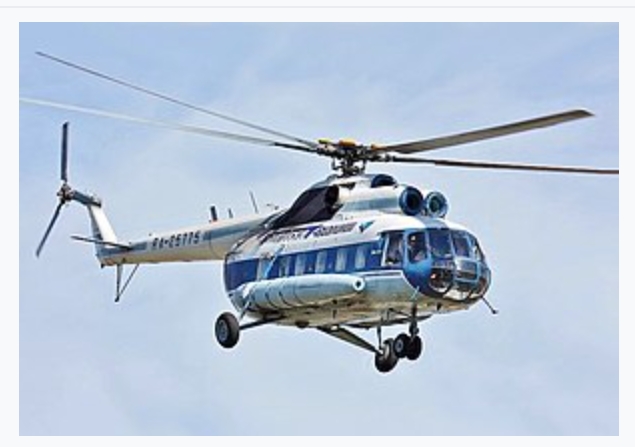
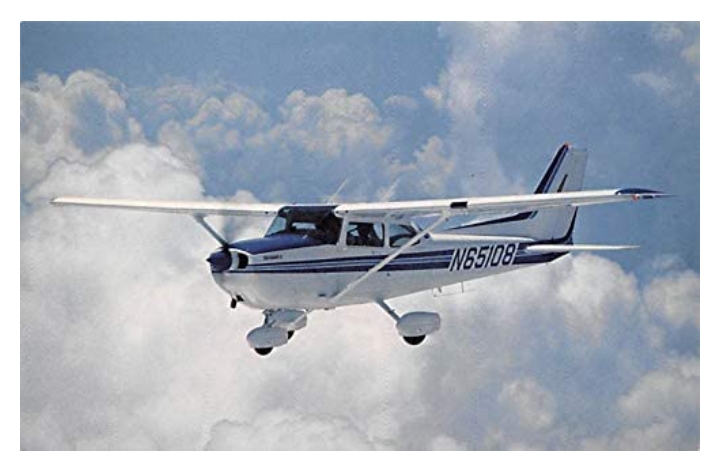
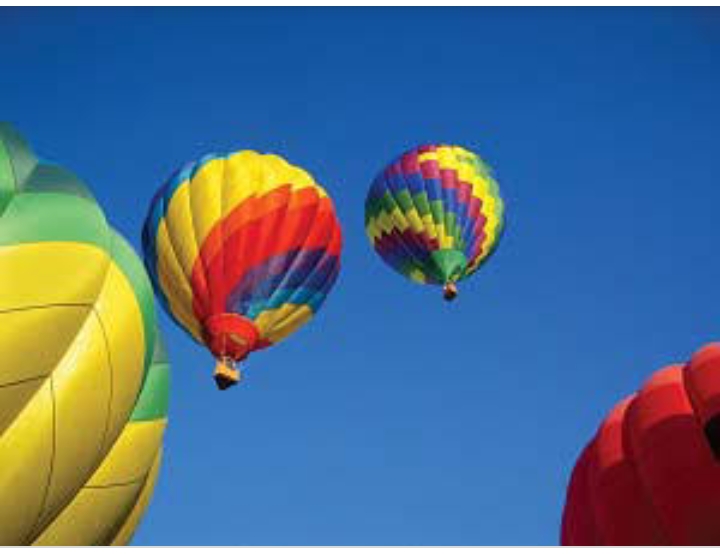
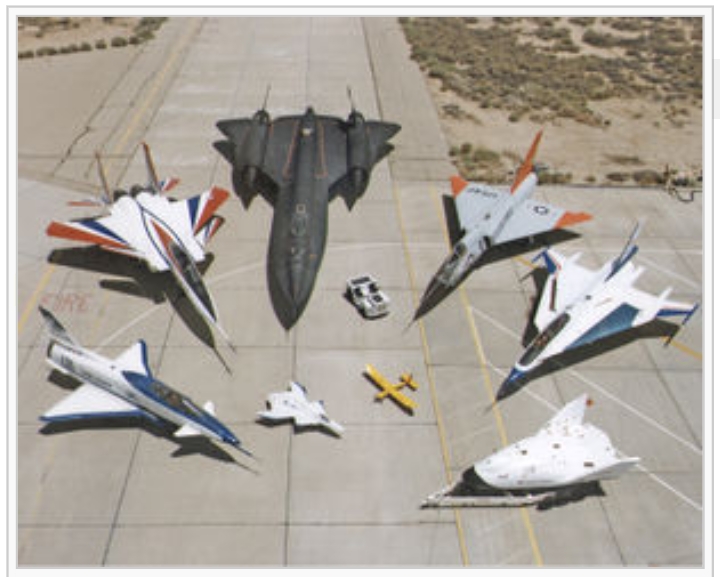
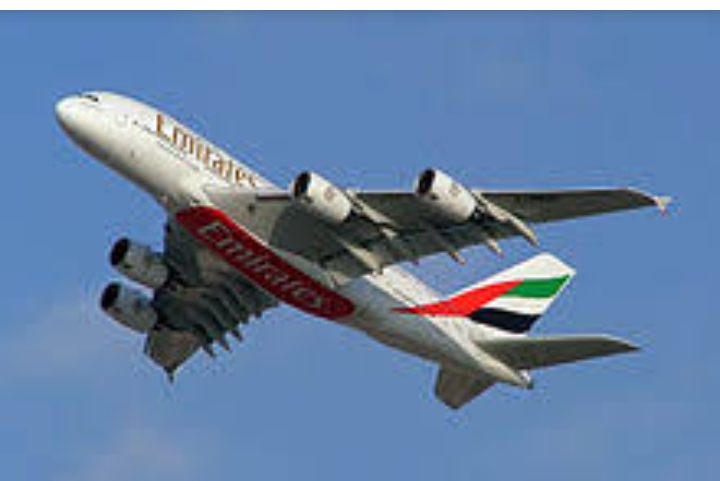
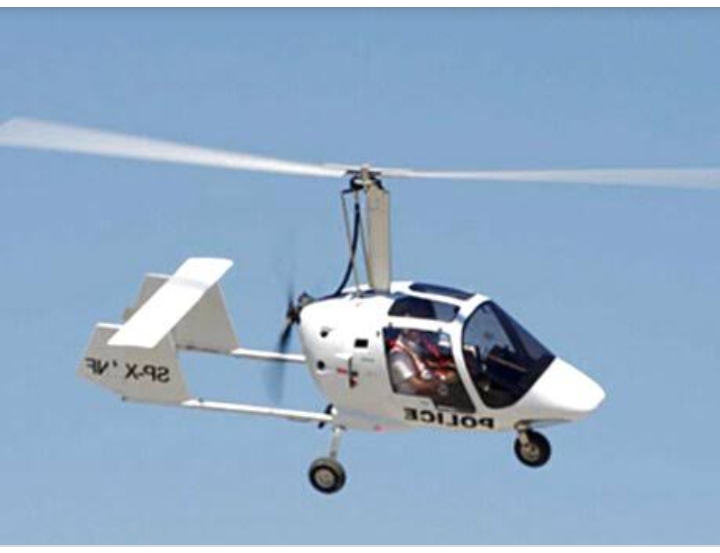

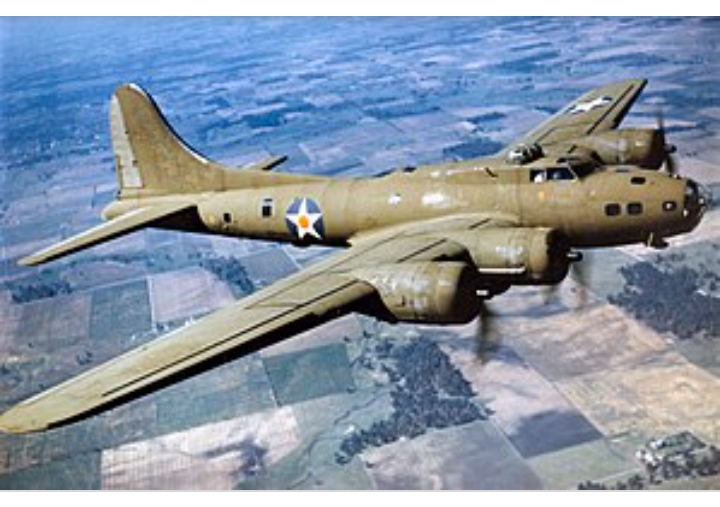
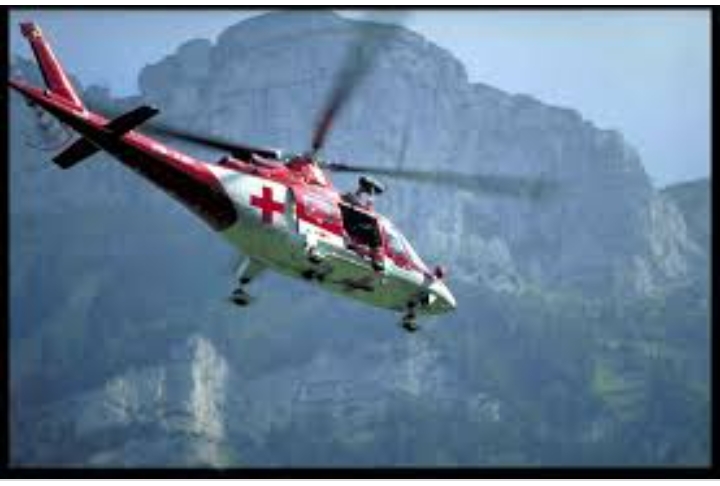

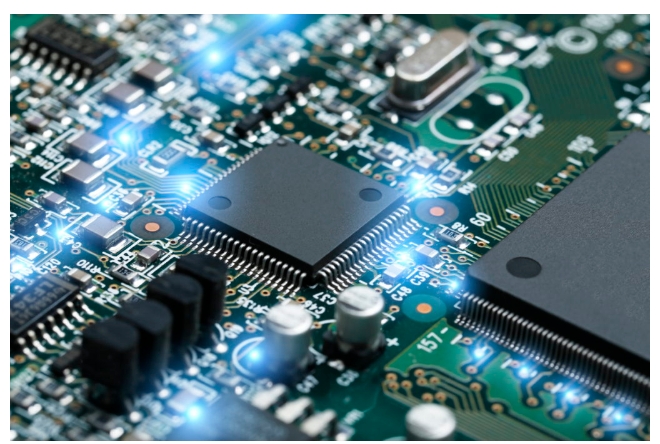
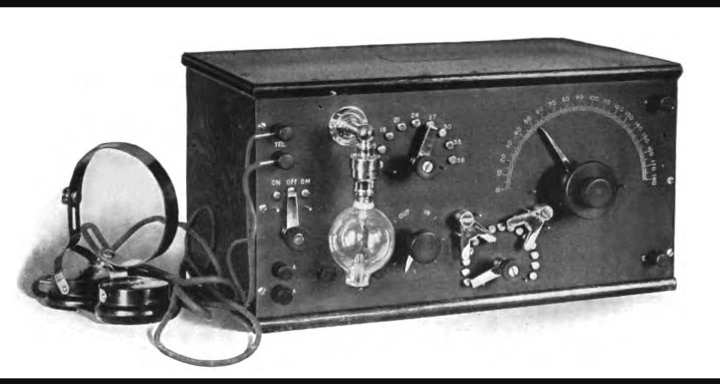
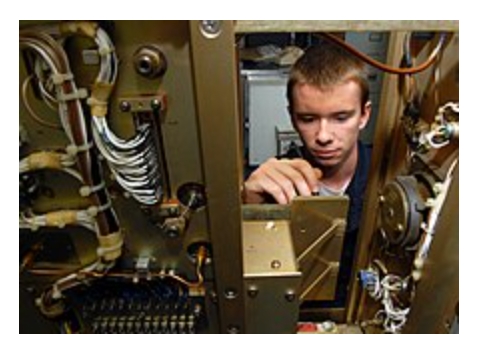
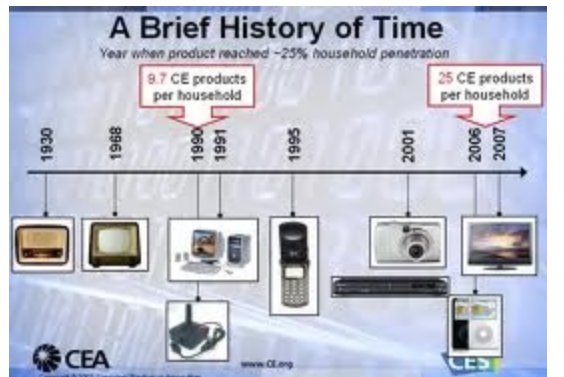
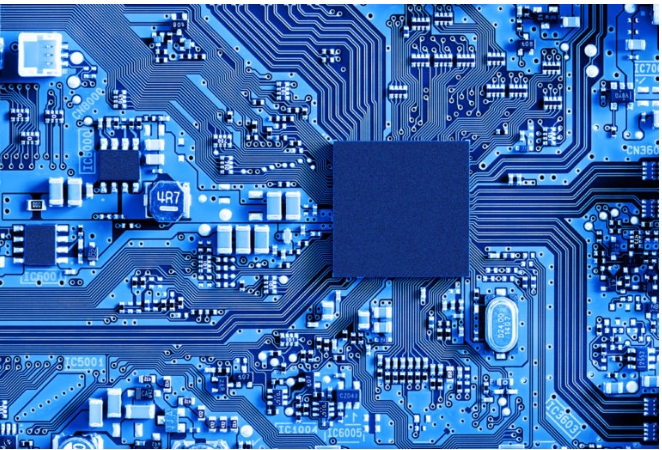

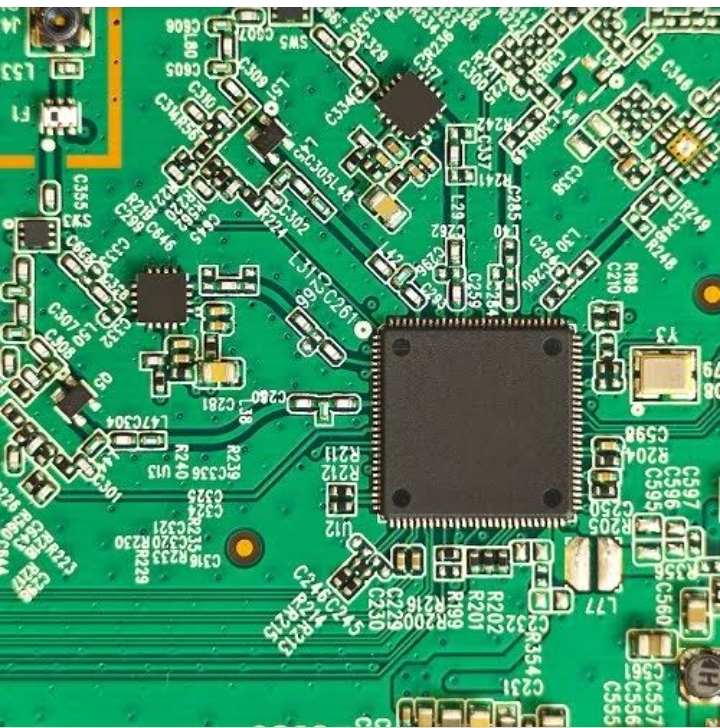
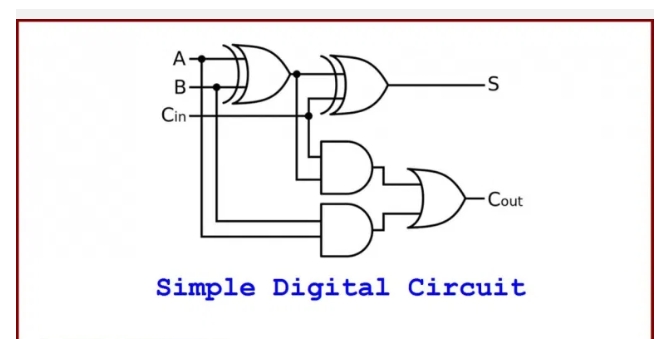
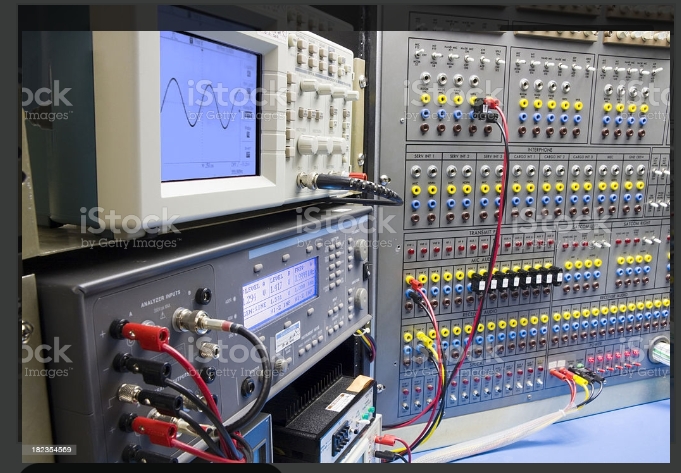


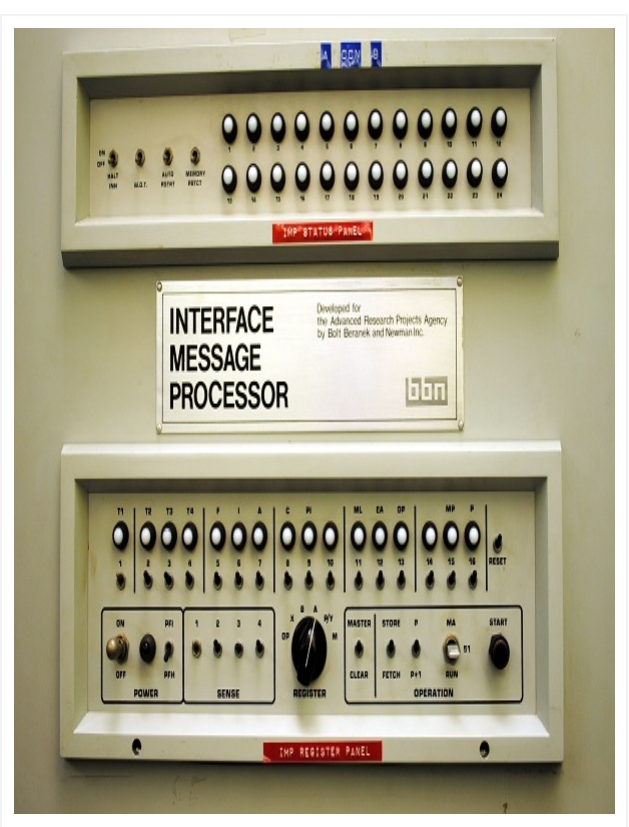








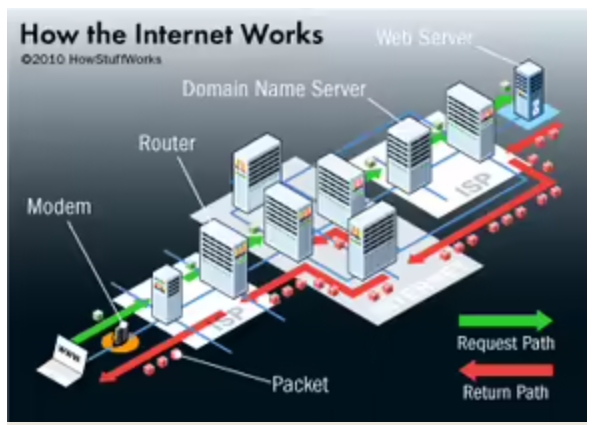
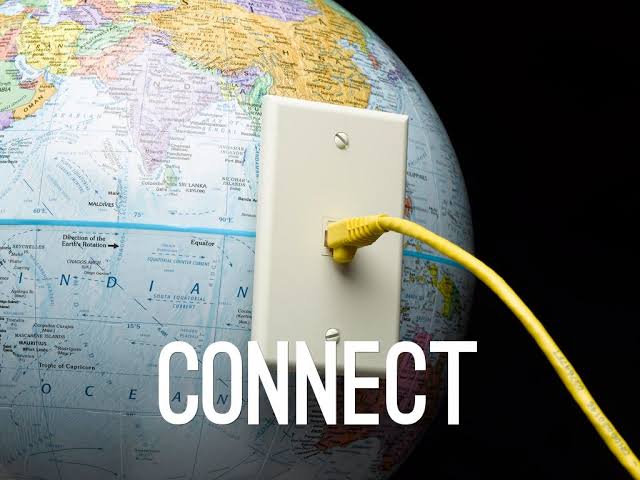

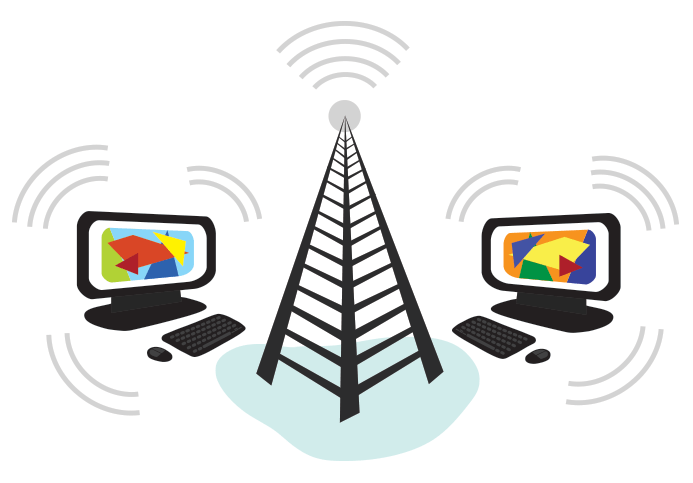

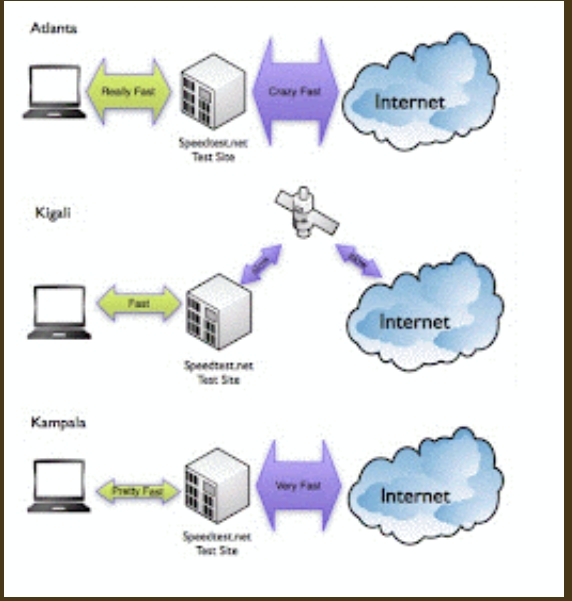
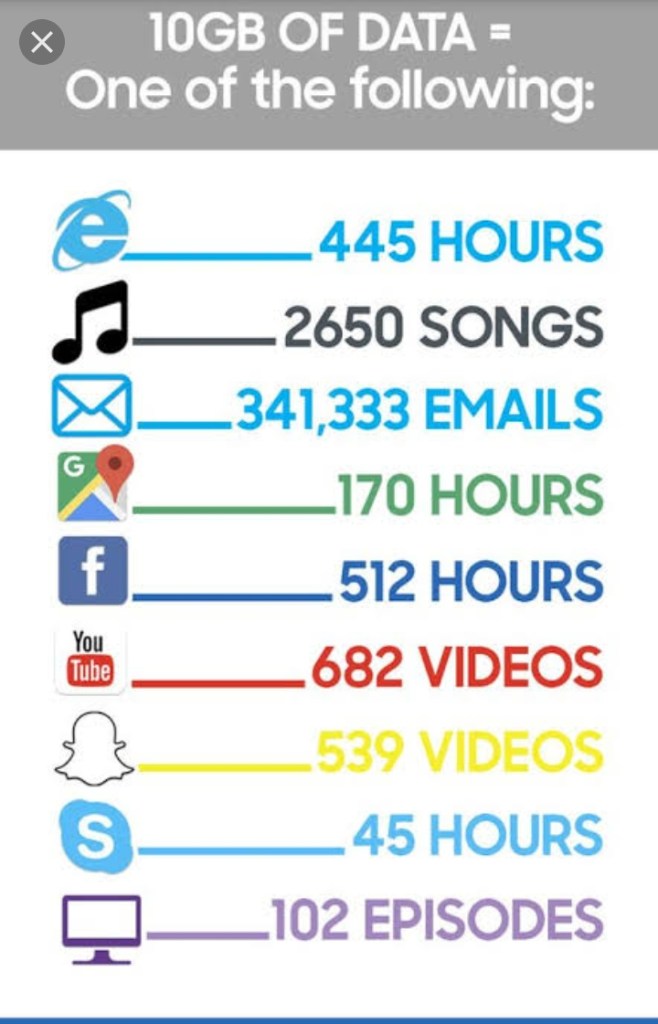









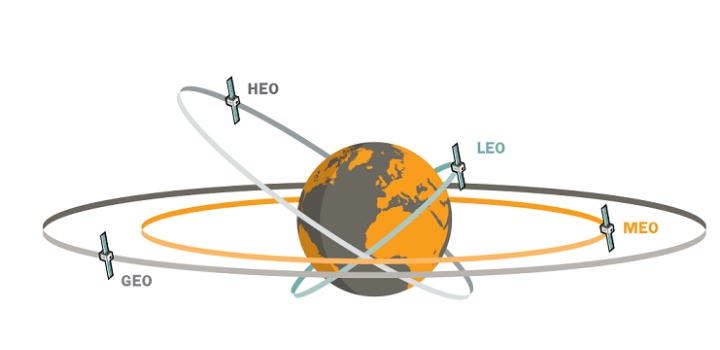


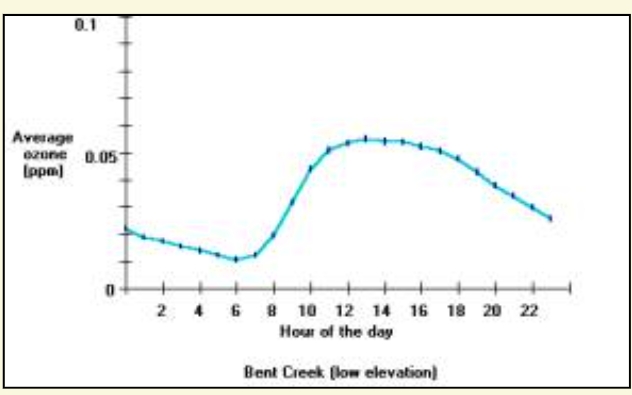
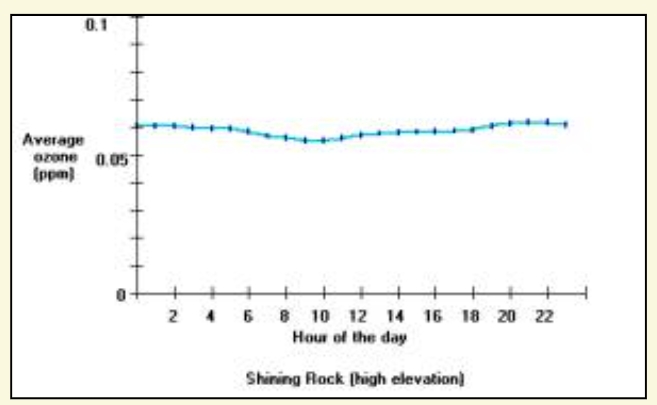




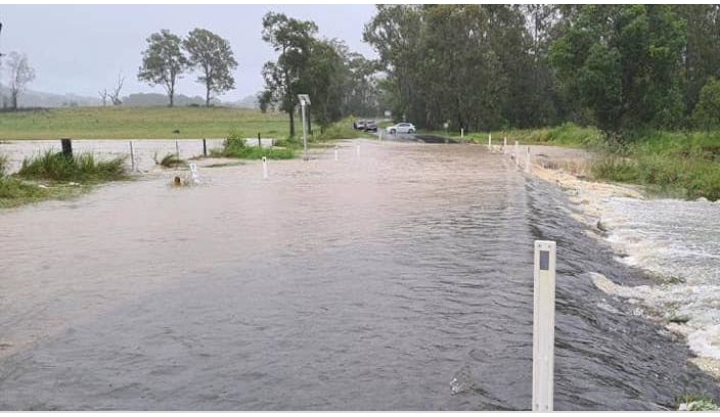
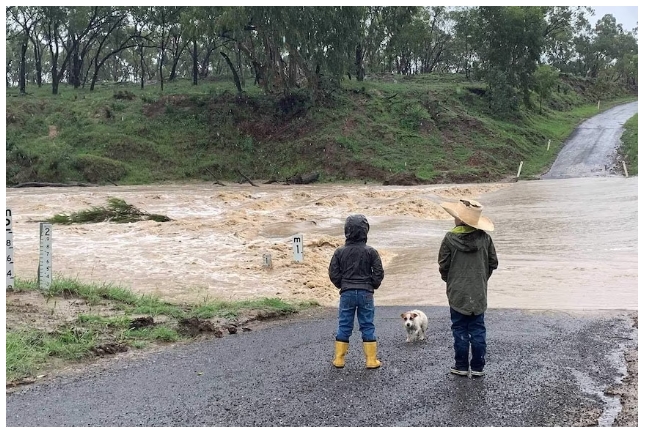

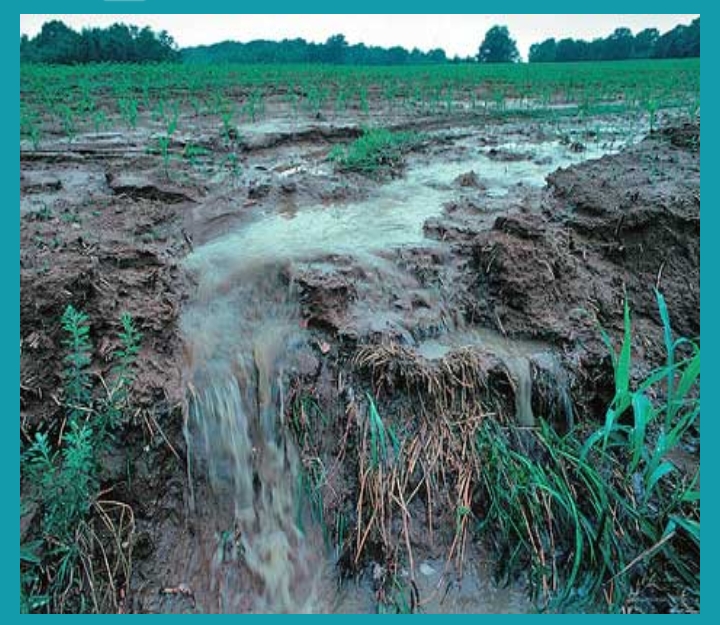
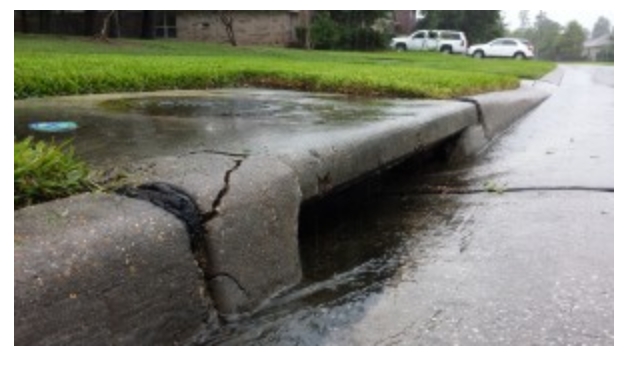
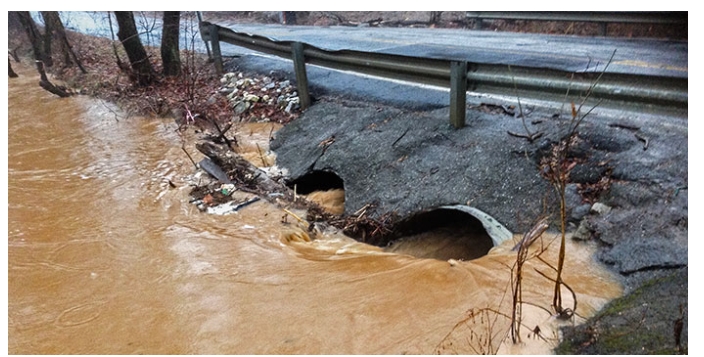
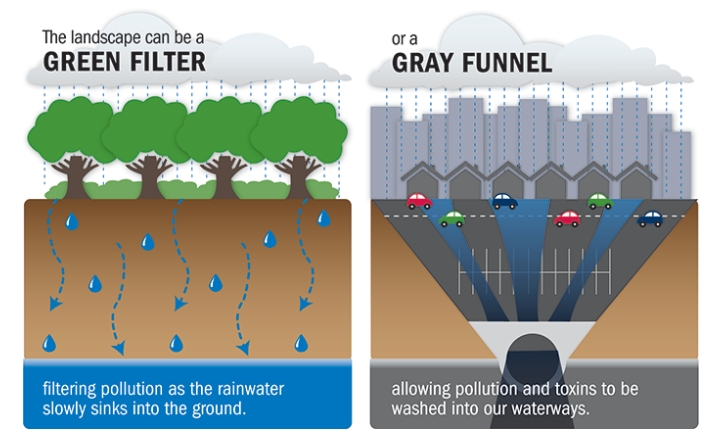
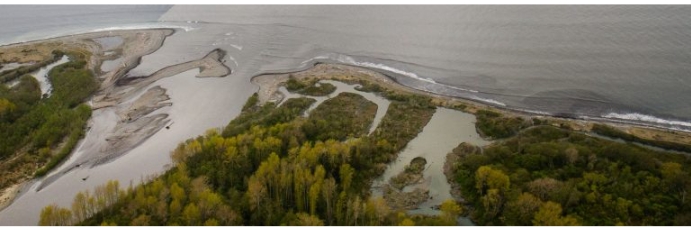
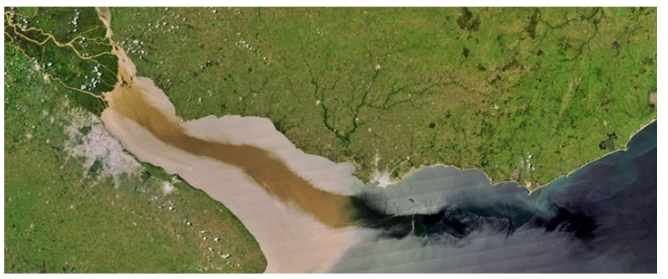
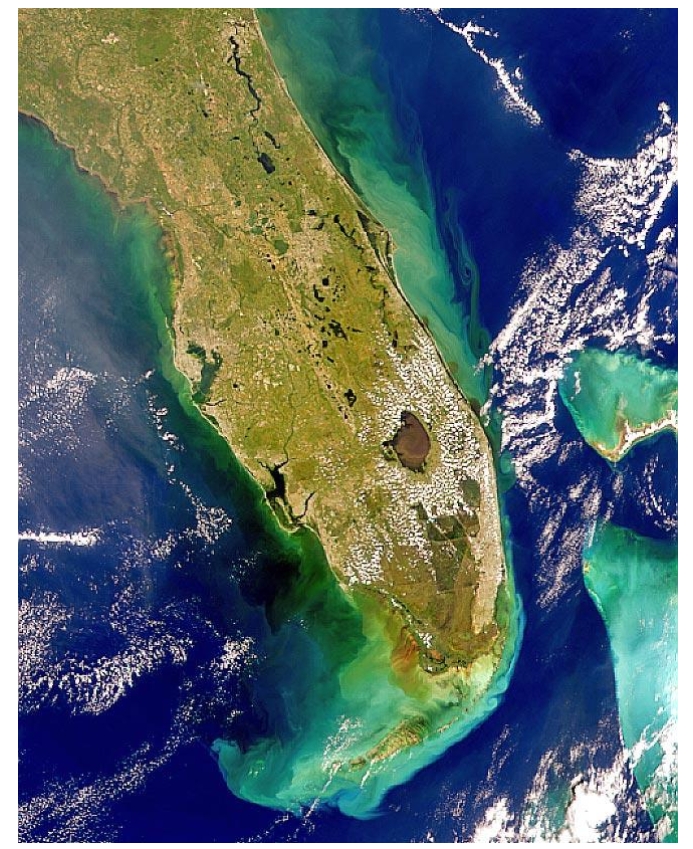
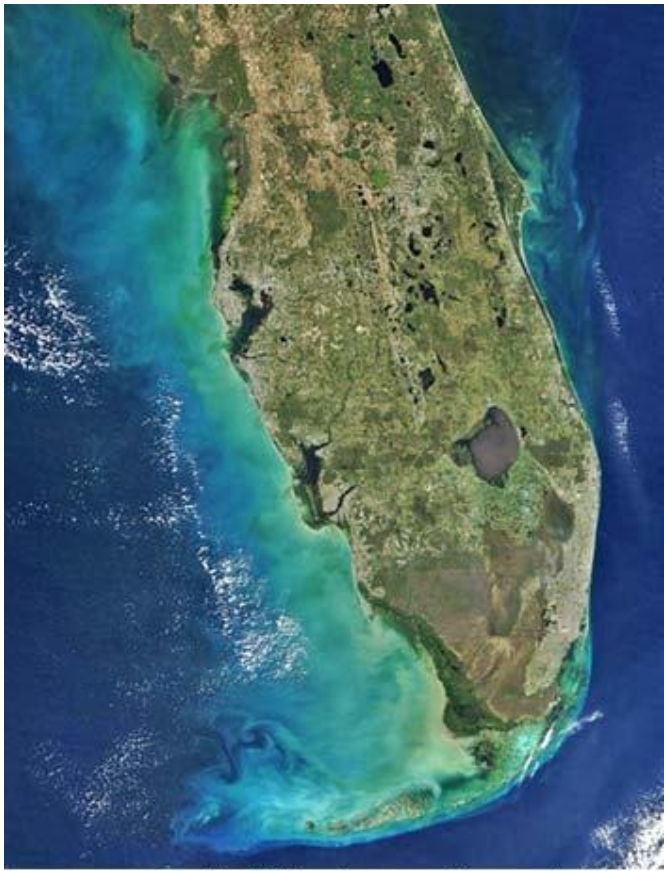


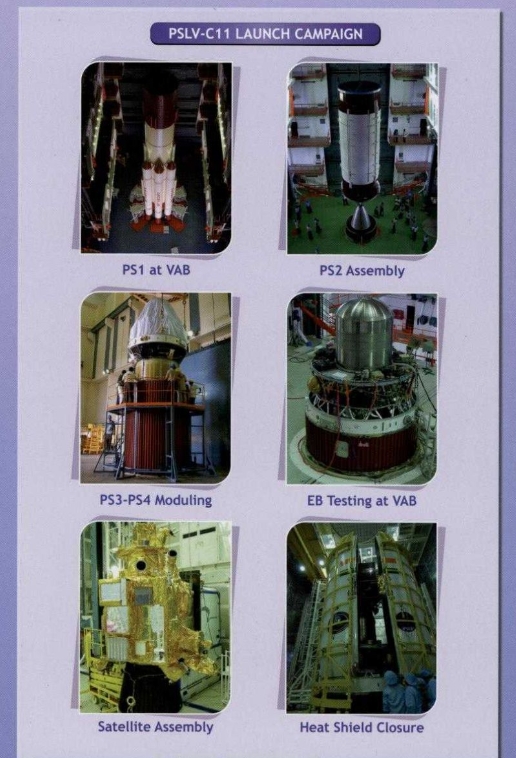
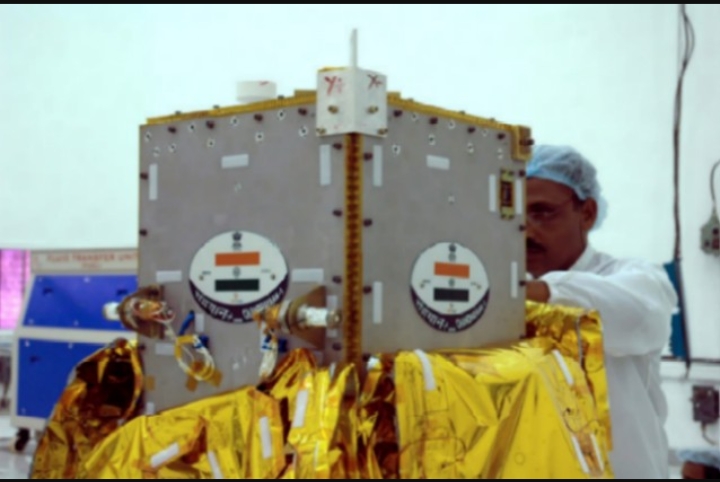
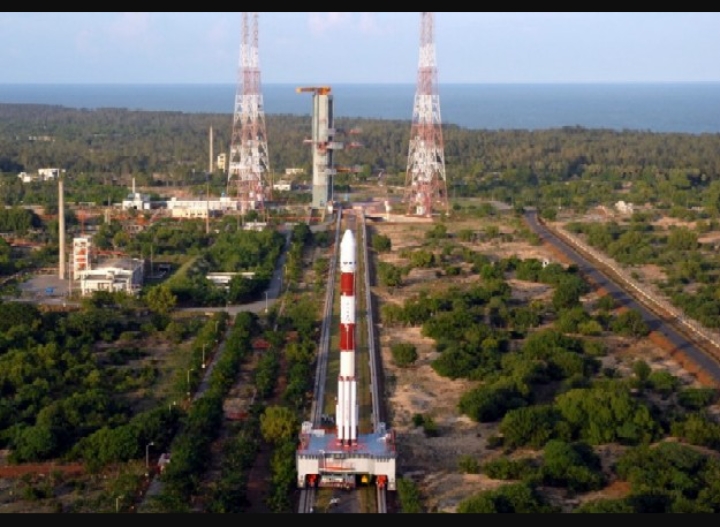
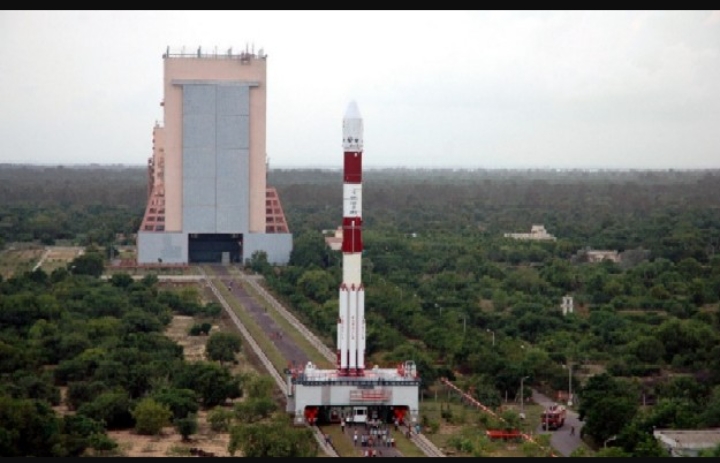
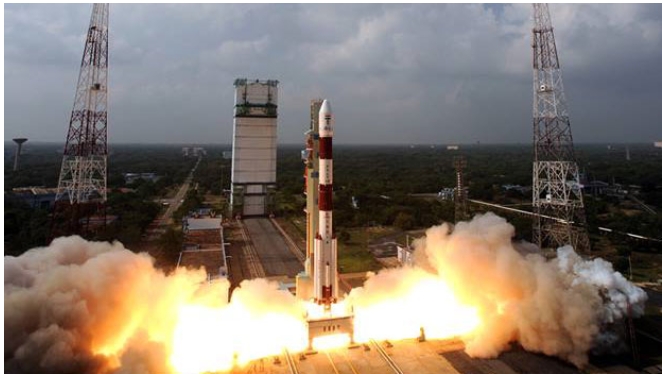
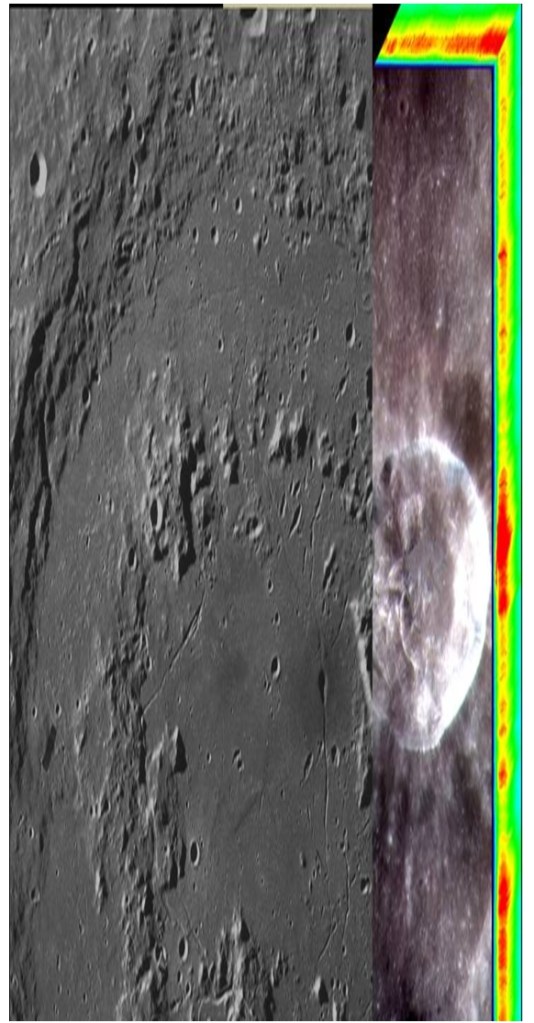


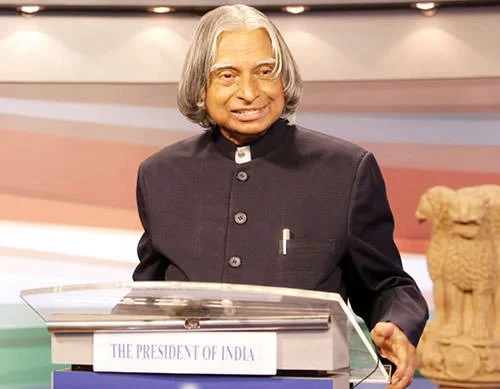


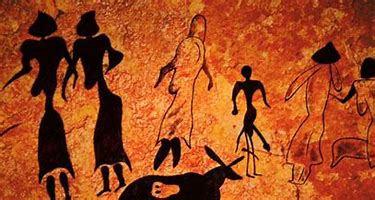

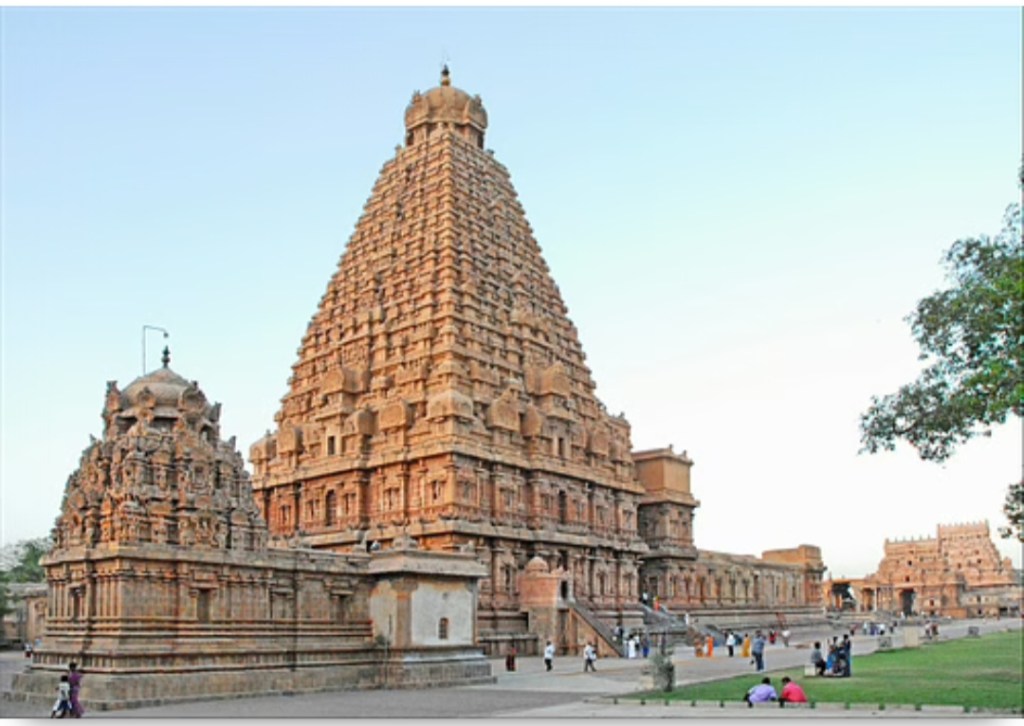
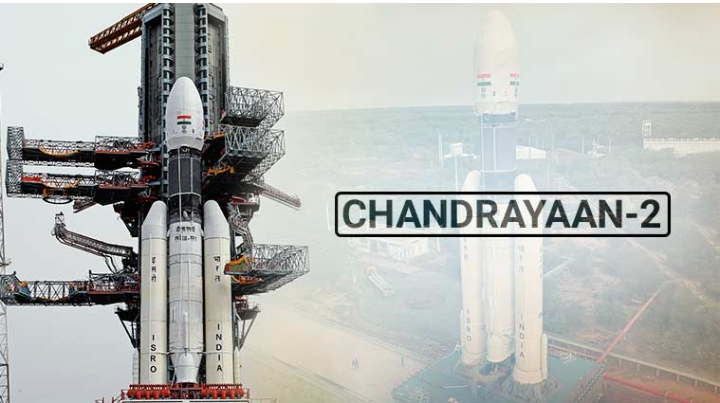
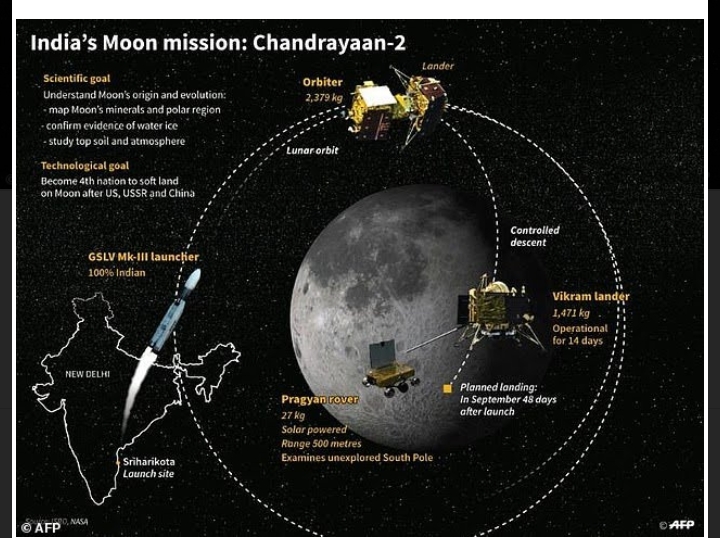
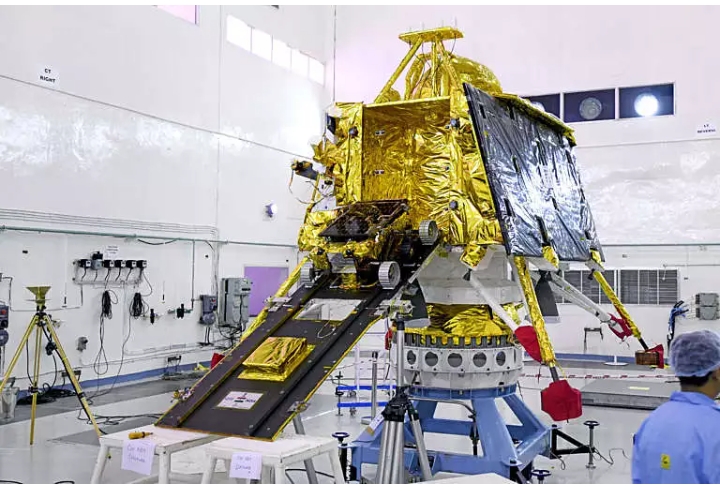
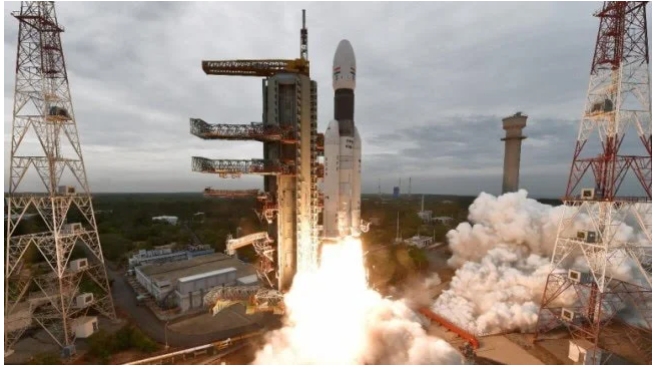
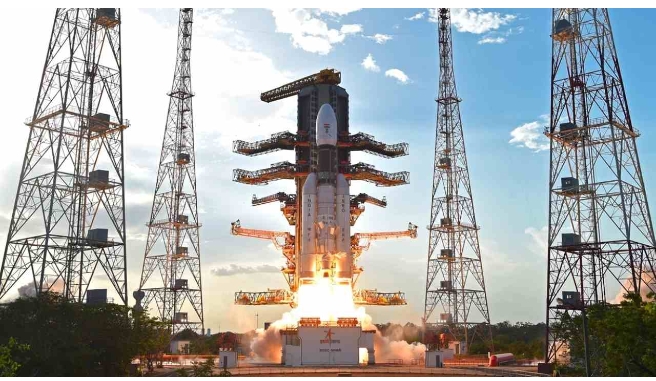
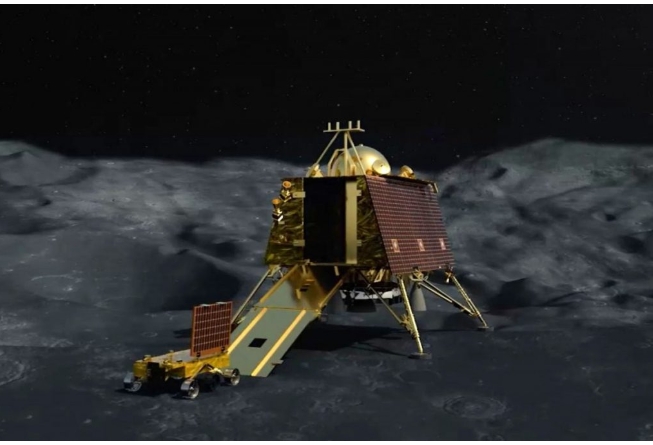
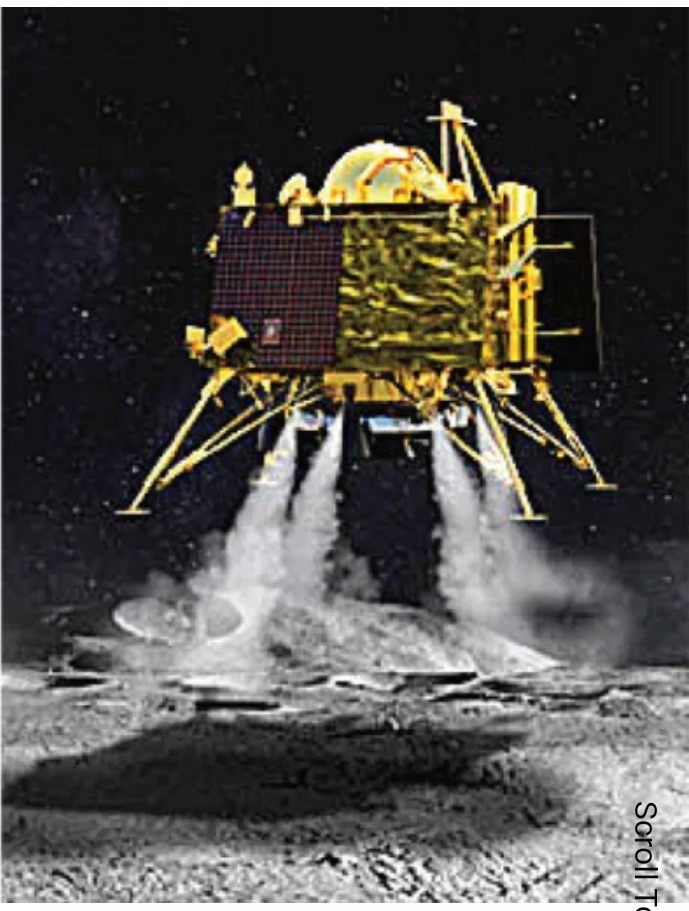


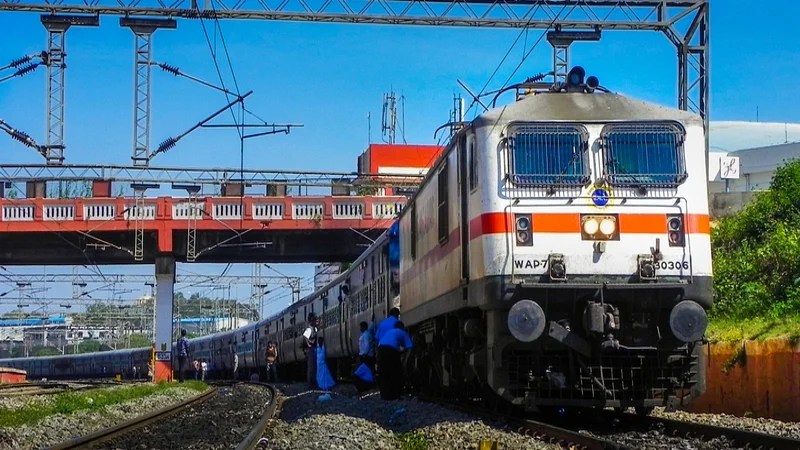


You must be logged in to post a comment.