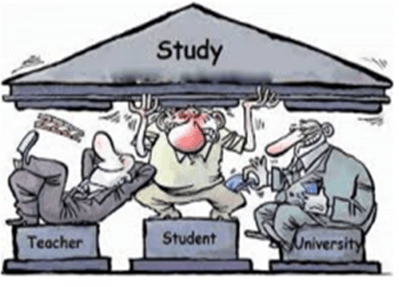
“Man is by nature a political animal”. How far is it true in the case of students?

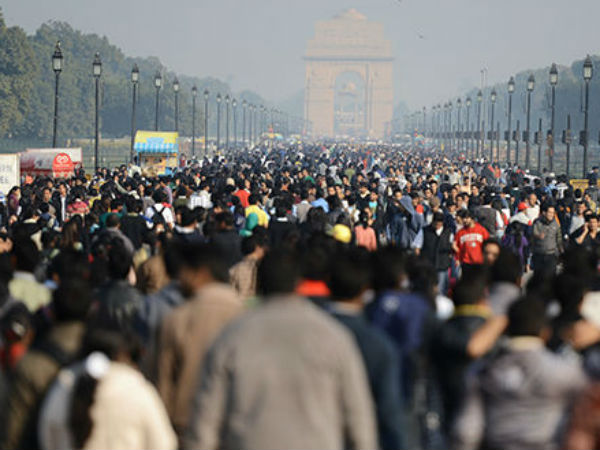
The famous Greek philosopher Aristotle believed and quoted that man is a political being. He always felt so, because man is blessed with the ability to speak and rationalize. No other species on this earth have been blessed with these abilities, hence he feels that we must make best use of it. But how far does it apply to the students? This topic has always been a bone of content in our country. A lot of people feel that it’s in the best interest of the student, if they don’t involve themselves in politics, on the other hand people feel students must involve themselves into politics,ย  as they are the future of this country. You might as well think about what’s best for the students? There is a clear cut difference between educating yourself about politics, and getting involved in politics. A lot of people feel that the participation of students in politics will weaken their will to study, and educate themselves academically. The people opposing this, have also claimed that, the participation of students in political movements, during the freedom struggle had a great impact on the Britishers. Even during the second World War, a lot of students were actively participating, and helping their respective countries.

Advantages of students not participating in politics:-

  • With the level of corruption prevailing in politics, it’s almost impossible for students to remain honest and sincere. Hence it degenerates their moral character.
  • These students might be used by political parties for their selfish needs.
  • These students become a tool in the hands of the politicians, who achieve their needs through them.
  • These students will ultimately lose their interest in studies, and direct their full potential to politics.
  • These students are also used for the purpose of strike and protest. Hence they end up destroying public property, and they cause damage to themselves.

Advantages of students educating themselves about politics:

  • This will help them concentrate more on their academics, as well as give importance to politics.
  • They get to increase their Political knowledge through various debates and discussions happening in colleges.
  • Since they are completely educated, they can make use of various approaches, to solve an issue arising.
  • Inorder to straighten the democracy,  more educated leaders are required.
  • Educated leaders in future can also possibly remove the rotten system of politics, filled with corruption in our country.
  • Educated leaders are also much more capable of bringing in new reforms that the society requires.

Conclusion:- 

It is good to conclude that politics is inevitably present in every students’ life, and it cannot be ignored. Having immense knowledge about politics is always important as students are the future leaders of our democracy. At the same time it is good to not mix politics into their academics as it will do no good to them. An educated and wise leader is the one people look forward to, and in order to be that, students must work hard in their academics without getting involved completely into politics. But when time comes and this nation is in need of young minds, students mustn’t hesitate to give their all to this country.

Books:A Best Friend in Disguise

Good friends, good books, and a sleepy conscience: this is the ideal life.- Mark Twain

Life is not easy to live without friends. When it involves Books, they will be our greatest friends ever. Good Books enriches our minds with good thoughts and knowledge a bit like an honest friend. We cannot feel alone within the company of books. We can learn many goodies while reading an honest book. Books written by famous and experienced people help us to become a far better person and also teach us the way to serve the society within the absolute best way. When we are alone, we will always devour a book and begin reading to feel relax.

A great book should leave you with many experiences, and slightly exhausted at the end. You live several lives while reading.- William Styron

Books are our greatest friends because they inspire us to try to great things in life and overcome our failures. We learn tons from good books a bit like an honest friend. Books can be good or bad, but it is our responsibility to choose them wisely. Friendship with Good books causes you to person and friendship with Bad books cause you to person. Books will always be there for you in your bad times. Books teach us to have dreams. Books bring positive value to our life.

โ€œOutside of a dog, a book is man’s best friend. Inside of a dog it’s too dark to read.โ€
โ€• Groucho Marx

Section 193 in The Railways Act, 1989

Section 193 in the railway act 1989 is about notices served by the statuary authority to any person by the railway administration. The railway act was last amended by Shri D.V. Sadananda Gowda, Minister of Railways in 2014[1]. The railway act 1989 helps keep the system of the railway industry intact and disciplined. The following rules laid by the legislation are to keep our countries railway line working efficiently and effectively. The above mentioned section is a very important section as it lays down the procedure of notifying railway related information to an individual.

Administration of notice, and so on., by railway organization. โ€” Unless in any case gave in this Act or the principles encircled thereunder, any notification or other report required or approved by this Act to be served on any individual by a railway organization might be served by conveying it to the individual, by leaving it at the standard or last known spot of home of the individual, by enlisted present tended to on the individual at his typical or last known spot of dwelling place.[2]


[1] https://www.prsindia.org/sites/default/files/bill_files/railways_%28A%29_bill%2C_2014.pdf

[2] The Railway act, 1989

Is Religion The Problem?

Humanityโ€™s most vicious ambitions have been carried out in the name of gods no one has ever seen and beliefs followers are not willing to question and investigate. Until humankind learns to more closely examine their beliefs, wars waged in ignorance will continue to plague our species and prevent lasting peace.

If the emotions of one in need are like a hurricane, then religion needs to learn how to create the space a hurricane needs to slow and become calm. Rigid rules to such a person are like trying to nail down a hurricane. Guilt makes the winds blow all the harder. Only in moments of calm, when sought, will advice be of help – any other time it will add de- bris to the winds. There a time to actively help and a time to love quietly, trust yourself to sense the difference.

Religion initially commenced as a solution for the problems existing at that time, say 5000 BC. However, at some point in time, it started appearing as the pebble in the shoe of humanity and itโ€™s progression . The anarchy, unprovoked killings and disorderly social structure needed a system, and religion got itself evolved. While it was evolved many others came forward with their own versions to super implant the existing ones. But their actions only increased the number of religions. We landed up with Hinduism, Jainism, Buddhism, Islam etc. Since more religions came into existence, there were varieties to choose for the people. After having chosen, the people started propagating them. In their enthusiasm, they started negating the existing ones. This resulted in hatred, mistrust and hostility which ended up with problems for the state. Instead of being a solution religion has turned out to be a problem.

Religion is neither the problem nor the solution. The point is, religion was a vessel out from which human curiosity was able to spring, but it is also a tool of social control and thus is opposed to actual progress. It’s about faith and perception of it which is posing as the biggest problem in our country. Every single religion here has it’s own good and bad preachings. If one feels that his or her faith in a religion is far more truthful and look down upon remaining religions is nothing but adult way of showing you are having bigger scoop of ice creams than your friend, like we used to do when we were small kids. This is what happening in our country now, everyone wants to pretend that their faith is much greater than others which has lead to all sorts of quackery and blind modifications of original teachings given in our sacred books. Again by good teachings I meant, the one’s which brings happiness in every living being and doesn’t hurt even a single person at the cost of one’s satisfaction.

One thing most misused after horns in India is religion! Different religions became a problem in India from the day we forgot about our roots. India has always been a diverse nation, and religion accounts for a big diversification. Now you see the problem is, we are not educated. We might be literate but still we are not educated. There’s a big difference between the two! Politicians have always taken advantage of this. And they would continue this until and unless the masses themselves realize the mistake. If we, as the public masses, donโ€™t realize this then soon weโ€™ll be heading towards an authoritarian government which will forcefully assimilates all of the subcultures within it’s polity and create a syncretic identity. Such an orthodoxy that some people dream of would also dissolve the constitution that has given crucial rights to many people. For example, the constitution bans untouchability, which no Dharmashastra did before. The constitution has also given several fundamental rights that the orthodox do not see applicable in their “dharmic” framework. Theocratic societies have several such drawbacks.

So it’s better to focus on more important aspects of life rather than talking about religion at all times. Itโ€™s time to let go and rise above the outdated and cruel exploits of our past that we inherited from our ancestors, and realize that our early misinterpretations of our world do not have to define the future of humanity. We have grown. We have reached a time in our history where the misunderstandings of the past must be reconciled and the truth about the origins of our early beliefs must be revealed. Itโ€™s time that our worldโ€™s religions face the tragic horrors of their past and make honest progression towards love and kindness for all of humanity. Our world, our peace and our growth all depend upon us and our ability to move forward in our understanding. Itโ€™s time to embrace our humanity and cultivate the harmonious future we all deserve.

Screenshot_20200718-121343_Chrome
Is Religion The Problem?

6 Unique Indian Customs & Traditions

Indian culture and traditions are something that has now become renowned all across the planet. We all ask India and its culture as something very diverse and unique. But seldom can we provide a thought to why things are wiped out certain specific ways. Indian culture is filled with several unique customs and traditions, which outsiders might find intriguing. Most of those originate from the traditional Indian scriptures and texts, which have dictated the way of life in India for thousands of years.
Here are 6 fascinating cultures and traditions of India:

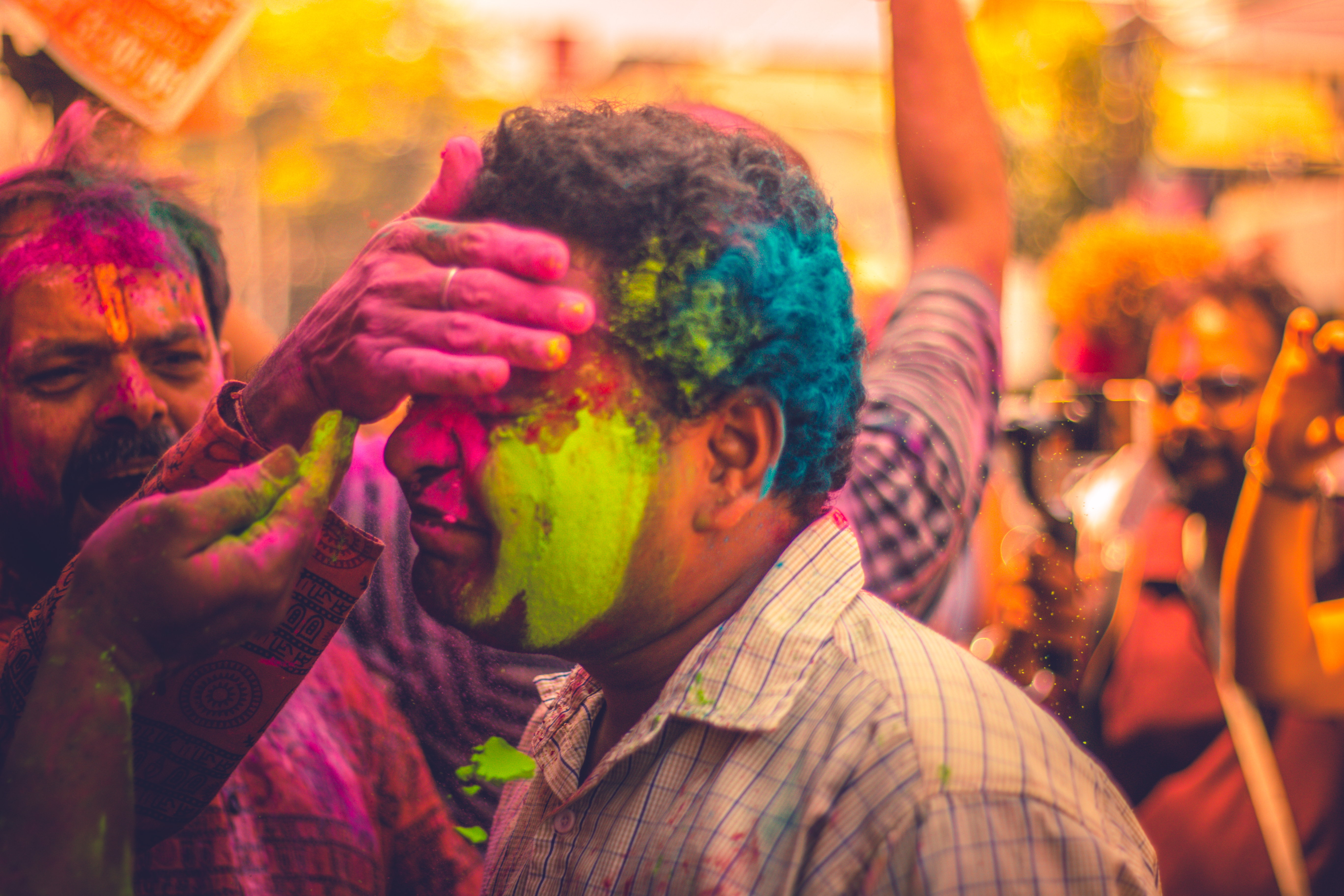
  1. Festivals & Religion- India also sees a large number of festivals, mainly because of the prevalence of diverse religions and groups. The Muslims celebrate Eid, the Christians have Christmas and Good Friday, the Sikhs have Baisakhi (harvesting of the crop), and therefore the birthdays of their Gurus and the Hindus have Diwali, Holi, Makar Sakranti, the Jains have Mahavir Jayanti, the Buddhists celebrate the Buddha’s birthday on Buddha Poornima, and quite honestly, the amount is endless. All of those translate to holidays in our book, of course.
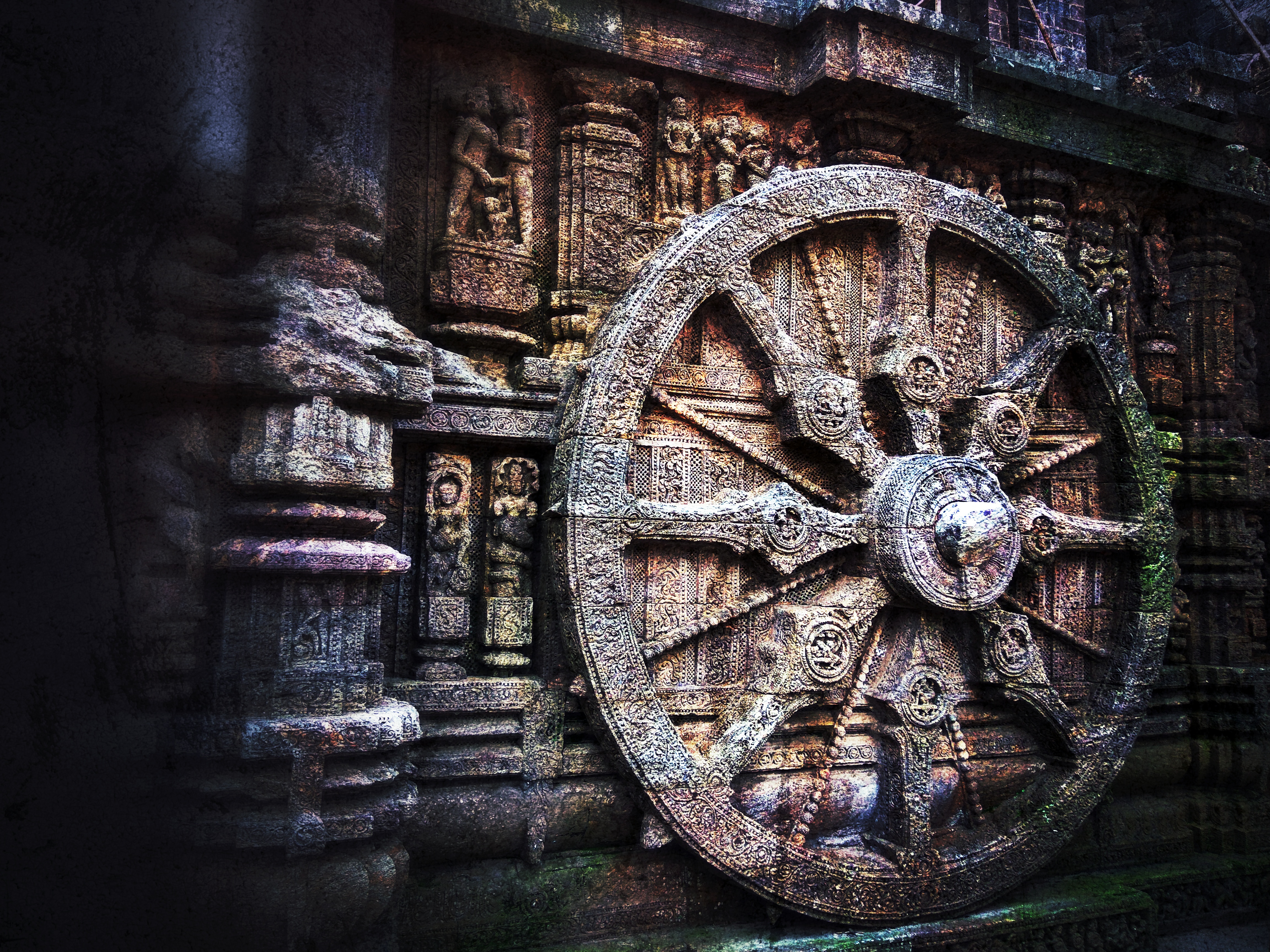
  2. Architecture:The Science Behind Temples- Most temples are located along magnetic wave lines of the Earth, which help in maximizing the available positive energy. The copper plate (called Garbhagriha or Moolasthan) buried under the most idol absorbs and resonates this energy to its surroundings. Going to the temple often helps in having a positive mind and garnering positive energies, which successively causes healthier functioning.
  3. Traditions of Treating Guests- In India, the saying ‘Atithi Devo Bhavah’ is also integral. It means ‘the guest is equivalent to god’. It is a Sanskrit verse taken from the Hindu scriptures, which later became a neighborhood of the ‘Code of conduct for Hindu society since the guest has always been of supreme importance in the Culture of India.
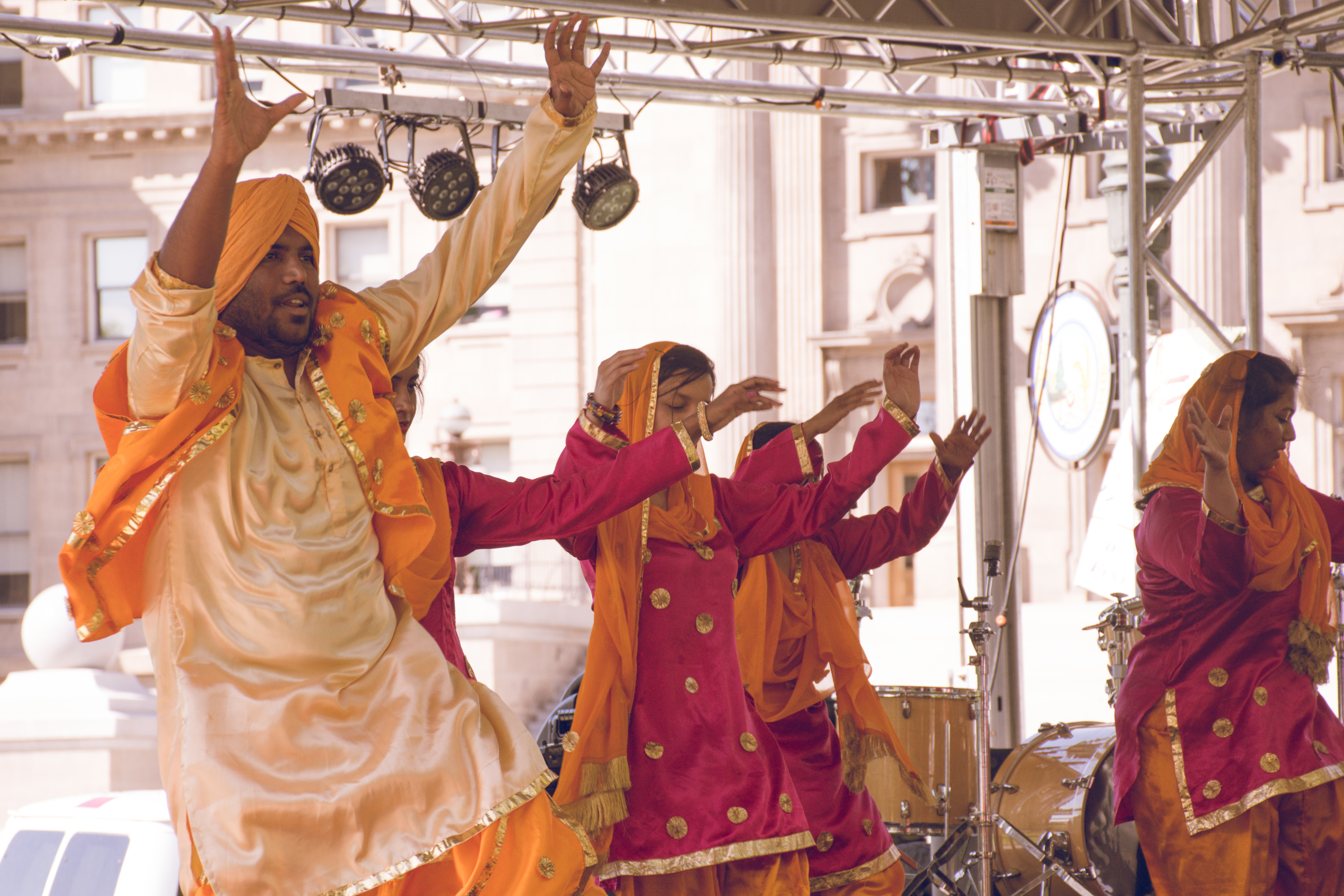
  4. Indian Dances- India is a land of ‘unity in diversity’, and our dances are no different. Different sorts of dance(classified as folk or classical) find origin from different parts of the country, and that they are how of representation of the actual culture from which they originate. Eight classical dances, which are classified as Indian classical dances and find a mention within the Hindu Sanskrit text ‘Natyashashtra’, (a text of performing arts) are:
  • Bharatnatyam from Tamil Nadu
  • Kathakali from Kerela
  • Kathak from North, West and Central India
  • Mohiniyattam from Kerela
  • Kuchipudi from Andhra Pradesh
  • Oddisi from Odhisa
  • Manipuri from Manipur
  • Sattriya from Assam

All the dance mentioned above forms are an entire dance drama, wherein a dancer or performer narrates a whole story, almost entirely and exclusively through gestures. Such stories are mostly supported the vast Indian mythology. These performances are mostly based on stories that are orally passed on from one generation to the other. Folk dances mainly trace their importance to the rural areas, where performances depict the day to day life of rural inhabitants.

  1. Cuisine- Indian food and cuisine not only form an integral part of the culture of India but are also one of the critical factors of India’s popularity worldwide. The style of cooking varies from region to region, though unanimously, Indian food features a significant reputation for its extensive use of spices and herbs. Almost every region is understood for a signature dish or ingredient. The staple, however, throughout the state consists mostly of rice, wheat, and Bengal gram (Chana). While vegetarian food is an integral part of Gujrati South Indian and Rajasthani cuisines, non-vegetarian dishes form a central part of Mughlai, Bengali, North Indian and Punjabi cuisine. It is also interesting to note that specific cuisines like that of Kashmir have also been influenced by foreign cooking styles from Central Asia, Persia, and Afghanistan.
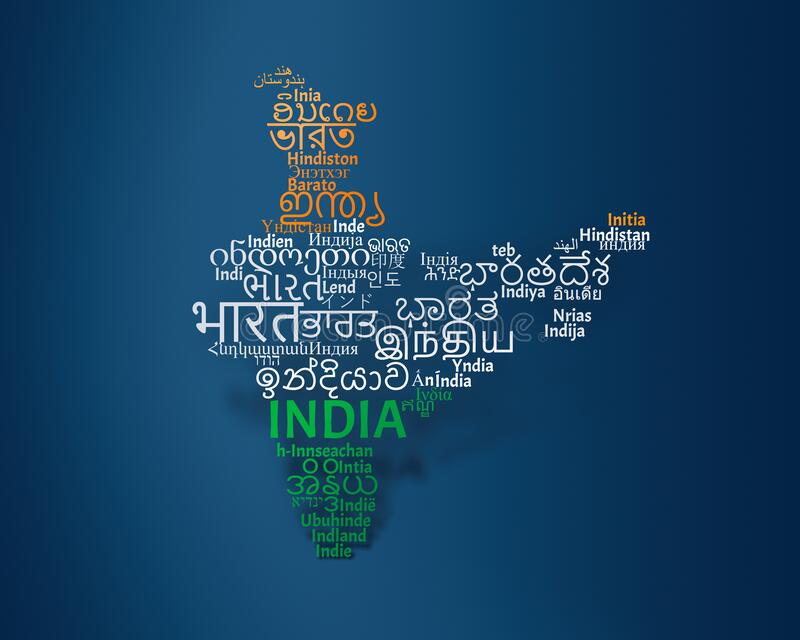
  2. Languages- India is socially, culturally, and linguistically very diverse. Hindi and English are widely spoken and recognized for official purposes. Other than than, there are 22 scheduled languages recognized by the constitution of India. However, more than 400 languages and dialects in India are still not known. Dialects change even with a few kilometres of travel in the state. Over the years, about 190 languages became endangered thanks to only a few surviving speakers.

There exist thousands of traditions and culture in India, and quite a few of them would leave outsiders rather curious. But the crux of Indian society and culture has always been to be mannered, polite, respect others, and progress together.

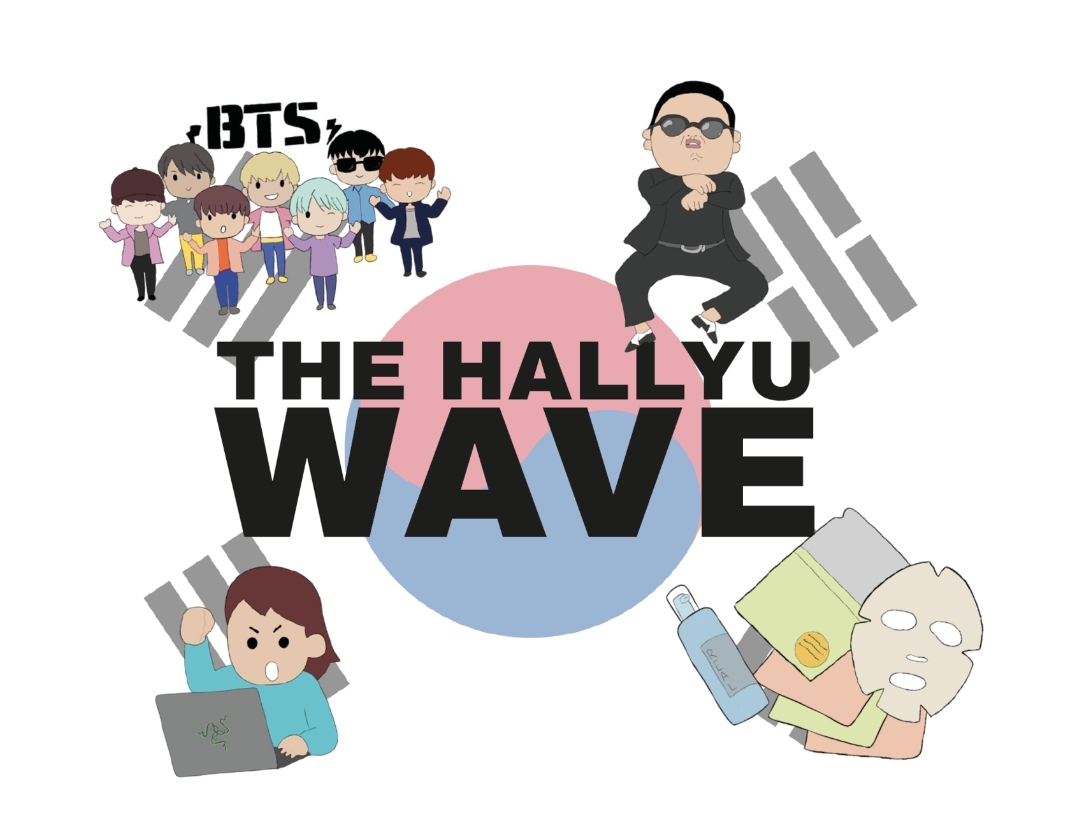
Hello, Hallyu!

Itโ€™s a wave thatโ€™s swept Indians off their feet, dictating everything from their choice of music and TV shows, right down to beauty and skincare… all of it made entirely in Korea.

Much of the world woke up to K-pop after Psyโ€™s 2012 viral hit Gangnam Style, but the genre dates back to the 1990s, when โ€˜idolโ€™ groups started making waves in the Korean music scene.

Most people trace the genesis of the โ€˜idolโ€™ phenomenon to the 1992 debut of Seo Taiji and Boys, a trio that melded American pop, swingbeat and rap with Korean lyrics and musical tropes. Their immense โ€“ and unexpected โ€“ popularity encouraged Korean entertainment companies to jump on this new trend, and by the mid-90s the Korean music industry was dominated by boy bands such as H.O.T and SechsKies, who quickly built up large, passionate and competitive fandoms. These bands would lay down the template for generations of K-pop groups to follow โ€“ music that mixes elements of Korean pop culture with a wide cross-section of contemporary music genres from the West, a focus on over-the-top fashion, and a visual aesthetic that is fully committed to gleeful audiovisual excess. Around the same time, the South Korean Ministry of Culture started investing heavily in the countryโ€™s entertainment and pop culture industries in an attempt to stave off the impending influx of Japanese anime, manga and music, which had been banned in the country before 1998.

Recognising the potential of culture as soft power, the government also put into place policies to promote the production and export of Korean pop culture. This was the beginning of Hallyu โ€“ the Korean Wave โ€“ in which Korean films, TV dramas and K-pop gained rapid popularity across wide swathes of China, Japan and South-East Asia, before the internet allowed it to spread its reach across all the world. And since the late 2000s, K-Pop has been at its forefront.

So, what started the Hallyu Wave?

Winter Sonata, a KDrama, started the Hallyu Wave, in Asia. It was so popular in Japan that matchmakers started advertising that they could hook up Japanese women with Korean husbands.

KPop took a bit longer. BoA was the first Korean singer to make it big in Japan (2001), but she sang in Japanese and people didnโ€™t necessarily know she was Korean. The first KPop group to hit Japan was TVXQ (all five of them) in 2006 – they became known as the Korean Beatles due to their immense fandom in Asia. SS501, Super Junior and SHINee also had great success in Japan, and the Hallyu Wave started lapping at the shores of Australia, New Zealand and California.

Groups started coming over to the US in the late 2000s, and after Gangnam Style went viral on the web, more came. Before BTS made it huge, several other groups had profitable tours, including Got7 and Big Bang (with the MADE Tour doing exceptionally well).

In 2012, KCon started in Los Angeles. This convention, with highlighted artist concerts each night, has grown exponentially since, with KCons in a variety of places around the world (Japan, Australia, Paris) and expanded to NYC as well as LA. 70,000 people attended KCon NY 2019, with the convention held at the Javits Center and the concerts at Madison Square Gardens. KCon LA had 94,000 fans in 2018 (figures arenโ€™t out yet for 2019). Now of course BTS are the worldโ€™s biggest boy group, and have just finished a massive worldwide stadium tour that outgrossed most of the acts this year from ANY country.

But Indiaโ€™s first brush with Hallyu had more to do with local politics than it did with soft power diplomacy. In 2000 the Manipur Revolutionary Peopleโ€™s Front, an armed secessionist group, issued a notice banning Hindi films and TV shows โ€“ as well as the use of Hindi โ€“ in an effort to fight the โ€˜Indianisationโ€™ of the north-eastern state of Manipur. As theatres and cable operators quickly acceded to the demand, people started looking further east for entertainment. Korean TV channels like Airarang TV and KBS World started being broadcast in Manipur and other north-eastern states, and soon the region was awash with cheap pirated Korean CDs.โ€œThe key factor that abets the popularity of Korean Wave is the cultural proximity of Korean and Manipuri societies,โ€

The fact that people from the region are rarely represented in Indian pop culture โ€“ and if they are, itโ€™s usually as an offensive racial stereotype โ€“ also made the switch to Korean culture easier. When young people from the region travelled to cities like Mumbai, Delhi, Bangalore and Pune for college, they took their love for Korean TV and K-pop with them, seeding K-pop fandoms in their hostels. But it would take until after 2012 for these seeds to start bearing fruit.

The rise of YouTube and social media had already allowed K-pop to make inroads into the United States, Europe and India, but it was K-pop star Psyโ€™s 2012 viral hit that really turned it into a global phenomenon. But why was BTS the band that finally broke through the culture barrier overseas to make significant waves in the US? The answer lies in a combination of factors, and most of them are about change: the changing nature of K-popโ€™s studio culture and the way โ€œidolsโ€ are produced; changing depictions of masculinity in South Korea; changing ranges of acceptable expression in K-pop; and, above all, the approach BTS has taken to building its fan base and interacting with its fans.

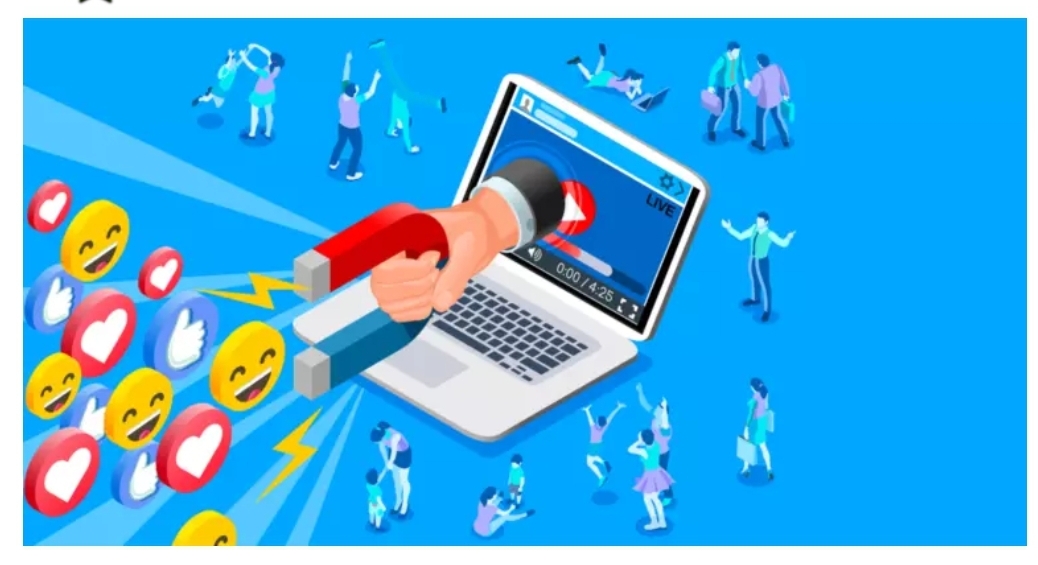
Itโ€™s this high level of online engagement โ€“ as well as the lack of non-Bollywood boy bands or pop music in the country โ€“ that has helped K-pop acts build highly dedicated fandoms in India as well. Indian K-pop fans congregate on act-specific Facebook and Twitter pages, like Bangtan India (for BTS fans) and EXO-L India, as well as more general platforms like Destination K-pop India.

Screenshot_20200718-114235_Chrome
The Korean Wave.

Sentimental Analysis

Sentiment analysis is the interpretation and classification of emotions within text data using text analysis techniques. It bifurcates the data into positive, negative and neutral. Sometimes, there are more emotions that also can be detected using sentimental analysis.
1583480-online-education-png-education-png-456_413_preview
This analysis tools allow businesses and other decision makers to identify customerย  sentiment toward products, brands, campaigns or services in online feedback. It is highly used to check online users attitude using their tweet, texts, reviews and comments. According to Wikipedia, Sentiment analysis refers to the use of natural language processing, text analysis, computational linguistics, and bio-metrics to systematically identify, extract, quantify, and study effective states and subjective information. It is a Natural Language Processing and Information Extraction task that aims to obtain writerโ€™s feelings expressed in positive or negative comments, questions and requests, by analyzing a large numbers of documents.ย 
Uses:
  • Finance field for stock trading companies as sentiment algorithms can detect particular companies who show a positive sentiment in news articles. This can mean a significant financial opportunity, as this may trigger people to buy more of the companyโ€™s stock. Having access to this type of data, may give traders the opportunity to make decisions before the market has time to react. (getthematic)
  • Social media posts to know how are customer reacting to a particular topic, concept, reviews and what are their sentiments for the same.
  • Increase customer retention.
  • New product perception.
  • Businesses gain valuable insights using sentimental analysis and can strategize their objectives according to the output of this technique.
  • Also provides company’s to gain competitive advantage.

Sentiment-Analysis

Approach:

  • Using NLP (Natural Language Processing) that allows computers to analyze and understand human language.
  • Using Machine learning concept that uses classifiers such as Naive Baiyes, SVM etc.


Working:

  • Collection/ Fetching of data: A large chunk of data is collected for further analysis.
  • Cleaning the data: Since the data collected is unstructured or semi-structured in nature, it has to be cleaned before going for analysis. It is done by removing stop-words, removing punctuation, whitespaces etc.
  • Data Analysis: The inbuilt algorithm process the data and perform sentence splitting.
  • Indexing: Algorithm tags sentences based on their polarity such as positive, negative or neutral.
  • Output: Finally, it provides an output that tells the actual results. It can be in the form of table, graphs, text, word-cloud or figures.


Limitations:

  • Latest emerging terms cannot be analysed properly.
  • Sarcasm detection.
  • Term frequency.
  • Sentence completeness.
  • Small sentences or phrases cannot give much insights.

Placement

As we all know Placement is very important in a person’s life and especially for students. In a simple language, Placement refers to placing a right person to a job and especially right job. It is a process of assigning specific job and workplace to the selected candidate. It helps in fitting the right person at the right job or place. Placement is the assignment or re – assignment of an employee to new or different job. Generally, assignment or initial assignment is for new employees and promotion or transfer is for present employees. The placement of an employee is the stage where selection procedure ends. Placement also implies assigning a particular rank and responsibility to an employee according to the requirement of job and his qualifications. It is always said that a well placed employee is an asset for the organisation as the position in which he is placed is according to his qualifications, knowledge and skills and that’s why he can give his 100 percent in his work and thus, he is an asset to the organisation. If an employee is properly placed that is if placement of an employee is done in a right place then this will make the employee happy which will further reduce absenteeism and labour turnover. This will also helps in increasing the morale and efficiency of the employees and the employee will build a good relation with his colleagues and employer. Some signs which shows that an employee is properly placed are they will increase production, improved quality of product, punctuality and regularity in work and attendance. Placement is important for both the organisation as well as the employee. As a properly placed employee will help in achieving organisational goals as well as his personal goals too. It is important for the organisation as a company invests a lot of amount in hiring an employee and if, they place a wrong person this would be a loss for an organisation. Therefore, placement should be done after due consideration of the demands of the job. Placement is not an easy task but a complex one. As it is very difficult for a new employee to adjust in new environment, culture, company and work. So for this reason the employee is generally put on a probation period which ranges from 6 months to 1 year. At the end of the probation period if he shows good performance, he is selected as a regular employee of the organisation. Placement has many importance too and they are –

  • Keep Employees Satisfied – The most important purpose of placement is that the goals of the organisation should be achieved and this is possible only through satisfied employees. So, while assigning the job to new employees the requirement and needs of the organisation as well as employees should be taken into consideration.
  • Improves Efficiency – If an employee is placed in a right position according to his abilities and experience he would be able to show good results. This would further help in keeping his spirits high and will increase the efficiency of both employee and the organisation.
  • Good Relation – Placement also helps in improving the relation between employee and employer as they feel satisfied with there jobs and there will be no reason for disputes.
  • Increases Morale – Employee morale can be increased through proper placement. This can be understood by the behaviour of the employees. If a candidate is able to adjust himself to the job and the organisation and continues to perform excellently this shows that the employee is correctly placed.
  • Gives Motivation and Reduces Turnover – Proper placement keeps employee motivated as the job matches their skills and requirements and this motivation results in better performance. It also helps in reducing labour turnover and absenteeism. If a person don’t like the job he will start making excuses and will remain absent this shows that we have placed wrong employee at wrong place. So, effective placement helps in keeping the absenteeism low.

Last But Not the Least

Placement process is also very important as a well placed employee will be an asset to the organisation.

Street children in India

Intoduction

Firstly, the street life is that persons are directly depended on Street or vacant place for the livelihood. Street life is very challenging to the survival to children or even for youth,men,or any other living creatures. They live in cities but they are unable to take those advantage and comfort of urban lifestyle. According to WHO it defines the “street children โ€œas boys and girls aged under 18 years old, for whom โ€œThe Streetโ€ including unoccupied places and wasteland has become home or their source of livelihood and are inadequately protected or supervised. It is also important to note that the term โ€œStreet Childrenโ€™ also include individual girls and boys of all ages are found living and working in public places and are visible in the great majority of the worldโ€™s urban centers. A โ€œChild of streetโ€ having no home but the streets. The family may have abandoned him or her or may have no family members alive. It is a common to find the street children at the Bus Stands, Railway Stations, and Traffic Signals etc. women carrying infants and begging. Nowadays, the under passages of the flyovers, metro corridors have become their dwelling places. Not any of the cities or metropolitan areas are exceptions to it. They found in every part of the world. Street children are among the most physically visible of all children, living and working on the roads and public squares of cities. The exact number street children is impossible to quantify, but it is likely to number in the tens of millions or higher, some estimates place in the figure as high as 100 millions. It is likely that the numbers are increasing as the global population grows and as urbanization continues at a pace. In practice, every city in the world has some street children including the biggest and the richest cities by 2015.
Most of the street children are not orphans. Many are still in contact with their families and work on the streets to augment the household income due to poverty. Many others have run away from their homes because of sexual or physical abuse, domestic violence, homelessness etc.The main reason behind this Are :-
1) Neglected children :- Sec.2 (2) of the Children Act 1960 of India defines a โ€œneglected childโ€ as a child who
(i) is found begging
(ii) or is found without having any home or settled place of abode or any ostensible means of subsistence or is found destitute, whether he is an orphan or not
(iii) or has a parent or guardian who is unfit to exercise or does not exercise proper care and control over the child
(iv) or lives in brothel or with a prostitute.
Thus the neglected children are the example of socio-legal issue, which need to be examined.

2) Unwanted children :- who are born outside the wedlock and who are the products of broken homes or relationship.
3) Poverty :- Poverty is also a main reason behind this. When they have not any fundamental object, so they lived as a street boys. According to a study shows that, for most of the children (83%) and their parents are on street due to poverty.


Constitutional provision for safeguard of street children :-
The street children, who form considerable proportion of the world population, are also human beings so need to be cared and protected by all means.
The Constitution of India guarantees several rights to all children. The Special and Guaranteed Articles are:
Article 21.A : The state shall provide free and compulsory education to all children of the age of six (6) to fourteen (14) years. Article 21 A has been inserted in the Constitution by the constitutes (86th Amendment / Act 2002 with effect from 01-04-2010. The Indian Parliament enacted the Rights of Children to free and Education Act 2009
Article 24 : No child below the age of 14 years shall be employed to work in any factory or mine or engaged in any hazardous employment.
Article 39(e) : The state shall, in particular, direct its policy towards securing that the health and strength of workers, men and women and the tender age of children are not abused and that citizens are not forced by economic necessity to enter avocations unsuited to their age or strength.
Article 39(f) : The state shall in, particular, direct its policy towards securing that children are given opportunities and facilities to develop in a healthy manner and in conditions of freedom and dignity and that childhood and youth are protected against exploitation and against moral and material abandonment.
Article 45 : Provision for early childhood care and education to children below the age of six (6) years. Article 45 was substituted by the Constitution (86th Amendment) Act 2002 with effect from 01-04-2010.
Article 51A (K): Fundamental Duties :- It shall be the duty of every citizen of India (k) โ€œwho is a parent or guardian to provide opportunities for education to his child or as the case may be ward between the age of six (6) and fourteen (14) yearsโ€.
Article 51 A (K) was inserted by the Constitution (86th Amendment/ Act 2002 with effect from 01-04-2010.
Besides the above said articles, some of the Articles of the Constitution provide and guarantee the Rights of the children equally with the citizens of India just as any other adult male or female.

Suggestion to overcome this problem

Street children in India is a socio-legal issue which needs to be tackled carefully. When we met those children we must inform the police, local NGOs, children care homes etc. We must try to make their rights fulfilled. There are some suggestions to minimize this problem:-

  1. Monitoring, review and reform of policies, programs and laws to ensure protection of childrenโ€™s interests and rights.
  2. Complete abolition of child labour with the aim of progressively eliminating all the forms of economic exploitation of children.
  3. Securing for children all legal and social protection from all kinds of abuse, exploitation and neglect.
  4. Childhood care development and quality education for all children.
  5. Separate vigilance Agency for look out children exploitation, begging, chid physical and sexual abuse etc. Conclusion

The children must be saved because children are most important asset of the country. So it is duty of citizens and society to protect them. Society should come forward against this social evil. We should must create awareness about it and help in ensuring basic rights. Nations should starting at the Mandal or Taluk level and awareness programmes need to be conducted giving , wide publicity holding public meetings, street level group discussion with village elders, conducting film shows, dramas, audio-visual programs etc; highlighting the importance, need to provide, care and protection of the street children. The government should also allocate proper fund for children development and for elementary education. There is need to be start new programmes, scheme and the amendment in law where it needed.

REVEALING YOURSELFโœ”

Recognize commitment

One of the first and quickest approaches to possess your life is to assume liability for your life. The great, the terrible, the appalling – it’s everything on you! Our points of view, mentalities, responses, emotions, considerations, convictionsโ€ฆ these are everything that we control ourselves. This is an astounding thing since it implies that you can make the existence you need since you are in the driver’s seat. “Assuming liability for being actually where you are enables you to be actually where you need to be.

Quit accusing

It’s exceptionally simple to fault here and there, particularly since the majority of us have a type of understanding of being dealt with wrongly or unreasonably as kids. Grown-ups aren’t great, and some of them are absolute screw ups, however we can’t perpetually leave the slip-ups of others alone a reason for us not carrying on with the existence we need. Similarly, we can’t let things like a bombed marriage or an awful past choice have any control over our today. Each morning, you have a fresh start. Nobody can prevent you from being the individual that you need to be or carrying on with the existence you want to live, except if you award them that power.

Forgive

This is an immense errand, generally one that requires a lifetime of rehashing. Clutching past damages just keeps you away from carrying on with the existence you really need. By holding resentment, you are holding negative vitality, which will just harm you. Some of the time, the ones we hold the most feelings of resentment against are ourselves, for past mix-ups and activities we profoundly lament. You can’t carry on with a cheerful life if at some inner mind level you don’t trust you merit one. All that we experience, even the awful, encourages us develop here and there. Pardon others and yourself and rather be appreciative for the exercises you’ve picked up.

Change your demeanor

Your disposition plays more significance on your personal satisfaction than you may might suspect. Ever notice when you have a terrible demeanor that your day just appears to continue deteriorating? This is on the grounds that you’re a bundle of negative vitality strolling around gathering all the more close by negative vitality! At the point when you constrain yourself to be feeling acceptable (and indeed, numerous days it requires power) and you search for the beneficial things in your day, what happens is that you carry all the more beneficial things to you. Try not to squander one more day driving the beneficial things away!

Choose what you need

Have you pondered what you truly need throughout everyday life? Not what your mother needs for you, not what you want to achieve simply because it’s simple, however what you need. On the off chance that cash or situation weren’t an issue, what might your heart generally long to do? Try not to stress in the event that it feels too large for you to accomplish all alone, it likely is. The enchantment of this universe that we live in is that it meets us more than midway when we pursue a fantasy. At the point when we truly recognize what we need and accept we can have it, when we anticipate that it should occur, we set supernatural powers moving that organize the individuals and conditions in our carries on with important to accomplish our fantasy.

Become purposeful

Become purposeful with your time. Execute a day by day schedule. Exceptionally effective individuals are known for following morning schedules each day. A period that you plan for your day first without letting the outside world assault your brain, to compose or peruse your objectives, practice and have a filling breakfast. Fundamentally setting aside effort for you before the day begins so you feel intellectually arranged! Likewise, become purposeful about the sort of individuals and data you let come into your experience. Pessimistic individuals, stories, and articles that advance detest, dread or discussion just variety greater cynicism and drag you down.

Rival nobody

At the point when we’re running a long distance race (and that is the thing that life is, a long distance race, not a race) and we don’t concentrate on our own way since we are excessively bustling checking out us to see where every other person is, we begin to lurch. We begin thinking about whether we’re sufficiently bad, or why beneficial things are occurring to them and not us. Try not to concentrate on any other individual however you. Be thankful for where you are and the things you have accomplished. Consistently is a new beginning to pursue your own fantasies and improve from your yesterday.

Check in with yourself

Stay in contact with yourself all the time. Regardless of whether you don’t possess energy for a morning schedule, take a couple of moments every day to profit by some alone time. Peruse your objectives or expectations for the week. It’s astonishing what we can overlook when we don’t remind ourselves! The coolest thing is thinking back throughout the month and seeing everything you can scratch off your rundown that occurred without you in any event, acknowledging it.

Possessing our lives can appear to be somewhat overpowering from the outset, yet on the off chance that you simply start little and transform everything into a propensity as you come, right away you will start seeing the undeniable and enchanted changes of carrying on with existence with an alternate attitude, and there is no preferred chance to begin once again now!

And lastly, We should stop the blame game which the whole universe plays.

BY GOVIND SAGAR

Terrorism and Business

The first is to make terrorist less devastating and attractive to terrorist decentralization. And the second one which is raise to the opportunity cost and rather than material cost. For terrorist. These alternative strategies will effectively dissuade potential terrorists. It is here argued that not only apply to society as a whole but can also the usefully be applied by the enterprises.

The politics are the always has been the committed to fighting terrorism by using the best dissuaded from attacking through the treat of heavy sanctions and by using police and military forces to the fight them the reaction terrorist attacks of September 11, 2001 is a striking example. The American president, changes a War against terrorism, this war has a widely supported by a great many democratic as well as authoritarian countries. This war terrorism is a completely based on the deterrence, Actual and prospective terrorist must be annihilated by killing them without any further and must at least captured , held prisoner, put trial and sentenced to long or indefinite of time, It is expected that such treatment impose such high cost of prospective terrorist that no individual will engage in terrorist future.

History, as well as recent experience suggest, however, that using deterrence in dealing with terrorist is ineffective and may even be counterproductive. The number of terrorist with ineffective counterproductive. The terrorist may increase, rather than decrease. A policy based deterrence have a second disadvantages. It civil and human right in the countries engaged in fighting. Deterrence policy tends to undetermined exactly those value it to protect. Even if deterrence were effective the world may end up significantly less if than before was engaged in the against terrorism.

DECENTRALIZATION – A system with many different center is more stable due to its diversity, enabling any one part to part to sustainable for the form other. When one part of system, enabling any one part to suitable to other. A country that is the negatively affected, one or several part may be take over. A country that is the target of terrorist attack can reduce vulnerability by implementing from of the decentralization.

THE POLICY – The government is undertaking of the benefits are difficult to pinpoint and even more difficulty to measure, particularly because of possible indirect and long term effectsii. A basic problems is identify how much worse off individual would have been the if a deterrence policy had not been adopted. construction such a counterfactual situation is a tricky especially as long term as and macroeconomics as well as macro effect have to be taken into account.


Mental health during the lockdown

THE rise of coronavirus across the globe led to countries introducing methods to curb its physical ramifications. One of the most common modes adopted by nations was mandatory social distancing, lockdowns, closure of educational institutions and offices, public places, etc. The social lives of millions came to a standstill overnight. For instance, in India, on 24th March 2020, at 8 p.m., the Prime Minister announced a complete nationwide lockdown commencing from midnight. This caused a country of 1.3 billion to launch into survival mode and gave them four hours to gird up their loins for a life-altering reality. The imposition of re-defined social norms, although necessary to control the virus, invisibly affects the mental health of the masses.

Pandemic and mental trauma

The physical symptoms of a person affected by a disease, especially COVID-19, reflect within a fortnight. However, the diagnosis of mental trauma caused due to a pandemic may be prolonged. The rise, subsistence and fall of a pandemic directly impact the mental health of those living through it.

According to Mark Henick, a mental health strategist, when a person faces trauma his nervous system has a โ€œpeakโ€ and โ€œvalleyโ€ response. When the trauma due to a pandemic is thriving, a majority of people throw themselves into survival mode, which is extremely taxing on mental health. People are left with limited time to process the trauma and immediately occupy themselves to get through the unwelcomed incident. This is called the peak response. When the trauma ends, people kick into the valley response, which is reflected through post-traumatic stress disorder (PTSD) and behavioural alterations. It causes people to find methods of disassociating themselves with the trauma experienced.

After the pandemic ends, there is a high probability of exposure to residual stress, depression, financial pressures, the uncertainty of the future, and anxiety of re-engaging with the new definition of โ€œnormalโ€. These additional challenges make it difficult for a person to return to the โ€œbaselineโ€ (lifestyle existing prior to the trauma), in the absence of professional help. This proposition stood the test during the SARS outbreak in 2003. A study[i] published in the Canadian Journal of Psychiatry reflected that that one year after the outbreak of SARS-2003, survivors had elevated stress levels, and showed worrying levels of depression, anxiety, and post-traumatic symptoms.

The trauma caused due to a pandemic not only adversely impacts the mental health of the individual struggling with it, but also affects his / her immediate social circle. The consequences may include strained inter-personal relations, increase in domestic violence, child abuse, disassociation from existing social groups, and even agoraphobia.

Causes and impact on vulnerable social groups

There cannot be a straightjacket formula to determine whether the mental health of a particular section of society may or may not be adversely impacted due to the outbreak. However, some groups are more vulnerable in comparison to others. For instance, persons with existing mental illnesses would find it more challenging to cope with the pandemic. Similarly, persons who survive the disease may suffer from anxiety of re-entering the society, and the fear of the probable stigma attached to their condition.

Healthcare service personnel and first responders such as police officials, essential service providers, etc. may demonstrate signs of societal withdrawal, increased emotional stress, and depression. Lower-income groups and migrant labourers may suffer from anxiety due to prolonged unemployment, and reduction in means of survival. Persons recovering from alcohol/substance addiction may find mandatory lockdowns to be an additional challenge in their journey towards sobriety.

Excessive exposure to information about the outbreak on social networks, or other media platforms may trigger a person to exhibit irrational behaviour, such as hoarding excessive supplies. Another cause of mental stress is the practice of extreme social distancing instead of physical distancing, which leads to people isolating themselves due to the fear of contracting the disease. The degree of mental trauma may differ from person to person; however, when levels of anxiety reach alarming heights, it is imperative to seek professional / assistance.

The way forward

The world is presently at an active trauma stage, insofar as COVID-19 pandemic is concerned. The battle towards strengthening our community mental health is yet to begin. Fortunately, with increased awareness of methods to cope with psychological issues, the taboo surrounding mental health is on a downward trajectory.

The World Health Organization published a Report suggesting measures to address mental health and psychosocial considerations during the COVID-19 outbreak. It inter alia recommended that individuals must minimize watching, reading or listening to news about COVID-19, and must access news only once or twice a day. The public must amplify positive stories and images of local people who have survived the outbreak. Conscientious steps must be taken to refrain from referring to those diagnosed as โ€œCOVID-19 casesโ€ or โ€œvictimsโ€, and must identify them as โ€œpeople recovering from COVID-19โ€. It is important to separate the identity of a person from the disease, in order to reduce social ostracization.

Similarly, in an attempt to effectively address mental health concerns of Indian citizens during the pandemic, the Ministry of Health & Family Welfare, Government of India through the National Institute of Mental Health and Neuro Sciences suggested tips to manage mental health titled โ€œMinding our minds during the COVID-19โ€. The Ministry uploaded a short video series known as โ€œLockdown to Knockdownโ€ proposing steps which may be adopted by individuals to overcome emotional or psychological stress. In addition to the above, the Ministry announced a Psycho-Social Toll-Free Helpline number[ii] to ensure access to professional help for those in need.

Dr.Peter Yellowlees, Professor of General Psychiatry at University of California, recommends focusing on physical health, meditation and virtually contacting oneโ€™s supportive social network to reduce emotional distress. He suggests that reasonable degrees of anxiety are beneficial, as they ensure conformity to conditions of the lockdown. However, extreme anxiety may cause a person to become agoraphobic. He advises maintaining a schedule to keep anxiety levels in check. Suggestions made by Dr Yellowlees may aid in restricting adverse impact on mental health. However, there can be no substitute for professional medical help.

There is a window of opportunity for the society to implement steps to mitigate the mental health crisis likely to follow the pandemic. In these testing times, it is not a cakewalk to train our minds into following a schedule or participating in productive activity. Nonetheless, taking one step at a time to ensure mental safety and emotional stability at an individual level can contribute to the health of society at large.

Pay-Per-Click Advertising – A Digital marketing strategy

Digital marketing are all marketing activities for a product or service that use an electronic device or the Internet.In this article , we shall look at the PPC (Pay-per-click) strategy extending to affiliate advertising or marketing .

Pay-Per-Click Advertising (PPC)

PPC, or Pay-per-click, is a form ofย advertising on search engines, like Google and Bing. Basically, itโ€™s the process of buying visits to your site. Pay-per-click marketing deals with paid search results on Googleย  (i.e) Itโ€™s a way of moving to the top of search engine results pages by paid means (sponsored) unlike optimizing the website for organic search ,as in SEO. Itโ€™s called PPC because your ad account is charged every time one of your advertisements is clicked. The cost of each ad, or CPC (cost per click), depends on your industry ,the quality score of your website and the keywords to be targeted. This type of digital marketing demands a thorough analysis of keywords, especially those that are relevant to your business. You can use the Google Keyword Planner and Google AdWords to carry out your research and arrive on a set of keywords that are popular yet cost-effective for you.

When you put out a PPC ad, thereโ€™s usually little to no upfront cost. If a customer clicks on your ad, you pay a minimal cost. If no one clicks on it, then you pay nothing. This makes it attractive for small businesses who are on a limited budget. PPC is sort of like a paid version of SEO. You actually bid for advertising space for certain keywords on search engines. The bidding process involves few aspects that the advertiser should prioritise: Bid amount , Quality of advert , Formats (video , display advert , including various extensions) and Expected clickthrough rate (CTR). These combine to give advertisements an โ€˜Ad Rank.โ€™ The Ad Rank is compared to competing advertisements to determine where the advertisement is placed.

 How it Works

PPC is one of the types of paid search. Itโ€™s similar to SEM (search engine marketing) but can also include display advertising (cost-per-click based), and affiliate advertising.

Through tools likeย Google AdWords, PPC works on finding keywords that your website will perform well, and dependent on the competition, CPC is determined. Through bidding on keywords, against competitors, your ad appears in relevant search results and will charge you if a user clicks on your ad.

Both SEO and PPC campaigns can be tracked or measured using the supremely handy Google Analytics tool.

Strategy

Many of the businesses use both short-term and long-running PPC campaigns. PPC campaigns can be a short-term solution, and many use it to shift products or seasonal deals, as a way to boost revenue. SEO work is about your ranking being โ€˜earnedโ€™, but in PPC your ranking on the first page is bought. Small businesses may not be able to go for this digital marketing method, especially for longer periods.

PPC can also extend to affiliate marketing and ads on other sites.

ย Influencer/Affiliate Marketing

ย It is a type of online advertising through networking which includes influencers to endorse and make reference to your products. The concept of affiliate marketing is similar to the sales based on commission. Organizations provide custom links to their affiliates. Affiliates earn a specific commission every time someone purchases products through their custom link. Influence marketing could be considered a modern way of affiliate marketing.

A fantastic way to increase your audience is to get someone with a following to endorse your brand. If you can get a celebrity or a well known personality person to endorse your brand online, you will create a pathwayย between their audience and yours, creating an interest among their audience to investigate your product or service further. Affiliate marketing involves a partnership with an online retailer where you earn a commission from every sale or lead (chance of becoming a potential buyer) that you bring in. The two most common ways of doing this are:

  • Offering a unique discount code to their readers/followers
  • Linking to your website from their content website

Whenever a user plugs in the discount code or clicks on the link, you pay your affiliate partner for the website traffic/sale. The most popular affiliate network is Amazon Associates, but there are also affiliate marketing programs with eBay, Shopify, and other e-commerce sites.Itโ€™s a win-win in most cases. You outsource some of your marketing, reach a new target audience in niche communities, calculate and discuss your cost-per-click/sale , and only pay for actual conversions. In return, your partners get to earn a passive income with no upfront cost and very little stress.

Affiliate marketing refers to the process of paying for conversions. This means there is no upfront cost to affiliate marketing. Many bloggers or e-commerce websites use affiliate marketing.

Influencer marketingย is among the newer types of digital marketing. Influencer marketing uses people with an enormous online reach considered experts by your target market to drive traffic and sales.Influencer marketing is popular on social media channels like Instagram and Snapchat. Companies hire Instagrammers with large followings to promote their brand by posting one or more photos with the product. Always make sure to do your research on an influencer before you decide to do business with them.Many companies work with such influencers to create brand awareness and convert at least some of their huge fan following into profitable leads for themselves. Many others let affiliates or brand representatives reach out to a varied demographic and generate sales.

Display Advertising :

This form of advertising refers to the process of advertising a product or service through visuals like images and videos on networks of publisher websites such as the Google Display Network and Facebook etc.

Display ads are placed on relevant third-party websites in the form of banner, image and text ads. Display advertising is pretty much a blanket term that includes every visual ad placed on a website. A display ad, or banner ad, is the box or โ€˜bannerโ€™ on a website that stands out from the rest of the website and looks distinctly like an ad. For example, it often features a product image, brand, and call-to-action (CTA).Display ads can range from simple static image banners , GIF ads , animated HTML ads to videos and interactive applications. But one thing remains the same: when clicked on by a viewer they link back to a companyโ€™s website, or a dedicated landing page. The main purpose of display advertising is to deliver general advertisements and brand messages to site visitors.


Conclusion :

PPC is one of the types of paid search. Itโ€™s similar to SEM (search engine marketing) but can also include display advertising (cost-per-click based), and affiliate advertising. Many bloggers or e-commerce websites use affiliate marketing. Display ads can range from simple static image banners , animated  ads to videos and interactive applications.Depending on the budget and the type of business, this marketing strategy can be used for a shorter or longer term.

Please do check out the following link to explore further about this topic :

https://en.wikipedia.org/wiki/Pay-per-click

WORLD WAR III !!!!!

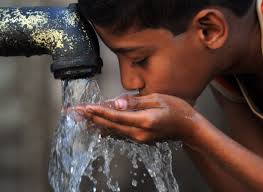
Yes, you have hear rightโ€ฆ.WORLD WAR III and you know what, among which countries this will going to happen??? This WORLD WAR III will take place between all the countries and guess regarding what this will going to happen????โ€ฆโ€ฆ I tell you the main reason for the WORLD WAR III will be WATER. yes water is always been an important and necessary thing to usโ€ฆ for us water is just a thing , ask those people who have to walk in kms to get the water , ask those who have to stand up in a long queue in sunny and once the water get finished in the tank then they have to return to their home with sad facesโ€ฆthey have to face daily- daily quarrels, there is always a long queue in small towns , there a lot of people and the source of water is just one tap!!!!โ€ฆ.. Ask those women who have to walk in sunny even though they are pregnant โ€ฆ.. and you know whatโ€ฆ all either it is man or woman both have to struggle a lot for water in all the seasons either it is winter/summer/rainyโ€ฆ..first they have to search a lot for their ROZI ROTI and then they have to do all the efforts for WATERโ€ฆ.for them water is not just a thing !!!โ€ฆfor them water is an EMOTIONโ€ฆ they know very well what the true value of water is, because they have to pay their sweat, time, feelingsโ€ฆ.to get waterโ€ฆ


India is not a water scarce country. Along with having major rivers, we receive an average annual rainfall of 1170 millimetres. But lack of sensitization with regard to both conservation of water and pollution of water sources has resulted in a large part of the population for whom water has become more of a curse than a boon. Infrastructure for storage of water must be developed properly to ensure that people have access to safe water across the country, said Dr. Narayan G. Hegde, Trustee of the BAIF Development Research Foundation and author of the report โ€˜Water Scarcity in India.
Water supply in India has two principal sources, namely water from rivers and groundwater. However, the rivers are shrinking because of pollution and industrialization, while the population keeps growing, pushing us towards an enormous water deficit.


Rampant pollution, dumping of sewage waste and abuse of the rivers has led to large sections of important rivers like Ganga and Yamuna becoming unfit for use. Take for instance, the Ganga, which flows through 11 states of India and provides water to more than 500 million people.


Many parts of the Ganga in Bihar and Uttar Pradesh have become completely unfit for use because of incessant waste disposal, ranging from dead bodies and to industrial waste. Earlier the water in many parts of these two states could be consumed and used for other purposes, but pollution has rendered the river water completely useless, said Vikas Chandra, an activist who has been campaigning for a pollution free Ganga for the last 19 years.


Safe drinking water, a basic amenity has become a luxury in many Indian households, especially in semi-urban and rural areas. Official figures show that each day, approximately 500 million liters of wastewater from industrial sources is dumped into the Ganga. The Yamuna, similarly receives 850 million gallons of sewage every day from Delhi alone. For those who are dependent on groundwater sources, the presence of arsenic in the eastern belt in the Ganga-Brahmaputra region poses equally dangerous threats.


Arsenic is a major problem, especially for people residing in the Ganga-Brahmaputra belt in eastern India. Arsenic laden water has many adverse health effects and affects over 900 million people in India. With Indiaโ€™s rivers becoming more polluted with every passing day, the dependency on groundwater resources is increasing. But steps must be taken to ensure that people do not end up using arsenic laden water, as that would be more harmful than beneficial, said K.B. Biswas, Chairman, Central Ground Water Board.

ACTION TAKEN BY GOVERNMENT-
Several initiatives have been undertaken to deal with the water crisis looming ahead of India, both by government and non-government bodies. In 2014, the 20,000 crore Namami Gange program was announced by the Union Government. It is a holistic program that not focuses on cleaning the Ganga, along with setting up biodiversity centers, crematoriums and toilets along the river banks to reduce pollution in the river.
Cleaning up rivers is not the only solution India should look at, as rainwater and groundwater resources of India are also facing risk.
Data collected from the Ministry of Drinking Water and Sanitation states that 45,053 villages had access to piped water and hand pumps by the end of 2016-17, accounting for 64.19 per cent of India. Almost 19,000 villages across the country still do not receive regular water supply.
In 2015, a report by the Ministry of Water Resources, River Development and Ganga Rejuvenation stated that though India receives an average annual rainfall of 1170 mm, poor storage infrastructure allows it to store only 6 per cent of rainwater, compared to 250 per cent stored by developed nations.

Rainwater storage and harvesting is still not a regular practice in India. In 2001, the Tamil Nadu government made it compulsory for each household to have rainwater harvesting infrastructure and the results reflected in the improvement of overall water quality within 5 years. A similar experiment has been tried out in the cities of Bangalore and Pune, where housing societies are required to harvest rainwater.

So, these are the reportsโ€ฆ. Government is doing what is in its hands and this is our responsibility to corporate with government and make every cleaning water mission successful.
Here we have talk about only India so now just think how many countries are facing this situation, how many countries are in red zoneโ€ฆโ€ฆ.and if the whole world will not united to conserve water then one day we will face the situation like war for WATER.


ANOTHER POINT


Actually there is ENOUGH water on our earth, God has given us a lot of water and we all know that 70% of the earth is covered by water but still people are dying with the thirst ,why????….. Because we are fail to conserve it, to use it in right directionโ€ฆ. Water is present but the problem is drinking water is not presentโ€ฆ Because we all want to drink the so called MINERAL WATER but no one put their efforts to keep it mineral, to keep it hygienic, and to keep it safe for the future generation. We can see it in ourselves, in our surroundings that what we have done for water???? Nothing Na!!!! If someone says to us that we should use limited water, we should use it in that quantity in which we need it, we just donโ€™t waste it โ€ฆ. Then what we do what kind of response we give to them??โ€ฆ.. We say to them that they just mind their own business and of course, what they have done so they are saying it to us!!!!!โ€ฆ. RIGHT!!!!โ€ฆ

Before saying it to them we should peek out into ourselves rather saying them bad wordsโ€ฆ we should initiate to keep the water clean and encourage everyone to do soโ€ฆonly if we wantโ€ฆ that the clean water will remain available for us as well as for our future generations. NOW THIS IS THE TIME WE ALL HAVE TO WAKE UP WE HAVE TO DO SOMETHING REGARDING THIS OTHERWISE IT WILL BE TOO LATE โ€ฆTOO LATEโ€ฆ.

Pomeranian dog breeds

The little Pomeranians are cute and fierce dogs which have come to become a household pet. They are highly affectionate, require minimum space, active, have the agility and turn out to be great family companions. As pets, they are highly devoted towards their owners and their small size should not be taken for granted, as they still possess a big-dog attitude. The Pomeranian affectionately referred to as “Pom”, is the smallest member of the spitz family. It is believed that they have been named after the Pomeranian region in north-west Poland and north-east Germany. The pom dog comes in many radiant colors such as red, orange, white with black being the most common. They make very good companions to old people. One of the advantages of having such a diminutive sized pet is that it requires low maintenance and can be easily kept in homes that lack a backyard. Despite their small-sized, they are known to have very loud barks imitating an intimidating persona.

Due to their small size, they require a small amount of food as well. The diet of the dog mainly depends on the size and activity level. The poms are an overly enthusiastic breed but it can be easy to overfeed them. The recommended amount is ยผ to ยฝ cup of high-quality dry food per day which should be protein-rich, otherwise, they may experience digestive issues. It is best if divided into two meals. Supplements like boiled chopped liver or chicken can be excellent sources of proteins and vitamins.

Pomeranian personality can be described as a bundle of joy. The tiny creatures are a wild bunch of enthusiastic, people-friendly breed and possess certain character traits which makes them completely different from other breeds.Though they have a high tendency to be stubborn, they are smart enough to be trained properly. They make excellent watchdogs as they always remain vigilant of their surroundings and can easily detect the changes.

In all, they make lively and playful companions. Some of the puppies are genuinely friendly while some may have a temperament. These poms can be made to socialize early so that they grow up to be well-rounded. Some poms may have a habit of barking a lot which can be a cause of annoyance for the people around them. That is why there is a need to train them well, similar to other dog breeds. It is not a good choice for children since they may not respond well if mishandled.

Every breed of dogs has its benefits as well as disadvantages. If one is new to being a pet owner, Pomeranians can be a good choice. They can be your best friend if they are trained well enough.

Why You think You Aren’t Good Enough

Many of us have days and times when we think…we just aren’t good enough. We think that whatever efforts or hardwork we put in, we just can’t reach there. People may think that they are the weird ones for thinking like that. But in reality, most of at some point of our lives feel that way.

We tend to be most unforgiving of our own faults and mistakes. This is why we often sometimes hear the phrase that we can be our worst enemies. It is because our thoughts constantly express how we are flawed and are at fault all the time.

Let’s see what are the several ways that lead us to thinking so.

We compare us with others. It’s no mystery that everyone’s lives, situations and personalities are different. No two people are exactly the same. Everyone’s chapters of their books are different. Then, why is it that we forget this small but important detail when we critically compare ourselves with others? We must remember that there’s always going to be someone smarter, richer, prettier than us. So are we going to make our own lives miserable for constantly thinking about things that the other person has or are we going to be thankful for what we currently have? Chances are that the person we are envious of, is actually envious of us. They might wish that they had something we have! So we will always be miserable if we get stuck in this endless cycle of constant comparison.

Talking down to ourselves. By doing this, we allow our insecurities and fears get the best of us. It ultimately makes us overthink and feel like we just aren’t capable of doing something. We often have cruel and discouraging thoughts from time to time. We forget that these are just thoughts. In reality, we ourselves have the capability of deciding to think what we want to think. More importantly, don’t be so quick to believe everything you think. Because our thoughts are dynamic in nature. So if we are having negative thoughts, and we put in just a little bit of effort and be a little bit optimistic, these same negative thoughts will change into the positive ones.

Our worst traits don’t define who we are. We all have flaws. We all have some positive traits too. But sometimes, we think that our worst traits define us. For example, I may be horrendous at maths to the point of having to take a retest. But at the same time, I am really good at history so much so that I received a scholarly certificate for that. Now it’s up-to me, whether I want to crib about being bad at maths and stay negative or think about my positive traits and push myself to the extent that I become unbeatable at history. We always have the choice of thinking about our traits in a positive and negative light. We must remember that we are always in control of what we think. Being kind to yourself is just as important as being kind to others.

You are always enough. We are always a work in progress till the very moment we die. As long as we have a will to improve ourselves and become a better version of ourselves, we are always enough. We don’t have to be so harsh on ourselves because everyone has imperfections. Everyone has flaws. But that does not mean that we have to be cruel towards ourselves to the extent that we start believing our thoughts of being ‘worthless’. Because you are definitely worth it.

So, what point did you relate with the most? That is the one you have to work on. Take your time. The only person who you owe any explanation is you. Be who you truly are instead of hiding away your insecurities in a box. Because true happiness, is not just a destination it’s the road of getting through which you ultimately loving yourself.

CHILD TRAFFICKING

Childrenโ€ฆ.in our country there is a saying that โ€œBACCHE BHAGWAAN KA ROOP HOTE HAINโ€โ€ฆ.. but there are some people who thought that making money and more money is the only thing in this world they just donโ€™t think about humanity, love, affection, respect, careโ€ฆ. they just compare everything to money, they can do anything for money there are several crimes like murder, human trafficking, rape, robbery, assault and the list is too longโ€ฆ..

                       As we know that there is no connection between the criminal and the feelings they just do crime either it is with old, young, woman, man, child. But there are some hilarious crimes which takes place with children like CHILD ABUSE, CHILD TRAFFICKING (the part of human trafficking), KIDNAPPING and many moreโ€ฆ.

According to a report by the National Human Rights Commission of India, 40,000 children are abducted each year, leaving 11,000 untraced.

NGO’s estimate that between 12,000 and 50,000 women and children are trafficked into the country annually from neighboring nations as a part of the sex trade.

Every year, 44,000 children fall into the clutches of gangs. Though most of the trafficking occurs within the country, there is also a significant number of children trafficked from Nepal and Bangladesh. There are many different causes that lead to child trafficking, with the primary reasons being poverty, weak law enforcement, and a lack of good quality public education. The traffickers that take advantage of children can be from another area in India, or could even know the child personally. Children who return home after being trafficked often faces shame in their communities, rather than being welcomed home.

There are several crimes are increasing so government of India has taken legal actions against it and many missions are also going on to save the children.

ACTION TAKEN BY GOVERNMENT OF INDIA-

  • India has ratified the SAARC Convention on Preventing and Combating Trafficking in Women and Children for Prostitution as well as United Nations Convention on Transnational Organized Crime (UNCTOC) which has as one of its Protocols Prevention, Suppression and Punishment of Trafficking in Persons, particularly Women and Children.
  • Recently Ministry of women and child development unveils first ever anti-human trafficking law and also for the first time, the National Crime Record Bureauโ€™s Crime in India report included data on trafficking investigations, prosecutions, and convictions. Government also providing fund for rehabilitation and other issues of the victims of human trafficking.
  • A MOU was signed was between India and Bangladesh for Prevention of Human Trafficking in Women and Children, Rescue, Recovery, Repatriation and Re-integration of Victims of Trafficking
  • In 2003, India enforced the United Nations Convention against Transnational Organized Crime, which includes three protocols, specifically the Protocol to Prevent, Suppress, and Punish Trafficking in Persons, especially Women and Children.
  • On a national level, Article 23 of the Constitution of India explicitly bans human trafficking. The Government of India has also passed other acts and amended the Indian Penal Code (IPC) to address the challenge of child trafficking. The Immoral Traffic (Prevention) Act, 1986 (ITPA) is an amended version of The Suppression of Immoral Traffic in Women and Girls Act, 1956 (SITA). SITA made human trafficking for prostitution illegal and outlined legal action against people involved in human trafficking in any capacity. ITPA made laws friendlier towards the victim. ITPA also created a system to rehabilitate victims of trafficking and prevent them from bring trafficked again. In 2013, the IPC was amended to create new provisions to address human trafficking in India that are more in line with the UN Protocol to Prevent, Suppress and Punish Trafficking in Persons, especially Women and Children.
  • CRY is a critically acclaimed and internationally recognized NGO. It is a genuine and transparent organization which fights for children’s rights and protect them. CRY is the best medium one can get to the grass root level and uplift children. CRY is by far most trusted NGO in India.

By the action taken by government of India against the child trafficking we hope that the number of crimes decrease day by dayโ€ฆ..

ANOTHER POINTโ€ฆ.

I just want to ask why it is happening in our societyโ€ฆ and why these crimes with children are going onโ€ฆthere are a lot of schemes , lot of plans , for better education, for better living, for better life.. Which are organized by government of India but the sad reality isโ€ฆ donโ€™t know how many from us just donโ€™t know about these plans & schemes!!!!!!! For this we can assign work to NGOs and other organizations which can just better execute this work by increasing their network in those areas where the reachability is less and get aware them about everything, and also help them to connect with allโ€ฆโ€ฆ.  

Hobbies I took up during quarantine

Quarantine period gave me enough time to take up some hobbies. Some of them are:

WRITING: Writing is one of the activities I am loving the most right now. I was not very well versed with words when I spoke so I took to writing instead. It gave me enough time to gather my thoughts and pen them down on a sheet of paper. I always did it as a hobby since it made me happy. My interest in writing basically arose from when I started reading books. It initiated my thinking process and my ideas finally found an outlet in the form of writing. The best part about writing is the amount of variety and variability one can get from it. One can easily express themselves. Nowadays, I write about my day in my journal and also, what I expect from the next day.

PAINTING: Another thing that I picked up is painting. I have always loved art, so I finally tried to make some brush strokes and my attempt made me happy. Indulging in creative activities has finally stirred up my mind to think something out of the box as well.

BINGE-WATCHING: I have also utilized my time to finally catch up on new TV series, movies and K-dramas. There is a lot of content to choose from and makes up a good time-pass. This also makes up for fun. Having movie-time with your family with all the snacks ready gives a cinema-like vibe.

COOKING: Photos and videos of people on Instagram trying out new recipes also inspired me to try my hand at cooking. This one is a bit hard for me but I am learning a lot. Cooking should not only be a hobby but is a necessity since one can’t always order delivery.

FINDING NEW MUSIC: Music is comfort for soul. I have tried finding different genres of music and discovered some hidden gems. Now I have a personalized playlist for every activity of mine.

There are a lot of things one can do while sitting at home during quarantine. Get your creative minds working and try to develop new skills. But don’t be under pressure to do something productive all the time since rest and time for yourself is equally important.

The Digital Divide

It is dangerously destabilizing to have half the world on the cutting edge of technology while the other half struggles on the bare edge of survival.

– William J. Clinton

It’s the knowledge gap created when one group of people have greater access to digital resources (computers, smartphones, the internet) and so are better informed, better educated and across new developments more quickly than people who either don’t have these things, or have limited access. Needless to say, the end result is increasing inequality between the ‘haves’ and the ‘have nots’ as knowledge is today’s primary currency.

This divide between rural and urban India stems from economic inequality. Sixty-seven million Indians who comprise the poorest half see only 1 per cent increase in their wealth, and 63 million Indians are pushed into poverty because of increasing healthcare costs, every year. It would take 941 years for a minimum-wage worker in rural India to earn what a top-paid executive earns in a year. The problem of the digital divide is also presents itself as a symptom that points us to a much deeper problem in our economic development. And this is a problem that characterizes both the developed and underdeveloped nations in the world. Once the economic challenges of low education levels, poor infrastructure development, and low quality of life/ income levels are addressed, the digital divide will be eliminated.

The digital divide means the ‘haves’ have internet access, unrestricted internet access, fast internet access, 24/7. They can get into the greatest minds (and most insane stupidity) the world has ever created, whenever they feel like it, from the comfort of their couch, bed, cafe table, etc. Poorer people may not have this. They might have a computer but it’s an old one and has issues, if they have internet at home, it’s likely a plan with a data limit, it may have slower times, especially if it’s being shared among a large number of people. And if they don’t have internet at home, then they’re reliant on free Wi-Fi where ever they can scrounge it in order to find the answers to their questions, complete their schoolwork and so on. And so, the ‘haves’ have information (the new world currency) at their fingertips and continue to move forward and up. The relative ‘have-nots’ lag, fall behind and struggle. Strikes me as a pretty serious disadvantage. The digital divide is predicted to an alternate and more severe form in the next ten years.

Contemporary ways need to be developed to tackle this issue as the challenges it presents now are completely different from the challenges it presented ten ten years ago. This is because as technology innovates at an increased rate over time the gap between those who take advantage of it and who do not widen. The issue is now less about the access to technology because people across socio-economic groups have access via smartphones. The new challenge is that is they are not aware of the value proposition that today’s services avail to them then they will never take advantage of them. The biggest assumption is that everyone has equal knowledge of how today’s digital platforms can benefit them. So there are no real efforts to educate the disconnected.

For the digital divide to be eliminated, the affordability of accessing internet has to be increased. To combat is โ€˜participation inequalityโ€™, where users lack the skills to use it, the public needs to be educated on the benefits and value of utilizing the internet and the various resources within it to achieve economic and social growth. To encourage internet adoption in remote places, local content and applications need to be developed in local languages that can be understood by the local populace. Thus, relevance of online content needs to be improved. Lastly, the internet infrastructure needs to be developed through proper planning and implementation.

If necessary measures are not taken, the existing socioeconomic gap will keep widening with digital illiteracy. The only mechanism to tackle the situation is by teaching computer science, a subject of equal relevance among sciences and maths at the grassroots as well. As of now, it remains an elective subject.

Screenshot_20200717-171240_Chrome
The digital divide.

Social Media Has Turned Into A Breeding Ground for Toxicity

Social Media is great โ€“ no contesting that. Itโ€™s a tool for self-empowerment, itโ€™s a way to express yourself, itโ€™s a way to stay connected with your inner circleโ€ฆ.all of that. But what happens when the noise of social media becomes so intense that it overpowers your life? Unfortunately, thatโ€™s what social media has become for many people today. Thereโ€™s everything from the infamous cancel culture, fleeting news trends, and fake influencers, to the body dysmorphia faced mostly by women usersโ€ฆ..the list goes on.

Being a social media user myself, I find it disturbing how petty and superficial our reliance on social media has become. Instead of developing our personalities through real life experiences, we have developed digital walls. Walls filled with ideas of perfectionism and unrealistic standards of life. I’m still mind blown that we once lived in a world where social media was just another piece of entertainment. Now, it seems to be a necessity to function in life. You are not cool unless you have social media. If you don’t, you are deemed a social outcast. Life is not a picture, nor can it be summarized in a bunch of captions. We are not one-dimensional people, yet we are glued to boxes with snippets of other people’s lives. We wake up first thing in the morning checking our notifications to see how many likes and comments we’ve garnered. This was me, and I know this is a lot of you out there too. But at the end of the day, does of any this matter? If we as a community rely on digital acceptance to function as human beings, then itโ€™s really just disappointing. Our happiness should not be defined by social media, let alone a heart or like. Social media is harmful to us, especially to the younger generation.

We as a society rely on digital acceptance to function as human beings. Nowadays, we can’t take a photo without some sort of embellishment, the “right” angle, or even a filter. We’ve been convinced that anything less than perfect is a flaw, and thus unacceptable. Curves, lips, accomplishments, awards, etc. define beauty and success. If it’s not an already altered image of our self, it’s one of something as trivial as food. But for what? To make someone jealous? Does happiness really need to come through the acceptance of others with a single like on a post? Our intentions on posting may be harmless, but our mind set is so focused on the opinions of other people. When are we going to focus on ourselves? Doing things for ourselves, because of what we want and need regardless of what other people may think.

Social media also enables commoditizing social status via likes is detrimental to mental health.
Itโ€™s disheartening to see what social media has done to our society. Nothing feels genuine anymore. A picture is taken to be posted on Snapchat. A video to be shared on our story. An activity because it’s popular on Instagram. We read posts on a person’s Facebook and assume to know their whole life.

Todayโ€™s social publishing environment rewards sensationalized content, thereby damaging healthy relationships online. These platforms reward “engagement” by highlighting highly liked posts more prominently in newsfeeds, accustomizing social media users to attempting to post that sensationalized content themselves. This attention-seeking behavior has left people vulnerable to dangerous propaganda and influence campaigns.

Social media is not life, instead, at this point, it has evolved into a wall. What was once a seemingly harmless platform, then, has now evolved into a powerful machine that, due to confusing hate speech and privacy policies, has set dangerous precedents for the future of social media.

At the end of the day, we need to come to the realization that social media doesnโ€™t define us, but it should represent who we are.

Screenshot_20200717-165445_Chrome
Social Media has turned into a breeding ground for toxicity.

Photonics in fruit grading

Fruit commercialization is adopting the scientific method and detecting, grading,
packaging the fruits on the basis of comprehending the physiology metabolism law,
protecting and improving the quality, and achieving the change from the elementary
raw material to high added-value commodity. Nowadays, reducing the consumption
of post-harvest fruit is the most concerned question for the world agricultural trade. It
was reported that the consumption of post-harvest fruit in developed countries accounted for the 15-20% of the total amount. China is the world’s largest fruits and vegetable production country. The breeding, culturing, and pest control was paid
much attention, however, the post-harvest processing technology was neglected, the
question of detecting, grading, transporting, preservation was not solved, so the lost of
post-harvest fruits and vegetables in circulation was huge, the loss ratio was
30%~40% every year.

Spectroscopy_Spectrometers

With the rapid development of science and technology and computer vision technique
to the development of agricultural field, new methods of non-destructive detection for
fruit quality were provided. The main methods included optical properties, sonic vibration, nuclear magnetic resonance (NMR), machine vision technique, electrical properties detection, computed tomography and electronic noses technique and so on.

In recent years, fruits (of any variety) has become one of the most dependable organic product produced by farmers across the world; this lived much to its expectation as it serves not only for direct consumption, but also as a raw material for other products. Organic products grading and sorting is a vital procedure for producers, which influences the natural products quality assessment and export market. Despite the fact that the grading and sorting can be and has always been done by human, it is slow, tedious and prone to error, hence the need to evolve a smart fruit grading and sorting machine system. Researchers, at various level had come up with various designs with different algorithms for fruit grading by utilizing textural and morphological elements to distinguish the healthy fruits from the defected ones. Subsequently, these features, otherwise known as optical sorting, is the automated process of sorting solid products using sensors. Such sensors utilize product driven knowledge of the picture preparing system, by detecting the colour of fruits, shape and other auxiliary properties. The sensor (sorter) compares fruits based on clientโ€™s characterized acknowledgment to distinguish, sort and expel defected fruits and other foreign material from the creation line or to isolate result of various evaluations.

HR Measures to Manage Supply Chain Disruption due to COVID-19

Supply chain disruptions create scary and uncertain times for businesses. Sometimes, these disruptions are small and localized, it may affect only a few business or industries. But when the supply chain is disrupted by local events like natural disasters, global events (like pandemics), suddenly the magic seems like it was all smoke and mirrors.
A supply chain management could be defined as- โ€œIt is any sudden change or crisis which negatively impacts any processโ€.
The COVID-19 global pandemic has caused a major upheaval in the supply chains of many businesses in the world. โ€œIn a study, almost 75% of the 628 businesses surveyed had experienced supply chain disruptions as a result of the COVID-19 outbreak. In this same survey, 57% of respondents said they were facing longer lead times for orders with suppliers in China. (Institute for Supply Management)โ€
The spread of COVID-19 has become a top risk for supply chain managers which is now being felt across the multiple industries and businesses. This impact has become global in nature ad is very challenging for the managers to model and evaluate.
So, here some measures should be taken by HR Managers to manage the supply chain:


Recommending some short actions-


Material criticality- To focus and to understand the material criticality in order to assess how production process may be impacted and made more efficient. Material criticality is going to be an essential factor in the industrial production process.


Transportation mode and supply demand balance- By evaluating using other modes of transportation to reduce replenishment times. Focusing on balancing of supply and demand by building buffer stock as necessary.

Supplier- Centric Procurement- Moving towards a supplier centric approach to procurement, hence, this practice drive 26% more savings than focusing solely on price reductions. This will allow integrate towards environment, contribute to business, product and category innovation.

Supplier diversification- Diversifying the sources can be the safety net that will ensure cutting edge products and service availability. Another benefit is being able to have a database of qualified suppliers, enabling opportunity in a variety of scenarios.
By analyzing the prices, location, and range of goods provided by each supplier. It just not about to have multiple sources. It encourages businesses to connect with smaller suppliers. Considerations should be given to dual sourcing for critical components.

Supplier stabilization- Support suppliers, contracts and relationships with manufacturing closer to the point of purchase. Explore the strategies to โ€œbuy where you make, and make where you sell.โ€
Supply chain risk monitoring- Utilizing the risk evaluation and monitoring tools that use machine learning techniques to predict patterns that indicate the exposure to various risks.


Recommending some long actions-


Identify and repair broken links in the supply chain- Companies need to maintain regular contact with suppliers regarding their capability to deliver goods and services. Most companies are likely to experience significant disruptions and throughout the duration of the COVID-19 crisis.
Reimagining the supply chain model, leverage digital ecosystems and market networks, and enable newer forms of collaboration to work around disrupted supply chains.


Conduct a scenario planning and develop action plans- Once the initial impacts of the crisis are mitigated, itโ€™s all about foreseeing the next โ€˜whenโ€™. The leaders and managers can take a proper planning and develop all the actions which are to be performed. Organization routinely complete financial plans to ensure they achieve organizational goals.
For example, coordinating assets to optimize the delivery of goods, services from supplier to customer and balancing the demand and supply. Proper collaborative planning which should include forecasting and replenishment
Most important to make the move to real time supply chain planning, anticipate the demand of the end customer. Example, based on the previous yearโ€™s numbers, a company can estimate the number of products it will sell in the next quarter. But what is a disruption leading to too little supply on the shelves? So, with a proper real time solution, it can be created scenarios and plan more effectively so the one is ready for any disruptions.


Tackle strategic and concentrated supplies- So, tackling strategic and concentrated supplies with the high value of risk where internal risk capabilities to absorb, such as alternative sources, routes, inventory and cash reserves which arenโ€™t sufficient to mitigate any disruption. So, being fully prepared there might open new opportunities when the next disruption comes around.
For Example, in a company there is a HR strategy with HR mission statement with vision and some disruption caused while not keeping those points in mind and also not maintaining a proper conduct with the suppliers so, by keeping these words in mind a manager have to concrete with high level actions about how to execute and tackling the situation and creating a proper conduct with the suppliers.


Keep expenses in check and have backups for budget deficits- Firstly, determine how the crisis affects budgets and the business plans. If the impact is material and former budget assumptions and business plans are no longer relevant, remain agile and revise them properly. Secondly, keeping proper records so that afterwards there is no problem and if there is any disruption there should be a proper back up plan for future.
Where the business is significantly impacted, consider minimum operating requirements , including key dependencies of workforce, location and technology. At the same time, review overall operating costs and consider slowing down all nonessential expenses.

Conclusion


For a lot of organization, the highly impacted regions are at the heart of many global supply chains. Although it is very difficult to predict the exact consequences of COVID-19, organizations have to plan for material shortages which are routed from logistical hubs impacted areas.
To survive the business even in the event of crisis HR managers have to kept these points in their mind so that there is no problem in the future or any crisis is there. One should addresses employees well being too.

More LCA Tejas for the IAF

Tejas is an LCA (Light Combat Aircraft) designed by HAL (Hindustan Aeronautics Limited) for the Indian Air Forceย andย Indian Navy. Theย HAL Tejas is anย Indianย single-engine,ย fourth-generation,ย multiroleย light fighter. It came from the Light Combat Aircraft (LCA) program, which began in the 1980s to replace India’s aging MiG-21 fighters. In 2003, the LCA was officially named “Tejas”. It was developed as a replacement for older Mig-21 Aircraft.

As of 2019, theย Indian Air Forceย has planned for a total of 324 Tejas in several variants.ย The first batch of 40 Mark 1 aircraft consists of 16ย Initial Operational Clearance (IOC) standards that were delivered in early 2019. The delivery of the second batch of 16ย Full Operational Clearance (FOC) standard aircraft commenced in late 2019 and led to the formation of the second Tejas squadron โ€”ย No. 18 Squadron IAFย Flying Bullets โ€” in Sulur on 27 May 2020. The IAF will also go on to receive eight twin-seat trainers.ย The next 83 are to be to the upgraded Mark 1A standard.ย By the time these first 123 are delivered, theย Tejas Mark 2 is expected to be ready for series production by 2025โ€“26.

Recent news says that India is likely to finalize the INR 40,000 crore contract for 83 Light Combat Aircraft (LCA) Tejas jets, 20% cheaper from previously quoted price, next February at DefExpo-2020 event in Lucknow city, Uttar Pradesh state. In November 2016, Defense Acquisition Council (DAC), India’s highest decision-making body on procurement, approved the purchase of Tejas Mark-1A fighters by the IAF at a cost of Rs 50,025 crore. Subsequent negotiations between defense ministry, Indian Air Force (IAF), and manufacturer Hindustan Aeronautics Limited (HAL) have helped bring down the price of the jets from INR 50,025 crore to INR 40,000 crore, Indian media reported late last week. “The draft contract of the deal has been readied by the HAL and the cost of the deal has now come down to around Rs 40,000 crore. This is Rs 10,000 crore less than the Acceptance of Necessity given by the Defense Ministry in 2016,” defense sources said. In December 2017, the IAF had issued a single-vendor tender to the HAL for procuring 83 LCA, but the negotiations and other related issues have been going on since then mainly due to issues over the price.

The aircraft will have improved serviceability, faster weapon-loading time, enhanced survivability, a better electronic warfare suite, an Active Electronically Scanned Array (AESA) radar that will significantly enhance its capability.ย  The Centre for Military Airworthiness and Certification (CEMILAC) had provided the Final Operational Clearance to the Tejas LCA earlier this year during Aero India in Bengaluru approving its capabilities including beyond visual range air-to-air and air-to-ground attack capabilities as well as longer endurance through mid-air refueling.ย In a previous order, the IAF had signed a deal with the HAL for 40 Tejas LCAs. So far, around 18 LCAs have been delivered to the IAF from the previous order.

download


CHILD SOLDIERS

Currently, 46 countries still recruit and train children under 18 years old. Children as young as 8 years old fight are the front lines act as spies, or supply weapons or lookouts or messengers or as suicide bombers or sexually exploited by the armies or non-state armed groups. Some of these children are either kidnapped or are forced to join these armed forces. Many are forced to join them because of financial constraints and social reasons; many are recruited by offering children with money or drugs.  Many girls are kidnapped and kept as sex slaves by the male fighters. These children are trained in weaponry to fight and are exposed to violent crimes that affect them mentally. Underage girls are recruited as sex slaves by male fighters. Currently, there are an estimated 250000 child soldiers in the world.

WHY CHILDREN ARE RECRUITED AS SOLDIERS โ€“

Despite the many drawbacks that children have they are more mouldable and can be indoctrinated easily. There are also many other reasons that children join the armed forces. Many join due to their financial backgrounds as they have to provide or make a contribution to their family, some join as their belief that the armed forces can keep them safe, lack of employment opportunities and poverty leads them to become child soldiers. Other children may be threatened or deceived into joining them by bribing the children with the hope of new friends or drugs. While others join on their own accord. Children who join on their own will join due to avenge their families or honor of fighting.

Effects on the children

Children who join these armed forces and groups are involved in violent initiation traditions where they kill their family members or friends to show loyalty to the group. Such kind of violent acts strains the relationship they have with their community and scar them mentally. Many of these children are trained to fight along the front lines or given secondary roles such as spies or cooks or messengers. Regardless of their job prescription, children are mentally affected. Many children have zero access to education and safe living conditions. Many children have psychological disorders such as post-traumatic stress disorder, depression, higher risk of violent behavior, high risk of suicide, and anti-social behavior. Girls are made into sex slaves and are violently assaulted and raped. They suffer from pre and post-pregnancy difficulties from rape. Rape affects girls mentally and physically. Due to unhygienic living conditions where there are no menstrual products and rape, they are more prone to getting UTIs or STDs. All these factors make rehabilitation a difficult process for children.

CASES OF CHILD SOLDIERS

AFRICA-

Many African countries still recruit child soldiers even though most African countries have agreed and ratified the African Charter of Rights and Welfare of The Child in 1990 which forbids the recruitment of children below the age of 18. The Democratic Republic of Congo has the highest number of child soldiers in the world. This is due to the first and second civil war in Congo which the army used by led by Thomas Lubanga Dyilo was 30 percent of children. A 2017 UN report on child soldiers in Africa said that the members of the terrorist military group in Somalia were 50 percent under the age of 18 and recruitment of child soldiers was also done by the Somali National Army.

MIDDLE EAST-

The Iranian government has started to recruit child soldiers from Iran and Afghanistan to participate in the Syrian civil war in 2018. Palestinian group Hamas which controls the Gaza strip still recruits children into its militia. The peopleโ€™s Protection Units which is a militant Kurdish party in Iraq has abducted more than 200 children to enlist them into the Syrian civil war in 2018. Many non-state actors in the Syrian civil war have recruited child soldiers to participate in the war. Saudi Arabia and the United Arab Emirates have recruited children from Sudan to fight in the Yemini Civil war and the British SAS were allegedly involved in training these soldiers.

ASIA-

In Afghanistan, many child soldiers are recruited by the Taliban. In Myanmar, the government army recruits children from the young age of 11 years old were recruited in 2002 as reported by a UN report. The Moro Islamic Liberation Front and government-linked paramilitary forces were recruiting child soldiers, in 2016 this was discontinued but according to a UN report in 2017 other armed groups were still recruiting children.

EUROPE โ€“

All European nations have agreed and ratified the Optional Protocol on the Involvement of Children in Armed Conflict, so the use of child soldiers isnโ€™t in practice.

The ratification of the Optional Protocol on the Involvement of Children in Armed Conflict has significantly curbed the use of children in war as currently, 126 countries have ratified it. The treaty bans the recruitment of children under the age of 16 and also forbids non-state actors from recruiting children for any cause. The main struggle of child soldiers is their reintegration into society. Many of them have resentment and feel guilty about their community. Itโ€™s a very long process for them. They need to be given a safe environment, create a sense of forgiveness from the family. Most importantly need given access to education and support.ย ย  The use of children in armed conflict is a desperate human rights issue that needs to be resolved. This is a desperate human rights issue. The rights of these children must be protected. Government and non-state actors must make efforts to safeguard the rights of these children.

THE PRIME HAS STILL NOT VANISHED: THE TALE OF CRISTIANO AND MESSI

ย ย ย ย ย ย ย ย ย ย ย ย ย ย ย ย ย ย ย ย ย ย ย ย ย ย ย ย ย ย ย ย ย ย ย ย ย ย ย ย ย  ย ย ย ย ย ย ย ย ย ย ย ย ย ย ย ย ย ย ย ย ย ย ย ย ย ย ย ย ย ย ย ย ย ย ย ย ย ย ย ย ย ย ย ย ย ย ย ย ย ย ย ย ย ย ย ย -SHUBHANKAR

Has the prime got over? The question which circulates on everyone lips whenever Messi and Ronaldo come out to play for their clubs as well as their respective countries. Everything won except an international trophy by Leo Messi and everything won except the FIFA World Cup by Cristiano Ronaldo. The future of these players playing football certainly isnโ€™t very long as there comes a point in every athletes life when he/she has to say goodbye to the game they gave there everything, and that day certainly isnโ€™t very far off for these two legends of the beautiful game called Football.

Cristiano Ronaldo bursted onto the football field as a star when he was signed by Sir Alex Ferguson to play for the Red Devils at Old Trafford. The star in the making was rising there. Under the guidance of Manchester United legends like Sir Alex Ferguson himself, Wayne Rooney, Ryan Giggs, Paul Scholes, Rio Ferdinand, Luis Nani and many more to go with, Cristiano became a real star at Manchester United and all over the world. Who could forget that 2008 Champions League victory and after that the unbelievable transfer to Real Madrid in 2009 where he became a global star, probably we can say the Greatest of All Time (GOAT). Goals and goals are what we saw there at the time when he found his prime. Ballondors and Champions League kept on coming. Real Madrid and Cristiano won 3 Champions League in a row but then the news came of the transfer of Cristiano to Juventus, a new challenge? Maybe or maybe not. The speculations continue till date. And the first season in the Italian league saw Cristiano conquer Italy by winning the Seria, but couldnโ€™t win the Champions League for a record 6th time. So, is the GOATโ€™s career really over? Has the prime finished? The answer to this question can certainly be no.

Yes, the goal scoring form may not be very consistent off late but the impact of Cristiano is certainly there to be seen by everyone whenever the legend turns up on the football field. That determination and passion at this age is what makes Cristiano different from many other footballers, except the other legend and probably his most competent rival, the legendary Barcelona and Argentine forward, Lionel Messi. Yes, the man with the most Ballondors in the history of football (6).

Lionel Messi has been a revolution in football. Be it those runs past 4-5 defenders or those magical goals, what canโ€™t this man do. Messi came to Barcelona aged 13 and played for both its โ€˜Cโ€™ and โ€˜Bโ€™ teams before debuting for Barcelona in 2004. The young sensation then showed the world his skills and made the world bow down to him. Many criticized and raised questions about his height, being termed too small to play football, but the legend defined all odds. He has until now won 34 titles with Barcelona and maybe would end his footballing career where it all began, at the Nou Camp. Lionel Messi has been a great inspiration for many who want to quit because of peopleโ€™s opinion about them. But has the magic ended?

The answer to it in my opinion is certainly no. Yes, the international defeats keep on coming and failure is a part of game, any game you play. Football is a team game and Messi has always been on the pioneer of success, but if the team doesnโ€™t perform well, the blame shouldnโ€™t be only thrown out to Messi. There are days when a player with his individual skills can win a game football for his/her team, Messi is one of them who has done it on a regular occasion, be it for Argentina or Barcelona.

In the end I want to say that respect is the ultimate thing we can give these two superstars of our generation rather than criticizing them or choosing who is the best among them. We should consider ourselves the luckiest generation to see these two greats play as even if one retires, the game of football will not be the same anymore, atleast for the 2000โ€™s born kids. Legends is a very small word which describes them, they are formally known as the GOATS. ย 

A Biggest Threat (marks)?

As we all know that all boards results are out now so the biggest threat nowdays for students is marks ? Really …… I don’t think so ! I think the marks are not the threat the biggest and badest threat is our society ,,,why ?.. Because as you see many of us are affected from our society more than ourselves isn’t it ?…… We all do hardwork in pressure of being threatened by our society our neighbours our relatives isn’t it,what do you think ?

One person I’m glad I met

We all meet people in our lives, and they shape us into the people we are, whether we are aware of it or not. However, there are some people in our lives who know just how much they have changed our lives, and have helped us to become the person we are today.

The one person I am glad to have met is one of my best friend, life, love, other half. We met way back when i was in ninth grade, when I was young and foolish, and had a very narrow mindset about a lot of things. However, through the year, we became good friends, and I slowly felt myself becoming more open minded.

The one year of school we drifted, until high school brought us back, and from there our amazing friendship flourished. I learned many new things from him. I learned what it means to be adventurous, not care what people think, stand up for myself and I became more aware of the world around me, and more open minded about things I definitely wasn’t open minded about before.

He made me a better person, one that I am proud of today, and if it weren’t for him, I might not be this person that I am.

I’ve learned to question things. I’ve been inspired to create things, think things, do things I’ve never created, thought of or done before. He has brought wonder and magic into my life, and stern words and important lessons that I’ve needed to hear as well, all when necessary.

Meeting you may have been a blessing in disguise. At first I thought you were just another guy, but I soon figured out this wasnโ€™t the case. You were different.

You showed me what itโ€™s like to meet someone and have an instant, undeniable connection with them. That type of connection which makes you question every other emotion youโ€™ve had towards someone.

You showed me that I am capable of having feelings for someone even though Iโ€™ve felt so numb to the world for so long.  I had so many reasons to push down almost every emotion. There was pain and anger and uncontrollable heartbreak. But you lit a spark under my heart.

Thank you for that.

You showed me that someone is capable of being interested in me even though Iโ€™ve convinced myself I am the girl no one will never love. So, I owe practically my life to him. I wouldn’t be the person I am without him, and for that, I feel blessed.

Can Money Make You Happy?

Money. It’s either the root of all evil or the best thing ever. People are arguing about the merits of wealth since they started saving it up. We’ve all faced the question of if we should always pursue money for its own sake, or if we might be happier without it.

Science increasingly shows that there’s a correct quantity of cash for happiness, but that countless variables make the quantity change for a small reason. The problem must be approached another way.

Philosophers have asked the same question. Every thinker who has tried to answer the question of how to live has had to wonder how much money was right to have. Here, we have got the ideas on how money affects happiness from ten philosophers which may assist you to decide what proportion money is enough.

Aristotle

In Aristotelian philosophy, virtue is the key requirement for a life well-lived. But while his stoic contemporaries thought virtue alone would assure a good life, Aristotle knew that a few other things would be needed. Among them are friendship, good luck, and money.

While he saw money as merely a tool to market other goals, he’s open about the very fact that the great life requires that you simply have a good amount of it. One of the things on his list of virtues needed to measure a full life is magnificence, which involves the donation of huge sums to charity.

He warns against the life dedicated to pursuing money, however, as this is often a life spent chasing something which is โ€œuseful for a few other ends” without ever reaching that end.


“The lifetime of money-making is one undertaken under compulsion, and wealth is evidently not the great we are seeking; for it’s merely useful and for the sake of something else.” โ€”Aristotle, Nicomachean Ethics

Thoreau

Henry David Thoreau is legendary for retreating to a cabin near Walden pound and writing a book about his experiment of living an easy, self-sufficient life within the wilderness. While his experiment is usually presented as quite it had been, his cabin wasn’t that far away from a town and his mother usually cooked and cleaned for him, his ideas on the straightforward life are still worth considering.

His time within the woods showed him the advantages of living simply; like what proportion humanity can gain by spending longer in nature and the way getting faraway from material pleasures can help us live a fuller life. While his self-imposed situation came with great security, we will all stand to find out from his ideas on the way to earn less and live more.

To have done anything by which you earned money merely is to have been truly idle or worse- Walden

Epicurus

Epicurus was a philosopher with some bold ideas on the way to make people happy. He lived in the countryside in a large house with a dozen other people where they all lived communally. He argued that the path to happiness was moderation, strong friendships, and philosophy.

Rather than accumulating wealth, one should attempt to live an easy life and find joy in things like friends, the pleasures of labor, and philosophy. While he wasn’t against having some wealth, he feared that having an excessive amount of it might lead an individual to measure immoderately, which might cause vice and unhappiness. The moderate life, however, didn’t require much money in the least.

If you would like to form Pythocles wealthy, don’t give him more money; rather, reduce his desires- Epicurus

Will Uniform Civil Code be suitable for India?

The Uniform Civil Code (UCC) is set of rules and regulations that is formulated and has to be followed by all, its main intention is to remove various personal laws that have been followed by Hindus (includes various small religions under Hindus, along with Sikhs, Jains, and Buddhist), Muslims and Christians from many years. UCC will be giving justice to all in a common way rather than following separate laws for people, the main aim of it is remove religious differences, and to protect the fundamental rights of everyone. It basically supports “One Nation, One Law”.The State has a duty to implement the UCC as stated under article 44 of the DPSP (Directive Principles of State Policy) for the welfare of its citizens. However, do you think that UCC will be suitable in nation like India, with its diverse set of religions and cultures existing, if it what are the advantages and disadvantages of UCC?

The first ever situation where UCC was thought to be implemented in the nation is in the Shaho Bano case, where the court directed the parliament to implement UCC and have common laws for all, however the decision was nullified by the Supreme Court. Now to know the suitability of UCC to India it becomes essential to evaluates the pros and cons of this particular action. There are many advantages in implementing UCC and they have been discussed as follows:

  • Boosts National Integration:  If UCC is implemented it will banish all the small differences existing between people. Everyone will just be considered as a common person and nothing else while receiving justice.
  • Equality: There will be no more discrimination on the basis of religion, caste, gender, class, etc.
  • Gender Equality. Implementing the UCC will ensure men and women receiving the same protection and laws. They will be considered not to be any different in the eyes of law. This will bring equality by finally treating men and women equal in all perspectives. 
  • UCC will bring social changes in the society by removing all the personal codified laws, and will fulfill the motto of common laws to all. Therefore, removing all the differences that are existing in the present day society.
  • It also gives various opportunities to our generation to fully utilise our potential towards building the nation, as there would be no differences.

On the other hand there are disadvantages of UCC which have to be considered, and they are:

  • India is a secular and diverse country, hence it becomes slightly difficult to frame a common set of rules and regulations for all.
  • Religious freedom which is perceived to be a fundamental rights may be violated in the process of implementing UCC. Religions are considered as a protection to the sanctity of the nation, they represent the nation, our history and the efforts of ancestors to build the nation, therefore taking this decision may deteriorate the cultural and secular value of the nation.
  • Freedom to choose oneโ€™s religion is considered to be a personal matter of a person, hence it is not right for the state to involve into the personal matters.
  • As stated above this will majorly affect our communal harmony

Taking into consideration all th pros and cons of implementing UCC we can come to a conclusion that UCC can be implemented, it is tough but its not impossible, this can be fulfilled if authority to do the task is given in the right hands, and there has effective series of discussions in order to decide the correct set of common laws. However by implementing UCC we may compromise on the concept of religion which has been prevailing in India from many generations, India is valued in the international realm for its secularist concepts, hence doing this may act a threat to Indiaโ€™s value worldwide, but only if  UCC is implemented many problems like gender inequality, and underdevelopment can be solved. Therefore I personally feel that may their is an alternative to UCC, instead of applying it to the whole nation, we may apply it in specific situations , its like a partial UCC. As involving into religious matters and totally changing them is not possible in a nation like India, where sometimes politics is influenced by this religion, so we can involve into it whenever any clause seems to disturbing and a change is required.

Dowry Prohibition Act, 1961

A dowry is the transfer of property, money or any other such wealth which is transferred by the bride’s family to the groom’s family for marrying the bride. The property has be in respect to marriage, and it shall be transferred between the parties in the marriage. Dowry is considered to be a social evil in the society as it places burden of the family of the bride, and this custom which has been followed through ages which has been causing very cruel crimes against women, one of which is so called “dowry death” which means the death of the wife is caused as they have not fulfilled to give the required amount of dowry, and there have been reported cases of domestic violence with respect to no giving dowry.

Considering the above scenario, the Parliament has passes a Dowry Prohibition Act, 1961 to do away with the social evil, it has been further amended by the Dowry Prohibition (Amendment) Act, 1986. The main objective is to banish the practise of taking and giving dowry in the society, which further also aims to prevent crimes against women with respect to dowry and cruelty. The act also states the punishments and penalties for offences related to the act. This act also ensures that there is a list of presents is made which are given in the course of marriage, and they must be either duly signed or thumb impression of both the bride and groom must be placed. The list must be made keeping in the provisions of the act. There are certain exceptions in the act, i.e, there can be be presents given by either party of the marriage, property transferred will be considered as presents when they are given without demand, and for the well being of the future of the marriage. There also an additional provision which is beneficial for the woman in the case of dowry, if in case dowry is given then it has to be transferred to the bride’s name within three months of marriage, if in case she is a minor, will be transferred as soon as she attains the age fo 18, otherwise he will be imprisoned and will have to give a penalty as stated under the act. Every person who accepts or gives dowry, aids in the process of taking dowry, publishes any advertisements encouraging dowry, does not transfer the property to the bride within the specified time will be eligible to be punished under this act. This act aims at seeing a future society which is dowry free. The act enables speedy justice to all the victims under the act.

A dowry death is when a married women has either been murdered or forced to suicide by the husband or relatives of the husband, due to various disputes over dowry. There are other legislations which have other provisions of dowry and it’s related crimes, they are section 304B of Indian Penal Code, 1860 deals with Dowry Death and its definition, section 113B of Evidence Act, 1872 deals with prior conditions of dowry death. Along with section 498A which deals with Husband or relatives of husband of a woman subjecting her to cruelty which indirectly punishes a person for dowry death.

To sum it up, there are many more such social evils which were violating the human rights of women like female foeticide and infanticide, sati which has been banished, child marriage, widowhood, etc. However there have been efforts to change the present condition. Even if the laws are being implemented many of them are not being used especially due to lack of awareness, due to which the women are being easily exploited. We have to find better ways to bring awareness on all the social evils by effective training and awareness campaigns. The development of the society and the nation is dependant on the crimes against women, only if they decrease and totally disappear we can proudly say that we have achieved real development in the nation by bringing change in the society. We might see a day in the future where there is not a single crime related to dowry or general crimes against anyone in the society, especially women. All we have to do is play an important role in the society to bring change through collective efforts.

Child Care and Protection

Children are considered to be weak and vulnerable, and they are innocent asn can easily be exploited, and taken for granted. They are highly dependant on another parents, like parents or the guardians and they are not matured enough, hence it is of vital importance to consider them as a special category in the society and given them extra protection. It is necessary to promote and protect children rights. It is given clearly under article 15(3) which states that special provisions can be provided to women and children. A child is the future of the nation, only their welfare and development can shape the future of the nation. It becomes necessary that a child is raised properly keeping in mind all the child’s interests and it should be encouraged by the care takers. Their physical and emotional needs have to be taken care. Proper care and protection has to be given to them no matter what, even if they are in conflict with law (where a child has committed a crime), this even includes education till the age of 14, all this has to be done as they are incapable of taken care of themself, and the growth of the nation depends on today’s children, they are supreme assets. It is duty of the state and government to protect children which is clearly stated under the article 39(f), the state is responsible of its children.

The UN General Assembly, in the year 1989 has adopted the Convention on the Rights of the Child (CRC), and India has become a signatory to it in the year 1992. As India has become a signatory to the above international legislation, India has brought a new legislation named as the Justice (Care and Protection of Children) Act, 2000 in accordance with it. However, this law has been replaced by the new Juvenile Justice (Care and Protection of Children) Act, 2015, and its objectives are to give protection, care and rehabilitation, to comply with the international laws, to perform their duty towards the society. This act applies to all children in need of care and protection, and the children who are in conflict with law, children on both the categories are given different levels of protection as considered necessary, we will be looking from both the perspectives.

A child is said to be in conflict with law when he had committed either a petty, serious or heinous offence and has not completed the age of 18 during the commission of the offence (defined under S.2(13) of JJ Act) . Such a child must be submitted before the Juvenile Justice Board for further enquiry. It is assumed that a child has committed an offence due to lack of proper care and protection, hence the board decides what type of care has to be given till the child attains the age of 18, maybe placed in Observation or special homes for their safety and protection. It is assumed that the child was unable to understand their actions, hence they will be under the government’s custody till they are deemed fit to move around in the society, which is usually when they attain 18 years of age. There are certain functions and responsibilities that the Board needs to follow during the trial of the child.

The second category of child is a child in need of care and protection has been clearly defined under S.2(14) of the JJ Act, 2015, it gives various conditions like where a child is forced to beg, or is employed in a hazardous factory, orphans, etc where a child can be considered that he needs special care and protection and there is a duty on the state to take care of them. There are different committees and homes which take care of the children under both categories to provide them rehabilitation and they are, Child Welfare Committees (CWC), Child Care Institutions like open shelter, children’s home, fit facility, observation home, special homes and Specialised Adoption Agency(SAA). All the above stated institutions and committees have been defined under the JJ Act, the act also gives the responsibilities and roles of each.

To sum up, we can say that children play an important role for the development of the nation, hence they should be given proper care and protection, as the mental and physical health of the child determines the health of the nation. There have been efforts put by the government to decrease the rates of child labour, explotation, offences against them, sexual offences against them (POCSO Act, 2012) and other such actions. There will be a day where every child in the nation will receive the proper care and protection, when there is zero rate of child labour and protection, and there won’t be a child in distress. I’m sure these goals can be achieved through collective participation by the government and the people in the society. There is quote which has been said by the famous Nelson Mandela, ” History will judge us by the difference we make in the everyday lives of children”. Therefore a good present will lead to a good future.

Importance of Technology During Covid-19

Covid-19 is a pandemic, due to which there has been a crisis for movement, locking everyone in their homes and disabling them to work, and education has also come to a halt due the situation. Due to this there has been a rapid decrease in the economy and development in the world, and to solve this challenge we have taken the help of technology and have become more tech-savvy. Technology not only helped in the fields of work and education but also played a major role to adopt ways to fight against the pandemic.

We have been seeing that people are not being able to worf, therefore to prevent it various work from home policies have been drafted and software are being used for conducting any important meeting. Due to this situation users for mobile paying applications like Paytm, Google Pay, etc are rapidly increasing, as it is a safer and easier way to pay without any contact, and due to various shopping sites , shopping is also being done a careful way, by using all necessary precautions. Robots and other artificial intelligence tools are being used in hospitals to give the patient a no-contact service, there are even robots being used in some nations for testing the virus and for sanitising the respective areas. Now for the Government members to have a discussion to frame policies and programmes , it is being done via video conferencing applications. Education is being carried out by various computer softwares and this is termed as “virtual education”. Therefore there has been no delay in the education which is being carried out. Technology has become the weapon against relaxing the situation.

The main use of technology is that it given news and bringing awareness about the pandemic, especially applications like Arogya Setu which has been launched by the government of India, to track and inform about the Covid-19 cases, it is basically a bluetooth based tracker. This application is available in all languages and contains all the data and information regarding Covid-19. This app gives awareness about the precautions to be taken, and also informs us all the Covid-19 cases in our local proximity, it gives all the helpline numbers necessary and educates the user about do’s and don’ts. This can also be used as an e-pass to travel from one place to another during this situation.

Nothing is totally perfect in todays world, hence technology also has its pros and cons. Despite the above efforts taken to technologically raise the economy and for the development of the nation, there are many problems that we have been facing. In India, there are areas where there is no access to any network, there are many entrance exams like NEET, JEE Mains , and CLAT which has come to a halt and in this posed as a challenge to technology, and it couldn’t make any difference, these entrance exams have to be conducted in public areas ad in pen paper mode. Therefore we can come to a conclusion that technology has and has not solved many problems. Technology is not as safe as it looks it can also be a threat to human life with the rise of various cyber crimes, hence we must be careful.

THRESHOLDS IN LIFE

Modern civilisation is the result of the discoveries and inventions made by eminent men and women in the past. Achievements, however, were not made overnight or at one strock. They were the products of the efforts of people at various stages of life. Every small effort in anything is a threshold crossed and life consists of many important thresholds. For instance, a child sitting with its slate or with a paper and pencil before it attempts to write the first letter of the alphabet. It is a task for it to form the different lines or curves but when it completes the letter, A, or whatever the first letter of the language might be, it feels as if it has achieved something really great. As far as the child is concerned, this is a threshold crossed. Similarly, a child taking the first step in the act of walking also crossed a threshold. Though such beginnings a further development is effected.

There are many thresholds in life for everyone of us and for every country. From the stone and metal ages, mankind has come to the electronic age, making off several achievements at one stage or another of its civilisation. When one effort is successfully accomplished another difficulty is confronted and this is followed by yet another. Thus human beings, have to overcome obstacles and solve problems that appeared one after another, like waves of the sea. Thus they have to continue the process of crossing several thresholds in the course of life till the end.

The attitude of people towards this aspect of life differs very much. There are people who wish to have a life of ease and comfort and who are averse to facing problems. They have the escapist mentality which makes them feel that life should be enjoyed as it is and no effort should be taken to get new experiences. A rich man, for instance, feels contented in just spending his money and does not consider it necessary or useful to invest it in profitable ways or spend it to help other. Others avoid mental and physical labour. Taking an example from the life of students, it is possible to see that some students skip some subjects or parts of a subject and attempt to study only such as they can tackle easily. In other words these people do not try to cross new thresholds but prefer to remain where they are. For them, life is only stagnant and there can be no progress. If new thresholds had not appeared at different stages of life, man would have been still a savage, living in the jungle.

On the other hand, there are many who seek knowledge that is infinite. Knowledge is the horizon towards which human beings always go and to reach it they have to cross several thresholds. There are several arches through which people have to pass, but still they might not reach the horizon. Each arch crossed reveals one more and yet the spirit of man takes him through many arches. For them, life holds an infinite variety of experiences, everyone of which is a significant threshold. History gives us instances of many who achieved remarkable successes in their own fields of activity, after they had passed their prime. A scholar who spends the early part of the life as a teacher in a school or a professor in a college or University helps students to cross many thresholds. Such men in different walks of life assist others and in every attempt at helping others they add to their own knowledge. They do not feel any regret when they reach middle age. In their activities they find the pleasure of selfless devotion. When they reach middle age or retire from service their training makes them yearn for new pastures.

Rabindranath Tagore won early fame as a versatile artist and writer. What he wrote was only in his own mother tongue and not in English which he learnt only at a later stage. Such was his genius that he has not only learnt a new language, but also mastered it to such a remarkable extent that he won the Nobel Prize. Hilary and Tenzing were not the first to attempt to scale the Everest. Many had attempted it earlier and failed in the attempt and some had even sacrificed their lives in the effort, before the peak was conquered. The threshold opened out by earlier mountaineers contributed to the ultimate success. Since that first conquest the everest has been climbed by many men and women. Thus, till the final moments of a man’s life new thresholds can be sought and entered. The only thing required is perseverance and indomitable will to win, to cross new thresholds, whatever may be the risks and dangers encountered in such a cross3. One must strive seek and not yield, but must preserver in the path of life, crossing threshold after threshold. Man is ever keen to cross every hurdle towards new horizons. It is in the crossing of thresholds than the dignity of man is enhanced.

Cyberbullying and Cyberstalking

Cyberbullying and cyber stalking mostly occur to the people who go to school or college as they are the target group which uses the most social media. Every day they go to school in hope of learning lessons and values from their teachers or professors but not always everything turns out to be good, there are certain events like bullying or stalking which may negatively affect the mindset of the child, but there are teachers who can correct the situation by helping the child out. Children who bully others often do it as it acts like a way to show their frustration. When these ae done through social media sites, chat rooms, and other forms of technology there is no one to take care. However, these are difficult to control ace they are not face-to-face interactions like those in the past . It is becoming tough for the parents to understand their child’s situation as children these days are stuck to technology 24/7 and they tend not to share their thoughts with them. There can be different ways in which a person becomes a victim , it can either be through social network sites, message applications, etc. In the case of cyberbullying and cyberstalking it has been found through research that girls and boys are equally being prone to the above crimes. Anyway there are ways where this can be prevented.

When a person seeks to harm another person, intimidate them or coerce them to do a certain activity is called bullying. This is majorly done in schools and college, but when this process is done using technology in the digital space then it is termed as โ€œcyberbullyingโ€ which comes under โ€œcyber harassmentโ€. This is entirely different from traditional bullying. The use of technology to make someone afraid about their safety, this is defined as โ€œcyberstalkingโ€. This usually involves invading the right to privacy of a person by conducting fear inducing actions and repeatedly doing the same. The people who cyber stalk do this action with the help of internet like social media or and any other online resource. They follow people to cause them fear and terror. There can be different types of stalkers and different risks os stalking.

Cyber bullying and cyberstalking have caused serious issues in todays world. In the traditional era there was scope for controlling it as it used to happen in open eye but know with the addition of technology it has been very difficult to prevent these crimes. Some recommendations or measures which can be taken to prevent them maybe in the form of giving knowledge regarding these crimes and how to prevent them to the teachers, parents,and to members in the society. There has to be anti-bullying programmes which can be conducted, parents have to spend more time with their children enabling them to share their thoughts and emotions, and last but not the last whatever it is take decisions fast before you fall into trouble and the parents shall not panic if their child is facing it and they should not make the worst of the situation, think calm as there is always a solution to a problem.

At a conclusion I would like to say that we are the ones creating problems by making a phone a very essential item in our daily life, and we are the ones who are supposed find a solution it may be a little difficult but we will always find one. We are in a very big threat as we are revolving around the trap of digital space, we should always remember that everything has its own good and bad and we should be careful about it. If you have experienced any of the above cybercrimes always stay confident and try raising awareness by telling your situation, this can avoid others to fall into the same trap as you did. Think before you do anything, yes life is a hard trail difficulties are bound to come, but try overcoming them and you will see yourself becoming a better person than before.

Cyber Crimes and Laws In India

Crime is a combination of actus rea (physical action) and mens rea (mental intention). It affects the society in general, as it gives them fear, however their are various legislations and punishments that have been implemented by the Parliament to protect the society from such crimes and criminals. As there have been changes going on in the world especially with respect to technology, criminals have got their ways to do crimes, and when they are committed using the help of technology and software it is said to a “cyber crime”. Cyber crimes are on the rise in the 21st century, there have been legislations implemented to prevent cyber crime, shockingly no legislation ever defined what a cyber crime is. Cyber crime can be defined from common people’s point of view as the crimes which are either targeted to a computer network or use the help of a computer network in commission of a crime, which may lead to threat to an individual or something as large as the nation’s security. Hence, cyber crime is a deadly combination of crime and computer.

The cyber laws in India is not separately defined anywhere, it is a part of various legislations like the Information Technology Act, 2000 and even the Indian Penal Code, 1860. The IT Act, 2000 addresses the modern and new age cyber crimes whereas the IPC addresses all the traditional crimes like defamation,theft, forgery,etc which are being committed with the help of technology. The objectives of IT Act, 2000 are to provide legal recognition not only to cyber crimes but even to the transactions, and activities that take place in the cyber space, it also recognises digital signatures. It also specifies procedures on how to dispense such sort of crimes. This act is structured with totally 13 chapters with 90 sections, and the last four sections contain the amendments from four other acts which are the IPC,1860, Indian Evidence Act, 1872, the Reserve Bank of India Act 1934 and the Bankersโ€™ Books Evidence Act 1891. This Act contains various definitions, applicability, crimes and its consequences.

There has been an amendment to the IT Act,2000, which has taken place in 2008, the main objectives of the amendmnet act are to focus on data privacy, give recognition to cyber cafe’s, focus on cyber security and the role of intermediaries, recognise the role of Indian Computer Emergency Response Team, including additional cyber crimes such as child pornography and cyber terrorism, and even appointinf special officers to deal with cyber crimes. The different types of cyber crimes that have been recognised in India with specific punishments are hacking, identity theft, cyberbullying, cyber harassment, cyberstalking, copyrights, cyberterrorism, defamation, and where freedom of speech is utilised wrongly.

To sum up, cyber laws play an important role in today’s world of tech-savvy. Technology is a sword with two sides it can be used for your well being and even against it, we have become so dependant on technology in this generation, therefore there cannot be a world free of crimes, but the only way of preventing it is through effective and efficient legislations, which can be done with good leaders and lawmakers. Only if collective efforts are put, technology can grow in a legal and ethical way. Everything needs to have limits and boundaries even when it comes to technology.

Restorative Community Programs

Restorative communities are dedicated to social justice in action by cultivating fellowship and connection with people in transition. Restorative communities counter peopleโ€™s experience of isolation and alienation by building a trusting, safe space where all participants have a voice and a role, and where our shared humanity as well as our struggles and achievements are recognized.

Restorative practice in communities resolves conflicts and disputes before they escalate into crime and is an effective approach to dealing with antisocial behaviour and neighbour disputes.

It enables people to understand the impact of their behaviour on others. It delivers effective outcomes owned by the local community and creates stable, positive community environments.

Restorative approaches in communities incorporate a range of models including community mediation, police and community support officers using restorative skills on the street and neighbourhood justice panels โ€“ an innovative, community-based delivery model being used across England and Wales.

Neighbourhood justice panels are a form of restorative justice conferencing that involves trained volunteers from a local community facilitating meetings between victims and offenders for low level crime and antisocial behaviour.

Referrals can come from police, local authorities and housing associations, among other agencies.

Restorative practice can be used to build strong communities and to ensure that disputes and disagreements are dealt with positively and constructively.

It can contribute to lower levels of crime and disorder and give communities an active role in resolving disputes where they do emerge.

Restorative Dialogues & Community Conferencing

  • Restorative Dialogues are for any group or individuals desiring a restorative approach to handling conflict or harm, including family, community or work-based conflict. Community Conferencing is a process for addressing crime or misbehavior.
  • A Restorative Dialogue or Conference involves meeting together with individuals directly involved in a conflict or issue. A trained facilitator will guide the discussion with a focus on addressing the harm that occurred and repairing the relationships that were hurt.
  • Funding: This is a fee-based program but we want to make sure it is available to anyone who needs it. By using a “pay-what-you-can” model, we give participants the opportunity to either 1) pay the cost of their conference in full, 2) pay a reduced cost, or 3) pay their own cost plus contribute extra to provide the service for another group that cannot afford it. We also encourage the exchange of time banking credits for those who are not able to provide the full financial payment. 

Community & Police Relations

  • They organize community circles for residentsย to share their thoughts, ideas and concerns for developing a community-based response to justice and conflict.ย 
  • Theyย will be expanding the discussion to include lawย enforcement in an effort to collaborate on shared goals & experiences
  • Discussionย from the community circles will inform the development of circle discussions for law enforcement regarding resident concerns regardingย cultural competency, bias and equity,ย 
  • They are currently working in specific neighborhoods in East Winston as part of the United Way Place Matters Initiative
  • Funding: United Way & local in-kind donations for space & food

RESTORATIVE PRACTICES

Restorative Justice Practices, deeply rooted in ancient traditions from around the world, support developing healthy communities by building, maintaining, and repairing relationships. These practices are based on the principle of holding all members of a community in a context of high accountability and high support. When harm occurs, people responsible for the harm, impacted parties, and communityย members can gather in a face-to-face dialogue to address the harm, provide a space to build trust, recognize our shared humanity, and start the healing process.ย 

NCRC works at all levels of the restorative justice spectrum of building, maintaining and repairing relationships. We work collaboratively with school districts, support community dialogue, train circle facilitators in diverse settings including undergraduate students on a university campus and inmates within the jail system, and hold restorative community conferences as an alternative to the juvenile justice system.  

The Evil of Human Trafficking

One of the greatest evils that we face in the 21st century is the phenomenon of Human Trafficking. It is considered to be modern-day slavery with around 24.9 million victims trapped in it. According to a 2017 report by the International Labor Organization (ILO) and Walk Free Foundation, of the 24.9 million victims caught in trafficking rackets, around 64% were exploited for labour (16 million people), 19% exploited sexually (4.8 million), and 17% exploited in state-imposed labor (4.1 million). According to the United Nations Office on Drugs and Crime, โ€˜Human Traffickingโ€™ is defined as, โ€œThe Act of recruitment, transportation, transfer, harbouring or receipt of persons, by means of the threat or use of force or other forms of coercion, of abduction, of fraud, of deception, of the abuse of power or of a position of vulnerability or of the giving or receiving of payments or benefits to achieve the consent of a person having control over another person, for the purpose of exploitation.โ€ More than half of the victims are women, another 20% are men, and the rest are children. Victims are either abducted, threatened or forced, or they or someone in charge of them is promised money and other material benefits. Many people get trapped in trafficking units since they are promised a job offer and an escape from their poverty, inability to provide for themselves, and their vulnerability. But they find that they have been tricked once they follow through the offer and then are unable to get out, usually isolated from their culture and unable to contact anyone they know.

close up photo of padlock hanging on chain link fence
Photo by William Eickler on Pexels.com

Human trafficking can be transnational, which means that the victims are sent abroad to the place where they are exploited, or it could even be domestic, where the victims are not forced to travel as much but still exploited within their own country or community. Those who organize and execute such trafficking chains make huge amounts of money from these exploits of dehumanization which is one reason why it continues to grow. And most often, these people are never caught and get away with the illegal exploitation of thousands of people. The seemingly lax methods by which prosecution of traffickers are done and the fact that most of them never face any punishment or consequences are appalling and point to a need for more stringency in our systems of law. The fact that this is an exponentially growing industry in an age when we claim ourselves to be more civilized than ever before points to an ethical hollowness underneath our many jargons of progress.

Trafficking being such a pervasive global phenomenon means that you will probably come across a trafficker or a victim in your life. It is the need of the hour that we know how to respond to situations of crisis as well as be knowledgeable about these issues. Here are some practical things that can be done to fight human trafficking:

  • Advocate for better laws and swifter actions on traffickers. Try to highlight the gravity of the issue in any way you can. Work with organizations that support this cause (like International Justice Mission, Apne Aap, Hope for Justice, Oasis India, Stop the traffik)
  • Spread awareness about trafficking. Be informed and encourage others to do the same. Discourage people from accepting job offers whose sources seem obscure and unverifiable.
  • Support organizations working towards finding and freeing those caught in trafficking. Ensure that these victims are protected and able to provide for themselves once they are back. Give them jobs and means to build a life, actively work against any stigma that may be surrounding them. Be considerate of their mental health since many of them will be severely traumatized by their experiences.
  • Learn to identify signs that an individual might be in distress, particularly while traveling or in public spaces. A few of the things we can do is to look for signs of abuse or injury, if they are avoiding eye contact with most people, if they seem anxious about security checks or of anyone who approaches them, if they seem malnourished and uncomfortable but remains silent.

Human trafficking can be fought on multiple levels but it will only end when the masses are freed and the traffickers are vanquished. For that, we have to do much more than wheat we are doing now. We need to realize the importance of the issue and take it up on a global level, and we need to stop being silent on these issues by assuming that it will never happen to us. The day we stop being complicit to these acts by our silence will be the day change will begin.


BIGGEST TWITTER HACK IN US

Some of the hackers, who cheat people and earn money always try to find ways to use the internet and social media platforms for their benefit. The earlier such hacks have been through online games, phishing, malware, smishing, insecure networks, physical security threats, etc. We all are aware of the very famous Ransom virus which affected a very large population. Over time, hackers change their ways to attack people and steal money.

The recent news is the twitter hack in the US of some billionaires. The Twitter accounts of Joe Biden, Elon Musk, Jeff Bezos, Kanye West were among the tens of high-profile accounts that were hijacked last night. These accounts were then used to spread bitcoin scams and fool people into donating money through a link. Billionaires Elon Musk, Jeff Bezos and Bill Gates are among many prominent US figures targeted by hackers on Twitter in an apparent Bitcoin scam. The official accounts of Barack Obama, Joe Biden, and Kanye West also requested donations in the cryptocurrency. “Everyone is asking me to give back,” a tweet from Mr. Gates’ account said. “You send $1,000, I send you back $2,000.”

“We’re looking into what other malicious activity they may have conducted or information they may have accessed and will share more here as we have it,” the company tweeted. Twitter said that once they became aware of what happened, they “immediately locked down” hacked accounts and removed the tweets sent on their behalf. Twitter also limited functionality for all verified accounts, including those that showed no evidence of being compromised, while they investigated the issue. “We have locked accounts that were compromised and will restore access to the original account owner only when we are certain we can do so securely,” Twitter said. “Internally, we’ve taken significant steps to limit access to internal systems and tools while our investigation is ongoing. More updates to come as our investigation continues.”

Twitter also acknowledged that the hacks were a coordinated social engineering attack by people who successfully โ€œtargeted some of our employees with access to internal systems and tools.โ€ Screenshots of the panel being posted by users are being taken down as a violation of Twitter policies. “As per our rules, we’re taking action on any private, personal information shared in Tweets,” said a Twitter spokesperson.

Some leading cryptocurrency sites were also compromised on Wednesday. Cryptocurrency platforms like Coinbase and Gemini falsely โ€œannouncedโ€ they had partnered up with an organization called CryptoForHealth, through their Twitter accounts. They claimed that the organization was going to provide people with bitcoin as long as they sent some to an address first. Other prominent Twitter accounts that were hacked were that of President Barack Obama, Kim Kardashian West, Warren Buffett, Jeff Bezos, and Mike Bloomberg. Official accounts of Uber and Apple tweeted out a post that was a spam message. The spam message directed readers to invest bitcoin in the wallet address that was provided in the tweets and claimed that they would get double the money they spend.
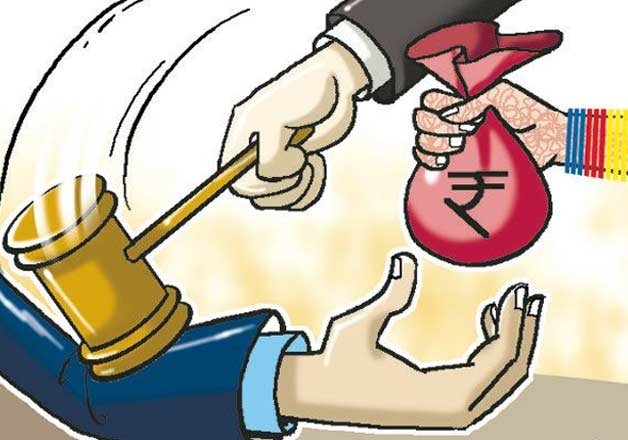
 

OPTIMISTIC THINKING

Building up an inspirational mentality can help in a bigger number of ways than we may understand. At the point when you think positive musings, we don’t permit our brain (cognizant or subliminal) to engage any negative contemplation or questions.

After figuring out how to think positive, we will see astounding changes surrounding us. The mind will really start to work in a condition of free-streaming feel-great hormones called endorphins, which will cause to feel lighter and more joyful. We’ll additionally see a significant lift in certainty and will feel increasingly equipped for taking on new tasks and difficulties that may have recently been outside your customary range of familiarity.

By lessening self-constraining convictions, we will adequately discharge your brakes and experience development like never envisioned. Basically, we can change as long as you can remember essentially by bridling the intensity of positive reasoning.

Much thanks for perusing my blog about the intensity of positive reasoning and building up an inspirational disposition. I trust , it will motivate you to see the positive qualities in others and help you to improve your life.
In The Pursuit of Happiness

Photo byย David Orsborneย fromย Pexels

If there’s one thing which will be said about happiness, it’s that it’s wholly and utterly subjective. What makes one person happy — picking flowers on a sunny day, perhaps — may make another person decidedly unhappy. John Locke, however, believed that happiness is the wild of humanity. As Locke wrote on the topic, humans “are drawn by the forces of delight and repulsed by pain” Exactly what gives that pleasure, again, varies widely. Researchers believe that the buildup of wealth may be a major source of delight. Material gain within the sorts of money, property, and private possessions is not the only way most people pursue happiness, however.

In the same poll, people that were married — regardless of what their income level was — were happier than single people. Although we may sometimes neglect to cultivate our happiness, feeling happy is intrinsically important. If we are happy it’s added play effects and benefits. These include us becoming more compassionate and feeling healthier both physically and emotionally. We become more creative, witty, energetic, and fun to be around and it also can lead us to become more financially successful. Very few folks live our lives in complete isolation. We will have partners, families, friends, and work colleagues with whom we interact on a day to day so if weโ€™re happy, then itโ€™s likely to mean that theyโ€™ll feel happier too. Therefore, through our happiness, we are giving something to people too, and enabling them to feel happy also.

For happiness to be attained, itโ€™s important to be open and willing to the concept that it is often attained. For us to try to do this, we’d like to rid ourselves of the negative energies which occur in our lives daily and which cause us to feel unhappy or at the best, make us feel as if we are simply existing or drifting through life. Remember, itโ€™s a natural state to feel happy. We are all programmed to feel happy because of the norm. Itโ€™s what we let get within the way that alters our programming for the worst. Therefore, by ridding ourselves of negative thoughts, self-doubts, rationalizing problems and seeing them as challenges to be overcome, we get obviate feelings like depression, fear, worry, dissatisfaction, boredom, and grief then, by ridding ourselves of those, all thatโ€™s left is happiness, contentment, and peace of mind.

Some will wonder how we will do that when numerous negative things happen to us. In answer thereto, itโ€™s because we LET this stuff. After all, us to possess negative reactions. For example, weโ€™ll have all gone to figure and had a nasty day and are available away carping to a colleague, โ€œThe boss got my copy todayโ€. However, he only did that because YOU let him have that effect on you.

In truth, nobody can ever make someone feel anything. Outside behaviors and influences have the facility to trigger negative thoughts but which will only happen if you permit it to. Change the way you answer those triggers and consequently they will haven’t any effect on inflicting any quite misery upon you. This won’t encounter as being a simple thing to try to but if you consciously make the trouble and tell yourself that you simply are getting to be happy and that no-one has the proper to form you are feeling unhappy or can take those feelings away, then you’re in sole control of your feelings of happiness and itโ€™s an incontrovertible fact that by placing happiness at the cornerstone of your very existence, then you’ll be far more effective at creating the type of world you would like.

Science and God

“Science” and “God”, the two words which are often seen as separate entities. These words seem conflicting to most of us and are often a topic of debate. Science seems to question the existence of God and believers of God often question why we are unable to explain the entire universe completely by science to date, a question on the success of science. We can often come across debates on televisions, radio, magazines, etc where people try to prove one as superior over the other. But, are they really two different things? Are they conflicting terms? Or are they same?

images

A deeper thought over it can clear our confusion. If we deep dig, we find that indeed both are the same. We really don’t need to choose between them. Science and God, are superior powers. The differences arise when we start associating God with some particular religion and Science with the only education. In reality, science is the process of thinking God’s thought after him. “An equation is really nothing unless it expresses a thought of God”, according to Ramanujan. They both actually merge at the spiritual level.

When we talk of science, it is the theories, the fundamental laws that very well explains the nature around us. It offers an explanation of all the natural phenomena in a very beautiful way and at a very basic level. It helped us understand how to converse in the language of nature, i.e in mathematics. It gives human power. The more we as humans understand science, the more powerful we become. Visit the days when humans started to understand science to get to know about the secrets of nature, the things they imagined then are now a reality. The gadgets they considered as their dreams are now in our hands. The technology we imagine today will also become a reality pretty soon. Science gave a power to humans to achieve the impossible.

download

God, on the other hand, is another superiority. There has been no proper evidence of someone seeing a God. We have not seen God, but we all believe in a “power” that is superior to all of us and many refer to this superior power as “God”. God gives humans the strength and power by making us understand the language of love and humanity. Spirituality is the heart of a human being and through God, we reach here. God helps us understand our potential and make us believe in our strengths. It changes our perception and makes the world a very beautiful and peaceful place for us. The world is incomplete without God.

1_9fct0mOWKz-9TZ_Q7Gky1w

We can thus conclude,ย  that both Science and God are a source of immense power to human beings and both are tied together. Both speak the same language. The more faith we develop in God, the more we get close to science, the more we understand science, our belief in the existence of God becomes stronger. Louis Pasteur rightly said that “a bit of science can distance us from God, but more of it nears one to him”, and that is for sure. Diving deep into them will give us immense power and peace.

India’s population may peak in year 2047

According to the assessment conducted by the United nations development programme and according to the study published at Lancet -the popular science journal India’s population is set to peak in the year 2047. At its peak India is to arise its population around 1.61 Billion and after hitting this peak population is set to decline .By the end of this century (Around 2100) India’s population is expected to fall and become around 1.03 Billion. The study also goes on to say that if India manages to achieve all its sustainable Development goal Targets , then its population could fall to as low as 929 Million But still India would have worlds largest population by the end of this century.

As per various population estimates India is set to overtake china very soon and it is expected to hit its peak by 2047 and here onward its population is set to decline and it will set to settle around 1 Billion at the end of this century.These estimates are based on the assumption that all woman will have access to contraception and sex education which will directly have an impact on reducing the current fertility rate .Total fertility rate is a Key metric indicator that is used in Human geography in order to project a countries population growth .TFR by definition means average number of children that a woman will have over her lifetime .If the TFR rate stands at 2.1 , the a country is set to witness a decline in population because a TFR of 2.1 helps in replenishing the population and hence this fertility level is referred as replacement level fertility .At TFR level of 2.1 the population stabilizes and its provides the replacing the deaths with newer births. So a TFR below 2.1 the population is set to decline whereas at TFR above 2.1 population is set to expand. Countries like North America,Europe and South east Asia TFR stands just at 1.75 which is way below the replacement level fertility so this regions are witnessing a decline in population.

A countries TFR is a factor of its development status , In developed countries where there is better access to contraception ,sex education and socio-economic factors is above average we find that TFR factor is always below 2.1 .Whereas in under developed and developing countries with a weak economic profile we always find that TFR rate is always above 2.1 .Same concept is applied within a county as well , TFR exposes the regional development divide .If you look within India the developed states that are located in the south and the west such as Maharashtra, Gujrat ,Tamil nadu and Karnataka, they register a lower TFR as compared to the states in North and east such as UP, Bihar , orissa etc .The study has also suggested that the global population will hit its peak in 2061 at around 9.73 Billion and from this peak the global population is set to fall around 8.79 Billion at the end of century.At the end of this century India is set to be the most populous country.

The fertilizer pattern by using farmers

The purpose of this type is to evaluate the pattern of fertilizer consumption, production trend in India and suggest the sustainable fertilizer based on requirement of various crop, aggro climate zones, soil, and climate. The data for major for fertilizer consuming based on zones and state helps us to understand consumption pattern in our country. During the period of 2007-2011 it was observed the west zone consumption 31,116,73 kiloton’s of fertilizer which was the highest among the four one and was also having highest total annual compound growth rate percentage of 9.68 Among major consuming state of the india Uttar Pradesh was found to be consuming maximum fertilizer, that are 16,621,29 kiloton’s Rice and wheat are the major crops which are consuming 37% and 24% of the fertilizer consumed in india among various crops Climate factor, like rainfall pattern have a very crucial role in this the consumption of fertilizer of as demand increase area of the irrigated.

Agriculture is one of the most important economic activities in almost all the developing countries and also in India. Fertile soil is important for increasing agricultural production. Excess usage of chemical fertilizers is one of the reasons for decline in soil fertility. Public policy plays an important role in influencing the behavior of the farmers. The present chapter reviews the research studies relating to public policy and its impact on agricultural sector. Several researchers have made attempts to evaluate the impact of Agricultural policy on the Soil Fertility Management Practices (SFM). Agricultural policy has been analyzed focusing on its impact on production, prices, exports etc. Similarly, studies on SFM are focused on the documentation of SFM practices under different agronomic conditions and factors influencing SFM.

EMPIRICAL STUDIES

               Empirical literature on impact of agricultural policies has been classified into three sections focusing on the following issues:

 1. The studies related to Agriculture, Agricultural policy and Cropping Pattern.

2. The studies on Fertilizer policy and Fertilizer consumption.

3. The studies about Soil fertility management practices.

ย ย ย ย ย ย ย  ย ย ย ย ย Various data mining techniques are implemented on the input data to assess the best performance yielding method. The present work used data mining techniques PAM, CLARA and DBSCAN to obtain the optimal climate requirement of wheat like optimal range of best temperature, worst temperature and rain fall to achieve higher production of wheat crop. Clustering methods are compared using quality metrics. According to the analyses of clustering quality metrics, DBSCAN gives the better clustering quality than PAM and CLARA, CLARA gives the better clustering quality than the PAM. The proposed work can also be extended to analyze the soil and other factors for the crop and to increase the crop production under the different climatic conditions.

The paper also aims to recommend that fertilizers should be used in a balanced manner through integrated management of nutrient involving the use of chemical fertilizers, bio fertilizers, compost and vermicompost. Balanced use of fertilizers will reduce harmful effects of chemical fertilizers on the environment and will help in making our agriculture sustainable. It also increases water and nutrients use efficiency, improve grain quality, soil health and give better economic returns to farmers and helps in sustainability. So, for sustainable growth in agriculture sector, it is imperative to reduce demand of chemical fertilizers without hampering food production.

Finding inner PEACE through spirituality


Spirituality can be defined broadly as a sense of connection to something higher than ourselves. Many people search for meaning in their lives in the realization phase . The seeking of answer to the questions โ€“ โ€œWho am I ?โ€ ,โ€ The meaning and purpose of my lifeโ€. Ofcourse , spirituality gives a convincing answer to these questions. It definitely helps us to find the means and purpose in a rapidly changing world.The spirituality guides you on the way towards enlightenment. In simple terms , it is a journey to our personal awareness using our sixth sense.
Spirituality can be considered as a sacred dimension and to be more precise , the “inner dimension”. It is really the “deepest values and meanings by which people live” , such as a belief in a supernatural (beyond the known and observable) realm religious experience etc. It is the quality or the feeling of being concerned with the human spirit or soul as opposed to material or physical things. This implies , that spirituality has to do with the spirit, as in the essence of being human โ€” your soul or your inner life. Religions usually have defined beliefs, rituals etc; spirituality is more specific at an individual level.

Seeking a meaningful connection with something bigger than yourself can result in increased positive emotions. Transcendent moments are filled with peace, awe, and contentmentโ€”fusion of emotional and spiritual wellbeing , like most aspects of wellbeing. Other emotions related to transcendent moments are compassion , gratitude ,appreciation ,inspiration ,admiration, elevation and love. These emotions have a particular capability of bonding individuals together and are linked gradually with the higher levels of spirituality.
Spirituality is universally connective in the realization that suffering is a part of human existence. Religion also promotes human virtues such as honesty, forgiveness, gratefulness, patience, and dependability, which help to maintain and enhance social relationships. The practice of these human virtues may also directly increase positive emotions and neutralize negative ones.

SPIRITUALITY Benefits : It reaps many benefits for stress relief and overall mental health. It provides you with a
โ€ข Feeling of a sense of purpose : Cultivating your spirituality may help uncover what’s most meaningful in your life. By clarifying what’s most important, you can focus less on the unimportant things and eliminate stress.
โ€ข Connection to the world : The more you feel you have a purpose in the world, the less solitary you may feel โ€” even when you’re alone. This can lead to a valuable inner peace during difficult times.
โ€ข Release of authority : When you feel part of a greater whole, you may realize that you aren’t responsible for everything that happens in life and become stress-free.
โ€ข Higher levels of psychological resilience, positive emotions, and improved immune response have all been linked with spirituality.
โ€ข It enables us to have the most productive days of your life! Also , it increases the motivation and live every day with joy, passion and excitement.
โ€ข It provides us with the long lasting energy that keeps us moving even , when faced with setbacks.
The final wordsโ€ฆ
This global pandemic cause more uncertainties and fear among us and we all turn to religion and spirituality for support. Humans all over the world are desperate to make sense of the tragedy and psychological pain that is being experienced. Many of our religious and spiritual traditions have been poised to respond to times of crisis since time immemorial.
Staying connected to your inner spirit and the lives of those around you can enhance your quality of life, both mentally and physically. The complete wisdom of spirituality is attained depending on the maturity level , age and life experiences . Spirituality forms the basis of your well-being, helps you cope up with stressors and affirms your purpose in life.With appreciation, love, self-compassion, gratitude, and kindness, we might have a chance to shift into a state of improved wellbeing. We ought to be responsible with your thoughts and your emotions. Also , we need to be responsible in the way you treat others and to find ways to limit your intake of things that can disturb your peace.

Please check the following Wiki link to know further about the spiritual practices and other web sources

https://en.wikipedia.org/wiki/Spirituality

Communication Skills

Communication is the medium through which people convey their opinions, feelings and emotions. It is the key to build a relationship but sometimes ineffective communication ways may create more barriers. That is why it becomes necessary to possess good communication skills.

Effective communication is more than just relaying the message to the listener. The one on the receiving end should be able to comprehend the message as well as the speaker’s intentions clearly with the said words. If not done correctly, this can create misunderstandings and spoil relationships. For some, communication may come easily while others may have to struggle with their words. Nevertheless, one can improve their communication skills by practicing or adopting certain tactics:

Being an active listener:

Good communication involves the active participants of both the speaker and the listener. Keep focus on what the person is saying and trying to tell you. If you will be able to understand the message clearly, you will also be able to respond appropriately. Not only pay attention to the words but also on the non-verbal clues. A person’s body language tells a lot and may make it easier to understand the tone as well as the nature of the conversation.

Avoid interrupting:

Try not to interrupt the speaker and wait for your turn.

Show genuine interest:

If you are disinterested, it will show on your face and the speaker may notice it. Try to encourage the speaker by saying short verbal comments in between.

Try not to be biased:

One doesn’t have to agree with every idea or opinion of the person but it is necessary to keep aside the criticism and try to understand from the other person’s perspective.

Pay attention to your own non-verbal clues:

Your non-verbal signals should align with what you are speaking. Otherwise, the other person may feel confused. Refrain from spreading around any kind of negative body energy. Be assertive with your speech and try to set the tone of the conversation as neutral. All the parties involved should get the chance to voice their opinions and not feel threatened to do so. Direct and clear dialogue should be maintained for an effective communication.

Communication can be an effective medium to build relationships, both personal as well as professional. If done effectively, it builds mutual trust and can deepen the connections.

Unemployment

Unemployment is a very serious issue not only in India but in the whole world. There are hundreds and thousands of people out there who do not haveย employment. Besides, the problems of unemployment are very severe in India because of the growing population and demand for jobs. Moreover, if we neglect this problem then it will be going to become the reason for the doom of the nation.

Unemployment refers to a situation in which a skilled and talented people wanted to do a job. But cannot find a proper job due to several reasons.

Now we know what is unemployment but unemployment does not only mean that the person does not have a job. Likewise, unemployment also includes people working in areas out of their expertise.

The various types of unemployment include disguised unemployment, seasonal unemployment, open unemployment, technological unemployment, structural unemployment. Besides, some other unemployment is cyclic unemployment, educated unemployment, underemployment, frictional unemployment, chronic unemployment, and casual unemployment. Above all, seasonal unemployment, under unemployment, and disguised unemployment are the most common unemployment that is found in India.

Above all, seasonal unemployment, under unemployment, and disguised unemployment are the most common unemployment that is found in India.

In a country like India, there is much reason for a large section of the population for being unemployed. Some of these factors are population growth, slowย economic growth. seasonal occupation, slow growth of the economic sector, and fall in the cottage industry.

Moreover, these are the major reason for unemployment in India. Also, the situation has become so drastic that highly educated people are ready to do the job of a sweeper. Besides, the government is not doing his work seriously.

Apart from all these, a large portion of the population is engaged in the agricultural sector and the sector only provides employment in harvest or plantation time.

In addition, the biggest reason of unemployment in India is its vast population which demands a large number of jobs every year which the government and authorities are unable to provide.

If things will go on like the current scenario then unemployment will become a major issue. Apart from this, the following things happen in an economy which is an increase in poverty, an increase in crime rate, exploitation of labor, political instability, mental health, and loss of skills. As a result, all this will eventually lead to the demise of the nation.

Initiative by Government

The government has taken the problem very seriously and have taken measures to slowly reduce unemployment. Some of these schemes includes IRDP (Integrated Rural Development Programme), DPAP (Drought Prone Area Programme), Jawahar Rozgar Yojana, Employment Assurance Scheme, NRY (Nehru Rozgar Yojana), Training for self-Employment, PMIUPEP (Prime Ministerโ€™s Integrated Urban Poverty Eradication Program), employment exchange, Employment Guarantee Scheme, development of organized sector, small and cottage industries, employment in forging countries, and Jawahar Gram Samridhi Yojana and few more.

Besides, these schemes the government also make some rules flexible, so that employment can be created in the private sector also.

To conclude, we can say that the problem of unemployment in India has reached a critical stage. But, now the government and local authorities have taken the problem seriously and working on it to reduce unemployment. Also, to completely solve the issue of unemployment we have to tackle the main issue of unemployment that is the vast population of India.

Signs You Should Not Ignore

There are moments in many people’s life where out of nowhere we suddenly feel negative and sad, and emotionally vulnerable. We think that this is just momentary and as a result ignore these signs. When in fact we should really pay attention to small details as this could be a sign of something deeper. Some unresolved issues or a trauma which we have not had a closure with yet.

Now one might wonder what these signs are. Generally they would go unnoticed by others. We ourselves ignore them many a times. Let’s now see what are these mental illness signs are. They may be subtle, but they are important.

Before we proceed though, keep in mind that this article might be triggering. Please be careful.

1. Feelings of sadness or depression for more than 2 weeks. People generally causally use the term ‘depression’ to express their mood for the day. It is usually recommended not to do so. But if you feel sad, or worthless and helpless for more than two weeks this might be alarming. This means that the activities that once brought joy to your heart aren’t doing so anymore.

2. Extreme mood swings. When you randomly go from one extreme behaviour say, sadness to another extreme behaviour say, excitement for no reason in a very short time, that is when we say it’s a mood swing. When the frequency of this happening increases at an alarming high rate, one should pay attention and think about consulting a professional as it can be sign of bipolar disorder.

3. You worry and anxiety is out of control. Some times even though we have written in our examination well we feel extremely anxiousabout the results. So much so that even our body reacts by sweating too much or having a digestive issues or even catching the flu. This is can be a sign of an anxiety disorder. Some people feel anxious and are worried for literally no reason. This is also a sign of a mental illness. We face trouble sleeping, can’t relax easily and overthink all the time.

4. Self isolation. All of us need a little ‘me’ time. Time where we are alone and don’t have any social obligation to follow. But when someone suddenly takes a lot of this ‘me’ time, to the extent that they totally avoid talking to people, it is an alarming sign of mental illness. It is actually important to spend some time alone but when you start totally withdrawing yourself from everyone one must think of approaching a mental health professional.

5. Delusions and/or hallucinations. Delusions refer to false beliefs or perception that we hold about a particular thing or a person. Now this usually goes unnoticed by the person suffering from delusions. But it is noticeable by people around them. For example, one might think that someone tried to sabotage their school project by throwing it off the table when in reality they themselves by mistake pushed it over the table. It is important for the people around them to take this seriously if it happens more than once.

6. Difficulty in dealing with normal life situation. Most of the time people are capable enough of dealing with their normal lives. But when you are unable to deal with the most normal situation like driving (assuming you have been driving for a long time) this gets serious. This maybe a sign of a mental illness and one must consult a mental health professional.

7. Disturbed sleeping pattern. This means you are either sleeping too much or too little. We know that on an average a person should sleep for about 7 hours. Considering that you generally sleep this much, when you are suddenly not able to sleep at all or you are sleeping too much it can be a sign of depression or an anxiety disorder. This maybe a sign of bipolar disorder too. In such a case try to meditate and have a healthy balanced meal. But if this doesn’t help either, it’s best you reach out to a mental health professional.

8. Anger issues. You maybe a calm and peaceful person. But when you suddenly start losing our patience or are ticked off quicker than usual this can be a sign of mental illness. When someone suddenly start feeling angry for no reason and feel like it is practically impossible to control it is most probably warning you about your stress level and unresolved grief or trauma.

There are many more signs that we can look out for but these are the primary ones which are generally most noticeable in someone. If you know someone who has any similarity to the signs mentioned above, they must seek professional help. Remember, your mental health is most important and social stigma regarding mental health must be removed at all costs. Never shy away from asking for help and their is always a out of this. Self harm is not a solution. It is really much easier than that.

Fathima Beevi โ€“ A True Inspiration

Right to Education is the Fundamental Right given by our Indian Constitution. Is this right is effectively used in our society? No, many of the children are deprived of education. The ratio of girls are more as compared to boys. As per our Indian mentality what is the need to educate girls? They should learn doing household works and be at home. In earlier days, it was a story of every other family. But some stories are different so their stories become an inspiration for others. One such story is of The First Lady Judge of Supreme Court she is Fathima Beevi. She was also the first Muslim woman in Higher Judiciary and the first woman to become a Supreme Court Justice in an Asian country. Fathima Beevi was born to Annaveettil Meerasahib and mother Khadeeja Beevi. They had six daughters and two sons. Out of the eight children, Fathima was the eldest. In a society where women were not given access to education, her parents encouraged the kids to pursue their education and career.

Initially, she completed her graduation in Bachelor of Science, later she completed her Law Degree from the prestigious Govt. Law College in Trivandrum, Kerala. She was inspired by Ms. Anna Chandy, who was the First Female Judge in India who happened to be from her hometown. She passed her law with a gold medal being one of the five women students in a class, upholding values taught by her parents. In 1950, she enrolled as an advocate in a district court at Kollam, the same year Honourable Supreme Court was established.

After eight years of legal practice at Kollam District Court, she cleared the public exam to become a Munsif. In the year 1972, she rose to the rank of Chief Judicial Magistrate, later in 1974 got promoted as District Sessions Judge. In 1983 she was appointed as the High Court Judge of Kerala. Finally, in 1989 she was inducted as the First Female Judge in the Supreme Court, owing to her excellent caliber and expertise in the legal profession. After her retirement, she served as a member of the National Human Rights Commission for four years.

On the 25th of January 1997, she was appointed as the Governor of Tamil Nadu by the then President of India, Shankar Dayal Sharma. A major decision she took as the governor was rejecting the mercy petitions filed by the four condemned prisoners in the Rajiv Gandhi assassination case. In 2001 she invited AIADMK General Secretary J Jayalalitha to take oath as the chief minister, a decision that was criticised because even though Jayalalithaโ€™s party had received the simple majority Jaylalitha had been barred from contesting in the elections because of her conviction in a corruption case. However, Fatima Beevi maintains that it was not a spontaneous decision, she had consulted the then sitting judges of the Supreme Court, including the Chief Justice of India. Jaylalitha had been acquitted and had no conviction when appointed by Justice Beevi. Following this, the Union Cabinet decided to recommend the President to recall the Governor for having failed to discharge her constitutional obligation. Justice Fatima Beevi decided to resign, thus her eventful term as the Governor of Tamil Nadu came to a controversial end in 2001. Eventually, the Supreme Court of India overturned Fatima Beeviโ€™s decision to appoint Jayalalithaa as the Chief Minister of Tamil Nadu. 

After her retirement from the Supreme Court in 1992 Beevi served as a member of the National Human Rights Commission (1993)  and the Chairman of Kerala Commission for Backward Classes(1993). She received Hon. D Litt and Mahila Shiromani Award in 1990. She was also awarded the  Bharat Jyoti Award and the US-India Business Council (USIBC) Life Time Achievement Award. As the Governor of Tami Nadu, she also served as the Chancellor of Madras University. In 2002, the left parties discussed the nomination of Fathima Beevi as the President of India, however, the NDA Government proposed the name of Dr. A P J Abdul Kalam.

Representation of women in higher Judiciary is quite nominal even till date. The country has only a little over 10% of women in the judicial fieldย at that time when women were not given an equal chance to be part of the Judiciary. She is an advocate of gender equality and has mentioned that there was a need to elevate the representation of women to judgeships. She has always been vocal about the unequal treatment women have to face in the Judiciary. ย Fathima Beevi continues to be a role model for every woman aspiring to enter the historically male dominated space of the courtroom, and let us hope to see a significant increase in womenโ€™s representation in higher judiciary in future.

Barriers to education

Each and every individual of the world is entitled to education yet there are many children who can’t access this basic amenity. This is mainly caused due to financial and economic issues. If the accessibility can be improved, a huge global impact can be created.

The most common cause for missing out on educational opportunities is poverty. People from economically backward backgrounds find it hard to get a proper education. Many remote villages don’t even have the facility of schools. This is mainly due to lack of funding. Even if there are schools established, some children have to walk to school for as much as three hours, which is very inconvenient. Most of their time is spent travelling on foot which is just tiring. Another issue that comes up is the availability of teachers and professors, either there are no teachers or they are untrained.

After establishing a school and even hiring professionals for teaching, there are lack of resources. Students aren’t provided with learning materials and often have to end up working out with outdated text-books. Some children suffering with certain abilities are denied access. There are not enough institutions that are ready to accommodate them. This makes them feel left out and ultimately, they are not able to complete their education.

Some minorities may also be deprived of education. Bias on the basis of gender can also be one of the barriers to education. Due to poverty, only a selected few can afford to go to school and generally, parents may prefer that their boys go to school rather than girls. Incidents of natural disasters also put a halt on education for many as it leads to a lot of destruction and brings about economic crisis.

Many children end up being the targets of many of the reasons above, having no fault of their own. Certain organizations and volunteer groups are trying hard to make education accessible to all. Through donations and local funding, the situation is progressing towards betterment and hopefully, with the collective efforts of all, the goal will be finally achieved.

COVID -19 PANDEMIC (an opportunity!!!!…..)

As we are seeing the current scenario in which the covid -19 has made a very big impact either it is on business/industry or lives everyone and everything has affected by it, not a single person is there who has not yet get disturbed in this pandemic.

The Covid-19 pandemic has affected over 150 countries, and has disrupted international trade, its economies as well as the lives of its citizens. The governments have been quick to respond to deal with this unprecedented crisis by. Closing down its borders, imposing nationwide lock downs, ramping up testing and healthcare infrastructure and announcing fiscal stimulus/relief packages which are of unimaginable proportions. The response from the Indian Government was no different. India is under a strict nation-wide lock down for more than 70 days, followed by a relief package to the tune of 10 per cent of the countryโ€™s GDP, that is, Rs 20 lakh crore to kick start economic activity.

As we have heard that that a pandemic occurs once in 100 years and we are the generation who have faced it and also fighting with this.

Our frontiers fighters are our doctors and nurses in this pandemic โ€ฆ..This pandemic has changed everything โ€ฆlike every religious place was closed and still on todayโ€™s date some of the religious places are close because of physical distancingโ€ฆ In this whole process have you noticed one thing? I tell youโ€ฆ every one is saying that DOCTORS ARE THE REAL GOD in current ongoing situationโ€ฆ.everyone is believing that THE HEALTH IS THE BIGGEST WEALTHโ€ฆโ€ฆ

Now the question is this pandemic is a tragedy or an opportunity!!!! so for this discussion letโ€™s look forwardโ€ฆ.

ย In this pandemic if someone got huge loss in his business then the owner can start with a new vision as we see that during lock down when there was not working like regular basis then everyone had time to think that,

Where they stand,  

Where they have come,

What they have achieved,  

What they really want,

What literally matters to them….

This pandemic has changed-

The view of thinking,

The view of observing the things,

The view of understanding,

The view of looking towards the thingsโ€ฆ.

But if we see that EVERY ENDING HAS A NEW BEGINNINGโ€ฆ.. As our honorable prime ministerย ย  Mr. Narendra Modi said in his speech that we should make an ATAMNIRBHAR BHARAT.

If we donโ€™t have opportunity then we have to create them by our own;

There are various fields where we can start a new venture; some of them are as follows โ€“

  • STARTUPS- ย We are seeing that happen across the ecosystemโ€”many start-ups have created Covid-related products by innovating for the emerging needs: ventilators, sanitizers ,PPEs, etc. They have become front runners in the fight against Covid-19 and are also in the race to grab market share, and also there are a lot of opportunities which just require a creative mind for starting a business.
  • TECHNOLOGY- The lock down and social distancing have shown that technology not only saved the day for many businesses during the Covid tunnel, it is also the driver of the future. The world has not only gone digital and virtual, it is fast enabling the new world. Tech has now become completely horizontal: It is enabling innovation across all sectors, be it manufacturing, textiles, agriculture, healthcare, retail, fashion, water or clean energy. And India, with its huge tech talent, is extremely well placed to grab the leadership spot and build not world-class products, but state-of-the-products of top quality, and at competitive prices. This is atmanirbhar at its best. And this positions โ€˜Made in Indiaโ€™ products extremely well for global markets.
  • MSMEs- The Government e-Marketplace (GeM) has already been set up to boost MSMEsโ€™ share in government procurement of goods and services. The MSMEs have benefited with orders worth Rs 20,000 crore since the inception of GeM. Along with the PMโ€™s call for โ€˜self-reliant Indiaโ€™, the current face-off between Indian and China has led to an increased demand for locally manufactured goods, unleashing new opportunities for Indian MSMEs. We believe MSME businesses which are willing to re imagine their businesses and evolve with the changing times will be poised to leapfrog on the back of this unique opportunity.

 MSMEs can also foster product as well as process innovations by partnering with knowledge partners, that is, academic institutions, tech startups, and students.

Technology adoption is another factor that can help MSMEs to improve process efficiency, reduce cost, information visibility, and enhance worker safety. With the advent of cloud and cloud-based technologies, they can easily create elastic and flexible IT infrastructure compared to its large enterprise counterparts to support digitization.

  • CYBER SECURITY- A recent study reveals that 86 percent of CIOs consider security to be their #1 priority. With โ€˜remote workingโ€™ becoming the norm post-COVID, company data is even more at risk. With people relying more on personal or less secure Wi-Fi networks, the threat levels have increased. As cyber security becomes more critical, we will see a much greater demand for security architects and ethical hackers.
  • DIGITAL MARKETING- With more people consuming information online, digital marketing has become a lifeline for CMOs as they seek to reduce marketing spends, drive greater ROI from their marketing dollars, and follow their customers online. In turn, this will result in greater demand for PPC practitioners, digital brand managers, content & SEO experts, CRM, and email marketing specialists.
  • DATA ANALYST- In todayโ€™s scenario data is the very important part of everyoneโ€™s life either it is of a student, employee, company, government. As we know that every country wants to provide best service to its customers for this they have to know about the customerโ€™ priorities, choicesโ€ฆ. for collecting this data and to manage this data and providing it when need data analysts play a vital role.

Therefore, if we see, we find that we got a chance to REBUILD, REFORMโ€ฆ.. We should see positive side of everythingโ€ฆ Start with something new, if it is small in starting then it is ok because if we want to reach on the top then we have to take up stairs and go step by step through it and if we skip any step then we can fell down..โ€ฆthere is no lift in hard workโ€ฆso KEEP DREAMING, KEEP WORKING AND KEEP SHININGโ€ฆโ€ฆ..

Performance Appraisal

“A Performance Appraisal that is conducted effectively leads to greater employee morale, higher productivity, creating a positive culture and improved overall performance and effectiveness of an organisation.”

– Kumar Parakala

As we are human beings we love to get recognition, rewards and appreciation. Everyone loves appreciation and want to get appreciated from someone. This is what we call as Performance Appraisal in Human Resource Management. Performance Appraisal is a method of evaluating the behaviour and performance of employees and to understand the present job capabilities, abilities and potential of a person for further growth and development. Performance Appraisal is also known as performance evaluation or performance review. Performance Appraisal is a systematic process. The performance of an employee can be observed by immediate supervisor, subordinate, self-appraisal and customers served. Performance Appraisal is an evaluating process as it tries to find out that how well the employee is performing the job. It is a periodic process as it is carried out periodically according to a set definite plan. Performance Appraisal is a future – oriented activity and not a past- oriented. It helps in determining the employees potentialities which refers to that how well an employee is doing his task which is assigned to him. It helps in development of employees as it forces the managers to become coach of employee rather than judges. Performance Appraisal can be formal or informal depending on the organisation. Informal evaluation is more subjective while formal evaluation is likely to be more fair and objective, as it is done in a systematic manner. Formal performance appraisal reduces the chances of biasedness but it is based to yield better results. The Performance Appraisal system should be simple and understandable so that the employees don’t find any complications in understanding the system. If it has any complication, the organisation should take some measure inorder to avoid this. It helps to create the atmosphere of mutual understanding and confidence. Performance Appraisal system should be fair and equitable justice should be provided to all employees. The main purpose of performance appraisal is to fulfill their desired goals by providing promotion, placement, increment and transfer to employees according to their performance. Special training should be provided to all the employees inorder to win their trust and to motivate them to achieve the goals. Performance Appraisal also helps in identifying the weakness and strength of employees, providing them training according to needs and aspirations, making them feel that everyone is there to support them and helping them in their career planning. Some of the objective of performance appraisal are –

  • Feedback – Providing feedback to the employee regarding their work and performance is the most important justification for an organisation to have a performance appraisal system. As this shows that whether they have met the expectation of their boss or superior or not.
  • Encouraging Coaching and Mentoring – Managers are expected to be good coaches to their employees rather than judges. They should mentor there employees.
  • Setting and Measuring Goals – Performance Appraisal helps in ensuring that every member or employee of the organisation set and achieve their goals effectively and efficiently.
  • Improving Performance – It is the most important reason for any organisation to have a performance appraisal system as this system only helps in achieving the overall organisational goals and performance of an organisation. This system helps the organisation to communicate the expectation and goals to each and every employee and to ensure that they do the same to achieve it.
  • Promotion and Motivation – Performance Appraisal helps an employee to get a promotion if he do the assigned work according to the expectation of his superiors. And if an employee gets a promotion definitely he will get motivated to do such task again.

Last But Not the Least

So, Performance Appraisal is very important and crucial for both employer and employee as it helps in achieving goals of both the parties.

Merger of companies

Merger refers to two or more companies come together and form a new company. Merger is the corporate restructuring strategy to increase the profitability by reducing the cost, Mergers will help the companies to reduce the operating cost. In merger new entity will come in to existence.Merger may be of similar operating industry or from different industry according to the benefit companies will do the merger.By merging many companies supplychain will be utilized properly for the both the companies so the coat will be reduced.

Types of merger:

Horizontal merger: in this type Both the companies are from the similar operating industry.this type of merger will help in reducing the cost of production. Synergy will be high.

Verticle merger: Inthis type of merger companies are merged are from the different level of same industry.both companies are working in same industry but they are working in different level. One companies out put may be input for another company.

Conglamarate merger: In this type of merger companies which are working in different industry will come together and form new business. This will help in increase the brand value.

Benifits

Merger will help the companies to get Synergy,where cost of production will comedown. Cost of supply will be reduced.by merger company can enter in to other industry also.it will help companies to increase the market share.

Mergers are aimed to reduce the cost of production and cost of supply chain. Also to increase the market share of the company.

PERIOD POVERTY


According to UNICEF records, 26% of the world’s female population is in the reproductive age yet menstruation or any other topic related to it is shamed and ostracized in many parts of the world. In India, only 12% of menstruators have any access to proper menstruation products and 88 % have zero to little access to any proper menstruation products. This is the most practical explanation of the term period of poverty. Period poverty is the lack of access to menstrual products and menstrual hygiene education due to financial constraints or cultural misconceptions about menstruation. Period poverty doesnโ€™t stop at menstruation products but it also includes the safe waste disposal of menstrual products and clean washing facilities. In India, there is clear discrimination on menstruating women due to religious myths and taboos about periods. While talking about period poverty it is also important to acknowledge that all women do not menstruate and not all menstruators are women. Many women suffer from medical conditions which renders them unable to menstruate.
Menstruation continues to be one of the main reasons why girls drop out of school in India. Lack of proper toilet facilities, lack of menstrual products, and the absence of education or awareness of menstruation and its hygiene practices are stated as the reasons as to why girls drop out of schools. India has exempted menstrual products is a good move but seeing that only 12% of the menstruating population has access to them.

LACK OF AWARENESS โ€“
The absence of logical awareness of periods is a major problem in India. A study by NGO Dasra in 2014 stated that 70 percent of mothers consider that menstruation as dirty and 71 of the girls had no awareness about menstruation before they experience it themselves. With no knowledge about periods or proper products to use, women and young girls resort to using rag clothes and old clothes which are unhygienic and have many physical health risks and UTIs. Schools were also not very helpful in raising awareness about periods because it is still considered as a taboo to speak about it. Schools usually refrain from talking about menstrual hygiene to their students. An average of 40 percent of girls misses out on school on account of menstruation due to no proper period products or washing facilities. Because talks about menstruation are shunned by society due to religious myths and taboos many girls refrain from talking about it or educating themselves about it.


LACK OF SANITARY PRODUCTS โ€“
Out of 355 million female populations in India, only 12 percent have access to menstrual products. Since in rural areas the concept of menstruation is hardly talked about, sanitary pads or tampons are not found easily. Because menstruation products are not considered essential products and the social stigma which causes the lack of demand shops in rural India do not have period products. Due to the lack of sanitary pads or napkins women use old cloths or rags or old socks and other methods to absorb period blood which is unhygienic and could put a womenโ€™s health at risk. Many problems related to unhygienic menstruation include cervical cancer, UTIs and anemia could be avoided with the use of proper period products.


GOVERNMENT SCHEMES FOR MENSTRUAL
The first such measure taken by the government of India was-Freeday Pad Scheme in 2010 to provide sanitary pads at low rates (RS.6 per pack) for rural girls, it was launched in 20 states. In 2011 the government launched the SABLA scheme which along with pads at subsidized rates it also provided girls education of menstrual health. In 2014, Rashtriya Kishor Swasthya Karyakram was launched as a sanitation program for 243 million students and menstrual hygiene was a main part of the program. The Swachh Bharat Abhiyan allocated funds to improve menstrual hygiene and raising awareness in rural India.


Conditions for menstruating women can only increase when menstruation is commonly conversed about and its social stigma is banished. Indiaโ€™s first option is to spread awareness about menstrual hygiene and its importance. Many of the problems that women face during menstruation can be avoided by using period products. Simultaneously with awareness, sanitary napkins must be made available to women in rural areas that encompass over 300 million women. By normalizing menstruation and by educating women and men about it will bring down the stigma about periods and will help reducing period poverty

Civil services โ€“ dream of every student

ย 

To become an IAS, IPS officer is the dream of every indian student, but to grab this opportunity students have to work harder more than his ability.

The Civil Services Examination (CSE) is a nationwide competitive examination in India conducted by the union public service commission for recruitment to various civil services of the government of India, including the Indian administrative services (IAS), Indian foreign services (IFS), and Indian police services (IPS). Also simply referred to as the UPSC examination, it is conducted in three phases – a preliminary examination consisting of two objective-type papers (General Studies Paper I and General Studies Paper II also popularly known as Civil Service Aptitude Test or CSAT), and a main examination consisting of nine papers of conventional (essay) type, in which two papers are qualifying and only marks of seven are counted followed by a personality test (interview).

Nationality

  • For the Indian Administrative Service and the Indian Police Service, the candidate must be a citizen of India.
  • For other services, the candidate must be one of the following:
  • A citizen of India.
  • A citizen of Nepal or a subject of Bhutan.
  • A Tibetan refugee who settled permanently in India before 1 January 1962.

Educational qualification

All candidates must have as a minimum one of the following educational qualifications:

  • A degree from a Central, State or a Deemed university
  • A degree received through correspondence or distance education
  • A degree from an open university
  • A qualification recognized by the Government of India as being equivalent to one of the above

The following candidates are also eligible, but must submit proof of their eligibility from a competent authority at their institute/university at the time of the main examination, failing which they will not be allowed to attend the exam.

  • Candidates who have appeared in an examination the passing of which would render them educationally qualified enough to satisfy one of the above points.
  • Candidates who have passed the final exam of the mbbs degree but have not yet completed an internship.
  • Candidates who have passed the final exam of ICAI, ICSI and ICWAI.
  • A degree from a private university.
  • A degree from any foreign university recognized by the association of Indian universities.

 Age

The candidate must have attained the age of 21 years and must not have attained the age of 32 years (for the General category candidate) on 1 August of the year of examination. Prescribed age limits vary with respect to caste reservations.

Number of attempts

The number of times a candidate can appear for the exam are given below.

  • General category candidates โ€“ 6
  • OBC category candidates โ€“ 9
  • SC/ST candidates โ€“ unlimited attempts till 37 years of age.

Appearing to attempt one of the papers in the preliminary examination is counted as an attempt, including disqualification/ cancellation of candidature. However, applying to sit the exam but failing to attend is not counted as an attempt.

After ,accomplishing all this eligibility criteria students have to ready for preparing the entrances, as all we know this exam conduct in three variations,

First: preliminary exams

Second: mains exam

Third: interview โ€“personality test

Students have to clear all this rounds, after completing all this rounds students have to go for eleven months physical training in Hyderabad.

Hope if you are dreaming to become an IAS, IPS officer so you will accomplish it, this services just need your hardwork and smart work.

Startup India

Startup India is an employment programme of India, this program is the opportunity for new entrepreneur In India. Startup India was a campaign which was first addressed by the PM Narendra Modi on 15th August 2015 at Red Fort, New Delhi. This campaign was introduced under the Government of India as an initiative to develop over 75 startup support hubs in the country.

Startup India scheme is an important government scheme which was launched on 16th January 2016 with an aim to promote and support the start-ups in India by providing bank finances. It was inaugurated by the former finance minister, Arun jaitley.

Organized by the Department for promotion of industry and internal trade, the major objective of Startup India is to discard some of the restrictive States Government policies which include:

  1. License Raj
  2. Land Permissions
  3. Foreign Investment Proposals
  4. Environmental Clearance

Startup India is a Government of India flagship initiative to build Startups and nurture innovation. Through this initiative, the Government plans to empower Startup ventures to boost entrepreneurship, economic growth and employment across India.

The Governmentโ€™s Action Plan will help accelerate the growth of Startups throughout India, across all important sectors โ€“ in Tier 1, 2 and 3 cities, including semi-urban and rural areas โ€“ and includes promoting entrepreneurship among SCs/STs and women communities.

Definition of a Startup (for the purpose of Government Schemes only)

A Startup means an entity:

  • incorporated or registered in India not prior to five years
  • with an annual turnover not exceeding INR 25 crore in any preceding financial year
  • working towards innovation, development, deployment or commercialization of new products, processes or services driven by technology or intellectual property

The entity shall cease to be a Startup if:

  • it is formed by splitting up, or reconstruction, of a business already in existence
  • its turnover for the previous financial years has exceeded INR 25 crore
  • it has completed 5 years from the date of incorporation/registration

Further, the Startup shall be eligible for tax benefits only after it has obtained certification from the Inter-Ministerial Board, set up for such purpose.

Eligibility Criteria for Startup India Scheme

  • The start-up must be registered as a Private Company, LLP or Partnership Firm: …
  • The start-up must not be a product of restructuring: …
  • The Startup must not be older than 5 years: …
  • Annual turnover of the start-up must not be more Rest. …
  • The business must be involved in a new product or service.

Four major steps to register a company/ startup in India:

  • Step 1: Acquire Digital Signature Certificate (DSC)
  • Step 2: Acquire Director Identification Number (DIN)
  • Step 3: Create an account on MCA portal- New user registration @ mca.gov.in.
  • Step 4: Incorporate or Apply for the company to be registered.

Under the Startup India programmed, startups were defined and redefined. For instance, the startupsโ€™ age was also increased from 5 to 7 years (10 in the case of biotech). The government has taken various initiatives to boost the growing startup culture in the country such as fast-tracking of startup patent applications, income tax exemption, and self-certification.

This is the plan which is released by the government of India to enhance the employment and encouragement for Indian people.

ย ย ย ย  EDUCATION v EXAMINATION- The Blame Game Needs to Stop

ย ย ย ย ย ย ย ย ย ย ย ย ย ย ย ย ย ย ย ย ย ย ย ย ย ย ย ย ย ย ย ย ย ย ย ย ย ย ย ย ย ย ย ย ย ย ย ย ย ย ย ย ย ย ย ย ย ย ย ย ย ย ย ย ย ย ย ย ย ย ย ย ย ย ย ย ย ย ย ย ย ย ย ย ย ย ย ย ย ย ย ย ย ย ย ย ย  -SHUBHANKAR

Is it the education system to be blamed or the examination system? The blame will go on and on. But whoโ€™s suffering? Itโ€™s the students and their careers. The student life in India mostly revolves around the number of marks or percentages they get in their exams, especially in their higher classes exams. But seeing the capability of a student on the basis of marks they receive or percentages they receive is right? I think its partially right and partially wrong. Exams are the way through which students understanding capability can be checked, but not their intelligence. According to me, there are many factors which influence oneโ€™s performance in exams. It clearly doesnโ€™t mean that the person hasnโ€™t studied and thatโ€™s why they didnโ€™t perform well in the exams. Yes, obviously there are few students who donโ€™t do well in exams because they themselves donโ€™t study, but their ratio is very less.

What I want to focus on in this article is the fact that exams shouldnโ€™t be the only criteria for which the students should be made ready. What if a person scoring 99% marks doesnโ€™t know the basics but just through cramming got those marks. The education system should focus on skill development rather than cramming development. Look, yes exams are key and nobody should run away from them, but they canโ€™t be the only criteria. Maybe a person wouldโ€™ve been unwell before an exam and couldnโ€™t perform well, or maybe due to any emergency, he/she wasnโ€™t able to write the exams properly, that doesnโ€™t mean they performed below par or arenโ€™t good in studies. Situational causes are very much there when students write exams, but nothing of this sort is mentioned in the report cards, when provided to the students. Why donโ€™t the educational institutes in India understands that students shouldnโ€™t be pressurised to score well in exams and if they donโ€™t, donโ€™t provide them with opportunities.

Weโ€™ve seen many a times that major educational institutes like colleges and universities provide admissions to students while keeping a base percentage as one of the selection criteria. But what about those individuals or students having less percentage? Why canโ€™t they sit for the selection process for admissions in these so-called big colleges or educational institutes. In my view great colleges or universities are those which can convert a below average student into a great student. Why colleges call themselves top colleges if they only want students with high percentages and marks, so that they donโ€™t have to teach them very hard, just make them know the concept and they would understand easily. My point only is why not give all the students opportunity rather than fixing a percentage criteria? Is only percentage and marks that matter? I think that shouldnโ€™t be, as Iโ€™ve explained earlier, percentages are affected by a multiplicity of causes, not just preparation and intelligence.

The thing I want to state is that education system in India needs a change, a change very quickly. Why canโ€™t educational institutes evaluate or judge students on the basis of other criteriaโ€™s. It could be some kind of educational projects, live projects, which not only provides students with marks but also knowledge. Now letโ€™s assume, students study a subject of marketing. Now, rather than taking their written or viva exam, tell students to build a project by giving them a live situation. Give them some product and tell them to use all their knowledge they gained from this subject to market that product. Isnโ€™t it a great way to evaluate a studentโ€™s understanding of the concept.

Through this article in the end I want to urge the government to look at the education system in our country and change for the betterment of the students. No always are grades and marks based on written examination a true evaluation of a studentโ€™s capability. The future generations of India shouldnโ€™t be deprived of quality education just because they donโ€™t do well in their written examinations. Change is needed and its high time change is implemented.

#STAND FOR CHANGE  

Open University : A new way of empowering higher education in India?

Education should be limitless, it should not be limited by various restrictions. It should be available to people coming from all walks of life. The government tried out various different methods, to educate the underprivileged and deserving candidates in our country. Open University is a university which opts for an open door academic policy. This policy has no or very minimal requirements for their entry. The university offers a distance mode of studying , so students will not have to travel to a particular location of the university. The important aspect of this mode of studying , is that  it offers everyone an equal opportunity to study,  and improve their abilities to the maximum. 

History and development of open universities in India 

Earlier the education system in India was very formal and rigid. The only way of teaching and learning was the “Gurukul” system , in this system the students stayed in the teachers home and studied, the drawback of this system was that  it only permitted  the Brahmins and Kshatriyas to study. Later open learning was introduced and Eklavya was its first learner. The advent of Buddhism and Jainism brought about a new wave in our education system. J.C Stobart , a historian and Educationist advocated the “Wireless University” and the first ever open University was opened in the year 1969 in UK, and India was one of the first countries to follow UK and on 26th August 1982,  the government of Andhra Pradesh opened India’s very first open University called the Andhra Pradesh Open University . This University was later renamed as Dr. B. R Ambedkar Open University. There are at present 13 open universities in our country. This University provides equal opportunity to all the students who were not able to pursue regular courses provided. The government of India had started a national open University in the year 1985 and was called as ‘ Indira Gandhi National Open University’. 

Advantages of distance learning:

  • The admission requirements are zero to minimum, previous academic marks are not required. This is because they follow open door academic policy.
  • They do not follow classroom mode of teaching so it’s a lot more affordable and easy. 
  • Their fee is very affordable, so people who are rich, poor , working or non-working will be able to avail this opportunity.
  • There is no age limit in these universities, so people from all walks of life can pursue their education.
  • Open Universities come under UGC, so all their certificates and degrees are approved by UGC.
  • The study centres act as storehouses of knowledge, and are located at a location convenient to the student.
  • The students can also use radios, TVs and computers in addition to books.

Conclusion:

Open University is like a blessing,  to students who haven’t been able to attend regular classes due to various reasons, to students who have scored less marks in their previous academic year, to students who find travelling difficult, due to the location of the university, and to students who would like to pick up from where they left. These universities are very flexible when it comes to their academic matters. Students who have been to Open universities in our country, have fared very well and have raised their intellectual tone in today’s society. Open Universities have become an important instrument, in fulfilling the desires and wishes of the less fortunate.

References:

Vipra Shrivastava, What is an Open University? 

https://www.shiksha.com/humanities-social-sciences/articles/what-is-an-open-university-blogId-14031

Fashion is an art, and everyone not an artist.

Coco Chanel once said, โ€œI don’t do fashion. I am fashion.โ€ as defined by the Cambridge dictionary fashion is a styleย that isย popularย at aย particularย time,ย especiallyย inย clothes,ย hair,ย make-up, etc. Fashion has greatly changed over the years, when in the olden times clothes were all about providing warmth and covering your body, now itโ€™s much more, there are trends and series of pattern in each generation and every year is a mark of new fashion styles. Fashion is now a self-expression of who you are and the reflection of your self-image. Everyone has their own unique attire and their different style Fashion trend, alters at a very dynamic rate and have a great impact on the society and the individual. Fashion thus is an Armour that helps us survive in this judgmental universe.

The youth of today are a crazy worshiper of the fashion industry. These are the people who have taken this area to a new horizon and have revolutionized the traditional ideologies. The younger s fashion taste has been influenced by the environment, they try to imitate their role models and celebrities in their clothing, peer group, society or media. From the traditional straight โ€˜A-lineโ€™ jeans to the new โ€˜ripped baggy boyfriendโ€™ jeans everything has been transformed and modified. As the patterns and trend in fashion keeps on changing, people try to keep up with it, and as far as it may sound interesting, itโ€™s a crazy idea as they mostly spend too much of money and energy in it, there is a huge amount of wastage of resources and time. Therefore, fashion is such a beautiful way of taking out the artist in you, but not in the cost of losing your own identity.ย 

In India, there are people of different creed and caste, being a very diversified area, every part of this region is different and unique not only in their culture but also in the way they look or dress up. The north-eastern is a home to a whole bunch of people, it is a small diverse region in itself. Being in the outskirts of the Indian mainland their clothing is mostly influenced by the other western lands. They try to imitate the look of the foreignerโ€™s as; they are a major hub for tourism. They wear shirts with a wrapper along shawl, with light makeup. Being in the temperate region, climate also play a huge role in their way of clothing and mostly changes over seasons.

Whereas, the people of north are simple dressed, as most of their time is focused on work and duty. They have a very sharp traditional attire and they like to dress up heavy in the period of pujaโ€™s and festival. Being in the tropic region, hot weather prevails and they mostly wear light summer clothes. In this area people are more resistant to change.

Thus, we can see how the fashion industry has evolved in India with increase in fashion designers and job offers in this industry, no doubt India will occupy a new horizon in this area. Fashion should take out the artist in you and should help you grow, because as Edith Head said, โ€œYou can have anything you want in life if you dress for it.โ€

Baishali Gurung

Supplemental Nutrition Assistance Program (SNAP)Also called: food stamps

n the United States, the Supplemental Nutrition Assistance Program (SNAP), formerly yet still commonly known as the Food Stamp Program, is a federal program that provides food-purchasing assistance for low- and no-income people. It is a federal aid program, administered by the United States Department of Agriculture under the Food and Nutrition Service (FNS), though benefits are distributed by specific departments of U.S. states (e.g. Division of Social Services, Department of Health and Human Services, etc.).

SNAP benefits supplied roughly 40 million Americans in 2018, at an expenditure of $57.1 billion. Approximately 9.2% of American households obtained SNAP benefits at some point during 2017, with approximately 16.7% of all children living in households with SNAP benefits. Beneficiaries and costs increased sharply with the Great Recession, peaked in 2013 and have declined through 2017 as the economy recovered. It is the largest nutrition program of the 15 administered by FNS and is a key component of the social safety net for low-income Americans.

The amount of SNAP benefits received by a household depends on the household’s size, income, and expenses. For most of its history, the program used paper-denominated “stamps” or coupons โ€“ worth $1 (brown), $5 (blue), and $10 (green) โ€“ bound into booklets of various denominations, to be torn out individually and used in single-use exchange. Because of their 1:1 value ratio with actual currency, the coupons were printed by the Bureau of Engraving and Printing. Their rectangular shape resembled a U.S. dollar bill (although about one-half the size), including intaglio printing on high-quality paper with watermarks. In the late 1990s, the Food Stamp Program was revamped, with some states phasing out actual stamps in favor of a specialized debit card system known as Electronic Benefit Transfer (EBT), provided by private contractors. EBT has been implemented in all states since June 2004. Each month, SNAP benefits are directly deposited into the household’s EBT card account. Households may use EBT to pay for food at supermarkets, convenience stores, and other food retailers, including certain farmers’ markets.

Eligibility

SNAP is a means-tested program, recipients must meet all eligibility criteria in order to receive benefits. There are income and resource requirements for SNAP, as well as specific requirements for immigrants, elderly persons and persons with disabilities.

Applying for SNAP benefits

To apply for SNAP benefits, an applicant must first fill out a program application and return it to the state or local SNAP office. Each state has a different application, which is usually available online. There is more information about various state applications processes, including locations of SNAP offices in various state, displayed on an interactive Outreach Map found on the FNS website.Individuals who believe they may be eligible for P.O.SNAP benefits may use the Food and Nutrition Services’ SNAP Screening Tool, which can help gauge eligibility.

Eligible food items under SNAP

As per USDA rules, households can use SNAP benefits to purchase:

  • Foods for the household to eat, such as:
    • fruits and vegetables;
    • breads and cereals;
    • dairy products;
    • meats, fish and;
    • poultry
  • Plants and seeds which are fit for household consumption.

Additionally, restaurants operating in certain areas may be permitted to accept SNAP benefits from eligible candidates like elderly, homeless or disabled people in return for affordable meals.

However, the USDA is clear that households cannot use SNAP benefits to purchase the following:

  • Wine, beer, liquor, cigarettes or tobacco
  • Certain nonfood items like:
    • hygiene (soaps, deodorant, menstrual care)
    • paper products, household supplies, and
    • pet foods
  • Hot foods
  • Food items that are consumable in the store
  • Vitamins and medicines

Soft drinks, candy, cookies, snack crackers, and ice cream are classified as food items and are therefore eligible items. Seafood, steak, and bakery cakes are also food items and are therefore eligible items.

Energy drinks which have aย nutrition facts labelย are eligible foods, but energy drinks which have a supplement facts label are classified by the FDA as supplements, and are therefore not eligible.

Live animals and birds may not be purchased; but live fish and shellfish are eligible foods.ย Pumpkins are eligible, but inedible gourds and solelyย ornamentalย pumpkins are not.

Gift basketsย containing both food and non-food items “are not eligible for purchase with SNAP benefits if the value of the non-food items exceeds 50 percent of the purchase price. Items such asย birthdayย and other special occasion cakes are eligible as long as the value of non-edible decorations does not exceed 50 percent of the price

Multiculturalism

Multiculturalism has been happening for countless centuries, however the amount of it has drastically increased in volume since the post-war era, mainly as a result of refugeeโ€™s and issues that came along with the cold war. Since the first Iraq war, and general the modern period after the cold war, many minorities from non-European backgrounds have been moving slowly west in an attempt to get away from extremist beliefs and collapsed cities which have now become warzones. This is especially true in nations previously in conflict with Russia, such as Afghanistan. This essay aims to look at the reasons why there is a clash between ethnic minorities across western civilizations.

That acknowledgment can take the forms of recognition of contributions to the cultural life of the politicalย communityย as a whole, a demand for special protection under the law for certain cultural groups, orย autonomousย rights ofย governanceย for certain cultures. Multiculturalism is both a response to the fact ofย culturalย pluralismย in modernย democraciesย and a way of compensating cultural groups for past exclusion,ย discrimination, and oppression. Most modern democraciesย compriseย members withย diverseย cultural viewpoints, practices, and contributions. Many minority cultural groups have experienced exclusion or the denigration of their contributions and identities in the past. Multiculturalism seeks the inclusion of the views and contributions of diverse members of society while maintaining respect for their differences and withholding the demand for their assimilation into the dominant culture.

Multiculturalismโ€™s Impact Onย Education

Some examples of how multiculturalism has affected the social and political spheres are found in revisions ofย curricula, particularly in Europe andย North America, and the expansion of the Western literary and other canons that began during the last quarter of the 20th century. Curricula from the elementary to the university levels were revised and expanded to include the contributions of minority and neglected cultural groups. That revision was designed to correct what is perceived to be a falsely Eurocentric perspective that overemphasizes the contributions of white European colonial powers and underemphasizes the contributions made byย indigenousย people and people of colour. In addition to that correction, the contributions that cultural groups have made in a variety of fields have been added to curricula to give special recognition for contributions that were previously ignored. The establishment ofย African American HistoryMonthย andย National Hispanic Heritage Monthย in the United States is an example of the movement. The addition of works by members of minority cultural groups to the canons of literary, historical, philosophical, and artistic works further reflects the desire to recognize and include multicultural contributions to the broader culture as a whole.

Ahistoricalย exampleย ofย multiculturalismย was the Habsburg monarchy, which had broken up in 1918 and under whose roof many different ethnic, linguistic and religious groups lived together.

Cultural diversity has been present in societies for a very long time. In Ancient Greece, there were various small regions with different costumes, traditions, dialects and identities, for example, those from Aetolia, Locris, Doris and Epirus. In the Ottoman Empire, Muslims were the majority, but there were also Christians, Jews, pagan Arabs, and other religious groups. In the 21st century, societies remain culturally diverse, with most countries having a mixture of individuals from different races, linguistic backgrounds, religious affiliations, and so forth. Contemporary political theorists have labeled this phenomenon of the coexistence of different cultures in the same geographical space multiculturalism. That is, one of the meanings of multiculturalism is the coexistence of different cultures.

The term โ€˜multiculturalismโ€™, however, has not been used only to describe a culturally diverse society, but also to refer to a kind of policy that aims at protecting cultural diversity. Although multiculturalism is a phenomenon with a long history and there have been countries historically that did adopt multicultural policies, like the Ottoman Empire, the systematic study of multiculturalism in philosophy has only flourished in the late twentieth century, when it began to receive special attention, especially from liberal philosophers. The philosophers who initially dedicated more time to the topic were mainly Canadian, but in the 21st century it is a widespread topic in contemporary political philosophy. Before multiculturalism became a topic in political philosophy, most literature in this area focused on topics related to the fair redistribution of resources; conversely, the topic of multiculturalism in the realm of political philosophy highlights the idea that cultural identities are also normatively relevant and that policies ought to take these identities into consideration.