Coorg the heaven of Karnataka

Coorg Getaway | Deyor Camps

Coorg or Kodagu the smallest district of Karnataka is also known as the scotland of India is famous for it’s breath taking nature and hills. This little city lies between Mysore and the coastal town of Mangalore. This piece of heaven may also be called the land of roaring hills. It is the home of evergreen rain forest species and coffee plantation.

Coorg has always been the attraction to tourists from various places. It is also known for it’s amazing climate and especially monsoon when it rains heavily. This place is inhabited by a proud race of marital men, beautiful woman and wild creatures. Tourists always get fascinated by it’s awestruck beauty and it’s quaint villages. Coorgi are well known for their warm behaviour and they have a tradition of hospitality. There are many tales of valour related to the people of coorg.

The coorgi regiment is one of the most decorated in the Indian army. General Cariappa, the first chief of indian army was a coorgi. Almost all people of coorg belonged to a warrior family. There is also an interesting thing about coorg and that is almost every family have a licence to own a gun and even the ladies of the family know how to fire a gun.

Gun rights of Kodava community extended till 2029 | The News Minute

Coorg is well known for it’s coffee plantations . Coffee estates are in abundance and plantation tours are best to have an experience. It is also known as the land of kaveri since this sacred river originates from this beautiful place called Bramhagiri in coorg. Coorg’s history also has deep links to british rule, which later improved the place with good administration and also established many educational institutions, which improved the economic condition of coorg. It has also produced many notable people such as C.B.Muthamma , the first woman to clear the Indian civil services exam and the first woman indian foreign service officer , M.P.Ganesh the former Indian hockey captain, Prema Cariappa the first woman mayor of bangalore and many other great personalities belonged to this beautiful city.

People of karnataka say that if there is a heaven then it is in coorg. And i completely agree with them. I am sure it is a piece of heaven that must have drifted from the kingdom of God .

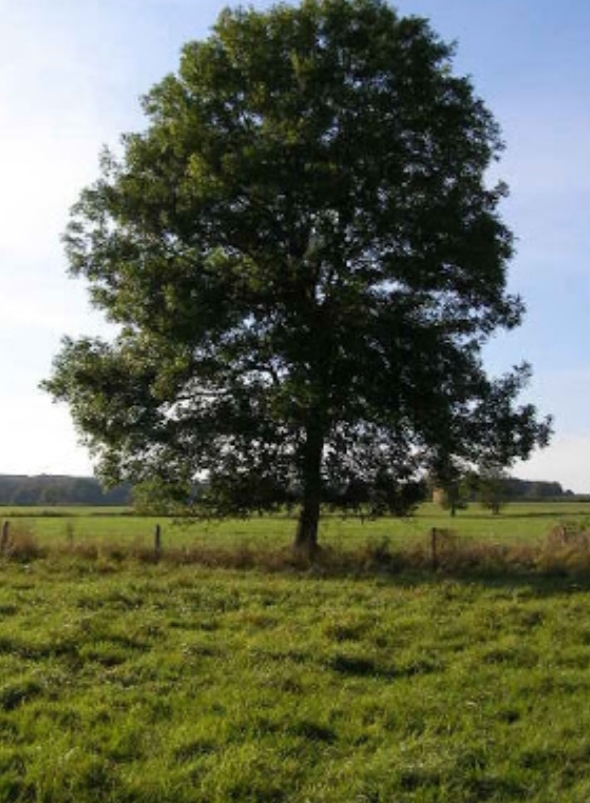
Tree

A tree is a perennial plant with an elongated stem,or trunk,supporting branches and leaves in most species .in some usages ,the definition of a tree may be narrower ,including only woody plants that are usable as lumber or plants above a specified height.trees are all plants and carry out the life process that all plant are share .how ever ,trees are not actually a significant group of their own .trees may be cone bearing plant .

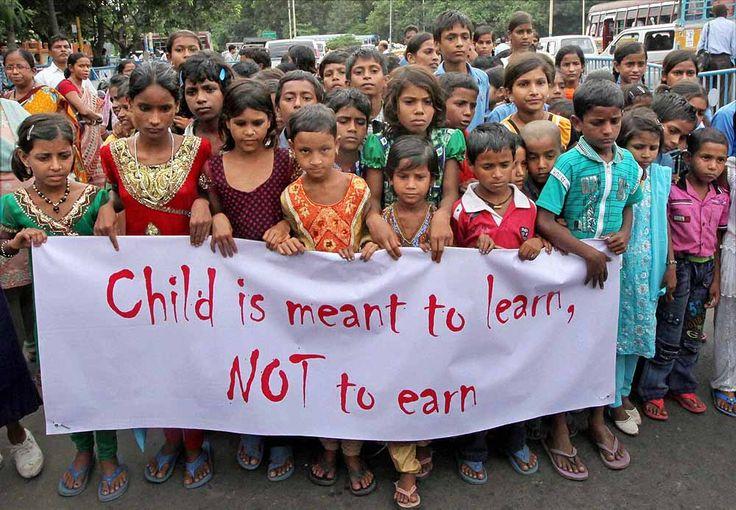
Child Labour – The real issue of India

Fight for their Childhood: Stop Child Labour!

Child labour this term is more often used in India and we know , why we are well aware of this term. This topic has always been in debate and discussions because child labour is against our laws and it is a crime. But yet we all know that chootu of tea stall who makes us tea, or that chootu in garage who helps his master to fix our vehicles or shall we talk about that chootu who runs behind our vehicles during traffic either begging for money or to sell plastic toys. We might come across a few children like them in our daily life but trust me there are around 12.5 million children who are between the age of seven to seventeen engaged as a child labour. I know that’s too much, one can not even imagine these many number of children are forced to earn money at such a tender age.

Everybody knows that hiring a child to the work is illegal yet why do people still hire them ? well because by doing so they save a lot of money. Yes you got me right, such people know that if they hire a skilled or unskilled adult labour then they have to pay them more but since children don’t know the real value of money , they are deliberately paid half the amount and forced to work like any other adult. Now you must be thinking don’t they raise their voice to get equal pay , no they don’t and even if any child takes the courage to speak up then they are verbally and physically abused by their owners in a such a way that they get scared and the thought of their rights never crosses their mind again.

Child labour is not the only fault of the shop owner who made a child work but the actual fault lies in the government. Child labour has just become a topic to discuss, a topic to to have debate but apart from that no actions are taken against it. Poverty and lack of education are the major factors behind the fact of child labour. It’s not that parents are aware of their child’s situation, they know everything about them but still force them to work because they have no other option left. Poverty is making them so vulnerable that they even get ready to sell their child for money. Parents of such children are bound to send their children to work because they don’t get enough money to feed their family which is why they expect their child to earn in any situation so they can combinedly earn something.

It is hard to believe but there are some worst forms of child labour as well, such as slavery, child trafficking, prostituion , pornography, organised begging, drug trafficking and many more. I understand these words itself are so scary that it is hard to digest but then just imagine what could have been the mental situation of such children involved in such illicit activities. Isn’t it painful to know that there are children in this world who have to go through such hell like activities.

Importance and Challenges of HRM

“Human Resource isn’t a thing we do. It’s the thing that runs our business.”

– Steve Wynn

Organisation are social system, which are composed of role, interaction and relationship among its employees who are occupying various positions in the organisation. Success of the organisation and achievements of its goals are the two important things which is necessary for an organisation and this depends on the nature and pattern of cooperation among individuals or it depends on our human resource. As we know human resource is an asset for the organisation and if they are productive and efficient enough we will be able to achieve our goals. Human Resource is not only unique and valuable but it is also an organisation’s most important resource. It seems logical that an organisation would spend a great deal of effort to acquire and make optimum utilisation of such resources. This effort is known as Human Resource Management. Human Resource Management may be defined as a process of recruiting, selecting, inducting the employee, providing orientation, providing training and development, appraising the performance, deciding compensation, motivating employees and maintaining proper relation with the employees. In simple terms, Human Resource Management may be defined as the art of procurement, development, motivation and maintenance of competent workforce in order to achieve organisational goals and targets. It is the process of bringing people and organisation together to achieve the goals of both the parties. Human Resource Management is pervasive in nature. It is action oriented, people oriented and development oriented. It is a challenging function as the nature of people is very dynamic and complex. Human Resource is very important at each and every level and they are:-

  • Quality of Work Life – Quality of work life is the relationship between employees and total work environment. But the perception of employees is that they think that it is the relationship between working condition and management. Quality of work life can be obtained by maintaining work autonomy, work freedom, rewards, job recognition, etc.
  • Increases Productivity and Profit – The main task of Human Resource Management is to ensure right people at right time on right position apart from this it also provides opportunities to facilitate and motivate your employees to grow and advance their career. The employee who is motivated works hard to achieve the goals of both the parties which directly influences productivity of the organisation. The main essence of productivity is minimising cost and maximising profit.
  • Retain Employee and Motivate Them – Optimum utilisation of resources – this line is applicable in all factor of production. Utilising human resource to their fullest and maintaining them in the organisation for a long-term period is a major function of human resource management. Human Resource Management performs various task like career planning, performance appraisal, providing fringe benefits, compensation and rewards to the deserving employees. These factors motivates the employees and also helps in retaining them in the organisation and achieving organisational goals effectively.
  • Develops Corporate Image – Organisation can sustain when it maintains an ideal image in the market. Everyone like to get associated with a company that is prominent for its moral and social responsibility towards its employees.

There are some challenges too in human resource management:-

  • Globalisation – Many companies like to grow in global market and prosper there as domestic markets are shrinking. But the impact of globalisation on business are that well known products are losing their national identities.
  • New Technology – Advanced technology has reduced the number of job as it requires skills. So in order to increase the number of jobs that requires skills, the employer should be re-trained.
  • Skill Shortage – As the relevance of human resource is increasing recruiting and retaining competent employee is not an easy task. As every company wants the best human resource than the one his rivals have. So proper formulation and implementation of policies are required.

So lastly Human Resource Management is a complex and continuous process which each and every organisation has to do.

CHILD RIGHTS

CHILD – The insignificant sound of this word can assist us with conjuring a picture of a fun loving minimal person who can easily look for bliss by blending with his/her relatives or companion gathering. A youngster is somebody whose psychological and physical advancement is to a great extent subject to the social and familial condition they live in. Youth is a weak stage wherein scholastic interest, great physical movement (read playing with companions) and sufficient social collaboration in a safe domain can add to the child’s physical and mental well – being. After each of the, a glad adolescence can guarantee a brilliant future. In this way, the word youngster work is an unmistakable logical inconsistency of everything that make for a perfect youth. To put it clearly, it’s the work of youngsters in any work that denies offspring of their adolescence, meddles with their capacity to go to customary school, and that is intellectually, truly, socially or ethically perilous and destructive. An exploitative practice however in any case widespread in the Indian Mechanical space.

India’s 2011 statistics demonstrated that there were more than 10.2 million “monetarily dynamic” kids in the age gathering of five to 14 years – 5.6 million young men and 4.5 million young ladies, 8 million kids were working in provincial territories, and 2 million in urban zones. Despite the fact that in provincial settings the quantity of kid laborers diminished from 11 million to 8 million between the 2001 and 2011 censuses, over a similar period, the quantity of youngsters working in urban settings rose from 1.3 million to 2 million. 1 in each 11 kids in India attempts to procure a living, as indicated by insights by Activity Help India. Absence of training, destitution and lacking mindfulness are a portion of the variables that have added to this wretched development of kid work in India. A few examiners accept that a comprehensive training framework and a severe law against this misbehavior can shorten the development of youngster work in our nation.

Despite the fact that these measures can introduce positive outcomes, history has instructed us that kid work laws/approaches have stayed insufficient in battling this hazard. The need of great importance is to address the financial states of our general public which forces a kid to work at a weak age, regularly in regrettable conditions. Ventures particularly exploit this small workforce as they are not in a situation to contend for better wages or favorable work conditions. Frequently guardians of these children push them to work because of miserable neediness. For a creating nation like India, it’s fairly disgraceful to have an equal economy of incompetent and unregulated workforce of kids who are continually being misused by their representatives, in this way impeding their turn of events and the fate of our nation. Is there a light toward the finish of this dim passage? one may ponder.

There unquestionably is.

Other than comprehensive training, tough utilization of kid work laws/administrative structures, social reviews can assume a significant job in checking kid work across different businesses. Be it a little scope industry or an enormous one, each association should give a record of its corporate social presentation as far as giving word related well being and security, work to minorities, ecological contamination and so on. In the expressions of some prominent scholars’ “social inspecting is characterized as a methodical endeavor to distinguish, investigate, measure (if conceivable), assess, and screen the impact of an association’s procedure on society (that is, explicit social gatherings) and on the open prosperity.” Social Review, in this manner, isn’t simply a stock of social projects completed by the organization yet a successful technique to recognize and decide the social obligations that ought to have been released.

As we have learnt, there are numerous pernicious elements that have added to the development of youngster work in our nation. Be that as it may, the opportunity has arrived to change the monetary texture of our general public for a superior and more promising time to come. A small advance towards this objective can presumably be social reviews alongside settling on educated choices and spreading mindfulness.

These are worldwide principles which request to not control lone youngster work yet in addition to give not too bad living to all representatives of the associations. These principles help the makers to keep up great workplace in the production lines. It gives the certainty to the general public that the producers regard the privileges of the workers.

The Perils of Perfectionism

Perfectionism can be described as the persistent need or desire to accomplish things perfectly, according to a standard that one sets for oneself. It is considered a positive virtue often in our culture. We encourage students to strive for their best and athletes have grueling practice sessions in order to reach their goals. The desire to do well is a good thing but one has to ask whether an obsession with perfectionism actually ends up being counterproductive. We need to distinguish between aiming to do well which is what high achievers tend to do, and being obsessed with nothing but perfection, a standard too high to reach and humanly impossible to achieve.

In a society where individuals are so often judged based on what they are capable of achieving and what position they hold, it is tempting to base all our worth on our ability to do something flawlessly. The temptation is greater for certain personality types who are naturally prone to work harder and be ambitious. Perfectionism has a positive side which involves healthy practices like setting goals for oneself, attempting to do better, and to learn and grow more. The negative side includes feelings of unworthiness, fear of failure, anxiety, insecurity, and debilitating stress. A healthy balance of both, and a need to overcome an obsession with being perfect is essential to maintain mental and physical health.

man in black suit achieved an accomplishment
Photo by Andrea Piacquadio on Pexels.com

Perfectionism causes an individual to set standards for himself that he might not be able to keep. This can lead to him becoming anxious or depressed. It will affect his relationship with others, he might consider asking for help a sign of weakness, and he might develop severe trust issues since he tends to believe others will not do as good a job as him; he will think that unless he carries out a task, it won’t be perfect. This often leads to exhaustion and severe stress. A perfectionist tends to obsess over details that might not be that important, and their fear of failure might lead them to not engage in many opportunities. They usually tend to procrastinate chronically, and they might also end up holding others to impossible standards as well. Perfectionists are overly critical about themselves and worry about whether they are doing things right. As opposed to high achievers who will be satisfied with having given their best, perfectionists will need to have done everything perfectly regardless of how equipped they are to do the activity. Unrealistic standards and unnecessary self-criticism are detrimental to our mental health and our ability to do work well. It also makes us defensive and anxious about all criticism.

Understanding the signs of perfectionism and trying to undo it is important for every individual who struggles with this issue. Self-affirmation and acceptance can be one of the first steps towards a better and healthier approach to work. A work ethic that is bent on having everything perfect only destroys rather than builds. Acknowledge that you are not perfect and that you are bound to make mistakes. Delegate tasks and trust others when you are overburdened. Set goals that are achievable and be kind to yourself. Don’t ruminate over a problem excessively but learn to let go and move on. If you find yourself going on a thought spiral, find a distraction that will break that thought cycle: take a nap, do a mundane task, phone a friend. Remember to let yourself breathe and be human, to aim for excellence but not perfection.

Green Building -The future

Our climate is changing. A shift in the number of wildfires, tsunamis, earthquakes, droughts, and heavy rainfalls has been attributed to climate change. These changes have had an impact on agriculture and wildlife, including the introduction of new pests and depleting habitats.

Humans and our current life style practices remain the leading contributors to climate change, with carbon being the main culprit.

The Impact of Carbon
According to Architecture 2030, nine hundred billion square feet of buildings will be newly constructed or renovated by 2030. Buildings are one of the leading contributors to carbon emission, mainly from their use of fossil fuels during operations. In fact, cities and urban areas are responsible for approximately 75 percent of carbon emissions. If these buildings continue to be developed and run in the traditional manner, the environmental damage will only progress.

Thankfully, with an increased focus on the hazards that buildings emit into the atmosphere, companies are starting to consider adopting greener initiatives. Cities worldwide are investing in climate action plans with the goal of reducing their environmental footprint. This includes “Smart City” initiatives to better manage existing infrastructure, zero waste policies, alternative energy sources, and researching the potential of developing net zero buildings.

Resource Efficient
Integrating sustainable resources that are long lasting is key to ensuring that a structure is fully sustainable. Products such as reclaimed wood, recycled plastic or glass, as well as energy-efficient, locally sourced materials such as concrete that naturally contains a high thermal mass, will ensure that the building is resource efficient.

Net Zero as a Solution
Net zero, however, for several companies and homeowners, still feels largely unattainable. Cost, restricting policies and procedures, and limited information often create roadblocks for making these energy-neutral buildings a reality. To be able to create these buildings, end users and investors need to both understand and value the chosen solution. This includes investing in energy-efficient solutions and advocating for standards that are environmentally responsible while being cost effective at the same time.

So what does it mean to be environmentally responsible? Creating an environmentally responsible building begins with an understanding of the current systems that negatively impact the environment, such as heating and cooling, and finding alternatives that will decrease the impact. This includes looking at both the site and size of the structure to reduce the amount of resources used. The key is to minimize the overall impact on the environment. Once the site is determined, architects and builders need to look at how the structure of the building can insulate (keep energy in), while also integrating solutions that will store any excess heat in the winter and that will pre-cool the structure in summer during the night.

A net zero building needs to produce as much energy as it consumes. This requires some outside-of-the-box thinking and the integration of a variety of solutions that seamlessly work together for a healthier environment. Because heating and cooling are two of the main sources of carbon, it makes sense to begin by looking at systems that will reduce the use of HVAC systems.

One project that did exactly this was the Ed Lumley Centre for Engineering Innovation at the University of Windsor campus. With a desire for cleaner air, this project included the installation of a bio wall. This wall, which includes 1,500 plants, naturally filters the carbon dioxide in the air and then transfers its freshness to the entire building. This building also boasts glass and solar systems, a green roof that collects and filters rain water, and hollow core slabs to both harness and store energy and in turn decrease the use of traditional HVAC systems.

Green buildings are not about implementing one solution alone; instead, the architects and engineers need to work in collaboration to find solutions that will lessen the carbon footprint. Each aspect of the building needs to be considered, from the insulation to how energy will be harnessed, stored, and released.

Developing a Foundation for Net Positive
Increased awareness of not only the value, but the necessity of adopting green building initiatives in new builds and retrofits is critical. All those involved in the green building industry, including builders, engineers, and architects, play a vital role in helping to shift thinking at both the industry and consumer levels. This includes educating and advocating for the adoption of solutions that will have a positive impact: green solutions that will pave the way to a net positive tomorrow.

Structure of government in North Korea


The Democratic People’s Republic of Korea is an Asian country situated in the northern section of the Korean Peninsula. Pyongyang is the nation’s capital and largest city. North Korea is a self reliant socialist state. It can be said as Stalinist dictatorship of the workers party of Korea. North Korea is a one-party state that is guided by the Jucheand Songun ideologies of self-reliance and military prioritisation. The country has a fixed constitution as well as the ‘Ten Principles for the Establishment of a Monolithic Ideological System’ which sets standards for governance and the behaviour of the North Korean people. The main branch of government is the State Affairs Commission of North Korea deliberates and determines the work of defence building of the State, including major North Korean governmental policies which carries out the all instructions of the leadership.
The government has features a unicameral Supreme People’s Assembly (SPA) with 687 members, each of whom are elected every five years. The president of the SPA is titular head of the korea. Constitutionally SPA is highest organ of state power and primary legislative organ. The session of the SPA is held for one or two times in a year for one week or more than one week. The Sessions of the Supreme People’s Assembly (SPA) are overseen by the Premier. The premier also appoint the vice primiers, cabinet ministers. The government is dominated by the members of the workers party of Korea. They also take part in the passing of laws, discussing domestic and foreign policies, appointing cabinet members, and reviewing and approving the state economic strategy. All elections to the assembly are based on a list of WPK- approved candidates who always run unopposed. There are also two parties the Korean Social Party and the Chondoist Chongu Party, it exist nominally, only the WPK holds any power at the national level.
The government is under one man leadership and since it’s independence in 1948 the highest position is only occurred by the three different member of one family (Kimdynasty). The workers party of Korea (WPK) is only lead by the Kim I L sung and his family. The Workers party of Korea comprises of 3 million members and control politics of North Korea. After the death of the Kim I L sung then his son Kim Jong became leader of North Korea an ld now his grand son Kim Jong Un is leader. Since 17 December 2011, Kim Jong Un is supereme head of the country.


Conclusion


North Korean government is totally Authoritarian government. It falls under the one party rule and one man leadership. Based on communist system, in North Korea there is nominally occurs other parties but only Worker’s Party of Korea onlyh old the supreme power. The other parties are only as puppet. So we can say that there is organisational dictatorship.

Thanks

INDIA: UNITY IN DIVERSITY

As we all know that there are multi culture in India …in every state of India you will find a collection of different cultured people…like, their language will be different…. their costumes will be different …their rituals will be different…but only one thing is there which provides uniqueness to India , that all the people live together…..whatever their background is , they cooperate and compromise and live with unity….

we have seen so much examples of their unity…some are as follows:

we see a Muslim family’s child is participating in dress competition by wearing lord Krishna’s dress,

 we see that Sikhs are organizing langar for Muslims…

we see that a Muslim girl in Mumbai wins GITA contest…..

we see in a Hindu Ganpati Pandal in Mumbai which became a makeshift venue for Eid Namaaz for Muslims, as the nearby mosque had run out of space……..

We see in Mumbai a woman was in a critical condition and about to deliver when some female devotees took her to the Ganpati Temple, Wadala, Mumbai and gave birth to a baby boy. And, couple named the boy “Ganesh”.

We see when soldiers are on border they are there for India not for their religion.

We see when a cricket match is going on then everyone whatever they are they just cheer for India like, indiaaaaaa……indiaaaaaa….

we see that Muslims make way on road while Hindus pass silently during Ganesha chaturthi …….and the list is so long….

you know what there are mainly 5 religions India named as, Hinduism,Muslims,Sikhism,Christianity,Buddhism,Jainism…….

you know what there are 22 languages in India named as, Assamese,Bengali,Bodo,Dogri,Gujarati,Kannada,Kashmiri, Konkani,Maithili,Malayalam,Manipuri,Marathi,Nepali,Odia,Punjabi,Sanskrit,Santali,Sindhi,Tamil,Telugu,Urdu and Hindi….At present, as per the Ministry of Home Affairs, there are demands for inclusion of 38 more languages in the Eighth Schedule to the Constitution.

In India whatever the person is Hindu, Muslim, Sikh, Christian, Jain….if you ask them that who are they? Then you know what!!! What they will answer??…. They will say that they are AN INDIAN….how many languages speak in India but there is only one language that connect them with each other and that language is of love, humanity, respect, care……SO FEEL PROUD TO BE AN INDIAN…….and I can’t stop my feelings to share the famous lines and that are….

MAZHAB NAHI SIKHATA, AAPAS MEIN BAIR RAKHNA HINDI HAI HUM, WATAN HAI HINDUSTAN HAMARA…….

The Course of Judicial Activism in India: Pros and Cons

The judiciary is a system of courts which take decisions by interpreting the law. In judiciary is a independent body, which has separate powers, especially to interpret the constitution and other statutes to take any decision in the court of law. The judiciary is one of the organ of the government along with executive and legislature, and only if all of them function properly it lead to the development of the nation. When the judiciary goes beyond the provisions of the constitution and other statutes to take a decision, and thinks about the political, moral, ethical and social aspects of taking the decision, then it is said that the court law has taken decision through “Judicial Activism”. This has been defined by Black’s Law Dictionary as the “philosophy of judicial decision-making whereby judges allow their personal views about public policy, among other factors, to guide their decisions.”Ironically judicial activism is no where to be defined in the Indian Constitution or other statutes. Only the supreme courts and high courts can use the process of judicial activism to take a decision. There has been an evolution in respect to this concept from the times of independence. From those times efforts have been taken to implement judicial activism, however it is being effectively followed only from the past few years. P.N Bhagwati was the first one to use judicial activism to introduce the concept of PIL (Public Interest Litigation). 

In the starting stages, where the legislature was just building up, it did not give importance to judicial activism, rather it stuck to its old traditional ways. Only after a decade or two after India got independence in 1947, the concept of judicial activism just started to evolve. The course of judicial activism in the nation did take some wild turns, and its origin and evolution will de discussed further in the article. The concept of judicial activism started gaining power firstly in the Keshwananda Bharti case, where it was declared that the basic structure of the constitution shall not be prone to nay change, this decision was taken place when our hon’ble prime minister Indira Gandhi imposed an emergency in the nation, even though the judiciary was under pressure, it took the right decision by keeping judicial activism in mind. Later in the In A.K. Gopalan v. State of Madras, the Supreme Court of India has rejected the claim that a person cannot be deprived of art 21 only by due process of law, but that procedure established should be reasonable and fair. It stated that this was a mistake of the makers of the constitution as it has been omitted by them during its making. This has taken another turn when the word “life” under article 21 does not simply mean mere existence, but means that every human being shall carry on life with dignity and respect in the society. Then in 1967, in the Golaknath & Ors vs State Of Punjab, the supreme court has given the judgement that the fundamental rights under part III of the constitution shall not be amended, even if it could be done as stated under article 368 with a two third majority in both the houses of parliament. The PIL case which was mentioned earlier has also judicial activism possible in India, as it avoids unnecessary litigation, and gives anyone the chance to file a case. There are several cases which were landmark judgments to the concept of judicial activism, like Hussainara Khatoon (I) v. State of Bihar, Sunil Batra v. Delhi Administration,etc.

However, there have been some criticism that the concept of judicial activism is facing. Firstly, due to this concept the judge often displays personal opinions in the judgment given, which may or may not be considered good in the eyes of the society. Secondly, when the judiciary is using this concept to take decision in vital cases, it is displaying the power which wasn’t given to it, hence we can say that the separation of powers is not being followed. It is said that the judiciary which does not consist the elected members, is lowering the power of the executive and judiciary. There has also been a confusion between judicial review and judicial activism, where judicial review means the actions of the legislature and executive could be reviewed by the judiciary if they are complying to the provisions of the Constitution and other statutes. There is a very slight difference between both of them, and both have been considered useful in th terms of law. 

In Spite of the criticism judicial activism has been proven to be very useful, especially in todays world. The application of law should differ as per the changes in the society, as the trend, belief, thoughts and values change in the society the laws have to change for the well being of its citizens. The times has come where the judges should take bold decisions, and they have to use their power to provide equal and fair justice to all. Some recent cases where judicial activism has done a great service to the society are, declaring Right to privacy as a fundamental right in the Justice K.S.Puttuswamy v. Union of India and others case, criminalising triple talaq in the Shayara Bano v. Union of India case , legalising passive euthanasia in  Common Cause v. Union of India case, declaring Right to marriage as a fundamental Right in Shakti Vahini v. Union of India case, and many more such cases. 

Therefore, we can come to a conclusion that there are positives and negatives to judicial activism, it has been beneficial in bringing change through certain judgements, and it has been bad as it has affected the authority of elected representatives, government officials, ministries, and the police. If there is legislation on judicial activism, many problems related to power and authority maybe avoided, but this to may have some concern. However it did play a significant role in getting justice to different classes of the society. 

Legal Issues associated with Artificial Intelligence (AI)

Artificial intelligence is a combination of a human intelligence and thinking capacities along with machines, when a machine conducts like a human being or animal, and displayed analytical and logical reasoning skills like a human, it is termed as “ Artificial Intelligence”(AI).  AI literally means use of a human intelligence not by a human, as it is artificial. It is a field in computer science, and AI can function like a human being without any human help. The rise of AI, has posed many challenges in the field of law. Many questions have arised regarding the legality of AI, its application, the legality of its actions, and the change that has to be brought in the books of law. The legal issues and challenges related to AI have been discussed as follows: 

  • Liability: It is the state of being legally responsible for something, if in case an offence which led to some damage has been committed by AI, who would be held liable, would it be the creator, the consumer or any other middleman. Law has to make new provision regarding the apportionment of liability in the case of AI. Even if the liability has been established, what would be the nature of the offence, civil or criminal, and what would be the punishments and penalties for the same. 
  •  Recognition of AI as a person/citizen: Should AI be recognised as a natural and legal human being and be bestowed with all the human rights, can we regard AI as a person who can fulfill human obligations, and should citizenship be granted to AI technologies like robots. These are issues which have made the legislature think about giving citizenship to robots. The law does not recognise a robot as a person, and if any offense has been committed by the robot, it is assumed that the manufacture, creator, and other parties are held responsible, but can they be held responsible is the question. A robot can be established for a particular reason, but there are things which are out of the control of the creator and actions can take place which have not been anticipated, when the mental intention to cause harm does not exist, can one be punished for the actions of their creation. The only nation which gives citizenship to a robot is Saudi Arabia, it has given citizenship to a humanoid robot named Sophia. 
  • Data Privacy: For AI to operate, lots of data has to be analysed, collected, processed and uploaded to a robot or any other AI technology, there are high risks where there can be misuse of personal data, which can lead to various cyber crimes. Measures have to taken regarding the security of the data which s being used, they have to be taken in such a way where confidentiality of sensitive information can be maintained. Even if such measures are taken some data can be leaked involuntarily. The Personal Data Protection Bill 2018 (Data Privacy Bill) in India, has been implemented recently which makes the organisations using the data accountable for its privacy, there is a provision which states that AI should have the right to forget information which may pose a threat. However this provision is still highly debatable, as forgetting it may affect the learning abilities of AI even more. 
  • Intellectual Property Rights (IPR): IPR are the rights given to intangible creations which have been created or invented out of human intellect. The four types of IPR are copyrights, trademarks, patents and trade secrets, these are given for different creations according to the conditions specified. These rights give recognition and protection to all intangible creations. All the above rights do not take non-human or AI creation into consideration, so what if AI creates new things out of its intelligence, hence in the future the definition of the above rights may have to change, and no longer its traditional ways can be followed. 
  • Agreements and Contracts:  AI if used effectively and efficiently, can make up a perfect contact managing system, where all the disputes related to contracts could be solved using AI, The mechanism and procedures relating to drafting a contract can also be done by AI. In the future we can even expect smart contracts, where all the above functions will take place in the digital world, but for all these to happen either newer provisions or changes to older ones in the contract law has to be brought suitable to AI. 
  • Competition Law: AI will use different type of technology for it to function better than a normal human being, and the companies and firms who possess AI mabe in an advantaged position than its competitors, as use of AI can lead to better services to consumers, and accurate decisions of pricing strategies. AI can capture the situations in the market, and accordingly analyse the information and give proper steps which have to be taken by the firm. However, this is considered to be anti competitive and illegal under the Competition Act, 2002, which prohibits anti-competitive agreements and combinations, and firms having a dominant position over others. Competition shall be in a fair manner. Therefore changes have to be made in the law to make sure no one gets the benefit out of using AI as a protection to the activities taking place in the firm.

These are the major legal challenges that are being faced due to artificial intelligence, these are not all of them, but they constitute some of the important ones. We are presently in a fast moving generation, in it becomes vital to understand the legal and ethical implications of AI and its effects. AI has been proved to be beneficial in many ways, but if not controlled properly, may act as a threat to the dignity of the nation, and the only way this can be avoided is by making provisions in the present legislative framework regarding AI and it applicability. The provisions should be framed after taking into consideration all the above challenges, and effective follow up action should also be done. The stricter the legislation, the lesser the problems. All the above challenges and issues act as shortcomings or drawbacks to the field of law, the traditional legal frameworks is no longer applicable, it should be changed according to the situations prevailing around us. AI will continue to face such barriers as long as no change ir brought, it high time we recognise new technology in the world. 

THE LEGAL HISTORY OF MADRAS

The judicial system in madras occurs in three stages where the British tried their best to administer justice in the town. The company first formed a judicial structure in the towns to help the Englishmen living in the town and to secure justice for them. But slowly the company acquired a large area where they could not neglect the indigenous population anymore thus this lead to the development of a through judicial systems. Madras was previously known as a Madraspatnam which was a small village. Francis Day was sent south by the East India Company to acquire land due to the shortage of cotton in the north and to ease the trade. Francis Day procured a land grant for the area of Madraspatnam after negotiations with the Raja of Chandragiri to build a factory in 1639. The land was used to build the Fort of St George. The Raja had also granted to the Company full power. the charter of 1660, This allows the company to form laws in accordance to the English laws for its government. The charter gave the Company power to make laws for its government and for that of the factors, masters and mariners employed in voyages, provided such laws were not repugnant to the laws of England. The town of Madraspatnam was divided into white town and black town.

The Town of Madras was subordinate to the town of Surat. The administrative head on the town was called as an “Agent “. The agent was a subordinate to the president of the factory in Surat. He was supposed to administer justice in the town. The serious offenders and the cases should be consulted by the company authorities in England. But there were defects the judicial power of the agent and the council was vague and indefinite and many delays also, they did not have any. The black town had a different system of administration of justice. The old tradition of the judicial system was allowed to continue where the village headman was to judge all cases of the village. The village headman was called as “Adigar”; the court was called as the Choultry court. Then the Choultry court became a court where petty cases would be decided. The most cases were decided by the agent and his council or the raja. There is no conclusive report where these cases were held due to lack of reports. But the existing reports show that there wasn’t a clear system that was followed. The officers in the Choultry court were not similar to the laws of the natives. This shows that the judicial system was rudimentary.

Chapter 1660, This empowered the governor and his council to authorize or give death penalties and death sentences for capital offences. The charter vested more powers in the Governor-General and his council which gave them extensive judicial powers. The agent and the council uncertain about their jurisdiction and their judicial duties deferred the case to the company authorities in England. The company made the town of Madras a presidency town. This gave extensive judicial power to the agent and his council who were elevated to the position of the governor-general and his council. The court of judicature, Steynsham Master who was the Governor of Madras reorganize the Choultry Court and established a court of judicature in 1678 for the trial of civil and criminal cases by jury deriving authority from the charter of 1661 which vested all judicial powers to the governor-general and his council. The court would take in appeals by the Choultry courts. The cases in the court were decided as per the English laws with the help of jury of 12 men. The Governor and Council were to have original jurisdiction and appellate jurisdiction in cases decided by, the Choultry Court. Thus a well-administered judicial system was implemented. This established two courts and well-understood jurisdiction of cases. There were pitfalls in this system too. The officers who sat at the court were not lawyers or familiar with the laws of the native land. The officers would not dispense justice at a higher level as they were not lawyers. The judgment of the cases was subpar but this was a step ahead from the previous court system. This much-needed improvement from the elementary implementation of justice that was previously administered in the town. The lack of lawyers was apparent.

Admiralty court– Under the provisions of the Charter of 1683 a new court was established in Madras on 10 July 1686. It was called the admiralty court. The court was to decide cases according to the rules of equity and a good conscience and the laws and customs of merchants. It has to have the power to hear and determine all cases, mercantile and maritime in nature, concerning persons within the charter limits of the Company; all cases of trespasses, injuries and wrongs, done or committed on the high seas, or within the charter limits; cases of forfeitures and seizures of ships or goods. The court practised English civil law instead of the common law in England as the jurisdiction of the court was extended to ships from different countries. The civil law that’s was used was an amalgamation of the maritime customary laws. The court in 1687 secured services of an English professional lawyer, Sir John Briggs who would preside over the court as written in the charter. The presence of a lawyer decreased the need for the governor-general and his council to sit at the court. Thus the role of the governor-general and his council in the court declined. The court of admiralty exercised wide jurisdiction as opposed to what was stated in the charter. The establishment of the Admiralty court was a landmark in the judicial history of Madras as for the first time a professional lawyer was to administer justice and the executive gave up judicial functions in the admiralty court.

Mayor’s court– It was common and custom in England that the judicial powers would be deferred to Municipal Corporation of the city, this was seen in London. The British thought to apply the same administration in Madras. The corporation of Madras consisted of a mayor, 12 Alderman and 60 Burgesses. Every year the mayor was selected by the Alderman. The tenure was for life or the period of stay in Madras. The first mayor and the 12 Alderman were already selected by the charter itself. The Burgesses were to be selected by the Mayor and the alderman. The court was held every fortnight and the quorum was the Mayor and two aldermen. There was an existence of a jury who convened to judge criminal cases. The Mayor’s Court dispensed justice not according to any fixed law, but as its Charter laid down.

The judicial administration in madras during 1639-1726 was elementary. Justice was administered by non-lawyers. Their judgment was subpar and at their discretion. They had no judicial training and very much vested in the executive decisions of the company. When the company first procured Madras their focal point was still trading. Thus the earlier stages of the judicial system in Madras were rudimentary and no proper demarcation of jurisdiction. The officers were not familiar with the Hindu laws which were applied to the Hindu native and the Muslim laws that were applied to the Muslim natives, this lead to major inconsistent judgment. The situation changed after 1687 when there was an introduction of some sort of structure to the judicial system. The charter of 1688 showed signs of freedom of the judiciary from the executive powers but installation of the Mayor’s court changed that. Yet, the judicial system introduced a democratic structure to India where the autocratic rule was used.

Cultivating Self-Love


Owning our story and loving ourselves through that process is the bravest thing that we’ll ever do. Be proud of who you are, and not ashamed of how someone else sees you.

The process of loving yourself can be extremely difficult. Especially if you don’t know what steps to take. So, it is quintessential to discern what self love constitutes and what it doesn’t.

Self-love is having time for your own beautiful ideas, memories and dreams. It is honouring yourself enough to believe in those passions and see that you need them, that you need to pursue them to be the person you were born to develop into. Self love is allowing yourself to mature and change, to grow into new perspectives and be comfortable enough in your own skin to allow your creativity to have the chaos it needs to be strong and the focus it needs to move in a positive direction. It is a state of being that respects these rights in others, that takes to heart that only they can see their path as only we can see ours, and that this sort of respect is a fundamental key to being human and living together. That this is part of liberty, that order comes from divine chaos, and all that requires self respect. Thus, self-love is genuine and complete acceptance of oneself.

However, what self-love discards is the egoistical self-centred sense of being whereby you only “love” yourself when you’ve “won” versus others, or when you consider yourself “better” than others. This is unsustainable and not authentic love for self, as when you truly love and accept yourself you don’t need to compare yourself to others. True self-love is not selfish pleasure, but rather the origin of discipline and willpower.

When you are conscious of that, that’s fantastic, you have made the first step- pat yourself on the back as it takes a lot of strength to admit that to yourself. Self-love is the most efficient route to everything from true self-discipline to pursuing your dreams, living out your full potential, and living an authentic and fulfilling life. It’s not easy, I am still on this path but it’s gradual and when you see yourself progressing on it, it truly is amazing. So how do we do it?

When you make choices or decisions ask yourself- ‘What would I do if I truly loved and accepted myself?”. Even if you haven’t accepted yourself yet, it puts you in the right mind-set and your decisions will reinforce the love for self. Aim to free yourself of any attachment. You are not your things, you are not your job, you are not your partner, you are not your friends, you are not your money. You are you. We cling on to them because they help us define ourselves – all because we don’t love ourselves. Stay true to yourself and if that means some people won’t accept you because of it – that’s fine because you are accepting yourself. Doesn’t it feel amazing when you acted naturally and did what was true to you ?
Do more of things that bring you true joy and not just pleasure. For example, think about what activities make you most happy or brought you most joy when you were a kid or teenager. It could be drawing, reading a book, helping someone, playing an instrument, etc. It must be true joy and not just superficial pleasure from activities as they might not help you cultivate that real self love.

Then, try focusing more of your attention to the present. Don’t get stuck with an image of you in the past or future. You need to realise that there is only now and no other time is real. The past was gone and the future is yet to come. Now is the only real setting there is- so bring your attention to it and cherish it. Look around you, focus on what your senses are feeling and even act surprised as if you just found out you exist. I personally found meditation to be incredibly powerful in cultivating this as a daily mind-set.

Those were the five things that helped me, I hope you will find something useful in them. Remember – let your ego fall and let unconditional love rise – for yourself and for others. You cannot truly love others unless you’ve learned to love yourself first. You must put oxygen mask on yourself first before putting it on others.

Self-love is looking out for yourself, not in a selfish way, but in a healthy way. Once we develop this discipline, we can use it in all sorts of life areas, like going to bed early, keeping up with physical activities, saying no to junk food, dedicating time to read and learn, and so much more. Quell the spoiled toddler, become the correct parent of your own mind. All the best with your beautiful journey !

Child Sexual Abuse

Child Sexual Abuse is one of the most heinous evils rampant in our society today. It is an issue that needs to be acknowledged in our houses and our systems if it is to be fought properly. Child sexual abuse refers to situations where a child is exploited sexually, tricked into involvement in sexual activities. The World Health Organization (WHO) defines Child Sexual Abuse (CSA) as the involvement of a child in sexual activity that he or she does not fully comprehendis unable to give informed consent toor for which the child is not developmentally prepared and cannot give consentor that violates the laws or social taboos of society…”. The perpetrator is usually someone who the child knows well and has been around the child in places considered safe. The dynamics involved in such situations are very different from similar abusive cases involving adults and thus need to be treated differently.

Child sexual abuse includes both physical and non-physical activities between two individuals one of whom is a minor for the sexual gratification of the other person who is older than the minor. Rape, penetrative sexual activities, touching of breasts or genitals, forcing the child to watch porn or engage in harmful sexual activities, taking pictures and videos of the child, etc all come under child sexual abuse. It is not usually a one-time event but a continuous process that usually becomes more invasive and destructive with time. Child sexual abuse is a crime inflicted on a minor who is unable to give consent or process what is done to them. It leaves lasting effects that stay with them as they grow up and even cripples their ability to engage in everyday activities. It destroys them mentally, emotionally, and physically making many of them struggle with their experiences as adults. Self-doubt, fear, and repulsion of their own bodies is a common byproduct, as are PTSD, suicidal thoughts, and depression. Child sexual abuse leads to the devastation of entire families and individuals precisely because of its particular nature and the vulnerability of children.

road walking cute young
Photo by Pixabay on Pexels.com

Child sex trafficking rings and kidnappings are large scale industries which profit from sexually abusing children, but we need to be aware that this does not happen only in such spaces but inside our own homes as well. It thrives because the child is often unable to fully articulate or communicate what is being done to them. Even when they know or feel that something is wrong, they tend to not voice it, particularly when the perpetrator is someone they trust. This delay in identifying abuse also lends itself to aiding the abuse to continue for extended periods of time, even years. Another reason is the lack of awareness on the part of parents or guardians who miss the signs of abuse or take the expressions of the child as silly when they try to say that they don’t feel safe or comfortable with certain people. Indian cultural standards that often attribute respect to elders and never dare to question them becomes an ally to such practices since parents are more likely to scold than listen to their children when they say that someone in their own family makes them uncomfortable. Listening to the child and not invalidating what they are saying can greatly aid in identifying instances of abuse faster. Increased anxiety, health disorders, physical signs of abuse, or use of force are all pointers to the fact that something may be wrong. Being a watchful adult and being a friend to the child will often allow them to open up to us.

The National Crime Record Bureau (NCRB) recorded that in 2018, at least 109 children were victims of sexual abuse every day in 2018. One has to keep in mind that this statistic is solely based on cases that were reported. The number of cases increases every year and particularly now with a pandemic and everyone being forced to be shut inside their own homes, the cases have severely spiked. The urgency of the issue has to be understood and addressed not just by the law but the common citizen since she is the one who is most likely to be able to identify, intervene and stop it in the least amount of time.

For help: CHILDLINE – Call 1098 (Ministry of Women and Child Development)

Law: A Noble Profession

LAW

Laws are rules that bind all people living in a community. Laws protect our general safety, and ensure our rights as citizens against abuses by other people, by organizations, and by the government itself.  We have laws to help provide for our general safety.  These exist at the local, state and national levels, and include things like:

  • Laws about food safety.  At the state and local level, health departments have guidelines that restaurants follow for how to store and prepare food in a healthy manner, so that diners won’t get sick. At the national level, the Department of Agriculture and other federal agencies inspect food production plants to be sure that the food that shows up in your supermarket is safe to eat.
  • Speed limits and traffic laws exist so that we drive in a safe manner.
  • Licensing for doctors and nurses ensures proper training of the people who look after us, and who often have our lives in their hands.

We also have laws that protect our rights as citizens, and which include things like:

  • Laws that come from the Bill of Rights in the U.S. Constitution, that guarantee our basic freedoms like freedom of speech, religion, and the press.
  • Laws that protect us from discrimination because of our race, gender, age, or because of a disability.

There are few professions which are considered noble among people. Their principal objective of folks practicing these professions is serving the society with utmost sincerity and integrity, not just to rake in moolah. Doctors, Lawyers and Teachers are such professionals who are deeply respected and enjoy a sterling stature among people as they are seen as the one who are contributing substantially towards the society. Of late, Law has become one of the most lucrative professions. The top-notch and astute lawyers earn pots of money when they represent big corporate houses and rich businessmen in courts. Then there is an array of Law firms which pay a bomb to their employees. That is why so many youngsters are opting to become lawyers these days.

Earning money by dint of hard work and tactical acumen isn’t bad but lawyers, especially the young ones, must bear in mind that monetary benefits must not be the sole driving force. As mentioned above, Law is a noble profession. There are times when ordinary people cannot afford the exorbitant fee of lawyers, so that is when lawyers must step up and no let the financial inadequacy of such people rob them of the justice. The democracy of the nation and the reputation of the Judiciary enhance manifold when even the people of limited or no means are able to get justice. Layers have an important role to play in coming to rescue to such people and helping & guiding them with felicity. The Indian Constitution lucidly states that no person should be denied the justice because of lack of money. Every person, irrespective of their caste, religion, education and financial status is entitled to get justice in the court of Law. This spirit of Constitution can only be safeguarded when lawyers of formidable standing and erudition come forward and lend their support to this cause. India is a diverse country where the wealth is not equally distributed. A lot of people from rural areas or from small towns are not even aware of their fundamental rights and legal solutions.

The law is important because it acts as a guideline as to what is accepted in society. Without it there would be conflicts between social groups and communities. It is pivotal that we follow them. The law allows for easy adoption to changes that occur in the society.

Society is a ‘web-relationship’ and social change obviously means a change in the system of social relationship where a social relationship is understood in terms of social processes and social interactions and social organizations. Thus, the term, ‘social change’ is used to indicate desirable variations in social institution, social processes and social organization. It includes alterations in the structure and functions of the society. Closer analysis of the role of law vis-à-vis social change leads us to distinguish between the direct and the indirect aspects of the role of law.

1. Law plays an important indirect role in regard to social change by shaping a direct impact on society. For example: A law setting up a compulsory educational system.

2. On the other hand, law interacts in many cases indirectly with basic social institutions in a manner constituting a direct relationship between law and social change. For example, a law designed to prohibit polygamy.

Law plays an agent of modernization and social change. It is also an indicator of the nature of societal complexity and its attendant problems of integration. Further, the reinforcement of our belief in the age-old panchayat system, the abolition of the abhorable practices of untouchability, child marriage, sati, dowry etc are typical illustrations of social change being brought about in the country trough laws.

Law certainly has acted as a catalyst in the process of social transformation of people wherein the dilution of caste inequalities, protective measures for the weak and vulnerable sections, providing for the dignified existence of those living under unwholesome conditions etc. are the illustrious examples in this regard. Social change involves an alteration of society; its economic structure, values and beliefs, and its economic, political and social dimensions also undergo modification. However, social change does not affect all aspects of society in the same manner.

CONCLUSION

It can be implied by common sense that law helps us to survive as a society and it is convenient. Convenient is comfortable and humans look for comfort above all things apart from happiness. Also law helps in getting rid of the social barriers that exist in our society. Through law we survive yet thrive. Hence law is necessary in a society.

Law is a system of rules and guidelines which are enforced through social institutions to govern behaviour, wherever possible. It shapes politics, economics and society in numerous ways and serves as a social mediator of relations between people.

If the harm is criminalized in legislation, criminal law offers means by which the state can prosecute the perpetrator. Constitutional law provides a framework for the creation of law, the protection of human rights and the election of political representatives.

Administrative law is used to review the decisions of government agencies, while international law governs affairs between sovereign states in activities ranging from trade to environmental regulation or military action. The legal response to a given social or technological problem is therefore in itself a major social action which may aggravate a given problem or alleviate and help to solve it.

Substance Abuse:The new “COOL”

Substance abuse refers to the harmful or hazardous use of psychoactive substances, including alcohol and illicit drugs. Psychoactive substance use can lead to dependence syndrome – a cluster of behavioral, cognitive, and physiological phenomena that develop after repeated substance use and that typically include a strong desire to take the drug, difficulties in controlling its use, persisting in its use despite harmful consequences, a higher priority given to drug use than to other activities and obligations, increased tolerance, and sometimes a physical withdrawal state.

Difference between substance abuse and addiction

Substance abuse differs from addiction. Many people with substance abuse problems are able to quit or can change their unhealthy behavior. Addiction, on the other hand, is a disease. It means you can’t stop using even when your condition causes you harm.

Addiction doesn’t start overnight. It takes time to build up a tolerance to the drug of choice, to develop cravings for the drug, and to experience problems due to use of illicit substances. Drug abuse often starts first. Though at its worst it can look like addiction, there is one key characteristic that makes drug dependence different.

The first sign is the inability to stop using drugs and alcohol. Someone who struggles with drug abuse may experience a number of problems that plague those with addiction but he may be able to stop using all drugs of abuse without a problem for long periods of time. An addict is unable to stay away from his drug of choice and/or other substances despite a keen desire to quit using.

INSIGHT ON THE SUBSTANCES/DRUGS ABUSED

Alcohol

Alcohol affects everyone differently. But if you drink too often, your chances of an injury or accident goes up. Heavy drinking also can cause liver and other health problems or lead to a more serious alcohol disorder.

Heroin

This illegal drug is the natural version of manmade prescription opioid narcotics. Heroin gives you a rush of good feelings at first. But when it wears off, everything slows down. 

Cocaine

This drug speeds up your whole body. When you use cocaine, you may talk, move, or think very fast. You may feel happy and full of energy. But your mood may then shift to anger.

Marijuana

A growing number of states have legalized medical uses of marijuana. A handful of states also allow recreational pot. But in most states, it’s still illegal. Marijuana can make you feel silly and laugh for no reason. Or you may feel sleepy and forget things that just happened.

Signals that you may have a problem with substance abuse include if you:

  • Lack interest in things you used to love
  • Change your friends a lot
  • Stop taking care of yourself
  • Spend more time alone than you used to
  • Eat more or less than normal
  • Sleep at odd hours
  • Have problems at work or with family
  • Switch quickly from feeling good and bad

In conversation with a marijuana consumer:

1. When did u smoke marijuana for the first time? Or how long have u been smoking?

A-The first time I smoked it was nearing the end of 11th grade. I’ve been smoking since 3 years now (only marijuana) I’ve never touched cigarettes. 

2 .Do u think the usage of marijuana is risky?

A- The only “risk” is that you go home and your parents find out*laughs*. Smoking anything is not healthy of course. People with asthma usually try a different method of consuming marijuana preferably edibles.  Although I have known people who have asthma but still smoke.

3. When you  use the term high, what do u mean, what effects do u feel in your body? 

A-In the earlier days when the substance is new to the body, the high is typically stronger You feel the urge  to smile and laugh and you feel relaxed. Paranoia is common when you’re not in a safe place or a place you are new to. When the body gets used to it, the high mellows down to just feeling relaxed and happy.

4. Did you experience any health risks, allergies, etc after its consumption?

A- People usually cough a lot when they’re new to it that’s because they’re not used to the taste and the smoke. But other than that I’ve never noticed anything. Paranoia and anxiety on the other hand increases if you’re in this state of mind.

5. What made u want to use the drug in the first place?

A-Ever since my 9th grade I made a pact with myself that I’ll try it after 10th. I always wanted to feel what it’s like and now it’s like a super power I possess that helps me solve everyday problems easily. It’s that “paranoia” which helps in problem solving while you’re high.

6 . Do u regret using it or not?

A- I would regret not doing it. Everyone should try it atleast twice or thrice because most people don’t do it right or don’t feel the “high” in the first time and they give up thinking it’s not what they thought it would be.

7.  Marijuana is not yet legalized in most parts of the country, what are your views on the use of this drug?

A-In a country where marijuana grows naturally, it is impossible to stop the consumption and legal or not most of the teenagers are doing it. It’s become a “trend” now. I know people who used to smoke in cigarettes because rolling papers weren’t available in India. All this is very new and still has to grow. I believe the cannabis market in India has a bright future because the number of users are increasing and the market is huge, if legalized the government can make a huge profit while also increasing the quality of the stash.

Human Resource Management

“Human Resource isn’t a thing we do. It’s the thing that runs our business.”

– Steve Wynn

The above quote is very true. Organisation are social system, which are composed of role, interaction and relationship among its employees who are occupying various positions in the organisation. Success of the organisation and achievements of its goals are the two important things which is necessary for an organisation and this depends on the nature and pattern of cooperation among individuals or it depends on our human resource. As we know human resource is an asset for the organisation and if they are productive and efficient enough we will be able to achieve our goals. Human Resource is not only unique and valuable but it is also an organisation’s most important resource. It seems logical that an organisation would spend a great deal of effort to acquire and make optimum utilisation of such resources. This effort is known as Human Resource Management. Human Resource Management may be defined as a process of recruiting, selecting, inducting the employee, providing orientation, providing training and development, appraising the performance, deciding compensation, motivating employee and maintaining proper relation with the employees. In simple terms, human resource management may be defined as the art of procurement, development, motivation and maintenance of competent workforce in order to achieve organisational goals and targets. It is the process of bringing people and organisation together to achieve the goals of both the parties. Human Resource Management is pervasive in nature as it is present in all organisation whether it is government, non-government, educational, religious, etc. Human Resource Management is primarily concerned with the management of people within the organisation focusing on policies and system. Human Resource Management is an action-oriented process. It mainly focuses on action rather than on record keeping. It tries to find out the problem that employees face at work and are solved through rational policies. HRM is all about people at work and so it is also known as people – oriented activity. The main intention of HRM is to develop the full potential of employees as it is development-oriented. Managing human resource is a challenging job as the nature of the people is very dynamic and complex and taking them altogether and make them work is not an easy task. As people have sentiments and emotions so they cannot be treated as machines. It is therefore necessary to manage and handle people with some tactics. Human Resource Management is not a one shot deal rather it is a continuous function. It cannot be practiced only one hour each day or one day a week rather it requires constant alertness and awareness of human relation. And therefore it is an ongoing process. The scope of HRM is very vast. All major activities in the working life of a worker from the time he or she enters the organisation until he or she leaves, comes under the purview of HRM. This mainly includes procurement, training and development, job analysis and job description, remuneration and rewards, personnel records, welfare and industrial relations. The objective is the thing which is very necessary. So the objectives of HRM are:-

  • Helps in Achieving Goals – One of the most important objective of human resource department is to help in achieving the goals of the organisation. And if it does not meet this purpose, HR department or any other department is going to suffer because of this.
  • Assistance to Employees in Achieving Personal Goals – HRM aims to assist employees in achieving their personal goals as if these goals are achieved it will enhance the individual’s contribution towards the achievement of organisational goals. If an employee’s personal goal is achieved he will be more motivated and productive and will do his work more enthusiastically.
  • To Provide Well-Trained and Well-Motivated Employees – HRM helps in providing well-trained and Well-Motivated employees as they will exert their maximum effort for the organisation.
  • To Provide Respectful Environment – HRM helps in providing respectful environment to each and every employee. As inappropriate behaviour may result in organisational crises. Hence, all of them should get proper respect at work.

So lastly, Human Resource Department is very necessary in each and every organisation as they are the one who manages the most important resource of the organisation and that is employees.

Right to Information

In a democratic government of the people, by the people and for the
people, the foundation of a healthy democracy lies in well-informed citizens . Enlightened and informed citizens definitely enhance the democratic values of a country. The right to information in a democratic set up is recognized all over the world and it is a natural right flowing from the very concept of democracy. No democratic government can survive without accountability and the basic postulate of accountability is that the people should have information about the functioning of their Government.
Now that India has a law for RTI, it can be made more beneficial by its effective implementation leading to improved public administration for the betterment of the people.

Right To Information is derived from our fundamental right of freedom of speech and expression under Article 19 of the Constitution. If we do not have information on how our Government and Public Institutions function, we cannot express any informed opinion on it. Democracy revolves around the basic idea of Citizens being at the center of governance. And the freedom of the press is an essential element for a democracy to function. It is thus obvious that the main reason for a free press is to ensure that Citizens are informed. Thus it clearly flows from this, that the Citizens Right To Know is highly important.

The Act primarily envisages setting out a practical regime of right to information for citizens to secure access to information under the control of public authorities, in order to promote transparency and accountability in the working of every public authority.
Right to Information means the right to information accessible under this Act which is held by or under the control of any public authority and includes the right to: –
1) Inspection of work, documents, records.
2) Taking notes, extracts, or certified copies of documents or records.
3) Taking certified samples of material.
4) Obtaining information in the form of diskettes, floppies, tapes, video cassettes or in any other electronic mode or through printouts where such information is shared in a computer or in any other device.

Objective of the Act

1) To promote transparency and functioning of the government. accountability in the functioning of the government.

2) Right to information makes administration more accountable to people.


3) It reduces the gap between administration and people. Right Information makes people aware of administrative decision-making.

4) It facilitates better delivery of goods and services to people by civil servants. It facilitates intelligent and constructive criticism of administration.

Steps to Apply

Write a simple application along with the prescribed fees addressing Public Information Officer (PIO) of the related department from which you want to get any information.
Fee
For Central Departments, there is a fee of Rs 10 for filing the request, Rs 2 per page of information and Rs 5 for each hour of inspection after the first hour. However, if the applicant is a Below Poverty Card holder, then he/she need not pay any fee at all. Time Limit
The law also contains a provision for timely imparting of information. The concerned public officials face a penalty in case the information is not given in time. The time limit is reasonable and does not jeo-pardise a person’s rights. Time limits are set in order of urgency and accessibility. Information regarding a person’s life and liberty is made available forthwith or within the shortest possible time, say within 48 hours.

Penalties
Sec.20 (1) provides power the State Information Commission to impose a penalty of Rs.250/- per day till application is received OR information is furnished, so however, the total amount of such penalty shall not exceed Rs.25000/- Provided that the State Information Officer, as the case may be, shall be given a reasonable opportunity of being heard before any penalty is imposed. As per Sec.20 (2) the State Public Information Committee shall recommend for disciplinary action against the State Public Information Officer, as the case may be under the Service Rules applicable to him.

Ground for Denial of Application
As per Sec.24 of the Act, intelligence and Security Organizations established by the Central Government and Listed in of the Act, shall not apply:- Information pertaining to allegations of Corruption is not excluded. Information pertaining to Human Rights Violation can be given after approval of Central Information Commission time allowed,45 days.

RTI Amendment 2019

The amended bill does away with the fixed tenure of five years for the Chief Information Commissioner (CIC) and the Information Commissioners (IC) — instead, they will serve for a tenure determined by the Central government. Moreover, the salary of the CIC and the ICs which are currently benchmarked with the salary of the Chief Election Commissioner (CEC) and the Election Commissioners respectively, which in turn are benchmarked with the salary of a Supreme Court judge, amount to Rs 2.50 lakh, along with a monthly allowance of Rs 34,000 per month — plus the usual perks like rent free furnished accommodation and 200 litres of fuel every month. The amended bill gives the government to fix the salary, which could be lower — given that the Information Commission is a statutory body unlike the EC which is a constitutional body. However, the current incumbents’ salaries will not be affected by the amendment.

Right to Information (RTI) as a tool for promoting participatory development, strengthening democratic governance and facilitating effective delivery of socio-economic services. In the knowledge society, in which we live today, acquisition of information and new knowledge and its application have intense and pervasive impact on processes of taking informed decisions. Right to Information Act 2005, is termed as the best tool for bringing Good governance in the society. This right has been recognized in many International instruments and is seen not just a facet of the right to freedom of speech and expression but also as a right that is necessary for the exercise of civil and political rights and socio-economic and cultural rights.

Thanks

A bore day in Pandemic

The world is facing a pandemic situation where we have to maintain social distance, wear mask use sanitizer. Prior to this Covid-19 we all have one thought somewhere in mind in which the workaholic would think ‘I wish my company start work from home twice a week’, the student would think ‘I wish teacher could come home and take attendance’. Now, when this things are reality we curse it too.

A new day is not the same day which was yesterday. We usually talk about our bright days or good days you can define the day a good day as per your opinions.

Nowdays, mostly all of us is at home partially with no works ( partially because we all have some household work to do) so yeah pat on our own back for doing that and add these things in our daily routine.

A normal day is getting up early in the morning it gets better when we sleep more half an hour without mom’s interference by switching off the fan. Then eating something before brush. Yeah! that’s also a new normal. Taking bath on alternate days. Reading books which was on our list but we could not complete it or binge watch of web series on Netflix in between munching and roam around the house. Taking brunch. Chit-chatting, video calls makes our normal day a better one. The add-ons are educational webinars, workshops, training programmes etc. Then the dinner and this ended up the day.

All day are not same. A day which is normal but it’s not a normal day in our own minds. Someday we feel we should remain silent we enjoy our own company or its just we debate with our own self in our own respective mind. A day where we juggle with our life decisions we took earlier. There comes a stage where we feel its all fallen apart. Life is not going in the same way we planned in our own minds. It’s just a mixture of feelings all together. Sometimes we play a song on loop in which only the lyrics are heard in our ears not the music. Where we start making our own hypothetical situation and make our self the actor/actress, director, story writer, editor all in one. In that situation we lead to many emotions all together we feel happy, we feel like crying our heart out, we come to our own conclusions or maybe we can say climax of our own movie. In this pandemic situation we come across many such dilemmas where we questioned our own existence on the planet earth. Whereas, on other hand we got to know many such little secrets of our parents which they were hiding it for years if not secrets we all have had heard childhood stories of our parents in these pandemic days.

We had come across such days prior to this pandemic but we didn’t think this hard how we are doing it now. As in past days we were surrounded by many things not only human beings but also non-living things. So we don’t let our mind to think more about things which are not existing they pop-up in our mind but somewhere down the line we do not let them indulge our mind and the surrounding help us in that. In my views we can still control our own minds if they went on a wrong path for a day. We can make them calm by involving ourselves in the areas which we have our interest in like our hobby. We can also start a conversation with our family members never forget we have their back. We can also call our best friends or people who are close with us. We are together in this Pandemic situation we should listen, support and help each other.

Why Support Small Businesses?

Small businesses are part of every community and very often closely connected to its people and history. Unlike larger corporations, small businesses are usually local, privately owned, and employ a lesser number of workers. They also have lesser incomes since their scope of market is usually much smaller than the large-scale companies and industrial outlets. However, they are intrinsic to the development and growth of a locality and its economy. It creates sources of income, expansion of trade, and employment opportunities. Cottage industries and small-scale home businesses have been very important to the growth of India’s economy for decades. However, with the advent of multi-national corporations, neoliberal policies and privatization of many industries, small businesses have seen a decline in income in recent years. Yet they are still an important part of our economy and our everyday life.

crop ethnic mother serving little girl glass of refreshing drink
Photo by Ketut Subiyanto on Pexels.com

With the internet revolution which has so transformed our life in the 21st century, we rely much on online stores for our daily necessities. We also go to supermarkets with national or international chains to buy our daily products, usually looking at their discounted rates and environment. However, we also need to know that these discounts are only given to us because that cost is extracted from us in other ways, or from their working force who are often forced to work long hours with minimal wages. Now with the novel coronavirus pandemic ravaging the world, we are facing a global economic crisis and a steep increase in unemployment rates. Many multi-national companies are laying off their staff and cutting salaries. This means that many who previously went out to buy their groceries now do it online. This has greatly jeopardized the future of small business in a way that has never happened before.

Supporting small businesses is something that all of us should be engaged in since they support entire families and communities. The various agents who come in between the worker and their salary in larger corporations are usually absent in small business. This means that the worker gains more for his hard work and is more amply rewarded than in corporations that exploit them. Supporting small business help them sustain themselves and the people behind it. Since it is difficult to stay in business with an influx of other larger chains, small businesses are focused on providing authentic and good products to their customers. This is also the reason why many customers remain faithful to these small stores, since they have understood its value and the work behind it. They also employ many creative ways to stay in business and retain customers.

Small businesses differ starkly in their environments from other larger businesses by creating a space of warmth and familiarity. The detachedness of the sterile supermarket white lights and the mechanical ways of engagement are often directly in opposition to the warm glow and friendly chatter that fills small spaces. They are often a meeting point for the people of that locality and their interactions. The owners are often also able to do favours for the customers or offer discounts on the bill which doesn’t commonly happen anywhere else. Local businesses become part of the story of that locality as they themselves are handed down between generations, and are able to give back to the community much better than others. They are not controlled by an algorithm created to maximize profit or a nameless person behind a computer somewhere far away. They are run by people and families we develop bonds with, leaving a human touch in their exchanges. It enriches the life of the individual and their society, becoming a saving grace in a consumeristic culture where profit is made at the expense of humans.

World Cousin’s Day

On 24th July every year we celebrate National Cousins Day. Cousins are the relatives having common forefathers. This is the day to mark the irreplaceable bond between the cousins of a Family. A bond which defines the sweet and salty relationship between the Cousins. Right after birth, a child gets to know about his Family, here he grows up slowly and steadily. Family is the foremost belongingness of a child. He gets his emotion and basic moral values from his parents. He gets to understand how to deal with the surroundings around us. Now, the awareness of friendship is served by the cousins. Friendship is the core element which joins the cousins together. Cousins are our first friend. Having such a friend as a family member is a blessing from God. When a child takes the first step towards growing up, he celebrates his birthday after inviting all his cousins and blows the candles. He starts enjoying and that sense of association helps him to prosper. As because concept of Joint family is rare nowadays, the cousins come from abroad or from another state to join the festivities. Also, during the get together, they spend the best family time together. Sharing foods, toys, clothes becomes an integral part of this special bond. This also strengthens the relation between the cousins and links them together. Sometimes, the elder ones tend to irritate the younger ones more and they become oppose of each other. All these are the humorous parts of childhood. The elder ones not only annoys them but also helps them in best possible ways. A cousin is your friend, philosopher and guide. Often the elder ones, helps and guides the younger ones in the in their home works. Cousins gets scolding from their mother together. There is no bond on earth as selfless and innocent as the love for your cousins. As the child blooms, it becomes the responsibility of the cousins to guide him in the best ways possible. Elders performs this duty to make him understand the reality of outer world and show him the right path. It is so nice to have someone so close to you. Many a times, our friends betray us, leaves us, abuses us but along with your cousin you stand strong. He will stay with you forever. Your cousins won’t be expecting anything from you. No family gatherings are special without the presence of your cousins. They make the family complete. We all have that one WhatsApp group where we share all the memes and crack jokes along with our cousins. Cousins will realize if you are in any kind of trouble and will make sure you don’t suffer all alone. Cousins are the best replacement of siblings. Things can go somewhat wrong with siblings but it never gets wrong with the cousins. The age of Cousins do not vary much, just a few years of difference. You can talk to them the hole night, watch a movie together. It won’t ever get boring. The best part is our cousins knows all the family secrets as much as we do. During holidays the cousins coming down to visit you home is constant for all the ages and this routine won’t ever change. Getting excited about when they are coming with how many gifts during summer or winter breaks is the funniest thing.

A the child tends to become a teenager, he faces a lot of difficulties in sharing the problems with parents, hence cousins then becomes more easy going. Cousins knows you the best and provides you a lot of inspirations within no time. Cousins influences to become better also punishes you for wrong doings. They listen to you without judgements, share their own experiences, and motivates you all the time. Your misdeed reminds the of all their mistakes and makes sure you don’t repeat them. You can always trust them no matter what, they won’t harm you in any ways. They can pass your thoughts to the parents so you don’t feel embarrassed. All needs to work nowadays hence gets a very less time to unite, hence arranging family gatherings more often will help you to get social and feel nostalgic once again. Never hurt your cousins or fight with them, they are your personal rare attachments, never lose them. Hence, Lets do something special this day, make sure to call your cousins or drop a message, just remind them they are important and mean a lot to you. Show them you are grateful for all their love and support throughout. Also, love the children of your cousins as much as you can, they are dearest to you.

VOLENTI NON FIT INJURIA

The maxim “Volenti non fit injuria” means “that to which a man consents, cannot be complained of as an injury”. It means that no act is actionable as a tort at the suit of any person who has expressly or impliedly assented to it. A person who makes an agreement with another, either expressly or by implication, to run the risk of injury caused by that other, will not be permitted to complain and claim damages for any of the risks that he had to undergo.

The maxim has a two fold application:-

  1. It applies to intentional acts which would otherwise be tortious and refers to consent to an entry on land or goods, which would otherwise be trespass. It also includes consent to physical harm which would be assault as in the case of a boxing match or a surgical operation [R v. Donovan; (1934) 2 KB 498], or consent to the publication of a defamatory statement which would otherwise be actionable [Chapman v. Lord Ellesmere, (1939) 2 KB 431].
  2. It applies to consent to run the risks of accidental harm which would otherwise be actionable.

Thus spectators at sports meeting take upon themselves the risk of the perils thereat whether reasonably to be expected or improbable. In Hall v. Brooklands Auto Racing Club, (1933) 1 KB 205, where the plaintiff was a spectator at a car race and the defendant was owner of the truck, during the race two cars collided and one of them was thrown among the spectators as a result of which, the plaintiff got hurt. It was held that the plaintiff impliedly took the risk. The danger was inherent in the sport which any spectator could foresee. the defendants were held not liable.

For the defence of volenti non fit injuria to be invoked, the act causing the harm should not have gone beyond the limit of what had been consented to. The defence for volenti non fit injuria was successfully pleaded in the following cases:-

  • Padmavati v. Duggaraika, where two strangers took lift in the jeep being taken by the driver to the petrol pump. On its way, the axle of the jeep gave away and the two strangers sustained injuries. One of them latter succumbed to the injuries. The court held that neither driver nor the master could be held liable because it was a case of pure accident and the two strangers had got into the jeep voluntarily.
  • Wooldridge v. Sumner, where the plaintiff was a photographer and was taking photographs of a horse show standing at the boundary of the arena, the defendant was the owner of a horse participating in the show. The defendant’s horse rounded the bend too fast and galloped furiously. Plaintiff was frightened and fell into the horse’s course and was seriously injured. The court held that the defendants were not liable, since they had taken due care. The spectators of such events take the risk of such damage even though there may have been an error of judgment or lapse of skill. The duty of the defendant is that of due care and not of skill.

For the defence to be invoked, it is a must to establish that the plaintiff’s consent to take the risk was free and fair. If the consent is obtained by fraud or coercion the defence is not available. Also, the act done by the defendant must be the same for which the plaintiff had given his consent. Persons who are not capable of giving consent, i.e. the insane, the minor etc., their parents or guardians can give the consent.

The essence of Teamwork

Many great organizations, and the leaders who run them, have strived to create the “ultimate” team. Attaining complete selflessness or the total commitment to a team effort is often not as easy as it may sound. While it is simple for a leader to say “we need a total team effort to accomplish all we have set out to do,” there can be many barriers that get in the way of achieving a greater sense of “team”.

It starts with leadership dictating a culture of team. This culture is passed on over time. It is consistently practiced, preached, and reinforced with everyone in an organization. It has to start with a mindset that team, not any one individual alone, will accomplish great heights.

Andrew Carnegie says, “Teamwork is the ability to work together toward a common vision. The ability to direct individual accomplishments toward organisational objectives. It is the fuel that allows common people to attain uncommon results.”

Notice how Carnegie talks about working together for a common vision. The ability for one individual to sacrifice his or her own ambitions for the greater good of the “TEAM,” develops a culture. It then sets a standard that to reach the highest success, everyone in an organization has to work together to achieve the best results. It is knowing in your mind that you alone will not accomplish what a group of talented individuals can do when they work together. That mindset has to start with the organization’s culture. 

A widely understood and interesting concept in the management jargon, extended form of the word TEAM, is:

T – Together
E – Everyone
A – Achieves
M – More

The concept of Together Everyone Achieves More itself conveys the importance of teamwork at the workplace and other places. For years now, organizational leaders have recognized the added value that comes from having employees work in formal or informal teams. However, over the last two decades, even greater emphasis has been placed on working together in a team. Team-building and team-work skills are essential in the workplace and highly desirable skills to possess when seeking a new job or promotion. Teams working at their potential generate more productivity and offer better solutions than if all of them work independently.

Teamwork in a company or organization has great importance for more than one reasons. Companies, who have adopted this concept, have reported increased performance in work production. This group project approach has improved employee morale and increased input when managed correctly. The benefits of teamwork can make a positive effect on the company that incorporates this type of teamwork approach. Some Significance of Teamwork are:

A Healthy Competition

While working in teams, professionals compete with each other and try to excel in every way. At the same time, they help and assist each other in work-related as well as personal difficulties and problems. The signs of great productivity and maximum efficiency are achieved only through team-work and mutual work practices.

Mutual Creativity

While working in a team, you will never be alone while coming up with an idea; you will always have some other professionals thinking on the same lines, who might suggest  a better idea. Suggestions, advices and mutual brainstorming can help employees in generating novel ideas and bringing out the creativity in their projects.

Job Satisfaction

Team-work can be an important source of job satisfaction and professional fulfillment for employees. The reason behind it is that working in a team improves employee performance as well as makes the work enjoyable for them. This is also favorable for employee motivation and workplace enthusiasm.

Mutual Organizational Interests

When employees work in team, they automatically work for mutual organizational interests; their personal interest is subordinate to the organizational interests. This ensures that all the team members put in the maximum possible efforts, focusing on the same goal, thereby ensuring a high quality and timely output.

Conclusion

The Essence of Teamwork “Two are better than one, because they have a good reward for their hard work. For if one of them should fall, the other one can raise his partner up. Effective teamwork in the workplace benefits the organization by increasing the individual productivity, which is important in order to achieve the targets and fulfill commitments. Also, teamwork decreases the non-productive hours, which therefore increases productivity and ensures maximum utilization of manpower. This is the reason why companies are promoting teamwork at workplaces.

For some professionals, it might be a bit difficult to adjust to a group environment, but I am sure, they will gradually start loving to work as a team as they will see themselves developing as productive employees as well as better human beings!

  • When team members are aware of their own responsibilities and roles, as well as the significance of their output being relied upon by the rest of their team, team members will be driven to share the same vision, values, and goals. The result creates a workplace environment based on fellowship, trust, support, respect, and cooperation.

Without the ability to effectively work in a team environment, you could delay the success of developing, formulating and implementing new and innovative ideas. The ability to problem solve is reduced, as well as the attainment of meeting goals and objectives, in turn, limiting the efficiency and effectiveness of growing a successful company is hindered.

Principles of Natural Justice (PNJ)

The principles of natural justice (PNJ) are set of principles and procedures which are used in adjudication of disputes between two parties, adjudication should happen in an unbiased way, and opportunity to be heard should be given by blithe parties, and bothe should have equal access to the tribunal. There is no specific definition of natural justice, it is a combination of a few principles which is used in the filed of law as common practices. These principles are universally valid, and are usually followed by all. The term natural justice has been derived form the roman term “Jus Natural”, and they are considered to be a part of common law. Ironically they have not been codified, it is assumed that they have to be followed in any situation. The principles state that proper procedure have to be used in the process of decision making, no matter what the decision is, but the procedure should be conductor in an effective and efficient way. There are three principles of natural justice:

1. The Doctrine of Bias: Nemo Judex In Causa Sua is a latin phrase which means “No one should be a judge in his own case” as that leads to a biased decision. The person who has the authority to give the decision in a case, which is usually the judge should be unbiased and impartial, the judgment has to be taken on the basis of arguments and evidence and nothing else. The probability of a bias existing is enough to prevet a judge from sitting in the judgement taking place. There are three kinds a bias which cane take place and they have been discussed as follows: 

  • Pecuniary Bias: When the judge has pecuniary or financial interest or economic interest in the subject matter of the case, the person can no longer be considered a judge. If such a bias is discovered in the process of litigation he/she can be disqualified a s a judge making them unfit as a judge. 
  • Personal Bias: Such a bias takes place when there is some sort of relationship existing between the party in litigation and the judge, the relationship can be in th form of friendship, family relations, professional, and enmity. The above stated reasons may take the form of a biased decision, but such a bias is highly unnoticed by the judge, as it takes place involuntarily just with the emotions. However if it is proved strict actions will be taken against the judge.
  • Official Bias/ Bias as to the subject matter: If the judge has interest in the subject matter of the case, and if judgement is given in a particular manner may favour the judge professionally or personally of considered as an official bias. To disqualify the judge on this ground it has to proves that there is some direct connection between the judge and issues in the dispute.

2. Doctrine of Fair Hearing: Audi Alteram Partem means “to hear the other side”. This second principle pf natural justice means that everyone has to be given the opportunity to be heard. Action cannot be taken against the person if he was unheard. The process of litigation shall happen through fair hearing by both both the parties, they should be given a chance to present their arguments and cases, There are two parts to this doctrine:

  • Notice: A prior notice has to be issued by the deciding authority to party involved against whom action is to be taken. The notice should contain all the necessary information place, times, the nature of hearing, and other material details. After the notice is given the lawsuit will be initiated in a fair manner. The notice should also indicate the evidence upon which the action will be taken . The notice is like the final opportunity the receiver has to resolve the matter without going to the court of law, it is ike the final warning. After the notice has been issued reasonable time has to be given to make representation of the case and evidence in the court. 
  • Fair Hearing: The person against whom the order is passed shall be aware of all the actions that are going to be taken against him in full detail, the right to cross examination and the right to legal representation (right to have lawyer) has to be given to the parties, only if all the above are fulfilled it is considered that the principle of fair hearing has taken place. They are all a part of the right of fair hearing. 

3. The third principle of natural justice of “Reasoned Decision”, it states that reasonable reasons have to be recorded and told to the aggrieved party for taking the decision. Only if they seem satisfactory the decision will be considered valid. Giving reason can also be useful for one to appeal in higher courts as it is a requirement for appeal. Cessante Ratione Legis Cessat Ipsa Lex  means “Reason is the soul of the law, and when such reason ceases to be there so does the law”, this outlines the necessity and importance of speaking order (order containing the reason behind the judgement) or reasoned decision. 

There are several exceptions where the principles of natural justice are not followed , like when it is excluded in statutory provisions, constitutional provisions, are matters of confidentiality, public interest, during emergencies, etc. However it is majorly followed by all. We can come to a conclusion that the principles of natural justices were implemented so that the dignity and human rights of an individual could be protected, against the arbitrary legislative system where there are chances of injustice. It ensures that justice is given to all in a clear and fair manner. Hence, they play an important role in the field of law. 

Overview of The Narcotic Drugs and Psychotropic Substances Act, 1985

The Narcotic Drugs and Psychotropic Substances Act, 1985, which is popularly known as the NDPS Act, was implemented to make strict provisions related to controlling the operation of narcotics drugs and psychotropic substances, and other material concerned with them. The main reason behind the act to be legislated was that The opium Act 1852, The opium Act 1878 and the Hazardous Drugs Act 1930 were considered to be insufficient to regulate all the activities relating to drugs and psychotropic substances, hence it became necessary to enact a new law which could update the provisions in the previous acts and bring some change to its functioning. The NDPS Act has been amended three times till now, in 1988, 2001 and 2014. This act is applicable to the while of india, and to all of its citizens no matter where they are. Before we go into the details of the act, one should understand the definition of a narcotic drug and a psychotropic substance.

  • A Narcotic Drug is a substance which is used for numbing your senses, relieve pain , and causes one to sleep. If it is used by medical practitioners in a limited amount its for a good cause, but it become illicit when one uses it without the guidance of a medical practitioner, for obtaining pleasure by changing the levels of consciousness, feeling and emotions. They go into their own world of fantasies, it is usually taken to attain happiness. Narcotic drug means coca leaf, cannabis (hemp), opium, poppy straw and includes all manufactured drugs as defined under the act. 
  • A Psychotropic substances contain many drugs under it which are used to alter the functions of the brain, mood, actions and thoughts. Examples of such substances are alcohol, caffeine, nicotine, marijuana,  are usually legal if used by doctors, and the illegal ones are narcotics like heroin, LSD, cocaine, and amphetamines. 

Features, Aims and objectives of the act have been discussed as follows:

  • Narcotic Control Board (NCB) was established under the act to fulfill its objectives, it id headquartered at Delhi. The structure of the Board members has been clearly given in the act. The narcotic commissioner and other officers are appointed bu the central government, and the board is responsible to frame the rules and regulation regarding producing and cultivating opium, measures to be taken to control the drug menace, and illicit drug trafficking, etc. 
  • The act also provides the punishments and penalties to the offences that are committed under the act, and the offences are considered to non bailable, and cognizable, and it aims in increasing the penalties and the level of punishments for such offences. 
  • According to the act, a committee named the Narcotic Drugs and Psychotropic substances Consultative committee was formed which was an advisory committee which was established by the central government, to provide advices in matters of drug use control, not only this but also a fund separately for the purpose of controlling drug abuse was also formed, it was the National Fund for control of drug abuse. 
  • The act clearly defined various terms like addict, cannabis, coca, and many other such terms. It has been defined in a clear and crisp way leading to no vagueness. 
  • The act aimed to totally prevent drug abuse, it occurs when a person uses a drug more than prescribed not for medical use, but for other uses like to obtain pleasure. 
  • The act has provisions which restrict the cultivation, manufacture and trade of dangerous drugs. It has provisions, where some drugs are totally prohibited to be cultivated, drugs which could be cultivated if controlled and regulated by the central government, and drugs which could be grown under the control and regulation of state government.
  • The supreme objective of the act is to prevent a person from becoming a drug addict, so that they could live a happy life. This act ensures the welfare of the people. 

At a conclusion, we can tell that the act has brought a lot of change in the society, it was considered as a good step taken by the government. However there was some criticism which was associated with act, it was told that it has been poorly legislated as the same penalties was stated for many offences, there was no differentiation made between hard and soft drugs, degree of an offence was not realised, etc. Anyway, in spite of the criticism an impressive change has been brought in the society, efforts have been taken to formulate the correct strategies and policies, and awareness has been brought regarding the cons of drug and its use.  This act controlled the drug menace to a large extent throught its strict applications and laws.

LET THEM LIVE TOO…

We know that for our living oxygen is must if there will be no oxygen on earth then we’ll die in few seconds……then why the oxygen giver is not necessary for us??  Yes I am talking about tress.. not about the artificial oxygen cylinder!!!!!

We all know very well that if there is no oxygen then there will be no life. Then why we cut the trees??….now you will say that when we have cut the trees?? So my answer is..

you have cut the trees when you ask a high quality paper notebook.

 You have cut the trees when you ask for the softest tissue paper….

 you have cut the trees when you ask for wood furniture…. you know what.. that for good furniture they cut the growing tree…

I am not saying that you should not use the paper notebook…if you are using it then please don’t ask for softest paper because you will use that paper only one time and then that will be no use for you but for that paper don’t know how many trees will have to cut down and you know very well that trees doesn’t grow in all over a night they take time…

I am not saying that you should not use tissue paper use it but please don’t ask for softest…because for the softest they cut the growing trees….

i am not saying that you should not use wooden furniture use it but in a limited quantity….our use of limited quantity will save many trees from cutting.. you know what, the data shows that from 2005 to February 2018, a total of 112,169 trees have been cut — an average of 24 per day….

Trees not only cut for the wood, paper, and so on tress also cut for some projects…..

If in a project trees are making disturbance then the question is that don’t we have talented engineers if they are truly engineers then why they don’t make a synergy between the project and the trees? Why they don’t provide a solution in which trees don’t cut and their work also be get done …

Another aspect:

·      Trees give us shelter

·      Trees give us food, fruit

·      Trees combat climate change

·      Trees clean the air

·      Trees provide oxygen

·      Trees cool the temperature of earth

·      Trees help to prevent water pollution, soil erosion

and there are so many things which we get from trees. But what we give back to them in return??Nothing…. we just cut them and kill them….and have you ever thought that what we have done for the earth?…for the trees..? some of us may be done something for trees may be they have plant trees it’s good but what about others?…is not this sad that they provide us our lifeline and  in return we end their life!!! We all want development but not on a big cost we want development but by not harming the nature if there will be no nature then where will you do development if you will harm the earth your home then if there will be no home of yours then where will you do the development…. where ?? now you will say if they cut the trees for their project legally then they also plant the new trees…but you know what….what is the reality??…they just plant the trees in paper. Not on the ground level…they just show their papers that they have plant the trees but the reality is far away from this…but they don’t think that if there will be no paper provider in future then what they will show LEGALLY….

we can save our planet by planting more trees….if only one person will plant only one tree then think there are 130 crore person how many tress will grow and please if you are planting the trees then please take care of them in their growing age….because everyone focus on planting the trees no one is interested in  taking care of them …..if you will not give them water then they will definitely die and remain you all are wise you all understand that what is valuable for us and what is harmful for us…..so please wake up …..

 If we can’t plant a tree then please don’t cut the tree if we can’t do good for others then please don’t do bad for them…if they are providing us lives then please let them live too…let them live too…..

#BlackLivesMatter: A Wake-Up Call for India’s Closeted Racism


‘Racism and prejudices are the exhaust fumes of damaged egos.’


As protests erupt in America, over the injustices inflicted on black lives after the institutional murder of George Floyd, we are finally forced to look closer into out own country for similar patterns of systematic and institutional racism that exists in our own country. At a time like this, it’s essential to introspect and heck our privilege in the everyday. When we start looking for their stories, it comes barely as a surprise that their voices are muffled amongst the clamour of noises. This begs the question- ‘Is there racism in India?’ Yes, there’s racism in India, but not just to other races, we are also racist towards our own race. It is almost like we hate ourselves, so much that we’d trade in our hide to be a white without batting an eyelash.

There exists racism on the basis of place a person belongs to which is nothing but an ugly truth of this nation. The hatred is such that people have died in thousands. People from north east are considered as aliens and those who belong to states like Bihar, Jharkhand are considered to be illiterate , mannerless, untouchable in metro cities like Delhi, Mumbai, etc. Just an example, that happens everywhere in this country. Not only metro cities but every state have their own reasons to hate one from other state. There’s racism on the basis of language we use. We are blessed to have hundreds of languages all with their own unique identity and importance and yet we have failed as a nation to give every language its due respect which includes one of the oldest languages of human civilization. There’s also racism on the basis of culture and colour. India is blessed with a rich variety of cultures, yet we leave no stone turned to mock each other’s culture, well, that’s how we show admiration to some of the oldest cultures in the world. And as of racism based on someones skin colour, all that can be said is that it’s extremely disheartening. Lastly, there also exists racism on basis of religion. As unfortunate as it is, this is probably the time when it’s most prominent.

People from Bihar have been subjected to racism from several decades. Everything about them from their looks, language, culture, accent is ridiculed pretty much all over the country. The term ‘Bihari’ itself is being increasingly used as a curse word in the northern parts of the country If there is ever a rape somewhere in India, the convict is automatically assumed to be a Bihari . If someone speaks Bhojpuri, he is assumed to be a ‘gavaar’ (illiterate). But this issue is never shown in the media, neither it is ever taken seriously, because according to some folks in our society these people are meant to be bullied. Whether someone is from Tamil Nadu, Kerala, Karnataka or Andhra Pradesh, he is no more than a “Madrasi” to a North Indian. Abusive comments on their skin colour, food habits, culture are quite prevalent among the North Indians.

People are so ignorant about their own culture that they even forget that their is an integral part of India called the “seven sisters” or the “North East”. Recently in an interview, the child actor of the movie “Tubelight”, who hailed from Arunachal Pradesh was asked by a reporter, “How do you feel after coming to India for the first time ?”.

It’s worth mentioning that with the outbreak of the pandemic, the situation of racism became more vivid and more clear as the people of North-eastern region were told to vacate their apartments or other accommodations. Some were beaten up, some were prevented to enter the grocery stores to buy their basic necessities and some were even abused on grounds of internalised racist assumptions around the virus. Well, they can’t really change how they look, can they? Can anybody suggest a ‘guru’ who can teach them what ‘Indian-ness‘ means without having to lose their identity?

To top it all off, there’s the whole conundrum of white skin versus dark skin, with underlying tones of colourism and casual racism. Being a dark-skinned Indian woman is significantly harder. The sexism endemic in Indian society is such that the beauty standards for women are stricter and less fluid compared to men. You do occasionally find the odd dark-skinned south Indian hero, but they are largely relegated to the roles of comedians or villains; dark-skinned Indian women are lucky to be cast as extras or auxiliary dancers. It is even more prominent during matchmaking. In Indian culture, aesthetics and beauty are said to be the jurisdiction of women, whereas work and wages tend to define men-or as the adage goes “udyōgam puruśa lakśańam”. My mother remembers when she had to stand up for one of my aunts during matchmaking negotiations when the groom’s parents demanded more dowry to compensate for my aunt’s dark skin. Even today when brides are in demand from decades of a skewed sex ratio, dark-skinned women fare poorly in the Indian marriage market; a cursory glance at any matrimonial ad using the search term ‘fair’ can substantiate this.

Essentially, every non-Hindustani Indian has a difficult time in India. They can find themselves obligated to learn more languages than their Hindustani counterparts, unable to take exams in their mother tongue or face difficulties accessing state services. None more so than the Northeast Indians. Lacklustre investment in their states has meant that youngsters move seeking greener pastures elsewhere in India. It is incredibly heart-breaking to hear the harrowing tales of men and women being treated so harshly, often disproportionately subject to molestation and harassment and called racist slurs within their own country. Government funding towards languages and other infrastructure is skewed in favour of Hindi, and even Sanskrit. This has resulted in several languages and tribal identities in India facing extinction, especially in the South and the Northeast. Northeast Indians, compared to their South Indian counterparts, have poorer representation in Indian media.

We have a long way to go to become a country where we learn to accept all cultures, religions and habits. after all, the first step in solving a problem is realizing that there is one. If Indians do not collectively admit that we have a problem with racism, we’re going to be in serious trouble. We have several ethnicities in India. This simple fact seems to be lost in the hullabaloo about religion in the mainstream. Media is not a passive entertainment industry. It is a projection of culture and aspiration for many. It directly affects our choices, preferences, tastes, fashion, trends and even politics. Young Indians, especially girls, consuming this diet of cultural crap from media and society will mean that a generation of Indians will emerge with serious physical and mental issues. An unregulated industry of face whitening products often containing dangerous carcinogens like hydroquinone makes medical risks very real. What makes this even more remarkable is the warm reception that dark-skinned people of South Asian heritage have received elsewhere in the world- Kunal Nair, Romesh Ranganathan, George Alagiah, Naga Muchetty, Aziz Ansari and the list goes on. Thus, the Black Lives Matter Movement should be wake up call for India.

‘Let us make it our purpose to listen deeply to those who suffer racism so that we may better comprehend what it is, how they feel and how we can build the society they need. It is wrong to become defensive, and right to open our hearts all the wider, to love and acknowledge that all are fully sacred. We are called to love, and the more we love each other the better our world will become.’

Socialisation

” In fact, the socialisation gives us the tools to fill our evolutionary roles. They are our building blocks.”

– Warren Farrell

Human Resource Management plays a major and vital role in new employees induction and orientation. Socialisation in an organisational context is a process of adaptation to a new culture of the organisation. Socialisation may be defined as a process of making new employees aware to the new environment of the organisation. Socialisation is a method of making people learn about the organisation and adjusting them to the knowledge, skills, attitude and expectations that is required for a new or changing role within an organisation. Socialisation is done in order to reduce the anxiety that new employees may experience during their first day. This attempt should be made to integrate the person into the informal organisation. Socialisation process may be short or long. If the new employees adjust with the organisation in less time the process of socialisation may be short otherwise it may be long. It depends on the will and ability to adjust. In simple terms, socialisation is a process of adaptation, adjustment, making arrangements for setting one employee in the organisational environment. The process of socialisation may be different for different organisations. In the same way, the purpose of socialisation can be distinctive from firm to firm. In reality, induction or orientation is only a small part of the overall socialisation of a new organisation member. This can be understood from the following lines that induction is confined to the new recruits only, whereas socialisation covers transfer and promotion as well. Some of the assumption of employee socialisation are:-

  • It helps in influencing employee performance and organisational stability.
  • It provides information to the employee regarding how to do the job and ensuring organisational fit.
  • Motivating them to learn the culture, values and norms of the organisation and reducing their anxiety.

The content of anything is very important. So, the content of socialisation can be divided into following categories:-

  • Preliminary Learning – Generally this includes that learning will be necessary, what to learn, how to learn and whom to learn from is very important.
  • Learn about the organisation – This includes learning organisational goals, values and policies.
  • Learn to function in work group- This includes the values, norms, roles and friendship within an organisation.
  • Learn to perform the job – This includes the skills and knowledge necessary for a particular job.
  • Personal Learning – Is what you learned from your experience with the job and the organisation like self-image, self-identity, motivation, etc.

There are many organisational norms and values which can be transmitted in employees in a number of ways like in the form of stories. It is one of the most common way to communicate with the people and work with their experience. The stories tell the perspective of the organisation and not that what is written in organisational documents. The next way of socialisation is material symbol. The various material symbol used by the organisation convey specific meaning. It is quite common to provide rooms of different sizes, tables of different sizes, etc. The next way of socialising with employee is language. Many organisations use language as a way to identify members of a culture.

Socialisation has many importance too and they are:-

  • Helps in Understanding Culture – Socialisation helps the new employee so that they can understand the values, processes, culture, tradition and environment of the company and prepare them according to that. This also helps in making them fit into the organisation and establish productive work relationship.
  • Contributes to Long-term Success – Socialisation helps in contributing to the long-term success of the employees. As a person who is socialised in terms of their organisational role are more satisfied and more adaptable.
  • Help in Employee Engagement – It also helps in employee engagement. A well socialised employee fits well in their jobs, work group and organisation and are more engaged.

So lastly, Socialisation is very important for both employee and the organisation.

Men sorrows

When we talk about the concept of “Gender Inequality” – It clearly states that sometimes men and women are not considered as equal. These inequalities has been passed on from ages and is still very much prevalent. According to the norms of society, There is a vast dissimilarity of how the men or women shall be treated. Either of the Gender gets harassed in one way or the other. Many people certainly don’t understand the definition well and they probably get the idea of Gender Inequality wrong i.e., only the harassments towards women are unjust. This is true that the women face a lot of discriminations on a daily basis across the country. They get abused in their homes then gets insulted in their workplace. This is way too shameful and is a criminal offence in the eyes of Law. Several regulations has been created to ensure the protection of females. But can we say such similar kinds of principles has been made for the Male communities as well? We don’t get to hear a lot about the pressure that has been burdened on Men from the very childhood. They also go through a lot of trauma, they too feel low or disgraced often. Why do men have to maintain an image of being “strong”? Why are they overloaded with so much of responsibilities and is meant to fulfil all of it silently. Why don’t they cry and vent out their sorrows.? Men tend to bottle up their emotions right from their adolescence and that is considered as a “Manly” trait. Society has decided that a Man shall remain silent and aren’t allowed to cry. A boy when gets hurt while playing, the mother hushed him up and said that injuries are obvious for the boys. Such is not the case with her attitude towards the Girl child , they can express their thoughts easily with their mothers. The struggle of a man while growing up remains unnoticed for generations and they won’t get to admit anything to their family. They just have to serve the family according to their whims and fancies. Women are expected to be emotional beings while a Man has to be the “Guardian of the Family”. They have to be successful in life and hence to work day and night for providing a better life to their parents, also to their wife or children. We rarely talk about the sacrifices our father makes for our livelihood. Maybe the “MAN” in our homes never expects recognition, he just goes on working selflessly. A child grows up in such a way that he keeps demanding everything from the father. If a Man cries it is considered to be “Womanly”. A man might not tell you but secretly he needs praises and guidance for his excellent work. Why does a man gets up every time to let a woman or a child sit in seat of a bus even if he is completely exhausted? What about our gratitude towards the Father or his never ending “fatherly love”?

‘Men only likes to count his troubles, he doesn’t calculate his happiness.’ – Fyodor Dostoevsky. In India the suicide ratio of a Man is much higher than that of a Woman, amongst all age groups. Why do the men have to take such a drastic step like suicide? As of 2015, almost two thirds of worldwide suicides (representing about 1.5 per cent of all deaths) are committed by men. This statistics clearly revels that man battles with a lot of depressions more likely, and talking about mental health this is much evident that the Male member in our family seeks support and guidance too. This is a serious issue, Just don’t ignore their problems, this will in turn make them more arrogant. This is the sole reason why the Men become more violent and frustrated, because their voice remains unheard most of the times. They feel hurt and betrayed because they have seen female counterparts receives much more care and concern, even for negligible reasons. Everyone is not greedy or needy, some can be a “Gentleman” too. It is wrongful to shame the whole Men community this way. What about the domestic violence that is happening to Men? Don’t we come across such cases almost everyday? When a man gets tortured or beaten in his own home, does he receives the same remedy a woman receives? Do Courts pay attention in hearing his part as well? Society plays a huge role indeed. There are a lot of cases in which the Husband’s family has been tormented repetitively by the wife and still he was unable to do anything about it? Many a times, there have been false accusations made against a man for any selfish purpose, or just to defame him. Even before the judgement, the man receives criticism and death threats all over the social media. He already becomes a culprit for the society, though nothing has been proved. This demolishes his entire carrier or forces him take away his own life.

SLUMS: A MIRROR

Slums are the mirrors for every country in which they are…. Even we can say slums shows mirror to every person who thought that their life are just ruined…slums shows that how one can live in limited resources, slums shows that hoe one have struggle for every drop of water, slums shows that how much struggle one have to do on each day to earn sufficient money to buy food for every day…slums shows that how many taunts one have to hear every day from their bosses……..

Mumbai “The Dream city” hold the biggest slum area in India known as Dharavi. Asia’s largest slum, Dharavi, is spread over an area of 1.75 km along the Mahim river in central Mumbai. Dharavi is just one of many slum areas in city of Mumbai.

In”The Heart of India” the Slum population was considered as 20% of the total population of Delhi, It also has largest child labours. These slum tend to bank of river yamuna.

“The city of flyovers” has Nochikuppam (Chennai) slum with 1,300 huts where around 5 thousand people live below poverty level and they don’t have enough money for two meals a day.

“The City of Joy” Kolkata has slum area known as Basanti slum, it is one of the major slum areas in kolkata. One third of Kolkata’s population, lived in 2011 registered and 3500 unregistered slums.

 “The City of Nizam” Around 624689 peoples live in slums area of Hyderabad. There is very little land available for all the people’s live in  104 identified and 24 unidentified slums in Hyderabad.

“The Orange city” Nagpur has 424 legal slum area’s, Sarojnagar is just one of the 424 slums in the city. In Nagpur, approximately 40 % of the population live in slums. These slums are home to over 1,42,000 people and cover about 1,600 hectares of prime land.Due to struggle for land in Maharashtra, it was making second largest slum area in Nagpur after Dharavi Mumbai.

“The City of Nawabs” Lucknow’s population includes large numbers of poor people, many of who live in slums. 20000 persons living in 22 of the 460 slums in Lucknow city.

Approximately 440000 people live in slums within the city. Ahmadabad is home to a large population of poor peoples living on the river banks. River side slums in Ahmadabad are about 40 yr old.

Why the slums has created:

·      Due to lack of education

·      Due to increasing rate of population

·      Due to urbanization

·      Due to poverty etc…

There are many reasons which are responsible for creation of slums not only in India but in all over the world…

Why we all always think that HUM KYA KAR SKTE HAIN…HAMARE AKELE KE KARNE SE KYA HOGA…so I just want to say to you all that CHANGE HOGA…if we all start initiatives at our levels then we can bring a change. At least we can sponsor a child’s education…at least we can help one person financially….if every person sponsor only one child’s education then we can definitely make a bright future of our country…


RULE AGAINST PERPETUITY

Perpetuity means indefinite period. Rule against perpetuity is the rule which is against a transfer making the property inalienable for an indefinite period or forever. Where a property is transferred in such a way that it becomes non-transferable in future for an indefinite period, the property is tied up forever. This disposition would be a transfer in perpetuity. In any disposition, perpetuity arise in two ways:

  1. by taking away from the transferee his power of alienation and,
  2. by creating future remote interest.

Section 14 of Transfer of Property Act, 1882 dealt with rule of perpetuity which states, “No transfer of property can operate to create an interest which is to take effect after the lifetime of one or more persons living at the date of such transfer, and the minority of some person who shall be in existence at the expiration of that period, and to whom, if he attains full age, the interest created is to belong.”

ESSENTIAL ELEMENTS OF SECTION 14

The essential elements of the rule against perpetuity as given in this section may be stated as under:

  1. There is transfer of property.
  2. The transfer is for the ultimate benefit of an unborn person who is given absolute right.
  3. The vesting of interest in favour of ultimate beneficiary is preceded by life or limited interests of living person(s).
  4. The ultimate beneficiary must come into existence before the death of the last preceding living person.
  5. Vesting of interest in favour of ultimate beneficiary may be postponed only up to the life or lives of living persons plus minority of ultimate beneficiary but not beyond that.

OBJECT OF RULE AGAINST PERPETUITY

The object of rule against perpetuity is to ensure free and active circulation of property both for purpose of trade and commerce as well as for the betterment of the property itself. Frequent disposition of the property is in the interest of the society and also necessary for its more beneficial enjoyment. A transfer which renders property inalienable for an indefinite period is detrimental to the interests of its owners who are unable to dispose it of even in urgent needs or for any higher value. It also a loss to society because when property is tied up from one generation to another in one family, the society as such would be deprived of any benefit out of it. Free and frequent disposal ensures wholesome circulation of property in society. Rule against perpetuity is, therefore, based on broad principles of public policy.

ELUCIDATION

Property may be transferred to any number of persons who are living at the date of transfer. In this way, vesting of interest in favour of ultimate beneficiary may be postponed for any number of years. Thus property may be transferred to A for life then to B for life and then to C for life and so on for several years and all these persons who hold the property successively for their lives would tie up the property for many years before it goes absolutely to the ultimate beneficiary. However, as required under Section 13, such ultimate beneficiary must be born before the termination of last preceding interest. Accordingly, there should not be any interval between the termination of preceding interest and its consequent vesting in the ultimate beneficiary; vesting of interest cannot be postponed even for a moment. By way of relaxing this strict rule of Section 13 it is provided in Section 14 that vesting of interest may be postponed but not beyond the life a preceding interest and the minority of the ultimate beneficiary. In other words, Section 14 provides that vesting of interest may be postponed but not beyond a ‘certain period’. If in a transfer of property, vesting of interest is postponed beyond this period as prescribed in this section, the transfer would be void as being a transfer for an indefinite period or a transfer in perpetuity. Where property is made to vest within the limit prescribed in this section, the transfer is valid. Any delay beyond this period would make the transfer void. Accordingly, where the property is transferred of A for life and then to unborn when he attains the age of 19 years, the transfer of unborn is void under Section 14.

MAXIMUM REMOTENESS OF VESTING

Under Section 14, maximum permissible remoteness of vesting is the life of the last preceding interest plus minority of the ultimate beneficiary. Accordingly property may be transferred to A for life and then to B for life and then to the unborn when he attains the age of majority. A and B hold property successively for their life, therefore, the property is tied up for their lives one after the other. After the death of B (the last preceding interest) although it should vest in the ultimate beneficiary unborn immediately but, under this section the property may be allowed to vest in the unborn when he attains the age of majority.

ULTIMATE BENEFICIARY IN MOTHER’S WOMB

When the ultimate beneficiary is in the mother’s womb i.e. it is a child en ventre sa mere, the latest period upto which vesting may be postponed, (after the preceding interest) is the minority plus the period during which the child remains in mother’s womb. The period during which a child remains in womb after being conceived is called gestation. In India, the maximum possible remoteness of vesting would, therefore, be as under:

Maximum permissible remoteness of vesting + life of the preceding interest + period of gestation of ultimate beneficiary + minority of the ultimate beneficiary.

EXCEPTIONS TO THE RULE AGAINST PERPETUITY

  1. Vested interest are not affected by the rule, for when an interest has once existed, it cannot be bad for remoteness.
  2. Gifts to charity do not fall within the rule, thus, in case of a transfer for the benefit of the public in advancement of religion, knowledge, health, commerce etc., the rule does not apply (Section 18)
  3. Property settled upon individuals for memorable public services may be extended from the operation of this rule.
  4. The rule against perpetuity applies when interest in property is created and has no application to personal contracts. A contract of sale of property does not of itself create any interest in such property.(Section 54)
  5. The rule also does not apply to contracts for perpetual renwal of leases
  6. The rule also does not apply where only a charge is created, which does not amount to a transfer of any interest e.g. when property is made merely security for payment of money.
  7. A covenant of redemption in a mortgage does not offend the rule.
  8. Covenants for pre-emption in respect of land, unrestricted in point of time do not offend the rule against perpetuity.

Productivity Obsession

We are living in a fast-paced world where everyone is always trying to do more. We are constantly bombarded with articles and self-help tips on how to manage time well and be more productive. The ability to get a large number of things done in the least amount of time is considered a quality that one should aspire to. This obsession with productivity, the repulsion to doing things slowly, or “wasting” time, and the perpetual need to prove oneself by what one achieves is a byproduct of the Capitalistic culture and attitude that we have imbibed. The worth of an individual is closely associated with how much she is able to contribute to society in tangible ways and the efficiency with which she does it. We often say that a person is not what they do but looking at how perceptions in society function currently, we are forced to reconsider if we really mean what we say.

One of the major factors that pervade this accomplishment-oriented culture is the idea of being productive. Productivity is supposed to be the ability to do more in less time, being focused on our goals, and always achieving what we set out to do. While these are good things in themselves, an obsession with being productive is detrimental to mental health and the quality of our lives as well. Many of the tips that we follow might end up being counterproductive as well. There are various myths about productivity that we hear and see around us; some of them in articles and blogs, others in books or videos. Again, while a few of these tips might work out, they do not generally function to make our lives better. In fact, many of us find that our inability to keep up with these advices make our days more stressful.

bored formal man watching laptop at desk
Photo by Andrea Piacquadio on Pexels.com

A common myth is that we are only being productive when we are doing certain kinds of things. Here’s an example: It is considered more productive to learn a new language or skill than it is to spend our time reading a novel. Being focused on productivity makes us feel like there are always “more” productive things we can do, when in fact the things we are doing can be considered good and productive things themselves. We tend to grade our activities and give those which do not fulfill certain criteria, such as new knowledge or public appeal, as lesser productive. We forget that rest and leisure is often much more needed for our well-being than stressing over learning something new. Another myth is that we can look at successful people and copy their habits to be productive. Some say that we should read one book a day because someone famous did so, or that we should wake up at a specific time. While this might be good habits in themselves, we are not to discount the individual personalities and circumstances of people. it is not just habits but a collection of events that made someone who they are, and many of these things are outside our control. This often leads to comparison which almost never brings contentment.

Another important point to note is that being productive should not mean continuously being occupied with a specific kind of activity since that would just lead to burnouts and even repulsion after some time. People who tend to take regular breaks, spend time with themselves, and even “waste” time by doing nothing or engaging in seemingly irrelevant activities, are able to direct their energies better when involved in their actual work. It is not a better use of time but a better use of energy that lets them accomplish what is to be accomplished. Obsession with productivity is also closely linked to a culture that is becoming increasingly self-focused to the point of being egotistical. It can lead to us being so focused on getting things done that quality is sacrificed for quality, in order to have the feeling of having done more in lesser time than having done fewer things but of better quality. We must always keep in mind that taking rest itself is sometimes more “productive” in the long run than indulging in and spending our energies on anything that comes our way.

Selection of safest source of Energy

Energy’s deathprint is the number of people killed by one kind of energy or another per kWhr produced. Coal is the worst. Energy’s deathprint is the number of people killed by one kind of energy or another per kWhr produced.According to the World Health Organization, the Centers for Disease Control, and the National Academy of Science, the worst adverse impacts on health comes from fossil fuel and biofuel/biomass sources. The World Health organization estimates that air pollution, the primary reason for coal’s high mortality rate, kills 7 million people annually.

This is because fossil fuel and biofuel/biomass cause upper respiratory distress from the carbon particulates that are burned, which is kind of a second-hand black lung. Our lungs don’t like carbon particulates, whether it is from burning coal or smoking cigarettes. The global average of deaths per trillion kWhr is 100,000, while China alone is 170,000. Because the U.S. uses scrubbers, the rate is only 10,000 per trillion kWhr. 

This strong performance is due to the Clean Air Act, passed in 1963, that covers a range of issues, from improving operational safety to limiting harmful emissions. These regulations require new coal-fired plants to capture 98% of Sulphur dioxide produced, and 90% of dangerous nitrogen oxide emissions.

Together, Coal and hydropower are accountable for more than half of the world’s electricity production, and the deathprints of both sectors reflect a similar pattern. Where regulation is stronger, as in the U.S., there are fewer deaths. The hydro mortality rate in the U.S. is just 5 per trillion kWhr. Whereas, the rate is 1,400 around the world. 

This tight regulation of the hydropower industry has helped to minimize unsafe practices. There are rules for the licensing, construction and monitoring of hydropower plants. The Division of Hydropower Administration and Compliance handles the assessments of hydropower facilities once they are in commercial operation, ensuring an element of impartial federal oversight in projects over the long-term.

Power sources such as biomass, which are largely decentralized and common in developing countries, see substantially higher mortality rates, notwithstanding the relatively small-scale nature of these facilities. While biomass produces only 21% of the world energy, it produces 10,000 deaths per trillion kWhr.

Biomass is an essential fuel source for people in under developed countries. More than two billion people worldwide rely on burning wood, charcoal and animal waste to cook food on a daily basis. Because of inefficiencies in these cooking methods, human health is severely undermined. Lack of ventilation and the nonexistence of filters for harmful products, such as soot particles, contribute to the dangers to human health. The World Health Organization stated that around four million people die every year from illnesses associated to household air pollution.

Rooftop solar is much more dangerous than nuclear or wind power. It would be safer if the solar panels were imbedded in the shingles, or if robots could be used to install rooftop solar panels. 1 amp could easily kill a person. Imagine what could happen if you put your hands in the terminal outputs of a solar panel, which produces 6 amps or better. Solar panels cannot be turned off.  There is no switch to cut their voltage to zero. As long as there is sunlight, a solar panel will have open circuit voltage in its terminals waiting to close the circuit, whether it be a wire or heaven forbid, a human hand.  

Wind turbines can also cause injury to humans and wildlife. This is especially true in the immediate area surrounding the tower.  Although it’s rare today, a tower can throw a blade when a blade breaks free of the turbine and becomes a very large dangerous projectile.

Can wind power make people sick? The rapidly spinning blades can produce a faint but distinguishing noise. As the blades spin through the air, a noise is generated. The turbine machinery also makes a noise. Infrasound, is sound that is lower in frequency than 20 Hz or cycles per second. Infrasound is the main issue for those anxious about wind-turbine syndrome. Both the audible sound and the vibrations that come from wind turbines might be a factor with health problems reported by some people who live close to wind farms. Some symptoms of wind-turbine syndrome include headaches, sleep problems, night terror, tinnitus, irritability, anxiety, and concentration problems.

Workers falling off of towers and roofs during installation are the main causes of death. Hydroelectric deaths come from the rare but calamitous dam collapses, such as the Banqiao, China, tragedy in 1976, which killed 171,000.

So, what is the safest energy for the future? This might come as a surprise . . . nuclear energy is by far the safest energy source.  It has more than 330 times fewer deaths than coal; 250 times less than oil; and 38 times fewer than gas. 

How we generate energy in the future will decide if we will destroy the environment, promote political conflicts, and even cause human deaths as unasked for side effects. Even when we include Chernobyl and Fukushima, the math discloses that the amount of energy generated by nuclear is so extensive that it more than outweighs these incidents over the long-term. Nuclear energy results in only one-quarter the number of deaths per terrawatt hour as wind, which is the second safest.

When the reactors at the Fukushima plant in Japan went into meltdown there were no fatalities and no adverse health effects. Although the accident causing zero deaths, it provoked anti-nuclear demonstrations worldwide. The disaster at Chernobyl is unlikely to be replicated, as the safeguards at Chernobyl were deficient, lacking vital layers of containment, which would have confined the tragedy. It was these vital layers of containment that a partial meltdown on Three Mile Island avoided any deaths and no observable long-term health effects.

There are numerous advantages to nuclear power other than just the safety benefits. Nuclear power is clean, efficient and effective. Nuclear power does not discharge harmful emissions into the environment like coal and oil. Nuclear power does not need a daily consumption of resources like coal does. Nuclear power is fueled by uranium, which is a natural material that is abundant throughout the world.

Emotional not rational reasons are why people have rejected nuclear energy. Looking at the basic facts, nuclear energy is the cleanest, safest, and cheapest approach to energy production. The risks of nuclear energy are greatly exaggerated by activists, politicians, and the media, which promote agendas rather than fact. 

Homosexuality in Ancient India


“History owes an apology to the LGBT community. They were denied the fundamental right to equality, the right against discrimination and the right to live with dignity.”

– Justice Indu Malhotra


“Gay marriage and relationship are not compatible with nature and are not natural, so we do not support this kind of relationship. Traditionally, India’s society also does not recognise such relations.” As usual, other members of right-wing factions joined the chorus – stubbornly maintaining that homosexuality is against nature.

But are we sure about that? Can we honestly say that it was never “recognised”?

It’s impossible to talk about homosexuality in ancient India without referring to one of its most affirmative and visual ‘proofs’, so to speak. The sculptures in the Khajuraho temple of Madhya Pradesh are known for their overt homosexual imagery. The temple is popularly believed to have been built sometime around the 12th century. The sculptures embedded in the Khajuraho temple depict what seem to be sexual fluidity between man and man and woman and woman with either women erotically embracing other women or men displaying their genitals to each other, the former being more common (suggesting a tilt in favour of the male voyeur).

The story of Shikhandi, a transgender who becomes the nemesis of Pitamah Bhishma in the kurukshetra war, and the story of Arjuna turning into a transgender with the name Brihannala for a limited period due to a curse, which in fact is proved to be a blessing in disguise when the Pandavas were required to lead an incognito life at the end of their exile, are two examples of the existence of and awareness about the transgenders even during ancient times.The story of Krishna assuming female form to marry Aravan the son of Arjuna might also have been an euphemism or a veiled reference to homosexuality. During the Mughal rule, men were reportedly castrated to make them transgenders, before getting posted as sentries or servants in the Harems of the Kings where a large number of queens and other ladies were confined behind the Purdah.

I think the fact that the boys and girls getting married at a very early age (in pre adolescence and in case of girls even before attaining puberty) during older times in India also might have prevented a large number of men and women even to properly understand sex or become aware of their own sexual orientations. And in a closely knit joint family/community living systems, LGBTs might still have managed to lead the lives of their choice without openly flaunting their alternate sexuality or inviting the notice of the society to this particular behavior.

Purushayita in the Kama Sutra, a 2nd century ancient Indian Hindu text, mentions that lesbians were called “swarinis”. These women often married other women and raised children together. The book further made mention of gay men or “klibas”, which though could refer to impotent men, represented mostly men who were impotent with women due to their “homosexual tendencies”. The Kama Sutra’s homosexual man could either be effeminate or masculine. While they were known to be involved in relationships of a frivolous nature, they were also known to marry each other. The book further mentions that there were eight different kinds of marriages that existed under the Vedic system, and out of those, a homosexual marriage between two gay men or two lesbians were classified under the “gandharva” or celestial variety – “a union of love and cohabitation, without the need for parental approval”. Varuna and Mitra, famously referred to as the “same-sex couple” in the ancient Indian scripture of the Rig Veda, were often depicted riding a shark or crocodile or sitting side-by-side on a golden chariot together. According to the Shatapatha Brahmana, a prose text describing Vedic rituals, history and mythology, they are representatives of the two half-moons.

Amongst scenes from epics and legends, one invariably finds erotic images including those that modern law deems unnatural and society considers obscene. Curiously enough, similar images also embellish prayer halls and cave temples of monastic orders such as Buddhism and Jainism built around the same time. The range of erotic sculptures is wide: from dignified couples exchanging romantic glances, to wild orgies involving warriors, sages and courtesans. Occasionally one finds images depicting bestiality coupled with friezes of animals in intercourse. All rules are broken: elephants are shown copulating with tigers, monkeys molest women while men mate with asses. These images cannot be simply dismissed as perverted fantasies of an artist or his patron considering the profound ritual importance given to these shrines. There have been many explanations offered for these images – ranging from the apologetic to the ridiculous. Some scholars hold a rather puritanical view that devotees are being exhorted to leave these sexual thoughts aside before entering the sanctum sanctorum. Others believe that hidden in these images is a sacred Tantric geometry; the aspirant can either be deluded by the sexuality of the images or enlightened by deciphering the geometrical patterns therein. One school of thought considers these images to representations of either occult rites or fertility ceremonies. Another suggests that these were products of degenerate minds obsessed with sex in a corrupt phase of Indian history.

According to ancient treatises on architecture, a religious structure is incomplete unless it’s walls depicts something erotic, for sensual pleasures (kama) are as much an expression of life as are righteous conduct (dharma), economic endeavours (artha) and spiritual pursuits (moksha). Why is homosexuality considered such a big taboo in India? We marry people to trees and rocks in the name of religion but do not support a homosexual marriage.

To sum up, if we go by these popular references in Indian history and mythology, then it appears that ancient “Indian society” did indeed “recognise” homosexuality through that period, and in many cases, even accepted it. So, ultimately, it’s just factually incorrect to deny that homosexuality has been part of Indian tradition.

Wage

“I don’t pay good wages because I have a lot of money; I have a lot of money because I pay good wages.”

– Robert Bosch

Wage is one of the most essential, important and crucial in everyone’s life who are working for others. Wage is the remuneration paid by an employer to his employees for the services rendered under a written or unwritten contract of employment for work done. The wage system is as old as the society. In earlier time the wages were paid in kind in the form of grains and the food, but after industrialization wages form a complex problem and now it has became the most sensitive area of public policy. In simple language wages can be defined as the ‘ reward ‘ to the labourers for the services rendered by them. Wages can be paid daily, weekly, fortnightly, monthly or on per hour basis. The services provided by the employee may be in the form of physical or mental services. Wages play a major role in influencing the employee and workers as if you pay a good amount of wages to your workers he will also pay you back through his performance by increasing the production level. So, it is based on give and take principle. Wages are most important component of labour cost, it includes non – wage cost such as employer’s contribution and taxes. Wages helps in improving the competitive position of our organisation in national and international markets. Wages are part of the expenses that are involved in running a business. Wages should be fixed in such a way which satisfies both workers and management. As we know that labours and workers are very important factor of production. If there is no labour to work, all other factors be it land or capital, will remain idle. So, satisfying them is a big task. Thus, Karl Marx termed labour as ‘ creator of all value.” Wages should be such which helps your workers to satisfy their and their family members needs. The organisation should provide that much amount of wages which can raise their standard of living as if he can fulfill all his dreams and aspirations he will be more motivated and productive and this will help your organisation to achieve its goals. Good wages will bring a sense of satisfaction among workers as they feel that if my organisation is paying me so much and is taking care of me so in return I should also make them happy through my work and fulfill their expectations. It also helps in providing a sense of recognition and determines there social status. Fair wages should be provided to each and everyone without any discrimination. And in this way wages acts as a means to attract and retain qualified and motivated employees. The characteristics of wages are:-

  • Payment of wages is the terms of contract between the employer and the workers.
  • It is determined on the basis of time-rate system and piece-rate system.
  • Wages create utility.
  • Wages can be paid on daily, weekly, fortnightly or on monthly basis.
  • Wages can be paid in cash or in kind.
  • It is the remuneration paid to the workers for the services rendered by them.

Some of the elements of wages and salary system are:-

  • Identifying the available salary opportunities and communicating them to employees.
  • Relating the salary to needs and goals of the organisation.
  • The next important element is to develop quality, quantity and time standard according to work and goals.
  • Fourth element is to determine effort which is necessary to achieve standard.
  • Measures the actual performance.
  • Compare the performance with salary received.
  • Measures the job satisfaction gained by the employees.
  • Adjust the salary levels accordingly.

Last But Not the Least

Wages is a vital part of Human Resource Management as it is one of the biggest factor which is influencing industrial relations. It also helps in minimising labour turnover by increasing employee morale and satisfaction.

Right To Food As A Human Right

Right to food is a human right that protects the dignity of a human being by making sure there availability of food to all, in adequate amounts to feed all, and they are accessible to all in the nearest place possible. This right ensures that no person suffers with malnutrition or food security, and everyone is free from hunger.Right to food is one of the important human rights as food acts as a means of survival to everyone, and it ensures growth and development of a person, only if one is physically fit and healthy, they will be mentally and emotionally strong.  We will be discussing the international and national perspectives of Right to food. 

Internationally, the right to food was mentioned in many conferences and conventions, where there was a connection brought between right to food and human rights. Many stated that human rights can protected effectively and efficiently only if one is healthy, and has been guaranteed the right to food, hence a correlation existed between both of them. The Universal Declaration Of Human Rights (UDHR) of 1948 stated that “everyone has the right to a standard living adequate for health and well being for himself and his family, including food..” under its 25th article. Later in 1966 when the International Covenant on Economic Social and Cultural Rights (ICESCR) has stated that the state has an obligation towards its society to ensure standard of living by providing adequate means of survival like food, shelter and clothing, this was given under article 11, this convention came into force on 1976. Then in 1990 when the Convention on the rights of Child was enforced, it discussed about right to food, from a child’s perspective, how it is important for the growth of the child. It said that the state should ensure nutritious food, clean drinking water and proper health care to all the children, and measure have to be taken to reduce the rates of infant mortality rates that are being caused due to lack of care and food to the pregnant women. At the 1996 World Food Summit, which was conducted by the Food and Agriculture organisation of the United Nations at Rome, stated that all the specialised agencies which define the Right to Food, shall also define the ways to implement it, it gave statistical information regarding deaths caused due to malnutrition and hunger, therefore  after the ways were stated the deaths caused due to the above stated reason has drastically reduced, but they still happen.In 2002 Right to Food was defined in a perfect manner by the Special Rapporteur on the Right To Food as “ The right to have regular, permanent and unrestricted access, either directly or by means of financial purchases, to quantitatively and qualitatively adequate and sufficient food corresponding to the cultural traditions of the people to which the consumer belongs, and which ensure a physical and mental, individual and collective, fulfilling and dignified life free of fear.” Various conventions and treatises have recognised Right to Food as a human right in the future, however the above stated ones were one of the first ones to do it, and they played an important role in shaping the right.

Now lets look in to the position of Right to Food as a fundamental right in India. The Right to Food is a fundamental right and has been guaranteed under Article 21 of the constitution which gives the Right to Life and Personal Liberty, it is not stated in written but it is assumed that life can go on with dignity only if one has the access and availability to adequate food, and there can be an existence of life only if one consumes food. This article should be read along with Article 39(a) and 47 which are the Directive principles of the State Policy (DPSP), which gives the duties of the state towards its citizens to promote the Right to Food. Article 39(a) states that the state has the obligation towards all its citizens to maintain adequate means of livelihood, and article 47 states the duty of the state to raise the levels of standard of living and nutrition in the society. The above two articles indirectly give existence to the Right to Food as a fundamental right. To achieve the right India has taken many efforts, one of them is by passing the the National Food Security Bill, 2011, which was widely known as the Right to Food Bill, this act ensure that subsidised food was given at different rated according to level of poverty and the least among them were the people below the poverty line (BPL) they were given food items with the least cost, and the distribution of such food would be done through public distribution systems (PDS) they were run by the government, also known as ration shops by the local people. The subsidised food items were only given if one had a ration card, which authorises them as the people who can avail such goods, it was only given to the people who were just above and below the poverty line. This measure was quite successful in India. 

Hence, we can to a conclusion that efforts were taken nationally and internationally to promote Right to Food as a human right, and it has brought a change in the rates of death caused due to hunger and malnutrition, but more measures have to be taken to ensure development and progress in the nation. It is said that only if all the human rights are guaranteed in a nation, it leads to increased welfare of its citizen correspondingly making it a more developed country. 

Impact Of Covid-19: From a legal perspective

Covid-19 is a pandemic which has spread its wings all over the world. It is a crisis which is very unique can be termed as a health crisis, and it is an all around crisis, affecting the society in all possible ways. It is causing ruckus and chaos all around, there have been disturbances which have been arising socially, economically, politically, legally , and in almost everything which has to do with the welfare of the globe, it is also disrupting international ties between various countries. Law now does play an important role to fight against the pandemic, only of all the rules and regulations regarding lockdown are codified, people will follow it and then there will be relaxation in the situation. Hence, law does play an important role. Further we will be looking into the  impact of Covid-19 from a legal perspective, and will be discussing some solutions regarding the situation.

The major questions arising which need legal solutions are regarding work from home policies, the policies for how competitive exams and cultural events should be conducted, guidelines for conducting online classes and sessions in private and government educational institutions. Due to rise in use of internet and social media making sure that the cyber laws are stringent and there is a good functioning of the police and legislature regarding the cyber crimes. As we have noticed that during the lockdown there were many issues in employments , they have to be taken care of, by proper implementation of laws for the benefit and welfare of the people, like keeping a margin for firing people, or by making laws that no one could be removed during such a difficult time by including the pandemic under a Vis major (Act of God) clause in the contract of employment, however this is a highly debatable topic. There also has to be policies regarding the procedure on how notifications and orders have to be passed by the central and states governments regarding steps to be taken to relax the situation. If look from the societal aspect we can see many marginalised families and migrant workers suffering due to the situation, and the rates for essential goods and services are also increasing irrespective of the present scenario.

Keeping in mind the above problems which are being faced legally and socially we can establish a link between law and society and how law can be an instrument for social change. Law is nothing but a set of rules and regulation which give particular standards within which we human beings should base our actions, it tells us how e should behave and if we rae not behaving in a particular way what are the consequences that are going to be faced by us. Law can bring social change with effective and efficient legislation and implementation, so the solution to the above problem is to draft laws after thorough discussions and make them in a way most suitable to the present scenario, in this way the problems arising legally which in turn also provide solutions socially can lead to the welfare of the nation. Therefore, proper policies can be framed for the above problems with good implementation and follow up action. 

Federalism:Dual Machinery of Government Fuctions

Definition:

Federalism is the mode of political organization that unites separate states or other polities within a political system in a way that allows each to maintain its own integrity. Federal systems require basic policies be made and implemented through negotiation in some form, so that all the members share the making and execution of decisions. The political principles of federal systems lays ground rules on bargaining and negotiation among several power centers; they believe that dispersed power protects individual liberties. Examples of the federation or federal state include the United States, India, Brazil, Mexico, Russia, Germany, Canada, Switzerland, Argentina, Nigeria, and Australia. Federalism is at its core a system where the dual machinery of government functions.

Features of Federalism:

1. The essential feature are the levels of governance in the country i.e. the entire power is not concentrated with one entity.

2. The levels will govern the same citizens but their jurisdiction will be different. Each level will have specific laws, legislate and execution.

3. The power and duties are listed down in the constitution guaranteeing a federal system of governance.

4.  Just one level of government cannot make unilateral changes or amendments to the important and essential provisions of the constitution. Such changes must be approved by all the levels of the government to be carried through.

5. Despite the two levels of government there are possibilities of conflict. Then it will fall upon the courts or rather the judiciary to resolve this conflict.

6. Both levels have their own autonomous revenue streams despite the power sharing.

India as a federal state

India is a federal country. But not once in the constitution is the word “federation” ever mentioned. Instead what is said is that India is a “Union of States’. Actually many historians believe that India is a quasi-federal country. It means it is a federal state with some features of a unitary government.

The government of India is based on a 3 tiered system which include the union government, state government and panchayat /municipalities. A distinguishing aspect of Indian federalism is that unlike many other forms of federalism, it is asymmetric and gives limited autonomy to only some Indian states. Article 370 of the Constitution of India made special provisions for the state of Jammu and Kashmir as per its Instrument of Accession but it was revoked in 2019. Also one more aspect of Indian federalism is system of President’s Rule in which the central government (through its appointed Governor) takes control of state’s administration for certain months when no party can form a government in the state or there is violent disturbance in the state.

References:

https://en.wikipedia.org/wiki/Federalism

ARTICLE 370https://en.wikipedia.org/wiki/Article_370_of_the_Constitution_of_India

https://www.britannica.com/topic/federalism

Image Courtesy:The Himalayan Times

GREEN COMPUTING

In today’s world everyone has smartphones, laptops, computer and other electronic devices…we know how to use it….but do we know that how to use them in an eco-friendly manner?? ….No…. we just buy the device from market and keep using it and if it becomes useless after some time then we just throw it in dustbin, here are so many devices like this such as charger,battery,cell etc…..we don’t know that how to exactly dispose them….these devices are not good to be mixed in soil, as these devices pollute the soil by releasing harmful toxins in it….

So there is a technique by which one can sort out this problem…and the name of this technique is GREEN COMPUTING..


Green computing is the environmentally responsible and Eco-friendly use of computers and their resources.
In broader terms, it is also defined as the study of designing, manufacturing/engineering, using and disposing of computing devices in a way that reduces their environmental impact.


Apple is taking the pioneer and the leader to green computing. The New Mac mini is a good start. The Apple Mac Book Pro is the best example of product of green IT.

It eliminated many harmful toxins. For example, the mercury used in CCFL back lights and the arsenic contained in the glass of traditional LCD displays. Apple has removed these toxins from all new Mac Book Pro notebooks, and they’ve done the same for the new Mac Book Air, i Mac, Mac Pro, and Mac mini; Apple LED Cinema Display; and iPod touch, iPod classic, iPod nano, iPod shuffle, and iPhone.

It is highly recyclable. The material of the product is formed from recyclable glass, recyclable aluminum and so on. The raw materials used in new Mac Book are very desirable by recycler and it can be reused in other products.


HOW TO ACHIEVE GREEN COMPUTING?
One should make a habit of the following activities to achieve green computing…


Green use: Using computers and other information systems in an environmentally sound manner such as reduce the energy consumption.

Green disposal: When dealing unwanted computers or electronic equipment, recycle them properly. Old computers are also encouraged to be reuse or refurbished.

Green design: Designing energy-efficient and environmentally sound components, computers, servers, cooling equipment, and data centers

Green manufacturing: Manufacturing electronic components, computers, and other associated subsystems with minimal impact on the environment.


ADVANTAGES OF GREEN COMPUTING:
• Reduces the amount of pollutants in surroundings.
• It reduces the amount of heat produce from the electronic devices.
• It encourages the use of renewable resources.
• It promotes effective utilization of natural resources. It reduces the risk existing in PCs due to chemicals that cause nerve damage in humans.
• Reduces environmental impact (less GHG emissions, less e-waste, fewer virgin resources needed for manufacturing new devices).

Mental Health: Are We Doing Enough?


“No one wishes to have dark days, sleepless nights, grumpy mornings and this endless dark tunnel with no sign that it ever ends. Mental illnesses aren’t a choice.”

Mental illnesses are the unseen, unheard, silent killers. It’s the pain that’s too much to cope with, too hard to deal with and so misunderstood. You can’t escape it no matter how hard you try, because it follows you around like a black shadow that’s on the inside, eating you.

There isn’t anything tragically beautiful about them, it’s just tragic. It’s not sad songs and poetry, shy glances or drowning in the bath. It’s not ghostly white skin tainted by charcoal circles under sad eyes and large purple bruises stretching viciously up your arms. It isn’t lonely walks, vacant coffee shops or smoking dusty cigarettes.

Depression is unwashed clothes and flaking skin. It’s over eating and the inability to even get out of bed. It’s giving up on yourself and not taking pride in your appearance anymore. It’s empty inboxes, bursts of anger and late night tears. It’s a feeling of disgust within yourself that makes you want to tear off your own skin just so you can feel clean. It’s uncertainty and confusion. It’s losing weight, long showers and greasy hair. It’s constantly wishing you could be somewhere or someone else. It’s losing the will to even live.

Similarly, anxiety isn’t just sweating and shaking and shortness of breath. It’s also feeling like you have no control over your life and there is a knot in your stomach and you feel like your world is crashing down completely and you have to sit there and act like you’re fine.

Being bipolar is like being on a roller coaster ride. Sometimes you can predict drop offs and others you just have to hang on because the next turn sends you into an unexpected spiral. Sometimes you are laughing and throwing your hands in the air and then other times you are clinging, simply holding on for dear life screaming it the top of your lungs.

Obsessive Compulsive Disorders are like unpredictable demons of your own mind, where the soul is a puppet of your own fears, where a line between right and wrong gets blurred, where your true identity disappears only in you, where you get accosted for thousands of pointless known questions, where you get beaten every single second by your own self, where everyone seems fine except you, where regret is smaller word for ‘reassurance’, where mind goes dead and breathing continues, where you stuck in a small box full of nightmares.

So, are we doing enough about mental health? Long answer short, no.

The first and foremost reason for India to lose its mental health is the lack of awareness and sensitivity about the issue. There is a big stigma around people suffering from any kind of mental health issues. They are often tagged as ‘lunatics’ by the society. This leads to a vicious cycle of shame, suffering and isolation of the patients. Also, there is a serious shortage of mental healthcare workforce in India.

One of the biggest hurdles in addressing mental health is the measurement of objective information. With other illnesses, there are lab reports, X-rays, CT scan, MRI, etc. which are used for identification of illnesses. In case of mental health, such objective parameters aren’t available. Secondly, despite it’s enormous social burden, mental health remains a taboo subject that is susceptible to age-old stigmas, prejudices and fears. Because people can’t see a physical deformity they think there’s no substance to your illness. People often associate it with pretending and take it lightly in less developed states. Even highly educated people react the same way and lack empathy. They’ll belittle mental illnesses and blame it on the sufferer’s personality. Thus, in our country, the discovery of a mental illness is often followed by denial and hesitation to seek help. Thirdly, the output of the same disease or problem varies significantly from person to person, making it very subjective. Thus, needless to say, the path towards addressing and normalizing discussions about mental health is indeed a rocky one.

Mental health stigma is not only a culturally learned aversion to discussing mental illness, it is also the subsequent ignorance in the general population about how to recognize stigma in everyday life or an institutional level. And this stigma is can be soul damaging. It’s also personal and unique to the individual, yet it encourages society to treat the ones suffering from it as: Dangerous. Expendable. Useless. Invisible. To dismantle stigma we have to look much deeper at the specific problems and manifestations of it. How does stigma penetrate into the scientific publications and research? What type of education are we given on mental health in public education? All of these more nuanced questions give us routes to comparison and action. I believe it is in these details that stigma exists and where it must be sought if we are to dismantle it.

We, as a society, need to learn to treat people with mental illnesses with compassion rather than telling them that their brain is defective.
To build a better world we need to consciously design a better environment for all of humanity, one in which all the choices we have are good options. What we have now is a dynamic that makes people sick and then blames them for being sick. This world of fear and coercion can be swapped for one of love and cooperation, a world that brings us all health and happiness in all our different and wonderful cultures.

Raksha Bandhan gift to women: PM Modi inaugurates Manipur water supply project

It’s a great start by our PM Narendra Modi. He laid the foundation stone for Manipur Water Supply Project through video conferencing on Thursday. 

“This project will give clean drinking water to Greater Imphal and 1,700 village in Manipur. It will provide a lifeline to these people,” PM Mod said. He added that it will help women in as many as one lakh families in the state,

The prime minister said that the project has been designed with the help of local panchayats and people living here, which he said is a “fine example of decentralisation”.

He also listed the scheme implemented by the Centre to help Manipur and various states during the coronavirus crisis.

“The Northeast is battling twin challenges – Covid-19 and flood. Many people have to leave their homes due to the flood. I assure you that everyone is with you in this difficult time,” said the prime minister.

The fund for the project has been provided by the Centre under ‘Jal Jeevan Mission’ to provide freshwater household tap connections (FHTCs) to 1,185 habitations with 1,42,749 households.

The Manipur Water Supply project, an externally funded project, was designed to provide FHTCs to remaining households in the Greater Imphal Planning area, 25 towns, and for 1,731 rural habitations covering 2,80,756 households in 16 districts of Manipur.

The project is an important component of the efforts of the state government to achieve the goal of ‘Har Ghar Jal’ by 2024. The project outlay is about Rs 3054.58 crore with a loan component funded by the New Development Bank.

This project will be a great start for Manipur people where they will get all the water supply for their rural households works whether for cooking or washing clothes etc. This will help them a lot.

HOMEMADE CHOCOLATE AND STRESS

Take it from a college student who is home with parents all the time due to COVID- 19, chocolate at this point in my life is the only thing that is keeping me sane, chocolate is the cure to all problems in life.
This lock down has shaken my self-confidence and I now call my myself a little stress ball. But if anything in this world is perfect, then it’s chocolate. Chocolate is the personification of human emotions. Are you happy? You eat chocolate. Are you sad? You eat chocolate. Are you tired? You eat chocolate. Are you bored, my friend? you eat chocolate. That also basically sums up how much money I spend on chocolate but it’s okay I’m helping the economy grow and that’s the truth. Yet, to help my bank account than the economy, sometimes I to make chocolate at home. Yes, I make chocolate at home from scratch. That’s how I was a female who menstruates cope with pain and sadness. It’s chocolate its perfect and more perfect. Amazingly, the answer to all my problem is chocolate or ice cream. To release this stress, I make amazing homemade chocolate which is delicious. It’s a truly amazing thing to do because the final product is always a fresh batch of decadent chocolate. Let’s make mouthwateringly smooth homemade chocolate today.

THE PROCESS
First, I want you to take an additional 1 cup of sieved milk powder to a bowl(the milk powder oddly reminds me off the milky bar). Take another bowl and add sieved cocoa powder to it. The mil powder and cocoa powder are sieved to break any lumps and its easier to mix the ingredients together. Now mix the two powders. Add ¼ cup of milk to the mixture, 2 tablespoons of melted butter (melted not burnt), 3 tablespoons of condensed milk (i advise you to taste the condensed milk, it’s forking great.) The smell from the mixture should be heavenly and should remind you of chocolate ice cream(it also means that you are hungry ). Mix thoroughly mix the mixture until the mixture is smooth. Now, this is the crucial step where you can make the chocolate to suit your taste. If you like it to be more on the sweeter side, then add icing sugar to the mixture. Go on, you can add anything, peppermint, spices or chilli…the list goes on. As long as the taste of the chocolate makes sense to you, it’s going to be beautiful. Now grease a microwave-safe tray and pour the mixture on it. microwave for 4 minutes and set the tray down to cool off the mixture. Pour the mixture into your desired mould, refrigerate it for 1 hour and voila your chocolate is ready now, we should find a cosy place, sit and eat chocolate and smile ’cause that’s what life should be. this is how I’ ve dealt with stress and anxiety during the lockdown and trying to stay afloat. chocolate is truly one of mankind’s favourite comfort food and rightly so. So why don’t we all try to make some homemade chocolate today

Self Improvement

Self-improvement is a deep rooted process. It is a path for individuals to evaluate their aptitudes and characteristics, consider their points throughout everyday life and set objectives so as to acknowledge and boost their latent capacity.

Plan to make applicable, constructive and compelling life decisions and choices for your future to empower individual strengthening. The greater part of us, notwithstanding, think that its simpler to inspire ourselves to learn and improve on the off chance that we have a reason in doing as such. Building up your own vision – an away from of where you need to be in a couple of months or years, and why – is a urgent piece of building up this reason.

A few people keep away from personal development since they accept that giving chance to turning out to be better is characteristically narrow minded. The world has such huge numbers of issues and the individuals around us have such huge numbers of requirements that it’s egotistical to dedicate vitality to self-care and self-awareness. All things considered, whenever invested helping yourself is energy not spent helping other people. In this view, things like contemplation and yoga are liberal, silly extravagances, climbing ought to be supplanted with planting trees, and a few days of calm perusing ought to be supplanted with an effective change,

Personal growth isn’t egotistical. The difficult work of battling for what’s privilege incorporates the difficult work of acing yourself and taking great consideration of yourself. It’s not childish to invest energy developing yourself, even as the world shouts for help. So as to be there for one another, we need to initially be there for ourselves.

Empathy towards Animals.

Animals – A gift of nature, just as we Humans are. We often come through phrases like, “Man is a superior being” . Man is indeed the best creation of God. God has made man his favorite being along with all the abilities to conquer the world. Are we really superior on any grounds if we cannot treat the other beings of God well? What is the definition of ‘superiority’ then? Superiority means treating all the other beings equally. We can justify our superiority as more intelligent beings by showering love and empathy for those other special creations by Gods like dogs, cats, birds etc. Yes animals won’t speak in your language. They won’t understand your language either. Is this the only reason we don’t understand them? We are not kind enough towards them? We don’t accept them as our mate? You should not only be concerned about your pet dogs or cats, but also towards the stray dogs or cats. They deserve your love too, They need your love for their survival. If you don’t take the responsibility of feeding them, how will they sustain? They are animals they cannot express their pain or hunger in your language. Showing empathy is a lot different from being sympathetic towards them. Your empathy is for each and everyone around you. It is your social duty to care for the dogs, the cats, the birds, feed them, provide them shelter. If you see an injured dog or a cat take them to a nearby vet or give medicines. Maybe this is the simplest way to show your humanity. God gave you the power to serve other beings. You are liable to do this much for the society, at least to be true to yourself. Your happiness lies in treating and serving them as well. Think like this, they belong to you, they are a part of your family. Just imagine if we couldn’t express our pain or have been in such a condition ever, its way too painful to handle. They aren’t capable of understanding what is right/ wrong. So, they cannot Thank you for your service. They cannot ever express their earnest gratitude, not directly so. But if you feed a bird one day, it is going to come home everyday for food. Even if you feel low or unhappy, you have got a friend for lifetime. Animals are so loyal, they won’t stay every time, but won’t leave you either any day. Show them you care, they will love you 10 times more, selflessly. If you go out, you will be surrounded by all the stray dogs, they won’t let you feel alone. They are going to stay by your side no matter what. They can be man’s best friend forever, no doubt on that.

“He who is cruel to animals becomes hard also in his dealings with men. We can judge the heart of a man, by his treatment of animals” – Immanuel Kant. Throwing stones towards them just for fun, being unkind towards them, beating them unnecessarily just because they are weaker than you? Or they cannot fight you back? No animal is going to harm you until and unless you cause pain to them, they sometimes get aggressive due to fear. God will bless you if you treat his innocent beings and all your prayers are going to be fruitful. Several social activists spend their lives making others learn to be kind towards the animals. A very recent incident from Kerala on May 27th, 2020 was thoroughly criticized all over media. An Elephant died, she was pregnant standing in the middle of a river. Report says that she died of an explosive in her mouth, that explosive was being put inside a pineapple and was fed to the elephant. He trusted those people and unknowingly she has been killed. How can someone even think of doing this to an innocent elephant? Is this the world we live in? This is so shameful on our part. Also, poaching is strictly prohibited and killing animals for their skin is a heinous crime and has been declared as illegal in the eyes of Law.

The practice of gratitude

“Acknowledging the good that you already have in your life is the foundation for all abundance.” – Ekhart Tolle

Gratitude, thankfulness, or gratefulness, is a feeling of appreciation felt by or similar positive response shown by the recipient of kindness, gifts, help, favors, or other types of generosity, towards the giver of such gifts. Gratitude turns what we already have into enough. It gives us a feeling of satisfaction and eternal peace. Gratitude is the best medicine, it heals one’s mind, body, and spirit, and it attracts more things to be grateful for.

gratitudeisg

Why do we need to practice gratitude?

“The struggle ends where gratitude begins”.

We all are surrounded by beautiful nature, we have our favorite people around us and we have enough food, clothes, and facilities. But, it is quite common that we take these things for granted. When we take things for granted, we are not satisfied with what we have and we strive to get something else, if we get it, then again we want something else, and we are never satisfied. Consider the present situation where we all are sitting at our respective houses. Earlier we could freely roam around, walk-in streets and parks, visit beautiful places, enjoy the fresh air and beauty of nature. But, we used to take all these for granted. We were really not grateful for the places around us, the beauty around us. But, now we realize its importance. The reality is that we always have enough of the resources around us for our survival. But, sadness drives in when we don’t appreciate what we have and take that for granted. Each one of us is living a life that is actually a dream life for a second person. So, just embrace it.

Imagine your life without the people around you, who are always there with you and support you. If you remove them from your life and think deeply, you will realize that they have a big role to play in your life which you never really thought about. The people around you are precious, value them, and be grateful to them that they are with you. Imagine a day without food, clothes, shoes, or air. If you do this exercise, you realize that you have enough of these things. Your desire to eat in a restaurant and to wear stylish clothes was really not that important. You get your food every day, you have clothes and shoes to wear. So, be thankful for what you have. Each and everything we get in our life, each and everything happening to us is very valuable to build us, to build our personality. Everything happens for a good reason. Being thankful for everything we get and for every event we come across gives us a satisfactory feeling, it eliminates negativity and makes our life more pleasurable. Saying thank you to another person pleases them and us too.

What do we get out of it?

A grateful heart is a magnet for miracles. The day you start practicing gratitude, it never ends. The more you express your gratitude for what you have, the more things you will have to express gratitude for. It gives you immense peace, happiness, and satisfaction. It rewires our brain and reduces stress. It boosts our immunity, improves relationships, and makes each day more beautiful. It makes sense of our past, brings peace for today, and creates a vision for tomorrow. Gratitude is the most wonderful feeling. Once you start practicing it, there is no way back.

“Thank You ” is the best prayer anyone could say.

1_OgKHyU5VMu9tBE5uEbCi1g


How to build a strong marriage?

Introduction:

Marriages are two partners who agree to live together through legally and are recognized as husband and wife in the society. Marriages are a connection between two soulmates who are destined to be together.

Marriages can be arranged or love marriages. Arranged marriages are where families decide and fix the rishtas between two people where they have to live together forever. Love marriages are where two persons love each other and decide to tie a knot between them i.e get married to live together forever.

How to have a strong marriage?

Love marriages or arranged marriages, for a marriage to be stable it needs constant care and love by both the husband and wife.

A marriage is build on respect, love, trust, understanding and care between two people. For a strong marriage, both the partners need to be supportive to each other. These are the basic elements of a healthy marriage. If any of these elements are absent, the marriage would fail.

Marriages are beautiful but with that comes responsibilities, compromises and adjustments. A husband or a wife has to took over the responsibilities for his family. Any successful marriage is built on compromises and adjustments. I am sure everyone have heard this, ” thoda bahot adjustments karna hi padta hai.”

And to have healthy marriages, adjustments are must. After marriage, life gets changed. Adjustments become a part of life. If adjustments are not there, then it becomes a problem in the marriages making it difficult to live with each other.

Compromises are being done in order to sustain the marriage. No marriage is free from compromises. Compromises has to be made to keep your other partner happy.

Another thing is sacrifice. Sometimes, sacrifices do happen in marriages for the sake of other’s happiness. Your happiness gets sacrificed in front of other’s happiness.

Even, if mistakes happen in marriages. You have to accept it and move on. Forgiveness is the only key for a strong and happy marriage. You may not want to forgive but still you end up forgiving for the sake of your marriage.

“Na chahte hue bhi maaf karna padta hain. Na chahte hue bhi sab bhulna padta hain ek shaadi ko banaye rakhne.”

Marriage is a big time responsibility where every small little thing matters and everything do affects your marriage. A happy and a strong marriage doesn’t mean it should be perfect. Marriages are never perfect. Actually, nothing is perfect in the world. Its always about keeping it real.

Any relationship be it marriages, friendships or lovers, family relationships,etc. every relationship needs constant efforts to build it strong. A strong or a successful marriage doesn’t happen in a single day. It takes years to build the bond in a marriage.

Constant support and efforts for each other makes a relationship or marriages strong and make it ever lasting.

Love or arrange marriage, you have to make it work in order to have a strong marriage. A lot of things needs to be done in order to build a marriage strong.

A real and a true friend

As friendship day is next week, let us talk about true friendship in our lives.

We all have our friends but often not every friend is true and real to us. Certain times, our enemies are disguised as our friends who are true to our face and will start bitching about you behind your back. Also, some friends do come to you only when they need you to do something for them or when they are in trouble. Some are real, some are fake. Some pretend to be real. Some get jealous of you, some try to spread negative comments about you amongst others.

Then, who is our real friend or a true friend?

A true friend is someone who stays loyal to you at your face and even at your back. He or she stays with you throughout the time.

A true friend is a gift. Someone who stays by your side through your thick and thin times. Someone who will always guide you, motivate you and be there for you when you really need them.

Someone who tries to understands you. He or she will always make you smile even if you don’t want to. Someone with whom you can be yourself , with whom you can share your secrets without being judged and with whom you are comfortable.

A true friend never lets you down. He or she will always make it up to you even if they hurt you at some point of time. They make your life meaningful and exciting. They never let you do any shits alone. They handle your moods, tolerate you and tries to do everything that can make you happy.

True friendship is rare. They start becoming your escape where you can chill with them or hangout with them for so long that time also falls short. A true friend sees all your dramas, all your mood swings, your heartbreaks, tolerate your tantrums,etc.

True friendships is when you have his or her back and vice-versa. They give you a shoulder to cry on whenever you feel sad or are upset. They make your mood enlighten. They will always hold your hand whenever you fall down and never leave by your side.

A fake friend can leave you but a true friend would never leave you no matter what happens. Although, true friends do fight sometimes but they always end up back with each other.

Everyone needs a true friendship in his or her life. You are lucky if you have a true friendship in your life who can do anything for you.

True friendship can be one or few. Sometimes, all you need is just a one true friend by your side.

No matter the number of a circle, always be surrounded by true and real friends.

P.S – Remember, Quality over Quantity!

What is wrong with the Indian education system?

India has produced a lot of talented engineers like M. Visvesvaraya,A.P.J Abdul Kalam,Sundar Pichai,talented entrepreneurs like Kiran Mazumdar-Shaw, J.R.D Tata , Ratan Tata and a lot of famous actors, architects, doctors and lawyers who are extremely talented, but these are just few people. A majority of Indian population is not successful, and we can’t always blame over-population for it, because this time it’s the education system that’s at fault.Our education system is far behind many other countries. There is a huge gap between the rural and the urban education.The poor who are extremely knowledgeable, are not in competition with the privileged urban students, who are technically advanced. Even after all these years, there has been very little change in our education system, we still follow the STEM system. It stands for Science,Technology, Engineering and Maths with English as a mode of instruction. We have smart students showing excellence in their academics, but lack speaking and communicating skills. Our government has introduced a lot of literacy programmes, but what is it used for if people, if the foundation of our education system itself is wrong. 

Historical view:- 

Earlier ancient Indians followed the ‘Gurukul’ type of an education system here, the students stayed at the teachers house and studied. The advantage of this type of an education was that the students received personal attention from their teacher, so they could easily excel in their academics, but the disadvantage was that only Brahmins and Kshatriyas were allowed to attend these classes. Later another type of an education system came into play, the open type, and Ekalavya was the first student of this type of an education system. The whole system changed when the Britishers ruled our country, and since then had very little changes. 

Problems in our education system:- 

● Our education system is split between state board , CBSE and ICSE , this gives rise to a huge inequality among students, the state board always occupies the lower level , CBSE the middle and ICSE the top. The state board students are incompetent when compared to the other two. 

● There is always a gap between the public and the private schools, while most of the public schools require no to minimum fee, they lack a lot of basic facilities and the quality of education is very bad, the teachers teach for the sake of teaching and not to educate the students. The private schools on the other hand are usually scammers who loot the money of helpless and ignorant parents. 

● India always secures a place in the top 10 for student suicides and the reason for this is that the students are just evaluated based on their marks and not on their talents and fields of speciality. 

● Lack of moral science classes also lead students to just become a capable human, but there is absolutely no values and discipline instilled in them. 

Conclusion:- 

The government and other institutions are trying hard to bring some important changes in the education system, but without the support of teachers, parents and students it is not possible. The schools must be encouraged to introduce different types of teaching and learning ways. The priority of the education system must be the excellence of the students, and not just getting high marks. The teachers must be better equipped and trained. Most importantly, teach the students to study because they should achieve excellence and not success.

Deforestation

Clearing or removal of trees or any type of plantations for resources or land is called deforestation. Forests cover almost 31 percent of the Earths land today. The Earth is losing forests at an alarming rate. Forest area that are being lost area every decade is about the size of a nation.

The main reason for deforestation is to convert the forest area for the following reasons:

  • Agricultural land
  • Construction of roads
  • Construction of buildings
  • Grazing
  • Timber
  • Mining
  • Food items
  • Medicinal uses. 

Forests are the homes to thousands of species of animals, birds, insects and many other life forms. Destroying them for resources will endanger the many life forms that solely depend on them as it is their natural habitat. These resources are very essential for man but man being greedy does not know when to stop. 

It starts with converting a few acres of forest for urbanization.  Then as the demand rises few more acres are cleared and this keeps on going until the entire forest is lost. Rearing livestock for milk and meat has a drastic effect on the environment. Grazing causes soil erosion which damages soil permanently so no new plants can grow there. Millions of trees are cut down for timber and for paper.

Forests take in carbon dioxide from the atmosphere. This carbon dioxide is a greenhouse gas which causes global warming. Removal of trees is one of the main causes of global warming which in turn causes climate change.  Melting of ice bergs in the Arctic and Antarctic region gradually increases the sea level, which results in the sea covering the land for containing the extra water. Forest fire is also a main reason for deforestation.

Trees take in the water from the ground through their roots and release them into the atmosphere. This loss of transpiration makes the climate drier and ensures minimum rain. Soil erosion is also a result of deforestation, where the soil become loose and results in landslides.

How can we reduce this abuse of nature? Farmers must adopt new and sustainable farming techniques to produce crops efficiently which will stop the farmers from acquiring the forest area for farming. We live in the digital age, so we must make minimum use of paper. We can use aluminium sliding windows instead of wood windows and find alternate solutions where ever it is possible. We do not want future generations to suffer for our mistakes and irresponsibility.

The various governments around the world along with many good citizens and organisations are taking necessary steps for the protection of forests. They do this by planting tree saplings where ever or whenever it is possible. Many offices are going paperless. Governments have created forest bodies to protect and maintain forest area from encroachment. Many other steps are also taken to reduce cutting of trees, which are more valuable than gold for all the resources that they give man. You and I too can help, by having small plants at our houses. By doing the best we can even in the smallest ways possible we can make a difference because one small plant for every person makes it seven billion more plants in the world. 

Women Empowerment

Women empowerment refers to making women powerful to make them capable of deciding for themselves. Women have suffered a lot through the years at the hands of men. In earlier centuries, they were treated as almost non-existent. As if all the rights belonged to men even something as basic as voting. As the times evolved, women realized their […]

Women Empowerment

Stress and how to deal with it.

A person is stressed when he or she has a feeling of emotional strain and pressure. Stress in small amounts is beneficial and even healthy when it a motivational factor. An excess amount of stress is very unhealthy, to the point where it leads to bodily harm. It increases the risk of stroke, ulcers, heart attacks, hyper tension and even mental illness such as depression.

Hans Selye, a renowned endocrinologist proposed four variations of stress:

  • Good stress ( eustress)
  • Bad stress (distress)
  • Over-stress (hyper stress)
  • Under-stress (hypo stress)

Different events or experience leads to stress. A person cannot know when or where catastrophes might occur. No one can control such situation no matter who that person is. Natural disasters (tsunamis, earthquakes), wars, pandemics are all unpredictable. Change in a person’s life like marriage, moving out of the house for education or work, death of close ones and birth of a child, these are all major life events. A person will be stressed thinking about how to move forward after such events. Both of above mentioned causes of stress are something that a person cannot ignore or quit. These are a part of life.

Simple reasons of stress are daily hassles, something that a person works on to avoid it. If you do not like your job, you can always quit or be involved in ways where you can actually make a difference. If you do not like traffic jams, leave early. Start working on projects at the earliest so that you can meet deadlines, instead of starting late and inducing unwanted stress upon yourself. If a person constantly irritates you, ignore him or talk to him or even become friends.

Stress causes unwanted health issues, like insomnia, depression, strokes, heart attacks and many other which can be avoided simple actions. With stress come behavioral changes. A person becomes a reason for someone else’s stress. With such changes, you might lose respect among family members, colleagues and friends.

Here are few simple ways to deal with stress.

  • Exercise: Exercise done right is always a stress buster, makes you more calm and relaxed. Workout can make a person forget the events that cause stress; it induces good sleep, keeps you physically fit and also boosts you confidence.
  • Reduce Caffeine intake: Tea, coffee, soft drinks, and energy drinks; all these increase a person’s anxiety level. It makes a person addicted. Alcohol consumption or even smoking causes stress, it might give temporary relief but after that is over it is life back to normal.
  • Spend time with people: Spending time with your family or friends reduces stress. You can talk about your life, the joy and the pain that comes with it instead of keeping it to yourself or always immersed in the electronic media. It might be difficult at first, but it gives you a sense of relief.
  • Listen to music or enjoy good humor:  Music is always a stress buster. Humor is always better. You relaxes you mind, you can also do those chores while listening to music.
  • Eat Healthy: Eating healthy keeps you fit. Makes you more confident. Maintain a balanced diet. Get more nutrients. Reduce junk food intake. It increases your cholesterol level, which causes health risks.
  • Hobbies: Learn new things, maybe a musical instrument, start painting, do some photography, learn new technical data. These hobbies help you relax, forget about your worries and make you confident. 

Why is Aging Mindfully very necessary ?

Mindful aging is aging in a way that does not ignore the negative effects of aging, and also having a positive outlook to the benefits of aging. It’s all about accepting the things that come with aging, and not being ignorant to it. It’s all about not blowing things out of proportion. People often tend to have a negative response to aging, even if you think about aging all you can see is being dependent on someone, needing assistance almost all the time, having difficulties in doing your day to day activities and most importantly you feel you will stop enjoying life. But we should never forget that it’s in our hands to draw limitations or never think about it at all. We must never dwell on the misery life has installed for us, be it today or tomorrow, always find ways to make today better than yesterday. Constantly ask yourself these questions: 

● Am I willing to grow old? 

● Am I ready to face tomorrow? 

● What can I do to make complete use of my time later? 

● How can I overcome the fear of getting old? 

● How can I stop dwelling on negative thoughts ? 

● Is it really bad to grow old? 

As we grow older and older we are more thankful for everything in life, we get to see people falling sick , people dying. So we must be grateful that we are alive, and try to make the best use of our remaining time on earth. No one knows what the future holds, so enjoy every moment of life like there’s no tomorrow. By mindfully aging there is also a decrease in the stress and anxiety levels of a person. Practicing mindful aging is not only for people in their 60’s and 70’s but we can start practicing it today. Follow simple steps to start working on it: 

● We might often dwell on certain bad memories or friends who are no more friends with you, we must learn to let these memories fade away. You require space to make new memories and dwelling on these old and painful ones can only worsen your mind-set, and you may never be able to make a new one. 

● Plan things you could do when you grow older, make a bucket list of things you wish to do before you die, be it skydiving or traveling to the coldest place on earth. Planning things beforehand will help you stay focused on your happy life. 

● Try respecting your body as much as possible. You might not have the same tiny waist anymore or perfect skin, but you must learn to accept these inevitable changes your body must go through. Try making health your priority , you might not be able to run a marathon, but you surely can go out for a walk or go jogging. 

Conclusion:- 

You might feel that you don’t require these things as you’re still young, but this is not just something to do when you grow old, but we all need it right now. Being mindful must change into being our lifestyle, people don’t realise the importance of this, but it’s as important as 

taking your tablets when you feel sick, mindful aging is like therapy to lost minds. Older people are often more happy than younger ones, this is because they are aging more mindfully unlike the young ones. Remember the key to your happiness is in your own hands, make sure you unlock it before it’s too late. 

Corruption

Corruption refers to a form of criminal activity or dishonesty. It refers to an evil act by an individual or a group. Most noteworthy, this act compromises the rights and privileges of others. Furthermore, Corruption primarily includes activities like bribery or embezzlement. However, corruption can take place in many ways. Most probably, people in positions of authority are susceptible to Corruption. Corruption certainly reflects greedy and selfish behavior.

First of all, Bribery is the most common method of Corruption. Bribery involves the improper use of favours and gifts in exchange for personal gain. Furthermore, the types of favours are diverse. Above all, the favours include money, gifts, company shares, sexual favours, employment, entertainment, and political benefits. Also, personal gain can be – giving preferential treatment and overlooking crime.

Embezzlement refers to the act of withholding assets for the purpose of theft. Furthermore, it takes place by one or more individuals who were entrusted with these assets. Above all, embezzlement is a type of Financial fraud.

The graft is a global form of Corruption. Most noteworthy, it refers to the illegal use of a politician’s authority for personal gain. Furthermore, a popular way for the graft is misdirecting public funds for the benefit of politicians.

Extortion is another major method of Corruption. It means to obtain property, money or services illegally. Above all, this obtainment takes place by coercing individuals or organizations. Hence, Extortion is quite similar to blackmail.

Favouritism and Nepotism is quite an old form of Corruption still in usage. This refers to a person favouring one’s own relatives and friends to jobs. This is certainly a very unfair practice. This is because many deserving candidates fail to get jobs.

Abuse of discretion is another method of Corruption. Here, a person misuses one’s power and authority. An example can be a judge unjustly dismissing a criminal’s case.

Finally, influence peddling is the last method here. This refers to illegally using one’s influence with the government or other authorized individuals. Furthermore, it takes place in order to obtain preferential treatment or favour.

Ways of Stopping Corruption

One important way of preventing Corruption is to give a better salary in a government job. Many government employees receive pretty low salaries. Therefore, they resort to bribery to meet their expenses. So, government employees should receive higher salaries. Consequently, high salaries would reduce their motivation and resolve to engage in bribery.

Increasing the number of workers can be another suitable way of curbing Corruption. In many government offices, the workload is very high. This provides an opportunity to slow down the work by government employees. Consequently, these employees then indulge in bribery in return for faster delivery of work. Hence, this opportunity to bribe can be removed by bringing in more employees in government offices.

Tough laws are very important for stopping Corruption. Above all, strict punishments need to be meted out to guilty individuals. Furthermore, there should be an efficient and quick implementation of strict laws.

Applying cameras in workplaces is an excellent way to prevent corruption. Above all, many individuals would refrain from indulging in Corruption due to fear of being caught. Furthermore, these individuals would have otherwise engaged in Corruption.

The government must make sure to keep inflation low. Due to the rise in prices, many people feel their incomes to be too low. Consequently, this increases Corruption among the masses. Businessmen raise prices to sell their stock of goods at higher prices. Furthermore, the politician supports them due to the benefits they receive.

To sum it up, Corruption is a great evil of society. This evil should be quickly eliminated from society. Corruption is the poison that has penetrated the minds of many individuals these days. Hopefully, with consistent political and social efforts, we can get rid of Corruption

Online Education: Is it effective?

In the last 20 years, the Internet has grown from being nearly non-existent into the largest, most accessible database of information ever created. It has changed the way people communicate, shop, socialise, do business and think about knowledge and learning. Much more than just a new twist on distance learning, online schooling is changing the face of traditional classrooms and making education more accessible than ever before.

Online education is a form of education where students use their home computers through the internet. For many nontraditional students, among them all those who want to continue working full time or raising families, online graduations and courses have become popular in the past decade. Often online graduation and course programmes, some of which are conducted using digital technologies, are provided via the online learning portal of the host university.

An online education is preferred by individuals who may not be able to make it for classes in a traditional brick and mortar kind of college due to various reasons. 

According to me and my observation online education is effective because: The concept of traditional education has changed radically within the last couple of years. Being physically present in a classroom isn’t the only learning option anymore — not with the rise of the internet and new technologies, at least. Nowadays, you have access to a quality education whenever and wherever you want, as long as you have access to a computer. We are now entering a new era — the revolution of online education.

There’s no need to discount the skepticism surrounding education through the internet. It’s hard to understand the notion of leaving behind the conventional classroom, especially if it’s to face this vast space called The Internet. 

However, that’s not reason enough to shy away from this alternative, which has proven to be valid and useful for many students. According to the most recent survey from Babson Survey Research Group, over 30 percent of higher education students in the United States are taking at least one distance course. Online education is a sensible choice whether you’re a teenager or an adult. As a student, this can be a useful learning method for sharpening your skills in a difficult subject, or learning a new skill. 

Keep on reading to learn five more reasons why you should get involved in online education!

1. It’s flexible. 

Online education enables the teacher and the student to set their own learning pace, and there’s the added flexibility of setting a schedule that fits everyone’s agenda. As a result, using an online educational platform allows for a better balance of work and studies, so there’s no need to give anything up. Studying online teaches you vital time management skills, which makes finding a good work-study balance easier. Having a common agenda between the student and teacher can also prompt both parties to accept new responsibilities and have more autonomy. 

2. It offers a wide selection of programs. 

In a space as vast and wide as the internet, there are infinite skills and subjects to teach and learn. A growing number of universities and higher education schools are offering online versions of their programs for various levels and disciplines. From music composition to quantum physics, there are options for every type of student. Studying your program online is also a great option for getting an official certificate, diploma, or degree without physically setting foot on a university campus.

3. It allows for a customized learning experience. 

We’ve mentioned before how flexibility can help you to set your own study pace. But online education is also flexible for each student’s individual requirements and level of ability.

Online classes tend to be smaller than conventional class size. Most of the time, online learning platforms only allow one student at a time, and in almost all cases, this allows for greater interaction and more feedback between you and your tutor.

There’s often access to very diverse material such as videos, photos, and eBooks online as well, and tutors can also integrate other formats like forums or discussions to improve their lessons. And this extra content is available at any moment from anywhere, which will offer you a more dynamic and tailor-made education.

4. It’s more cost-effective than traditional education. 

Unlike in-person education methods, online education tends to be more affordable. There’s also often a wide range of payment options let you pay in installments or per class. This allows for better budget management. Many of you may also be subject to discounts or scholarships, so the price is rarely high. You can also save money from the commute and class materials, which are often available for free. In other words, the monetary investment is less, but the results can be better than other options. 

As colleges and universities have shuttered their physical campuses in the face of the spread of COVID-19, they have moved their courses to remote and online formats in rapid fashion. And that’s prompted many to wonder what the ultimate impact this period of time may have on online learning in higher education.

Based on the present situation, where individuals come to stand on online learning will depend on where they sit currently. That is, there will be both positive and negative impacts on the state of online learning in higher education.

FUTURE OF ONLINE EDUCATION

Online teaching is here to stay. Many students prefer the online classroom since it offers flexibility in their busy schedules. With the proliferation of information and knowledge, students must become lifelong learners in today’s world, and online education plays an important role in helping individuals access the learner-centered and self-directed instruction.

With enhanced software, hardware, and Internet access, more options for online education will become available. With student enrollments increasing faster than classrooms can be built, students becoming more proficient with technology, and students pursuing an education that meets their needs, the future of online education will continue to grow. Online degree programs will become more widely accepted as they become a more common practice.

Industrial Relation

Industrial Relation has become one of the most delicate, crucial and complex problem of modern industrial society. Industrial Relation is the relation in the industry which is created by complex attitudes and approaches of both management and workers. As we know industrial progress is impossible without our human resource. Harmonious relationship and cooperation of labours helps the organisation to achieve its goals and targets. Therefore, it is favourable for all to create and maintain good and harmonious relation between employee and employer. Industrial Relation can be defined as the relation between the management and the employee of an organisation at the workplace. Industrial Relation or Employee Relation is also known as Labour – Management Relation which is characterised by rapid changes, industrial unrest and conflicting ideologies. It is a dynamic and developing concept which mostly depends on the following factors like pattern of society, economic system and political set-up of a country. Industrial Relation can be studied in both narrow sense as well as broad sense. Industrial Relation is a complex process it is not a simple relationship between employer and employee rather it is living together for the purpose of production, efficiency and industrial progress. For establishing and maintaining a harmonious industrial relations there should be existence of good human relation, organised labour movement, collective bargaining, fair dealing with the workers, etc. It helps in building up healthy attitudes and institution. As we know industrial relation are always a mixture of cooperation and conflict. Cooperation leads to achievement of goals while some conflict always remain. Industrial Relation are multi-dimensional in nature and is conditioned with various determinents like institutional, economic and technological factors, etc. Generally, industrial relations helps in safeguarding the interests of labour and management which is possible through mutual understanding and goodwill. Industrial Relation also helps in improving the economic status or standard of living of the employees and workers by improving their wages, benefits and incentives. It also helps in increasing the participation level of workers and employees by providing them opportunity of giving their opinions and say in the management and decision making. Industrial Relation also helps in encouraging and developing trade union in order to improve the strength of the workers. It also helps in avoiding industrial conflict and strike by developing harmonious relationship between employer and employee. It also helps in enhancing the morale of the workers, productivity of workers and the industrial progress of a country. It helps in eliminating strikes and lockouts as far as possible by providing them reasonable wages, improved living and working condition and fringe benefits. It also helps in establishing and increasing the growth of an industrial democracy. As now we have read so much about industrial relations so we should move forward to know that what are the Importance of Industrial Relation:-

  • Reduces Disputes – Peaceful Industrial Relation reduces industrial disputes. Disputes normally occur due to dissatisfaction in regards to salary, work environment, etc. And this leads to strikes, lockouts, go – slow tactics, etc. So industrial relations helps in reducing these.
  • High Morale – Industrial Relation helps in improving the morale of the employees. It helps them to work with great zeal and with the feeling in mind that the interest of both employee and employer are same. There should be complete unity of thought and action for the achievement of industrial peace.
  • Benefits to Workers – In order to make your workers and employees happy they should be given sufficient monetary and non – monetary benefits which can help them so that they can lead a happy life.

Last But Not the Least

Industrial Relation is very important for both the parties that is employer and employee as it ensures uninterrupted production.

Animal Cruelty: Efforts taken by India to prevent it

Animal Cruelty is when animals are abused, when non humans inflict any sort of pain on animals either by killing them or physically abusing them. Some religions in India even encourage that, however there have been efforts put by the government to do away with animal cruelty by punishimg the ones who have committed it. Prevention of Cruelty to Animals Act, 1960 has been implemented with the objectives to prevent the infliction of unnecessary pain on animals. The term animal has been defined under the act as any other living creature which is not a human being. However, the irony here is cruelty is nowhere defined the act. Animal welfare board has been established by the central government under this act, for the purpose of fulfilling the objectives stated under the act mainly revolve around animal welfare.

The functions of the members of the board have been clearly specified to frame rules and regulations regarding animal welfare. The other functions have been discussed as follows:

  • They were also made responsible to protect animals during transportation, they made certain rules regarding the design of a transport vehicle to reduce the deaths of animals caused during transportation.
  • They had to take measures to protect animals by giving their owners financial assistance, providing rescue homes and shelter to all.
  • Proper veterinary assistance had to be ensured which also included proper medical attention in animal hospitals.
  • Awareness has to provided through various campaigns and programmes to make sure everyone is aware of the law that exists and they can put an end to animal cruelty.
  • The board should advice the government in matters related to animal protection and safety.
  • It also has a duty to realise various animal welfare organisations, and provide them varoius benefits.

There also another legislation and even the constitution itself which contains provisions to prevent animal cruelty and to promote animal protection. Animal cruelty is a cognizable offence under section 428 and 429 of the Indian Penal Code, 1860. Article 48A and article 51A(g) of the constitution have also promoted animal welfare, it has been stated that the state is responsible to take care of the livelihood of all animals it is even a fundamental duty of all citizens to protect animals. Other legislations dealing with animal protection are Prevention of cruelty to Animals, (Slaughterhouse) Rules, 2001, and Wildlife Protection Act, 1972, which consider slaughtering of animal as illegal.

We can sum up the above information and come to a conclusion that The Prevention Of Cruelty to Animals Act, 1960 prohibits any person to lay their finger on an animal with bad intentions. The Act also makes to crime to kick or beat animals, it is also illegal to use unfit animals for work purposes, it is also a crime to engage animals in various competitions which may arouse them to fight, and after it causes them pain (specifically many religious competitions). It is also illegal to engage in animal in various competitions where they fall prey to like shooting competitions, where the person has to shoot the animal. Surprisingly it is considered as an offense if the owner is unable to take care of the animal, i.e, nor provide proper shelter or food, abandons them, etc. It gives all around safety to animals, however a question may arise that isn’t the law outdated, and further amendments have to be made considering the present situation, and the answer is yes. The law implemented is considered to be outdated, it has never been amended from 1960, which also means that the punishments and penalties remain the same, which may not be right in the present day. We may hope for further amendments in the particular act in the future.

Hence, it has been proved that efforts were taken and will be taken in the matter of animal cruelty. It is necessary to have a good relationship between the man and nature which consists animals, that’s when there will balance between the human beings and non human beings. Stopping animal cruelty not only saves animals but also reduced the global warming and pollution situations which are prevailing in the present day, if animals exist there will be balance in the nature, as everything is interrelated. Therefore, animals should be given the same importance as of animals.

The Maintenance and Welfare of Parents and Senior Citizens Bill, 2007

Senior citizens are considered to be the citizens of India who have crossed the age of 60 years. They almost constitute around 10 percent of the population of the nation, and there have been cases reported where there has been gross violation of their human rights. There are certain set of problems which the old aged face which take the form of economic problems, as they have no or less earning at this age, psychological and physical problems, as in they become physically and mentally weak due to various health problems, and social problems, it is the lack of care towards them. India as a nation, gives a lot of importance to the senior citizens, by giving social and economical benefits, and has put forward a legislation named “The Maintenance and Welfare of Parents and Senior Citizens” which has been implemented to restore the rights of these people by making it mandatory for their children to provide maintenance to them. Various situations have been reported where old age people have been abandoned by their own children, due to which their is a threat to their survival.

The main objectives of the act is to provide maintenance to the senior citizens for the purpose of their livelihood and survival. It also aims at increasing the number of old age homes at each place for the welfare of these citizens. The bill also defines the terms maintenance, senior citizen, parent and child , relative, etc under the act to give a clear view regarding these terms. The key features of the act have been discussed as follows:

  • Takes care of the elderly by giving them the provision of maintenance. This act places an obligation on the children and relatives to give maintenance to the senior citizen in the form of monthly allowance, and other such necessities which are required for their survival. When the senior citizen is unable to take care of themselves and live out of the income he is receiving from his/her property ,  then if they apply to the maintenance tribunal, it can be received from the child or children (if more than one) who  are inheriting the property given by the paren or in this case senior citizen. 
  • Provision for Maintenance Tribunal : As stated above, it is required for the senior citizen to apply for the tribunal in order to receive maintenance. The state government will decide upon the number of tribunals to be established to fulfill the purpose of the Act.  After the tribunal looks into the matter, and review the situations, if it deems it fit the application will be granted, and the allowance shall not exceed rupess 10,000 per month. The application shall at any cause be disposed within 90 days. If the tribunal find out any misrepresentation it has the power either to cancel the allowance or alter it accordingly. 
  • Appeals can go to the courts which is presided by at least a District magistrate. 
  • It is not compulsory for a legal practitioner to represent the senior citizen, they can be represented by a social welfare officers. 
  • A list of offences an penalties have been clearly stated in the act. Offences like not providing with maintenance, or abandoning an old age person, then either penalties will be taken or the person will be imprisoned for a specific period of time, or even both.  
  • The Act has provided other provisions, like for establishing old age homes, and the rules and regulations which has to be followed by it. Ensure special medical attention to senior citizens in hospitals, and shall bring awareness in people regarding the act by various campaigns.

There are other legislations which support the idea od maintenance and taking care of senior citizens by giving them old age security and they are, Article 41 of the constitution which is a DPSP (Directive Principles of State Policy) which makes the state responsible to look after the livelihood of the old age and sick, and two act namely the Code of Criminal Procedure, 1973, and the Hindu Adoption and Maintenance Act, 1956 which contain provisions to relating to the children having an obligation to look after their old age parents, by giving maintenance when they are unable to take care of themselves. 

We can come to conclusion that this act makes sure that every senior citizen has livelihood, but does not consider the mental health of them of they are sent to old age homes. I personally feel that there has to be provision stating that if the children are financial  stable then they should look after their parents no matter what. We have to keep one thing in mind that parents have given us a good life by giving us a good education which leads to a good future, hence, we have to take care of them in the same way they took care of us when we were growing up. This act does not entirely take into consideration of the senior citizen but has played an important role for the old person’s survival. 

Are Women Misusing their Rights ?

We have been seeing the efforts that are being taken by the Parliament to put the rights for women in par with the rights of men, but did it strike to you at least once that are the rights which have been given to women in any way being misused. Are women nowadays at a greater advantage than that of men, and are men being exploited out of certain privileges that are given only to women. We have seen a lot of struggles and movements which have been initiated by the women in the society to get justice due to the unequal treatment between man and a woman, but after getting the rights are they honestly using it or, are they taking advantage of it. These maybe the questions that are arising when you first see the title of the article. 

Being a woman I have seen us getting certain privileges that men apparently do not get. We have separate quota when it comes to educational institution, we have separate such reservations in job opportunities, in politics, even when it comes to sitting in a train, we have a separate women’s coach. Since I was born I haven’t seen anything close to what we have now. There have been many complaints and reports showing that women are beinge, raped, abused, prone to domestic violence and many other such crimes, and correspondingly the parliament of India has taken efforts to prevent such crimes by granting women some rules and regulation due to which the crimes can be prevented. 

Now let us take the case of rape, it it given under section 375 of the Indian Penal Code, 1860 that if a male commits a rape against a women, then it is consiered as a non bailable offence, which gives the police power to arrest the man just with the women’s word that he has committed rape. This is highly considered to be sexist firstly as it doesn’t think about the consequences that what if the women lied and he is not the rapist, secondly it doesn’t consider the so call Men’s rape, why?. Reports prove that at least 20% of the rape cases are false allegiances. This proves that women are taking advantages in not all but surely in some situations. This represents the loopholes in law, that when something happens to a women it is considered bad and we are supposed to feel sorry for it, but there is not even a basic consideration that what if all the above crimes to women happen to men. Why don’t we consider the probability that it can happen to man as well, just because we think and consider that men are fearless and strong, shouldn’t we think about the men who are vulnerable and weak. Not only regarding rape but we have seen clear signs of sexism when it comes to other crimes like the wife blackmailing the husband to file a case under the Dowry Prohibition Act, even if there was no abuse or violence, and before the amendment in 2018 adultery which has been stated as a crime under Section 497 of the Indian Penal Code, it only considered the man as the person aggrieved and never the women, the wife was considered to be the property of the man, and it was concluded that the man should be punished in cases of adultery and never the women as they are considered to be a special category in the society, and there is no harm in giving them special provisions. Only after 70 years of struggle adultery has finally been decriminalised in India. 

Overall, I wanted to say that there are situations where we women have been clearly misusing our rights. I feel that we have come close to a day where being born as a man will be considered bad, due to all the current laws. Feminism truly means to give men and women equal rights, but in some situations women have an edge over men, they are being exploited and affected. This can be solved if our legislature recognises the threat to men also. Our laws should get more stricter and their application should be done in an effective ans efficient way. All, its hight time and sexism against men should also be taken into consideration. 

Is Censorship Of Films Legally Supported ?

Censorship is the process of cutting out or suspending parts of either a film, book, or any material that is going to be published, if it is considered to be unappropriate. It can be unappropriate if it is considered to be obscene, or politically and socially wrong, and if it may pose a threat to the nation’s security.There have been debated regarding censorship saying that it is violating the freedom of speech and expression which is stated under Article 19(1)(a) of the Indian constitution, however it has been argued that censorship is a part of the reasonable restrictions which is stated under article 19(2) which states that the above right can be invoked if it is in the interests of the sovereignty and integrity of India, the security of the State, friendly relations with foreign States, public order, decency or morality or in relation to contempt of court, defamation or incitement to an offence.

A film is the best form of communication which can represent anything in the form of acting through actions, these are so powerful and they can be even used as a means of change in the society. Some even inspire a person’s mind to look out of the box, to achieve their dreams and goals. Cinema/Movies/Film can be of different genres/topics but for it to be published it has to obtain a certificate from the Central Board of Film Certification to be considered legally valid and to make it available for the public exhibition. This board was established under the The Cinematograph Act, 1952 Act which contains rules and regulations regarding censorship, certification of a film and its publication. The board had the duties to give a certificate to the films spending on it’s content, it could be U which states that is a universal movies for all, UA which states that parental guidance is necessary for children to view it, A which means only adult scan watch it, and S which means it is restricted to a special class of people only. The boars also has the power to totally ban the film if it considers it inappropriate, which has been discussed above, it can be in cases where it is portraying a lot of violence, or degrading religions, has a lot of obscene content, discriminating men and women,if it is too political, causes hatred among people etc. Obscenity is subjective and it will be decided from a common person’s point of view in the society in general. Overall we can say that board is the main authority which looks into the overall impact of the film by viewing it themselves, and it either certifies the film, or totally rejects it. 

One of the cases where the issue of censorship was raised firstly was in the K A Abbas v Union of India and was thereby declared that censorship does not violate the freedom of speech and expression, and pre-censorship is to be considered a vital step towards publication. There are a list of offences or crimes which are not supposed to committed by filmmakers, and they have been discussed below:

  • Obscenity: It is the portrayal of certain thing which are not considered to be morally decent in the society, it is considered as offensive in the society (usually display of sexual acts). What maybe obscene today may not be the same tomorrow, it is subjective and it changes in par with the thoughts and opinions in the society. However, if indecent of offensive actions are portrayed it is considered to be a crime under section 292, 293, and 294 of the Indian Penal Code (IPC). Some sections define obscene content and the other provide for its punishment and penalties. 
  • Sedition: The act of publishing information, which bring hate toward the government and incites a person to against the government is called sedition. This is a crime under section 124A of the IPC.
  • Defamation: When the content published has defamed a person particularly, it is considered to be a crime under section 499 of IPC.
  • If there is any content which promotes hatred towards a particular class in the society on the basis of gender, class, race, religion, caste, place of birth, language, etc then it is considered to be a crime under section 153A of the IPC. 
  • When there is a contract or an agreement between the makers of the film and the movie theatres, stating that the film can be published only in certain theatres and not all, this is an offence.

There are other legislations and not only the above sections in IPC  for the above offences and crimes. 

At a conclusion can say that cinema is an instrument which can portray ideas and thoughts in the right way, and censorship is totally valid legally, ethically, socially and morally. It is necessary to review the films before they go out in the public, this is done for the welfare of its citizens. Cinema has the power to influence the public and hence it should take necessary measure to make sure that the wrong content is not being portrayed. Everything has a limit and therefore the freedom of speech and expression should not be used beyond its reasonable restrictions, it also should have a limited use, there has to be balance of the good and bad while we represent anything. Therefore, certification board has been established for the above said reasons, so that it can fulfill its duties to prevent them.

Why Is FSSAI So Important?

The FSSAI is the abbreviation of Food Safety and Standards Authority of India which has been established under the Food Safety & Standards Act, 2006 (FSSA). The FSSAI is an independent body which is controlled by the Ministry of Health and family Welfare, and its main function is to fulfill the objectives that have been laid down in the act. The FSSA laid down rules and regulations regarding food safety standards, regulates the manufacture, storage distribution, sale and import, of the food products and also makes sure that there is the availability of safe and healthy food for consumption. This act also lays down the punishments and penalties if an offence is committed against the rules laid down in the act, and provides rules regarding the structure of officers in the FSSAI.. This act is a combination of 7 older acts , they are  The  Prevention  of  Food  Adulteration  Act,  1954, The  Fruit  Products  Order,  1955, The  Meat  Food  Products  Order,  1973,  The  Vegetable  Oil  Products  (Control)  Order,  1947, The  Edible  Oils  Packaging  (Regulation)  Order,  1998, The  Solvent  Extracted  Oil,  De  oiled  Meal,  and  Edible  Flour  (Control)   Order,  1967, The  Milk  and  Milk  Products  Order,  1992. The act replaced the above 7 acts. The FSSAI should promote the health of the public by making sure that the food standards are followed by all industries, which can be checked by continuous supervision.  The main office of the FSSAI is situated in Delhi. 

The objectives of the FSSAI are discussed as follows:

  • To establish a set of common standards that have to be adhered by all industries producing food, to ensure food safety.
  • Establish a information network, to make the consumers aware about all the standards, and practices used in the manufacturing of goods. (Consumer Awareness)
  • Regulate the manufacturing, storage, distribution, sale and imports of the food products. 
  • Most importantly to to ensure that the rules and regulations under the act are not violated. If by chance offences are committees they have to punished accordingly.

The functions of the FSSAI are: (They have been clearly given under the FSS Act, 2006)

  • Issue FSSAI license to all who have followed the standards, this makes the industry more reliable for the consumers. The license acts as a permit to the food industries. This license is only issued if the manufacturing if happening in the safest way possible and if the food is healthy in all possible ways.
  • Enforcing all the safety standards that have been laid.
  • Laying down mechanisms and guidelines for accreditation of certification bodies engaged in certification of food safety management system for food businesses.
  • Laying down procedure and guidelines for accreditation of laboratories and notification of the accredited laboratories.
  • Provide advice and support to the central and state government when it is regarding framing policies for food safety and nutrition. 
  • Collect data regarding relevant scientific and technical data relating to food and its safety, and providing for measures in case of emergency situations.
  • Creating an information network across the country so that the public, consumers, etc receive reliable information regarding food safety.
  • Provide training programmes for persons who are involvedor want to get involved in food businesses.
  • Contribute to the development of international technical standards for food, sanitary and phyto-sanitary standards.
  • Promote general awareness about food safety and food standards.

Food is a good which is consumed by all levels of the society, either rich or poor, as it provides survival to them, therefore it should pe provided in the most safest way possible which makes the population more healthy and strong. To sum it up, the FSSAI is important because it has to fulfill the above stated and objectives and functions. If it does not do it duly then there will be chaos and exploitation related to food and its safety in the nation, therefore the authority playa an important role in regulating the standards set which ensure welfare of the people.  The only way that all the above set of rules will be followed are by legislating it and giving it legal validity. Hence, law plays an important role in developing the society within it. Law scares the criminals, and gives protection to all the innocent in this case the consumers, it protects them from exploitation.