Indraprastha: Between Myth and History

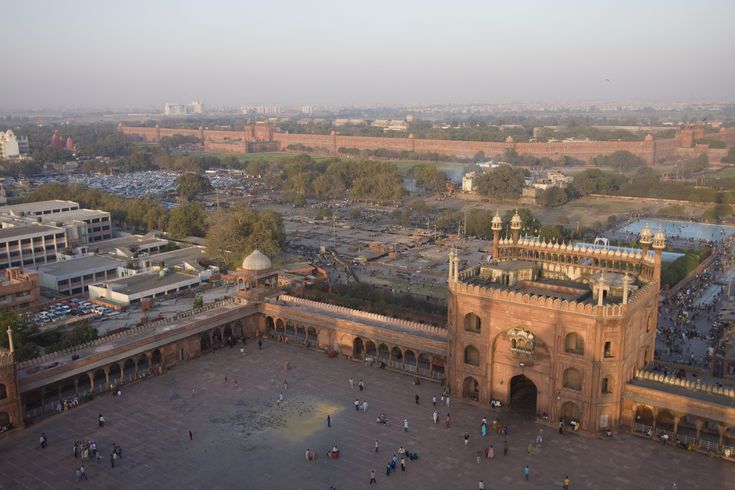
Indraprastha is believed to be the very first evidence of power politics in Delhi. Sir Syed Ahmed Khan, in his magnum opus Asar-al-Sanadid, believed that Yudhishtira founded the city on the banks of River Yamuna in 1450 BCE. [ref; End of โ€˜Adi Parvaโ€™, Mahabharata (400BCE-400CE)]. The Mahabharata describes Indraprastha as a city as beautiful as heaven blessed by the presence of a fort surrounded by an ocean-like moat. Festooned by massive walls, the cityโ€™s architectural splendor is raised with huge double-hung gates with imposing towers, festooned with spears and javelins. Magnificent white buildings find their place at the sides of the well-planned streets and the city is further embellished by pavilions, pleasure hillocks, ponds, lakes and tanks and beautiful gardens with peacocks and cuckoos. According to the Mahabharata, the city was built after the episode of Khandavadahana, the burning of Khandava forest. This episode finds its place at the end of Adi Parva. The forest was burnt with the help of Agni, the God of fire; Arjuna and Lord Krishna. And this episode is venerated as the first evidence of mass deforestation- clearing forest land for settlement with deadly conflagrations engulfing the entire forest and systematic destruction of all animals, birds and fish. Lord Indra attempted to end the massacre. And finally, six creatures survived the fire: Ashvasena (The son of the serpent king Takshaka), Maya (A demon, the architect of Indraprastha) and four Sharngaka birds. Sabha Parva of the Mahabharata continues with the subsequent melee where Maya wants to thank Arjuna for helping him escape the fire. Maya was a talented architect and Krishna suggested him to build a magnificent assembly hall in Indraprastha, A golden pillared hall and a lotus pond inside the royal hall filled with lotus, turtle, fish and aquatic fowl.ย 

B.B. Lal conducted a trial excavation in Purana Qila, the contested site of Indraprastha to identify the age of the site and whether it could be related with the Mahabharata or not. The oldest piece of the artefact unearthed was a Painted Grey Ware dating around 1,000 BCE. The 1969-70 excavations revealed Northern Black Polished Ware dating 4th/3rd century BCE. However, no structural remains of the Mahabharata, in sync with the description of Indraprastha, were unearthed. 

One can find a series of literary evidence pertaining to the existence of this Mythical city. Firstly, the celebrated Ain-i-Akbari by Abul Fazl suggests that Delhi was first known by the name, โ€˜Indrapatโ€™. He further suggests that Humayun restored the citadel of Indrapat and renamed it as โ€˜Din Panahโ€™. Secondly, Shams Siraj Afif in Tarikh-i-Firuz-Shahi suggests that Indraprastha was a Head Quarters of a Pargana. Thirdly, a 14th Century inscription recovered from Naraina village in West Delhi speaks of the village being situated at the West of Indraprastha. Fourthly, Nigambodh, a site situated at the Yamuna banks is identified as the site where Yudhishtira poured the oblations into the sacrificial fire after performing the Asvamedha. Fifthly, Nili Chattri Temple in Delhi is identified to have been commissioned by Yudhishtira. Sixthly, Indraprastha is mentioned in Buddhist Jataka tales as belonging to Yudhishtira Gotra, the Gotra or clan of Yudhishtira. Seventhly, Small scale excavations by B.B. Lal in Tilpat, one of the five villages demanded by the Pandavas, reported the discovery of PGW and NBPW levels confirming the antiquity of the site. And finally, Alexander Cunningham identified Indraprastha with โ€˜Indrapatโ€™ mentioned in Ptolemyโ€™s Geography. 

Two assertions (1847-1950โ€™s) regarding the origin of Delhi turned the myth of Indraprastha into History. The very first assertion was made by experts, historians and archaeologists and by non-experts, authors and tour-guides. Both of these groups suggested that Delhiโ€™s origin was based on Indraprastha. The second assertion was that the 16th-century fort of Purana Qila was constructed over the ancient but invisible Indraprastha. The claims by a plethora of biographies of Humayunโ€™s contemporaries that Humayun knowingly built his fort over the ruins of Indraprastha gained considerable momentum in the late 18th and early 19th centuries. The earliest evidence of the same comes from the celebrated Ain-i-Akbari, the magnum opus of Abul Fazl. Their points were backed by Indologists such as William Jones. 18th Century presentation made by William Jones in the Asiatic Society of Bengal insinuated that Iran has a powerful Hindu monarchy who migrated to India and they established the ancient cities of Ayodhya and Indraprastha. Itโ€™s worth noting that he just mentioned the cities but he skips the identification of their location. 

Asar-us-Sanadid (The Legacy of Heroes, 1854) by Syed Ahmed Khan confirms the existence of Indraprastha within the frontiers of present-day Delhi. He suggests that Yudhishtira established Indraprastha in 1450 BCE but he preferred to rule from Hastinapura. He further adds that the capital of Kurus was shifted from Hastinapur to Indraprastha on 1212 BCE by Dushtavana owing to the rising water level in the Ganges. He further identifies Lalkot, built by Anangpala Tomara to be the site of Indraprastha. Syed Ahmed Khan claims that his findings are based on the shreds of evidence mustered from the Mahabharata, Shahjahannama, Ain-i-Akbari, the Old Testament, inter alia. He further claims to have recovered a brick from Pandu Age from Hastinapura and remarked that similar blocks were identified from different sites in and around Delhi. The most unbelievable and out of the blue fact is that he dated the recovered block as belonging to 2,607 BCE but the technology available at that time was not in sync with such precise dating. However, in the following days, it was identified that 2,607 BCE falls in the time-frame attributed to the Harappan civilization and not the epic period. The claims of Syed Ahmed Khan, therefore, can be considered as an attempt to impress the European audience with his scholarship and knowledge about the Indian texts. Also, he must have aspired to find a position in the archaeological society and wanted to come to the public eye. However, the claims of Syed Ahmed Khan was the first step in bringing the rhetoric of Indraprastha into a quasi-historical, quasi-scientific realm. Syed Ahmed Khan lent further clearance to the division of Indian History into Hindu and Buddhist age for the Ancient past, the age of Muslim intervention for the Medieval past and the arrival of British as the beginning of modernity.

In toto, the urban cock-a-doodle-doo of Indraprastha being ancient Delhi is being introduced to the historical arena by a series of textual repetitions. Mention in bureaucratic spaces like history books, archaeological reports and museums conferred a specific gravitas to the existence of Indraprastha. Being backed by a series of literary and inscriptional evidence and being brought up by celebrated historians, authors, tour guides, bloggers and even the common folk, Indraprastha maintains its status as Ancient Delhi even without proper archaeological backing. Series of repetitions facilitated the translocation of this myth and chain of affective longings into the arena of history and archival truths. As it is said, a lie often repeated, becomes a truth. The myth of Indraprastha is the most plausible example of this illusion of truth.
Why do midsize enterprises choose co-working?

To begin with, in my opinion, this article would be pointless without defining the term โ€œmidsize enterprisesโ€. Midsize enterprises are organizations having annual revenue ranging from $50 million to $1 billion, employing 100-1000 workers.

Co-working spaces, as we see today, are not products of the modern era. Itโ€™s a variant of the centuries-old Bottega system of the renaissance era of the 15th century. Nowadays, most midsize enterprises choose co-working over other alternatives like individual office spaces and more recent โ€˜work from home. Letโ€™s see what makes such co-working spaces glamorous to the midsize enterprises.

1.An arena of chance and opportunity

Co-working spaces mark a unique blend of people from different workspace cultures converging in a common space. This includes all types of people, including the successful and influential.

What does it mean to you? Well, it means a lot of things. Co-working spaces could be interpreted as an arena offering important and far-reaching connections needed to propel your business forward. Sometimes, what a midsize enterprise probably lacks is proximity to other successful business people.

Therefore, co-working spaces offer enticing networking as well as quick collaboration opportunities.

Furthermore, co-working spaces are factories creating personalities. Along with dynamic collaborations and a vast network web, it offers a space to hone oneโ€™s skills and capabilities. Itโ€™s worth considering that Leonardo da Vinci acquired his skills as a young artist by working at the Bottega of Verrocchio in Italy.

2. Extracting productivity

Letโ€™s start from the usual scene of our home: Kids crying, pending chores, a club of platters waiting in the sink to be washed and the pressure cooker endlessly whistling in the kitchen. This household clichรฉ could be classified under a broader term- โ€˜distractionโ€™.

So, what can co-working spaces offer you? Indeed, it offers you a peaceful workplace free from distractions. Such spaces aid us to turn ourselves into a โ€œwork-only modeโ€, offering an indescribable rise in our productivity levels.

A 24×7 accessible workspace along with unlimited coffee supply- highly provocative, isnโ€™t it? Whoโ€™ll ever afford to witness such a preposterous offer slipping off from their hands?

3. Bursts of creativity

Co-working spaces are indeed a respite from work from home solitude. It offers not only a peaceful workspace but also mind-refreshing, alternate solutions to keep ourselves physically, mentally and emotionally fit.

For instance, The Playce, a co-working space located in Mulund West, Mumbai where Indiaโ€™s first-ever official Quora meeting was held in India, offers a โ€˜gaming zoneโ€™ to its members.

Such attractive facilities offer their members a break from their jam-packed schedules, creating spaces for self-rejuvenation and relaxation. Furthermore, it acts as therapeutic, moderating workspace stress and a virtually never-ending to-do list.

4. Economic efficiency

Shortage of funds is the most fundamental problem faced by midsize enterprises. Choosing co-working space over office spaces drastically reduces the operational cost of the enterprise. Subsequently, it provides diverse and state-of-the-art office infrastructure including printers, Wi-Fi, conference halls, and coffee corners.

Moreover, co-working spaces are equipped with timely refreshments and beverages at a fixed monthly rate. For instance, The Hive in Chuim village, Mumbai offers a plethora of mouthwatering dishes for its members. Mathias Schuermann in her work, โ€œCo-working Spaces” argues that the cost versus value received is the best in co-working space as the costs are carried by the community as a whole.

What else should make co-working spaces appear more attractive to midsize enterprises?

5. Flexibility and ability to expand

Other than economic competitiveness and collaborating opportunities, what midsize enterprises aspire for is flexibility. Most of the co-working spaces could be rented at short notice.

Furthermore, membership could be withdrawn at any time by the enterprise, ensuring trial opportunity. Some co-working spaces are accessible 24×7 while others offer work during the day and party at night, like Colaba Social in Mumbai.

To sum up, co-working spaces can offer you more than what a monotonous life in an office space or work at home solitude could provide you. Alongside wide networking opportunities, increased productivity and rejuvenating solutions, it also offers cost-competitiveness and workplace flexibility.

The Playce, The Hive and Colaba social are living examples of such modern Bottegas. Spending a day working in these factories producing personalities will be worth it.

Online Classes are Only for the Connected

Waking up after an evening nap at 4.30, I went and sat in the hall near my father, hoping to conquer the TV remote while he was waiting for the Chief Minister’s press meet to start. Three days ago, at the same time, my pockets were vibrating with a WhatsApp notification: I had an examination (online) three days later (I.e. the present day) as I was subscribed to an entrance crash course. It was my second test, whereas I confronted with the first one weeks ago. I’d slept in the melancholy of my sheer failure in the same. Even though I wear a strong armor, impenetrable to the repercussions of an anticipated failure; outside, at the end of the day, every saint will become a sinner no? If not, circumstances will make him. I got an utter 44% against my 84% record last time. You could imagine how miserable I was, how tragic my thoughts were. Time is indeed โ€˜jealousโ€™. It targets everything that is dearest to us. For instance, think of a situation when a person proud of his hair, visiting uncountable parlors and even sleep with shampoo and oil; witness his head being shaved like a mute spectator, a caged parrot. Andย ultimately, Iโ€™m illuminated here in a standalone manner as a living, breathing, broken-hearted illustration of the same.

Enough of all the fuss. Letโ€™s come to the topic. 20 more minutes for the press meet. My father was sitting in front of the turned-on TV with his frameless spectacles (In which he looked more pretty) at the rim of his Roman nose. His attention was nowhere on the TV. He was engrossed in some accounting. I wanted to catch hold of the remote and was intending to coax him before I could take it. As obvious it is, the only point that attracted the attention of my mind was his unwonted accounting. With no interest in his motive, I asked, โ€œAcha.. have you resigned your job and started accounting?โ€ he started his epic as though he was eagerly waiting for someone to ask. My face was scintillating and my eyes were shimmering. My right arm slowly crawled towards the remote in the sofa beside him. โ€œNoโ€, he replied in a heavy tone. I asked, โ€œThen what are you accounting for? You havenโ€™t bought the reserve bank at least no?โ€ he replied, โ€œItโ€™s for a new project of our office undertakingโ€. He took a long breath and continued, โ€œwe’ve planned to distribute 25 tablets with four-month internet connectivity to those children who couldn’t afford them at XYZโ€. After hearing this, my first emotion was true, disdain. Now, my fingers were on the remote. He added, โ€œone of our officer’s residence is in XYZ.His neighbour, ABC is a student of class 12th. Heโ€™s preparing for some law entrance examination. His poor parents had managed to remit Rs. 12,000, a heavenly incarnation of their sweat and blood; to a nearby coaching centre for his vacation classes. They were really on cloud nine. And now, in this lockdown season, classes were virtualizedโ€. I had no time for his stories. All my sacred attention was on the remote. Still I remembered ammaโ€™s lecture and I thought, โ€œhere people are dying of hunger. Leave it. At least they’re poor. But now, those who are born with a silver spoon are forging their bucket list in hospital beds and is it the time to think about tablets? Jobless labourers are yearning for a day’s grain and here….โ€ before I could complete, I asked him, 

โ€œThen? Then what’s the problem? You’re having everything at your fingertipsโ€ I pulled out my phone from my right pant pocket, โ€œin this smartphone?โ€ He gave me a close look. I suddenly lifted off my hands from the remote. A practical experience of reflex action maybe. I was out of my wits for a moment. A deadlock. Breaking the silence, he muttered, โ€œthat’s exactly the problem. He doesnโ€™t even have a smartphone. Their family canโ€™t afford even that.โ€ These words were a thunderclap for me. I was shocked. I was thinking, โ€œcan anyone in this world live without a smartphone?โ€ I continued my โ€˜thoughtsโ€™ as if I’d spoken, I’d have had a hibiscus-cheek before I could’ve completed. โ€œpeople can live without food for a week, water for a day and not a single second without a smartphone and mobile data and here he’s talking about not having a smartphone?โ€ suddenly, I forgot about the remote. I muttered, โ€œand?โ€ inspecting my abrupt and fortuitous fervour, he replied, โ€œand what? ABC would borrow his laptop for an hour every evening.โ€ He paused awhile and continued, โ€œhe only suggested this idea. Our officer’s association held a meeting last week and we all contributed to the cause. We selected 25 children like ABC from that locality and…โ€ He choked. 

I was lost in deep thought. I donโ€™t know if he had completed his broken statement or not. I was entirely lost, โ€œwith these 25 tablets, the query of 25 boys in XYZ could be solved. XYZ is not India no? If XYZ has 25 such students, then how many will be there in this magnanimous country with an ever-so-expanding populace striking 1,300 million?โ€ this thought sprouted off an unsung problem in my mind. My conscience was busy traversing this off the beaten track I forgot about the remote. All I recalled was a famous aphorism, โ€œall are equal but some are more equalโ€. Instead of quacking โ€œdigital learningโ€ and โ€œvirtual classesโ€, has anyone thought about a section that is deprived of the key to access these? Indeed Byjuโ€™s and Vedantu are doing great with unwavering devotion. Itโ€™s unquestioned and undoubtedly true. But, apps wonโ€™t work in open-air no? It needs a medium: a laptop, a tablet or a smartphone at least. What is the significance of a bottle of ink without a pen to fill it? Amidst this lockdown season, when our people Gasconade with a hashtag of โ€˜#India learnsโ€™ and โ€˜#India continues learningโ€, has anyone ever bothered about those who are deprived of a medium to access them? And this lockdown season added insult to injury by shutting the internet cafes. Where will they go now? Itโ€™s not their fault that they’re born poor. If itโ€™s not their fault, then whose? Who has time to think about them? We can only advertise in the name of virtual learning and so. Their learning is now subjected to an indefinite quarantine. 

A plate fell off from the platter stand and I came back to sane. I started thinking again, โ€œhow lucky I’m with everything below the sun at my fingertips at ease while others are painstakingly pushing the wheel-less chariot of e-learning and Iโ€™m lamenting on my lost marks like a couch potato on the sofa?โ€ Itโ€™s 5. The press meet started. My father closed his register with a pen in the middle as a bookmark. The news highlight was about an ordinance approved by the Governor enabling the State Government to hold 25% of its officialโ€™s salary after a High Court stay on the same. The reporter exclaimed, โ€œGovernment officials consists of only 1.5% of the total population of the State. But, 45% of the State revenue is the disguised form of their salaries, pensions and perksโ€. While I was lamenting on my inability to take the remote, my mind was lost in its world of thoughts again. โ€œIs it that only their children should be allowed to learn? What about the children of the poorest 1.5% of the populace? What sin did they do that……โ€ My thoughts broke.

Now, Iโ€™m happy. Indeed Iโ€™ve worn brand new pink spectacles. Itโ€™s 6. Now, Iโ€™m waiting for my phone to ring again with another notification and am mentally prepared to embrace the candied harvest of my next examination. Because, I realized that Iโ€™m one I the luckiest who’s getting a chance to learn from my home, my comfort zone. Shouldn’t our education department seriously introspect about this rather than being engrossed in their routine cock a doodle doo? Ah.. whatever Maybe.. one day like others of its kind, this will also become a story to read on, lullabies to feed babies and status to share in WhatsApp. What next? I shouted, โ€œAmma.. coffeeโ€.

Glimpses of Corona in 2020

By mid-February 2020, dragging him out of our home, my father went to stand in long queues in front of XYZ ltd., a spoken-English centre in our locality. He was dead keen to make that poor boy’s tongue flexible to the relatively unknown phrases in English. The boy, my brother, was just about to have his debut, his first step from the world of dreams and magic to the world of reason and cold logic, stepping out from the beautiful world of innocents to the cunning world of hypocrites; like you, like me, like everyone. 

How could his little brain forsee his near future: after barely two months, he’ll be well-familiar with the reasoning ability problems related to “clock and time”, that I do in my Quantitative Ability papers, as he’ll be spending long hours, glancing at a clock in faint hope and ultimate melancholy, in an A/C room, anxiously waiting to escape from the taxing English ‘training’: training in the literal sense, like animals being forced into the loop of fire in a circus ring.

By the beginning of March, the novel SARS CoV-2, lovingly labelled as “Covid 19” shook the foundations of the world- to which even the so-called developed world couldn’t stand a chance. On one hand, it drowned the whole world into an air of desolation: witnessing uncontrollable death rates and armed burial grounds; but on the other hand, it incarnated as a saviour of the children: who brought them blissful memories of an unforgettable holiday season, giving a different, unfamiliar interpretation of the term ‘vacation’; that they might never experience in their entire life again. ‘Vacation’, in an actual sense, free from long, despondent, boring hours of ABCD classes and drawing lessons, granting our children their ‘lost spring’: swinging to and fro from the branches of the old mango tree and making cakes out of the mud- interacting with the forgotten spirit of mother nature. As itโ€™s said, vacation per se is blissful. 

For the first time, I saw him with my cousins, all below the age of 10, experiencing the beau ideal of mother nature. Thanks to the pandemic that our children, who would’ve been stuffed into the A/C halls with keyboards, drumsticks, brushes or books of different colours open with a costly pen in their hands; are now free, experiencing the joy of carte blanche, lashing out in the open air amidst the half-acre compound of our village home, playing under the blissful shade of the old forgotten mango tree: that witnessed my childhood as well as my mother’s and maybe, my grandma’s too. Their hands, which got numb holding computer mouses and pens of all standards, are now enjoying the pulpy juice of the golden mangoes tracing its path through their arms while stuffing it into their mouths.

Edit: However, thanks to the growing technology that after some time, some sort of digital revolution took place that witnessed mass digitization of education from the lowest rungs where nearly everyone is now attending classes, one or the other, via their phones, tabs or laptops.

Five Examinations that a Humanities Student Cannot Miss

If youโ€™re a student of Humanities/Arts stream and completed/ going to complete your +2 from any recognized Board and you are aspiring to kickstart your career from a reputed University, give this article a read and youโ€™ll be familiarized with five All-India competitive examinations you can attempt to secure Higher Education from reputed Central Universities in Arts stream. 

Firstly, let me familiarize you with IIT-HSEE. IIT-HSEE is an annual entrance exam conducted by the Humanities and Social Science Department of IIT Madras. On clearing this examination, youโ€™ll be selected on a merit basis for pursuing a five-year integrated program in Developmental Studies or English. However, what makes it competitive is that thousands of students attempt it every year and only 58 aspirants can clear the same. One has to attempt two papers, the first being subjective and the second, objective. Paper one consists of thirty-six questions from English and comprehension skill, thirty-six questions from analytical and quantitative ability and eighteen questions each from Economy, Society, World Affairs and Ecology. Paper two will require you to write an essay for thirty marks on a general topic within thirty minutes. Hence, the total time for completing the examination of 174 marks is 180 minutes. 

Secondly, one of the most sought-after examinations after class 12th for any candidate aspiring to pursue higher studies in Social Sciences is DUET-NTA. Clearing DUET will land you up at the University of Delhi. The examination is conducted primarily for two courses: Humanities and Social Sciences and Economics. This exam will be of two-hour duration with a hundred objective questions that carry four marks each. One mark will be deducted for each incorrect answer. The questions will be primarily from General Awareness, Current Affairs, Communication Skills, Logical Reasoning and Analytical Ability. 

Thirdly, Iโ€™ll introduce you to TISS-BAT. This examination is similar to IIT-HSEE but the examination will be for 100 marks. Similar to IIT-HSEE, the examination will be conducted in two parts- the first part carrying 60 objective-type questions of one mark each that has to be completed within an hour. The second part is subjective comprising two descriptive questions carrying twenty marks each that has to be answered in forty minutes. On qualifying the same, youโ€™ll be granted admission to BA Social Sciences or BA Social Work at Tata Institute of Social Sciences. 

Fourthly, Iโ€™ll introduce you to CUCET or Central Universities Common Entrance Test that is conducted annually for admission into various courses in eighteen central universities. The question paper will consist of a hundred objective type questions carrying one mark each where 0.25 marks will be deducted for each incorrect answer. The questions will be divided into three categories with Part A being General Awareness of 25 marks followed by Part B comprising questions from Teaching Aptitude. Part C shall consist of four sub-parts from which the candidate can attempt any one from Social sciences, Language, Physical Sciences and Mathematics and Life Sciences. 
Finally, Iโ€™ll introduce you to the SET or Symbiosis University Entrance Test. There will be three categories of this test: Symbiosis Law, Symbiosis General and Symbiosis Engineering. Here, Iโ€™m interested in Symbiosis General. The test will have seventy-five objective questions with a written ability test. The former will be of seventy-five marks with four sections viz. English, Quantitative Aptitude, General Awareness and Logical Reasoning. The latter shall be of twenty-five marks. The entire examination shall be of 105 minutes duration.

Free Courses with Free International Certificates

Tired of sitting at home without doing any productive work amidst the lockdown? Wanna convert your free time into valuable certificates? If so, give this article a read and at the end, youโ€™ll be able to collect at least five certificates from a plethora of reputed institutions that you cannot even dream of! The most interesting fact is that these courses are absolutely free. So, what about the certificates? Yes. Youโ€™ll get them on successful completion of your course absolutely free of cost! So, doesnโ€™t this article deserve a read? 

To begin with, Iโ€™ll suggest bewildering courses from Amnesty International. Being a substantial International Organization working for Human Rights, Amnesty International will offer you a myriad of online courses with certificates that can be claimed free of cost provided you meet the requirements for the same. What are you waiting for? Just click here and navigate!

Secondly, Iโ€™d like to suggest the didactic yet interactive courses offered by the US Institute of Peace. They offer around forty courses in English and around ten in Arabic. After completing their courses, youโ€™ll be offered a verified certificate free of cost. Also, the timings of each course may vary from three hours to eighteen hours depending on the course you opt for. Liked it? Just click here and start learning and start earning!

Thirdly, let me suggest you the courses offered by Agora, the global learning platform of UNICEF. This platform will offer you hundreds of courses in different fields and you can choose what suits you the best. The most glamorous feature of this platform is the presence of enthusiastic discussion forums where you can interact with other learners supplemented by beauteously crafted blogs, interactive and interesting assignments and informative wikis.  Also, most of the courses include progress tracking systems and graded assignments based on which youโ€™ll be evaluated for being certified. The digital badges or certificates of completion offered by the same can be a prime-mover in advancing your career. Click here to visit the Agora platform. 

Fourthly, Iโ€™m suggesting the free courses offered by the United Nations Institute For Training and Research (UNITAR). It offers you various courses on different topics including Human Rights, Climate Change, Gender, Sustainable Development, inter alia. Also, youโ€™ll receive verified certificates for free if you complete the courses in sync with the directions provided by the same. Some courses are accompanied by graded assignments and multiple-choice tests based on which youโ€™ll be certified. Click here to visit the UNITAR platform


Last but not the least, Iโ€™m suggesting Academy Europe. Academy Europe or European Open University has around 15,000 plus courses to offer you in various categories such as Technology, Arts, Computer, Business, Economy, Life Science, Politics, Medicine, Profession, Quality Standards, Science, Social Science among others. All courses are accredited and free of cost. Itโ€™s open for anyone anytime from anywhere. In addition to that, Academy Europe also offers online Academic Diploma course in various categories and after completion, youโ€™ll be provided with an official Diploma Certificate. What are you waiting for? Just click here and earn a certificate!

Understanding Approaches to Political Power

Itโ€™s not very difficult to conclude that the understanding of power is central to understanding politics. The following paragraphs shall aim to enumerate various approaches to power and relate them with a hypothetical political example i.e. a child complaining to his father because he got fewer chocolates in number than his brother. 

Coming back to the two children, say, X and Y, where X is younger than Y. Now, suppose the father legitimized the situation by claiming that X got more chocolate pieces because he is younger than Y. Since the decision is not in the favour of Y, Y starts to express his displeasure over the same and consequently the father settles Y by the use of force. Implementation of the decision hence made through the coercive form of power exercised by the father explains the first approach to power, i.e. decision-making. This approach overlaps with the concept of Dahl where he defines power as the ability of A (father) to make Y do a task T (abiding by his decision) that he/she otherwise wonโ€™t do. 

This approach is known as the one-dimensional or pluralist approach to the understanding of power. Itโ€™s worth noting that this approach measures power as an exercise provided the exercise of power is visible, transparent and easily noticeable by the recipients of power. Here, the force exercised by the father is easily noticeable. This approach helps in understanding the visible exercise of power and the transparent use of coercion in the current political ecosystem. 

Now, consider a modified version of the same situation. The father just proclaimed that X got more chocolates just because he gave them to him and itโ€™s unquestionable. Here, the father fails to give a plausible backing or a reason for his decision. This is explained by Carl Schmitt as the divine power of the decisive where the decision/law is legitimized by the lawmaker. I.e. itโ€™s the decision-maker that matters and not the decision. Here, the event where X got fewer chocolates than Y is deemed to be legal and justifiable only because it was the decision of the father. This is known as decisionism.

Now, letโ€™s attribute a specific gender to both X and Y. Consider X and Y as identical twins where X is a boy and Y is a girl. Now, assume that the father gave more chocolate pieces to X only because heโ€™s a boy. And, for the time being, assume that Y accepted his decision and no conflict was triggered. This is what Bachrach and Baratz claim to be the two-dimensional form of power, i.e. power as non-decision making. Here, we cannot notice the exercise of power with ease as it requires precise observation. 

The above example could be easily comprehended by explaining the fatherโ€™s action to be his contribution to ensuring the future existence of patriarchy. As itโ€™s said, the subjugation of women is central to the existence of patriarchy. The exerciser(s) of power (the father) attempts to keep potential issues (gender equality) out of the political arena. Such potential issues are excluded from the current political scenario as they conflict with the current, dominant, perpetuating norms (patriarchy) and most importantly, these are in favour of the powerful (the father, men in general). 

Considering a larger political environment, this approach helps us to identify the issues that are intentionally kept out of the purview of the public or the opposition. For instance, consider a speech on โ€˜merits of capitalismโ€™ proposed to be delivered in the erstwhile USSR. The Government will never give consent to the same as itโ€™s against the socialist interests of the Government. It aspires to keep this issue away from the purview of decision-making to avoid any future conflict with their interests. This is also known as the neo-elitist approach to power. 

Again consider the two children, X and Y, where X is younger than Y. Now, suppose they are born in a family that has been inculcating the social value of brotherhood since their birth. Now, consider that the father gave them a full chocolate piece and theyโ€™re supposed to divide them amongst themselves. In this case, Y divided the chocolate pieces in such a manner that X gets more pieces than Y. This is what Lukes claimed to be the three-dimensional approach to power, i.e. ideological power or radical approach to power. On analysing this situation, we cannot see a visible exercise of power and itโ€™s noteworthy that even the recipients of power arenโ€™t aware of the fact that some form of power is exercised over them. 

In such cases, the exerciser of power attempts to shape the preferences and mould the thoughts of the recipients of power, ensuring acceptance of certain decisions in the existing order. This can be explained by a simple example- a rustic woman, born in a conservative household will consider the concepts of female literacy, love marriage and wearing the dress of their choice as illegal and unsanctioned. They may not realize the exercise of social power over them that impedes even their basic fundamental rights. On growing up, they will be accustomed to the aspirations of the society that are reinforced on them. As itโ€™s said, one is not born as a woman. Itโ€™s the society that attributes womanly characters and thought-process to them. 

Similarly, consider the two children X and Y asking their father chocolate of brand Z. In this case, large scale advertising and glorification of brand Z has created an impression in their mind and successfully shaped their preferences. Therefore, the concept of radical power overlaps with the concept of soft power and ideological hegemony

On considering a larger political arena, this helps us in understanding the widespread concept of โ€œMcDonaldizationโ€ and the cultural impacts of Globalization. Itโ€™s also the main element in understanding the concept of Joseph Nyeโ€™s โ€˜soft powerโ€™ concerning the US Hegemony. 

Finally, we can derive three more approaches to power from the above three approaches. Theyโ€™re:

  1. Power as control over resources: The father is considered to be โ€˜powerfulโ€™ because he has money and can buy chocolates (resources) for the children, X and Y. 

During the cold-war era, the USA and USSR were considered to be โ€˜superpowersโ€™ as they owned vast resources (oil, minerals, water, money, maritime routes, satellites, technology, etc) that were necessary for human survival. Moreover, they owned nuclear warheads and weapons of mass destruction. 

  1. Power as control over actors: The father is powerful as his decisions are binding on both the children. i.e. he has control over their children. 
  2. Power as control over outcomes/events: In the case of X being a boy and Y a girl, the father gives fewer chocolates to Y as he aspires for the continuity of patriarchy. The desirable outcomes are always defined in terms of the more powerful actor. 

Throughout this article, every concept mentioned was explained using a seemingly apolitical situation- the division of chocolate between two children. This alone implies the inseparability of politics from human lives and how even a microscopic issue can be conferred with infinite political dimensions. 

What is Politics?

Beginning with an attempt to attribute a precise definition to โ€œpoliticsโ€, this article moves forward to contradict the prevalent notions of โ€˜the politicalโ€™ being confined to the public life of an individual, the State and its institutions. Politics is not only intertwined with the day-to-day events of oneโ€™s life but also itโ€™s present in its private sphere. The first part of this article is concluded by attributing a political dimension to the concept of Nature.ย 

The entire article defines politics and approaches to power with the help of a simple issue of distributing a piece of chocolate among two children, which is considered to be purely apolitical prima facie. The dynamic dimensions of politics being prevalent in every aspect of human life, however, cautions us from an attempt to generalize the term and attribute a single definition to this undefinable, abstract entity.  

Politics is something concerning the polis. While polis stands for a city-state, itโ€™d be much better if it means โ€˜a a communityโ€™ as city-states can be adjudged as a higher level of social interaction. If so, politics acquires a new definition of โ€˜something concerning the communityโ€™. Whatever concerning the community shall be in sync with the aspirations of the common folk and shall ultimately result in social well-being. Therefore, politics is an act of decision-making keeping in mind the hankerings of the community and formulating policies for the common good. However, this decision-making is not only confined to the term โ€˜communityโ€™ or โ€˜societyโ€™ but itโ€™s also about decisions made by a family or an individual. If politics is about decision making in a society, then itโ€™s also about decision-making in a family because family is the lowest unit of social interaction. 

For instance, consider a child complaining to his father because he got fewer chocolates in number than his brother. This situation can be called political because:

  1. The child is making a โ€˜claimโ€™ and aspires to โ€˜equal treatmentโ€™.
  2. The father is considered to be a โ€˜decision-making authorityโ€™ who is supposed to take โ€˜just decisionsโ€™.
  3. The decisions are โ€˜bindingโ€™ on both the children. 

On considering the first point, the child made a โ€˜claimโ€™ because he was free and he has the right to do so. Hence, politics is also about freedom and rights. Freedom comes from self-realization and thus, politics is a path to achieve self-realization. The child made a โ€˜claimโ€™ because he aspires to equality. Hence, isnโ€™t politics also about aspirations for a better living? 

Coming to the second point, the father is entitled to take decisions on behalf of the two children. Here, the father becomes an authority. Considering a larger unit of social interaction, decisions can be made by an individual or by a group of people. Where itโ€™s impractical for the entire population to make decisions, a group of people make decisions on behalf of the entire population. However, in any of these forms: may it be individual, group or representative; the decision-maker is expected to make just and fair decisions, in sync with the aspirations of the people that make the ideas of justice and fairness intrinsic to politics. 

However, the father is a decision-maker because he is vested with the power to make decisions. Therefore, power is a prerequisite for decision making and so, power and politics are inseparable. This power is a typical form of โ€˜power overโ€™ someone, in this case, his children. When the concept of โ€˜power overโ€™ is exercised by a narrow personal interest, it leads to a personality cult and the authority becomes authoritarian. In this case, the decisions taken will be serving the exerciserโ€™s interest and not the interest of the community as a whole. This is similar to the case of โ€˜bourgeoisie oppression of the proletarianโ€™ and it can be resolved via a proletarian revolution. Hence, politics can also mean political actions like a revolution, protest, demonstration, civil disobedience, or any form of collective action that aspires for the public good

Itโ€™s already mentioned above that politics is also about aspirations for a better living. If thatโ€™s so, politics is also about actions to realize this aspiration. However, power doesnโ€™t necessarily mean โ€˜power overโ€™. Itโ€™s also defined in terms of โ€˜power toโ€™. However, the concept of โ€˜power toโ€™ overlaps with freedom as freedom is the power to do something and similar reflections are made with respect to the first point.

Finally, the third point paves the way for defining politics in terms of an obligation. Whatever decision the father makes is morally binding on the children. In a larger sense, the decisions made by an authority is morally binding on the community. If so, what if such decisions are contradictory to the aspirations of the people? What if the decisions are authoritarian? What if the authority exercises his power for his interest? The Communist Manifesto considers power to be all about subjugation and oppression where one class is seen oppressing the other. As mentioned earlier, this issue can be resolved only through political actions. So, when authority becomes authoritarian, power becomes a means of subjugation and oppression and hence, politics also becomes oppression and subjugation

Politics is interesting because people disagree. In the above example, the two children disagreed based on which chocolates were divided among them. This makes politics a struggle over scarce resources. It is to be noted that disagreement is intrinsic to a community and if politics, as defined above, is something concerning the community; then politics is also about disagreement and conflicts in opinion. Disagreement makes social interaction political and for the smooth functioning of the community, there shall be co-operation and consensus and disagreement is an obstacle to the same. These disagreements shall be resolved through discussion and deliberation. Therefore, if politics is about disagreement, then politics is also about resolving it. Politics is hence, also about discussions and deliberations. Politics is the phenomenon of conflict and cooperation

However, as mentioned in the earlier paragraphs, disagreements are also resolved through the exercise of coercive power and if itโ€™s incongruent with the concept of the public good, political actions serve as an antidote. People protest because they feel that they can be much better off if theyโ€™re granted political attention. Hence, they imagine an alternate world where they are lucky enough to receive the aspired attention and where they can lead a more sophisticated living. Hence, politics is an arena of imagination and aspiration for a better livelihood. 

As time progressed, the exercise of power by the authority was confined to the public domain of an individualโ€™s life. This led to the separation of social from โ€˜politicalโ€™ and led to the framing of the concept of the state. In the due course of time, โ€˜politicalโ€™ came to define the power of the state and its institutions. If so, politics is also about public agencies with power or authority to make decisions that have an impact on every member of society. Chancellor Bismarck declared politics as an art and here, he refers to the art of governance. However, โ€˜politicalโ€™ here is only confined to the state and its agencies. It is to be noted that politics also exists in society as deliberated in the earlier paragraphs. Separation of the private and the political doesnโ€™t imply that the private sphere is apolitical. For instance, the conflict among two children in a family, thatโ€™s seen as totally private and out of the purview of the state, has a political connotation. For instance, parents have to get their child educated and itโ€™s the inalienable right of the dependent members of a family to be treated with respect. What if a woman in a family becomes a victim of domestic violence? The State cannot merely be a lotus-eater in this case simply because it concerns the private life of an individual. The exploited has to be legally backed by the State and hence, it justifies the legal intervention of the State in private affairs. In line with the famous radical feminist slogan, โ€˜the personal is the politicalโ€™.  Therefore, politics is not only about the State but also itโ€™s intertwined with the day-to-day lives of every individual. 

Coming back to the chocolate conflict, on the face of it, the two children who are considered to be โ€˜apoliticalโ€™ get involved in political action. They make claims and consider their father as an authority to make a fair decision. The chocolate they are fighting for is manufactured by a company that is bound by the Companies Act and the Income Tax Act. GST and SGST are appropriated from the price of the chocolate. Moreover, the children have the right to education and are going to schools either funded by the government or run by private institutions bound by the laws made by the State. The children use public roads and public transport to go to school and their father may be a taxpayer and so on and so forth. This is how a conflict between two children that appears to be apolitical prima facie is being made thronged by political ideas and perhaps this made Aristotle declare Political Science as a Master Science

From the above discussion, itโ€™s undeniable that politics is similar to a leaf in the bud of oneโ€™s life. However, more than being related to the concept of power, authority, society, conflict, justice, protest, governance, privacy etc. Politics is also present in nature. Politics becomes resource geopolitics or politics of resources. Politics is subjected to translocation from โ€˜politicalโ€™ to โ€˜cosmopoliticalโ€™. Whereas politics aspires for the betterment of the community, cosmopolitics widens the scope of the โ€˜communityโ€™ to include plants, animals and other living beings. This makes the air we breathe and the water we drink, political. The State intervenes in framing laws to prevent air pollution to an extent that the right to clean air and safe drinking water has been brought under the purview of basic fundamental rights. The State is committed to ensuring that the people are provided with safe drinking water. The State frames laws for waste disposal and stubble burning and gets involved in mining activities and search for natural resources. This makes even nature a political entity. 

Delhi: an indomitable city – Cultural role played by the city in the fifty years of 1675-1725

Being a city with a soul, the grandeur of unshakable cultural ethos of Delhi had been reverberating in the air across centuries from the inception of Indraprastha to the present. Even though she was lacerated by incessant plunders, devastating wars, shifting capitals and changing rulers, the cultural vibe of Delhi remained fit as a fiddle, radiating the grandeur of a thousand suns rising in all its splendor. Delhi is, therefore, a city with unparalleled cultural eminence, unsurpassable glory and more importantly, an indomitable spirit.ย 

Owing to the colossal historical backdrop of Delhi, this article attempts to spotlight the indomitable cultural grandeur of the city confined to a brief timeframe of fifty years from 1675 to 1725. However, one may note that this particular time frame is purely abstract and open-ended. None of the limits coincides with any major historical event nor the reigning period of any emperor and hence necessitates the need of referring to some period before or after the pre-designated timeframe. 

The designated timeframe witnesses the rule of Aurangazeb, Bahadur Shah I, Jalandhar Shah, Farrukhsiyar, Akbar II and Muhammad Shah. Nonetheless, the timeframe fails to incorporate the entire reign of Aurangazeb and Muhammad Shah and therefore, this article tends to briefly mention those periods even though itโ€™s beyond the scope of the predetermined timeframe. 

On a brief analysis of Aurangazebโ€™s reign, one may conclude that his regnal period witnessed mass cultural genocide prima facie. Firstly, he banned music from the court for the want of time for festivity amidst his surging devotion for duty. Secondly, being a hardcore proponent of shariโ€™a, he believed that the content of poetry was immobilized by Sufi mysticism and considered them hawkers of duplicity. Finally, he believed that paintings were un-Islamic and banned it and withdrew all forms of royal patronage offered to artists. One may note that Islamic law forbids the depiction of living creatures in art as it believes that the power of creation safely vests with God. 

However, on careful analysis of the period, Delhi emerged as an exquisite centre for thriving Indo-Mughal culture braving the ravages of Aurangazebโ€™s antics. Even though Aurangazeb banned music from the court, ceremonial music (naubat) continued to exist. Literateurs and artists now looked upon the members of the harem and the leading nobles for patronage. To illustrate, Prince Azam extended his patronage to a plethora of poets and artists. 

Soon after Aurangazeb withdrew royal patronage for art, music and poetry, many artists left Delhi in search of patronage and imperial attention. Nonetheless, one may note that many of them were hesitant to leave the premises of the city which had honed their skills and supported their livelihood. One of the many poets who were unwilling to leave Delhi was Bedil, a close associate of Aqil Khan โ€˜Raziโ€™, the venerated Governor of Delhi. He spent thirty-six years of his life in the city and was deeply influenced by Sufi mystic poetry. Moreover, he trained a school of poets in Delhi and he was deeply revered to an extent that an annual urs to his grave began after his death in 1720 where the poets were expected to read out their recent compositions. 

Jahanara with her handsome allowance fixed by Aurangazeb continued extending patronage to a school of poets, musicians and artists. Even after her death, her legacy was inherited by Zeb-un-Nisa and Aqil Khan โ€˜Raziโ€™ and they emerged as cultural patrons of Delhi, supporting the baluster slackened by Aurangazeb. 

However, Aurangazeb imprisoned Zeb-un-Nisa for supporting rebellious Akbar nonetheless she was granted great sort of freedom and a handsome allowance in confinement and at the later phase of her life, she set up an academy that aimed at incubating and honing the skills of artists. 

In addition to that, the celebrated Chishti order was revived by Sheikh Kalimullah and Jahanara contributed to the growth and revival of the same towards the later stages of her life. Delhi now came to be known as the โ€˜metropolis of liberalismโ€™ and towards the end of the seventeenth century, two rival centres emerged for the development and propagation of cultural values- Aurangabad that stood for Orthodoxy, theology and Islamic studies and Delhi that resonated with Liberalism and Sufism. 

One may note that Delhi was deprived of the imperatorial presence for about thirty-three years from 1679 when Aurangazeb left for Aurangabad. Bahadur Shah I was in power till 1712 but he never entered Delhi in his capacity as the Emperor. However, this never meant a depreciating political legacy of the city. Firstly, Asad Khan, the ex-Wazir of Aurangazeb was elevated to the position of the Governor of Delhi and this appointment of the most senior officer as the Governor of Delhi exemplifies the political legacy of the city. Secondly, Bahadur Shah ordered that none shall leave Delhi or none shall visit Delhi without his permission. Thirdly, the Red Fort continued to be a formidable macrocosm of legitimate power which can be comprehended by the fact that the newly appointed Governor of Lahore sought permission to visit the Red Fort before assuming his office. 

Even though Delhi was deprived of the imperial presence, it thrived as an important centre for trade, commerce, manufacture and culture. Vestiges of Shah Jahanโ€™s artistic inclination failed to meet a sudden death. Patronage continued to be extended to artists, poets and scholars, both Hindus and Muslims by Dara Shikoh and by the mid-seventeenth century, Delhi emerged as a significant cultural centre. Delhi reclaimed its political importance with the advent of Jalandhar Shah in 1712. However, from 1712 to 1759 Delhi guarded the gates of a rapidly diminishing empire. With declining monarchial prestige and dislodged nobility supplemented by food insecurity, inflation, epidemics and famines with necessary provisions being confined to imperial coffers, Delhi witnessed an era of surging turmoil and insecurity. Merciless executions, imprisonment and dispossession of nobles who had supported a rival prince laid the foundations of catastrophic factional warfare in Delhi. 

Declining monarchical prestige was amplified by the act of Jalandhar Shah as he elevated Lal Kunwar coming from a family of musicians to the status of a queen and such elevations were considered undesirable for nobility. The emperor spent his time with her and even got drunk in public. The emperor seemed to be reduced to the position of a King in the game of Chess being manipulated by the entire clan of musicians. This paved the way towards social instability where the emperor lost the support of the nobles, landlords and theologians. Farrkukhsiyar also failed to restore the lost prestige of Mughal nobility and he was widely despised for his association with a low-born homosexual. 

However, amid such adverse insecurities and catastrophic conflagrations, Delhi remained to be a city with an indomitable spirit. Firstly, even though the Emperor was reduced to the status of a restricted monarch figurehead, the subjects considered him as the guardian of social order and justice. Even the Sayyid Brothers couldnโ€™t attempt a direct consolidation of political power and had to support Farrukhsiyar to the throne. Secondly, albeit the political power of the Mughals were rapidly diminishing with the snowballing Maratha power and semi-independent principalities like Awadh, Bengal and Hyderabad, the Mughal Emperor was seen as a nominal head and a legitimate authority to an extent to which the Marathas and even the British had to approach them at a later stage for political legitimacy. 

Despite the social instability of the period under consideration, the emergence of a small elite class with both means and desire to offer patronage ensured the evergreen perpetuity of cultural activities. Delhi remained to be the favourite halt of nobles and money-lenders who had invested in building markets, lending money for interest or trade aspiring for a supplementary income and this made Delhi one of the mammoth financial centres in India. In consequence of the same, many businessmen, manufacturers, scholars, religious leaders and elites settled in Delhi and offered patronage to cultural activities and thus, Delhi remained to be culturally bouncy even though it faced adverse calamities. Delhi was, is and will be a city with an indomitable spirit and unsurpassable glory. 

One of the biggest loot in the history of India that handicapped Delhi was the invasion of Nadir Shah in 1739. On one hand, the inexpensive Peacock Throne and the Kohinoor were looted and on the other, the repercussions of this loot incarnated as anarchy and insecurity among both the rich and the poor alike for a period of twenty years from 1740-1760. However, this event was also easily overcome within no time as the looted wealth was mostly hoarded ones, not in circulation and by and large it just accounted for a very small part of gold and silver in circulation. Supplemented by a favourable foreign trade, the indomitable spirit of the city overcame the backlash of the loot with ease and cultural life was restored. 

The period under consideration is undoubtedly venerated for flourishing music and literature. Whereas Persian was used by the upper class, Urdu continued to be the language of the masses. The Urdu poetry incorporated Persian and Hindi styles and represented an integrated culture. 

Even though she was wounded by adverse calamities in the period under consideration, Delhi remained to be culturally vibrant, alive and breathing. In the fifty years from 1675 to 1725, she was left without an Emperor for thirty-three years and after the advent of Jalandhar Shah, she witnessed social instability supplemented by inflation, epidemics, famine and factional warfare. She was much better off in the absence of the monarch as the later monarchs were downgraded to the status of a restricted monarch figurehead backed by a myriad of misfortunes. 

Delhi surpassed all her misfortunes with her indomitable spirit. Banning of cultural activities, absence of the emperor, incapable rulers, social unrest, epidemics and famines, inflation, diminishing moral values, factional warfare and plunder miserably failed to amend the cultural landscape of the city. Although Delhi was overshadowed in size, economy and cultural activities by Lahore and Agra as far as the predetermined timeframe is concerned, Delhi was an unparalleled metropolis in the eyes of its people and it remains to be so and it will remain so for the times to come.

Social media and academia are often seen as contradictory pulls in the life of a college student

To keep pace with technological advancement, the Hon’ble Supreme Court of India has cited the right to Internet access as a fundamental right under Article 19(1)(a) of the Constitution of India. Since Social media in itself is a potential medium for large-scale dissemination of information, it is pretty obvious that it is necessary to keep abreast of the latest developments and to communicate with an extensively larger populace that makes it fall under the purview of the right to freedom of speech and expression. In 2017, Kerala became the first state to recognize the internet as a basic human right. Keeping this in mind, wonโ€™t it be a clear violation of fundamental right if a college student, an individual citizen of India who has attained the age of eighteen, being barred from access to social media?

Starting from addiction, the use of social media has a wide range of repercussions on the human body and mind. Addiction becomes a very incarnation of digital neo-colonialism where the physical body, the emotion and the intellection of an individual are being feloniously glued to the cobweb fabricated by social media. However, there are only twelve notches in a regular clock. Spending hours on Facebook and WhatsApp becomes an opportunity cost that has incurred as a result of compromising the time that couldโ€™ve been devoted to academic activities. Burning the midnight oil sitting in front of a mobile phone indisputably interrupts the sleeping time of a student that in turn will have adverse implications over his biological self. In addition to that, adolescent fantasizing has emerged as a recent issue that challenges the emotional self of a student, most probably caused due to devoting undue hours on social media and โ€˜sitting in an armchair with a mobile-phone dreaming up Utopiasโ€™, as suggested in a recent study report published by the University of Leeds. This is a situation where an individual fails to differentiate between fantasy and reality. It wonโ€™t be a surprise if the life of such individuals ends up in a lunatic asylum.

Similar to the statutory warning printed over a pack of cigarettes, the ill effects of social media are being selectively ignored by college students. This selective amnesia has been legitimized by the digitalization of the education system amidst the pandemic. Every college now has its own social media pages and WhatsApp groups have been legitimized as the โ€œofficialโ€ medium of dispensing college-related and academic-related information. Classes are being taken through WhatsApp, Facebook, Hangouts, Zoom, inter alia and on one fine day if the phone of a college student goes haywire, his day is irretrievably lost. The suggested books, often published by International universities may not be available in public libraries and in most cases, buying them from the open market would be nothing less than a daylight robbery. This makes college students depend on the digitized version of such books, often made available free of cost, making social media like WhatsApp intrinsic to the education system. Social media, therefore, becomes a potential platform for sharing notes, suggested readings, dissemination of urgent information and repeated timetable alterations and it will continue to be so even after the pandemic. Itโ€™s simply similar to the concept of a mixed economy where features of both capitalism and socialism exist side-by-side. This relation with academics makes social media an unfathomable part of college life.

In toto, social media has now become an indispensable part of any college studentโ€™s daily life, serving as a virtual encyclopedia and as a potential stress-buster. Aside from the health concerns posed by it, it has been adopted by the current education system and now, debates are even made to make social media an intrinsic part of the right to life and personal liberty. โ€œSocial Media: A Boon or a Baneโ€ is one of the evergreen topics that are hotly debated for decades. Be it an English question paper of a 6th Grade student, this topic finds its place even in the UPSC interviews and columns of The Hindu. Whether it is a boon or a bane solely depends on your attitude towards the same. For instance, silkworms were given a boon to form a protective shield around them and it strives for its entire lifetime to create one and once itโ€™s created, it loses its life by dint of its boon. A boon can easily be a bane and a bane can be metamorphosed into a charming boon. Therefore, social media can be a boon to some and bane to others depending on how they use the same. Utilizing social media in adherence to a systematic schedule and demarcating the boundary that separates academia and social media so that none of them hampers the time frame devoted to each other will make one a lucid, levelheaded college student. 

Towards the Fourth Phase of Indian Federalism: โ€˜Modiโ€™fication of Centre-State Relations from 2014 to the Present

โ€œWe require a strong and united Centre, much stronger than the Centre we had created under the Government of India Act of 1935โ€

-Dr B.R. Ambedkar

Devised from the principles scooped out from the Government of India Act of 1935, the Indian Federalism attempted a successful translocation from a tax and law-and-order based governance to governance committed to the welfare ideas of planning and development. However, one may witness three phases of this system, prima facie viz. benign centralism of Nehru (1950-โ€™64) and excessive centralization of Indira Gandhi (1965-โ€™89) followed by co-operative federalism of the era of coalitions (1989-2014). However, on a brief analysis of the contemporary political ecosystem, on the face of it, one may put the finger on the fourth phase of the Indian federal exercise of Modi from 2014 to the present characterized by a series of attempt towards centripetal governance.

The General Elections of 2014 and 2019 has paved the way for the restoration of the de facto one-party dominance at the centre. Being a landmark in the history of Indian Politics, these twin electoral events conferred a hegemonic position to the BJP at the centre. Albeit the fact that the election manifesto of the BJP (2014) attempts to constitute a โ€˜Team Indiaโ€™ stressing on more sophisticated centre-state relationship supplemented by the creation of regional councils of states that aid the Centre in planning and development, nonetheless, can be despised as BJPโ€™s cock-a-doodle-doo of competitive, co-operative federalism. There can be two possible grounds for the same. Firstly, the party in the majority no longer relied on the endorsement from regional parties. Secondly, intra-party centralization is strengthened with its say in the nomination of candidates to pivotal positions complemented by the participation of Central leaders in regional election campaigns. 

To begin with, the office of the Governors whoโ€™re being criticized as the political agent of the centre in the guise of the formal head of the State; is accorded a political dimension with the appointment of partisan Governors. In 2014, the BJP Government dismissed nine Governors who were appointed by the previous Government. One of the consequential nitpick of Indian federalism is Art.156 owing to which the office of the Governor is made immensely insecure as she shall be in harness during the pleasure of the President and can be removed from office anytime with the ease of knocking a chesspiece out. 

The celebrated Bommai Judgement (1994) serves as a lodestar of the principles of Indian Federalism that brings the cold-blooded use of Art.356 under the purview of Judicial Review. The provision was invoked twice in 2016 over the Congress ministries of Arunachal Pradesh and Uttarakhand. As far as the former is concerned, the partisan Governor advanced the session of the legislative assembly by a month (Art.174) owing to a factional warfare within the Congress, paving the way for BJP-led Government in Arunachal Pradesh. Concerning the latter, nine Congress MLAโ€™s broke-out from the party and consequently, the Congress ministry was asked to prove their majority. However, the President of India was advised to suspend the Government a day before the floor test was conducted, inviting colossal political outrage. In both cases, the Supreme Court restored the former Governments in her capacity of the Guardian of Indian Federalism or an institutional veto player

Moreover, the Demonetization melee of 2016 has attracted large-scale opprobrium. Then Congress Chief Minister of Uttar Pradesh pummeled this act as being politically motivated, aiming to destroy political rivals and ensuring a slackened propaganda before the 2017 election campaigns of Uttar Pradesh and the incapacitated campaigning activities and the Election results favouring the BJP seemed to prove his argument valid. 

In addition to that, even though the overtly centralized planning commission was replaced by NITI-Aayog, the latter tends to be inclined to the office of the Prime Minister. The Aayog constitutes of a CEO, a Vice-Chairperson, some full-time members, few ex-Officio members whoโ€™re Cabinet Ministers and special invitees of which none of them so far were State officeholders.  Even though the NDC was replaced by a Governing Council, it is highly looked down upon as being a mere formulator of Union policies- like a caged parrot. For instance, the council met thrice between 2015-17 and the โ€˜15 meeting was devoted to policy formulation related to the proposed amendment to the Land Acquisition (Rehabilitation and Resettlement) act of 2013. Also, the Regional Councils comprise of a school of Chief-Ministerโ€™s nonetheless, the Central Executive determines the composition as well as the themes to focus on. They arenโ€™t empowered to work on a theme of their choice, in sync with their aspirations. In 2015, three councils on Skill Development, Swachchh Bharat and Implementation of Centrally Sponsored Schemes were formed. Albeit the fact that these councils were heterogeneous in party-based compositions, they were chaired by then BJP Chief-Ministers of Andhra Pradesh, Punjab and Madhya Pradesh respectively. 

The abolition of Art.370 brings to the limelight one of the excessive powers of the Union to alter the territorial boundaries and status of the constituent units with a simple majority, with minimal and exceedingly formal consultation with the affected (Art.3). Notwithstanding the Puducherry crisis, the ex-CM accused the former Lieutenant Governor and the Union of their (successful) attempt to topple the government. The Calcutta High Courtโ€™s direction to remove the anti-CAA advertisements sponsored by the West Bengal Government validates Art.256 that requires the State Governments to implement a parliamentary law. Further, Art.257 enables the Union to give directions to the States ensuring the same. En rรฉalitรฉ, refusal to adhere to such lawful directions may invite discharge of Art.356 according to Art.365 and the Constitutional validity of the latter was upheld by the Bommai verdict. 

In toto, the Parliament which is supposed to be the asseverate temple of democracy is being confined to an edifice of constitutional formalities. The constitution with a natural inclination towards the centre joins hands with the de facto one-party dominance paving the way for a centripetal centre-state relation. 

Poor public works and infrastructure

There is a huge need and a huge opportunity to get everyone in the world connected, to give everyone a voice and to help transform society for the future. The scale of the technology and infrastructure that must be built is unprecedented, and we believe this is the most important problem we can focus on.
– Mark Zuckerberg
To accomplish sustained poverty reduction, nations like Indonesia should seek financial development that includes and benefits the poor. The development of the poor is a necessary aspect in order to meet the UN (United Nations) Development Goal (MDGs) which has a set focus fo various difficulties in varied sectors (agriculture and income, education, health, water and sanitation). Although infrastructure hasnโ€™t been distinguished as a direct MDG target or indicator, the arrangement of infrastructure is essential in facilitating financial growth and local development. Without sustainable infrastructure development, a large number of MDG targets may not be met. Investing in infrastructure might be a source of livelihood for many people. The development and upkeep of such infrastructure needs labour and this creates opportunities for people to get a job. The utilization of local resources also bring about the betterment of the economy of the neighbourhood. Although India is the worldโ€™s fourth largest economy, lack of good infrastructure is a cause of major obstruction to a huge amount of growth and development. Physical infrastructure has a direct impact on economy and may cause people to invest money in India.

While infrastructure in India is still developing, there are a plethora of issues which need to be addressed in order to curb poor infrastructure. A few of such examples are:
โ€ข A stark division between production and demand of electricity detrimenting both manufacturing and overall growth
โ€ข Roads are a popular means of transport. They are cheap and easy to avail and can take us to most places in our daily lives. Roads act as a backbone for transportation in India. The poor conditions of the roads thus effect the quality, speed and the wide reach of transport here.

It turns out that advancing equal opportunity and economic empowerment is both morally right and good economics, because discrimination, poverty and ignorance restrict growth, while investments in education, infrastructure and scientific and technological research increase it, creating more good jobs and new wealth for all of us.
– William J. Clinton
Indiaโ€™s ambition of keeping in pace with its extremely fast pace of growth depends largely on infrastructure. The infrastructure available in India is till date inadequate and insufficient for such a growing nation. Infrastructure development is the main priority for improving Indiaโ€™s manufacturing competitiveness and as a result cause higher growth. Even for budgeted projects, timely execution is a challenge for many. Although things such as power generation and transmission is on the rise, the declining condition of transportation infrastructure forces a limit onto corporate performance and investments. If developed successfully, good infrastructure may benefit a myriad of sectors and be an overall boost to the countryโ€™s economy. However, large sums of money are necessary for such infrastructure to take place. It is important to first fill up the infrastructure deficit before thinking about going for better infrastructure for future growth. The cost for transport in India (around 15% of the countryโ€™s GDP) as well as China(around 18-20% of the countryโ€™s GDP). The GST (goods and service tax) aims at fixing the negative effects of different layers of taxes across the state and the central governments, causing much help to logistics and infrastructure companies.

Lack of education

There are over 200 million illiterate women in India. This low literacy negatively impacts not just their lives but also their families’ and the country’s economic development. A girl’s lack of education also has a negative impact on the health and well-being of her children.
– Sachin Tendulkar

Education is the future of man. In the 20th century, education is necessary for everyone. Like uneducated people live under the shadow of the educated, illiterate nations live under the shadow of literate nations. Even today, education remains a dream for many. Millions of children enrolled in a primary school are not able to attend regularly, while the millions of uneducated parents lack the knowledge required to earn money to be able to improve living conditions for both themselves and their children.

The reasons why people lack education are numerous. The following are some reasons:
โ€ข Gender based inequality contributes to lack of education, even for children in the same household
โ€ข Physically disabled children are often judged when they study in the same classroom as other children
โ€ข Poor health often doesnโ€™t let children attend school
โ€ข Cultural background such as ethnicity, language or religion
โ€ข Poverty doesnโ€™t allow them to avail education
โ€ข Unemployment of parents doesnโ€™t allow regular payment of fees to educational institutions
โ€ข Often they cannot take part in various activities due to illnesses
โ€ข Illiterate parents do not understand the necessity of education and hence think that it is better to make their children work rather than go to school
โ€ข Lack of adequate number of schools
โ€ข Unavailability of proper schooling materials such as books
โ€ข Improperly trained teachers
โ€ข Girls are given work at home whle boys are allowed to study for a better future

Education had been a great gift for him [Ziauddin]. He believed that lack of education was the root of all the Pakistan’s problems. Ignorance allowed politicians to fool people and bad administrators to be reelected. He believed schooling should be available for all, rich and poor, boys and girls.
– Malala Yousafzai
Lack of education has long since transformed into a global issue. It causes the lack of jobs and does poverty, and in turn, this poverty doesnโ€™t allow their children to study. Most private schools cost a lot of money. Government schools are rarely well-equipped enough to provide quality education. Most developing countries suffer from such lack of education. Parents often impose upon their children a field of study which the child may not like to study. This creates issues in the long run and the child may drop out of school or not gain education at all. Getting a degree without being properly educated causes frustration in the long run. Parents should not impose their will upon their children and instead let them decide for themselves. The most that they can do is to provide proper education and inspire their children to study. Lack of knowledge about different fields of studies due to unavailability of proper career council often leads them into studying for over-saturated careers which may be hard to succeed in.

Education is often poorly measured and their statistics do not show properly in surveys. Children not attending schools goes largely unreported and their parents prefer not to inform the authorities. In many households, family members themselves may discourage the child from studying since they themselves had not attended school. Deprivation from education doesnโ€™t allow children to develop basic mathematical and cognitive skills which are required in order to survive. Strict and immediate actions should be taken by the Government in order to eradicate this problem. The young generation of today is the future of tomorrow.

Little or no access to clean water, sanitation and hygiene

โ€œFresh, clean water cannot be taken for granted. And it is not – water is political, and litigious. Transporting water is impractical for both political and physical reasons, so buying up water rights did not make a lot of sense to me, unless I was pursuing a greater fool theory of investment – which was not my intention.โ€
– Michael Burry
The advantage of having a clean water source to drink from, good sanitary procedures and decent hygiene practices can only be identified when all three of these are available together. Beyond the few obvious and immediate effects available, these practices have a wider effect on women and girls. For the implementation of these facilities, well – resourced capable institutions are required.
A person without access to clean drinking water is forced to depend on other sources. These sources include surface water, contaminated water bodies or unverified sources of supposedly clean water. These might contribute to several diseases. Drinking contaminated water may result in several diseases such as diarrhoea, cholera, dysentery, typhoid and polio. Without proper treatment, most of these diseases may prove fatal in the long run.
I started off with a company, InfoSpace, with my own funding. The company was listed among the most successful companies and I went on to start Intelius and Moon Express. Now, I focus my time on using the skills of an entrepreneur to solve many of the grand challenges facing us in the areas of education, healthcare, clean water and energy.
– Naveen Jain
Without access to proper sanitary facilities, people are forced to use improper sources. Defecation is performed in either community latrines which are inherently dirty, or have to defecate in the open. Exposed faecal matter in the environment may be recycled back into peopleโ€™s food, making open defecation extremely dangerous. Cholera is expressly spread through these practices. The lack of water disposal systems and sewerage systems contaminate the environment and cause diseases.
To most people in need, hygiene is quite a foreign concept. They are unaware of good hygienic practises and their contributions in protecting us from diseases. Even people who do possess such knowledge are unable to maintain proper hygiene due to lack of necessary supplies. Such supplies include things such as lack of soap, clean water and washing facilities. These are important to protect themselves and people around them.
UNICEF works towards improving such conditions through several actions like the following:
โ€ข Empowering communities
โ€ข Supporting schools
โ€ข Humanitarian actions
โ€ข Responding to COVID-19
โ€ข Increasing focus on sustainability
โ€ข Partnerships
Hundreds of thousands of children die every year from diseases such as diarrhoea. Around 88% of deaths from diarrhoea are due to these contributing factors. Millions of people worldwide are infected with tropical diseases that arise from these factors. These diseases include the Guinea Worm Disease (GWD) which is an extremely dangerous disease. The infected is attacked by parasitic worms which painfully spread out through the body. GWD is usually caused due to drinking contaminated water. Other diseases include Trachoma, a disease caused due to facial uncleanliness. This disease characteristically causes poor vision or blindness. The Government should identify these problems and work towards improving these. With proper attention, education and provisions for clean water, these diseases can be easily avoided. People in rural areas should be informed about poor hygiene practises and on how to improve the same. Banners and hoardings can be put up. Advertisements on national television may spread this information far and wide. Sanitary supplies such as soaps and tissues can be made free for the public and distributed periodically.

Climatic changes

โ€œItโ€™s not that the world hasnโ€™t had more carbon dioxide, itโ€™s not that the world hasnโ€™t been warmer. The problem is the speed at which things are changing. We are inducing a sixth mass extinction event kind of by accident and we donโ€™t want to be the โ€˜extinctee.โ€™โ€
– Bill Nye, โ€˜The Science Guyโ€™
Changes in environment worldwide has had an effect on climate. The amount of ice whether on streams or lakes have vastly reduced throughout the ages. Researchers have anticipated several effects of changes in worldwide environmental changes. Among them are contraction of icy masses, separation of ice in streams and lakes, moving plant and creature ranges and early growth of trees. Other such effects include loss of ocean ice, sped up ocean level ascent and warm ocean waves. Worldwide temperatures are expected to rise soon and are expected to keep rising to a great extent mainly due to human by-products that effect the ozone layer of the atmosphere.
โ€œOne can see from space how the human race has changed the Earth. Nearly all of the available land has been cleared of forest and is now used for agriculture or urban development. The polar icecaps are shrinking and the desert areas are increasing. At night, the Earth is no longer dark, but large areas are lit up. All of this is evidence that human exploitation of the planet is reaching a critical limit. But human demands and expectations are ever-increasing. We cannot continue to pollute the atmosphere, poison the ocean and exhaust the land. There isnโ€™t any more available.โ€
– Stephen Hawking, Physicist & Author


Some of the future effects of climate changes are:
โ€ข Changes will continue in the future โ€“ the extent of these changes across the following years relies principally upon the measure of heat-trapping gasses discharged globally amd how sensitive the Earth is to these emanations.
โ€ข Since it is human-induced, warming is superimposed on a naturally varying climate. Thus the temperature rises across countries will not be level over time.
โ€ข Frost-free season will lengthen โ€“ This will effect the ecosystem and agriculture. As globally emissions will increase much slowly if the emission of heat-trapping gases are reduced.
โ€ข Changes in precipitation patterns โ€“ changes in precipitation patterns contribute to sudden heavy precipitation
โ€ข More droughts and heat waves โ€“ Summer temperatures are expected to continue rising and hereby reduce moisture in the soil. This reduces heat and projected and contributes largely over long time periods.
โ€ข Hurricanes โ€“ The frequency and duration of hurricanes are increasing with time. Although the contributions of humans towards increasing intensity of hurricanes has been unknown, it recent hurricanes have been quite intense.
โ€ข Rise in sea levels โ€“ The global sea level has risen by about 8 inches since starting record keeping since 1880. This is due to the melting of ice and polar ice caps. With combined effects, storm surges and high tides cause massive floods in many regions. Rise in sea level will continue and this rate is estimated to rise in future. With such occurences, the arctic ocean will essentially become ice free in summer before the mid century.
Frequent climatic changes are highly damaging to the countryโ€™s economy. Several people cannot work properly in these harsh climatic conditions. Businesses are also effected in such conditions. We must take care of Nature in order to prevent such harsh climatic conditions and such frequent climatic changes. The only way to do so is through education of young people in these topics. Schools and colleges should make these topics compulsory in their curriculum. Seminars and practical sessions should be held on the topic of the conservation of Nature.

Poor healthcare systems-especially for mothers and children

Habits of pessimism lead to depression, wither achievement, and undermine physical health. The good news is that pessimism can be unlearned, and that with its removal depression, underachievement, and poor health can be alleviated.
– Martin Seligman
The future of society depends upon the health of the children of today and their mothers. Every kid has the right to a sound and healthy start to their life, and their mothers ought to receive quality medical services and medicines during pregnancy and labor. Too many children continue to die prematurely day after day in spite of so many advancements. Poorer children are almost six times more likely to pass away before their fifth birthday in comparison to their wealthier counterparts. New-borns in poorer countries are in much higher risk of death than in richer countries. Although for a family with sufficient money, the birth of a child is a thing of great joy, for families without sufficient opportunities, it is often a period of dread. Accodring to the World Health Organization (WHO), pregnancy and childbirth cause the deaths of nearly 800 such women every day. It is possible to avoid such circumstances with the introduction of proper and timely healthcare. Healthy children are a prime asset of the human world, while hunger and malnutrition often cause reduced cognitive development and intellectual performance in most children.
Occurrences of deaths due to pregnancy and childbirth are mostly prevalent in rural areas, where proper facilities are not available. These pregnant mothers mostly need to travel long distances in order to avail such services. The journey in these situations is long and arduous, and more often than not is not possible to be undergone by most. Even when they arrive at the medical facilities after a difficult journey, they often find these facilities to be understaffed and underprepared, not capable to carry out such procedures. Minority communities often face discrimination at local healthcare facilities which contributes to a higher-than-average fatality rate for such people. More often than not, medical knowledge is not put into good use due to the unavailability of a necessary number of facilities to perform such procedures. Poverty, cultural traditions and legal affairs often forbid mothers from seeking proper healthcare for themselves and their offsprings. Provision of water and decent sanitation must be done. Newborns must be kept away from indoor pollutants like the gas produced when coal is burnt in order to cook food. Mothers often are unaware of proper maternal procedures due to lack of education. Timely introduction of properly complementary foods according to a childโ€™s age must be taken care of.
Joblessness is a weapon of mass destruction. Poverty is a weapon of mass destruction. Hunger is a weapon of mass destruction. Poor health care is a weapon of mass destruction. Poor education is a weapon of mass destruction. Discrimination is a weapon of mass destruction. Let us abolish such weapons of mass destruction here at home.
– Dennis Kucinich
With modern scientific and technological advancements, it is very well possible to treat any complications with regard to pregnancy and childbirth. Spending money on such healthcare services by the Government is a very rational decision and is in the interest of the nation. Adequately staffed hospitals should be available in close proximity of even sparsely populated rural areas. Medical representatives must be well educated about humanity and minority communities in order to reduce discriminatory acts which are quite prevalent in todayโ€™s age. Health check-ups and medicine could be made free for such young mothers in need. Working together, the World Health Organization and the World Bank are advancing towards the practise of proper healthcare practises throughout the world.

Hunger, malnutrition and stunting

โ€œClose to a billion people – one-eighth of the world’s population – still live in hunger. Each year 2 million children die through malnutrition. This is happening at a time when doctors in Britain are warning of the spread of obesity. We are eating too much while others starve.โ€
-Jonathan Sacks
Malnutrition is the lack of nutrients in the body necessary to grow and stay healthy. Doctors check for the following when testing for malnutrition:
โ€ข a personโ€™s height and weight or body mass index (BMI) to check if he is healthy
โ€ข for other underlying diseases that usually occur as a side effect of malnutrition
โ€ข blood tests to check for deficit of vitamins and minerals
โ€ข physical and medical history to look and instruct the patient to do some tests on that basis
Some of the effects of malnutrition are:
โ€ข lower levels of observed energy
โ€ข dizziness
โ€ข weak immune system which makes it hard for the body to fight off minor injuries or infections
โ€ข swollen and bleeding gums
โ€ข other dental problems such as tooth decay
โ€ข slower than average reaction time
โ€ข difficulty in paying attention for extended time periods
โ€ข low body weight
โ€ข slow physical and mental growth
โ€ข muscle weakness
โ€ข bloating of stomach
โ€ข brittle bones
โ€ข problems in various organs
โ€ข difficulty memorizing information
โ€œOur foremost priority is the removal of poverty, hunger and malnutrition, disease and illiteracy. All social welfare programmes must be implemented efficiently. Agencies involved in the delivery of services should have a strong sense of duty and work in a transparent, corruption-free, time-bound and accountable manner.โ€
-Pratibha Patil
The Government can provide loans free of interest to people in dire need. Educational loans should also be made free of interest as it is one of the primary needs of mankind. The Government could also try and spread information about hunger and malnutrition in order to educate the youth of our nation. New schemes could be developed to aid disaster-stricken citizens. India ranked 94 among 107 countries in the Global Hunger Index (GHI) in 2020. According to reports, 14 percent of Indiaโ€™s population is malnourished. Severe rates of stunting and malnutrition still plague our country to this day.
Very often more than not, extremely poor people rely on agriculture for their livelihoods. They face several challenges like drought that do not let crops grow for extended periods of time. Sometimes all their crop may go to waste due to heavy showers of rain or flooding of rivers. Often their crops suffer due to improper usage of fertilizers and pesticides. This occurs since they have no education on how these things work, since the majority of the population suffering from poverty is uneducated. Farmers do not get any benefits while taking loans and they mostly lack the capital to spend in order to buy seeds, fertilizers, pesticides and other farm equipment necessary to feed their crops. Educating people on proper nutrition, a balanced diet, sanitation and hygiene is an important step towards eradicating poverty. Poverty is the root cause of hunger and malnutrition. For communities depending upon natural resources for their livelihood, it is important to identify that they depend on a perishable source. Thus it is important for them to prepare for calamities and to save up on natural resources and use them wisely. Sometimes, families are suddenly struck with crisis. In these situations it is extremely important for humanitarian assistance to be provided to them, so that they do not fall victim to hunger and malnutrition. Hunger and malnutrition also does not let a person work properly which in turn becomes a cause of poverty and ultimately contributes to the same.

Procrastination

โ€œTime is an equal opportunity employer. Each human being has exactly the same number of hours and minutes every day. Rich people can’t buy more hours. Scientists can’t invent new minutes. And you can’t save time to spend it on another day. Even so, time is amazingly fair and forgiving. No matter how much time you’ve wasted in the past, you still have an entire tomorrow.โ€
โ€• Denis Waitley
Procrastination is the act of deferring or delaying a task or a set of tasks. Regardless of what it is called, it prevents us from concentrating and completing our work. We now know that the world today is conducive to procrastinating and learning how to overcome it is, therefore, one of the most important skills you can learn.
Research has uncovered a particular phenomenon known as โ€œtime inconsistencyโ€ which tells us why procrastination wins even when we have sincere goals. Time inconsistency alludes the human brain to value immediate rewards much more than long term future rewards. One must remember that although thinking about our future self might bring about solid objectives, only our present self is capable of taking the action necessary in order to fulfil those objectives. This is why humans often fall asleep while thinking about thinking about future improvements, and then wake up the next day finding themselves back into their old routine, without implementing any changes even after so many thoughts.
Examples of procrastination are:
โ€ข Browsing social media instead of doing important tasks or work
โ€ข Putting off homework assignments until the last date of submission
โ€ข Delaying getting started with gym or diet or similar physical exercises to get fit
โ€ข Looking at unimportant information instead of relevant information
โ€ข Going to work on a project and then instead looking up inspirational material
โ€ข Ignoring household chores
โ€ข Ignoring regular studies and postponing them for later on
โ€ข
โ€œI’ll think of it tomorrow, at Tara. I can stand it then. Tomorrow, I’ll think of some way to get him back. After all, tomorrow is another day.โ€
โ€• Margaret Mitchell, Gone with the Wind
Procrastination is a major cause of people missing out on quite a number of things they want to do. Sometimes all our opportunities seem to be on our fingertips, but we can’t seem to reach them. It is one of the most important topics in todayโ€™s modern era. When we procrastinate, we waste time that could be invested in something meaningful. If this fierce enemy can be overcome, we can accomplish more and in doing so better utilize the potential that life has to offer. It causes depression in millions of people each year. Procrastination is the primary cause of severe psychological disorders in teenagers of todayโ€™s age. It is a common trait for people having ADHD (attention deficit/hyperactivity disorder) and OCD(obsessive compulsive disorder).
The easiest way to stop procrastinating is to make it as easy as possible for our present self to start doing our work. One of the most reasons for procrastinating is the fact that we donโ€™t have a clear path about what we want to do. Hence, the way out is to have a clear idea about our path and then get to work. It is also extremely important to realize that we are procrastinating in order to get relief from it.
Children and young people should more often be educated about procrastination. Teachers should be asked to have a talk with their students about this topic in order to optimize their studentโ€™s study routines. We should get inspired to put in actual effort into our work, rather than waste time procrastinating about what we are going to do.

The power of advertisements

โ€œThere are a lot of great technicians in advertising. And unfortunately, they talk the best game. They know all the rules โ€ฆ but thereโ€™s one little rub. They forget that advertising is persuasion, and persuasion is not a science, but an art. Advertising is the art of persuasion.โ€
โ€“ William Bernbach
Advertisements are known to be the spreading of information about a particular brand, product or service in order to engage customers and increase sales. Advertisements have been characterized as the most remarkable, influential, and manipulative instrument that organizations need to control buyers everywhere on the world. It is a type of correspondence that regularly endeavours to convince expected clients to buy or to devour all the more a specific brand of item or administration. Advertisements have had a profound effect especially in todayโ€™s day and age. Impacting individuals’ propensities, making bogus requirements, twisting the qualities and needs of our general public with sexism and women’s liberation, publicizing has become a toxic substance snake prepared to chase his prey. In any case, then again, publicizing has had a constructive outcome as an assistance of the economy and society.
Nowadays, it is very hard for a brand or company to spread news and sell their product without advertising. The amount of sales of a product is highly dependent on how much the product is advertised. Brands are using different techniques nowadays to advertise their products. Popular celebrities are often used to advertise their product. New marketing strategies and ideas are being researched every day. Traditionally, advertisements used to be through means such as banners, posters, hoardings, radio or television. With the growth of social media, especially after the internet boom in India, a large amount of advertisements is online nowadays. Most popular social media stars use their social media handles to promote a particular product. This lets them earn vast amounts of revenue from these brands. Brands also try to conduct more and more advertisements through social media since they gain a lot through such means. The main reason to use famous people for such advertisements is that they have a much higher power to convince in comparison to an unknown brand advertising their product, claiming it to be very good. Celebrities have the power to transform their image into the product that they are advertising. It is almost as though they share their personality with the product and with this personality comes the trust of the buyers. However, the selection of a correct person to endorse a brand is prudent. This selection must be done carefully in order to achieve maximum results.

โ€œThere is a great deal of advertising that is much better than the product. When that happens, all that the good advertising will do is put you out of business faster.โ€
โ€“ Jerry Della Femina

Fake advertisement is a malpractice and should be done away with. Some examples of such are thing such has hidden fees, changing standard units of measurement to hide downsizing, incorporation of fillers in food and consistently comparing the product to only the competitors that it can beat. Some other example of such fake advertisement is the use of artificial colours to change appearance of food, advertising a high number of vitamins even though it is way under the Dietary Allowance, bait and switch of a discounted product with a product costing far more and permanent acceptance of a product until the consumer manually opts out of accepting it. Unfortunately, such malpractices are very common in todayโ€™s world. Harsh penalties are incurred by companies performing such false advertisements and several millions of dollars are lost in lawsuits. The government should be on the lookout for such malpractices and strict actions should be instantly taken to protect the common man.

Poverty and social life

โ€œChild labor and poverty are inevitably bound together and if you continue to use the labor of children as the treatment for the social disease of poverty, you will have both poverty and child labor to the end of time.โ€
โ€” Grace Abbott, social worker
Poverty is normally characterized as having less than than 60% of the median household income. Poverty is the parent of revolution and crime. It is defined as the inadequate supply of items that are essential to live a healthy and comfortable life. In western developed countries some people are poor not because they lack food, clothing or shelter but because the person may not have car,tv,computer etc. But in India, poor people means those who do not get two square meals a day, they sleep on others pavements and live bare bodied and bare footed. In India, poverty is primarily caused by unequal distribution of wealth. Furthermore unemployment and an increase in urban population is drastically increasing the rate of the countryโ€™s population. To aggravate the condition, the jobs that these individuals work pay woefully low wages. This is because these individuals do not possess the required qualifications and are not employable. Also, corruption is one of the biggest factors contributing to poverty followed by illiteracy. Poverty in India is from the ancient times when people who were poor werenโ€™t allowed to enter religious places. The main causes of poverty are unemployment, lack of education, poor utilization of resources, corruption and poor government policy. Poverty is a man-made issue and can be removed by efforts from fellow human beings. Poverty in India can be reduced by providing amenities such as education, family planning etc.
India is currently known as one of the most fastest developing countries on the planet, with around 18 Indians getting past the poverty line according to the World Poverty Clock. As indicated by Oxfam, India’s top 1% of the populace presently holds 93% of the abundance, while 670 million residents, containing the country’s most unfortunate half, saw their abundance fall by 60%. The National Council of Applied Economic Research assessed that 48% of the Indian families procure more than โ‚น90,000 yearly. As indicated by NCAER, in 2009, of the 222 million families in India, the totally helpless families represented just 15.6% of them or around 35 million (around 200 million Indians). An additional of 80 million families were said to have pay levels of around โ‚น45,000 to โ‚น90,000 each year. These numbers are like World Bank assessments of the “underneath the-neediness line” families that may add up to around 100 million. Another reason is the lack of education. Education is a major reason for joblessness which contributes to poverty. Millions of people are jobless right now in India.
โ€œWhen a poor person dies of hunger, it has not happened because God did not take care of him or her. It has happened because neither you nor I wanted to give that person what he or she needed.โ€
โ€” Mother Teresa, Roman Catholic nun
One of the root causes of poverty is marginalization. When a country or a group of people are trying to come out of poverty, all classes should have a say in how things are going to work. Diseases and poor climatic conditions may also contribute to poverty since they may prevent people from earning money. Also,

The government could put up banners and posters. Hoardings could be put up across streets. The national television is an excellent place to advertise such things. This would bring about knowledge and information to the youth of India. The common man would definitely benefit from the circulation of such information. This could be supplemented by free education schemes by the government. The poor and needy could be offered education free of cost so as to support them in their educational endeavours. Overall, poverty is not a problem that can be resolved overnight. However, implanting these solutions over a long tenure may help alleviating this issue.

U.S. criticizes brutal killing of people by security forces in Myanmar

The United States has criticized the brutal killing of people by security forces in Myanmar. US Secretary of State Antony Blinken has said that Washington is horrified by yesterday’s deaths in Myanmar. He said the killings, reportedly of more than 100 people, show that the junta will sacrifice the lives of the people to serve the few. He said the courageous people of Myanmar reject the military’s reign of terror.
ย 
UN Secretary-General Antonio Guterres said he is deeply shocked.ย 
ย 
ย The lethal crackdown against civilians came as protesters defied warnings and took to the streets in towns and cities. The Assistance Association for Political Prisoners (AAPP) monitoring group confirmed at least 91 deaths while local media put the figure higher.
ย 
The latest violence took the number killed in the suppression of protests in Myanmar since the 1 February coup to more than 400.

India crosses milestone of administering over 6 cr COVID19 Vaccine doses

India has crossed the milestone of administering over 6 crore COVID-19 Vaccine doses. Continuing with its largest vaccination drive in the world, the nation administered over 15 lakh doses yesterday till late evening. India is one of the fastest countries in the world to achieve the 6 crore mark in a short span of only 71 days. The nation commenced the largest vaccination drive in the world on 16th January this year with vaccination of healthcare workers.

Vaccination of front line workers began from 2nd February whereas the most recent phase began from 1st of this month encompassing vaccination of everyone aged above 60 years and above 45 years with specified co-morbidities. The Health Ministry has informed that in just 27 days of the current phase nearly 2 crore 73 lakh senior citizens above 60 years and over 64 lakh people above 45 years with co-morbidities have been administered the first shot of the COVID-19 Vaccine. 

Negative RT-PCR report must to enter Gujarat from April 1

Gujarat government has made a negative RT-PCR report must to enter the state from April 1. The test report should not be older than 72 hours. The decision was taken in view of a surge in Covid-19 cases in recent time. AIR correspondent reports that the state recorded 2,276 cases yesterday. This is the highest daily count so far. A total of 1,534 people were discharged from hospitals during the day.

The number of active cases in the state has risen to 10,871. At 760, Surat recorded the highest number of new cases in the state yesterday, followed by Ahmedabad with 612 cases, Vododara with 326 and Rajkot with 172 cases., The new wave of Covid 19 in the state has also hit two of the country’s premier educational institutions such as IIM Ahmedabad and IIT Gandhinagar. According to official sources, the IIM Ahmedabad currently has 40 active cases of Covid 19, while IIT-G has 25 active cases. Meanwhile, more than 2 lakhs 98 thousand people were vaccinated in the state during the day. 

Two terrorists killed in encounter in J&K’s Shopian

In Jammu and Kashmir, two terrorists were killed in an encounter with security forces at Wangam area of Shopian district yesterday evening. Police said a joint team of security forces launched a cordon and search operation (CASO) in Wangamย  following the intelligence inputs about the presence of terrorists in the village. As the joint team approached towards the suspected spot, the terrorists fired upon them and in retaliation, two terrorists were gunned down. The identity of the slain terrorists is being ascertained. Arms and ammunition have also been recovered from their possession.
ย 
One Army soldier also attained martyrdom in the encounter while another injured soldier was evacuated to Army’s 92 Base Hospital in Srinagar.

West Bengal records over 82 percent voter turnout; Assam over 77 percent in 1st phase of assembly polls

West Bengal has recorded more than 82 percent voter turnout and Assam registered over 77 percent polling in the first phase of assembly elections.

The voting was held in forty-seven constituencies across twelve districts of Assam and for 30 constituencies across 5 districts in West Bengal.

The Election Commission has said, the first phase of Assembly Elections in the two states was conducted successfully yesterday across 21 thousand 825 Polling Stations spread over 77 Assembly Constituencies.

In Assam, the fate of 264 candidates has been sealed in the first of the three-phase elections. Among the prominent candidates in this phase include, Chief Minister Sarbananda Sonowal from Majuli, State Congress President Ripun Bora from Gohpur and Asom Gana Parishad President Atul Bora from Boka khat.

In West Bengal, barring a few stray incidents, polling was by and large peaceful. State Chief Electoral Officer Ariz Aftab said, 10 persons were arrested in three separate incidents yesterday.

191 candidates including 21 women were in the fray during the initial phase.

The state is witnessing eight-phase elections this time.

Webcasting arrangements were put in place for 5 thousand 392 Polling Stations in West Bengal and 5 thousand 39 Polling Stations in Assam. The Poll Body said, all the Polling Stations were directed to follow COVID-19 Safety protocols. A total of 167 cases of Model Code of Conduct violations were reported through the cVIGIL app from West Bengal out of which 111 were disposed off till 4.30 pm yesterday. Similarly 582 cases were reported from Assam with 423 disposed till 4.30 pm.

India, Bangladesh say, partnership between two countries evolved as a model for bilateral relations for entire region

India and Bangladesh have said that the partnership between the two countries has evolved as a model for bilateral relations for the entire region. A joint statement, issued after the talks between Prime Minister Narendra Modi and his Bangladeshi counterpart Shiekh Hasina in Dhaka, said that Mr Modi’s visit symbolised the partnership of half-a-century between the two countries. The statement said, this partnership has strengthened, matured and evolved as a model for bilateral relations for the entire region.

The talks between the two leaders were marked by great warmth and cordiality. The two leaders expressed satisfaction at the excellent state of bilateral relations, based on deep historical and fraternal ties, which reflect an all-encompassing bilateral partnership based on equality, trust and understanding. Recognizing that terrorism remains a threat to global peace and security, both sides reiterated their strong commitment to eliminating terrorism in all its forms and manifestations.

India and Bangladesh yesterday signed MoUs in key sectors including trade and technology to foster bilateral ties after talks between the two leaders.

Mr Modi and Ms Hasina virtually inaugurated several projects during Prime Minister Modi’s visit to Bangladesh.
The two leaders unveiled the foundation stone for the construction of a memorial at Ashuganj honoring the martyrs of Indian armed forces in the 1971 Liberation War of Bangladesh.

Prime Minister Modi and his Bangladesh counterpart jointly inaugurated a new passenger train, โ€˜Mitali Expressโ€™, between Dhaka and New Jalpaiguri in West Bengal. The train will run between Dhaka Cantonment and New Jalpaiguri via Chilahati, a border railway station in Bangladesh.

The train will run from New Jalpaiguri to Dhaka Cantonment on Sunday and Wednesday and Dhaka Cantonment to New Jalpaiguri on Monday and Thursday. It is expected to give a boost to tourism in both the countries.

This is the third passenger train after Maitree Express (Dhaka-Kolkata) and Bandhan Express (Khulna-Kolkata) running between the two neighbouring countries.

Briefing the media about Prime Minister Modi’s Bangladesh visit, Foreign Secretary Harsh Vardhan Shringla said, the service will start when normalcy is restored. Both countries had suspended railway services after the COVID-19 pandemic broke out.

Mr Shringla said, the two countries agreed to start a new era of cooperation in the Civil nuclear and space sectors. The Prime Minister also laid the foundation stone for infrastructure development for power evacuation facilities from the Rooppur Nuclear power plant.

The Foreign Secretary informed that India also gifted 109 life support ambulances to Bangladesh and also Covid-19 vaccine doses.

Three border haats were also opened along the India-Bangladesh border.

Earlier, on the concluding day of his two-day visit to Bangladesh yesterday, the Prime Minister visited places of historical importance and temples in Bangladesh. Addressing the Matua community at Orakandi, Mr Modi said, both India and Bangladesh want to see stability, love, and peace in the world instead of instability, terror, and unrest.

Mr Modi offered prayers at the centuries-old Jeshoreshwari Kali temple at Ishwaripur village in Shatkhira district of Bangladesh yesterday.
This was Prime Minister Modi’s first visit to a foreign country after the outbreak of COVID-19. The visit coincided with epochal events – celebrations of the Golden Jubilee of the Independence of Bangladesh, the birth centenary of the Father of the Nation Bangabandhu Sheikh Mujibur Rahman and 50 years of establishment of diplomatic relations between India and Bangladesh.ย 

PM Modi to share his thoughts in Mann Ki Baat today

Prime Minister Narendra Modi will share his thoughts with the people in the country and abroad in Mann Ki Baat programme on All India Radio at 11 AM today. It will be the 75th episode of the monthly radio programme.

The programme will be broadcast on the entire network of AIR and Doordarshan and also on AIR News websiteย www.newsonair.comย and newsonair Mobile App. It will also be streamed live on the YouTube channels of AIR, DD News, PMO and Information and Broadcasting Ministry.

AIR will broadcast the programme in regional languages immediately after the Hindi broadcast. The regional language versions will be repeated at eight in the evening.

Materialism

The world says: “You have needs — satisfy them. You have as much right as the rich and the mighty. Don’t hesitate to satisfy your needs; indeed, expand your needs and demand more.” This is the worldly doctrine of today. And they believe that this is freedom. The result for the rich is isolation and suicide, for the poor, envy and murder.โ€
โ€• Fyodor Dostoyevsky, The Brothers Karamazov
Materialism is the giving of higher value to material things instead of intellectual or spiritual things. Someone who is not materialistic is described to be โ€œnot materialisticโ€ or โ€œnon-materialisticโ€. Such people do not think about acquiring materials just to gain social acceptance. Globalization is said to be the main cause of materialism in the modern era.
A major example of materialism is money. In todayโ€™s world, it is the prime cause of rifts in relationships. On a recent survey, it was observed that one in every 5 couples are a victim of materialism. These couples were very often observed to have a highly unstable relationship. Such couples mostly pay more attention to materialistic things instead of paying attention to nurturing their relationship. Materialistic people never have happiness since they are always concerned with what they do not have instead of what they have. Material possessions mostly include clothes, furnitures, accessories or cars. Most of todayโ€™s younger generation will buy clothes and overpay for them, just for the brand name, instead of the looks or comfort that it offers. Similar factors are present in the corporal world. Living in a richer neighbourhood, travelling to beautiful locations on holidays, enrolling into certain schools, colleges or clubs all come under the banner of material possession. Wealth is considered an important possession in the modern societies. Hence we often associate a person possessing a material thing with the fact that he must be wealthy. The human brain often craves for acceptance and love from their fellow creatures. This leads them to try to gain material possessions, since they believe that having that will grant them acceptance and love.
โ€œIf everyone demanded peace instead of another television set, then there’d be peace.โ€
โ€• John Lennon
Materialism can negatively effect a person, by contributing to depression and anxiety and thus be a cause of sorrow for them. Since there is literally no end to obtaining material things, it is a very dangerous trait for an individual to possess.
Although the root cause of materialism is unknown, it may just be that humans are inherently jealous creatures. Be it material possessions, relationships or other social constructs. They may be thinking that what they do not have is always better than what they do. Another cause may be the fact that it is easier to think about what we do not have instead of thinking about what we already have. Acquiring what we do not have by setting our sights on it may feel like more โ€œprogressโ€. Some studies think that the urge to possess material things may be an evolved form of hoarding. Hoarding used to be a necessary skill to survive in the previous ages. When an unhealthy perception of what is necessary combines with the habit of hoarding, it may give rise to materialism. The media glorifies the usage of name brands and forces us to make a connection between their product and happiness. Even major blockbusters and tv shows promote such behaviour. This leaves a lasting impression on the human mind. Most of the time, it isnโ€™t possible to avoid their tactics, even while being aware of what they are doing.

The government could introduce various programmes to educate young people upon the evils of materialism. Banners and hoardings could be put up across streets. The national television is a great place to advertise such things. Raising awareness is very important in order to eradicate such social evils.

Farm Laws 2020: Consequences and Implications

What are these laws?

The farm bills 2020 were combination of three farm bills that were brought by the central government as Ordinances in the early half 2020 with an aim of improving the dilapidated condition of the agriculture industry.

These were later passed by the Parliament of the country (which remains another contentious issue) and became a law by the assent of the President towards the end of the 2020 and are being protested against at large.

The three bills and the provisions are as follows:

  1. Essential Commodities Amendment Bill 2020

Provisions

This Bill states that there will be no regulations imposed on the stock limits until there is either 100% increase in the price of horticulture produce or 50% increase in the retail price of nonperishable agricultural items.

Aims

It is aimed at maximizing the number of cold store facilities and silos by involving the private players to store essential food commodities in the facilities available with them since the government alone cannot take care of the huge produce across the country in the limited spaces available.

Disadvantages and their feared consequences and implications

The biggest issue that is associated with the Bill is that there is a possibility hoarding by the large buyers thereby leading to an artificial scarcity and thus resulting in inflation (which any nation can ill afford).

  • The Farmersโ€™ Produce, Trade and Commerce Bill 2020

Provisions

This is the most elaborate Bill amongst the three Bills that were tabled, it has provisions regarding the setting up of an electronic market, the contact farming that can be done only between a farmer and a sponsor, the methods of redressal, the setting up of a parallel market to the APMC markets independent of state interference and taxation, interstate trade and removal of all barriers and setting up of an โ€œPrice Information and Market Intelligence Systemโ€.

Aims

The aim of bringing this to the floor of the House was to increase competitiveness, removal of the middle men, shortening of the supply chains and proving the farmers with an alternative market structure which is tax free to help them sell and get better prices.

Disadvantages and their feared consequences and implications

The farmers and the workers of the APMC system fear that since a parallel market will be created with better benefits; their market may crash in a few years leaving the stakeholders at the mercy of the big corporate houses who will later exploit them by being the price makers, the natural death of APMC markets will not be responsibility of any government thereby rendering the people involved jobless, the state revenue will be majorly hit since the new market structure will not give them revenue as the provision of the tax has been ruled out( already the GST system has hit the state revenues), the small farmers will be still forced to sell at the Mandis because they do not have the capacity and finance to do interstate trade hence only the big farmers stand to benefit from this system.

  • Farmersโ€™ (Empowerment and Protection) Agreement on Price Assurance and Farm Services 2020

Provisions

This Bill elaborately explains the provision of the contact farming, between whom can it be done, the terms of trade to be mentioned, the methods of redressal, etc.

Disadvantages and their feared consequences and implications

The most controversial provision is regarding the redressal where no civil court will have a say in the settling of the disputes between the parties involved in the contact farming. The settlement has a three-tier set up where first the Conciliation Board, then the Sub Divisional Authority and then the Collector will settle the disputes if none of the three work out only a Joint Secretary of the Government of India will be then able to have a final verdict. The farmers fear that the bureaucratic structure may not listen to them as they have less bargaining power, etc. The small traders will also risk themselves when entering into the contract as they will have to comply with all the rules and will be slapped with heavier penalties if they are at fault.

Advantages of the laws

The advantages are where the farmers cannot sign the contracts between themselves saving the small peasants working on the lands of big landlords from being exploited, in any circumstance the farmersโ€™ land cannot be leased out to the sponsor if the farmer fails to fulfil the terms of the contract and is unable to pay the punishment fee.

Conclusion

In conclusion if we look at the larger picture then the major stakeholders like small and marginal farmers, the states, the small traders all stand to lose out in this process making this law non inclusive. The ills of the existing system of agriculture can be done away simply by making no changes in the familiar existing structure of the Mandis and setting up of a parallel market instead. The foremost step that the government should have taken was to change the structure such as facilitate irrigation, stop the overuse of groundwater for crops like paddy in water scarce areas of Punjab and Haryana, stop the burning of stalks by introducing scientific methods of clearing them to make the soil productive and fertile in natural ways, set up agricultural banks to facilitate the credit and set up agri schools for farmers to learn to increase the productivity and the capacity of production, implement the existing laws properly in the states(Bihar and Madhya Pradesh being some of the many) where the APMCs do not function and the contract farming takes place in order to set a good precedent which can eradicate the fears regarding the laws and the consequences and implications of them.

Obesity and social life

โ€œTo be beautiful means to be yourself. You donโ€™t need to be accepted by others. You need to accept yourself.โ€ โ€“ Thich Nhat Hanh

Body shaming is referred to as the act of humiliating someone by making unsolicited rude remarks on their bodily appearance. Ideal body shapes for genders have existed throughout the ages, with one coming back in vogue only to result in the others slowly becoming unpopular. While this is uplifting to people of some body type, it is demeaning to the people on the other side of the spectrum. It almost appears as though one cannot be lauded without the other being demeaned. One can even body shame themselves by comparing their body to another person. Obese people in general generally have a worse social life than the normal person due to them being much more prone to being bullied, humiliated or ostracised. Due to these factors, in turn, they are also most likely to engage in similar bullying behaviour. Obesity is generally the act of having excess fat in the body. The main causes of obesity are as follows:
โ€ข Excessive calorie intake.
โ€ข Poor diet containing high quantities of junk of processed food, eating larger quantities, drinking high quantities of alcohol or fizzy drinks, or eating to feel better from low self-esteem or depression.
โ€ข Lack of periodic physical exercise doesnโ€™t allow the body to burn any fat.
โ€ข Some people are just genetically more prone to gain weight โ€“ this is uncommon but not rare. However, obesity is most likely due to environmental factors and poor eating habits picked up as a child.
โ€ข Medical reasons such as an underlying disease such as hypothyroidism or cushingโ€™s syndrome.
โ€ข Some medicines taken to cure other diseases such as corticosteroids, epilepsy and diabetes may contribute to weight gain. This includes antidepressants and medicines for schizophrenia.

The use of phrases like โ€œyou should put more meat on your bonesโ€ or โ€œyou should start a better eating routineโ€ are both belittling and still used widely throughout the world. People who fall outside social standards of body proportions face criticism regularly. Theyโ€™re often called โ€œbraveโ€ for getting a gym membership, while a person could work out for a multitude of reasons other than losing body fat, similar to how some people may not be able to work out due to a multitude of reasons. Clothes are often used as objects of criticism for such people. The failure to realise that gain or loss in body fat may come from various factors such as physical or mental health conditions is also one of the reasons why people choose to pass remarks on anotherโ€™s body.

Body shaming has been attributed as the key contributing factor to several disorders like anxiety, depression and anorexia. Children who grow up looking at photo shopped celebrities on newspapers and magazines try to resemble them and believe them to be perfect, when in reality their body is completely fine. These fake pictures create mostly unachievable standards for teenagers and thus are a cause of degradation of mental health over time.

Educational disparity

โ€œLive as if you were to die tomorrow. Learn as if you were to live foreverโ€ โ€“ Mahatma Gandhi
Educational disparity refers to the act of unequal distribution of academic resources among people. This can be through things like limitation in funding of government educational bodies, lack of skilled teachers and shortage of books and other technological means that aid education. It is one of the most important problems plaguing developing third world countries such as India. The education quality of a state may vary even when moving from city to city. Good education is a necessary thing in modern times in order to make it get a job or become successful. Schools containing a large number of minority students often have fewer and lower quality books, bigger class sizes, no labs, inexperienced teachers and less access to better learning materials overall. Thus students with a high potential but no money are unable to surpass the well-off. Inequalities among such students include:
โ€ข Regional inequality
โ€ข Inequality on the basis of gender
โ€ข Caste based inequality
โ€ข Household income
Many students in our country still lack a proper internet connection even in areas outside villages. This is a major drawback, due to most of education shifting online nowadays, especially due to the worldwide outbreak of the COVID-19 pandemic. Vast amounts of free educative material is available online for free, but cannot be accessed by most children due to the lack of an internet connection. Students coming from a wealthier background often do better in their studies. Although it is not impossible for a child from a poorer economic background to match up with him, it is quite a commendable job and for many, it is often not possible. In many rural areas, little or no schools exist which does not even give children the option to get educated. In metropolitian cities, education comes very costly and it isnโ€™t possible for all parents to send their children to an expensive private school. Government schools still lack the guidance and infrastructure that is most likely present in their private counterparts. Most children in such schools have no access to labs and thus are never exposed to the practical side of education. Even in these modern times, we are unable to see ourselves under the lead of a woman. Girls are often denied education and are thought to be more appropriate to perform household chores. Men are expected to be better educated in comparison to women. Backdated mindsets and thoughts are the root cause of such problems. Reservations of seats in educational institutions have recently increased leading to the drop in the number of seats for meritorious children. There still exists a serious gap in education between the more privileged and the under privileged sections of the society.
โ€œAn investment in knowledge pays the best interestโ€ โ€“ Benjamin Franklin
The Government could teach young parents about the necessity of education and explain to them why they should educate their child instead of putting them to work. More encouragement can be given to children to study by providing awards to exceptionally brilliant students, even from a small age. Banners and posters could be put up and made attractive to attract peopleโ€™s attention to the importance of quality education. The anti Ragging helpline is 18001805522 and the helpline for the Central Board of Secondary Education (CBSE) is 1800117002.
The Right of Children to Free and Compulsory Education Act or Right to Education Act engraves the importance of free education (that the child will not have discontinue his education due to lack of funds) and compulsory education (that the Government are liable to pay the charges for him to complete his education). The Government is now encouraging students towards higher education by offering various grants and scholarships to meritorious students. An increasing number of Government educational bodies has been observed in the last few decades. The Government is also now carefully monitoring the educational qualifications of teachers and emphasizing on quality education.
In recent times, there has been a disproportionate amount of rise in private school enrolment. A 2020 news article from the Hindustan times narrated that the students from the richest 20% of the society are 17 times more likely to be studying law from the poorest 20%. A huge percentage of India still craves English medium education, the lack of which is apparent in most cities and towns. In a 2011 Census, it was discovered that 73% of the Indian population was literate, out of which 81% were males and 65% were females.
The absence of constistent standards of education among educational bodies and the high cost of education are huge contributing factors to educational disparity. Without quality education, it is almost impossible for most people to become successful. This in turn makes them unable to provide their children with education, and this continues in a vicious cycle.

The crisis in Madagascar: Humanitarian, food and climate change

The crisis that has now been unfolded in terms of rising food crisis has been a result of years of negligence and the apathy that the area has received.

The southern Madagascar has seen severe droughts from the past three years but recently it has changes into famine amidst the pandemic situation.

According to Africanews the civilian population of the area have been feeding themselves with cactus fruit , a staple fruit of the region, wild potato and now due to three years of no rain stopped bearing fruit and in this situation of crisis the people have started to fill their bellies with white clay and tamarind.

The locals say that they have restored to this measure because the acidity of the tamarind is balanced by the white clay and that it helps fill their bellies.

The report by the World Food  Programme suggests that not only the southern states have had to face this crisis but soon the other states will be facing the crisis. The  WFP has been tackling the situation but the situation is far from good and they say that it will be now impossible to sustain life their with the limited amount of resources.

Humanitarian issue

Madagascar has been facing this issue for quite some time now but the region has been met with apathy by the world at large. The major help has been coming from the NGOs where the rich countries have neglected the area and the crisis it is facing. The WFP reports that the district of Ampanihy, around 80% of the livestock has been lost and the people have very low per capita income and most are unemployed.

This leaves with people having no choice but resorting to measures such as looting, stealing the cattle and robbing on to each other: the situation is anarchic. People have been fighting for survival and the biggest stakeholders in the process the children have lost the most.

Food and Health

Surviving on white clay and tamarind and also on non-nutritious food for several weeks, or months at stretch have stunted the growth of the children in the area. The white clay when consumed at large has resulted in โ€œswollen belliesโ€ in the children and have resulted in numerous deaths.

The locals have been unable to provide their children with the bare minimum requirement of food leading them to witness the deaths in front of their eyes but sometimes when they return fetching food or water they find the dead bodies of their children: this has led them into trauma and has devasted them emotionally.

Climate Change

Climate change has been one of the main reasons behind the arid climate of the region and this type of droughts is not uncommon to the area but a stretch of three years of prolonged drought is really for the first time that the region has experienced. One of the reasons behind the aridity is the effect of El Nino winds.

Much of the island was once covered with evergreen and deciduous forest, but only the Eastern parts is scantly populated with forest cover.

The Guardian.com reports that the plateau suffers seriously from erosion. The forest has been cut in order to clear rice fields, to obtain fuel and building materials, and to export valuable timber such as ebony, rosewood, and sandalwood.

Sources : Africanews and Guardian.com

Drug and alcohol abuse

โ€œAn over-indulgence of anything, even something as pure as water, can intoxicate.โ€ โ€“ Criss Jami, Venus in Arms

Drugs often alter the way our mind perceives reality. Substance abuse is generally attributed to improper or excessive use of alcohol, medicine or other substances (legal or illegal). Drugs particularly affect an individualโ€™s ability to perform usual actions by delaying them. Teens commonly take drugs due to peer pressure and eventually get addicted. If left untreated, it can result in a myriad of complex problems which may affect an individualโ€™s life down the road. Some common examples of drug abuse are tobacco (nicotine), marijuana, painkillers, cocaine, heroin, benzodiazepines, stimulants, inhalants and sedatives. A few indications of ongoing substance abuse are:
โ€ข Sudden lack of money
โ€ข Disturbance in sleeping patterns
โ€ข Lack of common sense or understanding
โ€ข Secrecy about personal life
โ€ข Not talking to friends
โ€ข Sudden mood swings
โ€ข Lapses in memory
โ€ข Change in body weight and facial appearance
โ€ข Poor eating habits
โ€ข Negligence of personal hygiene

Although the consequences of drug and alcohol abuse vary, there are a few common ones which happen to most people. Among them are increased diabetes-related issues, sexual problems, birth defects, loss of bone density, loss in vision, weaker immune system and a higher than average risk of cancer. Early exposure to drugs or alcohol is generally attributed to poor outcomes in adulthood. However there exist some people whose bodies are much more susceptible to get addicted to drugs or alcohol than others. Often people may fall into bad company, which may induce them into taking drugs. Pre-existing mental health issues also contribute to addiction. Troubles in personal life can be a major cause of a person taking drugs. Excessive drug or alcohol abuse can stem from a toxic or broken relationship and this can turn into abuse in the long run. It is very important to keep a check on such habits during troubled times. Children who have exposed to any of their parents or loved ones being under the influence are far more likely to get addicted than the normal teenager. Things seen during childhood often leave a lasting mark in their brain.

The most widely used drugs in India include alcohol, cannabis, opium and heroin. Buprenorphine, propoxyphene and heroin rank the highest in the list of injected drugs. 62.5 million people in India use alcohol, 8.75 million use cannabis, 2 million use opiates while 0.6 million use sedatives or hypnotics. Around 26% of these people require urgent help. Most drugs are illegal and likely will leave the person with a criminal record. Indiaโ€™s Narcotic Drugs and Psychotropic Substances Act (NDPS Act) was passed in 1985 and was underwent amendments in 1989, 2001 and lastly in 2014. The NDPS Act offers strict punishments to people for drug trafficking. In order to aid the NDPS Act, India released the Prevention of Illicit Trafficking act in 1988. This act contains provisions related to preventive detention of anyone who is associated to or performs drug trafficking. Such drugs are only allowed to be used under scientific purposes. Some of Indiaโ€™s drug law enforcement agencies include the Narcotics Control Division, Central Bureau of Narcotics (CBN), The Narcotic Control Bureau (NCB) as well as other agencies like the Directorate of Revenue Intelligence, Central Bureau of Investigation, Customs Commission and the Border Security Force.


โ€œCourage isnโ€™t having the strength to go on โ€“ it is going on when you donโ€™t have the strength.โ€ โ€“ Napolรฉon Bonaparte

Resources to prevent and diagnose substance abuse exist in order to help people in need. The first priority of such an addicted person should be to talk to a doctor. Other options include going to a rehab facility or participating in local support groups. The Indian Government currently has no national or local system of monitoring drug misuse. The Government could put up banners and posters to spread awareness about drug abuse. Advertisements on television and radio channels could be put up to gain a much higher reach. Schools and colleges may include programmes to educate young minds about the horrors of alcohol and drug usage. The national toll free drug de-addiction helpline is 1800-11-0031.


Reasons as to why addiction occurs are still undergoing research. Among the most commonly proved reasons is the release of a chemical substance in the brain called dopamine. This element is commonly released by the brain during occurrence of pleasure. However, the artificial induction of dopamine release far out shadows the natural release of dopamine in the brain. Thus individuals try to derive pleasure from the drug instead of other natural social activities. People who are addicted may need the drug to feel normal. Their body often feels sick and unwell whenever they cannot take the drug.


Alcohol and drug abuse can be prevented if the Government and todayโ€™s youth should work for the betterment of the society. Education should be the primary step which would lead us to such goals. Together we can hope to dream of a better tomorrow.

Fadnavis to meet Maharashtra governor today over the Deshmukh issue.

The BJP leader submitted a memorandum to governor Bhagat Singh koshyari in which he requested a report regarding current situation in the state to be submitted to the President. The Maharashtra Cabinet holded a meeting on Wednesday morning to discuss the Deshmukh issue.

After the meeting, Fadnavis said that the governor should ask the chief minister what action has been taken on the issue of extortion and transfer racket. “CM Uddhav Thackeray has maintained silence on the entire political crisis. We have requested Governor to make him speak and seek a report from him,” said the former chief minister.

The BJP has been trying to attack the three-party ruling Maharashtra Vikas Aghadi (MVA) alliance over the allegations against state home minister Anil Deshmukh, demanding his resignation. The NCP leader has been accused of corruption by Param Bir Singh, an IPS officer who was transferred as Mumbai police commissioner during the investigation into security threat case against billionaire Mukesh Ambani.

Param Bir Singh said in a letter to CM Uddhav Thackeray that Deshmukh provided Assistant Police Inspector Sachin Vaze, arrested in the Amabni Bomb scare case, a target to extort Rs 100 crore from various establishments of Mumbai. Singh has been able to move the Supreme Court against his transfer and to seek a CBI enquiry against Deshmukh.

The NCP, part of MVA, has also backed the minister and their actions, ruling out his resignation. NCP chief Sharad Pawar who was the head of stitching three -party alliance of Shiv Sena, NCP and Congress – acting as the chief crisis manager, held a press conference and multi party meeting to discuss the issue. He told reporters on Monday that Deshmukh was recuperating from Covid-19 during the period Param Bir Singh has claimed that Deshmukh was indulged in “extortion activities” through police officers.

But Fadnavis took a stand against the senior politician from Maharashtra over the statement. “Deshmukh was in home quarantine from February 15-27 but met officers and was not in isolation. I feel Pawar Sahab was not briefed properly yesterday,” the BJP leader said.

Fadnavis claimed the Maha Vikas Agadi (MVA) government in the state did not act even on a state intelligence department report containing audio intercepts of “large scale corruption” in police transfers and postings, and said he would seek a probe by the CBI.

The BJP leader met the Union home secretary in Delhi on Tuesday and submitted all the evidence regarding the issue so that they can verify all the documents. “The Union home secretary told me that they will verify document and evidence submitted and report will be sent to the Central government, which will take appropriate action,” Fadnavis told reporters after the meeting.

However, Shiv Sena Leader Sanjay Raut clearly declined that there is nothing serious in the documents which was given to the home secretary by Fadnavis. “The Government will not come under threat with it,” he added.

Meanwhile, amid the protest for his resignation, Deshmukh met Thackeray at the latter’s residence ‘Varsha’ in Mumbai on Tuesday.

Cyberbullying

“Cyber bullies can hide behind a mask of anonymity online and do not need direct physical access to their victims to do unimaginable harm.” – Anna Maria Chavez

Cyberbullying is known as the act of using laptops, mobile phones, computers or other digital technology in order to anger, shame or hurt others. It is quite a prevalent topic in todayโ€™s day and age. This form of bullying is known to be quite different than the other โ€œtraditionalโ€ forms of bullying. Traditional bullying includes bullying which is mostly physical or verbal within close proximity of the victim. Cyberbullying has much harsher levels of harassment due to anonymity offered by the internet. Thus the bullies can continue without any fear of reciprocation. While traditional bullying occurs only when the victim is in close proximity with the bully, cyberbullying can happen anytime, anywhere. Online privacy is quite a rare thing these days. This can cause the victim much more grief since he is being bullied in public. There is a popular saying-โ€œwhat goes online, stays onlineโ€. This is quite true in this case and this form of bullying thus causes massive psychological damage. Cyberbullying is also hard to discover, and mostly depends on the victim coming forward, requesting for help. This is especially rare in children who do not have the maturity to do so and thus is quite a potent threat to children online.

Examples of cyberbullying may include the posting of an individualโ€™s private pictures on the internet, verbal abuse such as in online videogames, cyber stalking, impersonating a person online, or spreading hateful messages through multi-accounting. The main places where these occur are social media, through emails or through text.

The effects of cyber bullying are huge, and can contribute in massive humiliation of the victim. It can also be a cause of the victim isolating himself from the outside world, which in turn may make him further susceptible to various mental illnesses. Anger and frustration may also stem from such practices which have a further negative impact on health. This form of bullying may particularly render the victim feeling powerless which can cause mental consequences like depression, anxiety, low self-esteem and cause the victim to want to perform self-harm, have academic issues and suicidal thoughts.

In these modern times, it is very important to know how to react to such problems. The easiest way to get help is to open up to someone by telling them about your problems. Another simple way is to just walk away from the bully and this requires much less mental stress. An individual getting bullied online should ideally take a break instead of working on immediate retaliation, as decisions are best taken with a clear mind. Protection of oneself online is very important and this can be done by staying aware of such people at all times. An antivirus is a necessary application to have and can often save individuals from attacks like phishing and malware, or even simply block them from accessing a malicious site, which in turn prevents their data from being leaked and used as a source of ridicule or blackmail. Awareness should be spread regarding resources to fight cyberbullying. The anti-bullying helpline of http://www.childline.org for children in India is 1098. These are quite frequent occurences and more resources should be developed to fight these actively.

Very few laws exist in India pertaining to cyberbullying. Among them, the most eminent ones are the section 354A, 354D, 507 under the Indian Penal Code (IPC). The Indian Internet Report from 2019 suggests that 2 in 3 internet users (66%) are between the ages of 12 and 29. 1 in every 10 adolescents (10%) in India are victims of cyberbullying. A large percentage of teens have already been victims of cyberbullying. A large number of cases like these are estimated to be unreported which causes the number seem to be lower than the original. Reports should be instantly sent to online service providers, law enforcement and to educational institutions in case of students. Friends and family should be well-informed to intervene in such cases instead of allowing it to occur. Seminars and meetings should be conducted on this topic to further spread awareness. The Government could put up banners and posters in order to encourage citizens to actively fight cyberbullying.

The reason people perform cyberbullying is much debated among researches. There is quite the possibility that it is accidental and occurs during friendly banter or ridicule. However, the most recognised reasons are the ability to stay anonymous on the internet, the ignorance of the consequences of such deeds and also social pressure. Many teenagers may simply think it to be โ€œcoolโ€ to bully an individual, just because their peers are doing the same.

As technology progresses, more and more people continued to become victims of cyberbullying every day. It should be our job to offer them a helping hand in order to eradicate this problem for once and for all.

COVID-19 and the second wave : What it means for India?

COVID 19 here to stay or leave?
India has been experiencing a second wave in the COVID-19. Patients have been rising particularly in the state of Maharashtra, Karnataka,parts of Gujarat and Madhya Pradesh and resonable restrictions and night curfews have been put into place.
According to the experts the main reason behind the surge in the cases has been the ignorance of the pandemic protocols such as wearing of masks social distancing frequent sanitisation and taking other effective measures.
Some relief has come since the severity of the cases and mortality rate have now gone down in comparison to those during the first wave of the pandemic hit. According to the experts the reasons for this dip could be that the medical fraternity has come to know of the ways to deal with the patients and the situation. Another plausible reason can be a herd immunity which has been acquired by the people living in India but this remains to be a matter of research since there is no conclusive evidence to prove this.


What is the road ahead for India?
According to the researchers and doctors involved in the medical fraternity a compete lockdown is not the answer to tackling this situation because COVID 19 cannot simply be done away with by locking people at home.
The way forward is to follow the pandemic rules and to speed up the immunisation process but this does not mean that after getting the first dose of vaccination one is immunised completely and cannot acquire COVID 19 again, therefore, the people who have had the first shot also have to follow the COVID 19 protocols.
According to Dr Parker a senior pulmonary consultant, the COVID-19 vaccines must be made available in the free market and the people of the upper middle class and above should pay and get the vaccine whereas the people belonging to the lower income group and below should get the vaccine for free using the money that has been collected by selling the vaccines.
But according to Dr Mehta of Medanta Critical Care ,this is not feasible right now taking into consideration the capacity of production of vaccines and availability of only two types of vaccines in India. This might be taken up after a few months when more options are available with us.


Some takeaways or possibilities in the near future :
The government alone cannot tackle the situation unless it has the cooperation from the people. The government also has to keep in mind while making policies that the people are facing COVID 19 fatigue, are frustrated because of low income and inflation and also because of unemployment and lack of human interaction.
The government instead of going for a complete lockdown should call for certain restrictions like closing down of the community spaces for example religious places, regulate the functioning of physical market places and food joints, provide people with jobs to venture out and boost production to tackle inflation and occupied people will have less time about unnecessarily which might prove effective against slowing down the pace of rise in COVID 19 patients.

Source used : NDTV’s “COVID-19 News : India’s Second COVID Wave Milder than First?Experts Answer” dated 17/03/2021 .

Managing Cities and Towns, Urban Governance, Local Government, and Planning & Development Agencies/Organizations

1. Introduction

Cities and towns are complex systems that require effective management to ensure orderly development, efficient infrastructure, and improved quality of life for residents. Rapid urbanization in many countries, particularly in developing nations like India, has increased the demand for effective urban management and governance. Managing urban areas involves coordinating land use, infrastructure development, transportation systems, housing, environmental protection, and public services.

Urban governance refers to the processes, institutions, and mechanisms through which cities and towns are planned, managed, and administered. It involves collaboration between government authorities, private organizations, and community stakeholders to achieve sustainable urban development.

Photo by Alvin & Chelsea on Pexels.com

2. Managing Cities and Towns

Managing cities and towns involves the administration and regulation of urban areas to ensure efficient functioning and development. Urban management includes activities such as planning land use, providing infrastructure, maintaining public services, and enforcing development regulations.

Key Functions of Urban Management

Urban management generally involves the following activities:

  • Land-use planning and regulation
  • Infrastructure development and maintenance
  • Transportation management
  • Housing and urban development
  • Environmental protection and waste management
  • Public health and sanitation services
  • Disaster management and resilience planning

Effective urban management requires coordination among multiple agencies and institutions.


3. Urban Governance

Urban governance refers to the system of decision-making and administrative processes used to manage urban areas. It involves the interaction between government institutions, private sector organizations, and citizens.

Urban governance focuses on ensuring transparency, accountability, participation, and efficiency in managing cities.

Principles of Urban Governance

Good urban governance is based on several key principles:

  • Participation: Involving citizens and stakeholders in decision-making processes.
  • Transparency: Ensuring openness in government activities and policies.
  • Accountability: Holding authorities responsible for their actions and decisions.
  • Efficiency: Delivering public services effectively and efficiently.
  • Equity: Ensuring fair distribution of resources and services among all communities.

Urban governance helps create democratic and responsive urban management systems.


4. Role of Local Government in Urban Development

Local governments play a central role in managing cities and towns. They are responsible for implementing development policies, providing basic services, and regulating urban growth.

Urban Local Bodies (ULBs)

Urban local bodies are the main institutions responsible for urban governance in cities and towns. They operate at the local level and address the specific needs of urban communities.

Examples include:

  • Municipal corporations (large cities)
  • Municipal councils or municipalities (medium-sized towns)
  • Nagar panchayats (smaller urban areas)

These institutions function under the framework of decentralization established by the 74th Constitutional Amendment Act of 1992 in India.


Functions of Urban Local Governments

Urban local governments perform several important functions, including:

  • Preparation and implementation of development plans
  • Provision of water supply and sanitation services
  • Solid waste management
  • Maintenance of roads and public spaces
  • Regulation of building construction and land use
  • Public health and environmental management

These functions help ensure the smooth functioning of urban areas.


5. Planning and Development Agencies

Urban planning and development often require specialized agencies and organizations that assist governments in preparing plans, implementing projects, and managing infrastructure.

Town and Country Planning Organizations

These organizations provide technical expertise in land-use planning, urban design, and regional planning.

Their responsibilities include:

  • Preparation of master plans and development plans
  • Conducting urban surveys and research
  • Advising governments on planning policies

Development Authorities

Development authorities are specialized agencies established to manage large urban development projects.

Their functions include:

  • Preparation of master plans
  • Development of housing and infrastructure projects
  • Regulation of land development
  • Acquisition and development of land for urban expansion

Examples include urban development authorities established in major cities.


Metropolitan Planning Authorities

In large metropolitan regions, specialized authorities coordinate development across multiple municipalities and administrative areas.

Their responsibilities include:

  • Regional transportation planning
  • Infrastructure development
  • Environmental management
  • Coordination between local governments

Housing Boards

Housing boards are responsible for planning and developing housing projects, particularly for low-income and middle-income groups.

They work to address housing shortages and improve urban living conditions.


6. Role of Other Stakeholders

Urban governance involves not only government institutions but also various other stakeholders.

Private Sector

Private developers and investors play an important role in infrastructure development, housing projects, and commercial development.

Non-Governmental Organizations (NGOs)

NGOs contribute to urban development through community participation, social programs, and environmental initiatives.

Community Participation

Local communities and residents are important participants in urban governance. Public consultations and participatory planning processes help ensure that development projects address local needs.


7. Challenges in Urban Governance

Despite the importance of urban governance, several challenges affect the effective management of cities and towns.

Rapid Urbanization

Fast population growth in cities increases the demand for housing, infrastructure, and services.

Institutional Fragmentation

Multiple agencies may have overlapping responsibilities, leading to coordination problems.

Financial Constraints

Urban local bodies often face limited financial resources to implement development projects.

Infrastructure Deficits

Many cities struggle to provide adequate infrastructure and services to growing populations.

Addressing these challenges requires improved institutional coordination, stronger governance frameworks, and innovative planning strategies.


8. Importance of Effective Urban Governance

Effective urban governance contributes to:

  • Improved infrastructure and public services
  • Sustainable urban development
  • Better environmental management
  • Economic growth and investment
  • Improved quality of life for urban residents

Good governance ensures that cities remain livable, resilient, and inclusive.


9. Conclusion

Managing cities and towns requires coordinated efforts from urban governance institutions, local governments, and planning agencies. Urban governance provides the framework through which cities are administered, policies are implemented, and development is guided.

Local governments play a central role in providing services and managing urban growth, while planning and development agencies assist in preparing plans and implementing infrastructure projects. Collaboration between government institutions, private sector organizations, and communities is essential for effective urban management.

As urbanization continues to increase, strengthening urban governance systems and improving institutional capacity will be crucial for achieving sustainable and inclusive urban development.

Daily writing prompt
What activities do you lose yourself in?

Feminism

What is feminism?
Who are called as a feminist?
What does a feminist do?
Why feminism arrived?

Before saying about feminism let me clear one thing feminism is not only about women getting equal rights and opportunities rather feminism is a belief that every individual should be given equal rights, powers and opportunities. If you stand for equality then you are a feminist. Basically feminist are those individuals who takes care no one is treated unfairly.

Feminism started in the 19th and early 20th centuries addressing issues of women’s suffrage (the right of women to vote in elections). The second-wave feminism started in 1960s broadened debate to include cultural inequalities, gender norms, and the role of women in society.

During the 17th and 18th centuries in Europe many Enlightenment philosophers defended the rights of women, including Jeremy Bentham (1781), Marquis de Condorcet (1790), and Mary Wollstonecraft (1792). Other important writers of the time also expressed the views of the feminist.

Unlike the Western feminist movement, India’s movement was initiated by men, and later joined by women. The first phase of feminism in India was initiated by men to uproot the social evils of sati (widow immolation), to allow widow remarriage, to forbid child marriage, and to reduce illiteracy, as well as to regulate the age of consent and to ensure property rights through legal intervention.

But feminism as an initiative by women started independently a little later in Maharashtra by pioneering advocates of women’s rights and education: Savitribai Phule, who started the first school for girls in India (1848).

 Tarabai Shinde, who wrote India’s first feminist text Stri Purush Tulana (A Comparison Between Women and Men) in 1882; and Pandita Ramabai, who criticized patriarchy and caste-system in Hinduism, married outside her caste and converted to Christianity (1880s).

The Bengali reformers included abolishing sati, which was a widow’s death by burning on her husband’s funeral pyre, abolishing the custom of child marriage, abolishing the disfiguring of widows, introducing the marriage of upper caste Hindu widows, promoting women’s education, obtaining legal rights for women to own property, and requiring the law to acknowledge women’s status by granting them basic rights in matters such as adoption.

The second phase started when Mahatma Gandhi expanded Indian women’s public activities by initiating them into the non-violent civil disobedience movement against the British. Many women organisations formed. Women-only organisations like All India Women’s Conference (AIWC) and the National Federation of Indian Women (NFIW) emerged. Women started looking for their scope in leadership roles in political parties, women’s franchise and communal awards. In 1954 the Indian Communist Party formed its own women’s wing known as the National Federation of Indian Women.

By the 19th century and 20th century more women issues came to spotlight. More amount of women became active and started protesting for their rights. Feminists in the 1970s challenged the inequalities that had been established and fought to reverse them. These inequalities included the unequal wages for women. The aim was to abolish the free service of women.

Struggle of feminist are still going on. Many women are still fighting for their freedom. We need to change this view that women don’t need permission they have their voice and they can make their own choice.

Let’s find out about some Indian feminists and their contributions. They are :

  • Savitribai Phule  She is one of the earliest Indian feminists. She started the first school for girls in India in the year 1848.
  • Tarabai Shinde – The writer of India’s first feminist text Stri Purush Tulana (A Comparison Between Women and Men) in 1882.
  • Kamini Roy She is a poet and suffragette. She became the first woman Honors Graduate in India in 1886.
  • Saroj Nalini Dutt โ€“ She is the early social reformer who pioneered the formation of educational Women’s Institutes in Bengal.
  • Mira Datta Gupta โ€“ Activist for women’s issues and one of the founding members of the All India Women’s Conference.
  • Sarala Devi Chaudhurani โ€“ Founder of the Bharat Stree Mahamandal, one of the first women’s organisations in India.

Novak Djokovic enters semifinals of Men’s Singles in Australian Open Tennis

In Tennis, Serena Williams will meet Naomi Osaka in the Australian Open women’s semifinals tomorrow. Serena defeated Simona Halep, 6-3, 6-3, and Osaka triumphed over Chinese Taipei’s Hsieh Su-Wei 6-2, 6-2 in the Australian Open quarterfinals yesterday.
ย ย ย ย ย  ย 
On the men’s side, Novak Djokovic edged Alexander Zverev 6-7(6), 6-2, 6-4, 7-6(6) to book his last-four berth, as Russian qualifier Aslan Karatsev continued his dream run with a win over an injured Grigor Dimitrov.ย  It was was Djokovicโ€™s 300th Grand Slam match victory. This is the ninth time Djokovic has made the Australian Open semifinal. He has gone on to win the title on all eight previous occasions.

COVID-19 recovery rate in country reaches 97.33 per cent

The COVID-19 recovery rate in the country has touched 97.33 per cent. Health Ministry said, in the last 24 hours, 11 thousand 833 people were discharged. Till now, one crore six lakh 44 thousand 858 people have recovered from the COVID-19 infection. In the last 24 hours, 11 thousand 610 new cases were reported.
ย 
With this, total number of cases have reached one crore nine lakh 37 thousand 320. The Ministry said, 100 deaths were reported in the last 24 hours. With this, the death toll has gone up to one lakh 55 thousand 913. Active cases are now at one lakh 36 thousand 549. So far, 89 lakh 99 thousand 230 beneficiaries have been vaccinated.ย 

Karnataka govt makes RT-PCR negative certificate mandatory for all passengers arriving from UK, Brazil and South Africa

The Karnataka state Government has issued a new protocol for those arriving from the UK, Brazil and South Africa. This measure is taken after four cases of South Africa variant and one case of Brazilian variant was found in India. The state Government has also issued new directions for those coming into the state from Kerala following the detection of 40 Covid positive cases in a nursing college in Bengaluru.

AIR correspondent reports that the state Government has made it mandatory for passengers arriving into the state from the UK, Brazil and South Africa to produce RT PCR negative test report at the airport and undergo home quarantine for 14 days. They need to take the RT PCR test again on the seventh day. Those found positive will be taken to institutional quarantine facilities with their samples sent for genomic sequencing.

Similarly passengers from Kerala with RT PCR negative test results not older than 72 hours are made mandatory. Those who have come from Kerala in the last two weeks are asked to undergo the Covid tests.

Kiran Bedi removed as Puducherry LG; Telangana Governor Tamilisai Soundararajan given additional charge

Dr. Kiran Bedi has been removed from the post of Puducherry Lieutenant Governor. In a press communiquรฉ, Rashtrapati Bhawan said, Telangana Governor Dr. Tamilisai Soundararajan has been given additional charge as Lieutenant Governor of Puducherry.
Meanwhile, the V. Narayanasamy led Congress government has been reduced to minority with the resignation of a Congress MLA. Mr. John Kumar elected from Kamaraj Nagar constituency resigned yesterday.

PM Modi to launch several key projects of oil & gas sector in Tamil Nadu today

Prime Minister Narendra Modi will dedicate to the nation and lay the foundation of key projects of the oil and gas sector in Tamil Nadu this evening through video conferencing.

Mr Modi will dedicate to the nation the Ramanathapuram -Thoothukudi natural gas pipeline and the Gasoline Desulphurisation Unit at Chennai Petroleum Corporation Limited, Manali. He will also lay the foundation stone of Cauvery Basin Refinery at Nagapattinam. These projects will bring in substantial socio-economic benefits and will boost the countryโ€™s march towards Urja Aatmanirbharta.

Governor of Tamil Nadu Banwarilal Purohit, Chief Minister of Tamil Nadu Edappadi K Palaniswamy and Petroleum Minister Dharmendra Pradhan will be present on the occasion. AIR correspondent reports that the 700 crore rupees pipeline project extends to a distance of 143 kilometer and begins at Ennore and passes through – Thiruvallur- Bengaluru- Puducherry- Nagapattinam- Madurai- Tuticorin Natural Gas Pipeline. It will also help utilise gas from ONGC Gas fields and deliver natural gas as feedstock to industries and other commercial customers.

The Gasoline Desulphurisation Unit at Chennai Petroleum Corporation Limited (CPCL), Manali has been constructed at a cost of about 500 crore rupees. It will produce low, less than 8 ppm sulphur, environment-friendly gasoline, which will help reduce emission considerably and contribute towards a cleaner environment. The Cauvery Basin Refinery project to be set up at Nagapattinam will have a capacity of 9 million metric tonnes per annum. It will be set up through a Joint Venture of IOCL and CPCL at an estimated cost of 31 thousand 500 crore rupees. It will produce Motor Spirit and Diesel meeting BS-VI specifications, and Polypropylene as a value-added product.

GREENERY

Greenery may refer to any foliage of a plant, either live, freshly cut, or artificial. The term is used in the landscaping, interior design, and florist industries. Greenery is referred to nature. Nature is the natural, physical, material world or universe. Nature can be referred to as phenomena of the physical world, and also to life in general. Nature is very important for our living. It would be very difficult to live without nature. The study of nature is large.

Human beings are considered to an important part of nature. Human activity is often understood as a separate category from other natural phenomena. The concept of nature as a whole, the physical universe, is one of the several expansions of the original notion.

Nature can refer to the general realm of living plants and animals, and in some cases to the processes associated with inanimate objects-the way that particular types of things exist and change of their own accord, such as the weather and geology of the Earth. It is often taken to mean the “natural environment” or “wilderness”-wild animals, rocks, forest, and in general those things that have not been substantially altered by human intervention, or which persist despite human intervention.

Greenery or Nature is very important for our living, life and our souls. We should take care of our surroundings and nature.

CHOCOLATES

Image result for chocolates wikipedia

Chocolates are love. People just love consuming chocolates as they are very sweet and delicious. Chocolates are a preparation of roasted and ground cacao seeds that is made in the form of a liquid, paste, or in a block, which may be used as a flavoring ingredient in other foods.

The process of preparation of chocolates is that the seeds of the cacao tree have an intense bitter taste and must be fermented to develop the flavor. After fermentation, the beans are dried, cleaned, and roasted. The shell is removed to produce cacao nibs, which are then ground to cocoa mass, unadulterated chocolate in rough form. Once the cocoa mass is liquefied by heating, it is called chocolate liquor. The liquor may also be cooled and processed into its two components: cocoa solids and cocoa butter.

Chocolate is one of the most popular food types and flavors in the world, and many foodstuffs involving chocolate exist, particularly desserts, including cakes, pudding, mousse, chocolate brownies, and chocolate chip cookies. Many candies are filled with sweetened chocolate. Chocolate bars are either made up of solid chocolate or other ingredients coated in chocolate, are eaten as snacks. Gifts of chocolate molded into different shapes are traditional on certain Western holidays, including Christmas, Easter, Valentine’s Day, and Hanukkah. Chocolate is also used in hot and cold beverages, such as chocolate milk and hot chocolate, and in some alcoholic drinks, such as creme de cacao.

Who is Marjorie Taylor Greene, the Republican whose past comments are causing a furore in the US House.

The US House of Representatives is set to vote on whether to strip firebrand Republican lawmaker Marjorie Taylor Greene of her committee assignments, after several of her past social media posts and comments sparked a furore within the Democratic Party. This comes after top Republican leader Kevin McCarthy condemned her controversial remarks, but failed to take action against her.

Before she won a US House seat representing Northwest Georgia last year, she was known to have made a number of racist, anti-semitic and anti-Muslim statements on social media. She notably courted controversy for supporting a host of conspiracy theories, including the since-debunked QAnon theory.

In recent weeks, several old comments resurfaced where the Georgia Republican claimed school shootings were staged and even liked posts that called for the execution of top Democratic leaders, such as House Speaker Nancy Pelosi. Lawmakers on either side of the aisle have slammed Greene for her comments, and several Democrats have demanded her resignation.

But on Wednesday, McCarthy declined to take action against her โ€” a decision that has angered both House Democrats as well as a growing number of Republicans, including Senate Minority Leader Mitch McConnell. In a lengthy statement, McCarthy condemned her past comments but accused the Democratic Party of trying to carry out a โ€œpartisan power grabโ€ by pushing for Greeneโ€™s resignation so vehemently.

Who is Marjorie Taylor Greene?

Greene co-owns a commercial construction and renovation company with her husband in Georgia. In November last year, she won a US House seat from Georgiaโ€™s 14th congressional district, where she ran unopposed after her Democratic opponent Kevin Van Ausdal dropped out of the race in September.

Greene is no stranger to controversy. Over the last few months, she has been widely criticised for some troubling social media posts and statements that have recently resurfaced. She has publicly endorsed the far-right QAnon conspiracy theory and has even repeatedly expressed racist views in public.

Despite this, she was a favourite of former President Donald Trump who praised her and once even called her a โ€œfuture republican star. Trump himself has repeatedly refused to denounce the since-debunked QAnon theory, which suggests that the former President is secretly fighting a highly-placed child sex-trafficking ring.

But after she was criticised by several Republican leaders for elevating the warped theory during her primary race against fellow Republican candidate and neurosurgeon John Cowan, Greene distanced herself from QAnon conspiracy, without explicitly denouncing it.

In January, the political newcomer was once again in the spotlight when she introduced a measure attempting to impeach US President Joe Biden, accusing him of abuse of power and corruption. Late last month, another set of old social media posts surfaced, prompting the Democratic Party to file a resolution to strip her of her committee assignments.

Why are Greeneโ€™s social media posts causing outrage?

In January, Greene took down dozens ofย Facebook posts dating back to 2018 and 2019, where she publicly endorsed a number of fringe conspiracy theories and showed her support for executing Democrats, CNN reported.

She has been slammed for claiming that mass shootings are โ€œfalse flagsโ€ used to justify gun control. In one video shared on social media, she is seen harassing David Hogg, a survivor of a school shooting who now advocates for gun control. In another video shared in 2017, just days after a gunman shot and killed 58 people at a music festival in Las Vegas, she suggested that the incident was staged by gun control activists to promote their agenda.

She has also previously claimed that the 2018 wildfires in California were started by โ€œJewish space lasersโ€.

A CNN review of Greeneโ€™s activity on Facebook found that apart from filling her feed with extremist content and conspiracy theories, she also indicated her support for executing prominent Democrats. In January, 2019, Greene liked a comment on her post that advocated โ€œa bullet to the headโ€ of House Speaker Nancy Pelosi.

On Monday this week, a group of House Democrats introduced a resolution to remove Greene from her committee assignments in the House Education & Labor Committee and the House Budget Committee. Her appointment to the Education & Labour Committee caused tremendous friction between Republicans and Democrats, with the latter questioning how she could possibly be placed in the panel given her history of troubling posts and statements, particularly about school shootings.

โ€œI think that the focus has to be on the Republican leadership of this House of Representatives for the disregard they have for the death of those children,โ€ Pelosi said at the time, according to NBC News. โ€œYouโ€™re just going to have to ask them why they thought that that raised itself to the level of something appropriate to do in the Congress of the United States.โ€

How did the Republican Party respond to the Democratsโ€™ demands?

In a statement issued on Wednesday, top Republican Kevin McCarthy condemned Greene for endorsing conspiracy theories and making bigoted statements, but did not take away her posts on the two congressional committees.

โ€œPast comments from and endorsed by Marjorie Taylor Greene on school shootings, political violence, and anti-Semitic conspiracy theories do not represent the values or beliefs of the House Republican Conference,โ€ he said. His statement was issued following a closed-door meeting of Republican leaders, where they debated whether to strip Greene of her leadership posts.

They were also deciding the fate of Wyoming Republican Representative Liz Cheney after she voted in favour of impeaching former President Trump. Finally, Cheney, the third-highest ranking Republican, survived a secret ballot to oust her by 145-61.

Meanwhile, there is more of a divide within the party as far as Greene is concerned. Several top Republican lawmakers have been vocal in their criticism of her past comments. Florida Senator Marco Rubio called her โ€œeither deranged or a sadistโ€. Mitch McConnell accused her of embracing โ€œloony liesโ€ that were a โ€œcancerโ€ to the party. Senator Todd Young of Indiana said she was โ€œnuttyโ€ and an embarrassment to the party, BBC reported.

During the meeting, Marjorie apologised for her past statements. She said that she did, in fact, believe school shootings were real and called them โ€œawfulโ€. Greene told her colleagues that she had made a mistake by being curious about QAnon, The Hill reported. At the conclusion of her address, several Republican leaders gave her a standing ovation, the report stated.

Some Republicans have argued that Greene cannot be published for comments she made before she was elected.

What next?

Nancy Pelosi announced that the House would proceed with a vote on Thursday to decide whether Greene will be removed from the education and budget committees. To pass, the measure needs a simple majority in the Democrat-controlled House.

โ€œMcCarthyโ€™s failure to lead his party effectively hands the keys over to Greene โ€“ an anti-Semite, QAnon adherent and 9/11 Truther,โ€ Pelosi said in a statement. Republicans are responding to the Democratsโ€™ push to expel Greene, by trying to remove Democratic lawmaker Ilhan Omar from her committees for statements they have alleged were anti-semitic.

Why not remove Marjorie Taylor Greene from Congress altogether?

Democratic Congressman Jimmy Gomez Wednesday announced that he was introducing a resolution to expel Greene from the Congress for her comments.

โ€œAs if it werenโ€™t enough to amplify conspiracy theories that the September 11 attacks were an inside job and the mass shooting at Marjory Stoneman Douglas High School was staged, a string of recent media reports has now confirmed that Congresswoman Marjorie Taylor Greene had previously supported social media posts calling for political violence against the Speaker of the House, members of Congress, and former Presidentย Barack Obama,โ€ he said in a statement.

โ€œHer very presence in office represents a direct threat against the elected officials and staff who serve our government, and it is with their safety in mind, as well as the security of institutions and public servants across our country, that I call on my House colleagues to support my resolution to immediately remove Congresswoman Marjorie Taylor Greene from this legislative body,โ€ he added. But is it possible for Greene to be expelled from the Congress altogether? Experts say that it seems unlikely.

India series on free-to-air channel in England a boost for Test Cricket

For the first time since the 2005 Ashes,ย Englandย Test cricket returns to Channel 4. On Wednesday, the free-to-air terrestrial channel confirmed that it had secured the rights for the four-match series between India and England from Star Sports.

What is the history of cricket broadcast in England?

The BBC covered all England home games for 60 years until 1999, when they lost the rights to Channel 4. The matches were on free-to-air television till Englandโ€™s Ashes win over Australia in 2005 before all international cricket broadcast in the UK moved to Comcastโ€™s pay-TV operator Sky.

While before anyone with television could see Englandโ€™s home games, the move to Sky made a subscription necessary.

Sky did share the rights with Channel 4 in a one-off deal for the 2019 World Cup final between England and New Zealand โ€” and the hostsโ€™ thrilling Super Over win over New Zealand at Lordโ€™s attracted 15.4 million viewers over the course of the day.

What is the new deal?

According to the deal, all four Test matches along with highlights will be available for free on Channel 4, as well as its dedicated streaming platform: All 4.

Channel 4 will get the Star Sportsโ€™ live world feed commentary from India. An in-house, London-based panel of former England captains Alastair Cook and Andrew Strauss will provide the expert analysis, along with presenter Rishi Persad

โ€œWeโ€™re delighted to be showing live Test cricket on Channel 4 again and given the recent performances of both sides this series is set to be a cracker,โ€ Channel 4โ€™s head of sport Pete Andrews told Variety. โ€œWeโ€™re thrilled to have struck this deal with Star Sports.โ€

The UK radio rights, meanwhile have gone to TalkSport, and the BBC Test Match Special team will opt for the โ€˜Cricket Socialโ€™ format of online discussion instead of ball-by-ball commentary by pundits.

How did Channel 4 pip Sky Sports and BT Sport?

Citing sources in India, The Times reported that Channel 4 may have paid as little as ยฃ5 million to Star Sports, which had initially been seeking more than ยฃ20 million for both the Test and limited-overs UK rights. Sky and BT Sport may have had to pay more due to a smaller potential audience than Channel 4. While the Test deal has been finalised, Star Sports might look for a more lucrative deal for the limited-overs matches.

Sky and BT Sport have also been in cost-cutting mode since theย Covid- 19 pandemicย hit, and are expected to battle it out for the Premier League football rights later this year.

The early-morning start also adds a wrinkle. The matches will begin at 4am England time, except for the third Test โ€” a day-night match with a 9am start.

What has been the response?

England captain Joe Root hoped Test cricketโ€™s return to terrestrial television will โ€œinspire the next generation.โ€

โ€œYou look at the stuff Sky do and the reach they get, they do a wonderful job and they give great content for all the viewers. [But] this is a great opportunity to reach out to a new audience, to grow the game as we keep talking about and for it to be more accessible for everyone else,โ€ Root told the Guardian. โ€œSo itโ€™s a great thing for the sport and hopefully people will tune in and watch us and have something to smile about at the end of it.โ€

Jonathan Trott, Englandโ€™s batting consultant in India who played all his 52 Tests career behind Skyโ€™s paywall, called the development โ€œexciting.โ€

โ€œI think the more people we can get watching the game is a great idea and fantastic for the sport,โ€ Trott told The Times. โ€œIโ€™m sure itโ€™s going to be exciting for everybody. For people in lockdown, hopefully they can watch it and we can get the nation behind the side and give a little bit back in what is quite a testing time all around the world.โ€

For the Telegraph, historian Simon Heffer wrote: โ€œPerhaps teenagers wonโ€™t flood back to county grounds this summer after watching India play England on free-to-air television: but it will spark the imagination of some. If a way can be found to keep showing serious cricket on free-to-air channels, it will remind the young generation that it is there.โ€

More vaccine doses given than Covid cases detected

In the couple of months since governments took up vaccination against the novelย coronavirus, the number of vaccine doses administered worldwide has crossed the number ofย Covid-19 cases detected in the one year since theย pandemicย began.

Until February 3, a total of 107.34 million vaccine doses had been administered across the world, according to the online resource Our World in Data, which collates data from various government and educational institutions. This does not reflect the number of people vaccinated, though: every dose administered is counted and, depending on the vaccine, some regimens require multiple doses.

The number of Covid-19 cases detected until February 3 was 104.38 million (10.44 crore), according to Our World in Data citing Johns Hopkins University. By February 4 night in India, JHU had updated the count to 104.60 million.

With 44.5 million doses administered until February 3, India is fourth on the list, behind the US, UK and Israel. In terms of doses given per 100 population, Israel is on top at 1.39. India, owing to its large population, is far behind on this count, at 0.02 doses per 100.

Planning Techniques for Village Development: A Case Study of Sanawadiya, Indore

By Maitri Singhai

This article explains how various planning techniques can be applied in practice, with examples drawn from case study of Sanawadiya, a peri-urban village near Indore. The objective was to demonstrate how these techniques contribute to prepare a comprehensive Village Development Plan.


1. Base Map Preparation

A base map serves as the foundation of any planning project. Using GIS, we georeferenced raster data, identified the village boundary, and imported layers from OSM (OpenStreetMap). Key elements such as roads, building footprints, natural features, and landmarks were digitized to create an accurate spatial framework for further analysis.


2. Land Use and Building Use Maps

Prepare a land use maps by overlapping existing records (like Khasra) with the proposed Master Plan. This helps to identify residential, commercial, industrial, and mixed-use zones. In addition, building height and building use maps provided insights into the settlementโ€™s density and structural profile.


3. Questionnaire & Sampling

To capture the social and economic dimensions of Sanawadiya, designe household surveys and focus group discussions. A sample size of 100 households was selected using the simple random sampling method to ensure representativeness.


4. Data Collection

Combined primary data (surveys, interviews, observations) with secondary data (census reports, government records). The process included:

  • Household surveys (socio-economic and demographic data)
  • Visual surveys (land use, infrastructure, public spaces)
  • Transportation surveys (traffic patterns, pedestrian behavior, parking availability)
  • Focus group discussions to capture community perspectives

5. Data Representation

Collected data was analyzed and represented through maps, charts, and projections. This included:

  • Demographic trends and population projections
  • Economic sector distribution over time
  • Road network proposals (Town Planning Scheme vs Master Plan)
  • Social infrastructure mapping to highlight gaps and opportunities

Conclusion

The Sanawadiya study showcased the importance of integrating spatial analysis with socio-economic surveys to create a holistic development plan. Planning techniques like GIS-based mapping, sampling, and focused data collection and more proved essential for generating actionable insights. By applying these methods, we not only documented the existing conditions of Sanawadiya but also outlined strategies for sustainable village development in the context of Indoreโ€™s urban expansion.

References

Chen, J., Wang, C., Dai, R., Xu, S., Shen, Y., & Ji, M. (2021). Practical village planning strategy of different types of villagesโ€”a case study of 38 villages in shapingba district, chongqing.ย Land,ย 10(11), 1143.

Hao, S. (2021, June). Research on the application of GIS technology in the preparation of village planning–Take Feng Sheng Village as an example. Inย IOP Conference Series: Earth and Environmental Scienceย (Vol. 791, No. 1, p. 012150). IOP Publishing.

Sharma, S. N. (2014).ย Participatory Planning in Plan Preparation. BookCountry.

Yen, N. T. K., & Van Luong, P. (2008). Participatory village and commune development planning (VDP/CDP) and its contribution to local community development in Vietnam.ย Community Development Journal,ย 43(3), 329-340.

Two PSU banks, one insurance firm to be privatised, LIC IPO this year

The government on Monday announced that two public sector banks and one general insurance company will be privatised and LIC will be listed on the bourses in the financial year 2021-22 as part of the consolidation in the banking and insurance sectors. It has also announced Rs 20,000 crore recapitalisation of PSU banks.

What privatisation of PSU banks means?

The government will start the process of privatisation for two public sector banks in the coming financial year, Finance Minister Finance Minister said in her budget speech. However, the Minister did not disclose the names of the banks. The government currently holds majority stake in PSU banks. The government is expected to bring down the stake in the two PSU banks below 51 per cent or sell the entire stake to private ownership. Bank unions are likely to oppose the governmentโ€™s initiative to privatise PSU banks.

Which bank will qualify for privatisation?

Banking sources say that smaller and middle level banks are likely to be privatised by the government. Itโ€™s unlikely to change the structure of big banks like State Bank of India and PNB. โ€œThe privatisation of two public sector banks and the stake sale of LIC should help the government meet the disinvestment target and reduce the fiscal constraints,โ€ said Raghvendra Nath, Managing Director, Ladderup Wealth Management.

Is IDBI Bank on the privatisation list?

IDBI Bank is unlikely to be in the list of the government. Life Insurance Corporation (LIC) currently holds majority stake in IDBI Bank. LIC is supposed to reduce the stake in IDBI over a period of time. LIC is unlikely to give up control over IDBI Bank in the near future.

Which general insurance company will be privatised?

The government has not disclosed the name of the public sector insurance firm that will be on the privatisation block. There are four PSU general insurance companies: New India Assurance, United India Insurance (UII), National Insurance Company (NIC) and Oriental Insurance Company (OIC). The government had earlier dropped its plan to merge UII, NIC and OIC and decided to recapitalise them. Besides, the government also owns reinsurer General Insurance Corporation (GIC Re).

What does LIC IPO mean for the government?

Finance Ministerย Nirmala Sitamaraman has said Life Insurance Corporation (LIC) will go for an initial public offering in 2021-22. This is likely to be a mega IPO going by the Rs 32 lakh crore assets under management of LIC. The government is expected to mop up a sizeable amount from the LIC IPO, making the life insurer one of the largest firms in market capitalisation. LIC has already started the spadework for the IPO.

What is Stardust 1.0, the first rocket to run on biofuel?

On January 31, Stardust 1.0 was launched from Loring Commerce Centre in Maine, US, a former military base, becoming the first commercial space launch powered by biofuel, which is non-toxic for the environment as opposed to traditionally used rocket fuels.

Sundayโ€™s launch marks another historic first for Maine since Stardust 1.0 has become the first commercial rocket launch for the state located in northeastern US.

So, what is Stardust 1.0?

Stardust 1.0 is a launch vehicle suited for student and budget payloads. The rocket is 20 feet tall and has a mass of roughly 250 kg. The rocket can carry a maximum payload mass of 8 kg and during its first launch carried three payloads. According to a report in Politico, the payloads included a cubesat prototype built by highschool students, a metal alloy designed to lessen vibrations, which is developed by Kelloggโ€™s Research Labs and a cubesat from software company Rocket Insights.

The rocket is manufactured by bluShift, an aerospace company based in Maine that is developing rockets that are powered by bio-derived fuels. Stardust 1.0 is being developed by the company since 2014 when the company was founded by its CEO Sascha Deri.

These rockets will help to launch small satellites called cubesats into space in a way that is relatively cheaper than using traditional rocket fuel and is less toxic for the environment. Other rockets being developed by the company include Stardust Gen. 2, Starless Rouge and Red Dwarf, which is a low-Earth orbit (LEO) vehicle and is designed to fly a maximum payload of 30 kg.

There are other companies working towards making access to space easier. One of them is Amazon founder Jeff Bezosโ€™s space company called Blue Origin. Last year in October, the company tested a rocket system called New Shephard. The rocket system is meant to take tourists to space eventually and offers flights to space over 100 km above Earth and accommodation for payloads. Such efforts are a part of a growing number of commercial space companies that are working to provide easier and cheaper access to space to laypeople and also to make access to space cost-effective for purposes of academic research, corporate technology development and entrepreneurial ventures among others.

Significantly, the accommodation of mini payloads provides easier access to space to not only experienced researchers but also to students who are part of educational institutions and are working to develop their own space programs โ€œfor less than the price of new football uniformsโ€ as Blue Origin has put it.

Another company founded by British entrepreneur Richard Branson called Virgin Galactic signed a Space Act Agreement with NASAโ€™s Johnson Space Center in June 2020 to encourage commercial participation in orbital human spaceflight to the International Space Station (ISS) and help in the development of a Low Earth Orbit economy.

What is biofuel?

What the biofuel used for Sundayโ€™s launch is made up of is not yet clear, but as per media reports it can be sourced from farms around the world. Deri told Politico that the biofuel is a blend of substances that can be had from any farm across the US and that it is nontoxic. โ€œMy two young daughters could eat the fuel and no harm would come to them with the exception of constipation maybe,โ€ the report quoted Deri as saying.

But broadly, biofuels are obtained from biomass, which can be converted directly into liquid fuels that can be used as transportation fuels. According to the US governmentโ€™s office of Energy Efficiency and Renewable Energy, the two most common kinds of biofuels in use today are ethanol and biodiesel and they both represent the first generation of biofuel technology. Ethanol, for instance, is renewable and made from different kinds of plant materials. Biodiesel on the other hand is produced by combining alcohol with new and used vegetable oils, animal fats or recycled cooking grease.

How the series defeat against India has put Australian coach Justin Langer under scanner

Afterย the test series lost against India, Justin Langerโ€™s coaching style has come under scrutiny. Sources close to the team told The Sydney Morning Herald that the Australia head coach style of management “wore thinโ€ with players. According to the report, Langerโ€™s intensity and mood swings have drained experienced players, who have spent months on end in either quarantine or bio-bubbles.

The reality sandwich

According to the report, during the final Test in Brisbane, Langer ordered a player to stop habitually stuffing a toasted sandwich in his pocket before walking onto the field.

โ€œYouโ€™re walking on against India, weโ€™re trying to win a Test match and one of our players walks on with a toasted sandwich in his hand,โ€ Langer โ€” whose contract as a three-format coach and selector lasts another 18 months โ€” was quoted as saying. โ€œI spoke to (the player) about it at length yesterday. I said, โ€˜How do you reckon it looks, mate?โ€™ Is that not something I should say?โ€

Micro-managing bowlers

SMH also reports that some senior players are frustrated by the micro-management, with Langer bombarding bowlers with statistics and instructions during lunch breaks.

Langer denied the accusation: โ€œItโ€™s actually the opposite of what happens. I never talk about statistics to the bowlers, ever. I donโ€™t go to any of the bowlersโ€™ meetings. Thatโ€™s what the bowlersโ€™ coach is meant to be doing. And the learnings of the last few months are I should start looking at that more.โ€

Langerโ€™s response

On Friday, Langer said any suggestion of deteriorating relationships with players โ€œcouldnโ€™t be further from the truthโ€ but added, โ€œleadership isnโ€™t a popularity contestโ€.

โ€œIf players just want someone to tickle their stomachs all the time then Iโ€™m not doing my job.โ€

Not the first time

A previous confrontation between Langer and his players over his coaching style โ€” after Australia failed to regain the Border-Gavaskar trophy two years ago โ€” was a prominent theme of the Amazon-produced documentary The Test: A New Era for Australiaโ€™s Teamโ€™.

The coach was given a stern message during a team meeting after the 2018 Boxing Day Test drubbing. Captain Tim Paine wanted Langer to be more positive and batsman Usman Khawaja asked him to not make things โ€œtoo complicatedโ€.

โ€œWe canโ€™t always control the result. You get better as individuals, players, staff, everyone, be in better control of that emotion, be more level-headed, without trying to make it too complicated,โ€ Khawaja was seen saying. โ€œI think thatโ€™s what the boys are trying to say. Does that make sense? If it doesnโ€™t thenโ€ฆโ€

When asked where the message was coming from by Langer, Khawaja replied: โ€œUm, I think the boys are intimidated by you, Alf. I think thereโ€™s a bit of the walking-on-eggshells sort of thing. I feel like I think the boys are afraid to say it.โ€

An old New Yearโ€™s Resolution

After the 2-1 defeat in 2018-19, Langer resolved to be more mellow for the ODI series in India. Changing his approach, he allowed players to take more control over the training. The team came back from a 0-2 deficit to win a five-match series.

โ€œ(The Test series loss to India) was a massive wake-up call and a really tough time in my life,โ€ Langer said on a podcast. โ€œIโ€™ve got no doubt in 10 yearsโ€™ time, I will look back on that period and it will be the making of my coaching career.โ€

After the 1-wicket defeat in Leeds during the Ashes, Langer waited a day before conducting a post-mortem to avoid an emotionally-charged feedback session. Australia struck back to win at Old Trafford and, while they lost at The Oval, managed to retain the Ashes.

All seemed well last year. In October, after the opening round of Sheffield Shield matches was dominated by fringe players, Langer called it a tell-tale sign of a glorious era when โ€œitโ€™s harder to get into the Test side than outโ€.

Then India came visiting againโ€ฆ

The Maharashtra-Karnataka border dispute โ€“ the past and the present

Earlier this week, Maharashtra Chief Minister Uddhav Thackeray and Nationalist Congress Party (NCP) leader Sharad Pawar released a book published by the state government, titled โ€˜Maharashtra-Karnataka Seemavad: Sangharsh Aani Sankalpโ€™ (Maharashtra-Karnataka Boundary Dispute: Struggle and Pledge). The book is a collection of articles, news, and other material on the demand that Marathi-speaking areas in Karnataka should be integrated into Maharashtra.

Until the Supreme Court gives is verdict on the dispute, the areas should be declared Union Territory, Thackeray said.

Pawar was more circumspect, saying that the government must make all legal efforts to ensure a favourable verdict in the apex court.

The matter has been in the Supreme Court since 2004.

The dispute

This long smouldering inter-state dispute resurfaces from time to time, rather like the issue around the demand for the renaming of Aurangabad. Maharashtra has staked claim to over 7,000 sq km area along its border with Karnataka, comprising 814 villages in the districts of Belagavi (Belgaum), Uttara Kannada, Bidar, and Gulbarga, and the towns of Belagavi, Karwar, and Nippani. All these areas are predominantly Marathi-speaking, and Maharashtra wants them to be merged with the state.

The genesis of the dispute lies in the reorganisation of states along linguistic and administrative lines in 1956.

The erstwhile Bombay Presidency, a multilingual province, included the present-day Karnataka districts of Vijayapura, Belagavi, Dharwad, and Uttara Kannada. In 1948, the Belgaum municipality requested that the district, having a predominantly Marathi-speaking population, be incorporated into the proposed Maharashtra state.

However, The States Reorganisation Act of 1956 made Belgaum and 10 talukas of Bombay State a part of the then Mysore State (which was renamed Karnataka in 1973). While demarcating borders, the Reorganisation of States Commission sought to include talukas with a Kannada-speaking population of more than 50 per cent in Mysore. But the opponents of the regionโ€™s inclusion in Mysore have maintained that in 1956, Marathi-speakers outnumbered Kannada-speakers in those areas.

Political parties in Maharashtra are united on the merger of the border areas with the state. The dispute features in every election manifesto of the Congress, NCP,ย Shiv Sena, andย BJP Over the last six decades, every Governorโ€™s address (which outlines the state governmentโ€™s policies and programmes) to the joint session of the Maharashtra Assembly and Council has mentioned the border dispute to loud applause from members across parties.

Recent incidents

This is not the first time that this matter has arisen in the last 13 months of the Maha Vikas Aghadi (MVA) coalition government.

Bus services between Kolhapur (Maharashtra) and Belgaum (Karnataka) had to be suspended for a few days following tensions that flared on both sides of the border after Chief Minister Thackeray referred to the contentious areas as โ€œKarnataka-occupied Maharashtraโ€ in the Assembly.

He also named two senior ministers, Eknath Shinde and Chhagan Bhujbal, to a co-ordination committee to oversee the expeditious resolution of the case in favour of Maharashtra in the Supreme Court.

Late last year, the Maharashtra government asked all ministersย to wear a black bandย on November 1, which is celebrated in Karnataka as Rajyotsava or state Formation Day, to express support for Marathi-speaking people in Karnataka.

Thackeray reiterated his commitment to redrawing Maharashtraโ€™s borders to include areas that now lie in Karnataka on January 17, which is observed in Maharashtra as Martyrsโ€™ Day, while paying tributes to those who died in the 1956 border struggle to join Maharashtra.

Deputy Chief Minister Ajit Pawar echoed the pledge.

The Mahajan Commission

The BJP government in Karnataka has accused Maharashtra of seeking to incite violence on the border dispute, and Karnataka Chief Minister B S Yediyurappa has vowed he would โ€œnot part with an inch of landโ€. The Mahajan Commission had โ€œlong ago settled the disputeโ€, Yediyurappa said, condemning Maharashtra.

The Mahajan Commission was set up by the Government of India in October 1966 to look into the border dispute. In its report submitted in August 1967, the Commission, led by former Chief Justice of India Mehr Chand Mahajan, recommended that 264 villages should be transferred to Maharashtra, and that Belgaum and 247 villages should remain with Karnataka.

Maharashtra rejected the report, calling it biased and illogical, while Karnataka welcomed it. Despite demands from Karnataka, the Centre never implemented the recommendations of the report.

Earlier this week, Sharad Pawar said the report was โ€œ100 per cent against Maharashtraโ€.

The BJPโ€™s dilemma

At a time when the BJP has tried to corner Thackeray on the issue of renaming Aurangabad, challenging him to act on the old promise, the border row has handed the Shiv Sena an opportunity to hit back at its former ally.

The Maharashtra BJP had lain low for long, shying away from saying anything that would pit it against its own government and party in Karnataka. However, former Chief Minister Devendra Fadnavis has now said that the Maharashtra BJP wants that the predominantly Marathi-speaking border areas should be merged with Maharashtra.

โ€œIrrespective of the party in power, both states have from the beginning struck to their positions. The Maharashtra BJPโ€™s stand remains unchanged,โ€ Fadnavis has said.

What are Canadaโ€™s new Covid-19 travel restrictions

To address the threat posed by new and more infectious variants of the novelย coronavirus, Canadian Prime Minister Justin Trudeau Friday unveiled a fresh set ofย Covid-19 restrictions for travellers who are planning to visit the country. โ€œNew variants of Covid-19 pose a real challenge to Canada,โ€ Prime Minister Trudeau said at a press conference. โ€œThatโ€™s why we need to take extra measures.โ€

The new restrictions are aimed at minimising the impact of the deadly disease ahead of the upcoming holiday season.

From suspending flights to a number of popular destinations, to making Covid PCR tests mandatory upon arrival โ€” the Trudeau administration announced a slew of strict new measures to crack down on the spread of the coronavirus pandemic.

What are the new travel restrictions Canada PM Trudeau announced?

Prime Minister Trudeau announced that the countryโ€™s main airlines โ€” Air Canada, WestJet, Sunwing, and Air Transat โ€” are suspending all flights to the Caribbean and Mexico from April 30. The airlines are in the process of โ€œmaking arrangements with customers who are currently on a trip in these regions to organise their return flights,โ€ Trudeau said at the press conference on Friday.

In addition to this, all international flights will only be permitted to land in Vancouver, Calgary, Montreal, and Toronto from next week onwards. Travellers arriving in the country will also have to take compulsory Covid-19 Polymerase Chain Reaction (PCR) tests. While awaiting their results, they will be required to quarantine in a government-approved hotel at their own expense. According to Trudeau, the cost for this is โ€œexpected to be more than $2,000.โ€

โ€œThose with negative test results will then be able to quarantine at home under significantly increased surveillance and enforcement,โ€ he added. But those who test positive, will have to quarantine in a designated government facility to ensure that they are not carrying โ€œvariants of potential concernโ€.

He also urged Canadians to avoid all forms of non-essential travel. Trudeau said that nonessential travellers will soon have to present a negative Covid-19 test before entering the land border with the US.

โ€œBy putting in place these tough measures now, we can look forward to a better time, when we can all plan those vacations,โ€ the Canadian Prime Minister said.

Non-essential travel to Canada by foreign tourists has been banned since the country first began reporting coronavirus cases in March, last year. Earlier, anyone entering the country for essential travel was required to undergo a mandatory self-quarantine period of two weeks. Travellers had to provide a negative Covid-19 test, taken within three days of their departure time, before boarding a Canada-bound flight.

What has led to the new restrictions?

Trudeauโ€™s recent announcement follows weeks of furore in Canadaโ€™s provinces, where local authorities have been urging the Prime Minister and his administration to introduce stricter travel regulations to contain the spread of the deadly virus.

According to latest statistics from the Canada Border Services Agency, over 6.3 million travellers who entered the country since the onset of the pandemic did not have to complete the mandatory 14-day quarantine, Global News reported. The figure includes truck drivers and others involved in cross-border transportation of goods. A number of these workers travel to and from the United States โ€” the worldโ€™s
worst-affected country โ€” regularly.

But during his press conference yesterday, Trudeau noted that only 2 per cent of Covid-19 cases in Canada are due to incoming travellers โ€” which he claimed was evidence of the effectiveness of the countryโ€™s strict coronavirus restrictions.

What sort of travel is permitted and what is not?

While tourism has not been allowed since the very onset of the pandemic, visitors are permitted to travel to Canada for โ€˜family-reunificationโ€™ in some cases. Most permitted travel is exclusively reserved for Canadian citizens and permanent residents only. Foreign nationals will only be permitted to enter if they are protected workers, asylum claimants, or if they have applied to travel to the country on other compassionate grounds.

While healthcare workers have strongly advised against non-essential inter-provincial travel, residents are permitted to visit most Canadian provinces, other than the Atlantic provinces and Arctic territories. Here, authorities have banned the entry of people from the rest of Canada, unless they are travelling for essential reasons, such as for school or work.

So far, Canada has reported over 7.74 lakh Covid-19 cases and 2.2 lakh deaths.

School Projects and Paper Wastage

Do you ever wonder what happens to your handwritten project file or your exam sheets after an academic year? Well, they are thrown away. I always feel bad, after all this hard work and research my projects are being thrown away.

The best medium of writing down information is paper. Paper is easily available, it is cheap, and it can be stored anywhere. From a student to a teacher everyone uses paper in their day to day lives. Paper is produced from trees. Throughout the world, about 900 million trees are cut down annually. This equates to about 2.47 million trees cut down every day. It is estimated that 24 trees are required to make 1 ton of standard office paper. 

In schools, paper is generally used for writing notes, exams, and projects. Projects are important for grading the students and they present the creativity and content writing skills of the students. Writing down the points taught in class gives the children a quick revision. The students solve various problems and equations in a notebook. During exams, everybody writes in an answer sheet provided by the school. Not only in schools but paper is used in offices, shops, banks, colleges, etc. 

With so much paper in use it is obvious that many pages get wasted. Students tear many papers from their notebooks, many other students play (make aeroplanes and balls) with a clean and unused sheet/sheets of paper. After correction of a test, the test papers and answer sheets are thrown away without even recycling. The old paperwork in many offices is discarded even if only one side of the paper is printed. 

The school projects and assignments also contribute to paper wastage. Unlike notes, notebooks and question paper sets these cannot be handed over to other students and serve no purpose after the assignment is graded by the teacher. Our projects with our best handwriting and best decorations are just kept in a school cupboard until the mass cleaning of all cupboards in the schools. 

I feel that these projects should be made as a digital documentor as a presentation. This will not only save paper but also improve a studentโ€™s skill in Microsoft Word and Powerpoint. Due to this ongoing pandemic most of our school projects were to be made in a presentation format. I learned to use many presentation making tools and also saved paper.

How else can we save paper in schools?
  • Re-Use Single-Sided Paperย 
  • Do Away with Towel Dispensers in Wash Rooms
  • Settings on All Printers Should be Double-Sided
  • Use computers whenever possible.ย 
  • Make two-sided copies
  • Re-use printer paper
  • Ask your school to buy recycled or alternative paper products.ย 
  • ย Write smaller and avoid leaving a lot of white space on the page.
  • ย Use an erasable board for note taking
  • Reuse notebooks by writing on the unused pages
  • Email assignments rather than printing them out
  • Promote recycling, and have bins in classrooms, libraries, and any areas with copiers and/or printers for easy use.

Mental Health Awareness

Mental health is a much talked about topic these days. Earlier people barely talked of it let alone address it as a genuine problem. But this is changing. People are becoming more and more vocal about their mental health issues and sharing their stories over the internet with the hope that it might help someone. 

What is mental health?

Mental health is a total of our emotional, psychological and social well-being. It affects how we think, feel and act.

How we handle stress, relate to others and make choices also depends on our mental health.
But with growing restlessness and fast-moving life, we have neglected our mental health. Neglecting our mental health gives rise to many mental problems. It reflects in your mood, behaviour and thinking. 

Not just restlessness and life but there are other factors also that contribute to mental health problems. Including:

  • Biological factors like genes and or brain chemistryย 
  • Life experiences like trauma and stress
  • Family history of mental health problems.ย 

A person with good mental health will be able to realise their full potential, cope with stresses in life, work productively and make meaningful contribution to the community as whole.

Early signs of mental health problems

Some you might know may be suffering from mental health issues without you being completely unaware about it. Notice the following symptoms and reach out to them if you think they need help. 

  • Eating or sleeping too much or too little
  • Having low or no energy
  • Pulling away from people and social activities 
  • Feeling helpless or hopeless
  • Yelling or fighting 
  • Severe mood swings 
  • Having unexplained aches and pains 

There are other symptoms as well but these are the most common ones. It is very crucial to identify these signs and help the one in need or get professional help before the situation gets worse. People who are suffering from mental health problems may also try to harm themselves. Before the situation gets to this, it is advisable to seek help from a professional. 

Mental health awareness

The pandemic had a big toll on everyoneโ€™s mental health. Apart from the people who died because of the coronavirus, there were hundreds of people who died because of mental health issues. It was also reported that the number of suicides increased during the lockdown. 

But our society has since very long considered mental health a myth and has continuously ignored the problem. And the main reason behind this ignorance is the lack of awareness. 

More than half of the people still consider depression as being just sad or crying. They are unaware of the fact that a person may look happy on the outside but may be suffering alone on the inside. They still donโ€™t know that depression and anxiety are so much more than just being sad. 

This is where awareness comes in. People and celebrities have openly started talking about their struggles with mental health. This has encouraged many people to come forward and talk about their stories. Many helplines have also been set up for people who need to talk to someone or a professional. 

You can talk to someone you trust or a loved one. But if you feel like the situation is much worse which canโ€™t be solved by talking out, seek professional help. 

Itโ€™s not always the person suffering from a mental health problem who has to reach out to help. If you know someone who might be suffering you can also reach out first. Check up on your loved ones once in a while because it might make a lot of difference. 

In the end, awareness is important but it is useless if not brought into action and implemented properly. 

Axiom announces crew for the first private space mission

It was everyoneโ€™s dream to go to space once. The dream started when we aspired to become astronauts but this dream changed as we grew up. Earlier it was only possible for astronauts to go to space. But Elon Musk had other plans. Currently, the world’s richest man, Elon Musk is preparing to send 3 people in space. Yes, you read it right. 3 people who are not astronauts will soon go on a journey to outer space and live the dream we all had.

Axiom Space announced on January 26 that it has selected a crew for the first-ever private mission to the International Space station. It is a crew of four people. One is a NASA veteran and three private paying customers. 

The proposed mission is set to launch a SpaceX Crew Dragon. But this mission will not happen before January 2022. The crew will stay at the International Space Station for a time period of eight days. The objective of this mission is to conduct extensive research and undertake โ€œphilanthropic projectsโ€. 

The crew members are:

  • Michael Lopez-Alegria, a former NASA astronaut. He will be the flightโ€™s commander 
  • Larry Connor will be the flight’s pilot.
  • Mark Pathy will serve as a mission specialist.
  • Eytan Stibbe will also serve as a mission specialist. 

Michael Lopez has logged a total of 260 days in outer space in his previous missions and is also the vice president at Axiom. Lopez-Alegria will be the first former NASA astronaut to return to orbit and visit the ISS. He will also be 63 when he launches. 

At the age of 71 years, Connor will become the second oldest person to fly to space. He is the head of the Connor Group, a luxury apartment investment firm with over $3 billion in assets. 

Pathy, 50, will be the 11th Canadian to fly to space after nine Canadian Space Agency astronauts and the co-founder of Cirque du Soleil, who became Canada’s first so-called “space tourist” in 2009.

Patthy is the CEO and Chairman of Marvik, a privately owned investment and financing company. 

Stibbe, who was born in Haifa, will be the second Israeli to launch into space, following his friend Ilan Ramon, who tragically died on the space shuttle Columbia in 2003. Stibbe founded the Vital Capital Fund, which is focused on business and financing ventures primarily in Africa. He is also one of the founders and is a board member of the Center for African Studies at Ben-Gurion University. 

Although Axiom did not disclose the price the three commercial astronauts paid to be on the Ax-1 mission. But according to internal sources, an estimate of cost-per-person is priced around $55 million. 

The mission now needs the approval from NASA. Axiom also proposed the potential of flying two per year. Axiom and NASA are currently working through a Basic Ordering Agreement that will enable private astronaut missions to the ISS. 

The Axiom space station modules will initially be attached to the Harmony node of the ISS. After the ISS is retired, the modules will be separated. It will then become the first free-flying commercial space station in low Earth orbit. 

Cyberbullying and Students

In todayโ€™s world, cyberbullying cases are common. Many students are negatively affected by it. Let us learn about it and know to stop it.

What is Cyberbullying?

Cyberbullying is bullying with the use of digital technologies. It can take place on social media, messaging platforms, gaming platforms and mobile phones. It is repeated behaviour, aimed at scaring, angering or shaming those who are targeted. Unlike the normal face-to-face bullying, cyberbullying leaves a digital footprint โ€“ a record that can prove useful and provide evidence to help stop the abuse.

Cyberstalking is a form of online harassment in which the perpetrator uses electronic communications to stalk a victim. This is considered more dangerous than other forms of cyberbullying because it generally involves a credible threat to the victim’s safety. 

Internet trolls intentionally try to provoke or offend others in order to elicit a reaction. Trolls and cyberbullies do not always have the same goals: while some trolls engage in cyberbullying, others may be engaged in comparatively harmless mischief. 

Effects of cyberbullying

When bullying happens online it can feel as if youโ€™re being attacked everywhere, even inside your own home. It can seem like thereโ€™s no escape. The effects can last a long time and affect a person in many ways:

  • Mentally โ€” feeling upset, embarrassed, stupid, even angry 
  • Emotionally โ€” feeling ashamed or losing interest in the things you love
  • Physically โ€” tired (loss of sleep), or experiencing symptoms like stomach aches and headaches 

The feeling of being laughed at or harassed by others, can prevent people from speaking up or trying to deal with the problem. In extreme cases, cyberbullying can even lead to people taking their own lives.

Fighting cyberbullying 

If you think youโ€™re being bullied, the first step is to seek help from someone you trust such as your parents, a close family member or another trusted adult. In your school you can reach out to a counsellor or your favourite teacher. And if you are not comfortable talking to someone you know, search for a helpline in your country to talk to a professional counsellor.

For bullying to stop, it needs to be identified and reporting it is key. It can also help to show the bully that their behaviour is unacceptable. If you experience cyberbullying, you may want to delete certain apps or stay offline for a while to give yourself time to recover. But getting off the Internet is not a long-term solution. 

  • Think twice before posting or sharing anything online โ€“ it may stay online forever and could be used to harm you later. 
  • Donโ€™t give out personal details such as your address, telephone number or the name of your school.
  • You can decide who can see your social media profile, send you direct messages or comment on your posts by adjusting your account privacy settings. 
  • Besides โ€˜unfriendingโ€™, you can completely block people to stop them from seeing your profile or contacting you.
  • You can also choose to have comments by certain people to appear only to them without completely blocking them.
  • You can delete posts on your profile or hide them from specific people. 

VOCATIONAL EDUCATION

What is vocational education?

Vocational Education and Training (VET) is a job-oriented technical training course for students who want to focus on a specific career opportunity. In this, the main focus is on a specific career opportunity. Students are provided training, instructions on a specific course. At the end of the course, they are given a certificate which ensures they are well-trained in their work. This type of education is a great asset to our country. Nowadays vocational schools are opened in which students are provided training according to their courses. Students can join such training in high school or even after their graduation. Here is a small list of vocational training:-

  • Architecture
  • Science
  • Art and craft
  • Business administration
  • Project management
  • Law 
  • Media studies
  • Leadership and management
  • Computer science and IT
  • Humanities
  • Hospitality and travel

There are several other courses available too. After this course, you will have excellent job offers in your field. Several colleges provide vocational training:-

  • Jai Hind College
  • SNDT Womenโ€™s University
  • GGSIPU
  • Meera Bai Institute of Technology
  • IIFA Lancaster Degree College
  • Pondicherry University
  • ST.Pauls Institute of Communication
  • Tata Institute of Social Science
  • Frameboxx 2.O Animation and Visual Effects
  • George College
  • Ambedkar University
  • Amity University

Like these, various number of colleges are there with vocational courses.

Top-rated courses which are available in vocational education :

  • Integrated B.A+B.Ed
  • Bachelor of Physical Education and Sports
  • Post Graduate Diploma in Counselling and family therapy
  • Bachelor of Education(B.Ed)
  • Nursery Teacher Training(NTT)
  • Early Childhood care and education

Benefits of vocational education

The most important benefit of vocational education is specialisation. After you complete your course you will walk out as an expert in your field.

You will perform better as you would have excellent knowledge of your work.

As you will be specialized in your work, you will have better chances of employment as compared to other people and also vocational courses may help you in getting higher-paid jobs.

It helps you a lot in your personal development.

vocational courses may help you in getting jobs in foreign countries also.

This is a very good source of earning for school dropouts or for the people who couldnโ€™t attend college.

In vocational courses, a better learning environment is provided to the students. They provide thorough learning of the courses.

In agriculture, the vocational course gives you solid help. Technical training and knowledge of pesticides, seeds, irrigation are very much important. And in the vocational course, you get to know everything in detail about everything related to agriculture.

Historically vocational courses were done in the classrooms only. But in recent years the study has been shifted online also. Professionals provide education through online mode which helps students in remote areas to study at their homes. This became easy too because now anyone can attend their classes anywhere.

This type of education has helped a lot for young people. More people can be employed. More people can become independent. Their confidence builds a lot. Their lifestyle becomes better. 

What are soft skills? Why are they important?

Soft skills are as important as hard skills. They can be developed over time and improved with practice. They determine how you fit into a professional environment and how you handle your professional life.  But the question is what are soft skills?

What are soft skills?

Soft skills are interpersonal skills and include communications skills, listening skill, time management and empathy. They are the intangible and non-technical skills. Other names that are used for soft skills are transferable skills and professional skills. They are less about your education and qualifications and more about your personality.
They are especially important for the recruitment process for graduates. A professional environment asks for more transferable skills and potential over professional experience. 

Why are soft skills important?

All the jobs require employees to interact with people and build relations. An employee or person may be technically well aware but may fail to build relations and interact. This where soft skills come in handy and this is why they are important. Employers donโ€™t expect you to have all the knowledge and experience of the job you are initially applying for. They look for a person who can grow, learn and adapt. 

They are not only crucial while dealing with clients but they are also in how you interact within your own office with your colleagues. Soft skills help a person to co-exist in teams and organization as a whole. 

Types of soft skills

These are the soft skills that one must possess and continuously strive to improve. 

  1. Communication:

An able communicator must be able to adjust their tone and style according to their environment. Communication is the most basic and essential soft skill. Communication skills help in fostering relationships that are respectful and productive. Communication skills not only include verbal communication but written communication as well. 

  1. Leadership:

A good leader should have the ability to inspire others and lead them to success. To have leadership qualities you need not be appointed as a leader. You can show leadership qualities even when you are not managing things directly.  

  1. Responsibility:

Responsibility is a highly-valued soft skill. Being responsible means taking ownership of your own goals as well as the company as a whole. A responsible person shows the following qualities:

  • Trustworthiness
  • Discipline 
  • Motivation 
  • Consciousness
  • Accountability 
  1. Teamwork:

Teamwork is a quality that is formed with the help of a set of other soft skills. A person who believes in teamwork shows leadership, collaboration and good communication skills. A good team player respects other opinions and works towards a collective goal rather than personal goals. 

  1. Problem-solving:

Problem-solving is the technique of finding a solution quickly and effectively. Here also teamwork comes in play. Because not all problems can be solved alone. Therefore, working as a team and solving problems irrespective of difference of opinion and finding a common ground is very essential. An employee should grow and learn with every problem he solves and adapt accordingly.

These are 5 of the many soft skills that one must-have. Other soft skills are:

  • Decisiveness 
  • Ability to work under pressure 
  • Time management 
  • Flexibility 
  • Critical thinking
  • Work ethic 

You can improve your soft skills by reflecting on yourself and making adequate changes and observing others. You can also look for courses online which can help you improve your soft skills. And lastly, practice is the ultimate key to honing your soft skills.