Wind turbine maker Vestas halts batch of V150s after Sweden collapse probe

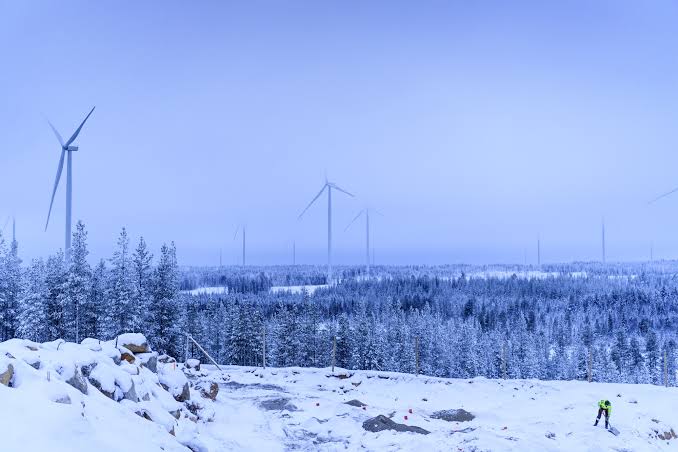
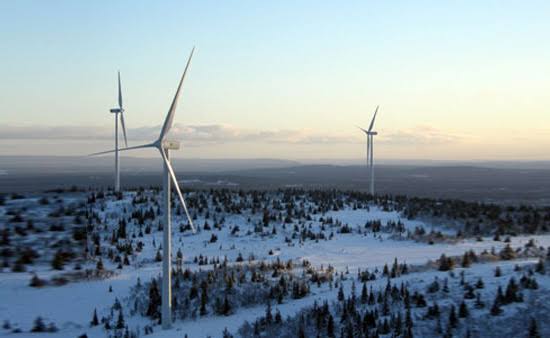
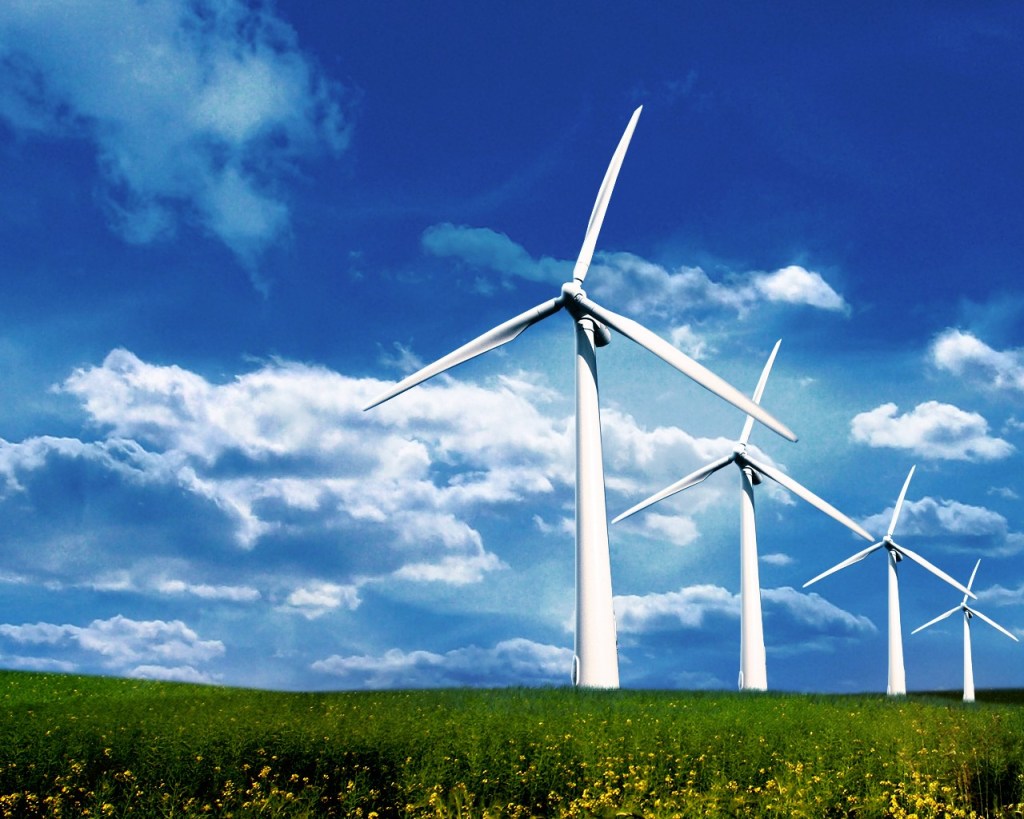
Vestas has temporarily taken around 150 of its V150 machines out of service โ€œin an abundance of cautionโ€ after identifying a blade fault as the cause of a turbine collapse in Sweden late last year.

A investigation into the V150 4.2MW collapse at the Aldermyrberget wind farm found a bonding failure on blade-root inserts due to a manufacturing issue at a single supplier, confirmed a spokesman for the Danish wind giant.

Vestas has halted around 150 of the turbines that could potentially be exposed to the same issue, which caused a loose blade to destabilise the Swedish turbine and collapse, he added.

โ€œVestas is taking this step out of an abundance of caution and is working to put a solution in place to get the turbines safely operating again,โ€ the spokesman told Recharge, adding that the company is liaising with customers over options for repair or replacement.

No other operational turbines have been affected, and the fault is not related to two other V150 blade incidents in the US and Australia last year, said Vestas.

Nobody was hurt in the incident at the Aldermyrberget project, which is owned by Wpd and was ramping up for full commissioning when the turbine collapsed in November.

The V150 has been a huge commercial success for Vestas over the last few years, with thousands of the turbines ordered for deployment in markets around the world as developers move to more powerful machines. The OEM had booked more than 10GW of orders for the V150 4.2MW by mid-2020

5 Best Websites for Online Courses

Everything is available online nowadays, be it food, clothes or furniture. Everything is just one click away, even education.

Weโ€™ve all wished to gain education from the top universities but were unable to do so for unforeseeable reasons. Some found interest in a subject they were completely unaware of. While others just want to gain some extra skills and learn something new.

With the availability of online education, your dream to acquire a degree from top universities has come true.
Thousands of courses are available on these websites to choose from and they have flexible hours. So you can complete the course according to your own pace.

Hereโ€™s a list of top 5 websites for online courses:

  1. Khan Academy:

Started in 2006 by an educator named Salman Khan, Khan Academy is a non-profit academy. It aims to provide free education to everyone and all around the world. 

It is free for both teachers and students. It provides education from the root level, i.e., kindergarten to early college level. 

All the subjects are available on Khan Academy. Be it maths, grammar, history, science and even SAT exam preparation. 

The lectures are not very long and do not make studying boring or monotonous. 

It has some of the most famous partners as its founding partner. Namely, Google, Bill and Melinda Gates Foundation and Reed Hastings.

  1. Coursera:

Coursera is one of the most famous and loved websites by students. It has over 35 million learners and has partnered with 150 top universities from around the world. To name some, Yale, Stanford and the University of Michigan.
Talking about the courses available, Coursera has 2700 courses, 250 specializations and four degrees. Some courses also provide certificates on completion. 

It is the leading provider of massive open online courses.
Some of the courses are free and the paid courses mostly range between $29-$99. But the specializations and degrees have high prices. 

  1. Udemy:

Udemy has around 30 million students and 100,000 courses for you to choose from. Courses are taught in over 50 languages.
It has some of the most expert faculties. With 42,000 instructors and 22 million minutes of video instruction, Udemy is a widely loved website for online education. 

Courses on Udemy are not free but donโ€™t cost much. The price ranges between $9 to $500 depending on the type of course. 

It does not partner with universities but it allows independent creators and educators to create courses and teach online in the subject of their specialization. 

  1. edX:

A non-profit education platform, established by Harvard and MIT, edX aims to break the three barriers in education: cost, location and access.

It has 20 million learners from all around the world. And provide 2400 courses, the majority of which are provided by top-ranked universities in the world.
Some of the courses are free while you may need to pay for some. One of the best things about using edX is that on completion of your course you are rewarded with an official certificate as proof.

  1. Stanford Online:

It offers free online as well as professional certificate, advanced degrees and executive education. Currently, Stanford Online is imparting education to millions of teachers and students. 

It offers courses from Stanford Law School, Stanford Business School and Stanford medical school and many others. 

Many other websites provide online courses that are free or paid. These were some of the most loved and preferred ones. 

Education should be accessible to all and everywhere around the world and thatโ€™s exactly what these websites aim for. 

They are simple to use websites and accessible to people of all ages because learning has no age. 

It will not only help you learn something new but will also add skill to your professional career. 

Happy learning!

BEES

ABOUT BEES:

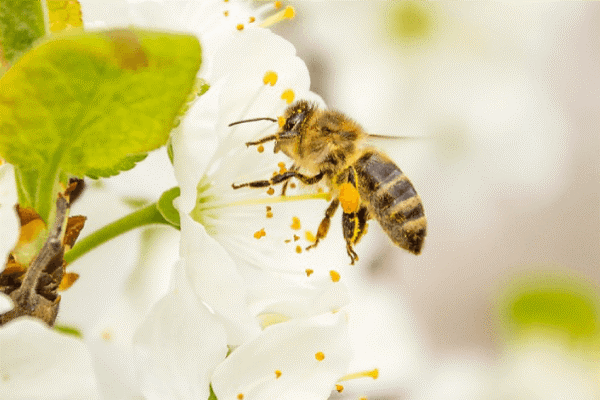
Bees are small and wonderful insects. Bees are flying insects closely related to wasps and ants. They collect honey from flowers and store it in their hive. Bees have four wings. Its body has three parts head, abdomen, and abdomen. The color of its body is yellow and black. They are one of the hardworking insects. Bees live in a hive in a swarm. It lives in its community. Bees are very useful to human beings. They give honey and beeswax. One healthy Honey Bee would approximately lay 2,000 eggs in one day. Bees are mainly found in habitats such as tropical rain forests and woodlands, grasslands, and Gardens where there are more flowers and green matters available. Honey bees are small flying insects whose lifespan varies between 170 to 180 days. Honey bees usually live in groups and their queen has a lifespan of more than two years. One bee may fly up to more than 90 thousand miles to collect one pound of honey. In a colony there are three types of bees namely worker bees, drone bees, and queen bees. . Worker bees are the most familiar-looking member of the honeybee hive. Worker bees are all female, and they do almost everything for the hive. The worker bee is given different tasks to do during different stages of her life. Worker bees are responsible for everything from feeding the larvae (the baby bees), to tending to the queen, to cleaning the hive, to collecting food, to guarding the colony, to building honeycomb. Drones are male bees and their sole purpose is to mate with the queen. Unlike the female worker bee, drones do not have stingers and gather neither nectar nor pollen. You can identify drones in the hive by their big round bodies and large eyes. There is one queen bee per hive – she is the mom of all the other bees. She is the only fertile member of the colony and lays about 1,500 eggs a day during spring and summer. The queen will not leave the hive again unless the colony swarms (looking for a new home). Queen bees are distinguished from the other members of the hive by their long abdomens and small wings.

IMPORTANCE OF BEES:

Bees are important to humanity and the world we live in because they provide the most efficient way to pollinate plants. They are especially important because they pollinate our agriculture for free. It’s their work as crop pollinators. This agricultural benefit of honey bees is estimated to be between 10 and 20 times the total value of honey and beeswax.

INTERESTING FACTS ABOUT BEES:

  • A bee produces a teaspoon of honey (about 5 grams) in her lifetime.
  • There are over 20,000 different species of bees. To produce a kilogram of honey, bees fly the equivalent of three times around the world in air miles.
  • Each bee has 170 odorant receptors, which means they have one serious sense of smell. They use this to communicate within the hive and to recognize different types of flowers when looking for food.
  • If the queen bee dies in a honeybee hive the workers can create a new queen bee. They do this by selecting a young larva and by feeding it special food called ‘royal jelly’ the larva develops into a fertile queen.
  • The Honey Bee is the only insect that makes food which human can eat.

NATURAL DISASTERS


ABOUT DISASTERS:

A natural disaster is a major adverse event resulting from natural processes of the Earth. Some of the natural disasters are floods, hurricanes, tornadoes, volcanic eruptions, earthquakes, tsunamis, storms, and other geologic processes. A natural disaster is a major adverse event resulting from natural processes of the Earth. Many Natural disasters damage the environment and the people living in it. Natural disasters are caused due to different reasons like soil erosion, seismic activity, tectonic movements, air pressure, and ocean currents, etc.

TYPES OF NATURAL DISASTERS ARE:

Some of the different kinds of natural disasters are,

  • Earthquake:

Earthquakes are usually caused when rock underground suddenly breaks along a fault. This sudden release of energy causes the seismic waves that make the ground shake. When two blocks of rock or two plates are rubbing against each other, they stick a little. When the rocks break, the earthquake occurs.

  • Floods:

The major cause of the flood is heavy rainfall. It can be also caused by the melting of snow and ice. It is also caused by Broken Dams.

  • Tsunami:

Tsunami is waves caused by a sudden movement of the ocean surface due to earthquakes, landslides on the seafloor, land slumping into the ocean, large volcanic eruptions, or meteorite impact in the ocean. When tsunami waves become extremely large in height, they savagely attack coastlines, causing devastating property damage and loss of life.

  • Tornadoes:

Tornadoes are caused by the thunderstorms being extremely large, unstable, and with wind shear in the lower region of the atmosphere. Tornadoes often damage power lines, gas lines, or electrical systems, there is a risk of fire, electrocution, or an explosion. Tornadoes can last from several seconds to more than an hour.

  • Volcanic eruption:

Volcanoes erupt when molten rock called magma rises to the surface. Magma is formed when the earth’s mantle melts. Melting may happen where tectonic plates are pulling apart or where one plate is pushed down under another. Health concerns after a volcanic eruption include infectious disease, respiratory illness, burns, injuries from falls, and vehicle accidents related to the slippery, hazy conditions caused by ash. When warnings are been pay attention to, the chances of adverse health effects from a volcanic eruption are very low.

  • Landslide:

Landslides can be initiated in slopes already on the verge of movement by rainfall, snowmelt, changes in water level, stream erosion, earthquakes, volcanic activity, disturbance by human activities, or any combination of these factors. Slides can cause disastrous flooding, particularly when landslide dams across streams are breached, and flooding may trigger slides. A landslide can also block rivers and increase the risk of floods.

  • Hurricanes:

Hurricanes form over the warm ocean water of the tropics. When warm moist air over the water rises, it is replaced by cooler air. The cooler air will then warm and start to rise. This cycle causes huge storm clouds to form. The major effects of hurricanes are tornadoes, heavy rainfall, high winds, riptide, and death.

  • Thunderstorms:

Thunderstorms arise when layers of warm, moist air rise in a large, swift updraft to cooler regions of the atmosphere. Thunderstorms can bring heavy rains, strong winds, hail, lightning, and tornadoes. Severe thunderstorms can cause extensive damage to homes and property. Lightning is a major threat during a thunderstorm.

Glowing images of fluorescent reptiles recently discovered by scientists in Africa

Astonishing glow-in-the-dark discoveries were recently made in Africa, after scientists recently discovered reptiles that glow in the dark… literally! Namibia’s geckos shine bright under black lights, as stated in a study recently published in Scientific Reports.

According to the report, the stripes and blots on the reptile prevent it from being identified by predators, and keep them singled out from other geckos. A lot of such discoveries have been made recently across the world. In Australia, platypuses with fluorescent markings were discovered. 

Astonishing glow-in-the-dark discoveries were recently made in Africa, after scientists recently discovered reptiles that glow in the dark… literally! Namibia’s geckos shine bright under black lights, as stated in a study recently published in Scientific Reports.

According to the report, the stripes and blots on the reptile prevent it from being identified by predators, and keep them singled out from other geckos. A lot of such discoveries have been made recently across the world. In Australia, platypuses with fluorescent markings were discovered.

The particular species in question have translucent skin, with even their bones glowing under ultraviolet light.

Dr Mark Scherz from Germany’s University Potsdam, part of the Adaptive Genomics Group recently spoke to Live Science about the astonishing discovery, claiming that the colour was shocking to the researchers.

“Actually it turns out quite a few other species, including geckos, have sufficiently transparent skin that their bones’ fluorescence can be seen through it under a sufficiently strong UV light,” Scherz said.

“We have observed in captivity that, although these animals are largely solitary, they do run up to one another to greet each other after a short period of separation,” Scherz added.

 “They also lick condensation from each other’s bodies. So there are lots of reasons that being able to see each other over long distances would be useful for these geckos,” he further said.

Indian Army Day

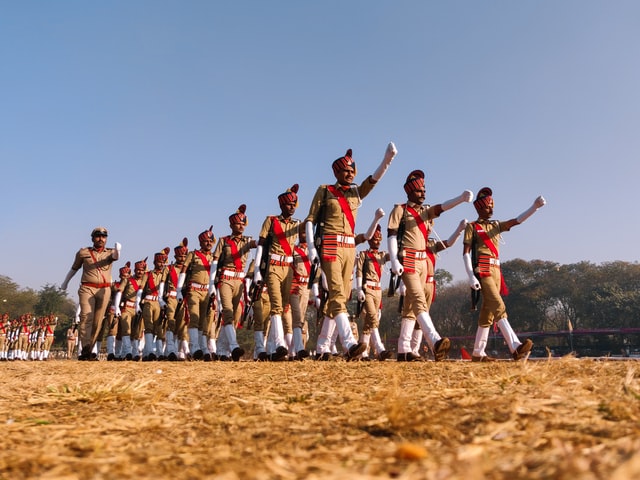
When people think about heroes of India, they only and only remember the Indian Army. Let us celebrate Indian Army Day by saluting all the army men and women for their bravery, dedication and patriotism.

Army Day is celebrated on 15 January every year in India, in recognition of Field Marshal Kodandera M. Cariappa taking over as the first Commander-in-Chief of the Indian Army from General Sir Francis Butcher, the last British Commander-in-Chief of India, on 15 January 1949. Today, India will celebrate its 73rd Indian Army Day. The day is celebrated in the form of parades and other military shows in the national capital New Delhi as well as in all headquarters. Army Day marks a day to salute the valiant soldiers who sacrificed their lives to protect the country and its citizens. Army Day strives to motivate people to build a great Nation by knowing about how an Army officer provides his/her full life for the betterment and safety of the people. While celebrations take place across the country, the main Army Day parade is conducted in Cariappa Parade ground in Delhi cantonment. Gallantry awards and Sena medals are also awarded on this day.

K. M. Cariappa

Kodandera Madappa Cariappa was the first Indian Commander-in-Chief of the Indian Army. He led Indian forces on the Western Front during the Indo-Pakistani War of 1947. He was appointed Commander-in-Chief of the Indian Army in 1949. He is one of only two Indian Army officers to hold the Five-star rank of Field Marshal; the other being Field Marshal Sam Manekshaw.

His distinguished military career spanned almost three decades. Born on 28 January 1898, in Madikeri, Kodagu, Cariappa joined the British Indian Army shortly after the end of World War I. He was transferred between multiple regiments early in his career before settling on 1/7 Rajputs, which became his permanent regiment. He was the first Indian military officer to attend the Staff College, Quetta, the first Indian to command a battalion. Several measures taken by Cariappa, such as his refusal to induct former Indian National Army personnel into the Army, kept the organisation out of political affairs and maintained its autonomy.  He died in his sleep on 15 May 1993. India remembers him as a true patriot and a son of the country. 

The primary mission of the Indian Army is to ensure national security and national unity, to defend the nation from external aggression and internal threats, and to maintain peace and security within its borders. It conducts humanitarian rescue operations during natural calamities and other disturbances. The army comprises more than 80% of the country’s active defence personnel. It is the largest standing army in the world, with 12,37,117 active troops and 9,60,000 reserve troops. In 1992, the Indian Army began inducting women officers in non-medical roles. In 2014, India’s army had 3 per cent women and in 2015, India opened new combat air force roles for women as fighter pilots, adding to their role as helicopter pilots in the Indian Air Force. We all have love, respect and admiration for our soldiers and the Indian army as a whole.

Happy Indian Army Day!

HOW TO GET OUT OF YOUR COMFORT ZONE

Weโ€™ve all felt comfortable in one surrounding and uncomfortable in some. The surrounding you feel comfortable is your comfort zone. You can be yourself, talk freely and express your heart out when in your comfort zone.
But we canโ€™t always stay there. Some situations require us to step out of it and deal with the real world, the one that would not be so comfortable. 

Of course, everyone enjoys being their comfort zone but that might hinder our growth somewhere in life.

The fear we feel when we encounter such a situation limits us from grabbing some wonderful opportunities. We fear being mocked or rejected and as a result, we stop taking action. 

Now, this may seem like a one-time thing but if this continues to happen for a long period of time, it may turn into an anxiety disorder.
As cosy as your comfort zone may seem, it is not deniable that it keeps you from life experiences, professional opportunities and personal growth.

It is very essential to explore the unfamiliar. Be it professionally or personally. Getting out of your comfort zone can be difficult but it is not impossible.

Some of the steps you can follow to get out of your comfort zone are:

  1. Identify your fears:

First, you need to evaluate what makes you the most afraid? When was the last time you felt afraid or uncomfortable? How did your body react to your fear?
Once you know what makes you uncomfortable and what effect it has on your body, it will be easy for you to identify what makes you uncomfortable. It allows you to open up in a situation that makes you uncomfortable. 

  1. Reminding yourself that you are fearless:

Everybody needs a little push sometimes to move ahead. And sometimes you are the only one who can give yourself that push. Every time you face a situation where you feel uncomfortable all you need is a reminder that you are fearless and can achieve anything you set your mind to. You can overcome all the uncomfortable situations and seize all the opportunities that come your way. Next time you do something out of your comfort zone whisper to yourself โ€œI am fearlessโ€.

  1. Recall your accomplishments:

You must have been in an awkward situation in the past and somehow nailed it perfectly. Recall that moment and every other such moment where you thought you couldnโ€™t do it but did it anyway. These accomplishments may be small but they make a huge difference. Remember them and never give up.

  1. Find a valid reason:

If you are stepping out of your comfort zone there must be some solid reason for it. Find that reason and always keep that in mind. You may or may not succeed but youโ€™ll learn something for sure. 

  1. Donโ€™t chose the safe option:

Imagine you are standing on a diverging road, you know one road by heart and are completely unfamiliar about the other. Donโ€™t choose the first road because that is your comfort zone. To your surprise the second road may be unfamiliar but may be prettier than the first road. Even if it’s not, youโ€™ll experience something new. So, always choose the option which does not seem safe or comfortable to you.

  1. Set small challenges:

You are your biggest competitor. Setting small challenges and outdoing yourself is a great way to get out of your comfort zone. After successfully completing these challenges, you will feel accomplished and more confident. This will help you to not give up just yet.

These were some of the simple and most common ways to get out of your comfort zone.
Personally, I’ve been afraid of stepping out of my comfort zone but these steps have helped me a lot. And speaking from experience stepping out of your comfort zone is totally worth it.

Republic Day: No foreign head of state as chief guest, first in 55 years

Due to the prevailingย Covid-19ย situation, the Centre has decided against having any foreign head of state or government as the chief guest for this yearโ€™s Republic Day event on January 26, news agencyย PTIย reported. This is the first time in 55 years that India is not going to have any chief guest for the Republic Day parade.

Addressing a press conference on Thursday, Ministry of External Affairs spokesperson Anurag Srivastava said, โ€œDue to the global Covid-19 situation, it has been decided that this year there will not be any foreign head of state or government as the chief guest for our Republic Day event.โ€

The central government was thinking on these lines after British Prime Minister Boris Johnson had called up Prime Minister Narendra Modi and expressed โ€œregretโ€ that heย would not be ableย to be chief guest for the Republic Day celebrations. Johnson took this decision in view of the fresh national lockdown in the UK due to the new, more contagious mutant strain of the novelย coronavirus.

The last time India did not send an invitation to any head of state was in 1966 due to the untimely demise of then Prime Minister Lal Bahadur Shastri. The new government headed by Indira Gandhi was sworn in on January 24, 1966 โ€“ only two days ahead of the Republic Day parade.

Theย Republic Day celebrations have been truncated this year on account of theย pandemic. Last yearโ€™s Independence Day celebrations had also been scaled down.

An invitation to be chief guest at Indiaโ€™s Republic Day is a special honour for the visiting foreign dignitary. New Delhi has been weaving strategy with hospitality while deciding on the chief guest. The choice is dictated by a number of factors โ€” strategic and diplomatic, business interests, and geo-politics.

Scientists witness the death of a galaxy 9 million light-years away unfold, in a remarkable first

Even though galaxies are known to die out, scientists never could witness the process of a galaxy dying out, until now. Using a high tech telescope, scientists saw the galaxy, ID2299, ejecting out the star forming gases and losing its fuel. As per a press statement, the Atacama Large Millimeter/submillimeter Array (ALMA) spotted the galaxy ejecting nearly half of its star-forming gas. Also, the speed of this ejection was โ€œequivalent to 10,000 Suns-worth of gas a yearโ€. The European Southern Observatory (ESO) was a partner in the observation and the team thinks that this celestial event has been triggered by a collision with another galaxy.

As per the statement, galaxies begin to ‘die’ when they stop forming stars. Now they are getting to actually see how the process takes place. The galaxy is nine billion years away. Hence, what we are seeing now is when the Universe was just 4.5 billion years old.

โ€œThis is the first time we have observed a typical massive star-forming galaxy in the distant Universe about to โ€˜dieโ€™ because of a massive cold gas ejection,โ€ said lead researcher Annagrazia Puglisi, who is associated with the Durham University, UK, and the Saclay Nuclear Research Centre, France.

Apart from ejecting out material, the galaxy is also forming stars. The rate of creating stars is very rapid, almost hundreds of times faster than our galaxy, the Milky Way. The result of this fast creation will be that the remaining gas in ID2299 will be consumed gradually, over a few tens of millions of years.

Earlier, it was believed that winds caused by star formation and the activity of black holes at the centres of giant galaxies caused the ejection of star-forming material into space. But the recent case shows that mergers of galaxies can also lead to the shutting down of a galaxy.

โ€œALMA has shed new light on the mechanisms that can halt the formation of stars in distant galaxies. Witnessing such a massive disruption event adds an important piece to the complex puzzle of galaxy evolution,” said Chiara Circosta, a researcher at the University College London who was part of the research. The study has been published in the journal

Trump has been impeached a second time. What happens next?

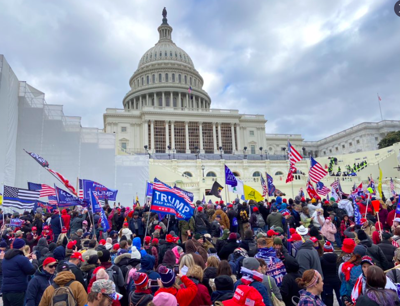
The House of Representatives on Wednesday made Donald Trump the first US president to be impeached twice, formally charging him withย incitement an insurrection just a week after a violent mob of his supporters stormed the Capitol. Hereโ€™s a guide to what happens next:

Is the impeachment proceeding over?

No. Impeachment refers only to the House, the lower chamber of Congress, bringing charges, or Articles of Impeachment. The next major step is for the Senate, the upper chamber, to have a trial to determine Trumpโ€™s guilt. A two-thirds majority is needed to convict Trump. If all 100 senators are present for the vote, at least 17 Republicans need to join the Democrats to convict Trump

When will the trial begin?

The Senateโ€™s Republican majority leader, Mitch McConnell, has rejected Democratic calls for an immediate impeachment trial and said it cannot begin until after the Senate returns from a recess on Jan. 19. That means the trial will likely begin after Trump leaves office on Jan. 20.

The House must formally transmit the charge against Trump to the Senate before the trial can begin.

What is Trumpโ€™s likely defense in the Senate trial?

The House approved a single article of impeachment โ€” a formal charge โ€” accusing Trump of โ€œincitement of insurrection,โ€ focused on a speech he delivered to thousands of supporters shortly before the pro-Trump mob rampaged through the Capitol. Trump is likely to argue at trial that his remarks were free speech protected by the Constitutionโ€™s First Amendment and that, while he told supporters to โ€œfight,โ€ he did not intend it as a literal call to violence.

Trump releasedย a videotaped statement on Wednesday, shortly after the impeachment vote, saying he condemned last weekโ€™s violence. โ€œViolence and vandalism have absolutely no place in our country and no place in our movement,โ€ Trump said.

So a former president can be impeached?

Yes. The consensus among scholars is that a โ€œlate impeachmentโ€ is constitutional. These scholars note that impeachment is used not just to remove officials from office, but also to disqualify them from future office. That means there is still a reason to try Trump after he leaves the White House.

The Constitution states that one punishment for conviction is โ€œdisqualification to hold and enjoy any office of honor, trust or profit under the United States.โ€

Under Senate precedent, only a simple majority of the Senate is needed for disqualification. Historically, that vote only happens after a conviction. Itโ€™s not clear if someone must be convicted to be disqualified.

How long will the trial last?

The US Supreme Court has said the Senate has wide latitude to set its own rules for how to conduct an impeachment. But under the current rules in effect, a trial would take at least a few days.

Feminism

What is feminism?
Who are called as a feminist?
What does a feminist do?
Why feminism arrived?

Before saying about feminism let me clear one thing feminism is not only about women getting equal rights and opportunities rather feminism is a belief that every individual should be given equal rights, powers and opportunities. If you stand for equality then you are a feminist. Basically feminist are those individuals who takes care no one is treated unfairly.

Feminism started in the 19th and early 20th centuries addressing issues ofย women’s suffrage (the right of women to vote in elections). The second-wave feminismย started in 1960s broadened debate to includeย culturalย inequalities,ย gender norms, and the role of women inย society.

During the 17th and 18th centuries in Europe many Enlightenment philosophers defended the rights of women, includingย Jeremy Benthamย (1781),ย Marquis de Condorcetย (1790), andย Mary Wollstonecraftย (1792). Other important writers of the time also expressed the views of the feminist.

Unlike the Western feminist movement, India’s movementย was initiated by men, and later joined by women. The first phase of feminism in India was initiated by men to uproot theย social evils of satiย (widow immolation),ย to allow widow remarriage, to forbid child marriage, and to reduce illiteracy, as well as to regulate the age of consent and to ensure property rights through legal intervention.

But feminism as an initiative by women started independently a little later in Maharashtra by pioneering advocates of women’s rights and education: Savitribai Phule, who started the first school for girls in India (1848).

ย Tarabai Shinde, who wrote India’s first feminist textย Stri Purush Tulanaย (A Comparison Between Women and Men) in 1882; andย Pandita Ramabai, who criticized patriarchy and caste-system in Hinduism, married outside her caste and converted to Christianity (1880s).

The Bengali reformers included abolishingย sati, which was a widow’s death by burning on her husband’s funeral pyre, abolishing the custom of child marriage, abolishing the disfiguring of widows, introducing the marriage of upper casteย Hinduย widows, promoting women’s education, obtaining legal rights for women to own property, and requiring the law to acknowledge women’s status by granting them basic rights in matters such as adoption.

The second phase started when Mahatma Gandhi expanded Indian women’s public activities by initiating them into the non-violentย civil disobedienceย movement against theย British.ย Many women organisations formed. Women-only organisations like All India Women’s Conferenceย (AIWC) and theย National Federation of Indian Womenย (NFIW) emerged.ย Women started looking for their scope in leadership roles in political parties, women’s franchise and communal awards. In 1954 the Indian Communist Party formed its own women’s wing known as the National Federation of Indian Women.

By the 19th century and 20th century more women issues came to spotlight. More amount of women became active and started protesting for their rights. Feminists in the 1970s challenged the inequalities that had been established and fought to reverse them. These inequalities included the unequal wages for women. The aim was to abolish the free service of women.

Struggle of feminist are still going on. Many women are still fighting for their freedom. We need to change this view that women don’t need permission they have their voice and they can make their own choice.

Let’s find out about some Indian feminists and their contributions. They are :

  • Savitribai Phuleย  She is one of the earliest Indian feminists. She started the first school for girls in India in the year 1848.
  • Tarabai Shinde – The writer of India’s first feminist textย Stri Purush Tulanaย (A Comparison Between Women and Men) in 1882.
  • Kamini Roy She is a poet and suffragette. She became the first woman Honors Graduate in India in 1886.
  • Saroj Nalini Dutt โ€“ She is the early social reformer who pioneered the formation of educational Women’s Institutes inย Bengal.
  • Mira Datta Guptaย โ€“ Activist for women’s issues and one of the founding members of the All India Women’s Conference.
  • Sarala Devi Chaudhuraniย โ€“ Founder of theย Bharat Stree Mahamandal, one of the first women’s organisations in India.

Online Education

The meaning of schools has changed after the COVID-19 outbreak. Classes are being conducted in an online medium. This is the โ€˜new normalโ€™ for the students of India.

How do the students learn?

When I was in 9th standard, we had a chapter in our English textbook about the education system in future. The students there studied through computers and did not go to school. At that time I often thought that I would never have to study and learn via computers and laptops. It has been almost ten months at home and I guess this has taught me that online education is possible but, I do miss going to school.

Online education is often called – distance learning, distance education, virtual learning, online learning, learning web-based training. Online education is electronically supported learning that relies on the Internet for teacher – student interaction and the distribution of class materials.

Some online educational programs are conducted exclusively through assigned lessons and assessments administered online. Others take the form of remote lectures where students join the class via the cameras on their laptops, and the instructor teaches or lectures from his own computer. Other courses are a combination of the two, requiring students to do a fair amount of independent research.

In my school, the classes are taken through Google Meet. The google meet link is shared in the class Whatsapp group. In my friendโ€™s school the classes are conducted through Zoom. Teachers also present their screens in the meeting so that we can understand the concept clearly. After the class, the teachers assign us different assignments which we have to complete and submit in PDF form in a limited time. We also have exams online. First, the teachers share a Google Form for one mark questions; then they share the descriptive/writing part of the paper in Google Classroom. We are given half an hour to solve the one mark questions on Google Form and two and a half hours to solve and write the descriptive part. We have to write this part in our notebook, scan the pages and submit it in Google Classroom in PDF form within a fixed time period. These modern day learning applications are compatible with desktops/laptops as well as any smartphone.

Pros of online education

  1. Study from anywhere. There is no need to go to a particular place to study. We can study indoors as well as outdoors. Even if you are ill, you can attend the classes easily. 
  2. Flexible learning schedule is observed in online education. A lot of time is saved in learning online. You can also do a part time job and learn. 
  3. Students can control study time because of the flexibility in the timetable. They also get extra time for sports and hobbies.
  4. There is no transportation fee to reach the school that lowers the overall cost. (There is no need to buy shoes and socks!) 
  5. The minimum infrastructure required for online learning is a smartphone and internet connection. As the country is witnessing a digital boom, it is expected that the poor people can also afford and access these classes easily.
  6. Improves the student’s technical skills. To join the classes, a student needs to learn to operate computers and various other apps. 
  7. There is no bullying or ragging involved in this method of education. The students are also free from stress and anxiety. Hence, each student is physically and mentally healthy.
  8. Teachers can also share subject related videos to students to make the learning fun and interesting. In a traditional classroom environment, this would require projector and sound system setup.    

Due to the following reasons, many people choose online education over the traditional classroom interactional education.

Earth

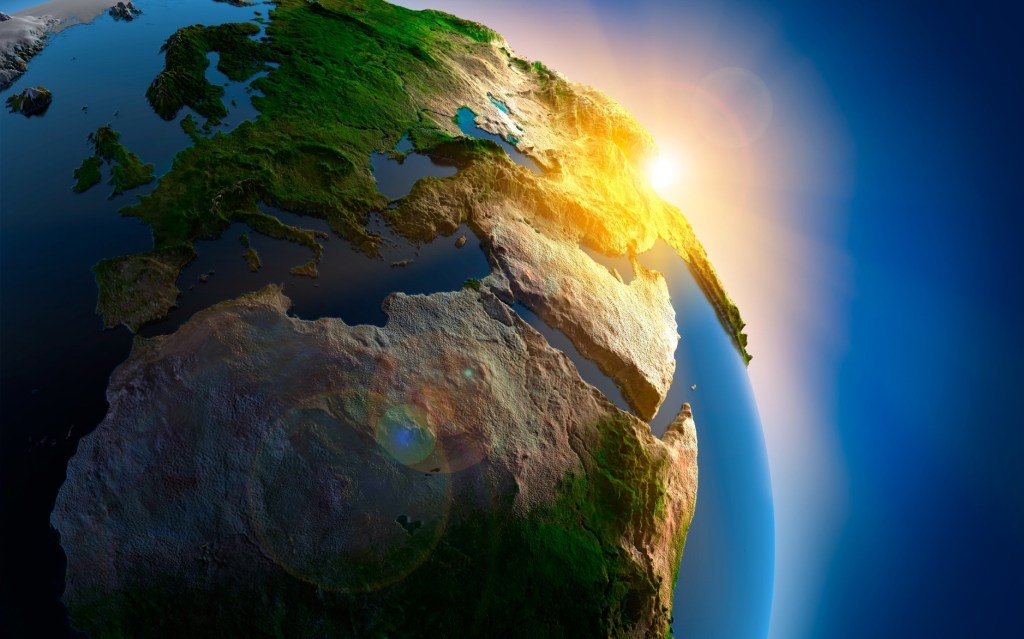
Earth is the only planet in our Solar System where life exists. Approximately 4.5 billion years ago, Earth formed from the particles left over from the creation of our Sun. Gravity pulled swirling gas and dust in together to form the Earth. It is the third planet in our Solar System.


29% surface on Earth is land ( i.e continents and islands ) and the rest 71% is water mostly oceans but also lakes, rivers and other fresh water bodies. Out of this 71% water, 97% is saline water(water in oceans) and the availability of freshwater is only 3%. Earth’s polar region is covered with ice.

Earth’s atmosphere contains 78% nitrogen, 21% oxygen and 1% other gases such as carbon dioxide, argon and neon. The atmosphere acts as a shield and protect us from the harmful radiation coming from the Sun. It also protects us from meteoroids which burn up in the atmosphere before they can hit the surface.

Earth isย the only planet that was not named after a Greek or Roman god. Its alternative names are Gaia, Gaea, Terra, Tellus, The World, The Globe.

The journey of life on Earth started in oceans. The earliest forms of life were microscopic organisms (microbes) that left signals of their presence in rocks about 3.7 billion years old. These microbes are known as Prokaryotes that fed on carbon compounds that were accumulating in Earth’s early oceans. Slowly, many other organisms evolved that used the Sun’s energy, along with compounds such as sulfides, to generate their own energy.


Earth is composed of four main layers.
The inner core is a solid sphere made of iron and nickel metals about 759 miles (1,221 kilometers) in radius. The temperature there is as high as 9,800 degrees Fahrenheit (5,400 degrees Celsius). Surrounding the inner core is the outer core. This layer is about 1,400 miles (2,300 kilometers) thick, made of iron and nickel fluids.In between the outer core and crust is the mantle, the thickest layer. This hot, viscous mixture of molten rock is about 1,800 miles (2,900 kilometers) thick and has the consistency of caramel. The outermost layer, Earth’s crust, goes about 19 miles (30 kilometers) deep on average on land. At the bottom of the ocean, the crust is thinner and extends about 3 miles (5 kilometers) from the sea floor to the top of the mantle.

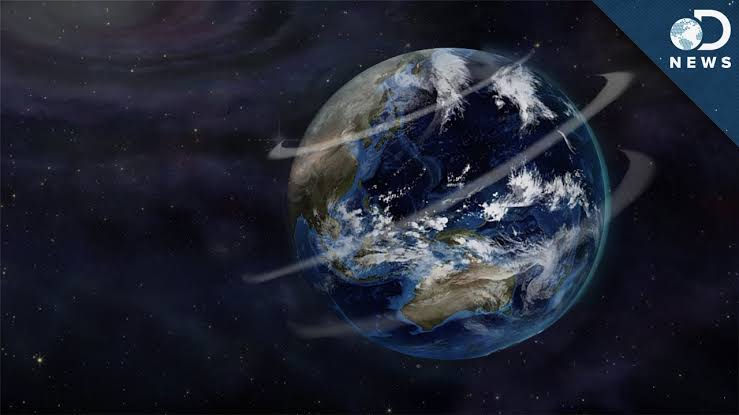
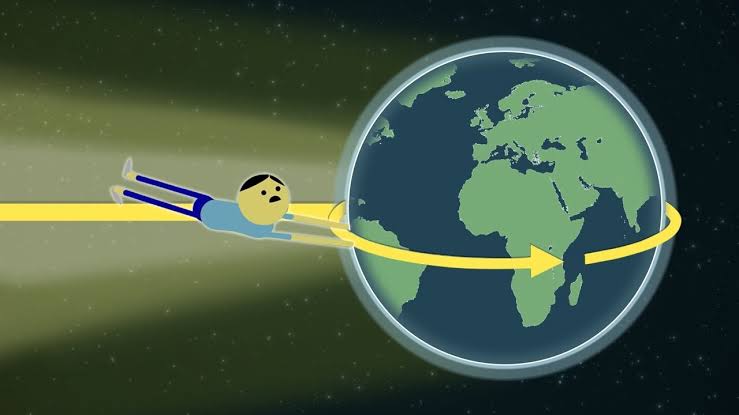
Earth doesnโ€™t take 24 hours to rotate on its axis
It actually takes 23 hours, 56 minutes and 4 seconds to completely rotate around it’s axis. Also known as sidereal day. Earth’s rotation is slowing slightly with time. Thus, a day was shorter in the past. This is due to theย tidal effectsย theย Moonย has on Earth’s rotation. Analysis of historical astronomical records shows a slowing trend that theย length of a dayย increased about 2.3 milliseconds per century since theย 8th century BCE.

Earth has only one moon. Without the moon, a day on earth would only last six to twelve hours. There could be more than a thousand days in one year. That’s because the Earth’s rotation slows down over time thanks to the gravitational force or pull of the moon and without it days would go by in a blink.

Eco Friendly Tourism

It is often seen that tourist spots are very dirty, plastic bags and packets are thrown everywhere. In short, tourism is polluting the environment. We can stop this by promoting eco-friendly tourism. Here are three such types of tourism.

Eco Tourism

Ecotourism is defined as โ€œresponsible travel to natural areas that conserves the environment, sustains the well-being of the local people, and involves interpretation and educationโ€ (TIES, 2015).ย Ecotourism is about uniting conservation, communities, and sustainable travel.

This means that those who implement, participate in and market ecotourism activities should adopt the following ecotourism principles:

  • Minimize physical, social, behavioral, and psychological impacts.
  • Build environmental and cultural awareness and respect.
  • Provide positive experiences for both visitors and hosts.
  • Provide direct financial benefits for conservation.
  • Generate financial benefits for both local people and private industry.
  • Deliver memorable interpretative experiences to visitors that help raise sensitivity to host countriesโ€™ political, environmental, and social climates.
  • Design, construct and operate low-impact facilities.
  • Recognize the rights and spiritual beliefs of the Indigenous People in your community and work in partnership with them to create empowerment.

Some Eco tourism places in India are –

  1. Coorg, Karnataka
  2. Munnar, Kerala
  3. Kodaikanal, Tamil Nadu
  4. Jim Corbett National Park, Uttarakhand
  5. Kaziranga National Park, Assam

Sustainable Tourism

The World Tourism Organization defines sustainable tourism in the following manner: โ€œSustainable tourism development meets the needs of present tourists and host regions while protecting and enhancing opportunities for the future. It is envisaged as leading to management of all resources in such a way that economic, social and aesthetic needs can be fulfilled while maintaining cultural integrity, essential ecological processes, biological diversity, and life support systems.โ€

According to The World Tourism Organization (WTO), sustainable tourism should:

  •  Make optimal use of environmental resources that constitute a key element in tourism development, maintaining essential ecological processes and helping to conserve natural heritage and biodiversity.
  •  Respect the socio-cultural authenticity of host communities, conserve their built and living cultural heritage and traditional values, and contribute to inter-cultural understanding and tolerance.
  • Ensure viable, long-term economic operations, providing socio-economic benefits to all stakeholders that are fairly distributed including stable employment and income-earning opportunities and social services to host communities, and contributing to poverty alleviation.

Some companies that promotes sustainable tourism in India are –ย 

  1. Kipepeo
  2. Evolve Back
  3. Spiti Ecosphere
  4. India Untravelled
  5. Green People

Geo Tourism

Geotourism is defined as tourism that sustains or enhances the distinctive geographical character of a place – its environment, heritage, aesthetics, culture, and the well-being of its residents.

Principles of geo tourism are –ย 

  • Integrity of place: Enhance geographical character by developing and improving it in ways distinctive to the local, reflective of its natural and cultural heritage.
  • Market diversity: Encourage a full range of appropriate food and lodging facilities
  • Community involvement: Base tourism on community resources to the extent possible, encouraging local small businesses and civic groups 
  • Protection and enhancement of destination appeal: Encourage businesses to sustain natural habitats, heritage sites, aesthetic appeal, and local culture. 
  • Land use: Anticipate development pressures and apply techniques to prevent undesired overdevelopment and degradation. 
  • Conservation of resources: Encourage businesses to minimize water pollution, solid waste, energy consumption, water usage, landscaping chemicals, and overly bright nighttime lighting. Advertise these measures in a way that attracts

Some geo tourism places in India are –

  1. Akal Fossil Wood Park, Jaisalmer
  2. Saketi, Sirmur District, Himachal Pradesh
  3. Peninsular Gneiss National Monument at Lalbagh, Bengaluru
  4. Columnar Basaltic Lava, Coconut Island (St. Mary’s Islands), Udupi District, Karnataka
  5. Ramgarh Crater, Baran district, Rajasthan.

Social protection : Challenges and Solution

There are hundreds of social security schemes in India, from housing to food, from maternity benefit and child welfare to old age support. Many of them are funded at very low level that limits their effectiveness. While their performance vary across the states it is broadly believe many of these schemes are infected with problems that limit their impact.

Problems with Social Security Schemes.

First, there is a problem of eligibility. Often one should not be getting a benefit gets it (inclusion error) while who should be getting did not get (exclusion error)

Second, there is a problems of leakage, wastage, corruption in the delievey process.

third, even if the implement process is faultless that is free from above given problems it would consume a lot administrative resources and manpower for other duties to be performed by the administration.

Fourth, some of the schemes involve subsidies which distort the allocation of resource. For example subsidies for water and electricity arguably causes environmental damage ( falling of underground water tables, power blackout). Moreover they benefit relative better off people than they benefit poor since poor consume less of the relevant good and services. For example power subsidies benefit those who have electricity connection and among those who consume very high electricity.

Steps to improve the social security schemes.

Reduce the number of schemes drastically to a manageable number, all of which are aimed at most important risk. However removing any schemes no matter how inefficientive it is will hurt some vulnerable groups so there should be a proper plan for compensation for people while caring out social reform .

The should focus on ensuring that citizen choice is at the center of social protection schemes. For example families should be given an option whether they want food ration or cash or direct benefit transfer.

In general, thrust should be given on moving to uniform and universal transfer as much as possible. Cash transfer reduces administrative cost, corruption and other various distortion which there in case of in kind transfer.

Any new basic income schemes whether targeted at a specific group like farmer or more generally to poor people must provide sufficient income and the entitlement should be linked to inflation so that it goes up as price increases.

Conclusion

Social protection should improve from current state and it increase huge administrative cost, facilitate huge corruption and have not significantly improve the standard of living of poor and vulnerable society. It is important because huge percentage of Indian depend upon some sort of social protection schemes.

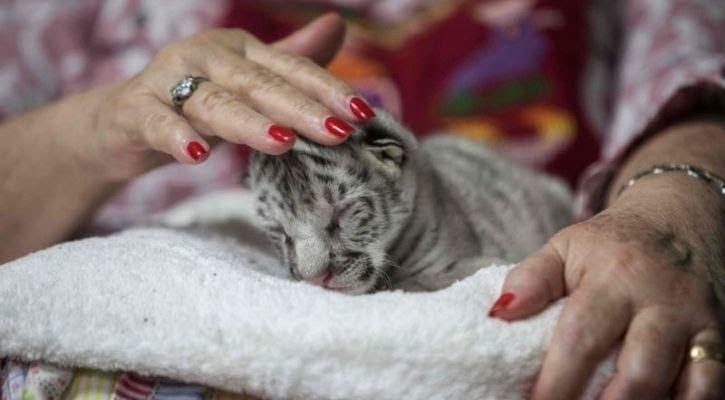
Rare White Tiger Born In Zoo Is Being Raised by Humans After Mother Rejects It

Tigers are majestic creatures — whether it’s their stripes or just the way their face appears, itโ€™s both adorable and menacing. And it is no secret that tigers around the world are striving hard to keep up with the world, with their population so low, theyโ€™ve been categorized as endangered and are listed on the Red List of Threatened Species published by the International Union for Conservation of Nature.

However, whatโ€™s rarer are white tigers. Theyโ€™re not found in the wild and a few dozens that do exist globally are in captivity. And recently, another white tiger has joined this list. 

The little one was born around a week ago, weighing just a kilogram at birth, according to director Eduardo Sacasa in a conversation with AFP.

Upon birth, Nieve’s mother rejected it and now it is being raised by the zoo staff. The cub is being kept away from the mother now and is being bottle fed by Sacasaโ€™s wife, Mariana Arguello, who helps him manage the zoo which as of now consists of 700 animals as well as a rescue centre. 

While feeding Nieve, Arguello said in a statement to AFP, “She has not lost her appetite; every three hours she gets the bottle. If not, she screams… also if the milk gets too cold.” 

Existence of white tigers

In case you didnโ€™t know, white tigers are essentially forms of the Royal Bengal tigers that originate in India, however, what makes them white is a rare recessive gene. They are different from albino tigers or categorised as a different species. 

In Nieveโ€™s case, she came from a couple of coloured mother and father. However, the mother, who was saved after being abandoned by a circus crew had inherited the gene from her grandfather, who was white.  As of now, no white tigers exist in wild habitat, all of them are raised and nurtured in captivity. 

National Youth Day


Every year 12 January is celebrated as the National Youth Day, being the birth anniversary of Swami Vivekananda. In 1984 government of India declared this day as National Youth Day and 1985 onwards we celebrated this event in India.


Swami Vivekananda’s lectures and writings, deriving their inspiration from Indian spiritual tradition and the broad outlook of his Master Sri Ramakrishna Paramahansa. These were the source of inspiration and have motivated the youth.

Swami Vivekananda created a great impact on Youth. His words were simple yet very powerful. He said, “If you think yourselves weak, weak you will be; if you think yourselves strong, strong you will be.โ€ He also said, โ€œSee for the highest, aim at that highest, and you shall reach the highest.โ€ His messeges gave a boost to the youth.


As Mitochondria is the power house of cell. Youth is the powerhouse of a country. Youth plays a vital role in shaping the future of a country. It has the power to help a country develop and move towards progress. It is also responsible for bringing social reform within a country. The youth brings revolution.

In our Indian history there are many examples that justify the contribution of the youth towards the progress of the country. That how the Youth of India fought to bring Independence in the country.

In our country half of the population is youth. If they will take proper action towards the problems occurring in our country, it will not only benefit the country but will also inspire young ones. Like many youth are running campaigns and organisations on various things like
Many are cleaning the garbage near the seaside or in a land, some helping the poor children in studying, some protesting against child labour, also against rapes, etc . Active participation of youth is hence very much important. It can spread the message of national integration.

Youth should not keep their energies and enthusiasm inside. It should go out in betterment of the society. Many are unware of there potential and their capabilities. Sometimes youth undergoes through a lot of problems at this time the rest people should encourage and motivate them. And give them equal opportunities so that they can succeed in life. Motivate them to take challenges and achieve their desired goals in life.


The prior duty of youth is to encourage others to join a youth organization. Inspire and teach young people to take responsibilities and volunteer for a social cause and bring some social changes. Various organizations and charities recruit youngsters and motivate them to get involved in social cause.

The youth should ask young people to join campaigns or organizations to raise awareness for a social cause. Teach them to take a stand against something wrong and help them transform their ideas into reality. With their active participation we can bring some significant social changes in the country that are mostly overlooked. Therefore, do not wait for anything and join a campaign or any organisation and raise awareness about it among people.

YOU ! YES YOU!

ARE THE YOUTH OF OUR COUNTRY. DON’T JUST RELAX. THERE ARE MANY THINGS TO DO. JUST GET UP AND STAND FOR A SOCIAL CAUSE. ๐Ÿ™‚

LACK OF SEX EDUCATION IN INDIA

Sex has always been a topic talked about behind the curtains. It is considered a taboo in India even today. People are even afraid to say the word โ€œsexโ€ out loud let alone discuss it. And it is not something to be very proud of because it has resulted in a lack of sex education in people. This illiteracy has caused several problems to arise in the country.


Here in India, people associate sex education with just the act of sexual intercourse but it so much more than that. Sex education as a whole is a vast subject. It is a program which aims to build a strong foundation of oneโ€™s sexual well being, including sexuality and contraceptives. It also includes gender identity, consent and awareness about sexual abuse. 

From a very young age, children are deprived and kept away from any such means that might expose them to the slightest of intimacy. But isnโ€™t this something everyone is bound to learn about someday in life? People in India are of the view that if children are exposed to sex education, it might corrupt them.
Unlike hunger and thirst, sex might not be a necessity but it surely is important for the preservation and continuation of the human race.

This narrow mindedness related to sex has given rise to numerous problems in the country. Like rapes, stalking, eve-teasing and gender discrimination from a very young age. Because adolescents are deprived of the education that is necessary for them, they resort to half and false information available on the internet. This results in an unhealthy sexual life and may also lead to the spread of STDs. 

There is very little knowledge that people have about safe sex, the use of contraceptives and the consequences unprotected relations can have. 

Not only rapes and eve-teasing has increased in the country because of the lack of sexual education, but other problems come with it. Girls are not taught about female hygiene which results in UTIs and other deadly diseases. Cases of sexual abuse are constantly on a rise in the country. People are educated to satisfy their sexual needs only after marriage and this has led them to find other wrong and illegal ways to satisfy them. Be it women, children, animals or men they are sexually abused.


In schools, girls are embarrassed about their gender and pointed out for provoking the other gender. They are also made to feel ashamed about periods.
Pornography is another medium which teenagers resort to for gathering information. It often vilifies sexist remarks against women. It can contain acts and disturbing visuals to such an extent that people try to replicate it in real life. This harms the other gender and themselves.
STDs are also spreading on a large scale because of the lack of awareness about the negative consequences of unprotected intercourse. 

All these problems would not have existed if sex education was provided from a young age. And when I talk about sex education from a very young age I donโ€™t mean sexual intercourse. What I am referring to here are things like good touch, bad touch and respecting gender differences. Begin with small things that make a big difference. Keeping them away from false and half information is the only situation to these problems. Start teaching them from the right age and break the stereotypes before it causes some even more adverse situations.

What is the new single-window clearance for coal, and how will it help?

The Union government on Monday (January 11) announced a new online single window clearance portal for the coal sector to speed up the operationalisation of coal mines. The announcement was made alongside the signing ceremony for the first tranche of coal blocks to be auctioned for commercial use.

What is a single-window clearance portal?

A single window clearance portal is aimed at allowing successful bidders for coal blocks to be able to obtain all required clearances, including environmental and forest clearances, from a single portal with progress monitoring, instead of having to go to multiple authorities.

The portal should allow successful bidders to operationalise coal mines more quickly.

โ€œPresently, about 19 major approvals, or clearances are required before starting the coal mine in the country. In the absence of unified platform for grant of clearances companies were required to approach different departments, leading to delay in operationalization of the coal mines,โ€ Coal Minister Pralhad Joshi said, adding that the portal would be operationalised in a phased manner.

How will this help?

Industry sources said that the sector has long sought a single window clearance system to help with quicker operationalisation, as obtaining the requisite clearances was taking over 2-3 years for successful bidders in many cases.

โ€œIt is definitely a good move as coal blocks which were auctioned off in earlier tranches used to take more than a 2-3 year period to get operationalised,โ€ said an expert.

The expert added that some coal blocks auctioned as far back as 2015 has still not been operationalised due to delays in obtaining required clearances.

The expert noted that the Parivesh mechanism for forest and environment related clearances would likely be merged into the single window clearance mechanism which is expected to help with the operationalization of the coals blocks that are set to be auctioned in the upcoming auctions.

Broken Bruised But not dead ?

The third test between India and Australia in Sydney ended up in draw. On any other day this result would be nothing but disappointment but on 11 January 2021 fifth day of third test, India was chasing a mammoth target of 407 runs and have lost two very important wicket previous day for just 98 which means implies that either India bats remaining 97 overs or chase remaining runs. On the other hand, Australia needed just 8 wicket to win the match and take a decisive lead of 2-1. To make situation worse India’s star allrounder Ravindra Jadeja has dislocated his thumb and couldn’t bat. Given the circumstance defeat was inevitable but not for this India team which batted resolutely, aggressively and patiently to deny Australia a comfortable win.

How steep was the degree of difficulty?

India came to this test match with one experience bowler Jasprit Bumrah. Ishant Sharma injured himself during IPL, Mohammad Shami fractured him left arm while batting during 1st test match, Virat Kohli took parental leave and Umesh Yadav hurt his calf muscles during 2nd test match. India’s had Mohammad Siraj playing his 2nd test match and Navdeep Saini making his debut in this match. They lost the toss and had to bowl a big disadvantage in this ground, the racist slurs hurl at them and top of it Ravindra Jadeja was injured during the match.

How Day 5 pan out ?

  • India: 100 runs in 35.2 overs (213 balls), Extras 2
  • India: 150 runs in 52.3 overs (318 balls), Extras 4
  • 4th Wicket: 50 runs in 103 balls (Pujara 13, Pant 35, Ex 2)
  • Drinks: India – 152/3 in 53.0 overs (Pujara 26, Pant 35)
  • RR Pant: 50 off 64 balls (4 x 4, 3 x 6)
  • India: 200 runs in 67.6 overs (412 balls), Extras 5
  • 4th Wicket: 100 runs in 197 balls (Pujara 24, Pant 73, Ex 3)
  • Lunch: India – 206/3 in 70.0 overs (Pujara 41, Pant 73)
  • CA Pujara: 50 off 170 balls (7 x 4)
  • India: 250 runs in 78.1 overs (473 balls), Extras 8
  • New ball taken after 80th over
  • Drinks: India – 262/4 in 84.0 overs (Pujara 70, Vihari 0)
  • Over 91.4: Review by Australia (Bowling), Umpire – Reiffel, Batsman – Ashwin (Struck down)
  • Tea: India – 280/5 in 96.0 overs (GH Vihari 4, R Ashwin 7)
  • Final – 334-5 in 131.0 overs (GH Vihari 23 (164), R Ashwin 39 (128)

Following the draw series remain tied at 1-1 after 3 match the last match of the border gavaskar trophy is to be played at Brisbane from 15 -19 January 2021.

TAJ MAHAL

ABOUT TAJ MAHAL:

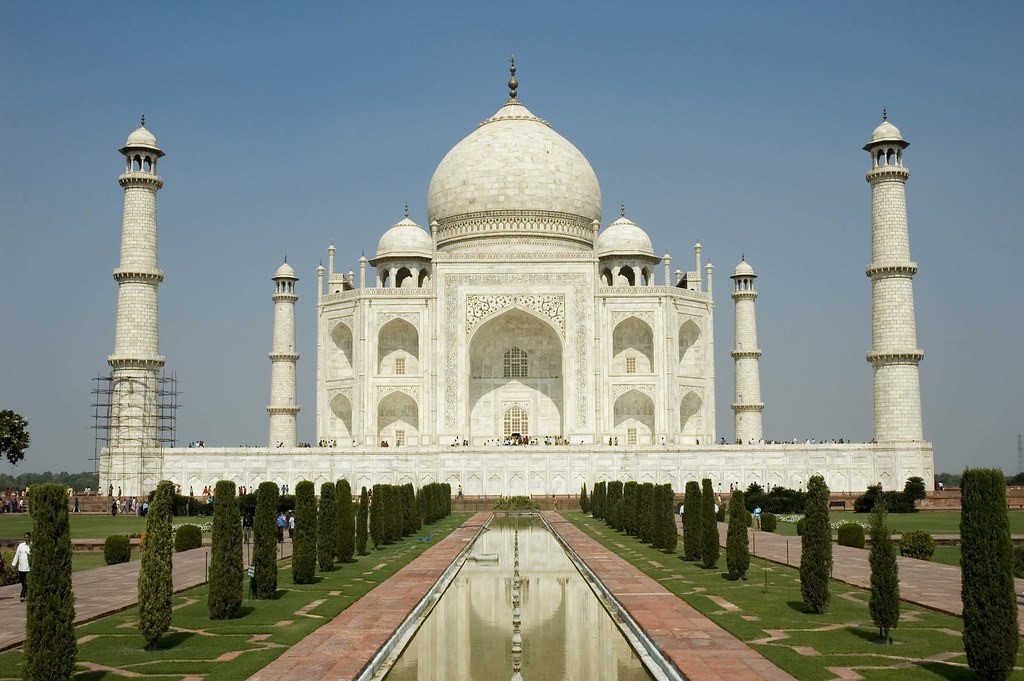
Taj Mahal is one of the seven wonders in the world. Taj Mahal is one of the historic and most beautiful places in the world. The Taj Mahal is one of the most magnificent Indian historical monuments with complex visualization. The Taj Mahal is the materialized vision of love and marks a perfect indelible remark on it’s Mughal Architecture. The Taj Mahal is a white marble mausoleum built by the 17th century Mughal Emperor Shah Jahan. This structure on the bank of the river Jamuna is constructed on a platform 6.5 meters high. The Mahal was built in the loving memory of the Emperor’s beloved wife, Mumtaz Mahal. It also attracts thousands of tourists with no preference for religion or lifestyle. The words Taj Mahal means ‘ crown of the palace’ and is a symbol of eternal love. Taj Mahal is one of the main reasons why India is famous. Taj Mahal was declared as a Heritage Site by UNSECO in 1983.

ARCHITECTURE OF TAJ MAHAL:

The Taj Mahal is a perfect symmetrical planned building, with an emphasis on bilateral symmetry along a central axis on which the main features are placed. The Taj Mahal emits a sense of peace and harmony which is mainly caused by the structure’s near-perfect symmetry, the main dome and surrounding minarets, and the division of the gardens by four canals that meet at a raised central lotus pond. The building material used is brick-in-lime mortar veneered with red sandstone and marble and inlay work of precious/semi-precious stones. It is made of pure white marble with its special luster and fine texture. The marble was obtained from Makrana in Rajasthan. Inside the Taj Mahal, the cenotaphs honoring Mumtaz Mahal and Shah Jahan are enclosed in an eight-sided chamber ornamented with pietra dura (an inlay with semi-precious stones) and a marble lattice screen. The interior octagonal chambers are connected by diagonal passages. Floors and walkways use contrasting tiles or blocks in tessellation patterns. The inlay stones are of yellow marble, jasper, and jade polished and leveled to the surface of the walls. The calligraphy on the Taj Mahal is beautiful. The beauty of the black inscriptions over the white marble is an attractive feature of the edifice. The walls and pillars of the monuments are also adorned with calligraphy written in Thuluth script. Most of the inscribed verses are from the holy book of Islam- the Quran. Taj Mahal reflects different colors depending on the light. In the morning, it looks a little pinkish, in the afternoon with strong sunlight it appears shimmering white, milky white in the evening, and golden at night. The main structure is surrounded by gardens, fountains, and pools. Another interesting aspect of the architecture of the Taj Mahal is the iconography of the plants engraved in the walls and floors of the mausoleum.

WHEN WAS TAJ MAHAL BUILT? :

The construction of the Taj Mahal took over twenty years. It was built in 1632, and in 1648, the mausoleum was finished. Another 5 years were spent on the building of the enclosure, the ancillary buildings such as gardens, so the whole complex was completed in 1653.

EARTH

ABOUT EARTH:

Our Earth is the most beautiful planet in our solar system. Earth is the planet we live on. The earth is a habitat for millions of species of plants and animals. Earth is an integral part of the solar system. Earth is the third planet from the sun. Earth is the fifth-largest of the planets in the solar system. The alternative names for the earth are Gaia, Gaea, Terra, Tellus, the world, the globe. Earth is a planet of the Sun which is also called Blue Planet because of the availability of water and it looks blue when observed from space. It’s the only planet known to have an atmosphere containing free oxygen, oceans of water on its surface, and, of course, life. Water covers 70 percent of Earth’s surface. Earth has an atmosphere containing 21% oxygen which helps in the survival of living beings. The gases like nitrogen, CO2, and oxygen in the earth’s atmosphere help plants to grow. Our planet Earth is a rotating sphere that orbits the Sun. Earth is made of rocks and came into existence billions of years ago. Along with the movement, Earth also rotates on its axis from east to west and completes a rotation in 24 hours which we call a solar day. The Earth is located approximately 150 million kilometers from the Sun and this distance is known as Astronomical Unit. It takes about 8.3 minutes for sunlight to reach the Earth. The Earth’s Atmosphere Extends to a Distance of 10,000 km. Earth’s atmosphere nourishes life and protects it from harmful UV rays and meteorites. Earth Day is observed every year on 22nd April to protect the environment. Along with human earth is home to millions of species and plants. The presence of water on the surface of the earth and air in the atmosphere makes life possible here. As the only livable planet of the sun, we should respect and protect our earth from our wrong practices.

STRUCTURE OF EARTH:

โ€‹โ€‹The earth is made up of three different layers. They are,

ยท THE CRUST:

This is the outside layer of the earth and is made of solid rock, mostly basalt, and granite. There are two types of a crust; oceanic and continental. Oceanic crust is denser and thinner and mainly composed of basalt. Continental crust is less dense, thicker, and mainly composed of granite.

ยท THE MANTLE:

The mantle is the layer located directly under the sima. It is the largest layer of the Earth, 1800 miles thick. The mantle is composed of very hot, dense rock. This layer of rock even flows like asphalt under a heavyweight.

ยท THE CORE:

Earth’s core is the very hot, very dense center of our planet. The ball-shaped core lies beneath the cool, brittle crust and the mostly-solid mantle. The core is found about 2,900 kilometers (1,802 miles) below Earth’s surface and has a radius of about 3,485 kilometers (2,165 miles). The core is made of two layers: the outer core, which borders the mantle, and the inner core. The outer core, about 2,200 kilometers (1,367 miles) thick, is mostly composed of liquid iron and nickel. The inner core is a hot, dense ball of (mostly) iron. It has a radius of about 1,220 kilometers (758 miles). The temperature in the inner core is about 5,200ยฐ Celsius (9,392ยฐ Fahrenheit). The pressure is nearly 3.6 million atmospheres (atm).

National Youth Day

Youths are the future of our nation. Letโ€™s celebrate the national youth day by learning about the significance of this day and also learning about how the youth population contributes to our nation.

National youth day is celebrated every year on 12th of january to commemorate Swami  Vivekanandaโ€™s birthday. Youth all over the world are inspired by his teachings about life, success and learning. He is a perfect role model for each and every student of India. This day was first observed in 1985 throughout India. This day is celebrated in schools and colleges by organising various competitions, speeches, seminars, debates, essays, quizzes, etc. On this day the youth population, which is about one-fifth of Indiaโ€™s total population understand their importance in the country. They also learn about Swami Vivekanada and his life principles. During the coronavirus pandemic, it will be difficult for schools and colleges to  conduct these programmes and so I think that this article will embolden them and encourage them to spread their โ€˜Wings of Fireโ€™.

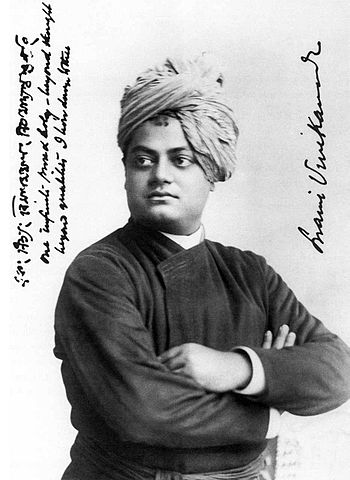
Swami Vivekananda was born on 12th january, 1863 in Calcutta, Bengal Presidency (present day- Kolkata, West Bengal). He was one of the greatest spiritual leaders in India. He introduced the concept Yoga and Vedanta in the western world. He was the student of Shree Ramakrishna Paramhansa. He travelled to the United States and represented India at the 1893 Parliament of the World’s Religions. He also conducted numerous public and private lectures and classes. He circulated Hinduism philosophies in Europe, Britain and the USA. โ€˜Karma Yogaโ€™ and โ€˜Raja Yogaโ€™ are some of his most celebrated publications. He worked for humanity and the betterment of our society.

The original uploader was Dziewa at English Wikipedia. – Transferred from en.wikipedia to Commons., Public Domain, https://commons.wikimedia.org/w/index.php?curid=4310553

What can the youth learn from Swami Vivekananda?

The teachings of Swami Vivekananda motivated the students to โ€œArise, awake, and stop not till the goal is reached.โ€ These teachings tell us about the uncommon and remarkable personality of Swami Vivekananda. These teachings are based on his life situations 

  1. Be honest to everyone. Lying is a good way to get away with your mistakes but only in the short run. A lie leads to a thousand more lies. On the other hand speaking the truth is always best. The blame will come on you but people will always believe you. Honesty is the best policy. 
  2. You should always stick with the truth. Often, many people will stop you from telling the truth. They may repress you by using force or blackmailing you. But even in such times you should remember that truth is the small lamp that lightens the world.
  3. To achieve success, focus on your goals. Many-a-times people ultimately give up on their dreams, this is because they don’t focus on their goals. We become successful only when we work hard on our goals.
  4. Swami Vivekananda also taught everyone to face all the problems with courage and never run away from them. Every problem in life teaches us something new. Running away never really solves your problems, it just makes the problems an invisible weight on you.

Swami Vivekananda was a great person. We should remember him and follow his teachings. 

Happy National Youth Day to you.

Scientists surprised to discover two dwarf giraffes in Namibia, Uganda

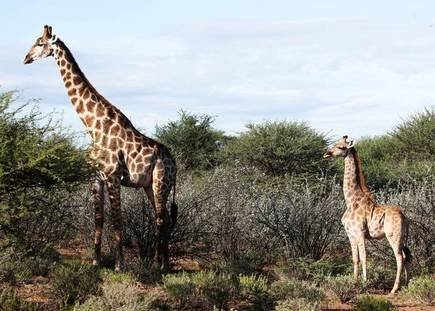
A dwarf giraffe named Nigel, born in 2014, stands with an adult male at an undisclosed location in Namibia on March 26, 2018. Photo: Giraffe Conservation Foundation via Reuters

Being tall is theย giraffeโ€™sย competitive advantage, giving it the pick of leaves from the tallest trees, so scientists were stunned to find two giraffe dwarves on different sides of Africa.

“Itโ€™s fascinating what our researchers out in the field found,โ€ Julian Fennessy, co-founder of the Giraffe Conservation Foundation, told Reuters in a videocall on January 8. โ€œWe were very surprised.”

Most giraffes grow to 15 to 20 feet (4.5m to 6m), but in 2018, scientists working with the foundation discovered an eight-and-a-half-foot (2.6m) giraffe in Namibia. Three years earlier, they had also found a 9-foot 3-inch (2.8m) giraffe in a Ugandan wildlife park.

They published their findings in the British Medical Journal at the end of December.

In both cases, the giraffes had the standard long necks but short, stumpy legs, the paper said. Skeletal dysplasia, the medical name for the condition, affects humans and domesticated animals, but the paper said it was rare to see in wild animals.

Footage taken by the foundation showed the Ugandan giraffe standing on thick, muscled legs in the dry savanna of Murchison Falls national park in northern Uganda, while a taller animal with the usual long, stick-like legs walked behind it.

โ€œUnfortunately thereโ€™s probably no benefit at all. Giraffes have grown taller to reach the taller trees,โ€ Mr. Fennessy said. He added that it would most likely be physically impossible for them to breed with their normal-sized counterparts.

Numbers of the worldโ€™s tallest mammal have declined by some 40% over the past 30 years to around 1,11,000, so all four species are classified by conservationists as โ€œvulnerableโ€.

What is Parler social network that Apple, Amazon and Google have suspended?

Apple, Amazon andย Google haveย suspended the social network called parler saying that the platform has not taken enough measures to make sure that content inciting violence remains in check.

What is Parler?
It is a social media platform that is considered to be an alternative to Twitter and is popular with conservatives. The platform describes itself as being the worldโ€™s โ€œpremier free speech platformโ€. โ€œSpeak freely and express yourself openly, without fear of being โ€œdeplatformedโ€ for your views,โ€ the website of the platform says.

Why was it suspended?
The move has come following the events of January 6 when an armed mob of Trump supporters stormed Capitol Hill and clashed with the police as Congress convened to validate Joe Bidenโ€™s presidential win.

The platform is favoured by right-leaning users and as per media reports was actively used by supporters of US President Donald Trump, including several of those who participated in the Capitol Hill siege.

In a letter addressed to the developers of the Parler app by Apple, which was published by The New York Times, the company said that the measures taken by Parler were inadequate โ€œto address the proliferation of dangerous and objectionable content on your appโ€.

โ€œParler has not upheld its commitment to moderate and remove harmful or dangerous content encouraging violence and illegal activity, and is not in compliance with the App Store Review Guidelines,โ€ it said in the letter.

Amazon too has given similar reasons for banning the platform and maintains that the โ€œviolent contentโ€ on the website violates their terms of service.

The suspension means that users can no longer download the app from the Apple app store or the Google play store. Amazon, on the other hand, has suspended the platform from its web-hosting service called Amazon Web Services

A web hosting service is a mechanism through which companies provide space to websites on a physical server where they can store data and other information necessary for their websites to function. Since Parler was not able to find an alternative hosting service, it effectively went offline at 11:59 am PST on Sunday and will not be back up until it is able to find a new hosting service provider.

What does the suspension mean?

Following the siege, Trumpโ€™s Twitter andย Facebookย accounts were suspended by the two tech giants, a move which some of his critics have lauded. On Friday, Twitter wrote in a blog post โ€œAfter close review of recent Tweets from the @realDonaldTrump account and the context around them โ€” specifically how they are being received and interpreted on and off Twitter โ€” we have permanently suspended the account due to the risk of further incitement of violence.

โ€œIn the context of horrific events this week, we made it clear on Wednesday that additional violations of the Twitter Rules would potentially result in this very course of action. Our public interest framework exists to enable the public to hear from elected officials and world leaders directly. It is built on a principle that the people have a right to hold power to account in the open,โ€ it added.

Twitter said that two tweets made by Trump on January 8 violated their โ€œGlorification of Violenceโ€ policy, as a result of which his account was permanently suspended from the platform.

Even so, these moves taken by the tech giants in the last one week have reignited the debate on the power that tech companies have in censoring content. A report in The Financial Times said that while Trumpโ€™s critics have applauded his โ€œdeplatformingโ€, โ€œwhich many say were long overdue. But others worry that the moves demonstrate how much political power has been built up by a handful of private companies.โ€

This, however, is not the first time that platforms have taken such an action. In October last year, YouTube announced that it would be taking additional measures to block content related to QAnon, a pro-Donald Trump conspiracy theory or movement. In July 2020, Twitter and TikTok blocked some hashtags and removed some accounts related to it and in August Facebook announced a ban on QAnon groups. Social networking website Reddit also banned one of its largest pro-Trump subreddits (a community forum), citing a violation in its updated policy on hate speech in July last year.

In 2019, the FBI said that fringe political conspiracy theories including QAnon are a domestic threat and likely to โ€œmotivate some domestic extremists, wholly or in part, to engage in criminal or violent activity.โ€

WIND ENERGY

ABOUT WIND ENERGY:

Wind energy is one of the renewable sources of energy. Wind energy is an important non-conventional source of energy. It does not contaminate, it is inexhaustible. Wind energy is one of the methods used to provide electricity. . Wind Energy and Wind Power Wind is an abundant resource on our planet. In wind energy, the wind is used to produce electricity using the kinetic energy created by air in the motion. This is then transformed into electrical energy using wind turbines or wind energy conversion systems. Air flows can be used to run turbines. Wind Power is also used for Pumping Water and Electricity. China is the world’s largest producer of wind energy, with over a third of the world’s capacity. It is currently booming and it has become one of the fastest-growing markets in the world today. Wind power is an alternative source to burning fossils, and it is plentiful, it is renewable, it is clean, it produces no greenhouse gas emissions during operation. Wind power is the most efficient technology to produce energy in a safe and environmentally sustainable manner. It currently accounts for more than 3% of the global electricity consumption and is expected to reach 18% in 2050 according to data from the International Energy Agency.

PARTS OF WIND TURBINE:

In wind energy, the electricity is mainly gained with the help of the wind turbine. The different parts of the wind turbine are,

  • Blades:

Most wind turbines designed for the production of electricity have consisted of a two or three-bladed propeller rotating around a horizontal axis. A wind turbine turns wind energy into electricity using the aerodynamic force from the rotor blades, which work like an airplane wing or helicopter rotor blade. When wind flows across the blade, the air pressure on one side of the blade decreases.

  • Rotor:

The rotor is one of the parts of the wind turbine. The energy in the wind turns two or three propeller-like blades around a rotor. The rotor is connected to the main shaft, which spins a generator to create electricity.

  • Pitch:

Pitch control is the technology used to operate and control the angle of the blades in a wind turbine.

  • Brake:

Mechanical wind turbine brakes have two main uses. They are applied as a backup method of holding the turbine in place for maintenance or repairs, in the case of a failure of the primary rotor lock system. Or in the case of emergencies, such as extreme gusts of the wind or too much speed.

  • Low-speed shaft:

In most large-scale turbines, the low-speed shaft is connected to a gearbox.

  • Gearbox:

A gearbox is typically used in a wind turbine to increase rotational speed from a low-speed rotor to a higher speed electrical generator.

  • Generator:

Wind turbines generate electricity by using wind power to drive an electrical generator.

  • Controller:

The wind farm controller’s function is “power management”. It can initiate and shut down the turbine operation as well as co-ordinate the operation of numerous wind turbines in response to environmental and operating conditions. The wind turbine supervisory controller manages the individual turbine operation.

  • Anemometer:

The anemometer measures wind speed. The wind turbine is only supposed to operate when the wind speed is within a certain range. The anemometer determines when the wind is within the defined range.

  • Wind Vane:

The wind vane, used for indicating wind direction, is one of the oldest meteorological instruments.

  • Nacelle:

The nacelle is the part of the turbine that houses the components that transform the wind’s kinetic energy into mechanical energy to turn a generator that produces electricity.

  • High-speed shaft:

The high-speed shaft drives the generator which produces AC electrical current. Power cables transport electricity to the ground level.

  • Yaw drive:

The yaw drive is an important component of the horizontal axis wind turbines’ yaw system which is used to ensure the wind turbine is producing the maximal amount of electric energy at all times, the yaw drive is used to keep the rotor facing into the wind as the wind direction changes.

  • Yaw motor:

When wind direction changes, a turbine’s controls instruct its yaw motors to reposition the nacelle.

  • Tower:

The tower of the wind turbine carries the nacelle and the rotor.

ADVANTAGES OF WIND ENERGY:

  • An unlimited, free, and renewable resource is the wind.
  • Wind energy does not emit toxic substances or contaminants.
  • It is low-cost energy with a fairly stable price
  • Wind power will require nations to need less and less fuel sources to be imported as our energy will be fully sustained.
  • Wind power has some of the lowest environmental impacts of any source of electricity generation.
  • Wind energy is one of the most environmentally friendly energy sources.
  • Wind energy could generate a significant proportion of your electricity needs.
  • Wind turbines can also be installed at different heights to achieve stable energy production.

WHAT IS MINDFULNESS AND HOW TO PRACTICE IT?

We all have heard the term โ€œmindfulnessโ€ a lot of times. But many of us despite being aware of the term donโ€™t know what mindfulness actually is. Some confuse it with meditation. But to your surprise, these two terms are pretty different.
So, what exactly is mindfulness?
Mindfulness is a way of living which is achievable with a lot of practice. It is a process of connecting to your surroundings and being completely aware of them. Mindfulness is a practice which enables you to focus on being intensely aware of what youโ€™re seeing and what youโ€™re feeling, without interpretation and judgment.
In a sense, it lets you completely focus on โ€œthe nowโ€. It is the acceptance of your thoughts and yourself.

Photo by Daniel Torobekov on Pexels.com

This might seem like a trivial thing and think to ourselves, โ€œIโ€™m completely aware of my surroundings. Maybe I was born mindful.โ€ But no. The human mind tends to get distracted even by the smallest of things. We worry about the future so much that we forget to live in the present. Obsessive thoughts take us over and we leave our present and hop on to an imaginary time machine to travel back and forth in life. 

But one canโ€™t go on travelling back and forth in time and feeling anxious. Here, mindfulness comes in as our saviour.

Now the question is how is mindfulness achieved and how to practice it? Iโ€™ve got you covered on this.
Mindfulness needs no equipment like candles, oils or mantras. Find a comfortable and peaceful place and meditate. Not your usual meditation where you may get distracted. But sit with a judgment-free mind, focus on your breathing and let the energy flow within you naturally. 

While sitting down, notice how your legs and arms move. Let your body loose, unclench your teeth, relax your muscles and let your gaze fall onto the ground.
While practising mindfulness, your mind may try to wander off in some distant land. Donโ€™t panic and let it go for some but make sure to come back and focus on your breath. Notice how the air comes into your body and how it leaves. This wandering off may happen a few times but keep guiding your mind back to your breath. Remember this is a judgment-free zone. Give yourself a break and forget about all the worries and anxieties of the day for some time. Slowly, your body will start to feel light. Sit there for at least 10-15 minutes. When you think you are done lift your gaze and go on with your day but with more attentiveness.

Photo by Karolina Grabowska on Pexels.com

There are several other ways by which mindfulness can be achieved. The simplest one being, trying to stay attentive throughout the day. Noticing your actions, surroundings and movement of your body. Types of mindfulness practices include:

  • You can practice it while seating, walking, driving or even lying down.
  • Short breaks on our daily routines.
  • Combining it with physical activities like yoga.

Mindful meditation may look easy but it takes a lot of practice to be mindful in real sense. Keep practising and you will see the results soo. If you find it difficult to fit it into your schedule, you can download an app or can fix a particular time of the day. 

Something practised by thousands of people must come with a lot of benefits. And, it does. Mindfulness has several benefits which are visible in a short period of time.ย 

Photo by Elly Fairytale on Pexels.com

Practising it for 8 weeks has been said to be transformative in many forms. 

  • It helps reduce stress, anxiety, pain, depression, insomnia and high blood pressure. 
  • It is also good for our hearts and improves the immune system. 
  • It also increases your attention span, improves sleep and controls diabetes (can only be controlled to a certain level and not cured). 
  • It has also shown a positive impact on relationships and eating disorders.
  • Makes your mind judgment-free and makes us kinder and warmer.

You donโ€™t need to practice it every day, it said that practising it for even 4 times a week can prove to be useful. 
Mindfulness is not just a practice but it is a way of living. It is not toxic, harmful or obscure. And I donโ€™t say it based on faith. It has scientifically and by experienced demonstrators proven that mindfulness does bring a change in the way you live.
In this chaotic and uncertain world, it helps you deal with your problems innovatively. Another plus point? It requires no change in yourself, it brings out the best in us as human beings.
Mindfulness is a great way to collide two different worlds, i.e., our mind and the world into one.

Scientists discover new state of matter: Liquid Glass

A team of scientists from Germany and the Netherlands have used a technology called confocal microscopy to discover a new state of matter, Liquid Glass, hidden inside mysterious transformations that happen between liquid and solid states of glass.

“Suspensions of colloidal particles are widely spread in nature and technology and have been studied intensely over more than a century,” said co-senior author Professor Andreas Zumbusch, Department of Chemistry, University of Konstanz. “When the density of such suspensions is increased to high volume fractions, often their structural dynamics are arrested in a disordered, glassy state before they can form an ordered structure.”

He also explained that till date such experiments were being performed using spherical colloids. However, an increased interest in synthetic colloids as material building blocks led to “development of a multitude of novel techniques for the synthesis of colloidal particles with specific geometries and interactions.”

The scientists, in this research, focused on ellipsoidal polymethylmethacrylate colloids. “Due to their distinct shapes our particles have orientation, as opposed to spherical particles, which gives rise to entirely new and previously unstudied kinds of complex behaviors,” he explained.

Researchers recorded temporal development of the 3D positions and orientations for nearly 6,000 ellipsoidal particles using confocal laser scanning microscopy. “At certain particle densities orientational motion froze whereas translational motion persisted, resulting in glassy states where the particles clustered to form local structures with similar orientation,” Zumbusch said.

“What weโ€™ve termed liquid glass is a result of these clusters mutually obstructing each other and mediating characteristic long-range spatial correlations,” he explained. “These prevent the formation of a liquid crystal which would be the globally ordered state of matter expected from thermodynamics.”

As a result, the team noticed a regular phase transformation and a nonequilibrium phase transformation interacting with one another.

Road Safety Week

Who doesn’t love long drives? It is relaxing to drive after a long stressful week. But the fun and enjoyment can turn into trauma, if we encounter an accident. As per the Ministry of Road Transport and Highways there were 4,49,002 road accidents recorded in India in the year 2019.

Road Accidents

Road accidents have become very common nowadays. As more and more people are buying automobiles, the incidences of road accidents are just increasing day by day. In year 2019, there were 4,49002 road accidents, killing 1,51,113 people and causing injury to 4,51,361 persons. This translates into an average of 1,230 accidents and 414 deaths every day and nearly 51 accidents and 17 deaths every hour (source: Ministry of road transport and highways). These accidents cause loss of life as well as material. People need to be more careful when on the road, no matter which mode of transport you use. To prevent the accidents we should follow all the traffic rules because not following traffic rules and guidelines could result in loss of life. Government and a few non-government organizations have taken the initiative to educate the people about road accidents and their prevention. 

Road Safety Week

Road safety week is celebrated from 11th January to 17th January every year with great joy and enthusiasm at many places in India.  People are encouraged about how to drive on the road by organizing a variety of programs related to road safety. During the whole weekโ€™s celebration, a variety of educational banners, safety posters, safety films, pocket guides and leaflets related to the road safety are distributed to the road travelers. 

Many commuters also explain about the methods and necessities of road safety. So that the people understand the use of helmets and seat belts while driving on the road or anywhere. They also tell the people about different rules, acts and laws related to road safety and encourage the people to follow them.

Various painting and drawing competitions, road safety advertisements, fairs, road rules tests, girls scooter rallies take place all around India to encourage the use of helmets, debates on road safety at the All India Radio, workshops, seminars, lectures etc. are organized during this week.

Free medical check-up camps and driving training workshops are organized for the drivers to encourage them towards road safety. This is done because generally, the drivers drive very fast to drop their customers to their destinations.

Road safety leaflets including roses, chocolates, and flowers are distributed to the travelers on the road. Road safety quiz contests are also organized to promote people about road safety. Traffic safety games including card games, puzzles, board games and etc are organized to educate school children about road safety.

Celebrating the road safety campaign was initiated by the ISS India HSE (Health Safety and Environment) in order to make people aware of the national road safety in the Indian subcontinent. India has a huge population of road travelers such as two-wheelers, four-wheelers on the road, thatโ€™s why we must know about road safety.

India to begin COVID-19 vaccination drive from January 16 and frontline, healthcare workers to get priority.

India to begin COVID-19 vaccination drive from January 16, frontline, healthcare workers to get priority

     The COVID-19 vaccination drive in India will commence on January 16, 2021. The decision of starting the largest vaccination drive was taken in a meeting on January 9 during which PM Modi also reviewed the status of COVID-19 in India.

On 16th January, India takes a landmark step forward in fighting COVID-19. Starting that day, Indiaโ€™s nation-wide vaccination drive begins. Priority will be given to our brave doctors, healthcare workers, frontline workers including Safai Karamcharis.ย 

Prime Minister also reviewed the preparedness of UTs and states for vaccination against the deadly disease. After the detailed review during the meeting, the decision was taken that in the view of upcoming festivals including Makar Sankranti, Lohri, Magh Bihu, Pongal, etc., the vaccination drive will start from January 16.

As per the release by PMO, priority will be given to the frontline, healthcare workers who are estimated to be around three crores. They will be followed by those who are above 50 years and under 50 population groups with any form of co-morbidities. Their number is around 27 crores.

During the meeting, PM Modi was briefed about the centreโ€™s preparedness status of the drive-in collaboration with UTs and states for the rollout of the vaccine. He was also apprised of the governmentโ€™s CO-WIN Vaccine delivery management system.

While reviewing the vaccination drive status, PM Modi was informed of the three phases of dry run by the government having been conducted all over the country.

โ€ข As per the release, the vaccination drive has been underpinned by the principles of participation by people (jan bhagidari), the Universal Immunization Program, and utilizing the experience of elections.

โ€ข The drive will not compromise the existing healthcare services, especially primary healthcare and national programmes. It will be underpinned by no compromise on regulatory and scientific norms and smooth and orderly implementation driven by technology.

โ€ข A crucial pillar of the vaccination drive will be comprised of the vaccine administrators and vaccinations. During the meeting, their training process was also detailed out.

โ€ข Around 2,360 participants were trained during the national-level training of trainers. It included cold chain officers, immunization officers, development partners, and IEC officials.

โ€ข For the drive, more than 2 lakh vaccinators, 61,000 programme managers, and 3.7 lakh team members have been trained. They are trained as part of training at district, state, and block levels.

โ€ข The unique digital platform will be providing real-time information on vaccine stocks, the vaccineโ€™s storage temperature, and the tracking of beneficiaries of the vaccine.

โ€ข The platform will also be assisting the program managers at all levels for pre-registered beneficiaries. There will also be assistance for their verification and for the generation of the digital certificates on the successful completion of the vaccine schedule.

โ€ข On the platform, more than 79 lakh beneficiaries have already registered.

The National regulator granted the emergency use authorization for two vaccines in India- COVAXIN, and Covishield. Both the vaccines have established immunogenicity and safety during the clinical trials.

How Electric Vehicles dominate Norway’s Car Market.

In 2020, Norway further cemented its position as a world leader in renewable technologies, as battery electric vehicles (BEVs) made up more than half of all vehicles sold in the country during the year.

Last year, the market share of BEVs rose to 54 per cent, up from 42 per cent in 2019, as per data released by the Norwegian Road Foundation (OFV). Only a decade ago, BEVs made up just 1 per cent of the overall market.

If hybrid vehicles are included, the share of electric vehicles in 2020 is 83 per cent. Petrol and diesel cars, which commanded a 71 per cent market share in 2015, are now at 17 per cent

Also last year, Germanyโ€™s Volkswagen replaced US-based Tesla as the largest electric vehicle producer in the country.

How Norway became a electric vehicles pioneer

Norway, which is the biggest producer of crude oil in Western Europe, has in the recent past made a shift from fossil fuels to renewable energy. A country roughly the size of Maharashtra in terms of area, it began the electric push in the 1990s in an effort to cut pollution, congestion, and noise in urban centres.

In 2017, Norwayโ€™s parliament set a non-binding goal to ensure that all cars sold should be zero emissions by 2025. The UK and Germany plan to do this by 2030, and France by 2040. In India, the government has set a target of 30 per cent vehicles becoming EV by 2030.

To achieve its target, Norway has been giving tax incentives for fully electric vehicles, which make them cheaper to buy compared to similar internal combustion (IC) engine models. Norway also taxes IC engine cars more heavily than most European countries.

The government lets electric cars run on bus lanes, while toll roads are free for them. Parking lots offer a free charge, and new charging stations are continuously being built on the nationโ€™s highways โ€” a mix of regular charging stations and fast-chargers. At the moment, Norway has 10,000 publicly available charging points.

Currently, Norway has the highest per capita all-electric (battery only) cars in the world โ€“ over 1,00,000 in a country of just over five million people. The country does not manufacture cars (with the exception of a Norwegian city electric car called Buddy produced by a homegrown firm Buddy Electric) and pretty much all of its vehicle fleet is imported.

The countryโ€™s policies have also encouraged carmakers to use Norway as a testing ground. As per the CNN report, Volkswagenโ€™s luxury brand Audi was the market leader in 2020, selling 9,227 units of its e-tron model, followed by Teslaโ€™s Model 3, which sold 7,77o units. Volkswagenโ€™s ID.3 came third at 7,754.

Among fossil fuel-driven cars too, Norway has encouraged petrol cars over diesel ones. To do this, some of the countryโ€™s regions began charging higher road tolls for diesel cars than for petrol vehicles. Because of such policies, the share of diesel vehicles fell from 75.7 per cent in 2011 to 8.6 per cent in 2020.

As per a Reuters report, although BEVs had in the past crossed the 50 per cent mark in market share in individual months, 2020 was a special achievement since these cars crossed the combined share of models with IC engines for a year as a whole.

Now, alongside its advances in electric vehicles, Norway is also pushing for the next frontier โ€” hydrogen fuel cell vehicles.

Experts, however, say Norwayโ€™s policies are difficult to replicate in other parts of the world, mainly because the country can offer generous subsidies thanks to its revenues from oil and gas production.

Thanks to its hydrocarbon wealth, Norway has been able to build the worldโ€™s largest sovereign wealth fund, currently valued at $1.3 trillion.

Olympiad Examinations In India

Olympiad exams are different from regular school examinations. Every student should participate in Olympiads but most parents and students do not know the importance of these examinations.

What are Olympiad Exams?

Olympiad exams are competitive exams conducted by various organizations across India and abroad. These examinations are conducted on the basis of the school curriculum of CBSE, ICSE, and other major state boards. These exams help to compare student’s performance with their peers across the country and also around the world. The question paper for these exams is objective-type with multiple-choice questions. There may be negative marking for wrong answers. There may be 50 to 100 questions in an examination and a strict time limit. Olympiad exams focus on concept-based learning and logical thinking. This in turn enhances the abilities of the student which is an important tool to face the future competition coming in their lives.

What is the importance of Olympiad Exams?

Olympiad exams evaluate the conceptual learning and strengthen the reasoning, analytical and problem solving skills of a student from an early age. This way the student becomes ready for the upcoming challenges of the competitive world. Many people feel that competition at such an early age will not be beneficial for students, but these examinations build a strong base for students. Hence it is necessary for a student to take part in these examinations. 

Main benefits of Olympiad exams

  • They are perfect to test a student’s conceptual understanding of the subject.
  • Improves the studentโ€™s problem solving ability and challenges them to think analytically.
  • Prepares them for future competitive exams by testing a studentโ€™s aptitude as well as the knowledge of a particular subject. 
  • Provides exposure to students at the national as well as international platforms.
  • Instills the quality of hard work in the students by pushing them to prepare hard for the exam and improve their result.
  • Studentsโ€™ performance in school is also improved as Olympiads sharpen their thinking and learning process which helps them to grasp the concepts taught in schools better.

Who conducts Olympiad exams?

There are independent private organizations who conduct the Olympiad Exams. Some of the major Olympiad Exam conducting bodies are as follows:

SOF (Science Olympiad Foundation), CREST Olympiads (Online Olympiad Exams), Unicus Olympiads (Summer Olympiad Exams), Educational Initiatives (ASSET), Indian Talent Olympiad, Humming Bird Education, Eduheal Foundation, Silver Zone Foundation, Unified Council

Almost all the Olympiads consider participation from school only. Only CREST Olympiads and NSTSE (organized by Unified Council) accept individual registrations.

Subjects 

Subjects in which these examinations are conducted:

Mathematics, Science, English, Cyber, General Knowledge, French, Reasoning and Spell Bee.

Preparation for Olympiad exams

Most of the Olympiad exams are conducted on the similar syllabus that is taught at school. No additional reference books are required for the preparation of these exams. But still, there are some special books and guides to prepare for Olympiads. Students are only required to be clear with all the concepts and basics. The questions asked in the Olympiad exams are quite different from what kids learn in the school. Questions are trickier and conceptual which require the students to have a wide thought process to solve the variety of problems based on logics and concepts. 

Export Sector

Indian export growth has remained low mainly due to low scale of production, low productivity of labour, institutional friction. Any policy from government must encourage greater scale, specifically labour reform that allows easier separation from firms and workers. Textile, mobile and electronic industries can be catalyst for growth and employment if one encourage scale. Micro policy like trade agreement, simpler documentation procedure at port, improved credit access and infrastructure up gradation will help. The ongoing strain between United States of America and People Republic of China may be an opportunity as firms seek an alternative trade relationship. Labour abundantly India could be a good alternative.

Problems In Export Sector.

In the twenty five years since 1992, when India began liberalizing its trade regime, India’s share of world export rose from 0.5% in 1992 to 1.7% in 2017. The export share of India’s much celebrated export increases from 0.5% in 1992 to 3.4% 2017. To put these number in context, over the same period the Chinese share of merchandise export increases from 1.8% to 12.8%. Bangladesh also increases its share of merchandise export from 0.09% to 0.2% over the same period. Moreover, world export are 30% of its GDP while for India share of export to Indiaโ€™s GDP is 20%.

Lethargic pace of India’s export growth has constraint India’s growth potential as it failed to tapped into the global demand and supply. Many exporters especially in textile and other small and medium enterprises which provide huge jobs in the economy lags behind in technology and innovation to compete in global competition. India’s labour force lacked sufficient skills and labour regulation makes it hard for the firms to operate and employ labour. Lastly, our transport system are outdated, insufficient and badly planned and bureaucratic red tape makes it even worse to compete in global competition.

Whatโ€™s need to be done?

The solution to low export lies in fixing both micro and macro issues. Macro refers to the issue with export while micro refers what need to be done at the lower level to boost the export.

Macro Issue Solution.

Scale – It is successful for a export sector. Hurdle to land acquisition, labour regulation, inadequate power and other infrastructure support must be provided to the firms as it promotes the firms to increase the scale of production which not only leads to the growth of economy, exports but also provides employment.

Fundamental labour reforms – Reforms are needed to encourage large scale, labour incentive production while maintaining the workers right. This will help tradition industries like textiles, footwear, leatherworks and wood products and boost employment in the economy.

Better transportation infrastructure – The government need to work on improving the integration of different mode of transportation with each other, introducing modern warehousing, custom and improving integration with logistics and industrial park.

Micro Issue Solution

Improving credit access – Credit flows to exporters have to be encouraged to grow in order to facilitate export. The majority of India’s exporters are SME’s with limited access to external financing. Bank credit is often their only source of financing. These flows must be stable, so that SMEs can plan their production properly.

Simplify the GST refund – GST refund to the small and medium enterprises must be robust to help the exporter. Refunds are still slow. This means that SMEs are typically under pressure because they may not have enough capital. SMEs are typical labour intensive and constitute percentage of total export have performed very poorly recently.

Tariff – Resists temptation to raise tariff rates in response to economic pressure such as sudden increase in import. As most exporter use imported inputs, tariff reduces the competitiveness of Indian exporter.

Global Integration of Electronic Industry – This industry has one of the fastest growing global supply chains one that Indiaโ€™s has not been able to take advantage unlike China, Indonesia, Taiwan. According to world bank India’s entry to global supply chain faces many hurdles like : (1) poor transportation infrastructure (2) low skill of workforce due to huge investment needs to be done on training of labour (3) complexity of land acquisition (4) lengthy and unpredictable import clearance.

Export is one of the very important components of economy and plays a very important role in economic growth of the country. It also provides immense employment and uplift millions of Indians from poverty. India’s has underperformed in export sector since liberalization in 1992 but all is not lost several needs to be taken so that we can perform to our potential in coming decade.

Have you ever heard of G20?

     The G20 (or the group of Twenty) is an informal group of 19 countries and the European Union. A combination of the worldโ€™s largest advanced and emerging economies. The G20 members are Argentina, Australia, Brazil, Canada, China, France, Germany, India, Indonesia, Italy, Japan, Mexico, Russia, Saudi Arabia, South Africa, South Korea, Turkey, The U.K, the U.S, and the European Union. The G20 economies together account for nearly 80% of the worldโ€™s economic output, two-thirds of the global population, and about half of the worldโ€™s land area.

     G20 forum regularly meets to coordinate global policy on economic growth, international trade, health, climate, and other issues. The G20 summit is focused on several key issues such as achieving global economic stability, sustainable growth, prevention of future financial crises, putting in place regulatory mechanisms and action against climate change. The two-day summit concludes with a joint statement issued by the members committing themselves to action. It is significant to note that the resolutions of the G20 are not legally binding, but they do influence the policies of the member countries.

     The G20 was established in December 1999 in response to financial crises faced by a number of countries in the 1990s with the aim of uniting the world around promoting global financial stability. There was also the need to create a more inclusive body with greater representation. What began as a regular forum for finance ministers and central bank governors turned into a key summit in 2008 when the heads of state and government came together for the first time in Washington to discuss the global economy as well as other challenges facing the world. Ever since the leaders have been meeting annually. A series of G20 ministerial events take place during a year.

     Saudi Arabia hosted last yearโ€™s G20 summit in Riyadh on November 22 and 23. With the global economy experiencing a sharp contraction in 2020 due to the COVID-19 pandemic, the G20 leaders have vowed to ensure affordable and equitable access to COVID-19 diagnostics and vaccines around the world. They said they are taking immediate measures to address the health, social and economic impacts arising from the pandemic. A G20 Leaderโ€™s Declaration issued at the end of the summit called for coordinated global action, solidarity, and multilateral cooperation to overcome the current challenges and realise opportunities of the 21st Century for all by empowering people, safeguarding the planet, and shaping new frontiers. Italy will host the summit of the high-profile grouping in 2021, Indonesia in 2022, India in 2023, and Brazil in 2024.

ย ย The G20, 2021:ย ย 

     The G20, bringing together much of the worldโ€™s population and the global economy, must live up to its role. This is why the 2021 G20, under the Italian Presidency, will focus on three broad, interconnected pillars of action: People, Planet, Prosperity.

Within these pillars, they are taking the lead in ensuring a swift international response to the pandemic – able to provide equitable, worldwide access to diagnostics, therapeutics, and vaccines – while building up resilience to future health-related shocks.

They are also looking beyond the crisis, towards ensuring a rapid recovery that addresses peopleโ€™s needs. This implies a focus on reducing inequalities, on womenโ€™s empowerment, on the younger generations, and on protecting the most vulnerable. It means promoting the creation of new jobs, social protection, and food security.

The G20 is also intent on paving the way to rebuilding differently in the aftermath of the crisis. More efficiently, through better use of renewable energies and with a firm commitment to protecting our climate and our common environment.

This is a prerequisite for our sustained prosperity. A prosperous future, however, also requires that we properly harness the main drivers of growth and innovation. They are working to bridge the digital divide and make digitalization an opportunity for all, improve productivity and โ€“ in short โ€“leave no one behind.

Earth is spinning faster. Hereโ€™s what scientists are saying

The International Earth Rotation and Reference Systems Service (IERS) in Paris announced in July last year that no โ€œleap secondโ€ would be added to the worldโ€™s official timekeeping in December 2020.

Scientists think days are getting shorter than 24 hours because the planet is spinning faster than it has in 50 years and a full day has been taking less than normal since last year. According to the Daily Mail, July 19, 2020, was the shortest day since scientists began keeping records in the 1960s – 1.4602 milliseconds shorter than the full 24 hours. It is a retreat from previous records showing that for decades, the Earth took slightly longer than 24 hours to complete a rotation.

The International Earth Rotation and Reference Systems Service (IERS) in Paris announced in July last year that no โ€œleap secondโ€ would be added to the worldโ€™s official timekeeping in December 2020. Leap seconds are time adjustments like leap years and timekeepers at IERS have added leap seconds to 27 days since the 1970s, with the most recent on December 31, 2016. According to the Daily Mail, they keep atomic time in line with solar time, thereby keeping satellites and communications equipment in sync. The next possible date for a leap second is June 30, 2021, as ย leap seconds are always added on the last day of June or December.

According to scientists, the days are on average about 0.5 seconds shorter than 24 hours. Though the time difference is noticed only at the atomic level, experts say its impact could be significant. World timekeepers are debating whether to delete a second from time โ€” called a โ€œnegative leap secondโ€ โ€” to account for the change and bring time passage back into line with the rotation of the Earth.

Peter Whibberley of the National Physical Laboratory in the UK said, while speaking to the Telegraph, that the Earth is spinning faster now than at any time in the last 50 years. โ€œItโ€™s quite possible that a negative leap second will be needed if the Earthโ€™s rotation rate increases further, but itโ€™s too early to say if this is likely to happen. There are also international discussions taking place about the future of leap seconds, and itโ€™s also possible that the need for a negative leap second might push the decision towards ending leap seconds for good,โ€ Whibberley, a senior research scientist, said.

Peter Whibberley of the National Physical Laboratory in the UK said, while speaking to the Telegraph, that the Earth is spinning faster now than at any time in the last 50 years. โ€œItโ€™s quite possible that a negative leap second will be needed if the Earthโ€™s rotation rate increases further, but itโ€™s too early to say if this is likely to happen. There are also international discussions taking place about the future of leap seconds, and itโ€™s also possible that the need for a negative leap second might push the decision towards ending leap seconds for good,โ€ Whibberley, a senior research scientist, said.

A study published in Science Advances in 2015 suggests global warming may be the reason behind the Earthโ€™s speedier rotation.A study published in Science Advances in 2015 suggests global warming may be the reason behind the Earthโ€™s speedier rotation.

Organic Food’s Growing Popularity

Organic food is the food produced by methods that cycle resources, promote ecological balance and conserve biodiversity. It is either entirely free of synthetic fertilizers or processed food made from organically produced raw materials.

Organic food is slowly becoming a part of the daily diet of hundreds of people around the world. This surge in the use of organic food became somewhere in the early 2000s because of the uncontrolled use of synthetic fertilizers. Synthetic fertilizers started affecting the health of people negatively. Thus, people started shifting to organic food. 

Initially, buying organic food was limited to fruits and vegetables. But today, people prefer almost all food products organic. Like tea, pulses, spices and even oilseeds.

With the introduction of organic foods in the market, people started realising the connection between diet, health and environment. If we consider the environmental perspective, the overuse of pesticides, fertilizers and overproduction have only had negative effects on the environment. It has affected biodiversity, drinking supplies and groundwater. 

India is well known for its organic heritage. Therefore, in India, the organic food market is rapidly growing every year. It has shown an upward trend of 20-22 per cent annually and some data show that about 1.5 million hectares of land area under organic farming. 

Organic food market continuously shows growth and is not expected to decline anytime soon. 

BENEFITS OF ORGANIC FOOD:

Organic foods come with a number of benefits which is why people are shifting to it. Organic food is chemical-free and grown with the help of manure or compost. The consumers of organic products have reported that organic food tastes much better than conventional food. 

Many animals are often fed with growth hormones and antibiotics which passes on to animal food products and further to human consumers of these products. Organic farming prohibits this practice. Animals feed outside in natural surroundings which makes the antibiotic-containing food ineffective in human beings.
Not only organic food but organic farming itself has many advantages. It has acted as a saviour of biodiversity. When humans were continuously exploiting the land to produce more products and the land and soil quality was degrading day by day, organic farming was the only last resort. It promotes the growth of natural varieties and prevents loss of species. It helps preserve the environment which leads to the protection of the wildlife as well. 

Organic farming despite having many benefits has one disadvantage which makes it inaccessible to many. The cost at which organic products are sold tends to be pretty high. Along with high costs, the output is very low because it takes a lot of time and effort to grow or make them.

Globally, the United States holds 40 per-cent of the global market revenue and dominates the organic food market. Europe stands on the second position and accounts for 33 per-cent of the total global revenue share globally.
In the Asia Pacific, Australia, New Zealand, Hong Kong, Japan and Korea are major markets for organic foods. 

All around the world, organic food is gaining popularity rapidly. It is mainly because people are becoming more health-conscious because of increasing health issues like heart attacks, obesity and strokes. In a few years, organic products will easily take over conventional food products. And the reasons are very simple and clear. Organic food is GMO-free, nutrient-rich, environment-friendly, negligible pesticides and fertilizers and no growth hormones.
The organic sector is continuously changing, thanks to the new certifications, policies and products which make them safe for the consumers.
But one should be well aware of which product to buy because many companies sell conventional products with the label of organic products. Consumers should stay informed thoroughly and buy only from certified and authentic suppliers.

BTS: KOREAN BAND

BTS is a Korean band which is also known as Bangtan Boys. It is a seven member South Korean boys band that was formed in 2010 and debuted in 2013 under Big Hit Entertainment. It is composed of RM, Jin, Suga, J-Hope, Jimin, V and Jungkook who write and produce much of their own output. It is a hip hop group. Their lyrics are very heart touching and are often focused on personal and social commentary. They touch on the themes of mental health, troubles of school-age youth, loss, the journey towards loving oneself and individualism.

After debuting in 2013 with their single album 2 Cool 4 Skool, BTS released their first Korean-language studio album, Dark and Wild, and Japanese-language studio album, Wake Up in 2014. The group’s second Korean studio album, Wings (2016), was their first to sell one million copies in South Korea. By 2017, BTS crossed into the global music market, leading the Korean Wave into the United States and breaking numerous sales records. They became the first Korean group to receive a certification from the Recording Industry Association of America (RIAA) for their single “Mic Drop”. They topped the US Billboard 200 chart with their first Korean act with their studio album Love Yourself: Tear (2018). BTS has become the fastest group.

BTS has sold over 20 million albums on the Gaon Music Chart. It is the best selling artist in South Korean history and hold the best selling album in South Korea. You must listen to their songs as they are very heart touching and people can relate to it. You will feel calm and relaxed.

BUTTERFLY

ABOUT BUTTERFLY:

The butterfly is one of the most beautiful and wonderful creatures. Both butterflies and moths belong to the Lepidoptera family. Butterflies are flying insects with large scaly wings. We can observe different colors and patterns in the wings. Butterflies have six legs and three main body parts: head, thorax (chest or midsection), and abdomen (tail end). They also have two antennae and an exoskeleton. The butterfly’s body is covered by tiny sensory hairs. The adult butterfly has four wings that are covered with tiny scales that give them their colorful and diverse designs. These are cold-blooded creatures. The group of butterflies is called flutter. Butterflies have an amazing ability to see, smell. Some butterflies can fly as fast as 40 miles per hour. There are a thousand kinds of butterflies. They may vary from small to big. The lifespan of a butterfly varies with factors like size, species, and habitat.

LIFE CYCLE OF A BUTTERFLY:

There are four stages involved in the life cycle of a butterfly. They are,

  • FIRST STAGE-EGG:

 Butterfly starts their life as an egg. Their egg shape maybe circle, oval or cylindrical depending on the butterfly that laid the egg. Butterflies lay their eggs on a leaf of a plant.

  • SECOND STAGE-THE LARVA(CATERPILLAR):

When the egg hatches caterpillar comes out of it. In this stage they all do is eat. The caterpillar eats the leaf from where they were born.

  • THIRD STAGE-PUPA(CHRYSALIS):

The third stage of the butterfly is the pupa. As soon as a caterpillar is done growing and they have reached their full length/weight, they form themselves into a pupa, also known as a chrysalis. From the outside of the pupa, it looks as if the caterpillar may just be resting, but the inside is where all of the action is. Inside the pupa, the caterpillar is rapidly changing. Within the chrysalis, the old body parts of the caterpillar are undergoing a remarkable transformation, called ‘metamorphosis,’ to become the beautiful parts that make up the butterfly that will emerge. Tissue, limbs, and organs of a caterpillar have all been changed by the time the pupa is finished and is now ready for the final stage of a butterfly’s life cycle.

  • FOURTH STAGE-ADULT BUTTERFLY:

In the final stage, when the caterpillar has done all of its forming and changing inside the pupa, It will have emerged as an adult butterfly. When the butterfly first emerges from the chrysalis, both of the wings are going to be soft and folded against its body. This is because the butterfly had to fit all its new parts inside of the pupa in this stage. As soon as the butterfly has rested after coming out of the chrysalis, it will pump blood into the wings in order to get them working and flapping โ€“ then they get to fly. Usually, within a three or four-hour period, the butterfly will become master in flying and will search for a mate in order to reproduce. When in the fourth and final stage of their lives, adult butterflies are constantly on the lookout to reproduce and when a female lays their eggs on some leaves, the butterfly life cycle will start all over.

INTERESTING FACTS ABOUT BUTTERFLY:

ยท Some butterfly species migrate from the cold.

ยท Most butterflies have taste receptors on their feet.

ยท They’ll even drink the tears of reptiles to get some much-needed sodium.

ยท Butterflies will not fly if the temperature is below 50 degrees Fahrenheit.

ยท A butterfly drink its food, with a straw-like tube called a proboscis.

ยท They can see a range of ultraviolet colors, invisible to human eyes.

MOVIE: POKEMON DETECTIVE PIKACHU

Pokemon Detective Pikachu is a 2019 mystery film directed by Rob Letterman. The film was produced by Legendary Pictures in association with Toho. It is the first live-action Pokemon film. The story was written by Dan Hernandez, Benji Samit, and Nicole Perlman. Ryan Reynolds stars as the voice and facial motion capture of Pikachu, with Justice Smith, Kathryn Newton, Suki Waterhouse, Omar Chaparro, Chris Geere, Ken Watanabe and Bill Nighy in live-action roles.

The plot follows aspiring trainer Tim Goodman and the titular Pokemon as they attempt to uncover the mysterious disappearance of Tim’s father, Harry. In the Pokemon Universe, Tim Goodman is a 21-year-old insurance adjuster who gave up his dream being a Pokemon trainer following the death of his mother and his estrangement from his father Harry, a police detective. Tim is contacted by the police of Ryme City, a city where humans and Pokemon battles are illegal. He is informed by Harry’s friend, Detective Hideo Yoshida, that Harry was killed in a car accident. Tim goes to Harry’s apartment to sort things out and meets Harry’s police partner, a deerstalker-clad amnesiac talking like Pikachu whom only Tim can understand while all others could only hear him saying “Pika-Pika”. Tim accidentally releases a mysterious purple gas from a vial he finds in Harry’s office. The pair escape from there and then Pikachu explains that after losing his memory following the crash, he believes that Harry also survived the crash as police never found his body. The rest what follows is thrilling as the pair tries to find out Harry. You should surely watch the action-packed movie and see whether they are successful in their mission or not.

Music has been given by Henry Jackman. The cinematography has been done by John Mathieson. The movie has been edited by Mark Sanger. The budget for the movie for $150 million and the box office has reached about $433 million. The ratings for this movie is extremely good and it is a must watch. You would enjoy and love watching this.

Ozone hole

Last year, the European Unionโ€™s Copernicus Atmosphere Monitoring Service (CAMS) announced that a hole in the Arctic ozone layer, believed to be the biggest reported, has closed.

The ozone holeโ€™s closing was because of a phenomenon called the polar vortex, and not because of reduced pollution levels due toย Covid-19ย lockdowns around the world, reports said.

The hole in the North Poleโ€™s ozone layer, which was first detected in February, had since reached a maximum extension of around 1 million sq km, according to scientists at the German Aerospace Center.

The European agency tweeted on April 23, โ€œThe unprecedented 2020 northern hemisphere #OzoneHole has come to an end. The #PolarVortex split, allowing #ozone-rich air into the Arctic, closely matching last weekโ€™s forecast from the #CopernicusAtmosphere Monitoring Service.โ€

The importance of the ozone layer

Ozone (chemically, a molecule of three oxygen atoms) is found mainly in the upper atmosphere, an area called the stratosphere, between 10 and 50 km from the earthโ€™s surface. Though it is talked of as a layer, ozone is present in the atmosphere in rather low concentrations. Even at places where this layer is thickest, there are not more than a few molecules of ozone for every million air molecules.

But they perform a very important function. By absorbing the harmful ultraviolet radiations from the sun, the ozone molecules eliminate a big threat to life forms on earth. UV rays can cause skinย cancerย and other diseases and deformities in plants and animals.

Ozone holes

The โ€˜ozone holeโ€™ is not really a hole โ€” it refers to a region in the stratosphere where the concentration of ozone becomes extremely low in certain months.

The โ€˜ozone holesโ€™ most commonly talked about are the depletions over Antarctica, forming each year in the months of September, October and November, due to a set of special meteorological and chemical conditions that arise at the South Pole, and can reach sizes of around 20 to 25 million sq km.

Such holes are also spotted over the North Pole, but owing to warmer temperatures than the South Pole, the depletions here are much smaller in size. Before this year, the last sizable Arctic ozone hole was reported in 2011.

Why this yearโ€™s Arctic ozone hole was massive

This year, the ozone depletion over the Arctic was much larger. Scientists believe that unusual atmospheric conditions, including freezing temperatures in the stratosphere, were responsible.

As per a European Space Agency report, cold temperatures (below -80ยฐC), sunlight, wind fields and substances such as chlorofluorocarbons (CFCs) were responsible for the degradation of the Arctic ozone layer.

Although Arctic temperatures do not usually fall as low as in Antarctica, this year, powerful winds flowing around the North Pole trapped cold air within what is known as the polar vortexโ€” a circling whirlpool of stratospheric winds.

โ€œBy the end of the polar winter, the first sunlight over the North Pole initiated this unusually strong ozone depletionโ€”causing the hole to form. However, its size is still small compared to what can usually be observed in the southern hemisphere,โ€ the report said.

Scientists believe that the closing of the hole is because of the same polar vortex and not because of the lower pollution levels during the coronavirus lockdown.

Ozone recovery

As per the Scientific Assessment of Ozone Depletion data of 2018, the ozone layer in parts of the stratosphere has recovered at a rate of 1-3 per cent per decade since 2000. โ€œAt these projected rates, the Northern Hemisphere and mid-latitude ozone is predicted to recover by around 2030, followed by the Southern Hemisphere around 2050, and polar regions by 2060,โ€ the report said.

My Favorite Indian Dance Forms

Alan Watts once said โ€˜life’s a dance of energyโ€™. In the same way dance is also a way to express the energy of emotions and feelings. So here are my favourite dance forms.

Bihu Dance

By Rohan Gautam 002 – Own work, CC BY-SA 4.0, https://commons.wikimedia.org/w/index.php?curid=86530098

Bihu is a popular folk dance associated with the state of Assam in India and it is performed generally during the Bihu festival. It is generally performed during the springtime. The energetic dance steps and quick hand movements define the Bihu dance of Assam. A lot of vibrancy can be seen in the dance outfit of Bihu, the male performers of Bihu are dressed in dhotis and gamocha. The women who perform Bihu usually wear traditional Assamese attire for the performance. Women team up their outfits with gaudy and heavy jewelry and they also decorate their braids with pretty flowers that perfectly match the color of the dress worn by them.There are many instruments that are utilized during a Bihu performance namely a Dhol, Pepa, Taal, Toka, Xutuli, Gogona and Baanhi. Watching the Bihu dance is mesmerising, the music enchants the atmosphere while the women and men of Assam joyfully dance.

Samai Dance

https://udaipurblog.com/wp-content/uploads/2011/12/shilp331.jpg

The word samayi means brass. It is called Samai dance because men and women dance with brass lamps or deepak put on their heads. Samai dance is performed by people of Goa during Holi and Shigmo festival. During the Samai dance, the women wear bright and colourful sarees and men wear kurta with pajamas. The men have a head ribbon tied to their heads while taking part in the lamp dance. Women wear gajra in their hair along with other traditional jewelry such as bangles, bindi, earrings, nose pins, and necklaces.The brass lamp used in the Samayi dance is one foot long with burning wicks which dancers need to balance while dancing. Samayi dance consists of very slow dance movements as dancers need to balance lamps on their heads. Dancers dance to traditional folk songs while making exquisite movements.The main instruments used in samai dance are Harmonium, Shehnai, Ghumat, Samel, Surt, and Zanj.

Chhau Dance

The Chhau Dance is a popular form of tribal dance in India that also integrates elements of martial arts into its movements. It is generally performed in in the states of Odisha, West Bengal and Jharkhand.The dance form has three subtypes; namely Purulia Chhau, Mayurbanj Chhau and Seraikella Chhau, named differently because of the place of their origin.The dance developed a means to portray stories to the audience. The fables revolve around Ramayana and Mahabharata, Puranas and other India Literature with religious themes. Indian instruments – Dhol, Shehnai and Dhamsa make the recital come to life. The male dancers wear brightly colored dhotis with a matching kurta on top. A vast amount of costume jewelry is worn in the form of necklaces. Female dancers, or male dancers depicting female characters, are known to wear colorful sarees.The style and variety of the costume of the dancers largely depends on the characters being portrayed by them. The dancers also use different objects to display weapons. 

My Favorite Indian Dance Forms

Alan Watts once said โ€˜life’s a dance of energyโ€™. In the same way dance is also a way to express the energy of emotions and feelings. So here are my favourite dance forms.

Bihu Dance


By Rohan Gautam 002 – Own work, CC BY-SA 4.0, https://commons.wikimedia.org/w/index.php?curid=86530098

Bihu is a popular folk dance associated with the state of Assam in India and it is performed generally during the Bihu festival. It is generally performed during the springtime. The energetic dance steps and quick hand movements define the Bihu dance of Assam. A lot of vibrancy can be seen in the dance outfit of Bihu, the male performers of Bihu are dressed in dhotis and gamocha. The women who perform Bihu usually wear traditional Assamese attire for the performance. Women team up their outfits with gaudy and heavy jewelry and they also decorate their braids with pretty flowers that perfectly match the color of the dress worn by them.There are many instruments that are utilized during a Bihu performance namely a Dhol, Pepa, Taal, Toka, Xutuli, Gogona and Baanhi. Watching the Bihu dance is mesmerising, the music enchants the atmosphere while the women and men of Assam joyfully dance.

Samai Dance


https://udaipurblog.com/wp-content/uploads/2011/12/shilp331.jpg

The word samayi means brass. It is called Samai dance because men and women dance with brass lamps or deepak put on their heads. Samai dance is performed by people of Goa during Holi and Shigmo festival. During the Samai dance, the women wear bright and colourful sarees and men wear kurta with pajamas. The men have a head ribbon tied to their heads while taking part in the lamp dance. Women wear gajra in their hair along with other traditional jewelry such as bangles, bindi, earrings, nose pins, and necklaces.The brass lamp used in the Samayi dance is one foot long with burning wicks which dancers need to balance while dancing. Samayi dance consists of very slow dance movements as dancers need to balance lamps on their heads. Dancers dance to traditional folk songs while making exquisite movements.The main instruments used in samai dance are Harmonium, Shehnai, Ghumat, Samel, Surt, and Zanj.

Chhau Dance

The Chhau Dance is a popular form of tribal dance in India that also integrates elements of martial arts into its movements. It is generally performed in in the states of Odisha, West Bengal and Jharkhand.The dance form has three subtypes; namely Purulia Chhau, Mayurbanj Chhau and Seraikella Chhau, named differently because of the place of their origin.The dance developed a means to portray stories to the audience. The fables revolve around Ramayana and Mahabharata, Puranas and other India Literature with religious themes. Indian instruments – Dhol, Shehnai and Dhamsa make the recital come to life. The male dancers wear brightly colored dhotis with a matching kurta on top. A vast amount of costume jewelry is worn in the form of necklaces. Female dancers, or male dancers depicting female characters, are known to wear colorful sarees.The style and variety of the costume of the dancers largely depends on the characters being portrayed by them. The dancers also use different objects to display weapons.

Govt to conduct national cow science exam; says it will educate on importance of cows

The 54-page study material released for the exam includes some diffent topics that claim things like earthquakes occur due to cow slaughter

The Rashtriya Kamdhenu ย Aayogย (RKA)ย chairman Vallabhbhai ย Kathiriaย said on Tuesday that the government plans to conduct a nationwide voluntary online examination on โ€œcow scienceโ€ next month to infuse curiosity among people and educate students about the importance of cows.

According to an article in The Indian Express, the exam will be conducted by RKA, an agency established for the protection of cows under the Department of Animal Husbandry and Dairying.

This exam is going to be the first of its kind and will be held annually. During a press conference, Kathiriaย said that โ€œcow is full of science and needs to be exploredโ€.ย  He said that the exam will be held in 12 regional languages apart from Hindi and English.

The official release of the Ministry of Fisheries, Animal Husbandry and Dairying, under which RKA functions stated that the exam will be conducted in four categories โ€“ Primary level (up to 8th standard), Secondary level (from class 9th to class 12th), College level (after 12thstd) and the fourth category will be for the general public. It also said that the exam model is going to consist of multiple-choice questions (MCQโ€™s).

According to the ministry, the examination will be free of cost and meritorious candidates will be given certificates and prizes.

However, the study material released for this exam seems to be the most interesting and amusing part.  The 54-page study material includes some misleading topics that claim things like earthquakes occur due to cow slaughter and how nearly any disease can be cured by a cow by-product.

What was said to be a document to help the students study about the science behind cows, looks more or less like an excuse to spread a set narrative and propaganda.

WHERE IS JACK MA, THE CO-FOUNDER OF ALIBABA?

Jack Ma is the second richest person in China and the co-founder of the Alibaba Group, a multinational technology company.
He is also the ambassador of Chinese business globally, an investor and a philanthropist.  Forbes ranked him 21st in โ€œworldโ€™s most powerful peopleโ€ in 2019. His total net worth as of January 2021 was estimated to be $58.3 billion. He was also ranked among the โ€œworldโ€™s most powerful peopleโ€ in 2017 by Fortune. 

Jack Ma wanted more from his life and thus, in September 2019 he retired from Alibaba. He wanted to pursue educational work, environmental causes and philanthropy. He has actively supported and worked for underprivileged communities in China, Africa, Australia and the Middle East. 

Apart from being a businessman, Ma likes being in the spotlight. He made his acting debut in a short film called Gong Shou Dao, participated in a singing competition, presented a dance performance on Alibabaโ€™s 18th anniversary, all in the year 2017.

Recently, he was also the judge of his reality show Africaโ€™s Business Heroes. But was later replaced because of a โ€œschedule conflictโ€.

But for the past few months, he has not been seen publicly. After his last public appearance in October, no one is familiar with his whereabouts. This happened after he criticised the Chinese government stating that they need to change now. 

After the news flouted and people started questioning Jack Maโ€™s disappearance, Chinaโ€™s official newspaper printed an article stating that he is currently โ€œembracing supervisionโ€. This post was, however, taken down soon after. 

Jackโ€™s Ant Group was also suspended after this event. They were offering a $37 billion public offering last November. Alibaba, which was co-founded by him, is also under antitrust investigation. Although he has retired from the company, he still holds a considerable amount of power in the company. All these events happened after Ma pointed out the banking system of China calling them โ€œpawnshop mentalityโ€. 

Jack has since then not posted anything on his social media also. For someone who loves the spotlight and is extremely active publicly, this event seems a bit unusual.

But this isn’t the first event where a celebrity or a millionaire has gone missing from China. A pattern can be observed here. All the previously missing celebrities or businessmen also hit the Chinese government with their critics one time or the other.

In 2020, a Chinese actress suddenly went missing and later it was reported that she was imprisoned for three months. 

Another similar event happened with a Chinese scientist, He Jiankui. He disappeared and was reportedly under house arrest. 

A reporter who revealed about the origins of the Coronavirus has also been missing ever since. 

It is yet uncertain as to where Jack Ma is. His company continues to keep silent about his whereabouts. But patterns and the chronology of the events similar to this have been seen in the past as well. 

All we can do is wait and see how this turns out and if Jack was actually โ€œembracing supervisionโ€ or was it some other deeper and darker reason.

Digital Currency and drawbacks.

A virtual currency is a digital representation of value that can be digitally traded and functions as (a) a medium of exchange, and/ or (b) a unit of account, and/or (c) a store of value, but, unlike fiat currency like the rupee, it is not legal tender and does not have the backing of a government. A cryptocurrency is a subset of virtual currencies, and is decentralized, and protected by cryptography.

What are blockchain ?

Imagine a small group of school friends maintaining a list of transactions among themselves, but with a twist: Instead of holding this list in one single computer or in the notebook of one of the group members or authorising some outside authority (say, their class teacher) to maintain (and update) the list, all of them decide to maintain a separate copy of the list in their personal computers. Every time they transact, the rest of the members verify the transaction and once it is verified by all, they update their list. Further, to make sure that none of them changes records of the past transactions in their personal list, they decide to place each transaction as a block, and to stack it one after the other in a sequence. This way, no one can tweak the details of any past transactions because the overall sequence will not match with sequences held by others. Lastly, to make sure that no other child from the school gets to know the details, they devise a code (a cipher) for all their communications related to the list. These blocks are known as Digital ledger technologies (DLT) and bitcoin is special type of DLT.

What is the IMCโ€™s (Inter ministirial commsion) view on DLT and cryptocurrencies?

The first thing to understand is that the IMC recognises the potential of DLT and Blockchain. The IMC accepts that internationally, the application of DLT is being explored in the areas of trade finance, mortgage loan applications, digital identity management or KYC requirements, cross-border fund transfers and clearing and settlement systems. To that extent, it recommends the Department of Economic Affairs (within the Finance Ministry) to take necessary measures to facilitate the use of DLT in the entire financial field after identifying its uses. The IMC also recommends that regulators โ€” RBI, SEBI, IRDA, PFRDA, and IBBI โ€” explore evolving appropriate regulations for development of DLT in their respective areas.

However, the IMC has recommended a ban on โ€œprivateโ€ cryptocurrencies. In other words, it is open to a cryptocurrency that the RBI may unveil. The IMCโ€™s view is that it โ€œwould be advisable to have an open mind regarding the introduction of an official digital currency in Indiaโ€. It noted that the RBI Act has the enabling provisions to permit the central government to approve a โ€œCentral Bank Digital Currencyโ€ (CBDC) as legal tender in India.

It recommended ban on private use of cryptocurrency.

Why have private cryptocurrencies attracted a ban?

While it is true that the technology used in virtual currencies has immense potential, without a central regulating authority, they can have numerous downsides.

The IMCโ€™s first concern is that non-official virtual currencies can be used to defraud consumers, particularly less informed consumers or investors. The IMC gives the example of the Rs 2,000 crore scam involving GainBitcoin in India where investors were duped by a Ponzi scheme.

Second, the IMC is worried that if private cryptocurrencies are allowed to function as legal tender, the RBI would lose control over the monetary policy and financial stability, as it would not be able to keep a tab on the money supply in the economy.

Third, the anonymity of private digital currencies make them vulnerable to money laundering and use in terrorist financing activities while making law enforcement difficult.

Fourth

there is no grievance redressal mechanism in such a system, as all transactions are irreversible.

It is for these broad reasons that the IMC singled out private cryptocurrencies for a ban.

POLLUTION

ABOUT POLLUTION:

Pollution is the introduction of harmful materials into the environment. These harmful materials are called pollutants. These harmful materials are called pollutants. Pollutants can be natural, such as volcanic ash. They can also be created by human activity, such as trash or runoff produced by factories. Pollutants damage the quality of air, water, and land. These pollutants can be natural or can be man-made like, human wastes, ashes, trashes, or wastes runoff from the factories. This is mainly caused by human activities that harm the environment in ways more than one. Pollution is an issue that has been affecting our earth. Pollution is the stuff that pollutes the environment.  It also affects the ordinary living of the living things on this planet by disturbing the natural life cycle. There are several ways in which our environment can get polluted. Some of them being the use of chemicals, excessive noise, garbage disposal, etc. Pollution causes imbalances in the environment. This imbalance threatened the very survival of all forms of life. We should control pollution for our safe survival. Certain species have been exterminated, and humanity is under a great threat of environmental pollution.

TYPES OF POLLUTION:

There are different kinds of pollutions. Some of the major types of pollution are,

  • AIR POLLUTION:

Air pollution refers to any physical, chemical, or biological change in the air. It is the contamination of air by harmful gases, dust, and smoke that affects plants, animals, and humans drastically. The population’s heavy production of waste is the main reason that air pollution is increasing rapidly. The rapidly increasing human activities like the burning of fossil fuel, deforestation is the major cause of air pollution. There are some other air pollutants like industrial waste, agricultural waste, power plants, thermal nuclear plants, etc.

  • WATER POLLUTION:

Water pollution occurs when harmful substances, often chemicals or microorganisms that contaminate a stream, river, lake, ocean, aquifer, or other body of water, degrading water quality and rendering it toxic to humans or the environment. Water pollution is now a major environmental threat to the existence of humans.

  • LAND POLLUTION:

Land pollution is the cause of many different factors that ultimately pollute the land. These factors include solid waste, deforestation, chemical, and agricultural activities. Land pollution is a result of dumping garbage, waste, and other toxins making the land contaminated or polluted. Some soil or land pollutants are chemicals, pesticides and fertilizers, mining activity, use of plastic, deforestation, growing urbanization, and industrial waste.

WAYS TO CONTROL POLLUTION:

Some of the ways to control pollution are,

  • Avoid excessive idling of your automobile.
  • Avoid burning leaves, trash, and other materials.
  • Conserve energy – at home, at work, everywhere.
  • Encourage industries to avoid pollutant formation at the very source by use of cleaner fuels, the adoption of less polluting materials, and technology in manufacture.
  • Reduce, Reuse, Recycle
  • Do not throw waste in water bodies, remain waste of industries should not pour their waste in water bodies.
  • Plant trees.
  • Use fewer chemicals in home gardens and general agriculture.
  • Maintain our vehicles.
  • Conserve electricity.

NASA shared some interstellar fireworks to bring 2020 to an end. The Orion Nebula looks like a rainbow canvas peppered with dots of light.

A composite image of the Orion Nebula, as seen by the Hubble Space Telescope

NASA decided to share some interstellar fireworks to end an unforgettable year.

The agency posts an “image of the day,” every day, and the final image of 2020 did not disappoint.

A canvas of color, NASA’s December 31 image of the day depicts a composite image of the Orion Nebula, captured by the Hubble Space and Spitzer Space Telescopes.

It’s located more than 1,500 light-years away from Earth.

Nebulae like this one are interstellar nurseries – giant clouds of gas and dust in space that cradle infant stars as they’re born. Some nebulae form as stars die: As a star’s core cools, it starts to shed its outer layers, which disperse to form gaseous clouds

A rainbow canvas

NASA’s Spitzer Space Telescope captured two nebula

When space telescopes like the Hubble image the hydrogen, sulfur, and carbon molecules that make up nebulae like Orion they don’t capture color. Rather, Hubble records particles of light, which NASA can then view through different filters that only let in certain wavelengths of color. Then they assign color to the particles that come through those filters (light than came through the red filter is assigned a red color, for example.)

NASA’s Spitzer Space Telescope captured this image of the Helix Nebula, which is located in the constellation Aquarius-about 700 light-years away from Earth

By combining images of the same nebula viewed with different filters, the agency can create a composite, color image like the ones shown above

“We often use color as a tool, whether it is to enhance an object’s detail or to visualize what ordinarily could never be seen by the human eye,”ย NASA said.

There are roughlyย 3000 nebuleaย in our galaxy.

The closest known nebula to our planet is the Helix Nebula, the cosmic remnant of a dying star. It’s about half the distance from Earth as the Orion Nebula is – 700 light-years (so if you traveled at the speed of light, it’d take you 700 years to get there).

The Hubble Space Telescope has been imaging nebulaeย for 30 years, and these images help scientists learn more about how these cosmic clouds evolve, or evenย dim and shrink, over time.

RAINBOW

ABOUT RAINBOW:

     Rainbow is a natural phenomenon that happens after Rain. It is one of the most beautiful phenomenon created on earth. A rainbow is a multicolored arc in the sky which appears when sunlight hits water droplets. The magical and wonderful phenomenon of a colorful arc in the sky is known as the rainbow. The seven colors that exist in a rainbow are violet, indigo, blue, green, yellow, orange and red. Rainbows are usually seen on the opposite end of where the sun is located. The Rainbow is a lovable scenery that is colorful and pleasant to eyes. In many Civilizations, rainbows are considered to bring good to society and is a symbol of peace and harmony. Rainbows means peace and harmony in many ancient cultures.  There are two main components by which a rainbow is formed i.e. light and drops of water. The state of Hawaii in America is the only place on earth, where rainbows occur most. When the sun is lower, then the rainbow formed in the sky will be higher. The semicircle formed by rainbow makes a 42-degree angle which starts from the direction opposite to the sun. In simple words, A rainbow is an arc of color in the sky that can be seen when the sun shines through falling rain. The Greeks used to imagine that it was a sign from the gods to foretell war or heavy rain. The Norsemen considered the rainbow as a bridge over which the gods passed from earth to their home in the sky. Others have tried to explain the phenomenon physically.

HOW RAINBOWS ARE FORMED:

     A rainbow is caused by sunlight and atmospheric conditions. Light enters a water droplet, slowing down and bending as it goes from air to denser water. The light reflects off the inside of the droplet, separating into its component wavelengths–or color. When light exits the droplet, it makes a rainbow.  A rainbow is caused by three phenomenon of light โ€“ reflection, refraction and dispersion.

TYPES OF RAINBOWS:

Some of the different types of rainbows are,

  • SUPERNUMERARY RAINBOWS:

     Supernumerary rainbows are faint bow lines that appear just inside the main rainbow.

  • MULTIPLE RAINBOW:

      Multiple rainbows are another type of rainbow which is also a rare occurrence. Multiple rainbows are sometimes referred to as double rainbows. As the name suggests, multiple rainbows are instances when more than one rainbow occur simultaneously in the same place and are made up of a primary rainbow and other secondary rainbows. 

  • MONOCHROME RAINBOW:

       A red rainbow, also called a monochrome rainbow, usually appears at sunrise or sunset.

  • HIGHER-ORDER RAINBOW:

      Higherorder rainbows appear to viewers facing both toward and away from the sun.

  • LUNAR RAINBOW:

      A moonbow is also commonly referred to as a lunar rainbow. A moonbow is a rare natural atmospheric phenomena that occurs when the Moon’s light is reflected and refracted off water droplets in the air. Moonbows are much fainter than rainbows made by the sun and often appear to be white.

INTERESTING FACTS OF RAINBOWS:

            Some of the interesting facts about rainbows are,

  • A very rare quadruple rainbow was seen over long Island, NY. In April 2015.In the past 250years, only triple and quadruple rainbows have ever been documented.
  • When youโ€™re flying in an airplane and looking down below, you can actually see a rainbow as a complete circle! If the weather circumstances are just right.
  • A person standing next to you is standing in a slightly different spot and sees the rainbow different because they see different raindrops.
  •  A double rainbow occurs when the light is reflected twice in the raindrop, and thus, you can see two distinct reflections that are coming from two different angles.

Ancient Rainwater Harvesting Systems

Jal hi jeevan hai (water is life). Water is an indispensable part of our life. But some of us do not know that every drop counts. Our ancestors knew this and that is why they built many water harvesting systems.

Khadin system 

A khadin, also called a dhora, is an ingenious construction designed to harvest surface runoff water for agriculture. The khadin system is based on the principle of harvesting rainwater on farmland use of this land for crop production. It was first designed by the Paliwal Brahmins of Jaisalmer, western Rajasthan in the 15th century. A Khadin is an earthen embankment built across the general slope which conserves the maximum possible rainwater runoff within the agricultural field. The embankment not only helps to increase moisture in the submerged land, but also prevents the washing away of the top soil and the manure added to it.

Suranga system

Suranga (also Surangam or thurangam) is a traditional water management system used to provide a reliable supply of water and irrigation in Kerala and Karnataka. A suranga is basically a horizontal tunnel dug in the slope of a laterite hill for about 30 metres to 40 metres , which uses gravitational force for extraction of the underground water and collects into a storage tank. 

By Vssun – Own work, CC BY-SA 3.0, https://commons.wikimedia.org/w/index.php?curid=20371095

As both the areas are covered by uneven and steep laterite hill which makes borewell expensive, surangas are considered as a relatively cheap option. The water can be collected by using a small barrier, which then can flow through a plastic or bamboo pipe into a storage pit or tank.

Pat 

Bhitada village, Jhabua district of Madhya pradesh developed the unique Pat system. This system was devised according to the peculiarities of the terrain to divert water from swift-flowing hill streams into irrigation channels called pats. The diversion bunds across the stream are made by piling up stones and then lining them with teak leaves and mud to make them leakproof. The villagers irrigate their fields by turns. The channel requires constant maintenance and it is the duty of the family irrigating the fields on a particular day to take care of the Pat on that particular day.

Kuis / Beris

Found in western Rajasthan, these are 10-12 m deep pits dug near tanks to collect the seepage. Kuis can also be used to harvest rainwater in areas with meagre rainfall. The mouth of the pit is usually made very narrow. This prevents the collected water from evaporating. The pit gets wider as it burrows under the ground, so that water can seep into a large surface area. The openings are generally covered with planks of wood, or put under lock and key. The water is used sparingly, as a last resource in crisis situations.

Baoris / Bers (Stepwell)

Baoris or bers are community wells, found in Rajasthan, that are used mainly for drinking. However, unlike the wells that we can find in the West, here the descent into the well is made up of hundreds of steps (hence the name Stepwell) that enclose places of great beauty and spirituality. Most of them are very old and were built by banjaras (mobile trading communities) for their drinking water needs. They can hold water for a long time because of almost negligible water evaporation.

WHAT IS FARM BILL 2020?

ย ย ย ย  We have been hearing the term โ€˜Farm Billโ€™ but seriously, What is Farm Bill 2020?ย  And how it affects the farmers?

     The Farm Bill 2020 refers to the agricultural bills passed by the Lok Sabha on 17 September 2020 and by the Rajya Sabha on 20 September 2020. The bills collectively seek to provide farmers with multiple marketing channels and provide a legal framework for farmers to enter into pre-arranged contracts among other things. The President of India, Ram Nath Kovind gave his assent for the three bills on 27 September 2020. The Farm Bill 2020 includes the three acts

  1. The Farmers (Empowerment and Protection) Agreement on Farm Services Act, 2020.
  2. The Farmersโ€™ Produce Trade and Commerce (Promotion and Facilitation) Act, 2020.
  3. The Essential Commodities (Amendment) Act, 2020.

First of all, What is “The Farmers (Empowerment and Protection) Agreement on Farm Services Act, 2020? And how it affects the farmers?”

     It provides a legal framework for farmers to enter into pre-arranged contracts with buyers including mention of pricing and defines a dispute settlement mechanism.

     The agreement will outline conditions for the production of farm products and delivery requirements, the farmer then agrees to the supply products based on the quality standards, and in return, the buyer agrees to buy products. The primary purpose of this act is for contract farming whereas the secondary purpose of this act is to provide a nationwide legal framework wherein the farmer produces crops as per contracts and the central government says that it transforms Indian Agriculture and attracts private investment. As we see it does attracts private investment. This act may lead to the exploitation of farmers legally by buyers.

ย  ย ย ย Now coming to the second bill โ€œThe Farmersโ€™ Produce Trade and Commerce (Promotion and Facilitation) Act, 2020โ€. It allows the trading of farm goods outside the Physical premises of Mandi and APMC Yard.

     As we know all the subjects in India are divided into three lists

  1. Union List
  2. State List
  3. Concurrent List

Agriculture comes under State List, states like Punjab and Harayana could lose a big source of state revenue. We may have seen our parents going to Mandis’ to buy vegetables and other agricultural products. These Mandis’ are spread across the country. Farmers usually sell their products in Mandis’ and these Mandis’ are managed by the state government through APMC ( Agricultural Produce Market Committee).

There are some conditions for the farmers to sell their products outside Mandis’ because the products which have all the minimum support price need to compulsorily go through Agricultural Produce Market Committee (AMPC).

ย ย ย ย  Otherwise, farmers can directly sell their products to consumers, the small-scale farmers are still doing it now. If a farmer like a larger-scale farmer wants his products to be sold through the government then he has to notify APMC or trade with only AMPC licensed traders. This bill will allow barrier-free trading of Agricultural produce outside the notified APMC Mandis’. With the help of this bill, the state government will not impose any tax on the purchase and selling of agricultural products outside the Mandis.

ย ย ย ย  This Bill is more beneficial to Large-scale farmers because it gives more options to them to sell their products and this bill makes hardly a difference to the small-scale farmers because anyhow, they are selling outside the Mandis.

      But the other perspective of this bill is it gives a way to the government to get out of the Agricultural business, once the farmers enter the market, their income will depend upon the ups and downs of the market.

The third bill is โ€˜The Essential Commodities (Amendment) Act, 2020โ€™.

ย ย ย ย  This is not a new bill, the government had an amendment to the existing bill. Basically, it is a law that controls the production, supply, and distribution of certain commodities.

What is the essential commodities bill?

With the help of this law, the government can include new commodities to the essential commodities list to make sure that they are available to everyone when the need arises and take them off this list when the situation improves. For example, if someone illegally stores onions to create artificial demand (Hoarding) the government adds onions to the essential commodities list under this act to make sure that onions are available to the people at the right price.

     Recently in March 2020, the Central government added Masks and sanitizers under this act to make sure that all are available to the people in the pandemic situation at the right price and right quality, and again on 1 July 2020, the government removed them from this act.

ย ย ย ย  The amendment added in this bill is government removed certain commodities like cereals, pulses, potatoes, onions, edible oilseeds, and oils from this act even though they are daily used by everyone. The government will regulate and supply them only in case of Famine, High Price Rise, or Natural Calamities. There are more conditions to add this into essential commodities

  • If there is a 50% increase in the retail price of Non-Perishable items like cereals, edible oilseeds, and oils then only the government will add them back into the essential commodities list.

For example, If the retail price of the rice is 100 Rupees/Kg and it suddenly increased to 151 Rupees/Kg then, the government adds them back into the essential commodities list until the situation improves.

  • If there is a 100% increase in the retail price of Perishable items like onions, potatoes then only the government will add them back into the essential commodities list.

For example, If the retail price of the potatoes is 50 Rupees/Kg and it suddenly increased to 101 Rupees/Kg then, the government adds them back into the essential commodities list until the situation improves.

In one way this act is a good step because it boosts farmerโ€™s income but on another hand, it leads to hoarding and black marketing.

US CAPITOL STORMED BY TRUMP SUPPORTERS

On Wednesday, the US Congress resumed the process of certifying Joe Bidenโ€™s presidential victory. But something very unusual and surprising happened and the session had to stop midway. Trump supporters violently invaded the US Capitol and created heavy chaos in Washington DC.  

The violent riots left four people dead and the Washington Mayor had to impose a curfew immediately beginning 6 pm on Wednesday. The curfew has now been extended for 15 days. 52 people have been arrested so far. 

A lot of senators who were to support the objection reversed their decision after the violent riot.

WASHINGTON, DC – JANUARY 06: Pro-Trump supporters storm the U.S. Capitol following a rally with President Donald Trump on January 6, 2021 in Washington, DC. Trump supporters gathered in the nation’s capital today to protest the ratification of President-elect Joe Biden’s Electoral College victory over President Trump in the 2020 election. (Photo by Samuel Corum/Getty Images)

The US Capitol has seen violence many times in the last 220 years but such an event has never been witnessed before. The mob forced its way past the majestic marble columns, disrupting the passage of power and desecrating the seat of the worldโ€™s greatest democracy.

The lawmakers were forced to flee the Capitol and resulted in the death of one woman. The Senate, however, resumed the process of certifying more than six hours after the attack.

Leaders from around the world condemned the act of supporters of President Donald Trump.

Prime Minister Boris Johnson of Britain tweeted, โ€œdisgraceful scenes in US Congressโ€. Britain has been a staunch ally of the US for generations. He further added, โ€œThe United States stands for democracy around the world and it is now vital that there should be a peaceful and orderly transfer of power.โ€

German Foreign Minister Heiko Maas also tweeted, โ€œTrump and his supporters should finally accept the decision of the American voters and stop trampling on democracyโ€. He added to it โ€œcontempt for democratic institutions has disastrous effects.โ€

The personal assistant of the President of Nigeria, Bashir Ahmed with a shrug emoji tweeted โ€œThe beauty of democracy?โ€. Nigeria and the US have seen several coups ever since independence.

โ€œIn this sad episode in the US, supporters of fascism showed their real face: anti-democratic and aggressive,โ€™โ€˜ tweeted Luis Roberto Barroso, Brazilian Supreme Court justice and the head of the countryโ€™s electoral court. He said he hoped โ€œAmerican society and institutions react with vigour to this threat to democracy.โ€

In a tweet, Prime Minister Narendra Modi said he was distressed to see news about “rioting and violence” in Washington DC. “Orderly and peaceful transfer of power must continue,” PM Modi said. 

Venezuela, which is under U.S. sanctions, said the events in Washington show that the U.S. โ€œis suffering what it has generated in other countries with its politics of aggression.โ€

โ€œThis is the widely anticipated outcome of Trumpism,โ€ tweeted a retired Italian centre-left politician, Pierluigi Castagnetti. โ€œAnd unfortunately it wonโ€™t end today. When politics is replaced by deception and fanaticism of the people the drift is inevitable.โ€

Canadian Prime Minister Justin Trudeau said his country was โ€œdeeply disturbed” by the events in the U.S., Canada’s closest ally and neighbour.

Former US President Barack Obama also condemned the violence, saying: “History will rightly remember today’s violence at the Capitol, incited by a sitting president who has continued to baselessly lie about the outcome of a lawful election, as a moment of great dishonour and shame for our nation.”

Apple CEO Tim Cook also said in a tweet, โ€œToday marks a sad and shameful chapter in our nationโ€™s history. Those responsible for this insurrection should be held to account, and we must complete the transition to President-elect Bidenโ€™s administration. Itโ€™s especially when they are challenged that our ideals matter most.โ€

President Trump and his supporters are receiving backlash and resistance from all around the world. President Trump might even be removed from office before his term ends in January. The discussion is still ongoing amongst the members of President Trumpโ€™s cabinet.

The discussion is focused on the 25th Amendment to the US Constitution, which allows for a presidentโ€™s removal by the vice president and cabinet if he is judged โ€œunable to discharge the powers and duties of his office.โ€

The lawmakers said, โ€œThe president is unfit to remain in office for the next 14 days. Every second he retains the vast powers of the presidency is a threat to public order and national security.โ€

Ancient marine creatures called radiodonts had incredible vision that likely drove an evolutionary arms race

The international study, led by Professor John Paterson from the University of New England Research Centre, in collaboration with the University of Adelaide, the South Australian Museum and The Natural History Museum (UK), found that radiodonts developed sophisticated eyes over 500 million years ago, with some adapted to the dim light of deep water.

โ€œour study provides critical new information about the evolution of the earliest marine animal ecosystems,โ€ Professor Paterson said. โ€œIn particular, it supports the idea that vision played a crucial role during the Cambrian Explosion, a pivotal phase in history when most major animal groups first appeared during a rapid burst of evolution over half a billion years ago.โ€

Radiodonts, meaning โ€œradiating teeth,โ€ are a group of arthropods that dominated the oceans around 500 million years ago. The many species share a similar body layout comprising of a head with a pair of large, segmented appendages for capturing prey, a circular mouth with serrated teeth, and a squid-like body. It now seems likely that some lived at depths down to 1000 meters and had developed large, complex eyes to compensate for the lack of light in this extreme environment.

โ€œWhen complex visual systems arose, animals could better sense their surroundings,โ€ Professor Paterson explained. โ€œThat may have fuelled an evolutionary arms race between predators and prey. Once established, vision became a driving force in evolution and helped shape the biodiversity and ecological interactions we see today.โ€

Some of the first radiodont fossils discovered over a century ago were isolated body parts, and initial attempts at reconstructions resulted in โ€œFrankensteinโ€™s monsters.โ€

But over the past few decades many new discoveries โ€” including whole radiodont bodies โ€” have given a clearer picture of their anatomy, diversity and possible lifestyles.

Co-author, Associate Professor Diego Garcรญa-Bellido from the University of Adelaide and South Australian Museum, said the rich treasure trove of fossils at Emu Bay Shale on South Australiaโ€™s Kangaroo Island in particular has helped to build a clearer picture of Earthโ€™s earliest animals.

โ€œThe Emu Bay Shale is the only place in the world that preserves eyes with lenses of Cambrian radiodonts. The more than thirty specimens of eyes we now have, has shed new light on the ecology, behavior, and evolution of these, the largest animals alive half-a-billion years ago,โ€ A/Prof. Garcรญa-Bellido said.

This new research published on December 2, 2020.

What is the 25th Amendment of the US Constitution that could be used to remove Trump?

In the immediate aftermath of Donald Trump supportersย storming the Capitol building, which houses both the US Senate as well as the House of Representatives, there are calls by many to either impeach President Trump or invoke the 25th Amendment.

What is the 25th Amendment of the US Constitution?

This amendment lays out how a US president and vice president may be succeeded or replaced.

According to Cornell Law School, โ€œThe Twenty-fifth Amendment was an effort to resolve some of the continuing issues revolving about the office of the President; that is, what happens upon the death, removal, or resignation of the President and what is the course to follow if for some reason the President becomes disabled to such a degree that he cannot fulfill his responsibilities.โ€

According to Encyclopedia Britannica, while the first section codified the traditionally observed process of succession in the event of the death of the presidentโ€”that the vice president would succeed to the officeโ€”it also introduced a change regarding the ascent of the vice president to president should the latter resign from office.

โ€œIn the event of resignation, the vice president would assume the title and position of presidentโ€”not acting presidentโ€”effectively prohibiting the departing president from returning to office,โ€ states Britannica.

The second section of the amendment addresses vacancies in the office of the vice president.

The third section of the amendment set forth the formal process for determining the capacity of the president to discharge the powers and duties of office.

If the president is able to declare his/her inability, then the vice president takes over as the acting president.

In case the president is unable to declare his/her incompetence, the fourth section of the amendment requires the vice president and the cabinet to jointly ascertain this and if they do so, then the vice president immediately assumes the position of acting president.

It is this fourth section of the 25th Amendment that many are asking Vice President Pence to invoke against President Trump.

When was it introduced and has it been used in the past?

In the aftermath of the assassination of President John F. Kennedy, the 25th Amendment was proposed by Congress on July 6, 1965, and ratified by the states on February 10, 1967.

According to Cornell Law School, โ€œThe Watergate scandal of the 1970s saw the application of these procedures, first when Gerald Ford replaced Spiro Agnew as Vice President, then when he replaced Richard Nixon as President, and then when Nelson Rockefeller filled the resulting vacancy to become the Vice President.โ€

However, the fourth section of the 25th Amendment has never been invoked.

Role of Biodiversity and Agriculture in making of Atmanirbhar Bharat

While flipping pages of my Geography textbook, a fact caught my eye – two third of the population of India is engaged in agricultural activities. We are blessed to have diverse climatic conditions because of which we see a variety of flora and fauna, and grow so many veggies, fruits and other crops. But India still imports a lot of harvested produce from other countries.

Atmanirbhar Bharat

Atmanirbhar Bharat, which translates to ‘self-reliant India’ or ‘self-sufficient India’, is a policy formulated by Prime minister of India Narendra Modi for making India a bigger and more important part of the global economy. It was launched on 12 May 2020  during the announcement of India’s COVID-19 pandemic related economic package. Not only should products be ‘made in India’, but the promotion of those products should take place so as to make those products competitive.  We should appreciate our local products, if we don’t do this then our products will not get the opportunity to do better and will not get encouraged. The agriculture and biodiversity sector were also given a lot of importance in it. This scheme helps farmers by providing better financial help, good prices of crops and a lot of new schemes are introduced which will help to support farmers and other people who are dependent on the agricultural sector for their livelihood. The improvement in PDS (Public Distribution System) has also started. Sustainable fishing practices and organic farming practices are encouraged, beekeeping shelters are increased and Rs 1500 crore is specified for animal husbandry. Many medicinal herbs are to be grown by the shore of river Ganga. Minister of Chemicals and Fertilisers, D V Sadananda Goda, in September 2020, said that “India will be self-reliant in fertiliser production by 2023”. Three Farm Bills passed in September 2020 provide the legal framework to give the farmers the right to choose the price and people to whom they want to sell. Coir Udyami Yojana aims to develop the coir-related industryโ€™s sustainable development.

Role of Agriculture and Biodiversity

From my point of view, the making of New India does not mean cutting the forests to make big buildings, industries or exploiting the natural resources without limit. When I think about a new Bharat, I imagine a country with minimum degradation of natural resources while still sustaining the agricultural demand of our country. 

Important focus on agricultural exports should also be given so as to improve the quality of exports rather than just quantity, thereby fetching more price for the farmer. Exports of medicinal herbs and oils, agricultural produce and raw materials like cotton and jute will increase drastically; also aiding the economy. Correspondingly, many people will start to prefer Indian exported products.

Great biodiversity will help to maintain ecological balance for ecosystem stability and support ecotourism. We can use resources and conserve them due to eco-friendly practices in farming, fishing, etc. 

At school level, a new subject โ€“ Agriculture should be introduced with hands-on experience and interaction with farmers. This will inspire many students to study agriculture and forestry streams. 

I think that biodiversity and agricultural prosperity will highly assist in the making of New India. Our new Bharat will be more sustainable and more developed. India will promote eco friendly practices, biodiversity, organic farming, quality produce and build a strong economy. From a developing country, it will turn into a super-power.

TREES

ABOUT TREES:

A tree is a tall plant with a trunk and branches made of wood. Trees can live for many years. Trees have a thick wooden central part from which branches grow. A single tree has many roots. The roots can carry nutrients and water from the ground through the trunk and branches to the leaves of the tree. The roots of trees bind the soil and help it from being washed away by water or wind.

BENEFITS OF TREES:

Trees are vital resources for the survival of all living beings. Trees are an important part of the ecosystem. Trees give off oxygen that we need to breathe. They give us oxygen, store carbon, stabilize the soil, and give life to the world’s wildlife. Trees provide fruits, wood, leaves, flowers, rubber, paper, and many other things to human beings. They also provide us with the materials for tools and shelter. Trees clean the air. Trees prevent soil erosion. Trees also provide food, protection, and homes for many birds and mammals. It also provides timber for construction. They also conserve water. They help in fighting back the climate changes by absorbing greenhouse gases which are the main cause of climate change. It helps to maintain balance and also acts as a valuable source of many resources โ€“ such as timber, medicine, shelter, raw materials, and more. Trees provide shade, which is needed during the summer months. Trees and their branches are used as a source of fuel. Trees are used to make furniture and other commercial products. We get many medicines from plants like Cinchona, aconite, coriander, digitalis, horehound, tulsi, neem, and garlic. They help in maintaining the right temperature on Earth. During rainy days, soil erosion is prevented with the help of trees. This process purifies the air and keeps the atmosphere clean. Trees also absorb other harmful gases to keep our environment clean. Trees help in balancing the water level in the atmosphere.

INTERESTING FACTS OF TREES:

Some of the interesting facts about trees are,

  • A large oak tree can consume about 100 gallons of water per day, and a giant sequoia can drink up to 500 gallons daily.
  • The rings in a cut tree don’t just reveal its age. They can also show signs of environmental changes, like a volcanic eruption or severe drought.
  • The tallest tree in the country is a Coast Redwood growing in northern California’s Redwood National Park. It is 369 feet tall and over 2000 years old.
  • The world’s shortest tree species is the Dwarf Willow. It is rare to find one more than 2 1/2 inches tall. They are also dioecious, producing both males, yellow-colored and female, red-colored catkins. They have been found growing on the frozen tundra in the Arctic.
  • Wind-blown cottonwood seeds can stay airborne for days before they land. In fact, they can fly longer than any other kind of tree seeds.
  • There is a tree called Rainbow Eucalyptus, with bark having blue, orange, and maroon colors. When the colors combine in sunlight, they give it a particular ‘Rainbow’ effect. This multi-colored tree grows in New Britain, New Guinea, Ceram, Sulawesi, and Mindanao.

Dowry system in India

What is dowry?
It is a cash or a goods that is given by the bride family as a gift to the groom family.

It has become a social evil in this society. The bride family has to go from many pressures with the demand by the groom family in their daughter’s marriage. This can become an issue with raising the girl child. That is why, the life of the girl miserable in some circumstances. If the demand is not fulfilled the marriage can be cancelled or tortured after becoming the wife.

Due to this, many parents abort their girl child or murder them after new born. Many girl child has been found thrown in the dustbin or rivers. The number of dead girl babies has increased in some areas. The number of boys exceed in comparison to girls in the entire population. Dowry has become a greed in today society.

The system of dowry was to give their daughter as a gift so that after the marriage she will be financially independent. The parents give their daughter with their own happiness. But when the demand came from the boy’s family, it has became an social evil.

Every girl should have the right to live their own life. Educate girls and women and make them aware about the social issue. Women can take action against the dowry system as various laws has passed by the government.

THE NEW NORMAL

After the COVID-19 pandemic, lifestyle of people have changed completely. It has placed the whole world at a standstill where nations are going into lockdowns and facing the crisis. Still there is no specific time and information that when will the situations stabilize and everything will become normal. However, people are learning valuable lessons through this global crisis and life after COVID is sure to change for the better.

People have learned to live with the bare essentials during the lockdown. Healthy home-cooked meals have replaced junk food. Closed shopping malls highlighted the futility of mindless consumerism. As pollution levels went down and nature flourished, people realized the necessity of a sustainable lifestyle for the health of the planet. In the future, more environment-friendly ways to operate will undoubtedly emerge, like remote working to save fuel and online paperless transactions. The people are more likely to get simple yet rewarding lifestyle, reducing consumption, increasing saving as precautions against future income uncertainties. The protection of the earth and the next generation is going to drive a majority of life-choices.

During these difficult times, families are working together to protect all its members from harm. Every member is assisting in household chores, along with caring for the children and the elders and developing stronger bonds. Post-lockdown as well, the virus will take time to be completely eradicated, making social distancing and other measures a part of the long-term future. Rather than going outdoors, people will choose to relax and unwind with their family members. Thus, the lockdown brought the importance of family into focus.

Even after the curve of coronavirus spread flattens, the virus will probably continue to exist. Wearing masks, using hand-sanitizers, and maintaining physical distances will be the new normal. In this situation, to reduce the chances of contamination, educational institutes will need to modernize their teaching techniques with smart technologies. During the lockdown, parents are homeschooling their children efficiently, and schools are taking online classes. As parents will prefer to shield small children from exposures until the coronavirus threat passes, virtual classrooms might take over conventional teaching methods.

As people work together in breaking the chain of coronavirus infection, a better world is emerging. The tough times are sure to pass, leaving behind the wisdom of practicing compassion and caring for what genuinely matters in life, like the welfare of the family members. People have realized the need for precautions and are taking steps against future contingencies to keep the future generations safe.

Could we ever pull enough carbon out of the atmosphere to stop climate change?

Nature has equipped Earth with several giant “sponges,” or carbon sinks, that can help humans battle climate change. These natural sponges, as well as human-made ones, can sop up carbon, effectively removing it from the atmosphere. 

But what does this sci-fi-like act really entail? And how much will it actually take โ€” and cost โ€” to make a difference and slow climate change

Sabine Fuss has been looking for these answers for the last two years. An economist in Berlin, Fuss leads a research group at the Mercator Research Institute on Global Commons and Climate Change and was part of the original Intergovernmental Panel on Climate Change (IPCC) โ€” established by the United Nations to assess the science, risks and impacts of global warming. After the panelโ€™s 2018 report and the new Paris Agreement goal to keep global warming to 2.7 degrees Fahrenheit (1.5 degrees Celsius) or less, Fuss was tasked with finding out which carbon removal strategies were most promising and feasible

Afforestation and reforestation โ€” planting or replanting of forests, respectively โ€” are well known natural carbon sinks. Vast numbers of trees can sequester the greenhouse gas carbon dioxide (CO2) from the atmosphere for photosynthesis, a chemical reaction that uses the sun’s energy to turn carbon dioxide and water into sugar and oxygen. According to a 2019 study in the journal Science, planting 1 trillion trees could store about 225 billion tons (205 billion metric tons) of carbon, or about two-thirds of the carbon released by humans into the atmosphere since the Industrial Revolution began. 

Agriculture land management is another natural carbon removal approach that’s relatively low risk and already being tested out, according to Jane Zelikova, terrestrial ecologist and chief scientist at Carbon180, a nonprofit that advocates for carbon removal strategies in the U.S. Practices such as rotational grazing, reduced tilling and crop rotation increase carbon intake by photosynthesis, and that carbon is eventually stored in root tissues that decompose in the soil. The National Academy of Sciences found that carbon storage in soil was enough to offset as much as 10% of U.S. annual net emissions โ€” or about 632 million tons (574 million metric tons) of CO2 โ€” at a low cost. 

But nature-based carbon removal, like planting and replanting forests, can conflict with other policy goals, like food production, Fuss said. Scaled up, these strategies require a lot of land, oftentimes land that’s already in use. 

This is why more tech-based approaches to carbon removal are crucial, they say. With direct air capture and carbon storage, for instance, a chemical process takes carbon dioxide out of the air and binds it to filters. When the filter is heated, the CO2 can be captured and then injected underground. There are currently 15 direct air capture plants worldwide, according to the International Energy Agency. There’s also bioenergy with carbon capture. With this method, plants and trees are grown, creating a carbon sink, and then the organic material is burned to produce heat or fuel known as bioenergy. During combustion, the carbon emissions are captured and stored underground. Another carbon capture trick involves mineralization; in this process, rocks get ground up to increase the surfaces available to chemically react with, and crystallize, CO2. Afterward, the mineralized CO2 is stored underground. 

The need to deploy these solutions is imminent. The global carbon budget, the amount of CO2 humans can emit before the global temperature rises 2.7 F (1.5 C) above preindustrial levels, is about 300 gigatons of CO2, Fuss said.ย 

RAIN

ABOUT RAIN:

Rain is liquid precipitation which is water falling from the sky. Rain is liquid water in the form of droplets that have condensed from atmospheric water vapor and then become heavy enough to fall under gravity. Rain is part of the water cycle. A light rain of small drops is known as a drizzle. Spring is the rainiest season of the year as measured by the number of days with precipitation. Rainfall is measured by the depth of water that falls on a level surface without soaking in. Rainfall is measured with a rain gauge.

HOW RAIN IS FORMED? :

Clouds are made of water droplets. Within a cloud, water droplets condense onto one another, causing the droplets to grow. When these water droplets get too heavy to stay suspended in the cloud, they fall to Earth as rain.

IMPORTANCE OF RAIN:

Rain is a wonderful gift of Nature to all mankind. Rain is a major source of water to the inhabitants of the earth, and it also plays a major role in ensuring the water cycle is complete. Rain may be the most essential weather phenomenon for life to exist on Earth. The growth of plants also may depend on rain. Without rain, no crops would grow. If rainfall is less, there is water scarcity which sometimes causes a drought-like situation. It can improve the level of groundwater. Rainfall is also very important for the survival of plants and animals. It brings freshwater to the earth’s surface. With temperature, rainfall is perhaps the most important factor in defining climate. Rainfall is also the major source of energy that drives the circulation of the atmosphere. The rain waters the Earth and refills streams, rivers, lakes, and oceans, and provides the moisture trees and plants use to make their food. This water also gives wild animals the water they need to drink. Thus, Rain is very important.

INTERESTING FACTS ABOUT RAIN:

Some of the interesting facts about rain are,

* Some regions of the world get rain nearly every day or every other day. Galway, Ireland gets this weather about 220 โ€“ 230 days or more each year. Similarly, parts of Hawaii and other tropical areas receive brief spurts of rain on an almost daily basis.

* The place that receives the most annual rainfall on average is a village in India called Mawsynram, Meghalaya, India. They receive about 467 inches each year, most of which falls during monsoon season.

*Drops are not shaped like teardrops as they fall, as is commonly depicted โ€“ they are actually dome-shaped.

* When raindrops fall on clay or dusty soils, they trap small air bubbles on the surface which raise upward and burst out of the droplet. This then produces pockets of scent into the air where they are then carried by the wind. This is what causes the familiar smell of rain, which is called ‘Petrichor’.

*Up in the clouds, rain most often starts off as snow. Clouds are made of freezing-cold water droplets and tiny crystals of ice. In most rains, this cold water adheres to ice, forming nascent drops that then fall out of the clouds. As they descend towards the relative warmth of the earth’s surface, they melt and become rain.

* Not all raindrops are made of water: Rain also consists of sulfuric acid or methane, which can also be found on other planets in the solar system.

Importance of Vocational Skills

The new Education Policy of India also focuses on vocational training of the students. But what are vocational skills? And why are they important? Let us find out.

What are Vocational skills?

Vocational skills are empirical skills that individuals acquire in a specific area of interest. These are the practical skills that one requires to learn in order to choose a career option. Vocational skills are more practical than theoretical skills and are equally important for a student. Individuals learn vocational skills from hands-on experience.The training takes place outside the traditional classroom setting. Students are placed in manual labor intern positions that coincide with their vocational career choice. It trains a student in training for his career and it is related to the theory part. Vocational skills are those which allow a person to master a particular subject or procedure that is applicable to a career. Vocational skills are also known as content skills.

Importance of Vocational training

When a student receives vocational education in college or an educational institution, they are not getting prepared just to study and pass the college. But they are also being prepared to get a job in the future.

Vocational training is very important. It develops many skills. Here are the types of skills that are developed by it-

  1.  Domain knowledge in fields such as carpentry, plumbing, electrical works, automobile service
  2.  Mechanical aptitude 
  3.  Problem solving skills
  4.  Creative skills

These skills are acquired by the students and help them immensely. Skills create various job opportunities. In today’s world, almost every job providing company or organization wants people to work for them who have proper skills that will benefit their company and organization. And these skills can not be obtained by only theoretical training.
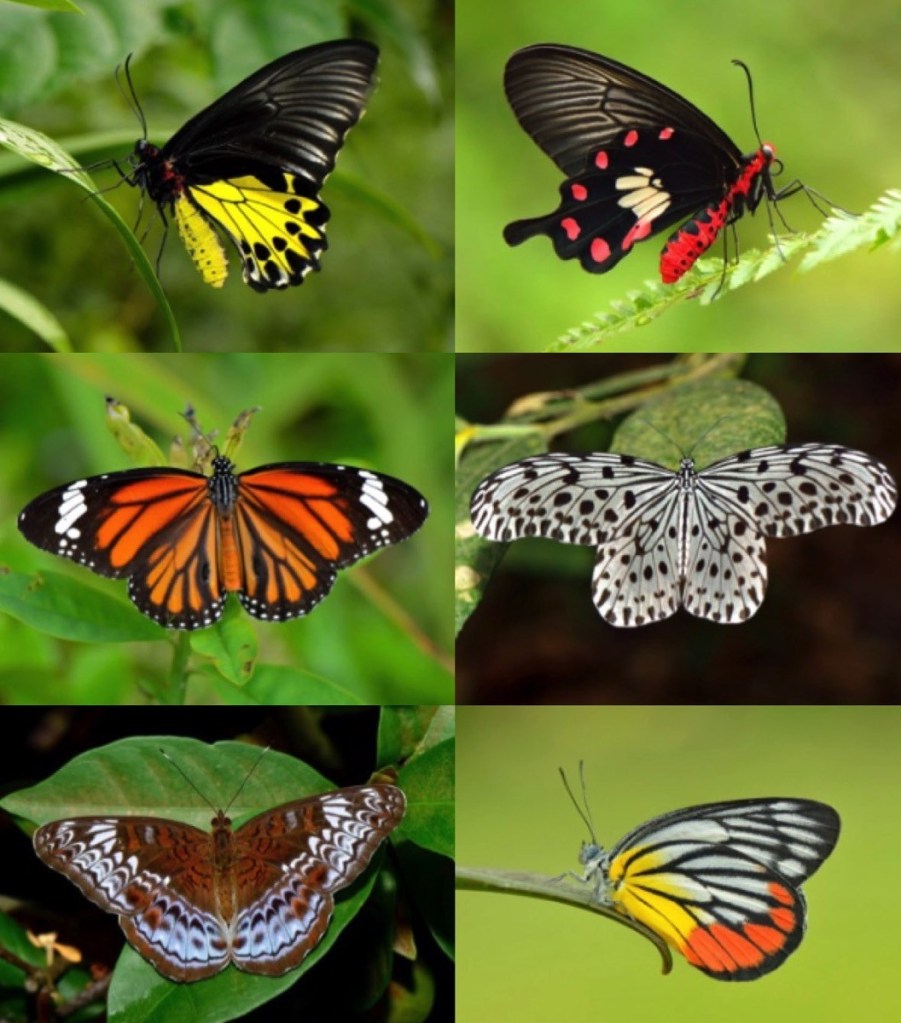
Skill is the most valuable asset in an individual’s life. Vocational education gives people a new learning experience. It increases your level of expertise in a particular field. This makes it easier to choose a career in future.

Learning a skill takes less time than a traditional four-year university, and can be learned in a few months.. Due to its short period of learning it is very flexible and cost-effective for the students. The students even get time to do their other important work by training  part time from the teacher.

After learning, they do not become dependent on machines or someone else because it is their skills which are helping them to work. They become more efficient and self dependent. Also, they realise their capabilities and use their potential to achieve heights of success. 

Career options from vocational skills

We are exposed to various job opportunities by vocational training. Some career options are listed below –

Car mechanic, Car body repair technician, Car electrician, Quality test engineer, Firefighter, Paramedic, Police officer, Search and rescue officer, CPR and first-aid responder, Coastguard officer, Vocational nurse, Surgical prep technician, Medical technician, Dental hygienist, Dental assistant, Phlebotomist, Sonographer, Radiologist, Pharmacy technician, Mammographer, Laboratory technician, Veterinary assistant, Veterinary technician, Chef, Caterer, Food service manager, Bartender, Mixologist, Quality assurance specialist, Welder, Electrician, Plumber, Web designer, Carpenter, Construction manager, Pipe-fitter, Machining, Computer-aided drafting, Network administration, Civil engineering technician, Court reporter, Hair stylist.ย 

By choosing a subject that interests you, you can shape your career and create your own success.