Importance of Education in Society

Education plays a massive role in current societal growth and progress. It has been one of the key elements which can significantly impact the development of a society. If people of a society are educated, they can contribute greatly in the fields of arts, literature, science, technology, and others, and ultimately develop a well-rounded and stimulating culture.

Education & Society - The Editors' Desk

It helps to earn money and meet life’s basic needs. Education plays an essential role as it helps an individual in their overall development and help them sit in a pretty good position in a society. It might help you grow in a profession and make your dreams come true. It also helps one set their personal and career goals.

The ways in which Education plays a significant role in the betterment of society are as follows:

Improved Communication:

A quality education helps us to interact with others more easily and more effectively. Keeping in mind that communication is not just about talking to one another and exchanging information. There is a way lot more to it than that. It’s about knowing when and how to listen to one in need, how to use and read someone’s body language.

If one has been deprived of decent level of education, communicating with others via email , letter, fax or even smartphone would be difficult. You may need to know whether to add to anyone in a formal or informal manner, or not. Why is education important within society? The very first reason points out to meaningful interaction amongst one another.

Ability to express views and Opinions:

Many people face problems when they have to express their opinions and personal views. Having a tough time expressing yourself may also be the product of inadequate education and a lack of experience in life.

Education is the source of your work and social progress, as it helps you in better communication and everyone wants to know what you’ve got to say. Just imagine how all those authors and poets became worldwide popular for their ability to influence individuals, if not because of their education. For what cause is education essential to society? Reason 2-People more open-minded.

Social Cohesion:

Education is a wonderful thing but social cohesion is the most beautiful and essential thing that has been associated with it in recent years. Despite our differences, education has made us coexist in consonance with one another.

When you enter every university’s doors you can see people from distinct religions, cultures and races. You’ll be surprised to see that they realized, given all the appearances, that after all, they are not that different

Raising the Standard of Living:

Many people think that education can lead a person to a place where he / she can fulfil all their ambitions and aspirations. But most do not believe in such thinking that education in one’s life tends to create such a difference.

Training alone, too, cannot make you productive unless one really works hard to get to that point. When a person commits himself/herself to quality education, only then the outcome of such commitment can be fruitful.

Conclusion:

With that said, education is mankind’s greatest gift and it is only through information that we will ever be able to coexist peacefully on this beautiful planet. Once we understand this, it is our responsibility to help the younger generations understand how powerful and important education can be. One should have rights and freedoms, rules and regulations living in a society. This knowledge will help to build boundaries around us so that we can follow the rules to have a peaceful life. Education will help to communicate and exchange information and insight with people from different cultures and live in harmony. To be an active participant in society and gain respect from the community, one should learn new things at all times.

Sushant Singh Rajput commits suicide

Noted Bollywood actor and television star Sushant Singh Rajput reportedly committed suicide on Sunday. As per preliminary investigation, he was found hanging at his Bandra residence.

IMG_20200614_145711

His demise came as a shock to many as this is the fourth death of a famous personality from the Hindi film industry to pass away in the past two months, after Irrfan Khan and Rishi Kapoor succumbed to cancer and Wajid Khan from the Sajid-Wajid duo fell prey to the coronavirus pandemiRajput auditioned for Abhishek Kapoor’s Kai Po Che! and was selected to play one of the three leads, along with Rajkumar Rao and Amit Sadh. Based on the Chetan Bhagat novel The 3 Mistakes of My Life, the film proved to be a critical and commercial success. Rajput’s portrayal of Ishaan Bhatt, an ex-district level cricketer who is a victim of politics in the cricketing selection fraternity, was praised.[30] Critic Rajeev Masand wrote: “…it’s Sushant Singh Rajput, making his film debut as Ishaan, who it’s hard to take your eyes off. The actor has an indescribable presence and it’s clear from his confidence and distinct likeability that a star is born.”[31]Rajput’s second movie was Shuddh Desi Romance, alongside Parineeti Chopra and Vaani Kapoor. Directed by Maneesh Sharma and produced by Yash Raj Films, the film deals with the subject of live-in relationships and was completely filmed in Jaipur, Rajasthan. Taran Adarsh from Bollywood Hungama praised Rajput’s performance, saying: “After leaving a tremendous impression in his first Hindi outing, Sushant Singh Rajput… brings a lot of freshness with his unpretentious and spontaneous act.”[32] Sukanya Verma from Rediff stated: “After a dynamic debut in Kai Po Che!, Rajput channelises his abundant energy to convey the childlike ineptitude of a man who wears his heart on a sleeve.”[33] Sushant’s next role was in Rajkumar Hirani’s 2014 film PK. Although his role was relatively minor, the film gave him the opportunity to work with Aamir Khan and Anushka Sharma. Upon its release, the film proved to be the one of the highest-grossing Indian films.[34][35]


In 2015, Rajput’s sole release was Dibakar Banerjee’s mystery thriller Detective Byomkesh Bakshy! (2015), in which he portrayed detective Byomkesh Bakshi, created by Bengali writer Sharadindu Bandyopadhyay. The film was produced jointly by Yash Raj Films and Banerjee’s own film production company Dibakar Banerjee Productions. Set in Kolkata in the 1940s,[36] the film was released on 3 April 2015.[37][38]


In 2016, Rajput appeared in Neeraj Pandey’s biographical sports film M.S. Dhoni: The Untold Story, in lead role of Indian cricketer Mahendra Singh Dhoni. The film was a critical and commercial success, becoming one of the highest-grossing Bollywood films of 2016. Rajput’s performance was widely praised by the critics and his portrayal of the cricketer was applauded even before the film’s release.[9][10] For his performance in the film, Rajput got his first nomination for the Filmfare Award for Best Actor.In 2017, Rajput appeared in Dinesh Vijan’s Raabta, co-starring Kriti Sanon.[40][41]


In 2018, Rajput appeared in Kedarnath, a love story set in the backdrop of natural calamities of Kedarnath, Uttarakhand, co-starring Sara Ali Khan.


In 2019, Rajput appeared in Abhishek Chaubey’s Sonchiriya opposite Bhumi Pednekar.[42][43] He appeared in Nitesh Tiwari’s Chhichhore opposite Shraddha Kapoor that released on 6 September 2019.[39]c.

Ohio Responding to National Nursing Shortage

Ohio is one of three states – including California and Texas – with the largest gap and need for nurses and nursing students, according to the Health Workforce Information Center. Beyond the demand for more nurses, several research studies and the Institute of Medicine (IOM) advocate for better-educated nurses.
The IOM’s (2011) recommendations included, “Nurses should achieve higher levels of education and training through an improved education system that promotes seamless academic progression.”
In an attempt to assist with supplying well-educated Registered Nurses (RNs) to the American workforce, Herzing University-Akron has added a Bachelor’s of Science in Nursing (BSN) program and will soon follow with a RN to BSN program. The first BSN class will be admitted in January 2016. The plan for the RN to BSN is for the first class to be admitted in January 2017. The addition of these in-demand programs will assist with meeting the need for more nurses who have the necessary education to deliver high quality patient care.
But, what is a nurse? Do nurses really matter?
As a child, I remember going to the doctor’s office and the nurse saying, “The doctor will be right in.” I thought that was what a nurse did – she went to get the doctor. As I grew up and started a family, I found out what nurses really did through various personal experiences. Nurses stayed with me when I was in labor with my first baby. In fact, I still remember my nurse’s name, Bonnie. She was with me the entire day. She assisted me in pushing and calmed me when I became frantic. She was the one health care professional that stayed in my room for hours helping me.
Move forward a few years and some great pediatric nurses taught me how to care for my child with a chronic illness. They taught me how to monitor her and how to give her nebulized medication. They taught me exactly how smart a nurse must be. They taught me how foolish I was when I believed all a nurse did was send in the doctor.
Nurses are a doctor’s eyes and ears. Nurses are the professionals who spends 24 hours a day, 7 days a week at a patient’s bedside. Nurses are the ones to see a change in a patient or a lab result that is concerning and notify the doctor. Nurses must be educated to the point of knowing what to expect from the doctor or what to ask the doctor for. Our health care system today could not function without well-educated nurses.
As our nation and the state of Ohio experience a nursing shortage that will continue to grow, Herzing University wants to assist by providing programs to educate the next generation of nursing professionals. We offer no wait list for both the Associate of Applied Science in Nursing and the BSN programs. If you are in the Akron area and are considering this remarkable profession, stop by and see us. We are happy to help you earn your nursing degree.
Dr. Christina Silva is nurse and nurse educator who is passionate about preparing the next generation of nurses. She is currently working as a perinatal staff nurse at Uniontown Hospital, Uniontown, PA 15401, and a nurse administrator at Herzing University’s Akron campus

Just a labour and sewer cleaners, jobless due to lockdown

We are now trapped due to lockdown but we all are creating some new things everday. Some became chef during lockdown and having fun. But what about those who doesn’t have enough money to survive their lives. Yes, they are not happy. Yes, they fight everday to fulfill their needs. Yes, they starve everyday. Yes, they fight for death everyday. Yes, they struggles a lot but not get respect, money, can’t afford anything. Yes, they are laborers or sewer cleaners or sweepers. Sewer cleaners life is a hard life. The practice of manual scavenging involves workers physically entering sewers or septic tanks to clean out excreta. The work has historically been connected to Dalit communities in India, making its prevalence not just a question of capability but also one of social mores. But now they are jobless due to lockdown. But why to enter in it just like other countries we can also provide some machines which can automatically clean the sewage system that’s how they’ll do their work and no shortage of money wiuld be there. Entering into it is very dangerous for the person because of germs. And yes its a hell. Helping them by providing some kind of new technologies and that would be more beneficial to the person and for the country.

A labour who works a lot but now they are jobless due to lockdown. No money, no food. So donating some money will help them a lot. Donation is one of the biggest solution.

Here are many people who are not having enough money to have food or for medicine or for hospital charges. If want to donate you can go various social media pages on insta like milaap, kettoindia or from facebook you can pay through paytm. The above pic says ” i m just a labour, jobless due to lockdown. I sold and spent everything i had for my first son who suffered from brain disease. Now the second one is also suffering the same thing. He needs urgent treatment to survive i am not having enough money and no one to ask for. Your donation is the only way to save my child.” Your donation will save a precious life.

TRYST WITH YOUR BRAIN

Strategies to help you stop spiralling this quarantine season

The COVID-19 pandemic can stressful and incredibly frightening for some people. It may involve fear and anxiety about the disease which can be overwhelming and cause strong emotions in both children and adults. This is why it is crucial to take care of your mental health now more than ever. 

The following four solutions can be enacted in different ways, depending on your surroundings. 

METHOD ONE: Writing

Writing about the problems you are facing is a good start to getting through them. Start maintaining a journal or if you’re more electronically inclined even a new note on your phone would do. When you’re faced with a problem, write how it makes you feel, its ideal outcome, even if that counts as the worst-case scenario, and then write the possible solutions.

Don’t worry about maintaining grammar. When sentences start pouring out of you, your brain works to solve whatever’s going on. Later you might want to read it over and see if any possible solutions jump out at you; or don’t, if this act of writing was enough to make you feel better about the situation. 

PLAN OF ACTION:

When you’re alone: You might find it helpful to write a letter about everything you are feeling about the situation addressed to the person who caused it. If the problem is caused by a situation or circumstance rather than a person, address it to your feelings, the Universe, some higher power you believe in or even to yourself. The11 simple act of writing can lend you an immense amount of clarity and/or relief.

With your family around: Since everyone’s at home and on their phones, all the time, pulling yours out and pretending to send a text won’t draw any extra attention. Breathe and vent in your notes. Nobody will be the wiser.

METHOD TWO: Making Art 

Maybe after you start writing you immediately start self-editing and judging your own feelings. You might even be worried that if you put your feelings down on paper, someone could find and read them, and you will have to suffer the consequences. Instead, how about you grab magazines, crayons, paints, brushes, a sketchbook, or whatever medium you want to go for, and start making something tangible? Art offers a safer means of expression for people concerned with invasions of privacy by parents or relatives.

 PLAN OF ACTION:

When you’re alone: Go for it! Get every craft supply you own out of that cupboard and make a giant mess. You could start a long-term project that you can get back to whenever you’re not feeling great. You don’t have to be Van Gogh to benefit from this. The mere act of scribbling all over a piece of newspaper and going letting loose will make you feel a little better.

When you feel unsure of yourself, temporarily refocus your attention on making something that helps you resurface, like picking up a pen and scrawling aimless loops on a piece of paper. Your version doesn’t have to revolve around drawing or painting: Try paper-maché or do origami. 

With your family around: Acknowledging where you are and what you’re doing can quickly recenter you if you start to panic or dissociate. Draw the street you live in; the person at the table next to you; the contents of your fridge. Focusing largely on the details of what’s physically real can take you away from intangible feelings and can bring you back into yourself. If your family is artsy too, try craft tutorials or paint some old jeans- anything that distracting enough and gets your creative juices moving.

METHOD THREE: Talk It Out

Sometimes spiralling makes you want to shut every thought you’ve ever had away in a safe, never to be seen or heard from again. Sometimes when you’re already doubting your judgment, sharing your thoughts with someone, even a trusted friend, can feel icky. But if you’re capable of surpassing those feelings, even temporarily, sharing your thoughts and experiences with someone you trust— whether that’s your someone in your girl gang, parent, sibling or a twitter pal—can result in having fresh set of themes to help you work on what’s bothering you.

If your problems involve experiencing violence at home or you’ve been abused or assaulted, the legally mandated 

lockdown can present unprecedented challenges that are unfamiliar territory. If you are experiencing abuse, reaching out to the ones you trust is crucial. 

PLAN OF ACTION:

When you’re alone: Just start talking out loud. Try and suspend your feelings- with just enough practice, you can become your companion this way. This act of speaking your problems instead of bottling them can give you some cognitive distance from the issues bothering you. When you spill what’s on your mind in a space where no one around is there to hear you, it can lead to major realizations. 

With your family around: The only thing harder than opening up is figuring out who you can trust. If I have a family member whom I love dearly but who makes sure to tell me everyone else’s gossip, maybe they aren’t quite the right confidante when you’re already feeling unstable. The kind of confidante you’re looking for here is someone who will sit and listen, then ask the right questions-what have you tried so far? what do you need? how can I help?

If you aren’t up for face-to-face contact with a family member nor a call to your trusted friend, but you still want to talk to someone about facing any mental health issue due to the ongoing lockdown, call one of the many helplines designed to support people experiencing unpleasant feelings. The government has launched a crisis hotline which can be reached at 08046110007

METHOD FOUR: Exercise

If you need a temporary distraction to process your thoughts and feelings but an art project and poetry just isn’t doing it for you, try going for a long walk on your terrace, flailing around your bedroom wildly to ‘Starboy’, giving Pilates a shot or even practicing headstands until your hair permanently stands on end? 

Physical activity will reduce stress and fatigue and eventually help you to feel more alert. It doesn’t matter what kind of exercise you do- it’s all about moving your body in ways that feel great and work for you. It doesn’t have to be a giant commitment. Just set small goals.

PLAN OF ACTION:

When you’re alone: This is a good time to experiment and find out what kind of physical activity works best for you. You could follow stress-reducing yoga videos, a zillion of which can be found on YouTube, If you’re feeling something which is more high-energy, the internet is filled with amazing dance tutorials available as well. Working out with your confidante over video call can also be an effective alternative, you’ll both get to blow off some steam and clear your heads, which is a great place to be in if you want to ask for advice or even spill your guts.

With your family around: Pick an activity that the family likes, yoga or hula hooping- the family favourites or any other and get going! High-energy activities like planks, push-ups, squats can be difficult, but rewarding, and doing it with another person makes it into a fun challenge

Union health ministry toll-free helpline for mental health issues: 08046110007 

Future of Electric Vehicles in India and Effect of Covid-19 on EV Industry

Introduction:

India’s emphasis on next-gen transportation has undoubtedly taken on legs under the incumbent administration, but the ‘Global Electric Mobility Project Plan (NEMMP) 2020’ was launched in 2013 in reality under the previous Congress-led administration. That further puts the concerted efforts for green mobility and electric cars across the aisle in perspective. The country has since been willing to embrace a 360-degree approach to transform into an EV nation.

Electric vehicles are changing the future of auto maintenance ...

In December 2019, India’s rank deteriorated from 14th position in 2017 to 5th in 2018 in the global vulnerability ladder in the Climate Risk Index 2020 published by the environmental think tank, Germanwatch. This provides it all the more rationale for India to make electric cars and buses a mission in countering fossil fuel dependence.

Although the initial movement was seen towards electrification of two-wheelers and three-wheelers, the greater need is for public electric transport and vehicles. Given the current difficulties and uncertainty inherent in the market, this largely untapped market is now being looked with hope by major automakers.

Will Electric Vehicles gain traction?

For many rationales, industry leaders view electric cars as a feasible strategy for Indian audience. According to Akhil Aryan, CEO and co-founder of ION Energy, quick and efficient adoption especially combined with the electrification of existing vehicles and the growth of charging infrastructure will lead to a shift whose significance will be felt in metropolitan cities, particularly since pollution has reached disastrous levels.

Moreover, Zoomcar founder Greg Moran added that the younger generation is motivated by creativity, sustainability and environmental protection with the median age of the Indians being 27 years. Around the same time, numerous existing conglomerates and start-ups ensure home-grown product availability by manufacturing cars, parts, and batteries together.

Challenges faced by Indian Auto industry in adopting Electric Cars:

Having broken away the old expectations and building up a modern customer culture is indeed a struggle. It is common to find users worried about velocity and range of EVs. In order to smash many myths and encourage EVs on the Indian market, a lot of sensitization and education is required. Aside from this, the introduction of electric vehicle vehicles in India in the immediate future poses a range of obstacles. Including:

  1. Lack of Charging Stations
  2. Battery performance
  3. Delivery-demand difference
  • Absence of battery cell development:

There is a complete lack of principal manufacturing of battery cells in India which postures the risk of our trade deficit increasing. Currently most manufacturers rely on imported batteries from Japan, China, Korea, and Europe. The Indian market therefore needs a push for indigenous technologies that are strategically and economically suitable for India, such as aluminium fuel cells.

  • Establishment of charging stations:

Of course, the big challenge is to set up a charging infrastructure that needs to be integrated with existing refuelling stations and at alternative locations closer to homes. According to Akhil Aryan, the installation of battery swapping stations would reduce waiting time for charging, allow better use of property, reduce the size of batteries in vehicles and offer an increased range available.

In addition, it will need to streamline the country’s charging system. Vendors of EV charging stations are currently perplexed on the standard to be followed for fast charging. While the existing standards require charging stations to install European CCS and Japanese CHAdeMO charging platforms, constructing both will increase the operating cost substantially.

ION’s Akhil Aryan figured out that if the generation is from thermal power plants functioning on coal, home charging could also be a concern, given the current electricity prices. A change in the entire electricity generation environment is what’s needed to encourage electric car production.According to Akshay Singhal, founder of Log 9 Materials, the service and maintenance options are also currently restricted given that Indian consumers prefer widespread brands with a countrywide service network.

  • Improving battery performance:

Given that it would take great deal of time to duplicate the electric charging system and the ubiquity of India’s fuelling network, it is important that batteries are much more efficient in order to compete better with the internal combustion engine automobiles. The Hyundai Kona electric currently has the highest range of 452 km available on a single charge among electric cars in India, which could shift in near future.

  • Bridging the divide in supply-demand:

Another great hurdle trying to prevent today’s wider adoption of EVs is the fact that the range is quite limited, thus limiting the use-cases for electric vehicles.

Effect of Covid-19 on EV Industry:

Despite the uncertainty arising from the coronavirus pandemic, electric car makers also have a flicker of hope in driving the development of the electric vehicle industry. But from a manufacturing point of view, this would entail a major change in the environment.

Currently, for certain parts, such as drivetrains and batteries, most businesses that manufacture electric vehicles on a global scale rely on imports from other countries (China, South Korea and Japan). Ironically, if one looks at the automakers producing internal combustion engine (ICE) cars, the industry’s major boost came from domestic manufacturing.

Sean Mitchell at All Things EV said electric auto makers need to decentralize their supply chain, particularly the raw materials that they can supply closer to the manufacturing sites or else it will significantly hinder the growth of electric vehicle manufacturers.

In other words, businesses need to concentrate on continuously acquiring raw materials and manufacturing battery cells locally. Similar to Tesla’s Gigafactories, “The domestic production protects them as a manufacturer of electric vehicles just a little more if they can supply their raw materials from the same continent where the vehicles are manufactured,” Mitchell said

Conclusion:

The Covid-19 lockdowns have also delayed the Indian electric vehicle movement and restrictions on imports. The mobility market, which is a large client base for EV manufacturers, is heavily impacted. However, once the lockdown is over, many experts believe that players involved in electric vehicles need to speed up their business plans.

Audi India head Balbir Singh Dhillon also said the EVs are the way forward but the market will not grow overnight. He has said that the architecture has an important role to play, and tangible government policies towards e-mobility infrastructure and adequate support for electric vehicle imports would be a positive indicator.

Ketsu Zhang, BYD India’s executive director told that the company sees tremendous potential for the electric vehicle industry in India and as one of the biggest markets in the future. BYD, with its alliance with Olectra, has arisen as a pioneer in the electric bus market. The pair had a strong role in India, where it obtained 52 per cent market share of commercially operated electric buses in India. The first to launch pure electric buses in India were BYD and Olectra succeeded by Tata Motors, Ashok Leyland and JBM Group.

The Class of 2020

The Corona pandemic came like a hailstorm pretty much disrupting the life of everyone in some way or the other. People are facing financial issues, there’s panic about job security, the poor don’t have a place to live nor food to feed themselves. Amidst all of this, it is the field of education which in my opinion has been hit the worst.

While the younger tiny tots continue to stay at home, I wonder what memories will they have of their childhood growing up? That they weren’t allowed to meet their friends or the fact that they didn’t go to school? Will their childhood be spent in this ‘masked avatar’ we all have or will this pandemic ever end to give these children a ‘normal childhood’- the way someone from our generation would describe it.

But, let us not forget about the graduating lot- The class of 2020. The smiling faces which had entered their classrooms a few years back, didn’t even get a farewell from their juniors. From completing and submitting online assignments to taking online exams- these fellows have had it the tougher way. While the anxiety of their graduation mulls over, these young minds also have a more serious question lingering at the back of their heads- what about the placements? In this financial crisis will they ever get a job? This degree they’ve worked so hard upon, is it of any tangible use? The amount of investment which goes into higher education, was it any worth?

Well, as the panic continues, we have to look for ray of light somewhere in this vicious tunnel which doesn’t seem to have an end! My suggestion to the outgoing batch would be to shift online and start applying for various internships and jobs virtually. We don’t know when this pandemic is going to end and what it is going to leave us with but, instead of panicking and worrying, we should work with what we have as of now, which is the web.

Another question which students may have is about their stipends? What about the money? Well, companies across the globe are facing an economic crisis so whether or not someone freshly out of college will be paid is really upto the employer, but nonetheless, don’t miss out on gaining the experience.

Even though the pandemic has swept away our happiness to quite some extent, let’s smile and work along with millions people who are out there all day everyday serving us, without complaining. 2 decades into this century, having faced a global emergency of such magnitude, it does scare me but still, at the back of my mind I have this weird thought that it’s a ‘once in a lifetime experience’, hopefully!

Covid-19 lockdown: How the pandemic bringing change in Indian education system

Subscribe to get access

Read more of this content when you subscribe today.

Sorry! This product is not available for purchase at this time.

The Covid- 19 pandemic has sparked a global realization that our current way of life does not work. It has broken our perception of what is normal and deconstructed society as we know it.One such critical area, where the need for change has become evident, is education. The effects of the coronavirus and thereby its preventive measures, has upended the life of students, parents and teachers.The clear disruption in the ‘normal’ functioning of education has placed an emphasis on many questions, which were previously asked and subsequently left unanswered. So, what could the current effects of this global pandemic mean for the future of education?

Factors affecting the evolution of the education system:

To answer these questions, which pertain to modernization and efficiency, a lot of factors must be considered. Given the period we’ve spent in lockdown and the observations of our abrupt transition to online learning, we’ve found the time to think and the direction in which we must apply our efforts.We’ve not only been given a chance to rethink the education sector, but also the opportunity to visualize how it can evolve in tandem with our changing world.

This possible scope for the evolution of schools, post coronavirus:

*A change in the purpose of learning

The course of learning and the way curriculums are taught may change. Aspects that were once considered fundamental to education may be revised to largely accommodate life skills of the future.Not just careers, but residents of the future as well will require skills like resilience, adaptability, collaboration, communication, empathy, creativity and emotional intelligence. Learning in schools will have a new purpose, and it will be a major deviation from the information-focused education of today.

*The utilization of innovative methods of education

Aside from the disruption faced due to the novel coronavirus, education in our developing world has experienced some major changes. Yet, even in the face of rapid innovation, we have yet to shift the way in which we impart education. Learning is the acquisition of knowledge, but it doesn’t have to solely occur through age-old methods that do not utilize the highest potential of the brain. Instead of being taught, can students be given an experience that influences their learning? Approaches like integrated learning and experiential learning, with greater implementation of technology, will power the future the education in schools.

*A tighter relationship with technology

In the face of a crippling pandemic, technology has emerged as a major lifesaver. Communication is a major key to our interconnected existence and technology is the driving force that maintains our connections. For education, that means creating content and delivery systems that harness and utilize technology to its fullest. Perhaps, education may become more flexible and accessible, relinquishing its over-reliance on rigid structures that we currently consider necessary. Additionally, the current generations of school students are generation Z and alpha. They are generations that are defined by their use of technology; it has become an extension of their consciousness and they do not know a world without it. The future of education will find no room to ignore the utilization of technology since it may very well be the best platform to empower learning in an age that is integrating technology as a way of life. These generations could influence the evolution of education, as they themselves are the ones majorly impacted by the pandemic and are in the best position to learn and grow from it.

*A focus on bigger issues

How will we ask students to go back to a way of life that compromises their physiological, emotional and mental health? Will we still ask students to get up to attend school at a time when their brains aren’t suitably active? Will we teach students about protecting the environment while asking them to sit in buses that move through traffic and leave a large carbon footprint? The world could require a different focus tomorrow than it does today. Perhaps, education post-Covid- 19 will embrace learnings from science and emphasize a greater focus on issues that endanger our health, society, life and earth. Covid-19 may have been the catalysis for a change that has been long pending. What we will witness in the aftermath of this global health crisis may very likely be the adoption of approaches that were sought in it. Perhaps, the world may never go back to what it was pre-pandemic. But we can count on it to adapt to the future, irrespective of what it contains.

Measures taken by the educational institutes are as follows:-

* Closed schools

* Postponed or rescheduled the examinations

* Cleaning and sanitisation of premises.

* Consideration of long term uncertainty etc.

Possible alternatives or solutions for interrupted education during COVID-19:

* With the help of power supply, digital skills of teachers and students, internet connectivity it is necessary to explore digital learning, high and low technology solutions, etc.

* Students those are coming from low-income groups or presence of disability, etc. distance learning programs can be included.

* To provide support for digitalisation to teachers and students.

* The necessity to explore digital learning platforms.

* Measures should be taken to mitigate the effects of the pandemic on job offers, internship programs, and research projects.

* EDtech reform at the national level that is an integration of technology in the present Indian education system.

We can’t ignore that at this time of crisis effective educational practice is needed for the capacity-building of young minds.

Central Government and State need to take some measures to ensure the overall progress in the country. Time never wait, this tough time will also pass. Till then stay safe, stay at home!

IMPACT OF COVID-19 ON STUDENTS

The global impact of Corona virus is immense as educational institutes all over the world – from Harvard to the IITs – are closed. Covid-19 has thrown education all over the world in a loop. Here are the major problems.Schools are shut, and students are stranded at home, with extremely limited contact with friends and virtually no physical activity, thanks to the Covid-19 pandemic raging across the world. IB, A Levels, ICSE, CBSE all known and recognized boards have postponed or cancelled examinations. Likewise, top colleges like MIT, Harvard, Princeton have closed.

Closer home, institutions like IITs and IIMs have all closed their campuses and moved classes online. Even standardized tests like GMAT, GRE, SATs, ACT remain suspended and the future of many students hangs in balance!

Clearly, there is panic all around and educators and students alike are confused as to next steps and continuity with respect to educational objectives.

STUDENTS CAUGHT IN MIDDLE OF THE PANDEMIC

These are those students who are caught in the limbo on account of education outcomes being withheld due to the Covid-19 pandemic. Some of them do not have a result because exams either did not happen or were left in the middle.

Many of them face uncertainty as to their future because their next steps further education or careers are dependent upon them clearing their school or college leaving exams.

We believe that these students, while may face a degree of uncertainty with respect to future, are not facing a very difficult problem.

The only challenge is when they would start their next innings?

Hence, they should patiently wait while staying in touch with their prospective universities.

Any clarity as to the decision-making process and entry factors would come as soon as the Covid-19 pandemic impact recedes and life returns to normalcy.

Be on the lookout for new information and make sure that you are able to position yourself very quickly in line with that so that you don’t lose out when things start to move.

STUDENTS ONE YEAR AWAY FROM INSTUTION LEAVING EXAMS

These students are in a bigger quandary because of the Covid-19 pandemic because not only their education process is disrupted, but they also face a big challenge of proving themselves for their next journey.

In the absence of hard academic indicators such as grades and marks, many of these students find themselves in a situation where they are unable to differentiate themselves and lack a cohesive framework to get themselves ready for the jobs and education tasks they face next.

DISRUPTION OF THE EDUCATION

All other students who are away from such outcome-dependent situations such as above also face severe education disruption.

In response to the Covid-19 scare, many schools have moved online and parents seem to have assumed the role of teachers and are fast becoming savvy with resources created for home-schoolers to cause minimal disruption to their children’s education.

Again, while there are a ton of fantastic resources which are available, there are not too many resources which mimic the school that is, provide for multidisciplinary learning, encourage connections across different domains and inspire ideas which help a child develop 21st century skills and prepare themselves for the jobs of the future.

MEASURES TAKEN BY EDUCATIONAL INSTITUTES

*)Closed schools

*)Postponed or rescheduled the examinations

*)Cleaning and sanitisation of premises.

*) Consideration of long term uncertainty etc.

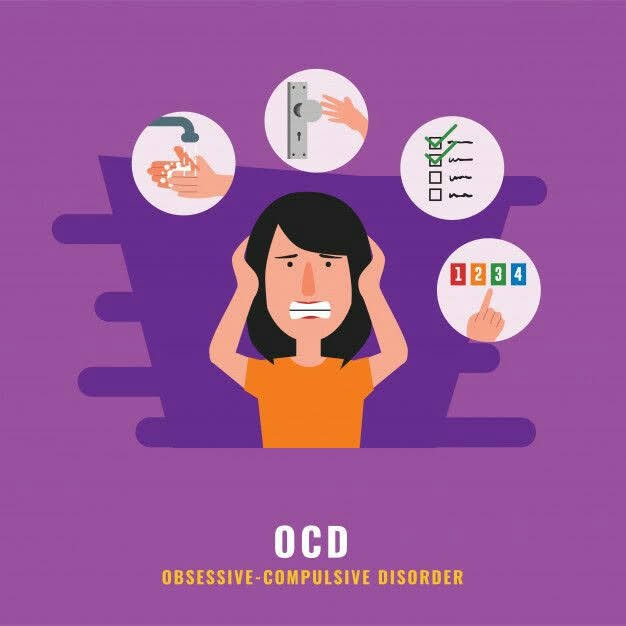
Obsessive Compulsive Disorder

It’s totally okay if you sometimes, go back and double-check that the iron is unplugged or worry that you might be infected by germs, or even have an occasional unpleasant, violent thought. However if you suffer from obsessive-compulsive disorder, obsessive thoughts and compulsive behaviors become so consuming that they start interfering with your everyday life. Obsessive-compulsive disorder or more commonly known as OCD is a mental health characterized by distressing, intrusive, obsessive thoughts and repetitive compulsive physical or mental acts. People who have OCD, will probably recognize that their obsessive thoughts and their compulsive behavior are irrational yet they can’t resist them and break free. A 2001 World Health Organization (WHO) mental health report estimated that OCD was among the top twenty causes of illness-related disability worldwide for people aged fifteen to forty-four years. The report also suggested that OCD was the fourth most common mental illness after phobias, substance abuse, and major depression. OCD is associated with a wide range of functional impairments and has a significant impact on social and working life.

Just like a needle getting stuck on an old record, OCD causes the brain to get stuck on a particular thought or urge. For instance you might wash your hands until they are scrubbed raw for fear of germs. Though you don’t derive any sense of pleasure from performing these repetitive actions, they may offer a temporary sense of relief from the anxiety created by these obsessive thoughts. Common obsessions include contamination fears, worries about harm to self or others, the need for symmetry, exactness and other, religious/ moralistic concerns, forbidden thoughts or a need to seek reassurance or confess. Common compulsions include, cleaning/washing, checking, counting, repeating, straightening, routinized behavior, praying, touching, tapping or rubbing and avoidance. Unlike adults, children need not review their symptoms as nonsensical to meet diagnostic criteria.

OCD is segregated from other mental health conditions by the presence of obsessions, compulsions, or both. The obsessions or compulsions cause marked distress, and are time-consuming. Signs of OCD can occur in children and teenagers, with the disease usually beginning gradually and worsening with age. Indications of OCD can be mild or severe. Some people come in contact with obsessive thoughts only, without engaging themselves in compulsive behavior. A few who experience OCD successfully hide their symptoms for fear of embarrassment or stigma. Friends and family may, however, notice some of the more physical sign.

Over the past three decades, OCD has moved from an almost untreatable, life-long psychiatric disorder to a highly manageable one. This is a very welcome change to the 1% – 3% of children and adults with this disorder as, thanks to advances in both pharmacological and psychological therapies, prognosis for those afflicted with OCD is quite good in the long run, even though most have comorbid disorder that are also problematic. We still have a long way to go, anyhow, until OCD can be described as either easily treatable or the effective treatments are largely known about among clinicians. Successful treatment can significantly improve and even cure OCD.

CAREER FOR INDIAN STUDENTS IN DRDO

The Indian Defence Research and Development Organisation which was Established in 1958, with currently having 50 Laboratories has been one of the Dream for many Youngsters of India to Pursue a Career in the DRDO as a Scientist. The DRDO which provides oppurtunity for almost all the Engineering and Science branches even for the Specialisation of the Branches.The Laboratories such as: Advanced Systems Laboratory Hydrebad, Aeronautical Development Establishment Bengaluru are popular Laboratories of Students Interests. All the Laboratories over the Country Contribute in one or the other way to the Nation.

Currently there are around 5000 Scientists in all the Laboratories around the Country, and almost in total there are 30000 Employees. The DRDO serve in all Domains such as:Aeronautics , Materials, Metallurgy, Biomedical e.t.c. The Students are Inducted by conducting Exams by Recruitment and Assesment Centre of DRDO. The Expeected to have a Valid GATE score and also with an Aggregate of 60% in their Undergraduate Degree in any Branch either in Science or Engineering. For the Scientists Post, they Seperately Conduct an Exam and People finished their HSC are Assessed by DRDO CEPTAM as DRDO MTS(Multi Tasking Staff) exam.

The Students are Ranked in the order of their Performance in the Written Test and Interview. The students are Qualified Generally in the Order as:(Valid Gate Score+Written Test+Interview).The Students are selected according to the Number of Vaccancies and the Ranking List Prepared by them for the number of Vaccancies according to their Performance. The Students are then indulged into the Training held at Defence Institute of Advanced Technology (DIAT) at Pune. There the Students are given a Training for a Period of around 16 weeks termed as the Post Induction Training.

There the Students are involved in General Organisational Orientation Training (GOOT) for a period of 08 weeks and General and Advanced Technology Training (GATT) for a Period of 08 weeks, and only Scientists are incorporated in this Training. Apart from the Training the Students are also made to involve in Group Activities such as Presentations and Communication Skills, Material Design , Manufacturing Technology, Research Methodology. Faculties from Premier Institutes such as IIT, NIT and other Premier Institutes Recognized by the Country will Deliever Lectures.

The students are also made to Involve in Group Research Projects during their Training Period. The Students after the Training Period they are inducted in one of the DRDO labs from the Country with the Designation as Scientist B .The Students are Provided with good Grade Pay and also with many perks and also they provide accomodation for the Scientists. They also Provide Mtech and Phd Courses from Premier Institutes like IIT by using Screenings from the Institutes . You also get a Stipend from the DRDO. Otherwise you are like a normal Mtech Student from the IIT. The procedures are same as per the Institutes Norms. Thus Students who have the Real Pssion towards DRDO can make use of the oppurtunities provided by them in all Fields and I hope the Information I provided here helps you in one or the other way to know about the Career in DRDO.

Affect of Modern Technology on Education

NEED OF MODERN TECHNOLOGY

There are plenty of mobile applications that initiate students with special needs into the learning environment through enabling and facilitating them with digital education aids. Online learning and computer technology activities hugely help to bridge the gap between regular and disabled students through making knowledge easily accessible. With technology, it is also possible for special needs students to enjoy other fun activities like playing.

GLOBAL PLATFORM

Education that is run by technology has widened. Many learning institutions currently offer online courses which students can access from anywhere they may be. Video conferencing and applications such as Skype are a platform for students and teachers share knowledge conveniently.

ASSESSMENT

The assessment process in most learning institutions is now digitalized. Learners can do tests online and they can instantly assess their knowledge base. Online assessments are impartial and flexible. Students have the freedom to do the tests when they are ready and this is very useful to those that are pursuing correspondence or distance courses.

INTERACTIVE TOOLS

Most teachers are now utilizing technical aids to remain in touch with the learners. They can use services such as dropbox which allows uploading and sharing content with a huge number of people. They can also use emails.

GAMES

Video games that simulate real life problems can lead to change of behaviour in students. The games offer a huge range of information and they make students become good problem solvers. The games can be addictive but when played under good guidance they are a good source of edutainment.

ONLINE MATERIALS

E-books and online libraries are useful to learners. Google for instance has partnered with libraries and publishers to come up with an extraordinary library that is extensive, flexible and virtual. Google books offer snippets of many books and this bring together new publishers and new books to learners. With internet, readers and publishers are able to discover each other.

ADDRESSING LEARNERS DIVERSITY

Some learning tools such as visual or audio stimulus, online learning modules and animations appeal to learners with dissimilar learning styles. There are those who find classroom learning to be boring and uncreative. Such learners are effectively persuaded to study through the digital aids that offer an excellent blend of learning and fun.

MALPRACTICES

This is the main negative impact of modern technology in learning. With technology, it is very simple to cheat in exams. Students are allowed to use calculators during exams and these calculators have all formulas needed to pass exams and it is not easy to get caught.

CONCLUSION

Modern technology can be a powerful tool for cheating and it can open doors that are better left closed but all in all, it plays an important role in education.

Is Rural India ready for Ed-tech?

Many schools and universities have switched to online mode for education of their students. However, one question still remains whether the economically weaker section of the society will be able to keep pace with the technology. The migrants are jobless and farmers are in distress. They used to sustain their lives on daily wages and somehow managed to educate their children. Now, with the outbreak of Covid-19 the question arises of how these kids will avail education.

There has been a huge divide in India when it comes to education. Ed-tech may be able to provide good education but it can not be afforded by everyone at least for now. Millions of students studying in government schools and colleges specially from poor economic backgrounds have lost access to education. Though people argue that online courses bridge the gap between economically stronger and weaker sections of society, the question here is of accessibility to technology. Technology has become accessible to many people but it is still not accessible to many rural parts of the country. As per National Sample Survey report on education 2017-18, less than 15% of the rural parts of India have access to the internet, whereas for urban areas the percentage is 42%. The economically weak cannot afford internet or smartphone or a computer. 

Thus the poor students are hit hard by this pandemic because they can be left behind with this sudden change in teaching pedagogy. Many poor families used to send their children to schools because they were assured that their children would get a mid-day meal. They believed that school was a safe environment for them. Many poor students do not have such facilities like their private rooms in which they can study. The houses in rural areas are not very spacious and sometimes lack basic amenities. Therefore, even if the students get access to the internet there will be another challenge of whether they will have the right environment for studies.

Impact on education of Girls

This may have an impact on the education of girls. Many poor people have a laid back attitude when it comes to education of girls. This problem of accessibility of education has further added to the problems of education of girls. This may increase the drop out rate of girls. 

Challenge of learning in English rather than their native language

The other challenge is providing them education in the language they understand. Many ed-tech platforms are not available in vernacular languages. The students should be able to connect to their teacher through these platforms. However, many government schools and colleges don’t have the infrastructure for this connectivity and building this infrastructure right now will incur huge costs. The schools will have to invest in digital infrastructure as well training of the teachers and they lack funds for these changes. 

Electricity Issue

Even if the students tackle all the above barriers there is one more barrier which comes in way of their education and that is electricity. Though the government, through the Subhagya scheme, claims that 99.9% of Indian households receive electricity, the question is about their quality. The electricity connection is poor in major parts of the country. Electricity is very crucial for digital learning because digital devices operate on it. This leads to more cost in accessing education.

What can be immediate solution for this?

For short-term the government schools should explore other options like radio and TV. Most preferably the government can work out something with radio. It can be like setting some local frequencies for an area like one frequency for Gujarat students where they can learn in their native language gujarati. This may help them in accessing education till the situation improves. The government should ensure that lack of access to internet should not lead to digital divide.

Be a RAY OF HOPE for someone!

We are in the midst of a catastrophe. So much has been happening around lately that it has become really difficult to cope up. In the middle of this hardship, we often forget how badly our mental health can be affected. There are people who have anxiety problems, maybe depression, having a pattern of excessive overthinking , is stuck because there is no one to show them a positive viewpoint. Sometimes people who don’t undergo such vexatious things are so busy in their own little world with the petty issues that they often tend to forget to help the people who are actually undergoing agony.

Hope is the most important part of any individual’s life. Hope can be for anything, a hope for a good future with a better job, a hope for a person who thinks you are worthy enough to spend a lifetime with, a hope of getting good grades, a hope of owning a house one day, a hope to travel the world, a hope to build an empire and several more. Hope is the thing that keeps us going. Sadly, in the middle of this crisis, there are many of us who had lost their hope, desire, confidence. They think so low of themselves sometimes that they start to loath themselves which someday can even lead to taking their own lives.

Everyone needs a supporting hand whenever they feel low. A right person or right guidance at the time of darkness can bring a ray of sunshine in anybody’s lives. So it is very important to have a heart that is ready to give. One doesn’t need to do some extravagant things for being that ray of hope. It is the small gestures that count.

Appreciate such people once in a while. Ask them what is bothering them and talk to them about it. Give them time. Tell them how their dreams and goals are waiting to be fulfilled. Tell them of how worthy they are of every ounce of love. Tell them how their presence affects your life. Tell them that they are beautiful in their own ways. Tell them they are perfect and need not change for somebody but themselves.

Be a ray of hope for someone. You don’t know you might just make someone’s day better with your tiny gestures.

Rural Education in India

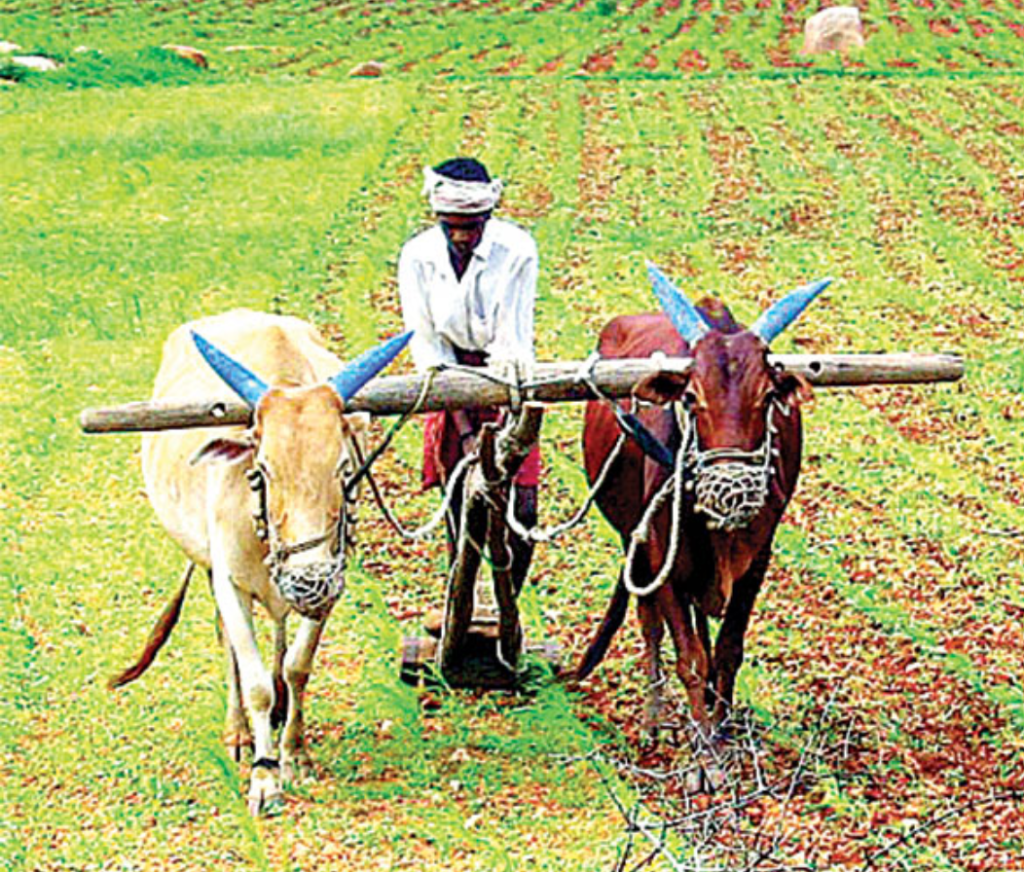
How many one of us remember those pictures of farmers cultivating a field and distressed kids looking after the field? Or a child dreaming about entering a normal school for learning new things and exploring about the world? Well, some of the dreams have come true and rural India is improving when it comes to education as a whole. With new schools opening in the villages and Government schemes being implemented properly, the results are astonishing.  But there is still a way to go before the urban-rural gap of education is limited.

1_mmh-p0MZ8eNr3O8yt9lvqg

The purpose of education is to keep oneself updated about the present day situation. Literate and educated people help in keeping the economy blooming and are actually a pre-requisite for developing economy. Education in rural India has improved a lot where earlier this section was on the verge on being ignored due to multiple factors. Today, younger generation is actually surpassing their parents when it comes to being educated in rural areas. An astonishing yet powerful transformation has taken place and there is indeed a rising trend of education in rural India.

According to multiple surveys, there is a rise in students going to schools but the plight of the educational quality is questionable as there still exist a problem of low learning among the students. Whose fault is it? Is it because of lack of teachers or are teachers not able to deliver lectures properly?

Let’s explore some of the reasons of why rural education is still not prominent enough to be counted as an example for an ideal educational system.

  • Inadequate Infrastructure: One of the major reason of lacking quality education is due to poor infrastructure of schools in rural India. There is lack of expert teachers and hence the knowledge that is imparted to students is not up to the mark.
  • Schemes not implemented properly: The Government tries to make laws and schemes to up skill rural India but somewhere those schemes are not implemented properly on the ground level and there is still lack of transparency on who is to be blamed.
  • Employment opportunities: With the current unemployment rising, if an educated person does not end up in having a good job or experience, it sets a negative example on fellow people of rural India and they see education their children as a waste of money. With their investment not giving fruitful results, this also leads to not sending their other children to schools in future.
  • Lack of number of schools: Though the number of schools at various geographical location in rural India has improved, there is still lack of schools at multiple location. The roads to schools are also not in a good state and students have to cross hurdles to reach. This problem restricts girls going to schools after a point as they face some physical changes and lack of proper sanitation and required commodities.

“Padega India, Tabhi toh badega India”

(When people of India will get educated, India as a country will prosper).

images (1)

(Picture source: https://encrypted-tbn0.gstatic.com/images?q=tbn%3AANd9GcQrOjGmFEVYr_0e9zXiRUt7hUZwyQ001UJscc6JZC9cHQkhgtkI&usqp=CAU )

This is definitely true. With advancement of technology and economic development, there is always a bright future in store for rural communities. When rural India will progress, ultimately the whole India will progress and it has to start with quality education, innovative methods used in teaching, use of edutech tools and technologies and proper implementation of multiple schemes.


Improving the quality of Education

5 Ways Policy Makers Can Improve the Quality of Education:

* Acknowledge and address overcrowding.

*Make funding schools a priority.

*Address the school-to-prison pipeline.

*Raise standards for teachers.

*Put classroom-running and curriculum-building decisions in the hands of the community.

Increasing graduation rates and levels of educational attainment will accomplish little if students do not learn something of lasting value. Yet federal efforts over the last several years have focused much more on increasing the number of Americans who go to college than on improving the education they receive once they get there.By concentrating so heavily on graduation rates and attainment levels, policy makers are ignoring danger signs that the amount that students learn in college may have declined over the past few decades and could well continue to do so in the years to come. The reasons for concern include:College students today seem to be spending much less time on their course work than their predecessors did 50 years ago, and evidence of their abilities suggests that they are probably learning less than students once did and quite possibly less than their counterparts in many other advanced industrial countries.Employers complain that many graduates they hire are deficient in basic skills such as writing, problem solving and critical thinking that college leaders and their faculties consistently rank among the most important goals of an undergraduate education.Most of the millions of additional students needed to increase educational attainment levels will come to campus poorly prepared for college work, creating a danger that higher graduation rates will be achievable only by lowering academic standards.More than two-thirds of college instructors today are not on the tenure track but are lecturers serving on year-to-year contracts. Many of them are hired without undergoing the vetting commonly used in appointing tenure-track professors. Studies indicate that extensive use of such instructors may contribute to higher dropout rates and to grade inflation.States have made substantial cuts in support per student over the past 30 years for public colleges and community colleges. Research suggests that failing to increase appropriations to keep pace with enrollment growth tends to reduce learning and even lower graduation rates.While some college leaders are making serious efforts to improve the quality of teaching, many others seem content with their existing programs. Although they recognize the existence of problems affecting higher education as a whole, such as grade inflation or a decline in the rigor of academic standards, few seem to believe that these difficulties exist on their own campus, or they tend to attribute most of the difficulty to the poor preparation of students before they enroll.

Some immediate improvements:

Many colleges provide a formidable array of courses, majors and extracurricular opportunities, but firsthand accounts indicate that many undergraduates do not feel that the material conveyed in their readings and lectures has much relevance to their lives. Such sentiments suggest either that the courses do not in fact contribute much to the ultimate goals that colleges claim to value or that instructors are not taking sufficient care to explain the larger aims of their courses and why they should matter.Other studies suggest that many instructors do not teach their courses in ways best calculated to achieve the ends that faculties themselves consider important. For example, one investigator studied samples of the examinations given at elite liberal arts colleges and research universities. Although 99 percent of professors consider critical thinking an “essential” or “very important” goal of a college education, fewer than 20 percent of the exam questions actually tested for this skill.Now that most faculties have defined the learning objectives of their college and its various departments and programs, it should be possible to review recent examinations to determine whether individual professors, programs and departments are actually designing their courses to achieve those goals. College administrators could also modify their student evaluation forms to ask students whether they believe the stated goals were emphasized in the courses they took.In addition, the average time students devote to studying varies widely among different colleges, and many campuses could require more of their students. Those lacking evidence about the study habits of their undergraduates could inform themselves through confidential surveys that faculties could review and consider steps to encourage greater student effort and improve learning.The vast difference between how well seniors think they can perform and their actual proficiencies (according to tests of basic skills and employer evaluations) suggests that many colleges are failing to give students an adequate account of their progress. Grade inflation may also contribute to excessive confidence, suggesting a need to work to restore appropriate standards, although that alone is unlikely to solve the problem. Better feedback on student papers and exams will be even more important in order to give undergraduates a more accurate sense of how much progress they’ve made and what more they need to accomplish before they graduate.

Animal Cruelty


It’s June 2020 and currently, we are dealing with a plethora of crises around the world, but I believe that not the majority of people have deciphered that yet properly. The irony of the time is that at each point, where some of us are trying our best to give reminders or bestowing proposals to overcome the plight of the situation, the rest are busy acting despicably.

This is concerned with human civilization and it’s preceding and long-term support system, acting no less than any ‘ancillary’ – Animals.
We often overlook a very common thing, which ends up being stigmatic- every existence on this planet counts.
How could we act so cruel?

If we go back in time or could recall the memories of our childhood- watching animated shows on TV, and most of the time marking some of them as our favourites for the reason being that we could hear animals talking, like us. (at least it was mine for sure)
That was the time when we wanted to hear them and now, few of us are showing the barbarity towards them because they can’t talk!

We are witnessing these shameful acts for a long time and still waiting for the juncture that one day, things would change around us.
I still wonder at times, why the ruthlessness of humans is being compared to the savagery of animals? Because as of now, humans are less humane!

Recently, we heard the news of a pregnant elephant who died in Kerala because of eating a pineapple which had explosives inside.
People who were accused of feeding her had another angle of their tale. They explained that to protect their agricultural land from wild boars, they had planted those.
But the question that arises here is, who was at fault? The innocent animal or the rural people who did so for the protection of their only way of sustenance?
If the government of that state has allowed shooting the boars or killing them with any means, then how far it’s justified that the innocents get trapped unknowingly, get killed in the name of protection? Who will ensure their safety? We can’t just put an end to lives.

Laws aren’t just meant to be made, they need to be assessed well in the first place that how far their execution is going to be favourable to most of the beings.
Something similar had happened once to blue bulls (antelope) in Bihar. The government had the same reason to pass the order of killing them. 200 of them were killed.
We can’t just opt for the easy way out rather than making sensible decisions and then finding the ways in which we can protect all.

We have seen numerous incidents where humans have shown their heartlessness. Some of them are mentioned below-

Case of thrashing 20 stray dogs to death in Dehradun came out.

A Dog was beaten up brutally by a guard in Hyderabad.

In Himachal, miscreants blew off cow’s jaw with crackers.

It doesn’t end here, 49 people were arrested in Bareilly, U.P for illegal slaughtering of animals.

The list is endless but just hearing about the incidents is of no avail, it never was.

Many of us aren’t even aware of the laws that have been made for balancing the animal-humane society.
Here I am writing down six of them:

  1. Under Section 11 of the Prevention of Cruelty to Animals Act of 1960, it is a criminal offence to feed toxic food to stray animals.
  2. Sections 428 and 429 of the Indian Penal Code and the Cruelty to Animals Act of 1960 make it unlawful to maim or cause injury to any animal. It is also illegal for vehicles to intentionally injure dogs, cats and cows on the streets.
  3. Stray dogs are safeguarded under the Prevention of Cruelty to Animals Act, 1960, and rules enacted under Section 38 of the act, particularly, the Animal Birth Control (Dogs) Rules, 2001; Indian Penal Code, sections 428 & 429 and Article 51A (g) of the Constitution.
  4. It is the fundamental duty of every citizen of India to have compassion for all living creatures. Article 51A(g).
  5. Animal sacrifice is forbidden in every part of the country and considered illegal. Rule 3, Slaughterhouse Rules, 2001.
  6. Under Section 11(1)(i) and Section 11(1)(j), PCA Act, 1960, abandoning any animal for any reason can put you behind the bars for up to three months.
Enough of killing ‘humanity’ in the name of different motives at different times. We’ve screamed enough for human rights while violating much of the freedom given to us, and abovementioned were few of the examples. We can become the voice of the voiceless as well.
We need to act, need to be ‘humans’ in actual ways by saving animals and humanity!

EDUCATION WITH INTERNET: MAY BE GOOD OR BAD

In this advanced age, about each study room in schools can get to the Internet. A few educators utilize the Internet with each task while others adopt an alternate strategy. Likewise with any training strategy, study room Internet utilization accompanies the two favorable circumstances / advantages and drawbacks / disadvantages.
A significant advantage of the Internet is the capacity to get to a wide range of data from library assets everywhere throughout the world, including magazines, books, papers and diary distributions, immediately. This data builds the learning potential by giving students the most recent data. It likewise extends the assets of a littler library colossally. Students utilizing web indexes can discover data snappier and increasingly custom fitted to their particular needs.
As a disadvantage, teachers may consider this data over-burden. With the entirety of the data accessible to students, they may think that its hard to pick which data is generally critical to a point and furthermore when to quit looking. Likewise, the legitimacy of Internet sources fluctuates extensively from site to site, which implies students can without much of a stretch obtain mistaken or out-dated data on the web.
Online instruction gives students the comfort of going to class and finishing assignments on their own plan. Students can take classes from a school or college not even close to their home and get training experience not accessible to them locally. Students who travel with an occupation can take a class in a house, lodging or cafe. Students save money on lodging, gas cash and travel costs.
Be that as it may, online training implies eye to eye guidance doesn’t exist, nor does the capacity to get moment criticism on class assignments much of the time. They likewise can’t hear inquiries from different students (or pose inquiries themselves), which frequently can offer explanation to a student battling with the ideas of the material.
The Internet permits students to meet individuals from everywhere throughout the world at the snap of a catch.
While these open doors give incredible subtleties and assets, they likewise can harm social abilities. Students who answer essentially on the Internet for data and collaboration don’t converse with individuals face to face so a lot; rather they simply email to and fro. This can make it difficult to create listening aptitudes, particularly while talking with somebody, or to gain fitting social abilities for eye to eye associations.

Impact of Covid-19 Lockdown on Students

Covid- 19 pandemic sparked widespread realization that our way of thinking is not working. It has shattered our understanding of what culture as we know it is natural and deconstructed. Education is one of those crucial fields, where the need for improvement has become apparent. The coronavirus’ consequences, and thus its preventive interventions, have turned the lives of students, parents, and teachers upside down. The clear imbalance in the ‘normal’ workings of education has put emphasis on many questions that were previously asked and left unanswered afterwards. So, what might the actual effects of this global pandemic mean for the education future?

While coronavirus keeps spreading throughout the entire planet, many countries have decided to close educational institutions as part of a policy of social distancing to slow transmission of the virus. However, this closure of schools, due to the coronavirus (COVID-19) pandemic, has affected the learning of more than 1.5 billion children and youth globally. It should be acknowledged that school closures are likely to widen the learning gap between the lower-income and higher-income families among children. Although many parents who have access to technology and the internet are gradually turning to online education technologies to keep their children studying at home while others may not be able to. In a survey conducted by India Welfare Trust, it has shed some light on how children endure the disproportionate burden of the astonishing outbreak According to the survey, 89 per cent of respondents believe that the delay in lifting the coronavirus lockdown will affect their children’s learning.

Coronavirus Will Change the World Permanently. Here's How. - POLITICO

Rapid Online Perception study investigates the impact of Covid-19 on Children. During the survey, 1,102 respondents from 23 states and territories of the Union were interviewed. “While children have not been in the face of this pandemic as they have been mostly shielded from Covid-19’s direct health effects so far, results from the study suggest that they have been among its biggest casualties with numerous side effects on their physical and psycho-social well-being,” said CRY chief executive Puja Marwaha.

“More than half of the parents reported their child became more flustered and apprehensive during the lockdown,” the report said, adding, and “37 percent of respondents confirmed that the child’s mental well-being and happiness had been affected by the lockdown. In addition, 88 percent of respondents said that their children’s exposure to screens increased during the lockdown, with 45 percent reporting the increase “to a large extent” and only 43 percent of parents/primary caregivers said they were always supervising the child when it was online.

The things we can keep in mind while opening educational institutions post lockdown are:

Changing the way of Learning:

The teaching method and the way syllabuses are taught can change. Aspects once deemed fundamental to education can be revised to cater the life skills of the future in large measure. Not only careers but also future residents will need skills such as resilience, versatility, collaboration, communication, compassion and understanding, originality and emotional maturity. School learning will have a new purpose, and that will be a major departure from today’s details-focused education.

Implementing innovative methods in education system:

Aside from the upheaval faced by the novel coronavirus, there have been some major changes in schooling in our developing nations. Yet, even in the face of rapid innovation, the way we deliver education still needs to be shifted. Learning is knowledge acquisition, but it doesn’t have to occur primarily through age-old methods that don’t leverage the highest brain potential. Can students get an experience that shapes their learning, rather than being taught? Approaches such as integrated learning and experiential learning, with greater digital transformation, will fuel the future of school education.

Strengthening the bond with technology:

New technologies such as Zoom and Google Meet have been identified as a prominent life-saver in the face of a crippling pandemic. Communication is crucial to our interconnected existence, and the driving force that maintains our connections is technology. For education, that means creating content and delivery systems that make full use of and harness technology. Maybe education can become more flexible and accessible, giving up on its excessive-reliance on rigid structures that we consider necessary at the moment. They are generations identified by their use of technology; it has become an extension of their consciousness and without it, they don’t know a planet.

The future of education should find no room to ignore the use of technology as it can very well be the best platform for empowering learning in an age which integrates technology as a way of life. Such generations will have an effect on the evolution of education because they are the ones most impacted by the pandemic and are in the best place to learn from it and evolve from it.

WHAT A STUDENT PREFER SELF STUDY OR PRIVATE COACHING

One of the biggest question that confront is to decide whether to go for self – study or for private coaching. Personally I feel that self – study is the best option for every student because without self – study it is very difficult to clear any examination. The main reason behind this thinking is that coaching also involves a remarkable amount of self – study. Another reason to go for self – study ids the confidence factor involved in it. Successful self – study may give us an incredible amount of confidence to deal with any kind of subject. There are many students who have cleared their exams quite easily jist by doing self – study and some of the students who have taken coaching ar still struggling. So, the main decisive factor is our honest efforts and commitment towards our preparation and nothing else. Another reason to go for self – study is money saving. We waste lot of money on private coaching, evn then we are not able to score good marks, the reason being, that our mind has limited capturing power. We go to school in the morning so we wake – up early, we spend around six hours there, then we come back home and take lunch, we do our homework (school/coaching) and go for coaching . where is the time for our mind to rest? Our mind too is a machine that needs some peace/rest. We waste a lot of time and money whereas we can spend both on ourselves by doing self – study. Actually even private coaching is incomplete with self – study. But the point is, some students find coaching usefull it is systemized our preparations which many students are unable to do themselves. On the contrary we may find our times being wasted only on a few chapters as coaching works according to entire batch and not as per an individual. So, in context of the above views I thing self – study is more important than private coaching. We can achieve our goals without private coaching but not without self – study.

Career Counselling in Today’s World and its progress in India

Counselling is a term which is expansive. In general, counselling relates to the procedure of helping a person by making recommendations, support and encouragement, and exploring solutions to the problems that are facing them. “Counselling” is generally associated with a professional who helps out a needy person. This specialist is someone who acknowledges human behavior, their personalities and knows how to deliver their thoughts the right path. This professional is a person to whom you can turn in times of confusion, and who maintains confidentiality of your identity and concerns.

What Is The Need And Importance Of Career Counselling For Students ...

A counsellor’s association with a counsellor is based on a good mutual relationship. This is crucial in therapy because it helps to accomplish the ultimate goal, i.e. helping the client find the answers to his issues. Career counselling is a method that specializes in helping one to understand one’s own self as well as job patterns so that one can make informed career and education decisions. Profession therapy helps address a number of problems such as low attention rates to poor time management, trusting family issues and conflict between parents and children over which profession to choose from.

The benefits of Career Counselling are as follows:

  1. Helps to choose the right career:

Career counsellors are experts in evaluating your ability, personality, interests and other aspects of yourself. Using this evaluation, they recommend the best career choices from all available and appropriate alternatives.

  • Assists the providing of expert resources:

Counselling provides access to the information and knowledge available to a career expert. From the perspective of a parent and child, this knowledge of careers, their applicability and the pathways to pursue them is most important since most of the time parents or guardians do not have this kind of knowledge.

  • Helps to build confidence and insight:

Career counselling helps a counsellor understand his / her career path of hurdles. This awareness helps create confidence in overcoming those hurdles. It is a good counsellor’s duty to provide the counsellor with such insight and confidence.

  • Helps change patterns of undesirable behaviour:

Students and instructors have hard-to-break habits, such as procrastinating, not keeping up to date with latest developments in their lives and careers, neglecting emotional and mental health, not trying to motivate themselves, etc. A Career Counsellor helps break down such behavioural patterns that lead to unproductive activities at home as well as in school / college / work.

  • Helps to reduce job pressure:

Choosing a career can be an arduous task for parents and children alike. A lack of any source of defusing out emotions and thoughts can add to the frustration there. Career counselling provides the opportunity for reducing such frustrations, and focus is redirected to selecting the best career opportunities.

  • Offers a role model:

Career counselling helps students connect with experts who share sufficient life experiences. They are role models who have accomplished a great deal, and have supported others throughout their lives. That’s why career counselling can be an inspiration to those who need it.

  • Helps to bring in peace of mind:

Career counsellors can help you stay calm when making a career decision. Counselling helps bring focus to our activities, and keeps that focus throughout. They try to make your life more efficient by proper scheduling and preparation

  • Scenario of Career Counselling in India:

India has a counselling deficit when talking about the educational system that presents a crucial challenge. We have an approximately 1 lakh professional career coach particularly in comparison with the need for 15 lakh career coaches to cater for a strong student market of 315 million people. In comparison, for 56 million students the U.S. has about 2.6 million student career advisors.

Only now is professional development and mentoring beginning to acquire the recognition it deserves and is witnessing exponential growth as a profession. Although the developed nations have recognized the criticality of career counselling, and a large number of advanced schools in India are also waking up to the truth, in reality the scenario is soberer. More than 90 per cent of Indian schools do not have career counsellors and the nation today has a massive shortage of qualified career counsellors.

Career counselling in India before pursuing a career has yet to become the most important discipline. But the awareness regarding career counselling has certainly increased due to technology and the internet. Online job therapy is certainly a convenient way to get your home easy therapy done.

EDUCATION SYSTEM IN INDIA

India , the word describes heritage where in here from ancient days it has started its own education system. Various temples and religions spread the education very well.
It had its 1st University Nalanda till 13th century. Not only Indians it had also attracted students from other countries also.


PRESENT SYSTEM
It comprises of primary, secondary, senior secondary and higher education. Here there are also world class educational institutions like IIT , IIM and IISN for higher education.
Here the seats are allocated according to the caste system.
According to the 2001 census total literacy rate is 65.38%. But the female literacy rate is only 54.16% . This gap is very significant and this also forms a evidence that only 59.4% of the total population are only literates.


PRIMARY EDUCATION IN INDIA
Here early childhood education is very difficult because most of us are in low income groups. And even 40% do not qualify primary schooling. But whereas in private sectors the people in middle and upper community pays and makes their children learn. Moreover here along with studies playfulness curiosity and eagerness also gets increased to the students. In order to balance this government has taken various steps.


GOVERNANCE OF PRIMARY EDUCATION
Those various schemes are
STATE WISE ALLOCATION OF CENTRAL GOVERNMENT SHARE MADE and
UNDER SARVA SHIKSHA ABHIYAN IN INDIA(2007-2007).
State wise amount spent on elementary education from compartment of prambik shiksha kosh in India and similarly state wise targets are achieved.
Similarly various funds are also allocated to the eastern states as well for the operation blackboard and non formal education (1997-2001). Efforts are also taken severely in order to improve the women education and seeing up various ecational institutes exclusively for them.


DEVELOPMENT SO FAR UNDER SSA
1.47 lakh primary schools have been opened
Large numbers of teachers have been employed.
Free text books were provided to the school children.
Mid dat meal for school children.
Government and government aided schools.


GOVERNANCE OF SCHOOL EDUCATION
The national council of educational research and training (NCERT) provides support and technical assistance to various schools in India. Some of them are
The state government board
CBSE(CENTRAL BOARD OF SECONDARY EDUCATION)
ICSE(INDIAN CERTIFICATE FOR SECONDARY EDUCATION )
CISCE(THE COUNCIL FOR THE INDIAN SCHOOL CERTIFICATE EXAMINATIONS)
NIOS(THE NATIONAL INSTITUTE OF OPEN SCHOOLING)

GOVERNANCE OF HIGHER EDUCATION
Like primary schools government also planned for this too.
Over 17000 Colleges 20 Central universities 217 State Universities 106 Deemed to be universities were formed .
And 8 new IITs 7IIMs and 5 new IISs are now proposed.

The Advantages of Earning Your MBA

Are you thinking about going back to school for your MBA degree? These degrees have been subject to a lot of chatter in recent years. Herzing University’s dean of graduate programs, Ron Kern, already explained on our blog why the MBA market is not flooded, despite some critics saying otherwise.
Online MBA programs are seeing especially good results with a quick return on investment for graduates. As Ron points out, more than 95 percent of Herzing’s 2014 MBA graduates found employment in their field of study within six months of graduating.
So what are the real advantages of an MBA? We’ve compiled a few of the top benefits.
Network with other motivated people
Meeting the right people can make all the difference in your career. One of the most valuable parts of an MBA program, whether online or on campus, is having the opportunity to talk with others advancing their careers. You’ll connect and learn from leaders in business and practice the skill of making meaningful connections. It’s not just that you’ll learn how to network more strategically, but also that you’re doing so with other ambitious people.
Increase your salary
Individuals who own master’s degrees yield an average of $400,000 more over a career span, according to the Bureau of Labor Statistics. What’s more, many graduates see a return on tuition in as little as three to five years.
Learn the intangibles
It’s not easy to be a successful business leader. Learning how to manage teams, spur innovation, contribute to an organization’s culture and motivate colleagues requires both practical knowledge and critical thinking skills that are fostered in MBA programs. Mastering these skills will build your ability to lead.
Broaden your business knowledge
While it’s easy to see all the career advantages of an MBA, don’t forget the most important part. You’re there to learn. MBAs provide insights that are challenging to pull out of your day-to-day work, especially if you’ve been stuck in the nine-to-five routine for a while. You’ll gain knowledge of business operations across departments, which is invaluable to succeeding in leadership roles.
Dr. Jon Outland is the System Division Chair of Business and has over 20 years of experience helping businesses meet their strategic goals. He has been teaching online and on-campus classes for 18 years in the areas of management, e-commerce, project management and information systems.

Central Government Schemes for single girl child

Girls are the future of nation. They are having an equal hand in nation’s progress and ensuring well being for the country. To keep these in mind government started various schemes for girl child along with the central and state government. Educate the girl and she will be also having a beautiful future.

Government had started schemes for any initial benefits like for farmers or for the old age but there are schemes for the girls too. The main moto of the schemes for girls is to create awareness and importance of a girl child, their education and to save a girl child. Some schemes provide free education for girls who’s parents can’t afford. Building up their better future, having enough money for their savings. Here are some benefits of launching the schemes:

* The interest rate on FDs and accounts in these schemes are higher and this allows more savings.

* The terms and conditions are clear that the savings should be used for girl child for their better future or for their marriage.

Here are some schemes for girl child and how to apply for it

1. Beti bachao, beti pdhao yojna (save the daughter, educate the daughter)

Country: India

This schemes was launched on 22nd January, 2015 by PM Narendra Modi. Its aim is to address the issue of the declining child sex ratio image (CSR) and is a national initiative jointly run by the Ministry of Women and Child Development, the Ministry of Health and Family Welfare and the Ministry of Human Resource Development.

To only educate them not to kill them. They are the future of nation. They also have the equal rights in any sections. People should celebrate the birth of their girl child and educate them with full responsibility as they do for the boy.

“Let us celebrate the birth of the girl child. We should be equally proud of our daughters. I urge you to sow five plants when your daughter is born to celebrate the occasion.” -PM Narendra Modi to citizens of his adopted village Jayapur.

Eligibility

* A girl age should be below the 10 with having a family.

* There should SSA account in bank in the name of a girl child.

* Should be a Indian citizen.

How to apply

  • Visit the bank or post office wherever the scheme is available
  • Obtain and Fill the application form for BBBP/SSA
  • The form is to be filled manually and attached with all the required documents
  • Submit the documents to the same bank/post office. The account must be opened in the name of the girl child

Note: This account can be easily transferred from one bank/post office account to another bank/post office account

2. Suknaya samriddhi account

Country : India

It is a government programme targeted at the parents of girl children. The scheme encourages parents to build a fund for the future education and marriage expenses for their female child. It was launched on 2015 by PM Narendra Modi and is a part of beti bachao beti pdhao.

Eligibility

  • Only parents or legal guardians of the girl child can open a Sukanya Samriddhi account in the name of the girl.
  • The girl child should be less than 10 years at the time of account opening. The account can be operational till the girl reaches the age of 21 years.
  • The initial investment can start from Rs. 250 and a maximum of Rs. 1,50,000 annually with further deposits in the multiples of Rs. 100.
  • A single girl child cannot have multiple Sukanya Samridhhi accounts.
  • You can benefit from higher interest rates offered by company fixed deposit
  • Only two Sukanya Samriddhi Yojana accounts are allowed per family i.e., one for each girl child.

Process

  1. Fill the application form.
  2. Carry ID and Address proof.
  3. Good if you have Aadhaar card.
  4. Birth certificate of the girl child.
  5. Fill out the SSY Account opening form.
  6. Keep the documents ready along with photographs.
  7. Pay the deposit amount (any amount between Rs. 250 and Rs. …
  8. You can give a standing instruction at the branch or you can set up automatic credit to SSY Account through NetBanking.

3. Ladli laxmi yojna

Country: India

This scheme was launched by the Government of Madhya Pradesh on 2nd May, 2007. The objective of this scheme is to bring a change in the negative approach of the society towards the birth of a girl child.

  • The Government provides Rs. 1 Lakh to applicant’s family for her marriage
  • Girls who are married before the age of 18 will not be benefited under the Ladli Laxmi Yojana

Eligibility

  • The girl child whose parents are a native of Madhya Pradesh. The parents of the girl child must not be paying any kind of tax to the Government
  • In case of a second girl child, the parents who have adopted family planning can get the benefits of the scheme
  • The lump sum amount of Rs.1 lakh gets released only when the registered girl child is not married before the age of 18 years
  • In case the girl leaves her education in between, she will not be eligible to get any benefits of the scheme
  • Two girls from a family will be benefited under Ladli Laxmi Yojana. However, in case the girls are twins then the third girl child will also get the benefit
  • The scheme stands valid only for the ones people below poverty line
  • An orphan girl child can receive the benefits of this scheme only when she is adopted and the certificate of adoption is duly submitted by the family.

How to apply

  • Visit  ladlilaxmi.mp.gov.in and click on “Application Letter” to proceed
  • There are three options on the page- Public Service Management, General Public and Project Officer
  • Select and Click on “General Public” 
  • Read and Fill the form carefully. Click on “Save” to apply
  • The applicant is required to attach scanned copies of all the mandatory documents with the application form and click on submit to send the form for further selection process.

Affect of Modern Technology on Education

The whole world, in unison, is swarming through the most profound revolution in human history. The affect of which can be distinctive, national, international and in several ways illimitable. That revolution is none other than technology itself, not only has it affected education but also various other aspects of our life. It has a significant impact on our lives, as a matter of fact it has restructured the way we live. Be it favorable or unfavorable. This contemporary nexus era, urges us to think again what we mean by education. Even though it has not made that big a difference to the education system, it has affected the education system in some ways. For instance, students have access to almost everything that they require. Back in the medieval era books were a rare possession and only a few fortunate ones could receive education. They had to read a lot of books in order to gain information on particular matter, whereas today everything is available at one’s fingertip via internet. Many online platforms like Khan academy, MOOCS, podcasts, traditional online degree programs and many more, offer formal learning opportunities worldwide. Access to learning opportunities today is unmatched in scope hat trip to technology.

Conventionally, classrooms have been comparatively isolated, but today technology has given students the means to communicate and collaborate, which was just a vision in former times. Students can share what they have learnt with each other and collaborate on group assignments and projects using technology based tools. The walls of the classroom are not any more an impediment in view of the fact that technology has enabled means of acquiring knowledge, communicating and working collaboratively.

Technology has also brought significant changes in the roles of gurus and their pupils. In conventional classrooms, a teacher was the principal source of enlightenment and students were the passive learners. This representation of teachers as “the sage on the stage’ has been in the field of education for a long time now, and it still remains pretty much the same. Notwithstanding that, technology has facilitated access to information and many educational opportunities due to which the teacher’s role has been repositioned to ” the guide on the side” as students are taking charge of their own learning. Schools and universities all around the world are starting to restructure learning spaces to facilitate this new style of education.

Technology is a very powerful equipment that can support and metamorphose the education system in various ways, from making it a piece of cake for teachers to create instructional materials, to enabling new methods for people to learn and work in unison. Accompanied by the global reach of the internet and pervasiveness of smart devices that can connect to it, the genesis of a new era of education anytime and anywhere has started.

Technology is an integral part of the 21st-century, now it is up to the educationalists to wallow in a pool of opportunities dispensed by technology, in order to make a constructive difference in the world of education.

Will agri reforms solve the problem of distressed farmers?

For a long time, the farmers have been distressed. From harsh nature to corrupted humans, they have to deal a lot in their lives. The Covid-19 pandemic destroyed the supply chains and thus devastated the business of many farmers who grew fruits and vegetables. 

To provide some relief to farmers, the government came with three reforms

  • Ammendment of Essential Commodities Act 1955.
  • Enabling Contract farming.
  • Relaxing Agriculture marketing rules.

Ammendment of Essential Commodities Act 1955

There are many products that are categorised as essential commodities and therefore their prices and quantities are regulated by government. The government has now ammended this act and deregulated cereals, edible oils, oil seeds, pulses, onions and potato.

Enabling Contract Farming

This reform was passed as ‘The Farmers (Empowerment and Protection) Agreement on Price Assurance and Farm Services Ordinance, 2020’. We are all aware of how businesses hedge their risks by entering into contracts. Now, this model of contract can be used in farming also. Farmers can now enter into contracts with the buyers and get an assured amount for their crops. This will enable them an assured income.

Relaxing Agriculture marketing rules

Out the the three reforms this reform is the most appealing one. The government passed this reform as ‘The Farmers’ Produce Trade and Commerce(Promotion and Facilitation) Ordinance,2020′. This ordinance not only frees farmers from many barriers but also gives them exemption from taxes and fees. 

The existing system:

In the current system farmers had to sell their crops in mandis aka APMC (Agriculture Produce Marketing Companies). APMCs were formed by state government to ensure that farmers get fair price on their farm produce and these APMCs are governed by the APMC Act. The farm produce is brought to the market and sold through auction. Only licensed traders can operate within the market and private ones are not allowed to buy directly from the farmers. These licensed traders used to form a cartel and thus farmers had to sell them at  very lower prices. Under this system, only those traders who registered with that market can purchase from the farmers of that market. So, a trader from Gujarat will not be able to purchase from a mandi in Delhi unless he is registered there. The recent ordinance removed this barrier and thus allows farmers to sell their crops to any buyer. 

This open ups the opportunity for private players to enter the market. However, these private players will have to incur capital expenditure in form of establishing a system to procure farm produce. They will compete against the existing system of APMC and thus it is not going to be easy for the new entrants. They will have to setup a physical infrastructure (a private mandi) which enables them to weigh, sort and grade the farm produce. This mandi should also be near to the farm-gate.

Without any doubt these reforms are a step towards prosperity of farmers. However, the farmers may not get immediate benefits of these reforms. In these times, the farmers required actions that provides them with immediate benefits. This reforms will help them in long run but when it comes to fighting the current situation, the farmers are not equipped. They needed measures which could support their family in a short time. If government does not come with any measure to give farmers short term benefits than farmers have to look for themselves. In that situation, they can only hope of some good private players entering the market immediately and thus paying them to sustain themselves.

4 Simple Steps to Begin Building an International Brand

If you are an entrepreneur, you are probably wondering what the best strategies to build an international brand are. Now that your business has made it at the local level, it will still succeed at the international level if you have a perfect approach. According to experienced business people, it is as simple as doing it all over again, but now in a different market setup overseas. But to make it clear for you, we will take you through the four important steps to help you succeed in building an international brand. Read on to learn more.

Look for a Market

The first step to succeeding in creating an international brand is to look for an appropriate market. The world is too small now that businesses can penetrate every corner, but one must identify the right market for their goods and services. What would be the point of rolling out an international brand that has no buyer? Market research is therefore crucial, especially when conducted by experts who understand international business in a better way. You can also focus on doing your own research online to identify this.

Prepare Your Product

You have no option other than to have a superior product that can compete with many others. Global businesses are numerous, and they’re more innovative than ever before. An excellent production team is what you need, whether you hire them locally or internationally. This means consistent product development research by talking to your consumers and checking what your competitors are offering. It is also crucial to consult experts so that they can give their opinion. In this case, speak to reliable consultants like those found on https://www.grsconsultants.com/. They will come in handy when preparing a product package for your market.

Create an Identity

Most companies and organizations already have a brand identity. Any person who sees the name of such an organization will instantly know what product they have on offer. Before hitting the global market, you can create a local identity through a website that is visible, providing superior products, and communicating with all of your customers. Customers like a differentiated product which will make them come back again and again. Being active in social activities in society will further make your identity clearer like Pen2Print, Eduindex and EduPub.

Market the Product

Marketing your products and brand name both locally and internationally is easy nowadays. All you need is to embrace digital marketing by starting a website and social media pages. The platform has no borders, which makes any business get noticed far and wide. You can customize SEO efforts to focus more on your targeted global market to increase your chances of visibility. With better marketing, your products will get buyers in the global market within no time.

Summary

Finally, I wish to mention that global brands are easy to create by following these four strategies. They have been tested by experts and are proven to work well for many businesses. You too can start implementing them today and make changes where necessary to suit your needs.

Education system in INDIA

By Droupadi Murmu

I take this opportunity to present my votes of thanks to all those guidepost who really acted as lightening pillars to enlighten our way throughout this project that has led to successful and satisfactory completion of this study. I am highly thankful to Mr. Pankaj Jain for her active support, valuable time and advice, whole-hearted guidance, sincere cooperation and pains-taking involvement during the study and in completing the assignment of preparing the said paper within the time stipulated. Without the active participation of our teachers it would have been extremely difficult for me to prepare the project in a time bound framework.

HISTORY OF EDUCATION IN INDIA

Indian education history is very rich and motivating. In the ancient days, gurus and scholars impart education orally, but after the development of letters, it took the form of writing. Palm leaves and barks of trees were used for teaching, and this in turn helped in spreading of the written literature. Temples and community centres often took the role of school. When Buddhism spread in India, education become available to everyone and this was the time when some world famous educational institutions were established like Nalanda, Vikramshila and Takshashila. History has taken particular care to give Nalanda University, which flourished from the fifth to 13th century AD, full credit for its brilliance. This university had around 10,000 resident students and teachers on its roll at one time. These students included Chinese, Sri Lankan, Korean and other international scholars. It was in the 11th century that the Muslims recognized elementary and secondary schools. This led to the forming of few universities too at cities like Delhi, Lucknow and Allahabad. Medieval period saw excellent interaction between Indian and Islamic customs in all fields of knowledge like theology, religion, philosophy, fine arts, painting, architecture, arithmetic, medicine and astronomy. Later, when British arrived in India, English education came into being with the help of the European missionaries. Since then, Western education gained advances in the country. With hundreds of universities and thousands of colleges affiliated to them, India has positioned itself happily as a country that provides superiority higher education to its people in specific and to the world in general.

PRESENT EDUCATION SYSTEM IN INDIA

The present education system in India mainly comprises of-

  1. primary education,
  2. secondary education,
  3. senior secondary education and
  4. higher education

Elementary education consists of eight years of education. Each of secondary and senior secondary education consists of two years of education. Higher education in India starts after passing the higher secondary education or the 12th standard. Depending on the stream(Arts,Commerce or Science). Doing graduation in India can take three to five years. Post graduate courses are generally of two to three years of duration. After completing post graduation, scope for doing research in various educational institutes also remains open. The growing receiving of distance learning courses and growth of the open university system is also causative a lot in the democratization of higher education in india.

WORLD CLASS HIGHER EDUCATION INSTITUTES IN INDIA:

There are quite a good number of educational institutes in India that can compete with the best educational institutes of the world and made India recognizable in the International Education. Some of them are as follows-

Ø The Indian Institutes of Technology (IITs),

Ø Indian Institutes of Management (IIMs),

Ø Indian Institutes of Science, National Law Schools,

Ø Jawaharlal Nehru University are some such institutes.

FACILITIES OF EDUCATION TO MARGINALIZED IN INDIA:

As education is the means for bringing socio- economic transformation in a society, various measures are being taken to enhance the access of teaching to the marginalized sections of the society. One such measure is the introduction of the reservation system in the institutes of higher education. Under the present law:-

(1) 7.5% seats in the higher educational institutes are reserved for the

scheduled tribes,

(2) 15% for scheduled castes and 27% for the non creamy layers of the

Other Backward Classes (OBCs).

PRESENT SCENARIO OF INDIAN EDUCATION :

Soon after independence in 1947, making education available to all had become a priority for the government. As discrimination on the basis of caste and gender has been a major hurdle in the healthy development of the Indian society, it also restricted the educational development of the nation as a whole. The 86th constitutional amendment has also made elementary

education a fundamental right for the children between the age group- 6 to 14. According to the 2001 census:-

Ø The total literacy rate in India is 65.38% .

Ø The female literacy rate is only 54.16%

The gap between rural and urban literacy rate is also very significant in India. This is evident from the fact that only 59.4% of rural population are literate as against 80. 3% urban

population according to the 2001 census

PUBLIC PRIMARY EDUCATION IN INDIA- AN

OVERVIEW:

Early childhood education in India is subject to two extreme but contrary deficiencies. On the one hand, millions of young children in lower income groups, especially rural and girl children, comprising nearly 40% of first grade entrants never complete primary school. Even among those who do, poorly qualified teachers, very high student-teacher ratios, inadequate teaching materials and out- moded teaching methods result in a low quality of education that often imparts little or no real learning. It is not uncommon for students completing six years of primary schooling in village public schools to lack even rudimentary reading and writing skills.

PRIVATE PRIMARY EDUCATION IN INDIA- AN OVERVIEW:

Cildren attending urban schools, especially middle and upper class children in private schools, are subjected to extreme competitive pressures from a very early age to acquire basic language skills and memorize vast amounts of information in order to qualify for admission into the best schools. Parents and teachers exert intense pressure on young children to acquire academic skills at an age when children should be given freedom and encouraged to learn as a natural outcome of their curiosity, playfulness and eagerness to experiment. Necessary steps should be taken to avoid unnecessary pressure for childrens.

GOVERNANCE OF PRIMARY EDUCATION:

Schemes undertaken by the government:

Ø State-wise Allocation of Central Government’s Share Made

Ø Under Sarva Shiksha Abhiyan in India (2006-2007)

State-wise Amount Spent on Elementary Education from Component of Prambhik Shiksha Kosh in India (2006-2007 and 31.10.2007) State-wise Targets and Achievements under Sarva Shiksha Abhiayan (SSA) in India (2002-2007) Selected State-wise Number of Additional Kasturba Gandhi Balika Vidyalayas (KGBVs) Sanctioned in India (As on 01.02.2006)

Funds Released to North Eastern States under CentrallySponsored Schemes for Operation Blackboard and Non Formal Education in India (1997-1998 to 2000-2001) Non Lapsable Central Pool of Resources under Centrally Sponsored Schemes for Elementary Education for North Eastern States in India (1999-2000 and 2000-2001 Progress Recorded under Shiksha Karmi Project in India (upto september2001)

Efforts are also being taken to improve the access to higher education among the women of India by setting up various ecational institutes exclusively for them or eserving seats in the already existing institutes.

Development so far:-

Under SSA,

Ø 1.47 lakh primary schools have been opened across the country,

Ø 1.23 lakh primary schools have been upgraded to have upper primary classes.

Ø 9.86 lakh teachers have been recruited,

Ø children are provided free textbooks,

Ø teachers are provided periodic in-service training,

Ø Mid-day meal is provided to all children in classes 1-8 in

Ø Government and Government aided schools.

GOVERNANCE OF SCHOOL EDUCATION

The National Council Of Educational Research and Training (NCERT) is the legal body for governing the curriculam matters for school education in India. The NCERT provides support and technical assistance to a number of schools in India and give guidance to many educational policies in India. Different Indian curriculam bodies governing school Education in India are as follows:-

  1. The State Government Board
  2. The Central Board Of Secondary Education ( CBSE ) Board
  3. The Council For The Indian School Certificate Examinations ( CISCE) Board
  4. The Indian Certificate Of Secondary Education ( ICSE ) Board
  5. The National Institute Of Open Schooling ( NIOS ) Board

GOVERNANCE OF HIGHER EDUCATION

In order to develop the higher education system, the government had established the

University Grants Commission in 1953(UGC) . The primary role of UGC has been to regulate the standard and spread of higher education in India. There has been a marked progress in the expansion of higher education if we look at the increase of higher educational institutes in India. The higher education system in India comprise of more than 17000 colleges, 20 central universities, 217 State Universities, 106 Deemed to Universities and 13 institutes of National importance. Under the Indian constitution, various minority groups can also set up their own educational institutes. This number will soon inflate as the setting up of 30 more central universities, 8 new IITs, 7 IIMs and 5 new Indian Institutes of science are now proposed.

References

Dehalwar, K., & Sharma, S. N. (2024). Politics in the Name of Women’s Reservation. Contemporary Voice of Dalit, 0(0). https://doi.org/10.1177/2455328X241262562

How to use Talent Management Benefit Your Organizations

Much of the popularity attributed to the growth of talent management strategies in corporations can be attributed to the nature of technological growth which has eliminated most of our geographical boundaries, leading to a blend of cultures. As such, top organizations are able to access international job markets to scour the professionals most suited for specific roles within their hierarchy. This does not come easy however, as the following step to hiring the best, is ensuring they stay with you and also stay at the top. Potential leadership candidates and high impact employees must be given the adequate opportunity to express their capabilities and impact at the workplace.

This is for mutual growth so this move does not go amiss when considering organizational objectives. Helping management think past profit margins and output targets aligns them with the needs of the organization as a whole, and how specific employees can impact the efficiency and productivity of its various facets. We’re here to provide you clarity on exactly that- the need and importance of talent management. As such, here are some of the most compelling reasons you should implement and invest in a solid talent management system to empower your organization and its future-

  1. You will ensure you have the ideal professional performing at the right roles. When you take a gander at relationship building talent and qualities, you’ll see a best fit for every job. Talent mapping utilized in talent management and it enables you to analyze and capitalize on the potential in and around your organization. This impacts in both expanded profit margins and overall employment fulfillment.
  2. The strategy will enable and impassion your staff. On the off chance that you see staff essentially as a number, you do understand that they know this! Then again, if you value them, put resources into them and their future, they will work for more potential mutual benefit for the organization as opposed to simply their paycheck.
  3. You’ll empower performance consistency from your staff (particularly important with the more youthful age). Individuals are more inclined to operate within established hierarchies when they understand where they are needed and where they might be headed. Not only does talent management provide this level of clarity, the procedure allows professionals to capitalize on the phenomenon- it helps the professional to look ahead and focus on performance and growth.
  4. You’ll close hierarchical talent gaps by distinguishing them and making clear moves in altering the situation. The performance contrast between skilled individuals and those with less talent is immense with regard to results. Employees and how they are managed is the most vital wellspring of most productive and effective skills and qualities.
  5. You will have a superior shot of retaining the top talent already present and recently hired as time goes on. Be careful with losing your best staff to your competitors! The emphasis ought to be on employee development projects and techniques to create and draw in high impact workers- and in the same vein, keeping quality professionals satisfied and effective.
  6. There will be fewer hiring-related errors in the recruitment process. The nature of an organization is, basically, the nature of staff it has. Numerous talent programs perform and execute employing assessments as a major aspect of the hiring and selection process. Analysis of their experience, skills and potential through modern systems and how they might factor into the company’s hierarchy must be a critical step requiring comprehensive understanding of the situation.
  7. Management will understand the workforce better than it did before. Employee reviews give extraordinary bits of knowledge about the professionals within the organizations. This aids in planning promotion structures as you will comprehend their requirements, profession goals and qualities and shortcomings of the potential candidates and how this might be remedied. By its nature, it is both diagnostic and curative in nature. Thus, it is able to effectively form a professional development program that fulfills the needs of the organization as well as aligning with the company’s long term vision.
  8. Employees will begin to feel valued and along these lines be increasingly motivated at the workplace. Having a solid talent management culture determines how productive your workforce is and how invested they are in the business environments of your organization. There is no amount of decision making that can substitute this fundamental part of excellence and it gives organizations opportunities to make the most of exactly that.
  9. The workforce will begin to build greater trust in your organization and its objectives. In the event that representatives are certain about talent management practices of the organization, they are bound to trust the vision of the organization. The outcome is a workforce that is locked in, dedicated and resolved to do what is best for your organization’s success. This fact makes it too important to look over, and having the right people under your wing can make all the difference in the world.

Most Prominent HR Leader Roles

Leadership is an indispensable element of businesses that enables its people to identify their hidden potential and encourage them to work towards excellence.

The destiny of a firm is usually shaped by its people. The competency and dedication levels of the employees reflect in the organization’s year-end financial report. Therefore, nurturing the right talent is a prerequisite to success.

Organizations depend on their leaders to identify appropriate talent and develop it as per company requirements. However, no two leaders are the same and every company craves for a leadership that is aligned with its culture and values.

As a matter of fact, in the lack of good leadership, an organization is extremely prone to a negative employee turnover rate. As many studies in the recent past have proved that the style of leadership that thrives has a lot to with the satisfaction quotient of the employees. If the staff is not happy with how they are being led, it can have a huge effect on the employer brand of a firm and can make it seem unattractive for prospective candidates.

Thus, the leadership style that you foster in the workplace plays a gigantic role in your staff’s performance. A very common problem that most employers face in the present scenery is that their employees fail to take proud in their organization. And, the topmost reason contributing to this issue is leadership not being able to give a warm treatment to the worker. As a result of which, they tend to feel out of place and unfit for their organization.

HR Leader Role: 

It is seen that the Human Resources department plays an eminent role in developing a company’s leadership. That being so, it is an essential duty on the shoulders of HR leaders to ensure that the organization is in the hands of good leadership that is not counterproductive.

To help accomplish this, the following points are important of HR leaders to consider:

  • The disparate leadership styles in a company and the way these styles find a place for themselves to compliment the firm’s overall leadership. Also, maintaining synergy between individual styles along with the overall style of leadership is crucial for ensuring harmony.
  • Each leadership style must compliment and should be aligned with the company’s culture. It’s also vital to see the wider picture together with thinking about the leadership styles that are required to craft the culture that you wish to maintain.
  • The exact leadership style which each team needs. The point is that every leadership style is different from the other and it’s critical to avoid situations where the style of leadership splits a team.

Business owners put a lot of faith in HR leaders who make the effort to link the company’s leadership to inclusivity. When all employees are provided with equal privileges, attention, and treatment, it helps them feel that they are in the right place and belong to the organization which apparently creates a sens

“हम श्रमिकों के अधिकारों की रक्षा करेंगे परन्तु हम श्रम मंत्री का नाम नहीं जानते “~~एक संवेदनशील राजनेता

कुछ इसी प्रकार से राजनेताओं की पोल खुली जब मजदूरों से असीम सांत्वना रखने वाले राजनेता देश के श्रम मंत्री का नाम नहीं कह पाए। इस बात से कोई फ़र्क नही पड़ता कि इस समय वह संसद के किस भाग में विराजित है लेकिन क्या सरकार अथवा विपक्ष की इसमें कोई जवाबदेही नही?
undefined
कुछ दिनों पहले एक मार्मिक चित्र पूरे देशभर में वायरल था। एक छोटा बच्चा बिहार के मुज्जफरपुर रेलवे स्टेशन पर अपनी मां के मृत शव के साथ खेलता हुआ पाया गया। उसकी श्रमिक मां भूख और गर्मी से प्रताड़ित हो कर अंत में अपने जीवन से हाथ धो बैठी। ऐसे अनेक दृश्य पिछले 3 महीनों से देश के अलग अलग शहरों से प्रतिदिन हमारे सोशल मीडिया पर आ रहें हैं।
कहीं मज़दूर सड़कों पर भीषण गर्मी में पैदल चल रहे हैं तो कहीं आय से कई गुना अधिक पैसे देकर ट्रकों से अपने घर जाने की कोशिश कर रहे हैं।

इस तरह के मामलों के बाद भी सरकार इन श्रमिकों के लिए कोई ठोस कदम नहीं उठा पाई। राज्य और केंद्र दोनों ही दरवाजों से मजदूरों को केवल मायूसी ही मिली। महामरी के इस दौर ने एक बहुत ही कड़वे सच से पर्दा उठा दिया है कि इस देश के विकास में श्रमिकों की अहम भूमिका तो है लेकिन उनके निजी विकास में किसी को कोई रुचि नही।
undefined
हमारे श्रम मंत्री श्री संतोष कुमार गंगवार इस दौर में भी मीडिया से गायब हैं। उत्तर प्रदेश, पंजाब जैसे राज्यों में श्रमिक कानूनों में किए गए बदलावों पर भी उन्होंने कोई आपत्ती नही जताई। न्यूज़ चैनलों पर बैठकर विभिन्न राजनैतिक पार्टियों से आए प्रवक्ताओं ने पूरे उत्साह से मजदूरों को अपना समर्थन दिया और बड़े ही उत्तम तरीके से आरोप प्रत्यारोप के खेल को निभाया परन्तु कोई भी मुख्य समस्या पर स्पष्ट उत्तर नहीं दे पाया।

दूसरे मुद्ददों की तरह ये भी चुनावी रैलियों में राजनेताओं की जय जयकार करवाने के लिए छोड़ दिया गया। श्रमिकों के लिए चलाई गई ट्रेनें भी परेशानी का सबब बन गई। मुंबई से गोरखपुर जाने वाली गाड़ी ओडिशा पहुंच गई तो किसी ट्रेन को पटना पहुंचते हुए 60 घंटे लग गए। ट्रेनों में दिए गए भोजन में चीटियां होना, कई घंटो कड़ी गर्मी में बिना जल के सफ़र करना ऐसी कई परेशानियों का सामना करते हुए ये श्रमिक अपने घर पहुंच भी गए तो फ़िर सरकार के क्वारांटाइन सेंटर में इन्हे लचड़ व्यवस्था में गुज़ारा करना पड़ रहा है। बिहार में जितनी मौतें अस्पतालों में नहीं हुई उससे अधिक तो उनके क्वारांटाइन सेन्टर में भूख से हो रही है।
undefined
इतने हादसों के बाद जब उच्च न्यायालय ने सरकार को निर्देश दिए तब तक बहुत देर हो चुकी थी। 8 करोड़ होने के बावजूद इन मजदूरों की कोई आवाज़ नहीं है। स्थिति सामान्य होने पर ये फिर से पलायन को मजबूर होंगे और अपनी जीविका के लिए फिर से महानगरों का रुख करेंगे किन्तु क्या सरकार और विपक्ष अपनी जवाबदेही तय करेंगे? क्या आगे फिर ऐसी स्तिथि का उपाय किया जाएगा? क्या ये गरीब तबका अपने लिए आवाज़ उठा पाएगा? क्या मजदूर संघ और जटिल तरीके से श्रमिकों का पक्ष रख सकेंगे या फिर ये अधिकारों की लड़ाई भी अदालत और सरकारी मेजों पर केवल कागज़ मात्र रह जाएगी।

Gig Economy

I remember 2 months back, there was GEPIWAT (Group Exercise, Personal Interview, and Word Association Test) Process for the upcoming batch in our college and I was one of the Volunteers for the same. In Group Discussion, a panel was given the topic of “Gig Economy”.

Gig Economy is a new concept where provisional, flexible jobs are commonplace and companies tend toward hiring independent contractors and freelancers instead of full-time employees. This gives workers greater control of their time, money and lives.

gig

During that period the concept had a more positive side to it. For instance, delivery guys used to get paid according to their one-day work or on payment on flexible bases. It is used by a lot of companies such as Oyo, Airbnb, Ola and Uber to name a few. This also means role reversal easily. A person can become a car driver for a month and choose food delivery for next depending upon the demand. It somehow gave more power to the worker as a whole.

But considering the current situation, the tables have turned. Workers who were provided with multiple opportunities are forced to stay at home due to the unavailability of jobs. Instead of finding one role. They are sitting idle. With India amid a 21-day lock-down, demand has collapsed at transportation and hospitality marketplaces.

There is a myth among the masses that gig economy work is usually the one that has less return on investment and people who are a part are actually paid less.  But the truth is that if a person is cultivated by the right skill set, they are bound to get more stipend even at times compared with full-time employees. For instance, With the advancement of technology and automation taking the world, deep learning jobs stand as one of the highest paying jobs. The professionals need the right skill set and knowledge of technological tools and programming languages. It is then followed by another interesting job that is the one in the field of cryptocurrency. Some other fields include robotics, data analysts, AWS, coders and developers etc.

When times are good, marketplaces see their valuations soar as they attract large amounts of capital, a fraction of which goes to their drivers and suppliers. When the bad times come, platforms simply wait for them to pass, leaving workers and suppliers to foot the bill.

Surely this is an important question to consider. The gig economy has left workers vulnerable to risk in this pandemic. Is it better than the traditional form of employment?


What Type of Program is Best for your Career?

Training and growth are what primarily guide the career path of an HR professional as their role within organizations becomes progressively more specialized. The development of one’s skills is considered to be mandatory for long term success and this is most evident by the highest paid professionals within the industry. Most CHROs are distinguished by their scholastic wealth and professional excellence with many championing the initiative behind using certifications to augment your career with the qualifications and skills needed to cover leaps and bounds that take you higher up in the ladder by conquering and innovating with key business challenges and opportunities. Certificates also contribute in this fashion but they serve to fill in academic foundations that may be lacking, geared more toward research and learning than professional capability growth. As a matter of priority, it’s important to characterize exactly how these two choices contrast from each other and what precisely every one involves. While they might seem like related fields of expertise, they serve different purposes when it comes to their applicability and scope.

The Difference Between HR Certificates and Certifications

HR certificates are academic programs, provided to students who wish to learn about the industry, its theories, and its impact. They as a rule comprise of a bunch courses (five or six) and can be finished in as meager as one and a half months, or up to four months, contingent upon the specialization. Most programs highlight a specialization, with subjects including compensation systems, marketing and HR, and HR managements. A few programs like the certificate in HR designed by Cornell is a course that can be taken online with only a working internet connection. No prior academic experience is required to ensure you obtain an education from these programs, making them a decent alternative for the individuals who don’t have a four-year college education. It provides a smaller workload and depth of subject but ensures the candidate is able to broadly comprehend their topic in a logical and meaningful fashion.

Certification, on the other hand, function as a professional HR certification online and includes no academic experience. Like most other professional training programs, it is offered by privately owned businesses; in the field of HR. Diverse range of qualifications are up for offer depending upon your experience, interests and skillsets. They are accessible for both junior and senior employees, and eligibility is largely dependent on experience, above all else. Designed with practicality in mind, these specialized programs are what define the growth trajectory of a professional primarily within the private sector, although these programs exist in some form across multiple sectors. Filling in skill gaps and learning modern methodologies to future priorities is a dynamic approach to professional success that must be encouraged by the talent management departments within organizations. Recertification is also a part of this process where the candidate must take the course again, or a higher level course after a few years to keep their credential, and to stay updated with the latest skillsets and methodologies.

Is money donation the only way to save a life

We all know about the donation but what if it could not save the lives. Money donations are right because money is the important source of our lives. But beside this there are more donations which you can go through like blood donations or making some useful things from the old clothes. Helping the kids in orphanage. Making yourself with the first volunteer planning about what to do for them and what to make for them. Making some toys with the old clothes that would be more beneficial or giving them an education so that they can also learn about what is happening in this world, learn about faith, love, wisdom, sincere, sacrifice, success, helping others.

Blood donations

Blood is donated when a person is in need of it. It may be of a whole blood and may be a part of it.

Who can donate blood

You can donate blood if you are eligible to donate blood with having good health. A proper test has been done it sees that whether you are capable of it or not.

Who cannot donate blood

You will be denied if your blood tests positive for: HIV-1, HIV-2, human T-lymphotropic virus (HTLV)-I, HTLV-II, hepatitis C virus, hepatitis B virus, West Nile Virus (WNV), and T. pallidum (syphilis). Blood donation is actually a quick and easy way to get tested for all of these things.

How you can donate blood

You must be 18 years old and above not less than 18. Should be healthy and not having any internal problem. Find a local blood bank.

Here is a hero who just save a 14 years old girl’s life without hesitation by donating blood

A Mumbai cop who just save a life of a girl by donating blood. When the lockdown had trapped us tight and cyclone nisarga threatened to shake our world. He was on duty then found her family helpless due to cyclone and covid 19. So always be a volunteered. Donate to the needed people if you can like Donate Sadaqah.

Helping with old clothes by making soft toys and be a volunteer

We all are having old clothes which we sometimes threw them but we can you it and can make some different things. You can make a small bag from that or make a soft toy by filling cotton inside it and distribute/ donate the owner of orphanage.

When to give

You can give as per choice or when asked on a monthly basis. So by this always be a volunteer. A volunteer needs a time initiating and how to be innovative how much skills you can share how much you are passionate about and how much time you can give in this. A quote which inspired us all by National volunteer and philanthropy centre that think about the cause you are passionate about, how much time you can commit and the skills you can share when considering volunteering .

REAL ESTATE SURVIVAL IN THE TIME OF PANDEMIC.

As we are surviving through a virus called COVID-19, not just the health but it has been affecting each and every aspect of the people’s life. In terms of health we atleast have some of the precautions for our defense from it but in terms of other aspects specially buisness, we don’t even have precautions, all we are left with is finding a cure. One among the badly affected businesses is the real estate business.

Impacts on the indian real estate business:
As the whole Indian economy is in crisis, the most anticipated result of it in real estate sector is delayed investment decisions, specially from the eastern countries. However, the actual possible impact is still uncertain as the COVID-19 situation remains volatile.
As per the researchers, the impacts that we may face are:

  1. If the COVID-19 stays longer than expected, the commercial real estate may face less investments as it is already a slow mover.
  2. In the current situation, investors are more likely to shift their investment into something more stable such as a bond market.
  3. According to UN, india is at risk of trade loss of about 2,500 crores as most of the real estate investment in India came from Singapore, China and Hongkong in 2019.
  4. As the export from China will be at pause, the cheaper supply will be hindered and this will affect the profit margin of the real estate developers.
  5. The recent crash in the stock market in India is another sign that suggests the reduce investment in the real estate sector.

Measure taken by Indian government to improve the situation:
In order to improve the economy and the stressed real estate sector the government has announced variety of financial packages, schemes and new ideas to formulate within the country.

  1. Under “Atmanirbhar Bharat”, government announced a financial package of ₹200 crores restricted to the local markets compulsorily.
  2. RBI has provided special fund of 30,000 crores for non-banking finance companies and Housing finance companies generating a wave of relief to the real estate sector.
  3. Extention of loan repayment period and reduced repo rate by RBI and extention if loan compliance for the current financial year has been a hope of light in the construction sector.
  4. Subordinate debt-based scheme, equity support, collateral free automatic loans and revised definition or classification are some measures for MSMEs which will provide a force to the infrastructure sector as MSMEs supplies various construction materials to them.

Conclusively, the real estate sector has to hold itself for even worse impact than assumed. As this pandemic is affecting the lives of people the real estate has already facing less investors and property buyers. But with the hope and positivity that as we have overcome many calamities previously we will overcome this too, we must continue our production and innovation and take the full opportunity in the bad times as well till the government finds a measure to stop the spread of this virus.

Strictest Punishment For Mob Lynching Needed Now Most

 It has to be said right at the outset that mob lynching cannot be justified on any pretext and under any circumstances come what may! There has to be zero tolerance for it but right now we see that the perpetrators of the crime are either escaping with just no punishment or are being punished on a very lenient basis thus making a complete mockery of our country on the world stage! It merits no reiteration that this must be set right now.

                                         What message are we sending to the world if we don’t ensure that mob lynchers are promptly punished with most appropriately death penalty or at the least with life imprisonment for at least 25 years in jail without any parole or remission of any kind whatsoever? How can mob lynching be justified by anyone under any circumstances? Are we living in Talibani India? Certainly not!

                                             Every year we get to hear many incidents of mob lynching but when do we hear that mob lynchers have been mob hanged or mob jailed for life! Centre must now wake up and act on this immediately. I rate mob lynching no less than terrorism rather even worse than terrorism because without being trained ever by the intelligence agency or army of any foreign country such brutal crimes are committed most heinously!

                                               There is no reason that why it must not be crushed with an iron hand and those involved in it be made to pay for it by paying fine of many lakhs and also death penalty or life term! We all know how even a police officer Mohammad Ayyub Pandit was not spared in Kashmir and his body was broken after mob beat him badly, broke all his bones and set him ablaze! Same is the case in many other similar cases! We saw how brutally Tabrez Ansari was mob lynched in June yet the Jharkhand police has sought to charge the 11 men with culpable homicide that does not amount to murder! Should all those involved in such heinous acts not be hanged promptly? Yet we see that not even murder charges are slapped against such mob lynchers!  

                                         Needless to say, we all know fully well that even Supreme Court in Tehseen S Poonawalla Vs Union of India & Ors in Writ Petition (Civil) No. 754 of 2016 delivered on July 17, 2018 has most unequivocally directed the Centre and States to take preventive, punitive and remedial measures to stop lynching incidents in the future and issued detailed guidelines pertaining to the same. The Apex Court Bench has minced just no words to hold unequivocally that the State has to act positively and responsibly to safeguard and secure the constitutional promises to its citizens. Article 21 of the Constitution guarantees the right to life and personal liberty to all the citizens of our nation and no mob can be allowed under any circumstances to hold it to ransom!

                                        Having said this, it must now be brought out here that the Apex Court then issued some guidelines to be followed. Those guidelines are as follows: –

A.                Preventive Measures

(i)   The State Governments shall designate a senior police officer, not below the rank of Superintendent of Police, as Nodal Officer in each district. Such Nodal Officer shall be assisted by one of the DSP rank officers in the district for taking measure to prevent incidents of mob violence and lynching. They shall constitute a special task force so as to procure intelligence reports about the people who are likely to commit such crimes or who are involved in spreading hate speeches, provocative statements and fake news.  

(ii) The State Governments shall forthwith identify Districts, Sub-Divisions and/or Villages where instances of lynching and mob violence have been reported in the recent past, say, in the last five years. The process of identification should be done within a period of three weeks from the date of this judgment, as such time period is sufficient to get the task done in today’s fast world of data collection.

(iii) The Secretary, Home Department of the concerned States shall issue directives/advisories to the Nodal Officers of the concerned districts for ensuring that the Officer In-charge of the Police Stations of the identified areas are extra cautious if any instance of mob violence within their jurisdiction comes to their notice.

(iv) The Nodal Officer, so designated, shall hold regular meetings (at least once a month) with the local intelligence units in the district along with all Station House Officers of the district so as to identify the existence of the tendencies of vigilantism, mob violence or lynching in the district and take steps to prohibit instances of dissemination of offensive material through different social media platforms or any other means for inciting such tendencies. The Nodal Officer shall also make efforts to eradicate hostile environment against any community or caste which is targeted in such incidents.

(v) The Director General of Police/the Secretary, Home Department of the concerned States shall take regular review meetings (at least once a quarter) with all the Nodal Officers and State Police Intelligence heads. The Nodal Officers shall bring to the notice of the DGP any inter-district co-ordination issues for devising a strategy to tackle lynching and mob violence related issues at the State level.

(vi) It shall be the duty of every police officer to cause a mob to disperse, by exercising his power under Section 129 of CrPC, which , in his opinion, has a tendency to cause violence or wreak the havoc of lynching in the disguise of vigilantism or otherwise.

(vii) The Home Department of the Government of India must take initiative and work in coordination with  the State Governments for sensitising the law enforcement agencies and by involving all the stakeholders to identify the measures for prevention of mob violence and lynching against any caste or community and to implement the constitutional goal of social justice and the Rule of Law.

(viii) The Director General of Police shall issue a circular to the Superintendents of Police with regard to police patrolling in the sensitive areas keeping in view the incidents of the past and the intelligence obtained by the office of the Director-General. It singularly means that there should be seriousness in patrolling so that the anti-social elements involved in such crimes are discouraged and remain within the boundaries of law thus fearing to even think of taking the law into their own hands.

(ix) The Central and the State Governments should broadcast on radio and television and other media platforms including the official websites of the Home Department and Police of the States that lynching and mob violence of any kind shall invite serious consequence under the law.

(x) It shall be the duty of the Central Government as well as the State Governments to take steps to curb and stop dissemination of irresponsible and explosive messages, videos and other material on various social media platforms which have a tendency to incite mob violence and lynching of any kind.

(xi) The police shall cause to register FIR under Section 153A of IPC and/or other relevant provisions of law against persons who disseminate irresponsible and explosive messages and videos having content which is likely to incite mob violence and lynching of any kind.

(xii) The Central Government shall also issue appropriate directions/advisories to the State Governments which would reflect the gravity and seriousness of the situation and the measures to be taken.

B.            Remedial measures

(i) Despite the preventive measures taken by the State Police, it comes to the notice of the local police that an incident of lynching or mob violence has taken place, the jurisdictional police station shall immediately cause to lodge an FIR, without any undue delay, under the relevant provisions of IPC and/or other provisions of law.

(ii) It shall be the duty of the Station House Officer, in whose police station such FIR is registered, to forthwith intimate the Nodal Officer in the district who shall, in turn, ensure that there is no further harassment of the family members of the victim(s).

(iii) Investigation in such offences shall be personally monitored by the Nodal Officer who shall be duty bound to ensure that the investigation is carried out effectively and the charge-sheet in such cases is filed within the statutory period from the date of registration of the FIR or arrest of the accused, as the case may be.

(iv) The State Governments shall prepare a lynching/mob violence victim compensation scheme in the light of the provisions of Section 357A of CrPC within one month from the date of this judgment. In the said scheme for computation of compensation, the State Governments shall give due regard to the nature of bodily injury, psychological injury and loss of earnings including loss of opportunities of employment and education and expenses incurred on account of legal and medical expenses. The said compensation scheme must also have a provision for interim relief to be paid to the victim(s) or to the next of kin of the deceased within a period of thirty days of the incident of mob violence/lynching.

(v) The cases of lynching and mob violence shall be specifically tried by designated court/Fast Track Courts earmarked for that purpose in each district. Such courts shall hold trial of the case on a day to day basis. The trial shall preferably be concluded within six months from the date of taking cognizance. We may hasten to add that this direction shall apply to even pending cases. The District Judge shall assign those cases as far as possible to one jurisdictional court so as to ensure expeditious disposal thereof. It shall be the duty of the State Governments and the Nodal Officers, in particular, to see that the prosecuting agency strictly carries out its role in appropriate furtherance of the trial.

(vi) To set a stern example in cases of mob violence and lynching, upon conviction of the accused person(s), the trial court must ordinarily award maximum sentence as provided for various offences under the provisions of the IPC.

(vii) The courts trying the cases of mob violence and lynching may, on an application by a witness or by the public prosecutor in relation to such witness or on its own motion, take such measures, as it deems fit, for protection and for concealing the identity and address of the witness.

(viii) The victim(s) or the next kin of the deceased in cases of mob violence and lynching shall be given timely notice of any court proceedings and he/she shall be entitled to be heard at the trial in respect of applications such as bail, discharge, release and parole filed by the accused persons. They shall also have the right to file written submissions on conviction, acquittal or sentencing.

(ix) The victim(s) or the next of kin of the deceased in cases of mob violence and lynching shall receive free legal aid if he or she so chooses and engage any advocate of his/her choice from amongst those enrolled in the legal aid panel under the Legal Services Authorities Act, 1987.  

C.                   Punitive measures

(i) Wherever it is found that a police officer or an officer of the district administration has failed to comply with the aforesaid directions in order to prevent and/or investigate and/or facilitate expeditious trial of any crime of mob violence and lynching, the same shall be considered as an act of deliberate negligence and/or misconduct for which appropriate action must be taken against him/her and not limited to departmental action under the service rules. The departmental action shall be taken to its logical conclusion preferably within six months by the authority of the first instance.

(ii)  In terms of the ruling of this Court in Arumugam Servai v. State of Tamil Nadu (2011) 6 SCC 405, the States are directed to take disciplinary action against the concerned officials if it is found that (i) such official(s) did not prevent the incident, despite having prior knowledge of it, or (ii) where the incident has already occurred, such official(s) did not promptly apprehend and institute criminal proceedings against the culprits.

                        Simply put, the Bench directed that, “Apart from the directions we have given hereinbefore and what we have expressed, we think it appropriate to recommend to the legislature, that is, the Parliament, to create  a separate offence for lynching and provide adequate punishment for the same. We have said so as a special law in this field would instill a sense of fear amongst the people who involve themselves in such kinds of activities.” Now it is up to Parliament to act and make lynching a separate offence as soon as possible as the Apex Court has directed.

                                Needless to say, it was made amply clear by the Bench that the measures that are directed to be taken have to be carried out within four weeks by the Central and the State Governments. The Bench also made it clear that, “Reports of compliance be filed within the said period before the Registry of this Court. We may emphatically note that it is axiomatic that it is the duty of the State to ensure that the machinery of law and order functions efficiently and effectively in maintaining peace so as to preserve our quintessentially secular ethos and pluralistic social fabric in a democratic set-up governed by rule of law. In times of chaos and anarchy, the State has to act positively and responsibly to safeguard and secure the constitutional promises to its citizens. The horrendous acts of mobocracy cannot be permitted to inundate the law of the land. Earnest action and concrete steps have to be taken to protect the citizens from the recurrent pattern of violence which cannot be allowed to become “the new normal”. The State cannot turn a deaf ear to the growing rumblings of its People, since its concern, to quote Woodrow Wilson, “must ring with the voices of the people.” The exigencies of the situation require us to sound a clarion call for earnest action to strengthen our inclusive and all-embracing social order which would in turn, reaffirm the constitutional faith. We expect nothing more and nothing less.”

                                             It has been more than a year and two months that the top court had urged the Parliament in this extremely landmark and laudable judgment to enact a separate law to punish offenders participating in lynching of persons yet no action taken till now! India has faced major international embarrassment because of this and will continue to face so thus giving a bad name to our nation if such incidents are not controlled on a war footing immediately! It brooks no more delay now! Centre must abide entirely by what the Apex Court has held so categorically, clearly and convincingly! Let’s hope so!

Sanjeev Sirohi, Advocate,

s/o Col BPS Sirohi,

A 82, Defence Enclave,

Sardhana Road, Kankerkhera,

Meerut – 250001, Uttar Pradesh. 

Comprehensive Sustenance

To ‘lead’ connotes the idea of taking charge and leading the way. Leading a healthy lifestyle might be reckoned as an arduous work- from making the right eating choices, the workout sessions, the inner happiness! but it shows that one is ready to take command over their life choices. In addition to that knowing exactly how to go about the entire healthy lifestyle regime, makes this whole process easy-peasy and a bit more fun.

For starters, knowing about your body is extremely important before going on a nutritional therapy or following a particular diet plan that you’ve seen on the internet, heard from a friend (as a matter of fact anyone) etc. Each person is bio-individual meaning, a weight-reduction regime that works for me might not necessarily work for the other person. Certainly there are a few things that everybody has to follow, for instance eating a little less but not skipping a meal, making healthier eating choices such as eating lots of fruits and green veggies, physically exerting your body etc. Apart from that the categories of foods that are ‘beau idéal’ may differ a bit.

Leading a healthy lifestyle is not solely about physical fitness; it is about being mentally and emotionally healthy too. Being physically fit is just a portion of your overall healthy lifestyle. Having a positive attitude or mindset, and surrounding yourself with people who’ll provide you with constructive criticism could uplift your energy and boost your inner strength.

Along with an endomorph diet plan, physically exerting your body is also important. Your workout sessions need not be intensive but nevertheless you should be regular, that is you should workout for at least thirty minutes everyday. Set a target everyday and then accomplish it, using fitness applications and smart watches can help you achieve the target that you’ve set for yourself.

The most essential aspect of leading a healthy lifestyle is self-care, for me my so called eleven step Korean skin care routine is the best way to forget about my worries and appreciate myself. For others it might be reading, gardening, sketching etc. Always take some time out for things that make you feel happy, things that you are passionate about, something that sends you to the world of ecstasy. Another way to improve your mental health is to do yoga, meditation to be more precise. Meditation is a persistent process of priming your mind to focus and redirect your thoughts, it makes you aware of your surroundings and increases your concentration power. It is a great way to increase your will power, which will ultimately help you in the long run and also it will help you in disciplining yourself. Yoga itself is very beneficial for your body, it is a tool that harmonizes your body and mind.

Keeping up with a healthy lifestyle is not that strenuous, nor does it call for a great deal of work. Just keep doing what you do with determination and patience, as the say in Korean ‘fighting’ which means keep up the good work and you’ll surely become a versatile individual.

Education: Then and Now

In this pandemic, the world has come to a halt. With ‘Ramayan’ serial broadcasted on Doordarshan has garnered a lot of attention and depicting Indian culture, the show has clearly shown some instances of the history allowing one to ponder over the past. Students being given education and life lessons under the banyan tree is one of them. How has education changed since then? Is there a shift in the context of teaching or all together the methodology has changed? This article will let one to think on some of these aspects and will give us a new dimension in the way learning has been obtained.

1727894-class-room-under-banyan-tree-

Let’s begin by knowing the difference between learning and education, the two words are often used interchangeably. In simple terms, education is imparting of knowledge and ideas whereas learning is how much one has gained after being educated. For instance, when a ten-year-old is given tips on how to score a goal in football, he is being educated. But how much he has understood and gained actually is called learning.

In the recent past with advancement of technology, education has been formally transferred to students in schools, universities and colleges. The typical mode of delivery was a teacher standing in front of bunch of students and teaching with the help of a blackboard. After sometime when internet reached schools, e-learning and videos were shown to the students in classes for experiential learning. Informally, it is now being spread with the use of internet such as how to bake a cake, how to make a doodle, how to make a pony-tail or in fact how to raise a child. The online means of transferring knowledge is now being used globally helping both tutors as well as learners. It is becoming more popular among working professionals, students and other learners as they find immense convenience in the autonomy and flexibility that the courses offer.

peer

With the free flow of information, there are multiple risks also associated leading to degradation of education system as a whole. One of them is the invalidity to differentiate between what is right and what is wrong. A fact-check is not something that people are familiar with and most of them fall for the manipulative information that is visible to their eyes.

Now with the amalgamation of offline and online learning, learners are able to upskill themselves and are trying to stand out from the crowd. Discussion forums via email tools, video conferencing and video lectures and live lectures are all possible through web. The craze for e-certificates has hit the new generation with multiple educational websites offering online courses and sessions. On a brighter side, the existing situation has given multiple options to learners to decide their tutors. If someone is not comfortable with one particular teacher, they can easily switch to another one. The previous attitude of learning within classroom walls is no longer relevant and slowly the fact that learning practical is more effective than gaining theoretical knowledge is being acknowledged by the masses.

competency-portfolio-learning

The dissemination of knowledge is bound to happen and let’s hope in the coming future, there will be more creative and innovative ways for it. At the end, I would like to say that:

“A baby born is like a clay. It is the insights that they get from grasping education that gives them an opportunity to become whatever they want to be and shapes their future.” 

Yes, we bleed and there is nothing about to shame

Yes, we bleed and it matters a lot because we’re girls, we bleed every month. Yes, we use pads and we do have periods, but there’s no need to keep sanitary napkins in black polybags or wrap it with newspapers; it’s a reality and it’s not going to change ever by keeping it away from the peeps eye catch….and if rapists are not the taboo to the society then this is nothing.

The plight of migrant workers

When the world is fighting a deadly pandemic, the migrant workers of India have a fight of their own. It is fight of their survival. The rule of this world is simple and that is, the weak gets taken. When many people were exploring their hobbies in their home during lockdown, these migrant workers were struggling to find their way back to home. They walked miles to reach their home and many lost their precious lives because of it.

For them before fighting Covid-19, the fight of their survival was important. After a long time of ignoring their problems, the government finally appears to have woken up by announcing some measures to reduce the plight of the migrant workers.

Some of the measures announced by it are as follows:

  • Rs. 3500 crore food support programme.
  • An allotment of additional funding of Rs. 40000 crore to NREGA scheme.
  • Plan to provide them with affordable housing so that they are able to come back to cities.

Apart from these measures, the measure which will definitely make a lot of effect will be direct benefit transfer to these workers. This will help them to sustain themselves and atleast fulfill their basic needs. The aforementioned measures are also effective but they won’t solve the problem these workers are facing right now. These workers are in a devastating situation and some amount of direct transfer can cure their pain.

The ripple effects of their problem

The migrant workers will reduce the spending on education of their children. They will also not travel long distances in search of some work. Their will an increase in interstate migration and a drop in long-distance inter state migration. 

Starving for food

Without a day job these migrant workers are fighting persistent hunger. Some of them, mostly children, are facing a condition called “wasting” a sign of acute malnutrition and chronic hunger. The landless families that are dependent on day job are covered under federal food security scheme and normally gets 20kg of rice and wheat every month. The government, expanded this federal food security scheme and provided extra 20kg of grains for free. However, many of them can not avail this benefit because of absence of their Aadhar data in the database. In such circumstanes, they have hopes on wages from rural jobs scheme so that they can sustain their families. However, the problem with scheme is that there are many hands and few work which makes the situation more vulnerable for them.

The problem with rural jobs scheme like NREGA is that there is work for one or two weeks and then there is nothing for two to two and a half months. This uncertainty adds to the plight of the workers. Also a unique feature of this scheme is that the workers are not paid on daily basis but according to the earthwork done by them. Suppose if a person completes earthwork equivalent to 80 cubic feet in a day then, he /she will receive a day’s wage of Rs. 202. Also, the maximum permitted number of days to work are 100. The government has not made any changes for now on this limit.

The order of Supreme Court

The Supreme Court has ordered the Central and State Government to drop all the cases against migrant workers to break lockdown and also facilitate their return home in next 15 days so that they can be provided with ration, food and jobs in the next phase.

Many actors like Sonu Sood and Amitabh Bachchan have come ahead to support these migrant workers. All they need is some support. Kindly, support them in which ever way you can.

“Playfulness, creativity and many other aspects can never be transferred through online learning”, says the former ISRO Chief

Implementation of the techniques to teach is lacking important facets.

The theory of procuring online education for school children does not seem favourable to the eminent scientist K Kasturirangan, who says that candid physical and cognitive association is essential to bring out the meaningful characteristics such as playfulness and ideation.

The National Education Policy, 2019, draft committee chairperson intensified the necessity for face-to-face communications, interactions, exchange of ideas and beliefs as he braced the traditional mode, amid a debate on online classes for children due to COVID-19 resulted in the closure of schools.

“Fundamentally, the physical and mental connection with children directly is extremely important. Playfulness, creativity and many other aspects can never be transferred through online learning”, Kasturirangan, who was Chairman of Indian Space Research Organisation between 1994 and 2003, told news agency PTI.

He stated 86 percent of the brain develops by the age of eight, expanding that issues associated with the initial stage of children need to be scrutinized and evaluated carefully and any sort of new strategy prefers a scientific footing.

Development of a brain is a continuous process within these eight years, and if you don’t stimulate the brain properly by continuous interactions, then obviously you are missing a chance of really getting the best out of youngsters in terms of brain boat and performance, the recipient of Padma Shri, Padma Bhushan and Padma Vibhushan said.

There are issues of these which need to be analysed very carefully. Just the kind of solutions that we talk of for higher education like online and so on may not be the way to deal when it comes to dealing with the early phase of children, the former Rajya Sabha member said.

The issue of online education for school children needs to be looked into very carefully and one should not jump into any kind of approach without any scientific basis.


“There is much to be evaluated, and it has to be assessed”, underlined Kasturirangan, who had also served as a Member of the now-defunct Planning Commission of India.

Another renowned scientist, Prof. C N R Rao, who was awarded ‘Bharat Ratna’ in 2014, also spoke out lately against inducting online classes for children, giving prominence to the importance of human interface for useful communication and motivating young minds.

The Honorary President of the Jawaharlal Nehru Centre for Advanced Scientific Research and the Linus Pauling Research Professor said online classes for young children such as KG, first and second grade should be terminated.

I am not an enthusiast about online teaching. We need a human interface with students for good communication. That is how young minds can be inspired, Prof. Rao, who was Chairman of the Science Advisory Council to the Prime Minister from 1985-1989, and from 2004-2014, told PTI.

I look upto NGOs for bringing a revolution…

The situation of the poor has always been worse in our country as government promises many things but how much has been actually applied can’t really be tracked. As a result, we can see that our country still comprises of 70% poor population. People at an individual level can only be a part of making a change in poor people’s lives but they alone cannot bring back lives of all the poor people on track. To make a big and noticable change we need a solid body to take the command for this. And I look upto NGOs for this.

HOW NGOs CAN IMPROVE THE LIFE OF POOR PEOPLE?
1. NGOs has the power to speak to the government about several issues and they can speak about poverty too as they have recognition in society.
2. Also, many big business men prefer donating tremendous amount of money to the NGOs instead of distributing it separately to the poor households, so, an NGO can use that money to improve the lives of poor.
3. As we know how much education or skills means these days and how it changes a person’s life, NGOs can also teach and make poor kids learn new skills with the help of those people who loves to be associated with social work. They can just ask them to do the teaching work for these poor children and they would do it with all their heart.
4. NGOs can create a good PR with different industries to get donations and human resources for free to help improve the situation of poor people and they have high possibilities to get success by this step as every industry needs to fulfill CSR in order to gain goodwill in the society.

ROLE OF NGOs IN THE CURRENT SITUATION.
During this time of pandemic, as we can see how much problem a poor is facing, NGOs have a huge responsibility if they call themselves “social workers”.
1.They need to make shelters for the homeless
2. They need to make sure all migrants reach their home safely
3. They need to fight for the labours to get work post pandemic
4.They need to make sure each one has the necessities for the precaution during this time.

RESPONSIBILITIES OF NGOs
1. NGOs must be accountable to the public and must submit the report publicly in order to ensure the society that they are actually working and improving the situation.
2. They should be checking on to the people even after they are done helping them. As we don’t just want to help them for a moment but to ensure that their life has actually improved and still improving for the better.
3. They should pressurise government while also maintaining good terms with them for the smooth functioning and attainment of the goal.

An individual can initiate a change but to make it a revolution he needs many people to support him and his cause, but people tend to support only those who have recognition in the society and NGOs are one of the recognisable bodies hence, they can gather a huge support if they ask, or some support even if they don’t ask. These all reasons make an NGO able to bring about a change in poor people’s lives and I hope they perform their duty well and wish that not just a change but we get to see a revolution.

5 Tips for Crafting Your First Nursing Resume

CareerBuilder recently announced that registered nurse is the hottest job of 2016. The rankings were based on the difference between jobs posted each month and new hires. For nurses, the popular job-hunting site found that there are nearly 200,000 more postings per month than nurses hired.
That’s a very promising number for nursing students entering the workforce. But when graduation is looming and the NCLEX is just around the corner, it’s easy to understand why some nursing students might feel anxious about putting together their first resume. No matter how hard you’ve hit the books, deftly relaying your skills on paper can be a monumental task.
It’s important to keep in mind that resumes aren’t a one-size-fits-all undertaking. Your resume should be much more than a filled-in template. However, following best practices and knowing what hiring managers want to see can go a long way.
Here are 5 tips for crafting your first nursing resume:
1) Be specific
Nurses entering the workforce may have a limited amount of professional experience, but detailing your clinical hours and simulation experience will show hiring managers the areas in which you’ve already had some hands-on training. For clinical rotations, Nursetogether.com recommends including unit, organization and dates. Also include the details of relevant volunteer experiences and internships.
2) Show off your computer knowledge
With the standardization of EHRs, comprehensive computer skills can make a big difference when you’re job hunting. List any medical software that you are familiar with, along with any other programs that will help you stand out among the competition.
3) Clean and update your social media and email address
When submitting online applications, there’s often an option to connect your app to LinkedIn and other social media profiles. Make sure your LinkedIn is up-to-date and is consistent with the information on your resume. When your profiles are tidy and professional, they can serve as a great supplementary resource to your resume and cover letter, especially if you’re active in groups and organizations connected to your field. Remember your email address should also reflect professionalism. There is a very different perception between bjames23@gmail.com and hotmomma@gmail.com.
4) Highlight all relevant licenses, certifications, awards, or special skills
When hiring managers are scanning your resume they need to get information as efficiently as possible. A certification or being bilingual may immediately differentiate you from the crowd and land you that desired job. Make sure the most important information is easy to locate on the page and that everything is up to date.
5) Showcase accomplishments rather than duties
While new grads will likely have limited field-relevant accomplishments in the working world, make sure the ones you do have stand out. Young professionals tend to list duties or job expectations, because they’re often easier to quantify. Use any academic, volunteer or professional duties as a starting point, and then expand those ideas to encapsulate larger successes.
Dr. Markham joined the Herzing University team in December 2011 after serving as nursing program director at Bryant & Stratton College, Milwaukee market and interim nursing program director at Fayetteville State University in Fayetteville, NC. Her previous experiences includes faculty positions at Milwaukee School of Engineering (MSOE); Fayetteville State University and North Carolina Central University, as well as Duke University Medical Center. She has a background in nursing program planning and curriculum and program accreditation. She is active in the Wisconsin Nurses Association, Wisconsin Center for Nursing Board (WCN), and the Racine-Kenosha Chapter of the National Black Nurses Association. As a nurse-educator she believes that learning is the act of gaining knowledge and skills that allow the person to effect social change and understand the impact of the actions of societal members on culture as a whole. Her role as a teacher is to facilitate and serve as a resource to promote the intrinsic search for knowledge inherent in all persons. She finds immense joy in seeing the accomplishments of her students and seeing the many “lumps of coal’ transformed into valuable “diamonds” who will contribute to the improvement of global healthcare and the enhancement of self and society.

7 Strategies to Build A Successful Career

Man tearing up sign that reads "Impossible"

Having a successful career will offer you a lot of benefits and real profitable opportunities. As we live in a world governed by social status and money, working your way up to the top will definitely improve your quality of life. There are many possible reasons for which an individual would desire success.

I guess one of the reasons is that maybe by being successful in your professional life makes you feel better among other people. It offers you a feeling of security and accomplishment. Many people who went from zero to a successful career have reported that their lives were improved in almost all the aspects.

There are certain habits and activities that successful people from all over the world do. The best way of approaching success is by following and figuring out what are the strategies that professionals use, and model them according to your needs.

The follwoing seven working strategies will give you enough boosts to improve your career.

1. Identify with Your Goals

Before even considering following a career route, you must get to know yourself. A big majority of people go through life by following a well-established pattern. The sad part is, they don’t even like what they do or they just don’t really realize how many other things they could do.

In order to avoid this awful happening, you need to identify what are your biggest rational wishes. Then, start going deeper and make an in-depth introspection in which you should think about the connection between your inner desires and your rational goals.

They have to match. Otherwise, you will not be truly fulfilled with your professional life. Identifying with your goals takes some time and effort, but it is a truly important process in any successful person’s journey.

2. Build a Professional Resume

Your resume is basically your way of saying “I’m good at this, good at that, and I can help by doing this and that”. Well, that is why you should create a professional, neat resume.

By taking care of this aspect, you are making sure that you’ll never be caught off guard. Opportunities are everywhere, and you should always be ready with a quality resume. I believe that letting professionals deal with your resume is a productive choice.

There are some amazing services like Careers Booster or VisualCV that can take care of your problem. They can help you to create a classic or an impressive visual resume.

3. Become Aware of Your Strengths

Awareness is an essential key to personal improvement. By being aware of your inner thoughts, your strengths, your desires, and your disadvantages, you can adapt your life to whatever conditions you’re being put through. You’ll also get many benefits as you can leverage your knowledge and wisdom for the best purposes.

It’s better if you choose your long term profession according to what you know about yourself. Are you a patient person? Would you be able to sit eight to twelve hours in an office working on a computer? Or you’d rather be a football coach because you’re truly passionate about football and you believe you could be an efficient trainer?

No matter your strengths and disadvantages, you should choose a career path that advantages your traits and qualities.

4. Assume Full Responsibility for Your Life

One difference between mediocre and successful professionals: responsibility. Even though you know the concept, you may not apply it every day. Whenever something bad happens, you need to assume it.

Even if you haven’t done anything wrong, being there, the previous choices you’ve made (like trusting someone), these are still all factors which have been influenced by your thoughts and actions.

Start assuming responsibility for all of your actions and never blame anyone for your mistakes. That’s the worst thing someone can do. Do not take things personally, and be calm.

5. Always Raise Your Standards

Here’s another critical factor which differentiates the successful from the non-successful. Your standards influence the way you think, believe, and behave. If your standards are high, you’ll never be satisfied with less than you can accomplish. People with high standards are most of the times more successful than the average.

Every two or three months take a moment to reflect upon your standards and values. Try to improve them bit by bit up until you realize that you’ve become the best version of yourself.

6. Brand Yourself

Branding is very important nowadays. Big companies are spending hundreds of millions in order to establish themselves as the “big dogs” in the marketplace. It is an old business strategy used by almost every professional company. Your branding is your image in the marketplace.

Professional employees should brand their names and services and constantly improve it. You can do that by starting a blog, creating a professional social media profile, or simply by providing awesome services.

7. Network — A LOT

Networking is all about opportunities and connections. When you meet new people, you basically get a chance to use their skills to your advantage. Of course, you must also give back something: your services, your knowledge, your money. Successful people always network and create those life-lasting profitable relationships.

Start by creating social media profiles on LinkedInTwitter, and Facebook. These three specific networks are the best choices when it comes to this type of activity. You’ll find lots of opportunities and career choices along the way.

LinkedIn, for example, is filled with business professionals that are branding their companies and also networking in the same time. Twitter is also very used in these matters, and Facebook  is good for everything, including networking.

Here we see 7 strategies to build a successful career. But this is not only enough also you have to trust yourself.

Some tips about career success:

  •  Be willing to work hard. …
  • Set goals. …
  • Get a mentor. …
  • Surround yourself with successful people. …
  • Set a routine. …
  • Have regular check-ins with yourself. …
  • Always keep improving.

·         Choose Your Occupation Wisely

·         Don’t Let Anyone Tell You What Choice Is Best for You

·         Measure Your Own Success

·         Don’t Be Afraid to Ask for Help

·         Always Acknowledge People Who Help You

·         Own Your Mistakes

·         Be Your Own Cheerleader

·         Never Feel Like You Are Stuck

·         Lose the Negative Attitude

·         Listen More Than You Speak

Conclusion

Building a successful career takes time, effort, and patience. If you’re willing to sacrifice some free time and you’re willing to get out of your comfort zone, you will succeed. It’s not that hard, honestly. It just takes courage and commitment to follow everything that you’ve targeted.

How to help the poor people

Numerous people surviving in this world who are not having shelter to protect themselves, food to remove their starves, clothes to cover themselves, money to feed their family. They don’t even know about the education because they don’t have the money to study in schools or universities. Though we know that government and ngos are working for them but it can be our contribution to them a part giving them will not let anyone down. So here are some tips you can use while helping them:

1. Social media

So this the number 1 platform where you can easily give your contribution. Like you can easily donate from apps which are helping the poor people. In facebook there is number of pages for donating. Also, emails instagram where could one donation will help them a lot. And helping those needy people will make you happy.

2. Donation

Donations can be number of types like cash donations, clothes donations. So if you are having old clothes you can easily gave them to wear. Just don’t through them you can donate to those who are not having clothes to cover themselves. By this they will have a smile on their face.

3. Education

Education is must required for everyone but some poor people couldn’t afford it so there is a free education system for those people who wants to study. Poor People just dream to study in schools but they can’t now what we can do is as a part time for us non beneficial we could start teaching those poor people. Giving them proper information about anything they want. They’ll learn lot of new things some basic things in our daily lives and that too will remove the poverty also.

4. Donate groceries

As they are not having enough money to buy food and sometimes remains in hunger. So here you can also donate groceries/ eatable items so they don’t feel helpless.

Ways to donate food:

* Directly to your local food bank – find the nearest one.

* Add collection points in supermarkets across the country.

* By hosting a collection at your school/ universities/ temple/ church/ business/ friends for your local food bank

5. Financial help

“Being rich is having money; being wealthy is having time.” — Margaret Bonnano. Money is an important part of financial freedom. But it’s simply a vehicle to pursue living your best life. You can always make more money but you can’t make more time.

Though we all know that money is soo important part of our lives. Helping those needy by financial support. Give some charity so that they can also live happy like us. Support them with some amount of money. Giving a small loans so that they can open their own business and can feed themselves. As if financial support is their one can easily be helpful from the hospitals and buying the medicines which are expensive and poors can’t afford it they can also save the life of their lovedones.

So here were the some tips that cou

Role of Education in Technology

Education is a form of learning where we can see the transmission of knowledge, skills from generation to generation.21st century is also regarded as century of technology. Technology brings education to student’s doorstep.

Technology in education can be classified as:

  1. Technology as learning tool.
  2. Technology as teaching tool.
  3. Technology as tutor.

Technology is an opportunity to design meaningful learning experiences.

History:

It goes back to many years to know about technology in education. At the end of world war-II US started using projectors.

Digitalized communications and networks in education started in mid 1980’s. 

In fall of 2015, more than 6 million students enrolled in atleast one online course and still the count is growing rapidly.

Role of ICT in Education:

Information and communication technology (ICT) plays a major key role 

for students today as it has a significant and good effect on student success and learning. ICT includes television, computers, internet etc. when used appropriately and in a good way it can strengthen and raise quality of education. This ICT includes databases, spreadsheets, statistical, and graphical programs, etc. It is also likely that science and technology teachers are better trained and equipped.

Advantages of technology in education:

  • Technology helps students in preparing in their future career either in academics and non academics.

(Includes online books, exams, course, etc.)

  • It helps students to learn there own interests which helps in developing their individuals.
  • Easily accessible to learning materials.

(As present world is running around internet it is very easy to a student to access materials)

  • Proper understanding of a subject by using record keeping.
  • Using audio and visual materials helps students to learn things interesting.
  • Accurate exam conducting and grade awarding.

Limitations of technology in education:

  • Distraction to some students.

(Inappropriate websites which distracts student from there respective work) 

  • Students (programmer’s) involving in cyber crime.
  • Can be expensive to keep updated.
  • There are some health issues too when used over limit.

Some Ways to use technology in education:

  • Creating webpage includes writings, arts, quizes.

(Creating webpage helps students to learn things in creative way as it includes some writings, discussions, etc)

  • Video conferencing
  • Spread sheets
  • Creating class newspaper

(Newspaper gives us lot of information today if it’s a classroom newspaper it is really interesting to know things around a student in class)

  • Creative powerpoint presentation including picture, audio, videos.

(videos, pictures helps students to think in practical way, and it may some time leads to innovation).

Conclusion:

Technology has a very positive impact on education and should eliminate the drawbacks which are pulling back many students learning.

And it’s time for every country to include more technologically equipped education for student’s future.


Atma Nirbhar Bharat

Government Schemes in our country are introduced by the government with the intention of addressing the societal and economic well-being of the inhabitants of this nation. These schemes play a pivotal role in resolving innumerable socio-economic issues that afflict the Indian society at large.

A little while back, Prime Minister Narendra Modi promulgated the Atma-nirbhar Bharat Abhiyan (or Self-reliant India Mission) to revive the economic activity of the country, inimically affected by the Covid-19 outbreak in differing ways, and further stated that in the days ahead his government would be revealing the details of an economic conglomeration- worth rupees twenty lakh crore or about ten percent of India’s GDP in the year 2019-20- striving towards accomplishing the mission. The conglomeration italicizes land, labor, liquidity and laws.

The purpose of this scheme is double-barreled. First being, ad interim manoeuvre such as liquidity infusion and direct cash transfers for the penurious, which will work as a buffer for those in grave stress (farmers, daily wage workers, vegetable vendors, and migrant workers etc.), and hopefully will lessen their burden. The second fragment of this scheme being, the longstanding reforms in growth-critical sectors (such as MSME, cottage industries etc.) to make them internationally vying and appealing. A number of ameliorations are set forth to make India a self-reliant economy and alleviate negative outcomes in coming times. A few of those ameliorations are: simple and comprehensible laws, rational taxation system, supply chain ameliorations in agriculture sector, competent human resources, and a resilient financial system. This stimulus package might be able to resuscitate the economic activity and generate a whole lot of opportunities for growth in sectors like agriculture, micro, macro, medium enterprises, power, coal and mining, defense, civil aviation etc., nevertheless there are numerous drawbacks that are required to be addressed in order to achieve the vision of this ‘abhiyan’.

The impact of this package will be as following on different sectors of the economy: first, the manoeuvre declared for the primary sector (agriculture and allied sectors) are particularly transformative. These measures are initiatives on the road to One Nation One Market, and will succour India to become the food factory of the world. Second, this conglomeration will aid the finance destituted sectors and will help in sustaining the labor intensive industries, therefore assisting in leveraging India’s comparative advantage. Third, government has launched various online education platforms, which shall facilitate schools and universities to stream online courses without further loss of teaching hours.

Corresponding problems that will be faced on implementing this scheme are: issues related to liquidity, lack of demand, lack of backward and forward linkages, burgeoning fiscal deficit, difficulty in mobilizing finances, etc. The measures that should be taken to resolve the above stated issues are, enhancing demand, mobilizing finances, making holistic reforms, etc.

The economic predicament set off by the Covid-19 pandemic is comparable with 1991 economic predicament, which was a herald paradigm shift through liberalization, privatization and globalization. The post Covid-19 aeon may usher in unprecedented opportunities provided that the implementation deficit is adequately addressed.

HOW DOES THE INTERNET WORK?

An interesting question that may pop up in everyone’s mind! I am here to release some of that pressure. The Internet has become an essential part of our lives and a good understanding is needed to use this new tool most effectively. This article explains the underlying infrastructure and technologies that make the Internet work. It does not go into great depth but covers enough of each area to give a basic understanding of the concepts involved.

What is the Internet?

The INTERNET is a global system of interconnected computer networks. When two or more electronic devices (e.g. computers) are connected so that they can communicate, they become part of a network. The Internet consists of a worldwide interconnection of such networks, belonging to companies, governments, and individuals, allowing all of the devices connected to these networks to communicate with each other.

In order to communicate, computers need to be able to understand each other. On the Internet, communication is possible because all devices use the same “language” or protocol, namely the Internet Protocol (IP), a “single market” with no physical, technical or national barriers. It forms the basis for all other systems of communication on the Internet. Sending any communication over the Internet using the Internet Protocol is quite like sending the pages of a book by post in lots of different envelopes. All of the envelopes use the same sender address and the same destination address. Even if some envelopes are transported by ship and others by air, the envelopes all eventually arrive at their destination.

Examples of such conventions on top of IP are:

*SMTP for sending emails

*HTTP for accessing websites

*Bit Torrent for peer-to-peer (P2P) file sharing (a way to exchange data files with large groups of people).

Anyone is free to invent their own convention/protocol and use it on the Internet, as long as it works on top of the Internet Protocol. In other words: the only limit is the limit of the human imagination, the only rule is that the address on the envelope is in a standard format. The openness of the system is what makes the Internet the global phenomenon it is. Every restriction on the openness of the Internet reduces its potential for future development. The universal use of a single protocol for all communications has a number of important advantages. The devices that are responsible for transporting Internet data (called routers) do not need to be programmed differently to deal with different types of data – they don’t even need any information about the data they are transporting as long as it is all using the Internet Protocol.

Like the postman delivering traditional mail, they only have to look at the outside of the envelopes to be able to deliver the message. It doesn’t matter if the envelope contains a bill or a love letter (except to the recipient of course).

This leads to:

*Unlimited innovation possibilities in terms of new protocols and applications.

*“Privacy by design”: there is no need to know anything about the contents of any communication.

*Flexible, fast data flow: the Internet offers only one flexible service: getting data from one device to another regardless of the nature of the devices, regardless of how and where the devices are connected to the Internet and regardless of the nature or content of the data. It is this openness and flexibility that is the primary reason for the innovation and democratic and economic successes of the Internet.

What is an IP Address?

Because the Internet is a global network of computers each computer connected to the Internet must have a unique address. Internet addresses are in the form zzz.zzz.zzz.zzz, where zzz must be a number from 0 – 255. This address is known as an IP address. So, An IP address is a numerical address that is assigned to every device connected to the Internet. IP addresses may be used to identify an organization or individual that has acquired the services of an Internet Service Provider in order to connect one or more devices to the Internet. On the other hand, a router has only one IP Address irrespective of how many people have connected with this router. So, In this case, we cannot identify the person behind the work.

World Wide Web:

When we type any website address in the browser we use WWW keyword. Anyone ever thought what this meant for? I think many of us have thought that and many of us knew the answer. But here we are not as intelligent as them who already know the answer. So, let see what it is. WWW or World Wide Web combines text, pictures, and hyperlinks to a hypertext document – a hyperlink points to another document. It Can also contain moving pictures, active programs etc. This hypertext document is written in HTML language – Hyper Text Markup Language based on SGML (Standard Generalized Markup Language) which describes the structure of a document. WWW browser decides how to display the document based on the structure description in HTML.

What is an URL?

URL stands for Universal Resource Locator. URL is an address to the current location of information protocol. For example http://www.google.com, https://krazytech.com, etc. WWW browser uses the URL address to retrieve a document over the network.

What is an HTTP?

When we are writing a web address we are using “Http:”. What does the word HTTP stand for? HTTP (Hypertext Transfer Protocol) is a simple protocol for file transfer over the network. Client (browser) initiates the session by connecting to the server. The server does not transmit on its own. Client issues the GET command to retrieve a file from the server. Additional information is also passed. The server sends information about the file and the contents of the file.

When a user makes a request to any website the requests are served over the HTTP or HTTPS (secured) protocol and the webpage gets displayed. The time consumed to display a webpage depends on various factors like internet speed (to know your internet speed, go here), server performance, network latency, etc.

What is GOOGLE?

In our daily life, we ask GOOGLE many questions. What is GOOGLE? It is a search engine. A web search engine is a software system that is designed to search for information on the World Wide Web. The search results are generally presented in a line of results often referred to as search engine results pages (SERPs). The information may be a mix of web pages, images, and other types of files. Some search engines also mine data available in databases or open directories. Unlike web directories, which are maintained only by human editors, search engines also maintain real-time information by running an algorithm on a web crawler.

How does Google search engine work?

Here I have tried to discuss as much as possible in such a short note. Now, it depends on you how you can utilize the article. You can get a brief knowledge only by reading this. If you explore more you can find more terms about the internet like TCP, DNS, and DOMAIN etc. In our daily life, you are now using the internet. So, Keep exploring and Increase your Knowledge.

Government schemes to lead economic development and financial stability for upliftment of poor people

Government has launched various schemes, programs for the needy ones and right for the education schemes. So during lockdown we people are busy making variety of foods new recipes but if we look on the other side the poor ones who need soo much help from the government and from us also. Though, the government is launching schemes for the poor like the Pradhan Mantri Gareeb kalyan yojna( PMGKY) where the poor ones are getting 5 kg of rice/ wheat for three months. Other several schemes are also their for helping them. They are surviving a lot from this as they are jobless and not having a one time meal. Soo people should help them by giving a one time meal and some donations. So that they are living peacefully and they can fulfilled their needs.

On one hand, there are people who live their life lavishly. They are not only enjoying the joy of essentials but also have what they want and desire; a luxurious living providing them an extra comfort. On the other hand, there are people who cannot even afford the basic requirements of living. They do not have shelter to live, food to eat, and clothes to wear.People who have extra are living a comfortable and a posh life. While those who have barely the vitals are fighting each day for life.They fail to meet the basic requirements.

There are people who have much more than they need to live while others have barely enough to survive.

On one hand, there are people who live their life lavishly. They are not only enjoying the joy of essentials but also have what they want and desire; a luxurious living providing them an extra comfort. On the other hand, there are people who cannot even afford the basic requirements of living. They do not have shelter to live, food to eat, and clothes to wear.People who have extra are living a comfortable and a posh life. While those who have barely the vitals are fighting each day for life.They fail to meet the basic requirements.

There are people who have much more than they need to live while others have barely enough to survive.

Poor people do not have enough clothing, food, education and healthcare. Being poor means deprived economically, politically and socially. They hardly get opportunities. They have inadequate nutrition, higher risk of diseases and lack access to healthcare and basic essentials for living resulting in low achievement.

One cannot make such people opulent but can at least help them achieve the essentials of life and lead a prosperous life. Helping the poor and needy people is a good deed. Caring for the poor and needy people and helping them is a noble endeavor. The more you give to poor and needy people, the more you strengthen their dependency. If you give them the chance or opportunity, you’ll see an effective and long-lasting improvement in their lives. Create a new system built on inter-dependency which motivates them to work and move forward and their dignity is maintained. Tossing out money or other kinds of donation do help the poor and needy people but the need is to direct your energies and efforts in raising them, building relationship, teaching them and moreover, regaining their self-confidence and self-esteem to work for themselves.

Social media can help a lot just by donating a portion of their proceeds. Just a portion will give them a second life donating through any charity app would help them a lot so there is proper economic development and financial

Pradhan Mantri Jan Dhan Yojana- A step towards Financal Independence and Inclusion of the poor

For a long time, the poor population of our country was devoid from basic financial services. With Pradhan Mantri Jan Dhan Yojana(PMJDY), the government is trying to provide the basic financial services to those who were not able to avail it previously.

Major benefits under this scheme:

  • No minimum balance required.
  • Interest on deposits.
  • Accidental insurance cover upto Rs. 2,00,000.
  • Life cover of Rs. 30,000 payable on the death of the beneficiary, subject to the fulfillment of eligibility criteria.
  • Beneficiaries of government schemes will get Direct Benefit transfer in these accounts.
  • After satisfactory operation of the account for 6 months, overdraft facility is available.
  • Overdraft facility of 10,000 is available in only one account per household, preferably lady of the household.

Who is eligible?

  • Indian citizen
  • Age should be 10 years and above
  • The person should not have any bank account.

If all the above criterias are fulfilled, then the person can open an account under this scheme.

Documents Required:

  • Passport
  • Driving Licence
  • Aadhar Card
  • Voter’s Identity Card
  • Job Card issued by NREGA signed by an officer of the State Government.
  • ID card with photograph issued by Central/ State Government Departments, Statutory/ Regulatory authorities, Public Sector Undertakings, Scheduled Commercial Banks, and Public Financal Institutions; or
  • A letter with duly attested photograph of the person issued by a Gazetted Officer.

What if you don’t have a document?

Well, even if you don’t have a document you can still open a Small Account with the bank by submitting a self-attested photo and signing or giving thumb print in presence of a bank official.

To open an account Click here

How Business Leaders can Improve Work Performance

Most organizations are powered by a diverse – and sometimes volatile – mix of personalities that don’t always mesh on a day-to-day basis. When you add in the reality of constant organizational change it’s no wonder some of us are frequently stressed out.
However, smart organizations find a way to preserve a strong corporate culture even in difficult times.
It is important that work expectations are aligned with the organization’s overall strategic plan. If that is done effectively, work performance will improve.
Some tips on how leaders can manage change during challenging times:
1) Have an open dialogue with staff to reconnect. This promotes a positive work environment among all staff members.
2) Remind people who are data-driven that they need to prioritize work synergy among all staff members. That might require them to take a more personal approach.
3) Promote a high sense of energy but don’t act anxious or angry. Be calm during difficult times.
4) Embrace organizational threats as an opportunity to improve work processes.
5) Neutralize all relentless people who promote a negative work environment.
Explain to them they are part of the organization and their cooperation is needed, especially during transitional phases.
By eliminating convoluted processes and focusing on a positive and straightforward company culture, organizations can better develop realistic goals and functional pathways to improvement.
Dr. Orlando Rivero is a proven academic leader with strengths in developing students, faculty and community support. He serves as the Graduate Program Chair of Herzing University Online. During his tenure, additionally, Dr. Rivero is the Vice-President, JDT Management Consultants Inc. He serves as a Consultant for various enterprises in the U.S. and abroad, specializing in Human Resources Management, Strategic Management, Governmental Organization Administration, Latin American Industrial and Educational Management.
Dr. Rivero is a graduate of Argosy University where he completed his Doctoral degree in Business and completed his Master of Public Administration degree at Nova Southeastern University.

Creative People: Is that job right for you?

Before you accept the offer, make sure that the company culture is a good fit.
So, you’re a creative person, you’ve assembled a great design portfolio, and you’re ready to hit the job-hunting trail. Want to know how to find a great job that matches your values?
This article is about you and your specific needs as an artist, and your role in an organization.
Start by examining the big picture:
1. Do the company’s values align with yours? Would you feel proud to work there? Imagine yourself six months from now. You’re telling a friend about your job, and how it doesn’t even feel like work. You enjoy your job that much. Your friend asks about openings, and you tell her how to apply. 
Tip: According to Richard Nelson Bolles, author of the best-selling book, What Color Is Your Parachute? asking friends is one of the best ways to find a job. Which technique ranks first? Doing homework on yourself, with emphasis on defining your values. Bolles’ 40-plus years of research shows an 86 percent success rate among job hunters who use this technique.
2. Is the company offering products or services that you believe in? For example, if you are against smoking and forbid it in your home, would you want to work at Philip Morris?
3. How big is the company? Do you want to work for a large corporation, an agency, or a boutique? What are the benefits of each? While a global company may offer the opportunity to work on a three-month project in the Shanghai office, you might be more comfortable in a locally-based boutique.
4. Corporations have very different political structures than agencies or boutiques. The work is very different as well. For example, will you be doing B2B work or do you want to be engaged in retail design? Or are you a more experienced designer who wants a seat at the CEO’s table? If you do, I recommend that you become familiar with Allen Samuels’ Design Thinking approach to problem solving.
5. Next, let’s consider the organizational culture. Is the company creative? Innovative? Team oriented? People oriented? Outcome oriented? What methods are used to produce new products and services? How does the business treat its employees? How does the culture align with your values?
After you’ve considered the big picture, think about your day-to-day life on the job. Here are six important questions:
1. How does the job align with your life? Do you need flexible hours? Can you work from home? If you’re responsible for the care of others – whether children, a spouse, or elders – these issues matter. What about travel? Some people like to hit the road. Others prefer to remain at home. And take a close look at the benefits package – the insurance, retirement plan, and time off for vacations, illness, and family leave. Would it work for you and your family?
2. Is there a career path? What is your starting role and where should you aspire to be in the company in five to 10 years?
3. What kind of inspiration and training will you be getting? Is the job in a large city or is it in the country? While some people feel inspired by the hustle and bustle of the city, others want to be surrounded by nature. And does the job have training or other opportunities to be inspired, such as lectures, workshops, mentorships, or group outings?
4. Who are your direct reports and what is the interaction like on a daily basis? What types of projects will you be working on, and with whom? Make sure that you understand the hierarchical structure of the organization.
5. Who has the final sign-off on assignments? Does each assignment come with an extensive list of people who must approve it? Or is one person in charge of approvals? One scenario isn’t better than the other. You need input from the right people to get your job done. This includes the person who makes the assignment – and knows what the client wants – and someone who okay’s the finished product.
6. What is the social environment like? Are there activities before, after, and during work? Would you want to be involved?
If you’re a creative person, company culture is of particular importance. We need a culture that inspires us to do our best work and align it to who we are as people. We want to know that we have improved other peoples’ lives with our work.
We also want to keep learning new things – and growing. So, make sure that you aren’t in a dead-end job. I see too many young people jumping ship for two reasons:
1. Their value system doesn’t align with their employer’s.
2. They’re bored at work and they’re stagnating.
Work can be so much more than just making a living. That’s why organizational behavior and company culture matters.
Christine Milot is an Adjunct Professor in the online Graphic Design Program at Herzing University. She has been a professional Graphic Designer for over 20 years and completed projects for clients such as Disney, Visa, Bankers Trust, Deloitte and Pepsi.

Why do I need this class? I’m never going to need math!

When these courses appear on a student’s schedule, he or she may think, “Why do I need this class? This isn’t something I’ll use every day.”
Regardless of a student’s major, general education (Gen Ed) classes are beneficial for three key reasons:
#1 – Academic preparation
General education courses cover basic academic skills such as communication, abstract problem solving, and analysis. These skills are necessary to complete their major’s courses. At first one might think that a career in IT doesn’t require extensive writing (which we can debate in a future blog) but for school, an instructor might ask IT students to demonstrate their knowledge of current issues in network security by writing an essay. Another example, perhaps a career in criminal justice won’t require solving algebraic equations, but the quantitiative reasoning skills gained from an introductory algebra course will be necessary when reading and discussing the results of research studies about the impact of community policing. Learning these skills in Gen Ed classes prepares students for the coursework ahead.
#2 – Career preparation
Potential employees set themselves apart from other applicants by demonstrating their “soft skills.” In Gen Ed classes, students learn to write well, think critically and thrive in a diverse community, which are soft skills necessary for success in any profession. A report from business research consultant Hay Group reveals a disconnect between what recent graduates and employers value most. Researchers found that 70 percent of recent graduates believe technical skills are more important than people skills, but 90 percent of HR directors and business leaders believe employees with excellent soft skills have a stronger impact on the organization. Classes that address communication, critical thinking and diversity will set up students for success when they look for an internship and job.
#3 – Community participation and leadership
The impact of Herzing University graduates extend far beyond the workplace and into the community. In Gen Ed courses, students are empowered to make a difference. In social science courses, students see how they both shape and are shaped by the world we live in. In English classes, students practice leadership skills by using their voices effectively to advocate for important issues. Being engaged in Gen Ed courses helps students see how they can become leaders in their communities.
The good news is that Herzing University prepares students to excel in their careers after graduation by providing job-related knowledge. The great news is that’s not all. The reason Herzing University graduates are so successful is that they are well-prepared for anything they encounter in their academic, professional and civic lives. And it all starts with general education.
Tina Shanahan is Associate Professor of English at Herzing University and a doctoral student in the Language and Literacy program at Cardinal Stritch University. She feels grateful every day for the opportunity to work hard at a job she loves, fuel her passion for literacy through her doctoral studies, and raise two young boys.

7 Signs that You Could be a Great Physical Therapist Assistant

A physical therapist assistant (PTA) works under the direction and supervision of a physical therapist. Together they work toward each patient’s goals using interventions such as therapeutic exercise, functional training, soft tissue massage, and various physical modalities. The PTA is an integral part of the team and communicates vital information to other team members, directly contributing to overall patient success.  Due to the aging population, the demand for PTAs is expected to continue to grow.  Is this career right for you?
Here are seven reasons you might make the perfect PTA:
  1. You are a great communicator. PTAs work with patients and clients on a regular basis and often spend more time with them than many other providers. An important aspect of physical therapy is being able to effectively teach each patient, client, or family member how they can help care for themselves or their loved one.
  2. You do not like sitting behind a desk. Physical therapists and PTAs work in fast-paced environments that keep both the mind and body active.  As a profession that promotes mobility, function, and quality of life, PTAs live out these principles through their own work.
  3. You love to inspire and motivate others. In the rehabilitation profession, the ultimate objective is to help people realize their goals.  PTAs have the awesome responsibility of supporting people on their journey to reaching their potential, and that is the most rewarding component of physical therapy practice.  
  4. You want a flexible work schedule. Physical therapy can offer both part- or full-time schedules in a variety of settings. PTAs can work in hospitals, school systems, outpatient clinics, and skilled nursing facilities to name a few.  
  5. The human body fascinates you. PTAs need to be well-versed in how the human body works in order to effectively provide safe treatment.  If your interest is piqued when flipping through the Discovery Channel or in a biology class, PTA might be a great step for you professionally.
  6. You want to belong to a socially active profession. The APTA has a strong presence both nationally and in each state to help support PTs and PTAs. There are national and state conferences to connect with other professionals and to engage in continuing education both as a student and a licensed PTA. 
  7. You never want to stop learningThe world of medicine is ever-changing. It is an exciting field but also demands that those within it keep up with current research. At Herzing University, a student can earn their associate degree as a physical therapist assistant in 20 months, but the learning goes far beyond.
OTA vs. PTA? There are a few factors to consider. Discover the main difference between a physical therapist assistant and occupational therapy assistant.

Considering a career as a PTA?

If you have a thirst for knowledge and a desire to use that learning to help others succeed, PTA may be the career path for you. Learn more about how to become a physical therapist assistant, including the education you need, information about certifications, and how much you can make as a PTA by state.
Kim DeChant is a physical therapist. She graduated from Marquette University with her doctorate in physical therapy in 2007 and earned her Neurologist Clinical Specialist Certification in 2010. Prior to working for Herzing University, she worked at the VA and is passionate about giving back to veterans. Her favorite part about her profession is having the opportunity to help both students and patients maximize their potential.  She enjoys spending time with her family, which includes her three young children. When time allows, she experiments with new recipes.

Breaking Bad Habits

By the time we’re more than a month into the New Year, many of us have forgotten – or just don’t want to follow through on our resolutions. In order to stay assertive with your goals for the year, I challenge you to break bad habits and minimize procrastination.  
Breaking bad habits will provide you with more time to be productive. Sanyin Siang recently posted on LinkedIn that Mark Zuckerberg wears the same thing every day to minimize unnecessary decision-making, known as “decision fatigue,” in an effort to channel his effectiveness to key decision-making.  For some, taking hours to decide on what to wear may be considered a bad habit, especially if it takes too much time.
Most of what we do throughout our lives is habitual.  Habits, both good and bad, define who we are. I challenge you to drop one bad habit this year and replace it with a new, efficient habit to achieve the goals you set out to make throughout 2016.  
Success does not always come overnight, therefore, try taking steps to improve your bad habits each week. Set measurable and attainable goals so that you can keep track of your progress. When you figure out how to change your habits, small efforts can create significant changes!
In closing, always remember that education is the K.E.Y. to success, so Keep Educating Yourself!
Theatis (Theo) Anderson, Jr is President of Herzing University – Atlanta Campus. Theo is a talented leader possessing 15 years of proven core strengths in the areas of operations and post-secondary education management coupled with expertise in strategic planning, leadership, and enhancing profitability. Since his transition into education, he has received various leadership awards and participated in various leadership academies. Most recent is Theo’s participation in Leadership DeKalb, a highly respected leadership development organization in DeKalb County, Georgia.  He is a proud 2013 graduate of Leadership DeKalb. Theo was inducted into the 100 Black Men of America – DeKalb County chapter which will allow him to showcase his passion for helping youth achieve their educational and career goals throughout Metro Atlanta. 

Study Better with a Little Focus and Planning

When you sit down to study, are you the type of person who opens a book, then checks your phone, gets a snack, checks your phone again, talks with a study buddy and then finally starts reading just to repeat the entire process 10 minutes later?
Hitting the books or e-books can be tough, especially when your mind is racing in a dozen different directions. But the more you can concentrate on your work, the more time you’ll have to address all of your other obligations. For busy students, time management is key, and concentration is an integral component.
So, to help you make the most out of your study time, here are six tips to improve concentration:
1. Identify the best environment to help you concentrate
Knowing where you are best able to concentrate is imperative to making the most of your time. If you need to be holed up at a desk in a quiet room, then make sure you have a dedicated study space and let your family or roommates know that you’re not to be disturbed. For others, a coffeehouse might be preferable, but keep in mind that public areas can quickly get crowded and noisy.
2. Minimize distractions 
Trying to study with the television and a dozen tabs open on your web browser is going to make it difficult to focus on your studies. Remove distractions, including your phone, from your workspace.
3. Write a to-do list 
It’s common to look at everything you need to get done and get overwhelmed. Breaking up your studying into smaller tasks will make easier to manage your time and provide a sense of accomplishment. This process also makes your goals more straightforward, so it’ll be harder to get lost in your workload.
4. Schedule study time
Rather than scramble to meet deadlines, set aside time in your weekly schedule to study. In the long run, you’ll get used to studying at a certain time each day, and avoid the unnecessary stress caused by cramming sessions or all-nighters.
5. Make healthy snack choices 
Don’t let food drag you down. Choose snacks that will give you energy rather than ones that will make you lethargic. Again, this is where planning your study time can make a big difference. For example, if you’re going straight to class or the library from work, pack a healthy snack to help you push through rather than rely on the vending machine or fast food.
6. Take breaks
Our brains aren’t meant to study for hours on end without any type of break. Instead, focus on a project for a 30- to 45-minute sprint, then break for a few minutes before moving to the next item on your list.

How to Prepare for your First Phone Interview

Phone interviews are a common way for companies to screen applicants, so make sure you leave a good impression or else you might not get in for a face-to-face meeting. Even though your interviewer can’t see you, he or she can learn pretty quickly whether you’re prepared or not. Here are some recommendations to help you ace this first step:
Prepare for the phone call like you would for a face-to-face interview
Get up, get moving, shower, dress well and warm up your voice before the phone call the same way you would for a physical meeting. Your appearance will give you an extra boost of confidence. This can even improve how your voice sounds over the phone and will ensure that you don’t sound like you just got out of bed.
It can help to sit in front of a mirror. You’ll notice your facial queues, which translate over the phone via your voice. You will also have someone to interact with visually during the phone interview. It might seem awkward but you will want to let your personality show through the phone.
Answer the phone sitting up straight or standing. Laying down or getting to comfortable will constrict your air flow and change the tone of your voice. It can also lead you to be less professional in your conversation.
Be sure to find a quiet area (no pets) where you can have your materials laid out in front of you. While the latest smart phones and earpieces can block out a lot of background noises, barking dogs and kids can distract you from the task at-hand. It is also difficult to layout your resume, portfolio and laptop without worrying about someone spilling their coffee on you, a gust of wind blowing your papers around or running out of battery power.
Have a copy of your resume (make sure that it is the one you submitted for the job), a copy of the job posting and the job description printed; with your notes – highlight the points in the job description that align to your resume and the ones that you want to address. You can even have resources such as the company’s website up and notes for anticipated questions in front of you, since the other person won’t be able to see. Remember that hiring managers and recruiters expect you to be prepared for a phone interview, so make sure to do thorough research beforehand.
Minimize disruptions
Don’t assume your interviewer only wants a few minutes of your time. Make sure you have set aside ample time before and after the set interview. Inform those that communicate with you often (significant others, family, friends) of your interview schedule so they don’t disrupt the call. To be safe, U.S. News & World Report recommends disabling distracting phone alerts and using a landline whenever possible to minimize the chance of losing the signal.
If you live with others, make sure they are aware of when you are interviewing over the phone so that they won’t be disruptive. If you have to get out of the house to do your interview, sit in your car or see if your local library or college has private study rooms that you can borrow.
Follow up!
No matter how many times you’ve heard it, remember it’s always best practice to send a thank-you note. After a phone interview, emailing a quick thank you and summary of the conversation to the person or people to which you were talking makes a big impact. Follow up as soon as possible. Send an email within an hour or two, and if you’re sending a handwritten note, make sure it gets in the mail by the end of the day.

Appreciating Nurses During National Nurses Week

While on the road recently, I sat next to a fellow traveler. Once we got to talking, we realized our shared profession: nursing. I am a relatively new nurse of 14 years and she was a veteran with far more than 13 years of experience.
Though we’re in the same profession our career paths are very different. I work in perinatal nursing, where life begins, and she works as a hospice nurse, where life ends. Regardless of our different specialties, we share a common bond and thought process: once a nurse, always a nurse. We assess, diagnose, plan, implement and evaluate everything. On our shared trip, we laughed about the things we had in common while we swapped stories.
As we approach National Nurses Week, it’s a good time to look at what nursing was, what nursing is, and what nursing will be. According to the American Association of Colleges of Nursing (2016), there are expected to be 1.5 million job openings for nurses in 2025. A contributing factor is the percentage of nurses who are likely to retire.
A recent survey shows that 55 percent of the current nursing workforce is 50 years of age or older (AACN, 2016). This means that many of these nurses will retire in the next 10 to 15 years. For National Nurses Week, let’s take the time to remember this segment of the nursing workforce that will soon retire and say “thank you.” 

How nursing has changed

Many nurses approaching retirement started as “diploma nurses.” The diploma schools were tough. Students lived in school-provided housing and had a strict curfew. Clinical hours took place around the clock and could range from 7 a.m. to 3 p.m., 3 to 11 p.m. or 11 p.m. to 7 a.m.  Students were not granted the privilege of selecting their hours, and many were used to help staff hospital wards. They could be expected to work anytime.
These diploma nurses also received very little orientation after graduating. A new nurse on a perinatal unit would get three days of orientation. After the orientation period, the nurse was put in the labor room by his or herself and expected to take care of everything. This meant multiple deliveries, outpatients, and anything else that happened to come through the doors.
Today, new staff nurses receive at least eight weeks of orientation, if not more. After this orientation, the new nurse will be paired with a more seasoned nurse.
Another difference between then and now is charting. Back then, all charting was done on paper. A nurse did an assessment or implemented an intervention, or performed an evaluation of an intervention and wrote a progress or nurse’s note. Today, the majority of charting is done via computer. The chart, and even the medication record, is on the computer.
For those that started with only paper, changing to this new way of charting was disconcerting. For some, it was not worth the effort and they retired. For others, they figured it out with the younger staff and remained working.
On the flip side, the younger staff have a hard time completing a nurse’s note that is not computerized. The handwritten nurse’s note is a lost art! Yet computerized charting is here to stay, and the handwritten nurse’s note is slowly being retired.
These changes, big and small, help make nursing an exciting field to train for and be in. Who knows what challenges nurses will face in the future? Yet given the passion I see in both new nurses and nursing students, I have no doubt they will rise to the occasion and be very successful.

Thank you, nurses!

During this Nurses’ Week, we say “thank you” to all nurses, whether you have only days of experience or many years. Thank you to those who are ready to retire after a long career of service. Thank you to those who continue to care for your patients, regardless of specialty. Thank you to those who are newly licensed or training to become nurses.
To all nurses, we appreciate your service.
Interested in learning more about Herzing’s nursing programs? Learn more here.
Dr. Christina Silva is nurse and nurse educator who is passionate about preparing the next generation of nurses. She worked as a perinatal staff nurse at Uniontown Hospital, Uniontown, PA 15401, and is a nurse administrator at Herzing University’s Akron campus.

The Evolution of the Police Officer’s Uniform and Why It Matters

Police officers’ uniforms have come a long way. In Milwaukee, our law enforcement officers are dressed and equipped based on what we have learned from our involvement in previous events and incidents. We base our uniform on police culture from our past to present day. You could even say our police vehicles (squad cars) have evolved to meet new expectations both from law enforcement and the citizens we serve.  
The way we dress is important because it must convey a message of teamwork, unity, organization and power. The police officer’s uniform is a form of non-verbal communication. When an officer arrives on scene, his or her uniform is meant to grab your attention, command respect and demonstrate consistency, strength and competence. 
So let’s examine how police officers can dress in a way that is functional and effective. Over the last few years, our basic uniform material has changed from fabrics that were not comfortable or conducive to harsh weather and scene conditions to lightweight, safer materials that provide better protection and more ease of movement. Older uniforms were too hot and heavy in summer months and unsafe at fire scenes, because the fabric could melt and cause additional burns to your body. In addition, there have been several recent studies conducted regarding uniform color and the individual message each color conveys.
The equipment that we currently carry has also changed over the years based on societal needs, lessons learned and advancements in technology. When I first walked the street more than 16 years ago, the equipment issued was a semi-automatic handgun, pepper spray, a metal whistle, a call box key (which was slowly becoming obsolete), an expandable baton, a wooden baton, one set of handcuffs and a Sam Browne belt containing storage pouches and a gun holster.
To meet the ever-changing demands of our fast-paced world and to provide safety for our law enforcement and the public it protects, our equipment has evolved to add the following: tasers, body cameras and multiple sets of handcuffs. Even our flashlights have become more effective by being streamlined, smaller in size and more light weight with extremely powerful luminosity. Patches that have long been sewed into uniforms in some law enforcement agencies and divisions have also been updated due to negative connotations represented in some of the insignias. They have now been altered to send out a more positive reflection of the communities and towns they represent and serve.
“When an officer arrives on scene, his or her uniform is meant to grab your attention, command respect and demonstrate consistency, strength and competence.” 
Our police vehicles (squads) have gone through a similar evolution for many of the same reasons. Some examples would be from blue and white squads to all black or black and white squads, depending on the jurisdiction. The equipment housed inside and outside of our vehicles has also changed from a very basic emergency lighting, the traditional “gumball” on the roof, to high tech LED lights that are more visible for longer distances. The radio communication system has advanced from an analog system to a digital system so that it is more secure, private and identifiable. It also allows for multi-jurisdictional and multi-agency forces to work together, providing Emergency Management, Police, Fire, and EMS full communication with one another.
These constant updates in equipment, as well as in the rules and expectations to use new equipment, are one of the reasons criminal justice education is so important. We need police officers that have strong knowledge of every piece of gear they are issued. Police officers must not only understand how to use these tools, but also the appropriate protocols for complex situations. A police officer’s uniform must be used to help create safe environments for the people he or she serves.
A police officer’s look is dictated by the history in which policing has evolved and the needs and wants of the society and community in which he or she serves.  Crime is like electronics. It’s always changing and advancing. In order to keep up, police officers must adapt.
Mitch Ross started with the Milwaukee Police Department in 2000. He has been assigned to Milwaukee Police Districts #3 and #6 as a Patrol Officer and Field Training Officer, as well as assigned to the Anti-Gang Unit Squads at both districts. He has also worked in the Department’s Sensitive Crimes Division, which handles crimes against children and elderly. He is a member of the Milwaukee Police Major Incident Response Team. Mitch is an adjunct instructor at the Milwaukee Police Training Academy in the following unified tactics: CPR, DAAT, Firearms, Vehicle Contacts, Professional Communications /Tactical Communications, and Leadership in Police Organization. He is currently assigned to the Milwaukee Police Department’s lntelligence Fusion Center, Southeastern Threat Analysis Center Division.

How to make a better morning?

A lovely good afternoon to everyone soo, here i am a first user and this is my first post that would be my first choice as a topic to start a day. As i was looking after these quarantine days people are getting lethargic and working online these days. So here some points that you should kept in your mind:

* While getting up have some stretching. Also most important is be happy.

* Get a warm class of water with honey so that it will give a cure to your stomach and you’ll feel fresh.

* While you sitting and taking an online classes so just rotate your legs so that no fat is stored in your thighs. Also rotate your wrist by this you’ll be fit and also your work been done.