BigBasket is going to become a supermarket. After the acquisition by Tata in 2021, it has experimented in different ways. Earlier, it also tried self- services to fruit and vegetable outlet in Bangalore. But this time, it is going to do so in the form of a supermarket in Hyderabad.
It is also planning to expand in this physical space. It is going to open 3 more supermarkets in Hyderabad, 5 in Kolkata and 15 more in Bangalore. After that, it also plans to open 400 more such stores across the top 10 cities of the country. It will cater to those users, who are more comfortable with physical stores.
On the online front, BigBasket has a user base of 15 million. It is also making a profit of around $ 1 billion. Now, there is also one additional app that Tata has launched for use by the users of BigBasket. It is a total of all the apps that belongs to the companies owned by Tata Group.
Now, there are some drastic changes that Tata Group is going through. For the last few years, it has been on a purchasing spree. It now owns some companies from the tech world like 1mg and BigBasket. It also has an airline named Air India. So, Tata has lined up major expansion plans for the future. For the time being it needs to invest some more resources in these companies to make them capable competitors in the market. After that, companies like BigBasket will also make it to the IPO listing by 2025.
From the business point of view, BigBasket did serve its customers well. The highest order on its online platform was from Karnataka. On the popularity front, the tomato was the top choice of the customers on the platform. In the entire year, BigBasket delivered around 400 kgs of coriander also, which was also one of the most popular items.
On the offers front, users also saved around 1500 crore rupees from various offers and coupons. The orders were mostly during the rush hours of 7 pm and 9 pm. The platform is also planning to expand to 20 more cities. This expansion will take the total count of cities from 55 to 75 for BigBasket service.
Now, BigBasket also needs to take care of the fact that it needs to tackle the competition from platforms like Jio. The competition is also from some physical platforms that do support the flexibility of shopping by looking at the actual product. There are still several users who love the offers and the variety of products that stress like DMart offers. There are also some competitive moves from Flipkart and Amazon. These e-commerce giants are also putting in efforts to score big in one of the world’s fastest-growing online markets.
These changes will surely put smiles on the face of those who love to buy milk from the supermarket while coming back from morning exercise. The further increase in the valuation of BigBasket at $3.2 billion also makes it a top contender to become one of the best platforms for groceries and fresh veggies for a long time and with a bright future.
Traders Union experts identified the best forex brokers
The most crucial choice you must make once you have decided to begin dealing in the forex marketplace is which forex broker to employ. It can take a lot of time and research to determine the difference between excellent and poor brokers before deciding which broker to use because this is such a big decision and you don’t have much experience making them. With the introduction of our new service, we have eliminated the difficult task of making this choice by giving you all the information you require. There are benefits and drawbacks to each broker that offers FX investments. The level of security offered by these businesses, regulation, and transaction fees are some of the most crucial factors to take into account.
It’s important to select a broker who will match your specific needs as a dealer as well as one that is suitable and trustworthy. There are a few important things that every dealer needs to think about in order to make a wise choice. Spend some time finding a trustworthy best forex broker to ensure that your funds and trades will be handled properly.
The first indication of a trustworthy and competent broker is typically regulation. Regulated brokers are required to hold customer funds apart from their working capital in segregated bank accounts. To guarantee that their dealing services are always fair and transparent, they also promise to conduct sporadic platform checks.
Additionally, you are guaranteed fair arbitration in the event of a dispute while dealing with a licensed broker. Members of the community cite Pepperstone Broker as a reasonably steady business with advantageous terms for dealing with currency pairs and CFDs. It provides two separate live account types with various terms in addition to a demo account. Negative balance protection is provided to all customers, which is another security justification. Because the company offers the option to auto-replicate transactions, which can generate a respectable passive income for everyone, even inexperienced dealers with limited dealing experience may be interested in it.
Experienced dealers can also benefit from the broker’s terms and a broad selection of financial products. More than 1200 dealing units, including a range of contracts and currency pairs, serve as its representation.
The organization offers the chance to use a variety of dealing techniques, including manual dealing, advisor-assisted trades, buy and sell, news dealing, and scalping. Due to all of this, the broker is highly appealing to customers globally, so according to this source Traders Union experts can recommend it.
For individuals who want to mix active manual dealing with expert advisors, Pepperstone is a fantastic solution. Sadly, there aren’t any investment plans like trust management. However, social dealing is available, enabling you to automatically copy trades and receive dealing indications from knowledgeable market participants. As a result, both experienced and new dealers continue to make money.
Indian Railways has been consistently putting in efforts in improving the condition of railways in our country. The main reason for that has been the general people of the nation who use it daily. The railways are the main commuter of the general middle public of the country. So, recently Railways has been trying to improve the experience of the people by introducing trains like Vande Bharat. There have also been efforts to run this train on multiple circuits.
Until now, 6 Vande Bharat trains are running in our country. The trains have been introduced for the people with some attractive features. One of the prominent features has been the ability of the train to run at a top speed of 160 mph. But due to the outdated infrastructure, the trains at running at a much-reduced speed.
Now, Indian Railways is planning to introduce Vande Bharat 2.0. In this train, there will be an increase of top seed by 20 kmph. But still, there is doubt that whether it will happen in the real world or not.
So, to improve the condition of the infrastructure. The government is planning to invest 17000 crore rupees in the Delhi to Kolkata circuit. This will improve the performance of the Vande Bharat train on the route drastically. But apart from that, there have also been questions regarding the safety of the train. It is because there have been various cattle-related incidents with trains. This has raised various questions related to safety. To counter these discussions are being made that will reduce such incidents in the future. There is also work in progress related to the implementation of Kavach in all the trains. This technology will specially be incorporated into the Vande Bharat trains. This technology will improve the capability of locomotives to avoid train collisions.
There are also efforts to manufacture sleeper coaches for the Vande Bharat trains. The new version of the prestigious Made in India train will also have a more compact 75-seater chair car coach. These trains are also being considered as a replacement for the ageing Shatabdi trains. It also acts as a flag bearer for the faster future of the Indian Railways. The trains also ensure safe travel for the passengers as they have automatic doors that can only be opened and closed from the locomotive.
In recent times, there have also been some positive changes in the Indian Railways. The first one is the implementation of electric locomotives all over the country. Now, there are only a very few challenging routes where environmental hurdles are making it difficult. Now, there is also an implementation of 3AC economy class in some trains. This new class will make the journey more comfortable for the public as the new coaches have better seats and better air conditioning. There is also better waste management in these new coaches and there is also a greater number of seats in these coaches.
For a change, there is also a plan for developing various railway stations all across the country. The new railway stations especially in the bigger cities will likely provide an airport-like experience for the passengers. In the end, these passengers will bring about some much-needed freshness to the Indian Railways, the lifeline of the country.
Jawa motorcycles have been successful right from its launch. There have also been frequent launches. Various models are now available from Jawa and cater to the different needs of a user. The various models are from different categories. The best thing is that bikes are for every budget and are also getting popular among bike enthusiasts. The popularity is also due to the nostalgia factor, which is playing a role in today’s modern world.
Now, Jawa is also planning to launch more models. More so, it also revived a popular brand by name of Yezdi. But recently there has been an astonishing by the Honorable High Court in Karnataka. In the statement, the High Court stated that the ownership of the name Yezdi is still with Ideal Jawa. This company has been under liquidation since 1991. The statement also pointed out that the ownership of these names does not belong to Boman R. Irani and Classic Legends. The court further said that the name is not for sale as it has not been renewed by Ideal Jawa.
In the past, the company Ideal Jawa was started by Farokh Irani, who is the father of Boman R. Irani. The company sold Jawa motorcycles in 1960 and then Yezdi motorcycles in 1973. But this did not give the right of ownership of Yezdi to Boman R. Irani.
But the honourable court said that all the trademarks that Ideal Jawa owned will remain with the court under the liquidation is finished. The company Classic legends and Boman R. Irani has also been ordered to pay 10 lakh rupees to the liquidator. Along with that, Classic Legends have also been directed to pay all the profits to Ideal Jawa, which have been made by the use of the Yezdi name till now.
But apart from all this the sale and the normal business of Yezdi motorcycles will continue till further notice. Also, in response to these orders, Classic Legends and Boman R. Irani are planning to take some legal advice and take the necessary actions.
Now, we will have to wait and see whether the owner of the Yezdi name is given to Classic Legends or not. in terms of competition, Yezdi is facing stiff competition from Hero and some other companies who are building and even planning to introduce bikes similarly. This segment is bound to grow as more people are choosing such bikes.
Royal Enfield on the other hand is the biggest competitor that Jawa has in the market. For a very long time, RE ruled the segment with its popular models. But now things have changed. Now, there is a growing challenge for these companies. The challenge is that of the electric two-wheelers. Electric vehicles are slowly gaining popularity. The increasing environmental issues are making it difficult for companies to continue with traditional vehicles. The newer two-wheelers are also gaining more features and capabilities. There is also a challenge for the right pricing of the two-wheelers. As more electric two-wheelers are being manufactured, their price is also becoming more challenging for the petrol heads.
Electronic devices are back in demand. They can get huge profits from various companies. Consumers are now trying to utilize the various benefits of technological advancements. As a result, many companies are trying to find out ways that can reduce electronic waste.
The waste that is getting generated due to rapid technological change is creating problems for the environment. Electronic devices are getting older and obsolete very quickly. This is creating problems for people also. They need to buy new devices now and then. The worst situation is in the case of the accessories. Things like chargers are the worst hit. There are various types of chargers for different types of electronic devices. This creates a lot of problems for the environment and the public.
But to reduce this issue, the government is discussing following the footsteps of the European Union. The European Union EU decided earlier this year that there will be a USB type – C charging feature for all consumer electronic devices like laptops and mobile phones. It will reduce electronic waste and will also enable people to charge any device using the same cable.
Now, this step has been directed to all consumer electronic device manufacturers. They have been given a deadline of December 28, 2024. The Indian government is also planning to set the same deadline for the companies in India. It will give some relaxation to the companies to reset the systems for the manufacturing of their devices. Other than that, there will also require some planning in terms of the devices that will be exported to other countries.
Now, the biggest problem, in this case, will be Apple. It is because Apple is the only company which has not been able to provide the USB type – C charging option in its iPhones, which is the major seller. It says that if it does so, then there will be a huge amount of waste because people will then throw away their lightning cables, which will be bad for the environment.
On the other hand, all the Android manufacturers are almost transitioned to USB type – C charging features. It also enables their device to have a faster-charging speed which is not possible in micro-USB cable after a certain extent. Another advantage of USB type – C cable is the ease of use.
Now, these changes will make sure that there will also be further fewer accessories in the electronic packaging. Just like the phase we are facing right now, in which companies are slowly removing the chargers from their package. But there will be phased implementation of this plan in India. It will enable the users to transition to the new norms smoothly.
These changes will pave the way for a universal experience for the users. The new rules will also enable that the devices in the future like smartphones and laptops will become more compatible with the advancement that is being implemented in charging technology. These changes will slowly reduce some pressure from the environment also.
Ye belongs from Chicago. He was born in 1977, on 8th June. He used to produce beats for other artists before he transformed into a rapper himself. People around him who gave him work thought more of him as a producer rather than a rapper. He used to cook beats for ROCK-A-FELLA RECORDS. People from the Record label accept it today that they did not see Kanye west becoming the rapper he became today. One of the Artists from the record label said “ I knew he was a rapper but I was like stick to the beats kid”.
Nobody saw YE coming. When he rapped one of his verses to Pharell Williams, He was quite shocked. Kanye had been trying to get in touch with Pharell for a while but he couldn’t. Pharell was touched by the piece that Kanye did for him. Birth of a jeen-yuhs was taking place.
Kanye has been involved in some questionable moments all his life. But the life he breathes to his music is above all the white noise that he surrounds himself with. Some people can call Kanye’s energy narcissistic and maybe rightly so. But, I believe this is the energy that makes his music alive. His songs are so Kanye that when you listen to them you know it’s Kanye. This energy has given him a different identity that is unique to him and makes him arguably the biggest rapper of his time.
His mother’s presence in his life is a big reason for what kanye has achieved today. Donda West died in 2007. He released an album dedicated to his mother in 2021. This shows you how much his mother meant to him. There’s a clip in his documentary where his mother is trying to tell him by how he can come off as rude to people sometimes. I expected Kanye to burst out and say something stupid at that moment but he didn’t. He actually accepted it in a way and you could see in his eyes that there was an actual realisation of his action. Donda had her way with Kanye.
Credits: Daily Maile
Ye’s biggest downfall in his career was when he started having problems with his mental health in 2016. He was diagnosed with bipolar disorder. In his documentary, he said to one of his team members “ man I took pill yesterday just so I can talk to you normally right now”. This can give you some insight into his state. His decision about running for president didn’t help his public image either. People took it as a big joke and questioned his sanity. You could see by the public appearances he made post-2016 that he was indeed troubled.
Nobody exactly knows the reason behind it. But there were a lot of things that happened to him in the last 5 years. Fallout with kid Cudi, divorce, the album pushed back and his mental misery. Ye’s life is so layered and grey. No one can deny that he’s a musical genius but at the same time, some of his acts in the public make him look like a foolish man who is still not over his teenage. There are so many tags you can associate him with. That’s what makes him so interesting.
Ye has done a lot of things which he won’t be proud off but one thing that he did absolutely right was his music. He is such a inspirational artist to so many aspiring rappers. He gave Hip-Hop a much needed new life by his presence.
“’Cause now I see women as somethin’ to nurture, Not somethin’ to conquer”
Ye belongs from Chicago. He was born in 1977, on 8th June. He used to produce beats for other artists before he transformed into a rapper himself. People around him who gave him work thought more of him as a producer rather than a rapper. He used to cook beats for ROCK-A-FELLA RECORDS. People from the Record label accept it today that they did not see Kanye west becoming the rapper he became today. One of the Artists from the record label said “ I knew he was a rapper but I was like stick to the beats kid”.
Nobody saw YE coming. When he rapped one of his verses to Pharell Williams, He was quite shocked. Kanye had been trying to get in touch with Pharell for a while but he couldn’t. Pharell was touched by the piece that Kanye did for him. Birth of a jeen-yuhs was taking place.
Kanye has been involved in some questionable moments all his life. But the life he breathes to his music is above all the white noise that he surrounds himself with. Some people can call Kanye’s energy narcissistic and maybe rightly so. But, I believe this is the energy that makes his music alive. His songs are so Kanye that when you listen to them you know it’s Kanye. This energy has given him a different identity that is unique to him and makes him arguably the biggest rapper of his time.
His mother’s presence in his life is a big reason for what kanye has achieved today. Donda West died in 2007. He released an album dedicated to his mother in 2021. This shows you how much his mother meant to him. There’s a clip in his documentary where his mother is trying to tell him by how he can come off as rude to people sometimes. I expected Kanye to burst out and say something stupid at that moment but he didn’t. He actually accepted it in a way and you could see in his eyes that there was an actual realisation of his action. Donda had her way with Kanye.
Credits: Daily Maile
Ye’s biggest downfall in his career was when he started having problems with his mental health in 2016. He was diagnosed with bipolar disorder. In his documentary, he said to one of his team members “ man I took pill yesterday just so I can talk to you normally right now”. This can give you some insight into his state. His decision about running for president didn’t help his public image either. People took it as a big joke and questioned his sanity. You could see by the public appearances he made post-2016 that he was indeed troubled.
Nobody exactly knows the reason behind it. But there were a lot of things that happened to him in the last 5 years. Fallout with kid Cudi, divorce, the album pushed back and his mental misery. Ye’s life is so layered and grey. No one can deny that he’s a musical genius but at the same time, some of his acts in the public make him look like a foolish man who is still not over his teenage. There are so many tags you can associate him with. That’s what makes him so interesting.
Ye has done a lot of things which he won’t be proud off but one thing that he did absolutely right was his music. He is such a inspirational artist to so many aspiring rappers. He gave Hip-Hop a much needed new life by his presence.
“’Cause now I see women as somethin’ to nurture, Not somethin’ to conquer”
Ye belongs from Chicago. He was born in 1977, on 8th June. He used to produce beats for other artists before he transformed into a rapper himself. People around him who gave him work thought more of him as a producer rather than a rapper. He used to cook beats for ROCK-A-FELLA RECORDS. People from the Record label accept it today that they did not see Kanye west becoming the rapper he became today. One of the Artists from the record label said “ I knew he was a rapper but I was like stick to the beats kid”.
Nobody saw YE coming. When he rapped one of his verses to Pharell Williams, He was quite shocked. Kanye had been trying to get in touch with Pharell for a while but he couldn’t. Pharell was touched by the piece that Kanye did for him. Birth of a jeen-yuhs was taking place.
Kanye has been involved in some questionable moments all his life. But the life he breathes to his music is above all the white noise that he surrounds himself with. Some people can call Kanye’s energy narcissistic and maybe rightly so. But, I believe this is the energy that makes his music alive. His songs are so Kanye that when you listen to them you know it’s Kanye. This energy has given him a different identity that is unique to him and makes him arguably the biggest rapper of his time.
His mother’s presence in his life is a big reason for what kanye has achieved today. Donda West died in 2007. He released an album dedicated to his mother in 2021. This shows you how much his mother meant to him. There’s a clip in his documentary where his mother is trying to tell him by how he can come off as rude to people sometimes. I expected Kanye to burst out and say something stupid at that moment but he didn’t. He actually accepted it in a way and you could see in his eyes that there was an actual realisation of his action. Donda had her way with Kanye.
Credits: Daily Maile
Ye’s biggest downfall in his career was when he started having problems with his mental health in 2016. He was diagnosed with bipolar disorder. In his documentary, he said to one of his team members “ man I took pill yesterday just so I can talk to you normally right now”. This can give you some insight into his state. His decision about running for president didn’t help his public image either. People took it as a big joke and questioned his sanity. You could see by the public appearances he made post-2016 that he was indeed troubled.
Nobody exactly knows the reason behind it. But there were a lot of things that happened to him in the last 5 years. Fallout with kid Cudi, divorce, the album pushed back and his mental misery. Ye’s life is so layered and grey. No one can deny that he’s a musical genius but at the same time, some of his acts in the public make him look like a foolish man who is still not over his teenage. There are so many tags you can associate him with. That’s what makes him so interesting.
Ye has done a lot of things which he won’t be proud off but one thing that he did absolutely right was his music. He is such a inspirational artist to so many aspiring rappers. He gave Hip-Hop a much needed new life by his presence.
“’Cause now I see women as somethin’ to nurture, Not somethin’ to conquer”
Ye belongs from Chicago. He was born in 1977, on 8th June. He used to produce beats for other artists before he transformed into a rapper himself. People around him who gave him work thought more of him as a producer rather than a rapper. He used to cook beats for ROCK-A-FELLA RECORDS. People from the Record label accept it today that they did not see Kanye west becoming the rapper he became today. One of the Artists from the record label said “ I knew he was a rapper but I was like stick to the beats kid”.
Nobody saw YE coming. When he rapped one of his verses to Pharell Williams, He was quite shocked. Kanye had been trying to get in touch with Pharell for a while but he couldn’t. Pharell was touched by the piece that Kanye did for him. Birth of a jeen-yuhs was taking place.
Kanye has been involved in some questionable moments all his life. But the life he breathes to his music is above all the white noise that he surrounds himself with. Some people can call Kanye’s energy narcissistic and maybe rightly so. But, I believe this is the energy that makes his music alive. His songs are so Kanye that when you listen to them you know it’s Kanye. This energy has given him a different identity that is unique to him and makes him arguably the biggest rapper of his time.
His mother’s presence in his life is a big reason for what kanye has achieved today. Donda West died in 2007. He released an album dedicated to his mother in 2021. This shows you how much his mother meant to him. There’s a clip in his documentary where his mother is trying to tell him by how he can come off as rude to people sometimes. I expected Kanye to burst out and say something stupid at that moment but he didn’t. He actually accepted it in a way and you could see in his eyes that there was an actual realisation of his action. Donda had her way with Kanye.
Credits: Daily Maile
Ye’s biggest downfall in his career was when he started having problems with his mental health in 2016. He was diagnosed with bipolar disorder. In his documentary, he said to one of his team members “ man I took pill yesterday just so I can talk to you normally right now”. This can give you some insight into his state. His decision about running for president didn’t help his public image either. People took it as a big joke and questioned his sanity. You could see by the public appearances he made post-2016 that he was indeed troubled.
Nobody exactly knows the reason behind it. But there were a lot of things that happened to him in the last 5 years. Fallout with kid Cudi, divorce, the album pushed back and his mental misery. Ye’s life is so layered and grey. No one can deny that he’s a musical genius but at the same time, some of his acts in the public make him look like a foolish man who is still not over his teenage. There are so many tags you can associate him with. That’s what makes him so interesting.
Ye has done a lot of things which he won’t be proud off but one thing that he did absolutely right was his music. He is such a inspirational artist to so many aspiring rappers. He gave Hip-Hop a much needed new life by his presence.
“’Cause now I see women as somethin’ to nurture, Not somethin’ to conquer”
Ye belongs from Chicago. He was born in 1977, on 8th June. He used to produce beats for other artists before he transformed into a rapper himself. People around him who gave him work thought more of him as a producer rather than a rapper. He used to cook beats for ROCK-A-FELLA RECORDS. People from the Record label accept it today that they did not see Kanye west becoming the rapper he became today. One of the Artists from the record label said “ I knew he was a rapper but I was like stick to the beats kid”.
Nobody saw YE coming. When he rapped one of his verses to Pharell Williams, He was quite shocked. Kanye had been trying to get in touch with Pharell for a while but he couldn’t. Pharell was touched by the piece that Kanye did for him. Birth of a jeen-yuhs was taking place.
Kanye has been involved in some questionable moments all his life. But the life he breathes to his music is above all the white noise that he surrounds himself with. Some people can call Kanye’s energy narcissistic and maybe rightly so. But, I believe this is the energy that makes his music alive. His songs are so Kanye that when you listen to them you know it’s Kanye. This energy has given him a different identity that is unique to him and makes him arguably the biggest rapper of his time.
His mother’s presence in his life is a big reason for what kanye has achieved today. Donda West died in 2007. He released an album dedicated to his mother in 2021. This shows you how much his mother meant to him. There’s a clip in his documentary where his mother is trying to tell him by how he can come off as rude to people sometimes. I expected Kanye to burst out and say something stupid at that moment but he didn’t. He actually accepted it in a way and you could see in his eyes that there was an actual realisation of his action. Donda had her way with Kanye.
Credits: Daily Maile
Ye’s biggest downfall in his career was when he started having problems with his mental health in 2016. He was diagnosed with bipolar disorder. In his documentary, he said to one of his team members “ man I took pill yesterday just so I can talk to you normally right now”. This can give you some insight into his state. His decision about running for president didn’t help his public image either. People took it as a big joke and questioned his sanity. You could see by the public appearances he made post-2016 that he was indeed troubled.
Nobody exactly knows the reason behind it. But there were a lot of things that happened to him in the last 5 years. Fallout with kid Cudi, divorce, the album pushed back and his mental misery. Ye’s life is so layered and grey. No one can deny that he’s a musical genius but at the same time, some of his acts in the public make him look like a foolish man who is still not over his teenage. There are so many tags you can associate him with. That’s what makes him so interesting.
Ye has done a lot of things which he won’t be proud off but one thing that he did absolutely right was his music. He is such a inspirational artist to so many aspiring rappers. He gave Hip-Hop a much needed new life by his presence.
“’Cause now I see women as somethin’ to nurture, Not somethin’ to conquer”
The electric two-wheeler market is one of the fastest-growing markets in our country. This segment is also gaining popularity among the public in a rapid manner. The large number of companies that are currently providing options in this segment are trying their level best to attract more customers to his segment.
But due to some glitches, the segment has been under the scanner for some time now. There have been cases recently that involved some two-wheelers burning up right after coming out of the showroom. So, to make the segment better in terms of quality, the government has released some new rules which need to be followed by the manufacturers. The new features can improve the user experience and can also ensure that the vehicles are safer for general users.
There have been rising concerns regarding the environmental damage that general vehicles are causing. This has caused the general public to steer away from fossil fuels. As a result, electric vehicles are getting more attention. The other reason has been the fewer emissions that electric two-wheelers have. They do not pollute the environment with smoke and keep the environment clean.
As a plus point, there has been also an increase in the number of charging stations all over the country. There were 1000 charging stations all over the country. Currently, there are around 2000 charging stations. There have also been incentives from the government for EVs and all the other equipment related to it. The equipment includes chargers/ charging stations and the parts that are used in the manufacturing of an electric two-wheeler.
But some hurdles need some treatment. The hurdles are like involving the real-estate tycoons to enable the charging options in their skyscrapers. There is also a requirement for charging stations in the residential complexes as well as in the commercial complexes in the parking areas. This will enable more people to adopt electric vehicles in the future.
Now, after looking at all of the above points it is evident that electric vehicles are the future. But the hurdles are still there. There still needs to be some changes in the system that is controlling the entire electric vehicle field. For example, we will be able to see electric two-wheelers that will be fireproof.
There are also some recent efforts from the governments in different states and even the central government. The efforts have resulted in more use of electric public transport vehicles in different cities. The vehicles like electric buses and even the Indian Railways are now trying to promote more use of electric vehicles for transport. This will in turn help in improving the quality f the air that we breathe in.
In the end, there are several other campaigns like Switch Delhi that are trying to attract people towards electric vehicles. This will ensure that the capital of our country remains clean and safe for living in the future. So, the various efforts will surely help in reducing global warming which is creating several problems like untimely natural calamities and even the disruption of the natural season cycle in nature. Also, people need to support such initiatives and help the government in making more such efforts to allow electric vehicles to rule our roads.
Today we are living in an era in which there is constant surveillance on us through various sources. Among these, there are satellites and various other electronic equipment that we use daily. Some of those apps collect our data in the background.
The Internet has oven us many things but along with that, there are also some scary consequences. Among those consequences, there is also a breach of our privacy. Especially, smart devices are the main culprits that help in such breaches of trust. We are using them daily. We are also giving consent to various apps to access our microphones as well as our contact list as a whole. This data is then sold to advertising companies, who then show advertisements relevant to us on our devices.
These findings have been proved recently by some recent research. During the research, the users were asked whether they see advertisements based on their conversations or not. In return, several users admitted to getting ads based on their conversations, during phone calls. Several users even admitted to getting emails with the relevant products of their choice. On the other hand, some users did not see any such advertisements. Then some users had no opinion on such matters and some did get such ads some and some very times.
The above problem now needs some strict rules or regulations. This can only happen when the government will pass the Personal Data Protection Bill 2019. Once this will gets passed then people will have control over their privacy. The bill will also ensure that the apps need to specify the data which they are accessing. There also needs to be some clarification about the collection of data and their transactions with third parties.
These changes will make sure that the companies whose apps we are using are alert to the way our data is being used by them. They will also need to be careful with the way they handle our data. Then our data will get some protection om the wrong hands. These changes will also bring about some much-needed changes in the data field. The companies will focus more on the protection of the privacy of data. The data will also need some serious protection from outer elements. It is because various attacks are happening nowadays which are affecting various big organizations. In recent times, AIIMS servers were also hacked and there is a demand for 200 crore rupees in cryptocurrencies from hackers to give back control of servers to the major medical organization.
The recent attacks on the data of such major organizations are also asking for some data-related laws in the country. The changes will pave way for the implementation of some better rules for future generations so that their privacy remains in their own hands. These data-related issues will also safeguard the future of the country. Nowadays, data is the real gold. Data now paves the way for development shortly as technology is getting more dependent on the data being collected from users like us.
Rate this:
Love Animals, Discard Cruelty rather extreme Cruelty: Facts from PETA
Many animals are friends of human beings. Some animals stay in forests but some stay with human beings known as domestic animals. Domestic animals help us in many ways. Anyway, as for food habits, many human beings eat non-vegetarian foods such as eggs, animals’ meat, birds’ flesh, fish, etc. So, food habit is not the question of discussion but cruelty towards animals in many cases extreme cruelty is highly deplorable. And based on People for the Ethical Treatment of Animals (PETA), a few facts are being presented. According to the American Veterinary Medical Association (AVMA), founded in 1863, a not-for-profit association representing more than 99,500 veterinarians in the US, “the human-animal bond is a mutually beneficial and dynamic relationship between people and animals that is influenced by behaviours essential to the health and wellbeing of both. This includes, among other things, emotional, psychological, and physical interactions with people, animals, and the environment. The veterinarian’s role in the human-animal bond is to maximize the potentials of this relationship between people and animals”. Anyway, as a supporter of People for the Ethical Treatment of Animals (PETA), I became very sad and dejected when I see the most awful and cruel videos (also write-up) because of entertainment or for jackets or for other purposes animals are killed or tortured, etc. A few cases from the PETA are presented and full credit goes to PETA. A) The dogs are collected from different places and kept in a small room, and then a person sends one by one dog from the room with a big stick, another smashes the head of the dog moment it comes out of the room, another person by hanging the dog from a pole cut its body and de-skinned it and thus many dogs are killed for jackets, simply for jackets dogs are killed. If we discard wearing such jackets then to a great extent this issue can be resolved. B) Because of PETA‘s initiative, “the U.S. Department of Justice has announced the indictments of eight individuals allegedly involved in a monkey-laundering and -smuggling ring that supplied U.S. experimenters with monkeys captured in their forest homes in Cambodia and falsely identified as captive-born”. D) PETA shared the cruel video about the killing of ducks. These ducks are kept in a small room with little food and litter in the same place. Many ducks become sick and many also die. Anyway, as per the video ‘ducks are stabbed in the neck and their legs cut off for ‘responsible’ down and left to die, unbelievable cruelty. E) Every year, up to 16 million UK farm animals suffer in cages. Unbearable pain they suffer till their death for which human beings and their greed are responsible. F) I salute PETA because of PETA’s initiative many dogs were saved. In one experiment, workers used a drill to bore holes into the skulls of 30 beagles so that the distemper virus could be injected directly into their brains. “Some dogs blinked and even whimpered during the painful procedure, and they woke up moaning. In the days that followed, they banged their heads against the walls of the cages, causing blood to spurt from their wounds”. Following PETA’s exposé of the suffering that dogs and cats endured at Liberty, the U.S. Department of Agriculture and State officials cited the company for failing to provide some of the approximately 3,000 animals in its “care” with adequate veterinary care. The laboratory was also suspended from experimenting on animals for three months after its renewal application was denied. G) For making woollen clothes the way rabbits, sheep, goats, etc., are tortured that is a horrible scene. Extreme cruelty can be observed in the videos. H) Most shocking and cruel ‘also can be said devils activities by some human beings’ are that babies from the cows are taken away within 24 hours of birth and in many cases, male babies are killed within a few hours (by smashing heads with a hammer) so that all the milk can be consumed by the human beings. We should remember that milk is for her babies and babies are killed for human consumption of cow’s milk. Many many shocking cruel cases are observed as PETA has been exposing the ‘cruelty of so-called civilized human beings’, and shame to such human beings. Dr Shankar Chatterjee, Hyderabad
Many animals are friends of human beings. Some animals stay in forests but some stay with human beings known as domestic animals. Domestic animals help us in many ways. Anyway, as for food habits, many human beings eat non-vegetarian foods such as eggs, animals’ meat, birds’ flesh, fish, etc. So, food habit is not the question of discussion but cruelty towards animals in many cases extreme cruelty is highly deplorable. And based on People for the Ethical Treatment of Animals (PETA), a few facts are being presented.
According to the American Veterinary Medical Association (AVMA), founded in 1863, a not-for-profit association representing more than 99,500 veterinarians in the US, “the human-animal bond is a mutually beneficial and dynamic relationship between people and animals that is influenced by behaviours essential to the health and wellbeing of both. This includes, among other things, emotional, psychological, and physical interactions with people, animals, and the environment. The veterinarian’s role in the human-animal bond is to maximize the potentials of this relationship between people and animals”.
Anyway, as a supporter of People for the Ethical Treatment of Animals (PETA), I became very sad and dejected when I see the most awful and cruel videos (also write-up) because of entertainment or for jackets or for other purposes animals are killed or tortured, etc. A few cases from the PETA are presented and full credit goes to PETA.
A) The dogs are collected from different places and kept in a small room, and then a person sends one by one dog from the room with a big stick, another smashes the head of the dog moment it comes out of the room, another person by hanging the dog from a pole cut its body and de-skinned it and thus many dogs are killed for jackets, simply for jackets dogs are killed. If we discard wearing such jackets then to a great extent this issue can be resolved.
B) Because of PETA‘s initiative, “the U.S. Department of Justice has announced the indictments of eight individuals allegedly involved in a monkey-laundering and -smuggling ring that supplied U.S. experimenters with monkeys captured in their forest homes in Cambodia and falsely identified as captive-born”.
D) PETA shared the cruel video about the killing of ducks. These ducks are kept in a small room with little food and litter in the same place. Many ducks become sick and many also die. Anyway, as per the video ‘ducks are stabbed in the neck and their legs cut off for ‘responsible’ down and left to die, unbelievable cruelty.
E) Every year, up to 16 million UK farm animals suffer in cages. Unbearable pain they suffer till their death for which human beings and their greed are responsible.
F) I salute PETA because of PETA’s initiative many dogs were saved. In one experiment, workers used a drill to bore holes into the skulls of 30 beagles so that the distemper virus could be injected directly into their brains. “Some dogs blinked and even whimpered during the painful procedure, and they woke up moaning. In the days that followed, they banged their heads against the walls of the cages, causing blood to spurt from their wounds”. Following PETA’s exposé of the suffering that dogs and cats endured at Liberty, the U.S. Department of Agriculture and State officials cited the company for failing to provide some of the approximately 3,000 animals in its “care” with adequate veterinary care. The laboratory was also suspended from experimenting on animals for three months after its renewal application was denied.
G) For making woollen clothes the way rabbits, sheep, goats, etc., are tortured that is a horrible scene. Extreme cruelty can be observed in the videos.
H) Most shocking and cruel ‘also can be said devils activities by some human beings’ are that babies from the cows are taken away within 24 hours of birth and in many cases, male babies are killed within a few hours (by smashing heads with a hammer) so that all the milk can be consumed by the human beings. We should remember that milk is for her babies and babies are killed for human consumption of cow’s milk.
Many many shocking cruel cases are observed as PETA has been exposing the ‘cruelty of so-called civilized human beings’, and shame to such human beings.
Your resume must clearly, concisely and strategically present your qualifications to get a recruiter interested in meeting you. It should convey your skills, work experience and assets. The resume is used to describe what you can accomplish professionally in a manner that also illustrates what you can do for an employer. Job opportunities can arise unexpectedly. An updated modern resume is the key to a successful job search. Here are some do’s and don’ts of how to write a good resume and what to include.
This guide will show you:
How to write a resume that recruiters will love, with plenty of examples.
How to write a resume summary, work experience, and other sections, step-by-step.
Ways to highlight your skills and achievements on your professional resume.
An employer takes an average of 30 seconds to skim a resume. You want them to see right away that you are qualified for the position. Proofread your resume numerous times
Be sure there are no spelling or grammar mistakes. Have someone else read it over as well. A simple spelling mistake on a resume can give a negative impression to the employer. It can even prevent you from getting the job.Limit your resume to two pages
Place the emphasis of your resume on your most recent experience. Older jobs and experience that are more than 15 years old should either be cut out or minimized. This way, the employer can focus on more relevant information.Tailor your resume to suit the position you are applying for
Specify work experience or achievements that are related to the position you are applying to. This can be done by reviewing the job description or the employer website.Highlight what you have accomplished
You want to be able to identify the best examples of where you demonstrated your skills. These examples should speak to what you achieved in your role, and should demonstrate what kind of employee you are. It is best to include this information in the “Work experience” section of the resume.Be honest
Lying on your resume is never a good idea. You don’t want to overstate your skills or results as it will mislead the employer. Have confidence in what you have to offer. Quantify your achievements
Use firm numbers that the employer will understand and be impressed by. For example, how many people you supervised, how many products you sold, by what percentage you increased sales, etc.Use simple words and action verbs
The person reading your resume might not always be the employer. Resumes can be reviewed by recruiters or Human Resources specialists who may not be familiar with your specific field. Use simple and plain language, but also persuasive verbs such as handled, managed, led, developed, increased, accomplished, leveraged, etc.Include unpaid work that show off your skills
If you have volunteered with a well-known organization or worked for an important cause, put it in your resume. You should include these experiences under the “Work experience” or the “Volunteer work” section, especially if they are related to the position you are applying for. Double check and include your contact information
Your resume should list your name, address, email and phone number. This information should be placed at the top of the first page. Also, make sure this information is accurate. Otherwise, the employer won’t be able to contact you. For more sample, you can see Seattle Resume.
1. Start with Proper Resume Formatting
Would you believe that the looks of your resume are just as important as its contents?
It’s true—
It all starts with the right presentation. Your resume could be filled with mind-blowing achievements, but no one will see them if the layout is off-putting or difficult to read.
2. Write an Eye-Catching Resume Summary or Objective
Recruiters spend just a few seconds scanning a resume and deciding whether to actually read it properly. A strong, compelling resume introduction can be your golden ticket to the “read” pile.
If you have some relevant work experience, combine your biggest professional achievements into a resume summary. It’ll show off your biggest selling points straight away!
3. Show Off Your Achievements in Your Resume Work History
Here it is—
The most important part of your resume.
If the recruiter decides to give your job application a chance based on your formatting and profile, this is the section they’ll focus on the most.
4. Use Your Education to Your Advantage
The importance of your education section depends on your level of experience—
If you’ve worked in relevant positions for several years, you can stick to the basics. Provide your highest level of schooling, including the name of the institution and the years of attendance. Add your CGPA if it was >90%.
5. List the Most Relevant Professional Skills on Your Resume
There are hundreds of soft and hard skills you could list on your resume—
6. Include Additional Sections on Your Resume
You have a good resume on your hands—
Time to make it great.
Take your job application from merely correct to outstanding by including some of these extra sections:
Certifications: list any additional certs and diplomas you obtained in your field. As always, make sure they’re actually relevant to the job you’re applying for!
Memberships: are you a member of a professional association? Perhaps you’ve organized a workshop, mentored a junior colleague, or given a lecture as part of your membership? All of these will make your resume stand out!
Volunteering: helping out at non-profits shows you’re an empathetic team player and adds personality to your resume.
Languages: the ability to speak a foreign language is always a plus. You don’t have to be fluent in a language to mention it on your resume, either: just specify your level of proficiency, e.g. French (intermediate); German (minimum working proficiency).
Hobbies and interests: believe it or not, these can go on your resume. Just make sure to list hobbies that show your skills or personality in a positive light.
Depending on your experience and profession, you can also include other categories, such as publications, projects, or awards.
7. Attach a Cover Letter to Your Resume
Congrats!
Looks like your resume is all done and ready to win you a job.
But a resume alone is not enough:
Send it out with a cover letter to boost its effectiveness and maximize your chances of landing the job.
8. Add your contact information and personal details
This is one of the most important sections of your resume. If hiring managers can’t contact you, it doesn’t matter how great the rest of your resume is. So you need to make sure that your contact info is accurate and up-to-date.
The following information should appear at the top of your resume:
Apparently, if you have a wooden cane that’s cracked, the best way is to use the right type of glue. And while this might seem like a simple task, if you don’t know what kind of glue to use, or how much to apply, it can end up being difficult. Luckily, there are lots of different types of adhesives that work well for this purpose and depending on what type of wood your cane is made out of, one or more will be recommended.
If your wooden cane has a crack in it, there’s no need to throw it away. With a little bit of know-how, you can easily fix the crack and extend the life of your cane.
Here’s what you’ll need:
A piece of sandpaper
A wood glue
A clamps
First, use the sandpaper to smooth out the edges of the crack. This will help the glue adhere better. Next, apply a generous amount of wood glue to the crack, and use the clamps to hold everything in place while the glue dries. Once the glue is dry, your cane should be as good as new!
1. Drill a small hole into the crack
If your wooden cane has cracked, you can easily fix it with a few simple supplies. All you need is a drill, some sandpaper, and some wood glue.
Start by drilling a small hole into the crack. This will give you something to work with when it comes to gluing the crack together. Next, take some sandpaper and smooth out the edges of the hole. This will help the glue adhere better.Finally, apply some wood glue to the hole and clamp it shut. Let it dry for 24 hours before using your cane again.
2. Cut a small piece of wire that’s approximately 50% longer than the cane is deep
If your wooden cane is cracked, you can fix it by cutting a small piece of wire that’s approximately 50% longer than the cane is deep. First, use a sharp knife to remove any splinters from the crack. Next, insert the wire into the crack and twist it until it’s tight. Finally, use a hammer to lightly tap the wire into place.
3. Bend one of the two wires on each end over to form a hook shape
If your wooden cane is cracked, you can easily fix it with some wire and a little bit of effort. First, find two pieces of wire that are the same length as the cane. Then, bend one of the wires on each end over to form a hook shape. Next, thread the other wire through the hooks and tighten it until the crack is no longer visible. Finally, trim any excess wire and enjoy your newly repaired cane!
4. Wrap one end of the wire, about an inch from the bend, around one side of the cane
If your wooden cane has a crack, there is an easy way to fix it. All you need is some wire and a few tools. First, wrap one end of the wire around one side of the cane, about an inch from the bend. Then, use a pair of pliers to twist the wire until it is tight. Next, cut off any excess wire with a pair of scissors. Now your cane is ready to use again!
5. Wrap the other end over to meet up with the first hook
If the cane is too long, you can cut it down to size with a hacksaw. Just be sure to measure twice and cut once! Once you have the cane the right size, it’s time to start wrapping. Take the end of the wraps and thread it through the first hook. Then, wrap the material around the cane until you reach the second hook. From there, simply continue wrapping until you reach the end of the cane. When you’re finished, tie off the end of the wraps and trim any excess material.Your cane is now ready to use! Enjoy your newfound mobility and support!
Google is trying to make its RCS functionality better. It is trying to implement some well-deserved features that are otherwise available in other instant messaging services.
For the unknown, the features include the option to reply to any message with an emoji. This feature has been created to tackle the similar feature that is present in Apple iPhone iMessages users.
But this feature is still in the testing phase, as it is available for very few users currently. This feature will gradually make it to your phone if you are using the RCS feature. But there are still some disruptions that can be due to some bugs. The disruptions are in the sense that responses from some iPhone users will still show up as a separate message in the chat history.
Google has been trying to make RCS the default choice for its users for quite some now, but it has not been able to succeed in its efforts. The main reason for such a situation is the fact that other instant messaging services can implement any new feature very quickly. There is also the introduction of new features for the engagement of users regularly on other instant messaging platforms.
On the contrary, there have been some drastic changes to social media websites, especially Twitter after the famous billionaire Elon Musk took over its top position. There will be some changes in the social media company also. Now, various ex-employees have been fired right after Musk took over the office. These layoffs are being seen as a sign of some difficult times ahead for the social media company.
These layoffs are also being followed by some employees being called back to the office. So there is much confusion regarding the current scenario of the jobs in the tech field.
On the other hand, there is also speculation that Google will lay off 10000 employees from its team. All of these changes are being seen as steps to tackle the slowdown.
Apart from all this, there are also changes in the Pixel line-up which are witnessed in the market. First of all, the Google flagship lineup has changed from Qualcomm chipset to its very own Tensor chipset.
This has created questions in various minds that what will be the next step that will make Google more independent of its suppliers. The in-house development also means that future google products will make them more Google-centric. The devices will have more professional support. The ecosystem that Google is struggling to maintain within itself will become possible as more devices will fall in line with Google guidelines.
All of these changes are going to bring about some much-needed change in the Google ecosystem. The software part of the Google Android OS will become better. The software part will become more user-friendly. The changes will keep on improving as more updates arrive, and it may also encourage more users to accept the RCS as a new member of the technology world. It can also make the SMS chapter more interesting for the users.
Gone are the days when we had the opportunity to watch our favourite national cricket team play a game or a series in a year. Now, we have cricket throughout the year. Teams visit different countries and play several series in a year. Now the series also have various duration. Some are very short and some are of very long duration. It appears as if cricket has lost its shine.
Now, players play throughout the year. If they are free, then they take part in some domestic tournaments all over the globe. IPL has been one of the biggest influencers in such a manner. It gives the players a platform to showcase their skills and also provides them with a chance to earn big amounts. They are also paid handsomely in such tournaments and sometimes. Even get recognition in their respective countries.
But all of this is slowly creating problems. Now, the question arises that how can this round-the-clock behaviour be stopped. Is there any way that can ensure that cricket stays relevant for a longer duration? The new format of T20 is also taking the shine off the test matches.
With the exit of India, in T20 World Cup the talks are on several sections of society giving their opinion. The team reached the semi-final and then aced a 10- wicket defeat from the England cricket team.
After this defeat, questions are raised about the performance of the team. A blame game is also going on. Some blame the batsmen, some blame the bowlers, some blame the lack of experience and some even blame the coach.
But at the core, there is also some positive result in this year’s performance. The younger lot of the team has performed well to some extent. The team did reach the semi-final and this is a good sign. It can give some confidence to the team before they proceed to the ODI World Cup in 2023.
For the preparation part, the Indian team which is playing in NZ currently, has some changes. For starters, Dravid has been replaced by Laxman as the new head coach of the Indian cricket team.
For the time being, the team has been able to win the T20 series against the NZ team. There were three matches, out of which the first one was washed out. The second one was won by the Indian team. Then the third match ended in a tie. So, this results in the Indian team winning the series. Now, it’s time for the ODI series. The series will better prepare the team for the next year’s ODI World Cup.
After this series, there is also a series against the Bangladesh team in Bangladesh. It will also be helpful as the series will be played in friendly conditions. Another plus point is that as the next year’s World Cup will be played in India, so familiar conditions will give more exposure to the youngsters to play in the single-day format of the popular game.
Air India is one of the most talked about airlines in India. After the takeover by the Tatas, the airline is being put on a road to revival.
The first signs regarding the recovery of this airline are showing up. In October, the airlines got the top spot in terms of punctuality. Tata has three airlines all of which are occupying the top three slots in the punctuality index. Other than that, AI Express is not on the chart because it generally operates on international routes.
In recent developments, Air India is also planning to introduce some international flights to some important destinations.
Flights to New York, Paris and Frankfurt have already been announced. These flights were new on the route chart. Other than these, some non-flights have been introduced on other routes also Vienna, Milan and Copenhagen.
All the new flights are taking the tally of regular flights between India and the US to 47 and it will be around 79 to European countries and including Britain.
The new flights have been introduced and they will be using the new Dreamliners from Boeing. These introductions will ensure that the major cities in India get more connectivity with the other major cities of the world. It will also give people from other countries the to experience the hospitality and the friendly nature that Indians have.
Apart from all these, there has also been some news that Air India is also planning to hire more foreign pilots to fly its fleet of Boeing 777. It has come as a setback for the Indian-origin pilots who claim that India has sufficient skilled widebody aircraft pilots. A senior pilot also argued that India has no scarcity of able pilots and the pay the Indian pilots get is also lower than the global average.
The new hiring offer is also going to be costlier for the airlines as the foreign pilots usually get 40% extra that their Indian counterparts. According to the latest developments, the offer will be $11500 for a month of service. There will also be an extra payment of $134 for every hour flown above the stipulated limit of 70 hours on ultra–long–haul flights.
It has come at a point when Air India is planning to acquire more flights on lease from other airlines. These flights will ensure to fulfil of the long-haul-flight plans of the Maharaja. There are also some speculations that the prestigious airline is also on the lookout for some well-trained cabin crew for its long-haul- flights.
All of these are coming as a welcome change for the Maharaja. The airlines are currently going through a transition phase. The changes have been planned by keeping in mind a 5-year cycle. These changes will bear fruits for the airline in the long run. But in recent times. These changes will be difficult for some. There have also been some positive changes. For example, the airline is planning to retain some of these experienced pilots for a longer duration. Currently, their pilots retire at the age of 58. But some will be offered to extend their services until the age of 65.
iPhones have been able to grab eyeballs everywhere. They have the best hardware for all users. For convenience, various form factors are available for the users. Every year, new iPhones give users something new to experience.
But pandemic has been able to affect the overall manufacturing of the iPhones worldwide. It has been mainly due to the disruption at the China plant. China has the largest iPhone manufacturing plant. It was due to the lockdown due to the COVID pandemic. The plant is the Zhengzhou plant.
On the positive side, India has started to gain due to this loss. Now, there is positive information that Hosur near Bangalore, will get the largest iPhone plant in the country. Now, iPhones will be manufactured at the new plant where approximately, 60000 people will get to work with new iPhones. Among these 60000 workers, 6000 are tribal women from the areas of Ranchi and Hazaribagh. These women have been trained to manufacture the latest iPhones. The new plant is under the control of Tata Electronics. Other than this, Apple also has other manufacturers in the country namely Foxconn, Wistron and Pegatron.
To reduce the stress on the parts supplier, Apple has given a contract to LG as a new display supplier. This will ensure that Samsung will have less burden in terms of display supply during and after the pandemic period.
This new change has some major effects on the overall supply of the latest iPhones. The new devices will not face supply chain disruptions anymore. It will also ensure that India will be one of the major suppliers or exporters of iPhones to other markets.
But there have also been rumours that iPhones can get a price cut in India. But this is not true. As there will be no reduction in the prices of the iPhones in India. But there will be some relief to the availability of parts in our country. If the need arises, then there can also be a great market for refurbished iPhones. It will help in increasing the number of iPhone users in our country.
iPhones are also facing a little bit of a slowdown in terms of sales. This can be due to the weak financial conditions of several sections of society. So now, this kind of effect has also been seen in companies like Samsung. Samsung is currently planning to reduce the production of mobile phones by 30 million. The reduction of production will also enable the unnecessary stacking up of inventory in various warehouses.
All the above points depict that iPhones will have a great future. India will also play an important part in making a more user-friendly iPhone. The device will be more easily accessible to general users. Maybe there can also be a reduction in the prices of the iPhones. The newer models will also get the opportunity to be assembled or manufactured in countries like India. It will also help in increasing employment in the manufacturing field. The number of skilled people will also increase in terms of electronic manufacturing in our country.
In the last ten years, the mobile revolution has truly changed the socio-economic landscape of India and played a pivotal role in the growth and development of the economy. According to Cellular Operator Association of India (COAI), India ranks between the top ten telecom network in the world and the second largest in Asia. India is also one of the fastest growing markets in mobile communications. Telecom Regulatory Authority of India’s report on Telecom Services Performance (TRAI, 2010) indicates cellular mobile subscriber base touching 755.71 million in June 2021. Growth in India’s mobile telephone sector has been nothing short of spectacular in the past few years, aided by higher subscriber volumes, lower tariffs and falling handset prices. India is home to a number of global mobile operators working with local companies and mobile market has consistently experienced very high annual growth rates with the continuous decline in tariff.
The mobile sector subscribers India have grown from around 10 million subscribers in the year 2012 to 350.93 million by the end of February 2021. According to Telecom Regulatory Authority of India (TRAI), a total of 8.49 million telephone connections were added during February 2021. The annual growth of mobile cellular services recorded in India during the last few years has been nearly 100 percent, but still, after over a decade of start of mobile services in the country, only 30 percent of the 600 million addressable markets of mobile users in the country of over one billion people have been reached. Today, around eight million new telephone subscribers are being added in India every month. This is mostly in the mobile telephone segment.
Key Words: TRAI, COAI, MNP, GSMA.
Introduction: –
In the fiscal year 2023, more than 100 million mobile phone subscribers in India took advantage of the mobile number portability feature to change their telecom operator, as per data released by the Telecom Regulatory Authority of India (TRAI). This figure accounts for approximately 12 percent of India’s total mobile subscriber base and indicates a significant shift in consumer preferences within the telecom industry.
According to the report of Kotak Institutional Equities, an average of 10 million mobile subscribers ported their numbers each month in FY23, resulting in a cumulative total of 121 million instances of number porting throughout the fiscal year. The data suggest that subscribers were drawn to switch operators due to the low-ticket prepaid plans.
While the participation of all operators in this practice results in a net zero effect on subscriber numbers, it has led to an unnecessary increase in customer acquisition costs.
However, a recent rural survey conducted by IIFL, a leading financial services company, indicates a potential downtrend in overall subscriber churn in the upcoming months. The survey, conducted in Mumbai and nearby rural and semi-urban districts, reveals that operators are implementing more disciplined approaches to acquiring subscribers.
The reduction in trade payouts on Mobile Number Portability (MNP) and new SIM activation is cited as a significant contributing factor, with telcos adjusting their payouts based on their strengths and weaknesses in specific micro-markets.
As per the report, the Indian telecom landscape continues to witness dynamic changes, with subscribers switching operators to capitalize on attractive plans and incentives, the telecom operators are being compelled to refine their strategies for customer acquisition and retention.
Market Overview:-
Much has changed in the Indian telecom landscape since our last mobile network experience report in October 2022. Airtel became the first to launch commercially, using non-standalone access (NSA) technology and naming it 5G Plus. On the other hand, Jio has taken the 5G standalone access (SA) route calling it True 5G, and uses the 700 MHz band (5G low-band spectrum) that no other Indian operator currently has.
Since then, both operators have been putting significant efforts into expanding their 5G footprint. As of March 2023, Jio claims to have rolled out 5G in 406 cities. Meanwhile, rival Airtel argues it is ahead in the race with a 5G footprint of 500 cities. However, by contrast, India’s third largest operator Vi has not formally announced its 5G launch date, while state-owned BSNL is strengthening its 4G network and aiming to launch 5G by 2024.
These 5G efforts in India have been paying off, as in Opensignal’s recent 5G analysis, we found that users across India are experiencing huge uplifts in experience with 5G compared to 4G, and Tier 2 cities see some of the most significant jumps.
In this report, Opensignal has analyzed the overall mobile network and 5G experience together for the first time and given awards for India’s 5G experience. Opensignal results show that since the last report and the launch of 5G, the overall speed experience across India has improved massively, aided by our 5G users spending significant amounts of time with 5G.
For this analysis, Opensignal has assessed the overall mobile network experience of our users on the four main mobile network operators in India: Airtel, BSNL, Jio and Vi, over a period of 90 days starting on December 1, 2022, and ending on February 28, 2023, to understand how they compare nationally as well as in 22 telecom circles. We have also analyzed the 5G experience of our users on the two Indian operators that have commercially launched 5G — Airtel and Jio. In addition to the 5G Experience metrics, which represent the experience of our 5G users when they have an active 5G connection, we also include – 5G User measures (such as Download Speed Experience – 5G Users) that show the overall experience of our 5G users across all generations of mobile technology.
The mobile phone network enables wireless communication using mobile devices, such as mobile phones, smart phones or tablets. Mobile phone networks provide the necessary infrastructure and are operated by mobile phone providers. In addition to the access network, which establishes the wireless connection to the terminal devices by radio, a core network exists that connects the individual access points to each other. The core network ensures that mobile users can exchange information with those using other access networks or external networks. The main distinguishing factor between fixed and mobile networks is in the access network. The landline network also uses a similar or the same core network, but, as opposed to the mobile network, uses wired technologies in its access network.
Mobile network and mobile data transmission:-
To begin with, the mobile network was planned almost exclusively for voice communication, however, mobile data usage has become increasingly important over the years, especially with the advent of smart phones and tablets. This is also a major reason behind the rapid development of mobile communication standards. Whereas standards such as GPRS or EDGE only enable transmission speeds in the kilobits per second range, modern mobile networks, with 3G or 4G technology, such as UMTS and LTE, achieve bandwidths of many megabits per second. The LTE standard allows transfer rates of more than 100 megabits per second and, by using various different frequency ranges, can cover a large area around the radio mast.
Telecommunication is one of the prime support services needed for the rapid growth and modernisation of varioussectors of the economy. Telecom services have been recognised the world-over as an important tool for the socio-economic development of a nation. It has become the need of the hour in recent years because of the enormous andtremendous growth of information technology and it has played a pivotal role in the development of the economy. The Telecom Sector, which has a multiplier effect on the economy, has influenced the economy by way of contributing to the increased efficiency. The Government of India shows the importance of world-class telecommunication infrastructure and information as the key to the rapid socio-economic stride of the country.
Review of literature:-
Bepko and Pleger (2012) in their article “Service Intangibility and Its Impact on Consumer Expectations of Service Quality” stated that among the areas which need to be addressed in service quality research is the nature of consumerexpectations across the range of intangibility. Previous research had compared consumers’ service quality expectations across services, but different groups of subjects were evaluated for each different service. The problem with using different subjects for each service is that the subject’s demographic characteristics may be responsible for the significant differences in expectations of quality.
Jamal and Naser (2019) , in their article named “Customer Satisfaction and Retail Banking: An Assessment of Some of the key Antecedents of Customer Satisfaction in Retail Banking,” suggested that customer satisfaction is based notonly on the judgment of customers towards the reliability of the delivered service, but also on customers’ experiences with the service delivery process. Hence, they reported demographic differences (education and income levels) in the degree of customer satisfaction.
Growth of telecom sector:-
The telecom sector exhibited strong growth over the last few years on the back of strong consumer demand and supportive policies of the Government of India. The government has ensured fair competition among service providers, and a fair and proactive regulatory framework that has resulted in telecom services being available to consumer at affordable prices. Further it has made sustained efforts at encouraging telecom equipment manufacture. The deregulation of Foreign Direct Investment norms has led an increase in FDI in the Telecom sector.
India is currently the world’s second-largest telecommunications market with a subscriber base of 1.18 billion. India’sgrowing mobile economy now constitutes about 98% of all telephone subscriptions. The mobile industry has witnessed exponential growth over the last few years driven by affordable tariffs, wider availability, roll out of Mobile Number Portability (MNP), expanding 4G coverage, evolving consumption patterns and supportive policy and regulatoryenvironment. As per a GSMA report, the mobile industry supports about 6.5% of India’s GDP. The figure accounts for both the direct economic activity generated by mobile operators and an indirect effect on the rest of the economy resulting from increased use of mobile technology by individuals and firms. Telecom industry contribution to GDP is expected to reach 8.2% by 2022. The Government has placed considerable emphasis on growth of internet and broadband in the country as part its Digital India campaign. Mobile has now emerged as the main platform for internetaccess in India, bringing connectivity to many previously unconnected populations. Efforts are being made to address thedigital divide by extending inclusive internet access to every Indian, as mobile technology looks to empower the masses and become the critical means of accessing a broad range of public services.
As per GSMA Reports, mobile technologies and services generated 4.6% of GDP globally in 2021, a contribution that amounted to $3.9 trillion of economic value added. By 2023, this contribution will reach $4.8 trillion, or 4.8% of GDP, as countries around the globe increasingly benefit from the improvements in productivity and efficiency brought aboutby increased take-up of mobile services. In 2021, the wider mobile ecosystem also supported a total of 32 million jobs(directly and indirectly) and made a substantial contribution to the funding of the public sector, with almost $510 billionraised through general taxation (before regulatory and spectrum fees). Further ahead, 5G technologies are expected tocontribute $2.2 trillion to the global economy over the next 15 years, with key sectors such as manufacturing, utilitiesand professional/financial services benefiting the most from the new technology.
List of telecom companies in India:-
Wireless subscribers
As of 30 September 2021, there are 1148.58 million wireless subscribers including inactive users in India according to Telecom Regulatory Authority ofIndia (TRAI).
Foreign Direct Investment has played an important role in shaping the progress of the telecom sector over the years, and in financing expansion of telecom infrastructure in the country. The FDI flows in the telecom sector in the last few yearshave been as follows:
Table
FOREIGN DIRECT INVESTMENT
YEAR
Rs. in crores
2015-16
8637
2016-17
37435
2017-18
39748
2018-19
18337
2020-21
29724
Source: The Department for Promotion of Industry and Internal Trade (DPIIT)
Conclusion:
India is currently the world’s second-largest telecommunications market with a subscriber base of 1.18 billion. Telecom industry contribution to Gross Domestic Product (GDP) is expected to reach 8.2% by 2021. Most of the customers are male (58.5 per cent)who are under the age group of 20-30 years (30 percent) are working in various jobs(29.3 per cent) and earning a monthly income of Rs.10000 to Rs.30000. The quality parameters designed by the selected mobile phone service providers are technology up gradation from 4G to 5 G, innovative and attractive offers, recharge services likemassive recharging outlets and multiple recharge options and attractive advertisements to influence their customers. The mobile consumers’ expectations from the service providers are good network coverage, multiple offers with unlimited calls, data in different GB, free SMS and increasing validity period, which are make them satisfied with thecurrent mobile service providers, on the other hand if the mobile service providers fails to satisfy the expectations of the customers, they pave the way to switch over to other mobile service providers. The consumers facing various problems like disconnection of calls, sudden winding up of companies, not able to contact customer care service people, high consumption of data and so on. To overcome the problems, the mobile service providers are following various strategieslike, quick connection while making calls, attractive and unlimited calls and data (increasing data from 1 GB to 2 GB and 2 GB to 3GB per day), providing value added services at free of cost, increasing the number of towers for efficient networking to satisfy the existing customers and to retain them and also increase new customers.
This study was undertaken to examine and understand the consumers’ perception choice in selecting cellular mobile telecommunication service providers. Consumers’ perception is widely varied in accordance with the Communication quality, call service, facilities, price, customer care and service provider’s quality. Hence, from the result of our study, we can deliberately conclude that price has significant positive impact on consumer perception choice in selecting telecommunication service provider. Hence, product quality from the marketer’s perspective is associated with communication, price, feature, function, or performance of a product. Price plays a significant roll in the purchase decision of the telecommunications sector. However, our study shows that product quality and availability has a significant impact on consumer perception choice in selecting mobile telecommunication service provider and supported.
The outcome of this research shows a comprehensively integrated framework for us to understand the vibrant relationships among several dimensions of service quality, price, product quality and availability, and promotion to have handful ideas on the consumers’ perception. However, we still predict that further research efforts are being needed to examine these factors with additional samples before generalization can be made.
Scope for future study:-
The new areas for further research are customers’ preference and satisfaction of the mobile service provider at the state level. Customers’ preference and satisfaction of the mobile applications, because in the modern days all the transactions are made through mobile phone applications. Further research may also be conducted to analyse the reasons for thedeclining usage of desktops and laptops, because nowadays one can substitute all his communication and computational needs through one smartphone. Nowadays smart phones are used for children online education, business, health, foods and also in social networking. Further research enables institutions to implement courses in mobileapplications.
REFERENCES:
Jonathan, Lee, Janghyuk, Lee and Lawrence, Feick, “The Impact of Switching Costs on the CustomerSatisfaction -Loyalty Link: Mobile Phone Service in France”, Journal of Services Marketing, 15 ISSN: 1, 2001, pp.35–48.
Leisen, B. and Vance, C. (2001). “Cross-national assessment of service quality in the telecommunicationindustry: Evidence from the USA and Germany.”Managing Service Quality, Vol.11, No.5, pp.307-317.
Bebko and Pleger, Charlene (2002), “Service Intangibility and Its Impact on Consumer Expectations of Service Quality,” Journal of Service Marketing, Vol.14, No.2, pp.9-26.
Jamal, A. and Nasar, K., (2002). “Customer Satisfaction and Retail Banking: An Assessment of Some of thekey Antecedents of Customer Satisfaction in Retail Banking,” International Journal of Bank Marketing, Vol.20,No.4, pp.146-160.
Chu‐Mei Liu, (2002) “The effects of promotional activities on brand decision in the cellular telephone industry”, Journal of Product & Brand Management, Vol.11, Issue 1, pp.42-51.
Baba Shiv and Joel Huber (2000), “The Impact of Anticipating Satisfaction on Consumer Choice,” Journal ofConsumer Research, Vol.27, No.2 (September), pp.202-216.
K.E. Lommeruda, and L. Sorgard, (2003), “Entry in Telecommunication: Customer Loyalty, Price Sensitivity and Access Prices”, Information Economics and Policy, Vol.15, 2003, pp.55–72.
Jukka, P., Marjukka, P., Rauli, S. and Heikki, K. (2003). “An investigation of consumer behaviour in mobilephone markets in Finland” Submission to 32nd EMAC conference, Track: New Technologies and E Marketing, Economics and Industrial Management, University of Oulu.
Oestmann, S. (2003) Mobile operators: their contribution to universal service and public access. Availableonline: http://rru.worldbank.org / documents / Mobile_operators.pdf
Gronroos, C., (2004). “The relationship marketing process: Communication, interaction, dialogue, value.” TheJournal of Business and Industrial Marketing, Vol.19, No.2, pp.99-113.
Hawkins, Del I.;Best, Roger J.;Coney, Kenneth A. (2004). Consumer Behavior: Building Marketing Strategy, 9th edition, Published by McGraw-Hill Irwin, Boston, MA
Lam, S.Y., Shankar, V., Erramilli, M.K., and Murthy, B. (2004).“Customer value, satisfaction, loyalty, and switching costs: an illustration from a business-to-business service context.” Journal of the Academy of Marketing Science, Vol.32, No.3, pp.293- 311
Avnish Bansal, “Cell Phones Taking Control of Our Lives”, Electronics for You, 2005, p.34.
Mukesh Chaturvedi and Abhinav Chaturvedi, “Customer Relationship Management – An India Perspective”, Excel Books, ISBN10: 8174464565 ISBN13: 9788174464569, New Delhi 2005, p.36.
Media Reports and Press Releases, Cellular Operators Authority of India (COAI), Telecom Regulatory Authority of India (TRAI), Department of Telecommunication (DoT), Department for Promotion of Industry and Internal Trade (DPIIT), India Services Sector Report by Deloitte.
As technology and globalization are expanding, it is formulating a way for new markets to enter and prosper in the consumption economy, beyond rich, industrialized nations. The global economy in the 21st Century is fluctuating extensively, thus bringing new challenges for current and upcoming CEOs. With the introduction of covid pandemic and change in globalization and economy, the strategies used by most of the businesses earlier for successful operations have proved to be complicated and failed in the modern world. It is now important for all businesses to adapt to changes taking place in their environment and take steps accordingly. “To succeed in the long term, companies must compete effectively and outperform their rivals in a dynamic, and often turbulent environment” (Thompson, 1995, p. 1).
Today, the whole global economy is facing the competition between tech and non tech companies. As technology is upgrading and replacing almost all the fields of business, non tech companies are facing a hard time and an uncertain future. Since the covid pandemic, the competition between both these industries has increased significantly. The industry most affected is the non tech industry. It is therefore, critical for businesses to improvise certain strategies in order to function flexibly and improve strategies that don’t work.
There are many strategies that successful corporates are taking up for longer sustainability of their business. Some of the strategies are listed below:
Internationalization of Business: Just with a click on mobile, we’re able to communicate with people living far away, we’re able to share our ideas and spread our talents worldwide through social media and various other platforms. So, why cant we use such profitable platforms for expansion of our business? In the modern world, it is very important for businesses to trade their products internationally for successful operations. Good quality products with low prices are quite attractive for American consumers. If you are a company, which is looking to increase its profits and lower your cost of production, you can buy materials at cheap prices from international markets and also have cheap labour from other countries like china. You can also set up manufacturing units in countries which provide low cost of production. Thus, internationalisation of business will not only assist you in competing with other businesses but will also help you to maximise your profits and enjoy long term benefits.
Technological Impact on Businesses: Its quite astonishing to note the adverse changes in technology. We are living in a technology based society where we need the latest technology for almost everything be it buying or selling. So, business world needs to be updated with latest technology in order to ensure innovation in their businesses so as to sustain and flourish. It is very important for all the CEO’s and business students to demonstrate a deep understanding of technology and adopt the technology which is effective and gives you economic benefits. In the end, the business which gives high level of satisfaction to its consumers, is successful.So, businesses need to keep upgrading their technology for giving satisfaction to their consumers.
Outcome and Input based Businesses: The 21st century does not focus much on input based businesses. Successful businesses in 21st century are mostly outcome based. It is very important for businesses who want to survive in 21st century to revolutionize their business models and to supply outcomes in such a way that it cuts across value chains.
Ecosystem operating vs ruinous competition: The 21st Century encourages businesses working on collaboration rather than businesses entering destructive competitive environment. The lingua franca of a 21CE is non-homogenous “ecosystems”[1]. These are complex specialized networks where employees, suppliers, providers and consumers collaborate to extend the ecosystem beyond the enterprise with one common motive – to weave together a positive customer experience[2].
Personal Strategies: The last but not the least, it is very important for all the CEOs and business students to apply personal strategies in order to raise themselves in productive business environment. Here are some personal strategies that can help you to take your business to a next level: Increasing the speed of your business, embracing new technologies, adopting global thinking and investing in your business for a longer term.
In addition to this, it is very important for all the businesses to operate in such a way that it does not harm any of the species living on this planet or our environment and also have good CSR activities. People always get attracted and encourage those businesses which are contributing for the betterment of the society and the country as a whole.
There are many changes occurring in our society and our global economy. From all the predictions of great economists, the pace of these changes is likely to increase further. This article highlights five strategies that can help you grow your business further and help in sustaining your business in this dynamic environment.
With the introduction of 5G in Hyderabad and Bangalore, India has been able to get into the era of 5G. It is going to be a major change in the technological advancement in India.
On the network front, the trials are still going on for 5G in some other parts of our country. There will be an introduction of 5G in the rest of the country also. The introduction will happen very soon. The telcos are currently busy giving the final ok to the network performance for a better experience for the public.
Among all this, companies like BSNL have not been able to launch even 4G in our country. As the latest development, the contract has been given to TCS for the installation of the towers and the technology which will be taking care of the entire system. It will be the biggest order for a home-grown technical implementation in India.
Now, the next phase for BSNL will be to launch the 5G services along with 4G as soon as possible. For that, the work is going on. It is expected that BSNL will launch 4G by December or January and 5G will be rolled out by August next year.
On the private telcos front, Jio is the one which has launched 5G in Hyderabad and Bangalore. Airtel is also working hard to launch the latest 5G network in the market.
In the field of internet-related technology and especially equipment, there are some companies which are considered the world leader. The companies are Nokia, Ericsson and Huawei.
So, if India becomes successful in developing the technology for implementing such revolutions in a country like India. Then, India will be one of the few countries that have been able to implement indigenous built technology in the country.
For those, who are not in touch with such development, the private telcos are planning to launch the services in the metro cities at first. After that, the rest of the country will be able to experience it.
In case of advantages, 5G has better speeds than 4G. The network also provides a greater number of devices to be connected. The new network will also provide better stability than the previous generations.
These new implementations will also likely increase job opportunities in the tech field.
The new launch will also initiate more locally made technologies in the future. In recent times, even Tata has been able to get the opportunity to make iPhones in India.
There is also an initiative which will allow some companies to manufacture chips in our country. It is necessary as there is a shortage of chips in India. All of these changes will surely improve the scenario of the tech world in India. There will also be some challenges to the implementation that the companies will have to tackle. It will also reveal some underlying concerns regarding the networks and the possible issues that the beta users will generally face during the trials. All of these factors will slowly disappear. Now, we will see how the 5G changes the face of our country.
Pixel devices are one of the popular devices that have been able to grab right from their launch. This year Google launched its Pixel 7 series of smartphones.
There are various reasons that people prefer Pixel devices. There is the safety of regular software updates. The devices are always top-of-the-line. The device line-up consists of devices for different categories also. These are known for their pure Android experience and put forward, the latest and the best from Google every year.
But there are times when these devices get less attention. This happens when they lose the software’s regular update support cycle. It happens after every approximately 3 or 4 years. Last month, Pixel 4 lost its regular update after getting the last monthly update for October 2022. So, it makes them old and time for some to upgrade their device.
For the unknown, Google launched the Pixel 7 series this year. It will also be offered this year on the Black Friday sale. The special offer will be available on the official website of the company. Special offers will include a special price for the entire new line-up.
During the offer, the price of the Pixel 7 will be $499, and for the Pixel 7 Pro, it will be $749. But the device which will be the cheapest is the Pixel 6a at $299. Along with these, there will also be offers for the Pixel Buds.
So, now you can get the devices at a cheaper rate and even get the latest from Google. But on the bright side, you will be able to get more security for your data. The bugs will also be absent from your device.
But for Pixel 4 lovers, it is the end of the road for the motion sensor features. The Pixel 4 device was the first and the last one with the feature. But the two devices of the line-up Pixel 4 and Pixel 4 XL, will get support from open-source developers.
Popular ones like Lineage OS will provide the latest OS for the device for a longer duration. For that, you will need to visit the XDA developer’s website and follow the instructions to install the OS on your device. but the point to be noted here is that you will not get any support from Google. You will also need to unlock the bootloader of your device. along with all this, your device will sometimes also face some bugs and reduced performance, if there are any bugs in the OS.
So, Pixel 4 users will need to be extra careful as they will need to avoid any malware-infected sites and also some doubtful apps from installing on their device. as these can cause some errors in your device. But those who are extra careful with their device can extend one or two more years from their device, before finally bidding goodbye to the device.
But apart from all this, there are still Pixel 5 series devices that you can still buy at a cheaper rate than the flagship devices. Some websites and shops will even allow you to exchange your device for a new Pixel device at an even cheaper rate.
Netflix is now providing one more option for American users. Now, some users have the option of taking up the lowest subscription available with ads. This subscription is available for a price of $6.99 a month and comes with ads in between the shows.
This subscription also makes some of the content unavailable to the viewers. To check the blocked content, you will have to get the no ads subscription. If the content has a red lock in the top right corner, then assume that such content is blocked.
This offer was on the cards for quite some time. So, after some trial, now the offer is available for some. This offer now makes the most popular streaming site, more attractive to viewers. It also enables the viewers to experience their favourite content, but with some ads. There is also a restriction in terms of the resolution, which is restricted to 720p.
On the official part, Netflix clarifies that there will ads of 15 to 20 seconds in duration. You cannot skip them, but you can pause them. The ads are the general ads that you see on the internet or YouTube. So, now we can choose one of the cheaper options from Netflix and keep using it. It will reduce piracy to some extent. It will also reduce the sharing of accounts which has been the case with many, for the last few years.
Recently, there have been speculations of various changes in the Netflix plan. So there have been some for the last few months. It is one of them. The other changes include the introduction of restrictions that will stop people from sharing passwords of their accounts with their friends and family.
But there is also content on the platform which will not show you any ads. It is difficult to predict as no list or indication will indicate which content has ads and which does not.
Now, if we consider different platforms, then there are a few changes that point to this new subscription option. In the case of iOS, there is an indication that people can select an ad-supported option, but there are no links, that can point you in the right direction. On the other hand, there are links on the website that will direct you to the page, that will let you choose the ad option.
So, now these changes will be bad news for some. As people expect to see ads in a free version of any service. But, here the viewers will have to watch ads even after paying a certain amount for a subscription. Only time will tell whether viewers like this plan or not. But for beginners there is one plus point, there is an even cheaper version of Netflix for the viewers. For the unknown, there will also be less requirement for some to share their login details as more viewers will be able to afford Netflix. Netflix will also be hoping that more subscribers use its streaming service.
Twitter has been able to create a lot of buzzes lately. It has a new owner now, named Elon Musk. This change has taken place after several ifs and buts. But a decision has been made.
Now, if we take a look at the previous actions related to this matter. Then we can safely conclude that there have been various changes to the multimillion-dollar deal. At first, it was declared that Musk will buy the company. But later on, he demanded to disclose the number of fake accounts. Then it was declared that he was cancelling the deal. After that, Twitter did question the fact that someone cannot cancel a deal after having a look at some confidential data.
So now the $44 million deal is done. It also avoids Elon Musk from facing a court case, which Twitter was planning to put against the famous billionaire. As a result of the deal, several top executives have been removed from their places. There have also been layoffs to reduce the number of employees.
Now, when it comes to Twitter as a platform, then there will be some changes to the social media platform. The first one is the fact that the blue tick will now cost $8 for a month. So, this is the beginning of a new future for Twitter.
Now, there are also speculations that Elon Musk will be making a lot of changes within the Twitter platform. Some of them can be seen on the official Twitter account of the famous billionaire. All of these changes will be seen shortly.
Among all this, there have been various speculations that the employees of Twitter are going to sue it for the mass firing act. To remove the spotlight from the mass layoff, there are also complaints from Elon Musk that the advertisers are fleeing the platform.
There is also speculation by Twitter users that there will now be strict rules and regulations that will shape a different future for Twitter. All of these also point out that Elon Musk is desperately waiting for Twitter to start making money.
After the layoffs, Jack Dorsey has also taken the responsibility for the layoffs. The layoffs have come as a setback for several employees. But there is also speculation that after the layoffs, some employees are being requested to come back.
This layoff has mainly affected India. The maximum workforce of the company has been fired in India, and now very few have been retained.
All of these events have given very bold and harsh indications to the entire world. As Elon Musk is the CEO, so he will now be taking a lot of steps towards changing the company. The steps will bring about some more surprises, as has been depicted by the above incidents. But the effects will also be there. The recent rapid steps have not been accepted positively by the public. So, it remains to be seen, what more will make the headlines for the social networking site. After all this, the future is exciting for Twitter.
ACCA is the global CA. A UK based programme which gives you the liberty to practice accounting in India as well as overseas.
It is recognized in Canada, Singapore, UAE and over 180 countries. Industry giants like The Big4, Credit Suisse, Goldman Sachs and many more are actively hiring ACCAs because of their commendable skill sets.
The Association of Chartered Certified Accountants popularly know as ACCA is a globally recognised course with over 200,000 members and 600,000 students across 180+ countries. The ACCA qualification is considered the largest professional accounting qualification in the world.
ACCA course is one of the most prestigious certifications in accounting and is preferred by many students who want to build a successful career abroad. There are online portals like Genesis Origo which provide educational training for clearing this exam.
To be eligible to register for ACCA qualification, students should have qualified their 10+2 examinations with an aggregate of 65% in Mathematics / Accounts and English, and a minimum of 50% in other subjects.
Students who have just cleared their class 10 examinations, or do not qualify as per the aforementioned criteria, can still register for the ACCA qualification via Foundation in Accountancy (FIA) route.
Syllabus
Knowledge Level
BT – Business & Technology
MA – Management Accounting
FA – Financial Accounting
Skill Level
Professional Level
ACCA Syllabus
ACCA as a course covers aspects of Chartered Accountancy such as Accounting, Financial Reporting, Auditing, Taxation, Business Finance and Financial Management.
ACCA Syllabus has a total of 13 examinations that a candidate must appear for. The 13 exams are split into 3 levels – Knowledge, Skill and Professional.
The Knowledge Level exams are on-demand exams that can be appeared at any time in the 365 days of the year. The Skill and Professional Level exams are conducted every March, June, September and December.
While before 2021, the Professional level exams were paper-based, all 3 levels of the ACCA syllabus are now computer-based (CBE).
Rishi Sunak born on May 12, 1980, is a British politician who has served as Prime minister designated the United Kingdom and Leader of the conservative party since 24 October 2022. He previously served as Chancellor of the Exchequer from 2020 to 2022 and chief secretary to the treasure from 2019 to 2020. He has been a member of Parliament and MP for Richmond York since 2015.
Rishi Sunak was born in Southampton to parents of Punjabi-Indian descent who migrated to Britain from East Africa in the 1960s. He was educated at Winchester College read philosophy politics and economics PP at Lincoln College Oxford and gained an MBA from Stanford University in California. As a Fulbright scholar while studying at Stanford, he met his future wife shitamorti, the daughter of Inar Narayana Morty the Indian Billionaire businessman who founded Infosys. Sunak and Morty are the 2022 richest people in Britain with a combined fortune of 730 metres as of 2022. After graduating Sunak worked for Goldman Sachs and later as a partner at the huge fund firms the Children’s investment fund management and Saleem Partner. Sonic was elected to the House of Commons for Richmond in North Yorkshire. Its the 2015 general election succeeding William Hague sonic supported Brexit in the 2016 reference on EU membership he was appointed to Thresha Mays’s second government as the parliamentary government in the 2018 reshuffle he voted three times in favor of Mays’s Brexit withdrawal agreement after May resigned, Sonak supported Boris Johnson campaign to become a conservative leader. After Johnson was elected and appointed prime minister he appointed Sunak as Chief secretary to the treasury Sonak replaced Saja David as Chancellor of ex check after his resignation in February 2020 Cabinetry shuffle as Chancellor sunak was prominent in the government’s financial response to the Covid 19 pandemic and it’s economic impact including the coronavirus job retention and reaches to help out schemes. He resigned as Chancellor on July 2022 followed by Johnson’s resignation amid a government crisis. Sunak stood in the Conservative party leadership election to replace Johnson and last the members vote for Liz Dress following Truss’s resignation amid another government crisis. Sunak was elected unopposed as a leader of the conservative party and is set to become the next British prime minister.
He is the eldest of three siblings. His father was born and raised in the colony and protectorate of Kenya present-day Kenya while his mother was born in Tanganyika which later became part of Tanzania. His grandfather was born in Punjab province British India and migrated from East Africa with their families to the UK in the 1960s. His paternal grandfather Ramdas Sunak was from Gujranwala in presence Pakistan and moved to Nairobi in 1936 to work as a clerk where he was joined by his wife Suhagwani sunk from Delhi
Sunak’s maternal grandfather rub reason berry MBE worked in Tanganyika as a tax officer and had arranged a marriage with 16-year-old Tanganyika born srksha with whom he had three children the family moved to the UK in 1966 funded by Srksha sold her wedding jewelry Sunk attended school in Romsey Hampshire and Winchester college a boy’s independent boarding school where he was head boy.
The president of India Sri Ramnath Kovind inaugurated a virtual conference of governors on the role of national education policy NEP 2020 and transforming higher education in New Delhi. Today Prime Minister Narendra Modi addressed the inaugural session of the conference which was attended by union education minister sir Ramesh April Shank for Education Sri Sanjay Dutta governors lieutenant governor administrations of states and also some sat chief ministers and education ministers addressing the conference.
The president of India said that the national education policy NEP will take the country, especially the youth forward by the needs and aspirations of the 21st century congratulated the prime minister for his visionary leadership and inspiring role in shaping this historical document he also appreciated Dr. Kastura Runyan and ministers as well as the officials of education ministry for giving shape to NEP. Through an elaborate process that took into consideration more than two lack suggestions received 2.5 lakhs gram panchayats more than 12.5 thousand local bodies and about 675 districts if changes are effectively brought about India will emerge as an education superpower he added elaborating on the NEP. The president said that governors being chancellors of states Universities have a crucial role to play in the implementation of NEP there are some 400 states Universities with about 40k colleges affiliated with them hence it was imperative to establish coordination and dialogues with these universities which could be done by governors who are also the chancellors the president said that Education is the most effective way for social justice and hence the NEP calls for an investment of about 6 percentage of GDP jointly by the center and the states. He said the NEP emphasized strengthening public educational institutions for a vibrant democratic society and at the same time inculcating respect among students for fundamental rights duties constitutional values and patriotism speaking on the occasion the prime minister said the education policy and education system are important means of fulfilling the aspirations of the country. The prime minister said that though the responsibility of education lies with the central state and local level governments their interference in the policy should be minimal. He said the relevance and effectiveness of the education policy will increase when more and more teachers, parents, and students get associated with it. He added that NEP 2020 was drafted after receiving feedback from millions of people across the country and from those related to the Education sector which is why there is a sense of ownership and an all round acceptance among people about this policy. The prime minister further said that NEP is not only directed at reforming the education system but also at giving a new direction to the social and economic fabric of 21st-century India. he said the policy aims at making India self-reliant or atma nirbhar by making our youth further ready in a rapidly changing world and equipping them with the knowledge and skills as per the requirements of the future. He added that NEP focuses on learning rather than studying and goes beyond the curriculum to emphasize his critical thinking he said there is more emphasis given on passion practically and performance than a process he said that the policy aims at making India a knowledge economy in the 21st century. He said that it also allows for offshore campuses of top international Universities in India which will address the issue of brain drain in his welcome remarks union education Minister Sri Rameshh’s portrayal of Shank touched upon the journey evolution and consultation process of the NEP. The minister said this policy is the result of a wide-ranging consultation process covering Laksa villages block districts’ academicians vice chancellor principal teachers and scientists he stressed the new direction and support to research that will be given through the national research foundation. He said the NEP will make our education system both flexible and stable he said the focus and the police are on reform transform and performance and hope the road to a swatch status act atma nirbhar and Ek Bharat Shrestha Bharat will go through this NEP policy the minister of State for Education Sri Sanjay dutra appreciated the entering insights from the governor’s conference and thanked all the participants of the conference discussion sessions with governors lieutenant governor and education minister of the states and union Territories were held during the conference the prospect of transformational reforms in higher education under the new NEP 2020 and the road ahead was elaborately discussed upon in the session the governors and lieutenant governors briefed the president and other participants about various issues with regards to their states and union Territories.
The New Education Policy is a comprehensive and all-encompassing policy that seeks to revamp the Indian education system in its entirety. One of the most significant changes proposed by the NEP is the switch from the 10+2 education structure to a new 5+3+3+4 education system.
Under the new system, students will spend five years in elementary school, three years in middle school, three years in high school, and four years in college. This will allow for a more well-rounded and holistic education, as students will be exposed to a broader range of subjects and disciplines.
In addition, the New Education Policy 2022 also proposes introducing multiple exit options so that students can choose to leave the education system after completing elementary school, middle school, or high school if they so desire.
The NEP 2022 is an ambitious and far-reaching policy that seeks to transform the Indian education system into one that is on par with the best in the world.
This national education policy focuses on students’ individual needs. It aims to create a more flexible and adaptive education system that can meet the needs of students and the economy.
Vocational Education is part of the new education policy. It includes teaching the mother tongue and provincial languages up to the 5th year of schooling. Training in vocational skills will be included from the 6th class onwards.
Hamari Pehchan NGO is a non-governmental organisation with the main motive of improving and changing the lives of people and leading them towards a better and happier life. It provides a platform for different people across the country as well as the society to show their skillsets and develop a unqiue niche for themselves. Through this NGO, many underprevlideged have been able to improve their livelihood and have also been able to overcome the fear of living their lives in jeopardy.
The NGO continuously thrives in changing the lives of people who are deprived of the basic essentials and are unable enjoy their company. Hamari Pehchan is not just limited to a specific gender, age group or a particular methodology for conditioning the advancement of the society. Whether it is about women, children, older people, it tries to reach out to everybody and every section of society. The main motto as earlier stated is always to help all the underprevildged ones and provide them an essential platform to showcase their skills and expertise.
Mission-
Seeking a world of hope, tolerance and social justice where poverty has been eradicated and all people live with dignity and security.
Vision-
To help everyone in creating their own ‘Pahchan’ and live a life with dignity.
Values driven-
Believing in urgent action, innovation and the necessity of transformation—within the world and our own organization.
The NGO has created almost 390+ campaigns throughout the country to spread awareness regarding the donation programs and making lives of the underprivledged much better. And not just this, it has also helped almost 10,000+ people across the country in create their own niche and live their lives with dignity. The organization has been up and running for the past 5 years. With collaboration and support of the Delhi police, School Teachers, Advocates, experienced Doctors and especially the school and college youth, the organization has come a long way with now over 5000 active members working relentlessly to support various causes.
Help is the most expensive gift, so be Rich by heart- Tarun Mathur
Insurance is generally a financial coverage for the losses which is beared by the person under certain circumstances or we can say that it is a legal agreement between two parties, the two parties include 1) insurer 2) insured .
Insured is defined as the person who is covered against risk while insurer is the company that is providing coverage.
In simple terms if any bad things happen to the person at any time where he/ she is not aware about the situation and not having that much amount or we can say he or she was financially weak then this insurance will help them in her bad situation or mishappening.
What is the importance of insurance?
Insurance help the society for managing their economic growth. Insurance develop financial institutions and reduce uncertainties by improving financial resources.
It provide safety and society to the person in case of any sudden financial loss. It provide financial support to the person and reduce the uncertainties in business and human life . Let take the example that if any accident will happen to anyone’s life then this insurance will help to overcome from the financial loss.
Some insurance plans will help in protecting the dreams of your child in terms of his/ her education. Insurances are make sure that your children are financially strong while pursuing their goals .
There is one type of insurance that is home insurance which help a person when there is any damage to your home the this insurance will help you to get coverage for damages and pay for the cost of repairs, whichever is needed.
It will help your family to maintain the stability of financial growth. If any unfortunate death to the sole earner will happen then the insurance will help to the other family members.
Insurance will help in encourage savings. Everyone need savings in this generation. They saved money for the future needs which help in our education and in other events .
Types of insurance
Health insurance – Health insurance are types of insurance policy that helps to cover the expenses done by the medical care .
Property insurance – Property insurance gives you financial coverage against damage caused to your private property due to fire , earthquake and many other casualties.
Travel insurance – This insurance covers the costs and losses which are incurred while traveling.
In September 2020, three controversial farm laws passed by the Indian government sparked India’s biggest protest in history. Tens of thousands of farmers marched to the capital to protest proposed new legislation and upward of 250 million people around the subcontinent participated in a 24-hour general strike in solidarity[1]. This massive protest gained attention worldwide and led to millions of farmers’ protests worldwide. Between six and ten million people took part in protests in up to sixty countries over the weekend of 15 and 16 February[2]. Some of the largest protests took place in Europe. But what are actually farm laws? Why are farmers so worried? Why are these protests taking place? Let us take a brief understanding of all these points
WHAT ARE THE NEW FARM LAWS AND HOW WILL THEY AFFECT THE FARMERS?
The three farm laws Farmers’ Produce Trade and Commerce (Promotion and Facilitation) Act, 2020; the Farmers Empowerment and Protection) Agreement on Price Assurance and farm Services Act 2020 and the Essential Commodities (Amendment) Act, 2020 passed by the government last year have become a great source of attention due to farmers’ protests. Thousands of farmers, mostly from Punjab, Haryana, and western Uttar Pradesh, have been camping at several Delhi border points since 26 November last year, demanding a repeal of the three farm laws[3]. These laws are said to dismantle the minimum support price system of the farmers and reduce their income. Due to the terms and conditions being handled by big corporate houses, farmers will get a less assured price for their crops, and also the commission agents who pitch in loans for them will be out of business. By weakening the government’s price guarantee system, the laws may end up hurting small and poor farmers, who form 80% of the sector and 23%of those who live below the poverty line, say critics[4]. Because of all these reasons farmers are protesting day and night and demanding a repeal of these laws. It has now been 1 year since the farmers have been protesting and looking for the government to listen to their demands.
HOW DID FARMER’S PROTEST TURN INTO A PAN INDIA MOVEMENT?
As tens and thousands of farmers came together from different states of Punjab, and Haryana and started their protest by moving toward the capital of the country— New Delhi, they were stopped midway by the authorities from entering India’s capital. So, they started protesting on highways to New Delhi. The farmer’s protest is termed as the biggest protest in the history of the world wherein these farmers are supported by different farmers across the globe and also by big companies and brands like Marks & Spencers, Cover story, etc. Many people are supporting them by giving them food, clothes, money, etc. There have been trials of talks between farmer unions and the government but the ultimate result of these trials has been failure. Several ministers and leaders from Bharatiya Janta Party (BJP) have dismissed these farmers’ protests viewing them as demonstrations by a handful of wheat and rice-growing people only from Punjab and Haryana. This is very wrong on the part of government as government is accountable to all its citizens irrespective of the fact that whether they are just some handful of wheat growing farmers. Further, as the days went on, farmers from other parts of the country galvanized into action by either joining the protest near New Delhi or organizing a series of demonstrations in different states[5].
Besides their demand of withdrawal of the laws, farmers have another demand. Their second demand is that governmet has to pass a law in which they’ll buy all the farm produce at a state set guaranteed price. The new demand gained traction among farmers from across the country, beyond Punjab and Haryana – known as India’s grain belt[6].
UTTAR PRADESH— A STATE IN WHICH FARMER’S WANT TO INTENSIFY THEIR PROTESTS
Uttar Pradesh is India’s most populous state being home to around 240 million people. As farmer’s protest is being more intensified, the union leaders are turning their gaze towards Uttar Pradesh. Modi’s BJP came to power in Uttar Pradesh in 2017, and the state assembly election is due by early next year[7]. In western Utter Pradesh agriculture is a mainstay and before the state assembly elections, farmer’s union aim to declare Bhartiya Janta Party (BJP) as an anti farmer party. To achieve this aim, it is said that farmers will go in every city and town of Uttar Pradesh and convey there to the people about the ignorance followed by Modi government to farmer’s interests. The election in Uttar Pradesh, which sends 80 lawmakers, or more than any other state, to parliament in New Delhi, is seen as a barometer of the popularity of the federal government[8]. Farmers now plan to hit the ruling party at the side which will hurt it the most.
HAS THE FARMER’S PROTEST LED TO THE COMING TOGETHER OF HINDU AND MUSLIMS FARMER’S?
In Western Uttar Pradesh, protests from Punjab and Haryana have turned up into a broad base movement. In western Uttar Pradesh, which sends 130 lawmakers to the state assembly, the upper caste landlords from the Jat community and the farmhands who typically come from the lower strands of the rigid Hindu social hierarchy have joined hands to oppose the farm laws[9]. The most remarkable point about this protest is that Hindu and Muslim farmers have come together to fight against the laws put up by the government breaking away all the communal clashes that had taken place between the two communities. It is said that the unity followed by the two communities will hurt the ruling party. However, BJP has denied fanning communal tension.
Tradition basically means undocumented beliefs and customs that have been passed on from generation to generation, which we all adhere to in our daily lives either knowingly or unknowingly. It is upto the decision of an individual where to follow traditional values and take them as a lesson or not. Since tradition is unwritten, it gets modified with time to suit the need of the time, but it is a chapter that provides lessons of right and wrong. Adhering to these values doesn’t make us orthodox, it rather makes us more aware of the past, and thus help make right decision. Along with binding us to our forefathers, it makes our character distinct. In fact tradition are a testimony to our culture and society. While we have modern lifestyle today, one should remember, traditions values are not meant to be erased.
Such is the significance of tradition in our lives, that it can never become an obstacle in progress. It teaches us ways to utilize our time more effectively.The tragedy lies in the fact that usually elders tend to look down upon the younger generation if they don’t adhere to the religious and cultural traits of their parents. This decision should left up to the individual. Moreover, traditional Indian habits like touching the feet of our elders to show respect or visiting the temple with the family on an auspicious occasion are signs of a refined sense of culture, not of backwardness. Tradition cannot be an obstacle.
Knowing this information is essential to understand if you’re planning a global expansion strategy and levelling up in the business world. Additionally, whether in the workplace or personal development, knowledge of more than one language offers us new horizons and the opportunity to expand our cultural understanding.
From the languages that English speakers will find easy to learn, to the more difficult languages, we’ve compiled this all-encompassing list for you based on real data. The German Language is easy to learn, start GermanListening
So keep reading to find out what the most spoken languages are.
1. English (1,132 million speakers)
Native speakers: 379 million
Non-native speakers: 753 million
Like Latin or Greek at the time, English is the universal language of today. It is the default language in international business, tourism, technology, and much more.
Adding native and non-native speakers, Mandarin is the second most widely spoken language in the world. However, it is the first, if only native speakers are taken into account.
Mandarin is not actually a language, but a set of dialects of the Chinese language. What unifies these dialects under the same name is that their speakers can understand each other.
Interestingly, 20% of people who connect to the internet speak Chinese, but only just over 1% of the content available on the web is in the Chinese language.
3. Hindi (615 million speakers)
Native speakers: 341 million
Non-native speakers: 274 million
Hindi is, along with English, one of the 22 official languages of India, the second most inhabited country in the world. The region’s linguistic diversity (more than 1,600 languages coexist) explains the high rate of non-native speakers who use it as a lingua franca.
4. Spanish (534 million speakers)
Native speakers: 460 million
Non-native speakers: 74 million
Spanish is the second of the most widely spoken languages globally in terms of the number of native speakers. In addition, it is the most spoken of the Romance languages, and is the third most used on the internet.
Its enormous colonial expansion took it not only to America, but also to Africa and Asia. Due to migration, the United States is the second country with the largest number of Spanish speakers in the world.
5. French (280 million speakers)
Native speakers: 77 million
Non-native speakers: 203 million
Colonialism allowed French to spread throughout the world. Today it is the official language of 29 countries on different continents.
If English is the language of business, French is considered the language of culture. Its enormous importance is also reflected in the fact that it is the third language with the largest number of non-native speakers.
6. Arabic (274 million speakers)
Native speakers: 245 million
Non-native speakers: 29 million
Arabic is the official language of 26 countries. Due to this territorial coverage, it is actually a set of dialects. It is also the liturgical language of Islam.
It is not only the language that treasures the enormous cultural legacy of the Arab world, but also a necessary tool for the field of business in that region of the world.
7. Bengali (265 million speakers)
Native speakers: 228 million
Non-native speakers: 37 million
Bengali is the official language of Bangladesh. In addition, people speak it in some areas of India and Burma. It may come as a surprise that a language spoken in such a small territory appears in a list of the most spoken languages in the world. However, it makes sense when you think about the population density of that region.
8. Russian (258 million speakers)
Native speakers: 154 million
Non-native speakers: 104 million
Less surprising is the inclusion of Russian among the most widely spoken languages globally if we think about Russian history and territories. It is the official language of four countries, but people also speak it in all those part of the former Soviet Union. It is the language with the largest number of native speakers in all of Europe.
9. Portuguese (234 million speakers)
Native speakers: 221 million
Non-native speakers: 13 million
Portuguese is another of the languages that expanded in the European colonial period. Today it’s the official language of nine countries divided between Europe, America, Africa and Asia. Brazil is the largest country out of those nine and has the most amount of Portuguese speakers. In addition, it is the most widely spoken language in the southern hemisphere.
10. Indonesian (198 million speakers)
Native speakers: 43 million
Non-native speakers: 155 million
Bahasa Indonesian is the official language of Indonesia, the fourth most populous country in the world. Peculiarly, it’s not the native language of most of its speakers. Rather, it’s a second language necessary for mutual understanding in a country with more than 200 languages.
A web series is a series of online videos that can either be scripted or non- scripted. They first came into existence in late 1990’s with first web series being released on April 1995 , the series was “Global VillageIdiots” it was an episode of Bloomington, Indiana based public access program Rox, it was uploaded to the internet on the show’s website at rox.com thus making it the first such series which was distributed via web. The series got a huge popularity at that time thus calling it out as the real impact of digital revolution in pop culture.
But web series gained more popularity in early 2000s and since then they are continuously gaining popularity. The reason behind there increasing popularity is that they are available on a range of platforms and devices including desktop , laptop , tablets and smartphones and by being online they have chance of being by the other country audience as well thus making them extremely popular or go viral. A web series is a group or series of videos and its one video or single instance is called as a “episode” or “webisode” .
Google has been able to acquire the best of the best in almost all sections of the technology world. YouTube has been one of its prized possessions. But at the end of the day. There are some demerits of every app. In the latest development, some YouTube users are getting a new option in their apps. Some users are getting a premium sign alongside the 4k video resolution option in their video settings. It means that 4k resolution will only be available for premium subscribers. This particular change will help Google in getting more subscribers and will also increase its revenue. But it is not confirmed, as the trial is still going on and the decision will be taken after some time. Until now, there is still no update from Google regarding this change. In the recent past, Google has been trying to increase its revenue through different methods. One of them has been evident with the trial that is going on with the several ads for the free account users. Google also shut down its Stadia gaming platform to redirect the revenue flow. It will also increase their focus on the selective few options, that are the real money maker for them.
Now, there have also been speculations that Google is trying various things to increase its user base for subscriptions. It is due to lesser revenue this year than last year. But on the bright side, the number of subscriptions is increasing on various platforms for Google. One of them is YouTube music. Now, on the evidence part, users are posting screenshots of the new premium option on Reddit. In return, Google has confirmed that some of the users are getting such options as a part of the trial program. It will let them analyze whether users are willing to pay for such options or not. Now, it remains to be seen whether users will accept such a change or not. On the contrary, users can also look at a future where there will be two different options. Users can experience so on various platforms like YouTube, YouTube Music, and many others. A bigger subscriber base here does not mean that it is the end for the free account users because there are quite a few free account users. Google will support the free users also as it is the first reason that users are using YouTube in the first place. The other reason is the rapidly increasing traffic on the internet. It is for the content that allows the users to learn various things, that are related to various fields. With 5G, taking on the world in different parts of the world, at a fast pace. As the network coverage will improve, the users will be willing to experience better and more advanced features. They will like to experience a video in 4k resolution. So, in return, it might help Google in getting more subscribers. On the other hand, it might not help Google as people may get comfortable with 2k or even Full HD. All of these, are just speculations, and the future is uncertain but exciting.
Exploitation of workers is a very common phenomena followed by many employers since a long time in several countries across the globe. This covid pandemic has mainly impacted and increased the rates of child labour and forced laboures. Reports provided by agricultural farms and slaughterhouses, where most of the workforce exploitation is of migrant workers are really horrific. Many workers have been subjected to loose their employment and income. As a result, these affected groups are often subjected to discrimination. These affected groups are mostly children, women, people working in informal sector, religious minorities, LGBTQ community, refugees etc.
There is clearly a need to stop labour exploitation and ensure all the workers have safe working conditions and adequate pay. It is important to ensure that exploitation of workers does not become a ‘new normal’ in this pandemic.
REDUCED INCOME
This pandemic has led to the reduce in income of many households. Many rich business owners have been declared as bankrupt. As a result, many companies have reduced the income of their workers as well as terminated many people from their company to maximize their profits thus, leading to the loss of employment and income. Due to these circumstances, the overall world has seen an increase in social issues like poverty. According to Asia–Pacific Employment and Social Outlook 2020: Navigating the crisis towards a human-centred future of work estimates, the economic backlash of the COVID-19 pandemic wiped out some 81 million jobs in 2020[1]. Due to this reduction in income and loss of employment, many workers have been found carrying a hangover of debt as many had taken loans from friends and other sources and because of the loss they suffered by the pandemic, they were not able to pay back what they had borrowed.
OVERWORKING OF REDUCED WORKFORCE
As a consequence of loss of employment and increased production in certain industries, many people have to work overtime and many have suffered overloads of work. Many of them don’t even get breaks in between their work and are made to work continuously due to reduced labour. Because of poverty, they even have to work and cannot leave their work due to their helplessness. These labourers are meeting additional pressures to meet their targets and many of them don’t even get good working conditions. Having limited access to healthcare, sanitation, drinking water further increases their vulnerability.
EMPLOYMENT DECEPTION AND FINANCIAL EXPLOITATION
Many people having the hope to have better job opportunities visited countries like USA, UK. However, this sense of job security was sabotaged as when they later reached these countries, they found that these jobs actually didn’t exist. This organised criminal deception represents a worrying trend, given tighter visa restrictions following Brexit, which may encourage workers without employment to seek jobs in the informal economy, with a higher risk of exploitative conditions[2].
In this pandemic, businesses also suffered a lot with respect to high costs they incurred on purchasing personal protective equipment (PPE) as well as setting up the systems of offline work in their office and formulating new procedures and guidelines ranging from new health and safety protocols to new audit report systems. Also, while audits into supply chains have continued, these were taken up from a long distance without physical contact which limited businesses’ oversight of their suppliers.
RISKS FOR THOSE ALREADY IN SITUATIONS OF LABOUR EXPLOITATION AND FOR SURVIVORS— MIGRANT WORKERS
People those who are marginalized, discriminated against, and impoverished are at greater risk of exploitation. However, due to this pandemic, they are even at a greater risk of exploitation with inadequate healthcare and some essential facilities. Due to restricted movement including the border closures and travel disruptions during the pandemic, these workers are not even able to return to their hometowns. This is the case with migrant workers. These workers often live in poorly sanitized and unhygienic labour camps and due to inadequate healthcare facilities, they are prone to health risks. And because of this pandemic they are not able to return home. They go to different lands to earn money but often become the victims of exploitation due to any social or religious factor. the sudden announcement of the pandemic left 13 crore migrants with no way to return home and no money in India. When the lockdown got relaxed, many employers got worried about the shortage of labour and whether these migrant workers will return back. However, when these labourers returned back, none of the employers were concerned about their health and facilities. As a result of all these consequences, many people are now facing mental health issues thus, increasing the cases of mental health risks.
CHILD LABOUR
This economic and social crisis is predicted to particularly affect children. An estimated 42-66 million children could fall into extreme poverty as a result of the crisis this year, adding to the estimated 386 million children already in extreme poverty in 2019[3]. Before this pandemic, there was an improvement in child labour almost in all countries around the world. Many children had started going to school and educating themselves. But due to this pandemic, everything got disrupted. The whole education system became online and those who were not able to afford this system unfortunately, had to give up on their studies. This led to thousands of children leaving schools and working as forced labourers.
Due to this pandemic, many households have fallen into extreme poverty as a result, they force their children into child labour. Children who belong to marginalised communities, are disabled or homeless are more prone to indulge in child labour. In addition to being forced in child labour, many children, mostly girls are also burdened with increased household responsibilities and domestic chores.
REPUROPOSING AND INNOVATING OPERATIONS
It is very important to stop labour exploitation and take necessary measures and steps in order to prevent this exploitation. Following steps and measures can be taken to stop workforce exploitation.
Ensuring workers, a regular and good pay should be made essential for all the companies and organizations.
Job security should be given to all the employees.
Government should take adequate measures and frame policies in support of all the labourers and workers and ensure safe working conditions for them.
In the wake of this pandemic, all the organisations and companies should provide all its workers with personal protective equipment (PPE)
Overloading of work and overtime of workers should be avoided.
Working in collaboration with educational institutions for the purpose of boosting re-enrolment and avoiding children engaging in child labour.
Migrant workers who have been confined to a workplace and are subjected to forced labour should be rescued.
CONCLUSION
In this pandemic, there is a risk of labour exploitation to become the ‘new normal’. The poor labourers are forced to work in informal sectors and face exploitation due to the lack of sources and income. If this issue is not controlled now, it would be very difficult to control it in future. There should be appropriate measures taken to help all the workers who are at a risk of this exploitation and for those who are already facing this exploitation.
In India Puppetry has been one of the most ancient folk skill forms of traditional entertainment and has the richest variety of types and styles of shadow puppets.
Shadow puppets are made up of leather that has been carved into flat figures.
The audience is seated in front of the screen, and shadow puppets are pressed up against the screen with a powerful source of light behind it. The interaction between the light and the screen creates vibrant shadows for the audience. Popular regions for these puppets include Orissa, Kerala, Andhra Pradesh, Karnataka, Maharashtra, and Tamil Nadu.
Indian shadow puppetry examples include:
Togalu Gombeyatta (Karnataka),
Tholu Bommalata (Andhra Pradesh),
and
Ravanachhaya (Odisha)
Togalu Gombeyatta:
Togalu Gombeyatta is the name of Karnataka’s shadow theatre.
Most of these puppets are small in size.
However, the puppets’ sizes vary according to their social standing; for example, kings and religious figures are larger than ordinary people or servants, who are smaller.
Tholu Bommalata:
The majority of it comes from the state of AP. The puppets have jointed shoulders, elbows, and knees and are quite huge. On both sides, they are colored. As a result, these puppets cast colorful shadows on the screen. The Ramayana, the Mahabharata, and the Puranas are used as the inspiration for the puppet plays’ themes, and the music is mostly influenced by local classical music.
Ravanachhaya, Orissa:
This is a type of puppet from that state. There are no joints and the puppets are in one piece. Since they lack color, they cast opaque shadows on the screen. Along with the usage of human and animal characters, several props are also employed, including trees, mountains, chariots, etc. Despite being smaller in size—the tallest Ravanachhaya puppets are less than two feet tall and lack jointed limbs—they cast incredibly tender and lyrical shadows.
Gender role and division on Shadow puppetry in India:
For a long time, this art has hampered the involvement of women in taking part in the playing role of puppets. Women are mostly hidden or invisible in play and men’s roles are exclusively visible. A study conducted on the role of women in the traditional puppeteer family in India on two major forms of puppetry-‘String puppetry and Leather- Shadow puppetry which shows women are not involved in making puppets even in South India that are made of wood called string marionettes.
Women are mostly involved in the fabrication of natural dyes and colors, such as those made from dirt, mud, leaves, tree bark, seeds, and charcoal, on cloth, the preparation of appam (Wall putty) utilizing soft lay, tamarind seeds, and traditional glue, and the designing and dressing of costumes are all more commonly done by women. puppets that are stitched using a needle and thread.
Whatstudies say?
Traditional puppeteers did not allow women to take part actively as in Kerala, Shadow puppetry and the place and performance going on are like a temple and puppets are made of Gods and goddesses to be played on stage where they are not allowing women for the reason by the Custom or their menstruation. Only Male members are allowed to connect the profession and play roles.
What’s now?
Nevertheless, Today Women from Traditional families and women who are interested in puppetry come under an umbrella called Contemporary puppeteers. As a result, women in puppetry are using puppetry to revive the art form, to address some of India’s most pressing social problems, to impart education, awareness campaign, in theatre, and also as therapeutic value.
Women artists today not only contribute to this rich art form, but they also hold their own as equal puppeteers and performers. The evident cultural rebirth can be seen in the appropriation of traditional art, modifications, exploration of interconnection, artistic and creative modules connecting the international models, for teaching, education, social cause, campaign, and lastly to entertain with a message.
Reference:
Many Voices, One World (1982). New Delhi: Oxford, IBH. Melkote, S.R. (1991). Communication for Development in the Third World: Theory and Practice. New Delhi: Sage. Mukhopadhyay, D. (1994). Folk Arts and Social Communication, New Delhi: Publications Division.
Empowerment stands for giving authority and power to women. Thus, Women’s empowerment refers to empowering women to make their own decisions. It means women should have full equality across all fields, regardless of stereotypes. With higher literacy rates and equal pay for equal work, women can thrive economically and rise out of poverty. Protecting women and girls from violence and abuse while challenging the stigmas against reporting crimes would overall create a much safer society.
The Current State of Gender Equality:
On the World Economic Forum’s Global Gender Gap Index of 2021, India ranks 140th among 153 nations, “becoming the third-worst performer in South Asia.” India fell 28 places from its 2020 rank of 112th. The report cites several reasons for this fall. In terms of political empowerment, the number of female ministers declined from about 23% in 2019 to just 9% in 2021. The female workforce participation rate also decreased “from 24.8% to 22.3%.” Additionally, the “share of women in senior and managerial positions also remains low.” The report also indicates that women in India earn just one-fifth of what men earn.
Furthermore, “one in four women” endure “intimate violence” at least once in their lifetime. Although India has achieved gender parity in educational attainment, illiteracy rates among women remain high. The report indicates that just 65.8% of women in India are literate in 2021 in comparison to 82.4% of men.
Women also endure inequality concerning land and property rights. A 2016 UNICEF report noted that only 12.7% of properties in India “are in the names of women” despite 77% of women in India depending on agricultural work as a core source of income.
Benefits of Empowering Women in India:
As the majority of India’s population, women represent a significant portion of the nation’s untapped economic potential. As such, empowering women in India through equal opportunities would allow them to contribute to the economy as productive citizens. With higher literacy rates and equal pay for equal work, women can thrive economically and rise out of poverty.
Protecting women and girls from violence and abuse while challenging the stigmas against reporting crimes would overall create a much safer society. Improving the female political representation rate would enable more women to serve as role models for young girls and allow a platform to bring awareness to the issues affecting women in India. Overall, gender equality allows for women to live a better quality of life, allowing them to determine their futures beyond traditional expectations.
Women Of Worth (WOW):
According to its website, “Women Of Worth exists for the growth, empowerment, and safety of girls and women” standing “for justice, equality and change.” WOW began in 2008, created by a group of women who longed for change in a society rife with gender discriminatory practices. Its ultimate vision is “to see women and girls live up to their fullest potential.” With a mission of empowering women in India.
The organization has three focal areas:
1. Advocacy Work: WOW utilizes social media platforms to raise awareness of gender inequality and “change attitudes and behavior.”
2. Training and Health Services: WOW provides training to both men and women in schools, tertiary institutions, and companies on women’s safety and rights. It also presents lectures and “keynote addresses” on the topic. Furthermore, WOW provides counseling sessions to improve mental health. Rehabilitation and Restoration: WOW offers “counseling, life skills training, and therapy” to children and women who are victims of abuse, neglect, and trafficking.
WOW’s efforts have seen success. The organization helped to rescue 200 girls from abusive backgrounds, providing them with rehabilitation services. WOW also gave 11 girls scholarships to continue their education. WOW provided training on gender equality to about 800 working people and “1500 students” along with “200 parents” and 300 educators.
3. Gender equality is a crucial cornerstone in the advancement of any society or nation as it affects all areas of society from economic growth to education, health, and quality of life. Gender inequality in India is a deep-rooted, complex, and multi-layered issue but it is also an essential battle to overcome to see the fullest potential of the nation.
How are women empowered in India?
The Constitution of India has certain provisions that specifically focus on women’s empowerment and prevents discrimination against women in society. Article 14 talks about equality before the law. Article 15 enables the state to make special provisions for women.
Beti Bachao Beti Padhao Andolan has been launched for creating awareness among the people to educate all girl children in the country. The government successfully promotes this scheme by forming District Task Force and Block Task Force. The scheme was launched in the Panipat district of Haryana on 22 January 2015 with initial funding of Rs. 100 crore. Before the launching of this scheme, the Child Sex Ratio of Panipat was 808 in 2001 and 837 in 2011.
Massive publicity is made about the program in print and electronic media, and the logo of this scheme is very common in government buildings such as pillars of National Highway 44, Panipat District Court, bus stand, and railway station of Panipat district, etc.
Financial independence is important for women’s empowerment. Women, who are educated and earning, are in a much better position in our society as compared to uneducated women workers. Therefore, a scheme called working women hostels has been launched so that safe and convenient accommodation should be provided to working women. The benefit of this scheme is given to every working woman without any distinction of caste, religion, marital status, etc. To take benefit from this scheme, the gross total income of women should not exceed Rs. 50,000 per month in the case of metropolitan cities whereas, in the case of small cities, the gross total income should not exceed Rs. 35,000 per month.
The focus of the government has shifted from women’s development to women-led development. To achieve this goal, the government is working around the clock to maximize women’s access to education, skill training, and institutional credit. MUDRA Yojana ( Micro Units Development and Refinance Agency Ltd ) is one such scheme that was launched on 8 April 2015 in which loans up to Rs. 10 lakh are provided to women entrepreneurs, without any collateral. For instance: A woman namely Kamla daily wage laborer from Panipat has taken a loan of Rs. 45,000 from the State Bank of India to start work in a beauty parlor and she is engaged in gainful employment with dignity now.
Conclusion:
Women must have an equal voice, rights, and opportunities, throughout their lives. Gender equality can make a difference to individual lives and whole communities. Economic and Social Empowerment places women and girls in a stronger position. Women’s and girls Economic Empowerment gives a voice in decison making processes. women also should be given equal rights like men to actually empower them. They need to be strong, aware, and alert every time for their growth and development. The most common challenges are related to the education, poverty, health, and safety of women.
Elizabeth II (Elizabeth Alexandra Mary; 21 April 1926 – 8 September 2022) was Queen of the United Kingdom and other Commonwealth realms from 6 February 1952 until she died in 2022. She was queen regnant of 32 sovereign states during her lifetime and 15 at the time of her death.[a] Her reign of 70 years and 214 days is the longest of any British monarch and the longest recorded of any female head of state in history.
Elizabeth was born in Mayfair, London, as the first child of the Duke and Duchess of York (later King George VI and Queen Elizabeth). Her father acceded to the throne in 1936 upon the abdication of his brother, King Edward VIII, making Elizabeth the heir presumptive. She was educated privately at home and began to undertake public duties during the Second World War, serving in the Auxiliary Territorial Service. In November 1947, she married Philip Mountbatten, a former prince of Greece and Denmark, and their marriage lasted 73 years until his death in April 2021. They had four children: Charles, Anne, Andrew, and Edward.
When her father died in February 1952, Elizabeth—then 25 years old—became queen of seven independent Commonwealth countries: the United Kingdom, Canada, Australia, New Zealand, South Africa, Pakistan, and Ceylon (known today as Sri Lanka), as well as Head of the Commonwealth. Elizabeth reigned as a constitutional monarch through major political changes such as the Troubles in Northern Ireland, devolution in the United Kingdom, the decolonization of Africa, and the United Kingdom’s accession to the European Communities and withdrawal from the European Union. The number of her realms varied over time as territories gained independence and some realms became republics. Her many historic visits and meetings include state visits to China in 1986, Russia in 1994, and the Republic of Ireland in 2011, and meetings with five popes.
Significant events include Elizabeth’s coronation in 1953 and the celebrations of her Silver, Golden, Diamond, and Platinum jubilees in 1977, 2002, 2012, and 2022, respectively. Elizabeth was the longest-lived British monarch and the second-longest reigning sovereign in world history, behind only Louis XIV of France. She faced occasional republican sentiment and media criticism of her family, particularly after the breakdowns of her children’s marriages, her annus horribilis in 1992, and the death of her former daughter-in-law Diana, Princess of Wales, in 1997. However, support for the monarchy in the United Kingdom remained consistently high, as did her popularity. Elizabeth died aged 96 at Balmoral Castle, Aberdeenshire in 2022, months after the Platinum Jubilee, and was succeeded by her eldest son, Charles III.
Elizabeth was the elder daughter of Prince Albert, duke of York, and his wife, Lady Elizabeth Bowes-Lyon. As the child of a younger son of King George V, the young Elizabeth had little prospect of acceding to the throne until her uncle, Edward VIII (afterward duke of Windsor), abdicated in her father’s favor on December 11, 1936, at which time her father became King George VI and she became heir presumptive. The princess’s education was supervised by her mother, who entrusted her daughters to a governess, Marion Crawford; the princess was also grounded in history by C.H.K. Marten, afterward provost of Eton College, and had instruction from visiting teachers in music and languages. During World War II she and her sister, Princess Margaret Rose, perforce spent much of their time safely away from the London blitz and separated from their parents, living mostly at Balmoral Castle in Scotland and the Royal Lodge, Windsor, and Windsor Castle.
Early in 1947, Princess Elizabeth went with the king and queen to South Africa. After her return, there was an announcement of her betrothal to her distant cousin Lieutenant Philip Mountbatten of the Royal Navy, formerly Prince Philip of Greece and Denmark. The marriage took place in Westminster Abbey on November 20, 1947. On the eve of the wedding her father, the king, conferred upon the bridegroom the titles of duke of Edinburgh, earl of Merioneth, and Baron Greenwich. They took residence at Clarence House in London. Their first child, Prince Charles (Charles Philip Arthur George), was born on November 14, 1948,
In the summer of 1951, the health of King George VI entered into a serious decline, and Princess Elizabeth represented him at the Trooping the Colour and on various other state occasions. On October 7 she and her husband set out on a highly successful tour of Canada and Washington, D.C. After Christmas in England she and the duke set out in January 1952 for a tour of Australia and New Zealand, but en route, at Sagana, Kenya, news reached them of the king’s death on February 6, 1952. Elizabeth, now queen, at once flew back to England. The first three months of her reign, the period of full mourning for her father, were passed in comparative seclusion. But in the summer, after she had moved from Clarence House to Buckingham Palace, she undertook the routine duties of the sovereign and carried out her first state opening of Parliament on November 4, 1952. Her coronation was held at Westminster Abbey on June 2, 1953.
The modern monarch:
The queen seemed increasingly aware of the modern role of the monarchy, allowing, for example, the televising of the royal family’s domestic life in 1970 and condoning the formal dissolution of her sister’s marriage in 1978. In the 1990s, however, the royal family faced several challenges. The separation and later divorce (1996) of Charles and the immensely popular Diana further eroded support for the royal family, which was viewed by some as antiquated and unfeeling. The criticism intensified following Diana’s death in 1997, especially after Elizabeth initially refused to allow the national flag to fly at half-staff over Buckingham Palace. In line with her earlier attempts at modernizing the monarchy, the queen subsequently sought to present a less-stuffy and less-traditional image of the monarchy. These attempts In 2002 Elizabeth celebrated her 50th year on the throne. As part of her “Golden Jubilee,” events were held throughout the Commonwealth, including several days of festivities in London. Having dealt with several physical setbacks in recent years, Philip, who had been Elizabeth’s husband for more than seven decades, died in April 2021. On their 50th wedding anniversary, in 1997, Elizabeth had said of Philip, “He has, quite simply, been my strength and stay all these years.” Because of social-distancing protocols brought about by the COVID-19 pandemic, the queen sat alone in a choir stall in St. George’s Chapel (in Windsor Castle) at Philip’s funeral. The widely disseminated images of her tragic isolation were heartbreaking but emblematic of the dignity and courage that she brought to her reign. In June 2022 Britain celebrated Elizabeth’s 70 years on the throne with the “Platinum Jubilee,” a four-day national holiday that included the Trooping the Colour ceremony, a thanksgiving service at St. Paul’s Cathedral, a pop music concert at Buckingham Palace, and a pageant that employed street arts, theatre, music, circus, carnival, and costume to honor the queen’s reign. Health issues limited Elizabeth’s involvementElizabeth was known to favor simplicity in court life and was also known to take a serious and informed interest in government business, aside from the traditional and ceremonial duties. Privately, she became a keen horsewoman; she kept racehorses, frequently attended races, and periodically visited the Kentucky stud farms in the United States. Her financial and property holdings made her one of the world’s richest women.
A mutual fund is a company that pools money from many investors and invests the money in securities such as stocks, bonds, and short-term debt. The combined holdings of the mutual fund are known as its portfolio. Investors buy shares in mutual funds.
Why do people buy mutual funds?
Mutual funds are a popular choice among investors because they generally offer the following features:
1. Professional Management -:The fund managers research for you. They select the securities and monitor the performance. 2. Diversification-: “Don’t put all your eggs in one basket.” Mutual funds typically invest in a range of companies and industries. This helps to lower your risk if one company fails. 3. Affordability -: Most mutual funds set a relatively low dollar amount for initial investment and subsequent purchases. 4. Liquidity -: Mutual fund investors can easily redeem their shares at any time, for the current net asset value (NAV) plus any redemption fees.
What types of mutual funds are there?
1. Money market funds-: Have relatively low risks. By law, they can invest only in certain high-quality, short-term investments issued by U.S. corporations, and federal, state, and local governments. 2. Bond funds-: Have higher risks than money market funds because they typically aim to produce higher returns. Because there are many different types of bonds, the risks and rewards of bond funds can vary dramatically. 3. Stock funds-: Invest in corporate stocks. Not all stock funds are the same. Some examples are: • Growth funds-: focus on stocks that may not pay a regular dividend but have the potential for above-average financial gains. • Income funds-: invest in stocks that pay regular dividends. • Index funds-: track a particular market index such as the Standard & Poor’s 500 Index. • Sector funds-: specialize in a particular industry segment. 4. Target date funds -: Hold a mix of stocks, bonds, and other investments. Over time, the mix gradually shifts according to the fund’s strategy. Target date funds, sometimes known as lifecycle funds, are designed for individuals with particular retirement dates in mind.
What are the benefits and risks of mutual funds?
Mutual funds offer professional investment management and potential diversification. They also offer three ways to earn money:
1. Dividend Payments -: A fund may earn income from dividends on stock or interest on bonds. The fund then pays the shareholders nearly all the income, and fewer expenses. 2. Capital Gains Distributions -: The price of the securities in a fund may increase. When a fund sells a security that has increased in price, the fund has a capital gain. At the end of the year, the fund distributes these capital gains, minus any capital losses, to investors. 3. Increased NAV -: If the market value of a fund’s portfolio increases, after deducting expenses, then the value of the fund and its shares increases. The higher NAV reflects the higher value of your investment.
A fund’s past performance is not as important as you might think because past performance does not predict future returns. But past performance can tell you how volatile or stable a fund has been over a while. The more volatile the fund, the higher the investment risk.
How to buy and sell mutual funds:
Investors buy mutual fund shares from the fund itself or through a broker for the fund, rather than from other investors. The price that investors pay for the mutual fund is the fund’s per share net asset value plus any fees charged at the time of purchase, such as sales loads.
Mutual fund shares are “redeemable,” meaning investors can sell the shares back to the fund at any time. The fund usually must send you the payment within seven days.
Before buying shares in a mutual fund, read the prospectus carefully. The prospectus contains information about the mutual fund’s investment objectives, risks, performance, and expenses.
Avoiding fraud:
By law, each mutual fund is required to file a prospectus and regular shareholder reports with the SEC. Before you invest, be sure to read the prospectus and the required shareholder reports. Additionally, the investment portfolios of mutual funds are managed by separate entities known as “investment advisers” that are registered with the SEC. Always check that the investment adviser is registered before investing.
Are mutual funds safe?
Mutual funds are a safe investment if you understand them. Investors should not be worried about the short-term fluctuation in returns while investing in equity funds. You should choose the right mutual fund, which is in sync with your investment goals and invest with a long-term horizon.
Insurance is a means of protection from financial loss. It is a form of risk management, primarily used to hedge against the risk of a contingent or uncertain loss. An entity that provides insurance is known as an insurer, an insurance company, an insurance carrier, or an underwriter. an arrangement with a company in which you pay them regular amounts of money and they agree to pay the costs if, for example, you die or are ill, or if you lose or damage something.
Insurance is a contract in which an insurer indemnifies another against losses from specific contingencies or perils. It helps to protect the insured person or their family against financial loss. There are many types of insurance policies. Life, health, homeowners, and auto are the most common forms of insurance. insurance is a contract, represented by a policy, in which a policyholder receives financial protection or reimbursement against losses from an insurance company. The company pools clients’ risks to make payments more affordable for the insured.
Insurance policies are used to hedge against the risk of financial losses, both big and small, that may result from damage to the insured or their property or liability for damage or injury caused to a third party.
Key Takeways :
1. Insurance is a contract (policy) in which an insurer indemnifies another against losses from specific contingencies or perils.
2. There are many types of insurance policies. Life, health, homeowners, and auto are the most common forms of insurance.
3. The core components that make up most insurance policies are the deductible, policy limit, and premium.
How Insurance Works :
A multitude of different types of insurance policies is available, and virtually any individual or business can find an insurance company willing to insure them—for a price. The most common types of personal insurance policies are auto, health, homeowners, and life. Most individuals in the United States have at least one of these types of insurance, and car insurance is required by law. Businesses require special types of insurance policies that insure against specific types of risks faced by a particular business. For example, a fast-food restaurant needs a policy that covers damage or injury that occurs as a result of cooking with a deep fryer. An auto dealer is not subject to this type of risk but does require coverage for damage or injury that could occur during test drives. There are also insurance policies available for very specific needs, such as kidnap and ransom (K&R), medical malpractice, and professional liability insurance, also known as errors and omissions insurance.
Insurance Policy Components:
A firm understanding of these concepts goes a long way in helping you choose the policy that best suits your needs. For instance, whole life insurance may or may not be the right type of life insurance for you. Three components of any type of insurance are crucial: premium, policy limit, and deductible.
1. Premium -: A policy’s premium is its price, typically expressed as a monthly cost. The premium is determined by the insurer based on your or your business’s risk profile, which may include creditworthiness.
2. Policy Limit -: The policy limit is the maximum amount that an insurer will pay under a policy for a covered loss. Maximums may be set per period (e.g., annual or policy term), per loss or injury, or over the life of the policy, also known as the lifetime maximum.
3. Deductible -: The deductible is a specific amount that the policyholder must pay out of pocket before the insurer pays a claim. Deductibles serve as deterrents to large volumes of small and insignificant claims.
Types of Insurance :
There are many different types of insurance. Let’s look at the most important.
1.Health Insurance -: Regarding health insurance, people who have chronic health issues or need regular medical attention should look for policies with lower deductibles. Though the annual premium is higher than a comparable policy with a higher deductible, less expensive access to medical care throughout the year may be worth the tradeoff.
2. Home Insurance -: Homeowners insurance (also known as home insurance) protects your home and possessions against damage or theft. Virtually all mortgage companies require borrowers to have insurance coverage for the full or fair value of a property (usually the purchase price) and won’t make a loan or finance a residential real estate transaction without proof of it.
3. Auto Insurance -: When you buy or lease a car, it’s important to protect that investment. Getting auto insurance can offer reassurance in case you’re involved in an accident or the vehicle is stolen, vandalized, or damaged by a natural disaster. Instead of paying out of pocket for auto accidents, people pay annual premiums to an auto insurance company; the company then pays all or most of the costs associated with an auto accident or other vehicle damage.
4. Life Insurance -: Life insurance is a contract between an insurer and a policy owner. A life insurance policy guarantees that the insurer pays a sum of money to named beneficiaries when the insured dies in exchange for the premiums paid by the policyholder during their lifetime. Life insurance. life insurance provides for your family if you unexpectedly die. This is especially important if your family is dependent on your salary. Industry experts suggest a policy that pays out 10 times your yearly income. But not everyone can afford the cost. When estimating the amount of life insurance you need, factor in funeral expenses. Then calculate your family’s daily living expenses. These may include mortgage payments, outstanding loans, credit card debt, taxes, child care, and future college costs.
5. Travel Insurance -: Travel insurance is a type of insurance that covers the costs and losses associated with traveling. It is useful protection for those traveling domestically or abroad.
6. Long-Term Disability Coverage -: Long-term disability insurance is the type of insurance most of us think we will never need. Yet, according to statistics from the Social Security Administration, one in four workers entering the workforce will become disabled and will be unable to work before they reach the age of retirement. Often, even workers who have great health insurance, a nice nest egg, and a good life insurance policy don’t prepare for the day when they might not be able to work for weeks, months, or ever again. While health insurance pays for hospitalization and medical bills, you’re still left with all of the expenses that your paycheck had covered.
Is insurance an asset?
Depending on the type of life insurance policy and how it is used, permanent life insurance can be considered a financial asset because of its ability to build cash value or be converted into cash. Simply put, most permanent life insurance policies can build cash value over time.
Conclusion:
Insurance plans will help you pay for medical emergencies, hospitalization, contraction of any illnesses and treatment, and medical care required in the future. The financial loss to the family due to the unfortunate death of the sole earner can be covered by insurance plans.
LGBTQ is an acronym for “lesbian, gay, bisexual, transgender, and queer. Lesbian, Gay, Bisexual and Transgender, Queer. Over the past decade, LGBT people have gained more and more tolerance and acceptance in India, especially in large cities.
LGBTQ people in India remain closeted, fearing discrimination from their families, who might see homosexuality as shameful. Discrimination is still present in rural areas, where LGBTQ people often face rejection from their families and forced opposite-sex marriages. People in the LGBTQ community are fighting for equal rights and acceptance. Trans people, especially, face a lot of difficulty in finding acceptance. People in the LGBTQ community are looked down upon all the time.
This is a major issue because discrimination against the LGBTQ community is highly prevalent. People’s prejudices lead them to think that LGBTQ people are odd and very different. Today, homosexuality and queer identities may be acceptable to more Indian youths than ever before but within the boundaries of families, homes, and schools, acceptance remains a constant struggle for LGBTQ people. I have heard of people coming out of the closet and declaring to their families that they are not the person their family expected them to be. Being L, G, B, T, or Q is not a ‘problem’, nor is it a ‘choice’ as such. LGBTQ individuals are merely individuals who have sexual preferences that differ from what would appear to be the ‘norm’, due to differing learned behaviors and, you know, having a personal perspective and mindset that differs from everyone else’s. Saying that it’s objectively wrong for people to have sexual preferences that differ from the norm is objectively wrong itself.
Transgender people in India are allowed to change their legal gender post-sex reassignment surgery under legislation passed in 2019 and have a constitutional right to register themselves under a third gender. Additionally, some states protect hijras, a traditional third-gender population in South Asia through housing programs, and offer welfare benefits, pension schemes, free operations in government hospitals as well as other programs designed to assist them. There are approximately 480,000 transgender people in India as per Census 2011. Article 15 of our Indian Constitution Article 15, 1949. 15. Prohibition of discrimination on grounds of religion, race, caste, Sex, or place of birth.
In 2018, in the landmark decision of Navtej Singh Johar v. Union of India, the Supreme Court of India decriminalized consensual homosexual intercourse by reading down Section 377 of the Indian Penal Code and excluding consensual homosexual sex between adults from its ambit. Amidst strong political movements in favor of LGBTQ rights, people are more accepting of same-sex relationships, with around three out of four Indians supporting them according to an opinion poll. In the 2010s, LGBT people in India increasingly gained tolerance and acceptance, especially in large cities.
The backlash is the biggest concern at the moment. Homophobia is still one of the last acceptable forms of bigotry in some regions, and my hope is that that changes. Legally India has taken many steps in this area to identify the rights of LGBT community. Discrimination and the fear of discrimination is an important concern among the minorities at workplace.
If normal men and women have the right to live in this society with respect then why not a person who belongs to LGBTQ can live in this society with respect? It’s not about what our religion says it’s about what humanity says.
Feminism is a range of socio-political movements and ideologies that aim to define and establish the political, economic, personal, and social equality of the sexes. Feminism incorporates the position that society prioritizes the male point of view and that women are treated unjustly in these societies.
Who started Feminism ?
Mary Wollstonecraft is seen by many as a founder of feminism due to her 1792 book titled A Vindication of the Rights of Woman in which she argues for women’s education. Charles Fourier, a utopian socialist and French philosopher are credited with having coined the word “féminisme” in 1837.
The important aspect of feminism:
1. Feminism is defined as the belief in the social, political, and economic equality of the sexes.
2. The goal of feminism is to challenge the systemic inequalities women face daily.
3. Contrary to popular belief feminism has nothing to do with belittling men feminism does support sexism against either gender. Feminism works towards equality, not female superiority.
4. Feminists respect individual, informed choices and believe there shouldn’t be a double standard in judging a person. Everyone has the right to sexual autonomy and the ability to make decisions about when, how, and with whom to conduct their sexual life.
5. There isn’t just one type of feminism, there are a variety of feminist groups including girlie feminists, third-wave feminists, pro-sex feminists, and so on. All these groups aim to deal with different types of discrimination women, and sometimes men, face.
6. Women earn 78 cents for every dollar a man makes.
7. Only 17% of the seats in Congress are held by women.
8. Although 48% of law school graduates and 45% of law firm associates are female, women make up only 22% of federal-level and 26% of state-level judgeships.
9. Even in the 10 top paying jobs for women, females earn less than men; only one career, speech pathology, pays the same regardless of gender.
10. Despite previous attempts to ratify a UN treaty guaranteeing the elimination of all forms of discrimination against women, the U.S. refuses to support an international bill of rights for women signed by nearly every other nation on the planet.
11. What feminists want the world to know, or at least acknowledge is the different ways men and women are treated, and although there have been great strides towards equality, women and men are far from playing on the same field.
The First Wave of Feminism:
This first wave of feminism activism included mass demonstrations, the publishing of newspapers, organized debates, and the establishment of international women’s organizations. At around the same time, women became more active in communist, socialist and social democratic parties because increasing numbers of women began to work outside the home in factories and offices. Women were first allowed to go to university in the early 20th century, having both a career and a family. In certain countries, when fascist parties gained power the feminist movement was banned. Women started organizing again after the end of the Second World War, and they soon gained equal political rights in most European countries, with women’s emancipation becoming an important aim and most women being allowed to take on full-time jobs, divorce their husbands and go to university.
The Second Wave of Feminism:
The second wave of feminism aimed to achieve ‘women’s liberation, different groups had different ideas about how this should be done. Liberal feminists wanted better equality laws and reform of institutions such as schools, churches, and the media. Radical feminists argued that the root cause of women’s inequality is patriarchy: men, as a group, oppress women. They also focused on violence against women by men and started to talk about violence in the family, and rape. Socialist feminists argued that it is a combination of patriarchy and capitalism that causes women’s oppression. The second wave of feminism also resulted in new areas of science: women’s studies became a discipline to be studied at university, and books began to be published about women’s achievements in literature, music, and science and recording women’s previously unwritten history.
The women’s movement played an important role in the drafting of international documents about women’s rights, such as the Universal Declaration of Human Rights and the Convention on the Elimination of all Forms of Discrimination Against Women (CEDAW, 1979).
The Third Wave of Feminism:
The third wave of feminism mainly refers to the American movement in the 1990s, and was a reaction to the backlash of conservative media and politicians announcing the end of feminism or referring to ‘post-feminism’.t the third wave of feminism can be characterized by increased awareness of overlapping categories, such as race, class, gender, sexual orientation. More emphasis was also placed on racial issues, including the status of women in other parts of the world (global feminism). This was also a moment when several feminist non-governmental organizations were established, but focused on specific feminist issues, rather than claiming to represent general feminist ideas. Third-wave feminism actively uses media and pop culture to promote its ideas and to run activities, for example by publishing blogs or e-zines. It focuses on bringing feminism closer to people’s daily lives. The main issues that third-wave feminists are concerned about include: sexual harassment, domestic violence, the pay gap between men and women, eating disorders and body image, sexual and reproductive rights, honor crimes, and female genital mutilation.
The Fourth Wave of Feminism:
The term cyberfeminism is used to describe the work of feminists interested in theorizing, critiquing, and making use of the Internet, cyberspace, and new media technologies in general. The term and movement grew out of ‘third-wave’ feminism. Cyberfeminism is considered to be a predecessor of ‘networked feminism’, which refers generally to feminism on the Internet: for example, mobilizing people to take action against sexism, misogyny, or gender-based violence against women. One example is the online movement #metoo in 2017, which was a response on social networks from women all over the world to the case of Harvey Weinstein, a Hollywood producer who was accused of sexually harassing female staff in the movie industry.
Feminism can be seen as a movement to put an end to sexism, sexist exploitation, and oppression and to achieve full gender equality in law and practice. The women’s movement is made up of women and men who work and fight to achieve gender equality and to improve the lives of women as a social group.
A fashion blog can cover many topics, such as specific items of clothing and accessories, beauty tips, trends in various apparel markets (haute couture, prêt-à-porter, etc.), celebrity fashion choices, and street fashion trends. Many fashion blogs could also be categorized as shopping blogs, similar to the content of fashion magazines. Some retailers in the fashion industry have started blogs to promote their products. Some blogs focus more on fashion advice, featuring how-to articles for the lay reader. Articles discuss clothing fit, the matching and complementing of colors, and other information on clothes wearing and care, along with prescriptive advice on adhering to basic standards and recent trends.
History:
Fashion blogs first appeared in the blogosphere before 2002. Both the number of fashion blogs and the number of media mentions of fashion blogs have grown considerably since then. Published accounts of the growing number of fashion blogs are mentioned above, and a Facteva search reveals that media articles mentioning “fashion blogs” grew from one in 2002 to over 100 in 2006. In 2006, the commercial success and growing profile of fashion bloggers were the two main themes in the coverage of fashion blogs. In 2009, CNN wrote about a blogger, Rumi Neely of Fashion Toast, who went from a small website to the runway for a popular label.
Impact on Fashion Industry:
Fashion is a multi-billion dollar industry that has a considerable impact on the way ordinary people dress and present themselves and relies heavily on media and advertising to communicate the producer’s preferences and goals and influence public perception through various types of promotion; at the same time, fashion can be influenced by social change and counter-trends outside the producer, retailer or advertiser’s control. As fashion is driven by trends within and without the fashion industry, fashion blogs and other “new media” outside the control of traditional establishments represent a disruptive innovation to the social dynamics of mass media and fashion consumption in modern consumer society.
From the industry’s standpoint:
The New York Times “Style” section writer, Eric Wilson, did an extensive study on the impact of fashion bloggers on the fashion industry for one of his style columns. Wilson wrote that these bloggers have ascended ‘from the nosebleed seats to the front row’ in the past year and that the divide between the ‘high code’ editors with a professional opinion and the ‘amateur’ fashion bloggers is beginning to disintegrate.
From a reader’s standpoint:
A similar statement was said by Constance White, the style director for eBay and former fashion journalist, saying that the impact of the fashion blogosphere has allowed the whole population to take ownership of the fashion world, including people of all different races, genders, and social standings. Unlike fashion-focused magazines and television shows, fashion blogs can be updated more frequently, keeping up to date with the new and up-and-coming fashion trends.
From an advertising standpoint:
Many of these fashion blogs also serve as a source of advertisement for both designers and fashion retail stores. These advertisements have had a heavy influence on fashion designers of various standings, helping to give a name to small up-and-coming designers as well as bringing high-end designers back to life. Many of the top fashion bloggers are said to have received free samples of the designer pieces that they have mentioned in their blogs and some top fashion bloggers got paid for wearing and publishing a brand name product on their Instagram accounts.
Types of fashion blogs:
• By writer’s expertise:
Fashion blogs may be written by insiders, outsiders, or aspiring insiders. Insiders are people who work (or have previously worked) in the fashion industry or for the traditional fashion media. In addition, some fashion insiders write occasionally as guest bloggers on larger sites. For example, the fashion designer Nanette Lepore has contributed to Glam.com. Aspiring insiders are people who want to work in the fashion industry or media and believe their blog may provide a ‘back door entry into a mainstream fashion writing job.
• By ownership:
Fashion blogs may be owned either by individuals or by companies. The types of individuals running fashion blogs are listed above. The types of companies now running fashion blogs include large mainstream media organizations and fashion retailers. Condé Nast Publications is a mainstream media organization with fashion blogs. Fashion retailers with blogs include Bluefly, Queen of Suburbia, and Splendora.
Fashion blogs are increasingly becoming a part of the mainstream fashion press. Many big media organizations have started fashion blogs and the best fashion bloggers are now also being offered mainstream media positions. Fashion blogging is also now regarded as worthy of mainstream media coverage. The reference list below shows the very high caliber of media publications that have written about fashion blogs. These publications include the Wall Street Journal, The New York Times, Fast Company, and the Sydney Morning Herald. Fashion blogging is rapidly becoming a highly profitable new media business, with a mixture of independent blogs and well-funded fashion blog networks competing to dominate the space.
At the touch of a screen, most people now get their news information online, especially from social media. Social media reaches a maximum audience. In a recent survey, 50 percent of internet users said that they get to know about the latest news via social media even before it is on a news station. Social media in reporting is that the news does not get spread fairly quickly. If information is correct then it can be an excellent way of getting the news.
Positive -:
1. The news on social is immediate, while traditional media, can be delayed due to press times
2. Social media is versatile (you can make changes or delete once published. Whereas traditional media, once published, is set in stone.
3. The accessibility of social networks across devices makes them easy to use on the go and one of the most convenient ways to read the news.
4. RVCJ media page that provides the latest news on Instagram
Negative -:
1. There is a fierce media competition 2. Social platforms have control over what news and information we see. Our social media friends have become “managing editors” deciding what we see. An article needs to be liked and shared multiple times before many see it in their feed. Therefore, social media friends have control over what news pieces we see and what we do not. 3. The authentic content is hard to come by now. In fact, fake news is actually more likely to spread than the truth. 4. Falsehood diffused significantly farther, faster, deeper, and more broadly than the truth in all categories of information.
Conclusion -:
News happens fast now. Today’s story will be tomorrow’s forgotten story. It is easy to miss things now because of how quick stories can get turned around and shared. While having so much information at our fingertips is great, it is worth always checking sources and not taking headlines as truth. With social media as our new news managers, it is up to us to be the new fact checkers for media.
The super rich industrialists and financiers such as John D. Rockefeller, Andrew W. Mellon, Andrew Carnegie, Henry H. Rogers, J.P. Morgan, Cornelius Vanderbilt of the Vanderbilt family, and the prominent Astor family were labeled as “robber barons” by the common people.
A robber baron is a term used frequently in the 19th century during America’s Gilded Age to describe successful industrialists whose business practices were often considered ruthless or unethical. Robber baron is a term that is also sometimes attributed to any successful businessperson whose practices are considered unethical or unscrupulous. This behavior can include employee or environmental abuse, stock market manipulation, or deliberately restricting output to charge higher prices.
These practices included exerting control over natural resources, influencing high levels of government, paying subsistence wages, squashing competition by acquiring their competitors to create monopolies and raise prices, and schemes to sell stock at inflated prices to unsuspecting investors. The term combines the sense of criminal (“robber”) and illegitimate aristocracy (a baron is an illegitimate role in a republic). This monopoly was achieved in part by crushing rivals and systematically cheating Native Americans of fur pelts.
During 19th century the chief complaint that was capitalists were becoming monopolists. Fear over the robber barons and their monopoly practices increased public support for the Sherman Antitrust Act of 1890 (The Sherman Anti-Trust Act authorized the federal government to institute proceedings against trusts in order to dissolve them). Many so-called robber barons. became wealthy entrepreneurs through product innovation and business efficiency. Of the goods and services they provided, supply grew, and prices fell rapidly, greatly boosting Americans’ standards of living. This is the opposite of monopolistic behavior.
Some Of The Major Robber Barons -:
1. James Fisk, one Wall Street’s first great financiers, accumulated much of his fortune by fraudulent stock market practices. The venture brought them vast sums but led to a securities market panic that began on September 24, 1869, a day that was long remembered as Black Friday.
2. Leland Stanford became involved in Republican politics in California and was elected governor in 1861. With three colleagues, he formed the Pacific Association and used their combined assets to bribe congressmen and others with political influence in the country’s capital. In return, the association was provided 9 million acres (3.6 million hectares) and a $24 million loan financed by federal bonds.
3. John D. Rockefeller made his immense riches from monopolizing America’s oil industry. Conspiring with refinery owners, he helped found what became known as the Standard Oil monopoly. Those who stubbornly resisted were confronted with price wars. By 1890, the Rockefeller trust controlled approximately 90 percent of the petroleum production in the United States, a situation that led to the passage of the Sherman Antitrust Act that same year.
4. J.P. Morgan who organized a number of major railroads and consolidated the United States Steel, International Harvester, and General Electric corporations
5. Andrew Carnegie who led the enormous expansion of the American steel industry in the late 19th century; shipping and railroad magnate
6. Cornelius Vanderbilt, Industralist
7. George Pullman the inventor of the Pullman sleeping car
8. Henry Clay Frick who helped build the world’s largest coke and steel operations.
Common criticisms of the early robber barons -:
Poor working conditions for employees, selfishness, and greed. Some robber barons including Robert Fulton, Edward K. Collins, and Leland Stanford earned their wealth through political entrepreneurship. Many wealthy railroad tycoons during the 1800s received privileged access and financing from the government via extensive use of lobbyists.
The major considerations of robber barons are – :
•While robber barons took advantage of their workers, they sometimes offered better working conditions than the norm of the day
•Some tycoons rank among the most noted philanthropists of all time. Rockefeller donated around 10% of every paycheck he ever earned.
•Railroad tycoon James J. Hill publicized and provided free education about crop diversification, and would transport immigrants at reduced rates if they promised to farm near his railroads.
Radio broadcasting began in India in 1922. The Government owned radio station All India Radio dominated broadcasting since 1936.
Broadcasting in India actually began about 13 years before AIR came into existence. In June 1923 the Radio Club of Bombay made the first ever broadcast in the country. This was followed by the setting up of the Calcutta Radio Club five months later. The Indian Broadcasting Company (IBC) came into being on July 23, 1927, only to face liquidation in less than three years.
In April 1930, the Indian Broadcasting Service, under the Department of Industries and Labour, commenced its operations on an experimental basis. Lionel Fielden was appointed the first Controller of Broadcasting in August 1935. In the following month Akashvani Mysore, a private radio station was set up. On June 8, 1936, the Indian State Broadcasting Service became All India Radio.
The Central News Organisation (CNO) came into existence in August, 1937. In the same year, AIR came under the Department of Communications and four years later came under the Department of Information and Broadcasting. When India attained independence, there were six radio stations in India, at Delhi, Bombay, Calcutta, Madras, Tiruchirapalli and Lucknow. The following year, CNO was split up into two divisions, the News Services Division (NSD) and the External Services Division (ESD). In 1956 the name AKASHVANI was adopted for the National Broadcaster. The Vividh Bharati Service was launched in 1957 with popular film music as its main component
The phenomenal growth achieved by All India Radio has made it one of the largest media organisations in the world. With a network of 262 radio stations, AIR today is accessible to almost the entire population of the country and nearly 92% of the total area. A broadcasting giant, AIR today broadcasts in 23 languages and 146 dialects catering to a vast spectrum of socio-economically and culturally diverse populace.
Programmes of the External Services Division are broadcast in 11 Indian and 16 foreign languages reaching out to more than 100 countries. These external broadcasts aim to keep the overseas listeners informed about developments in the country and provide a rich fare of entertainment as well.
The News Services Division, of All India Radio broadcasts 647 bulletins daily for a total duration of nearly 56 hours in about 90 Languages/Dialects in Home, Regional, External and DTH Services. 314 news headlines on hourly basis are also being mounted on FM mode from 41 AIR Stations. 44 Regional News Units originate 469 daily news bulletins in 75 languages. In addition to the daily news bulletins, the News Services Division also mounts number of news-based programmes on topical subjects from Delhi and its Regional News Units
AIR operates at present 18 FM stereo channels, called AIR FM Rainbow, targeting the urban audience in a refreshing style of presentation. Four more FM channels called, AIR FM Gold, broadcast composite news and entertainment programmes from Delhi, Kolkata, Chennai and Mumbai. With the FM wave sweeping the country, AIR is augmenting its Medium Wave transmission with additional FM transmitters at Regional stations.
In April 2020, as per a survey by AZ Research PPL, commissioned by the Association of Radio Operators for India (AORI) Radio listenership in India touched a peak of 51 million.
Does radio have a future?
The consoles, connected watches and TV’s that we use every day will be just another way in which radio stations can broadcast and increase their audience numbers. Since its creation, radio has continually evolved with the times
Why Radio is still popular?
Portable and Inexpensive: Radio is portable among many modes of communication. They can be used in cars, stores, and other places, which helps to reach the targeted audience. According to researchers, broadcast radio reaches 99% of the Indian population today.
The Government decision for transition to the digital mode of transmission, AIR is switching from analog to digital in a phased manner. The technology adopted is the Digital Radio Mondiale or DRM. With the target of complete digitization by 2017, the listeners can look forward to highly enhanced transmission quality in the near future.
A microphone is a device that translates sound vibrations in the air into electronic signals and scribes them to a recording medium or over a loudspeaker. Microphones enable many types of audio recording devices for purposes including communications of many kinds, as well as music vocals, speech and sound recording.
Types Of Microphone
There are three main types microphones based on construction -:
A microphone in which the sound waves cause a movable wire or coil to vibrate in a magnetic field and thus induce a current.
Key Advantages -:
1. Rugged and able to handle high sound pressure levels, like those delivered by a kick drum. 2. Provide good sound quality in all areas of microphone performance. 3. They do not require a power source to run 4. They are relatively cheap
Key disadvantages -:
Heavy microphone diaphragm and wire coil limits the movement of the assembly, which in turn restricts the frequency and transient response of the microphone Generally not as suitable as condenser microphones for recording instruments with higher frequencies and harmonics, such as a violin.
Dynamic microphones can be used for many applications, produce an excellent sound and are suitably rugged – great for traveling on the road. They are best avoided when recording high-frequency content on an important recording.
For reliable, everyday tasks you will not find a more multifaceted, trustworthy device than a good quality dynamic microphone.
Ribbon -:
A ribbon microphone, also known as a ribbon velocity microphone, is a type of microphone that uses a thin aluminum, duraluminum or nanofilm of electrically conductive ribbon placed between the poles of a magnet to produce a voltage by electromagnetic induction. Ribbon microphones are typically bidirectional, meaning that they pick up sounds equally well from either side of the microphone
Key Adavantages -:
1. Ribbon Microphones are very sensitive and accurate 2. Ribbon microphones have a very low noise 3. Ribbon microphones tend not to pick up lots of background noise 4. Ribbon microphones can be very expensive 5. Ribbon microphones are good to produce a thin and tinny sound
Key disadvantages -:
1. Ribbon microphones can be very large and heavy 2. Ribbon microphones are very sensitive to air movements 3. It is very difficult to achieve a tight polar pattern 4. The ribbon is fragile and susceptible to damage 5. Ribbon microphones are not as popular as dynamic microphones Ribbon microphones require more maintenance
Ribbon microphones are often described as the most natural-sounding microphones available, and for good reason: they condenser microphones that use a thin ribbon of aluminum foil to pick up sound (instead of a solid diaphragm).
Condenser/ Capacitor Microphones -:
A Condenser capsule is constructed similarly. It consists of a thin membrane in close proximity to a solid metal plate. The membrane or diaphragm, as it is often called, must be electrically conductive, at least on its surface. The most common material is gold-sputtered mylar, but some (mostly older) models employ an extremely thin metal foil.
When sound waves hit the diaphragm, it moves back and forth relative to the solid backplate. In other words, the distance between the two capacitor plates changes. As a result, the capacitance changes to the rhythm of the sound waves. Thus, converted sound into an electrical signal.
Key Adavantages -:
1. They have a Greater Dynamic Range than Ribbon or Dynamic Mics. 2. They Have a Better Frequency Response than Dynamic Mics. 3.They Have a Better Noise Floor than Dynamic or Ribbon Mics. 4. When Hit with Loud Transients, They Generally Sound Snappier than Dynamic or Ribbon Mics.
Key Disadvantages -:
1. The limited number of operating microphones at the same time and place. 2. The limited number of radio channels. Sound files can use up a lot of computer memory in a device. 3. Voice recognition system software is not as accurate as typing manually.
Condenser microphones are best used to capture vocals and high frequencies. They are also the preferred type of microphone for most studio applications.
Conclusion -:
Microphones are used everywhere, from stage performances, broadcasting, and even talking on the phone. The microphone is a transducer, a machine that changes one form energy to another form of energy. Microphones are an essential part of any audio recording system.
Television is the most powerful medium of mass communication that has ever existed. It has revolutionized our lives in many ways. Isn’t it a wonder that we can witness the events happening all over the world in the comfort of our drawing-room by merely switching on the Television? Today television has become an integral part of our lives. Television is a recent invention. Very few homes had television sets some fifty years ago. Also, till the 1990s Doordarshan was the only channel available to a vast majority of Indians.
Evolution Of Television-:
Today television has become an integral part of our lives. 1939, television broadcasts began in the United States also. Other countries began television broadcasting on a wide scale only by the 1950s. Second World War slowed down the rapid development of the new medium, but the post-war years made up for it. The limitations of the early camera forced the actors and anchors to work with impossibly hot lights. Imagine trying to read news with full makeup under a blazing light. The early television broadcasts were all black and white. The first successful program in color was transmitted by Columbia Broadcasting System (CBS) in the USA in 1953. From being a “radio with pictures” it acquired a unique style of its own. As a result of this, this phase is often called the “golden age” of television.
Important dates -:
1. 1936 – British Broadcasting Corporation (BBC) of Britain began the first television service in the world.
2. 1939 – Television broadcasts began in the US. The 1950s – Other countries began television broadcasting on a wide scale.
3. 1953 – The first successful program in color was transmitted by CBS in the USA.
1959- TELEVISION BEGAN IN INDIA ON AN EXPERIMENTAL BASIS -:
The early programs on these experimental broadcasts were generally educational programs for school children and farmers. Several community television sets were set up in Delhi’s rural areas and schools around Delhi for the dissemination of these programs. By the 1970s, television centers were opened in other parts of the country also. In 1976, Doordarshan, which was All India Radio’s television arm until then became a separate department.
1976- DOORDARSHAN BECAME A SEPARATE DEPARTMENT INDEPENDENT OF ALL INDIA RADIO (AIR) -:
Several community television sets were distributed as a part of one of the important landmarks in the history of Indian television, the Satellite Instructional Television Experiment (SITE). It was conducted between August 1975 and July 1976. Under this program, the Indian government used the American satellite ATS-6 to broadcast educational programs to Indian villages. Six states were selected for this experiment and television sets were distributed in these states.
1975-1976 SATELLITE INSTRUCTIONAL TELEVISION EXPERIMENT (SITE) -:
SITE was an important step taken by India to use television for development. The programs were mainly produced by Doordarshan which was then a part of AIR. The telecasts happened twice a day, in the morning and evening. Other than agricultural information, health and family planning were the other important topics dealt with in these programs. Entertainment was also included in these telecasts in the form of dance, music, drama, folk, and rural art forms. A major milestone in the history of Indian television was the coverage of the Ninth Asian Games in 1982. In addition to the domestic transmission, Doordarshan was also providing content for the broadcasters of many other countries. After 1982, there was a huge increase in the live coverage of sports by Doordarshan. Doordarshan provided national coverage for the first time through the satellite INSAT 1A. Also, for the first time, the transmission was in color.
1982- DOORDARSHAN PROVIDED NATIONAL COVERAGE FOR THE FIRST TIME THROUGH THE SATELLITE INSAT 1A. -:
By 1983, the government-sanctioned a huge expansion of Doordarshan. Several new transmitters were set up throughout the country. Thus towards the end of the 80s around 75 percent of the population could be covered by the transmitters. Many of the programs of Doordarshan like Hum Log, Buniyaad, and Nukkad were immensely popular.
1983- GOVERNMENT SANCTIONS HUGE EXPANSION OF DOORDARSHAN -:
In 1997, Prasar Bharati, a statutory autonomous body was established. Doordarshan along with AIR was converted into government corporations under Prasar Bharati. The Prasar Bharati Corporation was established to serve as the public service broadcaster of the country which would achieve its objectives through AIR and DD. This was a step towards greater autonomy for Doordarshan and AIR. However, Prasar Bharati has not succeeded in shielding Doordarshan from government control.
1997- ESTABLISHMENT OF PRASAR BHARATI -:
About 90 percent of the Indian population can receive Doordarshan programs through its network. From its humble beginning as a part of All India Radio, Doordarshan has grown into a major television broadcaster with around 30 channels. These include Regional Language Satellite Channels, State Networks, International Channel, and All India Channels like DD National, DD News, DD Sports, DD Gyandarshan, DD Bharati, Loksabha Channel, and DD Urdu.
Conclusion -:
Television as a medium of visual communication offers immense possibilities to overcome the illiteracy barrier and assists in the process of modernization. It has a marked role to play in furthering the cause 2 of education and has a unique advantage over the media. While it provides words with pictures and sound effects like the movies, it scores over the latter by its high intimacy and reaches the largest number of people in the shortest possible time the visual in it has ii an edge over sound broadcasting. It can also deal with topical problems and present known persons who can provide solutions. People learn through the eye and remember things better. periodical surveys about the public reaction to television programs have indicated that most of the programs telecast are rather dull. There is a lot to be done in them. The plays particularly are uninspiring and badly directed.
Criticism against Indian television is that like the All India Radio, it is the mouthpiece of the Government and the ruling party. The News Bulletins in Hindi and English and the news and views programs are heavily colored in favor of the Government and the party in power. Achievements of the Government are highlighted while the weaknesses are ignored. There is hardly any program: which allows free, frank, and straightforward criticism of the Governmental policies and the ruling party politicians. Therefore, there has been a demand for All India Radio and Doordarshan to be turned into autonomous bodies with no control and interference by the Government.
Eating disorders are behavioral conditions characterized by severe and persistent disturbance in eating behaviors and associated distressing thoughts and emotions. They can be very serious conditions affecting physical, psychological, and social function.
The most common type of Eating disorders are -:
1. Anorexia Nervosa -: Anorexia is characterized by a distorted body image, with an unwarranted fear of being overweight.
2. Bulimia Nervosa -: A serious eating disorder marked by bingeing, followed by methods to avoid weight gain.
3. Binge Eating – People with the binge-eating disorder frequently consume unusually large amounts of food and feel unable to stop eating.
Additional eating disorders include:
1. Avoidant/resistant food intake disorder (ARFID)
2. Diabulimia
3. Other specified feeding and eating disorders (OSFED)
Physical Warning Signs of Eating Disorders -:
1. Dramatic or rapid weight loss
2. Compulsive or excessive exercise
3. Visiting the bathroom immediately after each meal
4. Loss of menses
5. Frequent stomach cramps or stomach pain
Emotional Warning Signs of Eating Disorders -:
1. Behavior changes (acting differently)
2. Isolation and withdrawing from others
3. Being less interested in daily activities
4. An increase in mood swings, irritability, or high anxiety
Warning Signs of Anorexia Nervosa -:
Anorexia is a potentially life-threatening illness characterized by the following eating disorder symptoms and signs: an abnormally low body weight, an intense fear of gaining weight, and a distorted perception of weight or shape. People with anorexia use extreme measures to control their weight, such as excessively restricting calories, over-exercising, and laxative or diet aid abuse.
Warning Signs of Bulimia Nervosa -:
Bulimia is a serious, potentially life-threatening eating disorder. It is typically characterized by episodes of bingeing on large portions of food and then voiding the food through purging, excessive exercise, or the use of diet pills or laxatives. Many people with bulimia also restrict their eating during the day, which often leads to more binge eating and purging.
Warning Signs of Binge Eating Disorder -:
People with binge eating disorder (BED) regularly eat too much food (binge) and feel a lack of control over their eating. Typically, they eat quickly or eat more food than intended, even when not hungry, or they may continue eating even long after they’re uncomfortably full. They may feel guilty, disgusted, or ashamed of their behavior and the amount of food eaten. Many times, they overeat in private. New bouts of bingeing usually occur at least once a week. Sufferers can be normal weight, overweight or obese.
Causes of Eating Disorder -:
1. Having a trauma history
2. Being pressured to look or act a certain way
3. Dealing with stringent sports performance requirements
4. Having high expectations for grades
5. Life transitions and developmental changes
6. Other challenging family dynamics
7. Perfectionism
8. Highly reactive to stress
9. High sensitivity
10. Low distress tolerance
11. Anxiety
Treatment for Eating Disorder -:
Nutritional Healing :
1. Develop a healthy relationship with food 2. Eat a variety of foods in a balanced way 3. Enjoy food in moderation
Family-based therapy is shown to improve eating disorder treatment outcomes increasing one’s chance of a full recovery. Family and caregiver support is especially critical for younger patients, but family involvement and family therapy are encouraged for all patients seeking help for eating disorders, including adults.
Medication :
In eating disorder treatment, medications may be prescribed to address physical health concerns and complications related to the eating disorder.
The history of the camera began even before the introduction of photography. Cameras evolved from the camera obscura through many generations of photographic technology – daguerreotypes, calotypes, dry plates, film – to the modern day with digital cameras and camera phones.
Camera obscura (Before the 17th century) -:
The forerunner to the photographic camera was the camera obscura. Camera obscura (Latin for “dark room”) is the natural optical phenomenon that occurs when an image of a scene on the other side of a screen (or for instance a wall) is projected through a small hole in that screen and forms an inverted image (left to right and upside down) on a surface opposite to the opening. The oldest known record of this principle is a description by the Han Chinese philosopher Mozi (c. 470 to c. 391 BC). Mozi correctly asserted that the camera obscura image is inverted because light travels in straight lines from its source. In the 11th century, Arab physicist Ibn al-Haytham (Alhazen) wrote very influential books about optics, including experiments with light through a small opening in a darkened room. It was wildly successful after debuting to the public in 1839 when both it and the calotype began introducing photography to the masses. Normally, having portraits taken was an activity exclusive to the upper classes. The cost and amount of time needed to produce such works were unreasonable for most working-class people. The speed of the camera, which only increased as time went on, made it possible for anybody to have quality portraits.
Early photographic camera (18th–19th centuries) -:
The development of the photographic camera, it had been known for hundreds of years that some substances, such as silver salts, darkened when exposed to sunlight.[9]: 4 In a series of experiments, published in 1727, the German scientist Johann Heinrich Schulze demonstrated that the darkening of the salts was due to light alone, and not influenced by heat or exposure to air.[10]: 7 The Swedish chemist Carl Wilhelm Scheele showed in 1777 that silver chloride was especially susceptible to darkening from light exposure and that once darkened, it becomes insoluble in an ammonia solution.[10] The first person to use this chemistry to create images was Thomas Wedgwood.
The first permanent photograph of a camera image was made in 1825 by Joseph Nicéphore Niépce using a sliding wooden box camera made by Charles and Vincent Chevalier in Paris.[10]: 9–11 Niépce had been experimenting with ways to fix the images of a camera obscura since 1816. The first photographic camera developed for commercial manufacture was a daguerreotype camera, built by Alphonse Giroux in 1839. Giroux signed a contract with Daguerre and Isidore Niépce to produce the cameras in France,[9]: 8–9 with each device and accessories costing 400 francs.[13]: 38 The camera was a double-box design, with a landscape lens fitted to the outer box, and a holder for the ground glass focusing screen and image plate on the inner box. By sliding the inner box, objects at various distances could be brought to as sharp a focus as desired. After a satisfactory image had been focused on the screen, the screen was replaced with a sensitized plate. A knurled wheel controlled a copper flap in front of the lens, which functioned as a shutter. The early daguerreotype cameras required long exposure times, which in 1839 could be from 5 to 30 minutes.
Within a decade of being introduced in America, 3 general forms of the camera were in popular use: the American- or chamfered-box camera, the Robert’s-type camera or “Boston box”, and the Lewis-type camera. The American-box camera had beveled edges at the front and rear, and an opening in the rear where the formed image could be viewed on the ground glass. The top of the camera had hinged doors for placing photographic plates. Inside there was one available slot for distant objects, and another slot in the back for close-ups. The lens was focused either by sliding or with a rack and pinion mechanism. The Robert’s-type cameras were similar to the American box, except for having a knob-fronted worm gear on the front of the camera, which moved the back box for focusing.
Early fixed images -:
The first partially successful photograph of a camera image was made in approximately 1816 by Nicéphore Niépce,[18][19] using a very small camera of his own making and a piece of paper coated with silver chloride, which darkened where it was exposed to light. His unhardened bitumen was then dissolved away. One of those photographs has survived.
Daguerreotypes and calotypes -:
After Niépce died in 1833, his partner Louis Daguerre continued to experiment and by 1837 had created the first practical photographic process, which he named the daguerreotype and publicly unveiled in 1839.[21] Daguerre treated a silver-plated sheet of copper with iodine vapor to give it a coating of light-sensitive silver iodide. After exposure to the camera, the image was developed by mercury vapor and fixed with a strong solution of ordinary salt (sodium chloride). Henry Fox Talbot perfected a different process, the calotype, in 1840. As commercialized, both processes used very simple cameras consisting of two nested boxes. The rear box had a removable ground glass screen and could slide in and out to adjust the focus. After focusing, the ground glass was replaced with a light-tight holder containing the sensitized plate or paper and the lens was capped.
Dry plates -:
Collodion dry plates had been available since 1857, thanks to the work of Désiré van Monckhoven, but it was not until the invention of the gelatin dry plate in 1871 by Richard Leach Maddox that the wet plate process could be rivaled in quality and speed. The 1878 discovery that heat-ripening a gelatin emulsion greatly increased its sensitivity finally made so-called “instantaneous” snapshot exposures practical.
The invention of photographic film -:
The use of photographic film was pioneered by George Eastman, who started manufacturing paper film in 1885 before switching to celluloid in 1888–1889. His first camera, which he called the “Kodak”, was first offered for sale in 1888. It was a very simple box camera with a fixed-focus lens and single shutter speed, which along with its relatively low price appealed to the average consumer.
35 mm -:
Some manufacturers started to use 35 mm film for still photography between 1905 and 1913. The first 35 mm cameras available to the public, and reaching significant numbers in sales were the Tourist Multiple, in 1913, and the Simplex, in 1914.
TLRs and SLRs -:
The first practical reflex camera was the Franke & Heidecke Rolleiflex medium format TLR of 1928. Though both single- and twin-lens reflex cameras had been available for decades, they were too bulky to achieve much popularity. The Rolleiflex, however, was sufficiently compact to achieve widespread popularity and the medium-format TLR design became popular for both high- and low-end cameras.
Instant cameras -:
Polaroid Model 430, 1971
While conventional cameras were becoming more refined and sophisticated, an entirely new type of camera appeared on the market in 1948. This was the Polaroid Model 95, the world’s first viable instant-picture camera. Known as a Land Camera after its inventor, Edwin Land, the Model 95 used a patented chemical process to produce finished positive prints from the exposed negatives in under a minute.
Automation -:
The first camera to feature automatic exposure was the selenium light meter-equipped, fully automatic Super Kodak Six-20 pack of 1938, but its extremely high price (for the time) of $225 (equivalent to $4,331 in 2021)[23] kept it from achieving any degree of success.
Digital cameras -:
Digital cameras differ from their analog predecessors primarily in that they do not use film but capture and save photographs on digital memory cards or internal storage instead. Their low operating costs have relegated chemical cameras to niche markets.
Digital imaging technology -:
The first semiconductor image sensor was the CCD, invented by Willard S. Boyle and George E. Smith at Bell Labs in 1969.[24] While researching MOS technology, they realized that an electric charge was the analogy of the magnetic bubble and that it could be stored on a tiny MOS capacitor.
Early digital camera prototypes -:
The concept of digitizing images on scanners, and the concept of digitizing video signals, predate the concept of making still pictures by digitizing signals from an array of discrete sensor elements. Early spy satellites used the extremely complex and expensive method of de-orbit and airborne retrieval of film canisters. Technology was pushed to skip these steps through the use of in-satellite development and electronic scanning of the film for direct transmission to the ground. The amount of film was still a major limitation, and this was overcome and greatly simplified by the push to develop an electronic image-capturing array that could be used instead of film.
Analog electronic cameras -:
Handheld electronic cameras, in the sense of a device meant to be carried and used as a handheld film camera, appeared in 1981 with the demonstration of the Sony Mavica (Magnetic Video Camera). This is not to be confused with the later cameras by Sony that also bore the Mavica name.
Early true digital cameras -:
In the late 1980s, the technology required to produce truly commercial digital cameras existed. The first true portable digital camera that recorded images as a computerized file was likely the Fuji DS-1P of 1988, which recorded to a 2 MB SRAM (static RAM) memory card that used a battery to keep the data in memory. This camera was never marketed to the public.
Digital SLRs (DSLRs) -:
Nikon was interested in digital photography since the mid-1980s. In 1986, while presenting to Photokina, Nikon introduced an operational prototype of the first SLR-type digital camera (Still Video Camera), manufactured by Panasonic.[48] The Nikon SVC was built around a sensor 2/3 ” charge-coupled device of 300,000 pixels. Storage media, a magnetic floppy inside the camera allows recording of 25 or 50 B&W images, depending on the definition.
Camera phones -:
The first commercial camera phone was the Kyocera Visual Phone VP-210, released in Japan in May 1999.[54] It was called a “mobile videophone” at the time,[55] and had a 110,000-pixel front-facing camera.[54] It stored up to 20 JPEG digital images, which could be sent over e-mail, or the phone could send up to two images per second over Japan’s Personal Handy-phone System (PHS) cellular network.
Schizophrenia is a disorder of the brain in which the person has lost touch with reality, and has symptoms like delusions, hallucinations, and bizarre beliefs. A person with schizophrenia has only one personality. The ‘split’ refers to the fact that their thinking, feeling, and behavior may not be consistent/congruent with one another (e.g., laughing while recollecting a sad story).
Schizophrenia sometimes can cause a person to behave violently, but not all with schizophrenia are violent. It is only a small minority of violent persons. Even these people are not violent all the time; they may become violent mostly when they are very ill. After a proper diagnosis and appropriate medication, a person with schizophrenia is no more or less violent than a person who does not have the disorder. Improved patients who are on treatment are no more dangerous than the general population.
Symptoms of Schizophrenia –:
The symptoms are classified into 5 types Behavioural, cognitive, mood, psychological, speech
1. Behavioural: social isolation, disorganized behavior, aggression, agitation, compulsive behavior, excitability, hostility, repetitive movements, self-harm, or lack of restraint
2. Cognitive: thought disorder, delusion, amnesia, belief that an ordinary event has a special and personal meaning, belief that thoughts aren’t one’s own, disorientation, mental confusion, slowness in activity, or false belief of superiority
3. Mood: anger, anxiety, apathy, feeling detached from self, general discontent, loss of interest or pleasure in activities, elevated mood, or inappropriate emotional response
4. Psychological: hallucination, paranoia, hearing voices, depression, fear, persecutory delusion, or religious delusion
5. Speech: circumstantial speech, incoherent speech, rapid and frenzied speaking, or speech disorder
• Also common: are fatigue, impaired motor coordination, lack of emotional response, or memory loss.
• Triggers may include:
• stress
• drug misuse
• chronic alcohol use
Causes of schizophrenia –:
1. Genetics
2. Structural changes in the brain
3. Chemical changes in the brain
4. Pregnancy or birth complications
5. Childhood trauma
6. Previous drug use
Can you prevent schizophrenia?
Researchers don’t completely understand what causes schizophrenia, there’s no sure way to prevent it. However, if you’ve been diagnosed with this disorder, following your treatment plan can reduce the likelihood of relapse or worsening symptoms.
Do People with schizophrenia need to be cared for in a hospital ?
Not all people with schizophrenia need to be hospitalized. The family can care for the person at home, by understanding the disorder and learning what kind of support the person needs, while diligently following the advice of the mental health professionals.
Is schizophrenia caused by bad parenting or abuse during childhood ?
Schizophrenia is not caused by bad parenting or abuse. The occurrence of schizophrenia is linked to the structure of the brain, and other risk factors: genetic, physical, emotional, and social. Adolescence is a period where some structural changes take place in the brain. One of the theories is that due to some faulty disruption that happens in the brain during adolescence, the teenager may be more vulnerable to developing the illness if other risk factors are also present.
When to seek help ?
If you believe you or a loved one is showing signs of schizophrenia, it’s important to seek immediate treatment. Keep these steps in mind as you seek help or encourage someone else to find help.
1. Remember that schizophrenia is a biological illness. Treating it is as important as treating any other illness. 2. Find a support system. Find a network you can rely on or help your loved one find one they can tap into for guidance. This includes friends, family, colleagues, and healthcare providers. 3. Check for support groups in your community. Your local hospital may host one, or they can help connect you to one. 4. Encourage continuing treatment. Therapy and medications help people lead productive and rewarding lives. You should encourage a loved one to continue treatment plans.
Treatment –:
Treatment includes medications and therapies –:
1. Medications – Antipsychotic and Anti-Tremor 2. Therapies – Support group, Rehabilitation, Cognitive therapy, Psychoeducation, Family therapy, Behaviour therapy, and Group psychotherapy
Schizophrenia is a lifelong condition. However, properly treating and managing your symptoms can help you live a fulfilling life. Recognizing strengths and abilities will help you to find activities and careers that interest you. Finding support among family, friends, and professionals can help you to reduce worsening symptoms and manage challenges.
Bitcoin is a type of digital currency that enables instant payments to anyone. Bitcoin was introduced in 2009. Bitcoin is based on an open-source protocol and is not issued by any central authority. It is an electronic currency created back in January 2009. It is known to be decentralized electronic cash that does not rely on banks. It is possible to send from one user to another on the bitcoin blockchain network without the necessity for mediators. It is primarily used for sending or receiving cash through the internet even to strangers. Bitcoin is also known to be a new type of cash. It is predicted to grow at a rapid pace over the years, along with its value. It is typically purchased as an investment by numerous industries and people.
The central government typically handles bitcoins without specific rules, unlike dollars and euros. It is not owned by a country, individual, or group. Therefore, it reduces the chances of corruption and inflation.
History -:
The origin of Bitcoin is unclear, as is who founded it. A person, or a group of people, who went by the identity of Satoshi Nakamoto are said to have conceptualized an accounting system in the aftermath of the 2008 financial crisis.
Uses -:
1. Originally, Bitcoin was intended to provide an alternative to fiat money and become a universally accepted medium of exchange directly between two involved parties.
2. Fiat money is a government-issued currency that is not backed by a commodity such as gold.
3. It gives central banks greater control over the economy because they can control how much money is printed.
4. Most modern paper currencies, such as the US dollar and Indian Rupee are fiat currencies
Acquiring Bitcoins -:
1. One can either mine a new Bitcoin if they have the computing capacity, purchase them via exchanges, or acquire them in over-the-counter, person-to-person transactions.
2. Miners are the people who validate a Bitcoin transaction and secure the network with their hardware.
3. The Bitcoin protocol is designed in such a way that new Bitcoins are created at a fixed rate.
4. No developer has the power to manipulate the system to increase its profits.
5. One unique aspect of Bitcoin is that only 21 million units will ever be created.
6. A Bitcoin exchange functions like a bank where a person buys and sells Bitcoins with traditional currency. Depending on the demand and supply, the price of a Bitcoin keeps fluctuating.
Bitcoin Regulation -:
The supply of bitcoins is regulated by software and the agreement of users of the system and cannot be manipulated by any government, bank, organization, or individual.Bitcoin was intended to come across as a global decentralised currency, any central authority regulating it would effectively defeat that purpose.It needs to be noted that multiple governments across the world are investing in developing Central Bank Digital Currencies (CBDCs), which are digital versions of national currencies. The legitimacy of Bitcoins (or cryptocurrencies)
In India -: In the 2018-19 budget speech, the Finance Minister announced that the government does not consider cryptocurrencies as legal tender and will take all measures to eliminate their use in financing illegitimate activities or as a part of the payment system. In April 2018, the Reserve Bank of India (RBI) notified that entities regulated by it should not deal in virtual currencies or provide services for facilitating any person or entity in dealing with or settling virtual currencies. However, the Supreme Court struck down the ban on the trading of virtual currencies (VC) in India, which was imposed by the RBI. The Supreme Court has held that cryptocurrencies are like commodities and hence they can not be banned.
Possible Reasons for the Rise in the Value of the Bitcoin -:
1. Increased acceptance during the pandemic.
2. Global legitimacy from large players like payments firm PayPal, and Indian lenders like State Bank of India, ICICI Bank, HDFC Bank, and Yes Bank.
3. Some pension funds and insurance funds are investing in Bitcoins.
Bitcoin Transaction -:
Bitcoin address is built from the public key. It is very similar as compared to an email address, anyone can check up and provide bitcoins. The private key is known to be identical to that of an email password since it is possible to send bitcoins with the help of remote access only. That’s why it is essential to keep the private key confidential or hidden. To send bitcoins, it is required to verify to the network that you acquire the private key of that particular address without the private key being revealed. It can be done with a specific mathematics branch referred to as public-key cryptography. The identification of the user possessing bitcoins is known as a public key. The public access and the ID number are very alike. For an individual to send you bitcoins, they require your bitcoin address. It is known to be another version of the public key that can be typed and read effortlessly.
However, the security concern of bitcoin is increasing day by day across the world. Since digital wallets are used to store bitcoins, they might be targeted by hackers as their value increases.
In India, films are censored by the Central Board of Film Certification (CBFC), a statutory censorship and classification body under the Ministry of Information and Broadcasting, Government of India. Films should be certified by the board to be publicly exhibited it in India, including films shown on television.
History -:
Film censorship, the control of the content and presentation of a film, has been a part of the film industry for almost as long as it has been around. The activists of current society continue to broaden the First Amendment rights for the film industry allowing the art to be restricted to a certain limit.[24] Britain established film censorship in 1912 and the United States followed a decade later. Other early efforts of censoring the film industry include the Hays Code of 1922 and the Motion Picture Production Code of 1930.
The Film Fraternity – :
Films are considered a great medium of communication with people. With the development and progress of society and also with the progress in the field of science and technology, films have undergone a sea change and by adopting all the available technologies, have been able to reach the masses and are also significantly contributing to the social and cultural development of the country. In this way, the films are equated with the Press as Press is also considered a great medium of communication.
The Constitution-:
Article 19(1) of the Indian constitution ensures the right to freedom of speech and expression for all. Hence, this right is also applicable to moviemakers as well as writers. Article 19(2) specifies that freedom of expression should not threaten the sovereignty and integrity of the Nation. Censor Board was established based on this principle.
Central Board of Film Certification (CBFC) -:
A motion film is certified by CBFC, the regulatory authority in India, under Sections 5A and B of the Cinematograph Act, 1952. CBFC certifies and differentiates movies as ‘U (Unrestricted Public Exhibition)’, ‘U/A (Parental Guidance for children below the age of 12 years)’, A (Restricted to adults), and S (Restricted to any special class of persons).
NECESSITY OF CENSORSHIP -:
1. Influences the young -:
Nowadays, most movies have unrealistic scenes. Violent scenes that motivate young viewers to copy the tasks their heroes perform on screen may cost them their lives. movies that claim that the consumption of drugs is injurious to health are promoting the use of drugs as young minds grow curious to try them in real life. It is better if such scenes are censored. Children are also watching ‘A’ certified movies, filled with full of violence. The accessibility to movies has increased considerably. So there is a need to remove scenes of too much violence and vulgarity.
2. Tackles the unacceptable -:
If a part of a movie contains scenes or language that cannot be accepted by people of all religions, then there will be calls to ban the movie and a riot may break out. So, to avoid them, the government has set up a board that will censor those unacceptable parts. If there is no censorship, there are dangers that movies that hurt the sentiments of certain sections will be out in public. This can lead to violence and threatens public order.
3. Keeps children safe -:
Censoring certain parts of movies helps keep children away from hearing and seeing inappropriate things. Nowadays, children are addicted to watching TV. When a movie is shown on TV — and most movies are these days — children are exposed to it. Inappropriate scenes or a string of wrong words can teach them all the wrong things and have a bad influence. As a society, we have a responsibility to protect children from being exposed to dangerous content.
4. Maintains harmony -:
Scenes that make a travesty of history or create friction amongst people should be completely removed. The case of the movie, Padmaavat, which was released in January 2018, is the perfect example of the need of censoring movies to maintain communal harmony.
DISADVANTAGES OF CENSORSHIP -:
1. An art -:
The arts do not influence people’s thoughts and feelings, let alone their actions unless they connect with something already present in those people’s personalities or experiences. People choose what art they will look at, what movies they will watch, what games they will play, or what sites they will visit, because of who they already are. Cinema, like other art forms, is a medium for expression. Filmmakers translate their vision onto the big screen through months or years of hard work. Thus, to snip off portions that are undesirable in a movie is unfair.
2. Obstructs creativity -:
Censoring parts of movies obstructs their creative flow and nullifies the effect of the narrative. It is always up to us if we want to watch a movie or not. Censoring parts of it means breaking the million thoughts and ideas that go into building that movie. Documentaries, which are meant to expose truths, are also undergoing many cuts. Filmmakers spend a lot of money and time making movies. If parts of the movie are cut in the name of censorship, they will be discouraged to make more movies.
3. Essence lost-:
Be it a plot or sub-plot, every part of a movie is crucial. So, with a part missing, the entire essence of the movie is lost. It’s time to leave movies in the hands of the movie’s crew and not the certification board. People have the mental ability to decide what to watch and what not to watch. Government has no right to decide what people are allowed to watch.
Is censorship a necessary evil?
Censorship can be considered a necessary evil, but that doesn’t negate the freedom of speech and expression completely. The chief problem is that it seems that Censor Board doesn’t look into alternative options before banning a movie and fails to take into account a lot of mitigating factors involved in the making of the movies. While public interest needs to be protected, the private interest of the parties involved cutely be forgotten.
Loss of time and money :
Right from the script to music, to production and advertising, a lot of effort and money has gone into the movies which when banned enormously impacts the economic status of people involved, which in turn comes under the ambit of their fundamental right of livelihood. This repeated pattern of Board or Government banning or halting the release of movies, thereby consequently an appeal being filed to High Courts and Supreme Court where the ban is lifted is getting quite tedious.
Conclusion :
The Certification Board must take a balanced approach while reviewing movies and must take into account that the harmony between freedom of expression and a sense of security and peace in society is maintained. In a perfect world, censorship would not be necessary. Children wouldn’t be exposed to movies inappropriate for their age and every person would have the mental stability to recognize the boundary between movies and reality. But we don’t live in a perfect world – so while we can’t always monitor what our children watch, or predict what could inspire violent behavior, we can take steps to protect the unguarded things in society through classification and censorship.
YouTube Marketing is the practice of promoting businesses and products on YouTube’s platform, by uploading valuable videos on a company’s YouTube channel or using YouTube ads. more and more companies are including YouTube as part of their digital marketing strategy.
That’s partly because YouTube as a platform is growing insanely fast. But it’s also because the video is an extremely powerful medium.
The truth about youtube marketing -:
YouTube is an opportunity to get more traffic and customers. YouTube can be a very competitive place. This means you can’t just start uploading videos and expect to see results. Countless “big brands” have jumped into YouTube marketing head-first… with only a handful of views and subscribers to show for it.
The truth is, to succeed on YouTube, you need to have a winning strategy, the ability to create great videos, and the SEO know-how to optimize those videos around keywords and topics that people on YouTube care about.
Why youtube is considered a major market for advertising – :
1. YouTube is the 2nd most-visited website in the world.
2. 2 billion people log in to YouTube every month.
3. 68% of YouTube users state that videos help them make a “purchasing decision”.
4. The number of SMBs advertising on YouTube has doubled over the last 2 years.
What is the main goal of YouTube marketing?
One of your objectives for your YouTube marketing should be to help your customer find you. A catchy slogan or prominent company name throughout the video can keep you on people’s minds long after they’ve seen your message online. They can then do an online search and find you.
Objectives of Youtube marketing –:
YouTube videos should have clear objectives that align with your company goals. focus all of your efforts on gimmicks that will get the attention of viewers and help your video go viral, you may overlook the reason you market on YouTube to get more business. Make sure your attention-getting videos help you move toward your company objectives.
1. Reaching Your Target Customer -:
If your target demographic is women between the ages of 35 and 45, and your video catches on with teenagers, you may be popular, but you won’t be effective. Think about the kinds of images and messages that would appeal to your customer, and make it one of your objectives to use as many of those images as possible.
2. Making It Easy to Find You -:
One of your objectives for your YouTube marketing should be to help your customer find you. A catchy slogan or prominent company name throughout the video can keep you on people’s minds long after they’ve seen your message online. They can then do an online search and find you. You should include a link to your website, along with any other contact information, such as an email address, business address, or phone number. Don’t lose sight of your objective of helping customers contact you.
3. Establishing a Relationship -:
You should evaluate the relationship you want with your customers, and create a video that helps them feel you are one of them. You can convey a sense of trust, lightheartedness, sophistication, down-to-earth values, or even anger, to name a few relationship starters.
4. Keeping Your Product in Mind -:
Don’t get so involved with making an interesting video that you lose sight of your number-one objective: letting people know about your product or service. Feature your product prominently and clearly, so that viewers won’t have to wonder what you are marketing.
Importance of YouTube to Business -:
1. Advertising -: the largest video-sharing website on the Internet, according to NBC, YouTube also doubles as one of the largest video search engines in the world
2. Customer Communication -: YouTube provides an array of channels for businesses to communicate with customers and prospects.
3. Internal Communication -: YouTube provides a convenient and easy-to-use video hosting service, it can serve as an inexpensive way to post instructional videos, announcements, and other internal communications.
4. Complaints –: As a business owner, you should carefully monitor YouTube for customer feedback and complaints.
5. Considerations -: YouTube can offer numerous important benefits to businesses, but you should keep some considerations in mind when using this resource.
Advantages of YouTube Marketing –:
1. Heavy Traffic
2. Higher Visibility on Google
3. Build Your Email List on YouTube
4. Higher Conversion Rates
5. Multiple Video Types
6. Massive Media Library
Disadvantages of Youtube Marketing –:
1. Control
2. Targeting
3. Ad Bypass
4. Auctions
5. Sales Conversion
YouTube provides every business with an insane opportunity to get more traffic and customers. However, it is also a very competitive place as well. This means that you can’t just start uploading videos and expect to see results overnight. Many big businesses jump into YouTube marketing with no strategy – their lack of views and subscribers show for it. The truth is that to succeed on YouTube is not just about creating great videos. It’s knowing how to optimize those videos around keywords that people on YouTube are searching for.
Rainwater harvesting is a sustainable process that helps in preserving water for future needs. Water scarcity is a major concern in today’s scenario. The process of rainwater harvesting is a good way to conserve water. Rainwater Harvesting is one of the most used methods to save water. It refers to storing rainwater for various uses. The notion behind rainwater harvesting is to not waste the rainwater and prevent it from running off. In other words, it is done to collect rainwater using simple mechanisms. It is usually collected at the place the rain falls from the ground or rooftops. Rainwater harvesting is an alternative to reduce the stress of public water supply sources. The recharge of rainwater to the ground in the coastal regions prevents seawater immersion into the freshwater. Finally, rainwater harvesting reduces water supply bills.
Rainwater Filtration -:
Rainwater can be harvested or purified in multiple ways. The catch area before harvesting must be cleaned thoroughly, and the pipelined must be flushed regularly. Initially, the water flow is diverted to wash or rinse the area. Rainwater contains contaminants or other waste materials that affect the quality of the water. Contaminants such as dust, Bird excreta, pollution, leaves, and sand particles can affect water quality.
Filtration removes contaminants and other impurities and purifies rainwater for drinking and other purposes. However, the harvested water must be treated and tested before consumption to ensure the right quality check. Industries use the practice of pre-filtration to ensure that the purified water is directed water to the tank. The pre-filtration measure is a vital step that the water supply system should not compromise in terms of water quality.
Some techniques of rainwater purification are solar sterilization, the use of chemicals like iodine or chlorine, or sediment filtration. However, harvested rainwater used for drinking purposes can be filtered through Reverse Osmosis (RO).
Favorable aspects of Rainwater Harvesting -:
Rainwater Harvesting positively affects underground water quality. It dilutes the number of nitrates, fluorides, and salinity of the underground water. It contains zero hardness and almost neutral pH, making it highly suitable for industries, homes, institutions, industries, and other commercial establishments. Rainwater Harvesting reduces water supply bills. It is an excellent method that solves the water shortage crisis and lessens the energy consumption in water disturbance. Rooftop Rainwater harvesting controls urban flooding. The recharge of rainwater to the ground in the coastal regions prevents seawater immersion into the freshwater. Rainwater harvesting is an alternative to reduce the stress of public water supply sources. Construction of deeper wells can damage the natural environment as well as upscale. Therefore, the source of rainwater is highly effective and dependable. Stored harvested rainwater can be used as an alternative to municipal water and used during the water crisis.
Rainwater harvesting can be done in a variety of methods, including -:
1. A watershed is a region where precipitation flows directly into a river or another reservoir.
2. There are two ways to keep water: on the roof or the ground.
3. Normally, rainwater is collected on the rooftops. The rainwater from the roof is usually collected in PVC pipes and stored in a sump (a deep pit dug into the earth) or a tank.
4. The water in the tank can then be used for home purposes after it has been filtered.
5. Rainwater collection also helps to restore natural aquifers.
The two types of rainwater harvesting -:
1. Surface runoff harvesting -:
In this method, rainwater flows away as surface runoff and can be stored for future use. Surface water can be stored by diverting the flow of small creeks and streams into reservoirs on the surface or underground. It can provide water for farming, cattle, and for general domestic use. Surface runoff harvesting is most suitable in urban areas.
Rooftop rainwater/storm runoff can be harvested in urban areas through:
• Recharge Pit
• Recharge Trench
• Tubewell
• Recharge Well
Groundwater recharge -:
Groundwater recharge is a hydrologic process where water moves downward from surface water to groundwater. Recharge is the primary method through which water enters an aquifer. The aquifer also serves as a distribution system. The surplus rainwater can then be used to recharge Grothe underwater aquifer through artificial recharge techniques.
3. Rainwater in rural areas can be harvested through -:
Although rainwater harvesting measure is deemed to be a desirable concept for the last few years, it is rarely implemented in rural India. Different regions of the country practiced a variety of rainwater harvesting and artificial recharge methods. Some ancient rainwater harvesting methods followed in India includes Madaras, Ahar Pynes, Surangas, Taankas, etc.
Advantages of Rainwater Harvesting -:
1. Less cost.
2. Helps in reducing the water bill.
3. Decreases the water demand.
4. Reduces the need for imported water.
5. Promotes both water and energy conservation.
6. Improves the quality and quantity of groundwater.
7. Does not require a filtration system for landscape irrigation.
8. This technology is simple and easy to install and operate.
9. It reduces soil erosion, stormwater runoff, flooding, and pollution of surface water with fertilizers, pesticides, metals, and other sediments.
10. It is an excellent source of water for landscape irrigation with no chemicals, or dissolved salts, and is free from all minerals.
Disadvantages of Rainwater Harvesting-:
1. In addition to the great advantages, the rainwater harvesting system has a few disadvantages like unpredictable rainfall, unavailability of the proper storage system, etc.
2. Listed below are a few more disadvantages of the rainwater harvesting process.
3. Regular maintenance is required.
4. Requires some technical skills for installation.
5. Limited and no rainfall can limit the supply of rainwater.
6. If not installed correctly, it may attract mosquitoes and other waterborne diseases. 7. One of the significant drawbacks of the rainwater harvesting system is storage limits.
The world faces an increasingly critical need to address climate change, and the impact that water conservation has on a sustainable environment is undeniable. Groundwater is the primary source of freshwater that caters to the demand of the ever-growing domestic, agrarian, and industrial sectors of the country. Over the years, it has been observed that the necessity for the exploitation of groundwater resources for various everyday needs, like toileting, bathing, cleaning, agriculture, drinking water, industrial and ever-changing lifestyles with modernization is leading to tremendous water wastage. Harvesting and collecting rainwater is an adequate strategy that can be used to address the problem of water crisis globally. The use of a rainwater harvesting system provides excellent merits for every community. This simple water conservation method can be a boost to an incredible solution in areas where there is enough rainfall but not enough supply of groundwater. It will not only provide the most sustainable and efficient means of water management but also unlock the vista of several other economic activities leading to the Empowerment of people at the grass-root level.
For this, the Government should come out with an appropriate incentive structure and logistic assistance to make it a real success. Rainwater harvesting is something that thousands of families across the world should participate in rather than pinning hopes on the administration to fight the water crisis. This water conservation method is a simple and effective process with numerous benefits that can be easily practiced in individual homes, apartments, parks, and across the world. As we all know that charity begins at home, likewise, a contribution to society’s welfare must be initiated from one’s home.
The term “empathy” is used to describe a wide range of experiences. Emotion researchers generally define empathy as the ability to sense other people’s emotions, coupled with the ability to imagine what someone else might be thinking or feeling. The term “empathy” is used to describe a wide range of experiences. Emotion researchers generally define empathy as the ability to sense other people’s emotions, coupled with the ability to imagine what someone else might be thinking or feeling.
Contemporary researchers often differentiate between two types of empathy: “Affective empathy” refers to the sensations and feelings we get in response to others’ emotions; this can include mirroring what that person is feeling or just feeling stressed when we detect another’s fear or anxiety. “Cognitive empathy,” sometimes called “perspective taking,” refers to our ability to identify and understand other people’s emotions. Studies suggest that people with autism spectrum disorders have a hard time empathizing.
Empathy seems to have deep roots in our brains and bodies, and our evolutionary history. Elementary forms of empathy have been observed in our primate relatives, in dogs, and even in rats. Empathy has been associated with two different pathways in the brain, and scientists have speculated that some aspects of empathy can be traced to mirror neurons, cells in the brain that fire when we observe someone else act in much the same way that they would fire if we performed that action ourselves. Research has also uncovered evidence of a genetic basis for empathy, though studies suggest that people can enhance (or restrict) their natural empathic abilities.
Having empathy doesn’t necessarily mean we’ll want to help someone in need, though it’s often a vital first step toward compassionate action.
Empathy manifests in education as well as between teachers and students. Empathy becomes difficult when there are differences between people regarding culture, language, skin color, gender, and age. Empathy is considered a motivating factor for unselfish behavior. Lack of empathy is similar to antisocial behavior. Empathy develops deep roots in our brains, as our evolutionary history. Having empathy does not mean that a person is willing to help someone. It is an essential step toward compassionate action.
Empathy forms one of the most critical components of creating harmonious relationships. It reduces stress and enhances emotional awareness. People are well attuned to their feelings and emotions. Getting into someone’s head can be challenging at times. People tend to be empathetic when they listen to what others have to say. It makes an individual overwhelmed by tragic incidents. Empathy can make an individual concerned about the well-being of another individual.
Empathy helps to make an individual a better person. By understanding what people are thinking and feeling, people can respond appropriately. Social connections build up as a result of empathy. It helps in both physical and psychological well-being. Empathizing with others helps to regulate a person’s own emotions. It helps an individual to manage his feelings even at times of great stress.
Empathy helps a person to engage themselves in helpful behaviors. Not everyone experiences empathy. Some people may be more naturally empathetic than others. How a person perceives another person can influence empathy to a great extent. Being empathetic toward others will help to understand others’ suffering and create harmony in the world.
Key aspects of empathy -:
1. In the absence of empathy, relationships remain shallow. 2. Empathy does not form a part of intuition; it is about understanding others. 3. Empathy is a learned behavior. 4. The capacity of being empathetic to another person depends on each individual. 5. Empathetic people tend to help others more. 6. Painkillers can reduce your capacity of being empathetic toward other people. 7. Anxiety and tension can influence empathy to a great extent. 8. An individual can heighten their empathy through meditation. 9. All humans are inclined toward empathizing with others in their pain and suffering. 10. A genetic defect can reduce an individual’s empathy.
Empathy can be learned and practiced. It is a vital aspect of our everyday lives. It enables an individual to show compassion. It helps to relate to other people, relatives, colleagues, and loved ones and helps to impact the world positively. Some people are born with empathy while some learn it and can increase or decrease it. It is a part of emotional intelligence, which can be taught to children at a very early stage. Children can be taught to be empathetic by sharing their things and not hurting others.

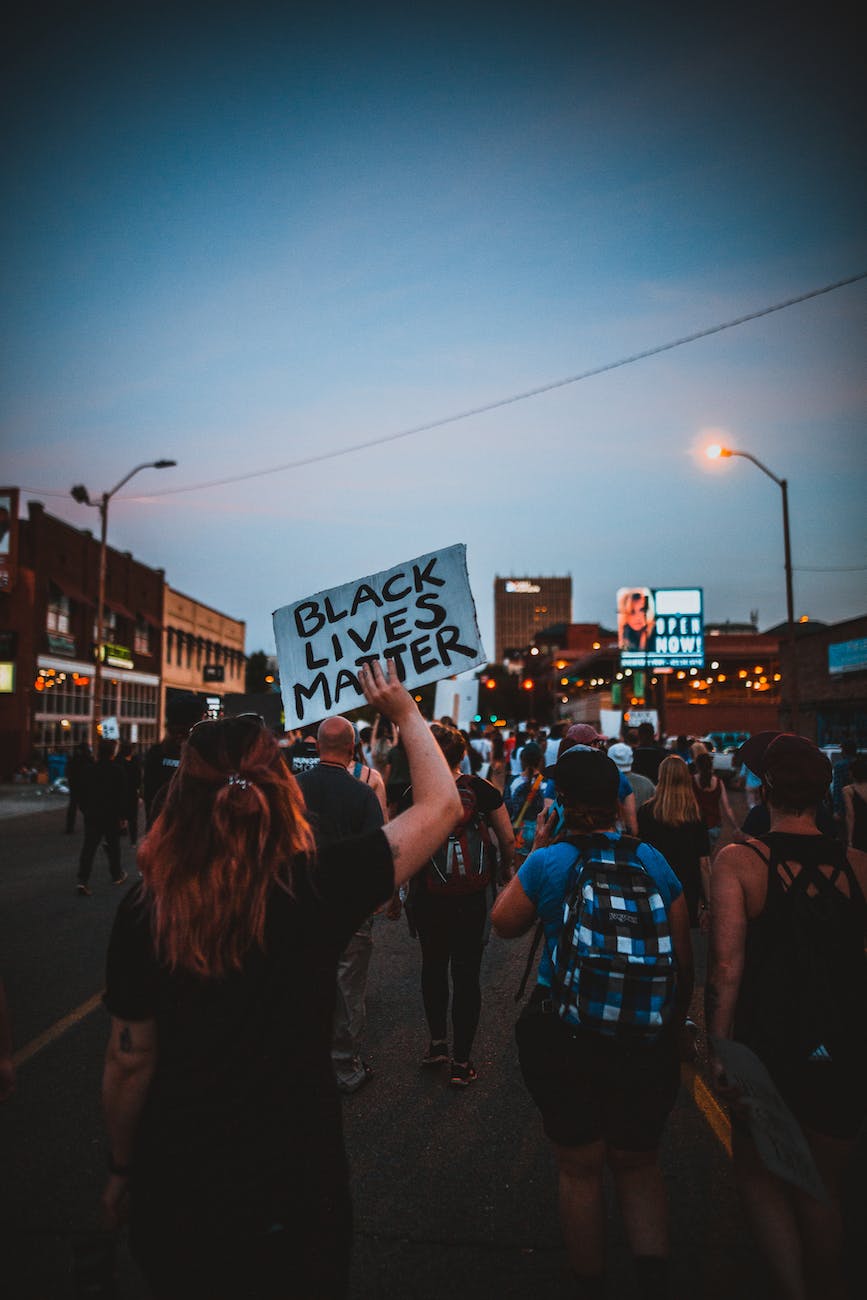



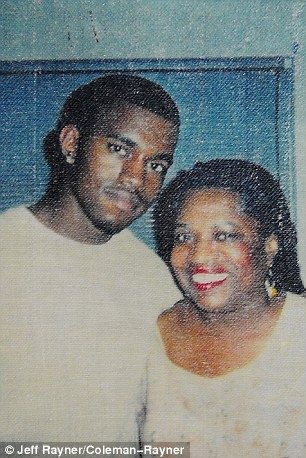











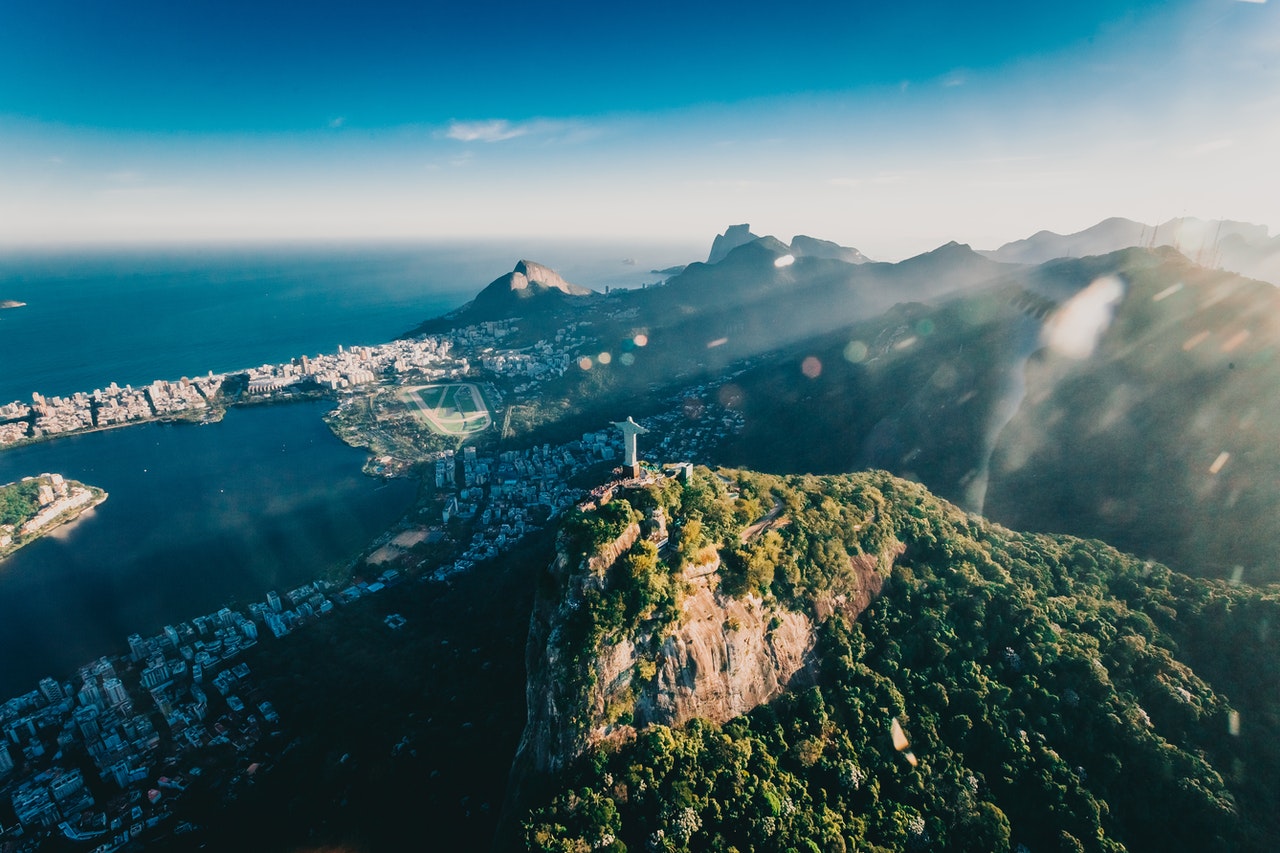



You must be logged in to post a comment.