Exploring the Concept of Groups: Primary, Secondary, and Reference Groups

Daily writing prompt
What are your morning rituals? What does the first hour of your day look like?

By Kavita Dehalwar

In the intricate web of social interactions that defines human society, groups play a crucial role. From shaping our identities to influencing our behaviors and beliefs, groups hold immense significance in our lives. Sociologists categorize these groups into various types, each serving distinct functions and exerting different levels of influence. Among these classifications, primary, secondary, and reference groups stand out as fundamental categories in understanding the dynamics of human socialization and interaction.

Photo by Kelly on Pexels.com

Primary Groups

Primary groups are characterized by close-knit, intimate relationships and frequent interaction among their members. These groups typically involve strong emotional bonds, mutual support, and a sense of belonging. Family, close friends, and small social circles are typical examples of primary groups.

Within primary groups, individuals experience a deep level of emotional connection and intimacy. Members often share values, norms, and personal experiences, contributing to a strong sense of solidarity. Communication within primary groups tends to be informal and personal, with individuals feeling comfortable expressing their true selves without fear of judgment.

Primary groups play a fundamental role in socialization, providing emotional support, validation, and a sense of identity. They serve as a crucial source of companionship, guidance, and emotional security, shaping individuals’ attitudes, beliefs, and behaviors from an early age.

Secondary Groups

In contrast to primary groups, secondary groups are larger, more formal, and often formed for specific purposes or goals rather than for deep interpersonal relationships. Examples of secondary groups include workplaces, academic institutions, sports teams, and professional organizations.

Secondary groups are characterized by a more impersonal and instrumental approach to relationships. Interaction within these groups is often task-oriented, focusing on achieving common objectives rather than fostering emotional bonds. While members of secondary groups may share common interests or goals, the relationships tend to be less intimate and enduring compared to those in primary groups.

Despite their impersonal nature, secondary groups play a crucial role in society by facilitating cooperation, collaboration, and the achievement of collective goals. They provide opportunities for individuals to network, acquire new skills, and pursue shared interests beyond their immediate social circles.

Reference Groups

Reference groups serve as benchmarks for individuals to evaluate their own attitudes, behaviors, and achievements. These groups may not necessarily involve direct interaction or membership but exert influence through comparison and aspiration. Reference groups can be both real (e.g., a professional organization) or imaginary (e.g., celebrities or fictional characters).

Individuals often identify with and aspire to emulate the values, lifestyles, and behaviors of reference groups that they perceive as desirable or prestigious. The influence of reference groups can shape individuals’ self-concept, aspirations, and decision-making processes across various domains, including career choices, consumer behavior, and social activities.

Reference groups play a significant role in shaping social norms, trends, and cultural practices by setting standards of acceptance and approval. Advertisers and marketers frequently leverage the concept of reference groups in shaping consumer preferences and influencing purchasing decisions by associating products with aspirational lifestyles or social identities.

Comparison of Different Types of Groups

Here’s a comparative table outlining the key differences between primary, secondary, and reference groups:

AspectPrimary GroupsSecondary GroupsReference Groups
SizeSmallLargerVaries (can be small or large)
RelationshipsIntimate, close-knitLess intimate, task-orientedMay not involve direct interaction
InteractionFrequent, informalLess frequent, more formalMay involve indirect influence
PurposeEmotional support, identityGoal-oriented, task completionComparison, aspiration
MembershipBased on personal connectionsBased on shared interests or goalsCan be real or imaginary
ExamplesFamily, close friendsWorkplace, sports teamsProfessional organizations, celebrities

This table provides a clear comparison of the main characteristics of primary, secondary, and reference groups, highlighting their differences in size, relationships, interaction, purpose, membership, and examples.

Conclusion

In conclusion, the concept of groups encompasses a diverse array of social structures that play distinct roles in shaping individuals’ lives and societies as a whole. Primary groups foster intimate relationships, emotional support, and identity formation, while secondary groups facilitate cooperation, collaboration, and goal achievement. Reference groups serve as benchmarks for comparison and aspiration, influencing individuals’ attitudes, behaviors, and aspirations. Understanding the dynamics of primary, secondary, and reference groups provides valuable insights into the complexities of human socialization, interaction, and cultural dynamics.

References

Anderson, C., & Kilduff, G. J. (2009). The pursuit of status in social groups. Current Directions in Psychological Science18(5), 295-298.

Barth, F. (2010). Introduction to ethnic groups and boundaries: The social organization of cultural difference. Selected studies in international migration and immigrant incorporation1, 407.

Conover, P. J. (1988). The role of social groups in political thinking. British Journal of Political Science18(1), 51-76.

Dehalwar, K. Empowering Women and Strengthening Communities: The Role of Community-Based Organizations (CBOs).

Olsson, A., Ebert, J. P., Banaji, M. R., & Phelps, E. A. (2005). The role of social groups in the persistence of learned fear. Science309(5735), 785-787.

Sharma, S. N. (2016). Introduction to Sociology. New Perspectives in Sociology and Allied Fields1.

Tajfel, H. E. (1978). Differentiation between social groups: Studies in the social psychology of intergroup relations. Academic Press.

B2B Marketing

The selling of products or services to other businesses and organizations is known as business-to-business marketing. It differs from B2C marketing, which is focused on customers, in various ways.

In general, B2B marketing content is more informative and simpler than B2C marketing content. This is because, in contrast to consumer purchases, company purchases are driven by bottom-line revenue impact. Return on investment (ROI) is rarely a financial factor for the average person, but it is a top priority for corporate decision makers.

Who is B2B Marketing for?

Any business that sells to other businesses. B2B can take various forms, including subscriptions to software-as-a-service (SaaS), security solutions, tools, accessories, and office supplies, to mention a few. Many businesses come under both the B2B and B2C categories.

Any individual(s) who has power or influence over purchase decisions is the target of B2B marketing initiatives. From entry-level end-users to the C-suite, this can contain a wide range of titles and functions.

Creating a B2B Marketing Strategy

There is a lot of competition for clients and their attention. Building a successful B2B strategy needs careful planning, implementation, and administration. Here’s a high-level look at how B2B organisations differentiate themselves in a crowded market:

Step 1: Create a Big Picture Vision
If you don’t plan, you’re planning to fail. This axiom holds true indefinitely. Select defined and measurable business objectives before you start cranking out adverts and content. Then you’ll want to create or adopt a framework for achieving them through your B2B marketing strategy.

Step 2: Establish your target market and buyer personas
This is especially important for B2B companies. B2B items and services are typically marketed to a specific set of consumers with specific difficulties and demands, whereas B2C goods are often promoted to a larger and more general audience. The more precisely you can define this audience, the better you’ll be able to communicate with them directly. It’s a good idea to make a dossier for your target buyer persona. To qualify leads, conduct demographic research, interview industry experts, and study your best customers to develop a list of criteria that you can compare against prospects.

Step 3: Determine B2B Marketing Channels and Tactics

After you’ve gathered good information about your target audience, you’ll need to figure out how and where you’ll reach them. This one should be guided by the knowledge you gained in the previous stage. You’ll want to ask yourself questions about your ideal consumers and prospects, such as these:

  • What do they do with their time on the internet?
  • What are the questions they’re posing to search engines?
  • What social media platforms do they favour?
  • What can you do to close the gaps that your competitors are leaving?
  • What industry events do they attend?

Step 4: Develop Assets and Launch Campaigns
Now that you have a strategy in place, it’s time to put it into action. Make sure you’re following best practices for each channel you’re using in your approach. A unique strategy, relevant information, sophisticated targeting, and powerful calls to action are all essential parts in successful campaigns.

5th Step: Evaluate and Improve
This is a continuous procedure that keeps you on the right track. Simply put, you want to figure out why your high-performing content succeeds and your low-performing content fails. If you understand this, you’ll be able to spend your time and money more wisely. The more diligent you are about consulting analytics and applying what you’ve learned, the more likely you’ll be to keep improving and exceeding your objectives. Even with a solid research basis, creating content and campaigns entails a lot of guesswork until you have solid engagement and conversion statistics to work with.

B2B Marketing Tactics and Content Formats

Here are some of the most frequent B2B marketing methods and content formats to think about incorporating into your plan:

Blogs: Blogs are a must-have for practically any content marketing team. Regularly updated blogs increase your site’s organic visibility and boost inbound visitors. Your blog may accommodate a wide range of material types and formats.

Search: SEO recommended practises change as frequently as Google’s algorithm (which is a lot), making this a difficult space to navigate, but any B2B marketing strategy must account for it. In recent months, the emphasis has shifted away from keywords and metadata and toward searcher intent signals.

Social Media: Both organic and sponsored social media should be included in the mix. You can reach out to prospects on social media and engage them where they are. B2B buyers are increasingly turning to these platforms to research potential vendors before making a purchase.

Whitepapers, eBooks, and infographics: Whitepapers, eBooks, and infographics are all good options. These downloaded papers can be gated (meaning a user must give contact information or perform another action to get access) or ungated (meaning a user must supply contact information or perform another action to gain access). Frequently used to generate B2B leads.

Email: Email will not go away anytime soon, even though its usefulness is fading in the age of spam filters and inbox shock.

Video:
This content type can be used in several of the preceding categories (blogs, social media, and emails), but it’s worth mentioning because it’s at the heart of many effective B2B initiatives.

Livestream events and Webinars: LinkedIn Live videos receive 7x more reactions and 24x more comments on average than native video generated by the same presenters during livestream events and seminars. LinkedIn Live is useful for more than just promoting an event. Use this feature to demonstrate expertise, showcase innovation, or provide a behind-the-scenes look into your company’s culture to LinkedIn members.

Case studies and customer testimonials: Case studies and customer testimonials are essential for B2B marketing strategists to establish credibility. Customer testimonials and case studies aren’t the most imaginative endeavours, but they’re essential nonetheless.

Podcasts: Podcasting is expected to grow in popularity even more than it currently has. Do you have a podcast aimed towards professionals? Are you considering starting one? Increase your podcast’s listenership by promoting it on LinkedIn.

B2B Marketing Best Practices

How can you set yourself up for success in B2B marketing? Here are a few tried-and-true pillars to help your team stand out and make an impression.

Be Human
Yes, you’re attempting to gain a consumer, but you’re not marketing to a building or an intangible thing. You’re attempting to communicate with genuine employees, who, like any other human being, are motivated by emotional and cognitive factors.

Don’t limit your research to the firms and accounts you’re interested in. Learn about the people who work there, and tailor your marketing to their needs. Although business decisions are more sensible and logical, that doesn’t mean your content and tone should be robotic.

Target with Both Precision and Volume in Mind
Multiple stakeholders affect the majority of B2B purchasing decisions. When it comes to targeting, one of the most typical blunders is attempting to pinpoint the decision maker. However, in almost all cases, that one decision maker does not exist. As a result, it’s critical to target all stakeholders who may have an impact on the purchasing decision.

B2B buying cycles are complicated, and stakeholders’ professions and roles are continuously changing. This is only one of many reasons why brand familiarity is so important. The following tools can assist B2B marketers in reaching out to decision-makers who can both influence and authorise purchases. They let you get as specific as you want, and you can use sophisticated automation to extend your target group as necessary.

Keep Context in Mind
Today, personalization and relevance are required to gain attention. Yes, you want to speak your consumers’ language, but you also want to present content and advertising that are thematically appropriate for where they’re being viewed. Shorter videos with rapid hooks, for example, perform better on social media feeds, whereas a longer style is most likely better suited for YouTube. Catching someone looking through LinkedIn requires a different text angle than catching someone scrolling through other social media platforms. Put yourself in the shoes of the end user. When they’re watching your content, try to comprehend their current position, including their “surroundings,” and fit your message with their attitude.

B2B Marketing Solutions on LinkedIn

LinkedIn is the most-used social media network for B2B marketers, according to the CMI and MarketingProfs report B2B Content Marketing 2021: Benchmarks, Budgets, and Trends (at 96 percent ).

LinkedIn was also the leading paid social media site for B2B marketing. The most recent survey did not ask respondents which paid platform had the best results, although respondents in the prior survey said LinkedIn.

At a basic level, we strongly advocate that every B2B company create an optimised LinkedIn Page, which you can do for free on LinkedIn, since this will serve as your brand’s hub on the platform and a popular location for buyer research. Posting updates on a regular basis will keep you top of mind with your target audience and help you gain followers. There are a variety of LinkedIn marketing solutions and services you can use to target and engage the ideal users for maximum business impact and B2B marketing ROI.

Native Ads
Native adverts are referred to as Sponsored Content on LinkedIn. These adverts show alongside the user-generated material that LinkedIn members come to see. For thought leadership, brand recognition, and driving strategic traffic, this is a great tool.

Lead Generation
Many B2B marketers are judged on their lead generation abilities. Because they pre-populate the viewing member’s LinkedIn profile data and don’t require the user to leave the site, Lead Gen Forms are particularly useful for this purpose. It’s a win-win situation for both marketers and members. When it comes to accessing deals and information, members get a consistent experience. Lead data is of excellent quality for B2B marketers.

Retargeting
The LinkedIn Insight Tag allows you to track LinkedIn visitors that come to your website and promote to them while they’re there. These people are more likely to be interested in your business and goods, increasing your conversion chances.

Message Ads
LinkedIn Message Ads are becoming more advantageous as reaching professional inboxes (and sometimes even finding email addresses) becomes increasingly difficult. You can use this feature to send personalised direct messages to LinkedIn members, even if you aren’t linked yet.

Dynamic Ads
These ads are tailored to the individual who is viewing them. To stand out and grab attention, they instantly populate with profile photographs and essential details.

Breaking Down B2B Marketing

Here are some essential factors to bear in mind as we summarise the most important conclusions from our investigation of modern B2B marketing:

  • Even though you’re doing business-to-business marketing, you’re still dealing with people. The most successful B2B marketers combine logic and passion.
  • Developing your goal, defining your audience, identifying techniques and channels, putting content and campaigns in action, and then continuously monitoring for optimization are the core processes in developing a B2B marketing strategy.
  • When targeting, strike a balance between precision and volume to ensure that you reach all of the most critical stakeholders who may have a say in the decision.
  • Truly effective B2B marketing is conversational, targeted, and contextually relevant.
  • Thought leadership content can help you gain a competitive advantage, but if it falls short of expectations, it might backfire.
  • It’s critical to understand the context. Market to your target audience where they are and try to fit your messaging with their attitude.


Marketing Concepts

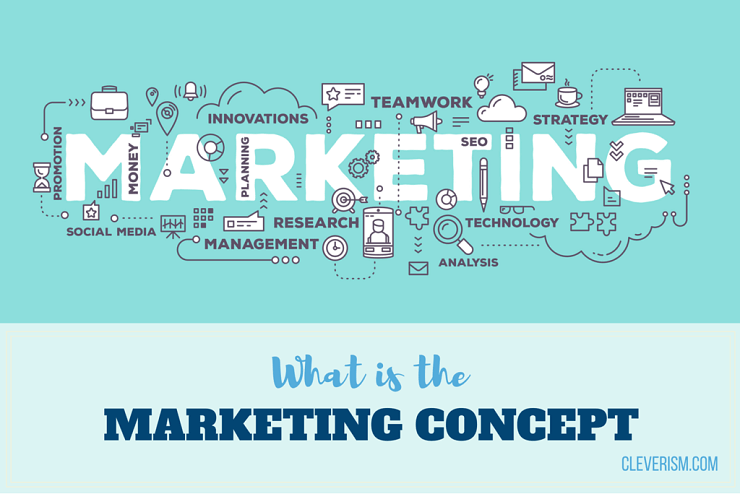
Today, there is a plan for everything, but before you can design one, you must first comprehend the fundamentals. For example, understanding marketing ideas is critical if you want to develop a great marketing plan. You can find out the best marketing approach for you by following the five fundamental marketing concepts. Simply put, execution is a critical element in marketing that occurs only after extensive study and strategizing.

What is Marketing?

The art and process of building, implementing, and maintaining an exchange connection is known as marketing. You start by acquiring clients, then create a relationship with them, and then keep it by meeting their demands. Customers or other businesses can be that customer; thus, marketing can be B2B or B2C depending on the situation. The fundamental goal of marketing, however, remains the same: to develop a relationship with clients and meet their needs by meeting their requirements.

Telecommunications, for example, develops a marketing plan that entices and persuades customers to utilize their phone, message, and internet bundles. When users start using, they are encouraged to rate their service by giving it a star rating.

What are the Marketing Concepts?

When a corporation prepares and implements strategies to increase profits by increasing sales, meeting consumer requirements, and outperforming competitors, it is referred to as marketing. The goal is to create a condition that benefits both the customer and the business.

The marketing concept is based on the idea of anticipating and satisfying customer requirements and wants better than competitors. Wealth of Nations, Adam Smith’s work, was the source of the marketing concepts. However, it remained unknown to the rest of the world until the twenty-first century.
To completely comprehend the marketing notion, we must first comprehend needs, desires, and demands.

  • Needs: Needs are unavoidable for life to survive; without them, various negative consequences can arise. Death would be the worst-case scenario. Food, shelter, self-development, security, social belonging, self-esteem, and respect are all examples of needs.
  • Wants – Wants are our desires and wishes in life are shaped by our social environment and culture.
  • Demand: Demands are created when our desires, needs, and wants are backed by our ability to pay.

5 Basic Marketing Concepts

1. The Production Concept
Customers will be more drawn to products that are easily available and can be acquired for cheaper than rival products of the same kind, according to the manufacturing principle. This concept arose from the rise of early capitalism in the 1950s, when businesses were focused on production efficiency to assure maximum profits and scalability.

This mindset can be beneficial when a company markets in a rapidly growing field, but it also comes with a danger. Businesses that are unduly focused on low-cost production might easily lose touch with client wants and, as a result, lose revenue, despite their low-cost and widely accessible goods.

2. The Product Concept
The product concept is the polar opposite of the production concept in that it assumes that customer buying habits are not influenced by availability or price, and that people value quality, innovation, and performance over low cost. As a result, this marketing approach emphasises product improvement and innovation on a regular basis.

Apple Inc. is a great example of how this principle works. Its target demographic anticipates the company’s new releases with bated breath. Many people will not compromise solely to save money, even if there are off-brand products that perform many of the same functions for a lower price. However, if a marketer relies solely on this idea, he or she may miss out on people who are also influenced by availability and pricing.

3. The Selling Concept
Marketing based on the selling concept focuses on getting the customer to the actual transaction without regard for the client’s wants or product quality – a costly technique. This approach generally overlooks customer satisfaction efforts and rarely results in repeat purchases.

Because a product or service isn’t a need, the selling notion is based on the belief that you must persuade a buyer to acquire it by aggressive promotion of its merits. Soda pop is an example. Have you ever wondered why, despite the brand’s popularity, you keep seeing advertisements for Coca-Cola? Everyone understands what Coke has to offer, but it’s also common knowledge that soda is devoid of nutrients and harmful to one’s health. Coca-Cola understands this, which is why they spend such large sums of money to promote their product.

4. The Marketing Concept
The marketing concept is based on a company’s capacity to compete and maximise revenues by promoting the ways in which it provides customers with higher value than its competitors. It all comes down to knowing your target market, sensing its wants, and efficiently providing those demands. This is referred described as the “customer-first strategy” by many.

Glossier is a well-known example of this type of marketing. The brand recognises that many women are dissatisfied with the way cosmetics affects their skin’s health. Women are also tired up with being instructed what makeup items to use, according to the researchers. With this in mind, Glossier launched a line of skincare and beauty products that not only hydrate the skin but also promote individualism and personal expression through the use of makeup.

5. The Societal Concept
The societal marketing concept is a new one that stresses societal well-being. It’s founded on the premise that, regardless of a company’s sales goals, marketers have a moral responsibility to sell ethically to promote what’s good for people over what people may want. Employees of a corporation live in the communities to which they market, and they should advertise in the best interests of their community.

The fast-food sector is an example of the type of problem that the societal notion seeks to solve. Fast food is in high demand in our society, but it is high in fat and sugar and adds to waste. Despite the fact that the industry is catering to modern consumer wishes, it is harming our health and undermining our society’s goal of environmental sustainability.


The 4Ps of Marketing

The four Ps of marketing are the most important aspects of selling a product or service. They are a good or service’s product, pricing, location, and promotion. The four Ps, often known as the marketing mix, are influenced by both internal and external elements in the broader corporate environment, and they interact heavily.

Companies utilise the 4 Ps to figure out what their customers want from them, how their product or service fulfils or fails to satisfy those demands, how their product or service is viewed in the world, how they differentiate themselves from their competitors, and how they engage with their customers.

Understanding 4Ps

In the 1950s, Neil Borden popularized the concept of the marketing mix—and the concepts that would eventually be known as the four Ps. Borden was a Harvard University advertising professor. His article “The Concept of the Marketing Mix,” published in 1964, illustrated how businesses should employ advertising methods to engage their customers. Companies are still advertising their goods and services using the themes that Borden popularized decades later.

The marketing mix helped corporations account for the physical hurdles that impeded widespread product adoption when it was originally coined. Today, the Internet has aided businesses in achieving a higher level of integration with their customers, as well as overcoming some of these hurdles. People, process, and physical evidence are additions to the classic four Ps that are more relevant to today’s marketing trends.

The 4Ps

1. Product
Any object or service that satisfies a customer’s wants or preferences is referred to as a product. It can also be characterised as a collection of utilities with physical characteristics such as design, volume, and brand name. The perceived value of a product is influenced by its type, which allows businesses to price it profitably. It also has an impact on things like product placement and advertising.

To achieve their goals, businesses might alter packaging, after-sales service, warranties, and pricing ranges, as well as expand into new areas. Marketers must comprehend the product life cycle and devise strategies for each step, including introduction, growth, maturity, and decline.

2. Price
The price of a product has a direct impact on sales volume and, as a result, earnings. Demand, cost, rival price patterns, and government laws are all important considerations in determining pricing. The price of a thing usually reflects its perceived value rather than its actual value. As a result, cost can be raised to promote exclusivity or lowered to promote accessibility.

As a result, pricing entails making judgments on the base price, discounts, price changes, credit terms, freight payments, and so on. It’s also crucial to determine when and if discounting strategies are necessary or appropriate.

3. Promotion
Advertising, salesforce, direct marketing, public relations, advertising budgets, and other considerations are all part of promotion. The fundamental goal of promotion is to raise awareness of a company’s products and services. It aids in influencing customers to choose one product over others available on the market. The following are examples of promotional efforts:

  • Advertising: Advertising is a method of promoting a product, service, or concept by sending out a sponsored, non-personal communication about it.
  • Public Relations: Management and control of the flow and matter of information from one’s organisation to the general public or other institutions is what public relations entails.
  • Marketing Strategy: Marketing strategy is determining the correct target market and employing methods like advertising to enter it. Online variables such as defining the class of Google search operations that may trigger corresponding or targeted adverts for the product, the design and layout of a company’s webpage, or the content shared on social media accounts like Twitter and Instagram are all examples of promotion.

4. Place (or Distribution)
The term “place” refers to the location where things will be made available for purchase. The fundamental goal of trade channel management is to guarantee that the product is available to the customer at the appropriate time and location. It also includes judgments about where wholesale and retail stores should be located and how much they should cost. After a cost-benefit analysis, distribution options such as outsourcing or business transport fleets are chosen. Smaller data, such as department store shelf space devoted to the product, are also mentioned.

Extensions of 4Ps of Marketing

The 4 P’s of Marketing should be expanded to cover services, according to new marketers. They are as follows:

People:
Servicing entails direct engagement between service providers and users, increasing the potential for subjectivity. Appearances, communication, discretion, consumer engagement, demeanour, and service attitude are all critical factors.

Physical Evidence:
The atmosphere, layout, and style of a workplace can have a significant impact on a product’s brand image.

Process: When it comes to policy, processes, systems, and consumer interaction, standardised procedures are frequently used to ensure consistency in service delivery.

Marketing Basics

Marketing is the activity, set of institutions, and processes for creating, communicating, delivering, and exchanging offerings that have value for customers, clients, partners, and society at large. A market is an arrangement between a seller and a buyer in which:

  • The seller agrees to supply the goods or the service.
  • The buyer agrees to pay the price.

Defined this way, the market is not necessarily a geographical location. Products and services are purchased over the phone, through mail and electronic mail, as well as through the online.  For any organisation, marketing makes the economy strong and stable.  The lesser the stress on the marketing function, the weaker will be the economy. Marketing is complex mechanism involving many people in one form or the other. The major marketing functions are buying, selling, financing, transport, warehousing, risk bearing and standardization, etc. In each such function different activities are performed by a large number of individuals and bodies.

Marketing strategy is the comprehensive plan formulated particularly for achieving the marketing objectives of the organization. It provides a blueprint for attaining these marketing objectives. It is the building block of a marketing plan. It is designed after detailed marketing research. A marketing strategy helps an organization to concentrate it scarce resources on the best possible opportunities so as to increase the sales.

Importance of Marketing Strategy

  • Marketing strategy provides an organization an edge over it’s competitors.
  • Strategy helps in developing goods and services with best profit making potential.
  • Marketing strategy helps in discovering the areas affected by organizational growth and thereby helps in creating an organizational plan to cater to the customer needs.
  • It helps in fixing the right price for organization’s goods and services based on information collected by market research.
  • Strategy ensures effective departmental co-ordination.
  • It helps an organization to make optimum utilization of its resources so as to provide a sales message to its target market.
  • A marketing strategy helps to fix the advertising budget in advance, and it also develops a method which determines the scope of the plan, i.e., it determines the revenue generated by the advertising plan.

Marketing is not just one single strategy, but rather a combination of many different techniques and tactics. Below listed  are  some essential marketing strategies that are popular

Marketing Plan: Discover what a marketing plan is, why you need to design one, and the keys to creating a strong plan. Without a marketing plan, a company or brand can’t reach its goals.

Digital Marketing: Digital marketing is the discipline of marketing which focuses on developing a strategy solely within the digital environment.

Direct Marketing: Direct marketing is a type of campaign based on direct, two-way communication that seeks to trigger a result from a specific audience.

Email Marketing: Email Marketing is one of the most profitable and effective techniques in terms of return. Naturally, it consists of sending emails to your audience, but make sure to define your segments well in order to be effective.

Mobile Marketing: Mobile Marketing is a broad concept which brings together all marketing campaigns and actions focused exclusively on mobile platforms and applications (i.e. smartphones and tablets).

Viral Marketing: Having something go viral is every company’s dream. Viral Marketing spreads from one person to the next and is capable of going incredibly far incredibly fast.

Performance Marketing: Performance Marketing is a methodology which applies various marketing methods and techniques and guarantees advertisers that they only have to pay for achieved results.

Inbound Marketing: This methodology focuses on creating valuable content to attract qualified traffic and work towards the final sale.


Pricing Strategies to meet your Business Goals

Pricing strategies are used to determine the cost of goods and services. The factors that are used to determine the price of a product or a service are demand for the product, cost of goods sold, consumer behavior and market conditions. Business owners can determine the right pricing strategy based on goals of the business, for example whether their goal is to maximize profits, gain market share or reduce the inventory.

Types of Pricing Strategies

  1. Penetration Pricing
    Penetration Pricing is a pricing strategy to gain market share. In this strategy, a business tries to gain market share by entering the market by keeping the prices for their products or services lower than that of competitors. This helps the business to build customer base. In this pricing strategy, a business will incur losses initially but if they are able to build a loyal customer base, they can rise their prices to cover up the costs.
  2. Skimming Pricing
    Skimming Pricing is a pricing strategy in which a business keeps highest price for their products or services and reduces the prices overtime. When the demand for first customers are satisfied and competition enters the market, the business lowers it price to attract new segment of customers. Businesses that sell high-tech or novelty products typically use price skimming.
  3. High-low Pricing
    High-low Pricing is a common retail pricing strategy where a product or sometimes a service is introduced at higher prices in the market when the demand is high and when the product becomes less desirable, it is sold at discount or through clearance sales. Retail businesses that sell seasonal products use a high-low strategy.
  4. Premium Pricing
    Premium Pricing Strategy is used by businesses when prices are set higher than the competitors because of the perceived value, quality or luxury of the product. Usually, premium prices are set by businesses who have a positive brand perception in the market, because of this customers are willing to pay high prices for their product. For example- Rolex watches
  5. Psychological Pricing
    Psychological Pricing is a pricing strategy in which businesses keep prices slightly lower than the whole number. For example, keeping price of a product 499 rupees instead of 500. This pricing is done on the belief that customers don’t round up these prices, so they treat them as lower prices than they really are. Mostly, retail and restaurant businesses employ this method.
  6. Bundle Pricing
    Bundle Pricing is a pricing strategy in which companies package separate products together and offer them at reduced price. Competitive bundling is an excellent way for you to push more product, stand out from the crowd, and connect with your audience in an intriguing way. With the help of Bundle Pricing, customers are able to discover more products which they didn’t plan to initially.
  7. Competitive Pricing
    Competitive Pricing is a pricing strategy in which prices are set based on the market rate. The price for a product or service is determined based on the prevailing prices in the industry which helps the business stay competitive. A business can price the product up or below the market rate as long as it is still in the range of competitors in the industry.
  8. Cost- Plus Pricing
    Cost- Plus Pricing is a pricing strategy in which a business charges a fixed percentage above the cost to determine the final price. A business can decide on the markup percentage by determining how much profit a business wants from each product sold. A pizza shop adds up the cost of its ingredients and labor, then sets the pizza price to receive a 20% profit margin.
  9. Dynamic Pricing
    Dynamic pricing, often known as real-time pricing, is a method of determining a product’s or service’s cost that is highly adaptable. Dynamic pricing enables a corporation selling goods or services via the Internet to alter prices on the fly in response to market needs.

Porter’s Five Forces Model

Porter’s 5 Forces Model is a business model and a tool which helps in identifying main competitive forces of an industry or a sector. The 5 Forces Model is mainly used to create a corporate strategy which will help a company to enhance its long- term profitability.

Understanding Porter’s Five Forces Model

The 5 Forces Model was created by Harvard Business School’s Professor Michael E. Porter and was published in his book “Competitive Strategy: Techniques for Analyzing Industries and Competitors” in 1980. The model was created to explain why various industries are able to maintain varying level of profitability. Porter’s 5 Forces helps in analyzing the industry of the company so that a company can adjust their corporate strategy, boost their profitability and beat their competition.

What are the five forces of the Porter’s Model?

  • Competition in the industry
  • Potential of new entrants into the industry
  • Power of Suppliers
  • Power of Customers
  • Threat of substitute products

Competition in the Industry

For most industry, the level of competition in the industry determines the positioning of the product in the market. The intense the competition in the market, the more the company has to focus on innovation, marketing, price, etc. of the product. When the competition is less, a company has more authority to charge higher prices and establish the terms of deals in order to increase sales and profits.

Potential of New Entrants into the Industry

A company’s positioning is also affected by the new entrants in the market.  This in turn puts pressure on prices, costs, and the rate of investment needed to sustain a business within the industry. The less the time, money and effort it takes for a competitor to enter the market, more is the threat for a company to lose its market share. On the contrary, if there are strong barriers to entry in the industry, companies more secure about their market share.

Power of Suppliers

Power of suppliers in a market means how easily suppliers can increase the cost of the inputs. The suppliers’ power in the market is determined by the factors like number of suppliers in the market, uniqueness of the inputs they provide, cost of switching a supplier for a company. If the number of suppliers in an industry is less, a company would depend more on its current supplier, thus giving more power to supplier in terms of cost of inputs and other advantages in trade. However, if the suppliers are more in the market, then company has the advantage of switching the supplier in case the supplier increases the price or if a company finds a cheap supplier, thus keeping their input costs low and increasing their profitability.

Power of Customers

Customers are more powerful in an industry when there are less number of customers in an industry and more number of suppliers. Because the client base for a company is smaller and more strong, each customer has greater negotiating leverage to get better rates and deals. A company with a large number of smaller, independent consumers will find it easier to raise prices and increase profits.

Threat of Substitute Products

A substitute is a product or service that can be easily replaced with another by consumers. In economics, products are often substitutes if the demand for one product increases when the price of the other goes up. When there are no close substitutes in the market, a company can take advantage of charging higher prices. However, if there is availability of close substitutes, customers will switch to substitutes in case of increase of the prices of the products of a company.

Understanding Porter’s Five Forces and how they apply to a particular industry can help a company change its business plan to make better use of its resources and generate more profits for its shareholders.

Summary of Union Budget 2021-22


The Union Minister for Finance & Corporate Affairs, Smt Nirmala Sitharaman presented the Union Budget 2021-22 in Parliament today, which is the first budget of this new decade and also a digital one in the backdrop of unprecedented COVID-19 crisis.

This year’s Budget lays focus on the seven pillars for reviving the economy – Health and Wellbeing, Physical and Financial Capital and Infrastructure, Inclusive Development for Aspirational India, Reinvigorating Human Capital, Innovation and R&D, and Minimum Government Maximum Governance. Several regulations around the securities market are proposed to be merged as a single code. Several direct taxes and indirect taxes amendments were also proposed.


Our FM starts the budget2021 announcement by mentioning the challenges during the pandemic and the vision of the Pradhan Mantri Garib Kalyan Yojana.
FM says that India has two vaccines made available and two more will be made accessible soon.
FM reiterated that the government is fully prepared to support the economy’s reset.
FM says the Budget2021 is based on 6 pillars.
Starting with healthcare & wellbeing:
Spending’s been increased
New scheme with an outlay of Rs.64K crore to be spread over 6 yrs
The above is in addition to the National Health Mission.


Support to rural & urban health centres
FM announces the Jal Jeevan Mission with an outlay of 2.87 lakh crores aiming to provide full-fledged water supply to all urban local bodies with household tap connections.
The FM proposed Rs1.41 lakh crores over a period of 5 Years for the Urban Swacch Bharath 2.0.


An amount of Rs.1.47 lakh crores, over a 5-year-period, from 2021 has been assigned for initiatives such as wastewater treatment, reduction in plastic waster, reduction in pollution and the like.
The Scrapping Policy has been announced in the Budget2021. The voluntary vehicle scrapping policy aims to remove inefficient vehicles so as to reduce vehicular pollution and oil import bills.
FM proposes an amount of Rs.35000 crore to manufacture and make accessible the COVID19 vaccine.


To strengthen nutritional content, delivery, outreach, and outcome, Government will merge the Supplementary Nutrition Programme and the PoshanAbhiyan and launch the Mission Poshan 2.0. Government will adopt an intensified strategy to improve nutritional outcomes across 112 Aspirational Districts.


Universal Coverage of Water Supply and Swachch Bharat Mission:

The Finance Minister announced that the JalJeevan Mission (Urban), will be launched for universal water supply in all 4,378 Urban Local Bodies with 2.86 crore household tap connections, as well as liquid waste management in 500 AMRUT cities. It will be implemented over 5 years, with an outlay of Rs. 2,87,000 crore. Moreover, the Urban Swachh Bharat Mission will be implemented with a total financial allocation of Rs 1,41,678 crore over a period of 5 years from 2021-2026. Also to tackle the burgeoning problem of air pollution, government proposed to provide an amount of Rs. 2,217 crore for 42 urban centres with a million-plus population in this budget. A voluntary vehicle scrapping policy to phase out old and unfit vehicles was also announced. Fitness tests have been proposed in automated fitness centres after 20 years in case of personal vehicles, and after 15 years in case of commercial vehicles.


Physical and Financial Capital and Infrastructure:

AatmaNirbhar Bharat-Production Linked Incentive Scheme

Finance Minister said that for a USD 5 trillion economy, our manufacturing sector has to grow in double digits on a sustained basis. Our manufacturing companies need to become an integral part of global supply chains, possess core competence and cutting-edge technology. To achieve all of the above, PLI schemes to create manufacturing global champions for an AatmaNirbhar Bharat have been announced for 13 sectors. For this, the government has committed nearly Rs.1.97 lakh crore in the next 5 years starting FY 2021-22. This initiative will help bring scale and size in key sectors, create and nurture global champions and provide jobs to our youth.


Textiles:

Similarly, to enable the textile industry to become globally competitive, attract large investments and boost employment generation, a scheme of Mega Investment Textiles Parks (MITRA) will be launched in addition to the PLI scheme. This will create world class infrastructure with plug and play facilities to enable create global champions in exports. 7 Textile Parks will be established over 3 years.

Thus, the budget was widely acclaimed and appreciated.

Social media marketing

What is social media marketing?

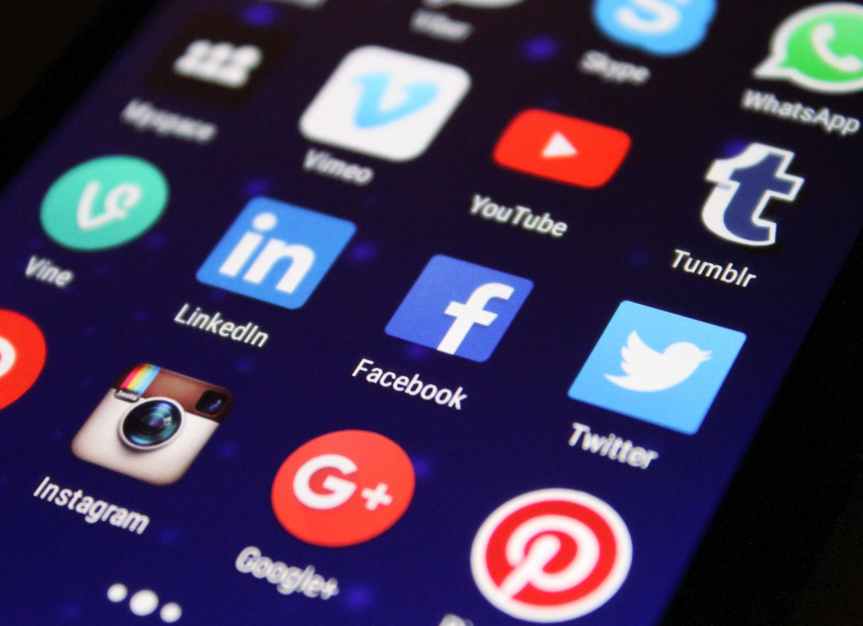
Social media marketing means selling or promoting the products of the company by using social media.For example social medias like Facebook Twitter Instagram Pinterest etc.

Uses of social media marketing:-

* It is used to sell or promote the products in the world level.

* With a strong social media strategy and the ability to create engaging content, marketers can engage their audience

* social media marketing allow people to get what they want.

EFFECTIVE TYPE OF SOCIAL MEDIA MARKETING:-

* Facebook advertising

* Twitter advertising

* Instagram advertising

* you tube advertising

* Pinterest advertising

* LinkedIn advertising.

BENEFITS OF SOCIAL MEDIA MARKETING:-

* Grow your sales and your fanbase.

* Use customer generated content for ads (which perform better, too!).

* Better target new and regular customers so the waste can be reduced.

DISADVANTAGES OF SOCIAL MEDIA MARKETING:-

* The main disadvantage of social media marketing is highly rely on ads.

* No direct interaction with the people to solve problems.

* One of main issue is security and privacy policy.Many of us can be faced.

CONCLUSION:-

There is no better marketing strategy for selling and promoting products than social media advertising. No other strategies can deliver consistent, scalable, quality leads and customers from day one that can supplement any promotional marketing.

How Spotify analyzed brain activity to improve its ad experience

Neuromarketing, a field that makes use of studies and research into the human mind, thoughts, feelings and experiences to design better products, increase sales as well as enhance the marketability of organizations has been gaining momentum. It involves developing an understanding of consumer needs by applying the techniques of neuroscience. While some techniques such as EEG, fMRI and the like are used to directly measure brain activity corresponding to specific functions, other tools include eye tracking and biometric data measurement.

Neuromarketing requires a good amount of investment. However, it is worth the expense since, in comparison to traditional forms of data collection, such as questionnaires and surveys, it directly collects information from the subconscious, a prime source of human decision-making. Moreover, manipulation of data is less likely using this method and it establishes a far better emotional connection with the audience. PepsiCo, Hyundai, Yahoo and eBay are some of the well-known organizations that have used neuromarketing. Spotify, the leading audio streaming platform has joined the list by recently collaborating with the neuro analytics company Neuro-Insight to conduct a brain wave study.

How was it conducted?

The study was based on the experience of 600 participants who listened to multiple genres of music, ranging from rap, pop, Latin, etc. Audio digital ads were allowed to play in between. Brain activity was measured by researchers using a brain tracking method known as Steady State Topography (SST). According to its developer, Richard Silberstein, founder of Neuro-Insight, It not only measures an individual’s speed of response to stimuli but also helps in understanding psychological processes by analyzing the speed of various brain sensitively.

What were the results?

  1. Emotional intensity can be increased by using digital audio since it keeps the long-term memory active and engaged in the process of searching for details and memories.
  2. The genre of music determines its impact on the brain. Rap music, which is driven by speech, tends to bring about more engagement. On the other hand, genres such as instrumental and rock produce more emotional attachment.  
  3. About 93 percent of the brain’s capacity to engage with the music or podcast impacts the engagement with ads. This was a particularly noteworthy aspect for Spotify, an ad-driven platform and can serve other similar platforms in the future.

Jon Gibs, who is the principal data scientist and global director at Spotify, reported that this study was conducted to ensure that Spotify serves content that aligns with the interests of the consumer. He believes that through Neuromarketing, brands can get good insights into a consumer’s thought process as they consume multiple types of media. Samrat Saran, who is the head of client solutions at Neuro-Insight, said that this study would enable them to determine Spotify’s efficiency as an ad-driven platform.

This study provided some valuable insights which can be very helpful to plenty of content creating and streaming platforms. Advertisers are always looking for customer-friendly platforms and through such studies, user experience can be optimized in such a way that more investors would be attracted to pitch in, which would, in turn, generate better revenues and services. Even though Neuromarketing is not yet widely used, it has the potential to transform the future of marketing.

Top 3 Hindu-Muslim Unity Advertisements

Advertisements have the potential to change human thoughts, behaviour and actions. They can do a lot more than just promoting brands. Through visual and auditory modes, advertisements have the competency to bring about a societal change and provoke a positive impact on people. Readers can have a glance at such impactful advertisements through the examples listed out in this blog.

Red Label (Tea Brand)

A man visits a store to place an order for a Ganesh idol (A Hindu God). The shopkeeper exhibits the different idols created by him to the man. While having a conversation with the buyer the shopkeeper also illustrates the meaning behind the different forms of the Ganesh idols. To the buyer, this shopkeeper seems to be a very knowledgeable man, who has much information about the Hindu worship and reverence. While conversing with the buyer, the shopkeeper puts on the Kufi (skullcap worn by Muslims). The Hindu buyer is taken aback after realising that the shopkeeper selling the Ganesh idols is a Muslim by religion. He attempts to cancel his order and go to his workplace. The Muslim shopkeeper offers him a cup of tea before leaving. The vendor explains him that , work is worship too, one need not compulsorily pray. The Muslim man was in fact worshipping God, by creating his idol. The buyer takes a sip of tea and plans to change his mind. He does not cancel his order and amiably buys the idol from that vendor on that day itself. The Brand, Red Label intends to portray that their product attempts to create harmonious relations between different religions.

Kaun Banega Crorepati (Reality Game Show)

Six years ago, KBC came up with a phenomenal ad campaign featuring communal unity. In the ad it has been shown that, a Hindu boy had been selected for the episode. His family members were all set to bid him a goodbye as he was about to step out of his home, while his Muslim neighbors were watching him from the floor above. Just as the Hindu boy was about to step out, his neighbor sneezes. Sneezing while someone is about to leave from the doorstep is considered as a bad omen in the Hindu community. The Hindu boy’s family members feel agitated at the neighbor for sneezing and they misinterpret that, he had done it deliberately. Hours later, while facing a difficult question on the show, the Hindu participant decides to use the option of ‘Phone A Friend’ (According to the game’s format, this option is availed to all participants only once, whenever they wish to make use of it). He then rings up the same Muslim family and asks them the question i.e ‘What is the meaning of As-Salaam-Alaikum ?’ The man is overwhelmed by such a trustworthy gesture by the young boy. He answers his question accurately and assists him in winning the prize amount. This advertisement touched the hearts of many Indians. It indeed reflected the idea of communal harmony.

Surf Excel (Cloth Detergent Brand)

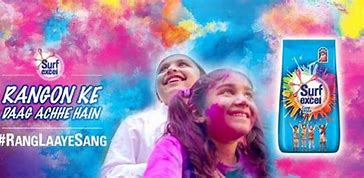
The advertisement broadcasted by this brand, intends to portray how Indian festivals are secular in nature. An individual from any community can enjoy a festivity according to his/her discretion. It is shown that, on the day of the Hindu festival of Holi (people celebrate this festival by applying colour on each other and splashing water with waterguns/waterballoons), a little boy wearing a white robe is hesitant to step out of his house. A girl of the same age as his, notices this and challenges her friends around, to smear all their colours on her. Her friends do accordingly, by throwing all the colour on her, from the floors above, as she waits down on her little bicycle. By doing so, she makes them use all their colour supplies on her and no colours are left out with them. Later, she offers to drop the boy to the place where he wants to go. It is then shown that, she drops him to the mosque, where he wanted to go to offer Namaaz (Islamic prayers). She also jests that, after he’s done with his prayers, the other kids will not leave him without including him in the merry festivities. He agrees to join them in the Holi celebrations after his prayers are done. The ad tagline said, “Rang Laaye Sang, Daag Acche Hai” (colours bind people together, such stains should be cherished). This advertisement depicts how mutual respect for each other’s religion can bring about unity. The principles of unity in diversity must be inculcated in children from their grassroot years, so that peace and harmony prevails in the society.

Advertisements can have a huge impact over the society, in terms of patriotism, unity, cohesiveness and peace-keeping. Various brands are positioning their ad campaigns around the pivot of National Unity in today’s times as the audience nowadays is readily accepting things which were not accepted earlier. Brands thus, not only create a name in the market with their products but also with their ad campaigns promoting social values and messages.

MARKETING AND ITS TYPES

Marketing is any activity undertaken by an individual or a firm consisting of a set of processes such as creation, communication, delivery, and exchange of goods or services that have value to the clients, customers and the society as a whole. Pursuits such as conceptualization, promotion and exchange of ideas aid in satisfying the needs of the clientele. Marketing of an existing or new product or service is essential for mass awareness, maintaining brand credibility, building trust among the buyers and ultimately to increase sales. Marketing can be done through varied methods as per the requirements and convenience of a firm.

TRADITIONAL MARKETING

It is among the oldest marketing strategies followed across the world. The success rate in this type of a marketing strategy is higher as it has been tried and tested for a number of years. This includes all offline marketing strategies which help to reach out to the target audience. It may be in the form of pamphlets, bill boards, posters, FM- radio, newspapers, etc.

For Example – The footwear market is lead by brands such as Nike, Adidas, Puma, Sketchers, etc. Consumers often get attracted by looking at the advertisements of these brands on the front page of newspapers, magazines or over bill boards as well.

INFLUENCER MARKETING

Individuals having a multitude of followers are asked to endorse a product over their channel/website for a decided amount of commission fee. These influencers make use of their fame and status to market that particular brand or product to their target audience. This technique certainly helps to boost sales as a known famous person recommends a company’s product/service and it does increase the visibility of that brand.

For instance – Allen Solly employed this strategy by leading the campaign of #shootforsolly. They invited over 20 influencers to market their new product – Chinos. These influencers were asked to pair Allen Solly Chinos alongside a tee of their choice and participate in a photoshoot. This technique helped the brand reach over about 3.2 million impressions.

AFFINITY MARKETING

It’s a Win-Win situation for both the brands engaging into this type of a marketing strategy. Expansion of the business through a partnership (co-branding), wherein two related brands get along and sell their product is known as affinity marketing. This approach helps satisfy the needs of the end users in a greater manner.

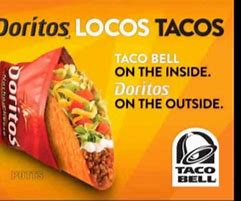
For instance – Taco bell (a popular fast-food chain) got along with Doritos (brand selling flavoured tortilla chips) to offer a merged food preparation called as Doritos Locos Tacos. These two brands made it to a 500 million sales mark over a period of just 14 months.

BUZZ MARKETING

It is a marketing tactic wherein brands intentionally create videos, advertisements, bill-boards that are comical, funny, outrageous or controversial. It is a unique marketing strategy to get your brand to become the talk of the town. It intends to create excitement and enthusiastic anticipation among the people.

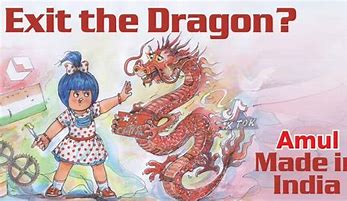
For instance – AMUL, an Indian dairy product brand, published a cartoon picture advertisement depicting a Chinese Dragon. The picture said, “Exit the Dragon?” Public took this advertisement as an endorsement of ‘Aatmanirbhar Bharat’ and ‘Boycott of goods made in China’. This particular endorsement made rounds on the Internet.

SOCIAL MEDIA MARKETING

We live in the times where, more than one person from every family is active on Social Media sites such as Instagram, Facebook, Twitter, YouTube, so on and so forth. Thus, marketeers take it into consideration that posting content on social media sites will definitely boost sale. In the Covid-19 Pandemic, brand endorsers looked at social media as a boon, as they could reach out to their potential clients through online modes.

For instance – Dettol (a British brand producing cleaning supplies and disinfectants), launched their Dettol Anthem on YouTube in India during the pandemic. This fetched many views, likes and also lead to a boost in their sales. The Anthem says, ‘Mil Ke Harayenge’ ( English Translation – Together we will defeat it).

Marketing is one of the most exciting branches of a business. With the changing times, even the marketing strategies are blooming and undergoing a change. Along with meeting the organization’s set targets even customer satisfaction is greatly taken care of. With a global exchange of ideas and technology the methods of marketing are evolving and will reach greater heights in the upcoming years.

What Is Affiliate Marketing ?

Affiliate marketing is an online marketing advertising channel that puts merchants in charge of an online marketing sales force. In simple words, affiliate marketing involves referring a product or service by sharing it on a blog, social media platforms, or website. The affiliate earns a commission each time someone makes a purchase through the unique link associated with their recommendation.

Affiliate Marketing

Roles in Affiliate Marketing

  • Merchants (Advertiser)

If you have a company and website, and you sell a product or service, you are a merchant. The merchants are the companies that sell a product and/or service, and they are the ones that pay affiliates for their marketing campaigns.

  • Affiliates (Publisher)

Affiliates are the website owners who allow a merchant to advertise on their site or blogs, respectively. They are the one who get paid whenever an ad performs, so it is in their best interest to have merchants with which they have an affiliate partnership.

  • The Affiliate Network

An Affiliate Network handles all tracking, reporting and payment to affiliates. It allows affiliates to find merchants which are suitable for their site.

It is a win-win situation for both affiliates and merchants.

Affiliate Marketing Process

Affiliate marketing is a transaction on a commission basis.

  • A website owner (e.g. a blogger) provides advertising space on his website (website owner: PUBLISHER/AFFILIATE).
  • The website owner offers this space to a company (or an organization) who wants to sell products or services (company: MERCHANT/ADVERTISER).
  • By placing the links of the partners on their webpages they pass on the traffic to the advertiser‘s webpage.

Some companies have a huge affiliate network at their disposal which guarantees them a constant flow of traffic.

How Does Affiliate Marketing Works?

  • Find and join an affiliate program
  • Choose which offers to promote
  • Obtain a unique affiliate link for each offer
  • Share those links on your blogs, social media platforms, or website
  • Collect a commission anytime someone uses your links to make a purchase.

Pros of the Affiliate Marketing

  • Zero/Minimal Investment – You can run your business almost with free of cost using different blogging sites. You just need to promote products.
  • Learning through earning – Affiliate marketing also can generate relatively passive income through commission, the ideal money-making scenario. Though initially you’ll have to invest time creating traffic sources, your affiliate links can continue to deliver a steady paycheck.
  • Work From Anywhere – One of the reason why affiliating marketing is booming on the internet is because you can run your business from anywhere in the world. You just need to have a laptop and internet connection to run your business.

Cons of Affiliating Marketing

  • Commission Based Payment – Companies largely paid the cost per click (traffic) on banner advertisements. As technology evolved, the focus turned to commissions on actual sales or qualified leads. Though there are still ads for the visitors to click on, affiliate programs usually only pay when a purchase takes place.
  • The early affiliate marketing programs were vulnerable to fraud because clicks could be generated by software, as could impressions.
  • No Guarantee of Revenue – Pay-per-performance can be a tremendous opportunity as well as a significant risk. No one promises that working as an affiliate marketer will be easy and that you are going to earn the expected revenue right away. It’s a challenge you have to face and put all your efforts into maximizing the opportunity, but all in all, it’s difficult to predict how much money you will make on it in the end.

Designing the Buyer Centric Funnel

In these industrial times, all the companies want to bait their customers, in fact for a much longer time than just one visit or purchase. This leads to continuous, relentless competition in the markets for the purpose of bagging more and more loyal customers. This is where the use of a Sales Funnel enters the talk. But is it possible to keep your customers devoted to your product without a well-designed, blockage-free funnel? The answer is ‘no’.  A sales funnel signifies the path which is taken by a customer from being just an explorer of your product to being a loyal customer for a long time. Through this article, we will go into depths of a customer’s psychology and get some insights on how to design a “buyer centric-funnel”.

Understanding the Funnel

The requirement of an effective method for better sales of a company’s product cannot be dismissed, keeping in view of the increase in a feud for loyal customers in the market. Also, with the coming up of e-commerce sites, grabbing a customer’s attention will be the predominant field to work upon, for the sellers. 

  1. Awareness- This is the key point that should be kept in mind while designing the funnel. Awareness does most of the work when it comes to putting the customer in a phase of scrutiny. To start with, we need to put forward a problem in front of the customer and provide a promising solution for the latter to build up the curiosity. At this stage, we wouldn’t mention our product to the customer.
  2. Consideration- Here, we need our customer to get so intimate with the product that he/she starts knowing about it like the back of his/her hand. We need to give out demos, free trials, triggers and customer stories to the customer to build up their trust in our firm because, to sell to a customer, you have to barge into the thought process of a customer.
  3. Purchase- Now you have to sell the product to your buyer and assure your product stands out from the products of all your competitors.
  1. Get into your buyer’s head- That’s where the whole concept of ‘Understanding the buyer’s psychology’ comes in. We need to ask ourselves questions like “What inspires them to buy our product?”, “How can our product be a solution to their problems?”, “How can we redesign our product to fit their needs?” and work on the answers to these questions.
  2. Slogans- Through close study, we come to a conclusion that firms with good slogans are doing better off in the market. The slogans and advertisements of these firms draw customers by getting stuck inside their brains.
  3.  Quality Maintenance- The quality of your product and extended benefits to loyal customers also gives your firm a new standing among the competitors. We also need to carefully appraise the field where our product fails to deliver and redesign it with wit.

Flipping the Sales Funnel refers to the process of retaining the loyal customers of the firm to gain new customers. Some firms in the market tend to forget its old customers in search of a bigger reach and new customers which lead to the degradation of the firm’s reputation in the market.

To gain ground, we need to build new customers on top of the old ones which can be done by referrals of the consumers to one another. Referral and reputation go and hand in hand. In fact, referrals are the leading intermediary stage for building a good reputation for the firm. According to a survey, 92% of people trust referrals from people they know.

We also need to adapt to the new rules of the market and focus more on redesigning products according to the wants of our targets for our technique to be successful. Rewarding the everlasting customers will be a plus point to this.

The design of a proper sales funnel is the most crucial part for the firm and should be done with patience and sheer determination through proper study and fact consideration, for the firm to leave its mark in this market race.

“The best sales questions have your expertise wrapped into them.”

-Jill Konrat

Importance of Scrutiny

The word “scrutiny” is derived from the Latin Manus, meaning “to happen”. Therefore, the management refers to the management of a particular business. It refers to the process of determining a specific, clear goals, and achieve them, by making best use of resources.

This will help the Group to achieve its Goals, the framing of factors of production, to collect and organize resources and to promote the effective integration of resources to achieve the goals . It will guide the group’s efforts to achieve pre-determined goals.

1. The Optimal use of resources:
Management to ensure the optimal use of resources, in order to prevent potential losses. This will help you make the best possible use of the resources within the limits set by your organization and its environment.

2. Effectively, leadership skills, and motivation:
In the absence of an institution or a business, the process is going to be random and non-systematic. The employees will feel more comfortable when they can see a group of people who are working day and night for the sake of the further development of the organization. The management of the group’s operations more efficient and effective. This will give the employees the opportunity to work together to achieve their aims in a coordinated manner.

3. Change and Growth are the following:
The activities of the group, is operating in a fast-paced environment with minimal supervision. Factors such as changes in technology, government policies, competition, etc.

4. In order to complete the objectives of:
The Precision of Contacts have hired people from Uttar Pradesh and gave it to them, not only work, but also in the homes, but also in memory, and their children, too. Employees, in turn, was a hard-working, and companies with high retention rates, and flexible labor force and gave them a competitive advantage.

WHAT IS SOCIAL MEDIA MARKETING?


Social Media Marketing is the use of social media platforms and websites to promote a product or service. Earlier, e-marketing and digital marketing were in vogue . But today, the term Social Media Marketing is gaining recognition. It connects you with your audience and helps in building your brand, increases sales and drives website traffic. It allows brands to establish their social media “tone” and “culture” and manage marketing campaign. 

The major social media platforms used are: Facebook, Twitter, Pintrest, Instagram, Snapchat and YouTube.

Through Social Media Marketing, companies keep in touch with individual followers. This helps instil loyalty into followers and potential customers. The use of new semantic analysis technology helps marketers detect buying signals. This includes content shared by people and questions posted.  

Below is a step by step guide you can use to enhance you social media presence:

  1. SETTING GOALS:

You should know what you want out of social media. Some may use social media for brand awareness whereas some may use it to drive website traffic. You should set realistic social media goals. To begin with, you should set small and achievable goals for yourself. This will scale your social media efforts and will be reasonable and affordable. 

You should pick out the social media platforms where your target audience is more. After creating a good social media presence on some platforms, you can expand it on other platforms as well. 

Your current social media marketing plan doesn’t have to be your plan forever. You can bring changes to it according to how your posts perform.

  1. PLANNING AND PUBLISHING:

Close to three billion people use the internet daily. In the initial stages, your main aim is being consistent on social media. All you’ve got to do is post pictures, videos or a blog post daily. This will bring you brand in the eyes of future customers. You need to plan your content beforehand and publish it at the right time. Also, being aware of your target audience is a must. Also, where does your target audience resides. A variety of social media scheduling tools allow you to publish your content on your preferred time.This saves your time and allows you to reach your audience when they engage with your content.

  1. ENGAGEMENT:

Engagement means that customers and stakeholders are active participants rather than passive. Engagement on social media can be divided into two parts: proactive and reactive conversations. Proactive means regularly posting content like photos and videos. Reactive conversations involve commenting and engaging. People might talk about your brand without your knowledge. So you will want to track conversations about your brand. But it is impossible to check all the notifications. Instead you can use a social media listening and engagement tool. It allows you to see all the mentions and messages throughout different platforms. It also enables you to see the posts that didn’t tag your business’s social media profile.

  1. ANALYTICS:

You will want to know how well your posts are doing in promoting and reaching out to people. You need to analyse the performance of your one post over the other. This will help you to fine tune your content for more engagement. Tracking the metrics of your content in real time will enable you to make small changes. It will save you from sweeping your entire strategy for a new one. You can be reactive in the short term to get the most out of your running campaign. Later,  proactively use these takeaways to inform your next major strategy. 

  1. ADVERTISING:

Promotion through social media ads is one way to promote your brand. It helps you reach greater audiences, even the people who don’t follow you. You can create ads according to your target audience. You can also specify the demographics, interests, etc. Social media advertising tools enable you to make bulk changes, automate processes and optimise ads.

Social media platforms are evolving everyday. You see some update almost everyday on the platforms you use. This means that social media marketing is also evolving everyday. Going with the current trends is one way of improving your content. People like to follow brands which post content with reference to the current trends. Because most of the users of social media consists of GenZs and millennials, it’s best to target them as your audience.

THE NEW AGE OF MARKETING

How User Interviews Will Improve Your Customer Journey—and Your Sales -  Salesforce Canada Blog

gone are those days when sellers ruled the market,and decided what a customer should buy . Sellers then focused more on their profit and never bothered about their customer satisfaction. Thankfully those days are gone and the new era of marketing has already started. the new age of marketing is way more advanced and systematic . Now customers decide, what a seller should sell and have equal power to control the market. “There is a famous saying that says” customer is the king , no doubt that in today’s scenario customers are more than king, rather they are now worshiped as God.

21st century is all about customer satisfaction. Now marketing is not just about selling the products but it is about selling the right product, to right person at right price and at right time.Today we have various marketing strategies which helps the companies and entrepreneurs to know their customer first, before developing a product or a service. They focus more on communication and consumer choices and then decide the price and the design of the product. so basically we can say that consumer are the geese who lay golden eggs everyday.

Now a whole lot of system is developed just to track the consumers needs to satisfy them. Isn’t it great that a company spends so much money just to keep their customers happy ? But that doesn’t mean the company is not making profit, well the company which takes care of their customers eventually end up having more profit. if a company has great marketing strategies and have loyal customers then it can easily grow and can also run for long term.

Apart from customer satisfaction today’s marketing is also all about going digital. Yes, so here i would be stating the importance of digital marketing in today’s era . Digital marketing has evolved a lot more in these years, with the help of this skill one can not only track their customer’s needs but, can also make money out of it. digital marketing helps the company to grow their brand and also helps the companies to understand their customers in a more easy way. In order to make a product unique digital marketing plays a crucial role.

Change in marketing concepts shows how far marketing has changed. starting from production concept to marketing concept everything has changed and have changed for good. i don’t know how the future of marketing will be but i am sure it will be more scientific , more valuable and more customer oriented.

Branding – A Powerful Strategy

Branding For Small Businesses Made Simple

shakesphere once said “what’s there in a name” , well this famous saying is not applicable in the case of marketing. In the world of marketing a name which i mean as brand is often used to increase sales , attract and retain customers. So basically in simple words, brand is an identity or a recognition of a product or a service. A brand can be a logo, a picture, or even just a word which distinguishes itself from other competitors. Hence this practice of creating a name or an image for a product or service is known as branding.

Companies and marketers are well aware of the power of branding, which is why they always end up in brand awareness. They know that in order to capture the mind of their target customers all they need to do is just advertise their brands instead of their products. But not every company focuses on their branding awareness some newly developed company can not depend upon their brand name just to increase their sales. But yes such small companies can simultaneously aware about their product and their new brand which can be useful for the companies to slowly improve their brand image.

More or less we somehow know why branding is important, because most of us while buying our daily essentials, we prefer to choose the brand, which we are well aware of . We might not be aware of the ingredients of a particular brand but if we know the brand then we do not think of anything else , and that’s the power of branding. hence, a powerful brand creates trust in the mind of it’s customers and within the market place.

So basically branding is a strategy which generates new customers and increases the value of the product. Let’s understand this in a very easy manner. Tell me what comes to your mind when you think of noodles ? ………Is it maggie ? , now think of a toothpaste ?…. Is it colgate ? okay last one , if you are asked to buy a branded notebook which notebook will you buy ? ….. wait, is it classmate ? I am sure most your answers were same as mine, probably we would have given the same answers in our subconscious state too, and that’s the power of these brands.

So far we came to know about the power of branding, but as there are two side of a coin, this strategy too has some disadvantages. A brand can also be the reason for the decline in the growth of a product. Let’s understand this with an example. Suppose their is company called ‘XYZ’ , this company’s name itself is a brand and it has got different product lines like XYZ-soaps , XYZ-drinks , XYZ- cosmetics. Some researchers found that this company is using harsh chemicals in it’s cosmetics but their other two product line has no flaws. But since their is a flaw in one of it’s product line people will start assuming that this brand uses harsh chemicals in all of it’s products and hence will stop buying the product which will eventually affect the company’s financial position.

That’s how simple is the concept of branding. As long as there will be competition in the market, companies will try hard to keep permanent impression of their product in their customer’s mind by improving their branding strategies.