Community-Based Organizations (CBOs): Meaning, Functions, and Importance Community-Based Organizations (CBOs): Meaning, Functions, and Importance

Introduction

A Community-Based Organization (CBO) is a non-profit group formed by local people to address the specific needs of their community. These organizations work at the grassroots level to improve education, healthcare, employment, environment, and social welfare.

CBOs are different from larger non-governmental organizations (NGOs) because they focus on localized issues and are managed by community members themselves.


Characteristics of Community-Based Organizations

  1. Local Focus
    • Operate within a specific neighborhood, town, or village.
    • Address local issues like sanitation, education, and healthcare.
  2. Community Participation
    • Run by volunteers and local leaders who understand the communityโ€™s problems.
    • Encourage active involvement of local people in decision-making.
  3. Non-Profit and Self-Governed
    • Do not aim to make a profit; all resources go toward community development.
    • Independently managed by local members rather than external agencies.
  4. Resource Mobilization
    • Rely on donations, fundraising, government support, and volunteer work.
    • Some CBOs may receive small grants from NGOs or government programs.
  5. Flexible and Adaptive
    • Quickly respond to emerging community needs like disaster relief or unemployment.

Types of Community-Based Organizations

1. Health and Wellness CBOs

  • Provide healthcare, maternal care, and disease awareness programs.
  • Example: Community clinics, HIV/AIDS awareness groups.

2. Educational CBOs

  • Promote literacy, school enrollment, and skill development.
  • Example: Village tutoring centers, after-school programs, scholarship funds.

3. Environmental CBOs

  • Work on conservation, waste management, and clean water initiatives.
  • Example: Local tree-planting groups, community clean-up drives.

4. Women and Child Welfare CBOs

  • Focus on women empowerment, child protection, and family support.
  • Example: Self-help groups (SHGs), womenโ€™s microfinance cooperatives.

5. Economic Development CBOs

  • Support local entrepreneurship, provide vocational training, and help in job creation.
  • Example: Handicraft cooperatives, farmer support groups.

6. Disaster Relief and Emergency Response CBOs

  • Assist during natural disasters, pandemics, and economic crises.
  • Example: Local Red Cross chapters, flood relief groups.

Functions of Community-Based Organizations

  1. Addressing Local Issues
    • Identify problems specific to the community and work on solutions.
    • Example: Organizing water conservation projects in drought-prone villages.
  2. Providing Basic Services
    • Offer healthcare, education, clean drinking water, and sanitation services.
  3. Empowering Marginalized Groups
    • Support women, minorities, disabled individuals, and low-income families.
  4. Enhancing Economic Development
    • Help people develop job skills, provide microloans, and support local businesses.
  5. Promoting Social Change and Awareness
    • Conduct awareness campaigns on topics like hygiene, domestic violence, and child rights.
  6. Advocacy and Policy Influence
    • Act as a voice for the community, influencing government policies for local development.
  7. Encouraging Volunteerism and Community Participation
    • Strengthen community bonds by involving people in collective action.

Importance of Community-Based Organizations

1. Grassroots Impact

  • Since they operate at the local level, they directly impact peopleโ€™s daily lives.

2. Cost-Effective Development

  • Rely on volunteers and local resources, making them more sustainable.

3. Bridge Between Government and People

  • Help government schemes reach the intended beneficiaries.
  • Example: Implementing government-funded sanitation projects.

4. Quick Response to Local Needs

  • CBOs act faster than large organizations in times of emergency or crisis.

5. Empowerment and Self-Sufficiency

  • Help communities become self-reliant instead of depending on outside aid.

Challenges Faced by Community-Based Organizations

  1. Lack of Funding
    • Many CBOs struggle to secure enough financial support.
  2. Limited Skilled Personnel
    • Often rely on volunteers, leading to challenges in management and expertise.
  3. Government Restrictions and Bureaucracy
    • Some CBOs face difficulties in getting official recognition or funding.
  4. Sustainability Issues
    • Many small CBOs shut down due to a lack of long-term support.
  5. Resistance to Change
    • Some community members may resist new ideas due to traditions or misinformation.

Conclusion

Community-Based Organizations (CBOs) play a vital role in local development, social empowerment, and grassroots activism. They help in solving community-specific issues by engaging local people in decision-making and implementation.

Despite challenges, they remain a crucial force in healthcare, education, womenโ€™s empowerment, economic development, and environmental conservation. Strengthening CBOs with better resources and government support can lead to more self-reliant and resilient communities.


Discussion Question:

Have you ever been part of a local community project? What impact did it have on your neighborhood or village?

Engaging Community in an Effective Manner

Daily writing prompt
What do you do to be involved in the community?

By Kavita Dehalwar

Getting involved in your community can be a rewarding and enriching experience that not only contributes to the well-being of your local area but also fosters personal growth, networking opportunities, and a sense of belonging. Whether you live in a bustling city or a quiet rural town, there are numerous ways to engage with your community. Here are some effective methods to get involved and make a positive impact:

1. Volunteer Your Time

One of the most impactful ways to be involved in your community is through volunteering. Nonprofits, charities, schools, hospitals, and local events are always in need of volunteers. Offering your time can help support various causes, from feeding the homeless at a local shelter to tutoring students. Volunteering also provides an opportunity to develop new skills and meet people with similar interests.

2. Attend Community Meetings

Staying informed and involved in local governance is another way to engage with your community. Attend town hall meetings, school board gatherings, or neighborhood association events to understand the issues your community is facing. These meetings offer a platform to voice your opinions, suggest improvements, and understand the roles of local leaders.

3. Participate in Local Events

Communities often host a variety of events like festivals, markets, parades, and charity runs. Participating in these activities can enhance community spirit and allow you to connect with fellow residents. Itโ€™s also a fun way to celebrate local traditions and cultures.

4. Support Local Businesses

Choosing to shop at local businesses instead of large chains is a simple yet effective way to support your communityโ€™s economy. Local artisans, farmers’ markets, and independent shops contribute to the unique character of your area and often depend on local patronage to thrive.

5. Join or Start a Club or Group

Whether itโ€™s a book club, gardening group, sports team, or an arts and crafts circle, joining or starting a group centered around your interests can deepen your connection with others who share your passions. This is a great way to socialize, share skills, and engage in meaningful activities together.

6. Offer Your Expertise

If you possess specific skills or expertise, consider offering them to benefit your community. This could mean providing pro bono services, conducting workshops, or helping local businesses with advice. Lawyers, doctors, teachers, and business professionals can make significant contributions in their areas of expertise.

7. Engage Through Social Media

Social media platforms can be powerful tools for staying connected and informed about your community. Many neighborhoods and community groups have Facebook pages or Instagram accounts where members can share information, ask for help, or organize virtual events. Engaging online can also help amplify local issues and mobilize resources more quickly.

8. Advocate for Community Issues

If you are passionate about certain issues, such as improving local parks, enhancing public safety, or promoting sustainability, get involved by advocating for these causes. You can start petitions, join local advocacy groups, or work directly with local officials to initiate change.

9. Donate to Local Charities

If you are unable to commit time to volunteering, consider financial contributions to local charities. Monetary donations can help fund community projects, support the underprivileged, and provide resources for important local services.

10. Be a Good Neighbor

Sometimes, the simplest way to be involved is by being a good neighbor. This means being friendly, offering help when needed, and participating in neighborhood activities. Building strong relationships with neighbors creates a supportive and interconnected community.

Conclusion

Being involved in your community fosters a sense of belonging and contributes to its development and prosperity. Whether itโ€™s through volunteering, participating in local governance, or simply being a good neighbor, each small action can lead to significant positive changes. By finding the right balance of activities that match your interests and abilities, you can enjoy a fulfilling and engaged community life.

References

Dehalwar, K. Bridging the Gap: Community-Based and Workshop-Based Approaches to Address Rural and Urban Planning Issues.

Dehalwar, K., & Singh, J. (2015). A Critical Evaluation of the main Causes of Water Management Problems in Indian Urban Areas.ย International Research Journal of Environment Sciences. 4,ย 8.

Sanoff, H. (1999).ย Community participation methods in design and planning. John Wiley & Sons.

Zakus, J. D. L., & Lysack, C. L. (1998). Revisiting community participation.ย Health policy and planning,ย 13(1), 1-12.

Fraser, H. (2005). Four different approaches to community participation.ย Community Development Journal,ย 40(3), 286-300.

Sharma, S. N., Kumar, A., & Dehalwar, K. (2024). The Precursors of Transit-oriented Development.ย Economic and Political Weekly,ย 59(14), 16-20.

Sharma, S. N. (2013).ย Participatory Planning in Practice. Lulu. com.

Sharma, S. N. (2014).ย Participatory Planning in Plan Preparation. BookCountry.

Unity is Power

In today’s world where strife is rampant and everyone tries to get his way, very few people see the value of the proverb ‘Unity is power’. Again, this proverb is now complete in encouraging books and uplifting speeches. Therefore, very few people understand the importance and that is why it applies to their lives. But these people are really satisfied with the content in their lives that they actually use. Therefore, unity is an energy essay to understand the growing importance of unity in the lives of the world today.

This proverb also applies when it comes to relationships. People these days are so blinded by success and power that they want to be ahead of their colleagues, their relatives, and their friends.

So, they get into professional conflicts with themselves most of the time and therefore, they donโ€™t realize that they canโ€™t move forward and improve their skills, their knowledge, and help each other. So, when we argue with our colleagues and start competing with them in an office environment, then people from another group will benefit from this position.

Also, one reason here is that people often split up because of mistrust. This is especially true when it comes to the relationship between husband and wife. Also, here we often see couples always doubting. So they start asking small questions and then doubt them about lying or cheating.

Therefore, outsiders use these types of situations. Also, it breeds doubts and thus creates tension between the two in order to achieve their goals. Also, this will have a negative impact not only on the couple but also on the children. Therefore, if a husband and wife remain united and protect each other unless both of them can make a difference in the relationship.

Application of the Proverb – Unity is Power

The proverb has been used in various places since centuries. It derives its origins from the Dutch Republic where it was first used. Currently, the national military uniform in Haiti and Bulgaria has documented this.

Belgium adopted this as its motto after the 1830 Revolution. Other countries that have used this proverb as their motto in the past include Greece, the Netherlands, Canada, Georgia, the South African Republic, Malaysia and the United States.

In Communities and Nations
This proverb is also true when it comes to society and the nation as a whole. Communities and places where people stay united are loved by everyone.

Therefore, the people who live here meet and greet their neighbors with a smile, guard their neighbor’s house, help each other through difficult times, and so on. Also, they celebrate each activity together and run other social gatherings regularly. In today’s world, it is common for people to suffer from loneliness and depression, and this kind of neighbor can be a blessing.

Similarly, nations around the world are engaged in a vicious war to prove that they are the best. Thus, the entire nation is armed with nuclear weapons and many terrorist organizations have been formed. So, if we stop all these kinds of bad habits than the world becomes a better place to live.

The Power of Social Media

Social Media plays an important role in the lives of each and everyoneย  of us . The role and power which the social media possess is immense and cannot be undermined . Just one tweet can change the world . Example : It took Cristiano Ronaldo just thirty seconds to cause a massive damage of crores of amount to the Coca Cola company . Another Example : When one of the greats Naomi Osaka said that she did not wanted to face the press after the game it brought into picture the concern of mental health that the athletes face regularly .

SOLAR IS THE FUTURRE.

Topaz solar farm and Desert sunlight farm, US

The Topaz solar farm is located in the north-western part of the Carrisa Plains in San Luis Obispo County, California, US. The 550MW plant was developed by First Solar and later acquired by BHE Renewables in January 2012. Commissioned in 2014, the project covers an area of 4,700 acres and is equipped with more than eight million solar modules. Topaz supplies electricity to approximately 180,000 households in California.

The Desert Sunlight solar farm is located in the Mojave Desert in the Riverside County, California, US. Developed by First Solar, the facility is owned jointly by NextEra Energy Resources, GE Energy Financial Services, and Sumitomo Corporation of America. Commissioned in 2013, the power plant is equipped with eight million panels that generate power enough for 160,000 homes.

Solar Star Projects, US

Solar Star Projects comprises two co-located projects, Solar Star 1 and Solar Star 2, in the Kern and Los Angeles counties, Rosamond, California, US. The two projects have a combined capacity of 579MW and comprise more than 1.7 million solar modules installed on 3,200 acres of land. They were developed by SunPower Corporation and owned by BHE Renewables.

Completed in March 2015, the projects supply electricity to more than 255,000 homes. They are equipped with the SunPowerยฎย Oasisยฎย Power Plant technology, which positions the panels to track the sun during the day and increases energy capture by up to 25%.

Kamuthi Solar Power Station, India

The Kamuthi solar facility in Tamil Nadu, India, has a total generation capacity of 648MW. Covering 2,500 acres (10kmยฒ) and consisting of 2.5 million solar panels, the site is estimated to supply enough power for 750,000 people.

Enel Villanueva PV Plant, Mexico

Located in the Mexican state of Coahuila, the photovoltaic (PV) facility comprises more than 2.5 million solar panels installed across 2,400ha in the Mexican semi-arid region. The 828MW power plant became fully-operational in September 2018 and has the capacity to produce more than 2,000GWh a year.

The Enel Group invested approximately $710m in the construction of Villanueva. The plantโ€™s initial capacity was 754MW, which was increased to 828MW following a 10% capacity extension option added to the energy sales contracts.

Enel deployed a unique pilot programme using digital technologies and automation for the plantโ€™s construction. The programme included the use of GPS-controlled machines for moving the earth, drones for conducting 3D topography, and robots for automatic installation of panels.

Longyangxia Dam Solar Park, China

The Longyangxia solar park has a capacity of 850MW, sufficient to power 200,000 households. The site sits on the Tibetan Plateau in northwestern Chinaโ€™s Qinghai province and spans 27kmยฒ. The plant is installed with approximately four million solar panels and is operated by State Power Investment Corporation, one of Chinaโ€™s top five power generators.

Phase one of the power plant was completed in 2013, while phase two was completed in 2015, with a total construction cost of approximately six billion yuan ($920.84m).

The project was developed by Huanghe Hydropower Development and is integrated with the 1,280MW Longyangxia hydroelectric power station.

The state of Transgender People in India

The Central Government has informed the Kerala High Court that currently, transgender persons are not legally allowed to enter the National Cadet Corps and the armed forces. The Government also stated that it is their prerogative to create a new division for the third gender. In light of this statement, let us look at the rights afforded to transgender people under the law.

In India, the Transgender Persons (Protection of Rights) Act, 2019 protects the rights of transgender persons and provides for their welfare.

A transgender person is any person whose gender does not match with the gender assigned to that person at birth. This includes:

  • A trans-man or trans-woman
  • A person with intersex variations
  • Any genderqueer person
  • People having socio-cultural identities such as kinner, hijra, aravani, jogta, etc.

Educational institutions which are funded or recognised by the government must provide inclusive education and opportunities to transgender people under the law. These educational institutions are not allowed to discriminate against transgender people and have to treat them on an equal basis with other people.

No establishment should discriminate against any transgender person in matters relating to employment, including recruitment, promotion, etc. This applies to establishments including government bodies, companies, firms, cooperatives, associations, agencies, and other institutions. 

Further, no person or establishment can discriminate against transgender people by denying them healthcare services. Transgender people cannot be denied access to goods, accommodation, benefits, opportunities, etc. that are available to the public. Moreover, no one can deny a transgender personโ€™s right of movement and right to occupy or purchase any property.

A transgender person has the right to be recognised as such a person, and has a right to self-perceived gender identity. Any transgender person can apply to the District Magistrate for issuing a certificate of identity as a transgender person. In the case of a minor child, the application should be made by the parent or guardian of the child.

  • Transgenders do not enjoy a legal recognition in India like most of the Asian counterparts.
  • However, some states like Tamil Nadu, Kerala and Odisha recognise transgenders as the third gender.
  • The Transgender Persons (Protection of Rights) Bill, 2016, intended towards the protection of transgenders is yet to be passed.
  • The Bill defines a transgender person as one who is partly female or male; or a combination of female and male; or neither female nor male.  In addition, the personโ€™s gender must not match the gender assigned at birth.
  • The bill includes trans-men, trans-women, persons with intersex variations and gender-queers.

The law punishes anyone who:

  • Forces or convinces a transgender person to get involved in forced or bonded labour.
  • Obstructs a transgender person from having access to a public place to which other people have access.
  • Forces or causes a transgender person to leave a household, village, or other place of residence.
  • Injures or endangers the life, safety, health, or well-being of a transgender person.

The punishment for doing any of these acts is imprisonment of six months to two years, along with a fine.

WHAT IS WOMEN EMPOWERMENT.

What Does Women Empowerment Mean?

Women Empowermentย is the process that creates power in women to live a happy and respectable life in a society. Women are empowered when they are able to access opportunities in a variety of fields such as in education, profession, lifestyle, etc., without any limitations and restrictions. It includes raising their status through education, awareness, literacy and training. It also includes the authority to take decisions. When a woman makes a crucial decision, she feels empowered.

Womenโ€™s empowerment is the most crucial point for the overall development of a country. Suppose, in a family, there is one earning person, while in another family, both men and women are earning, then who will have a better lifestyle. The answer is simple, the family where both men and women are earning money. Thus, the country where men and women work together develops at a faster rate.

Need for Women Empowerment

History says that women were ill-treated. The Sati Pratha in the ancient times to the girl child abortion in the present scenario, women continue facing such violence. Not only this, heinous crimes against women such as rape, acid attack, dowry system, honour killing, domestic violence, etc., are still happening in India.

Out of the total population, 50% of the population should consist of women. However, due to female foeticide practices, girl child numbers are decreasing sharply in India. It has also impacted the sex ratio in India. The literacy rate in girls is very low. Most of the girls are not even provided with primary education. Moreover, they are married early and made to raise children and shoulder only household work. They are not allowed to go out and are dominated by their husbands. Women are taken for granted by men as they are considered their property. Even at the workplace, women are discriminated against. They are paid less for the same work as compared to their male counterparts.

Steps to Empower Women

Women can be empowered in various ways. It can be done through government schemes as well as on an individual basis. At the individual level, we should start respecting women and start giving them opportunities equal to men. We should promote and encourage them to take up jobs, higher education, business activities, etc. The Government has come up with various schemes such as Beti Bachao Beti Padhao Yojana, Mahila-E-Haat, Mahila Shakti Kendra, Working Women Hostel, Sukanya Samriddhi Yojana, etc. to empower women. Apart from these schemes, we as individuals can also empower women by abolishing social evils like the dowry system, child marriage. These small steps will change the situation of women in society and make them feel empowered.

More about Demisexuality

In todayโ€™s world where dating is complicated and sex is seen as a necessity, there exists a section of people who donโ€™t feel sexually attracted to a person unless you form an emotional connection to them. These people require having a meaningful attachment with a person before wanting to take things any further with them. If this sounds familiar to your perspective towards sex, relationship, and emotions, then chances are you โ€˜demisexual.

The true meaning of ‘demisexuality’ can be defined as โ€˜A sexual orientation in which someone feels sexual attraction only to people with whom they have an emotional bond.โ€™ The term comes from the asexuality spectrum. However, this doesnโ€™t mean a demisexual doesnโ€™t aspire for sex. In fact, every demisexual experiences sexual desires.

We understand this can be a little confusing. After all, we only read about sexual and asexual in our biology textbooks, isnโ€™t it? If you are still not sure, demisexuality is for real. To understand better, we suggest you lookout for the following signs of a demisexual.

  1. Sleeping together with someone entices you more than having sex: Sex isnโ€™t the most important factor for any demisexual. The idea of sleeping (and spending more time) with your beloved is more peaceful than the act of making love.
  2. You like to befriend people before dating: Did you and your partner started off as friends? As a demisexual, you have to be friends first before dating someone. This gives them the time to know each other. However, when it comes to friendship, if a demisexual says,โ€ We are just friends.โ€ They mean it!
  3. Personality plays a vital role overlooks: A demisexual doesnโ€™t get turn on by looks; they thrive for deeper connection in people. A good personality is sexy for them.
  4. One night stands or casual sex is not your cup of tea: Casual sex, a one-night stand or even kissing strangers is pretty much a no-go for a demisexual.
  1. You just don’t feel like being intimate or having sex at all- If you show these signs, you might simply be asexual.
  2. You stay away from intimacy for religious purposes or societal pressure- It is very common to feel ashamed of having sex before marriage in some communities but this doesn’t make you demisexual.
  3. Personal choice- If you want to stay away from any kind of personal contact for personal reasons, you don’t fall under this category either.
  4. you are afraid of sex- If you have a psychology of being afraid or ashamed of having sex for various reasons, you are not demisexual.
  5. You don’t feel attracted to the opposite gender in any way- You might be gay ,lesbian or simply asexual if you don’t feel attracted to the opposite gender, but not demisexual.

Sexuality is more of a spectrum than a definition and hence, we should embrace it rather than trying to label it or fit a certain sexuality all the time.

DIGITAL MARKETING – A BOOMING INDUSTRY

Understanding digital marketing

At present, the world is going digital and more and more companies across the world are having an online presence. Digital Marketing has truly made differences in the field of advertising and marketing. The traditional marketing strategies are no more used by companies as internet media is more reliable and optimum. The internet marketing is highly effective, financially feasible and more comprehensive. Digital marketing provides powerful techniques to generate business and efficiently boosts the present scale to zenith levels.

Ever increasing rise in internet usage

The Internet has totally changed the way in which people used to buy required things and even the way in which different businesses provide their products and services. With the reduction in the price of smartphones, there has been a rise in the internet usage. This has resulted in the development of online businesses. Right from the cell phones to personal computers, garments to shoes, books to gadgets, people are increasingly using the internet to buy different products and services.

Online business challenges are the strength of digital marketers

With the organizations busy running their business, they are not able to invest quality time to understand top, middle, and bottom objectives to engage the audience. Digital marketer comes to your rescue as it lowers the business costs considerably. They help the business survive and grow by targeting the right people at the right time. They also identify and prioritize the key performance indicators by auditing your customersโ€™ behavior on various digital platforms. Digital marketers analyze the performance of your online business industryย and help companies make informed data-driven decisions for optimal customer experience.

THE COVID-19 DELTA VARIANT

The central government on Tuesday confirmed that it has detected a mutation in the delta variant of SARS CoV2 virus which has emerged into an additional strain named as Delta Plus.

Confirming that the Delta variant played a crucial role in the second wave of the covid-19 pandemic, the government said that it has submitted the information to the global data system.

It has been seen in Europe since March and was brought into the public domain two days ago on June 13. Delta variant played a major role in the pandemic. Delta Plus is a variant of interest, but not a variant of concern,” said Dr Vinod Paul Member (Health) in NITI Aayog and Chair of the National Expert Group on Vaccine Administration for covid-19 (NEGVAC) at a press briefing.

The government said that INSACOG (Indian SARS-CoV-2 Genomic Consortia) will keep a strict vigil on the new variant. Meanwhile the number of covid-19 cases are steadily in the country with the trajectory of the pandemic declining. India reported over 60,471 daily new cases in last 24 hours, lowest after 75 days with 2733 deaths due to coronavirus.

GROUND WATER DEPLETION IN INDIA

Groundwater is a critical resource for food security, providing 40% of the worldโ€™s irrigation . Millions of farmers depend on groundwater irrigation to help produce 40% of the worldโ€™s agricultural production, including a large proportion of staple crops like rice and wheat . Yet, groundwater reserves are becoming rapidly depleted in many important agricultural regions across the globe . While the extent of current and projected groundwater depletion is well documented , the potential impact of this depletion on food production remains poorly quantified. Furthermore, it is unclear whether there are any adaptation strategies that may reduce the projected negative impacts of groundwater depletion on agricultural production. Yet, such information could help identify which adaptation strategies should be prioritized in which regions to ameliorate and avoid large production losses in the areas most at risk for groundwater depletion.

It is especially critical to quantify the impacts of groundwater depletion on crop production in Indiaโ€”the worldโ€™s largest consumer of groundwaterโ€”where groundwater provides 60% of the nationโ€™s irrigation supply.ย Tube well construction has rapidly increased since the 1960s across India, allowing farmers to increase cropping intensity, or the number of seasons when crops are planted in a given year, by expanding production into the largely dry winter and summer seasons . This increase in cropping intensity is credited for much of the food production gains achieved over the past 50 years across India. However, because of high rates of extraction, aquifers are rapidly becoming depleted across much of India, with the northwest and south predicted to have critically low groundwater availability by 2025 This is of concern given that India produces 10% of global agricultural production and is the second largest producer of wheat and rice. Furthermore, a majority of Indiaโ€™s rural population, approximately 8% of the worldโ€™s population, depends on agriculture as a primary livelihood, and a reduction in agricultural production will negatively affect household welfare .

Very few studies have attempted to quantify the potential impacts of groundwater depletion on agricultural production in India. To date, efforts have largely relied on modeling approaches , which necessarily make assumptions about the relationship between groundwater use and crop productivity. With such an approach, it is difficult to account for real-world constraints that may reduce the efficiency of groundwater use, such as inefficient pumps and the inability of some farmers to irrigate at full capacity. Accounting for these limitations is particularly critical in regions like India, where water use efficiency is low and extremely heterogeneous across the country . Only one previous study ย has incorporated empirical data on the relationship between irrigation use, crop production, and groundwater depletion. However, because of data limitations, this study relied on coarse district-level agricultural census statistics that do not distinguish between whether a crop is irrigated by groundwater or other sources, like canals. Thus, to date, it has not been possible to empirically estimate the association between groundwater use, crop production, and groundwater depletion, which is critical for accurately estimating the potential production losses that may occur when overexploited groundwater is lost.

CSR ACTIVITIES AND THE COMPANIES TOPPING IT!

1ย Mahindra Mahindra:

CSR Initiatives byย Mahindra Mahindra:

  1. M&M sponsors Project Nanhi Kali โ€“ It is their Flagship program. Commenced in 1996 by Mr Anand Mahindra, Project Nanhi Kali has supported the education over 11 lakh underprivileged girls. They provide material support (like school bags, notebooks, uniforms, etc.) and academic support (like workbooks)
  2. Project Hariyali โ€“ Through his project, they planted more than 7.9 million trees. This also includes the four million trees in the Araku Valley.
  3. Swachh Bharat Swachh Vidyalaya โ€“ Constructed 4340 toilets across 104 districts.
  4. Mahindra Pride School โ€“ Provided livelihood and vocational training to more than 10000 youth in Pune, Patna, Chandigarh, Chennai and Srinagar.

2 Tata Power

CSR Initiatives by Tata Power

  1. Act of Manseer โ€“ The Flagship Programme started in 1975. It is a thoughtful initiative for the conservation of endangered species. They have set up the breeding centre in Lonavala (Maharashtra) which is a part of its restoration and development project for the lakes. The program has successfully produced in various water bodies.
  2. To uplift women and encourage their empowerment and equality, they have established โ€˜Dhaagaโ€™ โ€“ A women enterprise established for garment stitching and handicraft making.
  3. They have also launched โ€˜Abhaโ€™ which is an โ€˜Earn While You Learnโ€™ opportunity for women.
  4. They also invest in vocationalย skill developmentย of youth from economically and socially disadvantaged communities.
  5. Tata Power is one of theย top CSR companies in Indiaย and a top contributor from theย Tata Group. They reached out to about 230 schools for the covering education of over 1 lakh students through various initiatives.

3 Tata Steel

CSR Initiatives by Tata Steel:

  1. Tata Steel CSR compliance supports the preservation of culture and ethnicity of indigenous communities.
  2. Various programs for sanitation and eradicating poverty and malnutrition are conducted across 10 districts of Odisha, Chattisgarh and Jharkhand. They cover about 500 villages.
  3. Maternal and Newborn Survival Initiative (MANSI) โ€“ MANSI, a public-private initiative that aims to reduce child and infant mortality. It is being implemented in about 167 villages of Jharkhand.
  4. Making safe drinking water accessible in Jharkhand, parts of West Bengal and Odisha is also a part of their CSR plan.
  5. They also contribute toย women empowermentย and education of women and special children.

4ย Tata Chemicals

CSR Initiatives by Tata Chemicals:

  1. Being a significant player in the chemical industry, Tata Chemicals makes sure it is doing everything in its power to preserve the ecosystem through its CSR.
  2. Their climate change policy maps their carbon footprint and is working on creating an abatement strategy for sustainable manufacturing.
  3. Save the Whale Shark Campaign โ€“ Began in in 2004, the campaign aims to spread awareness about the whale shark. It is the largest fish in the world and was endangered and depleting because of the fishermen slaughtering them in Gujarat coast for export.
  4. Tata Chemicals Society for Rural Development provides funds to disaster relief funds set up by the Central Government.
  5. Tata Chemicalโ€™s initiative TCSRD also manages activities like natural resource management, water management projects and land reclamation.

5 Tata Motor

CSR Initiatives by Tata Motors:

  1. Vidyadhanam addresses all concerns related to education. Scholarships, financial aid, support classes, life skills and co-curricular activities.
  2. Learn, Earn and Progress (LEAP) โ€“ Through LEAP, a year-long mechanic motor vehicle training (theoretical and On-Job-Training)
  3. Aarogya โ€“ This focuses on combating malnutrition under the age of 5 and providing water in tribal and drought-prone areas.
  4. Kaushalya โ€“ An Employability Enhancement andย Skill Developmentย program that trains school dropouts and unemployed youth in three segments and provides them with stabilized employment.
  5. Vasundhara โ€“ Tata Motors organizes sapling plantations and awareness campaigns through Vasundhara

The Forgotten Identity

ย  ย 

The books have always taught us that we youngsters are the future generation of India. According to research, this fact is not entirely true. We youngsters do not represent the entire generation in India. There is another commodity, living far away from the reach of the powerful media. They are the rich generation of India’s Adivasi (tribal) communities. Adivasis make up eight percent of India’s population. They stand as an unknown identity of our nation altho their rich culture has always contributed to the diversity of India.

The tribes in India form a significant part of the total population. As the new technologies emerged and India took a step forward to development, these tribes started drowning in the crisis. The law ignores that they are the citizens of our country; there are numerous contradictions about reservation, yet there is no answer that will improve their condition. The tribals are facing several serious problems. The major among these are poor economic conditions. Most of the tribals lead a life of poverty and hardships. As they lead a

nomadic life, their children don’t get formal education. Most of the tribal people do not have adequate money to start their ventures. The banks are not prepared to lend them because they keep moving around from place to place. The other major problem faced by our tribals is that they do not live at proper places where they have access to water, sanitation, transportation, and other facilities necessary for their growth. Apart from the financial loss during this lockdown, brutal acts against humanity have come into notice. A 13-year-old girl from tribal-dominated Sundargarh district in Odisha, on a fine day, decided to go and visit a nearby fair in the Biramitrapur area on 25th marc. A sudden lockdown got announced, and the fair got canceled, and the little girl left stranded in the area wanting to go home but no reasonable means to do so. After some while, she was spotted by patrolling police. She was brought to the police station by the cops. She got raped by the very inspector in charge of the police station Anand Chandra Majhi. Since that day, she was repeatedly summoned to the police station and raped again and again. The girl got pregnant, and the cops with her stepfather conducted an abortion at a local community clinic. A protection officer filed a complaint against the officers, the doctor, and the stepfather. The inquiry is still pending; as usual, it was difficult to find this detailed report of this barbaric crime which was supposed to be the national headline. Also, a disturbing video of a tribal girl brutally thrashed, by her family members, allegedly for eloping with a man from her village was found on social media. In the viral video, a man is holding both the hands of the girl, while two other men thrash her repeatedly. MS Bhabhor, Superintendent of Police, Chhota Udepur district told that the victim was a 16-year-old woman, a resident of Rangpur village in the district. Local news reports confirmed that the incident was from Chhota Udepur district in Gujarat and that the girl belongs to a tribal family. The reports further said that the teenager was beaten in public by her family members for allegedly eloping with a man from the village.

If you are wondering why you should contribute towards their development, Here is why-The first and the most important reason is that dignity of all communities should be respected and no community should be living in such harsh conditions like these tribes. Secondly, the tribal communities have consistently contributed to the diverse culture of the country. They are experts in wildlife and nature conservation, know various sustainable agriculture and living practices ethnomedicine, and have a rich culture of stories, literature, art, and dance forms. So why not protect our culture?

Also, they help to protect our environment. fight climate change and build resilience to natural disasters. These people have continued to experience extreme acts of inhumanity mentioned above. The contradictions continue to evolve for ages, yet no significant improvement has come into notice. Gandhiji coined a term for them – Harijans yet we treat them like they are the lowest rung of the society. Remember when you bestow respect for the tribal communities you offer honor towards your nation.

Facing the Future: Lessons to be Learnt From the Pandemic

“The outbreak of novel coronavirus pneumonia will inevitably have a relatively big impact on the economy and society … For us, this is a crisis and is also a big test.”

With the whole Coronavirus pandemic engulfing the whole world in its clutches, thereโ€™s a thing or two humanity had to learn the hard way. Firstly, all strings are attached. If your neighbourโ€™s house is on fire, then it is not the time to judge his doings, his karma, even shielding your own house isn’t advisable. Run for him, save his house put off the fire first. Secondly, invisible thing mess us up better, whether it is your so called almighty or a deadly virus. Third, public are the second priority for any government, obviously, first is their party. Lastly, home isn’t sweet home but a jail if you live locked in it for months. It eats you, itโ€™s door is like mouth and youโ€™ve walked into it yourself, and canโ€™t find an escape route.

We, as people, have started craving human connection. What happened to conversations? We are all stuck in this same catastrophe, feeling like there’s nothing left to say. We focus on the weather, pretend its something new. There’s an elephant in the room that keeps us standing six feet apart. We all miss human touch. We now feel like an empty shell, once fuelled by love, now left to rot. It’s hard to speak these days. Respirators and cloth masks return our warm breath and words against our lips and cheeks. Many of us haven’t seen a smile in weeks. Even if our mouths weren’t covered, I’m not sure I would see a smile in these conditions. These are dark times. There’s a glimpse of light at the end of the tunnel. I’m so afraid we’ll all forget these lessons, as we open back up, and cause greater destruction. It’s really sad that coronavirus is creating a point of shared experience between the chronically ill and disabled and generally healthy people all forced to stay at home. And while it will be handy going forward to explain to people who think me being home on disability must be nice, I can now say “remember coronavirus?” But at the same time, people have died and are dying just so ablest get a taste of what disability living is like.

The pandemic has also taught us a few valuable lessons that canโ€™t be ignored in the future.

โ€ข Foundational research may be expensive, but it is necessary.
โ€ข No country can deal with a crisis like this on its own.
โ€ข A strictly for profit health care system is not prepared to deal with a pandemic in any way, shape or form.
โ€ข Instead of equating wealth to success, as we have done until today, we will need to start equating positive contribution to society with success.

We can see some signs of such a motion during the pandemic in the praise that health-care workers receive for their efforts to help the often-unmanageable amount of coronavirus cases. However, we need to further internalize this redefinition of success, as our social connections, life engagements, work and social values all stem from it: There is nothing successful in being individually successful and wealthy at the expense of others. Success lies in creating a positively-connected society, where its members take responsibility and care for each other, contribute to each otherโ€™s well-being, and promote to each other the need for centering everyoneโ€™s focus on benefiting others instead of benefiting our individual selves.

The world is learning about the need to be more considerate of everyone, as we all depend on each other. However, I think that an extra โ€œpushโ€ on our behalf to further implant this understanding will serve to better balance us with the tighter interdependence and interconnectedness that the coronavirus era has revealed to us.

Whatever silver lining we can find in this crisis will, however, always be tainted by travesties we had to endure, because we had the knowledge and tools to do a lot better and save more lives.

Screenshot_20200731-114044_Chrome

A key way to fight a pandemic is with positive chaos, to sew kindness and love into the fabric of society at every opportunity possible.

Why Support Small Businesses?

Small businesses are part of every community and very often closely connected to its people and history. Unlike larger corporations, small businesses are usually local, privately owned, and employ a lesser number of workers. They also have lesser incomes since their scope of market is usually much smaller than the large-scale companies and industrial outlets. However, they are intrinsic to the development and growth of a locality and its economy. It creates sources of income, expansion of trade, and employment opportunities. Cottage industries and small-scale home businesses have been very important to the growth of Indiaโ€™s economy for decades. However, with the advent of multi-national corporations, neoliberal policies and privatization of many industries, small businesses have seen a decline in income in recent years. Yet they are still an important part of our economy and our everyday life.

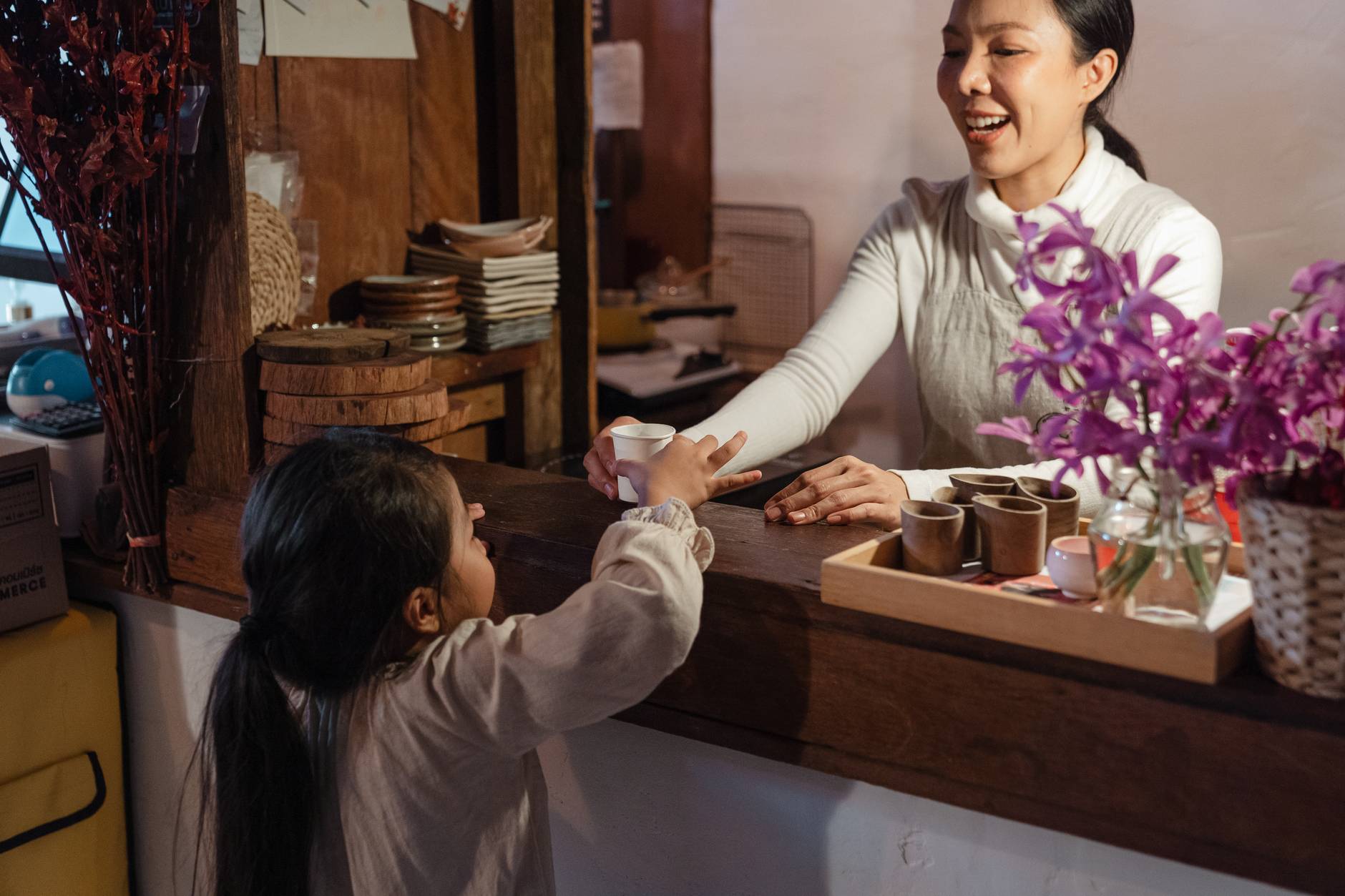
crop ethnic mother serving little girl glass of refreshing drink
Photo by Ketut Subiyanto on Pexels.com

With the internet revolution which has so transformed our life in the 21st century, we rely much on online stores for our daily necessities. We also go to supermarkets with national or international chains to buy our daily products, usually looking at their discounted rates and environment. However, we also need to know that these discounts are only given to us because that cost is extracted from us in other ways, or from their working force who are often forced to work long hours with minimal wages. Now with the novel coronavirus pandemic ravaging the world, we are facing a global economic crisis and a steep increase in unemployment rates. Many multi-national companies are laying off their staff and cutting salaries. This means that many who previously went out to buy their groceries now do it online. This has greatly jeopardized the future of small business in a way that has never happened before.

Supporting small businesses is something that all of us should be engaged in since they support entire families and communities. The various agents who come in between the worker and their salary in larger corporations are usually absent in small business. This means that the worker gains more for his hard work and is more amply rewarded than in corporations that exploit them. Supporting small business help them sustain themselves and the people behind it. Since it is difficult to stay in business with an influx of other larger chains, small businesses are focused on providing authentic and good products to their customers. This is also the reason why many customers remain faithful to these small stores, since they have understood its value and the work behind it. They also employ many creative ways to stay in business and retain customers.

Small businesses differ starkly in their environments from other larger businesses by creating a space of warmth and familiarity. The detachedness of the sterile supermarket white lights and the mechanical ways of engagement are often directly in opposition to the warm glow and friendly chatter that fills small spaces. They are often a meeting point for the people of that locality and their interactions. The owners are often also able to do favours for the customers or offer discounts on the bill which doesnโ€™t commonly happen anywhere else. Local businesses become part of the story of that locality as they themselves are handed down between generations, and are able to give back to the community much better than others. They are not controlled by an algorithm created to maximize profit or a nameless person behind a computer somewhere far away. They are run by people and families we develop bonds with, leaving a human touch in their exchanges. It enriches the life of the individual and their society, becoming a saving grace in a consumeristic culture where profit is made at the expense of humans.