Eduindex News is a news aggregator app developed by Google. It presents a continuous flow of articles organized from thousands of publishers and magazines.
Tejas is an LCA (Light Combat Aircraft) designed by HAL (Hindustan Aeronautics Limited) for the Indian Air Force and Indian Navy. The HAL Tejas is an Indian single-engine, fourth-generation, multirole light fighter. It came from the Light Combat Aircraft (LCA) program, which began in the 1980s to replace India’s aging MiG-21 fighters. In 2003, the LCA was officially named “Tejas”. It was developed as a replacement for older Mig-21 Aircraft.
As of 2019, the Indian Air Force has planned for a total of 324 Tejas in several variants. The first batch of 40 Mark 1 aircraft consists of 16 Initial Operational Clearance (IOC) standards that were delivered in early 2019. The delivery of the second batch of 16 Full Operational Clearance (FOC) standard aircraft commenced in late 2019 and led to the formation of the second Tejas squadron — No. 18 Squadron IAF Flying Bullets — in Sulur on 27 May 2020. The IAF will also go on to receive eight twin-seat trainers. The next 83 are to be to the upgraded Mark 1A standard. By the time these first 123 are delivered, the Tejas Mark 2 is expected to be ready for series production by 2025–26.
Recent news says that India is likely to finalize the INR 40,000 crore contract for 83 Light Combat Aircraft (LCA) Tejas jets, 20% cheaper from previously quoted price, next February at DefExpo-2020 event in Lucknow city, Uttar Pradesh state. In November 2016, Defense Acquisition Council (DAC), India’s highest decision-making body on procurement, approved the purchase of Tejas Mark-1A fighters by the IAF at a cost of Rs 50,025 crore. Subsequent negotiations between defense ministry, Indian Air Force (IAF), and manufacturer Hindustan Aeronautics Limited (HAL) have helped bring down the price of the jets from INR 50,025 crore to INR 40,000 crore, Indian media reported late last week. “The draft contract of the deal has been readied by the HAL and the cost of the deal has now come down to around Rs 40,000 crore. This is Rs 10,000 crore less than the Acceptance of Necessity given by the Defense Ministry in 2016,” defense sources said. In December 2017, the IAF had issued a single-vendor tender to the HAL for procuring 83 LCA, but the negotiations and other related issues have been going on since then mainly due to issues over the price.
The aircraft will have improved serviceability, faster weapon-loading time, enhanced survivability, a better electronic warfare suite, an Active Electronically Scanned Array (AESA) radar that will significantly enhance its capability. The Centre for Military Airworthiness and Certification (CEMILAC) had provided the Final Operational Clearance to the Tejas LCA earlier this year during Aero India in Bengaluru approving its capabilities including beyond visual range air-to-air and air-to-ground attack capabilities as well as longer endurance through mid-air refueling. In a previous order, the IAF had signed a deal with the HAL for 40 Tejas LCAs. So far, around 18 LCAs have been delivered to the IAF from the previous order.
Some of the hackers, who cheat people and earn money always try to find ways to use the internet and social media platforms for their benefit. The earlier such hacks have been through online games, phishing, malware, smishing, insecure networks, physical security threats, etc. We all are aware of the very famous Ransom virus which affected a very large population. Over time, hackers change their ways to attack people and steal money.
The recent news is the twitter hack in the US of some billionaires. The Twitter accounts of Joe Biden, Elon Musk, Jeff Bezos, Kanye West were among the tens of high-profile accounts that were hijacked last night. These accounts were then used to spread bitcoin scams and fool people into donating money through a link. Billionaires Elon Musk, Jeff Bezos and Bill Gates are among many prominent US figures targeted by hackers on Twitter in an apparent Bitcoin scam. The official accounts of Barack Obama, Joe Biden, and Kanye West also requested donations in the cryptocurrency. “Everyone is asking me to give back,” a tweet from Mr. Gates’ account said. “You send $1,000, I send you back $2,000.”
“We’re looking into what other malicious activity they may have conducted or information they may have accessed and will share more here as we have it,” the company tweeted. Twitter said that once they became aware of what happened, they “immediately locked down” hacked accounts and removed the tweets sent on their behalf. Twitter also limited functionality for all verified accounts, including those that showed no evidence of being compromised, while they investigated the issue. “We have locked accounts that were compromised and will restore access to the original account owner only when we are certain we can do so securely,” Twitter said. “Internally, we’ve taken significant steps to limit access to internal systems and tools while our investigation is ongoing. More updates to come as our investigation continues.”
Twitter also acknowledged that the hacks were a coordinated social engineering attack by people who successfully “targeted some of our employees with access to internal systems and tools.” Screenshots of the panel being posted by users are being taken down as a violation of Twitter policies. “As per our rules, we’re taking action on any private, personal information shared in Tweets,” said a Twitter spokesperson.
Some leading cryptocurrency sites were also compromised on Wednesday. Cryptocurrency platforms like Coinbase and Gemini falsely “announced” they had partnered up with an organization called CryptoForHealth, through their Twitter accounts. They claimed that the organization was going to provide people with bitcoin as long as they sent some to an address first. Other prominent Twitter accounts that were hacked were that of President Barack Obama, Kim Kardashian West, Warren Buffett, Jeff Bezos, and Mike Bloomberg. Official accounts of Uber and Apple tweeted out a post that was a spam message. The spam message directed readers to invest bitcoin in the wallet address that was provided in the tweets and claimed that they would get double the money they spend.
On July 14, Nepal PM triggers a debate: “Where is Ayodhya, the origin of Lord Rama?”. The real Ayodhya lies at Thori in the west of Birgunj. India has claimed the Indian site as the birthplace of Lord Ram,” said Nepal’s Prime Minister KP Sharma Oli on Monday while rejecting the traditional “belief” that Nepali daughter Sita was married to an Indian Prince Ram.
Oli was speaking at an event to commemorate the birth anniversary of poet Bhanubhakta, credited with the first authentic translation of Valmiki’s Ramayan into the Nepali language. “The place called Thori, near Birgunj is the real Ayodhya, where Lord Ram was born. In India, there is a great dispute on Ayodhya. But, there is no dispute in our Ayodhya,” Prime Minister Oli was quoted as saying by his press advisor Surya Thapa. Politically, Oli’s comment comes as a refutation of India’s Defence Minister Rajnath Singh’s comment made last month when he had said India and Nepal have a “roti-beti” relation referring to cross-border marriages. However, Oli’s remarks have sparked off a debate on the “real” location of Ayodhya, the birthplace of Lord Ram and the capital of his kingdom as mentioned in ancient texts.
Condemning Mr. Oli for his remarks, BJP national spokesperson Bizay Sonkar Shastri said that the Communists in Nepal will be rejected by the masses in the same way they have been in India, even as Left parties in India played with people’s faith. “Lord Ram is a matter of faith for us, and people will not allow anybody, be it Prime Minister of Nepal or anyone, to play with this,” he said in New Delhi.
Oral history, as compiled into the Ramayan by Valkimi, places Ayodhya in modern Uttar Pradesh. Ramayan tradition identifies Ayodhya as the birthplace of Ram for around 3,000 years, based on literary evidence. Lack of archaeological evidence has kept the debate raging for years. The statement, however, was not only opposed by Indian citizens but by Nepali citizens as well. Nepal PM has been taking many controversial decisions and making controversial statements in the recent days, one of which was releasing of Nepal’s map with Indian city. While Oli’s unexpected territorial claim followed by allegations that India was behind moves to have him dethroned have been rejected by New Delhi, some have looked at it with suspicion even in Nepal, accusing Oli of playing the India card to hide his own government’s alleged failures. Oli’s recent claim about Lord Rama, too, has drawn sharp reactions from both India and Nepal.
However, clarification on the statement of Nepal PM has been given now. The Nepal Ministry of Foreign Affairs sought to shield Prime Minister K P Sharma Oli’s comments on Lord Ram from criticism by clarifying that he did not mean to debase the significance of Ayodhya and the cultural value it bears. The MFA said the remarks were not linked to any political subject and were not intended to hurt the feelings and sentiment of anyone. It added that as there have been several myths and references about Lord Ram and the places associated with him, the PM was “simply highlighting the importance of further studies and research of the vast cultural geography the Ramayana represents to obtain facts about Shri Ram, Ramayana and the various places linked to this rich civilization.” “As there have been several myths and references about Shri Ram and the places associated with him, the Prime Minister was simply highlighting the importance of further studies and research of the vast cultural geography the Ramayana represents to obtain facts about Shri Ram, Ramayana and the various places linked to this rich civilization,” it added. The ministry further said, “It may be underlined that the tradition of celebrating Bibaha Panchami where a marriage procession coming from Ayodhya, India to Janakpur, Nepal takes place every year. The Prime Ministers of Nepal and India launched the Ramayana Circuit in May 2018, of which Janakpur-Ayodhya Passenger Bus Service is an important component. These facts signify the bond of time-honored cultural affinity between our two countries and peoples.”
These days when all of us are dealing with pandemic COVID-19, it has been a very hard time for all of us and we all are contributing our parts to come out of this difficult situation. All of us are doing great as fighters. With the coming of problems, we all are thinking innovative and creative to come up with solution to it. One such step was to launch mobile app ‘eBloodServices’.Union Health Minister Dr Harsh Vardhan on launched the eBlood Services Mobile Application, in partnership with the New Delhi based Indian Red Cross Society (IRCS), on 25 June 2020 for easy access to blood to fight with the critical time of coronavirus pandemic.
This application is developed by the E-Raktkosh team of Centre for Development of Advanced Computing under the Digital India scheme launched by Prime Minister Narendra Modi in 2015. The application will bring transparency and facilitate single-window access to blood services of the Indian Red Cross Society, officials said. This initiative would help the people to get the blood on time just by registering on the application. Also, people can demand up to four units of blood. Blood-related services are required by many people in the country as they face certain medical conditions in their families. With the help of eBlood Services App, four units of blood can be requisitioned at a time. Blood Bank will wait for as long as 12 hours for the person to collect it. The app will make it easy for those in need to request for blood units at IRCS NHQ.
Speaking on the occasion, the Minister said, “People who need blood can get registered on this app and know from where they will get blood.” Vardhan said, “In the last few months, I received several complaints from people facing difficulties in accessing safe blood. Many people require blood-related services regularly because of certain medical conditions in their families. Through this app, four units of blood can be requisitioned at a time and the blood bank will wait for 12 hours for the person to collect it.” At a time when the country is going through a pandemic, the mobile app will provide succour to all those who are in dire need of blood,” the health minister said. Users with this app can know the live status of blood availability at the national headquarters of the Indian Red Cross Society (IRCS) blood bank in Delhi. He appealed to people to come forward to donate blood as their contribution is required more than ever now.
All 89 IRCS blood banks and 1,100 branches across the country have collected more than 1,00,000 units of blood through in-house donations and from around 2,000 donation camps organized during the lockdown. Also, more than 38,000 blood donors registered with NHQ Blood Bank have been contacted and motivated to donate blood. The NHQ Blood Bank conducted 55 blood donation camps collecting 2,896 units of blood. Blood has been issued to 7,113 patients which include 2,923 thalassaemic patients as well as to the government hospitals like Lady Hardinge (624 units) and AIIMS, Delhi (378 Units).The IRCS has served more than 3,00,00,000 cooked meals and provided ration to more than 11,00,000 families.
Cloning is a process of asexual reproduction by which genetically identical individuals may be produced. The successful cloning of a sheep (Dolly) was reported by scientists from the Roslin Institute, Edinburgh, UK. But, the world’s first cloning of a dog has raised concerns that scientists are one step closer to replicating human beings, despite the breakthrough pointing to treatments per currently – incurable human diseases. A group of scientists from Seol National University has unveiled their furry creation, a black and white Afghan hound name Snuppy that is genetically identical to its three – year old father.
Cloning, which is thought to be one of the latest technological developments as most of the people think, is actually an age-old scientific technique. Humans have knowledge of cloning from before at least 2000 years. Most of the plants we see today are cloned. Unlike animal cloning, plant cloning doesn’t involve any sophistication. Just grafting the cut plant does the job where as animal cloning involves mitosis.
Recombinant DNA technology is important for learning about other related technology such as gene therapy, genetic engineering of organisms, and sequencing genomes. Gene therapy can be used to treat certain genetic conditions by introducing virus vectors that carry corrected copies of faulty genes into the cells of a host organism. Genes from different organisms that improves taste and nutritional value or provide resistance to particular type of disease can be used to genetically engineer food crops.
Scientists hope that one day therapeutic cloning can be used to generate tissues and organs for transplants. To do this, DNA would be extracted from the person in need of a transplant and inserted into an enucleated egg. After the egg containing the patient ‘s DNA starts to divide, the embryonic stem cells that can be transformed into any type of tissue would be harvested. The stem cells would be used to generate an organ or tissue that is a genetic match to the recipient. In theory, the cloned organ could then be transplanted into the patient without the risk of tissue rejection.
There are some risks of cloning too. Reproductive cloning is expensive and highly inefficient. More than 90% of cloning attempts fail to produce viable offspring. In addition to low success rates, cloned animals tend to have more compromised immune function and higher rates of infection, tumor growth, and other disorders.
‘Should humans be cloned?’ is the new question of many scientists and physicians. Due to the inefficiency of animal cloning and the lack of understanding about reproductive cloning, many scientists and physicians strongly believe that it would be unethical to attempt to clone humans. Several cloned animals have died prematurely. The same problems would be expected in human cloning too. In addition, scientists do not know how cloning impact mental development. With so many unknown concerning reproductive cloning, the attempt to clone humans at this time is considered potentially dangerous and ethically irresponsible.
With Covid-19 disrupting all the hitherto establish modes of living, studying, and working in our society, more activities are being moved online. This is aimed at continuing our stream of activities but in a different mode so as to ensure that no business or endeavour is fatally suffering from this pandemic. While this might not be fully possible for every aspect of existence, it is a method to try and maintain a semblance of normalcy in our everyday activities. Most IT companies have moved completely online and allow all their workers to work from home. Restaurants and hotels rely highly on apps that deliver food to continue their business, and even education is now gearing to completely move online. This seems well and good at first glance but the question of whether this can ever be successful in a country like India is a serious one.
Our country is a developing one, where the majority of the population still lives in rural areas and the internet is not a luxury that everyone can afford nor have access to. While the need to continue education is important, one might ask at what cost this is being done. Even when we talk about work from home, we are all aware that a very narrow part of the population has this privilege. Daily wage workers do not get to work from home and they have no option but to risk their lives in the midst of the pandemic if the government itself fails to take care of them. Small scale industries and shops all close down. We have a massive economic crisis on our hands but alongside this, we need to understand that there will be a widening of the educational gap, a crisis whose effects we will start to fully comprehend in a couple of months.
Most middle-class and upper-class households are able to comply with the needs of online learning since they own laptops and smartphones. They also have enough money for data and internet connections. However, it is still a stark reality that education in rural India and amongst lower-class households is extremely limited owing to factors of economy and access, as well as gender and caste. India supposedly houses 430 million persons below the age of 18 many of whom come from rural settings. Only 47% of households in India have electricity for more than 12 hours a day according to a survey that the Ministry of Rural Development conducted in 2017-18. It is an eye-opener to the urban citizen that only 24% of Indians own a smartphone. And one must remember that in a household with more than one child, there has to be multiple gadgets for all of them to receive their education.
66% of India’s population lives in villages and an extremely minuscule portion of them will even be able to attend classes of any sort. The development of our country and much of its economy is reliant on these villages but if we forget them in this hour of need, the consequences will be hazardous for the whole country. If we do not take aggressive measures to tackle these problems and provide materials resources to those in need so that their children can access classes, the current online education system will create a massive digital divide that will cause a majority of the Indian population to suffer. It will impair their access to a better life and opportunity, any attempt to get on par with their privileged peers would largely result in failure and this will drive many to lives of low economic value, toil, suffering, and access. This will be carried forward into their coming generations. Unless addressed, it will lead to a systemic denial of the fundamental right to education and opportunity, and hence, while attending our own online lectures, we should take this very seriously and implement measures to better this situation in every possible way. This is not the only problem that online education creates but it is by far the most important.
One of the currently discussed topic in society is about parent children relationship. Family is the basis of all economic activities. Bonds can be a blessing and also a curse.
Parents always prefer their children to perform well. They often dream of their children attending the best of universities and then securing a most respectful job in society. They work hard to earn money to take care of their children. Now, students are experiencing tremendous pressure to keep their grades to a near-perfect level. The sources of pressure are both internal and external. This pressure sometimes lead them to commit suicides as a solution for every problems. Many awareness classes are organized in schools and colleges. But every year thousands are committing suicides. Literacy or illiteracy is not a matter of choice.
Parents tend to apply pressure because they are worried about whether or not their child will be successful and also if they are a good enough parent. Marks are always considered as a parameter for judging their children. So, they pressure children to get full marks. High parental aspiration led to increased academic achievement, but only when it did not overly exceed realistic expectation. When aspiration exceeded expectation the children ‘s achievement decreased proportionately.
Too much pressure damages a child’s self esteem and can lead to severe consequences,including depression. It can lead to stress causing headaches, stomachaches, neck aches, lack of sleep and even anxiety attacks.
Parental pressure creates a sense of worthlessness which was discovered to be one of the chief reasons why teenage suicide rates increased from the 1950’s, according to a study done at the University of St Thomas.
What parents can do?
Managing children’s frequent tantrums – Not to react immediately to the situation, Calm oneself before reacting.
Tackling disobedient children-Disobedient children do not want to stamp their autonomy on the household.Try to hear their side of the story and once they are done put across your opinions.
Mediating in sibling rivalry – Understand the psychology of the children and discipline them separately without judging who is right and who is wrong.
Stopping children from telling white lies – They often lie to their parents to turn adverse situation in their favour.
Removing study related fears.
Don’t criticize in each and every act.
Avoid spending too much time talking about hardwork.
Don’t focus on how they need to win or be the best.
Encouragement coming from parents can be a child’s stepping stone to success. They are key player in children ‘s life to learn confidence, hardwork and excellence. It is the responsibility of each parent to teach their child to accept failure withoutllosing heart. Failure is a cue to seek opportunity and not an occasion for mourning. Make sure that child is happy with what they are pursuing and don’t let them miss out on opportunities to learn from their own life experiences. Every person in the world are unique. Home is supposed to be a sanctuary for the whole family not a place where kids come to get probed, lectured and controlled. Create a restful home full of divergent opinions, healthy debates and spontaneous self expression.
It’s the dog days of July and not only is the temperature high, but the humidity may also make it difficult to breath outdoors. One of the saving graces that people have to combat the hot weather is air conditioning. Whether you are at work, in your home, in at shopping center or in your car, a cold air conditioner can be a very welcome relief for all in July and throughout the year. However, despite the fact that air conditioners can offer temporary relief from the hot and humid weather, it also can potentially be a source health concerns to people of all ages.
Dry Eyes
Dry eyes are irritating and can cause blurred vision, itchy eyes and a burning sensation. If you stay for long in an AC room, it can trigger dry eyes. If you tend to suffer from dry eyes, you should avoid staying long in AC-ventilated rooms as that would make the problem worse.
Dehydration
While cooling the room, ACs often suck out more moisture than necessary. If you set it to a low temperature, then the chances of the room going dry are quite high. Along with the room, ACs suck out humidity from the body as well. If you don’t hydrate yourself enough, the chances of getting dehydrated are high.
Headache
The heat inside and outside the room is poles apart and on entering an AC room, you don’t get enough time to acclimatise. The result – headache. It can also happen due to dehydration. Continuous exposure to AC can also trigger a headache in people who suffer from migraine.
Infections
This is another air conditioning health problem. Drying out of the nasal passage and the mucous membrane can trigger viral infections. That’s because mucous casts a protective layer to keep the body away from infections. If it gets disturbed by the AC, infections would affect the body in no time.
Respiratory Problems
Constant exposure to AC can disturb the normal functioning of the nose and throat. It can lead to respiratory blockage and inflammation in the mucous membrane. ACs can also affect the lungs.
Dry Skin
AC’s effect on the skin is startling. ACs may lead to dry and itchy skin and hair. By weakening the scalp, an AC can propel the hair damage rate.
Lethargy
People who stay for long in an AC room tend to become sluggish and lazy. Imagine how much this can affect workplace productivity! So, it’s always better to have natural ventilation rather than an AC.
Asthma and Allergies
ACs can trigger an asthma attack if not cleaned properly. Timely removal of pollutants can help to prevent allergies.
Other Health Hazards
If there is leakage from the AC, the system can bring you in direct contact with harmful chemicals. This can cause health problems.
The term ‘depression’ is not just extreme sadness due to a situation. Its more than that. Depression is just like a cancer it kills you every day from inside till it takes your life completely.
People still do not get what is actual depression. They often misuse the depression word and relate it with some kind of temporary sadness or pain.
A lot of people need to understand the sensitivity of the situation that depression is much more than sadness. It is not a temporary pain that will go away instantly but also not a lifetime pain. Depression is different to each and every people dealing with it.
Depression is real. It cannot be compared with the sadness you feel for some time. I have seen many people who don’t understand the real meaning of depression and any small pain or small thing that hurts them they give it a name called ‘depression.’ If anything happens its depression. No, its not.
So what is Depression?
Depression is a mood disorder that causes a persistent feeling of sadness and loss of interest. It affects your mental health, your daily activities, your relations with others, your work, and most important yourself. Depression makes you lose interest in everything and sometimes you may even feel as if life isn’t worth living.
Everyone talks about the symptoms, causes, treatments, for the depression but no one talks about the pain that depressed person actually feel or go through.
Its true that there is help and we can get help from our friends, our parents, psychiatrists, doing yoga,etc.
Depression makes you feel lost in the world where you just exist but start losing hopes and a way to live your life to the full extent. It lives inside you. You take your depression for several years with you. Its like we never heal from the depression and as soon as you receive a new pain , it adds to your lists of pains which you were trying to heal from.
The sadness, the pain, the void, its just there. The pain is real. It makes you feeling unwanted, unworthy all the time. Sometimes you can’t even explain to anyone or yourself about the pain you actually feel inside you. The day you let go of all the pain that day you will be a free soul.
But, honestly its very easy to say that or to make someone explain but the person going through with the depression only knows his or her pain. No one can understand their pain what they go through.
All I want to say is some people choose to get out of depression, they try but still maybe they are more comfortable now in that pain. They love that pain and no matter what it remains with them for a very long time. I do not say that its okay to be depressed. No, not at all. But, healing takes time.
We can’t heal in a one day. Talking to our loved ones will help us but some people choose to not let their hearts out.They feel that no one can understand what they feel. And yes, it is the truth. People really do not try to understand the feeling that the other person is going through. Some show them concern, some joke about it.
Depression is not a joke. It can happen to anyone at any time for any reason.
What should we do?
– Just try to understand the people who are depressed, support them as much as you can and sooner or later they would start living their life once again.
-Depression is real and it can be healed. Give some time.
-If you want to help depressed persons, first help your close ones who are actually dealing with it.
– Be there for them when they really need it.
– Listen more. Sometimes, they just need a shoulder to cry.
– Encourage them.
Some choose to seek help from psychiatrists. Some ain’t that comfortable to seek help from them. They find it more easier to share their pain with their closed ones. Some prefer to deal with it all alone.
Still depression or mental health for that matter is known as a taboo in our country. People do hesitate to talk about it openly. It is not a disorder or disease.
We can’t change everyone’s mindset but yes we can create a change for someone close to us who is depressed by offering help to them. Start by helping your near and dear ones or any person where you feel you can really help them.
“I alone cannot change the world, but I can cast a stone across the waters to create many ripples.” – Mother Teresa
After Sushant Singh Rajput’s tragic demise on 14th June 2020,the debate on nepotism in Bollywood has gained momentum. People started reiterating that Bollywood does not give chance to struggling actors who are outsiders. Whereas, the star kids get all the stardom even though they may not have talent. Kangana Ranaut was bold enough to describe how nepotism was the cause of the Star’s death. This may be true indeed, because SSR himself in an interview on the ‘Raabta’ movie release event said that nepotism is everywhere. And he was so humble to say that nepotism is fine if they also give chance and recognise the outside talents. This gives us a hint of how much he had struggled to reach where he was.
In a recent development, Sushant’s brother in-law, Vishal Kirti posted on his Twitter profile about the launch of Nepometer app. The app will measure how much nepotistic a movie is. Vishal Kirti wrote that it is a ‘not for profit voluntary effort’ and they wanted people to make ‘informed choices’. “The app is a tribute to SSR”Vishal Kirti wrote in his another post. The app has been developed by Vishal kirti’s brother Mayuresh Krishna.
“We’re still grieving. Our focus now is to take care of each other. I shared my brother’s idea of Nepometer because it enables people to make informed choices. It’s a small tribute to Sushant. It’s a not for profit voluntary effort. Please stay patient since it isn’t our 1st priority,” he wrote on Twitter.
The news was announced on Twitter with the caption, “Fight Bollywood Nepotism with Information. We will provide ratings for movies based on how nepotistic or independent movie crew is. If the #nepometer is high, then it’s time to #boycottbollywoodnepotism #fightnepotism.”
Nepometer gives Alia Bhatt starrer ‘Sadak 2 ‘ movie 98% rating
Nepometer gives rating to a movie based on the fact whether it’s actor and actress and supporting crew members Viz director,producer,writer, supporting actor are star kids or anyway related to Bollywood celebrities. The greater the number of insiders or star kids in a movie,the higher rating it will get on Nepometer app. Higher rating on Nepometer dneotes that the movie is highly nepotistic.
For eg, the movie ‘Kalank’ starring Varun Dhawan and Alia Bhatt is likely to get a high score on Nepometer while ‘Thappad’ featuring Tapsee Pannu is likely to get a lower score.
The first movie to be rated by Nepometer on Thursday is ‘Sadak 2’ which is a sequel of ‘Sadak’. Sadak 2 is starring Alia Bhatt in the lead role. The app gave the movie a 98% rating which means it is highly nepotistic.
A tweet on the Nepometer Twitter page read, “#Sadak2 is 98% Nepotistic. We rated it based on 5 categories, Producer, Lead Artists, Supporting Artists, Director & Writer. 4 out of 5 categories have Bollywood Family members. When #nepometer is high it’s time to #boycottbollywood. Will you watch this movie? Tell us in comments.”
The idea behind developing the app is that people should avoid watching movies which are featuring star kids and go for movies featuring outsiders to encourage new talents.
Meanwhile,police is investigating on Sushant Singh Rajput’s case and so far, the police have questioned at least 28 people, including his domestic staff, family, friends and co-stars.
We all are aware about the incident where an Indian teenager spents his father’s 16 lakhs of money on the PUBG online game. This was not the first time something like this happened.
The PUBG online game which is very popular among the youths has been trending since two to three years. Player Unknown’s Battle Grounds (PUBG) is an online multiplayer battle royale game which is designed in such a way that it can be played as a lone wolf or with your teammates.
PUBG mobile game was released in the year 2017. Since then, more than 100 million users have downloaded it. Currenty, Its the 2nd top grossing royale mobile game.
Well, every thing has two sides of the story. Yes, PUBG is the leading game right now and due to the pandemic lockdown it also has increased more users and people now are spending more time than they usually used to do earlier as they have no work right now. They are completely free. Its an amazing game which has amazing features and also you can pass your time. So when someone gets bored, they do think of playing PUBG either with their friends or solo.
Online gaming has been a part of our lives right now since we all are addicted to our smartphones. So, we can’t deny the fact that we haven’t installed and played any online games on our smartphone.
But like I said above, everything around us has two sides of the story . The same way the online ‘PUBG’ game has its own cons and discons. Althought, its a good game for relaxing people making them stress free for a while, some play just to pass the time, some play everyday as a routine. Everyone has different reasons to play.
But, here I am talking about the ones who just not take this game as a game or as a way to pass the time. These people get so addicted towards this game that they forget that there is a life beyond this game. They take this game as a serious matter and take drastic steps which leads to mishappenings thus causing pain to them and their close ones.
Every now and then we hear cases related to PUBG. Be it suicide cases or stealing money and using them just to buy Royale Passes. We need to make understand these youths that the online game is just a part of your life and it cannot be your whole life.
The youth needs to understand that there is a life beyond PUBG. I am not saying that such people shouldn’t play online games but we have to stop them by getting obsessed over these game apps.
What we can do to stop this:
If you see your child or your friend is getting addicted towards this game, make him or her understand at the initial stage itself.
Parents should try to talk with their children in a way that they understand that what is correct and what is not. They should be spending more time with their child so that they feel loved and be responsible and not take any drastic steps.
If not parents, then someone elder or someone close to that person should talk to the child.
Make them understand that its just a game and don’t try spending your money on the game. Instead spend it for something worth.
Online games can be addictive but we need to stop our children before anything bad happens. Addiction is harmful. No addiction can give you happiness.
I know it can be difficult to make them understand but atleast people close to such addicts can try talking to them so that they do not get involved in such happenings.
Youth needs to understand this playing is different and getting addicted is different.
Nothing is impossible if we try.The word ‘Impossible’ itself says ‘ I AM POSSIBLE.’
The NPPA( National Pharmaceutical Pricing authority) in 2018 had capped the price for Heparin. But in this pandemic period, NPPA has allowed the hike in prices of Heparin by 50 percent till December 31. This was done to mitigate the shortage of the drug in the Indian market. The shortage of the heparin drug in the market is a result of the problems faced by the drug manufacturers who are unable to cope up with the drastic hike in prices of the the APIs( Active pharmaceutical ingredients) which is majorly imported.
What is Heparin and why is it important at present?
Heparin is a blood thinner used as an anticoagulant. It is used to prevent blood clots after surgery, during dialysis, during blood transfusions, when collecting blood samples, or when a person is unable to move for a long time.
In the current pandemic situation too, heparin has an important role to play.The Ministry of Health and Family Welfare included the drug in its clinical management guidelines for the treatment of Covid-19 patients in the ICU.
Why NPPA has allowed the manufacturers to hike up the prices of heparin?
This step was taken to mitigate the shortage of the drug in the indian market.The Indian manufacturers were unwilling to continue the production of the drug simply because they could not cope up with the rising prices of the most important raw material to manufacture the drug i.e. API( Active pharmaceutical ingredients. APIs are the active ingredients contained in a drug which gives the drug it’s theraptic use.
The Sodium API of heparin is mostly imported from China. But due to the global outbreak of Corona virus China has also not able to manufacture enough APIs( because the country was under lockdown) the prices of these APIs has increased manifold. And so has the cost of manufacturing the drug in India is increased. That’s why some of the drug manufacturing companies were demanding hike in the prices of the drug. Some of the Indian companies marketing heparin products in India are Gland Pharma, Biological E, Samarth Lifesciences, Abbott Healthcare, Troikaa Pharmaceuticals and Celon Labs .
What role does China play here?
Chinese pharma companies were under lockdown restrictions for about 2 months which has led to the shortage of APIs in the global market
India heavily relies on China for various APIs used to manufacture drugs in India especially antibiotics and vitamins. But since the past three months most of the world countries including China have suffered a huge setback when it comes to their economy.
China was under lockdown for about 2 months in which all the industries were shut down. During this period China had not been producing anything in their factories. Though after the lockdown was lifted, China has taken up the momentum. But it will take time to get things back to normal.
Since Chinese drug manufacturers were not producing the APIs in the lockdown period there has been a shortage of APIs in the global market. But the demand of APIs is ever- increasing. The reducing supply and increasing demand has led to hike in the price of the Chinese APIs which is the distress of indian drug manufacturers. But the recent permit by the NPA to hike up the prices of heparin gave them a sigh of relief.
Some people might think that the hike in prices of Chinese APIs is due to the indo- China tensions along the LAC. But this is not true indeed. Industry associations have said that this has nothing to with indo- China tenisons along the border. The lockdown in China leading to the shut down of Chinese industries is the prime cause behind the hike of prices.
Will prices of other drugs also hike in future?
Yes, it is possible. If the demand is growing and if the supply is not met, oher drugs also may get expensive. And consequently the cost of treatment of Covid-19 patients. But it is too soon to say which drugs’s prices will hike and how much.
At around 3 in the afternoon usually when I have my tea I switched in the TV to catch up on the news and unfortunately, the headline that I saw is one which I’ll never forget. I was devastated (still am), shook and almost in tears. Images of a 3-year-old boy sitting on the motionless body of his grandfather in J&K’s Sopore emerged from an encounter site. The 60-year-old grandfather was a civilian who was killed in the cross-firing on Wednesday morning in Kashmir when an encounter broke out between militants and security forces. The cops as they reached, rescued the boy and took him to a shelter. The boy wailed uncontrollably over his grandfather’s body. A police person carried the baby on his lap and took him away from the encounter site.
The police say Khan was killed in a crossfire when Kashmiri insurgents attacked their forces in the Sopore district of India-administered Kashmir. One Indian paramilitary trooper was also killed in the gunbattle, say the police.
Khan’s daughter says her father had gone to the bank to cash a cheque and on the way he was dragged out of his car and then shot in cold blood.
The CRPF personnel who took the child were relentlessly trying to calm him down but failed. They offered him biscuits, food, consoled him but to no avail. How could the child stop crying? He had seen his grandfather being shot right in front him. Imagine, just imagine the horror, the shock and the trauma that child has been going through.
While you and I look back at our childhood as a sweet dream and wish that we could go back to it, do you think this young boy will have the same memories? Will he remember his childhood days playing in his grandfather’s lap or will he remember sitting on his dead body, crying out for help?
Immediately after the incident this news was all over the media. All news channels were covering it but for them it was just another piece of content. There were panel discussions, debates, comments coming in, people tweeting- everything you can imagine. Virtually, the whole of India came out to offer their condolences to the family but should we not question the people who are responsible for this? Should we not question those politicians who just sit in their air conditioned cabins passing orders which only leaf to bloodshed? Today, I as an Indian demand an answer from the Indian government that why is it so that people in the valley have to suffer so much? Why is it so that children in the valley only see death? Why is there no peace? Why isn’t the government not taking any action?
With the expansion of digital communication tools and technologies, news organizations have discovered a multitude of new information management opportunities, as well as the challenge of interconnecting data security and privacy with innovation.
Journalism came into existence as a reportage of current events, particularly in printed form, that is, newspapers. Driven by the significant expansion of technology and electronic information exchange over the past decade, however, its scope has widened and its definition has evolved into an all-encompassing information domain. The current stage on this evolutionary ladder — print, radio, and television is digital media, the world’s most widely used and influential news consumption medium.
As of now, as many as 80 per cent of Indians are consuming news on the Internet, primarily through social media and instant messaging services. The wide-ranging use of platforms such as Facebook, Twitter, Instagram, LinkedIn and YouTube has allowed news outlets to give readers constant updates on recent issues, bypassing time and accessibility barriers. In fact, significant advancements in chat-bots have also enabled WhatsApp and Messenger to deliver catalogued news, stock market updates and other important information specifically tailored to the specific consumer.
Artificial Intelligence (AI) played a key role in addressing the technology’s emerging potential to automate the shipping of news on digital media. As evidence to this, China’s state news agency Xinhua recently unveiled a virtual news anchor running on AI that can deliver news on its website and social media platforms 24 hours a day. Equipped to understand from live stream videos, the AI anchor can simulate person’s speech, gestures and facial expressions, and read texts as instinctively as a professional news anchor. Using News-bots and Stock-bots to provide users with economic alerts and updates, and relevant corporate and market news has helped to increase subscriptions as a revenue model, marking a shift from conventions.
Customizability is also handy for content-creators. For example, The Washington Post’s Bandito, a custom-built content-testing tool in real-time, allows experimentation on how narratives are presented on its website. It allows news organization editors to create multiple story experiences, with different headlines, blurbs, and thumbnail pictures. Once the stories are live, the best-performing version is automatically detected, displaying it to end users more routinely, whilst making appropriate enhancements to the rest.
The proliferation of live video networks like Facebook, Periscope, Instagram and the like has also demonstrated to be a boon for news coverage, opening up a variety of high-traffic avenues for providing customer information. On the other hand, innovative graphic representation, such as that used by The Weather Channel to recognize the impact of the storm surge on the Carolina coast caused by Hurricane Florence, has also helped to make audiences aware by giving them a near-realistic perspective on the situation.
The period of accelerated digital transformation has made data one of today’s most important resources, leading to a renewed emphasis on the collection, processing and use of information to curate relevant content that is unique to each and every user. As a result, the ability to strike a careful balance between openness, privacy, and security, while making use of the immense potential of data and technology, supported by smart innovation, is what will set a news organization apart in this brilliant new era of opportunities.
Large and aggressive swarms of these crop-devouring short-horned insects have invaded more than two dozen districts covering more than 50,000 hectares of desert areas of western India. Rajasthan, Madhya Pradesh and Gujarat are the worst affected states. In neighbouring Pakistan, authorities declared a nationwide emergency in February, saying locust numbers were the worst in more than two decades. Local reports say that farmers are fighting the ” worst locust plague in nearly three decades” and the swarms were decimating crops and sending prices of food soaring.We are battling a major locust attack from across the border. This is the biggest invasion in nearly three decades. The swarms are very big and they have migrated from across the border after breeding a month earlier than we were expecting,” KL Gurjar, deputy director of India’s Locust Warning Organisation, said”We are lucky that there is no crop in the fields now. But the locusts eat up all the green vegetation, leaves, flowers, fruits, seeds and plants,” Mr Gurjar said.
The Covid-19 pandemic is posing fresh challenges for some 100 odd workers who are battling the insects, using vehicle-mounted sprayers, pesticides and drones in the searing desert heat. They are staying in the villages, where they are being given foods by locals, and going out at night to hunt down the insects in face masks and wearing some basic protective clothing. “They have migrated here after breeding across the border. It is a severe attack,” says Om Prakash, a plant-protection officer, who works in Rajasthan state . India, clearly, needs to be watchful in the months ahead. “We need to be alert and anticipate where this is going next. The situation is all the more alarming as it comes at a time when the affected states are already reeling under Covid-19 and the ongoing heatwave,” says Anshu Sharma of Sustainable Environment and Ecological Development Society, a non-profit disaster management organisation.
If one is already suffering from a problem with drug abuse and a mental health condition such as depression, bipolar disorder or panic, it is considered a co-occurring illness or dual diagnosis.
Both the mental health problem and alcohol or drug addiction have their own different signs and symptoms in co-occurring disorders that may interfere with your ability to function at work or school, ensure a sustainable home life, handle the problems of life, and relate to others. The co-occurring disorders also directly impact each other, to make the experience more complicated. The problem of substance abuse usually gets even worse when the mental health issue remains undetected. So when there is a rise in alcohol or substance misuse, mental health issues increase significantly too. You’re not the only one however. Co-occurring issues around drug abuse and mental health are more widespread than many people know. Reports published in the American Medical Association Journal state: About 50% of persons with severe mental disorders are affected by substance abuse.37% of alcohol abusers and 53% of drug abusers also have at least one severe mental illness. 29 per cent of the people diagnosed as mentally unstable use either alcohol or drugs.
Although problems with addiction and mental health issues do not get better when overlooked in reality, they are likely to get much worse. It’s important to understand you don’t have to feel this way. You can do things to overcome your demons, repair your relationships, and get on the path to recovery. You will conquer a co-occurring illness with the right resources, self-help and care, regain your sense of self and get your life back on track.
Substance abuse and mental disorders such as depression and anxiousness are strongly connected, and while some substance abuse may cause prolonged psychotic reactions one does not cause the other directly. Nonetheless: The side effects of mental health problems are often self-medicated with alcohol and drugs. People often exploit alcohol or drugs to ease the symptoms of an undiagnosed mental disorder, cope with difficult emotions or change their mood temporarily. Unfortunately, the abuse of drugs causes side effects and also worsens the symptoms they originally tended to mitigate in the long run.
Alcohol and substance misuse can raise the risk of psychiatric illness underlying it. Mental illnesses are caused by a complex interplay between biology, the climate and other influences beyond. If you are at threat for a psychological illness, you may be pushed over the edge by alcohol abuse or illegal or prescription medications. For example, there is some indication that some drug abusers have an elevated risk of psychosis while those who misuse prescription painkillers are at higher risk of depression.
Drug and alcohol abuse can aggravate the symptoms of a mental health issue. Substance abuse can significantly increase mental illness symptoms, or even cause new symptoms. An integrated approach, in which both the issue of drug abuse and mental illness are addressed together, is the best cure for co-occurring disorder. Whether your mental health and substance abuse issue first came, lengthy-term recovery relies on getting treatment from the same treatment provider or team for both disorders. Focusing on specific question you have:
Your psychological health problem may be treated with medication, individual or group counselling, changes in lifestyle and peer support. Treatment for your substance abuse may include detoxification, withdrawal symptoms management, behaviour interventions and group support to help maintain your sobriety. The best way of supporting others is by knowing what you can and can’t. You can’t compel someone to stay sober, nor can you convince someone to take their medication, or schedule arrangements. What you can do is make smart decisions for yourself, encourage help from your loved one and offer support while trying to make sure you don’t lose yourself in the process.
Using the internet is affecting our brains physically so we have shorter periods of attention and poorer memory, has suggested significant research. An analysis by Oxford academics, King’s College London, Harvard and Western Sydney University, revealed that smartphones have weakened our ability to memorize facts while manipulating us into believing that we are smarter than we are. The revelations resulted after scores of studies and experiments have been reviewed by a global organization to assess the impact the internet has had on our brains over the last 3 decades. It emerges as Ofcom noticed earlier this month that the average British adult now spends 50 complete days online a year.
Dr. Joseph Firth, senior researcher at Western Sydney University, said: This report’s initial takeaways are that high-level internet activity could significantly affect many brain functions.
The unlimited stream of instructions and notifications from the internet, for example, motivates us to keep our attention constantly divided — which in turn may diminish our ability to concentrate on a single task. Experiments analysed in the study showed that people who spent their time constantly tossing between short online activities require greater sensory effort to retain concentration. It has been found that the unending stream of notifications and digital distractions have a strong impact on the brain, with those affected showing less grey matter in the cerebral areas associated with trying to develop focus and attention.
Other studies have shown that the internet has an instantaneous impact on our ability to focus, with people displaying a significantly lower capacity to maintain attention following activities such as internet shopping. Whereas offline behaviours like reading a magazine did not show such an impact.
Computing online has also been found to make the multitasking offline less successful. The study told reporters that Overall, the evidence available strongly indicates that trying to engage in multi-tasking via digital technology does not improve our multi-tasking efficiency in other settings – and in fact seems to diminish these intellectual capabilities by diminishing our ability to ignore incoming distractions.
The study provides evidence that the internet was becoming our external memory as we relied more and more on smartphones to extract knowledge. Instead of learning new factual information, however, the brain tended to log in on the internet to find the information. One research cited showed a group of online searchers find information faster than another using encyclopaedias but were less able to correctly remember the information.
Other studies have shown that the Internet has also tricked people into thinking that they are smarter than they are because they have “blurred the lines” between their own recollections and what they can conveniently look up on their present smartphones. The study said that Studies have shown that online searching improves our sense of how much we learn, even though the perception of self-knowledge is interpreted only for the domains where we can ‘fill in the gaps’ for the internet.
The study indicated that in the future there could be an additional benefit to this internet reliance as virtual memory, as it could free up intellectual capacity for other activities-though it did not speculate what these might be.
Lastly, the academicians found that online as offline the social side of our brains was acting in a very similar way. However, we are placed under new stresses, such as the strong rejection that people feel of having social value quantified by the number of friends and likes they receive, as well as constantly comparing themselves to hyper-successful individuals who are omnipresent on social media.
It has roughly been two decades now since Newspapers began their descent. This talk has pervaded the hypothetical in Canada; the government has published a report that speculates on what the democracy in Canada might look like in a post-newspaper world. Britain now has approximately 200 fewer regional and local newspapers than it had in 2005. In the United States the picture is analogous. Lately a scenario once inconceivable has become grimly probable.
Throughout the United States, the weekly print circulation has fallen from almost 60 million throughout 1994 to 35 million for combined print and internet circulation. Horrible as it had been, things deteriorated a lot lately. While new digital subscriptions at The Washington Post and The New York Times have surged since the 2016 election, digital subscriptions and advertisement sales have not compensated for the industry-wide deterioration of print ads. And on the digital subscription model, local newspapers across the country have not been nearly as successful as the Post and Times. Once-promising digital-first news sites like BuzzFeed and Vice have lately missed financial objectives and Mashable, valued at around $250 million in March 2016, ended up selling for under $50 million.
And what, then? Social media platforms make information sharing omnipresent and non-stop, but where will that information come from in the first place when all the reporters are let go? What happens when the newspaper model—what the government commissioned report published by the Public Policy Forum called “the model of journalistic ‘boots on the ground’ backed up by a second peloton in the office that upholds such holy standards as verification and balance”—is no longer generating that content at all?
According to a report, Canadian newspapers lost three-quarters of a billion dollars annually of reliable classified advertising revenue to eBay and Craigslist. And from there, slice by slice, the list of promotional losses goes on: “Why would the car enthusiast turn to the automotive section of the newspaper when there are innumerable specialty websites with a richer content? What’s the allure of an entertainment section of a paper in a world of Rotten Tomatoes, Flixster and IMDb and a celebrity gossip sites online industry? How well will the food segment compete with other digital culinary resources like Epicurious, Yummly etc.?
The role of the news media as the last defensive system of democracy was brought to light by the many snarling attempts by President Donald Trump to disparage newspapers in both Canada and the U.S., such as labelling the “failing” Times and the Post as “fake news.” Combine this common American antagonism to newspapers with the prediction of fatal haemorrhage in ads and you are potentially having a forecast of imminent death.
Conclusion:
Perhaps we need a paradigm shift for newspapers in the face of considerably reduced resources; maybe we cannot cover every meeting and try to cover every bit of news. Perhaps we need to aim higher and generate more original and exclusive investigative reporting — which may take longer but will have more lasting effect. Reader polls indicate that people trust the investigative reporting more than anything else, and it makes little sense to cut back on these main research. The best stories aren’t coming to you after all: you have to go and find them.
News articles that aren’t true. These are entirely concocted stories designed to get people believe something wrong, buy some product or visit some website.
Stories that still have some truth, but are not reliable. A journalist, for instance –, quotes only a part of what a politician says, giving a false perception of its meaning. Again, this may be clearly intentional, to convince readers of a certain point of view, or it may be the result of an innocent error. It attracts an audience quickly and can become entrenched as an “urban myth” anyway.
Where does Fake News originate:
Fake news is generally nothing new. But, what’s new is how easy it is to tremendously share the information – true as well as false. Social media platforms allow nearly anyone to publish their opinions to the world or share stories. The trouble is that most people don’t confirm the source of the material they view online before sharing it, which can lead to faster disinformation, or even “going viral.” At the same time, the original source of newspaper articles is becoming more difficult to identify, which can make it difficult to analyse their correctness.
That has given rise to a tsunami of fake news. In fact, one study revealed that during the 2016 U.S. presidential election, more than 25 per cent of American citizens visited a fake news website in a six-week period. Yet, there aren’t just fake news reports online. Co-workers who chatter through the cubicle or while browsing print publications, for example, failing to check their facts, are also guilty of spreading misinformation, even if accidentally.
The Impact of Fake News at Work:
Studies suggest that 59 per cent of people are worried about, and for good reason, the impact fake news has on the workplace! Some people would start thinking, for example, that they no longer need evidence to back up their contentions. Some are all starting to distrust the facts. They stop paying attention to industry reports, and withdraw from official communication in the workplace, slowing their professional development and growth. Ultimately, that can destroy the learning culture of an organization.
Fake news also can influence behaviour. It allows people to concoct excuses, reject suggestions of others, exaggerate the facts and spread rumours This can create partitioned, anxious places of work where individuals are cynical and undecided who to trust.
They may even begin to resent you if they believe that people in authority have lied to them, or that they suspect the information they are working with. It can drain the excitement, passion and ambition people need to work and succeed. Likewise misinformation and fake news can harm your business. For example, fabricated reviews of your goods or inaccurate financial reports can cause serious damage to your reputations.
Ways to Detect Fake News:
Developing an Analytical Mind-set:
Which means keeping your emotional reaction to these stories in check is important. Instead, approach logically and critically what you are seeing and hearing.
Ask yourself, “Why was this story written? Is it to persuade me of a certain view point? Is it selling me a specific product? Or is it trying to get me to go to a certain website? Am I being triggered?”
Check Who Reports the Story:
Has anybody else caught up on the story? What other sources are saying of this?
Avoid hopping to the conclusion that all output from main stream media (MSM) is fake. This may be as imprudent as following any rumour or conspiracy theory. Professional global news agencies like Reuters, CNN and the BBC have rigorous editorial guidelines and extensive networks of highly trained reporters, so they’re a good starting point. But nobody is impartial and anybody can make a mistake, so keep on looking.
Examine the truth :
A reliable news report should contain plenty of facts – such as expert interviews, survey results and official statistics. Or thorough, coherent and substantiated eye-witness accounts of on-scene people. If these are missing, then ask!
Does the facts show certainly something happened? Or, were the facts chosen or “distorted” to back up a particular perspective?
Many parents are concerned about how developmental cultural background could affect infants. We know that our elementary school students are gathering new social and cognitive skills at a stunning pace, and we don’t want hours spent glued to an iPad to hamper that. But puberty is an equally critical time of rapid growth, and very few of us are paying attention to how our teenagers’ use of technology—much more concentrated and intimate than a 3-year-old playing with dad’s iPhone—is influencing them. In reality, experts worry that the social media and text messages that have become so central to teenage life are fostering anxiety and reducing self-esteem.
Young people say there might be fair grounds to concern. A report commissioned by the Royal Public Health Society asked UK ages 14-24 whether social media sites have an impact on people’s health and well-being. Results of the study showed that Snapchat, Facebook, Twitter and Instagram all resulted in heightened feelings of depression, anxiety, negative picture of the body and isolation.
Indirect Communication:
Teens are specialists of staying engaged in the hours after school until long past bedtime. When they’re not doing their homework and when they are, they’re either online and on their mobile, messaging, tweeting, trolling, browsing, you name it.
Of course, before everybody had an Instagram account teens still kept busy, but they’re more likely to do their talking on the phone or in person while they were chilling out at the supermarket. It may have sounds like lots of aimless hanging around, but what they were doing was interacting, engaging with talents, and thriving and failing in lots of tiny real-time experiences that children are missing out on today. For one thing, while looking at a screen, modern teens learn to do the majority of their communication, not another person.
Reducing the Risks:
Talking implicitly, it definitely poses a barrier to effective contact but that’s not all. Understanding how to make friends is a significant part of growing up, as well as a certain amount of risk-taking is needed for friendship. That’s true in making a new friend, but it’s also true in keeping friends. If there are things that need to be answered — big or small — it takes the confidence to be truthful about your thoughts, and then hear what the other person has to say. Trying to learn to traverse these bridges efficiently is part of what makes friendship fun and exciting, and also scary.
But when friendship is done online and through text, children do so in a context that is robbed of many of the most personal – and sometimes terrifying aspects of communication. It’s extremely easy when you’re texting to keep your guard up, so there’s less at stake. You don’t hear or see the effect your words have on someone else. Because the conversation doesn’t take place in real time, each party can take more time to consider an answer. No wonder kids say it’s “too intense” to call someone on the phone — it requires more direct communication, and if you’re not used to it, it may be scary.
Conclusion:
The first thing parents can do to reduce the dangers of technology is first to limit their own use. It is up to the parents to set a clear example of what appears to be safe computer use. Some of us check our phones or emails too often, either out of genuine curiosity or out of a nervous habit. Kids would be able to see our faces, not to see our heads bent over a phone. Establish technology-free zones in the house and technology-free hours when nobody, including mom and dad, is using the devices. Get up a half hour earlier in the morning than your parents, and then check your messages. Pay them full attention before they are out of the house.
Social media is increasingly changing in front of our eyes and this modern medium of communication is almost difficult to ignore and shield from. Not only is it an integral part of social circle socialization but it is now used to advertise and inspire people in becoming part of a larger society. Many websites that provide communication through their website or apps such as Whatsapp, Hike, Snap Chat, Instagram, Facebook Messenger etc.
Relationships in so many families have changed today in the era of social media, as social media affects those connections in a number of unanticipated and sometimes negative ways.
With the latest mobile application such as dating apps or online matching apps, our relationship with family seems to be more affected. Whether social media is a blessing or a curse, it is one of the most contentious issues in today’s world for sure.
A finding from the research team at Kaspersky Lab says social media is affecting the relationship between parents and children significantly. It has been found that approximately twenty-one per cent of parents admit that relations with their children were damaged as a result of their being seen in a compromising social media circumstance.
With people preferring to post photos of themselves or others under the influence of alcohol, wearing something provocative or even nude to get more ‘likes,’ it’s clear that social media will harm offline relationships. But while we’d expect parents to disapprove of the online behaviour of their children, it seems to be the other way around.
More than a fifth of parents admit their connection with their children worsened after seeing their family members in compromising social media conditions. Just 14 per cent of parents, on the other hand, said they were irritated by online actions of their children. Additionally, about one in five (16 per cent) people have said their relationship with their spouse or partner was harmed as a result of being seen in a compromising social media situation.
Thanks to social media, interactions with families, acquaintances and employers are shifting as people connect less face-to – face. A substantial third of people agreed that they now interact less with their parents (31%), children (33%), spouses (23%), and friends (35%), because they can see and engage with them through social media.
Although people communicate less face-to – face, roughly half of respondents believe their relationship quality does not suffer at all and is even better as a result of being attached online with their loved ones.
Conclusion:
The quest for “likes” and social recognition causes people to post growing quantities of private information on social media sites, placing their peers, families and employers at risk as well as themselves. The irony of missing a lifetime of digital memories like images and conversations will make it difficult for those who want to cut themselves off from social media. Humans need to be more careful and cyber-savvy about the information they share on social media to protect themselves and their relationships.
The pandemic got us all by its horror. While the Indian government continues to miserably fail at actually governing the nation with its highly communal and primitive ideas, unlocking India has gotten worse than the lockdown itself.
The Jagannath Puri Yatra has commenced and a person whopwho was of the yatra has already tested positive for the deadly virus. I remember when we were locking down the country here, the government continuosly blamed the Tablighi Jamaat for having worsened the country’s situation. Our Islamophobic government continued to attack the muslims for having deliberately planned this entire thing to attack Indians. They were kept all sorts of names by the media especially the channels supporting the right wing. Now what? Isn’t the Puri yath ratra also going to lead to the spread of the virus? Isn’t this fatal? Just because the yatra us being lead by the majority religion of this so called secular nation, shouldn’t the government be questioning this too? Who is going bro be responsible if the whole of India gets the virus due to this yatra. I do not mean to disrespect Lord Jagannath but isn’t it common sense to not allow a thousand people to roam around with no physical distancing whatsoever? Trust me, I’m waiting for the government to put the blame of this foolishnes on the Gandhis. In the last 6 years of their highly inefficient and ineffective regime, all I’ve understood is that if their is a problem, the opposition is responsible and if there is something passingly going fine in the country we must hail Modi.
The leading party is poisoning the body politic of India. The unlocking isn’t going fine. The Economy is dying, there are as always issues related to electricity and water, people don’t have food to eat, the diesal prices are going over the roof, people are dying, hospitals are ineffective, employees are losing their income. In such a situation how can the home minister even dare to say that things are going fine? The only thing the government knows is how to attack students who are trying to raise their voice. It only knows how to attack and suppress people. It only knows oppression. This country is no more a democracy and it will be too late before people realise this. Sad, we are in a sad state.
Globalization is dominating the traditional economy, opening up new prospects for countries around the world. This is seen by some researchers as a catalyst for economic growth. Others blame it for the harm to the world which we face today. One thing is clear: this mechanism enables national economies across the globe to spread across boundaries and establish mutually beneficial ties.
Globalisation and Economic Policies
Undertakings around the world are no longer limited to country borders. They can widen around the globe, diversify their operational efficiency and reduce their costs by moving their manufacturing production to countries with cheap labour resources or better availability of raw materials. Burgeoning trade and rising economic connectivity are helping money to travel more than ever. Corporations can now operate across national boundaries and attract more customers, leading to higher profits and eventually economic growth.
With globalisation, a business in one country can now sell their goods halfway around the globe in another country. In addition, it can construct there stores and factories, invest in goods and contribute to the local economy. For example, Ford Motor Company had its call centre agents moved to India. Cisco opened a Bangalore Research and Development Centre.
In 2010, Microsoft developed a strategic 3 year contract to monitor its inbuilt IT operations with Infosys Technologies in India. By subcontracting its services to developing countries, businesses can save money and change the lives of people. Because of this, the rates of poverty have declined in the past decades worldwide.
Global Employment possibility:
Globalization enables people to consider moving and start their own business or find work in wealthier countries. It translates into a higher salary and better life chances. Furthermore, migrant workers can send money back home without paying outrageous fees. The free circulation of information and technology also empowers trade unions worldwide to combat for workers ‘ rights. Labour rights expanded as new laws and legislation were implemented. Furthermore, critical topics such as fair pay and gender equality are gradually becoming less common.
Multinational companies such as Google, IBM and Accenture are continually expanding and recruiting workers in their countries of operation. Others introduce exchange programs to give their workers the opportunity to work outside the country. Boston Consulting Group, L.E.K. Consulting and Edelman are just a few instances. This further speeds up globalisation, and fosters economic growth.
Additional Free Trade
One of globalisation’s primary advantages is free trade in goods and services. A country that specializes in motor vehicles, for example, would manufacture cars and parts at a place that maintains the lowest possible cost and sell them on local and international markets. That means more people living in other countries can buy those vehicles for less. They will have access to a broader array of brands and models at the same time.
Since 1945, after the development of economic globalization, world trade has increased by about 7 per cent. Countries that export goods have a competitive advantage and pay lower shipping fees.
Disadvantages of Globalization:
Globalization has its disadvantages, as does anything else. Free trade in goods, services , and information is placing the global economy in a phase of growth in income and employment. The main drawback is that it has also led to lower cash flows and tight credit across the local and national borders.
In fact, since 2008, more than 1,200 restrictive trade policies have been introduced by G2O countries such as the US, Brazil, Germany , France and Japan, which contribute for over 86 per cent of the global economy. This leads to higher taxes for companies importing and exporting goods, and stricter laws.
Conclusion:
Despite the downsides, there’s globalization here to live. The result is a smaller world, that is more interconnected. Socially, globalization has facilitated the interchange of knowledge and cultures, leading to a perception of the world in which individuals are more accessible and compassionate of one another.
Prime Minister Narendra Modi launched an employment scheme for migrant workers, saying that during the coronavirus-induced lockdown the talent from cities returned to villages and it will now give a boost to development in rural areas.
Launching the ‘Garib Kalyan Rozgar Abhiyaan‘, Modi said there are some people who may not appreciate efforts of villagers in the fight against the novel coronavirus but he applauds them for their efforts. The way villages have fought coronavirus has taught a big lesson to the cities, he added.
Talent has returned from cities during the lockdown, those whose labour and skills were behind the rapid growth of cities will now boost development of villages with the help of this scheme, he said. Underlining that migrant workers were always in the Centre’s thoughts during the lockdown, the prime minister said it is an endeavour of his government that workers get jobs near their home and help in development of villages.
Talking about infrastructure development of villages with the help of this scheme, Modi said that for the first time the Internet was being used more in villages than in cities and now work to increase the speed of the Internet was being undertaken. This scheme will focus on durable rural infrastructure and providing modern facilities like Internet in the villages, he said.
The Garib Kalyan Rozgar Abhiyaan was launched by Modi via video conference in a village in Katihar district of Bihar in the presence of chief ministers of five states — Bihar, Madhya Pradesh, Uttar Pradesh, Rajasthan, Jharkhand — and a minister from Odisha. The scheme with an outlay of Rs 50,000 crore will be implemented on mission mode in 125 days in 116 districts of the six states to which the maximum number of the migrant workers have returned.
The mission will be a convergent effort between 12 different ministries/ departments such as Rural Development, Panchayati Raj, Road Transport and Highways, Mines, Drinking Water and Sanitation, Environment, Railways, Petroleum and Natural Gas, New and Renewable Energy, Border Roads, Telecom, and Agriculture. It will help expedite implementation of 25 public infrastructure works and those related to augmentation of livelihood opportunities.
These 25 works are related to rural housing for the poor, plantations, provision of drinking water through Jal Jeevan Mission, and construction of panchayat bhavans, community toilets, rural mandis, rural roads, cattle sheds and anganwadi bhavans, according to the Ministry of Rural Development, which is the nodal ministry for the project. The basket of a wide variety of works will ensure that each migrant worker is able to get an opportunity of employment according to his skill in the coming 125 days, it said, adding that the programme will also prepare for expansion and development of livelihoods over a longer term. Before launching the scheme, Modi spoke to several migrants and enquired their current state of employment and also whether the various welfare schemes launched during the lockdown period were available to them.
Modi expressed satisfaction and said that earlier, money used to be given in the name of beneficiaries but it never reached them but now things have changed. In the beginning of his speech, Modi paid homage to the soldiers of the Bihar Regiment who lost their lives in a violent clash with Chinese troops at LAC in eastern Ladakh. Officials said Garib Kalyan Rozgyar Abhiyan is separate from the MGNREGS.
The Mahatma Gandhi National Rural Employment Guarantee Scheme (MGNREGS) ensures 100 days of employment per household in an year. MGNREGS is applicable across the country and a large number of works are allowed under the scheme even working on own farms by small Scheduled Caste and Scheduled Tribe farmers is allowed and government pay wages to them. Whereas the Garib Kalyan Rozgar Yojana is a one-time scheme for providing employment to migrant workers who returned during the lockdown near their villages.
This scheme is only applicable to 116 districts with a selected list of works initially for 125 days. Later it could be extended, the officials said.
Since 2015, on this day- the 21st of June all of us come together to celebrate ‘The International Yoga Day’. I feel it is a very good initiative started by our Prime Minister who managed to convince the entire globe to come together on this day and dedicate some time of their day to yoga.As many people say and even you must have heard, Yoga is not just about exercise and asanas and losing weight, it is actually the unification of the mind with the body and soul. It is the coming together of all your senses to unite and synchronise.
This morning, my college had organised an online yoga session for us students. Because of the lockdown I hardly am used to waking up on time anymore. My morning starts when its almost noon and then like an owl I am up almost the entire night. Today as i woke up for the session early, the world outside seemed a bit different. Inspite of the eclipse, it was bright and sunny, I could hear the birds, I went outside in my garden, walked on the fresh dewy grass and questioned why it did’t occur to me before? Why didn’t I wake up early every single day and enjoy my day like this? While I was going to college, I barely had time to enjoy my day like this. My time went away in watching series, just lying on my bed, eating and sleeping because during college, this was my definition of relaxing and calming down. Today I realized that that is not what I want. That is not my true self. I don’t enjoy sitting in front of a screen the entire day. I am a nature’s baby, this is what I like doing and I was surprised that just one day of seeing the early morning sun could make me feel like this.
Once the session was over and I was lying in Shavasana, I thanked my body for having putting up with me all these days. I have pledged that now on, from this day onwards I’ll take care of my body and not take it for granted. I will ensure that my laziness doesn’t take over my mind and that I’m able to make good decisions for my health.Yoga, has made me realize that if I take care of myself I will feel happier and more energetic. Our brain tricks us into procrastinating and just not doing anything but that is not how we truly are.Our subconscious mind always wants us to be the best version of ourselves so why not try being that.why do we let our brain take over. On this International Yoga Day, let us all pledge that we will look after ourselves and love ourselves.
A vicious civil war storming in Yemen has claimed more than 16,000 lives and left 13million people on the threshold of famine.
Credit: Getty Image
The conflict has been given a name to “proxy war” among competing powers in the Middle East as a Saudi-led coalition battles rebels backed by Iran.
How many people have been killed in the crisis? The UN had confirmed the deaths of at least 7,500 civilians with most caused by Saudi-led coalition airstrikes.
However, monitoring groups believe the death toll is far higher. In October last year, the US-based Armed Conflict Location and Event Data Project (ACLED) said it had registered more than 100,000 deaths, including 12,0000 civilians killed in direct attacks.
More than 23,000 fatalities were reported in 2019.
According to the Yemen Data Project, more than 17,500 civilians have been killed and injured since 2015 -with a quarter of all civilians killed in air raids said to be women and children.
Some 100,000 people are now thought to be dead because of the conflict, from direct involvement and knock-on effects such as mass starvation and inadequate sanitation.
This week, Yemen has recorded 208 coronavirus-related deaths pandemic.
The country’s national committee against the virus confirmed the total number of infections stands at 844, while the number of recoveries is around 80.
International health officials have said Yemen’s population could be extremely vulnerable to an outbreak.
It would be hard to scan the outbreak in the country as Yemen’s health infrastructure has been destroyed by years of civil war.
Aside from the threat of COVID-19, Yemen is also suffering an outbreak of the mosquito-transmitted Chikungunya virus.
There are also more than 100,000 known cholera cases across the nation. Famine in Yemen Yemen, the Gulf’s poorest nation, has been torn apart by the conflict. Supplies of basic goods and humanitarian aid have been halted by forces battling control of the strategic port in Hodeidah. Violence has forced farmers to abandon their crops, and hospitals have been overwhelmed by sick, wounded and malnourished children. Hadramout province has seen some of the worst pockets of malnutrition and disease in the war-torn country.
Many displaced people, returnees, refugees and asylum seekers are now reliant on regular humanitarian aid to survive, according to the UN.
Credit: TOI
Charity UNICEF says approximately 80% of Yemen’s population, or 24 million people, rely on aid, and 10 million are facing famine. According to the charity Save the Children, 12.3 million children – 0r 93% -need humanitarian assistance and protection. The charity says 1 in 5 of children have lost their homes, while 70% don’t have access to clean water and sanitation A further 7.4 million children are in need of child protection assistance, while 2 million children are out of school. The United Nations (UN) has put out an appeal for donations amidst growing fears regarding the situation in Yemen.
It comes as COVID-19 spreads rapidly throughout the country’s population, which has already been devastated by years of war.
A number of charities are running campaigns to raise money for the people affected by the war. The civil war is considered one of the largest humanitarian crisis’ in the world right now, with millions affected. International organisations such as The Red Cross, Save the Children, UNICEF and Oxfam are collecting donations to help Yemeni citizens and families.
The violent clash between the Indian and the Chinese army is all over the news. While 20 of our jawans were martyred and over a 100 injured, reports claim that the damage inflicted upon the dragons was even more. Well, whatever the news reports say the fact of the matter is that a lot of bloodshed was caused, many families were disrupted and a few precious lives were lost.
I find it very sad and hurtful that the Indian media goes on to romanticize and glamorize such armed struggles. Yes it is true that these brave men laid down their lives for the nation but these journalists do not realize that every time they go onto say that ‘we are going to avenge the death of our men’ they do not understand that all that they are doing is instigating the public. Now there is a lot of political pressure that goes into any war or an armed fight and a major factor behind this pressure is the public. When crores and crores of Indians are filled with vengeance towards China the government in a lot of ways is forced to give a stronger retaliation than the actual attack. I am not trying to say that we should just ignore the soldiers’ martyrdom and what China has been doing to us but it is very easy for us to say that we want a war and we want to give a befitting reply little realizing that the ‘we’ in these statements is the defense after all. You and I are not going to Ladakh for that reply, are we? It is the soldiers who’ll have to lay down their lives to avenge the death of their brothers which is only going to cause more bloodshed. More families will be broken and more children orphaned, do we ever give this thought?
When the prime minister has the audacity to say that we are going to fight back does he ever think about our soldiers? Sitting in his air conditioned cabin it is very easy for him to say this. Why doesn’t he come out and apologize for this? Why isn’t he being questioned? Why doesn’t he ever say that he will personally have a word with the Chinese premier and ask for an answer? You know why he doesn’t do all this, because he doesn’t have the courage which the army does. He doesn’t have the love for India which these martyrs do. A lot of us think that this just a game of politics. Some of us write about it, some of us debate about this while many of us participate in it with all glory.
To everyone reading this reading this, just close your eyes for a second and imagine the person you love the most coming back wrapped in the tricolour. You will understand what families of armymen go through every single day and then probably you will have the brain to question the government and not ask for a war.
Mainstream media to new media- how has the shift affected political reporting
Politics is undoubtedly a game for supremacy solely played in the name of the people for evoking national interest. Fred Fedler was right then he said “journalism is built on reporting government”. The idea of ‘the watchdog’ means that the journalist, as an independent observer without any vested interest in any side of the controversy, can inform the public about what is going on, particularly if the government is corrupt or even incompetent. However, the political journalists do not play this role flawlessly.
There is a paucity of good political reporting in India- reporting with an insight, reporting that captures in action the trouper of the political field, reporting that exposes the petty politics and the never ending hypocrisies of political parties and the conspiracies of those in power.
The grave situation that the Indian democracy is in, is that it is they who guide and shape the destiny of some 135 crore people. Lacking ideas, bereft of intelligence and character, they exploit religion and caste to stay in power.
Most political commentators and reporters on traditional medias like mainstream news channels and newspapers have glorified politicians and never truthfully presented their failures as much as their achievements. Programmes of political parties are rarely critically evaluated by reporters of most traditional media and their flaws are never commented upon so that the people are carried away by their rhetoric or patriotic postures. The Inadequate political coverage, not judged by the quantity of the news brought in or reported but by the quality of it, brings down the credibility of the traditional media.
The mediatization of the political news necessitates that media content is governed by media logic rather than political logic, and can be indicated by media interventionism where the journalists are in control of news making. (Esser, 2008, Strömbäck and Dimitrova, 2011, Zeh and Hopmann, 2013).
The way we use social media today impacts what we read and how we read or listen to news. Consider politics for that matter- Political parties bank on news channels, such as ZEE News or NDTV to get their updates on how the election campaign is going. Unbeknownst to many, both of these news outlets are on opposite sides of the political spectrum. If you tune into Zee News, you will get a completely different view of any candidate than you would on NDTV and viseversa. This type of controlling what people read and hear causes a lot of misinterpretation. This is where political reporting in new media comes into, where you not just read what the journalist has to say but also what others think about it and more importantly why they think the way they do. Unlike the traditional media, you don’t hear one side of the story, on new media platforms you can view multitude versions of the same story. With the advent of political reporting via social media and news portals, journalists who act like the watchdogs are now backed up, not only by their organisation, but also by their viewers, readers and followers who make an informed choice.
At the same time, the new media has initiated trends time and again. exposed how the traditional political reporters undercut the ideal aims of a free democratic press. The watchdog role is now played by the new media which had previously only been performed by trained political journalists who even under the worst of circumstances focused on uncovering the facts surrounding serious political wrongdoings.
India’s emphasis on next-gen transportation has undoubtedly taken on legs under the incumbent administration, but the ‘Global Electric Mobility Project Plan (NEMMP) 2020’ was launched in 2013 in reality under the previous Congress-led administration. That further puts the concerted efforts for green mobility and electric cars across the aisle in perspective. The country has since been willing to embrace a 360-degree approach to transform into an EV nation.
In December 2019, India’s rank deteriorated from 14th position in 2017 to 5th in 2018 in the global vulnerability ladder in the Climate Risk Index 2020 published by the environmental think tank, Germanwatch. This provides it all the more rationale for India to make electric cars and buses a mission in countering fossil fuel dependence.
Although the initial movement was seen towards electrification of two-wheelers and three-wheelers, the greater need is for public electric transport and vehicles. Given the current difficulties and uncertainty inherent in the market, this largely untapped market is now being looked with hope by major automakers.
Will Electric Vehicles gain traction?
For many rationales, industry leaders view electric cars as a feasible strategy for Indian audience. According to Akhil Aryan, CEO and co-founder of ION Energy, quick and efficient adoption especially combined with the electrification of existing vehicles and the growth of charging infrastructure will lead to a shift whose significance will be felt in metropolitan cities, particularly since pollution has reached disastrous levels.
Moreover, Zoomcar founder Greg Moran added that the younger generation is motivated by creativity, sustainability and environmental protection with the median age of the Indians being 27 years. Around the same time, numerous existing conglomerates and start-ups ensure home-grown product availability by manufacturing cars, parts, and batteries together.
Challenges faced by Indian Auto industry in adopting Electric Cars:
Having broken away the old expectations and building up a modern customer culture is indeed a struggle. It is common to find users worried about velocity and range of EVs. In order to smash many myths and encourage EVs on the Indian market, a lot of sensitization and education is required. Aside from this, the introduction of electric vehicle vehicles in India in the immediate future poses a range of obstacles. Including:
Lack of Charging Stations
Battery performance
Delivery-demand difference
Absence of battery cell development:
There is a complete lack of principal manufacturing of battery cells in India which postures the risk of our trade deficit increasing. Currently most manufacturers rely on imported batteries from Japan, China, Korea, and Europe. The Indian market therefore needs a push for indigenous technologies that are strategically and economically suitable for India, such as aluminium fuel cells.
Establishment of charging stations:
Of course, the big challenge is to set up a charging infrastructure that needs to be integrated with existing refuelling stations and at alternative locations closer to homes. According to Akhil Aryan, the installation of battery swapping stations would reduce waiting time for charging, allow better use of property, reduce the size of batteries in vehicles and offer an increased range available.
In addition, it will need to streamline the country’s charging system. Vendors of EV charging stations are currently perplexed on the standard to be followed for fast charging. While the existing standards require charging stations to install European CCS and Japanese CHAdeMO charging platforms, constructing both will increase the operating cost substantially.
ION’s Akhil Aryan figured out that if the generation is from thermal power plants functioning on coal, home charging could also be a concern, given the current electricity prices. A change in the entire electricity generation environment is what’s needed to encourage electric car production.According to Akshay Singhal, founder of Log 9 Materials, the service and maintenance options are also currently restricted given that Indian consumers prefer widespread brands with a countrywide service network.
Improving battery performance:
Given that it would take great deal of time to duplicate the electric charging system and the ubiquity of India’s fuelling network, it is important that batteries are much more efficient in order to compete better with the internal combustion engine automobiles. The Hyundai Kona electric currently has the highest range of 452 km available on a single charge among electric cars in India, which could shift in near future.
Bridging the divide in supply-demand:
Another great hurdle trying to prevent today’s wider adoption of EVs is the fact that the range is quite limited, thus limiting the use-cases for electric vehicles.
Effect of Covid-19 on EV Industry:
Despite the uncertainty arising from the coronavirus pandemic, electric car makers also have a flicker of hope in driving the development of the electric vehicle industry. But from a manufacturing point of view, this would entail a major change in the environment.
Currently, for certain parts, such as drivetrains and batteries, most businesses that manufacture electric vehicles on a global scale rely on imports from other countries (China, South Korea and Japan). Ironically, if one looks at the automakers producing internal combustion engine (ICE) cars, the industry’s major boost came from domestic manufacturing.
Sean Mitchell at All Things EV said electric auto makers need to decentralize their supply chain, particularly the raw materials that they can supply closer to the manufacturing sites or else it will significantly hinder the growth of electric vehicle manufacturers.
In other words, businesses need to concentrate on continuously acquiring raw materials and manufacturing battery cells locally. Similar to Tesla’s Gigafactories, “The domestic production protects them as a manufacturer of electric vehicles just a little more if they can supply their raw materials from the same continent where the vehicles are manufactured,” Mitchell said
Conclusion:
The Covid-19 lockdowns have also delayed the Indian electric vehicle movement and restrictions on imports. The mobility market, which is a large client base for EV manufacturers, is heavily impacted. However, once the lockdown is over, many experts believe that players involved in electric vehicles need to speed up their business plans.
Audi India head Balbir Singh Dhillon also said the EVs are the way forward but the market will not grow overnight. He has said that the architecture has an important role to play, and tangible government policies towards e-mobility infrastructure and adequate support for electric vehicle imports would be a positive indicator.
Ketsu Zhang, BYD India’s executive director told that the company sees tremendous potential for the electric vehicle industry in India and as one of the biggest markets in the future. BYD, with its alliance with Olectra, has arisen as a pioneer in the electric bus market. The pair had a strong role in India, where it obtained 52 per cent market share of commercially operated electric buses in India. The first to launch pure electric buses in India were BYD and Olectra succeeded by Tata Motors, Ashok Leyland and JBM Group.
Implementation of the techniques to teach is lacking important facets.
The theory of procuring online education for school children does not seem favourable to the eminent scientist K Kasturirangan, who says that candid physical and cognitive association is essential to bring out the meaningful characteristics such as playfulness and ideation.
The National Education Policy, 2019, draft committee chairperson intensified the necessity for face-to-face communications, interactions, exchange of ideas and beliefs as he braced the traditional mode, amid a debate on online classes for children due to COVID-19 resulted in the closure of schools.
“Fundamentally, the physical and mental connection with children directly is extremely important. Playfulness, creativity and many other aspects can never be transferred through online learning”, Kasturirangan, who was Chairman of Indian Space Research Organisation between 1994 and 2003, told news agency PTI.
He stated 86 percent of the brain develops by the age of eight, expanding that issues associated with the initial stage of children need to be scrutinized and evaluated carefully and any sort of new strategy prefers a scientific footing.
Development of a brain is a continuous process within these eight years, and if you don’t stimulate the brain properly by continuous interactions, then obviously you are missing a chance of really getting the best out of youngsters in terms of brain boat and performance, the recipient of Padma Shri, Padma Bhushan and Padma Vibhushan said.
There are issues of these which need to be analysed very carefully. Just the kind of solutions that we talk of for higher education like online and so on may not be the way to deal when it comes to dealing with the early phase of children, the former Rajya Sabha member said.
The issue of online education for school children needs to be looked into very carefully and one should not jump into any kind of approach without any scientific basis.
“There is much to be evaluated, and it has to be assessed”, underlined Kasturirangan, who had also served as a Member of the now-defunct Planning Commission of India.
Another renowned scientist, Prof. C N RRao, who was awarded ‘Bharat Ratna’ in 2014, also spoke out lately against inducting online classes for children, giving prominence to the importance of human interface for useful communication and motivating young minds.
The Honorary President of the Jawaharlal Nehru Centre for Advanced Scientific Research and the Linus Pauling Research Professor said online classes for young children such as KG, first and second grade should be terminated.
I am not an enthusiast about online teaching. We need a human interface with students for good communication. That is how young minds can be inspired, Prof. Rao, who was Chairman of the Science Advisory Council to the Prime Minister from 1985-1989, and from 2004-2014, told PTI.


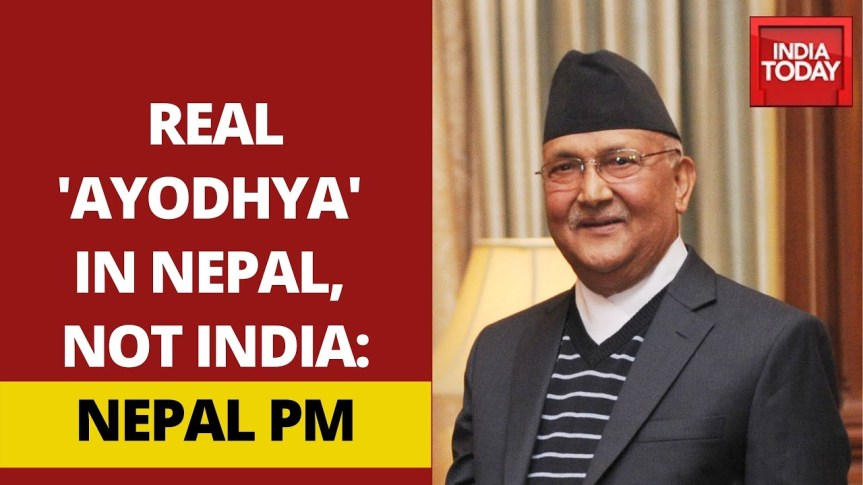





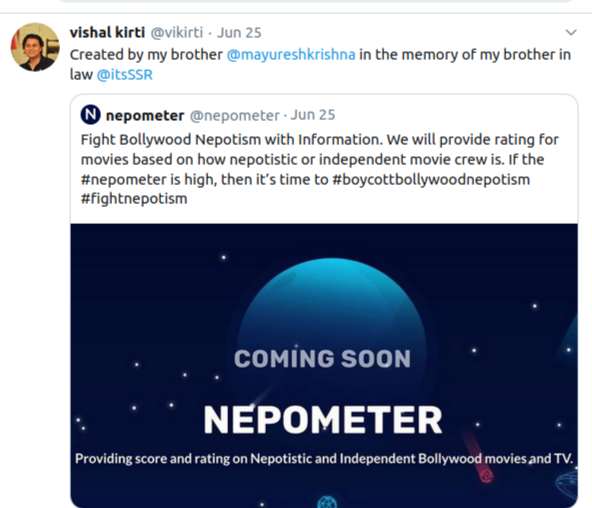
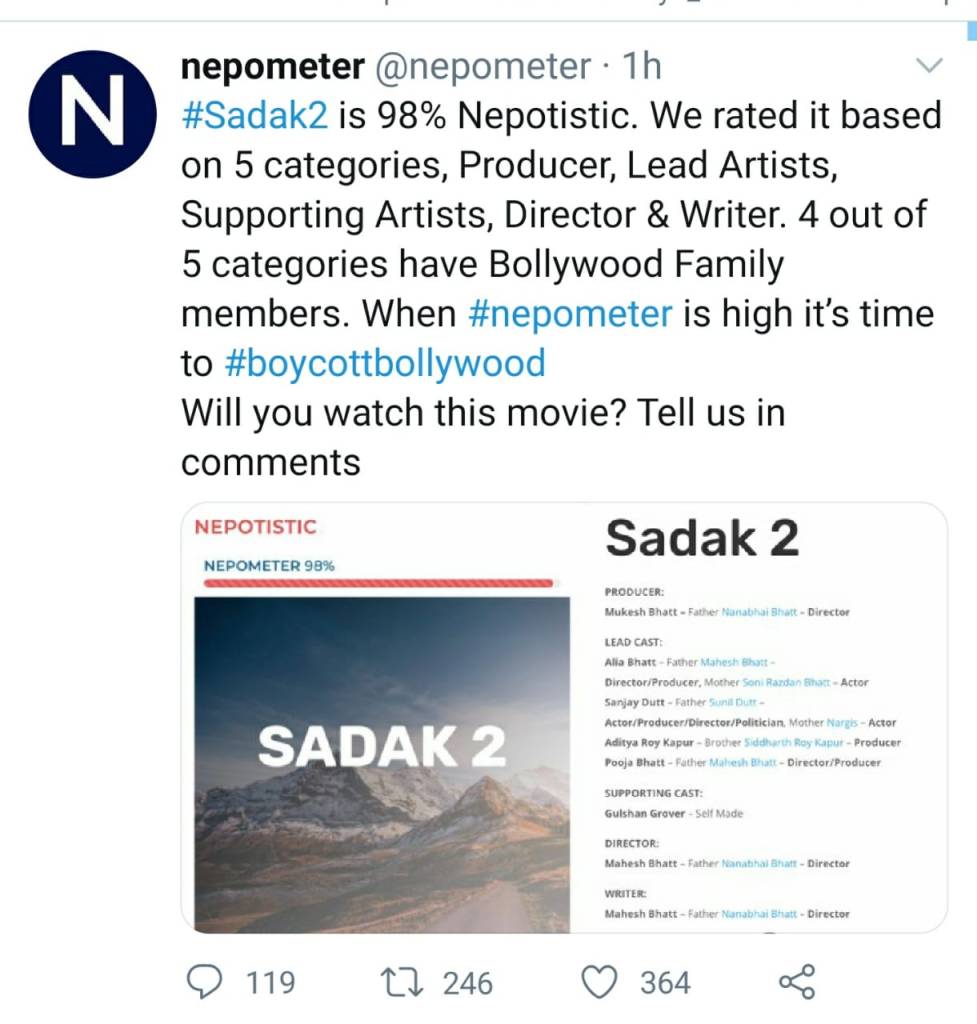

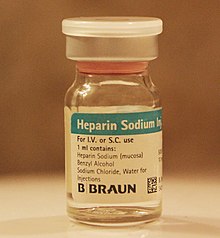






![The Shortening Human Attention Span [INFOGRAPHIC]](https://www.wyzowl.com/wp-content/uploads/2015/10/The-Human-Attention-Span.png)

.png)







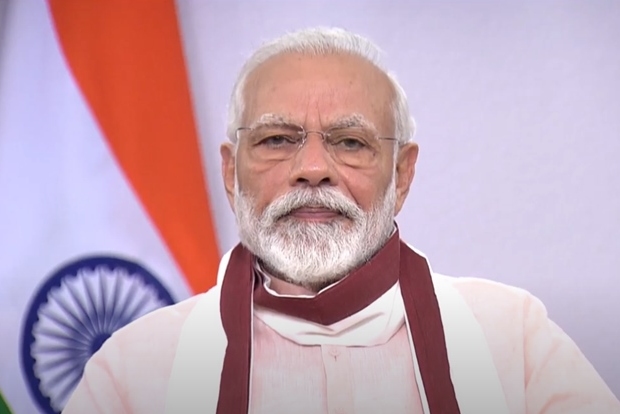
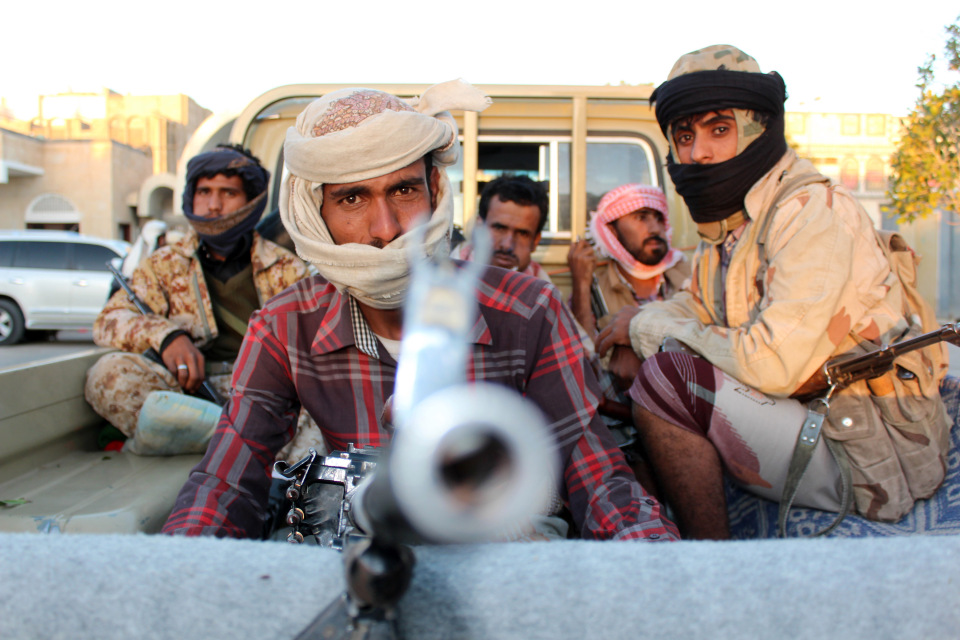



 Track2Training
You must be logged in to post a comment.