Pollution is defined as introduction of harmful particles in the environment.It can be man made or natural.The reason for pollution is many like toxic gas from industry, plastics in water,sound from vehicles etc.
TYPES OF POLLUTION:-
* Land pollution
* Noise pollution
* Water pollution
* Air pollution
* Light pollution.
LAND POLLUTION:-
Land pollution means that contamination of soil or land. Land pollution leads to contamination of ground water.Land pollution is caused due to urbanization, deforestation, mining and throwing plastics in the land.
NOISE POLLUTION:-
Noise is,defined as unwanted sound. Sound which pleases the listeners is music and that which causes pain and annoyance is noise.Noise pollution is majorly from vehicles,industrial works.Noise pollution leads to hearing problems, sleepless,cardio vascular issues and psychological problems.
WATER POLLUTION:-
Water pollution is defined as introduction of unwanted materials in the water.It is one of the serious type of pollution Harmful to human, plants and animals.water pollution is caused by industrial waste,oil spills,marine dumping plastics,sewage,mining activities.It leads to serious problems like cancer,diarrheal disease, respiratory disease, neurological disorder and cardiovascular disease.
AIR POLLUTION:-
Air pollution is a mixture of solid particles and gases in the air. Car emissions, chemicals from factories, dust, and mold spores may be suspended as particles. Ozone, a gas, is a major part of air pollution in cities.Some air pollutants are poisonous.It is harmful to all living organisms in the world.Air pollution leads to breathing problems, asthma, heart attack and stroke.
LIGHT POLLUTION:-
Light pollution is unwanted over usage of artificial light.It wash out star light in the night, disturb ecosystem,interferes with space research.Light pollution alters their night time environment by turning night into day.spark from artificial lights can also impact wetland habitats that are home to amphibians such as frogs and toads.
CONTROLLING MEASURES FOR POLLUTION:-
* By controlling wastes.
* With the practice of recycle.
* Going with natural ways.
* Using eco friendly products instead of plastics.
Bio diversity is the biological variability of life on earth. It is the variation of animal, plants, fungi and microorganisms like bacteria. Biodiversity is a variation in the genetic, species, and ecosystem level. Terrestrial biodiversity is usually greater near to the equator. Biodiversity is not equally distributed on earth. There are only 10% of tropical evergreen forests on earth but they contain about 90% of world species. Marine Biodiversity is greater is usually higher along the coast in western pacific where the sea temperature is highest. Biodiversity generally tends to cluster in hotspots and has been increasing through time. Biodiversity supports everything in nature that we need to survive: food, clean water, medicine, and shelter.
But as people put expanding weight on the planet, utilizing and devouring more assets than ever some time recently, we hazard disquieting the adjust of biological systems and losing biodiversity. Quick natural changes regularly cause mass terminations. More than 99.9 percent of all species that ever lived on Soil, producing to over five billion species, are evaluated to be terminated. In 2006, numerous species were formally classified as uncommon or imperiled or undermined; in addition, researchers have assessed that millions more species are at chance which have not been formally recognized. Approximately 40 percent of the 40,177 species surveyed utilizing the IUCN Ruddy List criteria are presently recorded as undermined with extinction—a add up to of 16,119.
The factors affecting the biodiversity are Residential & commercial development, Farming activities, Energy production & mining, Transportation & service corridors and human activities. Pollution is an another major cause of loss of biodiversity causing habitat destruction. Territory devastation has played a key part in terminations, particularly in connection to tropical woodland pulverization. Components contributing to living space misfortune incorporate: overconsumption, overpopulation, arrive utilize alter, deforestation, contamination (discuss contamination, water contamination, soil defilement) and worldwide warming or climate alter.
Climate change is the long-term alteration of temperature and normal climate designs in short. Climate alter might allude to a specific area or the planet as a entire. Climate alter may cause climate designs to be less unsurprising. These unforeseen climate designs can make it troublesome to preserve and develop crops in districts that depend on cultivating since anticipated temperature and rainfall levels can now not be depended on. Climate alter has too been associated with other harming climate occasions such as more visit and more seriously tropical storms, surges, deluges, and winter storms.
Effects of climate change are Hotter temperatures Nearly all land areas are seeing more hot days and heat waves; 2020 was one of the hottest years on record. Higher temperatures increase heat-related illnesses and can make it more difficult to work and move around. Wildfires start more easily and spread more rapidly when conditions are hotter. More extreme storms Changes in temperature cause changes in precipitation. This comes about in more extreme and visit storms. They cause flooding and avalanches, pulverizing homes and communities, and costing billions of dollars. Many more effects like Droughts, Rise in the level of oceans, shortage of food and more health problems.
Securing biodiversity could be a exceptionally complex errand since most of human’s activities have a negative impact on biological systems by overexploiting them. For occurrence, human exercises create contamination that influences living species. Deforestation crushes the living space of numerous animals, reptiles, and plants. Limiting deforestation Reducing the artificialization of natural environments and preserve natural areas as much as possible Reduce air pollution (by limiting our use of transport and our energy consumption, by switching to renewable energies) Fighting global warming by creating regulations for activities that contribute to the greenhouse effect. Making changes in the way industrial agriculture works and using more agroecology methods.
BA in English Literature is an undergraduate course that is opted for following the completion of the 10+2 formal schooling. Do you have a knack for analysing poetry or writing one? Are you keen about learning the history and evolution of different forms of arts and literature? Then a BA in English Literature was an ideal choice for your graduation. Many great inventions today across different fields such as astronomy, engineering and medicine are influenced by ancient literature and several art forms.
For example, Nicolaus Copernicus’ book “The revolutions of the celestial spheres” popularised the heliocentric theory that proposed the sun as the centre of the universe. With the majority of students opting for medical, engineering or legal degrees, Bachelor of Arts as a degree course is often undermined. There are a lot of common misconceptions and stigmas surrounding this graduation course.
Students studying BA in English Literature are assumed to lackluster in studies.
It is a course often idealised as suitable for women.
Students opting for BA in English LIterature can only become a teacher or professor.
Many students graduate in English Literature as they are passionate about what the course has to offer. Although women are the majority among English Literature graduates, Men also specialise in this field and go on to pursue post graduation alongside women.
As we have debunked some of the misconceptions and stigmas surrounding BA in English Literature, let us look at the doors of opportunities this course leads us to.
Courses to take up after BA In English Literature
BA in English Literature is a three year graduation course that familiarises you with the evolution of English language and its literature through plays, different forms of poems, novels and theatre. Its curriculum consists of literary analysis, literary criticism and communication skills. Graduating in English Literature qualifies you for several job opportunities and higher studies.
For further specialisation or better job opportunities, doing a Masters course following BA in English Literature might be an ideal choice.
Here are the following courses you can consider following your graduation in English Literature.
MA in Communication is a postgraduate program for the duration of 2 years which equips students with information regarding transmitting messages and principles of communication.
This masters course prepares its candidates for professions such as film directors, producers, screenwriters, journalists, public relations officers, and other professional careers.
Eligibility
Minimum requirement for admission to MA in Communication is a Bachelor’s degree in any stream from a recognized university.
Students must have secured 50% in their bachelor’s degree course.
Candidates may be required to pass entrance exams conducted by specific colleges or universities.
Employment Opportunities
Choosing MA in Communication following BA in English Literature can set you up for the following employment roles.
MA in Sociology is a postgraduate program like MA in Communication. Students keen about social studies, politics and economics can pursue this masters course following BA in English Literature. The MA Sociology curriculum consists of the study of religion and society, political society, Indian society, economy and society, social development, and research in sociology.
Eligibility
Interested candidates must be graduated in any stream of education from a reputed university.
Candidates must have scored a minimum of 50% in the undergraduate level.
Some colleges expect students to be a graduate in psychology while the others accept candidates across different streams.
Colleges conduct entrance exams that need to be cleared by the admission seeking candidates.
Employment Opportunities
MA in Sociology opens doors to an expansive range of career opportunities after your graduation in English Literature. Following are some of the job profiles that might get you interested.
Nothing seems more appropriate than studying for MA in English Literature post your graduation from BA in English Literature. This post graduation course in English Literature is the study of ancient and modern English literature, consisting of poetry, drama and fiction. Literature in the English language is not only written by English authors from England but also writers from across the world.
Post graduation in English Literature sets you up for job profiles such as a teacher or a journalist. Candidates interested in writing and translating for agencies can also benefit from this masters course.
Eligibility
Already being a graduate in English Literature, one needs to make sure that he or she has earned upto 50% marks to be qualified for admission.
Your graduation course should be from a recognized university.
Admissions can be provided on both merit basis as well as clearance of entrance exams.
Employment Opportunities
Upon completion of your post graduation course, you will be qualified for the following job profiles.
Bachelor of Law is a popular choice for higher studies among graduates of English Literature. A degree in LLB familiarises students with environmental law, consumer protection act, arbitration, and insurance law including others. Following the completion of Bachelor in Law, candidates can opt to study LLM (Masters of Law) for further specialisation, practice law after registering with certain agencies or take up careers as legal professionals in public or private sectors.
Eligibility
Students aspiring to study Bachelor of Law must have graduated from a recognized university with an aggregate of 45% in any stream.
Selection for the course is based on the results from entrance exams such as SLAT, CUET, and CLAT.
Employment Opportunities
Careers after a Bachelor of Law are not confined to courtroom duties involving defending clients. Law graduates today have scope for job profiles in corporate firms, legal agencies, IT firms, and administrative services. Following are some of the job profiles mentioned below.
Graduates who want to begin a career in the field of teaching can further study Bachelor of Education. This post graduation course acquaints the candidates with different learning methods and Pedagogy of a school subject. The course lasts for a duration of 3 to 4 years.
After the completion of B.Ed, clearing aptitude tests such as TET and CTET will qualify you for teaching in primary and secondary schools.
Eligibility
A bachelor’s degree from a recognized university with 50% aggregate marks.
A master’s degree from a recognized university with 50% aggregate marks.
Aspirants for B.Ed must be at least 21 years old, irrespective of their graduation or post graduation.
Job Profiles
Job profiles for B.Ed graduates are usually related to the field of teaching. One can become a teacher with specialisation in a particular subject or head teacher in a primary or secondary school.
Happy Learning!
References
Vinayak Kashyap, mycourseguru.in/courses after ba english/
Team Careers360 | Updated on Sep 29, 2021 – 3:32 p.m. IST career360.com/10 best career options to progress with after llb degree/
India is a country which is known for its diverse heritage and mesmerizing culture. However, it also has some unavoidable rigid belief systems or evils which, if not reformed, can be really harmful for the Indian society. Such social evils can also be harmful for the growth and progress of the society.
Social evils can be defined as the toxic beliefs due to which the societal progress is hindered. Such evils can be born out of sheer ignorance or blind faith in religion or culture or both. These evils are not only harmful for the believers themselves but for the society as a whole.
There have been several personalities who, in order to bring reforms in the society, tackled and attempted to remove the practices of some rigid belief systems which, in turn, brought reforms in the society.
Here are some evils that either prevailed or still prevail in India due to the stiff nature of the society:
The Caste system:
The caste system has its roots in the ancient Indian society where the common folks were divided into four categories on the basis of their skills and abilities. Those categories consisted of Brahmin, Kshatriya, Vaishya and Shudra.
But as the time passed, this system became so rigid that the people belonging to the higher castes were seen as superior to those of the lower castes. Brahmins were known to be next to God and were respected by almost everybody. On the other hand, the Shudras were discriminated and were considered as ‘Untouchables’. Although the Indian Constitution has outlawed the practice of Untouchability, it still exists in some parts of the Indian Society.
The Dowry system:
The word ‘dowry’ means payment (of property or money) from the bride’s parents to the groom or his family at the time of marriage. This stems from the belief that a daughter is a liability for her parents and for her bright future she has to be married off to a decent groom. In order to get a good marriage prospect, the bride’s family starts saving money as soon as the daughter is born. This puts an unimaginable of amount of burden on the bride’s family.
This system has also made many Indian women victims of the atrocious crimes by the groom and his family. There have been many cases where crimes against women were committed by their husbands or their in-laws. In such cases, women had to go through unimaginable physical and emotional abuse.
Although we have laws in the constitution against the practice of the Dowry System, it is still practised in some of India. The government is taking measures to eradicate this system by bringing in policies to educate and the girls and parents of the country. They have also started schemes to aware the parents about the negative outcomes of the Dowry system.
Female Infanticide:
Female infanticide is the intentional and deliberate killing of a baby girl once she is born due to the preference for a baby boy. Even though this is an illegal practice, people in some parts of India still practice it. According to a census in 2001, there are only 933 females to every 1000 men. Another census in the year 2011 showed a decline in the Child Sex Ratio (CSR) where there were only 918 females to every 1000 men.
Female infanticide is more prevalent than male infanticide in south Asian countries like India and China due to cultural reasons. In the Indian Society, some families kill their new born daughters to avoid the burden of paying Dowry to the groom or his family. For families with several daughters, it can be a huge financial burden and hence, killing the baby girl seems like an easier option to them.
The Indian government has tried to take several initiatives to tackle and eradicate this issue. In several Indian states, the government took the responsibility of educating the girl child which, in turn, freed the parents from their financial burden.
These are some of the dreadful evils in the Indian society which need to be tackled and solved so that a better and more reformed society can be created. However, there are more such evils like Poverty, superstitions and corruption. These issues have become pretty common in the Indian Society.
With the years passing by, these issues have risen instead of coming to an end. Therefore, proper action must be taken by the government and the society to change the mindset of the existing society.
Every person has their own language of expression. Each being express themselves in a way that is so unique to them and that way gives them next level comfort and warmth. Every morning they find one or other way of letting people know what they are feeling but the best way they can and should and mostly express themselves is through their love language. A language that makes them more of themselves and less of everyone else, a language that describes them in the most perfect way, a language that makes them free, independent and illuminated. This language is so pure and pious. And this language as said, have many forms and states but with each different personality these forms and states of this language also becomes different making it not only unique but special in its own way.
Poetry has to be the one that is close to my heart and special to my personality. But as mentioned, it might not necessarily be same poetry as someone else. I might write in way that not only describes my state of mind but also my insecurities or even the thoughts that are deep engraved in by sub-conscious. My language has to be poetry, it is the way I express myself. My poetries not only make me free but also lead me out of the dark tunnel of silence in to the world that has bright sunny day of full of thoughts and intellect. I express only grief, anger, or despair through my poetries but also, love, compassion and even bliss through it. Every emotion finds its place in my poetry and just fit well in its position to portray myself being just the way I want to.
Some people have painting as their language. They communicate their thoughts, feelings through painting them in colours. They choose red for love and green for happiness and black for grief and they go for white to describe peace. These colours express them way better than words could ever. They paint the canvas of their life with these colours of emotions and passion and at the same convey their opinions in the most colourful way to the person across the room. They have colour for each occasion and they have the best strokes to kill the heart breaking moments of life. Their paintings not only describe them as the painter who knows how well to use colours but those pieces are the reflection of their inner self and that they paint a part of themselves with each of their painting and say it out loud in those art works just as perfectly anybody could through writing.
Along with these languages that mostly involve the imagination in their expression, there come are languages that help beings express themselves through the moves of their body. Dance as they say, one must dance to express, not to impress has to be one of the most powerful of expressing and channeling their inner energy in conveying what they want to. With all the gloomy days taking a toll on the dancers they become quite and choose to perform only for themselves or on the music that fits their conditions but sometimes, their performance has a glow that shows us how happy or contended they are. This dance language is the language that makes us express through our body, a language that makes us believe in the beauty of this self that god created.
विश्व स्वास्थ्य संगठन के प्रमुख ट्रेडोस ऐडनोम घेबरियस ने बर्लिन में आयोजित अपने एक वर्ल्डहेल्थ समिट को संबोधित करते हुए कहा कि जब सभी देश उपलब्ध स्वास्थ्य उपकरणों का प्रभावी ढंग से उपयोग करना शुरू कर देंगे,तब जाकर कोरोना महामारी खत्म हो जाएगी। उन्होंने कहा कि जब दुनिया इसे खत्म करना चाहेगी, तब यह समाप्त होगा। यह हमारे हाथों में है। वह सभी उपकरण हमारे पास मौजूद है,चाहे प्रभावी सार्वजनिक स्वास्थ्य उपकरण हो या प्रभावी चिकित्सा उपकरण,जिनकी हमे अवश्यकता है। परंतु दुनिया ने इसका अच्छी तरीके से उपयोग नहीं किया।एक सप्ताह में करीब 50 हज़ार मौतें हुईं हैं तो अभी महामारी खत्म नहीं हुई।
उन्होंने सम्मेलन में बोलते हुए कहा कि वह को भी ने टीकाकरण के लिए एक वैश्विक रणनीति शुरू करने के लिए WHO प्रमुख में शामिल हुए,जो सभी देशों में लोगों को टीके वितरित करने के लिए एक लागत और विश्वसनीय प्रभावी योजना का सुझाव देता है।
WHO प्रमुख ने जी 20 देशों का पहले से ही 40% अपनी आबादी को कोवैक्स तंत्र में सक्रिय रूप से संलग्न कर देने के लिए भी आव्हान किया। रविवार को संयुक्त राष्ट्र महासचिव एंटोनियो गुटेरेस ने जी-20 देशों से पूरी दुनिया में कोविड-19 के टीका का उचित वितरण सुनिश्चित करने के लिए 8 बिलियन अमेरिकी डॉलर इकट्ठा करने में मदद का एलान किया।
बता दें, WHO पहले से भी कोरोना को लेकर पूरी दुनिया को चेतावनी देता रहा है। एक बार फिर से भारत में कोरोना से मरने वालों की संख्या में इजाफा देखा गया है। पिछले 24 घंटों में 443 लोगों की मौतें हुई है। वहीं एक दिन में 14,306 कोरोना के नए मामले सामने आए हैं।
New research by a group of scientists in India and US shows that although men make up the majority of infections, women face a higher risk of dying from the coronavirus than men.
The study, based on Covid-19 deaths in India until 20 May, shows early estimates that 3.3% of all women contracting the infection in India were dying compared to 2.9% of all men. (India had a caseload of more than 110,000 with 3,433 deaths and a fatality rate of 3.1% when the study was conducted.)In the 40-49 age group, 3.2% of the infected women have died, compared to 2.1% of men. Only females have died in the 5-19 age group.
Five key questions about India’s rising Covid-19 infections I asked SV Subramanian, a professor of population health at Harvard University and one of the leader authors of the study, what this implied.
He told me that the narrative of calculating the Covid-19 fatality rate by groups has conflated two key metrics – mortality risk and mortality burden.
Mortality risk measures the probability of death in a specific group- in this case, total number of deaths of women divided by confirmed infections among women.
On the other hand, mortality burden gives you the number of deaths among women as a percentage share of the total deaths, both men and women.Prof Subramanian says for the large part, the statistics have looked at the latter – men having a greater share of total deaths (63% in India, hewing to international data) – but “inferred the former risk”.
“Our overall conclusion is that, when infected, women do not seem to have any specific survival advantage [in India],” says Prof Subramanian.
“How much of this can be attributable to biological factors and how much of this is associated with social factors is unclear. Gender can be a critical factor in Indian settings,” he says.
The ‘mystery’ of lndia’s low Covid-19 death rates But the findings are certainly striking because they run counter to what has been observed elsewhere in the world.
For one, men are more likely to suffer from co-morbidities or underlying health conditions, like cardio-vascular disease and hypertension, says Kunihiro Matsushita, a professor of epidemiology at the Johns Hopkins Bloomberg School of Public Health.
Men also smoke more than women in many countries, and some studies have shown that men wash their hands less frequently than women.
Prof Matsushita says that studies he had participated in had shown that male patients have a higher risk of contracting severe Covid-19 infection.
Scientists also believe that women have a lower mortality risk because of sturdier immune defences. And have hormones like oestrogen which has “beneficial effects on upper and lower airways and is associated with stimulation of the immune response to upper airway infections”.
“In that regard, a higher case fatality rate in women than men in this report is certainly unique,” Prof Matsushita told me.
But he says the research data needs to be scrutinised in the context of how Covid-19 is diagnosed in India. “For example, is the opportunity to get a test same between men and women?” he wonders.There could be more to this puzzle than what meets the eye.
Women outlive men in India and there are more older women than men. Is this leading to more deaths among women, as elderly people are vulnerable to the infection?
Also, women in India are more likely to delay going to doctors, and often self-medicate at home. And a woman’s health is more likely to be ignored in a household. So are women arriving late for testing and treatment?
Homemaker caregivers are more prone to contracting the infection – during the 1918 Spanish flu more women in India – relatively undernourished, cooped up in unhygienic and ill-ventilated dwellings, and nursing the sick – died than men.
“We need to dissect the gender data to find out more about what’s going on,” says T Jacob John, a retired professor of virology at Christian Medical College, Vellore.
Researchers agree. “We will keep a close watch and keep updating the results,” Prof Subramanian says.
In its first physical meeting in two years, the GST Council on Friday effected several long-pending tweaks in tax rates including an increase in the GST levied on footwear costing less than ₹1,000 as well as readymade garments and fabrics to 12% from 5%.
The new rates on these products, a decision on which had been deferred by the Council over the past year owing to the pandemic’s impact on households, will come into effect from January 1, Finance Minister Nirmala Sitharaman said.
The Council approved a special composition scheme for brick kilns with a turnover threshold of ₹20 lakh, from April 1, 2022. Bricks would attract GST at the rate of 6% without input tax credits under the scheme, or 12% with input credits.
While this will please States like Uttar Pradesh that had sought a special scheme for brick kilns, a decision on extending such a scheme for other evasion-prone sectors like pan masala, gutkha and sand mining was put off.
The Council also decided to extend the concessional tax rates granted for COVID-19 medicines like Amphotericin B and Remdesivir till December 31, but similar sops offered by the Council at its last meeting in June for equipment like oxygen concentrators will expire on September 30.
The GST rate on seven more drugs useful for COVID-19 patients has been slashed till December 31 to 5% from 12%, including Itolizumab, Posaconazole and Favipiravir. The GST rate on Keytruda medicine for treatment of cancer has been reduced from 12% to 5%.
Life-saving drugs Zolgensma and Viltepso used in the treatment of spinal muscular atrophy, particularly for children, has been exempted from GST when imported for personal use. These medicines cost about ₹16 crore, Ms. Sitharaman said.
Food delivery tax shift The Council also decided to make food delivery apps like Swiggy and Zomato liable to collect and remit the taxes on food orders, as opposed to the current system where restaurants providing the food remit the tax.
Revenue Secretary Tarun Bajaj stressed this did not constitute a new or extra tax, just the tax that was payable by restaurants would now be paid by aggregators. Some restaurants were avoiding paying the GST even though it was billed to customers.
“The decision to make food aggregators pay tax on supplies made by restaurants from January 1, 2022, seems to have been done based on empirical data of under reporting by restaurants, despite having collected tax on supplies of food to customers,” said Mahesh Jaising, Partner, Deloitte India.
“The impact on the end consumer is expected to be neutral where the restaurant is a registered one. For those supplies from unregistered, there could be a 5% GST going forward,” he added.
Aircraft on lease The GST Council has exempted Integrated GST levied on import of aircraft on lease basis. This will help the aviation industry avoid double taxation, the Finance Minister said, and will also be granted for aircraft lessors who are located in Special Economic Zones.
Goods supplied at Indo-Bangladesh border haats have also been exempted from GST.
We the creatures of this planet are born with numerous feelings and emotions and as soon as we get hold of ourselves we decide for ourselves if a certain emotions are important for us or not. And the emotion that gets the last place in this not so perfect ranking is the feeling that portray us as sentimental, weak, and quite vulnerable that of crying, venting out all that we have deep buried inside us through our eyes, tears as people call them are what we find the heaviest to let out and yet heavier to carry within us. The vulnerability that we believe surrounds us every time we emit sentiments or feelings that are emotionally draining turns us into some being that isn’t comfortable about their own emotions and consequently we crawl further into ourselves becoming more of an emotional wreck than an emotional person.
The salty water that is emitted every time we experience any sort of emotional trouble or low can actually turn in to the best kind of respite from the burden that this world puts on us. The relieving of our tensions through our eyes is quite normal and in fact healthy. Taking into the acceptance that we are having a bad day and that crying it out might be the best part of the day then one must do that. With all the responsibilities and tensions of the world we definitely need some type of respite from that hectic schedule and mostly people want to run away from it but crying can actually be the medicine we need on a long day. Though different people have different ways of getting themselves back after a heavy day but if letting out the tears is your way you must not shy away from it.
A common stereotype that makes people control their tears to the extent that they start getting uneasy and it becomes unhealthy is that of crying being associated with weakness, while in reality it has to be quite strong of a person to be vulnerable enough to own this emotional self that they make of themselves. Physical health has always got priority over mental health for a very long time in the past. But now as the times are changing and we as human beings are evolving the significance of taking care of our mental health has been increasing to the extent that people are normalizing the act of crying as the perfect humanly behavior and no connection whatsoever with it being the deed of the coward or the weak. In fact keeping it in is considered much less brave and as more of the action of those who are not familiar with their own weak side and in consequence do not know themselves inside out.
There is no insistence on crying out loud in front of the people we know or not know, but rather it is about letting out of the fear which resides within us, the fear of losing it all, the fear of staying the emotional wreck for the rest of our lives, the fear of going away from sanity, the fear of knowing the weak, vulnerable person that we actually are, the fear of people knowing or seeing our not so perfect side, the fear of getting everything to its worst end, the fear of not making ourselves what we thought of, the fear of not getting back on our feet, the fear of unknown, the fear that makes us let it out.
Explained : Although the monsoon season ends in September, a delayed withdrawal and other factors have been causing severe rainfall in several states.
Western disturbances, which begin to have significant interference in local weather over the extreme northern parts of India, commonly cause either rain or snowfall. Since late last week, Ladakh, the higher reaches of Kashmir and Uttarakhand have reported the season’s first snowfall.
Last week, two low-pressure systems were active simultaneously, one each over the Arabian Sea and the Bay of Bengal regions. Collectively, these triggered severe weather events over Kerala, Tamil Nadu, Andhra Pradesh, Telangana, Delhi, Madhya Pradesh, Uttarakhand, Odisha and West Bengal.
Delayed monsoon withdrawal
The four-month southwest monsoon season normally withdraws completely by early October. During the withdrawal phase, it causes thunderstorms and localised heavy rainfall.
This year, however, the withdrawal began only on October 6 against a normal of September 17. So far, the monsoon has withdrawn completely from the Western, Northern, Central and Eastern India regions. But it remains active over the southern peninsula. Thus, Kerala, Tamil Nadu, Telangana, Karnataka and Andhra Pradesh have had significant rainfall during the last 10 days.
Until Monday, the monsoon had not withdrawn from Manipur, Mizoram, Tripura, parts of West Bengal and Odisha and entire southern peninsular India.
“As there has been a delay in the southwest monsoon withdrawal, good rainfall has continued over Odisha, the Northeast and south India,” said Mrutyunjay Mohaptra, director general, India Meteorological Department (IMD).
Normally, by mid-October, the monsoon winds reverse their direction of flow from the southwest to the northeast.
“Even though the easterlies are beginning to replace the westerlies, the former is yet strengthen and fully establish. The easterly winds indicate the arrival of the northeast monsoon,” said D Sivanand Pai, head, Climate Research and Services, IMD, Pune.
This year, conditions for the onset of the northeast monsoon are expected to develop around October 25.
Extreme rains
For most days last week, at least two low-pressure systems remained active along the east and west coasts and over central India, bringing rains over large parts of the country.
Delhi received 87.9mm (over a 24-hour period) between Sunday and Monday, making it the fourth wettest October day for the national capital since 1901. The month of October has also been the fourth wettest so far. It has received 94.6 mm rains this month so far, which is next only to the 238.2 mm it received in 1954, the 236.2 mm in 1956, and 186.9 mm in the entire Octobers of 1910.
Likewise, Balasore in Odisha recorded 210mm in a day and it was only the second such occasion in a decade for this month.
While Tamil Nadu normally receives good rainfall between October and December, mainly during the northeast monsoon, Coimbatore (110mm) witnessed its wettest October day in a decade even before the onset of the northeast monsoon.
The Western Ghats, northeast and central India are known as high-rainfall receiving regions. However, in recent years, it has been noted that intense spells during a short time span are increasingly becoming frequent.
“Due to climate change, there is definitely a rising frequency in the extreme weather events round the year. But these specific occurrences of heavy to very heavy rains that we are seeing right now can be attributed to the formation of low-pressure systems,” said Mohaptra.
“Whenever there is a low-pressure system, depending on its strength, it results in heavy to very heavy rainfall activity. In addition, when a low-pressure system interacts with western disturbance, further intense rainfall occurs,” he said.
Extreme rainfall in Kerala
A low-pressure system that formed in the east-central Arabian Sea moved and sustained over Kerala between October 15 and17.
Simultaneously, another low-pressure system prevailed over the north Andhra Pradesh coast and southern Odisha. The interaction between them strengthened the southwest winds which brought extreme rainfall over central and southern Kerala during the last weekend.
At some places in Idukki, Ernakulam, Kollam and Kottayam districts, the 24-hour rainfall was over 200 mm. As many of these districts are hilly and covered with dense forests, the water run-off triggered landslides and mudslides.
Rainy days ahead
The low-pressure system that affected Kerala has weakened now. But a similar system is still active over central India, because of which northern India is likely to received good rainfall this week.
Heavy rainfall events are predicted over Western Uttar Pradesh, Uttarakhand and Himachal Pradesh for Tuesday, with a ‘red’ alert having been issued by IMD for these regions.
Another low pressure — located over Northern Odisha and Gangetic West Bengal — is active and its interaction with the moist easterly winds from the Bay of Bengal is expected to bring heavy rain over West Bengal, Odisha, Sikkim, and Bihar until Wednesday. The maximum impact in terms of extremely heavy rain (more than 204 mm in 24 hours) is likely over some places in West Bengal and Sikkim on Tuesday.
The impact of coronavirus pandemic on India has been largely disruptive in terms of economic activity as well as a loss of human lives. Almost all the sectors have been adversely affected as domestic demand and exports sharply plummeted with some notable exceptions where high growth was observed. An attempt is made to analyze the impact and possible solutions for some key sectors.
Food & Agriculture
Since agriculture is the backbone of the country and a part of the government announced essential category, the impact is likely to be low on both primary agricultural production and usage of agro-inputs. Several state governments have already allowed free movement of fruits, vegetables, milk etc. Online food grocery platforms are heavily impacted due to unclear restrictions on movements and stoppage of logistics vehicles. RBI and Finance Minister announced measures will help the industry and the employees in the short term. Insulating the rural food production areas in the coming weeks will hold a great answer to the macro impact of COVID-19 on Indian food sector as well as larger economy.
Aviation & Tourism
The contribution of the Aviation Sector and Tourism to our GDP stands at about 2.4% and 9.2% respectively. The Tourism sector served approximately 43 million people in FY 18-19. Aviation and Tourism were the first industries that were hit significantly by the pandemic. The common consensus seems to be that COVID will hit these industries harder than 9/11 and the Financial Crisis of 2008. These two industries have been dealing with severe cash flow issues since the start of the pandemic and are staring at a potential 38 million lay-offs, which translates to 70 per cent of the total workforce. The impact is going to fall on both, White and Blue collar jobs. According to IATO estimates, these industries may incur losses of about 85 billion Rupees due to travel restrictions. The Pandemic has also brought about a wave of innovation in the fields of contactless boarding and travel technologies.
Telecom
There has been a significant amount of changes in the telecom sector of India even before the Covid-19 due to brief price wars between the service providers. Most essential services and sectors have continued to run during the pandemic thanks to the implementation of the ‘work from home’ due to restrictions. With over 1 billion connections as of 2019, the telecom sector contributes about 6.5 per cent of GDP and employs almost 4 million people. Increased broadband usage had a direct impact and resulted in pressure on the network. Demand has been increased by about 10%. However, the Telco’s are bracing for a sharp drop in adding new subscribers. As a policy recommendation, the government can aid the sector by relaxing the regulatory compliances and provide moratorium for spectrum dues, which can be used for network expansions by the companies.
Pharmaceuticals
The pharmaceutical industry has been on the rise since the start of the Covid-19 pandemic, especially in India, the largest producer of generic drugs globally. With a market size of $55 billion during the beginning of 2020, it has been surging in India, exporting Hydroxychloroquine to the world, esp. to the US, UK, Canada, and the Middle-East.
There has been a recent rise in the prices of raw materials imported from China due to the pandemic. Generic drugs are the most impacted due to heavy reliance on imports, disrupted supply-chain, and labour unavailability in the industry, caused by social distancing. Simultaneously, the pharmaceutical industry is struggling because of the government-imposed bans on the export of critical drugs, equipment, and PPE kits to ensure sufficient quantities for the country. The increasing demand for these drugs, coupled with hindered accessibility is making things harder. Easing the financial stress on the pharmaceutical companies, tax-relaxations, and addressing the labour force shortage could be the differentiating factors in such a desperate time.
Oil and Gas
The Indian Oil & Gas industry is quite significant in the global context – it is the third-largest energy consumer only behind USA and Chine and contributes to 5.2% of the global oil demand. The complete lockdown across the country slowed down the demand of transport fuels (accounting for 2/3rd demand in oil & gas sector) as auto & industrial manufacturing declined and goods & passenger movement (both bulk & personal) fell. Though the crude prices dipped in this period, the government increased the excise and special excise duty to make up for the revenue loss, additionally, road cess was raised too. As a policy recommendation, the government may think of passing on the benefits of decreased crude prices to end consumers at retail outlets to stimulate demand.
Beyond Covid: The new normal
In view of the scale of disruption caused by the pandemic, it is evident that the current downturn is fundamentally different from recessions. The sudden shrinkage in demand & increased unemployment is going to alter the business landscape. Adopting new principles like ‘shift towards localization, cash conservation, supply chain resilience and innovation’ will help businesses in treading a new path in this uncertain environment.
Coronavirus (COVID-19), a virus that grew stealthily has become one of the deadliest viruses that are killing people worldwide. This virus took birth in Wuhan city of China and since then have traveled to more than 160 countries. The World Health Organization (WHO) has declared Coronavirus as a pandemic. It has become a mass scare and is leading to the deaths of thousands of people in numerous countries including China, Italy, Iran, Spain, the US, and many more. In India, this pandemic started on 30 January 2020 by affecting an individual who had a travel history from Wuhan, China.
The world economy is seeing its greatest fall ever. Coronavirus has largely impacted the growth of almost every country and is responsible for the slump in GDP worldwide. Like other countries, India is also impacted by this virus but not largely. Almost every industry sector has seen a fall in their sales and revenue. India’s GDP growth has fallen to 4.7% in the third quarter of 2020.
Inflation and Affected Industry:
China is one of the largest exporters of many raw materials to India. Shutting down of factories has damaged the supply chain resulting in a drastic surge in the prices of raw materials. Some of the other products that have seen a rise in their prices are gold, masks, sanitizers, smartphones, medicines, consumer durables, etc. The aviation sector and automobile companies are the hardest hit among the rest. With no airplane landings or take-offs globally and restricted travel has brought the aviation and travel industry to a halt.
Slump in Share market: Share markets that include Sensex and Nifty are on nose dive since the occurrence of this pandemic (COVID-19). Sensex has declined close to 8000 points in a month. As of 12 March 2020, share market investors have lost approximately Rs. 33 lakh crore rupees in a month. This could be the beginning of a recession that the Indian market will never want to witness. Investors are advised to stay safe and invested in this virus-infected stock market. Few industries that can benefit from novel coronavirus during the time of the market crash are pharmaceuticals, healthcare, and Fast Moving Consumer Goods (FMCG).
Cash flow Issue: Due to this outbreak, almost 80% of Indian companies have witnessed cash flow difficulty and over 50% of companies are facing operations issues. As per the Federation of Indian Chambers of Commerce and Industry (FICCI), 53% of companies are impacted by COVID-19. Slow economic activity is resulting in cash flow problems eventually impacting repayments, interest, taxes, etc.
Coronavirus (COVID-19), a virus that grew stealthily has become one of the deadliest viruses that are killing people worldwide. This virus took birth in Wuhan city of China and since then have traveled to more than 160 countries. The World Health Organization (WHO) has declared Coronavirus as a pandemic. It has become a mass scare and is leading to the deaths of thousands of people in numerous countries including China, Italy, Iran, Spain, the US, and many more. In India, this pandemic started on 30 January 2020 by affecting an individual who had a travel history from Wuhan, China.
The world economy is seeing its greatest fall ever. Coronavirus has largely impacted the growth of almost every country and is responsible for the slump in GDP worldwide. Like other countries, India is also impacted by this virus but not largely. Almost every industry sector has seen a fall in their sales and revenue. India’s GDP growth has fallen to 4.7% in the third quarter of 2020.
Efforts from CII and Govt. of India: Confederation of Indian Industry (CII) has suggested the RBI reduce repo rate up to 50 basis points and also asked for a reduction of 50 basis points on the cash reserve ratio. The government is planning to set up an amount to support MSMEs to overcome the crisis during this phase of shut down, cash flow difficulty, and working capital issues.
A large explosion tore through a Shi’ite mosque in the southern Afghan city of Kandahar during Friday prayers, killing at least seven people and wounding 13, officials and provincial leaders said.
Qari Saeed Khosti said authorities were collecting details of the explosion, which took place days after a suicide bomb attack claimed by Islamic State on a Shi’ite mosque in the northern city of Kunduz that killed scores of people.
Photographs posted by journalists on social media showed many people apparently dead or seriously wounded on the floor of the mosque.
Nematullah Wafa, a former member of the provincial council, said the blast occurred at the Imam Bargah mosque and caused heavy casualties but there were no immediate confirmation of the number of dead and wounded.
Eyewitnesses said three back-to-back explosions hit Imam Bargah mosque in Kandahar, one of the biggest mosques in the city, causing high casualties.#TOLOnewspic.twitter.com/Z2owaWzxrF
The blast, coming so soon after the Kunduz attack underlined the increasingly uncertain security in Afghanistan as Islamic State has stepped up operations following the Taliban victory over the Western-backed government in Kabul in August.
Childhood is the most memorable time in any person’s life and among all other things the television shows had to be the best part of the evenings in those days. All the different characters, with so simple yet entertaining story lines let us enjoy our little make believe world so much so that we would wait for school to get over and be home and watch those shows. With development and advancement in technology and easier accessibility to the shows any time, any where the butterflies that waiting for those shows would give the children in those days do not easily come to children these days. These shows were sometimes superficial and most of the time fiction still made our childhood better and more fun. Here are some the most loved and remembered shows of those times:
SHARARAT
If you are true magic fan you definitely loved SHARARAT. This was a show with three generations engaging in magic and living their lives as PARIS. With Jia being the main protagonist who would always mess up her magic spells and get herself and people around her in trouble and her NANI coming to her rescue, always cleaning her mess and thereby giving a life lesson with the beauty of magic had to give us the most funny moments of all the times.
AGADAM BAGDAM TIGDAM
Do you think you have the craziest family? Wait till you meet a family that has apples as their phones and has smoke coming out of their ears now and then and belong to a planet named ZOLTAR, now this is what you call actual crazy. This show revolves around the MALHOTRAS who happen to be aliens looking like humans surviving on Earth while trying to keep their secret safe come what may. The show aired in 2007 and though might not have been as famous as others but was one of kind, first among the science fiction in the children dramas.
KYA MAST HAI LIFE
If you follow Shaheer Sheikh you definitely know him from the days of this show. This had five main characters, all enjoying their college lives while being the coolest group in the college. There is no denying that this show raised our hopes for the perfect college life while we end up attending our farewells crawled up in blankets. The show made us fall in love with Shaheer way before we even knew the meaning of love. With actor like Shweta Tripathi reaching all the heights today still remains the cute Zeeniya who solved everyday problems of her friend Ritu telling us what true friendships are for us.
SHAKE IT UP
Though very few know or talk about this show now, but this was one of the first dance programmes that lit the fire of being a dancer on growing up in every child that saw it. The show is about two teenage boys who love dancing and even excel in it so much so that become a part of a dance reality show along with the troubles that they encounter and try and solve them all by themselves. It might not have been huge hit but still has to be a hidden gem.
All these shows were the coolest thing back in early 2000s and they gave us major streaming goals. we can only thank the makers of the shows for making our childhood more fun and giving us memories of a lifetime. We owe it to these shows.
The mass media are seen today as playing a key role in enhancing globalization, facilitating culture exchange and multiple flows of information and image between countries through international news broadcasts, television programming, new technologies, film and music. If before the 1990’s mainstream media systems in most countries of the world were relatively national in scope, since then most communication media have become increasingly global, extending their reach beyond the nation-state to conquer audiences worldwide.
International flows of information have been largely assisted by the development of global capitalism, new technologies and the increasing commercialisation of global television, which has occurred as a consequence of the deregulation policies adopted by various countries in Europe and the US in order to permit the proliferation of cable and satellite channels. Globalization theorists have discussed how the cultural dimension of globalization has exercised a profound impact on the whole globalization process.
The rapid expansion of global communications in the 21st century can be traced back to the mechanical advancements of technologies during the course of the 18th and 19th centuries, which started mainly with the invention of the telegraph in 1837, and included the growth in postal services, cross-border telephone and radio communications and the creation of a modern mass circulation press in Europe. It was however the evolution of technologies capable of transmitting messages via electromagnetic waves that marked a turning point in advancing the globalization of communications.
The emergence of international news agencies in the 19th century, such as Reuters, paved the way for the beginnings of a global system of codification. Nonetheless, it was not until the 1960’s, with the launch of the first geo-stationary communication satellites, that communication by electromagnetic transmission became fully global, thus making the globalization of communications a distinctive phenomena of the 20th century.
Key theories in international communications grew out of international relation studies. The “modernization” or development” theory in the area of communication research emerged in the Cold War context and were largely preoccupied with the ways in which the media could help transform traditional societies to include them into the capitalism orbit. Among the key theorists in this tradition was Wilbur Schramm with his sponsored UNESCO work, Mass Media and national development – the role of information in the developing countries.
The idea was that international communication media could be used as a tool to transfer the political-economic model of the West to the growing independent societies of the South. Schramm’s views was that the mass media could be used by elites to raise the ambitions of the populations in developing countries, who would cease to be narrow-minded and conformist and would be active in their own self-development. The dependency theories the 1960’s and 1970’s were perceived as an alternative approach grounded in neo-Marxism, and which adopted a theoretical framework that saw capitalism and inequality as a key perspective in understanding the impact of power relations on global communications. According to the argument, transnational corporations based in the North engaged in a web of interdependency with the economies of the South, setting the terms of global trade, dominating markets, production and labour.
Dependency theorists and Latin American scholars argued that these economic relations worked within an exploitative dependency model that promoted American capitalist mentality in developing countries (Mattelart, 1979). Development was thus shaped in a way that benefitted largely the developed nations, maintaining the peripheral countries in a continuous position of dependence. Latin American scholars stressed that it was Western media companies that were reaping the rewards of the modernization programmes, and that they were actually reaching out to the South in order to conquer new markets for their products.
Globalization is thus seen as having consequences for the distribution of power and wealth both within and between countries. Cultural imperialism theories of the 1970’s and 1980’s highlighted how the media in developing countries imported foreign news, cultural and television genre formats (i.e. talk-shows, sitcoms) and also values of capitalist consumerism and individualism. The core critique of the imperialism thesis was that the developing countries had established a relationship of subordination.
We the people of new, technologically developed world have a way around the advance, next-gen, electronic in such a fashion that it has started affecting our health to the extent of the worst. The toll that excessive screen-time can have on being’s health is of major concern in today’s highly advanced times. Be it a small town or a big city, be it a young kid or an old man, be it the middle-class or the rich, be it a third-world citizen or a first world citizen, everyone has an excessively disturbing effect on health. With the rays that are responsible of the operation of these electronics are said to be harmful as that causing a heart-attack. Along with many other health- problems the cutting- off from the real world around has to be one of the most unwanted affect. As the world moves forward in the digital world, it moves backward in the health status in the real world.
Ramifications
There are numerous effects in a variety of ways on the human being because of the too much interaction with the virtual world. These effects are not only too harmful but sometimes even life-threatening.
Repercussions on Physical health=
The prolonged hours in front of the screen can lead to a number of physical health problems. These can cause health issues like obesity, weak eyesight, neck and back problems.
With people sitting in front of the screens for hours in the same place can lead them to eat unhealthily and excessively. They become more prone to junk food as an instant food is better than the one taking time to cook. The unhealthy food habits that develop because of the increased hours of sitting, makes the person obese sometimes to the extent of no return to a healthy body.
Weakening of the eyesight is one of the most disturbing affect when more than enough hours are spent in front of the screen. The blue light from the screen can cause problems like eye fatigue and blurry vision. Fatigue can cause inability to look clearly at night.
People usually sit in one place for hours while using screen and those positions can cause neck and back problems as sitting in not so comfortable positions can lead to neck, shoulder and back pains, these pains can be higher than we think. Too much screen time snatches away the person of the sleep that comes to them naturally. As studies have found that people generally tend to stretch their screen time by spending time late at nights, causing sleep related problems, generally loss of sleep.
Mental health =
Depression has been indicated as one of the worst effects of increased screen time along with anxiety. The use of too much of phones, laptops, etc can lead to drop in mental health as they tend to damage the brain cells and thereby making the case of one’s mental health further worse.
Students have generally experienced lack of concentration while studying as the excess of screen time robs them off their focus while learning something new and for the first time. The attention span reduces and the sitting hour for actually learning or studying suffers.
With sleep deprivation and lack of focus as is the effect of some drug addiction, screen time leads to irritable behaviour along with person becoming an emotional wreck. People usually involved in screen time addiction end up staying alone for hours and there by affecting their mental stability and health.
Detoxification
The screen time usage can be restrained by detoxification. There are a number of ways of detoxifying, which is the act of staying away from the screen for a specific period of time so as to reduce the effects that it might have on physical and or mental health.
Switching off the applications is proved to be one of the best ways of staying away from the screen when not so required. Turning them off gives people to more time to spend on other things than just the screen.
Resorting to other activities whenever the person finds some free time instead of gadgets can help them restore their concentration and focus. With recreational activities such as reading, writing, painting, playing any instrument etc can be beneficial for the recharging of the brains.
Making a proper routine to follow including the correction of sleep cycle has to be one of the best ways to regain the lost mental and physical health. With a good night sleep, the less strain on the eyes could bring down the eyes fatigue and irritability levels.
Physically being active is very important if you spend hours in front of the screen. Exercising has been a proven treatment to a lot of health problems and here too definitely is going to be beneficial. With the hours of sitting at least one hour of exercise makes the person gain the lost stamina and physical abilities.
Yoga and meditation have had been famous in India now for quite a long time. These two have proved to be the best cure for most the mental health related problems. Thus even only fifteen to twenty minutes of meditation shows tremendous positive effect on mental health of a being.
Moving out, has to be a difficult choice especially if you live in a small town, moving to a big, metropolitan city could be one hell of ride. These metropolises can have a toll on the new, moved in person’s mind as they entail the feeling of racing through the life for a goal so far away to reach. The kid of 16-17 that moves out having a different perspective for everything that came across them changes as soon as that teenager finds himself/herself walking on the streets of a totally unknown place all alone. The innocence and purity that small town had taught to a person is soon discovered to be a fragile characteristic for a person who needs to compete in the rat race with other strong headed people. This rat race robs the person’s inner capability that was enlightening enough to him/her but not for others. The difference in lifestyle varies on whole new level and adjusting to that can be a sport in itself.
The Problems
Whenever a person from a small town moves into a different city there are a number of problems that they have to face and difficulties that they have to go through. These problems as some might feel hinder the development as compared to the natives. For a person moving into a new city, leaving behind the comfort home, living away from their beloved has to be a different sport altogether. They are on their own for at least three years, adjusting to the situations and circumstances all alone. The fear of uncertainty and aloofness stares right into the eyes of the migrated. The difference in culture, lifestyle, sometimes language and ethnicity is something that may further make the migrated anxious the fear of unknown. Further, for someone coming from a middle class of a small town shifting to a big city might become a financial constraint, a thing that definitely affects their overall development and growth for what they actually shift or migrate. The most important issue that the migrated ones face is discrimination. They are treated with the stereotypes that have existed for forever now. The immigrants aren’t treated with equal respect and dignity sometimes because of the small town origin. Immigrants are offered low-paying jobs because of the thinking that the standard of education is not so up to the mark that they might fit in the top positions.
The Bright Side
Though all these problems might be prevalent in the big cities even today but there have been a change in attitude in past few years. Today, globalization has reduced all sorts of gaps and hence, the standard of living in small towns has come near close to that of big cities. The settlers in new cities are judged for their capabilities and talents rather than their original cities. Although financial constrain still poses a big problem for the immigrants but the promise of a better and bright future makes them take the risk and mostly succeed in it. The peace that they find at home and among the people they love still might be missing in the new city but they do get the peace that they always aspire for. The rat race they become part of unknowingly might not be as beneficial as they believe it to be but it could still open the door to the illuminated path which turns out to be their real passion and the better career.
The soaring prices of petrol and diesel has time and again highlighted the question of whether bringing it under the goods and services tax (GST) regime will prove beneficial for the consumers. The much debated and speculated issue might finally come to a conclusion on Friday when the 45th GST Council meets in Lucknow. For the first time in 20 months, the GST council will be conducting a physical meeting. After December 18, 2019, all the GST Council meetings were done in virtual mode.
“We are not saying that we should bring petrol and diesel under GST immediately, we are basically asking states to suggest a timeline,” a government source told TOI ahead of the crucial meeting of the GST Council on Friday. When GST was introduced in July 2017, five commodities — crude oil, natural gas, petrol, diesel and aviation turbine fuel (ATF) — were kept out of the GST purview, considering the revenue dependence of the central and state governments on them.
As demand recovered, the spike in global oil prices pushed petrol and diesel prices to an all-time high, leading to demand for bringing it under GST. Fuel prices have been hovering at record levels on account of 41 increases in its retail rates since April this year. However, since the past 11 days there has been no revision in prices of petrol and diesel as oil marketing companies (OMCs) kept a tab on global oil prices. Accordingly, in Delhi a litre of petrol costs Rs 101.19 and diesel costs Rs 88.62. Similarly, price of petrol in Mumbai, Chennai and Kolkata stood unchanged at Rs 107.26, Rs 98.96, Rs 101.62 per litre, respectively.
Diesel price also remained unchanged. In Delhi, Mumbai, Chennai and Kolkata, the fuel was sold for Rs 88.62, Rs 96.19, Rs 93.26 and Rs 91.71 per litre respectively.
Prices are largely going to remain unchanged or get some relief by way of a cut in days ahead as global oil is expected to soften again. Oil cartel Opec and its allies have agreed to gradually raise production levels that should prevent upward price movement.
Times are not just difficult but also alarming for every sphere of our existence. At first glance, it might appear that the raging pandemic has temporarily paused climate action and initiatives related to other environmental issues. Sustainability, it appears, may have taken a back-seat too. However, with a decade left for the end of ‘Agenda 2030’, achieving sustainable development has become even more important.
A significant feature of the raging pandemic is that it has disrupted the hyper-interconnected world characterized by globalization. Supply chains are badly affected and global markets are under severe stress. Evidently, the virus has laid bare the vulnerabilities and risks of a globalized world order. In fact, it has put under scanner not just globalization but also the Sustainable Development Goals. Nevertheless, this could be a turning point for the international community to unlearn and revamp its basic conduct on global governance and make it more inclusive in nature. Besides, the pandemic has also thrown open an opportunity to give impetus to a glocalized framework of global governance to protect the ‘global commons’ in the light of the broader debate on sustainability.
This is where glocalization can fill the gap. Simply put, glocalization refers to the interpretation, representation and replication of the global elements at the local level.
The term, glocalization, is used quite frequently in business parlance but it has begun to gain momentum in cultural, social and political arenas too. Utilizing it appropriately in the environmental domain is the need of the hour.
The term, glocalization, is used quite frequently in business parlance but it has begun to gain momentum in cultural, social and political arenas too. Utilizing it appropriately in the environmental domain is the need of the hour.
Covid-19 has brought about the necessity of refining and revising globalization. This can be done by integrating glocal elements to achieve global good, be it sustainable development or climate action, by roping in local actors, such as subnational agencies, grassroots bodies, non-governmental organizations and other relevant non-State actors in the discussion on sustainability. Localizing economies would provide leverage to the development targets of those like India. This can help attain the much-needed balance between ecological equity and economic growth. Additionally, it is hard to overlook the expertise and knowledge offered by local populations that are located at ground zero and are in tune with ground realities. This kind of resource efficiency could prove to be useful in operationalizing the potential glocal elements of global governance. Factors like accountability, transparency and trust-building among the State and non-State actors are also vital in this context.
Considering the changes in modern living, starting from working remotely to radically cutting down on carbon footprints, glocalization could turn out to be a viable alternative to globalization, thereby creating innovative pathways for sustainable development in the near future.
सड़क परिवहन मंत्री नितिन गडकरी ने गुरुवार को कहा कि केंद्र सरकार अगले तीन साल में दिल्ली को वायु, जल और ध्वनि प्रदूषण से मुक्त करेगी। उन्होंने कहा कि मौजूदा समय में प्रदूषण देश के लिए सबसे बड़ी चिंता की बात है।
इंडस्ट्री पीएचडी चैंबर ऑफ कॉमर्स के सालाना कार्यक्रम में गडकरी ने कहा कि उनके मंत्रालय ने सड़क बुनियादी ढांचा विकास पर 60,000 करोड़ रुपये खर्च किए हैं। इस प्रयास से दिल्ली में वायु प्रदूषण को कम करने में भी मदद की। वायु प्रदूषण, जल प्रदूषण और ध्वनि प्रदूषण देश के लिए चिंतित करने वाले मुद्दे हैं। हम दिल्ली को अगले तीन वर्षों में वायु, जल और ध्वनि प्रदूषण से मुक्त कर देंगे।
गडकरी ने कहा कि सरकार सुप्रीम कोर्ट से मंजूरी मिलने के बाद सभी वाहन निर्माताओं के लिए फ्लेक्स फ्यूल के अनुकूल इंजन बनाना अनिवार्य कर देगी। फ्लेक्स-फ्यूल, पेट्रोल और एथेनॉल को मिलाकर बनने वाला एक वैकल्पिक ईंधन है। अब एक एथेनॉल अर्थव्यवस्था विकसित करने पर काम किया जा रहा है। गडकरी ने सुझाव दिया कि सेना को डीजल इंजन वाले वाहनों के इस्तेमाल पर प्रतिबंध लगाना चाहिए और एलएनजी, सीएनजी और एथनॉल पर चलने वाले ट्रकों का उपयोग करना चाहिए। मंत्री ने कहा कि इथेनॉल, पेट्रोल और डीजल की तुलना में काफी सस्ता है।
देश में ईंधन की कीमतों में लगातार बढ़ोतरी देखने को मिल रही है। लागतार बढ़ रहा रेट थमने का नाम नहीं ले रहा, जिससे जनता काफी परेशान है। कच्चे तेल के दामों में जिस तरह से अंतरराष्ट्रीय बाजार में तेजी देखने को मिल रही है,वैसे ही घरेलू बाजार में पेट्रोल और डीजल के दाम भी आसमान छू रहा है। भारत में ईंधन की कीमतें रिकॉर्ड स्तर पर है।
5 अक्टूबर 2021 यानी कि मंगलवार को 1 दिन की स्थिरता के बाद भारतीय तेल कंपनियों ने डीजल और पेट्रोल के रेट में इजाफा कर दिया है। बात करें पेट्रोल की तो 25 पैसे प्रति लीटर एवं डीजल 30 पैसे प्रति लीटर और अधिक महंगा हुआ है। वहीं अक्टूबर में हरदिन भाव बढ़ता रहा है। अब तक केवल 1 दिन डीजल और पेट्रोल का रेट स्थिर रहा है।
इंडियन ऑयल कॉर्पोरेशन के मुताबिक़, ईंधन के दामों में वृद्धि के बाद दिल्ली में पेट्रोल की कीमत 102.64 रुपए प्रति लीटर एवं डीजल 91.07 रुपए प्रति लीटर तक पहुंच गया है। हालांकि,देश के चारों महानगरों की तुलना करें तो मुंबई में डीजल-पेट्रोल सबसे अधिक महंगा है। बता दें, जुलाई एवं अगस्त के महीने में कच्चे तेल के दामों में कुछ खास बदलाव नहीं आया था। इसलिए 18 जुलाई से 23 सितंबर तक तेल कंपनियों ने मूल्य वृद्धि नहीं की थी। इस दौरान पेट्रोल 0.65 और डीजल 1.25 की कीमतों में कटौती की गई थी। फिर अंतर्राष्ट्रीय बाजार में निरंतर बढ़ती कीमतों के कारण 28 सितंबर से पेट्रोल और 24 सितंबर से डीजल की कीमतों में बढ़ोतरी की गई है।
अंतरराष्ट्रीय बाजार में पेट्रोल और डीजल की कीमत क्रूड की कीमत के आधार पर प्रतिदिन अपडेट होती है। कीमतों की समीक्षा करने के बाद ऑयल मार्केटिंग कंपनियां रोज डीजल और पेट्रोल के दाम निर्धारित करती है।
प्रधानमंत्री नरेंद्र मोदी ने कहा कि उनकी सरकार का उद्देश्य देश के हर जिले में कम से कम एक मेडिकल कॉलेज खोलना है। वह गुरुवार को अखिल भारतीय आयुर्विज्ञान संस्थान (एम्स) ऋषिकेश में 35 राज्यों को 35 प्रेशर स्विंग ऐडसोरप्सन(पीएसए) ऑक्सीजन संयंत्र समर्पित करने के लिए आयोजित एक समारोह में बोल रहे थे।
ये प्लांट पीएम केयर्स फंड के तहत स्थापित किए गए हैं। उन्होंने कहा कि कुछ साल पहले देश में बहुत कम एम्स थे लेकिन अब हर राज्य में एक एम्स खोलने का प्रयास किया जा रहा है।
उन्होंने कहा कि नवरात्रि पर्व के पहले दिन के अवसर पर उत्तराखंड आना उनके लिए सौभाग्य की बात है। पीएम ने कहा कि उन्होंने 20 साल पहले इसी तारीख को गुजरात के सीएम के रूप में शपथ ली थी और कहा कि इस यात्रा की शुरुआत उत्तराखंड के गठन के साथ हुई थी।
उन्होंने प्रसन्नता व्यक्त की कि जिस धरती से योग और आयुर्वेद जैसी जीवनदायिनी शक्तियों को बल मिला, उसी धरती से आज ऑक्सीजन प्लांट समर्पित किए जा रहे हैं। महामारी की अवधि के दौरान अपनी सरकार की उपलब्धियों की सराहना करते हुए, पीएम ने कहा कि महामारी से पहले सिर्फ एक परीक्षण प्रयोगशाला से लगभग 3,000 परीक्षण प्रयोगशालाओं का एक नेटवर्क बनाया गया था। उन्होंने कहा कि भारत ने दुनिया का सबसे बड़ा और सबसे तेज टीकाकरण अभियान लागू किया है।
उन्होंने कहा कि पहले देश में एक दिन में 900 मीट्रिक टन लिक्विड मेडिकल ऑक्सीजन का उत्पादन होता था, लेकिन जैसे-जैसे मांग बढ़ी, भारत ने मेडिकल ऑक्सीजन के उत्पादन में दस गुना से अधिक की वृद्धि की।
पीएम ने यह भी कहा कि कोविड -19 वैक्सीन की लगभग 93 करोड़ खुराक दी गई है और जल्द ही देश 100 करोड़ का आंकड़ा पार कर जाएगा।
पीएम ने कहा कि अब सरकार इस बात का इंतजार नहीं करती कि नागरिक अपनी समस्याएं लेकर उसके पास आएं और फिर कोई कदम उठाएं, लेकिन अब सरकार नागरिकों तक पहुंच रही है।
The people of India have a special love for the language of English. With it being one of the official languages of India, people have obsessed over it now for years. It is considered supreme to any other local or regional language, the language of the elites, the language of the educated, the language of the rich, the language of the better, the language of the greater. Why the knowledge of an alien language has been recognised as the mark of standard or class? Why do Indians take pride in celebrating the English language more than any other? Why do the older generations boast about their children being able to speak English so much? Why do Indians being proud about their culture, traditions, ethnicity, customs and festivals are not as proud of their mother tongues as they are of English? These questions pop up every time a non- English speaking person is humiliated or belittled for their poor English speaking skills. But the real question is do we really need this toxicity of humiliating someone just for the sake of a mere language? No, absolutely we do not.
The answers to all these questions go back to the pre independent era. Ever since the British ruled over India they started with the policy of rejecting non-English, non-white, natives so as to establish strong foot of their supremacy. They dented the minds of naive Indians with the theory that only English speaking, white, educated (the western way) people were supreme and had the capability of ruling over others. With decades of humiliation and degradation, the people in pre independent India accepted the superiority of the English language and this made them bound to have inferiority complex about their very own language and mother tongue. The effect was so profound that even after independence, the people educated in English were considered better than those who were equally skilled but not in this supreme language. The Indian population were now interested in educating their children in an English medium school. The liking for the society with English read people enlarged to a level that it lead to the decay and ultimately the end of traditional schools with Indian native languages.
As India’s economy started to grow and new industries and establishments were born, the culture of hiring mostly and after some time only English speaking people grew to an unexpected level. The new businesses wanted English conversing people as they were now associated with better intelligence and know how. When we look back into the history of the relation between English language and the skills or expertise or wisdom we do not find any strong logical evidence to support that. It was merely the supremacy of the language created by the British that Indians starting judging themselves on the basis of the English speaking skills. The interviews were taken only in English language so as to ensure their hold of the language. Students with better grip of this foreign speech were preferred over others. Even this lingo came to be recognised as the symbol of intelligent, sincere and best for any job students.
Society made it very clear with their over likeness towards English that only the privileged, classy, affluent and powerful individuals could afford and were entitled to this learning. This obsession with a foreign tongue was so unhealthy and unwanted that till this day citizens of India have not been able to accept the fact that it is just a language and that the understanding of this speech has nothing to do with intelligence or wisdom. The folks with lesser experience or practice in English are judged too quickly as being the lesser ones. There is a swift shift in people’s attitude after they realize they are conversing with someone with no skills for English language than with the one who is an expert in it. Though with developing nature of the society today, the respect and glory of the local, regional or native language that was lost decades ago is returning back but nevertheless the tilt towards the English language continues, bent enough to stay an obsession.
Pollution has became a part of our life. It has became the reality whether we accepted or not. We have to now keep air purifier to purify the air inside our house. Just think of the level of destruction in has caused to just as well as to nature.
We have reduced the resources of nature or either we have misused the resources of nature for our own benefit. We youmans are so selfish that for our benefit we can even take away the things which are meant for everyone. Like we have polluted so many rivers which has caused death to so many aquatic animals that we can’t even imagine of.
We have polluted the air quality so much that we are now facing difficulty to breathe ourselves. We have caused pollution in air, water, soil, noise whatnot. Just think it yourself.
Now there are so many activist and NGOs are coming ahead for cleaning up the message that has been spread by us only. But it is not enough. To remove Facebook devil from our mother nature each and everyone have to contribute towards this.
We can take small steps like using public transport instead of personal one for travelling which will reduce the air pollution. There is no need of very much big-big steps to be taken a small step by each individual is enough for cutting this pollution into half.
It is our nature and we should use net sustainabily so that it is available for other animals and future generation as well.
Grandparents our first friend since we are born. They are actually the blessing of God. Only summer fortunate enough to spend their childhood and life with them.
It is always said that Grand children are the last friend of their grandparents, and they are our first friend. There is always a strong and friendly bonding between grandchild and grandparents. Having grandparents with you is the best thing in the life.
Only some fortunate grandchild are able to see or live with their grandparents nowadays. They teach the values which help us to grow all over our life. Detail story which are meaningful and helps us to get connected to our culture.
It is our duty to not let them feel lonely if you are there with them. In our busy schedules we often forget that the old citizens actually feeling very lonely and are not happy from inside. They never tell you about their loneliness but you should understand it by looking at their faces.
Did don’t want much from anyone they just need love and care. And if you can’t do that then you probably are are not worth calling a grandchild. Just sit with them for sometime in a day and have normal talk with them they will definitely feel happy about. Being in the company you will also feel relax from your stressful life.
And please don’t ever send them to the old age home they had taken care of you when you didn’t know anything about this world and now it’s your time don’t betray them. Take care of them as if your own child because we know that old age is like the comeback of childhood.
Social media a word which is is now probably used by everyone. Social media maybe your WhatsApp, Instagram, snapchat, Facebook etc. These are some of the name of the apps which helps us to interact with whole world.
The power of social media in today’s world cannot be neglected, as there are many examples present where a small startup has grown into big business firm and because of a small post once put on some of the social media apps.
It not only help businesses to grow but it also helps your ideas to reach too many people around the world. It provides you a platform to give voice to your ideas and thoughts. Some of the other social media platforms like LinkedIn helps to create professional relationship.
It has helped each individual to showcase the talent. Earlier days the people who want to actually act in front of the audience were only limited to the film industry but, now even the common people can post their videos in any of the social media platforms like YouTube, Instagram, Facebook etc.
As we know everything has two sides so, it is also having its Dark Side as well. Today’s youth has now started misusing the social media platform for just waste of time. Day spend a lot of their valuable time just watching wasteful videos for chats. By this I don’t mean that you should not watch videos to refresh your mind you should watch but there should be a time fix for it.
We should always look at the positive thing in life to go ahead, so it similarly applies to the social media too. We should focus on using it positively so that it brings about a change in society in good manner and as well as in yourself as a person by gaining knowledge from other people.
Every time we look in the mirror we hope to find the person we have always wanted to become and not our actual self. But the fun about this whole hoping and wishing is that we never accept and move on, we continue to hope. People say hoping is what makes our life beautiful and worth living but in reality it is the fact that we try and work hard towards getting what we hope for, that makes our life adventurous and value hyping. Hope isn’t something that lead us dream unattainable but rather it is something that compel us to work hard enough to attain the unattainable. We decide to put our best foot forward in the battle field, we aim on reaching the top end of the ladder, we become courageous enough to climb that mountain peak and all that because of one not so little thing- HOPE. How amazingly pure this emotion of hope is that we surrender ourselves with all our might to it regardless of the moment, time, person or our own actions. Hope takes us to another beautiful emotion called- FAITH. Faith isn’t something that will take us places but it is definitely something that describes the world in much more innocent sense and leads us to the path of prospect. Hope is something that can make us optimistic about future, something that can make us fight the toughest battles of our life and eventually win them with zero loss. Hope brings out the best in life it describes each of our act with certainty of killing it and accomplishing the unimaginable.
Hope knock together the possibility of a future so different from present and yet so close to our past. Hope turns us into the being so true to our own selves that we dream big and pull of something even bigger. Hope sticks us to the ground reality but at the same time motivates us to alter that reality into our biggest ambition. Our fantasies start growing into reality and making more sense to us as we hope of realizing it. With each step closer to the goal, we take a jump upwards the clouds of hope. As soon as we start accepting the fact that with each of our day of hoping more we accomplish more we begin to hope more and in the constant act of hoping and genuinely conquering we end up hoping what we did not even suppose of wishing of and ultimately getting it. Hope regenerates the self- confidence which life’s unpredictability robbed us off. Hope gives rise to general feeling of completeness even when events around us seem a little unfair. Hope does not cause us doubt our self worth instead it furthers our treasure of self believing powers. We gain and loose in life simultaneously but hope ameliorate the realization of loosing and celebrate the actions of gaining. Hope optimizes everything around us, it looks straight into the black sky and wonder in the stars assisting us to trust the process and pray to hope forever.
Everyone has a right to make his/ her life happy and fruitful but the refugees have to pay a high price for this quality life. The refugees are the most affected people, in today’s globalised world. Refugees are people who are outside their home country because of their race, religion, nationality, membership of a particular social group or political opinion. Displacement is a long, lasting reality for most refugees. We need to bring them out of the situation which they face at borders of different countries. We all know that refugees deserve much better treatment on the borders of the countries than they are able to get. Migration has long been part of our human history, but the current Afghan crisis has shown that countries must accept refugees into their sovereign states. Although we all know the countries with refugees have special security but still we are not ready to take responsibility of human. All the countries know the process to bring refugees or displaced people to a stable life in their country. But still one fact is that we are not ready for this responsibility. Why? No one knows, but what all we should know is the way to make refugees’ life stable as readily as possible. Countries have potential to make life better and even best for refugees but the problem is that we are not taking refugees a collective responsibility. But still there are some super ways to help refugees collectively (by different countries).
All the countries should investigate trafficking gangs who exploit refuges and migrants, and put people’s safety above all. Governments also need to stop blaming refugees and migrants for economic and social problems. Even if governments allow refugees to enter their country, they should not treat them as worthless creatures as they are intruders. Opening up safe routes for refugees is one important solution to the problem. When people are assured about their security, they too start feeling safe though they have a lot of crisis in their country related to their country related to their health and housing, yet they have faith in those country members who by giving equal rights and opportunities assure them that they will definitely be able to live comfortable and happy life. Resettlement is vital solution for the most refugees. And whether they travel by land, or by sea, they should be allowed to cross borders, with or without travel documents. Though countries are not forced to make refugees a part of them, still if they allow some of them to enter, they would definitely be one of the countries who appreciate their courage to come out of drastic situations just to ensure good future on their own basis but what all they want is some support of the country and its permission to enter that particular country.
As we all know women are essential part of a family and a nation. The condition of migrant and displayed women has become the worst. Refugee women, who lose their homes, families, husbands, have to face some very devastating situations during migration. They have to go through different critical situations of rape, sexual and physical harassment and violence. Even the girls of five to twelve years of age have to face such unfortunate incidents which haunt them throughout their lives. Women are more required to migrate than men as they have to face more violence than men. Single parent with her children needs to be concerned more. When females try to cross the borders of the other countries, they are locked with men who are unknown to them, which make the situation worse than ever.
All these incidents of misfortune, violence and harassment can be stopped if we all take a collective step against them countries should accept women as their part of the nation. They should make efforts to make women safe, and secure from these kinds of situations. All the countries should make more migration policies for women and children. For women and children, different routes for migration should be made. If their cases are pending, they should be allowed to live in quarters but not with men of other families. If women refugees are being oppressed, their cases should be recognized and they should be given justice. For children, policies like keeping them away from gang exploiters should be formed. Children who get separated from their parents should be kept in safe places. Special security forces should be there to safeguard children and women. So it is not important that whatever we do alone could gain better results, things done collectively are more beneficial for people who are real heroes, who leave their home and nation for betterment, who we call victims of misfortune, “THE REFUGEES”.
One of the most important products of global addiction demand is an alcoholic beverage. In developing countries like India, alcohol consumption tends to be a major problem because of the various socio-cultural practices across the nation, different alcohol policies and practices across the various states, lack of awareness of alcohol-related problems among the community, false mass media propaganda about alcohol use, various alcohol drinking patterns among the alcohol consumers and the emergence of social drinking as a habit because of the widespread urbanisation across the country.
Social consequences of alcohol use
Alcohol consumption not only affects the individuals but also his family members get affected in one way or the other. The person in an intoxicated state may indulge in domestic violence with his family members; may exhaust the savings of the family, which can negatively affect the education of his children, and the children of alcoholic fathers will have strained relationship with their family members, which can affect their psychological wellbeing.
Road traffic accidents
One of the major problem of alcohol consumption are road traffic accidents which occur due to driving vehicles under the influence of alcoholic beverages. Both developing and developed countries report high rates of road traffic accidents because of alcohol consumption.
Primary care intervention for alcohol-related problems
In developing countries like India, primary care physicians are the first contact of patients with the healthcare system. primary care management of alcohol-related problems include three core steps, namely, counselling the patient on the ill-effects of alcohol and, if necessary, prescribing medications like disulfiram and connecting with the patients by organizing treatment programs and forming support groups. If necessary, they have to refer the patient to higher centres for further care and management.
BUT WHAT ABOUT PEOPLE WHO CAN’T AFFORD THESE TREATMENT AND SUFFERES FROM ITS CONSEQUENCES
In many countries AA Meetings are held for being a support emotionally and spiritually to an alcoholic person with no financial support and most of all countries it being held have not only they have accepted this but hole heartedly supported it some for their family members or some for their friends suffering from alcoholism.
What is AA?
Alcoholics Anonymous is a fellowship of men and women who share their experience, strength and hope with each other that they may solve their common problem and help others to recover from alcoholism.
The only requirement for membership is a desire to stop drinking. There are no dues or fees for AA membership; we are self-supporting through our own contributions. AA is not allied with any sect, denomination, politics, organization or institution; does not wish to engage in any controversy; neither endorses nor opposes any causes. Our primary purpose is to stay sober and help other alcoholics to achieve sobriety.
AA is nonprofessional – it doesn’t have clinics, doctors, counsellors or psychologists. All members are themselves recovering from alcoholism. There is no central authority controlling how AA groups operate. It is up to the members of each group to decide what they do. However, the AA program of recovery has proved to be so successful that almost every group follows it in very similar ways.
WHAT DOES A.A. DO?
A.A. members share their experience with anyone seeking help with a drinking problem; they give person-to-person service or “sponsorship” to the alcoholic coming to A.A. from any source.
The A.A. programme, set forth in our Twelve Steps, offers the alcoholic a way to develop a satisfying life without alcohol.
HISTORY OF AA IN INDIA
Here is an account of how AA came to India and it’s growth in the subsequent years. Though there are no accurate records from the early days, what is definitely clear is that Harold M., a school teacher by profession, was the first person in India, to stop drinking and gain lasting sobriety through the spiritual principles of Alcoholics Anonymous. He stopped drinking on 5th May 1957, and hence that date is nationally acknowledged as the “Founders Day” in India.
On 5th May 2021, AA completed 64 years of its service in India. Looking back, the results are heart-warming. The wide support and awareness generated by the groups in India and its members inspires immense hope for the future.
AWARENESS OF AA
In India, AA meeting is a program which mostly seen by people through foreign movies and shows not through advertisement or medical portals as its necessity seems nonsensical by people especially in India because of their traditional values about alcohol where some drinks it as a medicine and some as men for showing their authority and masculinity over others, stupid norms like that make bad habit like drinking into ADDICTION.
Over the past several weeks, a number of important developments have taken place which may appear disconnected at a glance but in fact add up to a significant shift in regional and global geopolitics.
ONE, the withdrawal of US and NATO forces from Afghanistan and the complete takeover of the country by the Taliban. This resulted in chaos and overall disruption of the semblance of peace the country earlier possessed. With the Taliban claiming the residents of the country are happy with their takeover and the disrupted president on the run, the future of the country appears in shambles.
TWO, significant domestic political changes in the People’s Republic Of China. This includes the ideological and regulatory assault against its dynamic private high-tech companies and now recently, its real estate companies. As a result, it has a heightened risk perception among international business and industries which had seen China as a huge commercial opportunity until now. While the economical affairs of the country are entirely their own to manage and govern, there will be a lasting impact on the general job opportunities.
THREE, the announcement of the Australia-UK and US (AUKUS) alliance which represents a major departure in US strategy by its commitment to enable Australia to join a handful of countries with nuclear submarines. The alliance clearly portraits Australia’s strategic choice to firmly support USA despite its considerable economic and commercial equation in China.
FOUR, the convening of the four nation Quad physical summit (India, Australia, Japan and the US) IN Washington. This reflected a major step towards its formalization as an influential grouping in the Indo-Pacific going beyond boundaries and into a personal level of safeguarding.
These four developments together present India with both risks and opportunities. While the latter outweighs the risks henceforth. It would indeed be fitting to say a future of uncertainties awaits the entire world. Are these measurements a preparation of the unseen future or simply precautions is something only time will reveal.
“Global warming, a global threat”. We have heard a lot about global warming in the news debates general discussion and international discussions too. But are we really serious about it, we just hear it and leave it we never try to understand the seriousness of it. It has just turn to be a debate topic for us.
The temperature of the Earth is increasing drastically, even in Antarctica whoes normal temperature remain +10°C in summer experience 18.3 degree Celsius record temperature which is an alarm in one. Even Canada is facing about 50 degree celsius temperature which is the record highest in the history of Canada.
Cause of global warming is the CFC gases which are released by the AC, refrigerators and cars that we use. The clearing of forests that leads to deforestation is another cause of global warming as carbon dioxide is not been able to use by the trees. Global warming leads to melting of glaciers which ultimately leads to increase in sea level which is the main cause of tsunamis and other problems.
We always hear that action speaks Louder Than words and this is the real problem to take action upon. There are many steps taken internationally for this cause but we should contribute from our side too.
We can contribute by planting a tree or any small plant or by reducing the use of ACs, refrigerators and cars. Just think about it it might be a very small step from your side but will cause a great difference to this earth. Just bring the first step forward and other get inspired by you and will ultimately E result in reduction of the Global temperature.
Menstruation is a phenomenon unique to girls. Menstruation is the natural part of the reproductive cycle in which blood from the uterus exits through the vagina. It is a natural process that first occurs in girls usually between the age of 11 and 14 years and is one of the indicators of the onset of puberty among them.
Taboos surrounding menstruation exclude women and girls from many aspects of social and cultural life. Some of these are helpful, but others have potentially harmful implications.
In India especially, I found it extremely ironic for it to be still a taboo in this time and era, even before I don’t understand why it was called a taboo and the reason for that I guess was, India where a girl child recognised as boon ( as GODDESS LAKSHMI when born) and giving birth is also considered boon given only to women despite that this unique process that make it possible for a women to have a child is considered a TABOO. Even with many scientific clarification of the process of this unique phenomenon, even though being this 21st century there still continuous myth regarding this adapted within the society.
SOME OF THEM ARE:
Women who menstruate have long been taught to keep silent about their periods. Young girls are taught from a young age that they have to manage it privately and discreetly.
In Indian households including the literate ones, women are constantly reminded of the old-age traditions where “you are not allowed to touch anything holy, visit temples, cook or touch pickle.”
The taboo is so ingrained that women often have the “walk of shame” while carrying their sanitary pads wrapped in black plastic bags in their hands.
Strangely enough, in some cultures, celebrations are held on the commencement of menstruation. And in the same cultures, the already menstruating women are looked down upon as impure and filthy.
It is not uncommon for boys to giggle and laugh during biology class when the topic of menstruation comes up.
BUT NOT IN EVERY CULTURE IT OCCURS- In Kashmiri Hindu culture, menstruating women are given special care considering the belief that they become weak due to blood loss. They do not consider them to be impure and rules like, a woman on her period can’t visit temples or can’t work don’t apply.
#BREAKTHEBLOODYTABOO
It’s high time that we normalize menstruation as just a healthy and positive part of the female life cycle. Menstrual periods are nothing to be ashamed of. Just like digestion, blood circulation and respiration are considered as natural and biological processes, both men and women should work towards making menstruation an important topic to talk about openly. This is the only way to combat its silence and break the stigma.
some changes I notice toward breaking this taboo for women in this society
The greatest changed I noticed was for the changed working environment toward women as the sanitary environment facilities given to them as employment care like washroom provided with sanitary pads and tampons etc.
knowledge about the first period to young girls now given at their school is compulsory not only to girls but to boys too given knowledge for it be known as normal topic and not as a taboo topic.
Advertisement about sanitary pads and tampons starts to make this topic to talk openly about.
Men buying the sanitary pads and tampons make it comfortable for women during their periods so that they can express their thoughts, sorrows, angers, happiness with them.
God resides in the heart of a child. Child is as pure as water. When dirt enters in water it becomes impure. When a child is married the child loses the inner purity. To fulfill some “so called” rituals and respect their tradition people get ready to tie their children’s knot with someone even before the appropriate age. To prove our traditions, to respect them do we really need sin like child marriage? On one hand we talk about children and on the other hand we talk about marriage, how come we are living with this contradiction? We are living in a society where a separate section of society feels marrying their children after 18 is as dangerous as nuclear bomb. The actual nuclear bomb is child marriage. Because of this many children have died or let me say they have martyred. And here we are crying over GST; high price of tomatoes. This is the culture we are living with, this is the nation we are residing in.
The Middle
What actually child marriage is? Child marriage is a human rights violation. Despite laws against it, the practice remains widespread, in part because of persistent poverty and gender inequality. In developing countries, one in every three girls is married before reaching age 18. Child marriage is related to child espousal and court approved early marriages after teenage pregnancy. In many cases, only one marriage-partner is a child, usually the female. Child marriages were common throughout history for a variety of reasons, including poverty, insecurity, as well as for political and financial reasons. Today, child marriage is still fairly widespread in developing countries, such as parts of Africa, South Asia and Latin America. The incidence of child marriage has been falling in most parts of the world. Somewhere child marriage has given rise to teenage pregnancy. In poor countries, early pregnancy limits or can even eliminate their education options. This affects their economic independence. This makes girls more vulnerable to persistent poverty if their spouses die, abandon, or divorce them. Girls in child marriages are more likely to suffer from domestic violence, child sexual abuse, and marital rape.
The United Nations, through a series of conventions has declared child marriage a violation of human rights. Child marriages violates a range of women’s interconnected rights such as equality on grounds of sex and age, to receive the highest attainable standard of health, access to education and freedom from violence. The society is interlinked with each other. If one factor gets effected the whole system is disturbed. Then in which world we thought that child marriage would not create any change in our surroundings? Or the objects encircling us wouldn’t have any effect on child marriage? Factors that impact child marriage include poverty, gender inequality, protecting family honor; tradition and culture; and insecurity, particularly during war, famine or epidemics. Other factors include family ties in which marriage is a means of consolidating powerful relations between families. Why have we made marriage a form of business? Why always dowry has to be included in marriage? Why bride’s price is to be paid? Providing a girl with a dowry at her marriage is an ancient practice which continues in some parts of the world. These difficulties pressed families to betroth their girl, irrespective of her age, as soon as they had the resources to pay the dowry. A bride price is the amount paid by the groom to the parents of a bride for them to consent to him marrying their daughter. In some countries, the younger the bride, the higher the price she may fetch. Hence, the rise of the menace like child has become so popular all around the globe.
The End
Some of these marriages could have been stopped, in fact they should have been prevented only if people were well aware? No, only if we were all aware. We as a society need to come together to stop this gruesome crime. We need to stand against such traditional practices that endanger the lives of young kids, which lead to the creation of a dark cloud over these kids’ future. We just don’t need an end to this practice but we need an end to the thought process that lead people to think crimes like this to be okay in the name of traditions, we need an end to this totally aggravated legacy of ruining children’s life.
Do you constantly find yourself cutting off from people without any reason? The feeling that you don’t belong? A major reason for such thoughts is that you find it difficult to blend in with your friends and family. While such mindset is not something permanent, it can develop from a constant state of neglect and lack of affection.
It is not necessary that such state of mind arises in only those who are generally closed off by nature. There is a larger percentage of so-called ‘extroverts’ who also suffer with the same complexion.
While this situation generally arises from a change in friend circle, or after losing a loved one, breakup, or a change in surroundings. Some other reasons like depression, heavy medicines, illness or other social factors can also be an imminent variable.
Some people can also call it a ‘Retreat’, a means to detach from society in order to better focus on their upcoming projects, a major people comprising this class will consist of authors, artists, and such other people in need of peace and tranquility.
The case is not always same for teenagers and young adults. Retreating from society in an abrupt manner is major teller of mental illness, depression, as it is generally termed. While it is not uncurable, a major support is required from family and loved ones in most cases. Emotional support goes a long way in providing support and a feeling of togetherness.
This does not mean that a person who appears to be detached from the general colorful society is weak. That would be a gross understatement. Such people are generally in need of a closure with whatever is it that they have suffering with. No other person can help solve this condition other than the person who suffers from it. All others can-do is provide an understanding gesture and emotional support.
The best ways to deal with such a swing of emotion could be to try to talk to someone and share your thoughts. Other than that, going out for a walk or eating your favorite dish will help make you feel better! The one thing that is imperative through the whole process is that you will emerge Stronger. A better version of your own self. With a better view of your dreams and desires. The only quality required is to have faith and be kind to yourself.
Think of your future self 5 or 10 years from now and how thankful they would be to you that in spite of all the hardships thrown your way, you held on, that is all that is required.
Global Citizen Live is a charity concert organized by the Global Citizen Organization founded in 2008. It hosts an annual music festival, one of the main objectives of the event is to raise awareness of global poverty and climate change.
Broadcasting from sites on six continents, including New York’s Central Park and in front of the Eiffel Tower in Paris, Global Citizen also secured pledges from France for 60 million COVID-19 vaccine doses for developing countries and corporate pledges for planting 157 million trees around the world.
This year’s festival held across six continents, was the largest, part of global citizen’s 2021 Recovery Plan For The World Program. Added to the festival mission was an aim to help bring an end to the COVID-19 pandemic. The main focus was on equity.
Artists and politicians alike from around the world had converged for the cause of the festival. International artists like Shawn and Camilla Mendes, Ed Sheeran, Doja Cat, Billie Eilish, BTS, Metallika, Coldplay, Lizzo, One Republic, Jennifer Lopez, Paul Simon, Demi Lovato, H.E.R., among many others.
Personalities from India included Priyanka Chopra as the host. Others like Amitabh Bacchan, Anil Kapoor, Amit Trivedi, Farhan Akhtar, Badshah, Tanishk Bagchi, Ayushmann Khuranna, Dia Mirza, Hritik Roshan, Sonakshi Sinha also played their considerable part in the event.
Vaccine pledges, which also came from the governments of Croatia and Ireland, followed numerous pleas, including from Prince Harry and Meghan, the Duke and Duchess of Sussex, onstage at Central Park on Saturday afternoon.
“This year, the world is expected to produce enough doses to meet the target of vaccinating 70per cent of people in every single country,” Meghan, the Duchess of Sussex, said to cheers from the Central Park crowd. “But it is wrong that so much of the vaccine supply has only gone to just 10 wealthy nations so far, and not everyone else.”
what is the first thing that comes to your mind when you hear the word Bollywood? An Item number or a random song which is having no meaning. Nowadays most of the Bollywood movies are just filled with item number, a lot of songs with no specific meaning and a repeating storyline. To just be specific, I am not talking about all the movies, I am taking about most of the movies. There are meaningful movies too like Dangal, Neerja, Hichki, Mary Kom etc, that makes sense and gives motivation to the youth for good things.
The Bollywood is actually started decreasing the quality of story, they are just focusing on the songs and weird sense. Without even thinking that what message do they give to the youth who are following them. Most of the movies that are being made now are love story with actually giving no meaning or motivation to the youth.
the youth after watching such movies gets distracted as they feel that they should follow their idols. The actors for the producers should realise their responsibility as they are the role model for many who are following them. They should make movies which have good impact on the youth and increases them to do hard work to achieve their goals.
And the youth too should understand and know to whom to follow and what to watch and not randomly follow anybody. So pick up everything very carefully with the what to watch and whom to follow.
Getting job is like climbing Mount Everest nowadays. If you are employed you have achieved they greatest hight in your life.
But here we are not going to take about the problems we face for like population explosion etc in getting employment, instead we are going to take about the solutions for it.
Some solutions
Encouraging people to do startups: this is the first and foremost step to increase job creation as if one do startup then automatically job creation begins and economic gets and boost.
Is in getting loans for startups : the banks should make the process of getting the loans for startup much easier as to encourage people to do it.
Improvement in academic curriculum : there should be improvement in academic curriculum as 2 to encourage the young mind to do their own startup.
Making foreign investment easier : the process for the multinational companies to invest in India should be eased up, by reducing unnecessary paper works and Taxes.
Increase in living standards : if the living standard of the general citizen of the country increases it automatically increases their needs like car, expensive gadgets etc, and to fulfill these needs more companies will bi setup and ultimately increases the employment.
Policy to control population growth : government should introduce policy that encourages people to have less children and ultimately getting a control on the population.
There can be many more ways to create employment. Everybody should contribute their ideas in what ways India can achieve full employment of their people, to get rid of this problem. These were some solutions from my side.
Do you know the evergreen asset and even problem of India? From the title you have already got the answer for it, our increasing population. It has been a strength and a hinders too. Let’s look as some positive and negative sides of it.
Positive aspect
Helps in economic growth : having a large population always impact economic growth as more and more companies would like to invest in India, as there are availability of cheap and skilled labours.
Strength of the country : being one of the largest democracy in the world, help India to have a significant and important place in the world to play.
Large number of killed people: as there is large number of skilled labour available in India so they are in huge demand in the foreign Nation.
Large market : because of the large population India has a very large market for which there is huge competition among the multinational companies to invest in India for that they can get profit.
Negative aspects
Increase in unemployment : there is large population so the competition to get job increases which increases the unemployment among the people.
Shortage of space: as the population grows the area of country remains the same and it creates problem for people to have a property for oneself.
And equal wealth distribution: There is huge competition for job so there is huge difference between the salaries too, which increases the gap between the rich and the poor.
Difficulty in controlling population : As there is huge population it is difficult for the government to handle their issues and make a plan which is good for everyone.
Huge competition : having large population means having competition for everything and everywhere.
Dissatisfaction some social group : as having one of the largest population in the world whatever the policies are made there is always a dissatisfaction among some group of society i.e., you can’t make everyone happy.
There is always a positive and negative aspect for everything we should always look at the positive side and should try to get the solution for the negative aspects as well. No the government is also looking the add population control as type so as to have a better future ahead.
Growing up in India, belonging to a caste which is not deemed as “prestigious” or “glorified” as some others, because certain classiest men believe it to be the best way of managing a society, cannot be and does not have to be easy. The fact that these casteist men are able to pull the scam of calling names to people of a caste different to them and blaming it to be their fault requires guts to another level. Caste system has been around for so long that now when someone prefers to not to state their surname so as to avoid any sort of casteist slurs or just to promote the feeling of unity or equality they are forced to introduce themselves with their full name. The feeling that one caste is superior to another leading to subjugation of the so called inferior caste to the degree that it becomes everyday business for some and normal for others is problematic and definitely needs urgent attention. With years of development and advancement there has to be some difference in the way “dominant” look at the “survivors”, but with lack of access to education and technology the gap has only grown further, making things worse for the “non-dominants”.
Entrenched In Past
History of caste system dates back to the “SATYUG”. At the time of RAMAYANA and MAHABHARTA, the caste system started taking shape although it was not as watertight as it appears to be today but still existed. A lot of scholars argue that it was VARNA system that existed then and that CASTE system is its corrupted and un-required form. It has long been believed that there are/were four strata of society each originating from different body parts of GOD BRAHMA. With Brahamanas taking birth from the head, Kshatriyas from arms, Vaishyas from thighs and finally Shudras from feet. They were assigned tasks on the basis of this division as their capabilities matched. Although there was this division of duties and responsibilities but people could change or shift from Varna to another if they had the capability for the same. And those who did not want to change remained in the same, but were never subjected to disrespect or violence for belonging to a particular Varna.
As the society shifted its YUGA, the system of Varna also started to change. It went through a dramatic change to become present day caste system- a system way worse than Varna system. With the involvement of traditions and customs and rules that were not to be broken the Varna system soon started becoming more rigid and difficult to cut through. People were now assigned the Varna on the basis of their birth and they were to follow their parents’ leads and indulge in the same occupation as them with no adherence to their own capabilities. As society progressed towards the present times, Varna system achieved its highest level of rigidity and was now termed as caste system. The caste system did not allow anything outside the caste and was seen as an assault on the whole system. Anyone who tried to break through this system was termed anti-traditions and given capital punishment. And thus, these roots became so deep that it is difficult to cut them off even in the present day.
Data on Vulnerability
Today, we witness a number of cases of violence, brutality, discrimination and barbarity against the India’s “UNTOUCHABLES”. The graph of these cases has only been rising ever since. Sexual and physical and even mental torture continues in the name of protecting the society from the ills of SCs and STs causing a substantial number of deaths every year. The members of other caste take the responsibility onto themselves of ensuring that the audacity of these marginalized sects or caste remains in check through use of economic, political and violent power and resources, making it difficult for SCs and STs to live equally in this country as everyone. The women belonging to the discriminated castes face violence and sexual harassment more than those not belonging to these castes. According to National Crime Records Bureau of India as much as ten SC women are raped everyday and there has been a rise in their proneness to cruelty for about 44% in past ten years.
In present times there have been a change in attitude of a lot of people with movies like, ARTICLE 15, MASAAN, THE WHITE TIGER and many more, the harsh reality has come in limelight and tried to change the perspective of the society towards the weaker sections. The big cities have never cared about the caste of a certain person, it is mostly the smaller towns and villages where the caste is so deeply engraved in the mindset of people that it will take time for the better and equal future. Though it will take time till this menace is shot dead in our Indian society and we could seize being Casteist of them All but still got to work for it together.
Northeast India of you may be familiar with others might not have given attention in the geography class. North East India consists of eight States Sikkim, Assam, Meghalaya, Tripura, Mizoram, Manipur, Nagaland and Arunachal Pradesh. The states are much closer to the name nature as compared to other states. The people here live a mostly tribal but they are friendly too. These states were always neglected form development for many years. They are discriminated because of their looks. Many North East Indian student face racist comments on daily basis.
And since the outbreak of COVID-19 their situation is becoming worse. They were beaten , were called coronavirus, where spit up on, even the shopkeeper refuse to sell their products to them.
The we treated like they don’t belong to this country. This is really shameful act. It doesn’t mean that I am pointing out each and everyone and saying that they are racist, but there are some Anti Social people who are racist.
There are many examples where North East people have brought glory to our country whether it is Mary Kom,Hima Das, Mirabai Chanu ,Baichung Bhutia, Lovlina borgohain, etc. Slowly their understanding their right and are coming up in in all the field, but there is a long way to go. And it’s our responsibility to treat every being with respect and should at least know about one own country’s geography.
Now new development projects are taking place in North East too. The act is east policy which will connect India to Southeast and East Asia.
They are famous for other things too like Assam is famous for its tea, which is considered to be the most expensive tea in the world. Sikkim is famous for its cleanliness and organic farming. Meghalaya for receiving the highest rainfall in the world. Tripura for producing sports stars and hand-wovencottonfabric and woodcarvings.Meghalaya is famous for manipuri dance and bamboo forests. Mizoram for it’s evergreen Hills and dense forest of bamboo. Nagaland for which tribal culture and the hottest chilli in the world, the ghost paper. Arunachal Pradesh also known as the Rising Sun of India famous for Buddhist temple, Brahmaputra river and beautiful green forests.
If you are a person who loves nature and adventure, and want to take a holiday and relax then North East is a must visit place for you. It will provide you with the opportunity of river rafting mountain climbing trekking etc. You will definitely not regret it.
Women plays a crucial role in developing any society. Freedom of Independence has been suppressed from the ancient times but, the woman have fought for their rights in the history and fighting for themselves in today too. Now this need to be taken into consideration that even today the women have to prove themselves that they worth being treated equal to their mens counterpart.
Women have fight for everything which the men automatically gets as their birth privilege, because of which women they have value for each of these things. The situation good in urban areas but the womens in rural area face domestic violence, mental torture, not allowed to work or study. The are forced to limit their world in a small house.
In this I does not mean that every women are facing this level of injustice in rural area, but even if one of them is facing this that is going to impact the whole family of her, as if she have a daughter she will suppress her and if she have a son he will be learning same thing to disobey women. As one rightly said that have men gets educated he gets educated alone, but when women gets educated a whole family gets educated.
In some or the other sence always a women gets questioned for her deeds, she always has to prove herself better than a men to get appreciated. We have to actually change the mentality that be like a boy, no just be yourself. We have to change a stereotype that she walks like a men, he walks like a girl, this is the work of men, that is the work of women.
Past decade has handed over much benefit to human kind and the one to suffer is environment exposing environmental degradation that costs…….. per year worldwide.
“While the overall policy focus should be on meeting basic needs and expanding opportunities for growth, they should not be on the expense of unsustainable environmental degradation.”-muthukmara mani(senior environmental economist).
Using natural resources as fuel to the economic development many have curbed themselves over the poverty, it providing employability and many new opportunities to individuals. With excess greed and overuse of all these resources there has been excruciating effects on environment overall degrading forests, scarring natural resources these are overall affecting the economy in return.
Poverty remains cause of either of both consequence and cause of environmental degradation. Needless mining and overuse of resources that are on first hand limited to us which is quiet evident over degrading agriculture yields per hectare as livestock is overgrazed grassland and forest deplete for human settlements.
The question that arises is our economic benefit so crucial that it costs us worsened environmental quality, depleted resources, extinct habitats and other impacts?
Something that emerges out is environmental stability, low emission resource efficient greening of the economy should be possible at costs of terms less to that of GDP of each country, valuing the available natural resources and taking policy decision accordingly.
To avail this issue the natural environmental growth be necessary, affordable, desirable, and measurable.
If not now it’s going to be a challenge to turn the pages around to covert the damages done to nature with hefty economical costs in future and also proving deadly not only to the flora-fauna but eventually to humans too, hence it’s necessary to avail it at the very moment.
Policies such as environmental taxes can positively help minimize the cost and pressure over governments hence making it affordable to all.
With so many diversifies ecologies and habitat all over the globe the policies and laws needs to be designed such that it preserves and nourishes these natural gems.
What can be done?
Particulate emission reduction can effectively help decrease GDP modestly even reducing 10%.
Making more tractable efficient commitments and following them religiously, look through the environments vision and then make other end decision regarding the communities, societies, business and governments. Science can be at its most use when it’s accessible to every person who wishes to use it. Every person taking this as a personal responsibility the awareness would make it up to history pages. We need to turn around the current situation and consider it as a need of an hour if we wish out economy our trades our families to thrive in peace without draining our economies.
A group of cognitive psychologists, curriculum theorists and instructional researchers, and testing and assessment specialists published in 2001 a revision of Bloom’s Taxonomy with the title A Taxonomy for Teaching, Learning, and Assessment. This title draws attention away from the somewhat static notion of “educational objectives” (in Bloom’s original title) and points to a more dynamic conception of classification.
The authors of the revised taxonomy underscore this dynamism, using verbs and gerunds to label their categories and subcategories (rather than the nouns of the original taxonomy). These “action words” describe the cognitive processes by which thinkers encounter and work with knowledge.
A statement of a learning objective contains a verb (an action) and an object (usually a noun).
The verb generally refers to [actions associated with] the intended cognitive process.
The object generally describes the knowledge students are expected to acquire or construct. (Anderson and Krathwohl, 2001, pp. 4–5)
The cognitive process dimension represents a continuum of increasing cognitive complexity—from remember to create. Anderson and Krathwohl identify 19 specific cognitive processes that further clarify the bounds of the six categories.
The Cognitive Process Dimension – categories, cognitive processes (and alternative names)
The knowledge dimension represents a range from concrete (factual) to abstract (metacognitive) (Table 2). Representation of the knowledge dimension as a number of discrete steps can be a bit misleading. For example, all procedural knowledge may not be more abstract than all conceptual knowledge. And metacognitive knowledge is a special case. In this model, “metacognitive knowledge is knowledge of [one’s own] cognition and about oneself in relation to various subject matters . . . ” (Anderson and Krathwohl)
The Knowledge Dimension
Factual
knowledge of terminology
knowledge of specific details and elements
Conceptual
knowledge of classifications and categories
knowledge of principles and generalizations
knowledge of theories, models, and structures
Procedural
knowledge of subject-specific skills and algorithms
knowledge of subject-specific techniques and methods
knowledge of criteria for determining when to use appropriate procedures
Metacognitive
strategic knowledge
knowledge about cognitive tasks, including appropriate contextual and conditional knowledge
self-knowledge
Bloom’s Revised Taxonomy Model
Note: These are learning objectives – not learning activities. It may be useful to think of preceding each objective with something like, “students will be able to…:
The Knowledge Dimension
Factual
The basic elements a student must know to be acquainted with a discipline or solve problems in it.
The Knowledge Dimension
Conceptual
The interrelationships among the basic elements within a larger structure that enable them to function together.
The Knowledge Dimension
Procedural
How to do something, methods of inquiry, and criteria for using skills, algorithms, techniques, and methods.
The Knowledge Dimension
Metacognitive
Knowledge of cognition in general as well as awareness and knowledge of one’s own cognition
The Cognitive Process Dimension
Remember
Retrieve relevant knowledge from long-term memory.
Remember + Factual
List primary and secondary colors.
Remember + Conceptual
Recognize symptoms of exhaustion.
Remember + Procedural
Recall how to perform CPR.
Remember + Metacognitive
Identify strategies for retaining information.
The Cognitive Process Dimension
Understand
Construct meaning from instructional messages, including oral, written and graphic communication.
Understand + Factual
Summarize features of a new product.
Understand + Conceptual
Classify adhesives by toxicity.
Understand + Procedural
Clarify assembly instructions.
Understand + Metacognitive
Predict one’s response to culture shock.
The Cognitive Process Dimension
Apply
Carry out or use a procedure in a given situation.
Apply + Factual
Respond to frequently asked questions.
Apply + Conceptual
Provide advice to novices.
Apply + Procedural
Carry out pH tests of water samples.
Apply + Metacognitive
Use techniques that match one’s strengths.
The Cognitive Process Dimension
Analyze
Carry out or use a procedure in a given situation.
Analyze + Factual
Select the most complete list of activities.
Analyze + Conceptual
Differentiate high and low culture.
Analyze + Procedural
Integrate compliance with regulations.
Analyze + Metacognitive
Deconstruct one’s biases.
The Cognitive Process Dimension
Evaluate
Make judgments based on criteria and standards.
Evaluate + Factual
Select the most complete list of activities.
Evaluate + Conceptual
Determine relevance of results.
Evaluate + Procedural
Judge efficiency of sampling techniques.
Evaluate + Metacognitive
Reflect on one’s progress.
The Cognitive Process Dimension
Create
Put elements together to form a coherent whole; reorganize into a new pattern or structure.
The Power Of Your Subconscious Mind is a spiritual self-help book, which teaches you how to use visualization and other suggestion techniques to adapt your unconscious behavior in positive ways.
Understanding your subconscious mind as a photographic mechanism removes the emotion and struggle from changing your life, because if it is simply a matter of replacing existing mental images with new ones, you begin to see the ease with which you may change.
‘The law of your mind is the law of belief itself,’ Murphy says. What we believe makes us who we are. William James observed that whatever people expect to be true, will be so, irrespective of whether the object of their belief exists in fact. In the West we have made ‘the truth’ our highest value; this motivation, while important, is weak next to the actual power of belief in shaping our lives.
1. You Receive Answers To Prayer Because Of Mental Acceptance About What You Pray
Murphy proposes that your religious affiliation is not what makes prayer effective. Rather, it is based on your ability and willingness to accept what you pray.
It makes sense that whatever you can and do accept on a conscious level has to be accepted by your subconscious as well.
Another statement that expands on this idea is this one: “the subconscious mind is subject to the conscious mind.” What Murphy is saying is that you can train your subconscious mind to believe what you can accept on a conscious level.
2. Your Subconscious Mind Has The Answer To All Your Problems
This statement makes perfect sense if you don’t have any problems with the idea that your subconscious mind = God.
Even if not for that, though, it speaks to the power of the subconscious mind. You don’t need to go looking outside for the answers you seek – Murphy is saying – you can look inside, and pose questions to your subconscious.
The answers may not come immediately, but your mind is always working on problems you submit to it even when you’re doing other things, and it will eventually present to you a workable solution.
3. Faith Is The Only Universal Healing Principle Operating Through Everybody
I believe the implication here is that faith is created by accessing and harnessing the power of our subconscious minds. Illness, physical ailments, and even traumatic experiences can be healed by repeatedly submitting thoughts of healing to our subconscious minds.
Can we be healed by any other means? According to Murphy, no. Faith is the universal healing principle. Of course, I don’t think he would discount the importance of medicine and other orthodox cures, but I have to guess that in this case he is referring to instances of healing that have occurred in so-called “healing services”, churches, or religious gatherings.
4. If A Prayer Is Answered, It Is Answered Scientifically
What Murphy is suggesting is that there is a formula to prayers that are answered. He explains that “science” means knowledge that is coordinated, arranged and systematized, so the idea here is that we can cooperate with our subconscious minds to see more of our prayers answered.
If anything, the entire book sheds light on how little attention and thought we give to our subconscious minds, and what fantastic tools they are in helping us achieve ends that we desire to see in our lives.
5. Don’t Compel Your Subconscious Mind To Accept Your Idea By Willpower
Although Murphy does talk about presenting positive thoughts and images to our subconscious minds, he is also quick to caution us that we can’t force things. Our willpower is limited, and it continues to decrease and diminish throughout the day. Can you imagine how tiring it would be to force yourself to think the same things and visualize the same images all day long?
I think the idea is that we can plant seeds and nurture them, but we shouldn’t be constantly uncovering the soil to see how our seeds are doing. We must keep pulling the weeds and watering the seed, and while that may require a daily investment, it shouldn’t take more than a couple of minutes.
6. The World You Live In Is Determined By What Goes In Your Mind
Regardless of whether you subscribe to Murphy’s theology, I think this is something we can all agree on. What goes into your mind is hugely important. If you choose poorly, you’ll assimilate bad attitudes, behaviors, and thoughts. If you choose well, you’ll begin to see positive changes within yourself.
What world do you want to live in? Have you thought about it? If you aren’t sure what you want to achieve in your lifetime, it makes it much harder to select input that will assist you on your journey. If you are fully in alignment with your objectives, choosing the right input becomes much easier.
7. Man Punishes Himself With His False Concepts Of God
We create our own misery. No one else does it for us. I think I know exactly what Murphy was saying here. I can attest to the fact that my false concepts of God led me down a path of misery.
In 2014, I went through a period of depression. Up until that point, I had felt that there was a clear path laid out ahead of me. Suddenly, that path disappeared and I could no longer see what was ahead. I cried out to God, but to no avail. My prayers kept hitting the ceiling. And, in retrospect, I feel it was my false ideas of the divine that were responsible for my bouts of depression.
Mysticism is the belief that something outside you controls your life. Recognizing that you are in control and you can rely upon your subconscious mind for the answers you seek is empowering. Right or wrong is not something you can check against a book. Right or wrong is embedded deep within you already, and to try to fit yourself into someone else’s ideas is to try to put a square peg in a round hole.
Be willing to see the unchangeable change.
Give yourself permission to be successful.
Don’t allow other people’s fears to cast shadows of doubt.
Surround yourself with positive reinforcement.
Speak your success as a present fact, not a future plan.
Using smart techniques like vertical farming, censors, potential land requirements,etc.
Agriculture of today is faced with many problems. The lack of availability of farm lands, limited access to water, climate change, and overpopulation all jeopardize the overall sustainability of farm production. In aiming to produce enough food for the growing population, farmers are forced to increase crop productivity per field unit. So here is the big question that every struggling farmer is faced with: How this can be achieved? Luckily, there is one possible and quite simple solution: the introduction and use of modern technologies in modern farming. New modern technologies not only bring revolutionary changes into farming but also revolutionize the way in which farmers work.
Modern farm management relies on many different factors, including sensing methodologies, farm equipment, enhanced seeds, and farm software which facilitates the tracking of a complete farm production from one central location. Modern technology helps farmers obtain accurate information of crop, soil, climate, and environmental conditions.
Sensors are important tools in modern agriculture management. They are used either to control variable rate application in real-time or to generate field maps of particular soil properties, in conjunction with GPS.
According to variation in soil characteristics that influence the yield, sensors can measure:
There are two main types of sensors available to farmers for measuring of various soil characteristics. These are:
1. On-the-go sensors
On-the go sensors are sensors attached to a tractor or to its implement which measure various soil characteristics with or without entering the soil. As a tractor with GPS receiver moves across the field, measured data is generated on a soil map. This map can serve as an information for application rate of fertilizers, pesticides or enhancement of soil properties.
2. Real-time sensors
Real-time sensors are sensors attached to a tractor or to its implement which record the real-time changes in the soil, such as nitrogen amount or weed presence. The changes are automatically registered by a central computer which coordinates the application of a fertilizer or herbicide. In this case, a product is applied only where it is needed.
Real-time sensors are generally used for variable-rate application where pesticides, fertilizers, and seeds are applied according to measured soil’s or crop’s characteristics.
Sensors for soil mapping are mainly vehicle-based but can also be made by drones. Soil data is captured on-the-go and instantaneously converted into distribution maps. Based on analyzed data, farmers know which part of the field lacks a certain crop nutrient or need to manage its characteristic. This helps minimize the need for farm inputs use and lower financial cost while increasing crop yield.
Technology is increasingly taking over the agriculture sector. Farmers are not dummy village people anymore, they are becoming technologically educated and proud to participate in eradication of world hunger. Be one of them and reduce the hunger by using modern farm technology.
GOOD SAY OR BAD ADOPTING COPING STRATEGIES OR HOBBIES ARE THE THING ON WHICH NOBODY HAS A CONTROL OVER DURING THE LOCKDOWN.
The COVID-19 pandemic and ensuing lockdown measures have created unprecedented circumstances that increase stress and anxiety, thus leading individuals experiencing home confinement to adopt various coping strategies that contribute to building resilience. Given the novelty and recency of the COVID-19 lockdown, factors of coping and resilience in this specific context of home confinement remain undefined. Some put this time in effective routine to get good result but there were some who waste their time with some bad coping strategies.
SOME COPING STRATEGIES WERE-
COOKING– people have learnt to cook for them-self. People who live alone and deprived from the food delivery option have taken up the ladle, some who have no choice and some who see this as a opportunity to learn or put their confined time to some effective work or activity.
DUSTING AND CLEANING- people have to take this activity without any choice as with this lockdown and without any house help their hands were tied or say only their hands were the one left to do the job. Some saw this as an opportunity to cover their missed fitness routine and some did because they didn’t have any choice but to keep their house clean.
READING- This is one of the good coping strategies people have taken up in this lockdown. Prior to this covid-19 lockdown, people with their busy and anxious schedule and working hours with no time left to give to literature or reading has taken this opportunity for an mind relaxing time with reading .
SCREEN TIME – This is the most adopted and with too much used time, it’s seen as and become a bad coping strategy and habit especially during this lockdown. Most people coped this confined and with too much time on digital screen with movies, shows and net etc, under these most people are kids and students with no school and colleges.
YOGA – Yoga during this lockdown has replaced the gym for fitness routine and mental health also. Some has adopted it to replace the gym but some ha adopted it to relax their mind from this anxious and confined situation. And surprisingly during lockdown it has become a big hit among all age of people from kids to adult and old people also.
Our daily routine can have a toll on our mental health. Work pressures, exam related stress, house responsibilities, overtime with no rest can cause serious health problems and therefore needed to be taken care of. Our human bodies need rest to reset for further work, and when that is ignored we end up getting sick or stressed. As sickness could be treated with medications, we need stress bursting activities too. These activities not only reset our brains for a fresh start but also help us develop the capabilities we never actually cared enough about. These activities help us in getting relaxed after a hectic day or two. There are a number of these activities that can and are helpful in relieving stress.
Hobbies
Every person has at least one or two hobbies that can come as a savior while having a stressful day like, painting, writing, reading, cooking, watching movies, art and craft, singing, dancing etc. With heavy work or studies load people end up paying zero percent attention to their hobbies, but these might help in taking the head out of work for some time and just relaxing while exploring their lost hobbies further. Mostly a person’s hobbies relate to its right part of the brain, which is also responsible for creative development of a being, thus these hobbies can prove to be beneficial in many unexpected ways. Any sort of art form can relieve the stress from a heavy work day.
Music
“My heart, which is so full to overflowing, has often been solaced and refreshed by music when sick and weary.”
Music is to have a magic effect on us while trying to survive through a tiring day. The soft and slow music is to act as a meditation, keeping us at peace and relaxing us. The slow paced music helps us clear our mind and ease up while in a stressful situation. The fast paced music is proven to make us happy or excited while in a low mood. Our brain responds to the happy waves generated by music and helps us loosen up better.
Strolls
With most of the work being desk related or requiring hours of sitting in front of the screen, can be hectic and have unhealthy effects on our mental health. Such a situation calls for a stroll or a walk for at least an hour or so to breathe fresh in park and walk to stretch out our muscles. Walking reduces the strain caused by hours of sitting, thus freeing us from part of our undeserved stress.
Conversations
People sometimes forget the power of conversations. Having work related problems? Talk to your work best friend. Having relationship problem? Talk to your best friend. Having life problems? Talk to your mother. The conversations with right person have the healing power to take you away from a rough, awful day. It might seem like a waste of time to a lot of people but in reality, these conversations hold the power cut off the distress and calm us down.
Breaks
Just like we need an interval in between of a movie or a break in the middle of a show, we sometimes need a break from our daily routine. Little tea or coffee breaks while still going strong with work can be a short term solution but breaks such as- visiting parents, going back to hometown, taking on a vacation, meeting friends, celebrating without any particular reason, can all charge us up to the level that of a fighting war and holding up with pressures then a becomes the easiest task in the world.
There are different forms of violence on women, which act as threats to women’s independent identity and dignity. Forms of violence are: 1) Female foeticide & infanticide- According to a survey by British medical journal, Lancet, nearly 10 million female abortions have taken place in India in the last 20 years, which is rampant amongst the educated Indian middle class as well. There are organizations like Swanchetan, which are working towards educating & bringing awareness in people against the ghastly act.
2) Rape, sexual harassment & abuse- It acts as a deterrent to women’s freedom & perpetuates the notion that women are the weaker sex. Every 2 hours, a rape occurs somewhere in India! The recent Dec. 16 Delhi Gang rape case, shook the entire country and led to protests all across the country, setting up of Justice Verma panel & helped in the fast track judgment of the case. However rampant cases of rape of Dalit women, acid attacks, eve teasing go unnoticed. 3) Domestic violence and dowry deaths- Violence on women in the family were considered family problems and were never acknowledged as “crimes against women” until recently. It is prevalent in all classes of society. 4) Prostitution- A large number of women destitute or victims of rape who are disowned by family fall prey to prostitution forcibly. There are no governmental programs to alleviate the problem of prostitution. 5) Objectification of women- Indecent Representation of Women(Prohibition) Act, 1986 prohibits indecent representation of women through advertisements or in publications, writings, paintings etc. However a whole lot of indecent representation of women is done through literature, media, paintings etc upholding the “right to freedom of expression”.
As per World economic forum survey, India’s Global Gender Gap Index 2011 ranking is 113 out of 134 countries with neighbors like Bangladesh at 69 & China at 60. 1) Sex Ratio –Sex ratio is used to describe the number of females per 1000 of males. As per census 2011 sex ratio for India is 940 females per 1000 of males, i.e. females form a meager 47% of the total population. The State of Haryana has the lowest sex ratio in India and the figure shows a number of 877 of females to that of 1000 males while Kerala has the highest of 1084 females per 1000 males 2) Health – Studies on hospital admissions and records have shown that males get more medical care compared to girls. 2% of the female population is absolute anaemic. 12% of the female population of the country suffers from repeated pregnancy (80% of their productive life is spent in pregnancy) & lack of nutrition.
3) Literacy – The female literacy levels according to the Literacy Rate 2011 census are 65.46% where the male literacy rate is over 80%. While Kerala has the highest female literacy rate of 100% , Bihar is at the lowest with only 46.40% 4) Employment – Of the total female population 21.9% are a part of Indian workforce. Majority of women are employed in the rural areas and in agriculture. Amongst rural women workers 87% are employed in agriculture as laborers, cultivators, self employed like hawkers etc i.e in the unorganized sector which almost always remains invisible. Despite the equal remuneration Act 1976, women are paid lower wages, occupy lower skilled jobs, have less access to skill training and promotion. 5) Political status – Though India had a women Prime Minister Late Ms Indira Gandhi, women are not fairly represented in the Parliament & other State & Local bodies. With only around 9 per cent women in upper house and around 11 per cent in the lower house of parliament, India ranks 99th in the world in terms of female representation among MPs. However 73rd & 74th amendments to the constitution have ensured the participation of women in PRIs with a reservation of 1/3rd for women. Today more than 30 million women are actively participating in the political decision making process at the grass root.
“Without economic freedom other aspects of women equality would not be realized” -Jawaharlal Nehru Women’s work participation rate in general has been declining over the decades. The decline has occurred due to several factors: 1) Absence of comprehensive and rational policy for women’s emancipation through education, training and access to resources such as land, credit and technology etc. 2) The perception of male as the breadwinner of the family despite the fact that in low income households women’s income is crucial for sustenance. This perception adversely affects women’s education & training. Employers also visualize women workers as supplementary workers & also cash in on this perception to achieve their capitalistic motives by keeping the wage low for women. 3) Structural changes in the economy e.g decline in traditional rural industries or industrialization. 4) Lack of assets (land, house) in their own name in order to have access to credit and self employment opportunities 5) Huge demand
of time and energy of women for various tasks at home like child bearing and rearing etc in addition to participation in labour force leave them with little time for education, training and self development 6) Division of labour based on the gender between men and women & technological advancements work against women. They are the last to be hired and first to be sacked. 7) Govt. programs to increase employment and productivity are focused more on men & women are seen as beneficiaries rather than active participants
When a decision is made that fear, terror and violence are justified to achieve ideological, political or social change, radicalization to violent extremism occurs’ Terrorism, radicalization and extremism are subjective concepts that have different meanings for different people. Furthermore, their meanings are constantly evolving as they manifest themselves in different ways in different parts of the world, exploiting new vulnerabilities, technologies and approaches. 1.1. Terrorism ‘Terrorism is a complex and contested issue, as are the associated labels of extremism, violent extremism and radicalization’ There is no single universally accepted definition for terrorism because the concept is invariably political and cannot be framed in a manner that excludes the state. Most acceptable words to understand terrorism are ‘acts committed with the objective of seriously intimidating a population, destabilizing or destroying structures of a country or international organization or making a government abstain from performing actions’. 1.2. Extremism ‘Violent extremist ideologies have found fertile ground in fragile communities characterized by little access to development’ Extremism is generally understood as constituting views that are far from those of the majority of the population. Accordingly, one definition describes extremism as ‘activities (beliefs, attitudes, feelings, actions, strategies) of a character far removed from the ordinary’. Though this is clearly a relative term which invites disagreement regarding benchmarks, it is broadly agreed that extremist views are not necessarily illegal and do not automatically lead to violence or harm. Indeed those with extremist views, who may also choose to observe extreme practices with no impact on the civil liberties of fellow citizens, are rightly protected under fundamental freedoms and human rights norms. Extremism becomes a concern when those views threaten democratic and tolerant societal ideas, or promote the use of violence to coerce their followers or to achieve their objectives. This form of extremism is described as violent extremism, a term which remains contested, but which generally refers to the creation of ideologically motivated or justified violence, as well as support for such acts. 1.3. Radicalization ‘Radicalizer’s work by pointing to social, political and economic injustice around their followers.’ Like terrorism and violent extremism, radicalization is a contested term with various definitions. It is commonly understood, however, as the social and psychological process of incrementally experienced commitment to extremist political and religious ideologies. It does not necessarily mean that those affected will become violent. However, when a decision is made that fear, terror and violence are justified to achieve ideological, political or social change, radicalization to violent extremism occurs.
Any communication channel through which any kind of information, news, entertainment, education, data, promotional messages etc. can be disseminated is called media. Mass media refers to communication devices, which can be used to communicate and interact with a large number of audiences in different languages. Be it the pictorial messages of the early ages, or the high-technology media that are available today, mass media has become an inseparable part of our lives. Media can be broadly classified as: • Print Media (newspapers, magazines, books and Brochures, Billboards, etc.) • Electronic Media (news websites, social networking sites, mass SMS schemes, television, internet, radio, cinema etc.) • New Age Media (Mobile Phones, Computers, Internet, Electronic Books)
Where Media is Misleading? – Threat to Internal Security • Indian media does not have a wider perspective of India’s national security issues. • Indian media is in no mood to apply brakes or observe self-restraint on its wayward and insensitive treatment of national security issues. • Indian media’s (especially electronic media) analysis and over-analysis of national security issues by groups of former diplomats, generals and academia’s arm chair strategists distort national security perspectives. All these gentlemen can only draw on their outdated experience and none of them are privy to latest inputs. Also in many cases, reticence is their first casualty after retirement. • Indian TV anchors discussing national security issues do not have the political and strategic maturity to discuss national security issues as their Western counter-parts do. • Indian TV debates on national security issues tend to cut out development of contrary views and perspectives by imposing commercial breaks, or go hectoring themselves.
For a country like India, the backbone of its democracy and the propagator of its national interests remains the access to information and expression. It helps citizens to make responsible and objective choices, to promote accountability by its officials, to provide solutions to conflict resolution, and also to encourage diverse views of its diverse people. This access of information has allowed the Indian media to play the role of watchdog that holds the Government accountable in all its activities, and also functions as the only mode of expression for its people.
The role of media in a democracy like India, therefore, can be summed up as to: • Inform and educate people objectively, impartially and in an unbiased manner about security threats and challenges • Unbiased reporting with the restraints of self regulations • Promotion of the principles of healthy democracy • Respect for the Constitutional Provisions • To build a bridge between people and governments at the national level • Uphold fairness, justice, national unity and international cooperation • Inform, educate, entertain, publicize and most importantly correct the excesses in any society. • Highlight the trouble spots in the society and press the government and public to devise suitable mechanisms to eliminate them • Shape the perceptions of government, influence public opinion, promote democracy, good governance as well as influence peoples’ behavior and support people- oriented policies Following the globalization, the responsibilities of media have also widened. It has to play a role for preserving and pursuing the national interests of the state and highlighting its perspective along with the global issues. It has to examine the conduct of international relations and again to highlight the trouble spot at global level in lieu of global security.
“The internet is the largest experiment involving anarchy in history. (…) It is a source for tremendous good and potentially dreadful evil, and we are only just beginning to witness its impact on the world stage.”
Eric Schmidt, Executive Chairman, Google and Jared Cohen, Director, Google Ideas
‘The new normal’ a phrase you have offen listened to, and had became used to nowadays. Everything has changed the way we live, the way we interact, the way we meet, the way we chill. Our whole world has shrinking to just our electronic gadgets and our house. Even though everything is opening slowly but still, it is not the same as it was before covid.
Effect on children
One of the worst effected during this ‘new normal’ times are the children. They are not able to go out and play, not able to interact with their friends and teachers, not able to enjoy outdoor meals.As they used to before covid.
Now, their eyes are getting strained due to online class, they are becoming insocial, have become a night own. They have actually lost their whole routine. They have lost their speaking skills, have became addictive to social media. They have ultimately started losing the main essence of their childhood.
This is a really important issue, it should be treated with at most seriousness, as they number of children facing mental problems has increased drastically since, the out break of the covid.
It is the responsibility of the parents and teachers to observe their child’s behavior, if the are behavior has become rude or they are getting irritated or frustrated on small things or has stopped or reduced their interaction with you. Then it is certainly a matter of concern.
Ultimately this article is not to scare you, but to bring out the genuine problems of the children in this difficult time.
The groom riding on the back of a horse, just being the prince charming, this beautiful bride had been waiting for, since she was nine, hundreds of people dancing, singing, celebrating, some other busy hosting more than a thousand people and the guests just rejecting every good thing. Rings a bell? Yes! That is what a Big Fat Indian Wedding Is! Will this showing off business take us anywhere? Why can’t we just have a wedding to satisfy ourselves rather than some strangers? The tradition of BIG FAT WEDDING has been in India for as long as humans have existed on earth and even a slightest change is considered crime in the eyes of the envoys of these traditions. With fair variety of food amounts taking space in the rented marriage halls as deemed necessary and appropriate measure of the respect they give to their guest has to be toxic at another level.
Hidden Ills
These high budgeted, well planned, stretching for over a week weddings could be fun for people who can afford it but for those who are to take loans just to satisfy the people (of half of whom doesn’t even matter to them), is something that definitely catches the eye. The issue with these weddings is that their sole purpose is not the happiness and contentedness of the bride and the groom but of the people who does not even knew the couple existed until before their wedding day. The show business is something that is worrisome to people who intend on getting married with lesser crowds and obviously lesser money. Because when these people do not follow the lead of burning millions in food, drinks, lodging, entertainment, for the people they hardly know, they are termed as misers, or even sometimes questioned if they are happy for their own wedding. The glorification of picture perfect wedding, the one where bride has at least one Sabyasachi or Manish Malhotra, groom gets a diamond ring for the engagement, there are as many as thousand shaguns given to all the guests, the hotels are no less than five stars, magnificent wedding sets inspired from dharma movies and only some 10-15 years worth savings going away with each step, is doing the harms it can in all the directions.
The amount to be spent on the wedding which was once one’s own choice today has become not only the status symbol but also a way of getting much craved respect from far away relatives. The amount that is spent has gone so high that people are compelled to give up all their savings along with loans burden on their heads. Everything becoming expensive day-by-day, the total cost can range anything from 20 lakhs to 5 crores, which also happens to be some family’s total savings or at least half of it. From decor to events to catering to photography with list adding on, the wealth drains with every event until it’s over. 80% people take loans for the wedding expenses. Reliance Money has stated that “An Indian wedding is generally a three-day affair with different ceremonies and rituals lined up. Each ceremony requires its own set of apparel, set-up, and materials. The average cost of a single ceremony may range between 6 to 10 lakhs.” Could we even think that these weddings are nothing more than wastage of money in its most prime way?
Refined Way
as the younger generation is getting married with their own money and not with their families taking loans, there has been a change in the way the weddings are being planned out. They marry on their own terms and more specifically in their own budgets. These new couples of 21st century aren’t the ones who spend money to impress some strangers but the ones who plan and spend as their own needs. The court marriages have emerged as a new trend with only the couple and parents saving the money and mostly donating it. With covid hitting the world and restricting the number of people in weddings in India, people have been inviting guests that are close to them. Now weddings are turning into more of a private affair than a public one, with only limited guests and less spending, there by moving forward in the right direction of curbing the ills of BIG FAT INDIAN WEDDING.
Not doing something will always be faster than doing it. This statement reminds me of the old computer programming saying, “Remember that there is no code faster than no code.”
The same philosophy applies in other areas of life. For example, there is no meeting that goes faster than not having a meeting at all.
This is not to say you should never attend another meeting, but the truth is that we say yes to many things we don’t actually want to do. There are many meetings held that don’t need to be held. There is a lot of code written that could be deleted.
How often do people ask you to do something and you just reply, “Sure thing.” Three days later, you’re overwhelmed by how much is on your to-do list. We become frustrated by our obligations even though we were the ones who said yes to them in the first place.
It’s worth asking if things are necessary. Many of them are not, and a simple “no” will be more productive than whatever work the most efficient person can muster.
But if the benefits of saying no are so obvious, then why do we say yes so often?
Why We Say Yes
We agree to many requests not because we want to do them, but because we don’t want to be seen as rude, arrogant, or unhelpful. Often, you have to consider saying no to someone you will interact with again in the future—your co-worker, your spouse, your family and friends.
Saying no to these people can be particularly difficult because we like them and want to support them. (Not to mention, we often need their help too.) Collaborating with others is an important element of life. The thought of straining the relationship outweighs the commitment of our time and energy.
For this reason, it can be helpful to be gracious in your response. Do whatever favors you can, and be warm-hearted and direct when you have to say no.
But even after we have accounted for these social considerations, many of us still seem to do a poor job of managing the tradeoff between yes and no. We find ourselves over-committed to things that don’t meaningfully improve or support those around us, and certainly don’t improve our own lives.
Perhaps one issue is how we think about the meaning of yes and no.
The Difference Between Yes and No
The words “yes” and “no” get used in comparison to each other so often that it feels like they carry equal weight in conversation. In reality, they are not just opposite in meaning, but of entirely different magnitudes in commitment.
When you say no, you are only saying no to one option. When you say yes, you are saying no to every other option.
I like how the economist Tim Harford put it, “Every time we say yes to a request, we are also saying no to anything else we might accomplish with the time.” Once you have committed to something, you have already decided how that future block of time will be spent.
In other words, saying no saves you time in the future. Saying yes costs you time in the future. No is a form of time credit. You retain the ability to spend your future time however you want. Yes is a form of time debt. You have to pay back your commitment at some point.
Isn’t it amazing when your friends are talking about something that is a myth but you know the real fact about it and you can actually brag about it. Everyone thinks you are a genius but you know that it is something you read somewhere. It’s hard sometimes to think about thousands of myth and facts which we just don’t know and continue to believe what we know about it. When I was small my mother once told me that if you see your face in the mirror at night your face will get wrinkles. Yeah… like that doesn’t even make sense but she told me anyway because she was getting ready and I was In the way. And I know you too have come across some bizarre myths that I believe are made up. But there are myths that people actually believe and are common to everyone like black cats are unlucky. They are not!! I have a black cat and I love her the most.
It’s modern time and people want facts if you want them to believe something. Science has progressed and has answer to almost everything but there are things which even science is unable to answer for e.g., why are women always right? And how moms are able to find anything when we ask them and we can’t. How?? Okay, I will pull my hair out and still won’t get any answer so let’s move on to our myths vs facts quiz. I will give you some common beliefs and you will have to identify it as a myth or a fact and at the end I will answer them.
READY, SET, GO…
You have to drink at least 8 glasses of water a day.
Bulls get angry when they see red color
Only animals that blush are humans
Dogs only see black and white. Poor doggos. (Simple huh?? Real questions start now.)
If you swallow gum it will sit for 7 years in your stomach.
Pineapple is a natural meat tenderizer.
To boil water faster add salt to it.
Answers
(Myth) No you don’t have to. There are many factors involved as of how much water you should consume. Drink when you feel like drinking. Not too less not too much. 3 to 4 litres work perfectly fine. According to The U.S. National Academies of Sciences, Engineering, and Medicine, the adequate intake of fluids for men is 3.7 L and for women it is 2.7L. about 50 to 70 % of our body is made up of water and it is important for:
Keeping temperature normal.
Getting rid of body waste
(Myth) I’ve spent my life getting scared and hiding my red clothes whenever I saw bulls. Whoever made this myth hated red color. Everyone believed this because of that red cloth used by matadors in bull fights but American science guide says that bulls are red green colorblind. The actual reason for bulls’ anger was the movement of the cape. Feeling stupid? Yeah me too. We are in this together.
(Fact) Isn’t it amazing how our cheeks turn red when someone compliments us or when we are embarrassed of saying something stupid. humans are the only animals who are capable of blushing, and as Darwin states “the most peculiar and the most human of all expressions.” It’s still unknown how it happens voluntarily but in terms of science it is caused by the dilation of blood vessels in the facial skin.
(Myth) Here is a good fact dogs don’t see in black and white. Our friend is actually capable of seeing colors not many but can distinguish between them. The can see blue, yellow and some shades of grey. They may not see the true color of an object but they definitely see the color of love. Dogs are pure souls.
(Myth) “Oh my god! I just swallowed a gum, it will get stuck to my intestines now. (screaming in fear).” You can understand this, right? From fruit seeds to chewing gums we have avoided gulping them. But you will laugh after knowing that neither plants were going to grow from your stomach nor the gum will hijack your guts because your gut can’t digest it. If you anyhow swallow it, it will pass through you in a couple of days. Although a large amount of gum can result in intestinal blockage.
(Fact) Bromelain enzyme in pineapple is digests protein and softens the tissues in meat, hence, goes well with beef, pork and some types of fish. This is the reason why it stings our tongue, it breaks down the surface tissues thankfully our body regenerates cells and repairs the tongue. If you want to soften it you can bake it or soak it in salty water.
(Myth) Adding salt to water will increase the temperature of water fast but it’s boiling point will remain same. Even if you add a spoonful of salt the boiling point will change from 100° to hardly 100.4°.
I hope you enjoyed the quiz, if you know some more myths and facts do tell in the comments below also tell me how much you scored today.
POVERTY IS THE WORST FORM OF VIOLENCE – MAHATAMA GANDHI.
Poverty can be defined as the condition where an individuals basic necessities are not fulfilled like; shelter, clothing, education. Today world is heading towards globalization, but still poverty remains a prime issue in many countries. Poverty has become a complex problem. It leads to other problems. A poor person is not able to get education which causes increase in illiteracy. An illiterate person is not qualified for jobs roles which leads to unemployment and in many cases humans exploitation and child labour. An unemployed person is not able get proper nutrition diet leading to power health and no energy for work. Most of the underprivileged class lives in slum areas. They lack in proper sanitation and drinking water, eventually leading to an early death. We can say that poverty is the root cause of other problems in society. There are various causes of poverty and one of the chief cause is population explosion. Rising population is putting load over the resources and budgeting of the country. In some countries past civil war had made poverty widespread. Natural disaster has also contributed to countries poverty. Today the rich are getting richer and poor are getting more poor. Government has come up with many plans to eradicate poverty but we can get better by joint efforts of government and people.
The word anxiety is derived from Latin word ‘Anxietas’ which means uneasy or troubled mind. When a person feels nervous without any obvious reason for a long time and it affects the person daily life it is termed as Anxiety Disorder. There are many types of Anxiety Disorder let’s look at few;
– GENERALIZED ANXIETY DISORDER
Humans feels tension in their daily life it can be termed as a a good pressure as it compels us to face difficult situation in a systematic and planned manner like studying for exams or some responsibilities. But when this pressure becomes too intense and start to interfere with our daily routine it can be called as generalized anxiety disorder.
– PHOBIC DISORDER
The word phobia is derived from Phobos the name of a Greek god of fear. When an individual has an intense and irrational fear of some object or situation which they are not able to overcome it is termed as phobia; there are many types of phobia like fear of heights, fear of water , social phobia, etc.
2) DEPRESSIVE DISORDER
When a person experiences an extreme feeling of sadness as well as guilt due to some negative incidences or some other external factors for atleast two weeks it is called depressive disorder. People may experience suicidal thoughts, feeling of hopelessness, lack of sleep and many more.
3) BIPOLAR DISORDER
This is also called Manic depressive disorder. An individual experiences alternate phases of extreme sadness, hopelessness, stress at one time and extreme happiness, enthusiasm, and elation at other times. In some cases this conditions happens one after the other. Genetic factors, imbalance in neurotransmitter in brain, mainly norepinephrine, serotonin and dopamine are found to be the main causative factors.
The Afghan women, maybe more than anybody else, have dreaded the Taliban’s return. There have been many advances in women’s rights over the last 20 years, which appear to be set to erase nearly overnight.
A quick lesson from history…
The Taliban, a political and military force, is said to have started in Islamic schools in Northern Pakistan in the early 1990s. Its aim was to restore order in Afghanistan following the withdrawal of Soviet troops in 1989, as well as to impose a harsh form of Sharia law. By 1998, the organisation had seized 90% of Afghanistan’s territory.
Once in control, the organisation garnered worldwide condemnation for a slew of human-rights violations. The ban on female education above the age of ten as well as harsh limitations on day-to-day liberties, were among the stringent mores imposed on women and its influence has frequently threatened to expand beyond, to places like Pakistan, where the organisation memorably shot teenager Malala Yousafzai in 2012. Women were treated worse than at any previous period or by any other culture throughout its rule (1996–2001). They were prohibited from working, leaving the house without a male escort, seeking medical assistance from a male doctor, and being compelled to cover themselves from head to toe, including their eyes. Women who had previously worked as physicians and teachers were compelled to become beggars or even prostitutes in order to feed their families during the Taliban’s rule.
Following the 9/11 attacks, it was thought that the Taliban were harbouring Al-Qaeda soldiers, thus an US-led international operation was started against Afghanistan. As a consequence, the Taliban were deposed from power, an Afghan government was established, and soldiers occupied the country for 20 years. It destabilised several regions of the nation due to battles with US and UK forces on a regular basis, and Afghan people were continued to be assaulted. Many would agree that the political and cultural status of Afghan women had improved significantly since the Taliban’s collapse in late 2001.
The Bush administration’s acceptance of women’s rights and empowerment as rationale for its assault on the Taliban is long gone. So it was under the Barack Obama administration, when then-Secretary of State Hillary Clinton stated that the Taliban’s repudiation of al-Qaida and promise to support the Afghan constitution and safeguard women’s rights were preconditions for US discussions with them. The rejection of al-Qaida has yet to be declared openly and publicly less than 10 years later; the constitutional order and women’s rights are still subject to intra-Afghan talks and will be influenced by the changing balance of military power.
In February 2020, US-Taliban peace talks were concluded, with the US pledging a quiet departure in exchange for an end to hostilities. Afghan leaders and top military generals have warned that the government will collapse without foreign assistance. It looks like the worst has transpired only weeks before Biden’s deadline of September 11th.
The Taliban rule wreaked havoc on the institutions and the economy, which had already been ravaged by decades of conflict and the Soviet scorched-earth counterinsurgency policy.
The post-Taliban constitution of 2004 granted Afghan women a wide range of rights, and the political epoch brought social and economic progress, which greatly improved the socioeconomic situation. From a crumbling health-care system with almost no healthcare available to women during the Taliban years, the post regime built 3,135 functional facilities by 2018, giving more than 80 percent of Afghans access to a medical facility within two hours’ drive.
Less than 10% of females were enrolled in elementary schools in 2003; by 2017, that figure had risen to 33%, while female secondary school attendance increased from 6% to 39%. As a result, 3.5 million Afghan females were enrolled in education, with 100,000 of them enrolled in academic institutions. Women’s life expectancy increased from 56 to 66 years in 2017 and maternal mortality fell from 1,100 per 100,000 live births in 2000 to 396 per 100,000 in 2015. By 2020, women made up 21% of Afghan public workers, including 16% of top management positions, and 27% of Afghan parliamentarians.
These benefits for women have been dispersed inequitably, with women in metropolitan areas benefiting considerably more than women in rural regions. Despite formal legal empowerment, life for many rural women has not improved much since the Taliban era, notably in Pashtun regions but also among other rural minority groups. Many Afghan males are staunch conservatives. Families often let their daughters to complete a primary or secondary education before proceeding with planned marriages. The burqa is worn by the majority of Afghan women in rural regions without any pushing from the Taliban.
What is the situation for women in Afghanistan now?
Women’s rights in Afghan had arguably maintained pace with many other Western countries prior to the 1970s. Women were granted the right to vote in 1919, one year after women in the United Kingdom. In the 1950s, gender segregation was eliminated, and in the 1960s, a constitution was enacted that included women in political life. As the region became more unstable in the 1970s, these rights were steadily eroded.
Only 38% of the international humanitarian response plan for Afghanistan is financed as of August 2021. This gap might result in the loss of specialised protection services for 1.2 million children, putting them at risk of abuse, recruitment, child labour, early and forced marriages, and sex abuse. About 1.4 million females, many of whom are survivors of domestic abuse, would be left without access to safe spaces where they may receive full care.
Females, who have experienced life with rights and freedoms, are among the most exposed as a result of the Taliban’s fast progress in Afghanistan. As the Taliban capture control of Kabul, they risk losing their hard-won achievements.
Those cries for aid may be too late as the capital city falls into the clutches of Islamist rebels. There have been several stories of the Taliban going door-to-door and compiling a list of women and girls aged 12 to 45 who are then compelled to marry Taliban warriors. Women are told that they cannot leave the house without a male escort, that they cannot work or study, and that they cannot wear anything they want. Schools are also being shuttered.
There is a lot to lose for a whole generation of Afghan women who entered public life – legislators, journalists, local governors, physicians, nurses, teachers, and public administrators. While they worked alongside male colleagues and in communities that were unfamiliar with people in positions of power to help establish a truly democratic civil society, they also wanted to pave the way for future generations to follow in their footsteps.
The Taliban offers itself a broad range of possibilities by claiming that they will “protect” women’s rights under sharia but refusing to explain how women’s rights and life in Afghanistan will alter if they achieve their goals. Even if the government did not openly adopt as cruel a system for women as in the 1990s, the Taliban’s dispositions are quite likely to undermine women’s rights, impose cultural prohibitions on women, and reduce socio-economic possibilities for them.
In summary, even with this change in behaviour, the Taliban in power would almost certainly strive to curtail Afghan women’s legal rights, exacerbating their social, economic, and political circumstances. How much and in what manner, is the question.
India is a huge country with the second largest population on earth. It is a hub of various religious and the very nature of culture is diversified and composite. We gained independence in 1947 and keeping the diverse nature of our country, our fore fathers prepared our constitution and dreamed of a secular country where every religion will be respected and given equal weightage. They realised very early that unless we had ’unity in diversity’ there will be no development for the Indian society. India is a emerging economy where the small businesses and agriculture are the two main providers to the job industry. Unfortunately during communal violence the shopkeepers and various other small scale industry entrepreneurs and daily wagers are the ones who are the most hit and are prone to loss and damages. Violence usually resulting in loss of income and property are not recovered in any sorts of insurances and people are left to face the economic burdens afterwards.
In most of the typical Indian homes where the male is the sole earner for the family and females are designated to the household chores are amongst the worst sufferers which leads to disintegration of homes as well as community as a whole. Many children as a result of these broken homes usually end up missing a good education and a hope of good growth in life which in turn nullifies their future contribution to the society and economic growth of the country.
Communal violence leads to generations of suffering and spoiling the economic prospect of a country
The very famous Godhra riots which is also known as 2002 Gujarat riots was a three-day period of inter-communal violence in the western Indian state of Gujarat. Following the initial incident, there were further outbreaks of violence in Ahmedabad for three months; statewide, there were further outbreaks of violence against the minority Muslim population for the next year. The burning of a train in Godhra on 27 February 2002, which caused the deaths of 58 Hindu pilgrims karsevaks returning from Ayodhya, is cited as having instigated the violence.
According to official figures, the riots ended with 1,044 dead, 223 missing, and 2,500 injured. Of the dead, 790 were Muslim and 254 Hindu. The Concerned Citizens Tribunal Report, estimated that as many as 1,926 may have been killed. Other sources estimated death tolls in excess of 2,000. Many brutal killings and rapes were reported on as well as widespread looting and destruction of property. There was widespread destruction of property. 273 dargahs, 241 mosques, 19 temples, and 3 churches were either destroyed or damaged. It is estimated that Muslim property losses were “100,000 houses, 1,100 hotels, 15,000 businesses, 3,000 handcarts and 5,000 vehicles.” Overall, 27,780 people were arrested. Of them, 11,167 were arrested for criminal behavior (3,269 Muslim, 7,896 Hindu) and 16,615 were arrested as a preventive measure (2,811 Muslim, 13,804 Hindu). Thus destroying many lives and causing fear amongst people from one another On 23 May 2008, the Union Government announced a 3.2 billion rupee (US$80 million) relief package for the victims of the riots. In contrast, Amnesty International’s annual report on India in 2003 claimed the “Gujarat government did not actively fulfill its duty to provide appropriate relief and rehabilitation to the survivors”. The Gujarat government initially offered compensation payments of 200,000 rupees to the families of those who died in the Godhra train fire and 100,000 rupees to the families of those who died in the subsequent riots, which local Muslims took to be discriminatory.Thus creating more hate between the two community
The recent riots in Delhi’s Chand Bagh Bhajanpiura and surrounding areas were one such example the violence led to huge losses both emotional as well economic . Around 42 people lost their lives. About 92 houses, 57 shops, 500 vehicles, 6 godowns , 2 schools,4factories and 4 religious places were burnt and taken down . The riots led to property and business losses of over 1000 cr. However long term economic loss, production loss, employment losses as well emotional losses cannot be quantified. These riots led to large scale migration of people to other states thus uprooting people who have been flourishing there for decades successful businesses were destroyed and demolished overnight dreams were shattered and the already stressed farm and agriculture was further stressed to support and feed the additional mouths.
The Delhi government was forced to announce compensation and financial support to the people who were affected running into crores of rupees. The precious funds which could have been used for development of schools, hospitals, betterment of the NCT and upliftment of the poor and needy were exhausted to support the riot victims. The immeasurable loss to the image of country and subsequent losses in share markets due to foreign funds pulling out their funds were a huge blow to India’s economic progress leaving it behind others. India is now being looked upon as an unsafe destination for Investments and travel. The travel tourism industry of India which provides employment to over 42 million people in India suffered huge losses in cancelled bookings. The Industry which was projected to grow at the rate of 4 per cent in 2020 is now looking at a bleak future.
India is a developing country and the vision of our leaders to make India a developed nation and an economic powerhouse cannot materialize unless the internal security of the nation, particularly communal harmony is intact. Maintenance of communal peace and tranquillity occupies a lot of government energy and valuable resources which could be used in nation building.
In case peace prevails, an ambience of trust will develop between various communities, leading the nation on the path of development and economic advancements.
As a student it is important to have a balanced lifestyle, for the better physical and mental well being. It’s important to find things that your enjoy and it’s possible only when we keep our body, mind and ot⁸her factors in control. We go through several changes at this age, socially and personally so, to be able to sustain a good life we need to check our overall lifestyle. We don’t have to go overboard for it simple habits can make a huge difference.
I have listed a few reasons as to why we should…
1 Wake up early
Photo by Acharaporn Kamornboonyarush on Pexels.com
Every parent has told their child to wake up early in the morning and we all have ignored it like we ignore assignments on holidays. There are ‘n’ no. of reasons to turn into an early bird. It gives us a lot of time for our work, helps in getting a good sleep, decreases stress and respiratory issues. It motivates us to get fresh air and meditate. Gives us enough time to eat our breakfast, most important meal of the day. Girls got a bonus reason for it as it gives a healthy, good skin to flaunt.
Although water is tasteless but only real drinkers know the taste of water. Water carries oxygen and nutrients to the cells of our body. Drink at least 3 L water daily to get the toxins out of our body, to get a healthy skin and a glow on the face. Helps in flushing bacteria from our bladder and helps indigestion. Water level affects energy and brain function of our body so, drinking a good amount of water is beneficial and it’s the best thing to prevent kidney stones. There are so many health benefits of water that the list can go on and on.
One of the most important habit in a person’s life is reading, from a very young age we are taught it’s importance as it helps in developing the mind. It reduces stres and helps us in escaping the stressful world for a moment. It gives power to our imagination, improves vocabulary and helps us learn new things. We should read everyday even if it’s for few mintues. Every night before sleeping ditch your phone and television with books. It will help you to develop reading habit.
After a busy day of studying and scrolling memes on your phone it’s important to give your mind and body a break and what’s better than going out for a walk. A brisk walk for half an hour can be effective in burning a hell lot of calories. It will boost your mood and for your next session of studying you will be as fresh as a new rose bud. You can discover new things as you walk in your neighborhood. It also helps in lowering blood sugar level and will keep the weight in check.
Eating healthy food is important for students to keep their health as well as mind in proper state. Our mind will work properly only if our body is working properly and to get all the valuable nutrients one should eat vegetables, fruits and lentils in good quantity. Follow a balanced diet and eliminate the unhealthy food. Eating junk once in a while is okay but it should be avoided on a regular basis.
With the onset of digital world we have almost forgotten how to write. The only time we take up a pen is while writing our exams otherwise everything including notes are available on mobile phone. Writing has been included as one of the must to have skills. It helps you improve vocabulary and clarifies your thinking. Writing is a powerful skills that can help you get a wider perspective on thing and to influence other people. It gives you the power to frame your creativity and imagination on a piece of paper.
Internships play an important role whenever you apply for a job after all you need to have some experience and also it helps you learn new things related to the respective field. Big companies prefer students with a good number of internships over students with less or no experience in internships. So, take a Internship whenever you can.
Apart from school and college, there are so many online course available online, you can find and enroll yourself in any of them as per your interests. They will not only enhance your skills but they will provide you with a certificate as well that you can add in your resume. You can easily complete these courses while sitting in your home, you can turn your free time into a productive one.
Maintaining social relationships is equally vital as scoring good marks. You can’t excel in your life without relations. You need people to grow at times and being active socially helps you in a lot of ways like enhancing your communication skills, being up to date. If you are isolated from the outer world there are chances of you to feel depressed. So, for your mental, physical and social well being going out of the house once in a while is crucial.
Hobbies are always our best friends. They bring out the best in us, they give us way to express our creativity. They de-stress us and boost our mental health. Hobbies encourage us to have some ‘me-time’ and are like a mental escape from our daily routine. We don’t have to be perfect in something, we can always enjoy our hobbies as we like.
Series or movies are not just for entertainment, many series are educational, motivational and good for mental health. They are a great stress relievers, and you can choose any genre from the heap of series like FRIENDS when you want to feel good, THE OFFICE when you want to laugh.They are also helpful in refining language skills. You can also connect with the characters and also you can write a review of the series it will upgrade your writing skills.
Music has proven to be mood uplifter. When we listen to our favorite music, our brain releases dopamine which promotes positive effects on mood. It reduces stress, anxiety and produces a positive effect on mind. You can even do you homework while listening to music on a low volume. Music is one the best way to kill boredom.
13 Take proper sleep
Photo by u0410u043bu0435u043au0441u0430u043du0434u0430u0440 u0426u0432u0435u0442u0430u043du043eu0432u0438u045b on Pexels.com
A full 8 hour sleep is as important as eating healthy and doing exercise. If the body doesn’t get proper rest all the above mentioned things will be in vain because improper sleeping schedule will affect your body and ultimately your studies. It will affect the brain function as well which will lower your concentration level. So, Keep all your electronics away at night and also eat light food to get a peaceful sleep.
India is one of the most populous countries among the rest. There is a change of cycle from past to present. People’s lifestyles and living patterns have changed and along with that the leap of authorization. The term reservation is nothing new, it is running for a long period. History speaks that people in past have faced discrimination in name of caste, crude, and sex. Although the terms have been given by humans themselves still some communities faced bias. Before independence, there was a hierarchy of class where different people were put into a different class box. According to a person is brahmin or Dalit they were given task and place to live. No doubt backward class people had to suffer a dark past. An individual was not allowed to touch the bowl of brahmin because it was a symbol of impurity. People behaved and formed a mentality among themselves that, if one belongs to the lower caste they should behave like a slave and if one is from an upper class, they should lead a glamorous life. The long injustice within a certain community was not justified. And due to this, after independence, the new government introduced a reservation system. Needless to say, the reservation policy was a much-needed gift to the people who mostly suffered from the unfairness. A scheme for ST, SC, OBC, and the backward class was initiated to empower them and ensure their participation in the decision-making process. Reservation was applied in the job sectors, education field, and economic field as well.The issue that arises at present time is that “whether there is a need for reservation in 2021?”. With a lot of discussions and eye-witnessed scenarios, it can be said that there is a demand for change in the system. No doubt we can’t repay the injustices that happened in the past but looking at the present picture it is becoming very hard for the common people to survive in this race. The change in a generation has led to great progress in all communities irrespective of caste or class. A Dalit man like Raja Nayak has turned his business to 60 crores. He currently serves as President of the Karnataka chapter of Dalit Indian Chamber of Commerce and Industries (DICCI) and runs schools and a college under the banner of Kalani Ketan Educational Society for the underprivileged and disadvantaged sections of society. So, it is in itself is the sign of change.Thus, it’s a request and a demand from the commoners to revise the scheme and at least serve all people equally. We see a student committing suicide just because she could not reach the cutoff and some others with less number book the seat because he/she is from a reserved category. A qualified employee has to lose his chance because that seat is for some other category person. If this is not partiality then what is? The revival of a year-long plan could change the whole picture and could provide justice. After all, people want democracy and not quotacracy.

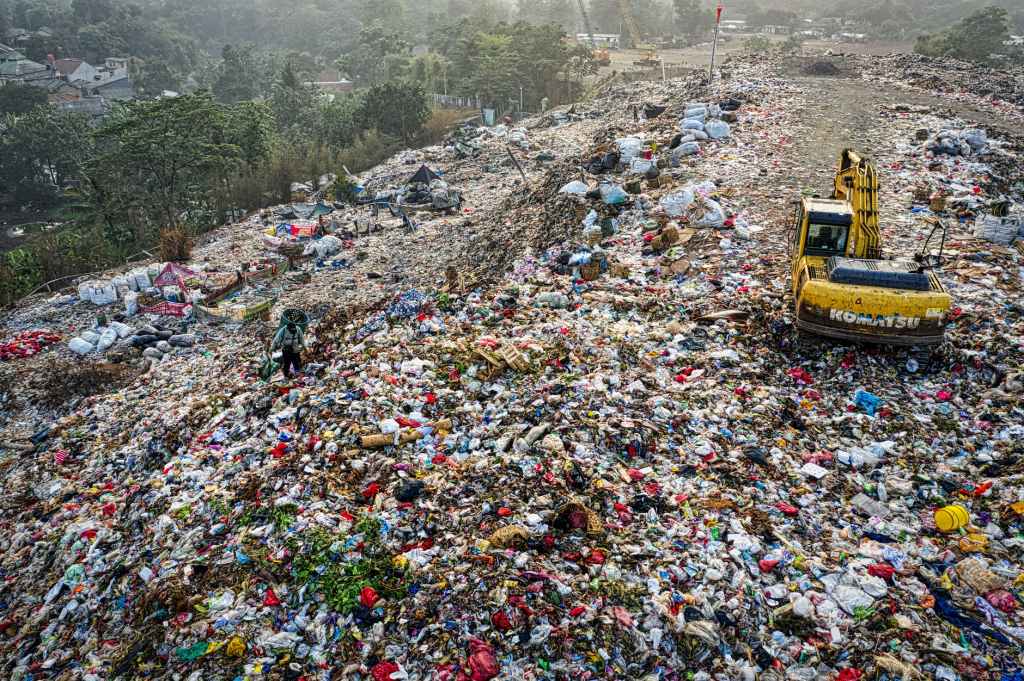
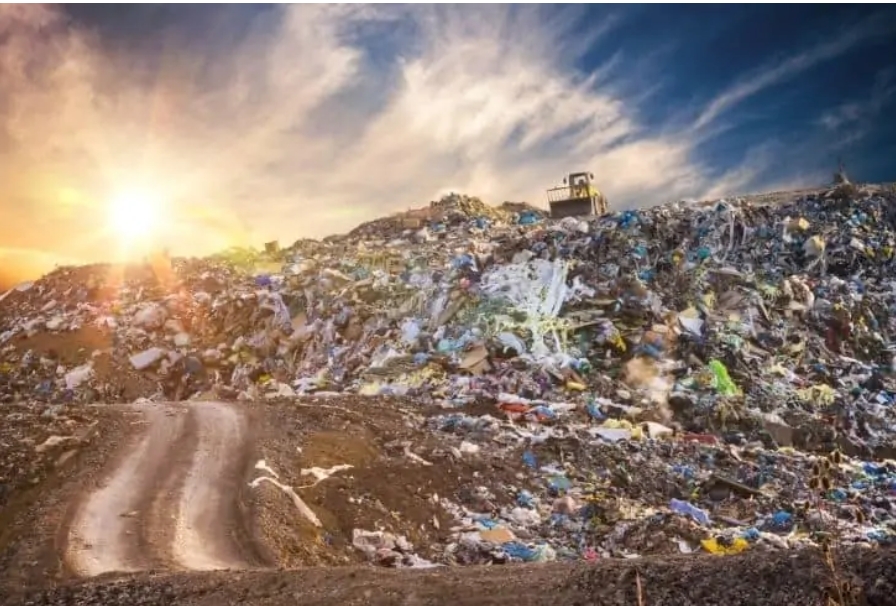
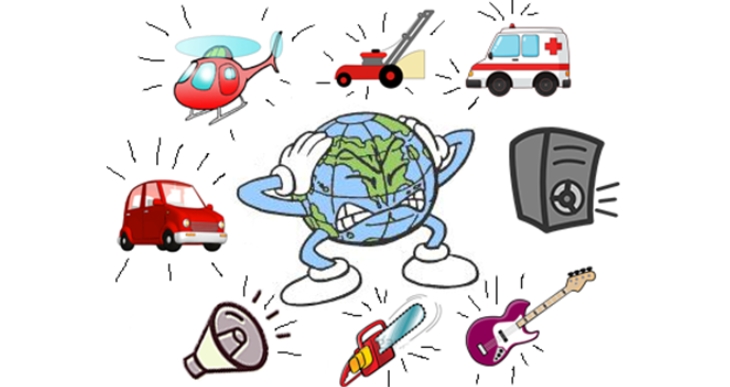
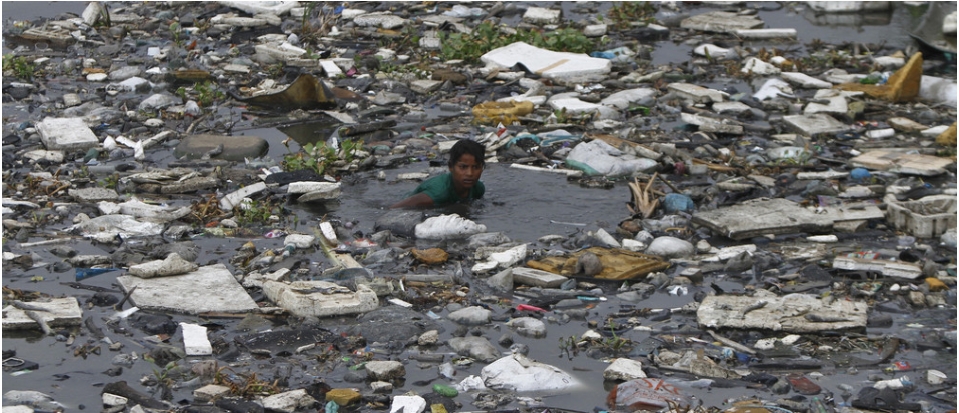
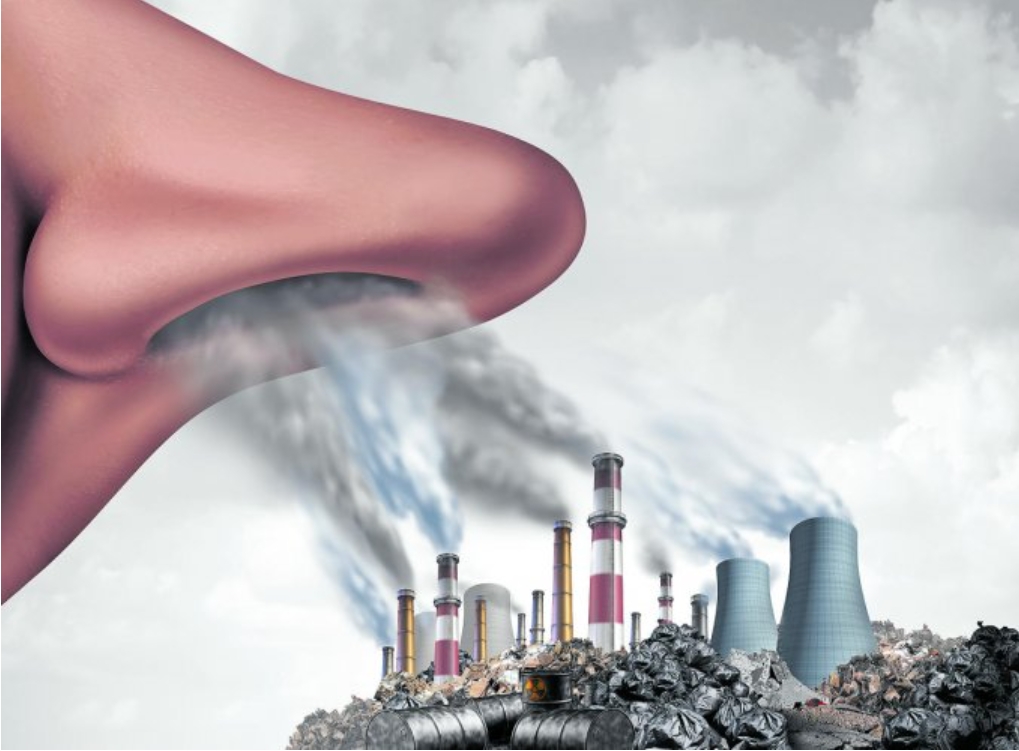
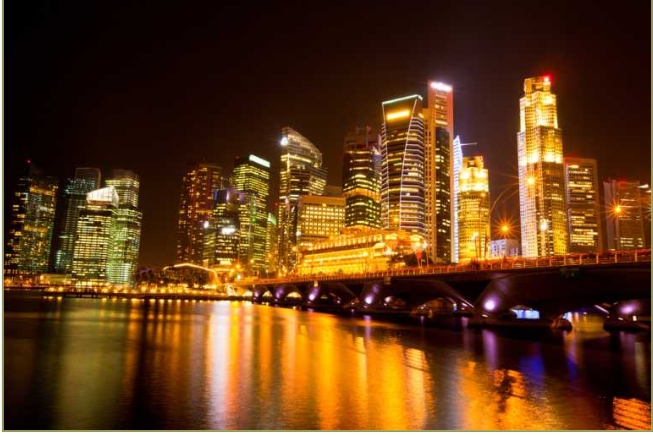

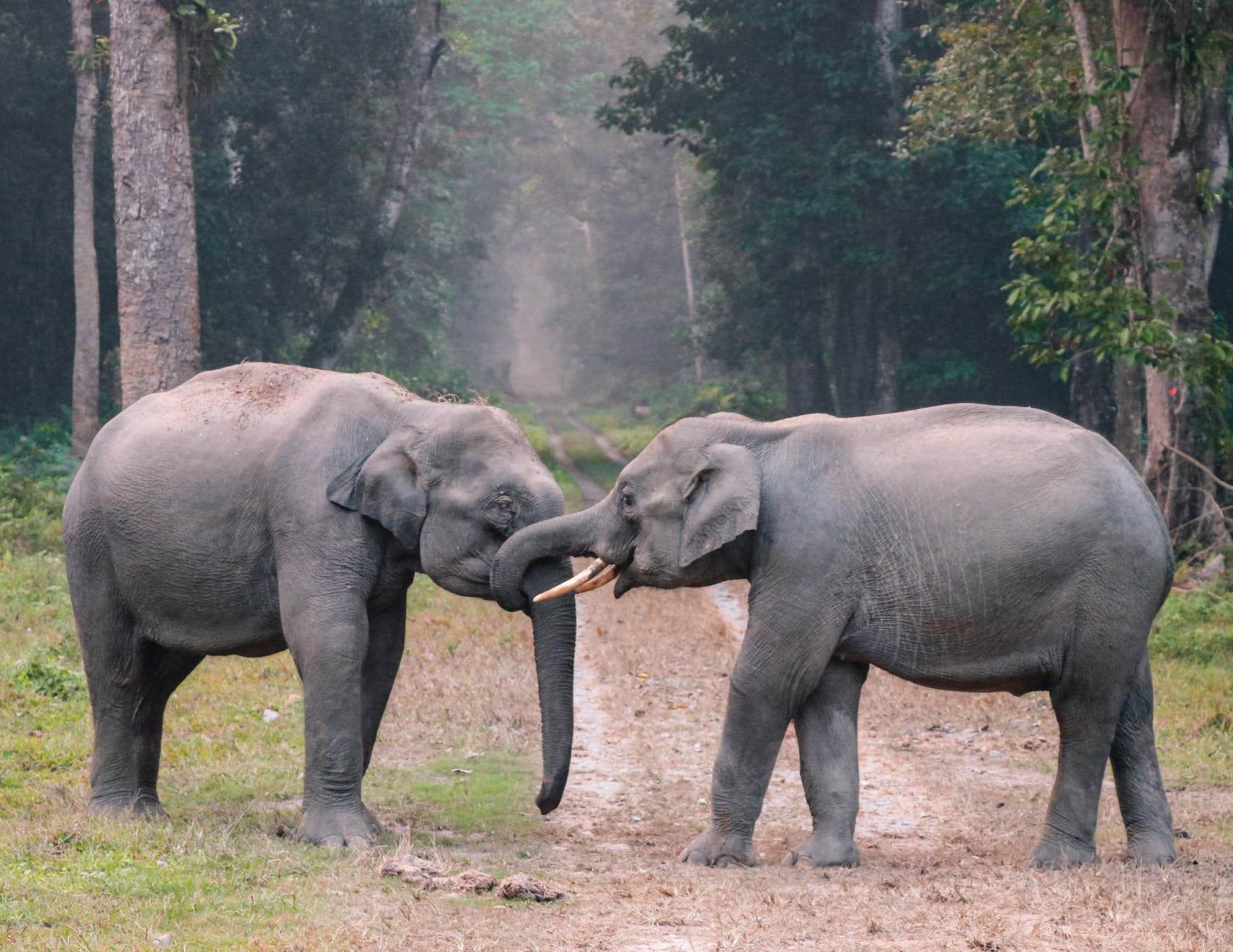











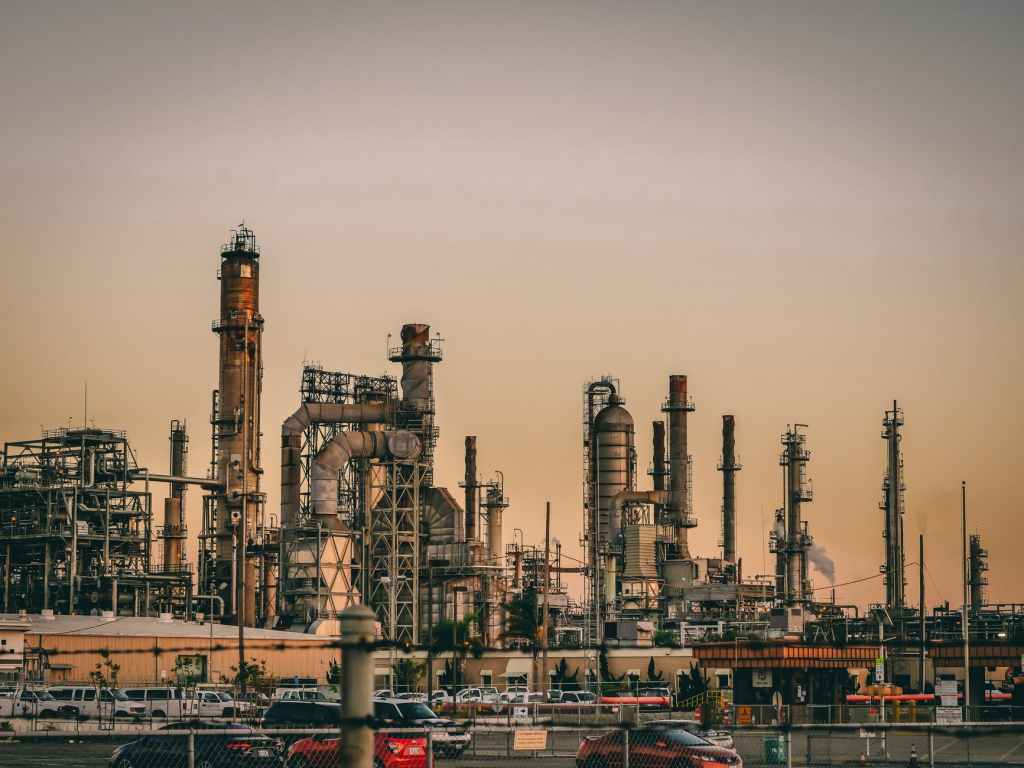


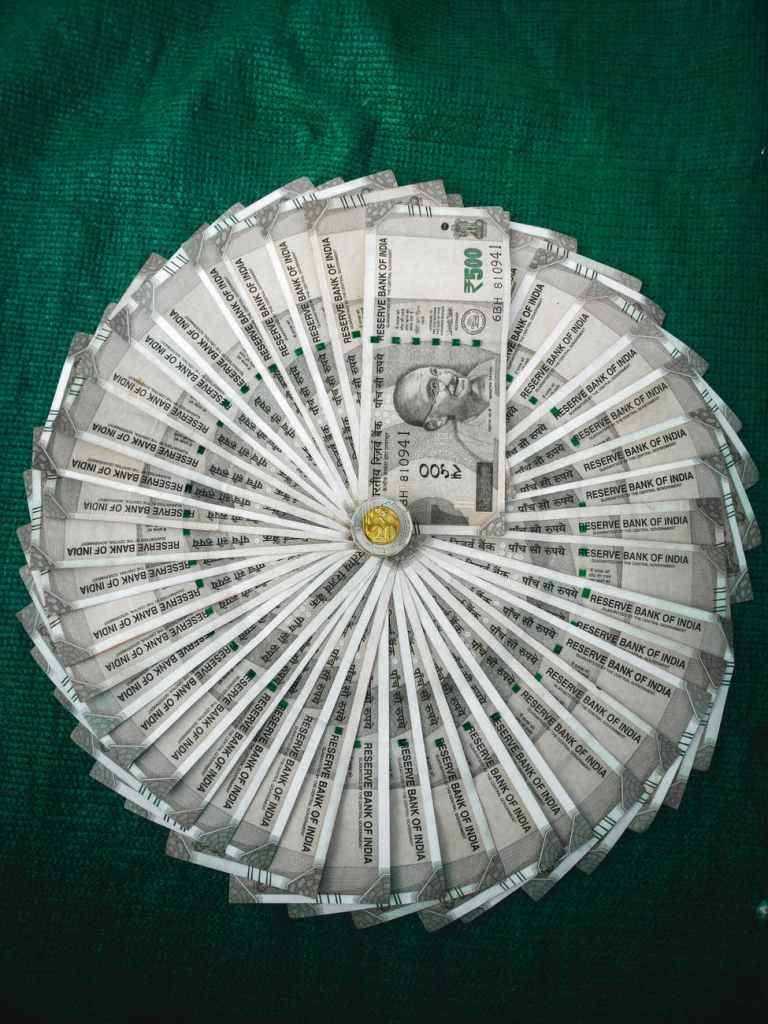
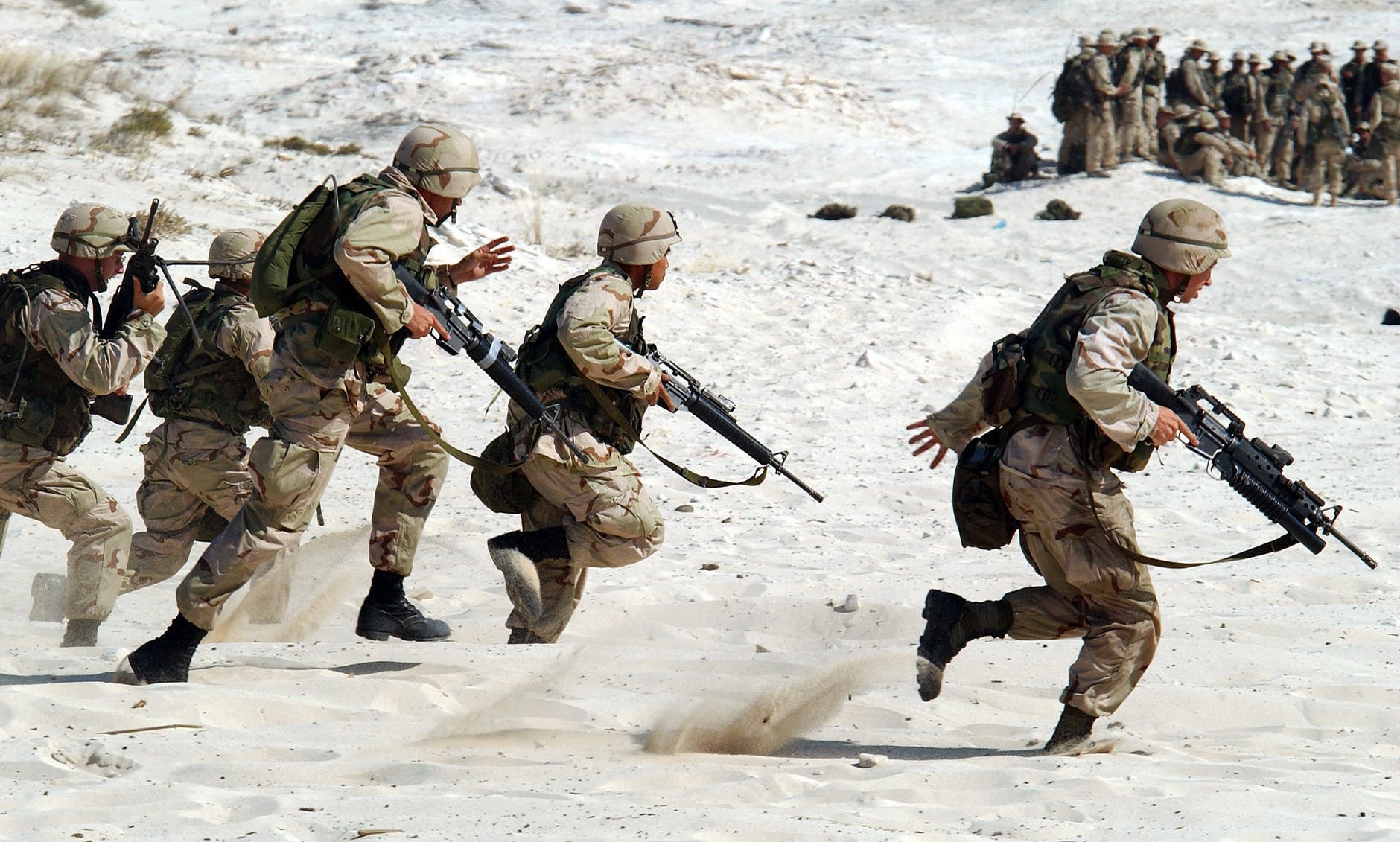
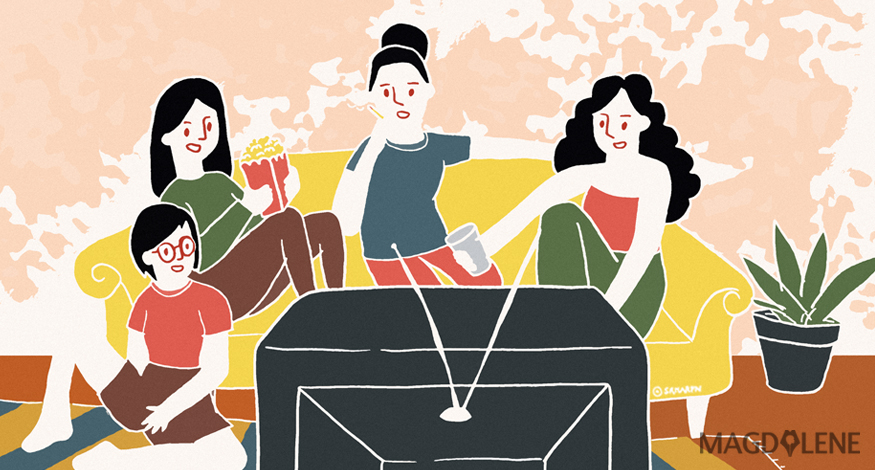






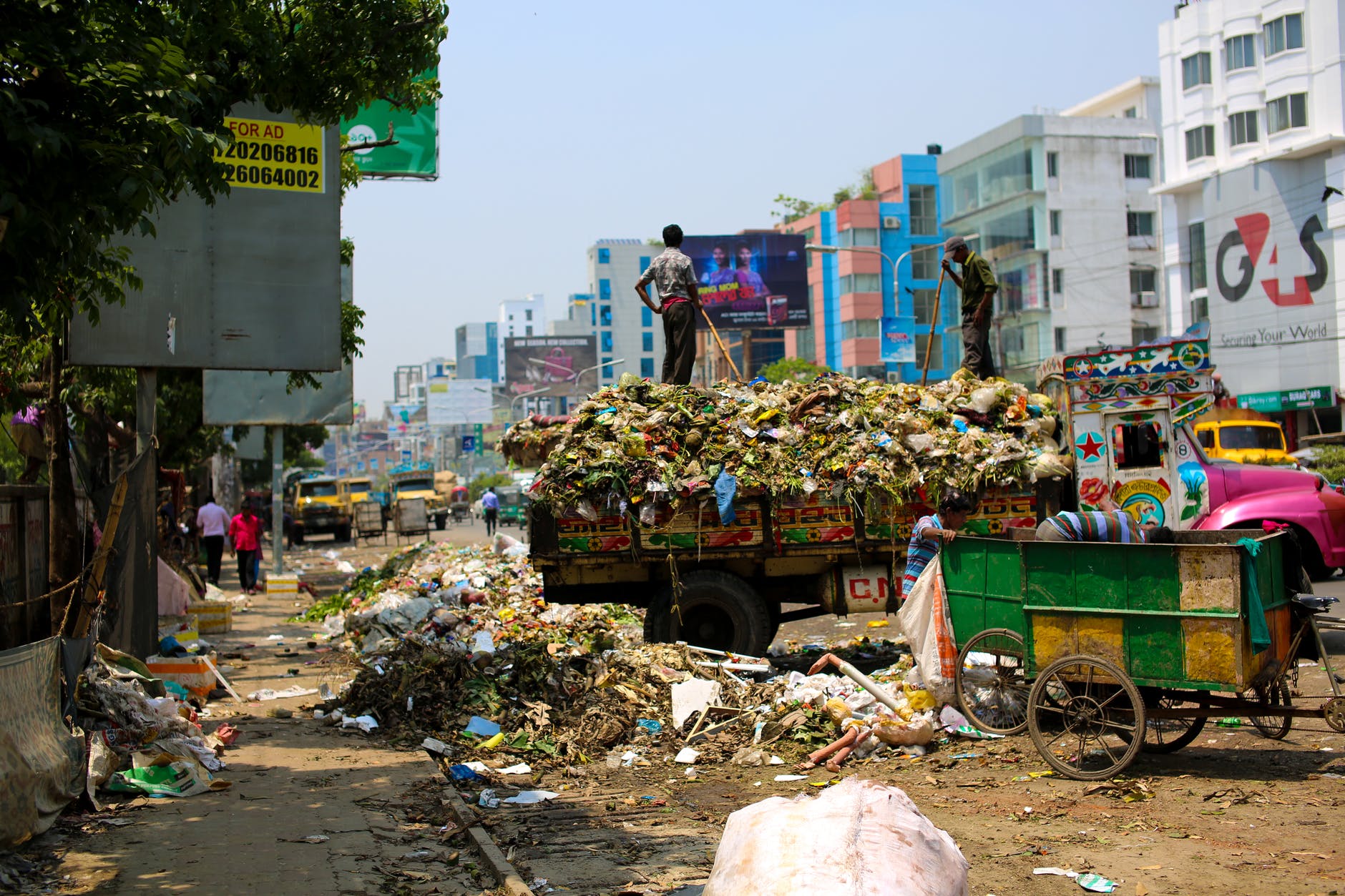


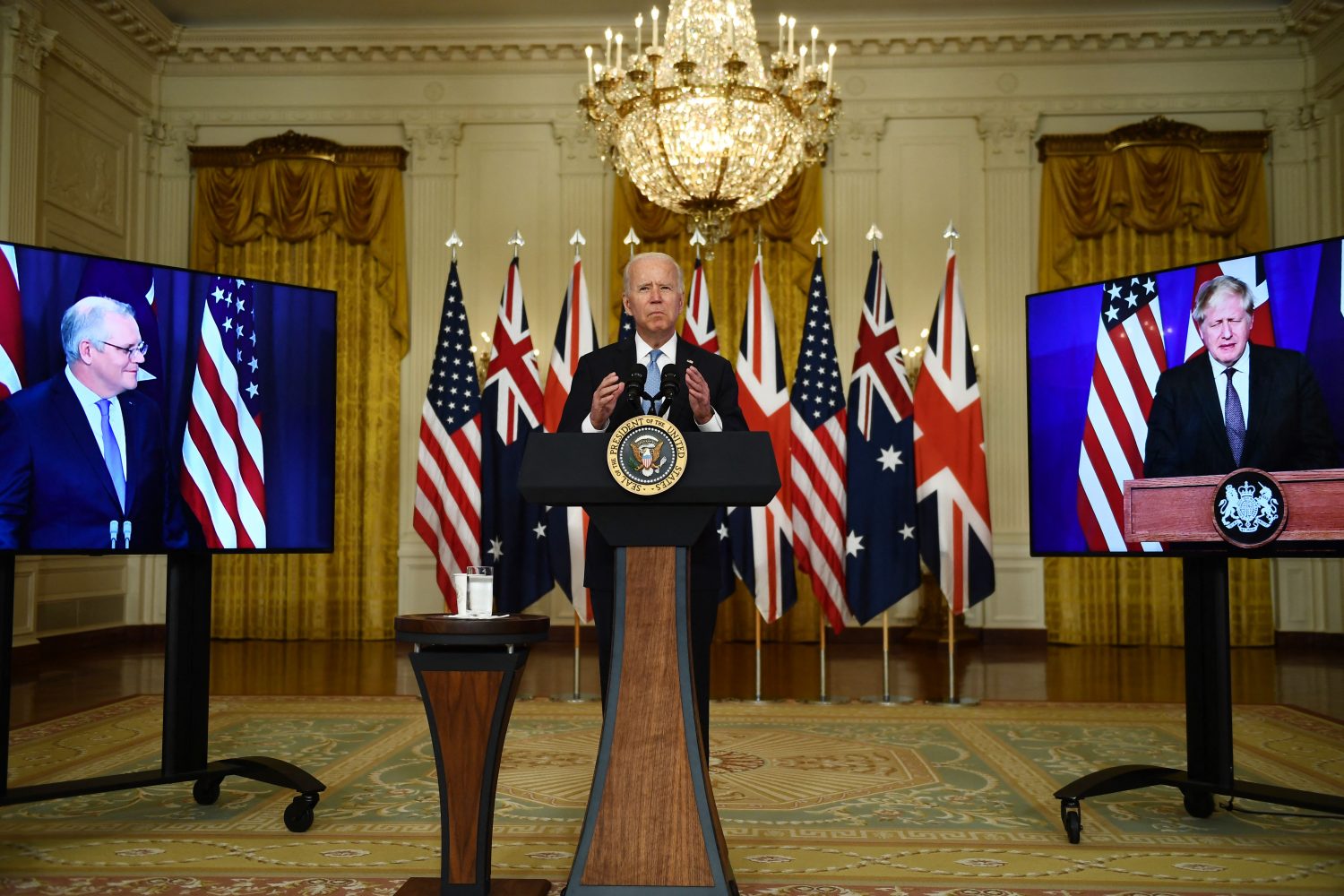
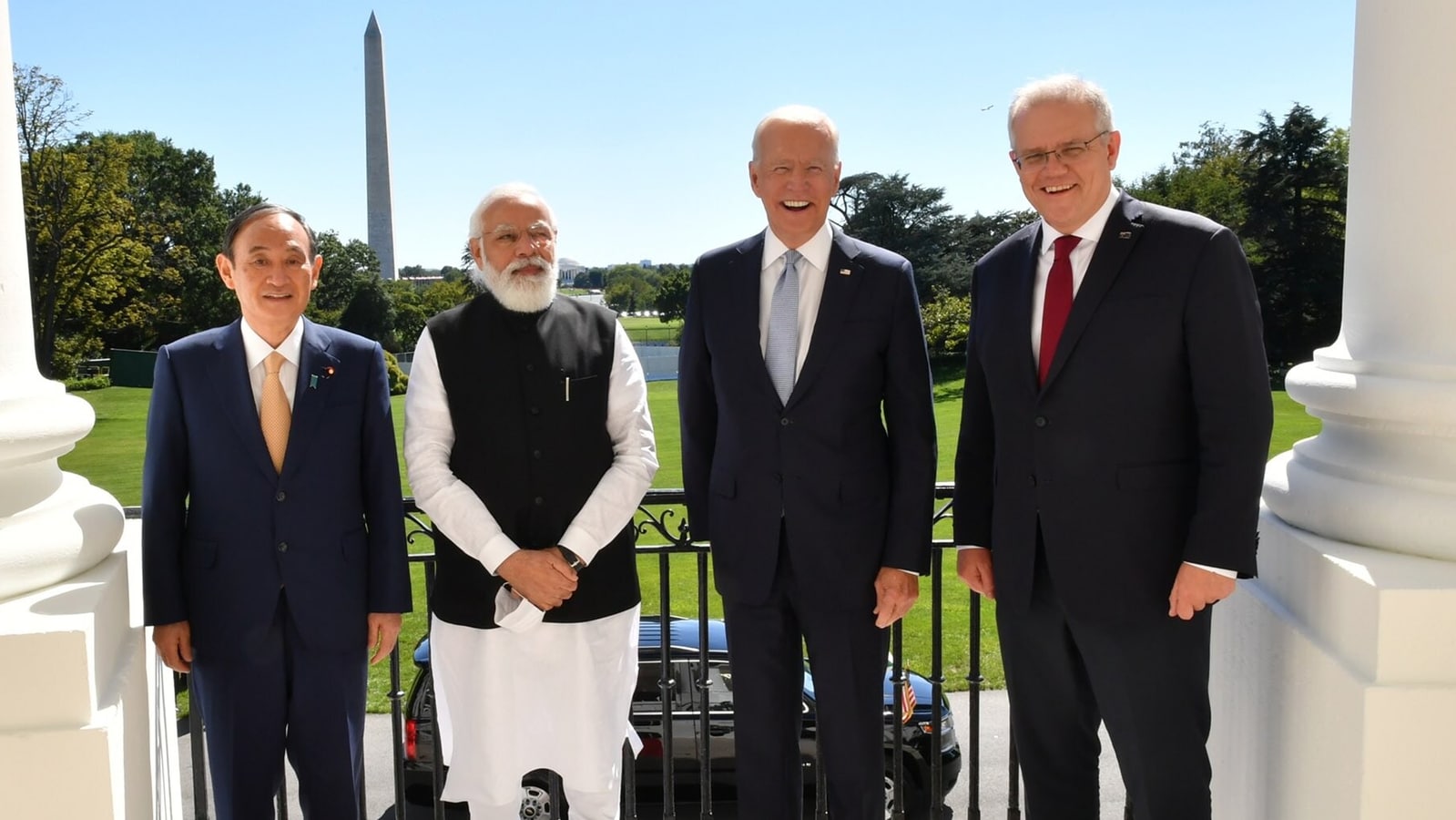


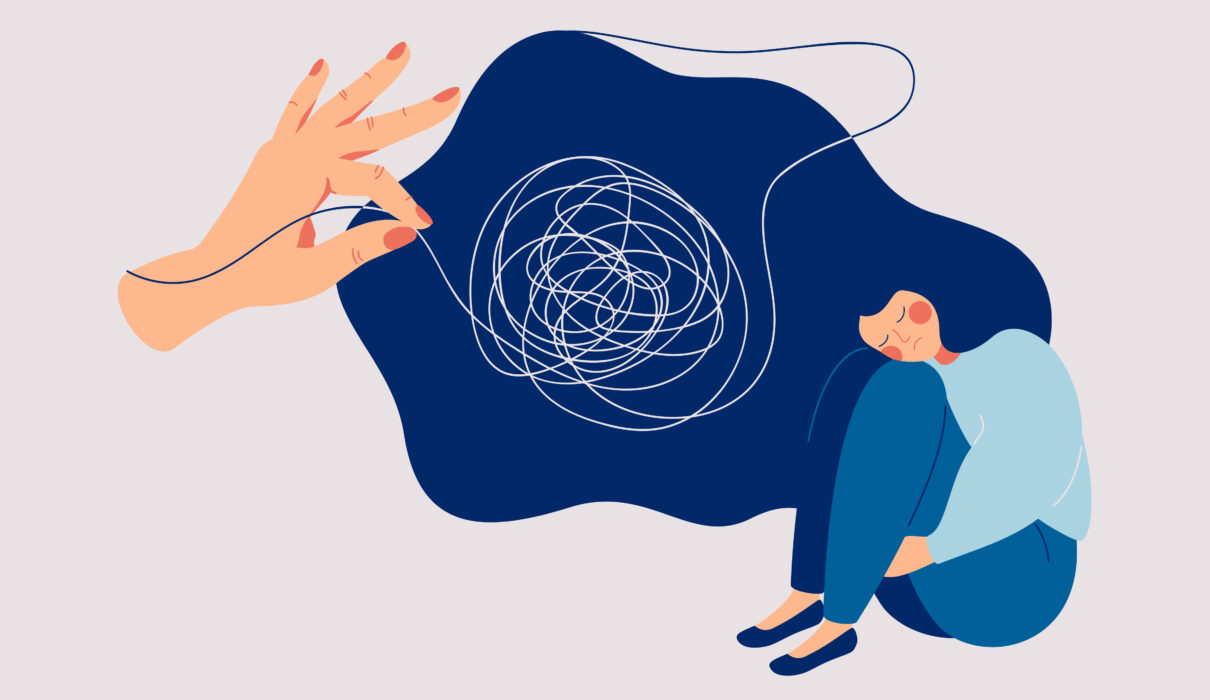


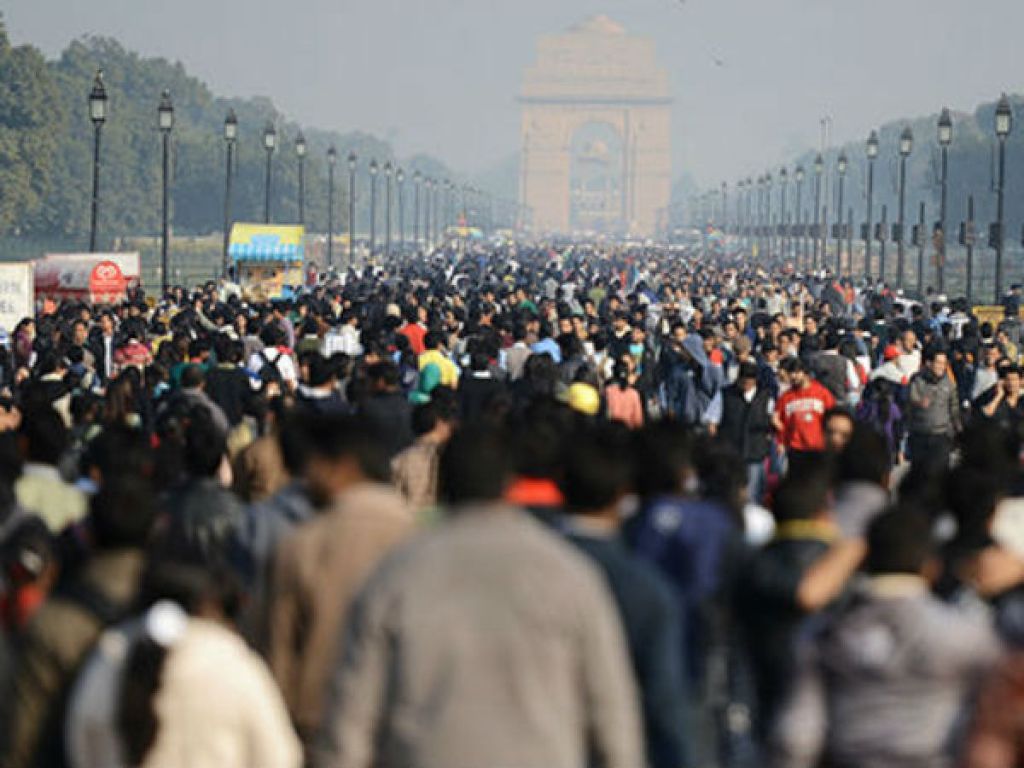


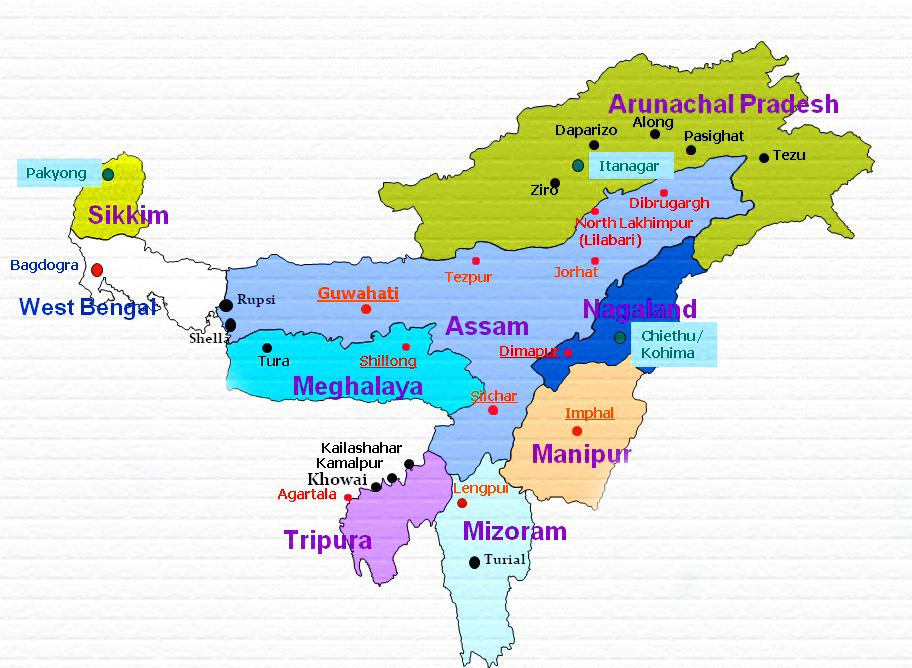
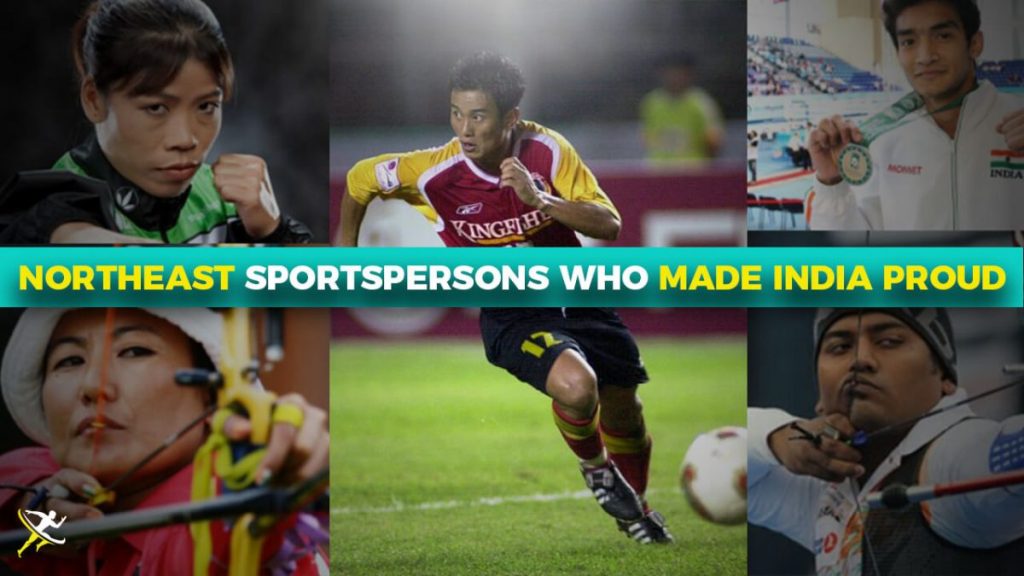
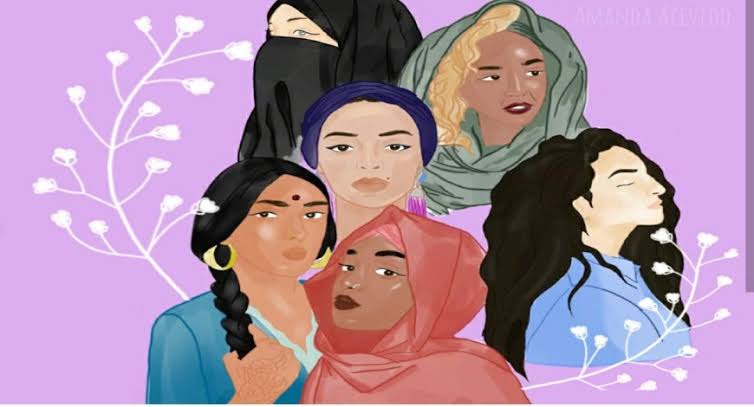


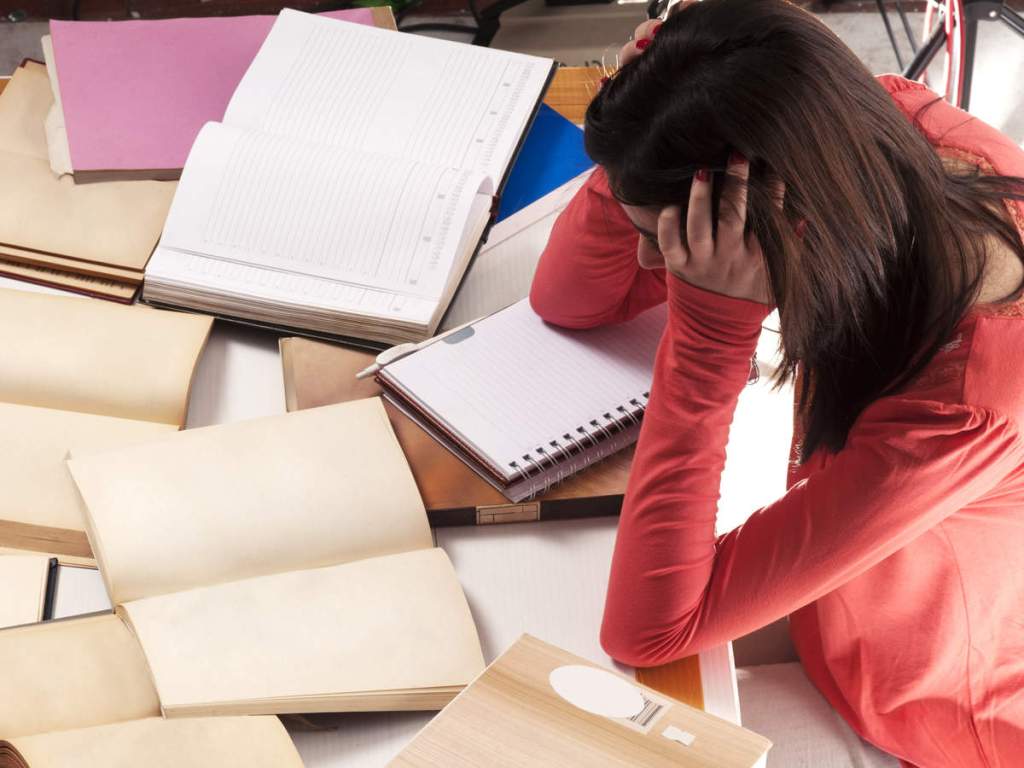


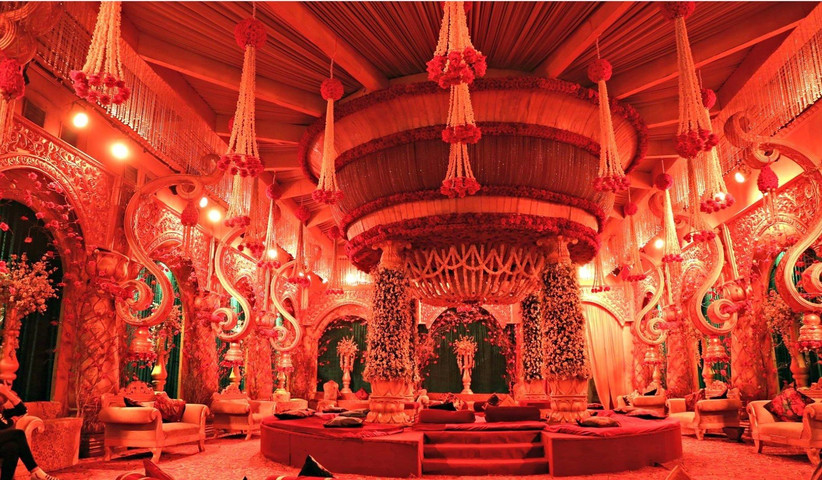









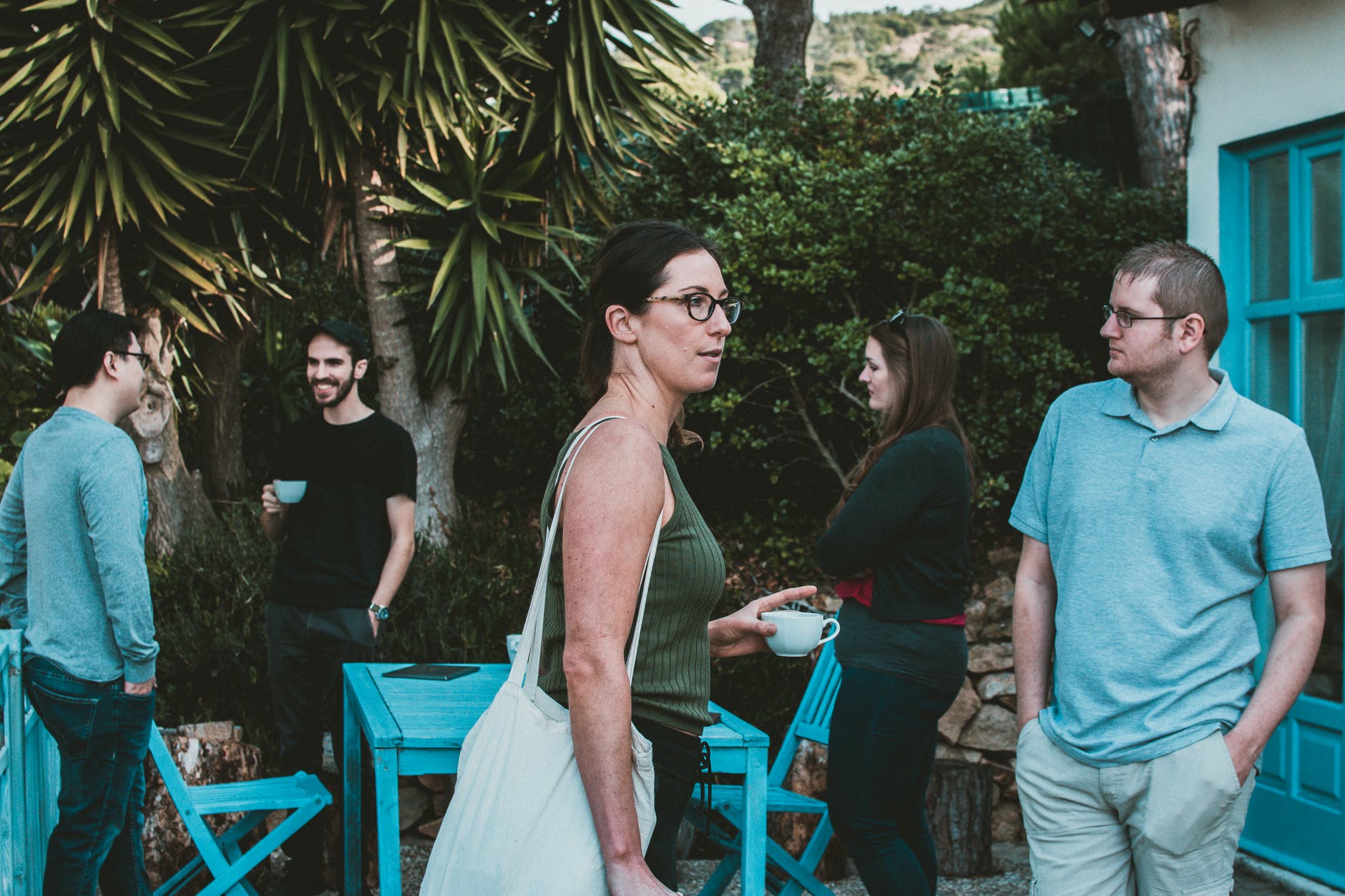


 Track2Training
You must be logged in to post a comment.