“At first people refuse to believe that a strange new thing can be done, then they begin to hope it can be done, then they see it can be done – then it is done and all the world wonders why it was not done centuries ago.”
‘The Secret Garden’ by Frances Hodgson Burnett, though belongs to children’s literature, is an interesting read even for adults. Mary Lennox, a sick looking girl, goes to Yorkshire after her uncle takes her custody due to the death of her parents in India. Having brought up without any motherly love and having got her way in everything from her childhood, Mary finds Yorkshire a new world. Her caretaker Martha, being a young girl herself, isn’t subservient to Mary and this is all new to Mary who has always got her own way. Mary learns about Yorkshire from Martha and also learns about the Secret garden in her uncle’s manor. The door to that garden was locked ten years ago and the key has also been buried, whose whereabouts no one knows. Intrigued by this, Mary tries to find the secret garden. The book progresses to show whether Mary finds the secret garden and what she finds in there and what effect it has on her.
Colin, who is also of the same age as Mary, is introduced as a sick and bed ridden boy. As the story progresses, we can also see that he imagines an illness which he doesn’t have and expects to die soon. In simple words, Colin suffers from hypochondria. So, what happens when Mary and Colin meet? What changes do they bring to each other? How will Mary assure Colin that he won’t die? All these are answered as the plot unfolds.
One character that everyone has to look out for in the novel is Dickon. Just as how he is loved by everyone in the novel, he is loved by every reader. Who doesn’t love a person who is friends with every animal, bird and plant. Being elder to Mary and Colin by two years, Dickon acts as a good friend and as an agent of positive influence on them.
This novel is a healing novel. It has the best lines which teaches the reader on how living with nature heals the soul and makes one to grow positive and healthy. When we see things budding and thriving to come out of the earth, it makes us believe we can grow too.
“If you look the right way, you can see that the whole world is a garden.”
Another lesson we learn from the book is about magic. Now, you don’t need to relate magic to flying castles and extraordinary power. Magic is found in everything even within us. That which makes things come true is magic. That which fills us with goodness and makes us move forward is magic. Magic is in everything.
“Magic is always pushing and drawing and making things out of nothing. Everything is made out of magic, leaves and trees, flowers and birds, badgers and foxes and squirrels and people. So it must be all around us. In this garden – in all the places.”
The novel is an amazing read except for the racism and stereotypes it contains against India. Thus, ‘The Secret Garden’ is a book you would love to read and recommend.
The paper gives an all-inclusive review of the venerated Pashupati Seal recovered from Mohenjodaro, one of the cardinal sites of the Indus Valley civilization. Regardless of its size, the seal is a centre of extensive scholarly attraction. A plethora of scholars study the seal and attempt to identify the central figure in the seal surrounded by animals. While scholars like John Marshall identify the central figure as tricelaphic and ithyphallic and relates it with Rudra-Shiva, others give Dravidian, Vedic and Post-Vedic interpretations of the seal. The pictograph present above the seal commands equal attention but remains an enigma as the boustrophedon Indus script is undeciphered to date and so is the conundrum associated with the same.
Introduction
The Pashupati seal, being an exotica recovered from the southern region of the DK-G area of Mohenjodaro, 3.9 metres below the surface; arouses varied interpretations from a school of scholars, historians, Indologists and scientists. In his 1937-’38 report, Ernest Mackay dated the seal to fall within 2,350-2,000 BCE and numbered the seal as 420. The 3.56cm x 3.53cm seal is devised out of steatite and has a thickness of 0.76cm.
The central figure is found seated on a platform looking straight with legs bent at the knees. The heels of the figure touch each other and the toes point downwards. The arms are extended to reach the bent knees but don’t touch them- they rest lightly upon the knees and the thumbs face away from the body. The hands are embellished by three small bangles and eight large bangles. There are double band wraps around the waist with necklaces covering the chest. The figure has elaborate head-dresses that appears to be a fan-like crown with two huge striated horns similar to that of a bull. The central figure is surrounded by four animals- a water rhinoceros, a tiger, a bull and an elephant. Below the figure, one may notice two ibexes facing backwards with their horns meeting each other. Above the central figure is seven boustrophedon pictographs that are undeciphered to date.
John Marshall identifies the central figure to be one of the earliest representations of Hindu god Shiva in his 1928-29 publication. However, his claims are criticized by a school of scholars but identifying the seal with proto-Shiva or Rudra Shiva, his Vedic predecessor; seems to be the most accepted claim. With the Indus script that remains undeciphered to date, the pictograph above the figure remains an enigma. Following Marshall’s claims, many scholars conducted independent researches that came out with a series of conclusions: while Doris Srinivasanclaims the figure to be a divine bovine man, Alf Hiltebeitel claims it to be the depiction of puranic Mahisasura. SR Rao claims it to be a depiction of Vedic God Agni while SP Singh identifies the figure to be Rudra, the Vedic predecessor of Lord Shiva.
Notwithstanding the scholarly tussle over the seated figure, the seal is an element of archaeological marvel. The seal along with all the artefacts recovered from the sites of Pakistan was claimed during the partition melee. However, the Government of India refused and finally, an agreement was made to hand over around 8,000 Indus Valley articles out of a total of 16,000. While the Priest-King was claimed (and successfully received) by Pakistan, the Dancing Girl and Pasupathi Seal were retained by India.
The Pashupati Seal
Seal 420 as Proto-Shiva
In his 1928-29 publication, John Marshall identified the central figure to be Lord Shiva. Firstly, he claims that the seated figure represents the lord of all beasts or Pashupati. It is worth noting that Pashupati is one of the epithets of Lord Shiva. Secondly, he claims that the figure is tricelaphic and Lord Shiva is sometimes depicted with three or five heads. Some scholars claim that the fourth or the fourth and the fifth head remains unseen in a 2-D interface. However, Lord Shiva is also depicted as having four or five heads. Thirdly, he identifies the elaborate headdresses to be congruent with the trident and the two large horns to be the horns of a bull. Both the trident and the bull symbolises Lord Shiva as the trident is his weapon and the Bull is his mount. Fourthly, he claims that since the central figure is sitting in a typical yogic posture, he could be identified with Lord Shiva. Lord Shiva is also known as Adiyogi or Mahayogi who is considered the originator of Yoga.
In his 1931 publication, he added that the Pashupati seal is ithyphallic and he claimed that certain stones and seals recovered from the Indus Valley hints at sex worship or phallic worship. Since linga is undoubtedly linked with Lord Shiva, he claims the central figure in the Pashupati seal to be the Indus depiction of proto-Shiva. However, late scholars have pointed out that that the stones that are claimed to be sex symbols by Marshall may be game stones or gamesmen. One of the notable scholars with the same viewpoint is Ernest Mackay who claimed that:
“... Various small cones made of lapis lazuli, jasper, chalcedony, and other stones, most beautifully cut and finished, and less than two inches in height, are also thought to be lingas … on the other hand, it is just as possible that they were used in the board-games …”

-Early Indus Civilisation, 1948.
Divine Bull-Man?
On other hand, Doris Srinivasan came with an alternate approach and claimed that the central figure is a divine buffalo man. She identified the figure to be having a single head and claimed that what Marshall claimed to be two extra faces are ears of the buffalo man. She backed her findings with various articles recovered from other Harappan sites that hint at the association of buffalo or attributes of buffaloes with divinity.
She attempted to relate the central figure of seal 420 with the terracotta bull recovered from Kalibangan, horned mask unearthed from Mohenjodaro and a horned deity represented in a water pitcher recovered from Kot Diji. With reference to these parallels, she interprets Marshall’s proto-Shiva as a divine buffalo man.
Nonetheless, the significance of the animals surrounding the bull-man is a mystery. She claims that these animals may represent divine powers and reinforces the strength of the bull-man. However, the description seems to be dissatisfactory.
Rudra- The Rigvedic Predecessor of Lord Shiva
Another notable interpretation of the Pasupathi seal comes from SP Singhwho identifies the seated figure to be Rudra. Rudra is the Vedic predecessor of Lord Shiva nonetheless, the Rig Veda has only three hymns attributed to him. However, Rig Veda’s verse 2.33.11 depicts Rudra as fearsome as a formidable wild beast. It is also to be noted that verse 7.46.3 mentions that Rudra is armed with a bow and fast-flying arrows. There is no mention of the trident as well as a bull which’s depicted as the mount of Lord Shiva in later Puranas and epics. The Rig Veda depicts Rudra as the lord of the hunt who’s known for his ferociousness and wrath and the depiction doesn’t fit a tranquil Pasupathi. But verse 10.92 of the Rig Veda mentions that Rudra has dual natures- wrathful and tranquil. The tranquil nature of Rudra can be viewed as Shiva, Yogi or Pasupati.
However, even if the Rig Veda doesn’t conform to the trident and the bull as the symbols of Rudra, it is so in the later texts. Erwin Neumayer and VS Wakankar identified some of the Bhimbetka paintings carbon-dated pre-10,000BCE to be associated with Natraja, the dancing depiction of Lord Shiva.
Moreover,SP Singh claims that the animals surrounding Rudra– the tiger, bull, elephant and the rhinoceros are Maruts or Rudras. Verse 2.33 of Rig Veda states that Rudra is the father of Maruts and the 64th verse of the first book of the Rigveda compares the Maruts to lion, deer, bull, elephant and a serpent. This can be the basis of SP Singh’s observation. It’s believed that Maruts are storm Gods who are the children of Rudra and an androgynous cow, Prisni. Verse 8.96.8 of Rigveda numbers Maruts from twenty-seven to sixty. However, later Puranas mention that Maruts are born from the battered womb of Diti, the mother of all demons. Puranas suggest that Indra used his thunderbolt over Diti’s womb so as to prevent the birth of a demon who could rival Indra. The Puranas also suggests that Indra befriended the Maruts at a later stage and came to be known as Marutvant. He was accompanied by the Maruts while defeating the serpent king Vritra or Vedic Ahi who is represented as a dragon blocking the flow of rivers and thus, inviting drought. The hymn eighteen of the fourth book of Rigveda illustrates the series of events pertaining to the heroic battle between Indra and Vritra.
Harappan Navaratri?
One of the most interesting Vedic interpretation of the Pasupathi seal is given by Alf Hiltebeitel. He claims that the central figure seated is Mahishasura. The festival of Navaratri eulogises the epic battle between Mahishasura, a very powerful buffalo demon and goddess Durga, an incarnation of Devi Parvati, the consort of Lord Shiva. He claims that the animals depicted are the mounts of different Gods- like Bull (Nandi) is the mount of Lord Shiva, Tiger (or Lion) is the mont of Goddess Durga and Elephant (Airavata) is the mount of Indra.
Conclusion
Notwithstanding these interpretations sprawling from Marshall’s proto-Shiva to Alf’s Mahishasura, there are many other interpretations by various celebrated scholars. No other Indus Valley artefact might have been the base of such intense scholarly attention.
Out of the available interpretations, Herbert Sullivan of Duke University claimed that the seated figure is a woman. She claimed that what Marshall claimed to be the phallus is, ipso facto, a tassel. Asko Parpola studied the Pashupati seal and claimed that the seal is an imitation of the proto-Elamite method of seating bulls. Some claims that the seated figure is an aquatic deity while others claim the seated figure to be Varuna (Water God), Agni (Fire God) and even Indra (Rain God). Some scholars also draw parallels from the Gundestrep Cauldron while others identify the central figure to be the Sage Rishyasringa of Ramayana Epic. However, there are some group of scholars who claim that the figure is not determinable.
Amongst all interpretations, Marshall’s proto-Shiva is still celebrated and the seal 420 is still known by the name, Pashupati. Some scholars also claim that the seal invariably hints at the existence of Yoga at that time. It’s not only the central figure and the animals nearby that attracts scholarly attention but the pictograph is also considered on par. The mystery may be partially solved if the boustrophedon script of the Indus valley is deciphered and the pictograph, read. However, the seal remains a question mark to date. More and more interpretations of the seal 420 are coming from various research scholars and universities with the due course of time and remain one among the Indus Valley exotica.
References
Hiltebeitel, Alf (2011). “The Indus Valley “Proto-Śiva”, Reexamined through Reflections on the Goddess, the Buffalo, and the Symbolism of vāhanas”. In Adluri, Vishwa; Bagchee, Joydeep (eds.). When the Goddess was a Woman: Mahabharata Ethnographies – Essays by Alf Hiltebeitel.
Mackay, Ernest John Henry (1928–29). “Excavations at Mohenjodaro”. Annual Report of the Archaeological Survey of India: 67–75.
Mackay, Earnest John Henry (1937–38). Further excavations at Mohenjodaro: being an official account of archaeological excavations at Mohenjo-Daro carried out by the Government of India between the years 1927 and 1931. Delhi: Government of India.
McEvilley, Thomas (1981). “An Archaeology of Yoga”. RES: Anthropology and Aesthetics. 1 (1): 44–77.
Marshall, John (1931). Mohenjo-Daro and the Indus Civilization: Being an Official Account of Archaeological Excavations at Mohenjo-Daro Carried Out by the Government of India Between the Years 1922 and 1927. Asian Educational Services.
Possehl, Gregory L. (2002). The Indus Civilization: A Contemporary Perspective. Rowman Altamira.
Samuel, Geoffrey (2017) [2008]. The Origins of Yoga and Tantra. Indic Religions to the Thirteenth Century. Cambridge University Press.
Srinivasan, Doris (1975–76). “The So-Called Proto-śiva Seal from Mohenjo-Daro: An Iconological Assessment”. Archives of Asian Art. 29: 47–58.
Srinivasan, Doris Meth (1997). Many Heads, Arms and Eyes: Origin, Meaning and Form in Multiplicity in Indian Art.
Sullivan, Herbert P. (1964). “A Re-Examination of the Religion of the Indus Civilization”. History of Religions. 4 (1): 115–125.
Bryant, Edwin (2001). The quest for the origins of Vedic culture the Indo-Aryan migration debate. New York: Oxford University Press.
Basham, A.L. (1989). Zysk, Kenneth (ed.). The Origins and Development of Classical Hinduism. New York City: Oxford University Press.
Bhandarkar, Ramakrishna Gopal (1995) [1913]. Vaisnavism, Śaivism, and Minor Religious Systems (Third reprint ed.). Delhi: Asian Educational Services.
Chakravarti, Mahadev (1994). The Concept of Rudra-Śiva Through The Ages. Delhi: Motilal Banarsidass.
“….Was it the time I realised that adults were not
all they seemed to be,
They talked of love and preached of love,
But did not act so lovingly…."
As Markus Natten had beautifully pointed out in the above lines, adults find their place in the long rolls of hypocrites. They talk of love and preach of love, but these are only confined to words. One of the most cardinal preachings of the adults is on an essentially contested topic of ‘truth’. They always ask us to speak the truth and punish us for not doing so. However, does this really mean that adults are the epitome of righteousness and truth to an extent that they only speak the truth? Well, obviously, the most rational answer is ‘no’. All aren’t Mahatma Gandhi no? Then what backs the essence of truthfulness or righteousness imparted by the adults to the younger generation? How is it legitimized?
Family is considered to be the lowest unit of social interaction. It’s the lowest social organization. If it is the miniature version of the society, the family will be, ipso facto, communitarian in spirit. As always, some liberal values are to be compromised in a communitarian atmosphere. Consequently, the size of the families started reducing and today, we can find people living alone preserving their sacrosanct individuality. The more the size of the family, the more communitarian it is and the more liberty, rights and independence are compromised. Family hence becomes a sphere of power- where power is feloniously exercised by the elders and the youngest ones and mostly women being mute recipients of the communitarian power thus exercised. All power relations are marked by hierarchy and family thus becomes a hierarchy of the elders over the younger ones and sometimes that of men over women. The hierarchy of men over women in the family was challenged by the second wave feminists with a powerful slogan of ‘the personal is the political’. But what can the younger ones do? Simply being mute victims of the authoritarian, totalitarian and communitarian decision-making process with the least representation of themselves even on matters regarding their life, liberty and property.
Coming back to the notion of truth and lie, the adult’s lie is often legitimized as a ‘good lie’. A ‘good lie’ is something that can be told, preached and are legally plausible. As opposed to this concept is the ‘bad lie’ that cannot be told, cannot be preached and invites punishment. But what makes a lie a ‘good lie’ or a ‘bad lie’? As far as I’ve observed, there can be two ways to determine what’s a ‘good lie’ and what’s a ‘bad lie’. Firstly, the lie told by the adults comes under the banner of a ‘good lie’ whereas the same lie told by the younger ones become a ‘bad lie’. What is to be noted in this case is age is the criteria that determine the nature of your lie. Secondly, the lie which the children are made to say on behalf of the adults also comes under the category of a ‘good lie’. However, if the same lie is told by the child without the directions of the ‘high command’, then it is criticized to be a ‘bad lie’.
Another interesting concept about this distinction is that the concept is not equally applicable to all situations. What all constitute a ‘good lie’ and what constitutes a ‘bad lie’ are determined from time to time by the adults. Also, a ‘good lie’ in my case needn’t be a ‘good lie’ in your case. Forget it. It’s you and me. A ‘good lie’ in my case today may not be a ‘good lie’ tomorrow and a ‘good lie’ in my case may not be so in my brother’s case. What is to be extrapolated from the situation is that the concept of ‘good lie’ and ‘bad lie’ are flexible- flexible to the overpowering whims and fancies of the adults and obviously, to the disadvantage of the children. In toto, what makes a lie qualified to be a ‘good lie’ simply depends upon the person who says it or the person by whose supervision it is said. This concept changes from time to time and place to place and even from person to person and families to families. This is quite natural, owing to the communitarian structure of the family. In the modern era, for social institutions like families to survive, it is necessary to democratize the structure. Internal decision-making processes shall be democratized and sacrosanct rights are to be protected with reasonable justifications. Also, any encroachment in the realm of such rights shall not be tolerated and the burden of justification shall be placed upon the adults. May the liberal ideas liberally sprinkle upon the social institution of the family.
While the pandemic has confined us to our homes, we would want to try out new hobbies during our free time. Photography can be one of them. As a beginner in photography, you may want to try different kinds of photography before deciding your favorite.
FOOD PHOTOGRAPHY:
This type of photography is known to all because of social media trends. This photography aims to capture the food in an appetizing way. Most of the time, it promotes a certain restaurant or a new dish and appears in cookbooks, magazines, advertisements and so on.
ARCHITECTURE PHOTOGRAPHY:
Architecture photography focuses on buildings both interior and exterior. Photographers try to emphasise the details of the building and the structure as a whole in an aesthetically pleasing way. When the shoot is exterior, the photographer should pay more attention to lighting and exposure.
PRODUCT PHOTOGRAPHY:
Product photography is a part of commercial photography. It aims to promote the product and emphasises its features. They are mostly shot in studios with careful lighting set up. The photos of the product should lure the customers to buy it.
WILDLIFE PHOTOGRAPHY:
This type of photography has a toil on the photographer because one has to wait hours for the animals and has to capture them at the perfect moment. This type also appears in magazines, books and encyclopedias. Even if we can’t go outdoors, we can try photographing animals around us or even our pets.
FASHION PHOTOGRAPHY:
As everyone knows, fashion photography focuses on apparels and accessories. Fashion photography is divided into editorial fashion photography, catalog photography, high fashion photography and street photography. The first type follows a certain theme or story line and the models are expected to express the theme. High fashion photography is by which fashion companies publicise their products through models, actors and actresses and other influencers. Just as the name says, Catalog photography photographs products in a way to advertise them to the public. Street photography focuses on the style of common people and brings out their fashion sense.
MACRO PHOTOGRAPHY:
Macro photography captures the miniatures, the fine details and of everything that a normal human eye cannot observe. Photography of insects, bugs, flowers, dew drops come under this type. The subject is made to stand out by displaying every minute detail of it. As interesting as it sounds, the lens used for this type is quite costly too.
AERIAL PHOTOGRAPHY:
This photograph presents a bird view of the subject. Because it is shot from a height, drones are sometimes involved.
LANDSCAPE PHOTOGRAPHY:
It is an outdoor photography focussing on nature, environment and lands. The photographs are picturesque and remind us of our travels. Nowadays, even photography of seas, oceans and water comes under landscape photography.
The other types of photography which are not discussed are event photography, wedding photography, still life photography and so on. There are so many types of photography because there is so much to capture and not every photo can be classified under a select few categories. Hence, it is always fun to try photography as a hobby!
When we break up or decide to move on, it might sound easy but the person who goes through it exactly knows how painful it is.
One has to be patient in this process, and have to keep reminding yourself that it will get easier with time because things can be really painful. Whether you are trying to get over a long relationship, a short-lived fling, or a crush. One should always remember a few of the important thing:
Grieving: One should let themselves all the emotions because if you repress them they can turn ugly.
Structure or plan your day: Grieving should be a part of your day but it should not be the main part. If you keep yourself busy, you won’t be wallowing about it all the time.
Self-care: Put yourself in focus understand your needs. Focus on your mental being and development. So do anything you like be it exercise, any hobby, etc. Just make yourself feel confident.
Cuttoff communication: If that person is hindering your growth cut off every inch of communication you have with that person should be stopped immediately.
Parents often try to steer the life of their children. They decide for their children and make them live according to their wishes. Kahlil Gibran’s poem ‘On Children’ talks about such issues and on proper parenting.
The poem starts with a woman asking a person to talk about children. So the unknown narrator starts of by saying,
Your children are not your children.
Most of the parents think of their children as belonging to them or think that they own them. But this is a toxic mentality. One can never own a person because people aren’t objects. Every child has his/her own life and it belongs to him/her and no one else. They did come from the wombs of their mothers but that doesn’t mean they are owned by their parents. So, every child has the right to decide and live his/her own life in the way they like.
They are the sons and daughters of Life’s longing for itself.
Because children tend to make mistakes and don’t know the world, they require guidance from their parents. But parents should not use this as an opportunity to impose their preferences and opinions. They should rather support and guide instead of making choices for their children.
You may house their bodies but not their souls,
For their souls dwell in the house of tomorrow, which you cannot visit, not even in your dreams.
Parents may shelter their human bodies and not their souls. Their souls move freely and live in tomorrow. Many parents try to realize their dreams through their children without knowing that it was a past they failed to live and that it is already today, which the children wish to live in.
For life goes not backward nor tarries with yesterday.
The poet brings in the comparison parents as bows and children as ‘living arrows’ in the hands of our Creator. The archer, our Creator, sees the mark at an infinite distance. The mark is our death. He bends a bow (a parent) to launch an arrow (a child). When the arrow is shot, the trajectory it takes is defined by the arrow itself. The bow just lends its strength to the arrow to travel. Hence, the parents should make sure that the bow in the hands of the Archer is properly used. The Archer loves both the bow and arrow that serve the purpose properly.
The archer sees the mark upon the path of the infinite, and He bends you with His might that His arrows may go swift and far.
Let your bending in the archer’s hand be for gladness;
For even as He loves the arrow that flies, so He loves also the bow that is stable.
Thus, the poem provides a valuable lesson on parenting.
Sometimes, when people ask us how we are, we would want to bawl our eyes out and say “I am not fine”. But there are also days when we can happily say that we are fine. Such is life with all its ups and downs.
In the poem ‘Life is Fine’, Langston Hughes deals with a darker theme of taking one’s own life. The first stanza starts with the narrator sitting down by a river bank and trying to figure out something. It is clear that the poet is worried and is trying to think about it. When he can’t find answers for his problems, he throws himself into the river. This comes as a surprise to a reader at first when one doesn’t know the theme of the poem.
But instead of drowning, the narrator comes up. He hollers and cries for help. The narrator reasons out that he didn’t die because it was too cold to bear. He seems to have backed out at the last moment. He repeatedly says it was because the water was cold as if trying to console himself.
I came up once and hollered!
I came up twice and cried!
If that water hadn’t a-been so cold
I might’ve sunk and died.
But it was Cold in that water! It was cold!
The narrator tries to kill himself for the second time when he is going up in an elevator. He plans to throw himself out of the elevator. Also, readers come to know the reason for his suicide attempts. He is missing someone to whom he refers as ‘baby’.
But he doesn’t jump off the elevator because it is too high. It is quite ironic how the narrator is more concerned about the physical pain caused by death. Readers also come to understand the vulnerable mindset of the narrator. It is obvious the narrator is suffering and is in pain.
I stood there and I hollered!
I stood there and I cried!
If it hadn’t a-been so high
I might’ve jumped and died.
In the concluding stanzas, the narrator complies with reality and decides to go on living. He decides to live simply because he was born to live. He could have died in place of his beloved, but he can’t because he was destined to live his life.
So since I’m still here livin’,
I guess I will live on.
I could’ve died for love—
But for livin’ I was born
While he continues to live on, he might suffer and cry. He may have more painful experiences, but he is resolute to live. He is earnest to live. He assures his beloved that he will live and not die.
Though you may hear me holler,
And you may see me cry—
I’ll be dogged, sweet baby,
If you gonna see me die.
He ends the poem with the line,
Life with all its pain and suffering may appear fine when we are resolute to live on. We may go through hard times, but it may not appear hard when we live on. When we grow old, we understand what to cling onto in life and what to leave behind. Thus, this poem which starts with a gloomy theme ends with an optimistic message that life is fine as long as we continue to live. So, let’s live.
Almost in every competitive exam, there is a section for Reading Comprehension. What is it? Why is it important? What are the common errors done by everyone? Just as the term says, Reading Comprehension refers to our ability to read and understand the context of the given text. This test evaluates our grammatical knowledge, vocabulary, ability to draw inferences and contextual knowledge.
Most of the questions in this section follow either of these types – simple comprehension or inferential comprehension. The former involves reading the passage and finding answers explicitly. The second type is the one which students find challenging because it isn’t a skill to be improved overnight. This type involves interpreting the given text and drawing inferences from it. Constant reading and practice is necessary to improve vocabulary and interpretation skills. Firstly, the exam takers should find if the passage is objective or subjective. If subjective, they should try to know the purpose of the writer – whether he wants to promote, criticize, defend and so on.
Also, the prose passage can take one of these following forms – narration, description, exposition, and argumentation. If it is a narration, then it recalls an event or something that has happened. Description gives a word picture of what a person, a place or an object is. Exposition aims to inform, reason or clarify. Argumentation gives different opinions and opposition on the concerned matter. It tries to argue from a certain point of view, either for or against.
After reading the passage thoroughly, we ought to answer the questions. The questions can be asked in
True or False format.
Multiple choice format.
Completion format and
Short answer format.
In true or false format, the exam takers are asked to decide whether the statement given in connection to the passage is true or false. Multiple choice question format is the most common type followed in most of the competitive exams. The exam takers are to choose the best option out of all the choices given. Only one option is correct and all others are used to trick the exam takers. So, the exam takers should be careful in such cases. Completion format involves filling out the blank spaces or finding the missing letters of a word. The short answer format expects the exam taker to answer in one or two sentences.
The common errors done by the exam takers involve misunderstanding the context of the passage and making wrong conclusions. When the exam takers interpret the passage from their point of view, they misinterpret the writer’s intentions and opinions. Sometimes, they may not understand the figurative language used like metaphors, allusions, similes and so on. They may not comprehend the relation between various ideas of the passage. Also, they may not be able to identify the main idea of the passage at times.
Reading comprehension requires the readers’ concentration and understanding skills. The exam takers need to work everyday on their language and comprehensive ability to be able to answer the questions quickly. A daily read of 30 minutes may help this purpose. The book referred to the purpose of the article is ‘English for Competitive Examinations’ by R P Bhatnagar.
Have you ever been ostracized by your peer group or have you ostracized someone? The world we are living doesn’t want a person to be different from them and so for various reasons such individuals are isolated. But no matter how different an individual may be, he is still a part of the bigger community, the human kind. Dealing with this theme is John Donne’s poem ‘No Man is an Island.’
No man is an island, entire of itself;
every man is a piece of the continent,
a part of the main.
We shouldn’t think of ourselves as belonging to no community and we should also not label someone as belonging to no community. Though we have different labels identifying based on our gender, nationality, and race, we all live on the same earth. We look at the same sky and breathe the same air.
If a clod be washed away by the sea,
Europe is the less,
as well as if a promontory were,
as well as if a manor of thy friend’s
or of thine own were.
John Donne emphasizes the importance of every individual on the earth. When a clod is washed away by the sea, we may not feel concerned much. Even the clod is as important as a promontory. This comparison is used to convey the message that even the most insignificant individual is as important as our friend. We should love and respect every other individual just as we love and respect our closed ones.
Any man’s death diminishes me,
because I am involved in mankind;
and therefore never send to know
for whom the bell tolls;
it tolls for thee.
Donne concludes the poem with an appeal to universal love and companionship. Even a stranger’s death would make the poet sad because the stranger belongs to humankind. When the church bell tolls announcing the death of the stranger, it is not only for their acquaintances but also for us. We needn’t know the person personally to share their sorrow.
Today, we have so much going on in our earth. People are suffering and dying because of the pandemic and war all over the world. It is only natural for us to feel sad when we watch such news. Due to the pandemic, many are quarantined and isolated. While they fight the virus, they have to fight loneliness too. So, even if we can’t help them physically, we should at least support them emotionally by sending prayers, kind words and positive thoughts. Thus, this poem is apt even after many centuries.
“It is a truth universally acknowledged, that a single man in possession of good fortune, must be in want of a wife.”
The very first statement, which starts the novel “Pride and Prejudice”, sets forth the major themes of the novel. Opening with an introduction to the Bennets, the first chapter shows an anxious Mrs. Bennet, who wants her daughters hitched and their new neighbour Mr. Bingley seems right for that purpose. When Mr. Bingley organises a ball, everyone in the neighbourhood is invited. There, the meeting takes place between Elizabeth Bennet and Fitzwilliam Darcy, the protagonists of this story. The story proceeds as the misunderstanding between our protagonists grows and they break away only to understand each other better.
Beyond the obvious love brewing between various characters, the novel discusses other themes like class difference, need of money, marriage, the status of women, parenting and self – reflection. Unlike the Chivalric romances, Jane Austen portrays reality in her novel. The novelist shows how women of that age weren’t allowed to work and were expected to learn everything (knitting, embroidery, housekeeping, music and such) to be considered accomplished women. And when our female protagonist stands up for women, she is criticised. Elizabeth challenges the established beliefs of that age and gives out the message that women needn’t be perfect to be accomplished.
“I never saw such a woman. I never saw capacity, taste, and application, and elegance, as you described, united.”
The novel also shows how women were dependent on marriage for financial support and they should also possess some money for a successful marriage. Instead of showing a fantasy where love solves everything, the plot showcases the importance of money in life but this doesn’t necessarily mean money defines happiness. The influence of class difference was strongly felt by the way Darcy and the Bingley sisters treated others like the Bennets. This is one of the important factors in the love story of Darcy and Elizabeth and Bingley and Jane.
One of the best things about the novel is that we can vividly see how the characters evolve. The character development in both Elizabeth and Darcy is what brings together. There comes a situation when both have to step back from each other before they can grow closer. This brief interval helps them to understand themselves and face their inner flaws. The attributes in the title are clearly associated with the protagonists. Darcy was self conceited and Elizabeth was prejudiced.
Jane Austen had written some of the finest lines in English in this novel. The lines make us think and what makes them more attractive is that it appeals to people of all ages and all nations.
“Pride relates more to our opinion of ourselves, vanity to what we have others think of us.”
“And yours,” he replied with a smile, “is wilfully to misunderstand them.”
These lines have the most impact when one reads the story. Adding, Jane Austen is also the best at description. Her descriptions of landscapes, settings and others transports us to that age.
This book also helps to reflect on ourselves. We are all proud and we are all prejudiced at least sometimes. All it takes is us admitting them and trying to work on it. This novel is relatable even in the 21st century.
The government released a new set of guidelines this week to combat COVID-19 transmission, emphasising the importance of masks, distance, hygiene, and well-ventilated spaces. It has been stressed that “ventilation can decrease the risk of transmission” from an infected individual to others.
It was recommended that outdoor air be introduced into workplaces, houses, and wider public spaces, as well as that steps be taken to increase ventilation in these spaces.
It was also recommended that fans, open windows and doors, even partially open windows, be strategically placed to introduce outdoor air and increase indoor air quality. It also said that adding cross ventilation and exhaust fans is helpful in curtailing fans running if the windows and doors are locked, it said.
To generate the optimal air flow for optimum protection from indoor infection, add an exhaust fan or convert a pedestal fan into an exhaust fan by turning it to face outdoors, according to the guidelines.
COVID-19 pandemic and prolonged stay-at-home phenomenon, according to Shalini Chandrashekar, principal designer and co-founder, Taliesyn- Design & Architecture, have revised the value of comfortable dwellings.
Optimizing the use of natural sunlight
By orienting the openings toward the northeast (N-E), an open breezeway can be created within the built volume. Orienting the kitchen in the southeast (S-E) will reward the mundane morning chores with the soothing morning sunshine, and locating the bedroom in the southwest (S-W) can pull in the warmth of the afternoon golden sun, all such conscious considerations can come in handy when designing a well-ventilated home, she advised.
Furthermore, strategically placing the openings while keeping the sun path and wind direction in mind lowers the operational costs of mechanical temperature regulation and indoor lighting, allowing the architecture to take on a more elevated spatial identity, she adds.
Incorporating skylights
In India, people prefer to keep their windows closed to keep insects out and preserve privacy. Openings with screens or jaalis can solve this problem by allowing fresh air in while maintaining protection and privacy.
Windows with buck mesh and sheer curtains inside are positioned disgonally to allow for instant cross-ventilation in the room. Because of the heat strength coming from those directions, large glass walls on the south and west are typically closed.
“It’s best to ensure that the prevailing wind direction of the site/city is taken into account and the fenestrations are placed in accordance with them to maximize the air flow,” Meena Murthy Kakkar, Design Head and Partner, Envisage, says.
Keeping the house dry
For proper ventilation and hygiene, it is important to keep the house dry. To keep the dampness out, create a dedicated wet utility area, which is a semi-covered utility room for washing and drying. Powerful exhausts in the kitchen and toilets, as well as easy-to-open windows, are a must if the position allows it. To keep the kitchen dry, place it in the sunniest part of the house.
Segregating wet and dry areas
If you have a balcony in a shady corner or a house without a balcony, invest in a dryer to prevent a dark and musty odour inside. Separate the dry and wet areas of your bathroom’s bathing enclosures with a partition. This also aids in preventing moisture from entering your quarters. Invest in high-capacity exhaust fans.
Arun K.R., senior architect at Brick&Bolt says, “We usually take care to provide sufficient and proper air circulation by having larger windows. Since morning sunlight is so beneficail, openings to the east help.”
Did you know solitude is different from loneliness? Though many think the words mean the same, it is not the case. Loneliness refers to a state of feeling lonely. It is possible to feel lonely even when you are with people. But solitude refers to being alone. It means being by yourself and spending time with yourself. Many philosophers have appreciated solitude. In fact, the Chinese philosopher, Lao Tzu, once said, ‘Ordinary men hate solitude. But the Master makes use of it, embracing his aloneness, realising he is one with the whole universe.’
The English poet, Alexander Pope, sings in praise of solitude in his poem ‘Ode on Solitude’, just as the title says. Though a man lives secluded, he can be happy if he has a small land to take care of. He wouldn’t have big ambitions and would feel content just by breathing the fresh air of his native. He surrenders to nature and enjoys being by himself. He does so because he feels tranquility.
Happy the man, whose wish and care
A few paternal acres bound,
Content to breathe his native air,
In his own ground.
He feels happy even when he is all by himself because he has enough of everything for him. His cattle provide him milk, his fields food, his congregation clothes, and his trees give him shade during summer and firewood during winter. He doesn’t need to worry about making ends and spends time for himself.
Blessed is he who doesn’t need to worry about running out of time. He enjoys the drifting time and passing days because he can take care of himself. He is healthy and peaceful, so he is calm doing his routine in daytime and sleeps well at night.
Blest, who can unconcernedly find
Hours, days, and years slide soft away,
In health of body, peace of mind,
Quiet by day,
When he has enough time for himself, he learns many things and does everything with ease. When this happens, he reflects on his deeds, his memories, and on himself. He recalls his past and re-lives those happy moments. He understands about himself and can reveal his true self without fearing to be judged.
Sound sleep by night; study and ease,
Together mixed; sweet recreation;
And innocence, which most does please,
With meditation.
The last stanza ends with the poet asking to be granted such a life where he can live unnoticed by people and unknown to them. He doesn’t want people to mourn his death for he wants to leave this earth without regrets. When he dies, he doesn’t want to take anything from the world, not even a stone which marks his grave and let people know where he lays dead.
Thus let me live, unseen, unknown;
Thus unlamented let me die;
Steal from the world, and not a stone
Tell where I lie.
This poem shows us how self satisfying solitude can be. We keep running and running without ever knowing what we are after. So, by being alone and spending time with ourselves, we can know what we need and what we want to do. Thus, when you enjoy loneliness, it becomes solitude.
What do you call that which assures you that everything will be fine? What is that makes us believe in a better tomorrow? What is that which lifts us out of our difficulties? The answer is hope. In this poem ‘Hope is the Thing with Feathers’, the poet Emily Dickinson praises hope and brings out its importance.
Hope is an abstract feeling and the poet gives this abstract feeling a shape of a bird. It sits on our soul and belts out tunes. These wordless tunes never cease. Hope doesn’t utter words of consolation and promises. It stands there supporting us, lending us strength by its tunes and ceaselessly does this routine.
“Hope” is the thing with feathers –
That perches in the soul –
And sings the tune without the words –
And never stops – at all –
Of all the Gales present in the world, hope sings the sweetest tunes. Their sweet tunes make us forget our bitter experiences. They remind us of happy moments awaiting us. Though the storm (our hardships and hurdles) snubs this little bird, it never leaves. During the hours of storms, hope gives us the warmth to survive the bitter coldness. It is really a wonder how this little bird (hope) keeps us together.
And sweetest – in the Gale – is heard –
And sore must be the storm –
That could abash the little Bird
That kept so many warm –
Hope never leaves us even in our hardships. The ‘chillest land’ and ‘strangest Sea’ refer to our struggles in life. Even at this stage, hope gives everything it can to us and asks nothing in return. Hope pours itself into its songs and lends us a will to challenge our problems. It is to be noted that ‘ “Hope” is the thing with feathers-’. The hope which can fly away anytime leaving us to our problems never does so. Rather it stands by our side and guides us through our darkest hours.
I’ve heard it in the chillest land –
And on the strangest Sea –
Yet – never – in Extremity,
It asked a crumb – of me.
The poetess uses a poetic technique called enjambment in this poem. Enjambment is used to carry an idea from one stanza to another without any pause. Here, the poetess carries the idea of Hope singing to the next stanza by saying it sings sweet.
It is an interesting study to know how this poem contrasts the poem ‘Hope’ by Charlotte Bronte. She considers hope as a ‘timid friend’ and as being indifferent to the poet’s struggle. Thus, the two poetesses view hope in a different light.
According to the Reserve Bank of India (RBI), the central government will receive a surplus of Rs 99,122 crore.
The decision was made at the RBI’s Central Board of Directors’ 589th meeting on May 21, 2021.
“With the change in the Reserve Bank’s accounting year to April-March (earlier July-June), the Board discussed the working of the Reserve Bank of India during the transition period of nine months (July 2020-March 2021) and approved the Annual Report and accounts of the Reserve Bank for the transition period. The Board also approved the transfer of Rs 99,122 crore as surplus to the Central Government for the accounting period of nine months ended March 31, 2021 (July 2020-March 2021),” RBI said.
The Reserve Bank of India transferred only 44% of its surplus to the government last year, totaling Rs 57,128 crore. Prior to last year, this was likewise the lowest surplus transfer in the previous seven years.
In 2019, the Reserve Bank of India transferred a surplus of Rs 1,23,414 crore to the government.
Every year, as the manager of government finances, the RBI distributes a dividend to the government from its surplus earnings to assist with the government’s finances. The Reserve Bank of India (RBI) was established in 1934 and operates under the Reserve Bank of India Act of 1934. The “Allocation of Surplus funds” clause of Chapter 4 of the Act demands that any profits earned by the RBI from its operations be remitted to the Centre.
According to Section 47 of the RBI Act, “after making provision for bad and doubtful debts, depreciation in assets, contributions to staff and superannuation funds 2 [and for all other matters for which provision is to be made by or under this Act or which’ are usually provided for by bankers, the balance of the profits shall be paid to the Central Government.”
The period c.200 bce-300bce was historically significant from several points of views. Craftspersons produces larger quantities and more varied goods than before, trade within the subcontinent and between its region and other lands flourished, and money was increasingly used as a medium of exchange. The sources for the history of these centuries are many and diverse. The Jatakas contain many stories of ordinary people,traders and travellers.
Archaeology continues to offer information on settlements patterns, specialized crafts and trade. In North India,the evidence from late NBPW and post NBPW levels reveals a significant expansion of urban centres.
These centuries are often labelled as ‘ shunga-kushana’. This period is also labelled as dark period. The emergence of urban centres, crafts production , trade and coins of different metals could be seen.
For the study of this period, several texts are available of these the most important ones are the Jatakas tales, purans, bharaneskastra as well as texts like kalida’s ‘malvika’, agninitrane, harshacharita etc. The Graeco-Roman texts written by Arian , Starbo & Pliny are also considered important. Apart from this several kinds of inscription and archaeological sources are also important.
Urban proliferation
One of the most conspicuous development that were registered during this period was the emergence of urban centres in the Deccan and south India. During this period, the second urbanisation registered it’s peak phase. The process of urban formation began in the Ganga valley in seventh-sixth century BC , the most mature and prosperous phase of the second urbanisation in Indian history was during the period from 200 bc to 300 ad.
In North Western India, several urban centres like pushkalavati, taxila, sagala, purushkpur were the prominent urban centres.
In the Indo-Gangetic divide and the upper Ganga valley the important urban centres that grew further were AHICHCHHATRA,SANGOL, HASTINAPUR,RAJGIR & others. In the areas of mid-ganga valley. One of the most important urban centres was Mathura. The other important cities of the mid-gangetic plains like shravasti,kaishamti,Varanasi and patliputra not only continued but seemed to have attained their most phase during this period. The important urban centres of the Ganga delta and the northern part of Bengal and Orissa were Mahasthangart,Bangarh, Chandraketugarh,Taruralipta, shizhupalgarh,Javgada etc. Aloka parashaar has pointed out that the impact of the mauryan rule & the indo-roman trade on the urbanisation in the Deccan have been overemphasized & that insufficient attention has been paid to the internal process of the cultural changes. The two important sites that have been excavated in the Maharashtra are Bhokardan and Adane. The site of Bhokardan has given evidence of two periods of occupation 1. Associated with pre-satvahana phase 2. With the late satvahana phase one of the most important site in the south is Nagarjunkonda. The combined testimony of the sangana texts and the archaeological material point to the emergence of cities in the far south also. R.Chanepak Lakshmi has brought to light the Kaveripattna particular prominence of . An important urban centre of the pandya kingdom was Madhurai.
The area of Deccan & far south has been turned as secondary urbanisation by B.D chattopadhya and other historians. The primary urban centres were the centres located in the Ganga valley and the close interaction with which resulted in the emergence of urban centres in the Deccan and far south.
Agriculture
The significant changes are noticeable in the economic situation of this period the there were indeed elements of continuities. The most important facet of the continuity in material life was ongoing dependence on agriculture as the mainstay of economic life. The spread of sedentary agriculture for the first time to Peninsular India. The place name Dhanyakataka, a famous Buddhist centre in the Eastern Deccan, literally means rice-bowl, is an indication of the general spread of the fully sedentary agrarian society in the Deccan. Of the variety of crops, paddy was of course the most important and the sali continued to be the rice excellence. The Milindapanho shows an awareness of the difference between the sali(for royal dietary practice) and the coarse Kumudbhandiki rice (consumbed by slaves). The production of sugarcane figures in pliny’s account, which also speals highly of the Indian cotton.
Agriculture became so common placed that stages of agricultural operations right from removing weeds from the field to the final harvesting and winnowing of crops.
Agricultural tools- mostly of iron- like the ploughshare, axes ,adzes,spade and sickle from taxila and sanchi found from archaeological findings.
Taxila has yielded several such instances of the excavations of tanks and Wells in the early centuries of the Christian era.The spread of agriculture and the diversity of crops were also associated with the growing complexities in the agrarian economy.
Trade
The period c.300bce-300ce saw a significant expansion of trade activity, both within the subcontinent and between the subcontinent and the other lands. The petty or ordinary merchants was known as vanik and vaidehaka, the leader of the caravan merchants himself was called the sarthavaha. The Tamil sangam literature knew the salt-dealer as uppu-vanikam, dealing obviously in an essential and bulk commody.
According to the same source, the merchant in gold was distinguished from the others as ponivanikam, he evidently traded in a luxury and prestige commody. A lohavanija, who dealt in iron/iron tools – once again,an essential commodity- figures as a donor in Mathura inscription. The most eminent among merchants was certainly the settings who enjoyed great prominence in Buddhist and jaina sources.
Conclusion:-
The post-Mauryan economy was based on the growth of agriculture, internal and long distance trade and on crafts and arts.
The most important development of the period was the flourishing trade between India and the Western world.
Improved internal communication system under the Mauryas was responsible for the growth of trade and commerce in the post-Mauryan phase.
Sarat Chandra Chattopadhyay, alternatively spelt as Sarat Chandra Chatterjee (15th Sept. 1876 – 16th Jan. 1938) was a Bengali novelist and short story writer of the early 20th century. Most of his works deals with the lifestyle, tragedy and struggle of the village people and the contemporary social practices that prevailed in Bengal.
A long story (badadidi) was published in two installments in his own name in Bharati(1907). He was the first novelist in India to live in some comfort on the returns of his output. Some of his stories are very striking for their obvious sincerity and basic realism. These include Bindur Chele, Ramer Sumati, Arakshaniya etc. Sarat Chandra’s earliest writings show striking influence of Bakin Chandra Chatterjee. He is certainly critical of his own ideas but never flouts the accepted moral basis of the Hindu society of anytime.
STORY OF THE NOVEL
“Datta” is one of the most popular novel by Sarat Chandra Chattopadhyay. It is a romantic novel set in Victorian Bengal with a backdrop of Bengali society fragmented into Hindu and Brahmo (Brahma Samaj).
The story begins with the description of three friends – Jagdish, Banamali and Rashbehari who used to study in a same school which is situated near Hugali. The economic condition of Jagdish was worse than Banamali and Rashbehari. They used to go to the school together and had promised several things to each other like – to not to marry in future, wanted to become lawyers and promised to live together in future. But with each passing days, the situation had changed and these three took a decision to marry. The condition of Jagdish was worse but Banamali and Rashbehari had all luxuries of life.
They even didn’t talk to each other regularly. Once Jagdish wrote a letter to Banamali and asked if he will have daughter in future then Jagdish would love to do a marriage of his daughter to his son. But Jagdish passed away and Banamali was at the stage of death, so that time he confessed his daughter Bijoya about the promises he made to his friend Jagdish that he wanted Bijoya to marry Jagdish’s son Naren. Banamali told everything about Naren to her daughter that he was a doctor, received every good quality from his mother but the thing was that Banamali himself didn’t see him.
At that time Bijoya had very radical view towards Naren and she was totally against to forgive the debt of his father. After the death of Banamali, Bijoya went to Krishnapur (Bengal) related to some Zamindari work and wanted to seize the land of Naren’s father and to built a temple for Brahmo Samaj in that place. Rashbehari and his son Bilaas used to handle all her Zamindari work. And her marriage was also being fixed with Rashbehari’s son Bilaas.
But when the days has passed, Bijoya came in contact with Naren, she started showing her interest in him and at once she realised that she fell in love with Naren. After all in spite of so many ups and downs Bijoya a Brahmo girl get married to a Hindu boy Naren in Hindu tradition.
Once in our lifetime we have seen the sitcom F.R.I.E.N.D.S or have heard about it. In this post We are going to look at the complex pregnancies given to the lead female actors, Rachel, Monica and Phoebe.
F.R.I.E.N.D.S is set in the New York city. It has a crazy fan following since it first started to air on the television. Not only in the U.S but in every nation there’s a corner in the heart for ‘So no one told you life was gonna be this way…’. Anytime you open the Netflix among the top 10 shows we’ll always find this show in the list.
With this crazy fan following, the show did not have even one normal pregnancy. All the three lead actress had a complicated pregnancies, not medically but socially.
Monica and Chandler had adopted the twins, Phoebe was a surrogate for his brothers’ triplets and Rachel gave a birth to Emma as a single Mother. All three were aimed towards breaking the typical stereotypes society has around normal pregnancy. Along with the most popular show, it also aimed towards normalizing the pregnancy norms in the then society.
In Today’s time it is normal to adopt a baby or have a surrogate mother or being a single mother. But in 90s it was something not familiar and thus being the most popular sitcom and indeed one of the influential ones, it targeted to bring a change in the society by this simple and yet beautiful step.
With the changing times in the society, there are many places where women are still criticized for not having a normal pregnancy. We as people must normalize and accept their choices making it easier for them to survive in such a society. And those who face such problems always remember, ‘I’ll be there for you…’
When people die Life seems a lie Ambitions were high But now we can only sigh Even when doctors try Fate has destined us cry Can this stain be removed with a lye? All we can ask is only Why?
Have you ever appreciated your ability to sleep? Now, you will wonder if being able to sleep is something to be praised. Yes, give yourself an applause for you have been given the best gift ever and you will have to cherish this gift. The poem ‘The Sleep’ by Elizabeth Barrett Browning brings out the importance of sleep and why it is to be cherished.
Of everything we have known about God from psalms and hymns, the poet asks if there is any gift which surpasses His gift – the sleep. As humans, what can we give to our loved ones? We can give the hero’s courage and determined heart to confront all the troubles; we can give them a poet’s lyrical verse to move them to ecstasy; we can give them a patriot’s voice to guide them through hurdles and motivate them; we can give them a ruler’s consolation to ease their burdens. But of everything we can give them, there is nothing that will surpass God’s gift to His beloved – the Sleep.
“He giveth His beloved, sleep”
Sometimes we give our beloved words of consolation and sometimes we add to their difficulties, making their whole world burdened. But God’s gift – Sleep – puts an end to all such sufferings. No matter what words of consolation we say, we can’t solve the problems of our beloved. When things get hard and we have no words of consolation, all we can say to our beloved is to sleep.
“ ‘Sleep soft, beloved!’ we sometimes say,”
We say so, hoping that no bitter memories of hardships shall disturb their ‘happy slumber’. When we sleep, we forget our bad experiences and experience eternal peace. So, this peace gives us hope and when we wake up the next morning, we are prepared for the day. Now is there any gift which surpasses sleep?
Our earth is full of dreary noises and wailing voices of despair. We chase after money, wealth and other material prospects which might leave us anytime. So, God silences these wailings by putting everyone to sleep. God has created this earth and all natural elements and we humans sow and reap. Thus, Sleep is more delicate than the dew drops and clouds. It makes us feel as if we are on a delightful journey and makes us feel lighter.
We go on living, thinking, and feeling without even realizing what keeps us going everyday. It is the sleep which keeps us going everyday. When we sleep, we forget the hardships of today, and hope for a better tomorrow.
“Aye, men may wonder while they scan
A living, thinking, feeling man
Confirmed in such a rest to keep;”
Our world is a stage and we are like a tired child watching the performance of the mummers on the stage. So when our eyelids droop, we rest like a child on God’s lap. So, no matter how exhausted we are, it is the sleep which rejuvenates us at the end of the day.
The last stanza ends with the poet asking her friends not to mourn or weep when she dies, for she is just going to an eternal sleep and a state of peace after all.
“Let One, most loving of you all,
Say, ‘Not a tear must o’er her fall;
He giveth His beloved, sleep.’“
The poem makes us understand how blessed we are to be able to sleep. We should no longer take our sleep for granted. Sleep improves both our mental and physical health. So, sleeping is the best thing ever. Finally, think if there is a greater gift than sleep.
For every business to prosper it is important that people are aware about the product existing. For this the advertisement becomes very important, but there are also thousands and millions of advertisement existing in the market. Thus it becomes very crucial for the company to produce an advertisement which stands out among these thousands and also attract the audience towards the product. This then comes to the hiring of Advertisement Script Writer. But how can we learn to write out-of-the-box script? Here are a few things to be learnt for the same:
First, let us understand what are the basics of Advertisement writing:
Primarily written for visual mediums:
While writing the advertisement script we must keep in my mind that it is been written for the visual medium. People don’t read something which doesn’t attract them at once. And for the primary attention of the people the visual portrayal must be outstanding.
Brevity is the key:
Because of the short time, it becomes a crucial task for the writer to use simple and exact words which also captivate the eye of the reader.
Needs planning and creativity:
Writer must be aware of the lack of time and thus plan the advertisement in a manner which outsources everything regarding the product in a minimal time. For this author must generate his creative cells in the brain.
Recognize the Target audience:
It is really important to plan the advertisement according to the target audience. If the advertisement is about a tractor then it becomes necessary to create an advertisement which suits their needs.
good Appeal:
For the best appeal a writer can use the cultural sentiments of the targeted audience or may even use multiple daily routine slangs of the audience. This will draw the audience towards the product.
Duration:
We all have seen various new advertisements on the television. One thing to notice among those advertisements is that with time the duration of same advertisement gets short with the passage of time. Thus it is necessary that writer employs his writing skills in a manner that even the duration is reduced, the essence of the advertisement must remain exact.
Composition:
Last but not the least is the composition of the advertisement. After taking care of all the above elements, The composition is the element which is the most important one. If the composition of advertisement is not good enough then the advertisement will lack audience’s attention. It is the job of the writer to thoroughly look at the composition of the advertisement. For this he even might consider taking help of Script Doctors.
Let us now look at the stages to write an advertisement script.
The FORMAT of an advertisement script is as follows:
Font: Preferred font is courier, but there is nothing specific about fonts in Advertisement Scripts as it is in the Scripts for Movies, Plays, Web etc.
Structure: Usually two columns are used for the advertisement script, rarely three. The first is about the video, the second describing the dialogues and the third is about the duration (if the column exists)
Size: The script must never exceed the length of a page because the advertisements are just a minute long.
Here is an example of the advertisement script:
Some of the KEY POINTS to remember while writing an advertisement script are:
Understand the Product: The writer must be aware about the Features and the Unique Selling Point (USP) of the product.
Understand the Target Audience: Who is this product for? Young or Old? Men or Women? Rich or Middle working class?
Do research: Understand the product and your competition. Mention the key features of the product which are different from others.
Think out of the box: Emotion is the hook. Humour adds an extra punch to the script, thus cleverly employ them for the task.
Writing: Don’t write to impress, write to communicate the core message clearly. Also focus on the language which is used by the target audience.
Emphasize the need: Allow your audience to realize the worth of the product and also why do they need it.
The new technology might one day help power the Internet of Things.
This may look like spidery art on a playing card, but it’s actually a tiny array of antennas and a lens. The device can grab waves of 5G energy from the air, focus them, and then turn those waves into electricity. CHRISTOPHER MOORE/ GEORGIA TECH
A few years ago, Aline Eid was sitting in a restaurant sharing popcorn with Jimmy Hester. They weren’t just snacking, though. They were puzzling over a tough problem. How could they tap into the power of invisible signals that send data to cell phones, computers and other devices? If they could manage this, people might someday run their electronics without batteries or cords. As they brainstormed, an idea took shape. That idea has now become a reality.
The heart of their innovation is a special gadget. It helps gather wireless signals sent out by cell-phone towers. Called a Rotman lens, the device looks a bit like a flat metal spider. “We were so excited. I knew it was going to work,” recalls Eid. She’s a PhD student in electrical engineering at the Georgia Institute of Technology in Atlanta.
Hester is the cofounder of the tech company Atheraxon. It’s also in Atlanta. He and Eid shared the idea with their professor, Manos M. Tentzeris. “That was a breakthrough solution,” Tentzeris says. The three described their new device in January 12 in Scientific Reports.
The tarantula
The harvesting of wireless energy doesn’t work well over long distances. It’s one that electrical engineer Hina Tabassum also knows well. At York University in Toronto, Canada, she works on this problem, too.
Radio waves and microwaves carry data from cell-phone towers to our phones and other devices. The area each tower covers is called a cell. Your cell phone contacts the nearest tower to exchange data. The first cellular networks used radio waves to send and receive data. Newer 5G networks now use higher frequency microwaves. These waves can carry more data and transmit it faster. While that can help save energy, these waves they don’t reach as far. That’s because buildings and other objects block them. Moisture in the atmosphere absorbs them, too, reducing their strength the farther they travel.
When waves of energy wash over a phone or other device, they drop off data and then continue on their way. The energy that had been used to carry those data has no use now. It’s a waste, says Tentzeris — unless the new device transforms it into electricity.
This energy tapping is possible across the electromagnetic spectrum. But “you cannot get a lot of power out of low frequencies,” says Eid. Millimeter-range 5G is exciting because cell towers use much more energy to blast out these high frequencies. So a harvesting antenna could get more electricity out of these signals.
A typical 5G tower sends microwave signals out some 180 meters (590 feet). To gather their energy from the edge of this distance, a receiving antenna must point in the exact same direction from which the waves are coming. Yet to be practical, Eid notes, a 5G-energy harvester should work from anywhere within a 5G cell and no matter which way the receiver is pointing. Eid and Hester had been pondering how to harvest energy from such distance and from lots of different directions.
They solved the problem with that Rotman lens. These have been around for a long time. But engineers had only used them to send signals, not to receive them. Says Tabassum, using them as a receiver is “a new technology, for sure.”
The lens looks a bit like a flattened metal tarantula. Spidery “legs” extend from two sides of a central body. On one side, these legs lead to eight small antennas. On the other side, they lead to six beam ports. The antennas catch microwaves and focus them onto a single point at one of those beam ports — whichever one lines up best with the direction of the incoming waves. Another part in the device transforms the microwaves it receives into electrical power.
The six beam ports are like six of the eight eyes on a real tarantula’s head. With them, Eid says, “our system can also look in six different directions.”
The researchers tested their device in the lab across a distance of 2.8 meters (9 feet). They weren’t able to test it at the same high energies a 5G tower would use. But they gathered enough information to simulate how the device should work in the real world. At 180 meters, they now report, this device could deliver six microwatts of power.
Tabassum worries that this estimate might be too high. Her main concern is that things such as buildings, trees and people would block signals, limiting how much of this energy reaches a device.
Tentzeris says his team accounted for that. The Georgia Tech team is now planning to test the device at even longer distances.
The Internet of Things
Six microwatts is not much power. Charging the typical battery for one of today’s cell phones needs around 6 million microwatts (6 watts) of power. Still, the new invention would have enough power to run most sensors and microchips.
As the Internet of Things is emerging, sensors and microchips are spreading everywhere. Low-power electronics can measure air or soil quality. They can keep tabs on safety aspects of bridges or buildings. They can manage the heat or lighting in a home and even track someone’s health. But the batteries that power these electronics contain heavy metals that aren’t easy to make or to dispose of safely. Finding a way to power the Internet of Things without batteries would be good for the environment, says Eid.
Her team figured out how to make its new device at low cost, mainly by using an inkjet printer. They hope to start marketing it as a product within the next few years.
Will they name it “The Tarantula”? Probably not. But Eid does say it has one more thing in common with spiders. “A tarantula can climb anywhere,” says Eid. The device is lightweight and bendable. You can put it anywhere you want, like a sticker — a very special playing-card-sized sticker that grabs energy from the air!
After 10 hours of isolation, people’s brains perked up at the thought of social time.
A hungry brain craves food. A lonely brain craves people. A new brain study demonstrates this. After being isolated, it shows, people’s brains perked up at the sight of other people. The action was in the same brain region that revs up when a hungry person sees food.
“There’s a ton of research showing loneliness is associated with depression,” says Livia Tomova. She’s a cognitive neuroscientist, someone who studies how the brain produces mental activities. Tomova works at the University of Cambridge in England. But while scientists know loneliness and depression are related, it’s hard to tell if one causes the other. “Are they depressed because they’re lonely, or lonely because they’re depressed?” she asks. “One way to study that is [to look at] how the brain responds to periods of being alone.”
When she began this study, Tomova was a scientist at the Massachusetts Institute of Technology in Cambridge. She and her colleagues recruited 40 people. On one day, the participants had to fast — not eat anything at all — for 10 hours. On another day, the same people were placed in a room for 10 hours. They couldn’t see anyone. No friends, no family and no social media. They weren’t even allowed to check their email.
After both days, Tomova and her colleagues put the people in a fMRI machine. It shows activity in the brain by tracking how much blood is flowing to each region.
At the end of each day, the participants showed high activity in a brain area called the midbrain. The scientists were interested in two small areas within it. One was the substantia nigra pars compacta. The other was the ventral tegmental area. Both areas produce dopamine. It’s a chemical messenger that is important in craving and rewards.
The two areas activated when hungry participants saw pictures of tasty pizza or juicy hamburgers. After the volunteers had been isolated, those brain areas became active when they saw social activities they missed. It might be playing sports or chatting with friends.
The midbrain plays an important part in people’s motivation to seek food or friends. In fact, it responds to food and social signals even when people aren’t hungry or lonely. But hunger and loneliness increased the reactions and made people’s responses specific to the thing they were missing. And the more hunger or isolation the volunteers said they were experiencing, the stronger the activity in this part of the brain. Tomova and her colleagues published their results November 23 in Nature Neuroscience.
People need people
One of the goals of studying people, says Thuy-vy Nguyen, is to find out what our basic needs are. Nguyen studies solitude — when people wish to be alone — at Durham University in England. People often say that humans are social animals, Nguyen notes. She wonders, “Where did this phrase come from? … Do we have evidence for this?” This new paper, she concludes, shows that, yes, social time is a basic need.
The results are very elegant, says Turhan Canli. He is a neuroscientist at Stony Brook University in New York. However, he adds, 10 hours isn’t that long to spend isolated from anyone else. So the responses “may be very different from those individuals who have experienced chronic social isolation,” he says, such as older people living by themselves. Personality could matter, too. Someone who likes their alone time might not have a brain response that is as strong as someone who is a social butterfly.
The study seems especially important now, when so many people are isolated due to the pandemic. “We’ve been dealing with COVID-19 and some form of social distance for [many] months,” says Naomi Eisenberger. She’s a social neuroscientist at the University of California, Los Angeles. But in an effort to stay safe from disease, people may end up lonelier than ever. “We tell people to stay away and it’s so hard. All of us on some level are starving for social interactions.”
The findings “speak to our current state,” agrees Tomova. “It’s important to look at the social dimension of this kind of crisis.”
Floating nature- Forward campus imagined for New York Harbor.
We The Planet, an organization committed to protecting life on Earth through sustainable and innovative design, has commissioned architecture studio 3deluxe to design a floating campus for New York Harbor. The campus will be a people- and wildlife-friendly space in harmony with nature. The initial concept comprises seven covered “discs” that will be linked via walkways and surrounded by wetlands populated by local flora and fauna.
The campus will be designed according to 3deluxe’s 50/50 concept, which is that all building projects should give back just as much substance to nature as they take from it. As a result, half of all building space would be dedicated to nature-oriented biotopes. “The quality of life in the cities would be enormously improved in every respect” with these designs, according to the architects. Air quality would improve, the traditional heat-island effects of urban environments would decrease, and the enjoyment of nature would be possible within cities.
The floating campus would be mobile and, thus, unaffected by rising sea levels. It would include public areas for sports and leisure, a transition area at the center of the campus with a meadow and a beach, and facilities that could be used for meetings and educational events. The goal is that the complex will be an example of what life, community, and work could look like in the future.
Natural and recycled materials would be used to create the buildings, and green roofs would be used to boost the availability of natural habitats.
Additional floating platforms could be added to expand the available green spaces and parks along the city’s shoreline, holding, for example, a looped running track through and surrounded by wetlands. The campuses could be attached to a shoreline pier or each other, or anchored within the harbor as individual islands.
The campus is envisioned as being entirely self-sufficient, generating its own energy and producing its own water. Bioluminescent bacteria that convert methane gas into energy could be used as a light source at night. In addition, wind turbines, photovoltaics, and specialty marine turbines under the platform designed to work with slow-moving water would generate energy, while algae bioreactors and oyster farms would naturally scrub pollutants from water.
REFERENCE: This article is from “Urban nature” as the issue of civil engineering.
The deadline is looming: According to a state law adopted in 2018, the California State Water Resources Control Board has until July 1 to adopt a standard methodology for testing drinking water for the presence of microplastics; adopt requirements for four years of testing and reporting of microplastics in drinking water, including public disclosure of the results; and accredit qualified laboratories in California to analyze microplastics.
The problem? Testing for microplastics — which are defined as any plastic material less than 5 mm in length — is not quite ready for prime time. It is not yet precisely clear what effects microplastics have on animals, including humans, and at what levels they may be harmful. And it’s not entirely clear how microplastics get into our bodies — through water, air, food, or other sources, if not all of the above.
A law before its time?
Theresa Slifko, Ph.D., a chemistry unit manager at the Metropolitan Water District of Southern California — a regional wholesaler that provides drinking water to nearly 19 million state residents — says managing microplastics requires “a method to evaluate toxicity in animals; a method to evaluate occurrence in water, including drinking water; good studies to evaluate toxicity in animals and humans; and good studies to evaluate if microplastics are present in treated drinking water and what treatment can remove them.”
So the MWDSC is one of 40 labs — and the only public drinking water system — participating in a study coordinated by the Southern California Coastal Water Research Project that will report its findings to the state water board this summer. The board plans to use the information to help it select methods and develop a microplastics monitoring program for drinking water. “The recommendations will also be used to help California develop, adopt, and implement a statewide strategy for lessening the ecological risks of microplastics to coastal marine ecosystems,” Slifko says. “This legislation is not about developing best available treatment technologies to remove microplastics. We need to figure out if there is a problem and the potential extent that would need to be addressed first.”
The effect of ingesting microplastics from drinking water is “one of the questions we’re trying to wrap our heads around,” Slifko says. “Unfortunately, health assessments of microplastics pose unusual and difficult situations because those studies also require good analytical tools. (Researchers) need to be able to design the right studies, ask the right questions, and get the answers they need to inform decision-making. Those goals are also impacted by lots of uncertainty and missing information.”
Once researchers determine what levels of microplastics are actually harmful and in what ways, the next challenge will be determining how to test a given water sample to determine if it contains that threshold level. “One of the most important and key critical elements to monitoring drinking water for microplastics is the collection of a representative drinking water sample,” Slifko says.
Making it mainstream
Marie Enfrin, Ph.D., a postdoctoral research fellow at the Royal Melbourne Institute of Technology’s School of Engineering who focuses on microplastics research within the school’s department of civil and environmental engineering, agrees that there is much information yet to be determined. “We have been surrounded by plastics for decades, but we don’t know the effects of microplastics yet,” Enfrin says. “When we don’t know, we can’t say for sure whether the effects are serious or not. And because there’s this lack of knowledge, we still need to research the topic.”
But Enfrin is convinced that once some of the basic questions have been answered, a traditional water filtration method could be of use. Various types of membranes are effective at removing other contaminants this way, and part of Enfrin’s research is to develop a membrane system that can filter microplastics.
“Water treatment plants treat loads and loads of water every second,” Enfrin says. “It’s just not (feasible) to take 1 ml of water (out of the system) and take an hour or more to get an accurate estimate of microplastics concentrations” in that sample.
For now, though, microplastics’ varying sizes and resistance to settling are challenges to be overcome before any useful in-process treatment systems can be designed. “Most (microplastics) have the same density as water, which means they do not float and they do not really sink,” Enfrin says. This precludes the use of settling tanks or skimming procedures, two common methods used in water treatment today.
One possibility, Enfrin suggests, is finding a way to force the microplastics to coagulate into large enough particles to be filtered out, possibly toward the end of the treatment train.
For now, all that is certain is uncertainty: Testing and treatment are still far from ready to tackle the incidence of microplastics in drinking water — law or no law.
India’s civil aviation sector is in severe difficulty once more, having encountered an air pocket just as it appeared to be ready to take off after a tumultuous year.
Things began to improve, and pre-pandemic levels of business appeared to be on the horizon, but just as the government announced that it would consider allowing airlines to operate at full capacity if passenger numbers exceeded 3.5 lakh per day three times in a month, the number began to decline.
As the second wave of the pandemic raced across the country, notably in key air traffic hubs such as Mumbai, Delhi, and Bengaluru, the passenger count never exceeded 3 lakh in March, and in April, the number began to decline even further, in tandem with escalating COVID-19 cases.
The number of passengers dropped from 2.75 lakh in early April to slightly over 1 lakh by the month’s conclusion. According to ICF’s data analysis, the number of active COVID-19 instances in India increased by 394 percent while traffic decreased by half. Airlines were further harmed because not all flights were cancelled at the same time. Even while traffic was dropping at a considerably quicker rate, the daily flight count fell only 35%, putting further strain on the carriers’ budget.
Who shrunk the most while who held up?
GoAir, which is preparing for an IPO, and AirAsia India, which is controlled by Tata-AirAsia Bhd, were the first to react to the shifting market. From 201 at the beginning of the month, GoAir’s departures dropped by 62% to 77 on April 30. AirAsia’s headcount has dropped from 161 to 55 in the last month.
IndiGo, India’s largest carrier in terms of fleet and domestic market share, shrank by only 28% on April 30, flying 883 flights. According to ICF data, the airlines concluded the month with 31,516 departures, which was more than the entire competition combined, or 52 percent of total domestic departures in the country in April.
Air India, the country’s national carrier, declined the least among major airlines, cutting its operations by only 11%, while Alliance Air, a subsidiary, cut a fourth of its operations by the end of April. Trujet, situated in Hyderabad, has also shrunk by 11%. Trujet and Alliance Air both have a significant presence in RCS-UDAN, and viability gap funding would help to mitigate the effects.
Between the first and last days of April, SpiceJet and Vistara both shrank by 47 percent and 46 percent, respectively.
Where was the impact felt?
While Mumbai-Delhi remained the most popular flight route in April, with 1656 departures, it was also the most impacted, with daily flights dropping from 77 on the first day of the month to only 34 by the end of the month. Flights from Delhi to Bengaluru, Srinagar, Kolkata, and Patna rounded out the top five routes.
As standards for RT-PCR=negative findings were reinstated across states, leisure routes were the hardest hurt. The destinations with the greatest reduction in leisure tourism were Port Blair, Goa, and Srinagar.
With only 50 flights on April 30, Goa saw a 68 percent decline in traffic. On April 1, there were 156 flights to Goa from all throughout the country. A few sectors vanished entirely from the airmap. Flights to Goa from Hubli, Jaipur, Lucknow, Nagpur, Kannur, Amritsar, Pune, and Ahmedabad were all cancelled, with the most significant impact coming from Delhi, where only seven flights were available instead of the usual 40.
Port Blair, which has long maintained a tight inbound visitor policy, reported a 56 percent drop in traffic. Direct flights from Mumbai and Delhi were cancelled, and the most popular route from Chennai saw over half of its flights cancelled.
Tail Note
May has been much more difficult than April. For the first time since August 2020, passenger traffic fell below 1 lakh passengers per day. The number of flights has also gone below 1,000. This represents less than 30% of departures and fewer than 15% of traffic prior to COVID-19. The government of India opened up air traffic with a capacity ceiling of 33%, and a year later, we are back to where we were a year ago!
“With domestic demand decreased to a fourth of pre-pandemic levels, it is difficult for airlines to locate routes that will allow them to satisfy the variable cost of operations,” says Piyush Bansal, Operations Lead and ISTAT Certified Appraiser at ICF. Long-term survival necessitates continued reductions in fixed and semi-fixed costs, which is difficult but not impossible.
With IndiGo’s board of directors approving QIP fundraising and GoAir filing a DRHP, the two airlines have devised a strategy to raise extra capital. While AirAsia India has reduced its service, Vistara is growing! TATA’s assistance for each of these airlines will be determined over time, but it continues to cast doubt on SpiceJet’s ability to exist and recover from the crisis.
‘Early medieval’ when used as an historical phase and marked off from others historical faces such as ‘Ancient’,’ ‘Medieval’ and ‘Modern’ may not be of very recent usuage in Indian historiography.
According to B.D. Chattopadhyay, N.R. Ray urged almost three decades ago that the practice of using chronological terms in descriptive sense needed to be replaced. Discussions around the appropriateness or otherwise of chronological labels are now expected to relate to the theme of periodization. The problem therefore now involves- given the obvious elements of continuity in Indian history the selection of of variable which would purport to separate one historical phase from another.
According to R.S. Sharma, Several scholars have questioned the use of the term feudalism to characterize the early medival socio-economic formation in India. But Harbans Mukhia suggested that, unlike capitalism, feudalism us not a universal phenomenon.The diffusion of the feudal system happened in some cases. Ex. Normal feudalism in England was a result of the Norman conquest.
According to D.N.Jha, the myth of millenary stagnation of early Indian society has been ably exploded by D.D.Kosambi and R.S.Sharma who marks definite stages in the development of its social polity till the beginning of the feaudalism from about the middle of the first millennium.
By accepting the idea of the medieval or more specifically early medieval we subscribe to one way of looking at the course of Indian history.
B.N.Datta was the first Indian Marxist historian to refer clearly to the growth of feudalism in early India.
Systemic studies of the archeological material, likewise have proved the existence of many towns and several phase of urbanisation have been postulated in different parts of the country.
As early as 1950 Kosambi against the mechanical application of Marx’s scheme of periodization to the history of India and assert that Marxism is a tool of analysis and not substitute for thinking.
By accepting the idea of the medieval or more specifically early medieval – as a phase in the transition to medieval we subscribe to one way of looking at the course of Indian history.
For the present discussion,three points need to be noted, First the nature of change which is the critical subject of debate. Second,it involves providing a construct of early medieval. Third,it involves the methodological problem of causation,for if we use a term ‘early medieval’ to suggest a time span as well as historical phase.
To put it in terms persistently used,the route to medievalism, in what currently the dominant school of ancient Indian Historiography,was through Indian feudalism.
One type of statement on the transition by Niharranjan Ray, attempts a multi-dimensional characterization of medievalism. He locates the beginning of the process in the seventh century and says it became more pronounced from the eight century,he envisages three sub-periods within the medieval (i) seventh to twelfth century,(ii) twelfth to the first quarter of the sixteenth century,and (iii) first quarter of the sixteenth to the close of the eighteenth century.
D.D.Kosambi’s idea of the dual processes operating towards the emergence of the Indian feudalism. He characterized it by a two-stage development,namely feudalism from above and feudalism from below.
Segmentary State and the period of social crisis :-
Aidan southhall formulated the segmentary state model for his study of the Alur in highland East Africa in 1956 for the same reason that Burton Stein adapted his formulation for cholas of South India almost two decades later. Older historical views insisted on seeing polities of the time as centralized and to a degree bureaucratized, lurking behind much of the writing of that time was a very modern,unitary state form. At the time that Burton Stein adopted the segmentary formulation. He was insufficiently alert to a major discordant theoretical element which still remain a part of southhall’s formulation. This is the relationship between what he was calling political segmentation and something called segmentary society. The segmentary state refers to a political order which is distinguished from others. In positive terms,the segmentary state is a political order in which:-
There are numerous centres
Political, power and sovereignty are differentiated in such a way as to permit appropriate power to be wielded by making,but full royal.
All of the numerous centres or domains have autonomous administrative capabilities and coercive means.
There is a state in the recognition by lesser political centres,often through ritual forms,of a single ritual centre.
Three types of localities which he designated as ‘central’, ‘intermediate’ and ‘peripheral’ zones of segmentary political system of chola times.Such critics offer no research hypothesis, no Historiographical formulations to be examined seriously and confronted with evidence. First among these strong criticisms of the segmentary state formulation those from S.J.Tambiah and Herman kulke with both of whom Burton Stein have had rewarding and challenging discussion over the years. Like Tambiah who gives major importance to forms of ritual incorporation,kulke has considered my formulation,but in the end rejected it for its lack of fit with the specific polity he was examining that of medieval orissa.
In the early seventies B.D.Chattopadhyaya,on the basis of epigraphic material alone,argued that Prthidaka(Pehoa),Tattānandapura(Ahar),
siyadoni(near jhansi) flourished as urban centres with extensive market networks during the extensive market networks during the early medieval period.
Ancient Indian thinkers themselves held a changing view of their society and its values. This is demonstrated by their speculation regarding the creation of the world and the creation of kingship which had to be set up in order to protect family and property. Although in post- Vedic times Dharma based on the varna division was the ideal to be achieved. According to a words occurring in the sants parva,dharma becomes adharma in response to the needs of tim and place. The Puranas and the Smrtis point out that the perfect thermic consists of four feet and is found only in in the Krta age. The Krta age was an age of perfect happiness to the state of nature depicted by Rousseau. R.C. Hazra Believes that the earliest such description to the third century AD, the second set of descriptions to the eight century. In the Kali age we noticed two types of contractions:- the one between the brahmanas and ksatriyas on the one hand and the vaisyas on the other between the brahmanas and the sudras. The Kali age is marked by insecurity and widespread lawlessness. The reason for the levy of oppressive taxes by the kingship the third and in the beginning of the 4th century AD. The practice of employing slaves in agriculture production practically stopped in Gupta times. The Kali crisis of the late third and fourth centuries appears at a prelude to the feudalization of Indian society.
The point that B.D.Chattopadhyay have tried to make is that the historiography on the transition to what is considered the feudal phase has been ever shifting and essential dependent on the directions of European historiography.
The argument that B.D.Chattopadhya have been trying to develop starting with a statement on historiography can now be rounded off two points,need to be underlined-
First, all the an overview of Indian society of say the period between the sixth-seventh and twelfth-thirteenth centuries would show it to be vartly different from Indian society of the early historical period.
Regional elements begin to take shape through local assimilation as well as through the adoption of Trans regional idioms.
the opinion of K.R.Van Kooji too,when he refers to the division or rather multiple manifestations, of the one goddess as five separate goddesses:-
kamakhya, mohatsaha,tripura, kamesvari and sarada.The present collection of articles lays stress on those aspects of early India feudalism which have continue to generate controversy among scholars.
Cities Around the Great lake plans for a changing future.
Water ran from a fire hydrant, down the street and into a recently redesigned street median in Detroit last week.
It was both unassuming and a demonstration of the city’s single largest investment in green stormwater infrastructure: infrastructure that uses natural processes like the ability of soil and plants to filter and store water. The 10 reworked street medians on Oakman Boulevard will help manage37.3 billion gallons of storm water a year , easing the burden on the city’s wastewater system and reduce basement flooding.
In August 2014, historic and deadly flooding took Detroit by surprise. Heavy rains submerged interstate highways, swamped vehicles, filled basements and caused an estimated billion dollars in damage.
The city responded, in part, by turning to green stormwater infrastructure.
It’s a strategy that cities around the Great Lakes basin have increasingly been employing to ease the burden on their wastewater infrastructure and improve water quality, while deferring or avoiding costly upgrades to wastewater treatment plants.
It’s also a valuable adaptation to a changing climate, which is likely to make rainstorms more severe.
Reducing street flooding by catching millions
Street flooding occurs when too much rain falls too quickly, and stormwater systems can’t keep up. Water can also back up through drains into nearby basements.
After the 2014 floods, Detroit officials started meeting with residents of one flooded neighborhood to discuss possible solutions to their flooding problem, said Bryan Peckinpaugh, the deputy director of public affairs for the Detroit Water and Sewage Department.
After years of discussion and planning, the city turned the medians on Oakman Boulevard into bioretention features. These features look like large rain gardens and allow stormwater from the street to flow into the median where it filters through the ground and some of it is collected in large tanks below the surface. Those tanks slowly release stormwater back to the sewer system, easing the load on the whole system.
Storm drains in nearby areas were diverted to the new bioretention areas as well, bumping the affected area to 400 acres, Peckinpaugh said.
The bioretention features will help manage 37.3 million gallons of water each year, according to a press release about the project from the Detroit Water and Sewage Department.
Residents are noticing a difference.
Earlier this year Mackenzie Street, locally referred to as Lake Mackenzie, was uncharacteristically free of standing water during the first big rain since the project’s completion, Peckinpaugh said.
Fewer floods, better water quality
Green stormwater infrastructure does far more than reduce flooding.
It protects water bodies that receive stormwater by filtering out pollutants from impermeable surfaces like parking lots, streets or roofs. As water filters through soil, it leaves some of those pollutants behind. When it finally reaches the receiving waters, it’s cleaner.
By slowing the flow of stormwater to the sewers, green stormwater infrastructure can also reduce combined sewer overflows, which occur when heavy storms overwhelm the wastewater system and stormwater and sewage is discharged directly into a river or lake.
In 2019, the most recent report data available, 2.7 billion gallons of untreated sewage and stormwater spilled into Michigan’s waterways in combined sewer overflows.
“The gold standard of green stormwater infrastructure is that our receiving waters—our lakes, our streams and our rivers—they don’t know that we developed the landscape around it,” said Donald Carpenter, professor of practice of civil and architectural engineering at Lawrence Technological University in Southfield, Michigan.
In terms of achieving that goal, “we’re not even close,” Carpenter said.
In the Great Lakes basin, green infrastructure like that in Detroit might have an outsized impact because it protects the largest store of surface freshwater in the world. Projects around the basin are planned or in place that could have a major impact on water quality.
The increase of green infrastructure is largely due to the Clean Water Act, a 1972 law that set standards for water quality, said Joan Nassauer, a professor at the School of Environment and Sustainability at University of Michigan.
By 2035, the Milwaukee Metropolitan Sewerage District plans to use green infrastructure to capture the first half inch of rain that falls in its service area, about 740 million gallons of water.
The Northeast Ohio Regional Sewer District has reduced stormwater runoff in the Cleveland area by more than 26 million gallons a year through grants for green stormwater infrastructure projects.
Cities are also required by the U.S. EPA to implement green infrastructure.
In 2014, Chicago was required to use it to reduce street flooding and basement backups, including transitioning vacant lots into stormwater parks that both filter water and provide recreation opportunities to the public.
Cleveland was required in 2010 to spend $42 million on green infrastructure.
And in southern Indiana on the Ohio River, a park is being designed, not to mitigate flooding, but to adapt to it.
When the river floods, Origin Park, in Clarksville and New Albany, Indiana, won’t shut down. It’ll just be used differently.
“A lot of our woods will flood seasonally. So what that means is in July and August, you’ll be hiking through the woods, but then in March and April, you’ll be paddling through those same woods,” said Scott Martin, the executive director of River Heritage Conservancy, the organization building and running the park.
The park is “100% climate change oriented,” Martin said.
Current conditions don’t require elevated trails or building canoe put-ins so far from the river that people will think they’re “insane.” For Origin Park, it’s all about looking ahead and building for what’s coming.
“This is the frontline of climate change,” Martin said. “If we’re really intentional and thoughtful about it, we can design cities that are even more livable, more green, in places where people don’t expect to see it.”
The park’s first construction is getting underway. A canoe path will open by the end of the year.
Planning for a changing future
Replacing or supplementing grey infrastructure—storm drains, pipes, treatment facilities—with green can save cities time and money.
“To rip out and replace all this grey infrastructure would cost billions if not trillions of dollars,” Carpenter said. But adding green infrastructure can lighten the burden put on stormwater infrastructure by changing precipitation patterns.
Climate change is expected to increase Great Lakes rainfall by 10 to 20%, according to the National Oceanic and Atmospheric Administration. That’s due in part to an increase of heavy rainstorms that can overwhelm stormwater and sewer systems built to rainfall expectations of past decades.
That’s just one area that green infrastructure can help.
“Green stormwater infrastructure has all these other ancillary benefits that make it really attractive,” Carpenter said.
Common green storm water infrastructure tools—rain gardens, bioretention features or growing plants on roofs—incorporate plants, which also improve air quality, make for cooler neighborhoods and act as public health boosting greenspace Carpenter said.
Nassauer, who has installed large bioretention projects in Detroit, says vacant land in large Great Lakes cities with shrinking populations are perfect for green infrastructure projects.
Changing vacant lots into park-like rain gardens can transform a neighborhood. Gardens she helped install six or seven years ago regularly come up in conversations with locals, who appreciate the benefits beyond flooding, she said.
We are told that studies are important but no one tells us why we should study, how we should study and what we should study. Francis Bacon’s essay ‘Of Studies’ answers all such questions. Firstly,
“STUDIES serve for delight, for ornament, and for ability.”
When we read books in our leisure time, it brings us delight. When we use what we have learnt in our conversation, it decorates or graces our speech. When we apply what we have learnt in our judgement and business, it becomes our ability. While men of experience can carry out and judge only some particulars, the learned make the best plans and execution of affairs. This is not to say experience is not important.
Though we are bestowed with inborn talents, we need studies to perfect them and in turn the studies are perfected by experience. Our inborn talents are like plants which require pruning and this the studies do. Though studies give all the directions, they are also bound to experience.
“To spend too much time in studies is sloth; to use them too much for ornament, is affectation; to make judgement wholly by their rules, is the humor of a scholar.”
While men of experience scorn studies and laymen look up to them, only wise men use what they have learnt. We shouldn’t read just to argue; neither to believe everything given in the text blindly nor to boast about what we have read, but to scrutinize and to regard them carefully.
“Some books are to be tasted, others to be swallowed, and few to be chewed and digested;”
There are myriads of books to read but how do we prioritise them? Bacon says that there are some books which only require some of its parts to be read, some books though read fully don’t demand close reading, but there are books which require our full attention and are to be read with diligence.
“Reading maketh a full man; conference ready man; and writing an exact man.”
So, if a person writes less, he should have a good memory to remember everything he had read; if a person speaks less, he should have a quick wit so that he can escape his problems; if a person reads less, he should at least have wit enough to act like he knows the matter. Bacon lists the advantages of studying each subject.
“Histories make men wise; poets witty; the mathematics subtile; natural philosophy deep; moral grave; logic and rhetoric able to contend.”
When we read about past ages and of men, we come to know why they failed or succeeded; when we read poems which expresses huge meanings in small words, we gain wit; when we study math, we become clever in analysis of the problems; when we read natural philosophy, we gain deep knowledge of the universe; logic and rhetoric helps us to win arguments.
“Abeunt studia in mores” means studies become habits. When we practice what we read, it becomes a part of us, Just like how there are different physical exercises to cure the diseases of different parts of our body, different studies cure impediments in our wit. If a man lacks concentration, he ought to study math because if he gets distracted while doing sums, he has to redo the whole sum else he won’t understand. If a person cannot distinguish what is right or wrong, then he ought to read philosophy. If a person can’t get to the root of the matters and cannot defend his stand, then he ought to read law.
“So every defect of the mind, may have a special receipt.”
RULE 7: Repeat to remember. for learning any information we have to repeat it. Our brain can only store some important data for long time. rest, infromation get start to easred by short term memory. Therefore, vision boards, writtern goals or remianders is important to remind our brain, that this is an important inforamtion
RULE 8: Our senses work together, so it is important to stimulate them. for example, when we smell popcorn, our mind reminds us about the moive theatre. or rain or any place reminds us about any person or situation or place. so, while studying, if it is difficult to remember, we can add any frangrance with it which may be perfume or room candles.
RULE 9: Vision trumps all other senses. we are able to remember vision things more than any other. by reading book, we may not know, on which page what is written, but by vision like movie, we remember scenes.
RULE 10: Music can make our brain smarter. Music taste defines our personality. Muisc sharpens oru skills and learning abilites. music makes us chnage our mood.
RULE 11: Male and female brains are different. in research, they have found out that, to handle the situation, or way of thinking and working of brain is different. they also find out that female during puberty, get depressed and anxiety, whereas, male become anti-social.
RULE 12: We are powerful and natural explorers. we are now occupied in classes room or office. but we are made to be the explorers. we should like a child always explore and try new things
A twin flame is an incredibly intense soul connection. A more apt description of a twin flame is a “mirror soul” or a person’s “other half.”
Contrary to popular belief, a twin flame is not your soul mate. Your twin flame doesn’t even have to be someone you fall in love with (although it often is). “This kind of high-level, soul-based connection isn’t about romance. It’s about spiritual growth,” says Vallejos. “You meet them and your life just completely changes. You start seeing the world differently. It pushes you to want to engage with the divine, shift consciousness, and become a better, soulful being in this experience.” A twin flame can be a romantic partner, a friend, a mentor, or even a student.
The relationship goes both ways. It’s not a one-way spiritual street. When you meet your twin flame, they will forever change your life and you will do the same thing for them. According to intuitive energy healer Tasha Nassar, a twin flame relationship helps us unite the divine masculine and feminine within us all. (We all contain masculine and feminine energies regardless of our gender).
While such relationships are with another person, they are also meant to help us evolve our relationship with ourselves. Nassar tells Allure that when these energies come into union with one another, you become a higher version of yourself and realize a version of love different from other types of relationships.
A data lake is a central storage vault that holds large data from many sources in a raw, granular format. It can store organized, semi-organized, or unstructured data, which means data can be kept in a more adaptable format for sometime later. While putting away data, a data lake associates it with identifiers and metadata tags for faster retrieval.
Authored by James Dixon, CTO of Pentaho, the expression “data lake” alludes to the ad hoc nature of data in a data lake, rather than the clean and handled data put away in traditional data warehouse frameworks.
Data lakes are usually arranged on a group of reasonable and scalable item hardware. This allows data to be unloaded in the lake in case there is a requirement for it later without having to stress over storage capacity. The bunches could either exist on-premises or in the cloud.
A data lake works on a guideline called schema-on-read. This means that there is no predefined schema into which data should be fitted before storage. Just when the data is read during preparing is it parsed and adapted into a schema as required. This feature saves a great deal of time that’s usually spent on characterizing a schema. This also enables data to be put away as is, in any format.
Data researchers can access, prepare, and analyze data faster and with more accuracy utilizing data lakes. For analytics specialists, this vast pool of data — available in various non-traditional formats — gives the chance to access the data for a variety of utilization cases like slant analysis or fraud discovery.
Both, Data Lakes and Data Warehouses are set up terms with regards to putting away Big Data, however the two terms are not interchangeable. A data lake is an enormous pool of crude data for which no utilization has yet been resolved. A data distribution center, then again, is a store for organized, separated data that has effectively been handled for a particular reason.
Features of a Data Lake
In a data lake, the data is ingested into a storage layer with minimal transformation while maintaining the info format, construction and granularity. This contains organized and unstructured data. This outcomes in several features, for example,
Assortment of various data sources, for example, mass data, external data, real time data and many more.
Control of ingested data and spotlight on reporting data structure.
Generally valuable for analytical reports and data science.
However, it can also incorporate an integrated Data Warehouse to give classic management reports and dashboards.
A Data Lake is a data storage pattern that focuses on availability over all the other things, across the endeavor, across all departments, and for all clients of the data.
Easy integrability of the new data source.
Contrasts between a Data Lake and Data Warehouse
While data warehouses utilize the classic ETL measure in combination with organized data in a relational database, a data lake utilizes paradigms like ELT and a schema on read as well as often unstructured data
This makes inflexible and classically planned data warehouses a relic of past times. This greatly accelerates the arrangement of dashboards and analyses and is a decent advance towards a data-driven culture. An implementation with new SaaS administrations from the cloud and approaches, for example, ELT instead of ETL also accelerate the turn of events.
Conclusion
This article explains in the blink of an eye what a data lake is and how it gives your company the adaptability to capture each aspect of business operations in data structure while keeping the traditional data warehouse alive. The advantages over the classic data warehouse are that distinctive data and data formats, regardless of whether organized or unstructured, should have the option to be put away in the data lake. Disseminated data storehouses are subsequently avoided. Use cases from the area of data science and classic data warehouse approaches can also be served. Data Scientists can recover, prepare, and analyze data faster and with greater accuracy.
The Metaverse is the amount of all common, relentless virtual spaces. It is the entirety of the multitude of computerized and virtual universes just as advanced resources and the information on the whole web.
Merging The Digital and The Physical
There are a few ventures which are making digital twins of our physical world and building applications and projects that can be overlaid and utilized in our nearby surroundings. These projects will improve the physical world around us by filling it with information and making use cases accessible readily available.
AR applications in the metaverse will empower clients to look over a few layers which can be projected onto their present environmental factors. We’ve needed to go to our devices to get to the internet and the information on it, however the metaverse joined with AR, VR, and MR will permit applications to take information about areas and things and digitally place them into the physical world where it is pertinent.
We’ll have the option to collaborate with this information layer through augmented reality or virtual reality devices. Clients will actually want to encounter the internet surrounding them utilizing associated devices at whatever point and any place they like.
Characteristics of the Metaverse
The metaverse is an idea that is as yet developing yet it has some regular characteristics. Some unmistakable characteristics of the metaverse are:
The worlds and digital resources in the metaverse are live and continually accessible. On the off chance that a client signs on it doesn’t mean the digital world in that space gets stopped, it simply implies the client has logged out of that world and it will be accessible at whatever point they choose to move in.
Interoperability will be incorporated into large numbers of the digital resources and information in the metaverse. This implies the resources and information will be accessible and compatible across various digital worlds and conditions.
The metaverse will actually want to have encounters and substance that is accessible to the clients on it to get to at whatever point they like.
It will actually want to have crowds of any size. Which means the framework will have sufficient data transmission to bring to the table a group of people of any size at some random time.
The metaverse will be available utilizing various distinctive physical devices and ISP suppliers. An illustration of this is a famous site like google is accessible to clients paying little heed to which gadget and ISP supplier they are utilizing.
There will be a completely working economy on the metaverse. There will in all probability be completely working economies on various applications and layers of the metaverse.
It will comprise an unpredictable network of various platforms, applications, and digital worlds.
Advances Used In The Metaverse
To work ideally the metaverse will depend on the accompanying advances among others:
To stream great stream information and substance progressively applications inside the metaverse will incline toward solid 5G and 6G networks
Access Devices which support Augmented Reality, Virtual Reality and Mixed Reality survey will be important to appropriately encounter the entirety of the applications on the metaverse
A wide arrangement of conventions and dialects will underlie the applications and substance conveyance systems inside the metaverse
Secure Cryptocurrencies with negligible exchange expenses will empower on-platform right away auditable distributed exchanges
The responsibility for resources and virtual things in the metaverse will be not difficult to check and exchange utilizing NFTs (non-fungible tokens) and the hidden got blockchain platforms, NFTs will likewise change the manner in which digital privileges of resources and substance are authorized and disseminated
Shrewd Contracts will permit clients to make and execute complex exchanges with specialist organizations and other clients inside the virtual worlds, savvy agreements will likewise be utilized by application suppliers inside the network to deal with their agreements and associations with other vendors and clients
To permit a large number of individuals to go to a specific live occasion in a given digital area simultaneously in the metaverse a few issues identified with worker limit and idleness may emerge. Designers are probably going to utilize a procedure called Sharding to work around this issue. Sharding makes clumps of clients and allots each cluster a one of a kind digital scene. The live occasion would then be able to be communicated to each cluster all the while. Practically speaking, this would empower a huge number of clients to go to the occasion together and be important for a comparable common encounter without over-burdening the digital design of the framework. Sharding is an information base engineering design that helps spread the digital burden, you can become familiar with it here
Culture Within the Metaverse
Similar to the number of subcultures created in games like World of Warcraft or GTA V, people in the applications games and platforms inside the metaverse will foster various subcultures too. Societies will create applications, vested parties, use cases, geology, and reason.
Economy Within the Metaverse
Virtual economies exist across a few applications today. Inside the metaverse bigger and more associated virtual economies will exist. Exercises as assorted as world-building, noble cause, shows, design, shopping, publicizing, schooling, governmental issues and activism will discover a spot in the metaverse. A great deal of the applications will offer cryptographic forms of money and Peer to Peer exchanges as modes of installment between their clients.
End
The metaverse is the following outskirts for online association which will open another age of applications, platforms and use cases. It will rethink the digital space. Organizations that set aside the effort to comprehend and adjust their digital systems to appropriately draw in with the metaverse will be at a benefit.
You would all may think that, what this is all about. “the final conversation” about what, whose final, why final.
so, the final conversation means, may be my final blog. Just wanted to thank you, all for spending all your time, in reading this, and even for a extra bit of seconds for thinking and analysing about my articles. Sorry, if anything I made a mistake, all the articles are my part of overthinking. My overthinking, power is increasing, daily. So, better to make it under control, i started to write what is overthink. Maybe it’s good idea. Thanks to you all for bearing me.
Please, have a safe and wonderful life. I know there are many up and down, we all have to go through thing, that we don’t like. no matter, where are we or who are we. We have to have mental strong, to deal with it. i know telling i not as same as doing.
you know sometimes. we just have to be done. not mad not upset just done. By being humble.
Maybe, if I get time, I will complete the rest key points of the Brain rules.
Have you ever thought of everything except human life as insignificant? Have you realised how we treat every creature in a different way? How different are human beings from other creatures?
A G Gardiner’s essay ‘A Fellow Traveller’ explores the themes of freedom, compassion and equality.
“I do not know which of us got into the carriage first. Indeed I did not know he was in the carriage at all for some time.”
The essayist boards the last train from London to Midland town which stops at each station and takes forever to reach the essayist’s destination. By the time the train leaves the outer ring of London, the train becomes empty except for the essayist or it appears so.
The essayist explains the ‘sense of freedom’ a vacant carriage affords. We can do anything we wish to do. We can talk loudly, do a headstand, sing, dance or play for there is no one to question. We can open and close windows at our leisure and there is no one to protest. We can lie down on the seats as we wish.
“It is liberty and unrestraint in a very agreeable form.”
This freedom is agreeable because it doesn’t affect or harm others. But the essayist does nothing like he had told above. He does the most normal thing. He puts down the paper he had been reading, stretches and looks out of the window. It was a calm summer night. When he sits down to continue his paper, he recognises the presence of his fellow traveller.
“He was one of those wingy, nippy, intrepid insects that we call, vaguely, mosquitoes.”
When the mosquito came and sat on the essayist’s nose, he was flicked by the essayist. He tours the compartment and visits each lamp by the wind. The way the mosquito enjoys liberty in the empty carriage and does whatever the essayist had previously mentioned brings out a strong contrast between him and the essayist. Finally, he decides that nothing is as interesting as ‘the large animal’ (the essayist) and inspects his neck.
The essayist flicks him off again. The mosquito goes around the compartment and perches on the essayist’s hand insolently in the end. This ticks off the essayist and he pronounces the death sentence of the mosquito. The essayist states various reasons as to why the mosquito deserves to die. The mosquito is a homeless tramp, a public nuisance and he travels without ticket and constantly misbehaves. The essayist strikes a lethal blow but the mosquito escapes with an imprudent ease. This humiliates the essayist who lunges ferociously at the mosquito. But the mosquito escapes with his ruse.
No matter how hard the essayist tries, it was all in vain. He was played by the mosquito. The mosquito totally enjoys this little game he was playing with the essayist. Suddenly, a change came over the author. He enters into the spirit of his fellow traveller. The mosquito was no longer a mere insect but a personality with a wit “that challenged the possession of tis compartment with me (the essayist) on equal terms.” This makes us realise that every creature shares the earth just like us. It is a collective ‘us’ who lives in this world. So, we need to show compassion to each other.
“I felt my heart warming towards him and the sense of superiority fading.”
The essayist now brims with magnanimity and mercy. He was treated as a laughter stock by the mosquito but by being merciful towards him, he asserts his dignity and honor. The essayist retires to his seat. But the mosquito delivers himself into the hands of the essayist as if ready to be sandwiched. The essayist no longer desires to kill him for he has grown affectionate to him.
The essayist draws near to conclusion with some of the best lines.
“Fortune has made us fellow travellers on this summer night. I have interested you and you have entertained me. The obligation is mutual and it is founded on the fundamental fact that we are fellow mortals. The miracle of life is ours in common and it’s mystery too. I suppose you don’t know anything about your journey. I am not sure that I know about mine. We are really … a good deal alike …”
These lines show that human life is not the glory that it is deemed to be. We are as uncertain as other organisms on the earth about our life and journey. We don’t know what we will see in our journey, how our journey will be, where our journey will lead to and where our destination really is. We all are vagrants on this vast planet just like any other creature.
When a porter snaps him into reality, he realizes that he has reached his station. He gets off the train and closes the door.
“As I closed the door of the compartment saw my fellow traveller fluttering around the lamp…”
Adam was God’s creation Eve was his formation They were given a plantation It was like a different nation With flowers like carnation A fruit was their attraction As Satan wants their temptation Both accused for crimination There was a delation Asked to take a diversion Made a fixation Begged for salvation Escaped from damnation
It’s time for golden memories Auroville roads and Rock beach waves are ready to welcome you Our sweet home 207 opened his pretty lil door for you Our lovely curved table, awaits for your feast The large anonymous tree, sheds her leaves as a blessing The pathways are filled with flowers as you would not get hurt while you walk Our tiny lil Rose sapling is waiting for you to see him bloom The glasses in your cabins are asking for your cute smiles The locks of your cupboard are closed as they can’t get your magical fingers The files kept inside them are about to die because they can’t breathe out All your novels and books are waiting for your soft touch I couldn’t hear those Akka and chechi and didi without you What will I answer them now? How I’ll get back to you? Why did you leave me with all these memories When will you be back again? Your un biological sister is eager to have you with her in all her happiness and sorrows I wish You could have Returned If Possible Regaining all the energy and courage to restart I wish you to be with me always You are my Sun to Heal and my Moon to feel
I still have your rose The one I received in your funeral I clench it in my wrist And press it against my chest The petals have fallen off And the stem is frail and gray Still I’ve kept it In the loving memory of you Watching it each day as I move on I can’t go back to you I’m missing from you But I can always go back to the rose And hold it tight And smell the dead love from it And smile, As that’s what takes me to you.
We all have seen the evil Mother-in-Law and the ‘bechari’ (Helpless) Daughter-in-Law stories since our childhood. With our mothers and grandmothers we all have seen Mihir dying innumerable times. But to our surprise, he was always found alive. Women were always portrayed as the enemies of each other. And Men, Men of the house had nothing to do except contribute to their family drama. (They still lived in giant bungalow, where did they get money for its maintenance?)
India’s first longest daily soap was ‘Hum Log’ which was terminated after 154 episodes; It was also the first daily soap to be aired in 1984. We had great daily soaps like ‘Son Pari’, ‘Malgudi Days’, ‘Karishma ka Karishma’, ‘Sarabhi vs. Sarabhai’ and many more. But then arrived Ekta Kapoor with her shows like ‘Kyuki Saas bhi Kabhi bahu thi’ in 2000 and after that the scenario of Indian daily soaps changed completely.
Every show presented the rich joint family and the indifferences the family members had. Every female actor was decked up with jewelry from head to toe. Amid all these cliche, arrived ‘Sasural Genda Phool’, a show which broke many stereotypes of Indian television.
Unlike rich families, this show presented a middle class family. It did not have an evil Mother-in-Laws or jealous Sister-in-Laws, instead it presented the bond of a joint family and the beauty of various relationships. This show introduced us to a romantic story of a rich girl Suhana (Ragini Khanna) married to a middle-class boy Ishaan (Jay Soni). A typical love story is plotted between Suhaana & Ishaan to which many married couples relate to. Ishaan is a caring husband. Suhana falls in an unexpected love with Ishaan after so many years of their marriage. Apart from Ishaan’s loving nature, what makes Suhaana fall for him is his big joint family which Suhaana lacks in her past life. Being a single child of a single parent, she was unaware of family’s love & affection. Also, Women are not tortured to wear heavy jewelry the whole day.
It also aimed towards breaking the stereotypes of Indian society who always portrayed the evil side of In-Laws relationship with their Daughter-in-Laws. It showed how a father (Ambarnath Kashyap) chose his Daughter-in-Law Shailaja (Badi maa) over his son. It deals with the trauma of a rape-child (Deepak) and his mother (Radha bua). While every other show was busy portraying ‘Woman is a woman’s worst enemy’, this show brings out the different essence of this incomplete phrase which is ‘A Woman is a woman’s best friend’.
It presented a real image of the Indian households i.e., financial issues, everyone contributing their pay in the household, Women working together in the kitchen, small fights with the neighbors, Husband-Wife fights, and many more.
Here is the picture of its full cast:
It is also having a comedy element in it which you can enjoy when you feel stressed. It shows how the family can choose to stay together in every difficult times. Instead of pulling the relationships down it aimed towards building them up together. Isn’t it a show worth watching? It indeed is.
So if your mother and grandmother are still looking for an answer to ‘Yeh Rishta kya Kehlata hai’ (What is this relationship known as), give them a relief by diverting them to this show.
Have you ever seen a person who is totally broken from inside? Did you ever try to talk to them? Did you ever try to solve their problem?
The person who is sad smiles a lot. The person who is broken, they never ever think of hurting others. We take so much pressure of everything, either it’s a matter of studies or future. In this world, where everyone is working on their future, they don’t have enough time to talk to others or to know their pains and problems.
Sometimes even our family members are unable to understand our pain so we have to share it to the person who is so close to us. But what happens after sharing your problems is, they spread it like a forest fire. It is a most disgusting thing, when a trustable personal share your things to everyone out there. It literally hurts like hell, and that time we realize that we shouldn’t trust anyone except ourselves. That time we got to know that- Nobody do care, it’s only a matter of their needs that’s all. That time we feel how much everyone breaks us, how they took advantage of us, how they take us for granted.
Now, it’s a high time to realize our importance because if you are not important for yourself then nobody is gonna care.
In the face of a vaccination shortage, Karnataka will house manufacturing plants for Covaxin and Sputnik V COVID-19 vaccines.
While Bharat Biotech’s Covaxin manufacturing facility in Malur, Kolar district, is under construction, Shilpa Medicare has signed a three-year definitive agreement with Dr. Reddy’s Laboratories (DRL) through its wholly-owned subsidiary Shilpa Biologicals Pvt. Ltd. (SBPL), for the production and supply of the Russia-made Sputnik V vaccine from its integrated biologics R&D-cum-manufacturing centre in Dharwad.
By the end of August, the Kolar vaccine manufacturing facility, according to state Health Minister Dr K Sudhakar, will be able to produce four to five crore doses each month.
Sudhakar claimed he attended a video conference with Bharat Biotech founder Dr Krishna Ella, his daughter Dr Jala Ella, and the rest of the team on May 17 in Bengaluru. Sudhakar said, “Dr Ella has assured me that their facility at Malur in Kolar will be able to produce one crore vaccines by June-end. By July-end it will be two to three crores, and their target by August-end is four crore to five crore vaccine doses.”
Dr. Krishna Ella and the directors of Bharat Biotech have also informed him that vaccination doses will be delivered to Karnataka as soon as possible, according to the minister. Sudhakar stated that he had requested a rollout timeline from them.
Meanwhile, SBPL said in a regulatory filing that it expects to produce 50 million doses of the dual vector Sputnik V in the first 12 months of commercial production.
On May 14, DRL soft-launched the imported COVID-19 vaccine Sputnik V. The vaccination is priced at Rs 948 per dosage, plus a 5% GST (retail price of Rs 995.40).
DRL, according to Shilpa Medicare, will help SBPL transfer technologies. SBPL will be in charge of manufacturing, while DRL will be in charge of distributing and promoting the vaccine doses throughout its marketing regions, according to the agreement.
In the near future, Shilpa Medicare stated, the businesses are looking into manufacturing Sputnik Light, a single-dose version of the Sputnik V vaccine.
Inoculations of the new coronavirus vaccines have been administered to nearly 1.13 crore people in Karnataka thus far. Both the first and second doses are included in this figure. However, due to a scarcity of dosages, the immunisation campaign for adults aged 18 to 44 has been halted.
India is experiencing a second wave of COVID-19 infection, and quick mass vaccination is being viewed as a viable approach to stop the pandemic from spreading further.
RULE 4: Stressed Brains Don’t learn the Same way. always being in tension damages our learning ability and brain. our brain can handle only 30sces, of stress. for being in more stress damages our blood vessels. therefore, we may get heart attack. if we are having stress at work place or schools or home, it decrees to become the successful life. it decreases our performance and productivity. Due to increase in stress, Cortisol increases, and in Hippocampus cells start damaging. so, our learning and problem solving ability decreases.
RULE 5: Every Brain is wired differently, different brain wiring is ignored by the grade system. and our intelligence is measures by test results.
RULE 6: We don’t pay attention to Boring things. we only pay attention in which our interest, emotion or cultural is related. Multitasking increases our failure.
The reason of our problems, are the way of thinking. so, it can be only solve if we know the 12 brain rules. Therefore, new, York times best seller book, brain rules written by John Medina. BY, reading this, we can increase, the power of learning, reading, and working. if we are a student or employer teacher or any field. by, reading and Applying, performance will increase to the next level with the change in the lifestyle.
RULE 1: Brain is a survival organ which evolved with time. with time, or way of thinking and survival techniques has changed. to analysis the things, and be social is the technique that we have use for the survival. so, if our environment and people around us support our goals than, our productivity increases. and if they both are not great, than our life will not be smooth, we will be in depressed.
“The strongest brains survive, not the strongest bodies”-John Medina
RULE 2: Exercise boosts our Brain Power. our brain is made to walk 19km everyday, but even if we do 2-3 days in a week for 30min. we can increase our brain power. because, exercise help to circulate the blood to the brain, than that blood energy, with the help of glucose remove toxic cells and increase power.
RULE 3: Sleep well, think well. Proper sleep make us productive, with the lack of sleep, brain function, focus power, memory or even logical thinking damages. Sleep naps really increase the power. During sleep, also our brain does not rest. It learn the things and process everything that happens during day. Therefore, proper sleep is very much needed.
A system is an arrangement in which all its units combine to work together according to a set of rules, programs, or plans. It can also be defined as a way of working, organizing, or doing one or many tasks according to a fixed plan.
what is an Embedded System? Embedded means something that is attached to another thing. An embedded system can be thought of as a computer hardware system having software embedded in it. An embedded system can be an independent system or it can be a part of a large system. An embedded system is a microcontroller or microprocessor-based system that is designed to perform a specific task. For example, a fire alarm is an embedded system; it will sense only smoke.
An Embedded System has three components:
Hardware Application Software Real-Time Operating system (RTOS)
Hardware: Hardware refers to physically used components that are physically connected within an embedded system. It comprises of a microcontroller-based integrated circuit, power supply, LCD, etc.
Application Software : Application software allows the user to run a variety of applications on an Embedded System. It may concurrently perform a series of tasks or processes or threads.
Real Time Operating system (RTOS) : Real-time operating systems are specially designed to strictly follow the time limits. The actual focus of the real-time operating system is to complete the given task within the time limits. It supervises the application software and provides mechanism to let the processor run a process as per scheduling by following a plan to control the latencies. Real Time Operating system (RTOS) . RTOS defines the way the system works. It sets the rules during the execution of application program.
“I am done with it! I am irritated! This is frustrating! Why does it happen only to me?”
We face problems everyday and life for no reason keeps throwing something at us. Even when our toe gets hit by furniture, we start cursing and stressing. No matter how trivial or challenging a problem is, we constantly worry about it. But all these problems can be romanticized as adventures after reading G K Chesterton’s essay ‘On Running after One’s Hat’.
The essay starts with Chesterton envying people who were in London when it was flooded. He says that Battersea (a place in London) has always been beautiful and the addition of water has made it appear like Venice. He imagines the boat that bought the meat to have moved with the elegance and smoothness of a gondola (a long and narrow boat).
“There is nothing so perfectly poetical as an island; and when a district is flooded it becomes an archipelago.”
The optimism of the essayist makes him romanticize the flood which we would normally think of as bringing misfortune, destruction and loss.
“The true optimist who sees in such things an opportunity for enjoyment is quite as logical and much more sensible than the ordinary.”
Most of the instances which we perceive as inconveniences are completely related to our mentality and outlook. The essayist gives an instance for example. When there is a delay in the arrival of the train, the grown-ups complain while the children never do. This is because for children, a railway station appears like a ‘cavern of wonder and a palace of poetical pleasure’. The red and green lights of the signal appear to them as the new sun and moon. So if we view such inconveniences as children do, we shall no more perceive them as inconveniences. All the so-called inconveniences depend on how we view it.
The second instance the essayist gives is running after one’s hat. Many find it unpleasant to run after their hats after being blown away by wind. They run after a ball in a game but not after their own hat as they find it is humiliating.
“When people say it is humiliating they mean it is comic.”
People find it embarrassing as they are laughed at by other onlookers. Their fretful pursuit serves as a source of laughter. But it is all right because everything a human does is comical.
He also says that running after one’s hat has the potential of becoming a sport and it can be an alternative to poaching. “He might regard himself as a jolly huntsman pursuing a wild animal,…”. The essayist imagines it to be a common sport among the upper class. They would have their personal assistants run after the hat on a windy day and it would provide them a hearty laughter. This will be less painful than animal hunting too. The essayist says that we should be relieved of distress if our actions can provide laughter for others.
The essayist recalls how his friend struggled with a jammed drawer everyday. So, he points out to his friend that he is always finding the drawer troublesome because he always opens it while thinking that it should be easy to open the drawer. He says that the main problem lies with his friend’s outlook. Hence, he advises his friend to think of himself as “pulling against some powerful and oppressive enemy” or as participating in some fearsome tug war. If he imagines such situations when pulling the drawer, then it will no longer be an inconvenience but an adventure.
So, if we develop a positive outlook on everything that we encounter everyday, maybe life won’t be as hard as we think. After all,
“An adventure is only an inconvenience rightly considered. An inconvenience is only an adventure wrongly considered.”
Sorry is the most valuable word and it means a lot when someone says – I’m so sorry. Sorry is a kind of a weapon by which we can even hide our mistakes.
We shouldn’t use this word everytime because due to this, sorry losses it’s value. Saying “sorry” but not meaning it or not intending to improve our actions will cause a lack of trust to develop. Saying “I’m sorry” and admitting that we did something wrong is the first step to self-improvement. Being unable to apologize is a recipe for a brittle marriage. Saying “I’m sorry” gives a marriage the resiliency to weather both partners’ mistakes. Social psychologists know that an apology leads to forgiveness, can recover a spoiled relationship, and may heal indignity. Saying “sorry” denotes that you have chosen your relationship over your your ego. Yet so many of us can’t find can’t find the strength within us to admit our fault.
• When you say that you are sorry, it restores the dignity of the hurt person and makes them feel better. The offended party, who receives the apology, develops empathy towards the offender, which then transforms their feeling of hurt into forgiveness.
• An apology may restore trust and understanding to a relationship, because it contributes to a feeling of safety and makes both the receiver and the giver feel comfortable and respected. Apologizing therefore helps you and your loved one stay emotionally connected, and strengthen the bond between you two.
• When you make a sincere apology, and this trust and understanding gets restored, a person can start to see you in a different light. They will have a greater tendency to overlook your flaws and highlight your virtues.
As a data scientist or machine learning engineer, it is your errand to take care of issues. You frequently get to that objective by fostering a piece of code that holds fast to specific norms, is intelligible, and doesn’t contain any bugs. You run that code and different projects to get results. Frequently your finished result runs elsewhere. Perhaps you just run it once, however frequently, this is a dull cycle. Nonetheless, you should remember that composition and running code or projects isn’t an objective itself — it’s just an approach to accomplish your objective.
In this cycle of critical thinking, you cooperate with a computer, where you compose code, perform investigations, complete computations and run the projects. It bodes well to take advantage of this joint effort. For that, how about we investigate the qualities of the two people and computers.
Improve quality
Another advantage of automation is that the nature of your work will increment. We will investigate robotized code refactoring that upgrades your code. Additionally, with automation, you can run tests at a few phases in your improvement cycle. This way you get mistakes from the beginning.
Close to that, via mechanizing undertakings it is more uncertain that you inadvertently avoid any of your assignments. Undertaking execution can likewise effectively be logged. By logging the means you can confirm that all necessary errands did run and demonstrate that to other people. At last, you can uphold tests at a few phases in your improvement interaction. This way you get mistakes from the beginning.
Save time
Despite the fact that you need to contribute toward the beginning of your undertaking in carrying out automation, eventually, you will profit from it. It will be quicker to upgrade your code; as quality improves, time spent on troubleshooting will diminish, and arrangements of your answer will be quicker.
What to automate?
1. Refactoring code
By refactoring of code, I mean sticking the code to specific standards, without changing the rationale in the code. This is an ideal assignment for a PC to (incompletely) dominate, so you as a designer can zero in on building the rationale. We should investigate linting, formatting, and detecting quality and security issues.
Linters
Linters assist you with detecting issues and code smells in your code, similar to awful space, or alluding to unclear factors. By doing this you will handily recognize any bugs forthright. Instances of linters are pylint and Flake8. SonarQube additionally offers a linter called SonarLint.
Formatting
While linters just show issues however not change code, formatters design the code so it sticks to specific rules. It improves your code lucid for other people, so it makes the code more clear and to add to it. Additionally, a code audit can zero in on the actual rational rather than the design. Likewise text records, as YAML documents, can be designed. Instances of mainstream Python formatters are Black and autopep8.
Detecting quality and security issues
As we have found in the correlation among people and PCs, you will compose bugs. You can spot them by running your test capacities at each submit, or when you converge to the principle code branch. With Pytest you can set this up yourself, or you can utilize devices like Jenkins.
Some code you compose may prompt security issues. Models are ill-advised special case handling, hardcoded passwords, or abuse of running subprocesses. Programming like Bandit and SonarQube help you in detecting these issues.
In all probability you will utilize Python bundles to take care of your concern. Despite the fact that you may accept that these are protected to use, there may be a few bundles out there that are undependable per se. A brief glance at the Github page can give a decent sign; for instance, the quantity of maintainers and the update recurrence. Close to that, the bundle Safety checks every one of your imports against a permit list.
Linters, formatters, and bundles like Pytest and Safety can be run physically, obviously, the possibility of automation is to robotize that. Utilizing git snares you can run formatters and bundles prior to submitting, or you can add them to a pipeline as talked about underneath. Linters and formatters can likewise be introduced straightforwardly in your IDE. Accordingly, your Continuous Integration (CI) measure improves when you computerize these errands since you implement code quality on the principle code branch.
When to automate?
We are at the highest point of the pyramid and we’ve covered numerous errands to computerize. In any case, it requires significant investment and exertion to set up all that we’ve covered up until now. It very well may be enticing hence to skirt the automation part and spotlight on the utilitarian prerequisites. Likewise, it very well may be the situation that your chief needs you to zero in on new highlights rather than these non-useful automation necessities. By the way, at this point it ought to be evident that there lies a great deal of significant worth in automation.
Conclusion
In this blog entry, I clarified why you should utilize automation in your AI projects. It is a significant piece of your work as an AI engineer. Then, we investigated what you can mechanize by investigating the Pyramid of Machine Learning Automation: code refactoring, organizations, and the AI interaction. At last, I momentarily referenced a few models to keep in my to choose when you ought to mechanize.
Obviously the pandemic sucked. We had the greater part 1,000,000 passes, disparities in our nation implied more destitute individuals and BIPOC experienced the virus, and politicalization of the virus implied individuals declining to wear a mask, or get an immunization. Thus, with or without that… I needed to pause for a minute to simply inhale into the positives. Each loathsome thing has a silver covering. I needed to record a portion of those general things. The pandemic was extraordinary for me on the grounds that nobody that I knew became truly ill, and keeping in mind that my OCD arrived at weakening levels at focuses my thoughtful nature thrived. During the pandemic I began this blog and brought in cash at it, I watched a ton of incredible TV, and I had the opportunity to complete my first year in graduate school, at an ideal chance to be an examination recluse. Yet, there were things that we practically totally saw or experienced, and I need to take as much time as necessary to perceive those things.
Psychological well-being Took Priority
I began taking another medicine that completely changed me. My accomplice began taking a SSRI, and acknowledged it wasn’t entirely expected to have inactive self-destructive musings each night(something I was humiliated that he never shared until subsequent to getting treatment as a nearly advisor myself). Two of my closest companions began seeing advisors, and got truly required assistance for undetected OCD. The pandemic may have aggravated emotional well-being. Yet, emotional well-being was additionally highlighted on huge loads of magazines, psychological well-being assets were announced more than ever, and I accept individuals began looking for help for emotional well-being issues that they might not have something else. It was a period where we needed to focus on our psychological prosperity. For my companions, my accomplices, and I, it was the consolation we as a whole required for the medications and treatment we ought to have been doing from the start.
A few group, similar to probably the dearest companion, carry on with her entire life like she’s in a pandemic. She needs to keep away from individuals who are debilitated in light of the fact that her safe framework is so undermined. She needs to get month to month blood bondings to have any resistant framework whatsoever. Everybody was wearing covers, and removing, and remaining at home when they were debilitated. Therefore she didn’t get the typical three unique strains of the regular cold that occasionally leaves her wiped out for quite a long time. Thus she has had the option to exercise reliably without precedent for her life, has begun telecommuting, and has been more grounded than at any other time.
We understood the number of us who could work from home(or anyplace!)
So many of our positions, a considerable lot of my friends and family notwithstanding, were fixed upon the reality they should have been done at the workplace. Regardless of whether these positions implied driving to sit at a PC the entire day. The pandemic constrained individuals to be permitted to telecommute. It changed enterprises. It took into account holes in the day to be gone through with creatures, accomplices, or youngsters. It changed contamination and air quality. Also, for some telecommuting end up being to improve things. One of our companions moved to Steamboat, Colorado and has worked distant from the mountains! For some there’s another life/work balance that was never a choice.
We understood what innovation would never supplant
In the equivalent vein as above, large numbers of my companions likewise acknowledged they missed seeing their collaborators. They missed the hour-long drive to intellectually get ready for their work gatherings. They missed the get-togethers to vent about Carl in HR. We discovered that Zoom, TikTok, Facebook, and each and every other thing we subtly thought we needed to be completely assimilated into, proved unable, and would not, supplant those human corporations we as a whole so urgently need in our lives. I presently don’t expect that the web will dominate. I presently don’t fear we will all live behind our screens. We have lived experience since people need time together, face to face. We weren’t intended to live without it.
We won’t ever fail to remember how to utilize Zoom to get in contact with our families.
This year I played in excess of a couple of Zoom games. We had a week by week meeting with family I hadn’t conversed with in years. My grandpa got an iPad! Zoom was consistently there, it was consistently an alternative. Yet, we ignored the ageism that more seasoned grown-ups proved unable to “sort out the innovation” and put our earnest attempts in to train them so we could convey. Therefore? Large numbers of us, my family notwithstanding, discovered a route through Zoom to bring our families closer than we had even been previously.
We got to see the world without pollution
Pollution dropped. It dropped in the Venice trench, it dropped noticeable all around, and it was observable even in our more modest city where I reside. I like to imagine that those couple of days, weeks, or months, contingent upon the space added to air, are a little more clean. It helped the planet only a tad. I additionally prefer to accept we as a whole experienced what a genuine city sky resembled. We as a whole got to encounter a calmer and cleaner world, and possibly we will call up that psychological picture when we consider how we need our environment’s future to look.
You can watch movies without Cinema theatres You can stay alive without alcohols You can know from friends without partying You can buy necessaries without roaming around You can play without stuffed toys and Robot cars You can feed yourselves without junk foods and hotels You can learn you lessons without going to school You can pray to God without going to sacred places You can stay fit without going to Gym But you can’t live without Doctors and Farmers Respect every Profession
Will you believe if someone says death can bring happiness and peace? Even the words ‘death’, ’happiness’ and ‘peace’ seem to not fit together. But when we read the extract “Fear No More the Heat o’ the Sun”, we probe into what death really is. Is it only capable of giving sadness and heartbreaks?
Starting with, this poem is an extract from Shakespeare’s play ‘Cymbeline’. It is sung by two characters Guiderius and Arviragus to the dead in the play. The characters take turns to sing the stanzas and lines of the poem.
The first stanza addresses the dead and it tells the dead not to dread the summer’s heat and winter’s harshness. The dead are set free from all the worldly responsibilities that weigh down the living. The dead needn’t worry about making ends and other materialistic needs. Only death treats all humans equally. Be it the children of high born stations or the ones who work as chimney sweepers, all return to ashes on their death.
“Golden lads and girls all must,
As chimney-sweepers, come to dust.”
The dead needn’t fear the anger of the crown (a ruler by differing from him/her) and are free from the clutches of the tyrant. The dead needn’t worry about opposing and are free from all restraints. They needn’t worry about having proper clothes to wear and a proper meal to eat. And to them everything looks equal, be it big or small. All men powerful, intelligent, strong and valiant will meet the same end – they all return to dust. As the dead cannot bring anything along with them that can distinguish them from others, all are treated the same.
“The sceptre, learning, physic, must
All follow this, and come to dust.”
The dead needn’t fear ‘the lightning flash’ and ‘all-dreaded thunder stones’. They needn’t fear such natural elements and can rest in peace. When living are prone to be talked at by the society, the dead can sleep well without fearing to meet the society’s standards. They needn’t heed to the slanders and other harsh criticisms. The dead have completed all laughing and crying. They have nothing more to cry about and so they can rest well after their tiresome journey on the earth. Death doesn’t look at the age of the person it takes with it. Young or old all return to dust.
“All lovers young, all lovers must
Consign to thee, and come to dust.”
Now, the singers wish that no exorciser disturb the dead from their sleep and no sorcery to enchant them. The singers hope that ghosts will restrain themselves from approaching the dead and that no evil shall come near them. Nothing will dare to approach, for death has come and they pray that the grave should be known by all.
“Nothing ill come near thee!
Quiet consummation have;
And renowned be thy grave!”
When we die, we will be relieved of our burdens and worry. We experience a peace we have never experienced. Death comes with heartbreaks but also with relief. Hence, death may need not always be associated with negative feelings.
The repetition of the phrase, “and come to dust” in all the three stanzas, shows the temporal nature of human life. Everything that is material has no value on death. So, instead of running after material prospects, we should focus on eternal prospects. We can take nothing with us on our death but we can always leave something for the world. Thus, we should be kind and happy while living, and so we can leave happy memories for others on leaving.
The government announced various relief measures for paid taxpayers during the first wave of COVID-19 in 2020. The ability to claim a tax exemption on their Leave Travel Allowance (LTA) balance was one of them.
In most cases, taxpayers can claim a tax benefit on LTA for a vacation they took anywhere in India. Taxpayers, on the other hand, were unable to travel due to the pandemic and occasional lockdowns. They may be required to pay tax on the LTA component of their salaries in such instances. The government announced an LTA cash voucher programme to help salaried taxpayers avoid this dilemma. This scheme has been notified on May 5,2021.
—
What is the LTA cash voucher scheme?
Those with an LTA component in their wage can save tax on taxes by spending a “determined amount” on particular goods without having to travel under the LTA cash voucher programme, which is in effect for FY 2021-21.
Let’s take a closer look at how this system works. The’sepcified expense’ should have been incurred by the taxpayer or a member of his or her family. It should have been used to buy goods and services having a GST rate of at least 12 percent. Between October 12, 2020 and March 31, 2021, the transaction should have been done. Furthermore, the exemption cannot exceed Rs 36,000 per person or one-third of the’specified expenditure,’ whichever is smaller. Payment for the costs should have been made to a GST-registered firm via electronic methods, with a ‘GST tax invoice’ available.
LTA can usually be claimed as exempt twice in a four-year period, with the current period running from 2018 to 2021. Using the LTA plan would entitle you to one of the four trips in the four-year period. As a result, taxpayers can only use this option once during the four-year period between 2018 and 2021.
How can one claim this exemption?
Employers are required by law to subtract TDS from your wage before paying you. TDS would have been withheld from your salary income for FY 2020-21 by your employer. Because the LTA voucher programme was not announced at the time they were needed to deduct TDS for FY 2020-21, several employers were unable to accept it. If you haven’t been able to take advantage of the LTA plan through your company, you can do so while completing your income tax return. Make sure you complete all of the requirements and properly report the LTA exemption you wish to claim on your income tax return. You should also keep all supporting documents, such as the tax invoice and payment evidence. You will be eligible to claim a refund of TDS deducted on the LTA amount if you utilise this scheme while completing your return (as per the eligibility criterion specified above).
Most employers would have already deducted TDS from your LTA balance and paid it to you as salary in FY 2020-21, or permitted you to carry the LTA balance forward to the next financial year for filing a claim. Also, it will not be qualified for this programme under the new tax framework.
Provided you purchased a cellphone, an air conditioner, or a refrigerator during the designated time, you may be eligible to claim your LTA as exempt if you meet all of the conditions given above, as all of these items are subject to a GST rate of 12% or more.
Since the beginning of this pandemic, several companies are facing loss. Some of the companies and small scale industries have even terminated their productions. Even the largest of the Global economies are hit severely by this pandemic.
To solve this economic crises companies have been performing lay-outs. People who are no more required are getting laid out and losing their jobs. But what is interesting to see in this time is how this virus has affected the gender neutrality not only in India but globally.
Both the men and the women continue to lose their jobs in this national lockdown. But it seems that this pandemic has more adversely affected the jobs of women than men. Women account for about 39% of the global employment and 54% of the overall job losses. Globally the rate of women losing their jobs is 1.8 times more than that of the men. In India, there were 7 times more women who lost their jobs than men. But what is more striking is unlikeliness of women to return to the jobs is 11 times higher compared to men.
The lifting of lockdown restrictions was associated with a return to work but the recovery was more muted for women. Prior to the pandemic, about 70% of working age men were employed. By August – September 2020, 88% of them remained employed or returned to work. By contrast, of 10% of working age women who were employed before the pandemic, only 53% remained employed or returned to work by August – September 2020.
While there was a high job loss seen in the organized sector, the job loss wasn’t seen in the unorganized sector. Highly educated women were more vulnerable to lose their jobs. Education had its negative impact on the employment of women. ‘It is possible that relatively more educated women are able to withdraw from the workforce in face of uncertain conditions such as the lockdown, while this option might not be available to less educated women’, A research paper ‘Down and Out? The Gendered Impact of the Covid-19 Pandemic on India’s Labour Market’ presented in its observation. It also suggested that women did not have typical ‘fallback’ options in the terms of employment.
Some of the reasons are as follows:
Married women were less likely to return to work than married men.
Women from large households followed the same unlikeliness.
The social norms were again revoked due to the pandemic which resulted in this inequality.
The unappreciated household burden plays a vital role in the same.
A study showed that the difference created in the gender might take more than 135 years to recover. Women need to stand up for themselves. Husbands need to share the household burden of their wives. There can be simple steps which we can take to improve the condition of women in our country because as our Former Prime Minister, Jawaharlal Nehru said, ‘The growth of the nation can be determined by seeing the condition of its women’.
When you can’t praise them for what they do, then you can’t criticize them too..
Tired of hearing death news? Exhausted by listening to the news of Covid-19 cases? And the answer is YES! But where is the solution? No one knows except the super power above us. There are lakhs of people dying every day because of Covid-19 and there are a billion people who die out of starvation. There are people who die out of mental stress. People find life difficult without their loved ones, people move into depression, people hate life. Will this situation come to an end? If yes then when? If no then what is the solution? And we’ve got no answer! But there are people who sacrifice their lives to save their fellow humans. Have you ever thought how a doctor feels when the patient he treated dies? They try hard to save a life just because they came to a profession which is to serve people. How will the nurse feels when all her sacrifices and nursing fail at the end? They do have heart feelings and emotions. Just because they are doctors and nurses it doesn’t mean that their hearts are made of stone. Like a family they treat you with ease and like a friend they accompany you when your family and friends wants you to be in isolation. They give their life to save you even after knowing the cruelty of this virus, just because they value your life. It takes at least a week for them to come out of one death of a patient who is under their concern and when people die in thousands and lakhs just think of them. Even though they put all those aside and they move forward to treat another life. Have you ever asked a nurse or a doctor whether he/she had her food? But they do when they visit you in your wards. And that is what makes them life savers. Just because they smile at you it doesn’t mean that they are happy. They do have family and loved ones who are facing the same situation. And they undergo more than what we face. And the least we can do to them now is stop blaming them. We need to understand their situation too and they skip their meals and forget to sleep just to save one life. We don’t know how many of the criticizers now can leave their family and treat a stranger. Let us stop criticizing the noble people and let us encourage them, thank them and love them for their noble works. Let us lend our love to keep up their spirit. And when you can’t do this you have got no right to criticize them.
“I don’t like her. I hate him. She makes me angry. He is fake. It is all an act.”
Let us all confess that, at some point, we had hated someone. We harbor the hard feelings in our hearts and wear a façade to hide them. We act all elegant and nice outside but curse from inside. We are all hypocrites.
So, William Blake explores this hypocrisy in his poem “A Poison Tree”. If we are angry with the other person, our anger will disappear when we talk it out. And we do so only with our friends and not our foes. When we don’t express ourselves, we let our anger grow into something ominous.
In the second stanza, the poet illustrates how we nurture anger into a tree.
“And I watered it in fears,
Night and morning with my tears;
And I sunned it with smiles,
And with soft deceitful wiles.”
Fear and hate are connected to each other. Where there is fear, there is hate. This can be simply explained with an example. If a person fears bugs, then they start hating bugs. This is because they fear that bugs might bite and so they kill the bugs out of hatred arising from fear. Similarly, when we fear that our anger will be exposed, we naturally start hating. We feel wronged and shed our tears. Then wearing a façade of goodness, we fake a smile and we start manipulating. Thus, the fears, tears, smiles and wiles together nurtures the tree healthy and strong.
“And it grew both day and night,
Till it bore an apple bright;”
As we constantly dwell on such hard feelings, the tree grows big ‘day and night’. The tree grows until it bears ‘an apple bright’. This is an allusion to the forbidden fruit which grows in the garden of Eden. Like the forbidden tree which brings the fall of Adam and Eve, we await for the apple to cause the ruin of our foe.
One silent night, our foe trespasses into our garden and consumes the apple even after knowing it is poisoned. When we visit our poison tree in the morning, we are happy to see our foe dead.
“In the morning glad I see
My foe outstretched beneath the tree.”
The last lines show us that we are glad to witness the success of our trap for the foe. We grow the whole tree aiming for a ruin and it happens. But what is our mental state on achieving such a success? Can we really be happy at others’ downfall? If so, what kind of person are we? Are we good? or are we bad? These questions arise in our minds.
We all get angry and it is a normal human emotion. But we have to confront our anger and hold its reins before it controls us. There should be moral bounds for our anger. If not, it ruins ourselves and others. In our life, we keep dwelling on such negative emotions and keep hurting ourselves. So, let us not nurture poison trees anymore. Let’s nurture the love which the world is in need of.
Last week, we spread out a future-forward way towards the Mobility as a Service (MaaS) idea and the jobs that different versatility administrations will play all the while. In any case, before we get to that MaaS future, a significant change is now in progress in the versatility experience, and that is the progressions in-vehicle media access and utilization.
Albeit nobody today is purchasing a vehicle basically for the infotainment framework, soon, as the dashboard interface turns out to be more indispensable to the in-vehicle experience, it might begin to climb on the rundown of thought for vehicle purchasers. As of now, information from a McKinsey overview shows that 37% of purchasers say they’re anxious to change to vehicles with expanded availability and almost 50% of premium auto customers express a premium in investigating the computerized abilities of their new vehicles. This means anticipated that shipments of connected cars should move toward 76 million units by 2023.
As associated vehicles begin to assume control over the streets, radio’s predominance of in-vehicle media time is quickly disappearing as buyers progressively pick computerized mediums that are presently effectively available in vehicles. Furthermore, as EVs begin to arrive at an articulation point for standard reception, more vehicles will become associated vehicles over the course of the following not many years, which will greatly build the crowd reach of advanced media in vehicles, opening new freedoms for brands to draw in with purchasers in vehicles.
Taken together, these arising patterns will push more customers to reconfigure their in-vehicle media propensities and trigger further improvements in content organization, utilization mode, and the vehicle interface, which may at last transform associated vehicles into the following stage war where inheritance auto OEMs, new auto new businesses, and tech organizations entering the versatility space all bumping for command over the in-vehicle stage and the information associated vehicles will produce.
How about we take a gander at these three parts of in-vehicle media change individually, both as far as their current and future state, and what they mean for brand advertisers.
Content Format Evolution: From Audio to Multimedia
Today, the prevailing configuration of in-vehicle media is still without a doubt sound. Regardless of whether it’s ordinary radio, or tuning in to streaming music or web recordings off cell phones, or even book recordings, sound media has been a default decision for in-vehicle media utilization, particularly for drivers who need to keep their eyes out and about. Be that as it may, the story has been changed for travelers, as most now essentially decide to get to all types of media through their cell phones, particularly video and social substance, as opposed to being indebted to the dashboard media of decision. While there are possibly movement affliction related issues that may prevent a few groups from observing long-structured video content in vehicles, for a great many people, the fate of interactive media utilization out and about will positively incorporate video content.
With the development of video utilization in vehicles, it is maybe nothing unexpected to see that for some new associated vehicle and EV creators, the in-vehicle shows are improving. Mercedes−Benz saw the MBUX Hyperscreen at the 2021 CES — a huge, 56-Inch-long infotainment show that traverses the whole dashboard and offers drivers and travelers their own different infotainment screens. Set to show up in its 2022 EQS leader EV, this rambling presentation will probably spread to other Mercedes models later on.
Other than video content, vehicles could likewise turn into a spot to play computer games too. As one of the business chiefs in rethinking the in-vehicle encounters, Tesla as of late divulged that, for the revived variants of its Model X and Model S vehicles, both will come outfitted with gaming equipment supporting “up to 10 teraflops of handling power,” hypothetically putting them inside the ballpark of another age gaming console. Limited time materials for these vehicles showed the famous game The Witcher 3 showed on a 17″ focal showcase.
As the dashboard separating vehicles are improving, making way for more video utilization and in any event, gaming in vehicles, the fate of in-vehicle media utilization will incorporate a different arrangement of media designs that opens up new channels and innovative opportunities for brands to arrive at shoppers out and about. Obviously, this advancement is likewise intently attached to the turn of events and inevitable mass reception of AVs, which will assist free driver’s eyes with offing the street.
Besides, since in-vehicle media is being digitized, it additionally opens up new freedoms for brands to tweak their image messages, both as far as length and timing, through unique advertisement inclusion arrangements dependent on logical information given by the vehicle. News and sports substance could likewise profit from the logical information, like assessing time to objective, to tailor the length of their substance for the travelers. Along these lines, there is a solid case to be made for auto OEMs to incorporate sight and sound choices into the vehicle’s infotainment framework itself, instead of letting drivers and travelers trade their media experience from cell phones, to make a separated in-vehicle experience.
Media Consumption Mode: Shared Experience versus Singular Consumption
Obviously, video presentations will likewise be served to the rearward sitting arrangement travelers; yet as well as being an augmentation of the vehicles’ focal infotainment framework, they could work more like individual iPads offering individualized media experience to every secondary lounge traveler (with earphones, obviously). The secondary lounge experience could turn into a touch more like the diversion experience on business flights. For example, oneself driving vehicles that Google-possessed Waymo has been trying highlights two screens incorporated into the rear of the front seats for rearward sitting arrangement travelers to appreciate.
This shift opens up another inquiry as far as the media utilization mode for in-vehicle crowds. In-vehicle media experience used to be a gathering experience shared by everybody in the vehicle, front and back, and stays a holding experience for some families and companions. Notwithstanding, as an ever increasing number of travelers begin to zero in on their own cell phones while in vehicles, the in-vehicle experience began to piece. As the previously mentioned Waymo model shows, every individual vehicle may before long stop to be the unit for in-vehicle media estimation. All things considered, every traveler could be burning-through various kinds of media content across various directions while riding in a similar vehicle. This proposes that, soon, in-vehicle advertisements focusing on may have to drop down from the vehicle level to the individual screens and gadgets.
Looking forward, it appears to be sensible to expect that common in-vehicle media experience may make a rebound with the appearance of both self-ruling vehicles and more on-request portability administrations. Presently, the prevalent idea for planning the ride encounters of AVs is “rooms on wheels” — giving a useful space to oblige various necessities, be it a lounge, a TV room, an examination, or even a room. Assuming this idea holds, we may expect the inevitable appearance of self-sufficient vehicles to renew partook in-vehicle encounters. As it were, distinctively equipped AVs could work as various advertising settings for brands to arrive at different arrangements of customers dependent on their “AV room” of decision. Obviously, they will not completely supplant the individualized in-vehicle experience — there’s no returning that genie to the jug — however they will offer future customers the choices to pick how they need to draw in with in-vehicle media.
Vehicle Interface Evolution: From Touchscreens and Voice Command to AI-Powered Predictive UI
At last, the fundamental factor that resolves the progressions in content organizations and utilization methods of in-vehicle media is the proceeding with advancement of the dashboard interface. The way that a few groups are currently calling associated vehicles “PCs on wheels” is a declaration to exactly how significant the infotainment framework, and its UI, has become in deciding an enormous piece of the in-vehicle experience.
Right now, most associated vehicles use touchscreens promoted by cell phones. They are a step up from the simple dials and fasteners on the dashboard of yesteryear, yet that is a long way from the last structure for the vehicle interface. For one, voice-empowered interfaces are beginning to get famous, on account of the way that they give the sort of without hands collaborations that permit drivers to keep their eyes out and about and their hands on the directing wheel. Along these lines, it’s nothing unexpected that numerous new models presently accompany work in mixes with voice colleagues, particularly models made by challenger EV creators, who will in general plan in-vehicle interfaces as a tech organization consistently. This week, Ford declared it will begin carrying out OTA updates to its vehicles at scale, including adding Alexa not long from now to 700,000 qualified vehicles.
With the normal time of vehicles out and about moving toward 12 years, it will probably require one more decade or so before associated vehicles totally dominate. All things considered, reseller’s exchange gadgets that make “idiotic” vehicles brilliant, regularly through the expansion of voice-empowered administrations, are turning out to be normal embellishments. These gadgets offer a simple path for vehicle proprietors to improvise more established vehicles without working in infotainment frameworks or web associations while effectively accessing advanced media. Amazon’s Echo Auto is a genuine illustration of a tech organization giving a voice-based UI to associated vehicles. Spotify’s Car Thing, which as of late carried out to choose US clients who buy in to Spotify Premium, is another new model.
Looking forward, the vehicle interface will additionally develop from the present voice-upgraded touchscreen UI to one that is more instinctive, and maybe even prescient. As “PCs on wheels,” associated vehicles create a ton of information about our every day outings and portability propensities. Combined with singular biometrics information sensors that could be constructed
Agreements make unwavering quality — however just keen agreements can promise it. The EU Commission and the German Constitutional Court are presently exhibiting this distinction. Could governmental issues and financial frameworks be trusted at all in the event that they are not founded on blockchains?
A week ago, the German Constitutional Court gave over a decision that got little consideration however could have genuine ramifications for the eventual fate of Europe.
In any case, we should begin toward the start: with a philosophical idea — “possibility.” Namely, possibility implies that in spite of the fact that something is how it will be, it very well may be unique. This sounds minor from the outset — the weather changes, or it remains for what it’s worth. In any case, it isn’t unimportant.
Numerous things are unforeseen. At any rate, that is the thing that we accept. Indeed, even the laws of nature appear to be unexpected: pi is 3.141-odd, and the speed of light is 2.998e+8 meters each second. Be that as it may, both might have been an alternate number.
It is not quite the same as the non-unforeseen things and occasions: The space of a circle is pi times the square of the range, and the energy of a mass is equivalent to the speed of light squared. Etc. All that occurs inside the structure of the laws of nature happens that way since it needs to happen that way. The apple doesn’t tumble from the tree since it wants to, however it can’t do otherwise.
We will respond to this inquiry indirectly: by taking a gander at the choice of the German Constitutional Court.
The EU Commission wants the hard-fork A week ago, Germany’s most elevated court dismissed an “application for a brief order” that was “coordinated against the Own Funds Ratification Act (ERatG).”
What is this about? Behind the scenes, indeed, is Corona, or rather: the monetary misfortunes coming about because of the pandemic. To mitigate these, the heads of state and legislature of the European Union (EU) embraced the “Cutting edge EU” advancement instrument last July. This is to be financed by the EU Commission getting as much as 750 billion euros on the capital business sectors.
In other words, the EU is to cause obligation. This sounds as trite as a possibility, however it is a gigantic break of the principles. Among Bitcoiners, we would say it is a hard fork — an occasion that proceeds with a progression of occasions yet disregards the standards that construct the arrangement of occasions, so it ought not reserve the option to turn into a piece of it.
For instance, Article 311 of the Treaty on the Functioning of the European Union (TFEU) obviously expresses that “The financial plan will be financed completely from own assets, without bias to other income.” On a blockchain, such guidelines would be basically unchangeable — breaking them would require each hub in the organization to suspend the standard.
In governmental issues, conversely, a couple of hubs choose whether a standard break goes through or not. In Germany, for instance, the Bundestag and Bundesrat supported the standard breaking, however the Federal President applied with the Federal Constitutional Court to stop it.
His thinking goes past being devoted to the letter of a deal. The EU’s arrangement undermines a fundamental component of vote based system — that the sovereign, i.e., the electors, can consider their chosen agents responsible for state incomes and consumptions: “No instruments might be set up that add up to a supposition of obligation for the headstrong choices of other states,” the Federal Constitutional Court says in clarifying the application. On the off chance that “the assurance of duties in type and sum is supranationalism to a considerable degree and subsequently eliminated from the Bundestag’s force of attitude,” this comprises an infringement of the standard of popular government.
On the off chance that the EU presently assumes obligations, the Federal Republic of Germany should be at risk for them in the event of uncertainty. Germany vanishes from the EU’s budgetary arrangement in a manner like how the German states vanish from government strategy — without comparably presenting them to the sovereign’s decision.
This line of thinking is generally rigid. Nevertheless, the Federal Constitutional Court dismissed the application in the second round. Why?
At the point when rules have a greater number of drawbacks than benefits
The grievance, the court clarified, was as a matter of fact “not plainly unwarranted on the benefits either.” It isn’t rejected that the EU’s arrangement abuses Article 311 and that “Germany would need to be responsible for this in specific situations.”
Notwithstanding, the adjudicators contend, no “high likelihood” can be set up for this. All things considered, if the Commission gets 750 billion euros, this doesn’t lead to any immediate obligation on Germany’s part. This would possibly emerge if there were issues with reimbursement. Besides, capital getting itself doesn’t establish a lasting guideline yet is an oddball, reserved activity.
Considering the Corona emergency, the court likewise accepts that the hindrances of dismissing the asset would be excessively extreme. “A deferred passage into power of the 2020 Own Resources Decision would disable its monetary arrangement objective. Also, the related determinants could demonstrate irreversibility.”
Blockchains bind contingency better
For the euro, this implies that the essential standards on which cash is based can and will be superseded by courts if just legislators need it severely enough. The equivalent is valid for the EU.
Rules and laws are not free of political specialists. On the off chance that important — or needed — they can be extended, twisted and broken. They apply, or they don’t matter.
Such contingency can be freeing and significant in the event that one isn’t working in a Platonic ideal circle yet reality. Be that as it may, it features a gigantic distinction between fiat monetary standards and cryptographic forms of money and between paper agreements and shrewd agreements.
Fiat monetary standards rely upon the generosity of officials. The standards they are based on are not unchangeable. Government officials can transform them if the will is there. With digital forms of money — in any event with Bitcoin — the principles are fixed. No commission, no court, no government parliament can transform them.
Composed agreements, like those subject to the EU, can be changed by will and judgment. Savvy contracts, then again, like those subject to decentralized self-governing associations (DAOs), for instance, in the field of decentralized money, can’t be changed so effectively, and on the off chance that they are appropriately and truly imagined, not in the least.
A socially fixed development — be it an agreement, a political framework, or fiat cash — will be moldable regardless of all endeavors to bind contingency. An algorithmically fixed development —, for example, blockchains can make — then again, can bind contingency for all time and all the more firmly.
This should make the topic of the importance of Bitcoin and blockchain unnecessary. They make decisions that are nearly as without contingency as the laws of nature. This assists with making solid, stable cash — and it can likewise help place political establishments like those of the EU on another, more perpetual, and more dependable establishment.
A message from a frustrated Indian to every politician of the country
Being hit the worst by the second wave of the pandemic, Indians find it difficult on who to blame. Is the Government responsible and if Yes then which?
We all know about the situation of India and the frontline workers of India. Oxygen has become a new stock currency in India. In economy of class X we learnt that when the situation worsens, the community work becomes essential for development from the current situation. But how will those people understand this concept who have never been to school. Here I am talking about our politicians. But wait there are many who are graduates and post-graduates from the best universities around the world. Yes they are and still I think they might have skipped the economy class.
While the people of this country are dying, what politicians focus on is how to clear their image and win votes for the next elections. I won’t specifically mention a particular political party here because none of them have proved their potential in these time of pandemic. If Shiv Sena had been potential virus wouldn’t have affected the economic hub of India, had congress been potential corona wouldn’t be prevalent in Rajasthan, Chhattisgarh etc., there wouldn’t be oxygen shortage in Delhi if Aam Aadmi Party (AAP) was vigil towards the second wave, Not every second person would test positive in Bengal if Trinamool Congress (TMC) paid heed to the warnings of second wave in February, Had BJP been a little focused on building the Health Infrastructure rather than Central Vista there wouldn’t be bodies floating in the holy rivers of India. Following the list are CPI, DMK and many other regional parties who failed their netizens while playing their dirty politics.
Still when we see them addressing the public, all we can see is spreading hatred against the other political party. Really? Where do you get so many guts from? We need to stop flattering these corrupt politicians who only care about their own image. We as Indians need to stand up against the destruction being done to our democratic country. We need to raise our voice to teach the real meaning of democracy to those deaf sitting in the Parliament.
Democracy means, ‘of the people, by the people and to the people’. They need to realize this meaning because these politicians have really spoiled the infrastructure of our country for their well-being. They can’t drive people because it is people’s right to drive them. This is Democracy and not Dictatorship. Stop tweeting 6 tweets a day and start working for those who elected you.
They need to see what it feels like to beg for oxygen and lose our loved one just because they were busy protecting their image and spreading hatred. Every Politician must understand there are 140 crore citizens in India, they don’t even know the consequences if all these people stand together against them at once. Do not take the citizens of India for granted, I repeat DO NOT TAKE CITIZENS OF INDIA FOR GRANTED.
We as Indians stand united against any wrong that is being done towards our country.
On May 17, Dr. Reddy’s said that 8-9 states have contacted the company about purchasing the Sputnik V COVID-19 vaccine. Andhra Pradesh and Telangana are among the states that have reached out to them, according to the company.
The imported doses of Russia’s Sputnik V COVID-19 vaccine were priced at Rs 948 plus 5% GST, or Rs 995.40 per dose, according to Dr Reddy’s. It stated that the price for both government and private channels will remain the same.
The company plans to partner with hospitals in the metro area that can store vaccines at 18 degrees Celsius.
Last week, Dr Reddy’s received 1.5 lakh Sputnik first dose doses, and the company said it received a second consignment of 60,000 second dose doses over the weekend.
“We have a supply commitment of 36 million doses from RDIF in the next two months,” said M V Ramana, CEO of Branded Formulations at Dr Reddy’s.
Dr. Reddy’s is attempting to obtain further doses from RDIF, according to Raman. RDIF has agreed to supply 250 million Sputnik V first and second doses to the company. Russia will have between 15-20% of the initial supplies.
The vaccine prices will come down once local manufacturers start supplying, which is expected in the next two to three months, according to Dr. Reddy’s.
“They have to absorb the technology from RDIF, have to get approvals from the regulators and then scale up manufacturing,” said Sauri Gudlavalleti- Head of Research and Development. “We are working with the regulator to bring appropriate guidance, on whether the other Indian suppliers with whom RDIF signed supply agreement will have to do clinical trials or not,: Gudlavalleti added.
DCGI has given Hetero, which has a partnership with RDIF, permission to conduct Phase-3 trials of the Sputnik V vaccine.
Gudlavalleti stated that the company plans to approach the Indian drug regulator in the coming weeks to request emergency use authorization for the Sputnik Light single-dose vaccine.
Tie-up with Apollo Hospitals
Dr. Reddy’s Laboratories and Apollo Hospitals declared a collaboration on Monday to conduct a trial launch of the Sputnik V COVID-19 vaccine in India.
Dr. Reddy’s will rely on the Apollo Hospitals network around the country for vaccine storage, transportation, administration, and monitoring.
The Sputnik V vaccine would cost between Rs 1,200 and Rs 1,250 per dose, according to Apollo Hospitals.
According to Dr. Reddy’s, the initial rollout will begin on May 17 in Hyderabad and will be expanded to Visakhapatnam and other metro cities on May 18.
In addition to Apollo, Dr. Reddy’s has a partnership with IHH Healthcare’s Contitental Hospitals.
Everyone want new phone, car, clothes etc.. but don’t you have any memories with old one?Were you not attached to that one? Is it easy for you to move on?
I know you are thinking that it’s not a big deal to buy new phone, car, clothes etc.. but the thing is that we are applying this in our life as well.
When we get bored of someone, we try to replace them. Right?? I know the answer is yes. Think about the situation of those who truly loves you but you don’t even pay attention to them. Is it right to ignore the one who love us? Absolutely Not. We cannot understand the heartbreak, when we do this to someone but can definitely understand this when someone does this to us. We cannot realize the importance of that person when they are with us but once she/he is gone, that time we realize the importance of that person.
Making new relations is not bad, but to replace older one is pretty wrong. The one who is with us since childhood and suddenly becomes unknown because we try to replace them and yes, they lost their faith in us.
So the older relations are very important for us. Keep it as much as you can.
There is no Pollution, But you’ve to wear a mask The Roads are free, But you can’t go on a long drive Hands are clean, But you can’t shake hands There are friends around, But you can’t hang out You became a Master chef, But you can’t invite for a feast Once Sundays were expected and Mondays were stressful, But now days are refusing to move on Schools and Colleges were once a burden, But now it’s a day dream Our loved ones are leaving us, But we can’t see them for one last time Those who have money, don’t know how to spend money Those who don’t have money, doesn’t know how to earn money Once we shared our happiness and sadness together Now Marriages and Funerals are in a limited version We have plenty of time to spend, But we don’t have our loved ones to enjoy This is a reminder Cherish your Goodness when you have Because “What you have today, may not be with you tomorrow”
Women in Lockdown Had many Breakdown When everything was Shutdown Even in Uptown They didn’t Facedown But they’ve Cracked down When they were Knocked down And their energy Ran down They didn’t choose to Slowdown They never Looked down And their families were Held down Even in a disastrous Meltdown Also their dreams were not Brought down When their works were Closed down They don’t have Stand down As they deserve renown And Counting down For a better Town



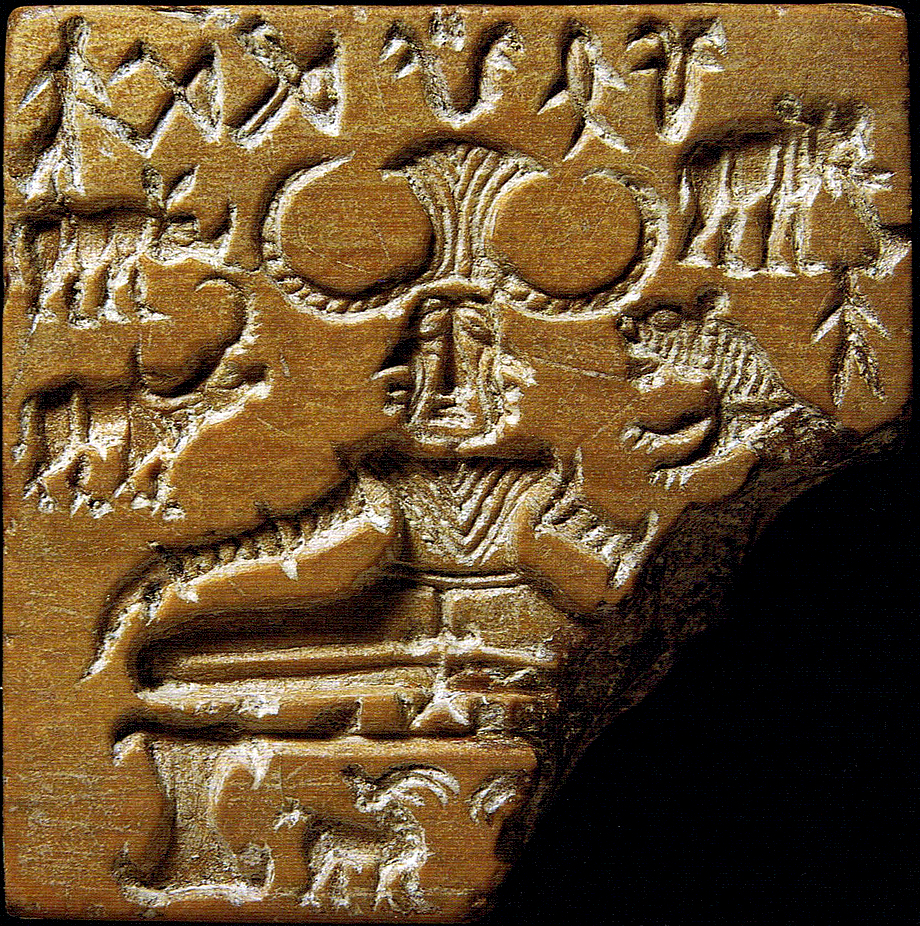





















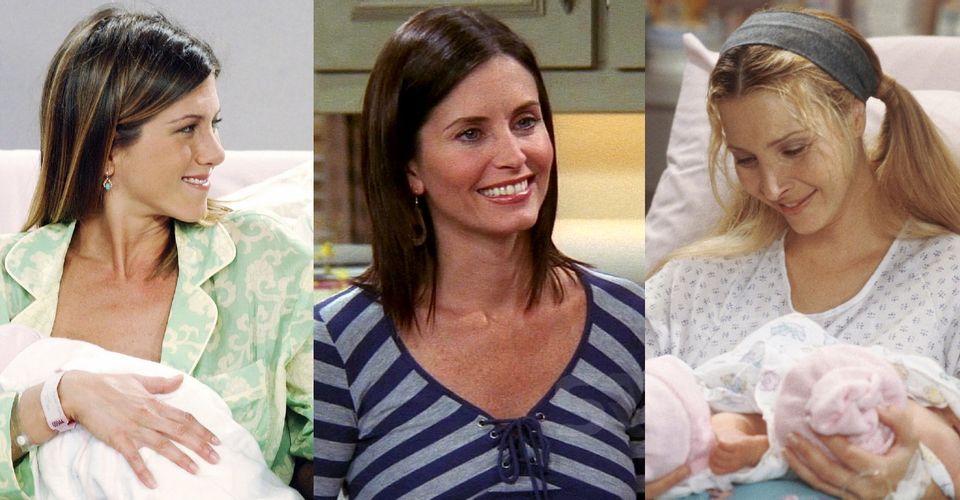


























 Track2Training
You must be logged in to post a comment.