All about Cryptocurrency you need to know

What is cryptocurrency?

Cryptocurrency is a digital payment system that doesn’t rely on banks to verify transactions. It’s a peer-to-peer system that can enable anyone anywhere to send and receive payments. Instead of being physical money carried around and exchanged in the real world, cryptocurrency payments exist purely as digital entries to an online database describing specific transactions. When you transfer cryptocurrency funds, the transactions are recorded in a public ledger. Cryptocurrency is stored in digital wallets.

The first cryptocurrency was Bitcoin, which was founded in 2009 and remains the best known today. Much of the interest in cryptocurrencies is to trade for profit, with speculators at times driving prices skyward.

How does cryptocurrency work?

Cryptocurrencies run on a distributed public ledger called blockchain, a record of all transactions updated and held by currency holders.

Units of cryptocurrency are created through a process called mining, which involves using computer power to solve complicated mathematical problems that generate coins. Users can also buy the currencies from brokers, then store and spend them using cryptographic wallets.

If you own cryptocurrency, you don’t own anything tangible. What you own is a key that allows you to move a record or a unit of measure from one person to another without a trusted third party.

Although Bitcoin has been around since 2009, cryptocurrencies and applications of blockchain technology are still emerging in financial terms, and more uses are expected in the future. Transactions including bonds, stocks, and other financial assets could eventually be traded using the technology.

Cryptocurrency examples

There are thousands of cryptocurrencies. Some of the best known include:

Bitcoin:

Founded in 2009, Bitcoin was the first cryptocurrency and is still the most commonly traded. The currency was developed by Satoshi Nakamoto – widely believed to be a pseudonym for an individual or group of people whose precise identity remains unknown.

Ethereum:

Developed in 2015, Ethereum is a blockchain platform with its own cryptocurrency, called Ether (ETH) or Ethereum. It is the most popular cryptocurrency after Bitcoin.

Litecoin:

This currency is most similar to bitcoin but has moved more quickly to develop new innovations, including faster payments and processes to allow more transactions.

Ripple:

Ripple is a distributed ledger system that was founded in 2012. Ripple can be used to track different kinds of transactions, not just cryptocurrency. The company behind it has worked with various banks and financial institutions.

Non-Bitcoin cryptocurrencies are collectively known as “altcoins” to distinguish them from the original.

How to buy cryptocurrency

You may be wondering how to buy cryptocurrency safely. There are typically three steps involved. These are:

Step 1: Choosing a platform

The first step is deciding which platform to use. Generally, you can choose between a traditional broker or dedicated cryptocurrency exchange:

  • Traditional brokers. These are online brokers who offer ways to buy and sell cryptocurrency, as well as other financial assets like stocks, bonds, and ETFs. These platforms tend to offer lower trading costs but fewer crypto features.
  • Cryptocurrency exchanges. There are many cryptocurrency exchanges to choose from, each offering different cryptocurrencies, wallet storage, interest-bearing account options, and more. Many exchanges charge asset-based fees.

When comparing different platforms, consider which cryptocurrencies are on offer, what fees they charge, their security features, storage and withdrawal options, and any educational resources.

Step 2: Funding your account

Once you have chosen your platform, the next step is to fund your account so you can begin trading. Most crypto exchanges allow users to purchase crypto using fiat (i.e., government-issued) currencies such as the US Dollar, the British Pound, or the Euro using their debit or credit cards – although this varies by platform.

Crypto purchases with credit cards are considered risky, and some exchanges don’t support them. Some credit card companies don’t allow crypto transactions either. This is because cryptocurrencies are highly volatile, and it is not advisable to risk going into debt — or potentially paying high credit card transaction fees — for certain assets.

Some platforms will also accept ACH transfers and wire transfers. The accepted payment methods and time taken for deposits or withdrawals differ per platform. Equally, the time taken for deposits to clear varies by payment method.

An important factor to consider is fees. These include potential deposit and withdrawal transaction fees plus trading fees. Fees will vary by payment method and platform, which is something to research at the outset.

Step 3: Placing an order

You can place an order via your broker’s or exchange’s web or mobile platform. If you are planning to buy cryptocurrencies, you can do so by selecting “buy,” choosing the order type, entering the amount of cryptocurrencies you want to purchase, and confirming the order. The same process applies to “sell” orders.

There are also other ways to invest in crypto. These include payment services like PayPal, Cash App, and Venmo, which allow users to buy, sell, or hold cryptocurrencies. In addition, there are the following investment vehicles:

  • Bitcoin trusts: You can buy shares of Bitcoin trusts with a regular brokerage account. These vehicles give retail investors exposure to crypto through the stock market. 
  • Bitcoin mutual funds: There are Bitcoin ETFs and Bitcoin mutual funds to choose from. 
  • Blockchain stocks or ETFs: You can also indirectly invest in crypto through blockchain companies that specialize in the technology behind crypto and crypto transactions. Alternatively, you can buy stocks or ETFs of companies that use blockchain technology.

The best option for you will depend on your investment goals and risk appetite.

Types of personalities

Personality is the combination of characteristics or qualities that form an individual’s distinctive character

Basically there are 3 types of personalities :-

  1. Introvert
  2. Extrovert
  3. Ambivert
  1. Introvert

Introverts are those people who are not very confident about themselves, they are not shy but they avoid interactions with others and are very emotional.

Phrases you could use to say you are an introvert –

I’m kind of reserved – This means you are a very private person; you share things with limited people.

I like to spend time with close friends – You restrict yourself from making many friends and are very choosy about making friends.

I usually listen more than I speak – You generally like to listen carefully and won’t share your opinion or ideas openly and socially.

2) Extrovert

Extroverts are those people who gain energy by being around people. They are extremely friendly and who love discussing their ideas with others or simply love spending time socially.

Phrases you could use to say you are an extrovert –

I’m really outgoing – Someone who is socially confident

I’m a gregarious person – Gregarious means you are sociable and you love being around people. Someone who love discussing ideas openly.

I’m a social butterfly – This means you are friendly and love being socially active and are easily approachable.

I’m very friendly – You could be friends with anyone, anytime.

3) Ambivert

Ambiverts are generally who have a balance of extroverts and introverts in their personality.

Phrases you could use to say you are an ambivert

I alter my personality based on the situation – You are able to adjust with extroverts and introverts based on the situations.

When a topic of interest comes up, I’m more than happy to talk about it – If it’s your subject of conversation you would display the qualities of an extrovert and vice-versa.

Spending too much time with other people can be exhausting – You like spending time with people but can’t hold on to it for long, you are social but not a social butterfly.

We hope you have liked this lesson and you would use the English phrases you just learned in your daily English speaking. Thanks for watching, come back for new lessons.

What does your zodiac sign says about you?

The zodiac is a diagram used by astrologers to represent the positions of the planets and stars. It is divided into twelve sections, each of which has its own name and symbol. The zodiac is used to try to calculate the influence of the planets, especially on someone’s life.

There are 12 zodiac signs in total :-

  • Aries (March 21 – April 19)
  • Taurus (April 20 – May 20)
  • Gemini (May 21 – June 20)
  • Cancer (June 21 – July 22)
  • Leo (July 23 – August 22)
  • Virgo (August 23 – September 22)
  • Libra (September 23 – October 22)
  • Scorpio (October 23 – November 21)
  • Sagittarius (November 22 – December 21)
  • Capricorn (December 22 – January 19)
  • Aquarius (January 20 – February 18)
  • Pisces (February 19 – March 20)
  1. ARIES

Aries loves to be number one, Bold and ambitious

2) TAURUS

 Enjoy relaxing in serene, bucolic environments surrounded by soft sounds, soothing aromas, and succulent flavors

3) GEMINI

 Playful, and adorably erratic, usually driven by its insatiable curiosity.

4) CANCER

 Ability to exist in both emotional and material realms.

5) LEO

Passionate, loyal, and infamously dramatic

6) VIRGO

logical, practical, and systematic in their approach to life

7) LIBRA

Balance, harmony, and justice define Libra energy.

8) SCORPIO

Elusive and mysterious

9) SAGITTARIUS

Chasing adventure, keen to know new things

10) CAPRICORN

Patient, preservance and dedicated

11) AQUARIUS

Innovative, progressive, and shamelessly revolutionary

12) PISCES

Intuitive, sensitive, and empathetic

ISSUES RELATING TO POVERTY AND HUNGER

India is a country which suffers a lot due to hunger and poverty. Hunger is very closely related to poverty as poverty is one of the main reasons for hunger. 

Indian economist and philosopher Amartya Sen said that lack of ability to pay for food is obviously caused by poverty.

POVERTY

Poverty is a condition caused due to lack of basic needs of life such as water, health care, food, unemployment etc. It is described as the low income level of people which leads them to poor standard of living. Poverty means that the income level from employment is so low that even the basic human needs are not fulfilled. The impact of poverty on children is substantial. Children who grow up in poverty typically suffer from severe and frequent health problems; infants born into poverty have an increased chance of low birth weight, which can lead to physical and mental disabilities. Poverty is a difficult cycle to break and often passes from one generation to the next. Typical consequences of poverty include alcohol and substance abuse, limited access to education, poor housing and living conditions, and increased levels of disease. 

Hunger and food insecurity are the most serious forms of extreme poverty. To eradicate these issues from society is the prime concern of international organizations.

HUNGER

Hunger is a global problem and a lot of countries are facing this problem. Hunger is a condition where both the adults as well as children do not have access to food and there is a constant decrease in food intake, nutrients, no proper diet is there and some days are even gone without food which eventually leads to their death.

Climate change is also one of the reasons for world hunger. The amount of rain determines the production of crops. Droughts also affects agricultural production and extreme rain also causes flooding that leads to destruction of crops . Use of outdated products, not using better quality seeds also leads to shortage of food and those who are capable and have money buys food even at higher prices, the ones who have to suffer are poor people. They do not have money to buy food and hence they remain hungry. Hunger has a lot of serious problems such as insufficient economic systems, climate changes, misinformation but the most serious problem of all is poverty. Many poor nations such as Kenya, Uganda etc. are in desperate need of food. The growing population is one of the major causes of rising hunger and poverty. In Indian scenario Hunger and malnutrition are closely related. The main outcome of poverty is hunger. India is a home to the largest undernourished population in the world, 14℅ of our population is undernourished, 20℅ of children under 5 are underweight, 34.7℅ of children are stunned, 51.4℅ of women in the in the reproductive age i.e. 15-49 are anemic.

DIFFERENT ISSUES RELATING TO HUNGER AND POVERTY

Overpopulation is a major issue of rising poverty. There are not enough resources to satisfy your need. Demand is more and resources are limited and this leads to no proper distribution of resources and a large amount of people are left with no food. India is a country with a large population, and hence everyone’s demand is not full and people remain hungry.

Poor health service– the health sector of India is not as efficient as compared to other developed Nations, which leads to less access to good health and sanitization and hence causes ill health and maintains poverty.

Malnutrition- It is a phenomena that occurs in a human body when it receives little or no nutrition as a result of it people easily get sick and it causes death. it is responsible for the death of people, especially young children.

Insufficient education and lack of training- due to Rising poverty children are not able to get basic education and again since they are not educated, they don’t get employed and this vicious cycle of poverty is continued. Lack of money is reason for them not attending proper School and they have to indulge in labour to provide for a minimal living also causes rise for child labour. Parents send their children to work at a very young age.

Inequality– different gender, ethnic, group and social classes face inequality due to poverty. Low rate of economic development, If a country is poor then its development is also very slow.

Rise in crime – Often due to poverty and hunger, people indulge in criminal activities. To fill their empty stomach many young children opt for wrong ways and indulge in theft and loot and its disturbance in the society.

Way Forward

To eradicate poverty and hunger from the society, there is a need for the government to implement schemes and methods. The government should spend more in health, nutrition, and education. The government should invest more in agriculture and provide the farmers with better quality seeds and advanced machineries and modern techniques for more agricultural production, Also it is necessary to decrease rural poverty. Subsidies address only short-term issues. There is a need to develop technologies, with the help of which farmers can practice all-weather agriculture. Government should focus on increasing employment opportunities creating jobs in modern sectors and promote labor-intensive industries. Reduction in corruption will lead to an overall development of the economy. A country with low poverty level will only develop in a better manner.

Sources: civilservicesindia.com

Gamma Ray Bursts

Gamma ray bursts are the most energetic and luminous electromagnetic events since the Big Bang. It can release more energy in 10 seconds than the Sun can emit in its entire 10 billion years of expected lifetime. They are the most powerful events in the universe, detectable across billions of light-years. They are high energy explosion that occurs in space atleast once everyday. They can last from milliseconds to a minute. It isn’t possible to predict the exact time and location of its occurrences.

What are Gamma Rays ?

Gamma rays are ionizing electromagnetic radiation, obtained by the decay of an atomic nucleus. Gamma rays are  penetrating form of electromagnetic radiations and can damage living cells to a great extent. They have the smallest wavelengths and the most energy of any wave in the EV spectrum. They are produced by the hottest and most energetic objects in the universe such as neutron stars and , supernova explosions and regions around black holes. On Earth , gamma rays are generated by nuclear explosions,lightning and the less dramatic activity of radioactive decay.

Gamma ray detectors :

Gamma rays can’t be captured and reflected by mirrors like optical light and x-rays. Its wavelength is too short to pass through the space.
Gamma ray detectors contain densely packed crystal blocks. As Gamma rays pass through,  they collide with electrons in the crystal.
This process is called Compton Scattering where a gamma ray strikes an electron and loses energy. These collisions create charged particles that can be detected by the sensor.

Type of Gamma Ray Bursts :

1. Long GRBs :
• They observe long bursts in association with the demise of massive stars.
• When a star much more massive than the Sun runs out of fuel, its core suddenly collapses and forms a black hole.
• Black hole refers to a point in space where matter is so compressed as to create a gravity field from which even light cannot escape.
• As matter swirls toward the black hole, some of it escapes in the form of two powerful jets that rush outward at almost the speed of light in opposite directions.
• Astronomers only detect a GRB when one of these jets happens to point almost directly toward Earth.
• Following the burst, the disrupted star then rapidly expands as a supernova.

2. Short GRBs :
• Short GRB forms when pairs of compact objects – such as neutron stars, which also form during stellar collapse – spiral inward over billions of years and collide.
• A Neutron star comprises one of the possible evolutionary end-points of high mass stars.

GRB 200826A :

• NASA’s Fermi spotted a very short, powerful Gamma-Ray Bursts (GRBs) that lasted for about a second. It was named GRB 200826A after the date it occurred, which is 26th August 2020. It was a sharp blast of high-energy emission lasting just 0.65 seconds.
• After traveling for a very long period of time through the expanding universe, the signal had stretched out to about one-second-long when it was detected by Fermi’s Gamma-ray Burst Monitor.
• It had been racing toward Earth for nearly half the present age of the universe.
• It is considered to be the the shortest GRB till now and it is caused by the death of a massive star.
• It emitted 14 million times the energy released by entire milky way galaxy over the same amount of time , making it one of  the most energetic short duration GRBs ever seen.

Significance of GRB 200826A :
It has helped to resolve the long-standing issues related to gamma-ray bursts. Also, this study triggers to re-analyse all such known events to constrain number densities better.

Sources : PIB and Dristi IAS

ROLE OF FAMILY,SOCIETY AND EDUCATIONAL INSTITUTIONS IN INCULCATIONG VALUES

Family, society, and educational institutions play a very major role in building one’s character or personality. These institutions impart value to an individual and help them become a better person in society. One learns what one listens. Young children very much learn what they see around them. If they see good they learn good and if they see bad they will learn that as well. The role of family is important because an individual lives there and learns from there, society influences an individual’s behaviour and educational institutions are where an individual learns. Now we’ll see how these factors help in inculcating values in an individual.

ROLE OF FAMILY

Family is a place where one grows, and learns the most. Just like the saying charity begins at home similarly an individual’s education starts from home. It is like a foundation where values are built. Values like respecting elders, honesty, justice, respect for both genders all taught at home. If within a family there are differences or if the home environment is not healthy then this also affects the individual. The values practised by the other members of the family also shapes the child’s attitude towards other people or towards the society. Values like love, care, protection all these start from family. If a child experiences love, care, comfort then he/she will have a positive attitude toward others and will behave the same with others and will inspire others as well. Family’s environment will help a child to socialise and progress in the society.

The system of joint family that is the presence of elder family members also has a great influence on an individual. It helps in developing social and moral values. They learn human values and respecting elders and this will help in eradicating negative mental tendencies when they are among elders. In a family an individual not only learns about values but also about their customs and culture and enhancing one’s culture proudly is also a very good value. The attitude of one family member towards another also affects individual behaviour. For example if child see his father not respecting his mother then he may feel that this is how it is supposed to be and he may also do the same thing with his wife but if he sees his father respecting her mother, giving her importance which she deserves the he will also treat his wife in respective manner so it is very important for a family to not just inculcate good values to the younger generation but they themselves should have good value so the future generation could learn from them.

The values that are taught in the family helps a child to learn, grow and progress in the society. Family values enhance a child’s personality and character and help them in becoming a better human being.

ROLE OF SOCIETY

When we grow older our social world also expands, now not only family but we become a part of society. Society also plays an important role in inculcating values. When a child grows it goes outside to make friends and share each other’s thoughts. Society also shapes an individual’s character. Societies follow certain traditions and customs and being a part of the society, we are also a part of these customs and traditions. These customs and traditions are being followed from generations and these are based on values such as loyalty, courage, love and brotherhood. We celebrate different festivals together which portray love and happiness and we not only celebrate festivals of one tradition or religion, but being part of such a diverse country we get to enjoy festivals and customs of different religions which shows mutual respect towards each other and toward different individuals in a society. Religion is a very important social institution in our Indian society and these religions are embedded with cultural values. Society creates social order, the diversity present in our society teaches mutual love, respect and inculcates a variety of values and holistic development of individuals. The social influence and the urge to become an inspiring personality in a society helps in developing good values in an individual. The great inspiring personalities, influencer leaders and celebrities also have a great influence in society. Young individuals learn and get inspired by them so it is also an important job for these powerful personalities to set a good example for the younger generation.

ROLE OF EDUCATIONAL INSTITUTIONS

Apart from home, a child spends most of his/her time at school. The first formal place of socialisation and the first and foremost important value that it teaches is discipline. The educational institutions have a proper disciplined environment. In an educational institution, the day starts with the prayer which teaches gratitude. Different school activities inculcate different values such as teamwork, sportsmanship spirit, competitiveness, etc. Different programs of Community work help in inculcating values like empathy, care, unity, etc. Peer groups also play an important role, students often get feedback about their behaviour from their fellow classmates or friends. Teachers also act as role models for the students, when a teacher asks students to behave in a certain manner then they tend to take it more seriously as compared to any family member or friend. The reward and punishment system also helps as children behave in a good manner for rewards and to protect their self esteem from getting punished. Every school or educational institution has their philosophy or motto and these help in inculcation of good values.

“Intelligence plus character, that is the true goal of education”. – Martin Luther King

Value is something that is not restricted to a certain age or gender or place. It is something which is lifelong, it can be learned at any age and be practiced throughout one’s life. Good values build one character and make an individual a better human being . A man with good values is respected everywhere in the society so it is very important to inculcate good values in life. There are different characters in an individual life that add to his/her character and personality. The influence of family, society and educational institutions have the strongest influence upon an individual and thus it affects in developing an individual personality whether positively or negatively.  

Sources: diyethics.forumias.com

AGNIPATH SCHEME

On 14 June 2022, the central government launched the Agnipath scheme which is a recruitment of soldiers below the rank of commissioned officers into the three services of the armed forces. With this scheme, the central government hopes to fulfill the dream of an individual to join the armed forces and serve the nation. Various other reasons for the government to start this scheme were to reduce salaries and defence pension bill, to increase employment opportunities and higher skilled work force and to provide a youthful profile to the armed forces. One of the important reasons was also to have a large number of military trained and disciplined people in the society. The soldiers recruited through this scheme will be known as ‘AGNIVEERS’.

Under this scheme 45,000 to 50,000 youth aged between 17.5 to 21 years will be recruited annually for 4 years in the Navy, Air force & Armed forces. Enrollment will be based on an ‘All India All Class’ basis. The enrolment of the Agniveers to all the three services will be through a centralized online system, with special rallies and campus interviews at recognized technical institutes such as the National skills Qualifications framework, Industrial Training Institutes. In each batch, 25% of Engineers will be chosen for the permanent cadre in the armed services. The remaining 75% of Agniveers will receive an amount of Rs. 11.71 lakh as Seva Nidhi Package.

The salary per month of the Agniveers is Rs. 30,000 in 1st year, Rs. 33,00 in 2nd year, Rs. 36,500 in 3rd year and Rs. 40,000 in 4th year but the Agniveers contribution to Seva Nidhi will be 30% which means 30% will be deducted from the initial salary which means in hand they will receive 21,000 in first year, 23,100 in second year, 25,580 in third year and 28,000 in fourth year.

The Agniveers will also receive a non-contributory insurance cover of Rs. 48 lakh during the period.

Every demolished AGNIVEER will have a 10% reservation in CAPFs, Assam Rifle recruitment. They are also provided with the Upper age relaxation beyond the prescribed age limit for AGNIVEERS in CAPF & Assam Rifles. Other benefits include:

  • Priority in bank loan schemes in case they want to be entrepreneurs.
  • Many other states including Uttar Pradesh and Madhya Pradesh have stated that agniveers will be given priority in the recruitment of state police officers.
  • Some major companies and sectors like IT, Engineering Security, etc. have also announced that they will prefer hiring skilled, trained, and disciplined Agniveers.
  • It also stated that all those wishing to study further class 12 equivalent certificate and Bridging Course of choice for further studies.

The Upper age limit for recruitment has also increased only for 2022 under the Agnipath scheme to 23 years from 21 years for the first year of the scheme for enrolment of soldiers into the Army, Navy and Air Force.

AIM OF THE SCHEME

  • One of the important aims of the scheme is to make the army a future-ready fighting force with the youth of the nation capable of meeting multiple challenges.
  • To strengthen the national security
  • To provide the youth of the nation to serve the country.
  • To cut down salary and pension bills.
  • To harness the youth potential and make them future ready soldiers.
  • They will be provided with certificates and bridge courses that will help in creating future entrepreneurs.

CRITICISM OF THE SCHEMES

After the announcement of this scheme, there were several protests held throughout the country in several states. Students from throughout the country held riots, burned trains, and caused severe damage to the public as well as private properties. This scheme is criticized on a number of basis such as:

  • The service period that is 4 years is very less and it will provide employment for just 4 years. T
  • he real skills cannot be acquired in such a short period and what about those who want to serve the nation for longer terms.
  • only 25% of the candidates will be taken permanently and the rest 75% will again be unemployed.
  • No pension will be given to these candidates that will be appointed during this scheme.
  • The candidates that will be selected will only be selected for non-commissioned ranks like Naik, Sepoy, and Lance Naik.
  • The recruitment is only for candidates of 17.5 – 23 years of age.
  • After 4 years is over, there will be no job security.
  • Unlike other governments’ jobs no extra basic benefits will be provided to the candidates.
  • The salary will also be deducted for the Seva Nidhi contribution.

With the provided advantages and disadvantages of this AGNIPATH scheme it is way forward for a reform in the Defence policy. This schemes aims to increase employment opportunities with skills and training, to give a better opportunity to the youth who choose to serve the nation and it hopes to have a positive impact on the human resouces management of armed forces and for the country’s development.

Sources: https://byjus.com/free-ias-prep/agnipath-defence-policy-reforms/

GOVERNMENT BUDGET

Government is required to undertake various economic, social, and other activities in every country. It is like to pursue various policies to achieve certain objectives like economic development, reduction of inequalities of income and wealth. The government has to incur expenditure in performing these activities and in pursuing its policies. For instance, the government has to incur expenditure in maintaining law and order and in undertaking various developmental activities. As such, government has to raise necessary revenue to finance these expenditures.

Accordingly, the government has to draw a financial plan corresponding to various activities it wants to undertake during the coming year . Such a financial plan is known as the budget of the government. “Budget of the government is an annual financial statement describing in detail the estimated receipts and proposed expenditures and disbursements of the government under various heads for the financial or fiscal year. The budget is the indicator of government functioning. It also gives the actual financial accounts for the previous year and the revised estimates for the current ye . In other democratic countries ,the government budget is a constitutional obligation in India. Under Article 112 of the constitution, a statement of estimated receipts and proposed expenditures of the Central Government has to be prepared for every financial or fiscal year and has to be placed before the parliament. It is titled Budget of the central government.

Government budget is a subject of immense importance for a variety of reasons.

  • Planned approach to government’s activities: The importance of government budget arises because of the fact that the activities of the government have increased tremendously. This calls for mobilization of large resources to meet the expenditure required to undertake these activities. There has to be a definite planning with regard to the estimated revenue and proposed expenditure for the proper conduct of the government activities.
  • Integrated Approach to Fiscal Operations: All these decisions and policies are interconnected and they must form a part of the overall set of objectives which the government wants to pursue. Government’s fiscal policy as reflected in the budget is an essential part of its overall economic and social policy.
  • Public Accountability: Budget proposals are discussed in the parliament. A popular debate also takes place in the media about the budget proposals. Parliament also exercises control over the government expenditure through various committees – Public Accounts Committee, the Estimates Committee and the Committee on Public Undertakings. Thus, Budget serves as a powerful weapon of financial control in respect of both collection of revenues and their disbursement.

STRUCTURE OF THE GOVERNMENT BUDGET

Constitution of the country demands that the budget must distinguish expenditure on revenue account from the expenditure on capital account. Revenue account covers those items which are recurring nature, while capital account covers those items which are of the nature of creating or reducing the capital assets. Budget is necessarily presented in two parts:

  • REVENUE BUDGET
  • CAPITAL BUDGET

Revenue budget shows revenue receipts of the government and the expenditures met from these revenue receipts. It consists of revenue receipts and revenue expenditure. Revenue receipts of the government are all those receipts which are non-redeemable. They create no liabilities or involve no sale or reduction in the assets of the government. Revenue expenditures relate to expenditures incurred by the government on day to day normal functioning of the government and interest payment on government debts. These expenditures neither create any physical or financial assets nor reduce any liability of the government .

Capital Budget comprises capital receipts and capital expenditure of the government. It shows capital requirements of the government and financing of these expenditures. Capital receipts are the receipts of the government which create liabilities or reduce assets of the government. The main component is to borrowing of all kinds from the public, RBI and repayment of loans to the central government by state government and public sector enterprises. Capital expenditures are those expenditures of the government which lead to creation of physical and financial assets or reduction of financial liabilities.

BUDGET DEFICITS

An important issue which is raked up every year during the budget in India is the issue of budget deficit. In the past two to three decades, government spending has increased more than its receipts. As a result , budget deficits and the government borrowings have increased sharply. Although politicians regularly make fine speeches about the need to reduce deficit, cutting down spending or raising taxes so as to reduce deficit are not politically popular. In every budget , the government has been setting the target of reducing the budget deficit, but reaching the target of reducing budget deficit has been rather difficult.

Budget deficit is financed by increasing the money supply and by borrowing from public and from other countries. This involves burden both on present as well as the future generations. The present generation has to shoulder the burden of budget deficits in terms of inflationary rise in prices. Higher debt also means that interest payments eat away a large part of government expenditure, which could otherwise be used for providing various economic and social services to the public. This deficit is a liability for future generations as well. Taxes will have to be increased in future to pay interest on the debt and to repay the debt. This is the burden of the debt on future generations.

SOME FACTS ABOUT INDIAN BUDGET OVER THE YEARS

  • The budget system was introduced in India on 7 April,1860.
  • James Wilson, the first Indian Finance member, delivered the budget speech
  • The first budget after independence was presented on 26 November, 1947 by R.K.S. Chetty.
  • Yashwant Sinha, the then finance minister, moved the budget to 11a.m. in 1999, instead of 5 P.M. as was the practice till then.
  • Arun Jaitley, the present Finance minister, has advanced the presentation of the budget to 1st February from the 2017-18 Budget. He has presented 4 regular budgets till date.
  • 24 people have presented budget in independent India.
  • Morarji Desai holds the record for the most budget presented in independent India with 8 full budgets and 2 interim budgets.
  • P Chidambaram has matched Morarji Desai’s record of presenting 8 full budgets.
  • All the three Prime Ministers from the Nehru family- Jawaharlal Nehru, Indira Gandhi and Rajiv Gandhi have presented one budget each.

Sources: Frank ISC Economics Class XII

EFFECTS OF GLOBALIZATION ON INDIAN SOCIETY

Globalization has many meaning depending on the circumstance and on the individual who is talking about. There is one of the term of Globalization is a process of the “reconfiguration of geography, so that social space is not entirely mapped in terms of territorial distance, territorial places and territorial borders.” The simple term of globalization refers to the integration of economies of the world through uninhibited trade and financial flows, as also through mutual exchange of technology and knowledge. Ideally, it also contains free inter country movement of labor.

Indian society drastically changes after urbanization and globalization. The economic policies has direct influence in forming the basic framework of the Indian economy. The government shaped administrative policies which aim to promote business opportunities in every country, generate employment and attract global investment. In which the Indian economy witnessed an impact on its culture and introduction to other societies and their norms brought various changes to the culture of this country as well. The developed countries have been trying to pursue developing countries to liberalize the trade and allow more flexibility in business policies to provide equal opportunities to multinational firms in their domestic market. The International Monetary Fund (IMF) and World Bank helped them in this endeavor. Liberalization began to hold its foot on barren lands of developing countries like India by means of reduction in excise duties on electronic goods in a fixed time Frame.

Globalization has several aspects and can be political, cultural, social, and economic, out of Financial integration is the most common aspect. India is one of the fastest-growing economies in the world and has been predicted to reach the top three in the next decade. India’s massive economic growth is largely due to globalization which was a transformation that didn’t occur until the 1990s. Since then, the country’s gross domestic product (GDP) has grown at an exponential rate.

Indian government did the same and liberalized the trade and investment due to the pressure from the World Trade Organization. Import duties were cut down phase-wise to allow MNC’s operate in India on an equal basis. As a result globalization has brought to India new technologies, new products and also the economic opportunities.

Despite bureaucracy, lack of infrastructure and an ambiguous policy framework that adversely impact MNCs operating in India, MNCs are looking at India in a big way, and are making huge investments to set up R&D centres in the country. India has made a lead over other growing economies for IT, business processing, and R&D investments. There have been both positive and negative impacts of globalisation on social and cultural values in India.

Economic Impact:

1. Greater Number of Jobs: The advent of foreign companies led to the growth in the economy which led to creating job opportunities. However, these jobs are concentrated in the various services sectors and led to rapid growth of the service sector creating problems for individuals with low levels of education. The last decade came to be known for its jobless growth as job creation was not proportionate to the level of economic growth.

2. More choice to consumers: Globalisation has led to having more choices in the consumer products market. There is a range of choices in selecting goods unlike the times where there were just a couple of manufacturers.

3. Higher Disposable Incomes: People in cities working in high paying jobs have greater income to spend on lifestyle goods. There’s been an increase in the demand for products like meat, egg, pulses, organic food as a result. It has also led to protein inflation.

Protein food inflation contributes a large part to the food inflation in India. It is evident from the rising prices of pulses and animal proteins in the form of eggs, milk and meat. With an improvement standard of living and rising income level, the food habits of people changed. People tend toward taking more protein intensive foods. This shift in dietary pattern, along with rising population results in an overwhelming demand for protein rich food, which the supply side could not meet. Thus resulting in a demand supply mismatch thereby, causing inflation.

In India, the Green Revolution and other technological advancements have primarily focused on enhancing cereals productivity and pulses and oilseeds have traditionally been neglected.

Shrinking Agricultural Sector: Agriculture now contributes only about 15% to GDP. The international norms imposed by WTO and other multilateral organizations have reduced government support for agriculture. Greater integration of global commodities markets leads to constant fluctuation in prices.

• This has increased the vulnerability of Indian farmers. Farmers are also increasingly dependent on seeds and fertilisers sold by the MNCs.

Globalization does not have any positive impact on agriculture. On the contrary, it has few detrimental effects as the government is always willing to import food grains, sugar etc. Whenever there is a price increase of these commodities.

• Government never thinks to pay more to farmers so that they produce more food grains but resorts to imports. On the other hand, subsidies are declining so the cost of production is increasing. Even farms producing fertilizers have to suffer due to imports. There are also threats like introduction of GM crops, herbicide resistant crops etc.

Increasing Health-Care costs: Greater interconnections of the world have also led to the increasing susceptibility to diseases. Whether it is the bird-flu virus or Ebola, the diseases have taken a global turn, spreading far and wide. This results in greater investment in the healthcare system to fight such diseases.

Child Labor: Despite prohibition of child labors by the Indian constitution, over 60 to a 115 million children in India work. While most rural child workers are agricultural laborer’s, urban children work in manufacturing, processing, servicing and repairs. Globalization most directly exploits an estimated 300,000 Indian children who work in India’s hand-knotted carpet industry, which exports over $300 million worth of goods a year. The many effects of globalization of Indian society and has immense multiple aspects on Indian trade, finance, and cultural system. Globalization is associated with rapid changes and significant human societies. The movement of people from rural to urban areas has accelerated, and the growth of cities in the developing world especially is linked to substandard living for many.

Sources: https://www.clearias.com/effects-globalization-indian-society/

The History Behind Laughing Buddha.

Many believe that keeping a statue of Buddha at work or home will radiate positive energy and bring out good luck. Yet has anyone wondered why it is given so much significance in individual life and what is the reason behind all of this? Let’s get into this.

Laughing Buddha was one of the many disciples of Gautam Buddha. The name of this supreme disciple of Gautam Buddha living in Japan was Hotei. Hotei started laughing as soon as he attained enlightenment. He laughed like this for the rest of his life.

Hotei used to go from village to village and keep making people laugh. The villagers enjoyed being with him. Although sometimes, they were also surprised to see his laughter which made people wonder if he was always laughing. What would be the reason behind this?

The biggest feature of Hotei was that he would start laughing anywhere. He used to laugh out loud even while standing in the middle of the market. People named him ‘Laughing Buddha’. Hotei never gave any sermons or discourses, but there was such a magnetic attraction in his personality that wherever he went, everyone surrounded him. Seeing Laughing Buddha, people also used to laugh and everyone laughed openly without any hesitation. Seeing the curiosity of the people behind his laughter, Hotei once said that, he has nothing to say now. He told the people “that you often cry unnecessarily. To make people laugh to the fullest, one needs a fool that everyone can laugh at.”

His only message is that a person’s crying or making noise is his personal problem. The world that God has created is laughing. Moon, stars, flowers, plants, and birds are all laughing and we are sitting and crying. Hotei just wanted to tell the world that, people wake up from this illusion and be a happy smile.

Hotei spent his life as a hermit. There was a time when he made everyone laugh by roaming around different regions of Japan. People started feeling peace in his company. So this was the real history of Laughing Buddha. Because of this, people keep their idols or pictures in their homes even today to attract positivity.

The Association Between Hinduism and Space.

There are suns in all directions, the night sky being full of them.

Rig Veda

Hindu Cosmology is simply a suggestion that Hindus have of the universe and how it operates. There is a formed opinion that the mystic and material world are distinguished from each other.

The text called “Rig Veda” consists of all those assumptions that Hindus have about the Universe. There is a mindset that there are innumerable universes moving around the space yet there are several opinions about how the world was established. However, the ideology they hold is especially about the time that it goes around in a cycle which is repetitively vanished and recreated and every cycle is named as yuga. It comprises of four yugas which sustains with a specific time period such as gold, silver, copper and iron, with its length of years . Presently, Hindus are in iron age and soon gold age would start. Another important belief that Hindus hold is that the world is formed with spirits and matter. Spirits are held at priority as matters get destroyed but spirits can’t. Tri-guna comprises of the ideology that matter will go through discrete stages with the opinion that each thing is created, has existence, and then vanishes.

This brings out the existence of the Lord in nature and the term Trimurti where Lords like Bramha is considered the creator, Vishnu is the preserver and Shiva is the destroyer. Hinduism developed as a result of the findings made by those who believed they had discovered the nature of reality via ascetic practices and prolonged meditation. Methodology science involves objective validation of quantitative hypotheses. However, both have put forth analogous hypotheses for the universe’s origin;Hindu cosmology as well as a look at Creation, Maya, the churning of the milky ocean, Shiva’s Cosmic Dance, and the Serpent of Infinity.

Furthermore, Hindu cosmology aligns with our current knowledge of the universe as one of the main justifications offered for that claim. The principal evidence used to support that claim is the Vishnu Purana’s figure of the age of the Earth as 4.32 billion years, which is quite close to the current estimate of 4.5 billion years. To mention the only way to fully assess if it is a more effective method to the nature of the cosmological explanation fundamentals than that of current science is by engaging in those activities on the basis of which the evidenced who push it and believe it to be so.

Black box : The flight data recorder

Black box first came into widespread use on commercial aircraft after World War 2. It was invented by Australian scientist Dr David Warren in 1958. In 1960, Australia was the 1st country to make Black box mandatory for all commercial aircraft. A black box, technically known as an Electronic Flight Data Recorder, is an orange-coloured heavily protected recording device placed in a flight. Any commercial aircraft is required to be equipped with a Cockpit Voice Recorder(CVR) and a Flight Data Recorder(FDR). It is these two items which we commonly refer to as a Black box. While they do nothing to help the plane when it’s in the air ,it is vitally important if the plane crashes as it helps crash investigators to find out crucial events that led to the crash. They are usually kept at the tail of an aircraft which is likely to survive a crash. It usually takes at least 10-15 days to analyse the data recovered from the black boxes. Black boxes are also used in vehicles other than planes like railways, cars etc.

Parts of the black box :
1. Flight Data Recorder – It keeps the track of every instruction made by the pilots and records things like airspeed, altitude, vertical acceleration and fuel flow.
2.  Cockpit Voice Recorder – It records the conversations in the cockpit and general noises in their vicinity such as audible warnings.

The federal Aviation Audio (FAA) requires them to be able to record 2 hours of audio. The previous requirement was 30 minutes but investigators found that they sometimes needed details from longer period before the crash.

Technology:

• Older black boxes used magnetic tape, a technology that was first introduced in the 1960s. Magnetic tape works like any tape recorder but is no longer in making as it leaves a bit of data on the tape and as airlines begin a full transition to solid-state technology.
• These days, black boxes use solid-state memory boards, which came along in the 1990s. Solid state memory boards are much more reliable than memory tapes as they use stacked arrays of memory chips so they don’t have moving parts. With no moving parts, there are fewer maintenance issues and a decreased chance of something breaking during a crash., and are stronger.
• Data from both the CVR and FDR is stored on stacked memory boards inside Crash-Survivable Memory Units (CSMUs) which are engineered to withstand extreme heat, jarring crashes and tons of pressure.
• To make black boxes discoverable in situations where they are under water, they are equipped with locator Beacons. These broadcast their location by sending out ultrasound signals for upto 30 days even when submerged as deep as 6,000 meters (20,000 feet).

Airplanes are equipped with sensors that gather data. There are sensors that detect acceleration, airspeed, altitude, flap settings, outside temperature, cabin temperature and pressure, engine performance and more. Magnetic-tape recorders can track about 100 parameters, while solid-state recorders can track more than 700 parameters in larger aircraft. All of the data collected by the airplane’s sensors is sent to the flight-data acquisition unit (FDAU) at the front of the aircraft. This device often is found in the electronic equipment bay under the cockpit. The flight-data acquisition unit is the middle manager of the entire data-recording process. It takes the information from the sensors and sends it on to the black boxes.

Black boxes are painted in a bright shade of orange. This coloring makes them far easier to locate amid the potentially considerable devastation of an aircraft’s crash site. It has reflective surfaces to increase their visibility. But their are certain cases like the Malaysian Airlines MH370 flight where they are not found. And they still lack video recording capabilities.
It is being tried to stream all of their essential data directly to a ground-based station in realtime which would eliminate the desperate search for a box that may have been destroyed in a crash, and will be more dependable.

Sources : http://www.iasa.com.au and Dristi IAS.

Our fellow living beings – Animals

Yes , Animals whom we don’t think as equals. Humans think they are the owners of this planet but they should know that are not the only one living here . Thousands of other creatures also live with us and they deserve a decent living space too. They are not below us , they just don’t talk our language or you can say we don’t talk their language.

Every now and then we see cruelly beaten animals, starving dogs, cut cows, burnt pigs and stil no one seem to be bothered because that didn’t happen to a human .

This kind of discrimination and behaviour needs to be eliminated. Every living being deserve a life and we humans don’t have any right to snatch it from them. They also have families. Eating their sons and daughters will not add to your health but will surely cause mental stress to that parent.

Its time that we all raise our voice and stand united for the welfare of animals and protect them . When the we talk of welfare for all it should not only include humans but other animals too.

Benefits of shifting to electric vehicles

Its been more than a century since humans are using petrol and diesel as a primary fuel. First petrol car was invented in January 29, 1886 by Carl Benz after the invention coming to 21st century such vehicles have constantly damaged the environment and since fossil fuels are not abundant and nature which have led to diminished quantity of them.

Tata nexon is the current best selling EV car of India

Electric vehicles are the next best alternate to standard vehicles as electric vehicles have numerous benefits that overlaps the use of such vehicles in the near future.

Some benefits include :-

  1. Cleaner environment
  2. No congestion charge
  3. Lower running costs
  4. Renewable electricity tariffs
  5. Better driving experience
  6. Government funding
  7. Free parking
  8. Reduced noise pollution
  9. Increased resale value

Automobile companies are constantly developing electric vehicles to make them way more cost efficient and effective as currently all the electric vehicles have almost 1/4 more price than normal vehicles and also the lack of charging stations and fuel pumps are the only drawbacks of the cars.

Now is the best time to make this shift happen otherwise all the fossil fuels will not be left for future generations as they are non renewable as well as not abundant in nature.

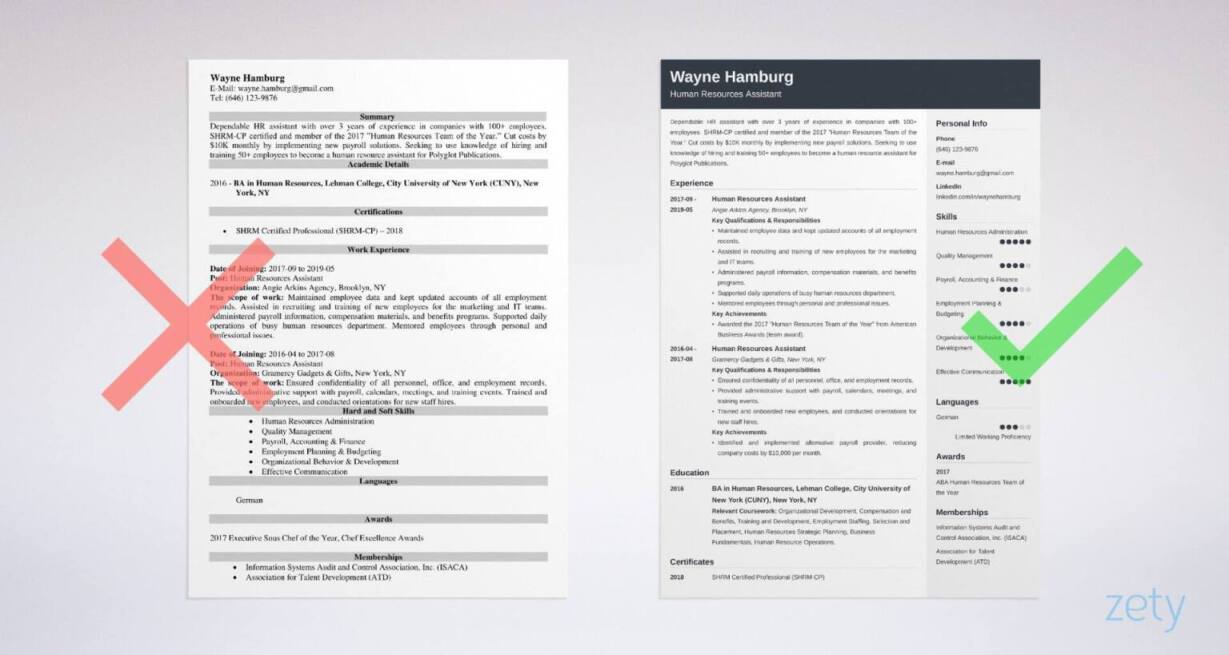
What are benefits of using Resume Templates

When it comes to writing and submitting resumes and cover letters to potential employers, most of us have two options. We can throw ourselves fully and exclusively into each individual open position we find, spending hours or days drafting a resume and cover letter that targets those specific employers. The second option is that we can create a basic resume and cover letter template that tells the world at large who we are, what we can do, and what we want. Cover letter and resume templates can then be altered in a minimal way for each individual submission. Between the two, the template option is usually a wiser move. If you’re wondering if you should use a resume template, here are a few reasons you might benefit from one. You can check out Google doc templates for your Resume at https://www.careerreload.com

If you’re creating a resume, you probably have a lot of ideas about the information you’d like to display. Even if you have great educational and field credentials, listing them in the appropriate manner is very important. Though some people may be well-versed in their field, designing a good-looking resume from scratch can be hard. Resume templates are a great solution to this problem. These resumes are pre-set with a theme and spaces for common information employers look for. You can take a lot of stress out of the creation process by starting with a solid template. You may also be able to speed things up significantly.

A Resume Template is Great for Professionals

If you’re like most professionals, you spend a lot of time looking over your resume to think about ways you can improve it. As you’re looking it over, you may notice small things that you don’t like. Uneven spacing, slight differences in font styles, and improper use of page space are all things that can be an eyesore for you – or the person looking the resume over. Templates come preloaded with styles and sections already in place. This means all you need to do is plug in your information. You may choose to edit templates slightly if you feel comfortable enough doing so, or you may call on the help of resume professionals. In either case, making slight tweaks to existing templates is a lot quicker than starting from a blank page.

Accelerate and Improve Your Career Search

A resume template makes it easier for you to get your resume fully prepared and sent out to hiring managers. It also makes it easier when you want to update or modify your resume. Some people have plenty of skills and a solid education, but find their resume issues are slowing down their career search. If you’ve experienced this problem, a resume template can be a great way to speed things along and take the stress out of the process. People who put a lot of time into their resumes do so because they’re passionate professionals who want to excel in their field of choice. A resume template can take a lot of stress out of the equation, making it easier to pursue a new career with confidence. Regardless of your field or the depth of your credentials, there are plenty of popular templates you can use to find success in the job search.

There are lots of benefits and advantages of using a resume template to build your resume. Read on for some of the most interesting benefits you should consider when deciding whether or not to use a resume template.

1. Organize Your Resume

It is very important that your resume is organized and filled out appropriately. A well-organized resume looks more professional than one that is not organized. Using a resume template helps you organize your thoughts and ensures that everything is filled in its appropriate place.[1] It helps you remember important details that should be on your resume, making sure that nothing important is left out.

2. No Experience Needed

You don’t need any experience to create your resume using a resume template. Templates are always very easy to fill out and if you are not satisfied with the arrangement, you can modify it to best suit your individual needs as the job-seeker. 

⌄ Scroll down to continue reading article ⌄

The Key to Succeeding in Life…

Do you know your mindset is the key to succeeding? Learn how to boost your mindset for success with Lifehack’s exclusive strategies!

Get FREE Guide

⌄ Scroll down to continue reading article ⌄

A lot of people don’t have a clue about how to start typing or building a resume from scratch. If you’re anything like me and you are one of those people, you can keep things simple by using a resume template and be assured that you have correctly filled in every critical detail you require for the job application.

3. Make a Great First Impression

Your resume is the first understanding and impression that an employer gets of you.[2] It sets out your skills, talent level(s), experience, and all the other information an employer would need to know in order to understand your potential as a candidate for the job in question. If your resume is not properly written or constructed, you might not even be considered or given a chance to prove yourself. Using a creative resume template would help you adequately showcase your skills and talents to an employer.

4. Save Time

Designing and building your own resume from scratch can be time-consuming and after spending lots of time and energy on it, you might not end up with a good final result, especially if you are not familiar with great resume building. Using creative resume templates would be a good way to save your time and show your potential employers that you have the necessary skills for the job. 

Using resume templates is also a time-saving advantage if you are applying for more than one job. Creating different types of resumes for the jobs you are applying for could take a lot of time because not every job requires the same resume format because you might need different skills for different jobs and clients.

With a resume template, you can easily modify the template and create several versions of your resume that suit other job industry standards if you are applying for several jobs at the same time. That way you would have the appropriate resume format for each desired position or job that you are applying for.

Importance of fitness in day to day life

Like the quote states “Take care of your body it’s the only place you have to live in”. Maintaining fitness have numerous benefits not only on internal but on external basis also. Fitness has become a term that people usually interchange it with having big biceps and muscles but fitness is a way broader term than this.

Fitness creates strong bones and muscles which further leads to greater strength helps in climbing stairs without causing any effect on joints and one can carry more weight. Furthermore, it prevents one from severe obesity as a result preventing one from problems like diabetes and heart related disease. Also working out increases the sleep quality of an indiividual thus making a person have quality sleep.

A fit body and fit mind creates numerous opportunity for an individual and one should engage at least 45 minutes in any heart beat elevating physical exercise.

Fear of Future

Fear of future is a negative word let’s call ourselves Forward Thinkers . Yes, forward thinkers are the ones who are always worried about what will happen in future.

If you are in school , you must be wondering what will I study in college, which career will make me more money , what if I don’t clear entrance, etc. If you are in college and you didn’t get into your dream college you are already dreading about your life by thinking of all the self sabotaging thoughts.

Well these thinkings if asked to an experienced person who has already lived his life will say that – ” Having worries and sleepless nights over future worries is a good sign that you are in a right path ” . It means you know that the life that you crave for will not come merely from attending college. You know that wasting time and money with friends who won’t contribute you in anyway is serious damage to your future. You are very much aware and that itself stands you out of the crowd.

A person who worries is more prone to take steps rather than the one who doesn’t. You are already more mature than your peers. You are already embracing the struggle in you and fighting to remove the worry. So keep that fire of worry in you alive and take that action today because the life that you crave for won’t come in a day it will come after many years of sleepless and ruthless nights.

Gods and Faith

If we talk about Indian society, we are a strong believer of Gods. We believe everything that is happening or will happen is because God wants to.

If we are happy or having good time it’s because God is showering hid blessings on us . If we are having hard time or life is full of obstacles it’s also because God wants us to go through this because he wants us to learn a lesson .

If everything I said above resonates with you or you believe it’s true ….it’s because you have strong faith. You have seen the miracle of God . And if you don’t agree with above said things you might consider it just a mere coincidence or luck .

Well both the believers and non believers are right in their own minds . We can’t say wrong to one and right to other just because we think differently. Having faith in something is very personal. A person not believe in God can have reasons that’s why he arrived at the conclusion that there’s no God .

But this is life we all need hope . We all want to find something to blame or say thanks to. We all want a bigger , Godly or heavenly thing to whom we all can look upto so that we don’t feel alone or helpless.

After parents die it’s God whom they look upto for protection and guidance. A non believer look upto universe or mother earth or whatever he has built his faith onto. There is nothing wrong about and no religion should see it with judge eyes .

Preamble : The introductory part of the Constitution

The term Preamble refers to the introduction or preface to the Constitution. It explains the constitution’s philosophy and objectives and the core values and principle of the nation. Preamble to Indian Constitution is based on the Objective Resolution drafted by Jawaharlal Nehru and adopted by the framers of the Constitution.

The preamble basically gives idea of the following things :

• Source of the authority of the constitution – It derives it authority from the people of India.
• Nature of Indian State – It declares India to be sovereign,socialistic, secular, democratic and republican state.
• Statement of its objectives – It specifies justice, liberty, equality to all citizens and fraternity to maintain unity and integrity of the nation as the objectives.
• Date of its adoption – It was adopted on November 26, 1949.

Key terms in Preamble :

1. We, the people of India – It indicates that the power to run the government of India lies in the hands of the people of India. Their views are represented by the members of legislature elected by them.
2. Sovereign – The term refers to India is not governed or controlled by any external power. It has its own independent authority.
3. Socialist –  It refers to mixed economy where both Public and Private sector co-exist side by side. Indian style of socialism is a democratic socialism where both public and private enterprises is encouraged.
4. Secular –  The term implies that there is not a single religion for every indian. They have freedom to follow any religion. All the religions in India get equal respect, protection and support from the state.
5. Democratic – The term implies that the Constitution of India has an established form of Constitution which gets its authority from the will of the people expressed in an election.
6. Republic – It explains that the head of the country, President, is (indirectly) elected by the people.

Objectives of Indian Constitution :

The Constitution is the supreme law and it helps to maintain integrity in the society and to promote unity among the citizens to build a great nation.The main objective of the Indian Constitution is to promote harmony throughout the nation.
The factors which help in achieving this objective are:
• Justice: It is necessary to maintain order in society that is promised through various provisions of Fundamental Rights and Directive Principles of State Policy provided by the Constitution of India. It comprises three elements, which is social, economic, and political.
1. Social Justice – Social justice means that the Constitution wants to create a society without discrimination on any grounds like caste, creed, gender, religion, etc.
2. Economic Justice – Economic Justice means no discrimination can be caused by people on the basis of their wealth, income, and economic status. Every person must be paid equally for an equal position and all people must get opportunities to earn for their living.
3. Political Justice – Political Justice means all the people have an equal, free and fair right without any discrimination to participate in political opportunities.
• Equality: This term refers to no section of society has any special privileges and all the people have given equal opportunities for everything without any discriminations. Everyone is equal before the law.
• Liberty: This term means freedom for the people to choose their way of life, have political views and behavior in society. Liberty does not mean freedom to do anything, a person can do anything but in the limit set by the law.
• Fraternity: It means a feeling of brotherhood and an emotional attachment with the country and all the people. Fraternity helps to promote dignity and unity in the nation.

The Preamble of the Constitution is considered as part of the Constitution. The Preamble is not the supreme power or source of any restriction or prohibition but it plays an important role in the interpretation of statutes and provisions of the Constitution. So, it can be concluded that preamble is part of the introductory part of the Constitution but is not directly enforceable in a court of justice in India.
Amendment of the Preamble :
The preamble is only amended once through the 42nd Amendment Act, 1976. The term ‘Socialist’, ‘Secular’, and ‘Integrity’ were added to the preamble through 42nd Amendment Act, 1976.As a part of the Constitution, Preamble can be amended under Article 368 of the Constitution, but the basic structure of the preamble can not be amended.

Sources : The Hindu, Insights on India and Dristi IAS

Preamble is the soul of our constitution, which lays down the pattern of our political society. It contains a solemn resolve, which nothing but a revolution can alter’- Former Chief Justice of India, M Hidayatullah

Will my life become useless if I don’t clear entrance exam?

source : pinterest

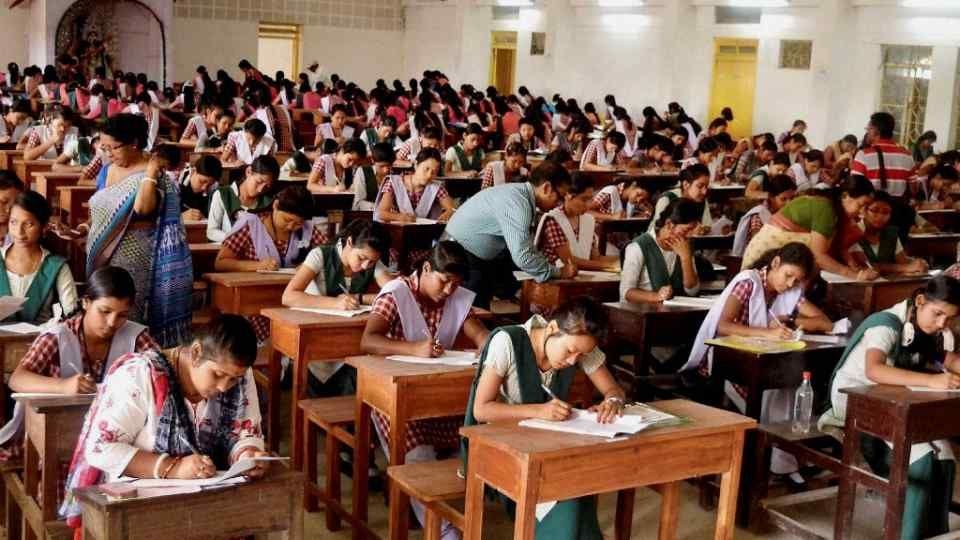
“Entrance Exam” – almost all of us must have given atleast 1 entrance exam in our life . Basically it is a screening test to filter out the best students on the basis of marks, after that the filtered students get into their desired universities and colleges.

In India , science students face the entrance exams the earliest in their life as compared to other stream students . You ask any science student and they must be preparing for either JEE or NEET . Some maybe into KVPY or NDA as well. Generally the syllabus of these exams include the chapters of 11 and 12 . But you will be shocked to know that some parents enrol their children into institutions or coachings from 5 or 6 class for the preparation of these entrance exams.

A child whose age is to explore new things, hobbies and passion is made to take part in the rat race at such an early age that when the desired outcome is not achieved,the child gets heartbroken , demotivated and depressed. He/ She starts asking his/ her own worth just because they weren’t able to clear an exam. Every year we hear students committing suicide because they weren’t able to stand at their own expectations.

I would like to tell all the students who are preparing for any entrance exam that you are not defined by any question paper. You are not defined by any percentage or CGPA. You are more than that. Your life is full of possibilities and surprises. Even if that entrance didn’t clear, you still have a lot to do in this world and contribute for yourself and for others welfare.

Not getting into your dream college or course doesn’t mean you didn’t deserved it. It means you are destined for something else. Something that you can’t even imagine. So don’t ever measure your worth if your entrance didn’t cleared, it was just an exam not your life.

Tradition is not an obstacle to progress.

Tradition basically means undocumented beliefs and customs that have been passed on from generation to generation,  which we all adhere to in our daily lives either knowingly or unknowingly. It is upto the decision of an individual where to follow traditional values and take them as a lesson or not. Since tradition is unwritten, it gets modified with time to suit the need of the time, but it is a chapter that provides lessons of right and wrong. Adhering to these values doesn’t make us orthodox, it rather makes us more aware of the past, and thus help make right decision. Along with binding  us to our forefathers, it makes our character distinct. In fact tradition are a testimony to our culture and society. While we have modern lifestyle today, one should remember, traditions values are not meant to be erased.

Such is the significance of tradition in our lives, that it can never become an obstacle in progress. It teaches us ways to utilize our time more effectively.The tragedy lies in the fact that usually elders tend to look down upon the younger generation if they don’t adhere to the religious and cultural traits of their parents. This decision should left up to the individual. Moreover, traditional Indian habits like touching the feet of our elders to show respect or visiting the temple with the family on an auspicious occasion are signs of a refined sense of culture, not of backwardness. Tradition cannot be an obstacle.

Is Flex-Fuel Vehicles (FFV) worth it ?

A flex-fuel vehicle is a modified version of vehicle that could run both on gasoline and doped petrol with different levels of ethanol blends,which can include upto 100% ethanol. When FFV is integrated with strong hybrid electric technology, it is called Flex Fuel Strong Hybrid Electric Vehicles (FFV-SHEV). FFV-SHEV are the hybrid vehicles having capability to run solely on either electric or petrol modes. The central government has released an expert committee report on the roadmap for ethanol blending in India by 2025. The roadmap proposes a gradual rollout of ethanol-blended fuel to achieve E10 fuel supply by 2022 and phased rollout of E20 fuel supply by 2025. Currently, 9.45% of ethanol is blended with petrol in India. A 10% blending of petrol does not require major changes to engines but a 20% blend could require some changes and may even drive up the prices of vehicles. 

Ethanol is a renewable biofuel as made from biomass. It is a clear ,colorless alcohol made from a variety of biomass materials called feedstocks such as sugarcane. It is naturally produced by the fermentation of sugar by yeast or via petrochemical process such as ethylene hydration. In India, it is primarily produced from sugarcane-based raw materials or certain types of heavy molasses, surplus rice available with the Food Corporation of India and maize.

Benefits of FFV :
• Reduces pressure on oil import bill : It is expected to reduce the demands for petroleum products. India presently imports more than 80% of its petroleum requirement from gulf countries like Saudi Arabia, UAE etc. which is one of the biggest outflow of money from the country. This policy is likely to reduce the petroleum imports and the country can save upto ₹ 30,000 crores per year .
• Benefiting Farmers : It will create alternative sources of income for farmers and will encourage them to produce water-saving crop like maize to produce ethanol. If the crops are damaged by any means, it can also be used in producing ethanol.
• Boost to Atma Nirbhar Bharat : It is in line with Prime Minister’s vision ofAtma Nirbhar Bharat and government’s policy on promoting ethanol as a transport fuel. It will reduce our dependency on foreign countries over energy sources I.e., costly petroleum for automobiles and will be large step towards creating Atma Nirbhar Bharat.
• Reducing Greenhouse Gas & Tackling Climate Change: By using biofuel ( ethanol), the greenhouse gas emissions like carbon monoxide, nitrogen oxide , etc. on the daily basis will reduce drastically thus reducing the pollution and providing better air quality.

Possible challenges during implementation of the program :

• High cost of the flex fuel engine.
• Lower fuel efficiency as compared to fossil fuels like petroleum, coal and natural gas.
• Running cost will be higher due to lower fuel efficiency.
• Till now, most of the Indians are not ready to accept flex fuel vehicles due to higher cost and low efficiency reasons.
• Ethanol act as solvent and could wipe out the protective oil film of the engine thus leading to wear and tear and further causing more expenses.
• A greater percentage of blending could also mean more land being diverted for water-intensive crops such as sugar cane, which the government currently subsidises.
• The increased allocation of land also puts into question the actual reduction in emissions that blending ethanol with petrol brings about.
• Because flex fuel isn’t as economical as gasoline, gas stations are less likely to carry it. Only a small percentage of gas stations nationwide supply ethanol.

The debates surrounding the pros and cons of flex fuel vehicles aren’t going away anytime soon. However, there does seem to be a move toward using ethanol as an environmentally friendly and economical fuel source.More ethanol refining plants are opening up and it’s possible for more people to switch to FFV. Technology is always changing, so there’s no way to predict whether flex-fuel vehicles would emerge over the next few years.

Sources : The Hindu and Dristi IAS

Doing Yoga will not lead to serious disease

Today, entire nation is celebrating international yoga day. This day was considered such a long day.Yoga keeps our body full of energy and this keeps our colour and mind in a Normal control over the body.It makes the person active and body remains flexible.

First time, this day was celebrated on 21 June 2015 whose initiative was done by honourable PM Narendra Modi on 27 September 2014 in United Nation General Assembly during his speech he said-. “Yoga is an invaluable gift from the ancient tradition of India; it symbolizes the unity of mind and body; harmony between man and nature; thought, moderation and fulfillment; and a holistic approach to health and well-being.” It is not about exercise, but a sense of oneness within ourselves, discovering the world and nature. By becoming a consciousness in our changing lifestyles, it can help us deal with climate change. So Let’s work towards adopting an International Yoga Day.”

In 2011, the international humanistic meditation and yoga shri shri Ravishankar and it’s other mentors has representative of the confedaration of Portuguese industry and supported and tell the world to do yog together on the occasion of international yoga day which was held on 21 June and give suggestions to united nations to be announced soon.

Impact of Yoga in our life- Practicing yoga develops physical health.- It develops mental health.- It develops social health.- It develops spiritual health.- It helps in our self-realisation, etc.Yoga at the physical level comprises several postures or asanas to keep the body healthy. The mental techniques in Yoga include breathing exercises or pranayama and meditation to discipline the mind.

Governmental planning for Yoga Day 2022-

Minority affairs Mukhtar Abbas Naqvi will be at the Fatehpur Sikri in Uttar Pradesh whereas Giriraj Singh will be at Har Ki Pauri in Haridwar. Minister for State for Parliamentary Affairs Arjun Ram Meghwal will be in Jaipur, Minister of State for external affairs V Muraleedharan will be at the Padmanabhava Temple in Kerala, MOS Road and Transport VK Singh will be at the Kochi Fort.Minister for State for Defence Ajay Bhatt will be at the Wagah border. Minister of State for Science and Technology Jitendra Singh will be in Jammu and MOS Health Bharati Pawar will be at the Martand Sun Temple at Anantnag in Jammu and Kashmir. It was during his speech at the Keeping the overarching theme of the 75 years of India’s independence the Ministry for Ayush has identified 75 locations for Union Ministers to participate in the Yoga Day celebration. While Ayush Minister Sarbananda Sonowal will be joining the Prime Minister from Mysore, Defence Minister Rajnath Singh will be performing yoga at the IAF base in Coimbatore.Union Home Minister Amit Shah will be performing Yoga in Delhi. External Affairs Minister S Jaishankar will be present at Purana Qila in Delhi whereas Urban Affairs Minister Hardeep Singh Puri will be present at iconic red fort. Union Culture Minister G Kishan Reddy will join the Yoga celebrations from the Hussain Sagar Lake in Hyderabad whereas Minister for Information and Broadcasting Anurag Singh Thakur will be present in Hamirpur.Law Minister Kiren Rijiju will be performing yoga at Dong village in Arunachal Pradesh whereas Heavy Industries Minister Mahendra Nath Pandey will join the Yoga celebrations From the iconic Puri Beach.Railways Minister Ashwini Vaishnaw will be present at the Sun Temple in Konark in Odisha whereas Finance Minister Nirmala Sitharaman will be at Jantar Mantar in the national capital.

Commerce and Industry Minister Piyush Goyal will be at the Marine Drive in Mumbai whereas Health Minister Mansukh Mandaviya will be at the statue of unity in Kevadia Gujrat Parliamentary Affairs Minister Pralhad Joshi will be in Hampi while Civil Aviation Minister Jyotiraditya Scindia will be at the Gwalior Fort. Road and Transport Minister Nitin Gadkari will be at the Zero Milestone .

This year PM Narendra Modi rejoins all the ministers on the occasion of international yoga day 2022.

Era of Small Business

Small business, a word which before lockdown meant just a business that is done on small scale. However with the onset of lockdown the number of Small Businesses exponentially went up . Soon it became a trend specially among the gen z to have their own small business page and website.

Small businesses that are now in countless number on Instagram, Facebook, etc sells a variety of goods from food materials to fabrics , from accessories to home decor . Everything and anything was available on your screens and are ready to be delivered at your doorsteps.

Small businesses do seem lucrative as it not only gives you financial independence but you also get a sense of being a businessman/ businesswoman of your own homemade brand …..as they say boss bitch! It not only helps the young business owners make money on their own but also train them to run a business at larger scale in future.

Since lockdown is almost over and now everything is opening up these small business owners are also actively moving out of screens and setting up shops and stalls. You can easily spot small businesses setting up exhibitions in any event you attend . Not to mention the amount of crowd gathered around these stalls. Although it’s all a trick to stick that customer with sweet talk. But nothing is wrong in it since we all are doing something to earn our living.

Since small businesses know the value of personal touch to the customers they have taken advantage of it very efficiently. From handwritten lovely messages with the parcel to providing free goodies , they show that businesses are not about money but about love. And that’s the beauty of it.

Source : Pinterest

Soon to be launched in India-“5G”-

In the silver jubilee celebrations of telecom regulatory, PM Narendra Modi said that 5G testbed is an important step for reliance in direction of critical & modern technologies.

It is a new global wireless standard after 1G, 2G, 3G, and 4G networks. 5G enables a new kind of network that is designed to connect virtually everyone and everything together including machines, objects, and devices.5G wireless technology is meant to deliver higher multi-Gbps peak data speeds, ultra low latency, more reliability, massive network capacity, increased availability, and a more uniform user experience to more users. Higher performance and improved efficiency empower new user experiences and connects new industries.

The Department of Telecommunications (DOT) has confirmed that 5G services will be launched in India this year.

Broadly speaking, 5G is used across three main types of connected services, including enhanced mobile broadband, communication, and the massive lot. A defining capability of 5G is that it is designed for forward compatibility the ability to flexibly support future services that are unknown today. Enhanced mobile Broadband addition to making our smartphones better, 5G mobile technology can usher in new immersive experiences such as VR and AR with faster, more uniform data rates, lower latency, and lower cost-per-bit.Mission-critical communications 5G can enable new services that can transform industries with ultra-reliable, available, low-latency links like remote control of critical infrastructure, vehicles, and medical procedures.

wireless technology is meant to deliver higher multi-Gbps peak data speeds, ultra low latency, more reliability, massive network capacity, increased availability, and a more uniform user experience to more users. Higher performance and improved efficiency empower new user experiences and connects new industries.

High Speed works faster on mobile phones and other devices when compared to 4G and 4G LTE. It allows users to download movies, videos, and music in seconds as opposed to minutes. The network has 20 Gbps speed enabling organizations to use the same for services such as automation, advanced web conferencing, etc. A recent survey says that consumers who used 5G saved nearly 23 hours per day in the downloading process.2. Low Latency has low latency when compared to 4G that will support new applications such as Al, IoT, and virtual reality efficiently. Not only that, it enables mobile phone users to open a webpage and browse things without any hassles. Another thing is it gives ways to access the internet anytime when looking for some important information Increased capacity. Increased capacity

It has the capacity to deliver up to 100 times more capacity than 4G. It allows companies to switch between cellular and Wi-Fi wireless strategies that will help a lot to experience better performance. Apart from that, it provides methods to access the internet with high efficiency. More Bandwidth of the main advantages of 5G is that it increases more bandwidth that will help transfer the data as soon as possible. Furthermore, mobile phone users can ensure a faster connection with more bandwidth after choosing a 5G network.5. Powering innovation↑5G technology is the perfect choice for connecting with a whole range of different devices including drones and sensors.

The government need to take precautions while launching 5G because it also gives harmful impact on animas and radiation in the environment.

Inflation

Inflation refers to the rise in the prices of goods and services like food, clothing, petrol, housing, transport, etc. over a period of time. When there is rise in Inflation rate, purchasing power of money decreases,i.e. same amount of goods will be purchased in higher prices. When there is fall in the price index of the items, the purchasing power of the money increases this is called deflation. A certain level of inflation is required in the economy to promote expenditure and to demotivate hoarding money through savings. The optimum level of inflation will nurture economic growth.

Types of Inflation :

1.Demand Pull Inflation : An increase in the supply of money and credits stimulates the overall demand for goods and services. The demand increases more rapidly than the economic’s production capacity. This increasing demand creates demand-supply gap as there is not the supply of products as per demand, leading increase in prices.
2.Cost Push Inflation : Demands of the  goods and services remains constant but there is increase in their prices. There are several factors affecting this pricing of goods like depletion of resources,  monopoly over market , government taxation, change in exchange rate,etc. For example, sudden increase in prices of tomatoes, onions etc. due to poor harvest, crude oil fluctuations,etc.
3.Built-in Inflation : It evolves from the past events and continues to affect the economy of the country. We often get to see blue collar worker’s protest for higher pay scales.

Causes of Inflation :

• Increase in supply of money in the market beyond a certain limit reduces the value of currency.
• Increase in prices of imported products.
• High demand and low supply of products leads to hike in price.
• People with more money tends to spend more causing increase in demands.
• Low growth of agricultural products leads to decrease in agricultural prices causes rise in price of goods through reduced supply.

Impact of Inflation :

• It causes loss of purchasing power of the money. It impacts the general cost of living as now people have the constant wages but have to buy less amount of daily products due to hike in price which ultimately leads to deceleration of economic growth.
• It reduces savings as substantial amount of income is spent on daily consumables due to increased costs.
• It also leads to consumers hoarding goods in fear of further increase in prices leading more shortage of supply and exponential increase in price.

Do dreams come true ?

As a child we all imagine ourselves to be somewhere in a much better place. Our childhood dreams include from being a superhero to a pilot, from being crazy rich to getting the Cinderella fairytale.

But then that child grows , reality hits and the child realises that he will have to work really really really hard for that dream and may even still not be able to achieve. Then the child gets demotivated and upset and then either settle for whatever the life has to offer or restart the hustle once again.

Well , life is complicated and chasing the dreams do take complicated turns and sometimes dreams do change . But you know what that doesn’t mean that you are a failure or that you are incapable. It just didn’t worked out , just like the relationship that you thought will forever last and that’s okay . You are still worthy of love .

It’s just one life with limited time . Give your everything, for that dream, for that passion, for that money, for that love , for that power . Human beings are full of possibilities and surprises. Even if you fail , it doesn’t matter. What matters is that you didn’t gave up. You stood up and either nailed your aim or changed your aim, either ways you are winning.

And yes life isn’t always fair we do don’t get everything that we want but we definitely get unexpected surprises and blessings and that’s the beauty of the whole journey. At the end when everything is over and you’ll be in your bed lying closing your eyes , you will realise that you have come a long, long way to a completely different, wonderful and unexpectedly wonderful place and that will be a much better place than the dream that the child saw .

Shreya Biswas

“A New Virus Is Found In Animals-“

According to reports, the disease has been found in several Indian states like Assam, Odissa, Maharashtra, Kerala, Karnataka, chattisgarh, Madhya Pradesh etc. It is an infectious disease in cattle caused by a virus of the family Poxviridae also known as needling virus. This disease is spread over by fever, enlarged lymph nodes & multiple nodules on skin and mucous membranes.

It was first seen as epidemic in lambia in 1929. Intially it was thought to be result of either poisoning or hypersensitivity to insect bites, also in 1943& 1945 in Botswana, Zimbabwe & now in Pakistan.

Symptoms-

Infected cattle develop fever, lacrimation, nasal discharge and hypersalivation, followed by the characteristics eruptions on the skin and other parts of the body in 50% of cattle. Incubation period is 4-14days. Clinical findings of lumpy skin disease in cattle-. The nodules are well circumscribed, round,slightly raised, firm, and painful and involve the entire cutis and the mucosa of the GI, respiratory, and genital tracts. Nodules may develop on the muzzle and within the nasal and buccal mucous membranes. The skin nodules contain a firm, creamy-gray or yellow mass of tissue. Regional lymph nodes are swollen, and edema develops in the udder, brisket, and legs. Secondary infection sometimes occurs and causes extensive suppuration and sloughing; as a result, the animal may become extremely emaciated, and euthanasia may be warranted. In time, the nodules either regress, or necrosis of the skin results in hard, raised areas (“sit-fasts”) clearly separated from the surrounding skin. These areas slough to leave ulcers, which heal and scar.

Treatment and Prevention of Lumpy skin disease in Cattle-. Attenuated virus vaccines may help control spread of lumpy skin disease in recent years beyond its ancestral home of Africa is alarming. Quarantine restrictions have proved to be of limited use. Vaccination with attenuated virus offers the most promising method of control and was effective in halting the spread of the disease in the Balkans.Administration of antibiotics to control secondary infection and good nursing care are recommended, but the large number of affected animals within a herd may preclude treatment.

Lumpy skin disease is now occurred at regional problem that requires high level of awareness at technical and political level. Government need to take strict action against the disease .

Agnipath Scheme

The government unveiled its new Agnipath scheme for recruiting soldiers below the rank of commissioned officers into the three services of the armed forces on 14th June, 2022.Under the new scheme, around 45,000 to 50,000 soldiers will be recruited annually and most will leave the service in just four years. Of the total annual recruits, only 25 per cent will be allowed to continue for another 15 years under permanent commission.

Format of the Scheme :

Aspirants between the ages of 17.5 years and 21 years will be eligible to apply. The scheme is only applicable to personnel below officer ranks. Recruitment will be done twice a year through rallies.The recruitment will be done on “all India, all class” recruitment to the services (from any caste, region, class or religious background). Currently, recruitment is based on ‘regiment system’ based on region and caste bases. There will be a training period of 6 months and deployment for three and a half years. Recruits will get starting salary of Rs 30,000, along with additional benefits which will go up to Rs 40,000 by the end of the four-year service.During this period, 30 per cent of their salary will be set aside under a Seva Nidhi programme, and the government will contribute an equal amount every month, and it will also accrue interest. At the end of the four-year period, each soldier will get Rs 11.71 lakh as a lump sum amount, which will be tax-free. For 25% of soldiers, who are re-selected, the initial four-year period will not be considered for retirement benefits.

Benefits :

• Make the armed forces much leaner and younger: For India’s over 13-lakh strong armed forces, the current average age profile is 32 years. It is envisaged it will come down by about 4-5 years by implementation of this scheme
• Reduce the defence pension bill: The government has either allocated or paid more than Rs. 3.3 lakh crore in defence pension since 2020.As per Army calculations, the savings for the government in this ‘Tour of Duty model’ of recruitment from just one sepoy would be around 11.5 cr (the army initially proposed a 3-year service model).
• Create “future-ready” soldiers: A youthful armed forces will allow them to be easily trained for new technologies.
• Increased employment opportunities and higher skilled workforce: Apart from job opportunities in the army, recruits because of the skills and experience acquired during the four-year service such soldiers will get employment in various fields.The central government will likely give preference to Agniveers in regular employment after their four years stint.

Concerns regarding the scheme:

• Present benefits and security of jobs will be lost: Recruits will not get permanent jobs or promised pension and health benefits even after retirement.
• Doubt about training: 6 months of short training may not be enough to trust them with the same kind of tasks that current troops can be trusted with.
• Erosion of loyalty: “All India, all class” recruitment to the services may lead to the erosion of the loyalty that a soldier has for his regiment.

The Agnipath Scheme will be the only route for recruitment into the military. Personnel recruited under this system are to be called Agniveers , which will be a new military rank. The introduction of the scheme has been criticised for lack of consultation and public debate. The Communist Party of India stated that it strongly disapproved the ‘Agnipath’ scheme that does disservice to India’s national interests. Professional armed forces cannot be raised by recruiting ‘soldiers on contract’ for a period of four years. This scheme, to save pension money, severely compromises the quality and efficiency of our professional armed forces. Samajwadi Party president Akhilesh Yadav called the scheme, “negligent” and potentially “fatal” for the country’s future. Rashtriya Loktantrik Party (RLP) chief said that the people returning after four years of service would cause gang wars in the country. The scheme is scheduled to be implemented from September 2022.This scheme will bypass many things including long tenures, pension and other benefits which were there in old system. Opposition parties in India have criticized and expressed concerns about the consequences of the new scheme. They have asked the scheme to be put on hold and that the scheme be discussed in the Parliament.On 16 June 2022, violent protests erupted in several states in India where the army aspirants angry with the new scheme called for its rollback and damaged public property. By 17 June, 12 trains were set on fire, and the movement of 300 trains were affected. 214 trains were cancelled, 11 trains were diverted and 90 were terminated short of their destination. On 18 June, protesters in Bihar called a strike against the scheme. They clashed with the police and set fire on several vehicles since morning in Bihar. Train services were stopped in Bihar till 8 PM, on 18 June. They will be stopped again from 4AM onwards on 19 June. More than 350 trains were cancelled across India as the violence continued in several states. In Kerala a large protest march was held in Thiruvananthapuram and Kozhikode, against the scheme. The protesters said their strikes would continue till the Centre rolls back its decision and ensured justice.

Sources: The Indian Express and Wikipedia

Surtsey – The Young Volcanic Island

Surtsey Island

Most islands on Earth are older than millions of years, but Surtsey island is younger than some of the people reading this article. Surtsey is located near the southern coast of Iceland. It emerged from the Atlantic Ocean in a fiery eruption, which began 130 meters below see level in November 1963. During the next three and one-half years its volcanic core built up an island of one square mile area.  Since then, wave erosion has caused the island to steadily diminish in size: as of 2012, its surface area was half a square mile. Icelandic government has made it strictly off limit to the public, with only one tiny a small prefabricated hut used as research station. Tourists can’t set a foot on the island, but anyone can admire it from afar during a boat ride. Although it doesn’t show a direct threat to life and health, casual visitors can jeopardize the purity of one of the most important experiments in the history of the mankind. Because of which the island was able to thrive naturally and organically develop its own ecosystem, consisting of plants, birds, insects and seals. Surtsey has been producing unique long-term information on the colonization process of new land by plant and animal life.

Formation of the Island

The volcanic activities started on the sea floor few days before it became visible on the surface. The eruption site is 430 feet below sea level, and at this depth volcanic emissions and explosions would be suppressed and dissipated by the water pressure and density. Gradually, as repeated flows built up a mound of material that approached sea level, the explosions could no longer be contained, and activity broke the surface.

The eruptions took place at three separate vents along a northeast by southwest trending fissure. Over the weeks, explosions were continuous, and after just a few days the new island was formed. As the eruptions continued, they became concentrated at one vent along the crack and began to build the island into a more circular shape. The violent explosions caused by lava and sea water created a loose pile of volcanic rock, which was eroded swiftly by North Atlantic storms during the winter, reducing the island size to the half.

Beginning of Life and research on the Island

It was intensively studied by volcanologists during its eruption, and afterwards by botanists and other biologists as life forms gradually colonized the originally barren island. Since they began studying the island in 1964, scientists have observed, the first bacteria colonized it in only a few hours after the onset of the volcanic pumice over the water, the arrival of seeds carried by ocean currents, the appearance of molds and fungi, followed in 1965 by the first vascular plant, of which there were 10 species by the end of the first decade. By 2004, they numbered 60 together with 75 bryophytes, 71 lichens and 24 fungi. Eighty-nine species of birds have been recorded on Surtsey, 57 of which breed elsewhere in Iceland. The island is also home to 335 species of invertebrates. Spiders, worms, flies, and various types of beetles are also, among its main inhabitants.  Continuing their research, scientists expect to shed light on the theory of the origin of life on Earth, which still hides many mysteries.

Human footprints on the Island

The only substantial human interference over the island is in the form of a small hut made of natural materials, used by researchers while staying on the island. The hut has a few bunk beds and a solar power source to drive an emergency radio. There is also an abandoned lighthouse foundation. On a couple of occasions, few trespassers came in rowboats and planted potatoes and tomatoes on the island, which were immediately uprooted.

Future of the Island

Although erosion has caused it to reduce in size and might continue to do so, however, the good news is, its core is covered with harder lava, thus, this island is unlikely to disappear entirely in the near future. Additionally, because of its continuing protection, Surtsey will continue to provide invaluable data on primary succession and biological colonization long into the future. 

Indian Farming – Protest Against Farmers Act

Indian Farmers Act Protest 2020 – 2021

In the years of 2020 to 2021, there was a battle raging over just how free market India’s economy should become. In September 2020 the Parliament of India had passed three farm acts. India has seen largest farmer protest of the modern history, where, tens of thousands of farmers across the country were demanding, that the government should revoke this series of reforms that will change India’s agricultural sector.

Agriculture and allied sectors by far are the largest employer in India providing employment to more than 50% of the population and accounting for 17.5% of Gross Domestic Product (GDP). India is the world’s largest producer of many fresh fruits, spices, jute, oil seeds and food staples like, rice or wheat. For decades, the government has shielded farmers from the free market by providing price supports on some crops, running wholesale markets where farmers can sell their goods on Minimum Selling Price (MSP), and rounding up buyers to guarantee sales. But when, the government planned to take a step back, with the hopes that the free market will boost an industry that has stagnated over time, farmers fear they’ll get the raw end of the deal, even if the free market helps the overall economy.

History of Agriculture in India

Agriculture has been an integral part of the Indian Economy, both in before and after Independence periods of India. In the Colonial British Era, agriculture was the only means of subsistence, as more than 85% of the Indian population was dependent on agriculture. Majority Indian peasants lived in poor conditions, due to scarcity of agricultural resources, dependency on unpredictable Monsoons for irrigation, Zamindari System and the taxes imposed by British Raj. This period is marked by several farmer protests in different parts of the country.

After independence, India adopted significant policy reforms in the National Five Year Plans, focusing on the goal of food grain self-sufficiency. It began with Several land reforms, adopting superior yielding, disease resistant crop varieties in combination with better farming knowledge and mechanization to improve productivity. A well-planned irrigation infrastructure was developed, that included a network of major and minor canals from rivers, groundwater well-based systems, tanks, and other rainwater harvesting projects for agricultural activities. This ushered in India’s Green Revolution. The states of Punjab and Haryana, led India’s green revolution and earned the distinction of being the country’s breadbasket.

The Farm Acts

  1. Farmers’ Produce Trade and Commerce (Promotion and Facilitation) Act, 2020
    1. expands the scope of trade areas of farmers’ produce from select areas to “any place of production, collection, aggregation”.
    1. allows electronic trading and e-commerce of scheduled farmers’ produce.
    1. prohibits state governments from levying any market fee, cess, or levy on farmers, traders, and electronic trading platforms for the trade of farmers’ produce conducted in an ‘outside trade area’.
  2. Farmers (Empowerment and Protection) Agreement on Price Assurance and Farm Services Act, 2020
    1. provides a legal framework for farmers to enter into pre-arranged contracts with buyers including mention of pricing.
    1. defines a dispute resolution mechanism.
  3. Essential Commodities (Amendment) Act, 2020
    1. removes foodstuff such as cereals, pulses, potato, onions, edible oilseeds, and oils, from the list of essential commodities, removing stockholding limits on agricultural items produced by Horticulture techniques except under “extraordinary circumstances”
    1. requires that imposition of any stock limit on agricultural produce only occur if there is a steep price rise.

Farmers Protest

Soon after the acts were introduced, unions began holding local protests, mostly in Punjab and Haryana. The methods of protest were Gherao, Dharna, Raasta roko, Demonstration, Suicide. A movement named Dili Chalo began, in which tens of thousands of farming union members marched towards the nation’s capital. The Indian government ordered the police and law enforcement of various states to stop the protesters using water cannons, batons, and tear gas to prevent the farmer unions from entering into Delhi. Various domestic and international NGOs supported the protesters by providing temporary shelters, food and healthcare services. Numerous deaths and fatalities were caused during the protest. All talks between farmers and central government to agree on common grounds remain inconclusive. The Supreme Court of India put a stay on the implementation of the farm laws in January 2021. Farmer leaders cheered and welcomed the stay order

End of the Protests

In late November 2021 the Modi administrators finally repealed the All three farm bills. Hundreds of farmers danced and celebrated the victory, they began removing roadblocks and dismantling thousands of makeshift homes along major highways. The protest was finally declared to be over and the farmers started returning to their homes happily.

North Sentinel Island – The Mysterious Place on Earth

North Sentinel Island

In the modern era, where technology is expanding at an unprecedented pace and people are exploring the possibility of Lunar inhabitation and leveraging Artificial Intelligence to perform tasks using machines that actually require human intelligence, it seems impossible to accept the fact that there is a place where people live in the Paleolithic era? What may seem strange to us, is the truth of the Sentinelese tribe, residing in the Bay of Bengal on the remote island of North Sentinel, is that they have not only avoided any contact with the outer world but stand as a warrior for their island if anyone tries to enter it.

A thick forest-like umbrella that prevents the world from knowing or gathering any information about this island. The funny part is that some don’t even know how many people actually call the island their home.

North Sentinel Island has many interesting facts to know about. No wonders, if you haven’t heard of North Sentinel Island, not many individuals are aware of it. North Sentinel Island is one of the largest islands amongst the cluster of islands within the Bay of Bengal and is part of the Andaman and Nicobar Islands (India).

Geography

The North Sentinel Island is approximately the same size as New York’s Manhattan Island, about 59.6 km2. The 2004 Indian Ocean earthquake tilted the tectonic plate under the island, lifting it by one to two meters. Large tracts of the surrounding coral reefs were exposed and became permanently dry land or shallow lagoons, extending all the island’s boundaries—by as much as one kilometer on the west and south sides. It is surrounded by coral reefs, and lacks natural harbors. The entire island, other than the shore, is forested. There is a narrow, white-sand beach encircling the island, behind which the ground rises 20 meters.

Flora and Fauna

The island is largely covered in tropical and subtropical moist broadleaf forest. Due to the lack of surveys, the exact composition of the terrestrial flora and fauna remain unknown. Maurice Vidal Portman in his 1880s expedition to the island, reported an open, “park-like” jungle with numerous groves of bulletwood and Malabar silk-cotton trees.

Indian boars are apparently found on the island and serves as a major food source for the Sentinelese, with reports by Portman referring to a “huge heap” of pig skulls near a Sentinelese village. North Sentinel Island, is also considered a globally Important Bird Area (IBA) by BirdLife International, as despite the lack of surveys, the pristine habitat likely supports a diversity of birdlife.

A large coral reef is known to circle the island, and mangroves are also known to fringe its banks. Sea turtles also, occur near the island and likely to be a part of diet for the Sentinelese. Sharks and Dolphins were also sighted on a survey near the island.

Sentinelese Tribe

Sentinelese are believed to owning this tiny island for almost 60,000 years. Their language is totally unknown and it doesn’t hold any similarity with other tribes in the Andaman Island. The most interesting fact about these human beings are that they have not yet discovered how to create fire!! Which means, they are still living in Stone age, representing the past of human race. The Sentinelese are among the last of the isolated communities left in the world who live without any communication with globalized civilization. Their exact population is still unknown; it is believed to be between 50 and 500.

Fascinating facts

  • The Sentinelese are one among the few tribes in the entire world that have been truly isolated.
  • Visiting the North Sentinel Island is prohibited by the Indian government.
  • The Sentinelese tribe survived the 2004 Indian Ocean earthquake.
  • There is no data regarding the actual population of the island.
  • Anthropologists and researchers consider that the Sentinelese are descendants of Africa, resulting in theories that the island was settled by vacationers from the west coast of Africa.
  • Sentinelese language is not known by anyone outside of their community.
  • The lifestyle of the tribes is very unique. They still collect food in the forest for hunting. They also use coastal water as a way of seafood.
  •  They make boats that are too narrow and described as “too narrow to fit two feet”.
  • Weapons and tools used by the Sentinelese are mostly made of stone and animal bones. 
  • The Indian navy, which repeatedly patrols the Andaman Island chain, has an official coverage known as “eyes on, hands-off.” Military members watch the island to make sure that no outsiders enterprise to its shores whereas they staying away from the Sentinelese people.
  • Sentinelese are known for killing any guests visiting them. On several previous expeditions and rescue operations, they have killed all the people visiting them.
  • Sentinelese don’t accept gifts from outsiders; however, they have developed great liking for coconuts, though, they don’t know how to grow them on their own. On several previous occasions they have accepted coconuts as gifts.

The History of Capital Market in India

Indian Capital Market

Indian Capital Markets are one of the oldest in Asia. The earliest records of security dealings in India are ambiguous and roughly dates back to 200 years ago. Initially, in the eighteenth century, East India Company securities were traded in the country. Later in 1861 with the American Civil War began and opening of the Suez Canal, led to a tremendous increase in Exports to the United Kingdom and United States. Several companies were registered under the British Companies Act during this period and many banks came forward to handle the finances relating to these trades. An unincorporated body of a dozen of stockbrokers, which informally traded cotton in the city, under a banyan tree in front of the Town hall in Mumbai formed an association. Afterwards, in 1985 it became an incorporated body, which we know known by the name of Bombay Stock Exchange (BSE). Until the end of the nineteenth century securities trading remained unorganized with the main trading centers in Mumbai and Kolkata. Trading activities flourished during this period, resulting in a boom in share prices. This boom, the first in the history of the Indian capital market lasted for about half a decade. However, there had been much fluctuation in the stock market on account of the American war and the battles in Europe, therefore it was more prominently known as ‘Satta Bazar’, which means a market of speculations.

Pre-Independence Era of Indian Capital Market

British government was not interested in the economic growth of the country. As a result, many foreign companies depended on the London capital market for funds rather than in the Indian capital market. Hence, the Indian capital market was not properly developed before Independence. The growth of the industrial securities market was very much hampered since, there were very few companies and the number of securities traded in the stock exchanges was still smaller. A large part of the capital market consisted of the gilt-edged marker for government and semi-government securities. Business was essentially confined to company owners and brokers, with very little interest displayed by the general public.

Post-Independence Era of Indian Capital Market

In the post-independence period also, the size the capital market remained relatively small. During the first and second five-year plans, the government’s emphasis was on the development of the agricultural sector and public sector undertakings. The public sector undertakings were healthier than the private undertakings in terms of paid-up capital but shares were not listed on the stock exchanges. Moreover, the Controller of Capital Issues (CI) closely supervised and controlled the timing, composition, interest rates pricing allotment and floatation consist of new issues. These strict regulations de-motivated many companies from going public for almost four and a half decades.

However, since 1951, the Indian capital market has been broadening significantly and the volume of saving and investment has shown steady improvements. All types of encouragement and tax relief exist in the country to promote savings. Besides, many steps have been taken to protect the interests of investors, to illustrate, the government enacted the Securities Contracts (regulation) Act and Companies Act in 1956. A very important indicator of the growth of the capital market, is the growth of joint stock companies or corporate enterprises. In 1951 there were about 28,500 companies, both public limited and private limited companies with a paid-up capital of Rs. 775 crores.

In the 1950s, Tata Steel, Bombay Dyeing, National Rayon, Kohinoor mills and Century textiles were the favorite scripts of speculators. Speculation, non-payment or defaults were prominent features of the market.

The 1960s was characterized by the wars and droughts in the country which led bearish trends. Financial institutions such as LIC and GIC helped to revive the sentiment by emerging as the most important group of investors. The first mutual fund of India, the Unit Trust of India (UTI) came into existence in 1964.

In the 1970s Badla trading was resumed under the disguised forms of hand delivery contracts. Badla trading involved buying stocks with borrowed money with the stock exchange acting as an intermediary at an interest rate determined by the demand for the underlying stock and a maturity not greater than 70 days. This revived the market. However, the capital market received another severe setback in 1974, when the government broadcasted the Dividend Restriction ordinance. An Act to provide, in the interests of national economic development, for temporary restrictions on the power of certain companies to declare dividends out of profits and for matters connected therewith or incidental thereto. This led to a slump in market capitalism at the BSE by about 20 per cent overnight and the stock market did not open for nearly a fortnight.

Foreign Exchange Regulation Act (FERA) was promulgated in 1973. This act enforced all non-banking foreign branches and subsidiaries with foreign equity exceeding 40 per cent had to obtain permission to establish new undertakings, to purchase shares in existing companies, or to acquire wholly or partly any other company. Several MNCs opted out of India. One hundred and twenty-three MNCs offered shares worth Rs 150 crore, creating 1.8 million shareholders within four years. The offer prices of FERA shares were lower than their intrinsic worth. Hence, for the first the FERA dilution created an equity cult in India. It was the spate of FERA issues that gave a real fillip to the Indian stock markets. For the first time, many investors got an opportunity to invest in the stocks of such MNCs as Colgate and Hindustan Liver Limited. One mass participation by retail investors came into picture, when in 1980s, entrepreneur, Mr. Dhirubhai Ambani came up with the Reliance IPO, followed by BSE introducing the BSE Sensex, providing a means to measure overall performance of the exchange to the investors.

CAATSA

The Countering America’s Adversaries Through Sanctions Act (CAATSA) is a US federal law, enacted on 27th July, 2017 and came into effect from January 2018, that has imposed sanctions on Iran, North Korea and Russia. This act prevents trade partners of the United States in entering into bilateral contracts with these three nations. The Act empowers the US President to impose at least five of the 12 listed sanctions on persons engaged in a significant transaction with Russian defence and intelligence sectors. Its ultimate goal is to prevent revenue from flowing to the Russian Government. The Countering America’s Adversaries through Sanctions Act (CAATSA), aims at taking punitive measures against Russia, Iran, and North Korea. The Act primarily deals with sanctions on the Russian oil and gas industry, defenceand security sector, and financial institutions, in the backdrop of its military intervention in Ukraine and its alleged meddling in the 2016 US presidential elections.

Background of CAATSA :

The Countering America’s Adversaries Through Sanctions Act came against the backdrop of three events that would have serious implications regarding geopolitics. They are as follows:
• Iran’s Nuclear Missiles Program: The United States Government believed that any progress in Iran’s nuclear missile program would further destabilize the Middle-East as Iran has repeatedly made threats against Israel, a key NATO and United States ally. The CAATSA gives authority to the President of the United States to impose sanctions against any party involved in the sale and transfer of military technology to Iran.
• Curbing Russian influence: The Russian annexation of Crimea in 2014 and allegations of interventions in the US polls of 2016 was the catalyst for the CAATSA against Russia. Under the act sanctions can be imposed on Russia should the state or private individuals be found involved in activities such as cybersecurity, crude oil projects,  financial institutions, corruption,  human rights abuses etc.
• North Korea and weapons of mass destruction: North Korea has a nuclear weapons military program and as of 2020 it’s estimated missile arsenal includes 30-40 warheads with enough fissile materials to produce 6-7 missiles per year. North Korea has made repeated threats against its South Korea repeatedly and also against the United States.

Types of Sanctions:
The CAATSA contains 12 types of sanctions. There areonly two sanctions that may impact either India-Russia relations or India-US relations.
• Prohibition of Banking transactions: It is likely to have an impact on India-Russia relations.This would mean difficulties for India in making payments in US Dollars to Russia for the purchase of the S-400 systems.
• Export Sanction: The second sanction will have greater consequences for India-US relations. It has the potential to completely derail the India-US Strategic and Defence partnership, as it will deny the license for, and export of, any items controlled by the US.

India’s Concerns :

Seventy per cent of Indian military hardware is Russian in origin. While the US has become its second-largest defence supplier, mainly of aircraft and artillery, India still relies heavily on Russian equipment, such as submarines and missiles that the US has been unwilling to provide. The USA President was given the authority in 2018 to waive CAATSA sanctions on a case by case basis. A waiver of such CAATSA for India has been under consideration since the law had come into force. In fact, India was threatened with sanctions when it decided to buy the S-400 missile launchers from Russia and buy crude oil from Iran. What is also worrying for India is the example of Turkey who, despite being a key NATO ally, was expelled from the US F-35 fighter jet programme when it purchased S-400 missile systems from Russia. Yet India went ahead with the S-400 deal in 2018 with no negative reaction from the United States government. The delivery of the S-400s is expected to finish by 2025. However, the USA has repeatedly stated that India should not assume it will get a waiver. Now India could also face USA sanctions for purchasing the S-400 Triumf missile defense system from Russia under the CAATSA. If implemented stringently, CAATSA would impact Indian defence procurement from Russia. Lately, the United States Government has stated that although a waiver is not possible at this time, a blanket application of sanctions against India for its defence contracts with Russia is also not being considered. India stopped importing oil from Iran in mid-2019 following sanctions on the Persian Gulf nation by the Trump administration.Iran in 2017-18 was its third-largest supplier after Iraq and Saudi Arabia and met about 10% of total needs.Iran getting closer to China is also a serious concern for India.

India needs to balance its relation with both Russia and USA, so that its national interest is not compromised. Russia always saw India as a balancer that’s why Russia facilitated India’s inclusion into Shanghai Cooperation Organisation (SCO) and formation of Russia-India-China (RIC) grouping.The defence procurement for India has become significant amid deadly clashes with China on Line of Actual Control (LAC). Further, Russia is an all weather defence partner of India.India today is in a unique position to have a favourable relation with all great powers.It needs to develop closer ties with the United States, which could balance any moves towards a strategic partnership between China and Russia. Thus, India must leverage this position to help in building a peaceful world order.

Sources : The Hindu and Drishti IAS

Another COVID-19 Pill-” Paxlovid”

Pfizer announced its investigational novel COVID-19 oral antiviral medicine , Paxlovid reduced hospitalization & death. The adminstration has also arranged to purchase 20 million corses of drug. It will be manufactured & distributed to pharmacies in weeks & months.

It is orally bioavailable drug used against HIV that is active against M*pro, a viral drug that play an essential role in viral replication by leaving the 2 viral polyproteins . It has demonstrated antiviral activity against all coronavirus that are known to infect humans. It is ritonavir , a strong cytochrome P450 ( CYP) 3 A4 drug and boosting agent that has been used to boost HIV . How may tablet are needed? After it is prescribed, Paxlovid is administered as three tablets taken together orally twice daily for five days, for a total of 30 tablets. What are the side effects? Possible side effects of Paxlovid include impaired sense of taste, diarrhea, high blood pressure and muscle aches, says the FDA. Using Paxlovid at the same time as certain other drugs may result in “potentially significant drug interactions.” Consult with your doctor. Using Paxlovid in people with uncontrolled or undiagnosed HIV-1 infection may lead to HIV-1 drug resistance, the FDA said. How did Paxlovid performed in clinical studies? Paxlovid significantly reduced the number of hospitalization or death from COVID-19 by 88 percent, compared to placebo among patients treated within five days of symptom onset and who did not receive COVID-19 therapeutic monoclonal antibody treatment.

It is developed by Pfizer and can be taken at home to help keep high- risk patients from getting so sick that they need to be hospitalized.

According to Kaiser health information it not always easy to find a prescription; one individuals told that RPR that it took an usual amount of knowledge and connections.

The medication company named Pfizer is taken a stepping towards vaccine named “Paxlovid” to reduce hospitalization and may offer to India at lower prices.

Organisation of Islamic Cooperation (OIC)

The OIC is the second largest intergovernmental organisation after the United Nations with a membership of 57 states. It is the collective voice of the Muslim world.These are countries with Islam as the state religion, but also those in which Muslims form the majority of the population. Occasionally, members would also be admitted in which Muslims are only a minority but play a significant role for the country.The OIC’s 57 current members are located primarily in North Africa, the Near East, and South Asia. Together they cover an area of 31.66 m km² with a population of about 1.89 bn. This corresponds to about 24.35% of the world’s population.

The organisation of Islamic Cooperation was established by First Islamic Summit Conference held in Morocco in September 1969 , to marshal the Islamic world after an act of arson at the Aqsa Mosque in Jersualem by a 28 year old Australian in 1969.Its headquarters is in Jeddah, Saudi Arabia. The organisation plans to permanently move its headquarters to East Jerusalem once the disputed city is liberated. It aspires to hold Israel accountable for war crimes and violations of international laws.

Objective of the OIC :

The main objective of the Organization of Islamic Cooperation is to promote cooperation between Muslim states in the fields of culture, science, social cooperation and the economy. It endeavors to safeguard and protect the interests of the Muslim world in the spirit of promoting international peace and harmony among various people of the world , prevent growing dissention in muslim societies and work to ensure that member states take united stand at UN General Assembly, Human Rights council and other international fora. An essential part of its work is also the protection of the Islamic faith and the holy sites. It has consultative and cooperative relation with UN and other intergovernmental organisation to protect the interests of Muslims and settle conflicts and disputes involving member states eg. , territorial conflict between Armenia and Azerbaijan.

OIC Functioning :

The membership is to be ratified with full consensus at the OIC’s Council of Foreign Ministers. UN members with a Muslim majority can join the organization. All decision-making in the forum requires a quorum defined by the presence of two-thirds of the member states and complete consensus.In case a consensus cannot be reached, decisions shall be made by a two-thirds majority of members present and voting.The Council of Foreign Ministers is the chief decision-making body and meets annually to decide on how to implement the OIC’s general policies. The OIC is financed by the member states proportionate to their national incomes.Islamic Summit is the supreme authority of the organisation.Convening every three years, Islamic Summit deliberates, takes policy decisions, provides guidance on issues relevant to the organisation and considers issues of concern to the member states.

Status of India’s relationship with OIC as an organisation :

Islam is the second-largest religion in India after Hinduism, with over 200 million Muslims making up approximately 15% of the country’s total population.India has the largest Muslim population outside of Muslim-majority or Islamic states. However, India’s relationship with Pakistan, the latter being an Islamic state, has been riddled with hostilities and armed conflict since the 1947 Partition of India. The poor relationship between the two states has had a direct impact on India–OIC relations due to Pakistan’s status as a founding member of the organization. India has pushed for the OIC to accept it as a member state, arguing that Indian Muslims comprise 11% of the world’s total Muslim population; Pakistan has staunchly opposed the entry of India into the organization.Pakistan has cited its conflict with India over the Kashmir region as the reason for its opposition, and frequently accuses India of perpetrating widespread human rights abuses against Kashmiris in the Indian-administered territory of Jammu and Kashmir, which has witnessed an ongoing militant uprising since the 1980s.The OIC has been urged to press India on the Kashmir dispute, and has faced pushback from Indian officials for occasional references to Jammu and Kashmir as territory that is militarily occupied by India. The Muslim world has largely lent its support to Pakistan over India during any armed conflicts between the two states.

Criticism of the  OIC :

• Prioritise Rights of Muslim Minorities: The OIC had become a premise for ‘window dressing’, more interested in the rights of Muslim minorities in places such as Palestine or Myanmar than the human rights violations of its member states.

• Incompetent at investigating Human Rights Violations: Thebody lacks power and resources to investigate human rights violations or enforce its decisions through signed treaties and declarations.

• Centred around Quranic Values: The organisation is largely restricted toarbitrating in conflicts where both parties are Muslims.This is because the organisation is centred around Quranic values which believes to make it a qualified arbitrator.

• Failed to Establish a Cooperative Venture: The OIC has failed to establish a cooperative venture among its members, who were either capital-rich and labour-scarce countries or manpower-rich and capital scarce.The organization has not evolved to become a significant player either in international politics or in the area of economic cooperation.

Sources : The Hindu, The Indian Express and Drishti IAS

Scientists dicovered “Fast Radio Burst”-

According to radio astronomy, a fast radio burst is transient radio pulse of length ranging from fraction of millisecond to few milliseconds. Astronomers detected a signal from galaxy believed to a nearly 3 billion light years away called fast radio burst. This radio burst is said to be “co-located with compact , persistent radio source with dwarf host galaxy of high specific star- formation”.

It estimate the average FRB releases much energy in millisecond as sun put out in 3 days.The first FRB was discovered by Ducan Loriner and his student David Warkenic in 2007 when they were looking through archieval pulsar survey data, and it is therefore commonly referred to as the Loriner . Only a handful of emissions have been traced to specific areas of the sky, most indicating sources in other galaxies.In 2020, a source within the Milky Way – most likely belonging to a type of neutron star called a magnetar – was confirmed to be a fast radio burst emitter.The flash of radio waves is incredibly bright, if distant, comparable to the power released by hundreds of millions of suns in just a few milliseconds. This intensity suggests powerful objects like black holes and neutron stars could be involved, with highly dense bodies such as magnetars and pulsars as likely culprits.The events were once considered to be largely transient – they seemed to happen once, without obvious signs of a repeat emission. In fact, it was only in 2016 that astronomers found any evidence of multiple bursts from the Locate the perfect prospect with real-time Linked in Sales Navigator.

The events were once considered to be largely transient – they seemed to happen once, without obvious signs of a repeat emission. In fact, it was only in 2016 that astronomers found any evidence of multiple bursts from the same source.A number of ‘repeaters’ have been identified since then, with some researchers venturing that many, if not all FRB sources could routinely emit bursts in sequences too difficult to detect using current instruments. This hypothesis was supported when that a FRB observed three years previously had since repeated faintly on two more recent occasions scientists reported . Shortly after this report, astronomers with the Canadian Hydrogen Intensity Mapping Experiment (CHIME) Collaboration published findings of the first FRB we know of that’s repeating in a distinct pattern. The FRB has a predictable pattern of hourly activity over the course of four days, followed by 12 days of quiet.With much still to learn about FRB, their mechanism is one of the biggest mysteries in modern astronomy.

India-Iran relations

India-Iran ties are shaped around energy, Central Asia and security. These are currently being influenced by hostile relations between the US and Iran. The US has imposed sanctions against Iran in response to the Iranian nuclear program and Iranian support for Hezbollah, Hamas, and Palestine Islamic Jihad, that are considered terrorist organizations by the US. The US has recently imposed sanctions through the Countering America’s Adversaries Through Sanctions Act (CAATSA), which imposes unilateral sanctions against Iran, Russia and North Korea.

Iran’s economy is largely dependent on its oil exports; with the sanctions in place, the country is cut off from its main source of revenue. India has steadily cut imports from Iran as sanctions from the US and other Western countries blocked payment channels and crippled shipment routes. To offset the reduction in Iranian oil imports, India has turned to countries such as Saudi Arabia, Kuwait, Iraq and Azerbaijan, which have sufficient crude capacity to replace Iranian crude oil imports.

Iran is a geopolitical entity in its own right. Iran has borders with a large number of countries that India could not access because of the barrier that Pakistan posed to India’s overland connectivity plans. India’s relationship with Iran has been built carefully and thoughtfully by all past governments as Iran for India is not just an energy supplier from the Persian Gulf regions. Infrastructure building activities in Afghanistan are done with support from Iran. India is worried about the situation in Afghanistan because of the larger national security concern attached to the region : Possibility of dominance by Taliban, Rise of extremist threats to India, Pakistani influence and Strategic encirclement by China. Afghanistan is particularly important for both India and China as there is a possibility of a power vacuum in the country after the US’ withdrawal. So, Iran is vital for India to secure its interest in Afghanistan and Central Asia as it can connect India to these regions.

Iran’s Chabahar port is vital for India’s geopolitical and economic interests in West Asia, Afghanistan and Central Asia, which is a part of India’s extended neighbourhood.The trade and transit corridor allows India to access these regions over land by bypassing Pakistan.The significance of this port has risen in recent years because of China’s bid to increase its influence in India’s immediate and extended neighbourhood via BRI and ‘cheque book’ diplomacy and investments in ports like Gwadar.Chabahar’s location as a gateway to the Indian Ocean makes it ideal and lucrative regional shipping hub.It offers India a geopolitical vantage point from which it can keep an eye on Pakistan’s Gwadar port. Located barely 90 km away, Gwadar port is being developed by China as the pivot of its investment in Pakistan and a key juncture in its ambitious BRI. Iran recently announced that it would initiate work on a crucial rail link between Zahedan and Chabahar Port alone. India had earlier committed to jointly develop the rail track in 2016. Iran justified this move by stating funding delays from India.India’s External Affairs Ministry clarified that it had been left to Tehran to nominate an authorised entity to finalise outstanding issues – technical and financial – after the meeting between two sides in December 2019 to review the railway project.India being kicked out of this important project may be due to India’s close ties with the US and China’s growing influence in Iran, which is facing increasing economic crisis because of sanctions.

India’s relations with Iran are often under duress due to US pressure and sanctions that are blocking legitimate financial highways to and from Iran.India is facing difficulties in balancing its relations with Iran and US as most suppliers for projects in the sanction-hit country fear their names featuring in US blacklists.It is also forced to take sides with the US despite numerous issues because it is facing an almost-war like the situation with China in Ladakh.The US is motivated primarily to protect its own interests in India and India’s neighbourhood, with little to benefit for India.Yet, India seems to be reluctant to improve its ties with Iran after the US’ withdrawal from the nuclear deal. This convinced Iran that India would not collaborate to its needs to counter the US sanctions.This makes an alliance with China more advantageous, though Beijing would not endanger its already tense relations with the US.

Iran knows the risk of close ties with China and is wary about it. However, it has a limited choice as US’ aggressive foreign policies has isolated it from the world and crippled its economy. Iran is against India’s decision to abrogate Article 370 and 35A.It has called on India and Pakistan to show restraint and prevent the killing of innocent Kashmiris, revealing possible close ties between Pakistan and Iran.Iran also voiced against extremist Hindus and their parties during the 2020 Delhi riots.Apart from these issues, Iran also sidelined India’s ONGC from exploration rights at its Farzad B Gas field, stating that it will engage the company at a later date.

As India is treading a fine line in balancing relations with the US, China and Iran while striving to augment its political influence in West Asia, embracing one country over the other is not an option for India.Therefore, a multilateral foreign policy is a way forward.India must retain its involvement in the Chabahar port development because of the geostrategic significance. In the immediate term, India should improve its multi-alignment credentials to absorb investments into the port projects from the public and private sector, boost maritime cooperation among littoral countries to enhance the transit of goods, and foster regional partnership for the Chabahar port development.Based on the mutual geostrategic and energy interests, India could collaborate with Japan under the Asia-Africa Growth Corridor.Japan’s participation would enhance the multilateral characteristics of the transit hub in the region, unlike the China-owned Gwadar port. This will further enhance multilateral investments to solidify regional economic partnerships that enable the sustainability of the port. In conclusion, India-Iran relations are economically and geostrategically important for New Delhi. A new multilateral foreign policy strategy is vital for India to maintain strategic autonomy that favours inclusive growth and national interests.

Sources: The Hindu, The Indian Express , The diplomat and IAS express.

The Craze for going Abroad

Should I study in India or Abroad? This is the dilemma every youngster in India is facing nowadays. As we know India’s  education system is totally a mess. It is just theory based with zero practical knowledge given to students whereas in Western countries equal importance is given to practical knowledge along with theory. As soon as they pass out from their higher secondary school ,they start thinking about doing ILETS and going abroad as a study visa is one of the easiest ways to go abroad. The craze for going abroad started in the 80’s and it is still in Trend. However, earlier only rich and affluent families used to send their children abroad for study but nowadays middle class families with the help of some  scholarships are able to send their children to Abroad.

Do you know why they are crazy to go and study abroad? The reasons are obvious. India has failed to provide employment to its youth. According to a recent survey , India’s Unemployment rate is quite High. However there is also  no statistics available on the success rate of students going abroad . Unemployment and poverty are the main reasons why people choose to settle abroad. Good wealth and good basic facilities of living attract people from third world countries. Another reason which works as a bait for indian people to go abroad is their high standards of living. As the process of development started early in western countries so they developed early compared to the third world countries which are lacking behind. 

Along with high quality education they provide wide exposure to students which enhances their learning and understanding skills. With exposure students can implement what they have learnt in social science classes. Another thing which is good about studying in Abroad that students become independent there. They start earning and need not to depend on their parents for expenses and all which is not the case in third world countries like India.

Like a coin has two sides, so does it. after reading all above mentioned reasons of youth going and settling abroad, you all must be wondering about the drawbacks  of settling there . First of all  it is a one way street . Those  who go and study there hardly come back to their home town because high pay scale and good working facilities keep them bound there only. Students also go through emotional breakdown as they are studying all alone in a foreign country. Some degrees become useless as their home country might not give them recognition. 

In a nutshell, people are going crazy about going abroad and want to settle there only. One of the easiest and legal ways to go there is by getting a study Visa and then settling down there. But those who are not able to make it,  try other illegal ways to enter abroad and end up becoming illegal immigrants in an alien country. 

“Education”-A Weapon For Developing Nation

The process of receiving or giving an sysmatic instruction, especially at a school or university. Education originated as transmission of cultural heritage from one generation to the next.

The formal education is usually in school, where a person may learn basic, academic, or trade skills. Small children often attend a nursery or kindergarden but often formal education begins in elementary school & continuous with secondary school.

Types of Education- Formal education- This is also known as formal learning which usually takes place within the premises of the school. It refers to the basic academic knowledge that a child learns in a formal manner.This continues from an elementary school to secondary school and further on to colleges. Such an education is provided by specially qualified teachers who are efficient enough with the art of instruction.The student and the teacher are both aware of the facts and engage themselves through a process of education. Some of the examples formal education are classroom lea Institute grading/certification, or planned education of different subjects with a proper syllabus acquired by attending an institution.

Informal education-This is the type of education wherein a parent is teaching a child things that are beyond academics like preparing a meal or riding a bicycle.People can also get informal education through books or educational websites. This is an education that is not derived in schools through a proper learning method. It is not pre-planned nor deliberate.It is an experience that an individual garners by undergoing regular pra and observing others. Some of the examples may be teaching a child witn some basic personality traits, learning a mother tongue, performing certain extracurricular activities, etc. Non-formal education – It refers to adult basic education, adult literacy education, or skill development. It can take different forms of learning, which is consistently and systematically provided in order to develop a particular skill or ability in an individual.This type of education is highly flexible and includes a wide range of activities. Some of the examples may be fitness programs, community-based adult education courses, and free course different platforms. Splato’s academy, mosaic from Pompeii Education began in prehistory, as adults trained the young in the knowledge and skills deemed necessary in their society. In pre literate societies, this was achieved orally and through imitation. Story-telling passed knowledge, values, and skills from one generation to the next. As cultures began to extend their knowledge beyond skills that could be readily learned through imitation, formal education developed. Schools existed in Egypt at the time of the Middle Kingdom. Matteo Ricci and Xu Guangqi in the Chinese edition of Euclid’s Elements published in 1607.

Chinese edition of Euclid’s Elements published in 1607Plato founded the Academy in Athens, the first institution of higher learning in Europe. The city of Alexandria in Egypt, established in 330 BC, became the successor to Athens as the intellectual cradle of Ancient Greece. There, the great Library of Alexandria was built in the 3rd century BC. European civilizations suffered a collapse of literacy and organization following the fall of Rome in CE 476.In China, Confucius (551-479 BC), of the State of Lu, was the country’s most influential ancient philosopher, whose educational outlook continues to influence the societies of China and neighbours like Korea, Japan, and Vietnam. Confucius gathered disciples and searched in vain for a ruler who would adopt his ideals for good governance, but his Analects were written down by followers and have continued to influence education in East Asia into the modern era. The Aztecs had schools for the noble youths called Calmecac where they would receive rigorous religious and mi The Aztecs had schools for the noble youths called Calmecac where they would receive rigorous religious and military training. The Aztecs also had a well-developed theory about education, which has an equivalent word in Nahuatl called tlacahuapahualiztli. It means “the art of raising or educating a person”,or “the art of strengthening or bringing up men”. This was a broad conceptualization of education, which prescribed that it begins at home, supported by formal schooling, and reinforced by community living. Historians cite that formal education was mandatory for everyone regardless of social class and gender. There was also the word neixtlamachiliztli , which is “the act of giving wisdom to the face. These concepts underscore a complex set of educational practices, which was oriented towards communicating to the next generation the experience and intellectual heritage of the past for the purpose of individual development and his integration into the community.After the Fall of Rome, the Catholic Church became the sole preserver of literate scholarship in Western Eurono.

Elsewhere during the Middle Ages, Islamic science and mathematics flourished under the Islamic caliphate which was established across the Middle East, extending from the Iberian Peninsula in the west to the Indus in the east and to the Almoravid Dynasty and Mali Empire in the south.The Renaissance in Europe ushered in a new age of scientific and intellectual inquiry and appreciation of ancient Greek and Roman civilizations. Around 1450, Johannes Gutenberg developed a printing press, which allowed works of literature to spread more quickly. The European Age of Empires saw European ideas of education in philosophy, religion, arts and sciences spread out across the globe. Missionaries and scholars also brought back new ideas from other civilizations – as with the Jesuit China missions who porgmissio s who played a significant role in the transmission of knowledge, science, and culture between China and Europe, translating works from Europe like Euclid’s Elements for Chinese scholars and the thoughts of Confucius for European audiences. The Enlightenment saw the emergence of a more secular educational outlook in Europe. Much of modern traditional Western and Eastern education is based on the Prussian education system.In most countries today, full-time education, whether at school or otherwise, is compulsory for all children up to a certain age. Due to this the proliferation of compulsory education, combined with population growth, UNESCO has calculated that in the next 30 years more people will receive formal education than in all Education . Importance of Education- It helps a person to get knowledge and improve confidence in life. It can help you improve in your career and your personal growth. An educated person can become a great citizen in society. It helps you to take the right decisions in life.The modern, developed and industrialised world is running on the wheels of education. To be able to survive in the competitive world, we all need education as a torch that leads the way. Mentioned below are the various features of education which outline the importance of education in human life. Safety Against Crime: The chances often educated person getting involved in crime or criminal acts are very low. An educated person is well aware of his/ her surroundings and is less susceptible to getting cheated or be fooled Women Empowerment: The empowerment of women is an essential and important pillar to optimize the good functioning .

Women Empowerment: The empowerment of women is an essential and important pillar to optimize the good functioning of our society and nation as a whole. We can break old customs like child marriage, sati, dowry, etc only by educating the men and women of our nation. The fundamental right of Right to Freedom and Expression can only be achieved if the women of our country are educated and empowered. We can win the fight against the many social evils. Removing Poverty: Education is pivotal in removing our poverty from our society and our country. The clutches of poverty are very harsh and one of the main factors behind all the problems of our society. If a person if well educated, he/she can get a good job and earn money to sustain his/her family Preventing War and Terrorism: Education teaches everyone the importance of peace and Brother, the importance of staving united and Talk to a expert.

Preventing War and Terrorism:Education teaches everyone the importance of peace and brotherhood. The importance of staying united and spreading love is the need of the hour. To achieve world peace and prevent war and terrorism, education is important. Maintaining Law and Order: A good political ideology can only be developed if the citizens of our country are educated and taught the importance of following and respecting the law and order of our country. Law abiding citizens contribute majorly in improving and sustaining the law and order of the country and the world.Importance of Education for a Country below are the reasons why education is important for our country, as well as any country in the world.Citizens of a country understand true potential through the means of Talk to an expert.

Education is always remains the backbone of the nation and the government also made changes in education policy 2020 for development of the country.

Bad Bank

A bad bank is a financial entity set up to buy non performing assets (NPAs), or bad loans, from banks. It is not involved in lending and taking deposits, but helps commercial banks clean up their balance sheets and resolve bad loans.It buys bad debtors of a bank at a mutually agreed value and attempts to recover the debts or associated securities by itself.

The aim of setting up a bad bank is to help ease the burden on banks by taking bad loans off their balance sheets and get them to lend again to customers without constraints. After the purchase of a bad loan from a bank, the bad bank may later try to restructure and sell the NPA to investors who might be interested in purchasing it. A bad bank makes a profit in its operations if it manages to sell the loan at a price higher than what it paid to acquire the loan from a commercial bank. A supposed advantage in setting up a bad bank is that it can help consolidate all bad loans of banks under a single exclusive entity. The one time transfer of assets out of the balance sheets will relieve banks of their assets out of bank’s balance sheets will relieve banks of their stressed assets and allow them to focus on their core business of lending. Banks with clean balance sheets can mobilize fresh capital from the market and improve their credit growth, which is crucial for spurring investments. Bad banks would also give an impetus to India’s economic growth , which has been affected by heightened risk aversion arising from the unbridled growth in NPAs . And the bad bank will unlock trapped capital, which will be a net positive for the economy in the long term. The idea of a bad bank has been tried out in countries such as the U.S.,Germany, Japan and others in the past. Some experts believe that by taking bad loans off banks, a bad bank can free capital of over ₹ 5 lakh crore that is locked in by banks as provisions against these bad loans. This will give banks the freedom to use the freed customers.

It is argued that creating a bad bank is just shifting the problem from one place to another.Without fundamental reforms to solve the NPA problem, the bad bank is likely to become a warehouse for bad loans without any recovery taking place. An important concern is regarding mobilizing capital for the bad bank. In an economy hit by the pandemic, it is hard to find buyers for distressed assets and the Government is also in a tight fiscal position. There is no clear procedure to determine at what price and which loans should be transferred to the bad banks.

Former RBI Governor Raghuram Rajan was cautious about the idea of a bad bank in which banks held a majority stake. In his book ‘I Do What I Do,’ the celebrated economist and banker had pointed out that if a bad bank was in the public sector, the reluctance to act would merely be shifted to the bad bank.

Sources : The Hindu, Drishti IAS , Wikipedia

The origin of “monkey pox”-

The monkeypox is a rare and dangerous viral disease which is found in Europe and US, has raised red flags in several countries. It is rare, usually mild infection as it is contaminated from infected wild animals in Africa.

It was discovered in 1958 when two- pox like outbreaks occurred in colonies of monkey kept for research, thus leading in its name says US centres for disease controla and prevention (CDC).

It is caused by monkeypox virsuses, a type of orthopoxvirus.One of two types in humans the one is African type causes a less severe disease than central African type.This may be spread from handling bushmeat, animal bites or scratches, body fluids, contaminated objects or other than less contact with infected persons.

Symptoms-. It includes headache, muscle pains ,fever and fatigue.It may intially appar like flu.

It can resemble an chickenpox, measles and smallpox, but it is distinguished by presence of swollen glands.

They appear behind the ear, below the jaw, in neck or in groin before onset of rash.

Many cases in 2022 monkeypox an outbreak presented with genital and penianal lesions, fever , swollen lymph.

How To Prevent-

Smallpox vaccine has been reported to reduce risk of monkeypox among previously vaccinated person in Africa.

The (CDC) recommends that person who investigating monkeypox outbreak and involved in caring for infected persons should receive smallpox vaccination.

The (CDC) does not recommends pre- exposure vaccination for unexposed veterinarian, veterinary staff, or animal control officers.

The( CDC) recommends that healthcare providers done a full set of personal protective equipment.

The disease is rare and dangerous so the people must be aware of the infection and should be vaccinated timely to avoid the chance to get infected.

History behind ‘Emma Chamberlains Necklace’ worn during Met 2022

The erstwhile Maharajas of India were never wary of displaying their wealth in public. Their fondness for diamonds and gems was seen in their every day dressing as they used to be all decked up head-to-toe in these rarest of the rare gems and most opulent diamonds one could ever find. One such Maharaja, who was was fond of diamonds and necklaces was Bhupinder Singh of Patiala. He bought the seventh largest diamond in the world, the De Beers diamond in 1889, when it was exhibited at the Paris Universal exhibition. This diamond was mined in South Africa in 1888. And that’s how the famous story of the lost Patiala Necklace begins.

The Maharaja was 34 when he decided to turn the De Beers diamond into an heirloom piece and commissioned Cartier to make a ceremonial necklace with the De Beers diamond being its centerpiece. The necklace was finally made in 1928 and it came to be known as the Patiala Necklace. It has five rows of platinum chains embellished with 2930 diamonds and some Burmese rubies. This was the most expensive piece of necklace ever made in the history and it would have costed some 30 million dollars today in its original form.

It was in the year 1948, that the diamond necklace sparked controversy after it went missing from the Patiala royal treasury. For 32 years, there was no sign of this necklace, when suddenly the De Beers diamond reappeared at Sotheby’s auction in 1982. It was just the diamond without the necklace. A part of a necklace was then seen in an antique shop in London. Cartier later bought the necklace and replaced the missing stones with replicas.

Review on ‘All of us are Dead’

Honestly this is really the best Zombie series I ever watched. It has different effects from the people who got bitten. And they are so fast that you will feel so nervous about how to survive. And I felt so amazed of how they did it was so awesome, when they are overwhelming because of the zombies each character seems so much passionate and ready to fight no matter what and tried everything they can. And this drama has many different messages and deep thoughts about how we interact or how we should do something like we really need to think deeply and not because of feelings we will act so rashly. If we think of all possibilities what can happen, we actually can be saved somehow. I loved their friendship it makes me amazed how they love each other so much and the trust they have for each other. The love from their parents/children are really so special bond for each other, that no matter what happens the love they have for each other won't be gone. As same as friendship relationship, of course the love teams we have. Nam-ra and Su-hyeok I never saw like their love for each other, like no matter what they are willing to sacrifice just to make that person feel safe. And saved no matter how hard is the situations, they always have each other's back and never abandoned and even without saying they knew what will they do.
On-jo and Cheong-San are different kind of love too, for me I mean they are together since they were kids so they knew each other very well. And Cheong-San will always protect and sacrifice himself for the one he loves and always make sure that On-jo is safe and not being hurt. But literally all of them have a big impact on the series I never thought that All of us are dead would make such a big part of my life. How I see things how should I handle big problems, and to show me how lucky that were still have our chance to live our lives and the relationships between parents, friends etc.  
So I am really really grateful for their hard work, and everything they did to make the series heartfelt and full of lessons ♥ and of course unforgettable the character of  Gwi-Nam is the first ever Zombie/Hambie that I never expected to see. He was so passionate and really cool he really aced his role 💜💖❤💙 He added so much suspense and thrill. Nam-ra did her very best not to harm her friends and endure the pain and thirst in blood. And she's so cool when fighting to protect her friends and of course for Su-hyeok 💖
I can't stop watching it I watched it for 3x and soon will watch it over and over again. The way each characters I can see their hearts the way they act towards one another, their feelings and to be considerate towards one another. And be still kind even though their situations are in chaos and make sure that their friends and families are still safe and will do everything they can to keep them alive. ❤💜💖

Does language affect thought?

What is language? Linguists, psycholinguists, neurologists, evolutionary biologists, and philosophers have all tried to answer this question. ‘Language’ is often used interchangeably with ‘communication’, but they are not the same. Animals can communicate with each other, but they can’t be said to have language. Language, especially human language is unique and radically different from other types of tools of communication because of its immense vocabulary, ordered structure, use of metaphor and analogy, and syntactic flexibility. Human language can, thus, be broadly defined as an amalgam of lexicon, syntax, and semantics. Our identity is influenced by the language we speak. Identity can be broadly classified into ‘personal’ and ‘collective’ identity. Personal identity is, basically, a definition of yourself, and collective identity is how you define yourself in relation to others. Our identity is defined by myriad factors such as our beliefs, cognition, perception, culture, and tradition. The language we speak influences these factors and thus influences and cultivates our personal and collective identity.

Language affects the way we think. There is a hypothesis in linguistics known as linguistic relativity, also known as the Sapir-Whorf or the Whorf hypothesis. It concerns the relationship between language and thought. According to the Whorfian hypothesis, the language one speaks influences one’s cognition and perception of the world and thus people’s perception is relative to their spoken language. Nuances and idiosyncrasies in our language affect the way we communicate with and perceive the world, thus influencing our perception and cognition. There is empirical evidence available that establishes a link between language and thought, for example, the study of Chinese bilinguals and dialectical thinking. Eastern cultures and languages are proven to promote dialectical thinking. A group of researchers conducted a study in 2013 to see if Chinese bilinguals displayed different levels of dialectical thinking when communicating in different languages. The study concluded that the Chinese bilinguals displayed higher levels of dialectical thinking when primed by the Chinese language than with the English language (Chen et al., 2013).

The study regarding the gender of words and their effect on the speaker’s perception and cognition also helps establish a link between language and thought. The study conducted in 2003 asked German and Spanish speakers to describe objects that have opposite gender assignments in those 2 languages. When the speakers were asked to describe a “key” which is masculine in German and feminine in Spanish, German speakers used words like “hard”, “jagged”, “heavy” whereas Spanish speakers used words like “delicate”, “intricate”, and “lovely”. When asked to describe a “bridge”, feminine in German and masculine in Spanish, German speakers used words like “elegant” and “fragile” whereas Spanish speakers used “strong” and “sturdy” (Boroditsky 6).

These studies, to some extent, prove the Whorfian hypothesis. We think in our primary language, and we alter our thinking to fit our language. We can think without language, but we need language to know that we are thinking. Language thus influences our cognition and thought processes.

Language affects the way we perceive the world. Perception is subjective. The same objects evoke different meanings for different people and thus the way we experience the environment around us also differs from person to person due to different individual values, beliefs, culture, and language. Lera Boroditsky’s work with the Pormpuraaw community shows how language can influence a person’s perception of the world. The pormpuraaw community of aboriginal Australia think about time and space very differently. Their language does not use relative spatial terms like ‘left’ and ‘right’ but instead uses absolute directional terms like ‘north’, ‘south’, ‘south-east’. When asked to arrange cards that depicted temporal progression in the correct order, the Pormpuraawans sometimes arranged the cards from right to left and sometimes left to right. Their decision was not random but was instead dependent on their spatial orientation. If they were facing south the cards would be arranged from left to right and when facing east the cards would come towards the body and so on, thus always arranging the cards from east to west. The Pormpuraawans superior knowledge of spatial orientation stems from their immense vocabulary dedicated to describing time and space (Boroditsky and Gaby, 2010).

Another study was conducted in 2007 that establishes a link between language and perception. The study tested Russian speakers and English speakers on their ability to discriminate between different shades of blue. The result of the 2007 study indicated that the Russian speakers were faster to discriminate between the 2 shades of blue than the English speakers because the Russian language describes a clear distinction between light blue and dark blue unlike the English language (Winawer et al., 2007).

Thus, a person’s language can immensely influence how he views objects, colours, and even fundamental concepts like time and space.

Language is a carrier of culture and tradition. You communicate through language and when you communicate you pass and receive information that reflects your upbringing, your culture, history, and tradition. In a community, the history and culture of that community are passed down generation after generation through a shared language. This fact makes the task of preserving and saving language even more cardinal. When a language dies, it’s not just mere words that go out of existence. The history, heritage, tradition, and culture attached to that language also cease to exist. The Mahabharata and Ramayana were oral stories before they were written, same with the Iliad and Odyssey. The accumulated body of knowledge of a community dies when its language dies. If you lose your language, you also lose a sense of your personal and collective identity because “language carries culture, and culture carries the entire body of values by which we come to perceive ourselves and our place in the world” (Thiong’O, 118).

Humans are social creatures. We have an innate need to communicate with others and it is through communication that we come to define ourselves, our personal identity, and our place in the world, our collective identity. Language is located at the epicentre of our identity as it is through language we communicate with others. Our attachment to language thus cultivates our identities. Our personality, our individuality, our ego, and our existence are defined by the mere words we utter.

Works cited

Chen, Sylvia Xiaohua, et al. “Does Language Affect Personality Perception? A Functional Approach to Testing the Whorfian Hypothesis.” Journal of Personality, vol. 82, no. 2, 2013, pp. 130–43. Crossref, doi:10.1111/jopy.12040.

Boroditsky, Lera. “HOW DOES OUR LANGUAGE SHAPE THE WAY WE THINK? | Edge.Org.” Edge, 09–11-06, http://www.edge.org/conversation/lera_boroditsky-how-does-our-language-shape-the-way-we-think.

Boroditsky, Lera & Gaby, Alice. (2010). Remembrances of Times East. Psychological science. 21. 1635-9. 10.1177/0956797610386621.

Winawer, J., et al. “Russian Blues Reveal Effects of Language on Color Discrimination.” Proceedings of the National Academy of Sciences, vol. 104, no. 19, 2007, pp. 7780–85. Crossref, doi:10.1073/pnas.0701644104.

Thiong’O, Wa Ngugi. “The Language of African Literature.” Decolonising the Mind: The Politics of Language in African Literature, James Currey Ltd / Heinemann, 2011, pp. 109–27.

CAG : Chief guardian of public purse

The Comptroller and Auditor General of India is the Constitutional and Independent Authority in India, established under Article 148 of the Constitution of India.
He is the head of the Indian audit as they are authorized to audit all receipts and expenditure of government of India and state governments,including those of autonomous bodies and corporations substantially financed by the Government. 
They are entitled to audit the Consolidated fund of India, Contengency fund of India and public account so it is said to be chief guardian of public purse.

CAG is appointed by the President by warrant under his  hand and seal and provided with tenure of 6 years or 65 years of age,  whichever is earlier. They can’t be appointed twice.
CAG can be removed by  the President only in accordance with the procedure mentioned in the Constitution that is the manner same as removal of a Supreme Court Judge.
He is ineligible to hold any office, either under the Government of India  or of any state,once he retires/resigns as a CAG.

As per the provisions of the constitution, the CAG’s (DPC) (Duties, Powers and Conditions of Service) Act, 1971 was enacted. As per the various provisions, the duties of the CAG include the audit of:
• Receipts and expenditure from the Consolidated Fund of India and of the State and Union Territory having legislative assembly.
• Trading, manufacturing, profit and loss accounts and balance sheets, and other subsidiary accounts kept in any Government department; Accounts of stores and stock kept in Government offices or departments.
• Government companies as per the provisions of the Companies Act, 2009 Corporations established by or under laws made by Parliament in accordance with the provisions of the respective legislation.
• Authorities and bodies substantially financed from the Consolidated Funds of the Union and State Governments. Anybody or authority even though not substantially financed from the Consolidated Fund, the audit of which may be entrusted to the CAG.
• Grants and loans given by Government to bodies and authorities for specific purposes.
• Entrusted audits e.g. those of Panchayati Raj Institutions and Urban Local Bodies under Technical Guidance & Support (TGS)

.Limitations of CAG :
• The CAG officials only see accounts that government departments want them to see.
• The CAG cannot call for particulars of expenditure incurred by the executive agencies but has to accept a certificate from the competent administrative authority that the expenditure has been so incurred under his authority.
• The CAG officials are often under pressure of time and the concerned officers says the related files are lost.

The solution to the problem is to digitize the receipts and expenditure to be audited, make government accountable for transparency and CAG get as much time as needed to make adequate audit report.

Sources : The Hindu, Wikipedia

“I am of the opinion that this dignitary or officer is probably the most important officer in the Constitution of India. He is the one man who is going to see that the expenses voted by Parliament are not exceeded, or varied from what has been laid down by Parliament in the Appropriation Act.” — Dr. B.R Ambedkar

A ” Palace of Winds”

Hawa Mahal was built by Maharaja Sawai Pratap Singh which was located in heart of the pink city of jaipur, rajasthan.This beautiful pink structure is predominantly a high screen wall made up of pink and red sandstone that denotes to a royal women to get an eyeful of street festivals and busy. It was built in 1979 as he was so impressed with the khetri mahal built in the town of jhunjhuna, rajasthan that he embarked constructing Hawa Mahal. It is extention of royal City palace and leads to Zenana or woman’s chambers to facilitate royal rajput woman.

Intersting Facts You Must Know About Hawa Mahal- Hawa Mahal has about 953 windows which keep the palace cool. All the Jaipur royals utilized this building as their summer retreat.The building was specially erected for the royal ladies of Jaipur.The meaningful purpose of this building was to allow Royal ladies watch the street festivals.

There is no front entrance to the Hawa Mahal. If you want to get in, you have to enter from the rear side.The Hawa Mahal has only ramps, instead of regular stairs to reach the upper floors of the building. In the present day, the “Hawa Mahal” has become a famous tourist spot and one of the spectacular sights in Jaipur.The palace has become a famous spot for the shooting of several Indian and international films.Architecture Famous for its Architectural facts “Hawa Mahal” was designed like a beehive.

As Hawa Mahal has its own significance and it is shown that how royal woman is lived in ” purdah”.

Monkeypox: Gained knowledge by completing the WHO course

As a senior citizen in recent years, I am coming across new diseases and one such disease recently I have come to know is monkeypox. Taking an interest to know about the disease I have completed recently a certificate course on monkeypox titled,    “Monkeypox: Introductory course for African outbreak contexts” under World Health Organisation (WHO). Based on my learning and information collected from the website (www.who.int/news-room/fact-sheets/detail/monkeypox) I am presenting a few facts about monkeypox so that readers can get an idea in this regard. That is the article is based on secondary sources.

  Monkeypox virus (MPXV) is an orthopoxvirus that causes human monkeypox (MPX), a viral disease with symptoms in humans similar to smallpox, including fever and rash. Although in the world smallpox was eradicated in 1980, monkeypox emerged as the most significant orthodox virus disease in humans. It has been observed that cases that occur sporadically are from rural areas of Central and West African countries, close to tropical rainforests, and has been increasingly appearing in urban areas. In regions, there is frequent human contact with infected animals. Humans can also acquire the disease through direct contact with cases of monkeypox but there is no evidence to date that person-to-person transmission alone can sustain a monkeypox outbreak in the human population. It is reported that monkeypox is usually a self-limited disease with symptoms lasting from two to four weeks. Severe cases can occur. In recent times, the case fatality ratio is between 3 and 6 percent.   Monkeypox typically presents clinically with fever, rash, and swollen lymph nodes and may lead to a range of medical complications. Various animal species have been identified as susceptible to the monkeypox virus. This includes rope squirrels, tree squirrels, Gambian pouched rats, dormice, non-human primates, and other species. Uncertainty remains on the natural history of the monkeypox virus and further studies are needed to identify the exact reservoir(s) and how virus circulation is maintained in nature. It is pertinent to mention that human monkeypox was first identified in humans in 1970 in the Democratic Republic of the Congo in a 9-month-old boy in a region where smallpox had been eliminated in 1968. Since then, most cases have been reported from rural, rainforest regions of the Congo Basin, particularly in the Democratic Republic of the Congo and human cases have increasingly been reported from across central and West Africa. Since 1970, human cases of monkeypox have been reported in 11 African countries: Benin, Cameroon, the Central African Republic, the Democratic Republic of the Congo, Gabon, Cote d’Ivoire, Liberia, Nigeria, the Republic of the Congo, Sierra Leone, and South Sudan. In 2003, the first monkeypox outbreak outside of Africa was in the United States of America and was linked to contact with infected pet prairie dogs. These pets had been housed with Gambian pouched rats and dormice that had been imported into the country from Ghana. This outbreak led to over 70 cases of monkeypox in the U.S. Monkeypox has also been reported in travelers from Nigeria to Israel in September 2018, to the United Kingdom in September 2018, December 2019, May 2021, and May 2022, to Singapore in May 2019, and to the United States of America in July and November 2021. In May 2022, multiple cases of monkeypox were identified in several non-endemic countries. Studies are currently underway to further understand the epidemiology, sources of infection, and transmission patterns. 
It is heartening to mention that vaccines used during the smallpox eradication programme also provided protection against monkeypox.  It may be mentioned here that vaccination against smallpox was demonstrated through several observational studies to be about 85 percent effective in preventing monkeypox. 

BIMSTEC

The Bay of Bengal Initiative for Multi-Sectoral Technical and Economic Cooperation (BIMSTEC) is a multilateral regional organisation established with the aim of accelerating shared growth and cooperation between littoral and adjacent countries in the Bay of Bengal region. It is interregional organisation connecting South Asia and Southeast Asia. It has 7 member countries in total – Five are from South Asia, namely India, Bangladesh, Nepal, Bhutan, Srilanka and 2 are from Southeast Asia , namely Myanmar and Thailand.

It was founded on 6th June 1997 as BIST-EC (Bangladesh, India, Sri-Lanka and Thailand Economic Cooperation) with the adoption of Bangkok declaration. It became BIMST-EC (Bangladesh, India, Myanmar, Sri Lanka and Thailand Economic Cooperation) with the entry of Myanmar on 22nd December 1997. Nepal entered as Observer country in December, 1998. And later on , it was named in its current form when Nepal and Bhutan became members in 2004. BIMSTEC headquarters is located in Dhaka , Bangladesh. Its principle is to maintain sovereign equality, territorial integrity, political independence, no interference in internal affairs , peaceful coexistence and mutual beliefs. It is an addition not substitute to any existing bilateral , multilateral or regional ties.

It is a sector driven organization. Each member-countries serve as a lead for a sector : trade,investment and development (Bangladesh ); Environment and climate change (Bhutan); Security,including counter terrorism,tourism,transport and communication (India); agriculture and food Security (Myanmar); people-to-people contacts (Nepal); science,technology and innovation (SriLanka) ; and connectivity (Thailand).

In terms of connectivity, Bimstec has  three major projects that could transform the movement of goods and vehicles through the countries in the grouping.
1. Kaladan Multimodal Project – It seeks to link India and Myanmar. The project envisages connecting Kolkata to Sittwe port in Myanmar, and then Mizoram by river and road. India and Myanmar had signed a framework agreement in 2008 for the implementation of this project. It’s yet to be finished.
2.  Asian Trilateral Highway – It will connect  India and Thailand through Myanmar. The highway will run from Moreh in Manipur to Mae Sot in Thailand via Myanmar. It is expected to be completed by 2023.
3. Bangladesh-Bhutan-India-Nepal (BBIN) Motor Vehicles Agreement – the agreement was signed on 15th June 2015 for seamless movement of goods and vehicles.The BBIN project suffered a setback in 2017 when Bhutan temporarily opted out of it after being unable to get parliamentary approval for the

There are some issues hampering the progressive development of BIMSTEC :
1. Lack of cordial bilateral relations between its member states. Eg., India-Nepal, India-Sri Lanka, and Bangladesh-Myanmar ties are not good, due to political, economic, and social reasons.
2. Uncertainties over SAARC impact the development of BIMSTEC. Eg., BIMSTEC members Nepal and Sri Lanka want a revival of the SAARC summit.
3. Thegrowing influence of China in South Asia. Eg., popular Bangladeshi scholar supported admitting China as a partner in BIMSTEC. However, India will not welcome this idea.
4. Apathy towards holding regular annual summits. Eg., while most of the regional organisation (SCO, ASEAN, G20) were able to meet at a high political level even during the Pandemic, BIMSTEC leaders failed to meet.

the 5th BIMSTEC summit was hosted by Srilanka in hybrid mode on 30th March,2022. Our Prime Minister Narendra Modi announced a contribution of $1 million towards BIMSTEC’s operational costs and another $3 million to revive the organization’s center for weather and forecast at Noida, India. He stressed the need to give priority to regional security.

In the 25 years of its existence BIMSTEC hasn’t achieved much. That could be changing now with India’s heightened interest in the grouping, as a vehicle for the achievement of its strategic interests.

Source : The Hindu , The Diplomat

Monsoon Festival:A fanfare of rituals, customs and celebrations

A teej festival is celebrated by rajasthani people but mostly in parts like bundi and jaipur with much excitement in people.The women are adorned in fancy traditional attire,the sky is lotted with kites of variegated colors and aroma of delicious teej fingers in air.This year teej is celebrated on 30 August 2022.

This festival is celebrated because it is primarily dedicated to Parvati and her union with Shiva.Woman often fast in celebration of teej .It is traditionally observed by woman to celebrate monsoons during months of shravan and bhadrapada of hindu calendar.They often pray to Parvati & Shiva during teej.

Teej festival of rajasthan is grand view and you ought not to miss if you are in pink City.A royal procession of teej mata on an antique palanquin called teej swari,winds through lanes of the city.There is whole fanfare of dancers and brand players who accompany the processions.

It is three day celebration and each day has its own significance.On first day,”Dan Khana Di”, married woman enjoy meal prepared by their husband’s.All the ladies gather at the place and take part in following fan-filled activities. Swinging and singing– The first picture that comes to everyone’s mind is of the ladies swaying on a tree swing. Beautiful swings adorned with flowers are hung on the tree in their garden where women take their turn and sing songs about the eternal love of Lord Shiva and Goddess . Hands on Heena- Customized Jaipur One night before Teej, women put intricate designs of henna on their hands and feet. It is a part of Teej Shringar, the whole makeup thing which girls and married women do on the occasion. The married women hide their husband’s name in the design and ask them to reveal it in a playful game. ka -po-che

The festival is not all about women. Guys sure have their share of fun too. On the occasion of Teej festival in Jaipur, boys gather on their roofs and participate in a kite-flying competition. The whole sky can be seen dotted with colorful kites. You can hear them screaming Kai-po-che when someone manages to dock their rival’s kite. It is so much fun watching. Royal Rajasthan flava.

Hence, the teej festival is regarded as festival of women that brings joys and strengthen the bond between women, husband as well as her family.

‘Better call Saul’ Review

Breaking Bad is one of the best Television Shows ever aired. So, many people including me were sceptical about a spin-off/prequel of such a great show. And boy, were we absolutely insane to question it. Vince Gilligan, Peter Gould, and every other writer of the show have made us see, that a spin-off/prequel of a show can be great or dare I say, even better.

For me, Season 5 of BCS [& season finale hasn’t even aired till now] took it beyond its predecessor. It was always a great drama and a perfectly crafted character study, but now that it has added the Breaking Bad intensity to it, it might be the best Television Show or at least amongst the best Television Shows. I know Better Call Saul benefits a lot from the brilliant running of Breaking Bad, and we all love to see all those characters, places & things (hector’s bell) pop up here, but the fact remains that BCS is entirely a show of its own with some perfectly added BB callbacks.

The characters development in this show is incomprehensible. Also, Rhea Seehorn as Kim Wexler, is my favorite female character put to T.V. The dynamic between her and Saul (or Jimmy) is so so so good, I just can’t appreciate the writing enough. With all that amazing cinematic techniques & use of country music, like in BB, this is a masterclass in cinema. The split screen trick, time lapse shots, character zooms, and so much more, this is creativity at its very best.

If you watch T.V. Shows, you must have watched Breaking Bad, and so I implore you to see this. You’ll not be disappointed. There’s not a single flaw I can find in this gem. On a technical level, this is at par with Breaking Bad. And I don’t think I need to tell you about acting. Bob Odenkirk, Jonathan Banks, Michael Mckean, Giancarlo Esposito, Rhea Seehorn, its like Olympics of Olympic winners. But even after all these great stuff, its the writing that makes it a masterpiece of a show. I mean even though you know what’s gonna happen to all these characters (not everyone), it still manages to grip you in thinking what’ll happen next. That is great writing.

At the moment, Better Call Saul is a very underrated show, but I know its gonna end up right next to its brother in the long run.

Review on ‘The Breaking Bad’

‘Breaking Bad’ is one of the most popular rated shows on IMDb, is one of those rarities where every season has either been very positively received or near-universally acclaimed critically and where all of my friends have said nothing but great things about.

Very few shows in recent memory had me so hooked from the very start that before the week was over the whole show had been watched, especially when for a lot of shows now airing watching one episode all the way through can be an endeavour. ‘Breaking Bad’ had that effect on me, and its reputation as one of the best, consistently brilliant and most addictive shows in many years (maybe even ever) is more than deserved in my eyes. Its weakest season is perhaps the first season, understandable as any show’s first season is the one where things are still settling.

Actually everything is established remarkably from the very start, but once the writing and characterisation becomes even meatier the show reaches even higher levels.

Visually, ‘Breaking Bad’ is one of those shows that is both stylish and beautiful, with photography and editing that are cinematic quality and put a lot of films today to shame, where there are a lot of visually beautiful ones but also some painfully amateurish looking ones. The music always has the appropriate mood, never too intrusive, never too muted.

The writing for ‘Breaking Bad’ is a fine example to all shows of how to have a lot of style but also to have a lot of substance. The dialogue throughout is thought-provoking and tense, while also have a darkly wicked sense of humour and heart-tugging pathos. The stories are texturally rich, intimate, tense and layered, with the pace of them consistently deliberate but taut. The direction couldn’t be better.

Can’t say anything bad about the acting. Bryan Cranston is phenomenal as one of the most fascinating anti-heroes, or even of any kind of character, in either film or television. Aaron Paul has never been better and Anna Gunn is affecting. The characters are compelling in their realism.

What is MSP?

India is an agriculture dominated country. More than 50% of Indian workforce is employed by the agriculture. Farmers strive hard to produce high yield and quality products but their income is less than expenses. Market price is determined by supply and income demand. When there is large supply of crops but less demand , there is sharp fall in farm prices affecting farmers drastically. There is always price fluctuations in agricultural products while farmers get a decent return when there is shortage of supply,the same products fetch them poor price during bumper harvest season.
The government of India has introduced MSP (Minimum Support Price ) to protect producers against excessive fall in farm prices leading heavy loss suffered by the farmers.MSP is the minimum price a farmer must be paid for their agricultural produce as guaranteed by the government of India. If the market price falls below MSP, the government procures that crop from the farmers at MSP. MSP is announced for  22 major crops along with a Fair Remunerative Prices (FRP) for sugarcane. MSP is recommended by Commission for Agricultural Costs and Prices (CACP) but the final decision is taken by the Cabinet Committee on Economic Affairs(CCEA) of union government.

MSP ensures profit of atleast 50% over the cost of production for the farmers.It includes cost of production, domestic and international prices, demand-supply conditions, inter-crop price parity and the terms of trade between agricultural and non-agricultural sectors.
Farmers are free to sell their products to any non-governmental parties, if they get favorable terms to sell their products or better than MSP. The government mainly buys rice and wheat at guaranteed price.

Benefits of MSP:
• It acts as a surety to farmers so that their crops get the fair amount for their produce and helps them sustain their losses and does not affect them drastically
• It helps to keep a floor price which does not let the prices fall below a certain point.
• The government can use these crops to be sold at government fair price shops at a price lower than market rate that will also help the government recover some amount and reduce the losses of the government.
• It safeguard the interest of the consumer by ensuring supplies at a reasonable price.
• Government manages food scarcity by distribution of stored grains at affordable prices.

Drawback of MSP :
It doesn’t increase in proportion to the increase in cost of production.
• There are a lot of farmers who don’t have adequate information about MSP and are exploited by middlemen.
• There are several regions in the country where farmers can’t access to the benefits through MSP.
• Open market workings , which works on supply and demand relations is detrimental for farmers , is disrupted by government intervention.
• Maintenance cost of procuring grains is raised by MSP which affects the investment in agri-infrastructure.

The Anthropocene

The Earth is divided into geological time scales, each denoting events that occurred in Earth’s geological history, by scientists. The scale begins with the formation of the Earth about 4.5 billion years ago, known as “Hadean”. The current geological epoch is known as the “Holocene”, which began approximately 11,700 years ago. The Holocene epoch is characterized by the rapid proliferation and spread of the human species on Earth. The “Anthropocene” is a proposed epoch that follows the Holocene and marks the period when human activity has started to have a significant impact on the planet’s ecosystem. The term “Anthropocene” was first proposed by the Dutch chemist Paul J. Crutzen and American biologist Eugene F. Stoermer (Crutzen & Stoermer 2000) to denote the current period in Earth’s geological history wherein, instead of the environment shaping humans it is the humans who are shaping and drastically altering the environment.

The Anthropocene, according to Steffen et al. is divided into three periods (616). It begins with the industrial revolution, wherein man first harnessed the energy of fossil fuels, coal, and oil and gas. The extensive use of the newfound wealth of energy in the form of fossil fuels stamped a significant imprint on Earth’s environment, evident in the increase in deforestation and rise in the concentration of methane, carbon dioxide, and nitrous oxide in Earth’s atmosphere (616). The second period, from 1945-to 2015, is known as the “great acceleration”. This period is characterized by an exponential increase in the impact of humans on the Earth system. An increase in the population of humans and an increase in industrialization resulted in a substantial increase in the concentration of greenhouse gases in Earth’s atmosphere (618). The third period, from 2015 onwards, is known as “stewards of Earth’s system”. This period is marked by the recognition of Anthropogenic influences on the Earth system and the subsequent filtration of this growing awareness on decision-making processes (618).

The major problem represented by the Anthropocene is the radical shifts in Earth’s temperature and biodiversity. These shift include global warming, extinction of species, habitat loss, and changes in the chemical composition of oceans and soils. Other probelms inlclude sustenance of human vices like greed, indifference, and intemperance.

There are, according to Steffen et al., three philosophical approaches to dealing with these problems. Firstly, is the business-as-usual philosophy (619), which employs a laissez-faire mindset when dealing with the changing global environment. The second is mitigation which is “based on the recognition that the threat of further global change is serious enough that it must be dealt with proactively” (619). And the third option is geoengineering (619), which attempts to solve the problem of climate change with technology.

Works cited

Crutzen, Paul J. and Eugene F. Stoermer 2000. The “Anthropocene.” Global Change Newsletter (41): 17–18.

Steffen, Will, et al. “The Anthropocene: Conceptual and Historical Perspectives.” Philosophical Transactions of the Royal Society A: Mathematical, Physical and Engineering Sciences, vol. 369, no. 1938, 2011, 842–67. Crossref, https://doi.org/10.1098/rsta.2010.0327.

Steffen, Will, Paul J. Crutzen, et al. “The Anthropocene: Are Humans Now Overwhelming the Great Forces of Nature.” AMBIO: A Journal of the Human Environment, vol. 36, no. 8, 2007, 614–21. Crossref. https://doi.org/10.1579/0044-7447(2007)36[614:taahno]2.0.co;2

Significance of “Ganga Dussehra”

This year ganga dussehra will be celebrated on 9 June Thursday till 10 june Friday 2022.On this day devotees of godness ganga worship her holy incarnation and presence on earth. It is believed that a holy dip in ganga is equal to hundred Mahayagnas. Traditionally, this festival is also known as Gangavataran or Ganga Dashara. According to the books of Hindu mythology, it is believed that on this day Goddess Ganga descended on the planet earth. As per ancient beliefs, King Bhagirath from the Sagara Dynasty once worshiped Lord Brahma for purifying the souls of his ancestors and relive them of the curse, so that they can attain salvation. Lord Brahma asked the king to worship Lord Shiva as it was difficult for Lord Brahma to bring Goddess Ganga to earth for her rage and only Lord Shiva had the power to control it.Pleased by his prayers and dedication, Lord Shiva gave him a vardan (blessing) and he asked Lord Shiva to control the rage of Goddes Open App olding her in his Jata (hair) to save the earth from destruction. This festival is usually celebrated during Summers and it is believed that after worshiping and taking a holy dip in Ganga, donating food, fruits, vegetables, rice, flour, ghee, money, water containers etc can bring prosperity and happiness in life. It is believed that a person who stands in the holy Ganga, worships her and recites Ganga Strotam on this day finds a place in Baikunth after death. If you are unable to reach the river ghat, mixing a few drops of holy Gangajal gives the same virtue of Like any other occasion in Hindu mythology, the Ganga Dussehra festival has its own significance, values, and importance. The following blog will lead you through the journey of this auspicious event. Why ganga dussehra is celebrated? The legend has it that the king named Sagara had 60,000 sons searching for a lost horse for the Ashwamedha Yagya tied near the Ashram of Sage Kapil by God Indra. The 60,000 sons said to possess created tons of commotion that disturbed the meditating Sage Kapila and anger when the sage opened his eyes. So he burned them to ashes. He told them the touch of the water Ganga would only give them the Moksha. As per the legend, one among the descendants of King Sagara named Bhagiratha performed austerity to gratify Brahma and send Ganga on earth.Goddess Ganga then descended to earth in seven streams and washed down all the ashes of Bhagiratha ancestors, and thus, Ganga Dusshera is widely known because of the day when the river . King Sagara of the Suryavansha dynasty had decided to perform the Ashwamedha Yajna (horse sacrifice) to prove his supremacy. However, Lord Indra, considering the sacrifice results, stole the horse enlisted to perform the yajna and delivered it to the ashram of Kapila, a sage immersed in meditation.King Sagara’s 60,000 sons began to seek out the horse. Kapila snapped out of his meditation before they might do him any harm. As a consequence of their disrespect towards a venerated sage, the sons were burnt to ashes.While returning the horse to King Sagara’s grandson, Kapila revealed that the sons might be redeemed if the Ganga descended on earth and purified their souls with its water.King Sagara’s great-grandson, Bhagiratha, wished to free his ancestors from the curse. So, after much penance, he pleased the Ganges to descend from heaven, but not without a caveat: her currents would destroy the world.Anxious to deliver his ancestors, Bhagiratha prayed to Lord Shiva, who, impressed by his determination, agreed to interrupt the Ganga’s fall .

The Breakfast Club Review

As crazy as this sounds, it’s only been less than a couple years since I legitimately watched this quintessential 80’s teen comedy for the first time. Once I finished with my first viewing, I knew that I had to come back for another go, which eventually turned out to be countless times throughout that time span. The main reasons that I kept coming back to this aren’t just because of this film’s killer soundtrack front to back, but also showcasing the different cliques and how each of them have something going for them.

My favorite of the bunch is Mr. John Bender (Judd Nelson), who despite having conflicts with his own abusive father and even the school’s strict principal (Paul Gleason), is a fearless leader who’s willing to stop at nothing until things are settled just the way he imagined them. The same can also be said for the Brain (Anthony Michael Hall), the Athlete (Eilio Estevez), the Princess (Molly Ringwald), and the Basket Case (Allison Reynolds), who also had their fair share of interesting personalities and special abilities.

Most of this however isn’t revealed until much later on, and when they settled their differences and became the best of friends, that’s when I discovered how much of an impact this movie had when it was first released back 35 years ago. If there was one word to describe how the comedy and drama matches together perfectly.

In Assam success rate of class 10 dips upto 56%

On Tuesday,The board of secondary education Assam announced the results of class 10 board examinations in which 56.49% of 4,05,582 candidates were declared successful as per the officials said.

The board states that the pass percentage of boys was 58.80 while it was 54.49 percent among the girls.

Total 2,29,131 candidates cleared the examination of class 10.Dhamaji recorded the highest pass percentage at 85.46 while chirag recorded the lowest percentage at 34.27.

In 2021,the pass percentage was 93.10 the examination could not be held last year just because of COVID pandemic and evaluation scheme was done on basis of special formula taking into the account of past performances of candidates.

In the Assam high Madrassa examination also conducted by the SEBA, the pass percentage was 54.73 with 10,454 who had appeared in it.

So, the percentage was dipped upto 56% as compared to past one.

Review on ‘Steins Gate’

First off, I will say that the comments the series starts off slow are misleading. True, it takes awhile to get to the main point, but “Steins ;Gate” never fails to engage on any level, and in fact engages on all levels beautifully. Humor? Gut busting. Intensity? Oh yes. Drama? Undoubtedly. Starting out as the misadventures of a self proclaimed mad scientist who may have stumbled upon a means of time travel, this series can shift gears in the blink of an eye, without any sense of whiplash, because it can do every tone so strongly. It’s rare to see such a mishmash of genres pull off all of it’s genres. You have a sic-fi thriller with elements of Haruhi Suzumiya esque club based slice of life dramedy, with elements of political thriller to boot. I don’t want to say any more. This one should simply be experienced with as little foreknowledge as possible.

This is an amazing anime no doubt. Outstanding story and unbelievably unique characters that will stay with you forever. Unbelievably strong character development and plot structure. This is one of those anime’s that you could easily re-watch the early episodes and every time you do you will end up connecting more dots – “oh, so that’s why that happened! I get it now!”, you will think to yourself.

The first 11 episodes are slow paced but for a reason. Don’t give up watching because the early episodes are necessary to set the context for the outstanding story that follows. If you stick with this anime past the midpoint, you will not regret it. Episode 12 is where the action starts and from there the action doesn’t stop until the end.

Okarin, the main character, is amazing in the English Dub. You will laugh with him, cry with him, and feel with him throughout his journey. Some characters seem annoying at first, but they grow on you too, so be patient. Honestly, everything about this anime is unique; the characters are unique, the plot is unique, the writing is unique; it’s unlike anything I’ve ever seen before and that is what makes it so wonderful.

One of the best anime’s I have ever seen.

If you are looking for a compelling story and strong character development, look no further.

Review on Naruto

I’ve seen a lot of anime throughout the years. I’ve seen what people call the ‘good stuff’, I’ve seen the ‘bad stuff’. In time, I realized and accepted that not everyone is going to like something, or dislike it. No matter what the anime (or movie, or book, or game, etc.) it boils down to personal preference. So, how do you know if you’d like something you’ve never seen but heard so much about? When I first started Naruto, I saw the potential in it. From the first episode, they presented a distinct setting with distinct characters. Sure, archetypes were being followed (the boy dreaming of becoming big, the old grandfatherly figure, the teacher, the rival). The first episode showed emotion and depth to its main character and what he will struggle with, along with the dynamics of his interaction with other characters and their quirks.

Cut about ten episodes later, the plot arc currently being followed felt to me like it was not going to matter much to the main story. Some episodes had drawn out battles, and I got that feeling that the anime would be the type where they would go from different area to different area, developing their skills and learning moral lessons and such, but there would be no grand plot, no B story, that tied the series together. I also worried it would fall into mediocrity. Without giving anything away, by the end of that arc (about 19 episodes in), my mind was changed.

Having seen all of the series up to the current episodes, I can say at least for myself that at its best Naruto is a deeper anime than some give credit to, and can be quite addicting. A strong focus is on its characters as they develop throughout the series and there are moments of real emotion, tragedy, intensity and even just amusement. It’s not perfect, as there are slow times in the series (and the cartoon suffers from tricks to get as many episodes out of the original story as they can), and I won’t say everyone will end up liking it but I can say it had unexpectedly become one of my favorite anime.

Football – Beyond Emotions

Football is one of the greatest sports of all time. It takes us into a fantasy of excitement and sometimes it hurts. Modern football originated in England in the 19th century. The game was a 120-yard pitch containing 2 goal posts in two equal half. the winner was decided by the goals.

There are two teams, each team contains 11 players including a goalkeeper. Today’s football is much improved by great players like Pele, Maradona, Cruyff, etc. The sport involves so much of emotional moments that broke so many hearts. The Munich air disaster, the Murder of Andres Escobar, and The death of Emiliano sala are some of the dark days of football.

Munich air disaster 1958

The Munich disaster occurred on 6 February 1958 in West Germany. players of the British club Manchester United were flying from Munich. the flight crashed after the third attempt to take off from a slushy runway.23 passengers died after that and 21 survived. that was one of the saddest days in football.

The Munich air crash, Germany

Andres Escobar’s death

Andres Escobar was a Colombian international player who played for Colombia in many championships including the world cup. The Colombian was played for like Athletico Nacional BSC young boys and the Colombian national team.

Escobar was murdered aftermath of the 1994 world cup for scoring their own goal in the world cup competition which leads them to knock out from that tournament. the incident degraded the image of the country.

Emiliano Sala’s death

The Argentine footballer Emiliano sala passed away on January 21, 2019. The young superstar was an emerging player who played for the French club Nantes. the separation of Emiliano sala was a heartbreaking moment for the football world. Sala was overcome by toxic gases from the unlicensed aircraft before dying in a plane crash.