The Inspiring Journey of CHM Piru Singh

The credo of Indian Military Academy – ‘ The safety, honour, and welfare of your country comes first, always and every time. The honour, comfort and safety of the man you command comes next. Your own ease, comfort & safety comes last, always and every time.’ – is a mantra that every Indian soldier lives by. The commitment of a soldier to his duty and his sheer determination to fulfill it is something that sets him apart from the rest of the crowd. Company Havildar Major Piru Singh, the hero of battle of Darapari,  was no different.

Early Life

Piru Singh was born on 20th May 1918, in Rampura village, Churu, Rajasthan.He came from an agricultural family of the warrior clan of the Rajputs. His father Lal Singh and mother Tarawati Kanwar (Jarav Devi) had seven children – three boys and four girls – with Singh being the youngest. Even as a young boy, he loved outdoor life and had an aversion to restricted environments. Singh discontinued schooling at a young age. The rest of his childhood was spent helping his father in his farm. Right from his younger days he had an inclination to join the army. Despite being rejected twice, Singh never gave up and eventually got selected on his third attempt. He joined the British Indian Army coincidentally on his 18th birthday on 20th May 1936.

Military Life

On joining, Singh was initially assigned to the 10th Battalion of the 1st Punjab Regiment at Jhelum. After completion of his training, he was transferred to the 5th Battalion of the same regiment on 1st May 1937. Surprisingly, the boy who despised school and had no interest in studies had transformed into a committed soldier who took serious interest in education. He cleared the Indian Army Class Certificate of Education and a series of other army examinations and got promoted to the rank of lance Naik within a brief span. He served on the North-West Frontier during his tenure with the 5th Battalion of the 1st Punjab regiment. It took less than a year before he was promoted from Lance Naik to the rank of Naik. In September 1941, he was posted to the Punjab Regiment Centre at Jhelum, as an instructor.

Singh was also a wonderful sportsman and represented his regiment in basketball, hockey and cross-country running at the inter-regimental and national level championships. In February 1942, he was promoted to Havildar and later to the rank of Company Havildar Major in May 1945. Until October 1945, he served the army as an instructor. He was deployed to Japan as part of the British Commonwealth Occupation Force after the Second World War, where he served until September 1947. By the time he returned from Japan, India had been partitioned and therefore the Indian army had undergone reorganization. Consequently CHM Piru Singh was transferred to the 6th Battalion of the Rajputana Rifles Regiment.

Battle of Darapari : Background

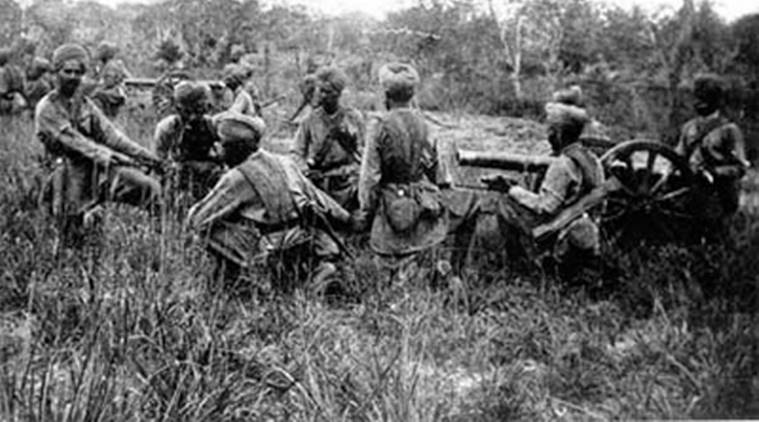
It was during this time around that the tensions between India and Pakistan were escalating, over the control of the princely state of Jammu & Kashmir. Eventually in October 1947, war broke out between the two countries.The Spring of 1948 was utilised, by the Indian Army, to rid the Kashmir valley of the infiltrators. General Thimayya, General Officer commanding Sri division, decided to launch the offensive with the main thrust along the Uri-Domel road by 161 Infantry Brigade under Brigadier L.P Sen. 163 Infantry Brigade under Brigadier  Harbaksh Singh was detailed to carry out a divisionary  operation towards Tithwal from Handwara. To deal with the enemy forces around the Bagh area, the Poonch Brigade was assigned to carry out a battalion operation towards Bagh. In the third week of May, Dogarpur, Trehagam and Chokibal were captured and on 22nd May, Tithwal sector was captured by the Indian forces.
Source: Wikimedia Commons

Pakistan, enraged by the setback in the Tithwal sector, launched repeated counter attacks and recaptured the village of Tithwal in the hills of Jammu and Kashmir. The Pakistani raiders launched offensive strikes in this region and captured a ring contour on the 8th of July 1948. The enemy pushed to seize control over the positions across the river Kishanganga and the Indian Army was forced to vacate their forward positions across the river. In the wake of this setback , in order to strengthen the advance on the Tithwal sector, Piru Singh’s unit – the 6th Battalion of Rajputana Rifles – was moved from Uri to Tithwal and was assigned to the 163rd Brigade. The unit took position on the Tithwal bridge. 

The attacks commenced on the 11th of July. The operation went on for four days till the 15th of July. However, according to the reconnaissance report, the Pakistanis were still in command of two strategically important positions. The capture of these two positions was essential for making any further advancement. The task of securing these two features was assigned to the 6th Rajputana Rifles. Two companies – Charlie ( C ) and Delta ( D ) – were assigned to the operation. The C company was in charge of securing the second position after the D company had captured the first.

Battle of Darapari : The Day of Action

The D Company, of which CHM Piru Singh was a part, was sent to capture the Darapari feature in Tithwal sector. Darapari is a hill feature located at an altitude of over 11000 feet. The path leading to the position held by the Pakistanis had deep ravines on either side and was just about one meter wide. According to the intelligence reports received, the battalion was told that the enemy had not had enough time to dig-in intensively and hence could be dislodged without much struggle. This however proved to be inaccurate. The narrow path through which the battalion was advancing was overlooked by five hidden Pakistani bunkers ,which gave the defending troops a clear advantage in terms of position. The time constraints restricted the battalion from having a proper reconnaissance of the enemy position. In order to take advantage of the darkness, the attack to secure Darapari was planned to take place after the moon had set and was launched at 01.30 a.m on the 18th of July. As the attack advanced, the company was subjected to heavy shelling and within a matter of about half an hour, the casualty count had reached to a whooping 51. The platoon commander Subedar Bhika Singh was hit. A sinking feeling of panic had swept over them and there was absolute chaos amidst the rest of the team. It was then that Piru Singh rose to the occasion and took charge of the team and led his platoon with a determination that not even the raging bullets from the rival MMG posts could waver. 

The enemy medium machine guns had been sited to cover all possible approaches. The platoon led by Singh was met with heavy firing from both flanks and a volley of grenades from the bunkers. Neither the murderous firing nor the fact that half of his platoon was either dead or wounded, could falter him. With the battle cry of ‘Raja Ramachandra ki Jai’, he rushed forward to crush the MMG post which was playing havoc with his troops. His exceptional leadership motivated the rest of the crew to follow their leader ferociously. With the curtain of grenades tearing through him, wounding him at several places, he continued to advance. He rushed to the MMG which was causing the maximum destruction and bayoneted the men on guard and occupied the post. 

By this time the rest of his men were either dead or wounded and he was the sole survivor of his company. Alone and injured, but with a never-say-die attitude, Singh inched forward to achieve the objective assigned. While advancing towards the second MMG post, a grenade was thrown at him, which wounded him in the face. Neither the blood dripping from his face nor an empty reserve of ammunition could kill his spirits. He crawled out of the trench, hurling grenades at the next enemy post and then jumped to the next trench bayonetting two Pakistani soldiers to death. As Singh emerged out of the trench to attack the third bunker, he was hit in the head by a bullet. Just before he succumbed to his injuries, he had managed to throw a grenade into the enemy trench, which did a perfect job of wiping off the enemies. CHM Piru Singh had thus bravely and selflessly completed his mission before he closed his eyes for the final time.

Source: Wikimedia Commons

Param Vir Chakra

His act of bravery was witnessed by the commander of the C company, who was directing fire in support of the D company. Inspired by Singh’s actions the rest of the company put up a ferocious fight and Darapari was captured against death defying odds. 

CHM Piru Singh was awarded the Param Vir Chakra for his single-handed bravery, exceptional leadership and extreme devotion to duty, posthumously. In remembrance of this brave soldier, his unit – 6 Rajputana Rifles – commemorates the Battle of Darapari every year. 

Every soldier has a story buried under his gravestone and Piru Singh’s is that of his extreme courage, supreme sacrifice, exemplary leadership and above all his unconditional love for his motherland.
Remembering Savitri Khanolkar, The Designer of Param Vir Chakra

Param Vir Chakra is India’s highest gallantry award.From Major Somnath Sharma to Captain Vikram Batra, 21 brave hearts of the Indian Armed Forces have so far received the prestigious Param Vir Chakra award. When Major Somnath Sharma, the first recipient of this award, laid down his life while defending his motherland, this award actually did not exist. It was later, when India became a republic in 1950, that the award was introduced, but with effect from 15th August 1947.

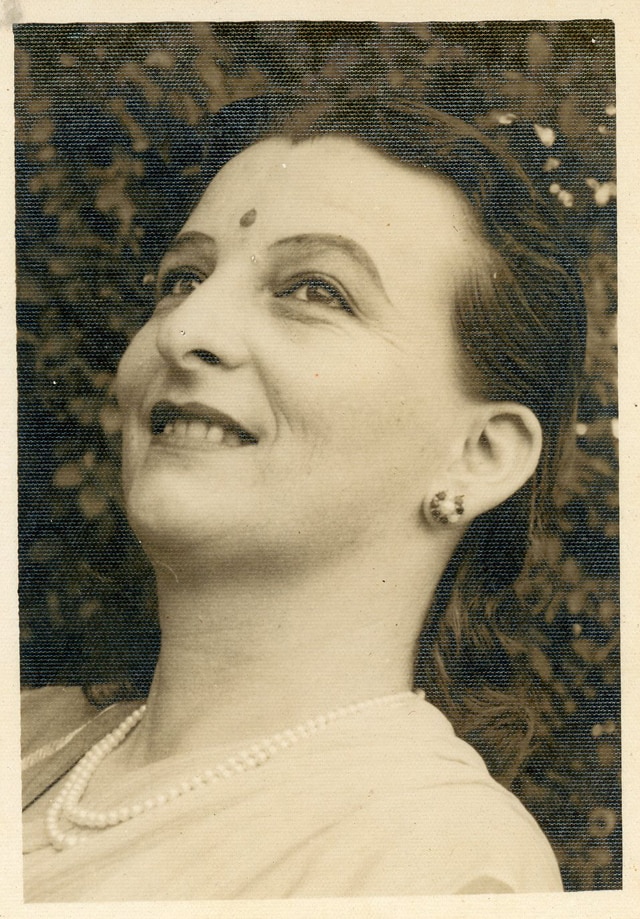
I’m sure most of you might have heard about this award, but what many are unaware of is that India’s highest military decoration was designed by a Swiss-born woman Eve Yvonne Maday de Maros aka Savitri Bhai Khanolkar. 

Image source: dnaindia.com

Life as Eve Yvonne Maday de Maros

Eve was born in Neuchatel, Switzerland, to a Hungarian father Andre de Maday and a Russian mother Marthe Hentzelt, on the 20th of July 1913. She was raised by her father, after her mother’s death. She spent her early childhood in Geneva. As a child, she loved nature and liked being outdoors. 

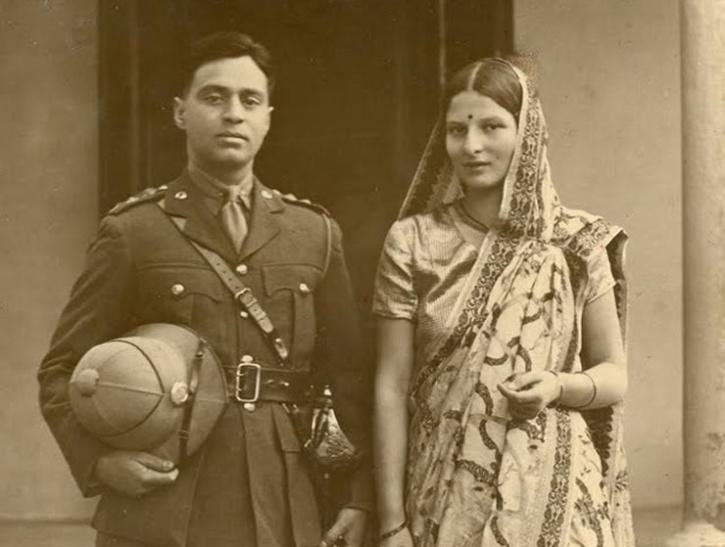
A turning point in her life was when in the winter of 1929, on a skiing holiday, she met Vikram Ramji Khanolkar, a young Indian Army cadet. Vikram, at that time was undergoing training at the Royal Military Academy, Sandhurst and was holidaying in  Switzerland during a team break. The meeting was just the beginning of what later blossomed into a cross country love story. Neither Vikram’s age nor her father’s disapproval stopped her from pursuing her love. She moved to India a few years later and got married to the love of her life in 1932. She converted to Hinduism and adopted the name Savitri Bhai Khanolkar after moving to India.

Life as Savitri Khanolkar

Savitri Khanolkar was a European lady with an Indian soul. She loved everything about India and its culture, which made her cross-cultural transition rather smooth and comfortable. She picked up Hindi, Marathi and Sanskrit within a couple of years and could converse fluently in all the three. She was keenly interested in India’s history and culture and devoted herself to learning more about the country’s mythology, traditions and religious scriptures. She was a talented artist and made a series of paintings depicting the various ideals and principles of Vedanta and Hindu philosophy. She also wrote two books – ‘Sanskrit Dictionary of Names’ and ‘Saints of Maharashtra.’ Those who knew her personally described her as a warm and compassionate person with a great passion for the Hindu philosophy.

Maj General Vikram Khanolkar and Savitri Khanolkar | Image Source: indiatimes.com

Designer of Param Vir Chakra

After India became independent in 1947, especially in the light of the Indo-Pak war that had broken out, there was a pressing need to create new military honours and awards for independent India. Adjutant General Major General Hira Lal Atal had been assigned this responsibility. Major Atal hardly needed to think twice before choosing Savitri Bhai for the task. Her passion for Indian culture and Vedanta philosophy, talent as an artist  and her in-depth knowledge of the country’s ancient history and traditions made her an ideal candidate for the job. Her military association as an army wife was an added bonus. She was asked to design the Indian equivalent of the British Victoria Cross – the Param Vir Chakra.

Param Vir Chakra : Design Inspiration

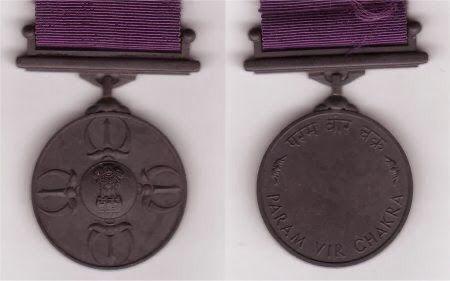
Savitri Bhai took inspiration from India’s ancient puranic literature and legends to design the Param Vir Chakra medal.She selected Indra’s weapon, the Vajra, which was made from the bones of Maharshi Dadhichi for the design. Maharshi Dadhichi was known for the ultimate sacrifice that he had made by giving up his body and thereby enabling the Gods to fashion the deadly weapon Vajra from his bones. The presence of Vajra in the medal is symbolic of the power and the selfless sacrifices of our legendary war heroes. 

The final design consisted of the National emblem embossed in the centre, surrounded by four replicas of the double Vajra imprinted on the medal face and the rear side had the words ‘Param Vir Chakra’ inscribed both in English and Hindi, separated by Lotus flowers.The medal was cast in bronze and held by a purple ribbon.

Apart from the Param Vir Chakra, she also designed other gallantry medals including Ashok Chakra, Maha Vir Chakra, Kirti Chakra, Vir Chakra and Shaurya Chakra.

Coincidentally, the first PVC recipient turned out to be Savitri Bhai’s future son-in-law’s brother, Major Somnath Sharma.

Image Source : twitter

Later life 

During the course of her life, Savitri Bhai always found time to engage in social work. She was a follower of Sri Ramakrishna and she immersed herself in numerous social activities through Ramakrishna Mission. She also worked for the welfare of Jawans and their families and refugees who had been displaced during partition. She lost her husband to a heart attack in 1952, after which she found solace in spirituality and retired to Ramakrishna Math.

The life of Savitri Bhai Khanolkar was truly a remarkable one. Be it joining the North India Flying Club or learning Indian classical dance and music or attending Patna university, she enjoyed every bit of her life as an Indian woman. She passed away on 26th November 1990, after leading a full life.

History of Indian Stamps

India got independence on 15th August of 1947 assured in a new era in the history of the country but philatelist had to wait another 98 days for the release of India’s most commemorate stamp on 21st of November 1947.

First stamp

The Postal Telegraph Department however came out with a large Kashi postmarked with the slogan “Jai hind” for the occasion and letters mailed that the major post offices of the country were cancelled with this post mark.

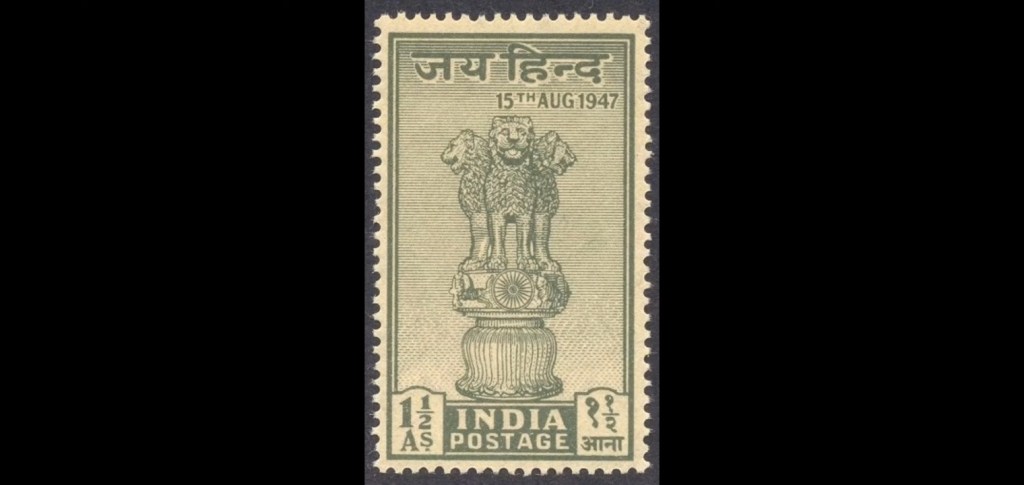
The India’s first commemorative stamp features the Lion capital of Ashoka which had one set on the top of a column of Sarnath near Varanasi. The lion capital has since been around at the state emblem of India the denomination of the stamp was one and a half annas and an inspiration of “Jai hind” in Hindi was also depicted in the stamps.

Other stamps

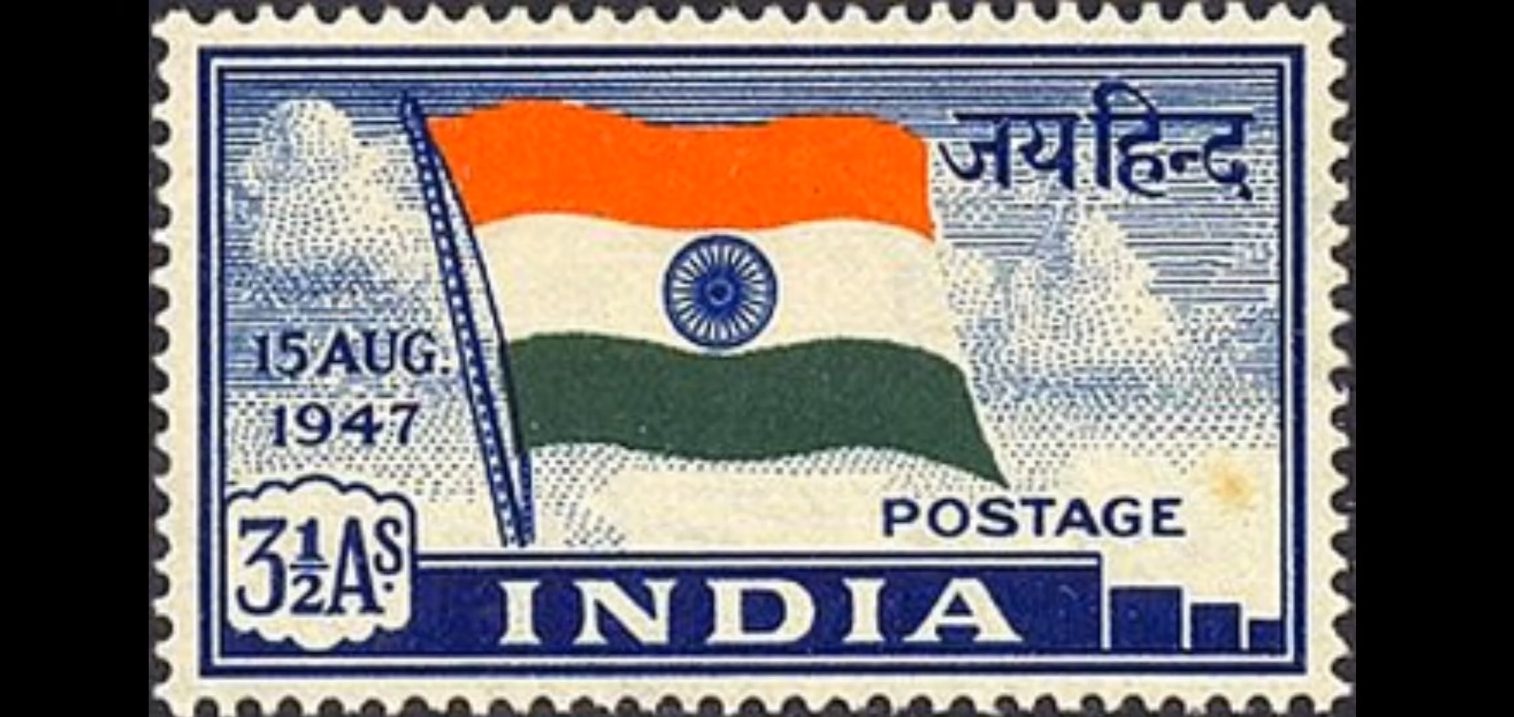
Actually three stamps were planned to release at the time of Independence. The rest two stamps were released in the 15th of December 1947 with the three and a half annas stamp with portray of the national flag in tricolor Saffron on the top, white in the middle and green in the bottom.

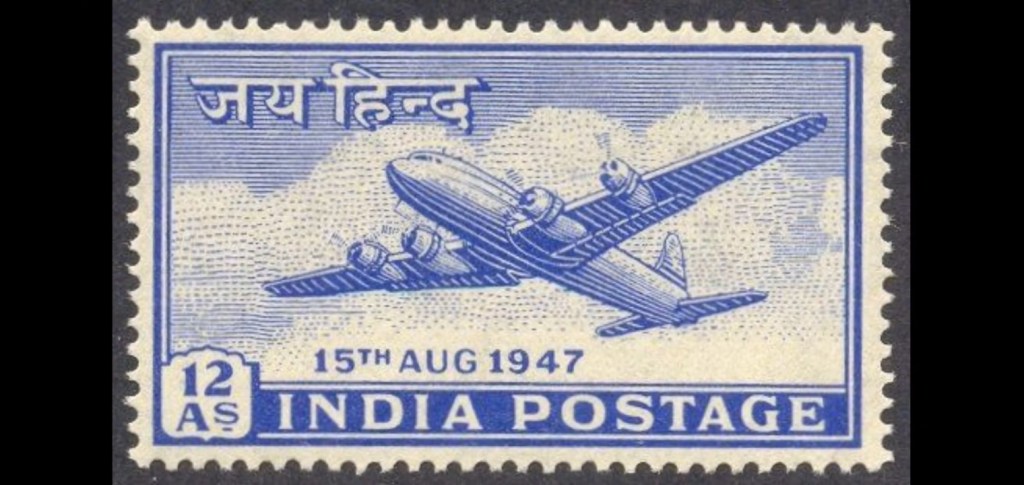
The twelve annas stamp depicts an aircraft a symbol of the modern age. These stamps also have inscription “Jai hind” in hindi, they are also known are Jai Hind stamps.

The stamps were printed offset lithography. As the three and a half annas stamp was printed in three colors in three steps because difference in inking at different stages, because specimens having the top of the flag in deep orange or pale orange and the lower part in pale green and deep green were coming across.

Woman of steel

India in the early 1800s was a place of riot, extortion and was trapped under the unsympathetic British rule. Being one of the richest country for spices and hard earned labour, the Indians not living under royalty were suppressed under the British rulers, even leading to the death of many. In times that hold importance of freedom, a young woman in her teens made a decision to change the world from wrong doings and eradicate the biased rule of another country over India. Rani Lakshmi Bai, a soul filled with patriotism and love for the country, stood up and fought with all her will to sustain a free Hindustan.

The Queen of Jhansi was born on 18th November 1828 in Varanasi. Since her childhood she was trained and taught to be a warrior and an independent woman to live on freely and to dream of an ‘Azaad’ Bharat. She was educated not only in her native languages but in English as a foreign language. Her maiden name was Manikarnika, which later after her marriage was known as Rani Lakshmi Bai. Manikarnika lost her mother at a young age and her responsibility entirely fell upon her Father, Moropant Tambe. He trained her for becoming the best version of herself by teaching her the importance of martial arts, horse riding, sword fighting, as well as shooting.

In the year 1842, Manikarnika married the King of Jhansi, Raja Gangadhar Rao Newalkar. On getting married into Jhansi, she was given the title of Rani Lakshmi Bai as a token of respect and honour to the new Queen of Jhansi. Being the Queen of Jhansi, Rani Lakshmi Bai couldn’t tolerate the cruelty of the British on poor Indians and setting them under their foot, to make a division between the elite and the common people of Jhansi. Crime and injustice against the people of Jhansi increased day by day, with the growth in death, either due to murder or suicide.

In the year 1851, Rani Lakshmi Bai gave birth to her son but within the period of four months, she lost him to illness. Thereafter, along with her husband, she decided to adopt a son for the future of Jhansi, for an heir to follow his father’s footsteps as Raja Gangadhar Rao was falling sick by every increasing day. Leading to this, in the year 1853, the Raja and Rani adopted a boy, Damodar Rao. Later in the year, Raja Gangadhar Rao Newalkar passed away and set the journey for Rani Lakshmi Bai to sit in his throne and lead Jhansi to its glorious future.

The British wanted Jhansi under their rule completely, and a woman ruling the kingdom only boosted their ego and insecurities. Rani Lakshmi Bai got a notice by one of the British officer, Major Ellis to evacuate and handover Jhansi to the British. Infuriated by this act, Rani Lakshmi Bai said her famous words, “Meri Jhansi Nahi Dungi.” With this spirit, she fought for the freedom of Jhansi and ripped it off of the British rule.

The battle for freedom and survival started three years after with a huge massacre on the palace of Jhansi in the midst of the night, in order to capture the Queen as commanded by Sir Hugh Rose. Lakshmi Bai and her soldiers fought bravely against the surprised attack. As Jhansi was attacked terribly, the Queen of Jhansi, tied her son to her back and rode on a horse till she reached Kelpi. The Peshwa understood the situation and helped her with an army of her own. This was a stepping stone for all the woman inspired and taught by Rani Lakshmi Bai for a better world and a brighter future. With the upcoming war, woman were made warriors to fight against the injustice caused by the British.

On the day of the battle, Rani Lakshmi Bai fought with fire in her veins and courage in her blood. She fought till her last breath and created history by burning herself on the battle field so no Englishmen could touch her even after death. Rani Lakshmi Bai, a true warrior Queen inspired millions across the country and even today she lights the hearts of every woman who have to fight their own battles of bravery and sacrifice. As it is rightfully said, “Khoob ladi Mardani, Jhansi ki Rani”.