The term ‘sect’ refers to a group of people who share common beliefs, practices, and rituals that distinguish them from other groups. In Indian society, the concept of the sect has a significant role in shaping the social, cultural, and religious landscape. It is essential to analyze the salience of ‘sect’ in Indian society, vis-a-vis caste, region, and religion, to understand the dynamics of the social structure and its impact on individual and collective identity.
The Role of Sects in Indian Society:
Sects in Indian society are primarily organized around religious beliefs and practices. The Indian subcontinent has a diverse range of religious sects, including Hinduism, Buddhism, Jainism, Sikhism, and Islam, among others. These sects are further divided into sub-sects, each with its own distinct beliefs and practices. For instance, in Hinduism, there are several sects, including Shaivism, Vaishnavism, Shaktism, Smartism, and others. Each sect has its own set of beliefs and practices, including the worship of specific deities, observance of specific rituals, and adherence to specific codes of conduct.
The salience of ‘sect’ in Indian society is closely intertwined with other social categories, such as caste, region, and religion. For instance, in Hinduism, caste and sect are closely linked, with each caste group having its own religious practices and beliefs. Similarly, in Islam, there are different sects, such as Sunni and Shia, each with its own set of beliefs and practices. Religion and region are also closely linked, with certain regions being associated with specific religious traditions. For instance, North India is primarily associated with Hinduism, while the South is associated with Hinduism, Islam, and Christianity.
The Impact of Sects on Social Identity:
The concept of the sect has a significant impact on social identity in Indian society. Individuals’ identification with a particular sect often determines their social status and the social groups they belong. In the Hindu caste system, one’s sect determines their caste, which, in turn, determines their occupation, social status, and access to resources. Similarly, in Islam, the sect one belongs to can have a significant impact on their social status and the social groups to which one belongs to.
The concept of the sect also impacts individual and collective identity formation. Individuals often identify themselves based on their sect, which shapes their religious beliefs, practices, and values. This, in turn, impacts their social interactions and relationships, as they tend to associate with individuals from the same sect. The concept of the sect also shapes collective identity formation, as individuals from the same sect often come together to form social and religious organizations that promote their shared beliefs and practices.
The Role of Sects in Inter-Group Relations:
The concept of the sect also plays a significant role in inter-group relations in Indian society. Sects often compete for resources and influence, leading to conflict and tensions between different sects. For instance, in Hinduism, there have been historical tensions between Shaivites and Vaishnavites, as both sects venerate different deities and have different beliefs and practices. Similarly, in Islam, there have been tensions between Sunni and Shia sects, as they have different beliefs and practices.
However, sects can also facilitate inter-group cooperation and solidarity. Individuals from the same sect often come together to support each other in times of need and form social and religious organizations that promote their shared beliefs and practices. Sects can also facilitate inter-group dialogue and cooperation, as individuals from different sects come together to share their beliefs and practices and learn from each other.
Conclusion:
In conclusion, the concept of sect plays a crucial role in shaping the social, cultural, and religious landscape of Indian society. Sects are closely intertwined with other social categories, such as caste, region, and religion, and impact individual and collective identity formation, social status, and inter-group relations. While sects can lead to conflicts and tensions, they can also facilitate inter-group cooperation and dialogue. Therefore, understanding the dynamics of sects in Indian society is essential for promoting social cohesion, inter-group understanding, and harmony.
Indian society is known for its ability of tolerance and acceptance, and social cohesion making it unique in sustaining its culture. The importance of fraternity enshrined in the Preamble of the constitution makes it a duty of every citizen. Indian society is extensively diverse in cultural and regional aspects and it is pertinent that it is posited in each individual the realization of ideas and objectives in the Preamble concerning every other individual. India from ancient times has thrived to create a nationality that is neither governed by universalism nor by exclusivity to its interest groups. The multi-cultural conundrum is a salient feature of Indian society that has been a boon and a bane over the history of the country.
SALIENT FEATURES OF INDIA: • Multi-Ethnic Society • Multi-Lingual Society • Multi-Class Society • Patriarchal Society • Unity In Diversity • Tribes • Family • Kinship System • Balance between spiritualism and materialism • Balance between Individualism and collectivism • Co-existence of traditionalism and modernity
The multi-ethnic Indian society Multi-ethnicity is a major salient feature of Indian society. An ethnic group or ethnicity is a category of people who identify with each other, usually based on a common language or dialect, history, society, culture, or nation. A society with the co-existence of a wide variety of racial groups is a Multi-ethnic society. India is home to almost multiple racial profiles like Nordic, Dinaric, Proto-Australoid, Mongolian, etc. Multilingualism- salient feature of Indian society India is home to many native languages, and it is also common that people to speak and understand more than one language or dialect, which can entail the use of different scripts as well. India’s 2011 census documents that 121 languages are spoken as mother tongues, which is defined as the first lan¬guage a person learns and uses. Of these languages, the Constitution of India recognizes twenty-two of them as official or “scheduled” languages. Articles 344(1) and 351 of the Constitution of India, titled the Eighth Schedule, recognize the following languages as official languages of the states of India: • Assamese, Bengali, Bodo, Dogri, Gujarati, Hindi, Kannada, Kashmiri, Konkani, Maithili, Malayalam, Manipuri, Marathi, Nepali, Oriya, Punjabi, Sanskrit, Santhali, Sindhi, Tamil, Telugu, and Urdu. Six languages also hold the title of classical languages (Kannada, Malayalam, Odia, Sanskrit, Tamil, and Telugu), which are determined to have a history of recorded use for more than 1,500 years and a rich body of literature. Multi-religious society India is a cradle of world religions whose ancestors have preached and practiced almost all major religions of the world giving rise to worldly beliefs, practices, rites, rituals, ceremonies, and institutions. The co-existence of all the religions and variety of faiths has been a shining example of religious pluralism and tolerance. • The principle of secularism despite several conflicts and riots has been upheld by our citizens time and again. • Indian Constitution has rightly reflected the idea of multi religions. It states that “every citizen has a right to freely practice, preach, profess and propagate any religion or faith”. • A secular state has been defined as a “state in which all religions and citizens irrespective of their faith would be treated impartially”. • Apart from the major religions, several tribal religions are coexisting in Indian society. UNITY IN DIVERSITY: “Unity in Diversity” is a phrase implying unity among people with diverse cultural, religious, and other demographic differences. It denotes the sense of oneness and we-ness .In India, people of different religions have continued to respect the ideals and values of people of other religions, and hence, India has always stood up as an integrated nation ready to put its arms around everybody in this world.
Indian society is very unique and diverse. We have a lot of cultures, communities, religions, languages, etc
India is a plural society, characterized by its unity and diversity. A grand combination different cultures, religions and languages of the people belonging to different castes and communities has upheld its unity. This combination of different culture and ethnicities is what that has made India unique from other countries. Different events such as the foreign invasions, immigration from other parts of the world, and the existence of diverse languages, cultures and religions have made India’s culture open- minded , on the one hand, and a unique continuing and living culture, with its specificity and historicity, on the other. Not only we have diversity in racial compositions, religious and linguistic distinction but also in patterns of living, life styles, land tenure systems, occupational pursuits, inheritance and succession law, and practices and rites related to birth, marriage death etc.
Post-Independent India is a nation united against several odds and obstacles. India is a secular state. It has one Constitution providing guarantees for people belonging to diverse regions, religions, cultures and languages. It covers people belonging to all socioeconomic strata. The Article 15 of the Indian Constitution talks about Prohibition of discrimination on grounds of religion, race, caste, sex or place of birth. Our Indian Constitution itself safeguards and protects the rights of every individual irrespective of their religion, race, caste sex or place of birth. It gives everyone opportunity and treats everyone equally.
DIFFERENT FEATURES OF INDIAN SOCIETY
MULTI RELIGIOUS SOCIETY
India consists of people from many different religions. Hinduism, Islam, Christianity, Buddhism, Jainism, Sikhism are some major religion in India, However there are other different religions as well. Hinduism is the most dominant religion in India.
As per the census 2021, there are approx. 110 crore people follow Hinduism in India. The Hindus are most numerous in 29 States/UTs except in Manipur, Arunachal Pradesh, Mizoram, Lakshadweep, Nagaland, Meghalaya, Jammu & Kashmir, and Punjab.
Approx. 20 crores of people are Muslims In India. The Muslims professing Islam are in majority in Lakshadweep and Jammu & Kashmir.
In 2021 approx. 3.20 Crores people are Christians in India. Christianity has emerged as the major religion in three North-eastern states, namely, Nagaland, Mizoram, and Meghalaya.
In 2021 approx. 2.4 Crores people follow Sikhism in India.
In 2021 approx. 10 million or 1 Crore people are followers of Buddhism in India and In 2022 approx. 5 million or 50 Lakh people follow Jainism in India.
MULTI RACIAL SOCIETY
Race is a group of people with a set of distinctive physical features such as skin colour, type of nose, form of hair, etc. India is a country of people with different racial groups. The latest racial classification of the Indian people based on researches in this field has been given by B.S. Guha (1952). He has identified six racial types (1) the Negrito, (2) the Proto Australoid, (3) the Mongoloid, (4) the Mediterranean, (5) the Western Brachycephals, and (6) the Nordic.
MULTI LINGUAL SOCIETY
According to the latest analysis of a census more than 19,500 languages or dialects are spoken as mother tongue in India.
There are 121 languages which are spoken by 10,000 or more people in India, which has a population of 121 crore. Only 22 languages are listed in Schedule VIII of the Indian Constitution. The 96.71 per cent population in the country have one of the 22 scheduled languages as their mother tongue and the remaining 3.29 per cent is accounted for other languages. Not all these languages are, however, equally widespread. Many of them are tribal speeches and these are spoken by less than one percent of the total population so here we can clearly see see that in India there is a great deal of linguistic diversity as there are so many people of different languages and dialects.
MULTI CASTE SYSTEM
The term caste is generally used in two senses: sometimes in the sense of Varna and sometimes in the sense of Jati. In India, caste system is very much prevalent. The Varna system is basically a four fold system in the Hindu society based on their functional criteria, the four divisions are Brahmins, which is on the top of this system followed by kshatriya, Vaishyas and then shudra with their functions as learning or teaching, defense, trade and manual labour. We find castes among the Muslim, Christian, Sikh as well as other communities. One must have heard of the hierarchy of Shaikh, Saiyed, Mughal, Pathan among the Muslim. Similarly, caste consciousness among the Christian in India is not unknown. Since a vast majority of Christians in India are converted from Hindu fold, the converts have carried the caste system into Christianity. Among the Sikh again we have so many castes including Jat Sikh and Majahabi Sikh (lower castes).
In addition to the above described major forms of diversity, we have diversity of many other sorts like settlement patterns – tribal, rural, urban; marriage and kinship patterns along religious and regional lines; cultural patterns reflecting regional variations, and so on.
Some other of the salient features applicable to Indian Society are:
Unity In Diversity
Patriarchal Society
Tribes
Family
Kinship System
Balance between spiritualism and materialism
Co-existence of traditionalism and modernity
India is a very diverse country and because of its unique feature it always attracts people from all parts of the world.
Family, society, and educational institutions play a very major role in building one’s character or personality. These institutions impart value to an individual and help them become a better person in society. One learns what one listens. Young children very much learn what they see around them. If they see good they learn good and if they see bad they will learn that as well. The role of family is important because an individual lives there and learns from there, society influences an individual’s behaviour and educational institutions are where an individual learns. Now we’ll see how these factors help in inculcating values in an individual.
ROLE OF FAMILY
Family is a place where one grows, and learns the most. Just like the saying charity begins at home similarly an individual’s education starts from home. It is like a foundation where values are built. Values like respecting elders, honesty, justice, respect for both genders all taught at home. If within a family there are differences or if the home environment is not healthy then this also affects the individual. The values practised by the other members of the family also shapes the child’s attitude towards other people or towards the society. Values like love, care, protection all these start from family. If a child experiences love, care, comfort then he/she will have a positive attitude toward others and will behave the same with others and will inspire others as well. Family’s environment will help a child to socialise and progress in the society.
The system of joint family that is the presence of elder family members also has a great influence on an individual. It helps in developing social and moral values. They learn human values and respecting elders and this will help in eradicating negative mental tendencies when they are among elders. In a family an individual not only learns about values but also about their customs and culture and enhancing one’s culture proudly is also a very good value. The attitude of one family member towards another also affects individual behaviour. For example if child see his father not respecting his mother then he may feel that this is how it is supposed to be and he may also do the same thing with his wife but if he sees his father respecting her mother, giving her importance which she deserves the he will also treat his wife in respective manner so it is very important for a family to not just inculcate good values to the younger generation but they themselves should have good value so the future generation could learn from them.
The values that are taught in the family helps a child to learn, grow and progress in the society. Family values enhance a child’s personality and character and help them in becoming a better human being.
ROLE OF SOCIETY
When we grow older our social world also expands, now not only family but we become a part of society. Society also plays an important role in inculcating values. When a child grows it goes outside to make friends and share each other’s thoughts. Society also shapes an individual’s character. Societies follow certain traditions and customs and being a part of the society, we are also a part of these customs and traditions. These customs and traditions are being followed from generations and these are based on values such as loyalty, courage, love and brotherhood. We celebrate different festivals together which portray love and happiness and we not only celebrate festivals of one tradition or religion, but being part of such a diverse country we get to enjoy festivals and customs of different religions which shows mutual respect towards each other and toward different individuals in a society. Religion is a very important social institution in our Indian society and these religions are embedded with cultural values. Society creates social order, the diversity present in our society teaches mutual love, respect and inculcates a variety of values and holistic development of individuals. The social influence and the urge to become an inspiring personality in a society helps in developing good values in an individual. The great inspiring personalities, influencer leaders and celebrities also have a great influence in society. Young individuals learn and get inspired by them so it is also an important job for these powerful personalities to set a good example for the younger generation.
ROLE OF EDUCATIONAL INSTITUTIONS
Apart from home, a child spends most of his/her time at school. The first formal place of socialisation and the first and foremost important value that it teaches is discipline. The educational institutions have a proper disciplined environment. In an educational institution, the day starts with the prayer which teaches gratitude. Different school activities inculcate different values such as teamwork, sportsmanship spirit, competitiveness, etc. Different programs of Community work help in inculcating values like empathy, care, unity, etc. Peer groups also play an important role, students often get feedback about their behaviour from their fellow classmates or friends. Teachers also act as role models for the students, when a teacher asks students to behave in a certain manner then they tend to take it more seriously as compared to any family member or friend. The reward and punishment system also helps as children behave in a good manner for rewards and to protect their self esteem from getting punished. Every school or educational institution has their philosophy or motto and these help in inculcation of good values.
“Intelligence plus character, that is the true goal of education”. – Martin Luther King
Value is something that is not restricted to a certain age or gender or place. It is something which is lifelong, it can be learned at any age and be practiced throughout one’s life. Good values build one character and make an individual a better human being . A man with good values is respected everywhere in the society so it is very important to inculcate good values in life. There are different characters in an individual life that add to his/her character and personality. The influence of family, society and educational institutions have the strongest influence upon an individual and thus it affects in developing an individual personality whether positively or negatively.
Education is an essential thing in our daily life. According to the growth of society, education must be provided to every citizen. The new world is mysterious, all things that exist had to be known to every people education ensures that. So whatever we want to be we should know about that.
Findings of great peoples, Technological know-how, awareness of the environment, History, etc are the main components of education. An educated person must show good character they were intelligent and efficient. They can build up our economy in a good manner
Nowadays students are struggling with exam results. They were worried about the marks they got. Parents also wanted marks from children. However, studying with understanding makes a perfect education. There are a few tips for good studies.
1. Awareness Of The Chapters
The student must have a correct idea of the chapters including the basic needs. It will increase our energy to study new things.
2. Making The Day For Studies
Mornings are a good time for making good decisions they may whisper through our ears for an entire day. Put a goal for the day in the mornings and we will begin to work toward that.
3. Visualization
When we were teaching or studying, try to imagine the concepts as well it will lead to an incredible memory of the topics.
4. Setting Our Mind
Setting our minds before studies is the best way to attain knowledge. When we think that we are free from anything, nothing can disturb us from our goals. Set our minds to study and make differences
5. Concluding Sentences
When we are willing to study a paragraph, make the important keywords from that. It will help you to study shortly and easily .
In India, poverty is presently estimated by fixing a poverty line based on a differentiated calorie-norm. This means that the level of poverty depends upon the capacity of a person to purchase food and a person who can buy specific amount of food to cross the poverty line margin for nutrients and calorie intake is above the poverty line. Whereas, the person who cannot buy enough food to meet the required nutrition value of calories and carbohydrates is below the poverty line. This level is not the correct parameter to check the level of poverty.
A task force of the Planning Commission in 1979 defined the poverty line as that per capita expenditure at which the average per capita per day calorie intake was 2400 calories in rural areas and 2100 calories in urban areas. Average per capita expenditures incurred by that population group in each State which consumed these quantities of calories, as per the 1973-74 survey of NSSO, were used as the poverty lines.
The debate on the extent of poverty in India has been a matter of global interest in the recent years. The primary reason for the global interest in the debate is that the levels of poverty in India and China have come to exert significant influence over the trends in world poverty itself.
Within India too, there has been growing contestation around poverty estimates, particularly in the period of economic reforms. First, there are persistent disagreements among economists on whether the rate of poverty decline after economic reforms was slower than in the preceding period. Secondly, the shift to targeted, rather than universal, welfare schemes has witnessed the use of poverty estimates to decide on the number of households eligible to access these schemes. The report of the Expert Group on the estimation of poverty, chaired by Suresh Tendulkar, is the latest input to the “Great Indian Poverty Debate.”
It is to be noted here that many subsidies and programs are launched by the government but these additional increments do not reach the actual people that are in need of them. Instead it is sent back to the businessman and thus a lot of profit is earned on these subsidized goods. Thus, to lower the level of poverty in India, schemes have to be launched in order to directly benefit the people in need.
The Hindu states that, “A final issue with the report, of much long-term consequence, relates to the wisdom of abandoning the calorie norm. It is indeed true that the levels of calorie intakes are not well correlated with nutritional outcomes. However, abandoning the calorie norm altogether and taking solace from the fortuitous fact that calorie intakes appear adequate at the new poverty lines is an arbitrary proposition. It is unclear whether there is any basis, theoretical or empirical, for this relationship to hold true across time.”
the Tendulkar Committee has pitched for a policy position that is stranded between the harsh realities of poverty in India and the fiscal conservativeness of a neo-liberal framework. The real challenge lies in preserving the positives from the report, and strongly persisting with the demand for a universal social security system.
India is a country which is known for its diverse heritage and mesmerizing culture. However, it also has some unavoidable rigid belief systems or evils which, if not reformed, can be really harmful for the Indian society. Such social evils can also be harmful for the growth and progress of the society.
Social evils can be defined as the toxic beliefs due to which the societal progress is hindered. Such evils can be born out of sheer ignorance or blind faith in religion or culture or both. These evils are not only harmful for the believers themselves but for the society as a whole.
There have been several personalities who, in order to bring reforms in the society, tackled and attempted to remove the practices of some rigid belief systems which, in turn, brought reforms in the society.
Here are some evils that either prevailed or still prevail in India due to the stiff nature of the society:
The Caste system:
The caste system has its roots in the ancient Indian society where the common folks were divided into four categories on the basis of their skills and abilities. Those categories consisted of Brahmin, Kshatriya, Vaishya and Shudra.
But as the time passed, this system became so rigid that the people belonging to the higher castes were seen as superior to those of the lower castes. Brahmins were known to be next to God and were respected by almost everybody. On the other hand, the Shudras were discriminated and were considered as ‘Untouchables’. Although the Indian Constitution has outlawed the practice of Untouchability, it still exists in some parts of the Indian Society.
The Dowry system:
The word ‘dowry’ means payment (of property or money) from the bride’s parents to the groom or his family at the time of marriage. This stems from the belief that a daughter is a liability for her parents and for her bright future she has to be married off to a decent groom. In order to get a good marriage prospect, the bride’s family starts saving money as soon as the daughter is born. This puts an unimaginable of amount of burden on the bride’s family.
This system has also made many Indian women victims of the atrocious crimes by the groom and his family. There have been many cases where crimes against women were committed by their husbands or their in-laws. In such cases, women had to go through unimaginable physical and emotional abuse.
Although we have laws in the constitution against the practice of the Dowry System, it is still practised in some of India. The government is taking measures to eradicate this system by bringing in policies to educate and the girls and parents of the country. They have also started schemes to aware the parents about the negative outcomes of the Dowry system.
Female Infanticide:
Female infanticide is the intentional and deliberate killing of a baby girl once she is born due to the preference for a baby boy. Even though this is an illegal practice, people in some parts of India still practice it. According to a census in 2001, there are only 933 females to every 1000 men. Another census in the year 2011 showed a decline in the Child Sex Ratio (CSR) where there were only 918 females to every 1000 men.
Female infanticide is more prevalent than male infanticide in south Asian countries like India and China due to cultural reasons. In the Indian Society, some families kill their new born daughters to avoid the burden of paying Dowry to the groom or his family. For families with several daughters, it can be a huge financial burden and hence, killing the baby girl seems like an easier option to them.
The Indian government has tried to take several initiatives to tackle and eradicate this issue. In several Indian states, the government took the responsibility of educating the girl child which, in turn, freed the parents from their financial burden.
These are some of the dreadful evils in the Indian society which need to be tackled and solved so that a better and more reformed society can be created. However, there are more such evils like Poverty, superstitions and corruption. These issues have become pretty common in the Indian Society.
With the years passing by, these issues have risen instead of coming to an end. Therefore, proper action must be taken by the government and the society to change the mindset of the existing society.
Globalisation refers to the interdependence of world economies and populations brought about by trade in goods and services, technology, and the flow of investment, people, and information. It includes the creation of networks and pursuits transgressing social, economical, and geographical barriers. One of the effects of globalization is that it promotes and increases interactions between different regions and populations around the globe.
India is one of the countries which experienced significant success after the initiation and implementation of globalisation. The growth of foreign investment in corporate, retail, and the scientific sector increased enormously. It tremendously impacted the social, monetary, cultural, and political aspects of the country. In recent years, globalisation has increased due to improvements in transportation and information technology, and improved global synergies have led to the growth of trade and culture globally.
The Indian economy has witnessed drastic growth since it integrated into a global economy in 1991. It had a tremendous impact on the economic condition. Although India has had immense economic growth, not all sectors of the country have benefited. Globalisation did not have a positive impact on agriculture. Agriculture now contributes only about 20% to the GDP. International norms imposed by WTO and multilateral companies have directed funds of the agriculture sector to private-sector enterprises. Agriculture has received reduced government support, affecting farmers because production costs are very high, while commodity costs are low. Greater integration of global commodities markets leads to a constant fluctuation in prices, which has increased the vulnerability of Indian farmers, who are also increasingly dependent on seeds sold by the MNCs.
Globalisation has led to an increase in the consumer products market. They have a a variety choices in selecting goods. People in cities working in high paying jobs have a greater income to spend on lifestyle goods. There has been an increase in the demand for products like meat, egg, pulses, organic food as a result. It has also led to protein inflation. Protein foodinflation contributes a large part to the food inflation in India. It is evident from rising prices of pulses and animal proteins in the form of eggs, milk and meat. With an improvement in the standard of living and rising income level, the food habits of people change. People tend toward taking more protein intensive foods. This shift in dietary pattern, along with the rising population results in an overwhelming demand for protein-rich food, which the supply side could not meet. Thus resulting in a demand-supply mismatch thereby, causing inflation.
Outsourcing is one of the principal results of globalisation. In outsourcing, a company recruits regular service from outside sources, often from other nations. As a kind of economic venture, outsourcing has increased, in recent times, because of the increase in quick methods of communication, especially the growth of information technology (IT). Voice-based business processes, accountancy, record keeping, music recording, banking services, book transcription, film editing, clinical advice, or teachers are outsourced from advanced countries to India.
Another sector the government has neglected is public health. India has one of the lowest ratios of public to private health expenditure. The rate of epidemics among the poor has increased, leading to outbreaks of contagious diseases becoming common.
Globalisation has provided a relatively better environment for women. Technology has made education in India accessible for more people, especially women, decreasing the gender gap stratified by gender roles. Women now have access to more jobs and are more involved in avenues generally reserved for men. It has increased the number of women in competitive professions, empowering them.
The increasing migration coupled with financial independence has led to the breaking of joint families into nuclear ones. The western influence of individualism has led to an aspirational generation of youth. Concepts of national identity, family, job and tradition are changing rapidly and significantly. The rise of nuclear families has reduced the social security that the joint family provided, leading to greater economic, health and emotional vulnerability of old age individuals.
The current generation, especially, the young have an identity that gives them a sense of belonging to a worldwide culture, which includes an awareness of events, practices, styles and information that are a part of the global culture. People have developed a bicultural identity or perhaps a hybrid identity, which means that part of their identity is rooted in the local culture and another part that stems from an awareness of one’s relation to the global world. The development of these global identities is no longer just a part of immigrants and ethnic minorities. Media plays a significant role in developing a global identity. Yet, along with this new global identity, people also retain and develop their local identity for daily interactions with their family, friends and community.
We cannot say that the impact of globalisation has been totallly positive or totally negative. It has been both. However, it becomes a point of concern when an overwhelming impact of globalization can be observed in Indian culture.
The term ‘globalisation’ means integration of economies and societies through cross country flow of information, ideas, technologies, goods, services, capital, finance and the people. The essence of globalisation in a broad sense is connectivity in all aspects of human life. Although economic forces are an integral part of globalisation, it would be wrong to suggest that they alone produced it. It has been driven forward above all by the development of information and communication technologies that have intensified the scope and speed of interaction between the people all over the world.
India became independent as one of the poorest countries of the world. The British colonial rule had destroyed the self-sufficient agrarian economy. The then Prime Minister of India Jawaharlal Nehru preferred mixed economy for planned economic development of the country. As a result of this, public sectors were set up along with a number of private enterprises, but like the socialistic model of economy, the mixed economy of India has not produced profitable results. A number of public sectors became sick and the growth rates of production began to fall. While the poverty of the people continued to grow at an alarming rate, there was an acute balance of payment crisis and due to low domestic savings, there was no adequate capital for investment. There was also the shortage of resources to provide educational and health facilities to a large growing population. Moreover, there was high rate of inflation and the balance of payment deficit was around $10 bn. In such a situation, PV Narsimha Rao government was compelled to introduce the policy of liberalisation, privatisation and Dr Manmohan Singh, the then Finance Minister played an instrumental role in the adoption of new economic policy (1991).
In the midst of all these developments, globalisation was adopted by Indian Government during 1990-91 when Indian economy was in a very bad shape. It was, however, adopted not as a solution to deteriorating Indian economy but to enable itself to get further foreign exchange loans from World Bank as its foreign exchange reserves were reduced to mere 3 weeks outflow. To rectify its ailing financial health, government simultaneously decided to amend its economic policies and go for privatisation and liberalisation of its economy. These decisions had immediate positive effect However, globalisation has proven to be double edged weapon. It did help government temporarily meet its emergent need of foreign exchange but it has, as a byproduct, caused some permanent damage to Indian economic system and Indian social structure.
For thousands of years, different countries have been doing trade with one another. But the process has got a tremendous boost in about last two decades due to high handed policies of International Monetary Fund, World Bank and World Trade Organisation who have been working on the agenda of developed countries like USA. They practically forced under developed countries to adopt full throttle globalisation by opening up their local markets to world trade by reducing artificial barriers to such trade. Development of advanced means of communication and transport, internationalisation of financial market and unprecedented mobility of goods, capital, data and manpower have further given boost to the recent process of globalisation.
As the process of interconnecting the diverse world order, globalisation has touched almost all spheres of human life: social, economic, political, cultural, environmental etc. On the economic front, the trade with other countries has tremendously increased; inflow of men, money, material, labour, technology etc from foreign countries to India has also increased; it has given nations access to global markets, technology, financial resources, quality services and skilled human resources; increased the purchasing capacity of nations through the creation of sizable middle class; high quality and low cost products flooded Indian markets, thus increasing consumers choice. In the agricultural sector, new varieties of farm equipment, new agricultural practices, application of biotechnology like drought resistant, pest resistant crops etc are emerging due to globalisation. Apart from these positive aspects, there are some negative developments also which are attributed to globalisation process only. Due to the interdependence of Indian economy and world economy, it has become very difficult for the government of India to insulate its economy from the economy. Indian people now prefer global brands over Indian brands because they are cheap, more fashionable and easily available. Steep and fast reductions in custom duties have snatched large part of Indian market from Indian industry and passed it on to imports from established global players. For its survival in the face of global competition, Indian industry has transformed itself from labour intensive to capital intensive by adopting global technologies and automatic machinery, which has resulted in the high rate of unemployment in India.
Improved economic conditions, increased recognition of human rights, unprecedented mobility and interaction of people from different countries have dented local cultures of people the world over. India is not an exception in this case. Indian family system is shifting towards nuclear family system instead of the joint family system. These nuclear families are getting further divided due to strained relations of partner. Old and handicapped persons in the families are being forced to support themselves without any support from their children.
Globalisation has undermined the traditional role of women in homemaking, farming, handicrafts, handlooms etc., and resulted in a relatively better environment for women. Today, women are working in all spheres of Indian economy and are enjoying the fruits of “empowerment process” brought in by globalisation. At the same time, their security has become a major issue in this changing scenario and they are bearing the double burden of family as well as that of the job because the role of men in India have not changed much. People today, especially the young, developed an identity that gives them a sense of belonging to a worldwide culture, which includes an awareness of events, practices, styles and information that are a part of the global culture. There is the development of a bicultural identity or a hybrid identity, which means that part of one’s identity is rooted in the local culture while another part stems from an awareness of one’s relation to the global world.
We cannot say that the impact of globalisation has been totally positive or negative. It has been both. However, it becomes a point of concern when, an overwhelming impact of globalisation can be observed on the Indian culture. Every educated Indian seems to believe that nothing Indian is to be approved unless recognised and recommended by an appropriate authority in the West. This should be checked in order to preserve the rich cultural diversity of India and to ensure the fulfillment of the principle of self-sufficiency.
Technological and Cultural impact of globalization in India
With the process of globalization, there is an access to television grew from 20% of the urban population (1991) to 90% of the urban population (2009). Even in the rural areas satellite television has a grown up market. In the cities, Internet facility is everywhere and extension of internet facilities even to rural areas. There is an increase of global food chain /restaurants in the urban areas of India. Excessive Multiplex movie halls, big shopping malls and high rise residential are seen in every cities. Entertainment sector in India has a global market. After economic liberalization, Bollywood expanded its area and showed a major presence in the global scale. The industry began to explore new ways to become more global and modern. In India, modernity is observed with the West. Therefore, Western philosophy began to be incorporated into Bollywood films. As these new cultural messages began to reach the Indian population, Indian moviegoers were pushed to re-evaluate their traditional Indian cultural ideology. Bollywood movies are also distributed and accepted at international level. Big international companies (Walt Disney, 20th Century Fox, and Columbia Pictures) are investing on this sector. Famous International brands such as Armani, Gucci, Nike, and Omega are also making investment in the Indian market with the changing of fashion statement of Indians.
Impact of globalization on education in India
There is immense effects observed in educational sector due to globalization such as literacy rate become high and Foreign Universities are collaborating with different Indian Universities. The Indian educational system faces challenges of globalization through Information technology and it offers opportunities to evolve new paradigms shifts in developmental education. The distinction between formal, non-formal and informal education will vanish when move from industrial society to information society takes place. Globalization promotes new tools and techniques such as E-learning, Flexible learning, Distance Education Programs and Overseas training.
It is observed in current Indian society that through globalization, women have gained certain opportunities for job options and to recognize women’s rights as a part of the human rights. Their empowerment has given considerable opportunities and possibilities of improving employment conditions through global solidarity and co-ordination. It is found that the growth of computer and other technologies enabled women with better waged, flex timings, and capacity to negotiate their role and status in home and at corporate level.
Politics in any country involves the ruling party and the opposition. Usually and ideally, political parties are formed based on the same line of thinking and ideology. The left and the right are the two terms usually used by media and political commentators to define the group of people with the same ideological bend of mind. The lefts are usually considered liberal, secular and pro-government ideologies while the right is considered majoritarian, pro-poor and rebellious in nature.
These definitions are not defined anywhere in the constitutions. of any governmental organisations, but are the terms coined by journalists, authors and commentators. For example, in the USA, the democrats are known to be left-leaning while the republicans are known to be right-leaning, in UK Labour party is seen to be right-leaning ideology and the conservative party having a left-leaning ideology. The case is similar in India as well, with Congress having left-leaning ideologies while BJP having right-leaning ideologies.
And for a perfect democracy to work, both the ideologies are necessary. A mature democracy is one where there is a fine demarcation between the two ideologies, but in countries like India, these demarcations are blurry and the left and right ideologies superimpose on each other often number of times.
The political system is built in such a way that, irrespective of what ideologies, policies, processes, institutions, strategy, behaviours, classes or diplomacy that a political party follows, the core vision and objective lie in the development of the country.
But, like always, not everything that glitters is gold, is it not?
Politics is called a dirty game and rightly so, especially in a country like India. Greed, corruption, injustice, bigotry and hatred are some of the very few terms that are usually associated with Indian politics. In this essay on Indian politics, we will not be able to talk about it all, but we will try to touch upon each of the issues.
Politicians usually choose their parties, not because they believe in the ideologies of the party, but because of the winnability quotient in the elections. Elections, unfortunately, is all about money power and muscle power. The ideologies and promises are just the sugar coating that politician do to get votes from people. But even if they follow the ideology of a party, the ideologies itself is flawed and broken from its core. Divide and rule policy followed by the British to rule India is followed by today’s politicians to get votes. Political parties, across the spectrum, try to divide people of India on the basis of religions and class. This is usually called by the term communal polarisation. The gullible voters play into the hands of these political parties and belive the fancy promises they show in the name of development. In a good democratic system, a common man should also be well aware of their rights and responsibilities as a law-abiding citizen.
A good politics consists of the government and its opposition, with both of them working for the development of the country, in their capacities. The opposition parties questions criticise and demands accountability from the ruling party so that the ruling regime is kept in check. The system works fine in its idealistic form. But political parties, with their greed for power, forget their true responsibilities and indulge in dirty games to grab power at any cost. That cost is borne by the common man of the country.
According to our Constitution, India is a “sovereign secular socialist democratic republic.” It has 28 states and seven Union Territories. With a population of approximately 112 crore, India happens to be the largest democracy in the world. Indian polity is a multi-party democracy, based on the adult franchise system of voting. That is any Indian citizen of 18 and above, who is not debarred by law, can vote in the Indian elections, at national, state and local levels.
India is a parliamentary democracy and a federal parliamentary representative democratic republic, where the Prime Minister is the head of government. He or she should be chosen by the MPs (Member of Parliaments) of the ruling party or the coalition that comes to power. The Vice President has to temporarily assume the role of President in the event of the death, resignation, or removal of the President, until a new President is chosen by the electoral college. The Vice President of India may also act temporarily as President, during the absence or illness of the President. The Vice President of India is also the Ex-officio Chairman of the Rajya Sabha. Mohammad Hamid Ansari is the present Vice President of India.
Executive, Legislature and Judiciary
With the Union Government and State Governments wrest the executive power, while the legislative power is vested on the Union Government and the two houses of Indian Parliament- the Lok Sabha and Rajya Sabha- and also the State Government and two state legislatures-Vidhan Sabha and Vidhan Parishad. However, here it deserves a mention that only five of India’s 28 states have Vidhan Parishad or Legislative Council, which is also known as the upper house of state legislatures, along with the Vidhan Sabha. The rest of the states don’t have bicameral legislatures, and only have Vidhan Sabha or Legislative Assembly. Each state also has a Governor, who is formally appointed by the President of India. The role of the Governor is somewhat similar to that of President in the national level; he is a titular head of the state in normal circumstances, but can exercise some powers when directed by the Union Government.
India in the early 1800s was a place of riot, extortion and was trapped under the unsympathetic British rule. Being one of the richest country for spices and hard earned labour, the Indians not living under royalty were suppressed under the British rulers, even leading to the death of many. In times that hold importance of freedom, a young woman in her teens made a decision to change the world from wrong doings and eradicate the biased rule of another country over India. Rani Lakshmi Bai, a soul filled with patriotism and love for the country, stood up and fought with all her will to sustain a free Hindustan.
The Queen of Jhansi was born on 18th November 1828 in Varanasi. Since her childhood she was trained and taught to be a warrior and an independent woman to live on freely and to dream of an ‘Azaad’ Bharat. She was educated not only in her native languages but in English as a foreign language. Her maiden name was Manikarnika, which later after her marriage was known as Rani Lakshmi Bai. Manikarnika lost her mother at a young age and her responsibility entirely fell upon her Father, Moropant Tambe. He trained her for becoming the best version of herself by teaching her the importance of martial arts, horse riding, sword fighting, as well as shooting.
In the year 1842, Manikarnika married the King of Jhansi, Raja Gangadhar Rao Newalkar. On getting married into Jhansi, she was given the title of Rani Lakshmi Bai as a token of respect and honour to the new Queen of Jhansi. Being the Queen of Jhansi, Rani Lakshmi Bai couldn’t tolerate the cruelty of the British on poor Indians and setting them under their foot, to make a division between the elite and the common people of Jhansi. Crime and injustice against the people of Jhansi increased day by day, with the growth in death, either due to murder or suicide.
In the year 1851, Rani Lakshmi Bai gave birth to her son but within the period of four months, she lost him to illness. Thereafter, along with her husband, she decided to adopt a son for the future of Jhansi, for an heir to follow his father’s footsteps as Raja Gangadhar Rao was falling sick by every increasing day. Leading to this, in the year 1853, the Raja and Rani adopted a boy, Damodar Rao. Later in the year, Raja Gangadhar Rao Newalkar passed away and set the journey for Rani Lakshmi Bai to sit in his throne and lead Jhansi to its glorious future.
The British wanted Jhansi under their rule completely, and a woman ruling the kingdom only boosted their ego and insecurities. Rani Lakshmi Bai got a notice by one of the British officer, Major Ellis to evacuate and handover Jhansi to the British. Infuriated by this act, Rani Lakshmi Bai said her famous words, “Meri Jhansi Nahi Dungi.” With this spirit, she fought for the freedom of Jhansi and ripped it off of the British rule.
The battle for freedom and survival started three years after with a huge massacre on the palace of Jhansi in the midst of the night, in order to capture the Queen as commanded by Sir Hugh Rose. Lakshmi Bai and her soldiers fought bravely against the surprised attack. As Jhansi was attacked terribly, the Queen of Jhansi, tied her son to her back and rode on a horse till she reached Kelpi. The Peshwa understood the situation and helped her with an army of her own. This was a stepping stone for all the woman inspired and taught by Rani Lakshmi Bai for a better world and a brighter future. With the upcoming war, woman were made warriors to fight against the injustice caused by the British.
On the day of the battle, Rani Lakshmi Bai fought with fire in her veins and courage in her blood. She fought till her last breath and created history by burning herself on the battle field so no Englishmen could touch her even after death. Rani Lakshmi Bai, a true warrior Queen inspired millions across the country and even today she lights the hearts of every woman who have to fight their own battles of bravery and sacrifice. As it is rightfully said, “Khoob ladi Mardani, Jhansi ki Rani”.
The term ‘globalisation’ means integration of economies and societies through cross country flow of information, ideas, technologies, goods, services, capital, finance and the people. The essence of globalisation in a broad sense is connectivity in all aspects of human life. Although economic forces are an integral part of globalisation, it would be wrong to suggest that they alone produced it. It has been driven forward above all by the development of information and communication technologies that have intensified the scope and speed of interaction between the people all over the world.
The British colonial rule had destroyed the self-sufficient agrarian economy. The then Prime Minister of India Jawaharlal Nehru preferred mixed economy for planned economic development of the country. As a result of this, public sectors were set up along with a number of private enterprises, but like the socialistic model of economy, the mixed economy of India has not produced profitable results. A number of public sectors became sick and the growth rates of production began to fall. While the poverty of the people continued to grow at an alarming rate, there was an acute balance of payment crisis and due to low domestic savings, there was no adequate capital for investment.
impact of globalization
TYPES OF GLOBALIZATION
Economic globalization: is the development of trade systems within transnational actors such as corporations or NGOs;
Financial globalization: can be linked with the rise of a global financial system with international financial exchanges and monetary exchanges. Stock markets, for instance, are a great example of the financially connected global world since when one stock market has a decline, it affects other markets negatively as well as the economy as a whole.
Cultural globalization: refers to the interpenetration of cultures which, as a consequence, means nations adopt principles, beliefs, and costumes of other nations, losing their unique culture to a unique, globalized supra-culture;
Political globalization: the development and growing influence of international organizations such as the UN or WHO means governmental action takes place at an international level. There are other bodies operating a global level such as NGOs like Doctors without borders or oxfam.
Social Globalization: People move all the time too, mixing and integrating different societies;
Technological globalization: the phenomenon by which millions of people are interconnected thanks to the power of the digital world via platforms such as Facebook, Instagram, Skype or Youtube.
Geographic globalization: is the new organization and hierarchy of different regions of the world that is constantly changing. Moreover, with transportation and flying made so easy and affordable, apart from a few countries with demanding visas, it is possible to travel the world without barely any restrictions;
Ecological globalization: accounts for the idea of considering planet Earth as a single global entity – a common good all societies should protect since the weather affects everyone and we are all protected by the same atmosphere. To this regard, it is often said that the poorest countries that have been polluting the least will suffer the most from climate change.
Types of Globalization.
Globalisation has undermined the traditional role of women in homemaking, farming, handicrafts, handlooms etc., and resulted in a relatively better environment for women. Today, women are working in all spheres of Indian economy and are enjoying the fruits of “empowerment process” brought in by globalisation. At the same time, their security has become a major issue in this changing scenario and they are bearing the double burden of family as well as that of the job because the role of men in India have not changed much. People today, especially the young, developed an identity that gives them a sense of belonging to a worldwide culture, which includes an awareness of events, practices, styles and information that are a part of the global culture. There is the development of a bicultural identity or a hybrid identity, which means that part of one’s identity is rooted in the local culture while another part stems from an awareness of one’s relation to the global world.
We cannot say that the impact of globalisation has been totally positive or negative. It has been both. However, it becomes a point of concern when, an overwhelming impact of globalisation can be observed on the Indian culture. Every educated Indian seems to believe that nothing Indian is to be approved unless recognised and recommended by an appropriate authority in the West. This should be checked in order to preserve the rich cultural diversity of India and to ensure the fulfillment of the principle of self-sufficiency.
To know where we are going, we need to know where we came from. Ancient Indian texts can give us a reference to understand how the Indian society can be studied which also makes possible to predict or plan the future of the Indian society. Because the Indian society is so diverse, the ancient books plays an important role as the history and significance of every individual culture, the wants and needs of people can be studied through it. These studies are advantageous for the present day policymakers in framing the policies and schemes favourable to the diverse groups of people. Any activity that is done in the present or has to be done in the future has to be in co – relation with the past.
Ancient texts in Science and Technology
We might not be aware of the fact that the ancient Indian books are still relevant but the present technological advancements of the Indian society has its base in ancient Indian society. Progress in science and technology aims to fulfill the needs of the people and those needs have been the same throughout ages. The Indus Valley Civilization is an apt example in this context. The advancements of this civilization can be related very well to the present Indian society. They excelled in town planning, agriculture, trade, architecture, craftsmanship which is evident in their jewellery and other artifacts. They used to live in two – storeyed buildings and had proper bathing area along with hygienic toilets. Although the Indus Valley Civilization is thousands of years old yet these developments are widespread in the present Indian society. Even after all these years, it is possible to keep up with these developments through ancient Indian texts.
Ancient texts in religion
In the religious context as well, ancient Indian texts are immensely relevant in the present times. Religious texts and mythologies preach how to live life, make us differentiate between right and wrong. Religions like Hinduism, Islam, Christianity, Sikhism, Buddhism, Jainism and others has provided the mankind with guidelines on living an ethical life that forms a moral background of ideal human behaviour. The Bhagwad Gita that teach us to conquer our fears still remain relevant. People still read such religious texts to overcome their fears. Lord Krishna’s advice to Arjuna in the Indian epic Mahabharata also holds relevance today. When Arjuna faced difficulty in choosing between his duty on one hand and his unruly kinsmen on the other hand in the battlefield, Krishna advised him to remain steadfist in his duty or dharma and defeat his evil kinsmen. This advice of Lord Krishna can be applied in the current times to keep away evil and negativity.
Ancient texts in politics and economy
The ancient Indian texts has mentioned about proper and effective governance. In this regard, Chanakya’s Chanakya Neeti and Arthashastra is worth mentioning. Chanakya has very clearly mentioned how the administrators should be in order to run the country efficiently. He stated that the public administrators have to bear the responsibility of the citizens so that the country runs smoothly and work for the common people keeping in mind their needs and requirements. Talking about corruption, he mentioned that strict punishment should to given to those who choose the path of corruption. All these statements are seen to be quite relevant in the current times.
Regarding economy, his famous book Arthashastra points out many things that are still relevant. Arthashastra conceptualised India as a welfare state. It covered various areas like infrastructure, finance, agriculture, trade and commerce, employment, laws etc. He stated that proper work on these areas will develop India in later times and in the present day, these areas are considered to be extremely crucial for the development of the country.
The ancient Indian texts thus acts as a blueprint that helps in creating a society in its best form by referring to the past society by identifying what was best and what went wrong. Therefore it can be said that we can study the present Indian society through ancient Indian books.
Being a city with a soul, the grandeur of unshakable cultural ethos of Delhi had been reverberating in the air across centuries from the inception of Indraprastha to the present. Even though she was lacerated by incessant plunders, devastating wars, shifting capitals and changing rulers, the cultural vibe of Delhi remained fit as a fiddle, radiating the grandeur of a thousand suns rising in all its splendor. Delhi is, therefore, a city with unparalleled cultural eminence, unsurpassable glory and more importantly, an indomitable spirit.
Owing to the colossal historical backdrop of Delhi, this article attempts to spotlight the indomitable cultural grandeur of the city confined to a brief timeframe of fifty years from 1675 to 1725. However, one may note that this particular time frame is purely abstract and open-ended. None of the limits coincides with any major historical event nor the reigning period of any emperor and hence necessitates the need of referring to some period before or after the pre-designated timeframe.
The designated timeframe witnesses the rule of Aurangazeb, Bahadur Shah I, Jalandhar Shah, Farrukhsiyar, Akbar II and Muhammad Shah. Nonetheless, the timeframe fails to incorporate the entire reign of Aurangazeb and Muhammad Shah and therefore, this article tends to briefly mention those periods even though it’s beyond the scope of the predetermined timeframe.
On a brief analysis of Aurangazeb’s reign, one may conclude that his regnal period witnessed mass cultural genocide prima facie. Firstly, he banned music from the court for the want of time for festivity amidst his surging devotion for duty. Secondly, being a hardcore proponent of shari’a, he believed that the content of poetry was immobilized by Sufi mysticism and considered them hawkers of duplicity. Finally, he believed that paintings were un-Islamic and banned it and withdrew all forms of royal patronage offered to artists. One may note that Islamic law forbids the depiction of living creatures in art as it believes that the power of creation safely vests with God.
However, on careful analysis of the period, Delhi emerged as an exquisite centre for thriving Indo-Mughal culture braving the ravages of Aurangazeb’s antics. Even though Aurangazeb banned music from the court, ceremonial music (naubat) continued to exist. Literateurs and artists now looked upon the members of the harem and the leading nobles for patronage. To illustrate, Prince Azam extended his patronage to a plethora of poets and artists.
Soon after Aurangazeb withdrew royal patronage for art, music and poetry, many artists left Delhi in search of patronage and imperial attention. Nonetheless, one may note that many of them were hesitant to leave the premises of the city which had honed their skills and supported their livelihood. One of the many poets who were unwilling to leave Delhi was Bedil, a close associate of Aqil Khan ‘Razi’, the venerated Governor of Delhi. He spent thirty-six years of his life in the city and was deeply influenced by Sufi mystic poetry. Moreover, he trained a school of poets in Delhi and he was deeply revered to an extent that an annual urs to his grave began after his death in 1720 where the poets were expected to read out their recent compositions.
Jahanara with her handsome allowance fixed by Aurangazeb continued extending patronage to a school of poets, musicians and artists. Even after her death, her legacy was inherited by Zeb-un-Nisa and Aqil Khan ‘Razi’ and they emerged as cultural patrons of Delhi, supporting the baluster slackened by Aurangazeb.
However, Aurangazeb imprisoned Zeb-un-Nisa for supporting rebellious Akbar nonetheless she was granted great sort of freedom and a handsome allowance in confinement and at the later phase of her life, she set up an academy that aimed at incubating and honing the skills of artists.
In addition to that, the celebrated Chishti order was revived by Sheikh Kalimullah and Jahanara contributed to the growth and revival of the same towards the later stages of her life. Delhi now came to be known as the ‘metropolis of liberalism’ and towards the end of the seventeenth century, two rival centres emerged for the development and propagation of cultural values- Aurangabad that stood for Orthodoxy, theology and Islamic studies and Delhi that resonated with Liberalism and Sufism.
One may note that Delhi was deprived of the imperatorial presence for about thirty-three years from 1679 when Aurangazeb left for Aurangabad. Bahadur Shah I was in power till 1712 but he never entered Delhi in his capacity as the Emperor. However, this never meant a depreciating political legacy of the city. Firstly, Asad Khan, the ex-Wazir of Aurangazeb was elevated to the position of the Governor of Delhi and this appointment of the most senior officer as the Governor of Delhi exemplifies the political legacy of the city. Secondly, Bahadur Shah ordered that none shall leave Delhi or none shall visit Delhi without his permission. Thirdly, the Red Fort continued to be a formidable macrocosm of legitimate power which can be comprehended by the fact that the newly appointed Governor of Lahore sought permission to visit the Red Fort before assuming his office.
Even though Delhi was deprived of the imperial presence, it thrived as an important centre for trade, commerce, manufacture and culture. Vestiges of Shah Jahan’s artistic inclination failed to meet a sudden death. Patronage continued to be extended to artists, poets and scholars, both Hindus and Muslims by Dara Shikoh and by the mid-seventeenth century, Delhi emerged as a significant cultural centre. Delhi reclaimed its political importance with the advent of Jalandhar Shah in 1712. However, from 1712 to 1759 Delhi guarded the gates of a rapidly diminishing empire. With declining monarchial prestige and dislodged nobility supplemented by food insecurity, inflation, epidemics and famines with necessary provisions being confined to imperial coffers, Delhi witnessed an era of surging turmoil and insecurity. Merciless executions, imprisonment and dispossession of nobles who had supported a rival prince laid the foundations of catastrophic factional warfare in Delhi.
Declining monarchical prestige was amplified by the act of Jalandhar Shah as he elevated Lal Kunwar coming from a family of musicians to the status of a queen and such elevations were considered undesirable for nobility. The emperor spent his time with her and even got drunk in public. The emperor seemed to be reduced to the position of a King in the game of Chess being manipulated by the entire clan of musicians. This paved the way towards social instability where the emperor lost the support of the nobles, landlords and theologians. Farrkukhsiyar also failed to restore the lost prestige of Mughal nobility and he was widely despised for his association with a low-born homosexual.
However, amid such adverse insecurities and catastrophic conflagrations, Delhi remained to be a city with an indomitable spirit. Firstly, even though the Emperor was reduced to the status of a restricted monarch figurehead, the subjects considered him as the guardian of social order and justice. Even the Sayyid Brothers couldn’t attempt a direct consolidation of political power and had to support Farrukhsiyar to the throne. Secondly, albeit the political power of the Mughals were rapidly diminishing with the snowballing Maratha power and semi-independent principalities like Awadh, Bengal and Hyderabad, the Mughal Emperor was seen as a nominal head and a legitimate authority to an extent to which the Marathas and even the British had to approach them at a later stage for political legitimacy.
Despite the social instability of the period under consideration, the emergence of a small elite class with both means and desire to offer patronage ensured the evergreen perpetuity of cultural activities. Delhi remained to be the favourite halt of nobles and money-lenders who had invested in building markets, lending money for interest or trade aspiring for a supplementary income and this made Delhi one of the mammoth financial centres in India. In consequence of the same, many businessmen, manufacturers, scholars, religious leaders and elites settled in Delhi and offered patronage to cultural activities and thus, Delhi remained to be culturally bouncy even though it faced adverse calamities. Delhi was, is and will be a city with an indomitable spirit and unsurpassable glory.
One of the biggest loot in the history of India that handicapped Delhi was the invasion of Nadir Shah in 1739. On one hand, the inexpensive Peacock Throne and the Kohinoor were looted and on the other, the repercussions of this loot incarnated as anarchy and insecurity among both the rich and the poor alike for a period of twenty years from 1740-1760. However, this event was also easily overcome within no time as the looted wealth was mostly hoarded ones, not in circulation and by and large it just accounted for a very small part of gold and silver in circulation. Supplemented by a favourable foreign trade, the indomitable spirit of the city overcame the backlash of the loot with ease and cultural life was restored.
The period under consideration is undoubtedly venerated for flourishing music and literature. Whereas Persian was used by the upper class, Urdu continued to be the language of the masses. The Urdu poetry incorporated Persian and Hindi styles and represented an integrated culture.
Even though she was wounded by adverse calamities in the period under consideration, Delhi remained to be culturally vibrant, alive and breathing. In the fifty years from 1675 to 1725, she was left without an Emperor for thirty-three years and after the advent of Jalandhar Shah, she witnessed social instability supplemented by inflation, epidemics, famine and factional warfare. She was much better off in the absence of the monarch as the later monarchs were downgraded to the status of a restricted monarch figurehead backed by a myriad of misfortunes.
Delhi surpassed all her misfortunes with her indomitable spirit. Banning of cultural activities, absence of the emperor, incapable rulers, social unrest, epidemics and famines, inflation, diminishing moral values, factional warfare and plunder miserably failed to amend the cultural landscape of the city. Although Delhi was overshadowed in size, economy and cultural activities by Lahore and Agra as far as the predetermined timeframe is concerned, Delhi was an unparalleled metropolis in the eyes of its people and it remains to be so and it will remain so for the times to come.
Bhimrao Ramji Ambedkar was an Indian economist, politician and social reformer. He was also known as Babasaheb Ambedkar. He campaigned against social discrimination against the lower castes or Dalits of the country. Completing his doctorate from Columbia University and The London School of Economics, he gained reputation as a scholar for his research in economics, law and political science.
In the early phases of his career, he was an economist, professor and lawyer. Towards the later phases, he was actively involved in campaigns for India’s independence. He published journals and advocated for political and social rights for Dalits. He made a significant contribution to the establishment of the state of India. He was the first Minister of Law and Justice of India and the chief architect of the Constitution of India.
He had a Marathi family background and was from the town of Ambadawe in Ratnagiri district of modern-day Maharashtra. Ambedkar was born into a poor Mahar (Dalit caste), who were treated as untouchables and faced a lot of socio-economic discrimination. Although he attended school, Ambedkar and other untouchable children were segregated from the rest of the children and given little attention by teachers. They were not even allowed to sit inside the class. He had to sit on a gunny sack which he took home after school. When they needed to drink water, someone from a higher caste had to pour that water from a height as they were not allowed to touch the water vessel. It was usually the peon who did this for him and on days when the peon was not available, he had to go without water. He had later described this as “No peon, No water” in one of his writings.
During British rule, Ambedkar’s effort for the political representation of the oppressed untouchables of India bore fruit in the 1920s. The colonial state was forced to include two members from among the Dalits in the Round Table Conference in 1930. This eventually led to the framing of the Government of India Act, 1935.
From 1927, Ambedkar launched active movements against untouchability. He began public movements and marches to open up public drinking water resources for all. He led a satyagraha in Mahad to fight for the right of the untouchable community to draw water from the main water tank of the town. He also began a struggle for the right of Dalits to enter Hindu temples. In a conference in1927, Ambedkar publicly condemned the Hindu text Manusmriti (Laws of Manu), for ideologically justifying caste discrimination and “untouchability”. He ceremonially burned copies of the ancient text. On 25th December 1927, he led thousands of followers to burn copies of Manusmrti. Since then 25 December is celebrated as Manusmriti Dahan Din (Manusmriti Burning Day) by Ambedkarites and Dalits.
In 1956, he converted to Buddhism, initiating mass conversions of Dalits which eventually led to the Dalit-Buddhist movement.
A few days after completing his final manuscript ‘The Buddha and His Dhamma’, he died in his sleep on 6 December 1956 at his home in Delhi.
The Casteless Collective is a Chennai-based Tamil indie band. The band currently consists of nineteen members including Tenma (leader and music producer), singers Muthu, Bala Chandar, Isaivani, Arivu and Chellamuthu, Dharani (Dholak), Sarath (Satti), Gautham (Katta molam), Nandan (Parai and Tavil), Manu Krishnan (drums) and Sahib Singh (guitar).
Formed in the year 2017, the band was started by Pa. Ranjith and Tamil Indie Musician and Composer, Tenma, founder of Madras Records. The band’s name originated from the phrase ‘Jaathi Illadha Tamizhargal’ translating to Casteless Tamils which was coined by the 19th-century anti-caste activist C. Iyothee Thass. He was a social activist who urged Dalits across Tamil Nadu to register themselves as Tamils without caste in the first census in 1871. The band makes music to protest and rebel against the age-old caste system resulting in caste-based discrimination and violence. Their songs are political and speak against the inequalities of the caste system and the oppression of women and minorities in Tamil Nadu.
The leader and music producer of the band, Tenma was preparing to put together a group of indie musical artists for the Madras Indie Collective in 2017 when he got the idea from Pa. Ranjith, of training Gaana musicians for it. They prepared auditions for over 150 applicants and looked for artists who had a socio-political motivation in their lives as well as musical strengths. A mixture of Gaana, hip-hop, rap and folk musicians were brought together. About 19 singers were selected for the initial ensemble.
It has broken caste boundaries by engaging with the current social and political issues in the state. Instead of making music for entertainment alone the band has tried to eradicate discrimination through its music. Their main intention is “to create political awareness through music and art” because “art which makes us question discomfort is beautiful”. The band is a collective without caste which aims to eradicate caste-based and religious discrimination through music.
Jai Bhim Anthem (2018), Quota (2018), Magizhchi (2018), Vada Chennai (2018), Thalaiva (2019), Dabba Dabba (2019) are popular singles of the band.
The Casteless Collective had their very first concert in January 2018 in Chennai. It was their first performance in front of more than 4000 people. The 19 members including one female artist, all dressed in identical grey suits gave a wonderful performance. Their cries of “Jai Bhim!” were greeted with thunderous applause. They had not expected such a big enthusiastic crowd and it was a very emotional experience for all of them. This was also because most of the artists came from rural backgrounds and they had mostly performed in one or two funeral processions. The instrumentalists who played katte and chatti were really overwhelmed as these instruments were restricted to only funeral events.
It was not a concert that had people head-banging or jumping to the beat of drums. Instead, the audience listened to the songs with rapt attention. They broke into applause and shouts of agreement whenever the lyrics hit home. The “Bhim Rap”, a song on BR Ambedkar’s life and work, was met with a very enthusiastic reception. So was the rap song that condemned honour killings in the name of caste pride which was a major social evil in Tamil Nadu. Another popular track is “Madrasin Magizhchi” which speaks about the small joys of living in Madras, despite being poor.
They say that people often ask them about the song lyrics and the stories about their experiences. This has led to the beginning of a conversation around caste. The band believes that social problems cannot be solved unless they are spoken about. Without discussions around caste-based discrimination, one cannot attempt to eradicate this evil of society. Their songs have already fulfilled their aim and created a stir among people. Here’s hoping that the band achieves greater heights and reaches out to everyone out there who has been a victim of caste discrimination and that it becomes successful in eradicating the malpractices of the system.
India has always been portrayed as a land of cultural and traditional diversity. Every corner of the country has a distinctive cultural identity which is represented through different art forms. These art forms can be collectively put under the topic of Indian Folk Art. Each region has a different style and pattern of art which is practised by the rural folks. These art forms are colourful, simple and reflect the rich heritage. The country is home to around 2500 tribes and ethnic groups. So every state has a unique and interesting form of folk art.
Previously these were done using natural dyes and mostly used for decorating walls and houses. These forms which still exist today, have undergone many changes through all these years including change of medium, colours and pattern. Here are such art forms which give us a peek into the cultural heritage of different regions of the country.
MADHUBANI
Madhubani, also known as Mithila art, was developed by women of Mithila in Northern Bihar. It is characterised by line drawings, colourful patterns and motives. These were practised for hundreds of years but were discovered in 1934 by a British collonial officer during an inspection after an earthquake on house walls.
PATACHITRA
The word ‘patachitra’ derives from the Sanskrit words patta, meaning canvas and chitra, meaning picture. It is one of the oldest art forms of Odisha. It is done on canvas and portrays simple mythological themes through rich colours and motives. Some of the themes include Thia Badhia – depicting the temple of Jagannath, and Panchamukhi – depicting Lord Ganesh as a five-headed deity.
WARLI
Warli is the name of cultivator tribes belonging to Northern Maharashtra and Gujarat. Though discovered in early seventies, the roots of the art form can be traced back to as early as 10th century A.D. Mostly featuring geometrical shapes, they potray daily life, hunting, fishing and festival scenes. They show a common human figure through a circle and two triangles, which move in circles resembling the circle of life.
RAJASTHANI MINIATURE PAINTING
The art form is introduced by Mughals who brought in persian artists for creating the art. The Mughal emperor Akbar built an atelier for them to promote the artwork. They trained Indian artists who produced it in a new style inspired by the royal lives of Mughals. Eventually the paintings made by these Indian artists came to be known as Rajput or Rajasthani miniature. They are characterized by strong lines and bold colours made from minerals, precious stones, even pure gold and silver.
TANJORE ART
Orijinating in Tanjavore, about 300kms from Chennai, this art form evolved under the rulers of the Chola empire. Characterized by brilliant colour schemes, decorative jewellery with stones and remarkable gold leaf work, these paintings mostly consist themes of gods and goddesses.
KALAMEZUTHU
Simmilar to Rangoli and Kolam, this art form originated in Kerala. It mostly consists of the representation of deities like Kali and Lord Ayyappa on temple floors. Natural pigments and powders of mostly 5 colours are used by the makers and the art is done by bare fingers without the use of any tools. The 5 colour shades are made from natural pigments like – rice powder for white, burnt husk for black, turmeric for yellow, a mixture of lime and turmeric for red and the leaves of certain trees for green. Lighted oil lamps brighten the colours in the figures which usually feature anger or other emotions.
Educating the promises of tomorrow regarding politics in the society.
Human beings are social beings. Being a social being, I strongly believe one’s life has to indulge with politics or politics will definitely cross paths with theirs.
No one is born with full fledged knowledge about the politics of the world. Knowledge in these matters arise from social interactions, which could and should be nurtured at a young age through healthy mediums.
Hindering the promises of tomorrow in this aspect is no different than digging an immaculate grave for all of us. In all honesty, I’d rather be informed than ignorant!
The very generation that is bound to take over in a decade’s time are often found ignorant and ill- informed about what’s what in this ever evolving world. I don’t advocate upon political affairs being sternly exposed to such individuals. But rather the mere essence of it will equip them of the basic knowledge required to sustain their life in a society.
Without an apt source for educating them about the order and history of politics and its relevance, these young minds wouldn’t have an authentic source for learning much about it; and will grow up as idealists.
Easily influenced by the ideals of their acquaintances and their families making them unable to have an identity of their own.
Being an individual, the need for having a personal understanding and stand has been outright frowned upon at times.
The world is indeed a cruel place, more often than not such unnecessary restrictions leaves them unaware of the harsh realities of life in a society. Catering to such needs will not only save them from making a laughingstock of themselves but would rather provide for a better tomorrow to one and all.
With the forward pouncing of most aspects of society- socially, politically and economically; more and more younger individuals are growing unaware of the nuances of the world. Making the need for educating about the same more perennial than ever.
It’ll also aid an individual blossom into a being, fully aware of the concepts of the society and might even strike an interest towards it. Making them the much needed change amongst around the ones who lead a society.
A generation sound with a strong foundation of the workings of the public domain.
Change is the only constant and those who dare to stand in the way shall not prosper. For revolution is impersonal.
In a nation wide survey on child abuse across 13 states of India report released in 2007 by Ministry of Women and child development Government of India in which 12447 children participated, more than half, 53.22% subjected to one or more forms of sexual abuse. The age wise distribution showed abuse started at 5,gained momentum 10 years onwards, peaking at 12 to 15 years. In 9 out of 13 states reported higher percentage of sexual abuse in boys as compared to girls, Delhi reporting a figure of 65.64% boys. Children at work faced the highest at 61.61%.Out of the total children interviewed 20.90% were subjected to Severe form including sexual assault. Preadolescent to Adolescent children seemed to be more at risk of suffering Severe form. It was also distributing to note that age 6 to 10 years also face severe form of sexual abuse.
Assam, Delhi, Andhra Pradesh and Bihar reported maximum sexual abuse. There is no legislation on child physical abuse but its moral duty of all adults to report the abuse and stop further harm to the child.
Child sexual abuse is a Universal problem with grave life long outcomes. Is a complex life experience, not a diagnosis or a disorder. An array of sexual activities is covered by the term CSA.
After the enactment of the new law “Protection of child against sexual offences (POCSO) Act 2012” the concept and management of child sexual abuse (CSA) in India has changed a lot safeguarding best interest of the child in every respect at each step including rehabilitation, compensation and all legal procedure.
This law applies to all persons up to 18 years of age, is gender neutral, gives set of guidelines for all the stakeholders to perform their role as even the maintaining silence to allow sexual abuse to happen to the child is a crime and punishable offence under the law of the land, law of the land does not allow consensual sex to any person under 18 years of age, there is provision of mandatory reporting to the police under the Act.
The first step towards prevention is awareness and save the child from further abuse. Hence, stringent measures should be taken for the prevention and control of this hidden public health issue.
The abuser can be of any age, gender and socio – economic class, at times can be a family member. Sexual abuse may not be necessarily penetration, force, pain, or even touching. Most sexual abusers know the child they abuse.
World wide reports have indicated boys are equally abused as girls and have suggested that protective shield should be provided not only to the girls but also to the boys right since they are born. Children can be sexually abused even by their lawful guardians.
Trigger Warning: Mention of Rape and Sexual Assault
New Media has also changed the style of journalism, such as the rise of online journalism, where facts, information, and reports are produced and distributed through the internet. News in the New Media era is enabled to spread more widely and rapidly. News content is now enriched by lots of digital elements such as images, embed videos, comment box. These elements make the information presented becomes more attractive. One of the salient characters of online journalism is its dependency on speed in delivering information. When we talk about the emerging trends in media, we cannot afford to overlook the role of online media in changing the scenario in the context of women’s issues. The content that the online media produces reflects the pattern of value the society. The prevailing attitude of society gets revealed through the way subjects dealing with women are treated by the media (Arpita Sharma, 2012).
Media has the choice of acting as both, a protagonist and as a perpetrator-it can either reinforce the gender-based discrimination by portraying sensational and stereotypical images of women or it can provide balanced reportage that empowers women and not degrades them while exposing acts of gender-based violence. Rape cases and sexual assault cases are not a recent trend in the society but sensitive reportage and wide coverage by media while also bringing these issues forefront are relatively very new.
Gender-based violence or GBV is violence that is directed against a person because of their gender. Both women and men experience GBV but the majority of victims are women and girls. GBV and violence against women are terms that are synonymous as it is widely acknowledged that most gender-based violence is inflicted on women and girls, by men. The issue of GBV reaches every corner of the world. The numbers of women and girls affected by this problem are shocking. According to the World Health Organization’s data from 2013, one in every three women has been beaten, compelled into sex or are abused. One in five women is sexually abused as a child, according to a 2014 report.
In coverage of GVB, several stereotypes are often perpetuated by the new media. These include that rape is similar to sex, that the assailant is motivated by female lust, that the assailant is perverted, crazy or a monster, that the woman provokes rape or assault, and that only women are only victims. Scholars have found that these stereotypes and myths are pervasive in media coverage of rape and assault cases. Not only the language and the framing of the headlines but also the visuals used in the articles regarding GVB play an important role in the general perception of these issues.
In Gender-Sensitive Indicators for Media (UNESCO, 2012), under Category B- Gender Portrayal In Media Content, B1.5- Strategic Objective 5 states the indicators for the coverage of gender-based violence. Three of them are-
Use of non-judgmental language, distinguishing between consensual sexual activity and criminal acts, and taking care not to blame the victim/survivor for the crime
2. Use of the term ‘survivor’ rather than ‘victim’ unless the violence-affected person uses the latter term or has not survived
3. Use of background information and statistics to present gender-based violence as a societal problem rather than as an individual, personal tragedy
Terms such as ‘victim’ or ‘survivor’ are often used to describe individuals who undergo these experiences. The term ‘victim’ reiterates feelings of helplessness and lack of female agency, while the term survivor connotes a sense of strength and resilience. However, the affected person should have a say in what to refer them as. The ‘victim’ terminology limits individual self-agency and identity. It is important to note that experiences of violence do not define the individual, but rather are a piece of a larger self-identity. Such labels focus on experiences of violence and presuppose an individual’s inability to change or undergo any personal development to transform their identity into a peaceful, empowered personality.
Images of sexual violence in the media often depicts women as covering their face, being silenced by looming hands, teary faces, large shadows near the woman, are some of the visual examples. These images not only fuel the stereotypes of women as helpless and weak, but also these images are also extremely triggering for the survivors of sexual assault and rape.
When media reports women who have been assaulted or raped as nothing but victims, society can disengage and fail to take the issue as a broader societal issue and fail to take responsibility for any individual or group action to change it. It is crucial then for journalists to report on GBV in an informed way and to have a good theoretical understanding of the roots of these gender based violence’s and what needs to change in society. Otherwise, they can do harm by perpetuating patriarchal stereotypes and falsehoods.
India a country representing diversity in it’s name and everything for which it stands for. The world’s biggest democracy, seventh largest country in terms of area and one of the biggest military power in the whole world with Indian nationals and persons of Indian origin excelling in each and every field around the world. But what about it’s status as economy and a country with some stance around the world. Well as we know there will always be two sides to the same coin so we can definitely say this that in this era the golden peacock named India is somehow chained with a leash due to which it is unable to reach it’s horizons and limits which it once touched as that epitome of a success and prosperity in the history of mankind. So let’s talk about those leashes first as such to be honest there are many and we all know about them but we still ignore them as ranging from brain drain to corruption to heavy imports to reservation and lack of so called attachment to ones mother land. Let’s start with brain drain and the education system of India well as the whole world knows that India is the biggest producer of a lot of brilliant minds who are present in these centuries for example Sundar Pichai, Satya Nadella, Dhivya Suryadevara, Indra Nooyi to vikram Seth and and many more if you are all wondering why are these people are here that’s because these people are all the result of brain drain caused by India’s callousness for it’s ginormous talent which is getting neglected or supplied to other countries. So if you are wondering what leads to this brain drain there are a lot of things which leads to brain drain starting from reservations to lack of diversity in the employment sector and the massive lacking of celebration of real talent in academics or other category ranging from sports to artistry to what not, as Indian Education only cares about the so called science student or in a better manner a student who is good in mathematics as in here we never get a choice to choose of which line we wanna pursue as students or aspirants but generally chosen by our teachers, relatives or in worst case by our neighbors or the so called ,”mohale wale aunty”. Secondly is the lack of creativity and the admiration of differences at the school level too which creates a lot of dilemma in a students mind and added to that the discrimination on the basis of gender doesn’t help at all. After this comes the fleeting issues of corruption and lack of dedication towards the country as citizen or not, still living here or not living here it doesn’t matter this soil is responsible for granting us the soul with which we stand up and go to live our life everyday so we should always dedicate some parts of us towards the betterment of this country at all times. Next comes the biggest issue of economy . India is such a massive country with such a massive population that every country’s main goal is to export to India as we all know it’s the biggest open market and as we all know we love buying things non Indian don’t we, as nobody likes to support a local deep fried business but everybody supports KFC then again after all the things China has done to us there are around crores and crores of people who still use tik tok in India and also brag about there Xiaomi or Realme smart phones that also the youth mass that’s something which we should change because it’s not only a streak of shame on us but on our whole subcontinent. Then the massive presence of militant patriarchy and lack of understanding of what westernisation actually means as we to be developed right now we need to get rid of everything we once thought is right for me or you and start thinking about whats right for us. So as we being sons and daughter of that mother India living here or not it doesn’t matter but we should try making this small changes because a bigger change comes with a beginning of an act which defines our motive and aim. So as that being said, “change starts with you” so let’s do it not for us but for anybody in this world who was proud or who is proud or a least can be proud to say that he is of Indian origin. Jai hind.
Patriarchy is a social system in which the role of male as the primary authority is central. It refers to a system where men have authority over women, children and property. As an institution of male rule and privilege, patriarchy is dependent on female subordination. Historically, it has manifested itself in the social, legal, political, and economic institutions of different cultures. Literally meaning ‘rule of fathers’(Ferguson, 1048), the term ‘patriarchy’ was initially used to refer to autocratic rule by the male head of a family. However, in modem times, it more generally refers to social system in which power is primarily held by adult men.
Majority of religions have contributed their bit to perpetuate patriarchal norms. With such beliefs instilled into cultural mindset, women scarcely stand a chance of gaining strength in this male-dominated world. Patriarchy is also manifest in family traditions and gets reinforced through practices such as women adopting the surname of their husbands and children too carrying their father’s last name.
There is considerable ambiguity about the status of women in Indian society. Some sacred texts accord them an exalted status by stating that gods live where women are worshipped. In her various manifestations as Mother Goddess, namely Durga, Kali, Chandi, woman is believed to represent power or Shakti, and evoke both fear and reverence. She can protect and at the same time can also wreak vengeance. If pleased, she can fulfil every wish, but when annoyed, she can unleash unimaginable terror. Male gods at times find themselves helpless before her and cannot dare to intervene especially when she has decided to act as power incarnate. Most of her attributes are believed to be embedded in every woman. However, there is yet another profile of woman established by religious writings and folklore wherein she is believed to be fickle and fragile. She is represented as sensuous, tempting, given to falsehood, folly, greed, impurity, and also thoughtless action. She is also regarded as the root of all evil. It is because of her supposedly inconsistent character that she has to be kept under strict control. Being fragile, she needs protection at all stages of her life, for instance, in childhood by her father, in youth by her husband, and in old age, after the husband’s death, by her sons. As evident, these two images are contradictory.
The patrilineal Hindu society expects a woman to have certain virtues, chastity being one of them. Before marriage, a woman is not allowed to think of any man in sexual terms. Secondly, she has to be a devout wife—the notion of Pati-Parmeshwar or ‘husband as God’ reigning supreme in the popular mindset. Women observe several fasts to ensure that they get the same husband life after life. Such fasts also include prayers for the long life of the husband, so that the wife does not have to undergo the ‘sufferings’ of widowhood. The infertility of a woman is considered a curse as in patrilineal groups she is expected to produce a son to continue the patriarchal lineage.
Rammohan Roy stands out as the figure who took a firm stand against the practice of Sati. Sati was the custom through which a woman was condemned and pressurised by society to sacrifice her life by dying alongside her husband on his funeral pyre. Lata Mani in her book ‘Contentious Traditions- The Debate on Sati in Colonial India’, highlights that sati was not about whether the Vedic scriptures prescribed such self-immolation nor was it about the individual women’s wishes and desires. Rather, it was a part of the traditional behaviour that Indian women had internalised within themselves. Many of them saw it as an essential part of the ‘·’duty” expected from them as a good wife – to sacrifice her life in order that her husband could gain ultimate salvation.
According to Hindu mythology, the Manusmriti is the word of Brahma, and it is classified as the most authoritative statement on Dharma. Manusmriti is considered as the divine code of conduct. Laws of Manu insist that since women by their very nature are disloyal they should be made dependent on men. The husband should be constantly worshipped as a God, which symbolized that man is a lord, master, owner, or provider and women were the subordinates. It legitimizes that a woman should never be made independent, as a daughter she should be under the surveillance of her father, as a wife of her husband and as a widow of her son (Chakravarti, 2006). While defending Manusmiriti, apologists often quote the verse: “yatr naryasto pojyantay, ramantay tatr devta” that is “where women are provided place of honor, gods are pleased and reside there in that household”, but they deliberately forget the verses that are full of prejudice and hatred against women.
These texts justify a woman’s inferior status in society. Each of these verses shows how the Brahmanical ideology reduces the character of a woman to the number of sexual partners she has, and her purpose as child-bearers. The obsession with knowing the lineage of offspring, virginity and the narrow definition of character led to the imposition of restrictions on women and artificially stunted their status. And much of this continues till today.
We celebrate Dussehra to mark the victory of ‘Good over Evil’, Navratri in the honour of nine Goddesses, Durga’s victory over the buffalo demon and worshiping Lakshmi on Diwali, we are decked up in festivities and celebrations. But do we really celebrate them? To find the answer to that question, you need to look no further than mythology and religious scriptures. It’s a clear indicator of what the fabric of society, its structure and norms would be like.
The implementation of patriarchal norms and values depend to a great extent on the strength and weakness of control mechanisms. For instance, articulation of patriarchal values and the prescription of norms through religious texts command natural observance. At times, family honour is protected by wife-beating. It is all too visible in the lower classes, but also persists in upper strata of society. Even after six decades of independence, one frequently reads of bride burning and dowry deaths. Other forms of violence are: heaping indignities on the wife and her relations by the in-laws, making her do physical work beyond her capacity, failing to provide her adequate nutrition, and even torturing her mentally on several pretexts. Even highly educated and well-placed women are amenable to such maltreatment.

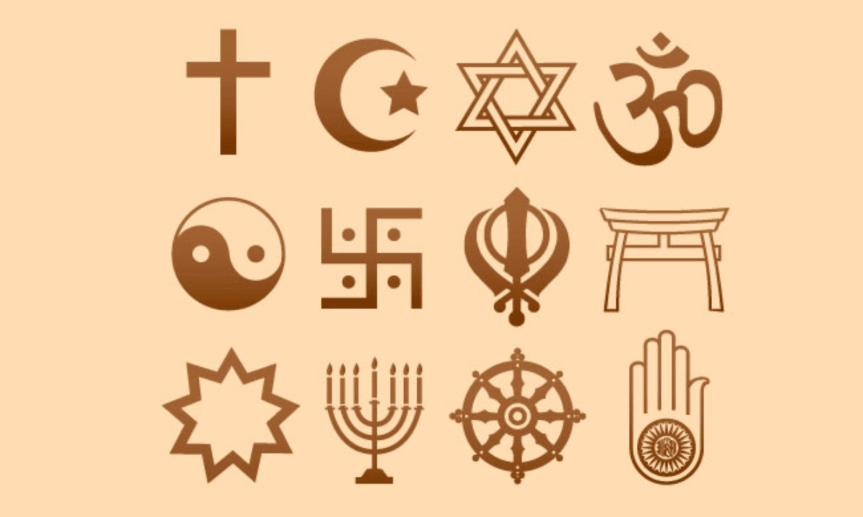
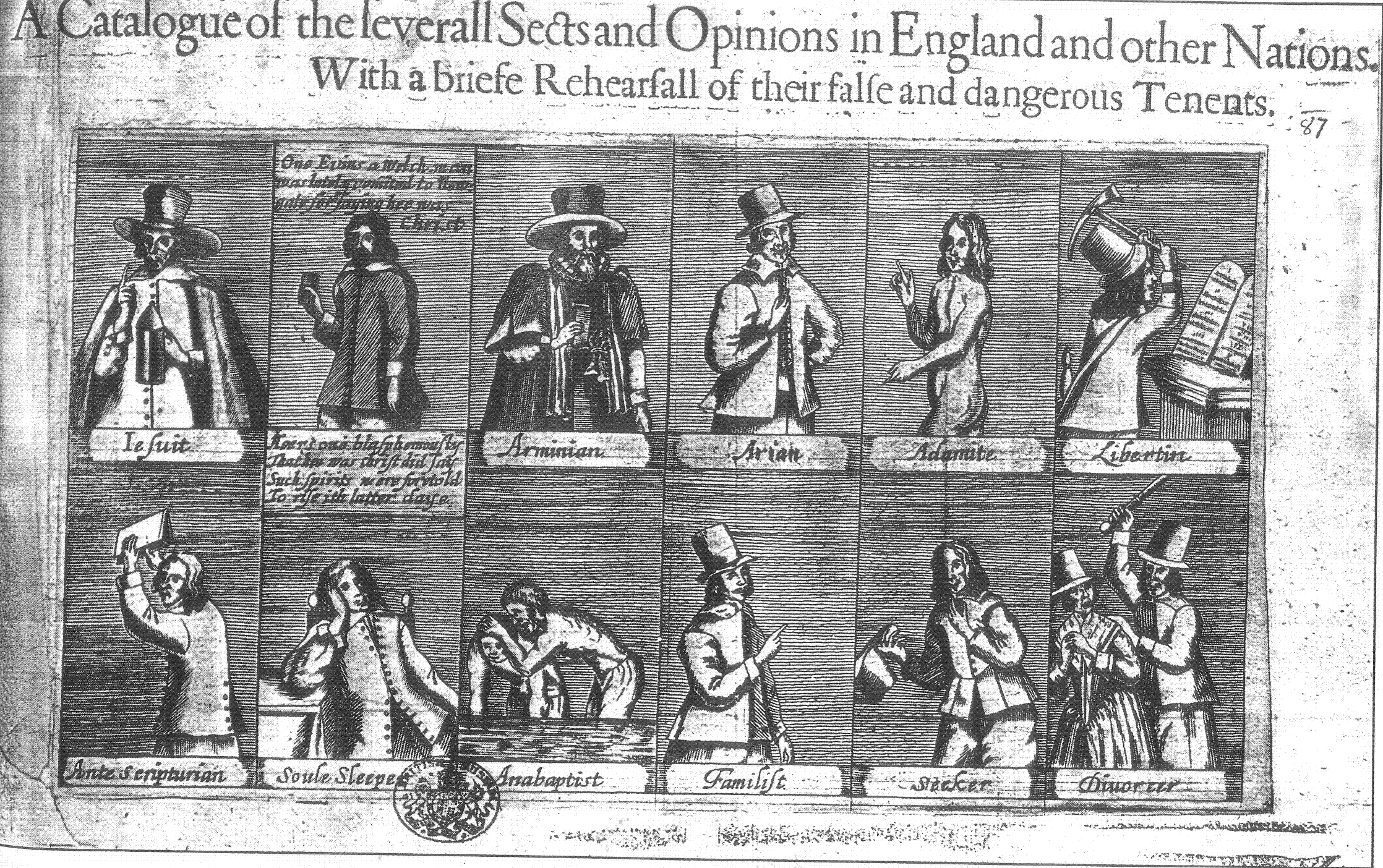

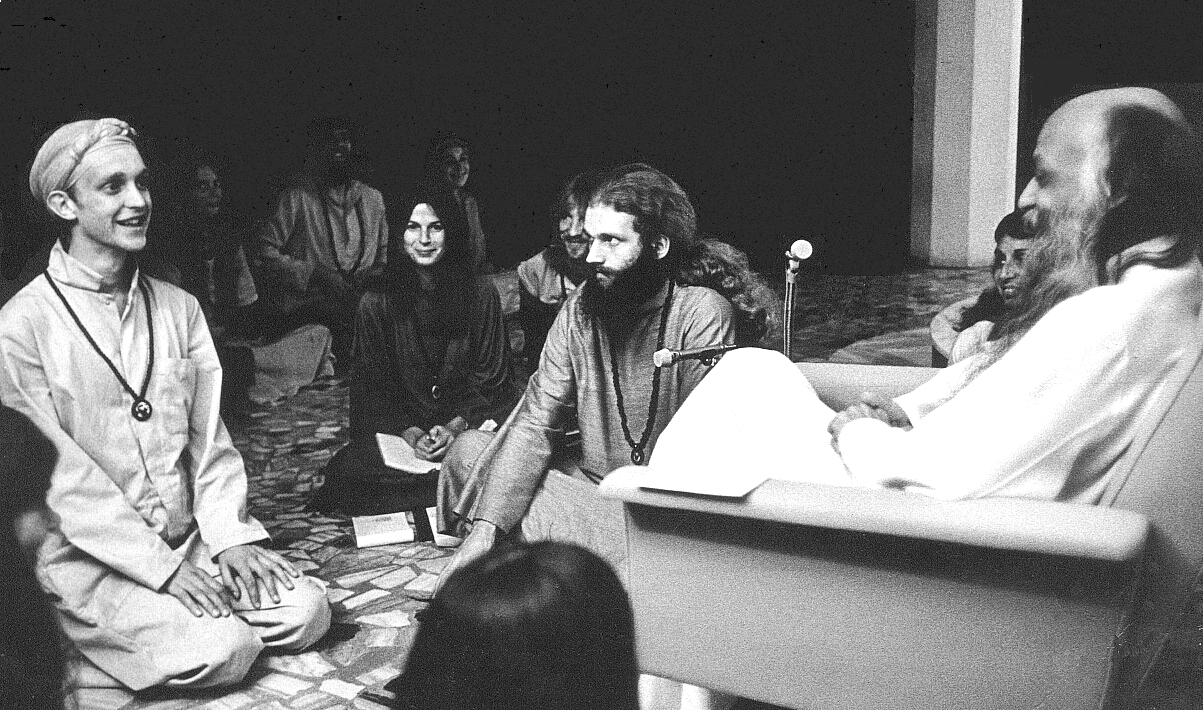



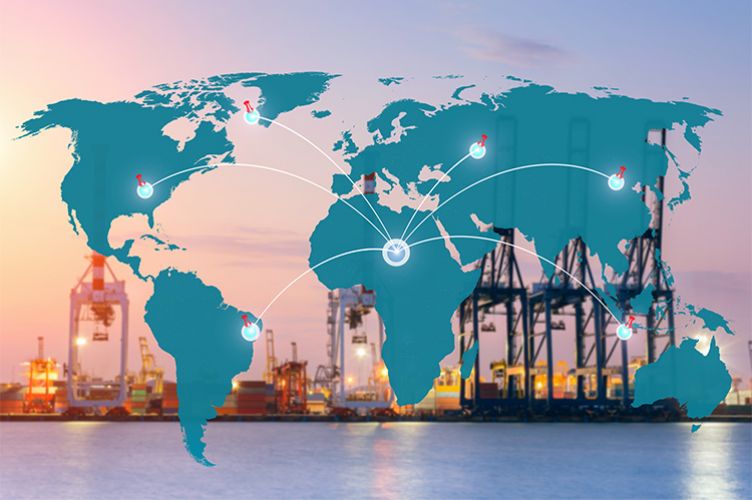




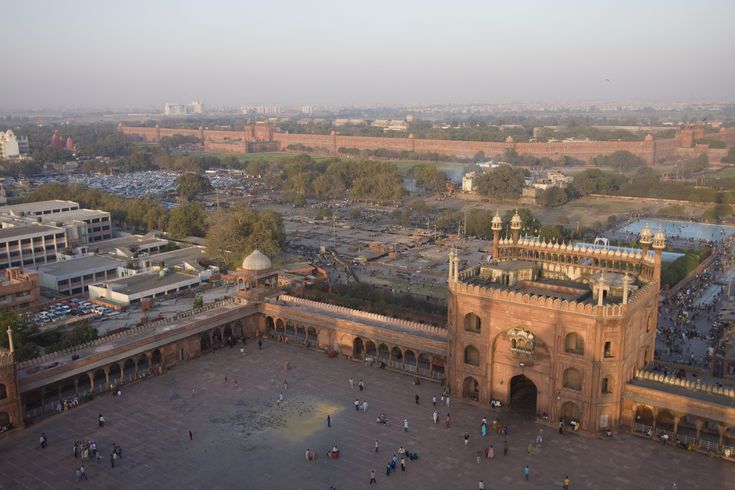
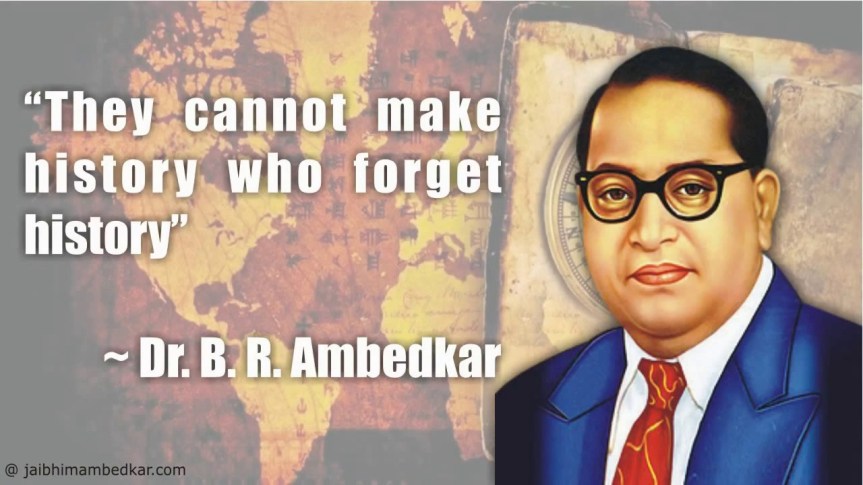

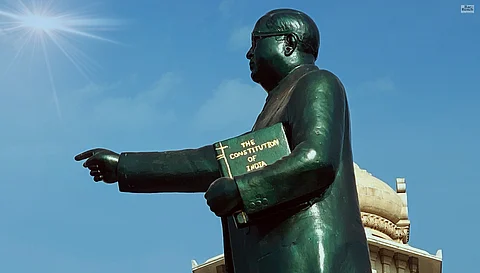


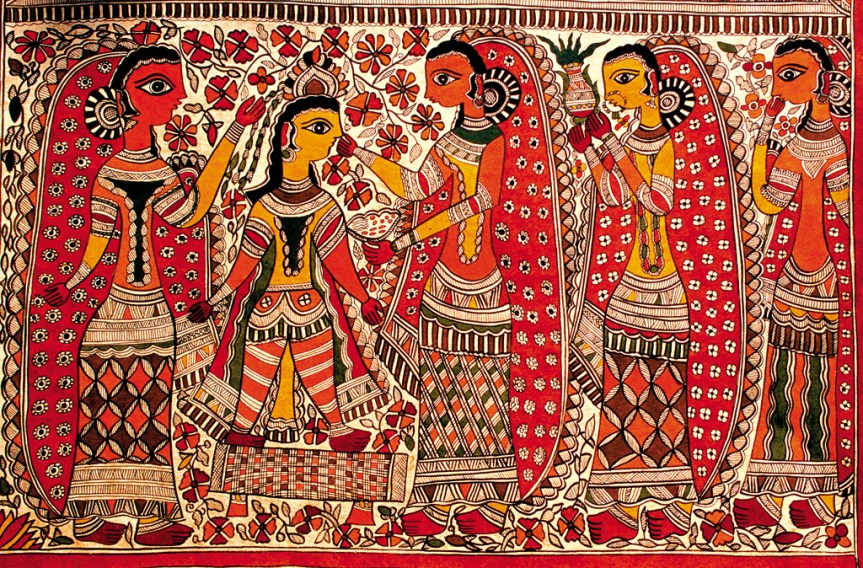


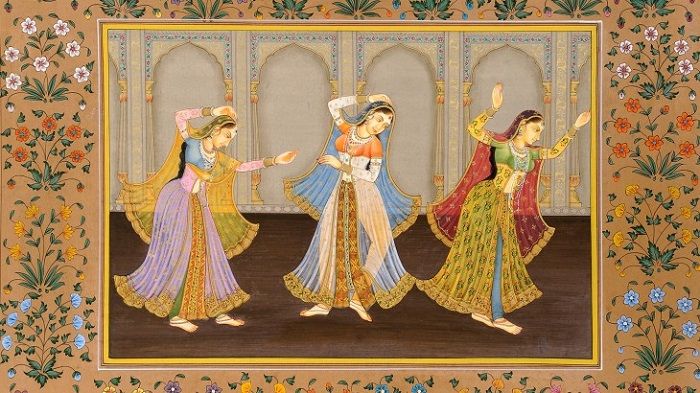
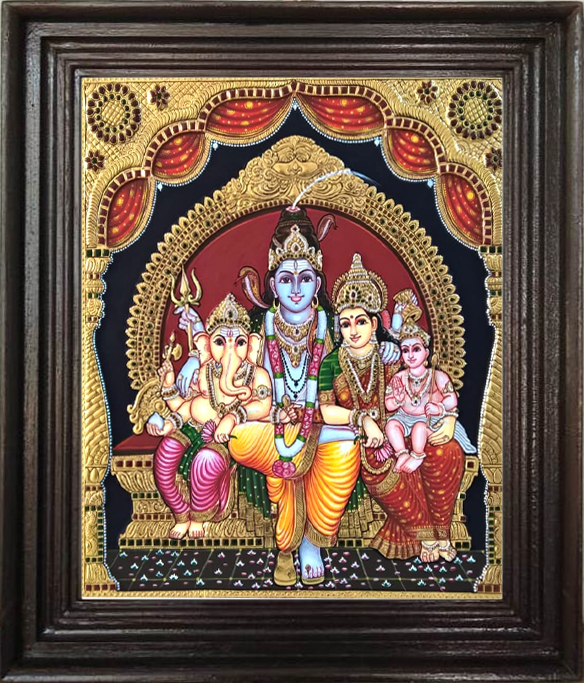



 Track2Training
You must be logged in to post a comment.