Misrepresentation under the Indian Contract Act, 1872:

A misrepresentation is an untrue statement of a material fact made by one party which affects the other party’s decision in corresponding to a contract. If the misrepresentation is identified, the contract can be declared void, and depending on the situation, the unfavorably impacted party may seek damages. In such a contract dispute, the party who made the misrepresentation becomes the defendant and the aggrieved party is the plaintiff. Misrepresentation in contract law is especially important in business dealings where huge transactions occur with high frequency. Misrepresentations of the value and/or risk correlated with an agreement can cause enormous financial losses to businesses and individuals while increasing the risk of collaborative business ventures. Accordingly, misrepresentation contract law is vital to ensuring fairness and diminishing the risk of entering into agreements between individuals and businesses.

Concept of Misrepresentation

For understanding the concept of misrepresentation first, we need to know the meaning of representation in terms of the contract. A representation is said to be such a statement that generates the entry into a contract but is not a part of a term of the contract.

Misrepresentation is about the giving of inaccurate information by one party (or their agent) to the other before the contract is made which induces them to make the contract. If a person makes a contract in reliance on misrepresentation and has to face loss as a result, they can revoke the contract or claim damages.

Unwarranted Statements

A statement made without any reasonable basis is an unwarranted statement. When a person makes a positive statement of a fact without any trustworthy source of information and believes that statement to be true, the act amounts to misrepresentation. When something is unwarranted it is not called for under the provided circumstances. For instance, arguing the merits of someone’s talent is one thing, but addressing them stupid is unwarranted.

Breach of duty

Once a duty has been established about the defendant we must find that the defendant has breached the duty. A breach of the duty of care occurs when one fails to achieve his or her duty of care to act wisely in some aspect. Commonly, if a party does not act reasonably to prevent foreseeable injuries to others, the duty of care is breached. Breach of duty is defined in a very interesting case named Vaughn V Menlove which states that the defendant is found to have overdue of the claimant and if he acts below the reasonable standard then a breach of duty would have been committed 

  • they may find out the cause of the breach and try to remedy it;
  • they may dispute that a breach has occurred;
  • they may argue that there is an exclusion clause or other terms in the contract limiting their liability for the breach; or
  • they might argue that there is a cause for their breach, or that the contract is invalid.

Inducing mistakes about subject matters

Inducing mistake about subject matter involves mistakes of fact. This happens when both the parties misunderstood each other leaving them at a crossroads. Such a wrongful act or a mistake can be because of an error in understanding, or ignorance or omission, etc. But a mistake is never intentional, it is an innocent commanding. 

References

Motivation

Presumably, an individual goes through many sorts of challenges throughout everyday life. Certain individuals lose trust and consider stopping. Yet, is this the right advance? By no means. Bombing once doesn’t mean there isn’t anything left throughout everyday life. There is consistently a way of retaliating the tough situations to accomplish what you want. Regardless of whether you’re a school-going child or an entrepreneur, you lose the track and feel demotivated some place throughout everyday life. Yet, never lose trust, you can run after your advancement by recapturing your inspiration.

Motivation is a fundamental factor that changes positive idea into moment activity. It switches a good thought right into it and can without a doubt influence your general surroundings. Nonetheless, not all are brought into the world with inspiration. Individuals now and again have skepticism in themselves; they frequently say, “I can’t do that” or “the circumstance isn’t right.” Being demotivated implies carrying on with a daily existence as an exhausted machine. Your life will become dull with practically no flash. In this way, to acquire internal harmony and fulfillment throughout everyday life, you should consistently remain roused.

You need to find the right inspiration for you to get your sparkle back. You can discover inspiration from a wide scope of powerful sources, for instance, from quotes, books, recordings, guardians, instructors, and even nature. Eventually, you’ll learn judicious speculation to beat negative feelings when you are persuaded throughout everyday life. Motivation additionally helps in making you dynamic throughout everyday life. You will battle more to satisfy your objectives. A self-persuaded individual consistently finds a way of understanding the issues preventing the way to do a responsibility. Also, they don’t need others’ help to achieve a difficult assignment near them.

To finish up, motivation is one of the key components that assist an individual with being fruitful. A propelled individual attempts to stretch his boundaries and consistently attempts to further develop his presentation step by step. Additionally, the individual consistently gives her/his best regardless the assignment is. In addition, the individual consistently attempts to stay reformist and devoted to her/his objectives.

India backs WHO move for new expert group to probe origins of Covid-19 pandemic

WHO chief Tedros Adhanom Ghebreyesus announced the launch of the Scientific Advisory Group for the Origins of Novel Pathogens (SAGO) at a news briefing on Wednesday. (REUTERS PHOTO.)

Reacting to WHO’s declaration, China cautioned against any “political control” of the reestablished test into the beginnings of Coronavirus however said it would uphold the examination. The Covid originally arose in the focal Chinese city of Wuhan in late 2019, setting off the most noticeably terrible pandemic in a century.

WHO boss Tedros Adhanom Ghebreyesus declared the dispatch of the Logical Warning Gathering for the Beginnings of Novel Microorganisms (SAGO) at a news instructions on Wednesday, and Michael Ryan, leader overseer of WHO’s wellbeing crises program, said this addressed the “last possibility” to decide the starting points of SARS-CoV-2.

India has reliably sponsored all moves by WHO to build up the starting points of the Coronavirus pandemic, and approached all partners, including China, to help out such endeavors. Outside issues service representative Arindam Bagchi repeated this position when he was gotten some information about the new master bunch at a normal news preparation on Thursday.

“Allow me just to repeat what we have expressed till now – we have our advantage in additional examinations and information on this issue of the beginning [of the Coronavirus] and the requirement for comprehension and participation by totally concerned,” he said, without naming China.

The Indian side, he said, was gathering subtleties of what the new move by WHO might involve.

Raman Gangakhedkar, the Dr CG Pandit Public Seat at the Indian Board of Clinical Exploration in India, and Yungui Yang of the Beijing Foundation of Genomics at the Chinese Institute of Sciences, are among the 26 individuals from SAGO.

Reacting to WHO’s declaration, China cautioned against any “political control” of the reestablished test into the starting points of Coronavirus however said it would uphold the examination.

The Covid originally arose in the focal Chinese city of Wuhan in late 2019, setting off the most exceedingly awful pandemic in a century.

Gotten some information about the new test, Chinese unfamiliar service representative Zhao Lijian said it ought to be led in the “soul of science” and not utilized as a political apparatus. The aftereffect of the past study on the matter ought to be regarded, he added.

“China will proceed to help and partake in worldwide Covid starting points – following, yet goes against any type of political control on the issue,” Zhao told a news preparation in Beijing.

He added, “China has consistently kept up with that following of infection beginnings is a genuine and complex logical issue and that exploration ought to be led by researchers in collaboration.”

Tedros said SAGO will encourage WHO on fostering a worldwide system to direct investigations into “beginnings of arising and reappearing microbes with pestilence and pandemic potential, including SARS-CoV-2”. He said that while SARS-CoV-2 is the furthest down the line infection to start a pandemic, “it won’t be the last”.

Ryan noticed the current pandemic “has halted our entire world” and said the master bunch “might be our last opportunity to comprehend the beginnings of this infection in a…collective and commonly capable manner”. He encouraged everybody, including nations, to make space for conversations on the issue.

Maria van Kerkhove, WHO’s specialized lead on Coronavirus, said the master bunch is relied upon to call for additional examinations in China by worldwide missions.

“I expect that the SAGO in its conversations about the pressing following stages for understanding the beginnings of the current pandemic will suggest further investigations in China and conceivably elsewhere…We especially trust that there will be further missions to China and different nations,” she said.

The 26 individuals from SAGO were chosen from in excess of 700 applications following a worldwide call. Tedros said they were picked for their a-list ability and involvement with a scope of disciplines, and geographic and sexual orientation variety. There will be a fourteen day public conference period for WHO to get input on the proposed individuals.

WHO, in a publication in Science, said nitty gritty examinations of the most punctual known and suspected cases in China preceding December 2019 are as yet required, including investigations of put away blood tests from 2019 in Wuhan and review searches of emergency clinic and mortality information for prior cases. Labs in the space where the main reports of human diseases arose in Wuhan should be a concentration, as precluding a mishap requires adequate proof, it said.

Why does the internet keep breaking?

Global communication network concept.

I question Imprint Zuckerberg peruses the remarks individuals leave on his Facebook posts.

In any case, on the off chance that he did, it would take him around 145 days, without rest, to swim through the downpour of remarks left for him after he was sorry for the emergency of administrations last week.

“Sorry for the interruption today” the Facebook originator and CEO posted, following just about six hours of Facebook, WhatsApp and Instagram being disconnected.

Facebook faulted a standard support work for the interruption – its designers had given an order that unexpectedly disengaged Facebook server farms from the more extensive web.

Around 827,000 individuals reacted to Mr Zuckerberg’s conciliatory sentiment.

The messages went from the delighted: “It was horrible, I needed to converse with my family,” remarked one Italian client, to the befuddled: “I brought my telephone into the auto shop thinking it was broken,” composed somebody from Namibia.

What is likewise clear is that this is a long way from being an oddball circumstance: specialists recommend inescapable blackouts are turning out to be more incessant and more problematic.

“Something that we’ve found over the most recent quite a long while is an expanded dependence on few organizations and organizations to convey huge bits of Web content,” says Luke Deryckx, Boss Specialized Official at Down Indicator.

“At the point when one of those, or mutiple, has an issue, it influences them, however countless different administrations,” he says. Facebook, for example, is currently used to sign-in to a scope of various administrations and gadgets, like brilliant TVs.

“Thus, you know, we have these kind of web ‘snow days’ that happen now,” Mr Deryckx says. “Something goes down [and] we as a whole kind of check out one another like ‘well, what are we going to do?'”

Mr Deryckx and his group at Down Locator screen web administrations and sites for interruption. He says that far reaching blackouts influencing significant administrations are turning out to be more regular and more genuine.

“At the point when Facebook has an issue, it makes a major effect for the web yet additionally the economy, and, you know… society. Millions, or conceivably many millions, of individuals are simply kind of lounging around hanging tight for a little group in California to fix something. It’s an intriguing wonders that has filled over the most recent few years.”

Web researcher Teacher Bill Buchanan concurs with this characterisation: “The web isn’t the huge scope appropriated network that DARPA (the Guard Progressed Exploration Tasks Organization), the first draftsmen of the web, attempted to make, which could withstand an atomic strike on any piece of it.

“The conventions it utilizes are essentially the ones that were drafted when we associated with centralized server PCs from idiotic terminals. A solitary error in its center foundation can bring the entire thing colliding with the floor.”

Educator Buchanan says upgrades can be made to make the web stronger, yet that a large number of the basics of the net are staying put regardless.

“As a rule, the frameworks work and you can’t simply turn specific conventions of the web ‘off’ for a day, to attempt to redo them,” he says.

Rather than attempting to revamp the frameworks and construction of the web, Teacher Buchanan thinks we need to further develop the manner in which we use it to store and share information, or hazard more mass blackouts later on.

He contends that the web has become excessively concentrated, for example where an excess of information comes from a solitary source. That pattern should be turned around with frameworks that have various hubs, he clarifies, so nobody disappointment can prevent an assistance from working.

There is a silver lining here. Albeit critical web blackouts influence clients lives and organizations they can likewise, eventually, help to work on the strength of the web and the web administrations connected to it.

For instance, Forbes gauges that Facebook lost $66m (£48.5m), during the six-hour blackout, from the suspension, or departure, of sponsors on the site. That kind of misfortune is probably going to concentrate the personalities of senior leaders on forestalling it happening once more.

“They lost a colossal measure of cash in that day, in their stock cost as well as in their functional incomes,” as per Mr Deryckx.

“Furthermore, in the event that you see blackouts brought about by content conveyance networks like Fastly and Cloudflare, they additionally lost countless clients to the opposition. Thus, I think these administrators are doing all that they can to keep things on the web.”

Dussehra

Dussehra is a festival celebrated in the Hindu religion. It is one of the most important festivals in India. In addition, it is also one of the longest ones. People celebrated Dussehra with great enthusiasm and love, throughout the country. It is time for rejoicing for everyone. The students get ten-day-long holidays from their schools and colleges to thoroughly enjoy this festival. In this Dussehra Essay, we will see how and why people celebrate Dussehra. Dussehra falls two or three weeks prior to Diwali. Thus, it falls usually around September to October. Everyone waits for this festival eagerly. It brings great reasons to rejoice by all. The ladies prep for their pujas while the men buy crackers and more to celebrate it heartily.

Dussehra is also known as Vijayadashami in some regions of India. If we set aside the regional differences, the main events of this festival have one motto i.e. the victory of good over evil. In other words, this festival signifies the victory of the power of good over that of the power of evil. If we look at the Hindu mythology, it says that on this day Goddess Durga removed the demon called Mahishasura from the earth. Similarly, other traditions believe that Lord Rama fought and eliminated the Demon King Ravana on this very day. Thus, we see how both events have the same outcome. The outcome that is of light over dark, truth over lies and good over evil. Therefore, we see that while people’s belief may differ, they celebrate the very same essence throughout the country.
People all over India celebrate Dussehra with immense enthusiasm, pomp, and show. The different cultures do not affect the celebrations of the festival. The spirit and zeal remain the same throughout the festival.

In conclusion, Dussehra carries a lot of importance in the Hindu religion. However, people from all religions witness the marvelous act of burning Ravana. It unites people as the audience is filled with people from all walks of life, and not just the Hindu religion. Most importantly, Dussehra teaches us that good always trumps evil and that light will always conquer darkness.

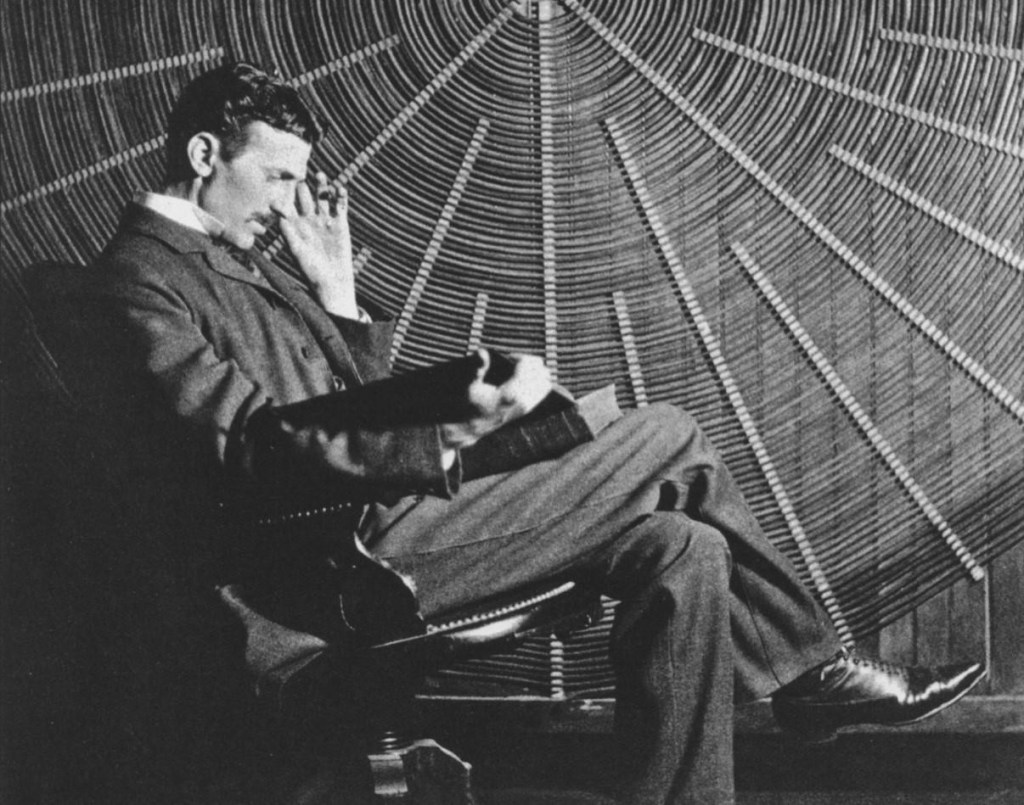
How Nikola Tesla changed the world? AC power

“I don’t care that they stole my idea, I care that they don’t have any of their own”, said by one of the greatest inventors to have ever lived, the Serbian inventor Nikola Tesla who developed the framework for modern-day electrical engineering. When Nikola Tesla began work at Edison’s DC (direct current) power plant in the United States, his new employer was not interested in his ideas for a new type of power called AC (alternating current). At the time DC was the only electrical supply, but it could only be transmitted across short distances before it lost power. To Edison, AC sounded like competition and he persuaded Tesla to work on improving his DC system by offering him a huge sum of money. But when Tesla had done what he had been asked, Edison reneged on his promise. Tesla resigned and returned to his AC power concepts. DC power is constant and moves in one direction and the resistance in wires causes it to lose power over distance. AC power does not have this problem as it varies in current so the resistance is less, and yet it varies in current so the resistance is less, and yet it delivers the same amount of power.

How AC current works?

In an atom, the negatively charged electrons are bound to the nucleus due to their electromagnetic attraction to the oppositely charged nucleus. But the electrons in the outer most shell called valence shell can sometimes become free due to external forces. These electrons that escape from the valence shell are called free electrons and they can move from one atom to another. This movement is called charge and the flow of electric charge is called electricity. Materials that allows many electrons to move freely are conductors and don’t allow are called insulators. That why copper is a great conductor. Alternating current would flow back and forth 50-60 times per second, this is called the frequency. Even though Thomas Edison one of the famous and powerful men of the 19th century, he tried his best to compete with Tesla. The mathematic formula of the current is P = I×V, with this formula, the same amount of power can be transmitted either at high current and low voltage or low current and high voltage. But when you transmit current through wires, there will be also loss of heat. To overcome this problem, we have to higher the voltage to reduce the heat loss.

In modern electric power grids, electricity is transmitted at hundreds of thousands of volts. But the voltage cannot be this high when it arrives at your home. So a transformer steps down this high voltage to typically between 100 and 240 volts. The step down process of AC current is way easier than the DC current. Transformers require a time varying voltage to function, and since direct current is constant, and only alternating current is time varying, transformers like these only work with AC electricity. In Edison and Tesla’s time, there was no easy way to transform voltage with direct current. And this is the primary reason Tesla’s AC won out over Edison’s DC in the early era of electrical transmission.

AC current – a scientific breakthrough

This made AC power more cost effective, as fewer power plants were needed. Entrepreneur George Westinghouse saw the potential of Tesla’s AC power and bought his patents for AC motors. Edison began a propaganda war in an attempt to keep DC power on top, but it was inevitable that ac power would win. Almost all electricity is now delivered as Tesla’s AC power. Edison’s place in history as an inventor and electrician is secure. But in many ways Tesla went even further. He envisioned fluorescent lights, technology of the radio, and remote control. Nikola Tesla was one of the most forward thinking, and dynamic visionaries that ever lived.

“If your hate could be turned into electricity, it would light up the whole world”. – Nikola Tesla

The origin of Glass- Why they are transparent?

Archaeological findings suggest that glass was first created during the Bronze Age in the Middle East. To the southeast, in Egypt, glass beads have seen found dating back to about 2500 B.C.E. Glass is made from a mixture of silica sand, calcium oxide, soda, and magnesium, which is melted in a furnace at 2,730°F (1,500°C). Most early furnaces produced insufficient heat to melt the glass properly, so glass was a luxury item that few people could afford. This situation changed in the first century B.C.E. when the blowpipe was discovered. Glass manufacturing spread throughout the Roman Empire in such quantities that glass was no longer a luxury. It flourished in Venice in the fifteenth century, where soda lime glass, known as ‘cristallo’, was developed. Venetian glass objects were said to be the most delicate and graceful in the world.

How glass was made?

It all begins in the earth’s crust, where the two most common elements are silicon and oxygen. These react together to form silicon dioxide, whose molecules arrange themselves into a regular crystalline form known as quartz. Quartz is commonly found in sand, where it often makes up most of the grains and is the main ingredient in most types of glass. You probably noticed that glass isn’t made of multiple tiny bits of quartz and for good reason. The edges of the rigidly formed grains and smaller defects within the crystal structure reflect and disperse light that hits them. But when the quartz is heated high enough, the extra energy makes the molecules vibrate until they break the bonds holding them together and become a flowing liquid, the same way that ice melts into water. Unlike water, though, liquid silicon dioxide does not reform into a crystal solid when it cools. Instead, as the molecules lose energy, they are less and less able to move into an ordered position, and the result is what is called an amorphous solid. A solid material with the chaotic structure of a liquid, which allows the molecules to freely fill in any gaps, this makes the surface of lass uniform on a microscopic level, allowing light to strike it without being scattered in different directions.

How glass is transparent?

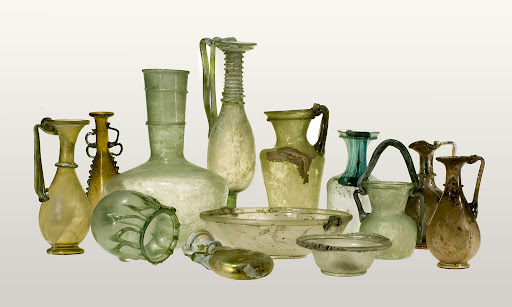
Ancient glass materials found in Rome.

Why light is able to pass through glass rather than being absorbed as with most solids? You may know that an atom consists of a nucleus with electrons orbiting around it, but you may not know that an atom has a lot of empty space. So, light passes through these atoms easily without hitting any of these particles. Then why aren’t all materials transparent? This is because, the different energy levels those electrons in an atom can have. Consider an atom of an iron, an electron in it initially assigned to move in a certain orbit. But if it had the enough energy; it could reach the exited state and jump to a closer orbit. So, one of the light photons passing through can provide the needed energy. But there is one thing; the energy from the photon has to be the right amount to get an electron to the next orbit. Otherwise, it will just let the photon pass by, and it just so happens that in glass, the electrons are placed so far from each other, that the photons of visible light can’t provide enough energy for an electron. Photons from ultra violet light give just the right amount of energy, and are absorbed. That’s why you can’t get a suntan through glass. This amazing property of being both solid and transparent has given glass many uses throughout the centuries.

 In the 1950s Sir Alastair Pilkington introduced ‘float glass production”, a revolutionary method still used to make glass. Other developments have included safety glass, heat resistant glass, and fiber optics, where light pulses are sent along thin fibers of glass. Fiber optic devices are used in telecommunications and in medicine for viewing inaccessible parts of the human body.

Impact of Covid-19 on the Corporate Sector in India


The impact of coronavirus pandemic on India has been largely disruptive in terms of economic activity as well as a loss of human lives. Almost all the sectors have been adversely affected as domestic demand and exports sharply plummeted with some notable exceptions where high growth was observed. An attempt is made to analyze the impact and possible solutions for some key sectors.


Food & Agriculture

Since agriculture is the backbone of the country and a part of the government announced essential category, the impact is likely to be low on both primary agricultural production and usage of agro-inputs. Several state governments have already allowed free movement of fruits, vegetables, milk etc. Online food grocery platforms are heavily impacted due to unclear restrictions on movements and stoppage of logistics vehicles. RBI and Finance Minister announced measures will help the industry and the employees in the short term. Insulating the rural food production areas in the coming weeks will hold a great answer to the macro impact of COVID-19 on Indian food sector as well as larger economy.


Aviation & Tourism

The contribution of the Aviation Sector and Tourism to our GDP stands at about 2.4% and 9.2% respectively. The Tourism sector served approximately 43 million people in FY 18-19. Aviation and Tourism were the first industries that were hit significantly by the pandemic. The common consensus seems to be that COVID will hit these industries harder than 9/11 and the Financial Crisis of 2008. These two industries have been dealing with severe cash flow issues since the start of the pandemic and are staring at a potential 38 million lay-offs, which translates to 70 per cent of the total workforce. The impact is going to fall on both, White and Blue collar jobs. According to IATO estimates, these industries may incur losses of about 85 billion Rupees due to travel restrictions. The Pandemic has also brought about a wave of innovation in the fields of contactless boarding and travel technologies.


Telecom

There has been a significant amount of changes in the telecom sector of India even before the Covid-19 due to brief price wars between the service providers. Most essential services and sectors have continued to run during the pandemic thanks to the implementation of the ‘work from home’ due to restrictions. With over 1 billion connections as of 2019, the telecom sector contributes about 6.5 per cent of GDP and employs almost 4 million people. Increased broadband usage had a direct impact and resulted in pressure on the network. Demand has been increased by about 10%. However, the Telco’s are bracing for a sharp drop in adding new subscribers. As a policy recommendation, the government can aid the sector by relaxing the regulatory compliances and provide moratorium for spectrum dues, which can be used for network expansions by the companies.


Pharmaceuticals

The pharmaceutical industry has been on the rise since the start of the Covid-19 pandemic, especially in India, the largest producer of generic drugs globally. With a market size of $55 billion during the beginning of 2020, it has been surging in India, exporting Hydroxychloroquine to the world, esp. to the US, UK, Canada, and the Middle-East.

There has been a recent rise in the prices of raw materials imported from China due to the pandemic. Generic drugs are the most impacted due to heavy reliance on imports, disrupted supply-chain, and labour unavailability in the industry, caused by social distancing. Simultaneously, the pharmaceutical industry is struggling because of the government-imposed bans on the export of critical drugs, equipment, and PPE kits to ensure sufficient quantities for the country. The increasing demand for these drugs, coupled with hindered accessibility is making things harder. Easing the financial stress on the pharmaceutical companies, tax-relaxations, and addressing the labour force shortage could be the differentiating factors in such a desperate time.


Oil and Gas

The Indian Oil & Gas industry is quite significant in the global context – it is the third-largest energy consumer only behind USA and Chine and contributes to 5.2% of the global oil demand. The complete lockdown across the country slowed down the demand of transport fuels (accounting for 2/3rd demand in oil & gas sector) as auto & industrial manufacturing declined and goods & passenger movement (both bulk & personal) fell. Though the crude prices dipped in this period, the government increased the excise and special excise duty to make up for the revenue loss, additionally, road cess was raised too. As a policy recommendation, the government may think of passing on the benefits of decreased crude prices to end consumers at retail outlets to stimulate demand.


Beyond Covid: The new normal

In view of the scale of disruption caused by the pandemic, it is evident that the current downturn is fundamentally different from recessions. The sudden shrinkage in demand & increased unemployment is going to alter the business landscape. Adopting new principles like ‘shift towards localization, cash conservation, supply chain resilience and innovation’ will help businesses in treading a new path in this uncertain environment.

Coronavirus (COVID-19), a virus that grew stealthily has become one of the deadliest viruses that are killing people worldwide. This virus took birth in Wuhan city of China and since then have traveled to more than 160 countries. The World Health Organization (WHO) has declared Coronavirus as a pandemic. It has become a mass scare and is leading to the deaths of thousands of people in numerous countries including China, Italy, Iran, Spain, the US, and many more. In India, this pandemic started on 30 January 2020 by affecting an individual who had a travel history from Wuhan, China.


The world economy is seeing its greatest fall ever. Coronavirus has largely impacted the growth of almost every country and is responsible for the slump in GDP worldwide. Like other countries, India is also impacted by this virus but not largely. Almost every industry sector has seen a fall in their sales and revenue. India’s GDP growth has fallen to 4.7% in the third quarter of 2020.


Inflation and Affected Industry:

China is one of the largest exporters of many raw materials to India. Shutting down of factories has damaged the supply chain resulting in a drastic surge in the prices of raw materials. Some of the other products that have seen a rise in their prices are gold, masks, sanitizers, smartphones, medicines, consumer durables, etc. The aviation sector and automobile companies are the hardest hit among the rest. With no airplane landings or take-offs globally and restricted travel has brought the aviation and travel industry to a halt.


Slump in Share market:
Share markets that include Sensex and Nifty are on nose dive since the occurrence of this pandemic (COVID-19). Sensex has declined close to 8000 points in a month. As of 12 March 2020, share market investors have lost approximately Rs. 33 lakh crore rupees in a month. This could be the beginning of a recession that the Indian market will never want to witness. Investors are advised to stay safe and invested in this virus-infected stock market. Few industries that can benefit from novel coronavirus during the time of the market crash are pharmaceuticals, healthcare, and Fast Moving Consumer Goods (FMCG).


Cash flow Issue:
Due to this outbreak, almost 80% of Indian companies have witnessed cash flow difficulty and over 50% of companies are facing operations issues. As per the Federation of Indian Chambers of Commerce and Industry (FICCI), 53% of companies are impacted by COVID-19. Slow economic activity is resulting in cash flow problems eventually impacting repayments, interest, taxes, etc.


Coronavirus (COVID-19), a virus that grew stealthily has become one of the deadliest viruses that are killing people worldwide. This virus took birth in Wuhan city of China and since then have traveled to more than 160 countries. The World Health Organization (WHO) has declared Coronavirus as a pandemic. It has become a mass scare and is leading to the deaths of thousands of people in numerous countries including China, Italy, Iran, Spain, the US, and many more. In India, this pandemic started on 30 January 2020 by affecting an individual who had a travel history from Wuhan, China.


The world economy is seeing its greatest fall ever. Coronavirus has largely impacted the growth of almost every country and is responsible for the slump in GDP worldwide. Like other countries, India is also impacted by this virus but not largely. Almost every industry sector has seen a fall in their sales and revenue. India’s GDP growth has fallen to 4.7% in the third quarter of 2020.


Efforts from CII and Govt. of India:
Confederation of Indian Industry (CII) has suggested the RBI reduce repo rate up to 50 basis points and also asked for a reduction of 50 basis points on the cash reserve ratio. The government is planning to set up an amount to support MSMEs to overcome the crisis during this phase of shut down, cash flow difficulty, and working capital issues.

Written by: Ananya Kaushal

Blast at mosque in Afghan city of Kandahar, atleast seven dead

A large explosion tore through a Shi’ite mosque in the southern Afghan city of Kandahar during Friday prayers, killing at least seven people and wounding 13, officials and provincial leaders said.

Qari Saeed Khosti said authorities were collecting details of the explosion, which took place days after a suicide bomb attack claimed by Islamic State on a Shi’ite mosque in the northern city of Kunduz that killed scores of people.

Photographs posted by journalists on social media showed many people apparently dead or seriously wounded on the floor of the mosque.

Nematullah Wafa, a former member of the provincial council, said the blast occurred at the Imam Bargah mosque and caused heavy casualties but there were no immediate confirmation of the number of dead and wounded.

The blast, coming so soon after the Kunduz attack underlined the increasingly uncertain security in Afghanistan as Islamic State has stepped up operations following the Taliban victory over the Western-backed government in Kabul in August.

Written by : Ananya Kaushal

Childhood Shows

Childhood is the most memorable time in any person’s life and among all other things the television shows had to be the best part of the evenings in those days. All the different characters, with so simple yet entertaining story lines let us enjoy our little make believe world so much so that we would wait for school to get over and be home and watch those shows. With development and advancement in technology and easier accessibility to the shows any time, any where the butterflies that waiting for those shows would give the children in those days do not easily come to children these days. These shows were sometimes superficial and most of the time fiction still made our childhood better and more fun. Here are some the most loved and remembered shows of those times:

  • SHARARAT

If you are true magic fan you definitely loved SHARARAT. This was a show with three generations engaging in magic and living their lives as PARIS. With Jia being the main protagonist who would always mess up her magic spells and get herself and people around her in trouble and her NANI coming to her rescue, always cleaning her mess and thereby giving a life lesson with the beauty of magic had to give us the most funny moments of all the times.

  • AGADAM BAGDAM TIGDAM

Do you think you have the craziest family? Wait till you meet a family that has apples as their phones and has smoke coming out of their ears now and then and belong to a planet named ZOLTAR, now this is what you call actual crazy. This show revolves around the MALHOTRAS who happen to be aliens looking like humans surviving on Earth while trying to keep their secret safe come what may. The show aired in 2007 and though might not have been as famous as others but was one of kind, first among the science fiction in the children dramas.

  • KYA MAST HAI LIFE

If you follow Shaheer Sheikh you definitely know him from the days of this show. This had five main characters, all enjoying their college lives while being the coolest group in the college. There is no denying that this show raised our hopes for the perfect college life while we end up attending our farewells crawled up in blankets. The show made us fall in love with Shaheer way before we even knew the meaning of love. With actor like Shweta Tripathi reaching all the heights today still remains the cute Zeeniya who solved everyday problems of her friend Ritu telling us what true friendships are for us.

  • SHAKE IT UP

Though very few know or talk about this show now, but this was one of the first dance programmes that lit the fire of being a dancer on growing up in every child that saw it. The show is about two teenage boys who love dancing and even excel in it so much so that become a part of a dance reality show along with the troubles that they encounter and try and solve them all by themselves. It might not have been huge hit but still has to be a hidden gem.

All these shows were the coolest thing back in early 2000s and they gave us major streaming goals. we can only thank the makers of the shows for making our childhood more fun and giving us memories of a lifetime. We owe it to these shows.

Science & Technology

Developments and their Applications and effects in everyday life

Science is a systematic enterprise that builds and organizes knowledge in the form of explanations and predictions about nature and the universe. It is the study of nature and behavior of the physical and natural world through the scientific method. It is also defined as the observation, identification, description, experimental, investigation, and theoretical explanation of natural phenomena. Whereas, Technology is the collection of techniques and processes used in the production of goods or services or the accomplishment of objectives such as scientific investigation. It includes methods, systems, and devices which are the result of scientific knowledge being used for practical purposes. The world around us behaves according to scientific laws. Scientists have discovered many of these laws, and are making new discoveries all the time. We develop technology using our understanding of science and the forces, such as magnetism, gravity and electricity, which shape our lives. Whenever we turn on a light, log on to internet or speak with our friends or relatives on a mobile phone, it has all been made possible by science.
Technology for Mankind

The World Around us

Everything, from water or air to a whale or a mobile phone, is made of tiny particles called atoms. There are over 100 different kinds of atoms. There are over 100 different kinds of atoms, which are in turn made of smaller parts called subatomic particles. Two or more atoms join together to make a molecule. The things around us are solids, liquids or gases depending on the arrangement of the atoms and molecules inside them.

Structure of an atom

Forces and movement

Things move only when a force is applied to them. Forces are pushes or pulls in a particular direction. A flag blows when the wind pushes it. A door opens when you pull it. Animals move when their feet push against the ground, their wings push against the air or their fins push against the water around them. Forces always work in pairs. They push and pull in opposite directions. When pairs of forces are equal they are said to be balanced. Tug of war teams remains still when each pulls with the same strength. A team falls when one side is stronger and the forces are unbalanced. Forces are also balanced when things move at one speed in the same direction. Things slow down and stop because of an opposing force. One of these forces is friction. Friction happens when tiny bumps on two surfaces rub against each other. Rough surfaces, such as concrete, create more friction than smooth surfaces, such as glass. People use high-friction materials like rubber on shoe soles to stop people slipping when they walk.
A rocket takes off when the force from the engine pushing it up is greater than the force of gravity pulling it down.
Boy kicking a football
A bicycles’ brakes use high-friction rubber to slow the wheels down

Light and Dark

The earth’s biggest source of light is the sun. Heat and light energy created by the sun travels through space in straight lines called rays at almost 300,000 kilometres per second. The Earth spins right around once a day, changing which parts of globe get sunlight. This creates day & night. Other things that radiate, or give off, light include electric light bulbs, candles and television series. Shadows happen in places where an object stops light from getting through. Materials that light shines through fully are said to be transparent. Translucent materials let only a little light through. Opaque materials do not let any light through at all.  The shape of a shadow depends on the shape of the object blocking the light. If an object is moved closer to light source, its shadow gets bigger because it blocks more light rays. All surfaces reflect light but, if they are bumpy, the light rays are reflected in all directions.Mirrors are made from very smooth surfaces that reflect the rays back in the same pattern as they hit it, creating a clear image of object. Words reflected in a mirror appear back to front, as if they were facing away from us and we were looking through the page.
Mirrors reflecting images
We make our own light in cities when the Sun goes down at night.
Shadow

Colours

There are seven colours in a rainbow and they always come in the same order: red, orange, yellow, green, blue, indigo and violet. Light from the sun may look white, but it is actually a combination of many colours. When tiny drops of water in the air split white sunlight into its different colours, we see a rainbow. Gases and dust in the atmosphere make the different colours in sunlight scatter so the sky changes colour. By day, the atmosphere scatters blue light towards earth so the sky looks blue. At sunset, when sunlight has more atmospheres to travel through before it reaches the surface of the earth, red light is scattered so the sky looks orangey red. People print colour images and words on paper using just four coloured inks: yellow, cyan (blue), magenta (red) and black. Paper is printed with tiny dots of different amounts of each ink. Our brain cannot distinguish that dots we see separately, but instead, blends them together to make different blocks of different colours

A glass prism splits bright sunlight into all the colours of a rainbow
Orange Skies

Sound

Sound is a disturbance of the air made when something, such as a string, vibrates, or moves back and forwards quickly. The vibration makes the air moves in waves. Our ears detect the moving air and our brains distinguish it as a sound. High sounds, such as notes from a flute, are made by short sound waves. Low sounds, such as a tuba’s notes, are made by long ones. Sound vibrations travel way from the thing that makes them. The vibrations spread out in all directions like the ripples in a pond after you throw in pebble. The wider the vibrations spread, the smaller they become and the quieter the sound. Big vibrations, on the other hand, makes lots of energy that pushes lots of air, creating loud sounds. Sounds are measured in units called decibels. The quietest sounds, such as a leaf falling, are around 0-10 decibels. The loudest sounds, such as a rocket launch, are just less than 200 decibels. Noises above 90 decibels are dangerous to listen to because the strong waves of air can damage the sensitive insides of your ears. Echoes are the repeated noise we hear when sound waves bounce off solid objects, such as a cliff or the inside of a tunnel. If the object is close by, the waves reflect so quickly we cannot hear the echo as a separate sound. Bats use echoes to get around in the dark. They make squeaks and listen to the echoes to work out how far away things are and how big they are.

Bats use echoes to find their prey in the dark
The skin on a drum vibrates when it is banged, producing a sound
We can only just hear leaves falling, but an aeroplane taking off makes a sound that is so loud it can damage our ears.

Electricity

Electricity is a type of energy formed from tiny particles inside atoms called electrons. These electrons can move from one atom to another and this movement is electrical energy. Electricity powers many machines, from torches and mobile phones to television and computers. It moves, or flows, into machines through materials called conductors, which include metal wires. Mains electricity is produced in power stations by machines called generators. Fuel, such as coal, is burned in the power station to turn water into steam. The steam turns a turbine (a set of large circular blades), which rotates magnets inside the generator, producing electricity. The electricity flows through wires to sockets in our homes. Batteries are useful for supplying small amounts of power to portable or mobile machines without the need to plug into wall sockets. Batteries are stores of chemicals that create a flow of electrical energy. Some batteries run out when the chemicals are used up, but rechargeable batteries regain their stored electrical when plugged into a socket. Switches work by controlling the flow, or current, of electricity through machines.Electricity can only flow through a circuit, which is a continues loop of wire. A switch is rather a gate that can open or close to break or complete the circuit.

Digital Technology

It includes computer, digital cameras, MP3 players and mobiles. These records, store, send and process electronic signals as digital information. Digital means that the electrical signals are either ‘on’, ‘1’, or ‘off’, ‘0’. The 1s and 0s form a code that can represent any type of information. Microchips work using tiny electrical circuits. The circuits are built on paper-thin chips of silicon, a material that is very good at conducting electricity (allowing electricity to pass through it). A single microchip a contain thousands of circuits, allowing it to process lots of digital information. Microchips mean that computers and other digital devices can be small and light. 

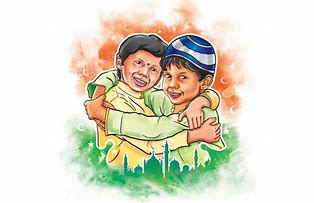
Top 3 Hindu-Muslim Unity Advertisements

Advertisements have the potential to change human thoughts, behaviour and actions. They can do a lot more than just promoting brands. Through visual and auditory modes, advertisements have the competency to bring about a societal change and provoke a positive impact on people. Readers can have a glance at such impactful advertisements through the examples listed out in this blog.

Red Label (Tea Brand)

A man visits a store to place an order for a Ganesh idol (A Hindu God). The shopkeeper exhibits the different idols created by him to the man. While having a conversation with the buyer the shopkeeper also illustrates the meaning behind the different forms of the Ganesh idols. To the buyer, this shopkeeper seems to be a very knowledgeable man, who has much information about the Hindu worship and reverence. While conversing with the buyer, the shopkeeper puts on the Kufi (skullcap worn by Muslims). The Hindu buyer is taken aback after realising that the shopkeeper selling the Ganesh idols is a Muslim by religion. He attempts to cancel his order and go to his workplace. The Muslim shopkeeper offers him a cup of tea before leaving. The vendor explains him that , work is worship too, one need not compulsorily pray. The Muslim man was in fact worshipping God, by creating his idol. The buyer takes a sip of tea and plans to change his mind. He does not cancel his order and amiably buys the idol from that vendor on that day itself. The Brand, Red Label intends to portray that their product attempts to create harmonious relations between different religions.

Kaun Banega Crorepati (Reality Game Show)

Six years ago, KBC came up with a phenomenal ad campaign featuring communal unity. In the ad it has been shown that, a Hindu boy had been selected for the episode. His family members were all set to bid him a goodbye as he was about to step out of his home, while his Muslim neighbors were watching him from the floor above. Just as the Hindu boy was about to step out, his neighbor sneezes. Sneezing while someone is about to leave from the doorstep is considered as a bad omen in the Hindu community. The Hindu boy’s family members feel agitated at the neighbor for sneezing and they misinterpret that, he had done it deliberately. Hours later, while facing a difficult question on the show, the Hindu participant decides to use the option of ‘Phone A Friend’ (According to the game’s format, this option is availed to all participants only once, whenever they wish to make use of it). He then rings up the same Muslim family and asks them the question i.e ‘What is the meaning of As-Salaam-Alaikum ?’ The man is overwhelmed by such a trustworthy gesture by the young boy. He answers his question accurately and assists him in winning the prize amount. This advertisement touched the hearts of many Indians. It indeed reflected the idea of communal harmony.

Surf Excel (Cloth Detergent Brand)

The advertisement broadcasted by this brand, intends to portray how Indian festivals are secular in nature. An individual from any community can enjoy a festivity according to his/her discretion. It is shown that, on the day of the Hindu festival of Holi (people celebrate this festival by applying colour on each other and splashing water with waterguns/waterballoons), a little boy wearing a white robe is hesitant to step out of his house. A girl of the same age as his, notices this and challenges her friends around, to smear all their colours on her. Her friends do accordingly, by throwing all the colour on her, from the floors above, as she waits down on her little bicycle. By doing so, she makes them use all their colour supplies on her and no colours are left out with them. Later, she offers to drop the boy to the place where he wants to go. It is then shown that, she drops him to the mosque, where he wanted to go to offer Namaaz (Islamic prayers). She also jests that, after he’s done with his prayers, the other kids will not leave him without including him in the merry festivities. He agrees to join them in the Holi celebrations after his prayers are done. The ad tagline said, “Rang Laaye Sang, Daag Acche Hai” (colours bind people together, such stains should be cherished). This advertisement depicts how mutual respect for each other’s religion can bring about unity. The principles of unity in diversity must be inculcated in children from their grassroot years, so that peace and harmony prevails in the society.

Advertisements can have a huge impact over the society, in terms of patriotism, unity, cohesiveness and peace-keeping. Various brands are positioning their ad campaigns around the pivot of National Unity in today’s times as the audience nowadays is readily accepting things which were not accepted earlier. Brands thus, not only create a name in the market with their products but also with their ad campaigns promoting social values and messages.

Fashion

Fashion alludes to whatever turns into a fury among the majority. Fashion is a well known tasteful articulation. Generally Noteworthy, it is something stylish. Fashion shows up in apparel, footwear, adornments, cosmetics, hairdos, way of life, and body extents. Besides, Fashion is an industry-upheld articulation. In the contemporary world, individuals approach style exceptionally in a serious way. Fashion is something that has penetrated each part of human culture.

The beginning of Fashion is from the year 1826. Most likely everybody trusts Charles Frederick to be the primary style architect of the world. He likewise settled the primary Fashion house in Paris. Therefore, he started the custom of Fashion houses. Besides, he offered guidance to clients on what attire would suit them. He was conspicuous structure 1826 to 1895. During this period, many plan houses employed craftsmen. Moreover, the work of these craftsmen was to foster creative plans for pieces of clothing. The customers would look at a wide range of examples. Then, at that point, they would pick the one they like. Thus, a practice started of introducing examples to clients and afterward sewing them.

During the twentieth century, a change occurred. Presently Fashion pieces of clothing went through large scale manufacturing. There was a huge expansion in the pace of creation of Fashion pieces of clothing. Therefore, an ever increasing number of individuals became engaged with Fashion articles of clothing. Before the finish of the twentieth century, a feeling of Fashion mindfulness was exceptionally solid. Presently individuals started to pick garments dependent on their own style inclination. Thus, individuals started to make their own patterns as opposed to depending on existing patterns.

Social impacts are most likely the most grounded effects on the Fashion pattern. Numerous music stars unequivocally impact Fashion decision. For instance, wearing hoodies became popular because of rap performers. Moreover, film and TV entertainers make a major effect on Fashion. Numerous youths love to imitate the Fashion feeling of their number one superstar.

To summarize it, Fashion absolutely has turned into a vital part of human existence. It absolutely is a power that is setting down deep roots. Generally critical, Fashion has submerged each put on Earth.

Discipline

Discipline is something that keeps every individual in charge. It propels an individual to advance throughout everyday life and make progress. Everybody follow discipline in his/her life in an alternate structure. In addition, everybody has his own possibility of discipline. Certain individuals think of it as a piece of their life and some don’t. It is the aide that accessibility coordinates an individual on the correct way.

Without discipline, the existence of an individual will become dull and latent. Likewise, a restrained individual can handle and deal with the circumstance of living in a complex manner than the people who don’t. In addition, in the event that you have an arrangement and you need to carry out it in your life then you need discipline. It makes things simple for you to deal with and at last carry accomplishment to your life. In the event that discussion about the kinds of discipline, they are for the most part of two sorts. Initial one is initiated discipline and the subsequent one is self-restraint. Incited discipline is something that others showed us or we learn by seeing others. While self-control comes from the inside and we learn it on our own self. Self-control requires a ton of inspiration and backing from others. Most importantly, following your day by day plan with no misstep is likewise essential for being focused.

We need discipline in wherever throughout everyday life. Along these lines, it is ideal to rehearse discipline from the beginning phases of our life. Self-restraint implies various things to various individuals. For understudies, its importance is distinctive for a representative its significance is unique, and for youngsters its significance is unique. In addition, the significance of discipline changes with the phases of life and need. Not every person can be focused in light of the fact that it requires a great deal of difficult work and devotion. Additionally, it needs a positive psyche and a sound body. One must be severe to teach with the goal that she/he can effectively finish the street of accomplishment.

The supporter is a flight of stairs by which the individual make progress. It assists an individual with zeroing in on his/her objectives throughout everyday life. Likewise, it doesn’t let him/her derivate from the objective. Plus, it gets flawlessness an individual life via preparing and teaching the brain and body of the individual to react to the guidelines and guideline, which will assist him with being an optimal resident of the general public.

An important step towards enhancing space technology

Space technology is a significant aspect of a society’s development. It has greatly benefitted us in various fields such as education, research, communication, management of natural disasters and overall, in improving the quality of human life. With economical progress, India has been striving towards executing such space missions which not only aid the national development but establish our position in the international space exploration movement that has been rapidly expanding.

Another such progress was made recently when the Indian Space Association or ISpa was launched. It aims to privatize the space sector by allowing private firms to collaborate with the government for achieving the objective of self-reliant space technology as well as providing India with a lead role as the global space hub. Policies to achieve the same would be framed in consultation with the stakeholders.

Who are the members?

Larson & Toubro, OneWeb, Mapmyindia, Bharti Airtel, Ananth Technology Ltd and the like constitute the founding members. Other key members are Centum Electronics, Maxar India, Godrej and many more. These members will work in line with the shared vision of the government and coordinate with the shareholders.

The association’s Director-General is Lt Gen Anil Bhatt (Retd) who also served as the Director-General of Military Operations previously. Mr. Rahul Vatts who is the Director and Chief Regulatory Officer of Bharti Airtel will serve as the association’s Vice Chairman. The association’s first appointed chairman is Mr. Jayant Patil, Director of Defence and Space technologies, L&T-NxT.

What is it based on?

According to the government, four pillars comprise the shared idea of promoting this space reform.

  • Innovation freedom in the private sector– The government wishes to encourage private sector participation in the development of strategies that would shape the future of India in the space sector. Drafting legislation, engaging in research to develop efficient and high-quality devices that cater to the needs of clients across the globe so that India can become a major manufacturer of space-related equipment are some of the aspects which would be handled in a much better manner if many firms work mutually.
  • Government’s enabling role– The government would play an important role in the creation of an environment that is optimal for coordination and cooperation between the members and shareholders. Experts from the government would not only share their ideas but also promote much-needed innovation while keeping national interests at the forefront.
  • Preparing youth for the future- With extensive research and innovation emerges a brilliant opportunity to develop academia which would make the youth enthusiastic to learn more about the industry and contribute towards its expansion. Young minds would get a chance to explore more career options in this field which would enhance India’s global performance.
  • Using the space sector as a developmental source- This reform would aid India’s progress in multiple aspects such as better resource management, interplanetary explosion, more successful space missions, better weather forecasting, country’s imaging and mapping.

Overall, the launch of the Indian Space Association is a very positive step to benefit various sections of society, ranging from entrepreneurs to youth. It has the potential to transform India into a global leader of the space sector backed by expert interventions from the government and various agencies. Pushing for policies and legislations to enhance India’s growth in terms of critical technology would bring in employment and better wages.

The participation of national and international agencies would bring in more innovation and cooperation. It has the strength to make India a preferred destination for future international investments and which can transform it into a commercial hub. It would also assist in easing the workload of ISRO which has been at the center of India’s space hub developments.

The role social media plays 

Picture source : https://www.reviewsxp.com/blog/best-social-media-sites/

Human beings are social creatures. We need the companionship of others to thrive in life, and the strength of our connections has a huge impact on our mental health and happiness. Being socially connected to others can ease stress, anxiety, and depression, boost self-worth, provide comfort and joy, prevent loneliness, and even add years to your life. On the flip side, lacking strong social connections can pose a serious risk to your mental and emotional health.

In today’s world, many of us rely on social media platforms such as Facebook, Twitter, Snapchat, YouTube, and Instagram to find and connect with each other. While each has its benefits, it’s important to remember that social media can never be a replacement for real-world human connection. It requires in-person contact with others to trigger the hormones that alleviate stress and make you feel happier, healthier, and more positive. Ironically for a technology that’s designed to bring people closer together, spending too much time engaging with social media can actually make you feel more lonely and isolated—and exacerbate mental health problems such as anxiety and depression

The positive aspects of social media

While virtual interaction on social media doesn’t have the same psychological benefits as face-to-face contact, there are still many positive ways in which it can help you stay connected and support your wellbeing.

Social media enables you to:

  • Communicate and stay up to date with family and friends around the world.
  • Find new friends and communities; network with other people who share similar interests or ambitions.
  • Join or promote worthwhile causes; raise awareness on important issues.
  • Seek or offer emotional support during tough times.
  • Find a vital social connection if you live in a remote area, for example, or have limited independence, social anxiety, or are part of a marginalized group.
  • Find an outlet for your creativity and self-expression.
  • Discover (with care) sources of valuable information and learning.

The negative aspects of social media

Since it’s a relatively new technology, there’s little research to establish the long-term consequences, good or bad, of social media use. However, multiple studies have found a strong link between heavy social media and an increased risk for depression, anxiety, loneliness, self harm, and even sucidal thoughts

Social media may promote negative experiences such as:

  • Inadequacy about your life or appearance. Even if you know that images you’re viewing on social media are manipulated, they can still make you feel insecure about how you look or what’s going on in your own life. 
  • Fear of missing out (FOMO). While FOMO has been around far longer than social media, sites such as Facebook and Instagram seem to exacerbate feelings that others are having more fun or living better lives than you are.
  • Isolation. A study at the University of Pennsylvania found that high usage of Facebook, Snapchat, and Instagram increases rather decreases feelings of loneliness. Conversely, the study found that reducing social media usage can actually make you feel less lonely and isolated and improve your overall wellbeing.
  • Depression and anxiety The more you prioritize social media interaction over in-person relationships, the more you’re at risk for developing or exacerbating mood disorders such as anxiety and depression.
  • Cyberbullying. About 10 percent of teens report being bullied on social media and many other users are subjected to offensive comments. Social media platforms such as Twitter can be hotspots for spreading hurtful rumors, lies, and abuse that can leave lasting emotional scars.
  • Self-absorption. Sharing endless selfies and all your innermost thoughts on social media can create unhealthy self-centeredness and distance you from real-life connections.

International news flow after the end of colonialism


The mass media are seen today as playing a key role in enhancing globalization, facilitating culture exchange and multiple flows of information and image between countries through international news broadcasts, television programming, new technologies, film and music. If before the 1990’s mainstream media systems in most countries of the world were relatively national in scope, since then most communication media have become increasingly global, extending their reach beyond the nation-state to conquer audiences worldwide.

International flows of information have been largely
assisted by the development of global capitalism, new technologies and the increasing commercialisation of global television, which has occurred as a consequence of the deregulation policies adopted by various countries in Europe and the US in order to permit the proliferation of cable and satellite channels. Globalization theorists have discussed how the cultural dimension of globalization has exercised a profound impact on the whole globalization process.

The rapid expansion of global communications in the 21st century can be traced back to the mechanical advancements of technologies during the course of the 18th and 19th centuries, which started mainly with the invention of the telegraph in 1837, and included the growth in postal services, cross-border telephone and radio communications and the creation of a modern mass circulation press in Europe. It was however the evolution of technologies capable of transmitting messages via electromagnetic waves that marked a turning point in advancing the globalization of
communications.

The emergence of international news agencies in the 19th century, such as Reuters, paved the way for the beginnings of a global system of codification. Nonetheless, it was not until the 1960’s, with the launch of the first geo-stationary communication satellites, that communication by electromagnetic transmission became fully global, thus
making the globalization of communications a distinctive phenomena of the 20th century.

Key theories in international communications grew out of international relation studies. The “modernization” or development” theory in the area of communication research
emerged in the Cold War context and were largely preoccupied with the ways in which the media could help transform traditional societies to include them into the capitalism orbit. Among the key theorists in this tradition was Wilbur Schramm with his sponsored UNESCO work, Mass Media and national development – the role of information in the developing countries.

The idea was that international communication media could be used
as a tool to transfer the political-economic model of the West to the growing independent societies of the South. Schramm’s views was that the mass media could be used by elites to
raise the ambitions of the populations in developing countries, who would cease to be narrow-minded and conformist and would be active in their own self-development. The dependency theories the 1960’s and 1970’s were perceived as an alternative approach grounded in neo-Marxism, and which adopted a theoretical framework that saw
capitalism and inequality as a key perspective in understanding the impact of power relations on global communications. According to the argument, transnational corporations based in the North engaged in a web of interdependency with the economies of the South, setting the terms of global trade, dominating markets, production and labour.

Dependency theorists and Latin American scholars argued that these economic relations worked within an exploitative dependency model that promoted American capitalist mentality in developing countries (Mattelart, 1979). Development was thus shaped in a way that benefitted largely the developed nations, maintaining the peripheral countries in a continuous position of dependence. Latin American scholars stressed that it was Western
media companies that were reaping the rewards of the modernization programmes, and that they were actually reaching out to the South in order to conquer new markets for their
products.

Globalization is thus seen as having consequences for the distribution of power and wealth both within and between countries. Cultural imperialism theories of the 1970’s and 1980’s highlighted how the media in developing countries imported foreign news, cultural and television genre formats (i.e. talk-shows, sitcoms) and also values of capitalist consumerism and individualism. The core critique of the imperialism thesis was that the
developing countries had established a relationship of subordination.

Written by : Ananya Kaushal

Cryptocurrency simplified

In the simplest of terms cryptocurrency is a digital currency used to make transactions. It is currently not being used to make transactions but can be potentially used to do so. Before jumping to cryptocurrency let’s clear our basics.

Understanding currency 

Think of cryptocurrency as any other currency, we use currency to fulfil our needs and we exchange currency because we are aware that we will be provided with goods and services in return. Now, this currency is not limited to just notes or coins but can be anything. Like in olden times barter system existed where people would exchange goods and services for other goods and services in return but this concept had a lot of limitations so currency started evolving. We moved to commodity money i.e., gold, silver then to metal money then paper money then plastic money(cards) and now we are moving towards crypto. These currencies evolved because the previous methods of transaction had their own drawbacks.

Like any other method, the method of transaction that the world operates on now also has drawbacks like centralisation, elasticity, the ease with which it can be issued to name a few.

Need for Crypto

Now, this is where cryptocurrency comes into play. It is a virtual form of currency that uses blockchain technology. Blockchain technology is a virtual decentralised ledger that keeps a record of transactions. Cryptocurrency is secured by cryptography which is a secure communication technique.

Now, keep in mind that it does not physically exist, one can’t hold up a bitcoin because it is based on a network distributed across computers. So you don’t have to carry it around, kind of like net banking or online transactions but online transactions are made through banks and can be monitored by any authority. Now, imagine you want to transfer your friends 5 bitcoins. You can do it without a bank or an intermediary interfering. It can be done anonymously with your privacy being protected. And since no authority controls it, that currency cannot be altered either. 

With paper currency, the government can print as much money as they want because they control it and printing a lot of money causes inflation but that is not the case with cryptocurrency because  only a limited number exists. 

For example, only 21 million bitcoins exist on the web. Bitcoin is a form of cryptocurrency created allegedly by a Japanese fellow Satoshi Nakamoto. Now , this could be a pseudonym or perhaps more than one person was involved in the development of said currency. However, for the most part that person’s identity still remains anonymous.  

Now,  this number of 21 million cannot be changed, it is constant. There will always exist 21 million bitcoins and can be found out through miing. This is done by solving puzzles. The more puzzles you solve, the more bitcoin you get. As more and more bitcoins are mined, the puzzles get tougher. These bitcoins are not easy to find and it is definitely not easy to solve the puzzles. Perhaps, that is why Bitcoin is so valuable. 

It is possible that somewhere in the not so far future we would not be using paper currency but crypto. For now, cryptocurrency is highly volatile and is used only for investing money.

About that artist- Claude Monet

Claude Monet is considered as the initiator of impressionism along with Pierre-Auguste Renoir, Alfred Sisley, and Frédéric Bazille, who he met while studying under Charles Gleyre.

Early Life

Oscar Claude Monet was a French painter born in 1840 in France. Monet was the eldest kid in his family. He grew up around the coast, which plays a significant role in some of his works. In 1851, Monet got into  Le Havre secondary school of the arts. In his early years Monet started to show inclination towards art and would draw caricatures, which brought him initial success at the age of 15.

In 1858, he met Eugène Boudin through whom he was introduced to multiple techniques namely “en plein air” or painting in open air which he would go on to use in most of his paintings throughout his painting career .

Introduction to Art 

In 1858, Monet started studying in Paris where he was introduced to artists like  Charles Daubigny and Constant Troyon. Monet was called for military service under  Chasseurs d’Afrique

In Algeria. Every experience, every scene for an artist has the potential to serve as an inspiration for an artist and his time in Algeria did exactly that. The colors of Northern Africa were an inspiration for his later research. He was forced to return to Le Havre in 1862 due to illness. He met Johan Barthold Jongkind, who also played an important role and shaped his artistic perception along with Boudin.

In 1867 Monet had a child whom he named Jean with Camille Pissarro. 

A lot of his success comes from the work that he produced between 1865-75. One of those works include Le Déjeuner sur l’herbe which he finished in 1866 which shows a group of well dressed people enjoying a picnic. His paintings from this period portrayed very trivial, domestic scenes.

Some of his paintings from this period include The Beach at Sainte-Adresse(1867), The Woman in the Green Dress (1866), Portrait of Claude Monet, Carolus-Duran (1867).

In 1972, Monet came across Japanese paintings  which influenced his later paintings. Since then, his paintings revolved around nature. Monet is most known for his series of motifs that he started creating in the 1880s, these were impressionist paintings.

Later Years 

In 1883, Monet moved to Giverny with his family. Here he started working on a series of paintings mostly inspired by his surroundings. These paintings represented the River Thames, Charing Cross. During this time Monet frequently traveled to Lomdon and Venice. In 1893, Monet started to assemble a water lily garden and soon this garden became a subject of his later paintings. Most of his work in the 1900s remained unknown to a large population till the mid 20th century. In the later years of his life, his eyesight began to deteriorate despite that he did not stop painting, he painted almost all his life. In 1923, he went through a cataract surgery which improved his sense of sight a bit and went back to some of his older unfinished paintings. In 1926, Monet passed away. Hw spent most of his later years grieving for his friends who he had lost in World War I and perhaps this grief resulted in a series he called Weeping Willow which is regarded as one of his most beautiful series that he painted  

Leadership Skills

Leadership refers back to the nice of main humans. Probably, it is one of the most essential components of lifestyles. Above all, Leadership has brought about the development of human civilization. Without exact Leadership, no corporation or institution can succeed. Furthermore, no longer everybody has this best. This is because powerful Leadership calls for sure important traits.

First of all, self assurance is the maximum fine. A leader must have sturdy self-self assurance. A person missing in self belief can never be a very good leader. A person must be assured sufficient to make sure others observe him. The chief should trust in his choices and actions. If he’s uncertain, then how can humans have the choice to comply with him.

A desirable chief ought to clearly encourage others. A leader ought to be a function model for his fans. Furthermore, he must encourage them every time feasible. Also, in hard conditions, a frontrunner ought to not lose wish. How can a leader encourage human beings if he himself is hopeless?

Honesty is some other extremely good excellent of a frontrunner. Honesty and Integrity are essential to earn the love of followers. Above all, honesty is essential to win the trust of the human beings. Probably, every Leadership which loses trust is sure to fail. People will no longer paintings with complete effort due to an immoral leader.

Good verbal exchange is a ought to for a terrific chief. This is due to the fact poor verbal exchange manner the wrong message to followers. Furthermore, appropriate communique will growth the price of labor. Also, the probabilities of errors via followers will lessen.
Another important fine is choice making. Above all, if a leader makes bad decisions then other features will no longer be counted. Furthermore, excellent choice making ensures the achievement of the whole group. If the chief makes negative choices, then the efforts of fans received’t matter.

A exact chief should be an extraordinary innovator. He should show a innovative mindset in his paintings. Most noteworthy, innovation is a assure of survival of a group or innovation. Without innovative wondering, development isn’t always possible.

Are perpetual motion machines possible or not? Free energy?

Most of us might have had this idea, that magnets attract each other in opposite poles, so why can’t we use this to create free energy. Like placing a magnet or a metal in a car and attach the other magnet with a rod or something and place it in front of the car that keeps them attract each other. With this idea, we can move the car without any energy, forever. A perpetual motion machine is a device that is supposed to work indefinitely without any external energy source. Imagine a windmill that produced the breeze it needed to keep rotating or a light bulb whose glow provided its own electricity. These devices have captured many inventers’ imaginations because they could transform our relationship with energy. It sounds cool right? But there is only one problem, it won’t work.

Bhaskara’s wheel -The oldest perpetual motion machine

In countless instances in history, people have claimed that they have made a perpetual motion machine. Around 1159 A.D. a mathematician called Bhaskara the learned sketched a design for a wheel containing curved reservoirs of mercury. He reasoned that as the wheels spun, the mercury would flow to the bottom of each reservoir, leaving one side of the wheel perpetually heavier than the other. The imbalance would keep the wheel turning forever. Bhaskara’s drawing was one of the earliest designs for a perpetual motion machine. And more people have claimed that they made a perpetual motion machine, like Zimara’s self blowing windmill in the1500s, the capillary bowl where capillary action forces the water upwards, the oxford electric bell, which takes back and forth due to charge repulsion, and so on. In fact the US patent office stopped granting patents for perpetual motion machines without a working prototype.

Why perpetual motion machines won’t work?

Ideas of perpetual motion machine all violate one or more fundamental laws of thermodynamics. These laws describe the relationship between different forms of energy. The first law of thermodynamics says that “Energy neither be created nor be destroyed”. You can’t get out more energy than you put in. that rules out a useful perpetual motion machine right away because a machine could only ever produce as much as it consumed. There wouldn’t be any leftover energy to power a car or charge a phone. But what if you just wanted the machine to keep itself moving? Let’s take the Bhaskara’s wheel, the moving parts that make one side of the wheel heavier also shift its center of mass downward below the axle. With a low center of mass, the wheel just swings back and forth like a pendulum and will stop. In the 17th century, Robert Boyle came up with an idea for a self watering pot. He theorized that capillary action, the attraction between liquids and surfaces that pulls water through thin tubes, might keep the water cycling around the bowl. But if the capillary action is strong enough to overcome gravity and draw the water up, it would also prevent it from falling back into the bowl.

John Keely’s perpetual motion machine

For each of these machines to keep moving, they had to create some extra energy to nudge the system past its stopping point, breaking the first law of thermodynamics. There are ones that seems to keep moving, but in reality, they invariably turn out to be drawing energy from some external source. Even if engineers could design a machine that didn’t violate the first law of thermodynamics, it still wouldn’t work in the real world because of the second law. The second law of thermodynamics tells us that energy tends to spread out through processes like friction, heating. Any real machine would have moving parts or interactions with air or liquid molecules that would generate tiny amount of friction and heat, even in a vacuum. That heat is energy escaping, and it would keep leeching out, reducing the energy available to move the system itself until the machine inevitably stopped. Like I said about the idea of a car with magnets, the magnets in it won’t able to move the car. Even if the magnet is so powerful to move the car, the friction came into action and will eventually stops the car. So these two laws of thermodynamics will destroy every idea for perpetual motion. With these, we can conclude that perpetual motion machines are impossible.

  YOU  CAN’T  GET  SOMETHING  FOR  NOTHING.

Chhatrapati Shivaji Maharaj

Shivaji Bhonsle was brought into the world in the imperial group of Shahaji Bhonsle. He was a conceived pioneer and proceeded to set up the Maratha Empire that even unnerved the strong Mughals. Brought into the world on sixteenth February 1627 in Shivneri, Shivaji was the pleased child of Shahji. This Shivaji Maharaj exposition in English will inform you concerning the magnificence and bravery of individuals’ above all else.

Shivaji’s mom Jijabai was likewise extremely impressive in character. She was temperate and gave the appropriate instruction to her child to make him dauntless. He grew up paying attention to the boldness and greatness of the Ramayana and Mahabharata. He additionally followed the lessons of these two sagas yet additionally soaked up the solid strong provisions of an ideal Hindu’s person. He never figured out how to show homage any power. In this Shivaji Maharaj article, his life and accomplishments will be spread out.

He was urged by Dada Konadev to acquire diverse fighting abilities applicable in the contemporary time. His master needed him to endure any assorted condition by utilizing such abilities. Aside from his endurance and fighting abilities, he turned into a patriot and the man of his words. Being an undeniable hero, he followed the lessons of Saint Ramdev and comprehended the significance of religion. This schooling incorporated the significance, all things considered, governmental issues, and culture. From the proof of Shivaji Maharaj’s article in English of students of history, you will see that his abilities and life examples assisted him with becoming perhaps the best head of India.

He immediately became capable at various life and fighting abilities and went into the truth of the world. He began to assault the foes encompassing his realm and catching them consistently to make a greater and more grounded domain. The second his banner was lifted in the fortifications of Toran and Purandar, the accounts of his boldness and strength arrived at Delhi and Agra. The rulers, regardless of whether they are dictators or subject-cherishing, began to fear his name.

Adil Shah, the ruler of Bijapur, feared his developing force. He then, at that point, caught his dad Shahji and detained him. Finding out with regards to his dad’s detainment, he was enraged however didn’t fly off the handle. He arranged well and liberated his dad. This made Adil Shah much more angry. He requested his administrator Afzal Khan to design a murder and kill Shivaji. Afzal went about as a companion to acquire his certainty and kill him. Shivaji was one stride ahead. He killed Afzal Khan by concealing a lethal knife inside his shroud and escaped.

Under his strength and bravery, the Maratha Empire developed further each day. He was referred to as a political dissident as he calmed average people from the despots. He was viewed as hostile to Muslim by numerous yet it isn’t in reality obvious. His two commanders were Siddi and Daulat Khan. History specialists recommend that his military comprised of troopers from various races and religions. He never figured out how to separate between individuals as far as position, religion, or shading.

He zeroed in his energy on killing the dictators of the contemporary time. A large portion of them were Muslim rulers. He never incited any strict conflict or thought process to remove a realm. Everything he did was to comprehend ordinary citizens’ aggravation under the holiday Aurangzeb and different rulers. He liberated many individuals and in this way was given the name Chhatrapati Shivaji by his admirers.

He managed the Maratha Empire for a long time and made a guide to follow. He then, at that point, fell debilitated and experienced an obscure fever for a long time. He then, at that point, surrendered to his sickness and kicked the bucket on third April 1680 in Raigad Fort.

Social media outage: A glitch turned fatal

The dependency of societies on technology is undebatable. Social media has emerged as a saviour amidst the pandemic which made it very challenging to stay connected in terms of our personal and professional life. However, the recent social media outages have revealed a scary fact: we cannot afford them. They cause damages to as many sectors of society as technology benefits.

Effects on economy

Facebook, home to one of the largest social media networks across the globe, upon recently facing a major outage and disruption in its services like WhatsApp and Instagram, took entrepreneurs by shock as their sales dipped dramatically and they scrambled to cater to the increasingly impatient customers. From beauty and clothing to food delivery, many industries were simultaneously affected. The services were completely stalled for hours which created a lot of stress and panic.

Facebook itself suffered revenue losses of billions and the world economy had to pay the price. The small-scale advertisers, influencers, and content creators were forced into helplessness as their only methods of interacting with the audience and making ends meet suffered a blow. Such financial dependence on social media continues to prove itself a major cause of concern.

Effects on education

Social media has been a boon for the education sector, providing students and educators around the world with ample opportunities to enhance knowledge sharing, despite the uncertainties of a global pandemic. But the outages on educational platforms have proved to be costly. Zoom, for example, suffered major glitches which were very inconvenient and caused communication problems between students and educators, which, in turn, is detrimental for their academic growth.

Moreover, educators also feel the pressure to rush through the materials since these technical issues take much time to be fixed. Many other platforms such as WhatsApp, Facebook and YouTube, which are also used by educators to keep the students updated, upon facing such issues, create a lot of panic and confusion.

Effects on mental health

Social media is constantly used by many as a way of entertainment and recreation. It allows us to relieve stress and cope with day-to-day life. But many people also use it as a form of escapism and eventually become addicted. Outages expose them to periods where they experience extreme withdrawal symptoms. When their mental health and happiness are dependent upon an external source such as social media in the form of validation received through likes and comments, feelings of anxiety, stress and emptiness creep in when those services are stalled for hours.

Not only are they unable to connect with others to reduce loneliness but they also get stuck with their negative thoughts which have a very poor effect on their overall well-being. Research shows that social media is one of the leading causes of depression as it is designed in such a way that people automatically fall into the trap of comparison and information overload.

Is there a way out?

While social media outages are abrupt and often uncontrollable, as individuals, we can educate others and take steps towards reducing our dependence on it in some ways-

  • Limiting screen time – Instead of scrolling endlessly for hours, social media can be used mindfully by delegating certain hours of the day to it while engaging in other activities and hobbies during the day. This would ensure that our well-being is not compromised and we can successfully achieve our goals.
  • Spending time with others – Be it a family member, friend or even a pet, we must make sure that we have some company so that we do not slip into loneliness or other destructive habits which can worsen social media addiction. Participating in volunteering work or joining local communities that align with our interests is also a great way to be more active physically and mentally.
  • Social media detox – Refraining from using technology and social media for a fixed amount of time is also a good method to overcome social media dependency. Taking help from family members and friends, identifying triggers which guide the over-consumption and making a planner to track its effects on daily mood are some helpful ways that can make this process easier.
  • Choosing alternatives – In the case of finance, we must make sure that social media is never the only source of making ends meet. We must always be prepared and have enough skills to tackle the challenges of a physical workspace in case our social media business comes to a halt. Multiple courses can be easily found, online or offline, which can aid us in the process.

Social media outages serve as a reminder that although it is a great source of education, entertainment and much more, it has an unpredictable aspect to it which can prove to be damaging if we do not gain control over our online consumption. Hence, we must learn to strike a balance between our online and offline worlds.

“Like all technology, social media is neutral but is best put to work in the service of building a better world.”

Simon Mainwaring

Communal Harmony

By – Supriya

“A house divided against itself cannot stand together” is an old saying and it holds true in the present context of increasing communal disharmony in the society as these dividing forces weaken and mutilate the society.The culture , civilization and tradition of India is approximately 12000 years old. The spirit of tolerance and assimilation has made it possible for our civilization to survive the test of time. But with passage of time, the growing attachment to one’s own ethnic, religious, racial or cultural group rather than being a part of a wider circle of the entire social milieu, has posed one of the gravest problems of modern times. Somehow with the increase in science and technology, the man who should have opened up to assimilation and integration has receded into his own cells and has become more conservative and protective towards his own culture and community. Fear, suspicion and insecurity towards other communities have given rise to hatred , which acts as fuel feeding the flame of communalism. Communal harmony can be achieved by making the people realise the significance  of oneness. People should be awakened to the fact that the differences of ethnic and religious origins have no foundations at all and these feelings should be discouraged if a nation has to survive , and on a larger scale if humanity has to survive. Roses alone cannot make a garden . It is the variety of different coloured and perfumed flowers that lends beauty to a garden. Yet, all flowers have their own essence. Fostering the spirit of brotherhood and mutual trust is the most challenging task that our country has to accomplish . We have to make every possible effort to eradicate vestiges of communal hatred and prejudice . One way of accomplishing this huge task in India is by promoting scientific temperament and smoothing the cobwebs of caste and religious prejudices. We also need to encourage the educated strata to continually participate in the work of social integration by educating the masses. It is the illiterate masses that fall an easy victims to the anti – social forces as they are gullible and in turn render the entire society vulnerable . India has had a long and proud history of mutual co – operation and trust . People belonging to various ethnic groups, races , religions, creed , cultures have come and settled on this land and since centuries have made it their home. But the divide and rule policy that has taken its roots deeper than what the colonial masters could have imagined , shows its predatory signs time and again.These seeds of communal divide, sown to meet short term selfish political ends , are now deep – rooted and threatening to uproot the century – old harmony and unity of the country. This hatred was at its worst during the I’ll – fated partition of the country. The articulation of the two – nation theory and the creation of the state of Pakistan implied that the enmity between the two communities was so great that it was virtually impossible for them to live together in peace as the same nation. Even today India’s fragile peace is shattered by a communal riot anytime. During the British rule, riots were triggered to either district attention from the growing freedom movement, or else to dilute and weaken the unity of Hindus and Muslims who were fighting jointly against the British. In contrast, Hindu-Muslim unity has always been one of the essential pillars of any progressive national movement. India’s valiant attempt to build a secular polity in a desperately impoverished nation was a step of profound importance , and key to the rehabilitation of the Indian people from two centuries of bondage to an exploitative alien power. But the task of reconstruction has not been easy at all , and from time to time the unity of the Indian people has been challenged by the anti – social and anti – secular elements of the society who feel their purpose is defeated in the face of growing unity and understanding among people of different communities and cultures; hence they try to instigate the hatred of a common man to serve their own selfish and ulterior motives.

The recent genocide of Gujarat , the anti- sikh campaigns during the mid -80s , the Mumbai Riots, the Ayodhya episode, the evaluation of Kashmiri Pandits, the attacks on the pilgrims on their way to pilgrimage are all blots on the secular fabric of the country. The nation should take lessons from its past and pledge not to let the domen of communal clash ever rise again. We, as responsible citizens, should continuously and ferociously guard our great secular heritage. Communal differences should be nipped in the bud itself and not be allowed to rise and flourish . The children should be taught to appreciate the diversity of the country. They should be taught to learn divergent cultures and ways of living. Religious snobbery, fanaticism and conservation should be discouraged and scorned at. One cannot and should not make a sweeping judgement about India’s secular nature just by browsing through a few shameful incidents of hatred, which are registered on the pages of history. Yet, one cannot ignore that it is during such times that the secular minded citizens of the country have joined hands together to fight against the forces of dissension. Although a handful of anti – social elements try to create an atmosphere of turmoil, turbulence and fear, yet time and again, the entire nation has risen against those handful to guard and protect the peace and harmony of the country. Moreover, a few power hungry political parties, sects and communities for their vested interests try to use diversity as a weapon to maintain their status – quo. Their greed makes them so short – sighted that they fail to see that they are in turn digging their own graves.

The road to peace and harmony can never be smooth. Every nation has had its share of violence in order to create a society where all can have equal rights and can live with respect and dignity. Who can forget the bloody civil war of America, the division of Germany and Korea, the Bolshevik Revolution, the violence after the French revolution, the prevailing disturbances in the Middle East , Israel – Palestine problem etc — the list is endless and the instances bloodier and more violent than the other.
India has emerged as a stronger nation every time communal forces have tried to test its secular foundations. One cannot sit back and relax at such times rather one has to work persistently against such forces that pose danger to the idea of a united nation. This cannot happen by the waving a magical wand. It is we, the people of the nation, who have to rise above these forces of dissent and division , so that India becomes a nation where religion of humanity is superior to every other religion. According to the census Data 2001, India is the home of
80.5% Hindus, 13.4% Muslims, 2.3% Christianity , 1.9% Sikhs,0.8% Buddhists, 0.4% Jains , and 0.7% persons of other religions are the other major religions followed by the people of India. However, India being the largest democracy in the world with a civilization more than five thousand years old boasts of multiple cultural origins. Despite multiple religious, linguistic , cultural , regional and caste identities , Modern India presents a picture of unity in diversity where people of different faiths and beliefs live together in peace and harmony.

THANKYOU!

Why there is need for mental health awareness among young adults?

To begin with , mental health is an important yet underrated aspect . It’s a very crucial aspect considering the age we live in where success is defined by how many cars you own , how lavish your lifestyle is and how good you look. Generation to generation , people have constantly neglected the importance of healthy mind.

Young adults are full of life and energy . They are ready to explore the world and are in hurry to get independent and live a life they dream . In a era where there is competition in whichever field you choose, these adults are already facing some serious heat from their peers. To cope up with competition , they use whichever getaway suitable for them. For some it may be surfing through social media , for others it might be use of alcohol and toxic substance. According to the reports of National institute of mental health ,Young adults aged 18-25 years had the highest prevalence of mental illness (29.4%) compared to adults aged 26-49 years (25.0%) and aged 50 and older (14.1%). Social media can be boon or bane . People nowadays live a fake lifestyle on social media which makes youth think they are inferior. Youth are attracted to alcohol thinking it helps to reduce problems but studies suggest latter. Each year approximately 5000 young adults under the age of 21 die , due to excessive drinking habits. Drinking excessive increase the chances of higher depression.

Ways to improve your mental health

Medications

There are medical drugs which helps to treat mental illness. Youth should feel free to approach or to ask for help . Youth should consult doctors and tell them situation they are going through.

Psychotherapy

Pyschotherapy helps a lot to cure mental illness. This therapy has shown a lot of improvement in many individuals. Talk therapy helps in reducing a lot of stress, improves their lifestyle and helps them to approach life with positive attitude.

Regular exercise and diet

Physical activities help a lot to make mind healthy. Regular exercise acts as a natural boost of energy . It provides mind with sense of achievement. It helps to focus more and gives more motivation to individual.

There are many mental health illness and this article covers few of the mental illness and how to deal with them. For more information, feel free to consult to doctor .

Never hesitate to ask help and be helpful for those in need by encouraging them to consult and support them. Together we can overcome this.

Piracy

Piracy refers to the unauthorized duplication of copyrighted content that is then sold at substantially lower prices in the ‘grey’ market. The ease of access to technology has meant that over the years, piracy has become more rampant. For example, CD writers are available off the shelf at very low prices, making music piracy a simple affair.
Many laws have been made to prevent privacy. Internationally, the laws for punishing piracy in developed countries are stringent and punitive in nature. In Asian countries and more in India too, it does not get the attention at the national level due to more engaging issues at hand. However, the industry, especially the IT and music industry, has been taking an active interest in stemming the rot. These organizations identify sources of music piracy and then conduct raids with the help of the police. However, convictions are few and the penalties are not harsh enough to act as a deterrent. Piracy is done in many ways like video piracy, cable piracy, and DVD/CD piracy. Video piracy takes place when a film is produced in the form of a video cassette without proper authorization from the right holder i.e. the producer. Often, film producers sell video rights to another party (generally after six weeks or more of release in theatres), which makes video cassettes for selling, or lending.

Types of Piracy

Counterfeiting

This type of piracy is the illegal duplication, distribution, or sale of copyrighted material with the intent of imitating the copyrighted product. In the case of packaged software, it is common to find counterfeit copies of the compact discs incorporating the software programs, as well as related packaging, manuals, license agreements, labels, registration cards, and security features.

Internet Piracy

This occurs when unauthorized software is downloaded from the Internet. The same purchasing rules apply to online software purchases as for those bought in compact disc format. Common Internet piracy techniques are:

  • Websites that make software available for free download or in exchange for others
  • Internet auction sites that offer counterfeit or out-of-channel software
  • Peer-to-peer networks that enable unauthorized transfer of copyrighted programs

End-User Piracy

This occurs when an individual reproduces copies of software without authorization. These include:

  • Using one licensed copy to install a program on multiple computers
  • Copying discs for installation or distribution
  • Taking advantage of upgrade offers without having a legal copy of the version to be upgraded
  • Acquiring academic or other restricted or non-retail software without a proper license
  • Swapping discs in or outside the workplace

Client-Server Overuse

This type of piracy occurs when too many users on a network are using a central copy of a program at the same time. If you have a local-area network and install programs on the server for several people to use, you have to be sure your license entitles you to do so. If you have more users than allowed by the license, that’s “overuse”.

Hard-Disk Loading

This occurs when a business sells new computers with illegal copies of software loaded onto the hard disks to make the purchase of the machines more attractive.

About that author- Oscar Wilde

Oscar Wilde, a writer and a dramatist, this name noticeably sits on the plays that he wrote in the last decade of his life. 

Oscar Fingal O’Flahertie Wills Wilde, was an Irish poet and a playwright born in 1854 in Dublin, Ireland. Oscar’s father, William Wilde was Ireland’s foremost ear and eye surgeon, his mother was an Irish poet who wrote under the pseudonym Speranza which is “hope” in Italian. Wilde was homeschooled till he was 9 and learnt German and French. Later he went to the  Portora Royal School with his brother Willie. At school, Wilde was exceptional, academically and was also popular among his peers for his funny stories.

After attending the Portora School Wilde got into Trinity College, Dublin through multiple scholarships and later to Magdalen College, Oxford.

During his time in Magdalen College he wrote a poem Ravenna which won the Newdigate Prize.

Here is an excerpt from Ravenna

“Taken from life where life and love were new,

He lies beneath God’s seamless veil of blue;

Tall lance-like reeds wave sadly o’er his head,

And oleanders bloom to deeper red,

Where his bright youth flowed crimson on the ground”

He was highly inspired by the likes of John Ruskin, a writer and philosopher of the Victorian era  and Walter Pater, who was a writer and an art critic, just like many others in his time. 

Wilde had established himself in the world of literature in the early 1880s.

In 1881, he published his first book “Poems” , which received quite jumbled reviews. A periodical called “Punch” was at the forefront of this criticism and made him out to be a caricature. 

After a few years of the release of “Poems’ ‘, he went to America to deliver a few lectures and was more accepted by the American readers.

Wilde got married in 1884, to Constance Lloyd and gave birth to two children Cyril and Vyvyan.

He became the editor of Woman’s World,  a fashion magazine in 1887. During his time as an editor he published The Happy Prince and Other Tales (1888), which is a collection of stories for children though it consists of some stories that do not pertain to the young readers. The Happy Prince and Other Tales received positive reviews overall and Wilde was even validated by Walter Pater, who wrote to him praising the book.

In 1889, after giving up the editorship at the Woman’s World Wilde started working on The Picture of Dorian Gray, which is a philosophical novel with witty dialogues, wilde was able to blend gothic themes with French decadence. Despite all his great, articulately written novels his success is attributed to his dramas. He wrote over 10 plays in his lifetime, some of the most famous being Lady Windermere’s Fan (1893), A Woman of No Importance (1893), An Ideal Husband (1899). These plays were all societal comedies, most of them but one Salomé , which offended a lot of people for it’s violent acts and the representation of biblical characters.

After the essay “The Decay of Lying” was published in 1889 , Wilde was accused of indulging in sodomy and was found guilty 4 years later. He was released in 1897, and had gone bankrupt. A year after his release, he died due to acute meningitis followed by an ear infection.

Asima Chatterjee- First Indian Woman to Earn a Doctorate in Science

India has always put a feather on the cap when it comes to its contribution to the field of science and development. Throughout history, it is evident that along with men, Indian women too have been prominent contributors to science. One such great personality in the field of science was Ms. Asima Chatterjee

Prof. Asima Chatterjee was born in 1917 in Calcutta, British India. In spite of the regressive ideologies people possessed for women back then, Chatterjee’s family was extremely supportive of her education and encouraged her to be an academic. Her father was very interested in botany and Chatterjee shared in his interest. She graduated with honors in chemistry from the Scottish Church College of the University of Calcutta in 1936.

Asima Chatterjee received a master’s degree (1938) and a doctorate (1944) in organic chemistry from the University of Calcutta’s Raja bazar Science College campus, making her the first Indian woman to earn a doctoral degree in the field of science. She was acknowledged as the Doyenne of Chemistry. She specialized in synthetic organic chemistry and plant products as part of her doctoral research. Her research was directed by Professor Prafulla Kumar Bose, one of the pioneers in natural product chemistry in India. she was also inspired by the doyens of Indian science, like Acharya Prafulla Chandra Ray, Professor Prafulla Chandra Mitra, and Professor Janendra Nath Mukherjee, who influenced her career as a natural product scientist. In addition, she had research experience from the University of Wisconsin, Madison, and Caltech with László Zechmeister. Chatterjee’s research focused on natural products chemistry and led to the development of anti-convulsive, anti-malarial, and chemotherapy drugs. She made significant contributions in the field of medicinal chemistry with special reference to alkaloids, coumarins and terpenoids, analytical chemistry, and mechanistic organic chemistry over a period of 40 years. Her work led to the development of an epilepsy drug called Ayush-56 and several anti-malarial drugs.

She published around 400 papers in national and international journals and more than a score of review articles in reputed serial volumes. In addition to many citations in her work, much of it has been included in several textbooks.

She has won several prestigious awards such as the S S Bhatnagar award, the C V Raman award, and the P C Ray award; and is the recipient of the Padma Bhushan, the third-highest civilian award, in recognition of her contributions to the field of science. In addition to these accolades, she was also the first woman to be elected as the General President of the Indian Science Congress, a premier institution that oversees research in science. She was also nominated by the President of India as a Member of the Rajya Sabha from February 1982 to May 1990.

On the request of the late Professor Satyendra Nath Bose, FRS, she wrote Sarai Madhyamic Rasayan, a book in Bengali on chemistry for secondary school students, published by Bangiya Bijnan Parishad, an Institute for the Popularisation of Science founded by SN Bose himself.

In an era where people saw women as mere “property” that belonged to her husband, she rose to earn a name for herself. Due to her impeccable contribution to the field of science, she is truly an inspiration to many young girls. Being one of a kind, her achievements will be lauded for many more years to come.

Vivad se Vishwas scheme 2020

Photo by Nataliya Vaitkevich on Pexels.com

The tax system is the government’s largest source of income. Tax revenue is used for various projects for the development of the nation by the government. Taxation in India is well structured and consists of different levels.

The Indian tax system is well structured and has a three-tier federal structure. The tax structure consists of the central government, state governments, and local municipal bodies.

India’s central government imposes several taxes such as customs duties, central excise duties, income taxes, and service taxes. The state government collects several types of taxes, including farm income taxes, state excise taxes, professional tax, land revenue tax, and stamp duty. On services such as water and drainage supply, local governments are allowed to collect octroi and property tax.

An income tax is a tax imposed on individuals or entities on the basis of their income or profits. Generally, income tax is computed by multiplying the tax rate by the taxable income. There may be variations in tax rates according to the taxpayer’s characteristics and the income being received. 

Income tax in India is governed by Entry 82 of the Union List of the Seventh Schedule to the Constitution of India, empowering the central government to tax non-agricultural income; agricultural income is defined in Section 10(1) of the Income-tax Act, 1961. The Income Tax Department is the central government’s largest revenue generator; total tax revenue increased from ₹1,392.26 billion (US$20 billion) in 1997–98 to ₹5,889.09 billion (US$83 billion) in 2007–08. In 2018–19, direct tax collections reported by the CBDT were about 11.17 lakh crore (₹1.117 trillion).

Income tax dispute resolution in India is multi-layered and time-consuming, which negatively affects doing business in India. Tax appeals in India are handled by the Supreme Court of India, which has an extensive jurisdiction. The system, however, can be abused. In the present dispute resolution procedure, tax appeals filed by the income tax department are the most common.

The Indian Government, to clear the backlog of appeals, has launched a direct tax litigation settlement scheme named the ‘Direct Tax Vivad Se Viswas Scheme’ (VSV scheme) on March 17, 2020. The ‘VSV scheme’ provides taxpayers with an option to put a full stop to the entire litigation process and achieve finality merely by paying the tax component of the dispute. The Indian Government shall waive penalty and interest, and is offering a 50 percent discount to settle revenue appeals and appeals where the taxpayer has a favourable precedent by a higher court. An important aspect is that the ‘VSV scheme’ is not an amnesty scheme and explicitly clarifies that availing this option shall have no precedence value qua the principal issues. Thus, taxpayers can decide to settle their appeals based on an objective comparison of future litigation costs with the cost of availing the settlement option.“The last date of payment under ‘Vivad se Vishwas Direct Tax 2020 (without additional amount) was extended to 30th September 2021 and with the additional amount the due date is 31st October 2021.”

With respect to the matters covered in the declaration, the taxpayer is immune from interest, penalties, and prosecution for any offence under the Income-tax Act.

Swiggy – An Inspirational Start-Up

When Swiggy launched in 2014, it was seen as a late entrant in an overcrowded market. Back then, the online ordering and delivery of food was not considered attractive, and Zomato, the leader in food-tech, didn’t expand its delivery service, which was deemed messy and unviable. In less than four years, Swiggy has become one of the much-talked-about unicorn startups. The company has also forced Zomato to rethink its decision to invest hundreds of crores of rupees to compete with Swiggy, which dominates online food ordering.

To put it in perspective, India’s most successful startup, Flipkart, entered the billion-dollar club a little more than six years ago. Swiggy, which was launched in Koramangala in Bengaluru by Sriharsha Majety, Nandan Reddy, and Rahul Jaimini, surpassed that mark in less than four years, becoming the fastest startup to become a unicorn.

Despite being part of the 2014-2015 wave of hyper-funding, Swiggy continues to thrive. There were supposed to be dozens of successful companies and a few unicorns as a result of that wave. When all was said and done, only Swiggy emerged victorious. The company has beaten hundreds of companies along the way, including Zomato and Foodpanda, as well as peers, such as Tinyowl, which eventually collapsed. Here’s how

  1. Logistics are a key focus

In the startup ecosystem, Swiggy’s success fits in with a trend: companies that have control over the entire customer experience have triumphed over purely marketplaces. Swiggy did a lot of things right, but the driving force behind its success is its excellent logistics operation.

Startups preferred to not build their own supply chains when they started Swiggy rather than focus on building a cool app. Marketplaces such as Zomato, TinyOwl, and Foodpanda connect customers with restaurants, but “outsource” delivery to third parties. Even Flipkart cut its logistics operations in 2015, a mistake it would later correct. The company was convinced that the only way to break into the food delivery market was to build an extensive logistics network. Many food-technology companies are now operating their own fleets for delivery.

  • Don’t let the trend pass you by

Majety and Reddy, two of Swiggy’s founders, weren’t embarking on their first project together. Mid-2013, the two BITS-Pilani graduates came together to develop an idea that would take full advantage of the Indian e-commerce boom. In India, shipping goods across the country is a massive pain point for e-commerce, which is why the duo developed Bundl, a technology product.

  • Create a complementary team

The company decided to incorporate Swiggy as Bundl Technologies Pvt. as a tribute to their earlier efforts. Ltd in August 2014. Furthermore, Swiggy was successful because each of the three co-founders had a unique skill set. Majety first found his calling as a trader at Nomura in London in 2011. A few months later, however, he became disillusioned by corporate life. The man had been working well for a year, but after a year he decided to travel and take time off work. The trip took him through Europe and Asia, and during that time he grew to realize that he wanted to pursue his own interests.

Tobacco Smoking in India

Photo by Aphiwat chuangchoem on Pexels.com

Smoking is already a major health problem in India, one that will worsen if we do not take action. Nearly ten lakh deaths are attributed to smoking alone in India each year. About one-third of Indian men now smoke; as many women as men do. The risks for both are the same. The majority of tobacco-related deaths occur in middle age and not just in old age.

In India, it is common to chew tobacco products such as gutka. Over half of all oral cancer deaths result from chewing, and women are particularly hard hit. Younger people are chewing more, and precancerous conditions such as mouth lesions are on the rise.

Chewing is common among both men and women all over the world. The percentage of people chewing tobacco products in India is 31% for men and 19% for women, but the number is much higher in Bihar at 69% and 22% for men and women, respectively. Pregnant women who smoke lead to low-birth-weight babies, stillbirths, and birth defects.

According to the Global Adult Tobacco Survey India 2010, chewing is more prevalent among the poorest. The poorest 30 percent of people chew tobacco products. The middle income is 25 percent, and the highest income is 15 percent. Oral cancer is more likely to kill women who chew tobacco. In the 30-69 age group, three percent of women and one percent of men are at the relative risk of dying from chewing. Oral cancer has a higher relative risk of death among women, but men have a higher background death rate, so the absolute risks are more equal.

Kishanganj has 1,00,000 men ages 15-69, of whom 50,000 will die from smoking. Seventy percent of people will die between the ages of 15 and 69, while thirty percent will die in old age. In 2015, there were 59% more men who smoked in Bihar than in previous years. 612 lakh men who smoke cigarettes lose 10 years of life whereas 687 lakh men who smoke bidis lose 6 years of life. The use of tobacco is not only a public health threat, but also an economic burden on our country’s health care systems, forcing them to spend a lot of money treating diseases that are largely preventable. In addition to the cost of treating serious diseases like cancer or stroke, tobacco use also affects individual families.

28,000 Kishanganj residents are forced into poverty by tobacco use each year. Almost Rs. 11 crores are spent each year on tobacco in the district. Tobacco control laws are implemented in part by the police. A staggering 350 police officers will be killed by tobacco at ages 15-69 out of 1000 who smoke. Stopping smoking is one of the most important things smokers can do to extend their lives and improve their health. Nonetheless, India has very low quit rates of 5%. Nearly all the risks can be avoided by quitting by 40 and preferably earlier. The amount of carbon dioxide in the air decreases and oxygen levels increase after quitting within 12 hours. The risk of heart attacks drops and lung functions improve within three months. With 1 year, the risk of sudden heart attack is cut in half, and with 5 years, the risk of cancers of the mouth, throat, esophagus, and bladder is halved. According to Section 4 of the Cigarettes and other Tobacco Products Act (COTPA), smoking in public places is prohibited wherever the general public has access, whether by right or otherwise, but does not include open spaces. Additionally, smoking is prohibited in open areas that are visited by the public such as auditoriums, stadiums, stations, and bus stops. The fine for smoking in public places can range from Rs 200 to Rs 500.

Origin Of Yoga In India

Photo by Lucas Pezeta on Pexels.com

As Yoga’s sacred texts are passed down orally and its teachings are regarded as secretive, the history of Yoga is obscure and uncertain in many places. Yoga was originally written on fragile palm leaves that were easily damaged, destroyed, or lost. Over 5,000 years ago, yoga was developed, but some researchers believe that yoga may be as old as 10,000 years. There are four main periods of innovation, practice, and development in the history of yoga.

  • A Preclassical Yoga practices

Yoga originated in Northern India over 5,000 years ago with the Indus-Sarasvati civilization. Yoga was first mentioned in the oldest sacred text, the Rig Veda. Vedas were a collection of texts containing songs, mantras, and rituals that were used by Brahmans, the Vedic priests. The Brahmans and Rishis (mystic seers) refined and developed yoga gradually, recording their practices and beliefs in upanishads, a huge work containing over 200 scriptures. In the Upanishads, the concept of ritual sacrifice was internalized, teaching the sacrifice of the ego through self-knowledge, action (karma yoga), and wisdom (jnana yoga).

  • The Classical Stage of Yoga

During the pre-classical stage, yoga was a mishmash of ideas, beliefs, and practices that often contradicted one another. Yoga-Sûtras, Patanjali’s first systematic presentation of yoga, mark the end of the Classical period. RAJA YOGA, sometimes called classical yoga, was described in this text around the second century. Many stages and steps lead to enlightenment in Patanjali’s “eight-limbed path” of yoga. He is often considered the father of yoga and his Yoga-Sûtras still influence most styles of modern yoga.

  • Post-Classical Yoga

Yogic practices were created following Patanjali’s teachings a few centuries after Patanjali’s. The ancient Vedas were rejected in favor of embracing the physical body as the means of attaining enlightenment. To break the knots that bind us to our physical existence, Tantric Yoga, with its radical techniques, was developed. Exploring these physical-spiritual connections and body-centered practices led to the creation of what we primarily think of as yoga in the West: Hatha Yoga.

  • Modern Period

The western world began to receive yoga masters’ attention and followers during the late 1800s and early 1900s. A turning point for this occurred when Swami Vivekananda lectured on yoga and the universality of the world’s religions during the 1893 Parliament of Religions in Chicago. Hatha Yoga was strongly promoted in India during the 1920s and 1930s by T. Kumaramacharya and Swami Sivananda, among others. On the banks of the holy Ganges on the banks of Mysore, Krishnamacharya opened his first Hatha Yoga school in 1924, and Sivananda founded the Divine Life Society in 1936. Sri Krishnamacharya produced three students who would continue his legacy and increase the popularity of Hatha Yoga: B.K.S. Iyengar, T.K.V. Desikachar, and Pattabhi Jois. Among Sivananda’s accomplishments, he wrote more than 200 books and built numerous ashrams and yoga centers worldwide. Until Indra Devi opened her yoga studio in Hollywood in 1947, yoga importation to the West continued at a trickle. Since then, many more western and Indian teachers have popularized hatha yoga and gained millions of followers. Now, there are many different styles of Hatha Yoga, all emphasizing different aspects of the practice.

Top Medical Colleges in India

Photo by u041fu0430u0432u0435u043b u0421u043eu0440u043eu043au0438u043d on Pexels.com

India is known for its contribution to medicine. Since the ancient times, traditional medicines like Ayurveda, Unani, and homeopathy have been prevalent. Apart from this, the status of allopathy has been equivalented as well. Every year, India graduates millions of well-qualified doctors. As an ode to the exceptional quality of medical education in India, here are a few top medical colleges in India –

  1. All India Institute of Medical Sciences (AIIMS), New Delhi

All India Institute of Medical Sciences, New Delhi is a public hospital and medical research university based in New Delhi, India. The institute is governed by the AIIMS Act, 1956 and operates autonomously under the Ministry of Health and Family Welfare. AIIMS is considered the best institution of India in the field of medicine. A few undergraduate programs offered by AIIMS are Bachelor of Medicine, Bachelor of Surgery (MBBS), Bachelor of Science, Nursing, Allied Sciences. Post graduate programs are – Doctor of Medicine (MD), Master of Surgery (MS), Master of Dental surgery (MDS), Doctorate of Medicine (DM). All undergraduate admissions would be taken up only through a single national level examination NEET-UG conducted by NTA (National Testing Agency).

  • Armed forces medical college, Pune

The Armed Forces Medical College is a leading medical training institute in Pune, India, in the state of Maharashtra. The college is managed by the Indian Armed Forces, ranked among the best medical colleges in India throughout and 34th best globally by CEO World Magazine: 2021. The Armed Force Medical College doesn’t conduct any separate entrance exam for the admission; Candidates must qualify the NEET examination to get admission. The courses offered are MBBS, post graduate courses, super-speciality, and para-medical courses. It is also a premier institute for research.

  • King George’s Medical University, Lucknow.

King George’s Medical University is a medical school, hospital, and medical university located in Lucknow, Uttar Pradesh, India. The medical school was raised to a medical university by an act passed by the government of Uttar Pradesh on 16 September 2002. Apart from the top-notch quality of education that they provide, they have one of the most beautiful campus in India. Situated in a majestic white building, the college looks nothing less than a palace. With a green lush lawn in the centre, it offers a relaxing place for the already exhausted medical students. King George V, then the Prince of Wales, laid the foundation stone of King George’s Medical College in 1906. It has four main faculties – Faculty of Medical Sciences, Faculty of Dental Sciences, Institute of Paramedical Sciences, and Institute of Nursing. The University has about 1250 undergraduate students (including 280 dental students) and 450 postgraduate students.

  • Madras Medical College, Chennai

It was established on 2 February 1835 during British Raj. It is the third oldest medical college in India, established after Jawaharlal Institute of Postgraduate Medical Education & Research and Calcutta Medical College. Madras Medical College was ninth among medical colleges in India by The Week in 2019. The College of Pharmacy was ranked 57 in India by the National Institutional Ranking Framework (NIRF) pharmacy ranking in 2020. Rajiv Gandhi Government General Hospital (RGGGH)Park Town, Chennai, Tamil Nadu Government Dental CollegePark Town, Chennai, Barnard Institute of Radiology, Park Town, Chennai, are a few notable institutes attached to this college.

Udaan- A Phenomenal Start-Up Inspiration

In the field of tech startups, Udaan has added another feather to India’s cap. Providing small entrepreneurs with the benefits of online commerce, it is one of the fastest-growing unicorns in India. Udaan offers a platform and an opportunity for all retailers, wholesalers, distributors, and manufacturing companies in smaller towns and villages to grow as entrepreneurs.

Udaan, founded in June 2016, is a startup company based in Bangalore. The founding members of the company were Amol Malviya, Vaibhav Gupta, and Sujeet Kumar, who previously worked for Flipkart. During their time working at Flipkart, they observed how despite having a strong distribution network, the company was still unable to reach these locations. Their main aim of starting this business was to make the goods reach the remotest areas of the country like Bhabua in Bihar. Udaan targets the back-end of a market. This is the part or process that takes place behind the scenes in an exchange or an e-commerce website.

Udaan portrays the axiomatic example of a B2B (business to business) model. Business-to-business is a situation where one business makes a commercial transaction with another, such as wholesalers and online retailers. It is a type of electronic commerce (e-commerce) which involves exchange of products, services or information between businesses, rather than between businesses and consumers (B2C). There are two B2B models to be considered- a vertical model and a horizontal model. The vertical model can further be divided into two categories- upstream and downstream. Upstream suppliers, including manufacturers, can supply producers and commercial retailers and form a sales relationship. Horizontal B2B is the transaction pattern for the intermediate trading market. It concentrates similar transactions of various industries into one place, as it provides a trading opportunity for the purchaser and supplier, typically involving companies that do not own the products and do not sell the products.

Udaan is an example of vertical model. The company operates primarily in 3 verticals- food (staples, fruits, and vegetables), non-food (electronics and fashion), and pharmaceuticals. The manufacturers can present their product on this platform, and interested traders have the freedom to select and buy it. Retailers and wholesalers also have the same freedom to advertise and buy a product.  Even the Kirana(groceries) stores and chemists have started registering for the platform. The platform facilitates secure payments and gives logistics support as well.

The company also offers accounting, order management and payment management solutions to merchants on their platform. Apart from that, it also provides the business owners with the option of borrowing at much more reasonable rates, which helps them avoid being exploited.

An interesting element about this unique start-up is that the company doesn’t have a CEO. The three founders decided to keep it this way, which truly sets this company apart.

In 2020, Udaan claimed itself to be valued at $7.5 billion, as per its valuation report, becoming the fourth-highest valued start up in India. Depending on the category, Udaan charges a commission based on a percentage of sales. As part of its logistics package, Udaan also charges the buyer for delivery fees. Likewise, this fee varies with the product and its quality. Udaan offers a credit limit to verified buyers.
At first, they will provide Rs. 10000/- credit with no interest charges then the credit limit will be increased to a maximum of Rs. 250000/-.

Udaan became the fastest unicorn in 2018. Since its inception in 2016, the company is now operating in a total of 900 cities. Having grown exponentially in just 5 years, the company plans to expand even further.

Social Status of Teachers in India

Photo by Pixabay on Pexels.com

Globally, teaching is considered one of the most respected professions. Since ancient times, teachers have held the highest social status in India. Recently, however, the situation and social status of Teachers in India this problem has worsened. There are only two professions in rural India that attract the most people: teaching and police/army. The reason for the first one is because of massive vacancy, and another one is because of receiving respect in society. Teachers are highly respected by the general public. However, the social standing of teachers in India is declining day by day. A new challenge awaits them every day.

  1. A lack of exposure to the Internet and technology

Is it possible to imagine a life without the Internet today? Indian government schools, however, lack adequate internet facilities and teachers aren’t adequately prepared to utilize them. Sitting in our AC rooms, we can blame the teachers for their inefficiency, but we need to see things from their perspective. Their current teaching method, consisting of a blackboard, pen, and paper, is the conventional method. In the absence of proper training in the latest tech, these teachers can’t become qualified to use the Internet for teaching.

  • Lack of access to basic resources

There are very few resources available to Indian teachers so that they can do their jobs. Despite the fact that books, copies, and other stationery are not provided, they are expected to teach effectively. Regardless of that scarcity, they must still prove their worth by delivering exceptional results. There is no justification for this at all.

  • Infrastructure in a bad state

Perhaps you are wondering how infrastructure has anything to do with teaching, but it does. Software engineers cannot work without computers, and doctors cannot work without stethoscopes; similarly, teachers cannot teach without classrooms. In India, you’ll be surprised to learn that there are many schools where classes of different types are held simultaneously. Imagine a 4th grader studying alongside an 8th grader, one after the other, not to mention together? That scenario alone is chaotic and difficult to comprehend. In that environment, teachers are under pressure both to manage the classes and to achieve good results from their students. The situation facing female teachers is so horrendous that it can’t even be addressed. The act seems inhuman. The toilets don’t exist, and even if they are (for name’s sake), they are in very poor condition.

  • Growing disbelief in government-run education

There is widespread disbelief in the nation’s public schools and in their teachers. They are treated as substandard (which they are). However, students and teachers suffer the most. It is their right to get a quality education, but they do not get it. Teachers no longer get the appreciation and respect they used to get in previous decades.

  • Appointments and selections that are not uniform

In India, the process of selecting teachers is not uniform. There are Ad Hoc teachers, temporary teachers, teachers under contract, regular teachers, and many more. With such disparity in the selection of teachers, how can anyone imagine a uniform and robust education system? Just knowing the selection process and the teaching process according to that can be so confusing.

  • Inequitable Payment Structure

Linked to the first issue mentioned above, this one is also somewhat related. It is not surprising that there are huge differences in salaries at the time of appointing a teacher. The government fixes an amount for contract teachers, which is less than what regular teachers make. A different rule applies to Ad-hoc teachers.

PERSONALITY DEVELOPMENT

Photo by Pixabay on Pexels.com

A personality is a collection of traits, behaviours and attitudes that define a person. The word personality comes from the Latin word persona which refers to a theatrical mask worn by performers for different roles. Every individual has a unique skill set. Everyone’s potential is multi-faceted, and investing in personality development enables one to harness one’s inner strengths. Focusing on individual personality development adds to your capabilities and helps your dreams and aspirations turn into a reality. To be a more charismatic person, you have to develop your inner self as well as your outer self. The importance of personality development is undisputed in personal and professional life. Personality also influences what we think, our beliefs, values and expectations. 

Following are the factors which help in shaping one’s personality:

  1. Heredity – Heredity refers to factors that are determined once an individual is born. An individual’s physique, attractiveness, body type, complexion, body weight depends on his/her parents’ biological makeup.
  2. Environment – The environment to which an individual is subjected to during his growing years plays an important role in determining his/her personality. The varied cultures in which we are brought up and our family backgrounds have a crucial role in shaping our personalities.
  3. Situation – An individual’s personality also changes with current circumstances and situations. An individual would behave in a different way when he has enough savings with him and his behaviour would automatically change when he is bankrupt.
  4. Positive outlook

“When life hands you lemons, make lemonade” Is a saying that has been around for centuries. It means that we should focus on the good part in any given situation and come up with something positive. This is called the act of being sanguine. Having an optimistic outlook goes a long way in developing your personality.  In terms of career, decisions, relationships, and much more, positivity stands out as a notable characteristic of a good personality from the fact that it makes it easier to cope with changes like ups and downs in life. Some attributes of being a positive thinker are-

  • Optimism– By maintaining an optimistic outlook, you can handle difficult situations more effectively. Optimism manifests itself as a willingness to make an effort and take a chance, rather than assuming that your efforts will be unsuccessful or that your circumstances will never improve.
  • Acceptance- It is not always possible to control the outcomes of circumstances. For those situations, acceptance can help you learn from your mistakes. Acceptance can also help you maintain perspective, rather than exaggerating the situation. It helps you move on for better rather than keep sulking over a failure.
  • Resilience– Having resilience means you have the ability to bounce back when faced with adversity without relying on unhealthy coping mechanisms. It is the ability to handle major setbacks while maintaining daily routines.
  • Gratitude– it is the quality of being thankful and readiness to show appreciation for and to return kindness. To be grateful implies a state of self-contentment and acceptance of life as it flows. This helps to feel satisfied with whatever you already have.
  • Be a conversationalist-

A conversationalist is a person who is good at or fond of engaging in conversation. As ironic as it is, being a good conversationalist does not only mean being a good speaker but also a good listener. Be it in one’s personal life or professional life, the ability to engage in a good conversation is always impressive. When you participate in a sincere conversation it feels like you are genuinely interested in the person or the topic and leaves a great impression. It makes the other party feel you are not only imposing your own opinions on them but are also willing to listen to their part. Discussing your ideas and thoughts openly is a great way to hold the conversation. Having a humorous side always helps.

  • Dress well-

It is rightly said that “a man is known by his dress and address”.  An individual’s dressing sense speaks volumes of his character and personality. A person’s dressing sense reflects their character, body language, character, and style. Dressing well can help you to build self–confidence and it perceives to others that how confident you feel about yourself. Your attires should change according to the occasion. For an interview, it is better to wear classy formals. For an outing one can wear casuals. It can make one look more outgoing and approachable. Thus, dressing well plays an important role in personality development.

  • Be yourself-

You need to know all about your own personality before trying to develop it. One of the simplest ways to improve your personality is to maintain honesty. Each one of us is different, we have our own sets of skills and flaws and trying to be somebody else gets you nowhere and just simply backfires. Honesty is the best policy at all times. Therefore, being honest to our self and to our surroundings is imperative to live a blissful lifestyle. 

EXOTIC FRUITS OF INDIA

Fruits that are not native and are cultivated at their place of origin are known as exotic fruits, simply they are unusual or different. There are several fruits around the world that are found in a particular place, collected from the wild and usually eaten by the locals. nowadays, exotic fruits have found their way to the international audience. India too is an abode to some fruits that are different from the usual fruits like mango, banana and are rare, found in particular places.

Photo by Geraud pfeiffer on Pexels.com

Carambola (star fruit)

Thanks to social media star fruit has become a known fruit among indian locals and is quite popular. Also known as five fingers, carambola is the native to southeast asia and is consumed in many parts of the world. The whole fruits is edible, and is fleshy, crunchy and firm. It is consumed when the fruit leaves all traces of green and turns yellow, it tastes sweet and sour. It is a source of a good number of nutrients, especially vitamin C and fiber. despite being anutritiuos fruit star fruit can have negative effects on some poeple due to availability of high oxalate content.

Buddha’s Hands (fingered citron)

An unusual hand like fruit which is given as an offering in buddhist temples, and it is believed that buddha prefers fingers that are closed rather than open as they resemble praying hands. In chinese religion it is a symbol of happiness, longitivity and good fortune. It is a very fragrant fruit an is used to add fragnance to rooms and clothes, specifically in china japan and malaysia. although citrus fruits are juicy but most variety of buddha’s hands contain no pulp and usually known for their aroma and texture. It is used as a flavouring agent in dishes, desserts and beverages. It is also a part of traditional medicine.

Phalsa (Indian sherbet berries)

Phalsa is a small dark purple fruit and is helpful in balancing sweet and sour flavors. It is a good cooling agent and perfect for hot weather. It is a good source of calcium, magnesium, potassium, iron, phosphorus and vitamin C. It cures diarrhea, stomachache, builds immunity and supports smooth digestion. It is also consumed in the form of squash or sugar syrup and despite numerous benefits it is a very less known fruit in India.

Bael (wood apple)

One of the most popular summer fruit, bael is a highly effective against the scorching heat of the sun. The outer covering of the fruit is hard but the inner part is sweet and soft. Every part of the plant is good for human body, high in fibre, vitamins and other essential nutrients, it cures ulcers and piles, prevents constipation, is a good source of energy and equally effective against respiratory issues. The number of benefits it provides are uncountable.

Chalta (elephant apple)

Large sized shrub that is native to southeastern asia and the fruit of this plant is loved by the local elephants hence the fruit is known as elephant apple. It is consumed in both ripe and unripe form and is usually used is usually used for making jam, chutney or pickled dishes. The fruit has a large greenish-yellow shape and consists of 15-20 carpels, the fruit pulp is bitter-sour. It consists of numerous health benefits, like lowering blood pressure, fighting flu,cold and other infections, it is also good for eyes, has vitmin C and also cures stomach related problems.

4 Must Read Historical Fiction Novels

Photo by Ivo Rainha on Pexels.com

Historical fiction is a literary genre in which the story is set in the past. Authentic historical novels portray the details of the time period as accurately as possible, including social norms, manners, customs, and traditions.  Common characteristics of this writing genre are the inclusion of historical events or historical people, invented scenes and dialogue, as well as true and plausible details. There are seven crucial elements in this genre: character, dialogue, setting, theme, plot, conflict, and world building. The characters could be based off of real or imaginary individuals.

If you want a break from the present and are looking for a book to transform you to a different era, here are a few great historical fiction novels that you shouldn’t miss!

  1. The Stationary Shop of Tehran-

If you’re a fan of historical romantic novels, this book is perfect for you. It follows the lives of two youngsters, Roya and Bahman, and their nascent love blossoming in a Persian stationary shop. This book by  Marjan Kamali is an eclectic mix of initial infatuation, first eye lock, the first touch, first love, betrayal, reunion and closure.

  • Hindu Refugee Camp Lahore-

This book by Sachin Garg is set in the difficult times just after India Pakistan partition in 1947. This is a story of Havildar Ghulam Ali Limb-Fitter, who was stuck in a Hindu refugee camp in Lahore. His wife waits for him in Lucknow, India. India wouldn’t accept him because he had served in the Pakistani army. This book is a heart-aching story of him trying to find a place in his motherland, India. This book comprises of several letters written by him to his wife Zahira, ministers, bureaucrats and other officials, begging them to help him return to his life in India. If you want to read about the real-life hardships faced by innocent people, as an aftermath of the partition, this book is truly a must read.

  • The Kite Runner-

The Kite Runner is the first novel by Afghan-American author Khaled Hosseini. Published in 2003, it tells the story of Amir, a young boy from the Wazir Akbar Khan district of Kabul.  It is a beautifully crafted novel set in Afghanistan, a country that is on the verge of being ruined. It is an unforgettable, heart-breaking story of the unlikely friendship between a wealthy boy and the son of his father’s servant. It is a one-of-a-kind classic.

  • Train To Pakistan

This novel by Khushwant Singh is another historical fiction novel based on the repercussions of India Pakistan partition in 1947. This book is narrated from the perspective of Mano Majra, an idyllic fictional border resorted to love and harmony even at the face of all odds till external forces come and disrupted all the harmony. This village has Muslim and Sikh population that suddenly becomes a part of the border between Indian and Pakistan. Published in 1956, this book captures the essential human trauma and suffering in the face of such a terror and crisis. Train to Pakistan is an ideal novel for those who wishes to learn more about India’s past and is looking for more than the socio-political scenario behind the partition.

IMPORTANCE OF SELF-HELP AND WAYS TO DO SO

Photo by Prasanth Inturi on Pexels.com

Self-help is the art of focusing on betterment of oneself. Sticking to a daily routine can be overwhelming and take a toll on your mental well-being. It is absolutely normal to feel worn out, exhausted, and at times incompetent even while carrying out your daily duties. Eventually, everyone reaches a point in their lives where they need to step back and just be with themselves, analyze, reflect and try to find peace. Each of us should leave ourselves some space for self-improvement and self-help without being too hard on oneself. Self-help, self-improvement and self-love go hand in hand. Once you recognize a difficulty, examine it and find the will to improve that aspect of your life, it is called at self-help. Taking an action that would aid in fixing the problem is known as self-improvement. A few ways which may help in your journey of self-improvement are:

  1. Surround yourself with right people-

Positivity and happiness are contagious. A person’s company matters a lot as it statistically influences the person’s success or failure. Having people who inspire you, motivate you, and guide you is a blessing. Thus, one should always make a conscious effort surround themselves with positive people. A supportive and uplifting environment will instill empowering beliefs in you. This will, in turn, induce a positive mindset and a positive mindset manifests success faster.  

  • Turn off social media-

Your environment has an incredible ability to shape your behaviour. Today, social media is full of “influencers” and other personalities who showcase their life a certain way. There are some who set extremely unrealistic and aberrant expectations that are difficult to live up to for a common man. Subjecting oneself to such a culture can be harmful. Hence, one should make a mindful effort to stay away from such posts if it is proving to affect them in a negative way. One may instead follow people or accounts that inspire them or simply make them feel better. Having a healthy and uplifting social media environment is as important as surrounding yourself with positive people.

  • Have a healthy lifestyle-

The famous saying “You are what you eat” has been around for centuries. What it implies is that everything you eat becomes a part of your inner being. Today junk food and fast foods have been carving their ways into our lives.it is far more convenient for a working person to grab a burger and rush to work than take out time to cook a healthy breakfast. These fast foods have little to no nutritional value and only make us obese and lethargic. This sequentially affects our mindset and we feel less productive. The health of the gut affects the overall health of the body. A healthy gut contains healthy bacteria and immune cells that ward off infectious agents like bacteria, viruses and fungi. A healthy gut also communicates with the brain through nerves and hormones, which helps maintain general health and well-being. Thus, it is important to have a nutritious meal to keep your brain and soul healthy and young.

Apart from eating healthy, it is equally important for your body to keep moving. Exercising stimulates brain chemicals called endorphins that leave you feeling happier and more relaxed, providing an emotional lift and reducing stress. Physical activity also stimulates the release of dopamine, norepinephrine, and serotonin that trigger a positive feeling in the body, and can be especially helpful in alleviating symptoms of depression and anxiety.

  • Meditation-

Along with eating healthy and exercising, another advocate for mental and physical well being is meditation. Meditation helps you introspect and find inner peace.  It is in meditation that you can do the most self-discovery and get direction from your own inner self or soul. Biochemical studies also show that meditation can significantly affect hormones and neurotransmitters such as cortisol, dehydroepi- androstrone, serotonin, melatonin, and epinephrine which help elevate one’s mood. A simple habit of meditating for 10 minutes every day can change your life drastically. You can sit or lie comfortably and close your eyes. You can put on an audio for guided meditation to help you go through with it or just focus your attention on your breath and on how the body moves with each inhalation and exhalation; making no effort to control the breath; simply breathe naturally. Just 10 minutes are enough to overcome stress, anxiety, and give you other mental and physical benefits.

Strengthening The Education System in India 

Photo by Pixabay on Pexels.com

We are entering a new decade as India celebrates the 10th anniversary of its Right to Education Act (RTE), which was passed in April 2010. While the RTE has been criticized for its limited focus on governance and learning outcomes, it has been successful in improving access to schooling. The report has also served as a rallying point for a wide range of stakeholders to intervene in the sector.

The country’s learning outcomes remain low, however, as has been well-established by now. In politics, quality concerns around education are rarely a priority. It isn’t possible to ignore these concerns forever, especially when the country is experiencing a human capital crisis, as can be seen from its unemployment statistics. Furthermore, more educated individuals have lower employment rates than those with less valuable degrees. Global Business Coalition for Education’s 2030 Skills Scorecard confirms these concerns – in 2030, India will be the most educated nation in South Asia, but nearly half of them will not have the skills to get a job.

So far, the band-aid response to such crises has been to establish a Ministry of Skilling instead of making more fundamental reforms in school education. To move forward, India must break out of this unstable equilibrium and view education within a broader human capital framework. India’s education sector must take both scale and substance into account in the upcoming decade, addressing the learning problem system-wide while also recalibrating the system’s raison d’être.

  1. Enhancing administration

Even the most sophisticated education policies and curriculum frameworks have failed to live up to their promise in the past due to weak administration. It is imperative to strengthen the pillars of governance in the education sector. According to Julia Gillard, former Australian prime minister and chair of the Global Partnership on Education, “governments must be able to gather a diverse collection of instruments, each playing its own notes, to produce a sound of coherent splendour.” Many states have taken ownership of bringing about large-scale changes in the way education is administered in recent years, including Haryana, Rajasthan, and Himachal Pradesh. A common starting point has been the integration of schools in many of these states. Government schools often emerged organically without a coherent strategy, serving just a handful of students, resulting in a large, unwieldy system of schools. With inadequate frontline administration, information gaps, and many faculty vacancies, the state’s ability to manage such a system is limited.

  • Evaluation system

It is still the marks that determine children’s future and students are often burdened as a result. Students often underperform due to the pressure of marks. Students should be evaluated on more than just a three-hour exam; they should be evaluated on their classroom participation, their projects, their communication and leadership abilities, and their extracurricular activities. Then and only then will the students give their best and will be evaluated accordingly.

  • Introduction of technology

We are living in the era of the fourth industrial revolution. Technology is undergoing a renaissance today, and in an era like this, education and technology cannot be separated. In order for students to not feel alienated by technology in the future, it must be introduced in the early stages of their education. The Indian schools must embrace technology and education with an open heart and pass on the same to the students since it is there, where their future lies.

Work From Home – An Effective Method

Photo by MART PRODUCTION on Pexels.com

When you have always conducted business in an office or other type of environment, working from home may take some getting used to. Being close to home comforts can be great, but it can also be easy to become distracted. The following tips will help you stay productive and focused while working from home.

  1. Create a routine

You may only commute for seconds rather than hours now, but keep your routine the same as before. Make sure you do all your washing and breakfast tasks and that you are at your workplace on time. Identify your desired break times and make sure you follow them. It is important to take regular breaks to maintain productivity and wellbeing. It is often easier to solve problems when you step away from them for a while.

  • Find a place to call your own

Do not work from a sofa, kitchen table, or similar space that may be shared by others. Establishing a work area promotes discipline. Be sure that everyone in your household understands that these are now your workspaces and set guidelines on how and when these will be used between you. 

  • Communicate with your colleagues

Use video conferencing apps or the telephone to communicate regularly with your colleagues and clients. Take advantage of the wide array of communications tools available to us – don’t just hibernate at home. Share ideas with others and get their feedback by calling them. Collaboration and staying in touch are key.  

  • Set deadlines for yourself

Create a list of things you need to do and when you will do them. When you plan your day hour by hour, you can check off your completed tasks as you finish them. You may have deadlines set by your company or clients, so it is then a matter of planning your day to achieve these deadlines.

  • Working from home should be comfortable

You will be working here all day, so make sure you have a decent chair and that your desk and PC are set up so that you can work with a straight back posture. Put effort into making your surroundings attractive. It can be relaxing to have some house plants around to help you feel connected to nature.  

  • Exercise, stretch, and eat well

Keep your eating habits disciplined and follow a healthy diet. By eating a healthy breakfast, you will be less tempted to snack later on. While working at your desk, you can perform many exercises and stretches. When you exercise, you release endorphins that increase happiness and boost productivity.

  • Take care of yourself

You should find what works for you in a workspace and a routine. Since each of us responds to environmental pressures differently, be honest with yourself and stick to what works for you if you work from home.

  • The benefits of flexible work 

Flexibility can mean a better work-life balance as well as a healthier and fulfilling lifestyle. However, these arrangements also impact positively on productivity. The benefits of flexible working are well established, from increased employee engagement to better performance. 

4 Motivational Books Everyone Should Read! 

Photo by Pixabay on Pexels.com

A book can provide inspiration in many different ways. The characters in fiction can inspire us to grow in the same way. A steady stream of non-fiction guides readers on everything from how to write poetry to how not to manage a career. However, inspirational books go a little further, especially for those of us in need of some extra hygge – the Danish word that refers to a feeling of contentment and cosiness. In essence, Hygge is just another way of saying: let’s read a book by the fire that will calm and relax our spirits. Various genres, tastes, and viewpoints are represented in these inspirational books. All of them strive to improve your life despite their differences. Check out the books that will help you become a better person.

  1. Awaken the Giant Within: How to Take Immediate Control of Your Mental, Emotional, Physical and Financial

Written by Anthony Robbins in 1991, this novel teaches people how to master their emotions, their bodies, their relationships, their finances, and their lives. Known as a leader in peak performance science, he has a deep understanding of the psychology of change. With help from this book, you will discover your true purpose, learn how to take control of your life, and become master self-mastery in a step-by-step program.

  • Rich Dad Poor Dad

This 1997 book called Rich Dad Poor Dad was written by Robert Kiyosaki and Sharon Lechter. It emphasizes the importance of financial literacy, financial independence, and building wealth through real estate investing, starting and owning a business, as well as increasing financial intelligence.

  • The Power of Habit: Why We Do What We Do in Life and Business

The Power of Habit: Why We Do What We Do in Life and Business is a book by Charles Duhigg. He was a reporter for the New York Times. Originally published in February 2012 by Random House, the book is now available on Amazon. An in-depth look at habits, their creation, and reformation is explored in this book. Charles Duhigg takes us to the cutting edge of scientific discoveries that explain why habits exist and how they can be changed. Duhigg brings to life a whole new understanding of human nature and its capacity for transformation through his insightful intelligence and ability to distill vast amounts of information into engaging narratives.

  • How to win friends and influence people. How to stop worrying and start living

Published in 1936, this is a self-help book by Dale Carnegie. Using this book, you can improve how you appear to the world. Changing your own behavior can alter how you are seen and treated by the world. You can change the energy you emit so that what comes back to you, changes as well. This book is an important guide to communication and business skills. It teaches you about marketing yourself and attracting more clients which is why many world-renowned figures have praised this book. By reading this book, you will be able to overcome mental woes and achieve goals. Having a positive attitude allows you to appear to others as a friendlier, more personable person, and in terms of your business, enables you to generate new clients. It helps you accomplish your goals by using your potential fully and by becoming an effective speaker in front of a large audience. If you deal with issues like self-confidence, this book is a must-read!

Migrant Crisis In Covid 19 Pandemic

Photo by Yogendra Singh on Pexels.com

In the context of immigration, the COVID-19 economic crisis could be long, deep, and pervasive. Across the globe, economic activities have been slowed by travel bans, lockdowns, and social strife. There are additional challenges for the host countries in many sectors such as health and agriculture that depend on the availability of migrant workers. In addition to the risk of contagion, migrants may lose their employment, wages, and health insurance coverage.

Despite all forms of transportation being suspended and interstate borders being sealed, migrant workers across India made their way back home during the Covid-19 lockdown announced in March. During the lockdown, migrant workers’ greatest suffering resulted from their inability to manage their finances. The critical role of wages is evident in the lives of migrants and their families during this period – without wages, they could not meet basic needs such as food, water, shelter, or healthcare, or send remittances to their rural households who depend on immigration income. It is important to note that wages played an important socioeconomic role during the crisis, determining the ability of workers and their households to survive. Over 139 million Indians are migrant workers, which constitutes nearly half of the nation’s 470 million workforce. Despite the extreme desperation facing the vast mobile workforce during the shutdown, the issue of migrant workers’ access to protected wages has remained unaddressed. A strict nationwide lockdown was rather viewed as an outcome of poor planning by governments, which failed to account for the large numbers of undocumented, rural-urban migrants.

Migrant workers’ plight was attributed solely to their mobility between states, without taking into account the nature of their employment in urban labor markets, including low wages and insecure jobs. India’s wage-dependent workforce is vexed by an ongoing debate about the state’s protection of living wages. Despite substantial evidence to the contrary, some have argued that raising wages will lead to the closure of businesses and the loss of jobs. Even government reports, such as the Economic Survey (2019), by the State Bank of India (2019), and by the Reserve Bank of India (2018), highlight the fact that stagnation in real wages has hurt the consumption capacity of the poor, causing the economy to slow down. However, the neo-liberal economic policy that encouraged economic growth by slashing the labor protection framework, especially that protecting workers’ wages, weakened labor regulations and grievance redress mechanisms, leaving them unable to handle the widespread wage violations experienced by workers.

Due to the economic crisis due to the Covid-19 pandemic, experts suggest that measures to create disposable income, including raising wages, are a top priority in order to create economic revival. The post-lockdown period in India, however, has been marked by the dilution of the labor protection regime through the labor reform process, in order to facilitate economic revival rather than ensuring wage security for its migrant workers. Due to their alienation from the state machinery where they work, migrant workers cannot demand wages from their employers, and due to their lack of integration into trade unions at their destinations, in addition to their fragmentation by caste and region, they lack any collective bargaining platforms. It is critical that economic revival is imagined alternatively, and executed through a strong institutional framework, in order to prevent that economic expansion post-pandemic deepens the exploitation of and inequality faced by the country’s poorest wage, dependent populations.

Under such a framework, the state plays a crucial role in keeping wages protected by setting minimum wages at the level of living wages, allowing workers and their households to eat adequately to live a dignified life.

Media in the 21st century: The Global Village

Photo by Redrecords u00a9ufe0f on Pexels.com

Marshall McLuhan coined the term “The Global Village” to describe the mass production and consumption of media images and content around the globe. The term refers to the coming together of the countries of the world into one gigantic world of media landscapes. As an example, CNN, the popular U.S. news channel, and BBC, the venerable British channel, are available everywhere. A similar phenomenon in entertainment is the Star Group, televised worldwide.

There are two online information and knowledge channels, National Geographic and Discovery, that are available globally. There is a sense of oneness and shared media consumption throughout the world due to the ready availability of the same content everywhere. The term Global Village refers to this phenomenon. With the liberalization of many countries in the world in the 1990s, global broadcasters entered countries like India in a big way. The opening up of the Indian media landscape to foreign channels was a revolution in how media is consumed and produced in the country, despite the fact that China had, and still has, restrictions on what kind of content can be viewed in that country. Media consumption in India has led to a liberalization of the Indian mindset, according to expertise. The West was introduced to many Indians for the first time, and the consumption of western lifestyle imagery and consumer choices led to an increase in Indian aspirational values. The result was an emergence of a burgeoning consumer culture that marked the Indian consumer arena since the late 1990s. This means that Indians are no longer monochromatic television viewers who had to watch only one channel, but are instead consuming media images from around the world.

Around the same time, many African countries were exposed to satellite television for the first time. Consequently, the Africans learned about the western situation and the relatively comfortable lifestyles that Westerners enjoy. There is a widening of political, economic, and social discourse in many countries due to the explosion of media choices. There was a demand for greater freedom and a better standard of living, which manifested itself in the way the people in these countries began using the media to voice their concerns. It can be said that TV, in particular, and satellite television in particular, were game-changers for many countries that were throwing off their old habits and attitudes and embracing the Western way of life. There is no need to elaborate on the role that Satellite TV played in emancipating women, providing entertainment, and exposing the young to a western way of life that eventually led to the MTV Generation that started voting with their feet about the kind of products they wanted to buy and consume.

Ultimately, the Global Village has made the vision of “One Market Under God” a reality, which has benefited both marketers who were able to market their products globally, as well as consumers who had a variety of options to choose from. Last but not least, the youth also gained a greater understanding of politics and a liberated attitude.

Innovative Schools in India

Photo by Agung Pandit Wiguna on Pexels.com

Kids are like clay; they take up any shape you mould them into. Schools play an important role in the lives of all students. For every kid, school is their first introduction to social interaction. We learn most of our morals and values in school and we cherish for them for the rest of our life.

Many of us reminisce about our school days with nostalgia, but we can all agree that school wasn’t the happiest place to be. There were heavy bags filled with books, hundreds of students wearing uniforms, every hour accounted for, punishments, us. As children, many of us definitely thought that there was no choice but to attend school no matter how much I disliked it. I pondered, then, whether I would feel any different about going to school if mine was in a train carriage or in an open garden?

Perhaps that would have been too much to wish for, but my feeling is that it would have been much more exciting. Let’s take a look at a few unique schools in India that will inspire you to return to school!

  1. Bihar’s Platform School

Many of us probably read the classic story of Toto Chan. Toto Chan studied in a very unique school where the classrooms were designed like old railway carriages. This school probably comes closest to the school model from that story. Inderjit Khurana started the platform school near Patna to educate poor orphaned kids who sold tea on railway platforms. About 100 kids joined shortly after he opened the school. Soon, however, he realized that merely teaching them lessons wouldn’t help much. Having basic life skills, such as medical aid, was of the utmost importance to these kids because they came from an underprivileged background. Counselling would also need to be provided, and the entire process would have to be fun and engaging for the students. The syllabus gradually began to incorporate these concepts. Trying to give the children a life of dignity is what I am trying to do as a teacher at the school, Ajith Kumar said. Unless they are educated, most of them will turn to criminal activity.”

  • SECMOL, Ladakh

Ladakh’s Students’ Educational and Cultural Movement (SECMOL), has gained appreciation from millions across the country. Among its main features are focus on practical instruction, eco-friendly living, and a complete departure from the traditional educational system. Following its success, Sonam Wangchuk, its founder, embarked on a variety of other programs.

  • School without books or tests- Ananya

Children who grow up in underprivileged homes and in abusive households face a variety of obstacles to attending school, including a lack of support from their parents. Dr. Shashi Rao found this deeply troubling. After seeing the need, Dr. Rao joined forces with other people who also thought it was important to impart education in a creative and unique way to these children. First, they interacted with the children at Dr. Rao’s home and in public parks, discussing everything from cricket to the weather. After covering everyday topics, they moved on to mathematics and geography. Over the years, Ananya Trust, the trust started by Dr. Rao, developed into a school of a unique kind. It offers education to children from underprivileged backgrounds. 

  • Karnataka’s Aurinko Academy

As a youngster, Vivek was less intrigued by formal education than by an offbeat trade – carpentry! In search of a school that would not only encourage skills but also polishes them, his parents came across the Aurinko Academy in Bengaluru, which defines itself as a progressive learning environment, and they decided that this was the school for their son. The change in him was evident to his mother almost immediately. Following just a few months at the institute, Vivek found himself intrigued by the subject of carpentry, which was one of the many genres offered in their unique curriculum.

My Academy is a good educational resource to learn new skills and get benefits.My Academy

Photo by Max Fischer on Pexels.com

India’s Job Trend Today

Photo by Andrea Piacquadio on Pexels.com

India’s job market has undergone a radical transformation. In the past, the only stable professions considered ‘highest paying’ were doctors, engineers, and public service. Despite these choices still being relevant and respected today, there are a lot more options available and have revolutionized the job market in India. Many students are uncertain about their career choices, and to be honest, money is a great motivator and can help them make a decision. One can decide their career path with more confidence if they are aware of the top most profitable jobs in India.

  1. Lawyers

Many people see lawyers as high-flying professionals fighting for justice while at the same time living a high-flying lifestyle. While most of these depictions may be overdramatic, there is no denying the fact that lawyers today are some of the highest-paid professionals in not just India but also the world. Lawyers advise and represent clients – both private and public – and fall into categories such as tax lawyers, criminal lawyers, securities attorneys, etc.

Independent lawyers may charge per case or appearance in court whereas those working in corporate companies may receive a monthly salary with additional bonuses as applicable. Depending on experience and success rate, the salary can go up to Rs. 12 lakhs to even Rs. 25 lakhs per annum, making this one of the highest paying jobs in India.

  • Investment Banker

The primary role of investment bankers is to require care of their client’s financial assets. they’re also brokers and advisors and help their clients invest their money during a potentially lucrative market at the proper time to maximise returns. additionally, to the present, investment bankers also help with mergers and acquisitions, conduct research, and act as financial advisors to corporate organizations also.

With one among the very best average salaries within the market, investment banking is one among the foremost lucrative professions within the country today. Entrants can expect a salary starting from Rs. 4 lakhs to Rs. 12 lakhs once a year and with experience, this number can go up to Rs. 40 lakhs once a year.

  • Data Science

In the past few months, data science has gained significant popularity. A data scientist is a person who uses social science and technology to glean trends from data as well as manage it. this is often basically done to research data and find solutions to varied business problems. Data scientists also help in creating customized statistical models also as algorithms supported end-user behaviors. As a base salary, certified data scientists earn between Rs. 4 lakhs and Rs. 12 lakhs per annum, regardless of their experience level. this is one of India’s highest-paying IT jobs because salary can range from Rs. 60 lakhs to Rs. 70 lakhs per annum depending on experience.

  • Digital Marketing

Due to the rise of social media and other forms of marketing, digital marketing is here to stay and is changing how people communicate today. It simply refers to any type of marketing effort that uses the internet and other means of digital communication such as email, social media, text, and web-based advertising.

Many people from different backgrounds are becoming marketing professionals due to the diversity and creative freedom offered by this field. Many roles are available in the digital marketing field, such as content writers, SEO analysts, social media managers, brand marketing managers, etc.

How To Set Up Your Own Business

Photo by fauxels on Pexels.com

The start-up of a business seems to be a challenging undertaking. Even so, it can reap great rewards for both the company and the economy at large. The process of setting up a business in India can be a bit confusing if you elect to do so. There are a few considerations you should keep in mind. Keeping this in mind, here are some basic steps necessary for registering a business in India:

  1. Spend no more than you need to on your start-up

It is possible to work from home on a laptop computer. When working from home, keep in mind that your household insurance may no longer be valid. You’ll need to check with your current broker as you may need to upgrade your insurance. Make sure that your business has its own bank account. You shouldn’t combine your personal and business accounts. It’s confusing, extra work, and of no use when you’re trying to take care of your business or have a fulfilling life in general. A business account doesn’t need to be expensive; it can just be a regular current account with your current bank or with another provider.

  • Availability of Company Names

A proposed name must be available before company registration can occur. The MCA 21 website allows applicants to check the availability of their desired company names online. The selected company name appears on the website once it has been approved.

  • Set Up a Plan

If you fail to plan, you plan to fail.

To stay afloat even if you are just starting out as a freelancer, you need to know your monthly costs and how much profit (or other income) you need to generate. Calculate what your monthly income needs to be. Identify the growth in revenue you can realistically expect over the next 12 months, and be clear on how you will acquire new clients. Although it’s hard to guess, thinking about it will provide you with earnings goals and points to consider as you run your business. You can easily download a free business plan template from either the Prince’s Trust website or the Start Up Loan websites.

  • Networking

In the age of digitization and the fact that people are always online searching for goods and services they need, businesses without a strong digital presence are missing a great opportunity. Therefore, you will need to be committed to building an online presence for your business because it is imperative in this digital age. Digital marketing strategies will help you get noticed by a lot of people, and a good SEO company can guide you down the right path since SEO is a way to make a strong online presence. Your chances of getting a job increase if you are ‘out there’ touting for work. Meeting people online is possible without having to leave the office.

  • A Lot Of Sales, A Lot Of Sales

Make sure you don’t ignore the marketing and sales sides of your business. Become an expert at it. Study it and practice it. Initially, it is likely to be nerve-racking, but persevere! Question everything you do in your business, asking yourself, ‘How is this going to make me money?’ If it won’t make you any money, then don’t waste your time doing it.

Must-Visit Historical Places In India

Photo by Spencer Davis on Pexels.com

More than 5000 years of civilization have left India with some fantastic historical sites, monuments, legends, and experiences. Monuments such as these honour the glorious history and heritage of the country. Over the centuries, many dynasties, kingdoms, and kings have built monuments for a variety of reasons, from ancient to medieval. The fact remains, however, that historical places in India draw a large number of visitors. All forts, palaces, and temples of India are exceptional examples of aesthetics and elegance, from the Taj Mahal to Hampi.

  1. Gwalior Fort, Madhya Pradesh

The Gwalior Fort is a hill fort near GwaliorMadhya PradeshIndia. The fort has existed at least since the 10th century, and the inscriptions and monuments found within what is now the fort campus indicate that it may have existed as early as the beginning of the 6th century. Raja Suraj Sen Pal and his dynasty ruled over more than 900 years. The fort has been controlled by a number of different rulers in its history.

  • Ajanta Ellora Caves

The Buddhist Caves in Ajanta are approximately 30 rock-cut Buddhist cave monuments dating from the 2nd century BCE to about 480 CE in the Aurangabad district of Maharashtra state in India. They are universally regarded as masterpieces of Buddhist religious art. Ellora is a UNESCO World Heritage Site too. It is one of the largest rock-cut Hindu temple cave complexes in the world, featuring Hinduism in particular and few Buddhist and Jain monuments with Artwork dating from the 600–1000 CE period. With the Ellora Caves, Ajanta is one of the major tourist attractions of Maharashtra.

  • Amber Palace

Amber Fort or Amer Fort is a fort located in Amber, Rajasthan, India. The town of Amber and the Amber Fort was built by Raja Alan Singh Meena 967 AD, later ruled by kachawaha rajputs. It consists of the Diwan-e-Aam, or “Hall of Public Audience”, the Diwan-e-Khas, or “Hall of Private Audience”, the Sheesh Mahal (mirror palace), or Jai Mandir, and the Sukh Niwas where a cool climate is artificially created by winds that blow over a water cascade within the palace. Hence, the Amber Fort is also popularly known as the Amber Palace. The palace was the residence of the Rajput Maharajas and their families

  • Khajuraho Temples, Madhya Pradesh

Khajuraho has always been thought of as the place that exemplifies sensuality and eroticism at its best. However, this is a misrepresentation as only about 10 percent of the sculptures are sensual and the rest are common depictions. Countless sculptures depicting love, eternal grace, beauty, delicacy and the creative arts can be seen in one of the most historical places in India. A perfect amalgamation of Hinduism and Jainism, Khajuraho temples have carvings of cult icons, demi gods and Apsaras.

5.      Jallianwala Bagh, Punjab

The infamous Jallianwala Bagh massacre took place near this monument near the Golden Temple in Amritsar. Covering around 6.5 acres, it is the place where General Dyer ordered a mass shooting on Baisakhi. Thousands of innocents succumbed to death in this incident. It was one of the incidents that ignited the fire of Independence revolution. A memorial was erected here on 13th April 1961 by the then president, Dr. Rajendra Prasad.

Government Schemes for Students

Photo by Anastasiya Gepp on Pexels.com

In the past 7 years, the Central government led by PM Narendra Modi has implemented various schemes to support students’ education. In order to achieve a better quality of life for the billion-strong population of India, we need to nurture and care for its students as our greatest asset. Check out the list of Pradhan Mantri Yojana for Students launched in 2014, 2015, 2016, 2017, 2018, 2019, 2020 & 2021. In 2021, these government school education schemes will continue to be relevant.

In this section, we provide you with a list of PM Modi’s government schemes for students’ education in India. There are several central government schemes for school education in India, including those run by the AICTE and the Ministry of Human Resource Development. It includes 10 schemes run by AICTE and 28 schemes run by MHRD that are classified into education schemes for elementary, secondary, and higher education.

Students can apply online and fill out the appropriate Yojana forms to access the scheme’s benefits. Having a quality education is the primary objective of ensuring adequate employment for all students and, therefore, building a strong nation.

An overview of the central government school education schemes in India run by AICTE can be found below:

  1. Samriddhi Scheme for SC/ST Students to Start up Businesses

In view of the poor employment opportunities on the market, SC/ST students need opportunities to set up their own businesses. As per AICTE’s start up policy, Samriddhi Scheme aims at supporting SC/ST students in designing, launching, and running their own business or start up following formal education. Applicants for Samriddhi Scheme can apply online to take advantage of its benefits.

  • Pragati Scholarship Program

Pragati Scholarships or Contingencies are given to meritorious girls pursuing a technical education accredited by AICTE. Every year, an aggregate of 4000 scholarship recipients receive 30000 Rupees in tuition fee reimbursements and another 20000 Rupees in incidental awards. To avail the benefits of Pragati Scheme, students can now apply online.

  • Prerana Scheme for Preparing SC and ST Students for Higher Education

Engineering & polytechnic colleges are suffering from a severe shortage of faculty. It may be possible to resolve the problem by encouraging pre-final- and final-year degree students to attend postgraduate courses. PRERANA scheme is designed to assist institutions that offer extra resources to encourage and train SC/ST students to take GATE/GPAT/CAT/CMAT and GRE. The aim of the scheme is to help SC/ST students wishing to pursue higher education through tests such as GATE/GPAT/CAT/CMAT/TOEFL/ IELTS and GRE. Those interested in availing of the benefits of the PRERANA Scheme should apply online.

  • The Postgraduate Scholarship Scheme

Scholarships awarded under this program are to full-time GATE or GPAT qualified students. Qualified students admitted to AICTE-approved institutions and colleges for M.E./M. Tech/M. Arch and M. Pharm programs are eligible to apply. PG Scholarship Scheme beneficiaries receive Rs. 12,400 per month per student.

  • Support for Students Participating in Competition Abroad (SSPCA)

SSPCA’s goal is to provide travel assistance to teams of approximately 2 to 10 students attending competitions at the international level for competitive purposes. Through this program, students are encouraged to improve their skills in their specific technical field. Online applications for SSPCA Scheme are available to students.

Gandhi Jayanti – History and significance

“An eye for an eye makes the whole world blind” – Mahatma Gandhi

Mohandas Karamchand Gandhi or Mahatma Gandhi was born on October 2, 1869, in Porbandar, Gujarat. This year will mark Gandhi’s 152nd birth anniversary.

He was an anti-colonial nationalist and political ethicist, he used nonviolent resistance to lead India’s successful independence campaign from British rule and helped inspire movements that have fought for freedom and civil rights all over the world. He was also a successful Indian lawyer, trained at Inner Temple, London. He passed the law exam at the age of 22, in June 1891.

He then moved to South Africa, where he lived for 21 years. The first nonviolent campaign for civil rights took place in South Africa where Gandhi engaged in nonviolent resistance and raised his family. He returned to India in 1915, at the age of 45 and took over the leadership of the Indian National Congress in 1921. In addition to his national campaigning for eradicating poverty, expanding women’s rights, promoting religious and ethnic harmony, and ending untouchability, Gandhi also pushed for Swaraj or self-rule. During the 1920s, Gandhi also began wearing a loincloth and a shawl (in the winter) made of yarn hand spun on a traditional spinning wheel known as a “Charkha” to symbolize the poor of rural India. Furthermore, as a mean of self-purification and political protest, he also began to live modestly in a self-sufficient community, eat simple vegetarian fare, and fast for long periods.

Gandhi often ignited a spirit of anti-colonial nationalism to the common Indians, making them challenge the severe British-imposed norms. One such incident marked in history was the Dandi Salt March in 1930. The Dandi Salt March also known as the Salt Satyagraha was an act of nonviolent civil disobedience in colonial India led by Mahatma Gandhi. It was a twenty-four day march lasting from 12 March 1930 to 5 April 1930, covering a distance of 400 km (250 mi) and symbolized a direct action campaign of tax resistance and nonviolent protest against the British salt monopoly.

Mohandas Gandhi was called “Mahatma” meaning “great-souled” by the common people, who viewed him as India’s national and spiritual leader. This honorific was first applied to him in 1914 in South Africa, is now used throughout the world. His legacy continues to this day which is why he is still regarded as the “Father of the nation”

Gandhi’s vision for an ideal Indian is based on four pillars – Truth (satya), non-violence (ahimsa), welfare of all (sarvodaya) and peaceful protest (satyagraha). These principles together are the backbone of “Dharma” which means ‘to hold together’.

Satya means truth or oneness in your thoughts, speech and actions. Gandhi believed that “there is no religion higher than truth”. This is evidently witnessed in Gandhi’s classic autobiography “The Story of My Experiments with Truth”. Written between his childhood and 1921, this is a magnificent piece of literature touching on his life. It was written in weekly instalments and published in his journal Navjivan from 1925 to 1929.

Ahimsa or non-violence means the personal practice of not causing harm to one’s self and others under every condition.  It should be practiced not only in actions but also in thoughts and speech. Ahimsa also forms the basis of Jainism and Hinduism as a religion.

The third principle is sarvodaya or welfare for all. The basic fundamental teaching of the Vedic science is also based on sarvodaya. It talks about “bahujan hitay-bahujan sukhay” – “the good of the masses, the benefit of the masses”.

Satyagraha is protest based on satya (path of truthfulness) and non-violence and includes peaceful demonstrations, prolonged fasts etc. i.e., a non-violence-based civil resistance. It is based on the law of persistence. 

Gandhi’s teachings and principles are still preached among the civilians today. His vision for India is celebrated on his birth anniversary. This day, 2nd October is declared as a national holiday across India. On this day, people celebrate with prayer services, commemorative ceremonies and cultural events that are held in colleges, local government institutions and socio-political institutions. The statues of Mahatma Gandhi are decorated with garlands and flowers. His favourite song Raghupati Raghava is also sung at some of the meetings.

Many other countries celebrate his birth anniversary as well. In a resolution adopted on June 15, 2007, the UN General Assembly designated October 2 as International Day of Non-Violence. Resolution reiterates “the universal significance of non-violence” and pledges to “to cultivate a culture of peace, tolerance, understanding, and non-violence”.

Digital Marketing Strategies

Photo by Pixabay on Pexels.com

Digital marketing is the component of marketing that utilizes internet and online based digital technologies such as desktop computers, mobile phones and other digital media and platforms to promote products and services. Since it was developed in the 1990s and 2000s, technology for marketing has changed. Digital marketing campaigns became widespread as people increasingly used digital devices rather than in-person shopping. As digital platforms become widely integrated into marketing plans and everyday life. Employing combinations of search engine optimization (SEO), search engine marketing (SEM), content marketing, influencer marketing, content automation, campaign marketing, data-driven marketing, e-commerce marketing, social media marketing, social media optimization, e-mail direct marketing, display advertising, e-books, and optical disks and games have become commonplace.

One or more online channels and techniques (omnichannel) can be used in digital marketing strategies to increase brand awareness. The following methods/tools may be used to build brand awareness:

  1. Search engine optimization (SEO)

Business websites and brand-related content may be made more visible with search engine optimization techniques for common industry-related queries. With the growing influence of search results and search features such as featured snippets, knowledge panels, and local SEO on customer behavior, SEO has become increasingly important to increasing brand awareness. Search engines work by crawling the web using bots called spiders. By following links from one page to another, these web crawlers find new content to add to the search index. Using a search engine, relevant results are extracted from the index and ranked according to an algorithm. As complicated as that sounds, it is. Nonetheless, you need a basic understanding of how search engines find, index, and rank content if you want to rank higher in search engines.

  • Search engine marketing (SEM)

Paid search, also known as SEM, involves the placement of ads in prominent, visible positions on search results pages and websites. A positive impact of search ads on brand awareness, recognition, and conversions has been demonstrated. The advertiser bids on keywords that users of services such as Google and Bing might enter when looking for certain products or services, which allows their ads to appear alongside search results when users enter those keywords. Approximately 33% of searchers who click on paid ads do so because they are directly related to their search query.

  • Social media marketing

The social media revolution has changed our society and the way we interact with one another. Marketing on social media platforms aims to increase brand awareness for 70% of marketers. Social media marketing teams use Facebook, Instagram, Twitter, and YouTube as their primary platforms.

  • Content marketing

56% of marketers believe personalized content, such as blogs, articles, social media updates, videos, and landing pages, are helpful in boosting brand recognition and engagement. Mentionlytics claims that blogging, social networking, and interactive content strategies can improve brand awareness and loyalty by 88% when combined. This can be done via various approaches like-

  • Infographics -These are generally long, vertical graphics that include statistics, charts, graphs, and other information.
  • Podcasts- As this format for content production is growing, some brands have become interested in the value that podcasting can bring to their business. Podcasting allows brands to communicate to a captive audience. With lifestyle on-the-go, the power to have the podcasting on demand allows companies and brands tell their story anywhere at any time, which helps to establish authority in your industry and create advocates brand along the way.

Covid-19 Pandemic And Students

Photo by cottonbro on Pexels.com

This school year, there were Coronavirus outbreaks at several schools. however, the rate of transmission was generally the same or lower in communities that had measures in place to minimize disease spread. Today, however, many school districts are being pressed to remove practices such as masking or testing. Although cases of COVID-19 with the delta variant doubled nationwide, this is despite a surge in outbreaks. Testing in schools will become even more important with the delta variant. In an ideal world, all students would be tested daily with free tests. If someone was infected, that test would detect it instantly and with 100 percent accuracy. But there are no such tests. Plus, schools don’t have unlimited funds or the ability to create perfect protocols. Instead, districts will have to weigh the pros and cons of different Coronavirus tests. There will have to be a balance between how often they test and who they test. Below is a look at the type of tests that schools use, along with their benefits and challenges.

Pooling tests

A new test was introduced at a school in America. Each week, thousands of students (with parental consent) swabbed their noses at home. A plastic baggie was used to store the swab, which they then brought to school. A nearby lab received swabs, which were mixed into 16 groups and shipped there. In the lab, technicians combined the samples from these swabs and performed PCR tests.

A PCR reaction is a polymerase chain reaction (PUL-im-er-ace). Genetic material can be detected in samples by these tests. A coronavirus is being looked for here. These tests are the gold standard for diagnostic tests. A PCR test will almost never reveal the presence of the Coronavirus in an uninfected individual. That would be what’s known as a false positive. But PCR tests can miss real infections. Ten to twenty percent of the time, it misses them. Nevertheless, it’s the most accurate test currently available. Tests that are less accurate are less expensive than tests that use PCR. Additionally, it takes longer to run. A cost-saving measure is combining individual samples into pools. The pooled test doesn’t need to be repeated if it’s negative. This can save a lot of money.

To make pooled testing work, students must buy-in. The peak participation rate in these schools averaged about 60 percent. Whenever a student tested positive, school nurses would scramble to contact the child. The kids were told to isolate themselves and identify everyone they had recently interacted with. Those contacts would then be notified about the possible exposure by the nurses. Contact tracing is a method of identifying contacts.

It does, however, have some drawbacks. PCR-testing labs are not readily available in all schools. In addition, the results take a few days to appear. Then we have to trace the contacts, which is even more time-consuming. As a result, the virus can spread easily among infected students. In the case of the delta variant, this may prove particularly troubling. As soon as they become infected, they are much more likely to spread it.

Online Courses for Students

Photo by Startup Stock Photos on Pexels.com

Being stuck in a pandemic, students have been confined to the four walls of their home. Everyone, from preschoolers to college students pursuing degrees, has been forced to learn online. In such a time of despair, it is only wise to make the most of it.

In today’s times, we are privileged to have an access to the internet, and using it wisely can provide a wealth of information. Amongst the plethora of resources, there are a few platforms that offer great courses, curated for the youth of today, with aim to up their skills in their respective fields. These courses will help you to learn new things from the comfort of your home.

Here are a few such platforms and courses that you can do to update your skills.

  1. Swayam.Gov.In-

SWAYAM is a Sanskrit acronym that stands for “Study Webs of Active-Learning for Young Aspiring Minds” is an Indian Massive open online course platform.  It offers over 2,748 courses taught by close to 1,300 instructors from over 203 Indian universities. They are officially launched by the Ministry of Education, Government of India.  It was launched on 9th July 2017 by Honourable President of India. The aim of Swayam is to give a coordinated stage and free entry to web courses, covering all advanced education, High School and skill sector courses. All the courses offered by SWAYAM are recognized by the government of India. certificates are awarded to students only after successful completion of the course which is valid pan India even while applying for jobs.

  • Oxford Home Study-

Oxford home study is UK’s leading Home Study Centre offering highly affordable home study courses. They deliver fully accredited courses in a variety of different fields; from art & design and management, through to interior design and work health & safety. Every course is created by a team of noted academics and experienced industry experts. This maintains the highest possible quality standards and provide the ultimate online learning experience for every student. These courses aren’t free; however, a student can take a loan or apply for scholarships. The certificates offered by these courses are valid and well recognised.

  • Udemy Courses-

Courses available on Udemy help you make the most of your time, from working at home to learn trending technical skills and self-improvement from wherever you are. They provide a wide range of courses, covering a variety of subject from writing, finance, commerce, e-commerce, lifestyle, fashion, designing and many more. Some of them are paid but many of them are free as well. Additionally, they provide a certificate too, however, only on paid courses.

  • Google Digital Garage-

The Digital Garage is a non-profit nationwide programme from Google delivering free digital skills training via an online learning platform. You can learn soft skills like personality development, building confidence or even practice our interview skills. The majority of courses are free, and are approved by industry experts, top entrepreneurs and some of the world’s leading employers. This ensures the student that they are learning from authentic sources. The speciality of these courses is that they are flexible i.e., can be learnt on own’s own pace, and extremely personalised. The most popular courses on this platform are Data and Tech, Digital marketing, online business. These are paid/free certificated courses. There are numerous reputed institutes providing courses on this platform; Monash University, university of Auckland, to name a few.

India’s Most Beautiful Botanical Garden You Must Visit

Photo by Ryutaro Tsukata on Pexels.com

A botanical garden is an educational and research facility that grows plants such as ferns, conifers, and flowering plants. The purpose of these gardens is not to provide flowers for entertainment, which is what parks and pleasure gardens provide. But more often than not, plantations are designed for the purpose of generating shade and services for public parks, as well. A botanic garden that specializes in trees is sometimes referred to as an arboretum. Sometimes, you can find them in zoos. A unique laser show is featured in Nashik’s botanical garden, the only one in Southeast Asia of its kind. The botanical gardens in India are typically maintained by research institutes, universities, or other organizations. 

We’ve put together a list of some mesmerizing botanical gardens that offer something for everyone

  1. Government Botanical Gardens, Ooty

Government Botanical Garden was first constructed in 1848 near Coimbatore (Ooty), Tamil Nadu, India, by architect William Graham McIvor. The garden has a terraced layout and is located 2,200 m above sea level in the Nilgiri hills. The garden is maintained by the Tamil Nadu Horticulture Department. There are around 1,000 species of plants, shrubs, ferns laid out in an Italian style, trees, herbs, several lawns with flowering plants, ponds with lilies, and bonsai plants in the Gardens, including exotic and native species. Located in the Garden’s middle is a fossilized tree trunk that is estimated to be 20 million years old. The Gardens also consist of a variety of medicinal plants.

  • The Acharya Jagadish Chandra Bose Indian Botanic Garden, Kolkata

A wonderful garden that stretches across 150 hectares was constructed in 1787. It is situated in Shibpur, Howrah near Kolkata. This garden has the unique privilege of having famous botanists, scientists, and taxonomists as its superintendents. On June 25, 2009, the Garden was named the Acharya Jagadish Chandra Bose Indian Botanic Garden in honor of Jagadish Chandra Bose, the Bengali polymath, and natural scientist. It is under the Botanical Survey of India (BSI) of the Ministry of Environment and Forests, Government of India. There are more than 2,500 species of trees and shrubs in the open areas of the garden. Plants of the screw pine genus are also often found here, as well as orchids, bamboo, and palms. Jackals, Indian mongooses, and Indian foxes are among the animals that live in the Botanic Garden. One of the main attractions at the park is the 250-year-old Banyan tree, which occupies about 4 acres of the park.

  • Lalbagh Botanical Gardens, Bangalore

Located in Bengaluru, Lalbagh Botanical Garden is an ancient botanical garden. Originally laid out in the 1760s, the garden was designed by Hyder Ali. Plants of both ornamental and economic value are introduced and propagated in this garden. One of the most appealing features of the garden is the glasshouse.  In addition to providing a social function as a park and recreation area, the glasshouse was also a place where flower shows were held. There are two flower shows celebrated during Republic Day week (26 January) and Independence Day week (15 August). Lalbagh has good bird watching opportunities, both on the ground and in the lake. Additionally, a “Garden centre” is available here for citizens to purchase ornamental plants.

  • Lloyd’s Botanical Garden, Darjeeling

It is located at an altitude of about 2,100 meters in the middle of the Himalayas and is a garden of 24 acres that was established in 1878. It is one of India’s most picturesque botanical gardens. Over 1,800 exotic botanical species are located in the garden, including a living fossil tree and the Ginkgo biloba, plants that date back thousands of years.

PALACE OF ILLUSIONS

“Palace of illusions” is a 2008 novel by award-winning novelist and poet Chitra Banerjee Divakaruni. It is a retelling of the Hindu epic Mahabharata based on Draupadi’s (Paanchali’s) perspective, namely, that of a woman living in a patriarchal society. The book touches on themes like feminism, patriarchy, and marginalization. It tells the story of Draupadi’s courage, determination, and power. 

The Mahabharta Epic has been immortalizing Indian legends for centuries, and every Indian household is familiar with it. Despite the passage of time, it still remains relevant today. Throughout this mythological tale, there are countless characters, scenes, and segments from all different epochs.

This book particularly focuses on the rendition of Draupadi’s story. Draupadi was the daughter of King Drupada, king of Panchalas kingdom. Being a princess of the Panchalas kingdom, she was also addressed as Panchaali. She had a twin brother named Dhristadhyumna, and a sister turned brother named Shikhandi. As king Drupad never wanted a girl child, Draupadi was aware of her father’s disdain for her. Growing up, she craved attention from her father and his approbation. While being stuck in a chaotic world of constant oppression, she found peace and solace in her dear friend, Lord Krishna, the King of Dwarka. He wasn’t just a mere friend, but also a confidante, a well wisher, and a savior in times of need. 

Draupadi is described as a young rebel. She grew up questioning and battling patriarchal expectations. Her effrontery didn’t meet with any fortuitous results as she had to bow down to the higher values instilled in her. She lived in an era where values like protecting the family’s honor or choosing the kingdom’s greater good were lauded at the expense of vitiating a woman’s dignity. Draupadi was truly stuck in a “man’s world”.

The book begins with Draupadi’s childhood and goes back and forth providing flashbacks as the plot evolves, getting the reader acquainted with the characters. When Draupadi attains the age to be married off, King Drupad holds a Swayamwar for his daughter. Draupadi is perpetually subjected to capitulate her own heart’s desire for the betterment of those around her. The concatenation of compromises starts with the Swayamvar, where she had to choose Arjuna over Karna, whom she admired. Later, her mother in law, Kunti, asks Draupadi to marry all five of her sons. This culpable decision made by Kunti was under the pretext of keeping all her sons together for eternity; but it was at the expense of Draupadi’s well being. The book doesn’t change the narrative or the course of Mahabharta. It further underlines the myriad sacrifices that Draupadi had to make in order to live up to the axiomatic definition of an ideal wife as well as a good daughter in law. Draupadi is constantly struggling to find love and freedom. Although she was coerced to be quite submissive at first, she later created an austere image of herself and gained respect in everyone’s eyes, especially her husbands’.

Contrary to the original story of Mahabharta, ‘Palace of Illusions’ establishes that Draupadi secretly loved and admired Karna. The author proficiently interlaces the original stories from Mahabharata, while adding her own subtle twists to events.

Overall, this book portrays the beautiful journey of Draupadi evolving from being a young, rebellious girl to a glorious queen of all times.

Baba Amte: A Social Reformist

Baaba Amte, or Murlidhar Devidas Amte, was born on December 26, 1914, in Hinganghat, Wardha district, Maharashtra, British India. In addition to being a lawyer, he was a social activist who dedicated his life to helping India’s poorest and least powerful people, especially those who suffered from leprosy. Numerous international awards have been conferred on him, including the 1988 UN Human Rights Prize, a share of the 1990 Templeton Prize, and the 1999 Gandhi Peace Prize. Amte was born into an affluent Brahman family and grew up in a privileged environment. His legal practice began in 1936, following his graduation from law school. While Mahatma Gandhi’s Quit India campaign was being launched against the British occupation of India, he acted as a defense lawyer to those imprisoned. Gandhi’s nonviolent fight for justice inspired Amte to give up his legal career in the 1940s and join Gandhi’s ashram in Sevagram, Maharashtra, India, where he worked among the downtrodden.

Following an encounter with a man suffering from advanced leprosy, Amte’s attention turned to that disease. At the Calcutta School of Tropical Medicine, he took a course on leprosy, worked at a leprosy clinic, and studied the disease. Amte established Anandwan, an ashram dedicated to the treatment, rehabilitation, and empowerment of leprosy patients, in 1949. Over time, the centre offered programs in health care, agriculture, small-scale industry, and conservation, as well as serving people with disabilities.

Amte was also involved in numerous causes, such as environmentalism and religious tolerance, in addition to his work with lepers. He opposed the construction of hydroelectric plants in particular dams on the Narmada River, both for environmental reasons and because of the effects on those displaced by the dams. As part of his commitment to this cause, Amte left Anandwan in 1990, but he returned to the ashram toward the end of his life. He left philanthropic work to his sons, Prakash and Vikas Amte, who became physicians.

Sadhna Tai, Baba’s wife, deserves special mention. Her family of Sanskrit scholars raised her in the orthodox Hindu tradition, and after her marriage to Amte she let go all caste prejudices and worked alongside him, despite difficult circumstances. Their unrelenting efforts led to the foundation of Maharogi Sewa Samiti (MSS), an organization dedicated to curing and rehabilitating leprosy-affected people. Registration for this company dates back to 1951.

As Baba Amte infamously said, “I don’t want to be a great leader; I want to be a man who goes around with an oil can and if he sees a breakdown offers his assistance. A man who does that is greater than any holy man in saffron-colored robes. The mechanic with the oilcan: that is my ideal in life.” Over the course of his 94 years, Baba Amte was awarded the Padma Shri, Ramon Magsaysay Award, Padma Vibhushan, United Nations Prize for Human Rights, Rashtriya Bhushan, Gandhi Peace Prize, and many others.

Sheetal Amte-Karajgi, a beneficiary of Baba Amte’s ‘new India’ vision, describes her grandfather as a man who fights injustice with a stick, believing Anandwan to be a shining example of this idea.

The 9th of February, 2008, marked the passing of Baba Amte.

His contributions to blurring the psychological divide between the marginalized and the privileged have continued even after he died, via the activities of Anandwan, even as a Gandhian by ideology. 

Best Ngos in India

NGOs or Non-governmental organizations Are organizations that are generally formed outside the government so as to be independent. NGO as an organization is aimed at the welfare of society. NGOs do much social work such as housing for widowed women, teaching poor orphans, protecting women. They can be big or small, have government funding or million-dollar budgets, or run-on volunteers’ time. Some NGOs specialize in promoting gender equality or saving rainforests.

With their efforts in the last few decades, Non-Governmental Organizations have grown and strengthened in India. Only a few of them, however, have had an impact on society, and some are still hard at work and serving their communities. Although our nation is rife with problems, the level of corruption and transparency is low. Several Indian NGOs have reached a certain level, and some want to expand their efforts to a larger Indian community. In the article, we are provided with detailed information about the top NGOs (Non-Governmental Organizations) in India, their work for India’s society, as well as their ideals. They will provide comprehensive information about NGOs and how they can achieve success.

Some of the best NGOs in India are-

  1. Smile Foundation

Smile Foundation is a non-profit organization based in New Delhi, India. The company was founded in 2002 by Santanu Mishra and operated in 25 states. Since 2017, the Foundation has reached more than 4 lakh children and their families. Smile Foundation for Education in India was dedicated to promoting education among underprivileged children. They have integrated education, health, livelihood, and inclusion of women and children equally in their development program. His programs include Smile on Wheels, Mission Education, and Smile Twin e-learning.

  • Nanhi Kali

Founded in India in 1992, Nanhi Kali supports the education of underprivileged girls. Anand Mahindra founded it in 1996. It is jointly managed by the Naandi Foundation and the KC Mahindra Education Trust, part of the Mahindra Group’s corporate social responsibility initiatives. In the long run, Project Nani Kali educated girls and women to positively influence India. “We wanted to raise global awareness about young girls in the country who have been deprived of basic rights,” Sheetal Mehta, chairman of the non-profit organization, said in an interview with the Daily News and Analysis.

  • Give India Foundation

GiveIndia is a not-for-profit organization in India. Through this platform, trustworthy non-governmental organizations throughout India can receive funding and resources through online donation channels. Through its web portal, it allows individuals worldwide to donate funds and contributions and send those funds to trusted NGOs in India.

  • Goonj

The non-governmental organization Goonj is based in Delhi, India. The organization works in 23 states of India, providing emergency relief, humanitarian aid, and community development services. Echo focuses on clothing as a basic but unheard-of need. The company was founded by Anshu Gupta in 1999. The Ramon Magsaysay Award was given to him for his work with Goonj in 2015. In 2012, Schwab Foundation, a partner organization of the World Economic Forum, named him the Social Entrepreneur of the Year. Goonj has grown from 67 garments to over 3500 tonnes of material every year. In order to qualify for foreign contribution exemption, it is registered under the Societies Act and Sections 80G, 12B, and FCRA.

6 Inspirational Entrepreneurs of India

In this article, we share success stories of Indian entrepreneurs across the country to inspire those wishing to become entrepreneurs. The success stories prove one thing over and over again: anything is possible if you have the willpower to succeed!

  • Hari Menon, Big Basket CEO & Co-Founder

In 1996, he was born in Bandra West, Mumbai, into a middle-class family. Hari Menon is one of those Indian entrepreneurs who struggled a lot in his early life and in his entrepreneurial journey. BigBasket is the largest supermarket in India founded and run by Hari. Symphony Industrial AI was also founded by him.

Manipal Group and City & Guilds, UK’s joint venture for vocational education, was headed by Hari Menon. Prior to founding Big Basket, Hari Menon led several companies, such as Timeli, Tumri, and Serus Corporation. Alumnus of BITS Pilani. In the infotech business division of Wipro, he was a Business Head. Co-founder of one of India’s pioneers in the eCommerce and retail space, Fabmall, which performed the same functions as today’s Amazon, Shopclues, Pepperfry, Flipkart, Myntra.

  • Radhakishan Damani – Founder of “D-Mart”, the mega-retail chain stores

The entrepreneur Radhakishan Damani is famous for launching the Indian grocery and retail chain D-Mart. Entrepreneur and billionaire investor RK Damani is based in Mumbai. The Damani retail business is dominated by Radhakishan. At the University of Mumbai, he dropped out. Radhakishan Damani started a stockbroking business when he was 32. Powai’s D-Mart, a chain of one-stop hypermarkets and supermarkets, was founded in 2000. Under one roof, D-Mart offers a wide variety of basic home products and personal care products.

A DMart supermarket stocks a wide range of home utility products – including beauty products, toys & games, bed and bath linen, home appliances, footwear, stationery, food, kitchenware, toiletries, garments, and more. D Mart Premia, D Homes, D Mart, D Mart MINIMAX, Dutch Harbour, etc are all brands owned by Avenue Supermarts Ltd. DMart today operates in Karnataka, Andhra Pradesh, Gujarat, Madhya Pradesh, Maharashtra, Punjab, Telangana, the National Capital Region, Tamil Nadu, Chhattisgarh, and Rajasthan.

  • Gautam Adani – CEO of Adani Group, A man who dreamt big and made it a reality

Gautam Adani is an Indian entrepreneur and billionaire industrialist who founded the Adani Group. The Adani Foundation is headed by Priti Adani, but Gautam Adani serves as its president. In India, he is involved in port development and operation. In 1988, he founded The Adani Group and diversified into energy, defense, agriculture, resources, and aerospace, among others. Gautam Adani began trading textiles, agro products, and metals in 1991.

A contract for management outsourcing of the Mundra Port was awarded to him by the Government of Gujarat in 1993. In 1995, he created its first jetty, which was operated by Mundra Port & Special Economic Zone. It has the capacity to handle more than 200 million tons of cargo per year. It is the largest private-sector port in India.

A Forbes estimate of his net worth in 2019 is $15.7 billion. According to India Today, Gautam Adani was ranked as the 3rd most powerful person in India in 2019. He owns 75% of Adani Enterprises, 66% of Adani Ports & SEZ Limited, 75% of Adani Transmission, and 73% of Adani Power.

  • Kishore Biyani: Founder of the Future Group, Pantaloon, and Big Bazaar

He is one of the rare entrepreneurs who has developed an empire entirely on his own, without any help from his family, while carving out his own niche in the market.

An Indian entrepreneur, Kishore Biyani, works in the financial services industry. In addition to being chief executive officer (CEO) and founder of Future Group, he has founded a number of retail businesses including Pantaloon Retail and Big Bazaar. Kishore was not good at studies and was interested in only one subject, which was business. “Bansi Silk Mills” was a business owned by two older cousins and brothers of his. Being frustrated with it led him to leave the business.

The ‘Pantaloon’ brand was born from Platoon when he was 22.

In 1983, Kishore Biyani began manufacturing fashionable fabrics for garment manufacturers. Kishore Biyani established Manz Wear Private Limited after this. As well as launching his own brand, WBB is a fabric for men’s trousers. He then founded Big Bazaar in 2001. Future Group includes food bazaars, factories, home towns, fashion centrals, and ezones at Big Bazaar. Dedicated to his work and hard work are Kishore’s secrets to success.

  • Anand Mahindra, Director of Mahindra & Mahindra,

Anand Mahindra is an Indian entrepreneur and the chairman of Mahindra Group, a Mumbai-based business conglomerate.

Mahindra & Mahindra co-founder Jagdish Chandra Mahindra is his grandfather. In addition to Harvard Business School, he is also an alumnus of Harvard University.

His net worth is approximately $1.6 billion as of January 2020. By Fortune Magazine, he is listed among the world’s 50 greatest leaders. The Padma Bhushan Award is the third-highest civilian award in India, given to Anand Mahindra.

Anand Mahindra is also the co-chairman of the World Economic Forum. He was named ‘Entrepreneur of the Year’ by Forbes (India) for 2013 and was chosen as one of Fortune Magazine’s ‘World’s 50 Greatest Leaders’. For his notable contribution to the business, Anand Mahindra was also honored with the Rajiv Gandhi Award.

From the American India Foundation, he received the Leadership Award, and from Auto Monitor, he received the Person of the Year Award. Mahindra & Mahindra Group is involved in aftermarket, aerospace, components, agribusiness, defense, energy, automotive, construction equipment, insurance, farm equipment, finance, industrial equipment, hospitality, information technology, leisure, logistics, and real estate.

  • Baba Kalyani: Chairman and Managing Director of Bharat Forge

The full name of Baba Kalyani is Babasaheb Neelkanth Kalyani. He is an Indian entrepreneur who served as the managing director and chairman of the world’s second-largest forging manufacturer, Bharat Forge. He attended Rashtriya Military School in Belgaum for high school. He graduated from Massachusetts Institute of Technology with a Master’s degree. Kalyanan graduated with a BE (hons.) degree in Mechanical Engineering from BITS Pilani. Bharat Forge hired him in 1972. A hybrid solution is being developed by Bharat Forge Limited. The company manufactures solar energy equipment and is the flagship company of the Kalyani Group. Kaba Kalyani received the Padma Bhushan award for exemplary contributions to Trade and Industry.

PHYSICAL BOOKS VS KINDLE

There has always been this intricate debate among readers about what is a better option – A Physical book or a Kindle. The retail shopping company, Amazon, introduced the first e-reader device into the market on November 19, 2007. This device had an escalating demand within five hours of it’s launch. It remained out of stock for a very long while due to tremendous amount of sales. This blog will attempt to illustrate whether this craze for purchase of Kindles was justified or whether physical books rule the hearts of readers till date.

PHYSICAL BOOKS

  • Charging – Physical books do not require any charging. They can be read as long as a reader wishes to read it. They do not have an internal battery which may drain out. Innumerable people can use it until it gets worn off.
  • No Network Requirement – Physical books can be read without a network connection. There is absolutely no requirement of a wifi connection or mobile data for the same. Content can be read during power cut-offs as well. During prolonged electricity cutoffs people turn to newspapers and books for recreation. Simply opening a book and reading it is what an individual needs to do.
  • Reuse – There are numerous shops in the market which offer second-hand copies. These copies can be bought by individuals at a very cheap rate. Thus, a large amount of paperback books can be read by a person, without having to pay a huge price, by purchasing used copies readily available in shops.
  • Feel and Smell – This might sound very vague to people who are not fond of reading books. Bibliophiles definitely know how heavenly is the texture and smell of a fresh book. Avid readers are really fond of holding a physical copy and reading it in a metro, at the park or while lazing on the couch. It is a different experience all together.
  • Less Safety Concern – Since, a book is less expensive than an electronic device, the chances of it being stolen are few. One need not feel anxious about forgetting a book somewhere. They will find it in the same place where they had left it as thieves generally avoid casting their eye on such commodities.

KINDLE

  • Portability – The Kindle is extremely portable in nature. This one device helps one to carry over a thousand e-books in his/her bag which is otherwise not possible. It is light weight, hence very easy to carry around.
  • Interpret Meanings – The Kindle has a very user friendly feature in it through which we can browse Wikipedia, Translator and Dictionaries. By simple long pressing on a word, the meaning and usage in a sentence for the word appears on the screen. There is also a Vocabulary Builder feature available, through which one can store the list of words that he has browsed for, while reading a particular content. Hence, while reading any story or novel on the Kindle one need not keep a separate dictionary alongside.
  • Light Modification – This reading device has a paper display technology. This means, it gives an experience that is very similar to reading printed ink on a paper. Through the light adjustment feature, it is feasible for anyone to read content in the dark as well. Another bonus element of this device is that, it does not put any strain on the eyes as it is glare free unlike other screen gadgets.
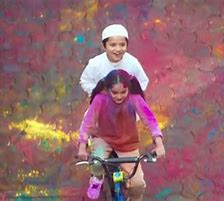
  • Environment Friendly – It is said that, 24 trees need to be chopped down to produce 1 tonne of paper. By using such electronic reading devices, one can contribute in lessening the amount of trees that need to be deforested to make books.
  • Easy to Decipher – In the Kindle, one can easily increase or decrease the Font size according to their convenience. Also, by adjusting the level of brightness, a reader can find it easier to read content.
  • Easy Downloads – It is quite simple to download a book from the Kindle. One need not physically visit a library or bookstore and hunt for the book or wait for it to arrive at home after placing an order. Many cost free books are available in the device if one does not wish to pay an amount to read. While, paid books are at a rate lower than that of physical books.

The debate regarding which one is a better option is a never ending one. Just as every coin has two sides, both the options i.e Books and Kindle have their own merits and demerits. This blog aimed at illustrating the pros of both the options available. A reader can choose a better option for himself/herself by weighing the pros and cons for it according to his/her practicality and convenience.

Companionship

Companionship is probably the best bond anybody can at any point wish for. Fortunate are the individuals who have companions they can trust. Kinship is a committed connection between two people. The two of them have huge consideration and affection toward one another. Normally, a kinship is shared by two individuals who have comparative interests and sentiments. You meet numerous en route of life yet just some stay with you until the end of time. Those are your genuine companions who stay close by through various challenges. Companionship is the most wonderful gift you can present to anybody. It is one which stays with an individual for eternity.

Companionship is significant in life since it shows us an extraordinary arrangement about existence. We take in such countless examples from companionship which we will not discover elsewhere. You figure out how to cherish somebody other than your family. You realize that how generally will act naturally before companions. Companionship never leaves us in awful occasions. You figure out how to get individuals and trust others. Your genuine companions will consistently propel you and support you. They will take you on the correct way and save you from any underhanded. In addition, companionship makes us more grounded. It tests us and helps us develop. For example, we perceive how we battle with our companions yet return together subsequent to making peace. This is the thing that makes us solid and shows us persistence. Consequently, there is no question that closest companions help us in our hardships and awful occasions of life. They generally attempt to save us in our risks just as deal ideal exhortation. Genuine companions resemble the best resources of our life since they sympathize with our distress, sooth our aggravation and cause us to feel cheerful.