Research As A Career Option

All of us have been taught since childhood about the importance of a 9am to 5pm corporate job.No one really speaks about research as a lucrative career.Research as a career is really very important.At one place we are delving deep into the realms of unknown findings and that too of our passion.On the other hand we could go on to add something new for our society.One also comes to know a whole lot of new things of their domain too.In addition,There are immense jobs for research fellows out there!

This Blog would unable the readers to understand what is research along with it’s Pros and Cons as a career choice.Lets get started!

Research is a process of self learning and exploring. It depends on to what extent one is involved or interested in any sort of research. Research can be done at various levels and can even be pursued as a career option. It has a very tremendous scope provided the research is an unique one and can definitely benefit the society.
Research is a science in itself. It is a process which makes you learn a new thing at every stage. As your research progresses, it shapes you and your mentality in a very positive way. There are many difficulties that one faces. But ultimately with constant efforts and the optimistic approach it definitely ends with good results.
As Every coin has two sides,a career option also has its pros and cons.Now lets critically analyse the field-

PROS

1.You have Freedom/Independence:One of the most cited reasons for choosing a research career is freedom and independence.Usually,Researchers at universities and institutes have more opportunities to design their own research, to choose their own hours, and to focus their work.This a convenient way of working.

2. You can focus on your interests:Because these research positions offer more freedom and independence, chances are your research concentrate on your areas of interest.Particularly if you are able to secure third-party funding (that is, funding awarded directly to the researcher as opposed to a university or department), you can organize your own working schedule and priorities, and choose the topics of research which are of most pressing interest to you.

3.Tenure offers stability And good compensation:Although it starts slow,Research Career is quite lucrative and stable.Senior academicians can make wages comparable to their counterparts in industry, and there are plenty of opportunities for advancement into administration and other areas.

4.You get to build a network of international relations:Researchers might work as a team within their department, or across several disciplines. Academic positions also offer a lot of opportunities for international cooperation – whether it’s through conferences, researcher-in-residence programs, or guest positions, you’ll find many reasons to travel and meet with others in your field as well as other fields

5.Contribution to the society:The contribution of researchers is the base of every industry and thus research as a field contributes immensely to the society.

CONS

1.Comparatively less pay in the beginning:As a senior tenured professor at a well-respected institution ,the research scholar will have both good job security and monetary compensation, but reaching that level can take a long time.Initially the pay might be definitely less than corporate people.

2.Pressure and competition:There’s a saying in the Research world: “publish or perish.” Although research fellows have a lot of freedom within their research fields, there is a lot of pressure both to produce publishable results and to bring in the grant money. Research might seem like a haven for intellectuals, but the reality is that researchers spend a lot of time working towards and publishing their results. This can also lead to a lot of competition between research fellows which isn’t always healthy or welcoming.Such a tedious life would require a lot of patience and balance.

3.Plagiarism:If the research articles is found to be plagiarized,it can completely destroy the academician’s reputations.In Addition,there can be legal and monetary repercussions too.

The above mentioned points under pros and cons are added to provide clear picture of the research field so that they equip themselves prior to entering this magical field.Every career has it’s own flaws and perks.Research is no different from that.Research as a career should be encouraged since childhood.Research is the base for each and every branch of study that exists and it’s career prospects should be promoted.

Do give a like,if y’all found it to be informative.

Thankyou!

Stay Knowledgeable!

BODY DYSMORPHIC DISORDER

We all live in a judgmental society where our neighbourhood aunties tell us too eat more or eat less, maybe if we tried putting curd on our face as she told then well be fair or whiter or less brown to be precise, she always knows what’s best because she is older than all of us. All of these unwanted suggestions can lower our self-esteem when they point out your flaws you didn’t know existed. This just leads to us obsessing over our flaws. We all most of the times don’t like we see in the mirror but people who are suffering from body dysmorphic disorder obsess over their flaws on a specific body part which is usually exaggerated in their minds. This is body dysmorphia. Body dysmorphia or Body Dysmorphic Disorder [BDD] is a mental health disorder where you focus obsessively over your perceived flaws; the flaws might not be visible to others, this causes embarrassment, anxiety and leads to you being ashamed in public settings. Because the flaw is perceived its importance is exaggerated this leads to repetitive behaviour or people tend to avoid public settings or certain social engagements. It means repeatedly checking your appearance in the mirror, or seeking constant validation and repeated grooming oneself. Body Dysmorphic Disorder affects 0.7% to 2.4% of the population.

The disease was first reported in 1886 by Enrico Morselli, he named it Dysmorphophobia. It was first diagnosed as a somatoform but later reclassified as an obsessive-compulsive disorder. These people tend to indulge in behaviours which are directed towards fixing or masking their perceived flaw, they always compare their appearances with others, and they undergo cosmetic procedures with little to no satisfaction from the procedure. They also constantly think that others notice or make fun of their perceived flaw. Body Dysmorphic Disorder can be due to different factors, it develops during early adolescence, it might stem from social, cultural standards, psychological or trauma or abuse or bullying. It causes introversion and negative body image. Suicidal thoughts and depression are common in BDD. BDD also causes mood swings, depression, and the repetitive behaviour to mask their flaws causes’ obsessive-compulsive disorder to the patient, eating disorders to lose weight or to gain their perfect weight or to undergo multiple cosmetic surgeries.
BDD can be treated but most individuals tend to hide their obsessive disorders.

The conditions are hugely misdiagnosed because people are not open about it.
The common treatment for body dysmorphic disorder is Cognitive behavioural therapy is the most successful in treating BDD. Because BDD comes with an array of other disorders it’s a little difficult to treat but understandable. Cognitive-behavioural therapy provides a good mechanism where you can turn negative thoughts and irrational thoughts into positive thoughts. Responsive prevention in CBT teaches to resist the urge to mask their perceived flaw and how to seek validation from others and to grow confident. One of the ways to understand this disorder is that everyone is different and it’s no one’s business to tell others how to look or eat. Every person is beautiful in one or the other way and that not everyone is conventionally beautiful. So, be confident and find a niche for yourself.

Suresh Raina: The Most Selfless Cricketer

                                                                                                  -SHUBHANKAR

Be it batting, bowling, fielding or celebrating others success, when it comes to giving 100%, there’s none better than Suresh Raina. Yes, the left-handed master piece Indian cricket has produced. He was the 1st Indian to score hundreds in all three formats of the game. His classy hundred on his test debut was a very special knock in the conditions the Indian team were in that match against Sri Lanka. He was also a part of the Indian team which won the 2011 World Cup as well as the 2013 Champions Trophy. He has been an instrumental part of the team, be it the Indian team or the Chennai Super Kings. The left-handed dasher from Uttar Pradesh is still one of the best fielders around the world, let alone in India.

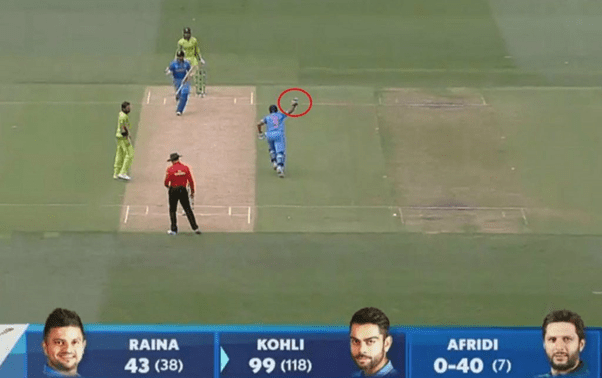
A journey which started in 2005, it has been a journey of ups and downs. The contribution what Raina has made to the Indian team has been immense. But not all credit has been given to the man who in true terms is a selfless player. Some of his knocks have been very crucial to the Indian team victories. Be it those cameos in the semifinal against Pakistan in the 2011 World Cup or the all important cameo against the mighty Aussies in the Quarter Finals of the 2011 World Cup. If these knocks weren’t played, might have been possible that India could have not won the 2011 World Cup. But these knocks are never appreciated. Sometimes we look into records so much that we forget certain important knocks played at a very crucial time. The number at which Suresh Raina batted through out his career so far in the Indian cricket team is at number 5,6 or 7. At this number with a strong Indian batting lineup, rarely he would get a chance in the first 35 overs. Playing in the death overs, the only requirement is playing aggressively and in that players tend to get out quickly sometimes when trying to clear the boundary. But when the top order on certain days failed, he was the one with MS Dhoni who helped India get out of trouble and win the games. In the 2013 Champions Trophy, Suresh Raina didn’t had much to do with the bat but with his fielding he helped India reach the finals and in fact win the tournament. Those blinders at slip against Sri Lanka were very few of the many blinders taken by him throughout his career till now.

Not only for India, his role for Chennai Super Kings has been massive, in helping them win 3 titles so far. He is the 2nd highest run getter so far in IPL. That’s why he has been given the title of MR.IPL. His batting has been very much criticized for the way he takes on the bowlers from the word go, but that’s the batting style which has resulted in his success. So, why would he change it? I think the criticizers must know that he has been performing his best for the team, be it while batting or bowling or even when fielding. In the end, I just want to say that with his performances in the domestic circuit and IPL, he would certainly make a comeback into the Indian team and perform his level best to make sure that the team gains and wins, not for his individual gains.

Improving Communication Skills

Communication is the core of a Personality. Having a good communication skill can change your life instantly. What makes us actually attractive and impressive, is our Communication Skill. We say, “First impression is the last impression”. How can you even make a proper impact without proper communication skills? The trick to make a person listen to you and get your points clearly is by showing him that you have immense control on your communication skills. Without this you cannot be a complete achiever, in spite of having all the good qualities you cannot move forward because of not having the best rapport. Whether you are in front of your teacher or an interviewer, your communication skill is the reflection of your capability. You should be sure of what you wish to speak or how much to speak, you cannot let down your opinion just for the reason of not having effective communication Skills. Here are few tips to enhance your communication skill –

1) Choosing a Language – While conversing with someone, it is indeed the best option to use the language you feel comfortable in. Choosing any other language, which you have a little difficulty in speaking, just to make yourself look cool won’t help you much in the long run. The Interviewer is an experienced person and will get a clear idea that you do not know much about that language giving a wrong image, hence to avoid that, start speaking in the language you know better. Just because any one else is choosing a different language, do not go preach for that. If any specific language is mentioned that you have to opt for that particular language to communicate verbally, you certainly have no choice here. Else, if possible choosing the language you had great command on.

2) Speaking Techniques – You simply do not have enough time to think, translate and speak. Even if you do it in your mind, you won’t be fast enough to speak. While an Official is taking an interview or a teacher asking viva is questioning a lot of others, including you or even more qualified than you. So, you have to make your opinions crystal clear and crisp. Change the game by being direct enough, respectfully having supreme control on the way you are speaking and an abundance of knowledge over the points you have to explain or discuss with.

3) Short and Sweet – No One likes to hear a lot of rantings while conversing, listener is going to get bored or tired very soon. He needs simple answers, not much hard or tricks words. If you genuinely want to contradict a point or raise a question, do it politely. Let the other person speak, let him finish his sentences. It is a strictly No to interrupt in between or speaking in between lines, give small gaps, maintain the eye contact to give a picture that you are listening to the topic and glad to be the part of discussion. Just how to talk to someone known, carry the same attitude while interacting with someone else, always.

4) Vocabulary – Having a good stock of words is absolutely necessary. Do not use any word you do not know the meaning of and you are confused. Choice of word is very important – keep this in your mind. Choose the right word and apply it nicely. Do not repeat the words. Know the basics, or learn about them, like how to start the conversation, how to end it up. Just we write down in a letter or mail, few etiquettes are to be followed here as well. You should have a decency in speaking and should observe more. Also, body language plays a very important look in Communication Skills.

5) Learning more – There is no better way to enrich your stocks of words other than learning more about it. Watch movies, seek the inner meanings of the dialogues, take notes, write it down, write a diary, read newspapers, novels, check out interviews of renowned personalities, read any other book of interest, go through dictionary, find out words and write their antonyms and synonyms. You can also start practicing to speak in English as this language is much admired worldwide and known by a lot of people, also it comes lot handy in competitive exams as the 1st language for most of these Exams are mentioned as in English.

Non Conventional Careers-Science Stream

Medical and Engineering are most sought after courses after 12th Science in India.Parents and the society are the major contributors to this mentality in our country. Thousands of students flock examination centers to write prestigious NEET/JEE irrespective of whether they are interested or not.

Does this mean these are the only options available to students choosing the Science Stream?The Answer is NO.In Today’s advanced world there are plethora of career and course options for students to pursue and achieve success.In this blog we look at some of the prominent and promising non conventional career options in science stream.Lets get started!

1)PSYCHOLOGY

Psychologists study the complex ways that people think, behave, feel, communicate, and perceive the world around them. Some psychologists focus on clinical work with patients, while others devote themselves to researching the nuances of psychological behavior; in any case, psychology is a vast discipline, with numerous career options to choose from. Students who complete graduate-level psychology degrees have great job opportunities. An MSc degree may lead to jobs as research and clinical assistants, while a doctorate is a necessity for those who wants to work with patients in a clinical setting and also to move into a research or an academic position. Many degree programs allow students to focus on a specialty area, including child development, abnormal psychology, counseling, social psychology, and cognition.The opportunities in research under this field are limitless.Psychology is a hot subject in developed nations like The United States and The United Kingdom where this course is sought after and valued.

2)FORENSIC SCIENCE

Forensic science is the application of scientific knowledge and methodology to criminal investigations and legal problems. Forensic Science is a multidisciplinary subject, it encompasses various fields of science such as chemistry, biology, physics, geology, psychology, social science, engineering, etc.Forensic science is used every around the world to protect public and society, to enforce criminal laws and regulations and to resolve civil problems.Various universities in India offer certificate, bachelor and master courses in Forensic Science. After the master degree is successfully completed , then the student can even go for a Doctoral Degree course in Forensic Sciences.Jobs are offered in government as well as private sectors.

3)Agricultural SCIENCES

Agriculture as a field is not just about the traditional aspects related to farming and irrigation. The focus is now shifted to various other dimensions like Horticulture, Poultry Farming, Pisciculture, Dairy Farming, Agricultural Biotechnology,Agronomy etc. Agriculture is also being commercialized as proper attention is being paid to the marketing, distribution, and packaging of its output. It’s possible to pursue a postgraduate degree programme in agriculture related subject which will broaden the scope such as specializing in agronomy, soil sciences, horticulture, plant breeding and genetics, entomology, plant pathology, animal sciences, plant biochemistry, agriculture economics, biotechnology etc. Masters in various above listed Agriculture programs is a 2-year course.This course can be taken up by a candidate who holds a BSc degree in agriculture/ horticulture/ forestry from a recognized university with some qualifying marks.Job opportunities are available both in Government as well as Private Sectors.

4)Aviation industry

The aviation sector is one of the most attractive and best-paid sectors in the economy. In India, The civil aviation industry is a larges domestic market in the economy.The commercial pilot is one the most glamorous and most rewarding job in the Aviation industry. Apart from the theoretical knowledge, a candidate must have practical knowledge to become a commercial pilot. A Commercial pilot must train to get a Commercial Pilot license in order to secure a job in the aviation sector. A commercial pilot or Ferry Pilot will have many chances of getting placed in both Governments and Private Airlines & chattered flights.The interested candidate must be fluent in English,medically fit and must have learnt Maths and Physics in High School.

5)Visual communication

Visual Communication is a combination of illustration and graphic design from a marketing perspective with great emphasis on screen-based workmanship.It involves digital marketing and business identity design , logos, animation, photography, web design, illustration, packaging design, art direction, and most degrees will also have a theory dissertation. It contains all the information to help one become a Graphic Designer, with a scope that allows to to specialize with more flexibility than a degree in design.In short, visual communication is an amazing field with unlimited growth potential. They get hefty pay.Further, with experience, your earnings are bound to increase.

These are just a few options listed from a sea of options.The aim of this blog is to make readers aware that the bucks do not stop at Engineering or Medicine.There are umpty number of career options to choose from and succeed.Everyone can not find happiness within the conventional options imposed by the society.Times are changing and so should our mentality.Students should be encouraged to follow their passion and pursue courses they want.Sky is the limit!

Do like the blog,if you all found it to be useful!

Thankyou!

Stay Happy~

Types of Dream

In earlier post “Dreams as pseudo Oxygen”. I posted about dream and it’s importance. In this I explain about it’s types. It classified below

Ordinary dreams are the unconscious mind’s reactions to something witnessed or experienced by the conscious mind. For example, if you planned a vacation during the day, you might dream about beach that night.

Recurring dreams are the unconscious mind’s way to try and teach a lesson that needs to be learned. If you repeatedly dream about driving then passing the same sites at every turn, yet you never seem to get anywhere; your subconscious might be trying to encourage you to pay attention to and change up your routine.

Lucid dreams occur when you are actually aware that you’re dreaming and you have the power to control your dreams. You might decide to dream about singer before you go to sleep, and end up dreaming about singing with a band of singers.

Telepathic dreams open the door to communication between loved ones who’ve transitioned and your unconscious mind. It is called telepathic because communication with those who have passed on occurs with mind-to-mind communication. If a loved one shows up in your dream, pay attention to their presence. The easiest way for them to communicate is in dreams.

Premonitory dreams are premonitions but they can also allow the dreamer to travel into their future in a dream state. By doing so, they can witness things that could happen in the future. You could have a dream about the colour blue; which you decide to wear to work the next day. And, the moment you walk in, you notice that everyone else at work seemed to have had the same dream; everyone has something blue on. Premonitory dreams are often the source of Deja vu because the soul recognizes what it’s already witnessed in dreams.

Nightmares are a response to fear and often stem from both childhood and past lives. They can be brought on by a trigger during the waking hours. The soul houses all memories of its existence and, since we’re always learning, sometimes something we experience during our waking hours will perpetuate the soul memory of a similar situation. Warnings also can be perceived in nightmares: “if you first see a frightful event in a dream, you can prevent harm from happening in waking life. For example, nightmares can warn against acting on impulse, as well as show that certain feelings and emotions are unhealthy.”

Daydreams tend to occur when the body and mind are in a relaxed state, and are designed to distract the mind. A recent National Geographic article suggested that daydreaming turns off the analytical part of the brain and makes you more creative. This occurs because the mind seeks an escape from the task at hand, and therefore the creative side kicks in.

So, the Dreams are an incredible reminder of just how connected we are to the universal consciousness. They are a door, a portal that not only allows us to learn and grow but to also receive guidance and love from the worlds beyond this one.

Thanks…..

Emoji

Emoji – This term speaks a lot for itself. Emoji depicts pictography, there is an uncanny similarity between the English words “Emoji” and “Emotions”. Emoji is especially used by the youngsters as they haven’t got much time to write a lot and they tend to make it more fun. Emotions can be expressed through these cute and humorous emojis. Emojis are only available in smart phones and very rarely on feature phones. In today’s life, we cannot imagine an “Emoji” less world. It is a must have for we youngsters. Earlier we used Smileys which was a most simplified version of Emojis where punctuation marks were used like full stop, semi colon, exclamation marks etc. Emoji is basically the faces which shows several sentiments. This makes the online conversation much more funnier and easier, not having to type lengthy texts while you are texting someone else. Every year we celebrate World Emoji Day, as on 17th July every year. This is the modern world where chatting is becoming must to carry on day to day activities and for entertainment. Emoji is everyone’s best friend. What we cannot say through a call or even through texting, we can just do it by dropping an emoji. It is a much subtle way to reveal the sentiments without overdoing anything. Sending emoji is a casual and informal way, and is not something dignified or professional. We were certainly very fond of smiley, we repeatedly used to send those smiley to each other. Emojis are more modern way of Smiley, having a lot more varieties. There are happy emojis, sad emojis, exclamatory emojis, angry emojis, also there are flags of other countries, furniture, foods, we have all in our smartphones. Emojis can be tricky sometimes, when used sarcastically, if a person sends a text and an emoji just opposite to it, this signifies mockery. Emojis come handy as to text a friend or in groups. As because we are so deeply engrossed into social networking sites like Facebook, WhatsApp, Instagram, it is not always possible to write long texts in an informal conversation more than one at a time, usage of emojis makes it faster and easier. Emojis are also handy to use when you are certainly not in a mood to text or chat, just want to end it up without being rude. It is also used to freshen the mood and make it more entertaining. There are several kinds of laughter Emojis. Emojis like casual smile, fun, extremely happy, laughing in tears, laughing heartily as we normal humans do. While in a call you can guess a person’s nature of behavior, but through emojis you cannot very easily get hold of his conduct or instincts, When we are extremely busy and we have to reply and cannot offend the other person, few emojis will easily sort the matter out. Emoji can be helpful during sadness, as it is difficult to express these feelings very easily. Emojis are also relatable for a birthday wish, as it is a more decent and fair way to show joviality, or to wish for any festivities to the close ones. Many people who cannot type or on keypads can henceforth use emojis to express themselves. Emojis are very efficient aspects to use while a person is busy in work or while travelling. Emojis speak a lot more than mere words, what words cannot express, emojis can.

However, a person can understand emojis wrongfully, if it is sent on a hurried note, the person receiving it shall think that emoji is a sign of an ignorant attitude. While texting, imagine you by mistake send a wrong emoji to the recipient, and there is no possibility of correcting it out, like sending any unsuitable emoji to an elderly person or a much younger person, it is very disrespectful on your part. There are various emojis of sports, fruits, veggies and is so much impactful while conversing. No body likes to type lengthy messages or unwanted chatting, also if we are not having the time to type texts separately we can just forward the emoji and the work is done. Without emojis an important part of our life such as chatting which is essential by all means, for official purpose or family group or with friends, it would become much boring and we will start feeling lethargic real soon. Improper usage of emojis can break the conversation even. There are several emojis on our smartphones as gifts to express gratitude and thankfulness.

BOULEVARD OF BROKEN DREAMS

A world that nurtures minds rather than butchers them still seems like a distant dream. A world which nurtures minds and teaches them how to dream seems like a wicked fantasy compared to the reality!

Growing up, people have this very false apprehension that kids have it easy, maybe they do know how it’s like, for they’ve also been young! Maybe they’ve been amended by the harsh reality; which our soul more often than not tries to run away from. Seeking refuge in some surreal vision.

Rather than striving to bring about a change, we the people often approach ripe minds with queries which should be not more than questions of sheer enlightenment but rather we do the complete opposite, a far more severe manifestation of the same, which is more or less like a violent blow to the gut. 

The promises of tomorrow are often bombarded by bizarre questions like, “ what will you do in some years down the line?”, “what are your dreams?”, “Don’t you have any dreams boy?” and many more such obscene verbal inquires, without paying much heed into the aftermath.

The careless wandering souls would care less about the whole essence of such moments and will carry on with their endeavor, but the poor innocent ones are the ones that often fall prey to such thoughtless stunts, crippling their innocent little minds till they get redemption on their own. Setting their tiny minds into a frenzy, making them hesitant to settle about and making them flying into the unknown like a broken kite without direction. 

What people often fail to realise is the simplicity of the reality, that a nudge or two by such people to young minds could do wonders, unaware and unwilling to accept the bitter truth and shying away from doing the needful.

To err is to human but to forgive is divine” , but yet people have been consistently failing to bring about changes in this aspect of life. Frowning upon the ones learning from their mishaps and setting forth doing the same errors over and again.

We are who we are, our actions speaks for itself, we are the end-stories of our endeavors. We as a people, rather than setting forth to blame the rest have to realize that blaming one or the other ain’t the need of the hour. We indubitably own it to ourselves to seize the day and bring about the change much needed.

We owe it to them, then ones who have brought upon a change. The ones who have paved the way for generations and more untiringly erecting a different world. A world that brings hope and one which promises us a better dawn to look forward to. These alleged misfits who trembled upon the road less taken to pave the way for the rest, clearly depicts a key lesson, that Change is inevitable and that change is necessary. For Revolution is impersonal!

A world which nurtures minds rather than butchers them may seem like a distant dream. A world which nurtures minds and teaches them how to dream can be our wicked reality!

Solar Energy a solution?

Over the last decade, solar energy seems to be an outstanding investment for people abroad. This trend is gradually taking place in India also, a solar power plant 750MW was inaugurated in Rewa, Madhya Pradesh on July 10th, 2020 by Hon’ble Prime Minister Narendra Modi through video conferencing. Several other power plants show promising results in reducing the carbon footprint by approximately 15 lakh tonnes of carbon dioxide each year. This shows India’s commitment to reducing its carbon footprints. The advocates of Non-Conventional energy Resources usually emphasize Solar Energy as the panacea. But is it this way or there is some bigger demon lurking out there? Solar power plants have some major drawbacks associated with them, decreasing the carbon footprint level is irrefutably a major advantage but a coin always has two sides, and therefore solar power plants have their drawbacks. The foremost drawback is the associated higher initial cost is one of a limitation and therefore people are reluctant to install in their homes. The cumulative cost of solar panels is staggering. Also, solar plants need a lot of land for installation, Rewa power plant India’s 4th largest plant covers 1500 hectares land. Although being located in a drought-hit area still has several complications of its own like disturbing the delicate ecosystems and species. Birds flying atop plants get incinerated, some crash into panels and other infrastructure. Many science believe that such large conglomeration of panels does more harm than good, it’s better to have rooftop panels rather than solar farms. Still, academic research is going on, and therefore nothing can be said for sure. Although they have low maintenance still some problems can creep in, as nothing is foolproof. Some common defects include microcracking, delamination, internal corrosion. Microcracks are cracks invisible to the human eye but weathering effects show telling effects. Due to these cracks moisture creeps in, cause delamination and corrosion of the internal components, thereby attenuating the panel. Solar panels might be seen as a viable option in the deserts due to the low maintenance and huge input but they require water as a part of their maintenance due to the huge sunlight and dirt that accumulates on to them. Hot spots build at these spots causing the panel to overheat and to overcome the problem clean water is required to wash away the dirt. At places which are already fighting the battle for potable water, using waters at such farms seems implausible and unethical. While solar farms don’t have any associated greenhouse emissions during the production of energy, but still the emissions during the manufacturing, transportation, installation, maintenance, decommissioning need to be considered.
To bring down the carbon emissions to compelling values governments should provide incentives for solar installations and those incentives should reach the consumer rather than being used up in bureaucratic friction. Since this technology is still embryonic, researches are still going therefore it won’t be wise to comment. But looking at the aforementioned points it is wise to have rooftops solar panels rather than solar farms.

Photo by Ryan Searle on Unsplash

Flouride

Is adding artificial Fluoride in drinking water necessary? There is no clear evidence that
Fluoride is an essential nutrient for the human body. However, it is necessary to have an adequate
amount of Fluoride in the body to prevent tooth related problems. Research has found out that
Fluoride is found in all water sources, so adding chemical Fluoride leads to health problems.
According to the article “Fluoride in drinking water” by the WHO (World Health Organization)
points out that the concentration of artificial Fluoride above its value can cause an increased risk
of dental fluorosis, and much higher concentrations will lead to skeletal fluorosis. The
recommended value for artificial fluoridation of water supplies is usually 0.5–1.0 mg/litre. Many
cities add artificial Fluoride into their ground drinking water. The top cities are China and India.
With numerous research by Zhang, Zhao, et al., they analyzed and put forward their finding in
their article “Spatial distribution of fluoride in drinking water and health risk assessment of
children in typical fluorosis areas in north China” which stated that in places with endemic
fluorosis. However, water fluoride level is maintained, health education and health promotion
strategies are still necessary, and their importance must be highly valued. Many surveys and
research have been conducted regarding Fluoride in water and its harmful cause to human health.
All the article supports that adding an excess amount of Fluoride in the drinking water is harmful
to human health. The article is supported by numerous reach and surveys that were participated
in various parts of the world.

Is vaccination worth taking?

Vaccination is known to strengthen our immune system that will help prevent diseases.
According to the article (Against vaccination), taking a vaccine in most cases leads to deaths. It
states that taking the vaccine is highly noxious than a disease. However, I argue that although
there is a possible danger at the initial stage of taking the vaccine, it is an excellent solution to
prevent oneself from subsequent danger from assimilating diseases.

Vaccine causing several deaths. The article “against vaccination” states that VAERS has received
several reports about dangerous reactions to vaccination. The report was taken into
considerations from doctors ( “The U.S. FDA’s VAERS”. n.d). This claim does not support
evidence that gives us the correct report about the leading cause of the people dying of the
vaccine. The vaccine can cause reactions to some individuals and also death. However, a small
number of cases can not be concluded that the vaccine is dangerous.

What works better vaccine or homeopathy?. The claim that the article makes that vaccine does
not assure the prevention of diseases and that homeopathy works better. This statement is taken
into account because of the historical fact that the death rate was less in homeopathic hospitals.
( “death rate of only 3%”, n.d). However, this statement is biased, and we cannot verify that
homeopathy works better by taking the statistic of the death rate of one hospital.
The advance of technology medication has improved, and we also cannot prove that homeopathy
works best to prevent deceases.

Some specific vaccines can have side effects on individuals, especially with infants, but we
cannot generalize or consider that it is harmful and does not help prevent disease. The vaccine is
a stimulant of antibodies that, in rare cases, does not suit an individual’s body and may lead to
death, but that does not authenticate the vaccine as a harmful agent.

Is being different a curse?

Indian Gorkhas or the Bhartiya Gorkhas are Nepali language speaking Indian citizens. Indian
Gorkhas are the citizens of India as per the broadsheet notification of the Government of
India, on the publication of citizenship of the Gorkhas of India. However, the Indian Gorkhas
are faced with a unique identity crises and vilifications with regard to their Indian
citizenship.
The history it traces back to the British times when there was a mass labour movement for the
flourishing resources in the area and they were dragged into this segment. Little did they
know that the impact of this action would be so outrageous for the coming generations. This
account has led to issues such as racial discrimination, ethnic plight, cultural dilemma in the
present scenario. A common identity for identification in a big country like India without
being fraudulent as an outsider is the major obstacle. Individuals presently are simply
judged, remarked on the grounds that they appear to be different. They fail to see the plight of
the citizens as humans, thus sharing the glimpses of the biased account of history making the
lives of these citizens unsparing by their own motherland.
The fight still continues an is never ending, therefore as in democracy, we decide our future.
We should likewise decide how our coming generation remember Nepalese as a community
of India in between all its differences.

Human boundaries.

Castes seem to have originated more than 2,000 years ago. Under this
system, which is associated with Hinduism, people were categorized by their occupations.
Although originally caste depended upon a person’s work, it soon became hereditary. Each
person was born into an unalterable social status. The four primary castes are Brahmin, the
priests; Kshatriya, warriors and nobility; Vaisya, farmers, traders and artisans; and Shudra,
tenant farmers, and servants. Some people were born outside of (and below) the caste system.
They were called “untouchables” or Dalits—”the crushed ones.”
During the 1900’s Marriage across caste lines was strictly forbidden. Most
people even married within their own sub-caste or jati. At mealtimes, anyone could accept
food from the hands of a Brahmin, but a Brahmin would be polluted if he or she took certain
types of food from a lower caste person. At the other extreme, if an untouchable dared to
draw water from a public well, he or she polluted the water, and nobody else could use it. In
religious worship, Brahmins, as the priestly class, presided over rituals and services including
preparation for festivals and holidays, as well as marriages and funerals. The Kshatriya and
Vaisya castes had full rights to worship, but in some places, Shudras (the servant caste) were
not allowed to offer sacrifices to The Gods. Untouchables were barred entirely from temples,
and sometimes they were not even allowed to set foot on temple grounds. If the shadow of an
untouchable touched a Brahmin, the Brahmin would be polluted, so untouchables had to lay
face-down at a distance when a Brahmin passed.
They were not allowed to sit in school with their counterparts if they were of lower caste,
they were told to sit in a gunny cloth and the servant would not touch the gunny bag touched by the Dalits. They could not drink water from one tank, as they would pollute the whole
water, they could not even quench their thirst before the touchable person opened that tap. No
waterman washed their clothes not because they didn’t have money but they were of so-
called lower caste.
According to 2011 census the Dalits comprise of 16.6 per cent of India’s
population. 2014 report to the Ministry of Minority Affairs, over 44.8 per cent of Scheduled
Tribe (ST) and 33.8 per cent of Scheduled Caste (SC) populations in rural India were
living below the poverty line in 2011–12. In urban areas, 27.3 per cent of ST and 21.8 per
cent of SC populations were below the poverty line. Caste is something like blood which
flown into the bodies from grandparents to parents and from them to us. No matter how much
people deny it, it’s somewhere alive in the body. According to a 2007 report by Human
Rights Watch (HRW), the treatment of Dalits has been like a “hidden apartheid” and that they
“endure segregation in housing, schools, and access to public services”. Whereas, A general
category category of poor family is denied admission to a government college even if he
scores twice the marks scored by a reserved category so called backward candidate. Even if
the so-called backward candidate has a lavish life style. So many people justify themselves as
a lower caste but has a better economic status than most of the people but still take all the
benefits from the government. They have exploited the whole economy of the government
that way. Many people therefore have lost their desired right because of it.
Differences between human beings are never going to end as long as human
race exists. We as humans, if see someone as lower to you, you should still regard them as
fellow human beings and help them in need. Caste should not be based upon surname or
where we are born from, no human should be treated unfair. Everyone is equal and if
reservation is followed it should be solely based of economic status, so that we can really be
with the needy.

Growing popularity of Korean music (K-pop)

K-POP is a short form used for Korean music, it is a musical genera originated in South
Korea. Its musical roots is spreading all over the world, but why is K-POP (Korean music)
gaining so much popularity in the western world, despite the music being in a foreign language?
I argue that the growing popularity of K-POP (Korean music) as a global phenomenon,
especially in the western part of the world, is due to factors like social media, the influence of
western culture, and the idols multilingual skills that plays a crucial role in the success of Korean
music.
The impact of social media in circulating and facilitating the rapid growth of Korean
music, making it a global phenomenon. Social media has played a crucial role in the growth of
Korean music. Social media such as Facebook, Instagram, Reddit and specially YouTube is the
leading social networking site that is constantly helping in the growth of K-POP. For example the
article by Dal Young Jin, he point out how young adults instead of buying CDs and DVDs and
watching famous culture on theatres or television are now using social media such as YouTube
and Facebook to relish poplar music. (Jin & Yoon as cited in Dal Yong Jin, 2018). The Korean
music industries does not confine itself or are reluctant on popular networking sites. They have
mastered the business of globally promoting individual K-POP group. They have developed
online games with animated K-POP idols characters, sites where global fans can communicate
with they admired idols irrespective from where they are and online merchandise that represent
particular groups. The Seattle Times had published an article by Sohee Kim and Pei Yi Mak focusing on how “mastermind mind producer”( Sohee Kim & Pei Yi Mak, 2019, p1)has built a
strong fortune.“In addition to Big Hit’s proprietary merchandise such as games and cushions to
pajamas featuring characters created by BTS, there’s even a line of Barbie dolls.Bang is a low-
key figure not known for the ostentatious displays of wealth often seen in K-pop.” (p1) this
statement indicates that not only social networking site but social website like games and online
shopping has also played a vital role in the growth of Korean music.
K-POP idols have robust multilingual skills, which act as a catalyst in the growing
popularity of Korean music. The idols not only vigorously learn how to perform their music in
front of the audience but also train for several years to master different languages. The idols are
taught to communicate with different ethnicity in different ways. which not only helps them
connect with their fans in and around Asia but globally. It is said that “Having a multilingual
skill not only appeals to the fans in Asia, but it makes it more accessible to fans in the western
world.” (Alicia Prince, 2013, p5). Having a multilingual skill helps them understand and
communicate with fans and most importantly they can attend interviews and award shows held in
the western world without a translator. According to billboard news, the fluent English speaker
among the idols translate the things that are difficult for other members to catch up (Caitlin
Kelley, 2017). This also goes for other languages such as French, Japanese, Spanish and Chinese
that are popular language among the idols.(Koreaboo 2018). We can take an example of a
Korean idol Henry who can speak six different languages “ Korean, English, Cantonese, French,
Thai and mandarin.”( Hannahlex 2018, p 8). The process does not end here due to the growing
popularity of K-POP, the western fan is taking a major part in learning Korean language to have
a better understanding of what the idols is telling. According to an article by BBC News The
latest “statistics show 14,000 students are learning Korean in the US, compared to only 163 two decades earlier.” (Matt Pickles, 2018, p2). We cam estimate that not only the idols but also the
fans are taking part in learning languages to cut the language barriers between them.
The western music culture having a huge influence on K-POP, which is also one of the
factor that leads to the popularity of Korean music. Nevertheless an article about the influence of
western music on K-POP states that “American music culture has the most significant impact on
the evolution of the Korean music regarding the style of the music and the preference of the
domestic audience and these influence are still apparent even in the contemporary K-pop musical
products” (Stephen, 2018, p1). The agencies send their idols to different parts in the west to
promote them self as well as learn and adapt western music culture. Many K-pop idols have done
covers of western music artist in many of their concerts or have posted it on YouTube which
grabbed most Westerners attention. According Zheng , Korean music has incorporated elements
of American pop, hip-hop, and R&B along with their synchronized dances. ( Hua Zheng, 2018).
Over the past few years there has been a rapid collaboration between American musician and K-
POP groups. Many famous American artists have collaborated with the Korean idols and
produced songs that has made it to the top ten billboard charts.K-pop group like BTS and
western musician Steve Aoki are know for their outstanding works, and are taking advantage of
it. “Waste It On Me” one of their best hit is the third collaboration between the Korean boy band
and the American DJ and producer, following their collaborative hits “Mic Drop” and “The Truth
Untold.” “Waste It On Me” is BTS’ first all-English song, connecting the language gap between
them and their English-speaking fans.(Jean Natividad, 2018)

The growing popularity of Korean music is phenomenal, and factors like social media, western music culture and idols multilingual skills play a vital role in helping it grow in
the western part of the world. However, we cannot deny the fact that the idol’s hard work, talent,
and, most importantly, dedication played a significant role in the growth of Korean music K-POP
in the western world.

Dysrationalia

We often think that rationality and intelligence are technically similar; however, it is not. It is
said that a person can be a rational thinker with very little intelligence. People who are rational
use logic and reason to solve everyday problems or situations. The article states that rationality
differs between person to person and are three types: “automatic mind,” “algorithmic mind,” and
“ reflective mind.” which is, however, interesting and can be taken into consideration because it
somehow explains how minds can work.
It is said that rationality can be learned and taught, which means that the knowledge of
reasoning can be acquired thought-out life. Statical and scientific thinking is considered as the
primary source that helps in gaining the technique of reasoning. The fundamental strategy to
learn to reason is to think the opposite. Taking many deliberations to analyze things is the best
way to fall prey.
However, if an individual solves a tricky question in his/her examination, will it be considered,
will it be regarded as solving the problem using rational thinking or intelligence?

Knowledge as internally certifiable

Is knowledge internally certifiable? According to Descartes, if there is a proposition (that is a
statement or a judgement), then there is an argument that shows that the proposition is true. The
premise is “true or introspection” by introspection or examination or observation of own mental
processes. Descartes gives weightage in introspection he says that the given premise can be
considered valid because of introspection and priori reasoning.
According to Descartes, if a subject is confident that a conclusion is true, then the subject should
also know that all the premises related to it are accurate and that he knows that is true because
through the experience. The main element is that introspection gives us knowledge about the
connection between inside and outside of our minds.
How do we know Descartes’s theory is reliable? According to the article, the author agrees to
Descartes’s view, but his approach differs. It supports that knowledge need connection as to what
is going inside the mind is what is going outside. However, he does not acknowledge the theory
of a premise to be true does not need introspection and priori reasoning because the subject does
not have to know that the premises related to being right.

The misinterpretation of miracles.

The miracle happens not because of a supernatural entity. However, instead, because it is a rare
occurrence that makes us think of it as a miracle. Once something happens too much, we no
longer see it as a miracle, and it becomes part of the natural order of things. The interpretation of
a positive outcome of situations is often considered as a miracle. I argue that the belief in
miracles is due to the rare occurrence of situations that cause individuals to believe that a
supernatural force is a subject for its outcome.
The lack of evidence to support the occurrence of miracles. The article (A drop in the sea) does
a marvellous job in emphasizing the fact that the occurrence of miracles lacks evidence to
support the claim. The infrequent occurrence of any event may lead the people to believe that
miracles occur. For example, seeing a shooting star, which is not a common phenomenon that we
see every day, maybe interpreted as a miracle by some people who say it for the first time.
However, if there is enough evidence for an unusual situation, do we consider it a miracle or an
unfrequent or rare situation?
There is no proper evidence that miracles may or may not occur. Nevertheless, the lack of
evidence to support the occurrence of that miracle lacks, which loses its creditability.

Evil Genius

Is God an evil genius? According to Descartes, God is excellent; however, there is an oil genius
who is as powerful as God. The evil has deceived Descartes, and he thinks that the universe,
heaven and all the things around the bus are just dreams and illusion that the evil has taken up
himself. He falsely believes that he has posses no physical attributes. He states that evil can
deprive us of all the attributes that surround us. There is a good line in the article stating that evil
follows and does according to his direction and words.
A good example can be taken from the article about Tom, who has an illusion of a bowl of
flower, which he thought was there and now it was not present. He has an illusion of touching
the flower petal and sniffing the flower; however, there was no flower but was paper. Another
encounter of strangeness is when his friend enters the room. However, her physical appearance
looked strange. Everything around him is unusual than he is acquaintance off. This example
concludes that the evil deceives tom, the evil tries to mislead Tom to think about what is not
valid. According to the article, the illusion is something that looks and sounds like a thing that
we are likely to mistake with the thing we are looking for. Nevertheless, in the end, the article
concludes that evil is not deceiving us, but he was posting that he could deceive us.

Self-impression

Students who do well on exams manage self-impression in various ways when engaging with
other students after receiving their grades. According to Denial Albas and Cheryl Alba’s
individual frequently alter their demeanor towards others to convey the impression which intern
are in favor to them, there are three categories of students the ‘Aces’ the ‘Middle of the
Roaders’ and the ‘Bombers’ who knows that they must create a self-impression for them to be
regarded as a praiseworthy people (Denial and Cheryl,1988,p.290). Self-impression of “Aces”
when encountered by an “Aces” are likely to be accessible because “it’s much easier to admit a
high mark to someone who has done better than you, or at least well” (Denial and Cheryl,
1988,p.298). However, the self-impression is utterly different between the encounter of an ‘Aces’
and ‘Bomber’ for the students who did well on their exam are most likely to interact with the
bombers but hesitate because they remember how poorly they had performed before the
interaction began. ( Denial and Cheryl,1988). In conclusion, the student who does well is often
modest with their self-impression towards others, especially towards people with low grades to
preserve one’s honour.

How do we know things exist?

Are we aware of our surroundings? Simple things and day-to-day tasks are the things that we
are aware of, such as our physical future and our natural surroundings. However, how do we
exactly know if it exists? What if everything was just a dream or when we make up we feel it is
was all a hallucination. So trying to prove that there was an outside world would be a part of the
dream. Trying a different way to prove that there is an outside world would be useless. Slapping
or pinching yourself to wake up from that dream would not work.
Observations can be mistaken, but other observations can also correct it. Our idea of things that
exist is just our idea. If we see a snake in our dream and ounce, we wake up; we will realize that
it was just a reflection of a grass. Our belief in the world is outside our minds comes very
quickly; therefore, we do not need any ground or proof for it. We can live with it because there
may be a possibility of our belief becoming false, or we have no basis for ruling out the
possibility.

The portrayal of women in social media.

In the article Women’s self-sexualization in photos on social media (2017, June 15), Laura
R. Ramsey, Amber L. Horan, tries to scrutinize the level at which young female post sexually
appealing pictures of themselves on social media because they are longing for public attention.
(Ramsey and Horan, 2017)
There has been widespread growth in women’s sexualization, especially in western media.
As a result, women have destitute body image about themselves; their tolerance level towards sex
violence against women has increased, and also women are now more prominent supporters of
sexist beliefs (Ramsey and Horan, 2017). According to Ramsey and Horan, women self objectify
themselves in a sexualized manner which could be used as an object; women give more value to
what others think about them, people’s perspective and how they look {physically}.
Young adult posting pictures in social media like Instagram and Facebook has always been much
of a public concern (Ramsey and Horan, 2017)example, “in early 2016 journalist Nancy Jo Sales
published a book about girls’ sexualized behaviour online that immediately made into the New
York Times Best Seller list, and online article about the book garnered hundreds of concerned
comment” (e.g.,NPR, 2016). (Ramsey and Horan, 2017, para 1).

According to research by (Manago, Graham, Greenfield and Salimkhan, 2018), young
women post sexually appealing pictures on social media and does not bound themselves with
cultural obligations and uploads pictures with minimum amount of clothing to make it more sexual,which is likely to receive more likes or views with flooding number of positive comment. (Ramseyand Horan, 2017)


The growing popularity of social media site has made it more vulnerable for the young adult
to post self-sexualized pictures of themselves, even the sites emphasis and promotes in sharing
sexual pictures which is in the way of supporting self-sexualization. (Ramsey and Horan, 2017).
(Daniels and Zurbriggen, 2016) Found out posting sexually appealing pictures comes with a price,
In their experiment, they found out sexualized profile pictures of women were viewed less alluring
and not competent when tallied with her non-sexualized profile picture by other young women. It
was also found that young men were only sexually attracted to women who posted sexualizing
pictures and were not interested in committing to a relationship with them. (Moreno, Swanson,
Royer, and Robert, 2011).

(Sherman et al., 2016) points out the primary motivation of women posting self-sexualized
photos on social media showed the want of attention from the audience, which is the main factor
that acts as a motivation manifested by likes and comments on uploaded pictures. (Ramsey and
Horan 2017). The finding also shows that “adolescents who viewed photos with a lot of “likes”
showed more unusual activities in the regions of the brain associated with reward processing and
attention”(Sherman, Payton, Hernandez, Greenfield and Dapretto, 2016, p86). Therefore getting
more likes acts as a catalyst for social media behaviour. (Ramsey and Horan, 2017).

Self Objectification of oneself has brought negative impact such as inculcating
psychological disorders {which is very hazardous and destroys the equilibrium state of individual}
(Ramsey and Horan 2017)
Do some questions revolve around this article, which also gives us a conclusion and some
reverent answer as to what extent do young women post self- sexualized photos on social media?
(Ramsey and Horan, 2017). Dose posting such pictures gain much positive remark in the form of likes, comments and followers? Moreover, how do we predict which women post self- sexualized
pictures on social media? (Ramsey and Horan, 2017). The answer to these questions is: young
women post sexually appealing pictures in social media for the desire of attention from people who
are on social networking sites. For a matter of fact, wanting attention is very much related to self-
objectification, zeal for sexualization, and having a view that sex is their source of power. (Ramsey
and Horan, 2017).

Ruins of Fashion

“Dress shabbily and they remember the dress; dress impeccably and they notice the woman.” quotes Chanel.  Fashion has a very big dimension in the world of today, but till now no one can give justice to its definition. It’s mainly a self-reflection of the person, and the image that they want to create in the society. Fashion trend is defined as a particular style, or clothing at a particular period of time. The modern world is now a combination of different people all having their own extraordinary patterns and style. Thus, fashion is not mere about clothing or dressing up but bringing up the creator in you.

Fashion and youth go hand in hand, its this generation that brings out a new approach in this arena. Fashion not only means wearing clothes, but feeling comfortable, confident and beautiful with your skin. It adds a flash of colour to your emotions and transforms your life. The different colour you wear is also a reflection of your feelings. It is proven that Warm colours is associated with happy times and dull colour are worn when you feel low or unhappy. Coming from the traditional attire to the plain bland long clothes, to miniskirts, dresses and now baggy jeans, we can see the transition of fashion industry to extreme levels. The teenager nowadays is very active in social medias and technological development this also brings them into an exposure of the current trend, and being a fast-moving world, everything is at the tip of their fingers. Therefore, the youth today should never underestimate the power of a good outfit on a bad day.

Everyday is a fashion show, and the world your runway, is a popular conception in the fashion industry, not only are two people distinct by their appearance but their taste and clothing differ too. Sometimes these are mainly a contribution of the place they live in or due to their beliefs and notion. In India, there are a mix of people but the most dominant in them are the Hindus, the Muslims and the Christians. Firstly, the Hindus follow several Holy God and their way of clothing is mainly normal traditional attire with a mix of their tribal dress and heavy makeup at the time of festival. The Muslims wear burkha normally or clothes that will cover their body because that’s what their religion had told them about. Finally, Christian is a migrant religion and western to Indian wear is seen by the people who follow this religion. It is seen that in Hinduism when there is a death in the family, they normally wear white, but in Christianity white is a symbol for holiness and they marry in white beautiful gowns. Red sari is normally worn by the Hindu brides in their marriage. The Muslims on the other hand wear the black burkha on a daily basis and have hijab for their own belief. Thus, fashion is not only to look pretty or attractive but has some deep roots in their values and rituals, because at the end, life cannot be perfect but your outfits can be.

Fashion is thus a stepping stone for self-love, its when you feel good that you start getting confidence and that’s the biggest magic that fashion does in your life. As Neiman Marcus rightly said, “If loving fashion is a crime, we plead guilty.”

Jurisdiction of the arbitrator:


The Act provides that the arbitral tribunal may rule on its own jurisdiction, including any
objections with respect to the existence or validity of the arbitration agreement. The arbitration
agreement shall be deemed to be independent of the contract containing the arbitration clause,
and invalidity of the contract shall not render the arbitration agreement void. Hence, the
arbitrators shall have jurisdiction even if the contract in which the arbitration agreement is
contained is vitiated by fraud and/or any other legal infirmity. Further, any objection as to
jurisdiction of the arbitrators should be raised by as party at the first instance, i.e., either prior to
or along with the filing of the statement of defence. If the plea of jurisdiction is rejected, the
arbitrators can proceed with the arbitration and make the arbitral award. Any party aggrieved by
such an award may apply for having it set aside under Section 34 of the Act. Hence, the scheme
is that, in the first instance, the objections are to be taken up by the arbitral tribunal and in the
event of an adverse order, it is open to the aggrieved party to challenge the award.
In SBP & Co. v. Patel Engg Ltd.8 the Supreme Court of India (in a decision rendered by a Bench
of Seven Judges) held that the nature of power conferred on the Court under Section 11 of the
Act is judicial (and not administrative) in nature. Accordingly, if parties approach the Court for
appointment of arbitral tribunal (under Section 11) and the Chief Justice pronounces that he has
7 Section 11 of the Act.
8 (2005) 8 SCC 618
6
jurisdiction to appoint an arbitrator or that there is an arbitration agreement between the parties
or that there is a live and subsisting dispute to be referred to arbitration and the Court constitutes
the Tribunal as envisaged, this would be binding and cannot be re-agitated by the parties before
the arbitral tribunal.
In S.B.P & Co. case the Supreme Court has defined what exactly the Chief Justice, approached
with an application under Section 11 of the Act, is to decide at that stage. The Chief Justice has
the power to decide his own jurisdiction in the sense whether the party making the motion has
approached the right court. He has to decide whether there is an arbitration agreement, as defined
in the Act and whether the person who has made the request before him, is a party to such an
agreement. He can also decide the question whether the claim was a dead one; or a long-barred
claim that was sought to be resurrected and whether the parties have concluded the transaction
by recording satisfaction of their mutual rights and obligations or by receiving the final payment
without objection.
The Court in SBP & Co case, inter alia, concluded as follows:
(i) The power exercised by the Chief Justice of the High Court or the Chief Justice of India
under Section 11(6) of the Act is not an administrative power. It is a judicial power.
(ii) The power under Section 11(6) of the Act, in its entirety, could be delegated, by the Chief
Justice of the High Court only to another Judge of that Court and by the Chief Justice of
India to another Judge of the Supreme Court.
7
(iii) In case of designation of a Judge of the High Court or of the Supreme Court, the power
that is exercised by the designated Judge would be that of the Chief Justice as conferred
by the statute.
(iv) The Chief Justice or the designated Judge will have the right to decide the preliminary
aspects as indicated in the judgment. These will be, his own jurisdiction to entertain the
request, the existence of a valid arbitration agreement, the existence or otherwise of a live
claim, the existence of the condition for the exercise of his power and on the
qualifications of the arbitrator or arbitrators. The Chief Justice or the designated Judge
would be entitled to seek the opinion of an institution in the matter of nominating an
arbitrator qualified in terms of Section 11(8) of the Act if the need arises but the order
appointing the arbitrator could only be that of the Chief Justice or the designated Judge.
(v) The District Judge does not have the authority under Section 11(6) of the Act to make
appointment of an arbitrator.
(vi) The High Court cannot interfere with the orders passed by the arbitrator or the Arbitral
Tribunal during the course of the arbitration proceedings and the parties could approach
the Court only in terms of Section 37 of the Act (appealable orders) or in terms of Section
34 of the Act (setting aside or arbitral award).
(vii) Since it is a judicial order, an appeal will lie against the order passed by the Chief Justice
of the High Court or by the designated Judge of that Court only under Article 136 of the
Constitution to the Supreme Court.
8
(viii) No appeal shall lie against an order of the Chief Justice of India or a Judge of the
Supreme Court designated by him while entertaining an application under Section 11(6)
of the Act.
(ix) Where an Arbitral Tribunal has been constituted by the parties without having recourse to
Section 11(6) of the Act, the Arbitral Tribunal will have the jurisdiction to decide all
matters as contemplated by Section 16 of the Act.
Challenge to arbitrator:
An arbitrator may be challenged only in two situations. First, if circumstances exists that give
rise to justifiable grounds as to his independence or impartiality; second, if he does not posses
the qualifications agreed to by the parties. A challenge is required to be made within 15 days of
the petitioner becoming aware of the constitution of the arbitral tribunal or of the circumstances
furnishing grounds for challenge. Further, subject to the parties agreement, it is the arbitral
tribunal (and not the court – unlike under the old Act of 1940) which shall decide on the
challenge. If the challenge is not successful the tribunal shall continue with the arbitral
proceedings and render the award, which can be challenged by an aggrieved party at that stage.
This is another significant departure from the Model Law, which envisages recourse to a court of
law in the event the arbitral tribunal rejects the challenge.9
The Indian courts have held that “the apprehension of bias must be judged from a healthy,
reasonable and average point of view and not on mere apprehension of any whimsical person.
9 Article 13 of Model Law
9
Vague suspicions of whimsical, capricious and unreasonable people are not our standard to
regulate our vision.”10

Background to arbitration legislation:


The Indian law of arbitration is contained in the Arbitration and Conciliation Act 1996 (Act).1
The Act is based on the 1985 UNCITRAL Model Law on International Commercial Arbitration
and the UNCITRAL Arbitration Rules 1976. The Statement of Objects and Reasons of the Act
recognises that India’s economic reforms will become effective only if the nation’s dispute
resolution provisions are in tune with international regime. The Statement of Objects and
Reasons set forth the main objectives of the Act as follows:
“i) to comprehensively cover international and commercial arbitration and conciliation as
also domestic arbitration and conciliation;
ii) to make provision for an arbitral procedure which is fair, efficient and capable of
meeting the needs of the specific arbitration;
iii) to provide that the arbitral tribunal gives reasons for its arbitral award;
iv) to ensure that the arbitral tribunal remains within the limits of its jurisdiction;
v) to minimise the supervisory role of courts in the arbitral process;
vi) to permit an arbitral tribunal to use mediation, conciliation or other procedures during
the arbitral proceedings to encourage settlement of disputes;
vii) to provide that every final arbitral award is enforced in the same manner as if it were
a decree of the court;
∗ The authors are partners of the law firm, Kachwaha & Partners.
1 Full text of the Act can be viewed at: http://www.kaplegal.com/statutes/index.html.
2
viii) to provide that a settlement agreement reached by the parties as a result of
conciliation proceedings will have the same status and effect as an arbitral award on
agreed terms on the substance of the dispute rendered by an arbitral tribunal; and
ix) to provide that, for purposes of enforcement of foreign awards, every arbitral award
made in a country to which one of the two International Conventions relating to
foreign arbitral awards to which India is a party applies, will be treated as a foreign
award.”

Section 12 of consumer Protection act


• A complaint in relation to any goods sold or delivered or agreed to
be sold or delivered or any service provided or agreed to be
provided may be filed with a District Forum by—
• (a) the consumer to whom such goods are sold or delivered or
agreed to be sold or delivered or such service provided or agreed
to be provided;
• (b) any recognised consumer association whether the consumer
to whom the goods sold or delivered or agreed to be sold or
delivered or service provided or agreed to be provided is a
member of such association or not;
• (c) one or more consumers, where there are numerous consumers
having the same interest, with the permission of the District
Forum, on behalf of, or for the benefit of, all consumers so
interested; or
• (d) the Central or the State Government, as the case may be,
either in its individual capacity or as a representative of interests
of the consumers in general.17

MR RAMGIRISH SAHANI V. M/S. RAMEE GUEST LINE HOTEL Summary


Complainant absent Opponents No.1 & 2 Ex-parte ORDER . (Per- Mr. S. S.
Vyavahare, Honble President )
The complainants have filed this complainant under Section 12 of the
Consumer Protection Act, against the opponents for getting compensation
alleging deficiency of service on their part. Facts giving rise to the present
complaint in short are as under:
The opponent No.1 is hotel under the name & style M/s. Ramee Guest Line
Hotel, whereas opponent No.2 is Valet Parking under the name & style Jay
13 Taj Mahal hotel vs united India Insurance Company Ltd. Judgement of Supreme court
Ambe Valet Parking. The offices of opponent No.1 & 2 are situated on the
address mentioned in the complaint.14
Complainant No.1 is father of complainant No.2. The complainant No.1 was
having one four wheeler car of Tata Safari Car. It is the contention of the
complainant that on 03/11/2011 the complainant No.2 along with his friends
visited opponent No.1 in above mentioned car. At about 12.15 a.m. at
midnight on 04/11/2011 the complainant No.2, after visiting to opponent No.1
had entrusted the keys of his car to one Mr. Guddu Jha who was employed by
opponent No.1 in his hotel to park guest car of opponent No.1in the valet
parking area. It is also contention of the complaint that Shri Guddu Jha has also
assured to the complainant No.2 about his identity and further assured that,
he will safely park the car and the car parked in the valet parking are within the
control of opponent No.1. Believing the representation of the said person
complainant No.2 handed over the same car to Shri Guddu Jha. It is further
contention of the complainant that Shri Guddy Jha also issued valet parking
receipt to complainant No.2. At about 02.45 a.m. when complainant No.2 left
the hotel of opponent No.1 he demanded for the return of his car from the
valet parking counter and also produced valet parking receipt. The concern
person Guddu Jha after receiving the receipt went to fetch the car but he
reported about the missing of the vehicle from the valet parking area. The
complainant No.2 was shocked and therefore again he confirmed the said fact
by accompanying to the said spot with Guddu Jha. According to the
complainants Shri Guddu Jha being servant/agent of opponent No.1 and 2 was
negligent in parking the vehicle unsafely. Therefore both the opponents are
vicariously liable for the theft of the vehicle. The complainants also reported
the theft to police. Complainants also issued notice to opponents calling upon
them to pay compensation. According to the complainants the cost of the
vehicle was Rs.10,00,000/- Therefore, complainants have filed present
complaint alleging deficiency of service on the part of the opponents for
negligently keeping the vehicle of the complainants.15
Both the opponents though served remained absent and therefore matter was
proceeded ex-parte against them by my learned predecessor. The
complainants were called upon to adduce their evidence. The complainants did
so by filing their evidence affidavit. Since then complainants did not turn up
before the forum. Today also complainants were absent. The contents of
complaint and evidence affidavit are very much similar to each other which
need not be repeated again. Since the opponents are ex-parte the contents of
14 MR RAMGIRISH SAHANI v. M/S. RAMEE GUEST LINE HOTEL District Consumer Disputes Redressal
Commission (26 Feb, 2016)
15 MR RAMGIRISH SAHANI v. M/S. RAMEE GUEST LINE HOTEL District Consumer Disputes Redressal
Commission (26 Feb, 2016)
complaint and evidence affidavit have gone unchallenged. The complainants
have filed on record the exit check, statement of Guddu Jha and copy of FIR to
justify the visit of the complainant No.2 to opponent No.1, parking of his car in
valet parking area through Guddu Jha who is employee of opponent No.1. The
copy of FIR shows about the theft of the vehicle. Whereas, the copy of notice
issued to opponent No.1 sufficiently go to show that vehicle of the
complainant which was handed over to Guddu Jha on day of incident was
stolen on 04/11/2012. It further shows that the vehicle was entrusted to
Guddu Jha who was employee of opponent No.1 & 2. Therefore opponents are
liable for act of their agent for deficiency of service on his part. Therefore we
have no hesitation to accept unchallenged testimony of complainant No.2 to
hold deficiency of service on the part of the opponents to conclude that
complainant is entitled to get compensation.
The complainants have shown the value of the car Rs.10,00,000/- they have
not produced the purchase receipt of said car nor complainants have made it
clear that vehicle in dispute was insured or not. The complainant have also not
made it clear whether they have received any amount from insurance
company. The registration documents of the said car shows that registration
was carried out for the year 2009-2010 meaning thereby the vehicle was
purchased in the year 2009. The incident has occurred in 2011 and therefore it
would not be justified to grant Rs.10,00,000/- towards cost of the vehicle.
Considering 10% depreciation per year on said car we are of the view that
complainants are entitled to get Rs.7,00,000/- towards the cost of the vehicle
and Rs.50,000/- towards compensation. Hence following order. ORDER
Complaint is allowed. It is hereby declared that the opponents have indulged in
deficiency of service while maintaining the custody of complainants car in their
valet parking. The opponent No.1 & 2 are jointly and severally, within two
months from the receipt of copy order do pay Rs.7,00,000/- to the
complainant towards compensation for loss of his car. Failing to which they
shall further pay 10% interest on said amount from the date of complaint till
the realization of said amount. The opponent No.1 & 2 are jointly and severally
within two months from the receipt of copy order do pay Rs.50,000/- to the
complainant towards compensation for mental agony and Rs.5,000/- towards
cost of the complaint. [HON’BLE MR. S S VYAVAHARE] PRESIDENT [HON’BLE
MR. S.V.KALAL] MEMBER16
Important Points In the Following Case:

  1. The valet and the hotel share a relation of master and servant.

Consequence of Misconducts Performed By the valets Or Valet Parking agency:


Indemnification.
The Permittee, and any person acting under or pursuant to a Valet Parking
Operator’s permit, agrees to indemnify, hold harmless, release and defend
(even if the allegations are false, fraudulent or groundless), to the maximum
extent permitted by law, and covenants not to sue, the City, its Council and
each member thereof, and its officers, employees, board and commission
members and representatives, from any and all liability, loss, suits, claims,
damages, costs, judgments and expenses (including attorney’s fees and costs
of litigation) which in whole or in part result from, or arise out of: (1) any use
or performance under the permit; (2) the activities and operations of the
Permittee and its employees, subcontractors or agents; (3) any condition of
property used in the permitted operation; or (4) any acts, errors or omissions
(including, without limitation, professional negligence) of the Permittee and its
employees, subcontractors or agents in connection with the Valet Parking
operation.6
4 https://valetonly.com/blog/regulations-that-govern-valet-parking-in-the-united-states/
5 https://valetonly.com/blog/regulations-that-govern-valet-parking-in-the-united-states/
6 Los angels ordinance on Valet parking
Disciplinary Action – Additional Grounds. The following acts committed by a
Permittee shall be grounds for disciplinary action in addition to the grounds
listed in Section 103.35:

  1. The Permittee, its agents or employees, through carelessness, negligence or
    failure to make proper provision for the safeguarding of vehicles left in their
    custody, have knowingly or unknowingly facilitated or contributed toward the
    theft or conversion of any such vehicle, or of the contents thereof, or the
    damaging of any such vehicle; or
  2. The Permittee, its agents or employees failed to cooperate with the police to
    aid in the investigation of any theft or other crime committed on a parking lot
    used by Permittee, or which arose out of the conduct of the business for which
    the permit was issued; or
  3. The Permittee, its agents or employees knowingly delivered a vehicle in their
    custody to a person not the registered owner or entitled to possession of such
    vehicle; or
  4. The Permittee’s Valet Parking operation negatively impacted traffic or
    disrupted the peace and quiet within any area of the City; or
  5. The Permittee failed to comply with any City business tax and parking
    occupancy tax laws; or
  6. The Permittee failed to comply with any of the operating requirements in
    Subdivision (d) of this section, or any rules or regulations adopted by the Board
    governing valet parking.
    Violation. Violations of the operating requirements in Subdivision (d) of this section, or
    any rules or regulations adopted by the Board of Police Commissioners governing valet
    parking, shall not be prosecuted as misdemeanors, but shall be subject to administrative
    sanctions and civil remedies as provided by this Code, or at law or in equity, or any
    combination of these.
    Any person operating as a Valet Parking Operator without a permit as required in subdivision (b)
    of this section shall be guilty of a misdemeanor.7
    Severability:
    If any provision of this ordinance is found to be unconstitutional or otherwise
    invalid by any court of competent jurisdiction, that invalidity shall not affect
    the remaining provisions which can be implemented without the invalid
    provisions and, to this end, the provisions of this ordinance are declared to be
    severable.8
    The above extract from the ordinance of valet parking in Los Angles gives us
    the information how the valet parking rules and regulations in united States
    help consumers or protects consumers from theft or any misconducts which
    are done by the valet parking agency. The rules regarding the valet parking in
    U.S.A are amended in consideration with the prospective of consumers.

MALNUTRITION IN INDIA

Nutrition plays an important role in determining a person’s health. Foundation of a good life is laid down in childhood where the food we eat plays an important role. Proper nutrition sets us up a good immune system and proper growth in us. This is the ideal condition but not the reality in most parts in India More than half of the deaths of children under the age of 5 in India are due to malnutrition. India has more than 46.6 million stunted children according to the Global Nutrition Report 2018. More than one-third of the world’s malnourished children live in India. Malnutrition is a poor condition of health of a person caused due to lack of food or a restrictive diet, it includes deficiencies, excess and imbalance intake of a person’s diet.
Malnutrition is divided into two broad classifications, undernutrition and over nutrition. Undernutrition is the lack or deficiency of nutrients or calories. Undernutrition comprises of stunting, wasting, underweight and deficiencies. Overnutrition is a condition where there is higher than needed uptake of nutrition. It includes overweight, obesity and chronic non-communicable diseases. Malnutrition affects people of all age group but malnourished children are at higher risk because these children do not have the adequate nutrition to build a strong immune system which exposes them to a wide array of diseases such as diarrhoea, measles. Chronic malnutrition can damage a child’s mental and physical development it also could affect the child’s growth and development. Malnutrition may result in decreased productivity and poor performance. Malnutrition puts pregnant women as the risk of pregnancy-related complications. Overnutrition causes obesity which leads to heart problems at the very least. India’s main reason for malnutrition is economic inequality. There is food production but people can’t afford them. Most of India’s population still lives below the national poverty line. 25 per cent of the world’s hungry call India their home. According to the data provided by UNICEF, one in three malnourished children in the world is Indian. Globally over 146 million children are malnourished and 46.6 million children reside in India.
Most of India’s population depends upon rains to grow their crops and with climate change and irregularities in rains force the family into poverty where there is no solid way of providing children with a healthy diet. Undernutrition is more prevalent in rural areas where much of the population depends on agriculture as its main force of income. Providing accessible healthy food to a population of a country is always a big problem. India has taken steps to overtake the problem. India has introduced the Mid Day meal scheme where free food is provided to government schools aided by government funds and donations given by individuals and corporations. India also launched the Intergraded Child Development Scheme where children and mothers are provided with through health and nutrition education, free or subsidized health services and supplementary food by the government, the program has reached over 70 million young children and 16 million pregnant women. Considering all factors India does have a high rate of malnutrition in the country but it has taken steps towards solving the problem.

Dreams as pseudo Oxygen

Dreams are stories, thoughts, images or emotions that our minds creates during period of sleepness. It can be also defined as “an involuntary vision occurring to a person when awake.” Dreams can be entertaining, funny, romantic, disturbing, sometime even frightening. There are several theories regarding this:-

  • representing unconscious desires, wishes and thoughts.
  • interpreting random signals from the brain and body during sleep.
  • an unique state of consciousness that grow experience of the present, processing of the past, and preparation for the future.

Dream play a crucial role in human life. It can be said that dream is aim for human. Every person has some dream in his life. It can be become millionaire, brightest icon in their field, enjoy it’s seconds of time etc and many other. As per my thought one person is alive to fulfil his or others dream in life. So we can say that dream is essential as the oxygen to the life. Without dream life is useless. Every person has its own dream and it depends upon its age, lifestyle and various circumstances. Not everything you think of can be your dream. Some things are just a part of the fascination you grow up with during your childhood.This very dream encourages you to do better and better and move towards your goal. In student life dream is very important it gives path or goal to a student. Student must not fearful about career dream, fitness, relationship etc. One must can achieve it’s dream/aim by hard labour, determination & firm.

At last, I pray to the Lord that one and all achieve their Dream/Aim.

Thanks….

Personality Theories

According to the American Psychological Association,Personality refers to an individual differences in characteristic patterns of thinking, feeling and behaving. The study of personality focuses on two broad areas: One is understanding individual differences in particular personality characteristics, such as sociability or irritability. The other is understanding how the various parts of a person come together as a whole.

So this blog will introduce the readers to some important theories used to describe personality.Let’s get started!

1) FREUD PSYCHOANALYTICAL PERSPECTIVE:

 According to Sigmund Freud Father of Psychoanalysis, an adult personality generally has three determinants: Id, Ego and Super Ego.The outcome of the combination of all the three determinants shapes an adult personality. Freud believed than an individual’s personality has three parts and thus is often called as tripartite personality.

  • Id:Irrational demands and urge.
  • Ego:Helps in fulfillment of Id after taking into consideration the reality.
  • Superego:Moral constraints of the individual.

Defense mechanisms play an important role in pushing unrealistic thoughts out of awareness. Stressful thoughts which are threatening to an individual’s survival should be pushed into unconscious mind to reduce anxiety through them.

2)ERIK ERIKSON:PSYCHOSOCIAL DEVELOPMENT THEORY:-

Erikson believes there are 8 stages in a person’s life and to enter into the next stage,a virtue has to be learnt from the previous stage and this leads to personality development.He focuses on different identity crisis in a person’s lifespan.As in

STAGE 1:Trust v/s Mistrust;Virtue:Hope

STAGE 2:Autonomy v/s Doubt;Virtue:Will

STAGE 3:Initiative v/s Guilt;Virtue:Sense of Purpose.

STAGE 4:Industriousness v/s Inferiorty;Virtue:Competence

STAGE 5:Identity cohesion v/s Role confusion;Virtue:Fidelity

STAGE 6:Intimacy v/s Isolation;Virtue:Love

STAGE 7:Generativity v/s Stagnation;Virtue:Care

STAGE 8:Ego Integrity v/s Despair;Virtue:Wisdom

3)CARL JUNG:INTOVERSION V/S EXTRAVERSION

Carl Jung established a theory, which saw universal types in human personality. The types categorized by Carl Jung are present in all of us. But, certain types are predominant over the normal mode of organizing our experience.Carl Jung also developed a theory of personality. His theory is one of the type theories of personality, as it involved typology of introversion and extraversion.There are 4 functions :Sensing,intuiting,thinking and feeling.

4)JULIAN ROTTER-LOCUS OF CONTROL

“Locus of Control.” For many people, their only exposure to the ideas of Julian B. Rotter is his concept of generalized expectancies for control of reinforcement, more commonly known as locus of control. Locus of control refers to people’s very general, cross-situational beliefs about what determines whether or not they get reinforced in life. People can be classified along a continuum from very internal to very external.
People with a strong internal locus of control believe that the responsibility for whether or not they get reinforced ultimately lies with themselves. Internals believe that success or failure is due to their own efforts. In contrast, externals believe that the reinforcers in life are controlled by luck, chance, or powerful others. Therefore, they see little impact of their own efforts on the amount of reinforcement they receive.

Thus we come to the end of the blog.This blog is aimed at introducing the readers to the world of personality analysis.However one must remember that human beings are complex and not one theory explains all the human behavior.The readers are requested to read more articles about the same and fill themselves with knowledge.

Give a like,if you all felt this article was informative and interesting.

Thankyou!

Feature phone: A thing of the Past

Phones are an integral part of our everyday life. We cannot imagine an hour without our mobile phones. Mobile phones connected the entire world together. In case of an emergency or a free chitchat, we just need to make a call or drop a text message. As because we are so deeply involved in mobile phones right from the mornings till going to bed at night. Mobile phones were invented on April 3rd, 1973, Martin cooper made the first mobile telephone call from Handheld subscriber equipment, he called Dr. Joel Engel of Bell Lab, his Rival. He was a Motorola researcher and executive, Motorola was the first company to produce handheld mobile phones. What we see today is a much modified version of Mobile Phones. These days, the kids just have the Idea about smartphones and how it works. Without internet connectivity life for them is clueless. Smart phones supports 5g nowadays which has almost no disruption, was a dream long back. Either we just had 2g or 3g connectivity which was extremely slow. But initially, such was not the case. Primarily, feature phones came into market and gained wide popularity. This phones had a smaller screen, a keypad and not a touch pad. These phones were largely efficient for quick calling or dropping a message. Social media services like Face Book, Instagram, WhatsApp e t c came into being as Smartphones made it much more accessible due to its touch facilities. The technicalities about feature phones were simply and easy to use. Lot of elderly people uses Smartphones nowadays, making Feature Phones a thing of the past. Feature phones were easier to carry around but had a disadvantage that we had to press the buttons a lot more, damaging the key pad. Feature phones were less convenient as compared to Smartphones and hence termed as Backdated. People need faster and swift options for better living. Official works such as mail checking or video calling weren’t possible on Feature phones. Just as the Gallery of Smart phones supports a lot more pictures, because of the high quality camera, such was not possible during the times of Feature phones. Feature phones thus lacked a lot of speediness. We often do a lot of online shopping nowadays, cannot even imagine of going out because of our busy schedules, strangely this was not possible in the context of Feature phones. Feature phone supported a lot less games as it didn’t had a play store to download more games. Though many feature phones had facilities of Music. Feature phone those had a lot of usage still as because we human being always opt something modern with lot more technicalities and infrastructure. The Mobile Companies always seeks to launch a new product with more and more features in order to help people. Also, mostly many keeps mobile as a thing of premium and is ready to spend a lot of money for it. The companies understood this and hence adopted this as a marketing techniques. A lot of promotional activities are also involved in this business, also many other companies collaborate or invest a lot of money for upgrading this market. The mobile companies launches these phones for all over the world, though we also have Indian companies for production of Mobile Phones as well. Many companies bought Feature Phones in to play like Nokia, Samsung, Motorola etc. Smartphones uses systems like Android, Windows, Symbian Operating System. Earlier times, Smartphones were a luxury only richer categories could afford them as those were much more costlier. After, telephones which cannot be carried on from one place to another became a history. Feature phone had a huge sale due to its features. As compared to smartphones, the Features of Feature phones are almost nil. The poorer sections of India especially still use Feature phones. Feature phones is a story for most people now, though it is a reality for those few who use them yet.

MAINSTREAMING OF VOCATIONAL TRAINING

The rise of unemployment rates in India during this time of crisis has wrecked havoc in the social, economical and political state in the country. A havoc which could’ve been avoided.

It clearly depicts an urgent need to restructure both the workforce and the education system. The rapid advancements in most sectors has deemed necessary for the need for various skills which an abundance of our workforce lacks.

This also points out the need for imparting skill and knowledge based education in the society. Making the present unemployed youths dumbstruck with the needs and wants of the market and how to best cater to it.

The pandemic has also outright made clear the need of various skilled workers among most civil societies. The jobs which were often neglected as quite trivial and unnecessary to the naked eyes of many.

The mainstreaming of vocational training among students in schools would provide the students an opportunity to pick up necessary life skills and would further nurture the process of self discovering various personal preferences.

Imparting vocational training at a tender age can also aid children receive technical and practical knowledge which will aid them to acquire practical knowledge regarding the operations of various mechanisms.

It will also make the young adults employment ready and would boost the country’s workforce competitiveness compared to the rest.

Through such training various life and need based education will be imparted to people which will further facilitate the transition of unskilled people into human resources which the formal education, due to its rigid chronological grading structure and inflexible nature excludes the poor students from its advantages.

In this circumstance as the alternative of formal-education it is very much necessary to evaluate vocational education so that we can determine the extent of its success and weakness at any stage of poverty reduction as it is considered the best way to bring about longer lasting socio- economic change and self development.

It will also serve as an alternative to traditional academic courses and makes them understand the pace of an actual working environment.

No people are the same, different people have different perspectives and abilities.

Making wider courses for students to learn while inculcating vocational courses would benefit both the individuals and the world at large.

The actual workforce is not in accordance with the need of the employers.

Many a gaps between the available workforce and employment seekers can be abridged by imparting proper skills and knowledge between the available workforce.

The rigid structures of the  education system and the often viewing of the vocational jobs as a taboo in the society has made such an downward impact. Making the task at hand even more complicated.

The disrupted employability rates could be brought down with the mainstreaming of vocational education. The awarding of skill based education will further smoothen the structure of the various industries by facilitating proper delivery of workers to job opportunities.

Studies have shown that the training of young individuals for vocational courses have been seen as an added advantage to the job-seekers. With the hands-on training followed under such courses, the candidates will be better equipped with regards to the skills to meet the job requirements compared to the ones educated under the formal courses.

Taiji Dolphin Hunt

The Taiji dolphin drive hunt is based on driving dolphins and other small cetaceans into a small bay where they can be killed or captured for their meat and for sale to dolphinariums. Dolphin drive hunts exist in coastal communities around the world, and Taiji has a long connection to Japanese whaling. The 2009 documentary film “The Cove” drew international attention to the hunt. Taiji is the only town in Japan where drive hunting still takes place on a large scale.

The government quota allows over 2,000 cetaceans to be slaughtered or captured, and this hunt is one of the world’s biggest. Annually, an approximation of 22,000 small cetaceans are killed using the methodology of drive hunting, taking place in the waters of Japan. The annual dolphin hunt provides income for local residents, but has received criticism for both the cruelty of the slaughter methods and the high mercury levels of the dolphin meat.

It has been practiced in various parts of Japan as well, but Taiji is the only substantial hunt that remains. The hunts are argued to be a part of Japanese culture.

PETA’s take on it

PETA’s friends at Dolphin Project report that 740 dolphins were either killed or taken captive in this year’s(2020) annual slaughter in Taiji, Japan. For six months, fishing vessels sailed out of Taiji, hunted down pods of wild dolphins, surrounded them, and drove them back toward land and the infamous killing cove. Many more dolphins likely died in the process.

How is it actually done?

  • In the cove, dolphin hunters snared the animals with nets and dragged them to shore for the selection process.
  • Dolphin trainers work with them to help choose the most beautiful ones—the ones who will be sold to marine parks and “swim with dolphins” encounters.
  • A metal rod is rammed down the spines of others, and they die of hemorrhaging or suffocation in full view of their friends and family members.
  • Their flesh is then sold as meat.

Dolphins deserve better.

Dolphins’ brains are much larger than those of humans. (Many would argue their hearts are, too.) These brilliant animals use complex echolocation to navigate the vast ocean, and several species swim up to 60 miles a day. They have highly developed communication skills, and it’s believed that individuals respond to the sound of a signature whistle the same way humans respond to the sound of their names. Forcing these brilliant animals to live inside cages for our entertainment is moral bankruptcy.

Image Courtesy:The Dolphin Project

Education: The Institutes Need to Change their Mindset

                                                                                                 -SHUBHANKAR

With the virus spreading its roots all over India, its highly unlikely that schools and colleges will open for the rest of the year until the vaccine is supplied to the whole of the country. So, what’s next for the students? This is the big question in everyone’s mind. The answer to this question is the preparation which needs to be shown by the various educational institutes in the country so that the students don’t suffer. The thing is that these are times which nobody in their life has ever seen. So, the educational institutes have to make sure that they bring a sense of calmness to the students rather than making them feel more under pressure.

The educational institutes should adopt a method of online teaching which gives both the children learning as well as fun. The basic thing for that is to limit the screen time of the students, be it students in schools or in colleges. The screen time should be limited and making sure that burden isn’t put on students. See, what schools and colleges need to understand first off all is that we aren’t an economy like the US or China, where around 80-90% of students have amazing connectivity and no connectivity issues at all. But that’s not the case in India. Connectivity is a major problem in India and all students don’t have same connectivity signal, it maybe different for few and maybe slow for others. Therefore, the educational institutes should not everytime use online live teaching platforms. For students benefit, they can upload the material to be taught to students on platform like WhatsApp, which requires a relatively low internet connectivity. Also, schools and colleges need to make sure that if a student faces any technical issues, they support them by providing them helpful assistance.

Another thing which needs to be checked by the educational institutes is the fact that examination being conducted online is one of the worst modes. Why? I tell you in detail about it. With education happening online, the matter which is being taught is to impart knowledge into the students rather than taking exam of the knowledge imparted. Also, if the institutes want to make sure that what they have taught is being understood by the students, they could give them online projects and judge them on these projects, rather than organising online tests, where the pressure faced by students genuinely increases due to the technical aspects and issues they face. The use of various online evaluation methods like giving students projects like preparing reports on certain topics being taught to them, or other creative skills, like making them make their view points on certain topics in video formats, etc.

In the end I want to say that education is very important, but online examination isn’t that important. The students need to be taught in a way so that each and every student, irrespective of the connectivity issue gets quality education and connectivity issue isn’t a problem for them.  

Banjara:The Nomads

Banjara, who are also known by numerous other names – such as Laman, Lambadi, and Vanjari – are a historically nomadic tribe, who may have origins in Afghanistan or in the Mewar region of what is now Rajasthan, northern India. The Banjaras usually refer to themselves as Gor and outsiders as Kor but this usage does not extend outside their own community. A related usage is Gor Mati or Gormati, meaning cattle grazers or Own People. Despite the community adopting a multitude of languages, Banjara is used throughout India, although in Karnataka the name is altered to Banijagaru. A survey conducted in 1968 by the All India Banjara Seva Sangh, a caste association, recorded 27 synonyms and 17 sub-groups.

The origin of the Banjaras has been a much-debated topic. One opinion is that they originate from whar is now the state of Rajasthan, whilst another suggests their origins lie in Afghanistan, where there is both a province and a village called Gor. As with many nomadic communities of India, they have a myth of origin that claims Rajput ancestry and this provides a connection to the Mewar region of Rajasthan: they say that they were Rajputs in that area until the time of Mughal domination, when they retreated to the forests and vowed to return only when the foreign influence had gone.

Banjaras were historically pastoralists, traders and transporters of goods on the inland regions of India, for which they used boats, carts, camels, oxen, donkeys and sometimes the relatively scarce horse. The mode of transport depended upon the terrain; for example, camels and donkeys were better suited to the highlands which carts could not negotiate, whilst oxen were able to progress better through wet lowland areas. They often travelled in groups for protection, this tanda being led by an elected headman variously described as a muqaddam, nayak or naik. However, many Europeans historically thought the Banjaras to be similar to Gypsies, although this was unjustified as there were significant differences. Habib notes that “Superstitions of all kinds, including suspected witch killings and sacrifices, reinforced the Gypsy image of the class”.

Language

Banjaras speak Gor Bol; also called Lambadi, it belongs to the Indo-Aryan group of languages.

Art

Banjara art includes performance arts such as dance and music as well as folk and plastic arts such as rangoli, textile embroidery, tattooing and painting. Banjara embroidery and tattooing are especially prized and also form a significant aspect of the Banjara identity.

Dance and music

Fire dance and Chari dance are the traditional dance forms of the Banjaras.

Religion

The majority of the Banjara people profess faith in Hinduism. They are known to worship deities such as Balaji, Jagadamba Devi, Bhavani of Tuljapur, Renuka Mata of Mahur,  Mahadev,  Khandoba  and Hanuman. However, the Banjaras have been “ambiguous” with regard to religion and were “tolerant and syncretic”, according to Satya. Sevalal or Sevabhaya is the most important saint of the Banjaras. 

Bibliotherapy

This is the art of reading books, as a part of therapy. Therapy is actually a treatment for those who are going through mental pressure or anxiety, and heals them from tensions. Doctors prescribe different therapies according to the needs of patients. Therapy can be performed on a clinic as well as also at home. As we all know, books are a man’s best friend. A friend like a book won’t be leaving you in your worst times, as because it will remain by your side no matter what, you can take during a Journey, or at Afternoons, you can gift it to you close ones etc. Earlier times when there was no form of modern entertainments or gadgets, people used to read a lot to enrich their knowledge. Reading used to be an excellent method for time pass back then, as many were housewives and weren’t allowed to go out or get socialized that much. Reading is an ancient practice which are becoming rare, almost obsolete as days pass by. Now those people only read who is having a fascination towards it. Reading distracts your mind from everything around you, and sometimes it even feels like you are the part of a character. Reading actually needs a lot of focus or one won’t understand the topics properly. When you read you start imagining the whole thing in your mind . You somehow tend to connect with the stories as if it was happening with you. Reading books is a very good habit which needs absolutely no companion and stimulates your thinking and beliefs. This helps you to think more and more which is a good exercise for your brain. You can spend hours and hours reading an interesting book but still won’t get bored of its twists and turns. During childhood the kids are given books like fairy tales which took them to a fantasy world. We all have read Snow White and the seven Dwarfs, Little Mermaid but unfortunately kids nowadays prefer the cartoons over books. Books provides us with an abundance of knowledge. Reading makes you feel more self sufficient and complete by yourself. Books can be of different languages also having variety of classifications like Detective, Horror, Humorous, Romantic. You can choose your favorite Genre and spend time reading, this is definitely going to cure you from any kind of stress or depression by taking you to another word. We do not get enough time to read books due to the busy schedule, but it is okay to take a break sometimes and spend your leisure time reading new stories. Reading is often the best remedy for a lonely mind. It seems like someone is there with you and supporting you throughout. There are several autobiographies and biographies on eminent and renowned personalities i.e., Mahatma Gandhi, Rabindranath Tagore, Swami Vivekananda and many others. You get to know a lot about their lives and this inspires you indeed. Reading helps you to become a much better person. You get involved in the book within no time because you are a creator then as you create the scenarios and visualize them all by your own. Hence this is an efficient way to divert your mind from any kind of traumas or depressions.

Reading has almost no disadvantages, you need not have to be a bookworm, if you genuinely love books you will take care of those. Many of the children from this generations do not go for buying books because of its costs rather they download it from the online book platforms directly for free, where the essence is somewhere lost. Library is an abode of books which is an organization stocking ample of books together. These libraries are becoming a matter of past due to the shortage of readers, it is unable to run anymore and mostly getting shut down. No one visits Libraries nowadays to read Story books. Many films are being made adopting the storylines and mostly everyone prefers to watch them over reading the books where the incidents and situations are manipulated according to whims and fancies of the directors. It is good to read to at least pay tribute towards the writers who put their heart and souls it in and spends months on their work. Books can be of various types like Novels, Short Stories, Fiction etc.

EUTHANASIA IN INDIA

Aruna Shanbaug died on 18th May 2015 after spending 42 years in a persistent vegetative state in KEM hospital. She was brutally assaulted, sodomized and choked with a dog chain which cut of oxygen supply to her brain thus putting her in a persistent vegetative state. She was the women who prompted India’s discussion on euthanasia in India. Euthanasia is a procedure of intentionally ending a person’s life to relive a life of pain and suffering. There are different types of euthanasia -Voluntary, Non-voluntary , Non-voluntary, Involuntary, Passive and Active. Voluntary euthanasia means that the process of euthanasia is done with the consent of the patient. It is legal in Belgium, Luxembourg, The Netherlands and Switzerland. Non Voluntary euthanasia is done when the patient is unable to give his/her consent. The consent is given by a person’s close relative or legal guardian. Involuntary euthanasia is done without the consent of the patient or his/her legal guardian. This amounts up to the murder. Passive euthanasia is where a person’s intake of food or treatment is stopped which would eventually lead to a person’s death. Active euthanasia is where a person is given lethal doses of a substance which end a person’s life.
There is a difference between euthanasia and suicide. In suicide, a man purposely ends his own life due to depression or his reasons being failure whereas euthanasia is where a third person ends about a person’s life with the patient’s consent. Euthanasia is complicated with different views form an ethical, moral, law and religion point of view. In India, euthanasia is considered as an illegal practice. In India, there are no laws regarding euthanasia in the IPC. It is considered as suicide, every act which is seen as an act as abetting the act of suicide is punishable under section 306 of IPC. Any physician who has the intention to cause death to a patient can be charged under section 300 of IPC, when there is consent from the legal guardian is present, the physician is charged with homicide not amounting up to murder under part 1 of section 300. Even if euthanasia is done under mercy killing is considered as homicide and any abettors will be charged.
The case of Aruna Shanbaug was a landmark case. Aruna Shanbaug was left in a persistent vegetative state after she was sexually assaulted and sodomized by ward boy Sohanlal Walmiki. She was taken care of by the KEM Hospital nurses. Her next friend which legally means that person who speaks on behalf of someone who is incapacitated. her next of friend Pinki Virani filed a plea to the SC with a plea to stop KEM hospital from force-feeding Aruna Shanbaug. The SC admitted the plea filed by Pinki Virani. the court set up a medical panel to examine. The panel examined and concluded that she met with most of the conditions of being in a persistent vegetative state. But it did not allow mercy killing plea on 7th March 2011. The court in its landmark decision allowed passive euthanasia in India. The court laid down guidelines for passive euthanasia. While India still has to figure out the ethical debate of euthanasia, it had made a stride in its attempt to understand the issue. The Aruna Shanbaug case stands as a landmark judgment for euthanasia.

Can anyone enter into a contract?

The answer for this would be no. we know that we enter into many contracts on a daily basis but not everyone can enter into contracts according to the Indian Contract Act,1872 the capacity to contract is clearly mentioned. the article will focus on who can enter into a contract and who cannot.

the concept is explained in two sections as explained below.

Sec.11 states the following

“11. Who are competent to contract. —Every person is competent to contract who is of the age of majority according to the law to which he is subject,1 and who is of sound mind and is not disqualified from contracting by any law to which he is subject.”

This section says that every person is competent to contract and creates exception of the following 3 grounds: –

  1. Age of majority

This means that one should be considered as a major according to the taw he is subject to. In India the age of majority is 18 years according to the section 3 of The Indian Majority Act, 1875.such contracts with minors are considered as void ab initio (void from the beginning)

However, there are a few exceptions to this rule. A minor is allowed to enforce a contract which is of some benefit to him and he has to bear no obligation under this contract. This was enforced in the case of Raghava Chariar v. Srinivas[1].  Ordinary trade contracts are not including in these beneficial contracts. The minor has an option to retire from a beneficial contract after attaining majority. The minor is generally not held liable for entering into a contract by misleading the other party to be a major. A person cannot ratify (making a contract that was void valid) an agreement made by him during his minority after attaining majority.

Effects of minor’s agreement

  1. No estoppel against Minor

A minor who has entered into contract by misrepresenting his age can disclose his age and make the contract void by disclosing his real age. This means that there is no estoppel against him.

  • No liability in contract or in Tort Arising out of Contract.

A minor cannot be held liable for any obligations of the contract and he is not capable of giving a consent and the consent given by the minor is not a valid consent.

Doctrine of Restitution

Under this doctrine if a minor buys or sells property or goods by misrepresenting his age, he will be compelled restore it but only if the goods or property are traceable and in his possession. A famous case law under this doctrine is Leslie (r) Ltd. v. sheill[2].

  • Sound mind

Here soundness of mind refers to the capacity of the person to think like a reasonable human being and take decisions and understand the consequences of those decisions and act accordingly. Someone of an unsound mind at the time of entering into a contract is considered to be incapable of entering into a contract. (explained in detail in section 12 of The Indian Constitution,1872).

Section 12 of The Indian Contract Act,1872 states

“12.What is a sound mind for the purposes of contracting.—A person is said to be of sound mind for the purpose of making a contract, if, at the time when he makes it, he is capable of understanding it and of forming a rational judgment as to its effect upon his interests. —A person is said to be of sound mind for the purpose of making a contract, if, at the time when he makes it, he is capable of understanding it and of forming a rational judgment as to its effect upon his interests.” A person who is usually of unsound mind, but occasionally of sound mind, may make a contract when he is of sound mind. A person who is usually of sound mind, but occasionally of unsound mind, may not make a contract when he is of unsound mind.”

This means that one may not be completely disqualified from contracting if he is of unsound mind but it is determined on the basis on the soundness of the mind of a person while entering into the contract. for example, if a person is suffering with a lunatic asylum and he is at a state of not being able to think like a reasonable human being only at certain times and is normal at the other times, he is normal. Then the contracts made by him during his state of sound mind will be valid and contracts entered by him during the state of unsound mind are con considered to be valid.

  • Not disqualified from contracting by law

One should not be disqualified from contracting by the law he is subject to. This means that for example contracts with alien enemy or a person from a nation with whom the nation is in a war.  


[1] Raghava Chariar v. Srinivas ILR (1916) 40 MAD 630 (FB)

[2] Leslie (r) Ltd. v. sheill (1914) 3 KB 607 (CA)

Bailment

you lend a book to your friend a book and take it back once he has finished reading it or ask your neighbor to take care of your car by giving him your car keys until you return from a trip. all these situations are very common in our life. did u know that you are entering into a contract in these situations? the contract of bailment is a special type of contract and i have tried to briefly explain the same in this article.

The sec. 148 of the Indian contract Act,1872 defines bailment” 148. ‘Bailment’, ‘bailor’ and ‘bailee’ defined.—A ‘bailment’ is the delivery of goods by one person to another for some purpose, upon a contract that they shall, when the purpose is accomplished, be returned or otherwise disposed of according to the directions of the person delivering them. The person delivering the goods is called the ‘bailor’. The person to whom they are delivered is called the ‘bailee’.” This section defines bailment as the delivery of goods by one person to another for a purpose and once the purpose is fulfilled, the goods will be returned to the owner or disposed as per the instructions of the owner.

The person delivering the goods is called bailor and the person to whom the goods are delivered is called bailee.

The sec.149 explains the meaning of delivery as” 149. Delivery to bailee how made. —The delivery to the bailee may be made by doing anything which has the effect of putting the goods in the possession of the intended bailee or of any person authorised to hold them on his behalf.” This delivery means by doing anything to transfer the possession of the goods to the person as intended which is the bailee or any other person who is authorised to possess them on behalf of the bailee.

The types of delivery are: –

  1. Actual or constructive delivery
  2. Delivery upon contract
  3. Conditional delivery

Duty of Bailor

  1. Duty of gracious bailor

Sec.150 states” 150. Bailor’s duty to disclose faults in goods bailed.—The bailor is bound to disclose to the bailee faults in the goods bailed, of which the bailor is aware, and which materially interfere with the use of them, or expose the bailee to extraordinary risks; and if he does not make such disclosure, he is responsible for damage arising to the bailee directly from such faults. If such goods are bailed for hire, the bailor is responsible for such damage, whether he was or was not aware of the existence of such faults in the goods bailed. “ 

  • Duty of bailor for reward

The bailor has the duty to see that his goods which he delivers are reasonably safe for the purpose of bailment.

Duties of Bailee

  1. Duty of reasonable care

Sec.151 says that the bailee must take good care of the goods bailed to him.

Sec.152 says that if the bailee has taken reasonable care[1] , then he will not be held liable for the theft, loss, etc.. of the goods bailed to him

  • Duty not to make unauthorised use

The Sec.154 says that the bailee makes un unauthorised use of the goods bailed to him, he will be liable for the paying the compensation to the bailor accordingly.

 The sec.153 says that the bailor can terminate the contract if the bailee does not act according to the contract, made by them.

  • Duty not to mix

The sec.155 says that that if the bailee mixes his goods with that of the bailors with the interest of the bailee, they would receive their proportion at from the mixture.

The sec.156 says that if the bailee mixes the goods of the bailor with his goods and they can be seperatable, then the expense of separation an mixture is bared by the bailee.

The sec.157 says that if the bailee mixes that goods of his and the bailor and his goods in such a manner that they cannot be separated, the loss beard by the bailor must be compensated by the bailee.

  • Duty to return

The sec.160 says that it is the duty of the bailee to return the goods bailed to him on the completion of purpose or expiration of time.   

The sec. 159 says the goods that are lent graciously are to be returned to the owner.

  • Duty not to set up jus tertii

The sec. 166 says if the bailor has not title to the goods, and the bailee delivers the goods to the bailor in good faith, the bailee will not be responsible to the owner in respective of such delivery.

The sec.167 says a third person may apply to the court to stop the goods from being delivered to the bailor and confirm the title of the goods.

  • Duty to return increases

The sec. 163 says in the absence of a contract the bailee is bound to deliver to the bailor any increase or profit which he may have gained from the goods bailed.

FINDER

The sec.168 says that the finder of the goods may claim from the owner if any reward was offered by his and if not the finder must act as a bailee and return the goods to its owner.

The sec. 169 says the finder may sell the goods found when the good is perishable or loosing its value or when the lawful charges of the finder in respect of the thing found amount to the two third of its value.

Rights of the bailee 

  1. Right to compensation

The sec.164 says the bailor is entitled to any loss that the bailee may sustain with the reason that bailor was not entitled to make the bailment.

  •  Right to necessary expenses or remuneration

The sec. 158 says that the bailee shall repay to the bailee the necessary expenses incurred by him for the purpose of the bailment.

  • Right of lien

This sec. 170 says the bailee is entitled only you particular lian which means that right to retain only that goods in respective of which the charge is due.

The sec.171 says the general lian means that right to hold the goods bailed as a security for general balance of account. 

  • Right to sue

The scec.180 says that if any third person deprives the bailee from usage or possession of the goods, a suit can be brought for the deprivation against the third person.

The sec. 181 says about the appropriation of relief or compensation obtained by such suits as in sec. 180.


[1] AS PER SEC.151

Contract of Indemnity

Insurance, is something that all of us know. It is a special type of contract which is called contract on Indemnity. I have tried to explain the same in brief in this article.  

The concept of indemnity came into exitance from the idea to save a person from the losses he/she may incur. This promise may be express or implied. In the English law, the definition of indemnity is wide and it includes to protect the person from loss arising out of any cause but the Indian definition to the same is a little narrow. A famous English case is Adamson v. Jarvis[1]. The section 124 of the Indian Contract Act, 1872 defines indemnity as follows

 “124. “Contract of indemnity” defined. —A contract by which one party promises to save the other from loss caused to him by the conduct of the promisor himself, or by the conduct of any other person, is called a “contract of indemnity.” This section says that it is a contract in which one party promises to save the other party from any loss caused due to the conduct of the promisor or any other part to the contract.

The Sec. 125 of the Indian Contract Act states” 125. Rights of indemnity-holder when sued. —The promisee in a contract of indemnity, acting within the scope of his authority, is entitled to recover from the promisor-

(1) all damages which he may be compelled to pay in any suit in respect of any matter to which the promise to indemnify applies;

(2) all costs which he may be compelled to pay in any such suit if, in bringing or defending it, he did not contravene the orders of the promisor, and acted as it would have been prudent for him to act in the absence of any contract of indemnity, or if the promisor authorized him to bring or defend the suit;

(3) all sums which he may have paid under the terms of any compromise of any such suit, if the compromise was not contrary to the orders of the promisor, and was one which it would have been prudent for the promisee to make in the absence of any contract of indemnity, or if the promisor authorized him to compromise the suit.”  

The person who is getting indemnified (promisor) is called the indemnity holder and the person indemnifying the other(promisee) is called the indemnifier. The sec.125 talks about the rights of the indemnity holder when sued.  This means a promisee is entitled to recover from the promisor all damages which he is compelled to pay and the promise to indemnify the promisee applies, all the costs of the suit and all the money he must have paid in any compromise  when he acts within his scope of authority.

The rule behind indemnity is that “one must be demnified before he/she is indemnified.” Which means that one must face a loss to seek recovery or be indemnified from the loss incurred. But this rule was not followed in the case of Gajanan Moreshwar v. Moreshwar Madam[2].


[1] (1827) 4 Bing 66: 5 LJ (OS) (CP) 68: 29 R R 503.

[2] AIR 1942 Bom 302 at p 304.

The Union

The part V of the Constitution includes Art.52 to Art.151 of the Constitution of India.it is known that there are 3 organs of the Government of India that are Legislative, Executive and judiciary. The functioning and powers of these organs is explained in this Part of the Constitution. The Part 3 contains 5 chapters namely: –

  1. The executive (Art. 52- Art. 78)

This chapter is further divided into the following topics: –

  1. The president and Vice Precedent (Art.52- Art. 73)

The president is the head of the executive ( Art. 53 of the Constitution) . The president is elected by the members of an electoral college consisting of the elected members of both the houses of the parliament and the elected members of the legislative assemblies of the state(Art. 54 and Art. 55 of the constitution.). The president shall hold office for five years from the date on which he enters upon his office ( Art. 56 of the constitution.). A president is eligible for re-election(Art.57 of the constitution.). There are a few qualifications for election as president ( Art. 58 of the Constitution.). There are a few conditions of President’s office ( Art. 59 of the constitution.). There is a procedure for the Impeachment of the President of India ( Art. 61 of the constitution).

The vice president of India is the ex- officio chairman of the chairman of council of states and shall not hold any other office of profit ( Art. 64 of the constitution.). The vice president may act as the president in his absence ( Art. 65 of the constitution). The vice president is elected is elected by the electoral college consisting the members of both houses of the parliament ( Art. 66 of the constitution). The vice president holds office for 5 years ( Art. 67 of the constitution). The vice president takes an oath before taking office as the vice president ( Art. 69 of the constitution). The president has the power to grant pardons and suspend, remit or commute sentences in certain cases ( Art. 72 of the constitution).

  1. Council of Ministers (Art.74- Art. Art.75)

The council of ministers may aid and advice the president (Art. 74). The prime minister is appointed by the president (Art. 75).

  1. The Attorney- General for India. (Art.76)

The president appoints a person who is qualified to be a supreme court judge as the attorney general of India (Art. 76)

  1. Conduct of the Government Business (Art.77- Art.78)

The government of India can conduct business activities (Art. 77). Th3e prime minister has a few duties to furnish the information to the President (Art.78)

  • Parliament
  • General (Art.79- Art. 88)
  • Officers of Parliament (Art. 89- Art. 98)
  • Conduct of business (Art.99- Art. 106)
  • Legislative procedure (Art. 107- Art.111)
  • Procedure in Financial Matters (Art. 112- Art.117)
  • Procedure generally (Art. 118- Art.122)
  • Legislative powers of the President (Art.123)

The power of the president to pass ordinances and procedure to make it a law.

  • The union Judiciary (Art.124- Art. 147)
  • Comptroller and Auditor General of India. (Art. 148- Art.151)

The Panchayats

The panchayat system is an age-old system in India. It is law making and decision-making body of a village. It had the functions of both today’s legislature and judiciary. It was earlier a place for dispute resolution. This article will focus on the part IX of the constitution

This part contains Art. 243A to Art.243O of the constitution of India. The Art.243 states” 243. Definitions In this Part, unless the context otherwise requires,

(a)district means a district in a State;

(b)Gram Sabha means a body consisting of persons registered in the electoral rolls relating to a village comprised within the area of Panchayat at the village level;

(c)intermediate level means a level between the village and district levels specified by the Governor of a State by public notification to be the intermediate level for the purposes of this Part;

(d) Panchayat means an institution (by whatever name called) of self-government constituted under article 243B, for the rural areas;

(e) Panchayat area means the territorial area of a Panchayat;

(f) population means the population as ascertained at the last preceding census of which the relevant figures have been published;

(g) village means a village specified by the Governor by public notification to be a village for the purposes of this Part and includes a group of villages so specified.”

This article defines district, Gram Sabha, intermediate level, Panchayat, Panchayat area, population and village. These are the terms that are often used in this part.

Gram Sabha of a village is like the Parliament of the country or nation[1]. Panchayats are constituted at village level, intermediaries at district level and accordingly. The panchayats at intermediary level do not exceed the population of 20 lacks[2]. The state legislature makes laws on the composition of panchayats, the persons chosen and about the chairperson of a Panchayat.  (Art.143C).

The reservation of seats in a panchayat is explained in the Art.243D. the duration of Panchayats is given in the Art.243E. the membership of a panchayat can be disqualified as according to the Art.243F. the responsibilities, authorities and powers of the panchayats are given the Art.243G. the panchayats have the power to impose taxes and collect funds as per Art.243H. the financial commission shall review the financial position of the Panchayats as in Art.243I. the legislature shall make laws to govern the audit of the accounts of the Panchayats according to Art.243J. the elections of the Panchayats shall be conducted as per the Art.243K. the application of the provisions of this Part to the Union territories are explained in the Art.243L. the provisions of this part will not apply to schedule areas and the states of Nagaland, Meghalaya, Mizoram and hill areas of Manipur and other areas as in Art.243M. Art.243N talks about continuance of existence laws and panchayats. The elections of Panchayats shall not be questionable in the court of law except the election petition presented to the authority as mentioned by the law made by the parliament.


[1] Art.243A of Indian Constitution.

[2] Art.243B of Indian Constitution.

THE SCHEDULED AND TRIBAL AREAS

I have tried to explain in brief the part 10 of the Indian Constitution in this Article.

The part contains Art.244 and Art.244A of the constitution.

The Art.144 states

” 244. Administration of Scheduled Areas and Tribal Areas

(1) The provisions of the Fifth Schedule shall apply to the administration and control of the Scheduled Areas and Scheduled Tribes in any State other than the States of Assam Meghalaya, Tripura and Mizoram.

(2) The provisions of schedule VI shall apply to all the administrat6ion of the tribal areas in the state of (Assam[1], Meghalaya[2], Tripura and Mizoram[3]).”

 This Article says that the 5th schedule applies to the administration and control of the scheduled areas in the states of Assam, Meghalaya, Tripura and Mizoram.

The Art.244A states” 244A. Formation of an autonomous State comprising certain tribal areas in Assam and creation of local Legislature or Council of Ministers or both therefor

(1) Notwithstanding anything in this Constitution, Parliament may, by law, form within the State of Assam an autonomous State comprising (whether wholly or in part) all or any of the tribal areas specified in Part I of the table appended to paragraph 20 of the Sixth Schedule and create therefor

(a) a body, whether elected or partly nominated and partly elected, to function as a Legislature for the autonomous State, or

(b)  a Council of Ministers, or both with such constitution, powers and functions, in each case, as may be specified in the law

(2) Any such law as is referred to in clause ( 1 ) may, in particular,

(a) specify the matters enumerated in the State List or the Concurrent List with respect to which the legislature of the autonomous State shall have power to make laws for the whole or any part thereof, whether to the exclusion of the Legislature of the State of Assam or otherwise;

(b) define the matters with respect to which the executive power of the autonomous State shall extend;

(c) provide that any tax levied by the State of Assam shall be assigned to the autonomous State in so far as the proceeds thereof are attributable to the autonomous State;

(d) provide that any reference to a State in any article of this Constitution shall be construed as including a reference to the autonomous State; and

(e) make such supplemental, incidental and consequential provisions as may be deemed necessary

(3) An amendment of any such law as aforesaid in so far as such amendment relates to any of the matters specified in sub clause (a) or sub clause (b) of clause ( 2 ) shall have no effect unless the amendment is passed in each House of Parliament by not less than two thirds of the members present and voting

(4) Any such law as is referred to in this article shall not be deemed to be an amendment of this Constitution for the purposes of Article 368 notwithstanding that it contains any provision which amends or has the effect of amending this Constitution PART XI RELATIONS BETWEEN THE UNION AND THE STATES CHAPTER I LEGISLATIVE RELATIONS Distribution of Legislative Powers.”

This Art. talks about the formation of an autonomous state comprising certain tribal areas in the state of Assam and creation of local legislature or council of ministers. This is made by the making of law by the parliament for the same.


[1] Substituted for “the state of Assam” by the north east areas (Recognition) act,1971(81 of 1971) and

[2] Substituted for “and Meghalaya by the 49th amendment act.

[3] Substituted for “union territory of Mizoram for the Mizoram act, 1968.

Elections

India is the largest democracy of the world and elections is an important part of the democratic form of government. The part XV of the constitution explains about elections.

This part includes Art.324 to Art.329A.

The Art.324 states” 324. Superintendence, direction and control of elections to be vested in an Election Commission

(1) The superintendence, direction and control of the preparation of the electoral rolls for, and the conduct of, all elections to Parliament and to the Legislature of every State and of elections to the offices of President and Vice President held under this Constitution shall be vested in a Commission (referred to in this Constitution as the Election Commission)

(2) The Election Commission shall consist of the Chief Election Commissioner and such number of other Election Commissioners, if any, as the President may from time to time fix and the appointment of the Chief Election Commissioner and other Election Commissioners shall, subject to the provisions of any law made in that behalf by Parliament, be made by the President

(3) When any other Election Commissioner is so appointed the Chief Election Commissioner shall act as the Chairman of the Election Commission

(4) Before each general election to the House of the People and to the Legislative Assembly of each State, and before the first general election and thereafter before each biennial election to the Legislative Council of each State having such Council, the President may also appoint after consultation with the Election Commission such Regional Commissioners as he may consider necessary to assist the Election Commission in the performance of the functions conferred on the Commission by clause ( 1 )

(5) Subject to the provisions of any law made by Parliament, the conditions of service and tenure of office of the Election Commissioners and the Regional Commissioners shall be such as the President may by rule determine; Provided that the Chief Election Commissioner shall not be removed from his office except in like manner and on the like grounds as a Judge of the Supreme Court and the conditions of service of the Chief Election Commissioner shall not be varied to his disadvantage after his appointment: Provided further than any other Election Commissioner or a Regional Commissioner shall not be removed from office except on the recommendation of the Chief Election Commissioner

(6) The President, or the Governor of a State, shall, when so requested by th Election Commission, make available to the Election Commission or to a Regional Commissioner such staff as may be necessary for the discharge of the functions conferred on the Election Commission by clause ( 1 ).”

This article explains about control of elections that is lying in the hands of election Commission.

The Art.325 states” 325. No person to be ineligible for inclusion in, or to claim to be included in a special, electoral roll on grounds of religion, race, caste or sex There shall be one general electoral roll for every territorial constituency for election to either House of Parliament or to the House or either House of the Legislature of a State and no person shall be ineligible for inclusion in any such roll or claim to be included in any special electoral roll for any such constituency on grounds only of religion, race, caste, sex or any of them.”

This article says that a person cannot be held ineligible for   participating  in the elections  on the basis of their   religion  race  caste  or sex .  

The Art.326 States” 326. Elections to the House of the People and to the Legislative Assemblies of States to be on the basis of adult suffrage The elections to the House of the People and to the Legislative Assembly of every State shall be on the basis of adult suffrage; but is to say, every person who is a citizen of India and who is not less than twenty one years of age on such date as may be fixed in that behalf by or under any law made by the appropriate legislature and is not otherwise disqualified under this constitution or any law made by the appropriate Legislature on the ground of non-residence, unsoundness of mind, crime or corrupt or illegal practice, shall be entitled to be registered as a voter at any such election.”

 from this article we can understand  that elections of  the legislative assemblies  of the states  are conducted on the basis of   adult suffrage and  every person of India  about the age of 21 years   are eligible to participate in elections  unless  disqualified  by any law   on the grounds of  non residence , unsoundness of mind , or crime or corrupt or illegal practices .   

Art.327 states” 327. Power of Parliament to make provision with respect to elections to Legislatures Subject to the provisions of this constitution, Parliament may from time to time by law made provision with respect to all matters relating to, or in connection with, elections to either House of Parliament or to the House or either House of the Legislature of a State including the preparation of electoral rolls, the delimitation of constituencies and all other matters necessary for securing the due constitution of such House or Houses.”

this article gives the parliament the  power  to make provisions  for elections .  

Art.328 states” 328. Power of Legislature of a State to make provision with respect to elections to such Legislature Subject to the provisions of this Constitution and in so far as provision in that behalf is not made by Parliament, the Legislature of a State may from time to time bylaw make provision with respect to all matters relating to, or in connection with, the elections to the House or either House of the Legislature of the State including the preparation of electoral rolls and all other matters necessary for securing the due constitution of such House or Houses.”

This article gives the   legislature  of the state to make provisions  for elections  .  

Art.329 states” 329. Bar to interference by courts in electoral matters Notwithstanding anything in this Constitution

(a) the validity of any law relating to the delimitation of constituencies or the allotment of seats to such constituencies, made or purporting to be made under Article 327 or Article 328, shall not be called in question in any court.

(b) No election to either House of Parliament or to the House or either House of the Legislature of a State shall be called in question except by an election petition presented to such authority and in such manner as may be provided for by or under any law made by the appropriate Legislature.”

     this article    y explain about  weather  coats can interfere  in the   matter of election .

Art.329A[1] states” 329(a) the validity of any law relating to the delimitation of constituencies or the allotment of seats to such constituencies, made or purporting to be made under Article 327 or Article 328, shall not be called in question in any court;”

 This article  talks about  allotment of seats to constancies.  


[1] Repealed by the 44th ,1978.

my take on the Double murder case

it seen clearly through the facts and circumstances that the accused had committed the double murder of Aarushi Talwar and Hemraj. Aarushi was a 13-year-old girl and her parents were Dr. Rajesh Talwar and Dr. Nupur Talwar. They had a domestic worker named Hemraj who came from Nepal to earn his living. All four of them lived in Jalvayu Vihar, Noida. Aarushi and Hemraj were killed on the midnight on 15th – 16th May 2008. The parents Rajesh and Nupur are accused for the offence of double murder.

  1. Facts in a chronological order.

it is important to analyze the facts and circumstances in a chronological order to reach to a conclusion.

On 15th May 2008 the following events happened: –

  • Nupur Talwar worked at her Hauz Khas clinic during 9 am–1 pm and she later picked up Aarushi from school at 1:30 pm and returned home (Jalvayu Vihar apartment).
  • Vandana Talwar (sister in law of Nupur) went to Nupur’s house for lunch. Later Aarushi stayed at home after her mother and aunt left the house. Her mother worked in the Fortis Hospital from 4:30 pm to 7:00 pm and she returned home by 7:30 pm.
  • Aarushi ’s father, Rajesh Talwar taught at the ITS Dental College from 8:45 am to 3:30 pm and then worked at the Hauz Khas clinic until 8:30 pm. 
  • Rajesh and Umesh Sharma (Rajesh’s Driver) returned to Jalvayu Vihar around 9:30 pm. And Umesh Sharma drove the car to Nupur’s parents’ house because Talwars did not have any parking space. Umesh Sharma returned to Jalvayu Vihar by 9:40pm and gave the car keys and Rajesh’s bag to Hemraj. Umesh Sharma says that he saw Nupur Talwar and Aarushi Talwar near the dining table.
  • Hemraj Cooked the dinner for all four of them by then. After dinner, the parents went to Aarushi ’s room and they gifted a Sony DSC-W130 digital camera. They clicked pictures with that camera till 10:10pm and the parent s returned to their room.
  • Rajesh asked Nupur to switch on the internet router that was in Aarushi ’s room at 11:00pm. Nupur went to Aarushi ’s room and she saw Aarushi reading the book named 3 mistakes of my life- by Chetan Bhagat. Nupur switched on the router and returned to her room.
  • Rajesh Talwar answered a US call from the landline and later he browsed various sites on the Internet and he visited an e-mail site at 11:41:53 pm.
  • At the midnight Aarushi ’s friend called her but no one lifted the phone and he sent her a message around 12:30am. The Internet router was working till 12:08 am.
  • Bharati Mandal rang the doorbell at 6:00am on 16th may 2008.

The post- mortem reports said that the murders of both Aarushi and Hemraj Happened between 12:00am to 1:00am. And from the above-mentioned facts in a chronological order, Umesh Sharma was the last outsider and he saw the family at 9:40pm and there was no entry or exit from the house till the next morning.  based on these facts when analyzed in a chronological order.

Some Principles of criminal jurisprudence that are relatable are as follows.

  • Last seen theory

According to this theory, in an offence, if it has been proved that the victim and the accused were seen together at the last then a question mark will be raised regarding the role of accused and since he was last seen with the victim, he will be expected to explain as to what had happened. And in the absence to give proper justification, the doubt on the accused increases to an extent that it may reach conviction of the accused. 

The last seen theory will apply ONLY when the TIME GAP between the Last seen Together and the Commission of the Offence was not much + there were other strong circumstantial evidences against the accused. In this case, this principle clearly applies in this case. There was a very little time gap between the happening of the Incident (12:00am to 1:00am) and the time the accused saw the diseased (about 11:00pm). This theory of jurisprudence is clearly applicable in this case creation a strong circumstantial evidence.

  • Beyond Reasonable doubt.

This theory says that If there is even a percent of doubt then the accused goes Scott free. That is why alibi is one of the most misused evidence to create a slight hole in the prosecution story and get the benefit of doubt. By the issue 1.2 it is clear that there is more than reasonable doubt on the accused and therefore they must be convicted for the double murder of Aarushi Talwar and Hemraj[1]. This chain of circumstantial evidences proves beyond reasonable doubt that the double murder was committed by the accused[2].

1.2 That the accused tried hide the reality.

It is humbly contended before this hon’ble court that it seen clearly through the facts and circumstances that the accused had tried to hide the truth behind the murder of Aarushi Talwar and Hemraj.  From the following statements of P.W.-34 Dataram Nauneria that F.I.R. was lodged by Dr. Rajesh Talwar and he had never gone to the police station Sector-20 to lodge the F.I.R. and it has falsely been deposed. It was also said in his statement that it was admitted by them to be correct but in his statements, it has not been written that Dr. Rajesh Talwar had lodged the complaint at the police station itself and he cannot give any reason as to why he filed an F.I.R.

P.W.-10 Ms. Bharti Mandal had also said in her statement that upon reaching the home the mother and father were not crying and were not even in their night dress. They did not look they were upset either. P.W.-14 Dr. Rohit Kochar has stated that when on 16.05.2008 he had gone in flat no. L-32 then he had seen that Dr. Rajesh Talwar was in red colored T-Shirt and half pant and Dr. Nupur Talwar was in white suit or gown but the clothes of both were not stained with blood.

It was also stated that the balcony door was locked and there was no key to open the door. But it was later revealed that the key was with Nupur Talwar and she hadn’t informed anybody.

Mr. Mir has criticized the evidence of Mrs. Bharti Mandal on the fulcrum that she was thoroughly tutored before stepping into the witness box and she has admitted this fact in cross-examination and therefore, no reliance can be placed upon her testimony

The reason for the accused to commit such an act can be understood through the circumstance provided by the P.W.-36 Dr. Naresh Raj to the effect that swelling of the pecker of Hemraj was because either he had been murdered in the midst of sexual intercourse or just before he was about to have the sexual intercourse which he has stated on the basis of marital experience is nothing but a medical blasphemy and this part of evidence smacks of his lack of knowledge of forensic science. In one circumstance Dr. Rajesh Talwar had noticed that the room door of Aarushi was unlocked and when he had opened, he had seen Hemraj lying on top of Aarushi which made him really angry and led to the murder. We can understand that mere absence of spermatozoa in the vaginal swab cannot rule out possibility of sexual intercourse[3].

Ms. Aarushi at the time of post-mortem examination of her dead body which conclusively demonstrates that both the accused were indulged in sexual intercourse and the bed- sheet below the pelvic region of the deceased Ms. Aarushi was found wet and no biological fluid was detected during the examination of bed-sheet; the string of trouser of Ms. Aarushi was found untied; It was also noticed that the whitish fluid was wiped and changed by the parents which could be made out by the wet stains on the bed sheet. When Bharati Mandal came to their house, initially Nupur Talwar told her that her door was locked from outside but it was not and when Bharati Mandal entered the house, instead of complaining of death of her daughter she reached to the conclusion that it was Hemraj within no time. This was a very calculative behavior of Nupur Talwar. It is pre-planned by the couple. Both the Talwars were not crying and they were not even the night dress and there was no blood on their dress. It was obvious that the parents would cling to the child when they would saw her dead but nothing of that sort happened. the couple were not in their night dress and this is strange, they had no explanation to this. They also refused to give the terrace key by saying it was not with them or giving some kind of excuse. This was to hide the death of Hemraj, which they knew about. The key was finally found in the possession of Nupur Talwar. In the Investigation it was found that the terrace was generally not locked but it was strangely locked that day. The golf stick that was missing, was found in the parapet of the roof, but why would anyone keep it there.

It is moreover strange that the accused could not give any proper and reasonable justification about the incident and Talwars did not show any interest in solving the mystery of who the murderer was and this is completely suspicious.  All these things are clearly pointing fingers towards the accused. However, it is not necessary to adduce direct evidence of the common intention. Indeed, in many cases it may be impossible to do so. The common intention may be inferred from surrounding circumstances and conduct of the parties[4].


[1] State of Haryana Vs. Bhagirath (1999) 5 SCC 96

[2] Narottam Singh Vs. State of Punjab and others 1980 SCC (Crl.)

[3] Prithi Chand v. state of Himachal Pradesh 1989 SCC (Cri.)206.

[4] Rishi Dev Pandey Vs. State of U.P. AIR 1955 SC 331 (3JJ)

Force Majeure and COVID-19

Force measure means a situation, wherein a party is unable to fulfil the contractual obligations due to unforeseen unexpected natural or accidental calamities. This particular class or condition need to be part of contracts contractual agreement to safeguard the interest of other sides. sec.56 of the Indian Contracts Act,1872 talks about this clause which explains about impossibility of performance of a contract. This is famously called doctrine of frustration. Legal maxim” less non – cogit ad impossibbilla. (law will not compel a man to do what he cannot possibly perform). Doctrine of frustration results in making a contract void and this means that a contract becomes void due to impossibility of performance of obligations by either of the parties because of unforeseen situations in the process of fulfilling the obligations.

This clause protects the interests of the party who is unable to discharge his obligations of the contracts due to an unforeseen circumstance.  COVID-19 is one such unforeseen circumstance that has affected the contacts around the world and this clause is closely linked to the present situation.

So this particular class is more effective in spandex situations like COVID-19 which The world is facing. The businesses all around the world are getting affected by this pandemic COVID-19 and it is impacting the industries and their revenue growth, their commitments to various customers across the globe by pushing the situations into emergencies. Because we have force measure classes in built in contracts And sub contracts it is becoming difficult to push then to deliver the obligations within the timeline specified as the majority of the part of the world is under lock down conditions. Due to the lock down scenario it is becoming  practically difficult 2 honour the contractual commitments delivering some goods, services where a physical presence is required etc., As the contractual a big obligations are not getting fulfilled this will result a big impact on company revenues profitability growth employee earnings per share and dividend for shareholders etc., Sir due to this pandemic situation in the globe the overall economy GDP and other financial factors are going to get affected largely in all countries and that will result in loss of employment reduction in sales and many more direct and indirect effects on companies.

            The major industry sectors which are going to get affected due to this pandemic COVID-19 are transportation industry oil industry power sector food industry entertainment industry automobile industry and of course the insurance sector. The overall Saints and revenues of these industries are going to fall down buy minimum 15 to 20 points and it takes a longer time to recover and come back to the normalcy. The researchers predict that it will take minimum 15 to 18 months for all the sectors to recover and restore their operations as earlier. This will result in a huge change in the lifestyles of consumers which in turn will impact the various business sectors like travel tourism entertainment and more importantly the fashion industry. the people will start spending for only needy things here after and the access amount which they used to spend earlier will be cut down.

Contract without Consideration

can contracts be formed without consideration? we know that consideration is an essential element of a contract. in fact, it is the main purpose of contracting. we may wonder why one would enter into a contract id he/she is not receiving any benefit from it. to answer all this we must understand what the Sec.25 of the Indian Contract Act,1872 has to say about this.

The section 25(2) of the Indian contracts act,1872 explains about compensation for past voluntary services. It is important for us to understand the meaning of the term consideration to further proceed with the topic. The sec2(d) of the Indian Contracts act ,1872 states that “When, at the desire of the promisor, the promisee or any other person has done or abstained from doing, or does or abstains from doing, or promises to do or to abstain from doing, something, such act or abstinence or promise is called a consideration for the promise;” .

From the basics of the contract law or the sec.10 of the Indian Contracts act,1872 we know that Consideration is an essential element of a contract and therefore it is an important part of the contract. And an agreement without a consideration is therefore void. Then why do we need to have a separate section in the contracts act for the same purpose? This is because the section 25 of the Indian Contracts Act, 1872 mainly focusses on the exceptions to the rule that there cannot be contracts without consideration.one of the exceptions is compensation for past voluntary services.  This means that a contract can be formed without consideration when the consideration of one part is considered to be delivered in the past for which the other party is gives the consideration in the present. To understand in deep, we can analyse sec25. Of the Indian contracts act,1872.

The sec25 of the Indian contracts act,1872 states:-

25. Agreement without consideration, void, unless it is in writing and registered or is a promise to compensate for something done or is a promise to pay a debt barred by limitation law. —An agreement made without consideration is void, unless—

(2) it is a promise to compensate, wholly or in part, a person who has already voluntarily done something for the promisor, or something which the promisor was legally compellable to do.

 The sec25 of the Indian contracts act,1872 says that agreements without consideration are considered to be void. It also gives a few exceptions to this rule.

The section clearly says that agreements without consideration are void unless: –

  1. It is in writing and registered
  2. Promise to compensate for something done
  3. Is a promise to pay time barred debt by limitation law

This topic will be mainly focussing on promise to compensate for something done.

The sec.25(2) says that somebody must have done something to the promisor and the promisee must have received a benefit from this act or omission. The promisor considers this as a compensation from the side of the promise and gives his part of the compensation to the promise in return. In such a contract the promise may not know that he would be receiving a benefit or something in return for the cat he has committed or for the consideration he has given to the promissor. In such cases the promise may not know at the time of giving his consideration that he is giving a compensation for a contract for which he will receive the consideration in the future. The promise may also not know that he is entering into a contract and he is the promisee. The promisor may pay back a part or the complete consideration to the promisee. It becomes binding on the promisor to pay for the voluntary service of the promisee in the past becomes binding on the promisor.

 To give an example if Alia lost her pet dog and Ravi finds it. Ravi gives it to Alia and Alia gives Rs 1000 to Ravi in return. In this case Alia and Ravi did not get into any contract initially. Ravi did not know that Alia would give him some money if he found her dog but he did it out of his voluntary. In this case there was no offer or no acceptance. But this will be considered as a valid contract as per sec. 25(2) of the Indian Contracts Act,1872.

Another example can be Maya has voluntarily funded the education of Keshav’s son. Keshav promises to pay the money that Maya had paid for Keshav’s son. In this case Maya did not expect anything in return from Keshav but it is Keshav who is willing to pay for the expenses incurred by Maya on his son. In this case Maya is the Promisee and Keshav is the promisor. There are many other cases which fall into this exception.

Another exception is when the court held that if  promisee has done something for the promisor and the promisor was legally compelled to do and a subsequent promise to pay for the act or omission is enforceable.

 In the case of Karam Chand v. Basant Kaur[1], services that were rendered for a company that was not in existence was but a promise to pay for the services rendered was not bought as an exception under section 25(2) of the Indian Contracts Act,1872.

Therefore, a compensation for past services can be a valid consideration. Such considerations can make valid contracts according to Section. 25 of the Indian Contracts Act,1872.


[1] Karam Chand v. Basant Kaur,1911 Punj Rec No 31,p 91.

HUMANITY

Ted Honderich holds that there are six crucial wants, shared by every individual, wants that they really have, and which structure an authentic reason for human profound quality, or the capacity to recognize what is directly based on what’s up. The six wants are for a sensibly long life, for sensible physical solace, for opportunity and force, for good associations with others, for regard and confidence, and for the beneficial things getting from culture. I would prefer not to fight about the rundown, then again, actually I would remember security for the responsibility for (which may maybe be as of now included under the heading of Freedom and Power). The possibility of such a rundown of regular wants appears to me critical in the quest for the inceptions of ethical quality and gives trust in a proof that profound quality and its temperament can’t be comparative with an individual, due to its premise in a common mankind. Nonetheless, I would want to accumulate my rundown, which would not contrast much from Honderich’s rundown, regarding shared needs as opposed to shared wants. Furthermore, I accept that such a rundown could be similarly verifiable and objective.

PSYCHOLOGY

Brain research is the logical investigation of the brain and conduct, as per the American Psychological Association. Brain research is a multifaceted control and incorporates many sub-fields of study such territories as human turn of events, sports, wellbeing, clinical, social conduct and intellectual procedures.

Structuralism and functionalism have since been supplanted by a few prevailing and compelling ways to deal with brain science, every one supported by a common series of expectations of what individuals resemble, what is imperative to concentrate and how to contemplate it.

Therapy, established by Sigmund Freud (1856-1939) was the prevailing worldview in brain science during the mid twentieth century. Freud accepted that individuals could be restored by making cognizant their oblivious considerations and inspirations, therefore picking up knowledge.

Freud’s analysis was the first psychodynamic hypothesis, however the psychodynamic approach in general incorporates all speculations that depended on his thoughts, e.g., Jung (1964), Adler (1927) and Erikson (1950).

The exemplary contemporary points of view in brain science to embrace logical techniques were the behaviorists, who were prestigious for their dependence on controlled research center examinations and dismissal of any concealed or oblivious powers as reasons for conduct.

Afterward, the humanistic methodology turned into the ‘third power’ in brain science and proposed the significance of abstract understanding and self-improvement.

During the 1960s and 1970s, brain research started an intellectual insurgency, embracing a thorough, logical, lab-based logical methodology with application to memory, recognition, psychological turn of events, dysfunctional behavior, and significantly more.

Psychology intends to have the option to foresee future conduct from the discoveries of observational exploration. In the event that an expectation isn’t affirmed, at that point the clarification it depends on might should be reconsidered.

For instance, traditional molding predicts that if an individual connects a negative result with a boosts they may build up a fear or abhorrence of the upgrades.

PROPERTY

In arithmetic, the acquainted property is a property of some dyadic tasks which is a figuring that joins two components to create another component. We will additionally examine affiliated property if there should be an occurrence of option and augmentation. The cooperative property isn’t legitimate in the event of division and deduction.

The affiliated property helps as far as making concrete from a mix of three fixings: concrete, rock, and water. Thus, we become acquainted with that including concrete, rock, and water to make concrete isn’t a cooperative procedure.

The Associative Property assists with accelerating Arithmetic. The thought is that as opposed to increasing a rundown of numbers in the request they’re composed from left-to-right, you can duplicate them in any request you need. It assists with sparing a ton of time and increase numbers quicker simpler.

Property has an exceptionally more extensive significance in its genuine sense. It not just incorporates cash and other substantial things of significant worth, yet additionally incorporates any elusive right considered as a source or component of salary or riches. The privilege and intrigue which a man has in terrains and belongings to the rejection of others. It is the option to appreciate and to discard certain things in the most total way however he sees fit, he utilizes them restricted by law.

The ocean, the air, and so forth, can’t be appropriated; each one may appreciate them, however nobody has any select right in them. At the point when things are completely our own, or when all others are avoided from intruding with them, or from meddling about them, it is plain that no individual other than the owner, who has this selective right, can have any case either to utilize them, or to prevent him from discarding them however he sees fit; that property, considered as an elite right to things, contains an option to utilize those things, yet an option to discard them, either by trading them for different things, or by parting with them to some other individual, with no thought, or in any event, discarding them.

Essentially Property is isolated into genuine property, and individual property. Property is additionally separated, into outright and qualified, when it comprises of merchandise and belongings.

Supreme property is what is our own, with no capability whatever; as when a man is the proprietor of a watch, a book, or other lifeless thing: or of a pony, a sheep, or other creature, which never had its characteristic freedom in a wild state.

Qualified property comprises in the correct which men have over wild creatures which they have decreased to their own belonging, and which are held dependent upon their capacity; as a deer, a bison, and so forth, which are his own while he has ownership of them, however when his ownership is lost, his property is gone, except if the creatures, go animo revertendi.

Property is again separated into bodily and ethereal. The previous grasps such property as is distinguishable to the faculties, as grounds, houses, products, stock and so forth; the last comprises in lawful rights, as picks in real life, easements, and so forth.

It is legitimate to see that at times, the second that the proprietor loses his ownership, he likewise loses his property or right in the thing: creatures ferae naturae, as referenced above, have a place with the proprietor in particular while he holds the ownership of them. Be that as it may, when all is said in done,’ the loss of ownership doesn’t hinder the privilege of property, for the proprietor may recoup it inside a specific time permitted by law.

Which means and Definition of Property

Which means of property

When all is said in done detect, property is any physical or virtual substance that is possessed by an individual or mutually by a gathering of people. A proprietor of the property has the right. Human life is absurd without property. It has financial, socio-political, now and then strict and lawful ramifications. It is the lawful area, which foundations the possibility of proprietorship. The fundamental hypothesize of the thought is the elite control of a person over something’. Here the most significant part of the idea of possession and property is the word ‘thing’, on which an individual has control for use. To expend, sell, lease, home loan, move and trade his property. Property is any physical or elusive substance that is claimed by an individual or mutually by a gathering of individuals. Contingent upon the idea of the property, a proprietor of property has the option to devour, sell, lease, contract, move, trade or wreck their property, or potentially to avoid others from doing these things. [1]

There are some Traditional standards identified with property rights which incorporates include:

  1. Command over the utilization of the property.
  2. Option to take any profit by the property.
  3. Option to move or sell the property.
  4. Option to reject others from the property.

Meaning of property

There are various definitions are given in various go about according to there utilizations and requirements. Yet, in the most significant act which only discussions about the property and rights identified with property move of property act 1882 has no unmistakable meaning of the term property. In any case, it is characterized in some other go about according to their utilization and need. Those definitions are as per the following:

Segment 2(c) of the Benami Transactions (Prohibition) Act, 1988 characterizes property as:

“Property” signifies property of any sort, regardless of whether portable or resolute, substantial or impalpable, and remembers any privilege or enthusiasm for such property.

Segment 2 (11) of the Sale of Good Act, 1930 characterizes property as:

“Property” signifies the overall property in merchandise, and not simply an exceptional property.

Speculations behind idea of property:-

There are numerous speculations which have been developed to comprehend the idea of property appropriately.

Those hypotheses are as per the following:

  1. Chronicled Theory of Property:
  2. Work Theory (Spencer):
  3. Mental Theory (Bentham):
  4. Useful Theory ( Jenks, Laski):
  5. Philosophical Theories–

(I) Property as a way to Ethnical Ends

(ii) Property as an End in itself

Chronicled Theory of Property

As indicated by the Historical hypothesis, the idea of private property had developed out of aggregate gathering or joint property. In the expressions of Henry Maine, “Private property was essentially shaped by the steady unraveling of the different privileges of individual from the mixed privileges of the network.

Prior property didn’t have a place with people, not even to segregated families, yet the bigger social orders made on male centric mode. Later with the breaking down of family-singular rights appeared.

Roscoe Pound likewise called attention to that the most punctual type of property was bunch property. It was later on that families were apportioned and singular property appeared.

Work Theory (Spencer)

The hypothesis is otherwise called ‘positive hypothesis’. This hypothesis demands the way that work of the individual is an establishment of property. This hypothesis says that, a thing is the property of an individual, who produces it or brings it into reality. The primary supporter of this hypothesis is Spencer, who created it on the standard of equivalent opportunity. He says that property is the consequence of individual work. In this way, no individual has an ethical right to property which he has not procured by his own exertion.

Mental Theory (Bentham)

As per this hypothesis, property appeared because of avaricious nature of man. Each individual wants to claim things and that brings into being property.

As per Bentham, Property is out and out an origination of brain. It is just a desire to get certain points of interest from the article as per one’s ability.

Roscoe Pound additionally bolsters Bentham and saw that the sole premise of origination of property is the rapacious nature of person which rouses him to attest his case over items in his ownership and control.

Useful Theory ( Jenks, Laski)

The hypothesis is once in a while otherwise called ‘sociological hypothesis of property’. It suggests that the idea of property ought not exclusively be limited to private rights however it ought to be considered as a social organization making sure about greatest interests of society. Property is arranged in the general public, must be utilized in the general public.

As indicated by Jenks, nobody can be permitted an unlimited utilization of his property, to the weakness to other people. He said that the utilization of property ought to adjust to the principles of reason and government assistance of the network.

As per Laski, Property is a social certainty like some other, and it is the character of social realities to adjust. Property has additionally accepted fluctuated perspectives and is proficient to additionally change with the changing standards of society.

Property is the making of the State

The root of property is to be followed back to the starting point of law and the state. Jenks saw that property and law were brought into the world together and would bite the dust together. It implies that property appeared when the state surrounded laws. Property was no place under the watchful eye of law.

As per Rousseau, “It was to change over belonging into property and usurpation into a correct that law and state were established”.

The primary who encased a land parcel and said-‘this is mine’- he was the originator of genuine society.

He demanded the way that property is only an efficient articulation of degrees and types of control, use and happiness regarding things by people that are perceived and ensured by law. In this manner the property was the making of the state.

Philosophical Theories –

Property as a way to Ethnical Ends

In the assessment of Aristotle, Hegel and Green, Property has never been treated as an end, however consistently as a way to some opposite end. As indicated by Aristotle, it might be a way to the furthest limit of good existence of the residents, further in the assessment of Hegel and Green, it might be a way to the satisfaction of the will without which people are not full human. As indicated by Rousseau, Jefferson, Friedman, it might be a methods as a pre-essential of individual opportunity seen as a human pith.

So also the remarkable pundits of property like Winstanley, Marx have condemned it as ruinous of human embodiment, a negative methods in connection an ontological end.

In all the above cases, property is taken as a methods not as an end.

Property as an End in itself

The supporters of liberal Utilitarian model, from Locke to Bentham, perceive property as an end. It is amplification of utilities. As per Bentham, the order of utilities is estimated by the material riches. The amplification of material riches is undefined from the moral end; property is for all intents and purposes an end in itself. In the expressions of Locke, the boundless collection is a characteristic right of the person that is an end in itself. Aristotle and Aquinas have thought of, ”property as a methods, closed for a restricted property.

FESTIVALS

Celebrations are overwhelming festivals of different things. They happen at normal stretches and aiding in breaking the repetitiveness of life. Moreover, they allow you to commend the little and enormous things throughout everyday life. Celebrations are the transporters of harmony and bliss in the networks. All countries of the world have certain strict and social celebrations. Nonetheless, India is perhaps the biggest nation to commend various celebrations. As India is an exceptionally social and various nation, so are the celebrations. They isolate into three general classifications of national, strict and occasional.

As we can partition the Indian celebrations into national, strict and occasional, we perceive how they contrast from one another. All in all, national celebrations are praised to pay tribute to respectable individuals and occasions. The strict ones follow legends of religions and their convictions. The occasional ones are commended with each season that we experience that shifts from district to locale.

The National celebrations incorporate Republic Day, Independence Day, Gandhi Jayanti and that’s only the tip of the iceberg. These celebrations are commended all over India. All the residents of the nation praise them regardless of the religion, standing, belief, and sex. Everybody praises them with incredible nationalism. These celebrations are gazetted occasions everywhere throughout the nation and are appreciated with incredible energy.

POWER OF VETO

Veto is an executive power to prevent any bill becoming a law. Normally all the modern constitutions confer this power upon the executive in order to prevent any unconstitutional matter getting passed as a law. There are four types of veto namely:

  1. Absolute veto
  2. Qualified veto
  3. Suspensive veto
  4. Pocket veto

Absolute Veto: If the President declares that he withholds his assent to the bill presented to him, the bill is dead. The legislature cannot override this veto by any majority.

Qualified Veto: It is a veto that can be overridden by the legislature by an extraordinary majority (special majority) prescribed by the constitution or any law. In the USA, the presidential veto in certain bills can be overridden by the resolution of the legislature passed by a special majority. But in India this type of veto is not available.

Suspensive Veto: It is a veto that is overridden by a resolution passed by the legislature supported by an ordinary (simple) majority. The President of India enjoys this veto. According to the proviso of Article 111, when the President returns a non-money bill for reconsideration of the House, the President is exercising his veto power. He declares that he will give his asset to the bill in the form in which it is passed by the House. In that case, the House needs to reconsider and pass the bill again. It is the discretion of the House to either accept the recommendations of the President.

Once reconsidered and passed, the bill is presented to the President for his assent. At this juncture, the President does not have any choice but only to give his assent. Since the constitution does not prescribe any special majority for this the presidential veto is overridden by an ordinary (simple) majority. Hence, this veto is known as suspensive veto.

Pocket Veto: It is not a veto in the true sense of the term veto. It is a consequential power. The constitution does not prescribe any specific time limit within which the President needs to declare his decision on giving assent to a bill. Therefore, it implies that the President can take any length of time to decide on the bill. When the President retains the bill with him without declaring his decision, it is known as the President ‘sitting on the bill’. After the expiration of a considerable length of time, the bill may lose its relevance even if it comes to force and hence, it is almost dead. In such cases the President is said to have pocketed the bill. This is known as pocket veto.

INDIAN PRESIDENT—A COMBINATION OF VETO POWER

The President of India enjoys a combination of veto powers. He possesses a combination of absolute, suspensive and pocket veto. He enjoys these veto powers in accordance with the type of the bill. This is an executive power which the President is to exercise with the aid and advice of the Council of Ministers.

ABSOLUTE VETO

The President enjoys absolute veto with respect to:

  • Ordinary bills passed by the Parliament: The ordinary bills passed by the Parliament can be absolutely vetoed by the President, on the advice of the Council of Ministers. After passing a bill the circumstance could change and a need for abolishing the bill may arise. For instance, in Jammu and Kashmir the legislature passed a bill that took away the right to inherit property for the Kashmiri women who married non-Kashmiri men. This bill met with huge public opposition and the government could not go ahead. So, the government advised the Governor to absolutely veto the bill. In case this power to absolutely veto the bill is not available, it would require another law to replace it or to declare it invalid. That would be a cumbersome and expensive process. However, in practice absolute veto is usually exercised in case of Private Member’s Bills. With respect to Government Bills, absolute veto is exercised in circumstances when the government resigns or removed.
  • Money Bills passed by the Parliament: Although the Money Bills are introduced in the Parliament with the previous recommendation of the President, it does not bind the President to give his assent. Since, it is introduced on his recommendation he cannot return the bill for reconsideration. Article 111, expressly prohibits the President form returning the Money Bill for reconsideration. If he needs any clarification on the bill, he has to clarify at the stage of introduction itself.
  • Private Member’s Bills: A bill introduced by the member who is not a minister is known as Private Member’s Bill. The President absolutely vetoes the bill if the Council of Ministers advised him to veto the bill.
  • Financial Bills passed by the Parliament: Financial bills are Ordinary Bills for all the practical reasons of passage in the Parliament. Hence, such bills can also be absolutely vetoed.
  • State Bills reserved for his consideration: According to Article 200, the State Bills can be reserved for the consideration of the President. The Governor of the State is empowered to reserve the bills, including the money bills, presented to him for assent. According to Article 201, the President has the powers to veto the bills absolutely.

SUSPENSIVE VETO

The President enjoys suspensive veto with respect to the Ordinary Bills including the Financial Bills of both the union and the States. In any case, the President cannot return a Money Bill for the reconsideration of the House.

POCKET VETO

Since the constitution does not prescribe any time limit for the President to declare his decision, the President can retain any bill submitted to him. Thus, over a period of time the bill might lose its relevance and be dead. The postal amendment bill passed in 1984 was pocket vetoed the President.

CONSTITUTIONAL AMENDMENT BILLS

After the 24th Amendment Act, 1971, the President does not enjoy any veto power with respect to the constitution amendment bills. Article 368 (2), makes it mandatory for the President to give his assent to the constitution amendment bill when passed by both the Houses of the Parliament and presented to him for his assent. Thus, the President of India enjoys a combination of veto power.

POWERS OF PRESIDENT

According to Article 53, all the executive powers of the union are vested in the President. The executive powers of the President are multidimensional in character and it includes the powers of the nature of:

  • Administrative powers
  • Legislative powers
  • Pardoning powers
  • Military powers
  • Diplomatic powers
  • Miscellaneous powers

Although these powers are classified into many groups, they are executive powers of the President which he shall exercise only with the aid and advice of the Council of Ministers.

(a) Administrative Powers: Administrative powers are those are required for the purpose of the making and implementing policy, law and administrating the departments of the government. The administrative powers include:

  1. The power to appoint and remove persons to various offices under the Government of India. All the constitutional offices such as Prime Minister, Council of Ministers, judges of Supreme Court and high courts, Comptroller and Auditor General of India, members of UPSC, etc.
  2. Most of the incumbents, except a few such as the judges of Supreme Court and high courts, Comptroller and Auditor General of India, hold office during the pleasure of the President. For instance, the ministers of the union hold office during the pleasure of the President. [Article 75 (2)]. Therefore, the President also the powers to remove those who he appoints from office.
  3. According to Article 77, the President has the powers to ‘make rules for the more convenient transaction of the business of the government’. He also has the powers to allocate the portfolios to the ministers. Exercising this power, the President has made the Allocation of Business Rules and Transaction of Business Rules.
  4. Article 77 also empowers the President to create and abolish various ministries and departments.
  5. According to Article 78, the President as the head of the State and administrative head, has the powers to:
    1. Be informed about the decisions of the Council of Ministers relating to the affairs of the union.
    2. Call for any information relating to the administration of the affairs of the union.

These are the duties of the Prime Minster. Thus, Article 78 confers upon the President the power to supervise and call for report. These are some of aspects of the executive power.

(b) Legislative Powers: The legislative powers of the President are the executive powers of legislative nature because such powers are exercised by the President in accordance with the aid and advice of the Council of Ministers. Also, they are subjected to judicial review. The Legislative powers include:

  1. Article 79: The President is part of Parliament.
  2. Article 80: The President has the powers to nominate twelve members to be nominated from among the ‘persons having special knowledge or practical experience in respect of literature, science, art and social service’.
  3. Article 331: President has the powers to nominate two members of the Anglo-Indian community, if in his opinion the community is not adequately represented in the House of People.
  4. Articles 85 and 108: The President has the power to summon and prorogue the Houses of the Parliament from time-to-time. However, he has to ensure that not more than six months expires between the last sitting of the previous session and the first sitting of the next session. He also has the power to dissolve the Lok Sabha, when the term of the Lok Sabha expires or whenever it is required and call for election. Article 108 provides for the power of the President to convene a joint sitting of both the Houses of the Parliament to resolve the deadlock between the two Houses in respect of an Ordinary Bill.
  5. Articles 86 and 87: Provides for the right of the President to address the Houses of the Parliament and send messages to the Houses. The President can address the Houses either separately or jointly. For the purpose he can require the attendance of the members. The President also has the right to send messages to the Houses. Article 86 provides for the special address by the President. The first session after every general election to Lok Sabha and the first session of the Parliament every year begin with the President’s address. The President informs the members the cause of the summoning of the Houses.
  6. Previous Sanctions to Bills: Certain bills can be introduced into the Parliament only the previous recommendation of the President. Such bills are:
    1. Bills relating to creation of new states or the alteration of the names, areas or boundaries of any existing State (Article 3).
    2. The bill providing for compulsory acquisitioning or requisitioning of property under Article 31A.
    3. Money Bills can be introduced only with the previous recommendation of the President (Article 117).
    4. Any State Bills imposing restriction upon freedom of trade (Article 304).
    5.  Bills affecting taxation in which States are interested [Article 274 (1)].
    6. A bill which, if enacted and brought into operation, would involve expenditure from the Consolidated Fund of India shall not be passed by either House of Parliament unless the President has recommended to that House the consideration of the bill [Article 117 (3)].
  7. Assent to Bills: According to Article 111, after a bill passed by the Houses of the Parliament, it is presented to the President for his assent. When a bill is presented to him the President may:
    1. Declare that he gives his assent, in this case the bill will become a law or;
    2. Declare that he withholds his assent, it means the President has vetoed the bill and the bill is dead or;
    3. Return the bill to the House in which it originated for reconsideration, with or without certain recommendations for amendment.
  8. Ordinance Making Power (Article 123): Article 123 confers upon the President the power to promulgate ordinances in certain circumstances/contingencies when the Parliament is not able to enact a law. ‘If at any time, except when both the Houses of Parliament are in session, the President is satisfied that the circumstances exist which render it necessary for him to take immediate action, he may promulgate’ ordinances.

(c) Pardoning Powers: All the modern constitutions confer the powers to pardon upon the executive. It is an executive power of judicial nature. It is vested in the President to correct any error that may occur in the judicial decisions for no human system is perfect. The pardoning powers of the President comprise a group of five powers, each having distinct significance and legal consequence namely:

  1. Commutation
  2. Remission
  3. Respite
  4. Reprieve
  5. Pardon

Commutation: It means to substitute one form of punishment with another punishment of lighter character. For example, reducing the death sentence to life imprisonment is commutation.

Remission: It means to reduce the amount of punishment without changing the character of the punishment. For example, it is to reduce the number of years of imprisonment to a convict.

Respite: It is to award a lesser punishment instead of the prescribed punishment in view of certain special reasons such as the age of the convict or pregnancy of a woman.

Reprieve: It is to stay the execution of a sentence during when the petition for pardon is pending before the President or the Governor.

Pardon: It absolves the offender from all sentences, punishments and disqualifications.

According to Article 72, the President can exercise the above powers with respect to any offence committed against the law enacted by the union Parliament. The President is the only authority who can grant pardon in respect of:

  1. All cases in which the sentence is one of death;
  2. A sentence of a court martial.

The Constitution of India does not specify the manner in which the President to exercise the pardoning powers. He has to exercise the power only in accordance with the aid and advice of the Council of Ministers, like other powers. According to a series of decisions of the Supreme Court and of some high courts:

  1. The exercise of the power by the President under Article 72 is primarily a matter for his discretion and the courts would not interfere with his actual decision on the merits.
  2. But courts exercise a very limited power of judicial review, to ensure that the President considers all relevant materials before coming to his decision.
  3. The President can, in the exercise of this power, examine the evidence afresh. In doing so, he is not sitting as a court of appeal. His power is independent of the judiciary. He can, therefore, afford relief not only from a sentence which he regards as unduly harsh., but also from an evident mistake.
  4. The President is not bound to hear a petitioner for mercy before he rejects the petition.

(d) Military Powers: According to Article 53 (2), the President is the supreme commander of the armed forces and the exercise of this power is regulated by the law. Thus, the President is only authority who can declare war and peace.

(e) Diplomatic Powers: The President is the only authority who delegates the Indian envoys to foreign countries and it is to him the foreign envoys submit their credentials.

(f) Miscellaneous Powers: Other powers of the President than the above are included in the miscellaneous powers. Such powers include:

  1. Administration of the Union Territories: Union Territories (UTs) are under the direct administration of the Union government. The President carries out the administration of the UTs. The administrator is responsible only to the President. Final legislative power to make regulations with respect to Andaman and Nicobar Islands, the Lakshadweep, Dadra and Nagar Haveli is with the President. According to Article 240, President has the power to amend any law of the Parliament to apply to these UTs. He may even repeal any law relating to the UTs.
  2. Administration of Tribal areas: With respect to the Scheduled Area and Tribes and Tribal Area in Assam the President has certain special powers which are mention below:
    1. The President has the power to declare any area to be a Scheduled Area. He also has power to alter the Scheduled Area (Schedule V Para 6).
    2. According to Para 4 of Schedule V, the President has the powers to direct the establishment of a Tribes Council in the States having Scheduled Tribes.
    3. The regulations made by the Governor of a State for the peace and good government of the Scheduled Areas has to be submitted to the President and assented to by the President for it to come to effect [Schedule V Para 5 (4)].
    4. President has the powers to give directions for the administration of Scheduled Areas and direct the Governor to make report on the administration [Schedule V, Para 3].
  3. Special Powers in respect of Scheduled Castes and Scheduled Tribes: The President has certain special powers and responsibilities regarding Scheduled Castes and Tribes:
    1. According to Article 341, the President has the power to draw up the list of Scheduled Caste in the States and UTs in consultation with the Governor.
    2. According to Article 342, the President has the power to draw up the list of Scheduled Tribes in the States and UTs in consultation with the Governor.
  4. Emergency Powers: The emergency powers are vested in the President. Articles 352 to 360 deal with the emergency powers. Article 352 provides for National Emergency. According to Article 356, the President can proclaim constitutional emergency based on the report of the Governor or otherwise. Article 360 confers the power to proclaim financial emergency.
  5. Other Powers: According to Article 213, the President has the power to give instructions to the Governor to issue ordinances in case the bill containing the same provisions requires the previous sanction of the President. The President can refer any matter of public importance to Supreme Court for its opinion.

Introduction to Contract

Contract is derived from the Latin word “Contractum” which means drawn together. Contract is defined under Indian contract act 1872 in Section (2)h an agreement enforceable by law. In other words the contract is an agreement between two parties which creates mutual legal obligations for some consideration. A contract may be in written or oral. It is better if in written form because it is comprehensive. In earlier contracts were recognized through transaction sale, mortgage, loan, pledge, bailment etc. In modern era all business agreement revolves around contract. The essential for the valid contract are an offer, acceptance, valuable consideration, legal intention, performance of contract by valid party .

The Indian Contract Act brings within its ambit the contractual rights that have been granted to the citizens of India. It endows rights, duties and obligations on the contracting parties to help them to successfully conclude business- from everyday life transactions to evidencing the businesses of multi-national companies. Indian Contract Act, which was passed on 25th April, 1872, came into force with effect from 1st September, 1872. The law of contract is contained in the Indian Contract Act 1872, which deals with the general principles of law governing all contracts and covers the special provisions relating to contract like bailment, pledge ,indemnity, guarantee, and agency. Originally, before 1930, this Act also contained the special provisions relating to contracts of sale of goods and partnership. In 1930, however, these provisions were repealed and separate acts called the ‘Sale of Goods Act’ and the ‘Indian Partnership Act’ were passed governing the contracts of partnership.

There are many sources that influenced the contract law but mainly it classified into 3 major categories:
1) Judicial decisions
2) Legislation
3) Custom

In the era of globalisation and liberalisation mutual relationship between the country is essential for the stepping development. The factors of globalisation also influence the contract law any country. It pursue a country to be update or amend the contractual obligations with respect to modern circumstances. In India Indian contract of 1872 is applicable throughout the country in uniform manner.

Thanks

Shakuntala Devi:The Human Computer

I believe the human mind is far superior to computers and it’s unfair to compare the two.

-Shakuntala Devi

Shakuntala Devi (4 November 1929 – 21 April 2013) was an Indian writer and mental calculator, popularly known as the “Human Computer”. Born on November 4, 1939, Shakuntala Devi could not receive any formal education due to financial constraints. She was admitted to St Theresa’s Convent in Chamarajpet (Bengaluru) in Class I, but had to drop out as her parents could not afford the monthly fee of Rs 2. When she was just six years old, Shakuntala displayed her arithmetic abilities at the University of Mysore.

In 1977, at Southern Methodist University, Shakuntala Devi gave the 23rd root of a 201-digit number in 50 seconds. Her answer—546,372,891—was confirmed by calculations done at the US Bureau of Standards by the UNIVAC 1101 computer, for which a special program had to be written to perform such a large calculation.

On 18 June 1980, she demonstrated the multiplication of two 13-digit numbers—7,686,369,774,870 × 2,465,099,745,779. These numbers were picked at random by the Department of Computing at Imperial College London. She correctly answered 18,947,668,177,995,426,462,773,730 in 28 seconds, which was the time taken by her to speak the answer. This event was recorded in the 1982 Guinness Book of Records.

In 1988, she travelled to US to have her abilities studied by Arthur Jensen, a professor of educational psychology at the University of California, Berkeley. Jensen tested her performance at several tasks, including the calculation of large numbers. Jensen published his findings in the academic journal Intelligence in 1990.

In 1977, she wrote The World of Homosexuals, the first  study of homosexuality in India, for which she was criticized. In the documentary For Straights Only, she said that her interest in the topic was because of her marriage to a homosexual man and her desire to look at homosexuality more closely to understand it.

In addition to her work as a mental calculator, Devi was a notable astrologer and an author for several books, including cookbooks and novels.

NEED FOR SPORTS IN CURRICULUM FROM PRIMARY SCHOOL

Educating the young minds of the significance of exercising is indeed the need of the hour.

Even though the advancements in technologies are a boon than curse, we as a being are pouncing backwards; kids going out and making friends while playing at the school and grounds are not the same anymore.

Finding solace from the nuances of various gadgets from a tender age, often neglecting the risks of adapting to the most unhealthiest living condition possible.

Inclusion of sports among students from a very young age at the school level has turned out to be the need of the moment. 

Neglecting the temple of the person is no way to live. Not only does it make the kids outright risk averse to dangerous diseases and other adversities.

Numerous studies have shown that the lack of sports and other physical activities among young children are making them more prone to adverse health conditions like high blood pressure, metabolic syndromes, lower immunity levels and other severe cardiovascular diseases.

       Times have changed, for far worse than good. Changes are neccessary and inevitable too, however a balance is neccessary.

With the teachers and families substituting the kids play time by asking them to focus on core academics poses a major threat to the lifestyle habits of the promises of the tomorrow. Making them blossom as beings neglectful of the needs of physical activities.

The mere insensibility of the grownups with regards to it, has made the kids adapt to a life void of physical activities at the core. Carving generations of “couchpotatoes.”

The fear of the mentors and elders to help their cubs secure a strong future is often making them skip out from taking part in sports, petrified of their little minds drifting away from doing well at academics. 

However, what they don’t realise is the damage is already done, portraying doing well at academics has made kids consider it as a prerequisite to do well in life. Making them unaware to the fact that building up of life skills and holistic learning is what is perenial for sustainable growth of an individual and the society at large.

With the everlasting modernisation, not going out to go and play makes them fall short to learn a lot of stuff perpetual to learn as budding individuals – to engage and socialise, being a teamplayer, to communicate better and to learn it the hardway that winning and losing are just two sides of a coin.

The morale of the kids who are gifted in other spectrums of life are more intensely troubled than others. The denial of a chance to discover for their own-selves of what their gifts and aspirations are a greater peril to mankind. Life is too short not to endeavour upon the desires of one own, for the benefit of doubt of another.

Times have passed where the elders at home had to go hell-bent to get the kids back home from playing out, but now getting them to do the same is the struggle. 

The blame couldn’t be totally be put on them, the ones troubled by this are also more responsible than the former. The hyper competitive scene exaggerated by the teachers and parents has had a toll on them.

Ironic but can’t be allowed for long. Transcending times require swift actions. With the folks at school leaving the leaves unturned with regards to it; it’s about time the folks at home understood the need for it and put their foot forward for a better tomorrow.

A Look into the 2020/21 Premier League Season: Predictions and Much More

                                                                                                  -SHUBHANKAR

This footballing season has been one of its kind in many years. With the coronavirus pandemic halting the season in between, the season went on for long than ever anticipated. But for football fans, its football and football all around. The new season of the English Premier League begins in September, 2020. With the previous season being one of the most unpredictable one, with Liverpool winning their 1st title after 30 years. The side which never looked to compete for a place in the top 4 before the 2019/20 season started, finished in the top 4, i.e., Manchester United. With the new season approaching, we look at the possibilities of who could be title contenders this season, and who are the contenders for the top 4 positions in the league.

With the huge transfers made by Chelsea already, they have invested brilliantly in youth and with Frank Lampard at the helm, Chelsea are the ones who could challenge for the Premier League title next season with the likes of Liverpool and Manchester City. The other contenders as earlier stated would be the same two opponents who have performed brilliantly over the past two seasons, Manchester City and Liverpool. With Liverpool winning the title this season and with the quality of players they have, like Sadio Mane and Mo Salah and with their ever determined captain Jordan Henderson. For Manchester City, this could be a defining point in Pep’s career, with every team getting stronger and with Manchester City not having a good season this time, the next season is very crucial for Pep as a manager and Manchester City as a team. These three are the real title contenders of what I feel given the squads they have and the form they displayed the previous season. But if I am given a situation to pick one team for the title, I would choose Chelsea over the other teams.

As we know that the Premier League is a long tournament, with 38 games to be played by each and every team. And with the young and enthusiastic squad Chelsea have got, they are certainly top contenders. Also, with a manager like Frank Lampard, who has spent most of his footballing career at the Stamford Bridge, this is surely the big bonus for Chelsea. Also, with Manchester City juts falling a little bit apart this season and with not such a strong defensive line, they would not make it to the title I guess this season. And as far as Liverpool are concerned, they would be the closet to challenging Chelsea this season. For the top 4, I feel the obvious 3 places will be taken by Chelsea, City and Liverpool and for the 4th spot there will be tough competition between the other top sides which are in rebuilding process. Yes, I’m talking about Manchester United, Arsenal and Spurs. With this season being brilliant for Manchester United, the same wasn’t the case for Arsenal and Spurs. Arsenal had a distortful season, just able to finish in the top 10 somehow. But I feel they would do a lot better next season with Arteta at the helm. What Arteta needs to do is find some useful defensive line so that they can fight for a Champions League spot next season. And now talking about Spurs, I feel they have a better chance of qualifying for the Champions League with a world class manager like Jose Mourinho. But for what has so far transpired in the transfer window, I feel Manchester United would once again be in the top 4 next season, with the type of squad they have. Be it the likes of Bruno Fernandes, Paul Pogba or the defensive line headed by the captain Harry Maguire.

This is my prediction for the next season in the English Premier League starting in September.

Vlogs

Vlog is a new age method of showcasing talents. Vlog is a modern term which is extremely relevant to this days as this platforms serves an economic purpose too. Vlog is a system in which a person holds the camera and records himself an speaks simultaneously regarding the content. Vlog is a word created by joining two different words like Video Logging. The process is known as Vlogging. Vlog helps the passionate people in much better ways as many a times due to shortage of time they cannot practice their likings. Also, most of the people fails to get proper recognition in spite of having proper talent or knowledge. It is okay to brush up skills and that is going to separate you from the rest. Vlog has arrived after the concept of Blogging became popular. Blogging is a form of writing regarding various topics. Vlog is different from Blogs in the way that Vlog contains not only texts but also videos and audios. This is a much hyped platform for income these days. You need to have proper internet connectivity to ensure better viewing. This is a programming in which you can depict what you have got exceptionally as the whole world has access o your talents. Vlogs are made up on an international site known as YouTube. YouTube gives you a field to support your raw talents and lot of people gets inspiration from this. Vlogs are a place of income for many people. The content created here is copyright protected and belongs solely to the creator himself. The creator especially makes channels for creating content. Vlogs can be made up on various topics like reviewing foods, dresses which would help and guide you in choosing the better products, also gives you an idea for the cost. A person shoots and uploads these videos on a regular basis, within a fixed time. The viewers are subscribed to the channels for updates, these channel are especially free and not paid. India is having a lot of YouTubers who has opened channels for making funny videos. Youngsters may also learn from YouTube as it provides the study materials as well. The professors and teachers also have these YouTube channels which provides lectures for students free of cost. This is a much easier way for studying as books are not needed here and you can rewind or download it whenever you need. Challenges are also taken up by a lot of people which is an entertainment provider and fun to watch. The kids enjoy these shows in their free times. Vlogs are gaining a lot of popularity over the years, there are so many creators who devote their entire time in this work, i.e., making this their full time job. You need to be consistent and grow your channel for gaining viewers which would pave the path for income. Vlogs also supports advertisements as many smaller companies invests their products to these creators and gets their products reviewed. Vlogs in short benefits the target audience worldwide. A content can also be on Trending if it is of great quality and has millions of viewers. This is indeed a great platform for upgrading skills and as because we are in a modern world, showing off the talents to others is the best part. Also many celebrities makes vlogs to give you a glimpse of their personal life of how they carry out themselves.

Saturday 10th August is going to be celebrated as the “Vlog Day”. Adam Kontras, created the World’s first vlog, while going off to a country road trip to Los Angeles to pursue his interest of being into Show business, he made this to share it with his friends and relatives. Vlogs mainly gained popularity on 2005s. By July 2006, YouTube has become 5th most renowned web destination with 100 million videos viewed daily and 65, 000 new uploads per day. Charles Trippy holds the Guinness World Record for most constructive daily personal vlogs posted on YouTube with over 3000 consecutive videos, under the Internet skilled Television YouTube channel.

Doctrine of Privity of Contract

we don’t allow a stranger to enter into our dealings or contracts and that is why the rule of privity came into existence. However, there are exceptions to this rule. i have tried to explain the same in this article.

The concept of privity of contract says that there cannot be a stranger to a contract. It means that any third party to a contract cannot involve into of the contract. This means that he/ she who is not a party to the contract does not hold the right to sue or cannot sue a party to the contract. This right is reserved only to the parties of the contract. This means that privity of contract is a legal doctrine that confers rights and imposes duty only on the parties to the contract and no stranger or a third party.

This is mainly because only the parties to the contract are in a legal relationship and not the other party and therefore, they are only answerable to each other when there is a breach of contract and the third party is not given the right to interfere. This principle has evolved with the change in time. Here, we must understand two major parts of the privity rule namely: –

  1. Privity of contract

The concept of privity of contracts mainly talks about who is eligible to sue or can be sued in a contract, which is dispute redressal mechanism in a contract.

  • Privity of consideration

To understand the privity of consideration, we must look into sec.2(d) of the Indian contracts Act,1872 which states that (When, at the desire of the promisor, the promisee or any other person has done or abstained from doing, or does or abstains from doing, or promises to do or to abstain from doing, something, such act or abstinence or promise is called a consideration for the promise)  at the desire of the promisor the promise or any other person ( which may be a person who is not a party to the contract ) has given the consideration. This tells us that as long as the consideration is given, it is immaterial who has given it.

However, there are a few exceptions to the rule of privity.

One of those is Trust or beneficiary. A trust is an organisation set up in the objective for giving some sort of benefit to the beneficiaries. It is a fiduciary relationship in which one party is the trustor and the other party is the trustee.  The beneficiary Is a person who receives benefit from the contract between the trustor and trustee. It is considered that beneficiary is a third party to this contract and therefore will not be able to sue the trustor or trustee in case of any breach of contract if the privity rule is followed. But by the breach of the contract between the trustor and trustee, the beneficiary is affected and therefore he/she must be allowed to sue the parties to the contract in case of any breach and thus, it is declared as an exception to the privity rule.

An example for the beneficiary rule is

 A executed an agreement with B’s father in the consideration for B’s marriage with A’s son will give Rs500 every month. Both the husband and wife were separated and the suit was brought by the daughter and she was not a party to the contract. It was held that thought the daughter was not a party to contract, she is eligible to file the case because she is a beneficiary to the contract[1]. This case stands as an exception to the privity rule.

An example for Trust  

A was appointed by his father as his decedent and was given the entire estate. In return Agreed to pay a certain amount and give a village to B. But A failed to do this. It is observed that the A’s father is the trustor, A is the trustee and B is the beneficiary in this case. This is because B is receiving a benefit from the agreement between A and A’s father. The question is whether B can sue A? The court said that B is eligible to sue A though he is not a party to the contract in this case because it is an exception to the privity rule[2].

Therefore we can conclude that trust and beneficiaries are an exception to the privity rue and they possess the right to sue a party to the contract even though they are not party to the contract.


[1] Khwaja Muhammad Khan v. Husaini Begum 1910 SCC OnLine PC 15:(1909-10) 37 IA 152.

[2] Rana Uma Nath Bakhsh Singh v. Jang Bahadur 1938 SCC OnLine PC 41: AIR 1938 PC 245.

Cases on Doctrine of Remoteness of Damages

There are many cases related to the doctrine of basic structure and the wagon mound case is one of the most famous cases under this doctrine. it is explained below:-

The wagon mound case.

The wagon Mound was an oil burning vessel that was charted by the appellants, overseas Tankship ltd. was taking fuel at the Sydney port and the respondents, Morts Dock Company, owned a Wharf where repairs and of a ship and welding works were going on there. Due to negligence of appellant’s servants a large quantity of oil spilt out of their possession and it was carried on to respondent’s wharf. this resulted in molten metal with water and fire causing a damage to the wharf and equipment. it was said that the appellants could not forsee that the oil would catch fire. The trial court applied the rule of directness and held that the appellants are liable. Privacy council held that the appellants are not held liable. The rule of proximate cause was established in this case for the first time.

CASES RELATED TO DOCTRINE OF REMOTENESS OF DAMAGES IN INDIA

  1. Municipal Board, Kheri vs Ram Bharosey And Ors.[1] 

FACTS

The plaintiff granted a license to build a flour mill next to the respondent’s house and the house of the respondent was damaged due to the vibrations produced by the mill.

HELD

The Allahabad High Court held that the plaintiff will not be held liable because the damage did not arise as a direct consequence of the plaintiff’s act of granting the license. The court also laid down the following tests of remoteness: –

  1. Consequences intended by the wrong doer are will not be considered too remote.
  2. Consequences that are reasonable and probable will not be considered too remote.
  3. Consequences that are direct are not too remote even if they could not have been reasonable of foreseen.  
  1. Shantaben Ambalal Sutaria and … vs Valjibhai Harjibhai Patel And ors.[2] 

FACTS

the plaintiff who was returning home was knocked down by a vehicle causing multiple fractures to the person. the plaintiff was treated in the hospital for a few days and was later discharged. The plaintiff faced complaints after that and died after a few days.

HELD

The court held that there is no definite and direct relation between the dearth of the plaintiff and the accident and therefore the defendant will not be completely held liable.

10. CONCLUSION

Remoteness of damages in torts is defined using many tests and conditions. It is important to decide if the damage caused due to the tort is direct or too remote. This will help us in understanding if the plaintiff can claim for damages or not. The plaintiff must prove that the damages caused to him are not remote but direct and it was foreseeable and therefore he/ she can claim for damages.

The doctrine of remoteness of damage tells us that an event amounting to a wrong can be leading to many consequences which are interconnected leading to a series of acts or wrongs.

The damages can accordingly be proximate, direct, remote or too remote.

As explained using case laws, we can understand that in the case of remoteness of damages the decision held by the courts are mainly based on the facts and circumstances of the case and there is no hard and fast rule to decide. But a few principles as explained can help in drawing the line between direct and remote damages.


[1] A.I.R. 1961 All 430

[2] II (1992) ACC 553