
Right issue refers to the listed company or public limited company will raise the fund through issuing shares to the existing shareholders. In right issue existing shareholders can purchase the shares at discount or less than the market price of the share. The issue will be according to proportion of share held my share holder. The ratio will set by comapny, according to that shareholder will get additional share. In Right issue existing shareholder will be offered to purchase the share where it is his choice whether to purchase or not. The issue was done to raise additional fund for the operation of the company. In right issue the shares are issued at discount to shareholder.
THE LEGAL HISTORY OF MADRAS
The judicial system in madras occurs in three stages where the British tried their best to administer justice in the town. The company first formed a judicial structure in the towns to help the Englishmen living in the town and to secure justice for them. But slowly the company acquired a large area where they could not neglect the indigenous population anymore thus this lead to the development of a through judicial systems. Madras was previously known as a Madraspatnam which was a small village. Francis Day was sent south by the East India Company to acquire land due to the shortage of cotton in the north and to ease the trade. Francis Day procured a land grant for the area of Madraspatnam after negotiations with the Raja of Chandragiri to build a factory in 1639. The land was used to build the Fort of St George. The Raja had also granted to the Company full power. the charter of 1660, This allows the company to form laws in accordance to the English laws for its government. The charter gave the Company power to make laws for its government and for that of the factors, masters and mariners employed in voyages, provided such laws were not repugnant to the laws of England. The town of Madraspatnam was divided into white town and black town.
The Town of Madras was subordinate to the town of Surat. The administrative head on the town was called as an “Agent “. The agent was a subordinate to the president of the factory in Surat. He was supposed to administer justice in the town. The serious offenders and the cases should be consulted by the company authorities in England. But there were defects the judicial power of the agent and the council was vague and indefinite and many delays also, they did not have any. The black town had a different system of administration of justice. The old tradition of the judicial system was allowed to continue where the village headman was to judge all cases of the village. The village headman was called as “Adigar”; the court was called as the Choultry court. Then the Choultry court became a court where petty cases would be decided. The most cases were decided by the agent and his council or the raja. There is no conclusive report where these cases were held due to lack of reports. But the existing reports show that there wasn’t a clear system that was followed. The officers in the Choultry court were not similar to the laws of the natives. This shows that the judicial system was rudimentary.
Chapter 1660, This empowered the governor and his council to authorize or give death penalties and death sentences for capital offences. The charter vested more powers in the Governor-General and his council which gave them extensive judicial powers. The agent and the council uncertain about their jurisdiction and their judicial duties deferred the case to the company authorities in England. The company made the town of Madras a presidency town. This gave extensive judicial power to the agent and his council who were elevated to the position of the governor-general and his council. The court of judicature, Steynsham Master who was the Governor of Madras reorganize the Choultry Court and established a court of judicature in 1678 for the trial of civil and criminal cases by jury deriving authority from the charter of 1661 which vested all judicial powers to the governor-general and his council. The court would take in appeals by the Choultry courts. The cases in the court were decided as per the English laws with the help of jury of 12 men. The Governor and Council were to have original jurisdiction and appellate jurisdiction in cases decided by, the Choultry Court. Thus a well-administered judicial system was implemented. This established two courts and well-understood jurisdiction of cases. There were pitfalls in this system too. The officers who sat at the court were not lawyers or familiar with the laws of the native land. The officers would not dispense justice at a higher level as they were not lawyers. The judgment of the cases was subpar but this was a step ahead from the previous court system. This much-needed improvement from the elementary implementation of justice that was previously administered in the town. The lack of lawyers was apparent.
Admiralty court– Under the provisions of the Charter of 1683 a new court was established in Madras on 10 July 1686. It was called the admiralty court. The court was to decide cases according to the rules of equity and a good conscience and the laws and customs of merchants. It has to have the power to hear and determine all cases, mercantile and maritime in nature, concerning persons within the charter limits of the Company; all cases of trespasses, injuries and wrongs, done or committed on the high seas, or within the charter limits; cases of forfeitures and seizures of ships or goods. The court practised English civil law instead of the common law in England as the jurisdiction of the court was extended to ships from different countries. The civil law that’s was used was an amalgamation of the maritime customary laws. The court in 1687 secured services of an English professional lawyer, Sir John Briggs who would preside over the court as written in the charter. The presence of a lawyer decreased the need for the governor-general and his council to sit at the court. Thus the role of the governor-general and his council in the court declined. The court of admiralty exercised wide jurisdiction as opposed to what was stated in the charter. The establishment of the Admiralty court was a landmark in the judicial history of Madras as for the first time a professional lawyer was to administer justice and the executive gave up judicial functions in the admiralty court.
Mayor’s court– It was common and custom in England that the judicial powers would be deferred to Municipal Corporation of the city, this was seen in London. The British thought to apply the same administration in Madras. The corporation of Madras consisted of a mayor, 12 Alderman and 60 Burgesses. Every year the mayor was selected by the Alderman. The tenure was for life or the period of stay in Madras. The first mayor and the 12 Alderman were already selected by the charter itself. The Burgesses were to be selected by the Mayor and the alderman. The court was held every fortnight and the quorum was the Mayor and two aldermen. There was an existence of a jury who convened to judge criminal cases. The Mayor’s Court dispensed justice not according to any fixed law, but as its Charter laid down.
The judicial administration in madras during 1639-1726 was elementary. Justice was administered by non-lawyers. Their judgment was subpar and at their discretion. They had no judicial training and very much vested in the executive decisions of the company. When the company first procured Madras their focal point was still trading. Thus the earlier stages of the judicial system in Madras were rudimentary and no proper demarcation of jurisdiction. The officers were not familiar with the Hindu laws which were applied to the Hindu native and the Muslim laws that were applied to the Muslim natives, this lead to major inconsistent judgment. The situation changed after 1687 when there was an introduction of some sort of structure to the judicial system. The charter of 1688 showed signs of freedom of the judiciary from the executive powers but installation of the Mayor’s court changed that. Yet, the judicial system introduced a democratic structure to India where the autocratic rule was used.
Contribution of Health Workers – Real Heroes.
The Hero for us is mostly a superstar, for whom we stand up and applaud in the cinema halls. These are our reel life heroes whom we admire a lot and millions of people follows them. Do we ever look back take some time to appreciate what the real life heroes do for us. We are a lot privileged to have these people around us who will stand by strongly no matter what. Real life heroes are mainly the Social service providers like Doctors, Soldiers or Health workers who single handedly holds the Earth together. The systems will break down in no time if these people fails to or if they aren’t competent to do their work seriously. What would have happened if they haven’t served so much for he society? Working towards a national cause is the best policy of serving the humanity. Existence would have seized if these people weren’t available there for contributing towards needs of the society. Heath workers, maybe we don’t recognize them as much as we do to the Superstars, but their contribution isn’t any less. Heath workers are the Pillars of society, they are those people who helps to cure patients and takes care of them so they heals properly. They have to deal with a lot of patients suffering from various physical or mental ailments. They look after those victims constantly and convinces them about the beauty of life, also helps in preventing further problematic situations for them. They in turn contribute to the health workforce. We actually owe a lot and will be supremely grateful for and never disrespect them.
In this present scenario we get a lot of information through media that so many health workers are randomly getting affected by the Covid 19 and also some are losing lives because of this cause. This is so heart wrenching to hear of their demise for such a noble cause i.e., providing service to the public. They are disguised Gods who give a new life to the broken people. A patient who has lost all hopes and is waiting for the end needs a lot of motivation and guidance for accepting that they deserve to live more and fight back. This mental support is very much needed and is very much needed and is provided by the health working. Not just this day, the Health workers are doing this jobs since the starting of the pandemic, all over the world. The health workers initially started their duties with testing to trace the covid 19 patients. It was their primary duty to detect whoever is corona positive. Then they isolate those patients and also provides utmost care and concern to them. It is really difficult to wear those Personal Protective Equipment kits which has been prescribed by the Medical Association of India. We don’t know whether they take proper food or nutrients. yet cannot do anything about that. Health workers also voluntarily fulfills the requirements of those who stays in Home quarantine.
For the Health workers, Work is God, their family becomes secondary to them. As because they are liable towards society they cannot take a leave any day and go to meet with their family. Even if the Family requires them urgently, many a times they are unable to attend social gatherings or meetings. The family deliberately misses them, like we all do and they sadly so cannot indulge themselves in all the happiness either. They are so dedicated towards their work, they rarely takes up holidays. Many health workers have to work 24 * 7 and no body knows when a patient would need a First Aid. They even do not get proper mess or rooms to stay. Random cases are over the media nowadays where frequently these people are abused or harassed due to the fear of Covid. Their families are tortured and thrown out of their homes. This shows that hardly any humanity is left within us any more. They do not get Honors or Prizes ever, they don’t need such but all we can do is provide them with proper empathy and acceptance. They are our real life Heroes and the children should learn and read more about them and get inspired by their work spirits. Children shall look up to them as their role model. They are the strong walls on which the community stands intact.
Cultivating Self-Love

Owning our story and loving ourselves through that process is the bravest thing that we’ll ever do. Be proud of who you are, and not ashamed of how someone else sees you.
The process of loving yourself can be extremely difficult. Especially if you don’t know what steps to take. So, it is quintessential to discern what self love constitutes and what it doesn’t.
Self-love is having time for your own beautiful ideas, memories and dreams. It is honouring yourself enough to believe in those passions and see that you need them, that you need to pursue them to be the person you were born to develop into. Self love is allowing yourself to mature and change, to grow into new perspectives and be comfortable enough in your own skin to allow your creativity to have the chaos it needs to be strong and the focus it needs to move in a positive direction. It is a state of being that respects these rights in others, that takes to heart that only they can see their path as only we can see ours, and that this sort of respect is a fundamental key to being human and living together. That this is part of liberty, that order comes from divine chaos, and all that requires self respect. Thus, self-love is genuine and complete acceptance of oneself.
However, what self-love discards is the egoistical self-centred sense of being whereby you only “love” yourself when you’ve “won” versus others, or when you consider yourself “better” than others. This is unsustainable and not authentic love for self, as when you truly love and accept yourself you don’t need to compare yourself to others. True self-love is not selfish pleasure, but rather the origin of discipline and willpower.
When you are conscious of that, that’s fantastic, you have made the first step- pat yourself on the back as it takes a lot of strength to admit that to yourself. Self-love is the most efficient route to everything from true self-discipline to pursuing your dreams, living out your full potential, and living an authentic and fulfilling life. It’s not easy, I am still on this path but it’s gradual and when you see yourself progressing on it, it truly is amazing. So how do we do it?
When you make choices or decisions ask yourself- ‘What would I do if I truly loved and accepted myself?”. Even if you haven’t accepted yourself yet, it puts you in the right mind-set and your decisions will reinforce the love for self. Aim to free yourself of any attachment. You are not your things, you are not your job, you are not your partner, you are not your friends, you are not your money. You are you. We cling on to them because they help us define ourselves – all because we don’t love ourselves. Stay true to yourself and if that means some people won’t accept you because of it – that’s fine because you are accepting yourself. Doesn’t it feel amazing when you acted naturally and did what was true to you ?
Do more of things that bring you true joy and not just pleasure. For example, think about what activities make you most happy or brought you most joy when you were a kid or teenager. It could be drawing, reading a book, helping someone, playing an instrument, etc. It must be true joy and not just superficial pleasure from activities as they might not help you cultivate that real self love.
Then, try focusing more of your attention to the present. Don’t get stuck with an image of you in the past or future. You need to realise that there is only now and no other time is real. The past was gone and the future is yet to come. Now is the only real setting there is- so bring your attention to it and cherish it. Look around you, focus on what your senses are feeling and even act surprised as if you just found out you exist. I personally found meditation to be incredibly powerful in cultivating this as a daily mind-set.
Those were the five things that helped me, I hope you will find something useful in them. Remember – let your ego fall and let unconditional love rise – for yourself and for others. You cannot truly love others unless you’ve learned to love yourself first. You must put oxygen mask on yourself first before putting it on others.
Self-love is looking out for yourself, not in a selfish way, but in a healthy way. Once we develop this discipline, we can use it in all sorts of life areas, like going to bed early, keeping up with physical activities, saying no to junk food, dedicating time to read and learn, and so much more. Quell the spoiled toddler, become the correct parent of your own mind. All the best with your beautiful journey !
Stock split
Stock split is decided by the company where the shares of the existing shares will be divided in to more number of shares. The share split is done to increase number of shares in market, to bring liquidity in particular stock and to make stock to avail for retail investors to purchase. In stock split the shares will be divided according to ratio specified by the company.after stock split companies market capitalisation will remain same. The face value and market value of share will be divided according to ratio specified by the company.
Air force common admission test (AFCAT)
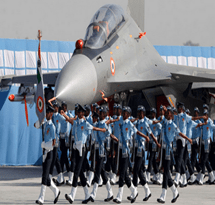
AFCAT is very popular exam as like upsc competitive exam, many of youngster have a dream to join Indian air force, when they watched movies and any of their idle who are in air force and who are playing a role of Indian air force cadet so, they become more crucial to join the air force. Many of youngsters have a dream to fly fighters plan they can do such thing after clearing these exam, interviews and some physical and medical tests.
Air Force Common Admission Test is a written exam conducted by Indian Air Force twice every year to induct officers in the IAF. The written exam is followed by Air Force Selection Board Interview for shortlisted candidates.
It is not tough to crack the AFCAT exam if candidates have prepared well.
What are the options through AFCAT?
Through AFCAT you can apply for all the three branches of the IAF which are Flying Branch, Technical Branch and Ground Duty Branches. The eligibility criteria for different branches vary. Both men and women can apply for all the three branches. While for women there is short service commission only in all the three branches, for men there is Permanent as well as Short Service Commission for men. However for Flying Branch only Short Service Commission is there through AFCAT. Thus if you clear the written exam and then clear the AFSB also then you have a chance of joining the Air Force Academy.
Eligibility Criteria
- Flying Branch –Age should lay between to 23 years at the time of course commencement. The candidate must be a Graduate (Minimum three year degree course) in any discipline from a recognized University who have attained minimum 60% marks in aggregate in all papers put together and have passed Math’s and Physics at 10+2 level OR BE / B Tech degree (Four year course) from a recognized University with minimum 60% marks in aggregate in all papers put together.
- Technical Branch- The age must lay between 18 to 28 years at the time of course commencement.
- Ground Duty Branch-The age must lie between 20-23 years for Graduates, 20-25 years for Post Graduates, 20-26 years for LLB (Three year course after graduation) and 20-27 years for M.Ed./PhD/CA/ICWA.
AFCAT is an online exam conducted by the Indian air force to get potential officers.
AFCAT exam was started in 2011 as an OMR sheet based paper. In 2019, AFCAT exam went online and many candidates attempted the AFCAT online across the country.
All AFSB Stage 1 qualified candidates will have to appear for AFSB Stage 2 and undergo the following tests:
- Psychological Tests: These are the written psychological tests and are conducted by professional psychologists.
- Group Tests: These tests involve mental and physical activities to examine the candidates’ on various mental and physical parameters.
- Interview Round: In this round, the interviewing officer takes a personal round of interview for the candidate.
- Computerized Pilot Selection System (CPSS) Test: This test is mandatory for only those candidates who have applied for the Flying Branch.
If the candidate clears the Online Tests and both the stages of AFSB Interview then he will be called for Medical Examination.
If you really wants to join Indian air force and serve for our nation, AFCAT is an exam which can give you wings, for all of you who have the dream of working between the sprawling jets can turn this dream into reality through this exam.
Tourism Industry: Survival of the Fittest is the New Normal
-SHUBHANKAR
Will the tourism industry ever be the same? The question seems to be unanswerable at the moment in this kind of a situation. Tourism plays a very vital as well as important role in determining the economy of a country. Tourism, especially in India constitutes a major part of the economy. But after the Covid 19 pandemic hit the world, tourism has been shut ever since. And more over if it even starts eventually slowly opening up, people would rather prefer to not travel at this stage when the world is being caught by a pandemic. The only the tourism industry could again start and flourish is with the help of a bit of innovation and technology being used in the tourism industry.

Be it the use of Artificial Intelligence or the use of any other means, but innovation is needed. What the tourism industry could use is the power of advertisement, to advertise about the tourist places, the hotels, the places and also adding a dimension of safety initiatives they would provide, so that the tourists are attracted. Be it the use of robots in hotels to welcome the guests rather than people welcoming the guests. This would be innovative as well as use of technology would mean less chances of transmission of infections. The tourist should be offered good offers or attractive discounts so that tourists can’t resist but plan for going for a holiday. The offers could be like giving heavy discounts or giving relaxation on air fare for tourist destinations. One thing which could be done by hotels could be the assurance of safety measures being provided by them to their customers and also about the food they are providing to the customers, is it properly cooked and is it hygienic or not.
See, nowadays customers would be looking more for hygiene rather than the prices of hotels and tourist packages prices. They would be making sure that if the city or country they are visiting for a holiday isn’t well equipped with their health facilities, then they wouldn’t travel there. So, the tourist destinations should also focus now upon improving the health conditions of the destination by a fair and better margin than it was before. Yes, tourism industries profits would take a toll, but as we know this world is a globalised world, travel can’t stop and the world will be back to normal once again. But till then, the tourism industry has to make a well laid down plan with regards to how they will use the technology available in the world to the fullest use so that customers can be attracted towards these holiday destinations back and tourism starts flourishing again. With the use of innovative ideas, the main aim of the tourism industry now should be to focus more on the marketing aspect, much more than they previously did. Because this time it’s not the customers who would come on their own to holiday destinations, but they would have to be lured towards these destinations through aggressive use of advertisements and marketing techniques, which also includes promotions.
Well, yes the pandemic isn’t going anywhere now, but as is said that tough times also go away and a new beginning is always there, so a new beginning for the tourism industry is always there, just a little bit of effort is required.
Child Sexual Abuse
Child Sexual Abuse is one of the most heinous evils rampant in our society today. It is an issue that needs to be acknowledged in our houses and our systems if it is to be fought properly. Child sexual abuse refers to situations where a child is exploited sexually, tricked into involvement in sexual activities. The World Health Organization (WHO) defines Child Sexual Abuse (CSA) as “the involvement of a child in sexual activity that he or she does not fully comprehend, is unable to give informed consent to, or for which the child is not developmentally prepared and cannot give consent, or that violates the laws or social taboos of society…”. The perpetrator is usually someone who the child knows well and has been around the child in places considered safe. The dynamics involved in such situations are very different from similar abusive cases involving adults and thus need to be treated differently.
Child sexual abuse includes both physical and non-physical activities between two individuals one of whom is a minor for the sexual gratification of the other person who is older than the minor. Rape, penetrative sexual activities, touching of breasts or genitals, forcing the child to watch porn or engage in harmful sexual activities, taking pictures and videos of the child, etc all come under child sexual abuse. It is not usually a one-time event but a continuous process that usually becomes more invasive and destructive with time. Child sexual abuse is a crime inflicted on a minor who is unable to give consent or process what is done to them. It leaves lasting effects that stay with them as they grow up and even cripples their ability to engage in everyday activities. It destroys them mentally, emotionally, and physically making many of them struggle with their experiences as adults. Self-doubt, fear, and repulsion of their own bodies is a common byproduct, as are PTSD, suicidal thoughts, and depression. Child sexual abuse leads to the devastation of entire families and individuals precisely because of its particular nature and the vulnerability of children.

Child sex trafficking rings and kidnappings are large scale industries which profit from sexually abusing children, but we need to be aware that this does not happen only in such spaces but inside our own homes as well. It thrives because the child is often unable to fully articulate or communicate what is being done to them. Even when they know or feel that something is wrong, they tend to not voice it, particularly when the perpetrator is someone they trust. This delay in identifying abuse also lends itself to aiding the abuse to continue for extended periods of time, even years. Another reason is the lack of awareness on the part of parents or guardians who miss the signs of abuse or take the expressions of the child as silly when they try to say that they don’t feel safe or comfortable with certain people. Indian cultural standards that often attribute respect to elders and never dare to question them becomes an ally to such practices since parents are more likely to scold than listen to their children when they say that someone in their own family makes them uncomfortable. Listening to the child and not invalidating what they are saying can greatly aid in identifying instances of abuse faster. Increased anxiety, health disorders, physical signs of abuse, or use of force are all pointers to the fact that something may be wrong. Being a watchful adult and being a friend to the child will often allow them to open up to us.
The National Crime Record Bureau (NCRB) recorded that in 2018, at least 109 children were victims of sexual abuse every day in 2018. One has to keep in mind that this statistic is solely based on cases that were reported. The number of cases increases every year and particularly now with a pandemic and everyone being forced to be shut inside their own homes, the cases have severely spiked. The urgency of the issue has to be understood and addressed not just by the law but the common citizen since she is the one who is most likely to be able to identify, intervene and stop it in the least amount of time.
For help: CHILDLINE – Call 1098 (Ministry of Women and Child Development)
Law: A Noble Profession

LAW
Laws are rules that bind all people living in a community. Laws protect our general safety, and ensure our rights as citizens against abuses by other people, by organizations, and by the government itself. We have laws to help provide for our general safety. These exist at the local, state and national levels, and include things like:
- Laws about food safety. At the state and local level, health departments have guidelines that restaurants follow for how to store and prepare food in a healthy manner, so that diners won’t get sick. At the national level, the Department of Agriculture and other federal agencies inspect food production plants to be sure that the food that shows up in your supermarket is safe to eat.
- Speed limits and traffic laws exist so that we drive in a safe manner.
- Licensing for doctors and nurses ensures proper training of the people who look after us, and who often have our lives in their hands.
We also have laws that protect our rights as citizens, and which include things like:
- Laws that come from the Bill of Rights in the U.S. Constitution, that guarantee our basic freedoms like freedom of speech, religion, and the press.
- Laws that protect us from discrimination because of our race, gender, age, or because of a disability.
There are few professions which are considered noble among people. Their principal objective of folks practicing these professions is serving the society with utmost sincerity and integrity, not just to rake in moolah. Doctors, Lawyers and Teachers are such professionals who are deeply respected and enjoy a sterling stature among people as they are seen as the one who are contributing substantially towards the society. Of late, Law has become one of the most lucrative professions. The top-notch and astute lawyers earn pots of money when they represent big corporate houses and rich businessmen in courts. Then there is an array of Law firms which pay a bomb to their employees. That is why so many youngsters are opting to become lawyers these days.
Earning money by dint of hard work and tactical acumen isn’t bad but lawyers, especially the young ones, must bear in mind that monetary benefits must not be the sole driving force. As mentioned above, Law is a noble profession. There are times when ordinary people cannot afford the exorbitant fee of lawyers, so that is when lawyers must step up and no let the financial inadequacy of such people rob them of the justice. The democracy of the nation and the reputation of the Judiciary enhance manifold when even the people of limited or no means are able to get justice. Layers have an important role to play in coming to rescue to such people and helping & guiding them with felicity. The Indian Constitution lucidly states that no person should be denied the justice because of lack of money. Every person, irrespective of their caste, religion, education and financial status is entitled to get justice in the court of Law. This spirit of Constitution can only be safeguarded when lawyers of formidable standing and erudition come forward and lend their support to this cause. India is a diverse country where the wealth is not equally distributed. A lot of people from rural areas or from small towns are not even aware of their fundamental rights and legal solutions.
The law is important because it acts as a guideline as to what is accepted in society. Without it there would be conflicts between social groups and communities. It is pivotal that we follow them. The law allows for easy adoption to changes that occur in the society.
Society is a ‘web-relationship’ and social change obviously means a change in the system of social relationship where a social relationship is understood in terms of social processes and social interactions and social organizations. Thus, the term, ‘social change’ is used to indicate desirable variations in social institution, social processes and social organization. It includes alterations in the structure and functions of the society. Closer analysis of the role of law vis-à-vis social change leads us to distinguish between the direct and the indirect aspects of the role of law.
1. Law plays an important indirect role in regard to social change by shaping a direct impact on society. For example: A law setting up a compulsory educational system.
2. On the other hand, law interacts in many cases indirectly with basic social institutions in a manner constituting a direct relationship between law and social change. For example, a law designed to prohibit polygamy.
Law plays an agent of modernization and social change. It is also an indicator of the nature of societal complexity and its attendant problems of integration. Further, the reinforcement of our belief in the age-old panchayat system, the abolition of the abhorable practices of untouchability, child marriage, sati, dowry etc are typical illustrations of social change being brought about in the country trough laws.
Law certainly has acted as a catalyst in the process of social transformation of people wherein the dilution of caste inequalities, protective measures for the weak and vulnerable sections, providing for the dignified existence of those living under unwholesome conditions etc. are the illustrious examples in this regard. Social change involves an alteration of society; its economic structure, values and beliefs, and its economic, political and social dimensions also undergo modification. However, social change does not affect all aspects of society in the same manner.
CONCLUSION
It can be implied by common sense that law helps us to survive as a society and it is convenient. Convenient is comfortable and humans look for comfort above all things apart from happiness. Also law helps in getting rid of the social barriers that exist in our society. Through law we survive yet thrive. Hence law is necessary in a society.
Law is a system of rules and guidelines which are enforced through social institutions to govern behaviour, wherever possible. It shapes politics, economics and society in numerous ways and serves as a social mediator of relations between people.
If the harm is criminalized in legislation, criminal law offers means by which the state can prosecute the perpetrator. Constitutional law provides a framework for the creation of law, the protection of human rights and the election of political representatives.
Administrative law is used to review the decisions of government agencies, while international law governs affairs between sovereign states in activities ranging from trade to environmental regulation or military action. The legal response to a given social or technological problem is therefore in itself a major social action which may aggravate a given problem or alleviate and help to solve it.
Ayushman bharat scheme
Ayushman Bharat Programme is an umbrella health scheme of the Government of India. It was launched in 2018 by Prime Minister Narendra Modi.
The Ayushman Bharat programme was launched in 2018 to address health issues at all levels – primary, secondary and tertiary. It has two components:
- Pradhan Mantri Jan Arogya Yojana (PM-JAY), earlier known as the National Health Protection Scheme (NHPS)
- Health and Wellness Centres (HWCs)
Ayushman Bharat is an integrated approach comprising health insurance and primary, secondary and tertiary healthcare. The HWCs are aimed at improving access to cheap and quality healthcare services at the primary level. PM-JAY will cover the financial protection for availing healthcare services at the secondary and tertiary levels.
Ayushman Bharat is the largest government-funded healthcare programme in the world with over 50 crore beneficiaries. It has been dubbed ‘Modicare’.
There are 1300 diseases including serious health conditions like heart & liver ailments, cancer, tuberculosis are covered under AyushmanBharat and this very great help for those who cannot afford the costly treatment.
Features of Pradhan Mantri Ayushman Bharat Yojana
- Over 10.74 crore poor and vulnerable families are covered across the country, No limit on family size and age of members.
- Priority is given to girl child, women and senior citizens. Free treatment can be availed at all public and empanelled private hospitals.
- The scheme was able to enrol 18,236 hospitals. Of these, 9,665 were private hospitals. In fact, of all the treatments served, 62 per cent of the expenditure was incurred in private hospitals. Around 46.5 lakh individuals availed treatment, with an average hospitalization cost of Rs 16,107.
With Ayushman Bharat sponsoring almost all secondary care and most of tertiary care hospitalizations, things are never going to be the same. Because of the large number of surgeries done in public and private hospitals, better infrastructure will come up which can easily take care of malaria, TB and HIV, apart from all other
medical treatments.
With the launch of the National Medical Commission by the government, the much debated shortage of medical specialists can be addressed in just three years.
Ayushman Bharat can transform healthcare by encouraging digital medical records.
Private healthcare was becoming unviable well before Ayushman Bharat, mainly because of the Central Government Health Scheme. The scheme, which sets the benchmark for procedural pricing for all government schemes, did not make major changes in its pricing of procedures, which is not scientifically arrived at, in the last 10 years. Compounding the problem was delayed payments by government sponsored health schemes, at times after more than a year.
The only grievance is the pending request for upward revision of some of the rates which assume will happen soon.
The AB-PMJAY offers a unique opportunity to improve the health of hundreds of millions of Indians and eliminate a major source of poverty afflicting the nation. There are, however, substantial challenges that need to be overcome to enable these benefits to be realised by the Indian population and ensure that the scheme makes a sustainable contribution to the progress of India towards UHC. UHC has become a key guiding target for health systems around the world under the Sustainable Development Goals to improve the health of the global population and overcome the scourge of medical-related impoverishment. The success of UHC is measured by the access of health services across the population, the types of services that are available, and the financial protection offered to the population. While there are obvious resource constraints in implementing AB-PMJAY.
Rafale in India
Rafale fighter jets will soon be inducted in Indian Air Force. This is sure to give Indian firepower a major boost. Rafale fighter jets will introduce new capabilities in IAF’s fighter fleet that will be unrivalled in the region. The aim of the Indian Air Force has always been to be prepared for a two-front war on Indian borders. IAF is capable of warding off twin threats to India and Rafale fighter jets are going to further increase Indian strength and strategic depth in the region.
The order for the HAMMER Missile for Rafale jets with the ability to neutralize any target at the range of around 60-70 km and is being acquired under the emergency powers for acquisition given to the armed forces by the Modi government.
“The order for the HAMMER missiles is being processed and the French authorities have agreed to supply them to us at a short notice for our Rafale combat aircraft,” government sources told ANI. In view of the urgent requirement for these missiles by the Air Force, the French authorities would be delivering the missiles to India from the existing stock meant for some other customer.
Rafale fighter jets are equipped with state of the art weapon systems. Most famous of these weapons are the Meteor missiles.
Meteor missiles are a game-changer. They are air-to-air missiles that work ‘beyond visual range’. This means that even if the pilot cannot locate enemy aircraft with his eyes, he/she can aim and fire the missile which will hit and destroy enemy aircraft. The Meteor is powered by a unique rocket-ramjet motor that gives Meteor far more engine power, for much longer than any other missile. This means it can fly faster, fly longer, and manoeuvre more than any other missile – giving Meteor the ability to chase down and destroy agile hostile fighters.
Every missile has a ‘no escape zone’, if a target aircraft is within this zone, it is hard for it to evade the missile and save itself. Greater the ‘no escape zone’, better is the missile.
India has contracted 36 Rafale multi-role fighter jets from France in fly-away condition with 13 India Specific Enhancements (ISE) under a €7.87 billion Inter-Governmental Agreement (IGA) signed in September 2016.
There is reason for rafale has powerful fighter plan it can take off weight than f-16.
The maximum take-off weight a Rafale can carry is 24.5 ton while an F-16 can carry a maximum of 21.7 ton. So, clearly in a dogfight between the two, the Rafales have a slight edge given the fact that it can load more weapons than the F-16s.
But, rafale is more costly than other fighter plan ,Big increase in Rafale’s price came because a deal bypassing mandated procedures and made in the face of official objections resulted in €1.3 billion ‘non-recurring’ cost attributed to the ‘Design and Development’ of 13 India Specific Enhancements being spread over 36 instead of 126 aircraft.
The Government has compromised national security by denying to the Air Force the 7 squadrons (126 aircraft) that it desperately needs. “The PM’s unilateral decision to buy 36 Rafales resulted in a price escalation of 41.42% per jet.
India is likely to receive the first batch of six Rafale fighter jets by July 27. The French-origin jets are expected to significantly boost the combat capability of the Indian Air Force.
That is great news for our country because after getting this fighter plan, india will become more powerful and it enhances the strength of india.

DEMOCRACY

WHAT DOES IT MEAN BY DEMOCRACY: A form of government in which the supreme power is vested in the people and exercised directly by them or by their elected agents under a free electoral system.
TYPES OF DEMOCRACY:
Generally there are two types of democracy: direct and representative.
In a direct democracy, the people directly deliberate and decide on legislature.
In a representative democracy, the people elect representatives to deliberate and decide on legislature, such as in parliamentary or presidential democracy.
KEY ELEMENTS OF DEMOCRACY:
According to American political scientist Larry Diamond, democracy consists of four key elements:
• A political system for choosing and replacing the government through free and fair elections.
• The active participation of the people, as citizens, in politics and civic life.
• Protection of the human rights of all citizens.
• A rule of law, in which the laws and procedures apply equally to all citizens.
CHARACTERISTICS OF DEMOCRATIC GOVERNMENT :
• Citizen Rule– citizens have the power to decide who will be the decision makers that run the government.
• Majority Rule and Minority Rights- as we know that there are minority and majority in a country so in democratic country there is some rules for majority and some rights for minority.
• Individual Rights- apart from the minority rights ,in democratic country there are human rights also exists.
• Free and Fair Elections- there is free and fair elections held in democratic country to choose the government.
• Citizen Participation- in election every citizen who is eligible to vote cast the vote for choosing a government for the country.
• Cooperation and Compromise- there is always a cooperation and some compromise in a democratic country. Because if there will be no cooperation and compromise then there conflicts will rise..
Substance Abuse:The new “COOL”

Substance abuse refers to the harmful or hazardous use of psychoactive substances, including alcohol and illicit drugs. Psychoactive substance use can lead to dependence syndrome – a cluster of behavioral, cognitive, and physiological phenomena that develop after repeated substance use and that typically include a strong desire to take the drug, difficulties in controlling its use, persisting in its use despite harmful consequences, a higher priority given to drug use than to other activities and obligations, increased tolerance, and sometimes a physical withdrawal state.
Difference between substance abuse and addiction
Substance abuse differs from addiction. Many people with substance abuse problems are able to quit or can change their unhealthy behavior. Addiction, on the other hand, is a disease. It means you can’t stop using even when your condition causes you harm.
Addiction doesn’t start overnight. It takes time to build up a tolerance to the drug of choice, to develop cravings for the drug, and to experience problems due to use of illicit substances. Drug abuse often starts first. Though at its worst it can look like addiction, there is one key characteristic that makes drug dependence different.
The first sign is the inability to stop using drugs and alcohol. Someone who struggles with drug abuse may experience a number of problems that plague those with addiction but he may be able to stop using all drugs of abuse without a problem for long periods of time. An addict is unable to stay away from his drug of choice and/or other substances despite a keen desire to quit using.
INSIGHT ON THE SUBSTANCES/DRUGS ABUSED
Alcohol
Alcohol affects everyone differently. But if you drink too often, your chances of an injury or accident goes up. Heavy drinking also can cause liver and other health problems or lead to a more serious alcohol disorder.
Heroin
This illegal drug is the natural version of manmade prescription opioid narcotics. Heroin gives you a rush of good feelings at first. But when it wears off, everything slows down.
Cocaine
This drug speeds up your whole body. When you use cocaine, you may talk, move, or think very fast. You may feel happy and full of energy. But your mood may then shift to anger.
Marijuana
A growing number of states have legalized medical uses of marijuana. A handful of states also allow recreational pot. But in most states, it’s still illegal. Marijuana can make you feel silly and laugh for no reason. Or you may feel sleepy and forget things that just happened.
Signals that you may have a problem with substance abuse include if you:
- Lack interest in things you used to love
- Change your friends a lot
- Stop taking care of yourself
- Spend more time alone than you used to
- Eat more or less than normal
- Sleep at odd hours
- Have problems at work or with family
- Switch quickly from feeling good and bad
In conversation with a marijuana consumer:
1. When did u smoke marijuana for the first time? Or how long have u been smoking?
A-The first time I smoked it was nearing the end of 11th grade. I’ve been smoking since 3 years now (only marijuana) I’ve never touched cigarettes.
2 .Do u think the usage of marijuana is risky?
A- The only “risk” is that you go home and your parents find out*laughs*. Smoking anything is not healthy of course. People with asthma usually try a different method of consuming marijuana preferably edibles. Although I have known people who have asthma but still smoke.
3. When you use the term high, what do u mean, what effects do u feel in your body?
A-In the earlier days when the substance is new to the body, the high is typically stronger You feel the urge to smile and laugh and you feel relaxed. Paranoia is common when you’re not in a safe place or a place you are new to. When the body gets used to it, the high mellows down to just feeling relaxed and happy.
4. Did you experience any health risks, allergies, etc after its consumption?
A- People usually cough a lot when they’re new to it that’s because they’re not used to the taste and the smoke. But other than that I’ve never noticed anything. Paranoia and anxiety on the other hand increases if you’re in this state of mind.
5. What made u want to use the drug in the first place?
A-Ever since my 9th grade I made a pact with myself that I’ll try it after 10th. I always wanted to feel what it’s like and now it’s like a super power I possess that helps me solve everyday problems easily. It’s that “paranoia” which helps in problem solving while you’re high.
6 . Do u regret using it or not?
A- I would regret not doing it. Everyone should try it atleast twice or thrice because most people don’t do it right or don’t feel the “high” in the first time and they give up thinking it’s not what they thought it would be.
7. Marijuana is not yet legalized in most parts of the country, what are your views on the use of this drug?
A-In a country where marijuana grows naturally, it is impossible to stop the consumption and legal or not most of the teenagers are doing it. It’s become a “trend” now. I know people who used to smoke in cigarettes because rolling papers weren’t available in India. All this is very new and still has to grow. I believe the cannabis market in India has a bright future because the number of users are increasing and the market is huge, if legalized the government can make a huge profit while also increasing the quality of the stash.
Bonus share
Bonus share is issued by the company to its existing shareholders for free instead of cash dividend. Bonus shares are issued to capitalise the companies profits. In Bonus share issue company will convert the profits in to equity share and issue in free of cost to its existing shareholders. The issue of Bonus share is inthe form of proportion. Which is set by the company. According to share held by the shareholder proportion to that he will get the bonus share. The issue of Bonus share will increase the number of share in the market. To get the bonus share one need to purchase the share before the ex-dividend date.on the record date who has the share in their account such share holder will receive the bonus share. The reason to issue the bonus is convertion of profits in to capital.
5 Books To Read Before You Die
Losing yourself in a great book, is one of the most endearing and satisfying joys. Every book has a different style, different attitude, different perspective but every book teaches and leaves you with a different feeling. It is hard to choose a favorite but let’s talk about 5 books that you must read.

- To Kill A Mocking Bird, by Harper Lee- A novel before its time, Harper Lee’s Pulitzer-prize winner addresses issues of race, inequality and segregation with both levity and compassion. While To Kill a Mockingbird could be a favorite book of just about everyone who has read it, it is important to recollect that it continues to be subversive and challenging to the establishment. The story revolves around the cute, lovable kids, Scout and Jem, and undoubtedly one of the most loved character in literature, Atticus Finch. Most of the characters within the book are marginalized by the facility structure of their town — a structure that also exists nearly everywhere — where wealthy white men control the lives of everyone else, and even the members of that group who want to use their status for something honorable, cannot win against the flattening wave of power.

2. The Book Thief, by Markus Zusak– Set in Germany during 1939, The Book Thief follows a young girl, Liesel, growing up in Germany amidst World War II. Liesel is living with foster parents, Hans and Rosa. Throughout the story, Liesel steals many books. At first, she doesn’t even know how to read, but she knows that the book is important. Hans notices and teaches her how to make sense of the letters, as she rescues books from the tyranny of Nazi rule. Meanwhile, her family has hidden a Jewish fighter in their basement and death looks down on the family, narrating our tale. Experience bravery that is rarely found in the world, and friendship that is formed in the most unlikely of situations.

3. The Catcher in the Rye by J.D. Salinger- It only takes one sentence, written in the first person, for Salinger’s Holden Caulfield to announce himself in all his teenage nihilism, sneering at you for wanting to know his biographical details “and all that David Copperfield kind of crap”. The Catcher in the Rye is the quintessential novel of the adolescent experience, captured in deathless prose.
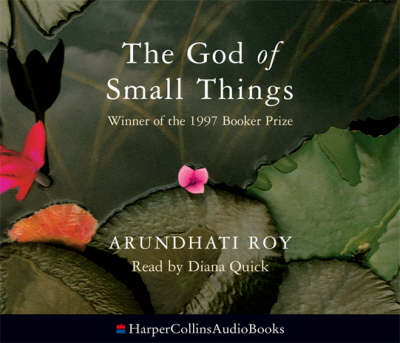
4. The God of Small Things, by Arundhati Roy-Roy won the 1997 Booker Prize with her debut novel, a powerful inter-generational tale of love that crosses caste lines in southern India, and the appalling consequences for those who break the taboos dictating “who should be loved, and how. And how much.” Sex, death, religion, the ambivalent pull of motherhood: it’s all there in this beautiful and haunting book.

5. The Handmaid’s Tale by Margaret Atwood– Atwood’s classic dystopian novel of a terrifying (and terrifyingly plausible) future America has rewarded rereading like no other book; I’ve probably read it 30 times by now. the globe of the narrator, Offred (from “Of Fred” — women not have their names), is chilling, but she could be a magnificent survivor and chronicler, and also the details of everything from a mundane way of life to ritualized sex and violence to her reminiscences of the time before (our contemporary reality, as seen within the ’80s) are realistic. The novel is as relevant today as ever; feminist backlashes still wax and wane, but women’s rights remain within the spotlight. And despite its scenarios of great despair, The Handmaid’s Tale is ultimately a hopeful book — Offred, and others, simply can’t be human without the chance of hope, and therein lies the strength of the resistance. All of Atwood is worth reading, but this book best exemplifies the cultural and psychological impact that a piece of fiction can create.
Human Resource Management
“Human Resource isn’t a thing we do. It’s the thing that runs our business.”
– Steve Wynn
The above quote is very true. Organisation are social system, which are composed of role, interaction and relationship among its employees who are occupying various positions in the organisation. Success of the organisation and achievements of its goals are the two important things which is necessary for an organisation and this depends on the nature and pattern of cooperation among individuals or it depends on our human resource. As we know human resource is an asset for the organisation and if they are productive and efficient enough we will be able to achieve our goals. Human Resource is not only unique and valuable but it is also an organisation’s most important resource. It seems logical that an organisation would spend a great deal of effort to acquire and make optimum utilisation of such resources. This effort is known as Human Resource Management. Human Resource Management may be defined as a process of recruiting, selecting, inducting the employee, providing orientation, providing training and development, appraising the performance, deciding compensation, motivating employee and maintaining proper relation with the employees. In simple terms, human resource management may be defined as the art of procurement, development, motivation and maintenance of competent workforce in order to achieve organisational goals and targets. It is the process of bringing people and organisation together to achieve the goals of both the parties. Human Resource Management is pervasive in nature as it is present in all organisation whether it is government, non-government, educational, religious, etc. Human Resource Management is primarily concerned with the management of people within the organisation focusing on policies and system. Human Resource Management is an action-oriented process. It mainly focuses on action rather than on record keeping. It tries to find out the problem that employees face at work and are solved through rational policies. HRM is all about people at work and so it is also known as people – oriented activity. The main intention of HRM is to develop the full potential of employees as it is development-oriented. Managing human resource is a challenging job as the nature of the people is very dynamic and complex and taking them altogether and make them work is not an easy task. As people have sentiments and emotions so they cannot be treated as machines. It is therefore necessary to manage and handle people with some tactics. Human Resource Management is not a one shot deal rather it is a continuous function. It cannot be practiced only one hour each day or one day a week rather it requires constant alertness and awareness of human relation. And therefore it is an ongoing process. The scope of HRM is very vast. All major activities in the working life of a worker from the time he or she enters the organisation until he or she leaves, comes under the purview of HRM. This mainly includes procurement, training and development, job analysis and job description, remuneration and rewards, personnel records, welfare and industrial relations. The objective is the thing which is very necessary. So the objectives of HRM are:-
- Helps in Achieving Goals – One of the most important objective of human resource department is to help in achieving the goals of the organisation. And if it does not meet this purpose, HR department or any other department is going to suffer because of this.
- Assistance to Employees in Achieving Personal Goals – HRM aims to assist employees in achieving their personal goals as if these goals are achieved it will enhance the individual’s contribution towards the achievement of organisational goals. If an employee’s personal goal is achieved he will be more motivated and productive and will do his work more enthusiastically.
- To Provide Well-Trained and Well-Motivated Employees – HRM helps in providing well-trained and Well-Motivated employees as they will exert their maximum effort for the organisation.
- To Provide Respectful Environment – HRM helps in providing respectful environment to each and every employee. As inappropriate behaviour may result in organisational crises. Hence, all of them should get proper respect at work.
So lastly, Human Resource Department is very necessary in each and every organisation as they are the one who manages the most important resource of the organisation and that is employees.
Right to Information
In a democratic government of the people, by the people and for the
people, the foundation of a healthy democracy lies in well-informed citizens . Enlightened and informed citizens definitely enhance the democratic values of a country. The right to information in a democratic set up is recognized all over the world and it is a natural right flowing from the very concept of democracy. No democratic government can survive without accountability and the basic postulate of accountability is that the people should have information about the functioning of their Government.
Now that India has a law for RTI, it can be made more beneficial by its effective implementation leading to improved public administration for the betterment of the people.
Right To Information is derived from our fundamental right of freedom of speech and expression under Article 19 of the Constitution. If we do not have information on how our Government and Public Institutions function, we cannot express any informed opinion on it. Democracy revolves around the basic idea of Citizens being at the center of governance. And the freedom of the press is an essential element for a democracy to function. It is thus obvious that the main reason for a free press is to ensure that Citizens are informed. Thus it clearly flows from this, that the Citizens Right To Know is highly important.
The Act primarily envisages setting out a practical regime of right to information for citizens to secure access to information under the control of public authorities, in order to promote transparency and accountability in the working of every public authority.
Right to Information means the right to information accessible under this Act which is held by or under the control of any public authority and includes the right to: –
1) Inspection of work, documents, records.
2) Taking notes, extracts, or certified copies of documents or records.
3) Taking certified samples of material.
4) Obtaining information in the form of diskettes, floppies, tapes, video cassettes or in any other electronic mode or through printouts where such information is shared in a computer or in any other device.
Objective of the Act
1) To promote transparency and functioning of the government. accountability in the functioning of the government.
2) Right to information makes administration more accountable to people.
3) It reduces the gap between administration and people. Right Information makes people aware of administrative decision-making.
4) It facilitates better delivery of goods and services to people by civil servants. It facilitates intelligent and constructive criticism of administration.
Steps to Apply
Write a simple application along with the prescribed fees addressing Public Information Officer (PIO) of the related department from which you want to get any information.
Fee
For Central Departments, there is a fee of Rs 10 for filing the request, Rs 2 per page of information and Rs 5 for each hour of inspection after the first hour. However, if the applicant is a Below Poverty Card holder, then he/she need not pay any fee at all. Time Limit
The law also contains a provision for timely imparting of information. The concerned public officials face a penalty in case the information is not given in time. The time limit is reasonable and does not jeo-pardise a person’s rights. Time limits are set in order of urgency and accessibility. Information regarding a person’s life and liberty is made available forthwith or within the shortest possible time, say within 48 hours.
Penalties
Sec.20 (1) provides power the State Information Commission to impose a penalty of Rs.250/- per day till application is received OR information is furnished, so however, the total amount of such penalty shall not exceed Rs.25000/- Provided that the State Information Officer, as the case may be, shall be given a reasonable opportunity of being heard before any penalty is imposed. As per Sec.20 (2) the State Public Information Committee shall recommend for disciplinary action against the State Public Information Officer, as the case may be under the Service Rules applicable to him.
Ground for Denial of Application
As per Sec.24 of the Act, intelligence and Security Organizations established by the Central Government and Listed in of the Act, shall not apply:- Information pertaining to allegations of Corruption is not excluded. Information pertaining to Human Rights Violation can be given after approval of Central Information Commission time allowed,45 days.
RTI Amendment 2019
The amended bill does away with the fixed tenure of five years for the Chief Information Commissioner (CIC) and the Information Commissioners (IC) — instead, they will serve for a tenure determined by the Central government. Moreover, the salary of the CIC and the ICs which are currently benchmarked with the salary of the Chief Election Commissioner (CEC) and the Election Commissioners respectively, which in turn are benchmarked with the salary of a Supreme Court judge, amount to Rs 2.50 lakh, along with a monthly allowance of Rs 34,000 per month — plus the usual perks like rent free furnished accommodation and 200 litres of fuel every month. The amended bill gives the government to fix the salary, which could be lower — given that the Information Commission is a statutory body unlike the EC which is a constitutional body. However, the current incumbents’ salaries will not be affected by the amendment.
Right to Information (RTI) as a tool for promoting participatory development, strengthening democratic governance and facilitating effective delivery of socio-economic services. In the knowledge society, in which we live today, acquisition of information and new knowledge and its application have intense and pervasive impact on processes of taking informed decisions. Right to Information Act 2005, is termed as the best tool for bringing Good governance in the society. This right has been recognized in many International instruments and is seen not just a facet of the right to freedom of speech and expression but also as a right that is necessary for the exercise of civil and political rights and socio-economic and cultural rights.
Thanks
A bore day in Pandemic
The world is facing a pandemic situation where we have to maintain social distance, wear mask use sanitizer. Prior to this Covid-19 we all have one thought somewhere in mind in which the workaholic would think ‘I wish my company start work from home twice a week’, the student would think ‘I wish teacher could come home and take attendance’. Now, when this things are reality we curse it too.
A new day is not the same day which was yesterday. We usually talk about our bright days or good days you can define the day a good day as per your opinions.
Nowdays, mostly all of us is at home partially with no works ( partially because we all have some household work to do) so yeah pat on our own back for doing that and add these things in our daily routine.
A normal day is getting up early in the morning it gets better when we sleep more half an hour without mom’s interference by switching off the fan. Then eating something before brush. Yeah! that’s also a new normal. Taking bath on alternate days. Reading books which was on our list but we could not complete it or binge watch of web series on Netflix in between munching and roam around the house. Taking brunch. Chit-chatting, video calls makes our normal day a better one. The add-ons are educational webinars, workshops, training programmes etc. Then the dinner and this ended up the day.
All day are not same. A day which is normal but it’s not a normal day in our own minds. Someday we feel we should remain silent we enjoy our own company or its just we debate with our own self in our own respective mind. A day where we juggle with our life decisions we took earlier. There comes a stage where we feel its all fallen apart. Life is not going in the same way we planned in our own minds. It’s just a mixture of feelings all together. Sometimes we play a song on loop in which only the lyrics are heard in our ears not the music. Where we start making our own hypothetical situation and make our self the actor/actress, director, story writer, editor all in one. In that situation we lead to many emotions all together we feel happy, we feel like crying our heart out, we come to our own conclusions or maybe we can say climax of our own movie. In this pandemic situation we come across many such dilemmas where we questioned our own existence on the planet earth. Whereas, on other hand we got to know many such little secrets of our parents which they were hiding it for years if not secrets we all have had heard childhood stories of our parents in these pandemic days.
We had come across such days prior to this pandemic but we didn’t think this hard how we are doing it now. As in past days we were surrounded by many things not only human beings but also non-living things. So we don’t let our mind to think more about things which are not existing they pop-up in our mind but somewhere down the line we do not let them indulge our mind and the surrounding help us in that. In my views we can still control our own minds if they went on a wrong path for a day. We can make them calm by involving ourselves in the areas which we have our interest in like our hobby. We can also start a conversation with our family members never forget we have their back. We can also call our best friends or people who are close with us. We are together in this Pandemic situation we should listen, support and help each other.
Further WEB Development trends
Single-Page Websites are on the top list
A single or one page website is simply a website that only contains one HTML page. Content is fully loaded in the initial page and there are no additional pages, such as a Home or About , Features or categories and Contact Us page. The sensible approach is to create a rough sketch of your site, and outline the elements to include in the design and finalise where they should be placed. This helps to figure out if the one-page approach is appropriate.Single page websites aim to provide just the right amount of information for a user to make a decision and act on it. For starters, a single page website, that splits content into small chunks and removes User Interface or design clutter, is easy to design.
They are ideal for the busy digital customers who don’t want to waste time and offer concise and relevant content directly. Scrolling is an easy movement and it can be easily accessed across various devices .The reduced content and cost-effectiveness of these websites are making it quite popular among businesses. Another advantage of having a straightforward navigation system is that there is usually only one action to be taken by the user and it can lead to increased conversions because users nowhere get distracted by another offer.
Effective one-page sites often share certain characteristics that include:
Clearly defined sections – The more information you include on a single page, the more care needs to go into the way it’s formatted. Users click navigation links that allow them jump to destinations or different sections of the content on the same page.
Big header elements – They’re even more important that help you to capture the visitors’ attention.Here are a few examples of situations where it makes sense to use a simple one-page layout:
Portfolios – For certain services like freelancing , a single page is often enough to give potential employers a bit of information you can find out about the agency’s services, team members, past clients and projects, contact information and even include a simple contact form. The website even includes a fun chatbot you can use to get in touch instead of sending an email, which makes the page feel more interactive.
Landing pages – This type of website is all about converting users. In a nutshell, it’s a landing page designed to drum up excitement for the product. However, simple animations can be used to make the page liven up, and help you understand how it all works.
Brochure websites. If your business only needs a simple website with photos, contact information, and an introduction to your services.This is why single-page design is especially hot for brands owning exclusive sites for events or announcements with the amazing photography and simple layouts.
Drawbacks : (i).Single page websites can’t perform big on SEO (Search Engine Optimization). In fact, they could hurt your chances of ranking with Google and result in decreased conversions and user engagement. With so little content, target keywords often get neglected on single page sites. The good news is that there are workarounds, such as using the expandable div to include descriptions and additional imagery.(ii).Additionally, the single page website isn’t the ideal candidate for a growing brand, as its ability to scale is limited.
Minimalist Web Design Principles Create Maximum Impact
A simple website carrying fewer design elements and offering good User experience can improve user interaction and drive conversions. Most developers are experiencing how applying functional minimalism principles to a website can create a huge impact on the visitors and business outcomes.Consequently, most developers are adopting the less-is-more approach to improve their site’s composition and engage their visitors.
Modular design
Modular design allows developers to reuse components and modules to create a web page rather than creating it using a restrictive template. Visually, modular design is a step up from templates. Developers can use it to create content blocks to display information in a powerful way.
However, creating a modular design web page is like each piece should interlock with one another without worrying how to rebuild the shape of the lego piece.Of course, when each of these pieces is combined, developers build a web page that makes sense and this leads to faster and cheaper development but a similar end-goal product.
Motion UI and impressive websites
The internet is massive and that it affects the average person’s attention span; The better way to grab the attention of a user is with a captivating motion UI. As you scroll down the page, it changes and adapts to keep the visitor engaged. With functions, such as loading spinners, attractive CTAs, CSS animations, and subtly-moving elements, motion UI is a raving trend among modern developers. This animation technology allows businesses to own impressive web pages that reduce the time between clicks and conversions.Finally, resources like the Motion UI library offer various design elements that allow developers to animate design elements that work with any JavaScript or jQuery framework, the applications of GIF animation and motion UI will grow further.
The final words:
Compared to multi-page websites that are used in e-commerce websites, single page websites are highly used by busy digital customers for Portfolios , landing pages , brochure services and is especially hot for brands owning exclusive sites for events or announcements .Modular website design , Motion UI and minimalistic design principles too create a greater impact and will set a niche trend in the years to come.
Kindly check the below link to futher explore the above topic :
Why Support Small Businesses?
Small businesses are part of every community and very often closely connected to its people and history. Unlike larger corporations, small businesses are usually local, privately owned, and employ a lesser number of workers. They also have lesser incomes since their scope of market is usually much smaller than the large-scale companies and industrial outlets. However, they are intrinsic to the development and growth of a locality and its economy. It creates sources of income, expansion of trade, and employment opportunities. Cottage industries and small-scale home businesses have been very important to the growth of India’s economy for decades. However, with the advent of multi-national corporations, neoliberal policies and privatization of many industries, small businesses have seen a decline in income in recent years. Yet they are still an important part of our economy and our everyday life.

With the internet revolution which has so transformed our life in the 21st century, we rely much on online stores for our daily necessities. We also go to supermarkets with national or international chains to buy our daily products, usually looking at their discounted rates and environment. However, we also need to know that these discounts are only given to us because that cost is extracted from us in other ways, or from their working force who are often forced to work long hours with minimal wages. Now with the novel coronavirus pandemic ravaging the world, we are facing a global economic crisis and a steep increase in unemployment rates. Many multi-national companies are laying off their staff and cutting salaries. This means that many who previously went out to buy their groceries now do it online. This has greatly jeopardized the future of small business in a way that has never happened before.
Supporting small businesses is something that all of us should be engaged in since they support entire families and communities. The various agents who come in between the worker and their salary in larger corporations are usually absent in small business. This means that the worker gains more for his hard work and is more amply rewarded than in corporations that exploit them. Supporting small business help them sustain themselves and the people behind it. Since it is difficult to stay in business with an influx of other larger chains, small businesses are focused on providing authentic and good products to their customers. This is also the reason why many customers remain faithful to these small stores, since they have understood its value and the work behind it. They also employ many creative ways to stay in business and retain customers.
Small businesses differ starkly in their environments from other larger businesses by creating a space of warmth and familiarity. The detachedness of the sterile supermarket white lights and the mechanical ways of engagement are often directly in opposition to the warm glow and friendly chatter that fills small spaces. They are often a meeting point for the people of that locality and their interactions. The owners are often also able to do favours for the customers or offer discounts on the bill which doesn’t commonly happen anywhere else. Local businesses become part of the story of that locality as they themselves are handed down between generations, and are able to give back to the community much better than others. They are not controlled by an algorithm created to maximize profit or a nameless person behind a computer somewhere far away. They are run by people and families we develop bonds with, leaving a human touch in their exchanges. It enriches the life of the individual and their society, becoming a saving grace in a consumeristic culture where profit is made at the expense of humans.
World Cousin’s Day
On 24th July every year we celebrate National Cousins Day. Cousins are the relatives having common forefathers. This is the day to mark the irreplaceable bond between the cousins of a Family. A bond which defines the sweet and salty relationship between the Cousins. Right after birth, a child gets to know about his Family, here he grows up slowly and steadily. Family is the foremost belongingness of a child. He gets his emotion and basic moral values from his parents. He gets to understand how to deal with the surroundings around us. Now, the awareness of friendship is served by the cousins. Friendship is the core element which joins the cousins together. Cousins are our first friend. Having such a friend as a family member is a blessing from God. When a child takes the first step towards growing up, he celebrates his birthday after inviting all his cousins and blows the candles. He starts enjoying and that sense of association helps him to prosper. As because concept of Joint family is rare nowadays, the cousins come from abroad or from another state to join the festivities. Also, during the get together, they spend the best family time together. Sharing foods, toys, clothes becomes an integral part of this special bond. This also strengthens the relation between the cousins and links them together. Sometimes, the elder ones tend to irritate the younger ones more and they become oppose of each other. All these are the humorous parts of childhood. The elder ones not only annoys them but also helps them in best possible ways. A cousin is your friend, philosopher and guide. Often the elder ones, helps and guides the younger ones in the in their home works. Cousins gets scolding from their mother together. There is no bond on earth as selfless and innocent as the love for your cousins. As the child blooms, it becomes the responsibility of the cousins to guide him in the best ways possible. Elders performs this duty to make him understand the reality of outer world and show him the right path. It is so nice to have someone so close to you. Many a times, our friends betray us, leaves us, abuses us but along with your cousin you stand strong. He will stay with you forever. Your cousins won’t be expecting anything from you. No family gatherings are special without the presence of your cousins. They make the family complete. We all have that one WhatsApp group where we share all the memes and crack jokes along with our cousins. Cousins will realize if you are in any kind of trouble and will make sure you don’t suffer all alone. Cousins are the best replacement of siblings. Things can go somewhat wrong with siblings but it never gets wrong with the cousins. The age of Cousins do not vary much, just a few years of difference. You can talk to them the hole night, watch a movie together. It won’t ever get boring. The best part is our cousins knows all the family secrets as much as we do. During holidays the cousins coming down to visit you home is constant for all the ages and this routine won’t ever change. Getting excited about when they are coming with how many gifts during summer or winter breaks is the funniest thing.
A the child tends to become a teenager, he faces a lot of difficulties in sharing the problems with parents, hence cousins then becomes more easy going. Cousins knows you the best and provides you a lot of inspirations within no time. Cousins influences to become better also punishes you for wrong doings. They listen to you without judgements, share their own experiences, and motivates you all the time. Your misdeed reminds the of all their mistakes and makes sure you don’t repeat them. You can always trust them no matter what, they won’t harm you in any ways. They can pass your thoughts to the parents so you don’t feel embarrassed. All needs to work nowadays hence gets a very less time to unite, hence arranging family gatherings more often will help you to get social and feel nostalgic once again. Never hurt your cousins or fight with them, they are your personal rare attachments, never lose them. Hence, Lets do something special this day, make sure to call your cousins or drop a message, just remind them they are important and mean a lot to you. Show them you are grateful for all their love and support throughout. Also, love the children of your cousins as much as you can, they are dearest to you.
SOLID WASTE MANAGEMENT – A CHALLENGE
Before the arrival of motorized transport horse drawn traffic was the main stay of all major cities. In Newyork alone there were more than 100000 horses which produced more than a million kilo of horse manure which had no system for disposal. Millions of flies bred on this manure creating yet another urban public health issue. The problem was faced by cities after cities around the world. But there was no solution. 
Urban solid waste management remains a challenge around the world even now. Cities big and small, from countries developed and developing face major challenges in dealing with waste management.
Anything which is solid and is considered by its owner to be not worthy of continued use become a solid waste. The composition of the solid waste varies vastly depending upon the economic situation of a society while used automobiles and white goods are a major component of urban solid waste in developed countries. The culture of repair, reuse, and recycling in developing countries ensures that these do not end up in the waste piles.
Solid waste can be classified into seven
1.Household solid waste
2.Agricultural solid waste
3.Industrial solid waste
4.Waste from ships and Aircrafts
5.Hospital waste
6.Demolition of debris
7.Waste created by conflicts and disasters
US Environmental Protection Agency (EPA)hazardous waste is waste that is dangerous to our health or the environment. The following waste are often considered hazardous.
1.Industrial chemicals
2.Pesticides
3.Waste from oil Industry
4.Batteries and fluorescent lamps
5.Medical waste
6.Radioactive waste
7.Discarded pharmaceutical products
8.Discarded asbestos
9.Mixed Waste
In the last century Reduction, Reuse and Recycle (3R approach) reached significance. There are some global issues in waste management that is Trans boundary movement of waste, Technology transfer for waste management and disappearing land fills and it goes on……..
VOLENTI NON FIT INJURIA

The maxim “Volenti non fit injuria” means “that to which a man consents, cannot be complained of as an injury”. It means that no act is actionable as a tort at the suit of any person who has expressly or impliedly assented to it. A person who makes an agreement with another, either expressly or by implication, to run the risk of injury caused by that other, will not be permitted to complain and claim damages for any of the risks that he had to undergo.
The maxim has a two fold application:-
- It applies to intentional acts which would otherwise be tortious and refers to consent to an entry on land or goods, which would otherwise be trespass. It also includes consent to physical harm which would be assault as in the case of a boxing match or a surgical operation [R v. Donovan; (1934) 2 KB 498], or consent to the publication of a defamatory statement which would otherwise be actionable [Chapman v. Lord Ellesmere, (1939) 2 KB 431].
- It applies to consent to run the risks of accidental harm which would otherwise be actionable.
Thus spectators at sports meeting take upon themselves the risk of the perils thereat whether reasonably to be expected or improbable. In Hall v. Brooklands Auto Racing Club, (1933) 1 KB 205, where the plaintiff was a spectator at a car race and the defendant was owner of the truck, during the race two cars collided and one of them was thrown among the spectators as a result of which, the plaintiff got hurt. It was held that the plaintiff impliedly took the risk. The danger was inherent in the sport which any spectator could foresee. the defendants were held not liable.
For the defence of volenti non fit injuria to be invoked, the act causing the harm should not have gone beyond the limit of what had been consented to. The defence for volenti non fit injuria was successfully pleaded in the following cases:-
- Padmavati v. Duggaraika, where two strangers took lift in the jeep being taken by the driver to the petrol pump. On its way, the axle of the jeep gave away and the two strangers sustained injuries. One of them latter succumbed to the injuries. The court held that neither driver nor the master could be held liable because it was a case of pure accident and the two strangers had got into the jeep voluntarily.
- Wooldridge v. Sumner, where the plaintiff was a photographer and was taking photographs of a horse show standing at the boundary of the arena, the defendant was the owner of a horse participating in the show. The defendant’s horse rounded the bend too fast and galloped furiously. Plaintiff was frightened and fell into the horse’s course and was seriously injured. The court held that the defendants were not liable, since they had taken due care. The spectators of such events take the risk of such damage even though there may have been an error of judgment or lapse of skill. The duty of the defendant is that of due care and not of skill.
For the defence to be invoked, it is a must to establish that the plaintiff’s consent to take the risk was free and fair. If the consent is obtained by fraud or coercion the defence is not available. Also, the act done by the defendant must be the same for which the plaintiff had given his consent. Persons who are not capable of giving consent, i.e. the insane, the minor etc., their parents or guardians can give the consent.
Affirmative Action
Affirmative action as a government remedy to effects of long standing against such group and has consisted of policies, programs and procedures that give limited preference to minorities and in the job hiring admission institute of higher education, the awarding of government contracts and other social benefits. The typical for criteria for affirmative action are race, disability and age.
The affirmative action was initiated by administration of president of the Lyndon in order to improve opportunity for Africa American while civil right legislation was dismantling the basis for discrimination.The federal government began to institute affirmative action policies under the landmark civil Right Act as an a executive order. Business receiving federal funds were prohibited from using programs were monitoring office of federal fund were prohibited from using aptitude test other criteria by the tended to discriminate federal funds were prohibited from using program were monitoring by the office of federal contract compliance and the Equal Employment opportunity commission, subsequently, affirmative action broadened to cover women and native American,Hispanics and minorities and was extended college universe and federal agencies.
The affirmative action in California culminated in the passage in 1996 of the civil right by the California initiative, Which is prohibited agencies institution from the giving preferential treatment t o individual on the basis of their race. The supreme court effectively upheld the constitutional of proposition 209 in November 1997 by refusing to hear challenges its enforcement. The supreme court also upheld a lower court ruling that struck down as unconditional the university of Texas action. program arguing in Hopwood University of Texas Law school that there are no compelling state interest to warrant using race as a factor in admission decisions. After ward there are further legislative an electoral challenges to affirmative action decision in many parts of country. In the two landmark ruling involving to the University of Michigan and its law school the supreme curt reaffirmed the of constitutionality of affirmative action.
The preeminent factor in such decision, striking down the university undergoes admission policy that awarded point on the basis, three year later admission policies of the kind approved in grutter were outlawed in Michigan under a state constitutional amendment banning race-based and other discrimination or the preferential treatment in public employment, public education otherwise there are public contracting. The supreme court upheld amendment as it applied to admission policies in Schuette defend affirmative action in fisher, the supreme court vacated and remanded an appeals court decision that had rejection challenge to an affirmative action program modeled on the approved in Gratz that the lower court had not subjected the to strict scrutiny, those most demanding form of the judicial review.
2. SEGREGATION THEORIES – There are the different have been put forward to explain the OS of men and women. The main difference between these theories is whether segregation is attribution to discrimination or the in preference or choice. Alternatively seem to have different implication for relationship between ES and OS, Possibly the policy instruments to be used ES and OS.
Human resource and Company
Human resource is an majore resource for a company, from forming up plan to its implementation the each and every employees work will give contribution. Satisfied employees will always become the reason for the companies success. When company give good salary, job security and other related facilities the employees will be satisfied. Even timely motivation and promotion is needed. So some of the companies will give free share to employees to give them the feeling of owners of company. When the employees are satisfied they can give their full efforts to the companies success as companies success will become their own success.
Debentures and Bonds
Debentures and Bonds both are debt instruments which are issued to raise funds. One who purchase this instrument will be the creditor or loan giver and issuer will be debtor or loan taker. Debentures used to raise funds by companies and they will give fixed rate of interest. These instruments are purchased on the basis of their credit ratings. Some types of debentures can be converted in to shares by the company. companies will issue debentures for the purpose of raising the fund. Bonds are debt instruments which are secured issued by government, corporates to raise the funds. Bonds has the Asset as the security. Bonds will pay interest as the return to bond buyer. The bond issuer will be the loan taker and bond purchaser will be the loan giver.
Was The Line Really Crossed: The Tale of the Infamous Test Series
-SHUBHANKAR
Was the punishment really justified? Well, I suppose it was a bit too harsh and involving politics into it became a matter of great concern, highlighting the need for the International Cricket Council (ICC) to have a relook on the rules laid out by them. When the ICC announced the punishments to be imposed on Steve Smith and Camron Bancroft, they were only fines on the match fees of both players and a 1 match ban for Steve Smith. Well, this punishment by ICC didn’t went well with Cricket Australia and Australian public who wanted a more severe ban on the players involved in this misconduct or the prime word could be “Cheating”.

Hasn’t ball tampering been done before by players? Yes, it has been. Yes, not to the extent to which Australia went in that game against South Africa. Camron Bancroft was guilty of using a sandpaper for tampering with the ball. Before we have seen players using sugar or even their nails, but never using a sandpaper, that too with so many cameras focusing on you and with all these latest cameras and with the game evolving so much that nothing can be hided on a cricket field anymore. But the punishment I feel wasn’t justified on the 3 players. Who said that the leadership group only contained David Warner along with Steve Smith, the Captain. Weren’t the senior bowlers like Starc or Nathan Lyon involved. Don’t tell me that the ball is being tampered with or maybe the planning has been done to tamper with the ball without your main bowlers knowing anything of it. It was clearly stated by Steve Smith in his press conference that the leadership group had discussed about this at Tea time in Cape Town test. And knowing the size of the Cape Town dressing room being very small, how come when Steve Smith, David Warner and Camron Bancroft were chatting about tampering the ball, no one knew about it. These are the details which weren’t told out in public and the major players of the team were held accountable, not all those who were involved. Was Steve Smith or David Warner going to ball or even for say Camron Bancroft? No, the bowlers had to ball, so why didn’t they know of this plan. Isn’t Starc so senior a bowler to be part of the leadership group, so why wasn’t he handed over the punishment or why didn’t he come out and justified that Yes, I knew about what was going on. Even if he had told no to what the plan was and was against it, but he knew that something of that sort was about to happen. So, why didn’t he come out in open, in front of the media and let them know of what all transpired in the dressing room that day.
My only question is why was time not taken to investigate the whole matter, rather than just sacking the three from not only their positions, but from the team as well. Why was the prime minister of the country involved? Yes, I know it is a matter of pride, cricket being such a hugely popular sport in Australia, but making a decision so quickly without any investigation and on the basis of political pressure, that’s cruel in my opinion. Why I say cruel is aftermath of the sandpaper gate, what the whole controversy was popularly known as. Before the 4th test match started, Darren Lehman, the then coach of the Australian team called a press conference stating that he will coach the Australian team for the one last time, that being the 4th test. The decision was taken because his family were receiving threats after the 3rd test, and he choose his family first and resigned from the coaching position. But who the hell gave permission to threaten someone’s family. Mistakes do happen, we all are humans, but to go to that extent isn’t fair at all.

Well, giving the backdrop of what happened before the whole sandpaper gate controversy, you would get a sense that this was coming. So, this was another highly anticipated test series between Australia and South Africa. Australian team had dominated the South African’s in their own backyard for quite a while now. But this series was going to be another thriller between these top two teams with brilliant or should I say one of the best pace attacks in world cricket at that moment. Australia came to South Africa on the back of the Ashes series win, with full confidence. South Africa had also beaten the world number one test team at that moment in South Africa itself, the Indian cricket team. So, South Africa were also full of confidence going into the series against Australia. The 1st test between the two sides saw an ugly banter emerge between the Australian’s and the young South African batsman Aiden Markram. The young batsman was targeted and was bantered all over by the Aussies, to the extent that few of the commentators had to switch of their stump mics because it was so ugly a banter. But the things didn’t stop here, it was just the start or we could say just the spark before the actual fire started. The 1st test saw Nathan Lyon, the Australian offie, after running out AB Devilliers throwing the ball upon the batsman, with ICC getting involved and punishing Lyon with a certain amount of match fee deduction terming the action by Nathan Lyon out of the spirit of the game. The banter had gone too far that test match, but it wasn’t over yet. An off field incident between Australian Vice captain David Warner and South African wicketkeeper Quinton De Kock had taken the limelight away from the test match which was still going on. At tea time, de Kock and Warner were indulged in a war of words when players were going back into the dressing room, with the Australian Vice Captain being taken away by his teammates before the things heated up. The 2nd test saw South African pace bowler Kagiso Rabada being banned for the next two tests of the series for having a contact with the Australian captain after taking his wicket and in celebrating the wicket touched the Australian captain. However, Cricket South Africa fought the case, hence over turning the ban on Rabada. So, this was the whole situation before the 3rd and the most infamous test match in Australian cricketing history.

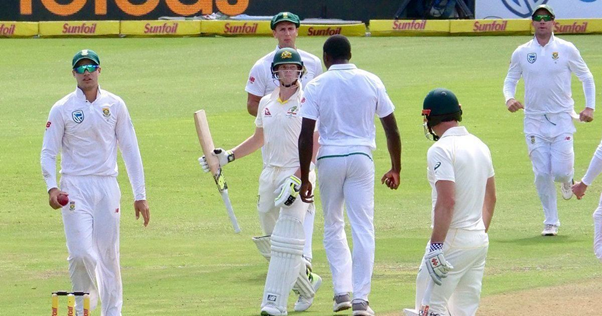
Well, I feel the line was crossed but not to an extent to ban the three cricketers for almost a year. And why only these players, why not the others who I feel according to the circumstantial evidence were definitely involved. However, the bans are over and now all the three are back playing and representing the Australians once again, with all three performing really well. Hope this situation never happens again.
The essence of Teamwork

Many great organizations, and the leaders who run them, have strived to create the “ultimate” team. Attaining complete selflessness or the total commitment to a team effort is often not as easy as it may sound. While it is simple for a leader to say “we need a total team effort to accomplish all we have set out to do,” there can be many barriers that get in the way of achieving a greater sense of “team”.
It starts with leadership dictating a culture of team. This culture is passed on over time. It is consistently practiced, preached, and reinforced with everyone in an organization. It has to start with a mindset that team, not any one individual alone, will accomplish great heights.
Andrew Carnegie says, “Teamwork is the ability to work together toward a common vision. The ability to direct individual accomplishments toward organisational objectives. It is the fuel that allows common people to attain uncommon results.”
Notice how Carnegie talks about working together for a common vision. The ability for one individual to sacrifice his or her own ambitions for the greater good of the “TEAM,” develops a culture. It then sets a standard that to reach the highest success, everyone in an organization has to work together to achieve the best results. It is knowing in your mind that you alone will not accomplish what a group of talented individuals can do when they work together. That mindset has to start with the organization’s culture.
A widely understood and interesting concept in the management jargon, extended form of the word TEAM, is:
T – Together
E – Everyone
A – Achieves
M – More
The concept of Together Everyone Achieves More itself conveys the importance of teamwork at the workplace and other places. For years now, organizational leaders have recognized the added value that comes from having employees work in formal or informal teams. However, over the last two decades, even greater emphasis has been placed on working together in a team. Team-building and team-work skills are essential in the workplace and highly desirable skills to possess when seeking a new job or promotion. Teams working at their potential generate more productivity and offer better solutions than if all of them work independently.
Teamwork in a company or organization has great importance for more than one reasons. Companies, who have adopted this concept, have reported increased performance in work production. This group project approach has improved employee morale and increased input when managed correctly. The benefits of teamwork can make a positive effect on the company that incorporates this type of teamwork approach. Some Significance of Teamwork are:
A Healthy Competition
While working in teams, professionals compete with each other and try to excel in every way. At the same time, they help and assist each other in work-related as well as personal difficulties and problems. The signs of great productivity and maximum efficiency are achieved only through team-work and mutual work practices.
Mutual Creativity
While working in a team, you will never be alone while coming up with an idea; you will always have some other professionals thinking on the same lines, who might suggest a better idea. Suggestions, advices and mutual brainstorming can help employees in generating novel ideas and bringing out the creativity in their projects.
Job Satisfaction
Team-work can be an important source of job satisfaction and professional fulfillment for employees. The reason behind it is that working in a team improves employee performance as well as makes the work enjoyable for them. This is also favorable for employee motivation and workplace enthusiasm.
Mutual Organizational Interests
When employees work in team, they automatically work for mutual organizational interests; their personal interest is subordinate to the organizational interests. This ensures that all the team members put in the maximum possible efforts, focusing on the same goal, thereby ensuring a high quality and timely output.
Conclusion
The Essence of Teamwork “Two are better than one, because they have a good reward for their hard work. For if one of them should fall, the other one can raise his partner up. Effective teamwork in the workplace benefits the organization by increasing the individual productivity, which is important in order to achieve the targets and fulfill commitments. Also, teamwork decreases the non-productive hours, which therefore increases productivity and ensures maximum utilization of manpower. This is the reason why companies are promoting teamwork at workplaces.
For some professionals, it might be a bit difficult to adjust to a group environment, but I am sure, they will gradually start loving to work as a team as they will see themselves developing as productive employees as well as better human beings!
- When team members are aware of their own responsibilities and roles, as well as the significance of their output being relied upon by the rest of their team, team members will be driven to share the same vision, values, and goals. The result creates a workplace environment based on fellowship, trust, support, respect, and cooperation.
Without the ability to effectively work in a team environment, you could delay the success of developing, formulating and implementing new and innovative ideas. The ability to problem solve is reduced, as well as the attainment of meeting goals and objectives, in turn, limiting the efficiency and effectiveness of growing a successful company is hindered.
Principles of Natural Justice (PNJ)

The principles of natural justice (PNJ) are set of principles and procedures which are used in adjudication of disputes between two parties, adjudication should happen in an unbiased way, and opportunity to be heard should be given by blithe parties, and bothe should have equal access to the tribunal. There is no specific definition of natural justice, it is a combination of a few principles which is used in the filed of law as common practices. These principles are universally valid, and are usually followed by all. The term natural justice has been derived form the roman term “Jus Natural”, and they are considered to be a part of common law. Ironically they have not been codified, it is assumed that they have to be followed in any situation. The principles state that proper procedure have to be used in the process of decision making, no matter what the decision is, but the procedure should be conductor in an effective and efficient way. There are three principles of natural justice:
1. The Doctrine of Bias: Nemo Judex In Causa Sua is a latin phrase which means “No one should be a judge in his own case” as that leads to a biased decision. The person who has the authority to give the decision in a case, which is usually the judge should be unbiased and impartial, the judgment has to be taken on the basis of arguments and evidence and nothing else. The probability of a bias existing is enough to prevet a judge from sitting in the judgement taking place. There are three kinds a bias which cane take place and they have been discussed as follows:
- Pecuniary Bias: When the judge has pecuniary or financial interest or economic interest in the subject matter of the case, the person can no longer be considered a judge. If such a bias is discovered in the process of litigation he/she can be disqualified a s a judge making them unfit as a judge.
- Personal Bias: Such a bias takes place when there is some sort of relationship existing between the party in litigation and the judge, the relationship can be in th form of friendship, family relations, professional, and enmity. The above stated reasons may take the form of a biased decision, but such a bias is highly unnoticed by the judge, as it takes place involuntarily just with the emotions. However if it is proved strict actions will be taken against the judge.
- Official Bias/ Bias as to the subject matter: If the judge has interest in the subject matter of the case, and if judgement is given in a particular manner may favour the judge professionally or personally of considered as an official bias. To disqualify the judge on this ground it has to proves that there is some direct connection between the judge and issues in the dispute.
2. Doctrine of Fair Hearing: Audi Alteram Partem means “to hear the other side”. This second principle pf natural justice means that everyone has to be given the opportunity to be heard. Action cannot be taken against the person if he was unheard. The process of litigation shall happen through fair hearing by both both the parties, they should be given a chance to present their arguments and cases, There are two parts to this doctrine:
- Notice: A prior notice has to be issued by the deciding authority to party involved against whom action is to be taken. The notice should contain all the necessary information place, times, the nature of hearing, and other material details. After the notice is given the lawsuit will be initiated in a fair manner. The notice should also indicate the evidence upon which the action will be taken . The notice is like the final opportunity the receiver has to resolve the matter without going to the court of law, it is ike the final warning. After the notice has been issued reasonable time has to be given to make representation of the case and evidence in the court.
- Fair Hearing: The person against whom the order is passed shall be aware of all the actions that are going to be taken against him in full detail, the right to cross examination and the right to legal representation (right to have lawyer) has to be given to the parties, only if all the above are fulfilled it is considered that the principle of fair hearing has taken place. They are all a part of the right of fair hearing.
3. The third principle of natural justice of “Reasoned Decision”, it states that reasonable reasons have to be recorded and told to the aggrieved party for taking the decision. Only if they seem satisfactory the decision will be considered valid. Giving reason can also be useful for one to appeal in higher courts as it is a requirement for appeal. Cessante Ratione Legis Cessat Ipsa Lex means “Reason is the soul of the law, and when such reason ceases to be there so does the law”, this outlines the necessity and importance of speaking order (order containing the reason behind the judgement) or reasoned decision.
There are several exceptions where the principles of natural justice are not followed , like when it is excluded in statutory provisions, constitutional provisions, are matters of confidentiality, public interest, during emergencies, etc. However it is majorly followed by all. We can come to a conclusion that the principles of natural justices were implemented so that the dignity and human rights of an individual could be protected, against the arbitrary legislative system where there are chances of injustice. It ensures that justice is given to all in a clear and fair manner. Hence, they play an important role in the field of law.
Overview of The Narcotic Drugs and Psychotropic Substances Act, 1985

The Narcotic Drugs and Psychotropic Substances Act, 1985, which is popularly known as the NDPS Act, was implemented to make strict provisions related to controlling the operation of narcotics drugs and psychotropic substances, and other material concerned with them. The main reason behind the act to be legislated was that The opium Act 1852, The opium Act 1878 and the Hazardous Drugs Act 1930 were considered to be insufficient to regulate all the activities relating to drugs and psychotropic substances, hence it became necessary to enact a new law which could update the provisions in the previous acts and bring some change to its functioning. The NDPS Act has been amended three times till now, in 1988, 2001 and 2014. This act is applicable to the while of india, and to all of its citizens no matter where they are. Before we go into the details of the act, one should understand the definition of a narcotic drug and a psychotropic substance.
- A Narcotic Drug is a substance which is used for numbing your senses, relieve pain , and causes one to sleep. If it is used by medical practitioners in a limited amount its for a good cause, but it become illicit when one uses it without the guidance of a medical practitioner, for obtaining pleasure by changing the levels of consciousness, feeling and emotions. They go into their own world of fantasies, it is usually taken to attain happiness. Narcotic drug means coca leaf, cannabis (hemp), opium, poppy straw and includes all manufactured drugs as defined under the act.
- A Psychotropic substances contain many drugs under it which are used to alter the functions of the brain, mood, actions and thoughts. Examples of such substances are alcohol, caffeine, nicotine, marijuana, are usually legal if used by doctors, and the illegal ones are narcotics like heroin, LSD, cocaine, and amphetamines.
Features, Aims and objectives of the act have been discussed as follows:
- Narcotic Control Board (NCB) was established under the act to fulfill its objectives, it id headquartered at Delhi. The structure of the Board members has been clearly given in the act. The narcotic commissioner and other officers are appointed bu the central government, and the board is responsible to frame the rules and regulation regarding producing and cultivating opium, measures to be taken to control the drug menace, and illicit drug trafficking, etc.
- The act also provides the punishments and penalties to the offences that are committed under the act, and the offences are considered to non bailable, and cognizable, and it aims in increasing the penalties and the level of punishments for such offences.
- According to the act, a committee named the Narcotic Drugs and Psychotropic substances Consultative committee was formed which was an advisory committee which was established by the central government, to provide advices in matters of drug use control, not only this but also a fund separately for the purpose of controlling drug abuse was also formed, it was the National Fund for control of drug abuse.
- The act clearly defined various terms like addict, cannabis, coca, and many other such terms. It has been defined in a clear and crisp way leading to no vagueness.
- The act aimed to totally prevent drug abuse, it occurs when a person uses a drug more than prescribed not for medical use, but for other uses like to obtain pleasure.
- The act has provisions which restrict the cultivation, manufacture and trade of dangerous drugs. It has provisions, where some drugs are totally prohibited to be cultivated, drugs which could be cultivated if controlled and regulated by the central government, and drugs which could be grown under the control and regulation of state government.
- The supreme objective of the act is to prevent a person from becoming a drug addict, so that they could live a happy life. This act ensures the welfare of the people.
At a conclusion, we can tell that the act has brought a lot of change in the society, it was considered as a good step taken by the government. However there was some criticism which was associated with act, it was told that it has been poorly legislated as the same penalties was stated for many offences, there was no differentiation made between hard and soft drugs, degree of an offence was not realised, etc. Anyway, in spite of the criticism an impressive change has been brought in the society, efforts have been taken to formulate the correct strategies and policies, and awareness has been brought regarding the cons of drug and its use. This act controlled the drug menace to a large extent throught its strict applications and laws.
Right of equality(article-14 to 18)
The meaning of Equality before law which is defined under Article 14 of the Indian Constitution. It is one of the fundamental right.
Recently, the Citizenship (Amendment) Act, 2019 (CAA) has been implemented in India. This law provides Indian citizenship to the migrants of six religious communities of three countries.
The enactment of the CAA is opposed by many Indian citizens, citing the reasons that it has granted Indian citizenship to six religious communities on the basis of religion while a particular religious community is excluded. So it’s a clear cut violation of article 14. While other Indians think that CAA does not discriminate with others.
What are the Exceptions to Right to Equality:
It is not like that the ‘Rule of Equality’ applies thoroughly. There are some exceptions to this that is why it does not apply in case of these circumstances and individuals.
I. No criminal proceeding shall be initiated or continued against the President or the governor in any court during his/her term of office.
II. No court can issue an arrest warrant of the President or Government during his/her term of office.
III. No member of state Legislature (MLA) shall be liable to any proceeding in any court in respect of any statement or any vote given by him in the state Legislature.
IV. No member of parliament (MP) shall be liable to any proceeding in any court in respect of any statement or any vote given by him in the Parliament.
V. The United Nations and its agencies also have diplomatic immunity.
VI. Foreign (sovereign ruler), ambassadors and diplomatic persons will be free from criminal and civil cases.
Article 14 says that the State shall not deny to any person equality before the law or equal protection of the laws within the territory of India.
This means that every person, who lives within territory of India, has the equal right before the law. That equals will be treated equally.
This article constitutes of 2 parts, being:
1. Equality before law and
2. Equal protection of the laws.
Although both sound similar, they don’t mean the same. The word “Law” in the former expression is used in a genuine sense – a philosophical sense, whereas the word “Laws” in the latter expression denotes specific laws in force.
Article 15 says that the state shall not any discriminate against any citizen on ground only of religion, race, caste, sex, place of birth or any of them.
Article 16 guarantee equality of opportunity in matters of employment under the state. The right is available to citizens only.
Article 17 deals with a peculiar problem of our country. Howsoever praiseworthy the caste system in its origin might have been, it certainly proved to be a disgrace to humanity, a threat to unity and a serious hindrance to social, educational and economic progress of our country.
Article 18 Abolition of titles No title, not being a military or academic distinction, shall be conferred by the State No citizen of India shall accept any title from any foreign State No person who is not a citizen of India shall, while he holds any office of profit or trust under the State, accept without the consent of the President any title from any foreign State No person holding any office of profit or trust under the State shall, without the consent of the President, accept any present, emolument, or office of any kind from or under any foreign State Right to Freedom.
The Indian Constitution has granted the right to equality to all citizens. All are equal before the law and there can be no discrimination on the basis of religion, race, caste, gender, place of birth, etc.

LET THEM LIVE TOO…
We know that for our living oxygen is must if there will be no oxygen on earth then we’ll die in few seconds……then why the oxygen giver is not necessary for us?? Yes I am talking about tress.. not about the artificial oxygen cylinder!!!!!
We all know very well that if there is no oxygen then there will be no life. Then why we cut the trees??….now you will say that when we have cut the trees?? So my answer is..
you have cut the trees when you ask a high quality paper notebook.
You have cut the trees when you ask for the softest tissue paper….
you have cut the trees when you ask for wood furniture…. you know what.. that for good furniture they cut the growing tree…
I am not saying that you should not use the paper notebook…if you are using it then please don’t ask for softest paper because you will use that paper only one time and then that will be no use for you but for that paper don’t know how many trees will have to cut down and you know very well that trees doesn’t grow in all over a night they take time…
I am not saying that you should not use tissue paper use it but please don’t ask for softest…because for the softest they cut the growing trees….
i am not saying that you should not use wooden furniture use it but in a limited quantity….our use of limited quantity will save many trees from cutting.. you know what, the data shows that from 2005 to February 2018, a total of 112,169 trees have been cut — an average of 24 per day….
Trees not only cut for the wood, paper, and so on tress also cut for some projects…..
If in a project trees are making disturbance then the question is that don’t we have talented engineers if they are truly engineers then why they don’t make a synergy between the project and the trees? Why they don’t provide a solution in which trees don’t cut and their work also be get done …
Another aspect:
· Trees give us shelter
· Trees give us food, fruit
· Trees combat climate change
· Trees clean the air
· Trees provide oxygen
· Trees cool the temperature of earth
· Trees help to prevent water pollution, soil erosion
and there are so many things which we get from trees. But what we give back to them in return??Nothing…. we just cut them and kill them….and have you ever thought that what we have done for the earth?…for the trees..? some of us may be done something for trees may be they have plant trees it’s good but what about others?…is not this sad that they provide us our lifeline and in return we end their life!!! We all want development but not on a big cost we want development but by not harming the nature if there will be no nature then where will you do development if you will harm the earth your home then if there will be no home of yours then where will you do the development…. where ?? now you will say if they cut the trees for their project legally then they also plant the new trees…but you know what….what is the reality??…they just plant the trees in paper. Not on the ground level…they just show their papers that they have plant the trees but the reality is far away from this…but they don’t think that if there will be no paper provider in future then what they will show LEGALLY….
we can save our planet by planting more trees….if only one person will plant only one tree then think there are 130 crore person how many tress will grow and please if you are planting the trees then please take care of them in their growing age….because everyone focus on planting the trees no one is interested in taking care of them …..if you will not give them water then they will definitely die and remain you all are wise you all understand that what is valuable for us and what is harmful for us…..so please wake up …..
If we can’t plant a tree then please don’t cut the tree if we can’t do good for others then please don’t do bad for them…if they are providing us lives then please let them live too…let them live too…..
#BlackLivesMatter: A Wake-Up Call for India’s Closeted Racism

‘Racism and prejudices are the exhaust fumes of damaged egos.’
As protests erupt in America, over the injustices inflicted on black lives after the institutional murder of George Floyd, we are finally forced to look closer into out own country for similar patterns of systematic and institutional racism that exists in our own country. At a time like this, it’s essential to introspect and heck our privilege in the everyday. When we start looking for their stories, it comes barely as a surprise that their voices are muffled amongst the clamour of noises. This begs the question- ‘Is there racism in India?’ Yes, there’s racism in India, but not just to other races, we are also racist towards our own race. It is almost like we hate ourselves, so much that we’d trade in our hide to be a white without batting an eyelash.
There exists racism on the basis of place a person belongs to which is nothing but an ugly truth of this nation. The hatred is such that people have died in thousands. People from north east are considered as aliens and those who belong to states like Bihar, Jharkhand are considered to be illiterate , mannerless, untouchable in metro cities like Delhi, Mumbai, etc. Just an example, that happens everywhere in this country. Not only metro cities but every state have their own reasons to hate one from other state. There’s racism on the basis of language we use. We are blessed to have hundreds of languages all with their own unique identity and importance and yet we have failed as a nation to give every language its due respect which includes one of the oldest languages of human civilization. There’s also racism on the basis of culture and colour. India is blessed with a rich variety of cultures, yet we leave no stone turned to mock each other’s culture, well, that’s how we show admiration to some of the oldest cultures in the world. And as of racism based on someones skin colour, all that can be said is that it’s extremely disheartening. Lastly, there also exists racism on basis of religion. As unfortunate as it is, this is probably the time when it’s most prominent.
People from Bihar have been subjected to racism from several decades. Everything about them from their looks, language, culture, accent is ridiculed pretty much all over the country. The term ‘Bihari’ itself is being increasingly used as a curse word in the northern parts of the country If there is ever a rape somewhere in India, the convict is automatically assumed to be a Bihari . If someone speaks Bhojpuri, he is assumed to be a ‘gavaar’ (illiterate). But this issue is never shown in the media, neither it is ever taken seriously, because according to some folks in our society these people are meant to be bullied. Whether someone is from Tamil Nadu, Kerala, Karnataka or Andhra Pradesh, he is no more than a “Madrasi” to a North Indian. Abusive comments on their skin colour, food habits, culture are quite prevalent among the North Indians.
People are so ignorant about their own culture that they even forget that their is an integral part of India called the “seven sisters” or the “North East”. Recently in an interview, the child actor of the movie “Tubelight”, who hailed from Arunachal Pradesh was asked by a reporter, “How do you feel after coming to India for the first time ?”.
It’s worth mentioning that with the outbreak of the pandemic, the situation of racism became more vivid and more clear as the people of North-eastern region were told to vacate their apartments or other accommodations. Some were beaten up, some were prevented to enter the grocery stores to buy their basic necessities and some were even abused on grounds of internalised racist assumptions around the virus. Well, they can’t really change how they look, can they? Can anybody suggest a ‘guru’ who can teach them what ‘Indian-ness‘ means without having to lose their identity?
To top it all off, there’s the whole conundrum of white skin versus dark skin, with underlying tones of colourism and casual racism. Being a dark-skinned Indian woman is significantly harder. The sexism endemic in Indian society is such that the beauty standards for women are stricter and less fluid compared to men. You do occasionally find the odd dark-skinned south Indian hero, but they are largely relegated to the roles of comedians or villains; dark-skinned Indian women are lucky to be cast as extras or auxiliary dancers. It is even more prominent during matchmaking. In Indian culture, aesthetics and beauty are said to be the jurisdiction of women, whereas work and wages tend to define men-or as the adage goes “udyōgam puruśa lakśańam”. My mother remembers when she had to stand up for one of my aunts during matchmaking negotiations when the groom’s parents demanded more dowry to compensate for my aunt’s dark skin. Even today when brides are in demand from decades of a skewed sex ratio, dark-skinned women fare poorly in the Indian marriage market; a cursory glance at any matrimonial ad using the search term ‘fair’ can substantiate this.
Essentially, every non-Hindustani Indian has a difficult time in India. They can find themselves obligated to learn more languages than their Hindustani counterparts, unable to take exams in their mother tongue or face difficulties accessing state services. None more so than the Northeast Indians. Lacklustre investment in their states has meant that youngsters move seeking greener pastures elsewhere in India. It is incredibly heart-breaking to hear the harrowing tales of men and women being treated so harshly, often disproportionately subject to molestation and harassment and called racist slurs within their own country. Government funding towards languages and other infrastructure is skewed in favour of Hindi, and even Sanskrit. This has resulted in several languages and tribal identities in India facing extinction, especially in the South and the Northeast. Northeast Indians, compared to their South Indian counterparts, have poorer representation in Indian media.
We have a long way to go to become a country where we learn to accept all cultures, religions and habits. after all, the first step in solving a problem is realizing that there is one. If Indians do not collectively admit that we have a problem with racism, we’re going to be in serious trouble. We have several ethnicities in India. This simple fact seems to be lost in the hullabaloo about religion in the mainstream. Media is not a passive entertainment industry. It is a projection of culture and aspiration for many. It directly affects our choices, preferences, tastes, fashion, trends and even politics. Young Indians, especially girls, consuming this diet of cultural crap from media and society will mean that a generation of Indians will emerge with serious physical and mental issues. An unregulated industry of face whitening products often containing dangerous carcinogens like hydroquinone makes medical risks very real. What makes this even more remarkable is the warm reception that dark-skinned people of South Asian heritage have received elsewhere in the world- Kunal Nair, Romesh Ranganathan, George Alagiah, Naga Muchetty, Aziz Ansari and the list goes on. Thus, the Black Lives Matter Movement should be wake up call for India.
‘Let us make it our purpose to listen deeply to those who suffer racism so that we may better comprehend what it is, how they feel and how we can build the society they need. It is wrong to become defensive, and right to open our hearts all the wider, to love and acknowledge that all are fully sacred. We are called to love, and the more we love each other the better our world will become.’
Socialisation
” In fact, the socialisation gives us the tools to fill our evolutionary roles. They are our building blocks.”
– Warren Farrell
Human Resource Management plays a major and vital role in new employees induction and orientation. Socialisation in an organisational context is a process of adaptation to a new culture of the organisation. Socialisation may be defined as a process of making new employees aware to the new environment of the organisation. Socialisation is a method of making people learn about the organisation and adjusting them to the knowledge, skills, attitude and expectations that is required for a new or changing role within an organisation. Socialisation is done in order to reduce the anxiety that new employees may experience during their first day. This attempt should be made to integrate the person into the informal organisation. Socialisation process may be short or long. If the new employees adjust with the organisation in less time the process of socialisation may be short otherwise it may be long. It depends on the will and ability to adjust. In simple terms, socialisation is a process of adaptation, adjustment, making arrangements for setting one employee in the organisational environment. The process of socialisation may be different for different organisations. In the same way, the purpose of socialisation can be distinctive from firm to firm. In reality, induction or orientation is only a small part of the overall socialisation of a new organisation member. This can be understood from the following lines that induction is confined to the new recruits only, whereas socialisation covers transfer and promotion as well. Some of the assumption of employee socialisation are:-
- It helps in influencing employee performance and organisational stability.
- It provides information to the employee regarding how to do the job and ensuring organisational fit.
- Motivating them to learn the culture, values and norms of the organisation and reducing their anxiety.
The content of anything is very important. So, the content of socialisation can be divided into following categories:-
- Preliminary Learning – Generally this includes that learning will be necessary, what to learn, how to learn and whom to learn from is very important.
- Learn about the organisation – This includes learning organisational goals, values and policies.
- Learn to function in work group- This includes the values, norms, roles and friendship within an organisation.
- Learn to perform the job – This includes the skills and knowledge necessary for a particular job.
- Personal Learning – Is what you learned from your experience with the job and the organisation like self-image, self-identity, motivation, etc.
There are many organisational norms and values which can be transmitted in employees in a number of ways like in the form of stories. It is one of the most common way to communicate with the people and work with their experience. The stories tell the perspective of the organisation and not that what is written in organisational documents. The next way of socialisation is material symbol. The various material symbol used by the organisation convey specific meaning. It is quite common to provide rooms of different sizes, tables of different sizes, etc. The next way of socialising with employee is language. Many organisations use language as a way to identify members of a culture.
Socialisation has many importance too and they are:-
- Helps in Understanding Culture – Socialisation helps the new employee so that they can understand the values, processes, culture, tradition and environment of the company and prepare them according to that. This also helps in making them fit into the organisation and establish productive work relationship.
- Contributes to Long-term Success – Socialisation helps in contributing to the long-term success of the employees. As a person who is socialised in terms of their organisational role are more satisfied and more adaptable.
- Help in Employee Engagement – It also helps in employee engagement. A well socialised employee fits well in their jobs, work group and organisation and are more engaged.
So lastly, Socialisation is very important for both employee and the organisation.
SHAKUNTALA DEVI: ONLY NAME IS ENOUGH
We have heard about many persons which have received something from God as God gift…we have heard about many persons who made India proud in all over the world by their talent…..we have heard about so many wonders in our India…….there was also a legend in early time she was not less than a wonder.. and she is known as a HUMAN COMPUTER…and her name is SHAKUNTALA DEVI…..
Shakuntala Devi was born in Bengaluru, Karnataka in a Brahmin family. Her father and was in circus where he worked as a trapeze artist, lion tamer, tightrope walker, and magician. He discovered his daughter’s ability to memorize numbers while teaching her a card trick when she was about three years old. Her father left the circus and took her on road shows that displayed her ability at calculation. She did this without any formal education. At the age of six, she demonstrated her arithmetic abilities at the University of Mysore.
In 1944, Shakuntala Devi moved to London with her father.
Shakuntala Devi travelled to several countries around the world demonstrating her arithmetic talents, though not to Russia (then USSR) and China because they were communist countries and she believed that her talent is god gifted and that she is spreading the message of god throughout the world. She was on a tour of Europe in 1950 and New York City in 1976. In 1988, she travelled to US to have her abilities studied by Arthur Jensen, a professor of educational psychology at the University of California, Berkeley. Jensen tested her performance at several tasks, including the calculation of large numbers. Examples of the problems presented to Devi included calculating the cube root of 61,629,875 and the seventh root of 170,859,375.Jensen reported that Shakuntala Devi provided the solution to the above mentioned problems (395 and 15, respectively) before Jensen could copy them down in his notebook. Jensen published his findings in the academic journal Intelligence in 1990.
In 1977, at Southern Methodist University, she gave the 23rd root of a 201-digit number in 50 seconds. Her answer 546,372,891 was confirmed by calculations done at the US Bureau of Standards by the UNIVAC 1101 computer, for which a special program had to be written to perform such a large calculation, which took longer time than her to do the same.
On 18 June 1980, she demonstrated the multiplication of two 13-digit numbers—7,686,369,774,870 × 2,465,099,745,779.
picked at random by the Department of Computing at Imperial College London. She correctly answered 18,947,668,177,995,426,462,773,730 in 28 seconds, which was the time taken by her to speak the answer. This event was recorded in the 1982 Guinness Book of Records. Writer Steven Smith said, “the result is so far superior to anything previously reported that it can only be described as unbelievable. Once, Indira Gandhi told Shakuntala, “Shakuntala, I have got many ambassadors all over the world, but you are a very special ambassador, as you can win many friends for India through your Mathematical and Quick Calculation Skills”.
Shakuntala Devi explained many of the methods she used to do mental calculations in her book Figuring: The Joy of Numbers, which is still in print.
In 1977, she wrote The world of Homosexuals, the first study of homosexuality in India. for which, she was criticized. She returned to India in the mid-1960s and married Paritosh Banerjee, an officer of the Indian Administrative Service from Kolkata. They were divorced in 1979 .
In April 2013, Shakuntala Devi was admitted to a hospital in Bangalore with respiratory problems. Over the following two weeks she suffered from complications of the heart and kidneys. She died in the hospital on 21 April 2013. She was 83 years old.
On 4 November 2013, Shakuntala Devi was honored with a Google Doodle on what would have been her 84th birthday.
EVEN THOUGH SHE HAD DIED BUT SHE IS STILL ALIVE IN HEART OF EVERY INDIAN… AS WE ALL KNOW THAT LEGENDS NEVER DIE…..THE COUNTRY WILL ALWAYS BE DEBTED WHATEVER SHE DID FOR THIS…..
ANXIETY
Anxiety is a concoction of feelings of worry, tension and fear. In India, alone 44.9 million people are dealing with anxiety disorders. Anxiety is a necessary survival instinct that had helped humanity survives. It produces adrenaline a hormone responsible for flight or fight response, it helps us fight dangers or to run away from them. Now the feelings or fear and worry revolve around our jobs, family and money. The nervous feeling before an important event is now a prolonged feeling of worry and stress. When anxiety is left untreated for a long time it can develop into anger. The socio-cultural aspects of our Indian society make it difficult for individuals with mental illness to come forward and get help. The stigma is still rooted that anyone who goes to a mental health facility is seen as crazy or disturbed.
Anxiety during lockdown can be tough. Anxiety can be divided into different disorders based on their severity or triggers. They are general anxiety disorder, agoraphobia which is anxiety which is triggered when they are forced to be in public situations, social anxiety, phobias, obsessive-compulsive disorder (OCD), post-traumatic stress disorder (PTSD), panic attacks and separation anxiety. A constant state of worry or fear might lead to panic attacks or bottled up stress turns into frustration which in turn becomes anger. During times of uncertainty where students worry about their academics, grad students who worry about future prospectus, a worker who are losing their jobs, anxiety are on the rise. Unprocessed anxiety can lead to anger issues as these feelings of fear or worry are left unacknowledged. The anger that is sourced from anxiety is not intentional but it is a natural reaction to anxiety. When these feelings are left untreated it’s normal for people to lash out because they do not know how to cope with it. But there are 5 things you can do to or tips that might help with anxiety.
1.People with anxiety usually tend to follow a routine they are comfortable with. In a lockdown, folks with anxiety should not lose track of their routine as it keeps them comfortable.
2.People how to suffer from panic attacks have many techniques that calm them down. One of my favourite techniques is sucking on an ice cube. Sucking on the ice cube distracts your mind from whatever is troubling you.
3.Staying connected with friends and family is important as social connectedness is important.
4.Minimizing the time spent on social media is a good option as social media is littered with constant news on coronavirus which might trigger anxiety in lockdown.
5.Talking to supportive friends or a mental health professional is always a good option.
Anxiety is treatable and there are many different ways it can be helped. The pandemic will pass and the thing will return to normal but something will remain different. The key to lessening the anxiety is to be kind to others and ourselves. We are going to some difficult times but life will always go on.
Men sorrows
When we talk about the concept of “Gender Inequality” – It clearly states that sometimes men and women are not considered as equal. These inequalities has been passed on from ages and is still very much prevalent. According to the norms of society, There is a vast dissimilarity of how the men or women shall be treated. Either of the Gender gets harassed in one way or the other. Many people certainly don’t understand the definition well and they probably get the idea of Gender Inequality wrong i.e., only the harassments towards women are unjust. This is true that the women face a lot of discriminations on a daily basis across the country. They get abused in their homes then gets insulted in their workplace. This is way too shameful and is a criminal offence in the eyes of Law. Several regulations has been created to ensure the protection of females. But can we say such similar kinds of principles has been made for the Male communities as well? We don’t get to hear a lot about the pressure that has been burdened on Men from the very childhood. They also go through a lot of trauma, they too feel low or disgraced often. Why do men have to maintain an image of being “strong”? Why are they overloaded with so much of responsibilities and is meant to fulfil all of it silently. Why don’t they cry and vent out their sorrows.? Men tend to bottle up their emotions right from their adolescence and that is considered as a “Manly” trait. Society has decided that a Man shall remain silent and aren’t allowed to cry. A boy when gets hurt while playing, the mother hushed him up and said that injuries are obvious for the boys. Such is not the case with her attitude towards the Girl child , they can express their thoughts easily with their mothers. The struggle of a man while growing up remains unnoticed for generations and they won’t get to admit anything to their family. They just have to serve the family according to their whims and fancies. Women are expected to be emotional beings while a Man has to be the “Guardian of the Family”. They have to be successful in life and hence to work day and night for providing a better life to their parents, also to their wife or children. We rarely talk about the sacrifices our father makes for our livelihood. Maybe the “MAN” in our homes never expects recognition, he just goes on working selflessly. A child grows up in such a way that he keeps demanding everything from the father. If a Man cries it is considered to be “Womanly”. A man might not tell you but secretly he needs praises and guidance for his excellent work. Why does a man gets up every time to let a woman or a child sit in seat of a bus even if he is completely exhausted? What about our gratitude towards the Father or his never ending “fatherly love”?
‘Men only likes to count his troubles, he doesn’t calculate his happiness.’ – Fyodor Dostoevsky. In India the suicide ratio of a Man is much higher than that of a Woman, amongst all age groups. Why do the men have to take such a drastic step like suicide? As of 2015, almost two thirds of worldwide suicides (representing about 1.5 per cent of all deaths) are committed by men. This statistics clearly revels that man battles with a lot of depressions more likely, and talking about mental health this is much evident that the Male member in our family seeks support and guidance too. This is a serious issue, Just don’t ignore their problems, this will in turn make them more arrogant. This is the sole reason why the Men become more violent and frustrated, because their voice remains unheard most of the times. They feel hurt and betrayed because they have seen female counterparts receives much more care and concern, even for negligible reasons. Everyone is not greedy or needy, some can be a “Gentleman” too. It is wrongful to shame the whole Men community this way. What about the domestic violence that is happening to Men? Don’t we come across such cases almost everyday? When a man gets tortured or beaten in his own home, does he receives the same remedy a woman receives? Do Courts pay attention in hearing his part as well? Society plays a huge role indeed. There are a lot of cases in which the Husband’s family has been tormented repetitively by the wife and still he was unable to do anything about it? Many a times, there have been false accusations made against a man for any selfish purpose, or just to defame him. Even before the judgement, the man receives criticism and death threats all over the social media. He already becomes a culprit for the society, though nothing has been proved. This demolishes his entire carrier or forces him take away his own life.
SLUMS: A MIRROR

Slums are the mirrors for every country in which they are…. Even we can say slums shows mirror to every person who thought that their life are just ruined…slums shows that how one can live in limited resources, slums shows that hoe one have struggle for every drop of water, slums shows that how much struggle one have to do on each day to earn sufficient money to buy food for every day…slums shows that how many taunts one have to hear every day from their bosses……..
Mumbai “The Dream city” hold the biggest slum area in India known as Dharavi. Asia’s largest slum, Dharavi, is spread over an area of 1.75 km along the Mahim river in central Mumbai. Dharavi is just one of many slum areas in city of Mumbai.
In”The Heart of India” the Slum population was considered as 20% of the total population of Delhi, It also has largest child labours. These slum tend to bank of river yamuna.
“The city of flyovers” has Nochikuppam (Chennai) slum with 1,300 huts where around 5 thousand people live below poverty level and they don’t have enough money for two meals a day.
“The City of Joy” Kolkata has slum area known as Basanti slum, it is one of the major slum areas in kolkata. One third of Kolkata’s population, lived in 2011 registered and 3500 unregistered slums.
“The City of Nizam” Around 624689 peoples live in slums area of Hyderabad. There is very little land available for all the people’s live in 104 identified and 24 unidentified slums in Hyderabad.
“The Orange city” Nagpur has 424 legal slum area’s, Sarojnagar is just one of the 424 slums in the city. In Nagpur, approximately 40 % of the population live in slums. These slums are home to over 1,42,000 people and cover about 1,600 hectares of prime land.Due to struggle for land in Maharashtra, it was making second largest slum area in Nagpur after Dharavi Mumbai.
“The City of Nawabs” Lucknow’s population includes large numbers of poor people, many of who live in slums. 20000 persons living in 22 of the 460 slums in Lucknow city.
Approximately 440000 people live in slums within the city. Ahmadabad is home to a large population of poor peoples living on the river banks. River side slums in Ahmadabad are about 40 yr old.
Why the slums has created:
· Due to lack of education
· Due to increasing rate of population
· Due to urbanization
· Due to poverty etc…
There are many reasons which are responsible for creation of slums not only in India but in all over the world…
Why we all always think that HUM KYA KAR SKTE HAIN…HAMARE AKELE KE KARNE SE KYA HOGA…so I just want to say to you all that CHANGE HOGA…if we all start initiatives at our levels then we can bring a change. At least we can sponsor a child’s education…at least we can help one person financially….if every person sponsor only one child’s education then we can definitely make a bright future of our country…
RULE AGAINST PERPETUITY

Perpetuity means indefinite period. Rule against perpetuity is the rule which is against a transfer making the property inalienable for an indefinite period or forever. Where a property is transferred in such a way that it becomes non-transferable in future for an indefinite period, the property is tied up forever. This disposition would be a transfer in perpetuity. In any disposition, perpetuity arise in two ways:
- by taking away from the transferee his power of alienation and,
- by creating future remote interest.
Section 14 of Transfer of Property Act, 1882 dealt with rule of perpetuity which states, “No transfer of property can operate to create an interest which is to take effect after the lifetime of one or more persons living at the date of such transfer, and the minority of some person who shall be in existence at the expiration of that period, and to whom, if he attains full age, the interest created is to belong.”
ESSENTIAL ELEMENTS OF SECTION 14
The essential elements of the rule against perpetuity as given in this section may be stated as under:
- There is transfer of property.
- The transfer is for the ultimate benefit of an unborn person who is given absolute right.
- The vesting of interest in favour of ultimate beneficiary is preceded by life or limited interests of living person(s).
- The ultimate beneficiary must come into existence before the death of the last preceding living person.
- Vesting of interest in favour of ultimate beneficiary may be postponed only up to the life or lives of living persons plus minority of ultimate beneficiary but not beyond that.
OBJECT OF RULE AGAINST PERPETUITY
The object of rule against perpetuity is to ensure free and active circulation of property both for purpose of trade and commerce as well as for the betterment of the property itself. Frequent disposition of the property is in the interest of the society and also necessary for its more beneficial enjoyment. A transfer which renders property inalienable for an indefinite period is detrimental to the interests of its owners who are unable to dispose it of even in urgent needs or for any higher value. It also a loss to society because when property is tied up from one generation to another in one family, the society as such would be deprived of any benefit out of it. Free and frequent disposal ensures wholesome circulation of property in society. Rule against perpetuity is, therefore, based on broad principles of public policy.
ELUCIDATION
Property may be transferred to any number of persons who are living at the date of transfer. In this way, vesting of interest in favour of ultimate beneficiary may be postponed for any number of years. Thus property may be transferred to A for life then to B for life and then to C for life and so on for several years and all these persons who hold the property successively for their lives would tie up the property for many years before it goes absolutely to the ultimate beneficiary. However, as required under Section 13, such ultimate beneficiary must be born before the termination of last preceding interest. Accordingly, there should not be any interval between the termination of preceding interest and its consequent vesting in the ultimate beneficiary; vesting of interest cannot be postponed even for a moment. By way of relaxing this strict rule of Section 13 it is provided in Section 14 that vesting of interest may be postponed but not beyond the life a preceding interest and the minority of the ultimate beneficiary. In other words, Section 14 provides that vesting of interest may be postponed but not beyond a ‘certain period’. If in a transfer of property, vesting of interest is postponed beyond this period as prescribed in this section, the transfer would be void as being a transfer for an indefinite period or a transfer in perpetuity. Where property is made to vest within the limit prescribed in this section, the transfer is valid. Any delay beyond this period would make the transfer void. Accordingly, where the property is transferred of A for life and then to unborn when he attains the age of 19 years, the transfer of unborn is void under Section 14.
MAXIMUM REMOTENESS OF VESTING
Under Section 14, maximum permissible remoteness of vesting is the life of the last preceding interest plus minority of the ultimate beneficiary. Accordingly property may be transferred to A for life and then to B for life and then to the unborn when he attains the age of majority. A and B hold property successively for their life, therefore, the property is tied up for their lives one after the other. After the death of B (the last preceding interest) although it should vest in the ultimate beneficiary unborn immediately but, under this section the property may be allowed to vest in the unborn when he attains the age of majority.
ULTIMATE BENEFICIARY IN MOTHER’S WOMB
When the ultimate beneficiary is in the mother’s womb i.e. it is a child en ventre sa mere, the latest period upto which vesting may be postponed, (after the preceding interest) is the minority plus the period during which the child remains in mother’s womb. The period during which a child remains in womb after being conceived is called gestation. In India, the maximum possible remoteness of vesting would, therefore, be as under:
Maximum permissible remoteness of vesting + life of the preceding interest + period of gestation of ultimate beneficiary + minority of the ultimate beneficiary.
EXCEPTIONS TO THE RULE AGAINST PERPETUITY
- Vested interest are not affected by the rule, for when an interest has once existed, it cannot be bad for remoteness.
- Gifts to charity do not fall within the rule, thus, in case of a transfer for the benefit of the public in advancement of religion, knowledge, health, commerce etc., the rule does not apply (Section 18)
- Property settled upon individuals for memorable public services may be extended from the operation of this rule.
- The rule against perpetuity applies when interest in property is created and has no application to personal contracts. A contract of sale of property does not of itself create any interest in such property.(Section 54)
- The rule also does not apply to contracts for perpetual renwal of leases
- The rule also does not apply where only a charge is created, which does not amount to a transfer of any interest e.g. when property is made merely security for payment of money.
- A covenant of redemption in a mortgage does not offend the rule.
- Covenants for pre-emption in respect of land, unrestricted in point of time do not offend the rule against perpetuity.
Productivity Obsession
We are living in a fast-paced world where everyone is always trying to do more. We are constantly bombarded with articles and self-help tips on how to manage time well and be more productive. The ability to get a large number of things done in the least amount of time is considered a quality that one should aspire to. This obsession with productivity, the repulsion to doing things slowly, or “wasting” time, and the perpetual need to prove oneself by what one achieves is a byproduct of the Capitalistic culture and attitude that we have imbibed. The worth of an individual is closely associated with how much she is able to contribute to society in tangible ways and the efficiency with which she does it. We often say that a person is not what they do but looking at how perceptions in society function currently, we are forced to reconsider if we really mean what we say.
One of the major factors that pervade this accomplishment-oriented culture is the idea of being productive. Productivity is supposed to be the ability to do more in less time, being focused on our goals, and always achieving what we set out to do. While these are good things in themselves, an obsession with being productive is detrimental to mental health and the quality of our lives as well. Many of the tips that we follow might end up being counterproductive as well. There are various myths about productivity that we hear and see around us; some of them in articles and blogs, others in books or videos. Again, while a few of these tips might work out, they do not generally function to make our lives better. In fact, many of us find that our inability to keep up with these advices make our days more stressful.

A common myth is that we are only being productive when we are doing certain kinds of things. Here’s an example: It is considered more productive to learn a new language or skill than it is to spend our time reading a novel. Being focused on productivity makes us feel like there are always “more” productive things we can do, when in fact the things we are doing can be considered good and productive things themselves. We tend to grade our activities and give those which do not fulfill certain criteria, such as new knowledge or public appeal, as lesser productive. We forget that rest and leisure is often much more needed for our well-being than stressing over learning something new. Another myth is that we can look at successful people and copy their habits to be productive. Some say that we should read one book a day because someone famous did so, or that we should wake up at a specific time. While this might be good habits in themselves, we are not to discount the individual personalities and circumstances of people. it is not just habits but a collection of events that made someone who they are, and many of these things are outside our control. This often leads to comparison which almost never brings contentment.
Another important point to note is that being productive should not mean continuously being occupied with a specific kind of activity since that would just lead to burnouts and even repulsion after some time. People who tend to take regular breaks, spend time with themselves, and even “waste” time by doing nothing or engaging in seemingly irrelevant activities, are able to direct their energies better when involved in their actual work. It is not a better use of time but a better use of energy that lets them accomplish what is to be accomplished. Obsession with productivity is also closely linked to a culture that is becoming increasingly self-focused to the point of being egotistical. It can lead to us being so focused on getting things done that quality is sacrificed for quality, in order to have the feeling of having done more in lesser time than having done fewer things but of better quality. We must always keep in mind that taking rest itself is sometimes more “productive” in the long run than indulging in and spending our energies on anything that comes our way.
Radioactive waste disposal
There in chapter are the information about the generation of radio active wastes, such as its definition, Origin, classification and stage of radioactive waste management. In addition there are information about the current state of research and technologies which have been proposed for the treatment of radio active waste, their advantages and disadvantages, in special case of the electro chemical techniques to treat radioactive waste with theoretical consideration and case of study, At the end of this chapter, there is information about risk assessment and development of future strategies.
There are many use of radioactive material which improve of facilitate human activities or quality from power generation to supply entire cities or areas, to medical and industrial uses, even the smoke detector in building. All these application generate radioactive waste that may represent risk to the environment or of human being, but it is necessary to have special attention to the management of radio waste.
RADIOACTIVE WASTE DISPOSAL –
The chapter deals with the variety of which radioactive wastes are disposed of, land burial, deposition into geological and storage of radioactive waste in seas oceans. There are two two fundamental approach to radioactive and its disposal, dilution and dispersion and containment of the radioactive material and its grounds, preventing contact with the environment, current technical and economics the analyses have product is 2-3 fold less fixation of storage in container. An intensive search is therefore being made for new suitable fixation methods that would be make radioactive waste disposal more economic and safer for man and his environment. The siting of nuclear installations is the first of range measure for securing their nuclear and radiation safety. This range include project, production, construction, installation, commissioning of operation, close down and the safeguarding of quality of all stages, the problems of siting consists mainly in solving the extremely complex system of intern relations between the nuclear installation and the surrounding area, guided by the efforts and find an optimal solution. The radioactive substance must not be released from from the disposal site to such extent as become hazard to be population.
Treatment of aqueous waste
The processes available for treating aqueous radioactive waste are mainly: ion exchange/sorption, chemical precipitation, evaporation or ultra filtration/reverse osmosis. However, liquid containing suspended matter must be treated to remove the particulates before primary treatment or after it. Sedimentation, decantation, filtration or centrifugation are treatments used commonly to clear
Chemical precipitation
Chemical precipitation processes are regularly used for removing radioactivity from low and intermediate level aqueous wastes at fuel reprocessing facilities, research laboratories and power stations. Precipitation processes are greatly versatile, relatively low investment and operational costs; and may treat from large volumes of liquid effluents containing relatively low concentrations of active species to those containing large amounts of particulates or high concentrations of inactive salts. However, in some cases, a pretreatment stage, such as oxidization of organic contaminants, decomposition of complexed species, pH adjustment, change of the valency state or adjust the ionic species, should be applied prior to the formation of precipitate in order to improve the process.
Content marketing , Social Media and Email Marketing strategies
Content marketing
Content marketing is a strategic marketing approach focused on creating and distributing valuable, relevant, and consistent content to attract and retain a clearly defined audience — and, ultimately, to drive profitable customer action.
Content marketing and creation is an art form that requires the ability to design creative and interesting content that connects with a targeted audience. It’s an educational material that helps the reader, answers a question, or solves a problem in a way that is entertaining to read, watch, or listen to.Content should engage someone with valuable, engaging, and relevant information.
Visual Content : In addition to video , there are other forms of visual content your audience may find valuable – pictures, presentations , tables , charts , graphs and GIFs. Embedding visual content into your blog articles can create a significant impact.There are several mediums through which they make these connections such as blog posts , social media posts , emails and video.Blog articles – They remain one of the most effective and versatile types of content. The key is that you need to publish regularly inorder to have them bring in traffic.
Audio – Podcasts are great ways to share the content for those who prefer audio.
E-Books – They are more detailed than blogs and as such are great for a learning-oriented audience.
Videos – Visuals can say a lot with a combination of data, and they’re also super .
Your first step is the research stage, in which you can use advanced analytics,social listening and search intent modelling to gain the necessary insights into your audience and opportunities. Keyword research can be done to create great social content. Content gets the supreme position when it comes to social media marketing. Make sure you post regularly and offer truly valuable information that your ideal customers will find helpful and interesting. The content that you share on your social networks can include social media images, videos, how-to guides and more.
SOCIAL Media marketing
The use of the major social media platforms – Facebook, Instagram, Twitter, LinkedIn, Pinterest, YouTube, and Snapchat for marketing the product or a service is called Social Media marketing.The Five Core Pillars of Social Media Marketing are as follows .
Strategy – The first step is to think about your social media strategy.Some businesses use social media for increasing their brand awareness, others use it for driving website traffic and sales. Social media can also help you generate engagement around your brand, create a community etc .
Planning and Publishing – The content to be published to social media must be planned before hand and it is as simple as sharing a blog post, an image, or a video on a social media platform.
Listening and Engagement – You will want to monitor social media conversations about your brand for positive and negative comments . Depending on that , you get a chance to surprise ,delight them or you can offer support and correct a situation before it gets worse.
- To measure brand awareness: visitors, page views
- To measure retention: subscribes/unsubscribes, bounce rate
- Engagement: Likes, shares, retweets, comments
The key here is really engagement and brand awareness. You can tell how valuable your content is to your audience by how well they’re engaging. So, comments, mail list signups, and social shares are examples of them.
Analytics – The social media platforms provide more in-depth analytics information of how it’s marketing is performing.
Advertising – Social media ads allow you to reach a wider audience than those who are following you.You can create target audiences based on their demographics (location), interests, behaviors, and more.
Social Media for Content Promotion — Social media marketing is a perfect channel for sharing your best site and blog content with readers. Plus, great blog content will help you build more followers.
Sharing Curated Links —It’s also an opportunity to link to outside articles as well. Curating and linking to outside sources improves trust and reliability, and you may even get some links in return.
Using different social media for Social Media MarketingFACEBOOK : Facebook’s casual, friendly environment requires an active social media marketing strategy. Start by creating a Facebook Business Fan Page with the visually appealing layout, as it is a key aspect of it. Consider a cost-effective Facebook ad strategy, which can have a big impact .
Google+ : Google+ won’t work for everybody, but some communities are very active on Google+. Also take advantage of Google+ circles, which allow you to segment your followers into smaller groups, enabling you to share information with some followers .
Pinterest : Pinterest is one of the fastest growing social media marketing trends with an image-centered platform . Pinterest allows businesses to showcase their product offerings with unique pinboards. When developing your Pinterest strategy, remember that the social network’s primary audience is female. Twitter : Twitter is the social media marketing tool that lets you broadcast your updates across the web. Using Twitter as a social media marketing tool revolves around dialog and communication, so be sure to interact as much as possible to build upon your following.
LinkedIn : LinkedIn is one of the more professional social media marketing sites. LinkedIn Groups is a great venue for entering into a professional dialog with people in similar industries and to share content with them. It’s also great for posting jobs and general employee networking. Encourage customers or clients to give your business a recommendation that makes your business appear more credible and reliable for new customers.YouTube : YouTube is the place for creating and sharing video content, and it can also be an incredibly powerful social media marketing tool. Focus on creating useful, instructive “how-to” videos that have the added benefit of ranking on the video search results of Google , that shows the power of video content.
Paid Social Media Marketing is a highly cost-effective way to expand your reach.
Email Marketing
Research shows that email marketing is consistently one of the top choices for digital marketing and has a higher Return On Investment when compared to other platforms. An email list consists of subscribers who have signed up to receive news about your brand, service or product. MailChimp and Constant Contact are popular customer relationship management systems, and email marketing on those platforms is free or low-cost until a certain number of subscribers are reached, at which point the fees increase.
Summing up….
With digital marketing, you’re looking for engagement and conversations that are a two-way street. Content creation is an art form that requires the ability to design creative and interesting content that connects with a targeted audience. Keyword research can be done to create great social content. Content occupies the supreme position when it comes to social media marketing.
Kindly refer the following link for further information:
Selection of safest source of Energy

Energy’s deathprint is the number of people killed by one kind of energy or another per kWhr produced. Coal is the worst. Energy’s deathprint is the number of people killed by one kind of energy or another per kWhr produced.According to the World Health Organization, the Centers for Disease Control, and the National Academy of Science, the worst adverse impacts on health comes from fossil fuel and biofuel/biomass sources. The World Health organization estimates that air pollution, the primary reason for coal’s high mortality rate, kills 7 million people annually.
This is because fossil fuel and biofuel/biomass cause upper respiratory distress from the carbon particulates that are burned, which is kind of a second-hand black lung. Our lungs don’t like carbon particulates, whether it is from burning coal or smoking cigarettes. The global average of deaths per trillion kWhr is 100,000, while China alone is 170,000. Because the U.S. uses scrubbers, the rate is only 10,000 per trillion kWhr.
This strong performance is due to the Clean Air Act, passed in 1963, that covers a range of issues, from improving operational safety to limiting harmful emissions. These regulations require new coal-fired plants to capture 98% of Sulphur dioxide produced, and 90% of dangerous nitrogen oxide emissions.
Together, Coal and hydropower are accountable for more than half of the world’s electricity production, and the deathprints of both sectors reflect a similar pattern. Where regulation is stronger, as in the U.S., there are fewer deaths. The hydro mortality rate in the U.S. is just 5 per trillion kWhr. Whereas, the rate is 1,400 around the world.
This tight regulation of the hydropower industry has helped to minimize unsafe practices. There are rules for the licensing, construction and monitoring of hydropower plants. The Division of Hydropower Administration and Compliance handles the assessments of hydropower facilities once they are in commercial operation, ensuring an element of impartial federal oversight in projects over the long-term.
Power sources such as biomass, which are largely decentralized and common in developing countries, see substantially higher mortality rates, notwithstanding the relatively small-scale nature of these facilities. While biomass produces only 21% of the world energy, it produces 10,000 deaths per trillion kWhr.
Biomass is an essential fuel source for people in under developed countries. More than two billion people worldwide rely on burning wood, charcoal and animal waste to cook food on a daily basis. Because of inefficiencies in these cooking methods, human health is severely undermined. Lack of ventilation and the nonexistence of filters for harmful products, such as soot particles, contribute to the dangers to human health. The World Health Organization stated that around four million people die every year from illnesses associated to household air pollution.
Rooftop solar is much more dangerous than nuclear or wind power. It would be safer if the solar panels were imbedded in the shingles, or if robots could be used to install rooftop solar panels. 1 amp could easily kill a person. Imagine what could happen if you put your hands in the terminal outputs of a solar panel, which produces 6 amps or better. Solar panels cannot be turned off. There is no switch to cut their voltage to zero. As long as there is sunlight, a solar panel will have open circuit voltage in its terminals waiting to close the circuit, whether it be a wire or heaven forbid, a human hand.
Wind turbines can also cause injury to humans and wildlife. This is especially true in the immediate area surrounding the tower. Although it’s rare today, a tower can throw a blade when a blade breaks free of the turbine and becomes a very large dangerous projectile.
Can wind power make people sick? The rapidly spinning blades can produce a faint but distinguishing noise. As the blades spin through the air, a noise is generated. The turbine machinery also makes a noise. Infrasound, is sound that is lower in frequency than 20 Hz or cycles per second. Infrasound is the main issue for those anxious about wind-turbine syndrome. Both the audible sound and the vibrations that come from wind turbines might be a factor with health problems reported by some people who live close to wind farms. Some symptoms of wind-turbine syndrome include headaches, sleep problems, night terror, tinnitus, irritability, anxiety, and concentration problems.
Workers falling off of towers and roofs during installation are the main causes of death. Hydroelectric deaths come from the rare but calamitous dam collapses, such as the Banqiao, China, tragedy in 1976, which killed 171,000.
So, what is the safest energy for the future? This might come as a surprise . . . nuclear energy is by far the safest energy source. It has more than 330 times fewer deaths than coal; 250 times less than oil; and 38 times fewer than gas.
How we generate energy in the future will decide if we will destroy the environment, promote political conflicts, and even cause human deaths as unasked for side effects. Even when we include Chernobyl and Fukushima, the math discloses that the amount of energy generated by nuclear is so extensive that it more than outweighs these incidents over the long-term. Nuclear energy results in only one-quarter the number of deaths per terrawatt hour as wind, which is the second safest.
When the reactors at the Fukushima plant in Japan went into meltdown there were no fatalities and no adverse health effects. Although the accident causing zero deaths, it provoked anti-nuclear demonstrations worldwide. The disaster at Chernobyl is unlikely to be replicated, as the safeguards at Chernobyl were deficient, lacking vital layers of containment, which would have confined the tragedy. It was these vital layers of containment that a partial meltdown on Three Mile Island avoided any deaths and no observable long-term health effects.
There are numerous advantages to nuclear power other than just the safety benefits. Nuclear power is clean, efficient and effective. Nuclear power does not discharge harmful emissions into the environment like coal and oil. Nuclear power does not need a daily consumption of resources like coal does. Nuclear power is fueled by uranium, which is a natural material that is abundant throughout the world.
Emotional not rational reasons are why people have rejected nuclear energy. Looking at the basic facts, nuclear energy is the cleanest, safest, and cheapest approach to energy production. The risks of nuclear energy are greatly exaggerated by activists, politicians, and the media, which promote agendas rather than fact.
Indian Education System

India produces more engineers than the total population of Switzerland, even after that Switzerland is number one when it comes to research and innovation. Since our independence, India has not produced a Nobel laureate in science, whereas the USA has produced a hundred plus. According to the National Employability Report of 2019, 80% of the engineers in India are unemployable. And if we want to look for the root cause of this problem then we have to go back to the time Britishers were ruling us and The East India Company was facing 2 major challenges- 1. Communication with Indians. 2. They needed more workers; then Thomas Babington Macaulay gave us the “English Education Act of 1835”. It fulfilled both their purposes- of finding people who would sit behind desks and work for them without asking questions, and the other was communication in English. English is not a widely spoken language, even then it has become an attribute that defines your education. Russia, China, France, and many other countries are not as obsessed with English as we are. In India, a person is said to have “Poor Communication Skills” if his/her English is not good.
Even a 2-3 years old iOS is considered outdated but a system which is as important as our education system is almost 185 years old, with just minor changes here and there. Our education system is a rat race, churning out robots who are proficient only in mugging up. A simple example of the incompetence of the system is that even after scoring 95 out of 100 in a Sanskrit exam a person is unable to speak the language. Instead of having a precise basic history syllabus, the students are made to learn a wide syllabus which is mostly just mugging up date(that could easily be looked up on the Internet now). Every class has English as a compulsory subject, but even after being taught English for 12 years most of the people are not able to speak the language properly, even a 5-year-old kid learns his/her mother tongue without cramming books. The techniques used in kindergarten to teach kids is better than the “fill out the sheets” technique to score marks taught in colleges. Everyone is taught the same subjects, the same syllabus regardless of the person’s capabilities, caliber, or creativity. Even Dronacharya taught his pupils according to their capabilities and specialties he did not force everyone to learn the same thing.
We do not have many options, to begin with. We have Science stream on top, then comes Commerce and then comes the least dignified stream Humanities or Arts. Every parent wants their child to be either a doctor or an engineer. Your training begins early, you are taught from an early age that marks matter the most if you don’t get good marks you won’t get a good job and you’ll end up being a failure. Just think about the person whom you admire and who’s success story inspires you, be it anyone I am sure that they succeeded because they didn’t get trapped into this education system. If you ask the CEO of any company to appear for an interview in all the departments of his firm, there is no chance that he would succeed in all of them and there is a high chance that he won’t be qualified educationally enough to even appear for half of the posts.
We spend 25% of our lives getting educated to work for someone who is most probably less educationally qualified than them. If the education system of India is so good then why do the kids of elites, politicians, actors, etc. go abroad to complete their education? Graduates and post-graduates are preparing for 5-6 years just to get a government job, just because a government job provides security. We look for a job with security because we don’t have confidence in our skills that we are capable of landing a job where we will stay purely based on our skills and creativity.
With the rapid growth in technology, I believe that we will reach a point, within not more than 5 years, where technology will make what we teach in schools irrelevant. Jobs in Digital Marketing, SEO, Cloud Computing, etc. didn’t even exist a few years back. We need to be open towards change, towards learning new things, towards being creative.
Post pandemic affect
Its most important point of concern from perspective of Indian economy as far as ongoing blow of corona virus had already struck to Kerela state in India with first case being diagnosed as positive for nconv.Thus Its a red signal for Union health ministry who need to formulate a statewise precautionary measures in order to prevent its transmission from man to man as well as animals to human beings.While in terms of its impact on Indian economy still there are lot many factors that can interplay such as its overnight spread in larger population as well as its morbidities and mortalities that can better gives a clarity regarding its implication on health budget utilisation in every state which is by and large remains on paper in absence of any unhealthy conditions.Therefore its more transparent to notice that Indian economy gets only under deep threat with any diseases burden when sudden health emergencies are declared and that with draws additional health budget from respective government of that nation.
How To Fight Nostalgia
Fight nostalgia with bad memories
Conjure up an unpleasant or humiliating moment from the past (childhood offers tons of raw material for that!). Or, think of a time when you were generally bored and dissatisfied with your life.
Then you’ll be grateful to be where you are now instead of wishing a time machine would transport you to the past!
Of course, bad memories can also bring us down. The key, then, is to keep in mind that both the good and the bad are integral parts of our life story.
Storie are just that—stories. They can inspire or entertain you, but they have no control over your reality.
Now you’re just in a different chapter, which is exciting in a way—you have no idea what it will bring!
2) Recognize that the “good times” are always mixed in with the bad
When I recall those exceptionally euphoric memories, I realize that they always came on the tail end of memories that were unexceptional or even terrible. In fact, it’s that contrast that creates the euphoria in the first place.
Think about it: when people ecstatically throw their arms in the air after running a marathon, that emotion is generated by the fact that the process itself (the training as well as the actual running of the marathon) was grueling and painful.
When you look at it that way, you’ll recognize that there could be another amazing moment just on the horizon!
3) Create a formula for how to recapture that memory
While obviously you can’t recreate the memory (although there’s about that concept!), you can pinpoint what elements made it so great.
For instance, you may be nostalgic for those fun, carefree times with friends before you were bogged down with family and work responsibilities.
Make it a point, then, to schedule a weekly get-together with friends. If you can’t leave the house, then maybe you can invite them over for dinner or appetizers.
It’s all too easy to lose touch with friends in adulthood, but it’s never too late to reconnect. Even if you haven’t reached out to them in years, they’d probably be thrilled to hear from you!
Like you, your friends are mostly likely also overburdened with responsibilities and have been “too busy” to call. It’s up to you, then, to make the first step.
4) Forget the past and focus on the now
Most of us want to forget the painful memories, and for good reason. These memories can cause trauma and negatively impact our career and relationships.
But the wonderful memories can be just as counterproductive. When we cling to them so intensely, it prevents us from moving forward.
In this case, it’s best to erase them from your current state of mind. First, picture the memory clearly in your mind—the colors, smells, precise location.
Next, imagine this picture dissolving into a puff of air. Keep doing this until it is completely gone.
Now, it can be difficult to conjure up the will to let go. Most of us don’t want to forget these memories in the same way we don’t want to wake up from a good dream!
But if the past’s grip on you is so strong that it impairs your ability to enjoy the present or look forward to the future, it’s time to move on.
Instead of being stuck in nostalgia mode, you can reward yourself by soaking in the present. Take time to observe the things around you—a flower on the side of the road, the lamp on your desk, an interesting thrift store you’d never noticed before. It’s amazing what we pick up on when we’re not lost in daydreams or dwelling on our problems!
Visualizing the future can also be a powerful tool. Imagine your dream home, relationships, and career unfolding before your eyes as if it were happening right now. This is a powerful tool for manifesting your goals, which you can read about in more detail
How To Be Fit
Fitness is a broad term and can mean different things. By definition, being “fit” is the quality of being suitable for a particular task. You can be physically, mentally or even emotionally fit to do something. However, I am going to assume that you are referring to the ability of being physically fit in your question.
Being physically fit is the ability to handle the physical challenges placed in front of you. This can mean different things to different people. For a marathon runner, being physically fit is the ability to run a full marathon with relative ease and without placing a lot of physical strain on your body. For a construction worker, physical fitness is to the ability to handle the task of lifting heavy objects everyday. But ask the construction worker to run a full marathon or the marathon runner to work with a heavy hammer all day, and both of them will possibly be not up to the task. This does not mean that they are unfit. Both of them are quite “fit” to do their own tasks.
Wanting to stay fit is an amazing goal to strive towards. However, I urge you to probe a bit further and ask the question, “staying fit to do what?”
If you are a professional athlete and wish to stay fit for your particular sport, I suggest you to get a trained physical coach.
However, if you are a non-professional like me who does a regular day job/business and just wants to stay fit to do tasks like climbing stairs, lifting groceries/travel bags, play recreational sports, go hiking etc., the goal of staying fit becomes much more straightforward:
- If you expect to deal with heavy weights in your daily tasks, such as lifting carrying and bags, shifting furniture etc. you need to do some form of strength training to ensure that you don’t exhaust or injure yourself. Focus more on movements you might need regularly such as presses, pull ups, rows, deadlifts, squats etc.
- If you expect to walk long distances or climb stairs regularly, you need to do some form of cardiovascular exercises such as jogging, interval training to boost your stamina and agility. Regular cardiovascular training will also help if you wish to enjoy some recreational activities such as playing sports, hiking or even playing with your kids.
- To get the energy to do any of the tasks mentioned above, you need to have a diet that contains the necessary nutrients. The less processed the food, the better.
Getting fit and staying fit is quite straightforward and simple. Its not easy though. To be fit to do some task, you need to do that task regularly. Our bodies are amazingly adaptive. Follow a fitness regime for a year and you will probably reach your fitness goal. Drop the regime for the next 6 months, and you will be back to where you started.
The key is to focus more on consistency and less on intensity. I can give you a detailed hour-by-hour daily fitness schedule that I follow. But if following my schedule requires you to completely overhaul your life, I doubt the schedule will help you get the consistency. Choose a plan that you can follow consistently for a long time, preferably the rest of your life.
Homosexuality in Ancient India

“History owes an apology to the LGBT community. They were denied the fundamental right to equality, the right against discrimination and the right to live with dignity.”
– Justice Indu Malhotra
“Gay marriage and relationship are not compatible with nature and are not natural, so we do not support this kind of relationship. Traditionally, India’s society also does not recognise such relations.” As usual, other members of right-wing factions joined the chorus – stubbornly maintaining that homosexuality is against nature.
But are we sure about that? Can we honestly say that it was never “recognised”?
It’s impossible to talk about homosexuality in ancient India without referring to one of its most affirmative and visual ‘proofs’, so to speak. The sculptures in the Khajuraho temple of Madhya Pradesh are known for their overt homosexual imagery. The temple is popularly believed to have been built sometime around the 12th century. The sculptures embedded in the Khajuraho temple depict what seem to be sexual fluidity between man and man and woman and woman with either women erotically embracing other women or men displaying their genitals to each other, the former being more common (suggesting a tilt in favour of the male voyeur).
The story of Shikhandi, a transgender who becomes the nemesis of Pitamah Bhishma in the kurukshetra war, and the story of Arjuna turning into a transgender with the name Brihannala for a limited period due to a curse, which in fact is proved to be a blessing in disguise when the Pandavas were required to lead an incognito life at the end of their exile, are two examples of the existence of and awareness about the transgenders even during ancient times.The story of Krishna assuming female form to marry Aravan the son of Arjuna might also have been an euphemism or a veiled reference to homosexuality. During the Mughal rule, men were reportedly castrated to make them transgenders, before getting posted as sentries or servants in the Harems of the Kings where a large number of queens and other ladies were confined behind the Purdah.
I think the fact that the boys and girls getting married at a very early age (in pre adolescence and in case of girls even before attaining puberty) during older times in India also might have prevented a large number of men and women even to properly understand sex or become aware of their own sexual orientations. And in a closely knit joint family/community living systems, LGBTs might still have managed to lead the lives of their choice without openly flaunting their alternate sexuality or inviting the notice of the society to this particular behavior.
Purushayita in the Kama Sutra, a 2nd century ancient Indian Hindu text, mentions that lesbians were called “swarinis”. These women often married other women and raised children together. The book further made mention of gay men or “klibas”, which though could refer to impotent men, represented mostly men who were impotent with women due to their “homosexual tendencies”. The Kama Sutra’s homosexual man could either be effeminate or masculine. While they were known to be involved in relationships of a frivolous nature, they were also known to marry each other. The book further mentions that there were eight different kinds of marriages that existed under the Vedic system, and out of those, a homosexual marriage between two gay men or two lesbians were classified under the “gandharva” or celestial variety – “a union of love and cohabitation, without the need for parental approval”. Varuna and Mitra, famously referred to as the “same-sex couple” in the ancient Indian scripture of the Rig Veda, were often depicted riding a shark or crocodile or sitting side-by-side on a golden chariot together. According to the Shatapatha Brahmana, a prose text describing Vedic rituals, history and mythology, they are representatives of the two half-moons.
Amongst scenes from epics and legends, one invariably finds erotic images including those that modern law deems unnatural and society considers obscene. Curiously enough, similar images also embellish prayer halls and cave temples of monastic orders such as Buddhism and Jainism built around the same time. The range of erotic sculptures is wide: from dignified couples exchanging romantic glances, to wild orgies involving warriors, sages and courtesans. Occasionally one finds images depicting bestiality coupled with friezes of animals in intercourse. All rules are broken: elephants are shown copulating with tigers, monkeys molest women while men mate with asses. These images cannot be simply dismissed as perverted fantasies of an artist or his patron considering the profound ritual importance given to these shrines. There have been many explanations offered for these images – ranging from the apologetic to the ridiculous. Some scholars hold a rather puritanical view that devotees are being exhorted to leave these sexual thoughts aside before entering the sanctum sanctorum. Others believe that hidden in these images is a sacred Tantric geometry; the aspirant can either be deluded by the sexuality of the images or enlightened by deciphering the geometrical patterns therein. One school of thought considers these images to representations of either occult rites or fertility ceremonies. Another suggests that these were products of degenerate minds obsessed with sex in a corrupt phase of Indian history.
According to ancient treatises on architecture, a religious structure is incomplete unless it’s walls depicts something erotic, for sensual pleasures (kama) are as much an expression of life as are righteous conduct (dharma), economic endeavours (artha) and spiritual pursuits (moksha). Why is homosexuality considered such a big taboo in India? We marry people to trees and rocks in the name of religion but do not support a homosexual marriage.
To sum up, if we go by these popular references in Indian history and mythology, then it appears that ancient “Indian society” did indeed “recognise” homosexuality through that period, and in many cases, even accepted it. So, ultimately, it’s just factually incorrect to deny that homosexuality has been part of Indian tradition.
Record Breakers boys
There was a period when, Korean dramas, music, or culture were unfamiliar to the world. They were unknown and were not celebrated like western culture. But time changed and today the “effect of Hallyu wave” could be seen far and wide. People belonging to diverse linguistic backgrounds, ethnicity, and beliefs are acknowledging and shouldering K-pop dramas, music and etc. with a friendly sentiment.
It’s quite good to express the popularity of BTS has reached the door of billboard, and the K-pop band is conquering over the world. They were revealed in 2013 and have subsequently zoomed to universal screen idol. Starting with the ‘School’ trilogy, the group has shaped the melody revolving around countless subjects. On 18th September 2017 their album “Luv Yourself” broke all existing records and mounted to the top of the US charts, placing topmost boy bands like Jonas Brothers and one-direction behind. They were also disapproved many times but not once they lose confidence and remain stick to their ambitions.

How they become so famous? If you have seen their live video, you will clearly get the picture. BTS is identified for its exceptional fashioning, as well as its imaginative and unbelievably dazzling songs. They basically produce the melodies which motivate people to think, they embrace the themes that other groups have never directed on like harassment, selectivity, and psychological well-being. I am a great admirer of their presentations, it’s an innovative fine art which we seldom see these days. They are mind-boggling in serving the message. Countless articles have uncovered, to buff up BTS rehearse for long hours every day. Not to overlook, Social media has also lent a hand in making them connected with their supporters genuinely and pull fans together on the same road. We all understand, there existed a huge figure of followers after the achievement of megastars and it is likewise boon for BTS. They consider they are winning only because of “ARMY”- a name given to their admirers. ARMY love for BTS is nonpareil, it is tough to believe they bred 300 million votes for the group to succeed Billboard Award!
“I have come to love myself for who I am, for who I was and for who I hope to become”, is the well-known message conveyed by the leader of the Group Mr. Namjoon (Rap Monster) in United Nation Assembly held in New York City, in 2018.
“I’ve made many and plenty of mistakes in my life,” he said.
“I have many faults and I have many more fears, but I’m going to embrace myself as hard as I can. And I’m starting to love myself gradually just little by little.”
BTS boys are continuing to grow. They land their fourth No. 1 album on the Billboard 200 chart with the biggest week of 2020 for any release. They have blown the mind of all. Their success has crossed all the limits and millions of people around the world have been hit by BTS syndrome.
BTS Musical Expansionism
BTS (방탄소년단) The boy band crystallize their position as an international luminary of the music world. Hailing from South Korea and triumphing over the heart of millions of fans worldwide, fitting to dissimilar traditions and dialect conveyed reaction from everyone to them. Their inimitable competence and adeptness are a mammoth for voluminous admirers. We all are cognizant, how our music business work conscientiously grounded over a theory of adoration, grief, and miseries but then again, a freshly premeditated model of storytelling by K-POP star BTS, centered around communal thinking like rich vs poor, self-love or psychological fitness, etc. dish up a neoteric genre of music on the platter.
Speaking with no holds barred, becoming the world’s biggest boy-band is a tough row to hoe for a commoner, it’s not as easy as a pie. Only a decade back, none ever prophesied that the English-speaking citizenries will endlessly appreciate the music of diverse lingo. It was furthermore implausible that the world once idolizing – “one direction” or “Jonas brothers” will step on the road to the Korean tongue miraculously.
After 2013, of their first promotion, it’s an underestimation to still call BTS a boy band. They are all-pervading. Whatever formed BTS exceptional and one-off, from the aforementioned greatest boy bands amongst the humankind, is also what award BTS to spread to a prodigious variety of fanatics than their forerunners. Coming to their admirers, they announced themselves an “ARMY”. The ARMY enthusiasts are genuinely and enormously a universal flock, with millions of devotees enrolled from corner to corner in Asia, the Middle East, and Africa. Remarkably, the World Tour charmed a massive figure of middle-aged fans in millions. At the BTS concert, it is not surprising at all for the last few years to come across a three age-band of ARMY being present.
Not long ago, an Indian BTS Fan crafted and uploaded the attention-grabbing frolic moves of BTS by altering their videos to a Bollywood song- chunnari chunnari. The video uploaded on YouTube was channel acknowledged by many and received numerous optimistic remarks and likes from supporters globally. The song voiced by Abhijeet Bhattacharya and Anuradha Sriram again reaped the publicity in newfangled glory underneath BTS charisma.
This 7-member boy band coming from South Korean culture has numerous times exceeded chronicle sales of their music in the western culture of United States of America. Astoundingly, they become the foremost Korean band to made it to the U.S. Billboard Charts more than a few times. They also achieved the U.S. Billboard Music Awards three times placing many singers in arrears and is addressed as the 2018-19 most powerful and valuable Korean celebrities by Forbes.
Is HE back?

Last night, I was watching this Korean Drama and I denied to pause till I completed the whole 16 episodes. I appreciated the storyline, it’s remarkable which I seldom encounter in Korean movies or drama. Covering the parallel universe is an icing on the cake and the joyful windup proffer contentment to the watchers. The show is marvelous and the excitement rousing in the pit of my stomach, of finding what will happen in the next episode is unbelievable.
Excellent acting of all the characters binds you emotionally with them. They are WOW! Centered on a monarchy theme, starring Lee Min Ho and Kim Ho Eun as the main character, the drama was released in April 2020 and continued till June 2020. Netflix also counted it in the list of “Hit Netflix Drama” heedless of all the condemnation the show met on domestic land (South Korea). Anyhow, the k-drama gained popularity in other parts of Asian countries comprising India.
Talking about my favorite dialogues from the show are numerous but I adored – “You are my Unbreakable Sword”.


All hats off to BTS Army

Assam State is a part of India, located on the North-Eastern side. Every year, the state battles with flood and heavy rainfall. But this year, the condition became saddest and poorest owing to COVID 19 and Flood running together. Numerous dead and thousand homeless is a heartbreaking condition which the nation is fronting at the moment.
Bhavana, one of the BTS ARMY hailing from India, she conveyed this news on twitter.
Identified as kind and known for charity fundraisers worldwide, when BTS ARMY came across this unfortunate update via twitter, with no deferment they created a twitter fan page @btshelpIndia. Their target was to accumulate funds as much as possible within a proposed period. Nevertheless, in 24 hours, the group reached the anticipated amount and donated around $8000 nearly.
I purple You
“If you are a true fan of BTS, then it has to be the greatest news for you”

Lugging with Goodluck of the BTS Band logo, Samsung presented S20 + BTS edition smartphone in July 2020. Embraced in beautiful features and coated in purple, Samsung touched the heart of millions of BTS fans (ARMY). “I purple you” was the colloquial speech for the first time introduced by V (Kim Taehyung) to his followers. Since then purple became the traditional color of BTS. It is simply appealing to many.
After the launch of this new edition, it turns into the most retweeted and extremely loved post of Samsung on Twitter in the entire history. This is not new; it forever crops up when there is BTS. On every single social media, ARMY started posting the news and it became viral in an hour, so there is no surprise in bowing to the statistic that a massive figure of Fans reserved the edition on first hand.

Imagination is the beginning of Creation

” Imagination will often carry us to worlds that never were. But without it we go nowhere”. – Carl Sagan
Imagination is not only fun but also liberating. It liberates us from the gravity of what we know as real and as possible, opening up avenues that never existed before. Imagination leads us to better and better versions of ourselves just like a high-definition TV is clearer, crisper and more dynamic version of the first black and white TVs from last century. How about we take on the activity of lifting all restrictions and all constraints on who we are and what is possible for us and create a brand new vision for our lives? This does not mean we need to drop all that is great about ourselves and start from scratch
. We just take ourselves as we are and where we are and build from there. Let’s see if new realizations and discoveries about our inner desires and dreams are revealed to us. We can start there. From that, we can cherry-pick and with complete attention design the vision we want for ourselves and create goals to bring us there. Let your imagination give you wings.
In short, to “Imagine”, is to reason. Imagining is to the mind, what beating is to the heart, a cavalier, incognizant, untamable reflex; so why write an essay on the basis of such a monotonous concept, the answer is simple, I do not intend to. My favorite word is, “Imagination”. You see whilst to imagine is to take a step to preserving life, it is imagination that qualifies us to imagine. People fear the feral nature of the mind, because its capacity is endless, it encompasses every feeling ever felt, every thought ever had, and yet still opens its doors to the unknown.
The untrained mind is a beautiful thing, because it holds no prejudice, it is saturated with one’s most sincere and candid beliefs, it is so true unto itself that one must solicit the mind to liberate the words to speak. If the makings of the mind could be projected for all to see, a whole new life would be born, broadening the spectrum from romantic to sinister idealism, with all in between having their essence crudely accentuated.
Though it is fascinating to delve into the depths of the mind, “Imagination” is to each its own, and for the absence of an oral medium, we must make our peace with the words we speak. “Imagination” in its truest, most organic form, is too innocent and naďve to feature in reality. If there is a world outside the one we live in, then let it be a creation of the mind, for in the words of John Lennon “You may say I’m a dreamer, but I’m not the only one”.
The importance and influence of imagination on the creation and critique of literature varies between and within various artistic eras. Originally seen as an aberrant function of the mind, imagination was subservient to the powers of reason and order. Art involved mere replication of the real, a craft rather than an unique act of creation. Beginning as early as Aristotle, however, human imagination has been linked to the power and value of art. The ascendancy and, in some eras even superiority, of imagination as a potent mental faculty gave birth to new critical enterprises bent on articulating the manner, motivation, and merit embedded in art and the artistic process.
Imagination is a natural structure of the mind which must be trained or attuned to appreciate the greatness of art, to develop a meaningful standard of taste. Where Hume addresses the critic, Johnson’s attention is fixed on the writer and the duty of each writer “to increase prudence without impairing virtue”. Imagination is both the key and the obstacle to Johnson’s moral vision of art. In order to inspire an audience toward goodness, an artist must possess a fertile and ever expanding imagination. “Whatever is beautiful, and whatever is dreadful, must be familiar to his [the poet’s] imagination… for every idea is useful for the enforcement or decoration of moral and religious truth”.
Imagination is good when its powers are given direction, moral purpose. Johnson assumes a somewhat utilitarian attitude toward imagination; the value of imagination is dependent on its usefulness in attaining or helping others to attain virtue. Unchecked, imagination promotes virtue and vice ambivalently. Imaginative freedom must only exist within the bounds of an imminently rational moral code. Romantic critics turn the Eighteenth Century division between reason and imagination to their own poetic and critical purposes.
Imagination is a creative power that is necessary for inventing an instrument, designing a dress or a house, painting a picture or writing a book. George Bernard Shaw. Imagination is not only fun but also liberating.
Imagination, also called the faculty of imagining, is the ability of forming mental images, sensations and concepts, in a moment when they are not perceived through sight, hearing or other senses. Imagination is the work of the mind that helps create. Imagination helps provide meaning to experience and understanding to knowledge; it is a fundamental facility through which people make sense of the world, and plays a key role in the learning process. Imagination is the faculty through which we encounter everything. The things that we touch, see and hear coalesce into definite forms through the processes of our imagination.
digital marketing v/s social media marketing
A digital marketing include one or more platforms like (Internet Advertising, Mobile ads, TV, SMS, etc.) while a social media strategy may include one or more social media platforms (Facebook, Twitter, etc.)
While the two encompass different components, social media marketing is a part of digital marketing. However, while digital marketing will include promoting across multiple channels, social media marketing is limited to internet based social media platforms.
Digital marketing
Digital marketing is an era of new marketing, through this many people can commenced business, ads marketing approach that primarily relies on the internet to connect with the target audience through various digital media channels and platforms.
Digital marketing is an all-encompassing term that consists of digital channels, such as content writing , SEO, email marketing, social media marketing, mobile marketing and so on, to create elaborate strategies to reach and connect with prospects and customers.
An average user consumes content via the television, computer, tablet, smartphone, radio, and other traditional media. This constant exposure to various types of media has led to information overload, further complicating the buyer’s journey. Digital marketing has allowed brands to stay relevant by making themselves visible through different channels and touchpoints.
Apart from traditional marketing channels, such as television, newspapers, billboards, and so on, marketers use these digital channels to guide prospects through their purchase journey and keep in touch with their existing customers.
Digital marketing is about the implementation of a variety of customized digital media marketing channels to achieve any of the following objectives:
- To grow your products or services sales and profits
- Create your brand awareness and build a strong relationship with your target audience
- Create and add value
- Promote your products or services or brand
- And many more!
Remember that it is not necessary to include all available digital media marketing channels in your marketing campaign to accomplish your goals. Digital marketers develop a customized digital marketing strategy that includes the most appropriate digital marketing channels that fit your business, target audience, and of course, your budget.
Social media marketing
Social networking sites like Twitter, Facebook and Instagram are here to stay, which means that marketers can leverage this popularity and use it for their brand’s growth and also to pad their wallets. One of the greatest benefits of social media marketing is that it helps you reduce marketing costs, without sacrificing the results.
Not only can you reach a global audience with limited resources but social media can get you a target audience. Having access to all these customers will help boost traffic. When a new blog or update is put on the homepage, it can take time to get traction through Google, which means that few customers will know the new content if they are not searching for your product or service. Using social media for business also boosts your site’s SEO.
Social media marketing is a powerful way for businesses of all sizes to reach prospects and customers. SMM, is a form of internet marketing that involves creating and sharing content on social media networks in order to achieve your marketing and branding goals. Social media marketing includes activities like posting text and image updates, videos, and and other content that drives audience engagement, as well as paid social media advertising.
How Social Media Marketing Can Help You Meet Your Marketing Goals
Social media marketing can help with a number of goals, such as:
- Increasing website traffic
- Building conversions
- Raising brand awareness
- Creating a brand identity and positive brand association
- Improving communication and interaction with key audiences
The bigger and more engaged your audience is on social media networks, the easier it will be for you to achieve every other marketing goal on your list!
Best Social Media Marketing Tips
Social Media Content Planning
Great Social Content
A Consistent Brand Image
Social Media for Content Promotion
Sharing Curated Links
Tracking Competitors
Measuring Success with Analytics
There are also best platforms for social media marketing like Facebook, Instagram, Pinterest, twitter, google+, YouTube etc.
After reading the above explanations, it must be clear to you that social media marketing is just a part of digital marketing.
Digital marketing uses both online and offline digital means to reach out to the target audience, while social media marketing is limited to online boundaries.
Using all the digital marketing channels is not a wise decision and do not have the right impact. The choice of digital media channels depends on your industry, business, and type of audience. Due to this, you often need to test, make changes, retest and measure the outcomes of your digital marketing campaigns to determine which works best for your brand or business. Based on these results, you can drop those digital marketing channels, which fail to provide satisfactory growth or ROI.
The success of your social media marketing campaign depends heavily on your content strategy. It means you need to keep posting fresh and unique content on your social media accounts to interact and engage your target audience.
Investment and speculation
Investment and speculations has the common objective to get gain from an asset,but the way and the methods are different.In investment the investors need to wait for longtime where as speculators try to make money in short time.Investment has the long term objective on the assets, securities, buildings etc to increase in the value. Where in speculation the profit or gain will be depends on the change in the price of assets in short time.
Wage
“I don’t pay good wages because I have a lot of money; I have a lot of money because I pay good wages.”
– Robert Bosch
Wage is one of the most essential, important and crucial in everyone’s life who are working for others. Wage is the remuneration paid by an employer to his employees for the services rendered under a written or unwritten contract of employment for work done. The wage system is as old as the society. In earlier time the wages were paid in kind in the form of grains and the food, but after industrialization wages form a complex problem and now it has became the most sensitive area of public policy. In simple language wages can be defined as the ‘ reward ‘ to the labourers for the services rendered by them. Wages can be paid daily, weekly, fortnightly, monthly or on per hour basis. The services provided by the employee may be in the form of physical or mental services. Wages play a major role in influencing the employee and workers as if you pay a good amount of wages to your workers he will also pay you back through his performance by increasing the production level. So, it is based on give and take principle. Wages are most important component of labour cost, it includes non – wage cost such as employer’s contribution and taxes. Wages helps in improving the competitive position of our organisation in national and international markets. Wages are part of the expenses that are involved in running a business. Wages should be fixed in such a way which satisfies both workers and management. As we know that labours and workers are very important factor of production. If there is no labour to work, all other factors be it land or capital, will remain idle. So, satisfying them is a big task. Thus, Karl Marx termed labour as ‘ creator of all value.” Wages should be such which helps your workers to satisfy their and their family members needs. The organisation should provide that much amount of wages which can raise their standard of living as if he can fulfill all his dreams and aspirations he will be more motivated and productive and this will help your organisation to achieve its goals. Good wages will bring a sense of satisfaction among workers as they feel that if my organisation is paying me so much and is taking care of me so in return I should also make them happy through my work and fulfill their expectations. It also helps in providing a sense of recognition and determines there social status. Fair wages should be provided to each and everyone without any discrimination. And in this way wages acts as a means to attract and retain qualified and motivated employees. The characteristics of wages are:-
- Payment of wages is the terms of contract between the employer and the workers.
- It is determined on the basis of time-rate system and piece-rate system.
- Wages create utility.
- Wages can be paid on daily, weekly, fortnightly or on monthly basis.
- Wages can be paid in cash or in kind.
- It is the remuneration paid to the workers for the services rendered by them.
Some of the elements of wages and salary system are:-
- Identifying the available salary opportunities and communicating them to employees.
- Relating the salary to needs and goals of the organisation.
- The next important element is to develop quality, quantity and time standard according to work and goals.
- Fourth element is to determine effort which is necessary to achieve standard.
- Measures the actual performance.
- Compare the performance with salary received.
- Measures the job satisfaction gained by the employees.
- Adjust the salary levels accordingly.
Last But Not the Least
Wages is a vital part of Human Resource Management as it is one of the biggest factor which is influencing industrial relations. It also helps in minimising labour turnover by increasing employee morale and satisfaction.
Unprecedented Times: Best Times for Students Learning
-SHUBHANKAR
When the world has faced such an adverse condition, the change was needed and change has been brought upon with utmost carefulness. Yes, I’m talking about the change in the education system brought about by this pandemic situation, not only in India but around the world. Online classes and education have taken over from the regular classes. Students are now studying from their own homes with their parents and family with them. Many students went back to their homes when schools and colleges were closed by this pandemic, and now are studying through online platforms. Well, the new dimension is not only new for students, but also for various educational institutes as well as teachers. With digital platforms taking over, the main question arises is the fact that are students ready for online classes or is it still early to call.
Well, I feel the students should now be first trained thoroughly about how to best use the online platforms for thoroughly studying and making sure that while sitting at home their education doesn’t take a toll. So, how can they be trained properly. First of all, students should be told about how much screen time is beneficial and how much screen time is harmful for them. Secondly, the educational institutes should make sure that they train students wisely so that the students are comfortable with the platforms being used for providing education. One more thing which the students could do is the use of online courses which could help them enhance their skills in this time of pandemic.

But all said and done, the most important thing is the effective use of time. Students shouldn’t be forced by educational institutes to use laptops and devices all the day. Students should indulge in physical activities so that their health isn’t affected at all. The students should make use of this time to enhance both their physical as well as educational skills. Students at home should also follow a time table which will have a great impact on the well being of the students. Students should develop a habit of being able to adapt to various conditions. Learning is appreciated every time, but education shouldn’t be mixed with creating panic among students. Educational institutes make sure that panic doesn’t stricken students, because for them also this is a rare situation which everyone needs to handle with full carefulness.
In the end, I want to say that, yes these are unprecedented times but these are times where children are with their families, in their homes. This is the best way I feel children can develop skills with enjoyment. Having fun time with family, and with that having education is the best way to learn. This will enhance their learning as well as the family time will mean they are in a great mod always as nothing comes better than studying in an environment which is very useful for their overall development. This is what means the overall development of a student. In this time, this is the best environment to learn for the students.
Right To Food As A Human Right
Right to food is a human right that protects the dignity of a human being by making sure there availability of food to all, in adequate amounts to feed all, and they are accessible to all in the nearest place possible. This right ensures that no person suffers with malnutrition or food security, and everyone is free from hunger.Right to food is one of the important human rights as food acts as a means of survival to everyone, and it ensures growth and development of a person, only if one is physically fit and healthy, they will be mentally and emotionally strong. We will be discussing the international and national perspectives of Right to food.
Internationally, the right to food was mentioned in many conferences and conventions, where there was a connection brought between right to food and human rights. Many stated that human rights can protected effectively and efficiently only if one is healthy, and has been guaranteed the right to food, hence a correlation existed between both of them. The Universal Declaration Of Human Rights (UDHR) of 1948 stated that “everyone has the right to a standard living adequate for health and well being for himself and his family, including food..” under its 25th article. Later in 1966 when the International Covenant on Economic Social and Cultural Rights (ICESCR) has stated that the state has an obligation towards its society to ensure standard of living by providing adequate means of survival like food, shelter and clothing, this was given under article 11, this convention came into force on 1976. Then in 1990 when the Convention on the rights of Child was enforced, it discussed about right to food, from a child’s perspective, how it is important for the growth of the child. It said that the state should ensure nutritious food, clean drinking water and proper health care to all the children, and measure have to be taken to reduce the rates of infant mortality rates that are being caused due to lack of care and food to the pregnant women. At the 1996 World Food Summit, which was conducted by the Food and Agriculture organisation of the United Nations at Rome, stated that all the specialised agencies which define the Right to Food, shall also define the ways to implement it, it gave statistical information regarding deaths caused due to malnutrition and hunger, therefore after the ways were stated the deaths caused due to the above stated reason has drastically reduced, but they still happen.In 2002 Right to Food was defined in a perfect manner by the Special Rapporteur on the Right To Food as “ The right to have regular, permanent and unrestricted access, either directly or by means of financial purchases, to quantitatively and qualitatively adequate and sufficient food corresponding to the cultural traditions of the people to which the consumer belongs, and which ensure a physical and mental, individual and collective, fulfilling and dignified life free of fear.” Various conventions and treatises have recognised Right to Food as a human right in the future, however the above stated ones were one of the first ones to do it, and they played an important role in shaping the right.
Now lets look in to the position of Right to Food as a fundamental right in India. The Right to Food is a fundamental right and has been guaranteed under Article 21 of the constitution which gives the Right to Life and Personal Liberty, it is not stated in written but it is assumed that life can go on with dignity only if one has the access and availability to adequate food, and there can be an existence of life only if one consumes food. This article should be read along with Article 39(a) and 47 which are the Directive principles of the State Policy (DPSP), which gives the duties of the state towards its citizens to promote the Right to Food. Article 39(a) states that the state has the obligation towards all its citizens to maintain adequate means of livelihood, and article 47 states the duty of the state to raise the levels of standard of living and nutrition in the society. The above two articles indirectly give existence to the Right to Food as a fundamental right. To achieve the right India has taken many efforts, one of them is by passing the the National Food Security Bill, 2011, which was widely known as the Right to Food Bill, this act ensure that subsidised food was given at different rated according to level of poverty and the least among them were the people below the poverty line (BPL) they were given food items with the least cost, and the distribution of such food would be done through public distribution systems (PDS) they were run by the government, also known as ration shops by the local people. The subsidised food items were only given if one had a ration card, which authorises them as the people who can avail such goods, it was only given to the people who were just above and below the poverty line. This measure was quite successful in India.
Hence, we can to a conclusion that efforts were taken nationally and internationally to promote Right to Food as a human right, and it has brought a change in the rates of death caused due to hunger and malnutrition, but more measures have to be taken to ensure development and progress in the nation. It is said that only if all the human rights are guaranteed in a nation, it leads to increased welfare of its citizen correspondingly making it a more developed country.
Impact Of Covid-19: From a legal perspective

Covid-19 is a pandemic which has spread its wings all over the world. It is a crisis which is very unique can be termed as a health crisis, and it is an all around crisis, affecting the society in all possible ways. It is causing ruckus and chaos all around, there have been disturbances which have been arising socially, economically, politically, legally , and in almost everything which has to do with the welfare of the globe, it is also disrupting international ties between various countries. Law now does play an important role to fight against the pandemic, only of all the rules and regulations regarding lockdown are codified, people will follow it and then there will be relaxation in the situation. Hence, law does play an important role. Further we will be looking into the impact of Covid-19 from a legal perspective, and will be discussing some solutions regarding the situation.
The major questions arising which need legal solutions are regarding work from home policies, the policies for how competitive exams and cultural events should be conducted, guidelines for conducting online classes and sessions in private and government educational institutions. Due to rise in use of internet and social media making sure that the cyber laws are stringent and there is a good functioning of the police and legislature regarding the cyber crimes. As we have noticed that during the lockdown there were many issues in employments , they have to be taken care of, by proper implementation of laws for the benefit and welfare of the people, like keeping a margin for firing people, or by making laws that no one could be removed during such a difficult time by including the pandemic under a Vis major (Act of God) clause in the contract of employment, however this is a highly debatable topic. There also has to be policies regarding the procedure on how notifications and orders have to be passed by the central and states governments regarding steps to be taken to relax the situation. If look from the societal aspect we can see many marginalised families and migrant workers suffering due to the situation, and the rates for essential goods and services are also increasing irrespective of the present scenario.
Keeping in mind the above problems which are being faced legally and socially we can establish a link between law and society and how law can be an instrument for social change. Law is nothing but a set of rules and regulation which give particular standards within which we human beings should base our actions, it tells us how e should behave and if we rae not behaving in a particular way what are the consequences that are going to be faced by us. Law can bring social change with effective and efficient legislation and implementation, so the solution to the above problem is to draft laws after thorough discussions and make them in a way most suitable to the present scenario, in this way the problems arising legally which in turn also provide solutions socially can lead to the welfare of the nation. Therefore, proper policies can be framed for the above problems with good implementation and follow up action.
 Track2Training
You must be logged in to post a comment.