EFFECTS OF GLOBALIZATION ON INDIAN SOCIETY

Globalization has many meaning depending on the circumstance and on the individual who is talking about. There is one of the term of Globalization is a process of the “reconfiguration of geography, so that social space is not entirely mapped in terms of territorial distance, territorial places and territorial borders.” The simple term of globalization refers to the integration of economies of the world through uninhibited trade and financial flows, as also through mutual exchange of technology and knowledge. Ideally, it also contains free inter country movement of labor.

Indian society drastically changes after urbanization and globalization. The economic policies has direct influence in forming the basic framework of the Indian economy. The government shaped administrative policies which aim to promote business opportunities in every country, generate employment and attract global investment. In which the Indian economy witnessed an impact on its culture and introduction to other societies and their norms brought various changes to the culture of this country as well. The developed countries have been trying to pursue developing countries to liberalize the trade and allow more flexibility in business policies to provide equal opportunities to multinational firms in their domestic market. The International Monetary Fund (IMF) and World Bank helped them in this endeavor. Liberalization began to hold its foot on barren lands of developing countries like India by means of reduction in excise duties on electronic goods in a fixed time Frame.

Globalization has several aspects and can be political, cultural, social, and economic, out of Financial integration is the most common aspect. India is one of the fastest-growing economies in the world and has been predicted to reach the top three in the next decade. India’s massive economic growth is largely due to globalization which was a transformation that didn’t occur until the 1990s. Since then, the country’s gross domestic product (GDP) has grown at an exponential rate.

Indian government did the same and liberalized the trade and investment due to the pressure from the World Trade Organization. Import duties were cut down phase-wise to allow MNC’s operate in India on an equal basis. As a result globalization has brought to India new technologies, new products and also the economic opportunities.

Despite bureaucracy, lack of infrastructure and an ambiguous policy framework that adversely impact MNCs operating in India, MNCs are looking at India in a big way, and are making huge investments to set up R&D centres in the country. India has made a lead over other growing economies for IT, business processing, and R&D investments. There have been both positive and negative impacts of globalisation on social and cultural values in India.

Economic Impact:

1. Greater Number of Jobs: The advent of foreign companies led to the growth in the economy which led to creating job opportunities. However, these jobs are concentrated in the various services sectors and led to rapid growth of the service sector creating problems for individuals with low levels of education. The last decade came to be known for its jobless growth as job creation was not proportionate to the level of economic growth.

2. More choice to consumers: Globalisation has led to having more choices in the consumer products market. There is a range of choices in selecting goods unlike the times where there were just a couple of manufacturers.

3. Higher Disposable Incomes: People in cities working in high paying jobs have greater income to spend on lifestyle goods. There’s been an increase in the demand for products like meat, egg, pulses, organic food as a result. It has also led to protein inflation.

Protein food inflation contributes a large part to the food inflation in India. It is evident from the rising prices of pulses and animal proteins in the form of eggs, milk and meat. With an improvement standard of living and rising income level, the food habits of people changed. People tend toward taking more protein intensive foods. This shift in dietary pattern, along with rising population results in an overwhelming demand for protein rich food, which the supply side could not meet. Thus resulting in a demand supply mismatch thereby, causing inflation.

In India, the Green Revolution and other technological advancements have primarily focused on enhancing cereals productivity and pulses and oilseeds have traditionally been neglected.

Shrinking Agricultural Sector: Agriculture now contributes only about 15% to GDP. The international norms imposed by WTO and other multilateral organizations have reduced government support for agriculture. Greater integration of global commodities markets leads to constant fluctuation in prices.

• This has increased the vulnerability of Indian farmers. Farmers are also increasingly dependent on seeds and fertilisers sold by the MNCs.

Globalization does not have any positive impact on agriculture. On the contrary, it has few detrimental effects as the government is always willing to import food grains, sugar etc. Whenever there is a price increase of these commodities.

• Government never thinks to pay more to farmers so that they produce more food grains but resorts to imports. On the other hand, subsidies are declining so the cost of production is increasing. Even farms producing fertilizers have to suffer due to imports. There are also threats like introduction of GM crops, herbicide resistant crops etc.

Increasing Health-Care costs: Greater interconnections of the world have also led to the increasing susceptibility to diseases. Whether it is the bird-flu virus or Ebola, the diseases have taken a global turn, spreading far and wide. This results in greater investment in the healthcare system to fight such diseases.

Child Labor: Despite prohibition of child labors by the Indian constitution, over 60 to a 115 million children in India work. While most rural child workers are agricultural laborer’s, urban children work in manufacturing, processing, servicing and repairs. Globalization most directly exploits an estimated 300,000 Indian children who work in India’s hand-knotted carpet industry, which exports over $300 million worth of goods a year. The many effects of globalization of Indian society and has immense multiple aspects on Indian trade, finance, and cultural system. Globalization is associated with rapid changes and significant human societies. The movement of people from rural to urban areas has accelerated, and the growth of cities in the developing world especially is linked to substandard living for many.

Sources: https://www.clearias.com/effects-globalization-indian-society/

Council raises GST on low-cost footwear, garments to 12%

In its first physical meeting in two years, the GST Council on Friday effected several long-pending tweaks in tax rates including an increase in the GST levied on footwear costing less than ₹1,000 as well as readymade garments and fabrics to 12% from 5%.

The new rates on these products, a decision on which had been deferred by the Council over the past year owing to the pandemic’s impact on households, will come into effect from January 1, Finance Minister Nirmala Sitharaman said.

The Council approved a special composition scheme for brick kilns with a turnover threshold of ₹20 lakh, from April 1, 2022. Bricks would attract GST at the rate of 6% without input tax credits under the scheme, or 12% with input credits.

While this will please States like Uttar Pradesh that had sought a special scheme for brick kilns, a decision on extending such a scheme for other evasion-prone sectors like pan masala, gutkha and sand mining was put off.


The Council also decided to extend the concessional tax rates granted for COVID-19 medicines like Amphotericin B and Remdesivir till December 31, but similar sops offered by the Council at its last meeting in June for equipment like oxygen concentrators will expire on September 30.

The GST rate on seven more drugs useful for COVID-19 patients has been slashed till December 31 to 5% from 12%, including Itolizumab, Posaconazole and Favipiravir. The GST rate on Keytruda medicine for treatment of cancer has been reduced from 12% to 5%.

Life-saving drugs Zolgensma and Viltepso used in the treatment of spinal muscular atrophy, particularly for children, has been exempted from GST when imported for personal use. These medicines cost about ₹16 crore, Ms. Sitharaman said.

Food delivery tax shift
The Council also decided to make food delivery apps like Swiggy and Zomato liable to collect and remit the taxes on food orders, as opposed to the current system where restaurants providing the food remit the tax.

Revenue Secretary Tarun Bajaj stressed this did not constitute a new or extra tax, just the tax that was payable by restaurants would now be paid by aggregators. Some restaurants were avoiding paying the GST even though it was billed to customers.

“The decision to make food aggregators pay tax on supplies made by restaurants from January 1, 2022, seems to have been done based on empirical data of under reporting by restaurants, despite having collected tax on supplies of food to customers,” said Mahesh Jaising, Partner, Deloitte India.

“The impact on the end consumer is expected to be neutral where the restaurant is a registered one. For those supplies from unregistered, there could be a 5% GST going forward,” he added.

Aircraft on lease
The GST Council has exempted Integrated GST levied on import of aircraft on lease basis. This will help the aviation industry avoid double taxation, the Finance Minister said, and will also be granted for aircraft lessors who are located in Special Economic Zones.

Goods supplied at Indo-Bangladesh border haats have also been exempted from GST.

Written by: Ananya Kaushal

History of Dentistry

From brushing and flossing to straightening and whitening, people today put a lot of work into maintaining a health and appearance to their smile. The current trend is for straight, pearly white teeth. But history of dental care stretches all the way back to the beginning of human society.

Ancient ways of cleaning teeth

Prehistoric humans who lived before the advert of oral care actually had very few dental problems. Scientists believe this is on account of their diet, which consisted of unprocessed fibrous foods that help clean their teeth while they ate. However as human evolved, so did the food on menu. Overtime, people found if they didn’t take care of their teeth, they developed dental problems.

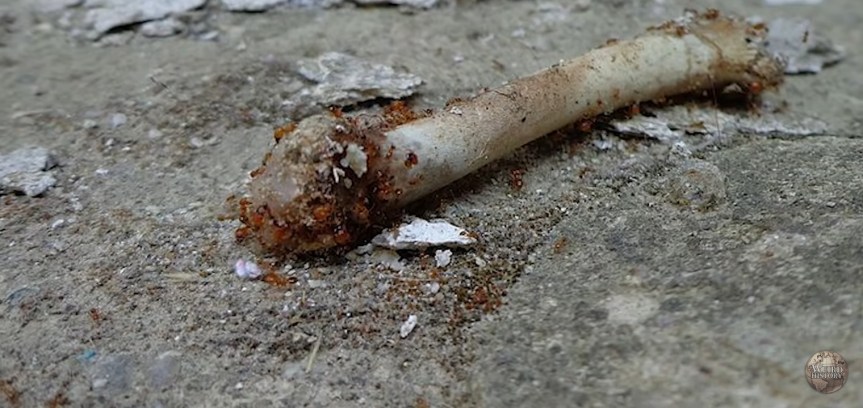
Archaeology found evidence that early humans cleaned their teeth by picking at them with things like porcupine quills, animal bones, and tree twigs.

In earlier 3,500 BCE, Mesopotamians were using chew sticks to clean their teeth. Egyptian and Chinese have known to use them as well.

Tooth Decay

Ancient people were always aware of the tooth decay. But the first known scientific theory about its causes dates back at least 5,000 years, to Ancient Sumeria. The theory was that cavities were caused by a creature known as the tooth worm, which they believed would wore holes in teeth.

Cavities can actually resemble the kinds of holes that the worms bore through other materials, like wood. The Sumerians, Greeks, Egyptian, Chinese, Japanese, and Indian people all believed in the tooth worm. Some European doctors were still warning people that worms were the cause of their tooth decay as late as the 14th century.

First Toothbrush

Though no one knows exactly when people started brushing their teeth, archeologists believed the practice originated somewhere in the neighborhood of 3,000 BCE. The Babylonians and the Egyptians were the first cultures we know of to fashion rudimentary toothbrushes, which were made mostly from twigs.

The first used bristle toothbrush was created in China sometime during the Tang dynasty, between the 7tg and 10th centuries. It was made from hog bristles which would have been attached to a handle carved from bone or bamboo.

Explorers eventually brought these to the West. And in the 17th century, they began to be adopted in Europe.

New trend

In modern times, the dental ideal is considered to be a bright smile with straight white teeth. People will wear braces, use whiteners, to achieve the look. But most didn’t realise, its a relatively new fashion.

The popularity of look really only goes back to the 20th century and was greatly created by Hollywood movies. The trend, arguably, began their veneers, created by cosmetic dentist named Marcus Pincus in the 1940s. It was spotted by movie stars, like Shirley Temple and Judy Garland, who became famous for perfect smiles.

Judy Garland

While mass market teeth whitening products didn’t became a thing until the 1980s, teeth whitening itself is nothing new.

Unlock phone from “Teeth”

A group of Indian analysts has created what shows up to be a first-of-a-kind human verification through teeth for versatile and other hand-held gadgets. The group says that the app obtains biometric tests utilizing the camera on a portable handset. The app has particular markers that enlist the teeth of a human for confirmation, comparable to existing apps that record the whole confront.

The title of the think about is “Deepteeth: A Teeth-Photo Based Human Verification Framework for Versatile and Hand-Held Gadgets”. It has been wrote by Geetika Arora, Rohit K Bharadwaj, and Kamlesh Tiwari from the Birla Founded of Innovation and Science (BITS), Pilani. Clarifying the working of the app, the group, within the unique of the paper, composes that the locale of intrigued (RoI) is extricated utilizing markers and the gotten test is at that point improved utilizing differentiate constrained versatile histogram equalization (CLAHE) for way better visual clarity

The group says that to the finest of their understanding, typically the primary work on teeth-photo-based verification for any portable gadget, including the comes about have appeared “perfect accuracy.” Upon advance perusing the paper, you discover a chart clarifying how teeth-photo confirmation works. The app, utilizing the front camera of your portable gadget, obtains the impression of your teeth to begin with. Usually taken after by ROI extraction and upgrade. The following work of the app is “deep include extraction” taken after by “enrol/verify and identify.” The following step is where the verification truly starts. The enrolled extraction at that point compares the teeth impression with the database, taking after which the app makes the “decision” on whether or not it coordinated with the correct individual.

In conclusion, the creators type in that they watched that the less investigated teeth-photo has exceptionally tall acknowledgment and recognizable proof exactness with the uncommon include proposed within the think about. And indeed in spite of the fact that it takes a small longer to prepare at first, once conveyed it is exceedingly effective for recognizable proof or confirmation. Agreeing to the ponder, the proposed show works flawlessly with a little measure test and is, subsequently, power-efficient and reasonable for versatile gadgets. “We have moreover proposed a novel strategy for the regularization of the profound learning design by combining margin and shared data within the spine highlight representation,” the analysts composed within the think about.