Robert Frost, most famous among us for his poem The Road not Taken which a lot of us might remember reading in school is one considered as one of the most famous poets in the world.
Early Life
Robert Lee Frost was born in 1874, in San Francisco, California and later moved to Lawrence, Massachusetts in 1885 after his father’s death. Frost’s father was a journalist and he died in 1885 due to tuberculosis. Frost’s mother took him and his sibling to their grandparents in Massachusetts.
Frost graduated from high school in 1892 and was at the top of his class. He showed an interest in poetry from an early age which he continued to pursue even after his graduation.
Robert got into Dartmouth College and in 1894, his first piece of work was published “My Butterfly: An Elegy” in a weekly newsletter named The Independent. Frost dropped out of college in less than a year because the routine was too monotonous for him and he had grown tired of it. In 1895, he married his high school sweetheart Elinor Miriam White who shared the interest of poetry with frost.
Adult Life
In 1897, Frost went to Harvard University but was forced to leave 2 years later in 1898 due to illness. Between 1900 and 1909 Frost worked on a farm near Derry, New Hampshire, which his grandmother had left for him before he died. He also worked as an english teacher in Pinkerton Academy while working on the farm and raising poultry there. During this time Frost wrote a lot of poems which were published later on and later became famous for as well.
In 1912, Frost and his family set sail for England and settled there. The very next year he published his first book of poetry titled “A Boy’s Will” which included poems such as Storm Fear,“”The Tuft of Flowers”. The next year he published another book of poetry North of Boston which included “Mending Wall,” “The Death of the Hired Man,” “Home Burial” and a lot more famous poems of his.
Publications and Success
During World War I the family had to move back to America where an edition of A Boy’s Will which went on to become the best seller.
Frost was awarded 4 Pulitzer Prizes throughout his career for New Hampshire in 1924, Collected Poems in 1931, A Further Range in 1937 and A Witness Tree in 1943. Frost served as a resident poet in multiple colleges and universities between 1939 and 1963.
After having an extremely successful career and making a profound impact in the world of poetry he died in 1963 at the age of 88 due to some complications from a surgery. He is survived by his eternal multitude of work.
Frost’s work revolved around despair that follows existence. His poems are described as poems that are a reflection of common people. He used poetic vocabulary and beautiful metaphors to describe some of the most common yet stark things of human life. He could write about one of the most abject experiences in one of the most beautiful of ways.
Oscar Wilde, a writer and a dramatist, this name noticeably sits on the plays that he wrote in the last decade of his life.
Oscar Fingal O’Flahertie Wills Wilde, was an Irish poet and a playwright born in 1854 in Dublin, Ireland. Oscar’s father, William Wilde was Ireland’s foremost ear and eye surgeon, his mother was an Irish poet who wrote under the pseudonym Speranza which is “hope” in Italian. Wilde was homeschooled till he was 9 and learnt German and French. Later he went to the Portora Royal School with his brother Willie. At school, Wilde was exceptional, academically and was also popular among his peers for his funny stories.
After attending the Portora School Wilde got into Trinity College, Dublin through multiple scholarships and later to Magdalen College, Oxford.
During his time in Magdalen College he wrote a poem Ravenna which won the Newdigate Prize.
Here is an excerpt from Ravenna
“Taken from life where life and love were new,
He lies beneath God’s seamless veil of blue;
Tall lance-like reeds wave sadly o’er his head,
And oleanders bloom to deeper red,
Where his bright youth flowed crimson on the ground”
He was highly inspired by the likes of John Ruskin, a writer and philosopher of the Victorian era and Walter Pater, who was a writer and an art critic, just like many others in his time.
Wilde had established himself in the world of literature in the early 1880s.
In 1881, he published his first book “Poems” , which received quite jumbled reviews. A periodical called “Punch” was at the forefront of this criticism and made him out to be a caricature.
After a few years of the release of “Poems’ ‘, he went to America to deliver a few lectures and was more accepted by the American readers.
Wilde got married in 1884, to Constance Lloyd and gave birth to two children Cyril and Vyvyan.
He became the editor of Woman’s World, a fashion magazine in 1887. During his time as an editor he published The Happy Prince and Other Tales (1888), which is a collection of stories for children though it consists of some stories that do not pertain to the young readers. The Happy Prince and Other Tales received positive reviews overall and Wilde was even validated by Walter Pater, who wrote to him praising the book.
In 1889, after giving up the editorship at the Woman’s World Wilde started working on The Picture of Dorian Gray, which is a philosophical novel with witty dialogues, wilde was able to blend gothic themes with French decadence. Despite all his great, articulately written novels his success is attributed to his dramas. He wrote over 10 plays in his lifetime, some of the most famous being Lady Windermere’s Fan (1893), A Woman of No Importance (1893), An Ideal Husband (1899). These plays were all societal comedies, most of them but one Salomé , which offended a lot of people for it’s violent acts and the representation of biblical characters.
After the essay “The Decay of Lying” was published in 1889 , Wilde was accused of indulging in sodomy and was found guilty 4 years later. He was released in 1897, and had gone bankrupt. A year after his release, he died due to acute meningitis followed by an ear infection.
A woman must have money and a room of her own if she is to write fiction.
Adeline Virginia Stephen, popularly known as Virginia woolf was born in 1882 in London, England. Her father was a famous literary figure and her mother was someone with artistic connections. Virginia grew up with 3 of her own siblings and 3 half siblings playing and bickering with them.
In 1891, Virginia and her siblings started Hyde Park Gate News recounting the shenanigans of the Stephen family. Virginia ran this paper until 1895, when her mother died. 2 years later her half sister, Stella Duckworth died as well. This was also the year when Virginia started keeping a diary. In 1904, her father passed away, after which the Stephen siblings moved away from their half siblings and started living on their own. They would host weekly gatherings. In 1906, her brother Thoby died of typhoid fever, which made Virginia lose her brother to a disease and then later she “lost” Vanessa when she got engaged.
Virginia was secretly writing “Reminiscences” in which she describes the loss of her mother. This was published in 1908. She had seen a lot of death in her family and was almost always grieving for one of them.
In 1912, Virginia married Leanord Woolf and continued working on her first novel.
her novel the voyage out involves the protagonist going on a trip to south America and finds out about herself. A lot of characters in her novels are based on real life people, mostly her siblings. Her novel “the voyage out” was published in 1915 .
Virginia attempted to kill herself in 1913, because she felt unloved by her sister and her husband and was consumed with self doubt, feeling that she is not a good enough writer. Later in life, she never encountered such thoughts.
In 1917, the wool’s bought a printing press and the same year jointly published Two Stories.
Woolf was a very skilled and innovative writer of the 20th century. Mrs Dalloway, one of her most famous novels published in 1925, revolves around a day in the life of Clarissa Dalloway. She goes around the city in the morning reminiscing about her youth and pondering over her choices.
In 1927 she published To the Lighthouse , about a family’s visit to Scotland.
Woolf experimented with a lot of genres in her lifetime and her writing is characterized by absolutely fine and also fluid narrative. Her writing style is quite modernist, meaning a style of writing which is characterized by “self conscious breaks with traditional ways of writing”.
Woolf published a novel Between the Acts in 1941 and received good reviews but despite that she felt that this novel was not enough considering at that time England was at the brink of invasion. This rendered her depressed and unable to write. The thoughts she had encountered during her first suicide attempt all came back to her.
in march, 1941 she walked behind a monk’s house, filled her pockets with stones and drowned herself. Her novel Between the Acts was published posthumously later that same year.
Neftalí Ricardo Reyes Basoalto, more popularly known as Pablo Neruda, was one of the most prominent Latin poets of the 20th century.
Pablo Neruda was born in 1904, in Chile. He started writing poetry at a very early age. He grew up in Temuco. His father did not approve of his poetry, and did not encourage him of it. His father discouraging him could be the reason why he started publishing under the pseudonym Pablo Neruda.
Even though Neruda did not get any support from his father, he wasn’t completely devoid of support. The major source of encouragement for him was Gabriela Mistral, a nobel prize laureate who won the nobel prize a few years before Neruda. Neruda published multiple poems in local newsletters and magazines.
Literary work
Pablo Neruda published his first work, an essay at the age of 13 in a local magazine. In 1921, he left Chile to move to Santiago to study at the University of Chile in order to become a French teacher. He adopted a different lifestyle in Santiago almost that of a bohemian and was able to complete during that time his first collection of poems entitled Crepusculario (book of twilights) in 1923. A year later, he published another book, Veinte poemas de amor y una canción desesperada which when translated into English means Twenty Love Poems and a Song of Despair published in 1924. Both of these books brought him recognition. For the next few years he dedicated himself fully to writing poetry and continued to publish poems.
But unfortunately, he was unable to make ends meet through just his poetry so he worked as a consul in Myanmar for about 5 years. After that he moved to Sri Lanka. By this time he was quite familiar with South Asian culture and wrote a book called Residencia en la tierra meaning Residence onEarth. In 1932, after spending time as a consul in Indonesia he moved to Chile with a woman he had married, Maria Antonieta Hagenaar. In 1933, he worked in Buenos Aires, Argentina as a consul. The following years Neruda moved around the world and became involved with the communist parties, also during this time he separated from his wife in 1936. He published another edition of Residencia en la tierra in 1935.
Political career
He moved back to Chile again in 1937 and became associated with the politics of his country. When he returned to his home country in 1943 from Mexico, he ran for senator and won in 1945 and joined th communist party. In 1948, he was exiled from the position of a senate for writing an open letter against the leader and he left the country so as to not get arrested. He spent his exile travelling around the world writing poems, he published Tercera residencia.
In 1952, he returned to Chile, again and lived there for the rest of his life. There he campaigned for political leaders and wrote a lot more books.
In 1971, he was awarded the Nobel Prize. He was terminally ill and died in 1973 in his home country of Chile.
Rudyard Kipling, a journalist, short-story writer, poet, and novelist who is best known among us for his novel the jungle book, was an eminent 20th century writer. Kipling became the youngest person and till this date is the youngest person to receive the award in 1907, at the age of 41.
Life
Rudyard Kipling was born in 1865, in Mumbai, India, which was a British colony during that time. He was born to John Lockwood Kipling and Alice Kipling. His father was an artist and an architect who used to work at an art school in Mumbai.
He spent his early childhood in India as an Anglo-Indian and at the age of 6 went to Britain and was vaguely perplexed with his identity, a topic he lightly touches on in his later work. In Britain, Kipling did not live with his parents; instead they left both Rudyard and his younger sister with a foster family. During this time, the couple that were looking after the siblings did not treat him very well. In his autobiography Something of Myself for My Friends Known and Unknown, which was published posthumously, Kipling looks back at this period of his life with dread. Kipling felt abandoned and isolated throughout his childhood. First he was abandoned by his parents and then he was neglected in his foster home too.
In 1877 Kipling’s mother returned to England and pulled her children out of that foster home. The very next year, he was sent to the United Services College in Devon, where students would be prepared for the army.
Career
Towards the end of the school, Kipling dropped out as his family did not have enough money to send him to college so instead his father secured a job for him in India and worked as an editor and a journalist for a newspaper. This was the beginning of his journalistic career. It was in India that Kipling started to publish his collection of short stories. He published Plain Tales from the Hills in 1888 and he published 6 volumes of short stories which included soldiers Three, The Phantom Rickshaw; between 1887 and 1889. By the end of this decade, Kipling gained so much popularity that he was being considered one of the best prose writers of his time.
He left India in 1889 and went to San Francisco during this journey he met The Adventures of Tom Sawyer writer Mark Twain.
In 1892, he married Caroline Balestier and the couple lived in America before moving to England. In this decade Kipling he produced work that he is most known for, like The Light That Failed in 1891, The Jungle Book in 1894, The Seven Seas in 1896, a collection of poems, Captains Courageous in 1897.
In 1907, at the age of 41, he became the youngest and the first Englishman to receive the Nobel Prize for literature. Kipling is thought to be an imperialist; his ideology at that time and even during this time is not accepted by people and has been long criticized for the same. However, he was a very popular writer of his time.
Rate this:
About that author- Charles Bukowski
“We are here to laugh at the odds and live our lives so well that Death will tremble to take us.”
This very famous quote by Charles Bukowski gives us an idea about the kind of individual he was. He was the kind of poet who wrote whatever was in his heart, whenever it was. He always spoke about a part of himself that exists inside us all but we choose to silence it. Bukowski, afraid of that part, still chooses to give it a voice through his poems.
Life
Charles Bukowski was a German-American poet, writer known for the violent imagery he tries to depict with his writing. Bukowski left his home in Los Angeles to move to New York to pursue writing. In New York he took up a lot of odd jobs so that he could continue to write, but he did not see much success during that period of his life.
Career
Charles Bukowski published his first story, titled “Aftermath of a Lengthy Rejection Slip” in 1944, at the age of 24 in a magazine. He published another story titled “20 Tanks from Kasseldown” about 2 years later in 1946, but unfortunately he failed to make a breakthrough and was left disappointed. Bukowski wrote a lot, was published too little and received even less recognition. This led him to quit writing or rather take a break from writing in the year 1946.
Now, one could say that Bukowski did not do anything during his hiatus but I disagree. During these years Bukowski gathered material for his future work. He moved back to Los Angeles and lived the life of a hippie and wandered around the country staying in cheap places. He would travel. drink alcohol and observe. The observations are talked about in his later published books.
Bukowski talked about the harsh and crude reality of existence and is known for his raw and bare writing.
After a hiatus of almost a decade, Bukowski got back to writing. In the mid 1950s he was hospitalized for a fatal bleeding ulcer. After being released from the hospital he started to write poetry, at the age of 35. Charles Bukowski, in 1957 married Barbara Frye, who later died in India. This incident resulted in Bukowski going back to alcohol and writing poetry.
By this time, Bukowski’s poems were published in literary magazines. But still he was unable to see the success he very much deserved. In the 1960s, he published a lot of poems and short stories and only tasted success in his 50s.
Bukowski spent more than half of his life writing and not seeing any considerable amount of success. He did not give up, in fact there was no point in him giving up because he was not one of the writers who wrote to achieve success, he wrote because he was extraordinarily in love with his art. He did not try to be a writer, in fact he didn’t try to be anything but true to himself and his work. He did not force himself to write, evident by his decade long hiatus. He thought that there had been too many writers in the past who forced themselves to try, whereas in his opinion if you truly love an art form you wouldn’t have to try, it would come to the artist. In his opinion if you had to try to be or do something you shouldn’t try at all. Even his grave has the words “don’t try” engraved on it.
He died in 1994, due to leukemia after living an adventurous and fulfiled life.
An American essayist and novelist, born in 1924 in Hampton, James Baldwin who addressed the issue of race in 20th century america. He grew up poor, in a black ghetto and in the 1930s, during a time when racism encompassed the whole of America and Baldwin too was subjected to it all his life.
His work revolves around the racial and social issues that existed in 20th century america.
Early life
James Baldwin never knew his biological father who was a drug addict, owing to this reason his mother left his father and moved to Harlem where she gave birth to James baldwin. Baldwin was the eldest to his 8 siblings. Baldwin figured out his affinity toward writing at an early age and was exceptional at it too. He wrote his first article when he was only 13, this article was published in his school magazine. Throughout his teenage years Baldwin published short stories and essays in local literary magazines. In his young teenage years Baldwin was a youth minister at the church. Bldwin was a devout christian, this could be because his father was a baptist minister. In later years of his life, he refused to being religious however his religious attitude shaped his perception to a great extent.
Throughout his life he faced incidents of racism, some of which he addresses in his work as well.
Career
In 1943, he moved to Greenwich village to pursue literature and work with other writers and literaries. During his time at Greenwich he was also able to secure a writing fellowship. At this time Baldwin’s short stories were being published and not in local but well recognized and reputed magazines.
About 3 years later Baldwin emigrated to France under another fellowship where he would not be treated with the racist remarks of the American and would be able to make a name for himself beyond his african -american community. In France he was met with his sexual conflict and hoped to come to terms with it and understand it better.
Work
Baldwin wrote his first novelGo Tell It on the Mountain which was published in 1953. a near autobiographical novel which revolves around a young teenager growing up in Harlem, New York and his relationship with his father and the church. The book deals with several issues that prevailed in america. It talks about racism, poverty, Harlem, New York, basically all the things that Baldwin endured in his childhood are mentioned in this work through the eyes of another character.
Giovanni’s Room, was his second novel released in 1954, which deals with the sexul ambivalence of a man, and his relationship with other men living in paris. Homosexuality was a tabboo during that time and who else could have talked about a topic so contreversial if not Baldwin.
Baldwin’s subsequent novels Another Country and Tell Me How Long The Train’s Been Gone, talk about race and homosexuality.
James Baldwin is known for his thought inducing essays. He had the ability to write about an issue giving the reader another highly intellectual way to look at it. In addition to being an important literary figure of the 20th century he was also an important figure in the Civil Rights Movement.
Baldwin in 1987 died in Saint-Paul-de-Vence, France due to stomach cancer leaving his work enriched with revolution behind.
If the moon smiled, she would remember you. You leave the same impression of something beautiful but annihilating.
This quote is from one of my favorite Sylvia Plath poems “The Rival”.
If you read Sylvia Plath you would find that her poetry wasn’t about the beauty that surrounded her, the fruity aroma of the garden flowers or blistering sun shining on her face or the wind sweeping her way. No, it was about none of that. Her poetry style was confessional.
LIFE
Sylvia Plath was born on october 27 of 1932 in Boston Massachusetts. She was a poet and a novelist who shaped American literature to a great extent. Plath published her first poem at the age of 8 in an American newspaper under the children’s section.From then on Plath went on to write and publish multiple poems in different magazines and newspapers. At the age of 8 Plath also faced a great deal of personal loss, her father passed away due to untreated diabetes. Her father was also a subject for a lot of her poems that she wrote in her later years.
Plath was a good student, she excelled in academics and attended the Smith’s College in Massachusetts. Plath also suffered from depression, which she elaborates in her poems. She underwent electrocution therapy for her depression. We are talking about the year 1950, when mental illness was not a socially acceptable concept. No points for guessing that the electrocution therapy did not work in fact it made matters worse for plath. In 1953, at the age of 21, the feeling of which she describes in one of her works as “blissfully succumbed to the whirling blackness that I honestly believed was eternal oblivion.” plath made her first suicide attempt by taking her mother’s sleeping pills. After this incident she remained in psychiatric care for months.
Career
In 1960, Sylvia Plath released a collection of her poems, entitled the colossus and other poems.. In this collection she talks about death, suicide, her father, and her depressive periods and thoughts.
Sylvia Plath’s poetry wasn’t particularly happy and that is because it was confessional or even autobiographical in a sense and Plath herself was deeply depressed. Here is an excerpt from one of her poems called Lady Lazarus;
“Dying is an art,
like everything else.
I do it exceptionally well.
I do it so it feels like hell.
I do it so it feels real.
I guess you could say I’ve a call”.
If it wasn’t clear until now, then these lines give us an idea of the intensity of torment that her own mind was subjecting her to.
Marriage and the aftermath
Plath married Ted Hughes, a poet and writer in 1956. They had 2 children together. The two later separated in 1962. The couple did not have a great relationship, some controversy and rumors surrounded Hughes even after Plath’s death.
During the last few years of her life Plath published exceptional work, some of the best work ever written. This vey period of Plath’s life is the one that shaped literature and inspired the future confessional poets. Plath poured her heart out on the pages during these years. She published a novel “the bell jar” in 1963 which did exceptionally well. But her career was cut short when at the age of 30, in 1962 after what is described as “a burst of creativity” she took her own life. Her posthumously published collection of poems “Ariel” also attracted a lot of readers and to this day transcends her.
Known Mysterious Incident About“the queen of crime” except her famous novels.
Born in Torquay in 1890, Agatha Christie became, and remains, the best-selling novelist of all time.
She is best known for her 66 detective novels and 14 short story collections, as well as the world’s longest-running play – The Mousetrap. Her books have sold over a billion copies in the English language and a billion in translation.
Agatha Christie is one of the greats of mystery literature. For eleven days, she was at the center of her own mystery, that got international headlines. Unlike the plots in her brilliant books, the motives underpinning this particular storyline are rather vague.
The characters of this real and known incidents were the Two of Britain’s most famous crime writers, Sir Arthur Conan Doyle, creator of Sherlock Holmes, and Dorothy L. Sayers, author of the Lord Peter Wimsey series and herself (Agatha Christie” the queen of crime”).
AGATHA CHRISTIE’S DISAPPEARANCECASE
WHAT DO WE KNOW-
On the December night of 3rd,1926 she drove away from her home in Berkshire and vanished completely. Her car was found abandoned and a huge manhunt was launched. Arthur Conan Doyle, author of the Sherlock Holmes mystery stories and Dorothy L. Sayers, author of the Lord Peter Wimsey series, participated in the search. Their specialist knowledge, it was hoped, would help find the missing writer.
Her disappearance would spark one of the largest manhunts ever mounted. Agatha Christie was already a famous writer and more than one thousand policemen were assigned to the case, along with hundreds of civilians.
Agatha Christie’s disappearance prompted a nationwide search and for the first time in UK history, aeroplanes were employed as part of the search effort.
Newspapers offered rewards for information and her husband Archie was suspected of foul play.
The Home Secretary, William Joynson-Hicks, urged the police to make faster progress in finding her.
It didn’t take long for the police to locate her car. It was found abandoned on a steep slope at Newlands Corner near Guildford. But there was no sign of Agatha Christie herself and nor was there any evidence that she’d been involved in an accident.
Not until 14 December, fully eleven days after she disappeared, was Agatha Christie finally located. Eventually, it was revealed that Christie had absconded to Harrow gate via train, where she spent eleven days hobnobbing with the young social crowd under the name of her husband’s mistress. Christie, upon being discovered, says she had no memory of the events.
The Speculations–
Agatha Christie rarely talked about the incident, simply putting it down to about of temporary amnesia caused by a blow to the head.
The consensus of opinion at the time was that the whole affair (no pun intended) was an act of revenge aimed at her erring husband.
Recent researches on her medical condition suggest that she was suffering from Alzheimer’s disease or other dementia. She died of natural causes in early 1976.
Franz Kafka is regarded as one of the greatest writers of all time who gave birth to a new manner of writing all while being tormented by his very existence.
Early life
Kafka was born in 1883 in Prague, the capital city of what is now known as Czech. He was the eldest son to an acquiescent mother and a strong, assertive and highly dogmatic father.
Kafka’s father had an assertive and sturdy personality, his presence alone was enough to intimidate Franz or his mother.
Neither Kafka nor his mother could ever gather enough courage to contradict his father. For even if Kafka did gather it, it would lead to consequences that Kafka was extremely familiar with. His mother too, was too timid to ever try and protect her son. Much of Kafka’s personality is profoundly shaped by his relationship with his father. Kafka grew up with profuse self hatred,anxiety and despair. He was nothing like his father, in fact he was the exact opposite, and for that he was always a target for criticism.
Even as a young child, he had a particular inclination towards writing and literature, he wanted to write but this dream of his was highly detested by his father and his mother too failed to comprehend the intensity of his dreams or preserve them.
Kafka’s relationship with his father
Kafka did not have a good relationship with his father and the same is well reflected in his novels. In his novels, Kafka often created an authoritative figure that cannot be vanquished.
In his unfinished work, The Trial,he talks about the bureaucracy, politicians and businessmen that hold the power to oppress and push around an office worker, Josef K., whose personality awfully resembled that of Franz’s. In The Trial Josef .K, one morning was arrested for reasons he was unaware of, and didn’t even attempt to find out because in his view he deserved every tiny bit of it. He doesn’t try to protest or push back and is ultimately pronounced guilty.
Relationship with self
Kafka’s most famous novel, The Metamorphosis, published in 1915 acts as a great mirror to understand his relationship with himself. In The Metamorphosis, a salesman, Gregor Samsa, one morning wakes up only to find out that he has turned into an insect. The novel revolves around Gregor’s struggles after this significant change.
The metamorphosis represents the hatred and disgust that Kafka held towards himself.
Franz Kafka’s most notable works include The Judgement, A Hunger Artist, and a series of short stories, and much of them were left incomplete. Kafka would burn down more than half of what he wrote because he did not like his work. The trial was written in 1914-15 but wasn’t published until after his death by his friend, Max Brod. Kafka left all of his work to Max Brod, instructing him to destroy all of it, but luckily Brod disregarded his wish and went on to publish his work which attracted attention and was regarded as one of the greatest writers of the 20th century.
LEGACY
Franz Kafka’s most notable works include The Judgement, A Hunger Artist, and a series of short stories, and much of them were left incomplete. Kafka would burn down more than half of what he wrote because he did not like his work. The trial was written in 1914-15 but wasn’t published until after his death by his friend, Max Brod. Kafka left all of his work to Max Brod, instructing him to destroy all of it, but luckily Brod disregarded his wish and went on to publish his work which attracted attention and was regarded as one of the greatest writers of the 20th century.
Franz Kafka, in 1924 at the age of 40, succumbed to tuberculosis, leaving behind some of the best novels ever written. Kafka was a great literary figure, who inspired writers such as Albert Camus, and Jean-Paul Sartre.
Kafka’s world is often characterized by dark but very real themes. His work has a certain melancholy associated with it. It almost seems like a dread filled dream that sticks with the reader and leaves an everlasting impression on them. His work became so profound that it went on to inspire a style of writing called “kafkaesque”, which is often used to describe something with nightmarish, oppressive and despair-like qualities. His world is a place where most people at some point in their life find themselves, and most of them get out of there too but Kafka stayed there for as long as he lived, giving the world something that transcends their imagination.
Hi! Today we will be talking about an interesting topic. Mythology. I always am ready to listen to folklore, myths and tales. Simply because find Myths to be striking. Mythologies are a collection of myths of particular cultures and religions. Myths we’re recorded as human beings started to have manuscripts.
Myths and legends were created as humans mastered the way of writing. Myths mostly discuss the relationship between God and humans. It dealt with questions like who are deities? How the world was created? The righteousness and the unethical aspects.
Hindu Mythology is also cited as Hindu Mythology. Indian mythology includes Buddhist, Sikhism, Jainism, etc… Mythology plays an important role as it is the core of culture and religion. Another reason is the battle of good and evil, which helps us to learn, discover and comprehend the way of living.
When we discuss Hindu Mythology, the popular tales are of Ramayana and Mahabaratha. Apart from that, we have tons of myths. Hindus worship numerous deities. Authors are retelling the myths in a fascinating, thought-provoking way.
Top Indian Authors who write with Modern Ingredients
Kavita Kane
Chitra Banerjee Divakaruni
Amish Tripathi
Dr Devdutt Pattanaik
Aditi Banerjee
Top 5 Indian Mythology Books to Read
AHALYA’S AWAKENING BY KAVITA KANÉ
“You know you are very beautiful.” ‘But where is my achievement in that?’ Ahalya asked, with genuine puzzlement. “It’s not my talent; it’s God’s gift.”
Kavita Kane is known for her modern twist. Ahalya is a character in the epic Ramayana, we don’t get to see much about her. A sheltered princess then a loving wife of Rishi Gautam. Her tale is the play of destiny and fate. It retells the patriarchal society which exist even today.
“A leader must love his country more than he loves his own soul.“
Amish Tripathi is famous for his remarkable detailing of characters in his book. The characteristics of his works are written from outstanding perspectives. Sita was known to be a woman who suffered in silence but here she is portrayed as fierce, strong administrator and warrior.
The light has been shed on Ravana too. In his work, he gives voice to Ravana’s aspect. He is someone who will kill without guilt. Is he a villain?
THE FOREST OF ENCHANTMENT by CHITRA BANERJEE DIVAKARUNI
“I couldn’t control what was done to me. But my response to it was in my control.”
I would say it’s a masterpiece and a must-read. We get to know Sita’s POV, it’s a delightful piece of work. Sita is stated to be the epitome of values and a warrior. The cover looks stunning!
The values of Ramayana are infused in our lives. This book will mould our perspective.
“Refusal to accept the flow of the world is the root of all misery.”
A compelling retelling of the epic Mahabharata. The doorkeeper of Vaikuntha is a twin Jaya and Vijaya. The difference between them is what we need to solve the mystery of the epic. The tale is said with simplicity and clarity.
The book is a retelling of Gandhari’s fate. We get to see the tale through Gandhari’s eyes. It is a fascinating story about how she shaped the epic. Her dedication towards her vow is striking. After being married to a blind prince, she stayed blindfolded for life. Most stories haven’t described her in detail, unlike this one.
These are the books I would say one must read to re-shape their perspectives if required. The stories are captivating. Let me know in the comments if you have any recommendations.
Unless you’ve been living under a rock, I’m sure you’ve heard of the Harry Potter series. However, I’m guessing that the most of you haven’t heard of J.K Rowling. If you’re wondering who she is, she’s the woman behind the world’s most successful bestseller series. This remarkable woman is motivating and extraordinary in every way. Rowling’s triumph is one of the most exhilarating, but it wasn’t always smooth sailing. Few people know what happened to her before she became famous.
Rowling, a master storyteller, has struggled with personal issues ranging from financial difficulties to melancholy on her path to literary achievement.
J.K. Rowling, the author whose Harry Potter book series has been translated into 73 languages, sold millions of copies, and earned over $20 billion in movie adaptations and sponsorships, said as much. So, why is it that she admits to being a failure? It wasn’t as simple as scribbling notes on a couple dinner napkins to come up with her book series. It wasn’t a simple one-step, two-step, or even three-step procedure. Years of dedication would be required to achieve the level of success she now enjoys.
It is stated that true success follows a series of setbacks. This is precisely what happened to Rowling. Her personal life was in disarray, making each day difficult for her. On a train voyage from Manchester to London one fine morning in 1990, she created the complete plot from an idea and began building the story of Harry Potter on that route. Unfortunately, her mother died later that year, putting a stop to her writing for a while. Rowling began writing soon after developing the concept for Harry Potter, but was abruptly distracted by the tragic death of her mother. Rowling stopped working on the novel and went into a deep, depressed state. When she moved to Portugal in 1992 to teach English as a foreign language, her life had other intentions. She met, married, and had a daughter with him. A year later, she divorced her then-husband and filed for divorce.
This was the turning point in her life, when she relocated to Edinburgh, Scotland, with her infant daughter to be closer to her sister, with three chapters of Harry Potter in her suitcase. Rowling was divorced, jobless, and a single mother of a child at the time, and it was the most trying time of her life. She struggled with acute depression, yet she persisted. She discovered the light at the end of the tunnel when life was dark and dreary, always pushing through the trials and tribulations life threw at her.
Rowling’s life was defined in so many ways by the year 1995. The Harry Potter script was rejected by roughly 12 prominent publications, not one, two, or five. She had been shattered, but she had not been vanquished. She continued to pursue more newspapers, and her efforts were rewarded.The book was accepted for publication by a small publishing house, and only 1000 copies were printed. Things changed quickly after the book won several accolades, including the Nestle Smarties Book Prize and the British Book Award for Children’s Book of the Year.
J.K Rowling’s most important lesson is to keep trying, believing, and acting on your dreams. Whether it’s to become a great business or to publish a novel, there’s something for everyone.
Reading is a great way to keep your mind active. It gives you thousands of reasons to sit back and think about numerous things. It also helps you escape reality and travel to a different world.
Reading fills you with little pieces of knowledge that stay with you for a long time. You never know when something might come handy. You come across new words and they start slipping in your vocabulary. It makes you well-articulated and well-spoken. You read something and it gets stored in your brain. Thus it also helps to improve your memory.
There are countless benefits of reading and there are thousands of books to read. But some books are “evergreen”. They are written by some of the greatest literary minds of all times and are known as “classics”. You can pick them any day and they give you the same fresh feeling as it gave you the first time.
A list of 10 books that you must read at least once in a lifetime:
To Kill a Mockingbird, by Harper Lee:
This book was published in 1960 and appears in almost all the lists of the best books. It explores human behaviour and the collective conscience of the Deep South in the early 20th century. It also revolves around the themes of prejudice, hatred, hypocrisy, love and innocence. And is delicately woven with humour. Anyone who has read it counts it as one of their favourites.
Harry Potter Series, by J.K. Rowling:
Those who have read the Harry Potter books or have even watched the movie are still waiting for their Hogwarts letter, including me. J.K. Rowling takes you on an amazing journey filled with magic and mystery. She introduces you to the world you will never want to leave. You grow up with Harry in this 7 books series.
The Lord of the Rings, by J.R.R. Tolkein:
Another series that takes you into the world of hobbits, dragons, monsters and gods. This book allows you to escape from reality and go on unimaginable adventures. The book revolves around the themes of fantasy, evil and innocence. This series comprises three books in total.
Pride and Prejudice, by Jane Austen:
Jane Austen is said to be one of the most famous writers in English Literature and Pride and Prejudice is one of her best works. It is a story of the courtship of two opposite characters in a world where manners and courtesy are of utmost importance. The book leaves you with the message that “love knows no barriers and finds its way”.
The Diary of a Young Girl, by Anne Frank:
Almost everyone is aware of the story of Anne Frank during the German Holocaust. The Diary of a Young Girl is a raw account of her life as she hides from the Nazis. She teaches the readers a valuable lesson that we should keep believing that people are good at heart and situations to change. She wishes to change her life too. The book is spin-chilling and tear-jerking as it reveals how the Jews suffered at the hands of the Nazis.
The Book Thief, by Markus Zusak:
The book is set in Germany during 1939 when the Nazis were ruling Germany and the Jews were being brutally killed. It revolves around a girl named Liesel and how she rescues books from the wrath of Nazi rule. The story also features an unusual friendship that is formed in the most unusual situation. Like The Diary of a Young Girl, this book also gives you a view of the cruel Nazi rule.
The Hobbit, by J.R.R. Tolkien:
Another fantasy fiction by J.R.R. Tolkien, The Hobbit was originally written as a short storybook for children. Later it was made into a long series of movies. It features the story of Bilbo Baggins and his journey to the Middle East to challenge a dragon. The book gives a strong message of bravery and takes you into a fantasy world just like the Lord of the Rings.
Little Women, by Louisa May Alcott:
The story of four sisters, set in 19th century New England. Each sister has their own significant personality trait. The book gives you an account of their struggles and their flaws and how they turn into strong young women. The book is a pure joy to read.
Jane Eyre, by Charlotte Bronte:
Jane Eyre is the first prose fiction to focus on its protagonist’s moral and spiritual development. Jane Eyre is one of the strongest fictional heroines of all time. It is a story of a girl who fights social criticism in a society with a strong sense of Christian morality at its core. It depicts a strong, unbroken woman despite her troubled childhood.
The Kite Runner, by Khaled Hosseini:
The story revolves around Amir and his journey to find his one true friend. He has to abandon him due to ethic and religious differences that existed in Kabul, Afghanistan. It also highlights the theme of guilt and redemption. It is a story of true friendship and atonement. The book has been awarded as the New York bestseller for two times in a row.
These were some of the books which one should definitely read once in their life. These books never lose their essence and will surely blow your mind with their brilliant storylines.
Graphology is the study of hand writing to assess the personality traits of a person. It is the evaluation of physical characteristics and patterns of a handwriting to identify personality characteristics. It is also used to identify the writer and their mental state during the time of writing. The word graphology has been derived from the Greek word grapho meaning writing and logos meaning study or discussion. Graphology has been used by European psychologists and counsellors. It says that there is a relationship between personality, conducts, intellectual level, temper and character in handwriting. Hand writing can be analysed according to pressure, size, slant, zones, layout (margins, spaces between letters, words and lines). At present there are also some AI tools and websites which can be used.
Alfred Binet conducted a study on handwriting and called graphology “the science of the future”. In 1929, Milton Bunker founded The American Grapho Analysis Society. It made two different branches in the world of American graphology – graphoanalysis and holistic graphology.
The works of some graphologists are mentioned below:
Max Pulver had authored three graphology books (from 1931 to 1949) and several articles. He has worked on pressure, intelligence, and crime. He developed the theory of symbolism of space and founded the Schweizerische Graphologische Gesellschaft (Swiss Graphological Society) in 1950 and was its president until his death.
Camillo Baldi was an Italian philosopher who worked on a variety of subjects. His best known essay on graphology was the first detailed investigation of the discipline.
Robert Saudek was a Czech-born graphologist. He was also a writer of novels, stories, poems and plays. He had considerable influence on the content and standing of graphology worldwide and published numerous articles in many languages like The Listener, the Journal of Social Psychology. He founded the Professional graphology society in the Netherlands and started two academic periodicals: in Dutch and English. Many graphologists worldwide today refer to Saudek’s work without knowing the origin. He published Experimental Graphology in 1929. Saudek examined the speed in handwriting and quantified handwriting by using a microscope, caliper, pressure board, ruler, protractor and slow-motion pictures. He also dealt with graphological phenomena in terms of the experimental psychologists.
Sheila Lowe is a British-born novelist and graphologist. Her first book was published in 1999 and was a bestseller in the Complete Idiot’s Guides series. In 2007, the first edition of Poison Pen, the first of her Claudia Rose forensic mystery series came out, published by Capital Crime Press. She is at present the president of the American Handwriting Analysis Foundation.
Studies
There have been studies in the U.S. on handwriting and sex. According to the research sex could be determined through writing at a significant level. Studies on ethnicity, race, age, nationality, sexual orientation, weight have got mixed results. According to the Hungarian Parliamentary Commissioner for Data Protection and Freedom of Information, handwriting analysis without informed consent is considered to be a privacy violation.
Controversy
Graphology has been a controversial topic for about a century. Some suggest that empirical studies have failed to show its validity to perform personality evaluation. Although it has got support from the scientific community in the mid twentieth century, recent researches have rejected the validity of graphology as a tool for assessing personality and job performance.
COVID-19 has infected millions of people. The economy is in the worst shape it has been in over a decade. Forest fires, job losses, murder hornet, locusts, 2020 has been difficult, strange and a traumatic year. And as the cherry on top, many of us have to stay at our homes or practice social distancing. If you’ve been witnessing or suffering through any of these events, you may be looking for answers on how to get through them.
With 2020 being such an abnormal year, there is a good chance it is taking a toll on your physical, financial and mental health. Here, what could be practiced to stay informed and survive 2020-
Address Your Health- During 2020, you’re probably not going going outside often and spending time with your family and friend is more rare than ever. It is natural for these conditions to take a toll on your mental health. To help with all this, find ways to cope with how you are feeling. It is always important to talk to people you love through voice or video calls or texts, do your best to workout at home, and take your time out of the day to do things you love. And also, stay away from social media if all the negative news becomes too much for you.
Organize Your Finances- If you have lost, or at risk of losing your job, it is good idea to minimize your spending. You can do this by breaking up your spending into essential and non-essential purchases. This will help you figure out your survival number, which is the lowest amount of money you need to survive. Look at other types of spending you can cut out, like your gym membership as your gym may not be open during the pandemic.
Learning a New Skill- There is a good chance that you have a lot of time in your hands now and what better way to use it than utilizing it in learning something new? You can take an online coding course or even learn to knit. Learning something new and staying productive is hugely helpful to your mental health. You can also create a side hustle from it, allowing you to earn money, and if can not earn money from it, you can learn a new skill that saves you money like growing your own food or being able to fix appliances.
Pay Attention- Even though what’s going o in the world can be extremely negative, it is important to stay informed. Use multiple, reliable news sources to educate yourself about what is going on. It can help relive some anxiety when you are more informed. That being said, don’t get overwhelmed by the news. Looking at COVID-19 stats or civil unrest all day can become exhausting, limit yourself to checking news just once in a day, and leave it to that.
Reach Out- Remember that this year has been hard on all of us, and everyone is struggling in some way or another. Don’t be afraid to reach out if you are having a hard time, and remember to check-in on your loved ones to see how they are coping with this crazy year. We are all in this together, stand up for what is right. Support local businesses and donate to charity or your favorite causes if you can. Once, this is all over we’ll finally come back to normal. And hopefully, the new normal will be a better world than ever.
False flag theorists see darker forces behind whatever sinister world events are taking place. They believe events such as gun massacres and terror attacks are staged to make it appear as if some other group designed and carried out the event – in effect planting a false flag at the scene. The “false flag” concept can be virtually applied to just about any world event – the 9/11 attacks, so some believe, weren’t carried out by al-Qaeda but the Bush administration as an excuse for war in the Middle East.
Bilderberg Group
The Bilderberg group is an annual meeting of ‘elite intellectuals’ from across the world to discuss — well, no-one really knows. No minutes are published of the meetings, which take place behind closed doors amid tight security. The group has been accused of everything from plotting the rise and fall of world leaders to trying to form a New World Order, made up of the top figures in banks, corporations and countries.
The Mandela Effect
It is a phenomenon where a group of people collectively misremember a fact or an event. The term was coined by the paranormal enthusiast Fiona Broome. She along with many other people, remember Nelson Mandela dying in prison in the 1980s rather than from illness in 2013. Some of them even claim they remember his funeral being broadcasted on TV, like do you remember the Monopoly Man wearing a monocle? You’re not the only one. However, if you look at him carefully, you’ll realize he’s not wearing a monocle. He never has. While the famous Snow White quote you’ve probably heard others say and repeated yourself is “Mirror, mirror on the wall,” it turns out the correct line is “Magic mirror on the wall” Some people also remember the second part of that quote being “Who is the fairest of them all?” but apparently it’s “Who is the fairest one of all?
Britney Spears Was an Instrument of the Bush Administration
What if Britney Spears’s public meltdown, a series of bizarre events and public outburst— the head shaving incident which ultimately resulted in her receiving a conservatorship and losing custody of her children to ex-hubby Kevin Federline— wasn’t the result of her own personal issues? There are theories that say Britney was being paid by the Bush administration to grab headlines away from the corrupt and incompetent White House.
BONUS
The Illuminati is real, lizard people are also real, and the Earth is hollow with a colony of people living inside the middle, just kidding (maybe). But there are way crazier, way more coherent truths out there waiting to be seen.
So for all you conspiracy theory lovers, here are some shows and documentaries you would want to watch-
Simple rules to send a respectful email that won’t get you on your professor’s bad side.
Rule 1 – Answer swiftly
Anyone who sends you an email they’ll want quick responses. The golden rule for email is to reply within 24 hours, and preferably within the same day itself. If your response email is complicated, just send an email confirming receipt and letting them know that you will get back to them. This will ease the senders mind!
Rule 2 – Use a meaningful subject line
When filling the subject line, make sure that you mention what the email is for or in regards to. You don’t want it to seem like a randomly generated subject and end up in your professor’s spam folder. It also makes it easier to search for old emails when the subject line is relevant and specific to the content of the email.
Rule 3 – Read your email before you send it
Prior to sending your email, be sure that you proofread your message. You shouldn’t write your email as though you are texting your friend. Make sure it’s got full sentences, proper grammar, and real spelling. Look out for potential misunderstandings, the tone, and inappropriate comments.
Rule 4 – Abbreviations & emoticons
Be careful using email abbreviations such as BTW (by the way) and LOL (laugh out loud) in formal emails. Even today, some people still don’t know what they mean, so it’s better to drop them.
Rule 5 – Be concise
Be succinct and keep your message short and to the point. Your professor is going to have probably hundreds of email messages to wade through each day. Just get to the point and politely, respectfully, ask your request. If it has to be long, consider including a synopsis at the top of the email. Make sure you are as clear as possible about what it is you need to ask of your professor without writing a novel.
Rule 6 – Do not write in CAPITALS
IF YOU WRITE IN CAPITALS IT SEEMS AS IF YOU ARE SHOUTING!! Therefore, try not to send email text in capitals.
Rule 7 – Use a professional email address
This marks the message as legitimate and not spam. You should always have an email address that conveys your name so that the professor an idea of who’s sending the message. Never use email addresses, perhaps remnants of your grade-school days, that are not appropriate for use in a formal setting, such as “supergirlrocks@…” or “pizzalover@…”.
Rule 8 – Use professional salutations
Don’t use laid-back, colloquial expressions like, ‘Hi’ or ‘Yo’. Address your professor directly; don’t just launch straight into a request. Examples: ‘Respected Dr. Kapoor’, ‘Dear, Ms. Gupta’, ‘Dr. Sharma, I hope this email finds you well…’.
Rule 9 – Be polite
Don’t make demands, don’t accuse, remember to write please and thank you. Close your email with something polite like ‘Thanks’, ‘Thanks for your time’, ‘See you in class Wednesday’, ‘regards’, etc. Then re-type your first name
It is extremely important that we look after our planet but often as teenagers it can be hard to donate money to support the cause or spend time volunteering, so here are a few things you can do instead.
1. Say no to the straw!
According to Indian pollution control board15,342 tonnes of plastic waste is produced in India every year. A big chunk of it is single use plastic straws, which can’t be recycled! These tiny straws can do a lot of harm to the ocean- it can kill all sorts of wildlife including sea turtles. So why not stop using plastic straws altogether? Some love using straws, but that doesn’t mean there isn’t anything you can do. Instead, switch to glass straws, paper straws or metal straws, here are some affordable options:
Whenever you’re out for grocery shopping, carry a reusable tote with you. Personally, I love a good tote bag, especially the ones you can fold up and tuck away in your shoulder bag.
Every time you go out to the coffee shop and order your cappuccino to go you’re wasting a cup. To avoid this you might want to buy yourself a nice reusable cup. Not only do they reduce waste, but cups with lids are also a better alternative if you drink tea or coffee while you’re on the go.
There is nothing better than a cute reusable water bottle in my opinion. There are so many to choose from and reduce the waste created by using plastic water bottles.
Avoid using things that are packaged or wrapped in single use plastic. Try to use paper or paper bags instead. And if you can’t do that, look for recyclable packaging.
Using a car is one of the worst things for the environment. If the distance to be covered can be covered on foot then why not walk to where you want to be? It’s an easy way to exercise and you’re helping our planet too by reducing greenhouse gasses. If you can’t walk there, why not take the public transport? It’s cheaper and saves the planet.
When it comes to upcycling household goods and items, it can involve creative and innovative thinking. Instead of letting item you no longer use pile up, gather dust, occupy unnecessary space or throwing them out in the garbage, which is definitely not recommend, give them new life.
To get your DIY routine warmed up, I’m sharing some ways to upcycle household items that are present in every home which aren’t in use anymore. Use these green hacks and shift your home to a more sustainable and waste free home.
Hacks to Upcycle Household Items:
Before you toss your over used rubber gloves, that have seen better days, in the bin, cut the fingers off and then cut them further into small rings and use them as elastic rubber bands to keep miscellaneous items in place.
Only a single sock left? Take the solo sock and turn it into a reusable and washable face mask by cutting the top section off, and then cut two slits in the heel portion for your ears.
Turn your broken belt or any belt that you no longer style into a rustic shelf in a few easy steps. First, remove the buckle part, then cut your belt in half. Form a loop out of each half of the belt and then nail them into the wall. Then gently slide a piece of sleek board or an old piece of wood between the loops.
Upcycle your household and beauty products like candles in glass containers, glass bottles, old jewellery boxes, containers that you no longer use. First, properly cleaning them out, then use them as decorative storage- story your pins, makeup brushes, pens, use these to store spices in the kitchen or use them to store flowers in the bathroom.
Do you have too many mason jars laying around? Create your own homemade scented candles- fill the jar with oil, lemon, and add a wick. Or just YouTube the procedure.
A run in your favourite tights and you can’t wear them anymore? Get yourself nice beachy waves, watch this viral no-heat curls hack using a pair of tights.
Want to go grocery shopping in your shoes but fear them contacting any corona surface? Use on old shower cap to cover the sole. Throw them out before entering back.
Want to read more such hacks? Check my favourites ones out:
Apple cider vinegar, also known as ACV is produced during fermentation of apple cider. The sugar present in the apple is fermented by yeast/bacteria which first turns it into alcohol. Further the alcohol is fermented to turn into acetic acid. Apple cider vinegar contains 4-5% of acetic acid, to which many health benefits can be attributed to. Not all apple cider vinegar is created the same, the key is to look for organic, unfiltered, raw apple cider vinegar with “mother” which indicates that it contains probiotics.
What are the health benefits of apple cider vinegar?
It is almost magical what apple cider vinegar can do for your health. Let’s start with a list of benefits first and then get into details.
It can improve digestion
It lowers blood sugar levels
It improves insulin sensitivity
It reduces belly fat
It helps lowers cholesterol
It helps sooth sore throat
It lowers blood pressure and improves heart health
It prevents and decreases the risk of getting cancer and slows down the growth of cancer cells
It helps people to lose weight and increases satiety
Apple cider vinegar is also packed with nutrition. Let’s take a look at its nutritional composition to see what makes apple cider vinegar so special. Apple cider vinegar contains:
Magnesium
amino acids
antioxidants
iron
manganese
phosphorus
only three (3) calories per tablespoon
1. Improves Digestion– Drinking apple cider vinegar everyday can help regulate the amount of acid present in your stomach, which will lead to easier digestion. Like any other fermented food, unfiltered apple cider vinegar contains healthy bacteria that helps to keep your digestive system functioning properly.
2. Lowers blood sugar levels and helps fight Diabetes– Apple cider vinegar has the ability to improve insulin sensitivity and it also helps lower the blood sugar levels. According to a research published by American Diabetes Association, taking two tablespoons of apple cider vinegar before going to bed can reduce fasting blood sugars.
3. Detoxifies the Liver– Apple cider vinegar increasing energy levels and improves its natural blood filtration processes by flushing the liver.
4. Helps You Lose Weight– Apple cider vinegar also helps with weight loss as it increases satiety, feeling of being full, which can help prevent cravings.
5. Inhibits the growth of Cancer Cells. Many studies show that apple cider vinegar has some anti-cancer benefits to it as it is an alkalizing food that restores the acid balance of the body which is important because cancer cells thrive in an acidic environment.
6.) Strengthens the bones – Apple cider vinegar aids in the process of absorption of calcium, which is essential to building strong bones.
8.) Lowers Cholesterol– Studies show that apple cider vinegar reduces the bad cholesterol- LDL and in turn increases the good cholesterol- HDL due to the natural antioxidants present in it.
How to incorporate apple cider vinegar into your diet?
The best way to incorporateapple cider vinegar into your diet is to use it for salad dressings or dilute it in water and drink it as a beverage. 1–2 tablespoons (15–30 ml) mixed in a large glass of water and consumed daily.
Trigger Warning: Mention of Rape and Sexual Assault
New Media has also changed the style of journalism, such as the rise of online journalism, where facts, information, and reports are produced and distributed through the internet. News in the New Media era is enabled to spread more widely and rapidly. News content is now enriched by lots of digital elements such as images, embed videos, comment box. These elements make the information presented becomes more attractive. One of the salient characters of online journalism is its dependency on speed in delivering information. When we talk about the emerging trends in media, we cannot afford to overlook the role of online media in changing the scenario in the context of women’s issues. The content that the online media produces reflects the pattern of value the society. The prevailing attitude of society gets revealed through the way subjects dealing with women are treated by the media (Arpita Sharma, 2012).
Media has the choice of acting as both, a protagonist and as a perpetrator-it can either reinforce the gender-based discrimination by portraying sensational and stereotypical images of women or it can provide balanced reportage that empowers women and not degrades them while exposing acts of gender-based violence. Rape cases and sexual assault cases are not a recent trend in the society but sensitive reportage and wide coverage by media while also bringing these issues forefront are relatively very new.
Gender-based violence or GBV is violence that is directed against a person because of their gender. Both women and men experience GBV but the majority of victims are women and girls. GBV and violence against women are terms that are synonymous as it is widely acknowledged that most gender-based violence is inflicted on women and girls, by men. The issue of GBV reaches every corner of the world. The numbers of women and girls affected by this problem are shocking. According to the World Health Organization’s data from 2013, one in every three women has been beaten, compelled into sex or are abused. One in five women is sexually abused as a child, according to a 2014 report.
In coverage of GVB, several stereotypes are often perpetuated by the new media. These include that rape is similar to sex, that the assailant is motivated by female lust, that the assailant is perverted, crazy or a monster, that the woman provokes rape or assault, and that only women are only victims. Scholars have found that these stereotypes and myths are pervasive in media coverage of rape and assault cases. Not only the language and the framing of the headlines but also the visuals used in the articles regarding GVB play an important role in the general perception of these issues.
In Gender-Sensitive Indicators for Media (UNESCO, 2012), under Category B- Gender Portrayal In Media Content, B1.5- Strategic Objective 5 states the indicators for the coverage of gender-based violence. Three of them are-
Use of non-judgmental language, distinguishing between consensual sexual activity and criminal acts, and taking care not to blame the victim/survivor for the crime
2. Use of the term ‘survivor’ rather than ‘victim’ unless the violence-affected person uses the latter term or has not survived
3. Use of background information and statistics to present gender-based violence as a societal problem rather than as an individual, personal tragedy
Terms such as ‘victim’ or ‘survivor’ are often used to describe individuals who undergo these experiences. The term ‘victim’ reiterates feelings of helplessness and lack of female agency, while the term survivor connotes a sense of strength and resilience. However, the affected person should have a say in what to refer them as. The ‘victim’ terminology limits individual self-agency and identity. It is important to note that experiences of violence do not define the individual, but rather are a piece of a larger self-identity. Such labels focus on experiences of violence and presuppose an individual’s inability to change or undergo any personal development to transform their identity into a peaceful, empowered personality.
Images of sexual violence in the media often depicts women as covering their face, being silenced by looming hands, teary faces, large shadows near the woman, are some of the visual examples. These images not only fuel the stereotypes of women as helpless and weak, but also these images are also extremely triggering for the survivors of sexual assault and rape.
When media reports women who have been assaulted or raped as nothing but victims, society can disengage and fail to take the issue as a broader societal issue and fail to take responsibility for any individual or group action to change it. It is crucial then for journalists to report on GBV in an informed way and to have a good theoretical understanding of the roots of these gender based violence’s and what needs to change in society. Otherwise, they can do harm by perpetuating patriarchal stereotypes and falsehoods.
The coronavirus disease- COVID-19 is a highly transmittable and pathogenic viral infection caused by severe acute respiratory syndrome coronavirus 2 or SARS-CoV-2, which emerged in Wuhan, China and spread around the world. Analysis revealed that SARS-CoV-2 is phylogenetically related to severe acute respiratory syndrome-like bat viruses, therefore bats could be the possible primary reservoir. The intermediate source of origin and transfer to humans is not known, however, the rapid human to human transfer has been confirmed widely. There is no clinically approved antiviral drug or vaccine available to be used against COVID-19. However, few broad-spectrum antiviral drugs have been evaluated against COVID-19 in clinical trials, resulted in clinical recovery.
ORIGIN:
The first human infections were reported at the end of December 2019 in Wuhan, Hubei province in China when a cluster of 41 pneumonia cases was identified. Deeper analysis showed that it was a novel coronavirus. A third – 66% of the cases – had direct exposure to the Huanan Seafood market. Fish, shellfish, wildlife, snakes, birds and several different types of meat and carcasses were sold at this market. The market was closed immediately, and it has not reopened since. (source: ScienceDirect.com, https://www.sciencedirect.com/science/article/pii/S0140673620301835?via%3Dihub)
The strongest speculation of the origin has been that the virus is somehow linked to the market given two thirds of the first batch of people infected had had ties with it. But even this hasn’t been proved yet. Nevertheless, Bats, in particular, have been studied closely because they are considered to be the natural host of coronaviruses.
this is not my image, credit to the artist
EFFECT of covid-19 on the environment:
The objective of this article is to analyse the positive and the negative environmental impact of this abhorrent pandemic, Covid-19.
The Positives-
Improved Air Quality:
The coronavirus has temporarily slashed air pollution levels around the world (source: European Space Agency). Readings from ESA’s Sentinel-5P satellite also show that over the past six weeks, the levels of nitrogen dioxide (NO2) over cities and industrial clusters in Asia and Europe were markedly lower than in the same period last year. Nitrogen dioxide is produced from car engines, power plants and other industrial processes and is thought to exacerbate respiratory illnesses such as asthma. While not a greenhouse gas itself, the pollutant originates from the same activities and industrial sectors that are responsible for a large share of the world’s carbon emissions and that drive global heating. Take transport, for example, which makes up 23% of global carbon emissions. Driving and aviation are key contributors to emissions from transport, contributing 72% and 11% of the transport sector’s greenhouse gas emissions respectively. (Source: http://www.ipcc.ch)
If we consider the case of Delhi, on 6th April, for the third week Delhi continued to breathe clean. The weekend before this saw the best air quality in the national capital region (NCR) in 2020, with an average AQI of 46. The weekend before that, it was at 159. There was a remarked improvement in air quality in the NCR, as the harmful PM10 and PM2.5 levels were down by 35-40% in Delhi (source: The Economic Times).
The visible positive impacts whether through improved air quality or reduced greenhouse gas emissions – are but temporary. This is because they come on the back of an economic slowdown and human distress. During the pandemic, these emissions will stay lowered. But what will happen when the safety measures are eventually lifted? The people will be back to regular.
A benefit of no travel and a lockdown is we will spend some time rethinking how we use energy.
The Negatives-
Increase In Use Of Single-Use Plastics:
With as many as 12,82,931 cases recorded in 211 countries ( as of 8 April 2020, 05:30 GMT, Source: WHO), the United Nations’ World Health Organization has recently declared the fast-spreading COVID-19 outbreak as a pandemic. It is natural then that citizens around the globe are hastening to take every possible measure to safeguard their health against the virus. The most widespread of these precautions is the extensive use of surgical face masks.
These masks are mainly made of non-woven fabric such as polypropylene, polystyrene, polycarbonate, polyethylene or polyester. While they keep out bacteria effectively, the masks are plastic-based, liquid-resistant products that have a long afterlife after they are discarded, ending up in landfill or oceans.
Given that surgical masks are supposed to be worn for no longer than one day, their disposal- along with that of empty hand sanitizer bottles and soiled tissue papers- is leading to a massive trail of clinical waste in the environment.
Take the case of Wuhan, for example. The Chinese city which has been at the epicentre of the pandemic and which is home to over 11 million people, is reported to have generated 200 tons of clinical trash on a single day (24 February 2020), four times the amount the city’s only dedicated facility can incinerate per day. (source: scmp.com)
Mountain Of Waste:
With consumers stuck at home, there’s been a surge in the amount of household garbage as people increasingly shop online and order meals to be delivered, which come with a lot of packaging. (source: time.com)
Meanwhile, China is drowning under medical waste produced by hospitals including face masks and single-use tissues. If the waste is not handled properly, the garbage collectors are likely to catch and spread the infection
More Hand Wash, More Use Of Water:
Today, the only defence against the pandemic is that we wash our hands frequently — 20 seconds each time. The fact is, clean water remains the most important preventive health measure in the world.
A proper hand wash involves lathering soap and scrubbing hands on both sides for at least 20 seconds, according to WHO guidelines. A 30 to 40 second hand wash would use up around four litres of water if the tap is on, or two litres with the tap closed, while scrubbing with soap. Around 20 to 40 litres of water is used up every day, with the assumption that every person cleans her hands at least 10 times a day, instead of a usual average of five times a day.
A family of five members would thus need 100 to 200 litres of water per day only to wash hands. This would result in the generation of around 200 litres of wastewater per day, a 20 to 25 per cent increase in water demand and generation of wastewater from human settlements. (source: downtoearth.org.in)
It is also important to note that a large numbers of people in India and vast parts of the still emerging world do not have access to water, forget its portability.
Climate Issues Take a Backseat:
Before the coronavirus, momentum seemed to be building behind governments and businesses taking steps to address climate change. As 2020 began, wildfires were destroying vast swaths of Australia; and the climate activist Greta Thunberg had become a household name. But the spread of the coronavirus has thrown an even more urgent crisis at governments and business: how to save the lives of millions of people, prevent health care systems from collapsing, and shore up economies that must now enter something comparable to an induced coma.
CONCLUSION:
In conclusion, the coronavirus crisis has been having short term positive environmental effects but long term negative effects on the environment. Production has decreased, there’s less pressure on energy resources, less fuel burnt in transportation, fewer carbon emissions, and less air pollution. However, all of this is temporary and in the long term, the environmental impacts of the coronavirus such as water shortage, increase in plastic production and waste and issues relating to correct waste disposable, to name a few, will pose as a greater problem.
It’s again the time to apply for colleges while you’re just out of school. This stage in life always involves uncertainty and stress, and in addition COVID-19 has made it even more challenging for students. Here are some things I wish I knew before I got out of school-
It’s okay to not have everything figured out just yet
I’m sure you have heard all types of questions about your future- ranging from which college would you like to get into to what do you want to major in, from what type of career do you want after college to what’s your plan-B. If you know the answer to such questions then, congratulations you’re the lucky one. But It’s okay if you don’t know the answers to these right now. Most people don’t have their entire life figured out at age of 17/18. You’ll get there eventually. Try exploring one question at a time instead of stressing about all of these at once. Small steps, remember?
Don’t be afraid to get out of your comfort zone
This is probably one of the biggest things I had to learn after getting out of school. It’s so important that you learn to step out of your comfort zone while you’re in school. School offers you a very sheltered environment, but college doesn’t. You’ll have to make ways to achieve things you want and even go and extra mile for them. Inculcating this habit will benefit you in the long run. You surely don’t want to miss out on opportunities in college simply because you were afraid to take a risk.
You and your friends might grow apart
I was fortunate enough to experience my school friendships grow even stronger after leaving school. But this wan’t the case with most of the friend groups in my school batch. It is something that happens when you all jet off to different cities, when you meet new people who you connect with better or when you see that people who you were close to in school aren’t making as much effort to communicate as you are, which happens a lot. It’s highly unlikely for your entire friend group to end up in the same university or college after graduation or for them to make the same efforts they were making when you all were meeting each day. Either way, don’t be discouraged if you realise you’re not as close as you were in school.
ask for help
Don’t be afraid to ask for help. Whether it’s your pride or your fear holding you back, try and get over it. You don’t have to force yourself to struggle when you can ask the ones you trust for help. Whether it’s related to academics or your personal struggle adjusting to a new environment, reach out for help. Looking back you will wish you had asked for help when you had the chance to. This will make your life a lot more easier.
PRIORITIzE your health, physical and mental
Learn to prioritize your health and pay attention to what your body needs from you. Pulling all nighters day after day after day will destroy you and your focus. And No, you can’t survive the whole day at college on a diet of lays and coke forever. Don’t skip your meals. Your health is very important.
You don’t have to be the same person you were in high school
College is the perfect time to reinvent yourself. It’s the perfect time to unlearn concepts and opinions that you no longer agree with. It’s the perfect time to to better yourself educating yourself with issues that are revenant around you. University offers you an environment suitable to reinvent yourself, it offers you the space to give educated opinions and to find like minded people who you willingly want to interact with online school where you had to interact with your classmates only. If you were the brainiac that always had a secret passion for art, then join your college’s art club. If in school you were into sports but always appreciated and enjoyed debating, then join the debate club while participate in the sports activities of your choice. You don’t have to stay the same and that’s the beauty of it.









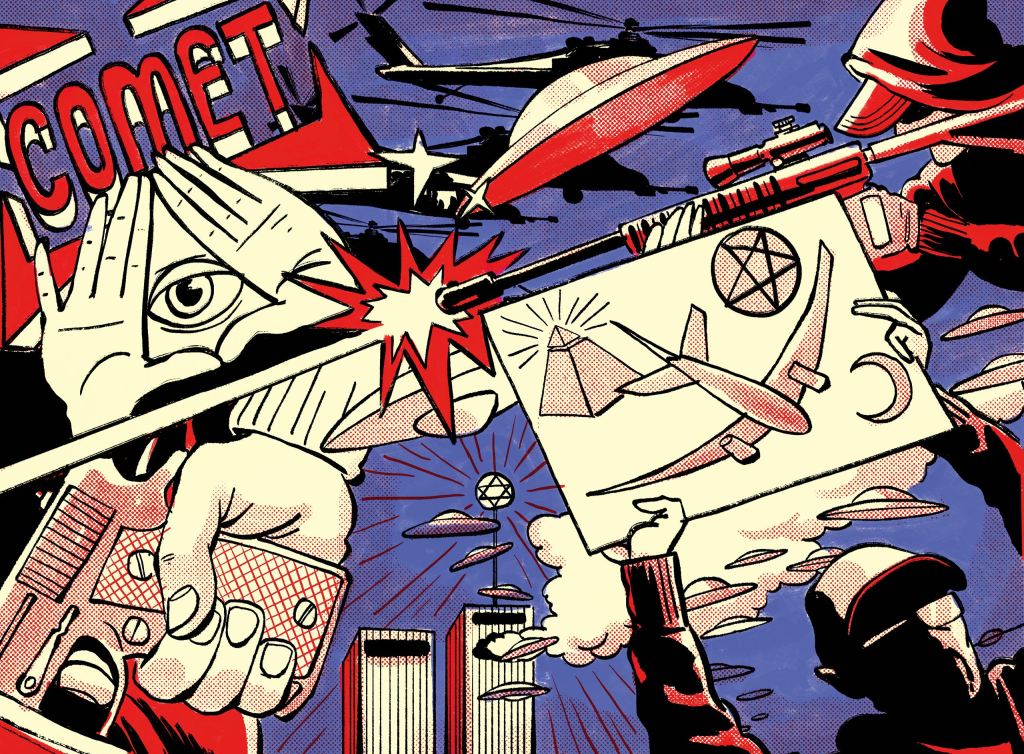


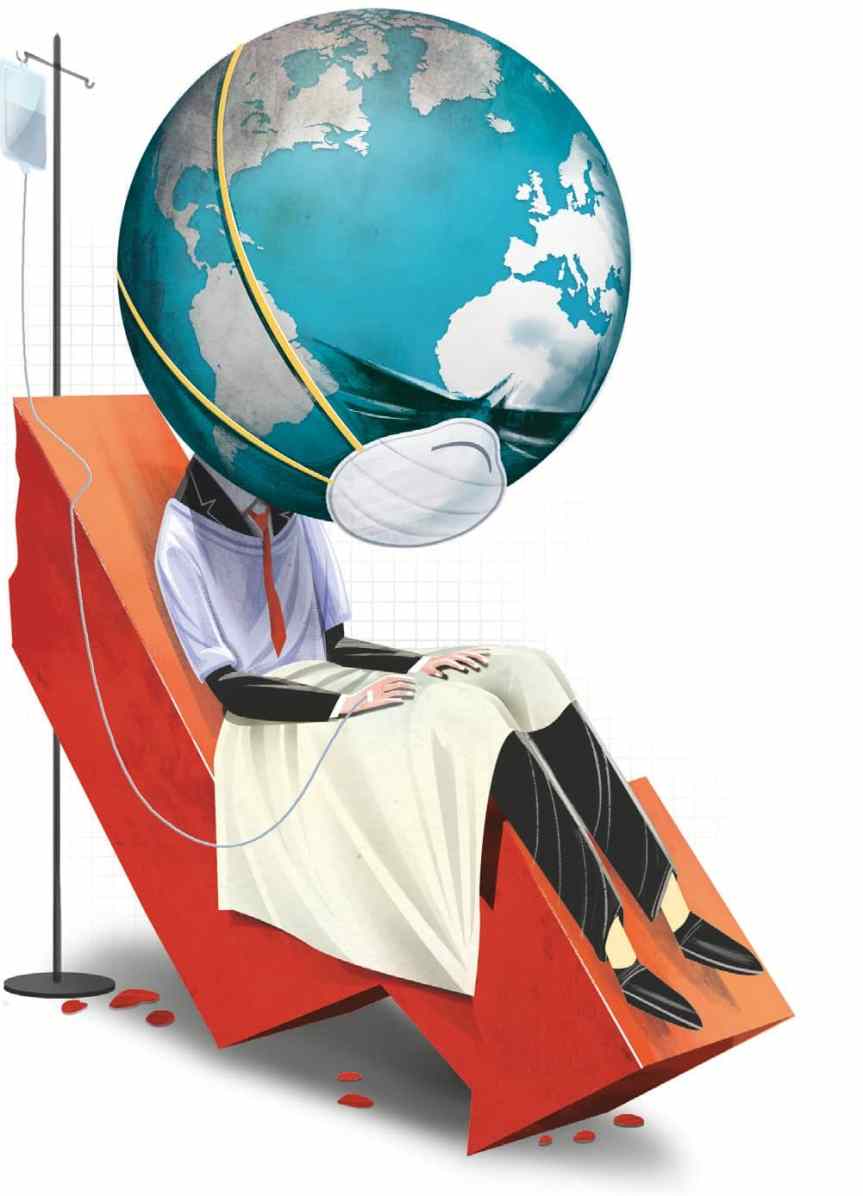


 Track2Training
You must be logged in to post a comment.