A country blessed with enormous species, spices, and reserves, popularly known as Incredible India is the only place holding the largest democracy. The opportunity to be the Prime Minister of such a vast country is nothing less than a blessing. I would have put in every effort to take the nation to the top.
Although it is gifted, no country is without flaws. The position which it holds today is due to all the accomplishments it acquired after conquering the obstacles posed by the foreign invaders.
The biggest problem nationwide is poverty. I would have taken the first step to eradicate it with the help of education. Promising infrastructure and equipment at government schools would have been capitalized for the needy. Without any discrimination, the students of government and private schools would have been taught by world-class teachers in a friendly environment. Therefore, following the saying, “education is the key to success” would have been applied for the bright future of Indians.
The next step would be taken for the graduates to aid them with suitable jobs based upon the skills rather than merits. Officials would be appointed to keep a check upon the data and ensure everyone is getting equal rights. The money earned through jobs would be in turn used in the economy as consumption of resources. And considering that the basic necessities like shelter, food, and clothes would be fulfilled at minimal costs and good quality. Hence, the cycle of economy will be balanced properly.
The nation depends upon assets, and ensuring the safety and health of the working class is essential. High taxes will be levied from the wealthy and accustomed to building techno-savvy devices for hospitals and the defense army. In all, it will lead to proportional distribution of resources.
Governing the region is not a one-time investment but a moving process that should be revised with time. All the hands would be joined, within the five years in which I will be employed.
The industrial complex is a socioeconomic concept wherein businesses become entwined in social or political systems or institutions, creating or bolstering a profit economy from these systems. … The industrial complex may profit financially from maintaining socially detrimental or inefficient systems.
Inventory refers to all the items, goods, merchandise, and materials held by a business for selling in the market to earn a profit. Example: If a newspaper vendor uses a vehicle to deliver newspapers to the customers, only the newspaper will be considered inventory. The vehicle will be treated as an asset
Cultural Heritage is an expression of the ways of living developed by a community and passed on from generation to generation, including customs, practices, places, objects, artistic expressions and values.
Cultural values are the core principles and ideals upon which an entire community exists. This is made up of several parts: customs, which are traditions and rituals; values, which are beliefs; and culture, which is all of a group’s guiding values
Business ethics is the study of appropriate business policies and practices regarding potentially controversial subjects including corporate governance, insider trading, bribery, discrimination, corporate social responsibility, and fiduciary responsibilities
Electronic waste generally known as e-waste, is any electronic product that has reached the end of its usable life cycle. Many consumer doesn’t know that the Electronic product actually contain toxic substances therefore they must be handled with care when no longer wanted or needed. One should donate its electronic product which is outdated for him to the person who might still find this electronic product usable.
E-waste is harmful for global environment, animals and humans. When improper disposal of e-waste in regular landfills or in places where it is dumped illegally, both heavy metals and flame retardants can seep directly from the e-waste into the soil, causing contamination of underlying groundwater or contamination of crops that may be planted nearby or in the area in the future.
Heavy metals from e-waste, such as mercury, lithium, lead and barium, then leak through the earth even further to reach groundwater. When these heavy metals reach groundwater, they eventually make their way into ponds, streams, rivers and lakes. Through these pathways, acidification and toxification are created in the water, which is unsafe for animals, plants and communities even if they are miles away from a recycling site. Clean drinking water becomes problematic to find.
Electronic waste contains toxic components that are dangerous to human health, such as mercury, lead, barium and lithium. The negative health effects of these toxins on humans include brain, heart, liver, kidney and skeletal system damage. To avoid these toxic effects of e-waste, it is crucial to properly e-cycle, so that items can be recycled, refurbished, resold, or reused. The growing stream of e-waste will only worsen if not educated on the correct measures of disposal.
Organizational climate is a concept that has academic meaning in the fields of Organizational Behavior and I/O Psychology as well as practical meaning in the business world There is continued scholarly debate about the exact definition of organizational climate for the purposes of scientific study.
Organizational change refers to the actions in which a company or business alters a major component of its organization, such as its culture, the underlying technologies or infrastructure it uses to operate, or its internal processes
Organization development is the study and implementation of practices, systems, and techniques that affect organizational change. The goal of which is to modify an organization’s performance and/or culture. The organizational changes are typically initiated by the group’s stakeholders
A SWOT analysis is a strategic technique used to determine and define your Strengths, Weaknesses, Opportunities, and Threats. This technique can be applied to either an organization or a person. Performing personal swot analysis will help know more about yourself. The ultimate aim of any SWOT analysis is to identify the key internal and external factors that are important to achieving the objectives. It helps to build on what you do well, to address what you are lacking, to minimize risks, and to take the greatest possible advantage of chances for success. The internal factors are strengths or weaknesses and the external factors are opportunities and threats. SWOT plays as a strategic planning tool in an organization.
S-Strengths: Strengths are the qualities that separate you from others. It helps for the success of an organization or a person and will be assisting in achieving the organization’s mission. For example, some companies may be good at marketing strategies some may be good at their quality control. So, it may be anything that gives benefits to an organization.
W-Weaknesses; Weaknesses are the factors that may prevent successful results within a project. This is the area that we have to improve to remain competitive. Find out what makes your competitors better and what weaknesses you have and improve in that areas.
O-Opportunities: Opportunities are the chances to improve ourselves better. We have to grab the opportunities and make use of them to attain a higher level. Be ready to take opportunities and make full use of them to become stronger.
T-Threats: Threats are the external factors that have the potential to harm an organization. If we can predict the threats, then we can make sure to reduce them or avoid them. We also have to be aware of whether our weaknesses can be converted into our threats.
I like to explain swot analysis by giving an example. Let’s see the personal swot analysis of Sridhar Vembu, who is the founder and CEO of the Zoho corporations. According to Forbes, he is the 59th richest Indian in the world. Zoho Corporation is an Indian multinational company that produces several web-based tools. Let’s analyze the strengths, weaknesses, opportunities, and threats for Sridhar Vembu.
HIS STRENGTHS
He has good communicational skills.
He has good leadership skills with a good visionary.
He has a motherland spirit.
He is an artistic and confident person. He also has innovative ideas which made him a more successful person.
He has not only stopped with his creative ideas. He is a person who has converted his ideas into reality.
HIS WEAKNESSES
He has a less commercial vision.
He focussed more on upskilling rather than innovation.
The rapid growth of his company may distract from upgrading core services and make everything too complex.
HIS OPPORTUNITIES
There is a vital need for made-in-India products.
The government provides support for companies that concentrate on all facets of society.
HIS THREATS
There are diverse product portfolios.
Less interest in advertising and marketing may result in customer loss.
As his achievements rise, the responsibility also increases. He has to be responsible in case of any disasters in his projects.
Competitors with better research-intensive strategies.
Thus know your strengths and opportunities to shine and be aware of your weakness and threats and find a better solution to them.
In the heat of the moment, it’s easy to say something you’ll later regret. Take a few moments to collect your thoughts before saying anything — and allow others involved in the situation to do the same.
Be calm.
Once you’re calm, express your anger As soon as you’re thinking clearly, express your frustration in an assertive but non confrontational way. State your concerns and needs clearly and directly, without hurting others.
Exercise physically.
Get some exercises physical activity can help reduce stress that can cause you to become angry. If you feel your anger escalating, go for a brisk walk or run, or spend some time doing other enjoyable physical activities.
Time.
Take a timeout Timeouts aren’t just for kids. Give yourself short breaks during times of the day that tend to be stressful. A few moments of quiet time might help you feel better prepared to handle what’s ahead without getting irritated or angry.
Solution.
Identify possible solutions Instead of focusing on what made you mad, work on resolving the issue at hand. Does your child’s messy room drive you crazy? Close the door. Is your partner late for dinner every night? Schedule meals later in the evening or agree to eat on your own a few times a week. Remind yourself that anger won’t fix anything and might only make it worse Stick with ‘I’ statements To avoid criticizing or placing blame which might only increase tension use “I” statements to describe the problem. Be respectful and specific. For example, say, “I’m upset that you left the table without offering to help with the dishes” instead of “You never do any housework.
Control.
Don’t hold a grudge Forgiveness is a powerful tool. If you allow anger and other negative feelings to crowd out positive feelings, you might find yourself swallowed up by your own bitterness or sense of injustice. But if you can forgive someone who angered you, you might both learn from the situation and strengthen your relationship.
Humor.
Use humor to release tension Lightening up can help diffuse tension. Use humor to help you face what’s making you angry and, possibly, any unrealistic expectations you have for how things should go. Avoid sarcasm, though it can hurt feelings and make things worse.
Relax.
Practice relaxation skills When your temper flares, put relaxation skills to work. Practice deep-breathing exercises, imagine a relaxing scene, or repeat a calming word or phrase, such as “Take it easy.” You might also listen to music, write in a journal or do a few yoga poses whatever it takes to encourage relaxation.
Seek help.
Know when to seek help Learning to control anger is a challenge for everyone at times. Seek help for anger issues if your anger seems out of control, causes you to do things you regret or hurts those around you
SWATCH BHARAT SWASTH BHARAT Whether the Sun shines or it Rains; Cleaning the India should be our aim. Pledge for cleanliness to show your keenness to clean India. India will teach us the tolerance and gentleness of mature mind, understanding spirit and a unifying, pacifying love for all human beings.” – Will Durant India is in dire need of a cleanliness drive like Swachh Bharat Abhiyan to eradicate dirtiness. It is important for the overall development of citizens in terms of health and well-being. This a scheme to help us amd to make India healthy and clean and to make India swatch and swasth.
Swachh Bharat Abhiyan is one of the most significant and popular missions to have taken place in India. Swachh Bharat Abhiyan translates to Clean India Mission. This drive was formulated to cover all the cities and towns of India to make them clean. This campaign was administered by the Indian government and was introduced by the Prime Minister, Narendra Modi. It was launched on 2nd October in order to honor Mahatma Gandhi’s vision of a Clean India. The cleanliness campaign of Swachh Bharat Abhiyan was run on a national level and encompassed all the towns, rural and urban. It served as a great initiative in making people aware of the importance of cleanliness. This helped in making the message reach wider. It aims to build sanitary facilities for all households. One of the most common problems in rural areas is that of open defecation. Swachh Bharat Abhiyan aims to eliminate that. Generally, in these areas, people do not have proper toilet facilities. They go out in the fields or roads to excrete. This practice creates a lot of hygiene problems for citizens. Therefore, this Clean India mission can be of great help in enhancing the living conditions of these people. When we will dispose of waste properly and recycle waste, it will develop the country. As its main focus is one rural area, the quality of life of the rural citizens will be enhanced through it. Similarly, they also wanted to make people aware of health and education through awareness programs. After that, a major objective was to teach citizens to dispose of waste mindfully. Most importantly, it enhances the public health through its objectives. This helped in making the message reach wider. It aims to build sanitary facilities for all households. Every small step towards sanitation will bring a big change for the nation. Heaven could be on earth, Cleanness is something which has priceless worth.
The main objective of Swachh Bharat Abhiyan is to aware the citizens of the country of their utmost priority and responsibility towards cleanliness in the nearby surroundings and the spread of filth and infectious parasites. The campaign primarily focuses on eradicating the unhealthy practices of open defecation and provide basic sanitation facilities by constructing toilets, solid-liquid waste disposal systems, supplying clean drinking water, etc.
“Let’s make this our plea; we will make India open defecation free. Cleanness can provide us inner peace, clean India mission is something that we need. For cleanness we still have hope, because Swachh Bharat Abhiyan has a big scope.”
Swatch Bharat Abhiyan is a great accomplishment and proved out to a one of a kind project in the history of India. We must carry forward the practices of cleanliness with the same enthusiasm and zeal and help each other by keeping our Mother India clean and beautiful. There are lots of schemes made for us by our government. These Abhiyan tries to make our beautiful India more beautiful and to make us healthier. We can make our country beautiful; by participating in Swachh Bharat mission we can achieve something fruitful. Let’s work on cleanliness from our side, and make India feel pride and clean your houses, roads and street, Cleanliness is our basic need. Make India great again, participate in Swachh Bharat mission to bring new reign. Due to waste lying in the streets cause dangerous diseases which hampers our health and may cause dangerous diseases. These Abhiyan is a kind initiative to help us and to free us from these dangerous diseases. These are some examples how these Abhiyan help us and gift us a healthy life. Clean India mission is something which we need for progress of our country.
Contaminated water causes many water-borne infections like diarrhoea, and also serves as a carrier for vectors such as mosquitoes spreading epidemics. Open defecation means no sanitation. It fouls the environment, and spreads diseases. According to WHO-UNICEF report (2010), India has the highest rate of open defecation. Access to safe drinking water and good sanitation are vital for family well-being. It results in control of enteric diseases, and boosts child health. A healthy child has better learning and retaining ability. Girls avoid going to school where there are no proper sanitation measures. Sanitation makes a positive contribution in family literacy. One key goal of sanitation is to safely reduce human exposure to pathogens. Pathogens are excreted by infected individuals and if not properly contained or treated, may present a risk to humans who come in contact with them. These individuals can also be exposed to pathogens through drinking water or eating food contaminated with pathogens found in human excreta. According to a UNICEF study, for every 10 per cent increase in female literacy, a country’s economy can grow by 0.3 per cent. Thus, sanitation contributes to social and economic development of the society. Improved sanitation also helps the environment. Clean drinking water and good sanitation would not prevent infections without practicing good hygiene. A simple habit of washing hands goes a long way towards preventing diseases. The stored water supply may also serve as a source of infection in the absence of hygiene. Sanitation envisages promotion of health of the community by providing clean environment and breaking the cycle of disease. Sanitation systems aim to protect human health by providing a clean environment that will stop the transmission of disease, especially through the fecal–oral route. For example, diarrhea, a main cause of malnutrition and stunted growth in children, can be reduced through adequate sanitation.
If we follow the sanitation system then we can create a healthy world . If we live healthy then we can be wealthy. Swatch bharat is swasth bharat is a true word. If the world become clean then everyone become healthy. If we want to make India a developed nation then clean India mission is the necessity. Let’s take oath; by participating in clean India mission we will make our country proud. Clean India mission is something which we need for progress of our country. Working towards sanitation will bring a significant positive change for the nation.
“Classic literature is still something that hangs in the air like a song.”
-Gilbert K Chesterton
Some of the must-read classics.
1. The Great Gatsby
F. Scott Fitzgerald’s his novel is set in Long Island, near New York City. This book, from the narrator Nick Carraway’s perspective tells the story of his dealings with an enigmatic billionaire Jay Gatsby and his fetish for his former lover Daisy Buchanan. A classic worth your time!
“I wasn’t actually in love, but I felt a sort of tender curiosity.”
F. Scott Fitzgerald, The Great Gatsby
2. The Catcher in The Rye
J.D Salinger’s The Catcher in The Rye revolves around a 16 year old disillusioned and confused adolescent named Holden Caulfield, following his expulsion from prep school. The book touches upon critical subjects of morality, religion, lies and deceit, isolation, youth, sexual identity etc.
“I am always saying “Glad to’ve met you” to somebody I’m not at all glad I met. If you want to stay alive, you have to say that stuff, though.”
J.D. Salinger, The Catcher in the Rye
3.Gone With the Wind
American writer Margaret Mitchell’s book is set in Clayton County and Atlanta, Georgia, during the American Civil War and Reconstruction Era. It primarily revolves around Scarlett O’Hara, the spoiled daughter of a well-to-do plantation owner, who is faced with sudden penury and must do everything to come out of it. It encompasses a sweeping romance and a fictionalised account of the civil war based on facts. The book captures how human persevere and endeavour to survive in the worst of situations.
“Burdens are for shoulders strong enough to carry them.”
Margaret Mitchell, Gone with the Wind
4. Anna Karenina
Russian author Leo Tolstoy’s ‘Anna Karenina’, is regarded as one of the greatest novels of all time. The book follows an engaging affair between Anna Karenina and Count Vronsky and subsequently an introspective self discovery and religious epiphany by a character Konstantin Levin. The novel spins the themes such as marriage, fidelity, life, creation, society, class etc. One of the absolute must read for literature lovers.
“All happy families are alike; each unhappy family is unhappy in its own way.”
Leo Tolstoy, Anna Karenina
5. Fahrenheit 451
Ray Bradbury’s 1953 dystopian novel gives a peek into the future of America, where books are illegalized and any books found are burnt by people specified for the task called ‘firemen’. The book tells the tale of a fireman Guy Montag. Destroying literature and knowledge starts to weigh heavily upon Montag’s conscious, who ends up quitting his job and working towards safeguarding literature. The title of the book is selected based on the ignition temperature of paper at which it readily catches fire.
“There must be something in books, something we can’t imagine, to make a woman stay in a burning house; there must be something there. You don’t stay for nothing.”
Ray Bradbury, Fahrenheit 451
6.Lord of the Flies
Nobel Prize-winning British author William Golding’s book pivots round a group of boys marooned on a strange uninhabited island and their hapless attempts at governing themselves. The explores various themes like primitivity, civilisation, rules and order, wisdom and knowledge, youth , power, religion, identity etc.
“We did everything adults would do. What went wrong?”
William Golding, Lord of the Flies
7. The Diary of a Young Girl
Otherwise known as ‘Anne Frank’s diary’, ‘The Diary of a young girl’, is a series of writings in Dutch by Anne Frank while in hiding with her family for two years because of the Nazi occupation of The Netherlands. The diary contains a thorough first hand account of Anne Frank’s life before and after the Nazi occupation. Anne has divulged details of private life, the love and longing for her family and her life in hiding.
“Where there’s hope, there’s life. It fills us with fresh courage and makes us strong again.”
Edible mushrooms are the fleshy and edible fruit bodies of several species of macrofungi(fungi which bear fruiting structures that are large enough to be seen with the naked eye). They can appear either below ground (hypogeous) or above ground (epigeous) where they may be picked by hand.Edibility may be defined by criteria that include absence of poisonous effects on humans and desirable taste and aroma. Edible mushrooms are consumed for their nutritional and culinary value. Mushrooms, especially dried shiitake, are sources of umami flavor.Especially tasty and desired mushrooms are referred as “choice edible”
Edible mushrooms include many fungal species that are either harvested wild or cultivated. Easily cultivated and common wild mushrooms are often available in markets, and those that are more difficult to obtain (such as the prized truffle, matsutake and morel) may be collected on a smaller scale by private gatherers.
Non edible mushroom
There are certain fungi which are not consumed because of the production of toxins like amatoxins and phallotoxins. The fungi which produce these toxins are referred as poisonous fungi or the toadstools e.g., Fly agarics and Amanita pantherina. The consumption of these fungi results in death due to the activity of the toxins.
Seven of the world’s most poisonous mushrooms are: death cap (Amanita phalloides), Conocy bettilaris, web caps (Cortinarius species), Autumn skullcap (Calerina marginata), destroyin angels (Amanita species), Podostron a cornu-damae and deadly dapperliry (Lepiota brunneoincarnata).
Food values of mushroom
mushrooms contain a modest amount of fiber and over a dozen minerals and vitamins, including copper, potassium, magnesium, zinc and a number of B vitamins such as folate. Mushrooms are also high in antioxidants like selenium and glutathione, or GSH, substances believed to protect cells from damage and reduce chronic disease and inflammation.
Some studies suggest mushrooms are the richest dietary source of another antioxidant called ergothioneine, or ERGO, which is also present in large amounts in red beans, oat bran and liver. ERGO and other antioxidants are primarily concentrated in the caps, not the stems.
Spawn and spawning
Spawn is the living fungal culture that is called mycelium, grown onto a substrate. It gives the backbone to any mushroom growing operation. … Unlike seeds, the mushroom spawn is grown from selected genetics and cloned for consistent production of a particular cultivar of mushroom.
Types of Mushroom spawn are;
Woodchip spawn – Made from woodchips of different hardwoods.
Straw spawn – Pasteurized straw inoculated with mycelium.
Sawdust spawn plugs – Sawdust spawn in the shape of a plug with Styrofoam on the end.
Liquid spawn – Water enriched with mushroom spores or mycelia slurry.
Techniques in mushroom cultivation
On Paddy Straw:
i. Preparation of Spawn
ii. Preparation of Mushroom Bed
iii. Spawning of Mushroom Bed
iv. Watering of Mushroom Bed
v. Mushroom Crop Production
vi. Picking of Mushrooms
vii. Precautions of Mushroom Cultivation
Disease of mushroom
There are many types of fungal disease in mushrooms, but there are three main kinds that cause the most damage to crops. These are Dry Bubble (Verticillium, new name: Lecanicillium), Wet Bubble (Mycogone) and Cobweb (Dactylium, new name: Cladobotryum).
Recipes of mushrooms
Mushroom recipes like kadai mushroom, mushroom biryani, mushroom manchurian and mushroom masala,cream of mushroom soup, methi mushroom, matar mushroom, mushroom pasta,mushroom omlette,mushroom fry……..
” Mushrooms grow in damp places. That’s why they are shaped like an umbrella “
The previous article dealt with the networks and the backpropagation algorithm. This article is about the mathematical implementation of the algorithm in FFN followed by an important concept called hyper-parameter tuning.
In this FFN we apply the backpropagation to find the partial derivative of the loss function with respect to w1 so as to update w1.
Hence using backpropagation the algorithm determines the update required in the parameters so as to match the predicted output with the true output. The algorithm which performs this is known as Vanilla Gradient Descent.
The way of reading the input is determined using the strategy.
Strategy
Meaning
Stochastic
One by one
Batch
Splitting entire input into batches
Mini-batch
Splitting batch into batches
The sigmoid here is one of the types of the activation function. It is defined as the function pertaining to the transformation of input to output in a particular neuron. Differentiating the activation function gives the respective terms in the gradients.
There are two common phenomena seen in training networks. They are
Under fitting
Over fitting
If the model is too simple to learn the data then the model can underfit the data. In that case, complex models and algorithms must be used.
If the model is too complex to learn the data then the model can overfit the data. This can be visualized by seeing the differences in the training and testing loss function curves. The method adopted to change this is known as regularisation. Overfit and underfit can be visualized by plotting the graph of testing and training accuracies over the iterations. Perfect fit represents the overlapping of both curves.
Regularisation is the procedure to prevent the overfitting of data. Indirectly, it helps in increasing the accuracy of the model. It is either done by
Adding noises to input to affect and reduce the output.
To find the optimum iterations by early stopping
By normalising the data (applying normal distribution to input)
By forming subsets of a network and training them using dropout.
So far we have seen a lot of examples for a lot of procedures. There will be confusion arising at this point on what combination of items to use in the network for maximum optimization. There is a process known as hyper-parameter tuning. With the help of this, we can find the combination of items for maximum efficiency. The following items can be selected using this method.
Network architecture
Number of layers
Number of neurons in each layer
Learning algorithm
Vanilla Gradient Descent
Momentum based GD
Nesterov accelerated gradient
AdaGrad
RMSProp
Adam
Initialisation
Zero
He
Xavier
Activation functions
Sigmoid
Tanh
Relu
Leaky relu
Softmax
Strategy
Batch
Mini-batch
Stochastic
Regularisation
L2 norm
Early stopping
Addition of noise
Normalisation
Drop-out
All these six categories are essential in building a network and improving its accuracy. Hyperparameter tuning can be done in two ways
Based on the knowledge of task
Random combination
The first method involves determining the items based on the knowledge of the task to be performed. For example, if classification is considered then
Activation function- softmax in o/p and sigmoid for rest
Initialisation- zero or Xavier
Strategy- stochastic
Algorithm- vanilla GD
The second method involves the random combination of these items and finding the best combination for which the loss function is minimum and accuracy is high.
Hyperparameter tuning would already be done by researchers who finally report the correct combination of items for maximum accuracy.
The previous article dealt with the networks and the backpropagation algorithm. This article is about the mathematical implementation of the algorithm in FFN followed by an important concept called hyper-parameter tuning.
In this FFN we apply the backpropagation to find the partial derivative of the loss function with respect to w1 so as to update w1.
Hence using backpropagation the algorithm determines the update required in the parameters so as to match the predicted output with the true output. The algorithm which performs this is known as Vanilla Gradient Descent.
The way of reading the input is determined using the strategy.
Strategy
Meaning
Stochastic
One by one
Batch
Splitting entire input into batches
Mini-batch
Splitting batch into batches
The sigmoid here is one of the types of the activation function. It is defined as the function pertaining to the transformation of input to output in a particular neuron. Differentiating the activation function gives the respective terms in the gradients.
There are two common phenomena seen in training networks. They are
Under fitting
Over fitting
If the model is too simple to learn the data then the model can underfit the data. In that case, complex models and algorithms must be used.
If the model is too complex to learn the data then the model can overfit the data. This can be visualized by seeing the differences in the training and testing loss function curves. The method adopted to change this is known as regularisation. Overfit and underfit can be visualized by plotting the graph of testing and training accuracies over the iterations. Perfect fit represents the overlapping of both curves.
Regularisation is the procedure to prevent the overfitting of data. Indirectly, it helps in increasing the accuracy of the model. It is either done by
Adding noises to input to affect and reduce the output.
To find the optimum iterations by early stopping
By normalising the data (applying normal distribution to input)
By forming subsets of a network and training them using dropout.
So far we have seen a lot of examples for a lot of procedures. There will be confusion arising at this point on what combination of items to use in the network for maximum optimization. There is a process known as hyper-parameter tuning. With the help of this, we can find the combination of items for maximum efficiency. The following items can be selected using this method.
Network architecture
Number of layers
Number of neurons in each layer
Learning algorithm
Vanilla Gradient Descent
Momentum based GD
Nesterov accelerated gradient
AdaGrad
RMSProp
Adam
Initialisation
Zero
He
Xavier
Activation functions
Sigmoid
Tanh
Relu
Leaky relu
Softmax
Strategy
Batch
Mini-batch
Stochastic
Regularisation
L2 norm
Early stopping
Addition of noise
Normalisation
Drop-out
All these six categories are essential in building a network and improving its accuracy. Hyperparameter tuning can be done in two ways
Based on the knowledge of task
Random combination
The first method involves determining the items based on the knowledge of the task to be performed. For example, if classification is considered then
Activation function- softmax in o/p and sigmoid for rest
Initialisation- zero or Xavier
Strategy- stochastic
Algorithm- vanilla GD
The second method involves the random combination of these items and finding the best combination for which the loss function is minimum and accuracy is high.
Hyperparameter tuning would already be done by researchers who finally report the correct combination of items for maximum accuracy.
Global warming is a dangerous effect on our environment that we are facing these days. Rapid industrialization, increase in the population growth and pollution are causing a rise in global warming. Global warming refers to the increase in the average temperature of the earth’s surface during the last century. One of the reasons why global warming is dangerous is because it disturbs the overall ecology of the planet. This results in floods, famine, cyclones and other issues. There are many causes and results of this warming and is a danger for the existence of life on earth.
The sign of global warming is already visible with many natural phenomena happening around globally, affecting each living species.
The most evident causes of global warming are industrialization, urbanization, deforestation, sophisticated human activities. These human activities have led to an increase in the emission of the greenhouse, including CO₂, nitrous oxide, methane, and others.
CAUSES OF GLOBAL WARMING
Global warming is certainly an alarming situation, which is causing a significant impact on life existence. Extreme global warming is resulting in natural calamities, which is quite evident happening around. One of the reasons behind global warming is the extreme release of greenhouse gases stuck on the earth surface, resulting in the temperature increase.
Similarly, volcanoes are also leading global warming because they spew too much CO₂ in the air. One of the significant causes behind global warming is the increase in the population. This increase in the population also results in air pollution. Automobiles release a lot of CO₂, which remains stuck in the earth.
This increase in the population is also leading to deforestation, which further results in global warming. More and more trees are being cut, increasing the concentration of CO₂.
The greenhouse is the natural process where the sunlight passes through the area, thus warming the earth’s surface. The earth surface releases energy in the form of heat in the atmosphere maintaining the balance with the incoming energy. Global warming depletes the ozone layer leading to the doom’s day.
There is a clear indication that the increase in global warming will lead to the complete extinction of life from the earth surface.
SOLUTION FOR GLOBAL WARMING
Although we are almost late in slowing down the global warming rate, it is crucial to find the right solution. From individuals to governments, everyone has to work upon a solution for global warming. Controlling pollution, population and use of natural resources are some of the factors to consider. Switching over to the electric and hybrid car is the best way to bring down the carbon dioxide.
As a citizen, it is best to switch over to the hybrid car and to use public transport. This will reduce pollution and congestion. Another significant contribution you can do is minimise the use of plastic. Plastic is the primary cause of global warming taking years to recycle.
Deforestation is another thing to consider that will help in controlling global warming. Planting of more trees should be encouraged to make the environment go green.
Industrialization should be under certain norms. The building of industries should be banned in green zones affecting plants and species. Hefty penalties should be levied on such sectors contributing towards global warming.
EFFECTS OF GLOBAL WARMING
The effect of global warming is widely seen in this decade. Glacier retreat and arctic shrinkage are the two common phenomena seen. Glaciers are melting in a fast way. These are pure examples of climate change.
Rise in sea level is another significant effect of global warming. This sea-level rise is leading to floods in low-lying areas. Extreme weather conditions are witnessed in many countries. Unseasonal rainfall, extreme heat and cold, wildfires and others are common every year. The number of these cases is increasing. This will indeed imbalance the ecosystem bringing the result of the extinction of species.
Similarly, marine life is also widely getting affected due to the increase in global warming. This is resulting in the death of marine species and other issues. Moreover, the changes are expected in coral reefs, which are going to face the end in coming years.
These effects will take a steep rise in coming years, bringing the expansion of species to a halt. Moreover, humans too will witness the negative impact of global warming in the end.
The previous article gave some introduction to the networks used in deep learning. This article provides more information on the different types of neural networks.
In a feed-forward neural network (FFN) all the neurons in one layer are connected to the next layer. The advantage is that all the information processed from the previous neurons is fed to the next layer hence getting clarity in the process. But the number of weights and biases significantly increases when there is a large number of input. This method is best used for text data.
In a convolutional neural network (CNN), some of the neurons are only connected to the next layer i.e. connection is partial. Batch-wise information is fed into the next layer. The advantage is that the number of parameters significantly reduces when compared to FFN. This method is best used for image data since there will be thousands of inputs.
In recurrent neural networks, the output of one neuron is fed back as an input to the neuron in the previous layer. A feed-forward and a feedback connection are established between the neurons. The advantage is that the neuron in the previous layer can perform efficiently and can update based on the output from the next neuron. This concept is similar to reinforcement learning in the brain. The brain learns an action based on punishment or reward given as feedback to the neuron corresponding to that action.
Once the final output is computed by the network, it is then compared with the original value, and their difference is taken in different forms like the difference of squares, etc. this term is known as loss function.
It will be better to explain the role of the learning algorithms here. The learning algorithm is the one that tries to find the relation between the input and output. In the case of neural networks, the output is indirectly related to input since there are some hidden layers in between them. This learning algorithm works in such a way so as to find the optimum w and b values for the loss function is minimum or ideally zero.
The algorithm in neural networks do this using a method called backpropagation. In this method, the algorithm starts tracing from the output. It then computes the values for the parameters corresponding to the neuron in that layer. It then goes back to the previous layer does the computations for the parameters of the neurons in that layer. This procedure is done till it encounters the inputs. In this way, we can find the optimum values for the parameters.
The computations made by the algorithm are based on the type of the algorithm. Most of the algorithms find the derivative of a parameter in one layer with respect to the loss function using backpropagation. This derivative is then subtracted from the original value.
Where lr is the learning rate; provided by the user. The lesser the learning rate, the better will be the results but more the time is taken. The starting value for w and b is determined using the initialization.
Method
Meaning
Zero
W and b are set to zero
Xavier
w and b indirectly proportional to root n
He
w and b indirectly proportional to root n/2
Where n; refers to the number of neurons in a layer. These depend on the activation function used.
The derivative of the loss function determines the updating of the parameters.
Value of derivative
Consequence
-ve
Increases
0
No change
+ve
Decreases
The derivative of the loss function with respect to the weight or bias in a particular layer can be determined using the chain rule used in calculus.
The previous article gave some introduction to the networks used in deep learning. This article provides more information on the different types of neural networks.
In a feed-forward neural network (FFN) all the neurons in one layer are connected to the next layer. The advantage is that all the information processed from the previous neurons is fed to the next layer hence getting clarity in the process. But the number of weights and biases significantly increases when there is a large number of input. This method is best used for text data.
In a convolutional neural network (CNN), some of the neurons are only connected to the next layer i.e. connection is partial. Batch-wise information is fed into the next layer. The advantage is that the number of parameters significantly reduces when compared to FFN. This method is best used for image data since there will be thousands of inputs.
In recurrent neural networks, the output of one neuron is fed back as an input to the neuron in the previous layer. A feed-forward and a feedback connection are established between the neurons. The advantage is that the neuron in the previous layer can perform efficiently and can update based on the output from the next neuron. This concept is similar to reinforcement learning in the brain. The brain learns an action based on punishment or reward given as feedback to the neuron corresponding to that action.
Once the final output is computed by the network, it is then compared with the original value, and their difference is taken in different forms like the difference of squares, etc. this term is known as loss function.
It will be better to explain the role of the learning algorithms here. The learning algorithm is the one that tries to find the relation between the input and output. In the case of neural networks, the output is indirectly related to input since there are some hidden layers in between them. This learning algorithm works in such a way so as to find the optimum w and b values for the loss function is minimum or ideally zero.
The algorithm in neural networks do this using a method called backpropagation. In this method, the algorithm starts tracing from the output. It then computes the values for the parameters corresponding to the neuron in that layer. It then goes back to the previous layer does the computations for the parameters of the neurons in that layer. This procedure is done till it encounters the inputs. In this way, we can find the optimum values for the parameters.
The computations made by the algorithm are based on the type of the algorithm. Most of the algorithms find the derivative of a parameter in one layer with respect to the loss function using backpropagation. This derivative is then subtracted from the original value.
Where lr is the learning rate; provided by the user. The lesser the learning rate, the better will be the results but more the time is taken. The starting value for w and b is determined using the initialization.
Method
Meaning
Zero
W and b are set to zero
Xavier
w and b indirectly proportional to root n
He
w and b indirectly proportional to root n/2
Where n; refers to the number of neurons in a layer. These depend on the activation function used.
The derivative of the loss function determines the updating of the parameters.
Value of derivative
Consequence
-ve
Increases
0
No change
+ve
Decreases
The derivative of the loss function with respect to the weight or bias in a particular layer can be determined using the chain rule used in calculus.
I never really thought about writing blogs before but I did, with this post I’ll be completing 30 blogs. Lie is unexpected isn’t it, you do what you have never thought of before. Writing blogs was all just a part of my internship that I HAD TO DO, but it became a wonderful experience. When I started posting the major problem I faced was What should I post about? I don’t know the first thing about it. I am not a technology geek who can talk about various new gadgets that came out in the market, nor do I like cars, nor am I much of a reader to write book reviews or a movie enthusiast for that matter. I am a simple, LAZY student who likes to do craft (yes my hobby is to make best out of waste kind of things), watching anime (It also helps practice my listening skills and get accustomed to listening Japanese; I am a Japanese language student) and listen to music (ARMYYYY!!; if you are new to this, ARMY is BTS’s fandom); these are the only three things that I do, of course beside studying and all (I DO STUDY OKAY(ノಠ益ಠ)ノ彡┻━┻).
As I mentioned above I don’t really have the kind of hobbies I can write 30 posts about so I thought, Why not write about the thing that I love; I love Japan (so much that I am learning the language and want to go study there). Yes studying there is my ultimate dream, and to achieve my destination I am doing this internship right now, blogging which I never really thought about doing ever (sometimes you need to do those things that you never thought you will ever do just for the sake of making your dreams a reality).
But even if I never thought of blogging, I still enjoyed it sooo much; it was such a different experience, I did have some difficulty in deciding the topics, had to study a lot but, at the end it was worth it, I was able to share with you my knowledge about what I have learnt about Japan. Although my posts were a bit (okay a lot educational) and not really fun, but as a language student I am very well aware of the difficulties we face while learning about such topics, simply because enough material is not available online and our teachers ask us to write about these topics in 2500-3000 words ┬─┬ノ( º _ ºノ). So all those students or Japanese enthusiasts out there I hope my posts will help you a teensy bit. I am not a professional blogger but thank you if you liked my intense educational posts (づ ̄ ³ ̄)づ.
Statutory bodies are established by acts of Parliament or State Legislatures concerned.Statutory bodies are non-constitutional bodies which make rules and regulations and take the decision on behalf of the government.As these bodies are established by the act, it derives its powers, functions, duties from the respective act.Statutory bodies are established to perform specific tasks. These are sector specific and lessen the burden on the government.Government may grant certain level of independence in its functioning, appointment of members. Though government may grant the independence and autonomy to these bodies, government needs to ensure financial prudence in its functioning.These bodies are subject to varying degrees of ministerial control which are identified in the statutory body’s enabling legislation. Ministers are accountable to Parliament for the operation of all government agencies within their ministry and are necessary to table their annual reports in Parliament.The meaning of a ‘statutory body’ may change depending upon the legislation. For example, a local council is not a statutory body for the purposes of the Financial Accountability Act, but it is for the purposes of the Statutory Bodies Financial Arrangements Act.All statutory bodies are established and operate under the provisions of their own enabling legislation, which sets out the purpose and specific powers of the agency.
Examples: National Human Rights Commission, National Green tribunal, Medical Council of India, University Grants Commission etc.
List of important statutory bodies
National Commission for Minorities
National Commission for Backward Classes
National Green Tribunal
National Consumer Disputes Redressal Commission
National Law Commission
National Human Rights Commission
National Commission for Women
Armed Forces Tribunal
Regulatory bodies
The notion of the regulatory agency was initiated in the USA and it has been basically an American establishment. The first agency was Interstate Commerce Commission (ICC), established by Congress in 1887 to control the railroads.A regulatory body also called a regulatory agency is a public authority or a government agency which is accountable for exercising autonomous authority over some area of human activity in a regulatory or supervisory capacity.Regulatory agencies are generally a part of the executive branch of the government or they have statutory authority to execute their functions with oversight from the legislative branch.Their activities are generally scrutinized by the legislature. Regulatory authorities are usually established to implement standards and safety, or to oversee use of public goods and regulate business.Regulatory body, independent governmental body established by legislative act in order to set standards in a specific field of activity, or operations, in the private sector of the economy and then to enforce those standards.Regulatory agencies function outside direct executive supervision. Because the regulations that they adopt have the force of law, part of these agencies’ function is essentially legislative; but because they may also conduct hearings and pass judgments concerning adherence to their regulations, they also exercise a judicial function – often carried out before a quasi-judicial official called an administrative law judge, who is not part of the court system.Regulatory agencies became popular means of promoting fair trade and consumer protectionas problems of commerce and trade became more complex Several risks are involved in the absence of a regulatory system. The main risks of not regulating are:Excessive tariff. In adequate service level and quality Non-compliance of contractual obligations to users, government or other parties Low efficiency in production and in the provision of goods and services. In adequate level of investment in the sector Frequent discontent between the parties involved .
List of important regulatory bodies
Advertising Standards Council of India
Directorate General of Civil Aviation
Forward Markets Commission
Inland Waterways Authority of India
Insurance Regulatory and Development Authority
Competition Commission of India
Biodiversity authority of India
press council of India
Reserve Bank of India
Securities and Exchange Board of India
Telecom Disputes Settlement and Appellate Tribunal
Telecom Regulatory Authority of India
Medical Council of India
Pension fund regulatory and development authority
The Food Safety and Standards Authority of India (FSSAI)
Quasi-military bodies
A Quasi-Judicial Body is an entity such as an arbitrator or a tribunal, generally of a Public Administrative Agency, which has powers and procedures resembling that of a Court of Law or Judge, and which is obliged to objectively determine facts and draw conclusions from them so as to provide the basis of an official action.A Quasi-Judicial Body has also been defined as “an organ of Government other than a Court or Legislature, which affects the rights of private parties either through adjudication or rulemaking”.It is not necessary that a Quasi-Judicial Body has to be a Court of Law, such as National Green Tribunal.For example, the Election Commission of India is also a Quasi-Judicial Body but does not have its core functions as a Court of Law. Finance Commission is also a quasi-judicial body but do not perform functions of court of law.Awards and judgements of quasi-judicial bodies often depend on a predetermined set of rules or punishment depending on the nature and gravity of the offence committed. Such punishment may be legally enforceable under the law of a country, it can be challenged in a court of law which is the final vital authority.
Success… We all aspire to it, talk about it, envy those who achieve it, we think about it, fight for it. It is really worth it. Success comes with reaching our aims and it brings us incomparable satisfaction and happiness. That gives us a unique opportunity to be happy every day, if we achieve small goals every day and step by step we will be approaching our GREAT dream.
Recollect your studies at college, when you had to combine work and study; when you had a very tense schedule, when your only solution was a custom term paper to get through the semester. But you stood it. By achieving mini goals every term, at last you reached the main aim – successful graduation. And that is why you are a successful person. But one of the qualities of a prosperous person is that he is always striving for perfection and will never rest on his laurels. So, let’s go further and develop ourselves…Close your eyes for a minute and imagine a successful person. Is he rich or poor? Surely, most of us associate success with rich people. So, success and wealth are inseparable from each other? Yes, it’s likely to be so. But wealth is not a target for a successful person. It is just one of the steps to reach a global aim.
What do you think are there any objective reasons, hindering success? It is a fact that there some outer reasons, not depending on you, for example war, flood and so on. And what about objective sound reasons? If you find one, we will debate it with you. But so far I dare say there is none!!!! All the reasons are subjective (inner) and thus – every one can get rid of these reasons, changing something in himself. We create the greatest obstacle in achieving success with our fears, complexes and diffidence. And then, what are the keys to success? Read through the following features and think which of them you have and which you still have to acquire.
1)Clear objective. Without the aim, no achievement is possible. A thoroughly equipped ship with wonderful crew will arrive nowhere if it hasn’t any course of direction.
2) Accurate strategy. Unplanned success is a planned defeat. Accurate and logical strategy helps to realize the grandest projects. A successful person fulfills a small portion of his great plan every day. If you stick to your plan, then you will be able to realize everything you want. And if you want, you have a potential.
3)Positive attitude. Positive thinking, positive attitude to the world work wonders. You live in the world you create for yourself. You want to live in a wonderful world – think about something wonderful! Stop being afraid of failures and you will reach your success.
4) Faith in success. Faith strengthens your potential, and doubts destroy it. If you have some desire, leave all your doubts behind. Just believe in the possibility of its realization and you will have not so many obstacles in your way.
5)Education and training.Being aware of your desires without any action will lead to nothing. Only actions, supported by knowledge will result in great success. Constant training, constant improvement of your professional knowledge, – these are the features that distinguish a successful person. Our world is ever changing, and only on condition of applying your new knowledge you can keep pace with time.
6) Self -improvement. It helps us to change for better, overcome our complexes and fears, get rid of diffidence. Remember, that everything depends only on you; you are master of your fate, your success and happiness. And if you don’t possess all the listed above qualities, then you will be able to develop these features improving yourself. The only thing that does not depend on you is strong desire; it is given to us by Nature.
7) Self -confidence helps us to get top results where there is no premise for it. Fighting with your complexes, the person is approaching the ideal and makes the best of the work.
This article is merely a presentation of philosophy of success. These are only words, though wise and true. But you are able to turn this philosophy into a powerful tool for improving your life from now on. And then the philosophy will revive and you will benefit from it greatly. This simple philosophy will become your strategy, your guiding thread in achieving success. I am sure it will lead you to great success.
In kanji, ‘Furo’ means ‘bath’ and ‘Shiki means ‘unfolding (a cloth)’. Furoshiki is a cloth wrapper which is used to wrap goods to make them easier to carry around. It is also very popular to wrap gifts with this cloth wrapper.
It art of furoshiki started in the Nara period (710-794), people knew it by the name ‘Hirazutsumi’ which means ‘folded wrappers’. In the Nara period, people thought of giving gifts wrapped up in ‘tsutsumi’ (cloth wrapper) and this was commonly called as ‘Hokeifuhaku’. It properly emerged as ‘Furoshiki’ in 756.
People started to use it to carry toiletries and clothes while going to public baths. It became very popular to wrap wedding gifts in furoshiki.
Furoshiki, or the cloth wrapper, comes in various designs and motifs. some of the most popular motifs are crane, fan, pine tree, and waves. Wrapping gifts in these furoshiki with these motifs is considered to be very auspicious and is said to bring blessings and good luck to the newly married couple.
The cloth material that is generally used for furoshiki are cotton, nylon, rayon or silk.
There are a few different techniques of wrapping furoshiki for different objects. ‘Hirazutsumi’ is the technique for wrapping flat objects without any knot; ‘Bintsutsumi’ is to carry bottles; ‘Entoutsutsumi’ is for long shaped objects; ‘Hikakutsutsumi’ for rectangular objects; ‘Yotautautaumi’ is for flat objects just like hiratzutsumi but this technique requires 2-4 knots; ‘Katakake fukuro’ is the technique for carrying objects on shoulders.
WHY SHOULD WE ADOPT THE ART OF FUROSHIKI IN OUR CULTURE? The answer is very simple. It is an eco-friendly method and helps in reduction in usage of plastic as the furoshiki cloth can be used again and again.
Bu unfortunately, this trend that should have bee increasing for the sake of our planet is in reality declining in recent times and opposite is taking effect, plastic usage is on the rise. PLastic bags being more convenient are making people shift from using furoshiki to using plastic.
When we talk about biggest wastes of talent in Indian cricket ,Vinod Kambli is certainly one of the players that comes in our mind . and why not ? the kind of talent that he posssesesd , he had the ability to hit a 75 ball 100 in test cricket in that era .
Besides his memorable unbeaten 664 run partnership with Sachin Tendulkar in the harris shield trophy match where he scored 349 runs along with Sachin who scored 326 runs , Kambli also took 6 wickets for just 37 runs . perhaps this was the reason that Ramakant Achrekar , the guru of these two players , considered Vinod Kambli more talented than Sachin. But today ,Sachin Tendulkar is called the God of cricket , while Vinod Kambli is counted among the failed the cricketers .
After making his Test debut in `1993 , Kambli matched Don Bradman and Wally Hammond by hammering successive double test centuries , almost overshadowing Sachin Tendulkar for a brief period . having that said , he did absolutely nothing outside the Indian Subcontinent .
At a time , when he enjoyed a lot of attention , fan following and adulation , he somehow lost his head . he got himself into a lot of trouble with his off field activities and started making headlines for many wrong reasons including alcohol ,affairs and brawls . bad attitude , lack of discipline and lack of work ethic made things worse for him.
Not to mention , his technique had flaws like the high backlift where fast bowlers were able to get through the gate.
To add to his misery , this low coincided with a poor run with the bat where he was bounced out by curtly Ambrose at home , in 1994-95 season. He had played what turned out to be his last test in 1995 , aged only 23.
What happened thereafter ? He was dropped from the one day side after 1996 World cup on disciplinary grounds and since then he could never cement his place . The same world cup had also seen Kambli publically breaking down after the disgrace exit of the Indian cricket team in the semifinal and not-so-publically , allegedly, creating a showdown in the team as well .
If this wasn’t enough, he made some controversial statements against Sachin Tendulkar in a TV Show named Sach ka Samna where he alleged Sachin for not supporting him in his difficult times
After he was terminated from the national team for one last time in 2000 due to his poor form and poor record , India saw the emergence of two future greats namely Rahul Dravid and Saurav Gaunguly .
Kambli later blamed his own failures on his captain , teammates , selectors and cricket board.
To conclude , Kambli was a colossal waste of talent . he let success go to his head and was an entitled brat. I remember a comment he made after his breakthrough double tons saying something to the effect of” Sachin took the elevator and I took the stairs but we’re both here now “.
I think his cricketing journey is a perfect example of how hard work and strong ethics beats talent regardless of what anyone says.Having a lot of talent makes you complacent as it gives you the false illusion and security that you are better than everyone else.
India has faced many ups and downs with the relationship with its neighboring countries. Sometimes, those neighboring countries turn out to be a treasure and sometimes, few relations are quite rocky.
China – From ancient to contemporary times, India and China have always had some history together. In the past, the silk road i.e., the route which went from China to Turkey while passing through Kashmir, served as a trade route. During the British India era, the first cut of own grown tea was sent from India to China. However, the peaceful times between India and China were short lived. Since 1962, the Sino-Indian relation consisted mainly of border disputes. The first war fought between the two countries was in 1962 followed by the Chola Incident in 1967 and finally the military standoff between both in Sumdorong Chu Valley in Tawang. Since then, numerous border disputes have cropped up, but since 2017 till date, India and China are clashing over and at Doklam. The ties between both the countries are strained due to the increasing affection of China towards Pakistan, dispute over eastern Ladak and China’s alleged claim over South China Sea. Despite the border disputes and the never-ending tension between the two countries, they still conduct joint military exercise called Exercise Hand in Hand. There were total of 8 editions of Exercise Hand in Hand wherein the last edition was held in 2019 in India. The Joint Economic Group and Business Council helped in institutionalizing the economic relations between India and China. However, at a certain point of time, both the countries had cut off themselves with the other country. Following the severance of ties with India, China developed its cost-effective manufacturing skills and simultaneously, India developed its own cost-effective designing skills. One might even say that the strain on their ties might affect India, as China is one of the major exporters for resources for the country.
Pakistan – These two countries share a relationship so old as at once both of them were a part of British India. In the history, the post-independence migration was one of the largest human migrations ever seen. The relation between India and Pakistan have been complex and sour since post-independence. Post- independence, India and Pakistan did form diplomatic relations and over the time, even started trade routes however, whatsoever relation both the country shared, it was overshadowed by the territorial claims, wars, cross border conflict between the armed forces and the multiple terrorist attacks. India fought wars with Pakistan, yet the issue of Kashmir was never solved. Despite of numerous talks, few agreements and conventions, Kashmir has always be the epicentre of various conflicts. From 2004 to 2008, four rounds between India and Pakistan were held in the Composite Dialogue but that was also halted with the 2008 Mumbai terrorist attack. India has lost many lives due to these terrorist attacks. At a point of time India and Pakistan had bilateral trade and commerce but after the 2019 Pulwama Attack, India increased the custom duties on exports from Pakistan which lead to Pakistan halting the trade with India. The relationship has worsened over the years with the involvement of China in constructing various projects under the China-Pakistan Economic Corridor.
Nepal – Nepal and India share a very special relation as said during the Indo-Nepal Treaty of peace and friendship in 1950. Both the countries via the treaty stated that if in future due to any friction or misunderstanding with any of the neighbouring states, then they should be informed in order to prevent causing any breach in the relations between both of the said governments. The border shared by India and Nepal are open for both the respective citizens and are allowed to freely enter each other’s territory without the need of obtaining any passport or visa. Nepalese are allowed to work in certain government institutions such as the Indian army, but Indian citizens are not allowed to own land nor work in any government institutions in Nepal. The leaders of both the countries have frequently visited the land of the other which lead to the promotion of goodwill, trust and understanding of India and Nepal. However, the friendly relation between the two has seen some disharmony post 2015. There has some ethnic groups who are not fond of India as they think that India interferes with the political sovereignty of Nepal. India is wary of Nepal due to its new found diplomatic relations with China.
Bhutan – Bhutan also known as the Himalayan Kingdom of Bhutan shares a very special relationship with India. Bhutan is a protected state and India helps them out in times of need. India has a significant influence over the foreign policy and the defence of Bhutan. India also helps Bhutan by providing them foreign aid. India is Bhutan was one of the few who whole heartedly recognised India’s Independence, which lead to both countries sharing close relations. Both of the countries provide each other with lots of positive resources and establishment. Bhutan sharing border with four states in India along with the Himalayas, acts as a barrier between India and China. Bhutanese market is a flourishing market for Indian commodities and vice versa. Bhutan not only acts as a buffer from China but also is a source of hydropower for India.. India is one of the leading development partner for Bhutan and provided financial aid to them. The Indian Bhutan Trade Transit Agreement 1972 allows duty free transit of Bhutanese products which are to be exported to third party countries. India helps Bhutan by exporting machinery, mechanical appliances, mineral products and electrical equipment’s amongst the others,
Sri Lanka – India and Sri Lanka having been sharing their relationship from more than 2000 years. They have intellectual, cultural, linguistic and religious relations between them. Both the countries recently have grown closer in terms of their relationship as their trade and investment together has grown. India and Sri Lanka share a high-level political relationship due to regular visits. Sri Lanka is a huge trading partner amongst the SAARC counties while India is a huge partner on global standing. Regularly there are cultural exchange programmes between India and Sri Lanka due to the Cultural Cooperation agreement signed between the two. India and Sri Lanka on the defence footing share a healthy relationship as they conduct joint naval and military exercises. However, the relationship can be affected due to the China becoming close to Sri Lanka as the latter handed over an important port to the former.
Bangladesh – Recently India and Bhutan celebrated 50 years of their diplomatic relations in 2021. India shares the longest international border with Bangladesh. The relationship with Bangladesh has been a fruitful relationship for both the countries. With the pandemic going on, due to the healthy relationship between India and Bangladesh, India assured to make vaccines available to the latter. Bangladesh released a stamp in Honor of Mahatma Gandhi, showing their respect towards India and India did the same to commemorate Mujib Borsho stamps. India has agreed to give access to duty free exports of Bangladeshi products under the SAFTA. India and Bangladesh support the climate change convention, migrants’ rights protection and sustainable development.
Myanmar – The relationship shared between India and Myanmar is a relationship which has stood the test of time. India not only shares land border with Myanmar but also shares maritime border along Bay of Bengal. Both the countries share a cordial relationship which was put on paper via the Treaty of Friendship in 1951. Time and again the bilateral relationship has been strengthened via number of agreements. India helps Myanmar through infrastructural and non-infrastructural upgradation in the country such as renovating the 160 km long road, upgradation of hospitals, development of railway transportation system and many more. In return, Myanmar acts as a bridge between ASEAN and India. Both the countries share a healthy friendship which was seen during Cyclone Nargis, when India provided aid to the Burmese population.
Researchers can only guess when humans first began forming sounds into words to communicate thoughts (there certainly weren’t any books to record the invention of language). Ancestors of the humans species possessed the mouth and throat parts necessary to pronounce words nearly two million years ago, but they likely didn’t have much to talk about until they started creating complex tools and building fires more than a milliom years later. The first system of words might have described tools and fire-making techniques. “Carl blow on fire, fire grow big,” Carl the Homo erectus – our immediate evolutionary ancestor – may have explained to this campfire pals 500,000 years ago.
No doubt the earliest members of our species – Homo sapiens – added to the conversation when they appeared around 200,000 years ago. But as they started leaving Africa to explore Asia, Europe, and eventually the rest of the world around 600,000 years ago, our human ancestors began to develop more complicated tools – and probably words to describe them – within their own tribes.Their vocabularies grew and splitt off from the languages spoken by more far-flung groups. The farther these pockets of humanity moved from southwestern Africa – the point of origin for both Homo sapiens and language – the more their languages changed. And that’s why we have nearly 7000 languages spoken around the world today.
What are the five most commonly spoken languages in the world?
And how do you say hello in them?
#1 – CHINESE “ní hâo” (nee-how)
#2 – SPANISH “Hola” (OH-lah)
#3 – ENGLISH “Hello” (hell-OH)
#4 – HINDI “Namaste” (nah-MA-stay)
#5 – ARABIC “Salaam” (sah-LOM)
Why did the U.S military deploy Native American code talkers in World War II?
Although it’s crucial in battle, communication is worthless – even dangerous – if it’s intercepted by the enemy. Even messages created by complex ‘encryption machines”, which convert plain words into secret codes, can be hacked given enough time. Native Americans, however, speak complex languages that are virtually unknown outside their tribes . Since the First World War, they have used their unique linguistic abilities in the U.S military’s signal corps as “code talkers,” translating sensitive communications into their language and transmitting them much faster than any machine. Even if enemies learned to decode Cherokee, Comanche, Navajo, Choctaw, or any of the other code-talker languages, they would still need to figure out the secret terms for words that didn’t exist in those languages. The Navajo word for “iron fish,” for instance, was used to describe submarines. A tank became “turtle” in Comanche.
The code talkers’ mission was so top secret they weren’t even allowed to share details with their loved ones. Their existence was finally made public in 1968 ( 23 years after the close of the war ), but it took several decades before they were recognised for their crucial role in winning World War II.
THE FRENCH ARMY DISCOVERED a short of “universal translator” – at least for ancient Egypt’s written language – in 1799. Uncovered near the Egyptian village of Rosetta, this slab of granite was engraved with a royal announcement from 196 B.C. written in both Greek and hieroglyphics, an ancient Egyptian script composed of pictures that represented sounds, Egyptian words, and by 1822 a French genius named Jean – François Champollion had cracked the code. Suddenly, archaeologists could make sense of the symbols scattered across Egypt. Tombs, temples, and monuments became open books.
Why do Eskimos have a hundred different words for snow?
This question has a flaw from the get go. Eskimos – a broad term for people native to frigid subarctic region in the United States, Canada,Greenland, and Russia – don’t speak a single language. They actually speak five of them, none of which has a hundred words for snow. The myth of their ice – obsessed vocabulary comes from the way their languages work. Eskimos create larger words (and full sentences) out of smaller “root” words. Their languages have only a few root terms for snow, but to those small terms they add other words to create long one-word descriptions of the snow’s conditions and uses (“the snow is icy and dangerous, “for instance, or “this wet snow is excellent for making a snowman “). The structure of Eskimo languages makes it seem like they have hundreds of words for everything, not just snow.
The rationale behind formulation of the recent Farm Bills is the need of the time outgrowing the APMC system of sale of agricultural produce. APMC, the Agricultural Produce Market Committee, is a system under the State Government. The mandatory system of APMC currently used in the distribution and sale of agricultural produce sets a chain of middlemen for transfer of the produce from farmers to the consumers in the market. Every State has their separate APMC and the State only divides the ‘mandis’ according to the area and each area has a specific ‘mandi’. Only those traders who have license for a particular ‘mandi’ can buy from them, who later supply them to the consumers. Even the farmer of a particular area can only sell their produce in the ‘mandi’ of their area. Auction is done by government to set prices for the produce in the market. Minimum Support Price (MSP) at which government buys agricultural produce are set for only 22 crops, the value for rest of the crop are decided throu price discovery (market demand and supply. This model was prepared by Government of India back in 1938 and applied by the States during 1960s. The rationale behind introducing APMC ( and MSP was to safeguard the interest of the farmers against the exploitation by money lenders and zamindars. Also, since it was before the Green Revolution, it gave a great motivation to farmers to remain engaged in agriculture which was important at the time because self-sufficiency in food supply was yet to be achieved.
But in all these years, the current situation has outgrown this system and it is doing more harm than protection. It has monopolized the sale of agricultural produce and is resulting in explotation. During these stages, commission is charged at every stage, thereby increasing the price of the produce. So, the produce sold at Rs. 5-7 is sold to consumers at Rs.50-70 but the benefit does not reach the producers but rather the State in name of commission and taxes, given that we assume that there is no corruption at the bureaucratic level. Also, in cases, the traders form a cartel and decide to not buy produce at price more than MSP. Since MSP is set low so as to inculcate all taxes and keep the final price from inflating too much, this coerce the farmers to sell their produce of perishable nature at price far lower than they can get if they directly sell in the consumer market. Also, MSP is decided at country level inspite of the cost of produce being different at regional level. This leads to unequal profit for the same produce, which further leads to disparities between States.
During the 1991 reform, one of the critics has been that no heed was paid to the agricultural sector and the policies focused on secondary and tertiary sector. Through the recent farm bills, government is trying to reduce its control over farming and agricultural industry and allowing to access to free market so that farmers can take direct benefit from it.
One of the major causes of protest against farm bills by State governments has been the reduction in State revenues as the taxes and commission will be removed. The distress among farmers, particularly from areas like Punjab and Haryana, is because the farmers here produce mostly wheat and paddy, in huge surplus They expect the price to fall if MSP is removed. Also, only 6% of farmers actually sell their crops at MSP. If trade is allowed tax free outside ‘mandis’ the government support might be retracted and that will take away the stability from the few farmers actually using MSP.
The farm bills has surely cased a stretched unrest, has been one of the reasons of during the monsoon session of parliament. But it is not a rash decision neither is it first time implementation. Agriculture is a State List agenda and several States allow trade outside of APMC. These bills have the potential to help more percentage of the price paid by the final consumer to reach the farmers and financially and economically stabalise more farmers.
Rural economic development needs a wide range of human resource development. The promotion of economic reforms in rural areas will only be valid when the rural human resources are developed enough to adapt them. Otherwise this will be a waste of resources as there won’t be specific data driven results.
Economic development rationally provides financial and equipped background support to Human resources.
Rural Human resource development needs to reach out to 4 objectives:
As rural development and progress human resource plays a very decisive role for economic growth.
Rural human resource development needs to reach the four objectives:
1.Control the population size through enhancing family planning. This contributes to sustainable development of human resource.
2. Achieve optimal allocation and fully employment of human resources through adjusting irrational distribution of human resources in regions, employment and knowledge structure.
3. Enhance cultural quality, moral quality, professional skills and management Skills of rural human resource, meet rural construction need and drive economic development through strengthening technical education, adult education and basic education.
4. More effectively carry out human resource development without any worry through establishing rural guarantee system.
Benefits of human resource development:-
Resources are utilized in an optimum manner.
2. Makes people more competent, it develops new skills, knowledge and attitude of the people.
3.Increases the awareness of the importance of change management
4. Helps in developing a sense of belongingness among the employees
5. Human resources development policies promote openness in the overall growth of employees.
Human resource basically work to make the best out of the skills of a person.
Rural men women and even children are very efficient at manual labour and cam be used as a great asset in manual work in machinery sectors. The women can become a great asset to the cooking industry as well as home based works. They can also be made known about the internet and how they can use technology to get their best potential.
Imported products have replaced a lot of Made in India products since a lot of time. But these rural people who need more opportunities and better living can always be trusted with home made brands as well as good work when given the right information.
Even a farmer requires the knowledge of the crop to be a good farmer.
Accumulation of human resource capital will become an economic growth point of rural areas
‘Seijin no Hi’ or the ‘Coming of Age day’ is celebrated on 15th January every year in Japan. This is a national holiday for people who have turned 20 years of age anytime between 2nd April of last year to 1st April of the ongoing year. It officially started in the year 1946, in the city of Warabi city, formerly known as Saitama.
Every area in the city holds the ceremony in the local city halls. The people residing in the area who are registered to be turned 20 between the period of 2nd April to 1st April are invited to local city hall of that area. Speeches are given by the adults of the area, generally by important city hall figures and the people who have turned 20 are given souvenirs as a token of their memory of becoming an adult. The ceremony may be followed by a party, small scale parties are held for the new adults to welcome them into their adulthood in many areas. Families celebrate this event together.
Now lets talk about the clothing. Both the boys and girls wear traditional clothing. Girls wear ‘Furisode’ which is kimono with really long sleeves that is worn by unmarried women. As for boys, they wear traditional clothing which is called ‘Hakama’. A Hakama is worn over a kimono and is tied down at the waist and falls approximately to the ankles. But recently boys have started wearing western style clothing as it is more comfortable to these events. Girl’s start preparing for this event months ago. During this period many salons start advertising to style girls for this day. many photo studios also provide them with special photo options to make this day even more memorable.
You probably have seen in movies and shows about these supernatural creatures such as Vampires, Werewolves, Witches, Wizards, etc. But did you ever thought from where did we got these idea? Do the supernatural creatures really exist. Let’s learn about vampires first.
Think about the features that a vampire have. What’s the first thing you thought? Shape teeths to suck blood may be? Glowing eyes? What if I tell you some people with these features exist.
There is a Vampire Disorder in which people suffering from this condition frequently have pointed teeth like carnivore animals. This disorders also has a difficult scientific name Hypohydrotic EctodermalDysplasia. Therefore, they look similar to the legendary blood feeding creatures from movies.
Symptoms
People with more prominent symptoms of this illness are
Extremely thin and pale
Eyes are outlined with dark circles
Teeths are typically pointed
Hair is absent
Also they don’t like stakes not actually the beef kind
Problems
The biggest problem for such patients is not mistaken for considered as vampire but something else.
They always have to check their temperature.
Have to stay away from the sunlight
Have to strictly avoid hot weather
They don’t have sweat glands and as you know these glands serve as a thermal regulating mechanism of our body. Imagine what could happen if it is broken. And above all this is the most typical syndrome of this disorder.
For example, Actor Michael Berryman, who suffered from this disease made a career playing horror movie characters.
So now you’ve probably figured out vampires exist or not.
According to a survey with more than 600 million internets users ,india is one of the largets and fastest growing digital markets in the world for digital consumers. however most of the users are from urban area hence we can say that urban india is the reason behind this substantial growth. But with government’s push towards financial inclusion rural india have also started embracing digital economy.
It is estimated that about 66% of India’s population is rural which contributes 46 percent of the total income of the nation. As per the recent TRAI reports internet user account of rural india has increased from 32 percent in 2017 to 38 percent in 2020. Despite the growing number of users ,there is still a wide Digital gap between urban and rural area. This gap mainly stems from two factors –
Lack of infrastructure
Lack of awareness
To reduce the gap between urban and rural india and to improve digital infrastructure in country especially in rural india “Digital India” programme was launched by the indian government. Under this programme many initiatives were taken to boost rural digital infrastructure.some of them are listed as follows :-
1.Bharatnet :- Aims to provide broadband acces to iver 250,000 gram panchayat with help of a network of optical fibre
2.Common Service Centres :- Centres through which e- governance and other related services will be made available in villages
3.Universal access to mobile :- Aims to provide mobile coverage to more than 55600 villages which do not have network coverage
Digitization of post offices :- As the name suggests it aims to digitise poat office along with setting up of network centres, networking of all post offices and enabling digital payments
Steps taken to spread awareness :-
Under the ” digital india ” , ” Pradhan mantri gramin digital saksharta abhiyan ” was launced to spread digital awareness among the rural people.
The main aim of this abhiyan was to make 6 crores of people residing in rural villages digitally literate.These steps are supposed to have a positive impact on the society.
With digitization many sectors started developing and earning more profits.two of the sectors which were stated to benefit from digitization are 1.Agriculture sector 2.Financial sector
Agriculture sector :- Being one of the major sectors of this nation, agriculture accounts for almost 50 percent of the tital workforce and 18 percent of the GDP.Despite significant contribution ,indian agriculture is mostly dependent on human labour and rainfall unlike developed countries that rely on highly mechanized farming techniques. Realising the need of the hour,Indian government has launched the ‘Kisan Suvidha’ app whichassists farmers with relevant information on the weather of the current day and next five days, market prices, dealers, agro advisories, and plant protection. Start-ups like SatSure, CropIn, Niruthi, AgRisk etcetra aling with the digital government programmes help the farmers in sowing and crop monitoring, capturing and analyzing various data points, including crop, soil, and weather data which assist in decision making and easy acces to crop insurance other facilities.
Financial sector :- Just like the agriculture sector ,the rural financial sector is also on the cusp of digital revolution.over last few years many financial initiatives have been rolled out. Few of them are :-
Aadhaar :- A unique biometric identification
Jan dhan savings bank accounts
3.direct transfer of social benefit payments
4.BHIM :- the digital payment infrastructure
These initiatives taken by the indian government has resulted in increase of banking penetration from 54 percent in 2014 to 80 percent in 2018.
Increase in banking penetration presents a significant opportunity for the start-ups , financial product space etc. For Example,Start-ups like Jai Kisan and FIA technology are bridging the digital gap in rural India by offering financial products and services. These initiatives by the government and the effort from the private sector l
“If at the time of purported acceptance , the offeror has changed his mind ,no meeting of the minds is possible and the formation of the contract cannot take place . This indeed was the theory of an english case of 1790 Cooke v Oxley in which D offered to sell some tobacco at a certain price should P accept the proposal before 4’o clock the same day. P gave D a notice of acceptance before the deadline but D having changed his mind regused to enter the transaction. It was therefore held that no contract was made .
Problems Of Revocation:
Formation of a contract lies within giving the power of acceptance to the offreerather than in a meeting of the minds, A different principle has been definitely established . Admittedly even today Freedom of contracting and making the offers permits the offeror to reserve for himself the possibility of revoking his offer without any notice. Thus in Tartoria v Mankoa real estate broker having a listing of Ds property was held to be entitled to his comissionwhen he procured a customer after the property had been sold since the seller had concealed the sale from the broker.”
Today revocation is generally so strictly connected with the offerees notice about it has also been defined as the communication of change in the offererspurpose. Its justified that communication is essential for revocation purpose.
Revocation of Public Offers:
On this point the restatement lays down the following rule:
An offer made by advertisement in a newspaper or by a feneral notification to public or to a no. Of persons whole identity is known to the offerer, is revoked by an advertisement or general notice given publicity equal to that given to an offer before a contract has been created by acceptance of offer.
Direct notice of Revocation:
As revocation is ineffective soo long as the offeree does not know about it the best method of revoking is to dirr3ctly notify the offereethat the offerer has changed his mind in the course of dealings between the two parties. As to there are formal requirements as to making of certain types of contracts , there are no similar requirements as to the validity of a revocation. Any means of communicating with the offeree is acceptable. The rule is expressed in section 41 of Restatement of contracts entitled “Revocation by commucationfrom offererrecieved by offree”.
Revocation of Acceptance:
According to english law an acceptance once made is irrevocable. In the words of Anson : “Acceptance is to offer what a lighted match is to a train obviously confined in its operation only to postal acceptance. It is suggested in Anson that in other cases “an acceptance can be revoked any time before acceptance is complete provided of the course that the revocation itself is communicated before the acceptance arrives. In india on the other hand acceptance is generally revocable. An acceptoe may cancel his acceptance by a speedier mode of communication which will reach earlier than the acceptance itself. Section 5 is the relant provisio
Revocation generally in terms mean to withdraw something. It can be anything of a good , offer, task, deal anything. It may also stand for cancellation. So revocation in the law of contracts can be defines as a remedy given to buyers if not satisfied with goods of the sellers. The buyers here are termed as offerers and revocation must be communicated to offree before acceptance. This is also the general common rule on revocation.
Section 2(e) says that an agreement is defined as a set of promises. This happens when an offer is placed by the offererand accepted by the offree. Revocation can only be done before the acceptance of a particular agreement.According to section 2e All agreements are not contracts but all contracts are agreements.
What is Acceptance:“Section 2(b) defines accpetances as :When the person to whom the proposal is made signifies his assent there to the proposal is said to be accepted. A proposal when accepted becomes a promise.Thus acceptance is the assent given to a proposal and it has the effect of covering the proposal into promise.
Communication of Acceptance: One of the good examples of actof acceptance is when the hammer falls in an auction. According to the words of Shah J An agreement does not result from a mere state of mind :intent to accept an offer or even a mental ressolveto accept an offer does not give rise to a contract.
An illustration of acceptance by consuct is the decisionof the House of Lords in Brogden v Metropolitan Railway Co. Facts: B had been supplying coal to a railway company without any formal agreement. B suggested that a formal agreement should be drawn up. The agents of both the parties met and drew up a draft agreement. It had some blanks when it was sent to B for his approval. He filled up the blanks including the name of an arbitrator and then returned it to the company. The agent of the company put the draft in his drawer and it remained there without final approval having been signified. B kept up his supply of coals but on the new terms and also recieved payment on the new terms. A dispute having risen B refused to be bound by the agreement.”
A classic is a book that has never finished saying what it has to say.
-Italo calvino
Books are man’s best friends. Among these amicable companions are books that are deemed intimidating and difficult to go through. The classics. These books being old, require a little more exertion to get familiar with. These books are composed of excellent plots, intriguing characters and amazing themes. These books, rather than being taken as a burdensome chore should be approached with certainty and enthusiasm. These masterpieces are sure to be worth your time!
Curated below is a list of n timeless classics to sweep you off the mundane into the magical.
1.Pride & Prejudice:
Pride & Prejudice is English novelist Jane Austen’s brilliantly woven satirical romance that touches upon some of the most familiar socio-economic issues, manners etc. A must for people beginning to traipse into classics.
“If a woman is partial to a man, and does not endeavour to conceal it, he must find it out.”
Jane Austen, Pride & Prejudice
2. Jane Eyre:
Charlotte Bronte’s Jane Eyre, a book with a cracking plot and diverse themes of love and longing. The situations the character feels in this story, are realistic and relatable making the book almost lifelike and timeless. A must read in the classic genera.
“I could not unlove him now, merely because I found that he had ceased to notice me.”
Charlotte Bronte, Jane Eyre
3. Little Women:
‘Little Women’ is Louisa My Alcott’s most popular book that draws up a picture of American life in the early nineteenth century. The March family based in the story is the author’s own family. The book highlights themes such as love, principles, ambition, poverty and femininity brilliantly.
“Women have minds and souls as well as just hearts, and they’ve got ambition and talent as well as just beauty. And I’m sick of people saying love is all a woman is fit for.”
Louisa M. Alcott, Little Women
4.Wuthering Heights:
Emily Bronte’s acutely fashioned English classic, Wuthering Heights tells the tale of two families Earnshaws and Lintons and their relationship with Earnshaws’ adopted son Heathcliff. The most striking themes in the book are love, suffering, revenge, jealousy, the supernatural, society, race and class. An absolute must read.
“I have not broken your heart – you have broken it; and in breaking it, you have broken mine.”
Emily Bronte, Wuthering Heights
5. Emma:
Jane Austen’s yet another masterpiece weaves the story of a woman named Emma who is an inopportune matchmaker Emma who sets out a series of debacles in her quest to make the perfect matches. The book mainly revolves around courtship, marriage, matchmaking, social standing etc. A joy to read in classics.
“I lay it down as a general rule, Harriet, that if a woman doubts as to whether she should accept a man or not, she certainly ought to refuse him.”
In 1954, widower U.S. Marshal Edward “Teddy” Daniels and his new partner, Chuck Aule, go on a ferry boat to Shutter Island, the home of Ashecliffe Hospital for the criminally insane, to investigate the disappearance of a patient, Rachel Solando (who was incarcerated for drowning her three children). Despite being kept in a locked cell under constant supervision, she has escaped the hospital and the desolate island.
In Rachel’s room, Teddy and Chuck discover a code that Teddy breaks. He tells Chuck that he believes the code points to a 67th patient, when records show only 66. Teddy also reveals that he wants to avenge the death of his wife Dolores, who was murdered two years prior by a man called Andrew Laeddis, whom he believes is an inmate in Ashecliffe Hospital. The novel is interspersed with graphic descriptions of World War II and Dachau, which Teddy helped to liberate. After Hurricane Carol hits the island, Teddy and Chuck investigate Ward C, where Teddy believes government experiments with psychotropic drugs are being conducted. While separated from Chuck for a short while in Ward C, Teddy meets a patient called George Noyce, who tells him that everything is an elaborate game designed for him, and that Chuck is not to be trusted.
As Teddy and Chuck return to the main hospital area, they are separated. Teddy discovers a woman (in a sea cave he tried to take refuge in) who says she is the real Rachel Solando. She tells him she was actually a psychiatrist at Ashecliffe, and when she discovered the illegal experiments being run by them, she was incarcerated as a patient. She escaped and has been hiding in different places on the island. She warns him about the other residents of the island, telling him to take care with the food, medication and cigarettes, which have been laced with psychotropic drugs. When Teddy returns to the hospital, he can’t find Chuck and is told he had no partner. He escapes and tries to rescue Chuck at the lighthouse, where he believes the experiments take place. He reaches the top of the lighthouse and finds only hospital administrator Dr. Cawley seated at a desk. Cawley tells Teddy that he himself is in fact Andrew Laeddis (an anagram of Edward Daniels) and that he has been a patient at Shutter Island for two years for murdering his wife, Dolores Chanal (an anagram of Rachel Solando), after she murdered their three children.
Andrew/Teddy refuses to believe this and takes extreme measures to disprove it, grabbing what he thinks is his gun and tries to shoot Dr. Cawley; but the weapon is a toy water pistol. Chuck then enters, revealing that he is actually Andrew’s psychiatrist, Dr. Lester Sheehan. He is told that Dr. Cawley and Chuck/Sheehan have devised this treatment to allow him to live out his elaborate fantasy, in order to confront the truth, or else undergo a radical lobotomy treatment. Teddy/Andrew accepts that he killed his wife and his service as a US Marshal was a long time ago.
The ending of the novel has Teddy receive a lobotomy in order to avoid living with the knowledge that his wife murdered their children and he is her murderer.
Review
Have you seen the movie Shutter Island starring Leonardo DiCaprio? If you haven’t yet, read the Shutter Island book first. It was originally published in 2003 by Dennis Lehane, and made into a movie not long ago, 2010 actually. I personally haven’t seen the movie either, but after reading the book I’ve decided I HAVE to see the movie adaptation.
Why was the book so good? Many people will already be familiar with Lehane’s work, he’s a famous thriller/crime novelist, so to start off the book is really well written. Not only that, but the plot is fantastic, with lots of twists that you never see coming, which always makes great for a screenplay as well. The copy of the book that I read was a lent to me by a colleague of mine, so it was an older, well-loved paperback from a while back; a nice change from the brand new books I typically get! Anyway, as mass market paperbacks typically do, it had quotes and blurbs from press reviews all over the cover, and a few of them described the book as ‘cinematic’, meaning the descriptions of the scenery and characters are so vivid that readers can easily imagine these scenes in their mind. Of course these were just predictions at the time, but the book was good enough for Martin Scorsese to take notice, as he was the eventual director of the film.
For those of you who like ‘spooky’ summer time reads, this book is definitely for you, so make some time for some ‘oldies but goodies’ on your shelf, and then clear away an afternoon to watch the movie when you’re done the book.
An era of complete and utter coldness with the expansion of glaciers above and beyond the lands. The age of ice, the cold era which must ring bells till now but most of us are going to connect it with the possibility of the ice age we have seen in animated cartoon movies but there is much more than the struggle of cute little squirrels with its food in the ice age.
The last of the last ice age happened around 11,000 years back which almost covered the ⅓ rd of the surface of the earth when they started at the time of 16th century and ended towards the mid 17th.
But as the history of the earth has witnessed many ice ages and even humans have survived the very last two ones we still can’t be so sure if that in future we get to the point of once again repeat telecast of the glacial era we will be able to withstand it or not, So to throw light on some of the very basics of this very cold age and understanding the cycle of the very same, this article is here.
The deep within the history
As we turn the pages of history it gets clear the reason, the contribution of each event in order of massive decline in the presence of greenhouse gas, and the reason behind the number of ice ages that occurred in the past 2.5 years.
In the span of millions of years, the massive tectonic plates collided resulting in the addition of many new-formed mountain ranges which also helped in the formation of the activity which declined the rate of Co2 present in the atmosphere.
Not only this but the ice age also helped us in getting some of the megafauna to always remember. Megafauna is what we can say the mega-sized mammals and birds which we still can see some of them who are left like elephant, giraffe and a few more.
We humans also have learned to cope up with the cold as just 10,000 years ago only as we were not furry and big enough to insulate our body from the extreme cold.
Disturbed Natural Phenomenon
The cycle of mini and the major ice age is what keeps up the balance of the atmosphere and as the last mini ice age occurred around the 14th century the major was supposed to happen around the corner of 1500 years after but with the rate of emission of carbon dioxide and the rising temperature of the earth atmosphere it is estimated we have pushed the natural phenomenon of cooling down of over heated earth surface by 1000 years late.
The biggest of all
The biggest ever ice age this earth has witnessed was around 645 million years ago, which was the longest and so chilly with an average temperature of -30 degrees C, that even equator has the glaciers of ice around it.
The only species or life to thrive during this time was ocean life as the temperature was so low any human couldn’t have survived it not even the megafauna.
Tehmina Durrani, born in Lahore, Pakistan, debuted with her autobiography, ‘My Feudal Lord’. Her mother was a light-skinned beauty and a dominant person who controlled everything and everyone in her household without even raising a hand. She faced a lot of discrimination from her mother during her childhood because she was darker than her other siblings. The stigma in society at that time regarding dark complexion and her mother’s behavior towards her rendered her with inferiority complex. She only received love from her father and maternal grandmother who loved her dearly and did not discriminate her from other siblings.
When she was in school, she fell in love with Anees Khan. Anees wrote letter to her which she found to be really affectionate. She tried to convince her mother for marriage as well as Anees’ mother came with a marriage proposal several times but her mother was reluctant to it because Anees did not come from an influencial or high class family. The reason behind her agreeing for the marriage was when she talked to her friend, got suggested that she should get Tehmina married because, of her dark complexion, it will be difficult to find a man for her and it is good if a man is ready to marry her, just do away with her before it’s late. Her family was finally convinced but few days before marriage, she got cold feet and tried to stop it saying that she was in love with the idea of love and didn’t really loved Anees. Her father and Anees, calling this a sign of stress due to preparation of marriage and grief of leaving her home, brushed away this argument of hers and she married Anees knowing she didn’t love him. Two and a half years later, her marriage reached a saturation point birth of her daughter, Tanya, was a breath of fresh air for her. She dearly loved and cared about her and devoted her life to her because the marriage she had with anees held nothing else for her. Inspite of this, she was bewildered and puzzled at having become a mother, understanding little of the woman into which she was developing. Initially, she was hopelessly immature.
Tehmina leaving Anees for Mustafa Khar inspite of having a child with him is a controversial and debatable topic.
We can argue that Tehmina was right in leaving her husband and kid for Mustafa because, initially, the image of Mustafa that she had in her mind was that of a misunderstood gentleman. She thought she can see the real Mustafa beneath the strong front he puts. She believed Anees to be a nice and kind man who trusted and loved her greatly but it wasn’t the case for her. She did not love him. When she saw Mustafa, she realized what was it that she was missing. She had legacy of her mother without even realizing it and Anees feel short of it. Anees was inconsequential and she did not hold any faith in his abilities or respect for his intellect. She did not wanted a marriage like his parents in which her mother dominated every decision of her father’s.She wanted a strong man. Not only for her personal self but she also thought that her mother’s eyes that screamed how inadequate she was would then be more acceptable of her or rather, not affect her because she was with a strong man like Mustafa.
But her leaving of her husband and child for another man, a married man, invite a lot of criticism on a lot of aspects. She claimed to be a loving mother, yet she was ready to let her child go through something as disturbing as divorce just because, as she claimed, she was falling into an abyss called Mustafa Khar. At a number of places, she even blames Anees for not being a vigilant husband and stop the advances of Mustafa and lead her back to a virtuous life and thoughts that did not point to her infidelity. She says at one part in the book that, “Common sense vanished along with caution, morality and decency: my emotions overwhelmed me”. She herself was very aware of her act being indecent and how immoral it was to pry and want a married man. She did not care for her child, she did not care for the emotions of a fellow woman and instead blamed her for not being understanding of Mustafa. She did not care for her loving husband and supportive in-laws who gave her a family environment that wasn’t toxic and dominating on her. She left the place she was respected at, cherished at, blinded by emotion, inflicting pain and hurt to numerous person in the wake of it. She was at that time young and immature, but the way she handled her situation is still too much too be covered up by that.
The theme save girls and educate girl was given by the our prime minister mr. Narendra modi. The purpose of this is to save the life of girl and educate them. This is known as Beti bachao beti padhao and it is launched on 22 January 2015. The aim of this to create awareness and improve the efficiency of welfare services intended for girls in India.
But the question is arising that why save girl and educate girl? Did earlier girls were not educated? Girls were educated but the graph of education dowards the girl is much lesser than the education of boys. Girls were also educated at that time but in our country there are many places were the people not educated their girls thats why government launched this.
Government wants to equal growth of child.
Why the girls should be educated?
If a girl is educated then it educate the whole family. One girl can educate their total family they educate their children. Not only they educate their families or children they also help their partner in her business. She work outside the house and make a good relationship among the people. They take a good decision about her life. She understands very well what is good or what is bed. At the poor condition of their family she can stand for their family because they have knowledge and skills through which they will help them.
It is seen that after the death of girl’s husband the girl is alone no one can help him at this situation that girl start working in other houses as a servant if the girl is educated then she can do other work and earn money for their survival.
So in this world everyone should be educated because a educated person can do anything.
Vijay Tendulkar was a famous Indian playwright of contemporary times, during the third phase of threatre. He could be called a complete playwright in tradition of Shakespeare because how he reflected on the society in his plays and the way her brought the characters to life.
Not many playwrights can claim such an achievement. He took on themes that were not spoken on in those times, various taboo themes of sexuality, violence within the family and outside, treatment of women in the Indian society.
One such play he wrote that brought him to spotlight was ‘Silence! The Court Is In Session’. The play takes on the plight of a single Indian woman, the stigma attached to her in the society at that times and how she held more accountable for wanting to live her life her way, unlike a man ever would be. A play within a play, it centers around the mock trial aimed at showing the Samant what a court proceeding looks like and prosecuted the protagonist, Ms. Benare, for a fake crime that was turned into a contempt against her and her personal life and she felt as if she was on a real trial for her “crime” – Being an unwed mother.
Ms. Leela Benare, the protagonist, is written as a modern young woman in the middle class society today she is cheerful, lively and seeks to live life on her own terms. She is a dedicated and devoted teacher and believes that one should live their life to the fullest. He character suffers in the play because the way she lived her life defied the established social norms and her private life was dissected for the evil pleasure of the males of the group and to satisfy the jealous of the only woman present there apart from Ms. Benare.
The highlighted character represents a modern day free-minded women who are out there in the field doing what they love and living the life on their own terms. The times have changed since the play was first written but the plight of such women still exists and is in effect more than we would like it to be. A woman, even today is questioned for the clothes she wear, working late night, hanging out with male friends and having fun and living their life. The stigma still continues that a woman needs to be reserved, should marry as soon as possible and live her life as far as the permission of her husband allows. And this is the top most layer of it all. The things turn worse if a woman is romantically involved with a man she is not married. She becomes an object of scrutiny for the entire society n the pall-bearers of the “purity of society” treat them as an anomaly and possible threat to the “sancity” of the society. For some reason, the affair of a married man is not as big an issue for the people as a romantic involvement of a woman is. A man can follow his desires, even sexual, run away from his responsibility of upholding the sanctity of society and still live his life in peace. The private life of a man never comes in question when his professional competency is concerned unless it’s something as grave as committing a crime, which still form a crucial part for professional area, the background of an employee. A woman on the other hand, needs to maintain a “society-approved” speckless record of personal life to prove her professional competency.
All this gets far much worse if you are an unmarried single woman who’s pregnant or a divorcee. Male divorcees are still treated with more pity than a female divorcee. In the case of the play, how Miss Benare was treated for having a flirtatious nature and living a life full of fun and enthusiasm won’t come as big surprise for the readers. Also, how Prof. Damle was not at all held at contempt, neither was her maternal uncle, for getting involved with her. But Ms. Benare alone faced the blunt of it all, because she’s a woman who wanted nothing more than love from a man and was betrayed. In the game, skeletons tumbled out of the closet and her suicidal tendencies as well as seducing every male member in the troupe and proposal of marriage to everyone is revealed. The institution of a inquiry in her school for her moral conduct which will dismiss her from service (her sole means of sustenance) was also ordered. The hypocrite society calls motherhood divine, higher than heaven and infanticide a great sin will not take any kind of motherhood other than the what they suppose is correct, which is, a married woman. Other elements such as inter-caste marriage is not included in the play but that as well decides the level of divinity of one’s mother hood
She does not want to abandon his child as she has enjoyed some blissful moment. She talks about her genuine love for her maternal uncle and Prof. Damle and how she left her both the time. Even in the current time, a woman will be treated with quite a bit of harsh contempt for her romantic and , especially, sexual involvement with any person she is not married to. Whereas men and their love for only the flesh of a person, their lust, will always be justified or overlooked, or both. Society might have changed, women a more free than they ever were before, but shaking off of a long set stigma and the utter lack of respect for the personal life of a woman will take a long long time.
Government of India believes that the twin objectives of ‘accelerating industrial growth and creating additional productive employment potential in rural and backward areas’ can be fulfilled with the help of MSME and rural industrialisation. One of the best examples of the above strategy in action is the Great Leap Forward (GLP) campaign in China started in year 1958. It aimed at industrializing the country on a massive scale by encouraging people to set up industries in their backyards. In fact in rural areas, the Commune system was applied, covering almost all the farm population, and these units were divided into production brigade and production units.
Policies were made to facilitate with rural development and growth of MSME in rural areas. Spread in Rural Crediting and institutional structures such as NABARD, regional banks and micro-crediting by SHGs provides better lending options and fill the gap due to lack of the formal credit system. Few acts, policies and scheme to help MSMEs in rural area are:
The Micro, Small and Meduim Enterprises Development Act, 2006 (MSMED, Act 2006)
It is single comprehensive act for development and regulation of small enterprises act and provide for facilitating the promotion and development and enhancing the competitiveness of micro, small and medium enterprises.
The State Agricultural Credit Corporations Act, 1968
It is an Act to provide for the establishment in the States and Union territories of Agricultural Credit Corporation. Here, the meaning of agriculture activities means not only growing crops, but also animal husbandry, horticulture, pisciculture etc.. It aims at granting of loans and advances, repayable within a period, not exceeding five years, to agriculturists, agricultural marketing societies, agricultural processing societies, Central Co- operative Banks, co- operative farming societies or primary agricultural credit societies for agricultural operations or for such other operations connected therewith.
Pradhan Mantri Credit Scheme
This scheme for Powerloom Weavers provides financial assistance (Margin Money Subsidy) and interest reimbursement to the decentralized powerloom units / weavers. Margin Money Subsidy as against the credit facilities (Term Loan) availed under Stand-up India Scheme by the SC, ST and Women Entrepreneur of the decentralized powerloom units / weavers to meet their credit requirements such as for investment needs (Term Loan) and for working capital etc
Rural India Skill
It is a scheme under the Skill India Campaign initiated in 2015 and is managed by the National Skills Development Corporation of India
Pradhan Mantri Kaushal Vikas Yojana (2016 – 2020)
It is a Skill Training Scheme of the Ministry of Skill Development & Entrepreneurship (MSDE) which aims to train 10 million youths by 2020 pan India both in Rural and Urban areas.
Start Up India
It is an initiative of the Government of India which was first announced by on 15 August 2015 and it focuses on three areas, i.e. Simplification and Handholding, Funding Support and Incentives, and Industry-Academia Partnership and Incubation.
To sum it up, we can see that MSME plays a very important role in the rural development. Government of India believes it to be a powerful instrument to facilitate rural development and employment. Small scale production units like Village Industries and Cottage industries can become the backbone of the process of financially and economically stabilizing rural areas.
Rural area of India accounts for almost 65.07 % in 2020, according to the World Bank. India’s economic development is dependent on economic and financial well-being of the Rural part of India which accounts for more than half of the total area of the country.
Rural parts of our country are largely involved in the agricultural activities. Even though 42.6 percent of total workforce is involved in agricultural sector (data from 2019), the agricultural activities only contributed 19.9 per cent of the total GDP (data of 2019-20). This is argued to be the result of inadequate infrastructure, lack of alternative employment opportunities, increasing casualisation of employment etc.. Even the Agarian reform that brought forth the Green Revolution in India was unevenly divided increasing the inter-state disparity and still leaving a large part of rural farmers, particularly small and marginal farmers with small plots of land, with an unfulfilled promise of surplus produce increasing the economic divide between the rich and poor farmers. Agricultural sector, which is the main source of livelihood in rural areas, contributes to disguised unemployment.
The major issues regarding and leading to lack of jobs, low earning opportunities and unemployment in rural areas can be solved by promoting the setting up and spread of Small Scale Industries (SSIs) and Micro, Small and Medium Industries (MSMEs).
As per the revised and updated definition by the Ministry of Micro, Small and Medium Enterprises,
Micro Scale Enterprises has an investment not more than Rs.1 crore and Annual Turnover not more than Rs.5 crore.
Small Scale Enterprises has an investment not more than Rs.10 crore and Annual Turnover not more than Rs.50 crore.
Medium Scale Enterprises has an investment not more than Rs.50 crore and Annual Turnover not more than Rs.250 crore.
Small businesses play an important role in rural India as it provides multiple source of income, non-agricultural employment opportunities and supports people involved in traditional occupations, such as handicraft industry, and the weaker sections of society, such as widowed women. MSME also contributes to decreasing the rate of rural-urban migration, thereby avoiding overcrowding in urban areas. Vi
The merits of MSMEs are:
Balanced regional development
Labour-Intensive
Use of Conventional and Simple equipments
Locally available Resources
Opportunity for generating employment and Entrepreneurship
“Whether you think you can, or you think you can’t—you’re right.”
—Henry Ford
When confronted with a challenge or problem, do you tackle it, or do you run the other way? Your attitude can go a long way toward determining how successful you are at meeting a challenge. You can choose to avoid it, find ways around it, or dig in and accept it, taking pleasure in accomplishing something difficult—or seemingly impossible.
But, there are few steps we can take to carve our attitude:
Adopt A Growth Mind-set. Some people have a fixed mind-set. They believe that talent and innate ability are set at birth and don’t change. If they fail, it’s because they just aren’t talented enough. And they often retreat from challenges to avoid failure.
Other people have a growth mind-set. They believe that the brain acts like a muscle, growing stronger with use. They are not afraid of challenges or hard work, which they believe will improve their skills and abilities. They often embrace seemingly impossible projects and view them as opportunities to grow, and they believe that, with practice, they can get better at anything.
Start With Success. At the beginning of a project, find a way to achieve a small victory. Is there a piece of the project that you already know how to do or can accomplish quickly? Starting off with a small success will put you in a positive frame of mind and give you the momentum to tackle the entire project.
Tell Yourself You Can. In any project, assume that your objective is possible, and work from there. Define your goal, and work backward to determine what you need to do to achieve it. If you can’t find a clear path forward, you can redefine some of the parameters or challenge some assumptions. As a last resort, you may need to redefine success. What are the crucial aspects of success, what would be nice to have, and what trade-offs are you willing to accept?
Act In A Way That Lends Itself To Growth. Learn to view your efforts as a path to mastery, not failure. Focus on how much you are learning and how much you are improving. Remember that if you don’t try, you will automatically fail, so anything you do is better than doing nothing. Celebrate your efforts and hard work, not your innate abilities. Enjoy and learn from the journey while remaining focused on the final destination.
Learn From Your Setbacks. Sometimes, things don’t turn out as planned. Unexpected consequences shouldn’t be thought of as mistakes but as interesting learning experiences. Figure out what happened, what you didn’t know, or what changed to cause the unexpected results. Then use that knowledge to better define the problem, develop an alternative theory, or determine what you need to learn next in order to continue on your road to a solution.
Remember, the problem is not the problem—it’s your attitude toward the problem.
“I love waking up in the morning not knowing what’s gonna happen or who I’m gonna meet” – Jack Dawson, Titanic. The thrill of traveling, the way of life, the enjoyment you get from that is something a few movies portray beautifully. Now, in this period, we can enjoy that through the travel movies. You could be traveling for a variety of reasons, but these movies show that more often than not, it’s not the destination but the journey that matters. And when you have your friends or loved ones by your side, it becomes all the more beautiful.
Movies about traveling portray a lot of emotions and values in a span of 2 or three hours and always leave us asking for more. In the end, they leave you with a smile and a dream – to forget your worries and lead the lives of the protagonists of the movie. However, there are plenty of such movies out there, only a few stand out in terms of plot, dialogue, story and screenplay.
We have come up with a list of Best travel movies of all time for you. The list includes Best travel movies on Netflix, Best travel movies Hindi, Best travel movies on Netflix India and Best travel movies on amazon prime. So, read on and find out the best travel movies to watch.
1. Zindagi na Milegi Dobara
A beautiful classic movie starring Hritik Roshan, Farhan Akhtar, Abhay Deol, and Katrina Kaif, this movie is about a group of best friends who travel to Spain for a vacation – possibly their last as bachelors since one of them is all set to get married soon. The movie shows beautifully the bond between friends, their experiences, fears and problems and how during the course of their trip they all rediscover themselves. No wonder this tops the list of Best travel movies of all time.
2. Into the Wild
Into the Wild is the real story of Christopher McCandless, a young college graduate who gives his life savings and hitchhikes to Alaska. He encounters all sorts of people along the way, each with their own stories. To Canada, he’s going off into the wilderness to survive on his own. His life is full of crazy encounters and interactions as he’s on his way to “The Last Frontier”.
This film embodies the true meaning of travel. Encounters, positive and bad, make you who you are. And long-term travel is a multitude of new experiences. The trick is not to get absolutely over your head (as Christopher did). This is one of the Best travel movies on Netflix.
3. The Motorcycle Diaries
The dramatization of the Che Guevara Motorcycle Road Trip in his youth taught him his life’s calling. The awe-inspiring film is based on the memoirs of Che Guevara, a decade before he was an influential Latin American activist. Guevara (Gael Bernal) and his pal Alberto “Mial” Granado (Rodrigo De la Serna, Guevara’s real-life second cousin) mount a bicycle and race through South America for eight months and over 14,000 kilometers. That journey influenced the remainder of Guevara’s remarkable career. The film will encourage you to learn more about the remarkably beautiful continent.
4. Queen
This film brings Paris and Amsterdam to the protagonist and to our imagination. She figures out her own personality and discovers that you don’t really need a partner in your life to have fun. She doesn’t let her honeymoon tickets go waste so she wants to take the journey alone and this experience will forever change her life. She gets a new outlook on her own terms of living life.
5. Dil Chahta Hai
The film has set travel goals for a decade. Although the movie is known for many other things, the premise of friends traveling to hang out on Goa’s beaches is made up of stuff holiday goals! This was the film’s influence, and Goa became the young generation’s national holiday spot and remains so.
The movie is all about love, live, travel and is sure to leave you with sweet memories and desires to enjoy the same with your group of best friends. The musical score of the film is also worth mentioning – it is said that Shankar Mahadevan created the tune of the title song while sitting in a toilet!
6. Delhi In a Day
This is a Netflix original film and considered one of the Best travel movies on Netflix. From the aerial intro shots to the moment-by-moment depiction of how servants are being served in India, “Delhi in a Day” is a mirror kept in the capital city of India. Cultural variations between the young British man, Jasper (Lee Williams), and his Indian host family can be humorous and often awkward. Partly in the subtitles, the film tells the story of the slaves, families, and visitors.
Street views from Jasper’s morning drive through the capital include sights that make us yearn for the next flight: bikes swaying through traffic, elephants and handlers wandering along the sides of the street, and new constructions popping up all over the place. Gorgeous scenery and believable travel scenes will make you watch this movie more than once.
7. Amélia
This film is French and can be found on Netflix with English subtitles. And if you’ve seen this movie, it’s worth seeing again. This cute French film chronicles Amélie (pronounced by AH-May-Lee) in her everyday life in this surreal glimpse at life in Paris. “Amélie” is one of the most popular French movies because of its focus on this sweet, innocent girl (Audrey Tautou) who wishes to find love.
A completely subtitled film stays intriguing due to scenes like the mischievous pranks that Amélie performs on the mean-spirited grocery store or the gnome pictures she sends her father from across the globe. A visit to her French apartment, the open-air markets, and the café where Amélie works is sure to make everyone dream of Paris.
8. Yeh Jawani Hai Dewaani
“Main Daudna Chahta hu, Udna Chahta, Girna Bhi Chahta hu, bas rukna nahi chahta” – who can forget this dialogue? This film is all about the love of traveling that Bunny (Ranbir Kapoor) has. Bordered by thick forests and shining in their white beauty, the snow-covered peaks of Gulmarg are majestic. Even though Gulmarg had passed away as Manali in the film, the film encouraged the bag-packers to leave everything aside and go on a trek with friends in this area.
The second half of the film captures the majestic palaces and temples of Rajasthan. And who can forget the theme wedding at Udaipur? And to think some people still say Rajasthan is all about the deserts!
9. Jab We Met
“Main Apni favorite hu” – another gem dialogue that Bollywood has given us. The film starts off with a train journey from Mumbai and makes some interesting stops at Ratlam, Kota, Bhatinda, Manali and Simla. Each city acts as a stop-over for the characters and the story of the film. This film surely made train journeys look really cool!
10. The Way
Once a young man dies on his walk along the El Camino de Santiago trail in France after a storm, his runaway father arrives to pick up his remains and take up the road where his son left off. Tom (Martin Sheen) is an aspiring hiker who encounters others along the trail and is seeking to discover more about his son and himself in the process. This is not only a journey of thrill but one filled with emotions, realizations and a lot of life-changing experiences. To every child and father reading this, it is a must-watch for you.
That wraps up the list of Best travel movies of all time. The list was cumulated to include Best travel movies Hindi, Best travel movies on amazon prime, Best travel movies on Netflix India, and Best travel movies of Bollywood. If your favorite is missing from the list or you wanna share your review about some of these movies you may have watched, let us know in the comments section!
Not so fast,Earthling ! Outer space is a big place, and one thing scientists have learnt from studying life on Earth is that organisms can thrive in all sorts of harsh environments. Meanwhile, astronomers have discovered nearly 4,000 Earth like planets beyond our solar system and are spotting more everyday. Some of these ” exoplanets ” orbit their stars in the “Goldilocks zone”, a distance that neither too hot nor too cold to support liquid water and possibly alien life. Who knows? Maybe an alien kid somewhere up there is wondering if you exist.
Why does Mars have a face on it?
When the Viking I aur picture pictures of Mars in 1976, one photo became a hit for its apparent portrayal of a mountainous Martian face resembling An Egyptian Pharaoh. Eager to set the record straight on this crowd- pleasing Mars anomaly, NASA used a satellite to re photograph the region in 1998 and 2001. The high resolution images revealed a natural geological feature rather than a monument to Martiankind.
How many exoplanets might support life?
After analysing the known exoplanets and comparing that data with what they know about the Milky Way, astronomers at Cornell University predict that as many as 100 million worlds in our galaxy could support complex life.
So why we haven’t met aliens yet?
Because space is big. The galaxy might be teeming with life, but the gulfs between stars make visiting our neighbours an impossible mission – at least for now. Remember, it would take thousands of years to travel to the closest star outside our solar system using modern spaceship technology.
What about the possibility of life closer to home?
Where? Like in London? Ah, you mean in our solar system! Mars was once considered a top candidate for alien life,but so far we haven’t found any Martians. ( Anything that lived on the red planet is most likely long dead). Astronomers seeking signs of life are now turning their attention to the solar system’s moons instead of its planets.
Why did people once think Martians lived on Mars?
Astronomers peering at mass in the 17th,18th, and 19th centuries saw signs of life everywhere. Seas ! Continents ! Canals that carried water to Martian farms ! But modern telescopes, probes, and NASA landers ruined the fun by revealing our planetary neighbor’s dry details:It’s just a lifeless ball of red rock. Early astronomers had confused Mars’s ancient seas and riverbeds for signs of civilisation.
Which of the solar system’s moons might have life?
The Frozen surface of jupiter’s moon Europa hides a liquid Ocean that might contain alien creatures. Enceladus, one of Saturn’s many moons, has a sea the size of Lake Superior under its icy surface. And Titan, Saturn’s largest moon, has vast lakes of liquid methane. If life existed here, it would be truly alien.
How are astronomers searching for alien life?
BY DIGGING: Robotic rovers are sampling Martian soils for science of ancient life.
BY VISITING: Probes are being dispatched to spots across the solar system that might harbor life today.
BY LOOKING: NASA’S Earth- and space -based telescopes have been scanning galaxy for earth like exoplanets outside our solar system capable of supporting life.
BY LISTENING: In 1960, scientists began scanning the universe with special telescope for radio signals from alien civilizations. The project is called SETI, for the Search for Extraterrestrial Intelligence. It hasn’t picked up any alien broadcast yet, but we haven’t stopped listening.
Why is the U.S government hiding evidence of alien life?
Ah, you must be thinking of the “Rosewell incident”, in which an unidentified craft crashed near the small town of Roswell, New Mexico, U.S.A., in 1947. Conspiracy theorist claim the craft was a flying saucer and that the U.S military whisked away the wreckage along with the bodies of its alien pilots. The U.S government released a report on Rosewell in the mid -1990s claiming the debris was actually a crashed balloon in its top-secret “Project Mogul,” which used high-altitude sensors to monitor for enemy nuclear-missile tests. “Likely story,” claim the conspiracy theorists.
Rashtriya Gram Swaraj AbhiyanRGSA( rashtriya Gram Swaraj Abhiyan) was launched in 2016-17 for strengthening the capacities of panchayati raj institutions for rural local governance to become more effective.this scheme focuses on sustainable development of rural areas with available resources and technologies as a way to find solution to local problems.Principles of SDGs sustainable development goals :-
1. Leaving no one behind
2.Reaching the farthest first and universal coverage
3.Gender equality in design of all capacity building interventionsObjectives :-
A.Promote social harmony
B.Spread awareness about pro poor initiatives of government
C. Reach out to poor households to enroll them as aslo to obtain their feedbacks on different welfare programmesAs a special endeavour during the Gram Swaraj Abhiyan, saturation of eligible households would be made under pro poor programmes. Schemes under Gram Swaraj Abhiyan are as follows :-
1. Pradhan mantri ujjwala yojna :-50 million lpg connections to women of below poverty line families
2. Saubhagya :-Provide energy access to all by last mile connectivity and electricity connections to all remaining un electrified households
3.Ujala scheme :-Also known as DELP (Domestic Efficient Lighting Programme)aims to promote efficient usage if electricity for all4.pradhan mantri jan dhan yojna :-
Financial inclusion program of the government of india open to Indian citizens,that aims to expand affordable access to financial services such as bank accounts,credit,remittances etc.
5.Pradhan mantri jeewan bima yojna :-Government backed life insurance scheme launched in india in the year of 2015
6.Mission indradhanush :-Health Scheme launched by india government which seeks 90 percent immunisation coverage of indiaAn important aspect of campaign would also be disclosure of funds provided to panchayat for each scheme and activities to be taken in gram panchayat area.
Human rights and covid pandemicThe world is now confronting one of its most severe health crises,corona virus.
This pandemic has already affected hundreds of millions of lives.During this pandemic many countries took strong measures in order to stop people from roaming around without care.many countries forced an exacting imprisonment to restrict spreading of infection.International law accomodates conditions in which basic freedoms might be limited.Governments can disparage certain common freedom during a public crisis which compromises existence of the country.
Human rights are not something many refer to as extravagance that should be shielded; they are the essential privileges of residents that are given to them. Maintaining these rights could guarantee requirements and executes better compared to some other conditions by abusing their common liberties. Besides, issues with respect to sexual orientation based aggressive behavior at home have additionally expanded. We need to handle the circumstance by deciding on a more improved sort of system.
According to WHO director general,this lockdown has caused a circumstance where the security of society is least particularly for evacuees and the impaired. The outlining of common freedoms went about as a solid column that could fortify the adequacy of worldwide endeavours to address the pandemic of COVID-19.
Conclusions and suggestions :-
The current COVID-19 flare-up has been depicted as a pandemic.The reactions from everywhere the globe have introduced that COVID-19 have arisen unmistakably.States recognize approaches to deal with and address COVID-19, including protecting common liberties and guaranteeing individuals into reactions as it is critical to address such issues during this pandemic all throughout the planet.The World Health Organization announced a novel Covid, Covid-19, a subject of Public Health Emergency of Worldwide Concern on 30th January, 2020. Together we are encountering the most genuine and wellbeing crisis in living memory. The COVID-19 pandemic is the test to all of us, of governments, of networks and people including to our social orders and system.
Some certain rights might be restricted or suspended, the law never is; and a few rights are secured totally.Emergency powers should be utilized for authentic general wellbeing objectives, not utilized as premises to suppress dispute or quiet crafted by common freedoms safeguards or columnists.
An idle life is an early death. It means wasting time and doing nothing, life without an aim and lack of ambitions. Scientifically it’s proved that an idle life leads to physical incapabilities and mental disorders.
“A SOUL WITHOUT A HIGH AIM , IS LIKE A SHIP WITHOUT A RUDDER.”
The meaning of the above quote is , a ship has a rudder which helps it to turn it into a particular direction, same way a person should set a high aim in life and should be courageous enough to achieve that goal through the path they choose. Each one of us have been equipped with unique abilities and sensibilities, they have the power within them they just need to manifest that power to achieve their desired goal. To contribute something positive in the society one needs to understand they just don’t need to be active but to be proactive to display the difference they have and make in the community.
Mankind has always been inclined towards growth, but only a significant individual are able to leave their footprint on the sand. Their capabilities reflects in their personality, who didn’t choose to live an idle life but are capable to make difference in life to benefit the future generations. Our great leaders, freedom fighters, philosophers, scientists and many more who contributed to the humankind. They didn’t get dusted away in the flow of time but become immortal by their virtues , rightly termed as ‘live in deeds, not in years.’
We the present generation should look upto this great pioneer and get aspirations from them so we also don’t lead an idle life and contribute great work to humanity so we don’t get lost in the flow of time.
Secrets revealed by famous billionaires being successful in this or that way is what we all want to achieve from Mark Zuckerberg to Elon Musk following their simple success principles is guaranteed to change your life.
Find your goal and formulate it correctly
Steve Jobs did not want to release a phone his goal is a phone that could function as a computer but was easy to use your goal should be specific. For Example, you like to bake cakes and you would like to do it more often and give some profit out of it I want to bake cakes for money is an incorrect way to formulate your goal the right goal would be to open a bakery where my cakes will be sold if you dream of a world tour it will be wrong to set a goal I want to travel the world it’s a wish not a goal the right formulation would be I want to earn twenty thousand dollars for my travels.
Make a plan and follow it
Hypothetically if we explain the situation then it should be, How are you going to travel around the world what kind of Transportation are you going to use what will be your route when are you going to start planning short term and long term goals to help to identify weaknesses and major tasks that need to be focused on perhaps after drawing up the plan you will understand that your goal is not to earn twenty thousand dollars for a trip on a liner but to find like-minded people for hitchhiking around the world Elon Musk wants to colonize Mars having drawn up the plan he concluded that the main obstacle was the high cost of flying to the Red Planet now Elon is busy developing more economical space transport.
Don’t hold yourself back
You’ve probably heard about such a thing as emotional intelligence it is the ability not to suppress but to manage your emotions and display them where it’s appropriate also suppressed emotions are worse than physical well-being therefore do not be shy to show you true feelings and emotions at least for visiting doctors less often look at Oprah Winfrey for example that strong powerful woman always speaks up and shows how she truly feels about something that matters to her.
Love what you do
Truly loving what you do and believing in its importance if you are not obsessed with your own business or the goal you are aiming at the path to success will be long and most likely endless if you’re not in love with your job it’s difficult to change your attitude towards it if you cannot quit trying to consider your current position as a tool to achieve your goal. For example, Once Mark Zuckerberg shared his favourite story that in 1962 John Kennedy visited the NASA Space Center in one of the offices he noticed the cleaner who was so engrossed in sweeping the floor that he did not even notice him, “Hi I’m John Kennedy what are you doing here” Kennedy addressed him then the janitor answered, “I’m working so that humanity could go to the moon Mr. president”.
Do what feels right to you
There will always be people giving you advice and offering you once-in-a-lifetime opportunities they might be indeed doing it trying to help you however taking the decision only out of fear that the opportunity will be lost is wrong let your personal beliefs and inspiration move you not fear only do what feels right to you and when it feels right to you follow Warren Buffett’s advice “you don’t have to swing at everything you can wait for your pitch”.
Spent money consciously
If you are obsessed with your goal then the refusal of a dress or any other impulse purchase will be an easy task for you. For Example, If you need to buy another dress go ahead but before you do it consider how much closer this dress will bring you to your goal Steve Jobs used to say spending a dollar wisely is more difficult than earning it that’s very wise weren’t you going to travel around the world maybe it’s better to buy sneakers in which it will be more comfortable to hitchhike or to take a foreign language course without which it will be difficult to organize a budget trip
Use your time wisely
Time is a valuable resource and one should also approach it in a conscious way just like spending money Mark Zuckerberg is positive that you can’t succeed if you spend your energy on stupid and frivolous things so he is trying to cleanse his life from things that don’t have any sense choosing clothes is one of those things according to him no surprise we see him in the same great t-shirt every day we all have more significant time consumers than choosing clothes, For Example, the inability to say no to gossip social media the wish to do several tasks simultaneously and then stop halfway all these things consume the time that would be better invested in yourself just like other resources.
Set priorities
It is impossible to be successful in everything. For Example, Elon Musk believes in solar systems but understands that he doesn’t have enough strength for everything that’s why he dedicated himself to Tesla and SpaceX and the Solar City project is managed by other specialists the habit of prioritizing is useful not only in work but also in other aspects of life if you decided to spend an evening with your family do not get distracted by work and friends the desire to succeed in everything will not only lead to failure but will also consume your energy.
Say no to Stereotypes
Many of you have heard these things from other people that, “woman’s place is in the kitchen”, “real men don’t cry”, “we need children to have someone taking care of us when we are old” how often do you hear those stereotypes distort our perception of reality and also prevent us from having a good life achieving our goals and being happy it was the desire to be different from others that helped many billionaires become what they are today. Steve Jobs knew what he was talking about your time is limited that’s why you shouldn’t lose it by living other people’s lives do not fall into the trap of dogma do not let the noise of other people’s opinions beat your inner voice.
Live not only for yourself
For modern billionaires philanthropy is a spiritual priority many of them spend money to support the needy to develop art education and medicine Bill Gates and Warren Buffett started them The Giving Pledge campaign the idea of which is donating 50% of their income to charity there are more than 150 participants in this campaign including Mark Zuckerberg, George Lucas, Victor Pinchuk, and Vladimir Putin in giving someone your time attention and energy means investing in them prioritizing correctly is important children in orphanages or animals and shelters need your time.
The principles described above won’t make your billionaire overnight but success doesn’t always mean money it’s also about doing what you love and feeling happy.
Rebirth of talibanTaliban , terrorist organisation which was supposed to be dead suddenly emerged and took over an entire country.
How did they do this.for years taliban did not take any action because of which everyone thought that taliban has been wiped out.but this was not true . they were preparing themselves for a sudden attack.
Resources of taliban :-Taliban’s sudden surge across much of Afghanistan,may have stunned the world but it has been driven in part by extensive fundraising that has given this group access to millions of dollars.Intelligence agencies say its impossible to gauge the exact money taliban has been able to raise, it’s estimated to be around 300 million to 1.5 billion dollars a year.Their major source of income are opium production,drug trafficking, extortion, kidnapping etc.According to UN many non governmental foundations also donates huge amount to taliban.
How did taliban conquered Afghanistan :-
As foreign troops began their final withdrawal from the country in may,washington and kabul thought that afghan millitary will put up a strong fightagainst the Taliban.
Afghan millitary having multi billion dollars of arsenal was undefeated on paper.In reality they were plagued by corruption,poor leadership,lack of proper training.According to reports from The Times of India US government inspectors had long warned that the force was unstable.Faced with smaller but more determined opposition many soldiers even units deserted or surrendered leaving the insurgents to capture city after city.The seeds of collapse were soen last year when washington signed a deal with insurgents to withdraw its troop completely.
For Taliban it was their victory after more than two decades of war,but for many afghans this was betrayal and abandonment.With afghan forces unable to hold off the taliban advances,many of Afghanistan’s famed and notorious leaders rallied their millitia and promised a black eye to Taliban if they attack the cities.Cities fell without a fight.political leaders left the country.some warlords were captured some ran away.From individual soldiers and low level ministers to officials the insurgent pressed for deals with the taliban.Final march to kabul was not bloodshed ,it was government officials and terrorist capturing the city sitting in a couch.Earlier few reports estimated that ut would take around 90 days to capture kabul but once they entered it took less than two weeks.And thus a country was captured by a supposedly dead organisation which resulted in nothing else but destruction of lives of citizen as around 3 lakh people left the country on the ither hand thousand were killed.
Many adults function best with around 8 hours of sleep and this varies depending on many variablessuch as your environment, health, age, etc., youth today may be averaging only 6–6.9 hours of sleep as a result of all-nighters, cramming, parties, TV, the internet, and a general overload of activity. In fact, 8 hours of sleep may seem unreasonable for many college students; residence hall life is remarkably noisy, distractions are plentiful, and you may have a job or have a family to care for in addition to school.
■Sleep Deprivation: Symptoms and Consequence
Sleep is an important process which helps you remember what you learn and prepares you for your next challenge. If you are experiencing any of the following for a period of a few weeks, commonly known as insomnia, you may want to consider asking for help.
▪difficulty falling asleep
▪wake up frequently during the night
▪fall asleep at inappropriate times even after a night of adequate sleep
▪sleeping too much (more than 9 hours)have sudden attacks of uncontrollable sleep or muscle weakness
▪have nightmares or night terrors (the experience of awakening in a terrified state without recollection of a dream) that interrupt your sleep
▪sleep-walking
■Sleep Loss and depression
Depression is already two times more common in the general population, affecting the youth very badly and it is believed that lack of sleep contributes to this high rate. What people often fail to realize is that sleep problems that persist for more than two weeks can actually be a risk factor for developing depression. Moreover people who suffer from depression also have difficulty sleeping, and if sleep problems persist after depression has subsided, the risk of relapse increases.
■How to Improve Your Sleep? While 8 hours of sleep may seem unreasonable, you should not underestimate the power of good quality sleep. If you are having trouble sleeping, here are some suggestions to help:
▪Develop sleep rituals or sleep-promoting bedtime routines. Do the same things in the same order before going to bed to cue your body to slow down and relax. Stop studying and don’t get into any stimulating discussions or activities a half hour or hour before bed. Just before going to bed, do something to relax yourself: read a book for leisure (not a text book or a journal article for class), play your guitar, listen to quiet music, write in a journal.
▪Exercise and/or keep physically active during the day. Strenuous exercise (brisk walking, swimming, jogging, squash, etc.) in late afternoon can promote more restful sleep. This is especially important the day after a bad night’s sleep. While regular physical activity is good, exercising just before bedtime may actually make it harder to go to sleep.
▪Create a “to do” list throughout the day and keep a pad and pencil near your bed. If your thoughts are racing as you are trying to sleep and if you think of something you want or need to remember, jot it down. Then let the thought(s) go. There will be no need to lie awake worrying about remembering it.
▪Cut down on alcohol. Alcohol might help you fall asleep, but it often results in shallow and disturbed sleep, abnormal dream periods, and frequent early morning awakening.
▪Avoid large meals three hours before bed. Limit yourself to light snacks when studying late at night.Avoid routine use of sleeping pills or other sleep aids, which reduce sleep quality.
▪Take a short nap (30 minutes or less), as early in the day as possible, if you are tired. While short daytime naps can be refreshing, longer naps can upset your internal clock.
▪Reduce your intake of caffeine and nicotine 4–6 hours before going to sleep. If coffee shops are a common late night study place, try decaffeinated coffee or tea if you crave something warm. Drink decaffeinated pop instead of regular pop. Stimulants interfere with your ability to fall asleep and progress into deep sleep.
■When to Seek Help? If restless or sleepless nights continue for a period of several weeks, think about discussing with a therapist or with your medical doctor. Sometimes you may have conflicts that you are unaware of which may be preventing you from sleeping peacefully. Treating insomnia often entails treating the condition causing the insomnia (e.g., stress, depression) and relearning healthy sleep habits, and Take a short nap (30 minutes or less), as early in the day as possible, if you are tired. While short daytime naps can be refreshing, longer naps can upset your internal clock. Reduce your intake of caffeine and nicotine 4–6 hours before going to sleep. If coffee shops are a common late night study place, try decaffeinated coffee or tea if you crave something warm. Drink decaffeinated pop instead of regular pop. Stimulants interfere with your ability to fall asleep and progress into deep sleep.
When to Seek Help?
If restless or sleepless nights continue for a period of several weeks, think about talking with a therapist or talking with your medical doctor. Sometimes you may have conflicts that you are unaware of which may be preventing you from sleeping peacefully. Treating insomnia often entails treating the condition causing the insomnia (e.g., stress, depression or anxiety) and relearning healthy sleep habits, and a therapist can help you with this. Sleeplessness may also be a result of a more severe medical problem (or may lead to increased health problems) and you may need to see a physician.
The word unemployment itself describes that the problem of giving job to those who are willing to work. It is mainly an economic problem. A problem that has been in tradition without a particular solution. The major rise in unemployment is because of the population crisis. This year we can say that the pandemic also played an important role and increased this problem at the highest level. The people who were employed and were at professional posts lost their jobs because of the pandemic situation for which they weren’t prepared.
Now coming to the second part that is the population crisis. We need proper family planning schemes so that the jobs could be created. Because it’s impossible to create the employment opportunities for all if we will not plan accordingly and prepare a structure for this problem. The trouble is not only this. In every field we have multiple candidates with qualified degrees for the same single post. People are going to the same sector as their parents had gone into that and think that they will get the better chance.
Mental makeup is also necessary for both boys and girls. We ate service minded since our childhood’s so that we are afraid of taking risk but it is not a good option to completely being dependent on the government for creating job opportunities. It’s the problem of both educated and uneducated people and we can find a solution together only. Even agriculture sector suffers disguised unemployment which can be job oriented if we think and focus on it.
When the person is unemployed it may be lead to many undesired results that may be competition, frustation, depression, drug addiction, and even suicides. Running a race without a goal is worthless. One must think twice before taking his steps about his studies and career. Every individual is not the same and has different way of thoughts and capabilities. We need to get to know about them so that we could be confident in our field and make necessary decisions.
At last I could conclude my article on a positive note that the one step should be taken by government and one step by ourselves because it’s our choice, our future and our life. Expectations are a part of life but don’t try to make it a habit. If the steps are taken from both the side then only the solution can be derived not only for ourselves but for our future generations too.
Hi everyone, Today I came up with an amazing content. And my today’s topic is “LEARN TO APPRECIATE”.
Appreciation is a ‘wonderful word and a great motivation, which helps a person to move strongly and positively and happily’..
But Are we appreciating others or appreciating our own self?? And most of our answer will be ‘NO’. We do not appreciate our own self neither appreciating others. Instead, we are blaming and criticizing (not all but most of us).
Have we ever appreciated, *Our Mother for cooking us a delicious food, for keeping yourself healthy, for taking care of us.
Have we ever appreciated, *Our father for guiding us, for supporting us financially, for boosting us.
Have we ever appreciated, *our own sister for helping us.
Have we ever appreciated, *A person who giving his/her best.
At least, have we ever appreciated our own self, for giving our best. No. We are not. Appreciation is necessary, we should appreciate.
Let’s us learn to appreciate each other. Let’s us learn to appreciate small things. Let’s us learn to appreciate everyone’s small efforts. Let’s us do it.
But at the end of the day, it’s up to you whether you gonna appreciate or not.









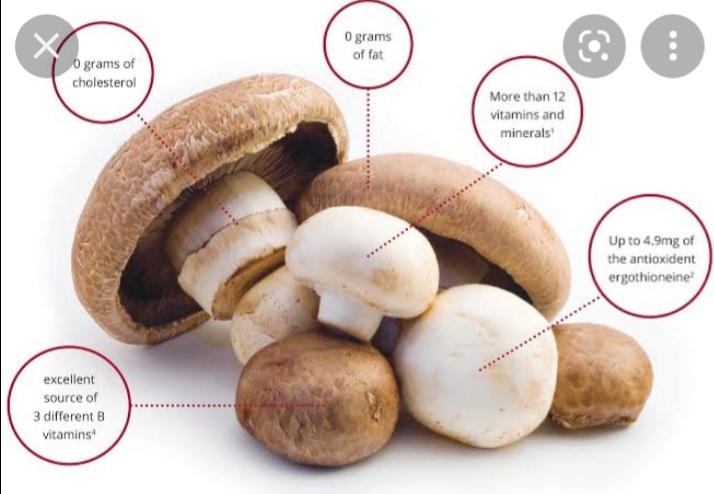
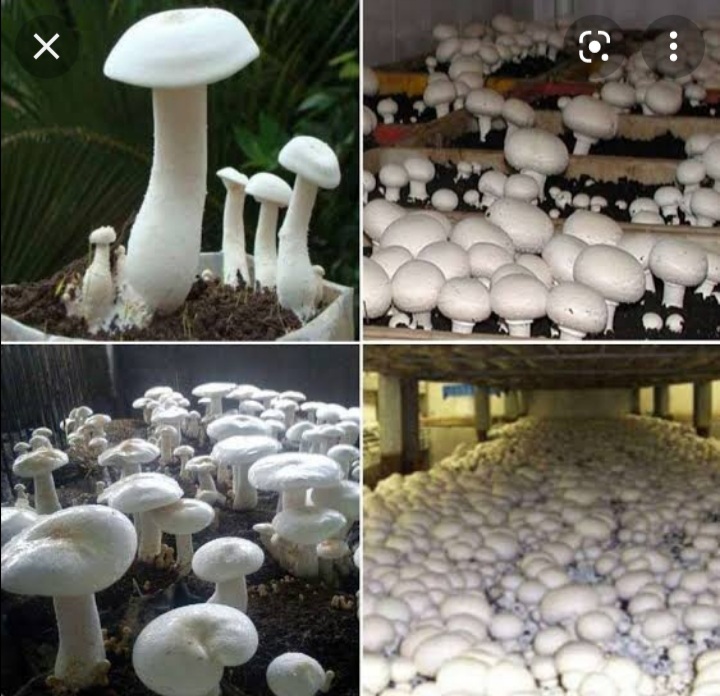
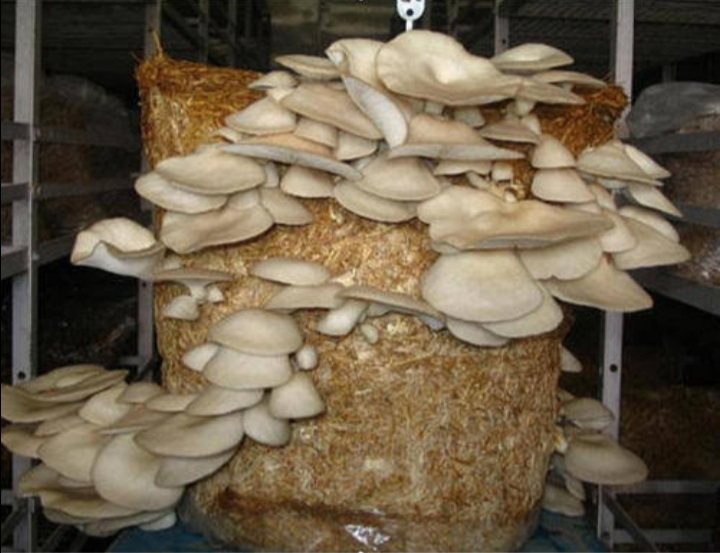



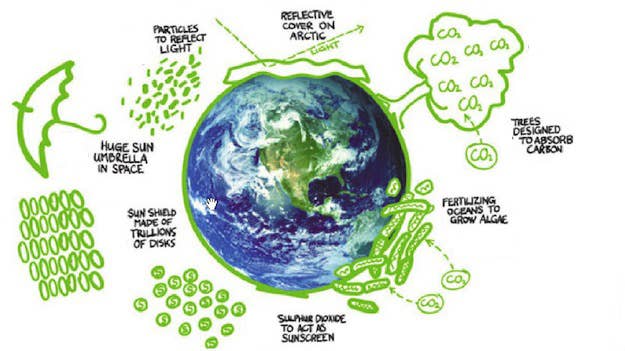

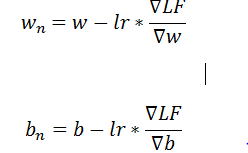






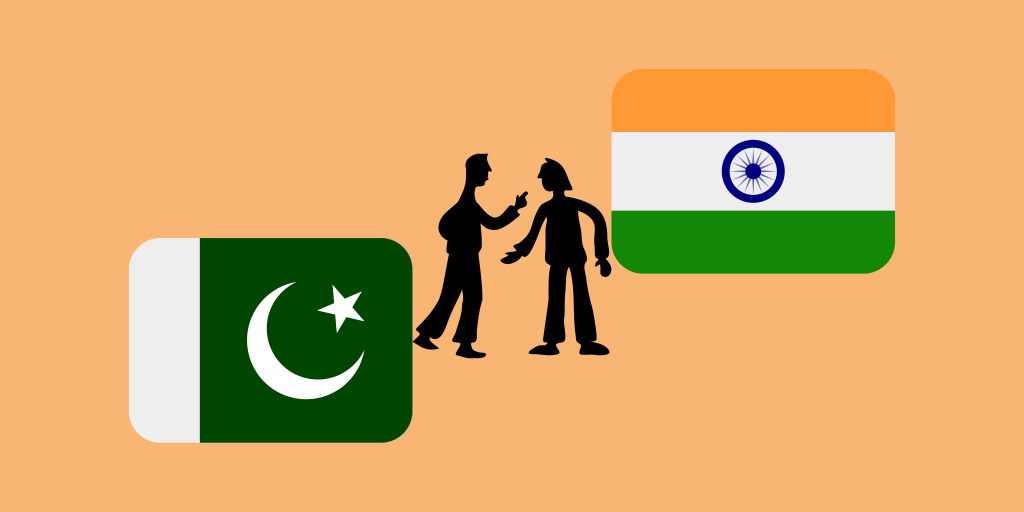


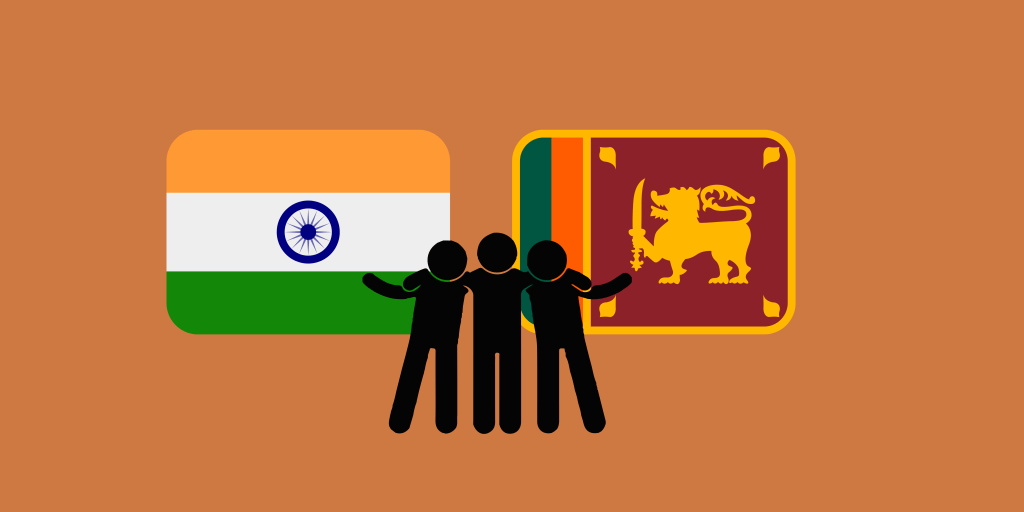
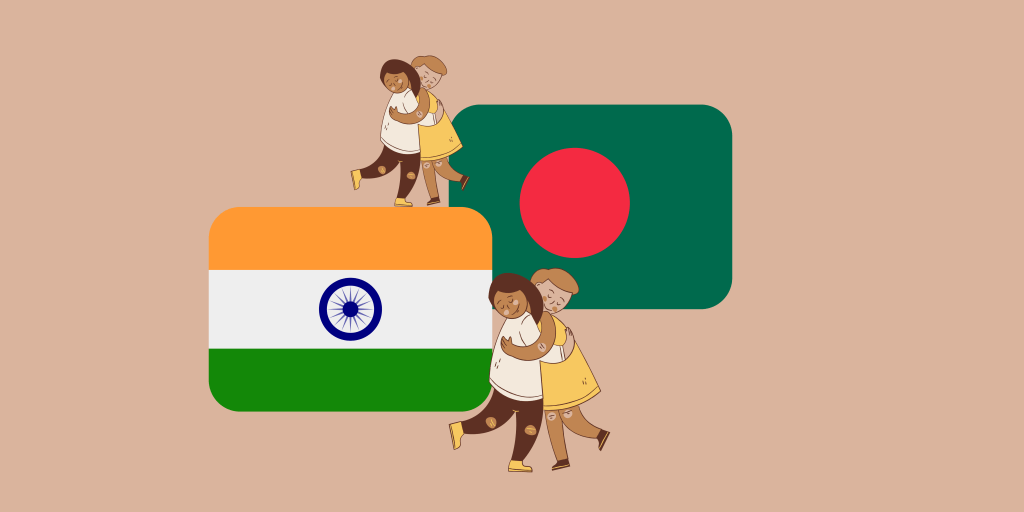


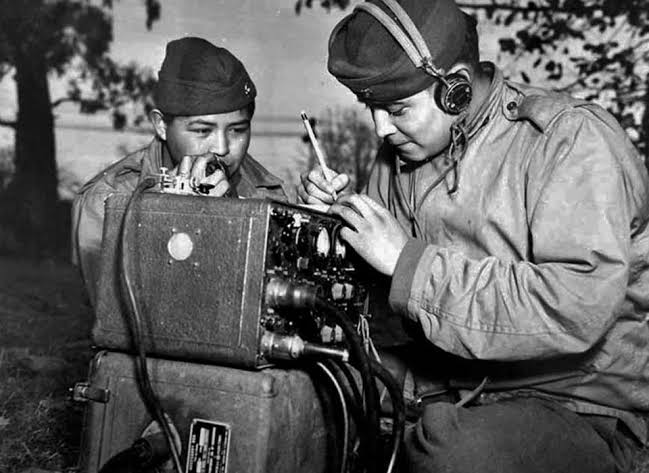
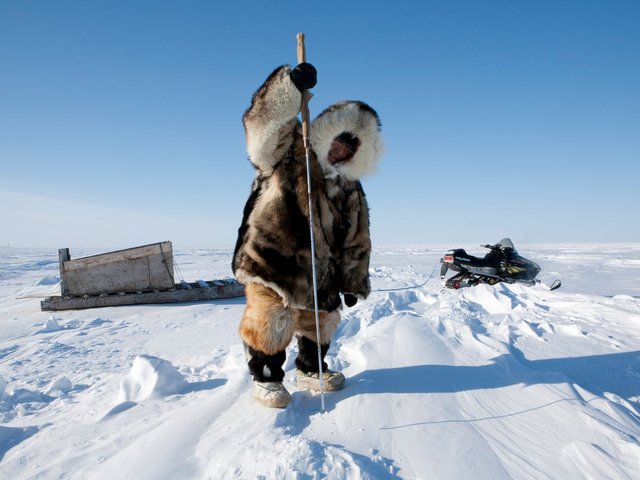
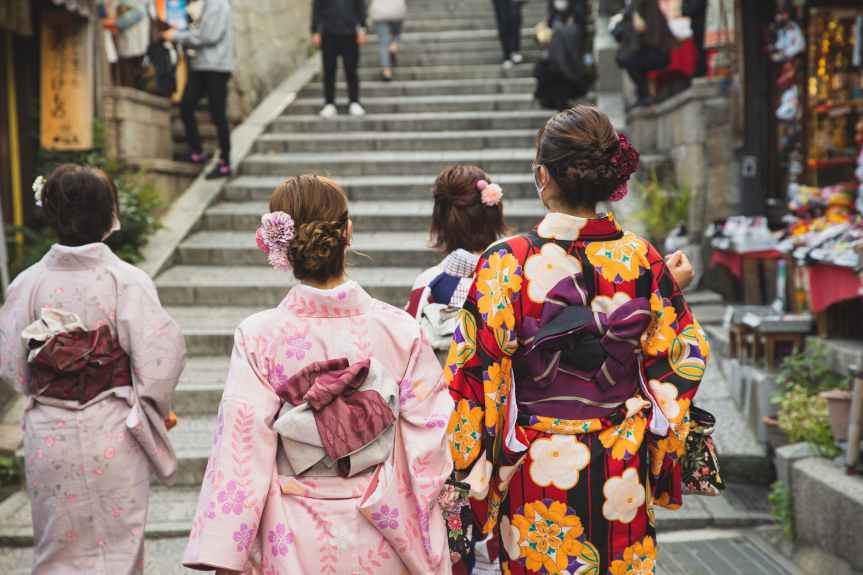







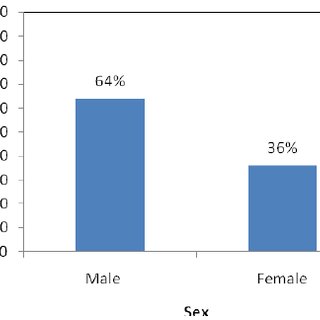





 Track2Training
You must be logged in to post a comment.