WHAT IS AI?
From SIRI to self-driving cars, artificial intelligence (AI) is progressing rapidly. While science fiction often portrays AI as robots with human-like characteristics, AI can encompass anything from Googleโs search algorithms to IBMโs Watson to autonomous weapons.

Artificial intelligence today is properly known as narrow AI (or weak AI), in that it is designed to perform a narrow task (e.g. only facial recognition or only internet searches or only driving a car). However, the long-term goal of many researchers is to create general AI (AGI or strong AI). While narrow AI may outperform humans at whatever its specific task is, like playing chess or solving equations, AGI would outperform humans at nearly every cognitive task.
WHY RESEARCH AI SAFETY?
In the near term, the goal of keeping AIโs impact on society beneficial motivates research in many areas, from economics and law to technical topics such as verification, validity, security and control. Whereas it may be little more than a minor nuisance if your laptop crashes or gets hacked, it becomes all the more important that an AI system does what you want it to do if it controls your car, your airplane, your pacemaker, your automated trading system or your power grid. Another short-term challenge is preventing a devastating arms race in lethal autonomous weapons.
In the long term, an important question is what will happen if the quest for strong AI succeeds and an AI system becomes better than humans at all cognitive tasks. As pointed out by I.J. Good in 1965, designing smarter AI systems is itself a cognitive task. Such a system could potentially undergo recursive self-improvement, triggering an intelligence explosion leaving human intellect far behind. By inventing revolutionary new technologies, such a superintelligence might help us eradicate war, disease, and poverty, and so the creation of strong AI might be the biggest event in human history. Some experts have expressed concern, though, that it might also be the last, unless we learn to align the goals of the AI with ours before it becomes superintelligent.
There are some who question whether strong AI will ever be achieved, and others who insist that the creation of superintelligent AI is guaranteed to be beneficial. At FLI we recognize both of these possibilities, but also recognize the potential for an artificial intelligence system to intentionally or unintentionally cause great harm. We believe research today will help us better prepare for and prevent such potentially negative consequences in the future, thus enjoying the benefits of AI while avoiding pitfalls.
HOW CAN AI BE DANGEROUS?
Most researchers agree that a superintelligent AI is unlikely to exhibit human emotions like love or hate, and that there is no reason to expect AI to become intentionally benevolent or malevolent. Instead, when considering how AI might become a risk, experts think two scenarios most likely:
- The AI is programmed to do something devastating: Autonomous weapons are artificial intelligence systems that are programmed to kill. In the hands of the wrong person, these weapons could easily cause mass casualties. Moreover, an AI arms race could inadvertently lead to an AI war that also results in mass casualties. To avoid being thwarted by the enemy, these weapons would be designed to be extremely difficult to simply โturn off,โ so humans could plausibly lose control of such a situation. This risk is one thatโs present even with narrow AI, but grows as levels of AI intelligence and autonomy increase.
- The AI is programmed to do something beneficial, but it develops a destructive method for achieving its goal: This can happen whenever we fail to fully align the AIโs goals with ours, which is strikingly difficult. If you ask an obedient intelligent car to take you to the airport as fast as possible, it might get you there chased by helicopters and covered in vomit, doing not what you wanted but literally what you asked for. If a superintelligent system is tasked with a ambitious geoengineering project, it might wreak havoc with our ecosystem as a side effect, and view human attempts to stop it as a threat to be met.
As these examples illustrate, the concern about advanced AI isnโt malevolence but competence. A super-intelligent AI will be extremely good at accomplishing its goals, and if those goals arenโt aligned with ours, we have a problem. Youโre probably not an evil ant-hater who steps on ants out of malice, but if youโre in charge of a hydroelectric green energy project and thereโs an anthill in the region to be flooded, too bad for the ants. A key goal of AI safety research is to never place humanity in the position of those ants.
WHY THE RECENT INTEREST IN AI SAFETY
Stephen Hawking, Elon Musk, Steve Wozniak, Bill Gates, and many other big names in science and technology have recently expressed concern in the media and via open letters about the risks posed by AI, joined by many leading AI researchers. Why is the subject suddenly in the headlines?
The idea that the quest for strong AI would ultimately succeed was long thought of as science fiction, centuries or more away. However, thanks to recent breakthroughs, many AI milestones, which experts viewed as decades away merely five years ago, have now been reached, making many experts take seriously the possibility of superintelligence in our lifetime. While some experts still guess that human-level AI is centuries away, most AI researches at the 2015 Puerto Rico Conference guessed that it would happen before 2060. Since it may take decades to complete the required safety research, it is prudent to start it now.
Because AI has the potential to become more intelligent than any human, we have no surefire way of predicting how it will behave. We canโt use past technological developments as much of a basis because weโve never created anything that has the ability to, wittingly or unwittingly, outsmart us. The best example of what we could face may be our own evolution. People now control the planet, not because weโre the strongest, fastest or biggest, but because weโre the smartest. If weโre no longer the smartest, are we assured to remain in control?
FLIโs position is that our civilization will flourish as long as we win the race between the growing power of technology and the wisdom with which we manage it. In the case of AI technology, FLIโs position is that the best way to win that race is not to impede the former, but to accelerate the latter, by supporting AI safety research.
THE TOP MYTHS ABOUT ADVANCED AI
A captivatingย conversation is taking place about the future of artificial intelligence and what it will/should mean for humanity.ย There are fascinating controversies whereย the worldโs leading experts disagree, such as: AIโs future impact on the job market; if/when human-level AI will be developed; whether this will lead to an intelligence explosion; and whether this isย something we should welcomeย or fear.ย But there areย also many examples of of boring pseudo-controversies caused by people misunderstanding and talking past each other.ย To help ourselves focus on the interesting controversies and open questions โ and not on the misunderstandings โ letโs ย clear up some of the most common myths.
TIMELINE MYTHS
The first myth regards the timeline: how long will it take until machines greatly supersede human-level intelligence? A common misconception is that we know the answer with great certainty.
One popular myth is that we know weโll get superhuman AI this century. In fact, history is full of technological over-hyping. Where are those fusion power plants and flying cars we were promised weโd have by now? AI has also been repeatedly over-hyped in the past, even by some of the founders of the field. For example, John McCarthy (who coined the term โartificial intelligenceโ), Marvin Minsky, Nathaniel Rochester and Claude Shannon wrote this overly optimistic forecast about what could be accomplished during two months with stone-age computers: โWe propose that a 2 month, 10 man study of artificial intelligence be carried out during the summer of 1956 at Dartmouth College [โฆ] An attempt will be made to find how to make machines use language, form abstractions and concepts, solve kinds of problems now reserved for humans, and improve themselves. We think that a significant advance can be made in one or more of these problems if a carefully selected group of scientists work on it together for a summer.โ
On the other hand, a popular counter-myth is that we know we wonโt get superhuman AI this century. Researchers have made a wide range of estimates for how far we are from superhuman AI, but we certainly canโt say with great confidence that the probability is zero this century, given the dismal track record of such techno-skeptic predictions. For example, Ernest Rutherford, arguably the greatest nuclear physicist of his time, said in 1933 โ less than 24 hours before Szilardโs invention of the nuclear chain reaction โ that nuclear energy was โmoonshine.โ And Astronomer Royal Richard Woolley called interplanetary travel โutter bilgeโ in 1956. The most extreme form of this myth is that superhuman AI will never arrive because itโs physically impossible. However, physicists know that a brain consists of quarks and electrons arranged to act as a powerful computer, and that thereโs no law of physics preventing us from building even more intelligent quark blobs.
There have been a number of surveys asking AI researchers how many years from now they think weโll have human-level AI with at least 50% probability. All these surveys have the same conclusion: the worldโs leading experts disagree, so we simply donโt know. For example, in such a poll of the AI researchers at the 2015 Puerto Rico AI conference, the average (median) answer was by year 2045, but some researchers guessed hundreds of years or more.
Thereโs also a related myth that people who worry about AI think itโs only a few years away. In fact, most people on record worrying about superhuman AI guess itโs still at least decades away. But they argue that as long as weโre not 100% sure that it wonโt happen this century, itโs smart to start safety research now to prepare for the eventuality. Many of the safety problems associated with human-level AI are so hard that they may take decades to solve. So itโs prudent to start researching them now rather than the night before some programmers drinking Red Bull decide to switch one on.
CONTROVERSY MYTHS
Another common misconception is that the only people harboring concerns about AI and advocating AI safety research are luddites who donโt know much about AI. When Stuart Russell, author of the standard AI textbook, mentioned this during his Puerto Rico talk, the audience laughed loudly. A related misconception is that supporting AI safety research is hugely controversial. In fact, to support a modest investment in AI safety research, people donโt need to be convinced that risks are high, merely non-negligible โ just as a modest investment in home insurance is justified by a non-negligible probability of the home burning down.
It may be that media have made the AI safety debate seem more controversial than it really is. After all, fear sells, and articles using out-of-context quotes to proclaim imminent doom can generate more clicks than nuanced and balanced ones. As a result, two people who only know about each otherโs positions from media quotes are likely to think they disagree more than they really do. For example, a techno-skeptic who only read about Bill Gatesโs position in a British tabloid may mistakenly think Gates believes superintelligence to be imminent. Similarly, someone in the beneficial-AI movement who knows nothing about Andrew Ngโs position except his quote about overpopulation on Mars may mistakenly think he doesnโt care about AI safety, whereas in fact, he does. The crux is simply that because Ngโs timeline estimates are longer, he naturally tends to prioritize short-term AI challenges over long-term ones.
MYTHS ABOUT THE RISKS OF SUPERHUMAN AI
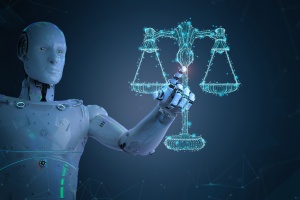
Many AI researchers roll their eyes when seeing this headline: โStephen Hawking warns that rise of robots may be disastrous for mankind.โ And as many have lost count of how many similar articles theyโve seen. Typically, these articles are accompanied by an evil-looking robot carrying a weapon, and they suggest we should worry about robots rising up and killing us because theyโve become conscious and/or evil. On a lighter note, such articles are actually rather impressive, because they succinctly summarize the scenario that AI researchers donโt worry about. That scenario combines as many as three separate misconceptions: concern about consciousness, evil, and robots.
If you drive down the road, you have a subjective experience of colors, sounds, etc. But does a self-driving car have a subjective experience? Does it feel like anything at all to be a self-driving car? Although this mystery of consciousness is interesting in its own right, itโs irrelevant to AI risk. If you get struck by a driverless car, it makes no difference to you whether it subjectively feels conscious. In the same way, what will affect us humans is what superintelligent AI does, not how it subjectively feels.
The fear of machines turning evil is another red herring. The real worry isnโt malevolence, but competence. A superintelligent AI is by definition very good at attaining its goals, whatever they may be, so we need to ensure that its goals are aligned with ours. Humans donโt generally hate ants, but weโre more intelligent than they are โ so if we want to build a hydroelectric dam and thereโs an anthill there, too bad for the ants. The beneficial-AI movement wants to avoid placing humanity in the position of those ants.
The consciousness misconception is related to the myth that machines canโt have goals. Machines can obviously have goals in the narrow sense of exhibiting goal-oriented behavior: the behavior of a heat-seeking missile is most economically explained as a goal to hit a target. If you feel threatened by a machine whose goals are misaligned with yours, then it is precisely its goals in this narrow sense that troubles you, not whether the machine is conscious and experiences a sense of purpose. If that heat-seeking missile were chasing you, you probably wouldnโt exclaim: โIโm not worried, because machines canโt have goals!โ
I sympathize with Rodney Brooks and other robotics pioneers who feel unfairly demonized by scaremongering tabloids, because some journalists seem obsessively fixated on robots and adorn many of their articles with evil-looking metal monsters with red shiny eyes. In fact, the main concern of the beneficial-AI movement isnโt with robots but with intelligence itself: specifically, intelligence whose goals are misaligned with ours. To cause us trouble, such misaligned superhuman intelligence needs no robotic body, merely an internet connection โ this may enable outsmarting financial markets, out-inventing human researchers, out-manipulating human leaders, and developing weapons we cannot even understand. Even if building robots were physically impossible, a super-intelligent and super-wealthy AI could easily pay or manipulate many humans to unwittingly do its bidding.
The robot misconception is related to the myth that machines canโt control humans. Intelligence enables control: humans control tigers not because we are stronger, but because we are smarter. This means that if we cede our position as smartest on our planet, itโs possible that we might also cede control.
You must be logged in to post a comment.