The planning of the Indus Valley Civilization, one of the ancient world’s most advanced and sophisticated urban cultures, showcases a remarkable level of organization and foresight. Flourishing around 2600 BCE to 1900 BCE in what is now present-day Pakistan and northwest India, the Indus Valley Civilization, also known as the Harappan Civilization, left behind a legacy of well-planned cities and advanced urban infrastructure. Though much of their writing system remains undeciphered, the archaeological evidence provides insights into their planning and organizational capabilities.
Urban Layout:
Grid System: The cities of the Indus Valley Civilization were characterized by a well-defined grid system. Streets and lanes were laid out in a precise and orderly manner, often intersecting at right angles. This grid pattern is evident in major sites like Mohenjo-Daro and Harappa.
Standardized Building Materials: The use of standardized bricks and dimensions for construction was a distinctive feature of their planning. Bricks of a consistent size (around 1:2:4 ratio) were used in construction, facilitating the creation of uniform structures.
Well-Planned Streets and Drainage: The streets of the cities were carefully planned, with some being wide and straight, indicating a sense of urban planning. An advanced drainage system was integrated into the streets, with covered drains running beneath the streets to manage waste and stormwater.
Residential and Commercial Zones: Cities were divided into various zones, with distinct areas for residential and commercial purposes. Residential areas typically featured multi-storied houses, while commercial zones had markets and workshops.
Architecture:
Brick Architecture: The use of baked bricks for construction was a key architectural characteristic. These bricks provided strength and durability to the structures, and the uniform size facilitated efficient construction.
Citadel and Lower Towns: Many Indus Valley cities featured a citadel, an elevated area believed to have housed important administrative and religious structures. The citadel was often surrounded by lower towns, suggesting a hierarchical organization of space.
Public Buildings: The presence of public buildings, such as the Great Bath in Mohenjo-Daro, indicates a focus on communal activities and public hygiene. The Great Bath, with its carefully laid out steps and water management system, serves as evidence of advanced engineering skills.
Granaries: Large, well-designed granaries have been discovered in various Indus Valley sites. These structures suggest an advanced understanding of agricultural practices and storage techniques.
Advanced Infrastructure:
Water Management: The Indus Valley Civilization had a sophisticated water supply and drainage system. Cities had well-planned wells, reservoirs, and covered drains. The Great Bath, with its advanced water-tight brickwork, showcases their mastery of hydraulic engineering.
Weights and Measures: The use of standardized weights and measures points to a highly organized economic system. Archaeological findings include cubical weights made of chert, a type of stone, suggesting a standardized system of trade and commerce.
Trade and Connectivity: The presence of docks in some cities, such as Lothal, indicates an understanding of maritime trade. The civilization had extensive trade links with regions as far as Mesopotamia, suggesting a well-developed trade and transportation network.
Challenges and Decline:
While the Indus Valley Civilization was an impressive feat of urban planning, its decline is still a subject of debate among historians and archaeologists. Possible factors include environmental changes, such as the shifting course of the Indus River, and possible socio-political factors, but a definitive answer remains elusive.
In conclusion, the planning of the Indus Valley Civilization reflects an advanced understanding of urban organization, engineering, and social structures. The legacy of their planning can be seen in the archaeological remnants of their well-ordered cities, showcasing a level of sophistication that was unparalleled in its time.
References
Agarwal, Sarika, and Shashikant Nishant Sharma. “Universal Design to Ensure Equitable Society.” International Journal of Engineering and Technical Research (IJETR) 1.
Dehalwar, Kavita. “Understanding the Dynamics of Peri-Urban Areas: Navigating the Interface Between Urban and Rural Realms.”
Gulzar, Sidra. “Settlement Scaling and Urban Infrastructure: A Comparative Approach to Settlements from the Ancient Indus society.” (2022).
Jansen, Michael. “Mohenjo-Daro, city of the Indus valley.” Endeavour 9.4 (1985): 161-169.
Kumar, Suneel, Muhammad Ali, and Pasand Ali Khoso. “Emergence and Decline of the Indus Valley Civilization in Pakistan.” Global Sociological Review 2 (2020): 9-22.
Sharma, Shashikant Nishant. “Urban forms in planning and design.” International Journal of Research 1.1 (2014): 7-16.
Sharma, Shashikant Nishant. “Sustainable development strategies and approaches.” International Journal of Engineering and Technical Research (IJETR) 2 (2013).
Sindhav, Hetalben Dhanabhai. “The Indus Valley Civilisation (Harappan Civilisation).” (2016).
Design, whether in the realms of art, graphic design, architecture, or any other creative field, relies on a set of fundamental components that form the basis of visual aesthetics and functionality. These components are categorized into two main groups: the Elements of Design and the Principles of Design. Understanding and mastering these elements and principles is crucial for creating compelling and effective designs.
Elements of Design:
Line: Lines are the basic building blocks of design. They can be straight or curved, vertical or horizontal, thick or thin. Lines guide the viewer’s eye and can convey a sense of movement, stability, or dynamism.
Shape: Shapes are two-dimensional and can be geometric (circles, squares) or organic (natural shapes). They contribute to the overall structure and balance of a design.
Form: Unlike shapes, forms are three-dimensional and have depth. They add a sense of volume and solidity to a design. Think of a cube or a sphere as examples of form.
Color: Color is a powerful visual element that evokes emotions and sets the tone of a design. It involves the use of hues, shades, and tints. Colors can create contrast, harmony, or emphasis within a composition.
Texture: Texture adds a tactile quality to a design. It can be perceived visually or through touch. Texture enhances the overall visual experience and can be smooth, rough, glossy, or matte.
Space: Space refers to the area within, around, or between elements in a design. It plays a crucial role in determining the overall composition and balance. Effective use of positive and negative space is essential for a harmonious design.
Typography: In graphic design, typography involves the arrangement and selection of fonts and typefaces. It contributes to the readability and visual appeal of text in a design.
Principles of Design:
Balance: Balance is the distribution of visual weight in a design. It can be symmetrical, where elements are evenly distributed, or asymmetrical, where balance is achieved through contrast.
Contrast: Contrast involves the juxtaposition of elements to create visual interest and emphasize certain aspects of a design. It can be achieved through variations in color, size, shape, or other visual elements.
Emphasis: Emphasis directs the viewer’s attention to a focal point in a design. It can be achieved through color, contrast, size, or placement of elements.
Unity: Unity brings a sense of cohesion and completeness to a design. It ensures that all elements work together harmoniously to convey a unified message or concept.
Movement: Movement creates a sense of flow and direction in a design, guiding the viewer’s eye through the composition. It can be achieved through the arrangement of elements or the use of lines and shapes.
Rhythm: Rhythm is the repetition or alternation of elements in a design. It creates a sense of visual tempo and can be regular, flowing, or progressive.
Proportion: Proportion involves the relationship between the sizes of different elements in a design. It ensures that elements are appropriately sized in relation to each other, contributing to a balanced composition.
Understanding how to effectively utilize these elements and principles allows designers to communicate ideas, evoke emotions, and create visually appealing and functional compositions. Whether in the digital realm, on canvas, or in architectural structures, the elements and principles of design serve as the foundation for creative expression and aesthetic excellence.
References
Dehalwar, Kavita, and Shashikant Nishant Sharma. “Fundamentals of Research Writing and Uses of Research Methodologies.” (2023).
Farrell, Alex, Stacy D. VanDeveer, and Jill Jäger. “Environmental assessments: four under-appreciated elements of design.” Global Environmental Change 11.4 (2001): 311-333.
Fu, Katherine K., Maria C. Yang, and Kristin L. Wood. “Design principles: The foundation of design.” International design engineering technical conferences and computers and information in engineering conference. Vol. 57175. American Society of Mechanical Engineers, 2015.
Martin, Robert C. “Design principles and design patterns.” Object Mentor 1.34 (2000): 597.
Sharma, Shashikant Nishant. “Urban forms in planning and design.” International Journal of Research 1.1 (2014): 7-16.
Sharma, Shashikant Nishant. “Review of most used urban growth models.” International Journal of Advanced Research in Engineering and Technology (IJARET) 10.3 (2019): 397-405.
Watts, Ronald D. “The elements of design.” The design method (1966): 85-95.
Under, “National Action for Mechanised Sanitation Ecosystem (NAMASTE)”, scheme, profiling/identification of Sewer/Septic Tanks Workers (SSWs) has commenced. Profiling/identification of SSWs is required to provide the benefits inter-alia, of health insurance under AB-PMJAY and for providing training and PPE Kits to SSWs and their family.
One of the key strategies under “National Action for Mechanised Sanitation Ecosystem (NAMASTE)” scheme is to establish strong convergence amongst key stakeholders, including NSKFDC, Ministry of Housing and Urban Affairs (MoHUA), to leverage their strengths and their specific roles to achieve the intended outcomes.
The earlier scheme “Self-Employment Scheme for Rehabilitation of Manual Scavengers (SRMS)” has been subsumed in the NAMASTE scheme applicable from the year 2023-24 and therefore, the financial allocations for NAMASTE are available for activities ,which were available under SRMS, such as to provide capital subsidy, training, organising Workshops on Hazardous Cleaning of Sewers and Septic Tanks etc.
Under Swachh Bharat Mission – Urban (SBM-U) 2.0 launched on 1st October, 2021, a new component Used Water Management (UWM) is included with one of the objectives of eradication of hazardous entry into sewers and septic tanks, and sustaining elimination of manual scavenging for waste water management for Urban Local Bodies (ULBs) with population of less than 1 lakh.Under UWM component, Central Financial Assistance is provided to all the State Governments/ Union Territory Administrations for taking up following:-
setting up of Sewage Treatment Plants(STPs)/STP-cum-Fecal Sludge Treatment Plants FSTP; for used water treatment.
laying Interception and Diversion (I&D) structures including provision of pumping stations and pumping main/gravity main upto STP:
iii. procuring adequate numbers of septic tank desludging equipments;
deploying Digital (IT enabled) tools for real time monitoring of efficiency parameters during the operational phase of STPs and allied equipments.
In addition, NSKFDC is implementing various loan and non-loan based schemes. Under Loan based schemes, NSKFDC provides financial assistance to the Safai Karamcharis, Scavengers and their dependents for any viable income generating schemes including sanitation related activities and for education in India and abroad.
The focus of the Department of Social Justice and Empowerment (DoSJE) is the welfare of the poorest households of the socially, educationally and economically marginalized sections of the society including Scheduled Castes (SCs), Other Backward Classes, Senior Citizens, Victims of Alcoholism and Substance Abuse, Transgender Persons, Beggars, De-notified and Nomadic Tribes (DNTs), Economically Backward Classes (EBCs) and Economically Weaker Section (EWS). This Department is implementing several Schemes for their welfare across India including Puducherry and Karnataka. The details of the major schemes along with the last two years’ fund allocations are given as Annexure.
This information was given by the Minister of State for Social Justice and Empowerment Shri A. Narayanaswamy in a written reply to a question in Rajya Sabha today.
*****
MG/MS/VL
Annexure
Referred in part (a) of Rajya Sabha Unstarred Q. No. 2050 regarding Social welfare schemes for deprived classes for answer on 20.12.2023
Rs in Crore
2021-22
2022-23
S.No.
Programme/Schemes
Allocated Fund
Expenditure
Allocated Fund
Expenditure
1
Post Matric Scholarship for SCs
4196.59
1978.56
5660
4392.5
2
Scholarships for Higher Education for Young Achievers Scheme(SHREYAS)
The Umbrella Scheme of Atal Vayo Abhyuday Yojana(AVYAY), being run by the Department of Social Justice and Empowerment, includes components to provide financial security, healthcare, nutrition, shelter, welfare etc. for senior citizens. Under one of such components, namely, the Integrated Programme for Senior Citizens(IPSrC), Grant-in-Aid is given to Implementing Agencies for running and maintenance of Senior Citizens Homes where basic amenities like shelter, food, medical care, entertainment opportunities etc. are provided free of cost to indigent senior citizens. Under RashtriyaVayoshri Yojana(RVY), assisted living devices are distributed free of cost, in camp mode, to senior citizens belonging to the families living below the poverty line or having Rs. 15000/- as monthly income and suffering from age related disabilities. The Elderline: National Helpline for Senior Citizens(NHSC) (Toll-free No. 14567) provides free information, guidance, emotional support and field intervention in cases of abuse and rescues in order to improve the quality of life of senior citizens. The component namely Senior-care Ageing Growth Engine(SAGE) aims to encourage youth to think about the problems of the elderly and come out with innovative ideas for the elderly care and promoting them into start-ups by providing equity support.
Under Indira Gandhi National Old Age Pension Scheme(IGNOAPS) of the National Social Assistance Programme(NSAP), a fully funded Centrally Sponsored Scheme of the Department of Rural Development, Government of India, monthly pension at the rate of Rs.200/- per month per beneficiary to elderly persons in the age group of 60-79 years belonging to Below Poverty Line(BPL) households, is being paid. The rate of pension is increased to Rs.500/- per month per beneficiary on reaching the age of 80 years. The States/Union Territories are encouraged to provide top up amounts of at least an equivalent amount to the assistance provided by the Central Government so that the beneficiaries could get a decent level of assistance. At present, the States/Union Territories are adding Top up amounts ranging from Rs.50/- to Rs.3000/- per month per beneficiary under the IGNOAPS of NSAP. The assistance under NSAP pension schemes is sanctioned up to the scheme-wise, State/Union Territory-wise cap of beneficiaries under the scheme. At present, the number of beneficiaries under the IGNOAPS in the country is around 2.21 crore and the Scheme has achieved almost 100% saturation in all States/Union Territories. The States/Union Territories have the option to provide pension from their own sources in case there are more eligible beneficiaries over and above the State/Union Territory cap under the NSAP pension schemes.
The Ministry of Health and Family Welfare launched the National Programme for Health Care of the Elderly(NPHCE) in 2010-11 with a view to provide dedicated healthcare services to senior citizens at various level of State Health Care delivery system i.e., at Primary, Secondary and Tertiary health care, including outreach services. The Programme has two components, namely National Health Mission(NHM) i.e., Primary and Secondary care service delivery through District Hospitals(DH), Community Health Centres(CHC), Primary Health Centres(PHC), Sub-Centre/Health & Wellness Centres, and Tertiary Component i.e., these services are being provided though Regional Geriatric Centres(RGCs) located at 19 Medical colleges in 18 states of India and two National Centres of Aging(NCAs) one in AIIMS, Ansari Nagar, New Delhi and another in Madras Medical College, Chennai. It also includes Research on health issues pertaining to senior citizens. Further, Government launched Ayushman Bharat-Pradhan Mantri Jan Arogya Yojana
(PMJAY) to cover 10 crore poor and vulnerable families (approx. 50 crore beneficiaries) providing coverage of up to Rs.5 lakh per family per year for secondary and tertiary hospitalization. With the launch of the Ayushman Bharat-PMJAY, the RashtriyaSwasthya Bima Yojana(RSBY) and the Senior Citizen Health Insurance Scheme(SCHIS) have been subsumed in it. All enrolled beneficiary families of RSBY and SCHIS are entitled for benefits under the Ayushman Bharat-PMJAY.
To promote Digital Skills amongst all the learners across the country, Ministry of Education through its autonomous bodies such as All India Council for Technical Education (AICTE) has entered into Memorandum of Understanding (MoU) with leading technology companies to drive skilling and future readiness for the students. The partnerships cover wide areas such as project-based assignments, courses in Animation, Visual Effects, Gaming and Comics (AVGC), online teaching materials, familiarization with digital tools and platforms that will be pursued on a best-efforts basis across colleges to cover students of the higher education institutions in India including but not limited to Engineering colleges, Degree colleges and Polytechnics for expanding digital skills.
The Directorate General of Training (DGT) under Ministry of Skill Development & Entrepreneurship (MSDE) is implementing the Craftsmen Training Scheme (CTS) in Industrial Training Institutes (ITIs) across the country. Under this scheme, Essential Digital Skills are taught under the subject of Employability Skills that are mandatory for trainees under all trades. DGT has signed MoU with IT Tech companies like IBM, CISCO, Future Skill Rights Network (erstwhile Quest Alliance), Amazon Web Services (AWS) and Microsoft under which technical and professional skills with respect to new age technologies which includes courses on topics like Artificial Intelligence (AI), Big Data Analytics (BDA), Blockchain, Cloud Computing, Cyber security, Internet of Things (IoT), Web, Mobile Development and Marketing, Machine Learning, etc. is being provided to trainees through Bharatskills, a Central Repository for skills, to make the trainees industry ready.
National Institute for Entrepreneurship and Small Business Development (NIESBUD), an Autonomous Institute under the administrative control of Ministry of Skill Development and Entrepreneurship (MSDE) as of now has signed an Memorandum of Understanding (MoU) with Meta on 4th September, 2023 to support the Indian entrepreneurial ecosystem. The aim of the MoU is to provide aspiring and current small business owners with the necessary tools, knowledge, and resources to thrive in today’s dynamic market environment. The partnership will help in training budding and existing entrepreneurs in digital marketing skills by Meta platforms like Facebook, WhatsApp and Instagram in seven regional languages.
Indian Institute of Entrepreneurship (IIE), Guwahati, an Autonomous Institute under the administrative control of Ministry of Skill Development and Entrepreneurship (MSDE) has partnered with reputed institutions and colleges to take digital skill to rural youth and is assisting in building talent pool capacities and seamlessly connecting students, youth and micro-entrepreneurs across North Eastern Region of India.
Under the partnership of Ministry of Education with leading technology companies and NIESBUD with Meta, there are no financial obligations. Under the partnership of NIESBUD with Meta, the Meta platforms like Facebook, WhatsApp, and Instagram have provided inputs for participants on Digital Marketing in seven regional languages.
Gearing up for the success of the first tranche of auction of Critical and Strategic Minerals, launched on 29th November, 2023, the Ministry of Mines conducted a roadshow here on 19th December, 2023, in the presence of Union Minister of Parliamentary Affairs, Coal and Mines, Shri Pralhad Joshi, Minister of state for Mines, Coal & Railways, Shri Raosaheb Patil Danve and Secretary, Ministry of Mines Shri V.L. Kantha Rao, senior officers of the Ministry, Industry Associations and PSUs. Over 45 companies, consultants and exploration agencies participated in the event. Minister Shri Pralhad Joshi also launched the National Geoscience Data Repository Portal (NGDR) during the event.
A total of 20 critical & strategic mineral blocks will be auctioned in the 1st tranche, out of which 16 mineral blocks are put up for grant of Composite Licence and four mineral blocks for grant of Mining Lease. The minerals include Graphite, Glauconite, Lithium, REE, Molybdenum, Nickel, Potash etc. The blocks are spread across the States of Tamil Nadu, Odisha, Uttar Pradesh, Bihar, Jharkhand, Chhattisgarh, Gujarat and UT – Jammu & Kashmir.
Addressing the function, Minister Shri Pralhad Joshi appraised the efforts and initiatives undertaken by Ministry of Mines for increasing domestic production of minerals, meeting the goals of self-sufficiency as envisioned by the Prime Minister Shri Narendra Modi. He emphasized how the Indian mining sector in general, and critical minerals in particular are significant in the present global context, underscoring priorities such as strengthening domestic production, fostering self-sufficiency, diminishing import reliance, advocating sustainable resource management, attracting investments in the mining sector and advancing key industries crucial for India’s industrial and technological progress. The Government is committed to bring more critical mineral blocks to auction in a phased manner, the Minister added.
The Minister of State for Mines, Coal and Railways, Shri Raosaheb Patil Danve expressed optimism about the potential success of the initial phase of the critical minerals auction, seeing it as a positive stride toward establishing a dependable supply chain for these minerals, aligning with the vision of Atma Nirbhar Bharat and contributing to heightened economic growth. The Minister of State of Mines reiterated the government’s efforts to bring these blocks into auction and how the success of this auction process relies on the active participation from the industry. He called upon all the participants to demonstrate the highest standards of transparency, fairness and ethical practices throughout the auction process.
Shri V.L. Kantha Rao, Secretary, Ministry of Mines gave insights about the steps taken by Ministry of Mines to increase the exploration activity carried out in the country and about the efforts to streamline the policy framework for multifaceted growth of the mineral sector. Secretary, Mines also responded to the queries of the participants and ensured all assistance from the Ministry for easy participation in the e-auction process. Shri Rao also encouraged the participants to give their suggestions for the e-auction process being conducted by Central Government.
The roadshow was held with the objective to guide the potential bidders regarding the auction process. Additional Secretary – Ministry of Mines, Mr. Sanjay Lohiya welcomed the dignitaries and initiated the discussion on the importance of the auction of critical & strategic minerals.
Dr Veena Kumari Dermal, Joint Secretary, Ministry of Mines began with the presentation and appraised the audience regarding the prevalent mineral policies and the reform of MMDR Act and rules thereunder for enabling the Central Government for auction of critical & strategic mineral blocks. Further, the Joint Secretary briefed the audience about the 20 blocks launched in the first tranche of auction and presented the estimated timeline of the e-auction process. This was followed by presentations of SBI Capital Markets Limited – Transaction Advisor, MECL – Technical Advisor, and MSTC – Auction Platform provider, giving information to the potential bidders regarding the e-auction and details of the critical mineral blocks put to auction.
SBI Capital Markets Limited presented the details of the auction process to the stakeholders including the eligibility conditions, general guidelines to the auction process, and bidding parameters. MECL highlighted the importance of Critical and Strategic Minerals in modern technologies and shared the details of 20 critical mineral blocks being put to auction. MSTC walked participants through the registration process along with the technicalities of the auction portal. Subsequently, the queries received from the audience were addressed by the presenters.
Director (NMET), Ministry of Mines highlighted the efforts of Ministry in facilitating the engagement of Notified Private Exploration Agencies (NPEAs) to expedite mineral exploration in the country. He further informed about the scheme on funding of Notified Private Exploration Agency (NPEA) through National Mineral Exploration Trust (NMET). The Ministry has notified 16 such private agencies. Also informed about the proposed amendment in Mineral (Auction) Rules 2015 and comments were sought on the same.
Further, presentation on the details of Exploration Licence, a recently included provision in the MMDR Act and the rules thereunder. Exploration Licence is a provision for grant of a mineral concession for undertaking full range of exploration starting from reconnaissance to prospecting operations. The move is to engage the private players and junior mining companies in the exploration of deep-seated minerals, in line with international practice. The draft amendments made in the MMDR Act were presented to the participants and suggestions/comments were sought from the stakeholders.
Pre-bid conference with prospective bidder is scheduled on 22nd December 2023, last date of sale of Tender Document is 16th January 2024 and last date of bid submission is 22nd January 2024. Thereafter, e-auction will commence for selection of preferred bidder. Details of the mines, auction terms, timelines etc. can be accessed on MSTC auction platform at www.mstcecommerce.com/auctionhome/mlcl/index.jsp.
The National Geoscience Data Repository(NGDR) has been created, as a part of the National Mineral Exploration Policy, 2016, hosting all baseline and exploration-related geoscientific data in a single GIS platform, to expedite, enhance and facilitate the exploration coverage of the country. The NGDR initiative, spearheaded by Geological Survey of India (GSI) and Bhaskarachaya Institute of Space Applications and Geoinformatics (BISAG-N) represents a significant leap forward in democratizing critical geoscience data, empowering stakeholders across industries and academia with unprecedented access to invaluable resources.
Currently, 35 map services like geological, geochemical and geophysical, data layers have been incorporated with the NGDR portal. These data sets can be viewed accessed and downloaded. This interplay of different geo-layers and further interpretation helps in targeting potential mineral zones. The NGDR portal can be accessed through https://geodataindia.gov.in. The user, after registration in the portal can view, download and interpret the data.
The creation of NGDR was conceptualized by the Ministry of Mines (MoM) as part of the National Mineral Exploration Policy (NMEP) 2016. The Geological Survey of India (GSI) was given the responsibility to establish NGDR. The NGDR will make available all geological, geochemical, geophysical and mineral exploration data in public domain on a digital geospatial platform. This will include baseline geoscience data and all mineral exploration information generated by various central and state government agencies and mineral concession holders . The greater goal of this initiative is to increase the investment attractiveness of the mining sector in India.
Key Features of the National Geoscience Data Portal (NGDR):
Centralized Access: Provides a centralized repository of diverse geoscience datasets, including geological maps, mineral resources, seismic data, and environmental information.
User-Friendly Interface: An intuitive interface designed to cater to a wide range of users, enabling seamless navigation and exploration of data.
MERT template: The Mineral Exploration Reporting Template facilitates all the geoscientific stakeholders to submit their data in the NGDR portal in a standard reporting template.
Analytical Tools: Equipped with state-of-the-art analytical tools to interpret and extract valuable insights from complex geospatial data.
Open Access: Encourages transparency and knowledge sharing by offering open access to a wealth of geoscience information.
The development of this portal will help various geoscience agencies such as GSI, MECL, State Departments of Mining and Geology, private agencies, and other stakeholders agencies of the country. As the geoscience data through this portal will be available globally for viewing, downloading and interpretation, it will facilitate global mining companies to invest in India and bring new technologies in mineral exploration.
Globally, all the mineral-rich countries have a robust geoscience data portal having various layers of geoscientific information i.e. geological, geophysical, geochemical, etc. to support their mineral exploration programmes. With this state-of-the-art, user-friendly, interoperable platform, India is now in the league of other mineral-rich countries where the accessibility of geoscientific data plays a vital role in fostering their mineral exploration programmes.
As per the annual field season program, field survey and preparation of reports normally takes 18 months, out of which 12 months are required for completion of field survey and the next 6 months for writing/ finalization of the report before it is circulated. However, for some of the projects, this time duration may be more than 18 months depending upon the nature and quantum of work.
GSI has taken a number of steps to finalize the resource bearing reports at the earliest which are summarized below-
Sufficient budget grants especially in the mineral exploration head allotted to all regions/missions of GSI for execution of field projects.
To achieve the drilling target, empanelled outsourced drilling agencies are deployed for certain exploration projects in addition to in-house drilling capacity. Drilling activities are initiated on priority from the beginning of Field Season.
To expedite sample analysis, outsourcing is carried out through reputed laboratories as per requirement in addition to in-house capacity.
For timely execution of projects, field vehicles are outsourced in addition to in-house capacity.
The laboratories are being modernized with various state-of-the-art instruments for precise and quick analysis. Various modern software are also being used for quick and precise analysis of field data.
The concerned State Governments are intimated to render all possible support for execution of field projects and field officers of GSI are instructed to coordinate with local administration to resolve any local issues. Necessary formalities for getting permission for exploration from various authorities are taken before initiation of the project.
Constant monitoring of the projects at various levels is carried out to ensure proper and timely completion of the project.
The following technology initiatives have been adopted for expediting field surveys and reports on potential mineral resource deposits by GSI:
Generation of baseline geoscience data- GSI is generating almost all types of baseline geoscience data e.g. geological, geochemical, and geophysical pan India which are crucial for effective planning of mineral exploration. GSI has targeted to complete National Geochemical and Geophysical mapping of the accessible part of the country on priority by involving in-house resources as well as through outsourcing using the National Mineral Exploration Trust (NMET) fund.
Aerial Survey: GSI is executing the project “National Aero-Geophysical Mapping Programme (NAGMP)” to acquire aero-geophysical data over the Obvious Geological Potential areas (7.78 lakh sq km) through outsourcing using NMET fund.
Remote Sensing aided Survey: GSI is carrying out delineation of alteration/ mineralization zone using spectral mapping algorithms. Recently, GSI has completed acquisition of AVIRIS NG data in collaboration with NASA and ISRO in certain potential areas in the country. GSI has initiated surface mineral mapping using ASTER multispectral remote sensing data to generate alteration zone /mineral mapping.
Regional Mineral Targeting (RMT): GSI has introduced RMT program to gain insight into the process of finding mineral deposits on a regional scale by synthesis & collation of surface and subsurface data followed by fieldwork.
Project ‘Uncover’ India: Given the rapid depletion of surface/near-surface deposits, there is a paradigm shift in thrust to probe deep-seated deposits under “Project Uncover (India)” in two transacts, in collaboration with Geoscience Australia (GA).
Necessary steps have been taken to increase the depth of exploratory drilling in G3 & G2 stage exploration projects from FS 2020-21 for non-bulk minerals depending on the potential of mineralized zones. For fast drilling, GSI is mostly utilizing hydrostatics rigs in mineral exploration projects.
National Geoscience Data Repository (NGDR): GSI is setting up the National Geoscience Data Repository (NGDR) through outsourcing using NMET fund for the benefit of all stakeholders wherein all geoscientific data will be made available on one platform.
Modernization Programme: GSI has been modernizing its laboratories by procuring high-end machinery and equipment to improve its capabilities in generating vital geoscience data and their processing and interpretation.
Central Government, State and UT Government have taken several initiatives for implementation of National Education Policy 2020 (NEP 2020) details of which are as under:-
In School Education, a number of initiatives have been taken such as PM SHRI (PM Schools for Rising India) for upgradation of schools (A total of 6448 schools were selected and Rs. 630.11 crore has been released to 6207 PM SHRI schools in 27 States/UTs along with KVS/NVS as first installment); National Initiative for Proficiency in Reading with Understanding and Numeracy (NIPUN Bharat);Vidya-Pravesh–School Preparation Module; PM e-VIDYA for digital/online/on-air education; DIKSHA (Digital Infrastructure for Knowledge Sharing) as One Nation One Digital Platform; National Curriculum Framework for Foundational Stage (NCF FS); Jadui Pitara for children between the age group of 3 to 8 years; National Curriculum Framework for School Education; NISHTHA (National Initiative for School Heads’ and Teachers’ Holistic Advancement) 1.0, 2.0 and 3.0 an Integrated Teacher Training Programme for different stages of school education; National Digital Education Architecture (NDEAR) for creating a unifying national digital infrastructure with 1500+ Micro courses, 5 billion+ Learning sessions, 12 billion+ QR codes, 20K+ ecosystem participants, 15K+ Micro improvements ongoing across various linked building blocks; “New India Literacy Programme or ULLAS” targeting all non-literates age 15 years and above, etc.
Samagra Shiksha Scheme has been fully aligned with the recommendation of NEP 2020, with a total financial outlay of Rs. 2,94,283.04 crore which includes a Central share of Rs. 1,85,398.32 crore. PM Poshan Shakti Nirman Yojna has also been aligned with the recommendation of NEP 2020.
National Assessment Centre, PARAKH (Performance Assessment, Review and Analysis of Knowledge for Holistic Development) has been set up to fulfil the objectives of setting norms, standards, guidelines and implement activities related to student assessment.
New policy on weight of School bags with focus on reducing the weight of school bags has been circulated to States/UTs.
4-year Integrated Teacher Education Program has been introduced. Recognition has been granted to 42 institutions including IITs, NITs, RIEs, IGNOU and Government Colleges for the Academic Session 2023-24.
National Mission for Mentoring (NMM) has also been introduced to create a large pool of outstanding professionals who are willing to provide mentoring to school teachers. NMM is being piloted in 30 Central schools. Also, a school volunteer management program namely Vidyanjali has been started to strengthen Government and Government aided schools through community and private sector involvement across the country. So far 671512 Govt. and Govt aided schools have onboarded and 443539 volunteers have registered on the Vidyanjali Portal.
In Higher Education, various initiatives / reforms have been carried out for implementation of NEP 2020. For learner centric education, National Credit Framework (NCrF), National Higher Education Qualification Framework, Academic Bank of Credit (ABC), multiple entry/exit etc. have been introduced. So far 1667 Universities/INIs/HEIs are on boarded on ABC portal & 2.75 Crore students are registered. To ensure access to high quality education with equity and inclusion, courses are being offered in Indian Languages; entrance exams such as JEE, NEET, CUET are conducted in 13 Indian languages; 100 books for UG students on various subjects launched in 12 Indian Languages; and 20 Technical books of first year have been translated in Indian Languages.
To promote digital learning by leveraging technology, at present 95 Higher Educational Institutions (HEIs) are offering 1149 ODL programmes and 66 HEIs are offering 371 online programmes. More than 19 lakh students are availing these facilities. To promote multi-disciplinary education and provide flexibility, around 295 Universities have adopted SWAYAM regulation permitting learners to avail upto 40% credit Courses from SWAYAM platform. Over 9 lakhs students earn SWAYAM certificate through a proctored exam every year. These certificates can be utilised for credit transfer by the university in which student is enrolled. Technology enabled Enterprise Resource Planning (ERP) based Solutions for Governance of HEIs starting from admission to grant of Degree – Smarter Automation Engine for Universities (SAMARTH) is being extensively used by around 2700 Universities & HEIs covering 32 States / UTs. 7 State Higher Education Departments are also on boarded.
In order to enable HEIs to work with industry experts in developing courses and curriculum to meet the industry and societal needs, initiatives have been taken such as Guidelines on Professor of Practice; MoUs with Cisco/IBM/Meta/Adobe/Microsoft/Sales force etc. to create industry-aligned courses; offering Apprenticeship / Internship embedded Degree Programme by HEIs; Single Unified online portal for internship with total registration of around 10560 HEIs and 73383 industries so far. For promotion of research and innovation, around 7568 Institutions’ Innovation Councils and around 104 Idea Development, Evaluation and Application Labs (IDEA) have been set up.
To promote internationalization, regulation on setting up and operation of campuses of foreign Higher Education Institutions in India have been issued. Also, MOUs have been signed for setting up of campus of IIT Madras in Zanzibar- Tanzania and IIT Delhi in Abu Dhabi. Classes have commenced at IIT Madras campus in Zanzibar-Tanzania.
Guidelines for Training/Orientation of Faculty on Indian Knowledge System (IKS), Empanelment of Artists/Artisans–in–Residence in Higher Educational Institutions, Introduction of courses based on Indian heritage and culture, Incorporating Indian Knowledge in Higher Education Curricula and Translation of books into Indian languages have been issued. More than 8000 HEIs have started adopting IKS into their curriculum.
National Credit Framework jointly developed by University Grants Commission (UGC), All India Council for Technical Education (AICTE), National Council for Vocational Education & Training (NCVET), National Institute of Open Schooling( NIOS), Central Board of Secondary Education (CBSE), National Council of Education, Research & Training (NCERT), Directorate General of Training (DGT), Ministry of Education (MoE) and Ministry of Skill Development and Entrepreneurship (MSDE) is a comprehensive credit framework encompassing elementary, school, higher and vocational education and training incorporating creditization of various dimensions of learning i.e. academics, vocational skills and Experiential learning including relevant experience and proficiency/professional levels acquired. It encompasses qualifications frameworks as prescribed in National Higher Education Qualifications Framework (NHEQF), National Skills Qualifications Framework (NSQF) and National Curriculum Framework (NCF), thereby providing broad-based multi-disciplinary / inter-disciplinary, holistic education with flexible curricula, creative combination of subjects, multiple pathways, establishing equivalence, facilitate national and international mobility.
The Multi-State Cooperative Societies (MSCS) (Amendment) Act& Rules, 2023 have been notified on 03.08.2023 and 04.08.2023, respectively to strengthen governance, enhance transparency, increase accountability and reform electoral process, etc.in the Multi State Cooperative Societies by supplementing existing legislation and incorporating the provisions of Ninety-seventh Constitutional Amendment.
To increase the representation of Scheduled Castes/Tribes in the boards of Multi-State Co-operative societies, to make the board more professional and to increase participation of board members in board meetings, following provisions have been introduced via above amendment, inter-alia: –
Provisions for reservation of two seats for women and one seat for SC or ST in the Board of multi-State cooperative societies have been made.
To ensure timely, regular and transparent conduct of elections in the multi-State cooperative societies, provision of Cooperative Election Authority has been included.
To increase professionalism in the Board of multi-State cooperative societies, provision of Co-option of such directors who have experience in the field of banking, management, co-operative management and finance or specialization in any field relating to the objects and activities undertaken by such multi-State cooperative societies have been introduced.
To increase participation of board members, quorum of 1/3rd of elected members, has been prescribed for board meetings.
Casual vacancies are to be filled by nomination up to 1/3rd of the board strength, if the term of office of the board is less than half of its original term. If casual vacancies in the same term exceed 1/3rd of number of elected directors, elections have to be conducted through Election Authority.
If Chairman of the society fails to direct the convening of the meeting within the quarter, it shall be convened by Chief Executive Officer (CEO) on the requisition of Vice-Chairperson or Vice President. In other cases, meeting to be convened by Chief Executive Officer (CEO) on requisition from at least 50 % of board members. This will ensure holding of meetings in regular manner and on demand.
Additional grounds for disqualification for directors have been made to improve governance, for better recovery of dues and to ensure that such acts of omission or commission or fraud are not repeated elsewhere.
To curb nepotism and favoritism in multi-State co-operative societies, the Director of a multi-State cooperative society shall not be present in the discussion and vote on matters where he or his relatives are an interested party.
For strengthening governance, criteria for appointment of Chief Executive Officer (CEO) are stipulated.
The Ministry of Cooperation has made various efforts for the betterment, empowerment and income generation for women in the cooperative sector. The major initiative taken by the Ministry in this regard are as under:
1. Reservation for Women on the Board of Multi State Cooperative Societies
The Multi-State Cooperative Societies (Act) 2002 has been amended to mandate requirement of women Directors in the Board of Multi-State Cooperative Societies. This will ensure representation of women in the Board of more than 1,550 Multi-State Cooperatives across the country.
2. Reservation to Members in Primary Agriculture Cooperative Credit Societies (PACS) through adoption of Model Bye-laws
Model Bye Laws for the PACS has been prepared by the Ministry of Cooperation and adopted by the States/UTs across the country. It mandates requirement of women Directors in the Board of PACS. This will ensure representation of women and their decision making in more than 1 Lakh PACS.
3. Nandini Sahakar Scheme
Nandini Sahakar Scheme of National Cooperative Development Corporation (NCDC) under Ministry of Cooperation is a financial assistance scheme for project formulation, hand- holding and capacity development of women cooperatives. NCDC has disbursed 5,714.88 Crore to Women Cooperatives benefitting more than 1.56 Crore women members.
The Ministry of Cooperation also organizes various training programs for skill development of the women in the cooperative sector through its National Level Institutes like National Council for Cooperative Training (NCCT), Vaikunth Mehta National Institute of Co-operative Management (VAMNICOM), and Laxmanrao Inamdar National Academy for Cooperative Research and Development (LINAC). The details of these training programs are given in Annexure-A.
In addition to the above, Ministry of Cooperation has taken 54 major Initiatives which will further benefit and empower all members of the cooperative sector including women. The details of such initiatives taken and progress made so far is given in Annexure-B.
Annexure-A
Ministry of Cooperation
The Ministry of Cooperation organizes various training programs for skill development of the women through its National Level Institutes. The details of these programs are as under:
National Council for Cooperative Training (NCCT):
NCCT and its Training units organized skill development programmes covering the sectors like Dairy, Handlooms, Micro Credit, Rural Entrepreneurships, Bee-Keeping, Industrial Cooperatives etc. where the women participants also attended.
The Last three-year training participants are as follows:
S. No.
Year
Total No. of Participation for Training
Total No. of Women Participants
Percentage of Women participants
1.
2020-21
40,288
8,875
22.02
2.
2021-22
62,774
15,309
24.38
3.
2022-23
2,01,507
77,584
38.50
Vaikunth Mehta National Institute of Co-operative Management (VAMNICOM):
(1) VAMNICOM, as a National Institute has been conducting various training programmes for women’s empowerment / skill development in Cooperative Sector and SHGs including SC/ST women participants for example: –
(a) Strengthening of Cluster Level Federation (CLF) of women SHG
(b) Management Development Programme for Women Directors in Credit Cooperatives
(c) Financial & Digital Literacy for Women Members of Self-Help Group (SHG)
(d) Book keeping and Auditing Training for Women Members of SHG
(e) Business Development Strategies for Women’s SHGS
(2) During the year 2022-23 the Institute has conducted 24 training programmes exclusively for women with 1056 participants.
(3) During the year 2023-24 (up to Nov, 2023) the Institute has conducted 29 training programmes exclusively for women with 1,010 participants.
Laxmanrao Inamdar National Academy for Cooperative Research and Development (LINAC):
Laxmanrao Inamdar National Academy for Cooperative Research and Development (LINAC) endeavors to develop its programs and interventions with a strong client-orientation and inter-disciplinary perspective to strengthen institutional capabilities and human resources in cooperatives.
Number of training programmes conducted during 2022-23 and 2023-24 for women participants on “Role of Women Directors in Governance & Business Development in Coops/SHGs”:
S. No.
Year
No of training Programmes
No of women Participants
01
2022-23
18
951
02
2023-24(Till 14.12.2023)
18
957
Annexure-B
Ministry of Cooperation
Ministry of Cooperation, since its inception on 6th July, 2021, has undertaken several initiatives to realize the vision of “Sahakar-se-Samriddhi” and to strengthen & deepen the cooperative movement from Primary to Apex level Cooperatives in the country. List of initiatives taken and progress made so far are as follows:
Making Primary Cooperatives economically vibrant and transparent
Model Bye-Laws for PACS making them multipurpose, multidimensional and transparent entities: Government, in consultation with all the stakeholders, including States/ UTs, National Level Federations, State Cooperative Banks (StCBs), District Central Cooperative Banks (DCCBs), etc., has prepared and circulated Model Byelaws for PACS to all the States/ UTs, which enable PACS to undertake more than 25 business activities, improve governance, transparency and accountability in their operations. Provisions have also been made to make the membership of PACS more inclusive and broad-based, giving adequate representation to women and Scheduled Castes/Schedules Tribes. Model Byelaws have been adopted by 31 States/ UTs so far.
Strengthening of PACS through Computerization: In order to strengthen PACS, project for Computerization of 63,000 functional PACS with a total financial outlay of ₹2,516 Crore has been approved by the Government of India, which entails bringing all functional PACS in the Country onto a common ERP based national software, linking them with NABARD through StCBs and DCCBs. A total of 62,318 PACS from 28 States/ UTs have been sanctioned under the project. Software is ready and trials have already started in 5,673 PACS in 26 States/ UTs so far.
New Multipurpose PACS/ Dairy/ Fishery Cooperatives in uncovered Panchayats: A proposal has been approved by the Government to set up new multi-purpose PACS or primary dairy/ fisheries cooperatives covering every Panchayat/ village in the next five years, with support of NABARD, NDDB, NFDB, NCDC and other National level Federations. As reported by the States/ UTs, the process for registering 9,961 new PACS/ Dairy/ Fishery cooperative societies in 23 States/ UTs is in various stages.
World’s Largest Decentralized Grain Storage Plan in Cooperative sector: Government has approved a plan to create warehouses, custom hiring centres, primary processing units and other agri-infra for grain storage at PACS level, by converging various schemes of Government such as AIF, AMI, SMAM, PMFME, etc. This will reduce wastage of food grains and transportation costs, enable farmers to realize better prices for their produce and meet various agricultural needs at the PACS level itself. 22 States/ UTs and National level Cooperative Federations such as National Cooperative Consumers Federation (NCCF) and National Agricultural Cooperative Marketing Federation of India Ltd. (NAFED), have identified 1,711 PACS for creation of storage capacity under the Pilot Project. At present, construction is going in 13 PACS of 13 States/ UTs under the Pilot Project.
PACS as Common Service Centers (CSCs) for better access to e-services: MoU has been signed between Ministry of Cooperation, MeitY, NABARD and CSC e-Governance Services India Limited for providing more than 300 e-services such as banking, insurance, Aadhar enrolment/ updation, health services, PAN card and IRCTC/ Bus/ Air ticket, etc. through PACS. So far, 24,470 PACS have started providing CSC services to the rural citizens which will also result in increase in income of those PACS at the same time.
Formation of new Farmer Producer Organizations (FPOs) by PACS: Government has allowed 1,100 additional FPOs to be formed by PACS with the support of NCDC, in those blocks where FPOs have not yet been formed or the blocks are not covered by any other implementing agency. This will be helpful in providing the farmers with necessary market linkage and get fair and remunerative prices for their produce.
PACS given priority for Retail Petrol/ Diesel outlets: Government has allowed PACS to be included in the Combined Category 2 (CC2) for allotment of retail petrol/ diesel outlets. As per information received from Oil Marketing Companies (OMCs), a total of 228 PACS have applied online for retail petrol/ diesel outlets.
PACS given permission to convert bulk consumer petrol pumps into retail outlets: Based on the discussions with the Ministry of Petroleum and Natural Gas, guidelines have been issued to convert the existing bulk consumer licensee PACS into retail outlets for increasing the profit of PACS and generate employment opportunities in rural areas. 109 PACS from 5 States having wholesale consumer pumps have given consent for conversion into Retail Outlets, out of which 43 PACS have received Letter of Intent (LOI) from the OMCs.
PACS eligible for LPG Distributorship for diversifying its activities: Government has now allowed PACS to apply for LPG Distributorships. This will give PACS an option to increase their economic activities and create new employment opportunities in rural areas. Two locations have already been advertised in the State of Jharkhand.
PACS as PM Bharatiya Jan Aushadhi Kendra for improving access to generic medicines at rural level: Government is promoting PACS to operate Pradhan Mantri Bhartiya Janaushadhi Kendras which will provide additional income source to them and provide easy access of generic medicines to rural citizens. So far, 4,289 PACS/ cooperative societies have applied online for PM Janaushadhi Kendras, out of which 2,293 PACS have been given initial approval also.
PACS as Pradhan Mantri Kisan Samriddhi Kendras (PMKSK): Government is promoting PACS to operate PMKSK for ensuring easy accessibility of fertilizer & related services to farmers in the country. As per the information shared by States/ UTs, 28,648 PACS are functioning as PMKSK so far.
Convergence of PM-KUSUM at PACS level: Farmers associated with PACS can adopt solar agricultural water pumps and install photovoltaic modules in their farms.
PACS to carry out O&M of rural piped water supply schemes (PWS): In order to utilize the reach of PACS in rural areas, on the initiative of the Ministry of Cooperation, Ministry of Jal Shakti has made PACS as eligible agencies to carry out the Operations & Maintenance (O&M) of PWS in rural areas. As per information received from States/ UTs, 1,381 PACS have been identified by 12 States/ UTs to provide O&M services at Panchayat/ Village level.
Micro-ATMs to Bank Mitra Cooperative Societies for providing doorsteps financial services: Dairy and Fisheries cooperative societies can be made Bank Mitras of DCCBs and StCBs to ensure their ease of doing business, transparency and financial inclusion, Micro-ATMs are also being given to these Bank Mitra Co-operative Societies with support from NABARD to provide ‘Door Step Financial Services’. As a pilot project, 1,723 Micro-ATMs have been distributed to Bank Mitra cooperative societies in Panchmahal and Banaskantha Districts of Gujarat.
Rupay Kisan Credit Card to Members of Milk Cooperatives: In order to expand the reach of DCCBs/ StCBs and to provide necessary liquidity to the members of Dairy Cooperative societies, Rupay Kisan Credit Cards (KCCs) are being distributed to the members of cooperatives for providing credit at comparatively lower interest rates and enable other financial transactions. As a pilot project, 73,503 Rupay KCC have been distributed in Panchmahal and Banaskantha Districts of Gujarat.
Formation of Fish Farmer Producer Organization (FFPO): In order to provide market linkage and providing processing facilities to the fishermen, NCDC has registered 69 FFPOs in the initial phase. Department of Fisheries, Government of India has further allocated conversion of 1000 existing fisheries cooperative societies into FFPOs to NCDC, with an approved outlay of Rs 225.50 crore.
Strengthening the Urban and Rural Cooperative Banks
UCBs have been allowed to open new branches to expand their business: UCBs can now open new branches up to 10% (maximum 5 branches) of the existing number of branches in the previous financial year without prior approval of RBI.
UCBs have been allowed by RBI to offer doorstep services to their customers: Door step banking facility can now be provided by the UCBs. Account holders associated with these banks can now avail various banking facilities at home such as cash withdrawal, cash deposit, KYC, demand draft and life certificate for pensioners, etc.
Cooperative banks have been allowed to make one-time settlement of outstanding loans, like Commercial Banks: Co-operative banks, through board-approved policies, can now provide process for technical write-off as well as settlement with borrowers.
Time limit increased to achieve Priority Sector Lending (PSL) targets given to UCBs: RBI has extended the timeline for UCBs to achieve Priority Sector Lending (PSL) targets by two years i.e., up to March 31, 2026.
A Nodal Officer designated in RBI for regular interaction with UCBs: In order to meet the long pending demand of the cooperative sector for closer coordination and focused interaction, RBI has notified a nodal officer as well.
Individual housing loan limit more than doubled by RBI for Rural and Urban Co-operative Banks:
Housing loan limit of Urban cooperative banks have now been doubled from Rs 30 lakh to Rs 60 lakh.
Housing loan limit of Rural cooperative banks has been increased to two and a half times to Rs 75 lakh.
Rural Co-operative Banks will now be able to lend to commercial real estate/ residential housing sector, thereby diversifying their business: This will not only help Rural co-operative banks to diversify their business, but benefit Housing co-operative societies also.
License fee reduced for Cooperative Banks: License fee for onboarding Cooperative Banks to ‘Aadhaar Enabled Payment System’ (AePS) has been reduced by linking it to the number of transactions. Cooperative financial institutions will also be able to get the facility free of cost for the first three months of the pre-production phase. With this, farmers will now be able to get the facility of banking at their home with their fingerprints.
Non-scheduled UCBs, StCBs and DCCBs notified as Member Lending Institutions (MLIs) in CGTMSE Scheme to increase the share of cooperatives in lending: The co-operative banks will now be able to take advantage of risk coverage up to 85 percent on the loans given. Also, cooperative sector enterprises will also be able to get collateral free loans from co-operative banks now.
Notification of Scheduling norms for including Urban Co-operative Banks: UCBs that meet the ‘Financially Sound and Well Managed’ (FSWM) criteria and have maintained the minimum deposits required for classification as Tier 3 for the last two years are now eligible to be included in Schedule II of the Reserve Bank of India Act 1934 and get ‘Scheduled’ status.
Monetary ceiling doubled by RBI for Gold Loan: RBI has doubled monetary ceiling from Rs. 2 lakh to Rs.4 lakh, for those UCBs that meet the PSL targets.
Umbrella Organization for Urban Cooperative Banks: RBI has accorded approval to the National Federation of Urban Co-operative Banks and Credit Societies Ltd. (NAFCUB) for the formation of an Umbrella Organization (UO) for the UCB sector, which will provide necessary IT infrastructure and operation support to around 1,500 UCBs.
Relief to Cooperative Societies in the Income Tax Act
Surcharge reduced from 12 % to 7% for co-operative societies having income between Rs. 1 to 10 Cr.: This will reduce the burden of Income Tax on Cooperative Societies and more capital will be available with them to work for the benefit of their members.
MAT reduced for cooperatives from 18.5% to 15%: With this provision, now there is parity between Cooperative Societies and Companies in this regard.
Relief in cash transactions under section 269ST of the Income Tax Act: In order to remove difficulties in cash transactions by cooperatives under Section 269ST of IT Act, Government has issued a clarification that cash transaction of less than Rs. 2 lakhs done by a cooperative society with its distributor in a day will be considered separately, and will not be charged with income tax penalty.
Tax cut for new manufacturing Cooperative societies: Government has decided that a flat lower tax rate of 15% will be charged, compared to an earlier rate of up to 30% plus surcharge, for new cooperatives commencing manufacturing activities by March 31, 2024. This will encourage the formation of new cooperative societies in the manufacturing sector.
Increase in limit of Cash Deposits and Cash Loans by PACS and PCARDBs: Government has enhanced the limit for Cash Deposits and Cash Loans by PACS and Primary Cooperative Agriculture and Rural Development Banks (PCARDBs) from Rs 20,000 to Rs 2 lakh per member. This provision will facilitate their activities, increase their business and benefit members of their societies.
Increase in the limit of Tax Deducted at Source (TDS) in Cash Withdrawal: Government has increased the cash withdrawal limit of cooperative societies without deduction of tax at source from Rs.1 crore to Rs.3 crore per year. This provision will save Tax Deducted at Source (TDS) for cooperative societies, which will enhance liquidity of the cooperative society.
Revival of Cooperative Sugar Mills
Relief from Income Tax to Sugar Cooperative Mills: Government has issued a clarification that Sugar cooperative mills would not be subjected to additional income tax for paying higher sugarcane prices to farmers up to Fair and Remunerative or State Advised Price, from April, 2016 onwards.
Resolution of decades old pending issues related to Income Tax of Sugar Cooperative Mills: Government has made a provision in its Union Budget 2023-24, wherein Sugar cooperatives have been allowed to claim as expenditure their payments to sugarcane farmers for the period prior to assessment year 2016–17, giving a relief of more than Rs.10,000 crores.
Rs. 10,000 crore loan scheme launched for strengthening of Sugar Cooperative Mills: Government has launched a scheme through NCDC for setting up ethanol plants or cogeneration plants or for working capital or for all three purposes. Loan amount of Rs. 3,010 cr. has been sanctioned by NCDC to 24 Cooperative Sugar Mills so far.
Preference to Cooperative Sugar Mills in purchase of ethanol: Cooperative Sugar Mills have now been put at par with private companies for ethanol procurement by Government of India under the Ethanol Blending Programme (EBP).
Reduction in GST on molasses from 28% to 5%: Government has decided to reduce the GST on molasses from 28% to 5% which will enable cooperative sugar mills to earn more profits for its members by selling molasses to distilleries with higher margins.
Three new Multi-State Societies at the National Level
New National Multi-State Cooperative Seed Society for certified seeds: Government has established a new apex multi-state cooperative seed society under the MSCS Act, 2002, namely Bharatiya Beej Sahakari Samiti Limited (BBSSL) as an umbrella organization for quality seed cultivation, production and distribution under a single brand. BBSSL has received 8,200 PACS/ cooperative societies applications from 27 States/ UTs for membership so far.
New National Multi-State Cooperative Organic Society for organic farming: Government has established a new apex multi-state cooperative organic society under the MSCS Act, 2002, namely National Cooperative Organics Limited (NCOL) as an umbrella organization to produce, distribute and market certified and authentic organic products. NCOL has received 2,475 PACS/ cooperative societies applications from 24 States/ UTs for membership so far. 6 organic products have already been launched by NCOL so far.
New National Multi-State Cooperative Export Society for promoting exports: Government has established a new apex multi-state cooperative export society under the MSCS Act, 2002, namely National Cooperative Export Limited (NCEL) as an umbrella organization to give thrust to exports from cooperative sector. NCEL has received 2,625 PACS/ cooperative societies applications from 22 States/ UTs for membership so far. Till date, NCEL has got permission to export 14.92 LMT rice to 16 countries and 50,000 MT sugar to 2 countries.
Capacity Building in Cooperatives
Establishment of the Cooperative University: Steps are being taken by Ministry of Cooperation for setting up of a National Cooperative University for Cooperative education, training, consultancy, research and development and a sustainable and quality supply of trained manpower.
Promotion of training and awareness through National Council for Cooperative Training (NCCT): By increasing its reach, NCCT has conducted 3,287 training programs and provided training to 2,01,507 participants in FY 2022-23.
Use of Information Technology for ‘Ease of Doing Business’
Computerization of the Central Registrar’s Office: Central Registrar’s office has been computerized to create a digital ecosystem for Multi-State Cooperative Societies, which will assist in processing applications and service requests in a time bound manner.
Scheme for computerization of office of RCSs in States and Union Territories: To increase ‘Ease of doing business’ for Cooperative Societies and create a digital ecosystem for transparent paperless regulation in all States/Union Territories, a Centrally Sponsored Project for computerization of RCS Offices has been approved by the Government. Grants will be provided for purchase of hardware, development of software, etc. to the States/ UTs.
Computerization of Agriculture and Rural Development Banks (ARDBs): To strengthen the Long-term Cooperative Credit structure, the project of computerization of 1,851 units of Agriculture and Rural Development Banks (ARDBs) has been approved by the Government. NABARD is the implementing agency for the project and will develop a national level software for ARDBs. Hardware, support for Digitization of legacy data, training to the employees, etc. will be provided under the project.
Other Initiatives
New National Cooperative Database for authentic and updated data repository: A database of cooperatives in the country has been prepared with the support of State Governments to facilitate stakeholders in policy making and implementation of programmes/ schemes related to cooperatives across the country. So far, data of around 7.86 lakh cooperatives has been captured in the database.
Formulation of New National Cooperative Policy: A National level committee comprising 49 experts and stakeholders drawn from all over the Country has been constituted to formulate the New National Cooperative Policy for enabling a vibrant ecosystem to realize the vision of ‘Sahakar-se-Samriddhi’.
Multi-State Co-operative Societies (Amendment) Act, 2023: Amendment has been brought in the MSCS Act, 2002 to strengthen governance, enhance transparency, increase accountability, reform electoral process and incorporate provisions of 97th Constitutional Amendment in the Multi State Cooperative Societies.
Inclusion of Cooperatives as ‘buyers’ on GeM portal: Government has permitted the cooperatives to register as ‘buyer’ on GeM, enabling them to procure goods and services from nearly over 67 lakh vendors to facilitate economical purchases and greater transparency. So far, 559 cooperative societies have been onboarded on GeM as buyers.
Expansion of National Cooperative Development Corporation (NCDC) to increase its range and depth: NCDC has launched new schemes in various sectors such as ‘Swayamshakti Sahkar’ for SHGs; ‘Deerghavadhi Krishak Sahkar’ for long term agricultural credit and ‘Dairy Sahkar’ for dairy. Total financial assistance of Rs. 41,024 Crores has been disbursed by NCDC in FY 2022-23, which is almost 20% higher than the disbursement of Rs.34,221 crore in 2021-22. Government of India has permitted NCDC to issue bonds worth ₹2000 crore with government guarantee, subject to the adherence of specified terms and conditions. Further, NCDC is setting up sub-offices in 6 North Eastern States – Arunachal Pradesh, Meghalaya, Mizoram, Manipur, Nagaland and Tripura with the objective of taking various national schemes to the cooperative societies at their doorstep.
Financial assistance by NCDC for Deep Sea Trawlers: NCDC is providing financial assistance for projects related to deep sea trawlers in coordination with the Department of Fisheries, Government of India. NCDC has already sanctioned financial assistance of Rs 20.30 crore for purchase of 14 deep sea trawlers for the Fisheries Cooperative Societies of Maharashtra.
Refund to Investors of Sahara Group of Societies: A portal has been launched for making payments to the genuine depositors of the cooperative societies of Sahara Group in a transparent manner. Disbursement have already started after proper identification and submission of proof of their deposits and claims.
Hon’ble Prime Minister launched the PM Gati Shakti National Master Plan (NMP) on 13th October2021 for providing multimodal connectivity infrastructure to various economic zones. PM Gati Shakti National Master Plan provides a comprehensive database of the trunk & utility infrastructure, ongoing & future projects of various Infra structure and Economic Ministries/Departments of Central Government and States/UTs. This data is integrated with the GIS-enabled PM Gati Shakti platform, there by facilitating the integrated planning, designing, and monitoring of the Next Generation infrastructure projects on a single portal.
Economic Zones like textile clusters, pharmaceutical clusters, defence corridors, electronic parks, industrial corridors, fishing clusters, agri zones etc. are being mapped for integrated infrastructure planning andmake Indian businesses more cost-competitive. This will boost economic growth, attract foreign investments while de-risking investments by visualizing the connectivity, and enhance the country’s global competitiveness in export markets.
While the development of integrated infrastructure development is addressed through the PM Gati Shakti NMP, efficiency in services (like processes, digital systems, and regulatory frame work) and human resources is addressed by the National Logistics Policy, 2022 through its Comprehensive Logistics Action Plan (CLAP). NMP and National Logistics Policy together provide a framework for creating a data-driven decision support mechanism for an efficient logistics ecosystem aimed at reducing logistics costs and enhancing logistics efficiency in the country.
PM Gati Shakti is a Whole-of-Government approach adopted to facilitate integrated planning of multimodal infrastructure through collaboration among the concerned Ministries. So far, the Logistics Division of DPIIT has conducted 62 Network Planning Group (NPG) meetings to assess the comprehensive area-based socio-economic development of infrastructure projects.
The feedback from various Ministries has been received; inter-alia Ministry of Road Transport and Highways is using PM Gati Shakti for ground surveys, land records, and highway alignments resulting insaving time and costs in the planning of projects; Ministry of Petroleumand Natural Gas utilizes NMP’s electronic Detail Route Survey (eDRS) to generate reports in a shorter span of time; Ministry of Railways has finalised Final Location Survey (FLS) in FY2021-22 at a much faster rate as compared toFY2020-21,to cite a few examples.
Further, the PM Gati Shakti institutional mechanism has been adopted by States/UTs and NPG meetings are also being organized at State/UT level to assess last and first-mile connectivity gaps and ensure seamless movement of people, goods &services.
Majuli is a lush, green, environment-friendly, and pollution-free freshwater island in the Brahmaputra, Assam, which is around 15 kilometers from Jorhat city and 390 kilometers from Guwahati city. Majuli had an area of 1250 square kilometers initially. Due to erosion, the area has declined to about 880 square kilometers (majuli.assam.gov.in/about-district/district-glance) It is the world’s largest river island and largest river island district. It attracts tourists from all over the world. Majuli is also a strong contender for a place in the UNESCO’s World Heritage Site. The main festival is ‘Raas,’ a religious festival associated with Sri Krishna Bhagwan. Also, the island is famous for Satras (holy place), the most significant part of Neo-Vaishnavism culture. Each Satra consists of a large prayer hall facing a shrine, surrounded by dormitories. Many Assamese people are followers of Neo-Vaishnavism. It is pertinent to mention that Saint Srimanta Sankardev, a divine personality whose contributions and works are still shining in Assam, established 64 Satras on Majuli island. Due to erosion, only 31 Satras exist presently. Each Satra has its own cultural significance and tries to preserve unique artistic attributes in music, literature, dance, drama, etc. In this article, a case of one Satra, viz., Auniati Satra, which is located in Majuli and established in 1653, is presented. It is believed that Ahom King Jayadhwaj Singha established this Satra. The deity of this Satra is Bhagawan Govinda Mahaprabhu. In this Satra, there are a few rooms viz., Namghar (for chanting Bhagawan’s name), the residence of Satradhikari (Head of the Satra known as Gurugriha), and rooms for other disciples. One beautiful museum is located on the premises of Satra. By visiting this, many things can be learned. The author visited this Satra on December 12, 2023, and interacted with the devotees (Bhakats and Pujaris). While discussing with Jayanta Madhav Saikia, the author learned that the Satra was spread over an area of 184 acres. Around 300 devotees known as ‘Udakhin Vaishnav’ stay in different rooms on campus. They all are bachelors, do not marry, and are purely vegetarian. They themselves cook, or a person cooks for others. No woman can be ‘Udakhin Vaishnav’. About the age of ‘Udakhin Vaishnav,’ in the Satra, I was told that a kid of four years was the youngest, and the maximum was 90 years old. Across Assam, around 10 lakh disciples are members under the banner of this Satra. Also, there are 14 branches of this Satra. Further, the Satradhikari (head of the Monastery) established Namghar, i.e., Prayer Halls in Dubai and the USA. It is pertinent to mention that Namghar is literally a simple structure where the devotees recite the name of God ( mainly Sri Krishna’s name). Namghars were introduced in Assam by Srimanta Saint Sankardev (1449-1568). The author also interacted with the Pujari (priest) Bolin Sarma, who, at the age of five years, joined the Satra and is now 50 years of age and still associated with the Satra. At that time, he was performing Puja, so-called Pujari. He also informed that man Pujari (head priest) was 71 years old and joined at the age of 10 years in the Satra. Lastly, I wish to mention that the Head of the Satra, known as Satradhikari Dr. Pitambar Deva Goswami, although he was not available later on over cell phone, informed me that he completed his Ph.D. on ‘Satria festival’ and at the age of 10 years, he joined in the Satra. For the last 55 years, i.e., now 65 years, he has been in the Satra. I was very excited to visit such a holy place and fascinated to know about ‘Udakhin Vaishnav,’ who, for the welfare of society, fully sacrificed their lives. They are purely vegetarian, in the true sense of bachelor, and eat self-cook food or cooked by their fellows. Prof Shankar Chatterjee, Hyderabad
References
Barua, U., Hore, D. K., & Sarma, R. (2007). Wild edible plants of Majuli island and Darrang districts of Assam.
Roy, N., Pandey, B. W., & Rani, U. (2020). Protecting the vanishing geo-cultural heritage of India: Case study of Majuli Island in Assam. International Journal of Geoheritage and Parks, 8(1), 18-30.
Sarma, J. N., & Phukan, M. K. (2004). Origin and some geomorphological changes of Majuli Island of the Brahmaputra River in Assam, India. Geomorphology, 60(1-2), 1-19.
Sarma, A. (2014). Landscape degradation of river island Majuli, Assam (India) due to flood and erosion by river Brahmaputra and its restoration. J Med Bioeng, 3(4).
Delhi, the capital city of India, is a vibrant metropolis that juxtaposes modernity and tradition. However, amid the glittering skyscrapers and bustling marketplaces, there exists a stark contrast in the form of slums that dot the cityscape. These informal settlements, home to a significant portion of Delhi’s population, present a complex and challenging reality. This article aims to shed light on the slums of Delhi, exploring the factors that contribute to their existence, the challenges faced by residents, and potential solutions to address this pressing issue.
Factors Contributing to the Existence of Slums:
Rapid Urbanization: Delhi has witnessed rapid urbanization over the years, attracting people from rural areas in search of better opportunities. However, the city’s infrastructure has struggled to keep pace with the population influx, leading to the formation of informal settlements.
Lack of Affordable Housing: The soaring cost of real estate in Delhi has made it difficult for a significant portion of the population to afford proper housing. As a result, many individuals and families find themselves living in makeshift shelters in slums.
Informal Employment: A substantial number of slum dwellers are engaged in informal and low-wage employment opportunities. The lack of stable income makes it challenging for them to access formal housing options, pushing them towards the fringes of the city.
Rapid Urbanization:
Delhi’s landscape has undergone a rapid transformation as it evolved into a bustling metropolis, magnetically attracting individuals from rural areas in pursuit of improved livelihoods. The city’s economic opportunities and urban allure have spurred an influx of people seeking a better life. However, this surge in population has strained the existing infrastructure, causing a proliferation of informal settlements. The speed at which Delhi has urbanized has outpaced the development of essential services, resulting in the emergence of slums that grapple with inadequate amenities and living conditions.
Lack of Affordable Housing:
One of the most pressing challenges contributing to the existence of slums in Delhi is the exorbitant cost of real estate. The city’s property market has experienced a meteoric rise, rendering it increasingly unaffordable for a significant segment of the population. The soaring property prices have left a considerable portion of Delhi’s residents with limited housing options, forcing them into makeshift shelters within the confines of slums. This disparity in housing affordability underscores a critical issue that demands attention to ensure a more equitable distribution of living spaces within the city.
Informal Employment:
A significant demographic within Delhi’s slums is engaged in informal and low-wage employment opportunities. The city’s economic landscape accommodates a diverse range of informal sectors, from street vending to day labor, providing a source of income for many. However, the nature of informal employment often means irregular and unstable income streams, making it arduous for individuals to secure formal housing. As a consequence, slum dwellers, driven by economic necessity, find themselves on the peripheries of the city, residing in settlements that lack the basic amenities necessary for dignified living.
Addressing these factors necessitates a comprehensive approach that considers not only housing but also the broader issues of urban planning, economic development, and social welfare. Efforts to provide affordable housing options, improve infrastructure, and formalize employment opportunities can contribute to alleviating the challenges faced by residents of Delhi’s slums. By acknowledging the multifaceted nature of the issue, policymakers and urban planners can work towards creating a more inclusive and sustainable urban environment for all of Delhi’s inhabitants.
Challenges Faced by Slum Dwellers:
Inadequate Infrastructure: Slums often lack basic amenities such as proper sanitation, clean water supply, and electricity. The absence of these fundamental services contributes to a cycle of poverty and health challenges for the residents.
Health and Hygiene Concerns: Overcrowded living conditions, coupled with inadequate sanitation facilities, create a breeding ground for diseases. The prevalence of health issues in slums underscores the urgent need for improved healthcare services and sanitation infrastructure.
Educational Barriers: Access to quality education remains a significant challenge for children living in slums. Limited resources, coupled with the need for children to contribute to family income, often result in lower enrollment and higher dropout rates.
Vulnerability to Displacement: Slum dwellers often live in constant fear of eviction, as their settlements are considered illegal. This vulnerability adds a layer of uncertainty to their lives and makes it difficult for them to invest in long-term improvements to their living conditions.
Inadequate Infrastructure:
One of the most pressing challenges faced by slum dwellers in Delhi is the pervasive lack of basic infrastructure. Many slum settlements are characterized by the absence of essential amenities such as proper sanitation, a reliable clean water supply, and consistent electricity. The dearth of these fundamental services perpetuates a cycle of poverty, hindering residents from breaking free from the constraints of their living conditions. Insufficient infrastructure not only compromises the daily lives of slum dwellers but also restricts their potential for economic and social advancement.
Health and Hygiene Concerns:
The overcrowded living conditions within Delhi’s slums, combined with the absence of adequate sanitation facilities, create a breeding ground for various diseases. The prevalence of health issues in these communities highlights the urgent need for improved healthcare services and enhanced sanitation infrastructure. Communicable diseases thrive in environments where hygiene is compromised, posing a constant threat to the well-being of slum residents. Addressing health and hygiene concerns is paramount to breaking the cycle of illness and promoting the overall welfare of those residing in Delhi’s slums.
Educational Barriers:
Access to quality education remains a significant hurdle for children growing up in Delhi’s slums. Limited resources, both within the slum communities and in the broader education system, contribute to lower enrollment rates and higher dropout rates. Children often face the dual challenge of needing to contribute to family income, making it difficult for them to prioritize education. Breaking down educational barriers is essential for empowering the younger generation within slum communities, providing them with the tools and opportunities needed to overcome the cycle of poverty.
Vulnerability to Displacement:
The constant fear of eviction looms large over the lives of slum dwellers in Delhi, as their settlements are often deemed illegal. This vulnerability not only disrupts the daily lives of residents but also creates a layer of uncertainty that impedes long-term improvements to their living conditions. The perpetual risk of displacement discourages investments in infrastructure, education, and healthcare within slum communities, perpetuating a cycle of neglect and marginalization.
To address these challenges, concerted efforts are needed from policymakers, community leaders, and civil society organizations. Initiatives that focus on improving infrastructure, enhancing healthcare services, promoting education, and providing secure land tenure can contribute to breaking the cycle of poverty and vulnerability faced by the residents of Delhi’s slums. Only through a holistic and collaborative approach can meaningful progress be made towards creating more inclusive and equitable urban spaces.
Potential Solutions and Initiatives:
Affordable Housing Programs: Implementing affordable housing initiatives and policies can help address the housing crisis in Delhi. The government, in collaboration with non-governmental organizations, can work towards providing affordable housing options for low-income families.
Improving Infrastructure: Investment in basic infrastructure such as sanitation, clean water supply, and electricity is crucial for enhancing the living conditions in slums. Targeted interventions can significantly improve the quality of life for residents.
Community Empowerment: Empowering slum communities through education and skill development programs can break the cycle of poverty. Initiatives that focus on providing vocational training and creating employment opportunities within or near the slums can uplift residents economically.
Regularization of Informal Settlements: Instead of displacement, authorities could consider the regularization of existing informal settlements. This involves providing legal recognition, basic services, and tenure security to residents, contributing to a more stable and secure living environment.
In the dynamic and evolving landscape of Delhi’s slums, addressing the challenges faced by residents requires proactive and comprehensive solutions. Here are potential initiatives and strategies that could make a significant impact on improving the lives of those living in informal settlements:
Affordable Housing Programs: Implementing affordable housing initiatives is paramount in alleviating the housing crisis in Delhi. The government, in collaboration with non-governmental organizations (NGOs) and private stakeholders, can develop and execute policies that prioritize affordable housing options for low-income families. This may involve the creation of subsidized housing schemes, low-interest loans, or innovative housing models that cater to the unique needs of slum dwellers.
Improving Infrastructure: A targeted and sustained investment in basic infrastructure is crucial for enhancing the living conditions in Delhi’s slums. This includes initiatives to improve sanitation facilities, ensure a reliable and clean water supply, and provide access to electricity. Upgrading infrastructure not only addresses immediate health and hygiene concerns but also contributes to the overall well-being and dignity of slum residents.
Community Empowerment: Empowering slum communities through education and skill development programs can be a transformative step in breaking the cycle of poverty. Initiatives that provide access to quality education for children and adults alike, coupled with vocational training programs, can equip residents with the skills needed for better employment opportunities. Creating avenues for entrepreneurship within or near the slums further uplifts the economic prospects of the community.
Regularization of Informal Settlements: Rather than displacing residents, authorities could consider the regularization of existing informal settlements. This involves providing legal recognition to these settlements, ensuring basic services such as water, sanitation, and electricity, and granting tenure security to residents. Regularization not only enhances the legitimacy of slum communities but also provides a more stable and secure living environment, encouraging long-term investments in infrastructure and community development.
Public-Private Partnerships (PPPs): Encouraging partnerships between the public and private sectors can amplify the impact of initiatives aimed at slum improvement. Collaborations with private entities can bring in additional resources, expertise, and innovative solutions. This could involve joint ventures for housing projects, infrastructure development, or social enterprises that benefit the residents of slum communities.
Inclusive Urban Planning: Integrating slum development into the broader urban planning framework is essential for creating a more inclusive city. Authorities can adopt participatory approaches, involving slum residents in the planning and decision-making processes. This ensures that development initiatives align with the unique needs and aspirations of the communities they seek to serve.
Conclusion:
The slums of Delhi represent a complex challenge that requires a multifaceted approach. Tackling issues related to housing, infrastructure, healthcare, and education is crucial for creating a more inclusive and equitable urban environment. As Delhi continues to evolve, policymakers, community leaders, and citizens must come together to find sustainable solutions that uplift the lives of those residing in the city’s informal settlements. By combining these initiatives and strategies, Delhi has the potential to transform its slum areas into thriving, sustainable communities. These efforts not only address immediate challenges but also lay the foundation for a more equitable and inclusive urban landscape.
References
Datta, Ayona. “The intimate city: Violence, gender and ordinary life in Delhi slums.” Urban Geography 37.3 (2016): 323-342.
Dehalwar, K., & Sharma, S. N. (2023). Fate of Slums of Bhopal-A Tale of Struggle and Resilience. Think India Journal, 26(4), 12-18.
Dehalwar, Kavita, and Shashikant Nishant Sharma. “Fundamentals of Research Writing and Uses of Research Methodologies.” (2023).
Gupta, I., & Mitra, A. (2002). Rural migrants and labour segmentation: micro-level evidence from Delhi slums. Economic and Political Weekly, 163-168.
Kumar, N., & Aggarwal, S. C. (2003). Patterns of consumption and poverty in Delhi slums. Economic and Political Weekly, 5294-5300.
Mitra, A. (2004). Informal Sector, Networks and Intra‐City Variations in Activities: Findings from Delhi Slums. Review of Urban & Regional Development Studies, 16(2), 154-169.
Sharma, Shashikant Nishant. “Urban forms in planning and design.” International Journal of Research 1.1 (2014): 7-16.
Sharma, S. N. (2013). Sustainable development strategies and approaches. International Journal of Engineering and Technical Research (IJETR), 2.
Sharma, S. N. (2014). Participatory Planning in Plan Preparation. BookCountry.
Sharma, S. N. (2016). Introduction to Sociology. New Perspectives in Sociology and Allied Fields, 1.
Sharma, S. N. (Ed.). (2016). New perspectives in sociology and allied fields. EduPedia Publications (P) Ltd.
Snell-Rood, C. (2015). No one will let her live: women’s struggle for well-being in a Delhi slum. University of California Press.
Tsujita, Y. (2013). Factors that prevent children from gaining access to schooling: A study of Delhi slum households. International Journal of Educational Development, 33(4), 348-357.
In the ever-evolving landscape of digital communication, PDF documents stand as pillars of versatility, reliability, and universal accessibility. Portable Document Format, abbreviated as PDF, has emerged as a standard in the realm of document sharing and archiving. Its importance transcends industries and professions, offering a myriad of advantages that have solidified its position as a preferred format for conveying information in the digital age. PDF Cake‘s global accessibility ensures that its benefits transcend geographical boundaries.
One of the primary reasons behind the significance of PDF documents lies in their universality. Unlike other file formats that might alter in appearance or content when accessed on different devices or operating systems, PDFs retain their original formatting across platforms. This consistency ensures that the document appears the same for all recipients, maintaining the integrity of the content regardless of the software or device used to access it. This reliability makes PDFs an ideal choice for sharing official documents, reports, and academic papers.
Moreover, PDF documents are highly secure, allowing for encryption, password protection, and digital signatures. This robust security feature ensures that sensitive information remains confidential and protected from unauthorized access or tampering. Businesses and individuals alike rely on PDFs to safeguard their proprietary data and confidential documents, instilling trust and confidence in their digital communication methods.
Another compelling aspect of PDFs is their capacity for multi-functionality. From simple text documents to complex interactive forms, PDFs support a wide array of content types. They accommodate images, hyperlinks, annotations, multimedia elements, and form fields, making them suitable for diverse purposes, including e-books, manuals, presentations, and legal contracts. This versatility empowers users to create dynamic, interactive, and engaging content while maintaining the document’s structure and readability.
The accessibility of PDF documents also plays a pivotal role in their importance. PDFs are viewable on virtually any device, whether it’s a computer, tablet, or smartphone. Additionally, they can be easily shared via email, file-sharing platforms, or integrated into websites. This accessibility ensures seamless distribution of information across global audiences, transcending geographical barriers and facilitating efficient communication in various contexts.
Furthermore, the archival quality of PDF documents makes them invaluable for long-term storage and preservation of information. PDFs retain their formatting and content integrity over time, ensuring that the information remains accessible and readable even years after its creation. This aspect is particularly crucial for archiving historical documents, research papers, legal records, and government reports.
In conclusion, the importance of PDF documents in the digital era cannot be overstated. Their reliability, security, versatility, accessibility, and archival capabilities make them indispensable tools for individuals, businesses, educational institutions, and government bodies. As technology continues to evolve, PDFs remain steadfast, serving as a cornerstone of efficient and secure digital communication, document management, and information dissemination. Whether for sharing critical business information, disseminating educational materials, or preserving historical records, PDF documents continue to play an indispensable role in our increasingly digital world.
References
Devine, Heather, Andres Gonzalez, and Matthew Hardy. “Making accessible PDF documents.” Proceedings of the 11th ACM symposium on Document engineering. 2011.
Sharma, Shashikant Nishant. “An Insight into the Book Titled Why Stories Work.” Think India Journal 26.4 (2023): 19-24.
Waller, Rob. “What makes a good document.” The criteria we use. Technical paper 2 (2011).
Bhopal, the capital city of Madhya Pradesh in central India, is a vibrant and bustling metropolis that boasts a rich cultural heritage. However, amidst the glitz and glamour, there exists a stark contrast in the form of slums that house a significant portion of the city’s population. The poor living conditions in these slums paint a grim picture of inequality and social disparity. In this article, we delve into the challenges faced by the residents of Bhopal’s slums and shed light on the urgent need for intervention.
Overcrowding and Limited Space:
One of the most pressing issues in Bhopal’s slums is the severe overcrowding that residents have to contend with daily. The limited availability of space forces families to live in cramped conditions, often with insufficient ventilation and sanitation facilities. This not only jeopardizes the health of the residents but also contributes to the rapid spread of diseases.
The issue of overcrowding in Bhopal’s slums is a pervasive challenge that significantly impacts the daily lives and well-being of residents. The limited availability of space creates an environment where families are compelled to live in close quarters, leading to a myriad of issues.
Cramped Living Conditions:
In many slum areas, families reside in small, makeshift shelters constructed from a variety of materials, often salvaged or recycled. The lack of space results in cramped living conditions where multiple family members share confined quarters. The absence of separate rooms or designated living spaces means that privacy is a luxury, and individuals often struggle to find personal space within the confines of their homes.
Insufficient Ventilation:
The cramped living conditions are exacerbated by inadequate ventilation, as many of the structures lack proper windows or ventilation systems. Poor air circulation not only contributes to the discomfort of residents but also poses serious health risks. Stagnant air can trap pollutants and exacerbate respiratory issues, leading to a higher prevalence of respiratory diseases among slum dwellers.
Sanitation Challenges:
Overcrowded living conditions also give rise to significant sanitation challenges. With a limited number of communal facilities, such as shared toilets and bathing areas, maintaining personal hygiene becomes a considerable struggle. The lack of private sanitation facilities not only compromises the dignity of residents but also increases the risk of the spread of infectious diseases.
Health Implications:
The overcrowded living conditions in Bhopal’s slums create an environment conducive to the rapid spread of diseases. Communicable diseases thrive in crowded spaces where individuals have limited access to healthcare and sanitation. Respiratory infections, waterborne diseases, and vector-borne illnesses become more prevalent, posing a constant threat to the health and well-being of the community.
Social and Psychological Impact:
Beyond the physical health implications, overcrowding in slums also takes a toll on the mental and emotional well-being of residents. The stress of living in crowded conditions, coupled with the lack of personal space, can contribute to increased tension within families and communities. Additionally, the challenging living conditions may hinder the development of children, affecting their cognitive and emotional growth.
Addressing the Challenge:
To address the issue of overcrowding in Bhopal’s slums, there is a pressing need for comprehensive urban planning and development initiatives. Efforts should focus on creating affordable housing solutions, improving infrastructure, and ensuring access to basic amenities. By providing adequate living space, promoting proper ventilation, and enhancing sanitation facilities, it is possible to mitigate the adverse effects of overcrowding and uplift the quality of life for slum residents. Additionally, community engagement and empowerment play a crucial role in the sustainable development of these areas, fostering a sense of ownership and resilience among the residents. Through collaborative efforts, it is possible to transform the living conditions in Bhopal’s slums and pave the way for a healthier, more equitable future.
Inadequate Sanitation Facilities:
Sanitation facilities in Bhopal’s slums are far from adequate, creating a breeding ground for health hazards. The absence of proper sewage systems and waste management leads to the accumulation of garbage and stagnant water, facilitating the spread of waterborne diseases. Lack of access to clean water exacerbates the problem, leaving residents vulnerable to infections and illnesses.
The inadequate sanitation facilities in the slums of Bhopal present a critical challenge to the health and well-being of its residents. The absence of proper infrastructure for sewage systems and waste management contributes to a host of problems, creating an environment conducive to the spread of diseases.
Lack of Proper Sewage Systems:
One of the primary issues in Bhopal’s slums is the absence of adequate sewage systems. Many residents do not have access to proper toilet facilities, forcing them to rely on shared or communal toilets that are often unhygienic and poorly maintained. The lack of a comprehensive sewage system means that waste disposal becomes a significant challenge, with untreated sewage posing a threat to both the environment and public health.
Accumulation of Garbage:
In the absence of efficient waste management systems, garbage accumulates in and around the slum areas. Piles of waste become breeding grounds for pests and disease vectors, increasing the risk of the spread of infectious diseases. The lack of proper waste disposal mechanisms not only affects the immediate living conditions of the residents but also contributes to broader environmental degradation.
Stagnant Water and Waterborne Diseases:
The inadequate drainage systems in Bhopal’s slums often result in the accumulation of stagnant water, particularly during the monsoon season. Stagnant water becomes a breeding ground for mosquitoes that carry diseases such as dengue and malaria. Waterborne diseases, including cholera and dysentery, are prevalent due to the lack of access to clean water and the contamination of existing water sources with untreated sewage.
Vulnerability to Infections and Illnesses:
The combination of insufficient sanitation facilities, inadequate waste management, and the absence of clean water access creates a perfect storm for the vulnerability of slum residents to infections and illnesses. Preventable diseases thrive in such environments, affecting the overall health of the community and placing an additional burden on already strained healthcare systems.
Addressing Sanitation Challenges:
Improving sanitation facilities in Bhopal’s slums requires a concerted effort from both governmental and non-governmental organizations. Comprehensive urban planning initiatives should prioritize the installation of proper sewage systems, waste management infrastructure, and the construction of clean and accessible communal toilets. Public awareness campaigns about the importance of hygiene and sanitation practices are also essential to promote behavioral change within the community.
Access to Clean Water:
Ensuring access to clean water is paramount in addressing the sanitation crisis. Initiatives to provide reliable and safe water sources, along with community education on water conservation and purification methods, can significantly improve the overall health of slum residents. Collaboration between local authorities, NGOs, and community leaders is crucial to implementing sustainable solutions that address the root causes of inadequate sanitation facilities.
In conclusion, the inadequate sanitation facilities in Bhopal’s slums are a pressing issue that demands immediate attention and comprehensive solutions. By addressing these challenges, we can create healthier and more sustainable living conditions for slum residents, fostering a positive impact on their overall well-being and breaking the cycle of poverty and disease.
Substandard Housing Conditions:
The quality of housing in Bhopal’s slums is a major concern. Many residents live in makeshift structures constructed from salvaged materials, offering little protection from the elements. Flimsy walls and leaky roofs make these homes susceptible to damage during inclement weather, further compromising the safety and well-being of the inhabitants.
The substandard housing conditions prevalent in the slums of Bhopal underscore a critical aspect of the broader issue of poverty and inequality in the city. Residents of these areas often grapple with makeshift dwellings constructed from salvaged materials, resulting in homes that provide minimal protection from the elements and pose significant risks to the safety and well-being of inhabitants.
Makeshift Structures:
A predominant feature of Bhopal’s slums is the prevalence of makeshift structures. Residents, often facing economic constraints, resort to constructing homes using salvaged materials such as corrugated metal, tarpaulin, and cardboard. These structures lack the durability and structural integrity required to withstand the challenges posed by weather conditions, leaving residents vulnerable to various environmental hazards.
Limited Protection from the Elements:
The flimsy nature of these makeshift dwellings offers limited protection from the elements. During the scorching summer months, residents endure extreme heat, with inadequate insulation aggravating the already challenging living conditions. Similarly, during the monsoon season, leaky roofs and compromised structural integrity expose inhabitants to rainwater infiltration, contributing to the risk of waterborne diseases and compromising the structural stability of the dwellings.
Vulnerability to Weather-Related Risks:
Inclement weather, including heavy rains, strong winds, and extreme temperatures, poses a significant threat to the safety of residents living in substandard housing conditions. Structural damage and collapse are not uncommon, leading to injuries and, in severe cases, loss of life. The lack of proper foundations and building materials exacerbates the susceptibility of these dwellings to weather-related risks.
Health Implications:
Beyond the immediate structural risks, substandard housing conditions have profound implications for the health of residents. Inadequate shelter contributes to a higher likelihood of respiratory problems due to exposure to the elements. Mold growth resulting from leaks and dampness further exacerbates health issues, especially among children and the elderly. The compromised living conditions also increase the risk of injuries and infections.
Addressing the Housing Crisis:
Addressing the substandard housing conditions in Bhopal’s slums requires a multifaceted approach that combines immediate interventions with long-term solutions. Initiatives should include:
Affordable Housing Programs: Implementing affordable housing programs that prioritize the needs of slum residents, providing safe and secure living spaces that meet basic standards.
Urban Redevelopment: Undertaking comprehensive urban redevelopment projects to improve infrastructure, housing quality, and overall living conditions in slum areas.
Community Engagement: Involving residents in the decision-making process and seeking their input on housing solutions to ensure that interventions are culturally sensitive and align with the community’s needs.
Access to Basic Services: Ensuring that slum areas have access to basic services such as water, sanitation, and electricity, which are integral components of improved living conditions.
Government and NGO Collaboration: Facilitating collaboration between governmental bodies, non-governmental organizations (NGOs), and community-based organizations to pool resources and expertise for effective housing solutions.
By prioritizing the improvement of housing conditions in Bhopal’s slums, stakeholders can contribute to the creation of safer, healthier, and more dignified living environments for residents, ultimately breaking the cycle of poverty and fostering sustainable urban development.
Limited Educational Opportunities:
The cycle of poverty is perpetuated by the limited educational opportunities available to children in slum areas. Lack of access to quality education leaves these youngsters with few prospects for the future, trapping them in a cycle of poverty that is hard to break. Addressing educational disparities is crucial for breaking this cycle and uplifting the community as a whole.
Healthcare Disparities:
Access to healthcare in slum areas is often limited, and residents face significant barriers to receiving timely and adequate medical attention. The prevalence of unhygienic living conditions contributes to the spread of diseases, and the lack of healthcare infrastructure exacerbates the situation. Efforts to improve healthcare accessibility and awareness are critical to enhancing the well-being of slum dwellers.
Community Empowerment and Urban Planning:
Addressing the poor living conditions in Bhopal’s slums requires a multi-faceted approach that combines community empowerment with effective urban planning. Involving the residents in decision-making processes, providing skill development opportunities, and implementing sustainable urban development projects can contribute to positive change.
Conclusion:
The poor living conditions in the slums of Bhopal are a stark reminder of the social and economic disparities that persist in our society. Efforts to improve sanitation, housing, education, and healthcare are imperative to uplift the lives of slum dwellers and provide them with a chance for a better future. By addressing these challenges collectively, we can work towards building a more inclusive and equitable society in Bhopal and beyond.
References
Choudhary AK, Choudhary A, Tiwari SC, Dwivedi R. Factors associated with low birth weight among newborns in an urban slum community in Bhopal. Indian journal of public health. 2013 Jan 1;57(1):20-3.
Dehalwar K, Singh J. Current State of Water Management System: Case Review of Bhopal, Madhya Pradesh. International Journal of Civil, Structural, Environmental and Infrastructure Engineering Research and Development (IJCSEIERD). 2015;5(6):35-40.
Dehalwar K, Singh J. Challenges and strategies for the improvement of water management in Bhopal. European Scientific Journal. 2016 Jan 1;12(2).
Dehalwar K, Sharma SN. Fate of Slums of Bhopal-A Tale of Struggle and Resilience. Think India Journal. 2023 Nov 3;26(4):12-8.
Kumar Gupta S, Nandeshwar S. Status of maternal and child health and services utilization patterns in the urban slums of Bhopal, India. National Journal of Community Medicine. 2012 Jun 30;3(02):330-2.
Sanyal S, Sen A. Socio-economic Conditions of Urban Slum Dwellers in Bhopal City. The Geographer. 2016;63(2):61-70.
Saxena PN, Joshi R. Eradication of slums in Bhopal City. Int J Sci Technol Eng. 2015;2(6):104-12.
Sharma SN. Sustainable development strategies and approaches. International Journal of Engineering and Technical Research (IJETR). 2013;2.
Sharma SN, editor. New perspectives in sociology and allied fields. EduPedia Publications (P) Ltd; 2016 Jun 3.
Sharma SN. A Review of Swarna Jayanti Shahari Rozgar Yojana. Think India Journal. 2020 Feb 19;23(1):26-32.
Peri-urban areas, situated at the fringe of urban centers, represent a unique and dynamic space that embodies the confluence of urban and rural characteristics. These transitional zones are increasingly becoming focal points for researchers, policymakers, and planners due to their distinct challenges and opportunities. This article explores the multifaceted nature of peri-urban areas, shedding light on their defining features, issues, and the implications for sustainable development.
Image Credit: Idczak, P., & Mrozik, K. (2018)
Peri-urban areas, the dynamic spaces straddling the urban and rural realms, have been subjects of extensive research, each contributing valuable insights into their unique challenges and opportunities. The works of Dehalwar et al. (“Fate of Slums of Bhopal-A Tale of Struggle and Resilience”) and Kumar et al. (“Planning and Development of Housing in Urban Fringe Area: Case of Bhopal (M.P.)”) shed light on the struggles and resilience of communities in peri-urban Bhopal, illustrating the complex interplay of social, economic, and environmental factors.
Kombe’s study (“Land use dynamics in peri-urban areas and their implications on the urban growth and form: the case of Dar es Salaam, Tanzania”) delves into land use dynamics, emphasizing their impact on urban growth and form. This work highlights the need for comprehensive planning to address the challenges posed by rapid urbanization on the fringes of cities.
Mortoja et al.’s systematic review (“What is the most suitable methodological approach to demarcate peri-urban areas?”) critically assesses various methodological approaches to demarcate peri-urban areas. Understanding the most suitable demarcation methods is crucial for effective planning and development interventions.
Rauws and de Roo (“Exploring transitions in the peri-urban area”) offer insights into the transitions occurring in peri-urban areas, emphasizing the importance of understanding and managing these changes to ensure sustainable development.
Sharma’s extensive body of work, including “Urban forms in planning and design,” “Sustainable development strategies and approaches,” and “Review of most used urban growth models,” provides a comprehensive understanding of urban development, sustainability, and growth models. Additionally, Sharma et al.’s article in Thematics Journal of Geography (“Redefining Peri-urban Urban Areas”) contributes to the ongoing discourse on peri-urban areas, offering new perspectives and frameworks for understanding and planning these transitional zones.
Lastly, Wandl and Magoni (“Sustainable planning of peri-urban areas: Introduction to the special issue”) underscore the importance of sustainable planning in peri-urban areas. Their work provides a foundational perspective for policymakers and planners aiming to strike a balance between urbanization and environmental conservation in these crucial zones.
Collectively, these studies contribute to a holistic understanding of peri-urban areas, addressing their complexities, challenges, and sustainable development strategies. The interdisciplinary nature of the research reflects the diverse factors at play in these transitional spaces, ultimately guiding policymakers and researchers toward informed and effective interventions.
Defining Peri-Urban Areas:
Peri-urban areas, often referred to as the urban-rural interface, are regions that lie on the outskirts of expanding urban centers. These zones are characterized by a complex interplay of urban and rural elements, encompassing a mix of agricultural, residential, industrial, and recreational land uses. The boundaries between the urban and rural become blurred in peri-urban areas, creating a mosaic of land uses and socio-economic activities.
Features and Challenges:
Land Use Diversity: Peri-urban areas exhibit diverse land uses, ranging from traditional agriculture and rural settlements to industrial zones and suburban developments. This diversity poses challenges in land management, as conflicting interests may arise between agricultural preservation and urban expansion.
Infrastructure and Services: The rapid urbanization of peri-urban areas often outpaces the development of necessary infrastructure and services. Issues such as inadequate transportation, water supply, and sanitation facilities can impede the quality of life for residents.
Environmental Concerns: Balancing the preservation of natural resources with urban growth is a critical concern in peri-urban regions. Deforestation, pollution, and the depletion of water resources are challenges that require sustainable planning and management strategies.
Social Dynamics: Peri-urban areas experience social transformations as migration and urbanization influence local communities. This can lead to issues related to cultural identity, social cohesion, and access to education and healthcare.
Opportunities for Sustainable Development:
Integrated Planning: Adopting integrated planning approaches that consider both urban and rural aspects is essential for sustainable peri-urban development. This involves collaboration between urban and rural planners to create cohesive land use strategies.
Agricultural Innovation: Supporting sustainable agriculture practices in peri-urban areas can enhance food security while preserving rural livelihoods. This may involve promoting agroecology, local markets, and alternative farming methods.
Green Infrastructure: Designing peri-urban areas with green spaces, parks, and sustainable infrastructure not only improves the quality of life but also contributes to environmental conservation.
Community Engagement: Involving local communities in decision-making processes is crucial for addressing the unique challenges of peri-urban areas. Community engagement ensures that development initiatives align with the needs and aspirations of residents.
Conclusion:
Peri-urban areas stand at the crossroads of urbanization and rural life, presenting both challenges and opportunities. Effectively managing these transitional zones requires a holistic and integrated approach that considers the diverse needs of residents, the environment, and the economy. By acknowledging the complexity of peri-urban dynamics, planners and policymakers can work towards fostering sustainable development that respects the unique identity of these areas.
References
Dehalwar, Kavita, and Shashikant Nishant Sharma. “Fate of Slums of Bhopal-A Tale of Struggle and Resilience.” Think India Journal 26.4 (2023): 12-18.
Idczak, P., & Mrozik, K. (2018). Periurbanisation – evidence from Polish metropolitan areas. Economic and Environmental Studies, 18(45), 173–192. https://doi.org/10.25167/ees.2018.45.11
Kombe, Wilbard Jackson. “Land use dynamics in peri-urban areas and their implications on the urban growth and form: the case of Dar es Salaam, Tanzania.” Habitat International 29.1 (2005): 113-135.
Kumar, G., Vyas, S., Sharma, S. N., & Dehalwar, K. (2023). Planning and Development of Housing in Urban Fringe Area: Case of Bhopal (M.P.). GIS Business, 18(1), 1–14.
Mortoja, Md Golam, Tan Yigitcanlar, and Severine Mayere. “What is the most suitable methodological approach to demarcate peri-urban areas? A systematic review of the literature.” Land Use Policy 95 (2020): 104601.
Rauws, W. S., and Gert de Roo. “Exploring transitions in the peri-urban area.” Planning Theory & Practice 12.2 (2011): 269-284.
Sharma, Shashikant Nishant. “Urban forms in planning and design.” International Journal of Research 1.1 (2014): 7-16.
Sharma, Shashikant Nishant. “Sustainable development strategies and approaches.” International Journal of Engineering and Technical Research (IJETR) 2 (2013).
Sharma, Shashikant Nishant. “Review of most used urban growth models.” International Journal of Advanced Research in Engineering and Technology (IJARET) 10.3 (2019): 397-405.
Sharma, Shashikant Nishant, Shankar Chatterjee, and Kavita Dehalwar. “Mahatma Gandhi National Rural Employment Guarantee Scheme: Challenges and Opportunities.” Think India Journal 26.1 (2023): 7-15.
Sharma, Shashikant Nishant, ed. New perspectives in sociology and allied fields. EduPedia Publications (P) Ltd, 2016.
Sharma, Shashikant Nishant, Dehalwar, K., Kumar, G., & Vyas, S. (2023). Redefining Peri-urban Urban Areas. Thematics Journal of Geography, 12(3), 8–13.
Wandl, Alexander, and Marcello Magoni. “Sustainable planning of peri-urban areas: Introduction to the special issue.” Planning Practice & Research 32.1 (2017): 1-3.
On December 6, 1956, India lost a great soul and a legendary figure who passed away at his home in Delhi; he was none other than Dr. Bhimrao Ramji Ambedkar (Dr. B.R. Ambedkar), popularly known as Babasaheb/Ambedkar-Saheb. Dr. Babasaheb was born on April 14, 1891, at Mhow in Madhya Pradesh. Now, Mhow, officially Dr. Ambedkar Nagar, is a cantonment. I had the opportunity to visit his birthplace for academic purposes. From time to time, many genius people were born in India and all were not born with a silver spoon as many had to struggle in their lives owing to economic, social, and other issues. Dr. B.R. Ambedkar was one such person who had to fight in his life because of social stigma (caste issue), not economic. With his knowledge, wisdom, and humanitarian feelings, he had proved by caste that one cannot be great and one can be great only by deeds. Anyway, to commemorate Dr Ambedkar’s valuable contribution to society, December 6 is observed as Mahaparinirvan Diwas across the country. Babasaheb was fond of reading books, so he purchased about 2,000 old books in New York, also, at the time of the Second Round Table Conference, he bought many books in London and sent them to India in 32 boxes. He had his own library in his house, and it is believed that he lived, took his meals, and even slept in the library. Being an eminent economist and endowed with foresight, Dr. Ambedkar Saheb contributed substantially to the formulation of a postwar economic development plan in general and water resources and electric-power development in particular. Another highlighting point is that because of his initiative, the Constitution of India has directed, “no child below the age of 14 years shall be employed to work in any factory, mine or engaged in any hazardous employment”. His views towards family planning and the development of agriculture have great relevance today. In school days, I read about him feeling bad as he suffered because of caste issues. I read some books and articles about him, and I respect his many sayings. I am presenting here one – “History shows that where ethics and economics come in conflict, victory is always with economics. Vested interests have never been known to have willingly divested themselves unless there was sufficient force to compel them.”. I would like to mention one historical fact for the readers. Both India and Pakistan were created (because of British politics), in the same month, same time only with a day variation, but there was an interesting phenomenon. Dr. Ambedkar was appointed the first Law Minister in the Cabinet of Pt. Jawaharlal Nehru. What a coincidence, as Pakistan’s first Law and Labour Minister was also from the Scheduled Caste (Hindu) community, Sri Jogendra Nath Mandal, hailing from undivided Bengal. However, both resigned subsequently – Dr. Ambedkar resigned in September 1951 and Jogendra Nath Mandal in October 1950. Sri Mandal later migrated to India, West Bengal. In 1990, Dr Ambedkar Saheb was posthumously awarded the Bharat Ratna, India’s highest civilian award. Although Babasaheb passed away on December 6, 1956, through his activities and contributions, he will be in the hearts of millions of Indians generation after generation. Prof Shankar Chatterjee, Hyderabad
India is undergoing one of the world’s fastest urban transitions. By 2030, nearly 600 million Indians are expected to live in urban areas, contributing around 70% of the national GDP. This transformation brings both opportunities and challenges: rapid economic growth, innovation, and cultural vibrancy, but also rising inequality, housing shortages, pollution, congestion, and inadequate infrastructure.
Recognizing the need for a coherent national approach, the National Urban Policy Framework (NUPF) 2018 was introduced as a guiding document for cities to become sustainable engines of growth, aligned with the goals of inclusive development, improved quality of life, and economic competitiveness.
2. Vision of NUPF
The vision of the NUPF 2018 is to create “Sustainable, Inclusive, Productive, and Resilient Urban Development” in India. It seeks to reimagine Indian cities as:
Engines of economic growth
Inclusive hubs that provide opportunities for all, especially marginalized communities
Resilient spaces capable of addressing climate change and disaster risks
Livable cities that improve the quality of life for residents
3. Guiding Principles
The framework rests on certain guiding principles:
Infrastructure Development: Public transport, water supply, sanitation, energy efficiency.
Climate & Environment: Green spaces, renewable energy, disaster risk management.
Urban Economy: Skill development, local economic zones, entrepreneurship.
Social Inclusion: Gender-sensitive urban planning, welfare for migrants and informal workers.
Governance: Empowered municipal governments, financial autonomy, and capacity building.
6. Alignment with Global Agendas
The NUPF 2018 aligns with:
UN Sustainable Development Goals (SDG 11: Sustainable Cities and Communities)
Paris Climate Agreement (low-carbon pathways for cities)
New Urban Agenda (Habitat III) by UN-Habitat This ensures India’s urban development policies resonate with global commitments.
7. Implementation Strategy
The framework emphasizes multi-level governance and partnerships:
Central Government: Provides broad policy directions, funding, and coordination.
State Governments: Adapt the framework to regional contexts.
Urban Local Bodies (ULBs): Implement policies on the ground with autonomy and accountability.
Private Sector & Civil Society: Collaborate in infrastructure, housing, and innovation.
8. Expected Outcomes
If effectively implemented, the NUPF 2018 aims to achieve:
Affordable housing and improved living standards.
Efficient and sustainable urban infrastructure.
Economic vibrancy through strong urban economies.
Cleaner, greener, and resilient cities.
Strong local governments capable of leading urban transformation.
9. Challenges in Implementation
Inadequate capacity of ULBs in planning and finance.
Lack of coordination between government departments.
Resistance to land and housing reforms.
Financing constraints for large-scale infrastructure.
Growing inequality and informal settlements.
10. Conclusion
The National Urban Policy Framework (2018) is a landmark step towards a holistic and integrated approach to urbanization in India. By focusing on inclusivity, sustainability, and resilience, it provides a roadmap for Indian cities to transform into dynamic centers of growth and innovation. However, its success depends on effective governance, strong local institutions, and continuous citizen participation.
References
Asibey, M. O., Mintah, F., Adutwum, I. O., Wireko-Gyebi, R. S., Tagnan, J. N., Yevugah, L. L., … & Abdul-Salam, A. J. (2022). Beyond rhetoric: urban planning-climate change resilience conundrum in Accra, Ghana. Cities, 131, 103950.
Adjei-Boadi, D., Agyei-Mensah, S., Adamkiewicz, G., Rodriguez, J. I., Gemmell, E., Ezzati, M., … & Owusu, G. (2022). Neighbourhood, built environment and children’s outdoor play spaces in urban Ghana: Review of policies and challenges. Landscape and urban planning, 218, 104288.
Acharya, P., Gupta, A. K., Singh, S., Mani, N., & Wajih, S. (2023). Mainstreaming peri-urban ecosystems for urban resilience through policy-planning framework: an opportunity analysis for Indian cities. In Ecosystem Restoration: Towards Sustainability and Resilient Development (pp. 57-74). Singapore: Springer Nature Singapore.
Kundu, D. (2020). Urbanisation in India: Towards a national urban policy framework and smart cities. In Developing National Urban Policies: Ways Forward to Green and Smart Cities (pp. 89-119). Singapore: Springer Nature Singapore.
Sharma, S. N. (2018). Review of National Urban Policy Framework 2018. Think India Journal, 21(3), 74-81.
Sharma, S. N. (2019). Review of most used urban growth models. International Journal of Advanced Research in Engineering and Technology (IJARET), 10(3), 397-405.
Sharma, S. N. (2014). Urban forms in planning and design. International Journal of Research, 1(1), 7-16.
Sharma, S. N. (2014). Participatory Planning in Plan Preparation. BookCountry.
Sharma, S. N., Dehalwar, K., Yadav, K., & Verma, D. (2025). Urban Street Canyon Turbulence and Vehicular Pollution Dispersion. Applied Journal of Earth and Environmental Research, 14-19.
Effective planning is essential to ensure the sustainable development, efficient use of resources, and coordinated decision-making within our organization/community. At present, planning activities are fragmented across different units, leading to overlaps, gaps, and missed opportunities. To address this, it is proposed that a Council of Planning be established as a central coordinating body to guide, oversee, and harmonize planning processes.
The Council of Planning will serve as a strategic advisory and coordinating body. Its purpose is to:
Provide a structured forum for long-term and short-term planning.
Ensure alignment of departmental/sectoral plans with overall organizational or community goals.
Promote transparency, accountability, and efficiency in the use of resources.
Facilitate collaboration between stakeholders, avoiding duplication of efforts.
Anticipate future challenges and propose proactive strategies.
3. Objectives
The Council of Planning will:
Develop and periodically review a comprehensive planning framework.
Advise leadership on policy priorities and strategic directions.
Oversee the integration of financial, physical, and human resource planning.
Recommend best practices for sustainable development and innovation.
Monitor the implementation of approved plans and provide progress reports.
4. Composition
The Council shall consist of representatives drawn from relevant sectors, departments, and stakeholder groups, including but not limited to:
Senior leadership/management representatives
Heads of key departments (finance, infrastructure, environment, social development, etc.)
Technical experts and planners
Representatives of community/stakeholder groups (where applicable)
A Chairperson will be appointed/elected to preside over meetings, and a Secretariat will be established to provide administrative support.
5. Functions and Responsibilities
The Council will:
Convene regular meetings to deliberate on planning matters.
Prepare a consolidated planning document for submission to leadership/authorities.
Establish thematic working groups (e.g., infrastructure, social services, environment, technology).
Provide recommendations to resolve conflicts in planning priorities.
Promote stakeholder engagement and participatory planning.
6. Governance and Decision-Making
Decisions of the Council shall be made through consensus where possible, or by simple majority vote.
The Council will submit its recommendations to the leadership/board for approval and implementation.
A code of conduct and terms of reference will be developed to guide the Council’s work.
7. Expected Outcomes
Streamlined, coordinated, and inclusive planning processes.
Increased efficiency in resource allocation.
Stronger alignment of plans with long-term strategic goals.
Enhanced stakeholder confidence and transparency.
More resilient and adaptive organizational/community development.
8. Implementation Plan
Phase 1: Approval of the proposal and endorsement by leadership.
Phase 2: Appointment of Council members and establishment of Secretariat.
Phase 3: Development of terms of reference and planning framework.
Phase 4: First Council meeting and preparation of initial consolidated plan.
9. Conclusion
The establishment of a Council of Planning will provide a vital platform for integrated, participatory, and forward-looking decision-making. By creating this body, we will strengthen our capacity to meet present needs and anticipate future challenges, ensuring sustainable growth and development.
References
Council, L. C., & Gold, J. R. (2015). The planning of a new town. Routledge.
Rosen, G., & Avni, N. (2023). Negotiating urban redevelopment: Exploring the neighborhood council planning model. Journal of Planning Education and Research, 43(2), 416-427.
Sharma, S. N., & Dehalwar, K. (2023). Council of Planning for Promoting Planning Education and Planning Professionals. Journal of Planning Education & Research, 43(4).
Sharma, S. N., Dehalwar, K., Kumar, G., & Vyas, S. (2023). Redefining peri-urban urban areas. Thematics Journal of Geography, 12(3), 7-13.
Sharma, S. N. (2013). Sustainable development strategies and approaches. International Journal of Engineering and Technical Research (IJETR), 2.
Sharma, S. N. (2019). Review of most used urban growth models. International Journal of Advanced Research in Engineering and Technology (IJARET), 10(3), 397-405.
Tewdwr-Jones, M. (1998). Rural government and community participation: The planning role of community councils. Journal of Rural Studies, 14(1), 51-62.
Certainly! Research grants are crucial for scholars to fund their investigations, experiments, and studies. Here are ten notable research grants across various fields:
National Institutes of Health (NIH) Grants: NIH offers a wide range of grants supporting biomedical and health-related research. These grants vary in focus, from basic science to clinical studies, fostering innovative discoveries and advancements in healthcare.
National Science Foundation (NSF) Grants: NSF supports fundamental research and education across all fields of science and engineering. Grants cover diverse areas such as astronomy, biology, computer science, and social sciences.
European Research Council (ERC) Grants: ERC provides funding for pioneering research in Europe across various disciplines, encouraging high-risk, high-gain projects that can lead to significant breakthroughs.
Human Frontier Science Program (HFSP) Grants: HFSP supports collaborative, interdisciplinary research focused on the life sciences, providing grants for scientists from different countries to work together on innovative projects.
Bill & Melinda Gates Foundation Grants: This foundation offers grants to address global health issues, poverty alleviation, and education. Their grants often target innovative solutions and technological advancements with the potential for large-scale impact.
Google Research Awards: Google supports academic research in computer science and related fields, providing grants for projects that can contribute to technology development and innovation.
Wellcome Trust Grants: Wellcome Trust funds research in health, medical science, and medical humanities. They support a broad spectrum of projects from basic research to applied science.
The Fulbright Program: Fulbright awards grants for international educational exchange for students, scholars, and professionals to study, teach, or conduct research. It promotes mutual understanding between people of different countries.
NASA Research Grants: NASA funds research in space exploration, aeronautics, and Earth sciences. Grants support projects ranging from astrophysics to climate studies and technology development for space missions.
Social Science Research Council (SSRC) Grants: SSRC provides funding for social science research addressing critical global issues, including inequality, governance, and human rights.
These grants not only offer financial support but also provide scholars with opportunities for networking, collaboration, and dissemination of their research findings, contributing significantly to the advancement of knowledge and innovation in various fields.
Please note that the URLs provided here are placeholders and may not directly link to the specific grant application pages. It’s advisable to visit the respective organization’s official website for accurate and updated information on grant opportunities and application procedures. The application periods for these grants vary widely, so checking the websites regularly or subscribing to their newsletters can keep you updated on application deadlines and grant cycles.
Staff management is a critical component of running a successful company. The manner in which a business manages its employees directly impacts productivity, morale, and ultimately, the bottom line. To foster a positive work environment and maximize the potential of your team, implementing effective staff management strategies is essential.
Open, transparent communication is the cornerstone of effective staff management. Providing clear expectations, goals, and guidelines empowers employees to perform their best. Regularly scheduled meetings, both one-on-one and team-wide, facilitate communication channels and ensure everyone is aligned with the company’s objectives.
Encouraging Collaboration and Teamwork
Fostering a culture of collaboration and teamwork among employees can significantly boost productivity and innovation. Encourage brainstorming sessions, cross-departmental collaboration, and team-building activities to cultivate a cohesive work environment. When employees feel valued and supported, they are more likely to go above and beyond in their roles.
Recognizing and Rewarding Performance
Recognizing and rewarding exceptional performance is a powerful motivator. Acknowledging achievements, whether big or small, reinforces positive behavior and encourages employees to strive for excellence. This can be in the form of bonuses, public recognition, or other incentives tailored to the preferences of your team.
Providing Opportunities for Growth and Development
Investing in the growth and development of your staff not only enhances their skill sets but also increases their loyalty to the company. Offer training programs, workshops, and mentorship opportunities that align with individual career goals. When employees feel that their professional development is valued, they are more likely to remain committed to the company’s success.
Establishing a Feedback Loop
Constructive feedback is crucial for improvement. Encourage a feedback-rich culture where employees feel comfortable providing input and receiving feedback on their work. This helps in identifying areas for improvement and allows for continuous growth both individually and as a team.
Embracing Flexibility and Work-Life Balance
Recognize the importance of work-life balance in maintaining a motivated and engaged workforce. Offering flexible work arrangements, such as remote work options or flexible hours, demonstrates trust in your employees and accommodates their personal needs. Employees who feel supported in balancing their professional and personal lives tend to be more satisfied and productive.
Handling Conflict and Challenges Effectively
Conflicts may arise in any workplace. Effective staff management involves addressing conflicts promptly and professionally. Implement clear conflict resolution procedures and encourage open dialogue to resolve issues before they escalate, fostering a harmonious work environment.
Leading by Example
Leadership plays a pivotal role in staff management. Leading by example sets the tone for the entire team. Managers who embody the values, work ethic, and dedication they expect from their employees tend to earn their respect and inspire them to excel.
Conclusion
Effective staff management is a multifaceted endeavor that involves fostering a positive work culture, providing support for professional growth, and creating an environment where employees feel valued and motivated. By implementing these strategies, companies can optimize their workforce’s potential, leading to increased productivity, higher employee retention, and overall success in achieving business goals.
References
Davis, John R., Edward P. Rawana, and Denise R. Capponi. “Acceptability of behavioral staff management techniques.” Behavioral Interventions 4.1 (1989): 23-44.
Jordan, Peter, and Caroline Lloyd. Staff management in library and information work. Taylor & Francis, 2017.
Lakbala, Parvin, and Mahboobeh Lakbala. “Knowledge, attitude and practice of hospital staff management.” Waste management & research 31.7 (2013): 729-732.
Quilitch, H. Robert. “A comparison of three staff‐management procedures.” Journal of Applied Behavior Analysis 8.1 (1975): 59-66.
Sharma, Shashikant Nishant, Shankar Chatterjee, and Kavita Dehalwar. “Mahatma Gandhi National Rural Employment Guarantee Scheme: Challenges and Opportunities.” Think India Journal 26.1 (2023): 7-15.
Suda, Kim T., and Raymond G. Miltenberger. “Evaluation of staff management strategies to increase positive interactions in a vocational setting.” Behavioral Interventions 8.2 (1993): 69-88.
Deadline: 15 Jan/Feb 2024 (annual) Study in: Sweden Course starts August 2024
Brief description:
The Lund University Global Scholarship programme is a selective, merit-based scholarship programme that recognizes top academic students from outside the European Union/European Economic Area (and Switzerland) who wish to apply for a Bachelor’s or Master’s Programme offered at Lund University.
Host Institution(s):
Lund University in Sweden
Field(s) of study:
Bachelor’s or Master’s Degree Programmes offered at the University
Number of Scholarships:
Not specified
Target group:
Citizens of countries outside the EU/EEA (and Switzerland)
Scholarship value/inclusions:
The scholarships may cover partial or up to the full tuition fee. Please note that scholarships are toward tuition fees only and that living costs are not covered.
Eligibility:
To be eligible to apply for a scholarship you must meet all of the following criteria:
• You must be a citizen of a country from outside the EU/EEA (and Switzerland) and are required to pay a tuition fee
• You have applied for Bachelor’s or Master’s level studies in the regular application rounds for a minimum of one semester of study (30 ECTS)
PLEASE DO NOT APPLY if you do not meet the admission requirements to Lund University, if you have not selected a Lund University programme/course as your first choice/choices at universityadmissions.se or if you cannot secure the funding needed to cover living costs, as required by the Swedish Migration Board.
Application instructions:
The next application period will open in February 2024.
To apply for a Lund University Global Scholarship, you must first apply for the programme(s) or free-standing course(s) you wish to study at Lund University using the online, national application website, www.universityadmissions.se during the application period (16 October – 15 January 2023) for studies starting in the autumn semester. Note that a few programmes do not open for applications until 1 December).
Once you have made a complete application to a degree programme or free-standing courses of at least 30 ECTS credits and paid the application fee, you will be able to apply for the scholarship at the official website during the scholarship application period.
It is important to visit the official website (link found below) for detailed information on how to apply for this scholarship.
In various contexts, the term “scale” can refer to different concepts. Here are several types of scales across different domains:
Musical Scale:
In music, a scale is a series of musical notes arranged in ascending or descending order, often with a specific pattern of intervals between them. Common examples include the major scale and the minor scale.
Map Scale:
In cartography, a map scale represents the relationship between distances on a map and the corresponding distances in the real world. It can be expressed as a ratio (e.g., 1:10,000) or a graphic scale.
Temperature Scale:
Temperature can be measured using different scales, with Celsius (Centigrade), Fahrenheit, and Kelvin being the most common. Each scale has a different zero point and unit size.
Scale in Measurement:
The term “scale” is often used in general measurement to indicate the ratio or proportion between a measurement on a model or drawing and the actual size of the object being represented.
Economic Scale:
Economic scale refers to the cost advantages that a business can achieve due to an increase in production or scale of operation. It is often associated with lower average costs as production levels increase.
Likert Scale:
In social science research and surveys, a Likert scale is a commonly used method for measuring attitudes or opinions. Respondents are asked to indicate their level of agreement or disagreement with a series of statements.
Scale in Art:
In art, scale refers to the size of an object or artwork in relation to another. Artists may manipulate scale to create emphasis, evoke emotions, or challenge perceptions.
Scale in Geography:
In geography, scale can refer to the representation of real-world features on maps. Maps can be small-scale (covering large areas with less detail) or large-scale (providing more detail but covering smaller areas).
Scale in Psychology:
In psychology, the term “scale” is used in various ways, such as Likert scales for measuring attitudes or psychological scales that assess traits, behaviors, or mental conditions.
Scale in Physics:
In physics, scale can refer to the size or magnitude of a physical quantity. For example, the Richter scale measures the magnitude of earthquakes, and the pH scale measures the acidity or basicity of a solution.
Time Scale:
Time scales can refer to different measures of time in various fields. In geology, there is the geological time scale, and in physics, there are scales for measuring extremely short or long durations.
These are just a few examples of the diverse meanings of “scale” in different disciplines. The interpretation depends on the context in which the term is used.
In the ever-evolving landscape of scholarly communication, preprint publications have emerged as a powerful tool, reshaping the way researchers disseminate their findings. Preprints are preliminary versions of research papers that are shared publicly before formal peer review and publication in traditional academic journals. This practice has gained significant traction in recent years, fostering a culture of openness, collaboration, and rapid dissemination of knowledge. In this article, we explore the benefits of preprint publication and how it contributes to the advancement of scientific discourse.
Rapid Dissemination of Knowledge:
One of the primary advantages of preprint publication is the swift dissemination of research findings. Traditional peer-reviewed journals often involve lengthy submission, review, and publication processes, causing delays in sharing crucial information. Preprints allow researchers to share their work with the global scientific community almost immediately after completion, accelerating the pace at which new knowledge reaches stakeholders.
The rapid dissemination of knowledge stands as a cornerstone among the myriad benefits of preprint publication, fundamentally transforming the traditional scholarly communication landscape. In contrast to the protracted timelines associated with peer-reviewed journals, preprints offer an expeditious route for researchers to share their findings with the global scientific community.
In the conventional journal publication model, the journey from submission to publication involves a series of meticulous steps, including peer review, revisions, and editorial processes. These steps, while essential for ensuring the accuracy and reliability of research, often translate into significant time lags before the research sees the light of day. This delay can be a critical impediment, especially in fields where timely dissemination of information is paramount.
Preprints break this temporal barrier by allowing researchers to share their work swiftly, unencumbered by the extended timelines inherent in traditional publishing. As soon as a study is complete, authors can submit a preprint, making their findings instantly accessible to the global scientific community. This accelerated pace is particularly advantageous in fields such as medicine, where timely access to the latest research can influence clinical practices and public health policies.
The immediacy of preprint dissemination is especially evident in the context of emerging trends, crises, or breakthroughs. Researchers can rapidly share insights, data, and analyses, contributing to a more agile and responsive scientific community. This accelerated knowledge flow fosters collaboration and builds upon collective expertise, allowing the research community to adapt swiftly to new information and developments.
Moreover, the swift dissemination facilitated by preprints enables researchers to establish priority for their work. In competitive research landscapes, where multiple teams may be investigating similar phenomena concurrently, the ability to stake a claim to novel findings promptly is crucial. Preprints provide a public record of the research process, affording authors due credit for their contributions and establishing a chronological record of scientific discovery.
In conclusion, the rapid dissemination of knowledge through preprint publication not only addresses the delays inherent in traditional publishing but also empowers researchers to contribute swiftly to global scientific conversations. By embracing the immediacy of preprints, the research community is better equipped to navigate the dynamic and ever-evolving landscape of knowledge creation and dissemination.
Facilitating Collaboration and Feedback:
Preprints provide a platform for researchers to receive feedback from the scientific community at an early stage. By sharing their work openly, authors invite constructive criticism and suggestions, which can enhance the quality of their research. This iterative process not only improves the final manuscript but also promotes a collaborative ethos within the research community.
Facilitating collaboration and soliciting constructive feedback represent pivotal facets of the transformative impact of preprint publication on the dynamics of scholarly communication. In contrast to the traditional model where research is shielded from the broader scientific community until after rigorous peer review, preprints create an early and open avenue for engagement, fostering a culture of collaboration and iterative improvement.
Preprints serve as a virtual agora, where researchers can present their work to the global scientific audience at a nascent stage. This open invitation to the scientific community enables authors to receive diverse perspectives, insights, and critiques that contribute to the refinement and strengthening of their research endeavors. By embracing transparency and sharing their work openly, authors implicitly acknowledge the collective intelligence of the community, recognizing that collaboration and shared expertise can enhance the quality and rigor of scientific inquiry.
The iterative nature of collaboration facilitated by preprints is particularly valuable in refining research methodologies, validating results, and addressing potential limitations. The early exposure of work to the scrutiny of peers allows authors to rectify errors, strengthen arguments, and incorporate alternative viewpoints, ultimately leading to a more robust and well-rounded final manuscript.
Furthermore, preprints contribute to the development of a collaborative ethos within the research community. The open exchange of ideas and the willingness to engage in constructive dialogue create a culture that values intellectual exchange over individual silos. Researchers are not only authors but also active participants in a dynamic discourse, contributing to the collective pursuit of knowledge.
The collaborative potential of preprints extends beyond the virtual realm into real-world partnerships and joint research initiatives. As researchers engage with and build upon each other’s work, connections are forged, and interdisciplinary collaborations are sparked. This interconnectedness amplifies the impact of research, fostering a sense of community that transcends geographical and institutional boundaries.
In essence, preprints act as catalysts for collaboration and feedback, transforming the scholarly landscape from a closed, hierarchical system into an open and participatory one. By inviting early input and fostering a culture of continuous improvement, preprints empower researchers to collectively elevate the standards of scientific inquiry, promoting a more collaborative, transparent, and impactful research ecosystem.
Establishing Priority and Recognition:
Preprints enable researchers to establish a timestamp on their work, signaling priority for their discoveries. This is particularly crucial in competitive research fields where multiple groups may be exploring similar topics simultaneously. By making their findings publicly accessible through preprints, researchers can claim credit for their work and contribute to the timely recognition of novel ideas.
In the fast-paced and competitive world of scientific research, the ability to establish priority for groundbreaking discoveries is paramount. Preprints play a pivotal role in this context by providing researchers with a tool to effectively timestamp and claim credit for their work, contributing to the timely recognition of novel ideas in fiercely competitive research fields.
The timestamping feature of preprints is akin to placing a flag on the summit of a scientific endeavor, signaling to the research community and the world at large that a particular team or individual has reached a significant milestone in their investigation. This is particularly crucial in fields where multiple groups are concurrently exploring similar topics, vying to be the first to unveil innovative findings.
By making their work publicly accessible through preprints, researchers create a publicly verifiable record of their contributions, complete with a date stamp. This record not only establishes the chronological order of discovery but also serves as a testament to the originality and ingenuity of the research team. In this way, preprints act as a form of intellectual currency, allowing researchers to stake their claim and assert priority for their novel ideas.
The importance of establishing priority extends beyond mere acknowledgment; it is intricately tied to the recognition and influence that researchers accrue within their respective fields. Early dissemination of findings through preprints allows researchers to shape and influence ongoing discussions, setting the agenda for subsequent research, and positioning themselves as thought leaders in their domains.
Moreover, the timestamping function of preprints contributes to the prevention of intellectual property disputes and conflicts over priority. By providing a transparent and traceable record of the research process, preprints serve as a mechanism for resolving debates about the origins of specific ideas or discoveries. This transparency fosters a culture of fairness and integrity within the scientific community.
In conclusion, the ability of preprints to establish priority and facilitate timely recognition is a crucial element in the competitive world of scientific research. By leveraging preprints to publicly showcase their discoveries, researchers not only claim credit for their work but also contribute to the vibrant and dynamic exchange of ideas that drives progress within their fields. In essence, preprints act as the accelerators of recognition, propelling researchers and their novel ideas to the forefront of scientific discourse.
Open Access to Information:
Preprints align with the principles of open science by providing free and unrestricted access to research findings. This democratization of information ensures that scientific knowledge is not confined to those with access to expensive journal subscriptions. Researchers, policymakers, and the general public can access preprints without financial barriers, fostering a more inclusive and accessible scientific discourse.
The ethos of open science finds a powerful ally in the realm of preprint publication, particularly in its capacity to provide unfettered and cost-free access to research findings. The principle of open access to information is central to the democratization of knowledge, ensuring that scientific insights are not restricted to privileged circles with access to expensive journal subscriptions. Preprints, by virtue of their open-access nature, break down financial barriers and foster a more inclusive and accessible scientific discourse.
Traditionally, access to scholarly articles has been encumbered by paywalls, subscription fees, and institutional access restrictions, limiting the reach of valuable research to a select few. Preprints challenge this paradigm by allowing researchers to share their work openly and freely with the global community. This open-access model ensures that anyone with an internet connection can delve into the latest research, irrespective of their geographic location, academic affiliation, or financial resources.
Researchers, as primary contributors to scientific knowledge, benefit from the increased visibility and impact that open access brings to their work. By disseminating findings through preprints, authors reach a broader audience, amplifying the potential for collaboration and engagement. This accessibility is especially critical for early-career researchers and those in resource-constrained environments, who may face challenges in accessing traditional subscription-based journals.
Policymakers, often tasked with making informed decisions based on the latest scientific evidence, also stand to gain from the open access provided by preprints. By removing financial barriers, preprints empower policymakers to stay abreast of cutting-edge research across diverse domains, facilitating evidence-based decision-making and fostering the integration of scientific insights into policy formulation.
The broader societal impact of open access through preprints extends to the general public. Enabling citizens to access and comprehend scientific research without financial impediments enhances scientific literacy and promotes a more informed public discourse. This transparency strengthens the connection between the scientific community and society, fostering a sense of shared knowledge and understanding.
In conclusion, the open access to information facilitated by preprints embodies the principles of inclusivity, transparency, and democratization within the scientific landscape. By eliminating financial barriers, preprints empower researchers, policymakers, and the public to engage with and contribute to the scientific discourse, ushering in a new era where knowledge is a public good accessible to all.
Adapting to the Digital Age:
In an era where information is exchanged rapidly through digital platforms, preprints represent a paradigm shift in scholarly communication. The digital nature of preprints allows for easy sharing, distribution, and archiving of research outputs. This adaptability to the digital age promotes a more dynamic and interconnected global research community.
The advent of the digital age has ushered in a transformative era for scholarly communication, and preprints stand at the forefront of this evolution, embodying a paradigm shift in the dissemination of research. In a landscape where information flows rapidly through digital platforms, the digital nature of preprints not only facilitates ease of sharing but also fosters a more dynamic, interconnected, and globally accessible research community.
The traditional model of disseminating research involved the production of physical journals, which were distributed to libraries and academic institutions. This process, while valuable in its time, was inherently slow and limited in reach. Preprints disrupt this model by embracing the digital realm, allowing researchers to share their work instantaneously and globally. The digital nature of preprints ensures that the latest research findings can be disseminated at the speed of the internet, overcoming the logistical constraints associated with traditional publishing.
Preprints, being inherently digital, also offer unparalleled ease of sharing. Researchers can share their work through a simple web link, eliminating the need for physical copies or complex distribution channels. This not only accelerates the dissemination process but also enables a wider audience to access and engage with the research, transcending geographic and institutional boundaries. The digital format promotes a culture of openness and collaboration, as barriers to access are dismantled, and information becomes readily available to the global scientific community.
Furthermore, the digital nature of preprints facilitates seamless distribution across various digital platforms and repositories. Research outputs can be archived, indexed, and accessed through databases, ensuring long-term visibility and discoverability. This archival capability enhances the impact and longevity of research findings, contributing to the collective knowledge base over time.
The adaptability of preprints to the digital age aligns with the changing expectations and preferences of researchers, who increasingly rely on digital tools and platforms for their work. The convenience of accessing, sharing, and archiving research in a digital format not only streamlines workflows but also enhances the efficiency and effectiveness of scholarly communication in the 21st century.
In conclusion, preprints represent a crucial adaptation to the digital age in scholarly communication. The digital nature of preprints fosters a more agile, interconnected, and globally accessible research community, enabling researchers to share, collaborate, and advance knowledge in ways that were previously unimaginable in the era of print-based publishing. This evolution underscores the transformative power of embracing digital technologies in shaping the future of scientific discourse.
Conclusion:
Preprint publication is an invaluable addition to the arsenal of tools available to researchers in the 21st century. By embracing the benefits of rapid dissemination, fostering collaboration, establishing priority, promoting open access, and adapting to the digital age, preprints contribute significantly to the advancement of scientific discourse. As the scientific community continues to evolve, preprints stand as a testament to the transformative power of openness, collaboration, and the collective pursuit of knowledge.
References
Bourne, Philip E., et al. “Ten simple rules to consider regarding preprint submission.” PLOS Computational Biology 13.5 (2017): e1005473.
Dehalwar, K., and S. N. Sharma. “Fundamentals of Research Writing and Uses of Research Methodologies.” (2023).
Fu, Darwin Y., and Jacob J. Hughey. “Releasing a preprint is associated with more attention and citations for the peer-reviewed article.” Elife 8 (2019): e52646.
Kaiser, Jocelyn. “The preprint dilemma.” (2017): 1344-1349.
Sarabipour, Sarvenaz, et al. “On the value of preprints: An early career researcher perspective.” PLoS biology 17.2 (2019): e3000151.
Sharma, Shashikant Nishant, ed. New perspectives in sociology and allied fields. EduPedia Publications (P) Ltd, 2016.
Sharma, Shashikant Nishant. “Understanding Citations: A Crucial Element of Academic Writing.” (2023).
By: Samson Waibe Bature1 & Michael Olalekan Adeoti 2
1School of Business & Entrepreneurial Education, Federal College of Education (Technical), Gusau, Nigeria
2Department of Business Administration and Management, Federal Polytechnic Bida, Nigeria
Abstract
Employees that experience economic pressure or economic hardship may be tempted to indulge in deviant behaviours at the workplace. However, the condition under which the impact of economic pressure on deviant behaviour at workplace could be curtailed or minimized remains unclear. Thus, this study examines the moderating effect of organizational justice on the positive correlation between economic pressure and employee deviant behaviour. Drawing on previous studies and the tenets of social exchange/reciprocity theory, this study argues that organizational justice has the potential to moderate the impact of economic pressure on employee deviant behaviours. Utilizing a sample of 550 employees through simple random sampling and self-administered survey for this study, 356 participants from federal institutions of higher learning in Zamfara State fully participated in the survey. Results from a variance-based structural equation modelling (PLS 4.9.2) analysis reveal that organizational justice significantly moderate the relationship between economic pressure and deviant behaviour. In other words, the presence of organizational justice weakens the positive link between economic pressure and deviant behaviour. This research contributes to the literature on organizational justice by providing much deeper insights of its role in moderating relationship between economic pressure and deviant behaviour. The implications of this finding for management of institutions of higher learning and future research directions are provided.
Organizational management research mostly emphasize on predictors or antecedents of organizational performance, employee engagement, employee performance, organizational citizenship behaviour, among others (Chang & Smithikrai, 2010; Griffin et al., 1998; Rotundo & Sackett, 2002). However, till recently, researchers did not indicate much interest in investigating employee deviant behaviour in organization (Agboola & Salawu, 2011; Bennett & Robinson, 2000; Lee & Ok, 2014). Deviant behaviour at work can cause serious setback to brilliant performance of organizations especially in emerging or developing countries. For instance, Adeoti and Kura (2018) posit that employees from emerging or developing countries have the tendency to exhibit deviant behaviour at work. However, the literature demonstrates that most studies on deviant behaviour at work are conducted in developed economies with little or none from emerging or developing economies like Nigeria. It is imperative to note that deviant behaviour in a given cultural sitting may not be perceived as a deviant behaviour in another cultural sitting. Thus, findings on deviant behaviour in developed economies may not be applicable in emerging or developing economies like Nigeria.
Employee deviant behaviours are regarded as negative workplace behaviours or unethical conducts at workplace which may be detrimental to growth of the organization as an entity. According to Robinson and Bennett (1995), negative workplace behaviours or unethical conducts at workplace may include demand for kickback before discharging responsibilities, lackadaisical attitude toward one’s duty, lateness to and closing early from work, absenteeism, and embezzlement or theft. Negative workplace behaviours are exhibited in several organizational settings and can undermine brilliant organizational performance if not checked.
Arguably, one among many factors that could be responsible for employee deviant behaviours within an organizational setting is economic pressure. Economic pressure may be viewed in terms of financial condition of employees compared with purchasing power of legitimate earnings. The inability of employees to meet their basic needs due to poor financial condition may result to economic pressure. It is observed that not all employees may have the way withal to withstand economic pressure thus, propelled to indulge in deviant behaviour at the workplace.
Of course, it may be logical to reason that when people experience economic pressure or economic hardship, there may be tendency to exhibit deviant behaviours. This reasoning goes to imply that economic pressure may be positively related with deviant behaviour. Besides, some studies that linked economic pressure and employees deviant behaviour revealed significant connection (Fox et al., 2001; Spector et al., 2010). However, the condition under which the impact of economic pressure on deviant behaviour at workplace could be curtailed or minimized remains unclear. Another important point which necessitated this study is that despite the prevalence of deviant behaviour in institutions of higher learning in developing countries like Nigeria (Bashir et al., 2011), it has received less scholarly attention. Therefore, the current study sought to examine the moderating role of organizational justice on the relationship between economic pressure and employees’ deviant behaviour. In doing this, the study will add to the literature on deviant behaviours at workplace. Specifically, utilizing the theoretical framework offered by norm of reciprocity/social exchange theory to explain why employees may be persuaded to refrain from deviant behaviours at workplace, may add to stock of knowledge. In other words, identifying the condition (i.e., organizational justice) under which deviant behaviours could be curtailed or minimized at workplace, would go a long way to bringing improvement in organizational performance.
Literature review
Employee deviant behaviour
Robinson and Bennett (1995) defined deviant behaviour as any conduct or act that contravenes organizational values or customs which is capable of jeopardizing organizational well-being. Similarly, deviant behaviour is defined as conducts or acts that are not in conformity or compliance with the acceptable organizational behaviours (Spector & Fox, 2005).
Typical conducts that may be considered deviant behaviours in institutions of higher learning may include academic theft (plagiarism), award of marks for financial benefits, sexual harassment, embezzlement, exaggeration of financial figures and financial extortion. Others include leakage of examination questions for sexual or financial gains, failure to attend to students, failure to deliver lecture or lesson, failure to complete required courseoutline, failure to undertake community service among others (Adebayo & Nwabuoku, 2008; Adeoti, Shamsudin, & Wan, 2017; Adeoti & Kura, 2018; Jekayinfa, 2013). Hence, this study conceptualized deviant behaviours as deliberate conducts or acts exhibited by employees which may be detrimental or harmful to corporate existence of institutions of higher learning.
Economic pressure and deviant behaviour
Economic pressure depletes individual’s capacity to meet basic needs in the family as it causes overwhelming loss in family savings. The current economic condition in Nigeria as a result of pronouncement on fuel subsidy removal and unified foreign exchange regime made by President Bola Ahmed Tinubu while delivering his inaugural speech on the 29thMay 2023, several employees are witnessing financial pressure as their legitimate earnings’ purchasing power is limited. For instance, employees are struggling to provide food to the family, settle other bills such as energy and gas, water, house rent, health, clothes, school fees, just to mention a few. Consequently, some employees may be propelled to indulge in deviant behaviours at workplace to cope with the condition of economic pressure. In other words, economic pressure on employees may be unbearable to extent of compromising ethical standards. (Adeoti et al., 2018).
From the preceding, employees that experienced economic pressure may be tempted to engage in deviant behaviours at workplace. With reference to employees of institutions of higher learning, deviant behaviour may include but not limited to the following: award of marks to students for money, sale of textbooks or lecture notes at arbitrary price, embezzlement or theft, exaggeration of expenses, sexual harassment, intimidation of students, absent or lateness to delivery of lecture or lesson (Robinson & Bennett, 1995; Bennett & Robinson, 2000). By and large, these acts of deviant behaviour may be attributed to economic pressure experienced by staff members. The effect of economic pressure on staff members if not checked and brought under control, may transcend to cause heart disease/attack, gastrointestinal problems, weight loss, insomnia, high blood pressure and substance abuse (Adeoti & Kura, 2018; Penney & Spector, 2005). Besides, extant literature revealed different forms of pressure are positively linked with deviant behaviours at work (Adeoti et al., 2021; Adeoti et al., 2017; Devonish, 2013; Elshaer, et al., 2022; Houston et al., 2006; Mudau, et al., 2019; Obalade & Arogundade, 2019). Therefore, this study hypothesizes that:
H1: Economic pressure is positively related to employee deviant behaviours
Organizational justice as a moderator of the link between economic pressure and employee deviant behaviour
Organizational justice can be described as the backbone of organizational decision making process. It is directly or indirectly related to employee job satisfaction, turnover, organizational leadership, organizational citizenship, organizational commitment, trust, customer satisfaction, employee job performance, employee theft, role breadth, alienation and leader-member exchange (Blakely, Andrews & Moorman, 2005; Cohen-Charash & Spector, 2001). Workers usually compare their contributions to the organizations with the rewards they get from the organizations. Also, employees do evaluate if the decision-making process is fair, just, consistent, and impartial in the organization.
Empirically, Kim (2009) revealed that organizational justice plays an important role in employees’ experience in the workplace. Organizational justice foster collaboration amongst employees, between employees and the organization, as well as other stakeholders. If employees perceived a sense of fairness in an organization, it is unlikely for such employees to engage in deviant behaviour (Liu, et al., 2022). More so, organizational fairness motivates employee performance and increases job satisfaction level (Colquitt & Rodell, 2011). Furthermore, a significant number of studies have also concluded that organizational fairness influences employee job satisfaction and general employee behaviour in the workplace (Bakhshi et al., 2009; Henle, 2005; Malik & Naeem, 2011).
It goes to implies that despite the presence of economic pressure, if employees perceive a sense of organizational justice in terms of welfare package, promotion, human resource policies and appointment into leadership positions within the institutions, the incidence of deviant behaviour may be eroded or minimized. In other words, when the dealings or routine organizational procedures or conducts are kept far from political influence or interference, god-father syndrome, nepotism, and religion considerations, then the popular notion would be fairness, impartial, justice, and equity. Thus, employees may refrain from deviant behaviours that are detrimental to organizational superb performance. In that sense, employees may be punctual to work, show commitment in their responsibility, deliver lectures as scheduled, exhaust all components of course contents, turn their back to embezzlement, say no to marks for financial or sexual gains, frown at abetting examination malpractice with the aim of getting some sort of returns, etc. This thought aligns with the tenets of social exchange theory and norm of reciprocity. Consequently, this study suggests that organizational justice may moderate the positive link between economic pressure and employee deviant behaviour at workplace. Hence, the hypothesis:
H2: Organizational justice moderates the positive link between economic pressure and deviant behaviour
Methods and materials
Research design and sampling procedure
This study utilized a causal research design to conduct a cross-sectional survey by means of self-administered questionnaire. The target audience of this study consisted of employees of federal institutions of higher learning in Zamfara State (i.e., Federal University Gusau, Federal College of Education – Technical Gusau, and Federal Polytechnic Kaura Namoda). These institutions were adopted because their employees represent a variety of ethnic backgrounds across Nigeria. The survey utilized a probability sampling technique (i.e., simple random sampling) to obtain the data. This sampling technique offers equal opportunity of participation to entire population of a study. A total of 550 questionnaires were distributed, out of which 356 usable responses were retrieved for the analysis. Thus, a response rate of this study was computed as 64.7 per cent which adequate for reliable results in social science research. To make meaning out of the data collated, a variance-based structural equation modelling known as partial least squares (PLS-SEM) was employed to estimate the relationships between the latent constructs in this study. With PLS-SEM, data normality is not requirement prior to final data analysis (Henseler et al., 2009).
Measures
To measure economic pressure, a four-item instrument was adopted from Robert et al. (1992). While organizational justice was measured with four items developed by Masterson (2001), employee deviant behaviour was measured with a 10-item instrument developed by Spector and Fox (2001). All the instruments were scaled on a five-point Likert ranging from “1” strongly disagree to “5” strongly agree.
Results
Before the main data analysis, data preliminary screening was performed to ensure the data is free from the problem of common method variance (CMV) and multicollinearity issue. While both procedural and statistical measures were observed in the case of CMV, the results of variance inflation factor (VIF) and tolerance values were all satisfactory.
Results of measurement model
To assess the reliability of the latent constructs, internal consistency reliability and indicator reliability were evaluated. All variables indicated Cronbach’s alpha values greater than 0.7 and composite reliability scores exceeding 0.8. Hence, the variables demonstrated adequate internal consistency reliability (Hair et al., 2017). Further, average variance extracted (AVE) was assessed to determine convergent validity. The AVE values in respect of all constructs exceeded the critical threshold 0.5 and ranged between 0.718 and 0.784. This implies adequate convergent validity in this research model (Hair et al., 2017). Also, to check for discriminant validity, the square roots of AVE for each latent construct with the correlations among latent constructs was assessed and the results demonstrated satisfactory discriminant validity based on Fornell-Larcker criterion. Table I presents the results.
Table I
Discriminant Validity (Fornell-Larcker criterion
Construct
1. Economic pressure
2. Org. justice
3. Deviant behaviour
1. Economic pressure
0.7808
2. Organization justice
0.0005
0.7843
3. Employee deviant behaviour
0.0035
0.3138
0.7176
Table I shows that adequate discriminant validity was achieved since the square roots of AVEs are greater than the correlations between constructs (Fornell & Larcker, 1981). In addition, discriminant validity was examined using heterotrait-monotrait ratio (HTMT). Table II presents the result of HTMT.
Table II
Discriminant Validity (HTMT)
Construct
1. Economic pressure
2. Org. justice
3. Deviant behaviour
1. Economic pressure
2. Org. justice
0.0438
4. Employee deviant behaviour
0.0518
0.5914
Table II, indicates that the highest correlation is between organizational justice and employee deviant behaviour (0.5914). This means that all correlations between constructs are less than the 0.850 which is the maximum acceptable value as suggested by Kline (2011). Thus, discriminant validity via HTMT was achieved.
Structural model results
Results of the PLS-SEM path analysis of this conceptual model is presented below based on the hypotheses stated earlier.
H1. Economic pressure is positively related to employee deviant behaviours.
The path analysis model results for H1 were found to have a ꞵeta value of 0.098, t-value of 1.367, and p-value of 0.086. Based on the outcome of t-value (1.367) and that of the p-value (0.086), this relationship is considered not significant because the t-value is less than 1.69 and p-value greater than 0.05 per cent. This aligns with extant literature that support positive link between different forms of pressure and employee deviant behaviour at the workplace (Adeoti et al., 2021; Adeoti et al., 2017; Devonish, 2013; Elshaer, et al., 2022; Houston et al., 2006; Mudau, et al., 2019; Obalade & Arogundade, 2019).
H2: Organizational justice moderates the positive link between economic pressure and deviant behaviour
The resulting path value for H2 (i.e., moderating effect of organizational justice on economic pressure-employee deviant behaviour relationship) was found to exhibit a ꞵeta value of -0.124, t-value of 2.069, and p-value of 0.019. Given these results, it shows that organizational justice had significant negative effect (influence) on the positive relationship between economic pressure and employee deviant behaviour. Also, the coefficient of determination (R2) of this research model was 0.435 (43.5%). This implies that the exogenous variables (economic pressure and organizational justice) explained 43.5% of total variance in employee deviant behaviour. Therefore, in accordance with Cohen’s (1988) categorization of the extent of variation in endogenous construct
Discussion
The findings of the present study on the relationship between economic pressure and deviant behaviour though not significant, agreed with the tentative statement made earlier. This outcome supports the findings of few studies that found positive relationship between different forms of pressure (financial, economic, job pressure, risk of job insecurity, workload, family pressure, time pressure) and unethical behaviours at work (Adeoti et al., 2021; Adeoti et al., 2017; Devonish, 2013; Elshaer, et al., 2022; Houston et al., 2006; Mudau, et al., 2019; Obalade & Arogundade, 2019).
In reality, employees who experience economic pressure and at the same time organizational justice are unlikely to engage in acts detrimental to the organization or organizational members (deviant behaviour). For example, if employees are granted financial increment, promotion, handsome welfare package, opportunity for career development, or treated fairly, equally, just, impartial, etc., despite the presence of economic pressure, such employees may not extort money from students, abscond from work, fabrication of expenditures that were never made, or engage in property theft in the organization. Therefore, the more employees experience organizational justice, the lower the tendency of indulging in deviant behaviour despite the presence of economic pressure.
Further, the present study contributed to knowledge by using the tenets of social exchange theory and norm of reciprocity to explain the moderating effect of organizational justice on economic pressure – deviant behaviour relationship. Specifically, the results revealed that organizational justice significantly moderated the positive relationship between economic pressure and employee deviant behaviour in a negative direction. The results implied that despite experiencing economic pressure, employees may not engage in deviant behaviour provided they perceived fairness, equity, reward and just treatment in the workplace. In a nut shell, the results indicated that employees who receive fair treatment and recognition for their efforts in terms of reward may not be willing to engage in deviant behaviour. This finding aligns with the tenets of social exchange theory and norm of reciprocity. Both theories state that there is always an expected reciprocal behaviour between employers and employees. The action or behaviour of the employees will largely be determined by the action or behaviour of the employer/management (Akinbode & Fagbohungbe, 2011; Liu, et al., 2022).
Implication for theory and practice
The present study has contributed to extant literature on employee deviant behaviours in institutions of higher learning. This is considered worthwhile because majority of existing studies on employee deviant behaviour are either conducted in Europe, America, or Asia. Results of studies conducted in these continents may not be fit into Africa due to cultural diversity, or difference social values. Secondly, the present study contributed to the literature on organizational justice by offering robust understanding of its role in moderating the positive correlation between economic pressure and deviant behaviour. Also, this research made theoretical contributions by utilizing the norm of reciprocity/social exchange theory to explain the influence of organizational justice on economic pressure – deviant behaviour relationship. It demonstrated that under the moderating influence of organizational justice, high economic pressure does not necessarily lead to increased levels of deviant behaviour. Practically, management of institutions of higher learning may get to know the prominence of organizational justice in minimizing employee deviant behaviours. Thus, this may persuade them into application of fairness, equity, or justice to all employees.
Limitations and directions for future research
There is no single research without some sort of limitations. Firstly, this study was conducted in Zamfara State, Nigeria. This may offer limited grounds to generalize the outcome to entire institutions of higher learning in Nigeria. Thus, further research may be conducted in other states across the country to compare findings with the present results for the sake generalization. Secondly, the present study examined the moderating effect of organizational justice on the link between economic pressure and deviant behaviour only. Future study may incorporate more exogenous variables into this model robust insights. Lastly, it is observed that deviant behaviours may be inculcated over time as such, longitudinal approach may be suitable. However, the present study adopted a cross-sectional survey. Therefore, future studies may adopt longitudinal approach to studying employee deviant behaviour.
Conclusion
The present study revealed that organizational justice is a formidable condition upon which economic pressure may have little or no positive correlation with employee deviant behaviours. In other words, indicated that under the moderating influence of organizational justice, high economic pressure does not necessarily lead to increased levels of deviant behaviour. Therefore, it is pertinent for management of institutions of higher learning in Nigeria to be fair, just, equitable and impartial in their dealings with employees to avoid display of deviant behaviours. Stated differently, for deviant behaviour to be minimized in institutions of higher learning, there should be in place a strong practice of fairness, equity, and inclusiveness.
References
Adeoti, M. O., & Kura, K. M. (2018). Ethical climate, job pressure, and counterproductive work behaviour: The mediating role of neutralization. In N. A. Abu-Bakar, S. Edman, D. A. A. Marikan, D. H. Husaini, & F. Ismail (Eds.), Proceedings of the 8th International Borneo Business Conference (IBBC 2018). Kuching: Universiti Malaysia Sarawak and Universiti Malaysia Sabah.
Adebayo, S. O., & Nwabuoku, U. C. (2008). Conscientiousness and perceived organizational support as predictors of employee absenteeism. Pakistan Journal of Social Sciences, 5, 363-367.
Adeoti, M. O., Shamsudin, F. M., & Mohammad, A. M. (2021). Opportunity, job pressure and deviant workplace behaviour: does neutralisation mediate the relationship? A study of faculty members in public universities in Nigeria. European Journal of Management and Business Economics, 30(2), 170-190.
Adeoti, M. O., Shamsudin, F. M., & Wan, C. Y. (2017). Effects of occupational stress and workplace spirituality on workplace deviance in academia: a conceptual paper. Asian Journal of Multidisciplinary Studies, 5(9), 100-106.
Adeoti, M.O., Emmanuel, A.O., Gata, E.G., & Adeoti, I.E. (2018). Stress management among academics: A proposed framework. Journal of Management and Corporate Governance, 10(4), 16-32.
Agboola, A. A., & Salawu, R. O. (2011). Managing deviant behavior and resistance to change. International Journal of Business and Management, 6(1), 235-242.
Akinbode, G. A., & Fagbohungbe, B. O. (2011). Gender, tenure and organisational factors as predictors of job involvement among Nigerian workers. Gender and Behaviour, 9(2), 4005-4038.
Bashir, S., Nasir, Z. M., Saeed, S., & Ahmed, M. (2011). Breach of psychological contract, perception of politics and organizational cynicism: Evidence from Pakistan. African Journal of Business Management, 5(3), 884-888.
Bennett, R. J., & Robinson, S. L. (2000). Development of a measure of workplace deviance. Journal of Applied Psychology, 85, 349-360. doi:10.1037/0021-9010.85.3.349
Chang, K., & Smithikrai, C. (2010). Counterproductive behaviour at work: an investigation into reduction strategies. The International Journal of Human Resource Management, 21(8), 1272-1288. doi:10.1080/09585192.2010.483852
Cohen, J. (1988). Statistical power analysis for the behavioral sciences (2nd ed.). Hillsdale, NJ: Lawrence Erlbaum Associates, Inc.
Cohen-Charash, Y., & Spector, P. E. (2001). The role of justice in organizations: A meta-analysis. Organizational Behavior and Human Decision Process, 86, 278-321.
Colquitt, J. A., & Rodell, J. B. (2011). Justice, trust, and trustworthiness: A longitudinal analysis integrating three theoretical perspectives. Academy of Management Journal, 54(6), 1183-1206.
Devonish, D. (2013). Job demands, health, and absenteeism: does bullying make things worse? Employee Relations, 36(2), 165-181.
Elshaer, I. A., Ghanem, M., & Azazz, A. M. (2022). An unethical organizational behavior for the sake of the family: perceived risk of job insecurity, family motivation and financial pressures. International Journal of Environmental Research and Public Health, 19(11), 6541.
Fornell, C., & Larcker, D. F. (1981). Evaluating structural equation models with unobservable variables and measurement error. Journal of Marketing Research, 18(1), 39-50. doi: 10.2307/3151312
Fox, S., Spector, P. E., & Miles, D. (2001). Counterproductive work behaviour (CWB) in response to job stressors and organizational justice: Some mediator and moderator tests for autonomy and emotions. Journal of Vocational Behavior, 59, 291-309. doi:10.1006/jvbe.2001.1803
Griffin, R. W., O’Leary-Kelly, A., & Collins, J. M. (Eds.). (1998). Dysfunctional behavior in organizations: Violent and deviant behavior. Stamford, CT: Elsevier Science/JAI Press.
Hair, J. F., Hult, G. T. M., Ringle, C. M., & Sarstedt, M. (2017). A primer on partial least squares structural equation modeling (2nd ed.). Thousand Oaks, CA: Sage.
Henle, C. A. (2005). Predicting workplace deviance from the interaction between organizational justice and personality. Journal of Managerial Issues, 247-263.
Henseler, J., Ringle, C. M., & Sinkovics, R.R. (2009). The use of partial least squares path modelling in international marketing. In R.R. Sinkovics & P. N. Ghauri (Eds.), Advances in International Marketing (pp. 277-320). Bingley: Emerald.
Houston, D., Meyer, L. H., & Paewai, S. (2006). Academic staff workloads and job satisfaction: Expectations and values in academe. Journal of Higher Education Policy and Management, 28(1), 17-30.
Jekayinfa, A.A. (2013). Discipline and indiscipline in higher educational system. Being the text of a paper delivered at the workshop on improved teaching and learning methods in the higher education system organised by the Afe Babalola University, Ado-Ekiti, Nigeria 9th-12th April 2013.
Kline, R. B. (2011). Principles and practice of structural equation modeling (5th ed.). New York: The Guilford Press.
Kim, J. (1999). Financial satisfaction, personal finance work conflict, and work outcomes: Pay satisfaction, organizational commitment, and productivity. Proceedings of the Association for Financial Counselling and Planning Education, 16, 38-45.
Lee, J., & Ok, C. M. (2014). Understanding hotel employees’ service sabotage: Emotional labor perspective based on conservation of resources theory. International Journal of Hospitality Management, 36, 176-187. doi:10.1016/j.ijhm.2013.08.014
Liu, Y., Zhang, Z., Zhao, H., & Liu, L. (2022). The double-edged sword effects of differential leadership on deviant behavior. Current Psychology, 1-13. doi.org/10.1007/s12144-022-03845-x
Mudau, T. J., Chauke, T. A., & Malaji, K. S. (2019). Investigation of the socio-economic factors that influences deviant behaviour among the youth: A case study of Madonsi Village, South Africa. Gender & Behaviour, 17(1), 12630-12648.
Obalade, G. O., & Arogundade, K. K. (2019). Ethical climate and deviant behavior among employees of selected public and private universities: The case of the emerging country. Corporate Governance and Organizational Behavior Review, 3(2), 30-39.
Penney, L. M., & Spector, P. E. (2005). Job stress, incivility, and counterproductive work behaviour (CWB): The moderating role of negative affectivity. Journal of Organizational Behavior, 26, 777-796. doi:10.1002/job.336
Robinson, S. L., & Bennett, R. J. (1995). A typology of deviant workplace behaviors: A multidimensional scaling study. Academy of Management Journal, 38, 555-572.
Robinson, S. L., & Kraatz, M. S. (1998). Constructing the reality of normative behavior: The use of neutralization strategies by organizational deviants. In R. Griffin, A. O’Leary-Kelly, & J. Collins (Eds.), Dysfunctional behavior in organizations: Violent and deviant behavior (pp. 203-220). Stamford, CT: JAI Press.
Rotundo, M., & Sackett, P. R. (2002). The relative importance of task, citizenship, and counterproductive performance to global ratings of job performance: A policy-capturing approach. Journal of Applied Psychology, 87(1), 66-80. doi:10.1037/0021-9010.87.1.66
Spector, P. E., & Fox, S. (2005). The Stressor-Emotion Model of Counterproductive Work Behavior. In S. F. P. E. Spector (Ed.), Counterproductive work behavior: Investigations of actors and targets (pp. 151-174). Washington, DC, US: American Psychological Association.
Spector, P. E., Bauer, J. A., & Fox, S. (2010). Measurement artifacts in the assessment of counterproductive work behavior and organizational citizenship behavior: do we know what we think we know? Journal of Applied Psychology, 95(4), 781-790. doi:10.1037/a0019477.
A close look at situations in universities in Nigeria suggests that the majority of postgraduate students do not complete their programmes by the deadline, despite having completed coursework requirements for the programmes. Some even abandon their thesis and go on leave for reasons best known to them. This study did a comparative analysis of postgraduate students’ thesis supervision and mentoring in universities in Oyo State. The descriptive survey research design was adopted; the population included all postgraduate students in both public and private universities in Oyo State. A self developed instrument tagged ‘Postgraduate Thesis Supervision Questionnaire’ (PTSMQ) was used to source data for the study. According to the findings, there is a significant interaction between the university supervisors and supervisee and also a high level of mentoring. In a similar vein, the results showed that the supervision of postgraduate students theses in university, in Oyo state varied significantly according to the type of university (Private universities with mean = 2.73, SD = 0.856, P < 0.05) and public universities postgraduate students thesis supervision at (mean = 3.07, SD =1.196, P < 0.05). The study equally found a significant university type difference in mentoring of postgraduate student (private university mentoring with mean = 2. 83, SD = 0. 938, P < 0.05 and public university at mean = 3.15, SD = 1.203, P < 0.05). It was concluded that there was a significant difference in thesis supervision and mentoring among postgraduate students in universities in Oyo State. The study recommended among others, that efforts should be made by the government and university administrators to minimize the academic and administrative workload of postgraduate students’ thesis supervisors to ensure they dedicate more time to thesis supervision and mentoring.
Keywords: Postgraduate students, Mentoring, Supervision of Thesis, Oyo State
Department of Science High School ,University of Baguio, Baguio, Philippines
Abstract— The purpose of this study was to examine and analyze the Credit Management Practices of Balili Elementary School Teachers in La Trinidad, Benguet. Credit management procedures are the tactics employed by an organization to ensure that the firm’s credit level is acceptable and properly controlled. It is a subset of financial management that includes credit analysis, credit rating, credit categorization, and credit reporting. And when credit management is done correctly, the capital with borrowers decreases, as does the chance of bad debts. The primary goal of this study was to assess the level of agreement and execution on credit management methods when participants were divided by gender, civil status, duration of service, and monthly gross income. The study’s findings revealed that the overall degree of consensus on credit management procedures was moderate, while the overall level of execution on credit management practices was little. The respondents were mostly female, the civil status is dominated by married teachers, the length of service is dominated by teachers who have been teaching for one to ten years, the majority of monthly gross income is between twenty thousand and thirty thousand pesos, and the amount usually borrowed by teachers is between fifty-one thousand and seventy-five thousand pesos. To help teachers understand credit management practices better and perform better, they should attend the requisite level of financial management training, workshops, and seminars.
There is a difference between borrowing money for investment purposes and borrowing it for the family’s daily needs and wants.Teachers, like all other professionals, are on a limited budget, despite the fact that they have a fairly solid employment. Teachers, as second parents to their students, deserve all of the perks necessary to carry out their great profession. Yet, both, regardless of the purpose of the borrowings, should be managed well.
Taken aback, teachers who belong to the so-called noblest profession are not spared from borrowings and they experience being on a tight budget, although they are known to have a very stable job. As second parents of children at school, teachers deserve all the benefits they need to carry out their noble work. The literature so provides that many teachers were borrowers. The CERI (2017) and Mitchell (2011), have revealed that even top-paid teachers from different countries were also engaged in money borrowings. Meanwhile, in Africa and the Philippines, teachers are not paid as high as the other countries, all the more they are known to be borrowers. This then supports Ferrer’s (2017) and Mingat (2002), claims that over-obligation among teachers has long hunted the entire public education system.
Teachers need to borrow money to meet emergency needs that cannot be met with the state welfare funds, living beyond one’s means appears to be the big get factor behind their debt problems and teachers have been a debt settlement because they work in low-income schools. (Madriaga, 2007). Not only this, but teachers also fall prey to delayed salaries which causes them to resort to other means while waiting for their monthly paycheck to sustain their needs and teachers’ spending pattern are affected by their values and goals that’s why they become short on money and usually an option for debt or borrow money in any lending institutions.
The teachers in the Philippines are being tagged as “taga London” (it means they tend to loan here and there). One of the identified culprits to their burden of borrowing is the low salary they are receiving and also subject to delayed wages, which is a terrible state of affairs. They’ve helped students fund projects from their own money at some time in their careers. This might put an undue strain on their family’s budget, causing their wage to be insufficient to meet their monthly necessities, forcing them to turn to alternative methods while they wait for their monthly payment. Furthermore, some teachers may have ambitions to invest, requiring them to incur debt in order to get extra funds.. As Alison (2005) has opined, borrowing should not cause more debts. Instead, it should serve the purpose of why one borrows, such as holding a buffer stock of savings, planning for retirement, and using high-cost methods of borrowing (De Bassa Scheresberg, 2013).
The revelations of Joo (1998) and Grable (2011) and Gerrans et al. (2014), relative to the teachers’ borrowing are quite alarming. It is because the personal financial wellness of the teachers is seen affecting the work performance. The burden of paying the amount borrowed affects work productivity. Shad (2001), opined that an employee who is worried about their unpaid obligations could not perform well as it impacts physical and mental wellbeing. It often causes anxiety, depression, and absenteeism. While any organization is for productivity, efficiency, and effectiveness, the employees mirror its goals. They are still the goals’ implementers. If personal financial management directly affects their productivity at work, there must be an organization’s intervention. Hence, this research aims to look into the credit management practices of one of the most prominent elementary schools in La Trinidad, Benguet. The study is limited to documenting teachers’ credit management practices, not necessarily proving their borrowings’ correlation to their performance. The teachers’ documented practices would be analyzed versus the theories and concepts of good credit management practices. The findings may be used as bases for research-based interventions and serve as a benchmark for their best practices.
Conceptual Framework
The paradigm of the study is illustrated in Figure 1. It shows the relationship of the different variables that will be involved in this study. The independent variables consist of teachers’ profiles, including sex, civil status, length of service, and monthly gross income. Through the factors, it will help in analyzing the data on what is the relationship to the study based on which among the independent variable having the highest
INDEPENDENT VARIABLES DEPENDENT VARIABLES
1. Teachers Profile1.a Sex1.b Civil Status1.c Length of Service1.d Monthly gross income
1.1 CredManagement Practices
Figure 1. Paradigm of the study
percentage that has a big impact or factor on credit management practices of the teachers. The dependent variables consist of the credit management practices, which is the main point of this study. It aims to provide baseline data on credit management practices of teachers in Balili Elementary School that could be a basis for interventions.
Credit Management Practices
According to Myers and Brealey (2013), credit management practices are strategies used by an organization to ensure that the level of credit in the firm is acceptable and is managed effectively. It is part of financial management that comprises the analysis of credit, credit rating, classification, and credit reporting. And when credit management is done right, then the capital with debtors reduces and the possibility of bad debts is also reduced (Edward, 1993).
The study of Acedillo (2018), revealed that at different districts in Samar, Philippines. Teachers exhibited poor personal financial management practices. This characteristic is true to all. It is, however, evident that the more net income available the better is the teachers’ saving, investment, expenditure, money management, and response to unexpected expenses. For families with more members contributing to the pot have healthier savings and investment practices. This means that having a higher net income improves some good financial behavior. Therefore, a need to enhance teachers’ financial knowledge to help them to improve their financial management practices and eventually good financial health status. Thus there should be great determination making, an effective, competent, and monetarily stable teacher (Hernandez, 2009).
Saving Practices is one of the most widely known as financial management principles, generally by setting aside some amount for savings before paying for the expenses. It included knowledge on issues and managing money that includes the following concept: understanding of basic concepts on analyzing assets, the use of such knowledge to evaluate, plan, and perform financial judgments (Hogarth, 2006). Savings according to Hilgert et al. (2003) and Pulka (2015), are part of disposable income which is not spent that will fulfill the daily requirements in the future. It is an amount of something such as time or money that one need not use or spend. Money that could be used for investment to earn interest or be used to purchase assets such as buildings. Saving money entails good financial management. Financial management is related to deferring consumption, which is done by the individuals and understanding of basic concepts on analyzing money and assets, evaluate, execute financial decisions, skills, and capabilities (Kafela, 2010). An example of this is having an active savings plan, maintaining reasonable and low debt, lack of money-related conflict with family or partner, and intentionally following a personal spending plan (Joo, 1998).
As the teachers acquired debts, they have different techniques or strategies on how to manage their borrowed money to the institutions. Financial literacy comes with the individual’s knowledge on how to cope with financial funds for its life gratification. The concept of credit can be traced back in history or they have credit record for evidence purposes if there is a problem between the lender and creditor agreement and it was appreciated this transaction after the second world in Europe according to Asante (2015). As assuring that debtors pay on time, there is no additional or surcharge interest when one is paying for the credit, and poor debts are managed in such a manner that debt is paid without damaging the relationship of the debtor and creditor.
According to Massachusetts (2014), teachers may increase their income by reducing their expenses those which is not necessary and paying their debts early to avoid penalty or additional interest. In line with this, Wirthulin (2004), suggested four key steps to financial freedom. First, paying the loans in advance or earlier than the due date to avoid additional interest or charges. Second, practice spending a lesser amount than the gross income or salaries that you received. Teachers should know to identify how to spend less, instead, know how to manage and increase their income properly. Third, learn how to save extra money for emergency use. Teachers should know how to identify needs from wants and set the most in need for spending to be able to save and not to get short on money. Lastly, it is important to know how to lessen and control borrowing money in any institution if it is not necessary. Teachers become more aware of how personal values and goals effects on borrowing pattern and considered on how to budget because it is effective money management.
As opined by Sison et al. (2012), credit and collection management practices can be tested through credit and collection operation audit as to management coordination, leadership, staffing, organization, and planning. Leadership includes the setting, assurance, leaders, involvement, growth, operation, improvement, thoughtful, inspiration, and work satisfaction. In the study of Cheruiyot (2015), it was found out that credit policy positively influences loan repayment thus contributes to reducing loan default. It showed that most of the respondents indicated that well-defined credit policies positively influence loan repayment which resulting in reduced delinquency and if the organization comes up with a clear credit policy, the loan delinquency rates will be minimized. The findings of Gatimu and Kalui (2014) also stated that credit policy has a significant effect on loan default.
Malewos and Abiy (2015), studied individual or personal finance management on abilities among employees in the formal sector in Jimma town in Ethiopia and collected major data on their financial practices. The financial management capabilities were based on the decision-making made in terms of investments, credit, insurance, savings, and debt. The developmental aspects of the financial decision-making process could explain the fundamental causes of the kind of financial behavior by teachers in embracing the financial practices. There are some common characteristics like lack of self-control on borrowing, limited cognitive abilities, and inertia that are known to shape monetary behavior and can only be personally attributed to such results on teachers’ adoption of the standard financial practices.
In Ghana, Kwaku (2015), found out that a major factor considered in credit management is the ability of the creditor to pay for their debts. However, to mitigate the risk of default in paying for their credit, microfinance’s ensured that loans are well secured or there is a written agreement between the creditor and lenders. Though advances are
granted based on the borrower’s ability to recompense the advance and not on the basis to pledge sufficient assets to cover the advance in case of default for not paying off its obligations, it is highly desirable for all advances made to customers and staff to be well secured. This means that there must be a collateral exchange of the borrower if ever he or she can’t pay for his or her debt to avoid loss of capital and interest in the organization.
The central bank of Kenya in 2005, issued guidelines where banks were required to have debt collection rules and policy procedures which included group enforcements, backer payments, and nonstop monitoring and control of loans (CBK, 2015). In 2016, further guidelines were issued on the adequacy and enforceability of collateral or guarantees for strict adherence and compliance by a commercial bank in Kenya. The need to reduce non-performing loans has seen commercial banks aim at reducing the collection period by adopting stringent collection policy and the effectiveness of the debt policy will be based on the minimization or elimination of defaults on loan repayment (Otieno & Nyagol, 2016). Client appraisal is a process commenced mainly to determine the acceptance or rejection of a plan for credit by the clients. This involves an assessment of the repayment capacity of the borrowers, Gakure and Waithaka (2012). The primary objective is to ensure the loans are issued only to credit well-intentioned customers. The client appraisal process includes assessing the ability of the borrower and any specific risks associated. Auronen (2003) and Mathara (2007), stated that the process entails collecting sufficient information concerning the customer before permitting the credit services and through proper client appraisals, the loans are granted to the right customers through securing the relative revenues of the banks. Hence, crucial in any credit management is to highly identify the level of non-performing loans, lack of satisfactory client appraisal guidelines, and limited use of qualitative methods of loan valuation results in loans not been repaid on time.
Latifee (2006), stated that collection must be taken concerning when and how the past-due totals of debt are to be received. It is a collection technique with knowledge upon due date, grace period, date of turnover of bad debts account to be received, and penalties or surcharge. For any loan, the collection practice should be undoubtedly implied out as part of the credit terms. Borrowers need to know the details of the collection procedure to avoid the surcharge. Kariuki (2010), ensure that collection rules and regulation is needed since all borrowers do not pay the bills in time. Some borrowers take a long time to make payments while others do not pay at all.
Statement of the Problem
Generally, the study aims to determine the credit management employed by Balili Elementary School Teachers. Specifically, it aims to answer the following questions:
1.What is the level of agreement of the teachers on the credit management practices when grouped according to sex, civil status, length of service and monthly gross income?
2.What is the level of implementation on the credit management practices as employed by Balili Elementary School Teachers when grouped according to sex, civil status, length of service and monthly gross income?
Hypotheses of the Study
1.The level of agreement of the teachers on the credit management practices when grouped according to sex, civil status, length of service and monthly gross income is Agree.
2.The level of implementation on the credit management practices as employed by Balili Elementary School Teachers when grouped according to sex, civil status, length of service and monthly gross income is Moderately Implemented.
II. METHODOLOGY
Research Design
The study entails a descriptive qualitative design that is considered conclusive, to observe, describe, investigate one or more variables, and document aspects of a situation as it naturally occurs. According to McCombes 2019, it accurately and systematically describes a situation or phenomenon, and appropriate choice to identify characteristics, frequencies, and categories to ensure that the results are valid and reliable. In addition, the data collected using a survey approach can be used to recommend possible explanations for particular relationships between variables and to produce good interpretational models of these relationships.
Population and Locale of the Study
The respondents of the study were all Balili Elementary School Teachers. Teachers’ financial management practices are a continuing concern as this has indirectly affected their performance.
Data Collection Instrument
The researcher used a self-structured survey questionnaire as a major tool in gathering the needed data. The items in the questionnaire were formulated based on the present concept and theory. The questionnaire consisted of three parts. The second part contains the items on the Level of Agreement on Credit Management Practices and the third part contains the items on the Level of Implementation on Credit Management Practices of the Balili Elementary School Teachers.
Treatment of Data
The four-point Likert Scale below indicates the level of implementation on credit management practices of Balili Elementary School Teachers in La Trinidad Benguet. The following scale with its description equivalents were used:
4 3.26 – 4.00 95-100% Highly
Implemented(HI)
3 2.51 – 3.25 89-94% Moderately Implemented (MI)
4 21.76 – 2.5 82-88% Slightly
Implemented(SI) 1 1.00 – 1.75 75-81% Least
Implemented(LI
On the other hand, the four-point Likert Scale below indicates the level of agreement on credit management practices of Balili Elementary School Teachers in La Trinidad Benguet . The following scale with its description equivalents were used:
4 3.26 – 4.00 95-100% Strongly Agree (SA)
3 2.51 – 3.25 89-94% Agree (A)
2 1.76 – 2.5 82-88% Moderately Agree (MA)
1 1.00 – 1.75 75-81% Least Agree (LA)
III.
24
RESULTS AND DISCUSSION
Level of Agreement on Credit Management Practices of Balili Elementary School Teachers
Table 1 represents the overall level of agreement on the credit management practices of Balili Elementary School Teachers in La Trinidad Benguet. It shows that the weighted mean of the level of agreement on the credit management practices is 2.38, which indicates that credit management practices are moderately agreed (MA).
The result revealed that among the credit management practices, “I always pay my dues on time or in advance” got the highest mean of three- point eighty (3.8) with a descriptive equivalent of strongly agree (SA). Most of the teachers’ agreed on paying their obligation on time or in advance so that there will be no additional interest or penalty to be imposed due to late payment of the debt. This affirms the statement of Haagensen (2020) that paying the bills or obligations on time or in advance is important trait of taking control of financial status. Knowing when individual notices are
Table 1. Level of agreement on credit management practices of Balili Elementary School Teachers
unpaid and making a habit of paying them by on due date, that to get low- interest credit in the forthcoming to the institutions. Also, the statement of Brett (2009), affirms that paying your dues on time means putting in the time and work to attain your dream job can be the basis on handling the credit practices.
Table 2 shows the result on the level of agreement on credit management practices when grouped according to sex, it reveals that males are moderately agreed (MA) with a weighted mean of two-point thirty-nine (2.39). This could be probably due to the behavioral norms of the teachers. Uncertainty reduction theory posted that norms, attitudes, beliefs, values, moral and personal issues a guiding principle in professional growth. This affirms the statement of Chong (2010), on the credit management across, males’ respondents are more conscious in terms of their credit management practices compared to females on their behavior towards their credit management practices. Also, this affirms the statement of Ahiable (2012), on An Assessment of Credit Management Practices at Agricultural Development Bank (ADB) Branches in the Eastern Region of Ghana, that there are more male who believe and agree on the proper action that among the credit management practices, it must be adapt the good practices and lessen lessen the bad credit management practices that involve in the credits management.
Table 2. Level of agreement of teachers on the credit management practices when grouped according to sex
Table 3 shows the level of agreement of teachers on the credit management practices along with civil status, single teachers with a weighted mean of two-point fifty-three (2.53) agree (A). Most of the respondents are single because they do not have their own family to
Table 3. Level of agreement of teachers on the credit management practices when grouped according to civil status
support and have less responsibility compared to those teachers having their own family. These teachers are the person who are not married or involved in a relationship with someone or considered by itself or separate from other things. This affirms the statement of Ntiamoah (2014), thatingles are more leading in terms of understanding and agreeing on the credit management practices when they are doing or experiencing this on loan. Also, this affirms the statement of Ecija ( 2020), that single workers are more supportive when it comes to proper handling of their obligations since they do not have children to feed and they do not have high bills or expenses to pay. It is also emphasized that these single workers are being responsible enough for their credit or loans that which they borrowed from the lenders since they don’t have that many problems to interfere with their actions on how to handle their credits or obligations.
Table 4 shows the level of agreement of teachers on the credit management practices when grouped according to the length of service the details that below 1 year on service on performing some activity has a weighted mean of two-point fifty-nine (2.59) is strongly agree (SA) on the credit management practices. Most of the teachers are possible newly hired by the school and it can be also their first basic experience on teachings that is why they are more conscious of their actions based on their credit management practices for decision-making on borrowing. This affirms the review of Mitchell (2011) that the length of service, which determines work experience or how long the individual work with his or her employee that can affect how to handle their credit or loans on paying of their obligations if they can exercise the credit
Table 4. Level of agreement of teachers on the credit management practices when grouped according to length of service
management practices properly. Also the statement of Hernandez (2009), affirms that it takes into the responsibility of a worker on how long the experience on borrowing based on the workers’ responsibility on their work that can be used or it can be the basis on how the workers handle their obligations.
Table 5 shows the level of agreement of teachers on the credit management practices when grouped according to monthly gross income. The result revealed that gross income of bracket Php 31,000- 40,000, the amount paid to a teacher or what they received on hand before taxes or other deductions have a weighted mean of two-point forty-one (2.41) moderately agrees (MA) and none of the respondents had a monthly gross income bracket of more than 50,000 and above. Hence, it shows that the teachers based on their monthly gross income on how they are going to decide and agreed on the credit management practices for applying for a loan to come up with a good decision making. This affirms the statement of Katoh (2008) that based on the salary of the workers which the fixed amount of money or compensation paid to an employee by an employer in return for work performed will be the basis of the borrower on how is their behavior agreeing in the credit management practices. Partaking with their credit management strategy helps the individual guard the cash flow, optimizes performance, and reduces the
Table 5. Level of agreement of teachers on the credit management practices when grouped according to monthly gross income
possibility that default will adversely impact your activity. Also, the statement of Edward (1993), affirms that agreeing on the credit management practices will be based on the monthly gross income of individual which the money that someone is paid each month by their employer, especially when they are in a profession such as teaching can be the basis on how this individual give action or that can affect their behavior through on how they handle their obligation on the future.
Level of Implementation on the Credit Management Practices as Employed by Balili Elementary School Teachers
Table 6 presents the overall level of implementation on credit management practices of Balili Elementary School Teachers in La Trinidad Benguet. It shows that the weighted mean of the level of implementation on credit management practices is two-point thirty (2.30) it indicates that credit management practices are slightly implemented (SI) by the respondents. The result revealed that among the credit management practices, “I should set aside an amount intended for repayment of my credit” got the highest mean of three-point seventy-eight (3.78) with a descriptive equivalent of highly implemented (HI). Most of the teachers’ implement on setting aside an amount for paying off their obligations or debt to the creditor or to the lenders to whom they borrowed. This goes with recommendation of Robinson (2021) to set up automatic payments or set aside extra money wherever possible, to help ensure bills are paid on
Table 6. Level of implementation on the credit management practices as employed by Balili Elementary School Teachers
time to avoid late payments and interest rate hikes. Also, the stament of Mathara (2007) affirms that setting aside an amount for emergency used for unexpected events to pay for the amount and unexpected visitor to collect of your obligation to the creditors
.
Table 7 shows the level of implementation on credit management practices when grouped according to sex, it reveals that most of the respondents who implement the credit management practices are the male respondents with the descriptive equivalent of slightly implemented (SI) based on their average mean of two-point thirty-nine (2.39). This affirms the statement of Odonkor (2018) that males are more implementing credit management practices compared to females because due to behavioral attitude of their ego or pride within them and they believe that implementing credit management practices can have a good relationship towards the borrower and lender in the future if ever they will borrow again. Also, this affirms the statement of Hernandez (2009) that there are more male who implement credit management practices compared to female that it must be even practice up to now today which it identify that males are fund in paying their debtsor obligation because of their ego that can degrade them if ever someone will know if they have credit or obligation to anyone.
Table 7. Level of implementation on the credit management practices as employed by Balili Elementary School Teachers when grouped according to sex
Table 8 shows the level of implementation on the credit management practices as employed by Balili Elementary School Teachers when grouped according to civil status. The civil status of a respondent who implement more on credit management practices are the male respondent who is not in solemnly committed relationships or who
Table 8. Level of implementation on the credit management practices as employed by Balili Elementary School Teachers when grouped according to civil status
are not yet married have a weighted mean of 2.35 is slightly implemented (SI) and none of the respondents were separated .This affirms the statement of Acedillo (2018) reveals that single teachers are more capable of implementing thethe credit management practices because they don’t have the dependents that they need to support. Also, this affirms the statement of Edward (1993) that individual or single workers are existing alone or consisting of one entity or part or feature that implementing more on the credit management practices base on their status which they don’t have a lot of obligations to think off and suffered from, so they give more attention on implementing the practices to lessen their obligation for the good credit handler for the future reference.
Table 9 shows the level of implementation on the credit management practices as employed by Balili Elementary School Teachers when grouped according to length of service. The details that below 1 year on service, this teacher who is recording working experience within a profession the length of employment, which is measured to determine vesting, eligibility, and benefits levels of the teachers have a weighted mean of two-point fifty-two (2.52) is moderately implemented (MI) on the credit management practices based on data above. These are the ones’ who give more attention and implementing credit management practices. It is unusual that this teacher who does not have enough length of service
Table 9. Level of implementation on the credit management practices as employed by Balili Elementary School Teachers when grouped according to length of service
inteaching career give more time in implementation of these credit management practices compared to the teachers whose in service is more than a year. This affirms the statement of Joo (1998) that the length of service, which determines work experience or how long the individual work with his or her employee that can affect how to handle their credit or loans on paying of their obligation if they can exercise the credit management practices properly. Also, the statement of Abey (2015), affirms that it takes into the implementation on how being the responsibility of a worker, on the workers’ responsibility on their work that can be used or it can be the basis on how the workers handle their obligations and the way they implement the credit management practices.
Table 10 shows that the level of implementation when grouped according to monthly gross income, the result revealed that gross income of bracket Php 20,000- 30,000, the total income earned by teachers on a paycheck before taxes and other deductions have a weighted mean of two-point thirty-five (2.35) is slightly implemented (SI) and none of the respondents had a monthly gross income bracket of more than Php 50,000 and above. Hence, it shows that the teachers based on their monthly gross income in between PHP 20,000-30,000 are more implementing these credit management practices compared to the other teacher based on the result on their monthly gross income on how they
Table 10. Level of implementation on the credit management practices as employed by Balili Elementary School Teachers when grouped according to monthly gross income
will practice this implementation on credit management practices for good decision making in the future whenever they are in loaning activities. This affirms the statement of Madriaga (2007) that the official documentation of the income or salary, including, but not partial to, a pay a receipt reflecting compensation of government benefits, for the period 30 days preceding to the date on which the loan is made with that, the progression when done in the right manner safeguards the customer. Also, this affirms the statement of Myers and Brealey (2013) that administration should use to have a satisfactory level of credit and to accomplish this level on the credit management practices that will be based on the monthly gross income of individual which the money that someone is paid each month by their employer.
Summary
The salient findings based on the analysis and interpretation of the results, this study summarizes the following findings:
1.The overall level of agreement on the credit management practices of the respondents is moderately agreed with the weighted mean indication of 2.38. Among the credit management practices, “I always pay my dues on time or in advance” got the highest mean of 3.80 with a descriptive equivalent of strongly agreed, and “I default in payment when
the lenders are relatives or friend got the lowest mean of 1.32 with a descriptive equivalent of least agreed.
2.The level of agreement of teachers on the credit management practices when grouped according to sex, subjugated by males have moderately agreed has a weighted mean of 2.39, civil status, dominated by singles has a weighted mean of 2.53 is agreed, length of service, majority of the respondents were 1-10 years on service has a weighted mean of 2.59 is strongly agreed and monthly gross income, the preponderance of the respondents falls on Php 31,000- 40,000 has a weighted mean of 2.41 is moderately agreed. The resulting base on the respondent’s profile on the level of agreement, the finding affirms the hypothesis when grouped according to civil status and rejects the hypothesis when grouped according to sex, length of service, and monthly gross income.
3.The overall level of implementation on the credit management practices as employed by Balili Elementary School Teachers is slightly implemented, with the weighted mean indication of 2.30. Among the credit management practices “I should set aside an amount intended for repayment of my credit” got the highest mean of 3.78 with a descriptive equivalent of highly implemented and “I should default in payment when the lenders are relatives or friend got the lowest mean of 1.12 with a descriptive equivalent of least implemented.
4.The level of implementation on the credit management practices, as employed by Balili Elementary School Teachers when grouped according to sex, subject by males, is slightly implemented, with the weighted mean indication of 2.39, civil status, subjugated by singles has a weighted mean of 2.35 is slightly implemented, length of service, majority of the respondents were below 1 year on service has a weighted mean of 2.52 is moderately implemented, and monthly gross income, majority of the respondents falls on Php 20,000- 30,000 has a weighted mean of 2.35 is slightly implemented. The resulting base on the respondent’s profile on the level of implementation, the finding affirms the hypothesis when grouped according to the length of service and rejects the hypothesis when grouped according to sex, civil status, and monthly gross income.
IV. CONCLUSIONS AND RECOMMENDATIONS
Conclusions
In the light of findings, the conclusions are hereby presented:
1a. The overall level of agreement on the credit management practices of the respondents is generally moderately agreed. This means that the respondents do not fully agree with the documented practices and good credit management practices.
1b. The Level of agreement of teachers on the credit management practices when grouped according to sex and the monthly gross income is moderately agreed, civil status is agreed and length of service is strongly agreed. This means that most teachers level of agreement was based on the length of service on how they would decide or agree on the credit management practices. The finding affirms the hypothesis when grouped according to civil status and rejects the hypothesis when grouped according to sex, length of service, and monthly gross income.
2a. The overall level of implementation on the credit management practices as employed by Balili Elementary School Teachers is generally slightly implemented. This means tha the respondents do not fully implement the documented practices and good credit management practices.
2b. The individual credit management practices of Balili Elementary School Teachers in La Trinidad Benguet when grouped according to sex, civil status, and the monthly gross income is slightly implemented and length of service is moderately implemented. This means that most teachers’ level of implementation was based on the length of service on how they implement or apply the credit management practices since it has the highest weighted mean indication of 2.59 with the equivalent description of strongly agreed. The finding affirms the hypothesis when grouped according to the length of service and rejects the hypothesis when grouped according to sex, civil status, and monthly gross income.
Recommendations
The findings of this study, it is hoped, will contribute to the existing body of knowledge and form the basis of future researchers. From the result data of this study, the researcher hereby recommends the following: 1a. The study recommends that the teacher must try to have
one credit source of loan so that they can easily implement and agreed on the credit management practices for decision-making, thus leading them to a good financial performance.
1b. Teachers must contemplate the effect of the cost of living, monitor the credit policy impose by the lending institution, and must pay off the debt or obligations that charges the highest rate of interest in advance or before the due date to have a good decision making on the credit management practices.
2a. Teachers must have control of their day-to-day, month-to- month finances, the consciousness of their financial firmness, and being on track to meet financial goal lines to improve their financial management practices and reinforce their financial capability.
2b. To make the teachers understand more on the credit management practices and enabling them to do better, they should attend the necessary level of financial management pieces of training, workshop, simulations, seminars, symposiums, and financial awareness especially in revitalizing the importance of credit management practices.
2c. The Department of Education may rigorously initiate the implementation of strategies on financial management practices and the school administrations may set up and encourage the creation of teachers’ help centers to offer free financial pieces of advice, education, and awareness to guide the teachers on their credit management practices.
[4] ALISON, G. (2005). In Encyclopedia of Social Measurement. https://www.amazon. com/Encyclopedia-Social-Measurement- Kimberly-Kempf-Leonard/dp/0124438903.
[6] ATKINSON, A. AND KEMPSON, E. (2004). Young People, Money Management, Borrowing and Saving. A report to the Banking Code Standards Board, Personal Finance Research Centre. https://www.econstor.eu/bitstream/ 10419/66639/1/657939307.pdf .
[7] AURONEN, L. (2003). Asymmetric Information: Theory and Applications Helsinki University of Technology, Helsinki.
[10] CERI ( Center of Education in Research and Innovation). (2017). Education at a Glance https://theartofeducation.edu/2018/05/24/a- comparison-of-teaching-salaries-across-the-country-and-the-world/.
[11] CHERUIYOT, M. (2015). An Analysis of Causes of Loan Delinquency in Government. http://goo.gl/EHv7iO.
[14] CRESWELL, A. (2014). Testing and Evaluation. https:// journals.uic. edu/ojs/ index.php /fm /article/view/9525/8059.
[15] DAMSCRODER, D. and H. HAGEDORN. (2011). Fostering Implementation of Health Services Research Findings Into Practice:A consolidated framework for advancing implementation Science. Implementation Science, 4, 50. https://www.researchgate.net/publication/50890423_A_ Guiding_Framework_and_Approach_for_Implementation_Research_in_Sub stance_Use_Disorders_Treatment.
[16] DE BASSA SCHERESBERG, C. (2013). Financial literacy behaviour among young adults: Evidence and implications. Numeracy, 6(2). http://scholarcommons.usf.edu/numeracy/vol 6/iss2/art5.
[17] ECIJA, J. (2020). Financial Management Practices, Capability and Financial Well-being of Public High School Teachers. file:///C:/Users/Admin/Downloads/67-Article%20 Text-332-1-10- 20201221.pdf.
[19] FERRER, J. (2017). Caught in a Debt Trap? An Analysis of the Financial Well-being of Teachers in the Philippines. The Normal Lights, 11(2)conditions: An assessment of recent trends in Africa. .
[20] GAKURE, R. and S. WAITHAKA.(2012) .Effect of Credit Management Techniques on the Performance of Unsecured Bank Loans Employed Commercial Banks in Kenya. International Journal of Business and Social Research, 2,4, (Pg31-45).
[21] GATIMU, E. and F. KALUI. (2014). Assessing Institutional Factors Contributing to Loan Defaulting in Microfinance Institutions in Kenya. IOSR Journal Of Humanities and Social Science (IOSR- JHSS) Ver. II, 19(5), (Pg105–123).
[23] GERRANS, P., C. SPEELMAN and G. CAMPITELLI. (2014). The relationship between personal financial wellness and financial wellbeing: A structural equation modelling approach. Journal of Family and Economic Issues, 35(2).
[25] HERNANDEZ, P. (2009). Financial management practices of secondary public school principals of the selected schools division in Metro Manila: Basis for enhancement program. Center for Research and Development. Quezon City.
[26]HILGERT, M., J. HOGARTH, and G. BEVERLY. (2003) .Householdfinancial management: The connection between knowledge and behavior. Federal Reserve Bulletin, 89(7).
[28] JOO, S. (1998). Personal FinancialWellness and Worker Job Productivity. Virginia Tech Electronic Theses and Dissertations http://hdl.handle.net/10919/30519.
[30] KAFELA, G.T. 2010. Promoting Access to Finance by Empowering Consumers Financial Literacy in Developing Countries. Educational Research and Reviews, 5(5), (Pg202-212).
[35] MADRIAGA, M. 2007. Enduring disablism: Students with dyslexia and their pathways into UK Higher Education.https://www.researchgate.net/publication/248912919_ Enduring_ disablism_Students_with_dyslexia_and_their_pathways_into_ UK_ higher_education_and_beyond.
[36] MALEWOS, G. and F. ABIY. (2015). Effect of CreditManagement Practices on Loan Performance in Deposit Taking Microfinance Banks in Kenya. International Journal of Innovations Business and Management (IJIBM).10, (1).
[37] MASSACHUSETTS, D. (2014). Tax tips for teachers: Deducting out- of- pocket classroom expenses. https://turbotax.intuit.com/tax-tips/ college- and-education/tax-tips-for-teachers-deducting -out of- pocket-classroom-expenses/L7RQyMRR4.
[38] MATHARA, K. (2007). The Response of National Bank of Kenya to the Challenges of Non-performing Loan. MBA Research, University of Nairobi.http://erepository.uonbi.ac.ke/bitstream/handle/11295/21 570/Mathara_The%20response%20of%20National% 20Bank%20of%20Kenya%20limited%20to%20the%20 challenge% 20of%20non-performing%20loans.pdf?sequence=3.
[41] MITCHELL, S. (2011). Managing risk in defined contribution plan: What does the future hold? growing old : Paying for retirement and institutional money management No. 2013-10-02:19. http://www.iopsweb.org/principlesguidelines/46126017.pdf.
[42] MYERS, C. and R. BREALEY. (2013). Principles of Corporate Finance.
[45] OTIENO, S. and M. NYAGOL. (2016). Relationship between credit management and financial performance: Empirical evidence from microfinance banks in Kenya. Research Journal of Finance and Accounting, 7 .6,(Pg 115-142).
[47] PULKA, B. (2015). The Effects of Saving and Saving Habits on Entrepreneurship Development. https://www.researchgate.net/publication/301355055_The_ Effects_of_Saving_and_Saving_Habits_on Entrepreneurship_ Development.
[51] SISON, N., F. SISON, and M. SISON. (2012). No nonsense credit and collection discipline-power (4th Edition). Makati City: Business assistance, credit corporation (Bagco Credit).
1Department of Computer Science, Federal Polytechnic, Ede, Osun State, Nigeria
2Research Grants Assistant, Department of Research and Developments, University of
Limpopo, Republic of South Africa
3Department of Mathematical Sciences, Afe Babalola University, Ado-Ekiti, Nigeria
4Department of Computer Science, Federal Polytechnic, Ayede, Oyo State, Nigeria
Abstract
Wireless Sensor Networks (WSNs) perform a vital starring role in numerous applications, ranging from environmental monitoring to military surveillance. Efficient data communication and management are essential for the successful operation of WSNs. Clustering is a popular method used to enhance performance of network and prolong the lifetime of a network. This paper present a comparative analysis of clustered routing protocols for WSNs for ad-hoc networks. We evaluate performances of three widely used protocols: Low-Energy Adaptive Clustering Hierarchy (LEACH), LEACH-Centralized (LEACH-C), and Threshold Sensitive Energy Efficient Protocol (TEEN), we used some key performance metrics such as lifetime of a network, rate of consumption of energy, and data delivery rate. Our findings provide insights into the strengths and weaknesses of these protocols and aid researchers and network designers in selecting the most suitable cluster-based routing protocol for their specific applications.
Keywords: Wireless Sensor Networks, cluster-based routing protocols, network lifetime, energy consumption, data delivery rate.
Introduction
Sensor networks are characterized as a collection of small, low-cost devices or nodes that gather data from various physical, environmental, or other systems through the deployment of multiple sensors (Ye, Heideman and Estrin (2005).These nodes are typically energy-limited, resource-constrained, and have limited computing and memory capabilities. Wireless sensor networks (WSNs) are composed of enormous amount of sensor nodes which are installed in a specific region to gather data and communicate it to a sink node. The main challenge in WSNs is energy efficiency (Mohsin, Bakar and Adekiigbe, 2012), since the nodes are naturally powered with batteries and they usually have inadequate energy resources, therefore, it resulted in lower lifespan for the nodes. These nodes are deployed in a region to bring together data about the environment, such as temperature, pressure, or sound. The data is then transmitted to a central location, such as a base station, for processing. One of the major challenges in WSNs is energy efficiency. Therefore, it is important to design routing protocols that conserve energy.
Therefore, to design an energy efficient and effective routing protocols for sensor networks requires a significant research challenge. Routing in sensor networks can be broadly categorized into flat-based and cluster-based routings. Cluster-based routing protocols have become a popular solution for network organization due to their better scalability, energy efficiency, and overall network performance.
Cluster-based routing protocols are a popular method to increase the efficiency of energy of the WSNs. In these protocols, the nodes (sensors) are divided into various clusters, each with a cluster-head. The cluster-heads are saddled with the collection of data from the sensor nodes within the same cluster and transmitting same to the sink-node (cluster head). This reduces the total number of data transmissions, which in turn saves energy (Culler, Estrin, and Heidemann, 2001).
The efficiency of any routing protocols that are cluster-based can be affected by numerous factors that includes:
The number of sensor nodes: The volume of nodes (sensors) in a network has a direct influence on the network lifetime and rate of energy consumed.
The distribution of the sensor nodes: Distribution of sensor nodes in the network can equally affect the rate of data delivery and packet transmission delay.
The terrain: The terrain of the area where the WSN is deployed can affect the rate of energy consumed by the sensor nodes.
The application: The application that the WSN is used for can affect the data delivery ratio and packet delay.
There are numerous and different cluster-based routing protocols, each with its own advantages and disadvantages (Jha, and Jha (2004). A number of the most common cluster-based routing protocols include:
Low-Energy Adaptive Clustering Hierarchy protocol (LEACH) is a low-energy adaptive clustering hierarchy protocol. One of the pioneer clustering protocols used for WSNs is LEACH. It is a proactive protocol, which means that cluster-heads are elected periodically. Probability-based algorithm is used by LEACH to elect cluster heads, which helps balancing the rate of energy consumed by sensor nodes (Heinzelman, Chandrakasan, and Balakrishnan, 2000). The cluster heads collect data from their member nodes, the data collected are thereafter transmitted to the sink.
ii. Contention-based Medium Access Control (C-MAC) is a protocol for WSNs. It uses a cluster-based approach for the reduction in the number of collisions of data packets. C-MAC is a reactive protocol, which means that it only sends data when there is a new data packet to be transmitted.
iii. Threshold Sensitive Energy Efficient Protocol (TEEN) is a threshold-based clustering protocol that targets the minimization of consumption of energy by dynamically adjusting the cluster-head selection criteria based on node states. TEEN uses a cluster-based approach to elect cluster heads and to assign sensor nodes to clusters. Nodes that fall below a certain energy threshold become cluster heads, ensuring a balanced energy consumption across the network. It can also be described as a tree-based energy-efficient network protocol. It is a proactive protocol that uses a tree topology to transmit data.
iv. Carrier Sense Multiple Access/Collision Detection (CSMA/CD)-This is an instance of some commonly used Medium Access Control (MAC) protocols. The specifications of CSMA/CD have been standardized by the IEEE 802.3. Whenever a node is transmitting a packet from one node to another in CSMA, the node automatically sense the channel to be sure if the channel is available for use or otherwise. Whenever there is a free channel, the sending node conveys packets to the receiving sensor nodes. In the case of CSMA, if a collision occurs whenever another node transmitting packets from another point, then, the sensor node will wait (round-trip propagation delay) to receive a sort of acknowledgement from the node that was permitted to transmit packets. Whereas, with CSMA/CD, the delay time can be reduced effectively.
v. Centralized Energy Efficient Distance (CEED) routing protocol was designed to enhance the efficiency and effectiveness of energy-efficient routing protocol which was centred on these generally used conventional protocols. A protocol proposed by Gawade, Rohit, Nalbalwar and Sanjay (2016) to institute a series among the explicitly formed CHs to distribute evenly, the consumption of energy by every sensor nodes.
Related Works
There have been numerous studies conducted to understudy performance of cluster-based routing protocols in a sensor networks. Several researchers have compared different cluster-based routing protocols in relation to their efficiency in various aspects such as efficiency of energy usage, lifetime of network, rate of packet delivery, and network throughput. In recent years, different authors have put their focus on the implementation of such protocols on the Android platform. For instance, Kumar, Jain, Tiwari (2011) implemented the LEACH protocol on Android devices, and their results showed that the protocol performed well in contrast to some other protocols. Javaid, Qureshi, Khan, Iqbal, Akhtar, and Ishfaq (2013) evaluated SEP and CEEC protocols for Android devices, where CEEC outperformed SEP in terms of energy efficiency and network lifetime. Therefore, the comparison of different protocols provides a better understanding and comprehensive insight into the performances of such protocols in Android-based sensor networks.
Materials and Method
In this study, the five cluster-based routing protocols, CSMA/CD, CEED, LEACH-C, LEACH and TEEN were implemented and evaluated for a wireless sensor network. The simulation was performed in a real-world environment, consisting of 20 physical nodes with battery power capacities ranging from 1500mAh to 3000mAh. The nodes were programmed using Java and the Android operating system. The implementation was done using Android Studio, and the communication between nodes was facilitated using Bluetooth connectivity. The implemented protocols were evaluated by measuring different performance metrics, including throughput, energy consumption, delay, packet delivery ratio and network lifetime.
i. Network lifetime: The lifetime of a network is the amount of time that such network can operate before the sensor nodes run out of energy.
ii. Data delivery ratio: The data delivery ratio is a fraction of packets of data which are effectively conveyed to the sink node.
Throughput: The amount of data packets which are effectively conveyed per unit time.
Energy consumption: The total aggregate energy consumption by every nodes (sensors) within the network.
Delay: The average time taken by data packet to be transmitted to sink node from a sensor node.
Results and Discussions
The results of our simulation for the selected cluster-based routing protocols (CSMA/CD, CEED, LEACH-C, LEACH and TEEN) in a wireless sensor network is as shown table I.
Table I: Result of Simulation
Protocol Name
Network Lifetime (Rounds)
Throughput (Packets/Second)
Energy Consumption (Joule)
Delay (Milliseconds)
Packet Delivery Ratio (%)
CSMA/CD
800
100
200
100
90
CEED
1000
150
150
50
95
LEACH-C
1200
200
100
25
98
LEACH
1400
250
50
10
99
TEEN
1600
300
25
5
100
Based on the result in Table I, the protocol with longest network lifetime is TEEN, LEACH-C came second in this category, while LEACH, CEED and CSMA/CD follows in that order as depicted in figure I. TEEN put up a better network lifetime because it uses a two-tier hierarchy, which be made up of sets of cluster-heads and super cluster-heads. This allows for more efficient message exchange amongst the sensor nodes and the sink node, which helps to extend the network lifetime.
Figure I- Network Lifetime
CSMA/CD is a collision-based protocol hence, it experience the shortest network lifetime. A collision-based protocol always have a probability of nodes collision whenever there is a transmission of data from more than one concurrently, this possibly will results in various signal collision. Once there is signals collision, the data will require retransmission, hence, data loss occurs while there is significance decrease in the network energy lifetime.
Figure II-Network Throughput
It could be observed that TEEN has the maximum network throughput as shown in figure II. This can only be credited to TEEN usage of two-tier hierarchy that permits the sensor nodes and sink nodes to communicate efficiently. Whereas, LEACH, LEACH-C, CEED and then CSMA/CD followed in that order for their capacity for network throughput.
Figure III-Network Energy Consumption
As depicted in figure III, the energy consumption of the protocols is shown, with CEED consuming the least amount of energy because CEED uses a cooperative energy efficient data dissemination protocol that allows sensor nodes to share energy with each other. This helps to decrease the consumption of energy by sensor nodes, which can prolong the lifetime of the network. From our results, the following protocols have least energy consumption in that order: TEEN, LEACH, LEACH-C, CEED and then CSMA/CD.
Figure IV-Packet Delays
In figure IV, based on the fact that TEEN uses a centralized approach to cluster head selection that guarantees uniformity in cluster-heads placement throughout the network. Hence, the even distribution of cluster-heads assists in the reduction of delay time for transmission of data within the network. Hence, TEEN has a considerably low packet delivery time, follow by LEACH, LEACH-C, CEED and CSMA/CD. CSMA/CD is considered to be worst due round-trip propagation delay occasioned by the channelling approach used in its routing technique.
Figure V-Network Packet Delivery Rate
As depicted in figure V, packet delivery ratio of the various protocols were close in the real sense of it. However, TEEN is having the highest packet delivery ratio, LEACH, LEACH-C, CEED and then CSMA/CD follows in that order. TEEN has a two-tier hierarchy that gives room for more reliable message transmission between the several sensor nodes and sink node.
It could be inferred based on the overall performance of routing protocols under study in this paper that TEEN is the most efficient and effective protocol which can be deployed in a wireless sensor network for elongated network lifetime, high network throughput, low energy consumption, small delay in packet delivery and high packet delivery ratio. Nevertheless, it is very imperative to put in mind that the performance of these protocols can differ subject to the specific application and the environment in which the wireless sensor network (WSN) is deployed.
Conclusions
Generally, cluster-based technique for routing protocols are a encouraging line of attack to advance energy efficiency in WSNs. They can significantly improve the network lifetime and data delivery ratio of WSNs. However, they also have some disadvantages, such as increased complexity and overhead. It has shown to be effective in this study. Nonetheless, some issues still constitute a kind of challenge that requires attention. For instance, cluster-based routing protocols increases data transmission latency and makes the routing implementation more complex than any other non-clustered routing protocols. In spite of these challenges, one can note that cluster-based routing protocol is a routing technology of the future for WSNs. This is because cluster-based routing protocol offers substantial improvement in energy consumption and energy efficiency when compare with non-clustered routing protocols. Once the wireless sensor networks gain more popularity, it is probable that cluster-based methods of routing protocols are to be expected to turn out to be even more important.
References
Culler, D., Estrin, D., & Heidemann, J. (2001). Overview of sensor networks. IEEE Internet Computing, 5(3), 28-35.
Gawade, Rohit & Nalbalwar, Sanjay. (2016). A Centralized Energy Efficient Distance Based Routing Protocol for Wireless Sensor Networks. Journal of Sensors. 2016. 1-8. 10.1155/2016/8313986.
Heinzelman, W. R., Chandrakasan, A. P., & Balakrishnan, H. (2000). Energy-efficient communication protocols for wireless sensor networks. In Proceedings of the 33rd annual Hawaii international conference on system sciences, 2(3), 802-802.
Javaid, N., Qureshi, T., Khan, A., Iqbal, A., Akhtar, E., & Ishfaq, M. (2013). EDDEEC: Enhanced Developed Distribupages 156-165.
Jha, S., & Jha, N. K. (2004). A survey of energy-efficient routing protocols for wireless sensor networks. ACM: Energy-efficient Clustering for Heterogeneous Wireless Sensor Networks. Procedia Computer Science, 19, 914-919. https://doi.org/10.1016/j.procs.2013.06.125
Kumar V, Jain S, Tiwari S (2011) Energy efficient clustering algorithms in wireless sensor networks: a survey. International Journal of Computer Science Issues (IJCSI) 8(4):1694–0814
Mohsin, A. H., Bakar, K. A., Adekiigbe, A., et al. (2012). A survey of energy- aware routing protocols in mobile ad-hoc networks: Trends and challenges. Network Protocols and Algorithms,4(2), 82–107.
W. Ye, J. Heidemann, and D. Estrin (2005). A scalable and energy-efficient protocol for wireless sensor networks. In Proceedings of the 20th Annual IEEE International Conference on Local Computer Networks (LCN ’05), Computing Surveys, 36(4), 345-377.
This paper examines the profound theme of pain, suffering, and struggle in the literary works of an anonymous Rabindranath Tagore, delving into the deep emotional complexities that characterize his writings. Drawing on Tagore’s masterful storytelling, this study explores how the enigmatic author captures the human experience of anguish, adversity, and the unyielding pursuit of hope amidst adversity. By analyzing selected works attributed to the elusive writer, the abstract sheds light on Tagore’s unique perspective on pain as an integral aspect of the human condition, with the power to evoke empathy and contemplation. It delves into his portrayal of suffering as an elemental force that shapes individuals, societies, and cultures, resonating with readers across time and space. Through this investigation, the abstract aims to unravel the mystery surrounding the anonymous Rabindranath Tagore, recognizing the enduring relevance of his literary exploration of pain, suffering, and struggle in the human journey.
Keywords
Tagore, Pain, Suffering, Literature, Kolkata
INTRODUCTION:
Rabindranath Tagore was born in 1861 at jorasanku in Kolkata. His father’s name was Debendranath Tagore and Mother’s name was Sarada Devi.He was very tallented from his childhood. His mother passed away when he was only 14 years young. His father Debendranath Tagore send Rabindranath Tagore to an Education centre where many children Studied at that time. The Teacher was called ‘Guru’ at that time. Rabindranath Tagore use to writing poems from 8 year’s age. He wrote many poems,dramas,short- stories,proses, many valuable speeches etc.He was born at Jorasaku but he likes to stay at Santiniketan in Bolpur.His whole life was overcast by many unparallel events.He married to Kadambari Devi in the age of young.But kadambari Devi was very young than Rabindranath Tagore.lt is not factor.This System was Continued at that time.So, it is not factor to Rabindranath Tagore and Kadambari Devi.My Research Title is “Suffering and Struggle of Rabindranath Tagore.” why have | taken this title.? In answer I want to tell that Rabindranath’s life was not a simple life.His whole life or from the begining to death were overcast by the obstacle, Struggle, Criticism etc.ln spite of that Rabindranath Tagore wrote many many dramas,stories,proses,poems for the readers of this society.lt is not simple matters.It is very very difficult matters.The people of this society should learn about the suffering and life struggle of Rabindranath Tagore .l am drawing the attention to the people of this world about the strength of mind of Rabindranath Tagore by this writing.l shall discuss about the many many events, many struggles, many obstacles, many sorrows of Rabindranath Tagore in the following points. After passing village path sala he was admitted in ST. Xavier’s college in Kolkata. After that he was send to England to study Law (Barrister). But after staying sometime he left England. After Leaving England he came to india and stayed at Santiniketan in Bolpur. He was not only a writer; he was also a great patriot. He loved his country (lndia) very much. British Kingdom was continued at that time. He disliked the English
man. He tried to recovery India from British Kingdom. Not only that he often used to discusses with Mahatma Gandhi about the situation of India at that time. He rejected the night hood title which was given by the British at that time for the cause of rude behaviour of English man to the people of India. I shall discuss many events of his struggle’s life in the following points.
Objectives: This world is not the place of peace. Here men groan in pains and frustration. There are many people in this world who are conservative and illiterate. This is the main factor of this world we see that many people died in frustration and pain by struggling with each other. Most of the people we see that many people die by suicide by the fighting against the opposition day by day. But Rabindranath Tagore was an exceptional man. He was a hard-hearted man according to my opinion. He lost his dearest and nearest wife. He lost his nearest son. He lost his nearest daughter. Not only that his elder brother shocked to his heart. He Continued his personal life by many struggles, many fightings. In spite of that he continued his writing till death. This is the main factor.
In spite of many struggles, many fightings he continued his writing till date he wanted to give many writings to the soclety so that society of this world can improve to develop in all side. I want to focus this matter to this society of this world. I want to show Rabindranath’s strength of mind, strength of heart to the society against the opposition I also want to inspire the people of this world by showing Rablndranath’s life. There is the objective of my research. There are many struggles in human life of this world.
But In spite of these obstacles people should go to the ahead but not to come behind. This is my main purpose of my research.
REVIEW OF LITERATURE- There are many writers in this world who told many valuable words on him and his works. I have mentioned some writer’s speech about Rabindranath Tagore’s life and his works.
(1) Swami adharsananda talked about the world poet Rabindranath Tagore’s the Inner seeking spirituality of India infused all of Tagore writing he wrote in many generes of the deep religious milieu of Hinduism. The values and core believe of the Hindu seriptures permitted his work.
(2) Swami adarshananda again talked about Rabindranath’s, life Rabindranath Tagore’s philosophical and spiritual thoughts. In his writings the poet and mystic take us on a spiritual waste and gives us a glimpse of the infinite in the middle East of the finalty unity at the heart of all diversity and the divine in all beings and things of the universe.
(3) Gandhi called to Rabindranath Tagore to great sentinel
(4) U. S S.R talked about Rabindranath national anthem Gimn sovets kogo soyuza (Hymn of the Soviet Union)
(5) Rabindranath Tagore was also renowned as Gurudev by Gandhiji
(6) Krishna Dutta and Andrew Robinson describe the book on the myriyat minded man (2000) as an indictment of power palitics and commercialism.
(7) The royal artistic society told to Rabindranath Tagore “” The Bard of Bengal””.
(8) Krishna Dutta and Andrew Rabinson told to Rabindranath Tagore “” Glimpses of Bengal””.
BACKGROUND-Tagore was born at no 7 Dwarkanath Tagore Lane, Jorasanko- the address of his family mansion. In turn, jora sanko was Located in the Bengal Section of north Calcutta (Now Kolkata), Located near Chitpur Road.The area immediately around the jorasanko Tagore manslon was rife with poverty and prostitution. He was the son of Debendranath Tagore and Sarada Devi [1830- 1875). Debendranath Tagore had formulated the Brahmo faith propagated by his friend, the reformer Raja Ram Mohan Roy. Debendranath became the Central figure in Brahmo society after Roy’s death, who was addresscd out of respect by followers as maharishi. He continued to lead the Adi Brahmo Samaj until he died. Women he married into Tagore’s clan were generally from the villages of East Bengal (now Bangladesh).
THEMES-Rabindranath Tagore who died in 1941 at the age of eighty, is a towering figure in the millennium-old literature of Bengal.Anyone who becomes familiar with his large and flourishing tradition will be Impressed by the power of Tagore’s presence in Bangladesh and In India.His poetry as well as his novels, short stories and essays are very widely read, and the songs he composed reverberate around the eastern part of India and through out Bangladesh.
In contrast, in the rest of the world,especially In Europe and America, the excitement that Tagore’s writings created in the early years of the Twentieth Century has Largely vanished.The enthusiasm with which his work was once greeted was quite remarkable.Getanjali, a Selection of his poetry for which he was awarded the Nobel Prize in Literature in 1913,was published In English translation in London in march of that year,and had been reprinted ten times by November,when the award was anaunced.But he is not much read now In the west, and already by 1937,Graham Greene was able to say: “As for Rabindranath Tagore,l cannot believe that any- one but Mr. Yeats can still take his poems very seriously. The contrast between Tagore’s commanding presence in Bengal literature and culture, and his near-total eclipse in the rest of the world, is perhaps lees interesting than the distinction between the view of Tagore as a deeply relevant and many-sided contemporary thinker in Bangladesh and India, and his image in the west as repitative and remote Spiritualist.Graham Greene had, in fact, gone on to explain that he associated Tagore “with what Chesterton calls The bright pebbly eyes’ of the
Theosophists”. Certainly, all of mysticism played some part in the “selling” of Rabindranath Tagore to west by yeats, Ezra pound, and his other early champions. Even Anna Akhmatove, one of Tagore’s Few later admirers (who translated his poems into Russian in the mid-1960s), talks of ‘that mighty flow of poetry which takes its strength from Hinduism as from the Ganges, and is called Rabindranath Tagore”.
TITLE-Rabindranath Tagore’s theatrical imagination blended with his political convictions, the ideals of democracy and the nature of ideals governance, was penned in the from of the play ‘Raja’ as early as November 10, 1910.It was published in January, 1911, and performed in March the same year when Tagore played the roles of the Raja and Thakurda.The double role worked as the Raja did not appear on stage; only his voice was heard.
Tagore wrote an English version of this play titled ‘The king of Dark Chamber’ (published in 1914), which was staged in England, lreland and other places In Europe.He also re-wrote a shorter version of ‘Raja’ and called it ‘Arup Ratan’.
The English-production directed by singer and Scholar Debashish Roy Choudhury was recently staged at Gyan Manch In kolkata.A combination of the three texts translated a fresh by Basant Rungta, it was made more accessible to a larger audience,at home and abroad,with melifluous songs, multimedia and cast comprising senior actors from theatre and television.British poet and Tagore Scholar William Radice played the Raja.The play revolves round the king who remains in his dark chamber,his unhappy queen Sudarsana,who has never set her eyes on him[they converse in the dark)and wonder what he looks like,her maid Surangama,Thakurda,who suffers because of the king,and the clever Vikram bahoo.Surangama’s life Is ruined in a gambling ring run by her father.The king saves her by exiling the father which enrages surangama as she actually enjoys her past life and freedom, and dislikes being in the palace .Gradually realization dawns on her and she begins to adore the king.
This Seminal play runs on two parallel themes, good governance in 1910 and talk of democracy which is quite relevant in the present time, and the philosophy of life itself.
This Seminal play runs on two parallel themes, good governance in 1910 and talk of democracy which is quite relevant in the present time, and the philosophy of life itself.
CRITICAL ANALYSIS-
This paper explores Tagore’s engagement with the wave of emancipation of woman in the nineteenth century Bengal. Tagore’s position was not akin to that of an extremist. Rather, he opted for a mid-way while three of Tagore’s female protagonists Mrinmaye, Uma and Mrinal-from the conclusion (samapti), Exercise – Book (Khata) and The Wife’s Lettet (streer patra) to show how their repeated individual Scripting are mercilessly thwarted by social interventions.
The novels of Tagore have not been paid due attention as his poetry has been but his novels are remarkable from every point of view. His claim in Bengali fiction is most predominant and now in free India they are being read and revived with great gusto. Had Rabindranath Tagore written nothing but novels, he would still be the most predominant figures in the literary history of Bengal and English literature.
Tagore always considers women as social agents to transform Society. The women in his poems Challenge the male dominated society. “Womanis imaged as a human being in the process of full humanization and man finds in his image the creative principal of growth”. According to Tagore, the human world is also the woman’s world. He had in mind the Sufferings of the young brides in the Joint families of Bengal. Tagore never wanted woman to wast their talents, time and energy in the endless tedium of cooking and washing. Woman Should extend their rediance beyoung the boundaries of the family. He had a great concern for the women employed in cheap labour.
Much has been said about the way Tagore views his women in his poems, essays, novels and drama. Yet it is the dance dramas of Tagore, a genre quite unique in his time and milieu, which portray the radical nature of Tagore’s conception of women and the radical nature of Tagore’s conception of women and the naturation of their self hood. The dance dramas illustrate Tagore’s bold and perceptive experimentation with various literary forms and techniques and
the radical nature of his ideo logical orientation. Among the dance dramas of Tagore, chandalika has a special place as it forgrounds the theme of female desire İs an untouchable girl, a tabooed subject in his times, indeed even now in Bengali writings. This paper tries to show how Tagore uses the nuances of the dance form to show cause the intersections of caste, class and gender as well as the evolution of Selfhood in prakriti, the chandal girls. Rabindranath Tagore’s plays like chitra Karana, and Kunti and Gandhari’s praye arc being inspired from Mahabharat. In Chitra, transformation of Arjum comes from physical to Spiritual life. Chitrangadha has got the supernatural power with that she gets attraction of Arjun.and then, when beauty of chitra decrease, arjum negates Chitra, later Arjun comes back to the sense. In karna and Kunti both the characters are thinking for their salvage at the last hour of the war from its wreckage. In Gandhari’s prayer, Gandhari knows the truth of Duryodhana’s bad things, whereas his father Dritarashtra Supported him. Gandhari knew that the Duryodhana will be doomed for his bad thing.
SUMMARISING- Rabindranath Tagore is the well-known philosopher, educationist, musician, stoty writer, humanist, novelist, social reformer, patriot who wrote the national anthem of the nation. Though he ls a genious in many fields of intellect, his dramatic genre is not fully explored.the Study under taken is an honest and humble attempt to discover him as a well-versed playwright. The play wright himself translated form the Bengali orignals. Such are the following plays Sanyasi or The
Ascetic, Malini, sacrifice, the king and the queen, Kacha and Devyako, the mother’s prayer, Karna and Kunti, ama and Vinayaka, Somaka and Ritika, Chitra, Autumn Festival, the water fall or Mukta dhara, natir puja and Chandalika. Tagore’s plays are theme oriented and symbolical. His themes are different and the treatment is unique and well suited to the them. He was very much concerned with women’s education’s educational Institutions have almost always been co-educational and the number of female students is conspicuously large at Santi Niketan. He wanted woman and men to be offered similar theoretical courses with separate practical Courses for women, since their roles in life differed from those of men.
Rabindranath Tagore has described the journey of his woman characters from ignorance to Knowledge. Self- consciousness in all the Characters play vital role in their development. As far as chitra had no consciousness as woman, she was Just the princess of the land. when she sees Arjunas realizes for the time her woman hood.
Rabindranath Tagore is an exceptional stature in the histoty of Indian drama in English.He was a man of the classics of Indian drama and was, at the same time, alive to the Europeon dramatic tradition. His career as a dramatist may be divided into three periods, namely-pre-Gitanjali period, and post- Gitanjali period. During the pre-
Gitanjali period, and post-Gitanjali period. During the pre – Gitanjali period he wrote sacrifice, King and Queen, Malinl and Balmiki – pratibha. During the Gitanjali period appeared Autumn festival, The castle of conservatism, the king of the Dark Chamber and the post office. During the post -GItanjali period he wrote the cycle of spring, the free current tent and the red oleanders. The range and variety of his drama is astounding. Many of his themes
8
are borrowed from indian mythology. Buddhist legends and other classical resources without any creative reticence or scruple.
STRUCTURING-Tagore’s characters are never artificial creatures.They are ordinary men and women,and children and babies whom he met In his life in the estate.Till that time ordinary men and women had no entry in Bengali literature.There were none before or after him,who portrayed these Categories of characters with so much insight and Sympathy.His stories show a wide canvas reality through which one can have a glimpse of the widest sections of Society like peasants.petty officials, poor workers,inteligentsia living in city and villages,inmpoverished land lords.Brahmin, priests,pitty traders and so on.Through these characters Tagore shows life as it flows in the Bengali Society.The Characters have their own personalities. At the same time, they are typical of the 19th century Bengal.The tragic conditions of women in all roles of life, wife, mother, daughter, sister is drawn through a number of characters in his stories. The Spineless intelligentsia of a Bengal during Tagore’s days makes central Characters In some of his stories. The narrator in many of his stories is shallow, jaunty, self-regarding person, who is changed.
Tagore’s reputation far exceeded the boundary of the literary- Cultural world. He was in the company of the likes of Russeli, Einstein, Mussolini and Gandhi, and they all held him in the highest esteem.
Tagore is the first modern Indian writer who brought his women Out of the kitchen and bed room into the parlour where they argue with men and exchange ideas while still remaining very feminine. He was a poet in the tradition Indian sense of the word, Kavi, a seer, an intermediary between the human and the divine. His genius enriched whatever it touched.
DEFINITION OF THE TERMS OF STUDY-
Tagore was 14 when his mother Sarada Davi, passed away. Later in life he had to encounter the death of many loved ones, one after another. He takes in and leaves out according to his taste. He makes many a big thing small and small thing big. He has no compunction in putting in to the back ground that which was to the fore, or bringing to the front that which was behind. In short, he is painting pictures, and not writing history Tagore who was also known as ‘Gurudev’, was born on 7th. May 1861 in jorasanko Thakur Bari the ancestral home of the Tagore’s in Kolkata which was then known as Calcutta and was the capital of British India. As a child, he was left in the care of cooks and maids, except on Sunday morning when his mother would make him take a bath with the homemaid fairness scrubs.
Even though he grew up in large family, along side his Siblings and many cousins, he would spend most of his time alone. which made him a loner and an Introvert.However, this gave his mind a fair chance to fly the wings of his imaginatlon. This also led him to notice the minute details of nature which inspired him to turn to poetry. As he recalls his frist poem was -“Brishti pode, Paa ta node.”(The rain patters, the leaf quivers) Tagore was 14 when his mother, sharada Devi passed away. Later in life he had to encounter the death of many one loved one, one after another his sister-in-law kadambari Devi, who was a dear friend and a significant influence, his wife Mrinalini Devi, his daughter Madhuri Lata, and Renuka and his son Samindranath.
Delimitation -In spite of their educatlon and a Stalwart father, Rabindranath’s tagore daughters were married young and faced Severe gender blas. Author Arun Chakraborty unravels their story. As a Bengal Child growing up In Delhi, Author Aruna Chakra varti (now 77) would be told stories of the Tagore household. But they would mostly revolve around the Nobel-prize-winning poet and author Rabindranath Tagore, or of Satyendra Nath Tagore, the first Indian to join the Indian Civil Services (ICS). Chakraborty became curious about the women in the house hold. “I thought someone should research the contribution of the Tagore women. They would have also impacted the lives of people, “she says in 2013 she wrote jorasanko, a Semi fictional novel that revolved around the Tagore family during the Bengal Renaissance (a cultural movernent from the 19th to early 20th century that ushered modern thinking)
The book highlighted the role played by Hiranandani Tagore (wife of Satyendra Nath) in breaking away from the anta mahal (women’s quarter) to accompany her husband on his postings, opting for a nuclear household, and teaching Bengali women to wear a Paris style sari with a Jacket and chemise (as blouse and petticoat). other characters that stand out one of Kadambari Devi (wife of Jyotindranath Tagore) who helped Rabindranath’s his poetic-skills and Rabindianath’s wife, Mrinalini, who sold her jewellery to fund vishva Bharati University in Santiniketan.
Chakravarti is now releasing a sequel to the book. Titled Daughters of jorasanko, it revolves around Tagore’s daughters, nieces, and muses. The book focusses on the professional achievements of the Bengali Bard between 1902 and 1941 when he won the Nobel prize for Literature, and Set up vishva Bharati University-interspersed with personal tragedies during that span. Despite being a modern thinker, Tagore had his daughters Renuka, Madhuri Lata and Meera married before they turned 15. Their Subsequent unhappiness would make Tagore regret this decision for the rest of his life.
Rational-The poet also witnessed a number of deaths in his immediate family. His wife passed away at the age of 25, he lost his young son shami to cholera and daughter Ranuka to consumption so central to the book one his muses Ranu Adhikari, a young girl of 12, who prompted him to write love poems and Victoria 0 cameo a 35 -year-old Argentine writer who inspired him, and looked after him when he was in Argentina.
Taught to read and write Bengali and English, the Tagore women (daughters and daughter-in-laws) were encouraged to write for the family Journals Bharati and Baalok (for children). “Since it was a family Journal, the women could not really speak against anyone, or fully express themselves. But one can read between the lines to understand aspects to their personality. For instance, Kadambari devi was prone to self-daubt. So, despite having a poetic sensibility, she never wrote for the Journals.”
Conclusion -The great piece of literature of the ninetieth century, the Conclusion is more than just a love story between a young man and young woman. within its words lie lessons of maturing and growing up as a woman which are pretty relevant to today surprisingly
REFERENCE LIST (Alphabetically)
A Bandhopadhaya, S,2013-Rabindranath tagore, The Indian Nation and is outcast, Harvard Asia Quarterly, vol 15, no1
B. Chakraborty, M1990-The Gandhian dimension of Educatlon, Delhi, Daya Publishing House
C. David 1979-The-Brahmo samaj and the shaping of the Modern Indian mind. D.Das Gupta, u(ed)2006-Rabindranath Tagore My life is my words, New Delhi, Viking.
E. Kopf-1979-The Brahmo samaj and the Shaping of the Madern Indian mind F. Mokhopadhya-Priyasha-Rabindranath Tagore and the national Movement in Indian.
G. Nitish-History of the Bengali Speaking People-2001/2002
H. Ramtanu Lahiri-0 Tat kalin Bangasomaj in Bengali 1903/2002
I. Sukanta Choudhury-Deb, Chitra, jorasanko, and the Thakkar Family, in Calcutta, The Living City, vol-1
J. Dr. S Radha Krishnan-Rabindranath Tagore-A Century Volume 1861/1961
K. Sen Gupta-History of The Bengali-Speaking People 2001/2002
L. Sastri-O-Tatkalin Bango Samaj in Bengali-1903/2001
M. Sivanath O Tatkalin Bango Samaj in Bengali-1903/2001
N. Sabyasachi Bhattacharya-Mahatma and the poet,1997, Delhi
Acknowledgement
l am very glad and thank full to my supervisor Dr. Debobrato Danda He has helped me to collect Data information from various information from different sources to compose this synopsis in details.
India is a country where so much diversity, whether in language, culture, or others, can be found, which in no other country can be found. I was in China by size. China is bigger than India and has a huge population, but the issue is different. China is composed of 56 ethnic groups. Among them, Han Chinese account for 92 percent of the overall Chinese population, and the other 55 comprise the remaining 8 percent. Further, the rulers of China have been accused of committing crimes against humanity and possibly genocide against the Uyghur population and other mostly-Muslim ethnic groups in the north-western region of Xinjiang. Anyway, many people in China appreciated India when I visited there because of our diversity. Furthermore, in India, all the religions can be found, which is also a feather in the cap. Now, I am presenting some facts about the Indian cricket team. India has already reached the One Day International (ODI) World Cup final by defeating New Zealand. It is heartening to mention that the Surya Kiran aerobatic team of the Indian Air Force will perform an air show before the final match on November 19, 2023. Anyway, I am proud of the Indian team members as it depicts mini-India. Of course, from time to time Indian team means mini-India. About the present team, the facts are Rohit Sharma from Mumbai and Shardul Thakur (born in Maharashtra), KL Rahul (born in Bengaluru), Ishan Kishan (born in Patna), Virat Kohli (born in Delhi/New Delhi), Shreyas Iyer (Shreyas Iyer born in Mumbai father Santosh Iyer is Tamilian and his mother Rohini Iyer is a Tuluva. His ancestors were from Kerala). Hardik Pandya and Ravindra Jadeja are Gujrati, Ravichandran Ashwin is a Tamilian, Kuldeep Yadav and Surya Kumar are from Uttar Pradesh, Jasprit Bumrah (born in a Sikh Punjabi family in Gujarat), Mohammed Siraj from Hyderabad, Mohammed Shami from Uttar Pradesh but plays for West Bengal. Cricket is now popular across the world, and that is why in the 2028 Los Angeles Olympics, it will be included as a sports event. After introducing one-day cricket (50 overs) and T20 (20 overs), cricket is popular worldwide. On November 15, 2023, India played against New Zealand’s first semi-final match of the ODI in Mumbai. Virat Kohli scored a record-breaking 50th one-day international (ODI) hundred. Mohammed Shami took seven wickets as India beat New Zealand by 70 runs to reach the Cricket World Cup final. Shreyas Iyer of the Indian team clubbed a rapid 105, and Daryl Mitchell of New Zealand scored 134 runs in 119 balls. Both teams performed well. But the most highlighting point is Mohammed Shami’s bowling. I feel because of his splendid bowling, New Zealand where all out at 327 (48.5 overs) against the Indian score of 397-4 (50 overs). Shami provided India the breakthrough when he claimed two wickets in three deliveries in the 33rd over (his fifth over of the day), giving away only one run. In the match, the achievement of Shami was 7/57, i.e., he got seven wickets by giving only 57 runs, which was a great achievement. In this regard, I present a few cases where Indian bowlers performed excellently in earlier international matches. Anil Kumble’s performance was 6/12 against West Indies in 1993; Ashish Nehra, in 2003 against England, took six wickets by giving 23 runs. Stuart Binny also achieved laurels when his performance was 6/4 (four runs, six wickets) against Bangladesh in 2014, a low-scoring match as India scored 105 runs in 25.3 overs of ODI. Against this backdrop, Bangladesh’s score was 58. The performance of other Indian bowlers is Kuldeep Yadav’s achievement was 6/25 against England in 2018, Jasprit Bumrah 6/19 against England in 2022, and Mohammed Siraj 6/21 against Sri Lanka in 2023. I have highlighted a few statistics on Indian bowlers, albeit some names may be omitted. The objective is that readers can get an idea. All Indian players have contributed significantly. The Indian Team should reach the zenith this time. I wish all the best to the Indian players. Prof Shankar Chatterjee, Hyderabad
By Kavita Dehalwar | Nov. 16, 2023 | Publication: Track2Training
The Institute of Town Planners India (ITPI) stands as a stalwart institution dedicated to the advancement of planning education and development within the context of India. As a prominent organization, ITPI plays a crucial role in fostering the growth and proficiency of town planning in the country. Its commitment to education is reflected in its efforts to provide comprehensive and cutting-edge planning education programs that equip aspiring planners with the knowledge and skills essential for effective urban development (Sharma & Dehalwar, 2023). Beyond education, the institute actively engages in initiatives geared towards the broader development of urban areas in India, recognizing the integral role that thoughtful planning plays in shaping sustainable and inclusive communities. Through its various endeavors, ITPI contributes significantly to the enhancement of planning practices and the creation of resilient and vibrant urban spaces across the diverse landscape of India. The Institute of Town Planners India (ITPI) is a professional body and learned society in India dedicated to urban planning and regional planning. Established in 1951, ITPI is the apex body of town planners in the country and plays a vital role in shaping urban development policies, promoting sustainable planning practices, and fostering professional growth and knowledge sharing among its members.
Key objectives and functions of the Institute of Town Planners India include:
Promoting Professional Excellence: ITPI strives to maintain high professional standards within the field of town and regional planning. It provides a platform for planners to enhance their skills, knowledge, and expertise through continuous professional development programs, workshops, seminars, and conferences.
Advocacy and Policy Development: ITPI actively engages with government bodies, policymakers, and stakeholders to advocate for policies and regulations that promote sustainable and equitable urban development. It works to influence decision-making processes to ensure that urban planning aligns with the best interests of communities and the environment.
Research and Publications: The institute encourages research and academic endeavors related to urban and regional planning. It publishes journals, papers, reports, and books that contribute to the knowledge base in the field, disseminating research findings and innovative planning approaches.
Capacity Building and Education: ITPI is involved in providing educational programs and training to aspiring and practicing urban planners. It offers courses, workshops, and seminars to build the capacity and capabilities of planners, fostering the development of a skilled and competent workforce.
Networking and Collaboration: The institute facilitates networking among town planners, professionals, and academics, both within India and internationally. Collaboration and exchange of ideas help in fostering innovative solutions to urban challenges and building a broader understanding of planning practices across different regions.
Ethics and Professional Conduct: ITPI establishes and upholds ethical standards and a code of conduct for town planners to ensure integrity, transparency, and accountability in their professional activities. It encourages adherence to these principles for the betterment of society and the urban environment.
Public Awareness and Community Engagement: ITPI strives to raise public awareness about the importance of urban planning and its impact on society. It engages with communities, educating them about sustainable urban development, community involvement, and the benefits of well-planned cities.
Overall, the Institute of Town Planners India plays a crucial role in shaping urban development policies and practices, promoting sustainability, and advancing the profession of town planning in India.
References
Jain, A. K. “Regeneration and Renewal of Old Delhi (Shahjahanabad).” ITPI journal 1.2 (2004): 29-38.
Kumar, A. “Inclusive planning and development in the national capital territory of Delhi.” ITPI Journal 5.4 (2008): 12-20.
Sharma, S. N., & Dehalwar, K. (2023). Council of Planning for Promoting Planning Education and Planning Professionals. Journal of Planning Education and Research, 43(4), 748-749. https://doi.org/10.1177/0739456X231204568
Writing a comprehensive book review for a literature book involves a nuanced exploration of various elements, encompassing both objective analysis and personal reflection. Begin by immersing yourself in the book, carefully absorbing its contents and taking note of key aspects such as plot intricacies, character dynamics, and the overarching themes. It’s crucial to understand the author’s intent and evaluate how successfully they convey their message. When initiating your review, furnish readers with basic information about the book, including the title, author, genre, and publication date. Following this, provide a concise yet insightful summary of the plot without divulging major spoilers, emphasizing pivotal characters and events. As you delve into the analysis, scrutinize the author’s writing style, examining whether it is engaging, descriptive, or poetic, and elucidate on how this style contributes to the overall reading experience.
Delve into the exploration of themes and motifs, assessing their development throughout the narrative and how they enhance the depth of the story. The characters, as the heart of any literary work, warrant close examination—evaluate their complexity, development, and how effectively they resonate with the reader. Equally significant is the setting, and it’s imperative to discuss how it shapes the atmosphere and tone, enhancing the reader’s immersion in the narrative. Assess the pacing of the story and the structure of the plot, considering whether they maintain engagement or falter at certain points. Expressing your personal reactions to the book adds a subjective touch to the review; delve into what aspects resonated with you emotionally or intellectually. Constructive criticism, if necessary, should be articulated with examples from the book, providing a well-rounded perspective. Optionally, compare the book to others in the same genre or by the same author to provide additional context.
Considering the target audience is essential; reflect on whether the book effectively reaches its intended readership. Conclude your review by summarizing your thoughts and offering a recommendation based on the strengths and weaknesses discussed. The recommendation should guide potential readers toward the book if it aligns with their preferences and interests. Lastly, before finalizing your review, proofread it meticulously for grammatical and spelling errors, ensuring that your thoughts are organized and clearly articulated. This meticulous approach ensures that your book review serves as a comprehensive guide for prospective readers, combining both critical analysis and personal insights.
Writing a good book review requires a thoughtful and well-structured approach. Whether you’re reviewing a literature book or any other genre, here are some general guidelines to help you write an effective book review:
1. Read the Book Carefully:
Before you start writing, read the book thoroughly. Take notes on significant plot points, characters, themes, and any notable quotes.
2. Understand the Author’s Intent:
Consider the author’s purpose and message. What is the book trying to convey? How successful is the author in achieving their goals?
3. Provide Basic Information:
Start your review by providing essential details about the book, such as the title, author, genre, and publication date.
4. Offer a Brief Summary:
Include a concise summary of the plot without giving away major spoilers. Highlight the main characters and events that shape the narrative.
5. Discuss the Writing Style:
Evaluate the author’s writing style. Is it engaging, descriptive, or poetic? Discuss how the style contributes to the overall reading experience.
6. Explore Themes and Motifs:
Analyze the themes and motifs presented in the book. How are they developed throughout the story? Do they add depth to the narrative?
7. Examine Character Development:
Discuss the characters’ depth, complexity, and development throughout the story. How well do you relate to or understand the characters?
8. Comment on the Setting:
Evaluate how the setting contributes to the atmosphere and tone of the book. Is it vividly described? Does it enhance the reader’s immersion in the story?
9. Critique Plot and Pacing:
Assess the pacing of the story. Is it well-paced, or does it drag at certain points? Evaluate the plot structure and whether it keeps the reader engaged.
10. Express Your Personal Reaction:
Share your personal reactions to the book. What did you enjoy the most? Did any parts resonate with you emotionally?
11. Compare with Other Works (optional):
If relevant, compare the book to others in the same genre or by the same author. This can provide context for your review.
12. Be Constructive in Criticism:
If you have criticisms, express them constructively. Back up your opinions with examples from the book.
13. Consider the Target Audience:
Reflect on who the book is intended for and whether it effectively reaches its target audience.
14. Conclude with a Recommendation:
Summarize your thoughts and conclude with a recommendation. Who would you recommend this book to, and why?
15. Proofread and Revise:
Before finalizing your review, proofread it for grammar and spelling errors. Ensure that your thoughts are well-organized and clearly expressed.
Remember that a good book review balances objective analysis with personal opinion. Providing specific examples and evidence from the book will strengthen your review and help readers understand your perspective.
References
Adshead, Gwen. “How I write a book review.” Psychiatric Bulletin 23.8 (1999): 510-510.
Bamyeh, Mohammed A. “From the editor: Ways to write a good book review.” International Sociology 29.2 (2014): 79-80.
Clark, Terry, and Leonard L. Berry. “Book Review: Learning to Write, Writing to Learn.” (1998): 123-125.
Dehalwar, Kavita, and Shashikant Nishant Sharma. “Fate of Slums of Bhopal-A Tale of Struggle and Resilience.” Think India Journal 26.4 (2023): 12-18.
Heyd, Michael. “How to Write a Book Review–And Why You Should.” Journal of Hospital Librarianship 17.4 (2017): 349-355.
Lee, Alexander D., et al. “How to write a scholarly book review for publication in a peer-reviewed journal: a review of the literature.” Journal of Chiropractic Education 24.1 (2010): 57-69.
Sharma, Shashikant Nishant. “Understanding Citations: A Crucial Element of Academic Writing.” (2023).
Sharma, Shashikant Nishant, ed. New perspectives in sociology and allied fields. EduPedia Publications (P) Ltd, 2016.
Sharma, Shashikant Nishant. “Book Review: City Times and Other Poems by Vihang A. Naik.” International Journal of Research 2.1 (2015): 781-783.
Stevens, Dannelle D. “Write Book Reviews.” Write More, Publish More, Stress Less!. Routledge 121-133.
Action research, as an innovative and participatory approach, has gained prominence in addressing complex issues by fostering collaboration between the researcher and the client. Rooted in the principles of joint inquiry and problem-solving, this method transcends traditional research boundaries, empowering stakeholders to actively engage in the diagnosis of problems and the development of tailored solutions. This essay explores the fundamental concepts of action research, emphasizing its collaborative nature and its potential to bring about meaningful change in various contexts.
The methodology for action research is characterized by its dynamic and participatory nature. It involves a cyclical process of planning, acting, observing, and reflecting. Here is a step-by-step guide to the methodology of action research:
Identification of the Problem:
Collaboratively identify and define the problem or issue that needs attention. This could involve stakeholders such as researchers, practitioners, and those directly affected by the issue.
Clearly articulate the problem to ensure a shared understanding among all participants.
Formation of a Collaborative Team:
Assemble a diverse team of participants, including researchers and stakeholders, who bring different perspectives and expertise to the research process.
Establish open lines of communication and ensure a collaborative and inclusive environment.
Review of Existing Literature:
Conduct a literature review to understand the existing knowledge related to the identified problem. This helps in building a theoretical foundation for the research.
Development of Research Questions:
Based on the identified problem and literature review, collaboratively develop specific research questions that guide the inquiry process.
Planning Phase:
Design a research plan that outlines the steps to be taken, data collection methods, and the criteria for success.
Clearly define roles and responsibilities within the research team.
Action Phase:
Implement the planned actions to address the identified problem. This could involve interventions, changes in practices, or the introduction of new strategies.
The actions should be carried out while carefully documenting the process and any unexpected outcomes.
Observation and Data Collection:
Collect data during and after the implementation of the actions. This could involve qualitative methods such as interviews, focus groups, or quantitative methods like surveys and observations.
Ensure that data collection methods align with the research questions and the goals of the action research project.
Reflection:
Facilitate regular reflection sessions with the research team and stakeholders to discuss the outcomes, challenges, and unexpected findings.
Encourage open and honest discussions to gain insights into the effectiveness of the actions taken.
Analysis of Data:
Analyze the collected data to draw conclusions about the impact of the actions on the identified problem.
Use both qualitative and quantitative analysis methods to provide a comprehensive understanding.
Adjustment and Iteration:
Based on the analysis and reflections, collaboratively decide on adjustments or modifications to the actions or strategies.
Repeat the cycle, making further refinements and implementing additional actions as needed.
Documentation and Reporting:
Document the entire action research process, including the initial problem, actions taken, data collected, and outcomes.
Prepare a comprehensive report that communicates the findings, insights, and lessons learned to stakeholders and the broader community.
Dissemination and Implementation:
Share the results and recommendations with relevant stakeholders, contributing to the wider dissemination of knowledge.
Encourage the implementation of successful strategies in similar contexts or by other practitioners and researchers.
By following this iterative and participatory methodology, action research seeks not only to understand and address problems but also to empower individuals and communities through a collaborative and reflective process.
Defining Action Research:
At its core, action research is a cyclical process that involves a close collaboration between the researcher and a client to identify, understand, and address a specific problem. Unlike conventional research, where the researcher maintains a more detached role, action research actively involves the participants in all stages of the research process. This collaborative inquiry seeks to generate practical knowledge and contribute to the immediate improvement of the situation under investigation.
The Collaborative Diagnosis:
The first crucial step in action research is the joint diagnosis of a problem. This stage requires active engagement between the researcher and the client, drawing on their combined expertise to understand the intricacies of the issue at hand. By fostering a collaborative atmosphere, action research encourages open communication and the sharing of perspectives, ensuring a comprehensive and nuanced understanding of the problem.
Developing Solutions:
Once the problem is diagnosed, action research moves swiftly into the development of solutions. This phase leverages the collective insights of the researcher and the client, emphasizing the co-creation of strategies tailored to the specific context. The collaborative nature of this approach ensures that proposed solutions are not only theoretically sound but also grounded in the practical realities of the situation. As a result, action research promotes a sense of ownership and commitment among all stakeholders, increasing the likelihood of successful implementation.
Iterative Nature and Continuous Learning:
Action research is inherently iterative, with cycles of planning, acting, observing, and reflecting. This iterative process allows for continuous refinement of strategies based on feedback and outcomes. The emphasis on reflection encourages a culture of continuous learning, fostering adaptability and resilience in the face of evolving challenges. As the cycle repeats, participants build on their experiences, refining their understanding of the problem and the effectiveness of the solutions proposed.
Applicability Across Disciplines:
One of the strengths of action research lies in its versatility and applicability across various disciplines. Whether applied in education, healthcare, business, or community development, the collaborative and problem-oriented nature of action research makes it a powerful tool for addressing diverse challenges. By recognizing the unique context of each situation, action research facilitates the development of context-specific and sustainable solutions.
Concluding Remarks:
Action research stands as a beacon of collaborative inquiry, where the researcher and the client join forces to diagnose problems and co-create solutions. Through its iterative and participatory nature, this approach has demonstrated its effectiveness in fostering meaningful change in diverse settings. As we navigate the complexities of an ever-evolving world, action research offers a promising path towards addressing challenges with innovation, adaptability, and a shared commitment to improvement.
References
Altrichter, Herbert, et al. “The concept of action research.” The learning organization 9.3 (2002): 125-131.
Avison, David E., et al. “Action research.” Communications of the ACM 42.1 (1999): 94-97.
Cohen, Louis, Lawrence Manion, and Keith Morrison. “Action research.” Research methods in education. Routledge, 2017. 440-456.
Hinchey, Patricia H. Action research primer. Vol. 24. Peter Lang, 2008.
McNiff, Jean. Action research: Principles and practice. Routledge, 2013.
O’Brien, Rory. “An overview of the methodological approach of action research.” (1998).
Riecken, Ted, et al. “Connecting, speaking, listening: Toward an ethics of voice with/in participatory action research.” Forum Qualitative Sozialforschung/Forum: Qualitative Social Research. Vol. 6. No. 1. 2005.
Sharma, Shashikant Nishant. “Sustainable development strategies and approaches.” International Journal of Engineering and Technical Research (IJETR) 2 (2013).
Sharma, Shashikant Nishant. Participatory Planning in Plan Preparation. BookCountry, 2014.
Sharma, Shashikant Nishant. “Review of most used urban growth models.” International Journal of Advanced Research in Engineering and Technology (IJARET) 10.3 (2019): 397-405.
Sharma, Shashikant Nishant. “Understanding Citations: A Crucial Element of Academic Writing.” (2023).
Sharma, Shashikant Nishant, ed. New perspectives in sociology and allied fields. EduPedia Publications (P) Ltd, 2016.
Sharma, Shashikant Nishant. “How to Write a Grant Proposal in an Effective Manner to get Projects.”
Writing a term paper involves several key steps and considerations. Here are some general guidelines to help you navigate the process:
Understand the Assignment:
Carefully read the assignment promptly to understand the requirements and expectations.
Take note of any specific guidelines regarding formatting, length, and citation style.
Before embarking on your term paper, meticulously examine the assignment prompt to comprehend its requirements. Pay keen attention to formatting specifications, paper length constraints, and the prescribed citation style. Understanding these nuances is crucial for meeting the instructor’s expectations and ensuring your paper aligns with the given guidelines. This initial step lays the foundation for a well-structured and appropriately formatted academic work, enhancing your chances of academic success.
Choose a Topic:
Select a topic that interests you and is relevant to the course.
Ensure the topic is not too broad or too narrow for the scope of the assignment.
When selecting a topic for your term paper, choose a subject that genuinely captivates your interest and holds relevance to the course content. Passion for the topic can fuel your engagement and motivation throughout the research and writing process. However, it’s equally important to strike a balance: avoid topics that are overly broad, as this can result in a superficial treatment of the subject, and steer clear of overly narrow topics that may lack sufficient research material. Aim for a focused yet comprehensive theme that allows you to explore the intricacies of the subject within the assignment’s scope, ensuring depth and academic rigor.
Conduct Research:
Use a variety of reputable sources such as academic journals, books, and reliable websites.
Take thorough notes and keep track of your sources for proper citation.
When conducting research for your term paper, diversify your sources to include reputable outlets such as academic journals, authoritative books, and reliable websites. Academic journals offer peer-reviewed insights, books provide in-depth analyses, and trusted websites can offer contemporary perspectives. As you delve into your sources, take meticulous notes to capture key ideas, evidence, and citations. Organize your notes methodically to facilitate later writing and referencing. Maintain a comprehensive record of your sources, noting details like authors, publication dates, and page numbers. This disciplined approach ensures accurate and proper citation, lending credibility to your work and acknowledging the intellectual contributions of others.
Create a Thesis Statement:
Develop a clear and concise thesis that outlines the main argument or purpose of your paper.
Your thesis should guide the reader on what to expect from your paper.
Craft a clear and concise thesis statement that succinctly outlines the main argument or purpose of your paper. This pivotal sentence serves as the focal point, conveying the core message you aim to explore or prove. Ensure that your thesis is specific, debatable, and directly related to the topic. It should not only encapsulate the essence of your stance but also provide a roadmap for the reader. Your thesis acts as a guidepost, offering a preview of the arguments and insights that will unfold in your paper, cultivating anticipation and setting the tone for a coherent and purposeful academic exploration.
Outline Your Paper:
Create a structured outline that organizes your thoughts and ideas logically.
Include an introduction, body paragraphs, and a conclusion.
Construct a well-structured outline to logically organize your thoughts and ideas for your term paper. Begin with an introduction that provides background information, introduces the topic, and states your clear and concise thesis statement. Follow this with organized body paragraphs, each centered on a distinct point that supports your thesis. Begin each body paragraph with a topic sentence, supported by evidence and analysis. Maintain a logical flow between paragraphs. Finally, craft a conclusion that summarizes key points, restates your thesis in a new light, and explores broader implications or future research possibilities. This structured outline serves as a foundation for a coherent and compelling term paper.
Write the Introduction:
Provide background information on the topic.
Present your thesis statement.
Outline the structure of your paper.
In the introduction of your term paper, provide essential background information on the chosen topic to contextualize it for the reader. Establish the relevance and significance of the subject matter within the broader context of your field of study. Following this, present a clear and concise thesis statement that encapsulates the main argument or purpose of your paper.
Conclude the introduction by outlining the structure of your paper. Briefly describe how you will unfold your arguments and what each section will focus on. This serves as a roadmap for your readers, guiding them through the logical progression of your ideas. A well-crafted introduction not only captures attention but also provides a framework for understanding the content and organization of your term paper.
Develop Body Paragraphs:
Each paragraph should focus on a single point that supports your thesis.
Use topic sentences to introduce the main idea of each paragraph.
Support your points with evidence and examples from your research.
Ensure the coherence and clarity of your term paper by dedicating each paragraph to a singular point that reinforces your thesis. Begin each paragraph with a topic sentence that concisely introduces the main idea. This sentence acts as a guidepost for the reader, signaling the focus of the upcoming discussion. Subsequently, support your assertions with relevant evidence and examples derived from your research. This evidence could include data, quotations, or references to scholarly literature. By adhering to this structure, you provide a systematic and compelling development of your arguments, allowing your reader to follow and appreciate the logical progression of your ideas.
Cite Your Sources:
Follow the citation style specified in the assignment prompt (e.g., APA, MLA, Chicago).
Be consistent in your citation format throughout the paper.
Adhere to the specified citation style outlined in the assignment prompt, whether it’s APA, MLA, Chicago, or another format. Familiarize yourself with the rules and guidelines of the chosen citation style, encompassing aspects like in-text citations, bibliography, and formatting of reference entries.
Consistency is paramount; maintain the same citation format throughout your paper. Ensure that every source cited in the text aligns with the corresponding entry in the bibliography, and vice versa. This uniformity not only upholds academic integrity but also enhances the professionalism and credibility of your work. Precise and consistent citations allow readers and evaluators to trace and verify your sources seamlessly.
Write a Strong Conclusion:
Summarize the main points of your paper.
Restate your thesis in a new way.
Discuss the broader implications of your findings or suggest areas for future research.
In your term paper’s conclusion, succinctly summarize the main points you’ve addressed throughout the paper. Emphasize key findings and insights that support your thesis.
Restate your thesis in a fresh and impactful manner, providing a renewed perspective on the central argument. This restatement should capture the essence of your thesis without simply repeating the original wording.
Extend your conclusion by delving into the broader implications of your research. Discuss how your findings contribute to the field of study, highlight practical applications, or suggest potential impacts on related areas. Additionally, consider proposing areas for future research, inviting readers to explore and expand upon the foundations you’ve laid. This forward-looking element adds depth to your conclusion and encourages scholarly engagement beyond the scope of your paper.
Revise and Edit:
Review your paper for clarity, coherence, and consistency.
Check for grammar, punctuation, and spelling errors.
Consider seeking feedback from peers or instructors.
Prior to submission, meticulously review your term paper to ensure clarity, coherence, and consistency. Verify that your arguments logically flow, with each paragraph contributing to the overall coherence of the paper. Confirm that your ideas are presented clearly and that there’s a logical progression from one point to the next.
Check for grammar, punctuation, and spelling errors to maintain a polished and professional presentation. Utilize grammar-checking tools but also manually proofread to catch nuanced mistakes that automated tools might overlook.
Consider seeking feedback from peers or instructors. External perspectives can offer valuable insights, identifying potential areas for improvement and confirming that your paper effectively communicates its intended message. Constructive feedback enhances the overall quality of your work and helps you refine your writing skills.
Check Formatting:
Ensure your paper adheres to the specified formatting guidelines.
Include a title page, if required, and a bibliography or works cited page.
Guarantee that your term paper complies with the specified formatting guidelines outlined in the assignment instructions. Confirm that you’ve met any requirements regarding font, spacing, margins, and other formatting details.
Include a title page if it is required. The title page typically contains essential information such as the title of your paper, your name, the course title, the instructor’s name, and the date.
Don’t forget to incorporate a bibliography or works cited page, adhering to the citation style (e.g., APA, MLA, Chicago) specified in the assignment prompt. List all the sources you referenced in your paper in a consistent and organized manner, providing readers with a clear roadmap to trace and verify your sources. Pay attention to the specific details required for each citation entry, such as author names, publication dates, titles, and page numbers.
Final Review:
Read through your paper one final time to catch any last-minute errors.
Make sure your paper flows well and effectively communicates your ideas.
Before submitting your term paper, conduct a final thorough review. Read through your paper carefully to identify and rectify any last-minute errors in grammar, punctuation, or spelling. This meticulous check ensures the overall quality and professionalism of your work.
Pay attention to the flow of your paper. Confirm that your ideas progress logically and that each paragraph seamlessly connects with the next. Check for coherence in your arguments and transitions between sections, ensuring that your paper effectively communicates your intended message.
This final review is an opportunity to polish your work, presenting it in its best possible form before submission. Taking the time for this last check can significantly enhance the overall impact and clarity of your term paper.
Submit On Time:
Submit your term paper by the specified deadline.
Keep a copy of your paper for your records.
Submit your term paper by the specified deadline to meet the requirements of the assignment. Punctuality is essential in academic settings and demonstrates your commitment to the task.
Additionally, retain a copy of your paper for your records. This precautionary step ensures that you have a backup in case of unforeseen issues with the submission process or if you need to reference your work in the future. Archiving your papers contributes to a well-organized academic record and facilitates future research or reflection on your scholarly endeavors.
Remember that these are general guidelines, and you should always follow any specific instructions provided by your instructor or institution. If you have any doubts or questions, don’t hesitate to seek clarification from your instructor.
References
Dehalwar, K., & Sharma, S. N. (2023). Fundamentals of Research Writing and Uses of Research Methodologies. Edupedia Publications Pvt Ltd.
Guilford, William H. “Teaching peer review and the process of scientific writing.” Advances in physiology education 25.3 (2001): 167-175.
Rafik-Galea, Shameem, Nalini Arumugam, and Geraldine de Mello. “Enhancing ESL Students Academic Writing Skills through the Term-Paper.” Pertanika Journal of Social Sciences & Humanities 20.4 (2012).
Sharma, Shashikant Nishant. “Understanding Citations: A Crucial Element of Academic Writing.” (2023).
Sharma, Shashikant Nishant. “Experiences in Self-Determined Learning: Moving from Education 1.0 Through Education 2.0 Towards Education 3.0.”
Sharma, Shashikant Nishant, ed. New perspectives in sociology and allied fields. EduPedia Publications (P) Ltd, 2016.
Sutton, Brian. “Writing in the disciplines, first-year composition, and the research paper.” Language and Learning across the Disciplines 2.1 (1997): 46-57.
Whitaker, Anne. “Academic writing guide.” A step-by-step-guide to writing academic papers. Seattle: City University of Seattle (2009).
A well-crafted research proposal is the cornerstone of any successful research endeavor. It serves as the blueprint for the project, outlining the objectives, methods, and anticipated outcomes. However, it is crucial to pay attention to key elements within the proposal to ensure its effectiveness and the responsible use of resources. This essay delves into three critical aspects that researchers must note when developing a proposal.
1. Allocation and Distribution of Funds:
In the process of crafting a research proposal, budgetary considerations play a pivotal role. It is imperative to distribute funds judiciously among various components of the research project. Contingency or incidental expenses are legitimate reasons for internal fund allocation. However, it’s paramount to adhere to guidelines when the allocated amount becomes substantial, such as 10% of the total budget.
Moreover, researchers should recognize the ethical responsibility associated with financial management. Large amounts set aside for incidental expenses can be channeled towards disseminating research findings to the wider community. This dissemination can take various forms, including the publication of policy documents, books, research papers, or engagement with print media. By doing so, researchers contribute to the broader societal impact of their work, fostering knowledge sharing and awareness.
Furthermore, proposals should establish mechanisms for accountability. If the research fails to yield substantial outcomes or if the proposed work is not accomplished, there should be provisions for returning the unused funds. This ensures transparency and aligns with ethical principles governing research funding.
2. Timeframe and Project Duration:
Research projects are bound by time constraints, and proposals typically define a fixed period for their execution. Researchers must meticulously outline the project’s timeline, taking into account various stages such as literature review, data collection, analysis, and dissemination. The proposed duration should be realistic, allowing for the thorough exploration of the research question without unnecessary haste.
By clearly defining the project’s timeframe, researchers establish expectations for deliverables and milestones. This not only aids in effective project management but also enhances the credibility of the proposal. It demonstrates a comprehensive understanding of the research process and a commitment to adhering to a structured timeline.
3. Principal Investigator Selection:
Traditionally, the Principal Investigator (PI) role is often assigned to senior researchers with extensive experience. However, it is essential to recognize that individuals with junior status can assume this position, provided they possess the requisite knowledge and managerial skills. The proposal should explicitly outline the minimum requirements for a PI, ensuring that these criteria are met regardless of the individual’s seniority.
This inclusive approach to PI selection acknowledges the potential contributions of junior staff members and promotes a diverse research environment. It also encourages the development of managerial and leadership skills among junior researchers, fostering a collaborative and dynamic research community.
In conclusion, a well-crafted research proposal goes beyond outlining the technical aspects of a project. It involves strategic financial planning, realistic timelines, and considerations for inclusive leadership. By paying attention to these key elements, researchers can enhance the quality and impact of their proposals, contributing to the advancement of knowledge and the betterment of society.
References
DeCuir-Gunby, Jessica T., and Paul A. Schutz. Developing a mixed methods proposal: A practical guide for beginning researchers. Vol. 5. Sage Publications, 2016.
Heath, M., and Caroline Tynan. “Crafting a research proposal.” The Marketing Review 10.2 (2010): 147-168.
Herek, Gregory M. “Developing a theoretical framework and rationale for a research proposal.” How to write a successful research grant application: A guide for social and behavioral scientists (2011): 137-145.
Klopper, Hester. “The qualitative research proposal.” Curationis 31.4 (2008): 62-72.
Offredy, Maxine, and Peter Vickers. Developing a healthcare research proposal: An interactive student guide. John Wiley & Sons, 2010.
Sharma, Shashikant Nishant. Participatory Planning in Plan Preparation. BookCountry, 2014.
Vivar, Cristina G., et al. “Getting started with qualitative research: Developing a research proposal.” Nurse researcher 14.3 (2007).
By Shashikant Nishant Sharma Publication: Track2Training Date: 10 Nov 2023
Internal and external collaboration in research refer to the ways in which individuals, teams, or organizations work together to advance knowledge and achieve research goals. These collaborations can occur within the same institution or involve partnerships with external entities.
Internal Collaboration:
Definition: Internal collaboration involves cooperation and teamwork among individuals or groups within the same organization or institution.
Explanation:
Within Departments: Researchers within the same department or discipline collaborate on projects, sharing expertise and resources to address specific research questions.
Interdisciplinary Collaboration: Collaboration between researchers from different departments or fields within the same institution can lead to a more comprehensive and holistic approach to research problems.
External Collaboration:
Definition: External collaboration occurs when researchers from one organization or institution work with individuals or groups from outside entities.
Explanation:
Inter-Institutional Collaboration: Researchers from different universities or research institutions collaborate to leverage diverse perspectives, resources, and expertise.
Industry Collaboration: Collaborations between academia and industry involve researchers partnering with businesses or organizations to address real-world problems, share resources, and bridge the gap between theory and application.
International Collaboration: Researchers from different countries collaborate to bring together global perspectives, share resources, and address research questions that require diverse expertise.
Benefits of Internal Collaboration:
Efficient use of internal resources.
Leveraging existing institutional knowledge and infrastructure.
Fostering a collaborative research culture within the organization.
Benefits of External Collaboration:
Access to a broader range of expertise and perspectives.
Pooling of resources, including funding, facilities, and equipment.
Increased visibility and impact through collaboration with external partners.
Challenges:
Internal Collaboration: Potential challenges may include competition for resources, differences in research priorities, or communication barriers within the organization.
External Collaboration: Challenges may involve aligning different organizational cultures, managing logistical issues such as distance and time zones, and addressing potential intellectual property concerns.
Successful research often involves a combination of internal and external collaborations to maximize the strengths of each approach and address the complex and multifaceted nature of many research questions. Effective communication, clearly defined goals, and mutual respect among collaborators are essential for the success of both internal and external research collaborations.
References
Bammer, Gabriele. “Enhancing research collaborations: Three key management challenges.” Research Policy 37.5 (2008): 875-887.
Corley, Elizabeth A., P. Craig Boardman, and Barry Bozeman. “Design and the management of multi-institutional research collaborations: Theoretical implications from two case studies.” Research policy 35.7 (2006): 975-993.
Katz, J. Sylvan, and Ben R. Martin. “What is research collaboration?.” Research policy 26.1 (1997): 1-18.
Kraut, Robert, Jolene Galegher, and Carmen Egido. “Relationships and tasks in scientific research collaborations.” Proceedings of the 1986 ACM conference on Computer-supported cooperative work. 1986.
Lee, Sooho, and Barry Bozeman. “The impact of research collaboration on scientific productivity.” Social studies of science 35.5 (2005): 673-702.
Mindruta, Denisa. “Value creation in university‐firm research collaborations: A matching approach.” Strategic management journal 34.6 (2013): 644-665.
Securing funding for your projects through grant proposals is a crucial skill for non-profit organizations, researchers, and even some businesses. A well-crafted grant proposal can make the difference between your project’s success and failure. To increase your chances of receiving the funds you need, it’s essential to write a compelling and effective grant proposal. In this article, we’ll walk you through the key steps to write a grant proposal that captures the attention of grantors and ensures your project’s success.
Understanding Research Funding Process
Securing research funding is a critical step for researchers, scientists, and academics looking to initiate or continue their research projects. The process can be complex and competitive, but with a clear understanding of the key steps and considerations involved, you can increase your chances of success. Here’s a comprehensive guide to help you understand the research funding process:
Identifying Funding Sources:
The first step in securing research funding is to identify potential sources of funding. These can include government agencies, private foundations, corporate sponsors, and academic institutions. Look for organizations that align with your research area and objectives.
Research Grant Opportunities:
Once you’ve identified potential funding sources, research the specific grant opportunities they offer. Pay attention to eligibility criteria, application deadlines, and the focus areas of the grants. You can find this information on the funders’ websites or through grant databases and search engines.
Developing Your Research Proposal:
Craft a well-structured research proposal that clearly defines your research goals, objectives, methodologies, and expected outcomes. Ensure that your proposal aligns with the priorities and requirements of the funding opportunity you’re targeting.
Budget Development:
Create a detailed budget that outlines the financial needs of your research project. This includes personnel costs, equipment, supplies, travel expenses, and any other project-related expenditures. Be realistic and ensure that all budget items are justified.
Application Submission:
Follow the specific submission instructions provided by the funding agency. This may involve completing an online application, submitting hard copies, or using a grant management system. Ensure that you meet all submission deadlines and requirements.
Review Process:
Your research proposal will undergo a review process, which varies depending on the funding agency. It may involve peer review by experts in your field, evaluation by a panel or committee, or a combination of these methods. The reviewers assess the quality and feasibility of your proposal.
Grant Award Notifications:
After the review process is completed, you’ll receive a notification of the outcome. This can be an approval, rejection, or a request for revisions. If your proposal is approved, the notification will also include information on the funding amount and any conditions you must meet.
Compliance and Ethical Considerations:
Ensure that your research adheres to ethical standards and complies with all regulations. Depending on your research, you may need to obtain ethical approvals, permits, or other clearances. Address these requirements promptly.
Grant Management:
If you receive funding, it’s essential to manage your grant effectively. This involves financial management, regular reporting to the funding agency, and maintaining clear records of expenses and outcomes. Adhering to the terms and conditions of the grant is crucial to maintaining a positive relationship with the funder.
Project Implementation:
Begin implementing your research project as outlined in your proposal. Keep detailed records of your progress and findings. Communication with the funding agency is key; inform them of any significant developments or changes in your project.
Progress Reporting:
Many funders require regular progress reports, which detail the status of your research and the achievement of milestones. Be sure to submit these reports on time and provide any requested documentation.
Project Completion and Final Reporting:
At the end of your project, submit a final report to the funding agency that summarizes the outcomes and findings. This is often a crucial requirement for closing out the grant and demonstrating accountability.
Future Funding:
Use the results of your research and the experience gained to strengthen your future funding applications. Building a track record of successful research projects can make you a more attractive candidate for future grants.
Networking and Collaboration:
Building relationships with peers, colleagues, and experts in your field can open up opportunities for collaboration and knowledge exchange. These connections can lead to valuable insights and potential funding sources.
The research funding process can be competitive and time-consuming, but it is essential for advancing your research and contributing to your field. Careful planning, meticulous proposal development, and effective grant management are key to securing funding and conducting meaningful research. Remember that persistence, continuous learning, and adaptability are crucial in navigating the complex landscape of research funding.
Things to Keep in Mind While Writing the Proposal
Understand Your Audience: Before you begin writing your grant proposal, it’s essential to understand your audience. Grantors are looking for projects that align with their mission and values, so research potential funders to find a good fit. Take the time to learn about their priorities, guidelines, and the types of projects they have funded in the past. This knowledge will help you tailor your proposal to their specific requirements.
Define Your Project: Clearly define the project you’re seeking funding for. Your proposal should provide a comprehensive overview of your project, including its goals, objectives, and expected outcomes. Explain why your project is needed and how it addresses a specific problem or fulfills a need within the community or field.
Develop a Strong Executive Summary: The executive summary is the first thing grantors will read, so it’s crucial to make it compelling. Provide a concise yet thorough summary of your project, highlighting its significance and the expected impact. This section should serve as a teaser that entices the grantor to read the full proposal.
Create a Detailed Budget: A well-thought-out budget is an essential component of any grant proposal. Detail all projected expenses, including personnel, equipment, supplies, and other costs. Make sure your budget is realistic and transparent. Grantors want to know how their funds will be used, so be thorough in your explanations.
Develop a Clear and Logical Project Plan: Outline the steps and timeline for your project in a clear and logical manner. Show the grantor that you have a solid plan for achieving your goals and that you can effectively manage the project. Provide specifics about who will be responsible for each aspect of the project and how you will measure success.
Craft a Compelling Narrative: The narrative section of your grant proposal is where you get to tell your story. Use persuasive language to explain why your project is important and why you are the right organization to carry it out. Highlight your team’s qualifications, your organization’s track record, and any partnerships or collaborations that enhance your project’s credibility.
Address Potential Challenges and Risks: Grantors want to know that you’ve considered potential challenges and risks and have plans to mitigate them. Be honest about the obstacles your project might face and demonstrate your readiness to handle them effectively. This will show your grantor that you’ve thought through every aspect of your project.
Provide Supporting Documentation: Support your proposal with relevant documents such as letters of support from community members or stakeholders, testimonials, research studies, and any other evidence that reinforces your project’s viability and impact.
Follow Grantor Guidelines: Make sure to adhere to the grantor’s guidelines and formatting requirements. Grantors often receive numerous proposals, and they may disqualify applications that don’t meet their specific criteria. Attention to detail is crucial.
Edit and Proofread: A well-organized, error-free proposal reflects positively on your organization. Carefully edit and proofread your proposal to ensure it’s free of grammatical errors and typos. Consider having someone else review it as well to catch any mistakes you may have missed.
Meet Deadlines: Timeliness is critical in the grant application process. Submit your proposal before the stated deadline to avoid being disqualified. Late submissions are typically not accepted, so plan your timeline accordingly.
Follow Up: After submitting your proposal, don’t forget to follow up with the grantor. This can be an opportunity to clarify any questions they might have and demonstrate your commitment to the project.
Creating a Budget for Grant Proposal Writing
A well-structured and realistic budget is a crucial component of a grant proposal. It not only provides a clear financial plan for your project but also demonstrates to the grantor that you have thoroughly considered the financial aspects of your proposal. Here’s a step-by-step guide on how to create a budget for your grant proposal writing:
Understand Grantor Requirements: Before you start building your budget, carefully review the grantor’s guidelines and requirements. Different grantors may have specific formats, allowable expenses, and financial documentation expectations. Make sure you adhere to their guidelines to increase your chances of success.
Identify Project Expenses: Start by identifying all the expenses associated with your project. These can be divided into two main categories:a. Direct Costs: These are expenses directly related to your project’s implementation. Examples include personnel salaries, equipment, supplies, travel, and any services or consultants required specifically for the project.b. Indirect Costs (Overhead): These are the general operating expenses that support your organization’s overall functions. These may include rent, utilities, office supplies, and administrative salaries. While some grantors may restrict the allocation of indirect costs, others may allow a percentage of the grant to cover these expenses. Make sure you clearly understand the grantor’s policy on indirect costs.
Research and Estimate Expenses: Research and gather quotes or estimates for each expense item. If possible, get multiple quotes to ensure that your budget is realistic and competitive. Ensure that your estimates are as accurate as possible.
Salary and Wages: Specify the roles and responsibilities of personnel involved in the project, along with their corresponding salaries and benefits. Be clear about the number of hours or months they will work on the project.
Equipment and Supplies: List the equipment, materials, and supplies you’ll need, along with their costs. Be specific and provide justifications for each item. For equipment, you can often include depreciation costs over the equipment’s expected lifespan.
Travel Expenses: If your project involves travel, outline the anticipated expenses for transportation, lodging, meals, and incidentals. Be sure to include details like the number of trips, destinations, and the purpose of the travel.
Contractual Services: If your project requires external services, such as consultants, evaluators, or subcontractors, detail the services they will provide and the costs associated with their involvement.
Other Direct Costs: Any other expenses directly related to your project, such as marketing and outreach materials, software licenses, or permits, should be clearly outlined in your budget.
Indirect Costs: If allowed, calculate indirect costs as a percentage of the total direct costs. Typically, this is calculated as a percentage of salaries and wages, or as specified by the grantor.
Contingency: Include a contingency line item in your budget to account for unexpected expenses or unforeseen changes in the project. A common practice is to allocate around 10% of the total budget for contingencies, but this can vary depending on the grantor’s requirements and the nature of the project.
Total Budget: Sum up all the direct and indirect costs to arrive at the total budget for your project. Make it clear that you have accounted for every potential expense and that your budget is comprehensive.
Budget Justification: For each line item in your budget, provide a brief justification explaining why it is necessary for your project’s success. This shows the grantor that you’ve thought carefully about your financial needs.
Documentation: If required, attach supporting documentation such as quotes, vendor estimates, or any other relevant financial documents to substantiate the figures in your budget.
Review and Finalize: Finally, carefully review your budget to ensure accuracy, completeness, and compliance with the grantor’s guidelines. Seek input from colleagues or financial experts if necessary.
Creating a well-structured and realistic budget is essential to the success of your grant proposal. A meticulously crafted budget not only enhances your proposal’s credibility but also helps you effectively manage your project’s finances if you receive the grant. Remember to be transparent, precise, and thorough in your budgeting process to increase your chances of securing the funding you need.
Concluding Remarks
Writing an effective grant proposal is a skill that can make or break your project’s chances of securing funding. By understanding your audience, thoroughly defining your project, and following these essential steps, you can increase your likelihood of success. Remember that grant writing is both an art and a science, and practice and persistence will improve your abilities over time. Keep refining your proposal-writing skills and never give up on your mission to make a positive impact on your community or field.
References
Blanco, Maria A., and Mary Y. Lee. “Twelve tips for writing educational research grant proposals.” Medical Teacher 34.6 (2012): 450-453.
Chung, Kevin C., and Melissa J. Shauver. “Fundamental principles of writing a successful grant proposal.” The Journal of hand surgery 33.4 (2008): 566-572.
Coley, Soraya M., and Cynthia A. Scheinberg. Proposal writing: Effective grantsmanship. Sage, 2008.
Dehalwar, Kavita. and Sharma, Shashikant Nishant. Fundamentals of Research Writing and Uses of Research Methodologies. N.p., Edupedia Publications Pvt Ltd, 2023.
Inouye, Sharon K., and David A. Fiellin. “An evidence-based guide to writing grant proposals for clinical research.” Annals of internal medicine 142.4 (2005): 274-282.
Miner, Jeremy T., and Kelly C. Ball-Stahl. Proposal planning & writing. Bloomsbury Publishing USA, 2019.
Proctor, Enola K., et al. “Writing implementation research grant proposals: ten key ingredients.” Implementation Science 7.1 (2012): 1-13.
Sharma, Shashikant Nishant. “Understanding Citations: A Crucial Element of Academic Writing.” (2023).
Sharma, Shashikant Nishant, ed. New perspectives in sociology and allied fields. EduPedia Publications (P) Ltd, 2016.
Wisdom, Jennifer P., Halley Riley, and Neely Myers. “Recommendations for writing successful grant proposals: an information synthesis.” Academic Medicine 90.12 (2015): 1720-1725.
Department of Educational Management and Policy, Faculty of Education, Nnamdi Azikiwe University, Awka.
Abstract
The aim of the study was to investigate Principals’ ICT management ability as predictor of teachers’ technology integration in public secondary schools in Anambra State. Two research questions guided the study and two null hypotheses were tested at 0.05 level of significance. Correlational survey research design was adopted for the study. The population of the study comprised 5,286 teachers in the 263 public secondary schools in Anambra State. A sample of 528 teachers was drawn using proportionate sampling technique. Two sets of instruments titled: Principals’ Technology Leadership Questionnaire (PTLQ) and Teachers’ Technology Integration Questionnaire (TTLQ) were used to collect data from the respondents. Data collected were analyzed using simple regression analysis. Findings revealed that Principals’ ICT management ability of support is a moderate and significant predictor of teachers’ technology integration, while Principals’ ICT evaluation ability is a strong and significant predictor of teachers’ technology integration. Based on the findings, it was recommended among others that Principals need technology competence and skills to provide ICT facilities and support services for effective ICT programmes in schools in order to increase teachers’ technology integration in the school.
The use of communication as a medium of passing information from one person to another has been viewed as an important tool for managing change and innovation in organisations. The era of technology is a big change in the proactive way of doing things in the 21st century. When this changes in information and communication technology are integrated into education, it produces knowledge and skills required for improvement in the educational system with impact on the society in general (Williams, Uchendu and Mbon, 2014). However, teachers need to use ICT to enhance their teaching effectiveness. Thus, there has to be availability of prudent management of ICT resources by school principals and ensuring proper utilization of these resources to boost teachers’ technology integration. The proper management of ICT facilities in schools of learning is very paramount for execution of activities by the school personnel especially the teachers.
Surbhi (2015) defined management as an act of planning and organizing people and their work, for achieving a common goal by using the organizational resources. The major activities performed by management include planning, organizing, controlling, coordination and decision-making. Management in ICT entails effective planning, organization, selection, support, assessment and training of human resources and managing the application of best available technologies for achieving the institutional goal and that of the learner. According to Nwizu (2016), management of ICT facility requires proper planning to serve as a hub upon which the transmission of knowledge is based. It is a process of determining ICT requirement that will ensure and enhance quality achievement of learning outcome. This will necessary serve both the students and the teacher to achieve the objective of the programme. The initial effort in outlining ICT plan is to determine the type of ICT apparatus that will be able to reach the students and be accessible to them.
Similarly, Oluyemesi (2015) stated that school principals are saddled with the responsibility of managing ICT in schools for the realization of educational goals, hence the need for management of ICT facilities such as computers, aiding the provision of internet services, projector, fax machine, interactive digital white boards, online zoom, video conferencing classes where students watch lecturers at home on the computers and smart phones, powerpoint slides among others to improve teaching effectiveness and students’ learning outcome. Besides, the overwhelming influence of ICT and social media in all facet of human life is so alarming. All life activities are connected to ICT and social media to the extent that whoever is not in the use of any type of ICT will appear (analogue) not to be moving along with the trend of the 21st century. The era of technology is a big change to the proactive way of doing things in the 21st Century.
In furtherance, Oluyemesi (2015) defined information and communication technologies (ICT) as those high-tech digital and electronic innovations and facilities that enable accessing, analyzing, processing, management and communication information over long distance. Also, it is a diverse set of technological tools and resources used to transmit, store create, share or exchange information which include computers, internet, live broadcasting technologies (radio, television, webcasting) recorded broadcasting technologies (podcasting, audio and video players, storage devices) and telephone and satellite technologies. In agreement with the above, Ogonnaya (2017) defined ICT as an electronic technologies used in the creation, collection, storage, processing, retrieval, transmission of information between individuals for the benefit of human race. Therefore, management of ICT simply means planning, organizing and supporting the use of technology facilities to achieve an effective learning goal. Thus, principals should harness the integration of ICT facilities to support the operation and achieve the objectives of the entire programme.
Akuegwu, Ntukidem, Ntukidem and Jaja (2013) argued that the integration of ICT in teacher training programmes is vital in that teachers will gain knowledge in the use of ICT in teaching. That the knowledge-driven nature, powered by information and communication technology, has made the use of information and communication technology second to none in ensuring quality instructions in the schools. This means that ICT can be used by teachers to improve instructional activities at various levels of education. Hence, the ICTs, such as computers, internet facilities, video computer disc, and close circuit television among others increase the productivity of teachers. Therefore, there are factors that are involved in principals’ ICT management ability: ICT support ability and evaluation ability.
ICT support ability of a principal according to Akuegwu, Ntukiden, Ntukidem and Jaja (2013) entails having needed technology skills and changes aimed at maximizing learning achievement and goals through the supply and use of technology and mass media resources. It involves the process of providing support services for effective ICT programmes in schools such as videos, televisions, computers, ICT laboratory, and overhead projectors. Similarly, principals should utilize strategic partnerships to support comprehensive improvement, creating and maintaining a robust technology infrastructure, including integrated and manageable technology systems to support management, operations, teaching and learning exercise. This is to ensure that subject teachers can easily have access to ICT tools whenever needed.
ICT evaluation ability of principals is key element that ensure attainment of instructional outcome in learning experience. Thus, ICT evaluation ability of the school principal is the capacity of the principal to successfully assess ICT programmes in school. Evaluation of ICT can be in form of observing teachers use ICT to teach students, rating teachers’ ICT utilization and providing feedback to stakeholders who will be interested in knowing the extent at which their objectives have been achieved. Every principal is therefore expected to adopt appropriate evaluation ability to effectively assess the effects of use ICT on teaching and learning exercise. Nevertheless, the competence factor plays an important role in the integration of ICT in the teaching and learning activities, whereby the competence of the user (teachers) are said to be balance with the integration in classroom exercise.
According to Charania, (2011),technology integration is when the electronic devices are fit in comfortably with the curriculum or instructional plans of teaching and learning exercise. Thus, technology rather than an additional layer in the classroom is embedded within the design of the teacher’s lesson plan and the pedagogy. Besides, in this approach, the teacher designs learning activities and students use technology to construct their own learning. For instance, students use technology for seeking information, construct and organize their learning and represent it through computer applications. Thus, the teacher plays a role of a facilitator.
However, it has been observed that some principals lack ICT management ability to either support the integration of ICT in teaching and learning activities or evaluate the use of ICT by teachers. This is because principals do not show readiness to learn to become technology leaders in their various schools, while some do not have interest to become competent ICT managers. Some principals do not know how to access emails, online interactive classroom, and video conferencing or to integrate the use of scratch cards to check results by the student. This ICT non competent of the principals affects the goal attainment of schools. A typical example is during the outbreak of corona virus pandemic that brought a total lockdown of schools. Principals were advised to use different technology facilities to connect students to teachers in order to maintain on-going teaching and learning activities. It was expected that principals should work with their computers to ensure that the gap created by the lockdown was filled with ICT and online administration, but the reverse was the case. Despite the level of awareness, there were perceived attitude of computer phobia and withdrawal approach in the use of computer in administration. It is common experience today among the principals of the continued use of paper and pen in disseminating information on their school notice board. Most at time official information are mutilated or misplaced. This is very embarrassing and sort of worry that this kind of issue are still being witnessed in public secondary schools in Anambra state, when many formal organization have left analogy system to e-administration. This necessitated the need to investigate principals’ ICT management ability as predictor of teachers’ technology integration in public secondary school.
Purpose of the study
The study investigated principals’ ICT management ability as predictor of teachers’ technology integration in public secondary schools in Anambra state. Specifically, the study sought to:
Find out the predictive value of principals’ ICT management ability of support on teachers’ technology integration in public secondary schools in Anambra State.
Determine the predictive value of principals’ ICT management evaluation ability on teachers’ technology integration in public secondary schools in Anambra State.
Research Questions
The following research questions guided the study.
To what extent can principals’ ICT management ability of support predict teachers’ technology integration in public secondary schools in Anambra State.
What is the extent of prediction of principals’ ICT management evaluation ability on teachers’ technology integration in public secondary schools in Anambra state?
Hypotheses
The following formulated null hypotheses were tested at 0.05 level of significance.
There is no significant prediction of principals’ ICT management ability of support on teachers’ technology integration in public secondary schools in Anambra state.
There is no significant prediction of principals’ ICT management evaluation ability on teachers’ technology integration in public secondary schools in Anambra state.
Method
A correlational survey research design was adopted for the study. The population of the study is 5,286 teachers in the 263 public secondary schools in Anmbra state. Proportionate stratified sampling technique was adopted for the study. The state public secondary schools were divided into six strata and the six education formed the six strata. Ten percent of the total number of each strata was sampled, given a total of 528 teachers as sample of the study. The administration of the instruments was carried out with the help of six research assistants. 528 copies of questionnaires were used for the study. The data for the study was collected using the two sets of instruments titled: “Principals’ Technology Management Questionnaire” (PTMQ) and “Teachers’ Technology Integration Questionnaire” (TTIQ). Principals’ technology management instrument was divided into two components that are collapsed. First component contained items on principals’ ICT support, and principals’ ICT evaluation item. The second set of the instrument is “Teachers technology integration questionnaire that contained 40 items. To establish the reliability of the instrument, the questionnaire was tested using twenty teachers outside the study area. The reliability indices for two components of principals’ technology management questionnaire were 0.80 and 0.72 respectively. The reliability index for teachers’ technology integration was 0.86. The overall coefficient of (PTMQ) was 0.82, while that of teachers was 0.86. Thus, the researcher considered the instrument to be reliable and fit for administration. This is in line with the view of Nworgu (2015) who posited that Cronbach Alpha is a good statistical tool for testing internal consistency of an instrument that have homogenous not dichotomous items and who also recommended that a co-efficient value of 0.70 and above is adequate for a research instrument. The data collected were analyzed using simple regression analysis. Muijs’ (2004) cited in Cohen, Manion and Morrison (2007, p. 523) suggestion for assessing the goodness of fit of regression model using squared regression coefficient (R2) was adopted for the research questions. Where: 0 – 0.1 = weak, 0.1- 0.3=modest, 0.3 – 0.5 = moderate, > 0.5 = strong. For the hypotheses, p-value was used to determine the significance of the prediction. Where the calculated p-value is less than the stipulated level of significance (0.05), the null hypothesis was rejected. Whereas the null hypothesis was not rejected where the calculated p-value is greater than the stipulated level of significance (0.05)
Results
Research Question 1: To what extent can principals’ ICT management ability of support predict teachers’ technology integration in public secondary schools in Anambra State?
Table 1. Summary of Simple Regression Analysis with Principals’ ICT management ability as Predictor of Teachers’ Technology Integration
R
R2
Adj.R2
B
SE B
β
Constant
.63
.40
.40
67.08
2.31
.63
Principals’ ICT management ability of support
2.43
.12
Data in Table 1 indicates that principals’ ICT support is a moderate predictor of teachers’ technology integration in public secondary schools in Anambra State. This is shown by the regression coefficient (R =.63) and the coefficient of determination (R2 = .40) which indicates that principals’ technology support explained 40% of the variance in teachers’ technology integration.
Research Question 2: What is the extent of prediction of principals’ ICT management evaluation ability on teachers’ technology integration in public secondary schools in Anambra State?
Table 2. Summary of Simple Regression Analysis with Principals’ ICT management evaluation ability as Predictor of Teachers’ Technology Integration
R
R2
Adj.R2
B
SE B
β
Constant
.82
.68
.67
43.74
2.02
.82
Principals’ ICT management evaluation ability
4.45
.43
As shown in Table 2, principals’ ICT management evaluation ability is a strong predictor of teachers’ technology integration in public secondary schools in Anambra State. This is shown by the regression coefficient (R =.82) and the coefficient of determination (R2 = .68) which indicates that principals’ evaluation explained 68% of the variance in teachers’ technology integration.
Hypotheses
Hypothesis 1: Principals’ ICT management ability of support does not significantly predict teachers’ technology integration in public secondary schools in Anambra State.
Table 3. Test of Significance of Simple Regression Analysis with Principals’ ICT management ability of support as Predictor of Teachers’ Technology Integration
R
R2
Adj.R2
B
SE B
β
t
F
P
Constant
.63
.40
.40
67.08
2.31
.63
28.95
362.98
.00.00
Principals’ ICT support ability
2.42
.12
19.05
.00
The analysis in Table 3 shows that the simple regression coefficient (R) is .63 while the R2 is .40. The F-ratio associated with these is 362.98 and the P-value = .00, since the P-value is less than the stipulated 0.05 level of significance, it was decided that Principals’ ICT support ability is a significant predictor of teachers’ technology integration in public secondary schools in Anambra State. The null hypothesis was therefore rejected.
Hypothesis 2: Principals’ ICT management evaluation ability does not significantly predict teachers’ technology integration in public secondary schools in Anambra State.
<
Table 4 Test of Significance of Simple Regression Analysis with Principals’ ICT Evaluation Ability as Predictor of Teachers’ Technology Integration
R
R2
Adj.R2
B
SE B
β
t
F
P
Constant
.82
.68
.67
43.74
2.02
.82
21.65
1117.29
.00.00
Principals’ ICTevaluation ability
4.45
.13
33.42
.00
The analysis in Table 4 shows that the simple regression coefficient (R) is .82 while the R2 is .68. The F-ratio associated with these is 1117.29 and the P-value = .00, since the P-value is less than the stipulated 0.05 level of significance, it was decided that Principals’ ICT evaluation ability is a significant predictor of teachers’ technology integration in public secondary schools in Anambra State. The null hypothesis was therefore rejected.
Discussion of Findings
The finding of this study indicated that principals’ ICT management ability of support is a moderate and significant predictor of teachers’ technology integration in public secondary schools in Anambra State. This finding is in support of Rogers (2000) who examined the relationship between teachers’ perceptions of principals’ technology leadership and their use of technology in the classroom and found that teachers who stated that their school principals exhibited a supportive role in terms of provision of ICT technology for use in the classroom were more likely to integrate technology into their courses. In line with this, Hughes and Zachariah (2001) pointed out that when principals provide and make ICT facilities as well as other support services available for effective ICT programmes in schools, teachers’ technology integration in the school improves.
The study also revealed that principals’ ICT evaluation ability is a strong and significant predictor of teachers’ technology integration in public secondary schools in Anambra State. Evaluation of ICT is the ability of school principals to successfully assess ICT programmes in their schools in form of observing teachers use of ICT to teach students, rating teachers’ ICT utilization and providing feedback to stakeholders who will be interested in knowing the extent at which their objectives have been achieved. The finding of this study supports that of Papa (2011) who found that school principals’ ability to observe and rate teachers’ ICT use in the classroom improves teachers’ ICT performance. This finding is not supported by Lafont (2011) that teacher’s technology integration cannot be predicted by Principal’s ICT evaluation. The finding of this study also contradicts Page-Jones (2008) who proved that there is no relationship between technology leadership and the use of technology by teachers in schools. The reason for this contradiction may be attributed to the location where these studies were carried out. The study by Lafont (2011) and Page-Jones (2008) were conducted outside Nigeria and that may have influenced the contrary findings.
Conclusion
Based on the findings of the study, the researcher concludes that Principals’ ICT management ability of support is moderate and significant predictor of teachers’ technology integration, while Principals’ ICT evaluation ability is strong and significant predictor of teachers’ technology integration.
Recommendation
Based on the findings of this study, the following recommendations are made:
Principals need technology competence and skills to provide ICT facilities and support services for effective ICT programmes in schools in order to increase teachers’ technology integration in the school.
The study also recommends that for teachers to embrace and implement educational technology in accomplishing the intended learning outcomes, principals must be able to successfully assess ICT programmes in their schools by observing teachers use ICT, rating teachers’ ICT utilization and providing feedback on the extent at which their objectives have been achieved.
REFERENCES
Akuegwu, B. A., Ntukidem, E. P. Ntukidem, P. J. and Jaja, G. (2013). Information and communication technology (ICT) facilities utilization for quality instruction service delivery among Universities Lecturers in Nigeria. Review of Higher Education in Africa, 3(1), 33-53.
Charania, A. (2011). An integrated approach to technology in K-12 classroom. National seminar on information communication technology in education, department of education.
Cohen, L. Manion, L. and Morrison, K. (2007). Research methods in education. USA, Rutledge.
Hughes, M., and Zachariah, S. (2001). An investigation into the relationship between effective administrative leadership styles and the use of technology. International Electronic Journal for Leadership in Learning, 5(5), 1-10.
Lafont, S. L. B. (2011). The relationship between principals’ technology leadership and the teachers’ use of technology. South eastern Louisiana University.
Nwizu, S. C. (2016). Higher Distance Education Programmes in Nigeria: The Quality Perspective UNN 114th Inaugural lecture retrieved on 2/8/18 from www.unn.edu.ng.>inaugural-final.
Nworgu, B.G. (2015). Educational research: Basic issues and methodology (3rd ed.): University Trust Publishers.
Ogbonnaya, C. N. (2017). Teaching profession and challenges of ICT in teacher education. In W. Cheta, F.D. Asodike (Eds). The Teaching Profession & Teaching in Digital World. Port Harcourt: Pearl Publishers. 115-125.
Oluyemesi, A. O. (2015). ICT and effective school management: Administrators’ perspective: Proceedings of the World Congress on Engineering. London, UK. Retrieved from: www.iaeng.org/publication/wce2015. Pp 249 – 257.
Page-Jones, A.B. (2008). Leadership behaviour and technology activities: The relationship between principals and technology use in schools. Doctoral dissertation, University of Central Florida Orlando, Florida.
Papa, R. (2011). Technology leadership for school improvement. Thousand Oaks: Sage Publications.
Rogers, P. L. (2000). Barriers to adopting emerging technologies in education. Journal of Educational Computing Research, 22(4), 455-472.
Williams, R. E., Uchendu, C. C. and Mbon, U. F. (2014). Information and Communication Technology facilities and public secondary school work performance in Akwa Ibom State, Nigeria. International Journal of Educational Administration Planning and Research 6(1), 71-81.
Language is a powerful tool that not only enables communication but also serves as a gateway to understanding diverse cultures, traditions, and perspectives. For English language learners (ELLs), the journey of acquiring a new language is a profound and often challenging experience. In this context, the development of linguistic intelligence takes center stage, offering ELLs a unique opportunity to harness the transformative potential of language through reading and critical thinking. This article explores the vital connection between linguistic intelligence, reading, and critical thinking within the context of English language learning. It delves into the ways in which reading literary texts can enrich the linguistic skills of ELLs and enhance their capacity for critical thought. As ELLs navigate the complexities of a new language, they embark on a voyage that not only broadens their linguistic horizons but also nurtures their ability to analyze, evaluate, and interpret information critically.
Through the exploration of literature, ELLs can expand their vocabulary, deepen their understanding of syntax and grammar, and sharpen their listening and speaking skills. At the same time, reading exposes them to the intricate tapestry of cultural and social nuances embedded in language, allowing them to appreciate the depth and diversity of the English language. However, this article goes beyond the linguistic aspects of language acquisition. It highlights how reading and critical thinking serve as powerful tools for ELLs to engage with different worldviews, perspectives, and ways of life. By immersing themselves in literary works, they can relate to characters, empathize with their experiences, and gain insights into the human condition. These experiences not only nurture their linguistic intelligence but also foster a deep appreciation for the interplay between language and culture.
A literary text stimulates the language acquisition process of a student in comparison to informational materials. The introduction of a literary book in a language school can enhance the proficiency of the students. It facilitates the expansion of the learner’s imagination and awareness of language necessary for good debate or discourse. Reading literary writings from other eras can provide a comprehensive understanding of the various cultures, social conventions, and sociopolitical conditions that existed at the time, enabling the student to project them when participating in conversations or debates on the issue. The article will delve into practical strategies and best practices that educators and ELL instructors can employ to harness the synergy between linguistic intelligence, reading, and critical thinking. By doing so, they can empower ELLs to not only master the English language but also to become adept critical thinkers who can navigate a world characterized by diverse linguistic and cultural landscapes. This article aims to shed light on the immense potential that reading and critical thinking hold for English language learners, as they embark on a transformative journey of linguistic growth, cultural exploration, and intellectual empowerment.
Keywords: Literature, Literary Texts, Language Learning, Language and Literature, critical thinking.
Introduction
Literature and language are inextricably linked, a truth that no one can dispute. Brumfit and Carter (1986) have previously said that literature serves as “an ally of language.” The method of teaching language through literature is not a new methodology, but it has been frequently utilized as a tool for achieving educational objectives. Until now, there have been numerous adjustments to instructional approaches. Texts of the target language were read and translated using the grammar translation method of language instruction. The emphasis placed on grammar rules diminished interest in the text’s literary content. The structural approach to literature lost its legitimacy when it relied solely on the traditional canon. The functional notional approach placed less emphasis on reading and more emphasis on fixed communication using authentic language samples.
Literature and English Language Learning
According to Coleridge, the essence of literature is to beautify language. Language is a wonderful attire for touching human emotions. Literature and language are two sides of the same coin. Language, if literature is thinking, is for communication. It helps the development of English language skills through various genres, including plays, poems, short stories, novels, and lyrics. Literature is a learning instrument that assists the student to acquire English fluency. The learner will increase his vocabulary, word structures, and syntax through reading literature. It is essential for students to upgrade their English language skills in order to compete effectively in the global marketplace.
In recent years, teaching the English language through literature has gained considerable attention. According to researchers, literature enables students to become acquainted with vocabulary, dialogues, and writing that can be used to improve their language skills. Literature employs descriptive language and introduces a diverse cast of people. The students enhance their English language fluency and accuracy by developing their reading skills through the application of specific tactics. Students will develop knowledge of figurative language such as metaphor and simile, as well as demanding vocabulary. The study of literature for enjoyment is a potent educational instrument that instils ideals and cultural richness. Shakespeare’s works, such as Macbeth, Hamlet, Romeo and Juliet, etc., continue to pique the curiosity of modern readers due to their present relevance and potential in substance and structure. Ben Johnson says it accurately: “He was not of an age but of all time.” The phrases he coined in his works are still in use today. For example: All that glitters is not gold (The Merchant of Venice, 1596), All’s well that ends well and The game is up (Cymbeline, 1611), etc.
“Literary texts can develop the student’s knowledge of language at the levels of vocabulary, structure, and textual organization,” (Hedge 1985 p. 22).
In recent years, the importance of literature in a language classroom has grown substantially. Literature is a potentially rich source of relevant information outside the classroom, according to Pugh. Literature teaches the learner to recognize creativity and higher degrees of imagination in all aspects of his daily life. It aids in the development of the student’s reading, writing, grammar, and vocabulary. This contributes to the total linguistic competence, which includes syntax, phonetics, diction, etc. As poetry contains a great deal of figurative language and pictures, students may encounter difficulty in its interpretation. Teachers of the English language can, however, transform this resistance into genuine interest.
Students can obtain knowledge of diction and sentence usage. Through the interactions with literary books, students can improve their communication skills. Novels, plays, and stories provide learners with an understanding of the culture that existed during various time periods, so enabling them to understand the vocabulary of other eras. Students can improve their writing abilities by engaging with literary materials and expressing their ideas. This enhances their critical reasoning. They may choose an alternative ending to a short narrative or compose a brief analysis of what they have read. In an interactive session following the reading of a literary text, students can exchange ideas that enhance their comprehension of the text.
Literature imbued with words conveys the essence of existence. English Literature has become the zenith of linguistic excellence with considerable finesse. Even though there have been several changes in the use of language as a result of advancements in various industries caused by the entrance of technology components, it has never lost its allure and will stay lovely forever.
Literature and Critical Thinking
In recent years, literature and the teaching of language and critical thinking through linguistic intelligence have gained significance. Literature is recognized as a collection of works containing significant language teaching materials. It contains a vast array of language-focused stories, plays, and poems. Literature can be utilized as a legitimate strategy for enhancing language levels. Literature discusses the people, locations, sociocultural elements, and cultural backdrop of many historical periods. This permits the student to gain an understanding of human nature. These universal concerns can be used to enhance language skills, including reading, writing, speaking, and listening. Literature aids students’ cultural enrichment and personal development (Collie & Slater, 1991; Carter & Long, 1991).
When students develop critical literacy abilities, they are able to rely on a variety of arguments and evidence to support their claims. For instance, hard sciences such as physics and biology advance by incorporating lower levels of knowledge and comprehension into newly introduced ones. Each new area of knowledge is constructed using a pyramidal structure. In contrast, educational sociologists such as Basil Bernstein (1999) explains that the humanities, such as literature and visual arts, tend to develop as independent entities along a horizontal line. For this reason, critical thinking and reading skills are developed and exhibited differently across fields. It is necessary to urge students to pay attention to the specific requirements of various school disciplines and to request feedback from their teachers on manifestations of critical thinking that have been deemed worthy.
Bloom’s taxonomy places ‘comprehension’ at the bottom and ‘evaluation’ at the top, with analysis, synthesis, and evaluation as the three highest levels, which are essential for developing critical thinking. (Kennedy et al., 1991). Bloom’s taxonomy is consistent with a centuries-old Indian idea called “Pari-Prashna” that encourages critical, analytical, and autonomous thinking. The term ‘prashna’ means ‘questioning,’ while ‘pari’ indicates ‘depth and persistent’ It is essential to comprehend the above-mentioned definitions of critical thinking at the outset.
Critical thinking is not a new concept, but it has only gained attention in recent years. It is a component of the Vedic learning method from an eastern perspective. Cromwell (1992) states, “Almost everyone agrees that one of the primary aims of education is the enhancement of student thinking. In the past ten years, there has been a growing concern that graduates at all levels lack higher-order thinking skills. Our educational system emphasizes grammar at all levels but places less emphasis on literature. Memory is detrimental to comprehension and application. This will hinder their future employment, and Hirose (1992) laments, “Many of today’s youngsters lack the reasoning and critical thinking skills required to analyze and refine knowledge in order to perform effectively in the workforce.” It is now required to understand the significance of critical thinking and, more significantly, how it may be fostered in students. Utilizing literature in a language-based classroom is one technique for developing critical thinking skills.
Literature contains tales, plays, and poetry that can teach students not only the language but also real-world settings. Reading literary works in a language school helps students improve their language skills and enhance their critical thinking. Reading literature requires the reader to engage in analysis, synthesis, and evaluation of ideas. While examining the plot and interacting with the characters in a work, the reader is prompted to consider and reconsider his or her thoughts. A good literary work should be difficult in multiple ways. The experience obtained from reading a text enables the student to think critically and develop other attributes such as self-confidence, problem-solving, and an open mind.
Analyzing, drawing conclusions, assessing, and making decisions are all components of critical thinking. As it serves multiple purposes, a literary text affords linguistic chances in a variety of ways. Reading books is enjoyable and enriches the reader’s language. In addition, reading fiction, nonfiction, and poetry exposes the reader to the events and people of various eras. Thus, literature fosters the ability to comprehend culture and recognize the shared experiences that bind people from throughout the globe. Literature affords the reader the opportunity to develop their imagination. These abilities enable them to be inventive and productive in their daily lives. They begin to interact with others who share the same emotions, evaluate the nature of others, and make acceptable life decisions. Higher-order thinking skills are directly related with creativity and imagination. These skills help the learner to internalize knowledge and turn it through critical analysis into cognitive tools. In addition, they support the development of learners’ scientific-related knowledge through science fiction, despite their lack of expertise in science and technology.
Reading a literary text enables the development of the reader’s imagination. Numerous characters in various literature allow the reader to consider them from their point of view. Sometimes the stories and characters mimic the lives of the readers, providing them with hints on how to handle their problems or respond to specific situations. Literature encourages readers to expand their imaginations, form new concepts, and go far beyond plain facts. It is a rich trove of diverse civilizations and traditions that illuminate human nature. Human emotions and human situations are grasped through the study of literature. This allows for the activation of cognition. Questions arise axiomatically, giving rise to critical thought. Thus, the cognitive abilities of the student are also stimulated.
Relationship between Reading a Text and Linguistic Intelligence
When engaging with a literary text, individuals with strong linguistic intelligence have the ability to savor the intricate beauty of the written word. They can appreciate the author’s use of metaphors, similes, and symbolism, allowing them to delve into the nuances of the narrative. This deep connection to language enables readers to immerse themselves in the story and vividly imagine the scenes and characters described. The text becomes a canvas on which linguistic intelligence can paint a vibrant mental picture, enriching the reading experience. Moreover, linguistic intelligence empowers readers to explore the minds of the characters and empathize with their experiences. Through dialogue, inner monologues, and descriptive prose, readers can tap into the emotions and thoughts of the characters. They can analyze the characters’ linguistic choices, understand their perspectives, and even relate to their personal struggles. This process not only enhances their imaginative capacities but also nurtures their ability to see the world through diverse linguistic lenses.
The parallels between the lives of the readers and the characters they encounter in literature serve as a powerful tool for individuals with linguistic intelligence. They can extract valuable insights from characters’ journeys, applying the wisdom gained to their own lives. Whether it is dealing with love, loss, ambition, or ethical dilemmas, literature offers a treasure trove of scenarios and linguistic expressions to guide readers in navigating their real-world challenges. Through this symbiotic relationship between linguistic intelligence and literary texts, readers can find solace, inspiration, and guidance, empowering them to make informed decisions and craft their own narratives. As linguistic intelligence delves into the rich tapestry of civilizations and traditions found in literature, it also nurtures the reader’s ability to decode cultural nuances and linguistic subtleties. Readers with this form of intelligence can appreciate the beauty of idiomatic expressions, regional dialects, and the linguistic evolution of a language over time. This broadens their understanding of human nature, enabling them to connect with diverse cultures and societies, and fostering a deeper sense of empathy and inclusivity.
Thus, reading a literary text is an intellectual adventure that greatly benefits individuals with linguistic intelligence. The interplay between language and imagination creates a dynamic space where readers can explore the human experience, empathize with characters, and draw inspiration for their own lives. Linguistic intelligence breathes life into the words on the page, making literature an invaluable source of intellectual and emotional growth, and a testament to the enduring power of language in shaping our world and ourselves.
Conclusion
According to Povey’s (1972) observation “literature will increase all language skills because literature will extend linguistic knowledge by giving evidence of extensive and subtle vocabulary usage, and complex and exact syntax” (cited in McKay 1982: 529).
In the event that a difficulty arises in a brand-new circumstance, students typically rely on their former learning patterns or academic experiences. If they are armed with critical thinking skills, they will feel confident and come up with creative solutions to issues. Critical thinking enables the student to engage in relevant and engaging dialogues. This enables students to evaluate difficulties by gaining a thorough understanding of the available options, analyze through deft questioning, and synthesize by conceptualizing an original solution. All of these reside at the pinnacle of Bloom’s taxonomy. Questions spark curiosity in the minds of the learners, which ultimately leads to mastery. One of the fundamental purposes of education is to enable the student to achieve perfection through independent thought. Additionally, inquiries lead students to investigate. Therefore, learners/students should be enabled to formulate their own questions, albeit intensively at first, but progressing to a more extended level with the assistance of the teacher. The English language instructor may select basic passages, but pose questions that require students to sit up straight, think, and analyze while making decisions.
Students should be enabled to develop higher-order thinking skills. This is achieved by reading comprehension activities with unfamiliar passages. Collaborative learning can promote critical thinking since it allows for conversation, the generation of new ideas, questions, clarifications, and assessments. In order to improve critical thinking and problem-solving skills, technology-assisted collaborative learning might be incorporated into the objective if conventional methods fail to produce the intended outcome. Albert Einstein once remarked, “The significant issues we confront cannot be handled with the same level of thinking we used to create them.” In this period of fast change, students can no longer rely on outmoded ways of thinking. They must develop their critical thinking through assimilation in order to reach their aim of obtaining a higher education.
Reading and thinking critically are also required for research. To write a successful summary of a reading passage, for instance, students must be able to incorporate appropriate information, identify the most significant concepts, and be sufficiently detailed or generic. In addition, students must be able to supervise the process through which they read the section, form a thought, verify it with the source text, write the summary, and lastly compare the written summary with the source text. Additionally, it is vital to consider the target audience and goal of the summary, as both influence what will be written or kept (Taylor, l983). If critical thinking is essential for any student, it is absolutely essential for university students. Paul (1990) identified as a deficiency in the reading comprehension skills of university students the inability to “identify the evidence an author requires to explain the inferences that follow from what the author said” (p. 50). In an effort to remedy the deficiency in this academic cognitive skill, he argued that instead of approaching “written material as a collection of sentences,” a university student should experiment with “various interpretations until one fit all of the work, rather than ignoring or distorting statements that do not fit their interpretation” (p. 335). According to Paul and Elder (2014), the critical thinking abilities of university students are not limited to identifying the primary idea, critiquing it, or even accepting the materials you are reading; rather, they involve constructing a knowledge map and reading to comprehend systems of thought. They believed that “knowledge occurs in meaning systems with interconnected fundamental, secondary, and peripheral ideas” (p. 2). After gaining a comprehension of these conceptual layers, the reader would be able to think within the system.
In addition, the reader can determine the goal of the academic work by “taking command of the structures that are the basis of all thought” (p. 18) and by “actively initiating a dialogue with the writer” (p. 18).
In the pursuit of language mastery, English language learners embark on a remarkable journey filled with challenges and opportunities. The development of linguistic intelligence through reading and critical thinking emerges as a guiding light in this voyage. As this article has explored, the interplay between language, literature, and critical thought enriches the linguistic abilities of ELLs and nourishes their understanding of the world. English language learners are not merely acquiring a new means of communication; they are immersing themselves in a vast and intricate world of expression, culture, and imagination. Through the pages of literary texts, they gain not only vocabulary and grammar but also a profound appreciation for the subtleties and nuances of the English language. More importantly, they find in these stories a reflection of the human experience that transcends linguistic boundaries.
As educators and ELL instructors, we have the privilege of guiding these learners on this transformative path. By fostering a love for reading, nurturing critical thinking skills, and creating an environment where linguistic intelligence can flourish, we enable ELLs to navigate the complexities of language and culture with confidence and grace. The journey of linguistic intelligence through reading and critical thinking among English language learners is not just a quest for language proficiency; it is a voyage of self-discovery, cultural understanding, and intellectual growth. It is a testament to the power of language to unite, inspire, and empower. And it is a reminder that, in the world of education, we hold the key to unlocking the doors to a universe of possibilities for every English language learner.
REFERENCES
Banegas D. The Role of Literature in ELT – Part One, 2010.
Brumfit CJ, Carter RA. (eds.) Literature and Language Teaching. Oxford: Oxford University Press, 1986.
Correia R. Encouraging Critical Reading in the EFL Classroom. English Teaching Forum 2006; 44(1): 16-19.
Arjen DK, Lazar G. Literature and Language Teaching: A Guide for Teachers and Trainers. Cambridge: Cambridge University Press, 1993.
Brunfit, C. J, & Carter, R. A. (Eds.) (1986). Literature and Language Teaching. Oxford: Oxford University Press.
Brumfit, C.(1985). Language and literature teaching: From practice to principle. Oxford: Pergamon Press.
Brumfit, C. J. (1991). Language awareness in teacher education, in James, C. and Garrett, P., Language Awareness in the Classroom. London, Longman. pp. 24-39).
Carter, R., & Long, M.N. (1991). Teaching Literature. United States of America: Longman.
Kennedy, M., Fisher, M. B., & Ennis, R. H. (1991). Critical thinking: Literature review and needed research. In L. Idol & B.F. Jones (Eds.), Educational values and cognitive instruction: Implications for reform (pp. 11-40). Hillsdale, New Jersey: Lawrence Erlbaum & Associates.
Collie, J.,& Slater, S. (1987). Literature in the language classroom; A resource book of ideas and activities. Cambridge: Cambridge University Press.
Cromwell, L., 1992. Teaching critical thinking in the arts and humanities. Milwaukee: Alverno Productions.
Hirose, S., 1992. Critical thinking in community colleges. ASHE-ERIC Higher Education Reports, The George Washington University, ED348128
McPeck, J., 1981. Critical thinking and education. New York: St. Martin’s Press.
Paul, R., & Elder, L. (2002). Critical thinking: Tools for taking charge of your professional and personal life. Upper Saddle River, N.J.: Financial Times Prentice Hall
Listening is an essential skill required for information reception and conversational participation. Though it is a primary skill acquired by all of us at the early stages of life, it is not often verified to enhance its effectiveness in the learners. Effective listening involves a complex mental process which is not trainable easily. Task-based Language Teaching (TBLT) provides an opportunity to learners for real life language use. In the acquisition of second language learning, scaffolding techniques help the learners to accomplish the tasks with the help of ‘More Knowledgeable Others’(MKO) and thus extend their ‘Zone of Proximal Development’(ZPD). The present paper shares a part of doctoral research on ‘Using Scaffolding as a Technique to Enhance ESL Learners Language Proficiency at Tertiary Level: A Task-based Approach. This paper presents the effectiveness of using scaffolding techniques to enhance the listening skills of the learners at graduate level in a private deemed to be university in the state of Andhra Pradesh. The performance of the learners in this study is assessed as per the scales of Cambridge Assessment English and Common European Framework of Reference (CEFR).
INTRODUCTION
The language skills are broadly categorised into receptive and productive skills. Reading and Listening are considered receptive skills as the learners receive information by reading a printed text or listening to sounds. Some people consider that the receptive skills are passive as the learners are not engaged actively in any action and they read or listen to something silently. But it is not true. When the learners engage in reading or listening to a text, they immediately activate their previous knowledge to understand the meaning of the text effectively. Their cognitive processing would be busy in relating the new information to the existing knowledge and try to assimilate both to draw conclusions. Hence, it is wrong to say that receptive skills are passive. The learners are to be given training in using effective reading and listening strategies to comprehend the messages. As the comprehension in receptive skills is a complex mental process and the teacher cannot monitor how it happens or where it has gone wrong, it is difficult for the teachers to correct the errors and give feedback to the learners so precisely and instantly. As there are no structured attempts at various levels of education to know how effectively the learners listen to or read in a given context, the learning gaps are created in their knowledge acquisition and it is also resulted in their poor communication skills. The present research focuses on enhancing the listening skills of the ESL learners at tertiary level by using scaffolding techniques in the Task-based Language Teaching.
THEORITIAL BACKGROUND
In the socio-cultural theory, the development of a new skill is handled through the notion of ‘scaffolding’. In the usual sense, scaffolding is a temporary structure that is often put up in the process of constructing a building. When each new bit is constructed, the scaffolding is removed or taken down. The use of scaffolding is temporary but it is essential for the construction of a building successfully.
The term ‘scaffolding’ was first used in the educational sense by Wood, Bruner, and Ross in their examination of parent-child talk. They defined scaffolding as a “process that enables a child or novice to solve a problem, carry out a task or achieve a goal which would be beyond his unassisted efforts” (1976: 90). Bruner described scaffolding in its metaphorical sense as “the steps taken to reduce the degree of freedom in carrying out some tasks so that the child can concentrate on the difficult skill in the process of acquiring” (1978: 19). Scaffolding is not another word for help, it is a special kind of help that assists learners to move towards learning new concepts, new skills and new levels of understanding. Pauline Gibbons defined scaffolding as “temporary assistance by which a teacher helps a learner know how to do something, so that the learner will later be able to complete a similar task alone” (2002: 10).
Rod Ellis presented his views on scaffolding in the context of social interaction as “scaffolding is the dialogic process by which one speaker assists another in performing a function that he or she cannot perform alone” (2003: 182). He elaborated that when the students have the opportunity to perform tasks with skilled teachers, their opportunities for learning are maximized. In the opinion of Jim Scrivener, “scaffolding refers to the way a competent language speaker helps a less competent one to communicate by both encouraging and providing possible elements of conversation” (2011: 227). Jeremy Harmer (2015) suggested scaffolding as one of the best ways for the teachers dealing with learners of mixed abilities. He says,
Scaffolding is the name given to a particular concept of learners’ support which involves breaking tasks down into their component parts. For students who have difficulty in understanding that they are supposed to do or find it difficult to ‘stay on task’ – we can try to identify a number of ‘do-able’ chunks so that they move from one ‘successes to another. When they are involved in each of these mini-tasks, we can support them and help them move on to the next stage. The best approach, therefore is go from stages that the students can do fairly easily to the next, slightly more difficult stage, and then from there to another more difficult stage etc. (2015: 151).
In addition to breaking things into do-able parts, Harmer advised to support the learners to understand things through all possible means. In the recent publications, the term scaffolding has lost its flavour and the new terms ‘collaborative dialogue’ and ‘instructional conversation’ are used instead. Wood, Bruner, and Ross (1976) identified the following features of scaffolding.
Recruiting interest in the task
Simplifying the task
Maintaining pursuit of the goal
Marking critical features and discrepancies between what has been produced and the ideal situation
Controlling frustration during problem solving
Demonstrating an idealized version of the act to be performed
These features characterise the effect of scaffolding on both cognitive demands of the task and the affective states of the person attempting the task. According to Wood, Bruner & Ross (1976), teachers share the perspective of the learners in Scaffolded teaching and it serves as a means for the teachers to make a high-level involvement of the learners in the process of learning and also make them feel responsible for their learning. The teacher is a ‘scaffold’ or ‘more knowledgeable other’ who helps and engages the learner in the tasks that they are unable to accomplish on their own. The teacher provides an initial support to the learners and enables them understand the procedure of accomplishing the task. When the learners have become capable of accomplishing the task on their own, the teacher gradually withdraws the support and assigns the responsibilities to the learners. Scaffolding does not mean that the teacher provides everything the learner needs. It is a systematic support given to the learner in the beginning of a task to enable him/her responsible for their learning. Gallimore and Tharp (1990) have referred to the term ‘scaffolding’ as ‘assisted learning’ and suggested six ways of supporting the learners. They are
Modelling: The teacher may show a reading strategy to the learners by performing it in front of them.
Instructing: It does not mean just the teacher assigning the task. It is directing the learners’ focus on to fulfilling a particular sub-task to begin a difficult task involving various level of accomplishment.
Questioning: The teacher invokes mental operations of the learners by asking some questions to draw their attention towards the key elements of the text to understand it better.
Cognitive Structuring: The teacher enables the learners to think and act in an organised way by making use of their background knowledge and relate it to the new conditions. This helps them in giving explanations or making predictions.
Contingency Management: The teacher has to sustain the enthusiasm, involvement and interest of the learners in the tasks by encouraging them with praise and rewards.
Feedback: The teacher gives feedback report by comparing the learners’ performance to certain standard norms. The feedback may also include suggestions on the areas of improvement.
METHODOLOGY
The present study focuses largely on enhancing language proficiency of ESL Learners at Tertiary Level by using Scaffolding Techniques in TBLT. This paper reports the performance of learners in listening skill, one of the four skills dealt in the main study. The researcher has chosen an experimental study to find out the effectiveness of scaffolded instruction in enhancing the learners’ language skills. The study is conducted in a private deemed to be university in Andhra Pradesh. A sample group of 120 learners are chosen for this study. They are pursuing their first-year graduation in Computer Science Engineering. These learners are offered an English Proficiency Course in the university and at the end of the course they appear for Cambridge Preliminary English Test, a B1 Level Language proficiency test as per Common European Framework of Reference (CEFR). Cambridge Preliminary English Test materials are used for both pre-test and post-test of this study. The learners are divided into experimental and control groups as per their performance in pre-test. A twelve- week intervention with scaffolded instruction in TBLT is offered to the experimental group by the researcher and the control group is taught by using Presentation-Practice-Production (PPP) method. A Post-test is conducted after the intervention for both the groups and their performance is analysed by using Software Programme for Social Sciences (SPSS). Conclusions are drawn based on the finding of this study.
In the present study, the researcher has used several ways of scaffolding, called them techniques, to make the learning implicit and effective. Some of them are mentioned below.
Tasks are analysed on the basis of their linguistic complexity, cognitive complexity and communicative pressure. Some of the tasks are broken down into smaller parts and presented to the learners in an increasing complexity. The teacher ensured that the task presented are within the learners’ Zone of Proximal Development’ as suggested by Vygotsky (1935).
The teacher-researcher has used the task-based framework advocated by Willis (1996) in administering the tasks in the classroom. Several Lead-in activities are conducted to revive the previous knowledge of the learners and some new linguistic information is provided in the priming stage to prepare the learners for doing the tasks.
The teacher-researcher has ensured at each stage of the task whether the students have understood the procedure of doing it and the goals to be reached at the end of it or not by using Instruction Check Questions (ICQs) and Comprehension Check Questions (CCQs).
The teacher provides enough time for the learners to complete the task and creates a collaborative learning environment by assigning pair and group work in tasks.
The teacher explains the concepts with more examples and illustrations. He uses multiple ways to make sure that the learners understand the process of approaching and solving problems.
The teacher gives a clear description about purpose, goals and sub-goals of learning activity that the learners are expected to reach.
Providing evaluation rubrics has also helped the learner to understand the key elements to be covered in the process of accomplishing a task.
The teacher creates classroom conditions suitable for collaborative work and peer feedback. The learners get the remarks and suggestions from the peers instantly on their writing and speaking performance. This also helps them learn from their peers’ performance.
Scaffolding for Listening Tasks
Teaching listening skills is considered to be one of the difficult areas in language skills development. As both the teacher and the learner do not know how much language is acquired, it is difficult to fill the gap. And listening to a foreign accent and comprehending it, is all new to many of the learners in the present study. Most of the learners need strategy training in listening skills from the basics. Scaffolding has begun with showing the distinction between hearing and listening.
i) Listening Task 1: The learners have to understand the key information from the short dialogues or monologues and identify the correct picture from three options.
Scaffolding: T introduces a set of three pictures and elicit the learners’ explanation and guess about the situation of those pictures. Ls are encouraged to predict in the pre-listening. Ls are advised to be keen on the context and key words of the task to arrive at the correct answer. T cautions about the distractors in all the options. T encourages for peer check and repeated listening for accent practice with the support of audio script in the later stages.
ii) Listening Task 2: The learners are expected to listen to a longer informative monologue or interview. The learners have to listen for detailed understanding and should identify specific details about the listening text.
Scaffolding: T introduces the task format. It is choosing one from three option multiple choice questions. T asks Ls some questions about the context of the task and directs them to see the instructions in the task sheet. T points out certain strategies to be followed before starting the listening. Ls are directed towards reading the task quickly before listening and predict what they are going to listen. Ls are advised to follow the paraphrased options in the questions and to be careful about negatives, word spotting and distractors. This is a complex task involving the learners processing both receptive skills – listening and reading – simultaneously.
iii) Listening Task 3: The learners have to fill the gaps in the notes by following a longer monologue or speech. They should listen to identity, understand and interpret the message.
Scaffolding: T elicits important pieces of information about an event to explain what information is generally crucial. T explains the structure of the task and genre of the audio. Ls are asked to look at each gap and listen to the audio to find the information related to the given gap. Ls are advised not to try for understanding the whole listening. Ls focus is drawn towards the key information by predicting the listening text with the help of gaps in the task. T reminds them of spelling and legibility of the answers.
iv) Listening Task 4: The task expects the learners to listen to and understand the opinions, attitudes, likes and dislikes of the speakers in a dialogue. The learners have to decide whether the given statements are right or wrong.
Scaffolding: T brainstorms Ls by encouraging the argument on any controversial statement. This helps the learners to be familiar with the supporting and opposing reasons of arguments. T asks Ls to question about the context of the dialogue after playing the instructions part. T reminds the Ls that the statements of the task are in the sequence of the listening text. Ls are advised not to look for the exact language of the statement in the listening text. Ls are trained to infer the meaning of paraphrased statements and compare them with the listening text.
RESULT ANALYSIS
In the collection of the demographic details and learning backgrounds of the sample group learners, a few interesting details are found in this study. The learners have expressed their level of difficulty in dealing with various language skills and elements.
Figure-1: Easy and difficult about English
Figure 1 shows the learners’ responses about what they feel difficult or easy about English. The highest number of students (36%) have felt that reading is easy for them and 26 percent students express the same with writing. The primary skills of the language, listening and speaking are considered easy by 14 percent and 19 percent students respectively and grammar and vocabulary are also not felt easier. Only 4 percent say that grammar is easy for them and 1 percent have felt that vocabulary is easy. A reversal of opinion is observed in what the students expressed very difficult for them about English. 31 percent have felt that vocabulary is a very difficult area for them to cope with the second language and it is followed by grammar which is felt difficult by 26 percent students. Listening and speaking skills are considered to be of moderate difficulty and 19 percent and 15 percent students have expressed their concern about them. The academic skills reading and writing are not felt so difficult by majority of the students. Seven percent students say that writing is difficult for them and 2 percent students say the same about reading. They have felt that reading skill is the easiest for them and learning and using new vocabulary is the most difficult for them about English.
Figure-2: Difficulty in Listening
In finding the problems of listening comprehension in second language as shown in figure-2, 59 percent learners felt that the pace of the speakers is very difficult to follow. Different accents used by the speakers (29%) and the speed of the speakers are the two major factors that influence the level of listening comprehension of the learners. 9 percent learners have felt that the unfamiliarity of the context which the speakers are talking about is hard to understand. 3% learners find some other problems in listening like the use of unfamiliar words, expressions and idioms by the speakers.
Listening Skills Data Analysis
Listening is one of the primary skills of a language. Though no one denies its significance as a source of pronunciation, intonation, style etc. in the acquisition of second language, the learners are not provided any guided listening practice or the use of any strategies in listening. When the researcher conducted the listening test as a part of pre-test, more than 90 percent students expressed that they have taken listening test for the first time in their 12 years of language learning process.
The researcher adopted Cambridge Preliminary English Test Listening component for this study. This is a B1 level language test as per Common European Framework of Reference. There are four tasks in the listening test which focus on assessing the learners’ ability to listen and identify the key information from short conversations, monologues, interviews or longer informal dialogues. There are different kinds of listening tasks used in pre- and post-tests. Some of them are identifying the differences in the pictures by following the descriptions or short exchanges, understanding and interpreting the information to fill the gaps in the texts for note-taking, drawing the conclusions by identifying the opinions and attitudes of the people.
There are multiple choice questions, gap-fills and true or false type of 25 objective questions in the listening test. The test is conducted for 35 minutes after reading and writing components. After the question papers are distributed to the learners, audio is played from the speakers to the whole group at once. All possible precautions are taken to avoid any noise or disturbance from outside. Each recording is played twice. The learners mark the answers in their question papers and transfer them later into the answer sheet. The responses of the learners to the listening tasks are evaluated by using the answer key and the marks are normalised to the score of 170. The results are mapped to CEFR levels of language proficiency.
Listening Skills: Pre-test
The performance of the experimental and control group learners in the listening skills pre-test is given in Table-1.
Table-1: Students’ Performance in Listening Skills Pre-test
Listening: Pre-test
Experimental Group
Control Group
Scores (CEFR Levels)
No. of Learners
%
No. of Learners
%
80-99 (Pre-A1)
15
25
10
17
100-119 (A1)
19
32
34
57
120-139 (A2)
18
30
15
25
140-159 (B1)
7
12
1
2
160-170 (B2)
1
2
–
–
The performance of experimental group learners in listening skills is found more in the first three levels of language proficiency. There are 15 learners who scored between 80 and 99, 19 learners scored between 100 and 119, while 18 learners scored between 120 and 139, 7 learners scored between 140 and 159 and only one learner scored above 160. The performance of control group learners is the highest in the score of 100 and 119 range as there are 34 learners who showed their proficiency at this level. 10 learners are at Pre-A1 level with the score between 80 and 99. Another 15 students have scored between 120 and 139. There is only one learner at the score range of 140 and 159.
Figure-3: Listening Skills Performance in Pre-test
The performance of learners in both the groups in listening skills is shown lucidly with percentages in Figure-3. The lines in the figure show that one fourth (25%) of experimental group learners are at pre-A1 level in the listening skills pre-test while 17 percent of control group learners are at this level. 32 percent of experimental group learners score at A1 level, where as 57 percent of control group learners performed at this level. There are 30 and 25 percent learners at A2 level from experimental and control groups respectively. There are 12 percent learners from the experimental group at B1 level but only two percent control group learners have performed at this level. Only 2 percent of experimental group learners have shown their listening skills performance at B2 level where there is no performance from control group.
Listening Skills: Post-test
During the intervention, the researcher has paid more attention to alleviating the fears of learners about listening skills. The production of English sounds is explained to the learners with pictures and videos. The learners are engaged in a lot of pair and group activities to practice the accent and to find the specific and detailed meaning of the speakers in monologues and dialogues. The listening tasks have been done repeatedly with and without relying on audio scripts. The following Table-2 illustrates the performance of the learners from both the groups in the post-test of listening skills.
Table-2: Students’ Performance in Listening Skills Post-test
Listening: Post-test
Experimental Group
Control Group
Scores (CEFR Levels)
No. of Learners
%
No. of Learners
%
80-99 (Pre-A1)
–
–
–
–
100-119 (A1)
5
8
7
12
120-139 (A2)
37
62
49
82
140-159 (B1)
13
22
4
7
160-170 (B2)
5
8
–
–
It is good to observe that there are no learners at Pre-A1 level language proficiency in listening skills post-test. There are only 5 learners from experimental group and 7 learners from control group who have scored between 100 and 119. There are 37 learners from experimental group who have scored between 120 and 139, where as 49 learners of control group scored at this range. Another 13 learners of experimental group have scored between 140 and 159 but only 4 learners of control group reached to this score. There is no learner from the control group who scored above 160 but 5 learners from experimental group have performed at B2 level with the scores between 160 and 170. The detailed graphical view of this performance is presented in Figure-4.
Figure 4: Listening Skills Performance in Post-test
The listening skills post-test performance of the learners is relatively better than the pre-test performance. There are no learners from both the groups at Pre-A1 level. There are 8 percent learners from experimental group and 12 percent learners from control group who have scored at A1 level. Majority of the learners from both the groups – 62 percent from experimental and 82 percent from control groups – are at A2 level, just below the targeted B1 level. 22 percent learners from experimental group have performed at B1 level and another 8 percent at B2 level. No control group learner could reach B2 level and there is only 7 percent of learners of that group reached to B1 level.
Listening Skills: Mean Scores of Pre- and post-tests
The statistically important data form the pre- and post-tests of listening is presented in Table-3. The mean scores and standard deviation of both experimental and control group learners are presented.
Table-3: Statistics of Listening Skills Pre & Post-tests
Listening: Pre & Post-tests
Mean
N
Std. Deviation
Std. Error Mean
Pre-test
Exp.Listening
113.33
60
22.904
2.9568
Con.Listening
111.29
60
13.77
1.7777
Post-test
Exp.Listening
137.07
60
13.726
1.772
Con.Listening
128.83
60
9.037
1.167
The mean scores of both experimental and control groups in both pre- and post-tests of listening skills show that there is a progress in the learners of both the groups form pre-test to post-test. The mean score of experimental group has progressed from 113 to 137. The mean score of control group has also improved from 111 to 129. It is important to note that the pre-test performance is at A1 level for both the groups and it has improved to only A2 level in posts-test. The table also shows the Standard Deviation and the Standard Error Mean of the results test-wise and group-wise. The mean scores of experimental and control groups in pre- and post-tests of listening skills are illustrated clearly in Figure 5.
Figure-5: Mean scores of Listening skills Test-wise and Group-wise
Listening: Paired Samples two tailed t-Test
As mentioned in the earlier section of this chapter, the P value shows whether the difference between the mean scores of both groups in pre-test and post-test is significant or not. The test-wise analysis of the learners’ performance in listening skills is shown in Table-4.
Table-4: Statistics of Paired Samples t-test on Listening Skills
Listening: Paired Samples t-Test
Paired Differences
t
df
Sig. (2-tailed)
Mean
Std. Deviation
Std. Error Mean
95% Confidence Interval of the Difference
Lower
Upper
P
Pre-test
EG & CG
2.04
25.329
3.27
4.5032
8.5832
0.624
59
0.535
Post-test
EG &CG
8.233
17.786
2.296
3.639
12.828
3.586
59
0.001*
* The Value of P is < 0.05. Hence, the difference is significant.
The P value of paired groups in listening skills pre-test is 0.535. This value is more than 0.05 (P > 0.05). It means that there is no significant difference between the listening skills performance of control group learners and experimental group learners in the pre-test. The P value of paired groups in listening skills post-test is 0.001. This value is less than 0.05 (P < 0.05). It means that there is a significant difference between the listening skills performance of experimental group learners and control group learners in the post-test. It implies that the learners of experimental group have performed better in listening skills post-test than the learners of control group in the same test.
FINDINGS & CONCLUSION
Practising and testing of listening skill is an entirely new area for many learners. The listening activity is scaffolded by making the learners expose the very small aspects of listening one after the other. Showing the difference between hearing and listening, practice on minimal pairs to understand accent better, presenting the task before the audio, predicting or guessing the content before listening, guiding when to use and how to use audio scripts are some of the features of scaffolding used in listening. The analysis of the data shows that the learners of experimental group performed better than the learners of control group in listening post-test.
Learners could understand and respond positively to the strategies suggested for comprehending listening and reading texts. Activating the learners’ previous knowledge and relating it to understand the new information, understanding the task before going to read or listen to it, predicting the context of the text with the help of task or pictures, focus on one thing at a time while using sub-skills etc., are a few strategies that the learners have used effectively in TBA. The study has revealed that ‘scaffolding’ techniques enable the learners to understand the process of learning a second language. The learners are able to follow a systematic procedure for moving from simple to complex parts of the tasks. The teacher’s support and guidance in the initial stages of accomplishing the tasks help the learners to expand their zones of proximal development.
Bibliography
Council of Europe. (2011). Common European Framework of Reference for Languages: Learning, Teaching, Assessment. Cambridge: Cambridge University Press.
Ellis, R. (2003). Task-based Language Learning and Teaching. Oxford: Oxford University Press.
Gardner, H. (1993). Multiple Intelligences: The Theory in Practice. New York: Basic Books.
Gibbons, P. (2002). Scaffolding Language, Scaffolding Learning: Teaching Second Language Learners in the Mainstream Classroom. Portsmouth, NH: Heinemann.
Graddol, D. (2010). English Next India: The Future of English in India. London: British Council.
Harmer, J. (2015). The Practice of English Language Teaching (5th ed.). Harlow: Pearson Education Limited.
Hashemi, L. and Thomas, B. (2010). Objective PET: Student’s Book with Answers with CD-ROM. Cambridge: Cambridge University Press.
Krashen, S. (1982). Principles and Practice in Second Language Acquisition. Oxford: Pergamon Press.
Nunan, D. (2004). Task-based Language Teaching. Cambridge: Cambridge University Press.
Prabhu, N. S. (1987). Second Language Pedagogy. Oxford: Oxford University Press.
Piaget, J. (1965). The Language and Thought of the Child. New York: World Publishing Co.
Richards, J. C. and Rodgers, T. S. (2014). Approaches and Methods in Language Teaching. Cambridge: Cambridge University Press.
Rizvi, M. A. (2018). Effective Technical Communication: 2/e. Chennai: McGraw-Hill Education.
Scrivener, J. (2011). Learning Teaching (3rd ed.). London: Macmillan.
Vygotsky, L. S. (1935,1978). Mind in Society: The Development of Higher Psychological Processes. Cambridge, MA: Harvard University Press.
Willis, J. (1996). A Framework for Task-based Learning. London: Longman.
On Sunday October 8, 2023, the Indo-Caribbean Cultural Centre (ICC) hosted its 176th edition of its ZOOM Public Meeting entitled “Interrogating the Declaration of CARICOM as the Sixth Region of Africa” (https://www.youtube.com/watch?v=8SbUwZ4_9M0). The panellists included Professor Clinton Sutton, Dr. Adit Adityanjee, Professor Emeritus Patricia Mohammed, Dr. Indira Rampersad and Ms Omolora Wilson.
The speakers referred to releases from UWI, CARICOM and articles in the Trinidad and Tobago Newsday, and the CARICOM website which featured and acknowledged CARICOM as the “Sixth Region of Africa”. The release from the UWI Regional Headquarters dated September 13, 2023 stated: “Caricom has been designated as the sixth region of the African continent. The region commemorated the second annual Africa-CARICOM Day on September 7, signalling an ongoing commitment to strengthened relationships between the two populations” (https://sta.uwi.edu/news/releases/release.asp?id=22682).
The statement was echoed by the Trinidad and Tobago Newsday of September 20, 2023 which ran the headline, “CARICOM recognized as sixth region of Africa” and stated specifically that “CARICOM has been formallydesignated as the sixth region of the African continent. The declaration was made during the second annual Africa-Caricom Day on September 7th, at the University of the West Indies (UWI) regional headquarters in Jamaica” (https://newsday.co.tt/2023/09/20/caricom-recognised-as-sixth-region-of-africa/).
In a release issued on July 26, 2023 by CARICOM Today in its CARICOM website, the CARICOM Secretary-General, Dr Carla Barnett, announced: “I am pleased to join you today as part of the African Union’s sixth region for the Annual Global Africa People-to-People Forum 2023 and to reflect on theInaugural CARICOM-Africa Summit, which was hosted by His Excellency Uhuru Kenyatta, then President of Kenya, on 7th September2021. (https://today.caricom.org/2023/07/21/caricom-africa-partnership-making-progress-caricom-sg/).
In light of the above, panellists and members of the audience at the ICC ZOOM Public Meeting raised a number of concerns:
With regards to the release of the University of the West Indies (the UWI), of September 13, 2023:
Who “designated” CARICOM as the “sixth region of Africa”, and when and where was such a “designation” undertaken?
Did the CARICOM Secretary General, Dr. Carla Barnett – who made remarks at the UWI Africa-CARICOM Day celebrations – endorse the “designation” of CARICOM as the “sixth region of Africa”?
To what extent does the designation of CARICOM as the “sixth region of Africa”, at the Africa-CARICOM Day which was attended and celebrated by the CARICOM Secretary-General, blatantly contradict the description of CARICOM in its website as “a grouping of twenty countries: fifteen Member States and five Associate Members. It is home to approximately sixteen million citizens, 60% of whom are under the age of 30, and from the main ethnic groups of Indigenous Peoples, Africans, Indians, Europeans, Chinese, Portuguese and Javanese. The Community is multi-lingual; with English as the major language complemented by French and Dutch and variations of these, as well as African and Asian expressions” (https://caricom.org/our-community/who-we-are/).
Does the P.J. Patterson Institute for Africa-Caribbean Public Advocacy, headed by the Most Honourable P. J. Patterson, and who also joined in the UWI Africa-CARICOM Day celebrations, recognise the presence of other ethnic groups in the Caribbean, given his statement: “The ethnic origins and commonality of our colonial experience are beyond dispute … it is in recognition of this irrefutable reality that the African Union declared the existence of six regions, and on this special occasion to unite in recognising our shared history and aspirations.”
How can the UWI, which is a multi-ethnic regional institution which is publicly funded by contributing Caribbean territories with multi-cultural societies, with the Secretary General of CARICOM, annually celebrate on September 7th, an Africa-Caribbean Day, but has made no overtures towards a complementary celebration of an India-Caribbean Day, a China-Caribbean Day, an European-Caribbean Day, a Latin American-Caribbean Day, and an Indigenous/First Peoples-Caribbean Day, inter alia?
Who funded the Africa-CARICOM Day cultural extravaganza at the UWI Regional Headquarters?
Was the UWI community, including the various Campuses and their respective Principals consulted on this Africa-CARICOM Day extravaganza at Mona, and did they agree on the designation of CARICOM as the “sixth region of Africa?”
Is this part of a UWI and CARICOM agenda to promote African hegemony in the region to the exclusion of other ethnic populations and contributions?
With regards to the Trinidad and Tobago Newsday article of September 20, 2023, in addition to the questions in (1) above:
How, where and when was CARICOM “formally” designated as the “sixth region of Africa”?
What formalities were observed, and what form did the “Declaration” take?
Were there signatories to the “Declaration” including those of Heads of Governments, at the UWI Regional Headquarters in Jamaica on Sept 7th?
Does the Trinidad and Tobago Newsday have a political and ethnic agenda in blasting the headline: “CARICOM recognised as “sixth region of Africa”, and then proceeding to deem it a “Declaration”?
With regards to the release from the CARICOM website on July 26, 2023, and the statement from the Secretary General, Dr. Carla Barnett:
When was Dr. Barnett (or CARICOM), formally recognized as part of the African Union’s sixth region? Is she endorsing this “sixth region of Africa” as a personal celebration, or on CARICOM’s behalf?
Does the current Chair of CARICOM, the Honourable Roosevelt Skeritt, endorse this designation of CARICOM as the “sixth region of the African Union”? Does his statement at the UWI Africa-CARICOM Day celebrations on Sept 7, 2023, suggest an acceptance of CARICOM as Africa’s sixth region. Skerrit stated: “I am confident that our relationship will continue to flourish in the years ahead. Our Community is home to many citizens of the African Diaspora, designated as Africa’s Sixth Region”? (https://today.caricom.org/2023/09/07/statement-from-caricom-chairman-pm-roosevelt-skerrit-on-africa-caricom-day-7-september-2023/)
Did the African Union endorse CARICOM as its sixth region?
In as much as the African Union deems its diaspora as its sixth region, does CARICOM perceive itself as constituting the entire African diaspora, or part of the diaspora? If the latter is the case, then the designation of CARICOM as the “sixth region of Africa”, is geopolitically incorrect. It is also ethnically incorrect as the African diaspora is dispersed throughout the world.
Were any referenda conducted either by the UWI, the African Union or by CARICOM of their various populations on “designating” or “declaring” CARICOM its sixth region?
On whose authority, was the “designation” or “declaration” made?
Some of the panellists also touched on the issue of reparations. Of particular concern to the Indo-Caribbean Cultural Centre (ICC) are:
The complete lack of inclusion of the non-African communities, both in the CARICOM Reparations Commission headed by UWI’s Vice-Chancellor Professor Sir Hilary Beckles. Professor Beckles was appointed in 2013 as Chair of the CARICOM Reparations Commission by then Prime Minister of Trinidad and Tobago in her capacity as Chair of CARICOM, Mrs Kamla Persad-Bissessar. He has repeatedly stated that the Reparations Movement builds “upon the historic efforts of past organisations to bring justice to the victims of native genocide, chattel enslavement, and deceptive indentureship”. Yet, there is not one single person of East Indian or Chinese or indigenous descent in the CARICOM Reparations Commission which he heads. This brings into question the very notion of reparatory justice and its inherent ironies.
The complete exclusion of persons of East Indian descent and all other races despite the fact (or possibly because of the fact) that Indians constitute more than half of the population in Trinidad and Tobago, from the Trinidad and Tobago National Commission on Reparations first constituted in 2015. Moreover, the Commission was reconstituted very recently as reported on October 3, 2023 by the Ministry of Foreign Affairs of Trinidad and Tobago. According to the report, the entities represented in the reconstituted Commission are “the Ministry of Foreign and CARICOM Affairs; Ministry of Tourism, Culture and the Arts; Tobago House of Assembly (THA); Emancipation Support Committee; Orisha Elders; Santa Rosa First Peoples; All Mansions of Rastafari; Media and Youth. There is no mention of specific representation from the East Indian community, although the Santa Rosa First Peoples are now included (https://foreign.gov.tt/resources/news/appointment-of-trinidad-and-tobagos-reconstituted-national-committee-on-reparations/).
Whether these two Commissions (Regional and Trinidadian) are about genuine reparatory justice or about ensuring sustained African dominance and hegemony, given the exclusion of other groups in the composition of their membership, is a critical question.
Some of the panellists and members of the virtual audience raised the following questions about the designation of CARICOM as the “sixth region of Africa”.
Is CARICOM, UWI and the Trinidad and Tobago Newsday employing the optics of branding, naming and framing to promote political and ethnic agendas?
What message is this conveying to other non-Afro ethnic communities?
What message is this conveying to the African population in the Caribbean?
What does CARICOM – being the “sixth region of Africa” – mean, in particular, for the governments and peoples of Trinidad and Tobago, Guyana and Suriname with considerably large Indo-Caribbean populations who believe that they have been excluded and marginalised for decades by an Afro-dominated political directorate?
What does the “sixth region of Africa” mean for our culture and our identity now, and in the future?
Are we trading the European branding for an African one?
Is this conceptualisation and designation of CARICOM as the “sixth region of Africa” a deliberate policy or politics of exclusion, or an unintended consequence?
Is this a response to the global competition for economic space and an initiative for Africa to dominate and/or recolonise the Caribbean?
Whose initiative was it to designate CARICOM as the “sixth region of Africa”? Was it the African Union, was it CARICOM or was it the University of the West Indies? Or was it some or all of these?
Was there a signed Declaration or formal ratification by Heads of Government for CARICOM to be deemed and recognised as the “sixth region of Africa”? If not, then the legitimacy and relevance of this designation at the UWI Regional Headquarters, and the declaration is questionable.
Can this designation of CARICOM as the “sixth region of Africa” facilitate global problems like climate change? If so, how?
To what extent does this designation stoke divisiveness among the various ethnic communities of the Caribbean?
Is this declaration a return to the colonial policy of divide and rule?
To what extent does this designation distract from other more critical issues facing the region such as economic challenges, climate change and crime?
Given the timing of this designation, is there any truth to the contention that it is part of a UWI-Caribbean-CARICOM political agenda to mobilise the support of the fifty-five member states of the African Union with that of CARICOM states, to rally for the Prime Minister of Barbados Mia Mottley, who is allegedly a contender for the position of UN Secretary General?
Is the designation consistent with CARICOM’s stated agenda of promoting regional integration and embracing diversity and multiculturalism in the region?
At the Indo-Caribbean Cultural Centre (ICC) virtual forum held on October 8, 2023, Dr. Hilary Brown, Programme Manager for Culture and Community Development at the CARICOM Secretariat, as a member of the audience, categorically denied that there is any Declaration for CARCIOM to be designated the sixth region of the African Union. Her recorded words contradict the statement from the UWI release that “Caricom has been designated as the sixth region of the African continent” and the Trinidad and Tobago Newsday headline that “CARICOM recognised as sixth region of Africa” and which continues with the story that “CARICOM has been formally designated as the sixth region of the African continent. The declaration was made during the second annual Africa-Caricom Day on September 7th, at the University of the West Indies (UWI) regional headquarters in Jamaica”.
The firm denial by Dr. Hilary Brown at the ICC forum suggests that the statements in the UWI release and in the Trinidad and Tobago Newsday are false, misleading, reckless, ethnically biased and dangerous to the harmonious co-existence of the multicultural ethos of the peoples of CARICOM. In this vein, the ICC is hereby making a clarion call for clarification on these matters and a public verbal and written apology as well as a retraction of public statements, articles and news releases where necessary, in response to the issues, concerns and questions raised above.
The study examined impact of utilization of e-learning technologies on academic performance of undergraduate business education students in universities in Delta and Edo States. The aspects of e-learning technologies examined were: availability of e-learning technologies, utilization of e-learning technologies, impact of e-learning technologies, commitment to online activities and social media technologies and strategies for improving the utilization of e-learning technologies. Correspondingly, the moderating influence of gender, age, educational qualification in view and academic level were examined. Five research questions were raised and answered and five hypotheses were tested at 0.05 level of significance. The survey research method was used for the study. The stratified random sampling technique was adopted and the sample size was 100 business education students. The instrument used for the study was a structured questionnaire and it was validated by three experts. The test-retest method was used to ascertain the reliability of the instrument and the PPMC reliability of 0.86 was obtained. Data collected were analyzed using Mean, Standard Deviation, t-test and Analysis of Variance (ANOVA). The findings of the study revealed that e-learning technologies have a great impact on the academic performance of undergraduate business education students in universities in Delta and Edo States to a great extent. Also, that there was no significant difference between the mean rating of male and female business education students on the strategies for improving utilization of e-learning technologies in business education programmes in universities Delta and Edo States among others. It was concluded that utilization of e-learning technologies has great impact on academic performance of undergraduate business education students in universities in Delta and Edo State. Based on the findings, it was recommended that curriculum planners of the universities should make deliberate efforts to provide curriculum that will accommodate the utilization of e-learning software and technology, since the e-learning technologies enhance the academic performance of students.
INTRODUCTION:
Modern technology is one of the factors sharpening the global economy and producing rapid changes in contemporary society. This technology enabled instructional method to aim at improving the quality of education and student academic performance. The modern technology is a tool used to remove geographical barriers as it aids everybody to learn anytime and anywhere even without the presence of the lecturer. One of the technologies which have greatly influenced education is the Information and Communication Technology (ICT). The use of information and communication technology as a means of improving the efficiency and effectiveness in business education is not in doubt. With the introduction of information and communication technology (ICT), there have been changes in pedagogical delivery system.
Business education has been described as education for and about business (Okwuanaso & Nwazor, 2000; Nwosu, 2003). In other words, business education teaches knowledge and competencies required in business. According to Umoeshiet (2015), Business Education is an aspect of learning that prepares individuals for roles in business and offers them knowledge about business. Business education is considered as the pedagogical knowledge and business competencies necessary for teaching business attitude, concept, skills and knowledge. Business education is seen as a programme that has promoted skills which enable an individual to function effectively and efficiently, as an employee, or employer.
Akudolu (2012) believed that the advent of information communication technology has given rise to the formulation of new educational objectives which requires innovation and modification in the content, method and evaluation strategies.
Electronic Learning (EL) is an integral part of information and communication technology which it’s principle is connectivity, a process by which computers and electronic devices are networked to connect people to share information and knowledge for personal, academic or professional growth and development. E-learning has become an increasingly popular learning approach in higher educational institutions due to vast growth of internet technology and so it’s expected to influence positively the academic performance of the business education students in universities in the globe especially in Nigeria.
Electronic learning (EL) is the use of Information and Communication Technology e.g. Internet, Computer, Mobile phone, Learning Management System (LMS), Televisions, Radios and others to enhance teaching and learning activities. E-learning is a unifying term used to describe the fields of online learning, web-based training and technology delivered instructions (Oye, Salleh, & Iahad, 2010). E-learning has become an increasingly popular learning approach in higher educational institutions due to vast growth of internet technology and so it’s expected to influence positively the academic performance of the business education students in tertiary institutions in the globe especially in Universities in Nigeria. In the opinion of Oluwalola (2006) the internet is a global collection of many different types of computers, computer operators and computer networks that are linked together through telephone lines, satellites, microphones, and all other possible devices.
University education just like Business Education is concerned with the development and acquisition of skills and knowledge necessary for economic survival and development. University education and e-learning are interrelated. More also both lay emphasis on competency skill acquisition and knowledge that are required in the 21st century world of work. E-learning is widely used in many universities in the world today, but the researcher observed that there is rising dissatisfaction among employers of labour on the poor performance, lack of competencies and skills of business education graduates in the use of modern technologies in the new world of work. There were series of arguments that in some universities, their E-learning does not add any value to the teaching and learning activities of the institutions and that they do not investigate the impact of E-learning on students’ academic performance, that much research has not been done on the new technologies and application software available for E-learning, that students commitment to online activities negatively affects the academic performance of undergraduates of Business education Students in universities in Delta and Edo States.
Okoro and Umoeshiet (2021), opined that e-learning is an essential structural tool that is required for effective and efficient instructional delivery for University programme in Nigerian Universities.
Most of the existing research reports in this regard are suggesting ways and means of addressing the problem of poor academic performance among business education students in universities and they appear rather to dwell more on teacher/government effectiveness factors rather than student/teacher factors and that is the gap this work has come to fill.
Purpose of the Study
The main purpose of the study was to investigate the impact of the utilization of e-learning technologies on academic performance of undergraduate business education students in universities in Delta and Edo States.
Research Questions
Specifically, the study will determine:
The extent to which the e-learning technologies are available for undergraduate students for business education programme in universities in Delta and Edo States?
The extent to which the E-learning technologies have impact on the academic performance of undergraduate Business Education Students in universities in Delta and Edo States?
Hypotheses
The following hypotheses were tested at 0.05 level of significance
There is no significant difference in the mean ratings of the Business Education students on the availability of E-learning technologies for undergraduate business education students’ programme in universities in Delta and Edo States based on gender.
There is no significant difference in the mean ratings of Business Education students on the impact of utilization of e-learning technologies on the academic performance of undergraduate business education students in universities in Delta and Edo States based on qualification in view.
The scope of the study covers “the impact of the utilization of E-learning technologies on the academic performance of undergraduate business education students in Universities’’ and it is delimited to Delta and Edo States.
Rosenshine’s Learning Theory
Barak Rosenshine is an educational psychologist who propounded a theory of learning in 1982, with ten (10) guiding principles, which in summary emphasizes the importance of giving students sufficient time to practice retrieval, ask questions, and get the desired help. The students must not stop after learning the information once, they must continue to rehearse it by summarizing, analysing or applying their knowledge.
On the theoretical framework about e-learning the authors/psychologists believed that the work in constructivism and student involvement provided the bedrock. In the theories of Seymour Papert 1980 and Rosenshine 1982, they emphasized on E-learner-centred and skill acquisition and development. These theories argue that for a particular curriculum to achieve the effects intended, it must illicit sufficient student effort and investment of energy to bring about the desired learning and development .
Historical Overview of E-learning
E-learning was developed in 1960s at the tertiary institution of Illinoia. Where students were made to have access to recorded lecture resources via the computers terminal that have link with television or audio device. Later in the year two psychology Professors Patrick, Supposeand Richard C. Atkinson of Tertiary institution of Standford carried out an experiment. They used the computer to teach young children, reading and mathematics in elementary school in East Palo Alto in California.
In 1963, the first computer for instruction was installed by Bernard Luskin in a community college, which has connection with Stanford Tertiary institution. As at 1970 Luskin took an appointment with Kand Corporation where he engaged in analysing obstacles to computer assisted instructions. This development provided opportunity for distance learning courses using the computer in some educational institutions.
Further developments in e-learning include computer based learning, which was developed by Murray Turoff and Starr Roxanne Hilz in 1970 at the New Jersey Institute of Technology and at Tertiary institution of Guelph in Canada. By 1980 it was recorded that access to course contents became possible in college Libraries. Cassandra B. Whyte played a great role on e-learning in higher education; the advent of collaborative learning gave rise to open part of Europe and America. 1990 saw the advent of World Wide Web, (www).
E-learning as a Concept
E-Learning simply means electronic learning. It is an aspect of information and communication technology which can be described as an innovative means of impacting knowledge electronically. According to Obikaeze and Onyechi (2011) defined e-learning as forms and non-formal education that uses electronic delivery method such as internet based learning delivery packages, CD-Rom, online video conferencing, website or e-mail to manage the relationship between teachers and learners. E-learning involves certain skills and knowledge. E-learning is also seen as the acquisition of knowledge and skills using electronic technology such as computers and the internet based software and local and wide area networks. In the same vain Azih and Nwosu (2011) agree that e-learning is a pertinent tool for effective teaching and learning. E-learning is commonly associated with higher education and corporate training, e-learning encompasses learning at all levels both formal and non-formal education that has an information network – the internet, and intranet (LAN) or extranet (WAN), whether wholly or in part for course delivery, interaction and/or facilitation of online learning.
The views of Okoli and Ifeakor (2011) stated that e-learning is essentially the computer and network that enable the transfer of skills and knowledge. They further asserted that the use of electronic applications and processes to learn include web based learning, computer based learning, virtual classrooms and digital collaborations, content is delivered via the internet/extranet, audio or video tape.
In his contribution, Azih (2003) further described e-learning as a kind of learning that is possible using the computer. This learning on the computer simply means online knowledge acquisition through CD-Rom. He also emphasized that online teaching and learning method needs the use of browsers such as internet explorer or Netscape navigator. The e-learning facilities can be in the form of audio, visual and audio/visual.
This was reaffirmed by Ong and Lai (2006) saying that e-learning is instruction delivered via all electronic media including the internet, intranet, extranet, satellite broadcast, audio/video tape, interactive television and CD-Rom. While Back, Jung and Kim believed that e-learning should be understood in a wide sense, including the use of electronic means of teaching and learning in classrooms. Face to face and outside – a distance, both individually or in a collaborative way as well as in a blended format of classroom and distance studies. They maintained that e-learning is not an end itself but rather a wide concept which can be used for various forms of teaching and learning ranging from formal education to informal learning. In their opinion, it may start with audio-visual tools used in the classrooms and go far as interactive internet based collaboration of students and teacher. Finally, Onowor (2011) summarized that e-learning comprises:
All forms of electronically supported learning and teaching
The use of technology to enable people to learn anytime and anywhere.
The use of information communication technology (ICT) in developing skills as well as concepts based knowledge.
The use of instructional media in form of texts image, animation video and audio devices
Computer and network to enabled the transfer of skills and knowledge.
tance teaching), but also in various teaching philosophies (for instance behaviourism or constructivism).
Benefits of Utilization of E-Learning Technologies in University Education Programme
There are a lot of benefits in the utilization of e-learning technologies in university education programme. Lhi (1997) in Nwosu (2017) identified the following as benefits of e-learning.
Convenience and portability: E-Learning accords the student the advantage of learning anywhere and anytime. It does not mostly require fixed class rooms where the student attends daily as it also allows students to fix and listen to lectures anytime more so, learning materials can be carried about and lectures administered even on the move. This allows student’s easier understanding since the pace is determined exclusively by the student and pressure is dissipated on the student to scheme of work.
Cost and Selection: The student can choose from a wide range of courses to meet need. It offers degree, vocational and certificate programmes provides continuing education, provide individuals courses for selection, wide range of prices are set to fit the students budget.
Flexibility: E-learning accommodates learner’s preference and needs. It is mainly student centred. One can study through chosen instructors or self-study. There is opportunity to slipover materials /topics that one already know and focus on those one would like to know and use the tool best suitable to the student for learning.
Higher Retention: E-learningor online learning will draw the students’ attention to topics of internet. Studies show that because of this and the variety of delivery method used to reach different types of learners. Retention is frequently better than in traditional classroom.
Greater Collaboration: Technology tools make collaboration among students much easier since many projects involve collaborative learning. The online environment is easier and often more comfortable to work in since learners do not have meet face to face.
Global opportunities: Global learning communities are at the student’s finger tips with online learning. The e-learning technology used, gives on-line instructional designers the ability to build in tools that take you to resources that may not be seen in a traditional classroom.
Improved Performance: Lhi (1997) in Nwosu (2017) also revealed that researchers have shown that students in online learning generally perform better than those in normal classroom. According to a 12 years research conducted by the US department of education, there is a massive influx of students into online education, a greater percent.
Increased access to instructor of the highest quality. E-learning offers students opportunity to have access to instructors of the highest calibre who can share their knowledge with students, allowing students to attend courses across physical political and economic boundaries. It also allows student’s access to their fellow students who will share their experiences and solutions as well as allow greater communication among students across different geographical zones making studying wonderful.
Cost Reduction: There is a generally reduced expense since cost of daily transportation is eliminated.
Skill Development: To develop the skills and competencies needed in the 21st century and enable learners cope with new trends in their chosen profession and career. E-learning transforms and develops students to meet the present requirements of graduates needed to undertake specific tasks at different areas, sectors, offices in global market. Bates (2009), states that a major argument for e-learning is that it enables learners to develop essential skills for knowledge based workers by embedding the use of information and communication technology within the curriculum.
Constraints to Utilization of E-learning Technologies in University Education Programme
There are a lot of constraints militating against the effective utilization of e-learning technologies in University education programme at the tertiary level. Muilenburg and Berge (2001) in Ezeugbor and Nwachukwu (2011) identified the following as constraint or challenges of e-learning implementation in Nigerian higher institutions.
1. Unwillingness to adopt new technological innovation: Getting a new idea adopted even when it has advantages is difficult. Accordingly innovation such as e-learning system, in higher education requires faculty to change their ways of teaching, such change does not come easily. However reluctance is major on the part of teacher’s factor hindering the use of e-learning in Nigerian higher institutions.
2. Lack of awareness of the effectiveness of e-learning: Generally, there is still lack of awareness amongst the population (educators and students) especially parents about the effectiveness of e-learning. Many still feel the traditional learning mode is better.
3. Bandwidth use and connectivity: Engaging content requires a rich combination of multimedia and connectivity limitations downloading of engaging content to the learners will be slow. This creates frustration and boredom among learners and affects the ease of learning.
4. Lack of computer literacy: In Nigeria, there is a large segment of the population that is computer illiterate. This is especially true in rural areas. This hinders the introduction and implementation of e-learning.
5. Lack of technically experienced lecturers: Most of the lecturers in Nigerian universities do not have competence in the use of e-learning in their institutions. Majority of lecturers who had taken leading jobs were taught without ICTs (e-learning) and they have not developed competence in the use of ICTs (e-learning), thus they cannot model good use of technology (Idowu, Adagunod & Popoola, 2003).
6. Limited (e-learning) facilities: Limited fund available to higher institutions have hindered the provision if needed facilities and infrastructure to promote e-learning usage. Most facilities of education and schools of education in Nigeria do not have dedicated laboratory for e-learning training. Classroom for e-learning are equally not equipped for usage. Thus, educators and trainee educators do not have access to e-learning technologies within their schools. The few available ones are well used mostly for administrative purposes.
7. Inadequate course content for e-learning: The curriculum for teacher education is centralized based on NUC draft benchmark and academic minimum standard. The content and strategy are based on single course model. It is meant to teach trainee teachers about how to learn or teach through the computer. While this is good for introductory stage its outcomes are very limited. They cannot furnish educators with the needed skills and knowledge of e-learning usage in their institution.
8. Problem of electricity: E-learning equipment are electrical equipment that requires electricity for operation. Most rural areas of Nigeria do not have electricity facility and in urban area electricity supply is epileptic, and this reduces the life span of hardware also militates against effective usage, even enthusiastic educators and students who have access to computer may be debarred from using them as a result of power outage.
Review of Empirical Studies
Yuning, Saxin and Cheng (2022) conducted a research on effect of e-learning on academic performance of undergraduate students at Nankai University, China. The study have hypothesis which were tested at 0.05 level of significance. The purpose of the study was to examine the effect of e-learning on the academic performance of undergraduate students at Nankai University in china. The descriptive survey research was used for the study. The purposive sampling technique was adopted and sample size was 361 students. The questionnaire was used in obtaining data. The descriptive and inferential statistics of mean, standard deviation and t-test were used to analyze the data. The findings of the study revealed that e-learning is positively and significance related to academic performance. E-learning enhance accessibility to effective learning and therefore boosts the performance of learners. The study also found that students can interact anytime and from anywhere with various educational material like messages, audio, picture video and more via the internet. The study also found that e-learning is positively and significance related to academic performance. Both studies are related in both the dependent and independent variables of the studies. The reviewed study used the purposive sampling technique while the current study used the simple random sampling technique. They differ in terms of geographical scope. The reviewed study was done in China while the current study was done in Nigeria.
Cai-Yu, Yuan-Yuan and Shih-Chih (2021). Carried out an investigation on the empirical study of college students’ e-learning effectiveness and its antecedents towards the COVID-19 epidemic environment. Fourteen alternate hypotheses were formulated and tested at 0.05 level of significance. The purpose of the study was to determine the effectiveness of e-learning and its antecedents towards the covid-19 epidemic environment on college students. The research design adopted for the study was the survey design. The population of the study was the entire medical students from first-to the fifth-year undergraduate students. The stratified sampling technique was adopted for the study and the sample size was 519 students. The multi-group analysis was used in analysing the data. The findings of the study revealed that college students’ e-learning self-efficacy has a significant positive influence on e-learning effectiveness through e-learning strategies. Also, the study found that e-learning monitoring has a significant influence on e-learning strategies and offers indirect influence on e-learning effectiveness through e-learning strategies. Also, that e-learning attitude has a significant positive impact on e-learning motivations, and e-learning effectiveness is positively affected by e-learning attitude through e-learning motivations and e-learning strategies. The reviewed study is related to the current study in terms of the independent variable. The studies differ in terms of the dependent variable, population and geographical location. The reviewed study used medical students while the current study used business education students. The reviewed study was done in Taiwan while the current study was done in Nigeria.
Ejubovic and Puska (2019) examined impact of self-regulated learning on academic performance and satisfaction of students in the online environment. Two main hypotheses and ten alternate hypotheses were tested at 0.05 level of significance. The purpose of the study was to determine the impact of self-regulated learning on academic performance and satisfaction of students in online environment. The survey research design was adopted and the population was students of 46 higher education institutions in B &H which were public and private universities. The simple random sampling technique was applied and the sample size was 1651 students. The questionnaire was used to obtain data for the study. The data collected were analyzed using the multiple regression analysis and the correlational analysis. The findings revealed that self-regulated learning influenced satisfaction and academic performance. Also, that environment structuring has a positive and significant influence on academic performance. The reviewed study is related to the current study in terms of the dependent variable. They both have hypotheses. Both studies differ in terms of the independent variables, geographical location. Also, the current study has research questions while the reviewed study does not have. The current study was done in Nigeria while the reviewed study was carried out in Germany.
Balakamakshi, and Savithri, (2021) investigated the effect of e-learning on students’ academic performance at college level. Two null and two alternate hypotheses was formulated and tested at 0.05 level of significance. The purpose of the study was to determine the impact of e-learning on students’ academic performance. It was a survey design study. The convenient sampling technique was adopted for the study. The sample size was 250 female students from colleges in Chennai. A 3-point rating scale was used in collecting data with the use of structured questionnaire. The collected data was analysed with the use of SPSS to obtain the percentage analysis and chi square. The findings of the study reviewed that e-learning enhances the quality of teaching and learning process. The study also showed that there was significant association between age and academic performance of students. Also that the association between flexible time and academic performance is highly significant. The reviewed study is related to the current study in terms of the independent and dependent variables. Both studies have hypotheses. Also, both studies have moderating variables. The reviewed study considered age and flexible time while the current study considered gender, age, educational qualification in view and academic level. They differ in terms of geographical location. The reviewed study used 3-point rating scale of Agreed, Neutral and Disagreed while the current study used 4-point rating scale of Very Great Extent, Great Extent, Little Extent and Very Little Extent with 4, 3, 2, and 1 point respectively. The current study used both male and female students but the reviewed study only made use of female students.
Elena, Svetlana, Natalia, and Yana (2021) carried out a study on Education policy: The Impact of E-Learning on Academic Performance. The purpose of the study was to determine the effect of e-learning on academic achievement and the magnitude of its impact on academic achievement. The research design adopted was the meta-analysis. Data were collected from 150 authors’ observational studies carried out in Russia. The surveys of distant and partly-distant students were used to collect data. While the Cohen Model was used in analysing the result. The findings of the study revealed that e-learning has a significant beneficial impact on the academic success of students. Also, those sufficient ICT facilities can contribute to better learning and students’ academic performance. The study is related to the current study in terms of the independent variables. Both studies differ in terms of the research method. The reviewed study is a meta-analytical study while the current study is a descriptive survey study. Both studies also differ in terms of geographical location. The reviewed study was conducted in Russia while the current study was done in Nigeria.
Okoli (2012) examined assessment of strategies for optimizing ICT usage among undergraduate Students. The study was a decipher survey which was carried out with undergraduates in two universities and a college of education. Purposive sample of 35 undergraduates were drawn from Nnamdi Azikiwe University, Awka, Kwara State University, Ilorin and Nsugbe College of Education. 35 copies of structured questionnaires were distributed out of which 25 copies were returned and all were found usable. The findings of the study showed that when these ICT facilities are made available and maintained, the undergraduates will develop courses online to be accessed by teachers and student, using video conferencing for groups outside the institutions, it also revealed that students use the PC’s in discussion in class and outside classroom using internet, chatting, mentoring and use of CD-Rom instead of printing materials will be facilitated. Another finding is that all the administrative and instructional related strategies were perceived as necessary but the strategy of making a policy on compulsory possession of private computers by students on admission and the use of video conferencing were least rated. Both studies are related as they both examined the usage of ICTs (computer and e-learning technologies) in the teaching and learning of Tertiary education programme in Nigerian tertiary institution and further to determine the impact on academic performance of undergraduates of business education students in universities in Delta and Edo States precisely. The study differ in terms of geographical location.
Ezenwafor (2012), investigated adequacy of exposure to information and communication technology in business. The study sought to ascertain the adequacy of exposure received by graduating university education students and tertiary institutions in manipulating and utilizing various ICT equipment and software resources. The study is a descriptive survey which was carried out in Anambra State in four tertiary institutions. Two universities and two colleges of education, 418 graduating tertiary education students were used in the study. A structured questionnaire was used, the findings showed that the respondents were not very adequately exposed in utilizing any of the ICT (e-learning) software resources. The study however showed that, business educator in south-east universities possesses internet skills to great extent, this help in exposing their students in utilizing the resources. In addition to this is a revelation that respondent’s exposure in manipulating ICT equipment and tools is inadequate. The study is related to the present study which is on utilization of e-learning in universities and tertiary institutions. The studies differ in terms of the geographical location. The reviewed study was done in Anambra State while the current study was done in Delta and Edo States.
Azih and Nwosu (2012) carried out a study to ascertain the extent of availability and utilization of e-learning facilities in tertiary institutions offering business courses in Ebonyi state. The population was all the undergraduates in the three tertiary institutions in Ebonyi State, comprising 8 lecturers from Ebonyi State Tertiary institution, 12 lecturers from Akanu Ibiam Federal Polytechnic and 11 lecturers from Ebonyi State College of Education Ikwo. Out of the 31 copies of the questionnaire 30 copies were returned. The questionnaire had 46 Items which were used in the study. The findings revealed that the tertiary institutions do not have the necessary E-learning facilities needed for teaching and learning Tertiary education. The study also revealed non utilization of e-learning facilities and identified high cost of procurement and installation of e-learning centre, poor maintenance of existing communication and poor power supply as some challenges found to inhibit the availability and utilization of e-learning in tertiary institution in Ebonyi State. The reviewed study is related to the current study in terms of the independent variable. Both studies differ in terms of population, the reviewed study used university in one state while the current study used universities in two states. They also differ in terms of location. The reviewed study was done in Ebonyi State while the current state was done in Delta and Edo States.
Galy, Downey and Johnson (2011) conducted a study on the effect of using e-learning tools in online and campus-based classrooms on students’ performance. Two hypotheses were formulated and tested at 0.05 level of significance. The purpose of the study was to examine the effect of using e-learning tools in online ad campus-based classroom on students’ performance. The survey research design was adopted. The population of the study comprised of students pursuing a Bachelors of business Administration, who were given the choice of enrolling in either online section or campus-based section of the same course during the Fall semester of 2009. The moderating variables of gender, age and city of residence was used in the study. The sampling technique adopted was purposive sampling and the sample size was students in Information Systems in organizations (IS), Human Resource Management (HRM), and I International Management (INTL). The questionnaire was used as a means for data collection. Method of data analysis was mean, standard deviation, t-test, correlation and regression analysis. Findings of the study revealed that e-learning tools as well as work, do play an important role in performance in both online and campus-based courses. Also, that there is a statistically significant number of students who do not believe that online courses are equal in value compared to those delivered on campus. Also, there was no significant difference between the final grades of the online and campus-based students. The reviewed study is related to the current study in terms of the independent and dependent variables. They both have hypotheses and moderating variables. They differ in terms of geographical scope. The reviewed study was carried out in USA while the current study was done in Nigeria.
Umoru and Zakka (2019) conducted a study on interactive technology competencies required by teachers of office technology and management for improved secretarial outcomes in polytechnics in North-Central Nigeria. The study have hypotheses. The purpose of the study was to investigate the interactive technology competencies required by teachers of office technology and management for improved secretarial outcome in polytechnics in North-Central Nigeria. The study revealed the following as interactive technology competencies required by Teachers of Office Technology and Management to improve secretarial performance in polytechnics in North-Central Nigeria; ability to use interactive white boards, electronic board for teaching, ability to use interactive forms on the web to create feedback or ask questions, ability to organize video conferencing or internet phone chat (Skype, Team Speak), ability to use interactive on-line survey tools (Survey Monkey, Zoomerang), ability to use student response systems (clickers, wireless learning calculator systems, etc.), ability to use instant messaging/chat room for content delivery, ability to use interactive multimedia and presentation application for teaching, ability to use simulations, or virtual worlds (Ayiti, Elemental, Second Life, Civilization), ability to use interactive collaborative editing software (Wikis, Google Docs), ability to use online student video projects (using YouTube, Google Video), ability to use Web 2.0 tools to interact and collaborate for teaching and learning purposes, ability to use interactive E-book, ability to use educational cloud services to store, manage and process data, ability to use audience response pads, ability to create online interactive audio and video instructions. The reviewed study is related to the present study in terms of the e-learning technologies. Both studies differ in terms of the geographical scope. The reviewed study was carried out in North-Central Nigeria while the current study was done in Delta and Edo States in South-South Nigeria.
Methodology
The survey research method was used for the study. The stratified random sampling technique was adopted and the sample size was 100 business education students from the selected Universities in Delta and Edo States. The instrument was a self-developed questionnaire titled, “Impact of E-learning technologies Questionnaire (IUELTQ)”. Which was divided into two parts namely (Section A and Section B) Section A contained the demographic variables of the respondents, while Section B dealt with the research questions. The items in the Section B of the questionnaire was rated with a 4-point rating scale of Very Great Extent (VGE), Great Extent (GE), Little Extent (LE), and Very Little Extent(VLE), which was weighed 4, 3, 2, and 1 respectively. (See Appendix C, p. 84)
The instrument was face and content validated by the research supervisor, one expert from the Department of Business Education and one expert from the Department of Measurement and Evaluation all from Delta State University, Abraka.
Data collected was analysed with the use of mean, standard deviation, t-test, and One Way Analysis of Variance (ANOVA) was used for testing the null hypotheses at 0.05 level of significance.
Any mean that is less than 2.50 means little extent of utilization of e-learning technologies while any mean that is 2.50 -3.49 means Great Extent of utilization of e-learning technologies, while any mean at 3.50 and above means Very Great Extent of utilization of e-learning technologies.
Results:
Table 1: Mean and Standard Deviation responses on availability of e-learning technologies for undergraduate business education students
S/N
To what extent are the following E – Learning Software Technologies available for teaching and learning business Education courses in your institution?
X
SD
REMARK
1.
Word Processing Software
3.31
0.83
GE
2.
Typing Software (Marvis Beacon, Ultrakey)
2.89
0.85
GE
3.
Data Base Software
2.62
0.95
GE
4.
Design and Graphic Software
2.62
1.07
GE
5.
Desktop Publishing Software
2.62
0.98
GE
6.
Internet Browsing Software
2.71
0.95
GE
7.
Statistical Analysis and Forecasting Software
2.52
0.96
GE
8.
E-mail Facilities
2.63
1.04
GE
9.
Interactive Websites
2.65
1.07
GE
10.
Intranet/Extranet
2.49
0.93
LE
11.
Online Tutorial in Zoom
2.45
1.01
LE
12
Power point for Lecture Presentation
2.55
1.00
GE
13.
Spread Sheet (Excel) Software
2.85
1.07
GE
14.
Search Engine (eg. google.com firefox.com etc.)
2.57
1.03
GE
15.
Chat rooms (Facebook, Youtube, twitter and 2go)
2.68
1.11
GE
GRAND MEAN/SD
2.68
0.99
GE
Data presented in Table 1 revealed that the mean responses of respondents on availability of e-learning technologies for undergraduate business education students ranged from 2.45 to 3.31, while the standard deviation ranged from 0.83 to 1.11. Similarly, the grand mean of 2.68 depicted that availability of e-learning technologies for undergraduate business education students in in universities in Delta and Edo States was to a Great extent. Also, the standard deviation showed that the respondents were not far apart in their responses. Although, Table 1 showed that the availability of intranet/extranet and online tutorial in zoom for undergraduate business education students was to a little extent. Which implied that these technologies were rarely available for use by the students.
Table 2: Mean and Standard Deviation responses on impact of e-learning technologies on academic performance of undergraduate business education students
S/N
To what extent does the following E-learning software technologies has positive impact on the academic performance of undergraduate business Education students
X
SD
REMARK
1.
Word Processing Software
3.29
0.98
GE
2.
Typing Software (Marvis Beacon, Ultrakey)
2.85
0.77
GE
3.
Data Base Software
2.73
0.99
GE
4.
Internet Browsing Software
2.47
1.06
LE
5.
E-Electronic Books Software
2.66
0.92
GE
6.
Statistical Analysis and Forecasting Software
2.56
1.08
GE
7.
E-mail Facilities
2.58
1.04
GE
8.
Motion Films
2.53
1.06
GE
9.
Interactive Websites
2.62
1.01
GE
10.
Intranet/Extranet
2.33
1.01
LE
11.
Online Tutorials in CD and DVD
2.58
1.06
GE
12.
Power point for Lecture Presentation Software
2.53
1.04
GE
13.
Spread Sheet (Excel) Software
2.63
1.02
GE
14.
Search Engine (eg. google.com firefox.com)
2.72
0.99
GE
15.
Chat rooms (Facebook, Youtube, twitter 2go)
2.70
0.99
GE
GRAND MEAN/SD
2.65
1.00
GE
Data presented in Table 2 revealed that the mean responses of respondents on impact of e-learning technologies on academic performance of undergraduate business education students ranged from 2.33 to 3.29, while the standard deviation ranged from 0.77 to 1.06. Similarly, the grand mean of 2.65 depicts that impact of e-learning technologies on academic performance of undergraduate business education students in universities in Delta and Edo States was to a Great extent. Also, the standard deviation showed that the respondents were not far apart in their responses. Although, Table 3 showed that impact of e-learning technologies on academic performance of undergraduate business education students with regards to Internet Browsing Software and Intranet/Extranet was to a little extent.
For the hypotheses, any calculated p-value that is less than 0.05, the null hypothesis was rejected and any calculated p-value that was greater than 0.05 the null hypotheses was retained.
Table 3: t-test Analysis of Business Education students’ Mean Ratings on the availability of E-learning technologies for undergraduate business education students’ programme in universities in Delta and Edo States based on gender.
Gender N Mean SD df α p-value Decision
98 0.05 0.39 NS
Male 37 3.22 0.92
Female 63 3.37 0.77
Data presented in Table 3 indicates that the p-value on the availability of E-learning technologies for undergraduate business education students’ programme is 0.39. This implies that there is no significant difference in the mean rating of business education students on the availability of E-learning technologies for undergraduate business education students’ programme in universities in Delta and Edo States based on gender.
Table 4: t-test Analysis of Business Education students’ Mean Ratings on the impact of utilization of e-learning technologies on the academic performance of undergraduate business education students in universities in Delta and Edo States based on qualification in view.
Qualification N Mean SD df α p-value Decision
98 0.05 0.85 NS
B.Sc (Ed.) 59 3.31 1.02
B.Ed. 41 3.27 0.92
Data presented in Table 4 indicated that the p-value on the impact of utilization of e-learning technologies on the academic performance of undergraduate business education students in universities is 0.85. This implies that there is no significant difference in the mean rating of business education students on the impact of utilization of e-learning technologies on the academic performance of undergraduate business education students in universities in Delta and Edo States based on qualification in view.
Discussion of Findings
The study found in research question one that the following e-learning technologies are available for undergraduate business education students in universities in Delta and Edo States to a great extent. These e-learning technologies include Word Processing Software, Typing Software (Marvis Beacon, Ultrakey), Data Base Software, Design and Graphic Software, Desktop Publishing Software, Internet Browsing Software, Statistical Analysis and Forecasting Software. Others include E-mail Facilities, Interactive Websites, Power point for Lecture Presentation, Spread Sheet (Excel) Software, Search Engine (eg. google.com firefox.com etc.), and Chat rooms (Facebook, Youtube, twitter and 2go). This finding corroborate the findings of Yuning, et al. (2022) who found that students can interact anytime and from anywhere with various educational material like messages, audio, picture video and more via the internet. It contradicts the findings of Azih and Nwosu (2012) who discovered in their study that tertiary institutions do not have the necessary E-learning facilities needed for teaching and learning Tertiary education. However, it was observed from the results of data analysis that intranet/extranet and online tutorial in zoom for undergraduate business education students was barely available for the students use. These findings collaborate Elena, et al. (2021) who found that sufficient ICT facilities can contribute to better learning and students’ academic performance.
The result of data analysis for research question three indicted that E-learning technologies have great impact on the academic performance of undergraduate Business Education Students in universities in Delta and Edo States. E-learning technologies have impact on the academic performance of undergraduate Business Education Students in universities in Delta and Edo States. The e-learning technologies that have great impact on academic performance of undergraduate business education students are, Word Processing Software, Typing Software (Marvis Beacon, Ultrakey), Data Base Software, E-Electronic Books Software, Statistical Analysis and Forecasting Software, E-mail Facilities, Motion Films, Online Tutorials in CD and DVD, Power point for Lecture Presentation Software, Spread Sheet (Excel) Software, Search Engine (eg. google.com firefox.com) and Chat rooms (Facebook, Youtube, twitter 2go).
The findings of the present study agreed with that of Galy, et al. (2011) that e-learning tools as well as work, do play an important role in performance in both online and campus-based courses. Also, it agreed with Yuning, et al. (2022) who found that e-learning is positively and significance related to academic performance. These findings corroborate with Elena, et al. (2021) who discovered that e-learning has a significant beneficial impact on the academic success of students. The findings of Ejubovic and Puska (2019) also support the findings of the present study that self-regulated learning influenced satisfaction and academic performance. The findings of the present study collaborates Yousef, and Basem, (2020) who uphold in their study that, the implementation of e-learning strategy has a positive impact and statistically significant differences on the students’ GPA.
Conclusion.
The main purpose of the study was to investigate the impact of the utilization of e-learning technologies on academic performance of undergraduate business education students in universities in Delta and Edo States. The content variables covered in this study include: E-learning technologies, software and academic performance.
The theoretical framework of the study was based on Constructivism Learning Theory propounded by Seymour Papert in 1980.
The findings of the study revealed that e-learning technologies have a great impact on the academic performance of undergraduate business education students in universities in Delta and Edo States to a great extent. Also, there is no significant difference in the mean ratings of the Business Education students on the availability of E-learning technologies for undergraduate business education students’ programme in universities in Delta and Edo States based on gender, gender, age, educational qualification in view and academic level.
Recommendations:
Based on the findings of this study, the following recommendations were made:
The management of university administration should ensure that the institution should make available intranet/extranet and also make provision for online tutorial in zoom for undergraduate business education students.
The lecturers should ensure that students make use of Desktop Publishing Software, Chat rooms (Facebook, Youtube, twitter 2go), Interactive Websites, Intranet/Extranet, and Online Tutorials in CD and DVD as they will enhance their academic performance.
Curriculum planners of the universities should make deliberate efforts to provide curriculum that will accommodate the utilization of e-learning software and technology, since the e-learning technologies enhance the academic performance of students.
REFERENCES
Akudolu, L. R. (2012). Exploring Appropriate Pedagogical Designs for Optimizing E-learning in Higher Education in Nigeria, UNIZIK Orient Journal of Education, 6(1) 105-119
Azih, N. (2011). Needed for adoption of E-Learning in teaching business courses in Nigerian Tertiary institution Unizik Orient Journal of Education, 6 (1 & 2) 44-47.
Azih, N. & Nwosu, B.O. (2012). Availability and utilization of E-Learning facilities in Tertiary Institutions in Ebonyi State. Business Education Journal, 8 (2), 72-82.
Balakamakshi, T.Y. & Savithri, R. (2021). Effect of e-learning on students’ academic performance at college level. Palarch’s Journal of Archaeology of Egypt/Egyptology, 18(1), 4690-4694
Jung, I. S. & Kim, B. (2008). What makes teachers use technology in the classroom? Exploring the factors affecting facilitation of technology with a Korem sample. Computers and education, (50), 244-234.
Cai-Yu, W., Yuan-Yuan, Z. and Shih-Chih, C. (2021). The empirical study of college students’ e-learning effectiveness and its antecedents towards the COVID-19 epidemic environment. Frontiers in Psychology, August 2021(12), 1-14
Elena, Y.Z. Svetlana, G.Z., Natalia, V.F. & Yana, E.S. (2021). Education policy: The Impact of E-Learning on Academic Performance. Web of Conference 244, 11024. Retrieved April, 23, 2023 from: http://doi.org/10.1051/e3sconf/202124411924
Ejubovic, A. & Puska, A. (2019) Impact of self-regulated learning on academic performance and satisfaction of students in the online environment. KnowledgeManagement &E-Learning, 11(3), 345-363
Ezenwafor J.I. (2012). Adequacy of exposure to information and communication technology in business. Graduating business education students of tertiary institutions in Anambra state. Business education journal. 8(2), 45-601.
Ezeugbor, C.O. & Nwachukwu, E. (2011). Adopting e-learning in university education:
Prospects and problems. UNIZIK Orient Journal of Education, 6(1 & 2), 145-151.
Galy, Downey and Johnson (2011) conducted a study on the effect of using e-learning tools in online and campus-based classrooms on students’ performance. Journal of Information Technology Education, 209-230
Idowu, P. O. & Adagunodo E. R, Popoola B. A. (2003). Computer Literacy level and gender differences among Nigeria Universities staff. The African Symbolism on unal Journal, 3(3) 7 – 12. .
Muilenburg, L. Y. & Berge, Z. L. (2001). Barriers to Online Learning. A factor Analytic Study. American Journal of Distance Education, 15(2), 7-24.
Nwosu, J. C. (2015). Motivation and Teacher’s Performance in selected Public Secondary Schools in Ikenne Local Government Area of Ogun State. British Journal of Psychology Research, 5(3), 285-306.
Nwosu, S. E. (2017). Fundamental of computer and education technology. Enugu Press.
Obikeze, N. J. & Onyechi, C. (2011). Availability and accessibility of E-Learning facilities to students and leaders of Anambra State Tertiary institution, Unizik, Orient Journal of Education, 6 (1 & 2), 62 – 67.
Okoli, C. I. (2012). Assessment of strategies for optimizing ICT usage among undergraduate Students. Journal Book of Reading. 2(8) 204 – 211.
Okoli, J. N. & Ifeakor, A. C. (2011). Appraisal of utilization of E-Learning Technology in Science Teacher’s preparation: A study of Universities in South East Nigeria. Orient Journal of Education 6 (1 & 2). 136 – 144.
Okwuanaso, S. I. & Nwazor J. C. (2000). Instructional Strategies in Business Education, Awka Ikenga Publishers
Oluwalola, F. K., (2006). “The Effect of Modern Information Communication Technology on Secretarial Workers, Journal of Office Management and Technology 1(1), 94-101.Auchi Polytechnic, Auchi.
Ong, C. S., & Lai, J. Y. (2006). Gender difference in perceptions and relationship among dominants of E-Learning acceptance. Computers in Human Behaviour, 22(5), 816 – 829.
Anowor, O.O. (2010). e-learning and teacher preparation in Nigeria. A lead paper
presented at the Annual Conference of the Faculty of Education. Enugu: Nnamdi
Azikiwe University, Awka.
Oye, N. D. Salleh, M. & Ai.ahad, N. (2010). Holistic E-learning in Nigerian Higher Educational Institutions. Journal of Computing, 2(11), 20-26.
Thijs, J. T., Spilt, J. L., Koomen, H. M. Y. & Vander L. A. (2011). Learning through the web
available online. http://www/decidenetnl/ publication/web-based/learning. pdf. Accessed 10 May, 2023.
Umoeshiet E. A. (2015), Assessment of Adequacy of Available New Technologies in
Business Education for Instructional Delivery in State-Owned Universities in
Umoru, T.A. & Zakka, D.D. (2019). Interactive technology competencies required by teachers of office technology and management for improved secretarial outcomes in polytechnics in North-Central Nigeria. Nigerian Journal of Business Education – 6(2), 14-23.
Yuning, H.S., Saxin, W.L. & Cheng, Z.L. (2022) Effect of e-learning on academic performance of undergraduate students at Nankai University, China. Stratford Journal, 5(5). Retrieved on 20th June, 2023 from: http://dpo/prg/10.53819/81018102t50122.
Okoro, J. & Umoeshiet, E. A. (2021), Interactive Technology Competencies required by Business Education Graduates in Universities, South-South Nigeria as perceived by lecturers. International Journal of Business Education. Retrieved 15th May, 2023.
by G. Sai Sravanthi | Publication date: Oct. 20, 2023 | Publication: International Journal of Research
ICSSR-Project Director, Assistant Professor, Department of Business Management
Vikrama Simhapuri University, Kakutur-524324,
Nellore District, Andhra Pradesh
Abstract:
Entrepreneurs are people who create businesses to take advantage of new opportunities. Women entrepreneurs as that of male entrepreneurs play a crucial to the economic development of a Nation. The Government of India defines a female entrepreneur as a company owned and controlled by women, with at least 51% of capital owned by women and at least 51% of employment created by the company. The COVID-19 virus began spreading on November 2019 in China and within a very short period of time, it wide spread almost every Nation. On March 11, 2020, WHO (World Health Organization) announced the disease as a pandemic. Women entrepreneurs have been facing various challenges in the sustenance of their enterprises during the pandemic. This paper focused on the impacts of the COVID-19 pandemic on women entrepreneurs in INDIA with the review of literature.
Keywords: Women entrepreneurs, COVID-19, entrepreneurship
Introduction:
Women Entrepreneur:
Entrepreneurship is a formidable engine of economic growth.Entrepreneurship refers to the act of setting up a new business to capture new opportunities. The act of setting up a new business or reviving an existing business so as to take advantage of new opportunities.” Women’s entrepreneurship makes women economically independent International Liberation Organization defined the women‘s enterprise as a small unit where one or more women entrepreneurs have not less than 50 per cent financial holdings .The word-Entrepreneurship is derived from the French word‘’entreprendre’’meaning’ ’undertake’’, The German word ‘’Unternehmen’’mean ‘’to undertake’’ means an Entrepreneur is “one who undertakes or manages. The Oxford English Dictionary (of 1897) defines the term ―Entrepreneur in a similar way as the director or a manager of a public musical institution, one who gets-up entertainment arranged, especially musical performance. Initially, it was applied to those who were engaged in military expeditions in the early 16th century and later extended to cover engineering activities and construction in the 17th century.
Entrepreneur:
According to E.E. Hagen, “an entrepreneur is an economic man who by his innovative ideas, problem-solving skills and better utilization of his skills tries to maximize profits.
M.M.P. Akhouri (former Executive Director, NIESBUD) defined an entrepreneur as “a one, who combines risk bearing, innovativeness, able to analyse opportunities and capture resources and persistent in reaching the objective.’’
Entrepreneurship:
According to A.H. Cole “ The purposeful activity of an individual or a group involved to start ,maintain or maximize profits by production and distribution of goods and services
Government of India – “A woman entrepreneur is defined as an enterprise owned and controlled by a woman having a minimum financial interest of 51 percent of the capital and giving at least 51 percent of the employment generated in the enterprise to women.”
Women entrepreneurs may be defined as a woman or a group of women who initiate, organize, and run a business concern. Women or groups of women who initiate, organize, and run a business enterprise are called as women entrepreneurs.
Schumpeter – “Women entrepreneurs are those women who innovate, initiate or adopt a business activity”.
The outbreak of COVID-19 has badly affected global economics. Several businesses suffered due to this crisis. The death pool has reached 6,514,397 deaths while the number of cases is 612,236,677 worldwide till 2022 (WHO COVID Dashboard) In India, the first case of COVID-19 was confirmed on 30 January 2020 and then civic infection is increased. The MSME sector in India comprises 69 million enterprises that approximately employ 110 million of the national workforce and is considered the second largest employment generation after agriculture. Women entrepreneurs make a tremendous contribution to the Indian Economy and own 20 percent of microenterprises, nearly 3 percent of medium-sized enterprises, and 5 percent of small enterprises. COVID-19 has made a negative impact on the global economy and the micro. small and medium sectors (MSME) IN Particular. Over the decade, the percentage of women-owned enterprises has increased. India has a greater percentage of women-owned enterprises when compared to many other countries. As per the Udyam report as of June 2021,81 % of MSMEs are owned by males,17% are owned by females and 1% are unrecognized in India. Specific women-related special provisions have also been taken by the government. The Government of India also allocated 80% of the fund to help women entrepreneurs associations to create marketing hubs (MSME,2021).
As per the findings of the report, Micro Save under the Research Scheme (RSNA – 2021) of NITI Aayog following are found:
India could boost its GDP by USD 0.7 trillion by bringing 68 million more women into India’s workforce by 2025 according to reports of McKinsey Global Institute (MGI). India could increase GDP growth by 1.5 percentage points by inclusion of 50% of the women in the workforce as per the World Bank report. However, A Sharp fall in India’s female labor force participation rate (FLFPR) from 32% in 2005 to 19% in 2021. Constant fall 1 in FLFPR is because of several factors like reduced child labor, sectoral shift from agriculture post, and increased girls’ enrolment in higher education. Etc. India’s women’s economic contribution accounts for 17% of the GDP and the pandemic COVID-19 exacerbated the situation when women’s employment and decreased profits business. Only 20% of enterprises in India are owned by India. The majority 82% of the enterprises owned by women are micro units and run as sole proprietorships. Livestock, manufacturing, and retail trade constitute about 6.36 million enterprises of the total 8.05 million. Studies reveal that 10% to 30% of registered enterprises are not often run by women.
REVIEW OF LITERATURE:
1) Bhardwaj G.N , Parashar, S. Pandey. B and Sahu. P. (2012):
The researchers have examined several motivating and de-motivating factors affecting women’s Entrepreneurship and found out that there exist multiple crucial factors related to women’s entrepreneurial opportunities that differ from one place to another place but women’s entrepreneurship is very important for the development of any country economy.
The study was conducted in Khoozesta Province to determine the socio-cultural and economic factors affecting women’s entrepreneurship. Women entrepreneurs were considered from Ahwaz, Dezfol, Khorramshar and Abadan, 100 entrepreneurs were selected based on simple random sampling. The research instrument used was a questionnaire and descriptive and analytic procedures were employed. The research shown that social Factors had more effect on women’s entrepreneurship in Khouzestan than other factors.
3) Irene Fafaliou, Ioannis Salamouris (2014): The research was done to identify the profile of female entrepreneurs in Greece, their main characteristics by conducting an online survey from November 2012 to January 2013, with a sample of 300 women entrepreneurs. The major findings show entrepreneurs are successful but some imbalance exists between personal and professional life.
4) Janet Rajakumari, Mrs. Angel Beulah Gracelia (2015) :
The researchers highlighted the concept of women entrepreneurship in India. The major outcome of the research study was lack of balance between job and family, male-dominated society, illiteracy, lack of technical skills, entrepreneurial skills, and marketing skills.
5) Unnikrishnan. P and S. Bhuvaneswari (2016):
The study analyzed various problems faced by women Entrepreneurs in Malappuram District of Kerala. The results reveal that the Government should provide financial assistance and training to women entrepreneurs. District Women industrial estate shall be set up for wide extension of activities of women entrepreneurs.
6) Sonal Sharma (2018):
The researchers have conducted an investigation to analyze the impact of ICT on entrepreneurship and ICT initiatives taken for women entrepreneurs and explore the challenges of women entrepreneurship.
7) R. Vijayalakshmi, V. Palanisingh, G. Lingavel, T. R. Gurumurthy (2019):
The Investigators have analyzed the issues faced by women entrepreneurs by taking a sample size of 200 and convenience sampling was used. The results reveal that women entrepreneurs are affected more by the pandemic which resulted in a huge loss of their business.
8) Ritwik Saraswat (2020):
The study attempted to understand the concept, and meaning of women’s entrepreneurship and how important role played by women entrepreneurs for the development of the economy, for which an in-depth literature review was reviewed. In addition, the research was focused on the evaluation of the effectiveness of various Government schemes employed and framed for women entrepreneurs, assessing the challenges faced by women entrepreneurs. For the study, data collection was collected through primary collection through surveys, questionnaires and secondary data collected from reports of NABARD, RBI, various journals were used respectively.
9) Ika Nur Putriantini & Yoshi Takahashi (2020):
The study conducted an examination of women entrepreneurs in rural areas of a developing country to know the perspectives on demographic characteristics, barriers, and the non-economic outcomes of women entrepreneurs. The results demonstrate that there exists a significant relationship between demographic characteristics.
10) Govind Dewan and Fedric Kujur (2021):
The study highlighted the challenges and opportunities of women’s entrepreneurship in the present world. The research was confined to Kolkata during the period of December 2020 to January 2021 with 35 women respondents as a sample representing the real information. Results show that focus should be emphasized on women with family, and friends support to compete with male entrepreneurs.
11) Hiren Rana and Ninad Jhala (2021):
The research was conducted by secondary data collected through published reports, journals, websites, media, etc to understand the issues faced by women entrepreneurs and the impact of COVID-19 in India. They have suggested training programs, technical assistance and funding to women entrepreneurs and the formation of Government policies to encourage women’s participation. .
The study was done to explore the impact of COVID-19 lockdown on micro-businesses owned by women borrowers of microfinance institutions and in managing crisis situations. The results provide valuable insights on life style, household income, business sales
13) Jesica Tosses, Franklin Maduko, ISIS Gaddis, Leonardo Iacoven and Kathleen Beegle (2021):
The investigators chosen 40,000 from five countries including informal firm in the sample, predominant businesses from 49 countries during the months of April and September 2020. Findings show that digital payments were widely used by micro firms.
14) Nishtha Nayyar (2021):
The researchers aimed to analyze the success and pitfalls of women entrepreneurs during the pandemic COVID-19 with a sample size of 36 women entrepreneurs from Chandigarh, India. Results reveal that there is a relationship between self-efficacy and resilience and the Government’s role in encouraging women entrepreneurs.
15) Shefali Nandan and Anjali Kushwaha (2021):
The researchers have explored the various challenges faced by women entrepreneurs during COVID-19 Pandemic and the opportunities, they perceived. The approach used was exploratory case study and purposive sampling method. First-generation women entrepreneurs were selected and findings show that a rapid fall in sales and demand of the product and service during the early period of the pandemic four challenges such as operational disruptions, new skill development, work-life fusion and declining sales were identified.
16) Sanjeev Kumar and Neha Singh(2021) :
The researchers have analyzed the hindering factors along with the role of the state experienced by the Delhi-based women entrepreneurs in setting up enterprises amidst the challenges posed by COVID -19 pandemic. Recommended gender concerns in policy initiatives
17) Silvia De Simone, Jessica Pileri, Max Rapp-Ricciardi& Barbara Barbieri(2021)
The researcher’s study reveals the major role of family-work conflict on the success of entrepreneurs in Italy. Recommended Italian Government on implementing child care supply and specific family-friendly policies designed for women entrepreneurs.
18) Rizwan Ullah Khan, Yashar Salamzadeh , Syed Zulfiqar Ali Shah and Mazhar Hussain (2021):
The researchers have investigated to identify the factors that affect women entrepreneurs’ success in Pakistan 181 registered SMEs operating in Pakistan were considered for the study. The results indicate that internal factors like risk bearer,, being self-confident, desire to achieve high and external factors like socio-cultural, market economic factors have a positive impact on the success of enterprises. Small and Medium Enterprises Development Authority (SMEDA), has to be set up to support women entrepreneurs.
19) Bathula Srinivasau, Shilpa Bhatia and Ankita Gupta (2022):
The study was focused on the analysis of direct and indirect impact via forward and backward linkages of women entrepreneurs during the Pandemic. A sample of 50 women entrepreneurs was considered and data was collected using a questionnaire during the August and September months of 2020. Tools used for the study are Chi-square, Mann-Whitney, U-test, Kruskal-Wallis H-test and the sampling technique adopted was convenience sampling. Results of the study show that rapid decline in revenues by 96% and customers by 94% an increase in transportation costs by 78% and 48% of women entrepreneurs have relied on personal savings to meet expenses instead of the Atma Nirbhar package by the Government.
20) Shabya Singh and John Britto.M.(2022):
The research was conducted to identify various challenges, conflicts, and opportunities faced by female entrepreneurs. Primary and secondary data collection were collected by surveys and reports. The area of study considered was NOIDA, Uttar Pradesh and findings show that the majority of female entrepreneurs faced domestic and professional life challenges in balancing work –life. They have suggested Government to organize training programs.
21) Ritu Yadav (2022):
The researchers have explored drivers of entrepreneurial intention among women entrepreneurs during the pandemic and a sample of 52 were considered and the research was confined to Haryana’s rural and urban areas. Because of the COVID-19 Pandemic, online responses were collected by generation of Google forms to collect the data. The results reveal that, financial motivation, family responsibility, knowledge, and underemployment have been the four motivators to women in India to become entrepreneurs.
22) Amrita Nandy , Mohona Biswas (2022):
They have tried to identify Bangladeshi women entrepreneurs amid the Covid-19. The study laid focuses on women entrepreneurs conducting business mostly (99%) in Bangladesh’s micro, and small. medium enterprises. Findings indicate 20% of women entrepreneurs in Bangladesh have been severely impacted and 90% have faced mental agony, and socio-economic stress.
23) Zhengda Xu and Heqi Jia (2022):
The study focused on the influence of Covid-19 on the well-being of entrepreneurs in China.303 entrepreneurs were selected for study and suggested measures to maintain well-being during pandemic and post-pa
24) Sonja Franzke , Jie Wu ·Fabian Jintae Froese Zi Xuan Chan (2022):
The researchers have reviewed female entrepreneurs in Asia, emphasizing on how they vary from entrepreneurs in the West, with four dimensions: Special characteristics of female entrepreneurs, their special intentions, resource constraints, and their management styles. The analysis reveals predominant differences between developing Asian female entrepreneurs often have a low level of education and developed Asian female entrepreneurs have a high –level of education.
BIBLIOGRAPHY:
1)Amrita Nandy , Mohona Biswas, Impact of covid-19 on women entrepreneurs’ survival in Bangladesh’’,BLM2-ICAM4 AN INTERNATIONAL JOINT E -CONFERENCE (ICAM 2020) organized by Taylor’s University and University of Kelaniya , September, 2021.
2) Bhardwaj G. N, Parashar, S. Pandey. B., and Sahu. P, ’’Women entrepreneurship in India: opportunities and challenges ’’.Volume 2, Issue 1,2012.
3) Bathula Srinivasau, Shilpa Bhatia and Ankita Gupta, Collision of the COVID-19 Lockdown on Women Entrepreneurship in Uttarakhand: A Microlevel Analysis’’, Journal of Economic Theory and Practice,pp:1–16, 2022.
4) Govind Dewan and Fedric Kujur, ‘’Challenges and Opportunities of Women Entrepreneurs during Pandemic Period: An Empirical Study in Kolkata’’, International Journal of Research Publication and Reviews, Volume. 2, no 12, pp: 646-653, December 2021.
5) Faisal Mustafa, Ambreen Khursheed, Maham Fatima, Marriam Rao,’’ Exploring the impact of COVID-19 pandemic on women entrepreneurs in Pakistan’’,International Journal of Gender and Entrepreneurship, Volume.13 No. 2, pp. 187-203, 2021.
6) Hiren Rana and Ninad Jhala, Impact of Covid-19 on women entrepreneurship in India, BSSS Journal of Social Work: ISSN (Print) -0975-251X, E-ISSN-2582-4864, Volume. XIII, Issue-I.pp-127-135, 2021.
7) Janet Rajakumari ,Mrs. Angel Beulah Gracelia,’’ Challenges Faced by Women Entrepreneurship in Tamilnadu’’, Global Journal for Research Analysis, Volume-4, Issue-6, June-2015, ISSN No 2277 – 8160,pp:1-14.
8) Ika Nur Putriantini & Yoshi Takahashi,’’ Demographic Characteristics and Non-economic Outcomes of Women Entrepreneurs with Moderation of Barriers: The Case of Small Enterprises in Rural Coastal Area of Indonesia’’, Jurnal Perikanan Universitas Gadjah Mada,22(1), pp: 43-54,2020.
10) Rizwan Ullah Khan, Yashar Salamzadeh, Syed Zulfiqar Ali Shah and Mazhar Hussain, Factors affecting women entrepreneurs’ success: a study of small- and medium-sized enterprises in emerging market of Pakistan ‘’, Journal of Innovation and Entrepreneurship ,pp:1-21,2021.
11) Roohangiz Namdari , Shahin Raz, Hajar Aramoon , ‘’A Survey on socio-cultural and economic factors affecting women entrepreneurs in Khouzestan Province’’, Australian Journal of Basic and Applied Sciences, 6(13):pp:11-17, ISSN 1991-8178,2012.
12) Shabya Singh, Dr. John Britto M,‘’ Challenges and opportunities faced by women entrepreneurs with special reference to NOIDA (UP), International Journal of Engineering Applied Sciences and Technology, 2022 Vol. 6, Issue 11, ISSN No. 2455-2143, Pages 120-129,2022.
14) Silvia De Simone, Jessica Pileri, Max Rapp-Ricciardi& Barbara Barbieri’’ Mea Culpa! The Role of Guilt in the Work-Life Interface and Satisfaction of Women Entrepreneurs’’, International Journal of Environmental Research public Health,2030;19(17):10781, August.2022.
15) Sonal Sharma, Emerging Dimensions of Women Entrepreneurship: Developments & Obstructions, Economic Affairs, Volume 63, No. 2, pp. 337-346, June 2018
16) Sonja Franzke, Jie Wu ·Fabian Jintae Froese Zi Xuan Chan, ‘’Female entrepreneurship in Asia:a critical review and future directions’’, Asian Business & Management,pp:343-373,2022.
17) Unnikrishnan. P and S.Bhuvaneswari, ‘’A Study on the Issues and Problems of women entrepreneurs in Kerala with special reference to Malapurram District’’ ,International Journal of Research-GRANTHAALAYAH, ISSN-2350-0530(O)ISSN-2394-3629(P), Volume 4, Issue 6,pp:105-112, September,2016.
18) Zhengda Xu and Heqi Jia,’’ The Influence of COVID-19 on Entrepreneur’s Psychological Well-Being’’, Front Psychology, 2022.
In Hyderabad and Secunderabad, there are lakhs of Bengali population. Exact data is not available, but as per Deccan Chronicle, October 12, 2021, over the decades, the number of Durga Puja mandaps has increased to around 60 in Hyderabad and Secunderabad, with about 6.5 lakh Bengalis in the twin cities celebrating the festival. It is noteworthy to mention that as of October 2021, around 6.5 lakh Bengalis were living in the twin cities, so naturally, the number has gone up. Generally, Durga Puja is celebrated for four days- Maha Saptami, Maha Astami, Maha Navami, and Vijayadashami (immersion of Devi idols). Sometimes, one day before the celebration started, which is known as Maha Shasthi. In this article, four Durga Puja celebrations that I enjoyed in 2023 are presented. Of these, one was the Golden Jubilee celebration, and the other three were comparatively nascent. 1) Bengalee Cultural Association, Masab Tank, Hyderabad, started its Puja with some residents in 1947. Over the period, the Durga Puja celebration has become popular among the Bengalis and other communities such as Telugu, Hindi-speaking people, and others. In 2023, the Durga Puja committee members celebrated 50 years, i.e. Golden Jubilee. Since I have been in Hyderabad for the last three decades, I have been going with my family members for at least one day and offering Pushpanjali (Prayer with flowers)and sweets from my side. As usual, this year, 2023, I also visited with my family members and learned that members have increased to more than 1000. And over a period of time, its budget has also increased. This year’s budget was hovering around Rs. 35 lakh. The celebration started on October 20, Friday (Maha Sasthi Day), and with the Vijayadashami, i.e., Devi immersion/Visarjan, on October 24, the celebration was completed. Among the Committee Members – President Sri M.K. Mitra, Vice President Smt. Anita Das Gupta, the General Secretary Sri Ranjit Paul, and other members informed that Bhog as Prosadam (different rice items, vegetable curry, sweets, etc.) were served on October 21, 22, 23, and 24. Every day, thousands of people joined the Bhog Prosadam, i.e., lunch, and each day, different rice-based preparations (such as Kichri, Polao/Fried rice, general rice, etc.) were prepared, in addition to vegetable curry and sweets, etc. Also, on a rent basis, there were some food stalls. In addition, there were cultural programmes from October 20 to October 23, 2023. 2) Uttaran Bangiya Samiti, Narsingi, Hyderabad, is a relatively new celebration of Durga Puja as it was started in the year 2018. By interacting with General Secretary Dr Chiranjit Ghosh on October 22, 2023, a young person of around 37 years old informed that around 600 families were associated with the puja committee. Based on their donation and some sponsors, their budget was around Rs 25 lakh. They also offer Bhog to all visitors from October 21 to 24. On different days, different rice items were served along with vegetable curry, dal sweets, etc. And evening cultural programmes were organised, including singing, dancing, drama, etc. The local people performed all these. He further informed that 16 stalls in the premises on a rent basis were allowed. These stalls were food plus non-food items. All the members, with hope, hype, and hoopla, supported it to make it a grand success. The President, Vice-president, Treasurer, and Joint Secretary of the committee were Sri Santanu Ghosal, Sri Somnath Pal, Smt Kasturi Pal, and Sri Saikat Karmakar, respectively. According to General Secretary Dr Chiranjit Ghosh, all these people and all other members dedicatedly and sincerely worked. Since there were 16 stalls, to get an idea about the economic importance of earning income, I contacted one business family. Sri Argya Kumar Sanyal, with his wife and one young relative, set up a food stall where tea and different veg and non-veg snacks were available. I interviewed him on October 22, and he informed that for four days, he had to pay a sum of Rs. 14,000 as rent. According to him, he expected a profit of around Rs. 15,000 after incurring all expenditures. In this context, he further informed that he and his relatives managed the business, so there was no cost for incurring wages. 3) Attapur Bengali Association, Attapur, Hyderabad, was a nascent Durga Puja, as 45 families staying near the area started the celebration in 2018. The President of the Puja Committee, Sri Kuntal Purkait, and the General Secretary, Sri Tuhin Basu, informed that the budget was around Rs. 10 lakh because the members only pay the amount; of course, one organisation of the Government of India, viz National Mineral Development Corporation, NMDC, Hyderabad contributed some amount. And 18 food and non-food stalls were set up on the premises, and thus some amount was generated. They further informed that Bhog Prosadam as rice items were offered to all on October 21, 22, 23, and 24. And all three days there were cultural programmes. According to both of them, all the members sincerely and dedicatedly worked to make the celebration a great success. 4) This celebration is from Suncity Durga Puja, Bandlaguda Jagir, Hyderabad; around 100 families of Bandlaguda Jagir (Suncity), Hyderabad, established “Udjapan Sanskritik Samiti” and for the first time organised Durga Puja celebration with lots of enthusiasm vis-à-vis organised cultural events and Bhog Prosadam as mentioned already in other cases at K.K. Garden, Bandlaguda Jagir, Hyderabad. The President of the Samiti, Sri Nilay Kumar Mondal, the General Secretary, Sri Mridul Chakraborty, Treasurer Sri Arnab Saha, and other members were excited as the celebration was completed with full gaiety. On October 23 in the evening, during cultural programmes, Smt. Chandana Khan, I.A.S. (1979 Batch IAS of Andhra Pradesh cadre, retired in the rank of Chef Secretary ) graced the occasion as Chief Guest. She congratulated the organisers for meticulously organising the Durga Puja celebration for the first time. And wished with the pace of time, the same would be a popular celebration in the area and its vicinity. Smt. Chandana Khan also distributed the prizes who participated in different competitions. Here, out of many stalls, I interacted with Syed Ashraf, who was the owner of a portal great.indian.wedding event management company. He set up a stall, and many non-neg and veg items were available. He informed (23/10/23) that after the completion of the celebration, he expected profit from this place. Although, such a stall was his first experience. By visiting the four Durga Puja celebrations on different days, I observed that there were a few things in common. These inter alia were offering Bhog Prasadam in the form of different rice items, etc., (as mentioned already), then sharing with all the people within stipulated lunch time were common. Different competitions, such as quizzes, dances, dramas, recitations, blowing of shanks, etc, were also noteworthy. All the children, ladies, gents, and others, irrespective of age, enthusiastically participated. Another important feature was that for beating drums in Bengali, known as Dhak, two persons (in noun known as Dhaki) were brought, and all were from West Bengal. Another splendid performance was Aarati (priest dance with incense, a substance slowly burns for its sweet smell). And almost all places of Durga Puja, stalls were set up for food and non-food items. It is heartening that a few Muslim people also set up their stalls in some puja premises. This is a great phenomenon that I observe every year as I have been in Hyderabad last three decades. Prof Shankar Chatterjee, Hyderabad
Smt. Chandana Khan, I.A.S. (R) at Suncity Durga Puja, Bandlaguda Jagir, Hyderabad, with the author Shankar Chatterjee and President Sri Nilay Kumar Mondal.
The Institute of Town Planners India (ITPI) is a professional body and learned society in India dedicated to urban planning and regional planning. Established in 1951, ITPI is the apex body of town planners in the country and plays a vital role in shaping urban development policies, promoting sustainable planning practices, and fostering professional growth and knowledge sharing among its members.
Key objectives and functions of the Institute of Town Planners India include:
Promoting Professional Excellence: ITPI strives to maintain high professional standards within the field of town and regional planning. It provides a platform for planners to enhance their skills, knowledge, and expertise through continuous professional development programs, workshops, seminars, and conferences.
Advocacy and Policy Development: ITPI actively engages with government bodies, policymakers, and stakeholders to advocate for policies and regulations that promote sustainable and equitable urban development. It works to influence decision-making processes to ensure that urban planning aligns with the best interests of communities and the environment.
Research and Publications: The institute encourages research and academic endeavors related to urban and regional planning. It publishes journals, papers, reports, and books that contribute to the knowledge base in the field, disseminating research findings and innovative planning approaches.
Capacity Building and Education: ITPI is involved in providing educational programs and training to aspiring and practicing urban planners. It offers courses, workshops, and seminars to build the capacity and capabilities of planners, fostering the development of a skilled and competent workforce.
Networking and Collaboration: The institute facilitates networking among town planners, professionals, and academics, both within India and internationally. Collaboration and exchange of ideas help in fostering innovative solutions to urban challenges and building a broader understanding of planning practices across different regions.
Ethics and Professional Conduct: ITPI establishes and upholds ethical standards and a code of conduct for town planners to ensure integrity, transparency, and accountability in their professional activities. It encourages adherence to these principles for the betterment of society and the urban environment.
Public Awareness and Community Engagement: ITPI strives to raise public awareness about the importance of urban planning and its impact on society. It engages with communities, educating them about sustainable urban development, community involvement, and the benefits of well-planned cities.
Overall, the Institute of Town Planners India plays a crucial role in shaping urban development policies and practices, promoting sustainability, and advancing the profession of town planning in India.
References
Jain, A. K. “Regeneration and Renewal of Old Delhi (Shahjahanabad).” ITPI journal 1.2 (2004): 29-38.
Kumar, A. “Inclusive planning and development in the national capital territory of Delhi.” ITPI Journal 5.4 (2008): 12-20.
Sharma, Shashikant Nishant, and Kavita Dehalwar. “Council of Planning for Promoting Planning Education and Planning Professionals.” Journal of Planning Education and Research (2023)
Bhopal, the capital city of the Indian state of Madhya Pradesh, is known for its rich history, vibrant culture, and thriving industries. However, like many cities in India, Bhopal also grapples with the challenge of urban poverty, leading to the development of slums. The slums of Bhopal are a complex and multifaceted issue that sheds light on the broader challenges faced by urban areas in the country.
Bhopal, the capital city of the Indian state of Madhya Pradesh, is a city of stark contrasts. Its history is a tapestry of ancient traditions and modern progress, its culture a vibrant mosaic of diversity, and its industries a testament to the city’s economic dynamism. However, beneath the veneer of this bustling metropolis lies a poignant and pressing challenge: urban poverty, which has given rise to the development of sprawling slums within the city. The slums of Bhopal, like similar settlements across India, are emblematic of a complex and multifaceted issue that not only impacts the lives of those residing within their narrow lanes but also illuminates the broader challenges faced by urban areas across the nation.
Bhopal’s Rich History and Culture
Bhopal’s history is steeped in rich tradition and historical significance. It served as the capital of the erstwhile princely state of Bhopal and was ruled by a succession of dynamic Begums (queens), who played a pivotal role in the city’s socio-cultural development. Their legacy is still evident today, as Bhopal boasts a unique amalgamation of Hindu and Muslim influences, resulting in a harmonious blend of art, music, and cuisine.
The city’s cultural landscape is as diverse as its history, with numerous festivals, art exhibitions, and music and dance performances taking place throughout the year. This rich tapestry of culture has made Bhopal a dynamic and cosmopolitan hub in the heart of India.
Thriving Industries and Economic Growth
In recent decades, Bhopal has experienced rapid industrialization and economic growth. The city’s industrial sector encompasses manufacturing, pharmaceuticals, information technology, and education. This economic dynamism has attracted a steady influx of migrants seeking job opportunities and a better life for their families. However, this wave of urbanization has also exacerbated the challenges associated with urban poverty, resulting in the proliferation of slums within Bhopal.
The Pervasive Issue of Urban Poverty
Urban poverty is a harsh reality in Bhopal, as it is in many Indian cities. The convergence of factors such as rural-to-urban migration, a lack of affordable housing, high levels of poverty, and unemployment has led to the rapid growth of slum settlements. These marginalized communities grapple with a multitude of challenges that affect the lives and well-being of their residents.
Challenges Faced by Bhopal’s Slum Dwellers
The slums of Bhopal are home to thousands of families struggling to make ends meet in substandard living conditions. These challenges include:
Poor Living Conditions: Slum dwellers often live in cramped, unhygienic conditions, residing in makeshift shanties constructed from corrugated metal, wood, or even discarded materials. Such living conditions expose them to diseases, respiratory problems, and other health issues.
Lack of Basic Services: Many slum areas lack access to clean water, proper sanitation facilities, and healthcare services. The absence of these fundamental amenities significantly impacts the health and well-being of residents.
Education Barriers: Slum children often face obstacles in accessing quality education. Schools may be located far from their homes, and their families may not have the financial means to support their schooling. This educational disadvantage perpetuates a cycle of poverty.
Vulnerability to Disasters: Slum dwellings are often haphazardly constructed and located in areas prone to natural disasters such as floods and fires. This puts residents at heightened risk in times of emergencies.
Initiatives to Improve Slum Conditions
Efforts are being made to address the challenges faced by slum dwellers in Bhopal. These initiatives include:
Habitat for Humanity’s Work: Non-governmental organizations like Habitat for Humanity are actively engaged in improving living conditions in Bhopal’s slums. They are providing affordable housing solutions and promoting community development.
Swachh Bharat Abhiyan: The Indian government’s Swachh Bharat Abhiyan, or Clean India Mission, is aimed at addressing sanitation issues in both urban and rural areas, including the slums of Bhopal.
Resettlement Projects: The Bhopal Municipal Corporation has launched resettlement projects to provide slum dwellers with proper housing and essential services.
Community Engagement: Engaging the community in decision-making processes and development projects is proving to be an effective way to address the challenges faced by slum dwellers. Empowering the residents themselves to be a part of the solution is a crucial step in improving their living conditions.
Defining the Slums
Slums are densely populated, low-income neighborhoods that lack basic amenities and infrastructure, such as proper housing, clean water, sanitation facilities, and healthcare access. Bhopal, like many other Indian cities, has a substantial population living in slum areas.
Causes of Slums in Bhopal
Rapid Urbanization: Bhopal has experienced rapid urbanization over the years, driven by factors like industrialization, job opportunities, and better education facilities. As a result, rural-to-urban migration has led to the unplanned growth of slum settlements.
Lack of Affordable Housing: The city has struggled to provide affordable housing for its growing population, leading to the proliferation of slums as a coping mechanism.
Poverty and Unemployment: High levels of poverty and unemployment contribute to the growth of slums. Many residents of these areas work in the informal sector, which often lacks job security and fair wages.
Lack of Land Tenure: Many slum dwellers lack legal land tenure, which makes them vulnerable to eviction and limits their access to essential services.
Challenges Faced by Bhopal’s Slum Dwellers
Poor Living Conditions: Slum residents live in cramped, unhygienic conditions, often without proper shelter. These living conditions make them vulnerable to diseases and other health issues.
Lack of Basic Services: Many slums lack access to clean water, proper sanitation, and healthcare services, which are essential for a healthy and dignified life.
Education Barriers: Slum children often face challenges in accessing quality education, as schools may be located far from their homes, and their families may not have the resources to support their schooling.
Vulnerability to Disasters: Slum dwellings are often poorly constructed and located in areas prone to natural disasters like floods or fires, leaving residents at risk.
Initiatives to Improve Slum Conditions
Habitat for Humanity’s Work: NGOs like Habitat for Humanity are actively working to improve the living conditions in Bhopal’s slums by providing affordable housing solutions and promoting community development.
Swachh Bharat Abhiyan: The Indian government’s Swachh Bharat Abhiyan (Clean India Mission) aims to address sanitation issues in urban and rural areas, including the slums of Bhopal.
Resettlement Projects: The Bhopal Municipal Corporation has initiated resettlement projects to provide slum dwellers with proper housing and essential services.
Community Engagement: Involving the community in decision-making processes and development projects has proven to be an effective way to address the challenges faced by slum dwellers.
Conclusion
The slums of Bhopal represent a complex issue that intertwines urbanization, poverty, and lack of basic amenities. However, it’s important to recognize the resilience and strength of the residents who, despite facing numerous challenges, contribute to the city’s growth and development. To address the issue of slums effectively, a multi-pronged approach is needed, combining urban planning, affordable housing, and community engagement. With the right strategies and support, Bhopal can work towards transforming its slum areas into thriving and sustainable communities. The slums of Bhopal represent a microcosm of the broader challenges that urban India faces concerning poverty, inadequate housing, and essential service deficiencies. However, it’s important to recognize the strength and resilience of the slum residents, who, in the face of numerous hardships, continue to contribute to the city’s growth and development. To address this complex issue, a multi-pronged approach is essential, involving urban planning, affordable housing solutions, and community engagement. With the right strategies and support, Bhopal can work towards transforming its slum areas into thriving and sustainable communities, embodying the true spirit of “Incredible India.”
References
Agarwal, Sarika, and Shashikant Nishant Sharma. “Universal Design to Ensure Equitable Society.” International Journal of Engineering and Technical Research (IJETR) 1.
Choudhary, A. K., et al. “Factors associated with low birth weight among newborns in an urban slum community in Bhopal.” Indian journal of public health 57.1 (2013): 20-23.
Dehalwar, Kavita, and Jagdish Singh. “Current State of Water Management System: Case Review of Bhopal, Madhya Pradesh.” International Journal of Civil, Structural, Environmental and Infrastructure Engineering Research and Development (IJCSEIERD) 5.6 (2015): 35-40.
Dehalwar, Kavita, and Jagdish Singh. “Challenges and strategies for the improvement of water management in Bhopal.” European Scientific Journal 12.2 (2016).
Dehalwar, Kavita, and Jagdish Singh. “A Critical Evaluation of the main Causes of Water Management Problems in Indian Urban Areas.”
Hughes, Robert C., et al. “Who actually cares for children in slums? Why we need to think, and do, more about paid childcare in urbanizing sub-Saharan Africa.” Philosophical Transactions of the Royal Society B 376.1827 (2021): 20200430.
Lall, Somik V., Ajay Suri, and Uwe Deichmann. “Household savings and residential mobility in informal settlements in Bhopal, India.” Urban Studies 43.7 (2006): 1025-1039.
Laughlin, Kim, and George Marcus. “Representing ‘Bhopal’.” Connected: Engagements with media (1996): 221-46.
Melwani, Veena, et al. “A study to assess the prevalence of anaemia amongst adolescent girls residing in selected slum of Bhopal city.” Int J Community Med Public Health 5.3 (2018): 1096-1099.
Saxena, Prem Narayan, and Rajesh Joshi. “Eradication of slums in Bhopal City.” Int J Sci Technol Eng 2.6 (2015): 104-112.
Sharma, Shashikant Nishant. “Urban forms in planning and design.” International Journal of Research 1.1 (2014): 7-16.
Sharma, Shashikant Nishant. “Sustainable development strategies and approaches.” International Journal of Engineering and Technical Research (IJETR) 2 (2013).
Sharma, Shashikant Nishant. Participatory Planning in Plan Preparation. BookCountry, 2014.
Sharma, Shashikant Nishant. “Review of most used urban growth models.” International Journal of Advanced Research in Engineering and Technology (IJARET) 10.3 (2019): 397-405.
Sharma, Shashikant Nishant. “Introduction to Sociology.” New Perspectives in Sociology and Allied Fields (2016): 1.
Sharma, Shashikant Nishant. “Fate of Rural Sanitation Scheme.” International Journal of Research (IJR) 1.2 (2014).
Sharma, Shashikant Nishant, ed. New perspectives in sociology and allied fields. EduPedia Publications (P) Ltd, 2016.
Sharma, Shashikant Nishant, and Arindam Biswas. “Best practices for ensuring total sanitation.” International Journal for Social Studies, ISSN (2016): 2455-3220.
Sharma, Shashikant Nishant. “A Review of Swarna Jayanti Shahari Rozgar Yojana.” Think India Journal 23.1 (2020): 26-32.
Sharma, Shashikant Nishant. “Evaluation of the JnNURM Programme of Government of India for Urban Renewal.” Think India Journal 8.2 (2005): 1-7.
Sharma, Shashikant Nishant. “Evaluation of Implementation of Pradhan Mantri Awas Yojana (Urban).” Think India Journal23.1 (2020): 1-13.
Singh, Bhupendra Pratap. Community participation framework for slum improvement-a case study of Bhopal slums. Diss. SPA, BHOPAL, 2017.
Yadav, Manju, K. K. Dhote, and Praveen Yadav. “Impact of urban floods on slum redevelopment case of Bhopal.” Available at SSRN 3334401 (2018).
The Institute of Town Planners India (ITPI) is a professional organization that primarily focuses on promoting and advancing the field of urban and regional planning in India. ITPI plays a significant role in promoting planning education in India through various means, including:
Accreditation and Recognition: ITPI provides accreditation and recognition to planning education programs in India. They evaluate and approve planning schools and courses to ensure that they meet the necessary standards and guidelines.
Professional Development: The institute organizes various workshops, seminars, and training programs for planners and planning students to enhance their knowledge and skills. These events help bridge the gap between academic education and practical application.
Research and Publications: ITPI supports and publishes research on urban and regional planning, making valuable resources available to both students and practitioners. This research can contribute to the development of planning education.
Student Chapters: ITPI encourages the formation of student chapters at planning schools. These chapters provide a platform for students to engage in planning-related activities, network, and learn from each other.
Advocacy: ITPI advocates for the importance of planning education and the role of planners in shaping sustainable and livable cities. They work with government bodies and other stakeholders to promote the value of planning education.
Continuing Education: The institute offers continuing education programs for planning professionals, allowing them to stay updated with the latest developments in the field.
Annual Conferences: ITPI hosts annual conferences that bring together professionals, academics, and students to discuss emerging trends and share knowledge and experiences in the field of urban and regional planning.
Certification and Professional Development: ITPI provides a platform for planners to obtain professional certifications. This certification process helps planners gain recognition for their expertise and further emphasizes the importance of planning education.
Please note that ITPI’s initiatives and activities may have evolved or expanded since its inception and there is a need to have a Planning Council like the Council of Architecture so that more authority can be handled by it in ensuring the planned development of Indian cities (Sharma & Dehalwar, 2023). I recommend central government consider the the proposal of setting up of Planning Council of India to empower planners and give urban planning a more central stage in the development of Indian cities.
References
Hoselitz, Bert F. “Urbanization and Town Planning in India.” Confluence 7 (1958): 115.
Khan, Naveeda. “Geddes in India: town planning, plant sentience, and cooperative evolution.” Environment and Planning D: Society and Space 29.5 (2011): 840-856.
Sharma, Shashikant Nishant, and Kavita Dehalwar. “Council of Planning for Promoting Planning Education and Planning Professionals.” Journal of Planning Education and Research (2023): 0739456X231204568.
Shaw, Annapurna. “Town Planning in Postcolonial India, 1947-1965: Chandigarh Re-Examined1.” Urban Geography 30.8 (2009): 857-878.
By: Vishal Pandya | Publication date: July 30, 2023 | Journal: International Journal of Research | Volume: 10 | Issue: 7 | Pages: 389-401
Abstract:
In India, Ministry of Human Resource Development of Government has formulated and elaborated all encompassing National Educational Policy (NEP 2020). The National Education Policy-2020 is aiming to develop creative potential, skill and analytical thinking which the need in the global job market is. One of the significant elements that have been identified from the draft is the importance of mother tongue in teaching learning process. Thus present study focuses on tofind the Awareness and importance of mother tongue in New Education Policy (2020) among the students from higher educational institutions in Bhavnagar District. Descriptive research design has been adopted and total 100 sample size has been drawn using non probability convenience sampling method. Necessary secondary data collected from websites, past studies and NEP draft 2020. Further primary data collected from the survey method for the present study through structured questionnaire which tried to measure the awareness and importance of mother tongue in NEP among college students. The study may be useful to students, teachers, principals, policy makers etc. for further decision making.
Key Words: New Education Policy 2020, Mother Tongue, College Students
INTRODUCTION:
The term education in the broad sense is not only a pedagogical one punctuating down to the basic meaning of the term, it means to elunge a man’s body, mind and soul of ignorance. It enhances an individual’s personality and provides him confidence to reach out the world. Education is important not merely as means to other end but it is an attribute that is valued in itself by the most individuals. Education is to complete the socialization process though family is great source of socialization yet in modern times it leaves much in done in the socialization process. A sociologist explains the failure of the family to develop attitudes of responsibility in children in the following words.
The situation has arisen partly because of our shift to urban life and to what the sociologist called secondary group organization of the society that is society marked by the disappearance of home and garden, the predominance of specialization of occupation, individualization of choice as to friends religious life and forms of Recreation and a general touch and go impersonal kind of social contact. Education should transmission of cultural heritage, by culture heritage we mean that knowledge of the past its art literature, philosophy, religion and music. Through history textbook and indirectly through celebration of patriotic holiday the child is acquainted with his culture heritage. However it is only the higher level of education that any serious attempt is made to realize.
A National Education policy is a comprehensive structure to guide the development of education in India. The need for a policy was initiated in 1964 when Congress MP Siddheshwar Prasad disparaged the then government for requiring a vision and philosophy for the reform in education. During the same period, a 17 member Education Commission, led by the UGC Chairperson D S Kothari, was founded to draft a national and harmonized policy on education. Based on the proposals of the Commission, Parliament approved the first education policy in 1968.
General Factors to Successfully Implement the NEP
To implement NEP effectively at all levels the government will be required to create stakeholder incentives so that the execution is smooth and uniform
Formulate gadgets in the form of institutional mechanisms, legal, policy and regulatory authority.
Build reliable information repositories.
Develop flexibility across HEIs, regulatory bodies and also government agencies.
Develop reliability through transparent actions and contribution of all stakeholders.
Develop sound moralities of management.
LITERATURE REVIEW:
Kaur, Sonpreet (2021). World-class ancient Indian institutions like Takshashila, Nalanda, Vikramshila, and Vallabhi established the highest standards of transdisciplinary teaching and research and attracted academics and students from all over the world to study and teach there. Here, you’ll find an outline of what the 2020 education strategy will look like. It emphasized the reasons for the necessity for a new policy and the arguments put up by the administration in support of NEP 2020’s adoption. The majority of the chapter was devoted to schooling.
The two of, Kalyani and Pawan (2020) worked on the future of a country and the fate of its people are largely determined by the quality of its educational system. It will have a long-term effect on the nation’s and citizens’ growth and development. In today’s world, education’s significance and relevance are indisputable. There has been a lot of progress and development since the country gained independence. This is the third time in 34 years that the Indian government is changing the way we learn. The new National Education Policy 2020 proposes a wide range of measures that will have an impact on all stakeholders. National Education Policy 2020 and its consequences on stakeholders are examined in this study, as well as an attempt to raise awareness of the policy’s long-term impact by asking a series of questions on social media and evaluating the responses.
Maruthavanan, M. M. (2019). Teachers, teacher educators, administrators, and policymakers were given two months by the Government of India to submit their thoughts on the National Education Policy (2019) draught. Secondary school teachers in Madurai District are being asked to participate in a survey on the National Education Policy (2019). As a result of his research, he concludes that the degree of awareness is below average.
P. S. Aithal & Shuhrajyotsna Aithal (2019) Systematic education policy is essential for offering school and college education in a country due to the reason that education leads to progress in society. Different countries use different education systems with different stages during its life cycle of school and college education levels. Recently, the Government of India received a draft Education policy suggested by an expert committee headed by Dr. K. Kasturirangan, former chairman of India Space Research Organization (ISRO).
Deep Kumar ( Assistant Prof. Research Scholar Aryabhatta knowledge University Patna 2020, analyzed all the key point of the New Education Policy that should be known by a teacher a student and higher educators. He focused on every aspect of the policy. He said that the policy is nothing new but is centered on the basic concept of Gandhiji who talked of education that helps a person to earn his livelihood. He analyzed that his policy focuses on the skill development of a person so that he is eligible to earn his bread and butter.
RESEARCH METHODOLOGY:
The present study focuses on to find the Awareness and importance of mother tongue in New Education Policy (2020) among the students from higher educational institutions in Bhavnagar District. Descriptive research design has been adopted and total 100 sample size has been drawn using non probability convenience sampling method. Necessary secondary data collected from websites, past studies and NEP draft 2020. Further primary data collected from the survey method for the present study through structured questionnaire which tried to measure the awareness and importance of mother tongue in NEP among college students. Questionnaire consisted of total 11 questions including demographic profile of the students such as age, gender, stream, type of college, medium of college, their current mother tongue, mother tongue proficiency, and improvement importance. Further instrument was extended towards awareness for National Education Policy and their opinion towards importance of mother tongue. The employed frequency distribution and one sample non-parametric chi-square test to fulfill the aforesaid objectives.
DATA ANALYSIS & INTERPRETATIONS:
Frequency Distribution:
Table 1 Frequency Distribution for General Profile of Students
Gender
Mother Tongue
Frequency
Percent
Frequency
Percent
Gender
Male
36
36.0
Mother Tongue
Gujarati
99
99.0
Female
64
64.0
Punjabi
1
1.0
Total
100
100.0
Total
100
100.0
Stream
College Type
Frequency
Percent
Frequency
Percent
Stream
Commerce
15
15.0
College Type
Government
57
57.0
Science
1
1.0
Grant-in-aid
3
3.0
Arts
79
79.0
Self-Financed
33
33.0
Other
5
5.0
Other
7
7.0
Total
100
100.0
Total
100
100.0
Medium of Instruction
Frequency
Percent
Medium Instruction
Gujarati
66
66.0
English
34
34.0
Total
100
100.0
(Source: SPSS Output)
The above table number 1 indicates the general profile of students who have responded to the research questions regarding National Education Policy. The study consists more of female students i.e. 64 while remaining 36 are male students out of total 100 respondents. Further maximum number of students are from Arts faculty i.e. 79 followed by commerce faculty which are 15. There is only 1 student from science stream and 5 from other stream such engineering or medical students.
Moreover, medium of instructions was asked to students and surprisingly 66 students are from Gujarati medium colleges while remaining 34 are from English medium colleges where their courses are running on different languages. However, Hindi medium was also asked but no one was found studying in Hindi medium colleges. Very obvious results found for mother tongue of a student asked and 99 students out of 100 responded to Gujarati as their mother tongue. Being in Gujarat, Gujarati mother tongue is expected results for the study.
Furthermore, type of college was also asked because mother importance of tongue plays vital role amongst type of colleges such as government, granted and self financed institutions. 57 students found from government colleges while 33 students are from self financed and only 3 students found from granted colleges. Others are 7 which may be from private universities or university department students.
Awareness Level:
Table 2 Frequency Distribution for Awareness towards NEP 2020
Basic Structure
Purpose
Flexibility to students in choosing subjects
Skills enhancements Curriculum
Ability enhancements curriculum
Not at all Aware
23
17
14
17
17
Slightly Aware
31
28
27
24
24
Moderately Aware
20
17
20
19
23
Very Aware
17
22
24
24
23
Extremely Aware
9
16
15
16
13
Total
100
100
100
100
100
(Source: SPSS Output)
Basic Structure:
Not at all aware (17%) respondents are there and a notable portion of respondents reported any awareness of the basic structure of the curriculum. This indicates that a significant number of individuals may lack information about the overall framework or organization of the curriculum. Slightly Aware are found to be 28%. A higher percentage of respondents have some level of awareness of the basic structure, but it is still relatively low.
Purpose:
Further there are 14% not at all Aware and a considerable percentage of respondents stated that they are not at all aware of the purpose of the curriculum. This suggests that many individuals may not have a clear understanding of the overarching goals or an intention of the curriculum.There is Slightly Aware students 27%. A larger portion of respondents have some level of awareness regarding the purpose of the curriculum, but it still falls into the category of relatively low awareness.
Flexibility to Students in Choosing Subjects:
A substantial number of respondents i.e. 17% are not at all Aware and expressed any awareness of the flexibility offered to students in choosing subjects within the curriculum. This indicates that many individuals may not be informed about the options available to students in selecting their coursework. Further Slightly Aware (24%).
Awareness levels for these two aspects appear to be somewhat higher compared to the previous categories. However, the majority of respondents still fall into the categories of “slightly aware” or “moderately aware.”
Table 3 Frequency Distribution for Awareness towards NEP 2020
Bharatiya Knowledge System
Multiple entry and exit
Multilingualism
Overall awareness of NEP 2020
Not at all Aware
18
21
23
21
Slightly Aware
23
26
26
17
Moderately Aware
16
21
12
20
Very Aware
25
20
25
26
Extremely Aware
18
12
14
16
Total
100
100
100
100
(Source: SPPS Output)
Bharatiya Knowledge System:
Further there are 18% of respondents are not at all Aware. A significant portion of respondents reported having no awareness of the Bharatiya Knowledge System as outlined in NEP 2020. This suggests that a notable number of individuals may not be familiar with this concept. Slightly Aware (23%): While more respondents are slightly aware of the Bharatiya Knowledge System, it still falls into the category of relatively low awareness.
Multiple Entry and Exit:
Not at all Aware (21%): A notable percentage of respondents indicated that they have no awareness of the concept of multiple entry and exit points in education, as per NEP 2020. Slightly Aware (26%): A slightly higher percentage of respondents have some level of awareness regarding multiple entry and exit points, but it remains in the category of relatively low awareness.
Multilingualism:
Moreover, there are 23% of students who are not at all Aware and a significant number of respondents reported having no awareness of the concept of multilingualism in education, which is a part of NEP 2020. Slightly Aware (26%): A slightly higher percentage of respondents have some level of awareness regarding multilingualism, but it still falls into the category of relatively low awareness.
Overall Awareness of NEP 2020:
Moderately Aware (20%): The highest percentage of respondents falls into the category of “moderately aware” of the overall awareness of NEP 2020. This indicates that a significant portion of respondents has a moderate level of knowledge about the policy. Very Aware (26%): The second-highest percentage of respondents falls into the category of “very aware” of NEP 2020. This suggests that a substantial number of individuals are well-informed about the policy. Extremely Aware (16%): While a lower percentage, a significant number of respondents are extremely aware of NEP 2020, indicating a high level of knowledge and awareness.
Opinion towards Importance of Mother Tongue:
Table 4 Opinion of Students towards Importance of Language in NEP 2020
Provide equal opportunity
Learner-centered
Training in language lab
More lectures of mother tongue
Strongly Agree
58
47
39
36
Agree
36
40
41
39
Neutral
3
8
10
14
Disagree
1
3
7
7
Strongly Disagree
2
2
3
4
Total
100
100
100
100
(Source: SPSS Output)
The above table number 4 shows the opinion of students towards importance of languages in National Education Policy 2020.
Provide Equal Opportunity:
Strongly Agree with providing equal opportunity is 58% and the majority of respondents strongly agree that there should be an emphasis on providing equal opportunities. This suggests a high level of support for policies or practices that promote fairness and equity. Agree (36%): A significant portion also agrees with the notion of equal opportunity. This reinforces the positive sentiment toward ensuring fairness in various contexts.
Learner-Centered:
Strongly Agree (47%): A substantial percentage of respondents strongly agree with the idea of a learner-centered approach. This indicates a strong preference for educational or training methods that prioritize individual learning needs and preferences. Agree (40%): Additionally, a considerable number of respondents agree with the concept of a learner-centered approach. This highlights the widespread support for tailoring educational experiences to the learner.
Training in Language Lab:
There are 39% of respondents who are Strongly Agree. A notable portion of respondents strongly agrees with the inclusion of training in a language lab. This suggests that many see the value in utilizing language labs for language acquisition and improvement. Agree (41%): An almost equal percentage agrees with the idea of training in a language lab. This indicates broad agreement on the benefits of this educational approach.
More Lectures in Mother Tongue:
39% of respondents are aware and a similar percentage agrees with the preference for lectures in their mother tongue. This underscores the preference for native language use in educational settings. Strongly Agree (36%): A significant proportion of respondents strongly agrees with the preference for more lectures in their mother tongue. This suggests a strong attachment to their native language as a medium of instruction or communication.
Table 5 Opinion of Students towards Importance of Language in NEP 2020
Functional and business correspondence
Focus on Unique Skills
More practical knowledge
More business jargons
Strongly Agree
34
38
41
45
Agree
42
41
41
41
Neutral
11
12
10
9
Disagree
5
4
5
2
Strongly Disagree
8
5
3
3
Total
100
100
100
100
(Source: SPSS Output)
The above table number 5 indicates the opinion of students towards importance of languages in National Education Policy 2020.
Functional and Business Correspondence:
Functional and business correspondence importance created by 34% students and is strongly agree with the statement. A significant portion of respondents strongly agrees that there should be an emphasis on functional and business correspondence.
This suggests that clear and effective communication in a business context is highly valued by this group. Agree (42%): Additionally, a substantial number of respondents agree with the importance of functional and business correspondence. This further highlights the consensus on the significance of this aspect of business.
Focus on Unique Skills:
There are 38% of students who are Strongly Agree and a notable percentage of respondents strongly agree that unique skills should be prioritized. This indicates that they believe fostering individual talents and expertise is crucial in a business context. Agree (41%): A similar percentage agrees with the focus on unique skills. This suggests that most respondents believe in the value of nurturing and utilizing distinct abilities within a business environment.
More Practical Knowledge:
Furthermore, Strongly Agree students are 41%. A considerable portion of respondents strongly agrees that practical knowledge should be emphasized. This signifies a strong preference for hands-on, applicable knowledge and skills. Agree (41%): An equal percentage agrees with the importance of practical knowledge. This indicates a widespread consensus that practicality is highly valued in a business setting.
More Business Jargon:
Finally talking about more business jargon i.e. use of technical terms, Strongly Agree 45% students. The majority of respondents strongly agree that the use of more business jargon is favorable. This suggests that many respondents believe that incorporating specialized terminology into business communication is beneficial. Agree (41%): A substantial number of respondents also agree with the idea of using more business jargon. This underscores the prevalence of a positive attitude toward the inclusion of industry-specific language.Top of Form
CONCLUSION:
The National Education Policy-2020 is aiming to develop creative potential, skill and analytical thinking which the need in the global job market is. One of the significant elements that have been identified from the draft is the importance of mother tongue in teaching learning process. Thus present study focuses on to find the Awareness and importance of mother tongue in New Education Policy (2020) among the students from higher educational institutions in Bhavnagar District.
The study concludes that National Education Policy is making more skillful and enhancing the ability of students and making them for bright future. The survey results indicate that respondents, in general, have varying levels of awareness about the different aspects of the curriculum, with many falling into the categories of “not at all aware” or “slightly aware.” This suggests that there may be room for improving communication and transparency regarding curriculum components, their purposes, and the options available to students. Educators and institutions might consider efforts to enhance awareness and understanding of these aspects among their stakeholders. Further the levels of awareness among respondents regarding specific aspects of NEP 2020. While awareness levels are relatively low for certain components like the Bharatiya Knowledge System, multiple entry and exit points, and multilingualism, respondents generally have higher awareness of the overall NEP 2020. This suggests the need for targeted efforts to increase awareness and understanding of the individual components of the policy among stakeholders and the public.
Overall, the survey results indicate strong support for equal opportunity and a learner-centered approach in education or training. There is also substantial agreement on the value of training in a language lab. In the context of language preference, respondents generally express a preference for lectures delivered in their mother tongue, highlighting the importance of linguistic familiarity in the learning process. These findings can inform decisions in educational institutions and training programs, particularly regarding language instruction and learner-centric approaches. Further the survey participants generally favor a strong emphasis on effective communication, unique skills development, practical knowledge, and the use of business jargon within the business context. These insights can inform decisions related to training, communication strategies, and skill development in a business or organizational setting.
REFERENCES:
Aithal P.S & Shubhrajyotsna Aithal (July 2020). Analysis of the Indian National Education policy 2020 towards Achieving its objectives, International Journal of Management, Technology, and Social Sciences (IJMTS), 5(2), 19-41. (2020). ISSN: 2581-6012.
Aithal P.S, (2019). “Analysis of Higher Education in Indian National Educational Policy Proposal 2019 and its Implementation Challenges.” International Journal of Applied Engineering and Management Letters, Vol. 3, No 2, 2019, pp. 1-35.
Aithal, Sreeramana &Aithal, Shubhrajyotsna. (2019). Analysis of Higher Education in Indian National Education Policy Proposal 2019 and its Implementation Challenges, International Journal of Applied Engineering and Management Letters (IJAEML) 3(2) 1-35.
Kalyani, Pawan. (2020). An Empirical Study on NEP 2020 [National Education Policy] with Special Reference to the Future of Indian Education System and Its effects on the Stakeholders: JMEIT. 7. ISSN: 2394-8124. 10.5281/zenodo.4159546.
Kaur, Sonpreet. (2021). A Note on-National Education Policy 2020: With Special Reference of School Education.
Ms. Sujatha Ramesh & Dr. K. Natarajan 2019. New Educational Policy of India, A comparative study with the Education System with the Education System of USA. International Journal of Humanities and Social Science invention (IJHSSI) ISSN (Online): 2319-7722, ISSN (print): 2319-7714, Vol. 8 issue 06 Ser. III, 2019, P 01-09.
Maruthavanan, M. “A Study on the Awareness on New Education Policy (2019) among the Secondary School Teachers in Madurai District.” Shanlax International Journal of Education, vol. 8, no. 3, 2020, pp. 67–71.
Deep Kumar ,Assistant Professor Research Scholar, Aryabhatta Knowledge University, Patna ” A Critical Analysis and a Glimpse of New Education Policy -2020″
India is a country with a rich cultural heritage. Since Indian civilisation is an ancient one, many old temples of Hindu, Buddhist, and Jain, Churches, Mosques, and Dargahs, Gurudwaras can be found here. From UNESCO’s World Heritage List, I am presenting the items for the benefit of readers – 1) Agra Fort 2)Ajanta Caves 3)Ellora Caves 4)Taj Mahale 5)Group of Monuments at Mahabalipuram 6)Sun Temple, Konârak 7)Kaziranga National Park 8)Keoladeo National Park 9)Manas Wildlife Sanctuary 10)Churches and Convents of Goa 11)Fatehpur Sikri 12) Group of Monuments at Hampi 13)Khajuraho Group of Monuments 14)Elephanta Caves 15)Great Living Chola Temples 16) 13 Group of Monuments at Pattadakal 17)Sundarbans National Park 18) Nanda Devi and Valley of Flowers National Parks 19) Buddhist Monuments at Sanchi 20) Humayun’s Tomb, Delhi 21)Qutb Minar and its Monuments, Delhi 22) Mountain Railways of India 23) Mahabodhi Temple Complex at Bodh Gaya 24) Rock Shelters of Bhimbetka 25) Champaner-Pavagadh Archaeological Park 26)Chhatrapati Shivaji Terminus (formerly Victoria Terminus) 27) Red Fort Complex 28) The Jantar Mantar, Jaipur 29) Western Ghats 30)Hill Forts of Rajasthan 31)Great Himalayan National Park Conservation Area 32)Rani-ki-Vav (the Queen’s Stepwell) at Patan, Gujarat, 33)Archaeological Site of Nalanda Mahavihara at Nalanda, Bihar 34)Khangchendzonga National Park 35) The Architectural Work of Le Corbusier, an Outstanding Contribution to the Modern Movement 36) Historic City of Ahmadabad 37) Victorian Gothic and Art Deco Ensembles of Mumbai 38)Jaipur City, Rajasthan 39)Dholavira: a Harappan City 40) Kakatiya Rudreshwara (Ramappa) Temple, Telangana 41)Sacred Ensembles of the Hoysalas 42)Santiniketan. In addition to the above, many places across the country have historical importance. In this section, I am presenting the case of Sri Ranganathaswamy Temple of Nellore. This Temple was built in the 7th century by the Pallava Kings. It is believed that King Raja Mahendra Varma later shaped the Temple in the 12th century. Anyway, the Temple is situated on the bank of the river Penna. A huge tower called Gaaligopuram, which means “wind tower,” is just before the primary door to the temple. I visited in the first week of October 2023 and was mesmerized to watch the Temple, both sanctum sanctorum and outside and its vicinity. Everywhere, I observed neat and clean and disciplined vis-a-vis the meticulous way activities were performed. Since I visited in the late evening delighted to get Pongal as Prosadam. Without hesitation, I wish to mention that Pongal was very tasty and warm. Although I tasted Pongal in many places across India, particularly in South India but taste of Pongal at Sri Ranganathaswamy Temple I will remember till my death. Undoubtedly, the Prosadam had the blessings of Bhagawan. For the benefit of readers, I wish to mention that Sri Ranganathaswamy Temple is devoted to Bhagawan Ranganatha, which is Bhagawan Vishnu’s sleeping mood. This temple is one of the oldest in Nellore, also called the Talpagiri Ranganathaswamy Temple or the Ranganayakaswamy Temple. It is noteworthy to mention that on the sanctum sanctorum walls are displayed Sri Vishnu Sahasranamavali, that is, 1,000 distinct names of Bhagawan Vishnu. The Ranganayaka Swamy Temple also has a mirror house that is the devotees‘ main attraction. I suggest my Indian friends, if not visited Nellore, please plan your visit as some temples, one famous Dargah, and a few attractive churches are located in the historical district of Nellore. Also, beaches, particularly Mypadu Beach, mesmerized me because of neat and clean and less crowded. As usual, hot fish fries were also available so fish-eaters could enjoy sumptuous fish fry. Before conclusion, I wish to mention that the local people are cordial, helpful and amicable towards guests. My only suggestion is that April, May and June months are better to avoid as in these months the temperature is very hot and humid.
(The author expresses his gratitude to Dr. Kalidasu Purushotham Garu, Retired Principal of Sarvodaya College, Nellore, for his excellent cooperation in visiting the places and explaining the background.) Prof Shankar Chatterjee, Hyderabad
ITPI, or Information Technology and Process Integration, is a term that encompasses the seamless integration of information technology solutions with business processes to enhance efficiency, productivity, and overall organizational performance. This integration involves aligning technology with the specific needs and goals of a business or organization, ensuring that IT systems support and optimize their operational workflows.
The key objectives of ITPI include:
Efficiency and Productivity: ITPI aims to streamline business processes by leveraging technology, automating routine tasks, and reducing manual efforts. This efficiency translates into improved productivity and resource utilization.
Cost Optimization: By integrating technology strategically, organizations can often reduce operational costs, such as labor expenses, time wastage, and unnecessary resource allocation. This cost-effectiveness is a significant benefit of ITPI.
Data Accuracy and Consistency: ITPI helps in ensuring that data is accurate, consistent, and easily accessible across various systems and departments. This leads to informed decision-making based on reliable information.
Enhanced Communication and Collaboration: Integration of IT systems fosters better communication and collaboration within an organization. Employees can share information more effectively, leading to increased teamwork and innovation.
Business Agility and Flexibility: Adapting to changes in the market and business environment becomes more manageable through ITPI. Agile IT systems allow organizations to respond quickly and effectively to evolving customer demands and industry trends.
Customer Experience Improvement: By integrating IT solutions that enhance customer interactions and services, organizations can provide an improved and seamless experience to their customers, thereby increasing satisfaction and loyalty.
Risk Management and Compliance: ITPI assists in managing risks associated with data security, regulatory compliance, and other business aspects. Implementing robust IT systems ensures that the organization meets legal and industry-specific requirements.
To implement ITPI effectively, organizations typically follow a structured approach that includes assessing current processes and IT infrastructure, identifying areas for improvement, designing and integrating appropriate IT solutions, and continually monitoring and optimizing the integrated systems to ensure they align with the evolving needs of the organization.
Successful ITPI requires collaboration between IT professionals and business stakeholders to bridge the gap between technology and business requirements, ensuring that IT initiatives directly contribute to the achievement of organizational goals and objectives.
References
Benitez, Jose, Gautam Ray, and Jörg Henseler. “Impact of information technology infrastructure flexibility on mergers and acquisitions.” MIS Quarterly: Management Information Systems 42.1 (2018): 25-43.
Dehalwar, Kavita, and Jagdish Singh. “A Critical Evaluation of the main Causes of Water Management Problems in Indian Urban Areas.”
Krey, Mike. “Information technology governance, risk and compliance in health care-a management approach.” 2010 Developments in E-systems Engineering. IEEE, 2010.
Moore, Andrew P., and Rohit S. Antao. “Improving management of information technology: System dynamics analysis of IT controls in context.” Proceedings of the 24th International Conference of the System Dynamics Society. 2006.
Moore, Andrew P., and Rohit S. Antao. Modeling and analysis of information technology change and access controls in the business context. Carnegie Mellon University, Software Engineering Institute, 2006.
Geographic Information Systems (GIS) have emerged as indispensable tools in the field of urban and regional planning. GIS leverages spatial data to analyze, visualize, and interpret patterns and trends that inform decision-making processes. In the realm of planning education, integrating GIS technology into curricula transforms how students learn about and engage with the planning of cities, regions, and the environment.
1. Real-World Data Visualization:
GIS allows students to interact with real-world data by visualizing geographic features and their attributes. Maps created using GIS display diverse information, from population densities to land use patterns, enabling students to comprehend complex spatial relationships and patterns. These visualizations bring theoretical concepts to life, making learning more engaging and effective.
Geographic Information Systems (GIS) play a pivotal role in planning education by offering a dynamic platform for students to interact with real-world data and visualize geographical features and their associated attributes. GIS technology enables the creation of informative and visually captivating maps that convey a wealth of information, ranging from population densities to land use patterns and beyond.
Through GIS-generated maps, students can explore and interpret complex spatial relationships and patterns that are fundamental to understanding the dynamics of urban and regional planning. For instance, they can visually represent the distribution of residential, commercial, and industrial zones within a city, gaining insights into urban sprawl, segregation, or potential areas for revitalization. These visualizations provide a tangible representation of theoretical concepts, making learning more engaging, memorable, and effective.
The ability to visualize real-world data in GIS empowers students to observe trends and patterns over time. By overlaying historical data onto current maps, students can discern trends in urban growth, land use changes, or environmental degradation. This historical perspective is vital in forecasting future trends and planning sustainable urban development strategies.
Moreover, GIS allows students to integrate various data layers, enabling a comprehensive understanding of multifaceted issues. For instance, they can overlay population data with transportation networks, identifying areas with high population density and inadequate transportation infrastructure. This spatial integration fosters a holistic understanding of the interdependencies between different elements in the urban landscape, a crucial aspect of modern planning.
By immersing themselves in GIS-generated visualizations, students not only understand the theoretical principles of planning but also develop a keen eye for patterns and trends that inform effective decision-making. This hands-on experience enhances their spatial analytical skills, critical thinking, and problem-solving abilities, preparing them for the challenges and complexities of planning in the real world.
The power of GIS in real-world data visualization transforms planning education by bridging the gap between theoretical concepts and practical application. The ability to create visually appealing and informative maps empowers students to delve deeper into the intricacies of urban and regional planning, setting the stage for a generation of planners well-equipped to tackle the pressing issues of our cities and regions.
2. Data Analysis and Spatial Modeling:
One of the key benefits of GIS in planning education is its ability to perform sophisticated spatial analysis. Students can analyze data to derive meaningful insights, such as identifying optimal locations for facilities, assessing environmental impacts, or predicting future growth. This fosters critical thinking and problem-solving skills crucial for effective planning.
In the realm of planning education, Geographic Information Systems (GIS) offer a transformative edge by facilitating advanced spatial analysis, a cornerstone of effective planning. GIS equips students with the ability to dissect complex data sets, extract meaningful insights, and model spatial relationships. These analytical capabilities are pivotal for addressing contemporary urban and regional planning challenges.
GIS provides a robust toolkit for students to conduct intricate data analyses. For instance, they can determine optimal locations for facilities like schools, hospitals, or public transportation hubs by considering factors such as population density, accessibility, and proximity to other essential amenities. Through spatial analysis, students can unravel intricate patterns in data, aiding in informed decision-making regarding infrastructure placement and resource allocation.
Furthermore, GIS enables the assessment of environmental impacts, an integral aspect of sustainable planning. Students can model potential effects of urbanization or industrial activities on the environment, predicting outcomes and suggesting mitigation strategies. This hands-on experience fosters an understanding of the intricate interplay between human activities and the environment, promoting environmentally conscious planning practices.
Predicting future growth and development is another critical application of GIS in planning education. By analyzing historical data and current trends, students can model and forecast urban expansion, enabling proactive planning for infrastructure, housing, and public services. This forward-thinking approach helps in devising strategies to accommodate population growth and prevent potential urban sprawl issues.
The process of analyzing data and creating spatial models using GIS encourages critical thinking and problem-solving skills. Students learn to approach planning challenges systematically, evaluate various factors, and develop evidence-based solutions. They develop the ability to weigh multiple variables and consider their spatial implications, enhancing their analytical prowess.
By immersing students in data analysis and spatial modeling, GIS facilitates a comprehensive understanding of the complexities of urban and regional planning. It prepares them to navigate the data-rich environment of modern planning, empowering them to make informed decisions that account for diverse factors, from social equity to environmental sustainability. Ultimately, this capability ensures that future planners are well-prepared to shape vibrant, resilient, and sustainable communities.
3. Scenario Planning and Simulation:
GIS facilitates scenario planning, enabling students to explore multiple planning alternatives and their potential outcomes. By altering parameters like zoning regulations or transportation networks, students can simulate and evaluate the impact on communities and the environment. This practical experimentation enhances their understanding of the consequences of various planning decisions.
In the realm of urban and regional planning education, the integration of Geographic Information Systems (GIS) introduces students to the transformative practice of scenario planning and simulation. GIS empowers students to envision and analyze multiple planning scenarios, allowing them to experiment with various parameters such as zoning regulations, transportation networks, or land use patterns. This interactive experimentation facilitates a deeper understanding of the potential outcomes and consequences of diverse planning decisions.
Scenario planning involves creating plausible future scenarios based on different assumptions and variables. GIS acts as a dynamic canvas for students to craft these scenarios by altering key planning parameters. For instance, they can modify zoning regulations to encourage mixed-use developments or adjust transportation networks to prioritize sustainable modes of transport. These changes can then be simulated using GIS, generating visual representations of how the modifications might impact communities and the environment.
The ability to visualize and simulate these scenarios enhances the learning experience by providing a glimpse into the complex dynamics of urban planning. Students can observe how alterations in urban design affect accessibility, congestion, environmental quality, and community well-being. This practical experimentation bridges the gap between theoretical knowledge and its practical application, equipping students with a nuanced understanding of the multifaceted nature of planning decisions.
Moreover, GIS-based scenario planning encourages students to think critically and foresee potential challenges and opportunities associated with different planning strategies. By envisioning diverse futures, they learn to anticipate the implications of their decisions and adapt plans to mitigate negative consequences. This cultivates a proactive mindset, essential for effective planning in an ever-changing urban landscape.
Scenario planning also fosters interdisciplinary thinking, encouraging students to collaborate and integrate insights from various domains such as transportation, environment, and social equity. It emphasizes the interconnectedness of urban systems, instilling an appreciation for the importance of holistic and inclusive planning approaches.
The scenario planning and simulation with GIS enrich planning education by transforming theoretical concepts into practical, interactive learning experiences. Through this process, students gain valuable insights into the complexities of planning decisions and are better prepared to navigate the uncertainties of urban and regional development. GIS emerges as a powerful tool, empowering future planners to envision resilient and sustainable communities by considering a multitude of scenarios and making informed choices.
4. Community Engagement and Participation:
GIS offers a platform for collaborative planning by incorporating community input. Students can utilize GIS to create interactive maps for public engagement, soliciting feedback and integrating community preferences into planning proposals. In doing so, students learn the importance of inclusivity and the role of public participation in the planning process.
5. Interdisciplinary Learning:
GIS is inherently interdisciplinary, incorporating elements of geography, environmental science, sociology, and more. Planning education enhanced by GIS exposes students to this interdisciplinary nature, providing a holistic understanding of urban systems and fostering a collaborative approach to problem-solving.
6. Spatial Decision Support Systems (SDSS):
Integrating GIS into planning education allows students to engage with SDSS, assisting in complex decision-making. SDSS combines GIS capabilities with decision models, enabling students to evaluate various criteria and constraints when proposing solutions to planning challenges.
7. Career Readiness:
Proficiency in GIS is highly valued in the job market for planners. Incorporating GIS into planning education ensures students are equipped with practical skills sought after by employers. It enhances their employability and prepares them to contribute effectively in the field upon graduation.
Conclusion:
GIS has revolutionized planning education by offering a dynamic platform for students to explore, analyze, and understand the complexities of urban and regional systems. By integrating GIS into curricula, academic institutions empower students to develop a nuanced understanding of spatial data analysis, fostering a new generation of planners equipped with innovative tools and approaches to tackle contemporary urban challenges. The future of planning education lies in leveraging GIS to create sustainable, resilient, and inclusive communities.
References:
Bansal, V. K. “Use of GIS and topology in the identification and resolution of space conflicts.” Journal of Computing in Civil Engineering 25.2 (2011): 159-171.
Charlton, Martin, and Simon Ellis. “GIS in planning.” Planning Outlook 34.1 (1991): 20-26.
Göçmen, Z. Aslıgül, and Stephen J. Ventura. “Barriers to GIS use in planning.” Journal of the American Planning Association 76.2 (2010): 172-183.
Innes, Judith E., and David M. Simpson. “Implementing GIS for planning lessons from the history of technological innovation.” Journal of the American Planning Association 59.2 (1993): 230-236.
Resch, Bernd, et al. “GIS-based planning and modeling for renewable energy: Challenges and future research avenues.” ISPRS International Journal of Geo-Information 3.2 (2014): 662-692.
Sharma, Shashikant N., and Dungar Singh. “Understanding mid-block traffic analysis: A crucial tool for road safety.” Think India Journal 26.3 (2023): 5-9.
Yeh, Anthony GO. “Urban planning and GIS.” Geographical information systems 2.877-888 (1999): 1.
Conflicts of all types have a serious negative impact on society generally. Conflict between communities is an unavoidable component of human existence. It is the result of a variety of circumstances, including environmental, social, political, ethnic, and cultural elements. When it happens, communal conflict is the main reason for starvation, malnourishment, and food insecurity because of the complicated humanitarian crisis that comes with it. The focus of this paper is to analyse the nexus between communal conflict and development in Nigeria. Journal articles, textbooks and newspaper publications were used as sources of data for this article. At the end, the article calls for communities to learn how to resolve their differences through dialogue instead of carrying arms against each other. It is also necessary for the government, chiefs, and elders to exhibit a high degree of impartiality when mediating between parties in land disputes.
Keywords: Communal conflict, Education, Health, Violence, Social Infrastructure.
INTRODUCTION
Disputes over land or natural resources, including oil reserves, solid minerals, and water, are the major causes of communal disputes in Nigeria. Conflict situation may also occur when groups want to protect their honour, property, or even their very existence against the attack of other societies (Burde, Kapit, Wah, Guven, and Skarpeteig, 2013; Okpiliya, Ekong, & Eni, 2013). Bolarinwa (2006) observed that the prevalence of community disputes hampers the daily livelihoods of rural dwellers and food supply to urban centres. The bulk of farmers have stopped cultivating their far-flung farmlands. They are practically confined to their compounds and a few nearby farmlands. Movement restrictions have hampered access to critical agriculture inputs, including better seeds, fertilisers, and loans. In the end, many farmers could not sell their agricultural products effectively (Ajayi, Akinnagbe, and Aghojare, 2009).
The destruction of property, the deaths of people, and the resulting humanitarian crisis have hampered the socioeconomic and political activity of the affected communities in Nigeria plagued with communal conflict. A growing body of data from an impressively diverse variety of cultural and geographical settings suggests that communal conflict has offensive negative consequences on socio-economic and political well-being of the people. Using a cross-sectional data Popoola, Olawale, and Muftau, (2020) demonstrate that communal conflict negatively impacts on business activities in Osun State, Nigeria. They also found that communal conflict has negative effect on entrepreneurial activities and causes economic damage and seriously affect entrepreneurship development in that community. Marc, Verjee, and Mogaka (2015) similarly show that economic activity is disrupted, a community’s productive base shrinks, and human capital, such as health and education, is lost as a result of communal strife. A loss in family income and wealth is expected to result from all of these repercussions of community strife, they said. As incomes decrease, more families will slip into poverty, and those already in poverty will fall even more. Farming and other rural economic pursuits are becoming more vulnerable to violence resulting from communal conflict.
Gafaro, Ibanez, and Justino (2014) corroborate these results to a large extent, though they link them to the presence of armed non-state actors. Studies by Marc, Verjee, and Mogaka (2015); Jones and Naylor (2014); Carter, Bryant-Lukosius, DiCenso, Blythe, and Neville (2014) suggest that communal conflict can negatively affect various economic, health, and labour related outcomes.
COMMUNAL CONFLICT
Wig and Kromrey (2018), defined communal conflicts as violent confrontations between non-state actors where the cleavages largely fall along ethnic or tribal lines. Wig and Kromrey (2018) classified communal conflict into two distinct types, namely, inter-communal conflict, that is conflicts between ethnic groups and intra-communal conflict, that is conflicts within a one particular group. However, the classification of ethnic groups and subgroups are ambiguous, making it hard to extricate between intra-communal and inter-communal conflicts. In many of these communal crisis, crimes and ethnic cleansing are commonplace. Also, the crises have left many victims with lasting effects of trauma, homelessness, economic losses, as well as the weakening of social trust.
RURAL DEVELOPMENT
. Rural development refers to the process through which capitalism spreads across rural regions, together with the set of policies and projects that are being implemented in rural areas with the goal of improving human conditions. As used by Atkinson (2017), rural development involves efforts that are economic and social in nature intended to encourage concepts of retention, growth, and expansion in areas outside cities, including improving quality of life for rural residents through such activity. According to Nwobi, (2007), rural development can be viewed as the development of the moral, social, political and economic potentialities of rural communities to enhance their self-reliance through the provision of appropriate infrastructure such as pipe-borne water, electricity, good roads and small scale industries, increase their political consciousness and participation, promote their moral and social well-being which will result in tolerance, good discipline, justice, fairness, kindness, love and peace. As such, the term suggests that rural development is a strategy that tries to obtain an improved and productivity, higher socio-economic equality and ambition, and stability in social and economic development..
FACTORS ENCOURAGING COMMUNAL CONFLICT IN NIGERIA
. The root of communal conflicts in Nigeria is linked to several complex factors and vary from one group to another. It has been demonstrated empirically by several researchers that, in particular, the causes of communal conflicts are not static but rather dynamic and varied in nature depending on the socio-economic and geopolitical circumstances at the time (Yecho, 2006, Albert, 2001, Onwudiwe, 2004, and Alimba, 2014).
Poor economic conditions
Like the rest of Africa, Nigeria is neither immune to the poverty cancer nor ignorant of its impact on their fragile peace and stability. With over 80 per cent of her population living below the US$1 a day, civil unrest and grievances, both recipes for conflicts, become widespread. Indeed hunger, starvation, lack of economic growth and development create a high likelihood of violent conflicts and available army of people who are ready to prosecute the conflict either as machinery or as militias. For instance, in research conducted by Vinck et al (2011), 30 per cent of the Liberian population indicated that poverty was one of the root causes of the Liberian civil war. Similar assertions have also been made with regards to the conflicts in Nigeria and Guinea-Bissau (Voz di Paz and Interpeace 2010).
Access to small arms weapons
Small arms induced-crises appears to be a persistent occurence in developing nations of their affordability, accessibility and availability; and porosity of the borders and legal frameworks legitimizing their use (Malam, 2014).This may be adjudged true because a significant number of the communal conflct that occured in Nigeria were prosecuted with small arms, and in some instances extremely sophisticated weapons fit for external assault. The evil perpetuated through this weapon are not measurble, as their avalaibility is usually considered as a major cause that influences communal conflict and the outbreak as well as the continuation of internal conflicts and tensions in Nigeria.
Land ownership
Notable examples of communities in Nigeria that plunged into serious communal conflict hinged on land tussle with destabilized implications to their socio-economic well-being are well documented in literature. In Ebonyi state, Nigeria, there was an ensuing conflict between the people of Ezza and Ezillo communities over a portion of land which resulted in high death rates, destruction of basic infrastructure and services, and malnutrition. With the intervention of government and security agencies, violence was abated leading to a ceasefire between the two communities. However, this superficial peace has always been short-lived as longstanding and simmering ethnic rivalry and distrust has always plunged these two communities into perpetual communal conflict.
Also, In December, 2018, four communities in Biase Local Government Area of Cross River State engaged in three days conflict which result to wanton destruction of lives and peoples’ properties. The conflict was deeply rooted in the “decision by Orugbam people to annex some land in other Erei communities.” The Inyima, Onyadama conflict in March, 2016, where women, children, the aged and the entire houses in Inyima were set ablaze. The conflict which has become a recurring decimal was first fought in 2008 then 2014 and repeated in 2016. The cause of the war according to sources is that an Inyima man was said to have harvested cassava in a disputed portion of land with Onyadama community and since the first outbreak of the conflict many years ago, there have continued to be bad blood and recurring skirmishes which have kept the two erstwhile sister communities at daggers drawn.
IMPACT OF COMMUNCAL CONFLICT ON DEVELOPMENT
The evidence from previous communal clashes in Nigeria, demonstrates that communal conflict has a significant negative impact on development and the well-being of the populations affected by such persistent violence. During community disputes, violence causes devastation and restricts commercial transactions. As a consequence, public and private assets are damaged, individuals are injured or murdered, and markets shrink as transaction costs rise. In addition, people change their behaviour to survive amid violence. Thus, instead of maximising profits, the population dedicates most of its effort to avoiding victimisation and increasing their chance of survival. Both dynamics reduce the income of those caught in violent attacks, cause poverty for the affected families, and make it hard for them to escape hardship.
Communal conflict causes extensive morbidity and mortality among the warring factions. Individuals, families, and whole communities are displaced as a result of armed conflict, leading to large numbers of people being forced to flee their homes. Previous communal conflicts in Nigeria have been marked by excessive cruelty and violence towards civilians, which has resulted in the deaths of a large number of individuals. Health, education, the economy, and social welfare services collapsed, and many features of traditional life and the social structure were destroyed. Moore (2005) argued that “communal conflict negatively impacts human capital by causing physical and mental impairment, declines in health and nutritional status, and education and training opportunities, which in turn drive individuals and households into poverty”. In both the short and long run, declines in health and well-being may limit an individual’s ability to work, thereby limiting their ability to make an income. In times of community war, the physical disabilities of civilians and fighters may keep people poor for a long time.
Impact of communal conflict on Healthcare delivery
Data suggest that over a third of maternal fatalities and half of all infant deaths occur in locations where health systems have been disrupted by violence. During conflict, malaria and other endemic illnesses are likely to be accelerated. Their results suggest negative effects of the insurgency on weight-for-age and weight-for-height z-scores and an increase in the probability of wasting. In their study, Patel, Gibson- Fall, Sullivan, and Irwin (2017) reported in their study the ordeal of health workers in conflict zones. They observed that health workers are frequently attacked and their working tools destroyed. Primary health centres (PHC) are often damaged during conflict. In most cases, the primary health centres are used by fighters as their base, where they sleep and keep their weapons. This makes health workers demoralized and feel bad about their jobs, which makes them less happy about their job.
Impact of communal conflict on Education
. In times of armed conflict, schools and centers of learning are often targeted. Conflict reduces access to education by stopping schools from opening, endangering children’s safety while traveling to and from school, and causing teacher absenteeism. There is an increase in school dropouts, and lower educational survival rates owing to relocation, military enlistment, or economic hardship. Inadequate supply of basic essentials like food, water, and school supplies, education quality diminishes, particularly in communities surrounding the war that may see an inflow of refugees or internally displaced pupils. As a consequence of increased hardship caused by conflict, parents may be forced to prioritize their investments among their children, perhaps resulting in more girls than boys dropping out of school. Furthermore, safety and security concerns may be more prevalent among girls than among boys, with females being more vulnerable to sexual and gender-based abuse than males upon leaving the house.
Many children in developing countries have had their education interrupted or stopped because of endless conflict. In some conflict-torn nations, however, millions of school children have never had the chance to attend school in the first place. Conflict may hinder national development by adversely affecting family income and human resources that could be used to invest in education. This means that there are fewer resources available for families and governments to spend on education than there would be if there were no conflicts. The effect of a conflict extends well beyond the local region of the targeted school. It may lead parents to be hesitant about taking their children to school, instructors to be hesitant about teaching, and schools to shut down. In rare circumstances, military forces may issue instructions prohibiting children from attending school or may restrict entry tacitly. From the forgoing, it is obvious that conflict promotes illiteracy. Illiteracy is a powerful predictor of poverty and hunger, and it is primarily a rural phenomenon that impedes rural development and food security; threatens productivity and health; and hinders possibilities to boost individual living standards and gender parity. The chances of having good job prospects as well as a good income is low for the illiterate population. As a result, they are often faced with the challenges of dependency, low self-esteem, and higher levels of crime.
Impact of communal conflict on Social amenities
Studies have shown that, there has been an increase in the damage of infrastructure due to natural and anthropogenic disasters (Nyanga 2018, Nyanga & Sibanda 2019, Dava, Chigora, Chibanda, & Sillah 2013). The majority of the studies presented fresh information, insights, and understanding regarding the degree to which infrastructure has been devastated by the conflict and how this has affected rural development in general. Nyanga and Sibanda (2019) found that due to the devastation of roads and bridges, workers in conflict zones had a difficult time getting to and from work. Uyang, Nwagbara, Undelikwo, and Eneji (2013) demonstrated in their study that a significant relationship exists between boundary disputes and food security. Dava, Chigora, Chibanda, and Sillah (2013) showed that “a lot of economic infrastructure such as road networks, dams, Information Technology (IT), and financial services were destroyed by the civil war that erupted in Mozambique in 2013.” The study revealed that the destruction caused a lot of disturbances and disruptions to the economy, especially in the agricultural, manufacturing, and banking sectors. The economy was affected by the destruction of roads, bridges, information technology systems, energy and power infrastructure, and communication networks. Chang (2003) study revealed that disasters have huge economic and societal costs that directly affect firms. According to Nyanga (2018), armed conflict destroys the economic infrastructure and breeds insecurity.
One of the most direct ways in which conflict distorts rural development is through reduced production. Farmers lose money directly as a result of damaged health infrastructure caused by conflict, and this can have a big impact on agricultural growth and the lives of people in rural areas. Conflict and long-term crises are making more and more people poor, food insecure, and refugees. It wreaks havoc on agricultural and rural lives, resulting in severe financial loss, food shortages, and harm on all levels. According to Angara (2000), agricultural operations are generally the first to be impacted when there are conflicts in rural regions. Some of these things have a big impact on agricultural output, which leads to a high level of self-sufficiency and a lot of hunger and food shortages.
CONCLUSION
Communal conflict is damaging and can have a big impact on the socioeconomic activities of rural people. The reality is that community strife is on the rise, and its effect on development has been quite worrisome. The poor living standards of the inhabitants in the affected region are aggravated by the prevalence of violent conflict, which seems to affect subsistence farming, the population’s main source of income. These conflicts have slowed down most projects from both government and non-government organizations. Past conflict between communities in Nigeria has led to the deaths of many people. It collapsed the local economy, left the health, education, and social infrastructure devastated, and many aspects of traditional life and social structure obliterated. In order to reduce injustice and promote fairness and transparency, community leaders must adopt appropriate procedures for the distribution of landed properties. Communities should learn to resolve their differences through dialogue instead of carrying arms against each other. It is also necessary for the government, chiefs, and elders to exhibit a high degree of impartiality when mediating between parties in land disputes. Land-owning clans must carefully ensure that land borders between clans are accurately established, delimited, and recorded as soon as possible.
References
Akresh, R. & de Walque, D. (2008). Armed conflict and schooling: evidence from the 1994 Rwandan genocide. World Bank Policy Research Working Paper No. 4606. Washington DC: World Bank.
Alabi, D. L. & Famakinwa M. (2017). Effects of community conflicts on rural economic activities in Osun state, Nigeria: implications for sustainable development. Ife Journal of Agriculture, 29 (1), 63-73
Albert, I.O. (2001). Ife-Modakeke crisis. In Otite, O & Albert, I.O. (eds.) community conflicts in Nigeria: management, resolution and transformation. Ibadan: Spectrum Books Limited.
Alimba, N. C. (2014). Probing the Dynamic of Communal Conflict in Northern Nigeria. African Research Review 8 (1), 177-204
Ani, K. J. (2017). Ezza-Ezillo conflict and national implications in Nigeria : the need for multi-dimensional peace-building AFFRIKA Journal of Politics, Economics and Society 7 (2),
Asif, I. & Saeed, A. (2014). Job satisfaction of secondary school teachers. Abasyn Journal of Social Sciences, 5(1), 49-65.
Atkinson, C. L. (2017). Rural Development. Global Encyclopedia of Public Administration, Public Policy, and Governance, 1–7.
Buckland, P., (2005). Reshaping the Future: Education and Post-conflict Reconstruction. O. Adonteng-Kissi et al. International Journal of Educational Development xxx (xxxx) xxx–xxx World Bank Publications.
Bundervoet, T. (2012). War, health and educational attainment: a panel of children during Burundi’s civil war. HiCN Working Paper 114.
Burde, D., Kapit, A., Wah, R., Guven, O., Skarpeteig, M., (2013). Education in emergencies. In: A Review of Theory and Research, Paper Presented at the Comparative and International Education Society. New Orleans, March 10–15.
Caleb, A. & Grerald, O. (2015). The role of small arms and light weapons proliferation in African conflicts. African Journal of Political Science and International Relations. 9(3), 78-85
Carter, N., Bryant-Lukosius, D., DiCenso, A., Blythe, J., & Neville, A.J., (2014). The use of triangulation in qualitative research’. Proceedings of the Oncology Nursing Forum, vol. 41.
Dava, P. O., Chigora, P., Chibanda, T.W., & Sillah, R., (2013). An analysis of the effects of civil war and prospects for development in Mozambique: The case of frelimo-renamo in Chokwe District. International Journal of Humanities and Social Science Invention, 2 (6), 66-75.
Dill, J. C. & Anderson, C. A. (1995). Effects of frustration justification on hostile aggression. Aggressive Behaviour, 21(4), 359 – 369.
Dollard, J. et al (1939). Frustration and aggression. New Haven, Conn: Yale University Press.
Ekhator-Mobayode, U. E. & Asfaw, A. A. (2019). The child health effects of terrorism: evidence from the Boko Haram Insurgency in Nigeria, Applied Economics, Taylor & Francis Journals, 51(6), 624-638
Homer-Dixon, T. F. (2001) Environemnt, scarcity and violence. USA, Princeton university press.
Jones, A. & Naylor, R. (2014) The quantitative impact of armed conflict on education: counting the human and financial costs. Doha: PEIC. Available at http://educationandconflict.org/
Justino, P., Leone, M. & Salardi, P. (2011). Education and conflict recovery: the case of Timor Leste. HiCN Working Paper 100
Krause, J. (2020). Restrained or constrained? Elections, communal conflicts, and variation in sexual violence. Journal of Peace Research, 57(1), 185–198.
Lai, B., & Thyne, C. (2007). The effect of civil war on education. Journal of Peace Research, 277–292.
Malam, B. (2014). Small arms and light weapons proliferation and it implication for West African regional security. International Journal of Humanities and Social Science, 4(8), 260-269.
Moore, J. (2005). Seven recommendations for creating sustainability education at the university level. A guide for change agents. International Journal of Sustainability in Higher Education 6 (4), 326-339
Nwobi, T. U. (2006). Cooperatives and rural financing. In E. E. Umebali (Eds.) Readings in Cooperative Economics and Management. Lagos: Computer Egde Publishers.
Nyanga, T. & Sibanda, R., (2019). Impact of onsite health care centers on job satisfaction In Armed Conflict Societies: The Zimbabwean War Of Liberation Perspective,” Business Excellence and Management, Faculty of Management, Academy of Economic Studies, Bucharest, Romania, vol. 9(3), pages 47-58
Nyanga, T., (2018). Examining the usefulness of job satisfaction theories in armed conflict society. Amity Global Human Resource Management Review, 8 (2), 40-48.
Oji, R. O. (2014). Communal conflicts in Nigeria: an examination of Ezillo and Ezza-Ezillo conflict of Ebonyi state, (1982-2012) Kuwait Chapter of Arabian Journal of Business and Management Review 4 (1), 514-526
Onwudiwe, E. (2004). Communal violence and the future of Nigeria. Global Dialogue, 6(3-4).
Popoola, M. A., Olawale, S. M. & Muftau, F. A. (2020). Effect of communal conflict on economic activities inOsun State, Nigeria. Business And Management Research Journal 10 (2), 41-46
Shemyakina, O., (2011). The effect of armed conflict on accumulation of schooling: results from Tajikistan. J. Dev. Econ.95 (2), 186–200.
Singh, P. & Shemyakina, O. N. (2013). Gender-Differential Effects of Conflict on Education: The Case of the 1981-1993 Punjab Insurgency, HiCN Working Papers 143, Households in Conflict Network.
Singha, K. (2015). Does Conflict Affect Educational Development? The Indian Economic Journal 62(4), 1313–1335.
Swee, E. L. (2009). On war and schooling attainment: The case of Bosnia and Herzegovina. Households in Conflict Network Working Paper 57. Falmer: University of Sussex, April.
UNDP (United Nations Development Program) (2012). UNDP Human Development Report. New York: UNDP
Uyang, F. A., Nwagbara, E. N., Undelikwo, V. A., Eneji, R. I. (2013). Communal Land Conflict and Food Security in Obudu Local Government Area of Cross River State, Nigeria. Advances in Anthropology 3 (4), 193-197
Vinck, P, Pham, P N and Kreutzer, T (2011). Talking Peace: A population-based survey on attitudes about security, dispute resolution, and post-conflict reconstruction in Liberia. Berkeley, CA: Human Rights Center, University of California, Berkeley.
Voz di Paz and Interpeace (2010). Root causes of conflict in Guinea-Bissau: The voices of the people. Guinea-Bissau: Voz di Paz/Interpeace.
Wig, T. & Kromrey, D. (2018). Which groups fight? Customary institutions and communal conflicts in Africa. Journal of Peace Research, 1-15
World Bank (2011) World development report, 2011: Conflict, security and development. Washington: IBRD/World Bank.
A systematic literature review is a critical and comprehensive analysis of available research and literature on a specific topic or question. It follows a structured methodology to identify, evaluate, and synthesize all relevant published research on a given subject. This type of review is essential for informing evidence-based decision-making and identifying gaps in current research. In this article, we will delve into the key aspects of conducting a systematic literature review.
The Purpose of a Systematic Literature Review
A systematic literature review stands as a cornerstone in the realm of academic exploration, offering an in-depth and thorough analysis of existing research and literature concerning a specific topic or inquiry. Its methodology is meticulous, employing a structured approach to identify, evaluate, and synthesize all pertinent published research on a given subject. This type of review is instrumental in driving evidence-based decision-making and illuminating the gaps present within current research. In this article, we will unravel the intricacies involved in conducting a systematic literature review.
The Purpose of a Systematic Literature Review
The fundamental objective of a systematic literature review is to furnish a robust and unbiased summary of the existing knowledge pertaining to a particular subject. It strives to achieve the following key goals:
Summarize Existing Research:
Engage in the aggregation and summarization of findings from prior studies to provide a comprehensive understanding of the topic. Collate and summarize the findings of previous studies to offer an overall understanding of the topic.
Identify Research Gaps:
Discern areas where research is deficient or warrants further investigation, acting as a compass for future scholarly endeavors. Pinpoint areas where research is lacking or where further investigation is needed.
Evaluate Methodologies:
Critically assess the quality and rigor of methods employed in previous studies, unveiling both strengths and weaknesses. Assess the quality and rigor of the methods used in previous studies to identify strengths and weaknesses.
Inform Decision-making:
Serve as a foundational resource for facilitating informed decisions, whether within academia, policy formulation, or practical applications. Provide a foundation for making informed decisions, whether in academia, policy, or practice.
The primary goal of a systematic literature review is to provide a robust and impartial summary of existing knowledge on a particular subject. It aims to:
Summarize Existing Research:
Identify Research Gaps:
Evaluate Methodologies:
Inform Decision-making:
Key Steps in Conducting a Systematic Literature Review
Formulating the Research Question or Objective:
Clearly define the research question or objective that the review aims to address. This ensures focus and clarity throughout the process. Begin by articulating a clear and precise research question or objective that the review aims to address. This sets the stage for maintaining focus and clarity throughout the review process.
Developing Inclusion and Exclusion Criteria:
Establish specific criteria for including or excluding studies based on parameters such as publication date, study design, population, or outcomes of interest. Establish specific criteria for study inclusion or exclusion based on parameters such as publication date, study design, target population, or outcomes of interest.
Systematic Search and Selection of Studies:
Conduct a thorough and systematic search across relevant databases and sources to identify all pertinent studies. The search process should be transparent, replicable, and documented in detail.
Apply the inclusion and exclusion criteria to select studies that meet the predefined criteria.
Initiate a comprehensive and systematic search across pertinent databases and sources to identify all relevant studies. The search process should be transparent, replicable, and meticulously documented.
Apply the predefined inclusion and exclusion criteria to meticulously select studies that align with the set criteria.
Data Extraction and Analysis:
Extract relevant data from the selected studies using a standardized data extraction form. This could include study characteristics, methodologies, key findings, and other relevant information.
Extract pertinent data from the selected studies using a standardized data extraction form. This may encompass study characteristics, methodologies, key findings, and other pertinent details.
Analyze and synthesize the extracted data to unveil patterns, trends, and recurring themes.
Quality Assessment:
Evaluate the quality and rigor of the selected studies, considering factors such as study design, sample size, methodology, and potential biases. Conduct a rigorous evaluation of the quality and rigor of the selected studies, considering critical factors such as study design, sample size, methodology, and potential biases.
Synthesis and Presentation of Results:
Synthesize the findings from the selected studies, organizing them in a coherent and structured manner.
Present the results using appropriate formats, such as tables, graphs, or narrative summaries.
Interpretation and Conclusion:
Interpret the synthesized findings and draw conclusions based on the collective evidence.
Discuss implications, limitations, and potential future research directions.
Advantages of a Systematic Literature Review
Comprehensive Understanding: Provides a comprehensive and organized overview of existing knowledge on a topic.
Reduction of Bias: Minimizes bias by following a structured and systematic approach to study selection and analysis.
Evidence-based Decision-making: Informs decision-making in various domains, including healthcare, policy, education, and more.
Identifying Research Gaps: Highlights gaps in current research, guiding future research initiatives.
Challenges and Limitations
Publication Bias: The inclusion of only published studies can introduce publication bias, as negative or inconclusive results may not be published.
Resource Intensiveness: Conducting a systematic literature review requires significant time, resources, and expertise.
Incomplete or Inaccessible Data: Some relevant studies may not be accessible or may lack detailed information.
Conclusion
A systematic literature review is a valuable tool for synthesizing existing knowledge and informing decision-making across various fields. By following a structured methodology, it provides a rigorous and objective analysis of the available research, aiding in the advancement of knowledge and the identification of research gaps. Researchers, policymakers, and practitioners can use the insights gained from systematic literature reviews to make informed decisions and contribute to the progression of their respective domains. A systematic literature review stands as a valuable and indispensable tool for synthesizing existing knowledge and informing decision-making across a plethora of academic and practical domains. Its structured methodology facilitates a rigorous and unbiased analysis of available research, propelling the advancement of knowledge and shedding light on critical research gaps. Researchers, policymakers, and practitioners can leverage the insights garnered from systematic literature reviews to make informed decisions and contribute meaningfully to the progression of their respective fields of study.
References
Dehalwar, K., & Sharma, S. N. (2023). Fundamentals of Research Writing and Uses of Research Methodologies. Edupedia Publications Pvt Ltd.
Dziopa, F., & Ahern, K. (2011). A systematic literature review of the applications of Q-technique and its methodology. Methodology.
Kitchenham, Barbara, et al. “Systematic literature reviews in software engineering–a systematic literature review.” Information and software technology 51.1 (2009): 7-15.
Rother, E. T. (2007). Systematic literature review X narrative review. Acta paulista de enfermagem, 20, v-vi.
Sharma, S.N., ed. New perspectives in sociology and allied fields. EduPedia Publications (P) Ltd, 2016.
Sharma, S.N. (2023). “Understanding Citations: A Crucial Element of Academic Writing.” Track2Training
Xiao, Y., & Watson, M. (2019). Guidance on conducting a systematic literature review. Journal of planning education and research, 39(1), 93-112.
Widya Mandala Catholic University Surabaya Indonesia
Abstract
Product quality has a positive impact on repurchase intentions. Good product quality with good taste, and the wide variety of products available will make consumers visit and buy this product again in the future. Good service quality has a significant effect on repurchase intentions. This shows that good service quality alone is not enough to make consumers have the intention to buy again. Product quality has a significant effect on customer satisfaction because good product quality will create a sense of satisfaction experienced by customers. The higher the quality of the product provided, the higher the customer satisfaction will be. Quality products with a wide variety of menus to make consumers feel satisfied and create a desire to visit and buy existing products again. Good service quality makes consumers feel good. Providing good service to make consumers satisfied, apart from good service, providing a comfortable atmosphere and eye-catching design so that consumers feel satisfied with the place and the service provided to their customers. Customer satisfaction creates an intention to buy again. Customer satisfaction will create an intention to repurchase. Consumers will have the intention to repurchase if consumers are satisfied with the quality of the products offered and also the services provided. Good service quality can create a good positive perspective from consumers so that consumers have the intention to come back. This article discusses the role of product quality, service quality and satisfaction in increasing repurchase intentions.
Keywords: Product Quality, Service Quality, Satisfaction and Repurchase Intention
Introduction
Product and service quality is closely related to customer satisfaction and company profitability (Kotler and Keller, 2016). According to Schroder, (2011) quality is a distinctive attribute or characteristic that a product has. Better food quality will provide high customer satisfaction. Food quality is also an important attribute in food. Lovelock and Wirtz (2011) stated that service quality is the number of services that require direct interaction between customers and business actors. Differences in service methods between one service provider and another can often be seen from the attitudes and skills of employees. Felix (2017) believes that consumer satisfaction is a customer’s feeling of satisfaction or disappointment resulting from comparing product performance or results with expectations. If the performance is less than expectations then the customer will feel disappointed and if the results match the customer’s expectations then the customer will feel satisfied. Companies that focus on customer satisfaction will be able to increase customer loyalty and at the same time will help the company to have a positive image (Tjiptono and Chandra, 2011). Customer satisfaction is also defined as a determinant of post-purchase attitudes that reflects positive or negative results. Hawkins and Lonney in Tjiptono (2004) also stated three dimensions of customer satisfaction, namely suitability of satisfaction, repurchase intention and willingness to recommend.
Santoso (2016) argues that repurchase intentions represent a customer’s likelihood of engaging in objectively observed future behavior. This is defined as a consumer’s intention to repurchase a particular product or service in the future (Wand and Yu, 2016). There are four dimensions of repurchase intention, namely transactional intention, referential intention, preferential intention and exploration intention (Ferdinand in Saidani and Samsul, 2012). Companies need to implement marketing strategies that are right on target in marketing their products. Determining strategies in terms of food quality and service quality to consumers which triggers consumer satisfaction which ultimately makes consumers have the intention to repurchase the products produced to introduce or brand their business. Based on the phenomena and background above, it is hoped that this article will provide benefits as a study of product quality, service quality, customer satisfaction, and be useful for further research as reference material. And used as input for entrepreneurs in managing their platforms and products according to product quality, service quality and customer satisfaction.
Product quality
Kodu (2013), states that product quality can be interpreted as the ability of a product to carry out its function which includes durability, reliability or progress, strength, ease of packaging, and product repair and other characteristics. Kotler and Armstrong (2012: 283) add that product quality is the ability of a product to perform its function. Product quality is determined by product attributes. Kotler (in Negara, 2018) also states that product quality is the character of a product that has the ability to meet consumer needs. Kotler and Keller (2009: 143) suggest that product quality consists of the features and characteristics of goods and services, the intensity of which can determine the performance capabilities of a product which can be stated or implied. This is related to the quality of the product or service itself, company profitability, and consumer satisfaction which determine the selection of a product. Kotler and Keller (2009: 144) state that the higher the level of product quality offered to consumers, the higher the price, the lower the costs required, and the company can maintain the experience that consumers feel when purchasing the product.
Kotler and Armstrong (2012) argue that product quality is the ability of a product to perform its function. Product quality is determined by product attributes. Product attributes are product elements that are considered important by consumers and are used as the basis for decision making (Tjiptono, 2009 in Afrilia, 2017). According to Kotler (2008), the higher the product quality, the higher the consumer’s decision to make a purchase. *When consumers purchase a product, there will be certain considerations that will become the benchmark for consumers to fulfill their desires, including the condition and appearance of a product marketed by the company. Kotler and Armstrong (2017:249) state that product quality is one of the positioning factors in determining marketing strategies.
Product quality is the performance of a product in accordance with the commitments made by the manufacturer to consumers. This commitment can be explicit or implicit, namely in terms of quality management expectations from the average consumer of the product. A product can be known as a good and quality product only if the quality of the product is able to meet the criteria and desires of consumers. Product quality in physical appearance must be beautiful to the eye in order to attract consumer interest and achieve good product quality. To achieve this, quality standardization is needed.
Service Quality
Service quality is the activity of offering services that are felt by customers who have used the service. Service quality is very important for customer satisfaction and trust (Rahmani Nejad, Firoozbakht, & Taghipoor, 2014). Wibowo & Soedjono (2014) stated that service quality can be said to be good and of high quality if the service provided by a company can satisfy its customers. The company will not remain silent in terms of customer satisfaction, so that its customers can feel satisfied. According to Kotler, (2007) customer satisfaction is a person’s feeling of happiness or disappointment that arises after the person compares the performance (results) of the product in question against the expected performance. Service quality is how far the difference is between customer reality and the customer expectations they receive (Adabi, 2020). According to Kotler (2009), customer satisfaction can be felt after customers compare their experiences in purchasing goods or services from sellers or providers of goods and services with the expectations or feelings they get from the buyers themselves. Kotler and Keller (2007) state that service quality must start from customer needs and end in customer perception, where customer perception of service quality is a comprehensive assessment of the superiority of a service. According to Adipramita (2019), quality is often considered a measure of the relative goodness of a product or service which consists of design quality and suitability. According to Aryani and Rosita (2010) service quality is very important to achieve improvement efforts for business continuity, where with good service quality the value delivered to customers becomes more positive, and will provide satisfaction to consumers. According to Tjiptono (2014: 268) service quality is centered on efforts to fulfill customer needs and desires and the accuracy of delivery to match customer expectations. According to Tjiptono (2014:282) there are five dominant factors or determinants of service quality.
1. Tangible. Namely in the form of physical appearance, equipment and various materials that are visible and can be assessed as good.
2. Empathy. Namely employee willingness to build relationships, good communication, personal attention, and understanding of customer needs.
3. Responsiveness. Namely the readiness of employees to meet consumer needs in a responsive and friendly manner. Employees must have the willingness to provide service quickly and responsively.
4. Reliability. Namely the employee’s ability to provide services promptly, accurately, consistently and satisfactorily
5. Guarantee (Assurance). Namely, employees must include the knowledge, competence, readiness and trustworthiness of employees regarding the promises given, free from danger, risk and doubt.
Customer satisfaction
Customer satisfaction is a customer’s feelings, both satisfied and disappointed, resulting from comparing product performance or results with expectations (Kotler and Keller, 2018). If the performance is less than expectations then the customer will feel disappointed and if the performance meets expectations then the customer will feel satisfied. Customer satisfaction is an individual’s perception of performance or service in relation to consumer expectations (Schiffman and Kanuk, 2007). Kotler and Armstrong (2008) also define customer satisfaction as the extent to which the product performance received is in line with customer expectations. Companies that focus on customer satisfaction will be able to increase customer loyalty and at the same time will help the company to have a positive image (Tjiptono and Chandra, 2011). Customer satisfaction is defined as a determinant of post-purchase attitudes that reflects positive or negative results. Agustiansyah and Tauik (2019) also stated that customer satisfaction plays a very important role in competitive industries, because there is a very large difference in loyalty between customers who are satisfied and customers who are truly satisfied or happy. Satisfaction is the difference between expectations and performance. Customer satisfaction will always be based on efforts to eliminate or narrow the gap between expectations and performance. Customer satisfaction is the level of customer feelings after comparing perceived service performance and compared with expectations (Kotler and Keller, 2016). Customer satisfaction is a person’s feeling of happiness or disappointment that arises after comparing the performance obtained with the expected performance. If performance does not match expectations, then customers become dissatisfied. If performance meets expectations, then customers will be very satisfied (Nurmalina, 2017). Customer satisfaction is an evaluation process after purchasing or evaluation results after comparing what they feel with their expectations (Yamit, 2013). Satisfaction is the level of feeling after comparing the perceived performance or results with expectations (Sumarwan, 2012). Kotler in Lupiyoadi (2013) states that satisfaction is a level of feeling where someone states the results of a comparison of the product performance received and expected. Hamdani (2011) found that achieving customer satisfaction can be improved through service quality with several approaches as follows:
1. Minimize the gaps that occur between management and customers. For example, by conducting research by distributing questionnaires over several periods, to find out customer perceptions of service.
2. Companies must be able to build a joint commitment to create a vision for improving service processes. This includes improving the way of thinking, abilities, behavior and knowledge of all existing human resources.
3. Give customers the opportunity to convey their complaints by forming a system of criticism and suggestions, and correcting deficiencies that customers complain about
4. Develop and implement accountable, proactive and partnership marketing according to the marketing situation. The company contacts customers after the service process occurs to determine customer satisfaction and expectations (accountable). The company contacts customers from time to time to find out the progress of its services (proactive). Companies build closeness with customers which is useful for creating the company’s image and position in the market (partnership).
Kuo et al (2013) stated that consumers who have a high level of satisfaction will repeatedly return to the same place to get optimal results. Efendi (2020) states that customer satisfaction is a post-purchase consumer evaluation where the alternative chosen does not provide the same results or exceed consumer expectations, while dissatisfaction will arise if the results obtained are below consumer expectations.
Repurchase Intention
Repurchase intention represents a customer’s likelihood to engage in objectively observed future behavior (Santoso, 2016). This is defined as a consumer’s intention to repurchase a particular product or service in the future (Wand and Yu, 2016). There are four dimensions of repurchase intention, namely transactional intention, referential intention, preferential intention and exploration intention (Ferdinand in Saidani and Samsul, 2012). Pham et al (2018) define repurchase as an actual action, and repurchase intention shows that the customer decides to engage in future activities with the seller. Hendarsono (2013) believes that repurchase interest is the behavior of customers who respond positively to what has been provided by a company and are interested in making return visits or consuming the company’s products again. Nurhayati (2012) states that repurchase intention is a consumer’s desire and action to repurchase a product because of the satisfaction received in accordance with what is desired from a product.
Repurchase is a post-purchase consumer action, the occurrence of consumer satisfaction or dissatisfaction will influence subsequent behavior, if the consumer is satisfied then they will show a higher possibility of repurchasing the product. Repurchase intention refers to a possibility or opportunity to use a previous service provider again in the future. Repurchase intention is a customer’s tendency to buy products from the right manufacturer over a long period of time (Gounaris, Bimitraids and Stathakopoulos, 2010). Repurchase is a tendency for consumer buying behavior for a product or service that is carried out repeatedly over a certain period of time and actively likes and has a positive attitude towards a product based on experiences that have been made in the past (Suryana and Dasuki, 2013). And inform other people about good things about the product and will not pay too much attention to similar product offerings from other companies (Kotler and Armstrong, 2008).
Discussion
Several studies support that product quality has a positive effect on repurchase intentions. High quality products are products that are able to excel in competing to meet consumer needs (Wood, 2009). Product quality plays an important role in shaping consumers’ repurchase intentions (Mahendrayanti and Wardana, 2021). Excellent product quality can provide confidence for consumers who will buy the product again (Nurahma et al, 2016). This research is also in line with research conducted by Fathurahman and Sihite (2022) explaining that product quality in the Erigo brand has a positive effect on repurchase intentions. The better the quality of service provided to consumers, the greater the consumer’s interest in making repeat purchases. Service quality is a factor that significantly encourages consumers to make repeat purchases (Prastika and Sugiono, 2017). According to Mardikawati and Farida (2013) service quality describes the nature of product appearance or performance which is a main part of the company’s strategy in order to achieve sustainable excellence as either a market leader or a strategy to continue to grow. In research conducted by Hidayat, et al (2020) at the Hotplate restaurant in Jakarta, it was found that there was a significant influence on service quality on repurchase intentions.
Customer satisfaction can be created by many things, good product quality is one factor in customer satisfaction. Good product quality will make consumers buy the product again and feel satisfied with the product. Kotler and Keller (2009: 144) state that the higher the level of product quality offered to consumers, the higher the price and lower costs required, and can enable a company to maintain the experience that consumers feel when purchasing the product. In research conducted by Fathurahman and Sihite (2022), it was found that product quality has a positive effect on customer satisfaction.
There are many factors that create customer satisfaction, one of which is service quality. Service quality is a reflection of a company’s reputation. A good company will have good quality service, which is able to make consumers feel comfortable and satisfied with the services provided. According to Tjiptono (2014: 268) service quality is centered on efforts to fulfill customer needs and desires as well as the accuracy of delivery to meet customer expectations. In research conducted by Hidayat et al (2020), it was found that service quality has a positive effect on customer satisfaction.
According to Mensah & Mensah (2018) customer satisfaction and repurchase intentions are very important to increase restaurant profits. Customers who are satisfied, both with the product and the service, will make repeat purchases at that place. If customers are not satisfied with the product and service, then customers will not come to that place again to make repeat purchases. In research conducted by Hidayat et al (2020) at a HotPlaye restaurant in Jakarta, it was found that there was a significant influence on customer satisfaction and repurchase intentions.
In several studies, customer satisfaction is able to mediate product quality which has a positive effect on repurchase intentions. The process of forming consumer buying interest must first form a sense of satisfaction for consumers through the quality they have (Savitri and Wardana. 2018). North et al (2004) state that product quality is defined as the ability of a product to meet consumer needs and their requests, and also as a set of attributes that contribute to consumer satisfaction and expectations in use. In research conducted by Fathurahman and Sihite (2022) conducted at Erigo Surakarta, it was stated that product quality mediated by customer satisfaction had a positive effect on repurchase intentions. Bailia et al (2014) stated that product quality partially has a positive effect on satisfaction. The consumer’s experience in purchasing a product will result in the consumer’s assessment of the product. Consumer repurchase intentions represent possible future behavior, while behavior is an objectively observed level (Santoso, 2016). Service quality is closely related to customer satisfaction and company profitability (Kotler & Keller, 2016). Awi and Chaipoopirutana (2014) argue that to increase repurchase intentions, businesses must focus on increasing their customer satisfaction. Mensah & Mensah (2018) also added that customer satisfaction and repurchase intentions are very important to increase restaurant profits. In research conducted by Hidayat, et al (2020), it was found that service quality, mediated by customer satisfaction, has a positive effect on customer repurchase interest.
Conclusion
Product quality has a positive impact on repurchase intentions. The results of this research are also supported by Danu and Haryono (2022) that product quality has a positive effect on repurchase interest. Good product quality with good taste, and the wide variety of products available will make consumers visit and buy this product again in the future. Good service quality has a significant effect on repurchase intentions. This shows that good service quality alone is not enough to make consumers have the intention to buy again. Service quality can be mediated by customer satisfaction so that consumers’ repurchase intentions increase. Product quality has a significant effect on customer satisfaction because good product quality will create a sense of satisfaction experienced by customers. The higher the quality of the product provided, the higher the customer satisfaction will be. Quality products with a wide variety of menus to make consumers feel satisfied and create a desire to visit and buy existing products again.
Good service quality makes consumers feel satisfied. Research conducted by Widjoyo, et al (2014) also found that service quality has a significant effect on customer satisfaction. In this study, researchers stated that if service quality is improved, customer satisfaction with the restaurant will also increase. Providing good service to make consumers satisfied, apart from good service, providing a comfortable atmosphere and eye-catching design so that consumers feel satisfied with the place and the services provided to their customers. Customer satisfaction creates an intention to buy again. Customer satisfaction will create an intention to repurchase. Consumers will have the intention to repurchase if consumers are satisfied with the quality of the products offered and also the services provided. Kotler and Keller (2018) customer satisfaction is the customer’s feelings, both satisfied and disappointed, resulting from comparing product performance or results with expectations. If the performance is less than expectations then the customer will feel disappointed and if the performance meets expectations then the customer will feel satisfied. Good service quality can create a good positive perspective from consumers so that consumers have the intention to come back.
Researchers found a significant influence of product quality on repurchase intentions which was mediated by customer satisfaction. According to Kotler (2008), the higher the product quality, the higher the consumer’s decision to make a purchase. When consumers purchase a product, there will be certain considerations that serve as benchmarks for consumers to fulfill their desires, including the condition and appearance of a product marketed by the company. Service quality mediated by customer satisfaction has a significant effect on repurchase intention. Consumers who make repeat purchases also pay attention and feel directly the quality of service from a restaurant. Nur, A.I (2018) found that service quality can be mediated by customer satisfaction which results in consumers’ repurchase intentions. Good quality service will certainly make consumers feel satisfied and make repeat purchases. Service quality can be said to be good and of high quality if the service provided by a company can satisfy its customers. According to Tjiptono (2014: 268) service quality is centered on efforts to fulfill customer needs and desires and the accuracy of delivery to balance customer expectations so that customers can feel satisfied with the services provided and the intention to buy again arises.
References
Adabi, N. (2020). Pengaruh Citra Merek, Kualitas Pelayanan dan Kepercayaan Konsumen Terhadap Keputusan Pembelian Indihome di Witel Telkom Depok. Journal Of Management.
Adipramita,V. (2019).Pengaruh Kualitas Pelayanan, Persepsi Harga, Dan Lokasi Terhadap Keputusan Pembelian Di Toko Perhiasan Emas Lancar Jaya Sekaran Lamongan. JEM17: Jurnal Ekonomi Manajemen. https://doi.org/10.30996/jem17.v4i1.2916.
Afrilia, V.S. (2017). Pengaruh Harga Kualitas Produk dan Citra Merek Terhadap keputusan Teh Siap Minum Dalam Kemasan Teh Botol Sosro.
Agustiansyah, E. C., & Taufik, E. R. (2019). Mediasi Kepuasan Nasabah Pada Pengaruh Kualitas Pelayanan dan Citra Perusahaan Terhadap Loyalitas (Studi Pada PT. Bank Syariah Mandiri KCP Pandeglang).Jurnal Riset Bisnis dan Manajemen Tirtayasa,3(1), 1-19.
Anjelia, G.P., Dkk. (2018). Pengaruh Kualitas Produk, Harga dan Word of Mouth Terhadap Miat Beli Konsumen Handphone Pada Mahasiswa FEB Unsrat. Vol.6, No.3.
Annisa, R. A., Wardhana, A. (2016). Pengaruh word of mouth Terhadap Minat Beli Konsumen Baraya Travel Pool Buah Batu. Vol.10, No.2.
Aryani, Dwi dan Rosinta, Febrina. 2010. Pengaruh Kualitas Layanan terhadap Kepuasan Pelanggan dalam Membentuk Loyalitas Pelanggan. Jurnal Ilmu Administrasi dan Organisasi, Volume 2, halaman 114-126.
Awi, Y. L., & Chaipoopirutana, S. (2014). A Study of Factors Affecting Consumer’s Repurchase Intention toward Xyz Restaurant, Myanmar. International Conference on Trends in Economics, Humanities and Management, 181-184.
Bagus, A.D., Ratna, N.N., dan Imam, A.B. (2021) Pengaruh Kualitas Produk, Harga, Desain dan Citra Merek terhadap Minat Beli Ulang Produk Sepatu. Vol.1, No.1.1
Bailia, Jefry F.T, Agus Supandi Soegoto dan Sjendry Serulo R. Loindong. 2014. Pengaruh Kualitas Produk, Harga dan Lokasi Terhadap Kepuasan Konsumen Pada Warung –Warung Makan Lamongan Di Kota Manado. Jurnal EMBA, 2(3), 1768 –1780.
Danu, A.P., dan Haryono. T. (2022). The Effect of Brand Image and Product Quality on Repurchase Intention Mediated by Consummer Satisfaction Study at Uniqlo in Solo. Vol.6, issue.2.
Fajriati, Nadia., Megawati (2021). Pengaruh Harga, Kualitas Produk, Lokasi, dan Word of Mouth (WOM) Terhadap Minat Beli Konsumen pada Toko Jaya Sentosa Mebel 7 Ulu Palembang. Vol.2, No.2.
Ghozali, Imam, 2016, Aplikasi Analisis Multivariate dengan Program IBM SPSS23, Edisi Delapan, Journal of Economics and Finance, Semarang, Universitas Diponegoro.
Hannan, S., Suharjo, B., Kirbrandoko., & Nurmalina, R. (2017). The Influence of Customer Satisfaction , Trust and Information Sharing on Customer Loyalty of Professional Services Company : An Empirical Study on Independent Surveyor Services Industry in Indonesia. Abstract of Economic, Finance and Management Outlook, Conscientia Beam, 11(1), 344–353.
Devi, Irma P. et.all. 2020. Pengaruh Persepsi Harga, Kualitas Makanan dan Kalitas Pelayanan Terhadap Niat Beli Di Warung Dekade. Jurnal Ilmu Manajemen. ISSN: 2721-6810. Vol.1, No.2.
Felix, R. (2017). Service quality and customer satisfaction in selected banks in Rwanda. Journal of Business & Financial Affairs, VI(1), 246-256.
Hamdani.A. 2011. Manajemen Pemasaran Jasa. (Edisi 2). Salemba Empat. Jakarta.
Hasan, A. 2010. Marketing Dari Mulut Ke Mulut. Edisi 12. Jilid 2. Media Presindo, Yogyakarta.
Hair Jr., J. F., Hult, G. T., Ringle, C. M., Sarstedt, M., Danks, N. P., & Ray, S. (2021). Partial Least Squares Structural Equation Modeling (Pls-Sem) Using R (1st Ed.). Springer Cham.
Hume, M., & Sullivan, M. (2010). The Consequence Of Appraisal Emotion, Service Quality, Perceived Value And Customer Satisfaction On Repurchase Intent In The Performing Arts. Journal of Services Marketing, 24(2), 170 – 182.
Imasari, K.P. (2012). Odd Price: Harga, Psikologi dan Perilaku Konsumen Dalam Purchase Decision Making. Vol.11, No.2.
Kodu, Sarini. 2013. Haga, Kualitas Produk dan Kualitas Pelayanan Pengaruhnya Terhadap Keputusan Pembelian Mobil Toyota Avanza. ISSN : 2303-1174. Vol.1, No.3.
Knight, J.B., Kotschevor, L. (2000). Quality Food Production Planning and Management: 3rd Edition. Canada: Simultaneously.
Kotler dan Amstrong, G 2012. Principles Of Marketing. 14th Edition Pearson International Edition. Prentice Hall. New Jersey
Kotler, Philip and Gary Armstrong. 2012. Prinsip-prinsip Pemasaran. Edisi 13. Jilid 1. Jakarta: Erlangga.
Kotler, P., & Keller, K. L. (2016). Marketing Management (15th ed.). New Jersey: Pearson Education.
Kotler, Philip dan Amstrong, Gary. 2011/ 10th Edition. “Marketing an introduction”. Indonesia: Parason
Kotler, Philip and Armstrong, Gary. (2014). Principles of Marketing, Fifteenth Edition, Pearson Education, England.
Kotler, P.& Amstrong, G. (2016). Principles of Marketing Edisi 16 Global Edition .England: Pearson Education Limited
Kotler, P., dan Armstrong, G. 2017, Principles of Marketing, 7th ed., United Kingdom: Pearson Education Limited.
Kotler, Philip dan Keller, Kevin Lane. (2018). Manajemen Pemasaran. PT Indeks.
Mahendrayanti, Made., & Wardana, 2021. “The Effect Of Proce Perception, Product Quality, and Service Quality on Repurchase Intention, 5(1), 182-188.
Mardikawati, Woro dan Farida, Naili. 2013. “Pengaruh Nilai Pelanggan dan Kualitas Layanan Terhadap Loyalitas Pelanggan, Melalui Kepuasan Pelanggan pada Pelanggan Bus Efisiensi”. Jurnal Administrasi Bisnis. Semarang: UNDIP.
Mensah, I., & Mensah, R. D. (2018). Effects of Service Quality and Customer Satisfaction on Repurchase Intention in Restaurants on University of Cape Coast Campus. Journal of Tourism, Heritage & Services Marketing, 4(2), 27-36.
Negara, A.A Ngurah Dianta Esa (2018). Pengaruh Kualitas Produk dan Brand Image terhadap Minat Beli (Survei pada Pembeli di Gerai Starbucks di Kota Surabaya). Sarjana thesis, Universitas Brawijaya.
North, M.O., and D.D. Bell. 2004. Commercial Chicken Production Manual. 4th Ed.An Avi Book Publish. by Van Nostrand Reinhold, New York.
Nur, A.I, (2018). Pengaruh Experiental Marketing dan Kualitas Pelayanan Terhadap Niat Pembelian Ulang di Waroeng Spesial Sambel dengan Kepuasan Pelanggan Sebagai Variabel Mediasi. Vol 3
Nurahma.R, dkk. (2016). Peranan Kepuasan Pelanggan dalam Memediasi Pengaruh Kualitas Produk dan Kualitas Layanan Terhadap Pembelian Ulang Produk Jasa Larissa Skin Care di Jember. Artikel Ilmiah 1-6.
Nurhayati dan Wahyu Wijaya Murti. 2012. Analisis Faktor-Saktor Yang Mempengaruhi Minat Beli Ulang MasyarakatTerhadap Produk Handphone. Value Added, 8 (2):47-62.
O. Pappas, I., G. Pateli, A., N. Giannakos, M., & Chrissikopoulos, V. (2014). Moderating effects of online shopping experience on customer satisfaction and repurchase intentions. International Journal of Retail & Distribution Management, 42(3), 187–204.
Oktavia, Fanny. (2019). Studi Komparatif Mengenai Word of Mouth dan Minat Beli Pada Pusat Oleh-Oleh Pempek Candy dan Pempek Vico Palembang. Vol.2, No.1.
Permadi., G.P. (2017) Pengaruh Kualitas Produk Terhadap Keputusan Pembelian dan Dampaknya Terhadap Kepuasan Konsumen. Jurnal administrasi bisnis. Vol.48, No.1.
Pham, Q. T., Tran, X. P., Misra, S., Maskeliunas, R., & Damaševičius, R. (2018). Relationship between convenience, perceived value, and repurchase intention in online shopping in Vietnam. Sustainability (Switzerland), 10(1). https://doi.org/10.3390/su10010156
Pradana, Dedhy., Hudyah, Syarifah. dan Rahmawati (2017). Pengaruh Harga Kualitas Produk dan Citra Merek Brand Image Terhadap Keputusan Pembelian Motor. Vol.14, No.1.
Prastika dan Sugiono. 2017. Pengaruh Kualitas Pelanyanan Dan Keragaman Produk Terhadap Keputusan Pembelian Pada Leopard Cafe Way JeparaLampung Timur. Jurnal Dinamika. Volume 3 (1).
Rahmani-Nejad, L., et al. (2014) Service Quality, Relationship Quality and Customer Loyalty (Case Study: Banking Industry in Iran). Open Journal of Social Sciences, 2, 262-268.
Satria, Arief Adi (2017). Pengaruh Kualitas Harga, Promosi, dan Kualitas Produk Terhadap Minat Beli Konsumen Pada Perusahaan A-36. Vol. 2, No.1.
Savitri, Wardana (2018). Pengaruh Citra Merek, Kualitas Produk, dan Persepsi Harga Terhadap Kepuasan dan Niat Beli Ulang. Vol. 7, No. 10
Sahabuddin, Romansyah. (2019). Manajemen Pemasaran Jasa: Upaya Untuk Meningkatkan Kepuasan Nasabah Pada Industri Perbankan. Pustaka Taman Ilmu
Suryana, Popo dan Eliyandi S. D. 2013. Analisis Faktor Yang Mempengaruhi Keputusan Pembelian dan Implikasinya Pada Minat Beli Ulang. Trikonomika, 12 (2):190-200
Upamannyu, N. K., Gulati, C., Chack, A., & Kaur, G. The effect of customer trust on customer loyalty and repurchase intention: the moderating influence of perceived csr. International Journal of Research in IT, Management and Engineering, 4(5), pp. 1-31.
Wibowo, A., & Soedjono. (2014). Pengaruh Kualitas Layanan, Harga dan Lokasi Terhadap Keputusan Pembelian di “D’Stupid Baker” Surabaya. Jurnal Ilmu Riset Manajemen, 3(12).
Widjoyo, S.P. dkk, (2014). Pengaruh Kualitas Layanan dan Kualitas Produk terhadap Kepuasan Pelanggan dan Loyalitas Konsumen Restoran Happy Garden Surabaya. Vol.2, No.1.
Yamit, Z. (2013). Manajemen Kualitas Produk & Jasa. Yogyakarta: Ekonisia.
Water Resources Engineer, Goldrain Mountain Company Limited, Koforidua, Eastern Region – Ghana.
ABSTRACT
Illegal gold mining business is so rampant at Nsutam in the Eastern Region of Ghana after the discovery of gold within the sub region. This has led to the destruction of natural resources such as lands, surface water bodies, forest reserves, plant species, destruction of natural water channels and destruction of aquifers. With this in mind, total land areas and surfaces are destroyed and changed after an illegal gold mining adventure. The aim of this research work sorts to investigate if an illegal gold mined site can be developed into an Eco park after gold mining adventure for the benefit of mankind, community and country. This is the reason for this research work at Nsutam in the Eastern Region of Ghana. After the investigation, it is well established that an illegal gold mined site can be designed, developed into an Eco park after turning pits and dugouts into an edifice where tourist siting places (summer hat buildings) can be developed over the pits and dugouts. Aquatic development can also be done in the dugouts containing water after treatment. Other places developed as play grounds for kids and the old. Sight-seeing stands also obtained after the introduction of animal species such as snails, rabbits, antelopes, tortoise, parrots, Monkeys, turkey and birds of different kinds. Different plant species also introduced to serve as learning platforms for ecologist and students from the biology background. With this, all kinds of classifications (Kingdom to species levels) of animals and plant species can be done to serve as learning platform for all. Water resources sectors within the Eco Park such as dugouts and pits well protected and developed to serve as learning platforms for professionals and students from the water resources sector. Finally, total beautification of the place with green grasses and flowers after good designing by bioengineers.
Keywords: Eco Park, illegal mining, water, land, forest reserves, gold, aquatic, development, ecologist, water resources, dugouts.
1 INTRODUCTION
Gold mining business in Ghana has yield billions of pounds sterling, dollars and cedis to the Ghanaian economy and the
world. Both indigenous and migrants are benefiting from the gold mining business which is changing their lives both locally and internationally. But the only problem is the process of accessing or mining the finite product. That is one of the main challenges facing the people and government of Ghana currently. For this reason, gold is explored in various kinds of ways both by legal and illegal gold miners. Gold exploration by illegal gold miners is always leading to the overexploitation of natural resources such lands, forest reserves and surface water bodies. The illegal mining activities is destroying farm produce and commercial farm products such as cocoa, cassava, plantain, palm oil trees, coconuts etc.
Assessing surface water in Ghana is now a big problem as almost all surface water bodies have been polluted and deteriorated. The once been used by Ghana Water Company Limited for abstraction and treatment for drinking requires huge amounts of money because of the polluted nature of the water body. So is Supong which is one of the areas where the illegal gold is mined. The most interesting thing is that people don’t care and see what is happening, all that they are interested in is the gold and the money. Where will Ghana stand to produce food and cocoa for the international market if all these lands are degraded and becomes infertile hence of no use for crop production. Will the gold money be enough to import all the food Ghanaians needs for sustenance and survival? This is a big no, hence the need to protect the natural resources for the good will of all – both the gold miners and common citizens. Gold mining is a good business that generates Billions of pounds sterling’s and cedis annually for economic growth but comes with repercussions and these need not be toiled with if not it becomes a curse. Since gold mining in Ghana started years ago, generations have come and gone, generations will continue to come and go but this gold resource will continue to be there as this is what nature has blessed the country Ghana for her growth and sustenance hence the need to protect.
Galamsey is a group of unlicensed individuals who come together using crude and sometimes refine methods to mine gold and other minerals. Galamsey or illegal mining became a boom in Ghana in the 1970’s when there was a decline in Ghana’s economy during that time.
When the president of Ghana was sworn into office, he restated his commitment to protect the land and water bodies that has been destroyed as a result of illegal gold mining activities within the country. The president introduced measures to stop the illegalities, regularise the small-scale mining sector, take measures to prevent occurrence of illegalities in the future, including reform and strengthening of regulatory agencies as well as reform of mining laws by that cleaning the mess created by these galamsey people.
Illegal mining operators wash the ore, and discharge waste products into rivers and other water bodies that serve as raw water sources for drinking for various communities within the country. These wastes include mine tailings which are directly discharged into rivers bodies. Large amounts of waste materials released into the water, a large amount of suspended solids that directly contaminate aquatic habitats. Some mine tailings are toxic and pose serious health problems both to humans, animals and plant life. Most water bodies in Ghana over the years have been serving as drinking water for local communities and a raw water source for the Ghana Water Company. These water bodies have been heavily polluted as a result of illegal gold mining operations. The Supong, Birim, Offin, Ankobra, Tano and Pra Rivers for example, have become extremely expensive to treat for human consumption as a result of the very poor water quality and its turbid nature or level.
Nsutam community has a lot of rich natural resources which needs to be harnessed in the right direction as well as protect it for the future generation. Some of this natural resources are lands, water, gold, forest reserves etc. The mining of gold within the community is enriching lives and generating Billions of Pounds Sterling for Ghana and the world market. Despite the enrichment of lives, there is the need for the community and government to mine the resource in the right direction as well as sustaining the natural resources for unborn generations to come. In this regards, there is the need to use standard operation procedures to identify the resources and mine it for the betterment of mankind. In doing this, lands, forest reserves, water bodies will be under management through stakeholder participation towards the sustainability of the natural resources. Natural resources identification, assessment and protection hasn’t been the mentality of Ghanaians but only improper way of harnessing it. Ghana as an economy is rich in natural resources so is Nsutam community in the Eastern Region of Ghana. Nsutam a stopover community is now welcoming natural resources discoverers all over the world as its rich in all kinds of resources. One most important thing in all this is the sustainability of the resource for the now and future generation. Ghana lacks protection, maintenance and sustainability attitude among its citizens and so can be seen at Nsutam community in the Eastern Region of Ghana. The natural resources available at Nsutam needs to be harnessed, mined and protected for the future. In doing this, the natural resource can be used to feed the current generation and future generation. It therefore calls on the government, government agencies, tourist board, stakeholders and private investors to help in the maintenance and protection of natural resources within the community as they continue to mine and use to meet daily needs and demands. Some citizens do not have the use for today but keep for future generation and this needs to be installed in their minds in order to protect and maintain the resources at Nsutam. The Ghanaian government needs to cultivate the attitude of resources estimation, protection and maintenance for the future generation. Government institutions such as Water resources commission, Environmental Protection Agency, Lands commission and Tourist Boards needs to look at resources allocation and the potential of private investors to make use and protect the resources before leasing out. By this, private investors who buys lands in communities such as Nsutam will use standard operation procedures to harness resources such as gold whiles protecting lands, forest reserves and water bodies and designing them into tourist attraction sites in Ghana.
Eco Park development from illegal gold mined sites is a good thought through opportunity to make use of damaged sites or design an illegally mined abandoned sites into a tourist site full of beauty to serve mankind, community, country and the international world. With such a project of life span of say 70years, it can serve generations in various directions;
Serve as a tourist sites
Serve as learning sites
Serve as entertaining sites
Serve as conference center for programs
Serve the community on special occasions etc.
RESEARCH AREA
The research area for this study is in Nsutam in the Eastern Region of Ghana. The people of Nsutam are involved in gold mining, farming and trading. Some of the farm products produced includes coconut, cocoa, plantain, yam, cassava, sugar cane and all kinds of vegetables produced during the farming seasons. The huge amount of gold discovered in the community has resulted in all kinds of illegal gold mining activities destroying water bodies, forest reserves and lands resources. The community has a population of about 7000 (2021 population census) with the majority being immigrants due to the gold mining business, Linda Dor and Paradise Tourist operates in the community. The destroyed land, surface water resources and forest reserves or plant species needs reclamation process in order to restore the infertile lands together with other resources back to normalcy. This fertile rich soils will support plant growth in order to support the hydrological cycle and exchanges of oxygen and carbon dioxide between man and plants. Restoration of the degraded lands will also promote afforestation and wildlife existence in the future for future generation. It will also promote tourist attraction when vegetation’s are groomed and protected with the existence of wildlife’s. Fig 1 below is a view of the study area in the Eastern Region of Ghana where coconut is in mild production to boost livelihoods within the community.
Fig. 1: Map of Fanteakwa south
METHODOLOGY EMPLOYED FOR THE RESEARCH
The methodology employed for this research is Site Stationed Investigation Procedure (SSIP). With this method, the researcher works on the illegal mined site for several years (2018 – 2023) and embarks on learning and investigations as illegal gold mining is done. The site is designed artificially as various processes and procedures are done by illegal gold miners to access the mineral willingly or unwillingly. Site is discovered after the whole process of illegal gold mining after thorough process to access and analyze what can be done with the site. An Eco Park is seen evolving out the site after the whole process of mining.
IDENTIFIED ECO PARK DEVELOPMENT STAGES
Summer Hat buildings creation on dugouts
In the process of mining within the identified area, all kinds of pits were dug to obtain the gold metal. These pits were dug to various depths generating water after hitting water table. Water from the Supong was also abstracted to help in the washing of stones and sand to obtain the gold being sort for. This has created dugouts after pit digging to a greater depth. Quite a number of the dugouts have been obtained and full of water to help in the Eco Park design and construction for Nsutam community. Summer hats buildings will therefore be done after concreting on the water bodies or dugouts having four or three access paths. This will be done with safety precautions or protections in mind so that no client or visitor falls inside the dugouts during operations and usage. This will be done nicely to add beauty to the design of the Eco Park at Nsutam in the Eastern Region of Ghana. Some are of the view that creating such summer hat buildings on illegal mined site dugouts is very dangerous but not the case, if proper design is done and constructed across the dugout with maximum precautions. This will be done to ensure safety of visitors, users and clients so that pleasure attainment will be obtained by all who makes use of the Eco Park now and the future. The dugout will be filled with fishes (to be treated under aquatic habitat creation and sight – seeing) and designed with flowers to give it much beauty to serve the people of Nsutam and beyond.
Fig 1: Summer hat building design
Fig 1 is a summer hat building which is going to be constructed over each of the identified dugouts in the illegal mined site. A number of such summer hat buildings will be constructed to add beauty to the Eco Park at Nsutam. This will have all kinds of fishes and aquatic organisms swimming in them to serve as sight – seeing for visitors and anyone who access the Eco Park. Plate 1 is one of the dugouts to have the summer hat building installed over it.
Plate 1: Dugout to have summer hat building installed
The summer hat building installation and creation on all identified possible dugouts will be done to international standards more than that identified in plate 2 below. Such summer hats will have four or three pathways as can be seen in fig 1. There will be a number of them depending on the number of dugouts identified with adequate size and capacity to facilitate the installations and creation.
Plate 2: sample summer hat building to be installed on dugouts
Creation of playing grounds for kids
Kids like playing especially when they meet in numbers at a designated place to have fun. Arboretwum at Bunso has seen a lot of visitation and patronage and one can observe playing by kids all day round upon visitation at the Eco Park. And this is no exception when GMCL Eco Park is established at Nsutam in the Eastern Region of Ghana. It therefore deems fit if a playing ground is designed, created or constructed to propagate this gospel of playing among kids, sharing love among themselves and extend friendly hands towards each other. This will enhance cordial relationship creation among kids as they learn how to work and cooperate with each other as they grow and mature into adulthood to serve man and country.
Access paths creation
All kinds of access paths will be created within the Eco Park to help one access and move around the Eco Park at ease as he/she embarks on sight – seeing. Access paths will comprise of concrete pavements, roads and green grass vegetated areas within the Eco Park. This will add beauty to the Eco Park and hence attract a lot of people to the place to make it lively. Royal palms together with other flowers and tree species will help in the access path and pathway creation (Plate 2). Runoff generation within the Eco Park is very high and again the water table is closer to the surface of the land hence high rate of water over the area. That is, most of the areas within the catchment becomes waterlogged during heavy storms hence the need for pavements and concreting of areas to avoid dirty storm waters being drained into the dugout. When this is achieved, the water body and all waters in the dugouts will be clean and serene all the time to make the Eco Park admirable.
Plate 3: Access pathway creation
Introduction of animals for sight – seeing and learning
In years back, zoos like the Kumasi zoo in the Ashanti Region harbors all kinds of animals and birds serving as for sight-seeing and for education. This is not the case in the Eastern Region of Ghana and GMCL Eco Park seeks to establish this learning and sight-seeing center for all and especially those living at Nsutam and in the Eastern Region of Ghana. Illegal gold mining is being embarked day in day out within the Eastern Region of Ghana which is turning lands and destroying natural resources within the sub region. Mined sites are left aloof after gold mining business and GMCL seeks to use one of the site as a case study in establishing an Eco Park. Extinction of animals and birds is still on going as individuals enter into deep forest like Atiwa forest to harness such animals and birds for sale and food in the homes. GMCL seeks to preserve nature by creating an area within the Eco Park where all kinds of animals and birds will be kept for sight-seeing and learning by students, young and old. Animal species such as snails, rabbits, antelopes, tortoise, turkey, monkey etc and birds of different kinds will be kept at the Eco Park for this purpose. Birds of different kinds can be found at the Eco Park now and some still moving in on daily basis.
Ecological creation of plants species
Biologist and Ecologist are much interested in plant species for learning in the schools and universities, for medicinal purposes and so on. For this reason, all kinds of plant species will also be planted within the Eco Park to serve educational purposes of learning at every level of education by all. That is from lower levels of education to the university level in Ghana, Africa and the world. Plant species and flowers will be planted around heaped sands and gravels and decorated into a sight – seeing area where there will be taking of pictures and all kinds of playing activities (photographing area and playground) as shown in Plate 4 below.
Plate 4: photographing area and play ground
Aquatic habitat creation and sight – seeing.
To access gold from underground through illegal means, all kinds of pits and dugouts have been generated full of dirty and polluted water. This polluted water has been channeled to the river Supong through the creation of artificial river channels within the obtained sites. This is polluting the river Supong and hence river Birim at a high and fast rate. Self-stratification is playing a major role in bringing the water bodies created within the site to normalcy. Treatments will also be done to help the self-treatment purpose of getting a clean quality water. The good quality dugouts and pits that have undergone self-stratification have fishes in them which are growing at a faster rate. The untreated once do no but will be treated and stocked with fishes and aquatic animals or organisms to boost the status of the Eco Park. It will serve educational purposes which also being used as sight – seeing by the indigenous and all within the Nsutam community in the Eastern Region of Ghana.
Plate 5: Polluted water to be treated to serve as aquatic habitat
Creation of resting stands with trees and flowers
Touring within an Eco Park is a tiring work hence the need for various resting stands where visitors and if possible supervisors working in the Eco Park can rest when the need be. With this in mind, various siting and resting places will be created within the Eco Park to serve this purpose. This will be done under shades or trees in order to receive fresh cool air away from heat and the sun. Such areas will be decorated with flowers to have a very attractive natural beauty to make an Eco Park a very stunning one for all. The Eco Park will be serving people of all classes hence will be to a good standard to serve this purpose at Nsutam in the Eastern Region of Ghana. The construction of the Eco Park will be done with Engineers and floweriest and designers who knows how to give beauty to environment and society. All the dugouts which will harbour the summer hat building will have their areas decorated with flowers and trees together with green grasses and other varieties of grasses covering the ground. This will make the Eco Park beautiful and lively area and place for people to visit, learn and have fun. This will be done for such people together with their friends, staff members, colleagues at school or university and family. Creation of such an Eco Park at Nsutam will serve the community which is now a gold mining community with migration of people within Ghana and outside Ghana to the community.
Overhead walk creation over Eco Park
Canopy walk is a nice tourist adventure to be embarked on whenever one visits a tourist site with such opportunity. Within the Eco Park will be the planting, nurturing and growing of all kinds of tree species to add beauty and nature to the Eco Park. These trees can be coordinated and modelled into a canopy walk in the future when all the trees are grown and matured. This will give visitors and anyone who accesses the Eco Park a better and nice view of the tourist site and environment. Human beings like adventure and this will give them another adventure opportunity within the Eco Park. This will give a view to human beings comparable to a drone view within the tourist site (Eco Park).
Creation of Entertainment and Conference Centers
The Eco Park being established sorts out to serve as an entertaining centre and site as well as serving as an education centre or tourist sites where all kinds of learning can be done. With this in focus, there is the creation of an entertainment center and conference or learning centre. Such two areas will purposefully serve entertainment reason and learning reason. The entertainment areas will comprise of places where children will have playing grounds for fun and learning. This will serve as a playing ground where children can easily move around and play during special occasions when they come in their numbers for tourist and entertainment reasons. Children like learning but it’s usually through playing and entertainment. As they happy themselves, then they play alongside each other for friendship, happiness and entertainment. This will be achieved when a playing ground is established within the Eco Park. A learning or conference center will also be created where students can be taught comparable to a classroom teaching environment. This will purposely serve school children and university undergraduates and researchers. Installing all kinds of animals and plants species requires taking tourist through some great learnings and history which when given at the touring moments is easily forgotten. But when done under a classroom settings, students and researchers can easily take lesson notes and write-ups home. Parents too and working class or staffs can be taken through same at the tourist sites and in the conference center.
4.10 Vegetative cropping stand for learning
A vegetative cropping stand will be created where touring people, students and visitors will be taken through vegetative reproduction. With this, some selected crops will be used to demonstrate vegetative reproduction to students, teachers, working staffs and anyone who visits the Eco Park. It will have some planted crops which have undergone vegetative reproduction for better understanding and learning among visitors to the touring site at Nsutam in the Eastern Region of Ghana.
4.11 Aesthetic treatment of created water bodies and dugouts
All the dugouts and pits are full of water undergoing self – stratification. Some have gone through the process over several months past and obtaining the finite good nature of water habited by aquatic organisms (fish, frog, toad etc) and usable by mankind to meet daily water demands. All the dugouts or pits will be aesthetically designed with green grasses, grasses and flowers to make it beautiful and attractive to all. This will be done after installation or construction of the summer hat buildings on the dugouts or water bodies.
Bioengineering, pavement, concreting and grassing of the Eco Park
Bioengineering of a place with grasses like green grass adds beauty to nature, gives fresh air, increases infiltration, reduces runoff generation full of dirt and sediments into a drain or water body. This will be done in most of the areas with trees planted at vantage points within the Eco Park. Once bioengineering is done together with green grass planting, infiltration will be 100% (higher rate) as runoff generation will be 0% (or to a lesser rate). It is only at the pervious areas where pavements and concreting has been done that will give total runoff generation with various runoff depths. This will be generated during precipitation and will be over the field or Eco Park hence the need to channel all of them downstream. All these runoffs will end up in the connected dugout and finally in river Supong. Most of the bioengineering will be done around the dugouts and connected dugouts towards river Supong. This will be done with green grasses to avoid dirty runoff generation or runoff full of sediments been created and drained into the created dugouts which upon treatments will be of quality and have all kinds of fishes and aquatic organisms. With all kinds of drains within the Eco Park, all generated runoffs void of sediments and dirt’s will be channeled into river Supong. With all these done within the Eco Park, a beautiful sight – seeing Eco Park will be obtained to serve Nsutam community, visitors, country and world comparable to that depicted in plate 6 (Danquah, 2023).
Plate 6: Bioengineering and pavement creation
5 CONCLUSION
Illegal gold mining is now part and parcel of the Ghanaian economy as its serving as a gainful employment source and a source of income for people and homes. It is generating millions of pound sterling’s, dollars, and cedis into pockets and boosting the Ghanaian economy and the world when it comes to gold production. Illegal gold mining will therefore continue to be embarked by the youth and old within Ghana and hence its resultant repercussions. It will always lead to the destruction of farmlands, lands, water bodies, forest reserves and so one. But what one does with the destroyed lands is the most important thing after illegal gold mining adventure within a community. With these assertions, it is justified that one can turn a destroyed land after a gold mining adventure into an Eco Park that will be beneficial to people, community, country and world.
Acknowledgement
Grateful I am to the Almighty God for the mindset, ability to think thoughtfully and in discovering this Eco Park at Nsutam. Thanks to the Chief and people of Nsutam for playing various roles towards the success of this project. I am again grateful to the Danquah and Darko family of Nsutam and Kukurantumi respectively for their various roles. God bless the chief Osaberima, teacher Yirenkyi, Okyeame Danso and the assembly man of Nsutam, honorable Alex for their help and roles in this project. God richly bless you all.
References
Danquah, I. O. (2023), Stormwater Modelling within Three catchments using MIDUSS v2.25: Real Time Simulation Model to analyze stormwater within catchments, International journal of Research.
In the bustling city of Howrah, West Bengal, India, amidst the cacophony of urban life, there stands a silent sentinel of nature’s grandeur. The Great Banyan Tree, or simply the “Great Banyan,” has captivated the imagination of all who have had the privilege of setting eyes upon it. This magnificent tree is not just a biological marvel but a symbol of endurance, resilience, and the enduring power of life. In this blog, we embark on a journey to explore the awe-inspiring story of the Great Banyan Tree of Howrah.
I. A Botanical Marvel: The Great Banyan Tree, scientifically known as Ficus Bengalese’s, is an exceptional specimen of its kind. While many banyan trees are known for their expansive canopies, the Great Banyan has taken this to a whole new level. With its vast labyrinthine network of roots, it covers an astonishing area, making it the largest known banyan tree in the world.
(a) Dimensions Beyond Belief: Spanning a colossal 4.68 acres, this giant tree has earned its place in the Guinness Book of World Records. It’s hard to fathom the sheer scale of this living organism – an entire forest encapsulated in a single tree.
(b) Historical Significance: The Great Banyan Tree is believed to have been planted in the early 19th century, making it over two centuries old. Its existence predates the construction of the iconic Howrah Bridge, which now stands as a testament to modern engineering right nearby.
II. The Life Story of a Giant: To understand the Great Banyan’s journey, we need to delve into its life story, which is nothing short of remarkable.
(a) Multiple Trunk Formation: One of the most intriguing aspects of this tree is its peculiar growth pattern. The main trunk of the original tree was affected by a disease in the late 19th century and had to be removed. However, the tree did not wither away; instead, it continued to grow horizontally. Multiple trunks emerged from the remaining branches, and the Great Banyan tree lives on through them. (b) Immortal through Aerial Propagation: The Great Banyan employs a unique survival strategy called “aerial prop roots.” These roots grow from the branches and reach down to the ground, taking root and eventually becoming part of the tree’s complex structure. This phenomenon allows the tree to perpetuate itself, effectively making it immortal.
III. A Home for Countless Lives:
Beyond its botanical significance, the Great Banyan is a bustling ecosystem in its own right, supporting an incredible diversity of flora and fauna.
(a) Bird Paradise: The sprawling canopy of the Great Banyan provides an ideal habitat for a wide variety of birds. Ornithologists and bird enthusiasts flock to the tree to witness species such as parakeets, mynas, and pigeons in their natural habitat.
(b) Miniature Ecosystems: Within the network of its roots and branches, the Great Banyan houses numerous miniature ecosystems. Insects, fungi, and other organisms thrive in this microcosm, making it a subject of fascination for ecologists.
IV. Cultural Significance:
The Great Banyan Tree of Howrah is not only a biological wonder but also a cultural icon with deep-rooted significance.
(a) Sacred Ground: For generations, the tree has been a site for religious and spiritual gatherings. It’s often considered sacred and serves as a backdrop for various rituals and ceremonies.
(b) Artistic Inspiration: The tree has been a muse for many artists, poets, and writers. Its majestic form and historical significance have been captured in countless works of literature and art.
V. Challenges and Preservation:
Despite its enduring presence, the Great Banyan Tree faces several challenges, primarily due to urbanization and environmental factors.
(a) Environmental Stress: Increased pollution, reduced groundwater levels, and changes in climate patterns have taken a toll on the tree’s health. Conservation efforts are crucial to mitigate these threats.
(b) Conservation Initiatives: To protect this natural wonder, various conservation initiatives have been undertaken. Measures such as regular health checks, controlled irrigation, and restricting human interference are helping safeguard the Great Banyan’s future.
The Great Banyan Tree of Howrah stands as a testament to the resilience and majesty of the natural world. Its story is not just that of a tree but a living chronicle of time, witnessing the evolution of a city and the changing landscapes of human existence. As we marvel at this colossal botanical marvel, let us also reflect on our responsibility to preserve and protect such precious treasures of nature for generations to come. In the heart of Howrah, the Great Banyan Tree remains a symbol of life’s enduring spirit and a living connection to our planet’s rich history.
Hidden within the heart of India’s bustling capital lies a gem that has captured the imaginations of many for centuries—the Delhi Purple Sapphire. This mesmerizing gemstone is known not only for its exquisite beauty but also for the dark and mysterious legends that surround it. Often associated with misfortune, tragedy, and a series of unfortunate events, the Delhi Purple Sapphire has earned a reputation as a cursed jewel that has brought calamity to those who possessed it.
Purple sapphire
The Origin:
The story of the Delhi Purple Sapphire begins in the early 19th century when it was reportedly discovered in the Golconda mines of India. This enchanting gemstone is not a sapphire at all but rather an amethyst, which is a type of quartz known for its stunning purple color. It quickly garnered attention due to its remarkable hue and exceptional clarity. The Delhi Purple Sapphire is a legendary gemstone that is said to be cursed. It is said to bring misfortune and bad luck to anyone who possesses it. The stone is said to have been stolen from the Temple of Indra in Kanpur, India, during the Indian Mutiny of 1857. It is believed that the curse was placed on the stone by the priests of the temple as punishment for the theft. The stone Is a deep purple color and is said to be incredibly beautiful. However, its beauty is said to be deceiving, as it is said to be a harbinger of doom. The curse of the Delhi Purple Sapphire is said to affect anyone who comes into contact with the stone, including its owners, their loved ones, and even those who simply touch it. There are many stories of the misfortune that has befallen those who have possessed the Delhi Purple Sapphire
Theories on the Curse:
There are many theories about why the Delhi Purple Sapphire is cursed. Some people believe that the curse is real and that it is a form of divine punishment for those who steal from sacred places. Others believe that the curse is a myth and that the stories of misfortune are simply coincidences. One theory is that the curse is caused by the stone itself. Some people believe that the stone is imbued with negative energy and that it has a harmful effect on those who come into contact with it. Others believe that the stone is simply a physical representation of the evil that exists in the world and that it can attract misfortune to those who possess it. Another theory is that the curse is caused by the karma of those who steal from sacred places. According to Hindu belief, karma is the law of cause and effect. It states that every action has an equal and opposite reaction. This means that those who do bad deeds will eventually be punished for their actions. Some people believe that the curse of the Delhi Purple Sapphire is a form of karmic punishment for those who stole the stone from the Temple of Indra.
The British Connection:
The Delhi Purple Sapphire’s journey took a dark turn when it came into the possession of Colonel W. Ferris, a British officer stationed in Delhi during the colonial era. Legend has it that Ferris took the gem from the eye of a Hindu idol in a temple in the city, sparking an alleged curse that would haunt him and all subsequent owners of the gem. The Curse Unleashed:
Shortly after acquiring the Delhi Purple Sapphire, Colonel Ferris faced a series of personal and professional misfortunes. He was transferred to a remote outpost, and his health rapidly deteriorated. Some reports suggest that he lost his fortune and social standing. As the story goes, he died under mysterious circumstances, with the gem still in his possession. The Curse Continues:
The Delhi Purple Sapphire passed through several hands after Colonel Ferris, and each new owner seemed to suffer a similar fate. Stories of accidents, financial ruin, and even untimely deaths followed the gem like a shadow. Some owners attempted to rid themselves of the cursed jewel, only to find it returning to them mysteriously. Sir John Gardner Wilkinson, a prominent Egyptologist and one of the gem’s later owners, purportedly experienced a string of calamities, including the tragic loss of his wife and child, all while the Delhi Purple Sapphire was in his possession.
The Hidden Gem:
As the curse continued to weave its dark web, the Delhi Purple Sapphire was eventually hidden away, concealed from the world. Some believe that it was buried, while others claim it was locked in a secret vault to prevent further harm. Modern-Day Speculation:
Today, the Delhi Purple Sapphire remains shrouded in mystery. While some dismiss the curse as mere superstition, others are convinced of its malevolent power. The whereabouts of the gem are unknown, adding to the intrigue and speculation surrounding it.
Scientific Skepticism:
From a scientific standpoint, there is no concrete evidence to support the existence of curses or supernatural powers associated with gemstones. Many attribute the misfortunes experienced by those who possessed the Delhi Purple Sapphire to coincidence, bad luck, or the power of suggestion.
Statue Of Indra.Indra Temple Kanpur
Cultural and Historical Context:
The legend of the cursed Delhi Purple Sapphire is deeply rooted in the colonial history of India and the cultural misunderstandings that often occurred during that time. The alleged curse may have been a way for local communities to resist the looting of their sacred treasures.
The Current Location of the Stone:
The Delhi Purple Sapphire is currently on display at the Natural History Museum in London. It was donated to the museum by the daughter of Edward Heron-Allen in 1972. The stone is kept in a secure safe and is only accessible to museum staff. There are many people who believe that the Delhi Purple Sapphire should be returned to India. They argue that the stone is sacred and that it should be kept in the temple where it belongs. However, there is no indication that the Natural History Museum intends to return the stone.
The tale of the Delhi Purple Sapphire is a captivating blend of history, superstition, and intrigue. Whether one believes in the curse or not, there is no denying the allure of this enigmatic gemstone and the stories that surround it. While it may remain hidden from view, the legend of the Delhi Purple Sapphire continues to capture the imagination, reminding us that the line between fact and folklore is often a thin one in the world of precious gems and their mysterious histories. There are many stories of the misfortune that has befallen those who have come into contact with the stone. However, it is unclear whether the curse is real. The Delhi Purple Sapphire Is currently on display at the Natural History Museum in London. There are many people who believe that the stone should be returned to India, but there is no indication that the museum intends to do so. Whether or not the Delhi Purple Sapphire is cursed, it is a fascinating and mysterious gemstone. Its story is a reminder of the power of superstition and the importance of respecting sacred places.
Citations play a fundamental role in academic writing by acknowledging the sources of information, ideas, and concepts that contribute to a scholarly work. They not only give credit to the original authors but also provide evidence to support the arguments and claims made within the text. Proper citation is an ethical practice that helps in maintaining academic integrity, avoiding plagiarism, and allowing readers to verify the information presented.
Purpose of Citations
Citations serve several important purposes within academic writing:
1. Giving Credit:
Citations acknowledge the intellectual property and ideas of others, showing respect for their efforts and contributions to the field.
2. Validating Arguments:
Citations provide evidence to substantiate claims and arguments made in a paper. They enhance the credibility and reliability of the work.
3. Avoiding Plagiarism:
Proper citation ensures that the writer is not presenting someone else’s work as their own. Plagiarism is a serious academic offense that can have severe consequences.
4. Facilitating Replication and Verification:
Citations allow readers to locate and refer to the original sources, promoting transparency, replication of research, and further development of knowledge.
Types of Citations
There are various citation styles, each with its own set of rules and formats. Common citation styles include:
1. APA (American Psychological Association):
Frequently used in the social sciences, the APA style emphasizes the author-date format, where the author’s name is followed by the publication date.
2. MLA (Modern Language Association):
Commonly used in humanities, the MLA style focuses on the author-page format, including the author’s last name and the page number.
3. Chicago Manual of Style:
This style is flexible and widely used across various disciplines. It offers two citation systems: notes and bibliography, and author-date.
4. Harvard Referencing:
The Harvard style uses author-date citations in the text and a reference list at the end of the document, listing sources alphabetically.
5. IEEE (Institute of Electrical and Electronics Engineers):
Predominantly used in technical fields, IEEE style uses numerical citations in square brackets to denote sources.
Proper Citation Format
Regardless of the citation style, a standard citation typically includes:
Author(s): The individual or group responsible for the work.
Title of the Work: The name of the book, article, or source being cited.
Publication Information: Details about where and when the work was published.
Publisher: The organization or entity responsible for producing and distributing the work.
Publication Date: The date when the work was published.
Page Numbers: If applicable, the specific pages referred to.
Tips for Effective Citation Usage
Citing sources accurately and consistently is a critical aspect of academic writing that demonstrates a high level of scholarship and integrity. Here are expanded tips to help you master the art of effective citation usage:
1. Understand the Style: Familiarize Yourself with the Specific Citation Style Required for Your Academic Field
Different academic fields and disciplines often have their preferred citation styles. These styles can vary in terms of formatting, in-text citation rules, and the way references are listed. Make sure to grasp the intricacies of the style mandated by your field of study. This understanding will ensure that your citations align with the expectations of your audience and the academic community.
2. Use Citation Management Tools: Employ Citation Management Software to Organize and Format Your Citations Correctly
Utilize citation management tools like Zotero, EndNote, Mendeley, or RefWorks to streamline the citation process. These software applications help you manage references, create bibliographies, and automatically format citations according to the chosen style. They save time and ensure accuracy by reducing the risk of manual errors in citation formatting.
3. Check for Accuracy: Double-Check All Citations for Accuracy in Names, Dates, and Formatting
Accuracy is paramount in citations. Before finalizing your document, meticulously review each citation for correct author names, publication dates, titles, and other details. Ensure that the formatting adheres to the style guidelines precisely. Accuracy not only avoids misunderstandings but also establishes the credibility and professionalism of your work.
4. Be Consistent: Maintain Consistency in Your Chosen Citation Style Throughout the Document
Consistency is key to presenting a cohesive and well-organized academic paper. Choose a citation style suitable for your discipline and stick to it consistently throughout your work. Uniformity in citation style and formatting ensures that your paper appears polished and professional, enhancing readability and understanding for your readers.
5. Paraphrase and Quote Appropriately: When Using Someone Else’s Ideas or Words, Ensure Proper Paraphrasing or Quotation, Accompanied by Appropriate Citations
When integrating ideas or direct quotations from other sources into your work, practice proper paraphrasing and quoting techniques. Paraphrase when you want to convey an idea in your own words, giving credit through appropriate citations. Use quotation marks and cite the source when directly quoting someone. Always cite these sources accurately to avoid plagiarism and acknowledge the intellectual contributions of others.
By following these tips and mastering the skill of effective citation usage, you will not only maintain the academic integrity of your work but also enhance the clarity and credibility of your writing. Remember, proper citations are a mark of a thorough and responsible scholar, contributing to the advancement of knowledge within your academic community.
In conclusion, proper citation is an integral aspect of academic writing, showcasing respect for intellectual property, providing evidence for arguments, and upholding ethical standards. Understanding the different citation styles and applying them accurately is vital for maintaining academic integrity and contributing to the advancement of knowledge within various disciplines.
References
Abrams, David S., Ufuk Akcigit, and Jillian Popadak. “Understanding the link between patent value and citations: Creative destruction or defensive disruption.” NBER Working Paper 19647 (2013).
Calero-Medina, Clara, and Ed CM Noyons. “Combining mapping and citation network analysis for a better understanding of the scientific development: The case of the absorptive capacity field.” Journal of Informetrics 2.4 (2008): 272-279.
McDonald, John D. “Understanding journal usage: A statistical analysis of citation and use.” Journal of the American Society for Information Science and Technology 58.1 (2007): 39-50.
Molléri, Jefferson Seide, Kai Petersen, and Emilia Mendes. “Towards understanding the relation between citations and research quality in software engineering studies.” Scientometrics 117 (2018): 1453-1478.
Sharma, Shashikant Nishant, ed. New perspectives in sociology and allied fields. EduPedia Publications (P) Ltd, 2016.
In the realm of academia, measuring the impact of a researcher’s work is vital for evaluating their contributions and influence within a specific field. Various bibliometric indicators have been introduced to quantify this impact, with the h-index and its variant, the h10-index, being prominent measures. These indices provide valuable insights into a scholar’s productivity and citation impact, aiding in academic decision-making processes.
The h-index: A Comprehensive View of Scholarly Impact
The h-index, also known as the Hirsch index after physicist Jorge E. Hirsch who introduced it in 2005, is a numerical indicator that combines both productivity and citation impact. It is based on an individual’s scholarly publications and the citations those publications receive.
Specifically, an author possesses an h-index of h if they have h papers, each of which has been cited at least h times. In simpler terms, it represents the number of publications (h) that have garnered at least h citations. For instance, an h-index of 10 (h=10) means a researcher has published 10 papers, each cited at least 10 times.
The h-index is widely used across academic disciplines to assess the overall impact and productivity of researchers. It provides a balanced measure, taking into account both the quantity and quality of a scholar’s research output. Academic institutions often consider the h-index when making hiring decisions, evaluating promotions, and assessing research grant applications.
The h10-index: Focusing on Recent Impact
While the h-index provides a comprehensive view of a researcher’s career-long impact, it may not always reflect recent contributions accurately. This is where the h10-index comes into play. The h10-index is a variant of the h-index that specifically focuses on the most recent impact of a scholar’s work.
Similar to the h-index, the h10-index is calculated by identifying the number of papers (h10) that have been cited at least 10 times. However, unlike the h-index, which considers a researcher’s entire body of work, the h10-index only takes into account the citations garnered by papers within the past 10 years. This enables a more precise evaluation of a scholar’s recent and ongoing contributions.
The h10-index is particularly useful when assessing the evolving impact of a researcher, especially in fields where the relevance and influence of work tend to change rapidly. It helps gauge the contemporary significance of a scholar’s research output and provides a current snapshot of their scholarly impact.
The h-index and h10-index are both bibliometric measures used to evaluate the research output and impact of scholars, particularly in academia. These indices provide a quantitative measure of a researcher’s productivity and citation impact in the academic community.
h-index (Hirsch index): The h-index is a numerical value that quantifies both the productivity and citation impact of a scholar’s published research. It was proposed by physicist Jorge E. Hirsch in 2005. An author has an h-index of h if they have h papers that have each been cited at least h times. For example, an h-index of 10 (h=10) means that a researcher has published 10 papers, each of which has been cited at least 10 times.
The h-index is widely used in academia and is considered a useful tool to assess a researcher’s overall impact and productivity. It is often used in hiring decisions, promotions, and funding applications.
h10-index: The h10-index is a variant of the h-index that considers only the citations of a scholar’s papers within the most recent 10 years. It is useful in situations where you want to evaluate a researcher’s recent impact rather than their entire career impact. The h10-index is calculated similarly to the h-index, but it only considers the number of papers that have been cited at least 10 times within the last 10 years.
The h10-index is valuable when you want to assess a researcher’s recent and ongoing contributions to their field, especially when considering advancements and impact in more recent research.
In summary, the h-index measures the overall impact of a scholar’s work throughout their career, while the h10-index specifically focuses on their recent impact within the last 10 years. Both indices provide different perspectives on a researcher’s influence and productivity, helping in evaluating their scholarly contributions.
Conclusion
In the academic world, bibliometric indicators like the h-index and h10-index play a crucial role in assessing a researcher’s impact and contributions. The h-index offers a comprehensive view of a scholar’s career-long influence, considering both the quantity and quality of their work. On the other hand, the h10-index hones in on recent impact, capturing the citations garnered by a researcher’s papers within the last 10 years.
Both indices are valuable tools in evaluating researchers for academic positions, promotions, and funding opportunities. By understanding and utilizing these measures effectively, academic institutions and stakeholders can make informed decisions regarding scholarly contributions and their societal impact.
References
Alonso, Sergio, et al. “h-Index: A review focused in its variants, computation and standardization for different scientific fields.” Journal of informetrics 3.4 (2009): 273-289.
Bornmann, Lutz, and Hans‐Dieter Daniel. “What do we know about the h index?.” Journal of the American Society for Information Science and technology 58.9 (2007): 1381-1385.
Egghe, Leo. “An improvement of the h-index: The g-index.” ISSI newsletter 2.1 (2006): 8-9.
Hirsch, Jorge E. “Does the h index have predictive power?.” Proceedings of the National Academy of Sciences 104.49 (2007): 19193-19198.
Kelly, Clint D., and Michael D. Jennions. “The h index and career assessment by numbers.” Trends in Ecology & Evolution 21.4 (2006): 167-170.
Sharma, Shashikant Nishant, ed. New perspectives in sociology and allied fields. EduPedia Publications (P) Ltd, 2016.




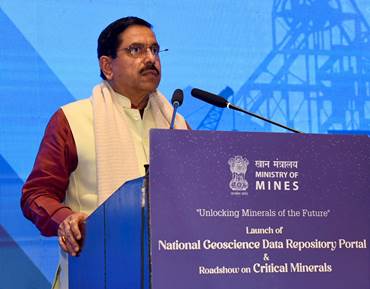

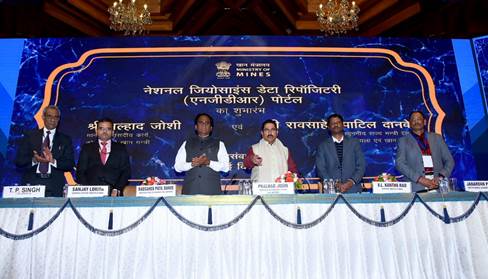








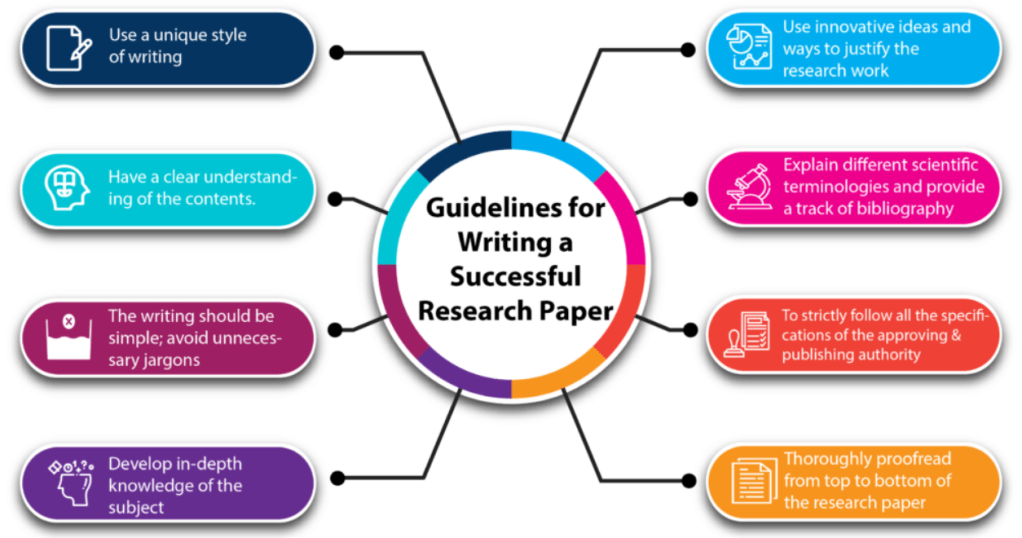






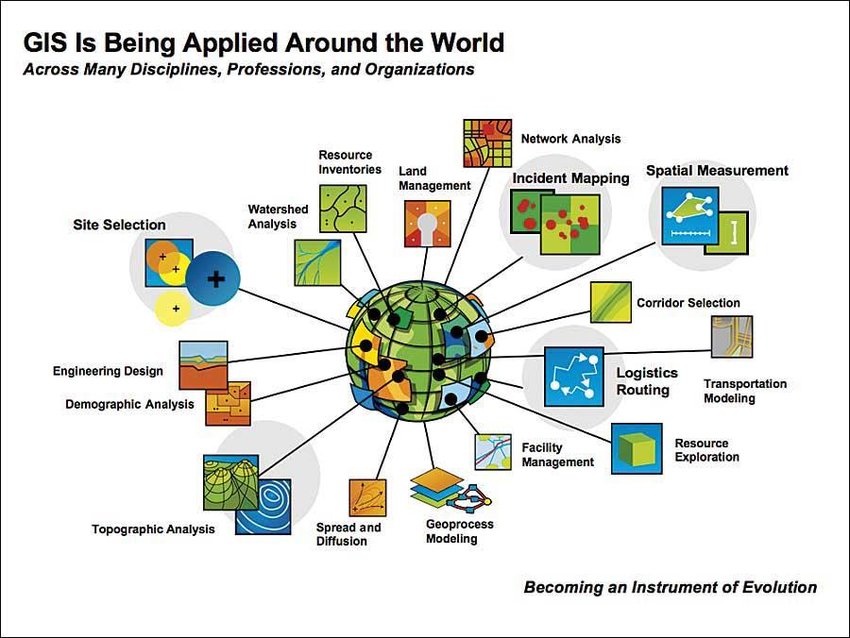


You must be logged in to post a comment.