The first step to taking good notes in class is to come to class prepared. Here are some steps you can take to improve your note-taking before class even begins:
Preview your text or reading assignments before the lecture. Previewing allows you to identify the main ideas and concepts that will most likely be discussed during the lecture.
Look at your course syllabus so that you know the topic / focus of the class and what’s going to be important to focus on.
Briefly review notes from previous class sessions to help you situate the new ideas you’ll learn in this class.
Keep organized to help you find information more easily later. Title your page with the class name and date. Keep separate notebook sections or notebooks for each class and keep all notes for each class together in one space, in chronological order.
Note-taking during class
Now that you are prepared and organized, what can you do to take good notes while listening to a lecture in class? Here are some practical steps you can try to improve your in-class note-taking:
If you are seeking conceptual information, focus on the main points the professor makes, rather than copying down the entire presentation or every word the professor says. Remember, if you review your notes after class, you can always fill in any gaps or define words or concepts you didn’t catch in class.
If you are learning factual information, transcribing most of the lecture verbatim can help with recall for short-answer test questions, but only if you study these notes within 24 hours.
Record questions and thoughts you have or content that is confusing to you that you want to follow up on later or ask your professor about.
Jot down keywords, dates, names, etc. that you can then go back and define or explain later.
Take visually clear, concise, organized and structured notes so that they are easy to read and make sense to you later. See different formats of notes below for ideas.
If you want your notes to be concise and brief, use abbreviations and symbols. Write in bullets and phrases instead of complete sentences. This will help your mind and hand to stay fresh during class and will help you access things easier and quicker after class. It will also help you focus on the main concepts.
Be consistent with your structure. Pick a format that works for you and stick with it so that your notes are structured the same way each day.
For online lectures, follow the above steps to help you effectively manage your study time. Once you’ve watched the lecture in its entirety, use the rewind feature to plug in any major gaps in your notes. Take notes of the timestamps of any parts of the lecture you want to revisit later.
Determining what’s important enough to write down
You may be asking yourself how you can identify the main points of a lecture. Here are some tips for recognizing the most important points in a lecture:
Introductory remarks often include summaries of overviews of main points.
Listen for signal words / phrases like, “There are four main…” or “To sum up…” or “A major reason why…”
Repeated words or concepts are often important.
Non-verbal cues like pointing, gestures, or a vocal emphasis on certain words, etc. can indicate important points.
Final remarks often provide a summary of the important points of the lecture.
Consider watching online lectures in real-time. Watching the lecture for the first time without pausing or rewinding can help force you to focus on what’s important enough to write down.
As soon as technology started taking its most advance form it became imperative for the businesses to have one foot on the online platform and one in the offline market. But to get a firm foot base is important, if the businesses want an outcome that is profitable and that base is not very easy to build. The virtual world as easy as it might seem isn’t that soft for the enterprises specially small and new. It is like a mirage until it’s held together with the reality that content services provide. Content services are like the rainbow which not only makes the sky after rain beautiful but also increases the number of the people who look at it. The different ventures with an aim of making a million need the rainbow of content services at every step of their journey. These services aren’t just fancy promoting or marketing of their ventures but it is also the shade during a rainstorm i.e. when the businesses find themselves in pit-hole of losses content services come to their rescue.
The main advantage that the content services provide is that the business becomes more cost effective. The content services usually provide quality service for lot less than some might charge offline. These services have a grip over the modern technology and use the same for the marketing and promotion of the brands that associate with them. The use of cost effective techniques for marketing and the hold of the virtual world better than the companies as their clients makes it easier for both the clients and the consumers to better know the brands. The kind of content that is to be used as the promotion technique plays an important part. Mainly the companies want the content that just not only describes their business in the best of interest but also that is relevant to the customers.
The content services provide the kind of content that boosts the interaction with the brands coming in for the promotion. They engage in SEO, which just increases the interaction with concerned company and thereby increasing its credib9lity. For individuals usually indulge in the highly credible companies. Content services aren’t just the marketing or promoting for the business in one single language rather it is about the multilingual promotion of the website. With over 22 regional languages that India has, the diversity of customers is the obvious result and for this diverse customers it is important to have marketing that is multilingual and content services provide this the best. The cost that the content services take might be seen as hefty by some but in real it is rather the most cost effective way of promoting business online. With the heavy competition, comes the opportunity to promote the business heavily and if content services got your back it becomes a piece of cake to attract consumers towards the business. It is the sought of investment that just gives you enough returns.
All the people in the world have type of personality traits that they sometimes acquire themselves and others they get it genetically from their parents. Because of these specific personality traits they get the personality which describes them as an outgoing person or a staying in person. The kind of places they like to visit, the kind of activity they like doing while free, they way they act in front of a group of people, the fears that they have and the kind of friends they make all describe their personality type. The type of personality sometimes is very descriptive in it-self and is easy to recognize but other times it tough to the read a person and they themselves might not be aware of the kind of personality they own.
These are the people who like to stay in their homes mostly and they do not like socialising or meeting people on daily basis. They avoid any social or public gatherings many times so as to avoid any more than necessary human contact. They like having their “me time” as away from world affair, like reading a book or watching their favourite movie or show rather than going out and meeting people. They have a small circle of friends and they hardly know more than names of their own family members sometimes. They have their favourite person and they are happy with just that one person most often. They generally take time in befriending someone and can still be quit in that new found friendship and they just like it that way.
This personality’s people generally like going out with their friends, colleges, neighbours, basically everyone. They have the gift of befriending anyone and everyone. They could talk to, hang out with everyone. They like spending time with the people outside the four walls of their home and they are mostly party animals and like socialising. They do not spend their “me time” inside their rooms rather they go outside in the want of exploring something new and getting to know new people. They have huge friends circle and even manage to hang out with all of them in even one day. They love social gatherings for the reason that they meet new people in them.
Ambiverts=
With a lot of introverts and extroverts, the individuals usually forget about the people who have the traits of them- the Ambiverts. They are the people who are somewhat introverts and somewhat extroverts. They like having their “me time” alone but also do not avoid social gatherings. They could talk to anyone if they want but also sometimes are in the want to avoid human contact. They could become friends with anyone and hang out with them but on some days they just want to be with their best friend and that is whole for them. They could roam around the city if they like but also come back home to their cup of coffee all alone gazing the stars. Because of the mixed personality traits of introverts and extroverts, they usually aren’t counted in any of the two personalities. They are most often to choose either of them and in failing to do so they went the term ambivert which describes now as the third personality trait with distinct characterstics.
Internships are a great way to gain valuable, hands-on experience in your field. For your internship to be beneficial, it must apply to your career aspirations. For example, if you’re interested in becoming a veterinarian, it may be beneficial to work at a kennel or animal shelter where you can learn proper animal care and handling.
Grow your skills and knowledge
Employers want to hire candidates with a wide range of skills. Use your college years to expand your skills and overall knowledge. Consider elective courses relevant to your career aspirations. For example, if you’re a photographer, taking an art class can help you expand your creativity. If your school doesn’t offer classes in the skill you’re hoping to grow, consider investing in relevant software.
Get an early start
To ensure you get the most out of your career, start looking for opportunities before you graduate. Find jobs relevant to your major. For example, if you’re interested in becoming a graphic designer, consider working for a design agency. This opportunity can help you understand what daily life is like for fellow designers and help you better understand the industry. Similarly, if you’re an art major, consider working for a local gallery to gain knowledge about the art industry. The sooner you look for opportunities, the greater chance you have of getting a job.
Keep your skills up-to-date
When you apply for a job or internship, you’ll likely be competing with other candidates. Because of this, it’s important to keep your skills current regardless of your industry. This means staying up-to-date with various technology and industry trends to help you gain an advantage over other candidates and make you stand out to hiring managers. Stay current by doing online research, reading professional journals or visiting your school’s library.
Pursue your passion
The easiest way to find happiness in your career is to determine what you love doing. For example, if you enjoy woodworking or metalworking, consider becoming an engineer. This ensures you’re doing something that makes you happy every day and will help your job feel less like work and more like fun. Following your dreams can also help increase your productivity because you’ll likely be more excited about going back to work. This advice is crucial as you advance in your career because it ensures you stay encouraged and driven to be the best you can be in your industry.
Strive for excellence and stay motivated
Whether you’re in your first job or an internship, it’s important to aspire to be the best you can be. Identify your own mistakes and believe in yourself and your abilities. This can help you stay vigilant in pursuing your dreams and give you the ability to advance in your career. Ultimately, striving for excellence can help you find success.
Use your school’s career services
Before you graduate, take advantage of your school’s career services to help you jump-start your career. This campus resource can provide you with a wealth of information, from crafting a resume to getting a job. Your school’s career services can also put you in touch with alumni in your field. Your tuition also pays for these services.
There are some major factors which influence the selection of our career
Selecting the right course and college is a very significant decision after 12th because the right selection will lead to a gratifying career as the wrong one is equal to ending up in studying a subject or a sphere that doesn’t really interest you. Moreover, the choice made after class 12 will be the one that will decide your future.
The contemporary and highly competitive world is giving the students a tough time to choose their career. Today, students are facing with plentiful options as there are several courses all of which look almost equally lucrative and interesting.
Cultural background: The cultural background of an individual plays a massive role in influencing the career.
Example: if the parents are doctors the child may be very much inspired by their way of life or the respect that is being paid in the society. So the child may opt to become a doctor.
Bad work experience: A bad work experience of any family member in a particular field may also influence the teenage in a negative way. It may lead to loss of interest in that particular kind of job.
Economic condition: It’s hard to believe that many dreams are killed every day as the economic condition of the family is one of the main reasons.
Example: A hefty amount is required to get admission in an architectural designing college.
Potential: Different profession demand different kind of requirements.
Example: If you want to join the film industry and you don’t have the requirements such as height and various physical requirements than perusing a course on acting and dreaming to be actor may be a waste of time and money. Pursuing a career depending on the potential may lead to success.
Parent’s dreams: Every parent has dreams and expectation for their child regarding their future. Sometimes children’s are being forced to fulfil their parent’s dream by killing their own dream.
Social value of the job: Some people get fascinated towards some jobs because of the respect and social value they carry.
Example: Being an IAS officer carries a lot of admiration in the society.
Peer pressure: Peer also plays a very important role while choosing a career. Some people choose the same career as their friend to maintain the same level of status forgetting their own field of interest.
Income: The future income of the job also plays a very important role while choosing a particular career. Some time running behind money kills the field that we are really interested in.
Our tastes and interests: Career should be selected depending on our tastes and interest which will help to give 100% to the job.
A resume is a formal document that serves to show a person’s career background and skills.
Pick the right resume template
The reverse chronological resume format includes employment history beginning with the most recent and then going backwards. Reverse chronological resumes show dates, as well as employers and educational institutions. It is the most common format in the resume.
LinkedIn profile: Recruiters often want an easy way to see your online profile. Make sure it matches your resume (in terms of job titles, dates, roles) and it is overall impressive.
Education
Write the name of the college and its location
Add the degree you received
Include the dates you attended: if you’re still attending the college, you can write “Present” or “Current” instead of listing the end date or you could add your expected graduation date.
List notable achievements
Include your GPA is 3.0 above
Experience
As a recent graduate, the recruiters knows you don’t have work experience. As long as you’re applying for a junior or entry-level position, the experience isn’t something expected from you.
Instead, the recruiter will be looking for other experiences that enrich you profile like,
Internships
Extracurricular activities
Projects
Skills
The two types of skills you can mention on your resume are soft skills and hard skills.
Soft skills are attributes that help you adapt to work environments, work in a team and apply your hard skills effectively. They are related to your personality, social skills, communication, attitude, etc.
Hard skills refer to technical knowledge and specific tools. They are skills that one learns and applies directly to the job. Some examples of hard skills include microsoft word, adobe photoshop, etc.
Language
If you know another language, you should always include it on your resume as it indicates to a recruiter that you’ve invested in yourself. It can also qualify you for a multitude of positions that require someone bilingual or multi-lingual.
Mention the proficiency levels like,
Basic / Average / Good
Intermediate / Very good
Advanced / Excellent
Mother tongue / Native / Bilingual
Mention optional sections
Volunteering: If you have some volunteering experience, make sure to include it in your first job resume. Such a section shows commitment, dedication and a sense of purpose, something most recruiters will appreciate.
Hobbies: You can show your genuine interest in the industry or field by listing some relevant hobbies / interests.
Awards and certifications: Whether it’s an award from an essay competition in college or a certificate from an online course, anything that flatters your profile should be added.
Should not include your photo on YOUR resume
Adding a picture to your resume could hurt your chances of getting the job.
Recruiters are careful to avoid discrimination and unconscious bias
Some hiring managers may consider resume photos unprofessional
A resume picture could distract from your skills and experience
Images are not ATS friendly
What is an ATS compatible resume?
An Application Tracking System is a software application that enables the electronic handling of recruitment and hiring needs. Click the below links to check your resume score!
A concise, targeted resume shows recruiters your ability to synthesize, prioritize and convey your most important achievements. As an entry-level candidate, your resume should be no more than one page long.
Top student resumes are between 450 and 650 words long.
Total bullet points
For context, top resumes at your career level use between 12-20 bullet points to describe their accomplishments in core sections (e.g. your work experience).
Other sections like your summary, skills or education are not counted in this check.
Unnecessary sections
While you can include a short summary on your resume, do not include an objective in your resume. It is clear to hiring managers that you are looking for a job – there’s no need to restate it at the top of your resume.
You shouldn’t include a references section in your resume. Employers will ask you directly if they ever need to contact your reference.
Repetition
Avoid repeating action verbs and phrases on your resume.
Unique action verbs and language show hiring managers that you have held different roles and skill sets. They also help your accomplishments stand out and make them more impactful.
Even when describing similar skills, try to always unique language in terms of verbs and phrases. This makes your resume less monotonous and helps you stand out.
Important tips
Use a single-column layout: A single-column resume layout allows recruiters to read it easily.
Pick a common font, size: We recommend to use readable font like times new roman or arial and set the font size to 13-14 for headings and size 12 for contents.
Resume templates
If you’re a high school student or a college student, don’t have much work experience yet or looking for entry-level jobs, these student resume templates are perfect for you. They prioritize your education by listing it first, and show you how to list your university projects and extracurricular activities on your resume. These resume templates are downloadable in Word (.doc) format or editable directly via Google Docs.
Laugh has always been a therapy that people rely on when they do not feel their own self or are having a tough day. Although there are a number of shows and movies that could give a hearty laugh but a new culture or profession has been gaining fans in India today and that is Stand-up Comedy. A number of individuals have become popular especially among the young generation. Their popularity has hit the sky with the fact that many of them are approached for brand works. This new coming of a community of the comedians there are certain faces that have become everyday names in the Indian households like Zakir Khan, Tanmay Bhatt, Munawar Faruqi, Sumukhi Suresh, Aishwarya Mohanraj, Urooj Ashfaq, Kenny Sebastian, Abish Mathew, Samay Raina, Kunal Kamra, Anubhav Singh Bassi, Harsh Gujral, Adar Malik, Kanan Gill, Prashasti Singh, Sumera Sheikh, Rohan Joshi and many others.
Though it has been mainly seen as the instrument for some good laughter and for relieving the stress but with emergence of new platforms everyday many stand up comedian have turned into YouTubers furthering their interest in the field. With over a million subscribers on the YouTube, they have been able to get a fan base beyond their live shows. People with an internet connection have been able to get access to their craft and become not just their fan but someone they adore. Stand-up comedy in India has been giving rise to a new culture where the ever increasing popularity of these comedians inspires young generation to follow their footsteps. Not only they have made a name for themselves as Stand up comedians but some have even been able to get themselves into the acting industry, for instance, Kanan Gill has starred in Sonakshi Sinha’s NOOR, Adar Malik has done a YouTube Series and some advertisement commercial, Sumukhi Suresh has her own web series on Amazon titled Pushpavalli (two seasons).
The popularity although seems easy does not really come at a low cost, the struggle behind the fame remains hidden. With a number of male stand-up comedians making a mark in the hearts of the people it has become difficult for the female stand- up comedians to get what they deserve. Their gender has played a role for making them less successful while putting in the equal hard work. Although not a lot of people agree with the view that women are less funny or lack sense of humour but still we come across typical, misogynistic, sexist individuals who does not want or accept comedy as a profession for females for the reason it being surely an easy task as being just about their beauty and not jokes. As the pandemic hit the world and there was a wave of depression and misery and sadness, it was comedy that came to the rescue of the world. It was the laughs that people wanted to bring them out of their sorrows and stand- up comedians happily took on the responsibility on their shoulders, to make the world a happy place in the tiring times of the pandemic. Although there was break even for them for their losses but they bounced back and saved the world.
Past two years have all been about deaths and losing our loved ones. It is nobody’s fault yet everybody had to pay. We might have been able to get the statics about the number of people who left us forever but there can never be the data regarding the emotions that accompanied those deaths. Some lost their parents, some their children, some their grandparents, some their brothers and sisters and others their friends and some their life partners. But one thing that is common among them is the vacuum they all feel in their lives and hearts with the loss of their loved ones. It is said that time heals everything, that people move on as time passes but can we really say that these people who lost their loved ones? One moment they were there smiling and the next moment they were in the hospital begging for oxygen, waiting for their turns on their death beds. Can we say them to be okay?
The fact that death is inevitable and the only truth of the life is all accepted but the suddenness with which individuals lost their family can never make them accept the truth of the life. They all had it in one moment and the next second they lost it altogether forever. They are left with a hole in their hearts, cried their eyes out, breath their lungs out for the people they lost to the havoc of the pandemic and with what fault? That they were not able to arrange oxygen for them in time or that they were poor to even afford an ambulance or that they just decided to wait long enough? No. Their mistake was to believe that the pandemic a conspiracy by some nation against them, their mistake was to accept the fact that covid is dangerous, their mistake was socializing when government even rolled out advisory, their mistake was that they left their home and their mistake was that they were naive enough to commit these stupid mistakes.
Now, as the world is getting towards normalcy, as the citizens are getting back at their lives as did before the pandemic hit the world, they want to believe that everything will be all fine, they want to have faith and hope in their lives ahead. Though it is difficult to even think of lives without our loved ones in it, it is far more difficult to even live the pain, but they will have to. Life has always been beautiful for one or the other reason, they had always been able to cope in one way or the other but this time it might be different but they have to for this is the right thing. They have to live on, for themselves, for their loved ones, for they live within them and live through them. They are allowed to miss them for they love them, but aren’t allowed to step back, to become fragile and lose what they are left with. They need to hang in there for it is the right thing to do, for no matter how hard one is affected, time indeed heals everything.
For every special occasion whether formal, informal, official, unofficial people usually find it appropriate to carry flowers with them. And as the culture where it is considered respectable and suitable gained popularity the business that flourished with florists diving into new world of trade and commerce is flower delivery. It is the service provided by many different companies both online and offline for people to order and send flowers to a distinct party to show their love, care and support.
Occasions=
The exchange of flowers usually takes place in occasions, like-
Attending a party (public or personal)
Gifting them on special days
Sharing the happiness for big days (promotion, weddings, etc.)
Wishing good luck
Grieving or presenting condolences
Biding goodbye
History=
Very few are not aware of the fact that sale of flowers has been happening now for centuries and just the method or mode of delivery have changed with no modifications in the imperativeness that flower delivery holds. In the earlier days without the facility of any kind of mail service people took flowers themselves even for long journeys. As the progress started to happen now telegrams were being used for sending flowers on the other side. With courier service then came the dealing of flowers in the same city by phone. And currently online platform has given new heights to trade of flowers.
Modifications=
With advances in technology day after day, it became important for florists to improve their style of work as well. This modification mainly came in the field of supplying the flowers to the customers. With technological enhancement the providing of flowers through online portals became easy and efficient and in demand. It was significantly observed that consumers were now more interested in ordering online for it gave them more choices, better discounts and timely delivery all at the comfort of their homes.
Summing Up=
As there is a constant progress taking place in various fields in the contemporary world a change in pattern of getting flowers for different occasion was also destined. With the phenomenon of self love gaining fans, a new trend of getting flowers for themselves is apparent. Folks in today’s world do not wait for some being to get them flowers rather they go out and buy it for themselves. As new fads come and go the carrying of flowers to most occasions remain unaffected as it is the flower delivery that smitten everyone.
Gambling is the act of betting money on various platforms with the intention of earning more than the bet. This act is basically judging the chances of winning of a particular team or happening of an event so as to bet on that probability and make money out of it. A lot of people bet for the easy money that gambling brings in for them, while other might do it just for fun, and still others are just addicted to it after a certain period. Online gambling is the on the web, technological and virtual gambling that is fast gaining fans in the contemporary world.
Annals=
The way people betted was not always online, it was face to face in the old times where people betted with real cash to a bookie. With the improvement in the know-how of the internet, the upgrading of the gambling to the virtual space was an obvious result. It is agreed that it was in 1990s that civilians became aware of the detail that internet could be used for betting and not too late in 1996-1997 many online spaces and portals with the intention of promoting virtual betting came in existence, and since then, the fan following of this has been on a rise.
Legality=
Online gambling is a subject under the governance of the state law in India. It is not therefore illegal but there is no such act or provision relating only to it. Therefore, it is many-a-times dealt with Information Technology Act, of 2000. Various states have their own laws regarding gambling-
Nagaland- The Nagaland Prohibition of Gambling, Prohibition and Regulation of Online Games of Skills Act, 2015
West Bengal- West Bengal Gambling and Prize Distribution Act, 1957
Rajasthan- Rajasthan Public Gambling Ordinance, 1949
Winding Up=
In the day and age where it is becoming difficult to earn a living with rising unemployment and continuous price rise, gambling can prove to be a major source of income. Although there are reservations among some sections of the society regarding the act of betting but with expertise and experience in any field it is not knotty to earn a living through online gambling. The illegality leads to hideous betting thereby depriving government of its taxes. Legality is thus, a necessity.
You woke up and you decided to choose fear. A fear that overcame you every time you decided on doing something exceptional or exiting or different from the usual. That fear even scared your shadow in doing something uncanny and that fear was so strong that you didn’t even get the time to regret what you just did. That fear made you take stupid decisions like, rejecting the people who love you or not being able to perform even the simplest of tasks or just loosing contact with everything that was beautiful in the world including the human beings you wanted to be yours. And finally when you got hold of your surroundings, of your real self again it was too late.
It was too late to say sorry, to say that you were out of your senses because you were not, you were under the spell of your own fear and that made you go for a wrong life decision. You fought well for yourself, with yourself, but you never recognised that the need was to fight the devil called unknown fear. You lost in your game, in your own life and you thought that fear of uncertainty will leave you once you could make things better or normal again but you were wrong all along. For you were not to make things okay but you were to get rid of the fear but you failed. This failure in leaving the fear behind, got you to the failure in life and even when you tried you just lost the sparkle you once owned.
It must have been disheartening for you losing it to the fear of the unknown but did that fear actually broke your heart? Or did it just get you an ache that you could not forget? You tried getting busy in the worldly pleasures only to come home to an empty room or rather a room full of despair, disappointment and rejection. That room you wished for to be filled with fragrance of flowers of your honesty, fruits of your true nature but rather there was just fear that smelled delicious to you then. You attempted and looked outside of the window seeking any light, some light of hope or optimism to teach you how to live without fear but in that moment you rather accepted defeat for you didn’t see any beam of positivity.
When your world came to a standstill for the ills you had performed or all the actions you had been proud of you believed it to be the new normal. You accepted that you had lost at life and just then, you saw what you had been waiting to see. You saw the end of the tunnel, it was not close, not near enough to even have a clear view but you knew it was there. You felt it. You finally felt the pressure being dropped off your chest, you felt lighter, much lighter than you had ever been in your life, you felt free. You assumed it to be the new beginning, a fresh start without the baggage of the past, of the fear but you were proven wrong, again, by the witch of words. The words you had hoped would clear your sky for you, didn’t tidy up even the slightest of your discomfort but rather brought you back to the starting of the tunnel, for this time the fear was even stronger than before and you were losing it all again.
You believed you stood an opportunity to make things right, but it was a thorny path to follow. The path where you knew everything, where there was no uncertainty but rather you were well versed with every inch of it. There you saw your beam again and you thought you were just in time to grab it, that finally you would be free and liberated from all the struggles you faced, from the sense of regret that hit you once in a while, but just when you were about to catch it, its tail slipped your hand and you saw it going away from you, this time forever, for you were again in the same pothole, where even if you try hard you fell again and again for you knew it was the hole of the fear of the unknown and no matter how hard you tried you were not able to leave it all behind, leave it all in the past and that’s the reason why you still live without what you asked for but with the fear of the unknown.
All day all night we hear people talk how important it is to have a healthy body and heart. How companies market their products on the prospect of delivering a healthy and fit body, mind and heart. But all these advertisement, marketing etc, are they really about the healthy body? Or are they only about the perfect body? The body which is popularly accepted and appreciated view of a healthy body is taken as the perfect body. Ever since the beginning of the human life, individuals have been involved in various physical activities not just to feed them self but also to stay healthy and fit and in this light the GYM culture was born. But as time progressed and humans got an understanding of beauty and gorgeous body they started with the obsession of having and making other people know about their perfect body. This obsession could be more dangerous than any other addiction.
Bollywood Influence=
As beings grow up and realise that the bollywood culture is all about the body that could serve as the apt body for a dancer, a model, an actor, they start struggling for this body. The bollywood influences not only the perspective a person has about overall aspect of perfect body but also they serve as the base for the self complex that people face after they find out that getting the perfect body isn’t a true reality but sometimes rather a myth. The actors toil hard in getting their shape right for all the right reasons of portraying their best selves but as they devote their entire time for it, it might look effortless to achieve. But when individuals fail in getting near to that perfect body they start hating themselves and end up with their worst self, not physically but mentally.
Societal Pressures=
However blaming bollywood for every other thing isn’t the goal. But rather is to highlight the fact that bollywood gets its movies from the society around and hence, it is actually the society that manifests a type of body as the perfect body. We see older men and women commenting mercilessly on the younger generations’ body and eating habits. Though correcting them for their wrongs might be okay sometimes but completely rejecting their bodies for they do not serve rightly on their perception of perfect body is erroneous. They body shame not the ones who are overweight or underweight but even the one who discard their standard of beauty and perfectness. The uncles and aunties in the mask of wanting the welfare of the children of their ‘family’ stoop low to another level.
Self love=
Today with people coming out with their stories of distress and anxiety because of the kind of body they have, many organisations and individuals have been promoting the values of body positivity and self love. Body positivity is about accepting who you are and loving thee body as god made it. Though exercising might help in increasing stamina and keeping you happy and healthy but body positivity is about exercising with the love for the body and not the hate, it is about working out for own happiness and not because our body is flawed. Self love is actually the key to the perfect body- a body that is healthy, free of diseases, with a happy heart and liberated mind.
We have heard people telling us to read books for improving ourselves. There are a number of different books that people read so as to be in the habit of reading. Sometimes people read to entertain themselves and other time they read to pass their time and further some might read to improve their knowledge of certain language. There can be a lot of reasons of reading books and all of them are certainly justifiable. But very often it has been observed that people don’t actually read but they just put it in their resumes to look more apt for the jobs they apply for. But why do people insist on including the reading habit in their resumes even when they don’t really read? The answer is that people know the importance of reading but they hardly care to actually read. Some people believe it to be highly boring when they have to read and thereby completely ignoring the benefits of reading.
With reading our knowledge of a certain language improves. There are examples where people who are indulged in reading are better off in communicating their thoughts in a particular language as they read in that language. When people read in one language they usually start thinking and then conversing in that language. They get a hold of a certain language just by reading in that language. Reading not only improves their vocabulary but also help them enhance their overall knowledge. Reading just not mean reading novels, or books but it might also mean reading blogs, news etc, which enhances their knowledge and makes them smarter than they were before they started reading. Reading gives a person a sought of confidence that they get because of the knowledge which they achieve as they feel more comfortable in participating in intelligent conversation for they have their own say now.
The habit of reading as some might believe or some might not but teaches the art of patience. For to complete a thriller novel you cannot skip to the end or reach to the climax as some might do in movies and web series, for you need to follow the story word by word, sentence by sentence and page by page, so as to feel the euphoria of finally getting to the end. This euphoria can be achieved only by the art of patience as taught by reading. Reading improves our level of concentration for it is important to focus only on the story while reading it for we would be lost if we lose if slightest of our attention away from it. Reading improves our attention span and gives us some major focus goals. We see people reading while travelling in metro, while waiting for someone, just before going to sleep, all of this and more proves how entertaining reading could be. The best possible thrill, excitement, emotions of happiness, sadness, love, hate and others that reading make us feel are surely something we cannot even experience through some movie or other digital works.
Let me introduce you all to the definition of law, in other words, what is law?
It is, by definition, the system of rules that a particular country or a community recognizes as regulating the actions of its members which it may enforce by the imposition of penalties.
Or, in the words of eminent Jurist Salmond, law is the body of principles recognised and applied by the state in the administration of justice.
Now why am I stating the facts you may think. Well, I am not giving weight to my part of the writings here, I am giving weight to the situation of the country. How conveniently we twist and turn mere facts in the grab of amendments. Some sure are in our favour but what about the others that are not?
I shall begin with the necessity of amending provisions in the constitution. Provision for amendment in the constitution is made with a view to overcome the difficulties which may encounter in the future in working of the constitution. No generation has the monopoly of wisdom nor has it any right to place fetters on future generations to mould the machinery of government according to their requirements. If no provisions were made for the amendment of the constitution, the people would have recourse to extra constitutional method like revolution to change the constitution, as held in Keshavananda v/s the state of Kerala All India Report 1973 Supreme Court page number 1461. The power of amending the law is exercised by the parliament under Article 368 of the Indian Constitution.
The framers of the Indian Constitution were keen to avoid excessive rigidity. They were anxious to have a document which could grow with a growing nation, adapt itself to the changing need and circumstances of growing people. the nature of the ‘amending process’ envisaged by the framers of the constitution can be best understood by referring the following observation of the late Prime Minister Pandit Nehru – “When we want this constitution to be solid and permanent as we can make it, there is no permanence in the constitution. There should be a certain flexibility. If you make anything rigid and permanent, you stop the nation’s growth.”
In any event, we could not make this constitution so rigid that it cannot be adopted to changing conditions. When the world is in a period of transition, what we may do today may not be wholly applicable tomorrow.
2021 Theme: Yoga for well-being The Day will be marked at a time when COVID-19 pandemic continues to upend lives and livelihoods of people globally.
Beyond its immediate impact on physical health, the COVID-19 pandemic has also exacerbated psychological suffering and mental health problems, including depression and anxiety, as pandemic-related restrictions continue in various forms in many countries. This has highlighted the urgent need to address the mental health dimension of the pandemic, in addition to the physical health aspects.
The message of Yoga in promoting both the physical and mental well-being of humanity has never been more relevant. A growing trend of people around the world embracing Yoga to stay healthy and rejuvenated and to fight social isolation and depression has been witnessed during the pandemic. Yoga is also playing a significant role in the psycho-social care and rehabilitation of COVID-19 patients in quarantine and isolation. It is particularly helpful in allaying their fears and anxiety.
Recognizing this important role of Yoga, this year’s commemoration of the International Day of Yoga focuses on “Yoga for well-being” – how the practice of Yoga can promote the holistic health of every individual.
The United Nations offers yoga resources to its personnel and others on the COVID-19 portal’s section on Wellness.
The World Health Organization mentions yoga as a means to improve health in its Global action plan on physical activity 2018–2030: more active people for a healthier world.
UNICEF says kids can practice many yoga poses without any risk and get the same benefits that adults do. These benefits include increased flexibility and fitness, mindfulness and relaxation.
2021 virtual event The Permanent Mission of India to the United Nations invites you to an online celebration of the 7th annual International Yoga Day on 21 June 2021, from 8:30 to 10:00 am EST, broadcast live on UN WebTV.
The event opened with messages from the President of the United Nations General Assembly and the Deputy Secretary-General of the United Nations, which was followed by demonstrations of Yoga exercises (asanas) to improve physical, mental, emotional and spiritual health and an interactive panel discussion on “Yoga for well-being.”
What is Yoga and why do we celebrate it? Yoga is an ancient physical, mental and spiritual practice that originated in India. The word ‘yoga’ derives from Sanskrit and means to join or to unite, symbolizing the union of body and consciousness.
Today it is practiced in various forms around the world and continues to grow in popularity.
Recognizing its universal appeal, on 11 December 2014, the United Nations proclaimed 21 June as the International Day of Yoga by resolution 69/131.
The International Day of Yoga aims to raise awareness worldwide of the many benefits of practicing yoga.
The draft resolution establishing the International Day of Yoga was proposed by India and endorsed by a record 175 member states. The proposal was first introduced by Prime Minister Narendra Modi in his address during the opening of the 69th session of the General Assembly, in which he said: “Yoga is an invaluable gift from our ancient tradition. Yoga embodies unity of mind and body, thought and action … a holistic approach [that] is valuable to our health and our well-being. Yoga is not just about exercise; it is a way to discover the sense of oneness with yourself, the world and the nature.”
The resolution notes “the importance of individuals and populations making healthier choices and following lifestyle patterns that foster good health.” In this regard, the World Health Organization has also urged its member states to help their citizens reduce physical inactivity, which is among the top ten leading causes of death worldwide, and a key risk factor for non-communicable diseases, such as cardiovascular diseases, cancer and diabetes.
But yoga is more than a physical activity. In the words of one of its most famous practitioners, the late B. K. S. Iyengar, “Yoga cultivates the ways of maintaining a balanced attitude in day-to-day life and endows skill in the performance of one’s actions.”
The United Nations is the symbol of hope for mankind. This hope, as former UN Secretary-General Dag Hammerskjold said, is the hope that peace is possible. The United Nations is an organization of 193 sovereign states. It was set up in 1945 to replace the ill-fated League of Nations. The Allies, who were fighting the Axis Powers in the Second World War to destroy dictatorship and secure the ‘world for democracy, resolved to establish a new world organization rather than revive the League of Nations. It was in the London Declaration of 12 June 1941 that all nations then fighting against Hitler’s Germany announced their intention of working together, with other free peoples, to establish ‘a world in which, relieved of the menace of aggression, all may enjoy economic and social security.’ Earlier, President Roosevelt of the United States in a message to the Congress in January 1941, had spelt out four freedoms as being of universal importance.
These were: (a) Freedom of speech and expression; (b) Freedom to worship God in one’s own way; (c) Freedom from want; and (d) Freedom from fear.
At that time the United States was not at war. She was observing neutrality. As explained earlier, the United states joined the Second World War only in December 1941 when Japan bombarded Pearl Harbour. The Soviet Union had joined the Allies in June 1941 after Germany’s attack. Thus the Four Freedoms and the London Declaration were expressions of the desire of mankind to be free from ‘war’ and free from ‘want’. On 14 August 1941, Roosevelt and Churchill issued the famous Atlantic Charter which spoke of the establishment of a ‘peace which will afford to all nations the means of dwelling in safety within their own boundaries,’ of freedom from ear and want, and the creation of ‘a wider and permanent system of general security.’
The principles spelt out in the Atlantic Charter, and the London Declaration, were endorsed by the 26 countries who were then Allies, on 1 January 1942 in what came to be known as the United Nations Declaration. This declaration signed in Washington was mainly concerned with war, not peace. It was to emphasize cooperation in an all-out struggle against Axis and to give an assurance to each other not to make peace individually.
Objectives And Principles
Objectives:
(i) to maintain international peace and security based on respect for the principle of equal human rights and self-determination of peoples.
(ii) to develop friendly relations among nations.
(iii) to cooperate in solving international problems of an economic, social, cultural or humanitarian character.
(iv) to be a centre for harmonizing the actions of nations in achieving these ends.
(v) to protect environment & to justify use of natural resource.
The United Nations act in accordance with the following Principals.
All member states are sovereign and equal.
All are pledged to fulfil their obligations under the Charter in good faith.
All are pledged to settle their international disputes by peaceful means and without endangering international peace, security and justice.
They are to refrain in their international relations from the threat or use of force against any other state.
They are to give the UN every assistance in any action it takes in accordance with the Charter.
The United Nations shall not intervene in matters which are essentially domestic ones of any state except when it is acting to enforce international peace.
Pt. Jawaharlal Nehru was born in Allahabad on November 14, 1889. He received his early education at home under private tutors. At the age of fifteen, he went to England and after two years at Harrow, joined Cambridge University where he took his tripos in Natural Sciences. He was later called to the Bar from Inner Temple. He returned to India in 1912 and plunged straight into politics. Even as a student, he had been interested in the struggle of all nations who suffered under foreign domination. He took keen interest in the Sinn Fein Movement in Ireland. In India, he was inevitably drawn into the struggle for independence.
In 1912, he attended the Bankipore Congress as a delegate, and became Secretary of the Home Rule League, Allahabad in 1919. In 1916 he had his first meeting with Mahatma Gandhi and felt immensely inspired by him. He organised the first Kisan March in Pratapgarh District of Uttar Pradesh in 1920. He was twice imprisoned in connection with the Non-Cooperation Movement of 1920-22.
Pt. Nehru became the General Secretary of the All India Congress Committee in September 1923. He toured Italy, Switzerland, England, Belgium, Germany and Russia in 1926. In Belgium, he attended the Congress of Oppressed Nationalities in Brussels as an official delegate of the Indian National Congress. He also attended the tenth anniversary celebrations of the October Socialist Revolution in Moscow in 1927. Earlier, in 1926, at the Madras Congress, Nehru had been instrumental in committing the Congress to the goal of Independence. While leading a procession against the Simon commission, he was lathi-charged in Lucknow in 1928. On August 29, 1928 he attended the All-Party Congress and was one of the signatories to the Nehru Report on Indian Constitutional Reform, named after his father Shri Motilal Nehru. The same year, he also founded the ‘Independence for India League’, which advocated complete severance of the British connection with India, and became its General Secretary.
In 1929, Pt. Nehru was elected President of the Lahore Session of the Indian National Congress, where complete independence for the country was adopted as the goal. He was imprisoned several times during 1930-35 in connection with the Salt Satyagraha and other movements launched by the Congress. He completed his ‘Autobiography’ in Almora Jail on February 14, 1935. After release, he flew to Switzerland to see his ailing wife and visited London in February-March, 1936. He also visited Spain in July 1938, when the country was in the throws of Civil War. Just before the court-break of the Second World War, he visited China too.
On October 31, 1940 Pt. Nehru was arrested for offering individual Satyagraha to protest against India’s forced participation in war. He was released along with the other leaders in December 1941. On August 7, 1942 Pt. Nehru moved the historic ‘Quit India’ resolution at the A.I.C.C. session in Bombay. On August 8,1942 he was arrested along with other leaders and taken to Ahmednagar Fort. This was his longest and also his last detention. In all, he suffered imprisonment nine times. After his release in January 1945, he organized legal defence for those officers and men of the INA charged with treason. In March 1946, Pt. Nehru toured South East Asia. He was elected President of the Congress for the fourth time on July 6, 1946 and again for three more terms from 1951 to 1954.
History And Early Life
Nehru was born on Nov. 14, 1889, at Allahabad, India. His name Jawaharlal mea»s “red jewel,” a name he once said he found “odious.” His father, Motilal Nehru, was a wealthy lawyer from the state of Kashmir. Both he and Nehru’s mother, Swarup Bani Nehru, were Brahmans, the highest caste in India. Jawaharlal had two younger sisters: Swarup, born in 1900, and Krishna, born in 1907. They grew up in a palatial home called Anand Bhawan, meaning Abode of Happiness.
India was a part of the British Empire, and many of Motilal’s friends were English. Until Nehru was 15, he was educated at home by British tutors. He also studied the Hindi and Sanskrit languages with a Brahman teacher who, according to Nehru, managed to impart “extraordinarily little.” The only one of his tutors who impressed the boy was a French-Irish philosopher named Ferdinand T. Brooks. Brooks imbued Jawaharlal with an enthusiasm for reading and for science.
He introduced the youth to theosophy, a mystical system of thought that claims to explain the universe on the basis of direct revelations. The doctrine fascinated Nehru, and at the age of 13 he joined the theosophical society. But his interest in theosophy soon waned.
Student in England. In 1905, Nehru’s father took him to England to enroll at Harrow, a leading English public school. Nehru’s housemaster, the Bev. Edgar Stogdon, remembered him later as “a very nice boy, quiet and very refined. He was not demonstrative but one felt there was great strength of character. I should doubt if he told many boys what his opinions were. . . .”
Jawaharlal entered Trinity College at Cambridge University in 1907. There he studied chemistry, geology, and botany. He displayed little intellectual interest or ambition. He attended meetings of a debating society, but seldom found courage to speak himself. Nonetheless, the society’s political discussions stirred his interest in the growing Indian nationalist movement. He also became sensitive to discrimination against Indians. After completing his studies at Cambridge University, Nehru studied law in London, where he passed his bar examination in 1912.
Plastic waste management is a collective term for various approaches and strategies used to recycle plastic materials that would otherwise be dumped into landfills, or bodies of water, or otherwise contaminate the environment. The idea behind this type of waste management is to utilize those discarded materials to manufacture new plastic products without the need to actually generate additional plastic materials. Doing so can help lower production costs as well as protect the environment.
Many different types of industries participate in some type of plastic waste management process. Some are specifically geared toward collecting plastic items for recycling. For example, many supermarkets encourage customers to contribute unwanted plastic bags into a recycling container located near the front of the store. The collected bags are then forwarded to recycling centres where the material is processed for use in the production of new products made from the recycled plastic.
Businesses that produce plastic products also engage in the task of plastic waste management. This often focuses on finding ways to recycle or reuse excess plastic that is discarded as units of different goods are produced. These plastic remnants can often be collected and ran through an internal recycling process to create additional products for sale. Not only does this approach prevent the disposal of the used materials into a landfill, it also allows the company to lower the actual cost associated with manufacturing each unit of its product line.
In some cases, businesses outsource the process of plastic waste management. Contracting with a waste management company makes it possible for unwanted plastic items to be collected and removed from the premises without expending additional company resources. Municipalities sometimes work with a waste management disposal company in creating plastic recycling programs that allow households to conveniently dispose of plastic milk jugs, broken plastic toys, and other plastic items without placing them into the trash. Depending on the nature of the arrangement with the plastic waste management company, the municipality may actually earn a small amount from the arrangement, creating another stream of revenue for the city or town that can be used to fund services offered to residents.
Any type of plastic waste management must be conducted in compliance with regulations set by local, state, and federal governments. This includes using recycling methods that are considered to be environmentally friendly, and that are not likely to create health risks for individuals living and working in the community. Since regulations regarding recycling vary somewhat from one jurisdiction to another, it is important to determine what is and is not allowed before establishing any type of ongoing program to deal with plastic waste.
Climate change is a long-term shift in global or regional climate patterns. Often climate change refers specifically to the rise in global temperatures from the mid-20th century to present.
Climate is sometimes mistaken for weather. But climate is different from weather because it is measured over a long period of time, whereas weather can change from day to day, or from year to year. The climate of an area includes seasonal temperature and rainfall averages, and wind patterns. Different places have different climates. A desert, for example, is referred to as an arid climate because little water falls, as rain or snow, during the year. Other types of climate include tropical climates, which are hot and humid, and temperate climates, which have warm summers and cooler winters.
Climate change is the long-term alteration of temperature and typical weather patterns in a place. Climate change could refer to a particular location or the planet as a whole. Climate change may cause weather patterns to be less predictable. These unexpected weather patterns can make it difficult to maintain and grow crops in regions that rely on farming because expected temperature and rainfall levels can no longer be relied on. Climate change has also been connected with other damaging weather events such as more frequent and more intense hurricanes, floods, downpours, and winter storms.
In polar regions, the warming global temperatures associated with climate change have meant ice sheets and glaciers are melting at an accelerated rate from season to season. This contributes to sea levels rising in different regions of the planet. Together with expanding ocean waters due to rising temperatures, the resulting rise in sea level has begun to damage coastlines as a result of increased flooding and erosion.
The cause of current climate change is largely human activity, like burning fossil fuels, like natural gas, oil, and coal. Burning these materials releases what are called greenhouse gases into Earth’ atmosphere. There, these gases trap heat from the sun’s rays inside the atmosphere causing Earth’s average temperature to rise. This rise in the planet’s temperature is called global warming. The warming of the planet impacts local and regional climates. Throughout Earth’s history, climate has continually changed. When occurring naturally, this is a slow process that has taken place over hundreds and thousands of years. The human influenced climate change that is happening now is occurring at a much faster rate.
Climate change is impacting human lives and health in a variety of ways. It threatens the essential ingredients of good health – clean air, safe drinking water, nutritious food supply, and safe shelter – and has the potential to undermine decades of progress in global health. Between 2030 and 2050, climate change is expected to cause approximately 250 000 additional deaths per year, from malnutrition, malaria, diarrhoea and heat stress alone. The direct damage costs to health is estimated to be between USD 2-4 billion per year by 2030. Areas with weak health infrastructure – mostly in developing countries – will be the least able to cope without assistance to prepare and respond. WHO supports countries in building climate-resilient health systems and tracking national progress in protecting health from climate change. Reducing emissions of greenhouse gases through better transport, food and energy-use choices results in improved health, particularly through reduced air pollution. The Paris Agreement on climate change is therefore potentially the strongest health agreement of this century. WHO supports countries in assessing the health gains that would result from the implementation of the existing Nationally Determined Contributions to the Paris Agreement, and the potential for larger gains from more ambitious climate action.
The First World War broke out with the declaration of war by Austria-Hungary upon Serbia on 28 July 1914. Many other countries joined the war within the next few days on one side or the other. The war was fought between the Allied and Associated powers (Allies) on one side and the Central Powers on the other. The principal allies were France, the British Empire and Russia. Italy joined them in 1915. There were many other smaller Allies also. The United States remained neutral for three years but was compelled to enter the war on the side of the Allies in April 1917.
Japan had joined earlier. Russia withdrew from the war after the Bolshevik Revolution in November 1917 (October, according to the old calendar followed in Russia). The Central Powers were Germany, Austria-Hungary and the Turkish Empire. The war ended in November 1918 with the unconditional surrender of Germany. Formal peace treaties were signed after several months.
Events Leading To The First World War
The war between France and Prussia (the future German Empire) that lasted from 1870 to 1871 ended with a humiliating defeat for France. It lost the regions of Alsace and Lorraine, and was forced to pay a huge indemnity to Prussia. The Franco-Prussian War led to creation of a powerful German Empire with a military and industrial potential to further disrupt the European balance of power on the one hand and widespread resentment and desire for revenge among the French (revanchism) on the other.
With the accession of Wilhelm II to the German throne in 1888, the German foreign policy became more bellicose. The new German Emperor dismissed the skillful Otto von Bismarck as Chancellor. He also refused to renew the Reinsurance Treaty with Russia that maintained the fragile peace between Russia and Austria-Hungary as well as kept France isolated. That way Wilhelm II helped create an alliance between France and Russia (formed in 1892) that became the basis for the future Triple Entente.
Russo-Japanese rivalry over Manchuria and Korea reached its height with the Russo-Japanese War (1904-1905). The outcome of the war against the Japanese was a major blow for the Russians who lost almost entire Baltic and Pacific fleet. The defeat also provoked a serious political crisis that led to the Russian Revolution of 1905. But the Russo-Japanese War also made an end to the Russian ambitions in the Far East and as a result, the Tsarist government focused its attention to Europe, in the first place to the Balkans. This intensified the old rivalry with Austria-Hungary that also had a great interest in the Balkans.
German militarism and especially the build up of naval power convinced Great Britain that Germany may soon establish itself as a dominant power on the Continent. In order to create a counterweight to the German Empire, the British decided to enter into an alliance with France that came to be known as Entente Cordiale. In 1907, Britain also entered into an alliance with Russia that was already in alliance with France. This formed the Triple Entente which in turn became the core of the Allies during World War I.
The Moroccan Crises – the Tangler Crisis (1905-1906) and Agadir Crisis (1911) – brought the European powers on the brink of war. Both crises were provoked by the Germans with an aim to cause tensions between France and Britain that just concluded an alliance. The result, however, was right the opposite. Instead of ‘softening’ Britain and bring it closer to the Central Powers, the Moroccan Crises further reinforced the Entente Cordiale and increased the British hostility towards Germany.
In 1908, Austria-Hungary decided to annex Bosnia and Herzegovina that was formally an integral part of the Ottoman Empire. The annexation of the provinces that were occupied by the Dual Monarchy since 1878 was bitterly opposed by Serbia that was closely related to the provinces both ethically and geographically. Serbia was supported by the Tsarist government and the crisis persisted into 1909. Russia failed to win as firm support from France or Britain as Vienna enjoyed from Germany and accepted the annexation of the provinces. Serbia was forced to back down and the crisis ended. But it permanently damaged the relationship between Russia and Serbia on the one hand and Austria-Hungary on the other. The annexation of Bosnia and Herzegovina caused embitteredness in Serbia, while the way it was carried out humiliated the Russian government that could not afford a similar humiliation during the 1914 July Crisis.
The Italo-Turkish War that took place between 1911 and 1912 did not pose any major threat to peace in Europe. But the Turkish defeat revealed the weakness of the Ottoman army and disagreement between the European powers about the so-called Eastern Questions – the fate of the decaying Ottoman Empire. The war between the Kingdom of Italy and the Ottoman Empire was also a strong incentive for the Balkan League which would capture the Balkan peninsula from the Turks independently from the great powers.
In 1912, Serbia, Greece, Montenegro and Bulgaria formed the Balkan League, a military alliance against the Ottoman Empire. Within a few months, the Balkan allies stripped the Ottoman Empire of its possessions in the Balkans and divided the conquered territory among themselves. In June, Bulgaria turned against its allies of Serbia and Greece due to a dispute over partition of Macedonia. But the Bulgarians were defeated within a month and forced to give up their claims in Macedonia. The success of the Balkan League shocked most European powers including the Russian allies of France and Great Britain. But it especially disturbed Austria-Hungary that strongly opposed a strong Serbian state. Vienna saw Serbia both as a rival in the Balkans and as a direct threat because it feared that its small Balkan neighbor may become the core of a future South-Slavic state. The Balkan Wars made Austro-Hungarian statesmen even more determined to take concrete action to prevent further strengthening of Serbia.
On June 28, 1914, a group of conspirators from the revolutionary movement called Mlada Bosna (‘Young Bosnia’) carried out the assassination of the Austro-Hungarian heir presumptive, Archduke Franz Ferdinand and his wife while they were visiting Sarajevo. Since the assassin, Gavrilo Princip and his 5 accomplices were Bosnian Serbs, the Dual Monarchy accused Serbia to stand behind the assassination. The event triggered the course of events that directly led to the outbreak of World War I but it did not cause it. Austria-Hungary was determined to eliminate the ‘Serbian threat’ before the assassination of its heir presumptive and it only needed an excuse to declare war on its Balkan neighbour.
On July 23, Austria-Hungary presented an ultimatum to Serbia. Vienna, however, intentionally imposed impossible demands to Serbia in order to be able to declare war on its neighbour for ‘orchestrating’ the assassination of Archduke Franz Ferdinand of Austria. A few days later, the Austro-Hungarian troops invaded Serbia and started the devastating World War I.
Realism has been the most important approach of international relations over the years. It has been the dominant way of explaining international behaviour. Realism emphasizes relations among nations, as they have been and as they are. It is not concerned with the ideal world. It is the international interpretation of human behaviour. Individuals are essentially selfish, and they seek power to serve their interests and to prevail over others. As Morgenthau wrote in the 20th century, power is the control of men over the minds and actions of other men. And, there is constant strife leading to conflicts and clashes between individuals having divergent interests and seeking to acquire power. Thus, there is an ever-present struggle for power in the society. The same is the tone of nations that are guided by the same considerations as individuals.
Political Realism
Realism, or political realism, as an approach of international relations has evolved over the centuries. Prominent among its earlier advocates were Indian scholar Kautilya, Chinese strategist Sun Tzu, and Greek scholar Thucydides. Much later, Italian scholar Nicolo Machiavelli and English philosopher Thomas Hobbes also contributed to the evolution of realism. Their ideas may be called classical realism, though Morgenthau is now considered the principal classical realist. However, according to the view expressed by Robert Jackson and George Sorensen (1999) and many others, Morgenthau’s theory may be described as neo-classical realism. But, Morgenthau was the most systematic advocate of realism. However, British Professor E.H. Carr, who wrote The Twenty Years’ Crisis (1919-39) had prepared the ground on which Morgenthau developed his theory of realism.
Carr criticized democracies like the UK and France for their failure in defeating the designs of dictators. He blamed the democratic countries for failing to recognize the power realities in the world. Carr divided the scholars of international relations into two groups. These were ‘utopians’, or ‘idealists’, and the ‘realists’. He described the utopians as optimists- children of enlightenment and liberalism. The liberals held the view that reason and morality could structure international behaviour of the states towards peace. Wilson and (his) League of Nations were cited as main examples of utopians. Carr, who himself was a a realist, described realists as pessimists, or children of darkness, who emphasize power and national interest. Commenting on Carr’s views on power, Michael G Roskin and Nicholas O Berry wrote, ‘This does not necessarily mean perpetual war, for if statesmen are clever and willing to build and apply power, both economic and military, they can make the aggressors back down…’
Political realism is a significant theory in the field of international relations that seeks to explain state behavior under a set of specific and rigid assumptions. At its core, political realism is guided by three S’s: statism, survival, and self-help.
Statism asserts that states are the only entity on the international stage that matter and that they are unitary (acting alone) and rational (acting in its best interests) actors. Survival identifies the state’s primary goal is to survive in an international system characterized by anarchy. The final S, self-help, conveys the assumption that states cannot trust others in their pursuit of survival and must secure their security.
Political realism is further delineated into sub-theoretical frameworks, including:
Classical realism
Liberal realism
Neorealism
Neoclassical realism
While each sub-framework has its own nuance within the broader political realist theory, all forms of political realism fundamentally believe world politics is a field of conflict among states pursuing power.
Structural Realism
Structural realism, also referred to as neorealism in the academic community, is a major branch of political realism derived from classical realism. While the latter incorporates analysis of human behavior within state decision-making, structural realism focuses predominantly on the anarchic structure of the international system. In other words, structural realists see global conflict as inevitable because there is no supranational body that could prevent or mediate conflict between individual states. Therefore, structural realists assume that states must always be preparing for conflict because war could break out at any time.
Structural realists believe that understanding the international system is guided by the three S’s of political realism. However, they do incorporate analysis of inter-relationships between distinct state entities, particularly regarding power relationships. A key concept in structural realism is polarity, the balance of power within the international system. Today, international theorists often describe the world as unipolar, with the United States acting as the sole superpower endowed with the ability to dominate international relations via their economic, political, and military supremacy.
REFERENCES : International Relations By V.N. Khanna
As history has shown, India’s approach to development always remains contextual. This is evident when the nationalist leaders opted for a Soviet type centralized planning as perhaps an effective means for development. The idea was widely acclaimed regardless of the ideological differences among those who presided over India’s destiny following decolonization. The Planning Commission which was constituted in 1950 was hailed as an instrument to bring about quick development in India. India’s trajectory of development however proved otherwise : instead of being instrumental in contributing to a uniform development in the country, the Planning Commission failed to accomplish the goal; it was felt that centralized planning did not appear to be effective in attaining the goal that the nationalist leadership sought to attain.
The impact of the Planning Commission on India’s development cannot be easily ignored since it had been in place for more than six decades following the withdrawal of colonisation in India in 1947 while the NITI Aayog is too new to have any sway on the trajectory of growth in the country.
What is striking is the fact that while the Planning Commission was considered to be a piece of ideological baggage borrowed from the former Soviet Union, the NITI Aayog represents an effort toward articulating India’s neoliberal endeavour for sustainable economic growth. Ideologically drawn, both the planned development of the erstwhile era and its opposite, as conceptualized by the NITI Aayog, remain important pillars of India’s growth trajectory since independence. Centralized planning may have become futile though it undoubtedly had its role in the state directed development era.
Planning And Economic Development
With the formation of the Planning Commission in 1950, India was ushered in the state-led development era in which the state became a critical economic actor. Despite its historical antecedents, the idea of the state directed planned economic development gained significant salience in independent India, especially with Jawaharlal Nehru, India’s first prime minister, at the helm of affairs. Given his staunch opposition to the Gandhian model of democratic decentralization, Nehru always preferred the state-driven economy as perhaps the only driving force for India’s rapid socioeconomic regeneration in the aftermath of colonial rule.
There are two fundamental questions that need to be addressed: first, has the idea of the state-driven economic development lost its relevance just because of its failure to accomplish the stated goals or due to its vacuous claim in contrast with the rising importance of a market-driven counter ideology providing an alternative to the erstwhile strategy of the state-directed economic development? There is a connected second question: whether the market – driven strategy shall be useful for peripheral societies, including India, where the proportion of the people living below the poverty line is staggeringly alarming.
The Objective Of Economic Development
The following were the original objectives of economic planning in India:
Economic Development: This is the main objective of planning in India. Economic Development of India is measured by the increase in the Gross Domestic Product (GDP) of India and Per Capita Income
Increased Levels of Employment: An important aim of economic planning in India is to better utilise the available human resources of the country by increasing the employment levels.
Self Sufficiency: India aims to be self-sufficient in major commodities and also increase exports through economic planning. The Indian economy had reached the take-off stage of development during the third five-year plan in 1961-66.
Economic Stability: Economic planning in India also aims at stable market conditions in addition to the economic growth of India. This means keeping inflation low while also making sure that deflation in prices does not happen. If the wholesale price index rises very high or very low, structural defects in the economy are created and economic planning aims to avoid this.
Social Welfare and Provision of Efficient Social Services: The objectives of all the five year plans as well as plans suggested by the NITI Aayog aim to increase labour welfare, social welfare for all sections of the society. Development of social services in India, such as education, healthcare and emergency services have been part of planning in India.
Regional Development: Economic planning in India aims to reduce regional disparities in development. For example, some states like Punjab, Haryana, Gujarat, Maharashtra and Tamil Nadu are relatively well developed economically while states like Uttar Pradesh, Bihar, Orissa, Assam and Nagaland are economically backward. Others like Karnataka and Andhra Pradesh have uneven development with world class economic centres in cities and a relatively less developed hinterland. Planning in India aims to study these disparities and suggest strategies to reduce them.
Comprehensive and Sustainable Development: Development of all economic sectors such as agriculture, industry, and services is one of the major objectives of economic planning.
Reduction in Economic Inequality: Measures to reduce inequality through progressive taxation, employment generation and reservation of jobs has been a central objective of Indian economic planning since independence.
Social Justice: This objective of planning is related to all the other objectives and has been a central focus of planning in India. It aims to reduce the population of people living below the poverty line and provide them access to employment and social services.
Increased Standard of Living: Increasing the standard of living by increasing the per capita income and equal distribution of income is one of the main aims of India’s economic planning.
REFERENCES : Public Administration By Bidyut Chakrabarty and Prakash Chan Kandpal
In early 1953, there was a change in the leadership of both the superpowers- the US and USSR. In the US, President Truman’s tenure ended in January 1953. He was succeeded by Dwight Eisenhower. an ex-army general who had commanded the Allied forces in Europe during the Second World War. Meanwhile. Soviet leader Stalin died in March 1953. He was succeeded as party chief by Nikita Khrushchev and by Georgy Malenkov as prime minister. The two Soviet leaders were not very comfortable with each other. Malenkov was replaced by Nikolai Bulganin in 1955. He was more acceptable to the party chief.
But in 1958 even Bulganin was dropped and Khrushchev assumed the prime ministership as well. President Eisenhower led US for eight years till he was succeeded by John F Kennedy in January 1961. Khrushchev remained at the helm of affairs till he was overthrown in 1964 by the troika of Leonid Brezhnev, Nikolai Podgorny and Alexei Kosygin. After the Truman-Stalin era, the US-Soviet relations eased considerably, but the Cold war showed no signs of ending. During 1953-64 several steps were taken by both the sides to improve relations, but at the same time tension got accelerated on different occasions.
CRISIS IN POLAND
Poland was the first to ignite. In June 1956, riots in the industrial city of Poznam were brutally suppressed, leaving dozens of people dead and hundreds wounded. A conflict occurred in the Polish Communist Party between two factions – one owing allegiance to Boleslaw Bierut, who had died earlier the same year, and the other led by Gomulka, who was a Nationalist Titoist communist, and had remained in jail since 1949, and was recently released. Gomulka faction succeeded.
In October, Polish Communist Party issued a proclamation that Poland would henceforth pursue a ‘national road to socialism’, and Gomulka was elected Secretary of the Polish Communist Party. The Soviet leaders decided not to use force against Gomulka. This was second set-back to USSR after Yugoslav decision in 1948 to follow Nationalist Communism.
REVOLT IN HUNGARY
Since the end of Second World War, Hungary was governed by an orthodox Communist leader, Matyas Rakosi, a nominee of Stalin. (He had been freed from jail before the War on Stalin’s initiative after the Soviet Union returned old Hungarian flags captured by the Czar in 1849.) The Rakosi regime was severe ‘even by Stalinist standards.’ In 1953, he was summoned to Moscow, reprimanded and replaced by a reformist communist Imre Nagy.
A more intangible effect of 1956 arises with the spread of its talented diaspora. Many thousands of gifted Hungarians left their country and settled as far afield as Australia, the United States, and across Western Europe. The contributions they made to their adopted countries were incalculably beneficial. Nowhere have I heard the kind of objections to Hungarian refugees that one regularly encounters in relation to other refugee and asylum-seeking groups. To some degree this is because everyone knew what the Hungarians had fled from; they received instinctive sympathy. But it also reflects the performance of the Hungarians in their adopted countries. They assimilated well and quickly, and were soon more than repaying their hosts.
Even though assimilated, however, they were eloquent voices critical of communism and the Soviet empire. The eminence many soon achieved in their fields of scholarship and enterprise added weight to their criticisms. And in the United States especially, they formed the influential “captive nations” lobby with other émigré groups, to press for a realistic foreign policy and, in time, to provide Reagan with intellectual heft.
REFERENCES : International Relations By V.N. Khanna
China has undergone a massive transformation in the last four decades. It has emerged as a major world power within a short span of time and is set to challenge the hegemony of the United States in the coming years. China’s spectacular rise is predominantly due to its unprecedented economic growth which averages nearly 10 per cent for the last forty years. It has to be noted that this achievement has no precedence in recorded human history and even critics of China have acknowledged this grand success. Even the World Bank has noted that China has ‘experienced the fastest sustained expansion by a major economy in history – and has lifted more than 800 million people out of poverty.’
This transformation began in 1979 with the introduction of economic reforms and today China ranks first in the world in terms of economic size on Purchasing Power Poverty (PPP) basis. Many economists are predicting that China is set to emerge as the world’s largest economy in a couple of decades or even sooner. It is notable that when this happens, it will be for the first time in more than a hundred years a non- European country will hold the mantle of being the foremost economic power. This will be a seismic shift in international politics.
History Of China’s Economic Growth
Economist Angus Maddison’s work which studies Chinese economy through centuries notes that China had the world’s largest economy as late as 1820. It is often forgotten that China was one of world’s foremost economic powers before the negative impact of colonialism. By the beginning of the 19th century, the Qing dynasty which was ruling China has serious internal weakness which left the country vulnerable to Western and later Japanese imperialist ambitions. China lost the First Opium War with Britain in 1839 and subsequently signed the Treaty of Nanking in 1842 which was the first of many humiliating unequal treaties which the country would sign. It was a part of this treaty that Hong Kong was ceded o Britain and ports like Shanghai and Guangzhou were opened for British trade.
China also lost the Second Opium War in 1856 which was jointly fought by British and the French with the support of the United States. China was forced to sign the Treaty of Tientsin in 1858. This opened more ports for foreign trade and also granted more rights for foreigners to travel and trade within Chinese territory. By this time, China had already signed the Treaty of Wanghia with the United States in 1844 granting certain privileges to the country. During this phase of Chinese weakness, several European countries including France and Russia signed unequal treaties with China to gain trade privileges.
Implications Of The Rise Of China
With a rising economy, increasing military strength and growing ambitions, there is no doubt that China is set to dominate international politics in the century. This will however have major ramifications on the international system which needs to be discussed.
China’s rise has already caused concerns about whether the post Second World War liberal international political order will be threatened by the emergence of an authoritarian country as a systemic power. Since the end of the Second World War, the United States and its Western allies have set up international institutions like the United Nations, International Monetary Fund, World Bank and the WTO to construct a rule based international order.
Strategically, interdependence amidst economic globalization has eroded the foundation for a “new Cold War”, which would require four conditions. First, policymaking in both countries would have to be ideologically driven so that, second, the world can be politically divided into two camps against each other. Third, their economies would be independent of each other upon which, fourth, both sides could form alliances to sanction against each other.
However, like most countries today, policymaking in both the US and China are essentially interest oriented, not ideologically determined. Hence it is virtually impossible that the world could retreat to Cold War dynamics, where nations are divided into two camps politically hostile and economically independent of each other. Moreover, although a US-led security system has survived the end of the Cold War, the US allies would be reluctant to join the fight should confrontation take place between the two superpowers. As for China, Xi Jinping made it clear in his speech at the Belt and Road Initiative summit in May 2017 that China would not pursue any alliance but strives to foster partnerships with other countries.
Thus, despite Trump’s high-profile measures against China, it is hard to imagine that either the US or China would go to war against each other. This is not necessarily because they would give up the competition and even rivalry, but because it will be extremely difficult for both Beijing and Washington to achieve a policy consensus at home and form alliance abroad, which are necessary for a confrontation between the two global powers.
However, the US “tough approach” against China will have a far-reaching negative impact on world order and stability, not only because Trump’s anti-China measures are an essential part of his “America first” unilateralism and his anti-establishment impulse in international affairs, but also because China has already become a deep-rooted stakeholder in all the three layers of today’s international order, i.e., the political order centered on the United Nations and its affiliated organizations, the economic and trade order based on WTO and other multilateral trade agreements, and the financial order maintained by the World Bank, IMF and other institutions like the ADB and AIIB. Thus, it is not surprising that even America’s closest allies in Europe and Asia – despite their substantial differences with China in terms of value and political systems – are reluctant to join the US in its effort to roll back on China. This does not mean they support China at all. But like China, they are also deep-rooted stakeholders of the existing international order that based on multilateral arrangements. After all, the essential purpose of reckless unilateralist behavior by the Trump Administration (e.g., withdrawals from the Paris Agreement, the Iranian Nuclear Deal, the UN Human Right Council, levying heavy tariff taxes on almost all important trade partners, and demanding allies to pay more for the US security commitments) is to rewrite the rules of game in America’s term at the expense of the entire international order. It is in this regard that Trump’s “America first” has turned into “America isolated” because such an approach hurts all the stakeholders of the existing international order, including the US allies.
By contrast, China’s response to the US pressure sounds rational and positive. Xi Jinping made it clear in his speeches at the Bo’ao Forum for Asia in April 2018 that China will resolutely continue its reform and openness policy. Meanwhile, Beijing will firmly defend the free trade system based on multilateral arrangements on the one hand, and carry on its “peaceful development” strategy on the other hand. While it remains to be seen whether, and to what extent, China can turn the rhetoric into credible actions, how, and by what means, China can manage the volatile relationship with the US under a highly self-centered and unpredictable Trump Administration will indeed have a far reaching impact on peace and development of the world. The good news is that Trump’s ego-driven and unilateral behaviour can actually strengthen China’s hand, only if Beijing can handle it appropriately. The bad news is that the US still is the strongest power on earth.
REFERENCE : Russia in Global Affairs, International Relations by V.N. KHANNA
Public policy is a frequently used term in our daily lives. We often read in newspapers about a public health policy, education policy, environmental policy, agricultural policy, industrial policy, and so on. Public policies are primarily framed by the government to satisfy public needs and demands. They are the means by which ends of a collective community are served. Without a policy, government and administration are rudderless. Successful policies make for successful government and administration, and hence there is a saying that when a policy fails, the government fails.
Theoretical Dimensions : The Context
Public policy is a relatively new subfield in political science. Its development as an area of study emerged out of the recognition that traditional analyses of government decisions were incomplete descriptions of political activities. As the relationships between society and its various public institutions became more complex and more interdependent, the need developed for more institutions became more complex and more interdependent, the need developed for more comprehensive assessments of what governments do – how and why they pursue some policy alternatives over others.
The focus on the public policy process has developed with the emergence of modern society and industrialization. During the nineteenth century, representative governments began to evolve in some parts of the world. With increased political participation by larger portions of the public, government decisions assumed greater importance and legitimacy.
What Is A Public Policy?
The term “public policy” refers to a set of actions the government takes to address issues within society. For example, public policy addresses problems over the long-term, such as issues with healthcare or gun control, and as such, it can take years to develop. Public policy addresses issues that affect a wider swath of society, rather than those pertaining to smaller groups. To explore this concept, consider the following public policy definition.
For example, public policy might tackle the problem of student loans by creating a student loan forgiveness program that affects several students at once, rather than paying off the loan of one student. Something important to remember about public policy is that it does not just refer to the government’s actions, but also to the behaviours and actions that result from those actions.
Significance Of Public Policy
It is evident that the public policy is the significant factor in the democratic government and it emphasizes on the public and its problems, in fact it is a discipline which is branded as public. The concept of public policy assumes that there is an area of life which is totally individual but said in public. Likewise, public policies have a significant purposes to work in the society where the democracy is prevails.
The important role of the public policy is to make the society to lead a better life and to maintain the delivery of the goods and services are significant, it is regarded as the mechanism for developing economic-social system, a procedure for determining the future and so on.
REFERENCES : Public Administration by Bidyut Chakrabarty and Prakash Chand Kandpal
After about 40,000 years ago, we see many significant changes in the archaeological record, reflecting important changes in cultural and social life. We see art, many new inventions, and considerable increases in the population. This period of cultural history in Europe, the Near East, and Asia is known as the Upper Paleolithic and dates from about 40,000 years ago to the period known as the Neolithic (beginning about 10,000 years ago, depending on the area). In Africa, the cultural period comparable to the Upper Paleolithic is known as the Later Stone Age and many have begun much earlier.
In many respects, lifestyles during the Upper Paleolithic were similar to lifestyles before. People were still mainly hunters, gatherers, and fishers who probably lived in small mobile bands. They made their camps out in the open in skin-covered huts and in caves and rock shelters. And they continued to produce smaller and smaller stone tools.
But the Upper Paleolithic is also characterized by a variety of new developments. One of the most striking developments is the emergence of art – painting on cave walls and stone slabs, and carving tools, decorative objects, and personal ornaments out of bone, antler, shell and stone. (Perhaps for this, as well as other purposes, people began to obtain materials from distant sources.) Because more archaeological sites date from the Upper Paleolithic than from any previous period and some Upper Paleolithic sites seem larger than any before, many archaeologists think that the human population increased considerably during the Upper Paleolithic. And the new inventions, such as the bow and arrow, the spear thrower, and tiny replaceable blades that could be fitted into handles, appear for the first time.
The Last Ice Age
The Upper Paleolithic world had an environment very different from today’s. The earth was gripped by the last ice age, with glaciers covering Europe as far south as Berlin and Warsaw, and North America as far south as Chicago. To the south of these glacial fronts was a tundra zone extending in Europe to the Alps and in North America to the Ozarks, Appalachians, and well out onto the Great Plains. Environmentally, both Europe and North America probably resembled contemporary Siberia and northern Canada. Elsewhere in the world conditions were not as extreme but were still different from conditions today.
For one thing, the climate was different. Annual temperatures were as much as 50 °F below today’s, and changes in ocean currents would have made temperature contrasts (i.e., the differences between summer and winter months) more extreme. The changing ocean currents also changed weather patterns, and Europe experienced heavy annual snowfall. Not all the world was cold, however; still, the presence of huge ice sheets in the north changed the climate throughout the world. North Africa, for example, appears to have been much wetter than today, and South Asia was apparently drier. And everywhere the climate seems to have been highly variable.
Upper Paleolithic Europe
With the vast supplies of meat available from megafauna, it is not surprising that many Upper Paleolithic cultures relied on hunting, and this was particularly true of the Upper Paleolithic people of Europe, on whom we focus here. Their way of life represents a small pattern throughout the Old World. But as people began to use more diverse resources in their environments, the use of local resources allowed Upper Paleolithic groups in much of the Old World to become more sedentary than their predecessors. They also began to trade with neighbouring groups to obtain resources not available in their local territories.
No one remains a stranger to this phrase, But there is nothing more vague and inarticulate than this phrase. From the moment we are born into this world, we are being directed to behave and do things in a certain way. When we reach adolescence, we no longer have to be told to behave in a certain way as we begin to realise what the society expects from us and behave in accordance to their expectations. Finally, when we enter adulthood, we become champions in complying to societal expectations.
After going through all these stages in life, while in a group discussion or a meeting, a team leader or a manager asks us to think outside the box. That’s unfair. Nobody taught us to think for ourselves, even if we did, it fell in the societal pattern of studying, marrying, rearing kids, and retiring.
What is thinking out of the box?
In a professional terminology, thinking out of the box basically means coming up with a new idea (because the contemporary ones didn’t work) that would reap huge benefits for the company. In terms of life, thinking out of the box means being indifferent to societal norms and expectations as you do things your own way. Although my monologue above is defensive towards societal expectations, it is often impractical as not all of us can afford to waste our time and resources on carving a new path, when we can comply with our society and become financially stable and independent.
How to think outside the box?
Nevertheless, we can still incorporate the habit of thinking outside the box to make a difference in our lives when needed. Thinking out of the box does not require racking your brains till you come up with a feasible idea.
Take up a new course
Enrolling yourself for a new course will open doors to learning about new and unfamiliar things. Learning new things will influence your thinking in different areas and aspects of your life. Thereafter when you are confronted with a problem, you will be equipped with knowledge from the specialisation in a certain field that can aid you with thinking out of the box.
Daydream
Although it sounds counter intuitive, daydreaming is an important factor that influences your thinking out of the box. While daydreaming, your brain is led astray from the logical aspects and helps you make connections and co-relations that you couldn’t come up with while racking your brain. So, turn your attention away from the problem you are facing and let your imagination go wild!
Read a book from a new genre
Thinking out of the box would require you to do things differently or try new things. So how about reading from a different genre than the one you usually prefer? Try nonfiction or didactical if you have always preferred fiction. Fiction might have accustomed you to think in a certain manner. To break that monotony in thinking, reading from a different genre might just do the trick.
Pen a poem
The motive behind doing this relatively weird stuff during a serious confrontation is to break free from rational and logical thinking and invite new possibilities and ideas into the situation. Try writing a poem on the basis of your problems. As your mind begins wandering to support your efforts in poetry, you expand your horizon of thinking, leading to thinking outside the box.
So there you go, a vague article on an equally vague topic. Thinking out of the box. Do drop in your thoughts in the comment box. Now that’s a rhyme scheme created which can be considered as the first two lines of a poem. I was wondering how to end this article so I made a rhyme scheme, a.k.a a poem.
Getting ahead or wealthy in life can be challenging. There are certain daily habits one must follow to achieve success. These habits enable people to use their potential and get things done on time. Many successful and wealthy people are said to have followed or maintained these habits to get to where they are today. So let us do ourselves a favor today by learning about some of these habits.
Everyday isn’t going to be a bliss in our lives. Instead, each day brings with it a challenge and problem of its own. But we don’t have to be upset or defeated by them. A positive attitude is one of the key habits of successful people that you can adopt. It is the habit of finding positive attributes in every challenge you face.
You might be overwhelmed and swamped with problems in your lives, but the idea that one day you will emerge as a resilient and a strong person after going through them can be relatively less draining.
After all, we can only control our reactions and not our circumstances.
The path to success is not always about solitude. It requires you to share your ideas with others and even help others. One doesn’t have to be super rich to help or share with people around them. You can share your ideas with people that can benefit you as well as them. Volunteering for a cause is also a great idea of helping and sharing with your community.
J.K. Rowling says that she used to read anything that comes her way as a child. She states that one must read as much as possible as nothing is as rewarding as reading. Today there are books, e-books and blogs being written on every possible field. You can read from a wide range of reading materials based on your fields of interest.
Reading also helps you develop your vocabulary. You can post or publish your own writings based on the knowledge and vocabulary you have gained by your readings.
Frugality is the habit of being cautious with expenditures. Successful people are very thrifty with their money and resources. They draw comparisons while making deals or purchases and find ways to save money. It is also known as being economical. Economically spending can result in reduction of wastage on resources and money. Thus leading to efficiency.
Success and wealth has often been associated with the habit of rising early. Early risers can devote more time to their work and get more things done. It is again one of the key habits of successful people that you can adapt. There are several benefits of rising early in the morning such as:
Enhancement of organisation skills as you plan your day ahead under a peaceful and calm environment in the mornings.
Rising early gives you enough time to prepare a healthy breakfast which is important to carry on the following tasks of the day.
Rising early puts you at the advantage of being on time. You get the following tasks of the day done without any delay.
Finally, early rising also helps you sleep early without leaving you watching your phone during midnight.
These are some of the habits of successful people you can adopt to be successful yourself.
The cities mentioned in this list belong to different states in India. Each city showcases the distinct culture and beauty of their state. Many companies and factories have been set up in these cities since the beginning of globalisation. This has led to people migrating from different parts of the country in search of a livelihood.
Today these cities are commonly rich in manpower and resources which increases its scope of development. Although they are overpopulated, residents and visitors alike benefit from modern facilities and technological advancements that are introduced on a regular basis.
So, welcome to some of the best cities to live in India.
Ever came across the news about people quitting their 9 to 5 jobs and starting their own businesses? It might probably have occurred in the city of Bangalore. It is an IT hub for people doing their 9 to 5 jobs, and a start-up city for people starting their own businesses. Bangalore is located in one of the southern states of India. It also bags the title of the third largest city in India.
It has everything you can expect from a tier one city. Shopping hubs, entertainment opportunities, buzzing nightlife, art, culture and so on. Thanks to its rapid industrialisation. The city also has lakes, gardens and generous spaces for recreation. However, the goodness it reeks of also becomes the reason for overpopulation, it is infamously known for its hour long traffic jams!
Pune houses some of the best educational centres and IT companies that attract youngsters who are yearning for a livelihood. Housing, transport and food are affordable if spent wisely. Thus, making it one of the best cities to live in India. It is indeed known as the cultural capital of Maharashtra, due to its historical sites, museums and heritage. It is an ideal city for tourism as it has many sightseeing options such as Sinhagad Fort, Khadakwasla Dam, Tulsibaug, Shaniwar Wada, etc.
Ahmedabad, the city in Gujarat, is famous for its Sabarmati Ashram, which carries the pride of once being Mahatma Gandhi’s residence. Today it has been established into a museum which is visited by millions of tourists every year. Ahmedabad is one of the best cities to live in India due to its affordability and ideal places to stay.
Manek Chowk, Lal Darwaja Market, and the famous shopping centre at Dhalgarwad are some of weekend getaways and visual treats for the explorers of Ahmedabad.
Chennai is not only the best, but also one of the cheapest cities to live in india. It is the capital city of Tamil Nadu
which is well known for its extravagant temples, beautiful churches, passion for classical music and popular beaches. Like Bangalore, it also comprises factories and industries of the elites that support the economy of the city and its residents.
Chennai boasts awesome connectivity with its expansive transport system of buses, rickshaws and cabs. It also acts as a host of several start-ups and unique initiatives in an effort to suffice development in the city.
Navi Mumbai is a booming town, nearer to Mumbai, the city of dreams. It holds the title of the largest planned city in the entire world that boasts of tourist attractions such as Golf courses, waterfalls, wonderful parks, etc. Plans of establishing an international airport and metro train connectivity are being carried on with great enthusiasm.
What makes it one of the best cities to live in India is it’s relatively calmer, less polluted and populated environment in comparison to Mumbai. But it’s relatively higher cost of living and rent can be a turnoff for many.
Want to experience the city lifestyle or planning on settling in a new city? Do check out at least four of the cities mentioned in the list.
The field of literacy studies has made many of us take a deeper look into the similarities and differences between text based and digital literacy. It seems not only through the literature but also by observation as a classroom practitioner that there are certain elements and conflicts between digital literacy and text based literacy that need to be combed through by educators in the field.
One of the most powerful lessons we’ve learned through our work with schools is the importance of doing the work we ask our students to do. Nothing helps us anticipate misunderstandings or understand the strategic support our students will need as much as stepping into their shoes, and doing the reading, writing, and thinking they will do as part of upcoming instruction. The approach to these said instructions is what one may categorize into digital literacy and text based literacy.
Similarities And Dissimilarities
There are a number of similarities between digital and text based literacy, one of them being, both have a common goal, which is, to gather information and communicate effectively. Digital literacy means having the skills you need to live, learn, and work in a society where communication and access to information is increasingly through digital technologies like internet platforms, social media, and mobile devices. While, text literacy is the ability to gather information to communicate using text. The common goal in both the cases is clearly somewhat similar, just the catalyst is different.
From school to the workforce, digital literacy is vital in many areas of life — but simply, having it is an absolute necessity for anyone who uses the internet. Sometimes forms and applications are only available online, so you’ll need to be comfortable accessing and using them. In short, digital literacy is a necessary skill for navigating in our modern, digital world.
Advantages And Disadvantages
Text based literacy has many advantaged over digital literacy. Text based materials are available all the time, regardless of not being in a good internet zone. Text based materials are not as expensive, But its limitation says, they are not as interactive as digital literacy might be. Also, text based literacy works merely on facts and memorization and has zero scope of innovations and ideas, unlike digital literacy.
In India, poverty is presently estimated by fixing a poverty line based on a differentiated calorie-norm. This means that the level of poverty depends upon the capacity of a person to purchase food and a person who can buy specific amount of food to cross the poverty line margin for nutrients and calorie intake is above the poverty line. Whereas, the person who cannot buy enough food to meet the required nutrition value of calories and carbohydrates is below the poverty line. This level is not the correct parameter to check the level of poverty.
A task force of the Planning Commission in 1979 defined the poverty line as that per capita expenditure at which the average per capita per day calorie intake was 2400 calories in rural areas and 2100 calories in urban areas. Average per capita expenditures incurred by that population group in each State which consumed these quantities of calories, as per the 1973-74 survey of NSSO, were used as the poverty lines.
The debate on the extent of poverty in India has been a matter of global interest in the recent years. The primary reason for the global interest in the debate is that the levels of poverty in India and China have come to exert significant influence over the trends in world poverty itself.
Within India too, there has been growing contestation around poverty estimates, particularly in the period of economic reforms. First, there are persistent disagreements among economists on whether the rate of poverty decline after economic reforms was slower than in the preceding period. Secondly, the shift to targeted, rather than universal, welfare schemes has witnessed the use of poverty estimates to decide on the number of households eligible to access these schemes. The report of the Expert Group on the estimation of poverty, chaired by Suresh Tendulkar, is the latest input to the “Great Indian Poverty Debate.”
It is to be noted here that many subsidies and programs are launched by the government but these additional increments do not reach the actual people that are in need of them. Instead it is sent back to the businessman and thus a lot of profit is earned on these subsidized goods. Thus, to lower the level of poverty in India, schemes have to be launched in order to directly benefit the people in need.
The Hindu states that, “A final issue with the report, of much long-term consequence, relates to the wisdom of abandoning the calorie norm. It is indeed true that the levels of calorie intakes are not well correlated with nutritional outcomes. However, abandoning the calorie norm altogether and taking solace from the fortuitous fact that calorie intakes appear adequate at the new poverty lines is an arbitrary proposition. It is unclear whether there is any basis, theoretical or empirical, for this relationship to hold true across time.”
the Tendulkar Committee has pitched for a policy position that is stranded between the harsh realities of poverty in India and the fiscal conservativeness of a neo-liberal framework. The real challenge lies in preserving the positives from the report, and strongly persisting with the demand for a universal social security system.
Time is precious, it’s a saying that is reiterated often by everyone! We all are gifted with 24 hours everyday and many more during our whole lives. But often we don’t know how to utilize them. We understand how precious time is only when it passes away, leaving us with only a few hours left to turn in an assignment! This doesn’t have to repeat because here are some ways you can make the best use of time.
Keep track of your time
When time passes you in a whiff, leaving you with the feeling of having nothing done from your ‘to do list’. The moment has come to identify how you have been utilizing your time. A simple note making activity along the week can do the trick. Keep tabs on the activities you do on a regular basis across different time periods. You can do this the old school way by writing down in a notebook or the modern way by typing in your smartphone. The aim of the activity is to figure out the tasks that waste your time by the end of the week and curb the duration of indulging in such activities.
For example if using your mobile phone or watching television is eating up your time, leaving you with no time to do what is necessary. Keeping track of your time will help you understand this mishap and rectify your actions. Thus helping you to make the best use of time.
Make a ‘To do list’, but avoid listing a ton of items.
Making a ‘To do list’ is supposed to motivate us to get things done for the day. But listing a ton of tasks kills the motivation to do the same. Listing even 3 important items to do for the day can help you get things done and motivate you to do more. Three tasks might seem very less, but it accounts for a day well spent as you accomplish the 3 most important tasks that need to be done, rather than listing 10 items in your ‘to do list’ and get nothing finished.
Doing less also helps you focus and spend adequate time over your important tasks, making you less prone to make errors and getting things done efficiently.
Plan your day before time
We all have heard the famous words of Benjamin Franklin, “If you fail to plan, you are planning to fail.” Although it sounds daunting and negative, it makes a lot of sense when you try to make the best use of time. When you haven’t given a thought about the day ahead, you end up spending the day doing mundane things that take up the majority of your time.
It is best to plan the next day before going to bed or during the early hours of the day to make the best use of time. This helps you to remember the important things to be done for the day and keep you occupied.
We all develop some habits in our lives that are harmful or keep us from being productive. You might probably take your love for music to the next level by having your earphones plugged in for several hours. This could be harmful to your ears or reduce efficiency as you listen to music in the background while doing something important. Hence, it becomes necessary to fix a duration for plugging in some music rather than doing so all the time.
Similarly, you can curb other time consuming habits by spending less time over them or putting them away during your time of productivity.
Put your phone away to resist the urge for checking messages while you study or work on an assignment.
Turn off the Wifi or mobile data on your phone to prevent notifications from interrupting your work schedule.
Begin with the most important task for the day
Although it sounds intimidating, waking up after the right duration of sleep leaves you with great energy and potential to complete important tasks that you have planned for the day. Maybe that’s why schools, colleges and offices expect people to arrive in the morning as they are equipped with sufficient energy for conveyance and other important things.
Finishing the significant tasks in the morning such as studying or attending meetings, equips you with the necessary information and a sense of accomplishment to carry on with the rest of the day. Thus making the best use of time.
Figure out what is important to you in the long run
Finally, it’s all in the bigger picture. You need to figure out what carries significance in your life. Some may want to explore while the others may want to settle down. What is important to you would determine your actions.
Do tasks that provide good returns.
Taking a break during the day from your studies or work is something you deserve. As you plan your activities and ‘to do lists’, it is also necessary to plan your time of leisure. Playing video games or watching television for 4 hours straight can be tempting, but it prevents you from reading the book you were planning on reading or meeting up with a good friend.
It is better to limit your time over tasks that provide less returns and focus more on tasks that add value to your life. So pick an interesting book while you feel the urge to binge watch or initiate a meet-up with friends which you have been putting off for a while.
Because making the best use of time is to learn new things and add new experiences to your life.
The WHO declared Covid 19 as a global pandemic on 11th March 2020. It is obvious that we all have been affected in an adverse manner. All parameters of society was unstable as a result of the outbreak of this pandemic. But the challenges faced by each individuals different according to their social status. For example, the digital age helped a lot of people to work during this pandemic. While some people tried to adopt to the current situation, through the advantage of technology, some other sections of the society was under a huge economic and mental stress. This stress even continues even after one year of the outbreak. The situation is similar with educational sector also. Students were largely affected by the pandemic as the government decided to temporarily close educational institutions in an attempt to reduce the spread of COVID 19. Even though online mode of education is provided by majority of educational institutions, there are many limitations to this mode.
Even though online education is significant during the pandemic, it has certain advantage and disadvantage. The major factor is the access to online study materials. Most of the students, especially college students use smartphones for accessing study materials. And the use of laptops and computers are less compared to smartphones. It is obvious that some students, who are from financially backward families, find it very difficult to access online study materials in time. And this adversely affects the consistency of their studies also. So the students who learn the given study materials on a regular basis are very less. Another problem faced by students during online classes is the connectivity issues. Many of them face connectivity issues, insufficient data and unfavorable environment. Even though online education permits students to sit in their comfortable environment at home, many students do not have suitable environment at home. Many families have more than one or two students at home and this is one of the reason for unfavorable environment and lack of privacy. And as per the result majority students go through mental stress.
Some educational institutions provide recorded classes to students, so that they can access them at their convenient time. And majority students prefer recorded classes than live classes so that their connectivity issues and insufficient data will not limit their learning.
While analyzing the impact of COVID 19, lockdown and online mode of education with respect to the life of students, it is evident that most of the students prefer offline education. It is good for learning, knowledge and mental health. Many students suffer from stress which is increased than pre covid times. More than learning offline classes helps the students to attain social skills by learning with their peers. To tackle this mental stress interactive counseling sessions with students, systematic scheduling of class hours and classwork will help.
Its been six years of the advent of the Companies Act, of 2013 that obligated companies to contribute over a specific size and profitability, a portion of their profits or benefits towards societal development, discourses about corporate social responsibility, or CSR, is all over the place. There have been workshops, seminars, meetings, newspaper articles, and award distribution ceremonies galore on the matter. Today, CSR has become an important aspect for all companies in contributing towards both, society as well as increasing the brand value reputation of the companies. As corporate social responsibility (CSR) is not compulsory, many companies might not prioritize it or engage in it. However, there are many companies ranging from middle-class companies to highly valued companies who have contributed a lot to CSR and continue to contribute, knowing its importance. The top 6 companies with the best CSR reputation are:
INFOSYS LIMITED
Image credit: Alamy
Infosys Limited is ranked as the top company in India, contributing the most towards CSR. Being an early adopter of corporate social responsibility (CSR) initiatives, its contributions to the environment and society have been key factors in the holistic growth of its business.
The company spent nearly Rs. 360 crores on various CSR schemes in the financial year 2019-20[1]. It has contributed to many covid relief works and among its main CSR initiatives in the financial year, 2019-20 were a 100-bed quarantine set up in Bengaluru in partnership with Narayana Health City, and another one which had 182 beds for COVID-19 patients for Bowring and Lady Curzon Medical College & Research Institute[2]. This company has also established the Infosys foundation— a nonprofit nodal body aimed at contributing toward community and society development and betterment and also fulfilling its CSR commitments. Infosys Foundation has worked with many non-government organizations for implementing its projects. Highlights of the Foundation’s interventions in the past include the introduction of Aarohan Social Innovation Awards, restoration of water bodies in Karnataka, enabling the pursuit of access and excellence in sports through the GoSports Foundation, and disaster relief efforts in Tamil Nadu, Karnataka, and Kerala[3].
Image credit: The CSR journal
The above graph shows CSR spending of Infosys Ltd. in the last 5 years[4]
ROLEX WATCH CO. LTD.
Image credit: prezi.com
Rolex has been on the top 10 list of the most reputable companies in the world for four consecutive years. Rolex’s success is attributed to the authenticity and longevity of its charity work. By investing in and committing to long-term social enterprise projects, Rolex has an impressive record of over forty years of philanthropic work[5]. The Rolex Awards for Enterprise which were established to commemorate the 50th anniversary of the Oyster Chronometer is a great example of CSR activity carried out by the company. All the individuals who demonstrate leadership and entrepreneurialism in the areas of technology, applied sciences, and the environment are presented with these awards. Since the inception of the Awards, 33,000 people from over 190 countries have applied, and 140 laureates have been selected[6]. These laureates have worked on projects benefitting millions of people in 60 countries across the globe[7]. Several initiatives under the Rolex Perpetual Planet have been taken up for upgrading our environment. These include watching over the Earth’s blue heart, Heroes of the Oceans, and Paula Kahumbu: defending rights for elephants.
MAHINDRA AND MAHINDRA LTD.
Image credit: Avinash Chandra
Mahindra and Mahindra ltd. is known for its contributions to climate change and sustainable business practices. The company spent INR 93.50 crores on CSR initiatives during the financial year 2018-19[8]. The biggest CSR project for educating girls in India known as Nanhi Kali was conducted by Mr. Mahindra. This project provides free education to girls, who belong to low-income backgrounds and also empowers their families. The group works closely with non-profits like Naandi Foundation, which feeds over 1.3 million government school children every[9]. This project also encourages environment-friendly farming practices by working with many small farmers. Mahindra and Mahindra Ltd. has also won the award for India’s best CSR project in the Environment and Sustainability category for its green initiative of project Hariyali, which aims at planting 1 million trees on India’s green cover every year. In the financial year 2019-20, Mahindra & Mahindra planted 1.32 million trees, taking the total tally to 17.93 million trees[10]. Of these, 10.78 million trees have been planted in the Araku Valley, which besides greening the environment, also provides livelihood support to tribal farmers growing coffee in the region[11]. The company’s other CSR projects include Mahindra Pride schools: a unique 90-day livelihood training program for youths from socially and financially disadvantaged communities, Integrated Watershed Management Programme, saving a life with safer roads, employee social options, and covid-19 releif[12].
Image credit: The CSR Journal
The above graph shows the CSR Spends of Mahindra and Mahindra Limited for the last five years.
WALT DISNEY COMPANY
Image credit: Money Inc
Considering the Walt Disney company CSR report, it can be said that it is well organized, and consistent, and is in connection with the global reporting initiative (GRI) too. The company has contributed a lot towards renewable energy, workforce investment, community engagement, charitable giving, and diversity and inclusion. In the financial year of 2019-20, Disney brought online a massive 270-acre, 50+-megawatt solar facility onsite in Orlando, in collaboration with the Reedy Creek Improvement District and Origis Energy USA[13]. The facility generates enough power from the sun to operate two of the four theme parks at Walt Disney World annually[14]. This, along with other initiatives, helped to reduce the net emissions by 47% in FY19 from 2012 levels[15].
Disney has also donated a lot towards workforce investment, supporting the long-term career goals of its employees through education.
The company is investing $150 million over the first five years to cover 100% of employee tuition, books, and education fees[16].
Disney also gave $338.2 million in cash and in-kind donations to non-profit organizations that bring comfort, inspiration, and opportunity to kids, families, and communities around the world[17].
Image credit: Slideshare
COCA- COLA COMPANY
Image credit: India Frontline
Coca-Cola aims to create a sustainable and better future. For this, they follow various activities like Focusing on a World Without Waste, Maximising water conservation, reducing carbon footprint, etc.
In addition to this, all the countries where coca-cola has its market, have increased employment and helped to raise the standard of living which has, in turn, helped to strengthen the national economy.
The company has also launched its project known as the last mile, which aims to expand access to HIV and malaria medicines across Africa. The Coca-Cola Foundation recently awarded a $2 million grant to Project Last Mile—$1 million for South Africa and $1 million for additional countries across the continent—as part of the foundation’s $20 million “Stop the Spread” fund[18]. An additional $500,000 grant from The Coca-Cola Foundation has supported COVAX, a program co-led by the World Health Organization (WHO) to ensure equitable global access to COVID-19 vaccine tests and treatments in the world’s poorest countries[19].
The company also aims at making all its packaging 100% recyclable and also reduce its carbon emissions 25% by 2030 from a 2015 base year[20]
Image credit: research-methodology.net
TATA CHEMICALS LTD.
Image credit: csrbox.org
The CSR model of Tata chemicals limited is very unique. Although the prescribed CSR for 2019-2020 was 21.39 Crores, the company went on to spend 37.81 crores on community development projects[21]. Tata Chemicals spends INR 12 crores on CSR annually, and wildlife conservation accounts for 30% of the budget of the TCSRD[22]. The company has also established the Tata Chemicals society for rural development. The company’s CSR agenda also focuses on empowerment, inclusion—especially of women and socially backward communities, volunteering, technology, innovation, etc. At Okhai, the company provides sustainable livelihood to 900 rural women artisans by applying their traditional handicraft-making skills to create marketable products[23].
Blossom: Promotion and development of native handicrafts •Enhance: Overall enhancing the quality of life, Aspire: Education and vocational skill development, Conserve: Investment in Bio-diversity, natural resource, and climate change management leading to increase in environmental sustainability, Nurture: Health care, sanitary solutions, and safe drinking water are some of the other projects taken up by Tata chemicals ltd[24].
Let’s begin by knowing what Mass Media or Mass Communication is. Mass media refers to the media technologies such as movies, songs, news, podcasts, advertisements and photos, that are utilized to carry information to the masses.
Importance of Mass Media
This blog you are reading is helping you gain knowledge about Mass Media and communication. Hence this blog becomes a media technology and educating you in the field of Mass Media defines its importance. From applying for a job to reaching out to a friend on your phone, everything becomes a portion of Mass Media as they help users pass on information from one place to another or one person to another.
Here are some advantages of Mass Media to highlight its importance.
It becomes a voice for the voiceless: Mass Media provides every individual with an opportunity to practice their freedom of speech and spread their ideas among the world. YouTube is a great example of Mass Media. As a platform in this 21st century it helps both small and large creators publish their videos for everybody to watch.
Enables widespread communication: Today, the world is often referred to as a global village. This is made possible due to several types of mass media technologies such as social media, internet, and other digital content. It helps governments, businesses and organizations to communicate with each other and stay connected.
Diversifying culture: Mass Media helps in diversifying languages and cultures beyond its place of origin. A good internet connection and a mobile phone or a computer is all you need to learn a new language or gain knowledge about a new culture. You can even take a peek around the world without leaving your home.
The Evolution of Mass Media
Mass Media can be traced back to the 800 AD which consisted of prehistoric arts, writings and some basic printing technology. The introduction of Gutenberg’s printing press in the 1450s helped art and literature gain a wider reach among the people.The year 1605 witnessed the publishing of the first weekly newspaper in Antwerp, known as ‘Relation’. This was followed by the inventions of radio and television in 1895 and 1925 respectively. Finally in 1990, the world wide web was introduced by Tim Berners Lee.
The number of people benefiting from these media technologies witnessed a steady growth from a handful, to thousands, and millions with the introduction of newspapers, radios and televisions. Today, due to the internet, these numbers are reaching billions. In 2018, the number of World Wide Web’s users was estimated to be 4 billion.
The 21st century has introduced the ability for even individuals to broadcast a customised message for thousands across the globe. You no longer need to be a part of some huge networking channel to do so. A good internet connection and a hand held device can do the job.
The functions of Mass Media
Mass Media, in the form of writing, podcasting, and publishing, has a significant effect on the masses. Commercials on television, billboards and social media influence the audience into buying a product or availing a service. Hence companies across the world look for suitable mediums such as social media, blogs, forums, or video streaming platforms to convey their messages based on their businesses. Once they find the right mass media technology, they conduct campaigns to communicate their ideas.
Majority of the companies today create and maintain their social media pages, maintain blog posts on their websites, and run advertisements on video streaming platforms to educate viewers about their products or to entertain them. These define the functionality of Mass Media.
Courses in the field of Mass Media and communication
After addressing the ‘Wh’ questions of Mass Media, let us dive into the courses one can opt for in the field of Mass Media and communication. There are three kinds of courses available for aspiring students in the field of Mass Media and communication. Courses at undergraduate, postgraduate and diploma levels.
Both the course levels familiarise students both practically and theoretically in the field of Mass Media and Communication.
Eligibility for courses in Mass Media and communication (UG PG)
A student aspiring to seek admission in a Bachelor of Arts in Mass Communication course, he or she must fulfil some eligibility criterias.
The applicant should have completed senior secondary schooling (10+2) from a recognized university.
The applicant must have scored a minimum of 50% from the aggregate in their senior secondary schooling.
Similarly, students aspiring for seeking admission in the Master of Arts in Mass Communication course must fulfil the following eligibility criterias.
The applicant must have a Bachelor’s degree in any stream from a recognized university.
The applicant must have scored a minimum of 50% from the aggregates in their Bachelor’s degree.
Institutes may also require you to give an entrance exam to fulfil the admission process.
Here’s what you will learn from Mass Media and Communication courses
Courses in Mass Media helps you get acquainted with subjects such as Public Relations, Design and Graphics, Digital Media, Reporting and Editing for Print Media, Data Journalism, Photojournalism, Event Management, and Media Law and Ethics. The courses are inclusive of Computer based learning, Guest Lectures, Seminars, Workshops, Massive Open Online Courses, Individual and Group projects, and community based projects.
Scope for Mass Media courses under employment prospect.
With an increase in media technologies following new inventions and establishments such as Television Channels, Radio Stations, Advertising Agencies, PR Agencies, etc. Scope in this field is also parallely increasing. Here are some of the job profiles candidates can look out for upon completion of the course.
Journalism
Public Relations
Advertising
Media Planner
Broadcasting and Production
Event Manager
Conclusion
Mass Media and Communication as a field in academics has a great scope in India and overseas. Freshers with expertise in specific areas and sufficient experience will be hired by prominent media companies for different job profiles. Individuals with good communication skills, writing proficiency, and passion for learning can pursue an undergraduate or a postgraduate course in Mass Media and Communication.
References
Ritika Shrivastava, May 17, 2021 09:36 IST, shiksha.com
Although it sounds complex, Logical Reasoning is a simple process that involves effective thinking. It is put into action when we ask questions like, “If this is true, what else is true?, If this isn’t true, what else couldn’t be true?” These questions raised are inferences, they form connections between the given primary sentence and the secondary sentence. There are rigid rules that determine if something can be considered an inference or not.
For Example:
If there are puddles of water on the road, it rained yesterday.
Considering this sentence to be true, the following sentence could also be true.
If there are no puddles of water on the road, it wouldn’t have rained yesterday.
Just because there are puddles of water on the road, it doesn’t mean that it rained yesterday.
Ludwig Wittgenstein states that, “Logic takes care of itself; all we have to do is to look and see how it does it.”
There are two types of Logical reasoning that are categorized by their respective inferences.
Deductive Logical Reasoning:
Deductive logical reasoning is identified when the secondary sentence in accordance with the primary sentence, must be true. For example, if it is true that there are always puddles of water while it rains and it’s true that it rained. Then it must be true that there will be puddles of water. Obviously the world doesn’t always conform to the conditions of deductive logical reasoning. There wouldn’t be a puddles of water every time or everywhere it rains as mentioned in the above example But deductive logical reasoning is an important quotient in fields such as law, science, and engineering that possess rigid principles.
Inductive Logical Reasoning
Inductive logical reasoning can be associated with when the secondary sentence, which is in accordance with the primary sentence, could probably be true. The secondary statement in Inductive reasoning is less definitive in comparison with deductive reasoning. But this kind of reasoning proves to be more useful. Induction helps us to guess what will happen in the near future. We observe how things are happening, how things had happened before, and draw conclusions about how things will happen in the future. However these conclusions are based on estimations and not certaninity. For example, there is a probability that it will rain tomorrow. But it is not certain as there are several other factors that could have caused the formation of dark clouds.
Importance of Logical Reasoning
Logical Reasoning, in accordance with Analytical Ability, is useful in everyday situations. It helps you make decisions, identify truths, and arrive at solutions while solving complex problems. It also helps you formulate new ideas and set achievable goals. Logical reasoning is also an important factor for testing intelligence in IQ tests.
Analytical ability is a skill which helps you understand the complexities of a problem and provide solutions for it. Analytical thinking is a process involving utilization of existing resources to accurately assess situations. Analytical ability heavily focuses on the cause and effect relationship that predicts the impacts of different solutions. Employers expect their potential employees to possess the skill of analyzing as it is important for making decisions that benefit their company.
Here are some common factors of analytical ability that can be put to fair use:
Attention to detail: This is an important factor of analytical ability that involves identifying specific details, picking up on social cues, and finding subtle patterns in an aspect that helps you stock up on data necessary to think analytically.
Research: A factor of analytical ability that helps in identifying relevant information and reliable sources for the information through research. It further enhances the ability to analyze.
Data mining: Data mining involves looking through large sets of data and finding patterns among them to make analytical projections about situations in the future.
Data analysis: Data analysis is the process of using information uncovered by data mining to make models, tables, and other visual representations to help others understand your analysis.
Diagnostics: Diagnosing the cause of a problem and clearly defining it forms an integral part of analytical ability.
Organising: Organising information into different categories makes it easier to access the most relevant information and create convenient patterns for analysing information.
Problem-Solving: Problem-solving is an analytical ability that involves utilising the information gathered on real-world situations to arrive at solutions.
Forecasting: This process involves making predictions about the future with the information in hand. It encourages further analysis to create plans for handling foreseen challenges.
Decision making: Taking a course of decision adds credibility to your analysis as it shifts the focus from theories to strategies.
Importance of Analytical Ability
Analytical ability is important because it helps people to arrive at a solution while dealing with complex problems by taking necessary decisions and fruitful actions. This ability comprises several related skills such as decision making, critical thinking, attention to detail, research skills, etc as mentioned above.
Every person has their own language of expression. Each being express themselves in a way that is so unique to them and that way gives them next level comfort and warmth. Every morning they find one or other way of letting people know what they are feeling but the best way they can and should and mostly express themselves is through their love language. A language that makes them more of themselves and less of everyone else, a language that describes them in the most perfect way, a language that makes them free, independent and illuminated. This language is so pure and pious. And this language as said, have many forms and states but with each different personality these forms and states of this language also becomes different making it not only unique but special in its own way.
Poetry has to be the one that is close to my heart and special to my personality. But as mentioned, it might not necessarily be same poetry as someone else. I might write in way that not only describes my state of mind but also my insecurities or even the thoughts that are deep engraved in by sub-conscious. My language has to be poetry, it is the way I express myself. My poetries not only make me free but also lead me out of the dark tunnel of silence in to the world that has bright sunny day of full of thoughts and intellect. I express only grief, anger, or despair through my poetries but also, love, compassion and even bliss through it. Every emotion finds its place in my poetry and just fit well in its position to portray myself being just the way I want to.
Some people have painting as their language. They communicate their thoughts, feelings through painting them in colours. They choose red for love and green for happiness and black for grief and they go for white to describe peace. These colours express them way better than words could ever. They paint the canvas of their life with these colours of emotions and passion and at the same convey their opinions in the most colourful way to the person across the room. They have colour for each occasion and they have the best strokes to kill the heart breaking moments of life. Their paintings not only describe them as the painter who knows how well to use colours but those pieces are the reflection of their inner self and that they paint a part of themselves with each of their painting and say it out loud in those art works just as perfectly anybody could through writing.
Along with these languages that mostly involve the imagination in their expression, there come are languages that help beings express themselves through the moves of their body. Dance as they say, one must dance to express, not to impress has to be one of the most powerful of expressing and channeling their inner energy in conveying what they want to. With all the gloomy days taking a toll on the dancers they become quite and choose to perform only for themselves or on the music that fits their conditions but sometimes, their performance has a glow that shows us how happy or contended they are. This dance language is the language that makes us express through our body, a language that makes us believe in the beauty of this self that god created.
In the 1960’s, a research conducted by industrial psychologists and management theorists stated that repetitive tasks given to employees were leading to demotivation in them and the mundane technique of production line work was resulting in lesser productivity among the workforce. Hackman and Oldham, designed a corporate psychology model named – The Job Characteristics Model, based on this research. These two psychologists proclaimed that job tasks are itself a motivation for the employees. Their theory also approved the fact that, monotonous job work causes dissatisfaction among people, whereas a challenging job enhances motivation. The Job Characteristics Model incorporates five core constituents – Skill Variety, Task Identity, Task Significance, Autonomy and Feedback.
SKILL VARIETY –It incorporates questions related to, job variety, if the job is challenging enough and whether the job profile monotonous and too easy for the employee. Generally, an employee does perceive a benefit if he/she gets a job profile consisting of various skills sets. A variety in skills at a workplace helps one to work better, learn more, create a happier corporate environment and also encourages one to get creative while tackling different situations.
For Instance – A construction site painter has a lesser skill variety than a corporate event planner who regularly gets in touch with new people, plans and executes several events.
TASK IDENTITY – Being able to identify with the work given and taking pride in outcome of the work completed, is essential to build a satisfied employee. Rather than constantly rendering employees with a single portion of a project, allowing them to handle the entire project, results in a happier employee. The degree of noticeable work completed by a single employee and him being identified by it, is an essential component of Task Identity.
For Instance – The Aston Martin cars designed by Ford Motors in England, has its every engine handmade and autographed by a single craftsman after 16 weeks of completion of the model.
TASK SIGNIFICANCE – It refers to the degree to which a worker feels his/her job contributes to the overall efforts of the organization and to the world at large. The workers perceive their job as meaningful when the significance of the task performed by them is high and vice versa. Research explains how increasing task significance is connected to enhancement of job performance.
For Instance – A web designer who curates a corporate web profile for XYZ firm single handedly, experiences a greater task significance than a worker working in a product assembly line.
AUTONOMY – It is associated with the freedom that a worker gets in an organization. The independence to plan the workday and set up new procedures that one would like to follow, increases the sense of responsibility in employee, which in turn contributes to a greater motivational force. Allowing the employees to decide their pace of work, order of task completion or even letting them have a greater control over their tasks encourages them to work better. So, as long as the standards of work are met and the work gets completed within the stipulated period of time, it is upto the individual employee to decide how the work can be carried out.
For Instance – The firm ‘Google’ is known for the autonomy that it provides to the staff. This has helped them to foster a happier work environment by ensuring that the staff feels valued.
FEEDBACK – It is a constructive method to ensure a steady development in the work. Effective feedback given by seniors is essential for employees to understand their current level of performance, provides a sense of engagement and activity and lets them know what can be done by them to reach a higher level. It helps promote positive changes, set new bars for the team, and gives an individual an overall realistic view of the happenings in the firm.
For Instance – Employing Positive, Negative or Corrective forms of feedback is said to create a clear and honest flow of communication between various levels of employees.
Several companies face the issues of employee absenteeism, higher rates of employee turnover, late marks and at times lower levels of employee productivity. The only modus operandi of tackling these issues is – ‘Employee Satisfaction’. Job Satisfaction helps the employees to work passionately, deliver their level best and stick to the organization even in the worst case scenarios. Doug Conant has rightly said, “To win in the marketplace, you must first win in the workplace”.
Edward Charles FrancisPublius de Bono, a Maltese physician, psychologist, philosopher and consultant, scripted the book ‘ Six Thinking Hats’. The conceptualization of this book has helped many organizations to boost their firm’s productivity by dividing the job profiles of the employees based on their styles of thinking. Each person takes up the role of a hat ensuring that all viewpoints and styles are covered efficiently. Accordingly, people can cohesively pool in their thoughts based on their area of interpretation. Often, firms arrange for activities wherein employees are divided into teams of different hat colours and are asked to speak about the firm’s newly launched product or idea based on the colour of their hat. This provides stimulus for gathering opinions.
WHITE HAT – It is also called as the Factual Hat. The white hat is associated with facts and information. It represents gathering of information. Discussions related to information available, information needed, missing facts, source of information are conducted. It deals with knowledge and insights at the beginning or end of a session.
GREEN HAT – It is also known as the Creative Thinking Hat. It represents growth and movement in an organisation. Lateral thinkers metaphorically wear this hat to show that they are looking for new ideas and solutions. It deals with openness to ideas, proposals, suggestions, ways to solve difficulties, and other alternative opinions.
BLUE HAT – It is also known as the Director’s Hat. It symbolizes limitless performance, calmness and control over oneself. It is generally worn by the facilitators during a discussion. It deals with management and organization. The blue hat wearers ask for summaries, decisions, conclusions and are the ideal people to set the agenda of thinking. Therefore, analyzing the information and reaching a logical conclusion is the central idea of this hat.
RED HAT – It is also known as the Hat for the Heart. It represents feelings, emotions, and instincts rather than logical reasoning. When one is involved in this arena of though process, he may express his feelings without having to give a logical reason behind it. It is a complete opposite of the White Hat which is entirely fact based. While working, employees do experience intuitions about another colleague as disloyal to the firm. The red hat allows a person to voice such sixth sense emotions with an appropriate label.
YELLOW HAT – It is also known as the Optimist’s Hat. Yellow hat thinkers reflect positive attitudes and scope for new opportunities. Such thinkers assess a plan and notice the benefits in it. Entrepreneurs and risk taking employees are involved in the group of yellow hat thinkers. The hat focuses on value, benefits and the positive speculation of why a venture may work.
BLACK HAT – It is also known as The Hat of Caution. It prevents an individual from indulging into immoral, illegal or unprofitable ventures. Employing a critical judgement to assess the risks involved in a plan is the task of black hat holders. It is often regarded as the most powerful hat because it assists in spotting shortcomings, giving reasons as to why a plan may not workout and giving out suggestions to overcome the drawbacks.
The concept of Six Thinking Hats developed by Edward de Bono, can be used as a powerful tool for inculcating the ideas of being more productive, focused and mindfully involved in the working of an organization. This tool can help an organization, to develop leadership skills, creative thinking, critical analysis and improve the overall performance of the establishment.
Man is not born with the latent ability of oration, it is developed over a significant period of time with experience and practice. The act of speaking face to face with a live audience is included in oratory practices. It is one of the most essential skills that an individual must imbibe within himself. Public speakers do have the potential to bring about a revolution in a society. Speakers from various places across the globe have played a crucial role in motivating their audiences in dark times. It can be called as an art that is used for teaching, persuasion or entertainment of listeners. Speakers who communicate with audiences to teach them something, often make use of jargons and anecdotes which will boost the learning ability and performance of the audience. Whereas speakers who wish to persuade their niche audience into doing something, put hyperbole, metaphors and persuasive literary tools into their speech.
Fortunate ones are immune to the fear of public speaking, but there are people with poised personalities and good literary skills and are yet low on confidence if made to face an audience. One need not feel worried about how to tackle the anxiety that builds up while delivering a speech. There are certainly a few tips and tricks that one can carry up his sleeve.
KNOW YOUR NICHE AUDIENCE BEFOREHAND
One needs to use alternative speaking styles while interacting with listeners belonging to different age groups, genders, societal strata, etc. Crafting the speech based on the type of audience which will be attending the session, will certainly help to maintain cordiality and smoothness in the oration.
FOR INSTANCE – While delivering a speech for a formal session, with businessmen and industrial expertise as the audience, one does not make use of comical references or satirical expressions.
USE OF APPROPRIATE GESTURES
Making sure that your bodily gestures do not portray that you are anxious from within, is important. Clasping of hands, standing in the same stance for a longer time, rubbing of palms, tapping of feet should be avoided. Standing in an erect stance, with an amiable expression and making eye to eye contact with the audience present is essential. Simple confident hand gestures and displaying counting of points on fingertips from time to time, will attract the audience to follow along. An appropriate body language helps the speaker to engage well with the audience.
FOR INSTANCE – Distracting hand gesture such as fidgeting prevents the audience from absorbing what the speakers is trying to explain.
VOCABULARY BUILDING
To attain a sufficient level of mastery in usage of words and arranging them into sentences, reading does play a major role. Getting your hands on various genres of write-ups, hunting for meanings of less comprehensible words and jotting down those words on flashcards or sticky notes is one of the techniques to improvise on your vocabulary. Attempting to communicate with people possessing admirable literary skills, will help one to carefully pay attention to pronunciation of a plethora of words. Not everybody gets the privilege of interacting with literary expertise, but one can definitely listen to podcasts, songs, speeches and other audio visual means of learning.
FOR INSTANCE – Glancing through the Thesaurus such as the Oxford Dictionary on a regular basis, is beneficial to improve the vocabulary.
ENDLESS HOURS OF PRACTICE
We have all come across the quote, “Practice makes a man perfect.” One does not necessarily require an audience to practice public speaking. Many present day orators must have practiced their speeches in front of the mirror as newbies. Including personal experiences, explanation of real life stories, subtle humour can be used to craft a speech. After the script has been finalized, beginners can practice speaking against the mirror or a small group and record what is being spoken. But, one must not constantly make use of the mirror as a tool because the concept of public speaking in itself states that a speech has to be delivered in front of an audience. Hence, a mirror cannot create an audience like impact for the speaker. Thus, regular practice will help one to analyse his/her shortcomings and can make alterations accordingly.
FOR INSTANCE – Practicing in front of a mirror, will help an individual to focus on his gestures and he can thereby try to eliminate under confident bodily motions.
Man cannot gain absolute perfection in all the tasks throughout his journey of life. But one can definitely attempt to minimize the flaws or shortcomings within oneself. This blog strives to highlight the methods through which one can build up spoken skills and the confidence required to conquer the fear of Public Speaking.
Media plays such a major role in the lives of human beings. Over the last decade, media has become a powerful tool that mirrors social life of commoners and celebrities. However, the role that media plays in portraying gender democracy is still a matter of debate. Media has a significant impact on how social and cultural norms relating to women form and evolve. Over the past couple of decades audiences have been exposed to women in strong and independent roles in the media. This propagates the sense that western modernity and increased presence of free market promotes gender equality in a India.
PORTRAYAL OF WOMEN IN DAILY SOAPS
It does seem a little bizarre to see contemporary TV serials and soaps projecting women more as models of expensive costumes, jewellery or heavy sarees.
Moreover, the stereotypes used such as a wronged wife, a dominating mother-in-law, bitter relationships between sister-in-laws, portray women in conflicting roles.
Also, daily soaps fail to include all the career options that are now being taken up by Indian women, new modes of lifestyle being adopted and remain stuck up in certain deep-rooted notions that are hard to be erased.
Mother-in-laws are often portrayed as ill wishers of the daughter-in-laws
PORTRAYAL OF WOMEN IN ADVERTISEMENTS
PAST SCENARIO
PRESENT SCENARIO
1. In the past, women were portrayed as subjects of mockery and were allotted with submissive roles in television commercials.
1. In the present scenario, women are often shown playing lead roles in television commercials.
2. Women were deliberately depicted subordinate to their male counterparts.
2. Males and females are equally portrayed in brand endorsements.
3. The looks of a women were made use of, to endorse a product. Hence, females were said to be openly objectified in advertisements.
3. Women are rarely seen doing stereotypical roles, instead they are shown as heads of a family, position holders at workplace, achievers of glory in sports and ultimately independent.
TVC IN THE PAST ‘Stereotypical role’
CURRENT TVC – ‘Portrayal of gender equality’
PORTRAYAL OF WOMEN IN MOVIES
Bollywood has shaped and expressed the changing scenarios of modern India.
It has influenced the way in which people perceive various aspects of the society.
Despite the progress that bollywood films have made and the, things haven not changed much for Indian women, as objectification of women still continues in most of the Indian movies.
In many movies of present times, female characters are needlessly under represented. Also, publisizing vulgar lyrics and dances in the name of item songs is very derogatory for women.
Women are shown as helpless victims or cunning villains. Generally, the lead hero is the one who solves everyone’s including heroine’s problems.
Movies depict actresses as unrealistically beautiful. This causes a lot of trauma and insecurity in the female audience. Laymen are generally unaware about the number of beautification surgeries and make up procedures which the actresses undergo to look perfect.
In movies, stalking and eve-teasing is depicted as love in Indian movies. In many movies, female characters are attracted towards these abusers. Due to this, several young men indulge into harassing women in the name of love.
Stalking and eve teasing is often normalized in Bollywood movies
In conclusion, we can say that media has successfully stereotyped women in a negative way. It is true that women’s participation and presentation has advanced in various dimensions of social and political life but we still have a long way to go. It is high time that we learn to voice our disapproval against such practices and stand up for positive portrayals of women.The real women inspirations of India shall be depicted on all such platforms.
All of us may have been a part of or may have experienced subtle or extreme bullying in our lives. Now, what exactly is the idea or thought process behind bullying ? It is the use of force, psychological abuse, threats or aggressive domination on another person, mostly the vulnerable ones. It involves a hostile intent of a person over a period of time. This can impact a person negatively, taking a toll on their mental, emotional or physical health. It may be done by a single person or a mob. Such a culture generally develops at school, workplace or in a neighborhood. Several types of Bullying are prevalent in the society.
PHYSICAL BULLYING
It is one of the most common methods of bullying. It involves usage of physical actions which are disliked and highly unappreciated by the victim. Use of actions such as hitting, pinching, shoving, pushing, or causing damage to the property of an individual comes under Physical Bullying. The attacker, better known as the bully is in a dominating position, thus the victim remains vulnerable in such cases.
VERBAL BULLYING
It does not involve any physical contact or harm, but the scars of physical bullying are deeper and generally go unnoticed. Use of verbal techniques such as speaking or displaying a demeaning body language is a part of Verbal Bullying. Victims are made to face threats, rude tone of voice, mockery of oneself, insults, slurs, or constant criticism. According to a study, females are more likely to bully an individual verbally, in order to display superiority.
CYBER BULLYING
This new era method of bullying is coming into the spotlight day by day. Laymen are well informed with the term Online Bullying. Using Internet as a tool to harass somebody has become a typical behavior among the teenagers. Lack of courage to let out derogatory remarks about somebody, pulls these people towards devices which can aid to bully someone. The culture of Cyber Bullying involves spread of rumours, stalking, hate speech, defamation through leaking of audio or video clips without permission or shaming.
AFTERMATH OF BULLYING ON THE LIFE OF AN INDIVIDUAL
Mental disorders such as anxiety, inferiority complex or depression that creeps gradually into adulthood
Low academic performance among students
An individual may indulge into alcohol /smoking / drugs to escape from the negative reality of life
Persons who have been victims of bullying skip school or workdays and prefer confiding themselves within their homes
Emotional turmoil leading to low self esteem and loneliness
Isolation of oneself from peers or even family members
Experience of physical problems such as muscle aches, nausea, head aches
Extreme experience of bullying may ultimately even lead to self harm or suicidal attempts
We can conclude by stating that bullying must not go unnoticed. Anti-bullying related values must be imparted from the grass root levels. Schools must employ specialized counsellors and mental health professionals to combat the evils of bullying. Moral values of harmony, team building and co-existence must be advocated at all times.
Haven’t we all been a part of the mad rat race to acquire money? Humans keep running behind wealth throughout their lives and eventually when they reach old age, they realize the importance of peace in life. Not always, luxury is based on looks or garments. Real richness is reflected through a person’s values and mannerisms. Bringing positive changes in the lives of others shall be taken into consideration more than bringing materialistic changes in one’s lives. It is not money that is of utmost importance but generosity and the act of giving back to the society is important. Life resembles a steadily flowing stream of water and what we do while being a part of that flow of water will matter in the end. In our day to day living we may notice the amount of clutter that is spread on our study desks inspite of the fact that, the only commodity that we use daily might be a laptop or a book, at the dining table, many food items are often seen lying for days together which later on get disposed off, in our wardrobes, numerous clothes often remain unused. What does this tell us? We humans keep running in the blind race of materialism without even considering whether something is really needed by us or not.
Siddhartha Gautama better known as a Gautam Buddha, renounced his life as a wealthy prince and instead left his palace to seek inner peace as an ascetic. He gave up on his comforts because at the age of 29, he realized that mere wealth cannot bring home happiness. He also came across the sufferings of people, hence wanted to find out ways on how human suffering can be ended. According to Buddha, ‘Desire’ is the root cause of suffering. In today’s times, eliminating desires is not quite possible but limiting them certainly is. The Wisdom of Frugality, states how living a simple living leads to good virtues and ultimately good virtues lead to happiness. In simple words, if a person chooses to live life without any extravaganza, he may not have to take up a stressful job. When he does not experience stress and overtime at his workplace, he gets more time for leisure, which in turn generates happiness.
A minimalist lifestyle involves living with fewer resources whether in terms of a house or possession. Minimalist livers prefer to have a simple lifestyle and yet be satisfied in life. A minimalist lifestyle is by no means a radical lifestyle but rather an optimal one. Minimalistic living involves a high thinking. For instance, rather than buying an expensive television set, a phone or an air conditioner, buying a cheaper one and spending rest of the money on buying basic necessities for the underprivileged displays the real wealth that a man possesses. Pioneers such as A.P.J Abdul Kalam, Sudha Murty, Mahatma Gandhi and many more idolizing personalities have opted to live in a simple manner and possess a benevolent, generous and humane disposition.
The Indian Prime Minister, Mr.Narendra Modi has recently announced that the country remains a steadfast partner in global efforts to combat the Covid pandemic. The government’s results have resulted in a positive impact against the battle with the deadly Corona Virus. India made a 100 Crore Vaccine jabs milestone on 22nd October, 2021. Thousands of health care workers and people from the government sector joined hands to achieve this mark. There had been no such mass vaccination drive in the country prior to the pandemic. Indians were not made to wait endlessly for these jabs due to vaccine makers such as The Bharat Biotech and Serum Institute. Within a short duration of time amidst the Covid – 19 waves, these manufacturers came to the rescue and supplied indigenous doses.
After several episodes of complete and partial lockdowns in the nation, the authorities began permitting to open up different sectors, trains, educational institutes and shopping malls, with the mandatory restriction of complete vaccination of an individual. The date 16th of July, will be engraved in the history of India’s achievements, as this is the day when the very first vaccines were administered to the frontliners. The civilians were initially hesitant with administration of the jabs because of several inhibitions and rumours. Gradually, the public started pre-booking their slots in order to get vaccinated. In about only 9 months, India is basking in glory with the milestone that has been achieved.
The country not just secured itself from the virus, but also worked for humanitarian causes by supplying these vaccines to other nations such as Bangladesh, Myanmar, Nepal, Oman, South Africa, Afghanistan and many more. There were times when the government did receive backlash for supplying vaccines and this move was also being called as a risky diplomacy. Inspite of hardships, the country did supply approximately 361 lakh doses of the Covid-19 vaccine to other nations.
With the completion of this landmark, a gesture of gratitude towards the frontline warriors was displayed by lighting up of 100 monuments in India, ins colour of the Indian tri-colour. This initiative was lead by the Archaeological Survey Of India. Therefore, to offer a vote of thanks to all the doctors, nurses, sanitation staff, police officers, monuments including the Konark Temple, Agra Fort, Red Fort, Shanivar Wada, Khajurao, Fatehpur Sikri, Qutb Minar, Kumbalgarh, Nalanda, St. Francis Church, Dholavira, etc were illuminated. This expression of gratefulness towards the relentless efforts of the essential workers took place on the night of 21st October, 2021.
The National COVID-19 vaccination drive of India is the world’s largest vaccination drive and has been unprecedented in both scale and reach. India alertly imposed restrictions on the movement of people and quickly arranged for hospital like setups to provide timely health care. A series of sessions were conducted by the Prime Minister to advice the citizens regarding the ongoing crisis. India scored high on communications with health care workers during a public health emergency, trade and travel restrictions, laboratory systems, immunization, and socioeconomic resilience.
As the name itself suggests, Mass Media refers to an array of methods which help to promote a variety of things/messages/ideas among the masses through different communication outlets. In today’s times, the various kinds of mass media include, Cinema, Radio, Television, Internet, Print, Recordings, Mobile phones, etc. People may opt for a particular medium of communication based on the availability of technology, type of message/product to endorse and ease of mass communication.
CINEMA
Movie making is certainly gaining a lot of popularity in this era. Cinema Media has a lot of potential to create an impact on the society at large. The film industry inclusive of Hollywood, Bollywood, Tollywood, so on and so forth manifests the reflection of society in the past and the present. Today, the youth does look up to movies for recreation. A good cinema can entertain, educate and inspire the viewer in several ways.
EXAMPLE – The movie JOKER, impacted it’s audience with inspirations like, leaning to forgive, succeeding despite having mental issues, never giving up on your dreams, etc.
RADIO
The credit of being able to enjoy broadcasting in the earlier times and today as well, goes to Guglielmo Marconi, the developer of the first radio transmitter and receiver. With scarce means of recreation in the olden times, Radio bound families, peers, neighbors together. The auditory mode of communication, Radio is also used to maintain contacts with the flights and ships that are out in the air and water. Radio is also an essential element used at war zones to transmit information through morse codes.
EXAMPLE – Africa considers radio as the most important too of communication. Radio is quite cost efficient, does not need any expensive data package, helps to reach out to a broader audience and is also easily portable.
TELEVISION
Television is an audio visual type of Mass medium. It is used by broadcasters to air sports, daily soap, movies, news, etc. The progress of the T.V is easily noticeable, as it started from the black and white version and has now developed to a very high extent in the form of OLED, LCD, LED, and HD. It is used by direction and production houses to entertain, inform and educate viewers. It can be considered as an ultimate Pandora’s Box.
EXAMPLE – Viewers ranging from the kids to the elderly at home, are often seen glued to the television for the purpose of entertainment.
INTERNET
Sharing information and communication has become a piece of cake since the invention of the Internet. This mass medium has bypassed almost all other media of communication. Internet is now considered as a boon to e-sellers, social media influencers, researchers and all the other end users as well. The Internet has become a global networking platform which anyone can access at any point of time.
EXAMPLE – People do resort to the Internet to pay their bills, listen to music, manage finances, to shop online or even to communicate with people all across the globe.
Mass Media plays a significant role in this era. Making appropriate usage of it will give us fruitful results. Mass media helps in transmitting values, heritage, cultures and information and acts as a watchdog on society.
Yogasana has its roots in ancient India. The Rig Veda, a sacred book for the Indian Hindu community, mentioned the word Yoga, for the very first time, around 5,000 years ago. The word was coined from the Sanskrit word ‘Yuj’, which means to join or to unite. Yoga is among the six schools of philosophy of Hinduism and is also a major part of Buddhism. The practice of Yoga is considered as a subtle harmony between the mind and the body. This science was developed by the ancient sages to overcome all kinds of sufferings and attain Moksha (liberation). The Hindu God Shiva, is called as the ‘Adiyogi’ for being the first preacher of Yoga. He was the supreme one to spread the knowledge of the bodily art form among the saints, who later took it across various places and people. Later on, the Brahmanic scholars, documented these practices in the Upanishads (Indian Sacred Literature). The westerners believed Yoga to be postured based physical activity which helps relieve stress. Yoga is also classified by different religions, into different forms such as Classical Yoga, Advaita Vedanta, Buddhist Yoga, Jain Yoga, Tantric Yoga, Hatha Yoga, Laya Yoga, etc.
Practice Of Yogasanas is extremely beneficial in several ways :
Yoga does help in attaining a sufficient level of flexibility. In the beginning, one may feel a pull in their hamstrings or tendons. But gradually, over hours of dedicated practice, one can attain flexibility, which is essential for a good posture.
Yoga helps in maintaining a stable heart rate. Practice of yoga daily, improves cardiovascular functioning. People who are engaged into Pranayama (breathing exercise) on a regular basis are able to perform several activities even with a lesser amount of oxygen supply.
Yoga helps one to calm the mind and relax the senses. Thus, a calmness in mind, in turn helps in better concentration. This assists in improvement of the I.Q levels and helps maintain a steady focus.
Yoga along with breathing techniques such as Ocean Breathing can help cure Insomnia. It can help a person to fall asleep quicker than usual, sleep for a longer duration and feel relaxed after waking up.
Yoga is also beneficial for boosting one’s self esteem and confidence. It trains a person to be more patient, maintain perseverance and gives the strength to work tiredlessly towards one’s goal.
Yoga tends to make people happier. According to various reports, even a single class can begin to change your brain chemistry. The increased blood flow in the body, helps keep Cortisol (a stress hormone) at bay. Thus, all of this adds up to making a person happy.
Yoga can be termed as a medicine that can cure nearly every human problem. Lifelong commitment to Yoga can improve mental and physical well being. The Bhagvad Gita states, “Yoga is the journey of the self, through the self, to the self.” Imparting knowledge about Yoga, shall begin from the foundation years of children, to inculcate lifelong values of discipline and endurance in them.
Life is a book full of opportunities and a new chapter can begin at any point in life. One is never too young to get started with new things, also one is never too old to start again. Dreams have no age limit. With hunger for success and the determination to achieve it, one can begin with new ventures at any point in life. With the same thought and will power, there are many successful people who begun their new journey in a later point in life. These two iconic brand owners also did start their journey of success when they were middle-aged.
COLONEL SANDERS
Harland David Sanders of Indiana, took up several jobs at an early age due to his father’s death, when he was six. He did numerous jobs, including, being a part of the army, working as a streetcar conductor, a rail road fireman and an insurance salesman. He failed numerous times and was fired on many of the jobs that he had taken up. He lost hopes on his career and retired at age sixty-five. He then started selling fried chicken cooked in his own recipe, door to door. He opened up a cafe, named Sander’s Cafe and marketed his dishes well. In 1952, Sanders franchised his secret recipe to Pete Harman, who operated one of the city’s largest restaurants. Upon gaining success with this venture, Sanders visited many other restaurants to franchise his fried chicken recipe. Soon, Kentucky’s Fried Chicken (KFC) gained enormous success. Sanders was overwhelmed with his chain of food outlets, spread around 600 different places. At the age of 73, Sanders sold his food chain brand for 2 million dollars. Today, KFC is one of the largest quick service food chains in the world, valued over 5.1 billion USD.
RAY KROC
Raymond Albert Kroc was born in a family of Czech origin. Since a young age, he began trying his hands on business ventures such as opening a lemonade stand and working at a soda fountain place. He worked as a salesman for Lily Tulip and his work culture got him connected with Earl Prince, the inventor of a multi mixture milkshake machine. Ray resigned from Lily Tulip and started selling those multi mixture machines and paper cups across the country. Kroc came across a restaurant which was apparently owned by Dick and Mac McDonald. They sold burgers, french fries and shakes. Kroc had only visited this place to supply his multi mixture shakes machine, but was highly impressed with the working of their restaurant. He soon took up their franchise as an agent but did not have enough investment income to buy the entire corporation. Ray set up the McDonald Corporation in 1955. With the help of MC Corporation’s first President, he was able to make an outright purchase of the brand from McDonald Brothers at age 52. Under his ownership, he maintained strict ownership regarding his staff, packaging, size of portions, cooking methods and lay an emphasis on innovations. All this contributed to the grandeur of the brand. Even in the present times, McDonald’s Corporation is the world’s leading global food service retailer with a net worth of $180.91 B in 2021.
It is apparent that, failures are the stepping stone to success. One may fall seven times but getting up the eighth time is a real feat, which one must achieve. Also, there is no age bar to begin with your passion. One must happily complete the journey of life by following his/her dreams.
Rate this:
YOUNG MINDS – BIG REVOLUTIONS
It is rightly said, there is no age bar to make a difference in the world. It just needs an ignition and the willingness to do something different, for the betterment of the society. One might feel, it is a daunting task to initiate alone and make amendments, but a single person with grit and determination is sufficient enough to make the world a a better place. Mother Teresa states, “I cannot alone change the world, but I can cast a stone across the waters to create many ripples.” There are many such youth personalities, who came forward to make a difference.
Malala Yousafzai
Female education activist and Nobel Peace Prize awardee, Malala Yousafzai was born in a family where education to girl child was encouraged. Gaining inspiration from her father’s humanitarian work, she decided to get into female education activism. The terrorist group, Tehrik-i-Taliban, was agitated by the her attempts to encourage education for the women. Malala, along with two other girls were shot by gunmen from the same terrorist organization to retaliate against her activism. Even after facing such a violent attack at a tender age of just 15, she did not halt her deeds. She started a fund raising organisation with her own name after recovery. She was then featured in the Times Magazine as one of the Most Influential People in the world and was asked to address the House of Commons at Canada.
Isra Hisri
Isra Hisri, the daughter of Ilhan Omar (U.S Congresswoman), is an American Environmental Activist. She began gaining awareness bout concepts related to the environment in her freshman year when she became a part of her High School’s Environmental Club. In the Club, she was the only girl who had a dark complexion, hence she would feel left out amongst the whites. She played her part in co-ordination of student led strikes related to environmental protection in spite of being neglected by many of her fellow mates. Hisri has made it her goal to use her advocacy in environmental and anti-racial matters since the age of 16. She co-founded and served the Youth Climate Strike and has been awarded the Brower Youth Award.
Nkosi Johnson
Nkosi Johnson, hailing from South Africa was born with HIV-AIDS. He was adopted by another woman, as his mother could no longer nurture him since she herself was suffering from the disease. He lost his mother when he had begun with his schooling years. His school did not permit him to secure admission and attend classes when they became aware of what he was suffering from. Nkosi addressed at the International Aids Conference, encouraging Aids patients to be outspoken about the disease and seek medical aid. Nkosi’s Haven, a refuge for HIV Positive mothers and children was founded by him with the help of his adoptive mother. He lost his life in the year 2001 due to brain damage complications. He was declared as the awardee of International Children’s Peace Prize. His refuge was donated with USD 1,00,000 by Kids Right Foundation. Author, Jim Wooten, wrote a book on Nkosi’s journey of life and named it as We Are All The Same.
“BE THE CHANGE, YOU WANT TO SEE IN THE WORLD” – M.K Gandhi
There are several other youth personalities such as Greta Thunberg, Jaylen Arnold, Param Jaggi, Marley Dias and many more. The youth is not just the leaders of tomorrow but can be the leaders of today as well. Developing and nurturing social values is what the youth must try to contribute in today’s times. Young minds do have the energy and coherent ideas to bring about a change in society, therefore must strive for it. It is time for all the budding minds to realise their eureka moment and create a revolutionary change across the seven seas.
An agricultural system that uses fertilizers of organic origin such as compost manure, green manure, and bone meal and involves farming methods such crop rotation and companion planting is Organic Farming. The term ‘Organic’ was popularized by Howard and Rodale. This type of farming is inclusive of usage of biodiversity, while preserving natural resources and ensuring animal welfare. Organic Farming is highly beneficial in all terms.
BENEFITS OF ORGANIC FARMING
MAINTAINS PURITY OF WATER
An extensive use of chemical pesticides and insecticides, contributes in polluting water bodies and underground water. Organic farming replaces such toxic substances with natural fertilizers such as manure, compost, animal waste, which help in soil retention and quality. In places where, the incidences of water pollution are more, organic farming must be brought into practice.
PRODUCTION OF HEALTHY FOOD
Organic Farming enhances the nutrients in the soil because use of toxic elements is prohibited. The quality of food is determined with the amount of vitamins and minerals that are embedded in it. Organic food is much richer in nutrients than food grown through conventional methods.
POCKET FRIENDLY
Organic food products are not grown with the use of inputs like expensive pesticides, chemicals, insecticide sprays, etc. Instead, it makes use of everything that is available naturally with no or minimal capital cost. There is yet a buzz that Organic products are costly, which is not true.
SAFE TO PRACTICE
Organic Farming is safe to practice than conventional methods. Annually 44% of the world’s farming population dies, due to poisoning while using harmful pesticides. Farmers are routinely exposed to high levels of pesticides, usually much greater than those of consumers. Farmers’ exposure mainly occurs during the preparation and application of the pesticide spray solutions and during the cleaning-up of spraying equipment. But, Organic farming is very safe to practice because of it’s natural methods.
BETTER TASTE
Farmers producing organic farm products are extremely careful about the quality of their soil and do practice soil care methods. Soil with high nutritional value tends to produce better farm products. Chefs and food experts actually do believe that organic farm products taste much better than the conventional ones.
METHODS OF ORGANIC FARMING
Vermicomposting
Green Manures
Animal Manures
Crop Rotation
Livestock Management
Soil Supervision
Weed Control
Genetic Modification
Hence, in conclusion, we can state that, Organic Farming is the best alternative for traditional farming. There are so many positives to Organic Farming. Today, Organic Agriculture is practiced in 187 countries by about 1.3 million farmers globally. Environmental consciousness has further given rise to the practice of Organic Farming.
Reasearch says, about 7 lac people die of suicide annually, with approximately 132 suicides daily. An alarming rate, isn’t it? At times, we as humans may fail to understand what another individual might be facing. For every death by suicide, there are many more people who attempt it. Globally, ingestion of toxic substances, hanging and firearms are the most common methods of committing a suicide.
Emile Durkheim, a French sociologist and scholar, identified four different types of Suicides. Durkheim stated that, there are no societies in this world, where suicides do not occur. It includes, Egoistic Suicide, Altruistic Suicide, Anomic Suicide and Fatalistic Suicide. We can understand the core of these four forms of suicide, with further expansion of each term.
1. EGOISTIC SUICIDE
Durkheim states, when a man becomes socially isolated or feels that he has no place in society, he destroys himself. It is committed by people in order to find a route of escape from loneliness and introversion. Such individuals are devoid of proper care and empathy from the people in their lives. They are not socialists, hence they find it difficult to mingle in groups. This leads them to feel unhappy, alone and helpless in this world. Cutting off from the mainstream is the main cause of suicide in this case.
EXAMPLE – Person A, is an employee of a firm and is working most of the time in his day. He does not mingle with his relatives and friends or attend any social functions. Due to this, the ties with his family members are getting estranged day after day. His spouse argues with him regarding the same complaints. He now begins to feel alone. Ultimately, there arrives a day when he’s fed up with all the querulous complaints and fights, thus takes his own life.
2. ALTRUISTIC SUICIDE
Durkheim states, it is a sacrifice of one’s life to save or benefit others, for the betterment of society. It is quite an opposite of Egoistic Suicide. An over integration with society may lead to extreme benevolence in an individual. The individual regards suicide as a sacrifice that he/she is making for the good of a group or society as a whole. People committing suicide due to such a reason may consider their act as courageous and selfless.
Example – In the olden times, Indian women used to lay themselves on the funeral pyre of their husbands in order to follow the cultural rituals.
3. ANOMIC SUICIDE
Durkheim states, a moral confusion within an individual and inability to comprehend social direction may cause an upheaval in the life of an individual. An individual feels bewildered about the position that he holds in society and goes through a lack of self regulation. A sudden change in societal dimensions or ups and downs in a person’s personal life, may contribute to disappointment in his/her life.
Example – A once wealthy businessman, invests in a venture, but the venture fails miserably, he suffers a tremendous loss and goes bankrupt. Unable to deal with the sudden change in status and overall situation, he plans to end his life.
4. FATALISTIC SUICIDE
Durkheim states, Fatalistic suicide is caused from excessive regulation, that of persons with futures, pitilessly blocked and passions violently choked by oppressive discipline. Burden of mental and physical oppression by other people on oneself may lead to a constant feeling of hopelessness. Finding oneself under strict norms, rules, high civil expectations and regulations may lead to depression in oneself, eventually causing the person to end his/her life.
Example – A famous singer feels extremely conscious about her image in the society. She experiences a burden from society’s expectations from her and thus fears failure and poor performance. She fails to handle this undue pressure and has thoughts about ending her life.
In my opinion, suicides do have societal roots. The reason for any person to commit suicide does not solely lie with him, but with the society as well. We are all directly or indirectly dependent on each other for materialistic and emotional needs. Materialistic needs can be fulfilled in some or the other way but emotional needs rarely come to the forefront. Rightly approaching those experiencing stressful situations, intervening and empathizing can greatly contribute in prevention. Suicides are preventable, with individual, community and national support.
Advertisements have the potential to change human thoughts, behaviour and actions. They can do a lot more than just promoting brands. Through visual and auditory modes, advertisements have the competency to bring about a societal change and provoke a positive impact on people. Readers can have a glance at such impactful advertisements through the examples listed out in this blog.
Red Label (Tea Brand)
A man visits a store to place an order for a Ganesh idol (A Hindu God). The shopkeeper exhibits the different idols created by him to the man. While having a conversation with the buyer the shopkeeper also illustrates the meaning behind the different forms of the Ganesh idols. To the buyer, this shopkeeper seems to be a very knowledgeable man, who has much information about the Hindu worship and reverence. While conversing with the buyer, the shopkeeper puts on the Kufi (skullcap worn by Muslims). The Hindu buyer is taken aback after realising that the shopkeeper selling the Ganesh idols is a Muslim by religion. He attempts to cancel his order and go to his workplace. The Muslim shopkeeper offers him a cup of tea before leaving. The vendor explains him that , work is worship too, one need not compulsorily pray. The Muslim man was in fact worshipping God, by creating his idol. The buyer takes a sip of tea and plans to change his mind. He does not cancel his order and amiably buys the idol from that vendor on that day itself. The Brand, Red Label intends to portray that their product attempts to create harmonious relations between different religions.
Kaun Banega Crorepati (Reality Game Show)
Six years ago, KBC came up with a phenomenal ad campaign featuring communal unity. In the ad it has been shown that, a Hindu boy had been selected for the episode. His family members were all set to bid him a goodbye as he was about to step out of his home, while his Muslim neighbors were watching him from the floor above. Just as the Hindu boy was about to step out, his neighbor sneezes. Sneezing while someone is about to leave from the doorstep is considered as a bad omen in the Hindu community. The Hindu boy’s family members feel agitated at the neighbor for sneezing and they misinterpret that, he had done it deliberately. Hours later, while facing a difficult question on the show, the Hindu participant decides to use the option of ‘Phone A Friend’ (According to the game’s format, this option is availed to all participants only once, whenever they wish to make use of it). He then rings up the same Muslim family and asks them the question i.e ‘What is the meaning of As-Salaam-Alaikum ?’ The man is overwhelmed by such a trustworthy gesture by the young boy. He answers his question accurately and assists him in winning the prize amount. This advertisement touched the hearts of many Indians. It indeed reflected the idea of communal harmony.
Surf Excel (Cloth Detergent Brand)
The advertisement broadcasted by this brand, intends to portray how Indian festivals are secular in nature. An individual from any community can enjoy a festivity according to his/her discretion. It is shown that, on the day of the Hindu festival of Holi (people celebrate this festival by applying colour on each other and splashing water with waterguns/waterballoons), a little boy wearing a white robe is hesitant to step out of his house. A girl of the same age as his, notices this and challenges her friends around, to smear all their colours on her. Her friends do accordingly, by throwing all the colour on her, from the floors above, as she waits down on her little bicycle. By doing so, she makes them use all their colour supplies on her and no colours are left out with them. Later, she offers to drop the boy to the place where he wants to go. It is then shown that, she drops him to the mosque, where he wanted to go to offer Namaaz (Islamic prayers). She also jests that, after he’s done with his prayers, the other kids will not leave him without including him in the merry festivities. He agrees to join them in the Holi celebrations after his prayers are done. The ad tagline said, “Rang Laaye Sang, Daag Acche Hai” (colours bind people together, such stains should be cherished). This advertisement depicts how mutual respect for each other’s religion can bring about unity. The principles of unity in diversity must be inculcated in children from their grassroot years, so that peace and harmony prevails in the society.
Advertisements can have a huge impact over the society, in terms of patriotism, unity, cohesiveness and peace-keeping. Various brands are positioning their ad campaigns around the pivot of National Unity in today’s times as the audience nowadays is readily accepting things which were not accepted earlier. Brands thus, not only create a name in the market with their products but also with their ad campaigns promoting social values and messages.
Fruits that are not native and are cultivated at their place of origin are known as exotic fruits, simply they are unusual or different. There are several fruits around the world that are found in a particular place, collected from the wild and usually eaten by the locals. nowadays, exotic fruits have found their way to the international audience. India too is an abode to some fruits that are different from the usual fruits like mango, banana and are rare, found in particular places.
Thanks to social media star fruit has become a known fruit among indian locals and is quite popular. Also known as five fingers, carambola is the native to southeast asia and is consumed in many parts of the world. The whole fruits is edible, and is fleshy, crunchy and firm. It is consumed when the fruit leaves all traces of green and turns yellow, it tastes sweet and sour. It is a source of a good number of nutrients, especially vitamin C and fiber. despite being anutritiuos fruit star fruit can have negative effects on some poeple due to availability of high oxalate content.
Buddha’s Hands (fingered citron)
An unusual hand like fruit which is given as an offering in buddhist temples, and it is believed that buddha prefers fingers that are closed rather than open as they resemble praying hands. In chinese religion it is a symbol of happiness, longitivity and good fortune. It is a very fragrant fruit an is used to add fragnance to rooms and clothes, specifically in china japan and malaysia. although citrus fruits are juicy but most variety of buddha’s hands contain no pulp and usually known for their aroma and texture. It is used as a flavouring agent in dishes, desserts and beverages. It is also a part of traditional medicine.
Phalsa (Indian sherbet berries)
Phalsa is a small dark purple fruit and is helpful in balancing sweet and sour flavors. It is a good cooling agent and perfect for hot weather. It is a good source of calcium, magnesium, potassium, iron, phosphorus and vitamin C. It cures diarrhea, stomachache, builds immunity and supports smooth digestion. It is also consumed in the form of squash or sugar syrup and despite numerous benefits it is a very less known fruit in India.
Bael (wood apple)
One of the most popular summer fruit, bael is a highly effective against the scorching heat of the sun. The outer covering of the fruit is hard but the inner part is sweet and soft. Every part of the plant is good for human body, high in fibre, vitamins and other essential nutrients, it cures ulcers and piles, prevents constipation, is a good source of energy and equally effective against respiratory issues. The number of benefits it provides are uncountable.
Chalta (elephant apple)
Large sized shrub that is native to southeastern asia and the fruit of this plant is loved by the local elephants hence the fruit is known as elephant apple. It is consumed in both ripe and unripe form and is usually used is usually used for making jam, chutney or pickled dishes. The fruit has a large greenish-yellow shape and consists of 15-20 carpels, the fruit pulp is bitter-sour. It consists of numerous health benefits, like lowering blood pressure, fighting flu,cold and other infections, it is also good for eyes, has vitmin C and also cures stomach related problems.
A historic environmental movement took place in the Chamoli district of Uttarakhand in India. It was started by Amrita Devi and lead by environmentalist Sunderlal Bahuguna. People involved in developmental projects ordered their workers to chop off the woods situated in Chamoli. The forest resources contributed greatly to the livelihood of the villagers. Their predominant occupation included, food gathering, forestry, farming, pastoral work, etc. Hence, these locals heavily relied upon the forest. The developmental officials intended to industrialize the area for improvement in transport and communication. But, the locals disagreed upon their plans. In the month of April 1973, contractors and workers visited the site to begin with felling of the woods. But, the locals gathered in masses and hugged the tress in protest. Women in large numbers too came forward to lead a non-violent struggle. Therefore, the movement came to be known as ‘The Chipko Movement’ (English Translation – ‘Hug The Tree Movement’) This unique movement gathered a lot of praise as the workers had to retreat due to the mass protest. The villagers thus gained success in eliminating deforestation.
A very similar protest occurred in the Aarey Forest in Mumbai city of India, which is an urban green space spread across 800 acres of land. This green landscape is popularly known as the ‘Green Lungs of Mumbai’. It is one of the only areas with a natural forest cover in Mumbai. A multi-crore metro rail project was launched in the city to ferry 13.9 lac passengers daily. Bharatiya Janata Party ( an Indian political party) announced a controversial decision to construct a car shed for Mumbai Metro line-3 at Aarey Forest. For this project, 2141 trees were cut down. Shivsena (political party) opposed the move of the BMC Tree Authority to allow felling of the trees, while other parties such as NCB and BJP were in favour. Mumbaikars were highly agitated with the decision taken. Protests regarding the same, legally gained pace when environmental activist, Zoru Bathena signed a petition at the Bombay High Court against the Tree Authority for giving clearance to the proposal.
The MD OF MMRCL claimed that the plus points of the developmental project will outweigh the felling of trees. Upon receiving all such actions and statements, not just politicians and environmentalists but also the Bollywood actors came on ground to protest against the decision. The ‘SAVE AAREY’ campaign gained popularity with social media hashtags, posters, slogans and blogs. People from NGO’s, celebs, youtubers, influencers and the civil public gathered in the Aarey Milk Colony, Goregaon to lead agitations. As a part of duty, men and women in uniform had to detain, charge and arrest people for indulging in an unlawful assembly, under Section 144 which was imposed during that time period.
All of this gained favorable outcomes when, the Maharashtra Chief Minister, Mr. Uddhav Thackeray announced the declaration of 800 acres of land in the Aarey as forest premises, which will remain unharmed pertaining to any developmental work in the future as well. The cases filed against the protesters were also taken back by the court. CM Thakeray also announced that the Metro car shed for Phase III be shifted to a land in Kanjurmarg (suburbs of Mumbai), owned by the State Government. The land will be used free of cost as a property of the State. In this manner, the green patch of Aarey was treasured by a cohesive movement. Hence, we can conclude by stating that, this Save Aarey Movement 2020 was much similar to the Chipko Movement 1973.
“The Earth provides enough to satisfy every man’s need but not every man’s greed”
– Mahatma Gandhi
Sustainable use of natural resources and prevention of environmental degradation is essential. Mass consciousness in this regard is leading to environmental actions and movements. Thus, human evolution and environmental protection must go hand in hand.
The use of an appropriate counter-measure or protection technique to physically confront an attacker is known as Self- Defense. It can be applied to protect your interests or against people who try to invade your personal space and to halt the attack. There are diverse Self Defense techniques around the world, depending upon the culture, availability of weapons, costumes, purpose, etc. A few of them have been mentioned below.
KARATE
Karate was originated in the Ryukyu Kingdom under the Chinese and Japanese influence. This self defense form gained fame during WW II, when the Japanese military men stationed at sites used this martial art to defend themselves against enemies. This combat sport involves, kicks, elbow strikes, knee strikes, punches, vital point strikes, etc. The popularity gained by this form was so tremendous that the English men started naming any Martial Art technique as Karate. There are six belt colours which can be achieved by a student, starting from White and ending with Black.
JUJUTSU
Jujutsu is a Japanese origin martial art that can be learnt for close combat with minor or no weapons to attack or subdue people that are unarmed. It was primarily developed to distract or get rid of the attacker by trying to shake his balance through strangulation or locking of joints. In the earlier times, trained Samurai’s used to find it difficult to use long swords during wars or attacks. Hence, they used to make use of short daggers, small swords or would fight unarmed. There are eight belts in totality for adults trained in Brazilian Jujutsu.
KRAV MAGA
This martial art is practiced by the Israeli Defence Operations. It is a mixture of several other fighting forms such as boxing, karate, wrestling and judo. Training is rendered in such a form that, one might end up severely injuring or even killing the opponent. It avoids long close combat fights and rather focuses on quick and aggressive blows on weaker sections of the opponent’s body. Mental toughness, agility and development of muscle memory are a part of the training. Worldwide, there is a six belt system used in Krav Maga.
KALARIPAYATTU
With a history of over 3000 years, this Indian self defence technique has two stages – Use of Weapons (taught first) and Barehanded Combat (taught later). It originated in Kerala, located in Southern tip of India. Training encompasses yogasanas, dance moves, kicks, strikes, ayurveda and healing techniques. Bodhi Dharma, a Buddhist monk who was trained in this self defense technique, travelled to China and spread this martial artform there, which evolved as Kung Fu. A greater focus is laid on mobility and flexibility. The Indian Kalaripayattu Federation is the body that governs this combat sport.
BENEFITS OF LEARNING SELF DEFENSE
Inculcates discipline within oneself. Attending coaching regularly and practicing to get better each day helps in maintaining self discipline.
It accelerates reflexes. The ones who are trained in self defense techniques respond to a situation in a different manner than normal people. Those who have learnt self defense tend to take decisions quicker and act faster than others.
It certainly helps boost confidence. In case if a person is caught up in a dangerous scenario, he/she will be self reliant enough to protect oneself. With all the upcoming news and stories, women in society have turned fearful of venturing out of their homes, during wee hours. Learning self defense will help to discard their fear by boosting self confidence.
Training in self defense techniques also helps to improve overall fitness. One can take it as a hobby or for recreational purpose. Since, it is a well defined form of exercise, it will help release endorphins in the body, leading to happiness. Along with agility, mobility, it will also help to eliminate extra calories from the body.
Self- Defense does not promote violence. It is only a method to protect oneself efficiently in case of an attack. With the rising concerns of abductions, murders and other heinous crimes, learning self defense has become the need of the hour. Hence, self defense can be explained as a justified defensive response to a threatening situation.
Menstruation is a phenomenon unique to girls. Menstruation is the natural part of the reproductive cycle in which blood from the uterus exits through the vagina. It is a natural process that first occurs in girls usually between the age of 11 and 14 years and is one of the indicators of the onset of puberty among them.
Taboos surrounding menstruation exclude women and girls from many aspects of social and cultural life. Some of these are helpful, but others have potentially harmful implications.
In India especially, I found it extremely ironic for it to be still a taboo in this time and era, even before I don’t understand why it was called a taboo and the reason for that I guess was, India where a girl child recognised as boon ( as GODDESS LAKSHMI when born) and giving birth is also considered boon given only to women despite that this unique process that make it possible for a women to have a child is considered a TABOO. Even with many scientific clarification of the process of this unique phenomenon, even though being this 21st century there still continuous myth regarding this adapted within the society.
SOME OF THEM ARE:
Women who menstruate have long been taught to keep silent about their periods. Young girls are taught from a young age that they have to manage it privately and discreetly.
In Indian households including the literate ones, women are constantly reminded of the old-age traditions where “you are not allowed to touch anything holy, visit temples, cook or touch pickle.”
The taboo is so ingrained that women often have the “walk of shame” while carrying their sanitary pads wrapped in black plastic bags in their hands.
Strangely enough, in some cultures, celebrations are held on the commencement of menstruation. And in the same cultures, the already menstruating women are looked down upon as impure and filthy.
It is not uncommon for boys to giggle and laugh during biology class when the topic of menstruation comes up.
BUT NOT IN EVERY CULTURE IT OCCURS- In Kashmiri Hindu culture, menstruating women are given special care considering the belief that they become weak due to blood loss. They do not consider them to be impure and rules like, a woman on her period can’t visit temples or can’t work don’t apply.
#BREAKTHEBLOODYTABOO
It’s high time that we normalize menstruation as just a healthy and positive part of the female life cycle. Menstrual periods are nothing to be ashamed of. Just like digestion, blood circulation and respiration are considered as natural and biological processes, both men and women should work towards making menstruation an important topic to talk about openly. This is the only way to combat its silence and break the stigma.
some changes I notice toward breaking this taboo for women in this society
The greatest changed I noticed was for the changed working environment toward women as the sanitary environment facilities given to them as employment care like washroom provided with sanitary pads and tampons etc.
knowledge about the first period to young girls now given at their school is compulsory not only to girls but to boys too given knowledge for it be known as normal topic and not as a taboo topic.
Advertisement about sanitary pads and tampons starts to make this topic to talk openly about.
Men buying the sanitary pads and tampons make it comfortable for women during their periods so that they can express their thoughts, sorrows, angers, happiness with them.
I was too young to understand how and why you were so important to the people who already had passed out from you. But the day I got my farewell and had tears in my eyes, I guess I knew then why you were so important to me, to them, to all of us. My education, my confidence, my surviving power, my friends and life long memories, I owe them all to you. I joined your forces as a three year old kid and left you as an adult. All those years I lived, learned, fell, rose, in your lap of wisdom and you let me. You taught me to be me. You made me, me. You have been the destination of my firsts, and you are just as special as those firsts. I wore your name on my badge for years and no day even after all those years did I feel any less of you as a family. You became my religion for the only praise I know was for you, to you, about you. I didn’t give fourteen precious years of my life to you instead you gave fourteen life changing years of yours to me. I stumbled and you held my hand and walked me to the ladder of success, you became my rainbow after days of rain, I prayed and will continue to pray for you are the divine power to me, my beloved school you gave me everything.
Though I cannot thank you enough for what you have done to me and what you are doing and will continue to do, to many more like me, but here is a thank you note as I try to be a little less emotional and a lot more of your student by reliving my days within you. I thank you for making me believe that teachers are really next to god, that they are the candles that lighten up your way and that you can reach places with their support. I thank you for giving the stupid, idiotic, smart, beautiful friends whom I now bank upon for any and every life problem. I thank you for introducing me to the world of books, debates, speeches, writing, and many more. I thank you for bringing the PICASSO inside me out to the world for now I rock at creativity. I thank you for teaching me perseverance, courage, honor, respect, harmony, dignity, bravery, discipline, consistency, commitment, ambition, care, kindness, loyalty, service, forgiveness, integrity, hard work, gratitude, humility, trust, self respect and most important of them all LOVE. I thank you for not only building my character but also securing my future. I thank you for preparing for the cruel world with your soft feather like deeds. I thank you for crowning me with your presence. I thank you for residing within me. I thank you for building me, for encouraging me, for guiding me, for loving me. I THANK YOU for everything as I bow to you and will continue to do so till I breathe my last.
Known Mysterious Incident About“the queen of crime” except her famous novels.
Born in Torquay in 1890, Agatha Christie became, and remains, the best-selling novelist of all time.
She is best known for her 66 detective novels and 14 short story collections, as well as the world’s longest-running play – The Mousetrap. Her books have sold over a billion copies in the English language and a billion in translation.
Agatha Christie is one of the greats of mystery literature. For eleven days, she was at the center of her own mystery, that got international headlines. Unlike the plots in her brilliant books, the motives underpinning this particular storyline are rather vague.
The characters of this real and known incidents were the Two of Britain’s most famous crime writers, Sir Arthur Conan Doyle, creator of Sherlock Holmes, and Dorothy L. Sayers, author of the Lord Peter Wimsey series and herself (Agatha Christie” the queen of crime”).
AGATHA CHRISTIE’S DISAPPEARANCECASE
WHAT DO WE KNOW-
On the December night of 3rd,1926 she drove away from her home in Berkshire and vanished completely. Her car was found abandoned and a huge manhunt was launched. Arthur Conan Doyle, author of the Sherlock Holmes mystery stories and Dorothy L. Sayers, author of the Lord Peter Wimsey series, participated in the search. Their specialist knowledge, it was hoped, would help find the missing writer.
Her disappearance would spark one of the largest manhunts ever mounted. Agatha Christie was already a famous writer and more than one thousand policemen were assigned to the case, along with hundreds of civilians.
Agatha Christie’s disappearance prompted a nationwide search and for the first time in UK history, aeroplanes were employed as part of the search effort.
Newspapers offered rewards for information and her husband Archie was suspected of foul play.
The Home Secretary, William Joynson-Hicks, urged the police to make faster progress in finding her.
It didn’t take long for the police to locate her car. It was found abandoned on a steep slope at Newlands Corner near Guildford. But there was no sign of Agatha Christie herself and nor was there any evidence that she’d been involved in an accident.
Not until 14 December, fully eleven days after she disappeared, was Agatha Christie finally located. Eventually, it was revealed that Christie had absconded to Harrow gate via train, where she spent eleven days hobnobbing with the young social crowd under the name of her husband’s mistress. Christie, upon being discovered, says she had no memory of the events.
The Speculations–
Agatha Christie rarely talked about the incident, simply putting it down to about of temporary amnesia caused by a blow to the head.
The consensus of opinion at the time was that the whole affair (no pun intended) was an act of revenge aimed at her erring husband.
Recent researches on her medical condition suggest that she was suffering from Alzheimer’s disease or other dementia. She died of natural causes in early 1976.
Vincent van Gogh perhaps, one of the greatest artists to have ever lived, was born in 1853, in the Netherlands. He was the eldest of six children to his parents, and was only in touch with 2 of his siblings later in life. His brother Theo Van Gogh was the closest to him.
Van Gogh is considered as the greatest post impressionist (post impressionism is a French art movement, mainly characterized by vivid hues and exuberant brush strokes). Unfortunately, His artwork did not receive much success while he was alive
Van Gogh died at an early age of 37 and was not around to witness his work being recognized and appreciated.
Introduction to art
At the age of 16, he apprenticed at the art dealers Goupil and Cie at The Hague branch through his uncle. He worked at the Goupil in London and Paris as well in the following years. The everyday exposure to art seemed to intrigue him. Artists such as Frans Hals, Jean Francois Millet started to grow on him and greatly inspired him throughout his life.
He became extremely successful during his time at the Goupil but art dealing did not satisfy him at all, in fact he despised it and was dropped off from the Goupil during his time in Paris after which he took up a couple of different jobs and had to experience some unfortunate events led him to become devout and extremely pious. During his time back home he used to translate the verses of the bible in English and French.
One of his jobs included working as a missionary among the less privileged section of the society at a coal mining region, where he lived among the poor and gave away his possessions, this did not sit well with the religious authorities, and the church later banished him.
This left him feeling dejected and out of sorts. He felt abandoned by society and isolated himself. It was during this time that he used painting as a form of expression.
He moved to Brussels to learn drawing, and then later he moved to Hague to work under the guidance of Anton Mauve, a Dutch painter.
Van Gogh and Mental Health
Van Gogh went on to produce great paintings in the subsequent years, these years also saw his artwork evolve greatly. He worked with Paul Gaugin for an ephemeral time of about two months.
This was a time of absolute distress for him, he was tortured by his own head and his solitude did not side with him. In fact he was so troubled that one night he cut off his own year with a blade.
After this event, he was hospitalized where he kept experiencing psychotic episodes and yet was able to give the world some of the best paintings like The Starry Night, Olive Trees, Garden Of The Asylum and many more.
Van Gogh made his best paintings during the last two, extremely disturbing years of his life. Consumed by loneliness and the voices in his head, Van Gogh succumbed to his own mind. At the age of 37, he shot himself.
Vincent Van Gogh was a highly inspirational artist who had the ability to express emotions through a simple stroke of his brush. He expressed his pain through his brush which gave birth to an alluring piece of art that can make you feel emphatic emotions. And keep in mind that he was able to do this despite his ill mental health.
“Fake it until you make it” has been a life mantra for many. It’s a scenario where you create a lie for yourself and keep believing that lie until it becomes your reality. But what if we are not the ones creating the lies? What if someone else lied to us and we made it our reality?
Hello readers, I welcome you to a new age of MANIPULATION. *cue evil laughter*
The lies we believe-
The term for this is Self fulfilling prophecy given by Robert Merton. The name itself is self explanatory but still I want to give some insight on it. This psychological term in short can be named as misconception that later becomes true cause at first we believed it to be true. So essentially a lie we believed in and subconsciously we commenced our work towards that lie and made it our reality.
Now what if somebody lies to us like “I know what you did last summer.” Pretty vague. No one’s a psychic here. But subconsciously we already start reminiscing what haphazard thing we did last summer hence giving into the manipulation and believing a lie.
Classic manipulation, isn’t it?
The lies made me do it-
Security dilemma is caused by Self fulfilling prophecies. It can lead to people not being able to distinguish between the actual truth and the prophecy discussed above. In general it is a political term which happens only 40% of times in a case of self fulfilling prophecy.
Take it like this, there’s a person, 2 parties A and B and an old age rivalry. So this person who favors none of these parties and wants to stir up some trouble. He goes to party A and says “Hey there, I found these filled water balloons near B. Weird right?” Now that A has evidence that B might be preparing for a water balloon fight they start packing their own balloons and Nerf guns. B part sees the ammunition. And voila blow the toot for a full fledged WATER FIGHT!!!
Now imagine this scenario going on a bigger level and let the realization dawn upon you that how everything is just psychology.
The lies I am-
Talking about Behavioral confirmation, it is a very special kind of self fulfilling prophecy where we change our personality according to someone’s initial belief about us.
Let’s make it clear with an example. Some random person comes up to you and says “When I first saw you I thought you to be a little aggressive.” Now remember this is a person whom you have met only 2-3 times and you are anything but aggressive. Now whenever this person come around you’ll start acting a little aggressive and sometimes even when the person is removed from the equation.
Leading a belief/expectation to turn into reality just like in the 2 cases mentioned above.
All these scenarios are derived from self fulfilling prophecy. A very basic way of controlling human brain according to our wishes. These psychological ways can be used positively too but if you decide to go for manipulation then I didn’t tell you this. Jokes apart, it’s still quite wondrous how a little he said she said shenanigan can be used in our favor.
The groom riding on the back of a horse, just being the prince charming, this beautiful bride had been waiting for, since she was nine, hundreds of people dancing, singing, celebrating, some other busy hosting more than a thousand people and the guests just rejecting every good thing. Rings a bell? Yes! That is what a Big Fat Indian Wedding Is! Will this showing off business take us anywhere? Why can’t we just have a wedding to satisfy ourselves rather than some strangers? The tradition of BIG FAT WEDDING has been in India for as long as humans have existed on earth and even a slightest change is considered crime in the eyes of the envoys of these traditions. With fair variety of food amounts taking space in the rented marriage halls as deemed necessary and appropriate measure of the respect they give to their guest has to be toxic at another level.
Hidden Ills
These high budgeted, well planned, stretching for over a week weddings could be fun for people who can afford it but for those who are to take loans just to satisfy the people (of half of whom doesn’t even matter to them), is something that definitely catches the eye. The issue with these weddings is that their sole purpose is not the happiness and contentedness of the bride and the groom but of the people who does not even knew the couple existed until before their wedding day. The show business is something that is worrisome to people who intend on getting married with lesser crowds and obviously lesser money. Because when these people do not follow the lead of burning millions in food, drinks, lodging, entertainment, for the people they hardly know, they are termed as misers, or even sometimes questioned if they are happy for their own wedding. The glorification of picture perfect wedding, the one where bride has at least one Sabyasachi or Manish Malhotra, groom gets a diamond ring for the engagement, there are as many as thousand shaguns given to all the guests, the hotels are no less than five stars, magnificent wedding sets inspired from dharma movies and only some 10-15 years worth savings going away with each step, is doing the harms it can in all the directions.
The amount to be spent on the wedding which was once one’s own choice today has become not only the status symbol but also a way of getting much craved respect from far away relatives. The amount that is spent has gone so high that people are compelled to give up all their savings along with loans burden on their heads. Everything becoming expensive day-by-day, the total cost can range anything from 20 lakhs to 5 crores, which also happens to be some family’s total savings or at least half of it. From decor to events to catering to photography with list adding on, the wealth drains with every event until it’s over. 80% people take loans for the wedding expenses. Reliance Money has stated that “An Indian wedding is generally a three-day affair with different ceremonies and rituals lined up. Each ceremony requires its own set of apparel, set-up, and materials. The average cost of a single ceremony may range between 6 to 10 lakhs.” Could we even think that these weddings are nothing more than wastage of money in its most prime way?
Refined Way
as the younger generation is getting married with their own money and not with their families taking loans, there has been a change in the way the weddings are being planned out. They marry on their own terms and more specifically in their own budgets. These new couples of 21st century aren’t the ones who spend money to impress some strangers but the ones who plan and spend as their own needs. The court marriages have emerged as a new trend with only the couple and parents saving the money and mostly donating it. With covid hitting the world and restricting the number of people in weddings in India, people have been inviting guests that are close to them. Now weddings are turning into more of a private affair than a public one, with only limited guests and less spending, there by moving forward in the right direction of curbing the ills of BIG FAT INDIAN WEDDING.




































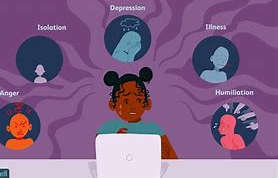

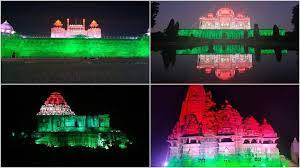

















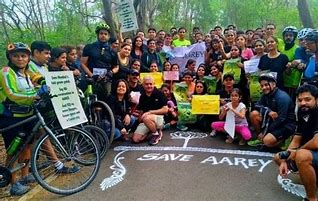
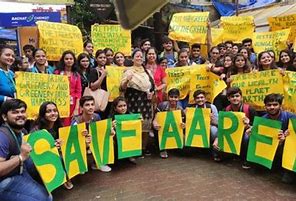






 Track2Training
You must be logged in to post a comment.